Initial exploration of personal connections and emotional responses to the color orange.
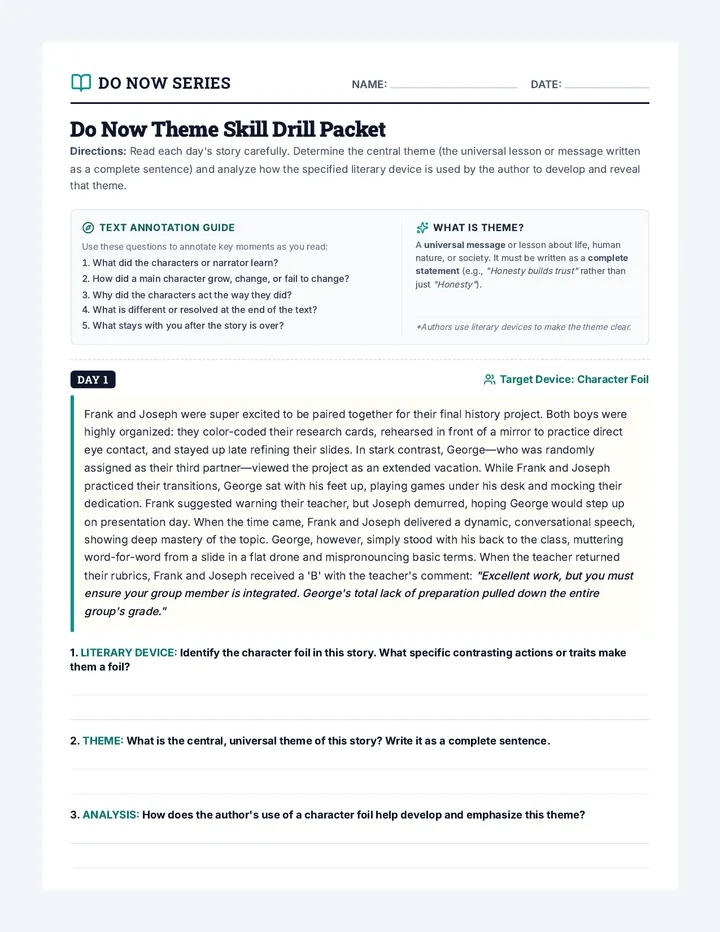
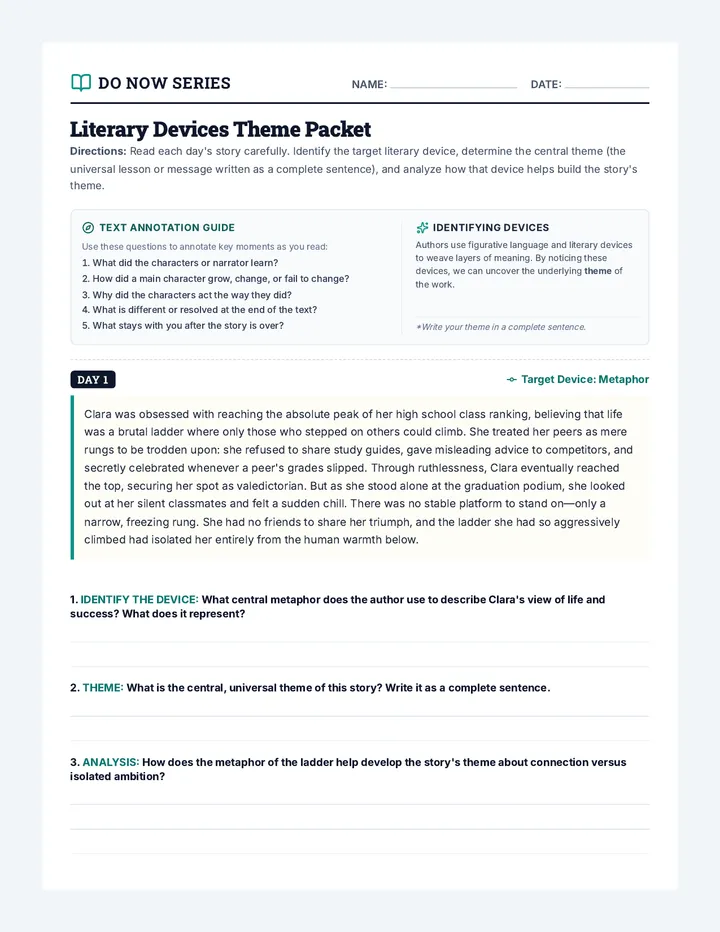
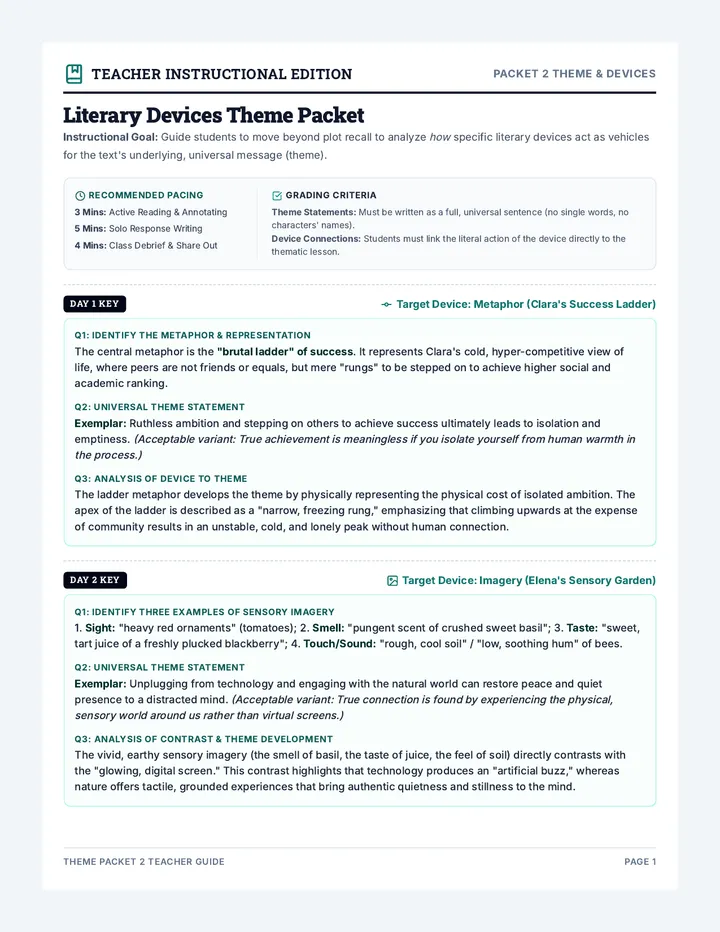
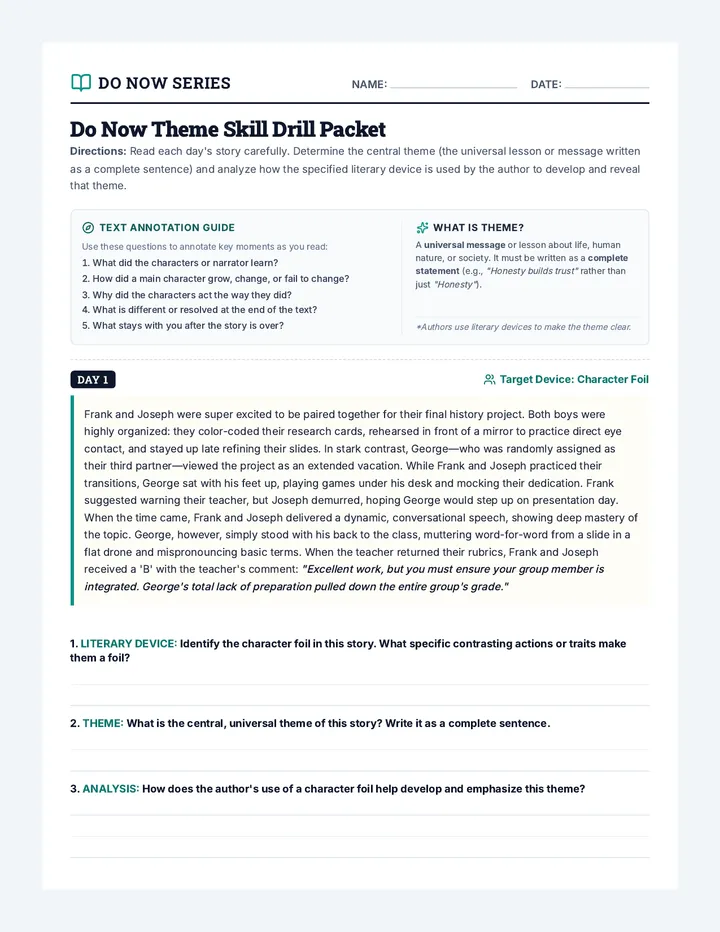
A cohesive lesson and drill series designed to help students master the connection between explicit literary devices and the central themes of literary texts.
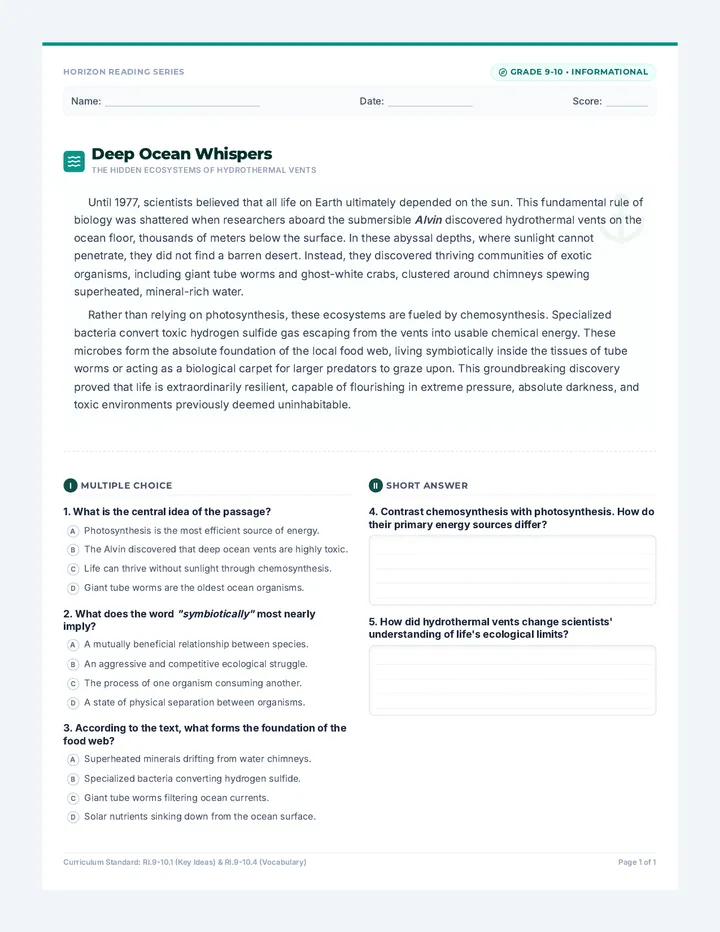
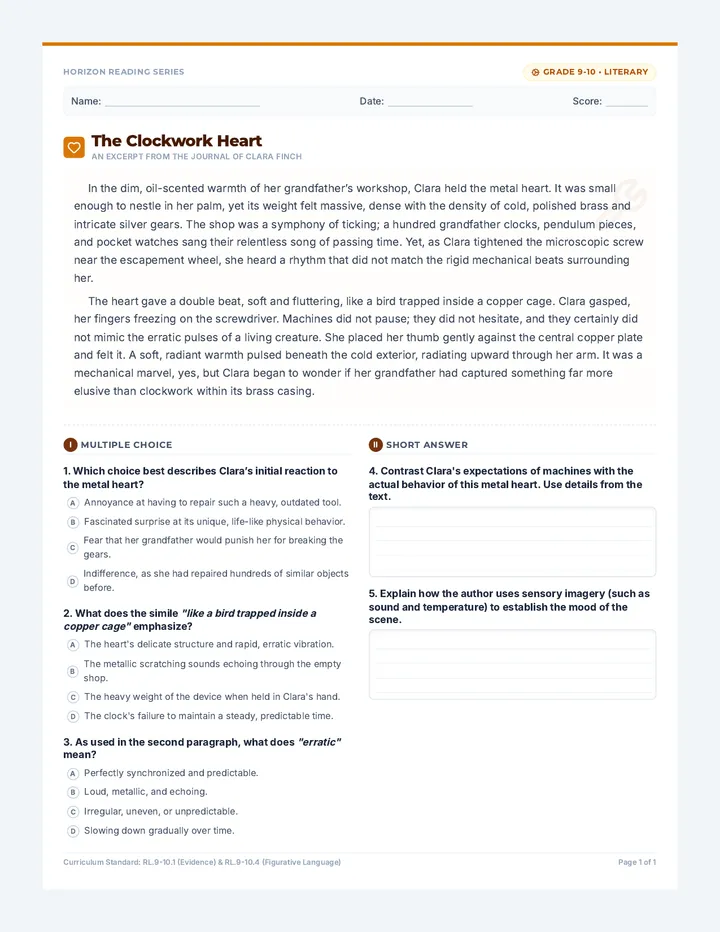
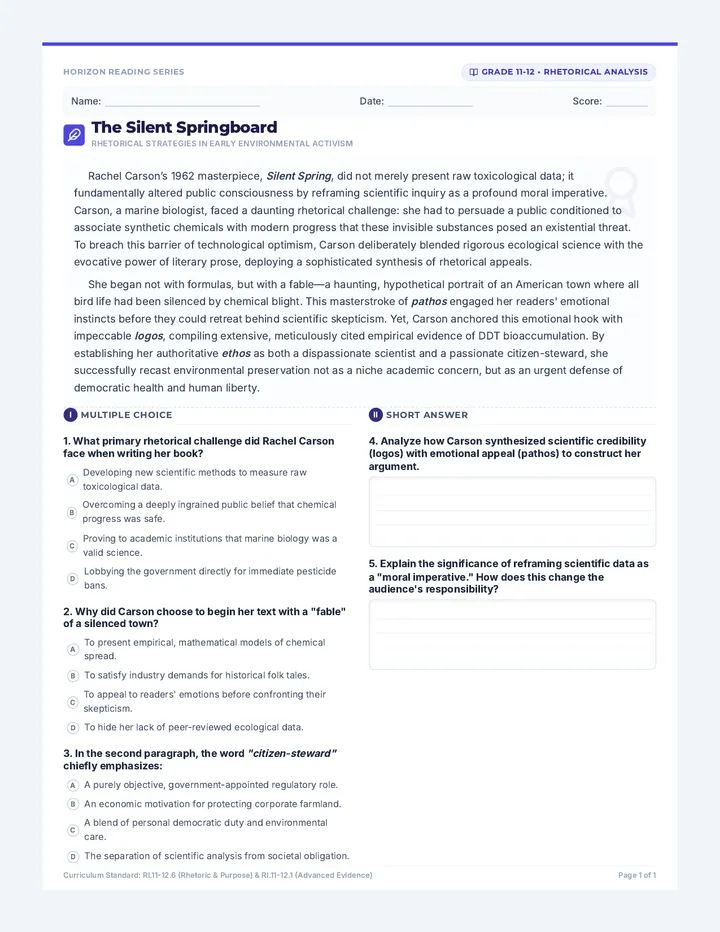
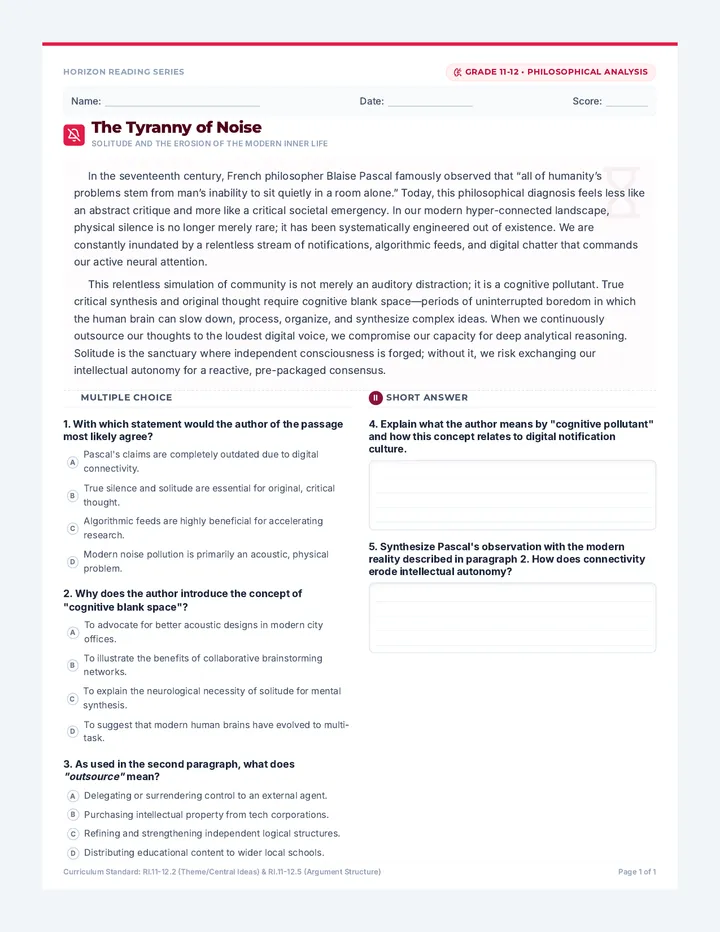
A foundational set of four reading comprehension sheets, split between Grade 9-10 (focusing on core inference and vocabulary) and Grade 11-12 (emphasizing rhetorical analysis and synthesis).
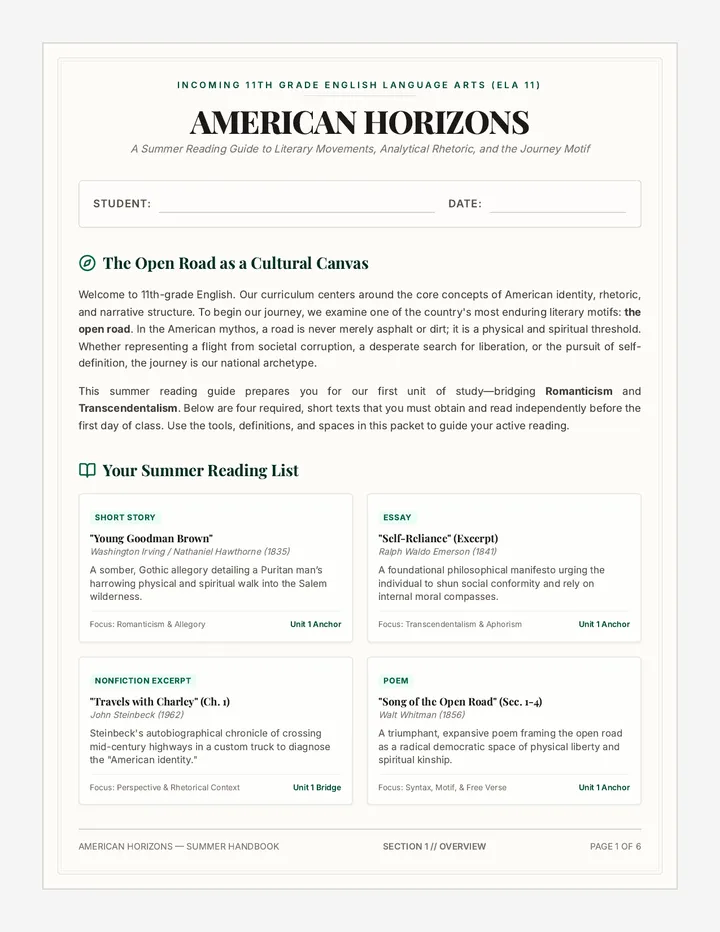
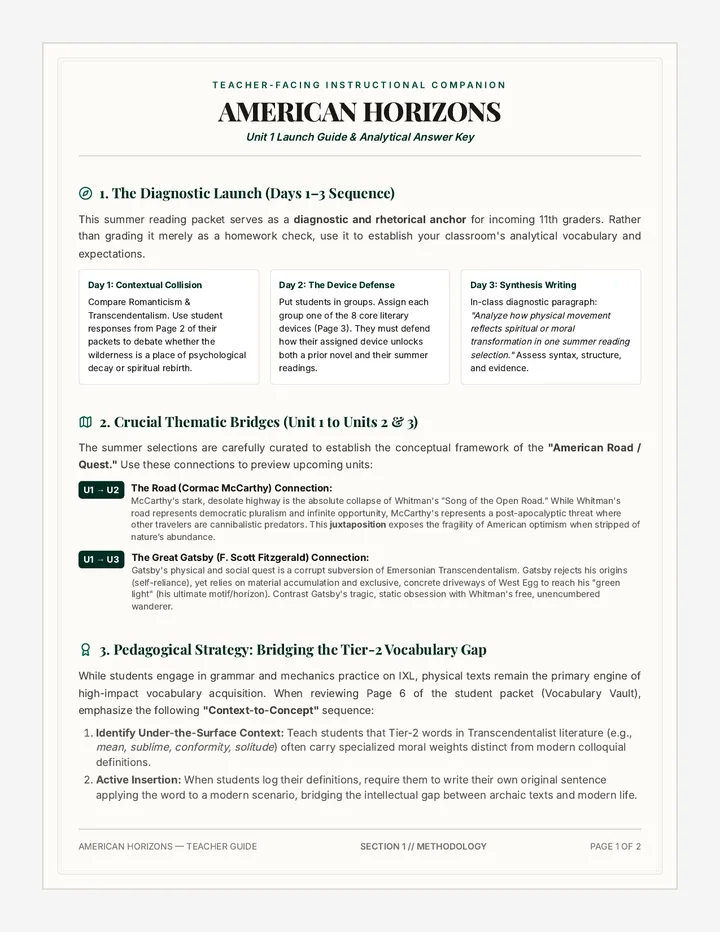
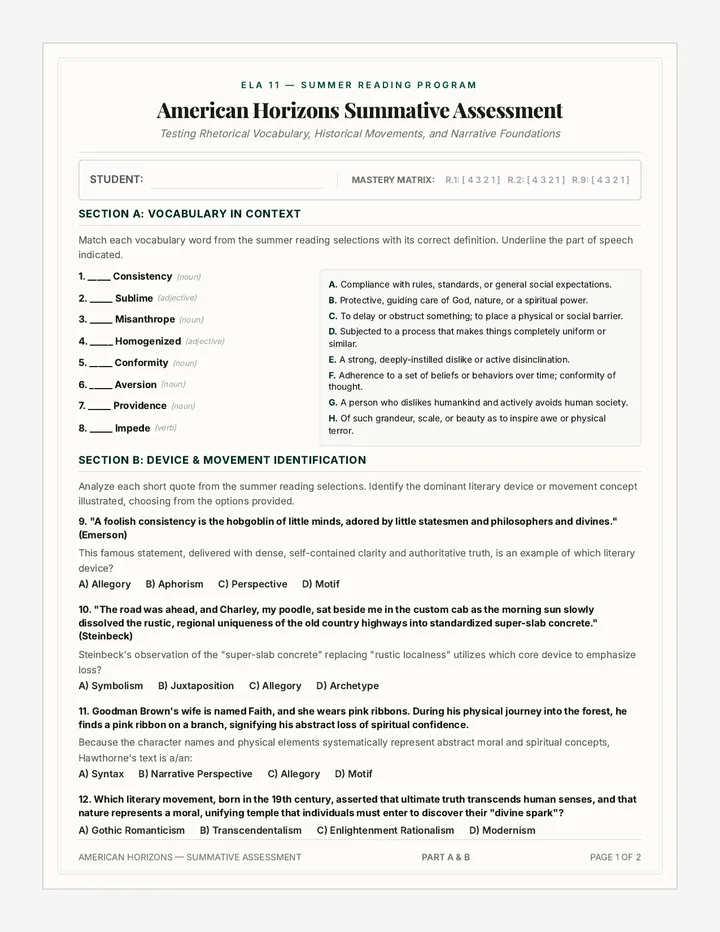
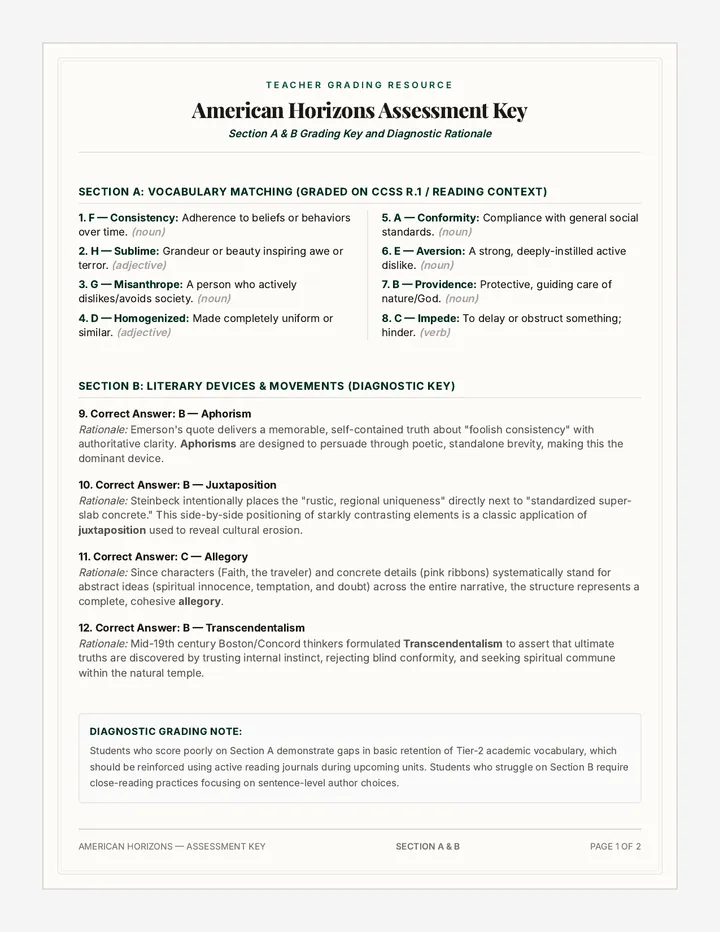
A preparatory summer reading curriculum designed to bridge historical literary movements, analytical vocabulary, and journey-themed texts for incoming 11th graders.
Students compile their four-sentence creative stories into a comic strip layout, add simple illustrations, and celebrate their storytelling accomplishments.
Students resolve their story's problem, writing their fourth sentence using "Then, ..." and selecting a happy resolution symbol.
Students introduce a simple conflict or surprise for their character, writing a sentence with "Suddenly..." and problem-based action icons.
Students choose a creative setting (such as outer space or a magic forest) and write a sentence using "They are in..." with visual setting prompt cards.
Students invent a fictional character (such as a superhero or friendly animal) and write a sentence describing them using "This is..." and physical descriptors with visual symbols.
Students present their informational posters to peers using verbal or non-verbal communication supports, celebrating their factual discoveries.
Students assemble their key fact, evidence sentence, and concluding statement into a coherent, illustrated informational poster.
Students conclude their informational piece by writing a third sentence that summarizes their topic using a "Now you know about..." sentence starter and visual symbols.
Students locate visual evidence or supporting clues (such as food or habitat icons) to back up their first key fact, writing a second sentence using "It has..." or "It lives..." frames.
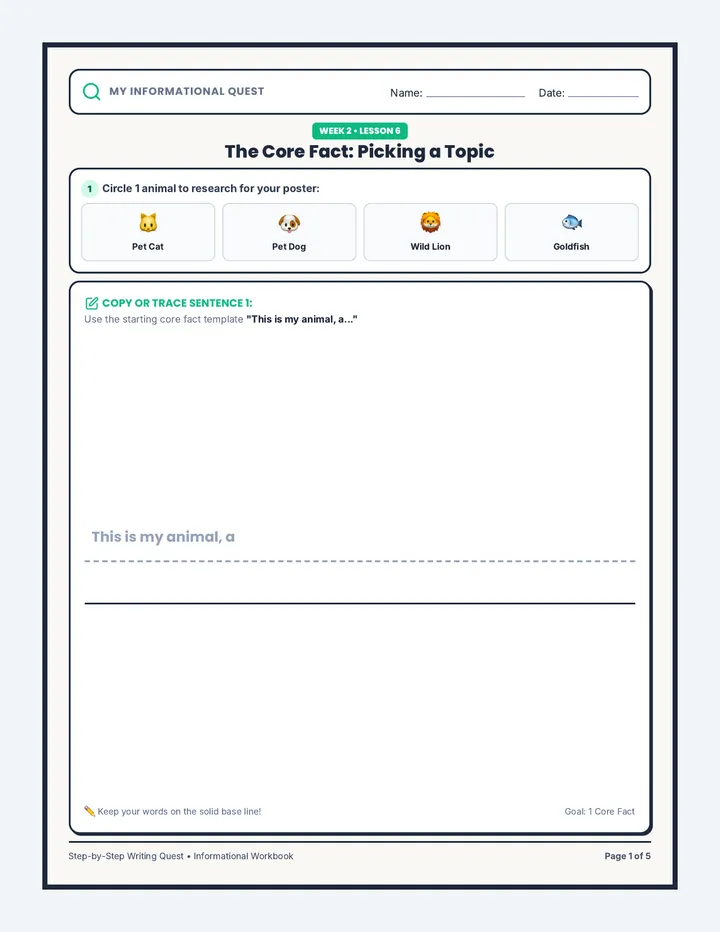
Students choose an informational topic (such as an animal or a local community job) and identify their first key fact using a visual matching organizer and "This is a..." sentence frame.
Students practice reading their three-sentence narratives to a peer or teacher, using visual communication boards as support, and celebrate their completed stories.
Students compile their first, middle, and ending sentences into a complete, logically sequenced three-sentence personal narrative, adding simple decorative illustrations.
Students conclude their personal narrative by writing about the final event using a "Last, I..." sentence starter, focusing on chronological closure and a simple emotion word.
Students continue their personal narrative by writing about the middle event using a "Next, I..." sentence starter and corresponding visual icons to show chronological order.
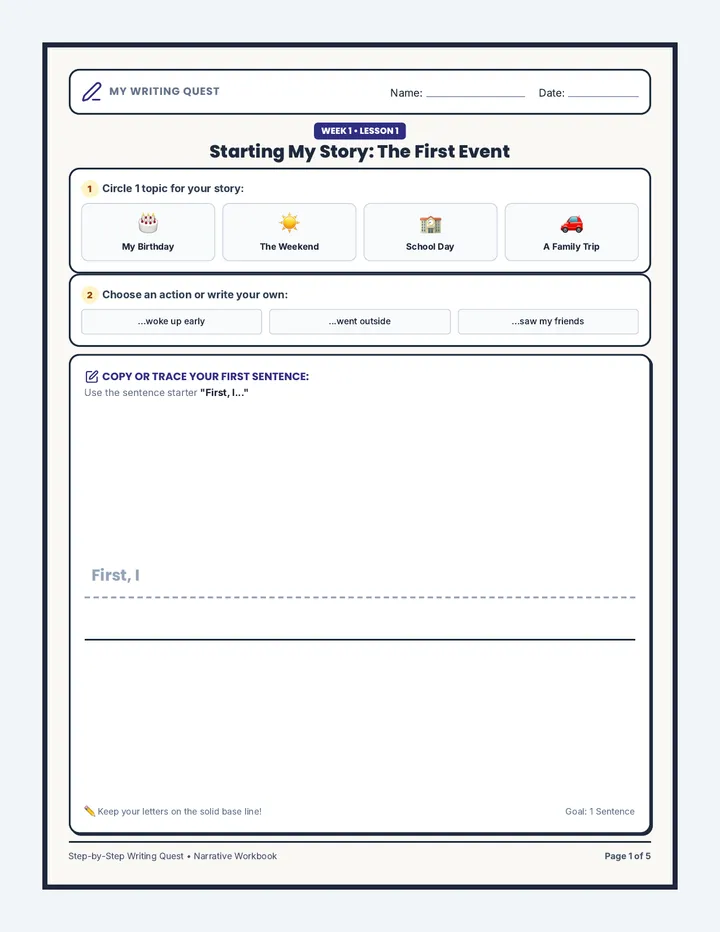
Students choose a personal topic (such as a favorite memory or weekend activity) and write their first complete sentence describing the first event using a "First, I..." sentence starter and visual picture cards.
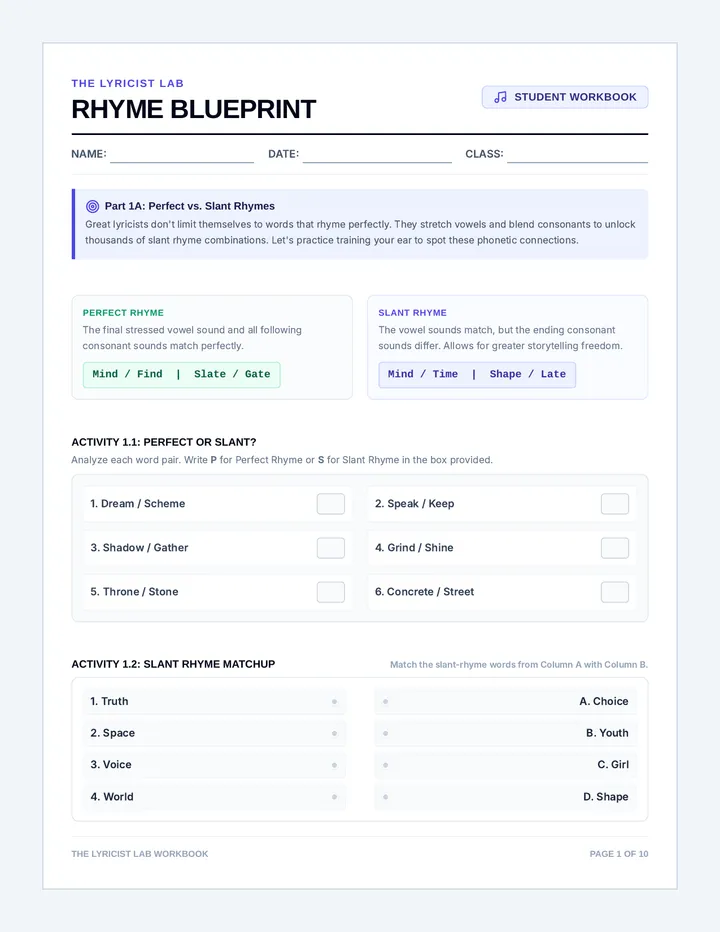
A comprehensive lesson that breaks down the structural, rhythmic, and poetic elements of hip-hop and rap lyrics. Students learn complex rhyming, flow cadence, figurative imagery, and wordplay, then plan and write a complete 16-bar verse using highly visual scaffolding.
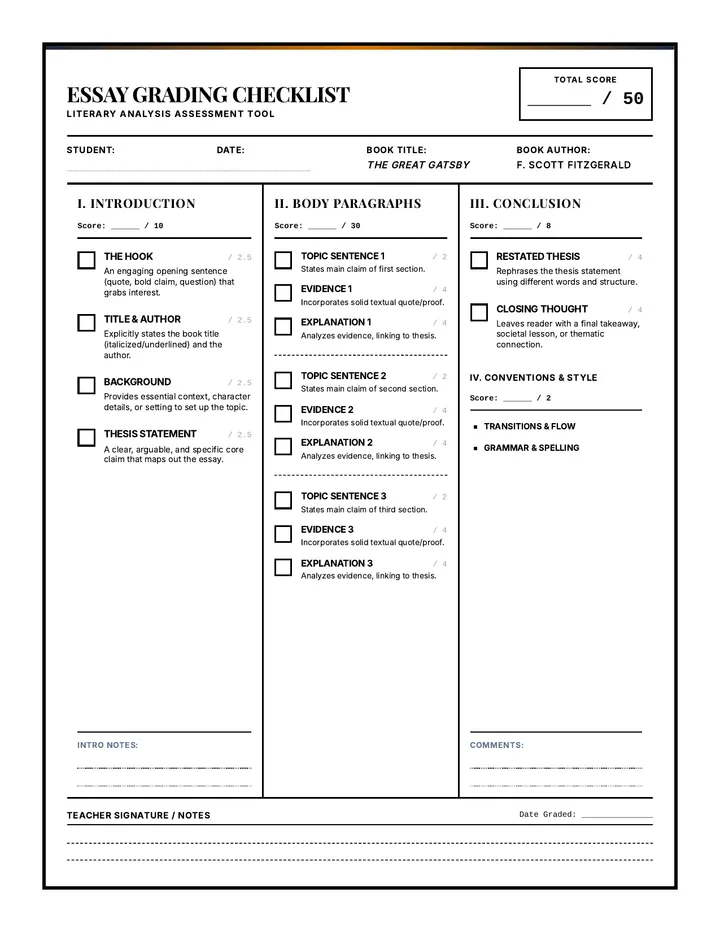
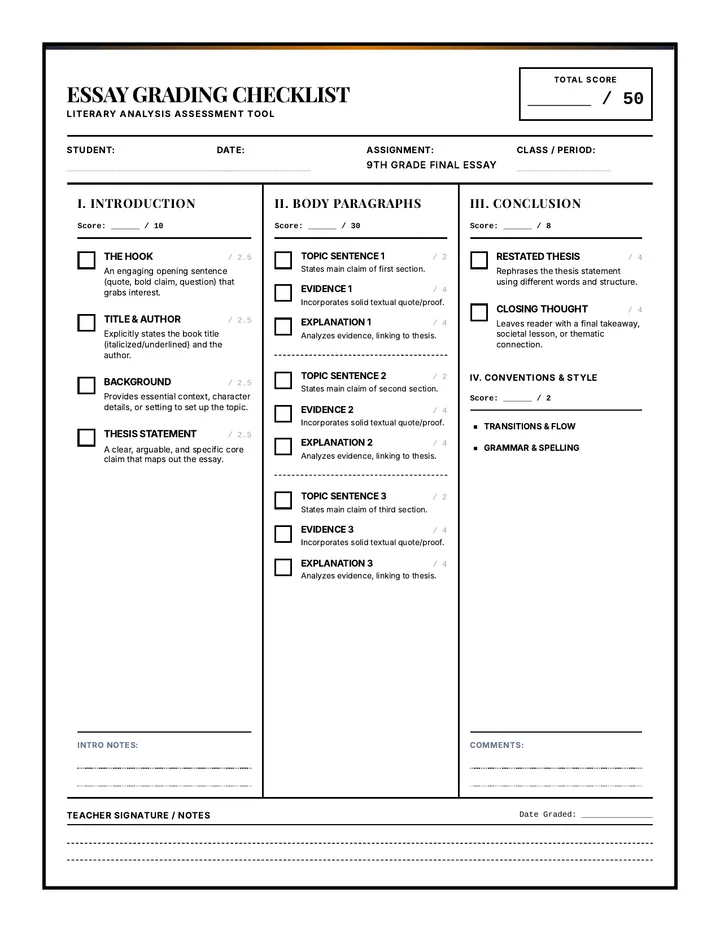
A lesson dedicated to the assessment and grading of literary essays, featuring a structured grading rubric and feedback checklist.
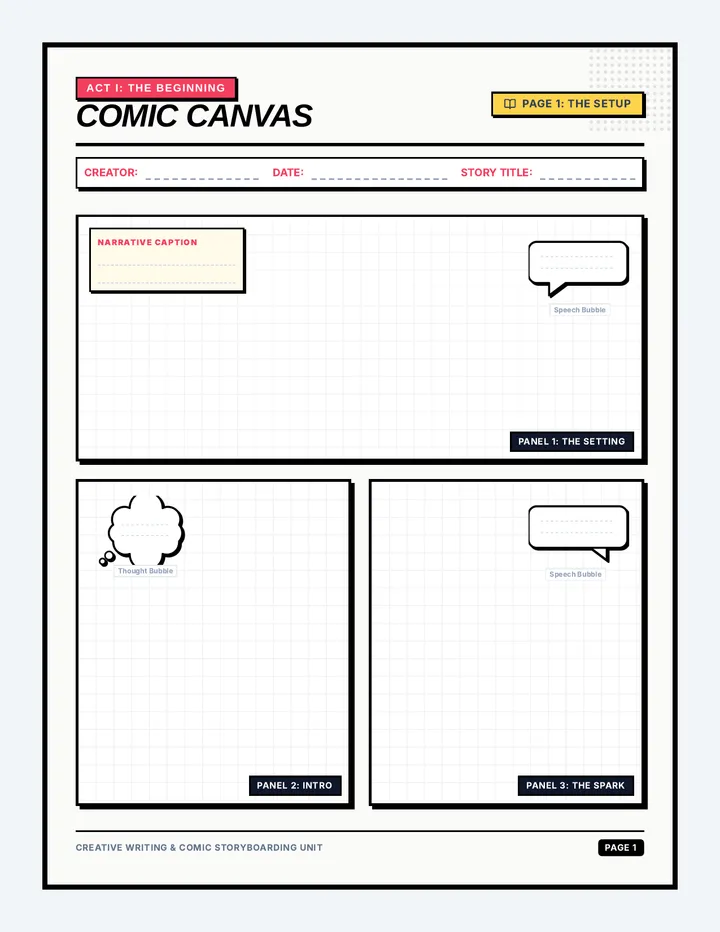
A creative narrative writing lesson that guides students through structural comic book creation, character design, and panel-by-panel storytelling using visual templates.
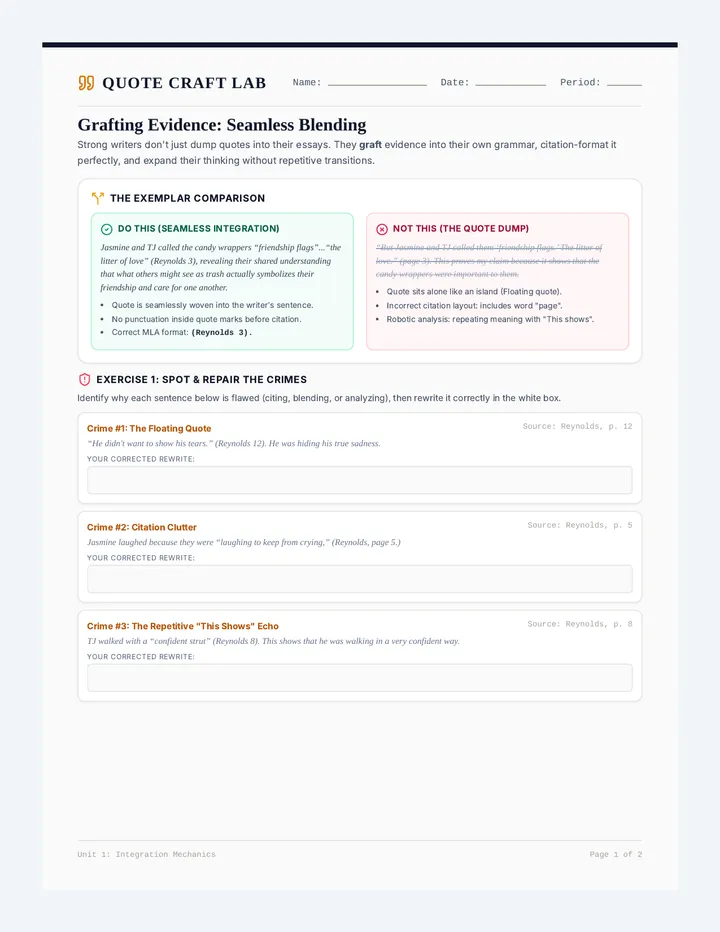
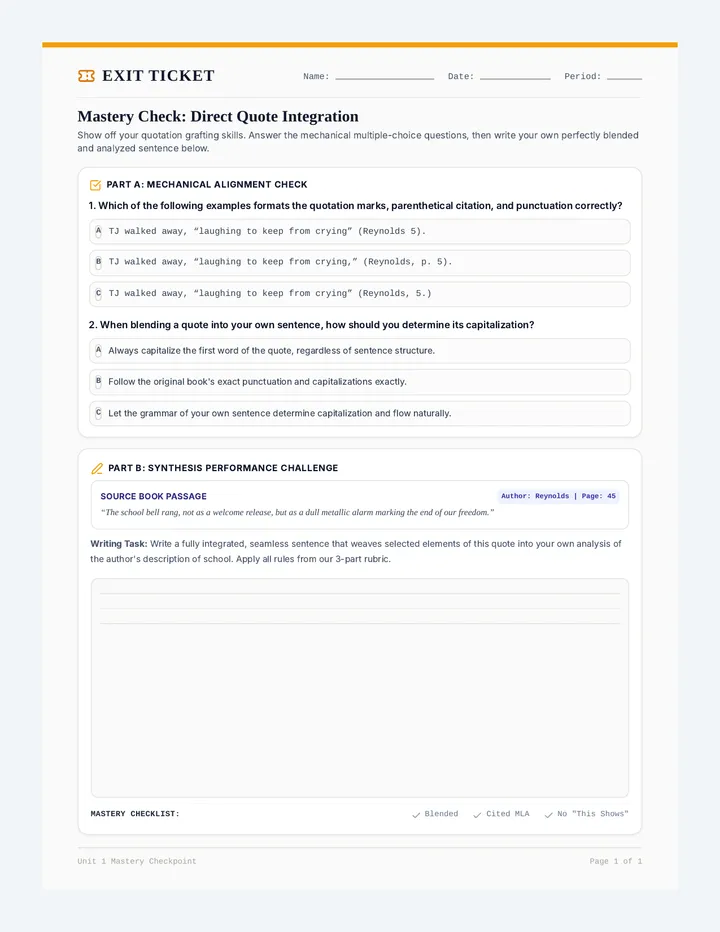
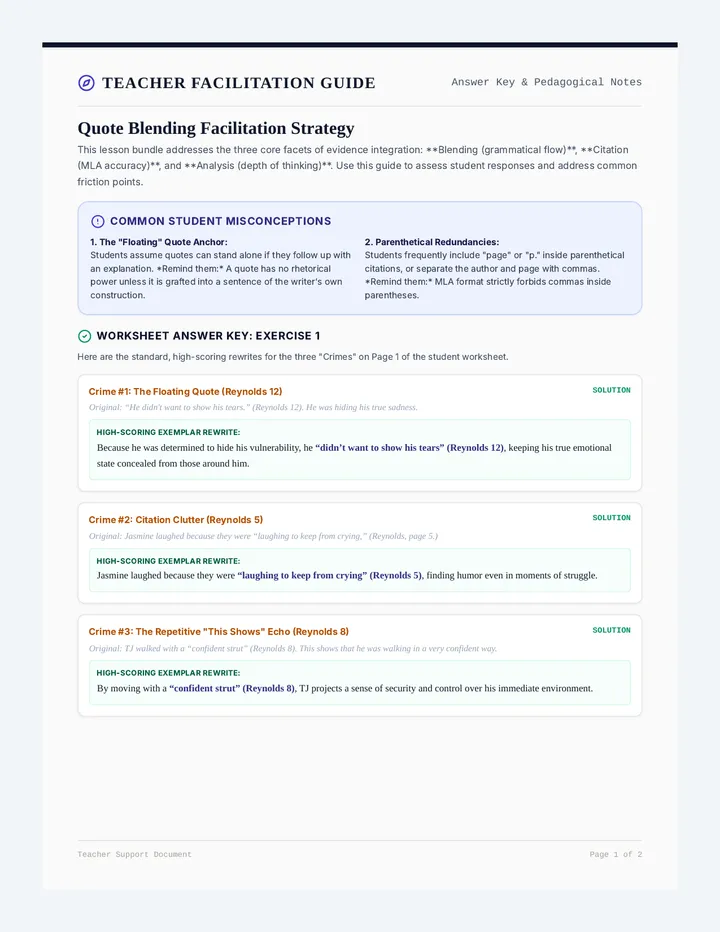
A complete lesson bundle focusing on the mechanics and analysis of direct quotations. Students learn to seamlessly blend quotes, apply correct MLA citations, and write sophisticated analysis using a structured rubric.
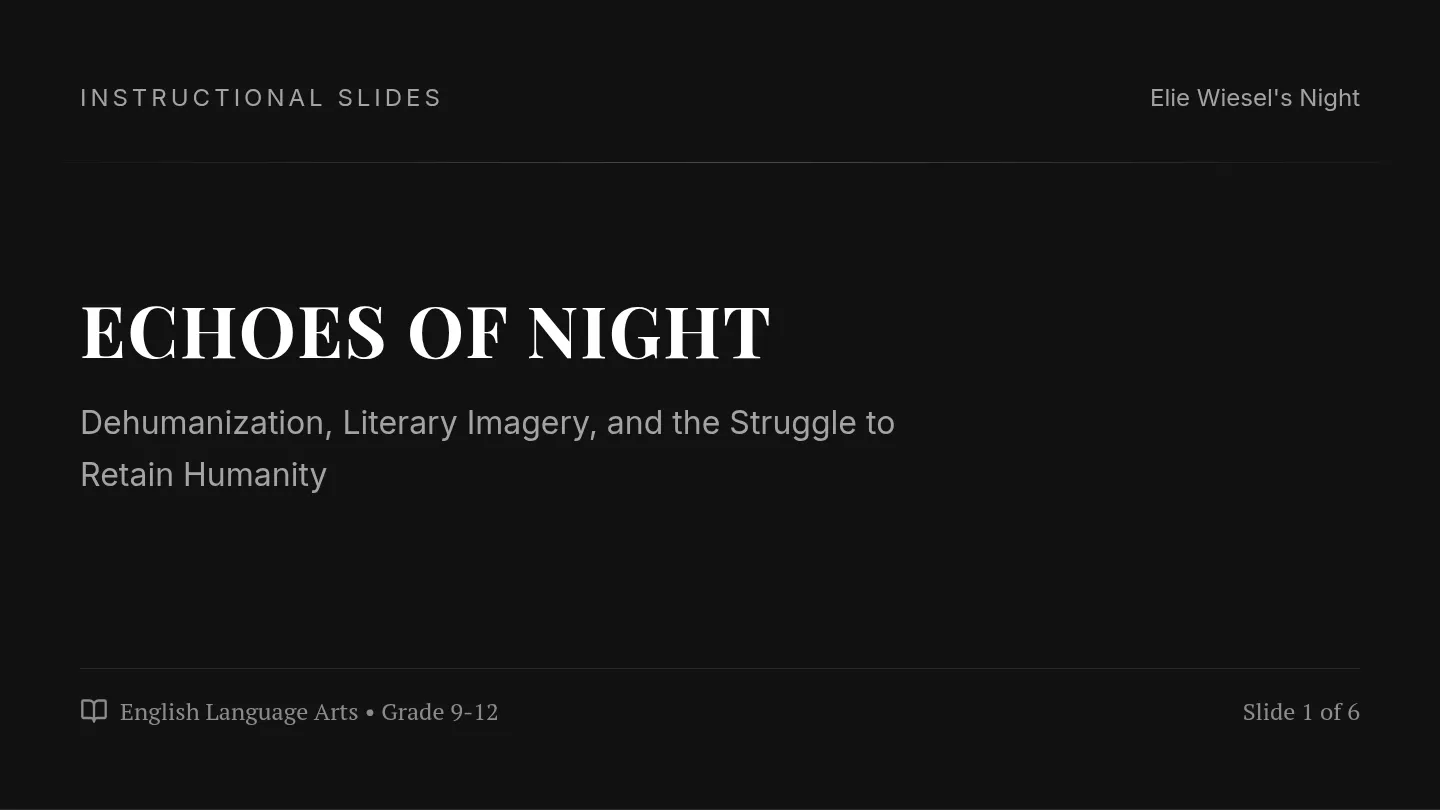
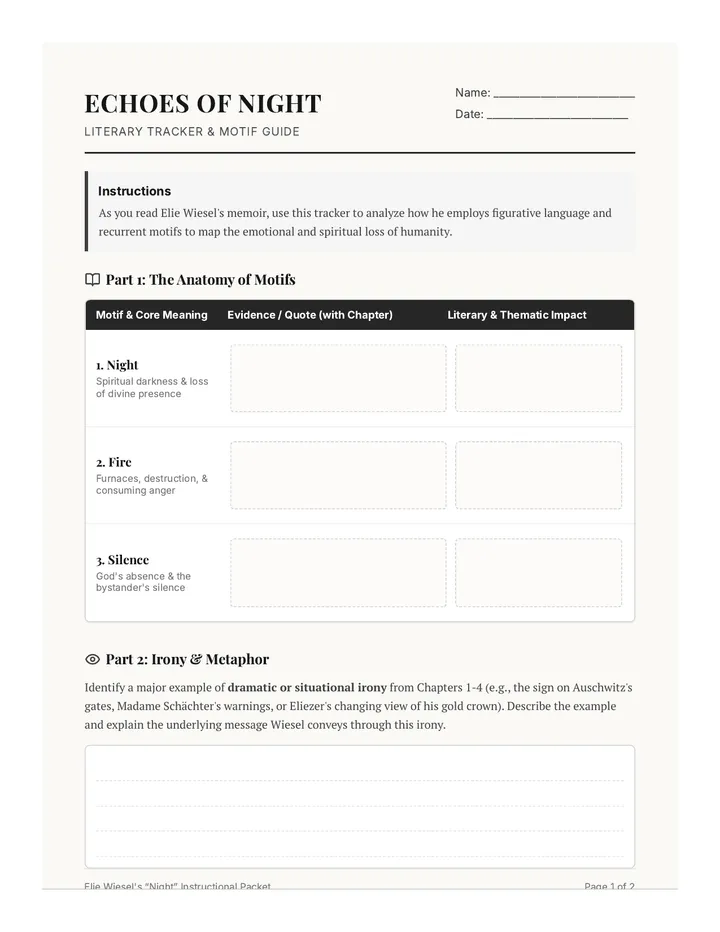
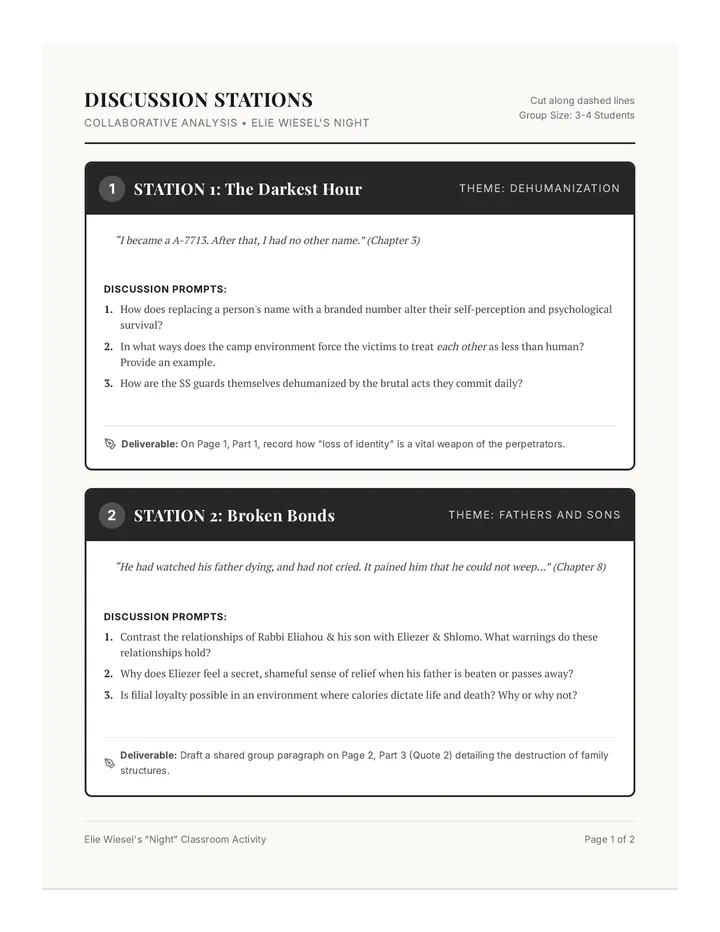
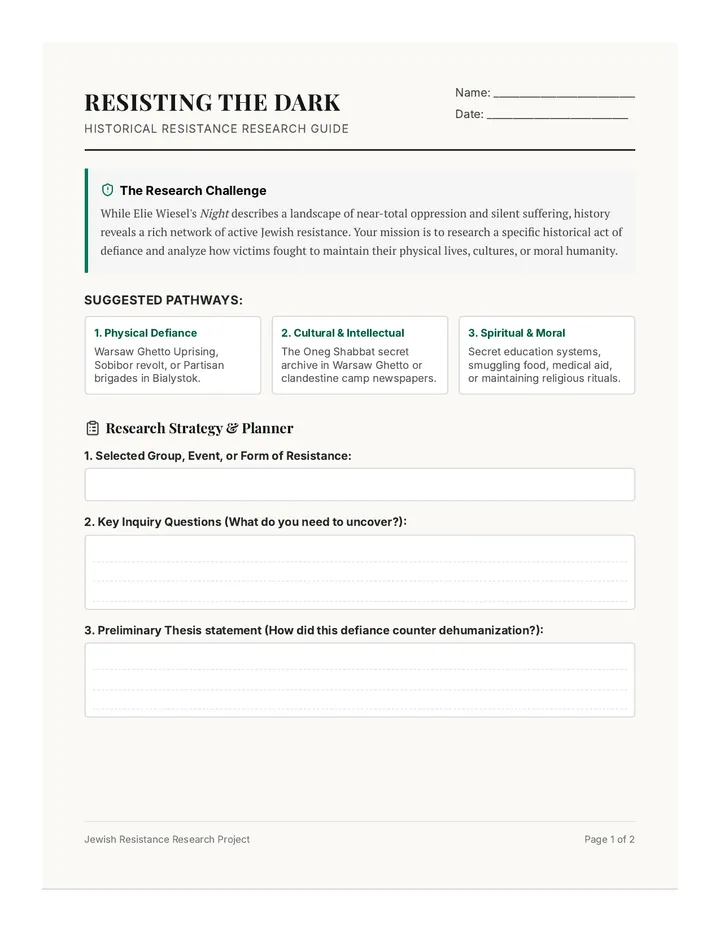
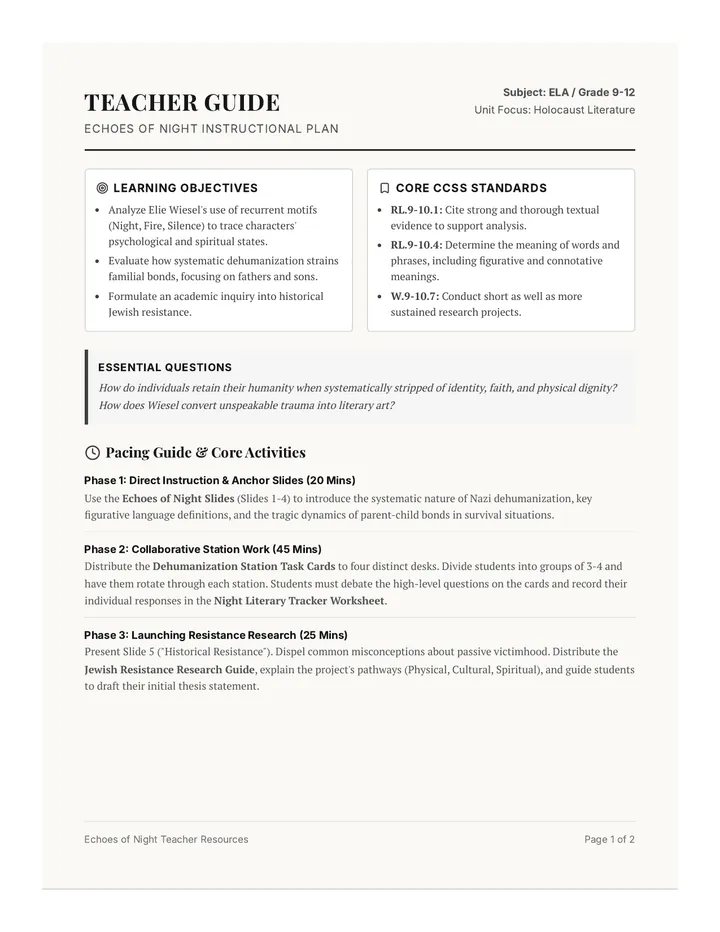
A comprehensive instructional bundle for Elie Wiesel's *Night*, exploring the systematic loss of humanity under Nazi persecution, tracking complex figurative language and motifs, and researching historical Jewish resistance. Includes an instructional slide deck, station task cards, a research project guide, and a student literary tracker.
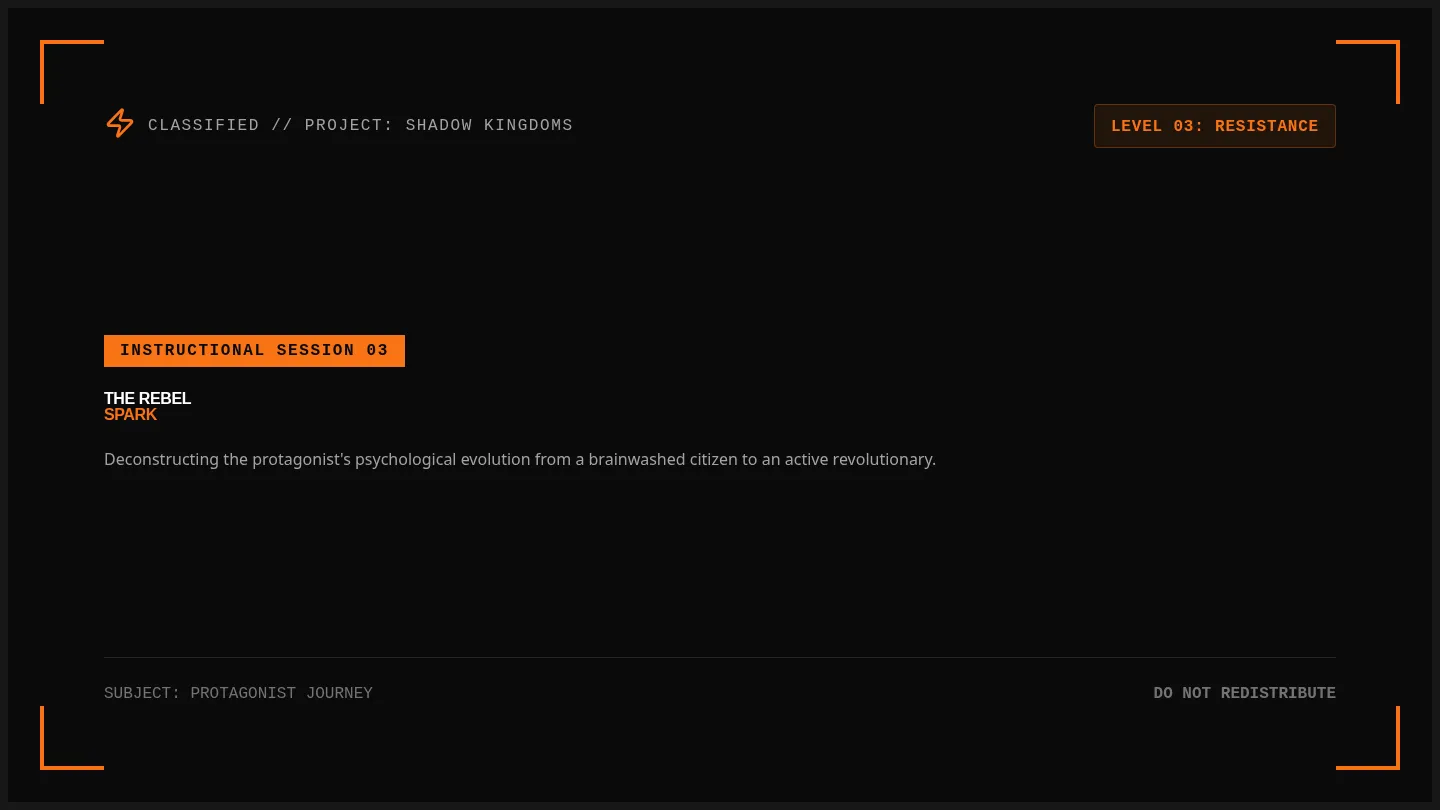
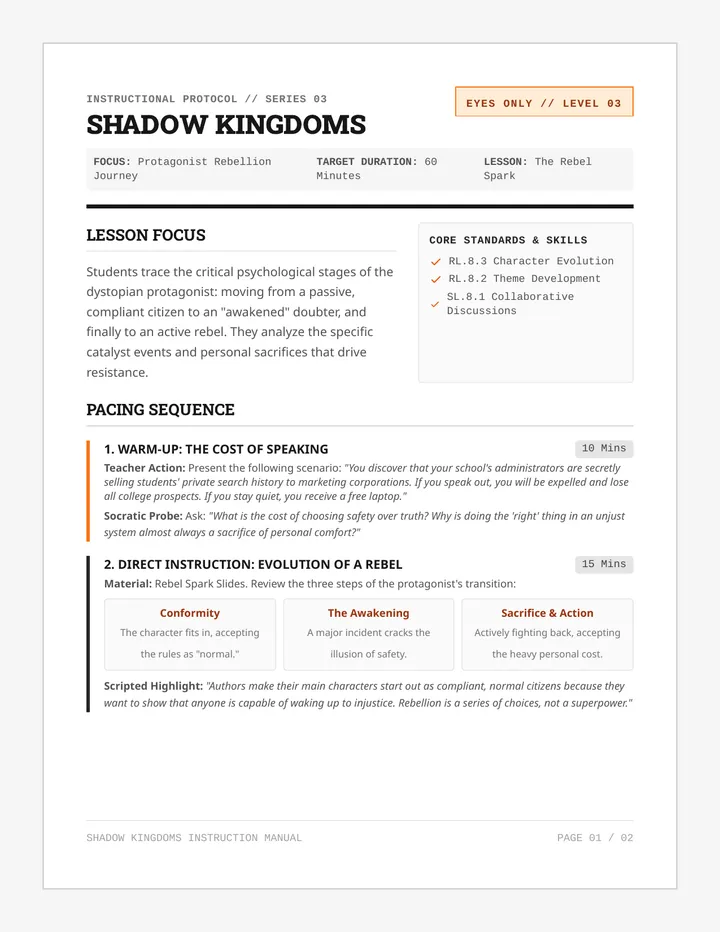
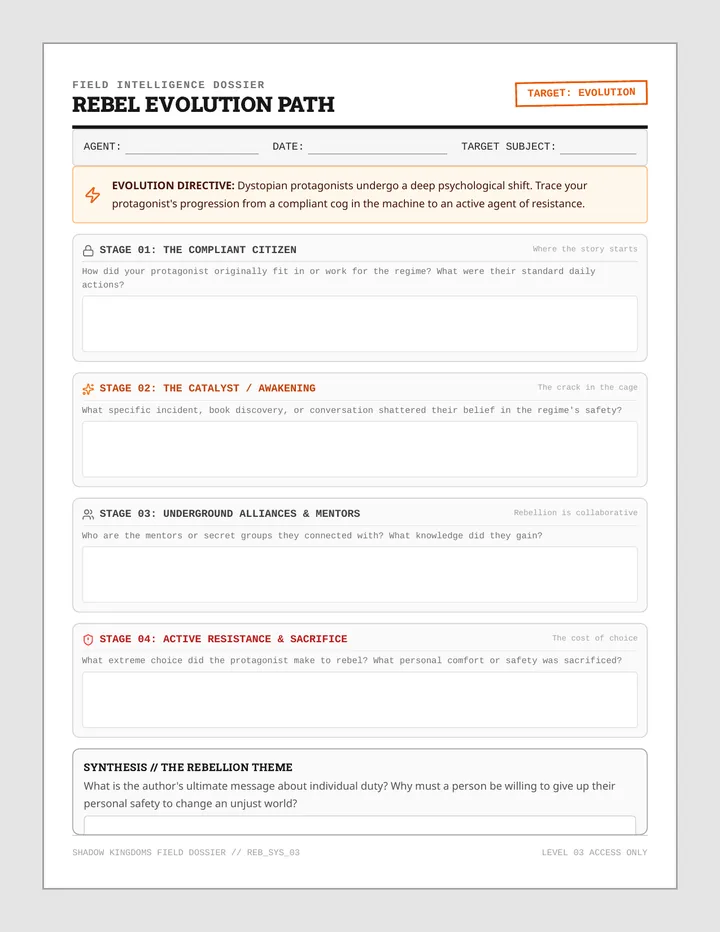
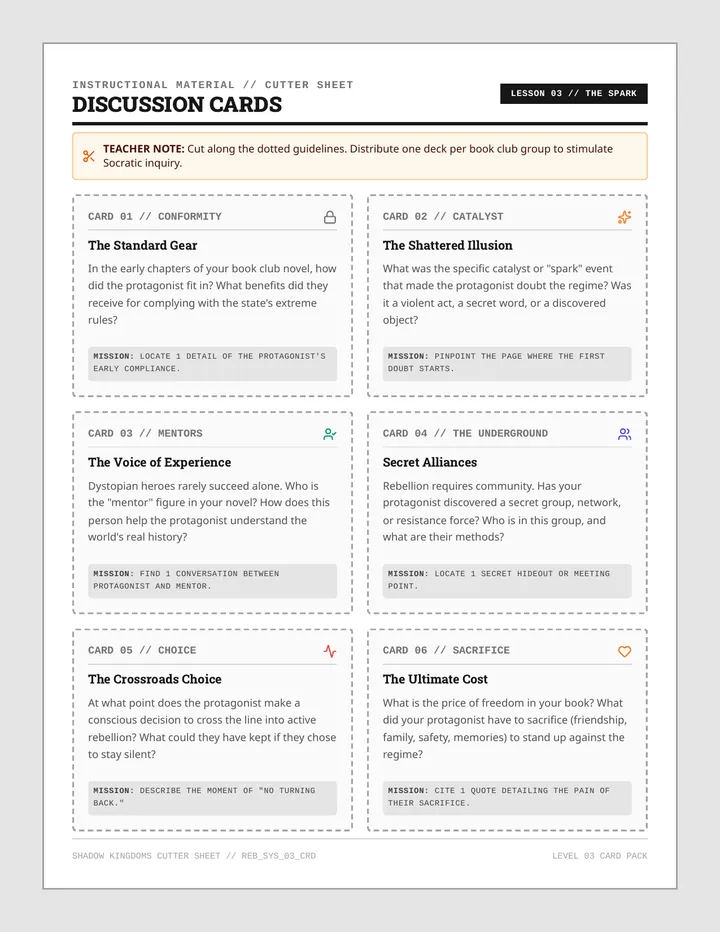
Trace the protagonist's development from a compliant citizen to an awakened rebel. Students map the critical turning points, alliances, and sacrifices that drive resistance against the regime, applying these insights to their book club novels.
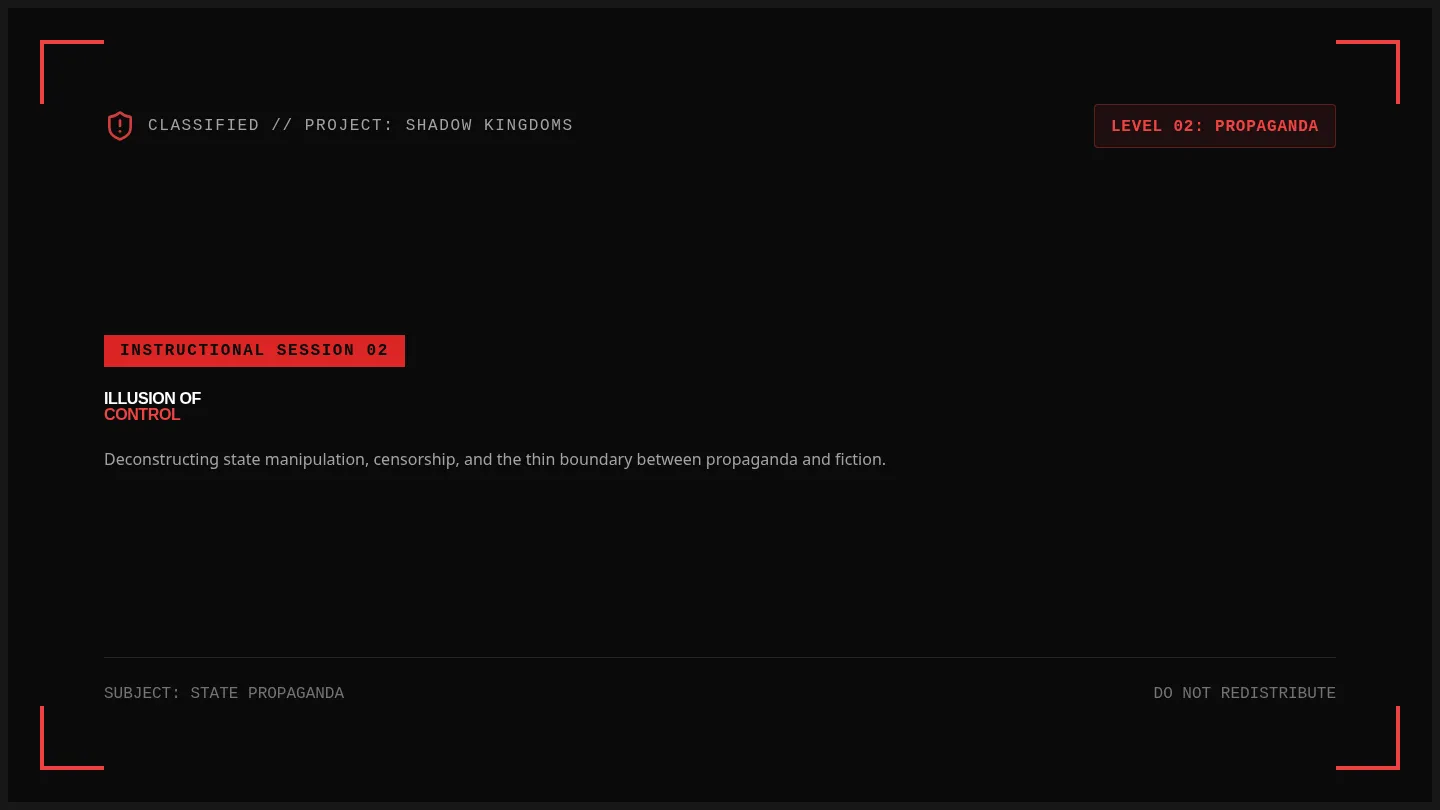
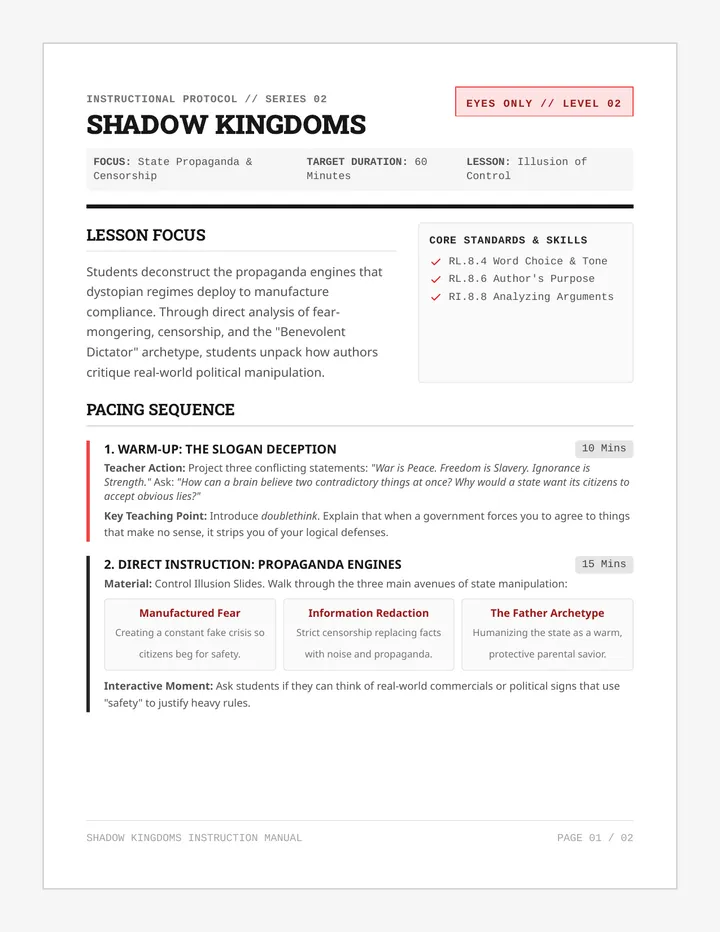
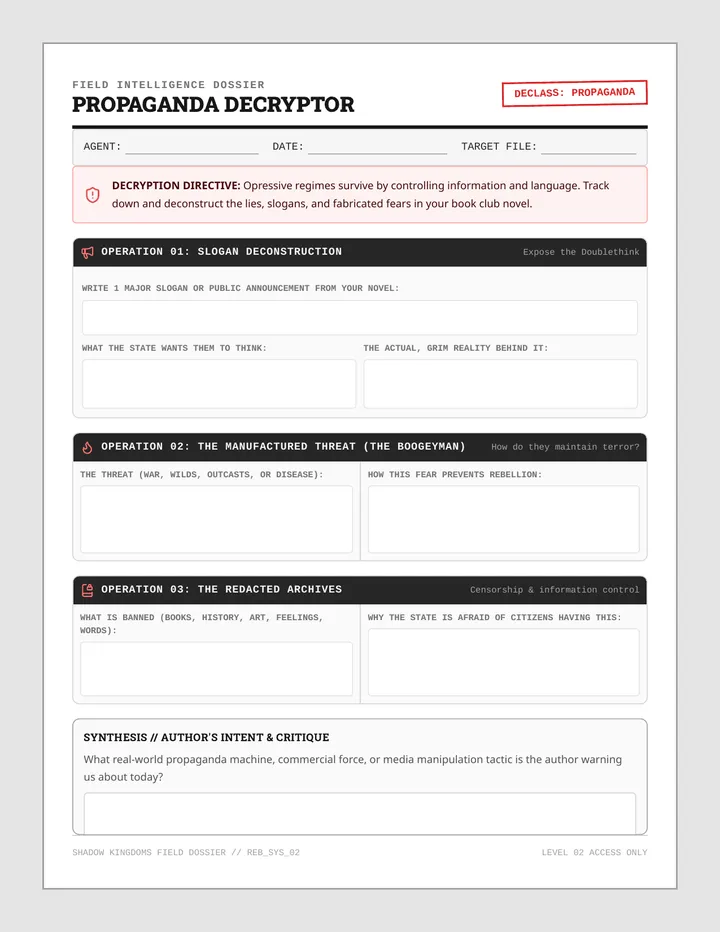
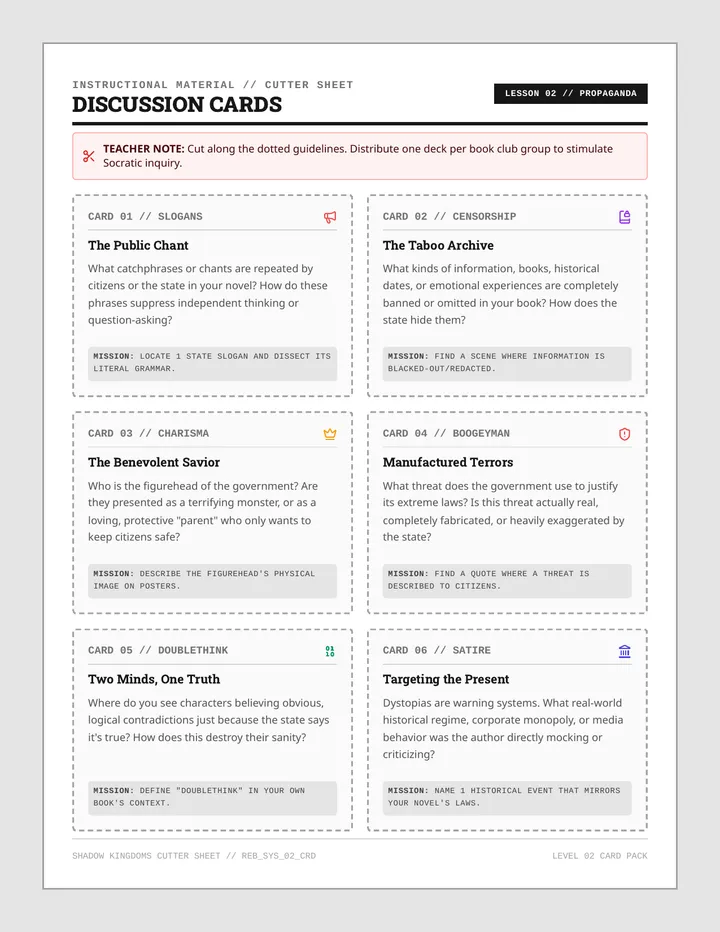
Analyze how dystopian regimes maintain authority through propaganda, censorship, and manufactured fear. Students contrast real propaganda techniques with fictional manifestations in their novels to decode the author's underlying real-world critiques.
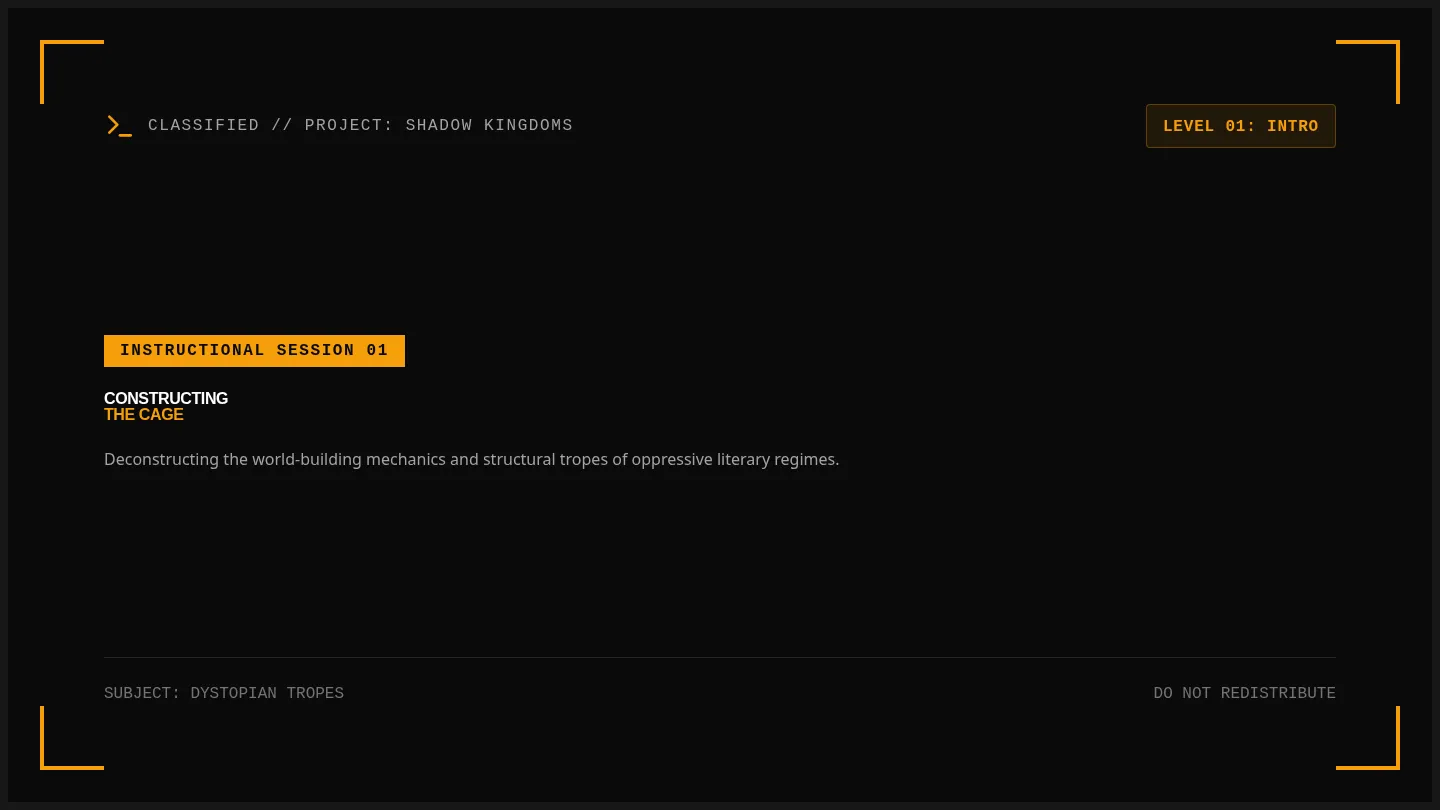
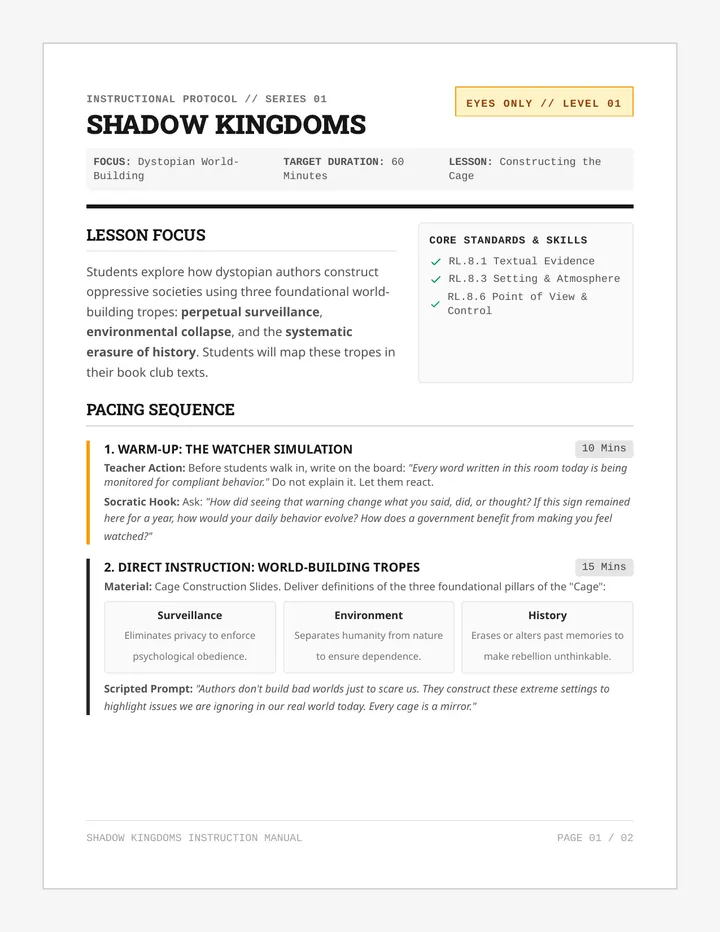
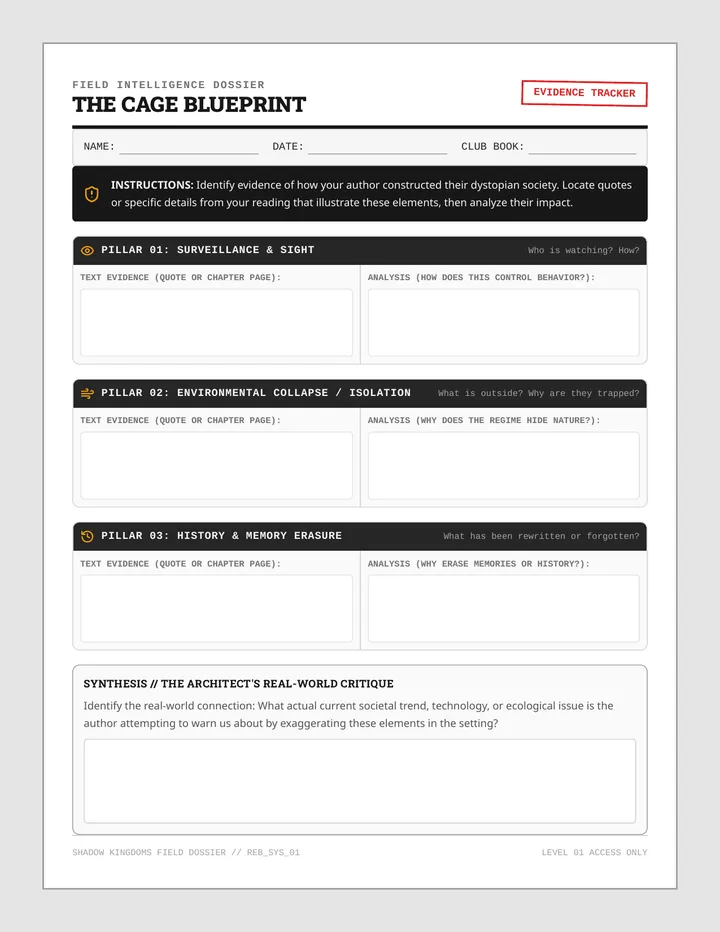
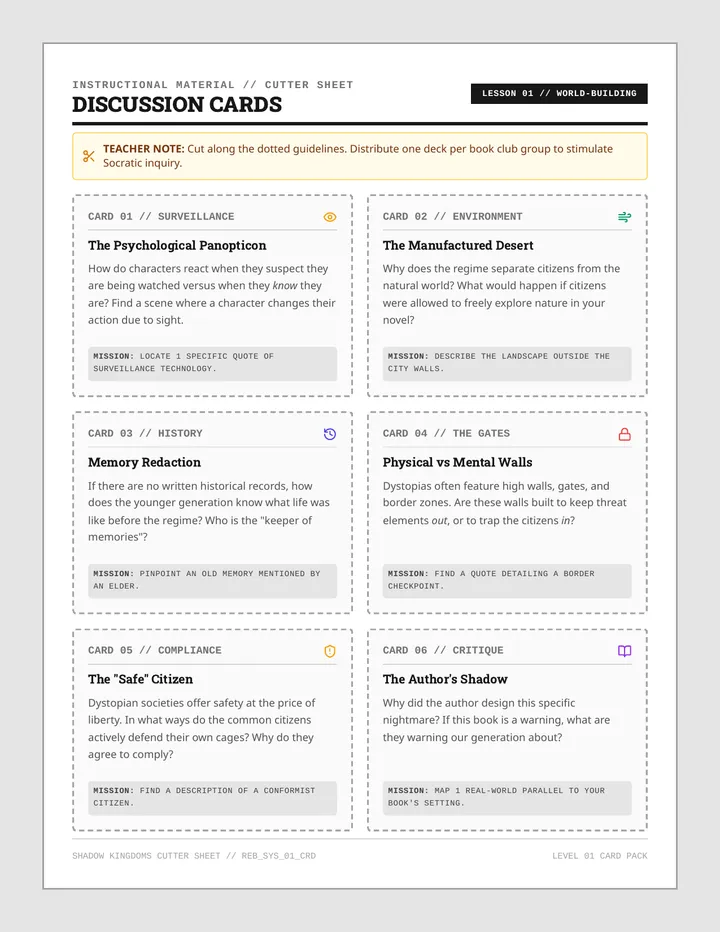
Explore how dystopian authors build oppressive societies using key tropes such as environmental collapse, intense surveillance, and the systematic erasure of history. Students analyze their book club novels to map these elements.
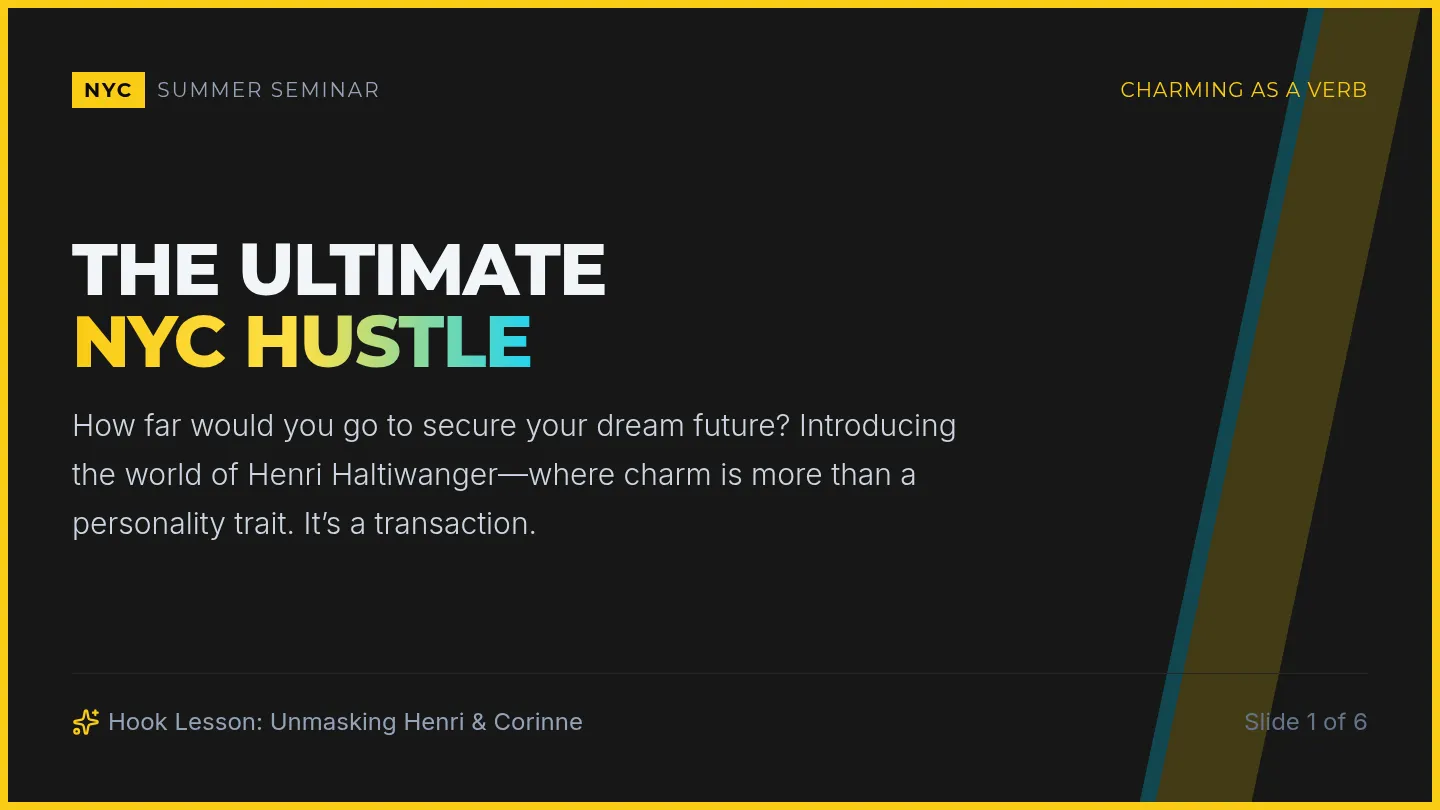
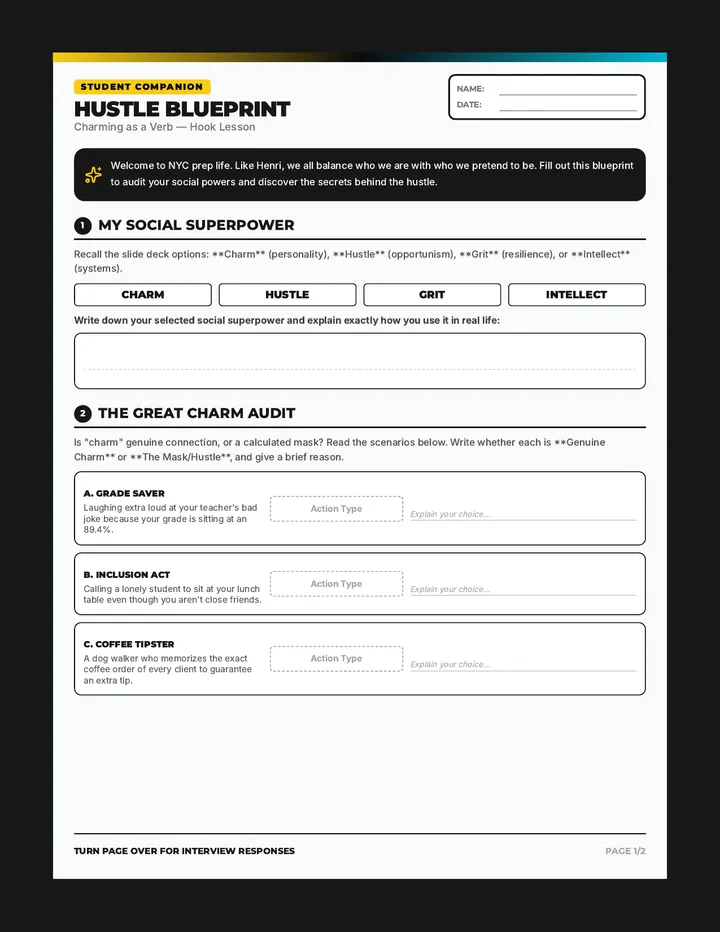
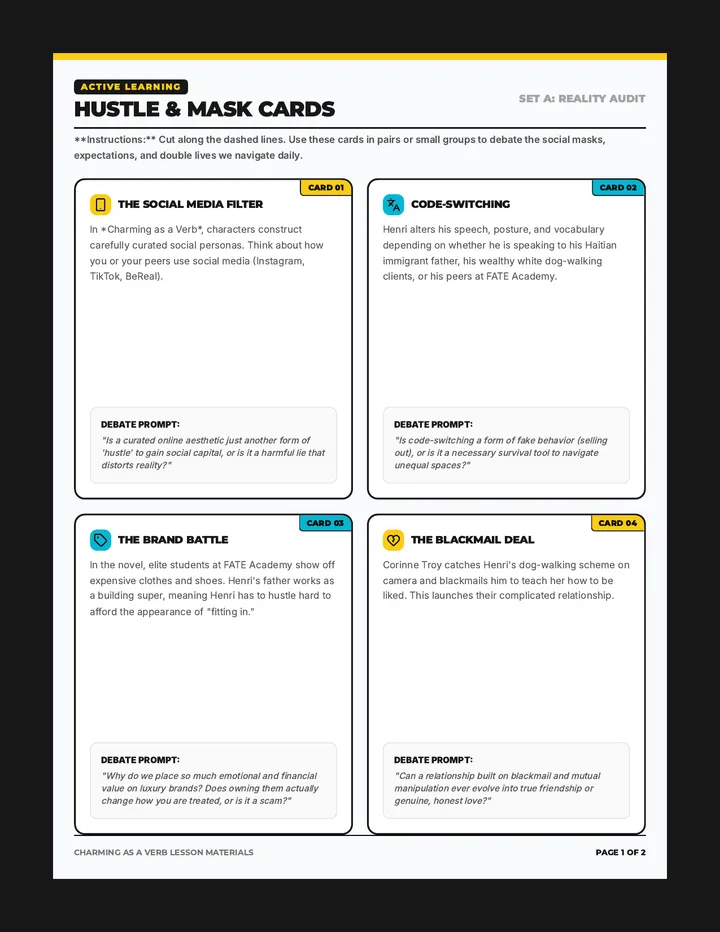
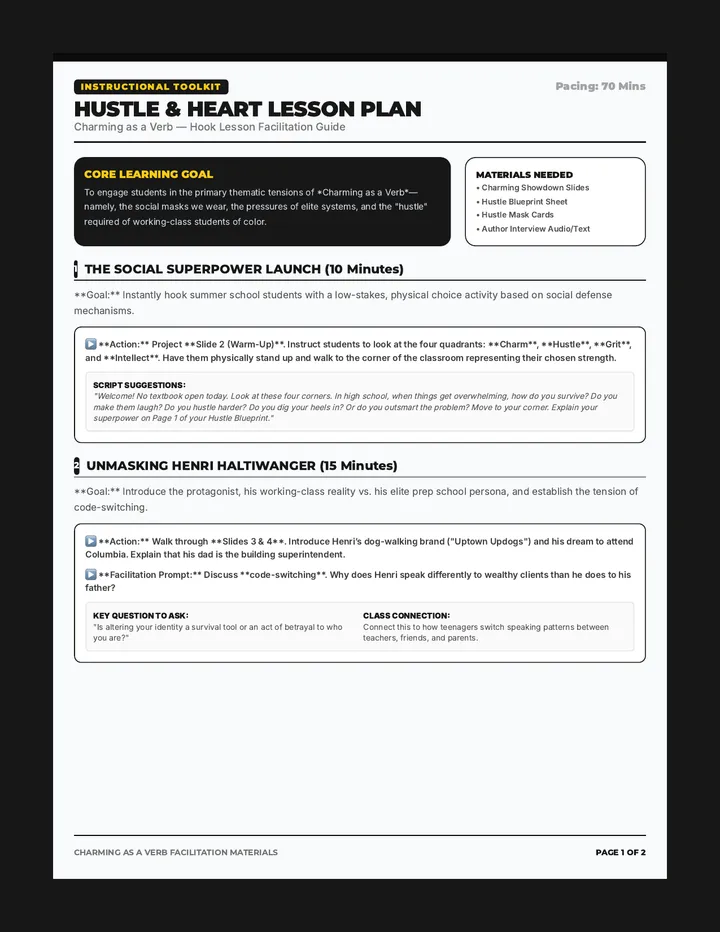
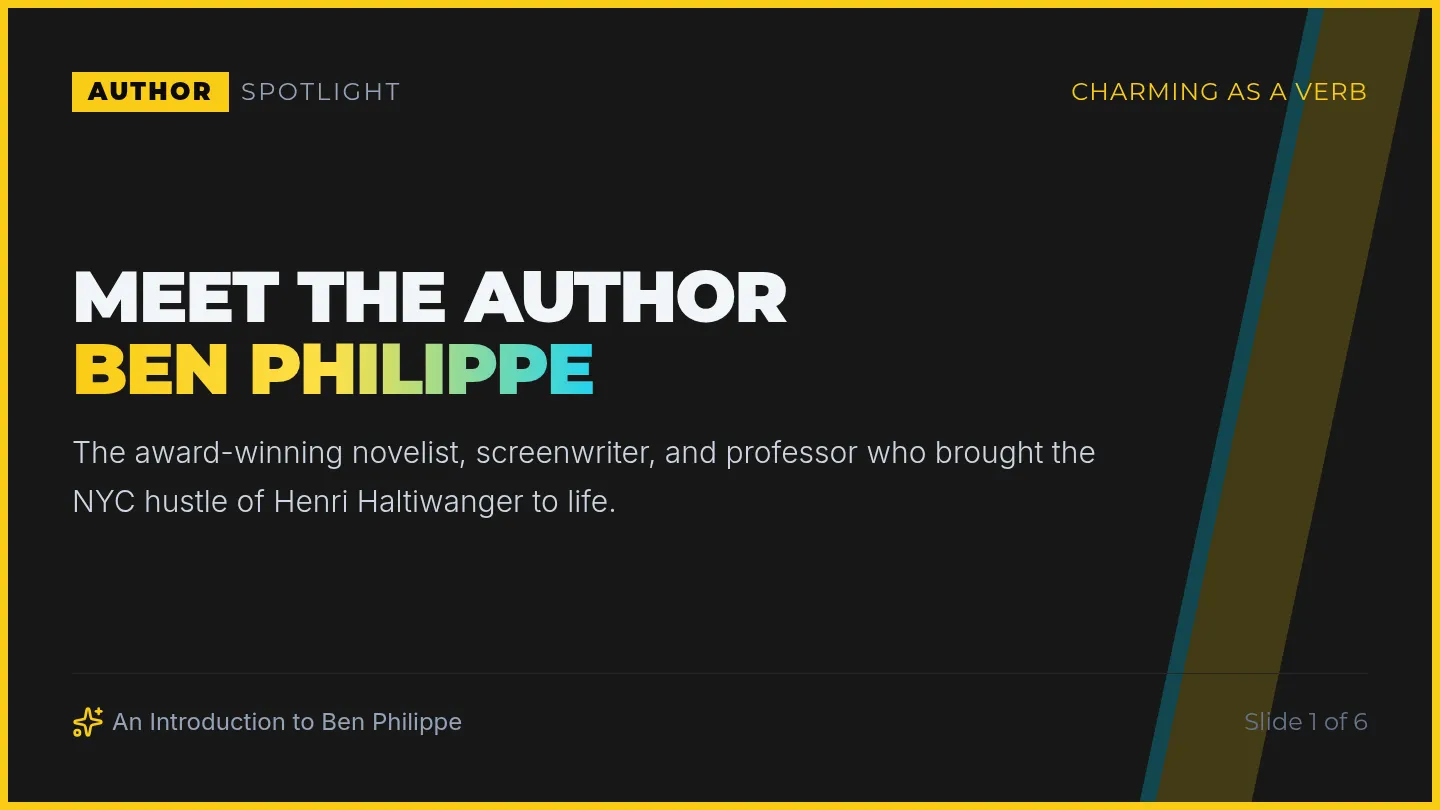
An immersive, high-energy introductory hook lesson for Charming as a Verb that engages rising 10th-grade summer school students through NYC hustle culture, the social psychology of 'charm', and an author interview on performance anxiety and self-belief.