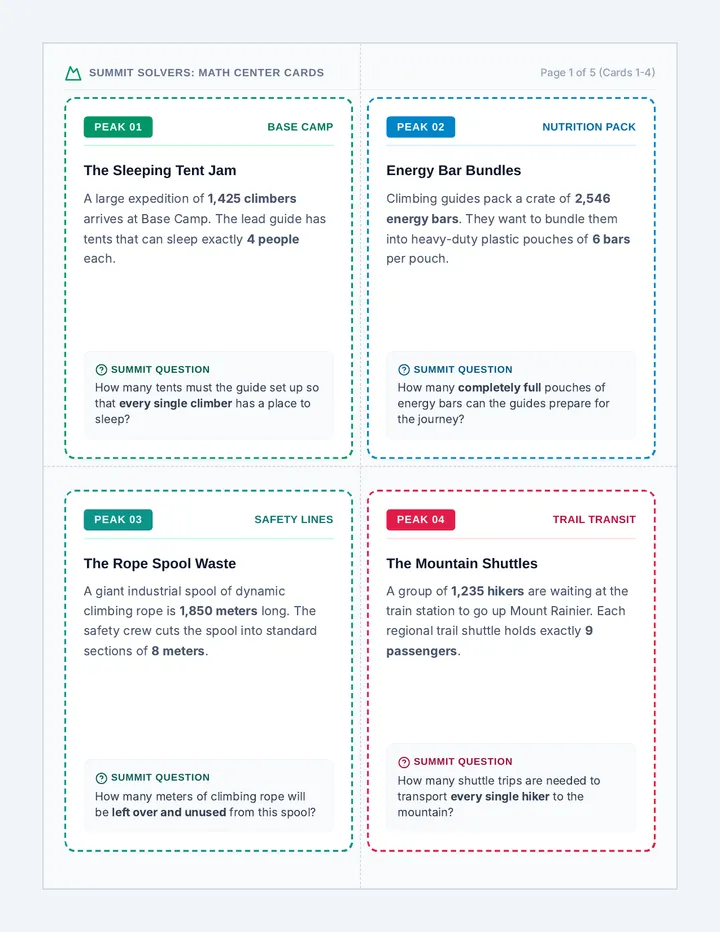
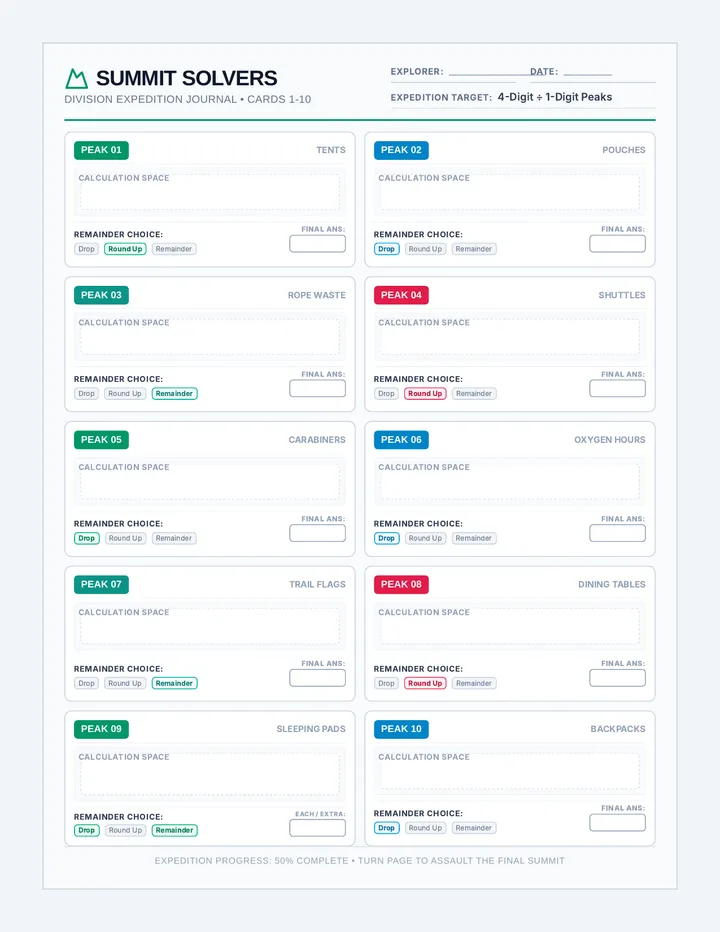
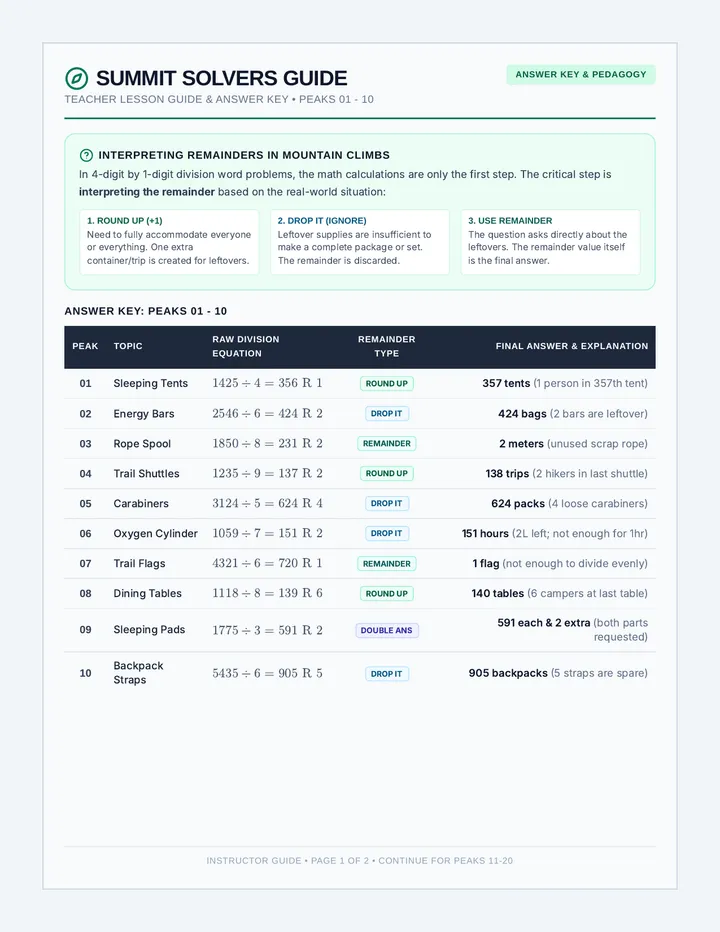
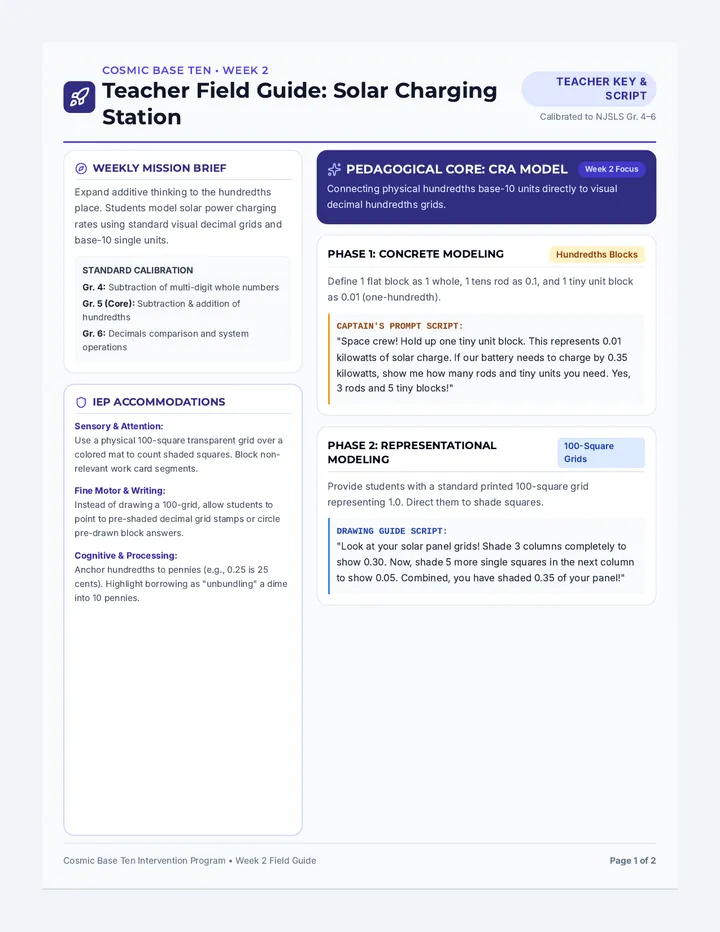
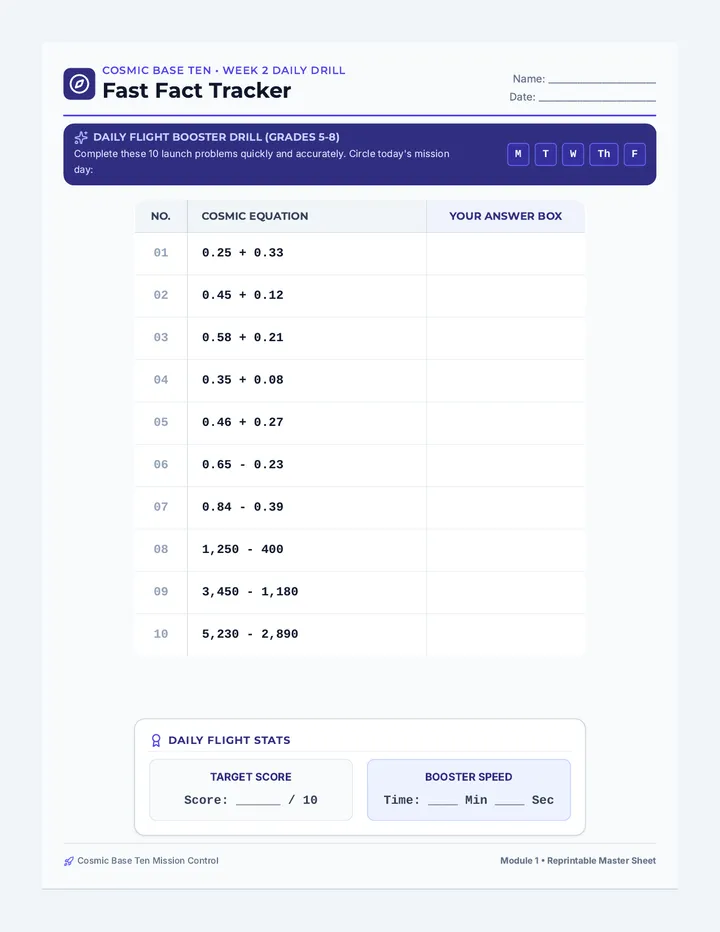
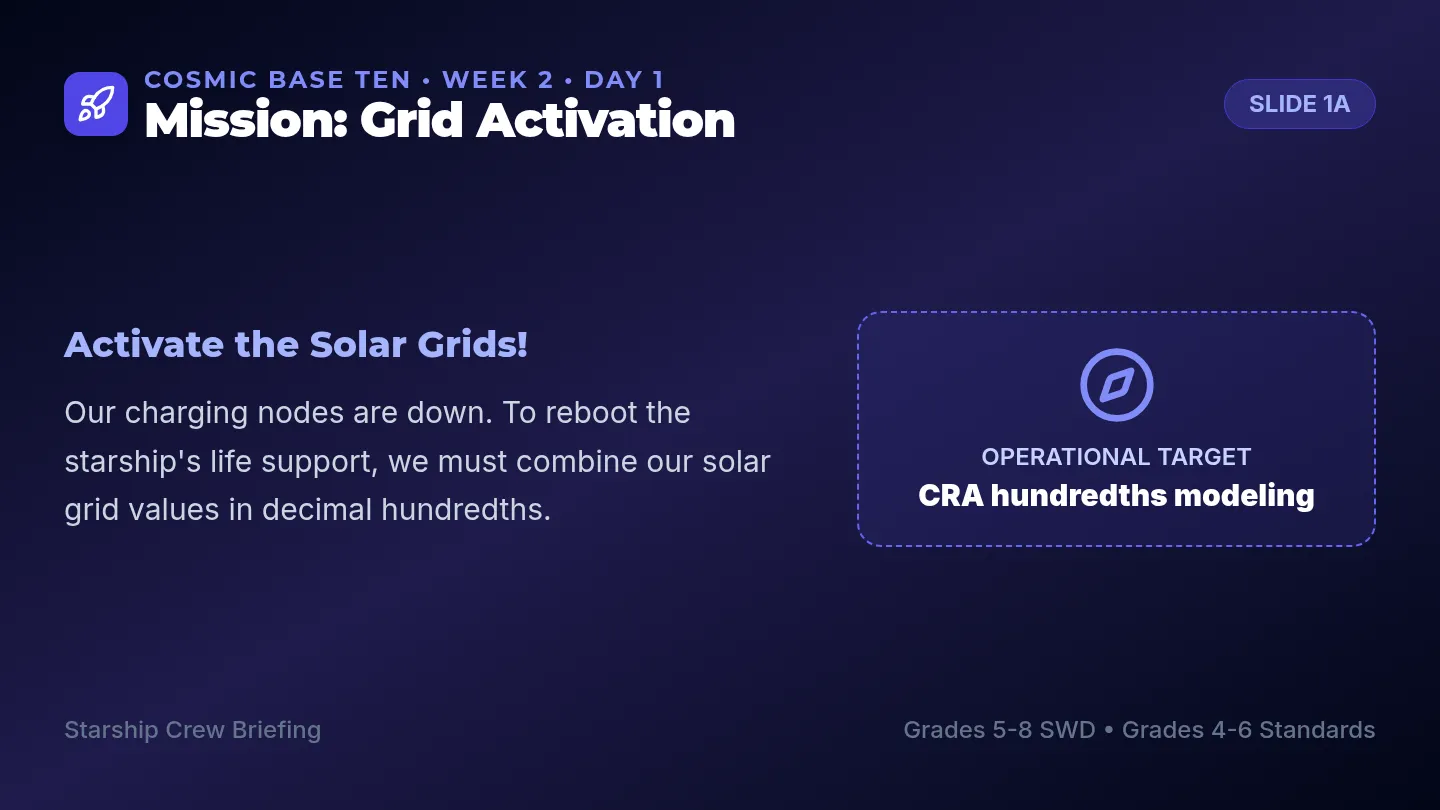
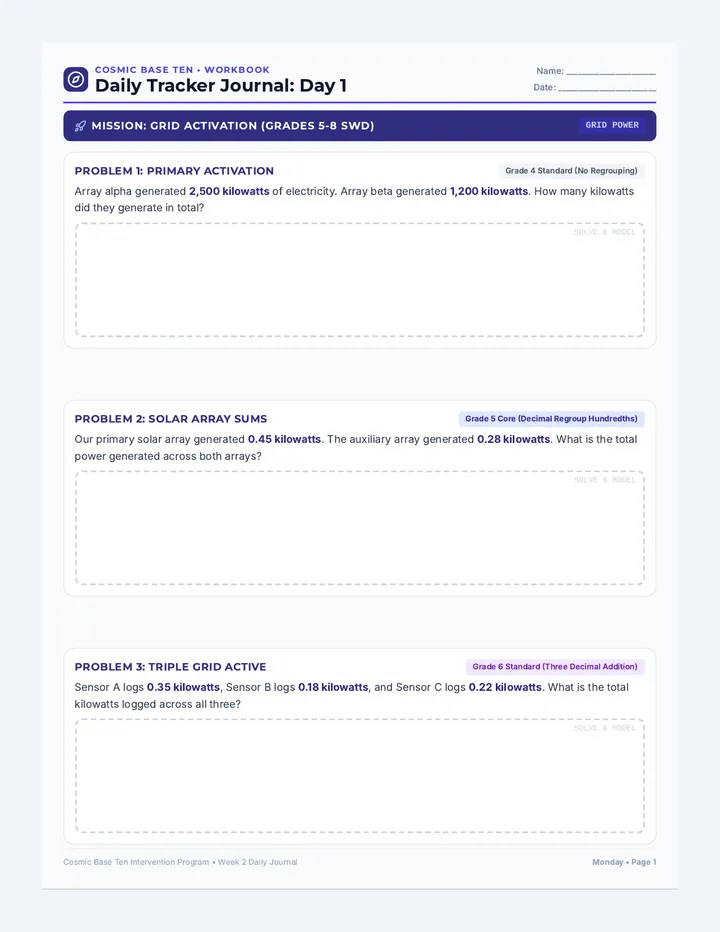
Students solve multi-step word problems using the four operations and interpret remainders in real-world contexts. The lesson focuses on identifying the necessary steps and determining how to handle remainders based on the question's requirements.
A small group lesson focused on analyzing and interpreting data from pictographs and bar graphs through a "Data Detectives" theme. Students will solve 'cases' by extracting information and making comparisons from visual data.
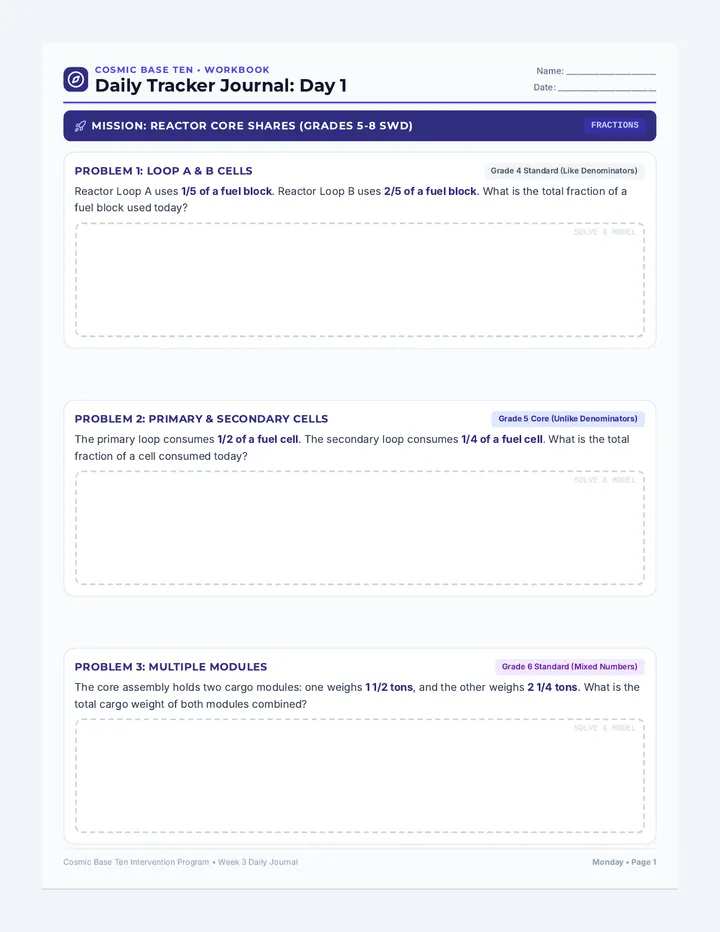
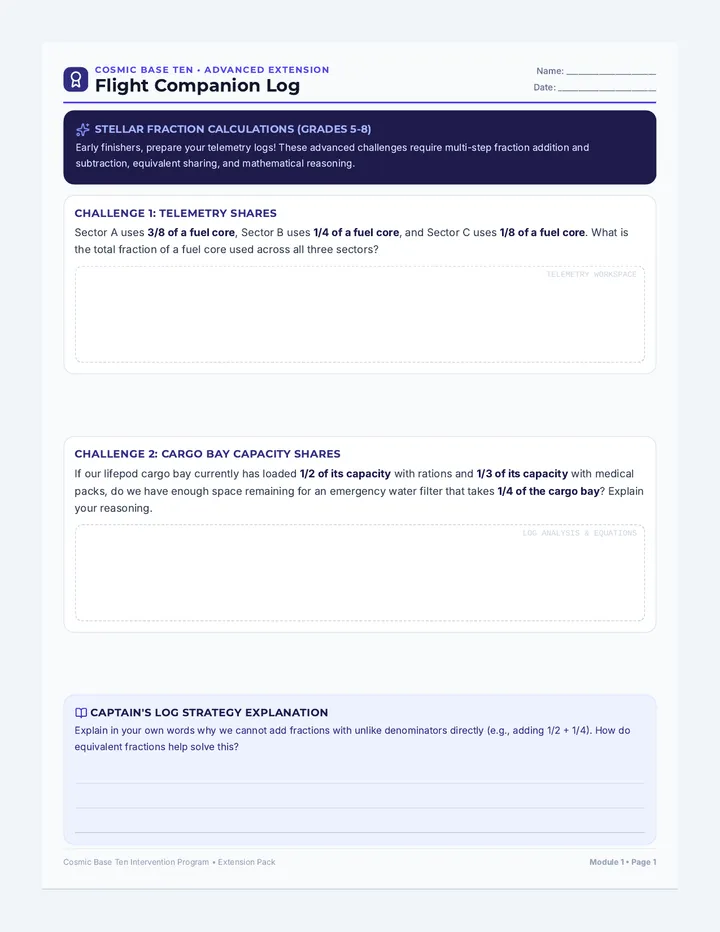
A comprehensive review of 4th-grade fraction standards focused on MCAS preparation, including equivalent fractions, addition, and decimal relationships.
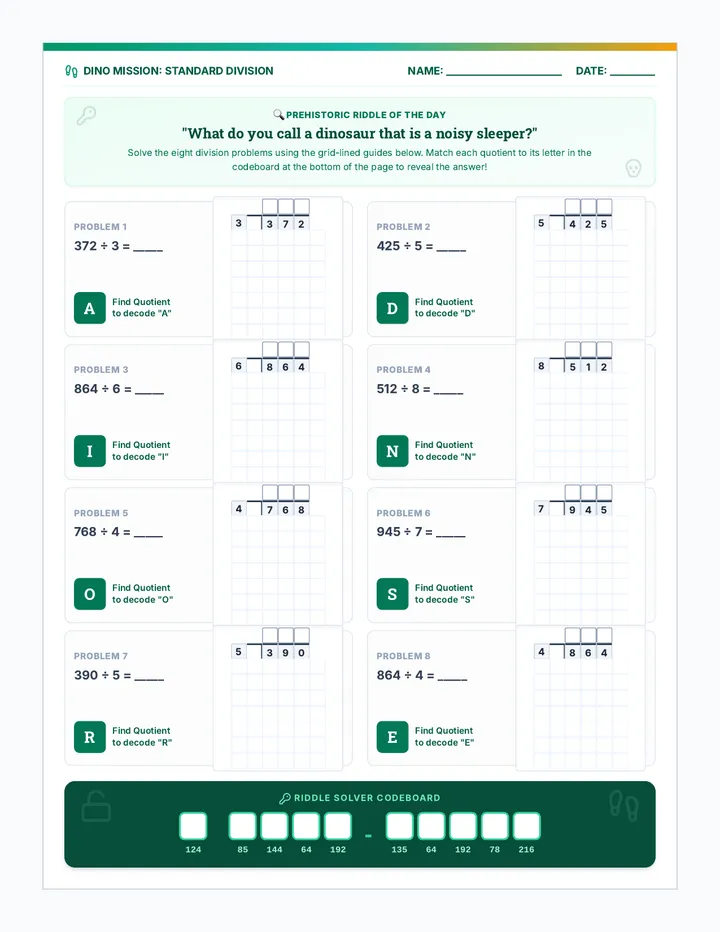
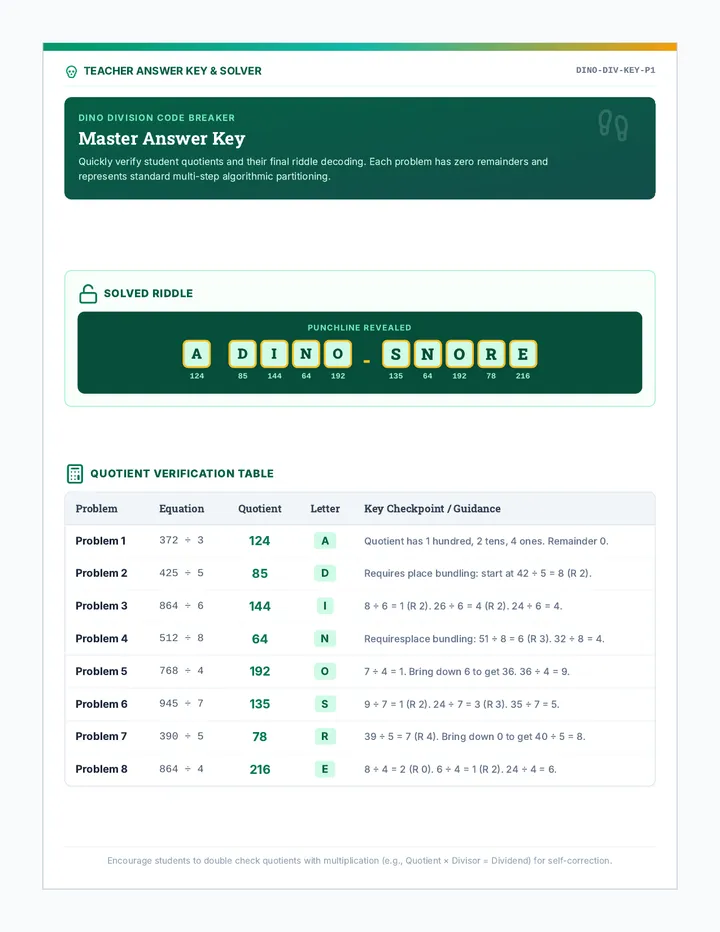
A focused practice session on solving multi-step word problems using addition, subtraction, multiplication, and division in real-world contexts.
This lesson teaches students the 'Butterfly Method' (cross-multiplication) as a strategy to compare fractions with unlike denominators, including guided practice and independent application.
A comprehensive lesson on rounding whole numbers to the nearest 10, 100, and 1,000 using the mountain hill visual strategy. Includes guided instruction and multi-level practice.
The second week of spiral review shifts towards multi-step word problems, decimal notation, and geometric properties.
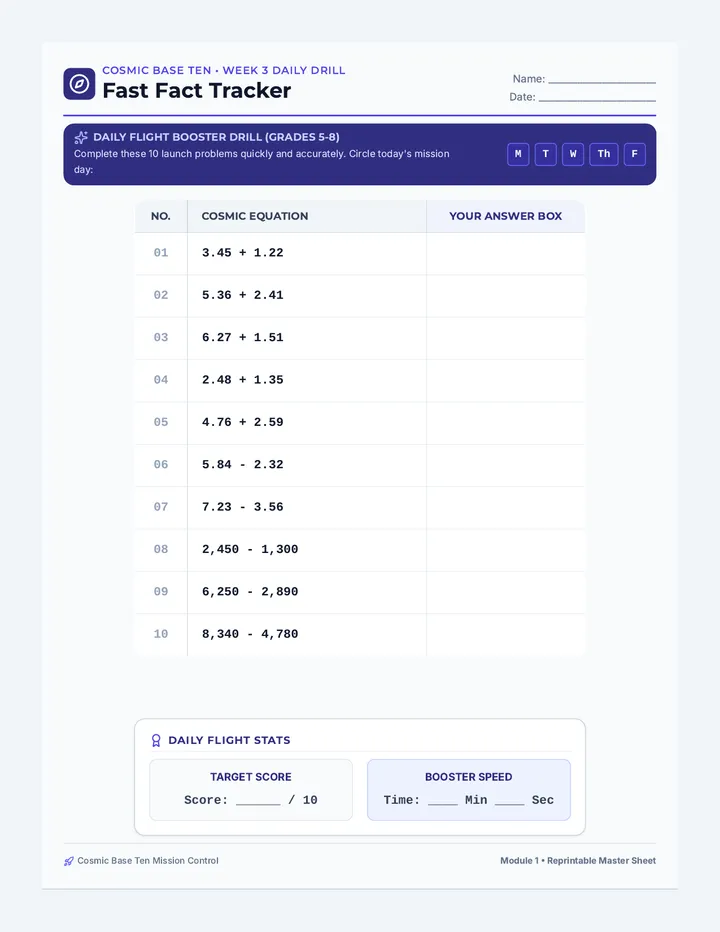
The first week of spiral review focuses on place value, basic multi-digit operations, and introductory fraction concepts.
Foundational tools for assessing student levels and planning instruction based on California Power Standards across grades K-5.
A short assessment focused on the 4th-grade skill of finding common denominators to create equivalent fractions. Includes a student exit ticket and a teacher proficiency guide.
A comprehensive set of visual reference cards for both Metric and US Customary systems of measurement, designed for student desks or notebooks.
A lesson on comparing fractions with same numerators or same denominators using visual models and number lines.
A lesson focused on identifying and creating equivalent fractions using visual models like area models and number lines, specifically for denominators 2, 3, 4, 6, and 8. Students will practice both within and beyond one whole.
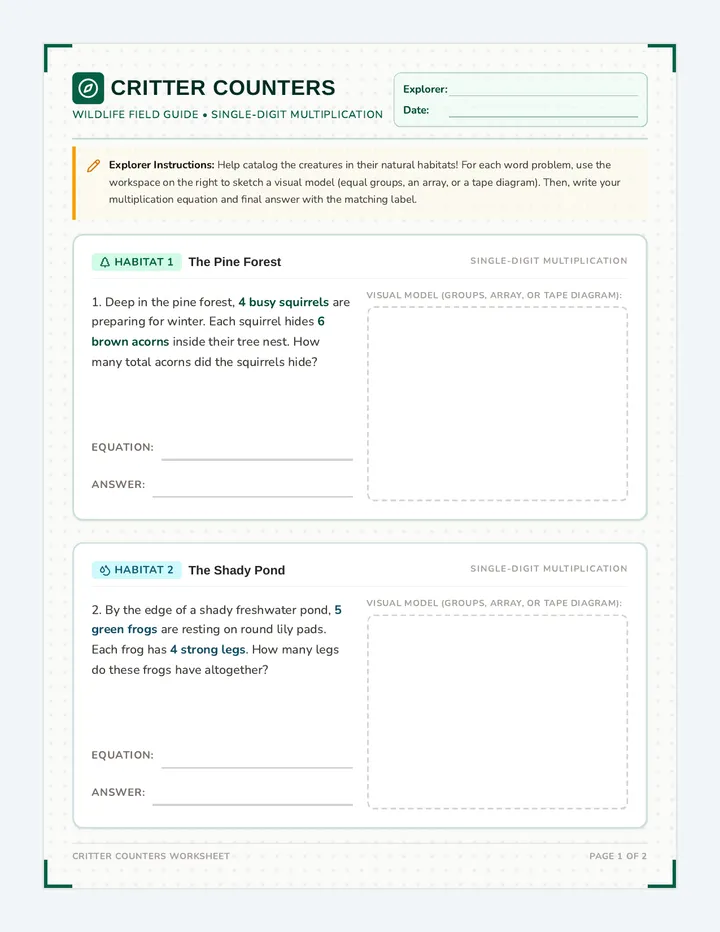
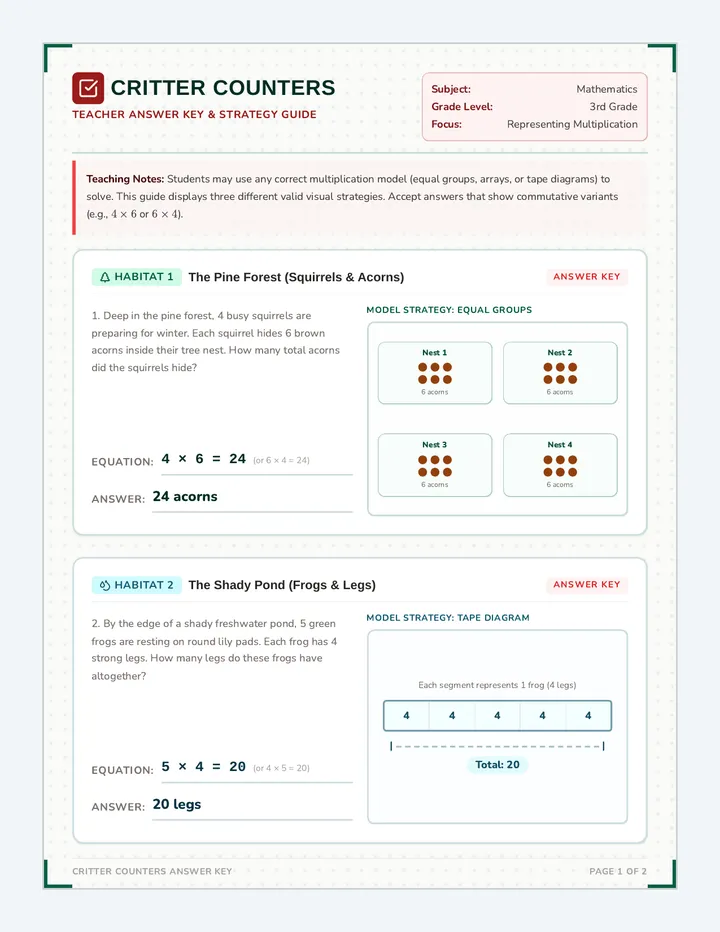
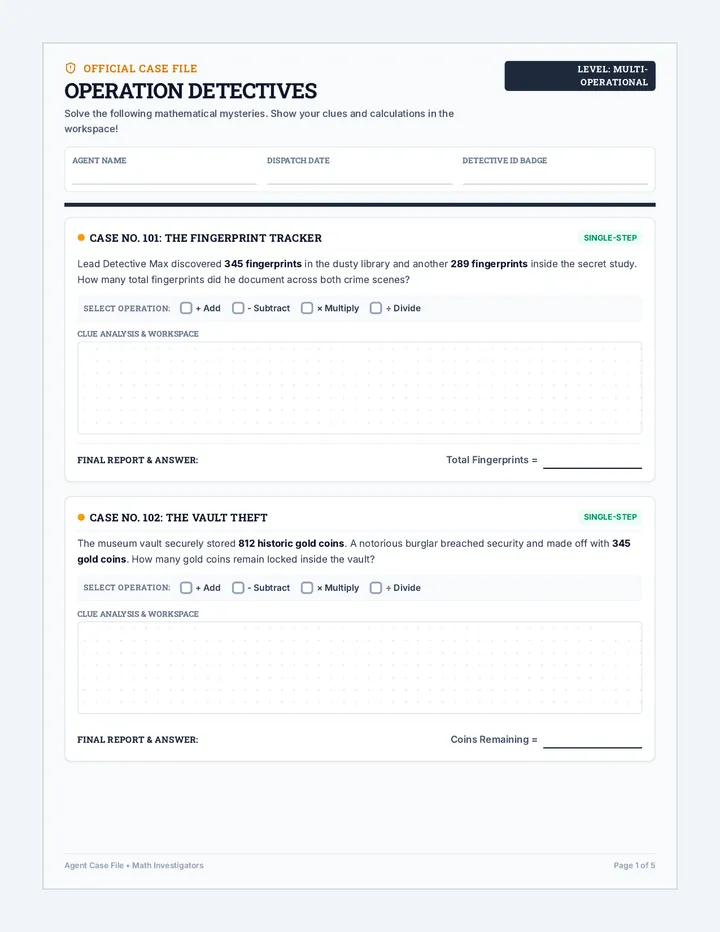
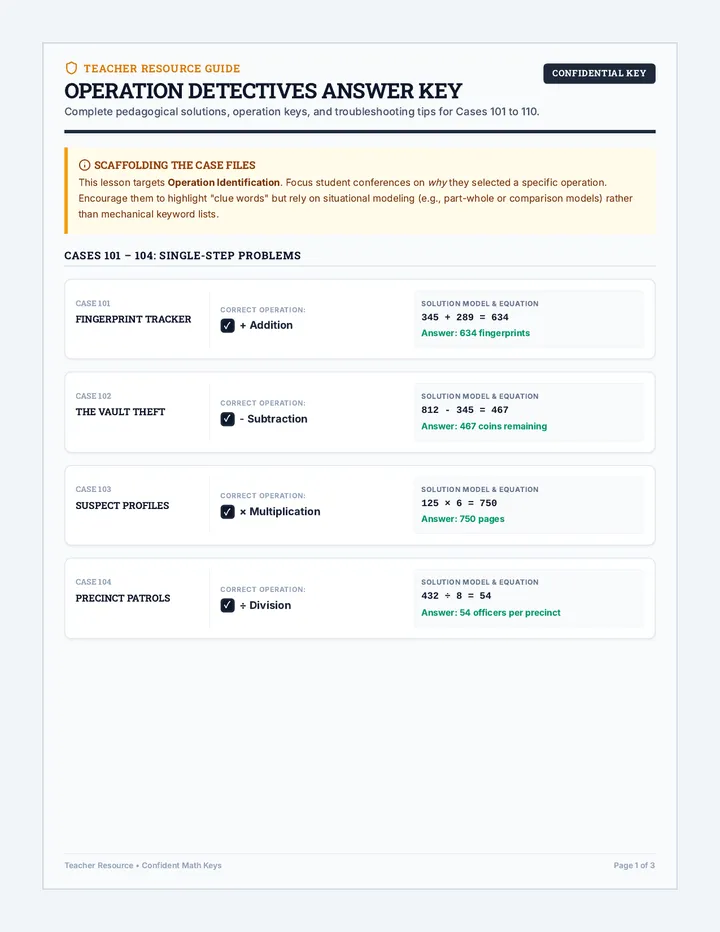
A lesson focused on solving single-step word problems involving the four operations using visual scaffolds and a structured problem-solving approach.
An introduction to basic statistics including measures of central tendency (mean, median, mode, range) and simple probability, themed around the Peanuts comic strip.
An introduction to basic statistics concepts (Mean, Median, Mode, Range) and data collection using an Equestria Girls theme to engage students. This lesson includes visual aids and color-coded sections for clear organization.
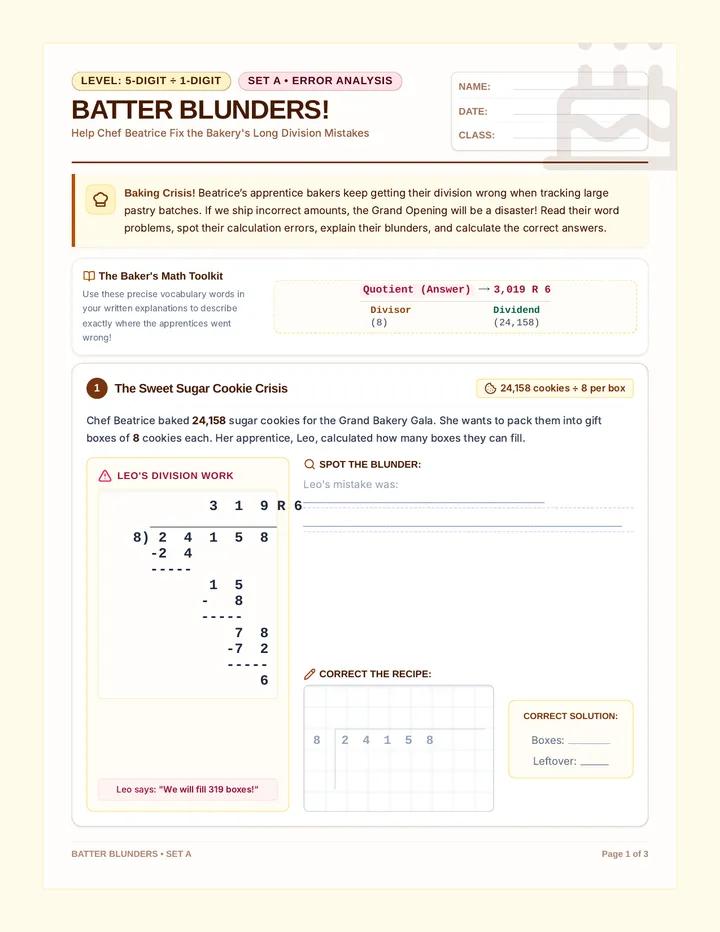
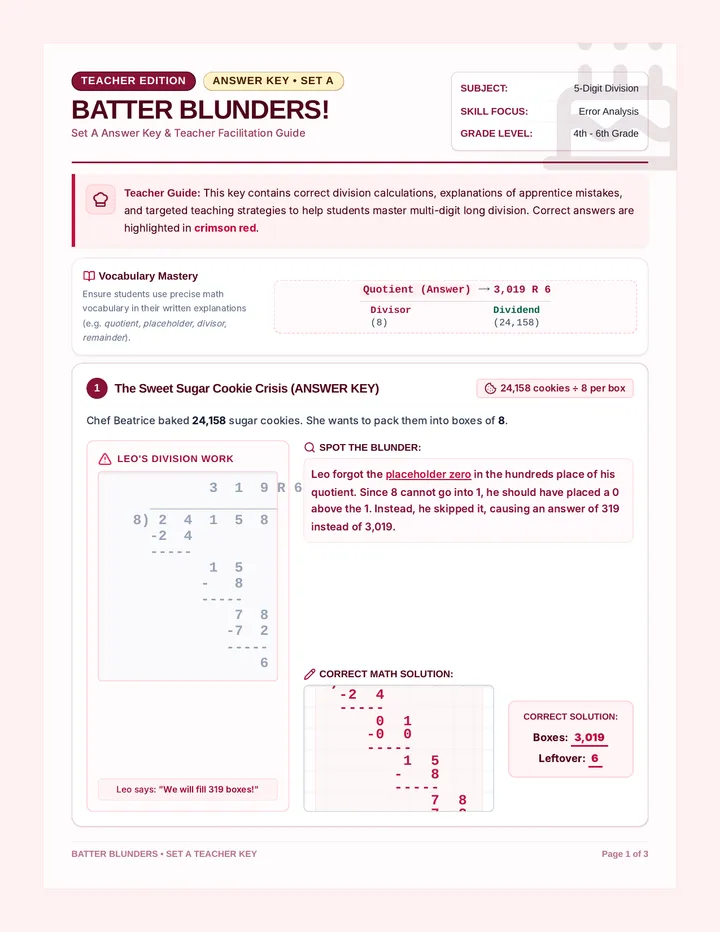
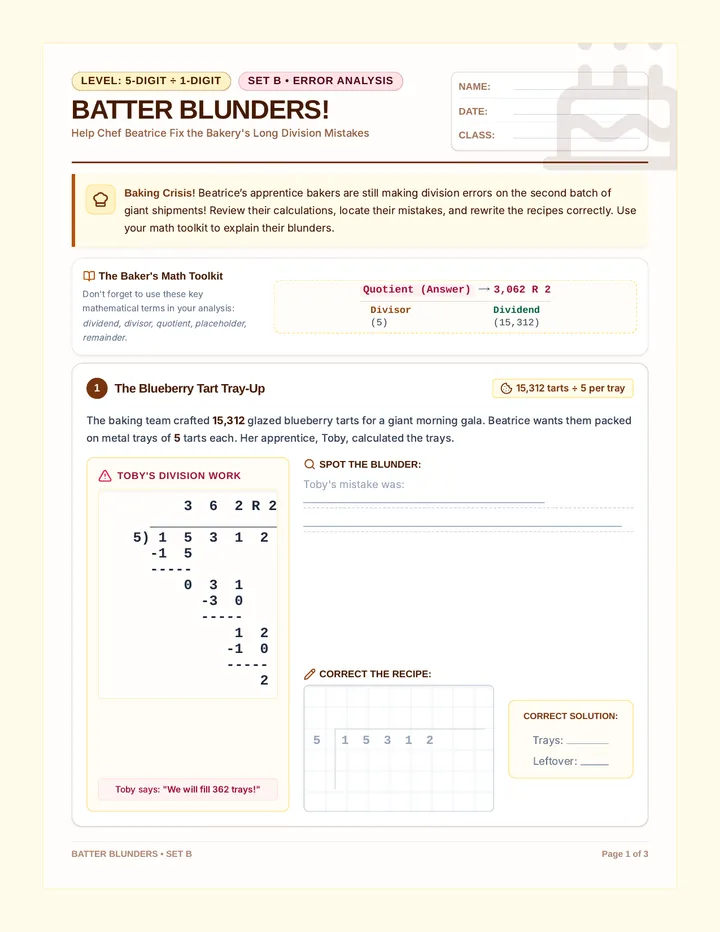
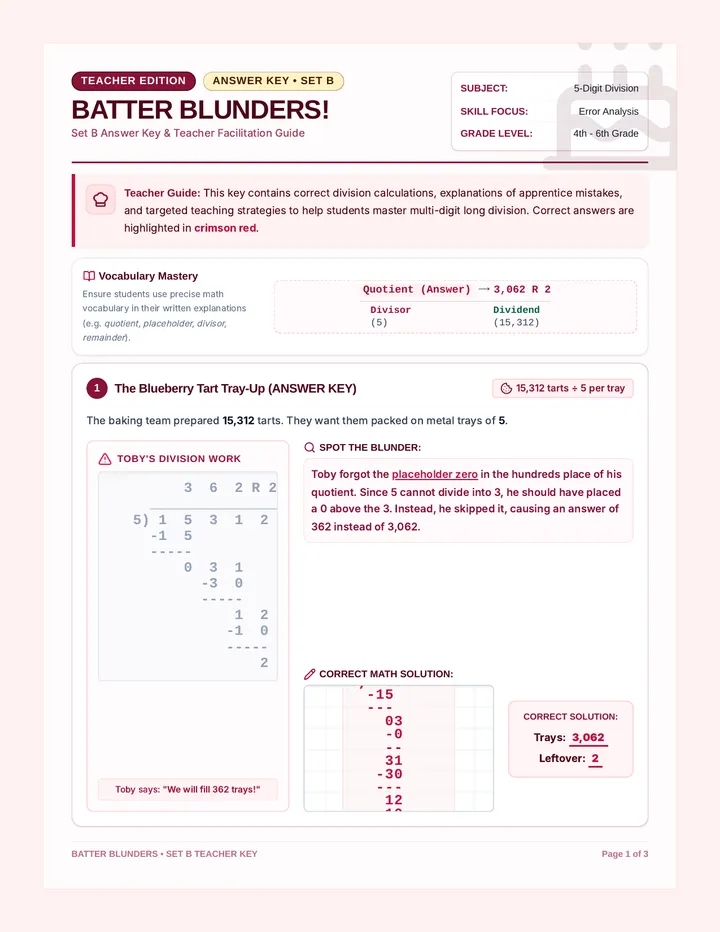
A collection of multi-step word problems set in a bustling bakery, challenging students to apply addition, subtraction, multiplication, and division to real-world scenarios.
A spooky and fun introduction to the basics of statistics (mean, median, and mode) featuring the characters from Billy and Mandy. Students will use visual icons to calculate data sets and solve a logic mystery to help Grim find his missing scythe.
A high-engagement geometry lesson exploring self-similarity and patterns through the construction of Sierpinski triangles, bridging simple multiplication and geometric progression.
In this hands-on geometry lesson, students step into the role of lead architects to design a zoo expansion. They will apply area and perimeter concepts to create functional animal enclosures while balancing strict spatial and budgetary constraints.