Explore Annemarie's internal transformation and her courageous journey through the woods in Lois Lowry's Number the Stars through discussion and reflective writing.
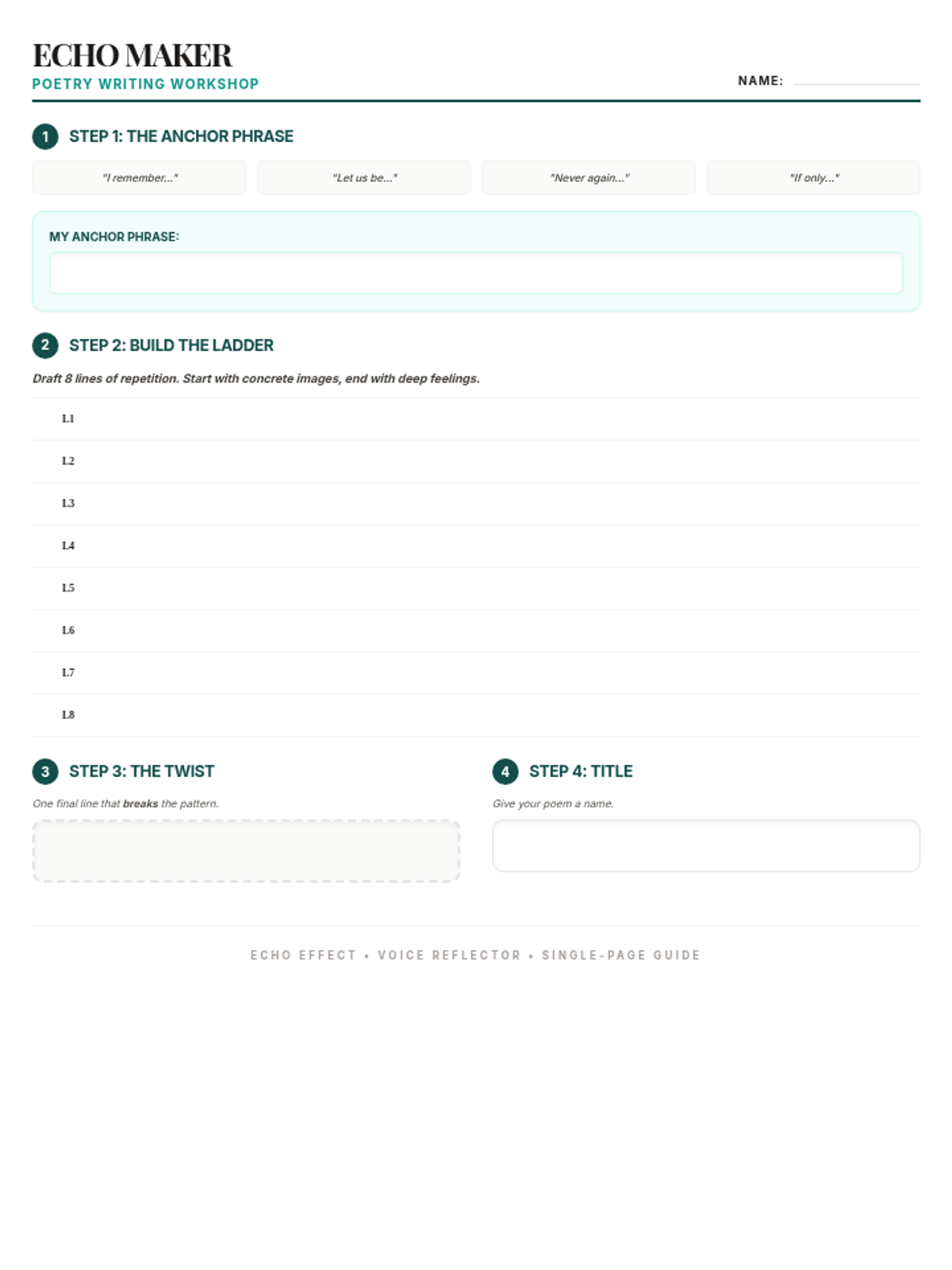
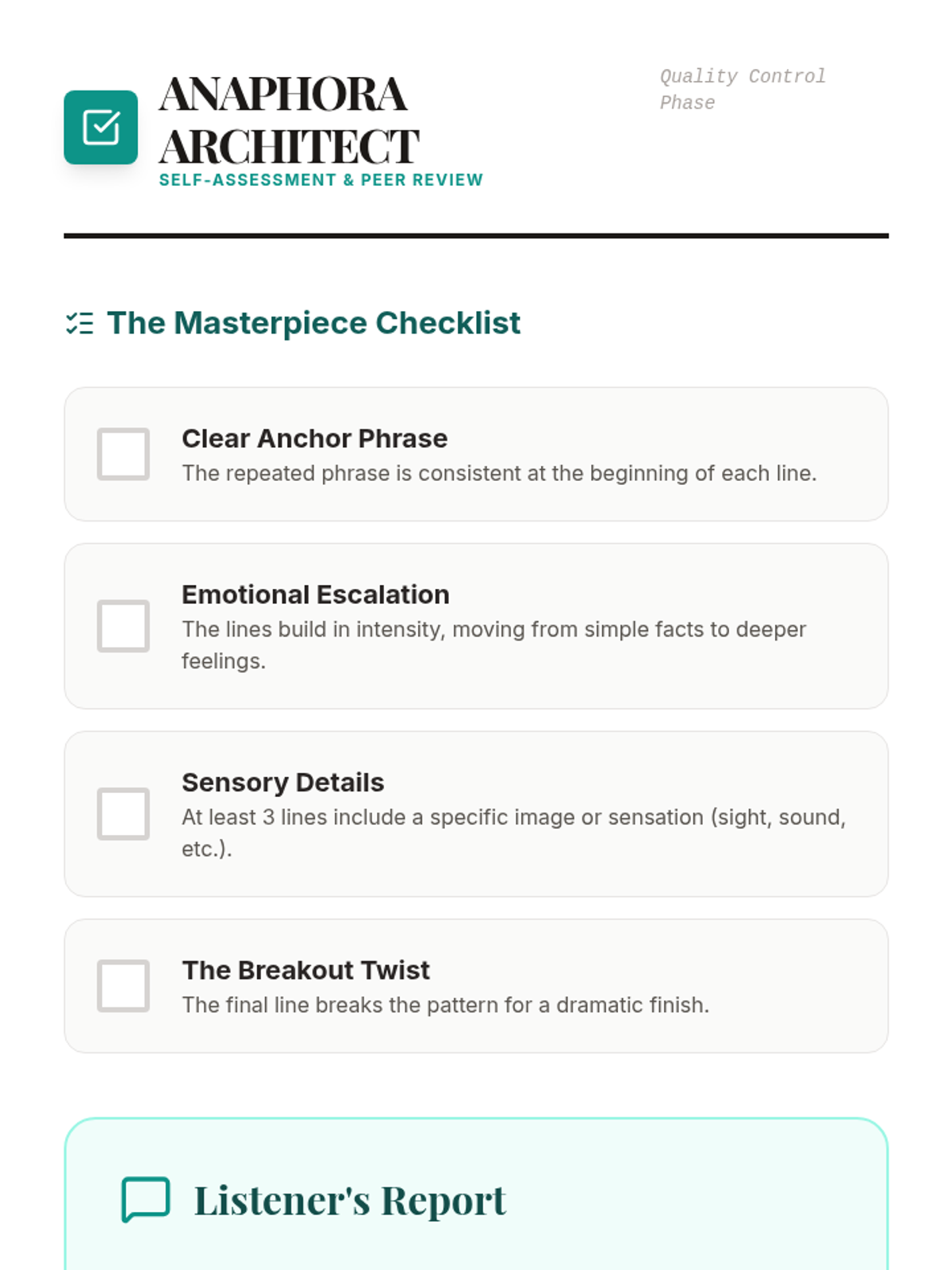
A creative workshop where students apply their knowledge to craft original anaphora poems, using structured prompts and a peer-review checklist.
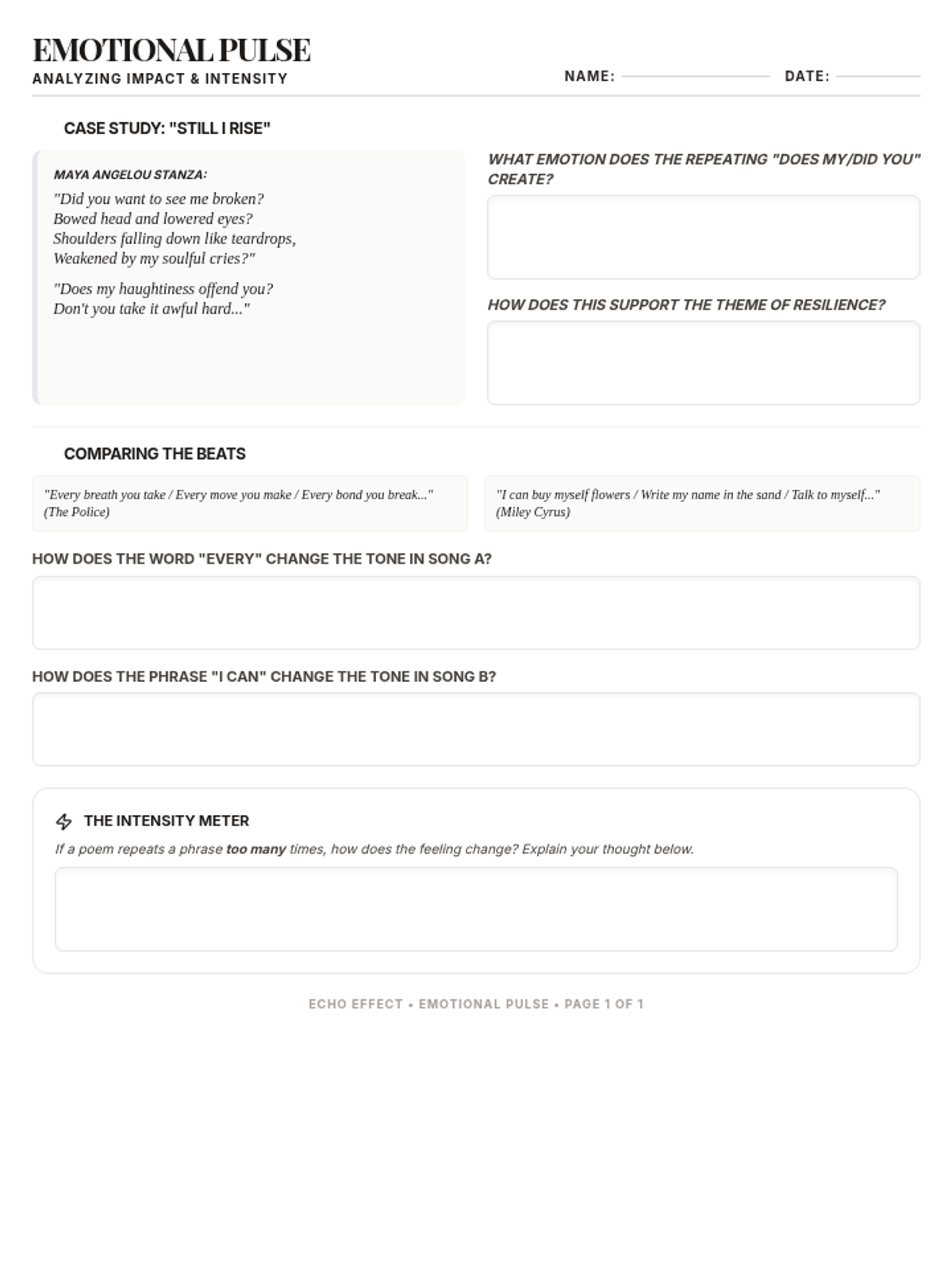
A deep dive into the emotional weight of repetition, using powerful examples like Maya Angelou to see how anaphora builds tension and intensity.
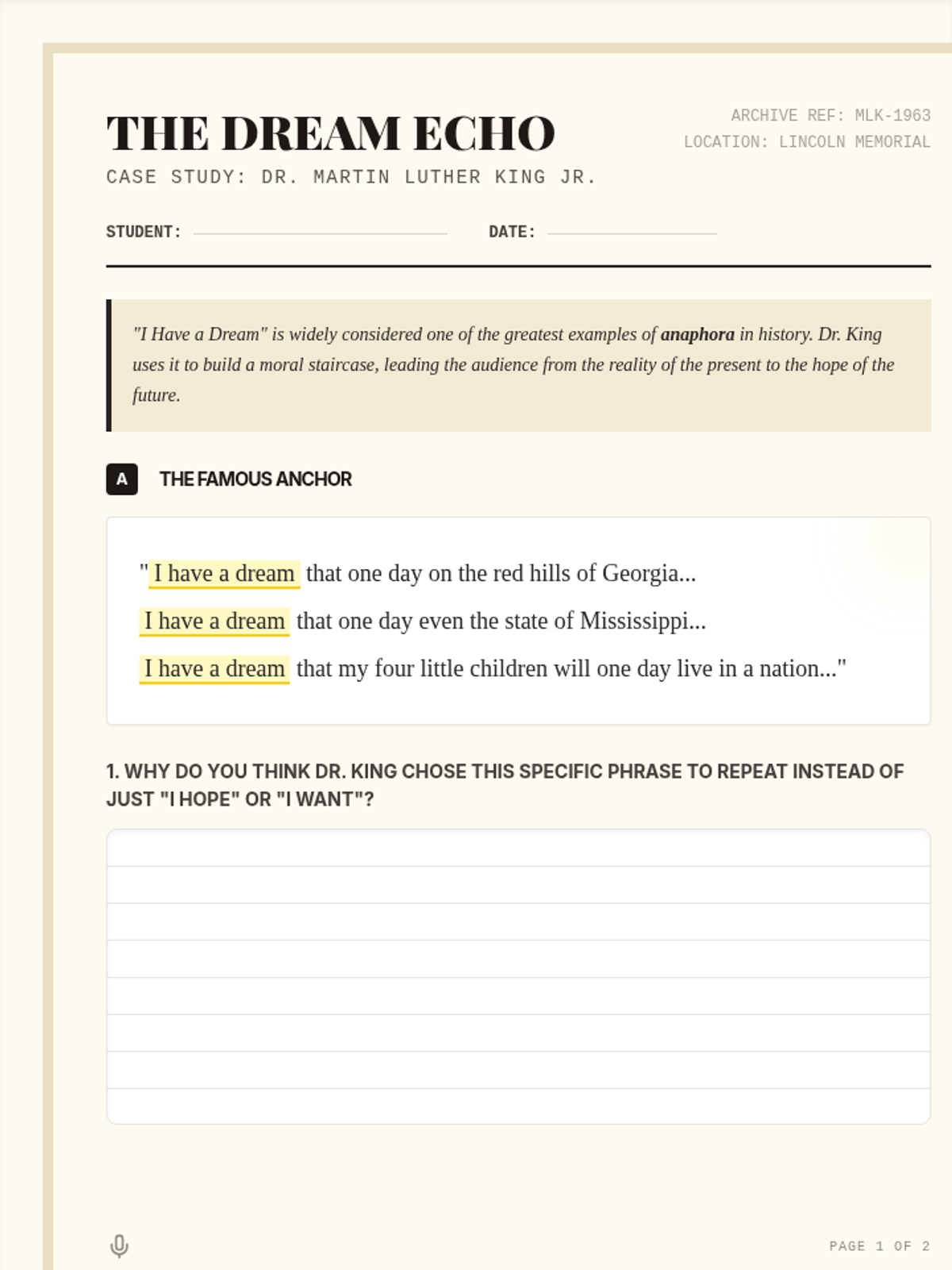
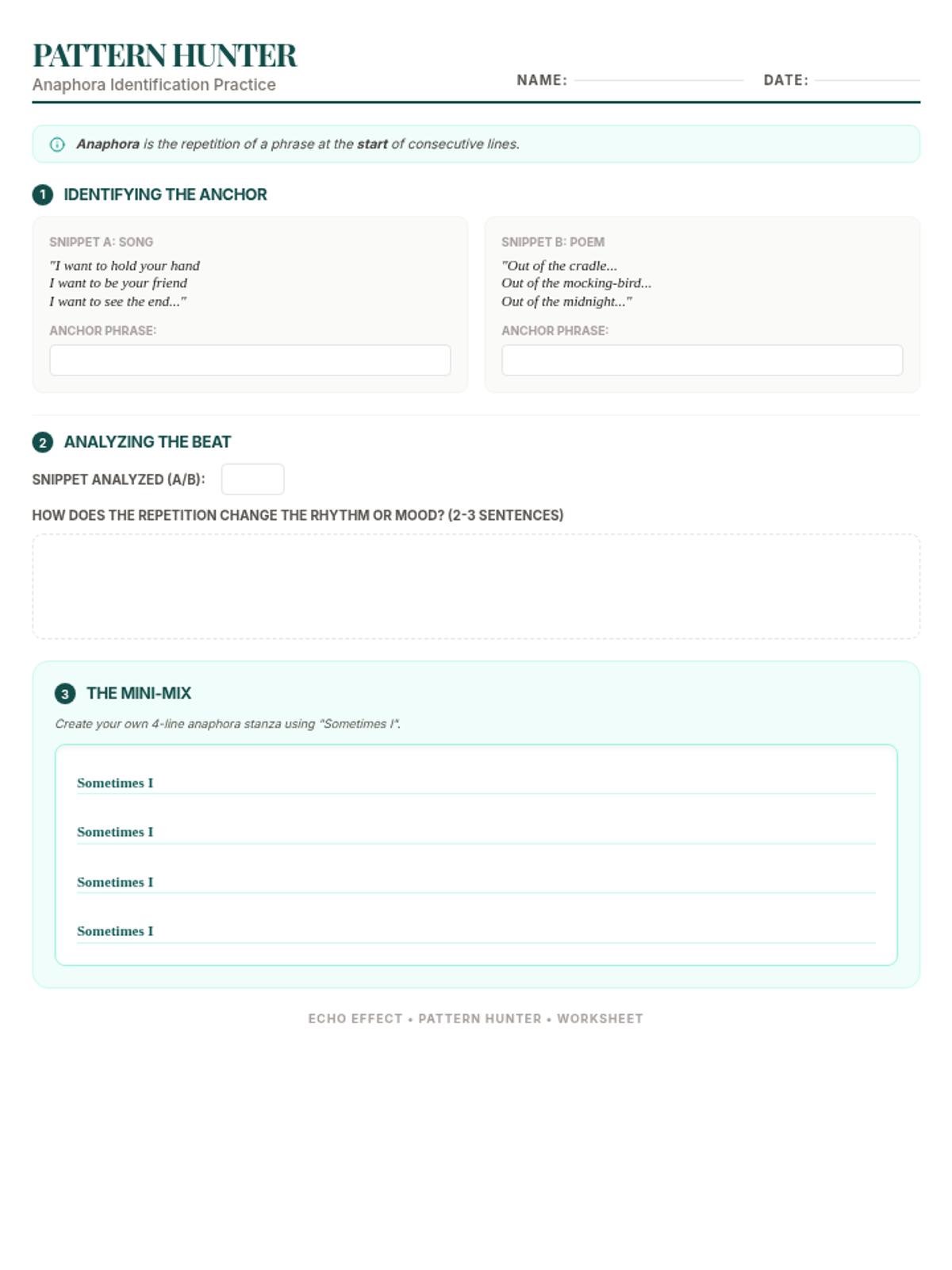
An introductory lesson focused on identifying anaphora in contemporary songs and classic poetry, understanding its basic structure and rhythmic purpose.
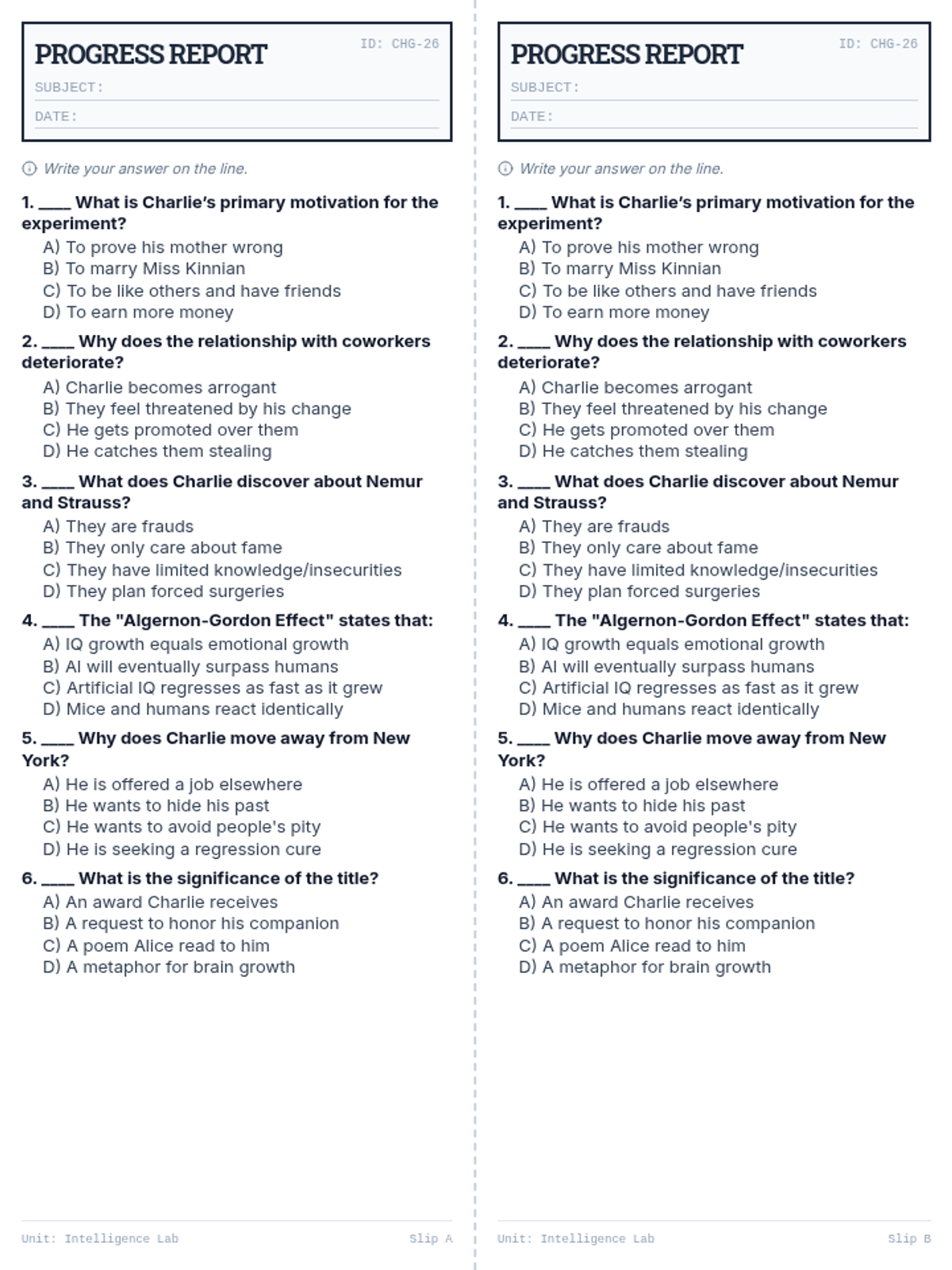
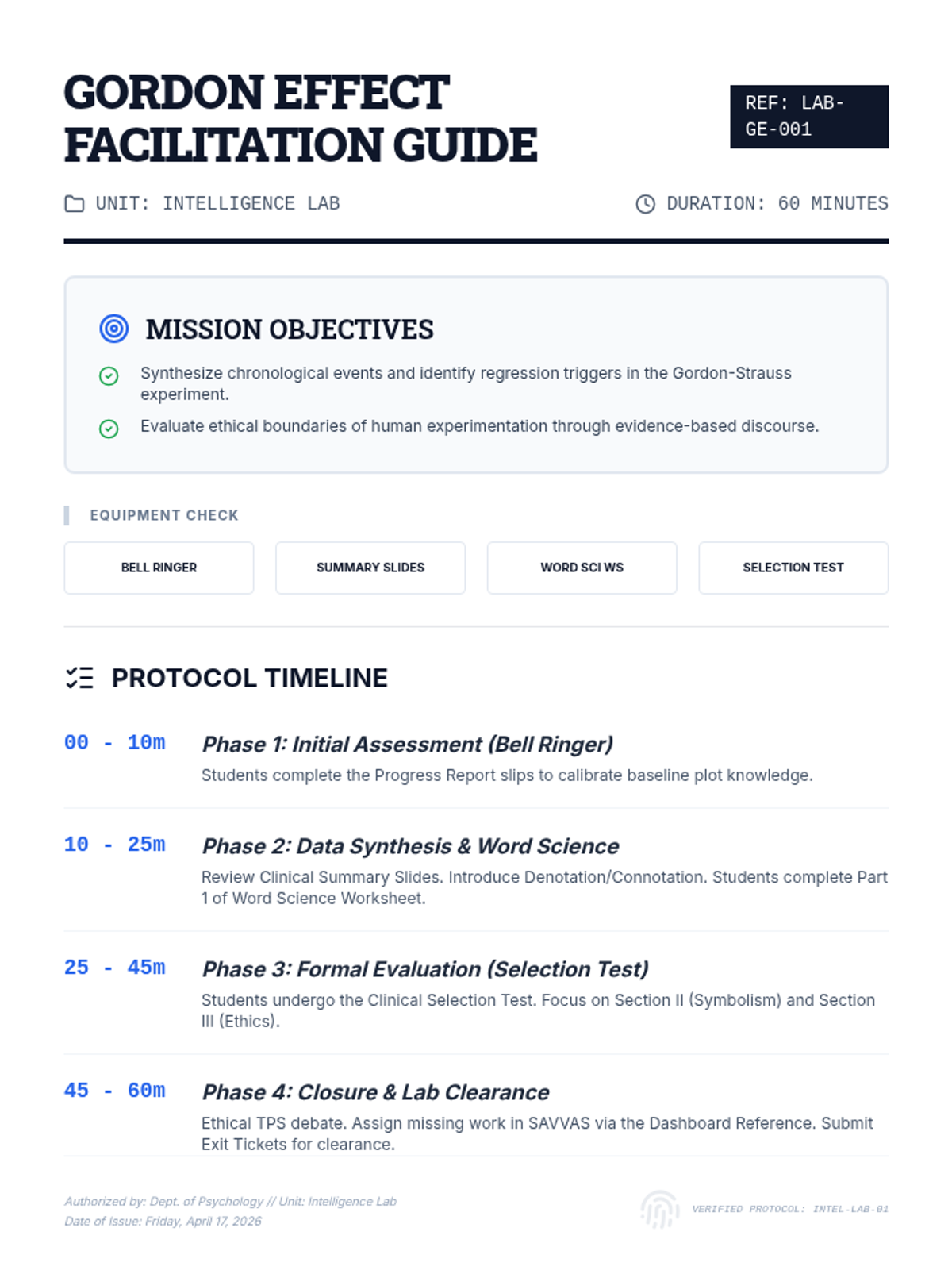
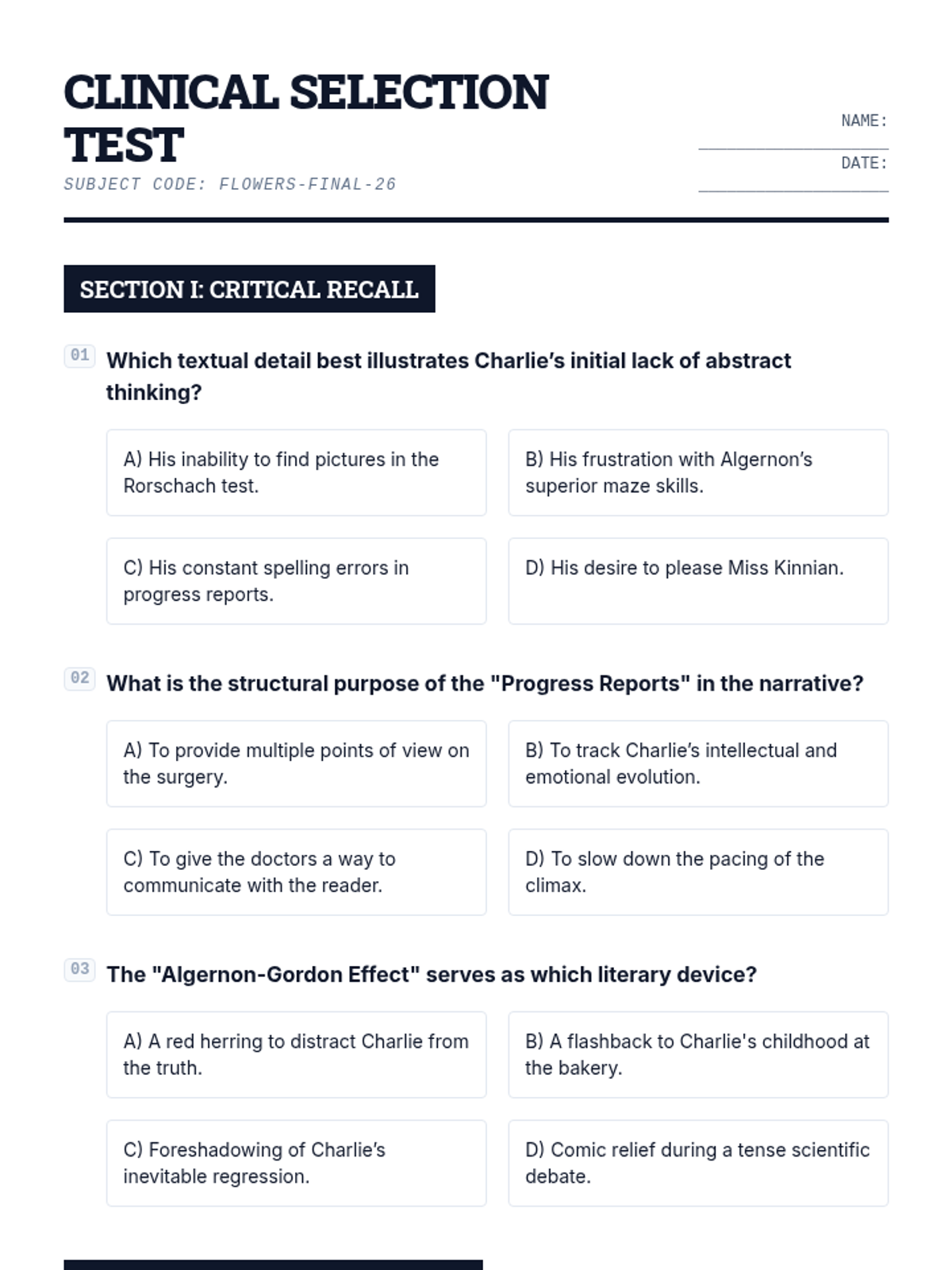
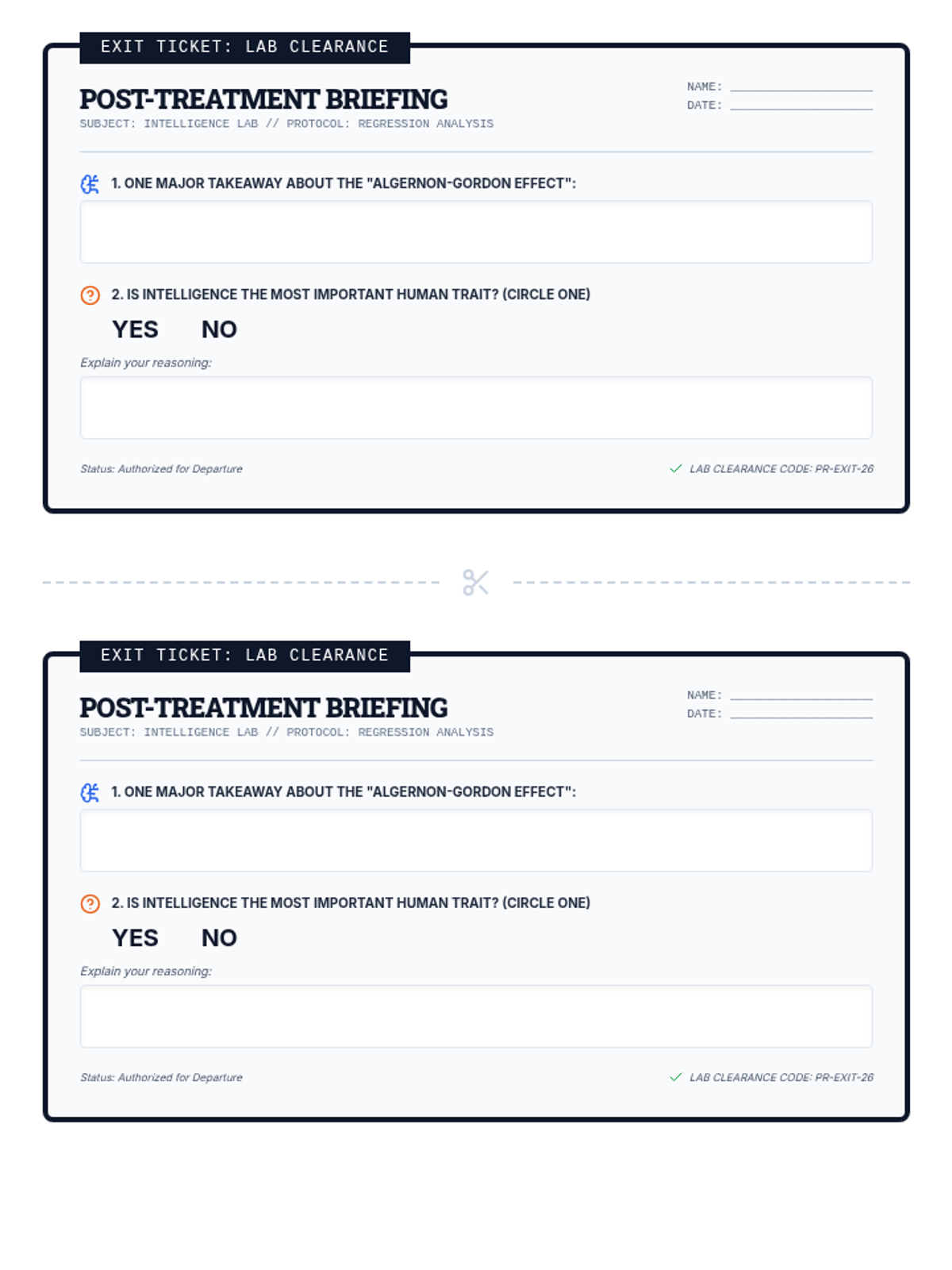
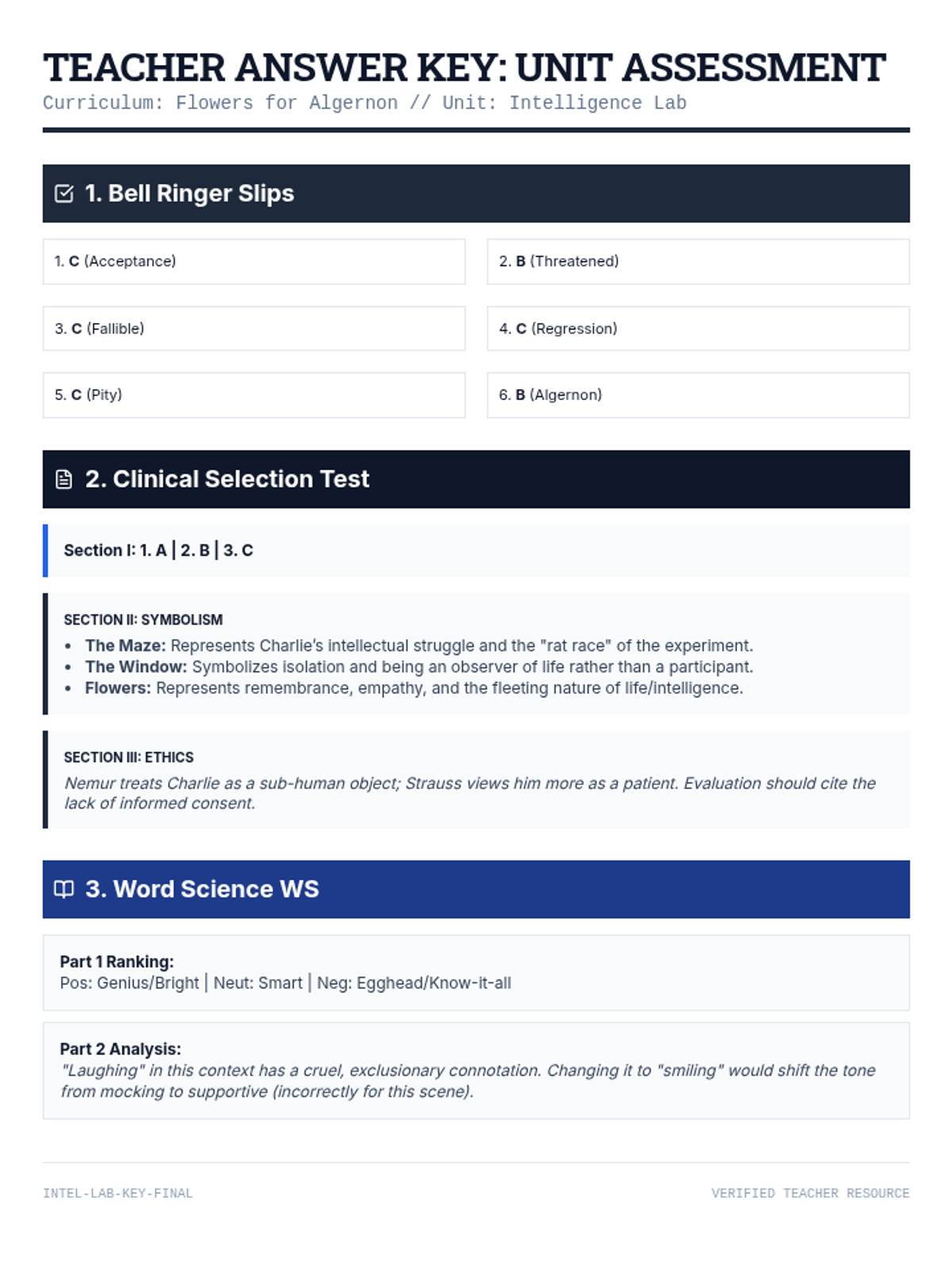
A session focused on summarizing the narrative arc of Charlie Gordon and debating the ethical implications of the surgery and his changing relationships.
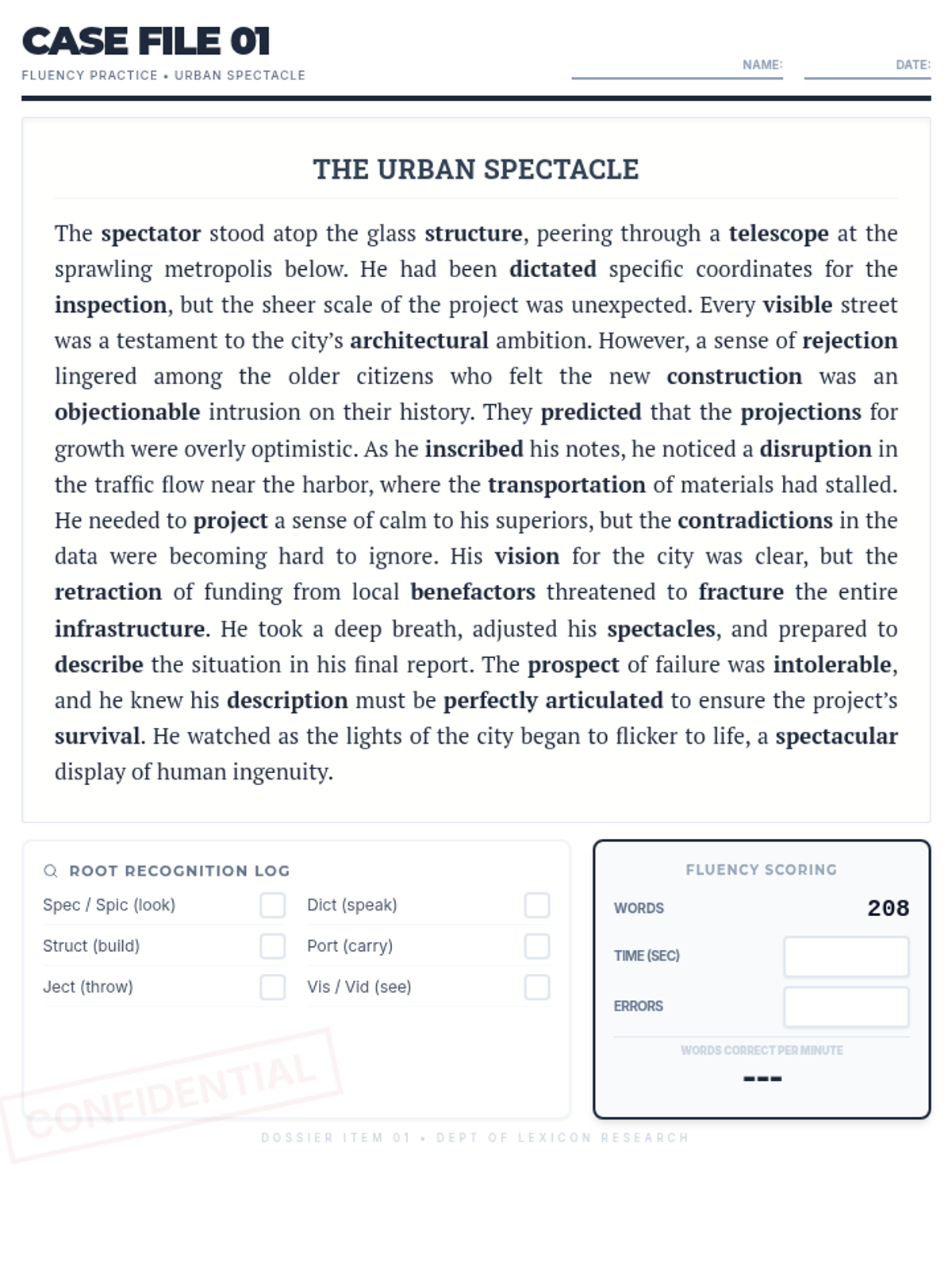
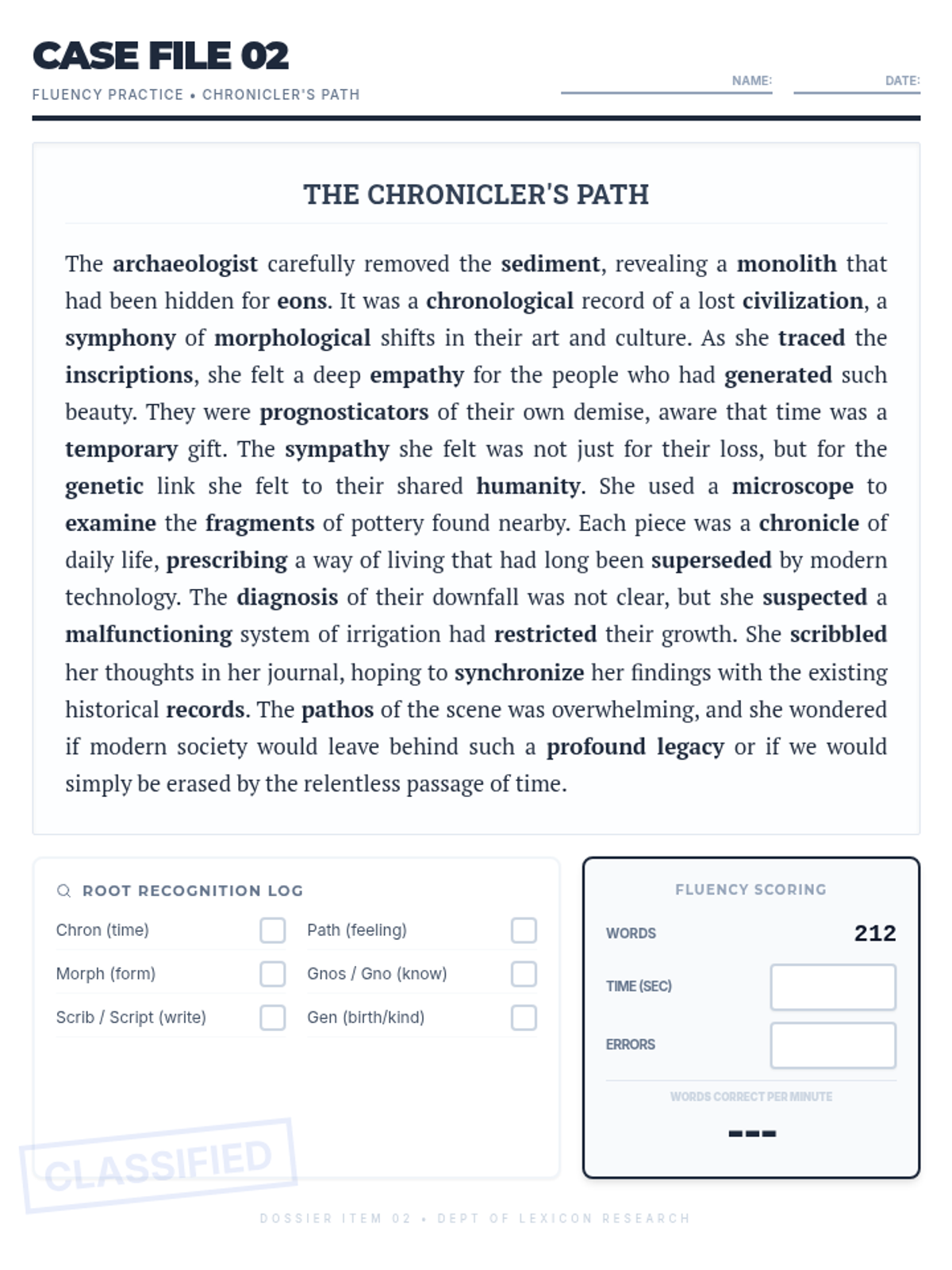
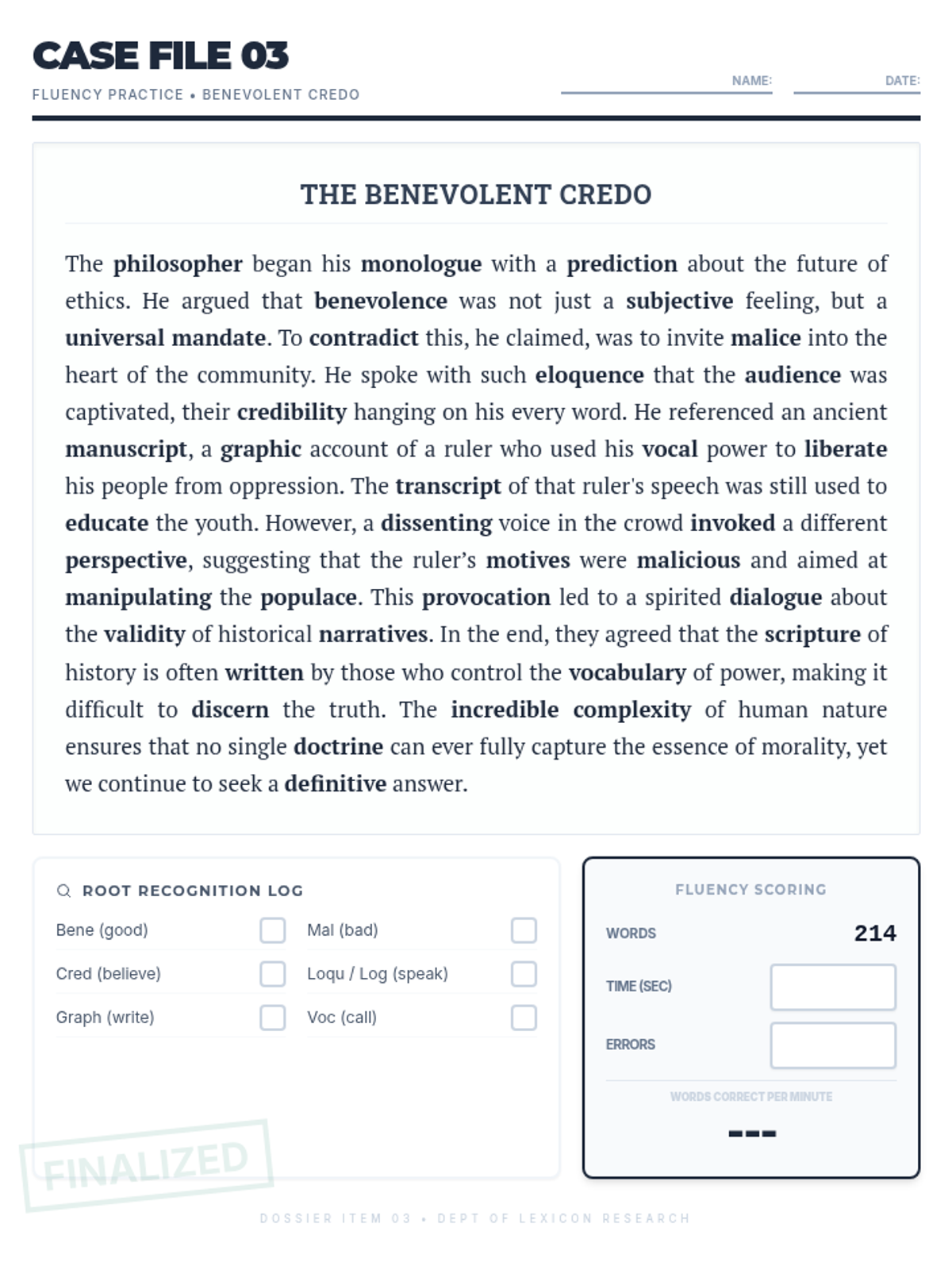
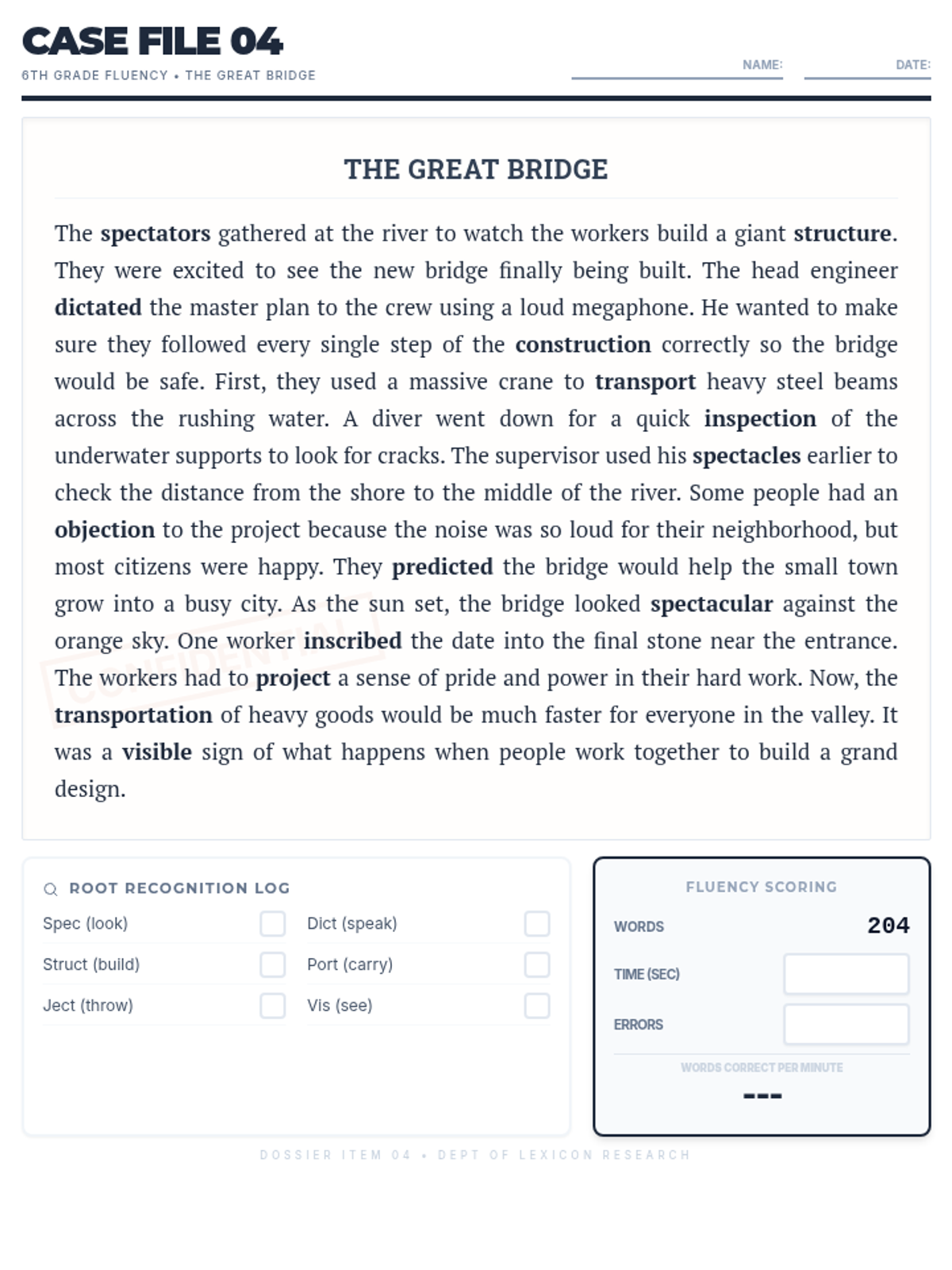
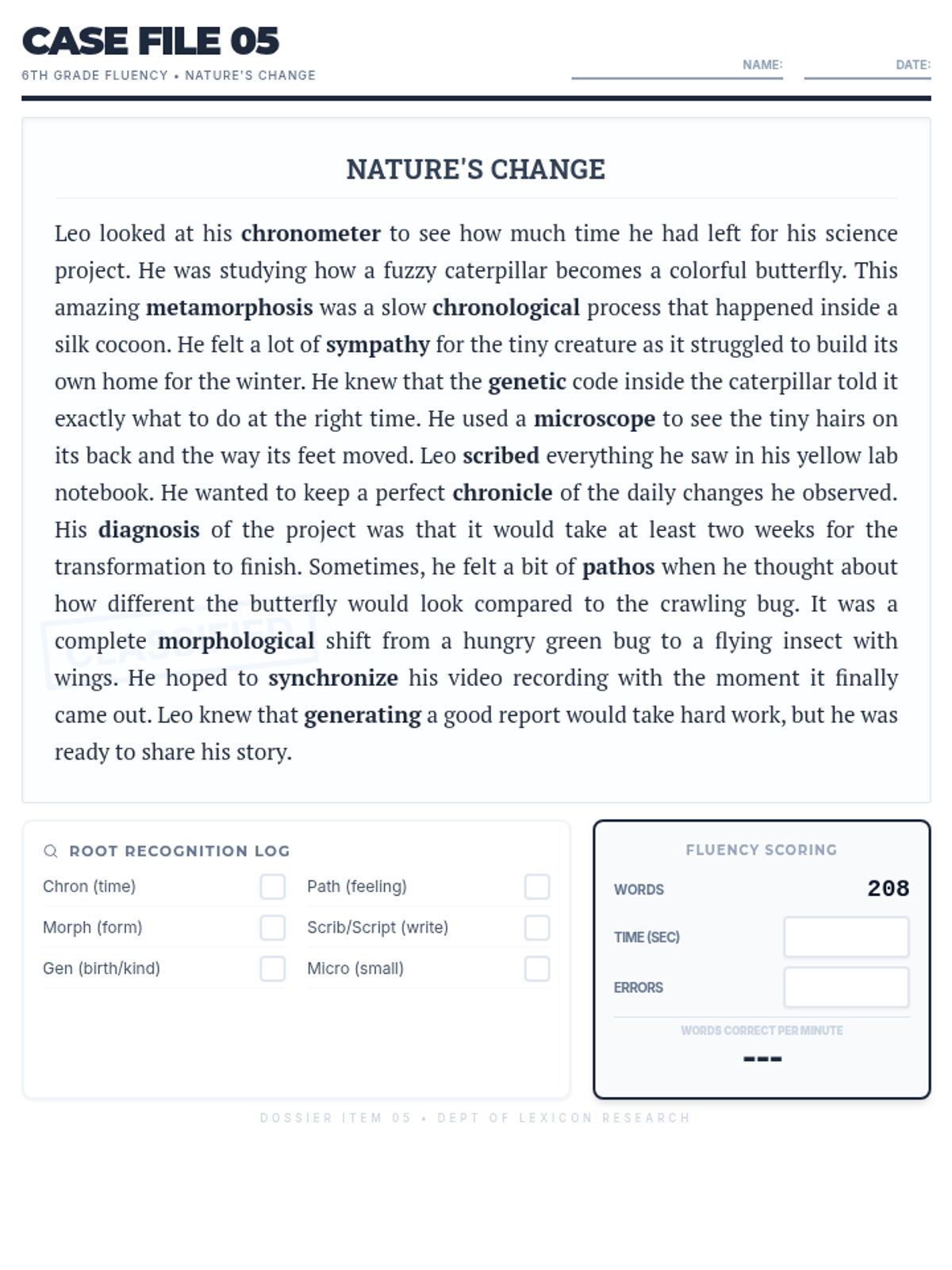
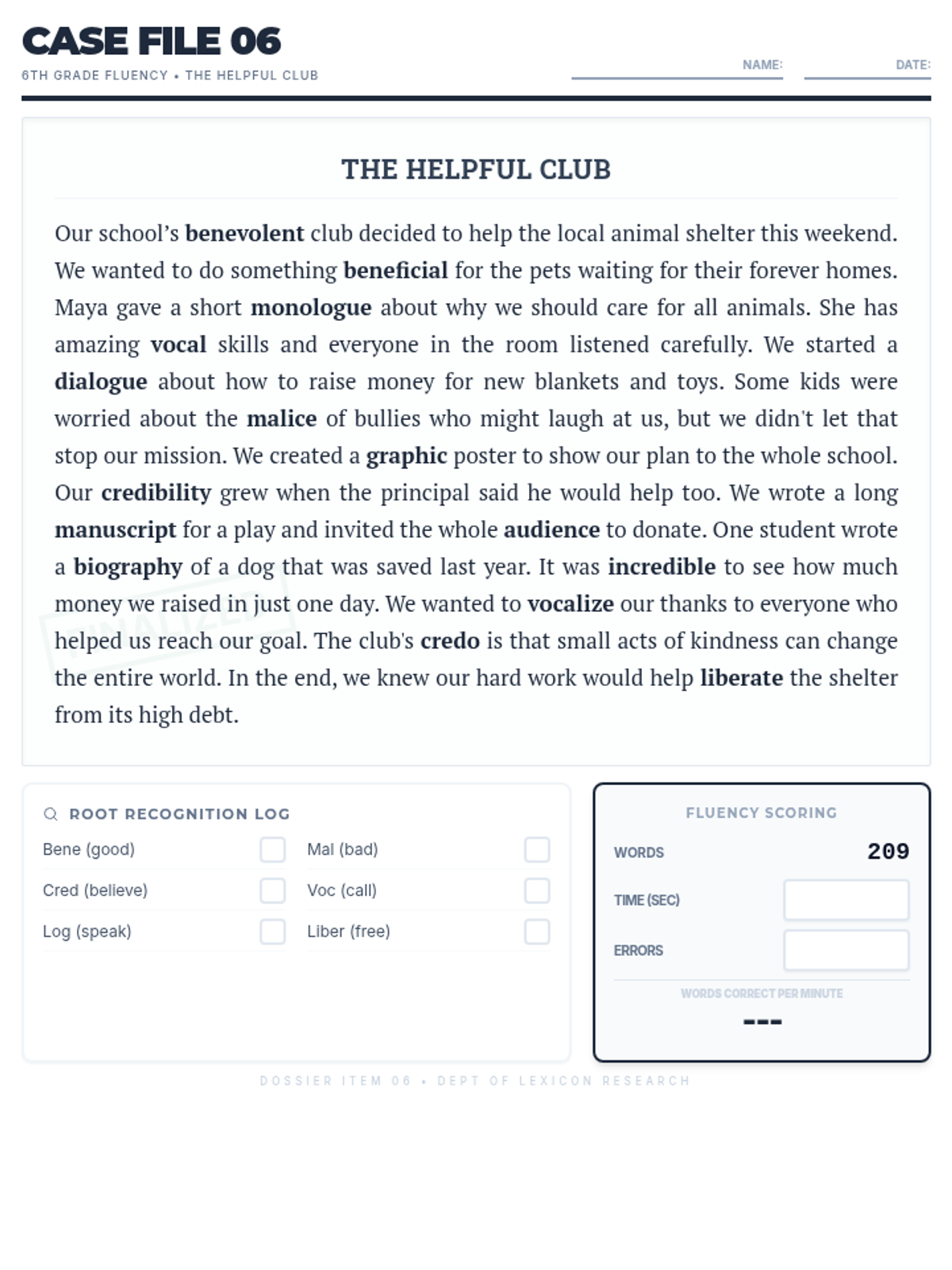
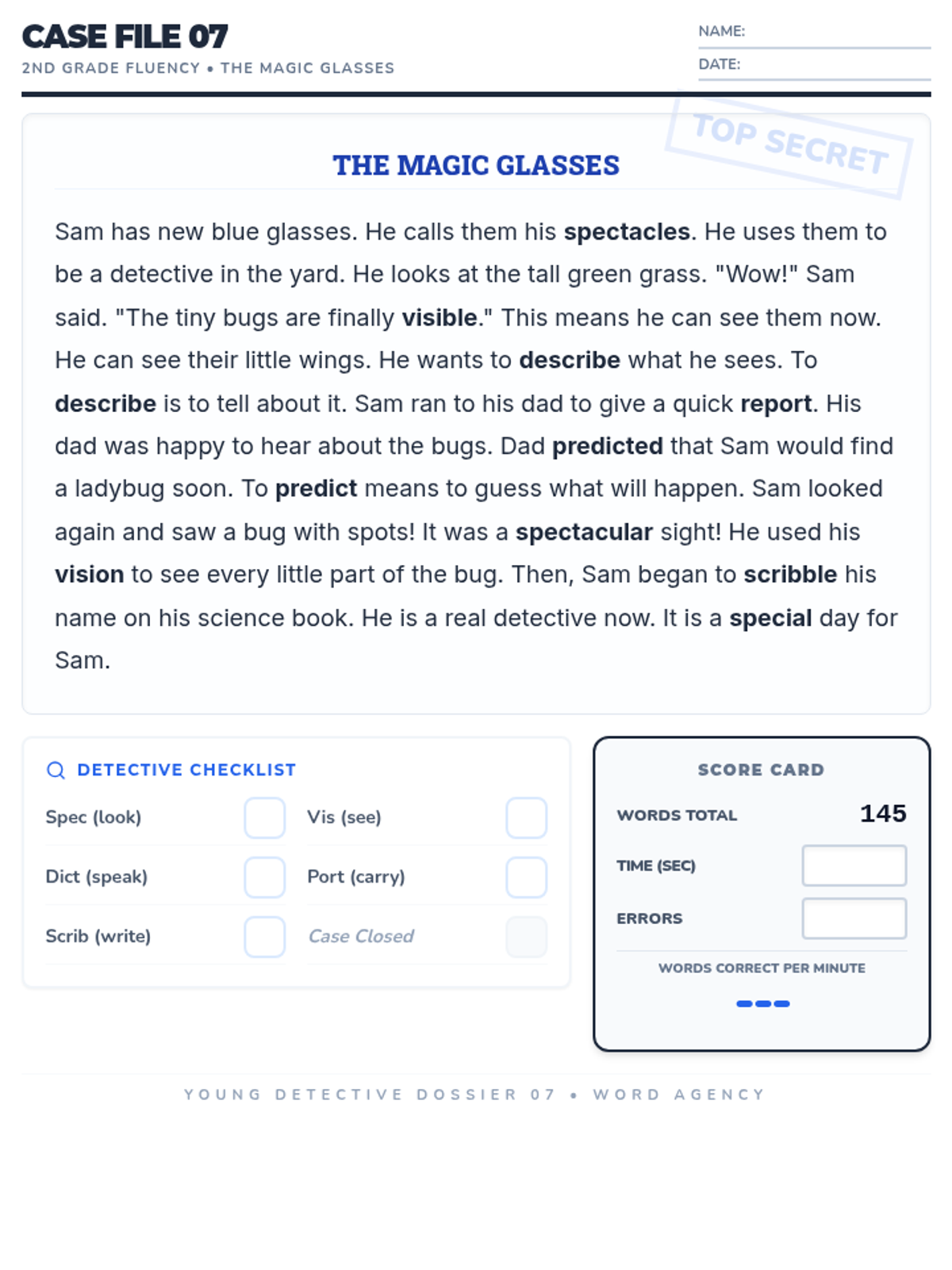
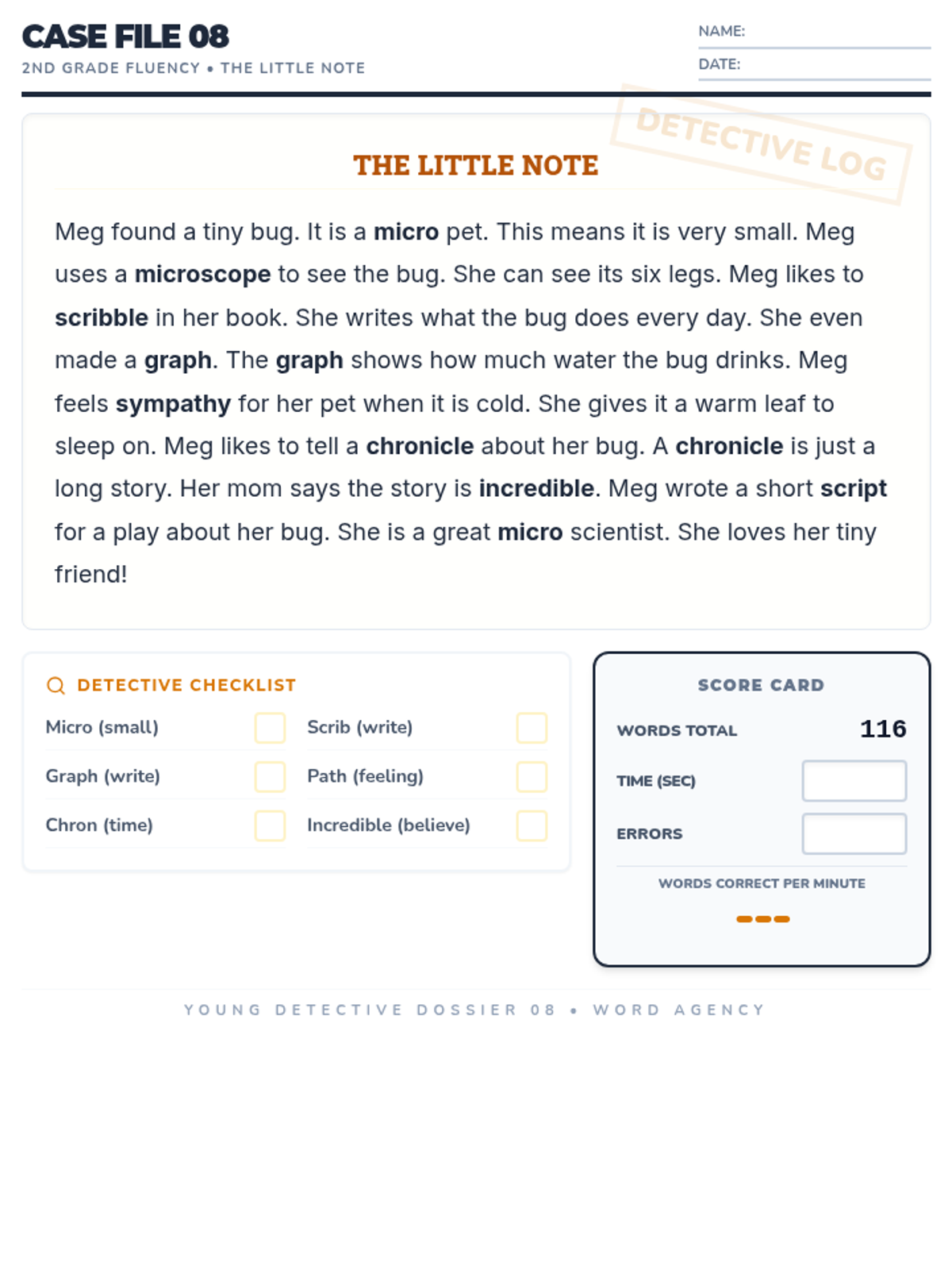
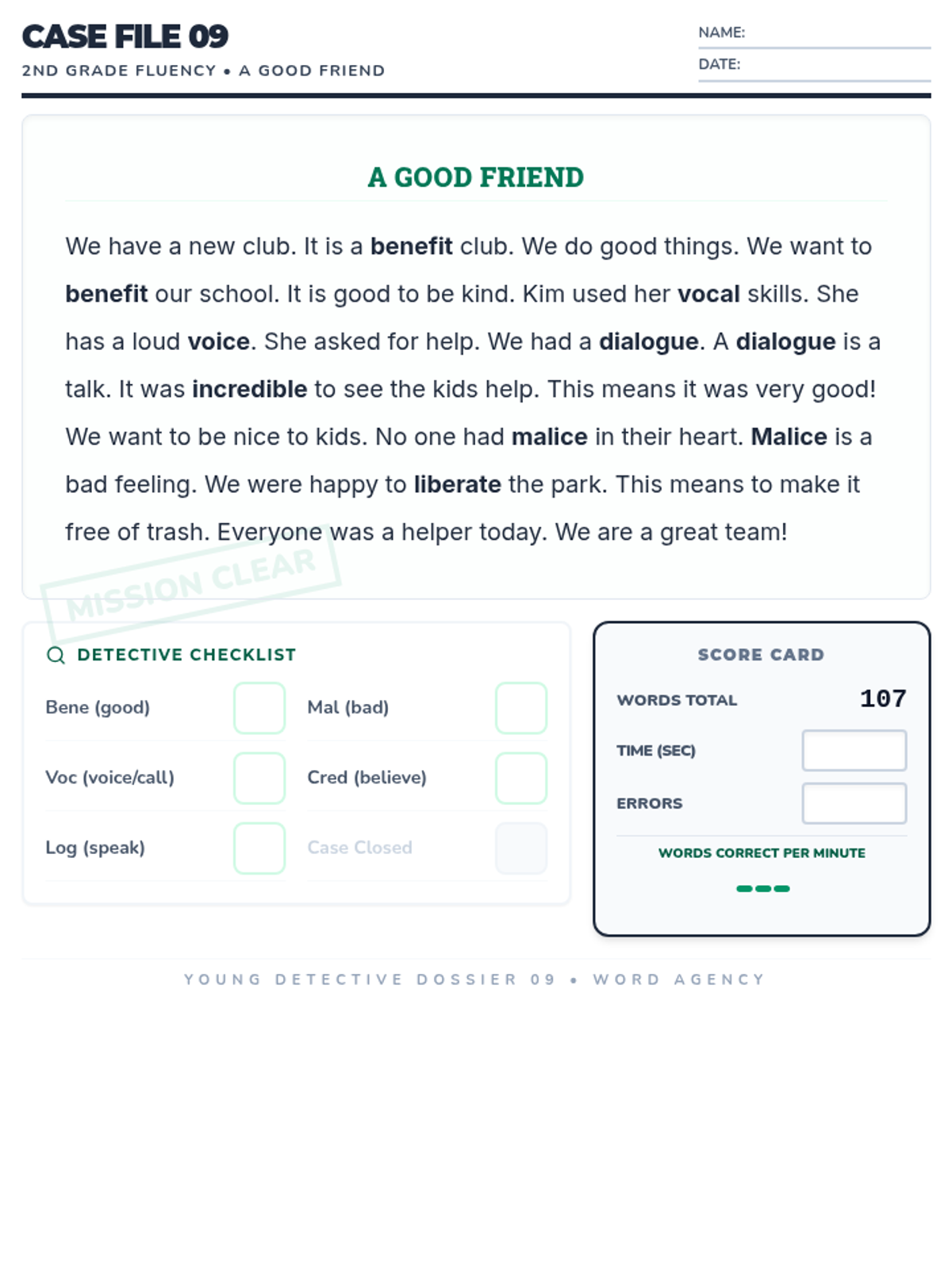
A series of high school and 6th-grade level fluency passages designed to reinforce Greek and Latin root word recognition through age-appropriate narratives and tracking tools.
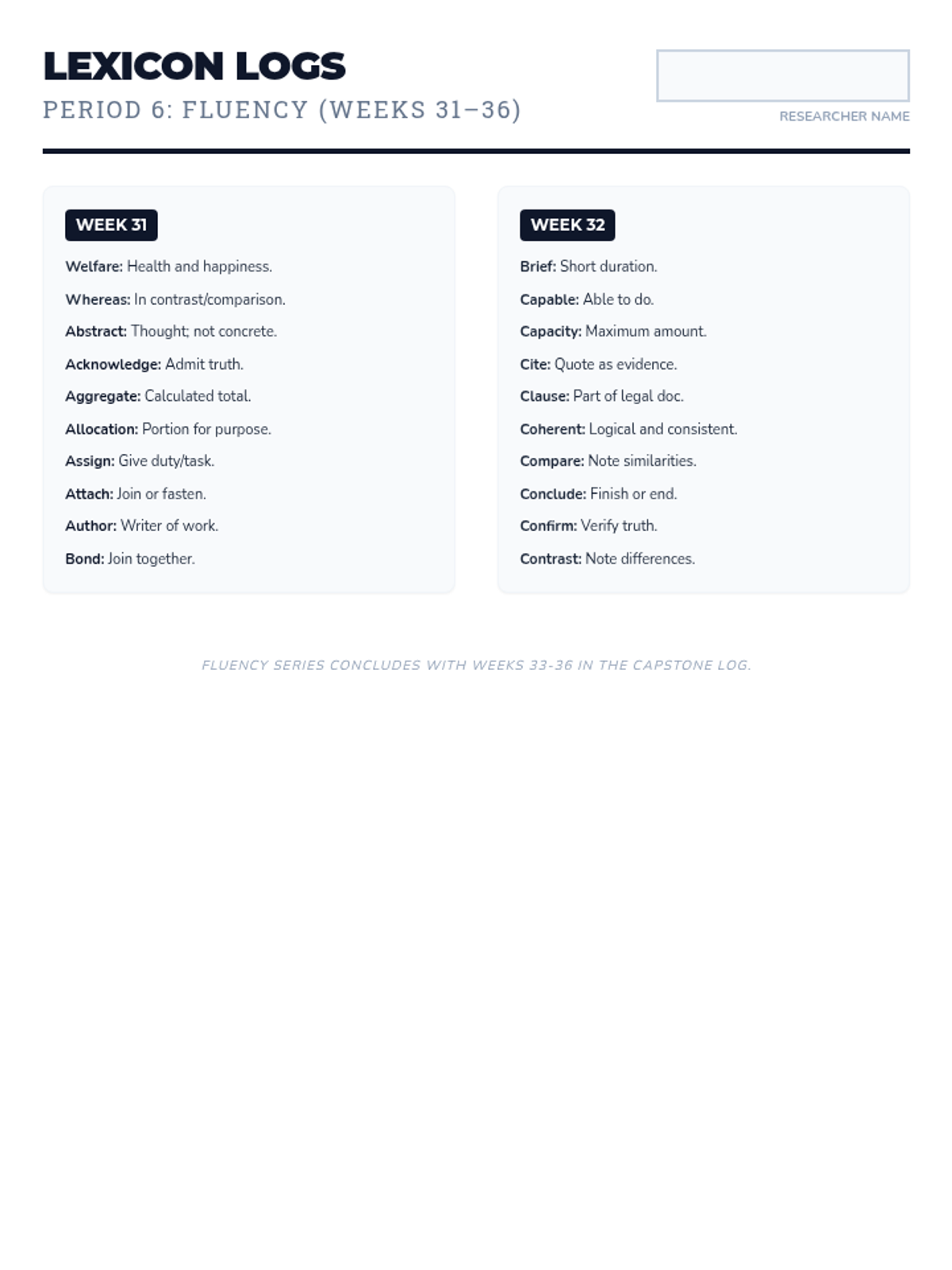
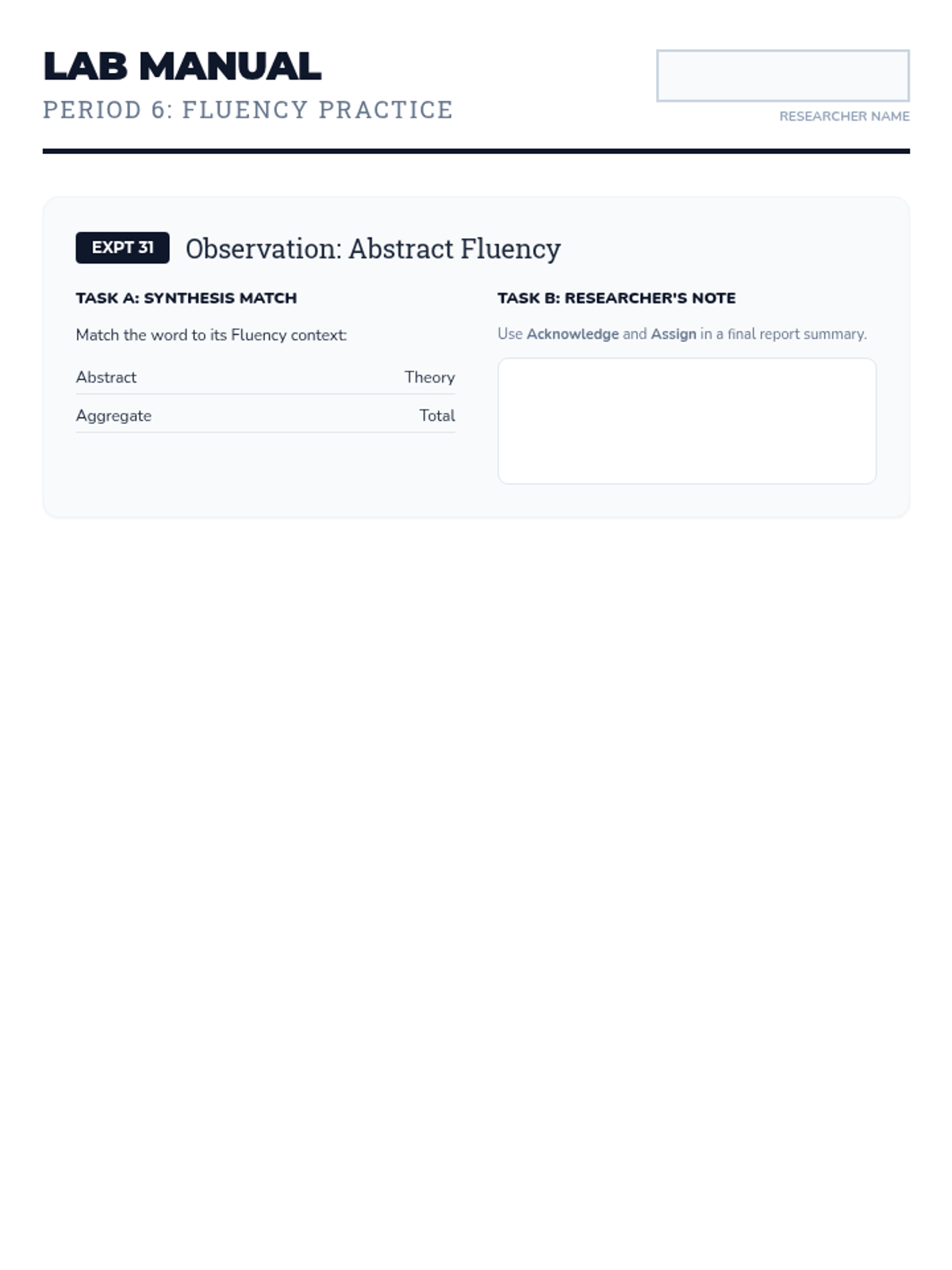
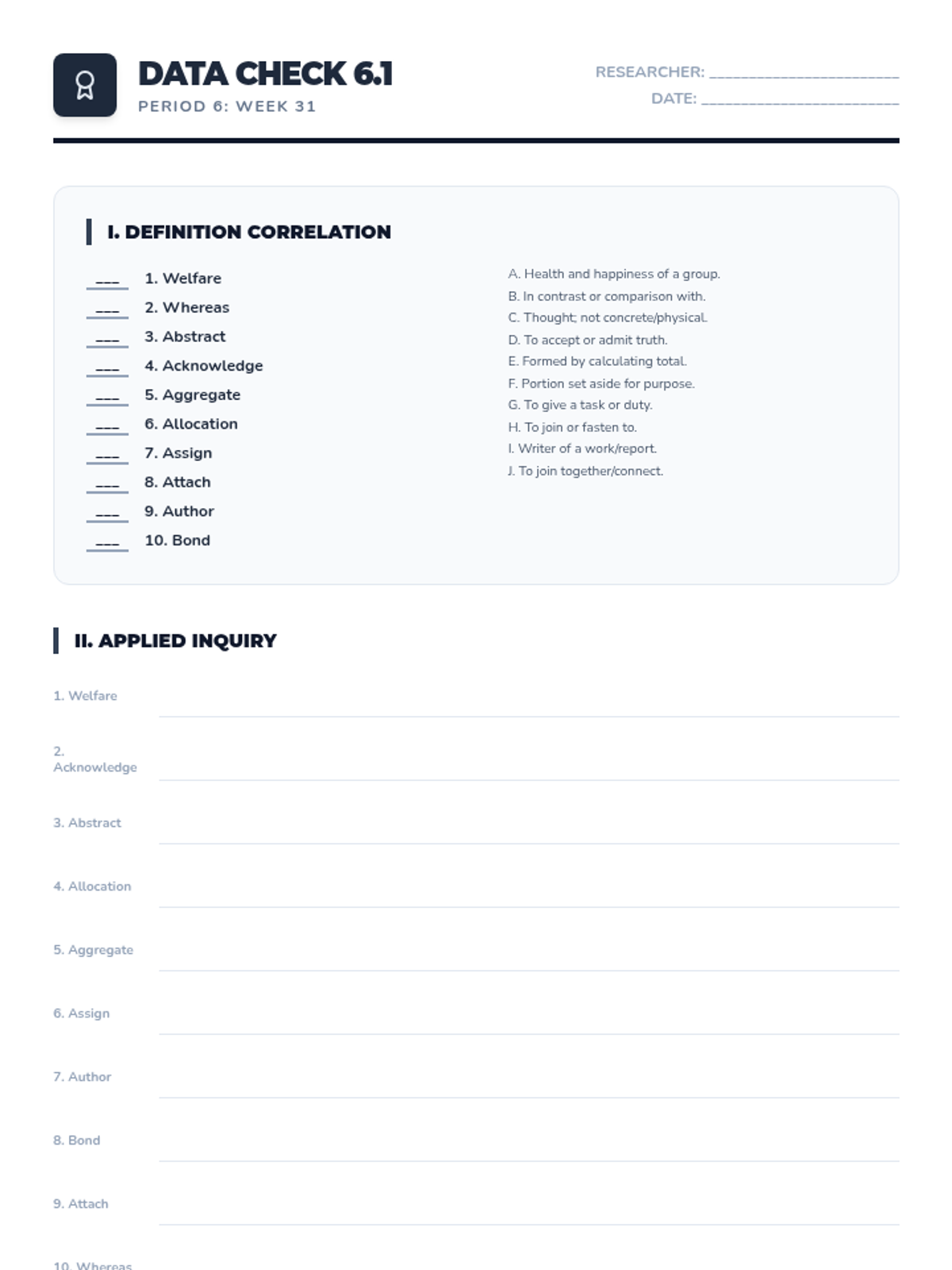
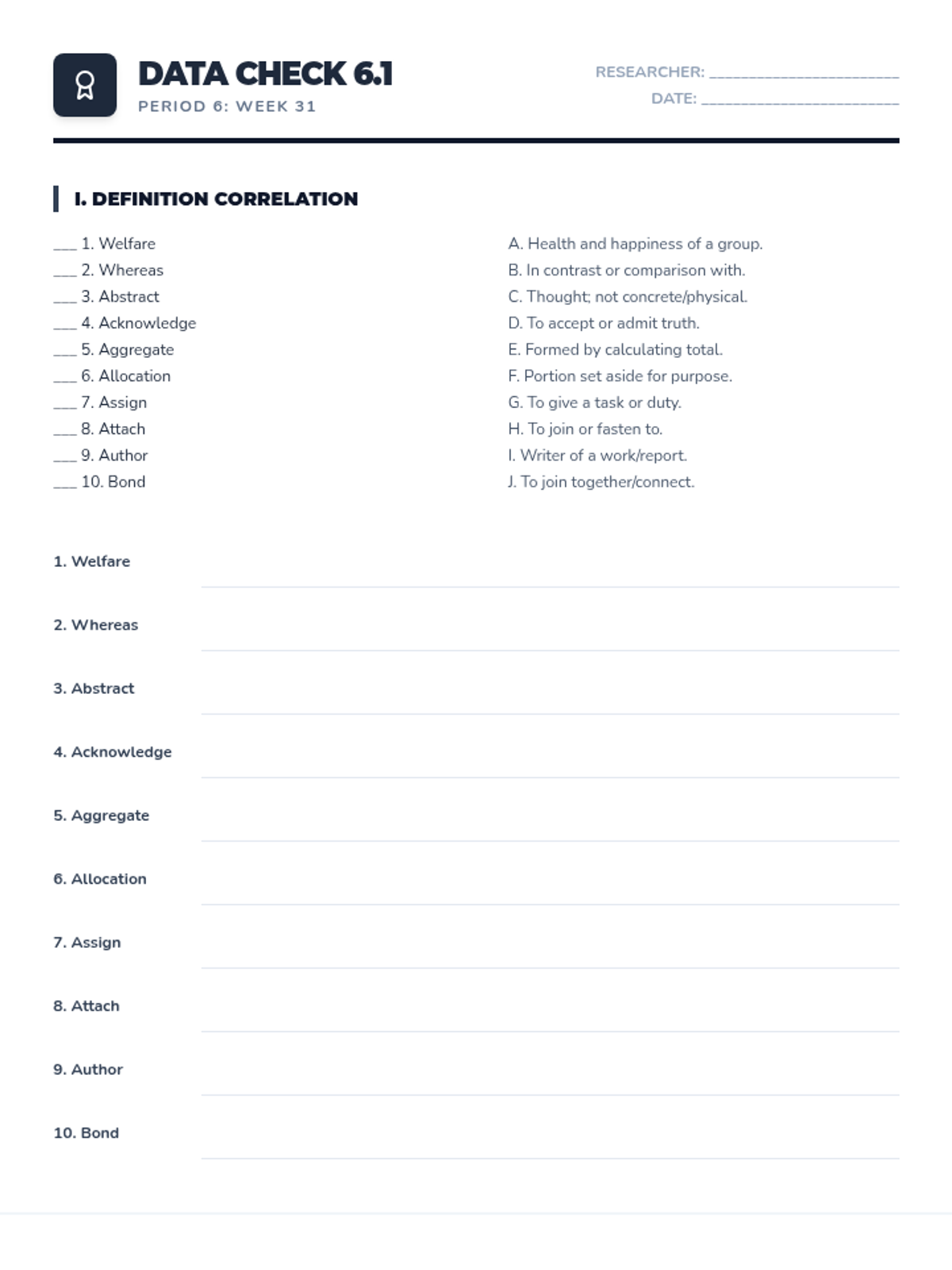
The final six-week period (Weeks 31-36) focuses on fluency and a curriculum capstone. Students synthesize the year's learning to demonstrate mastery across all academic domains.
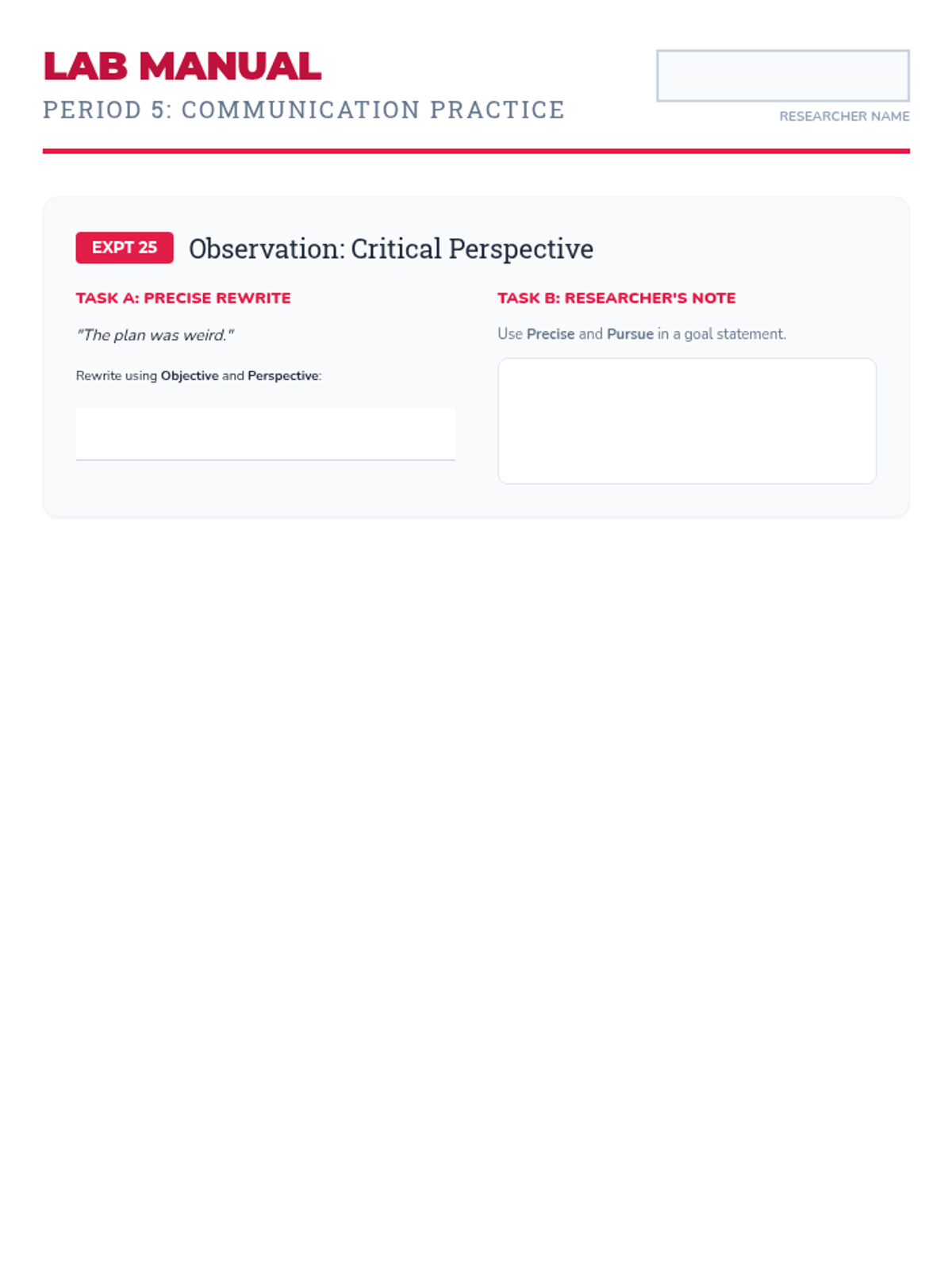
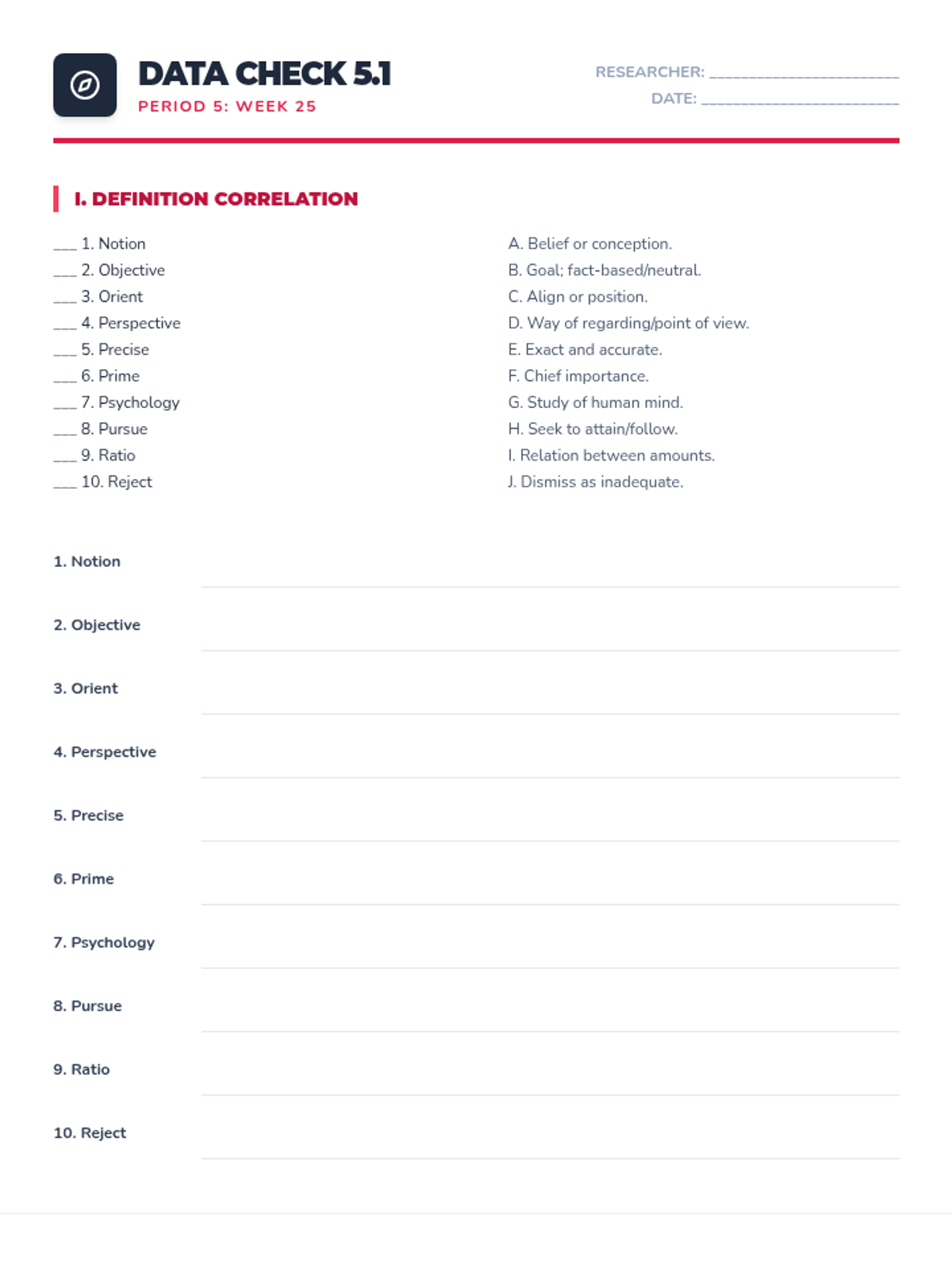
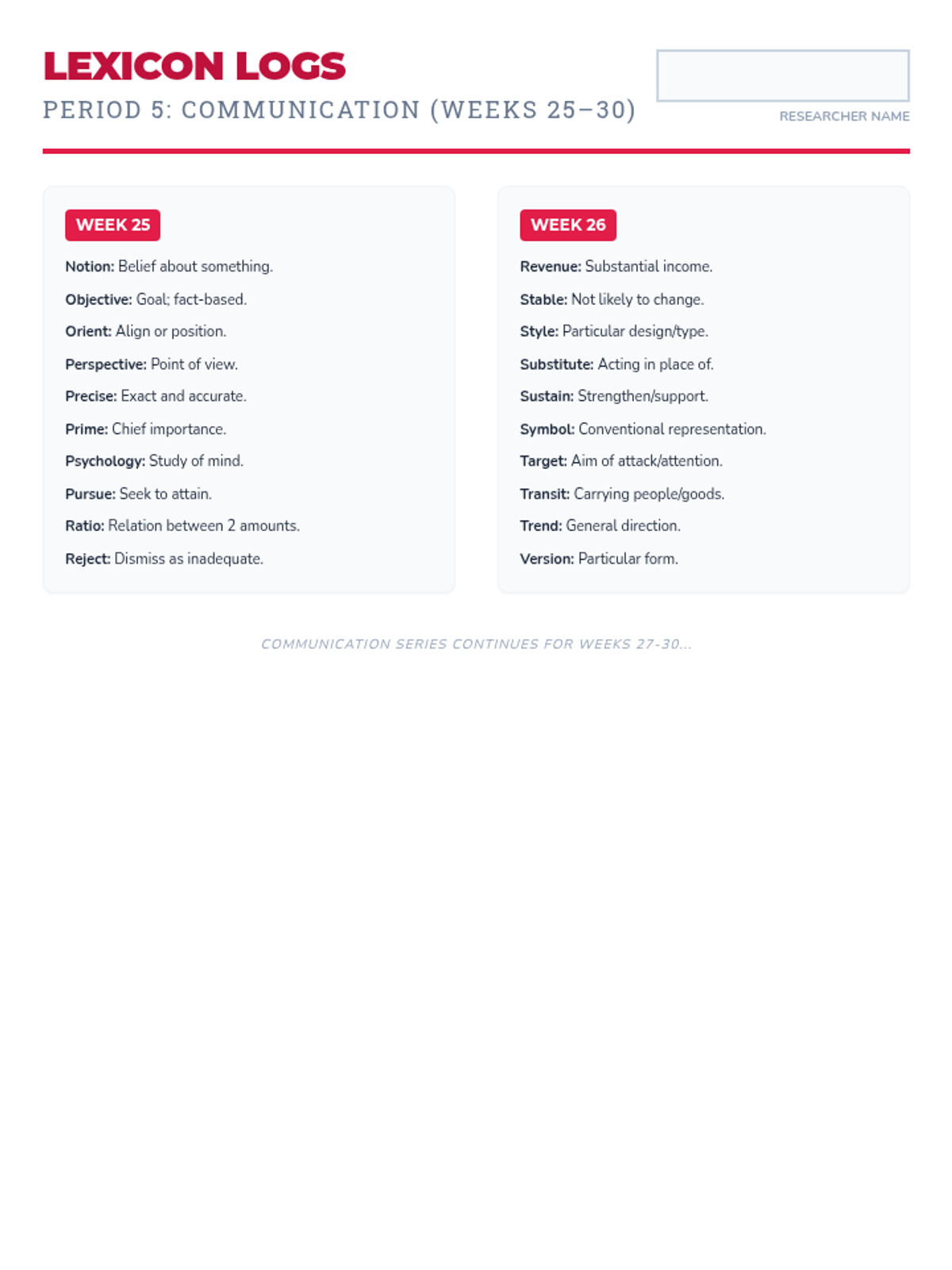
The fifth six-week period (Weeks 25-30) builds strategic communication skills. Students focus on perspective-taking and precision in academic reporting.
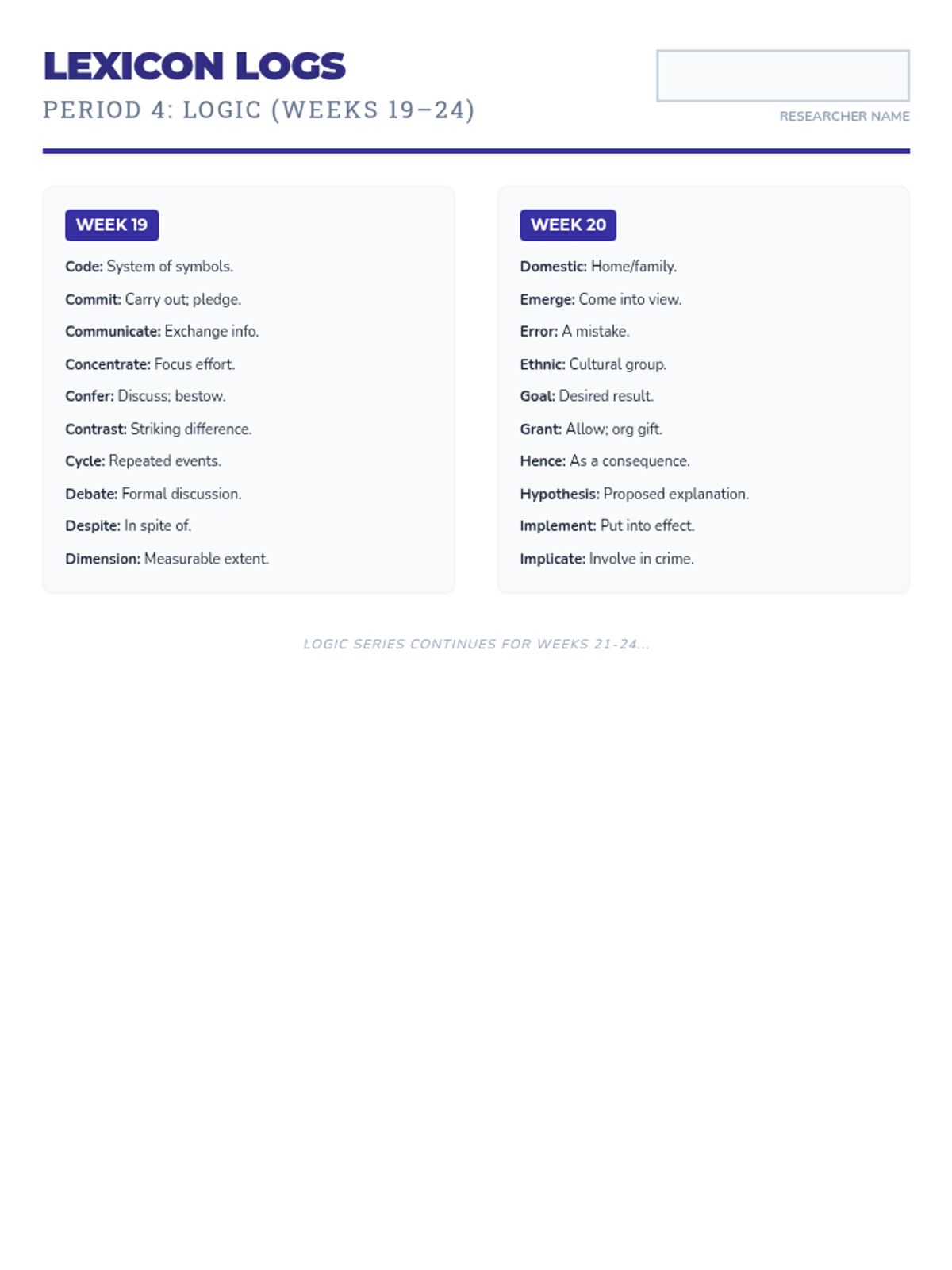
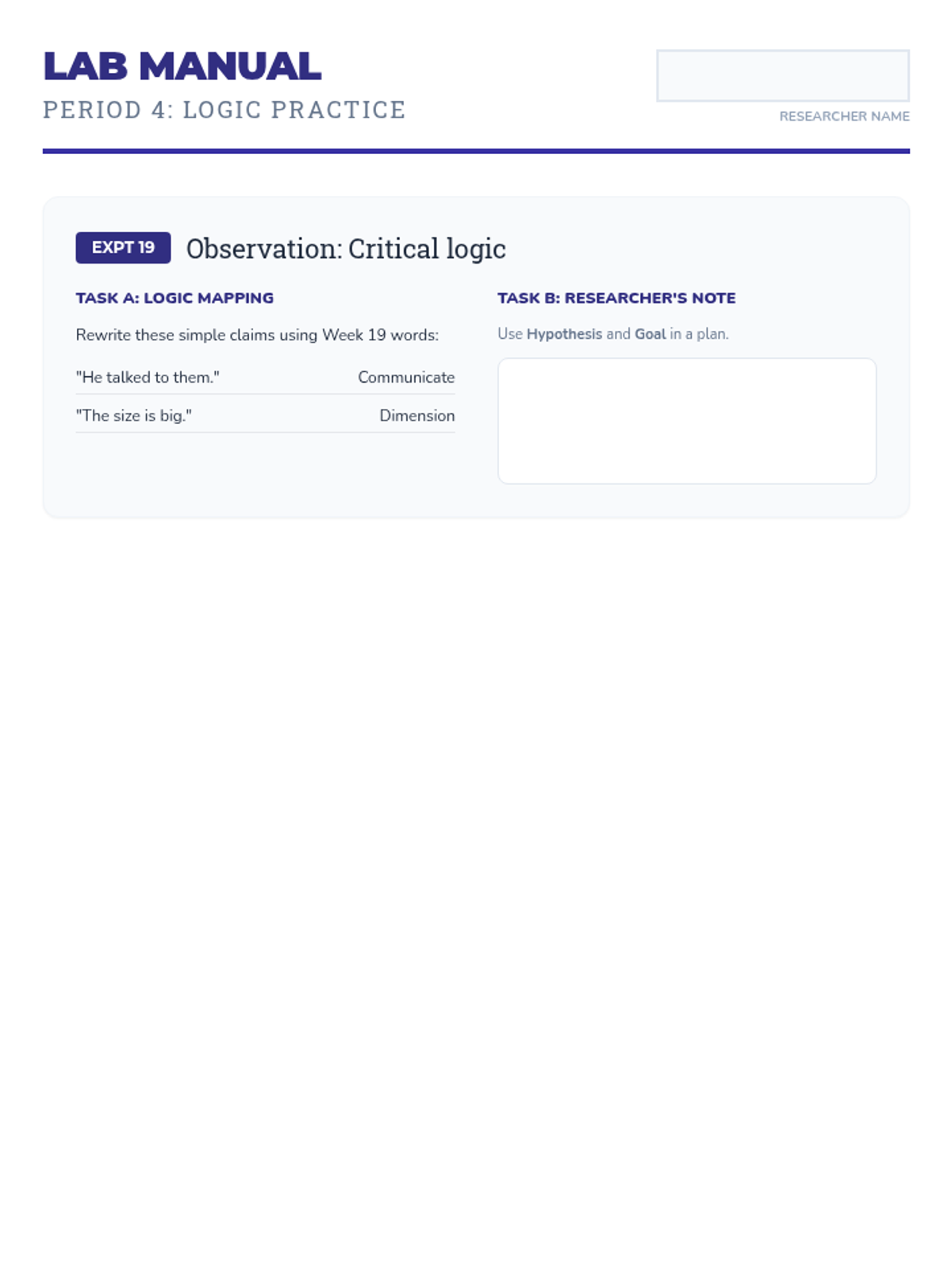
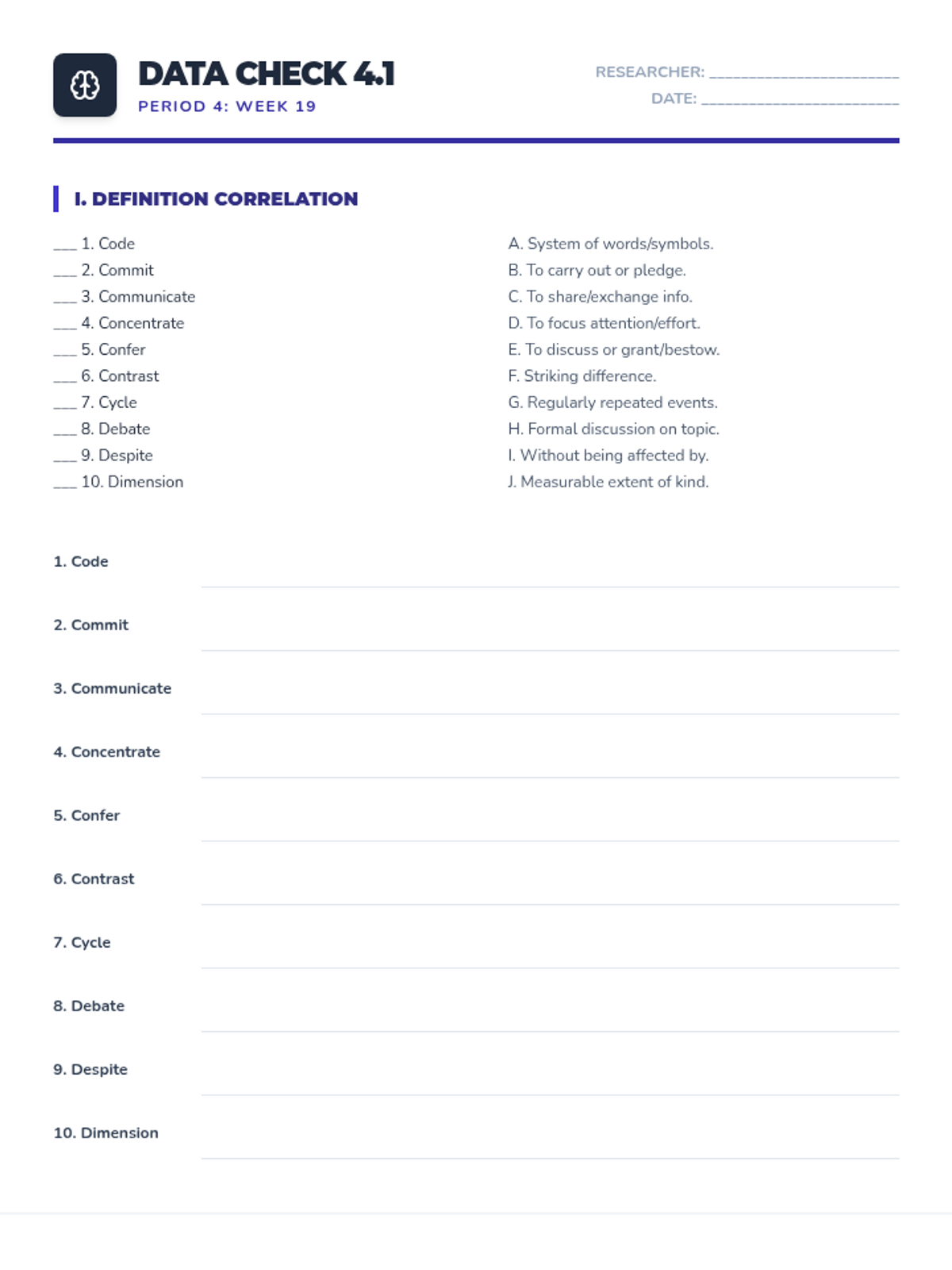
The fourth six-week period (Weeks 19-24) centers on logic and application. Vocabulary focuses on abstract concepts, communication strategies, and implementation.
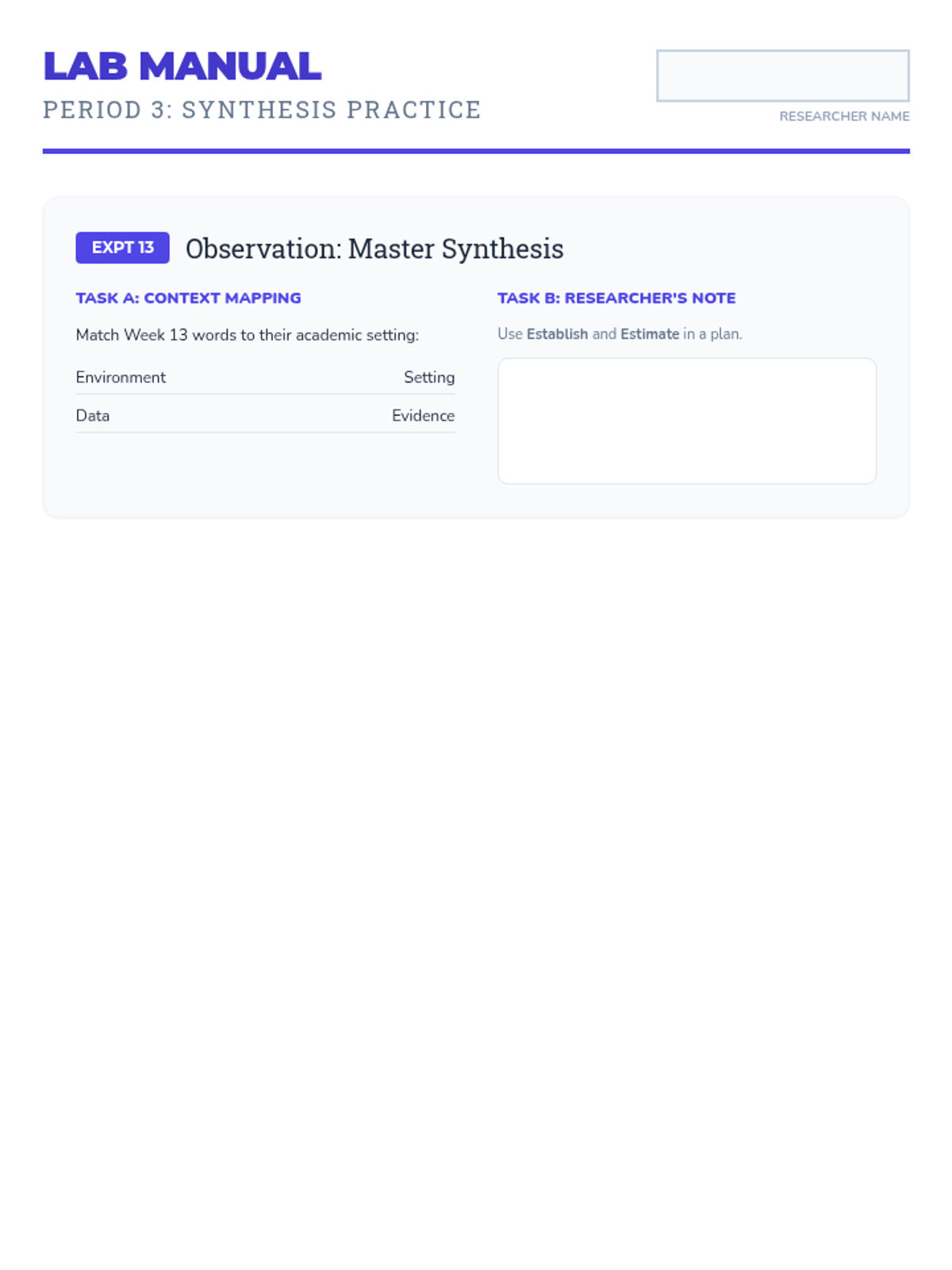
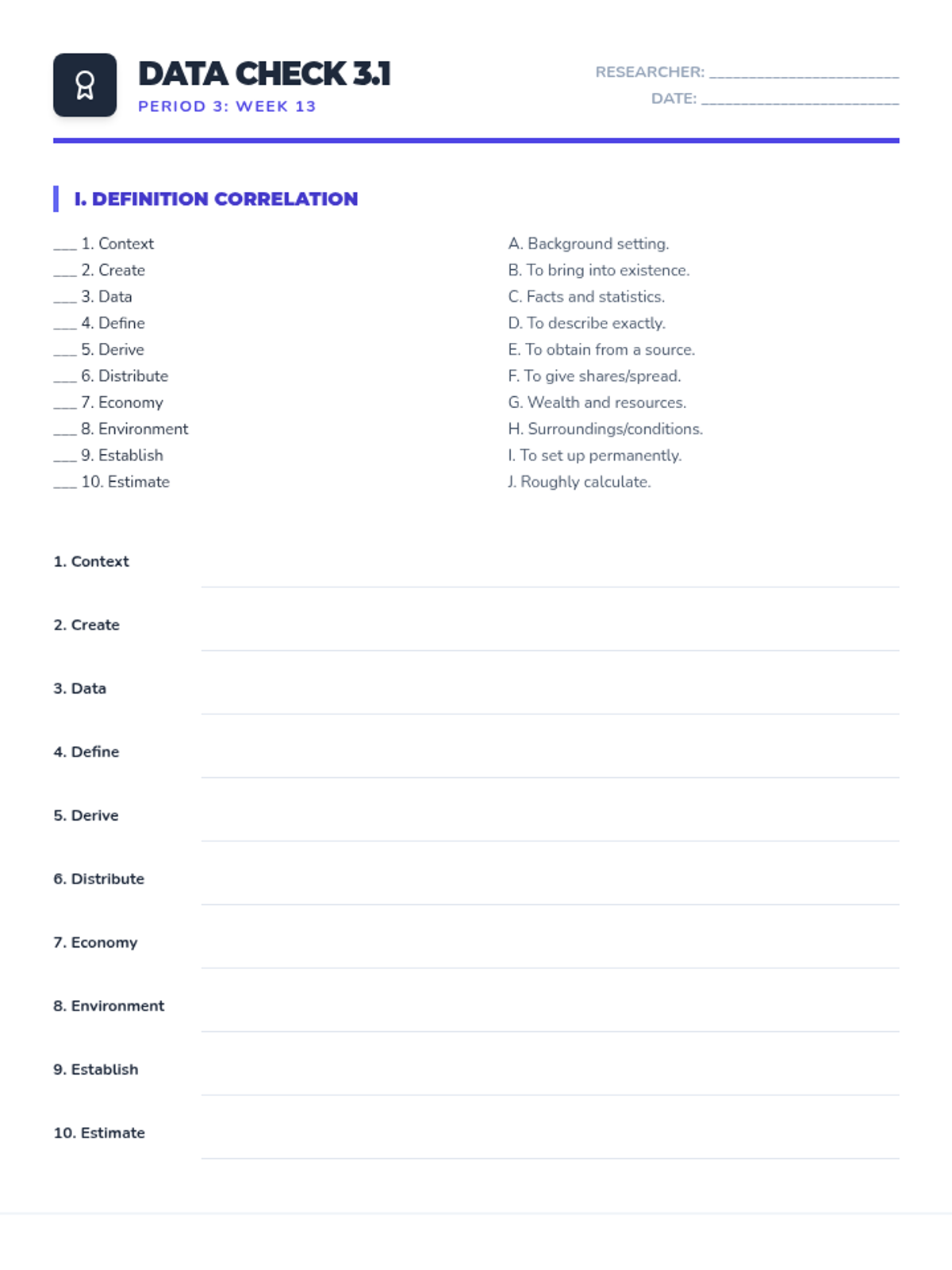
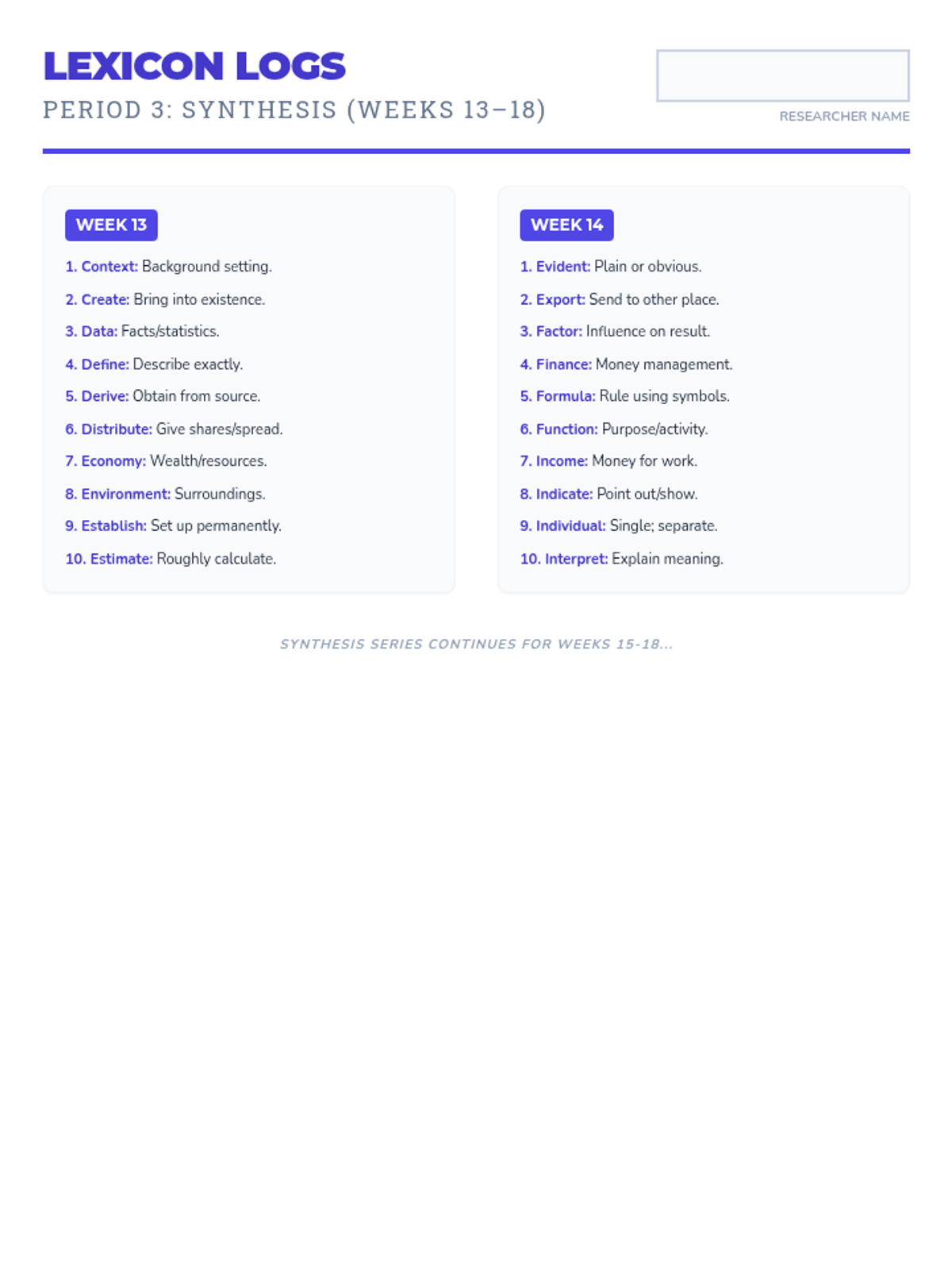
The third six-week period (Weeks 13-18) emphasizes synthesis and conceptual logic. Students apply vocabulary to bridge ideas and construct formal arguments.
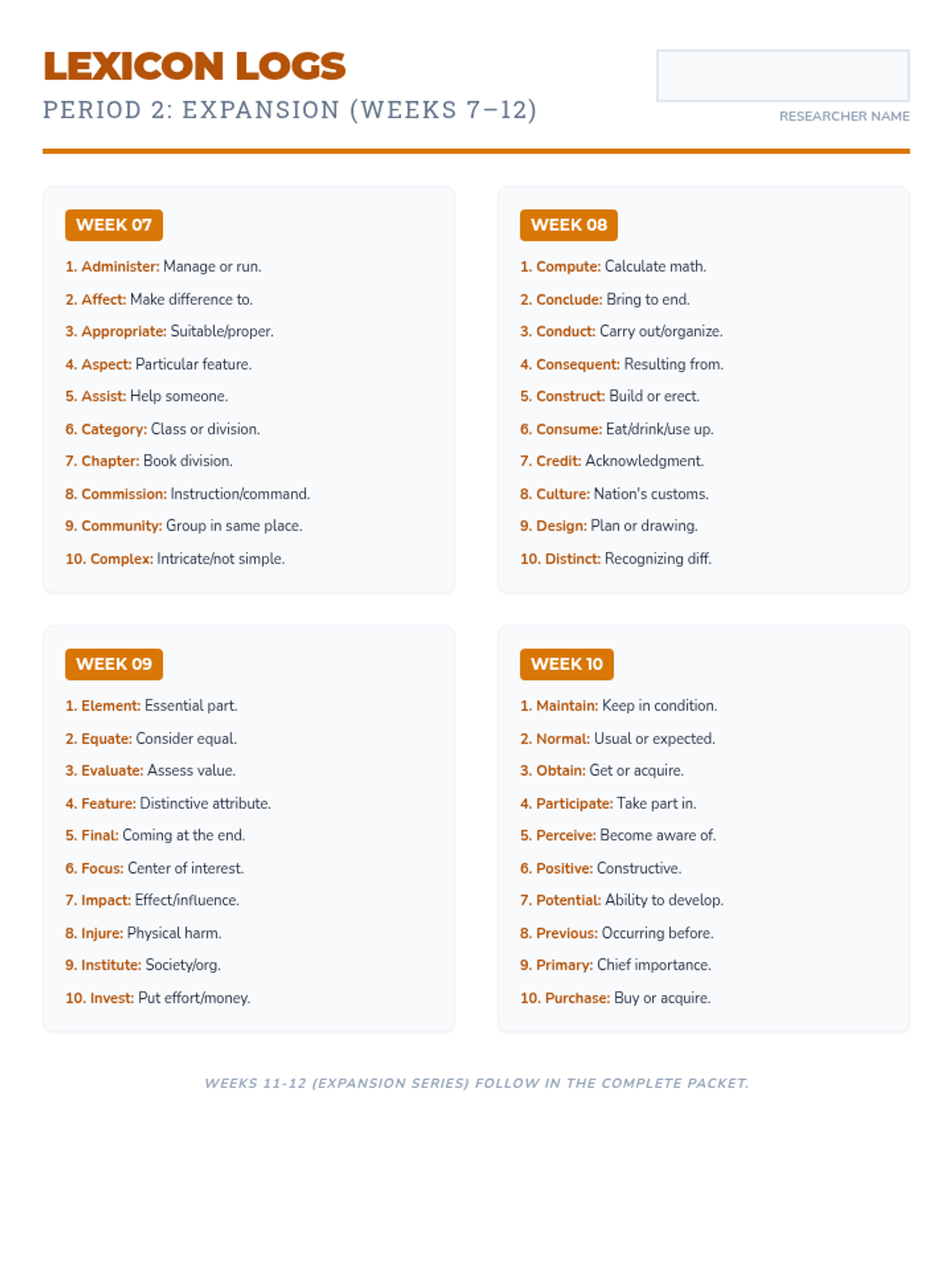
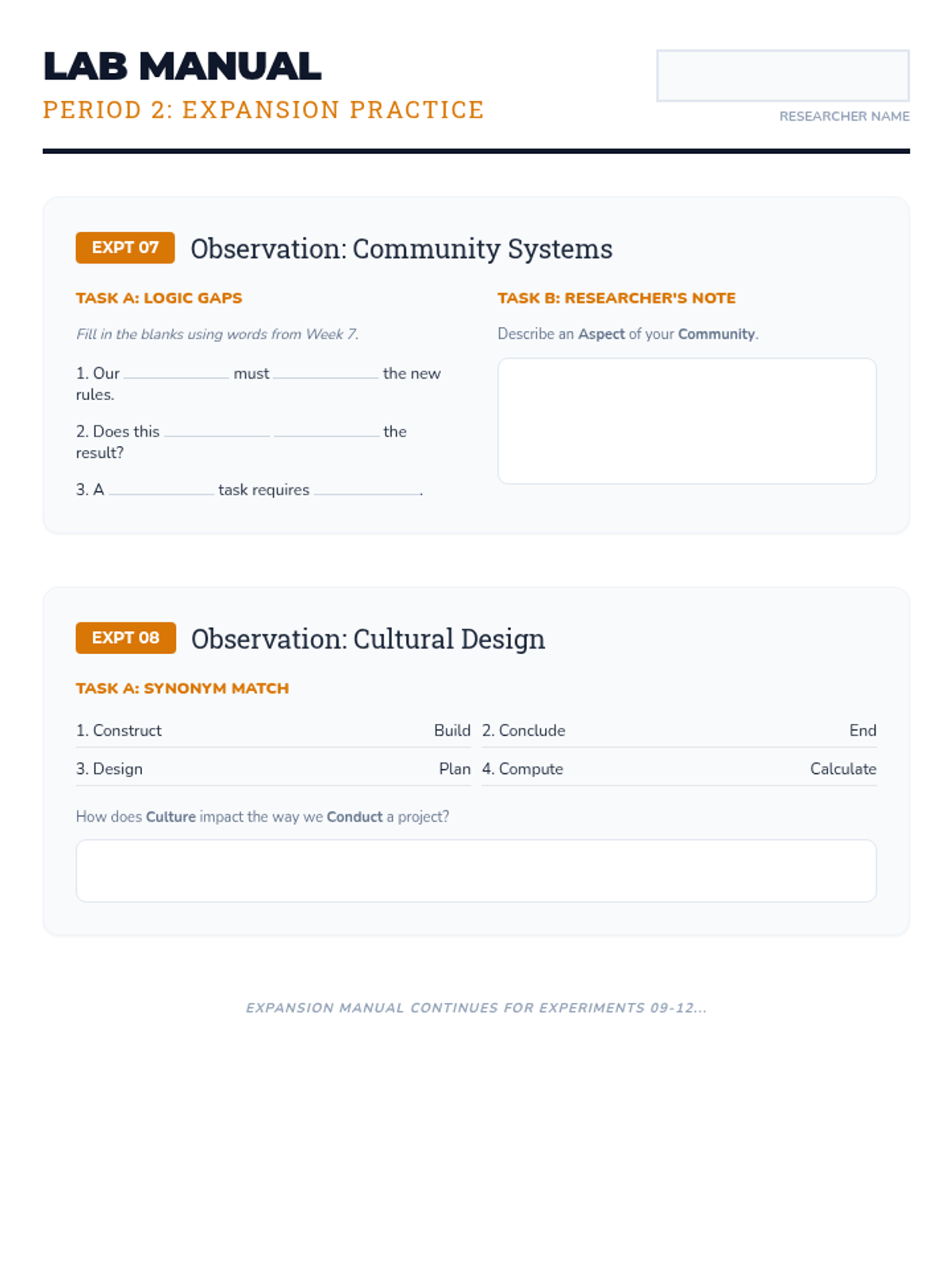
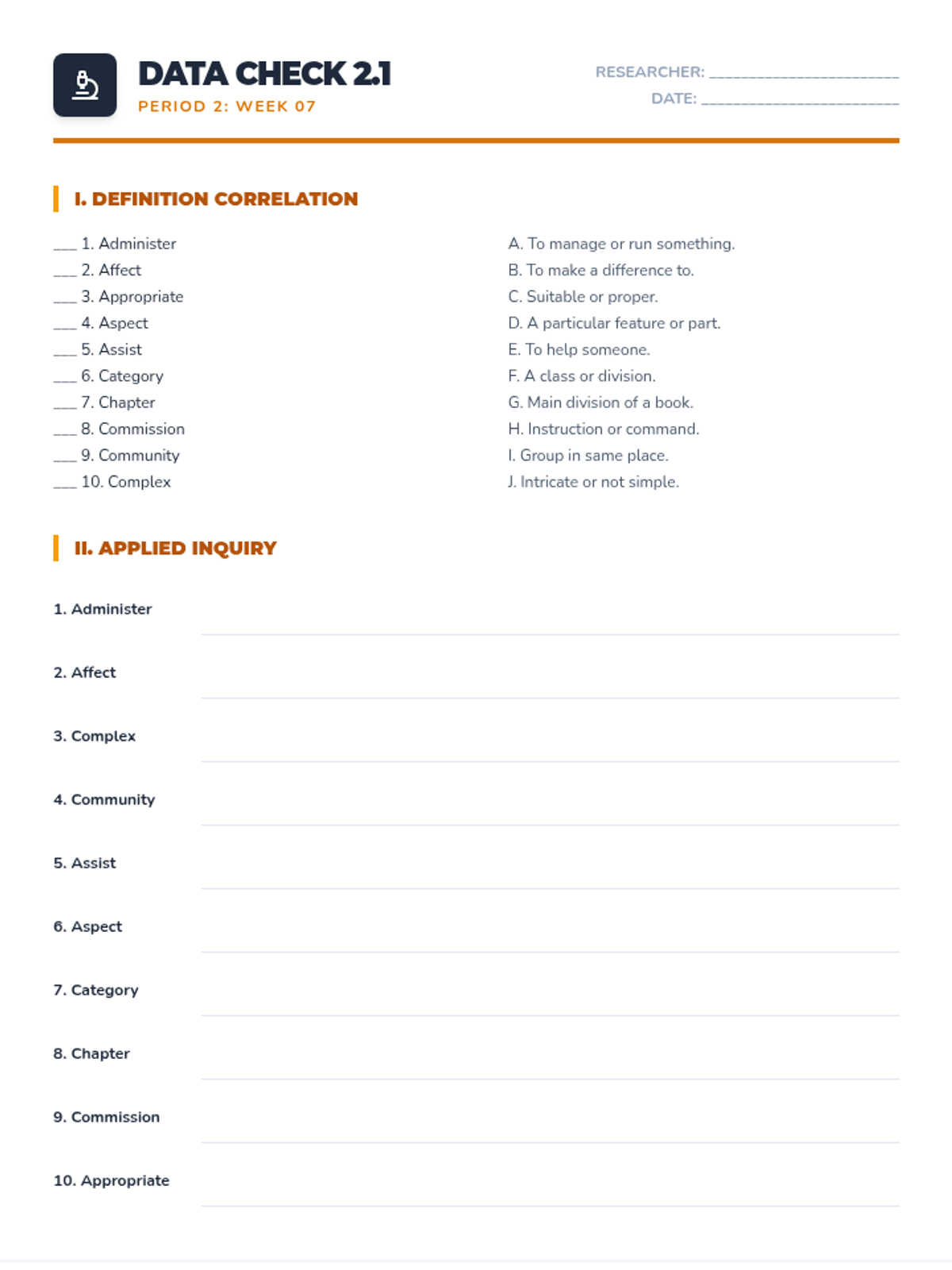
The second six-week period (Weeks 7-12) focuses on expanding analytical vocabulary. Students engage with complex terms used in research and evidence-based writing.
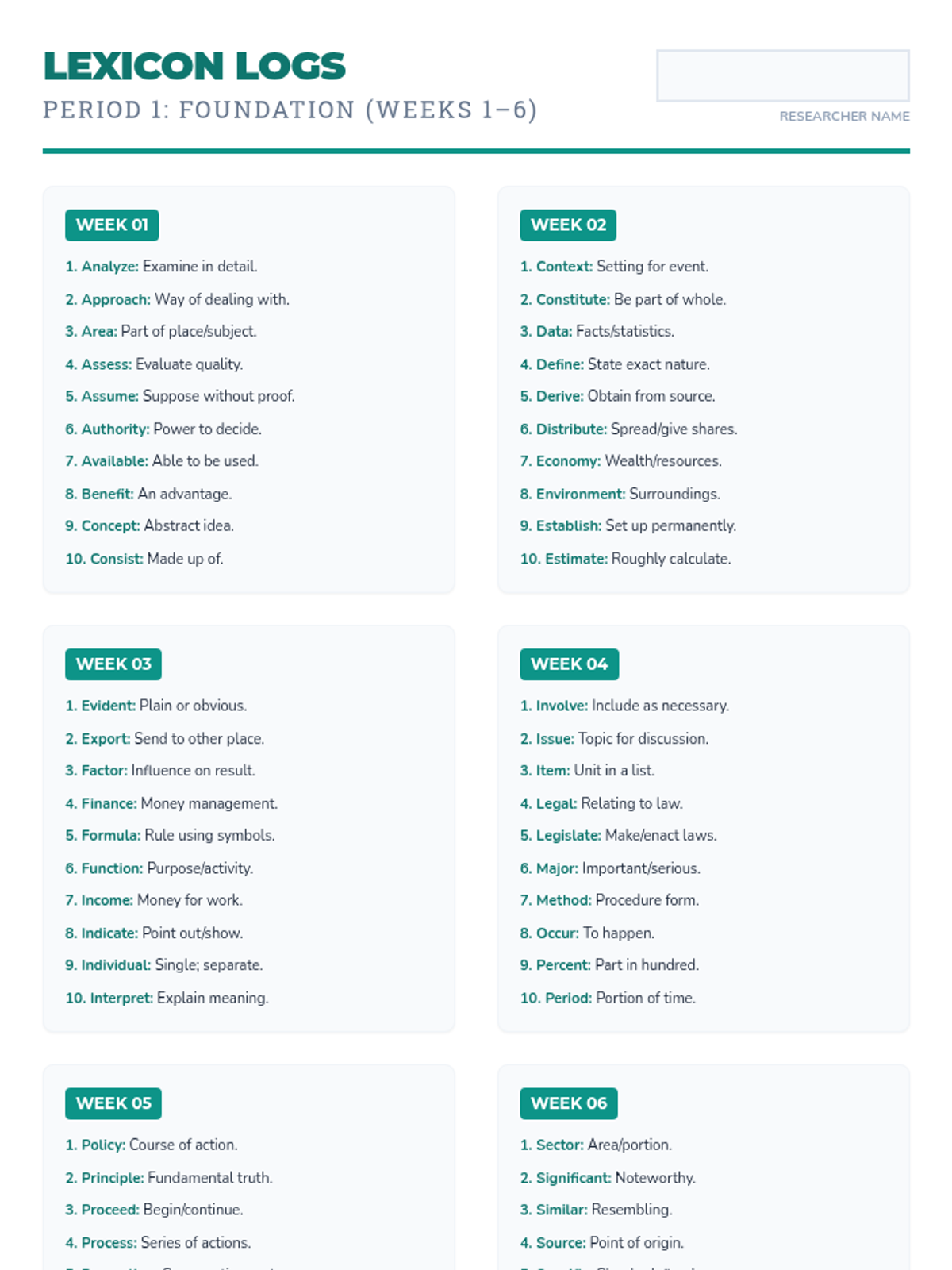
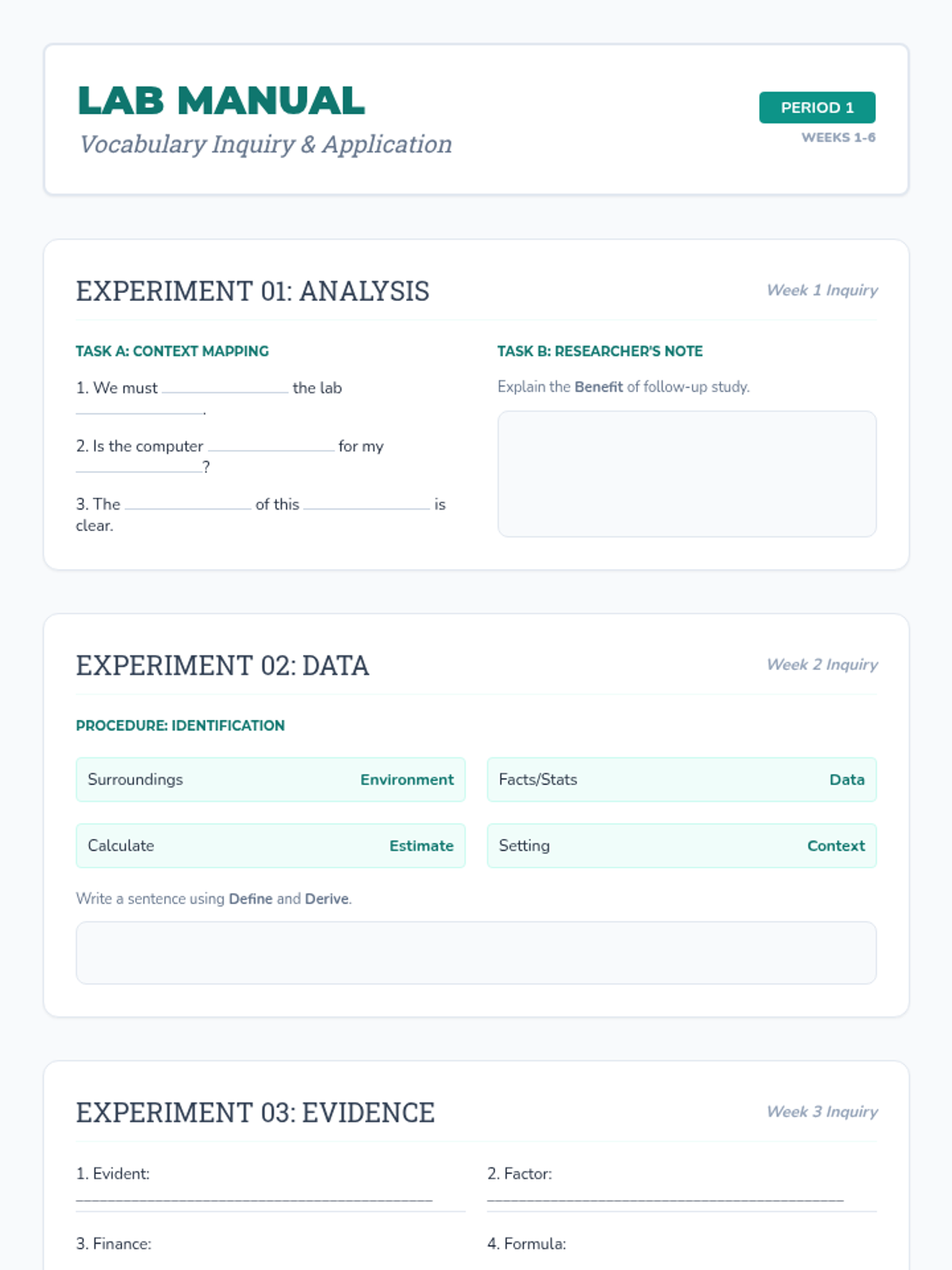
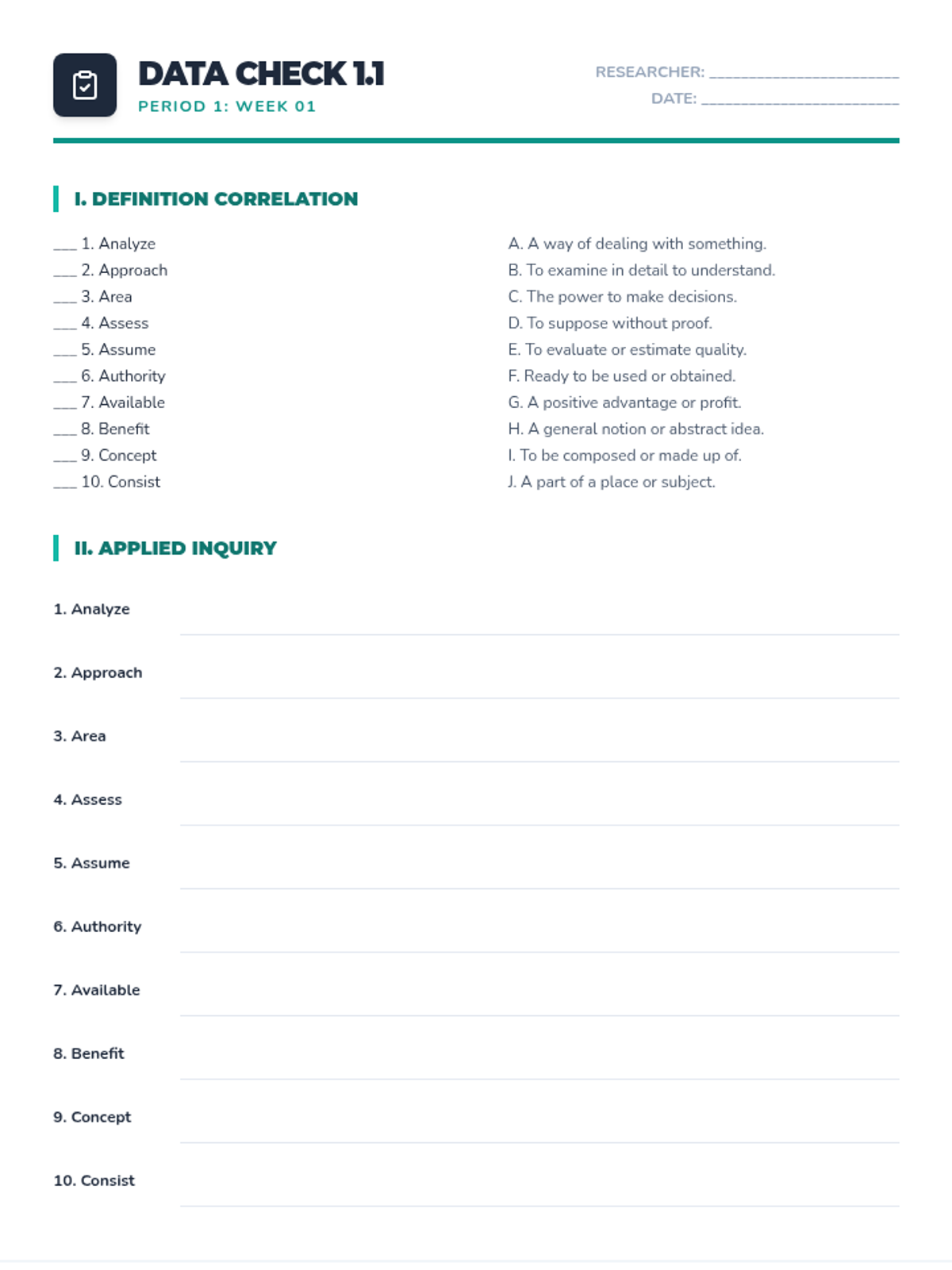
The first six-week period introduces foundational academic vocabulary (Weeks 1-6). Students build investigative skills through context mapping and data analysis of introductory Tier 2 words.
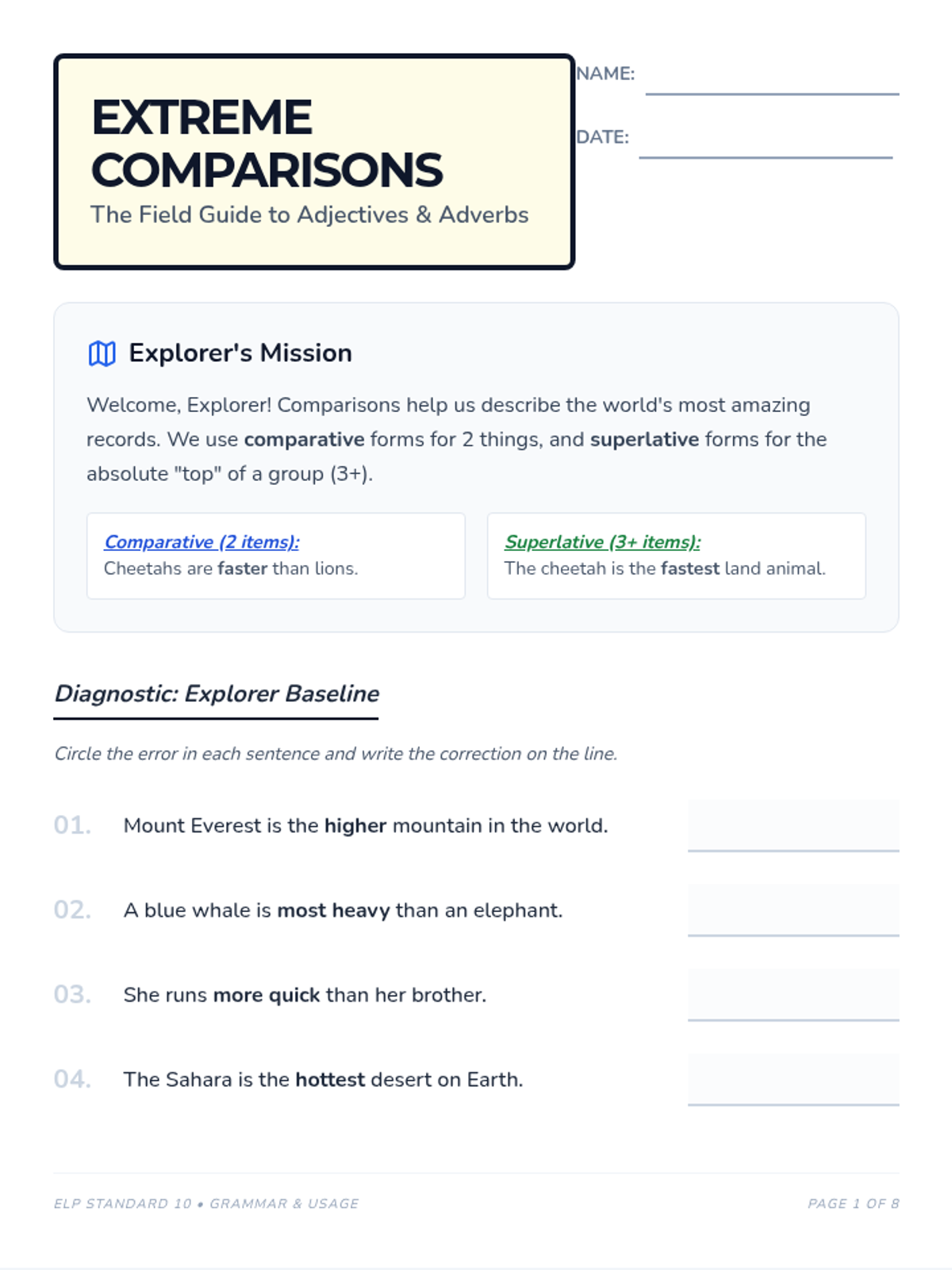
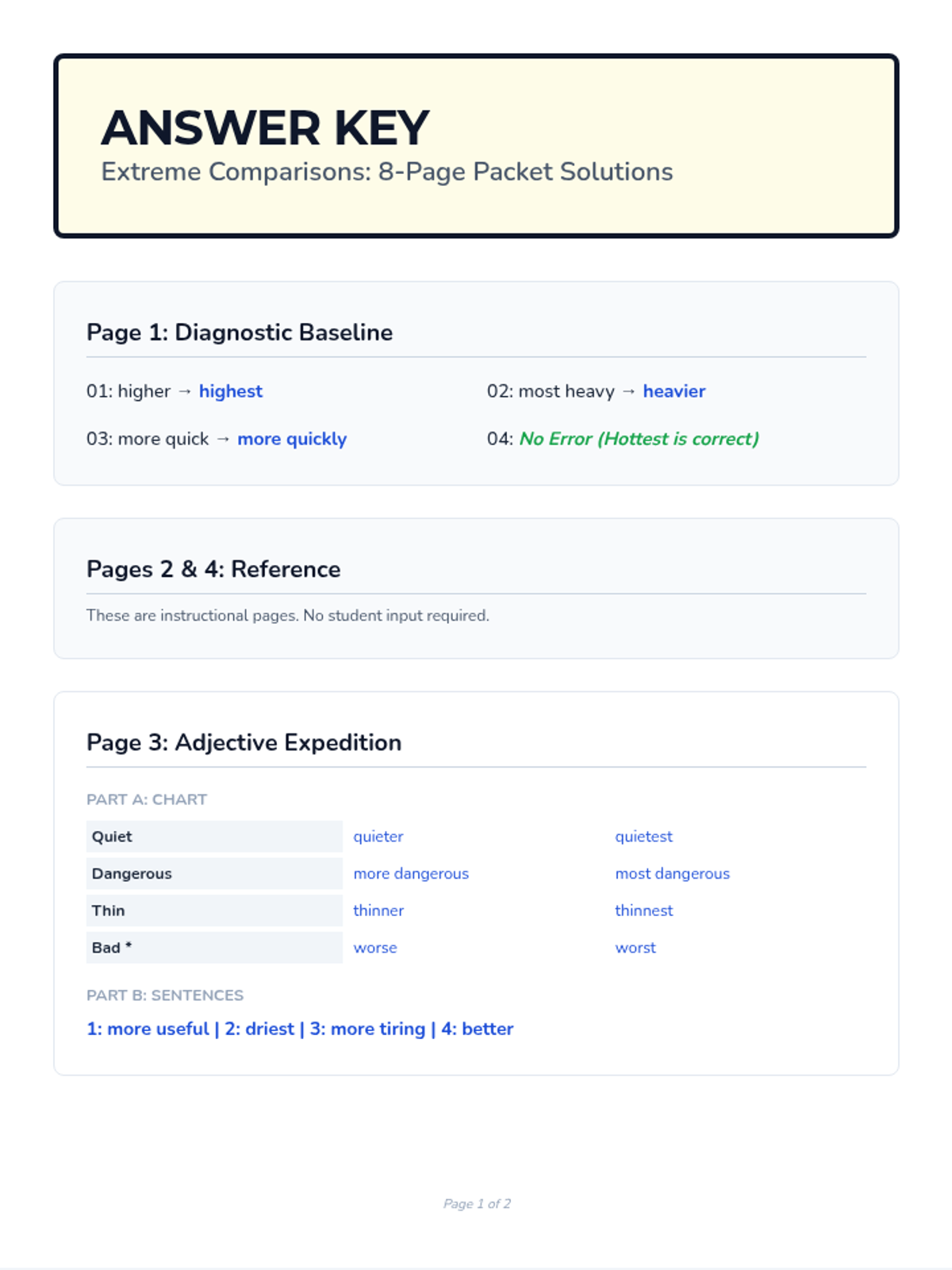
A comprehensive practice packet for Middle School ELLs (ELP Level 4) focusing on the formation and use of comparative and superlative adjectives and adverbs. Students explore the concept through the lens of world records and extreme nature.
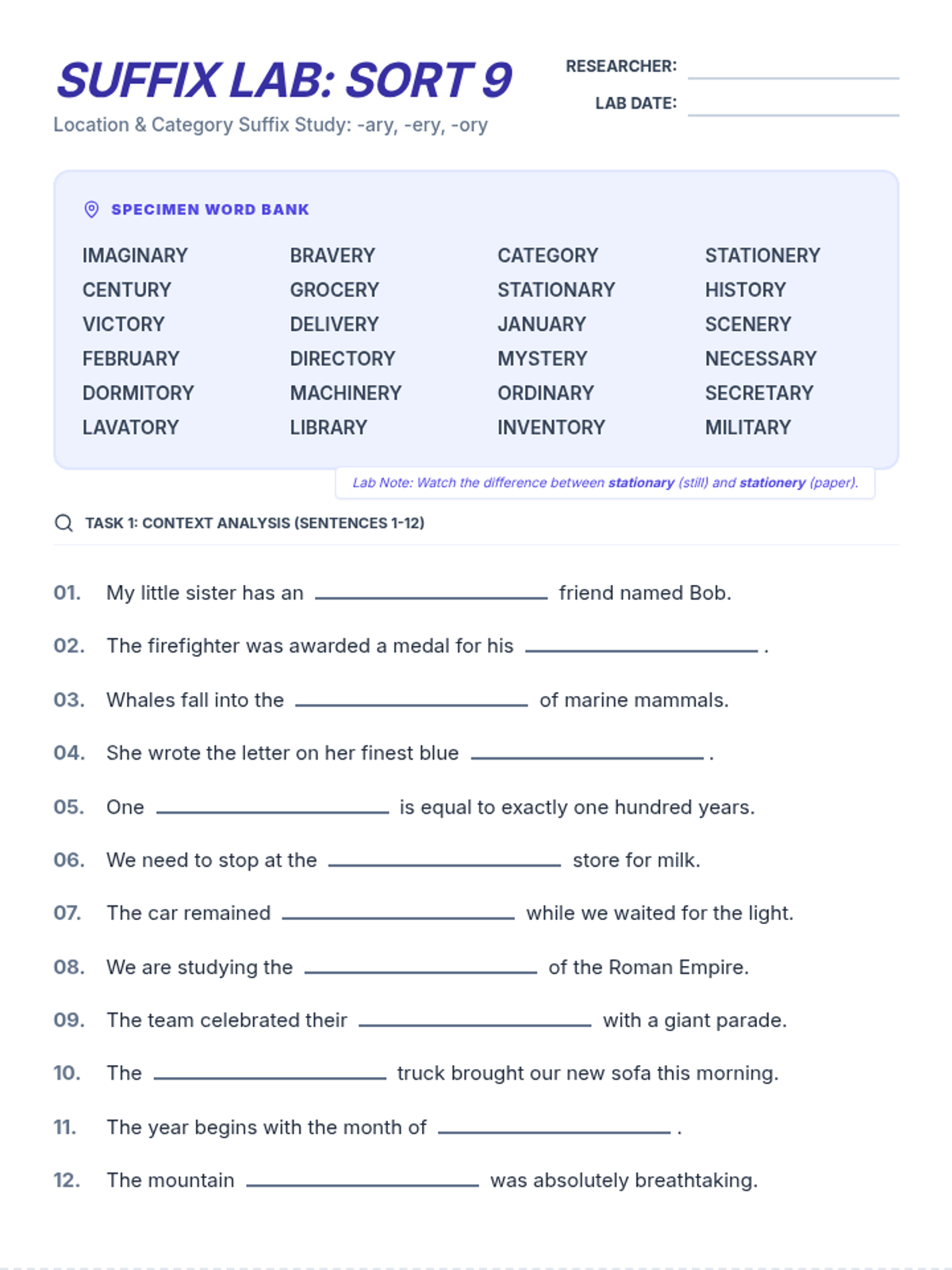
A lesson focused on location and category suffixes (-ary, -ery, -ory). Students analyze how these suffixes form nouns and adjectives related to places, groups, and qualities.
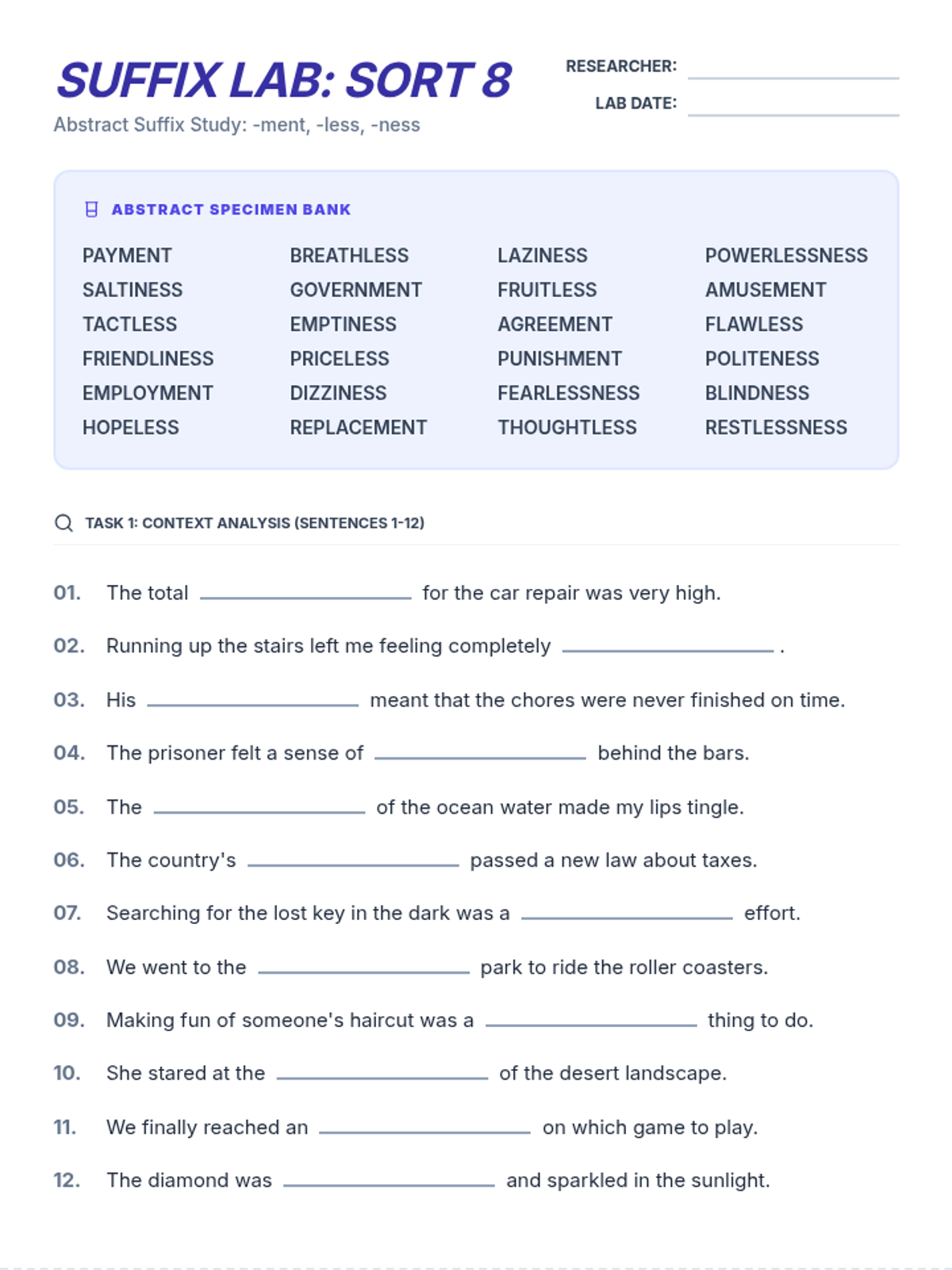
A lesson focused on abstract suffixes (-ment, -less, -ness). Students explore how these suffixes form nouns and adjectives related to states, qualities, and actions.