A creative writing unit inspired by Peter Pan, focusing on perspective-taking, world-building, and narrative reimagining for third-grade students.
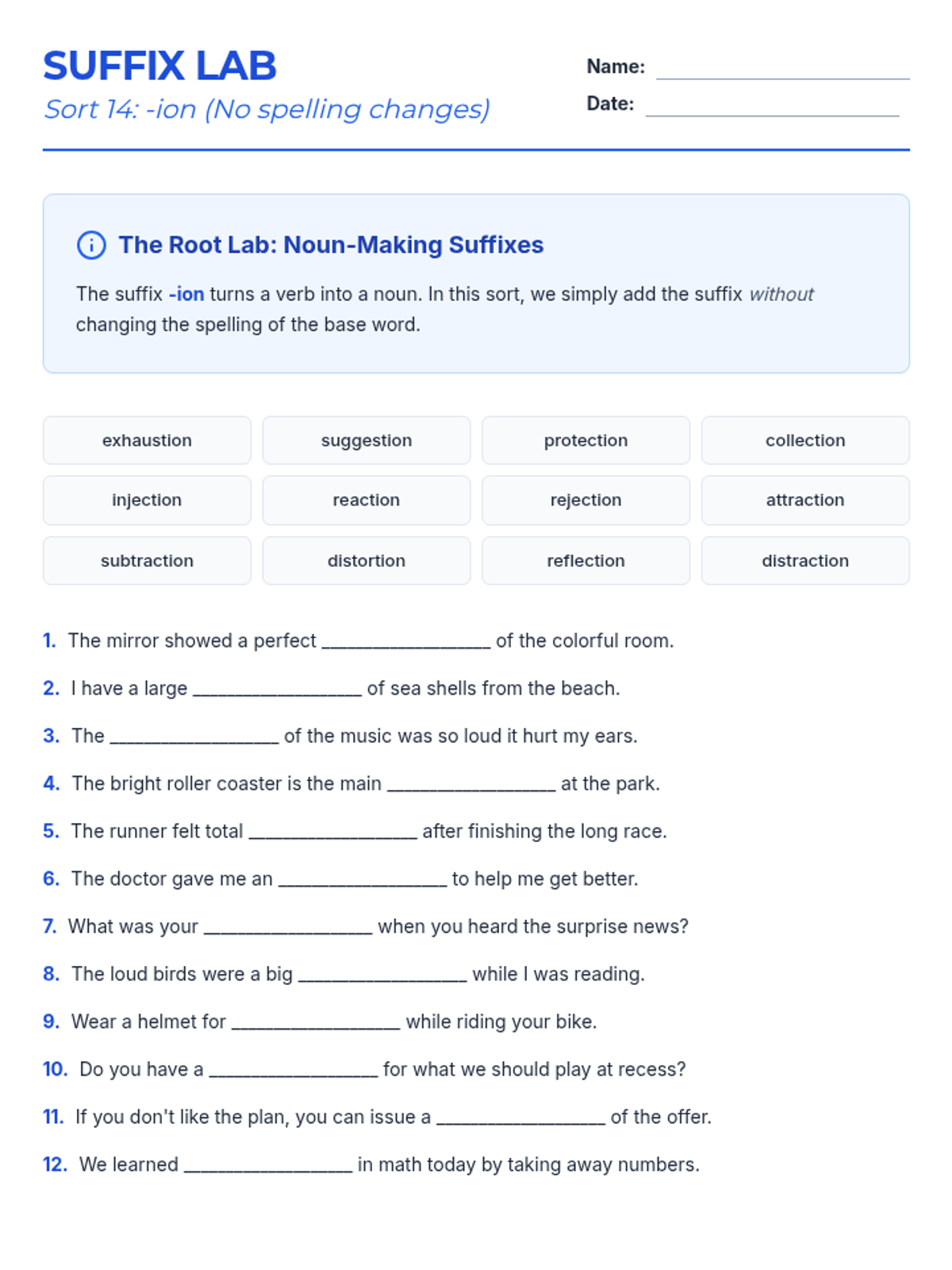
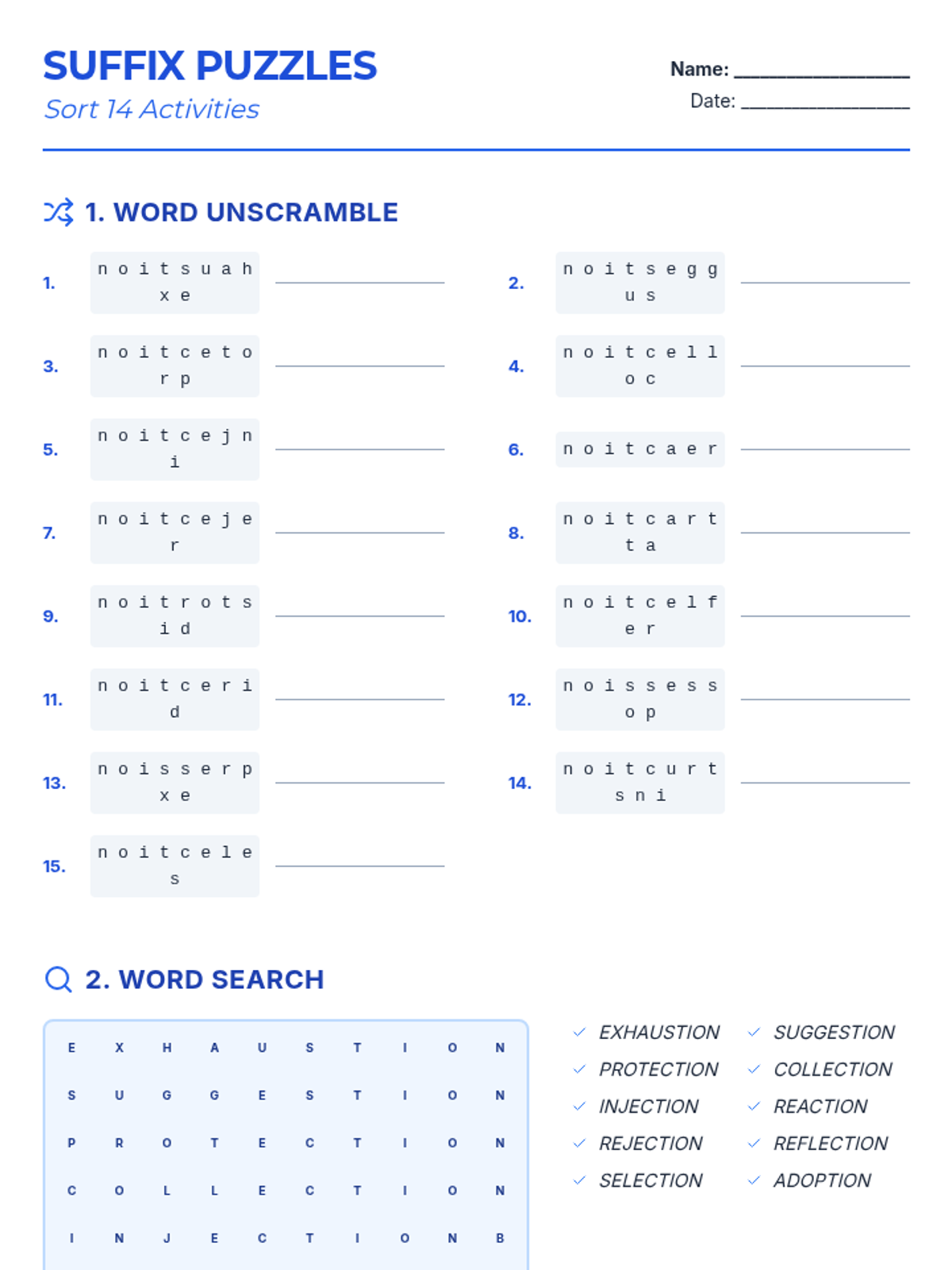
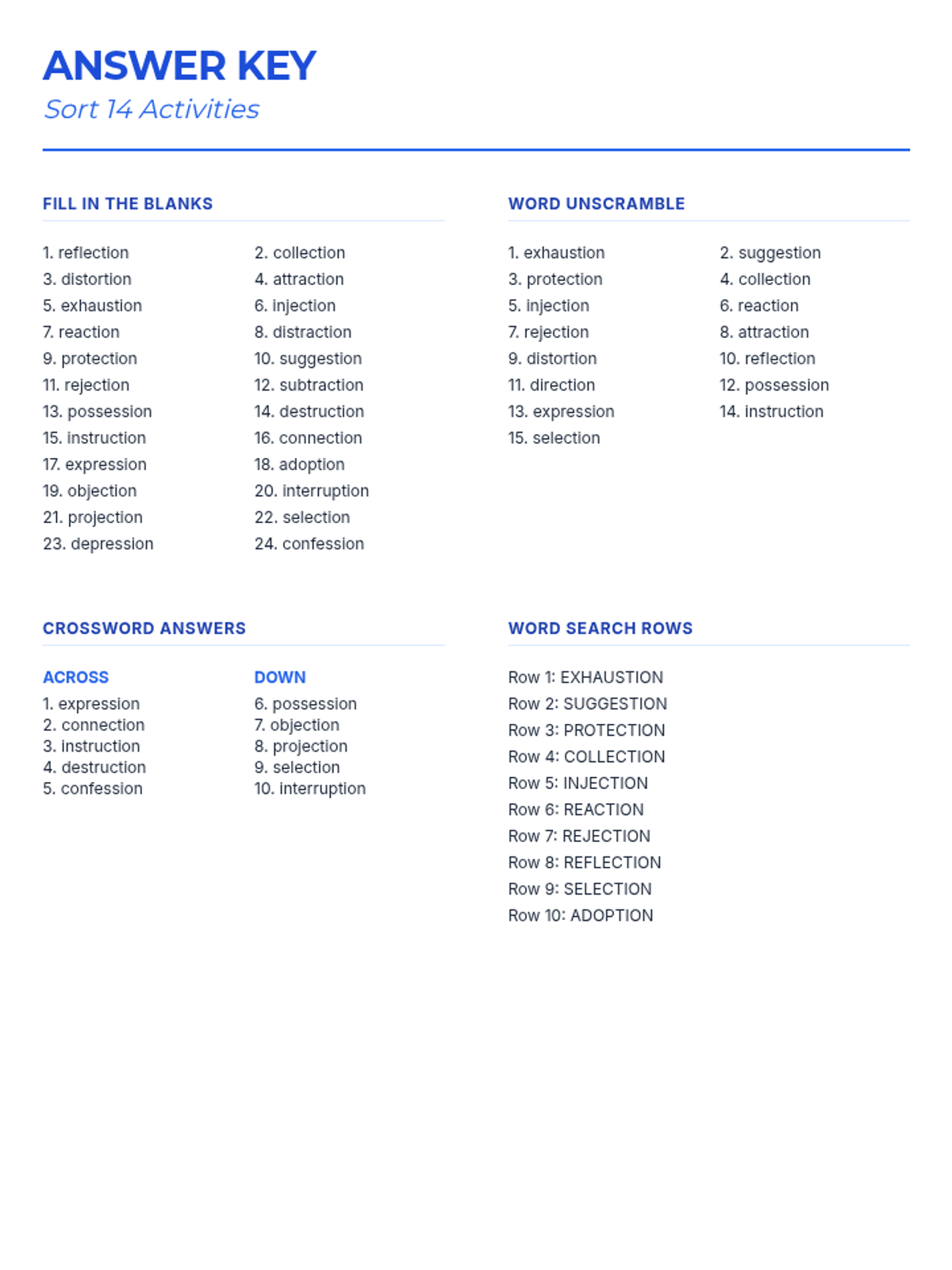
The suffix -ion turns a verb into a noun without changing the spelling of the base word.
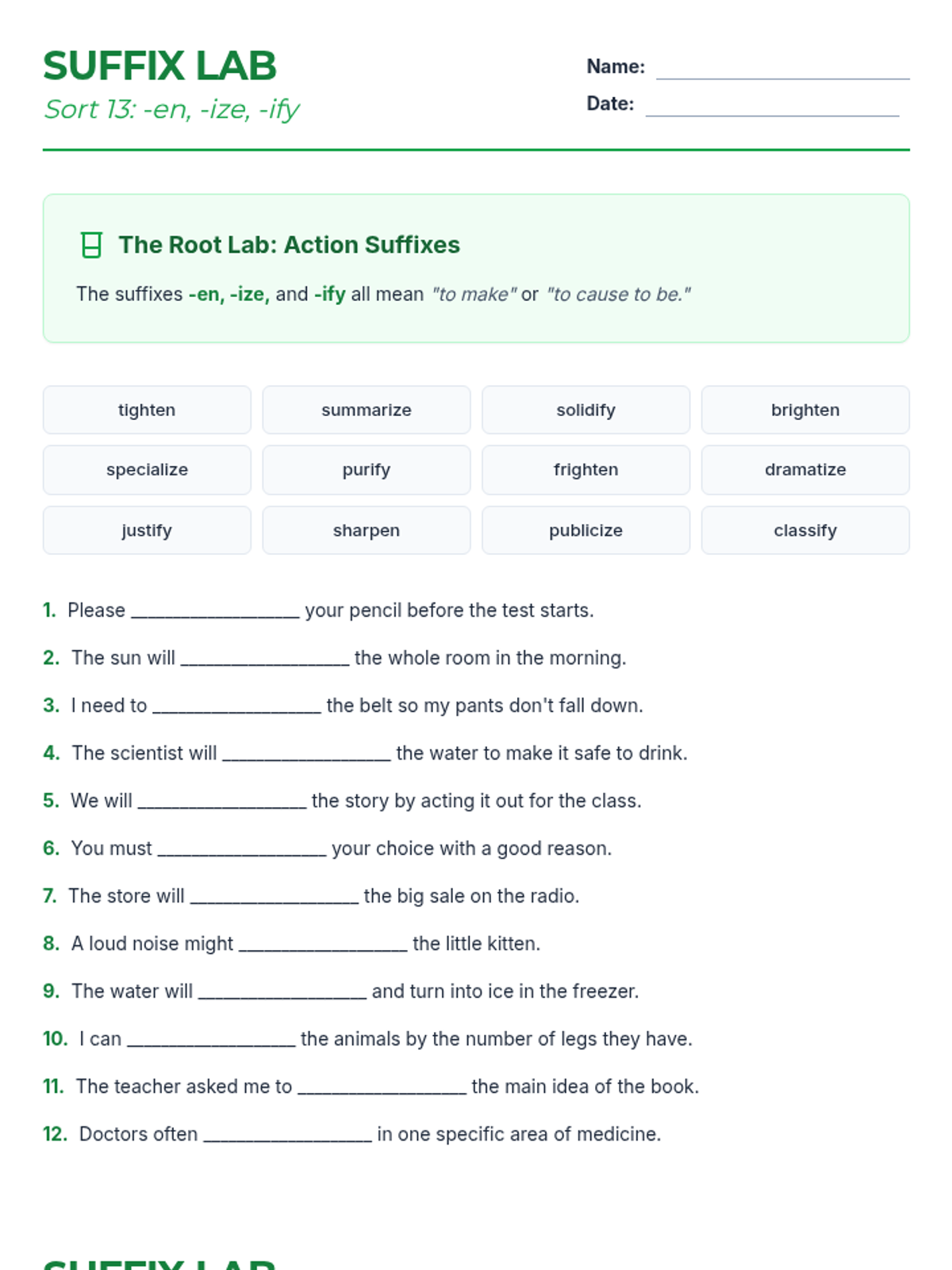
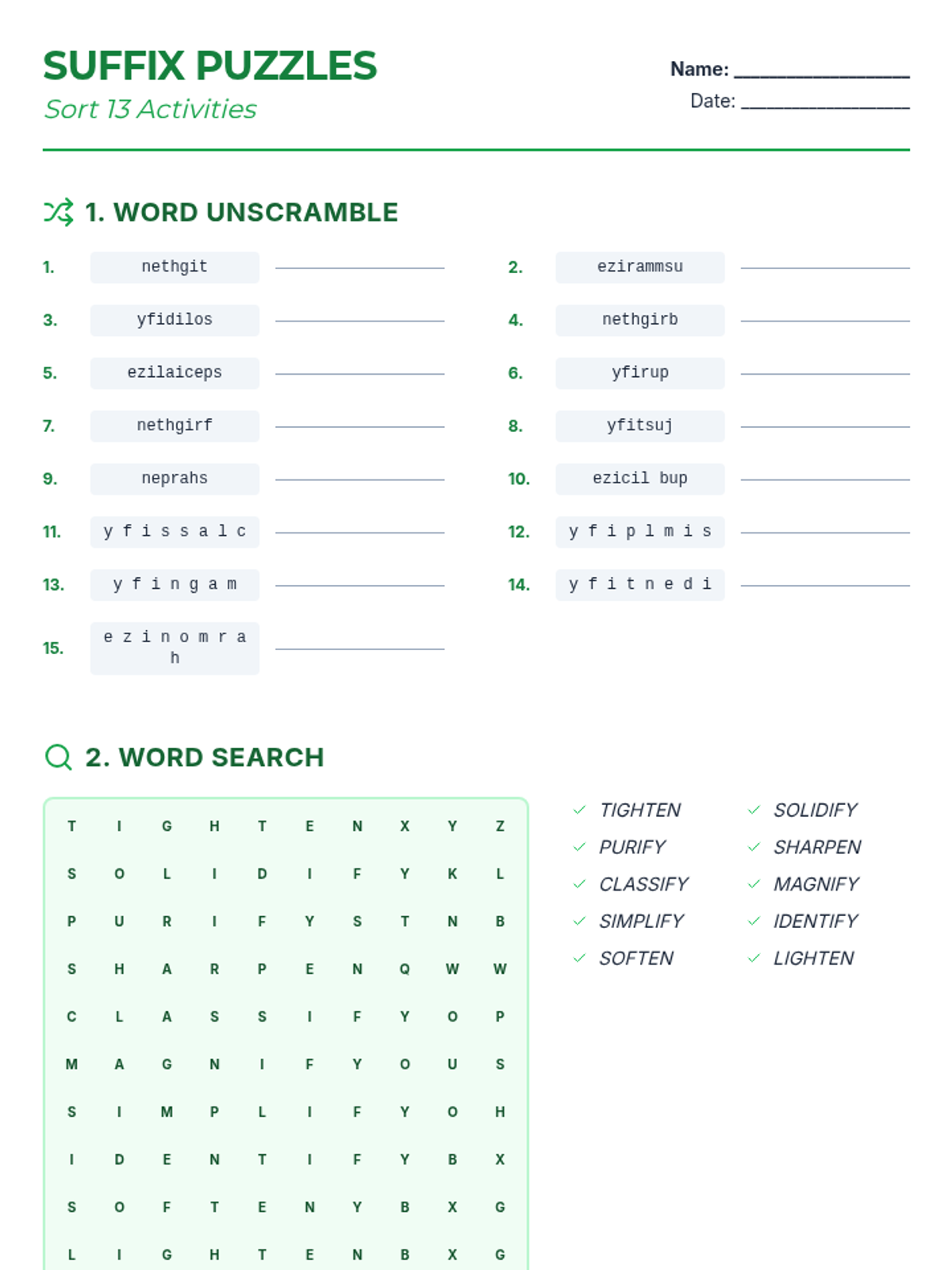
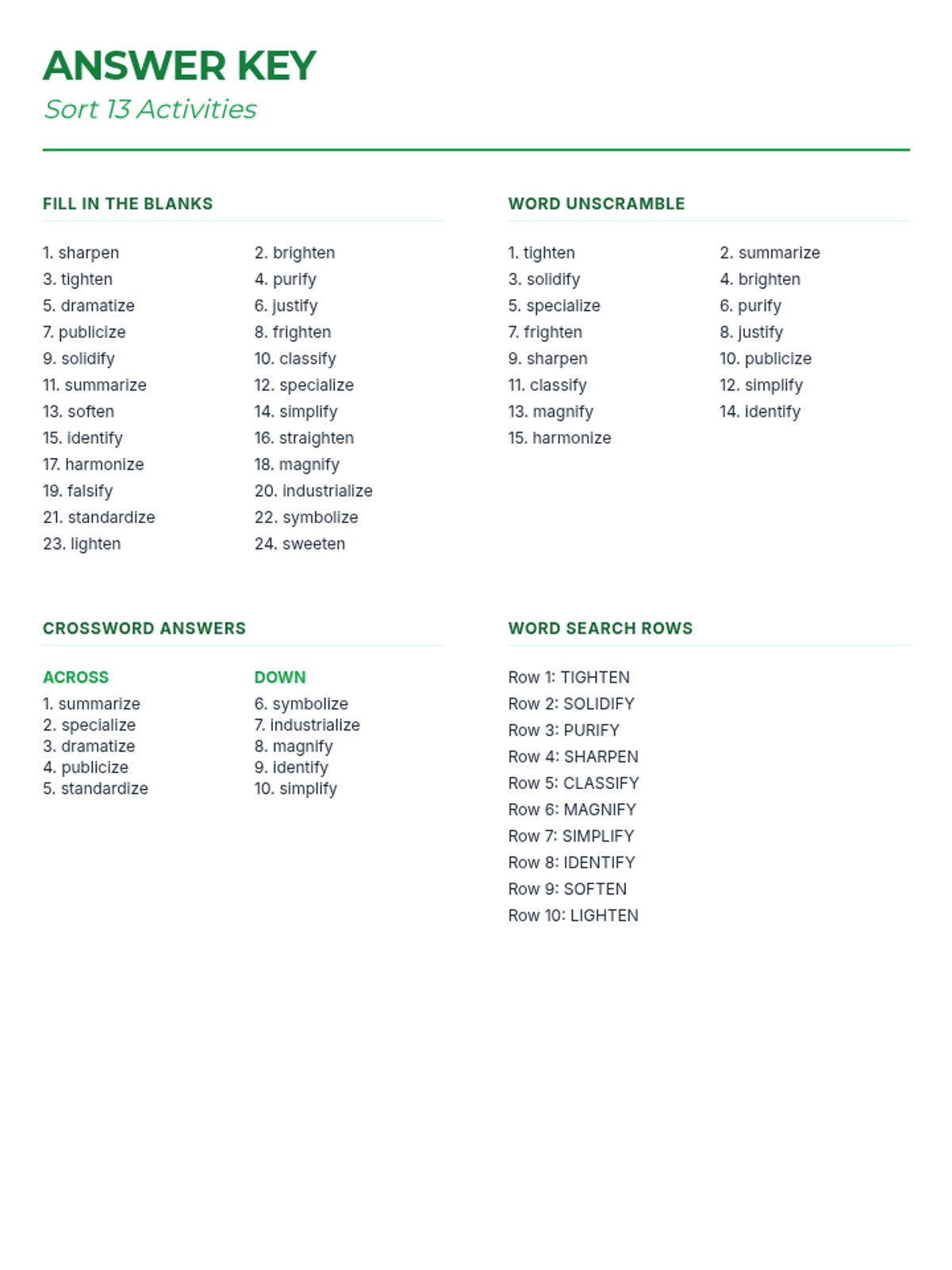
Introduction to action suffixes -en, -ize, and -ify, which mean "to make" or "to cause to be."
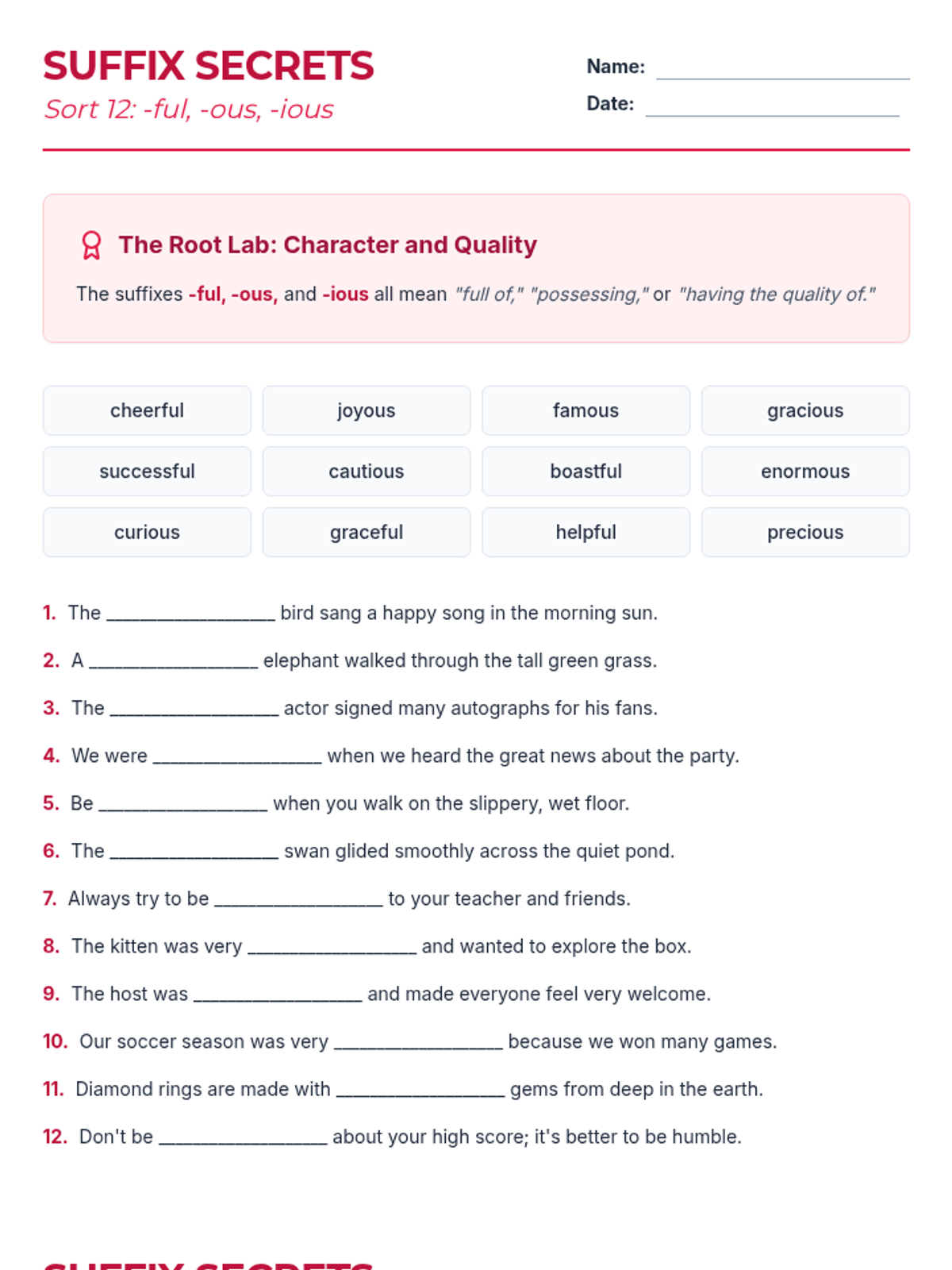
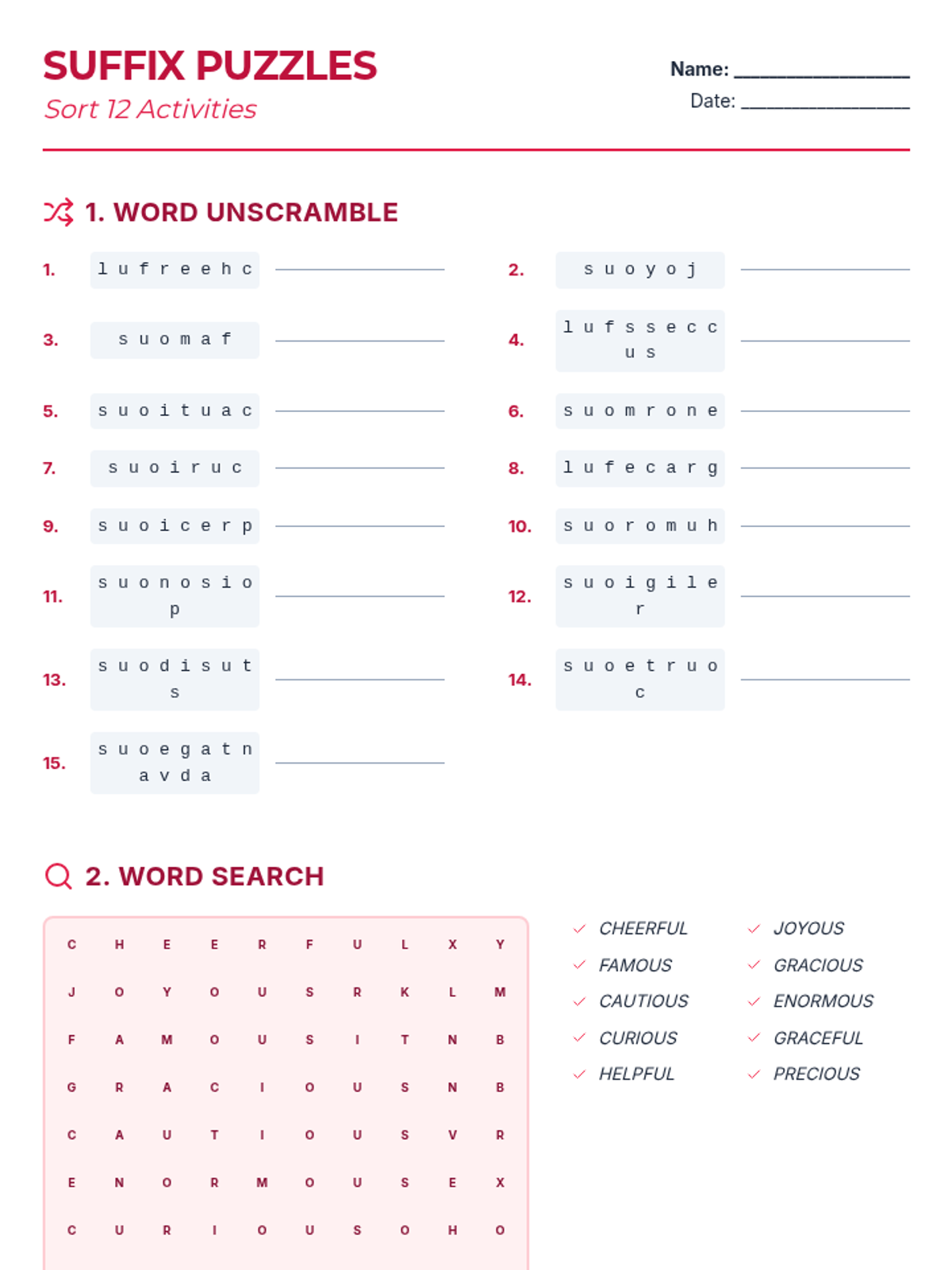
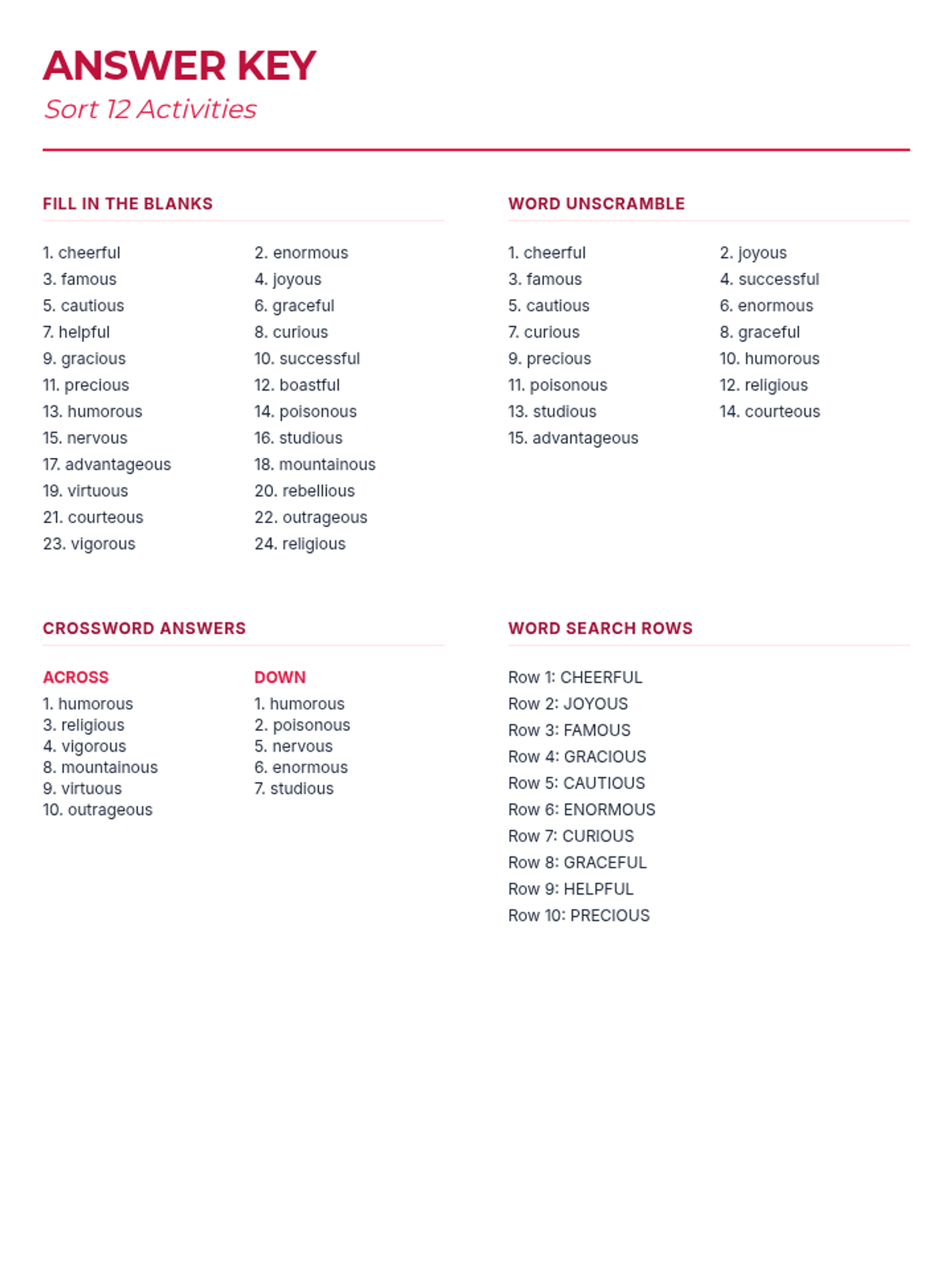
Mastering character and quality suffixes: -ful, -ous, and -ious, meaning "full of" or "possessing."
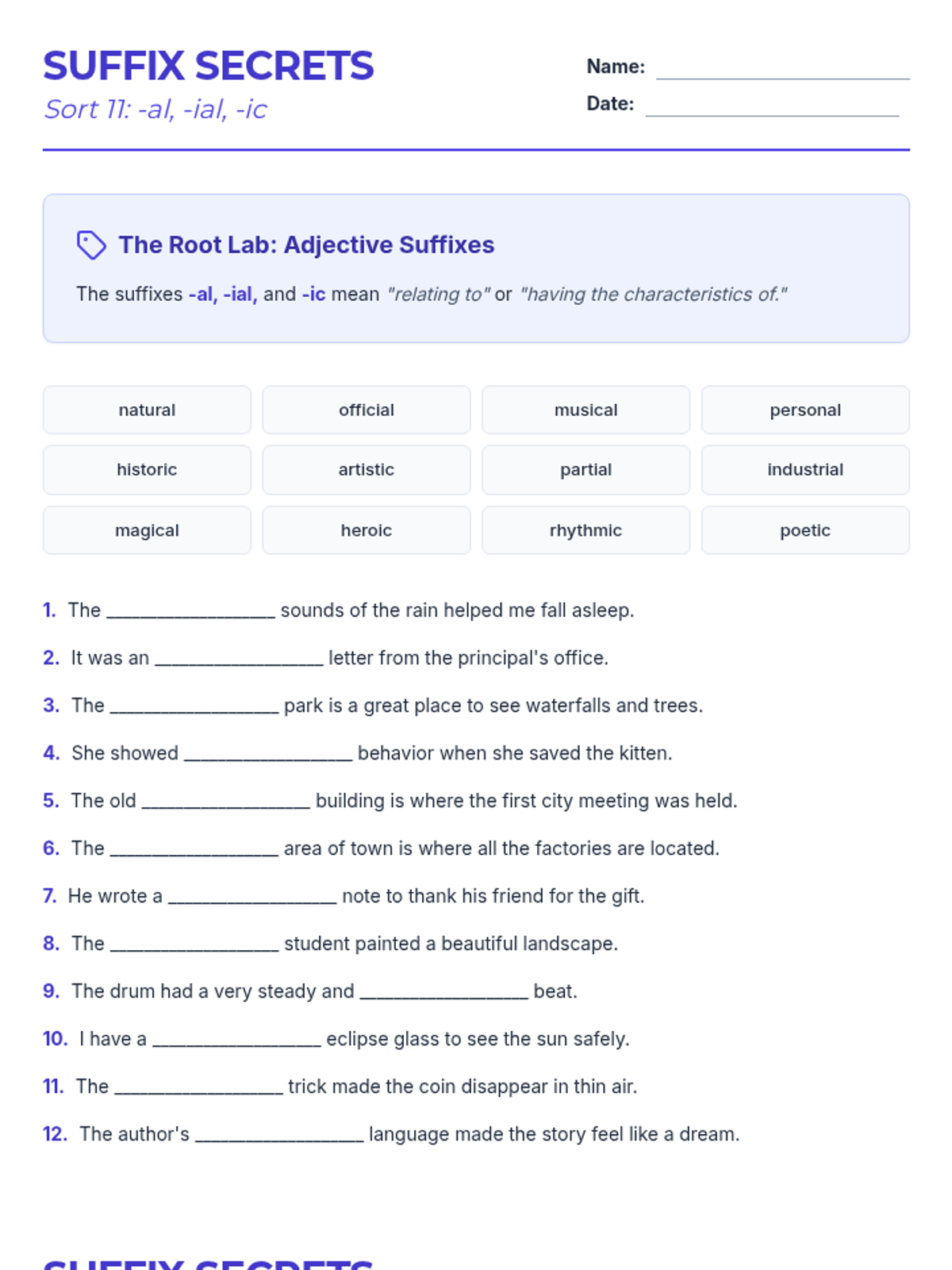
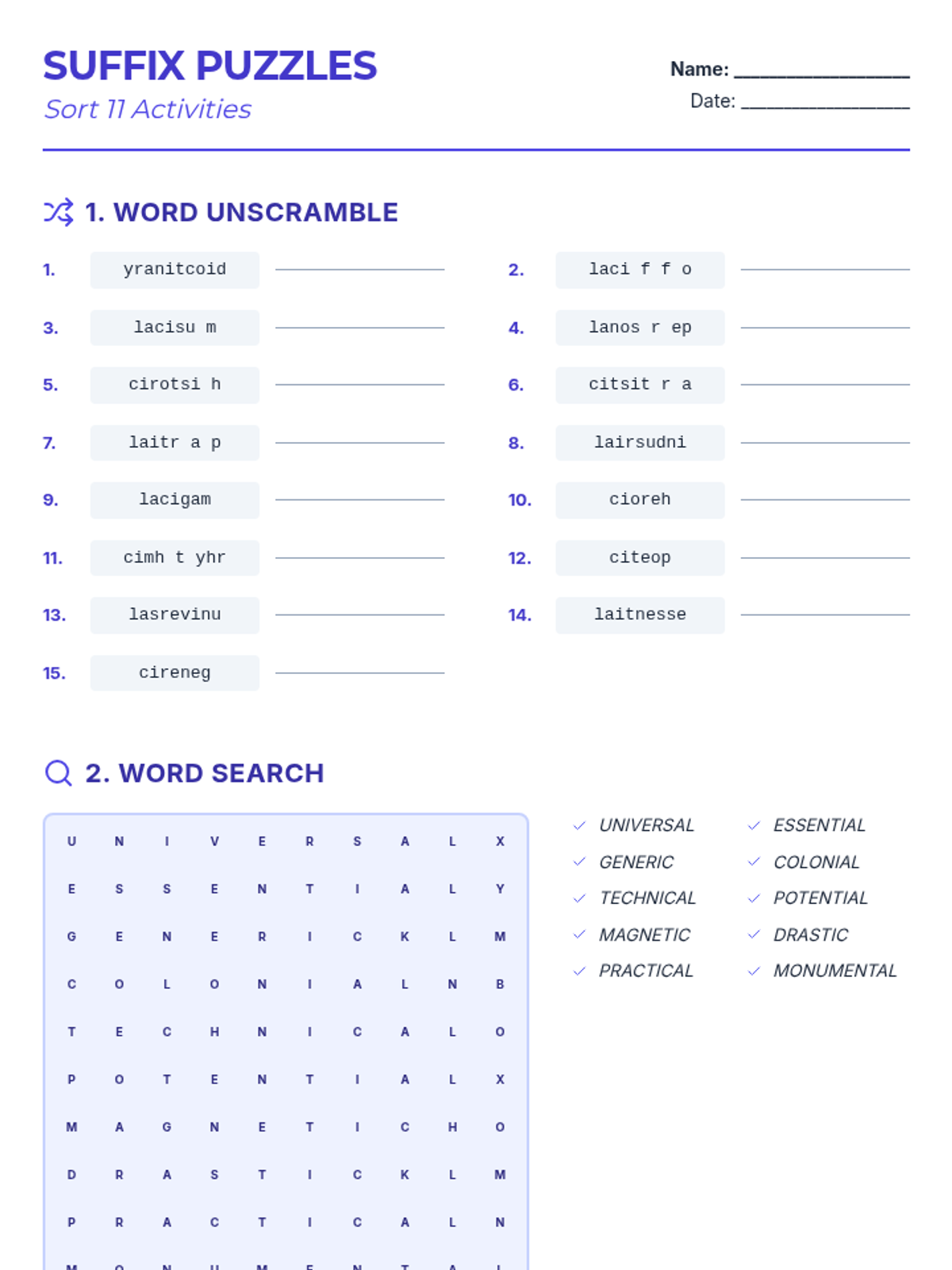
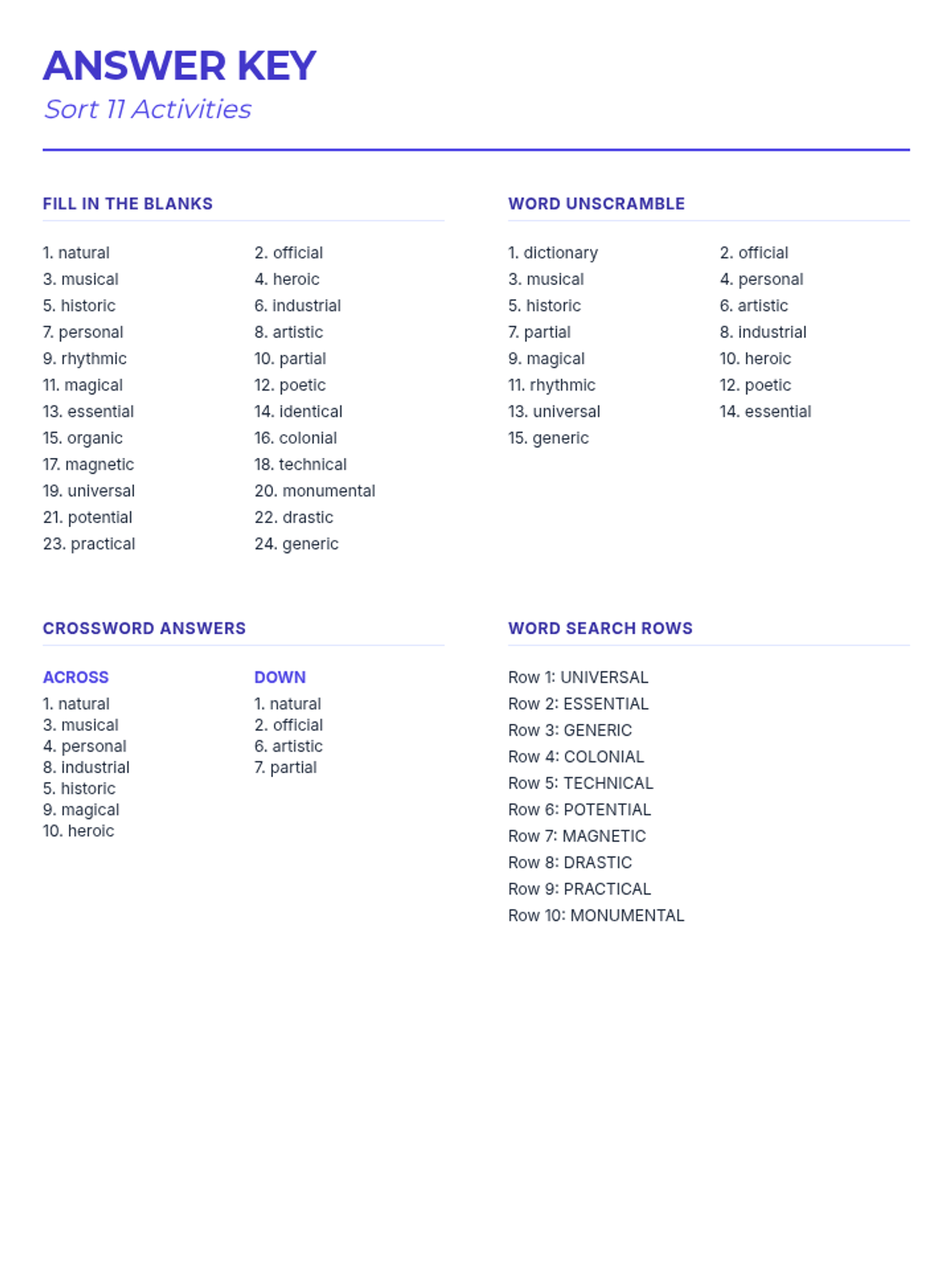
Mastering the adjective suffixes -al, -ial, and -ic, meaning "relating to" or "having the characteristics of."
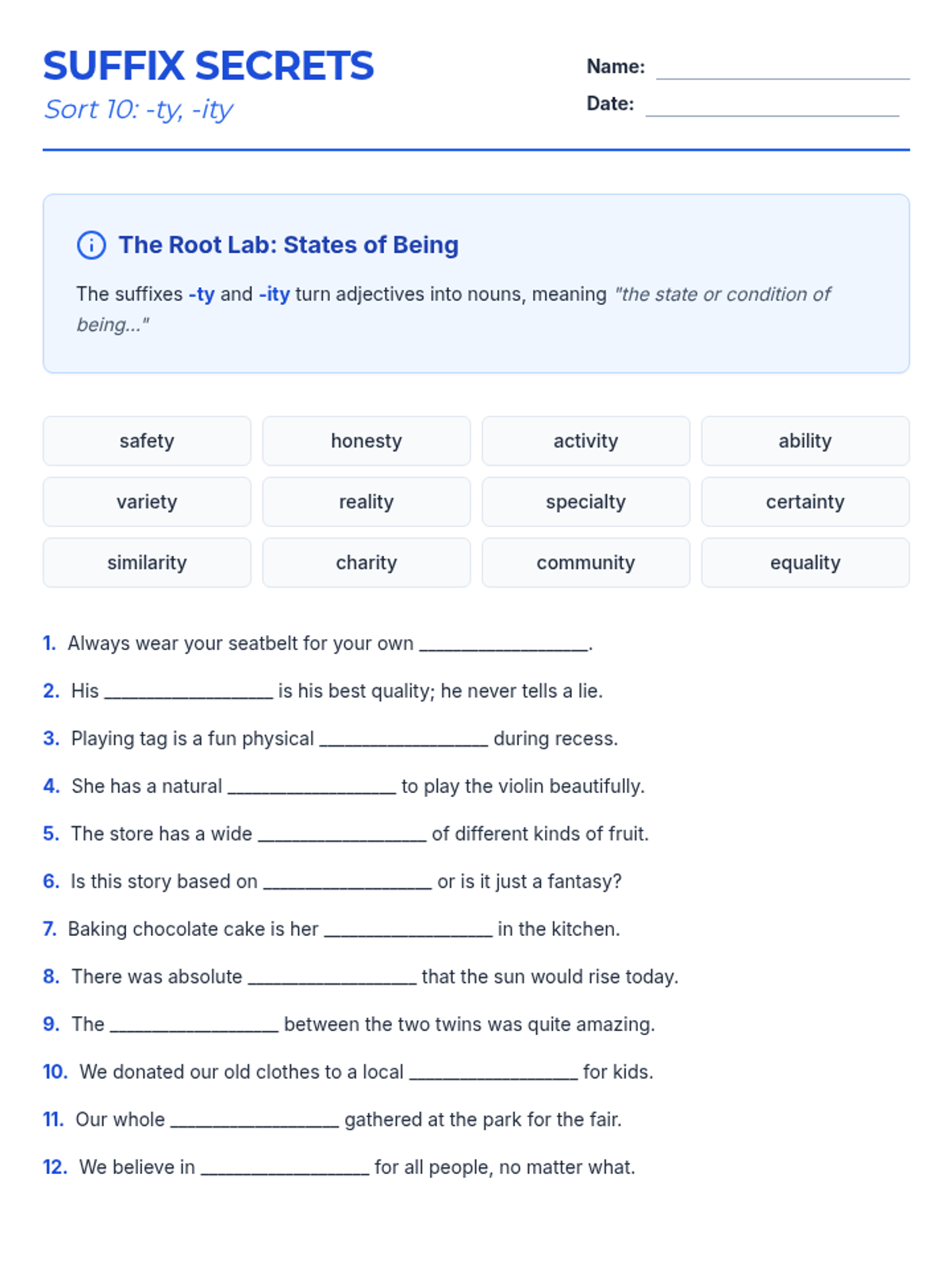
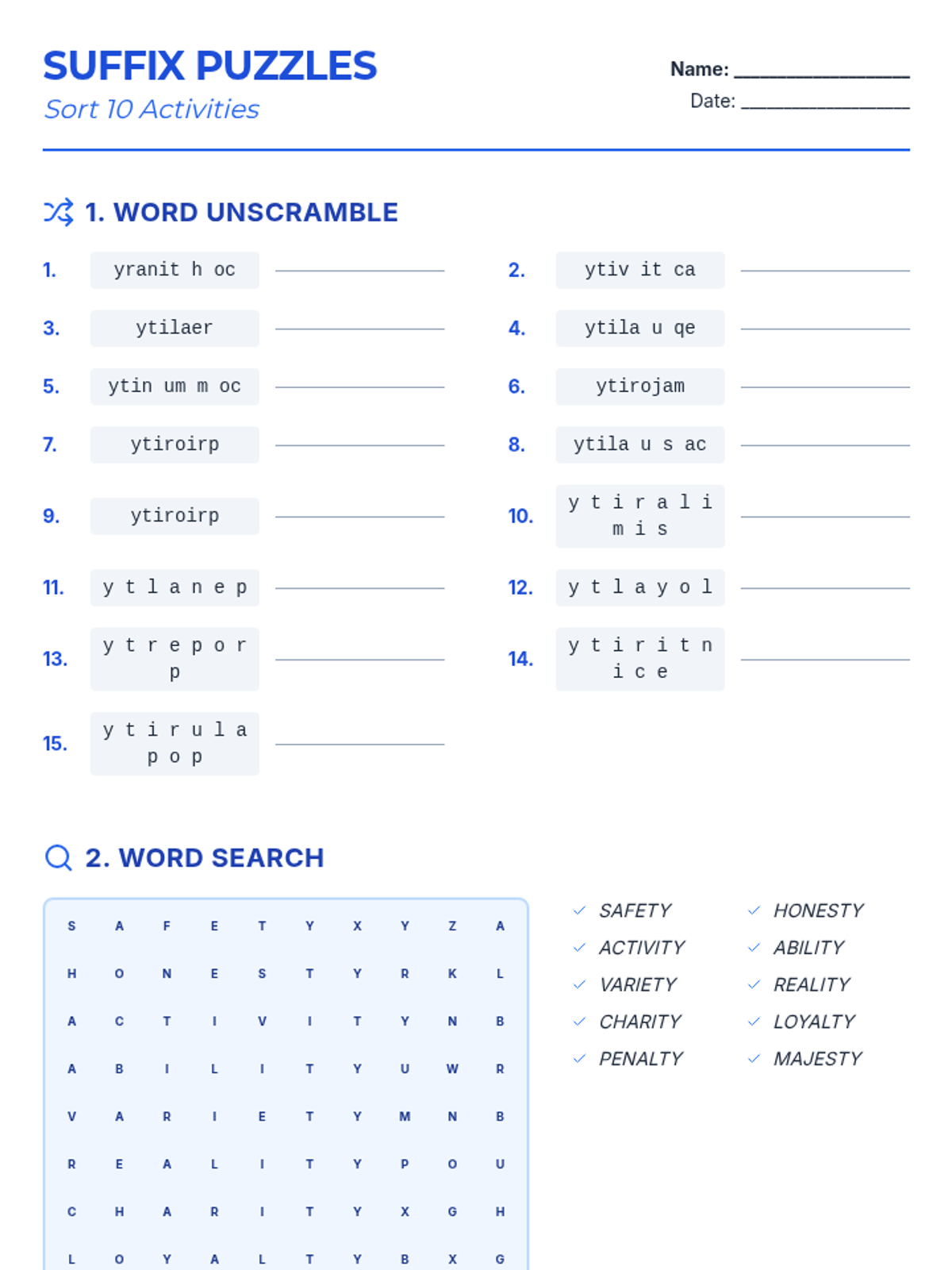
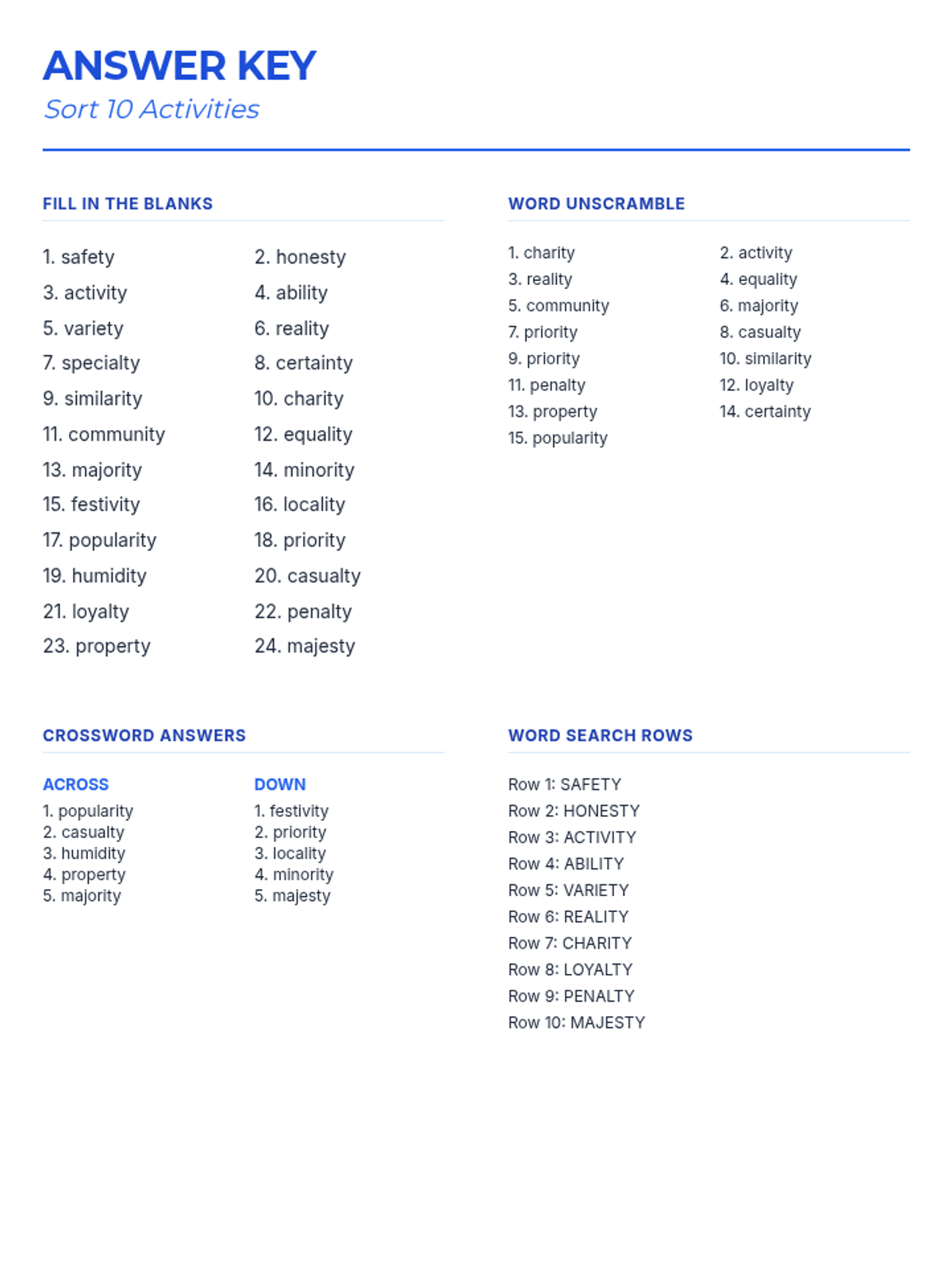
The suffixes -ty and -ity turn adjectives into nouns, meaning "the state or condition of being...".
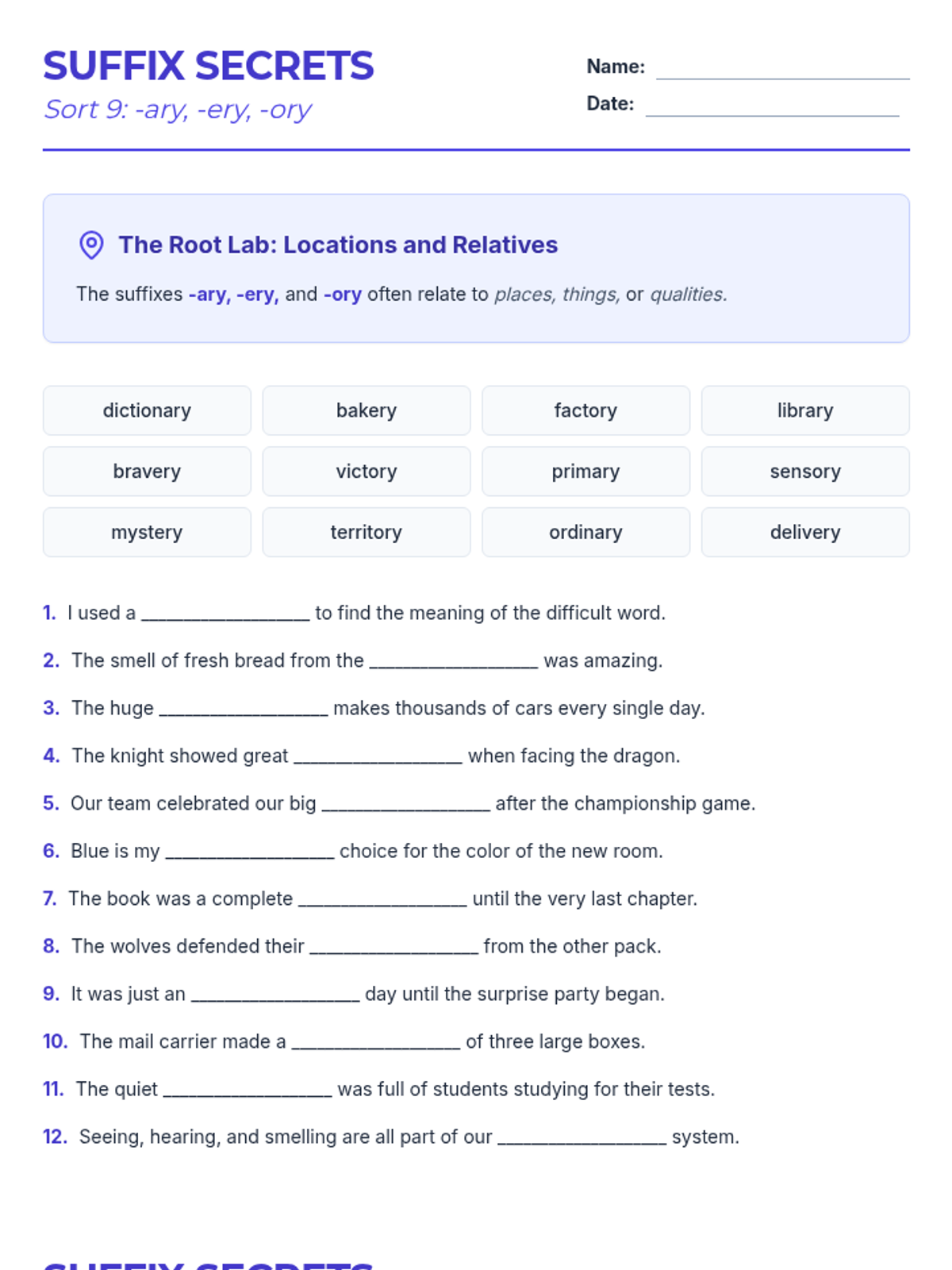
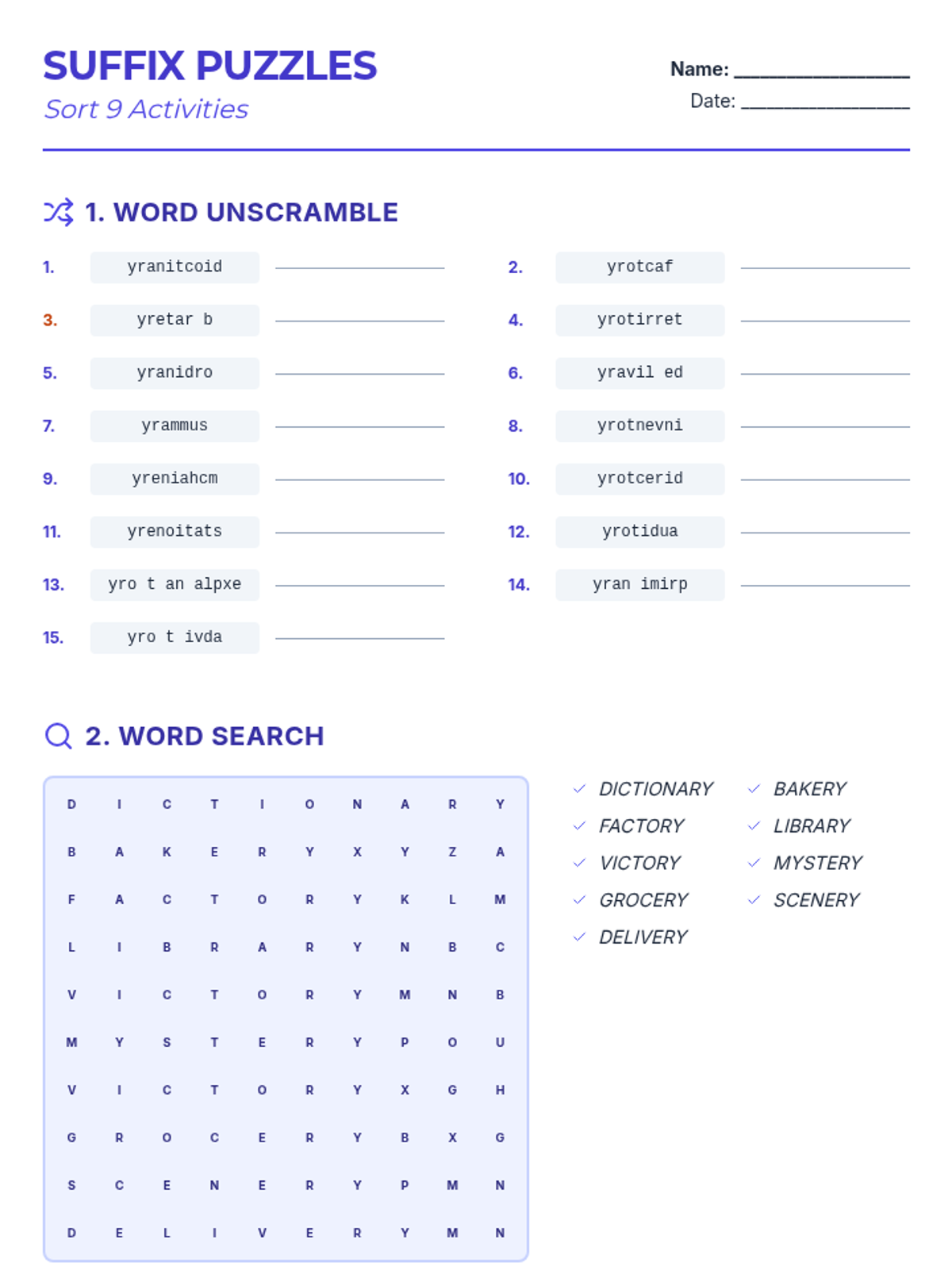
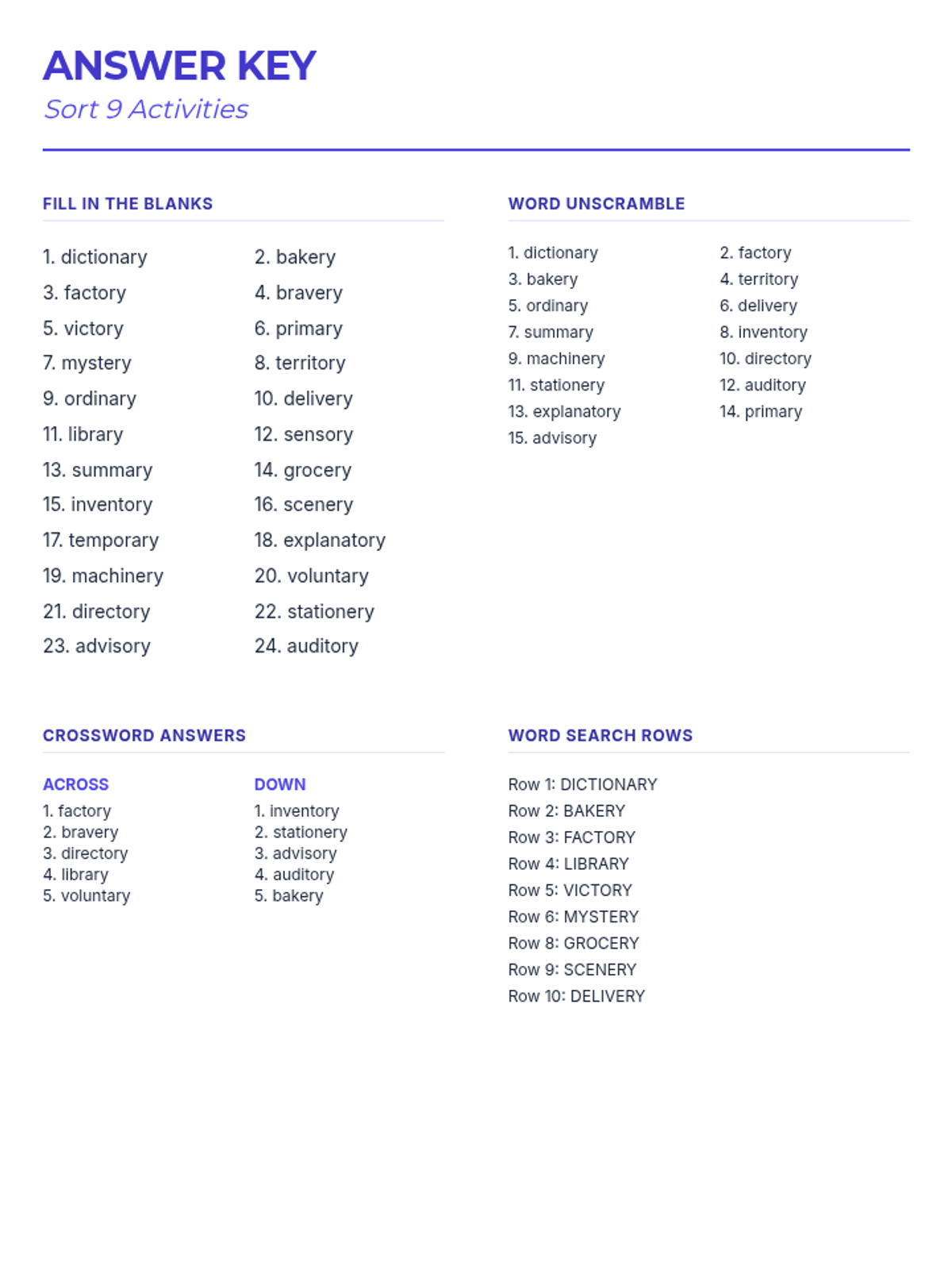
Mastering suffixes related to places, things, or qualities: -ary, -ery, and -ory.
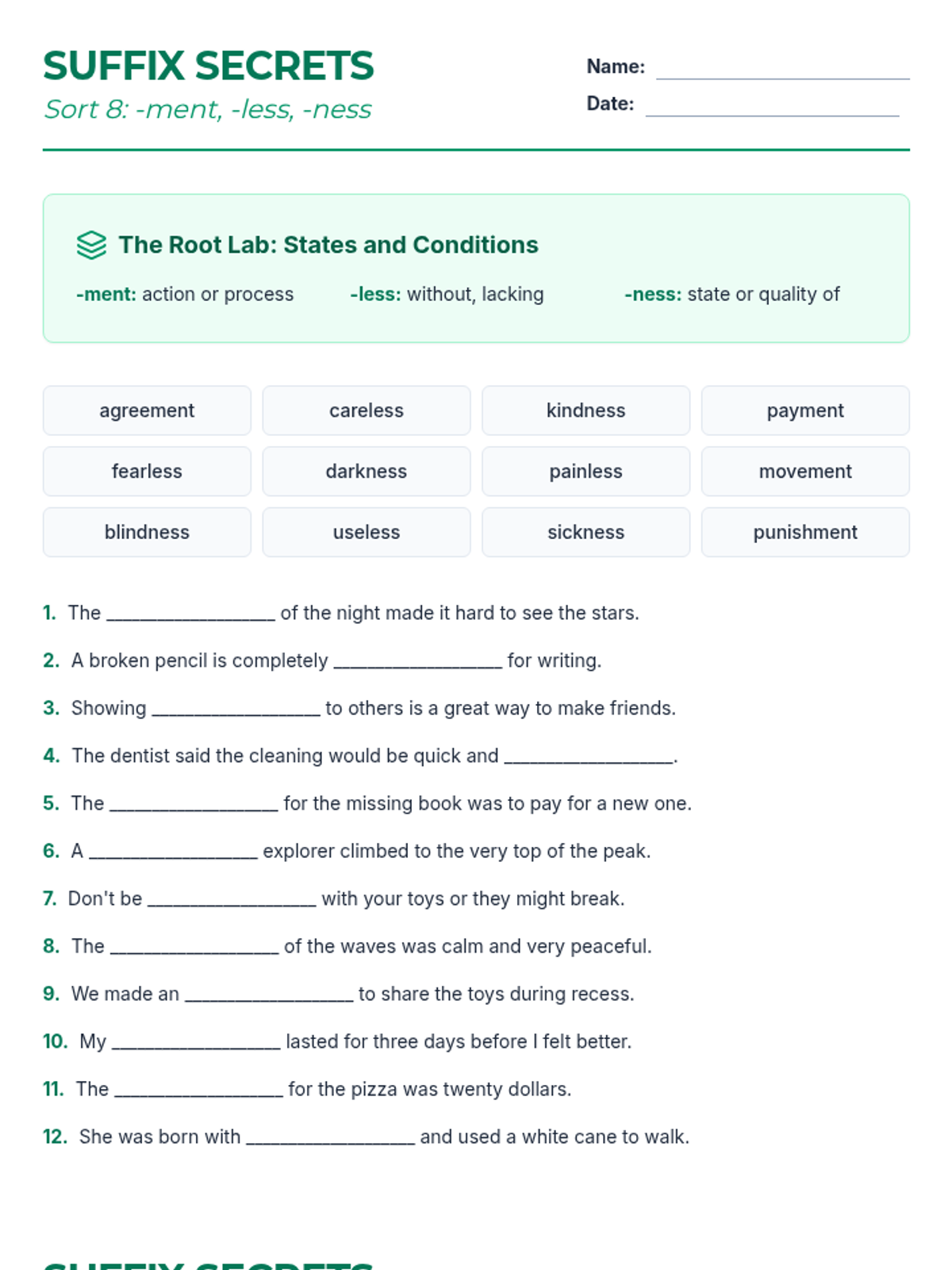
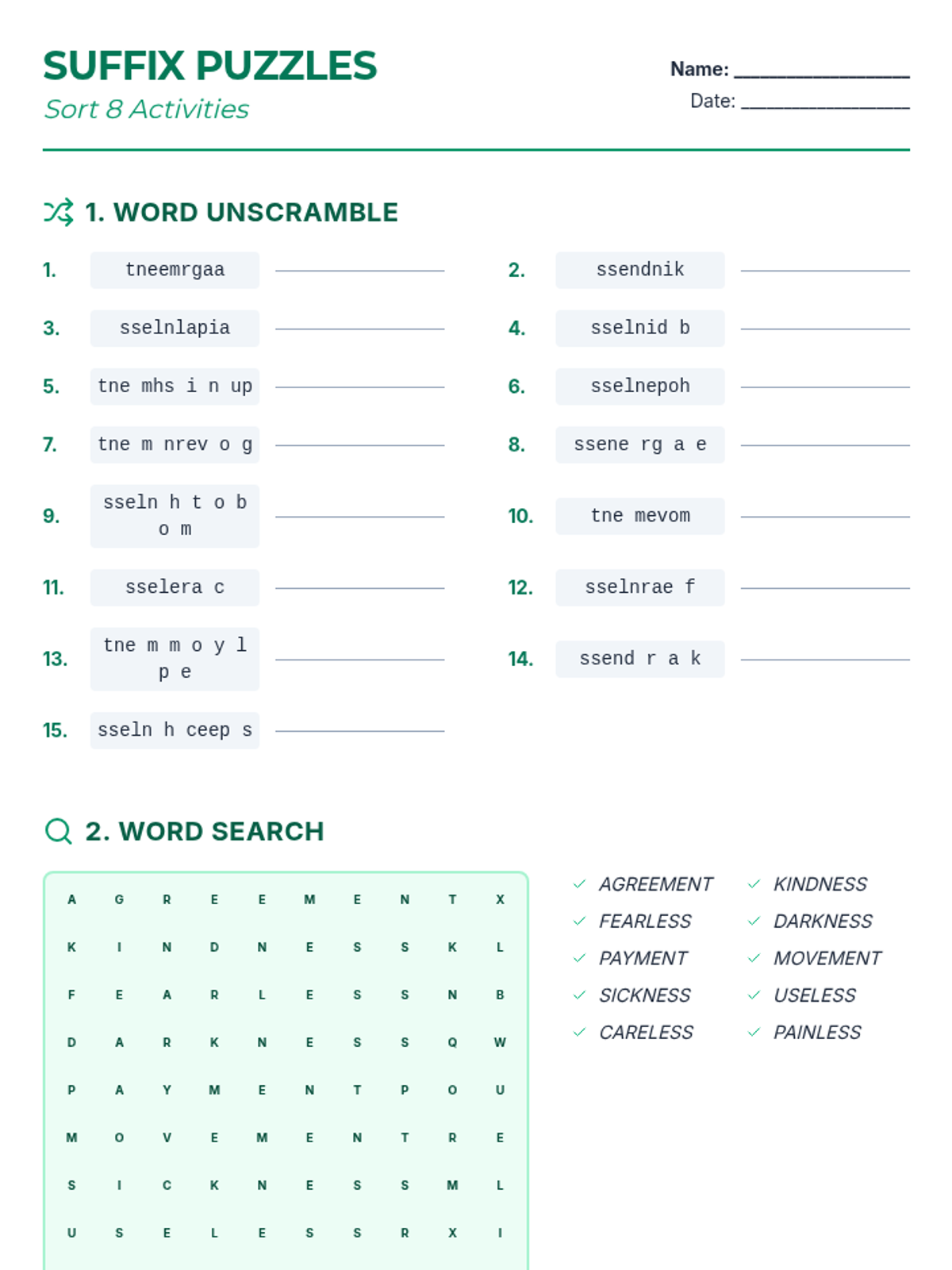
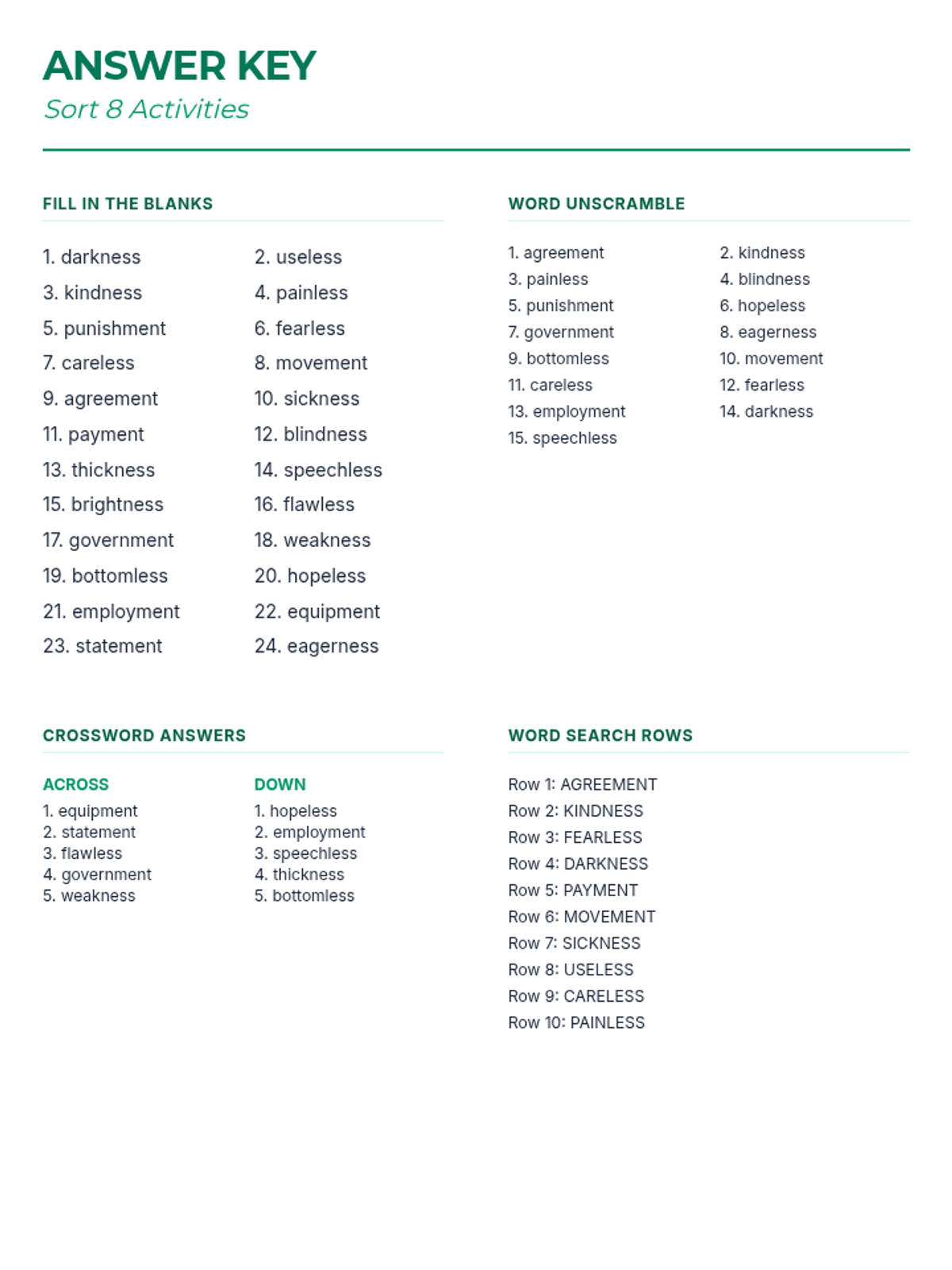
Mastering suffixes related to states and conditions: -ment, -less, and -ness.
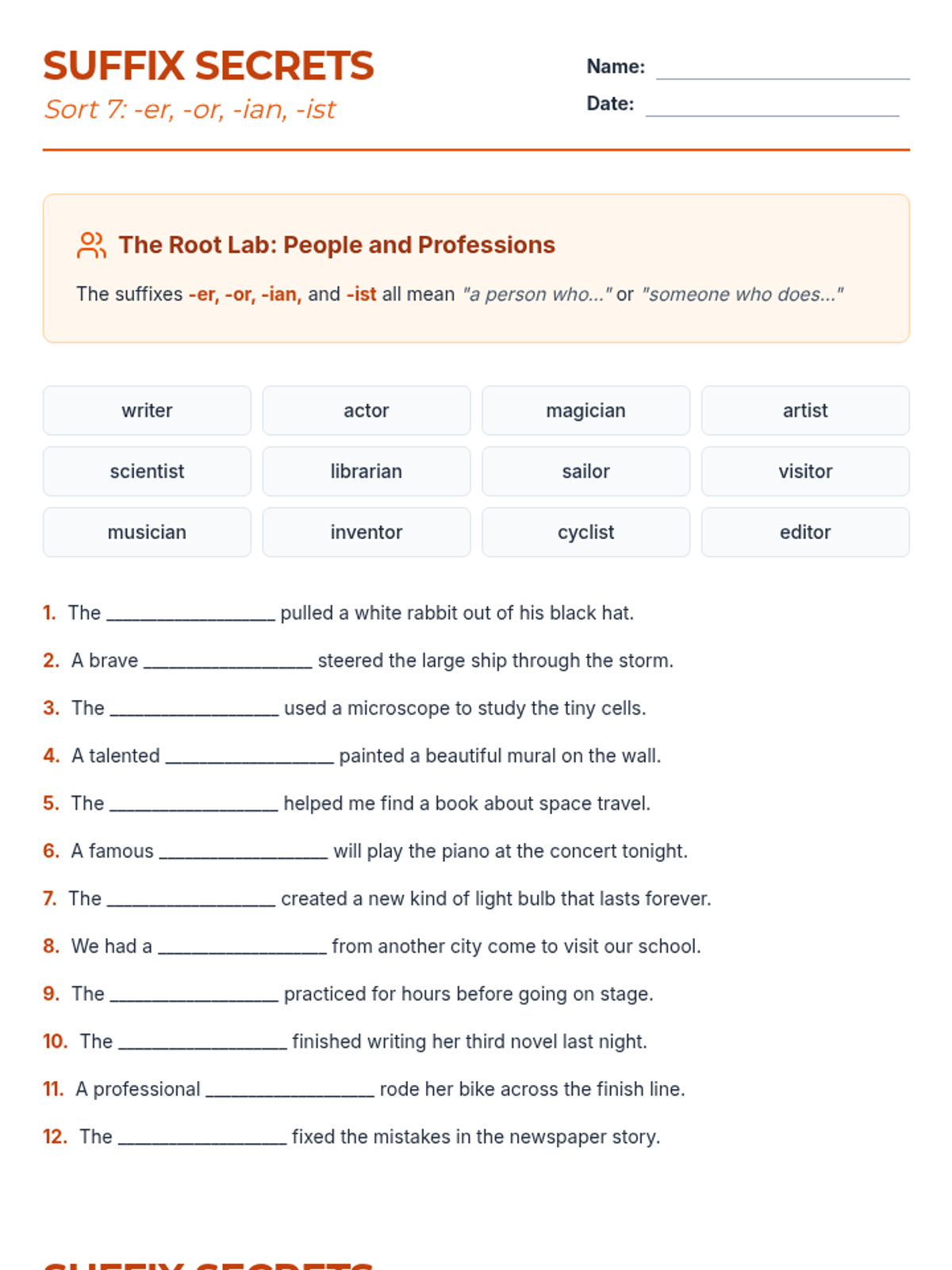
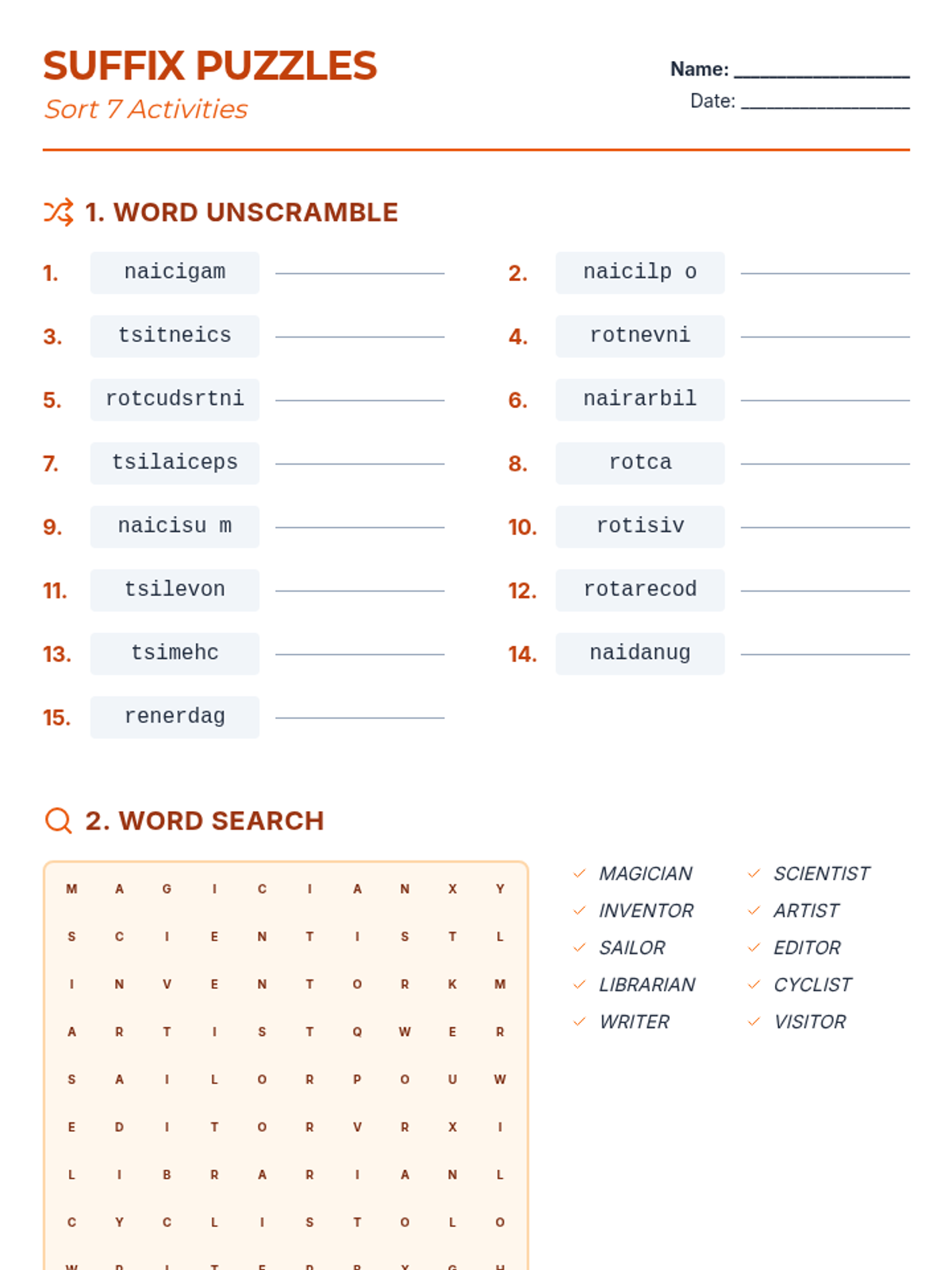
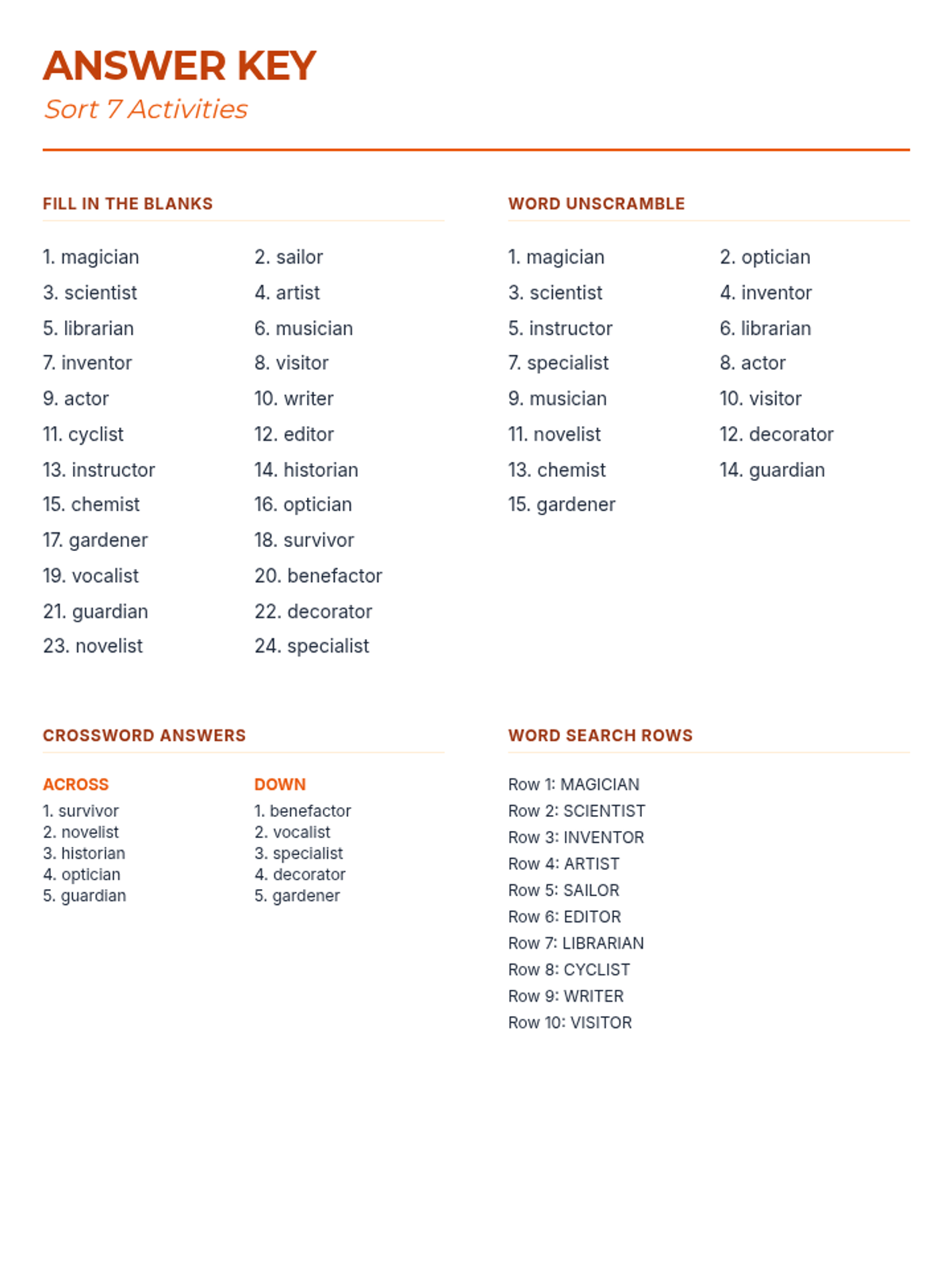
Focusing on suffixes that indicate people and professions: -er, -or, -ian, and -ist.
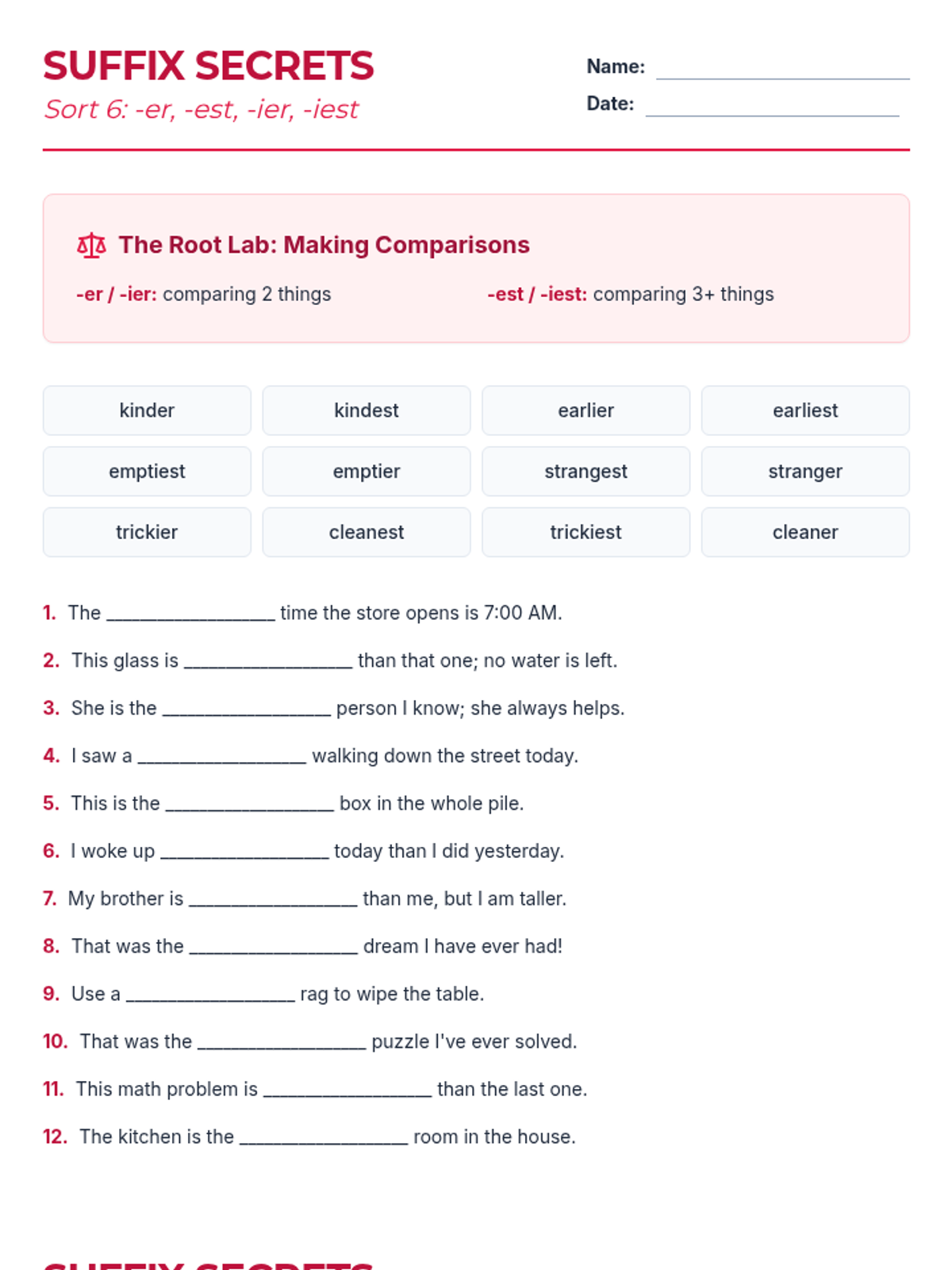
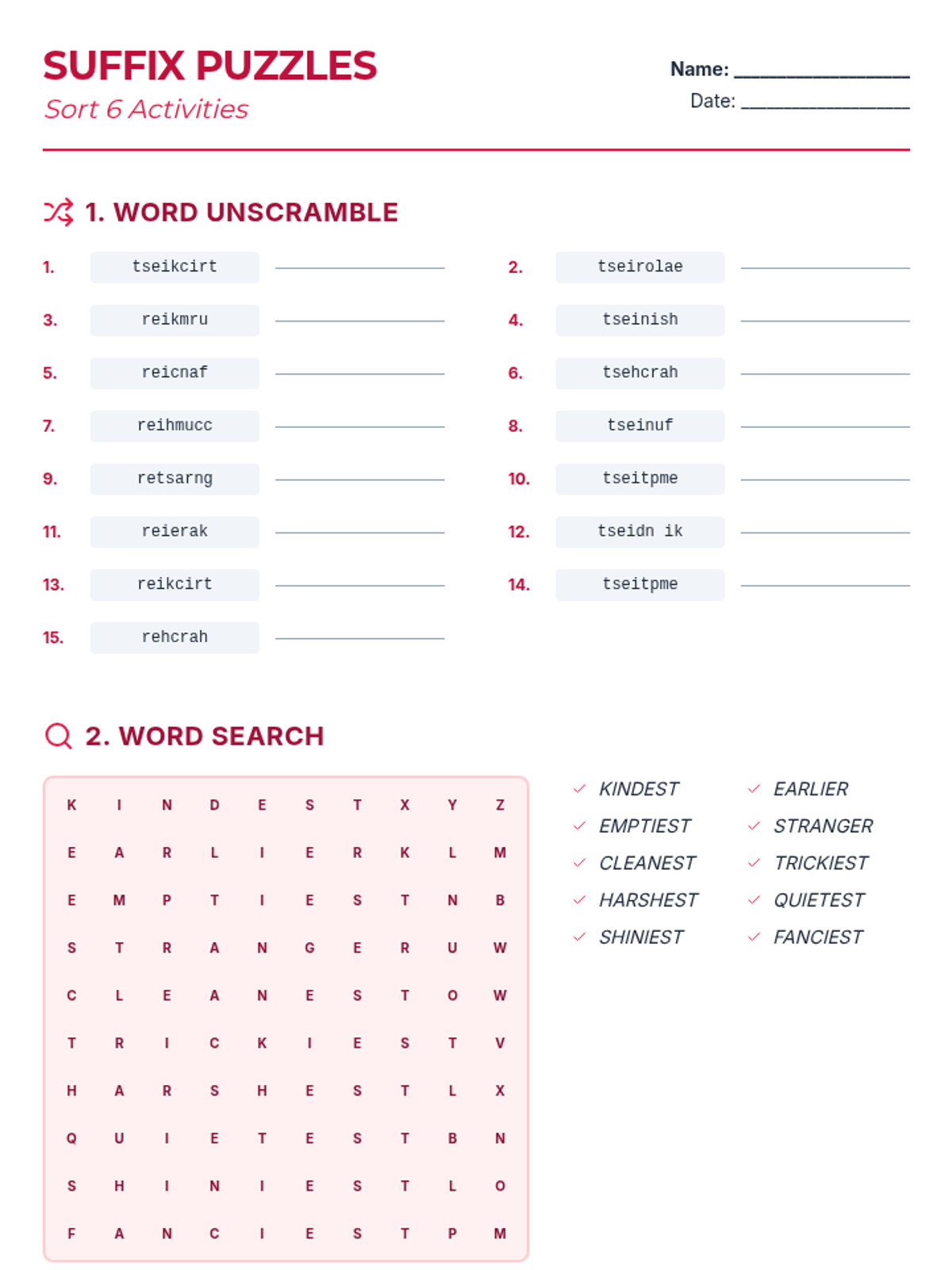
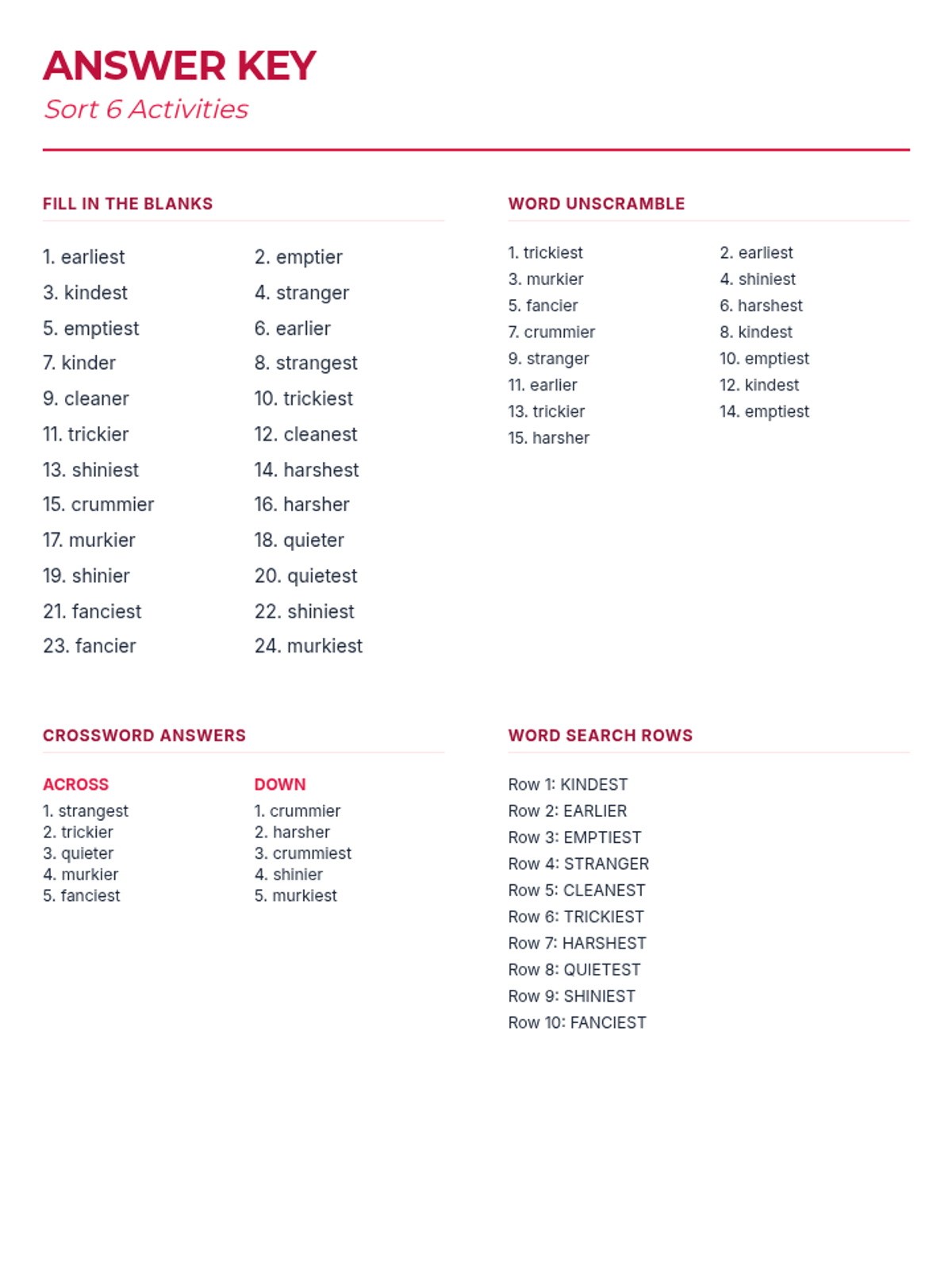
Mastering comparative and superlative suffixes: -er, -est, -ier, and -iest.
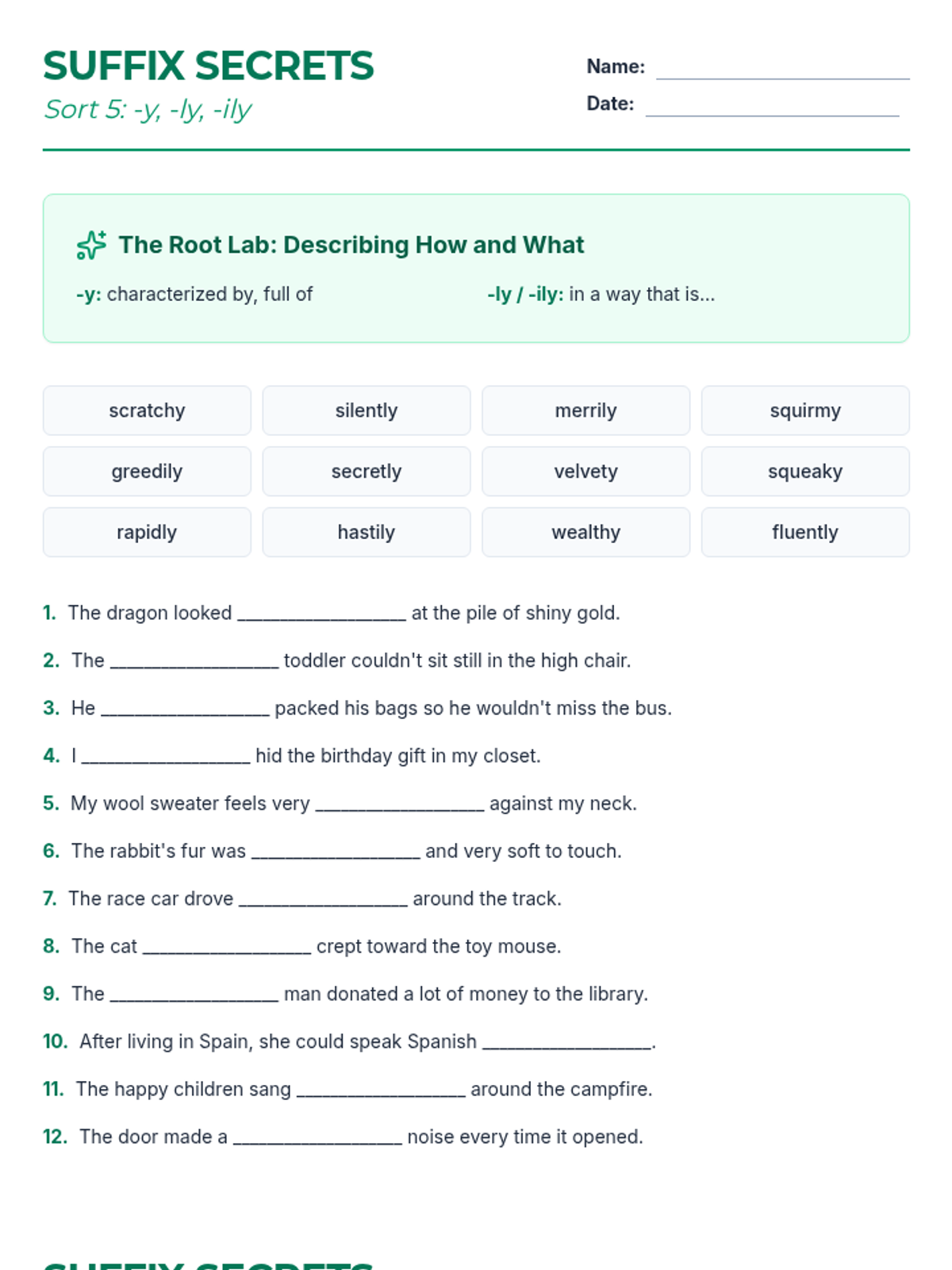
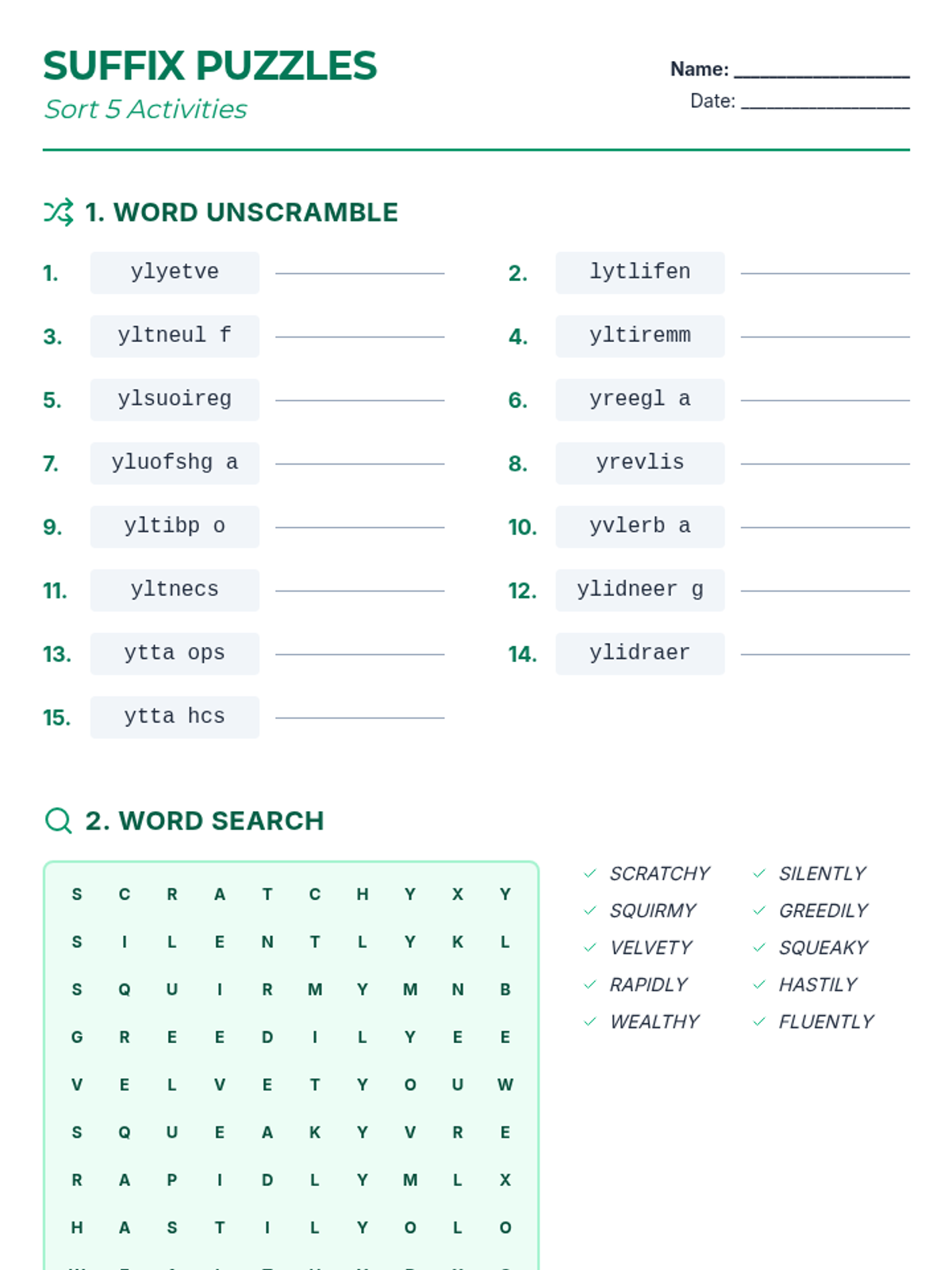
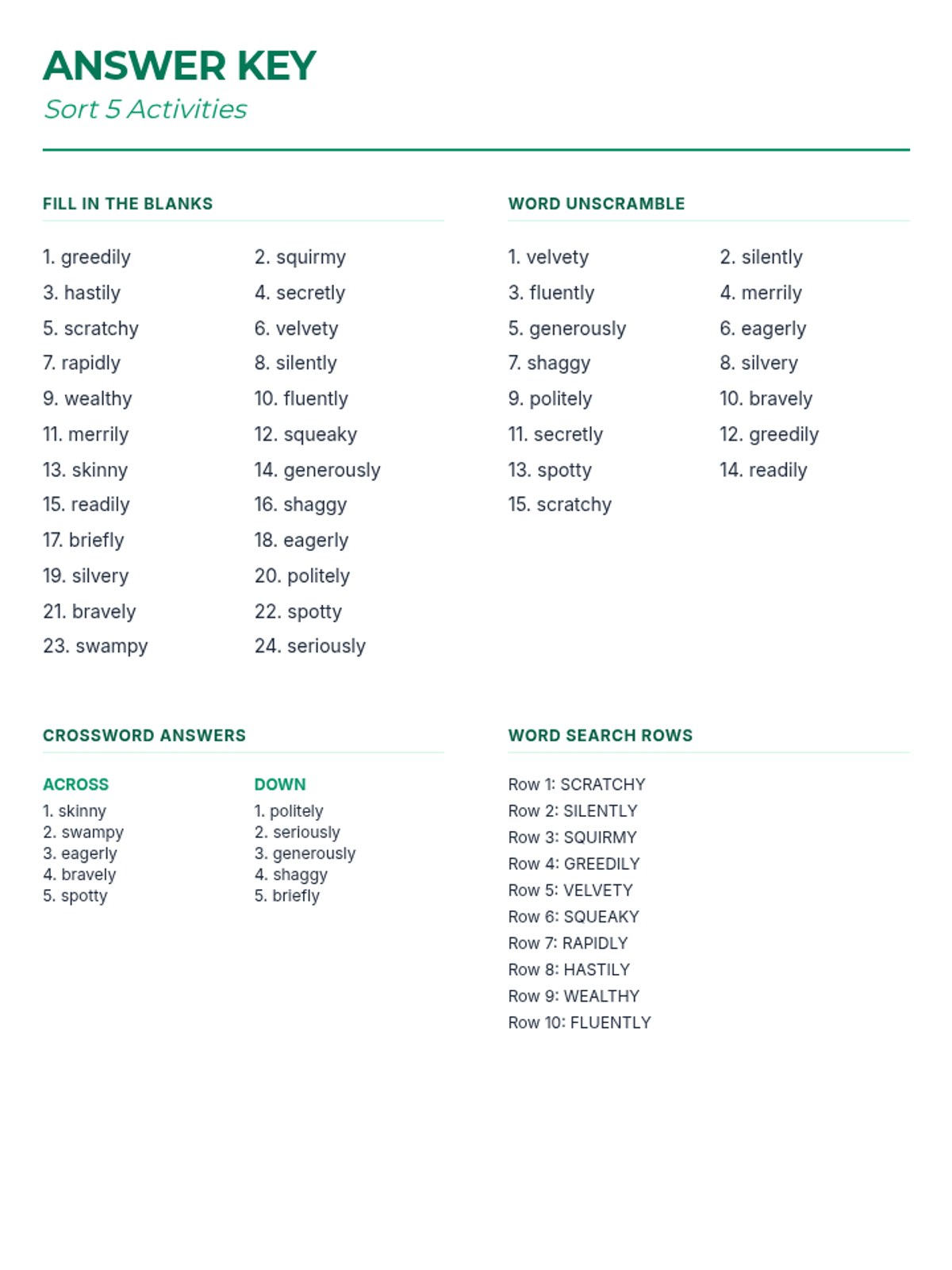
Introduction to descriptive suffixes: -y, -ly, and -ily.
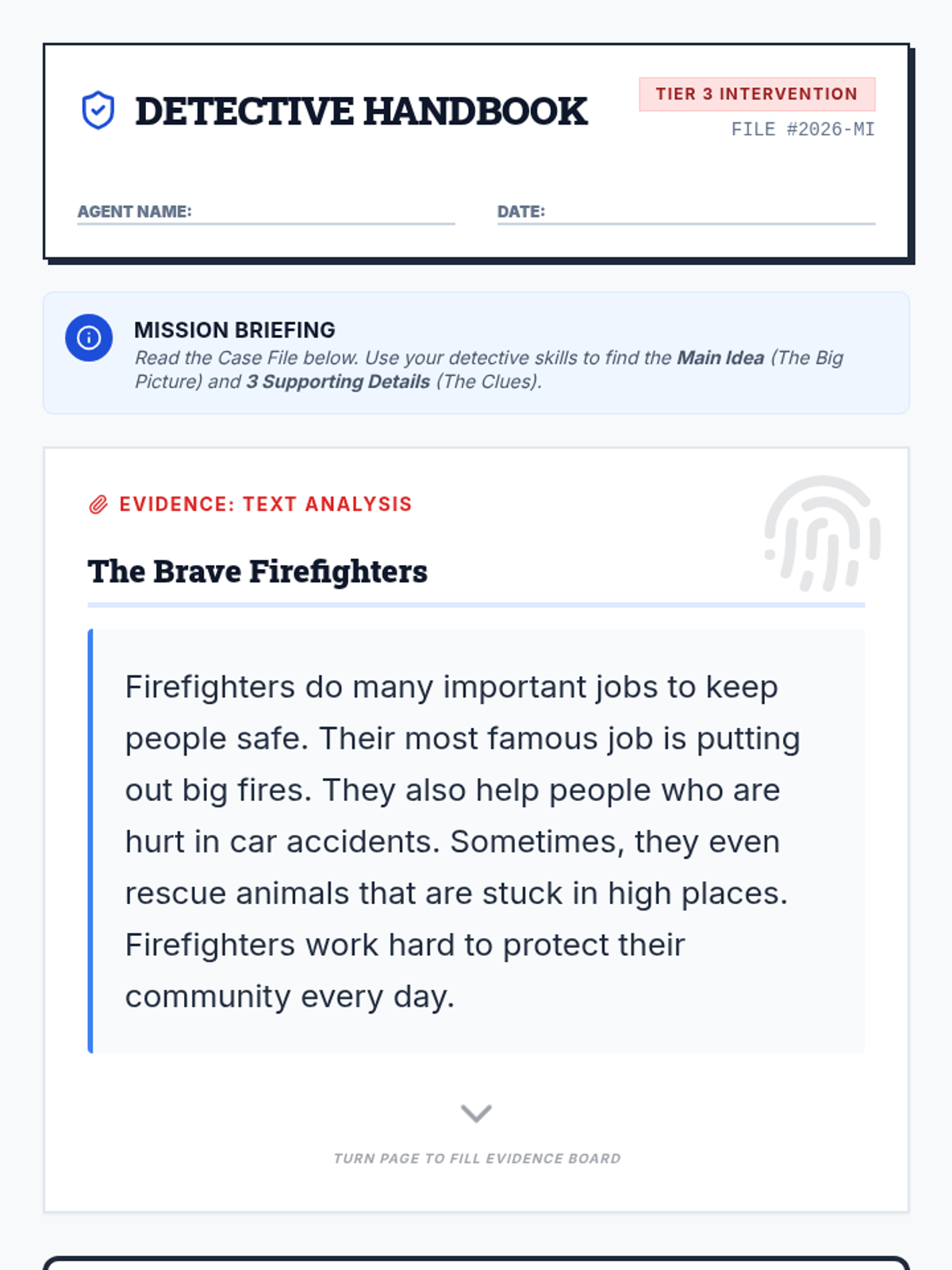
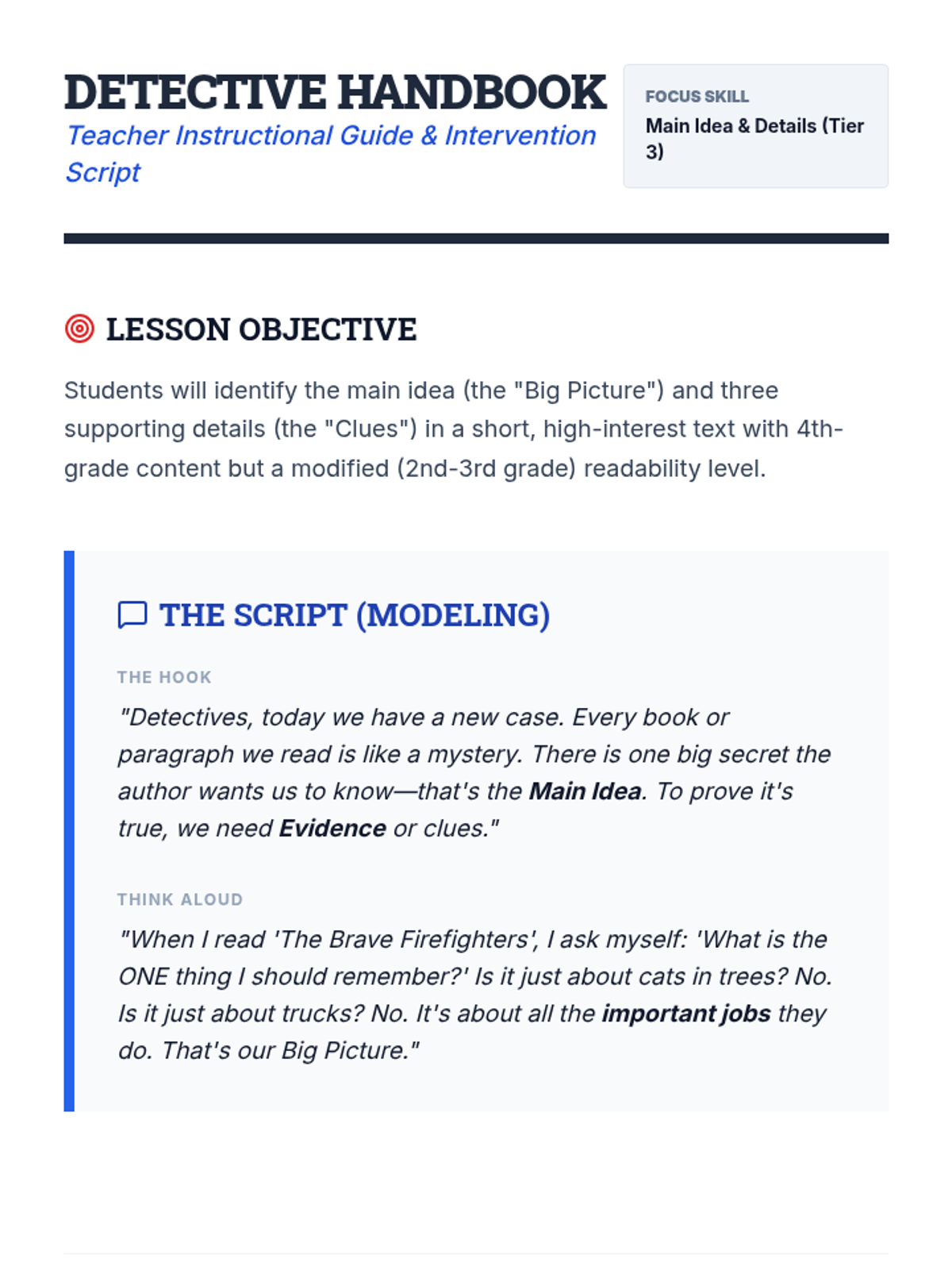
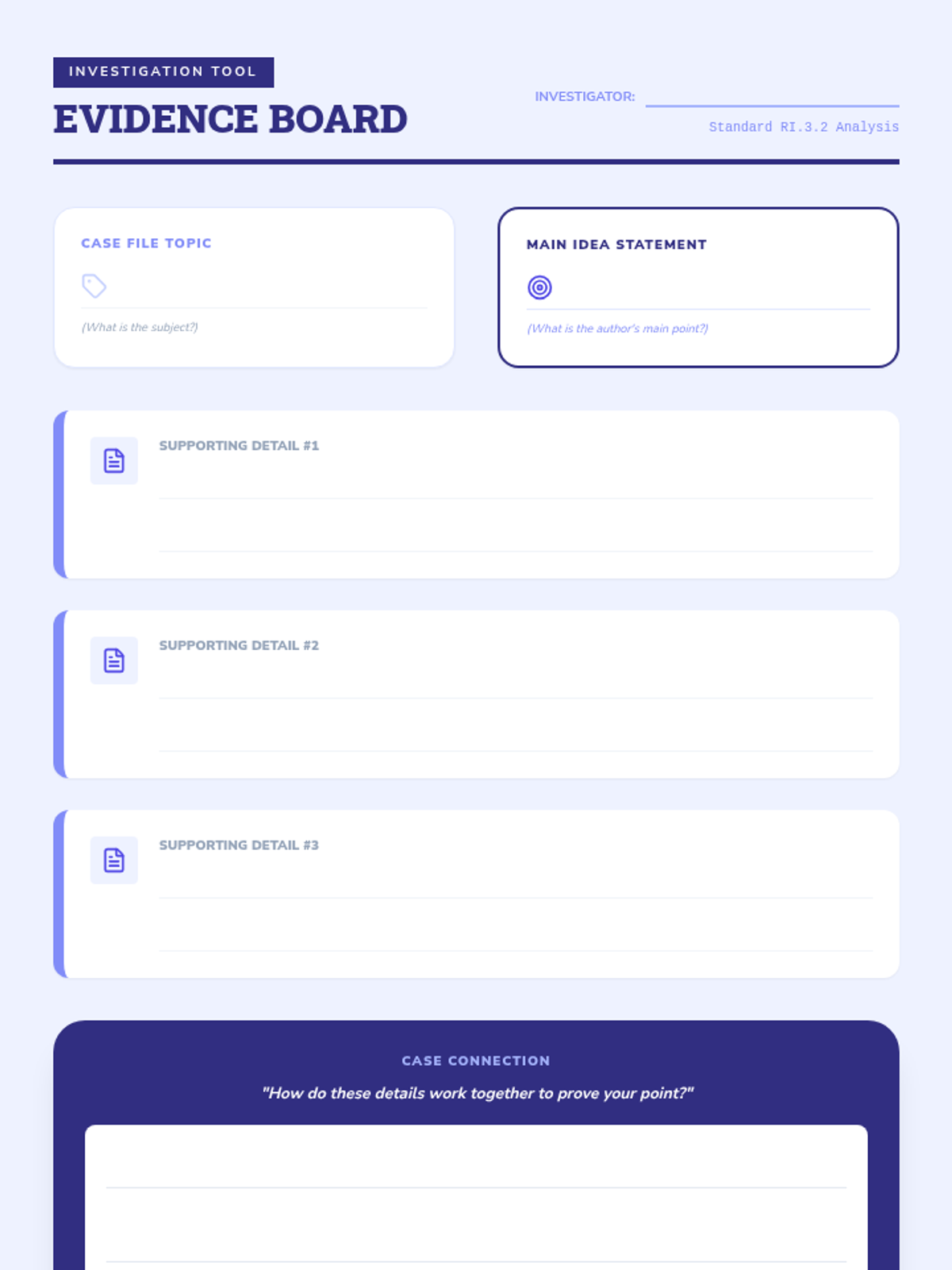
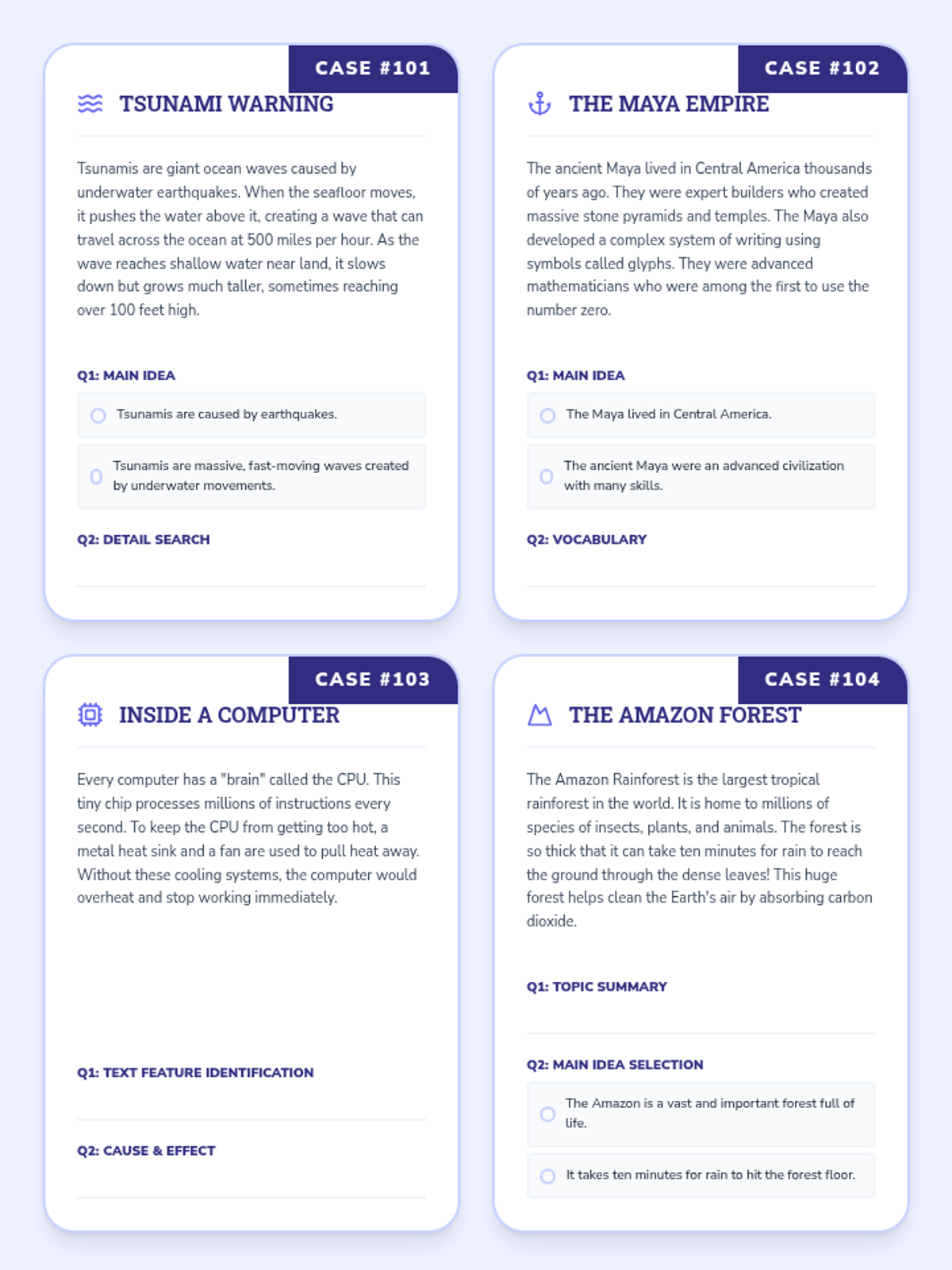
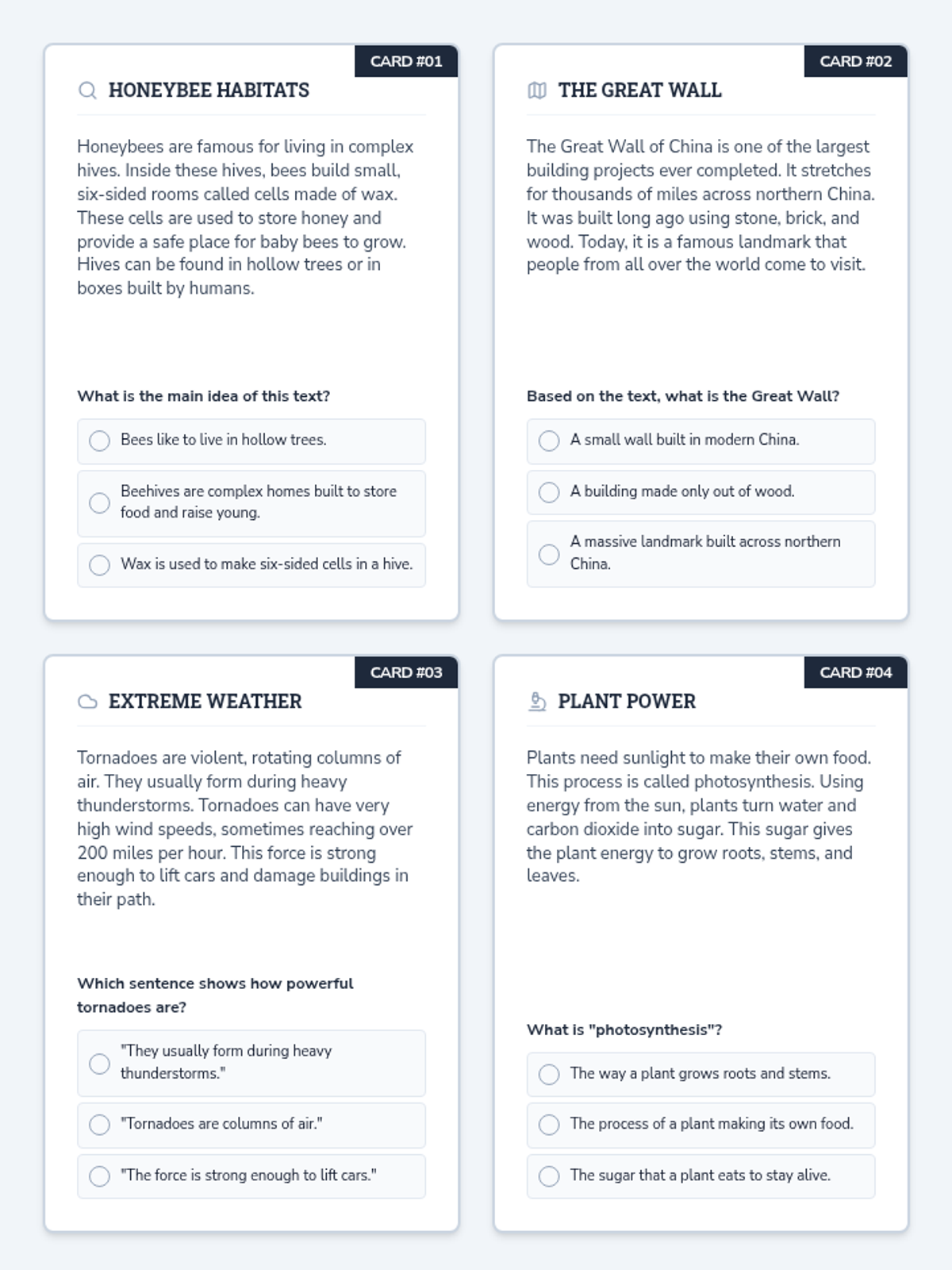
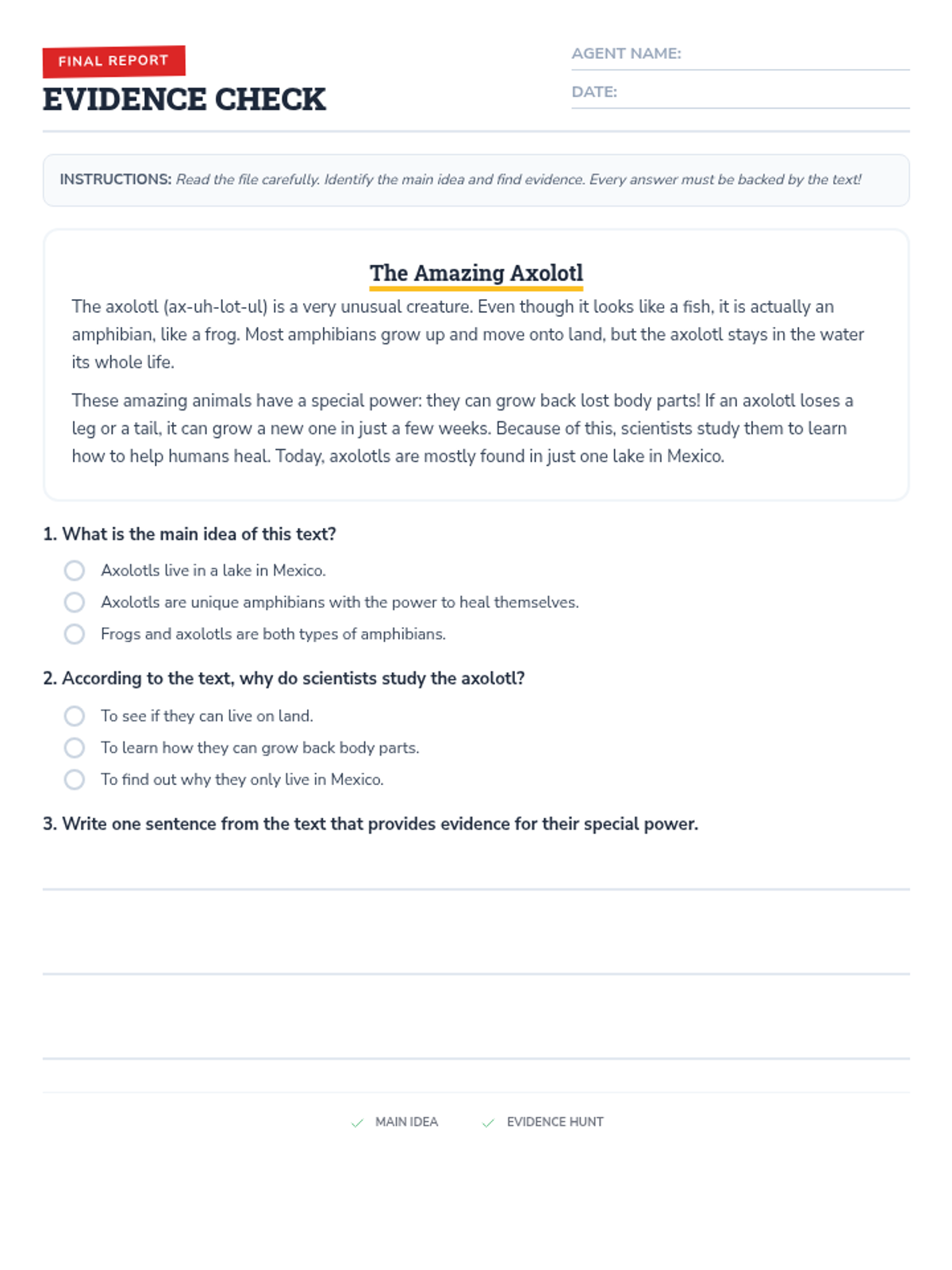
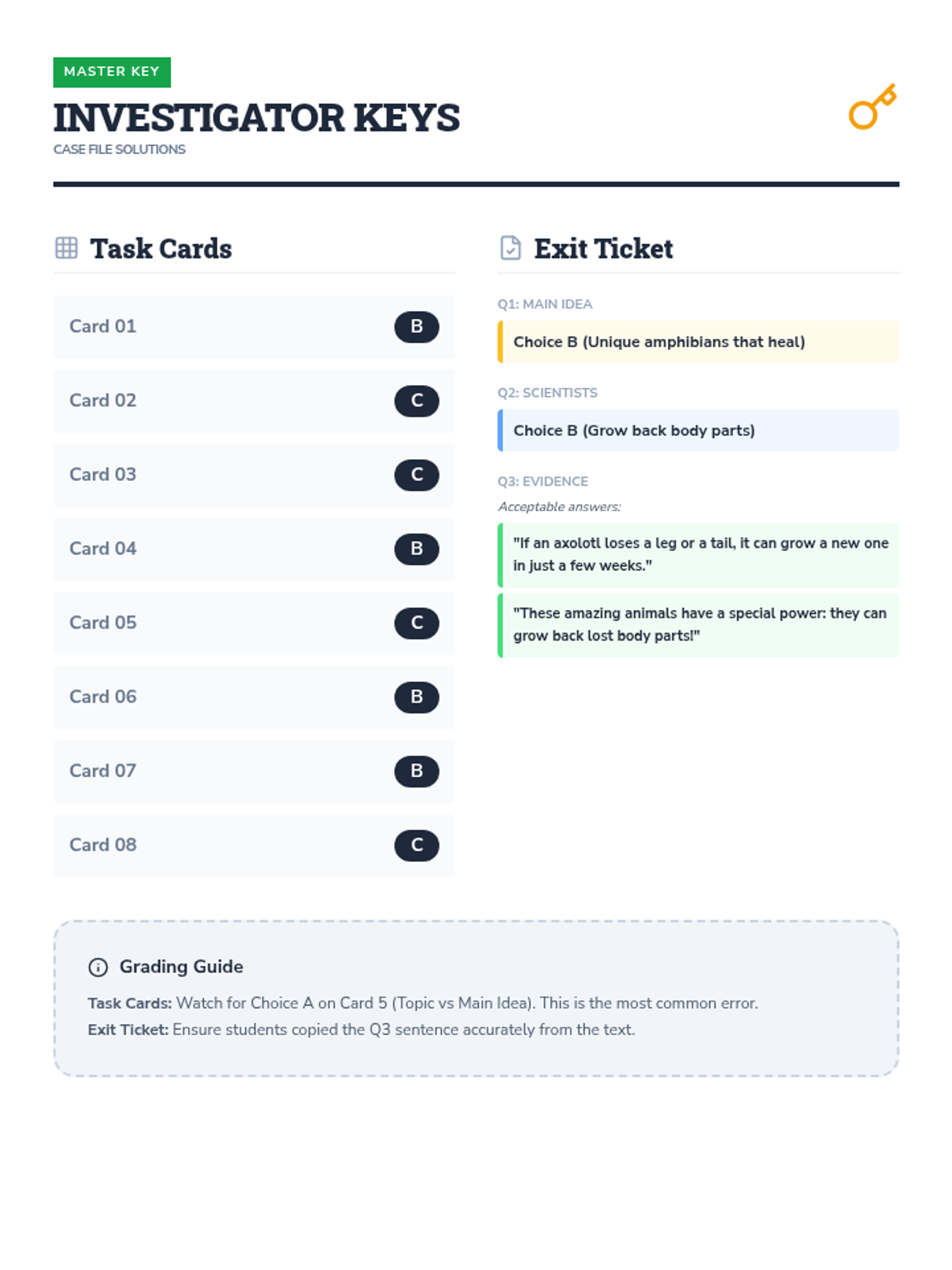
An intensive Tier 3 intervention lesson for 4th-grade students struggling with main idea and supporting details. Students take on the role of detectives to identify the 'Big Picture' and 'Evidence' in short, high-interest texts.
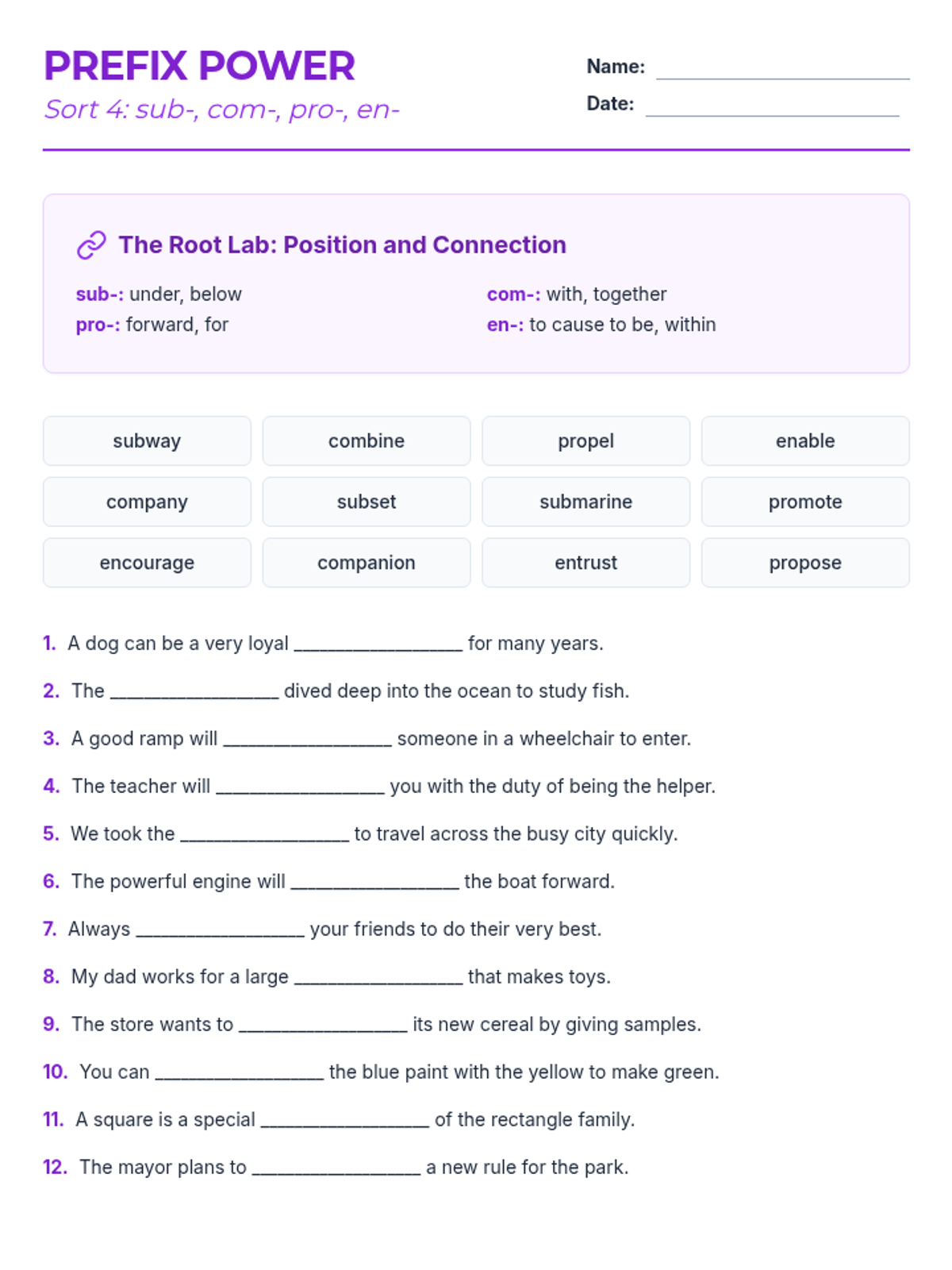
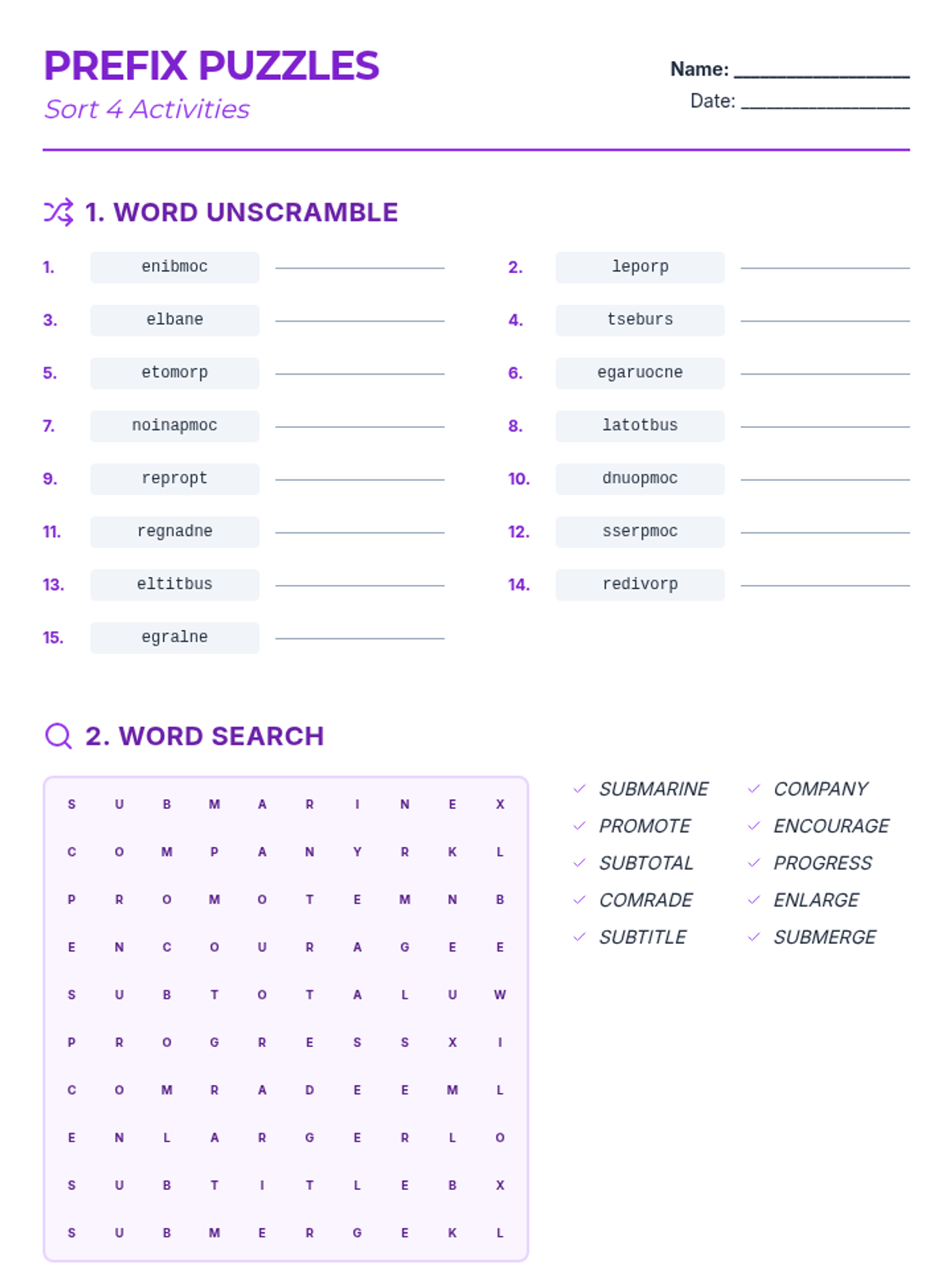
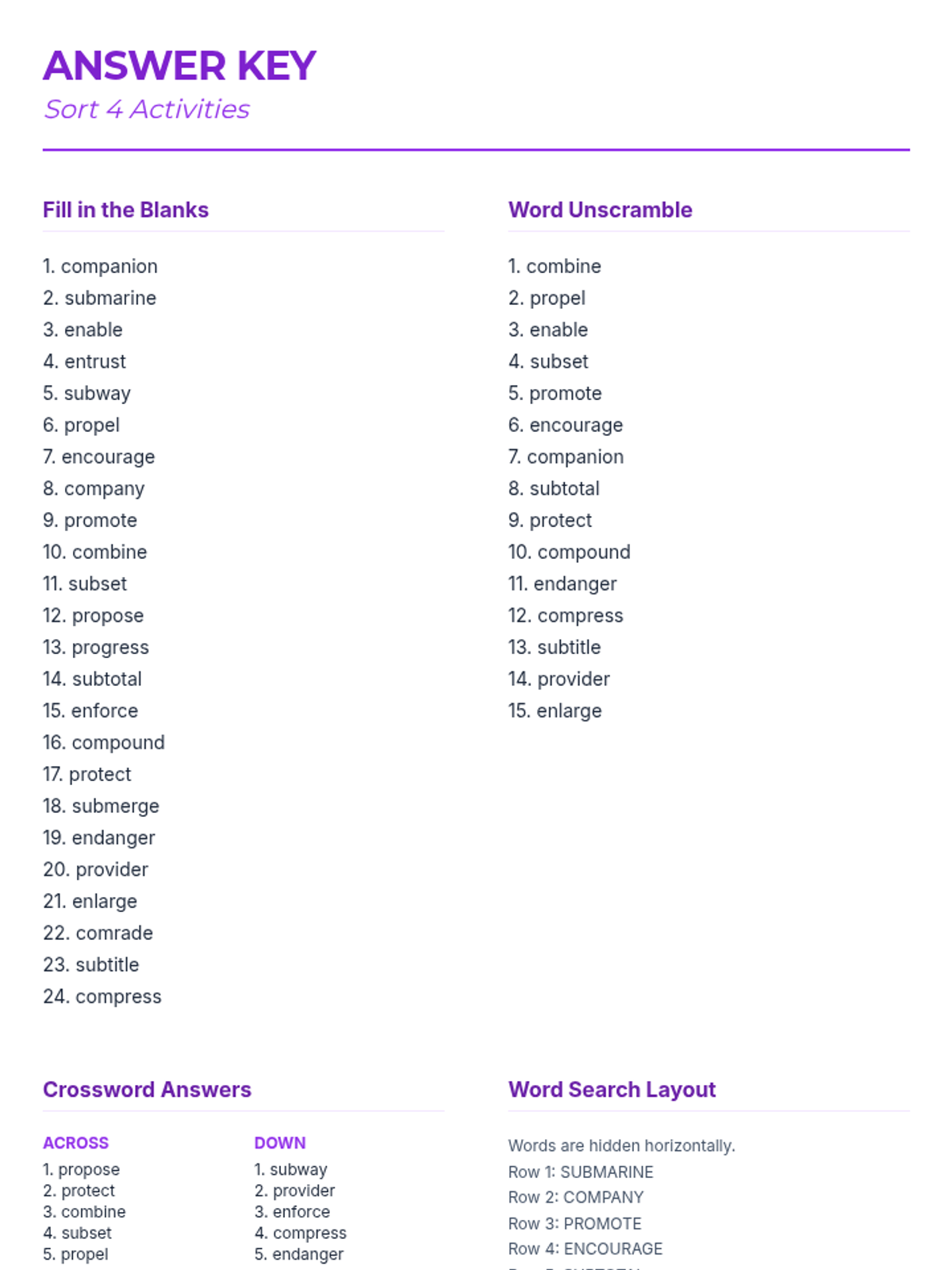
Position and connection prefixes: sub-, com-, pro-, and en-.
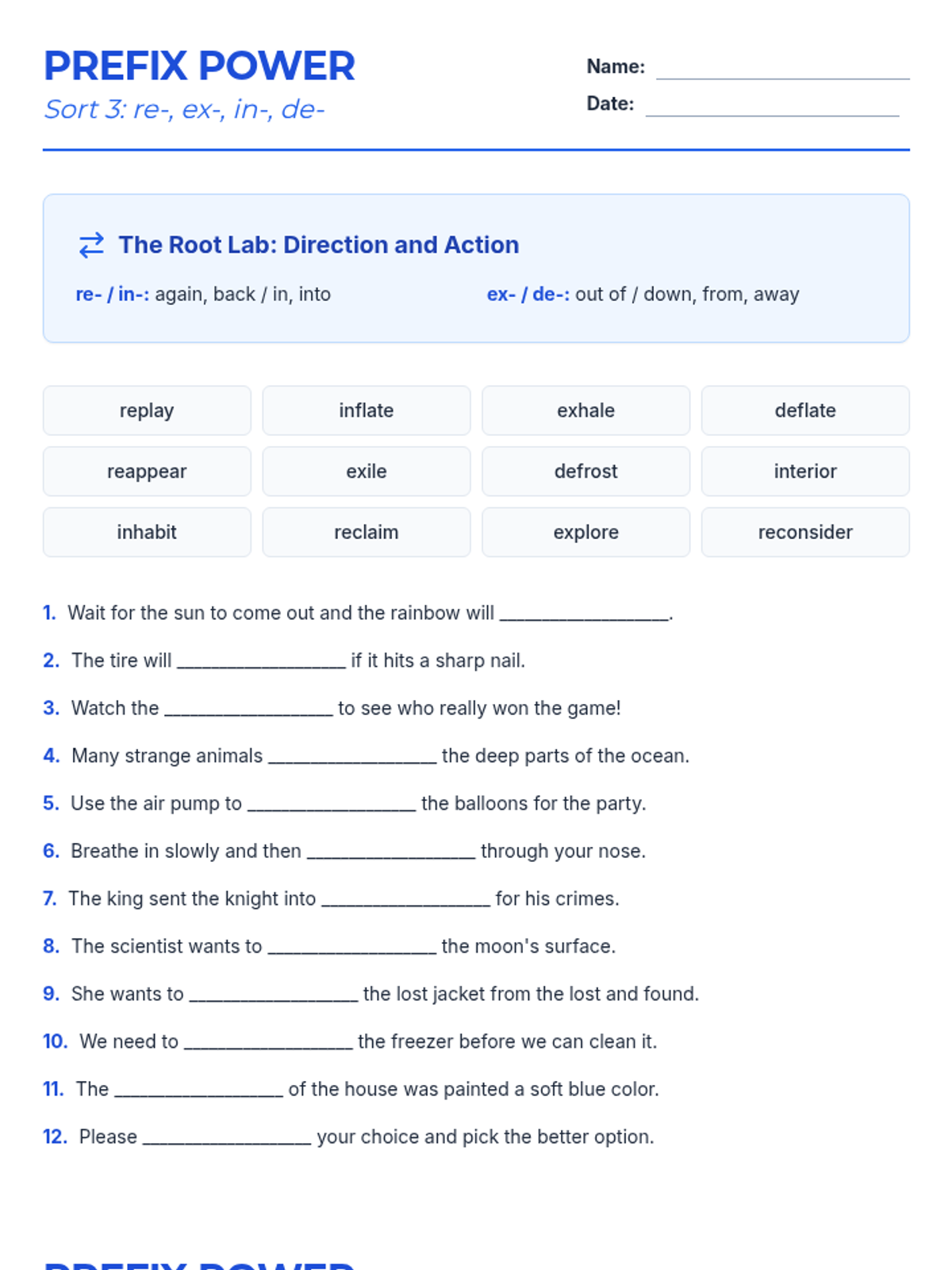
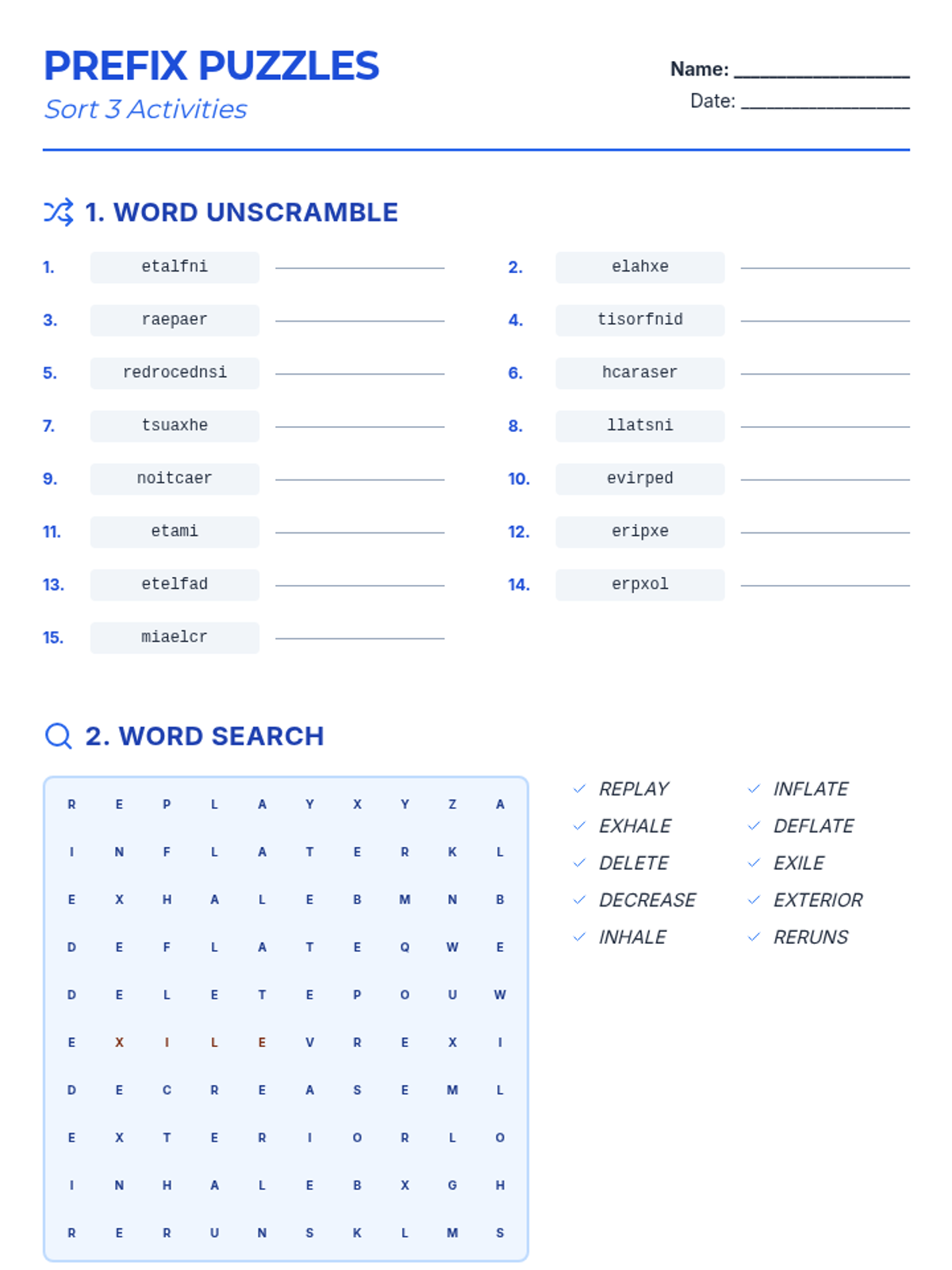
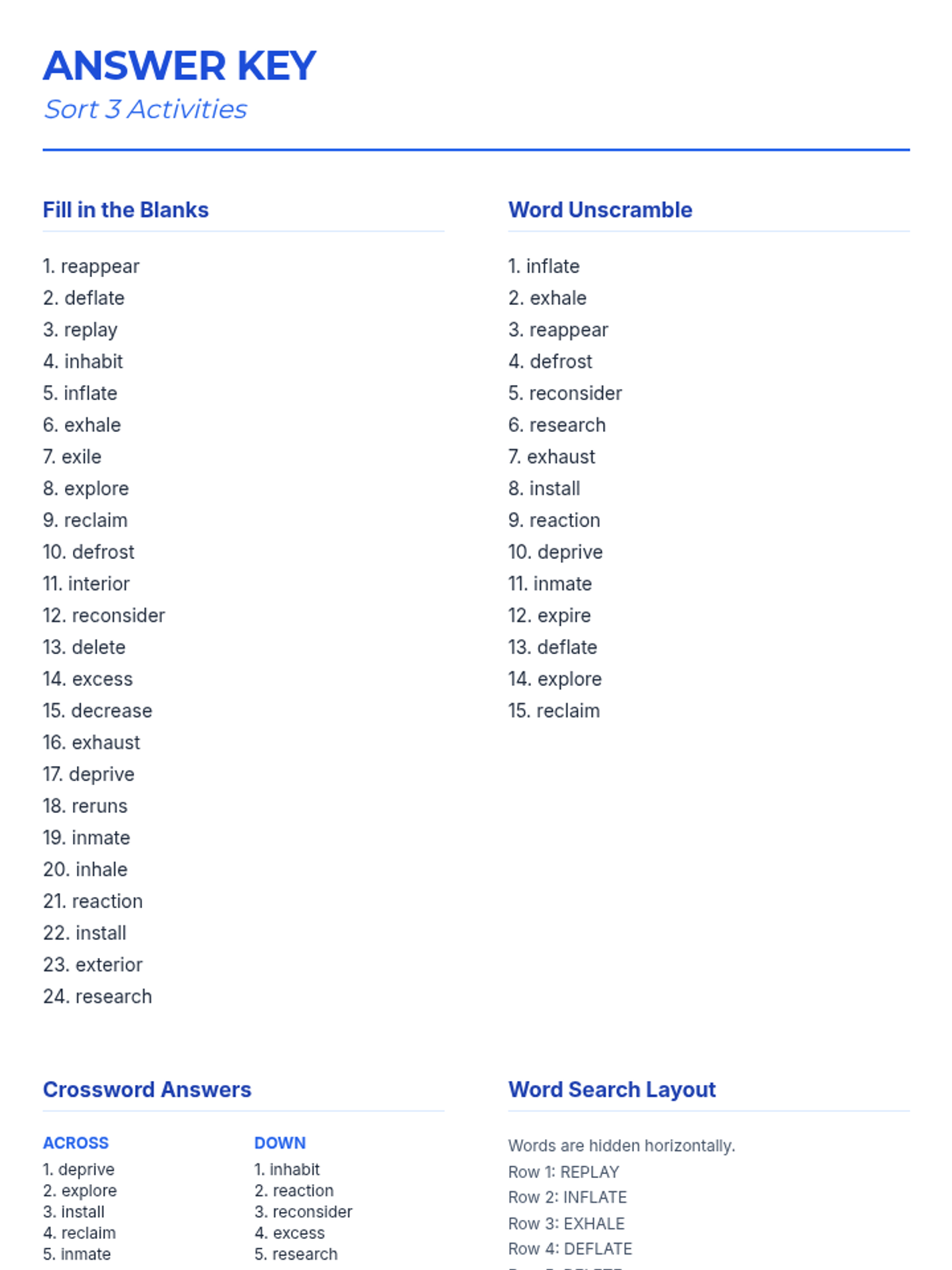
Direction and action prefixes: re-, ex-, in-, and de-.
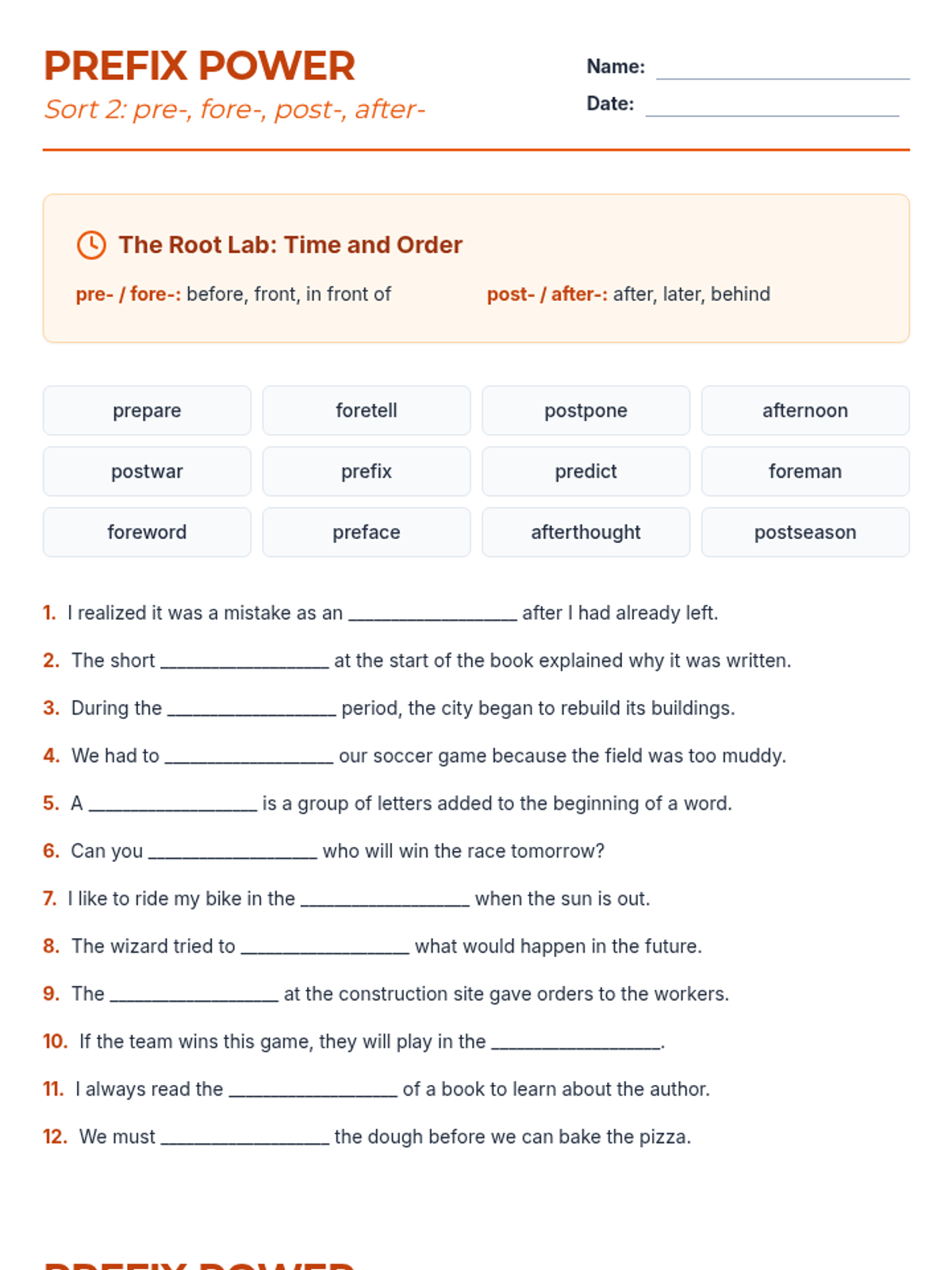
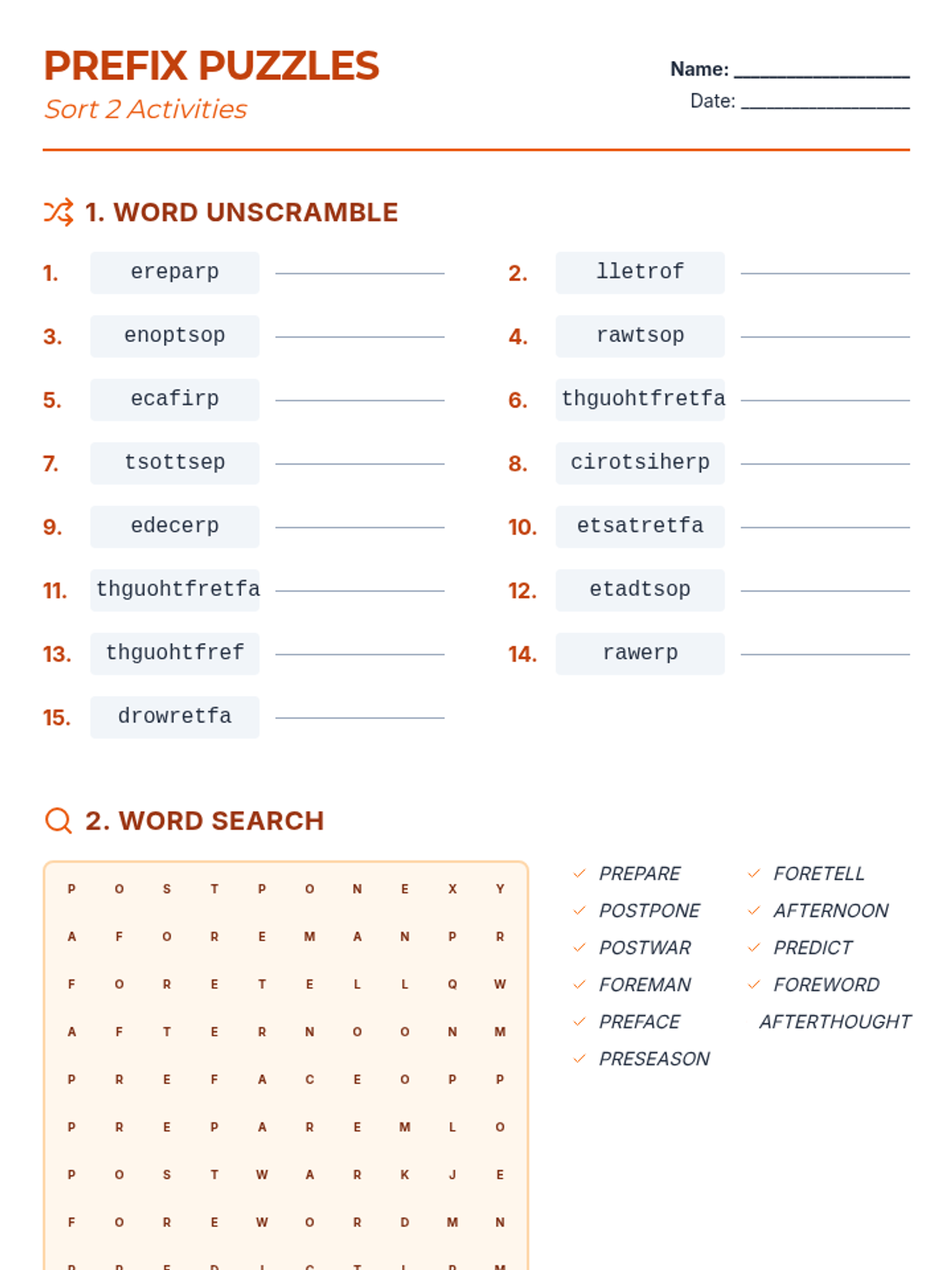
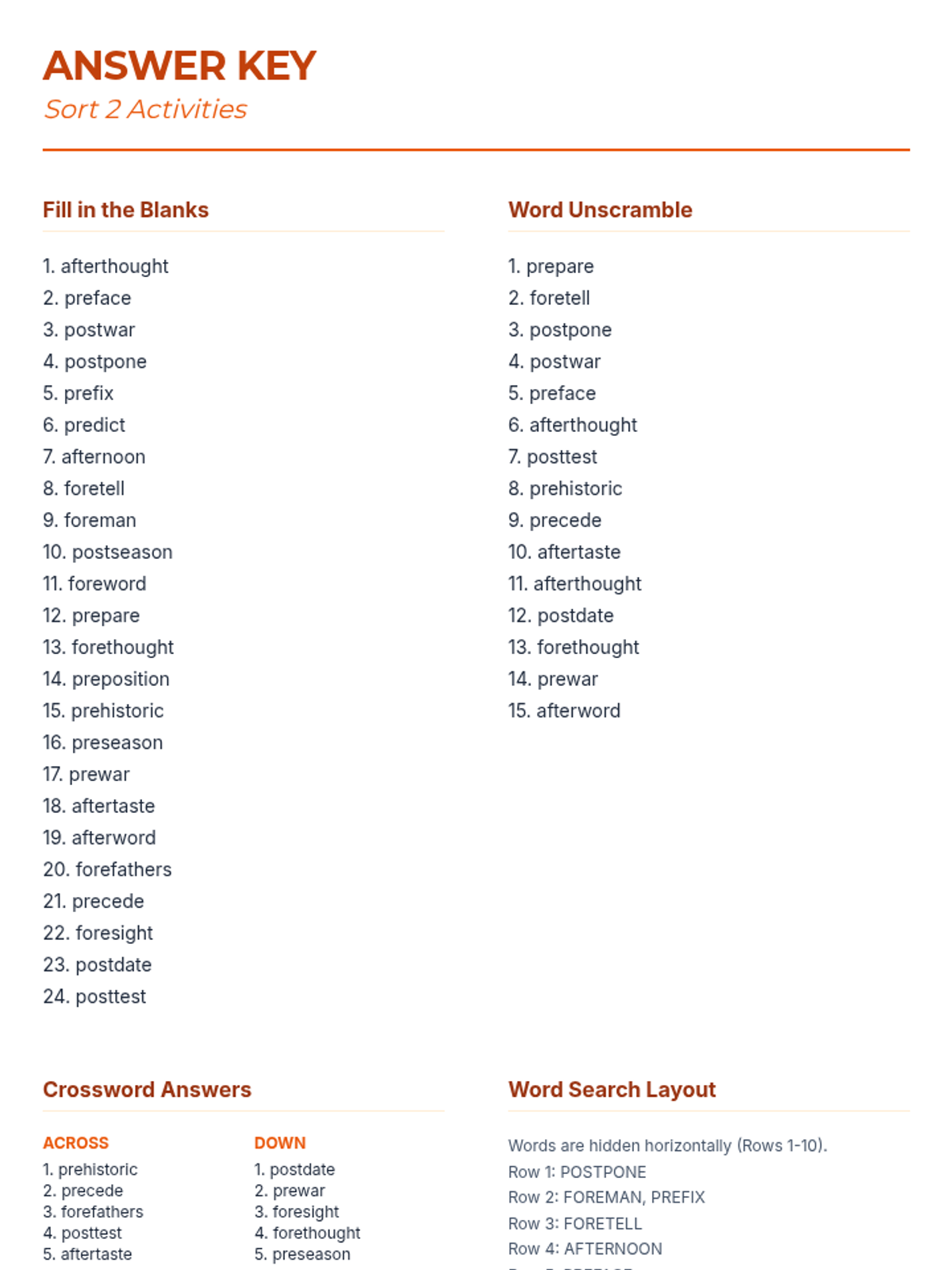
Focusing on time and order prefixes: pre-, fore-, post-, and after-.
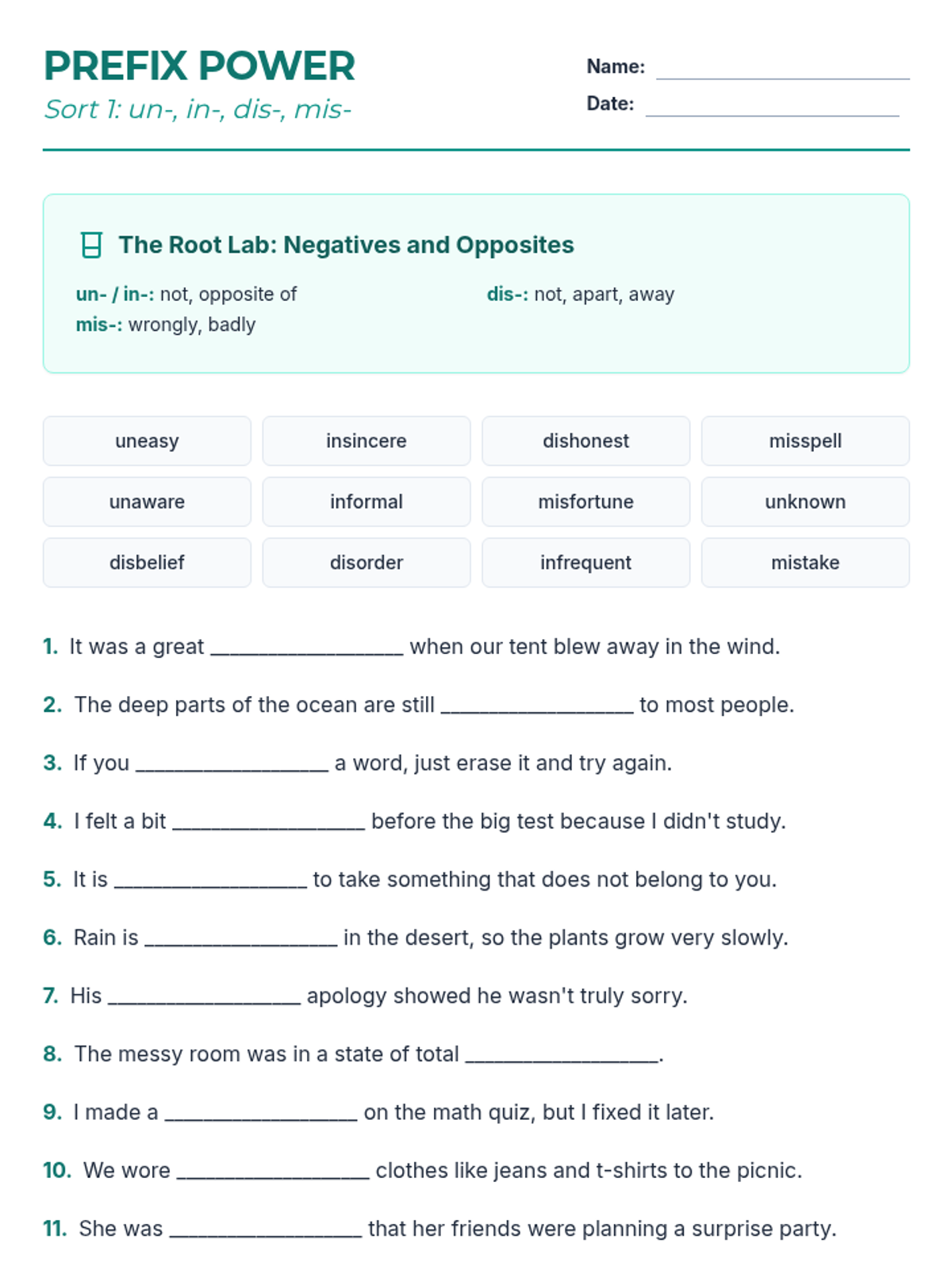
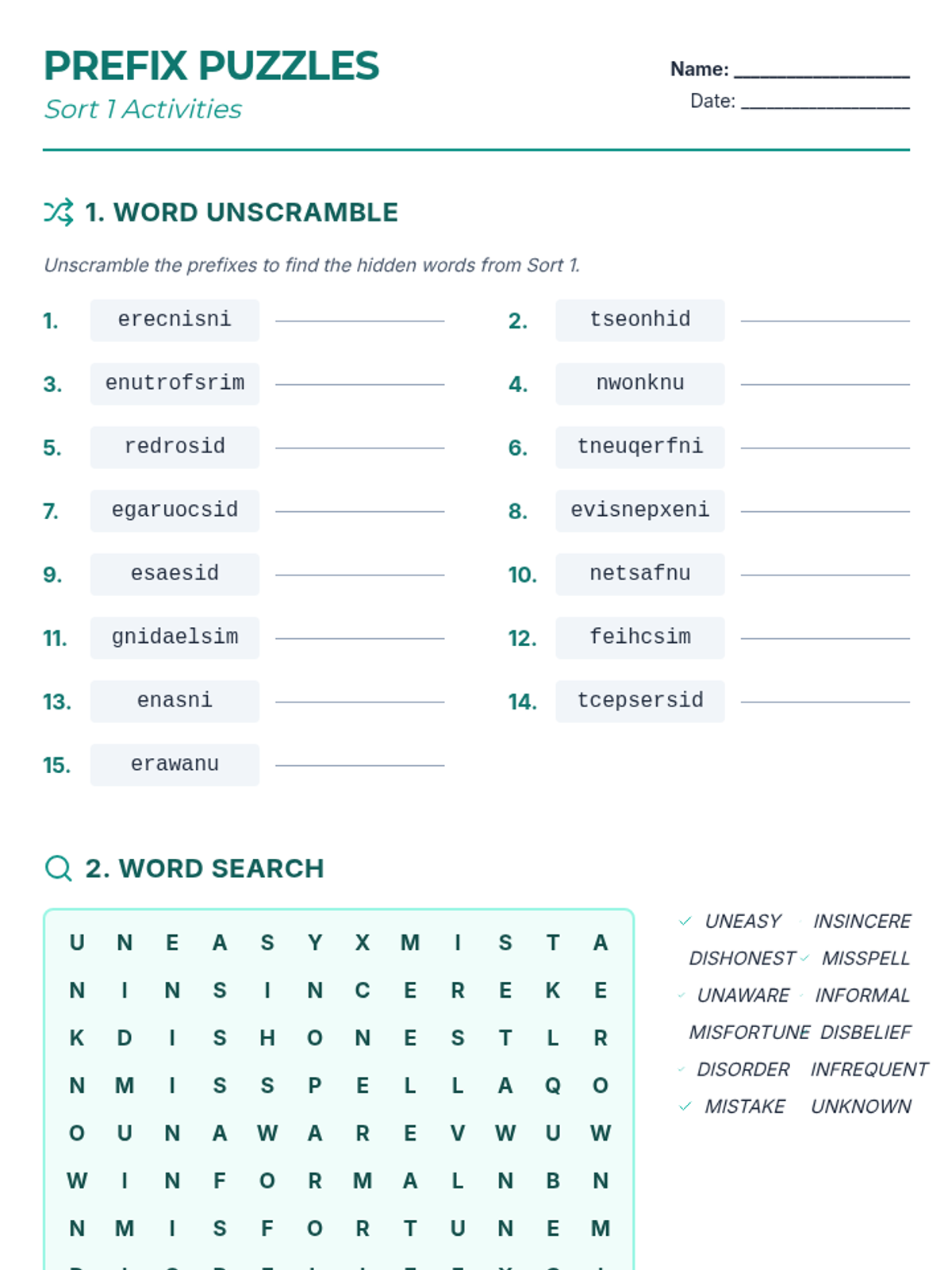
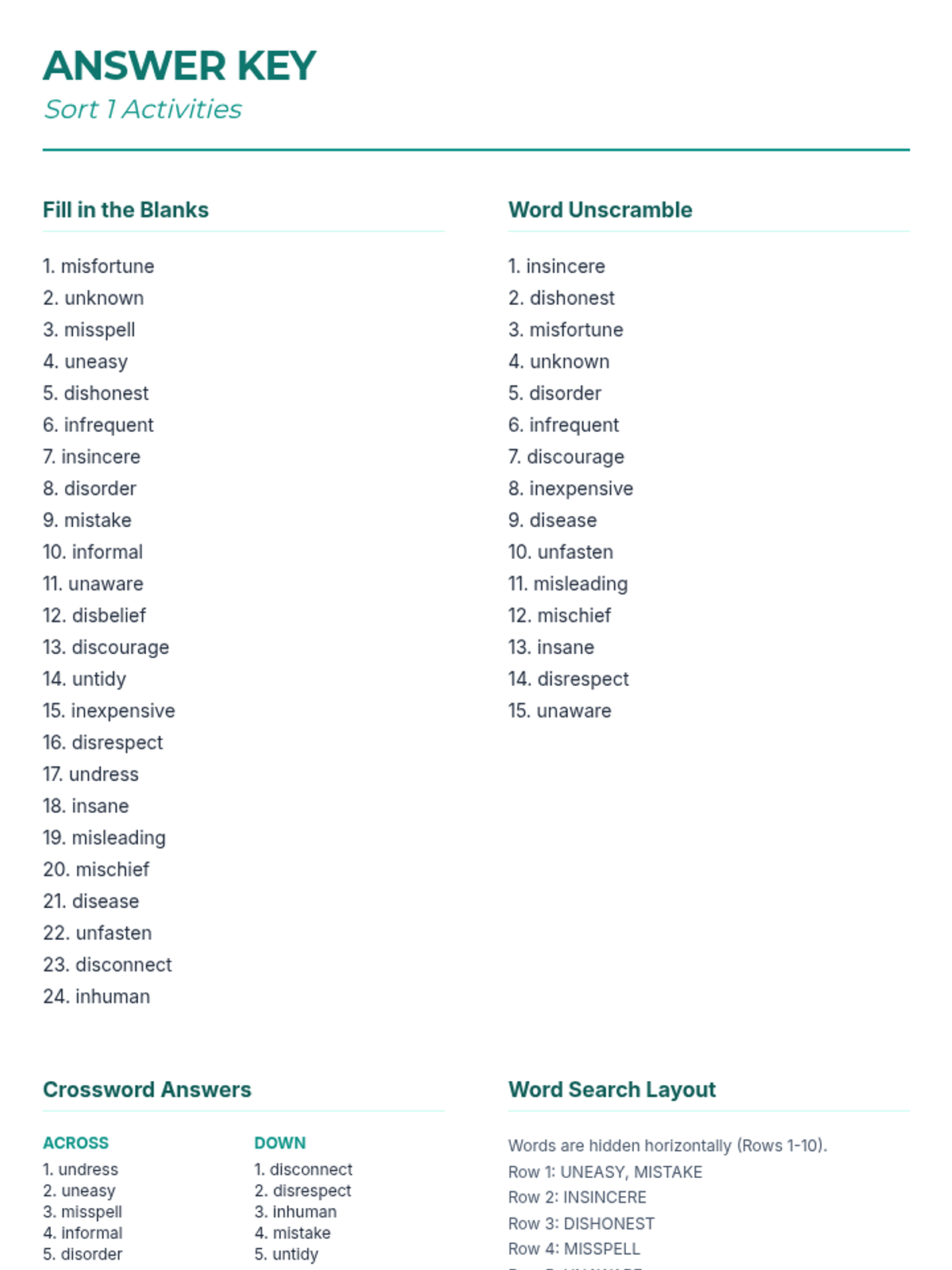
Introduction to negative and opposite prefixes: un-, in-, dis-, and mis-.
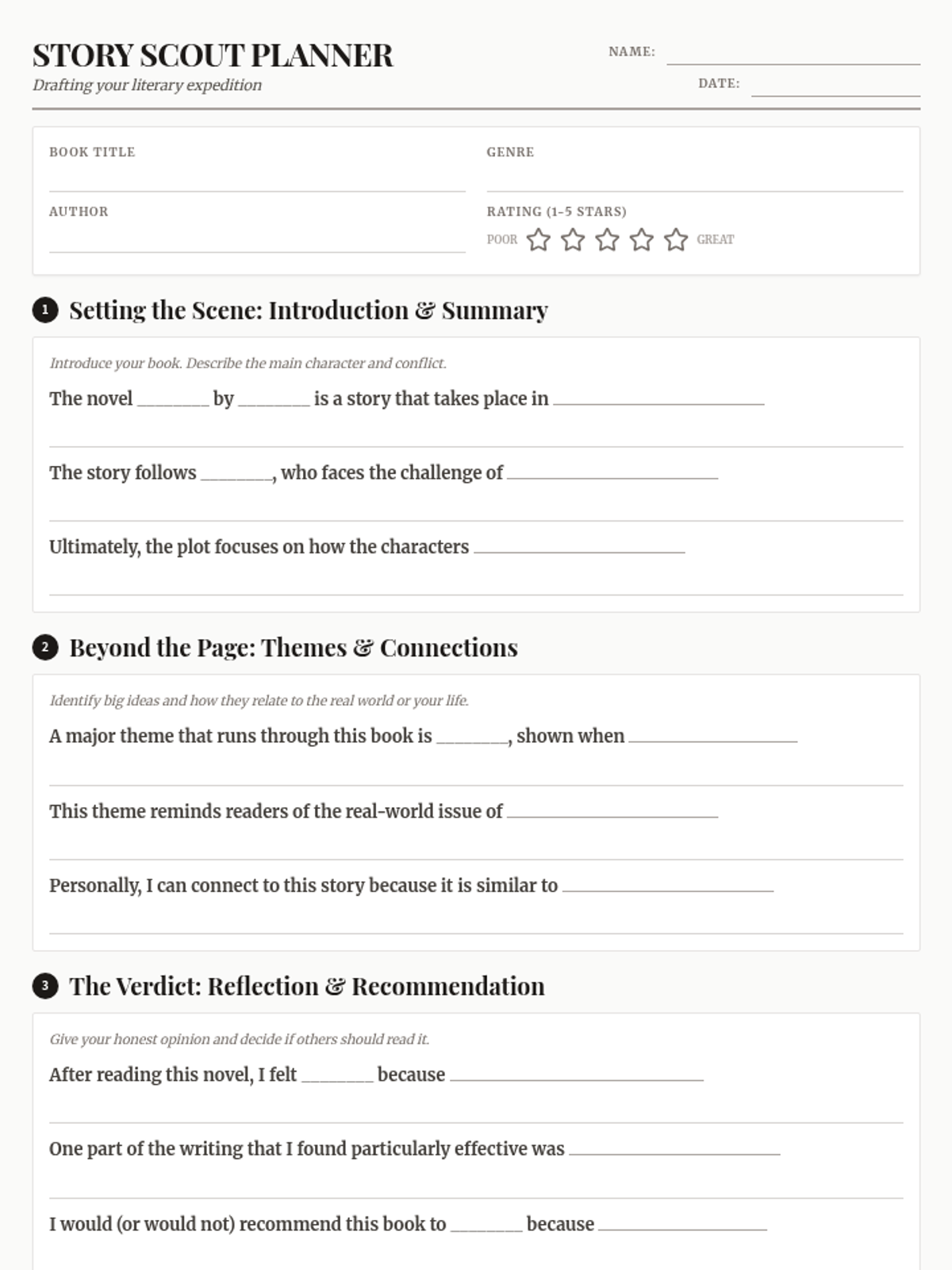
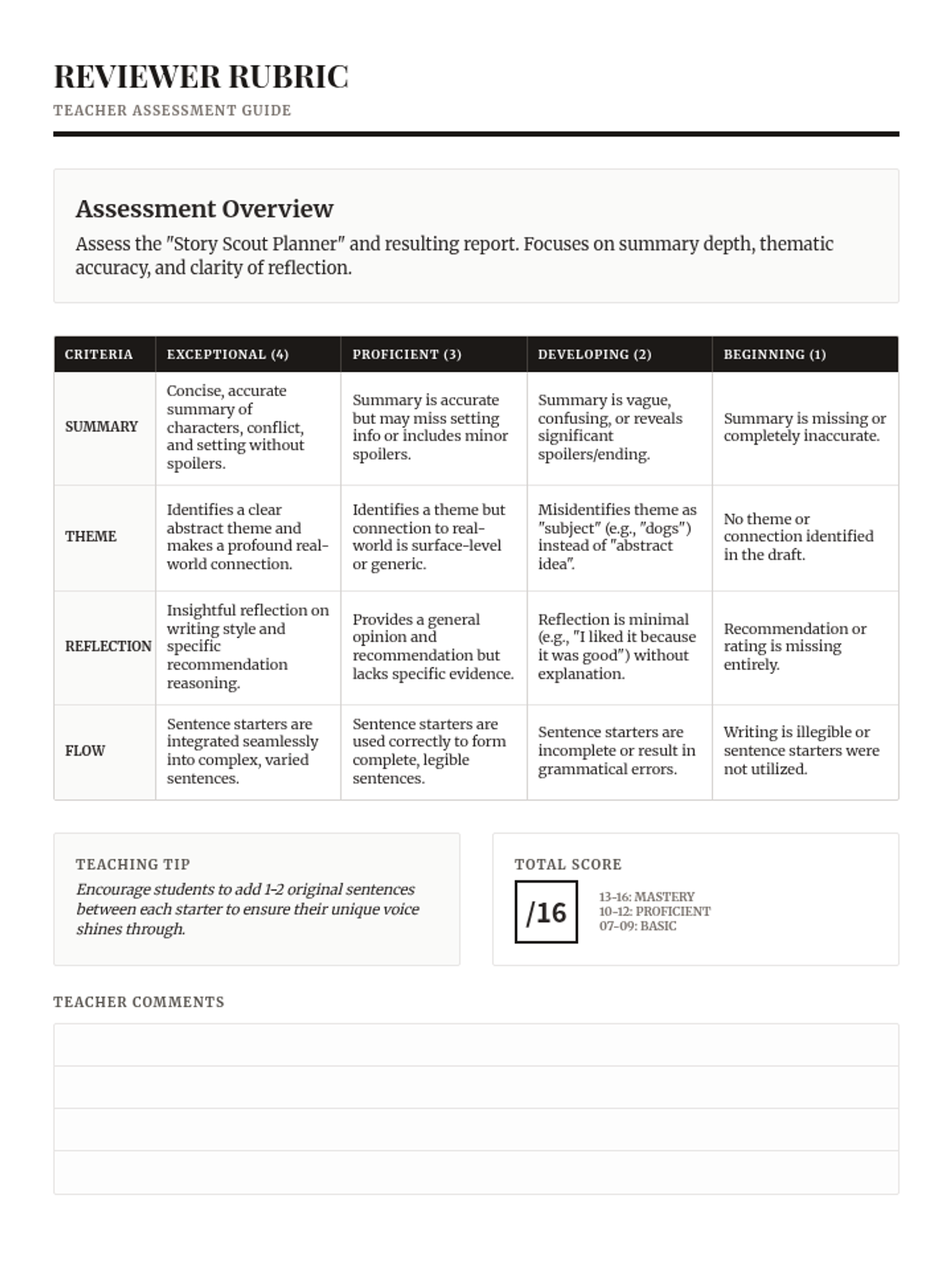
A guided lesson to help students structure a comprehensive book report focusing on summary, theme, and personal reflection.
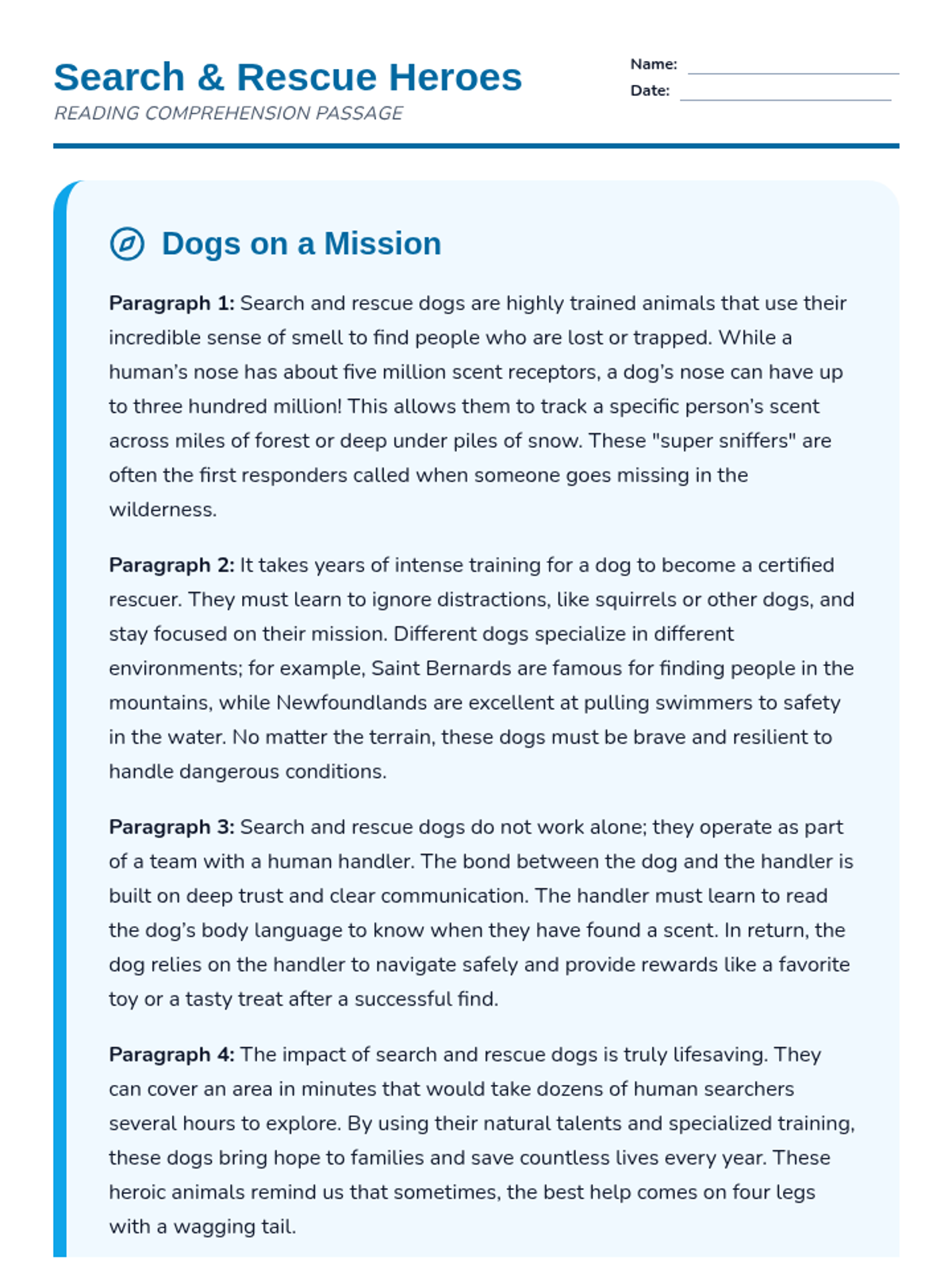
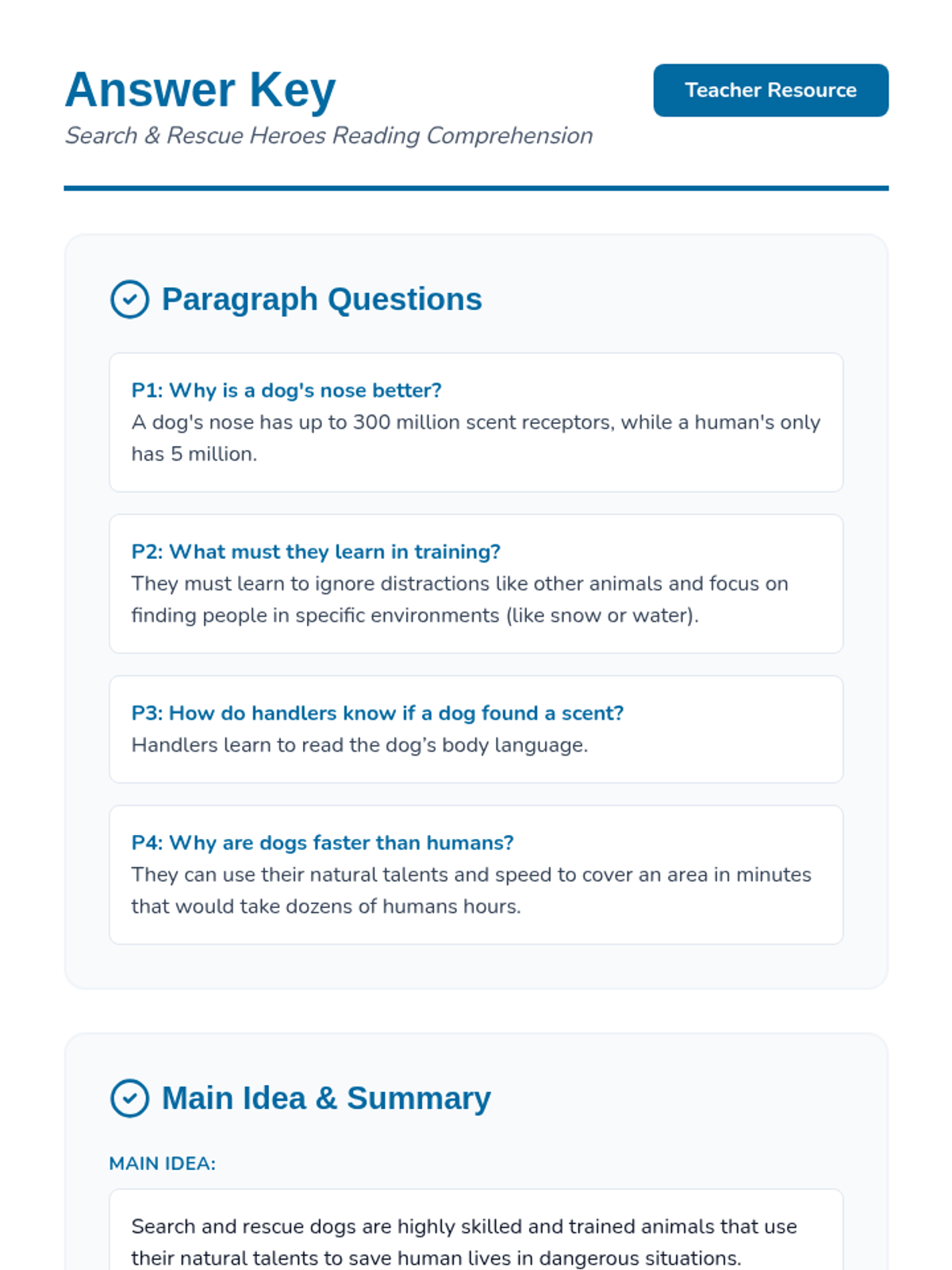
A reading comprehension lesson focused on identifying main ideas, supporting details, and summarizing, centered on the heroic work of search and rescue dogs.
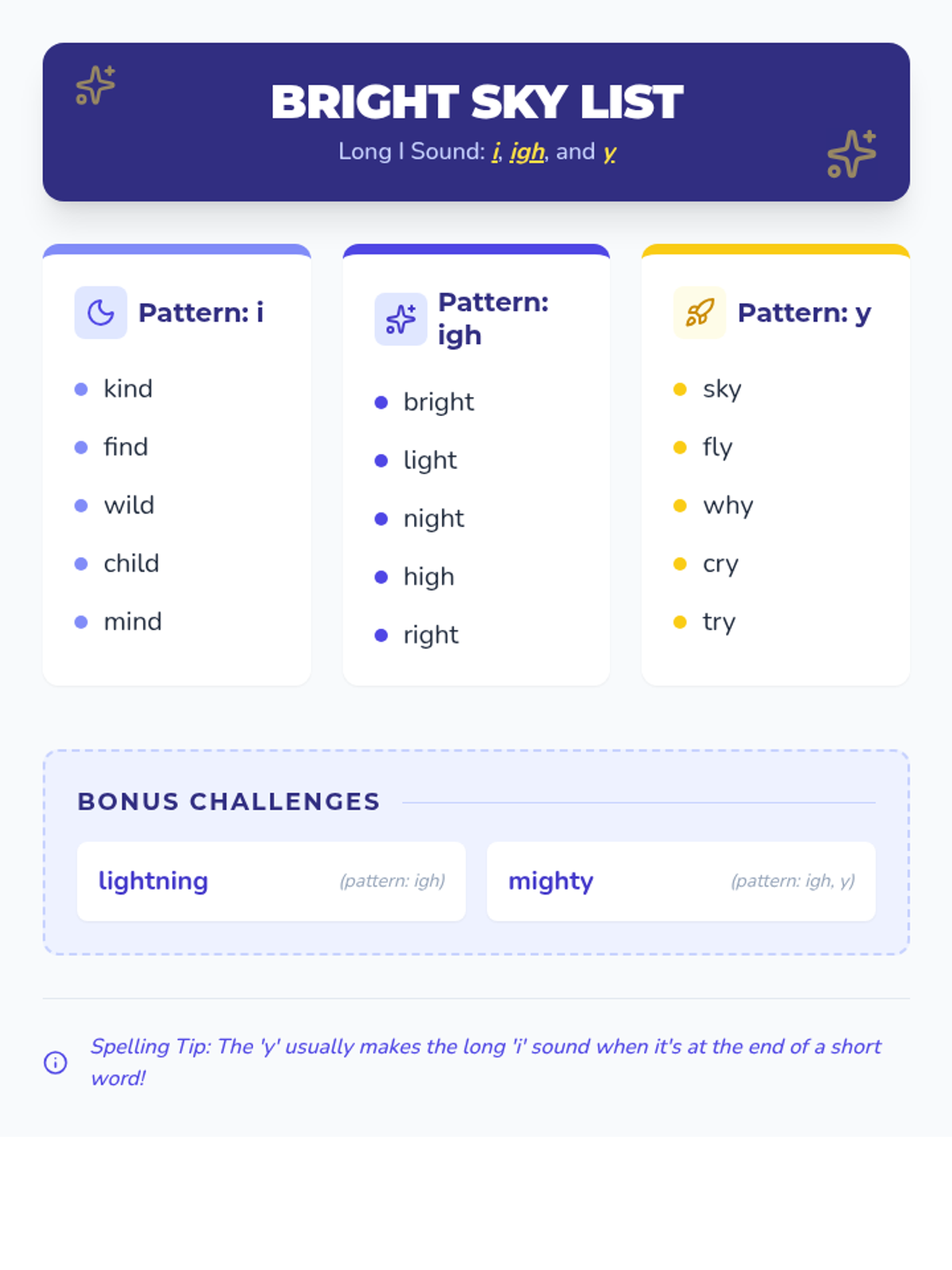
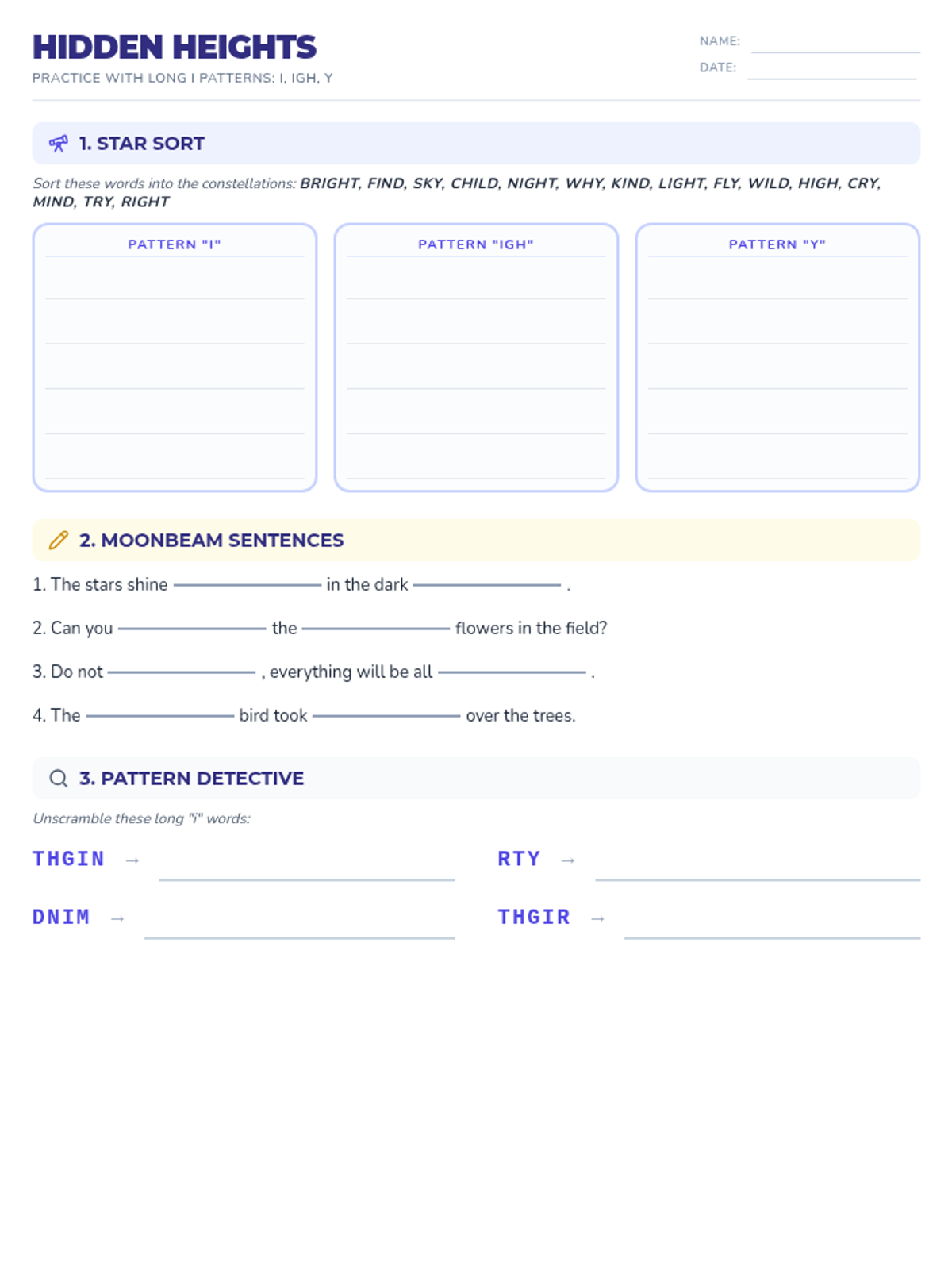
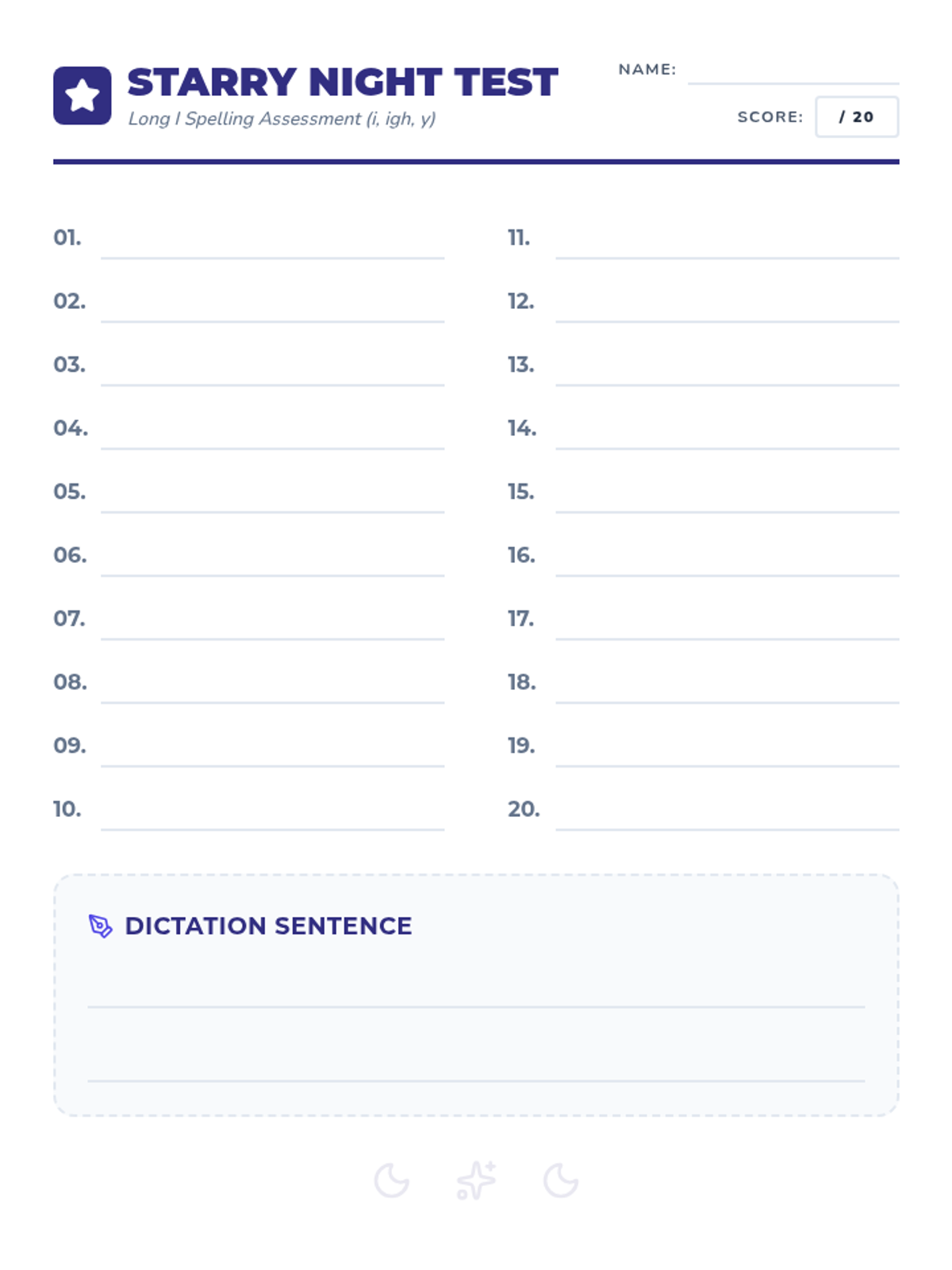
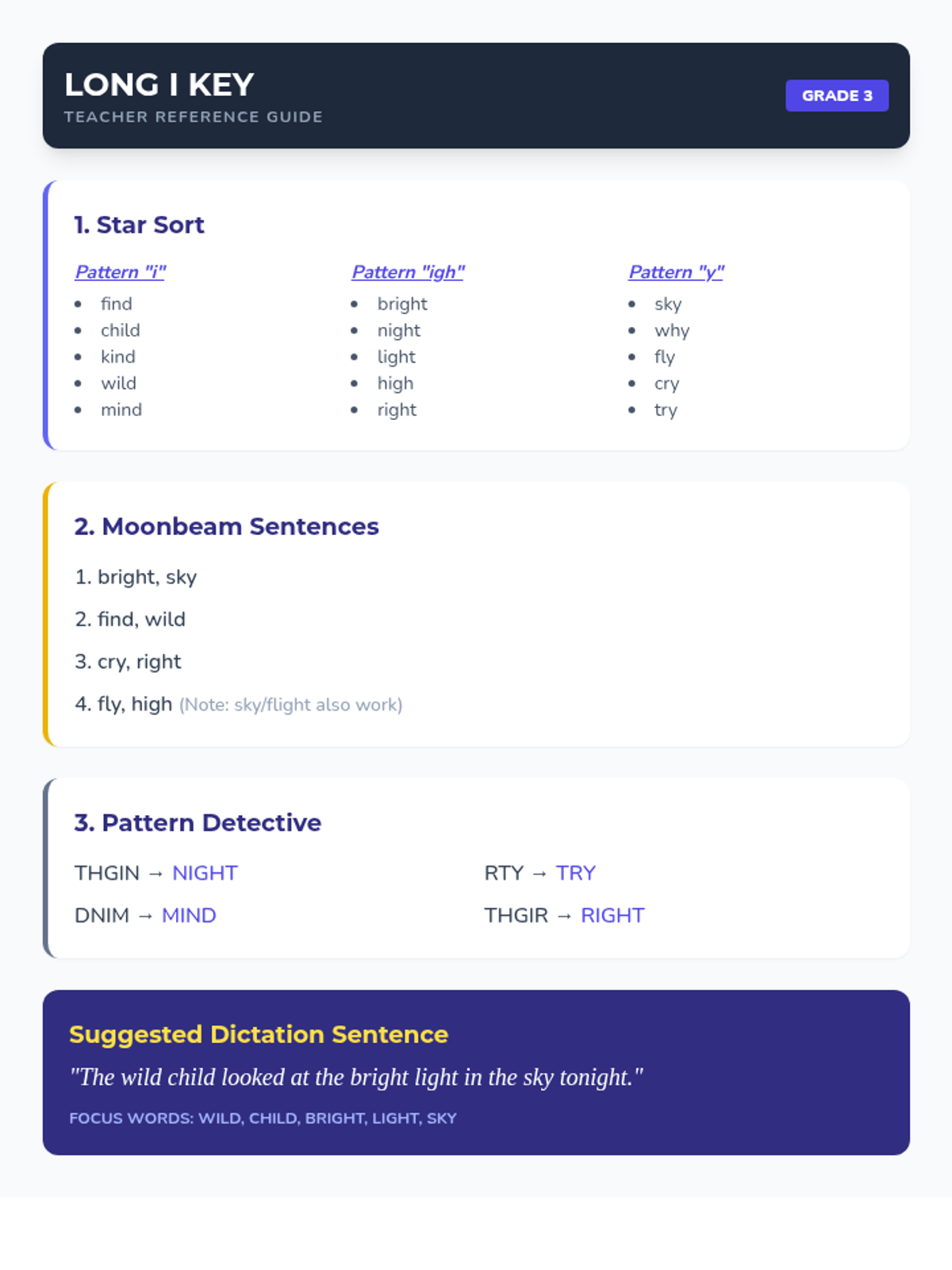
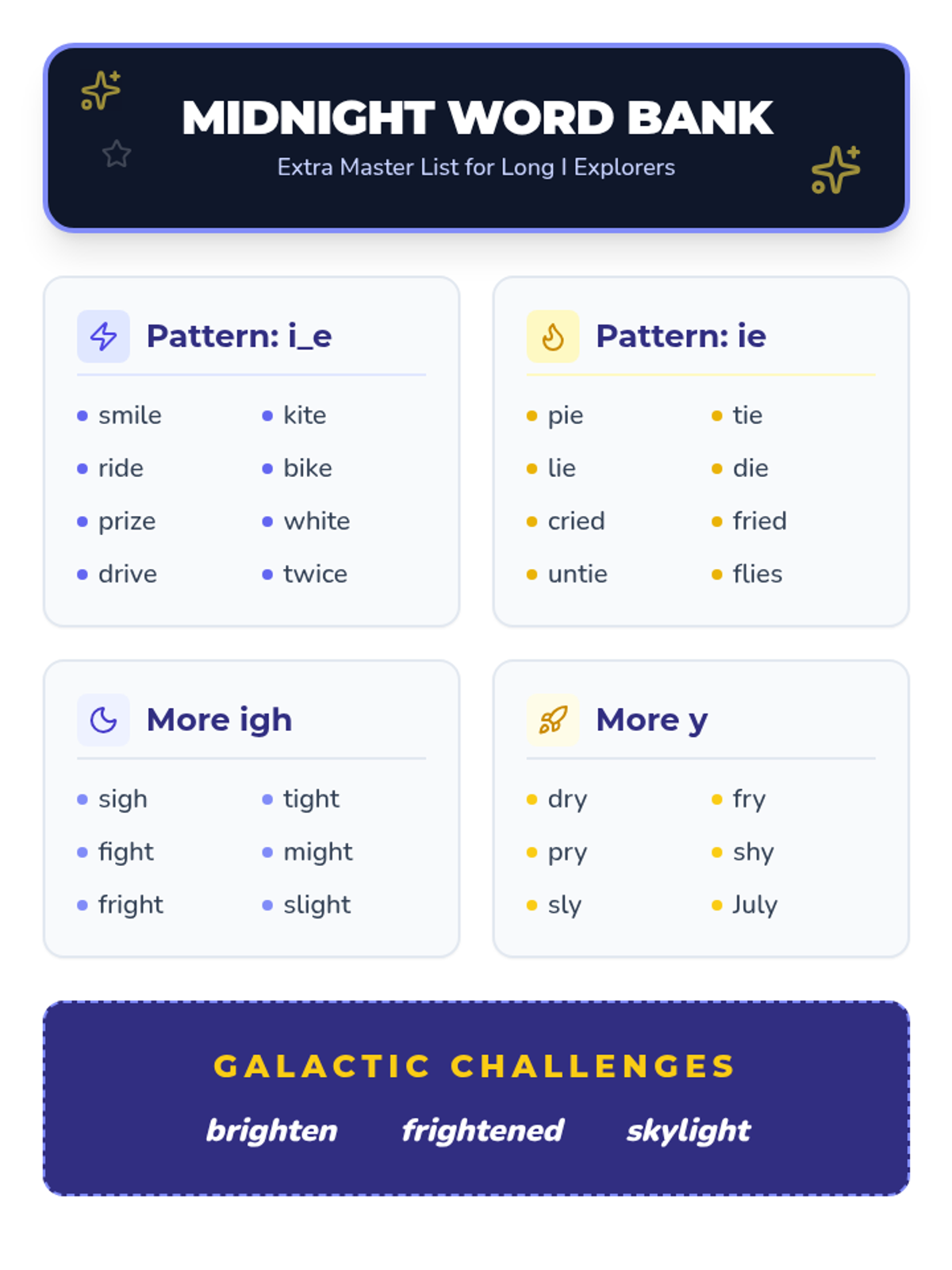
A spelling lesson focused on the long 'i' sound spelled with i, igh, and y patterns. Students will practice identifying and using these patterns through categorization, sentence building, and a final assessment.
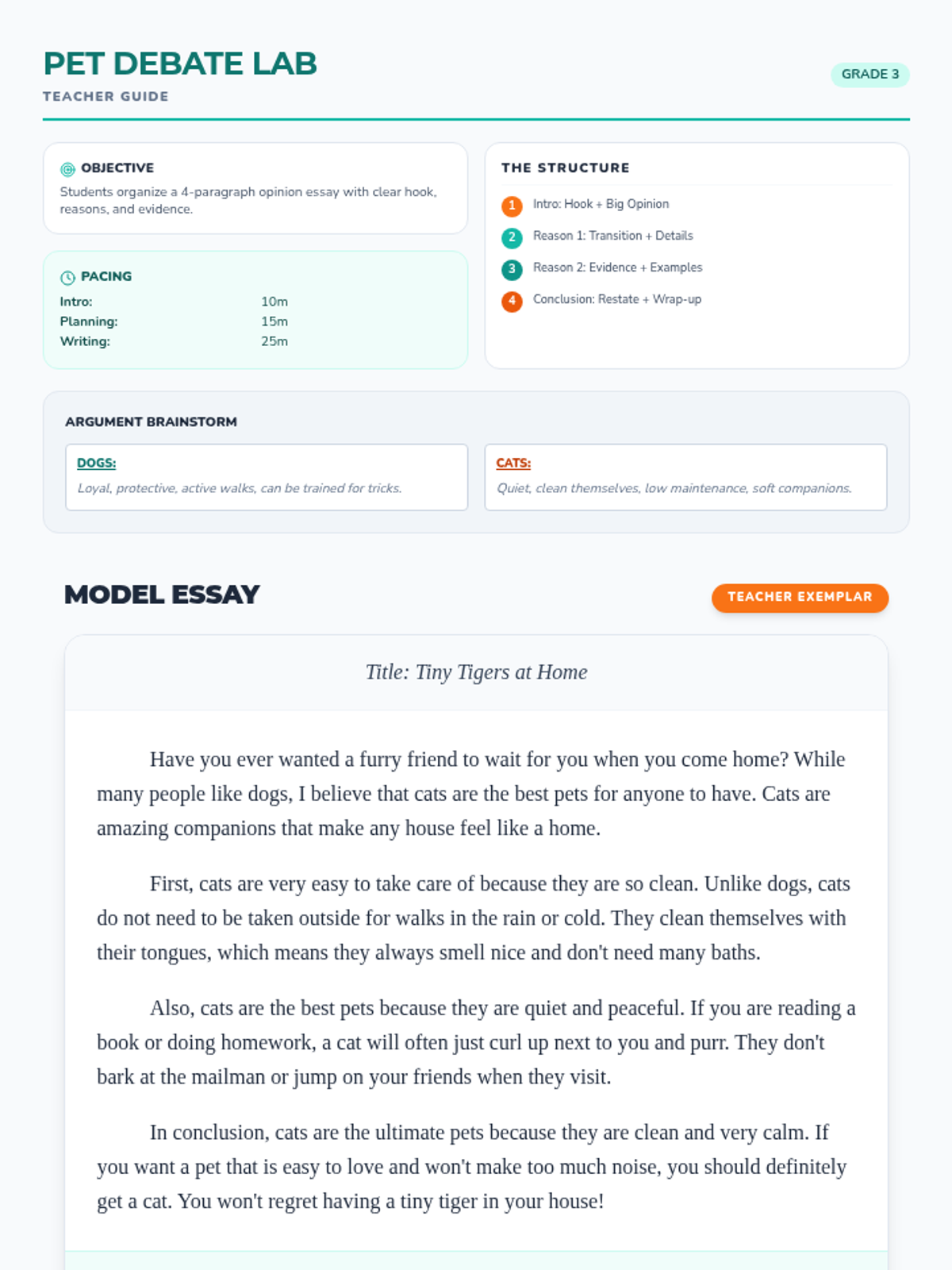
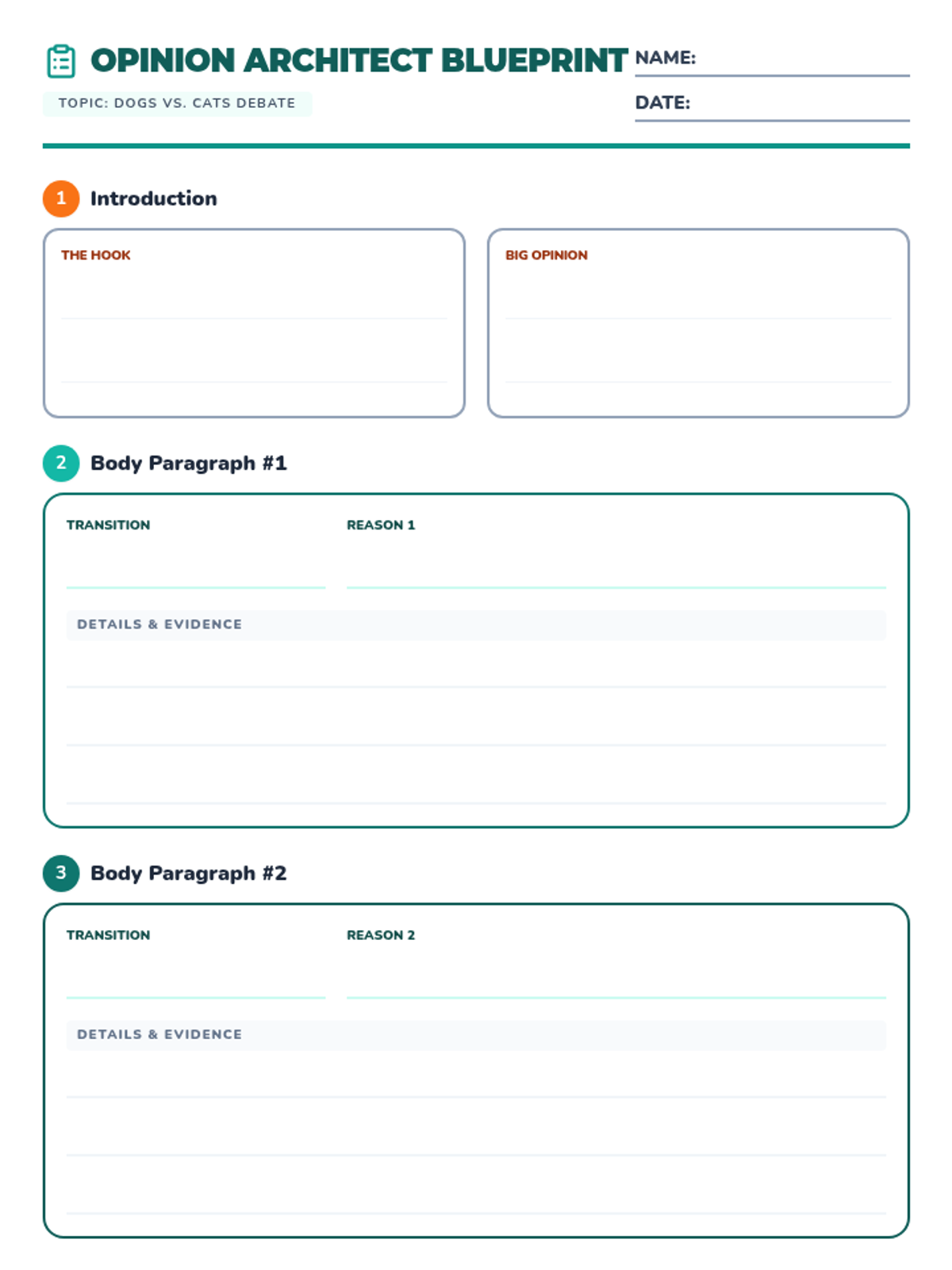
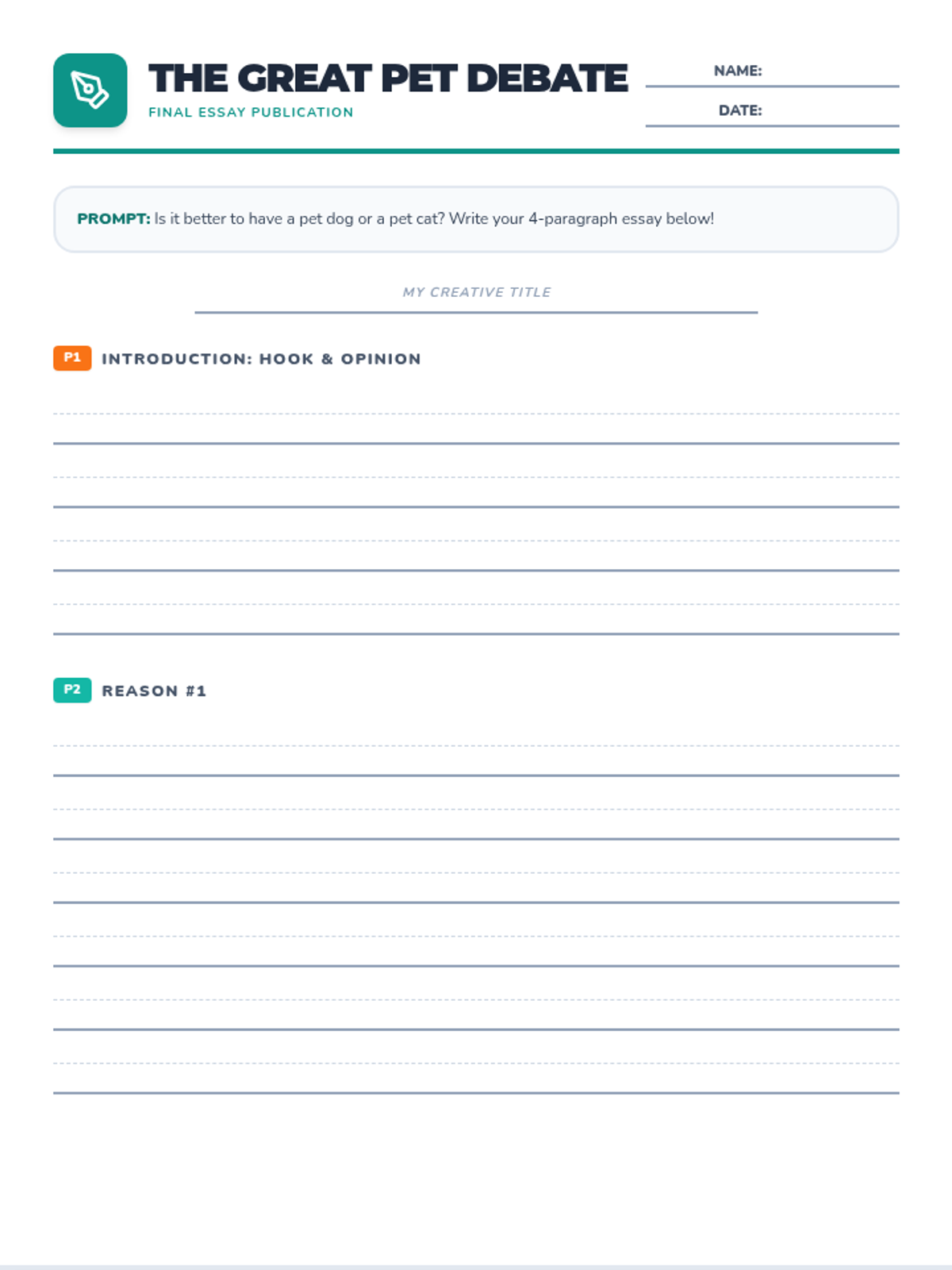
A one-day lesson focused on teaching 3rd-grade students how to structure a multi-paragraph opinion essay comparing dogs and cats. Students will learn the components of an introduction, body paragraphs, and a conclusion.
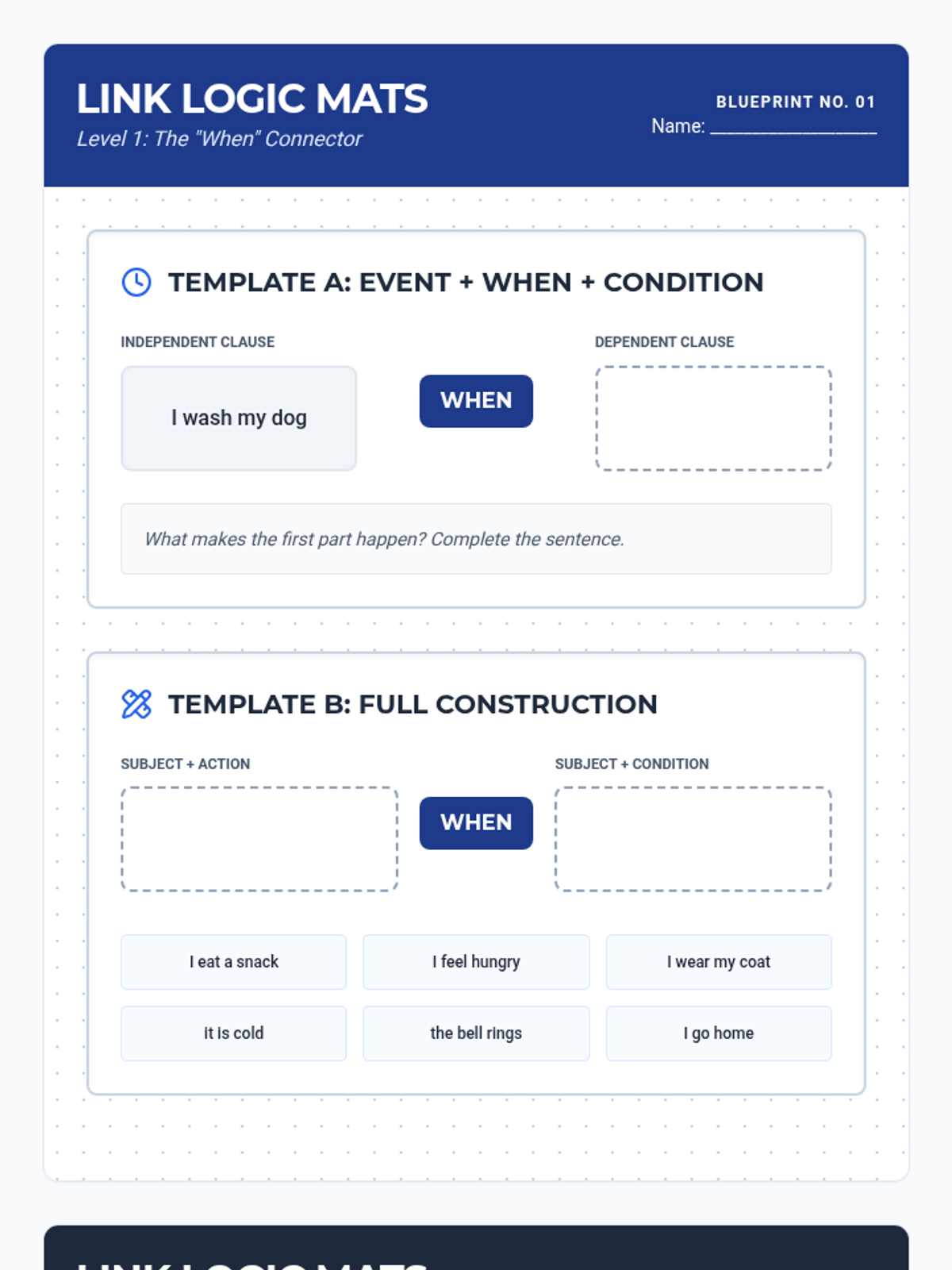
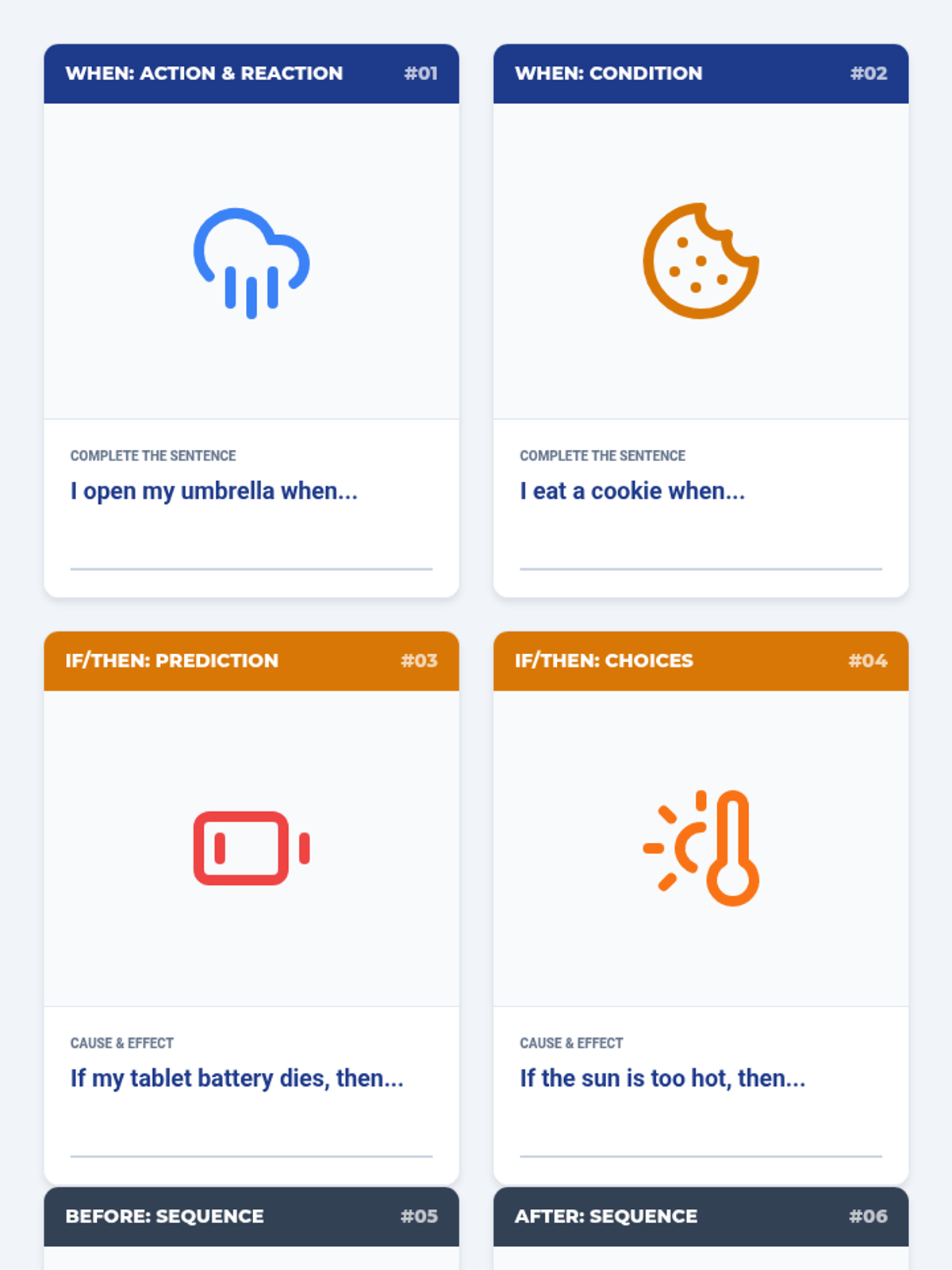
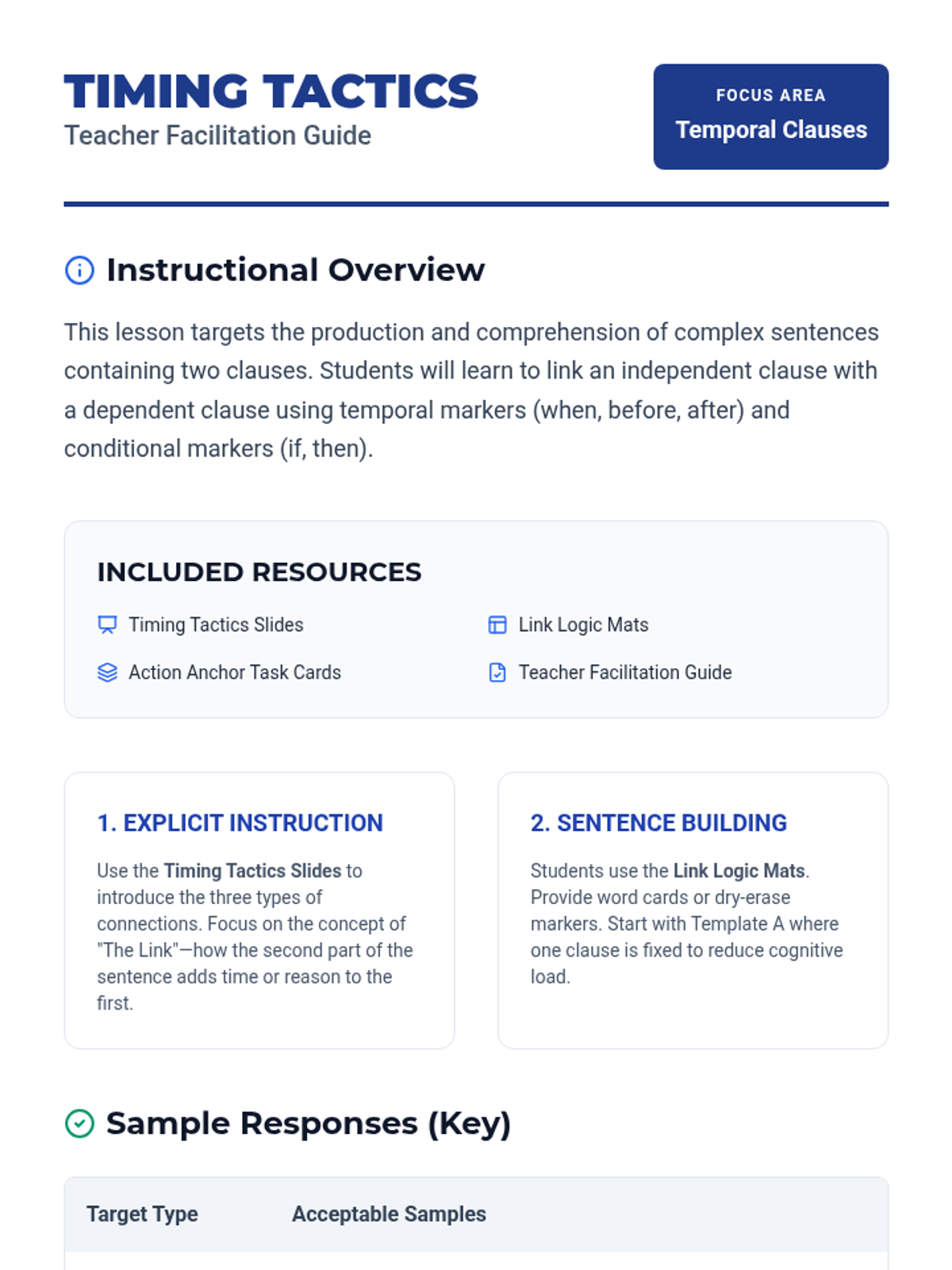
A lesson focused on constructing and understanding complex sentences using temporal conjunctions (when, before/after) and conditional markers (if/then) to describe sequences and conditions.
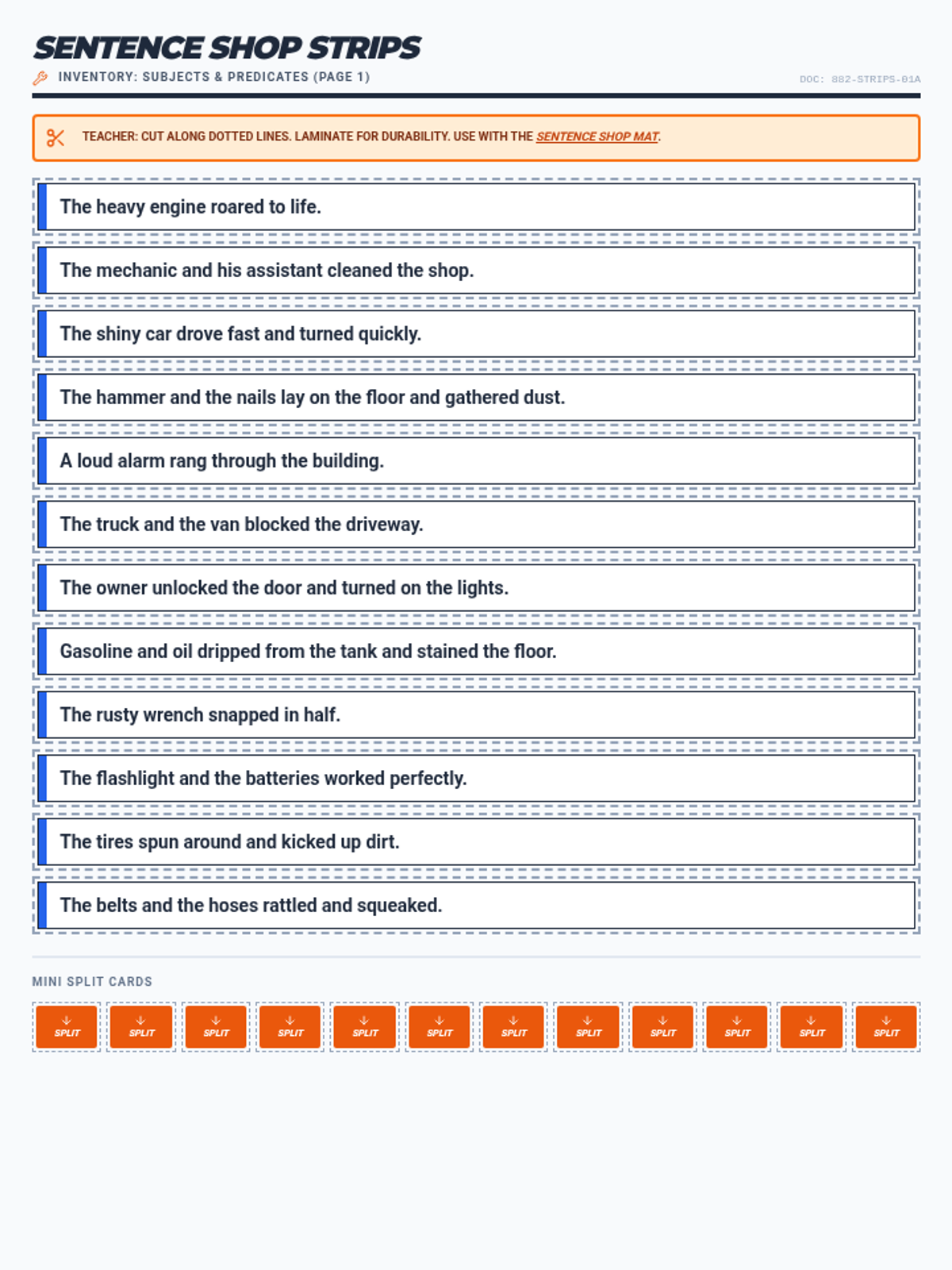
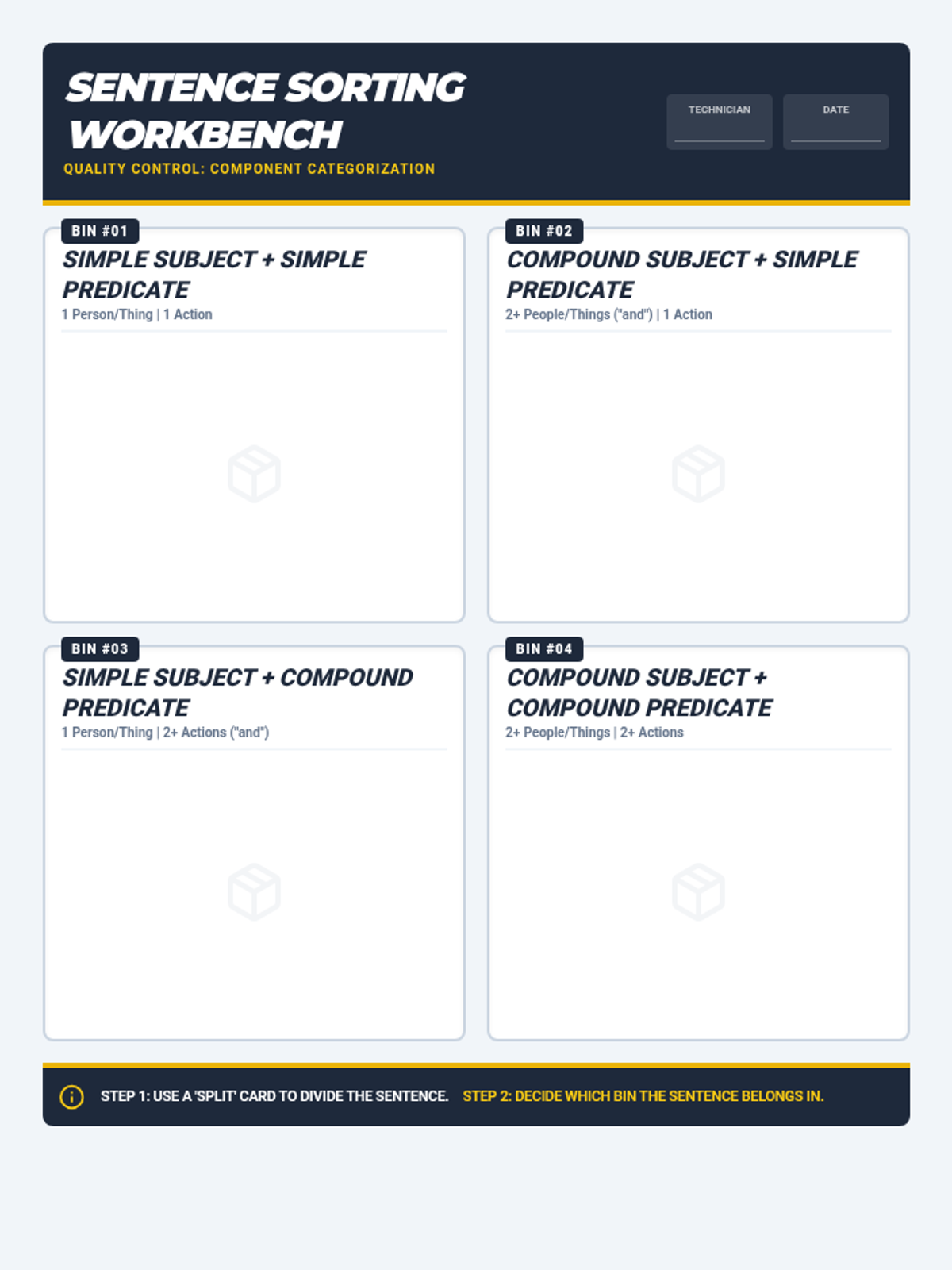
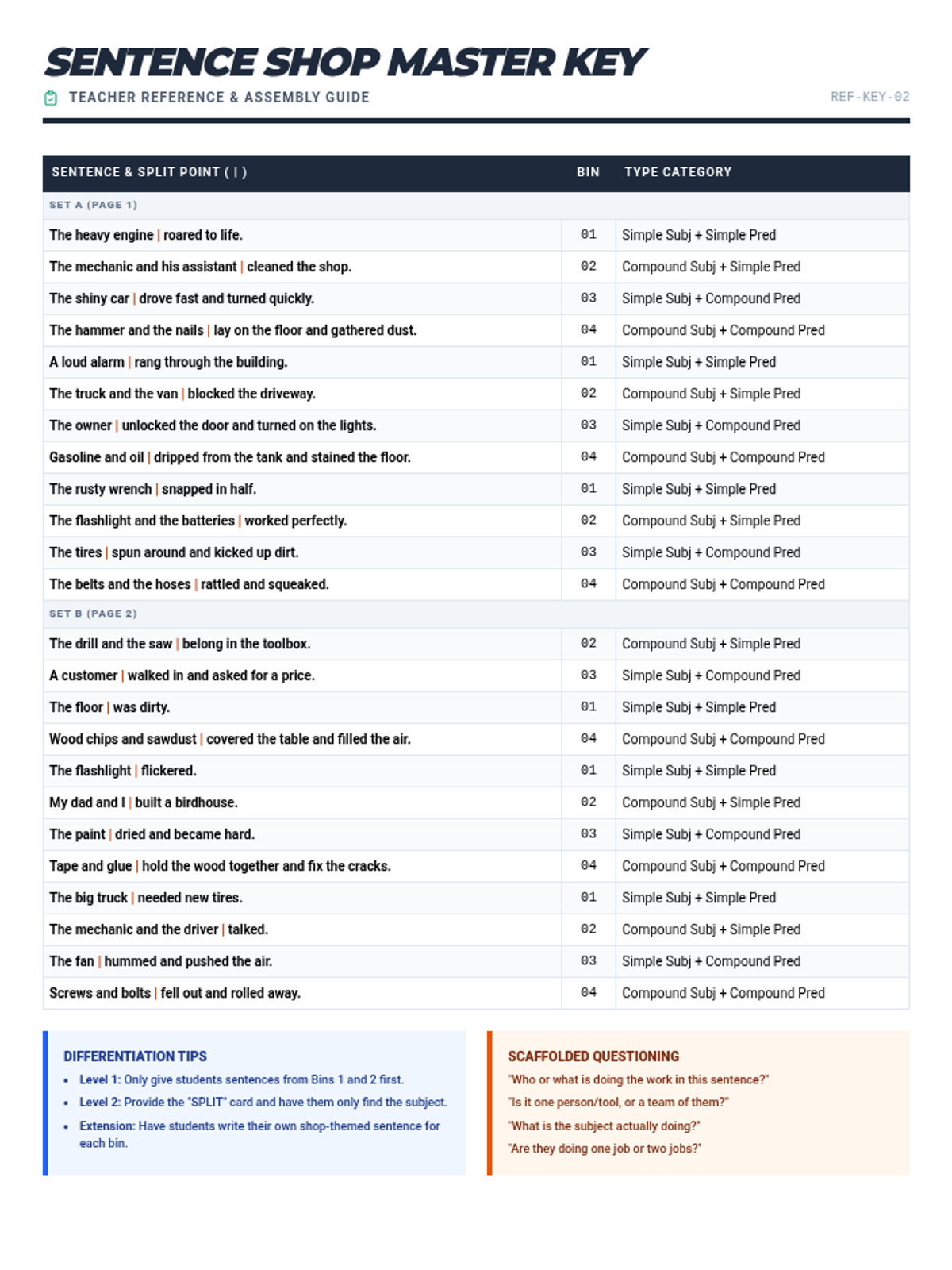
A hands-on, workshop-themed lesson where students master dividing sentences into subjects and predicates. They use physical cards to identify simple and compound components in a 'shop' environment.
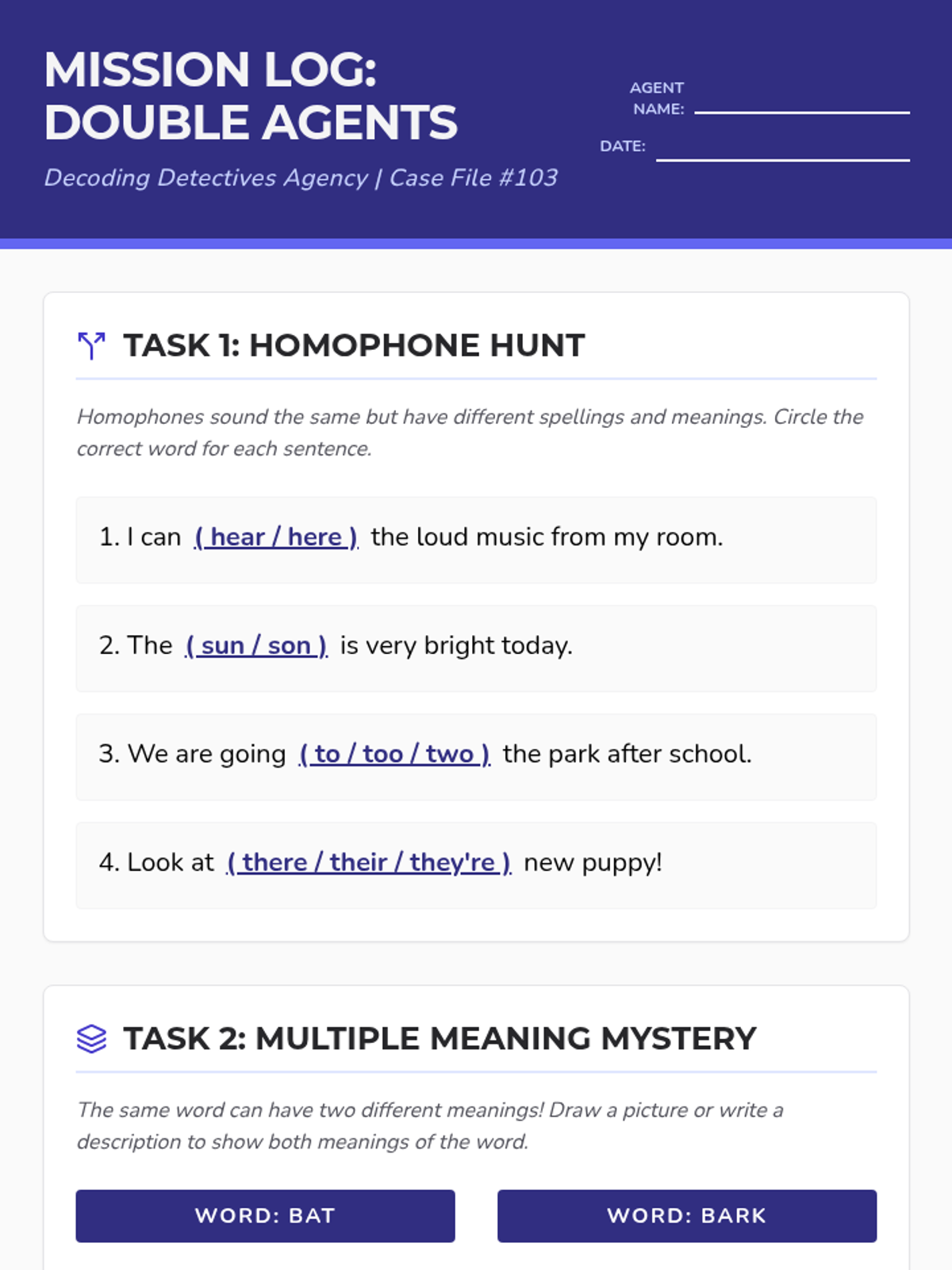
Unmask words that sound the same but look different (homophones) and words that look the same but have different meanings (multiple meaning words). Focuses on using context clues to solve word mysteries.
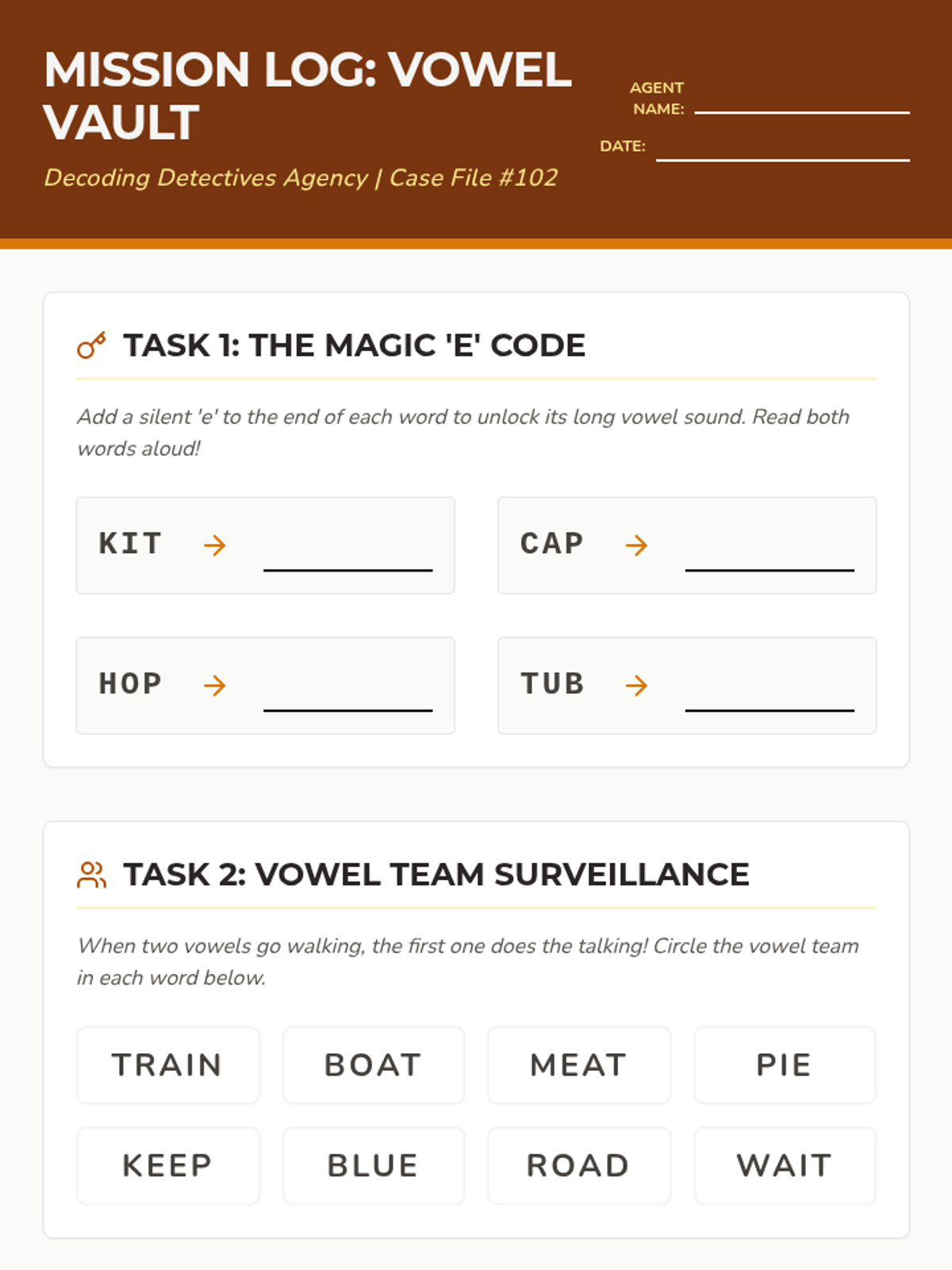
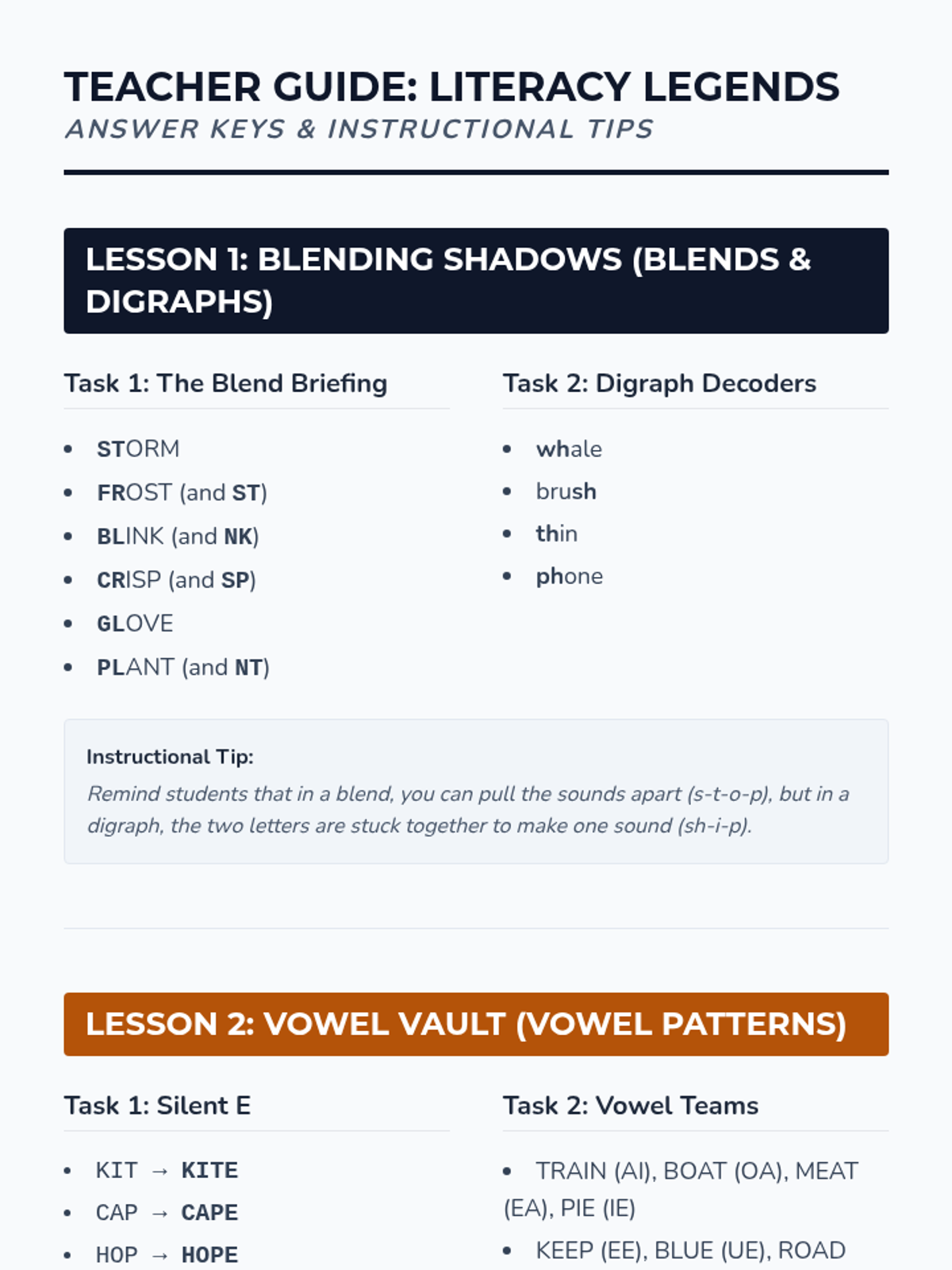
Unlock the secrets of long and short vowels, vowel teams, and the power of the silent 'e'. This lesson focuses on identifying patterns that change how a word is pronounced and spelled.
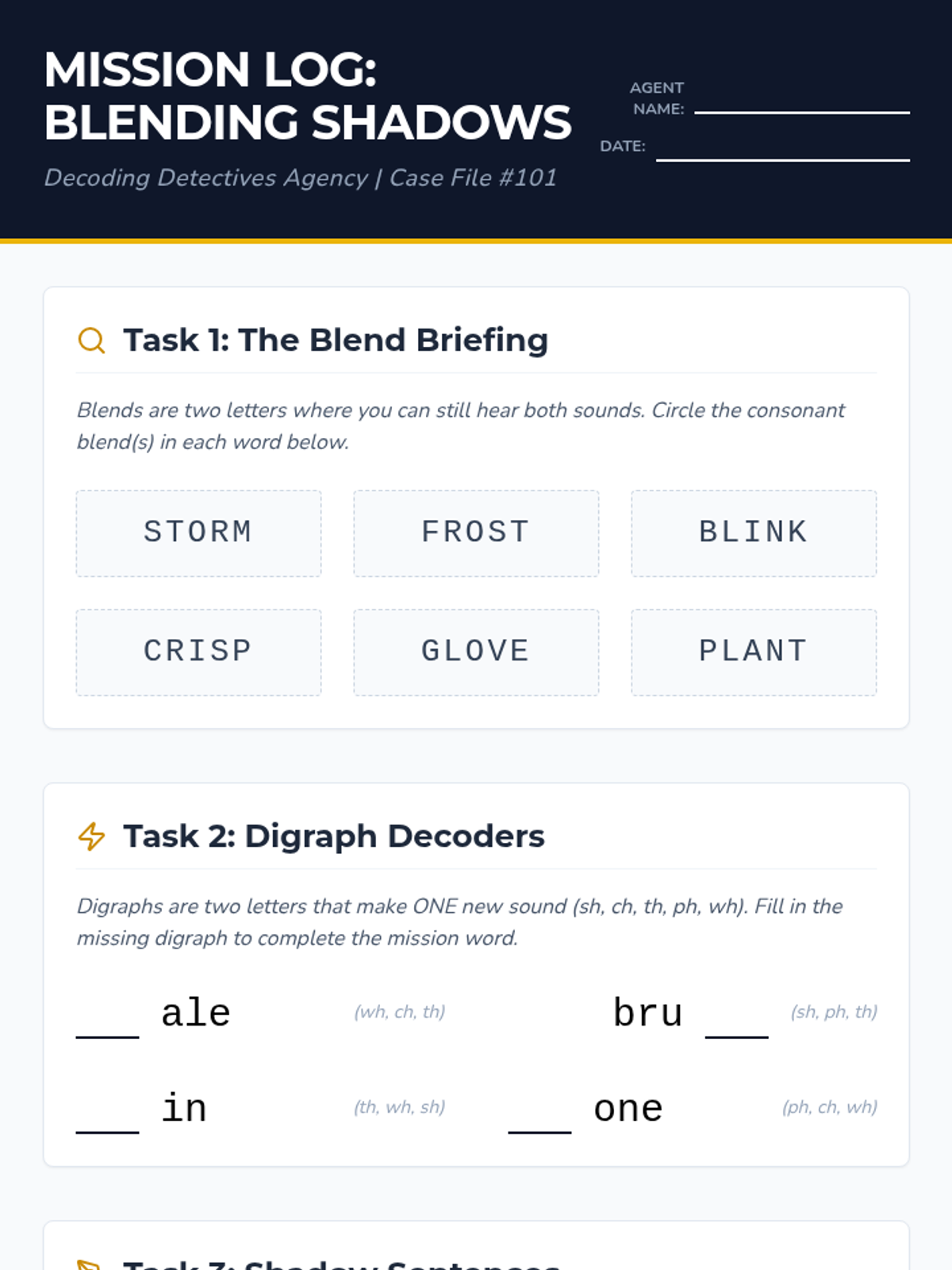
Investigate consonant blends and digraphs to master the sounds at the beginning and end of words. Students learn to distinguish between blended sounds and the unique sounds created by digraphs.
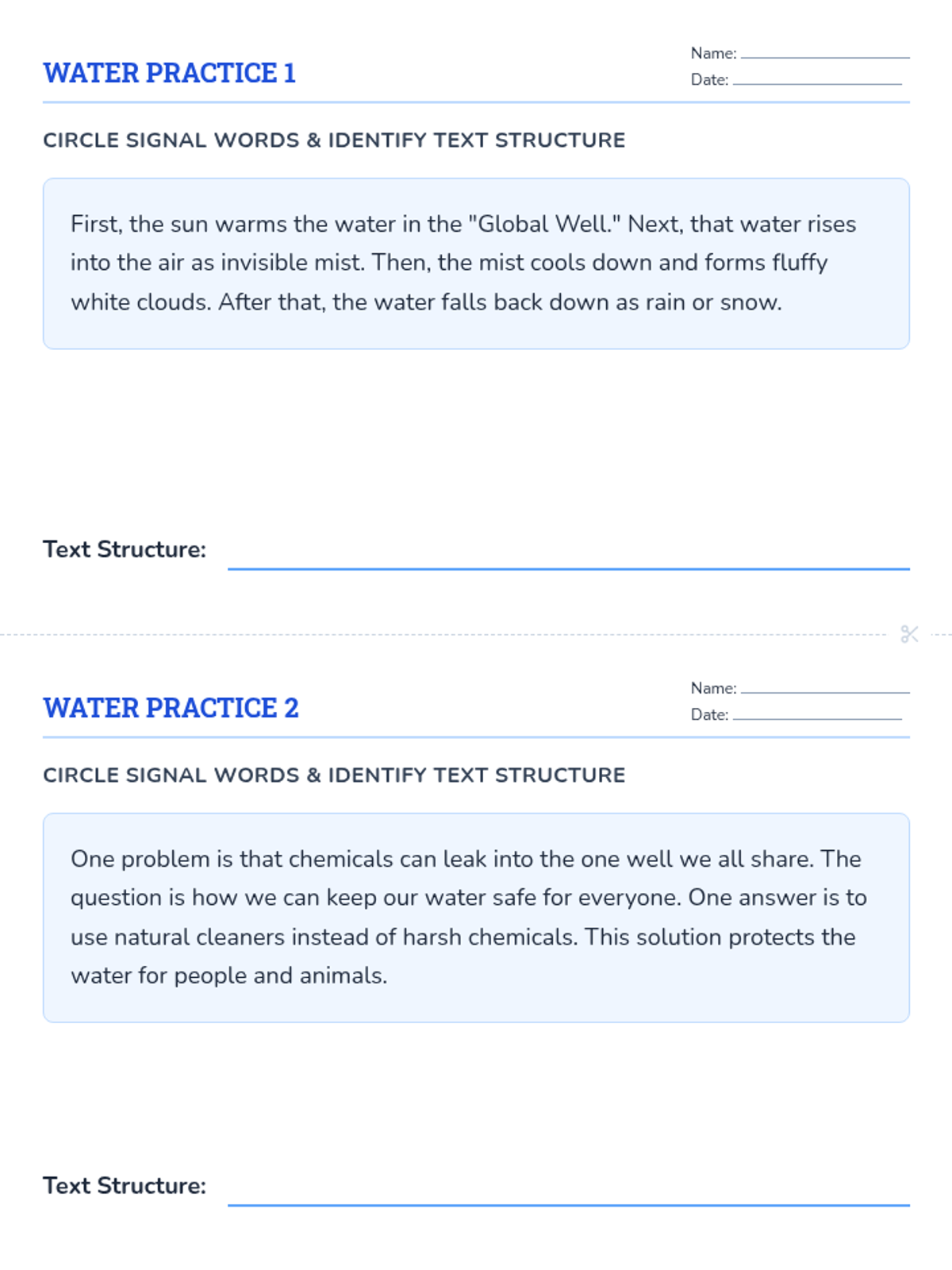
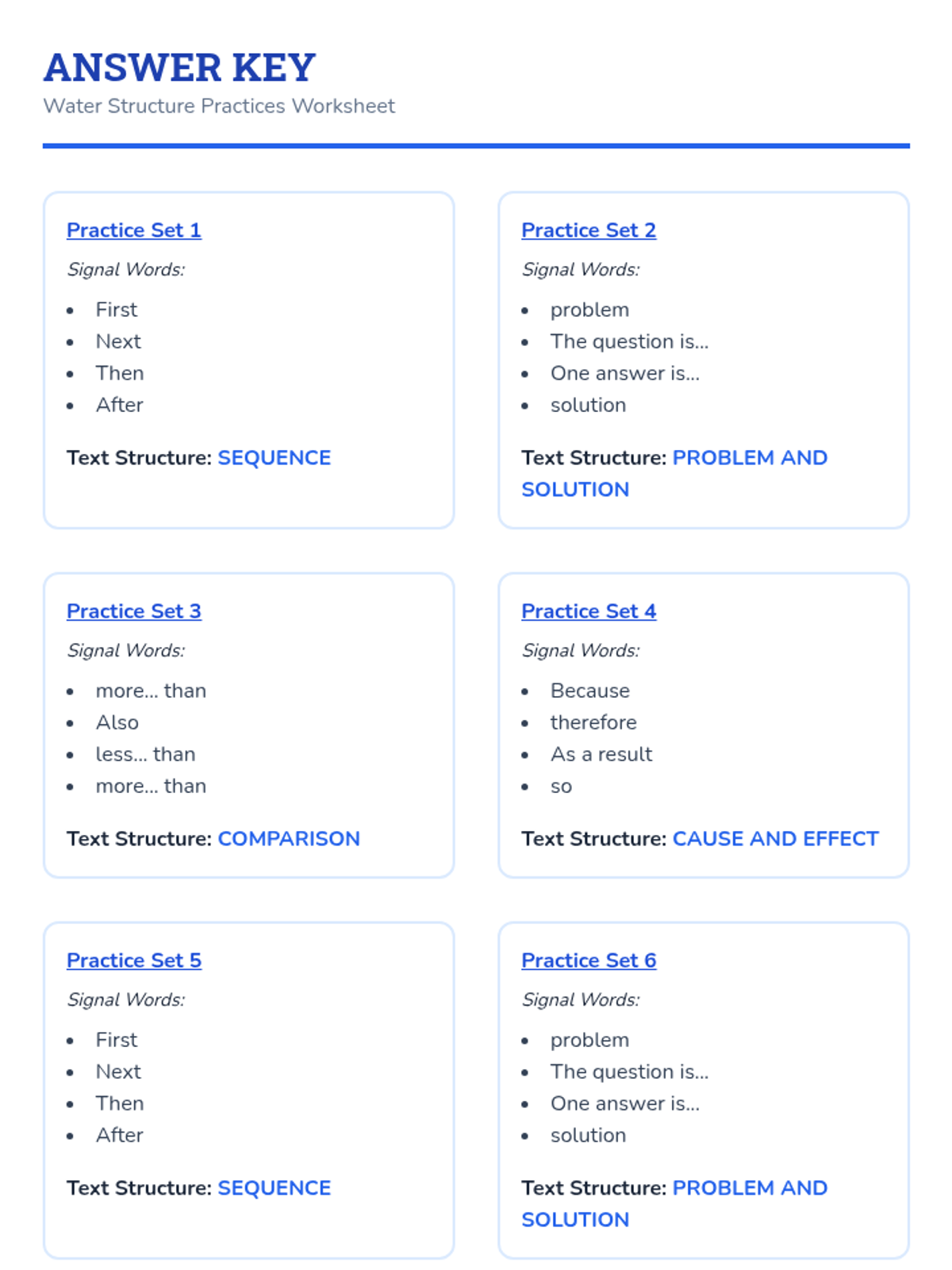
A lesson focused on identifying text structures and signal words using themes from the book 'One Well: The Story of Water on Earth'. Students practice identifying sequence, problem/solution, comparison, and cause/effect structures.
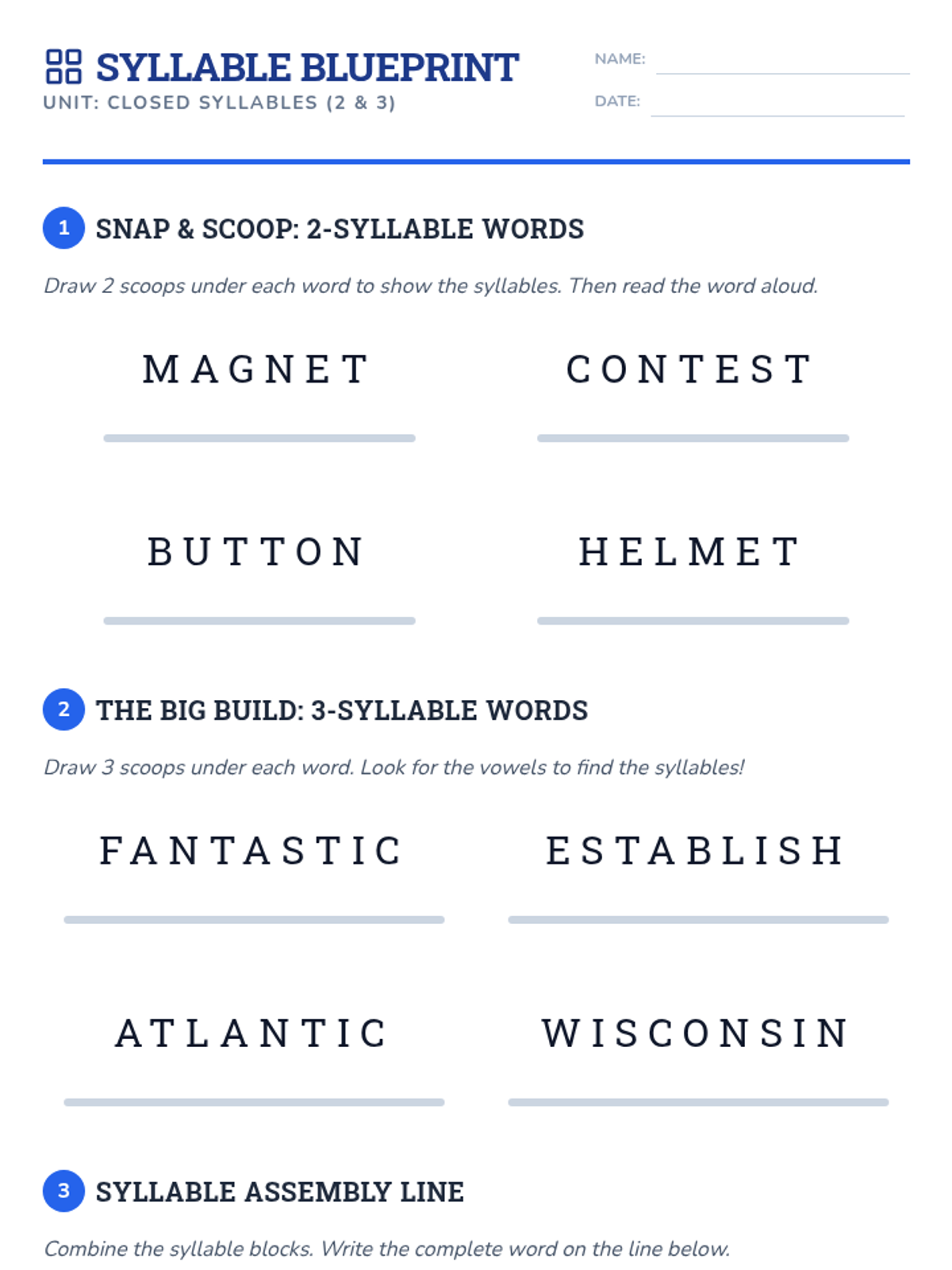
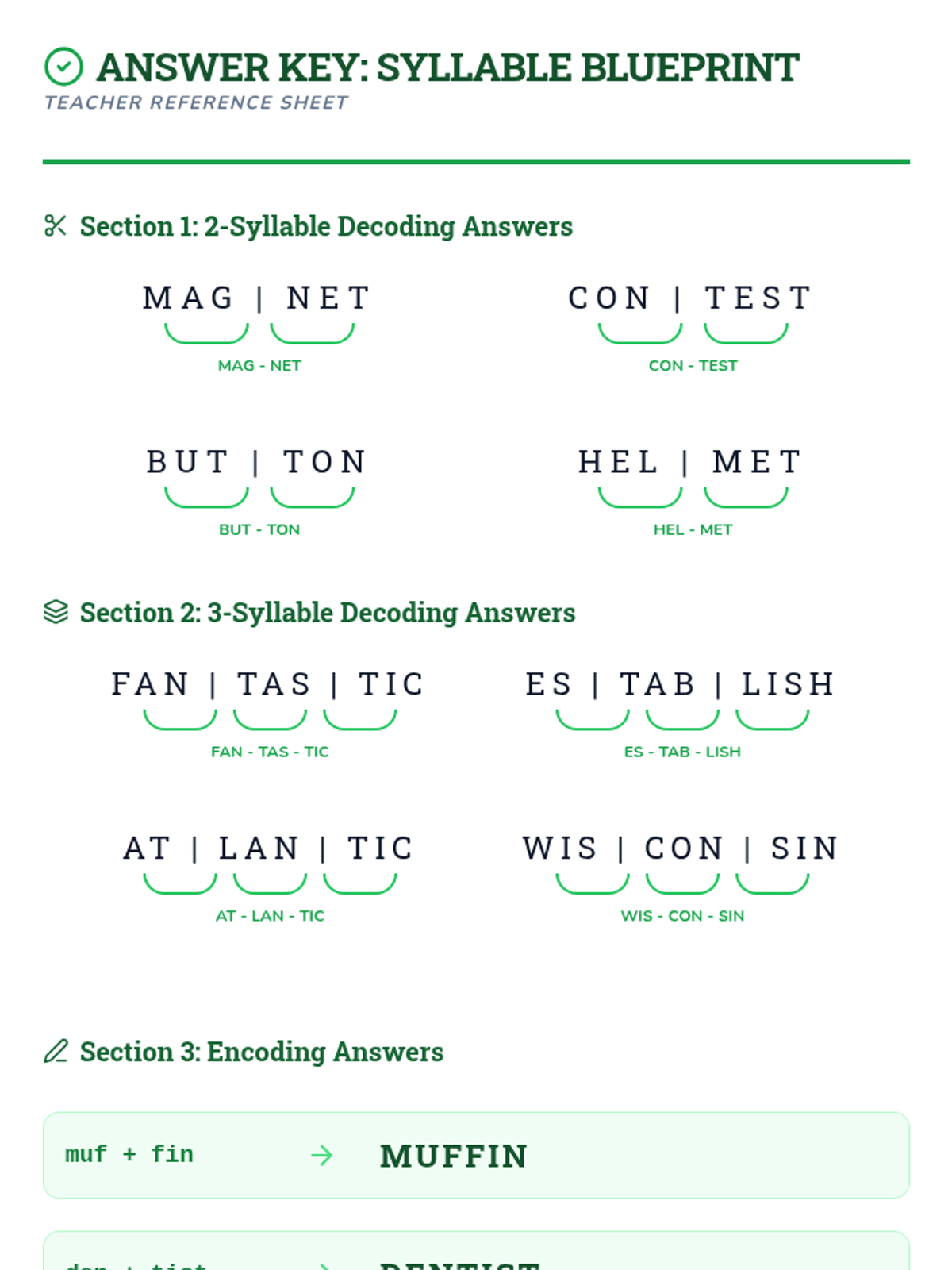
A lesson focused on decoding and encoding multi-syllabic words with closed syllables. Students will learn to identify syllable breaks using scoops and dividers for 2 and 3-syllable words.
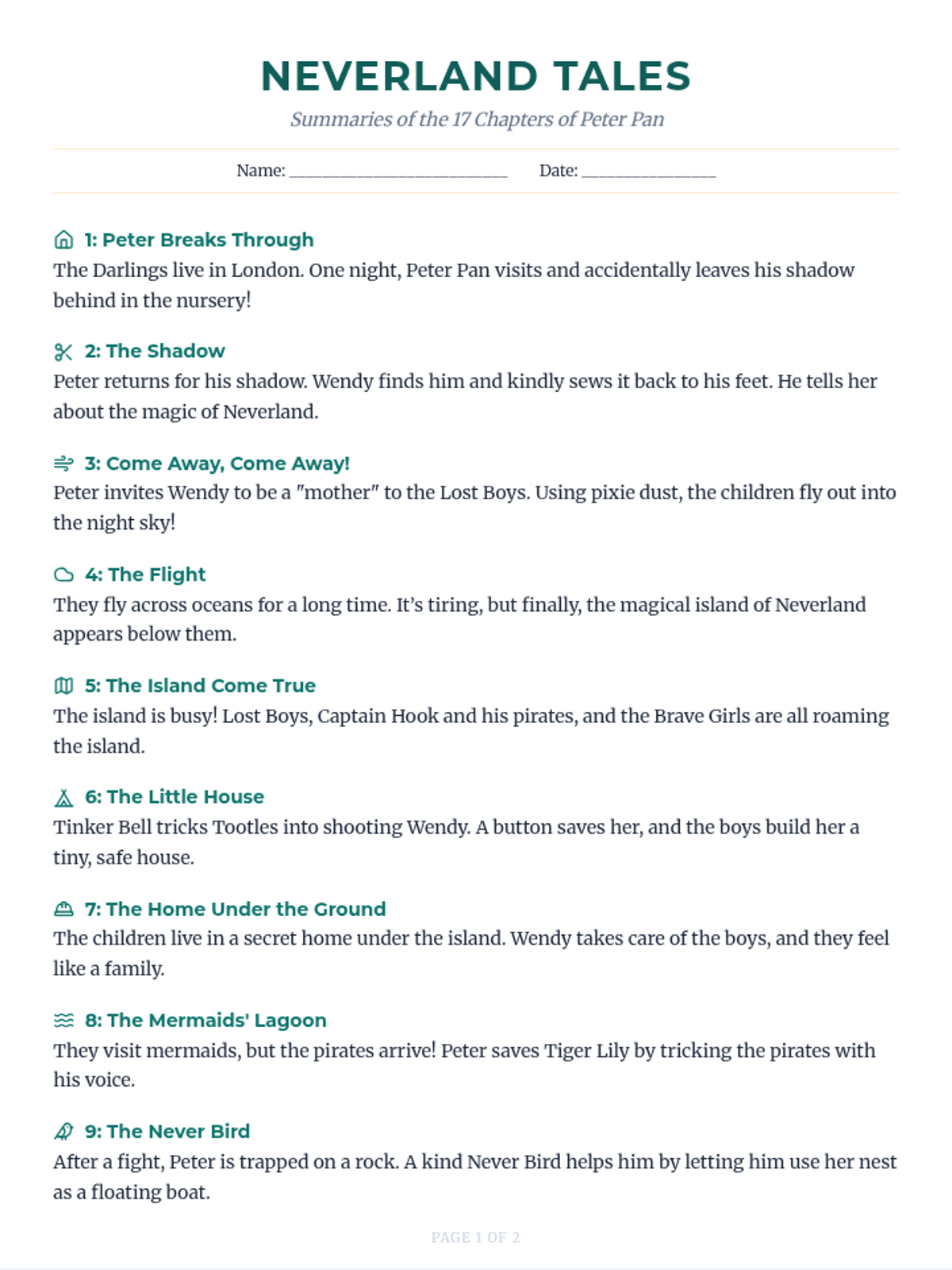
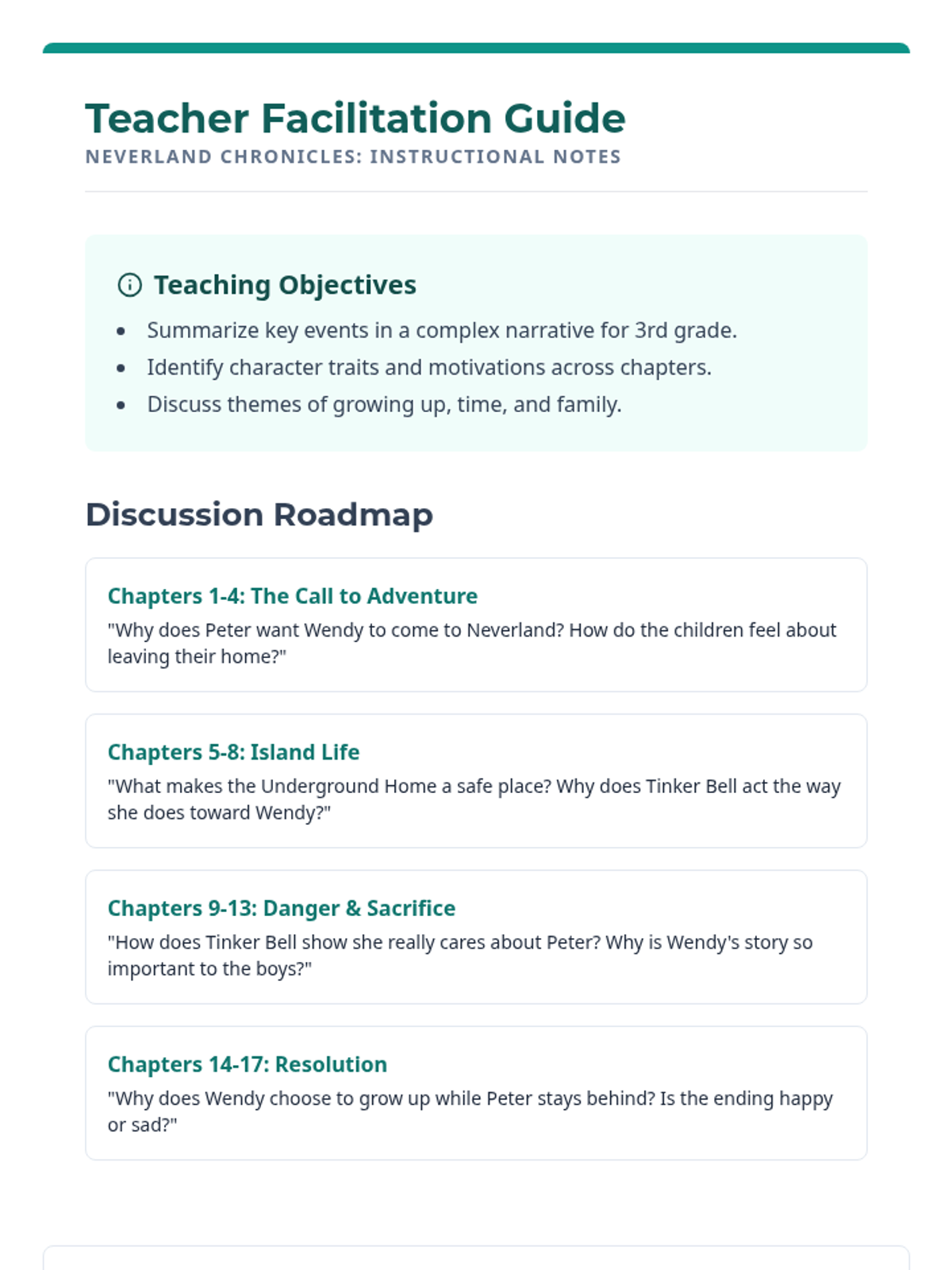
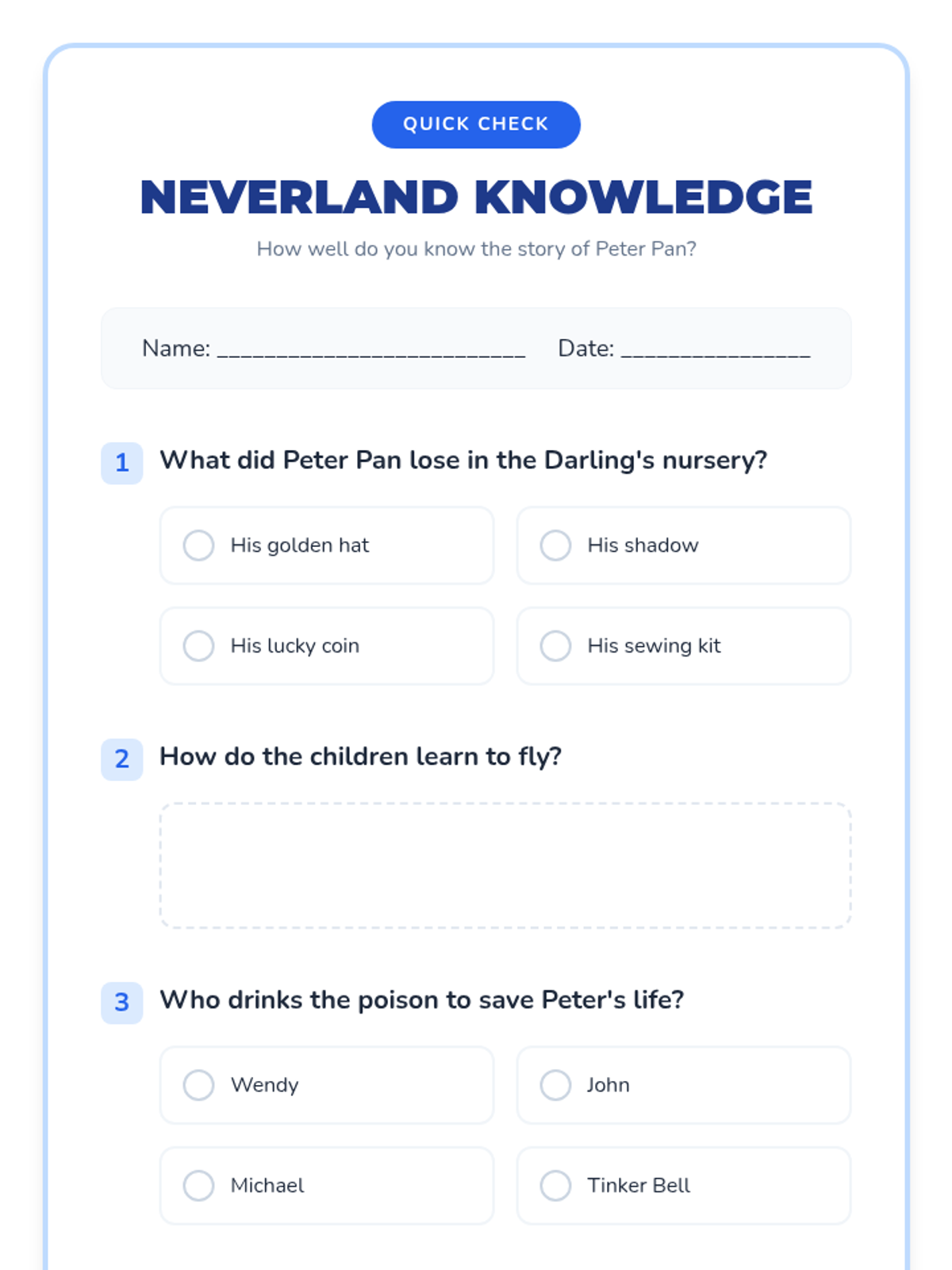
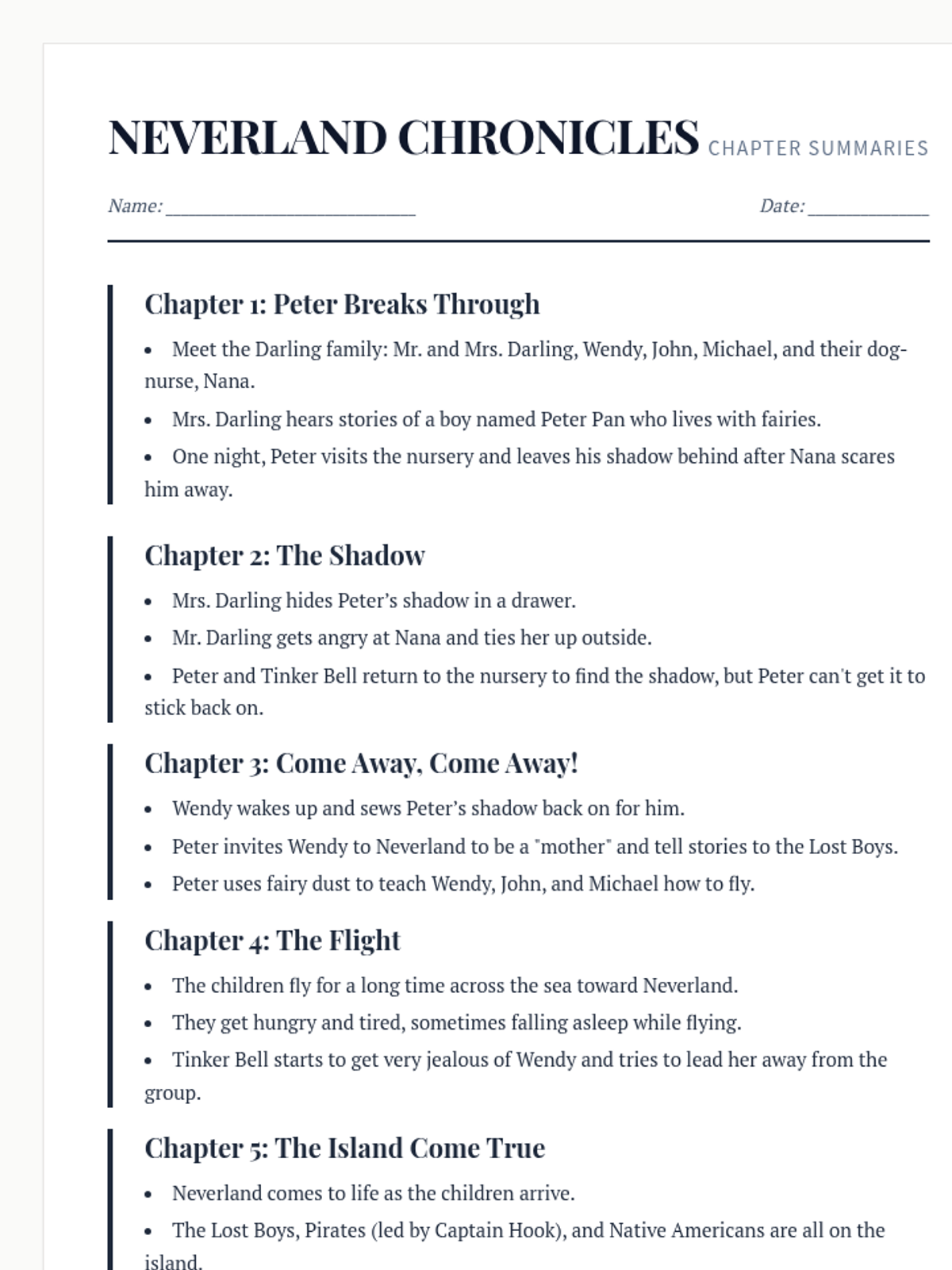
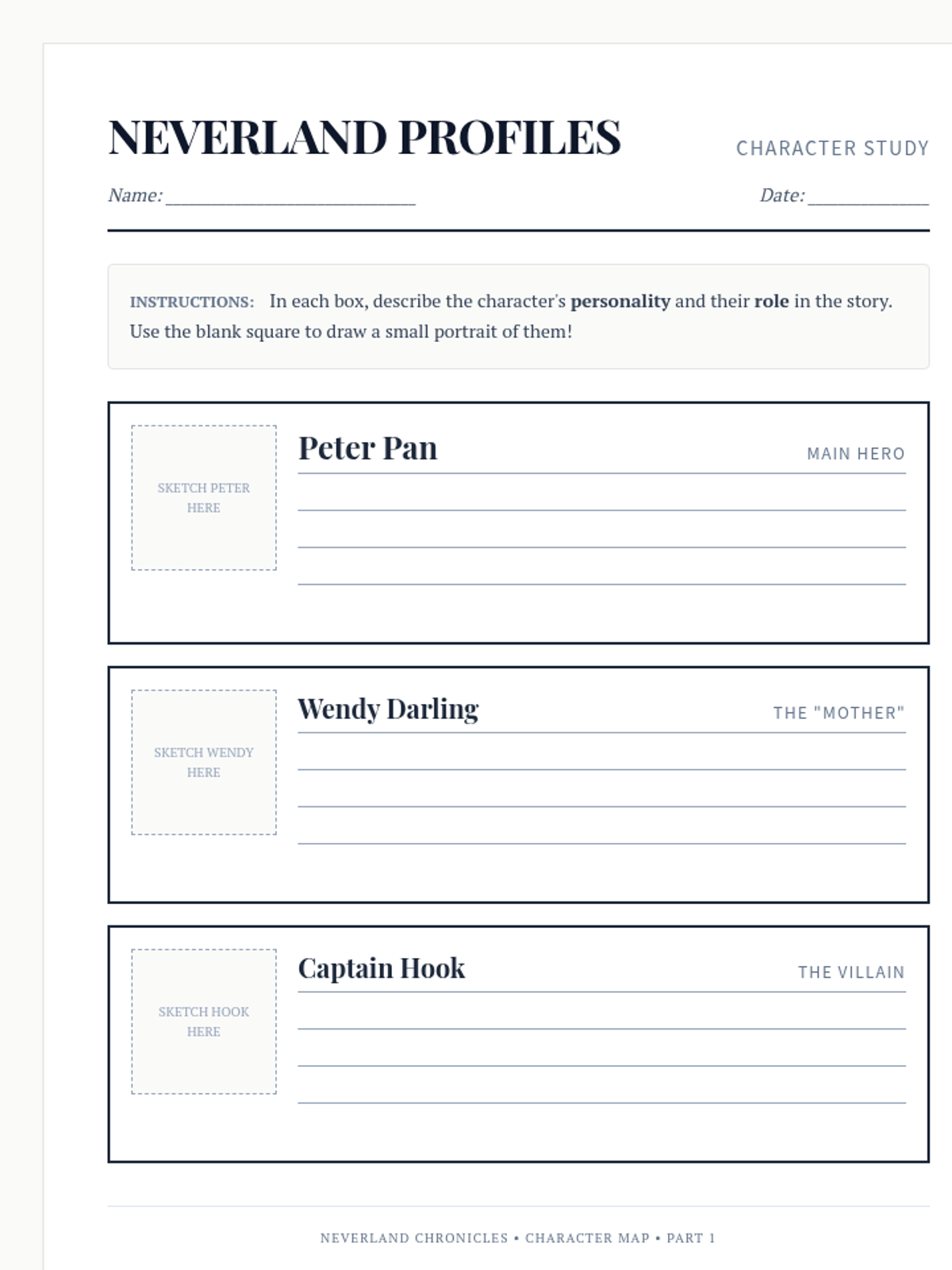
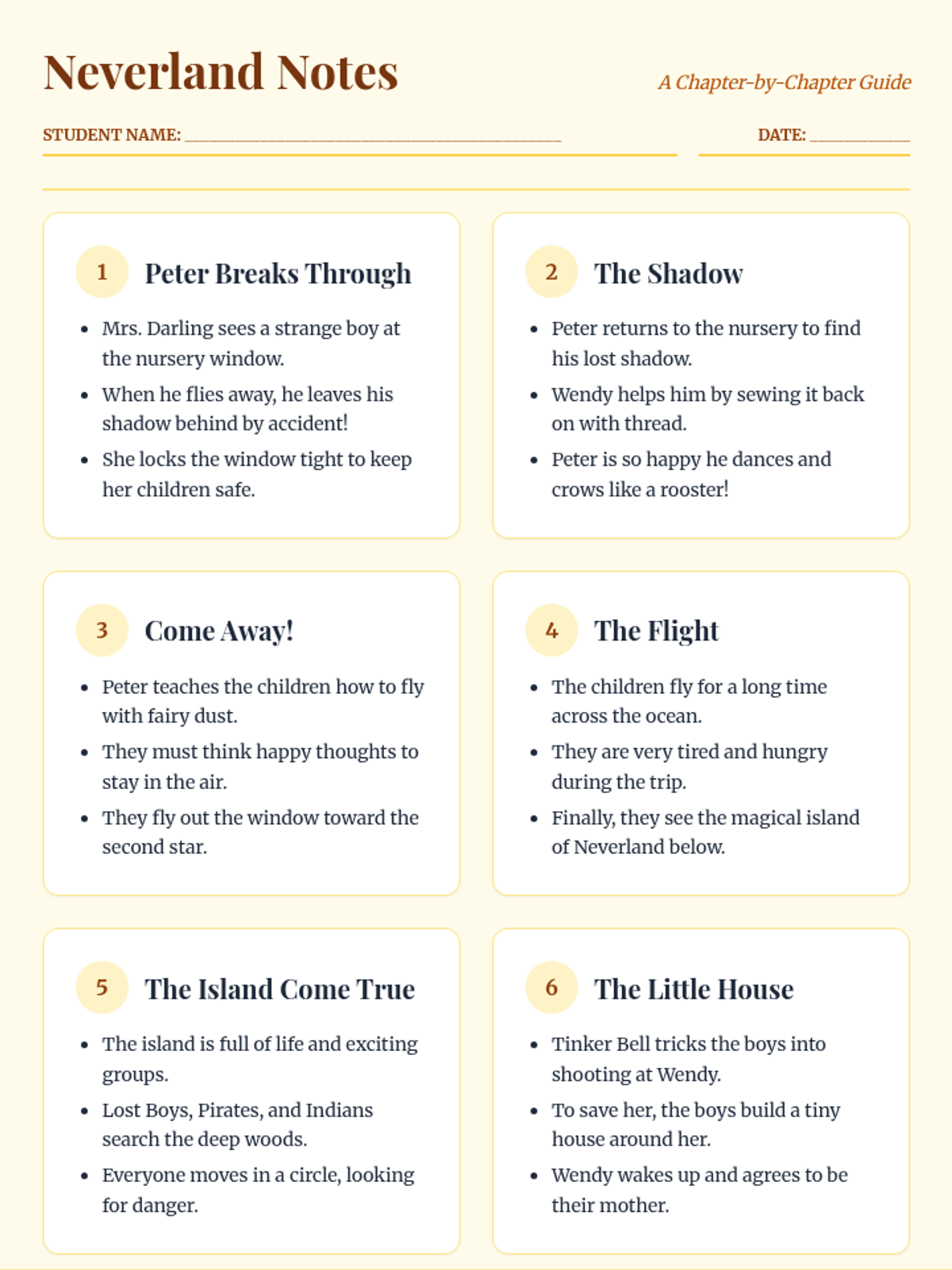
A comprehensive exploration of the 17 chapters of J.M. Barrie's Peter Pan, designed to help third-grade students understand and engage with the classic story.
A collection of resources for studying J.M. Barrie's Peter Pan, including chapter-by-chapter summaries and character analysis tools for third-grade students.
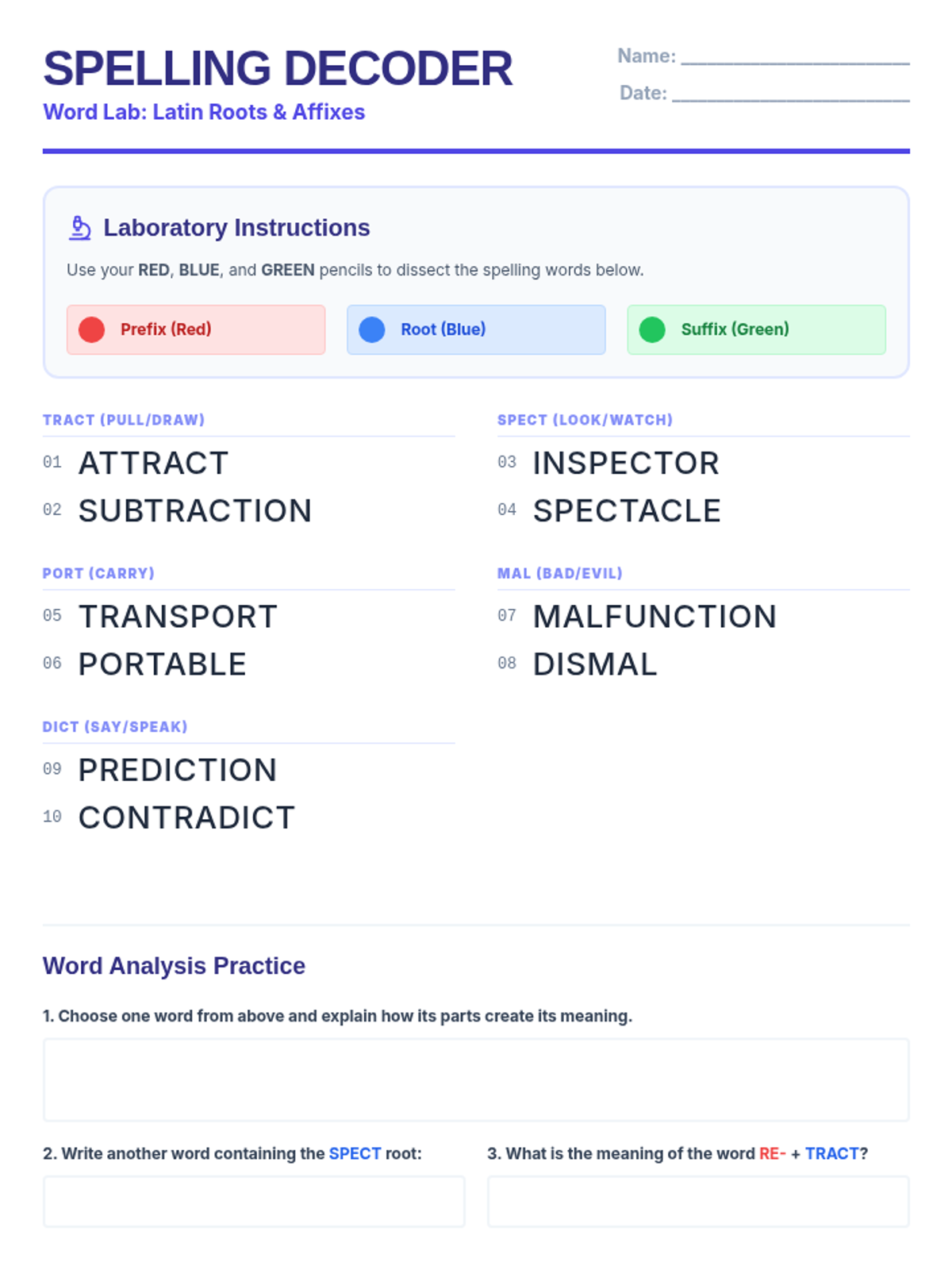
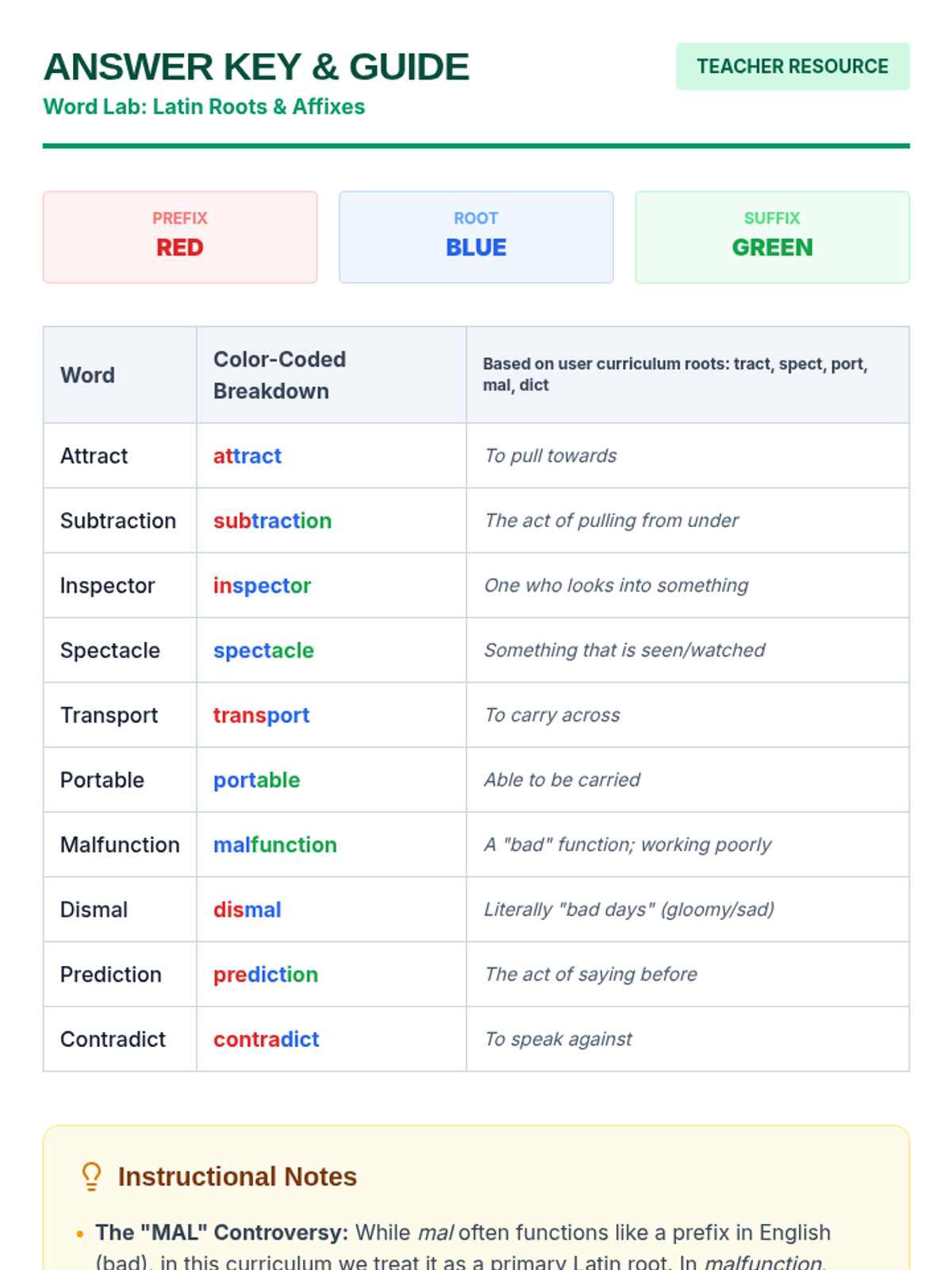
A comprehensive lesson on Latin roots (tract, spect, port, mal, dict) focusing on word dissection and color-coded spelling strategies to understand complex vocabulary.
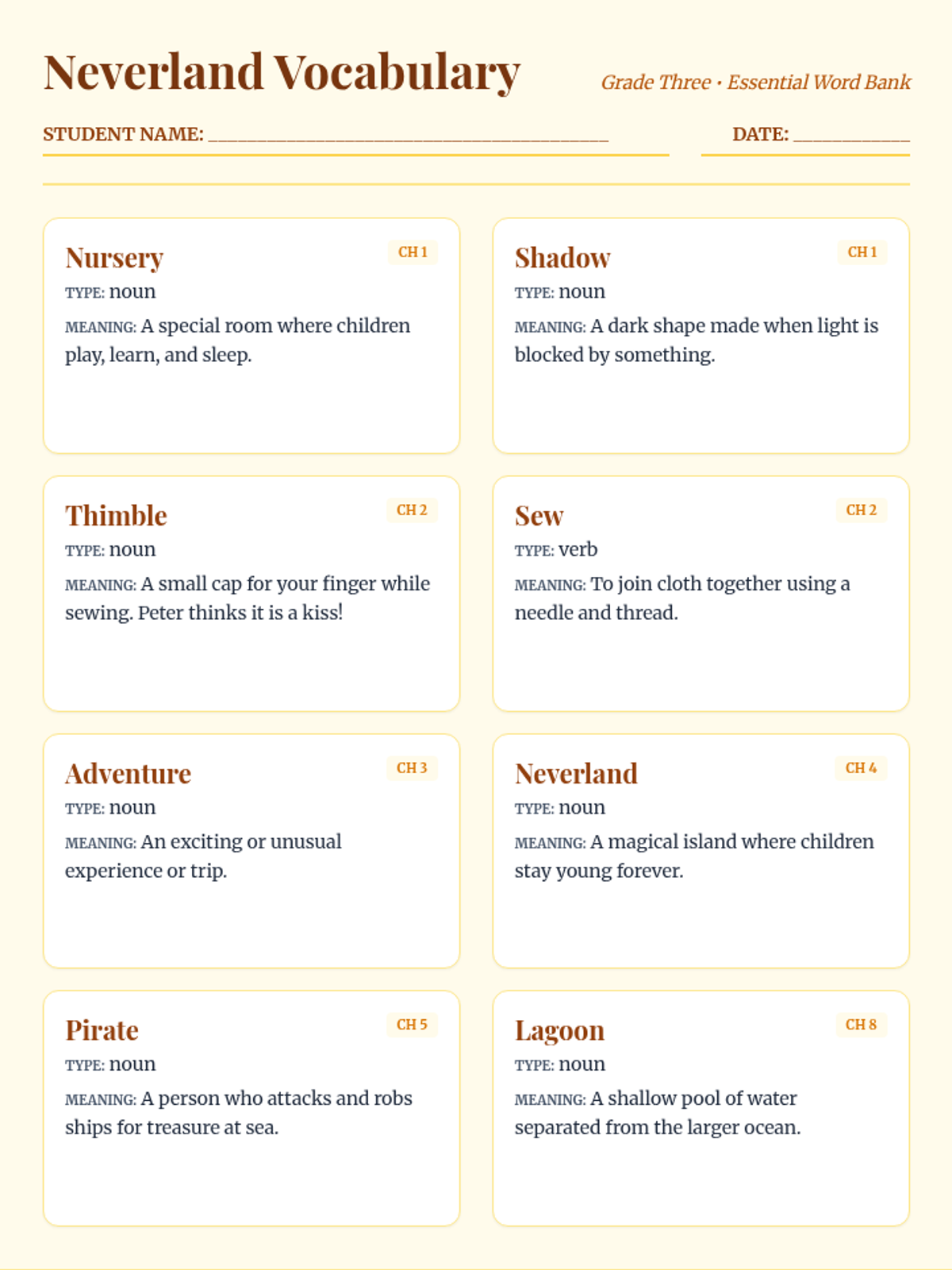
A literacy lesson focused on the 17 chapters of Peter Pan by J.M. Barrie, featuring chapter summaries and essential vocabulary for third-grade students.
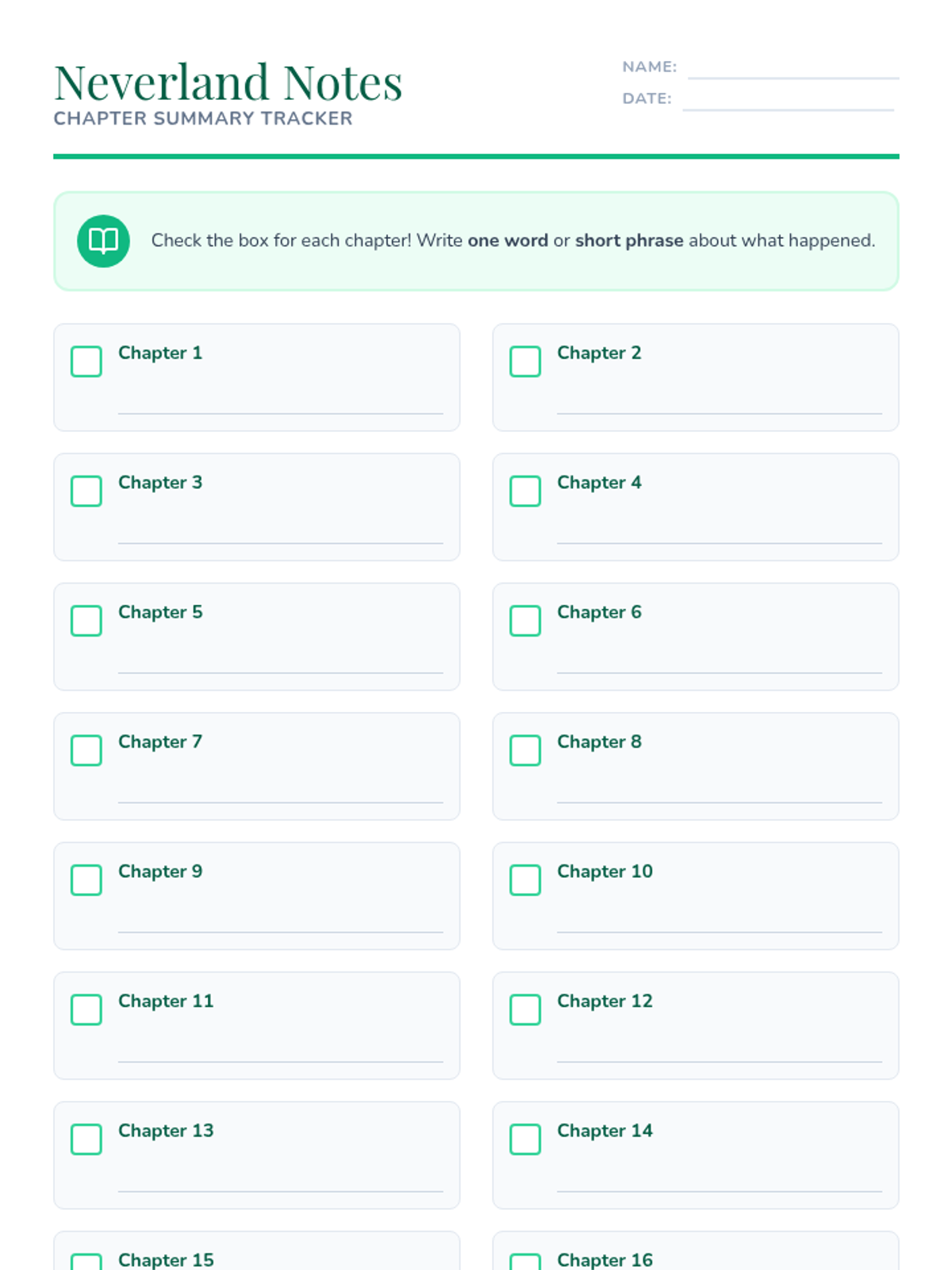
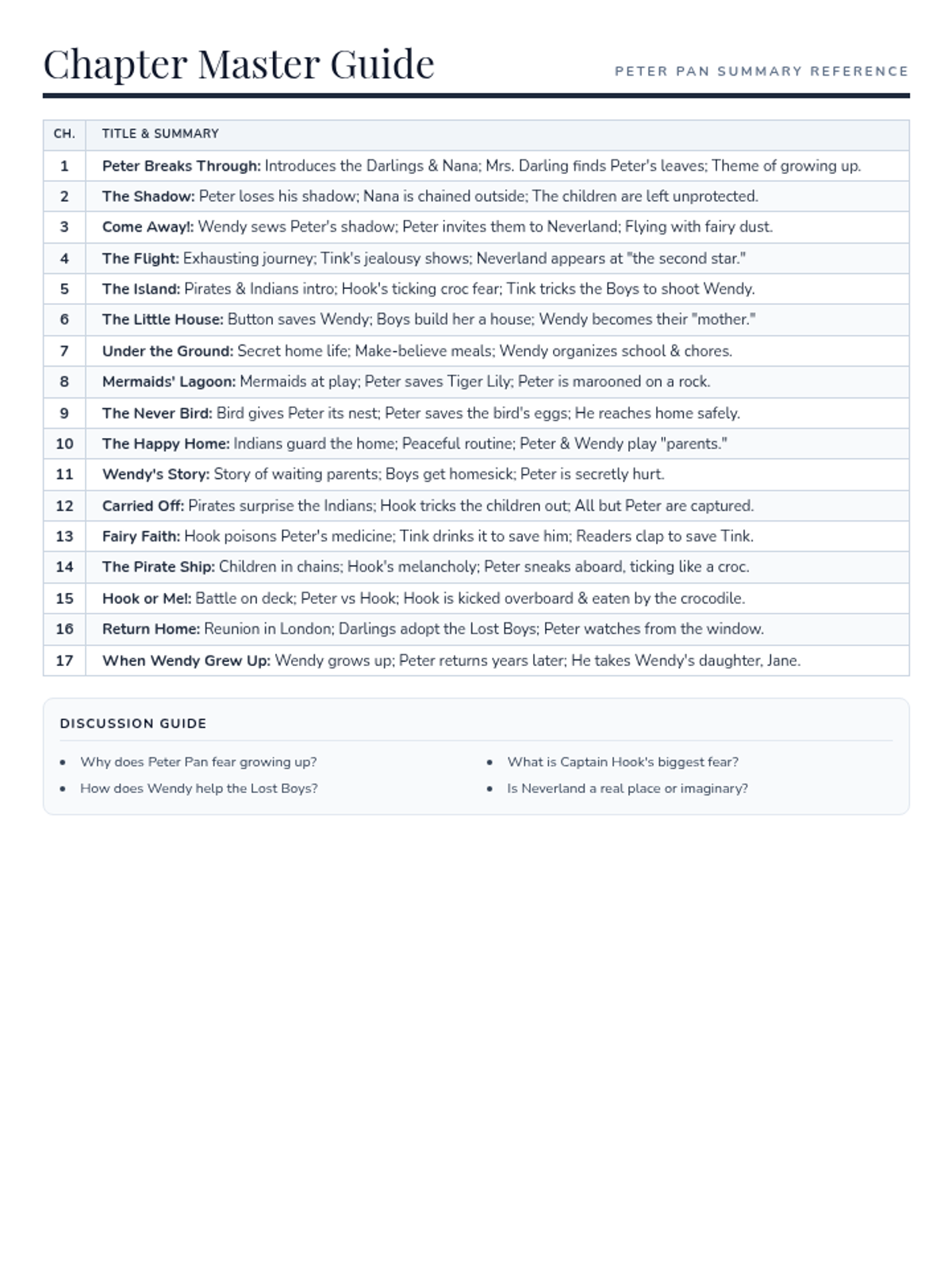
A comprehensive lesson summarizing all 17 chapters of Peter Pan by J.M. Barrie, designed for 3rd-grade students with a focus on key plot points and whimsical themes.
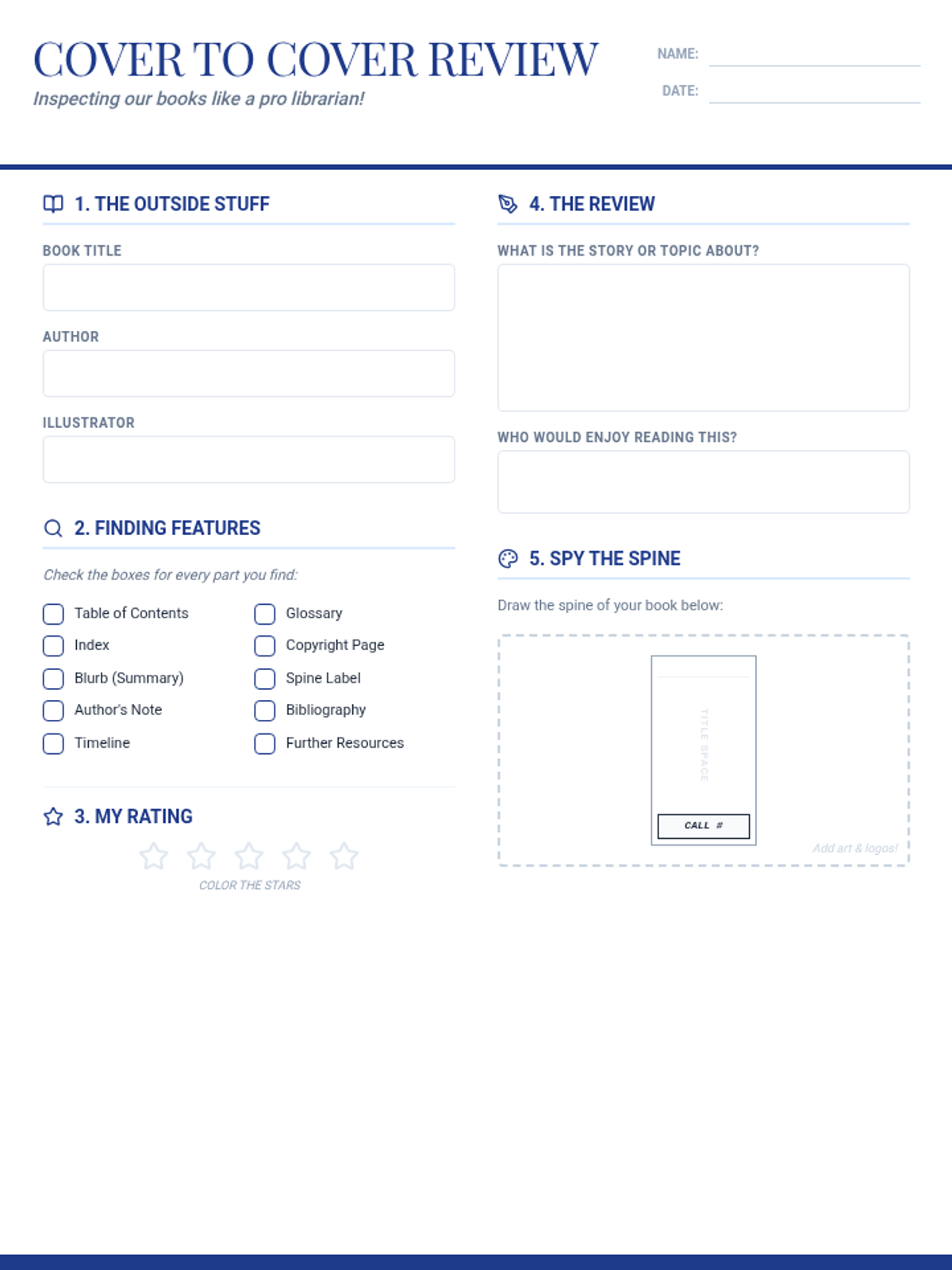
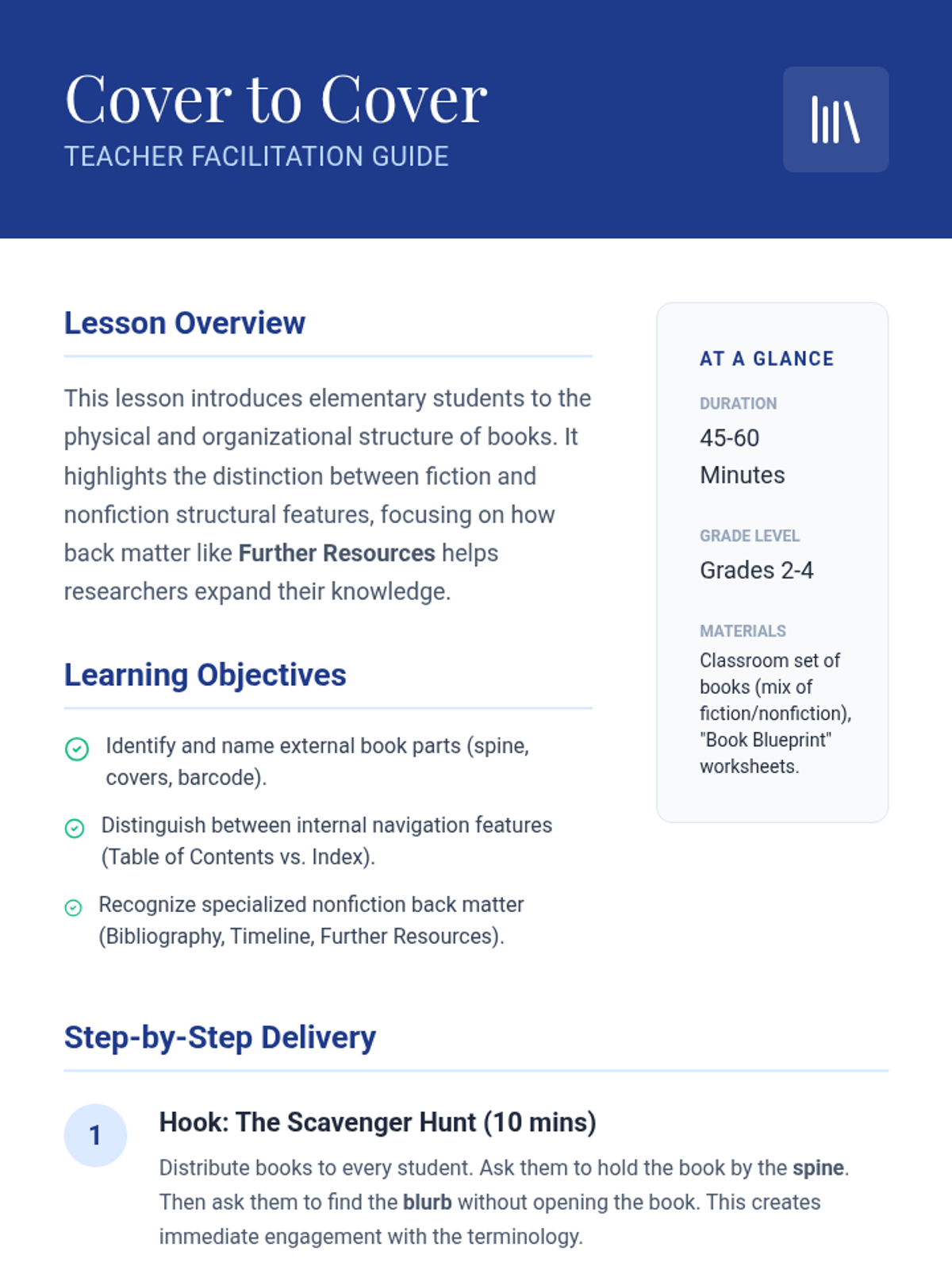
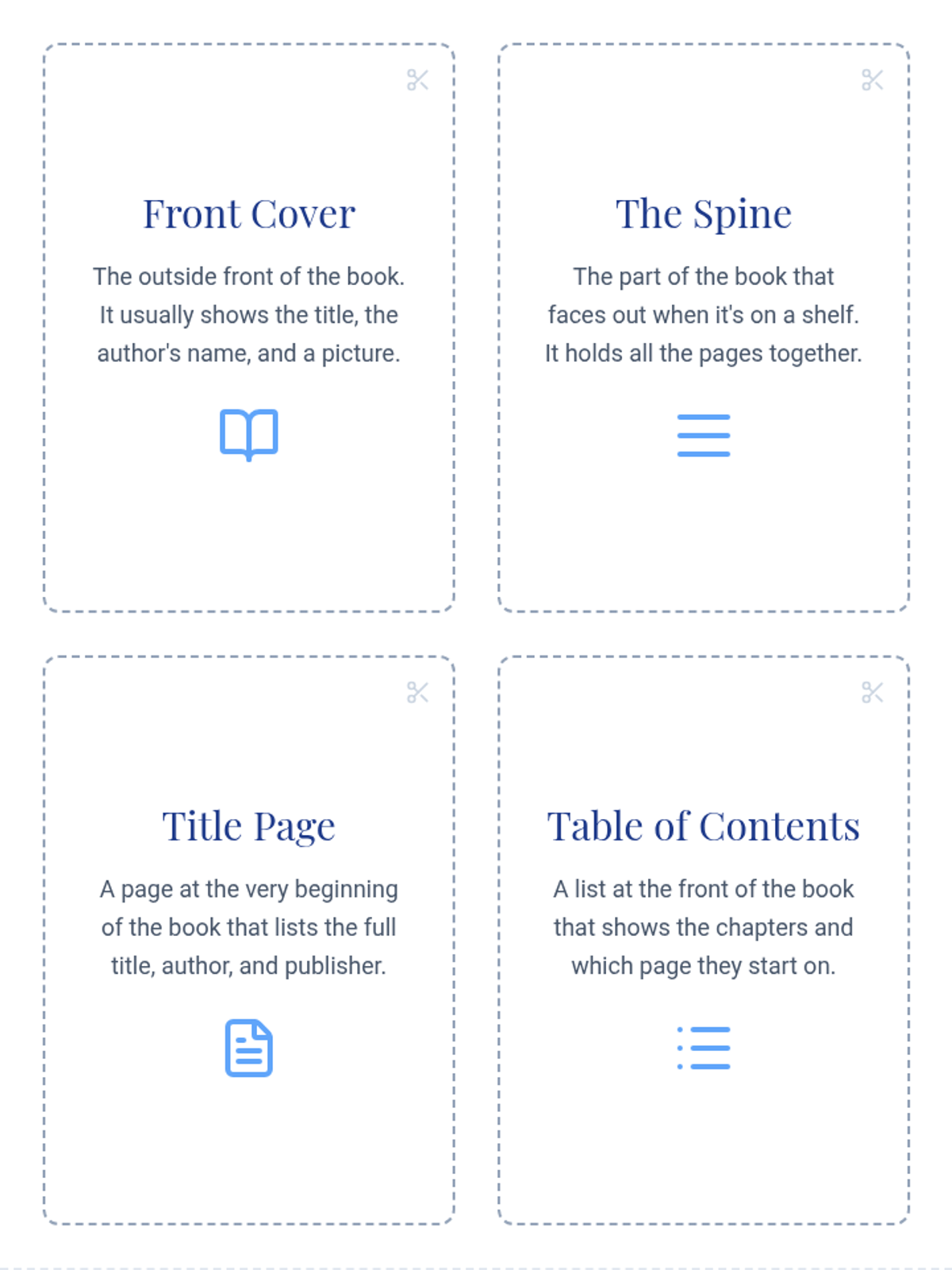
A lesson focused on identifying the structural parts of a book and applying that knowledge through a critical book review and vocabulary practice.
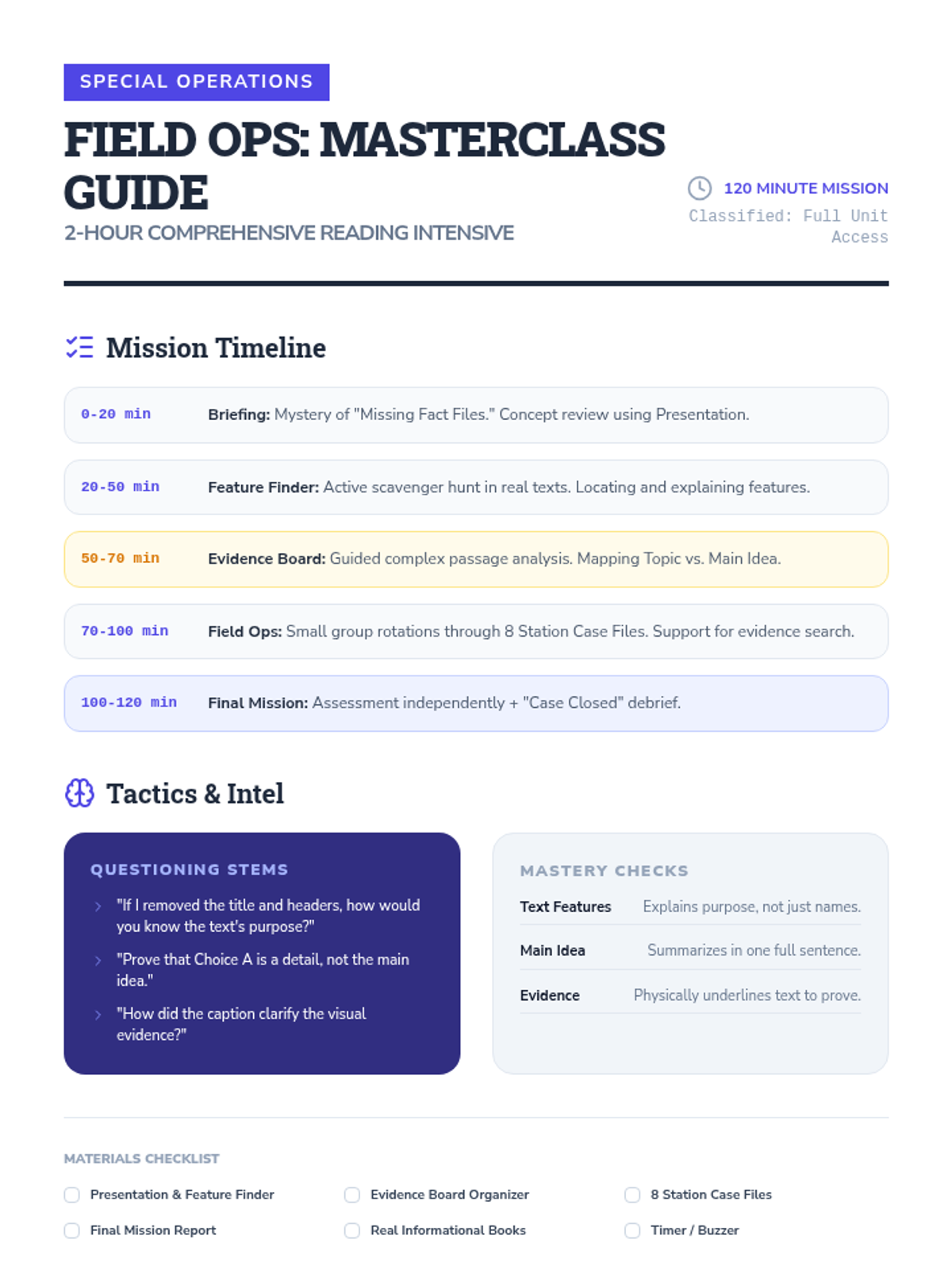
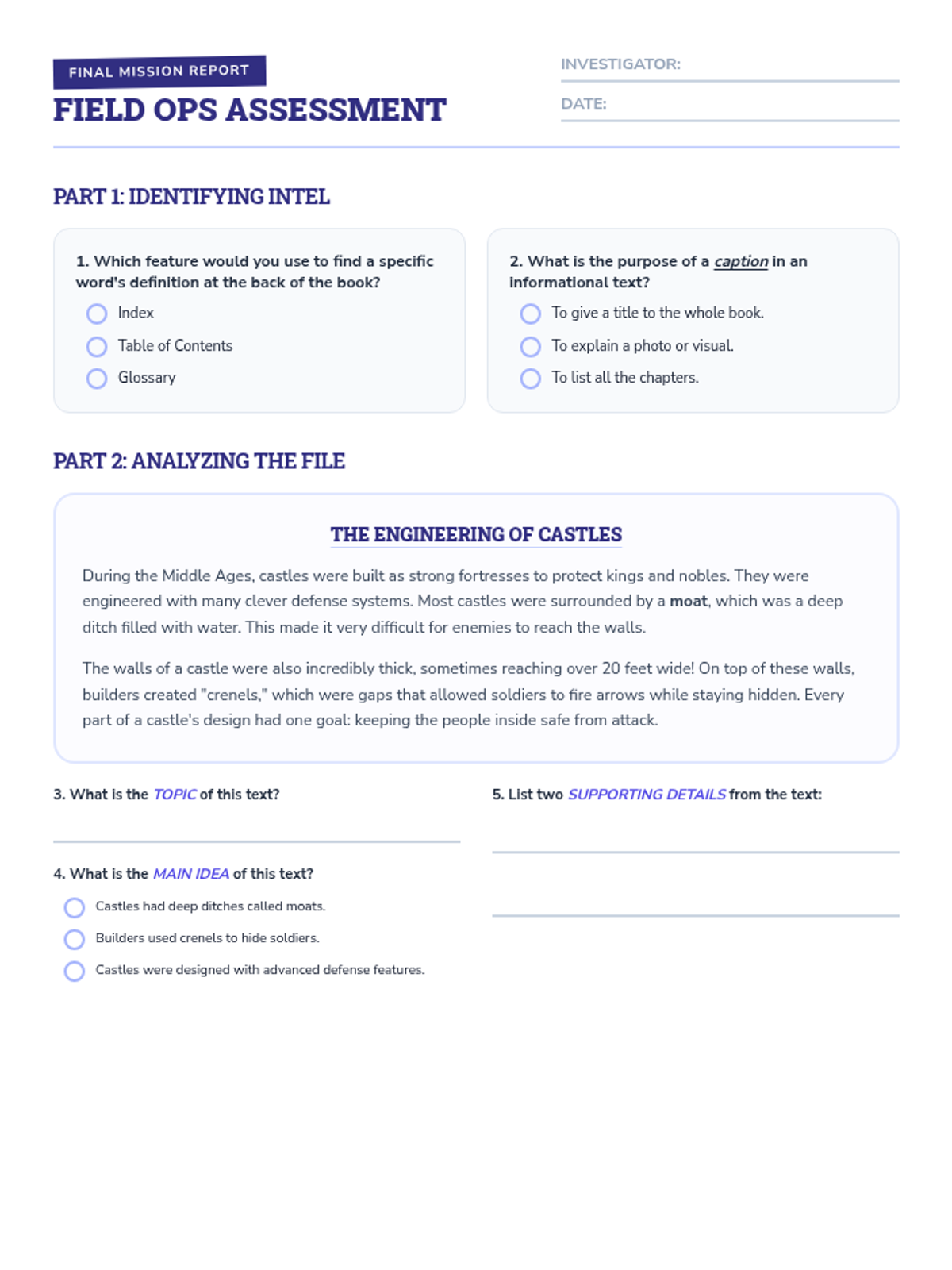
A comprehensive 2-hour deep-dive into informational text analysis, featuring interactive stations, text feature scavenger hunts, and evidence-based reporting.
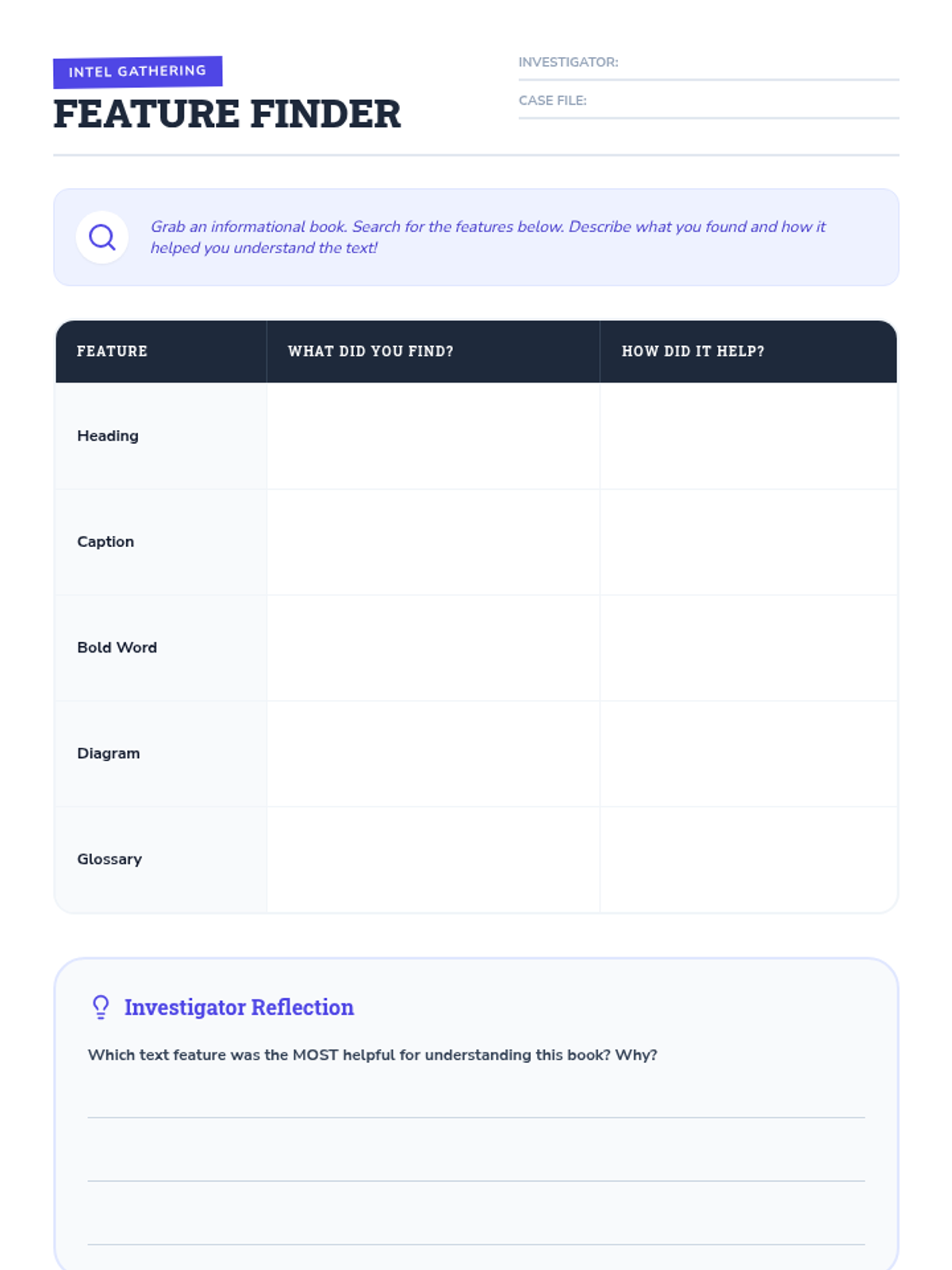
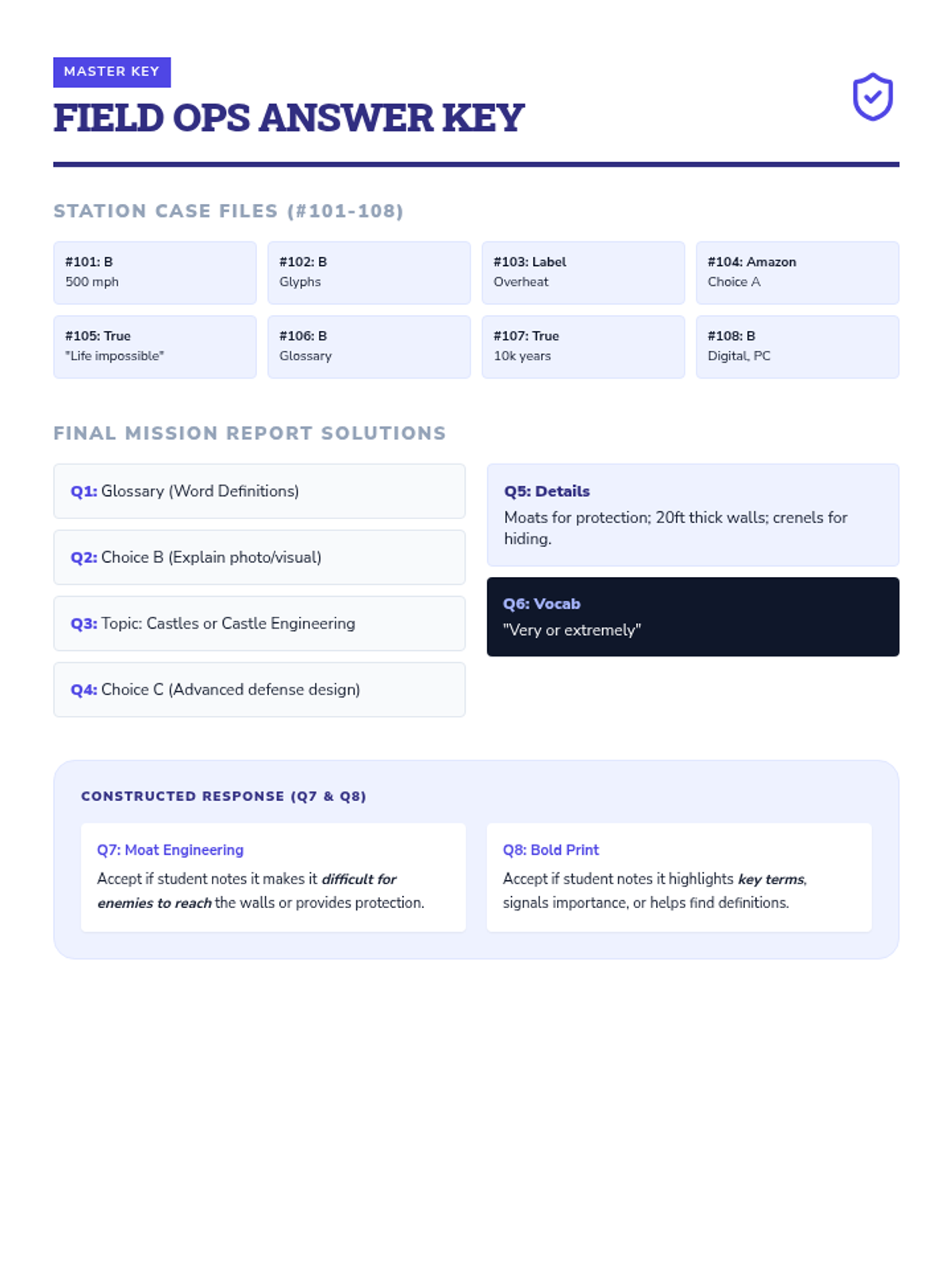
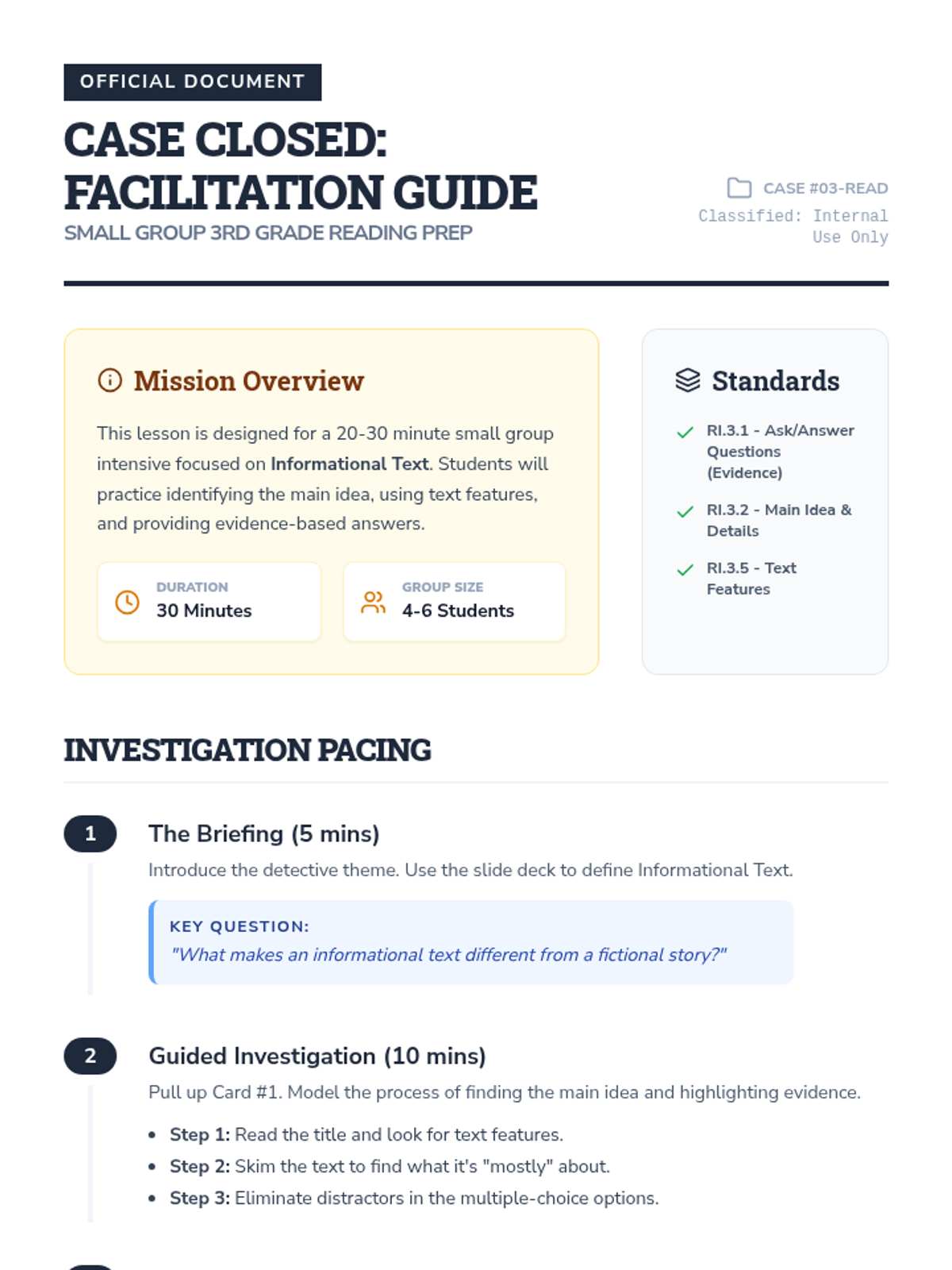
A targeted small-group lesson designed to prepare 3rd-grade students for informational text standards, focusing on main idea, text features, and evidence-based answers through a detective-themed 'investigation'.
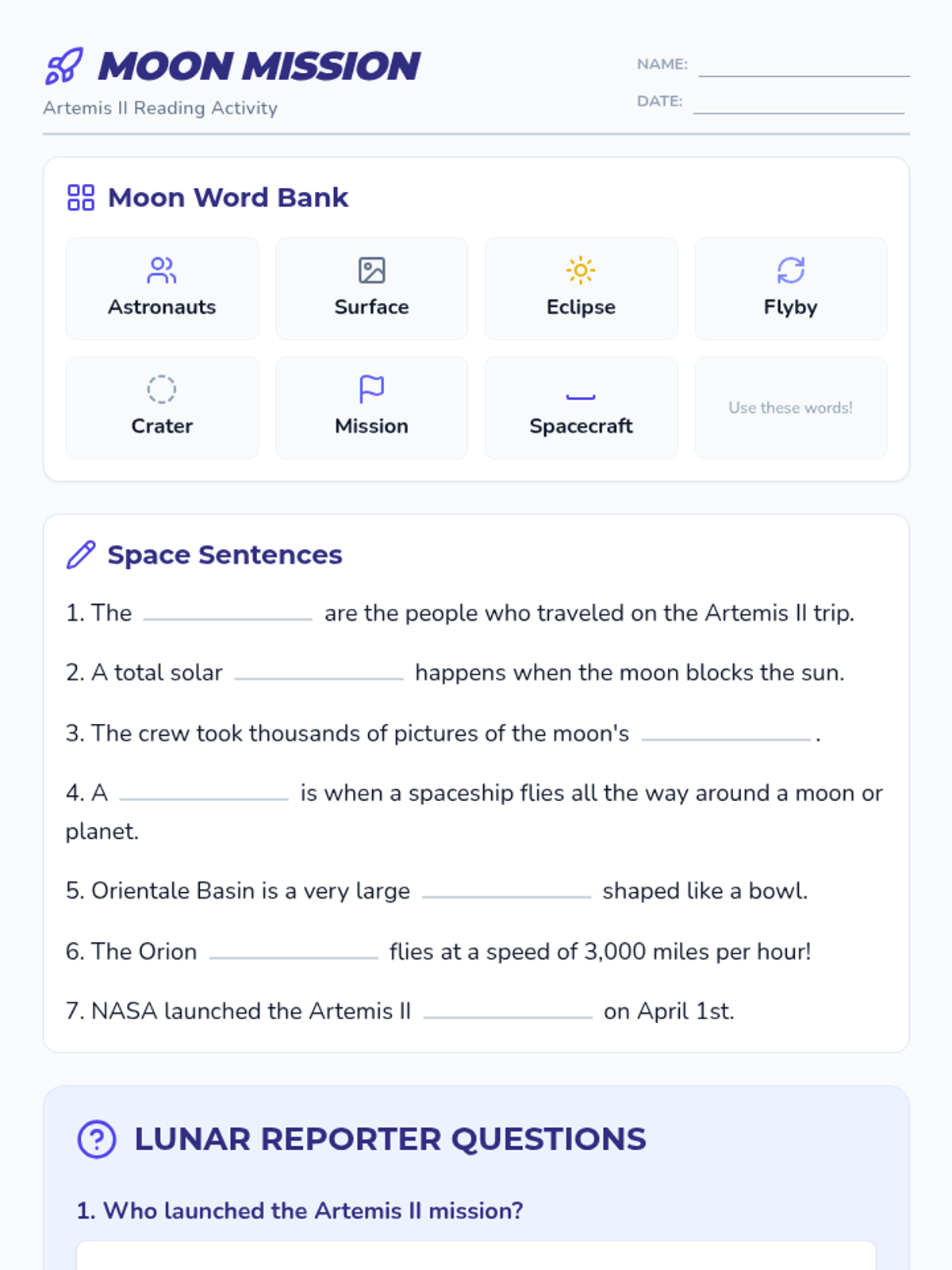
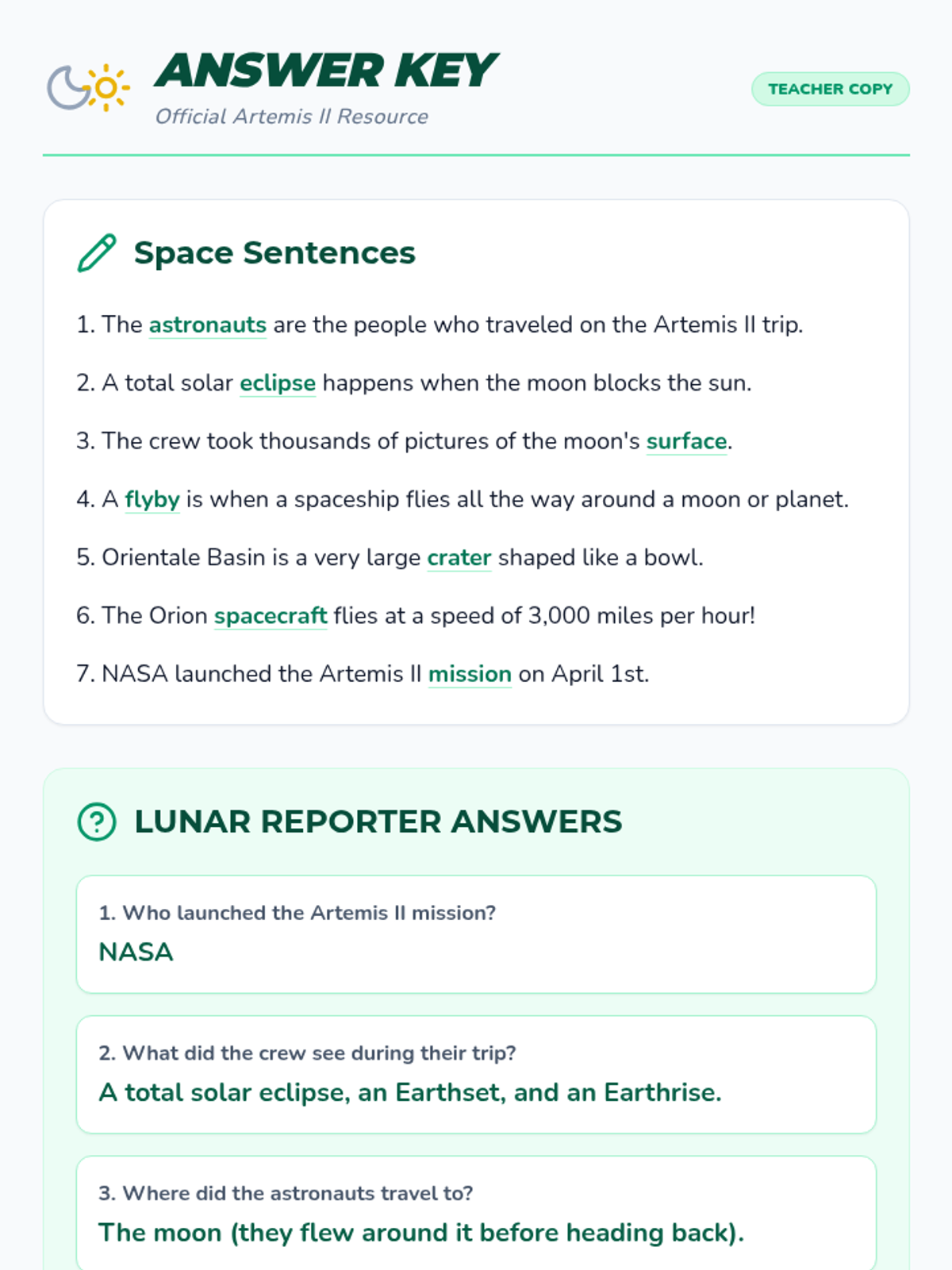
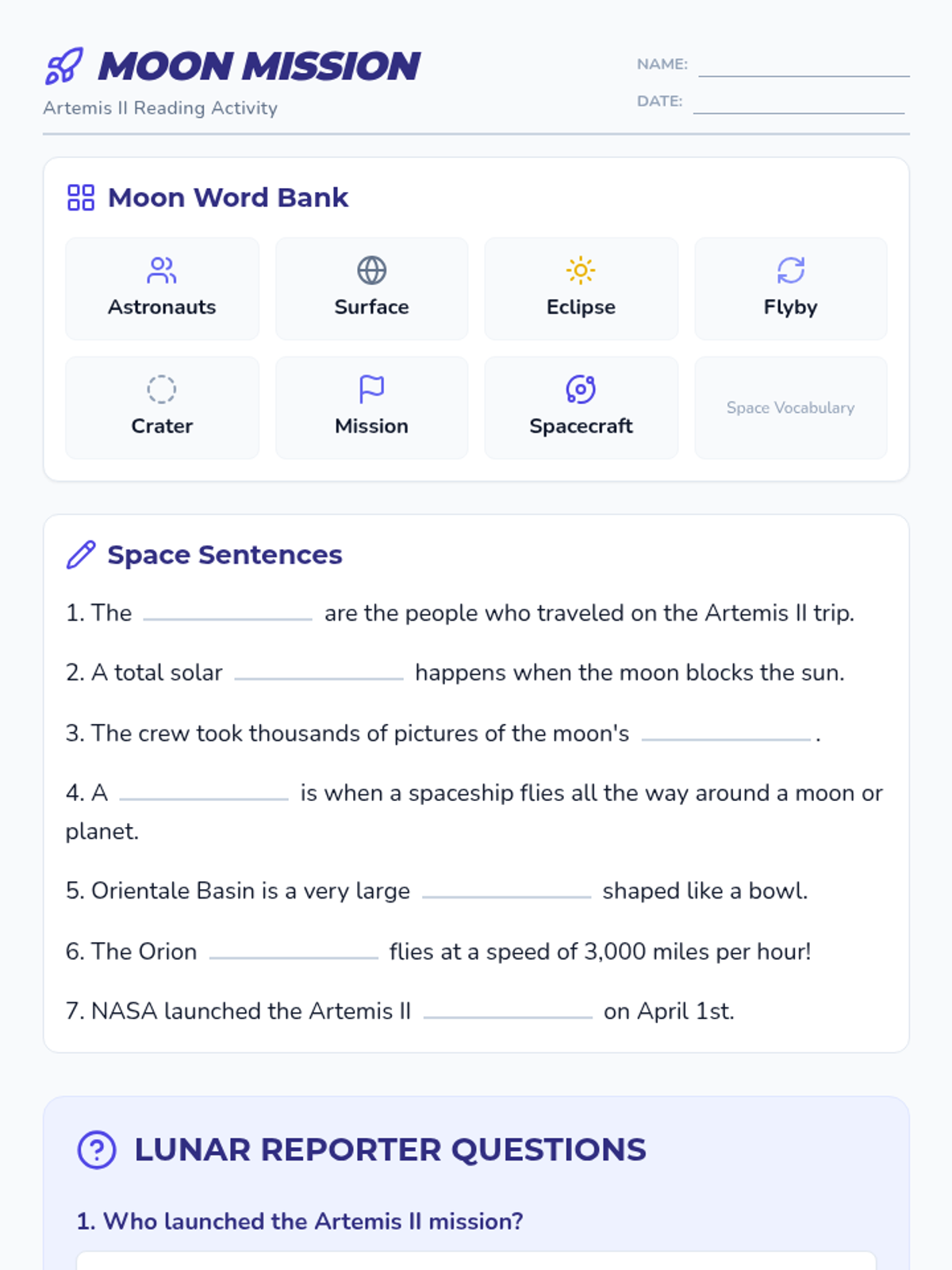
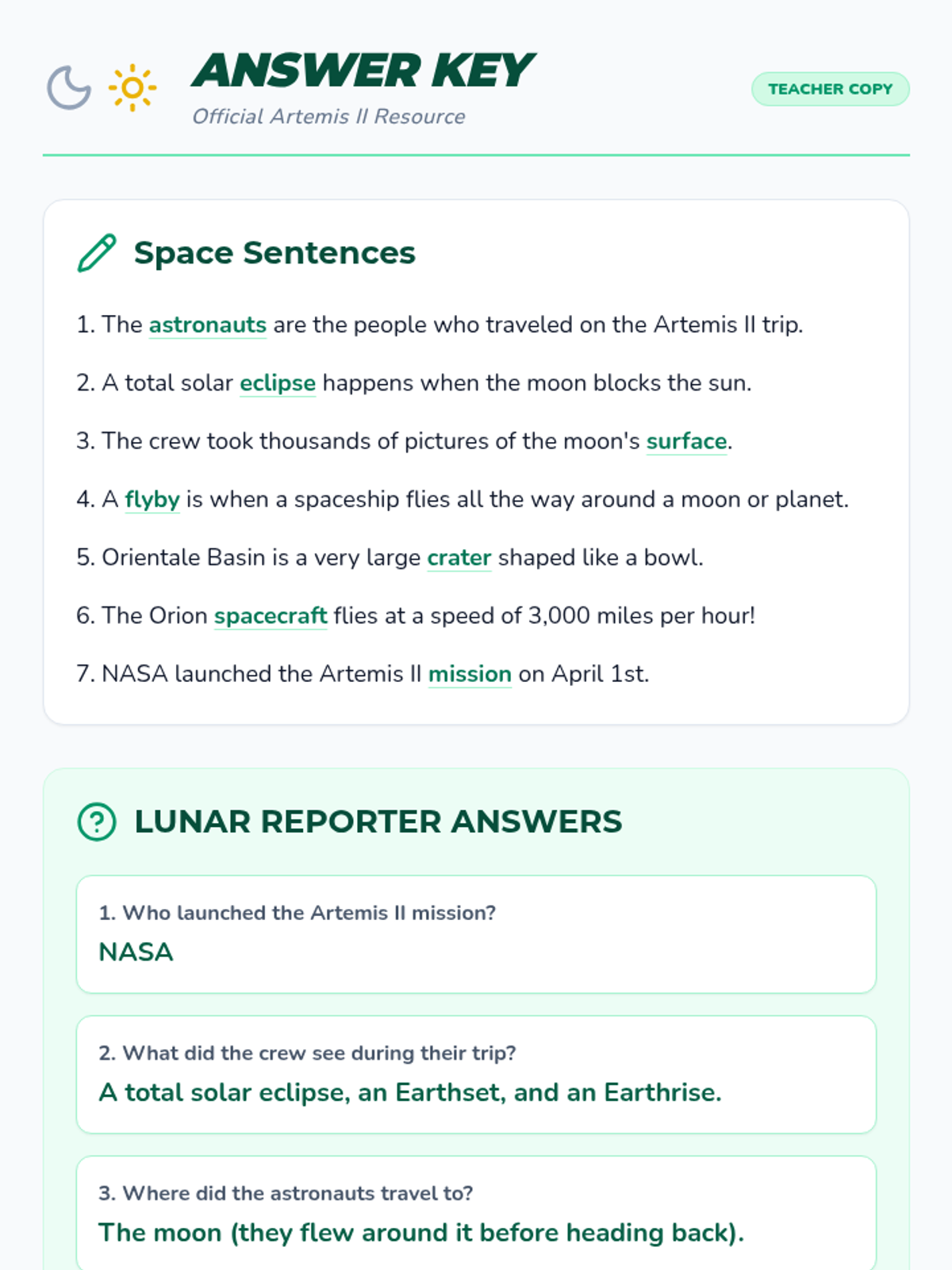
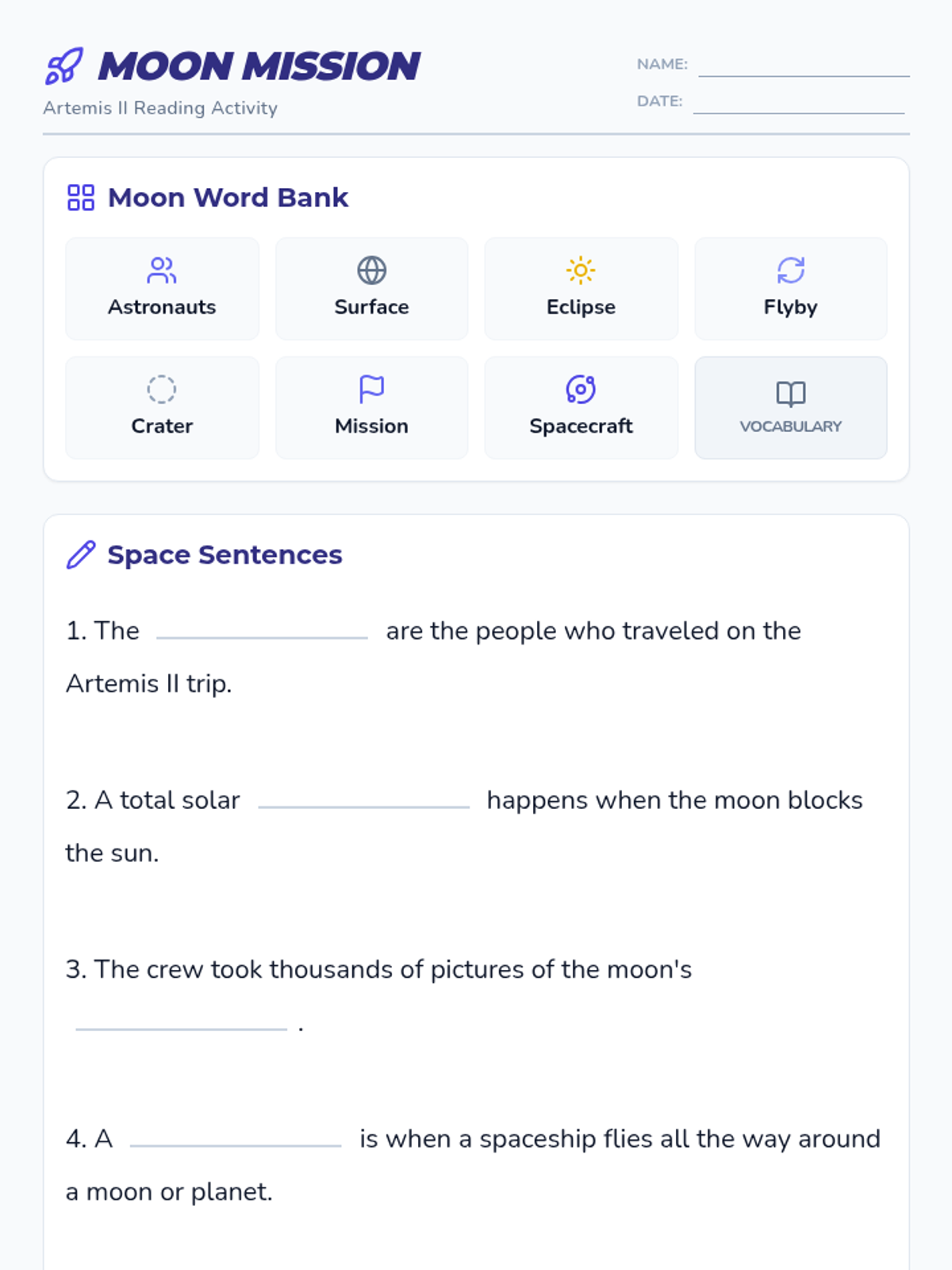
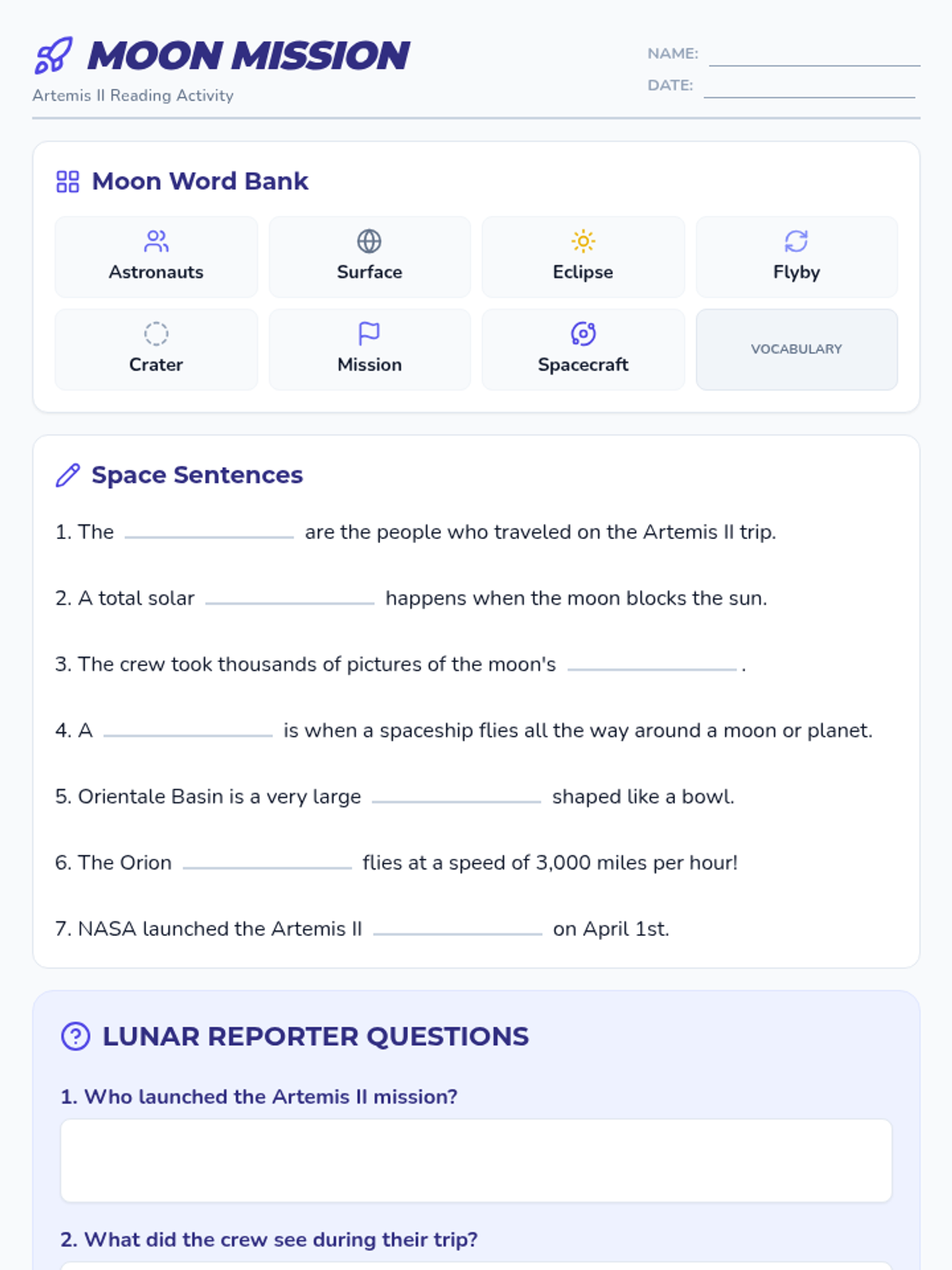
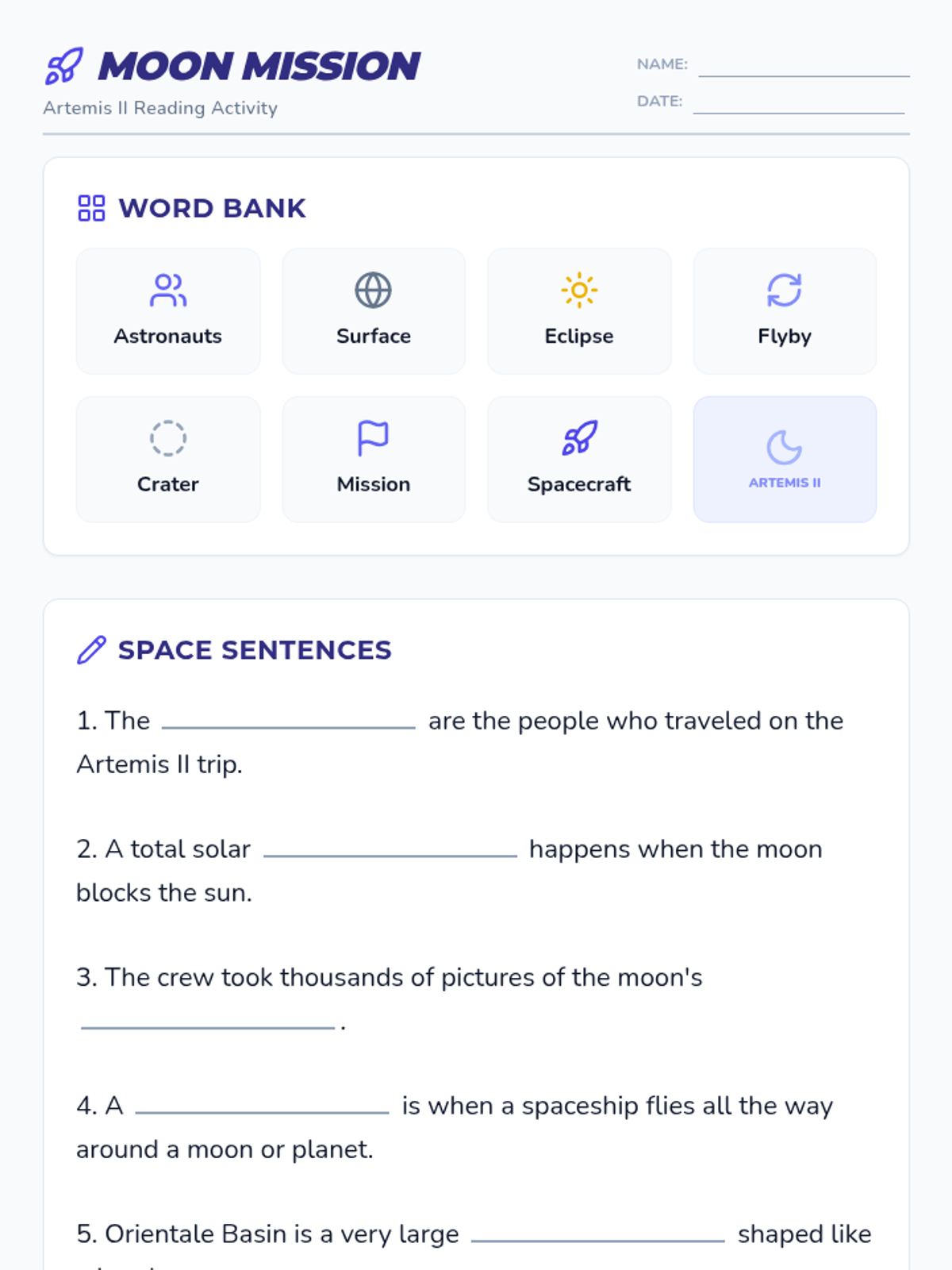
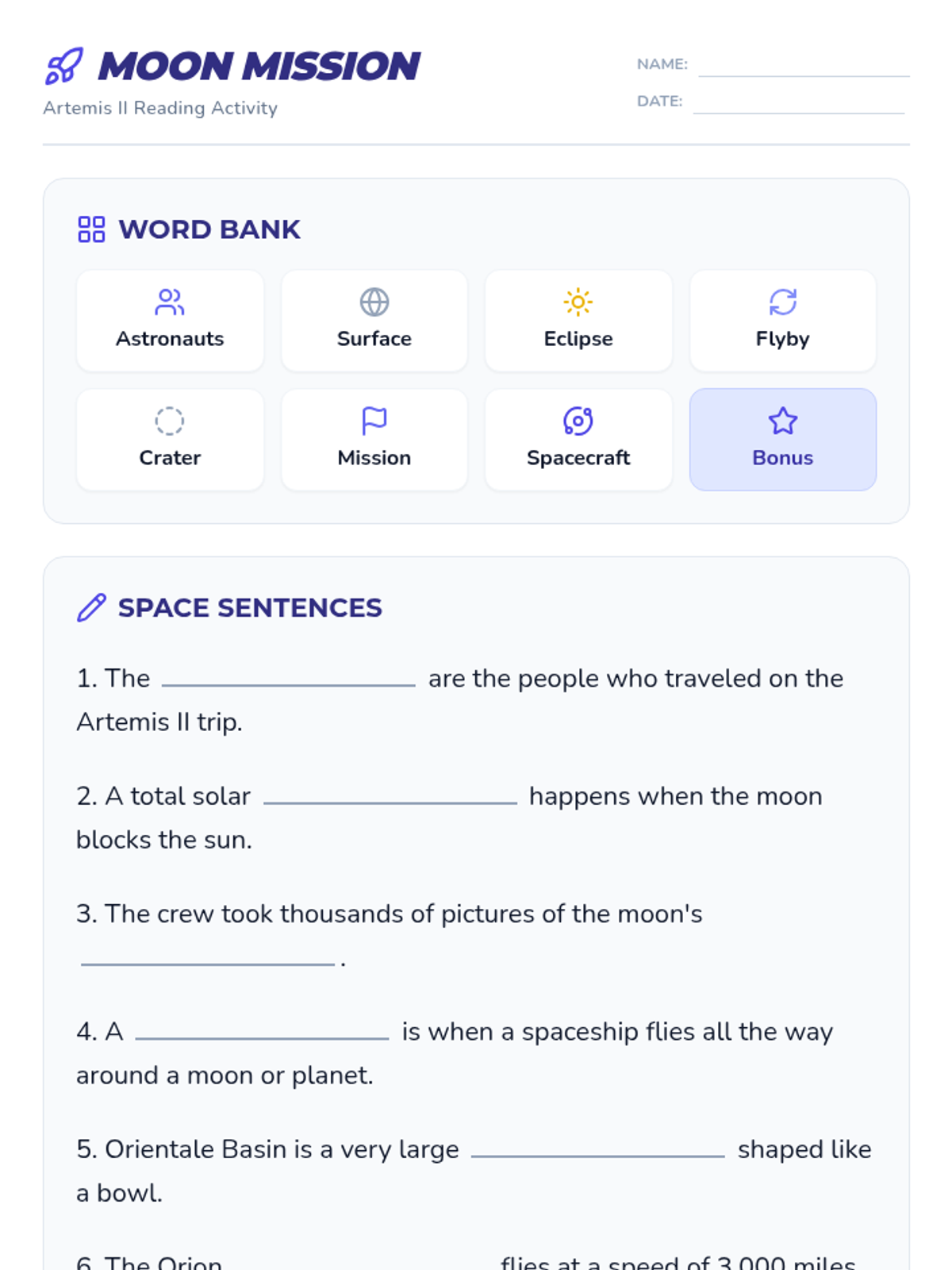
A reading comprehension lesson based on the Artemis II moon flyby article, featuring vocabulary building and fact-finding through WH-questions.
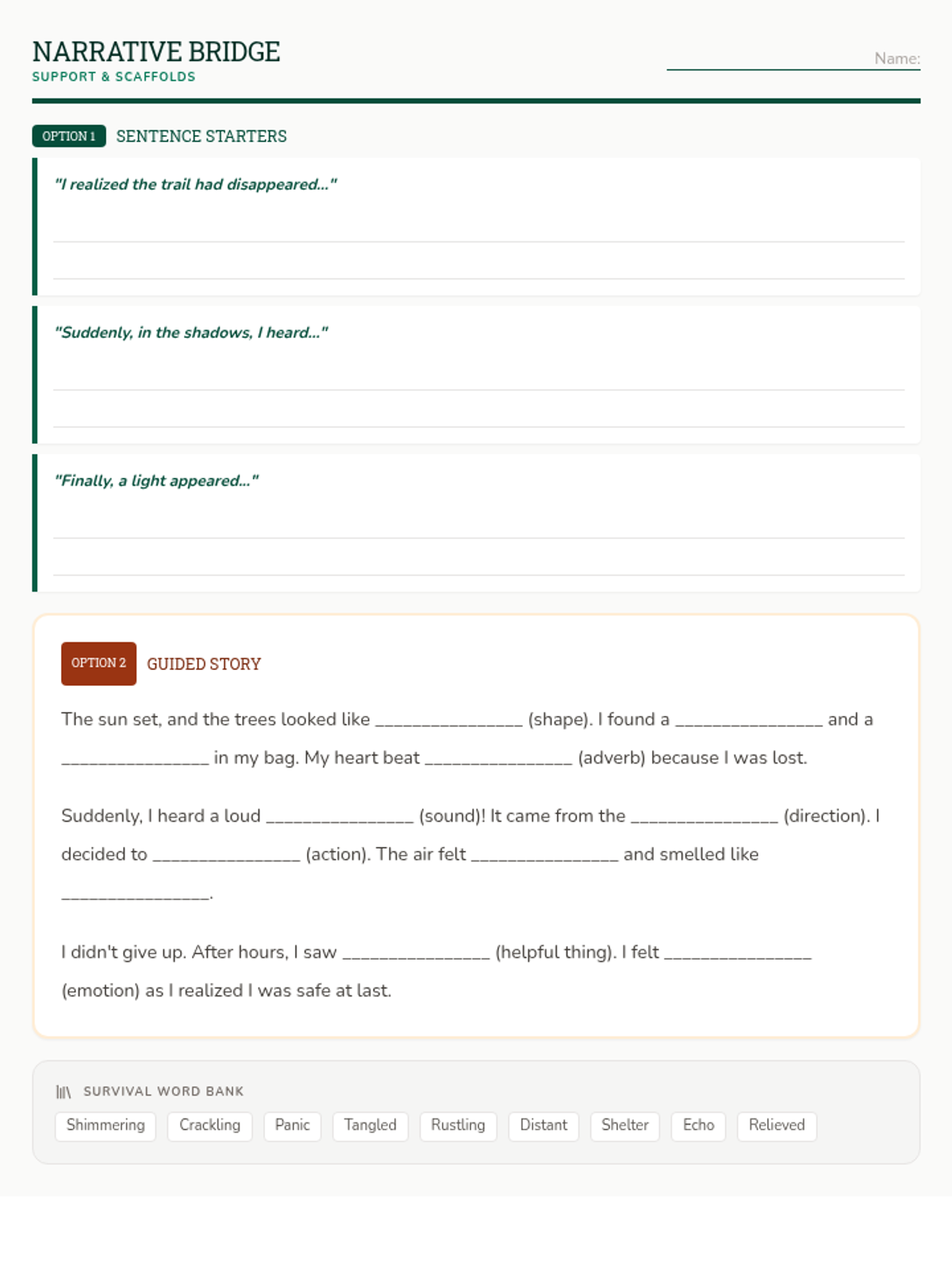
Focuses on drafting and finalizing the narrative using differentiated scaffolds and final writing paper.