A middle school lesson exploring natural selection through population dynamics and the impact of helpful and harmful adaptations on survival and reproduction, aligned with MA MS-LS4-4 and MS-LS4-6.
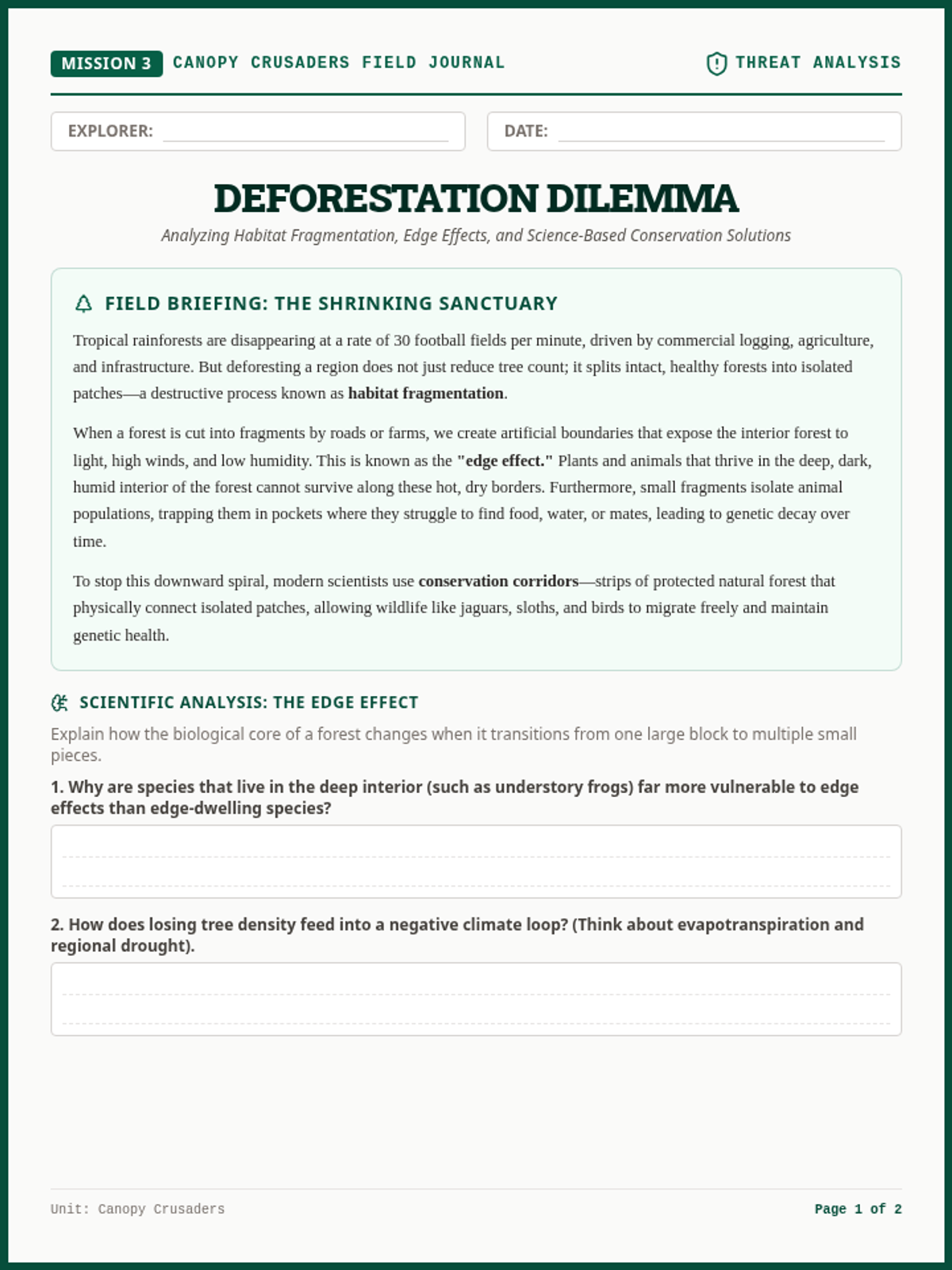
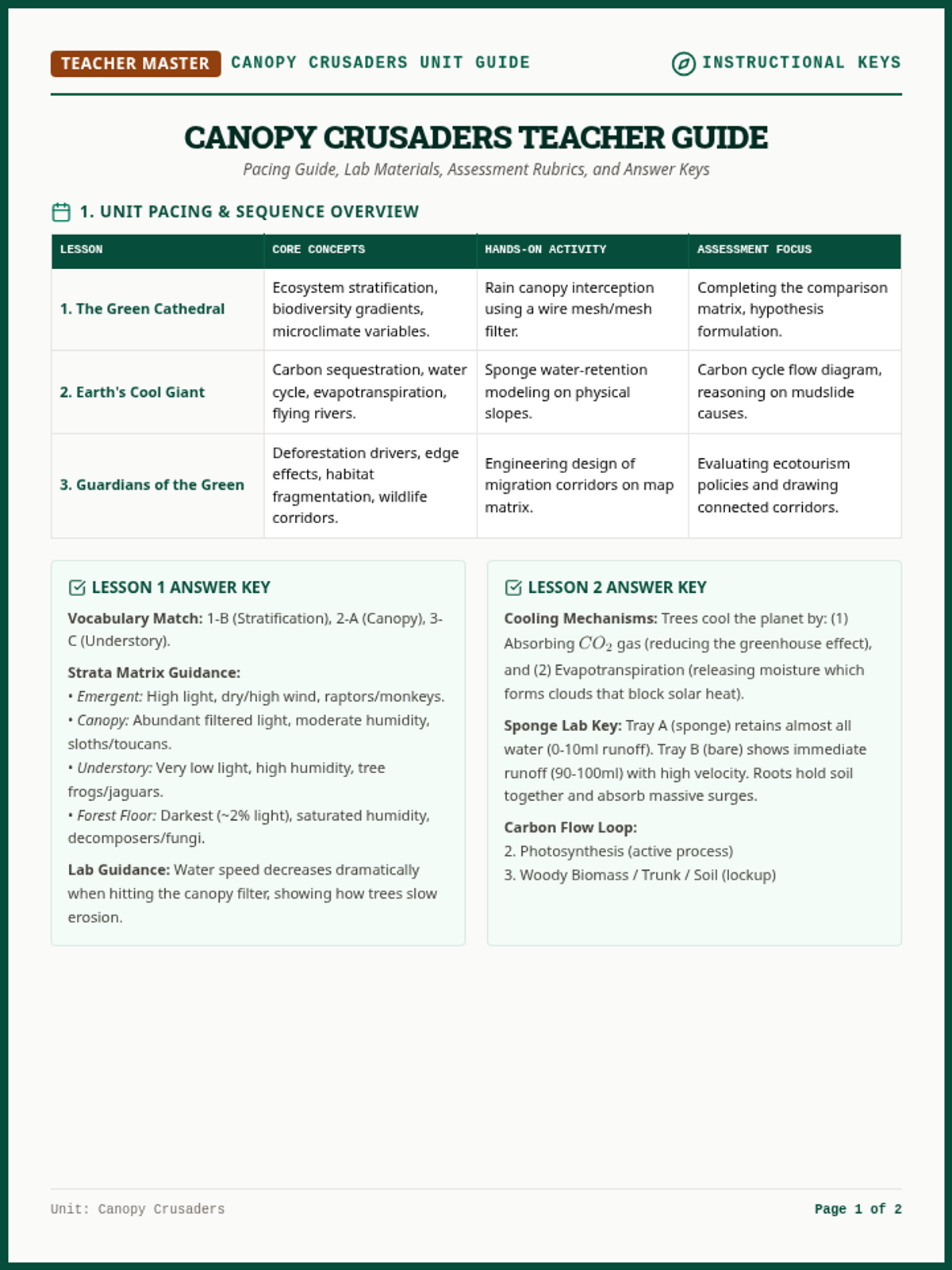
Students analyze the causes and consequences of deforestation, mapping habitat fragmentation and designing collaborative, science-based conservation solutions.
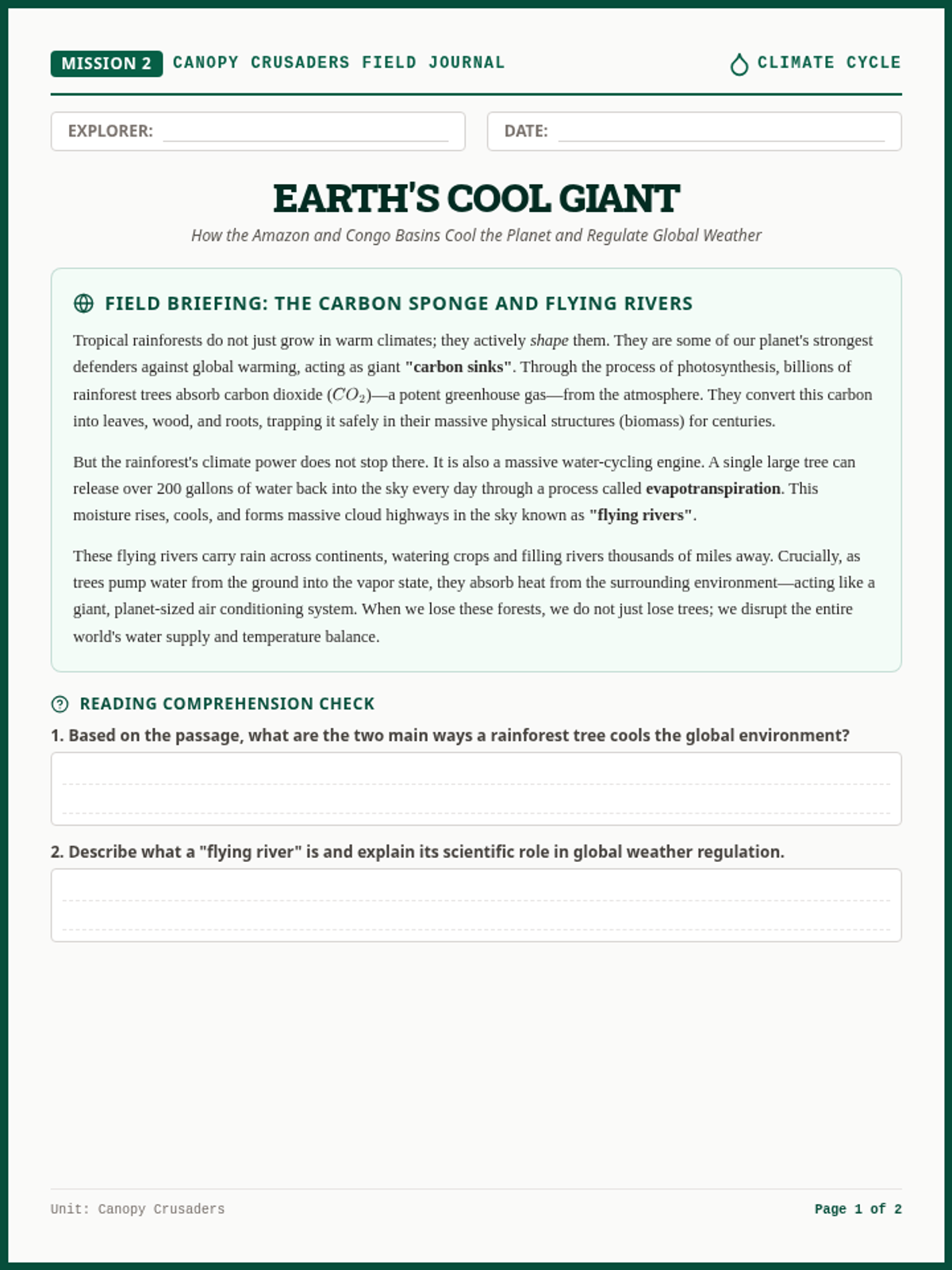
Students investigate the rainforest as a massive climate-control engine, analyzing how evapotranspiration regulates weather and how trees act as vital global carbon sinks.
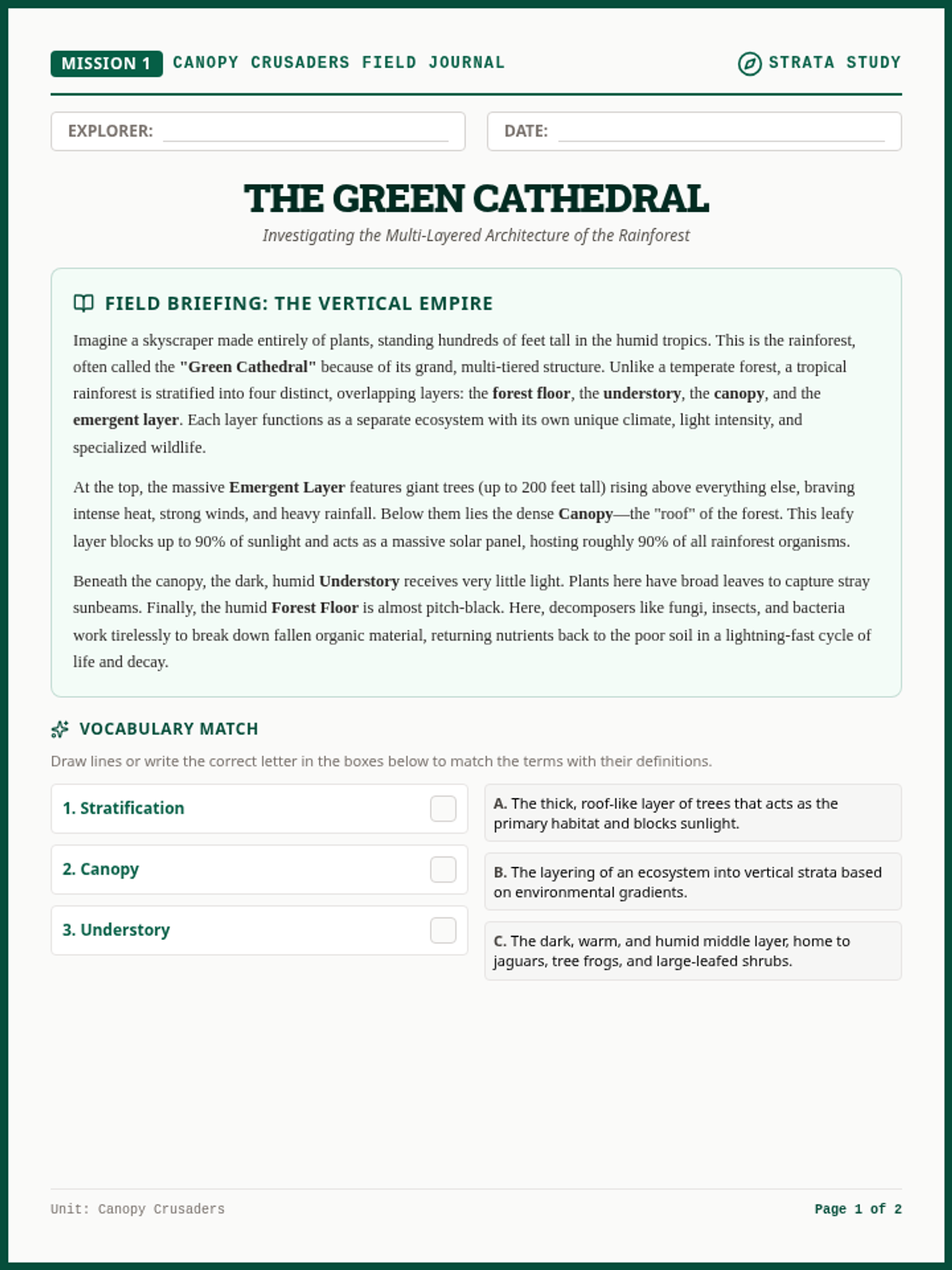
Students explore the structural layers of the rainforest (forest floor, understory, canopy, emergent layer) and model biodiversity and physical conditions across these strata.
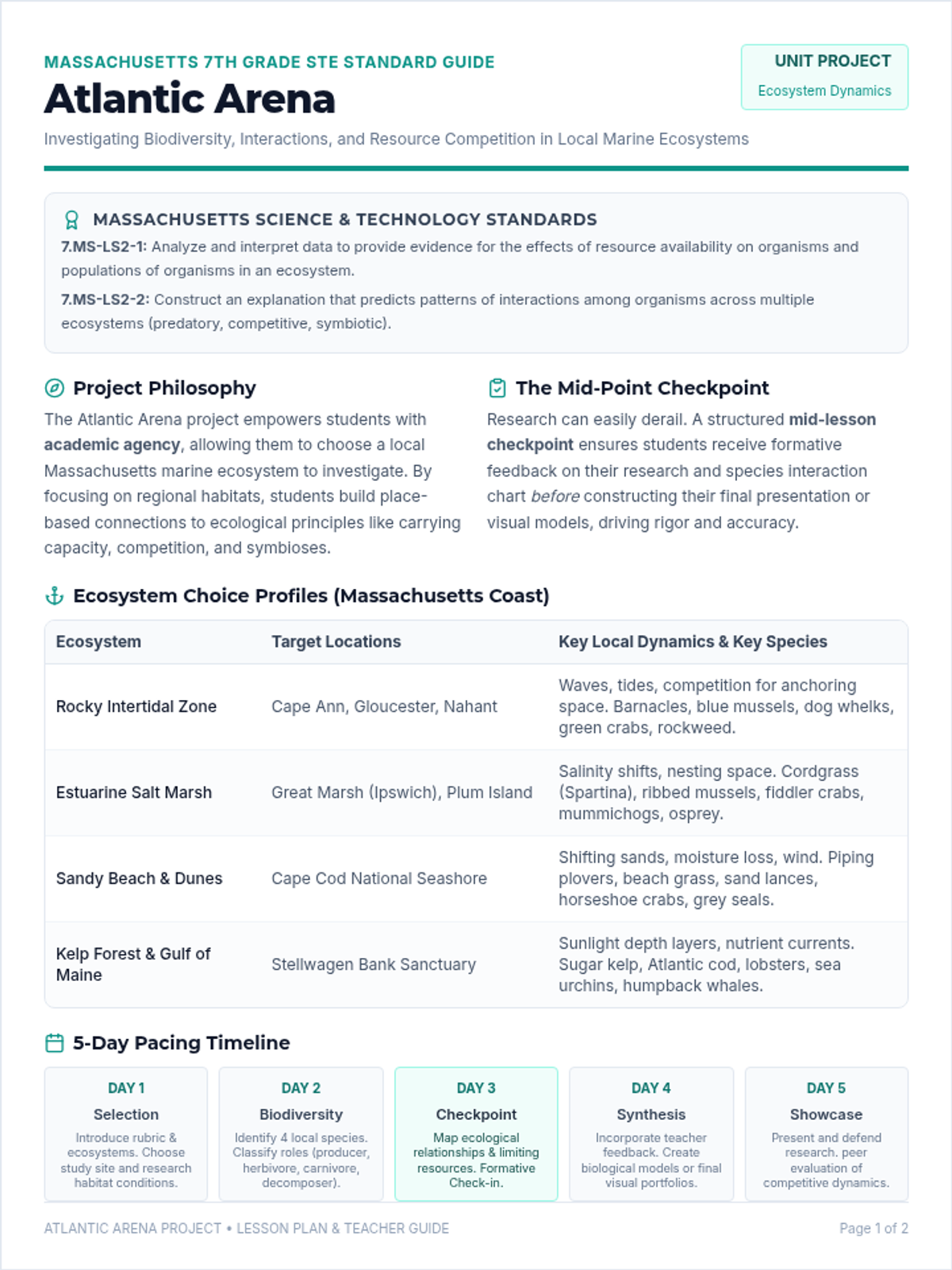
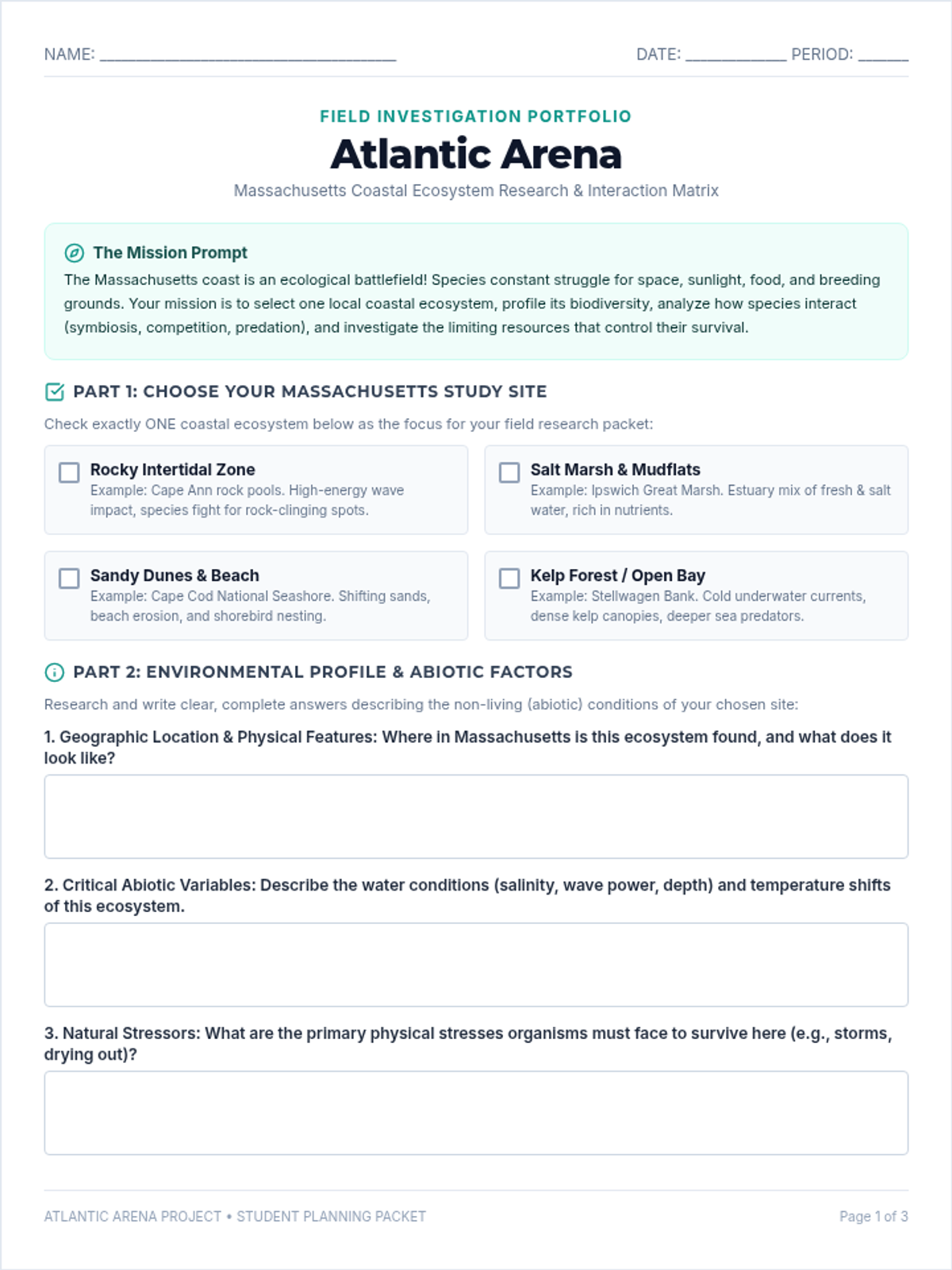
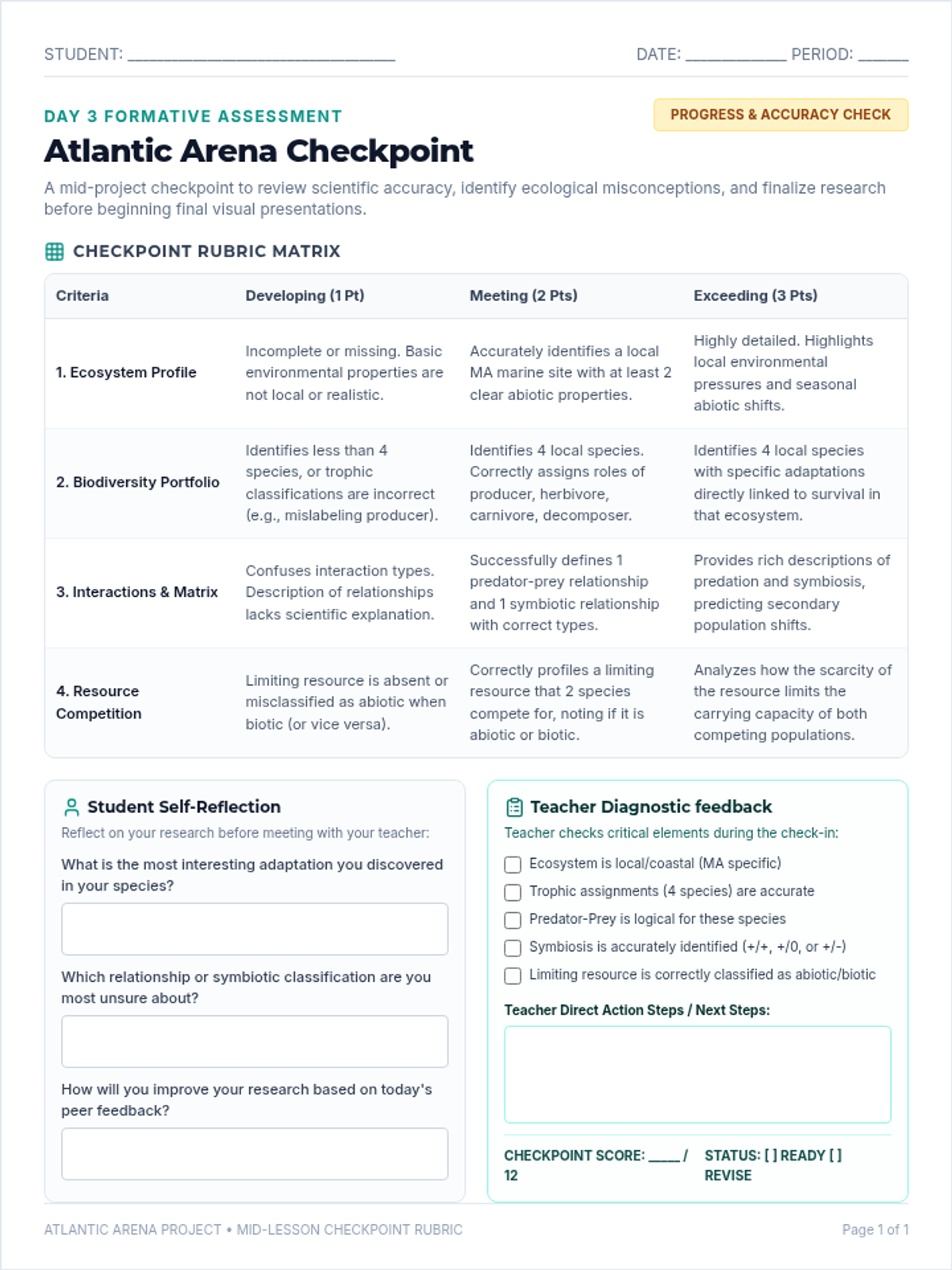
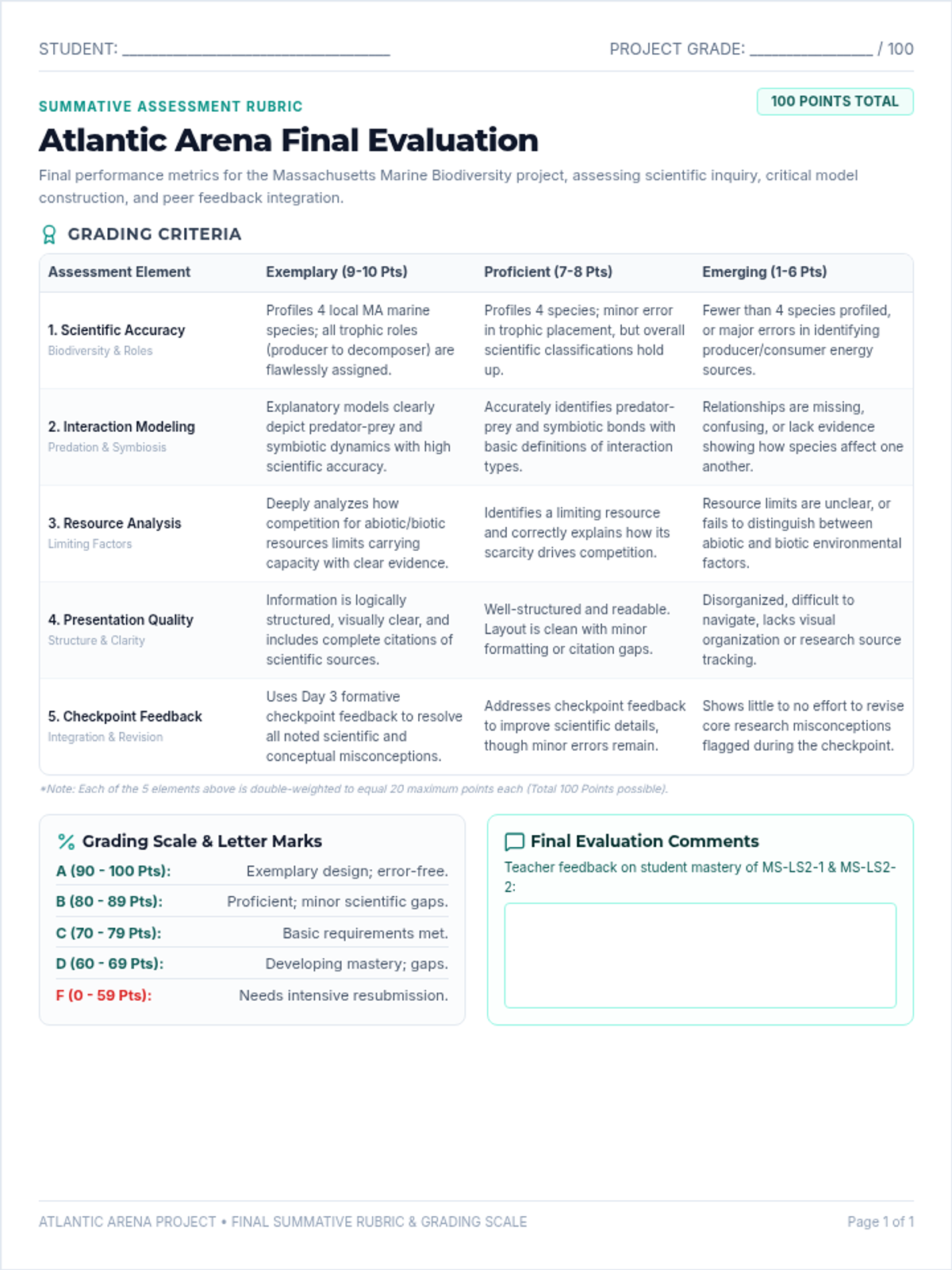
An investigative project-based lesson for 7th-grade students exploring Massachusetts marine ecosystems. Students choose a local coastal ecosystem, research resident species, analyze competitive and symbiotic interactions, and demonstrate understanding of resource availability.
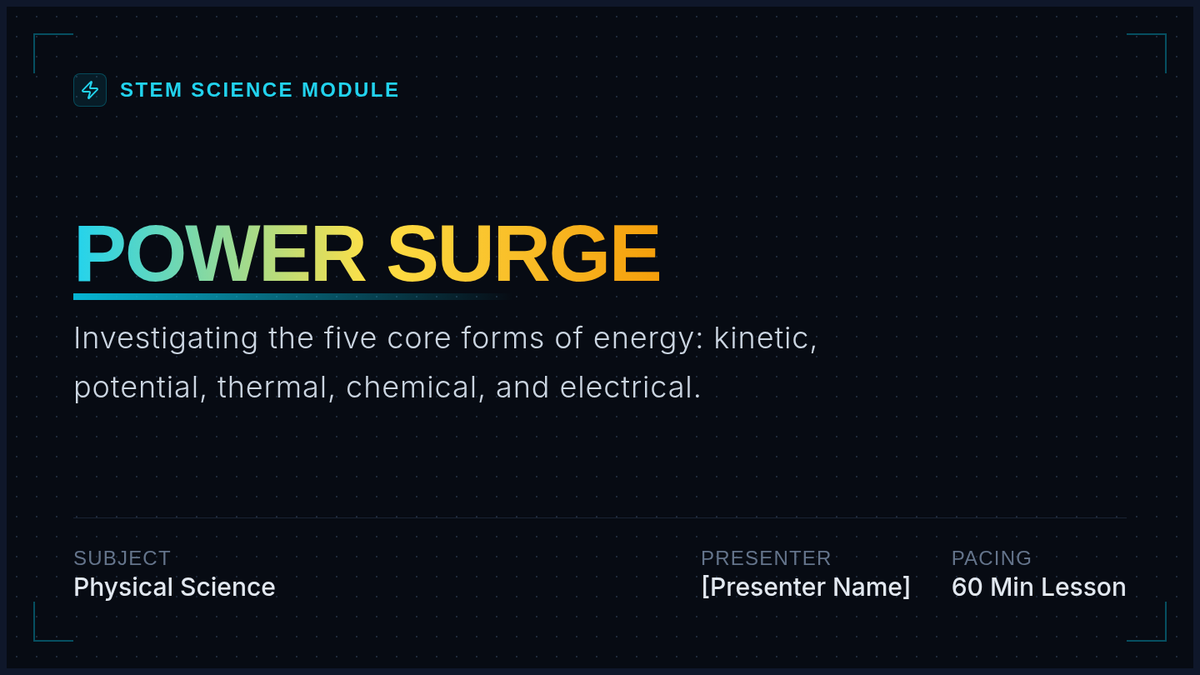
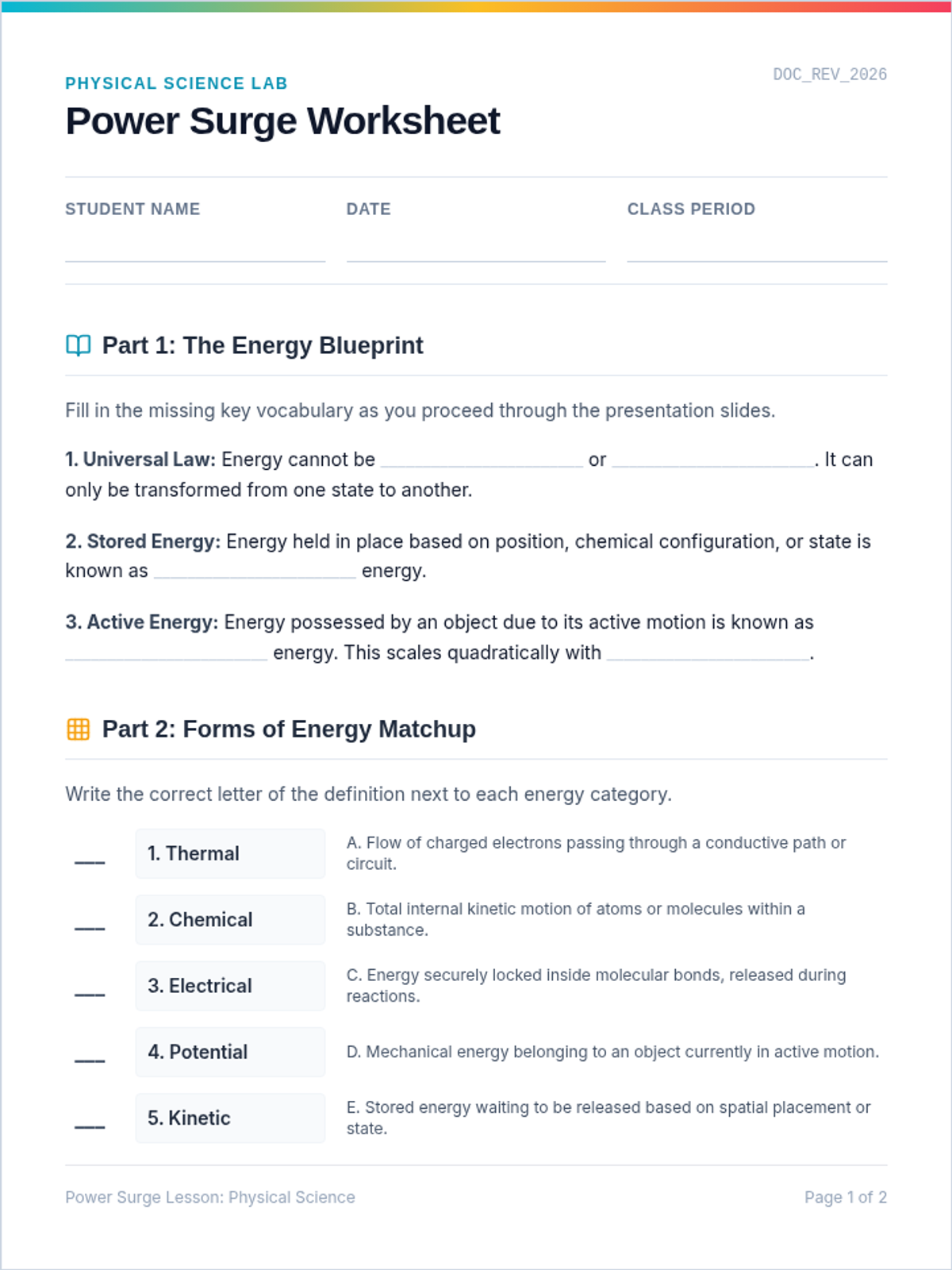
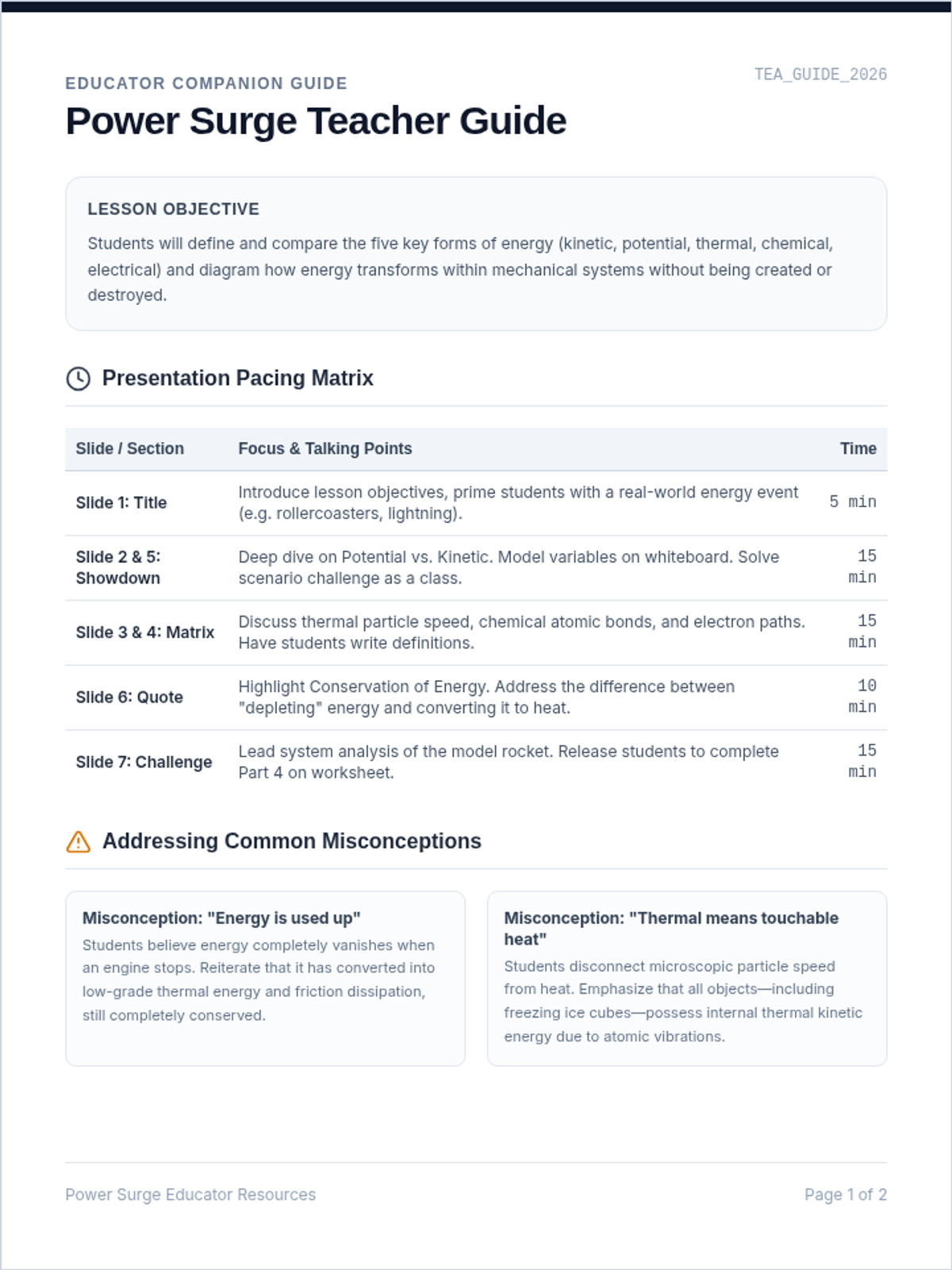
A dynamic lesson introducing the five core forms of energy: kinetic, potential, thermal, chemical, and electrical. This lesson utilizes highly engaging visual slides and structured templates to help students compare, contrast, and identify energy transformations.
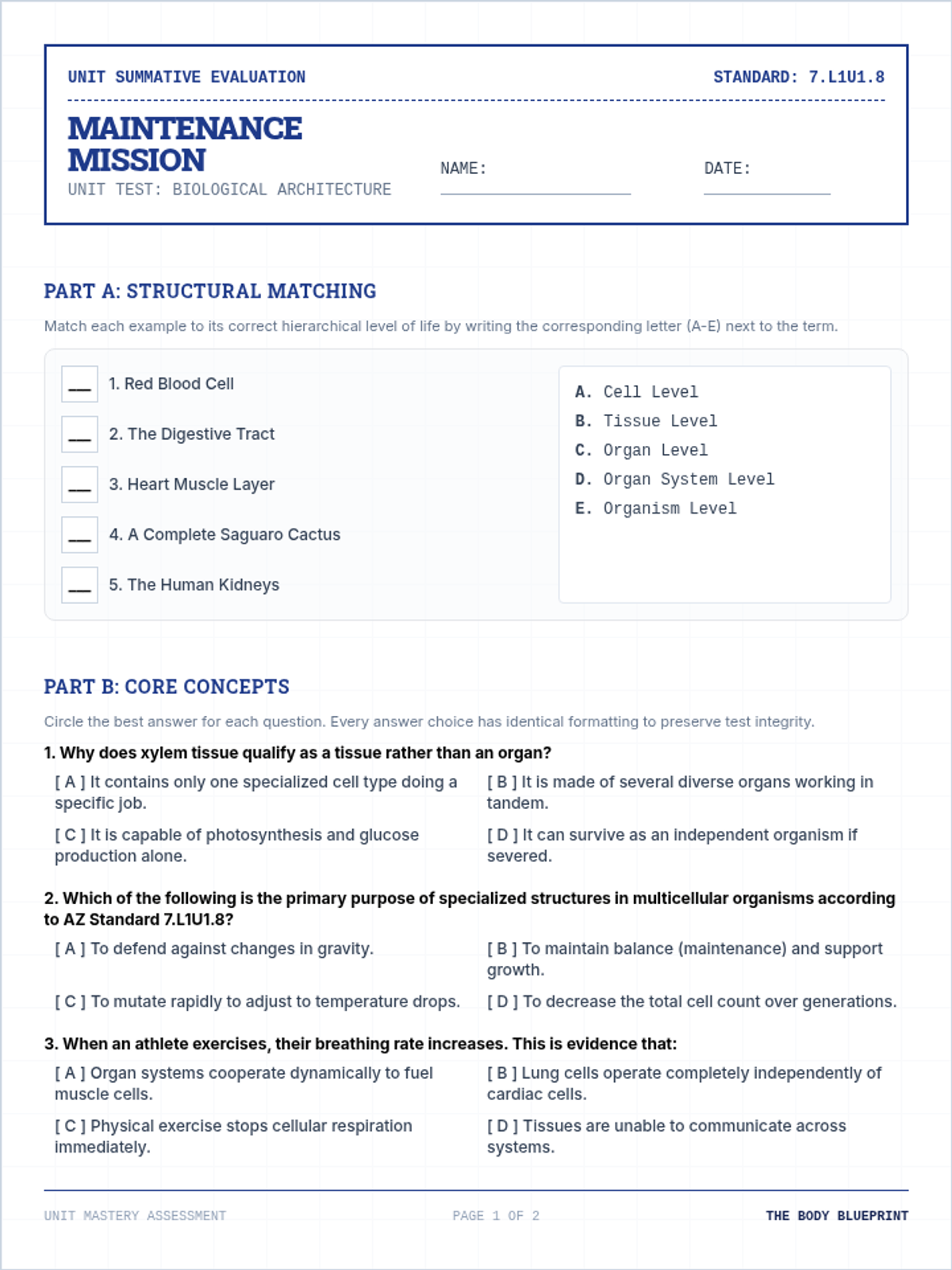
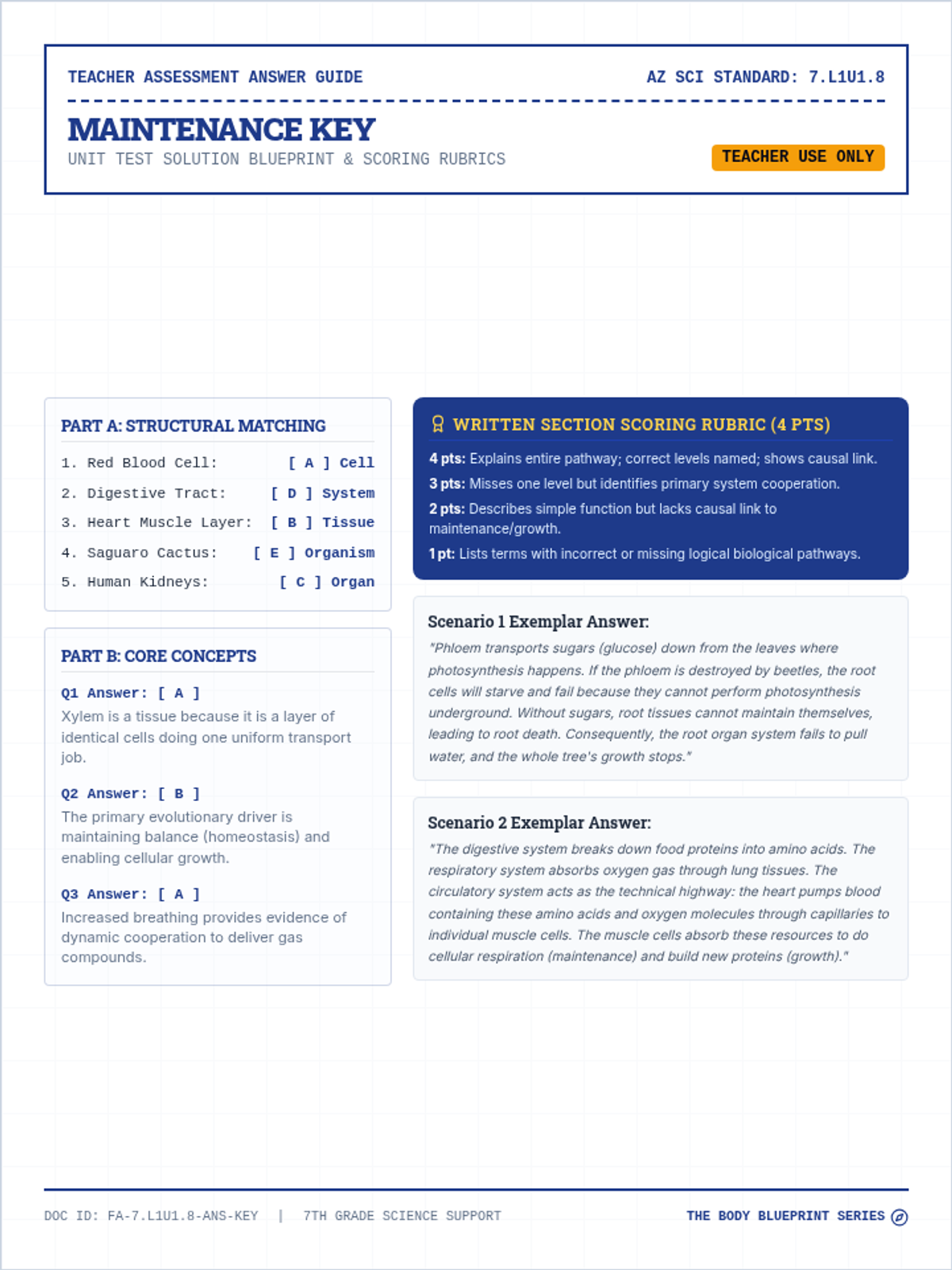
Synthesize understanding of physical structures and their maintenance functions through a comprehensive unit assessment and system-interdependence challenge.
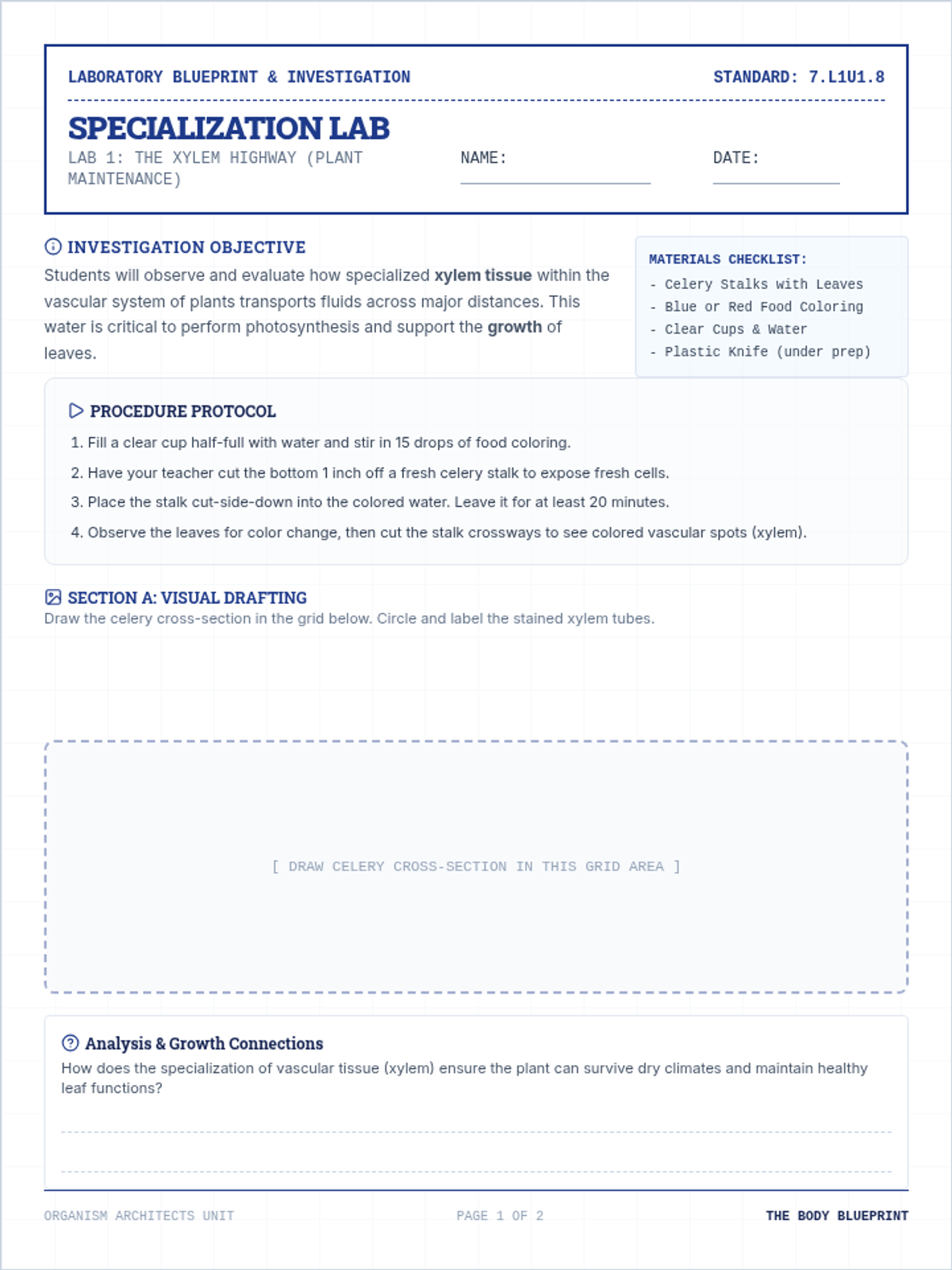
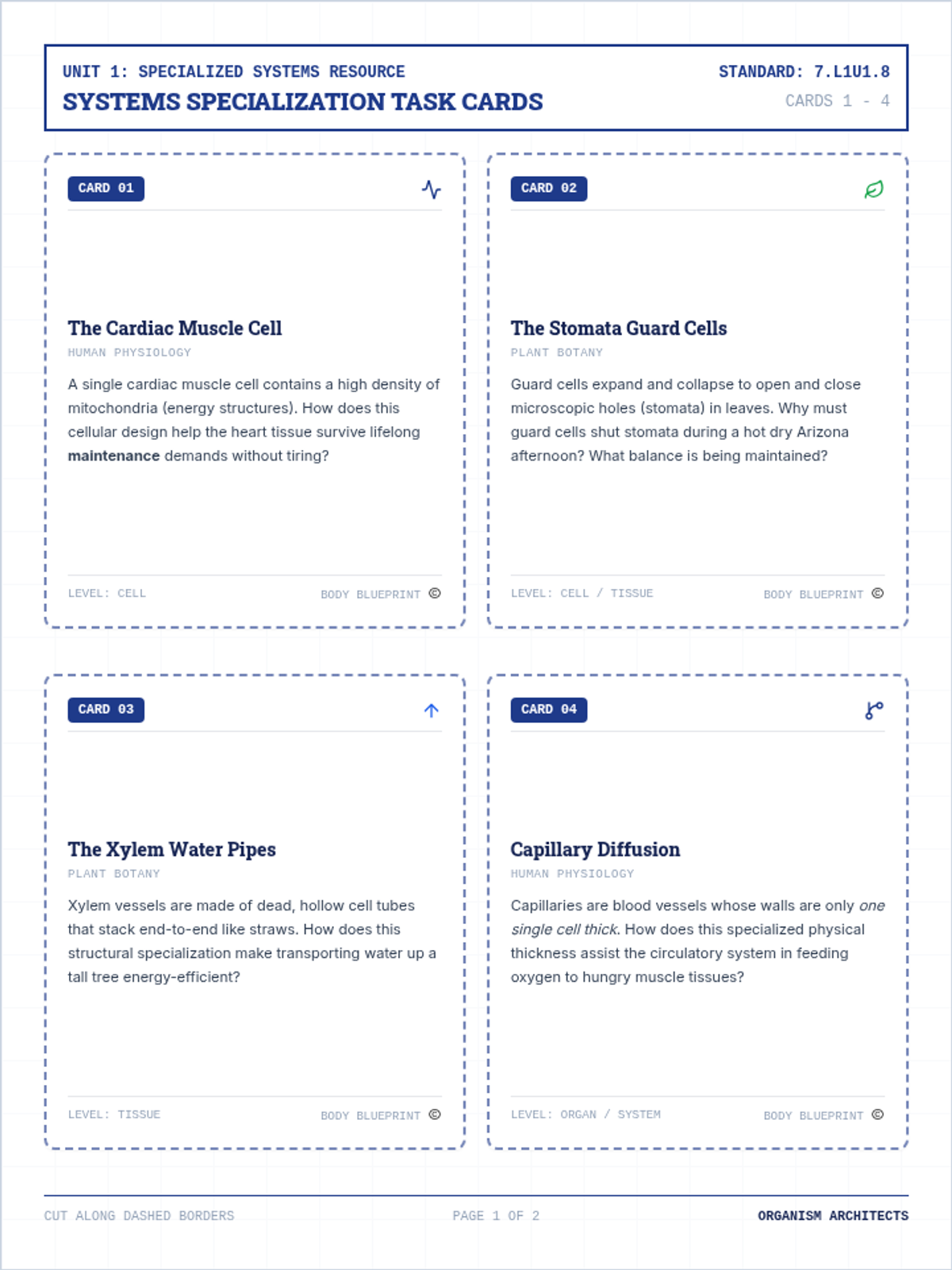
An in-depth comparative exploration of how specialized human and plant structures—such as the circulatory/digestive systems and vascular tissues—work to maintain homeostasis and promote growth.
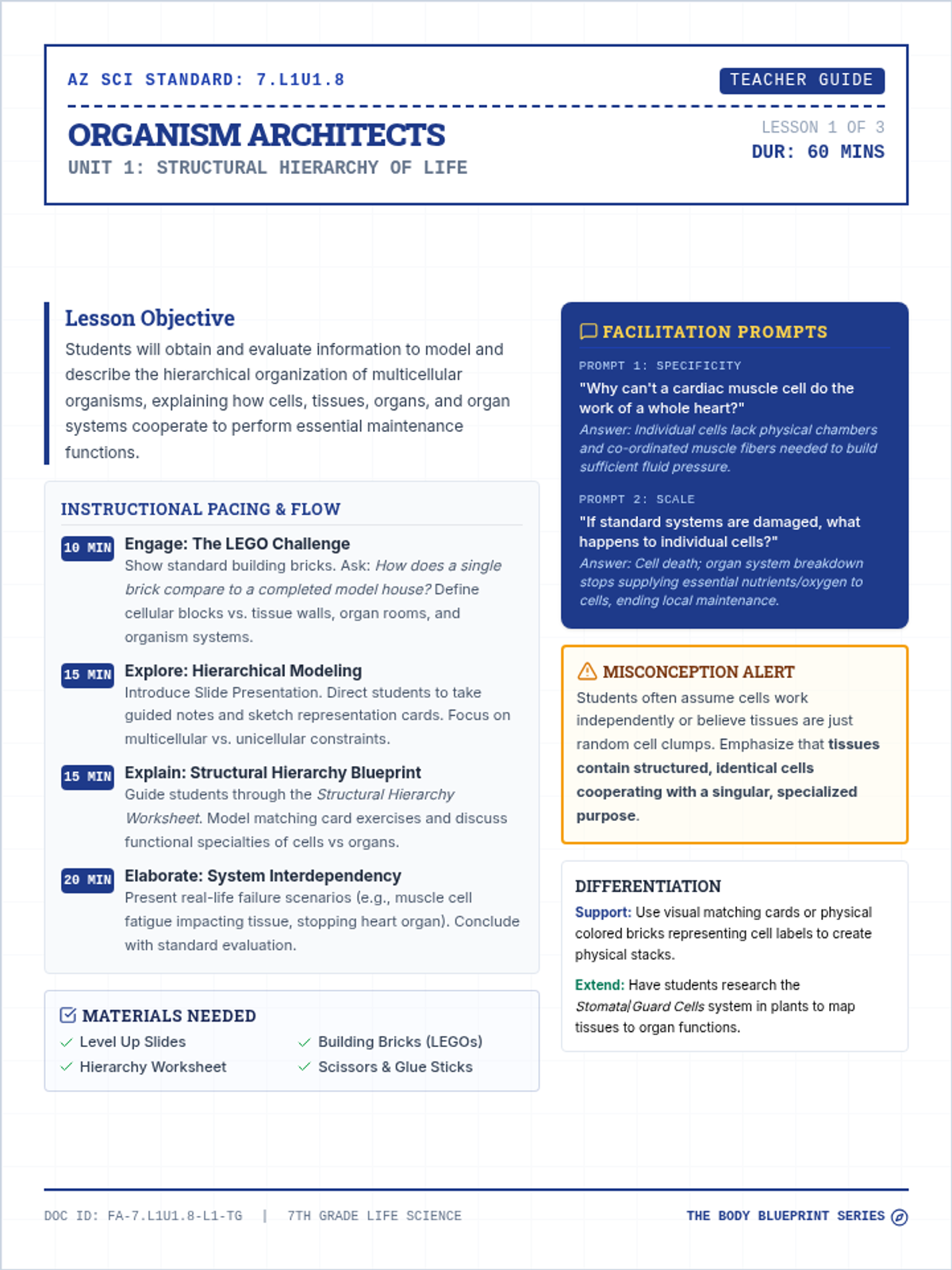
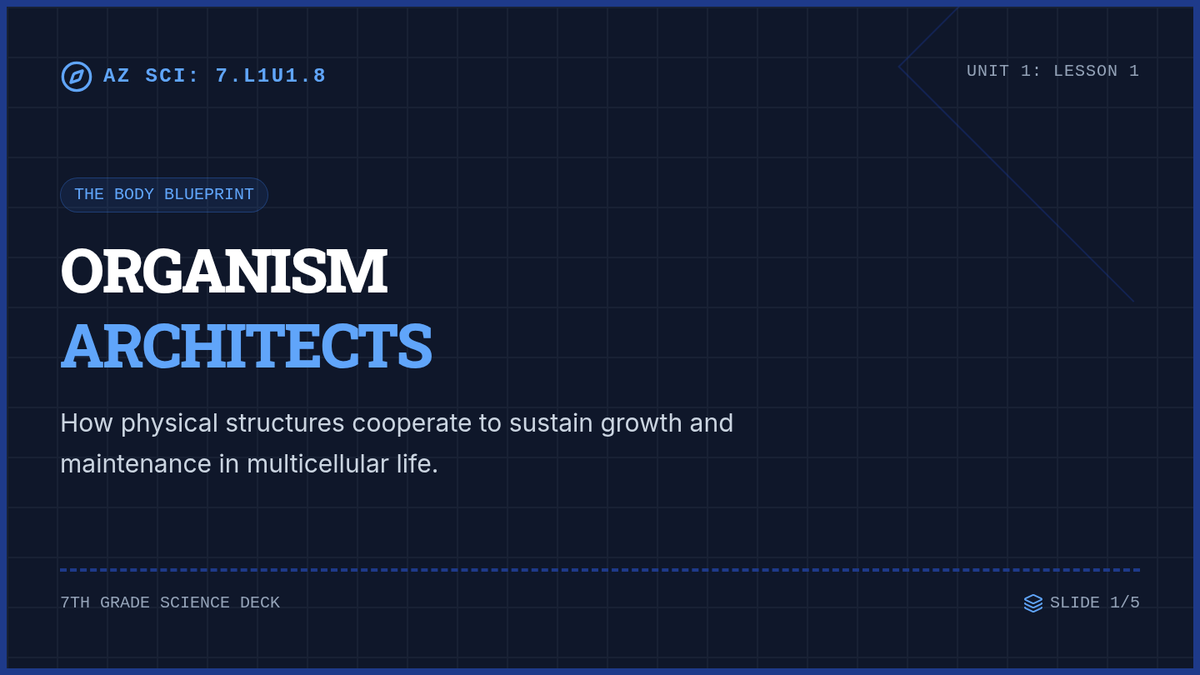
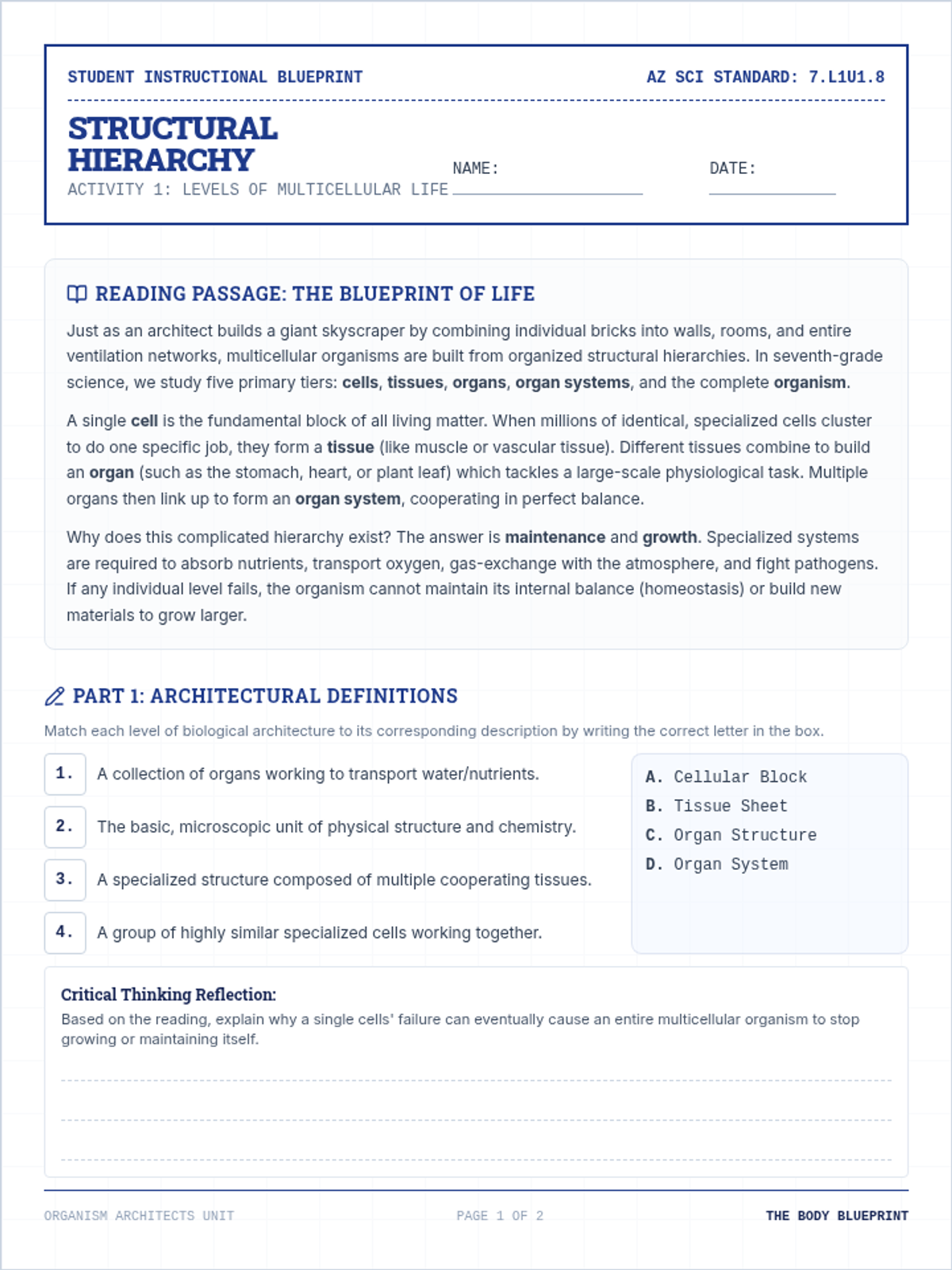
Students discover how cells, tissues, organs, and organ systems form a hierarchical structural design in multicellular organisms, behaving like individual building blocks that combine into functional structures.
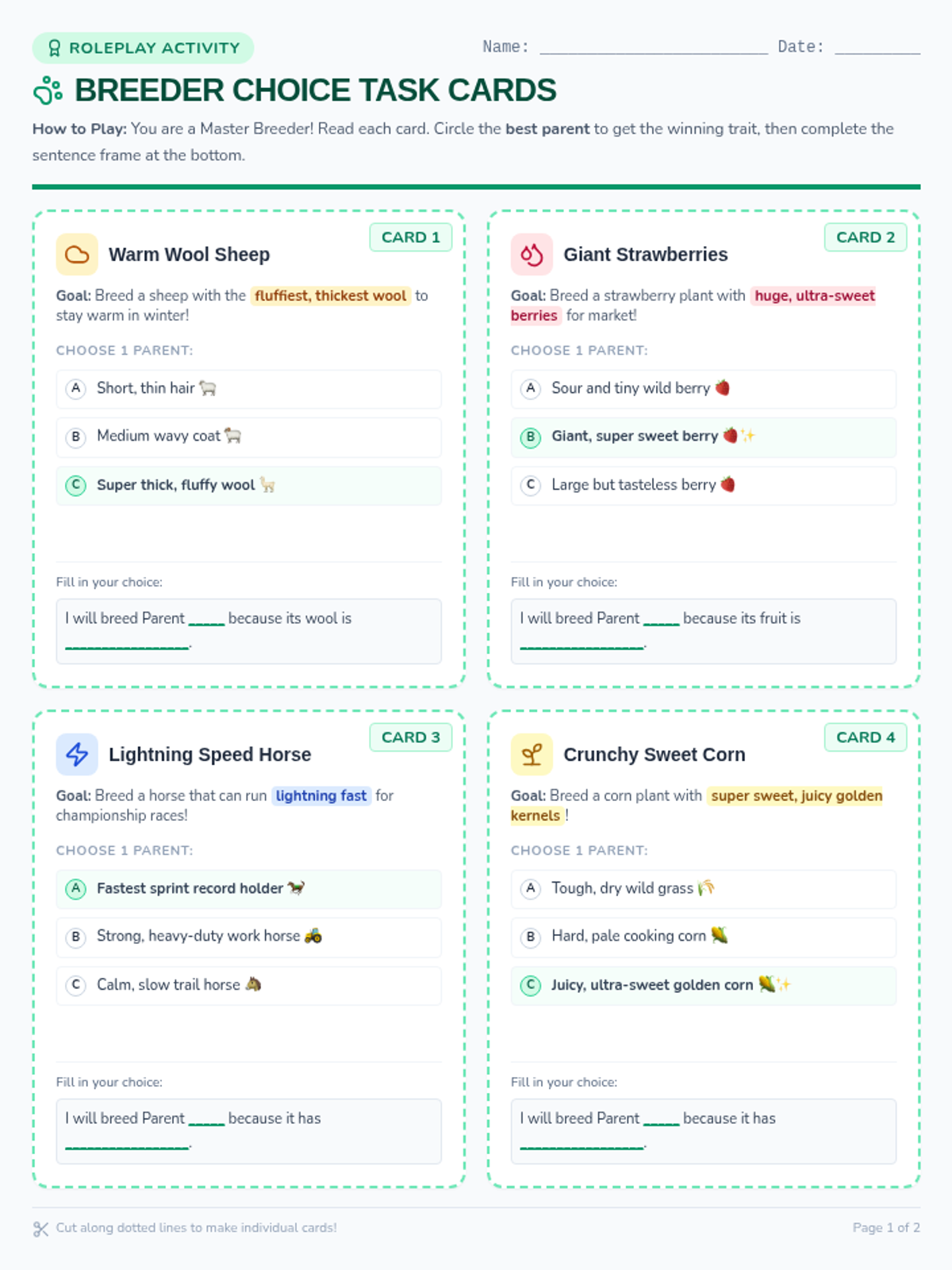
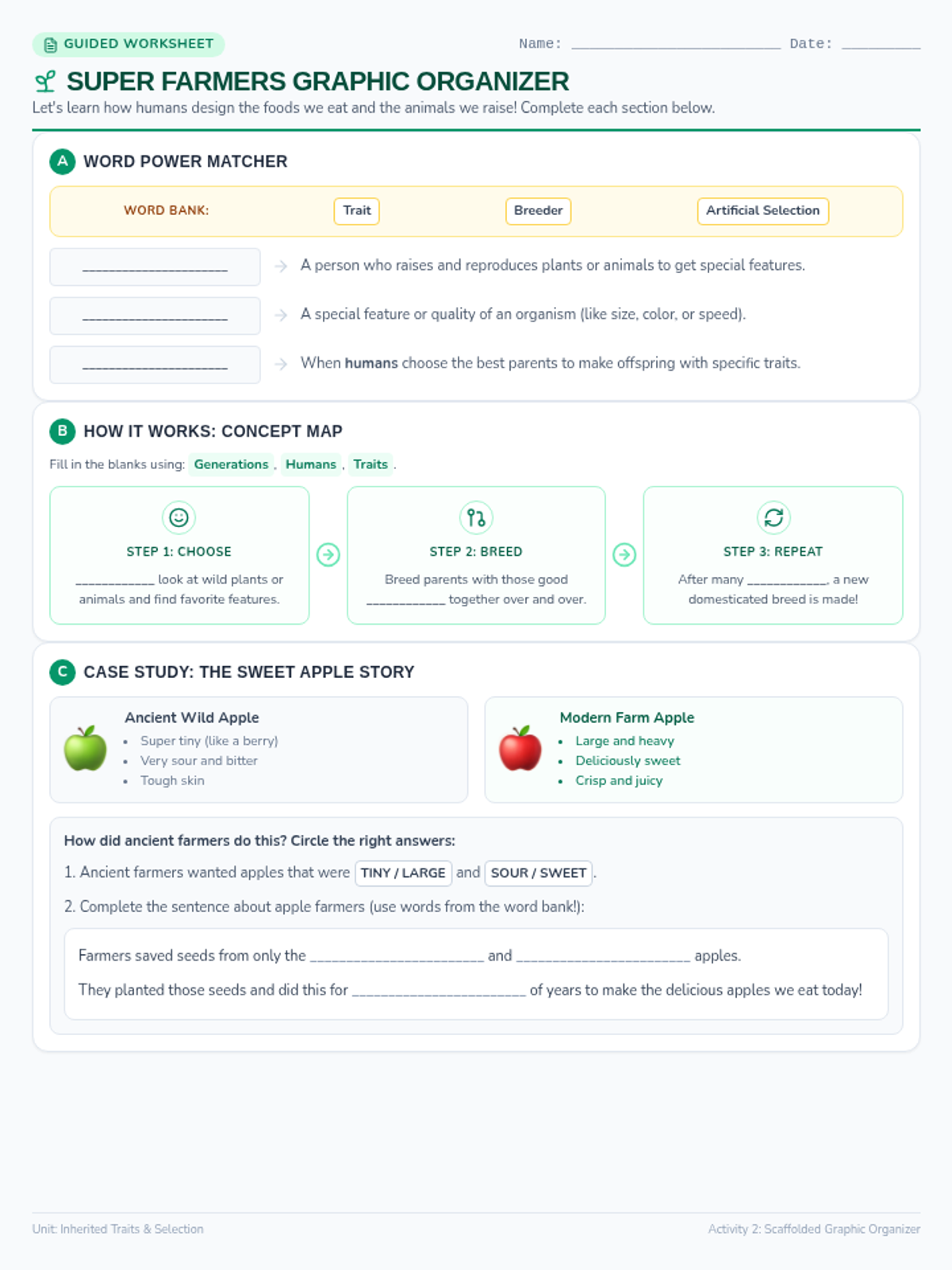
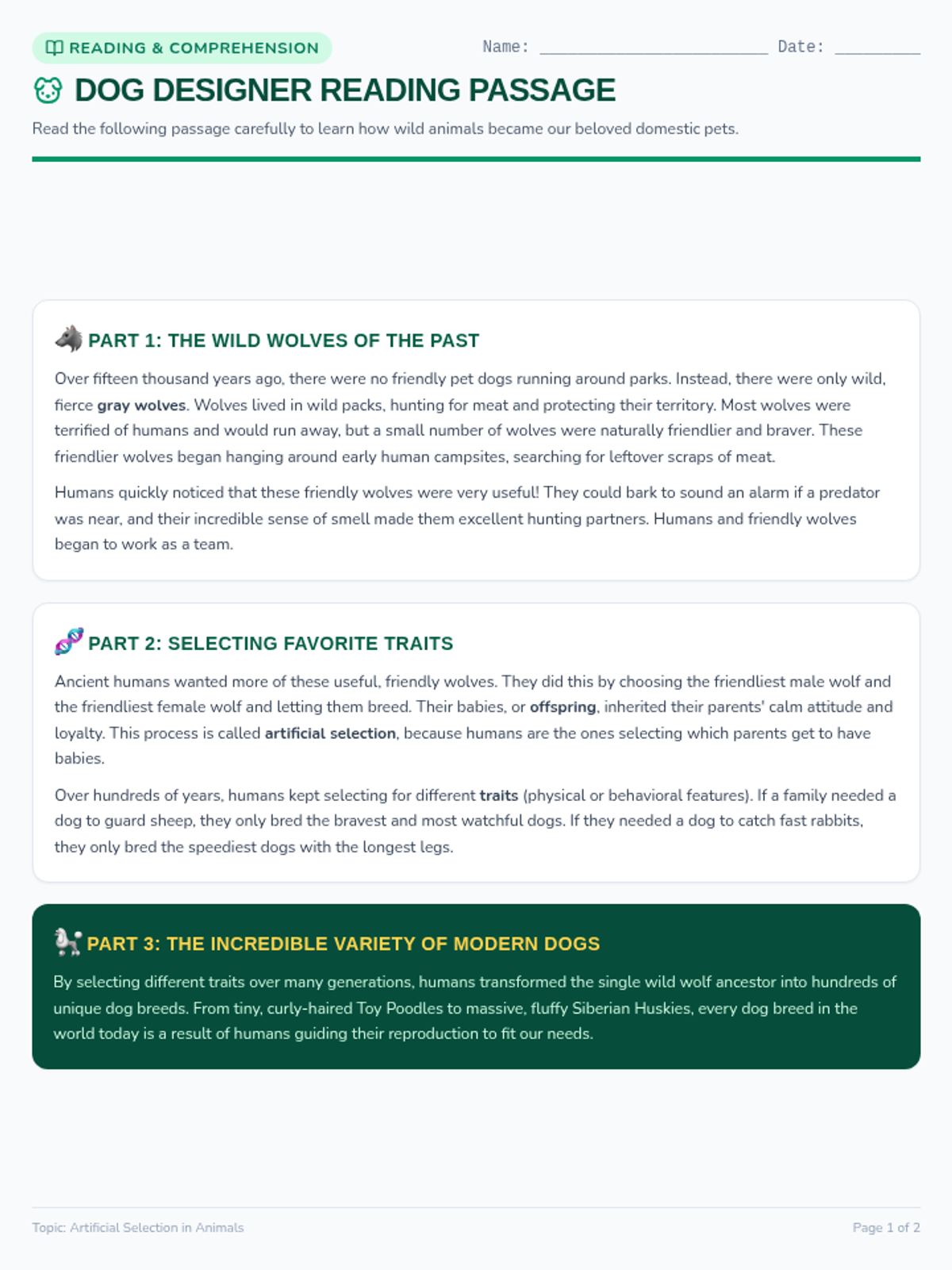
A hands-on, highly visual lesson where students explore artificial selection by roleplaying as breeders and farmers. Students analyze traits in dogs, crops, and livestock using scaffolded organizers, visual task cards, and matching tasks.
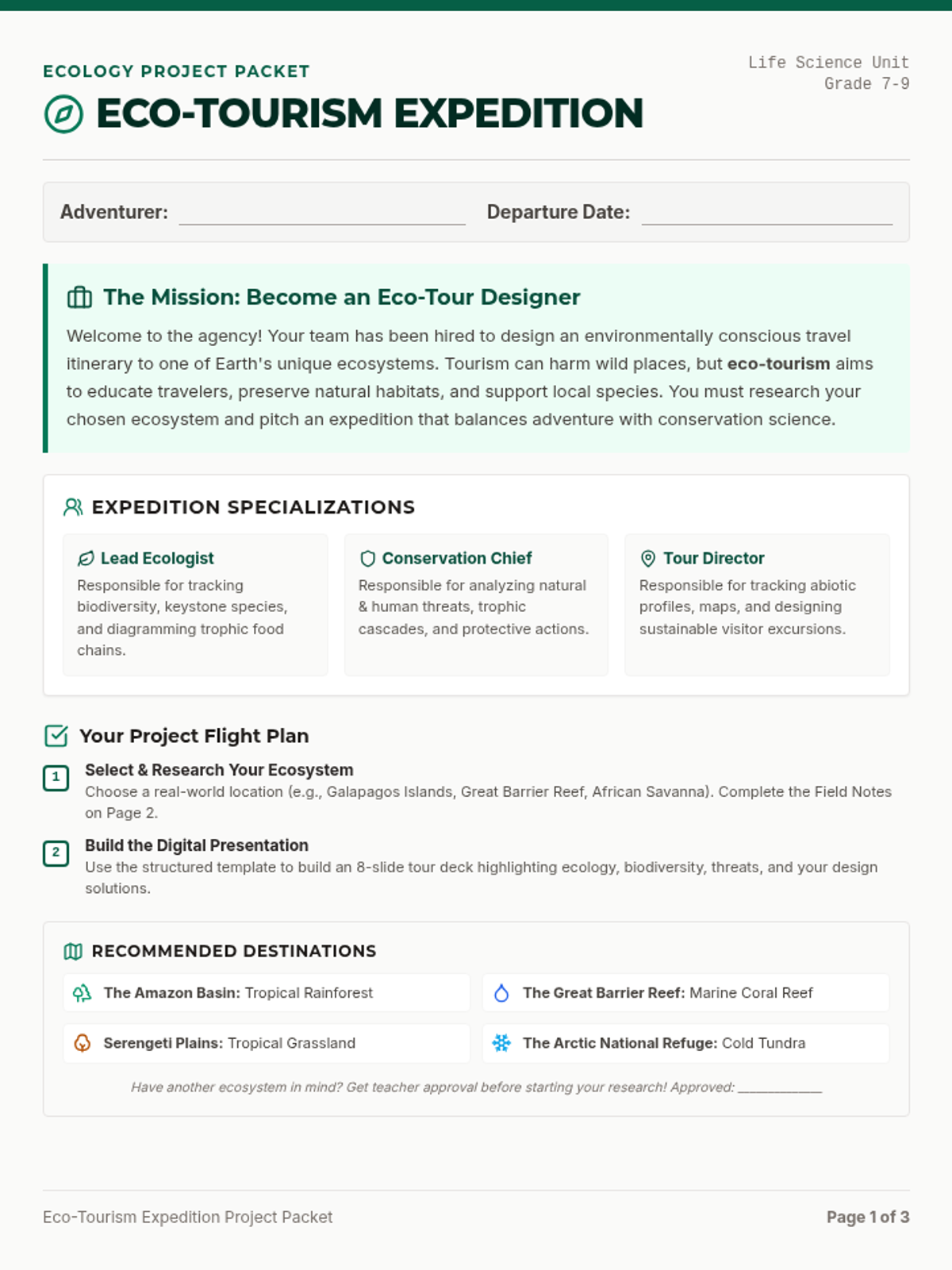
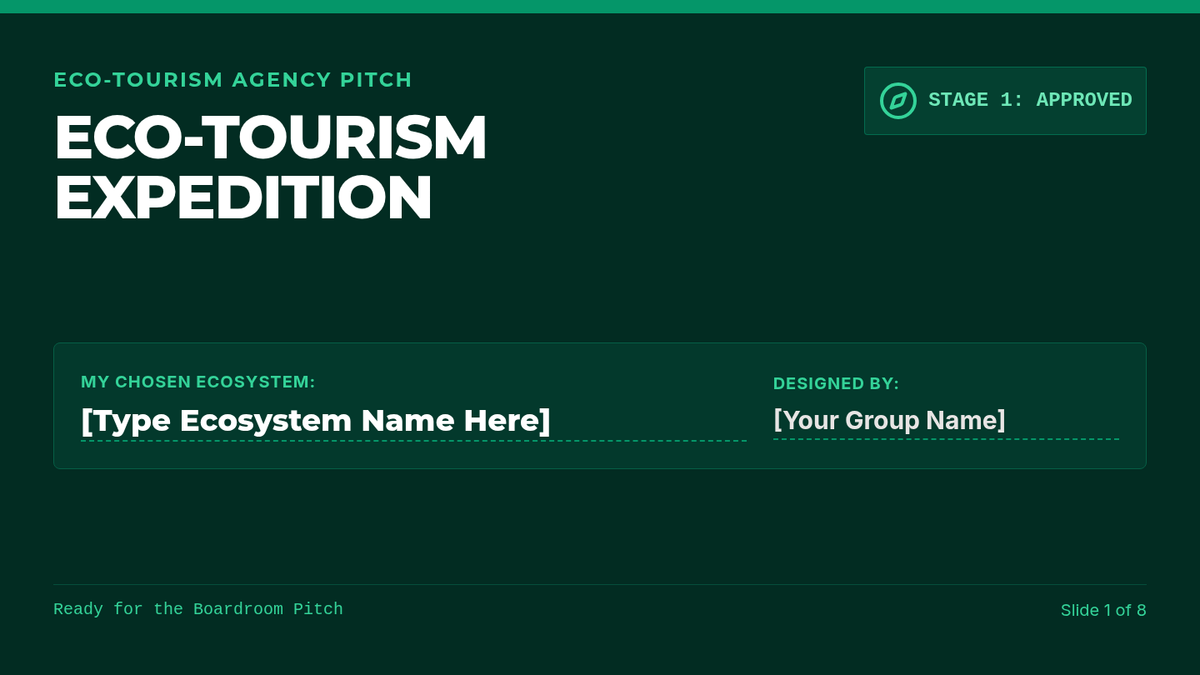
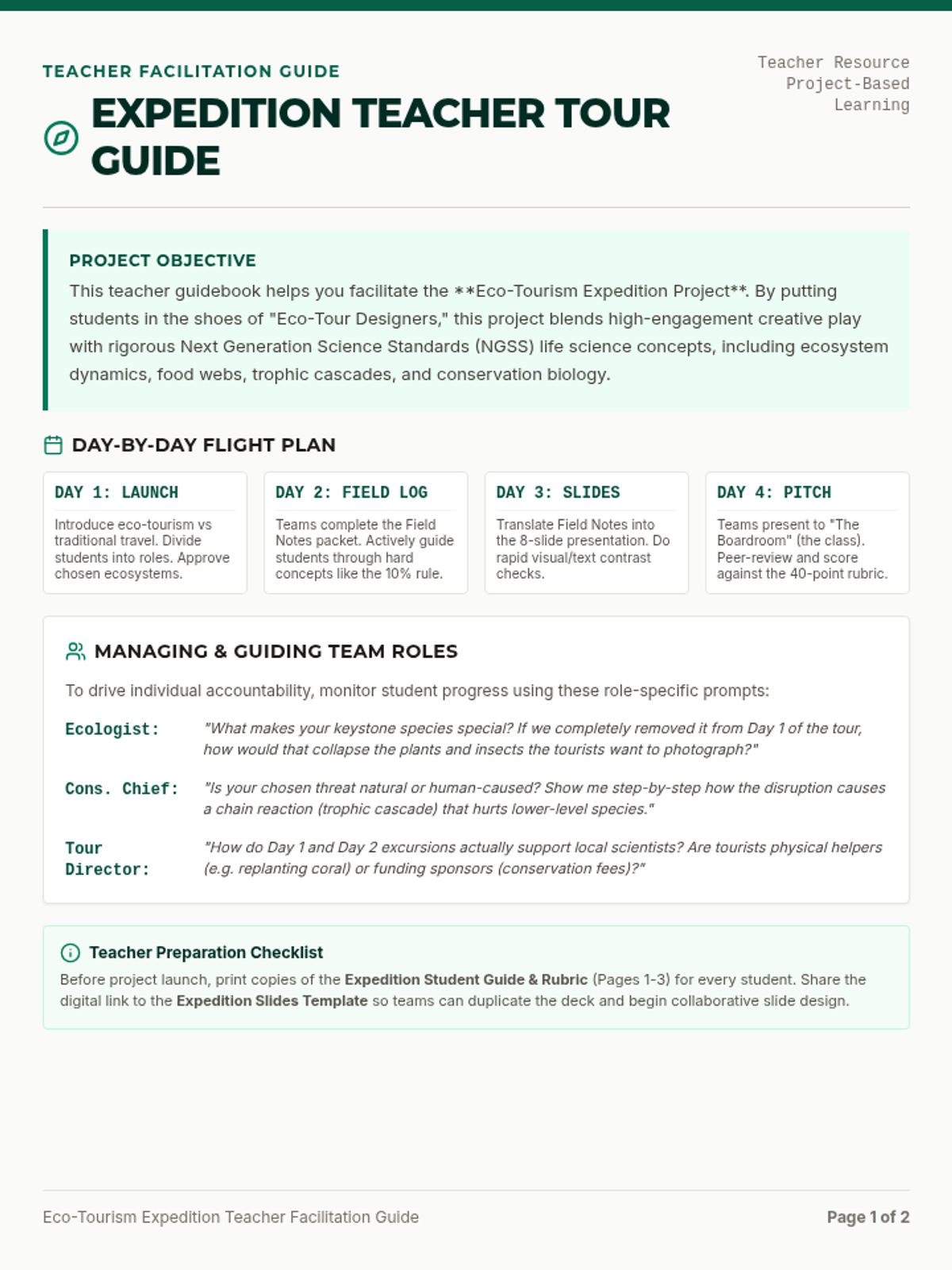
A creative science project lesson where students design a travel brochure or guided tour for a real-world ecosystem, integrating ecology concepts like biodiversity, disruptions, and conservation.
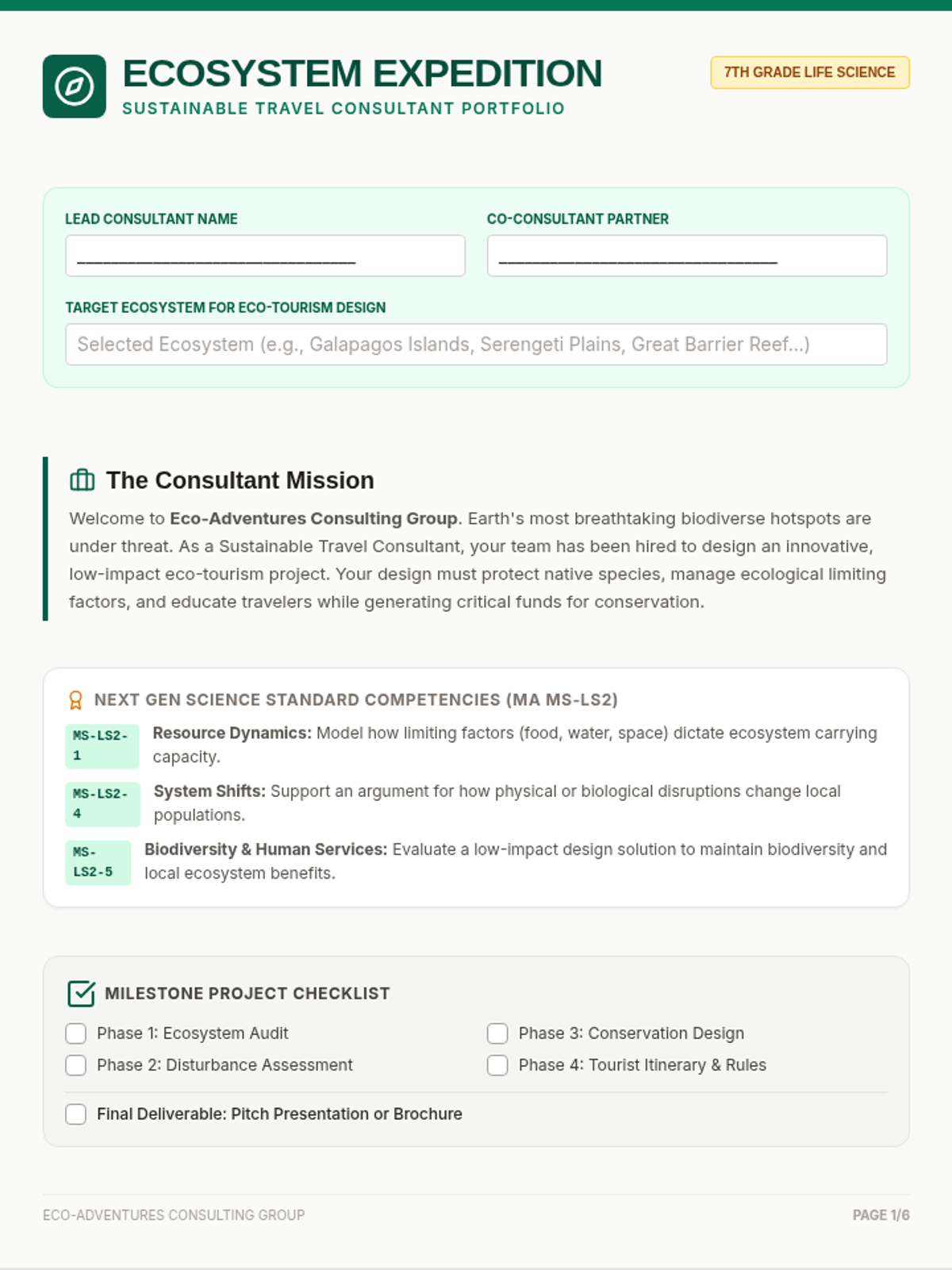
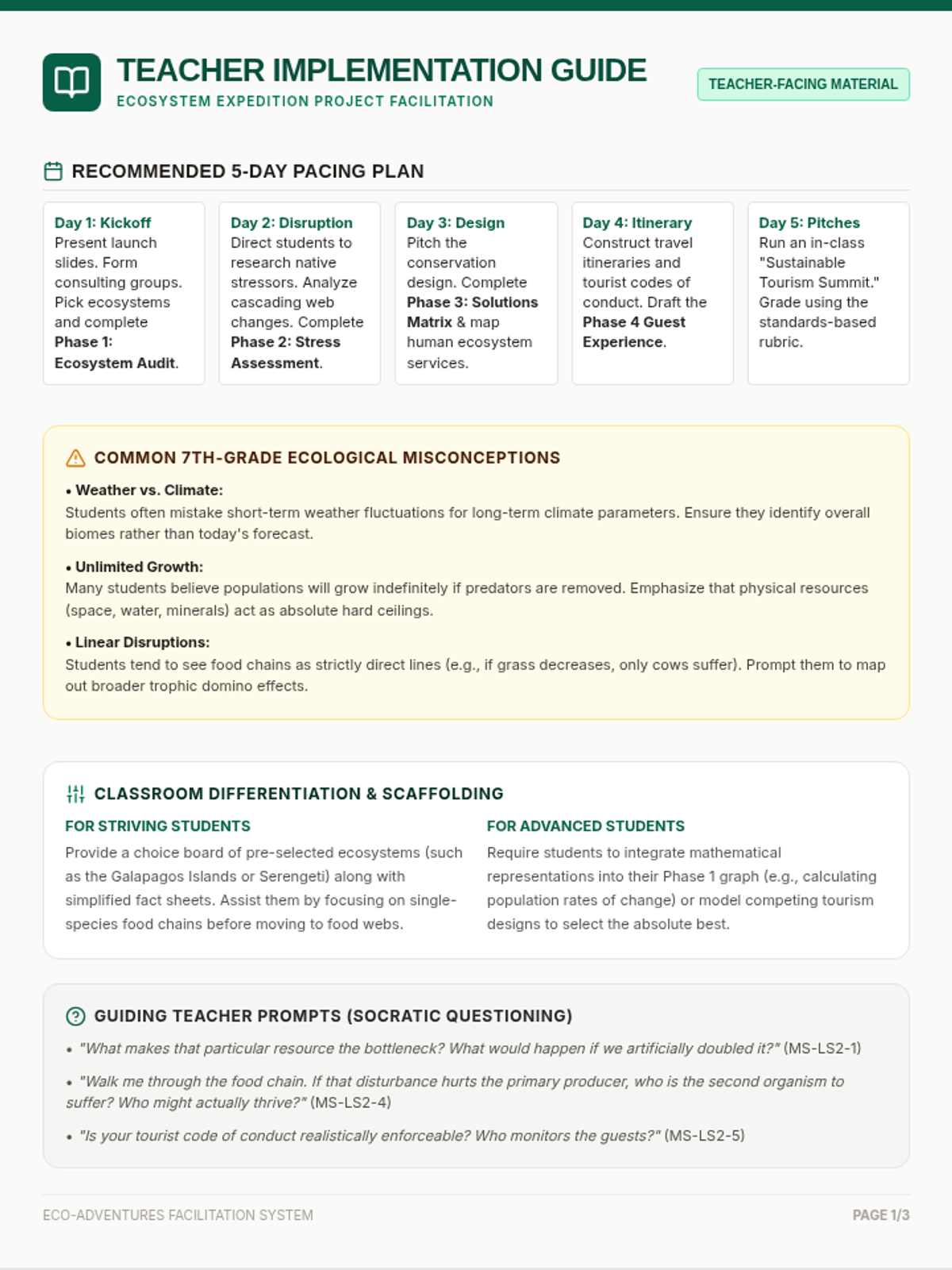
A project-based unit where 7th-grade life science students act as Sustainable Travel Consultants, researching an ecosystem, analyzing limiting resources and ecological disruptions, and designing a low-impact eco-tourism project aligned with Massachusetts standards.
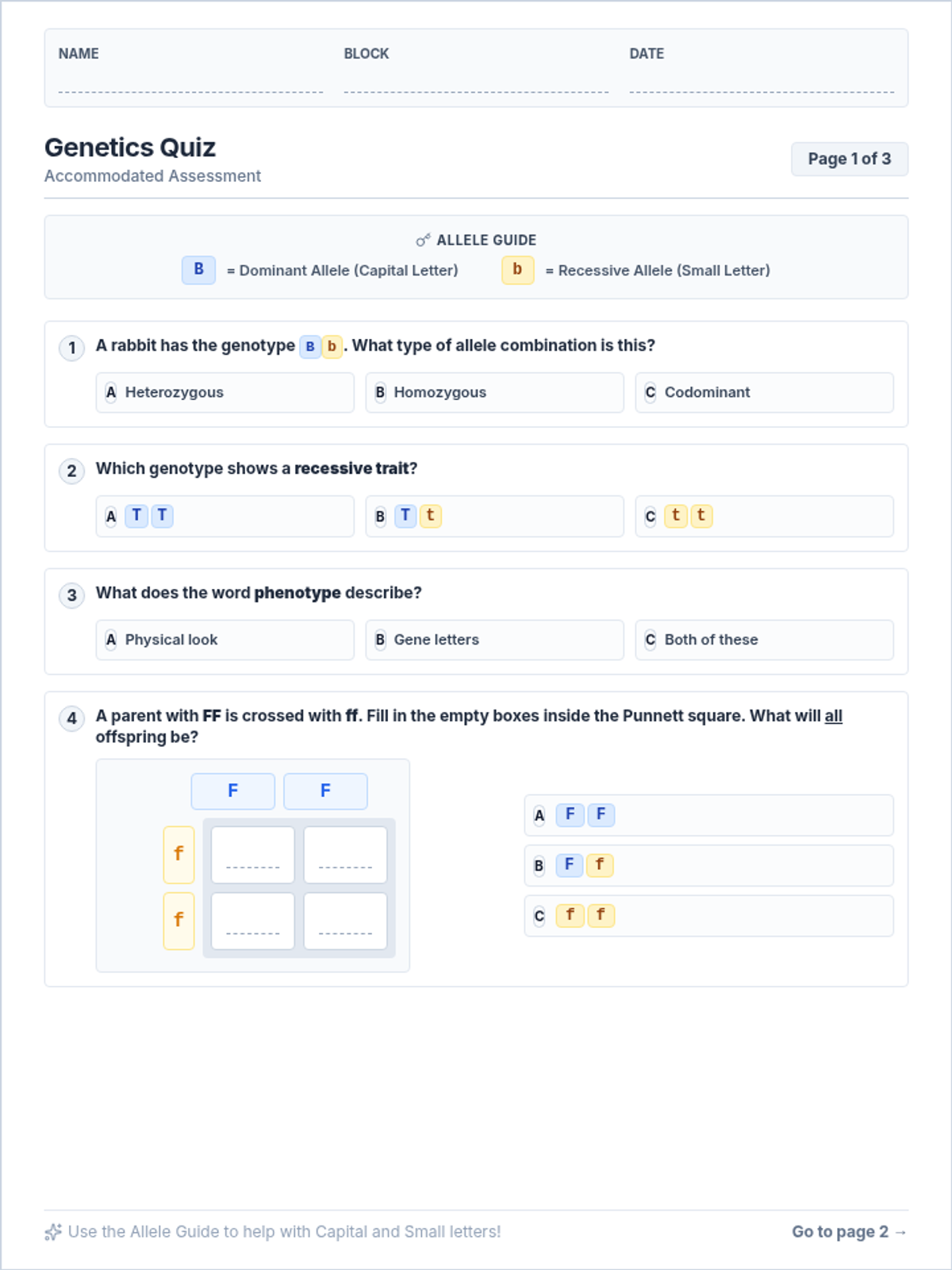
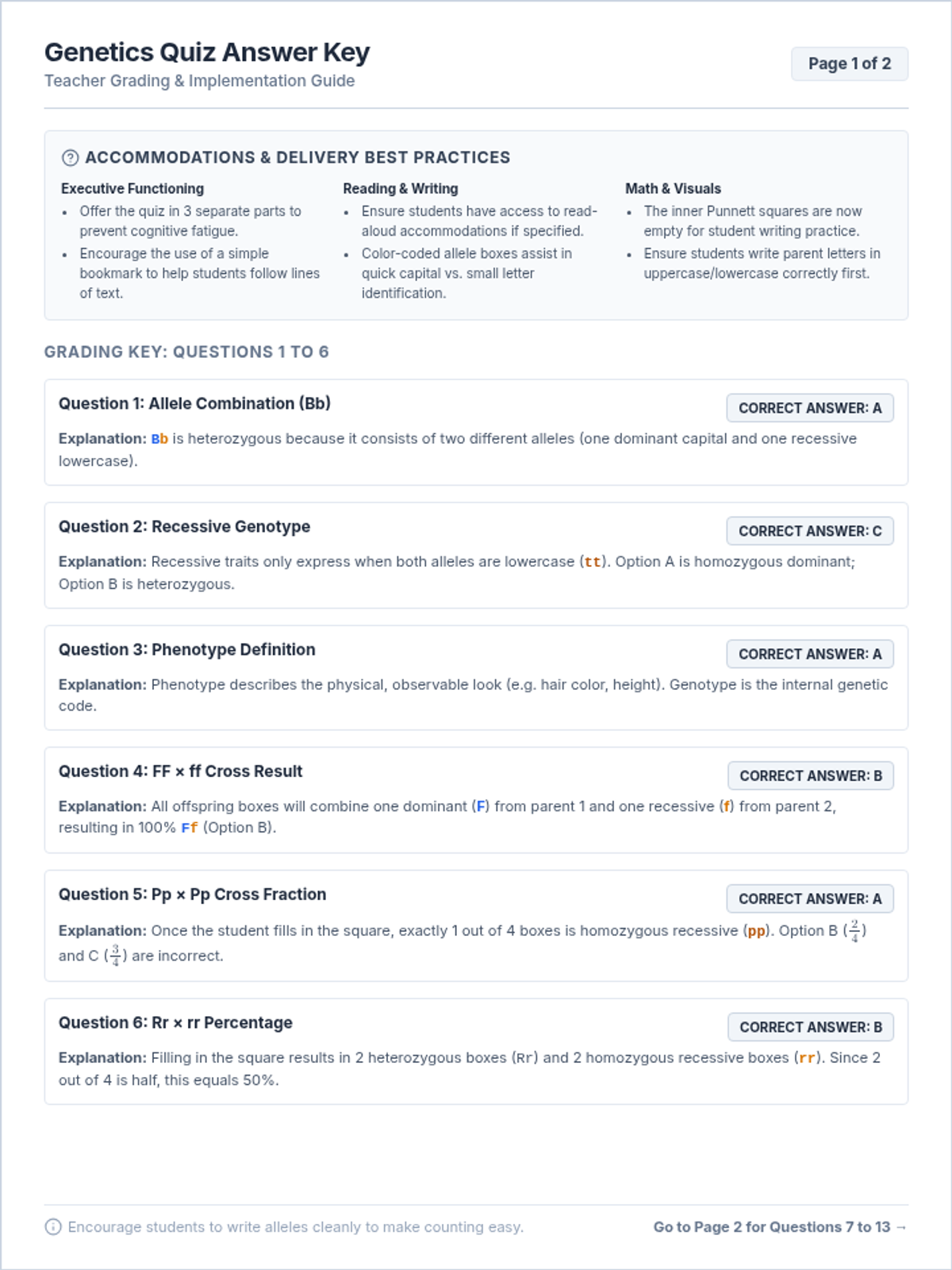
A custom accommodated quiz pack on genetics, designed specifically for students with reading, writing, math, and executive functioning challenges. Includes a highly scaffolded student quiz and a comprehensive teacher answer key with pedagogical guidance.
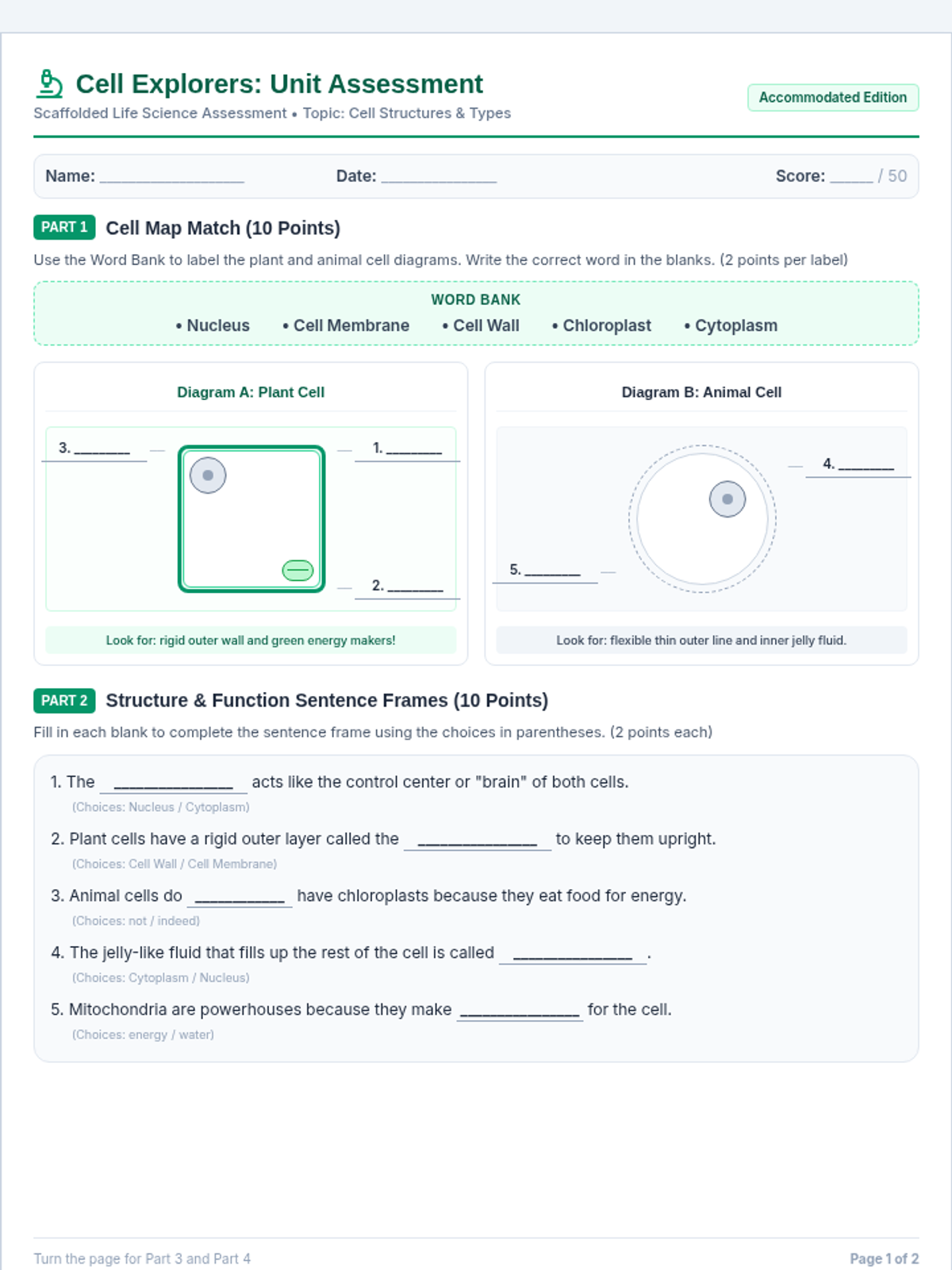
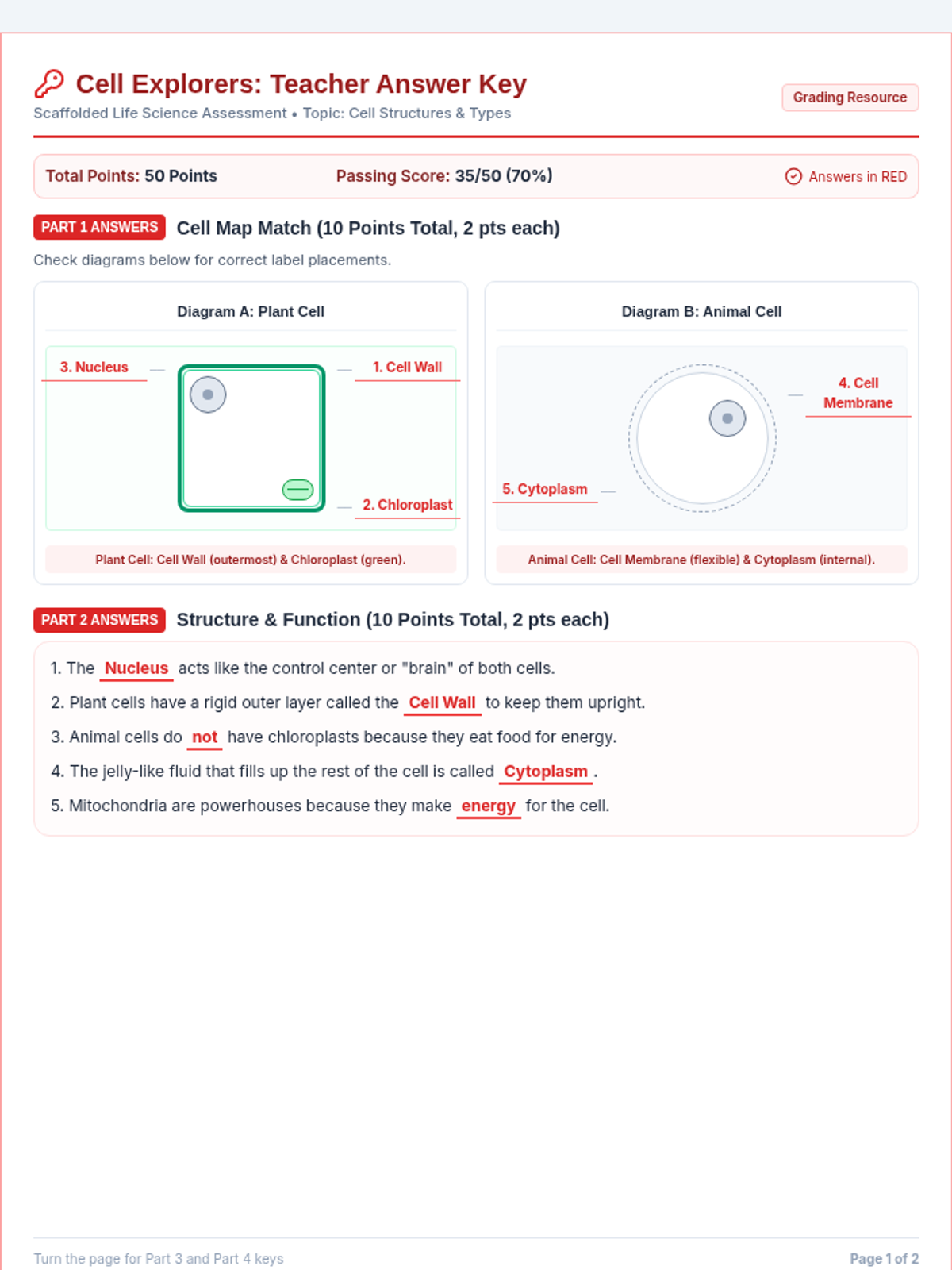
A scaffolded 2-page assessment and corresponding answer key covering prokaryotic and eukaryotic cells, including bacteria, plant, animal, and human cells. Features visual matching, labeling with word banks, sentence frames, and guided sentence starters, scaled to 50 points total.
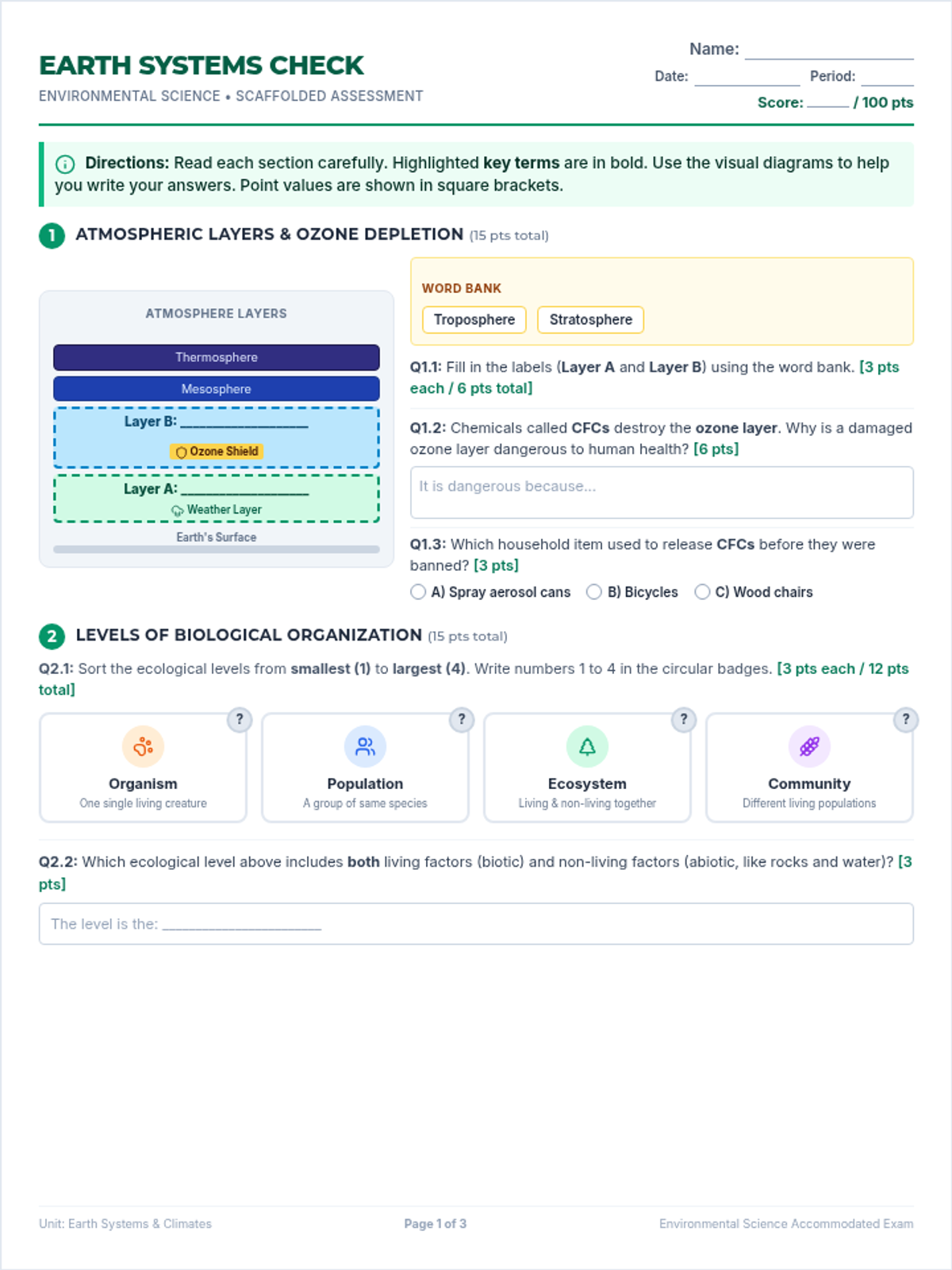
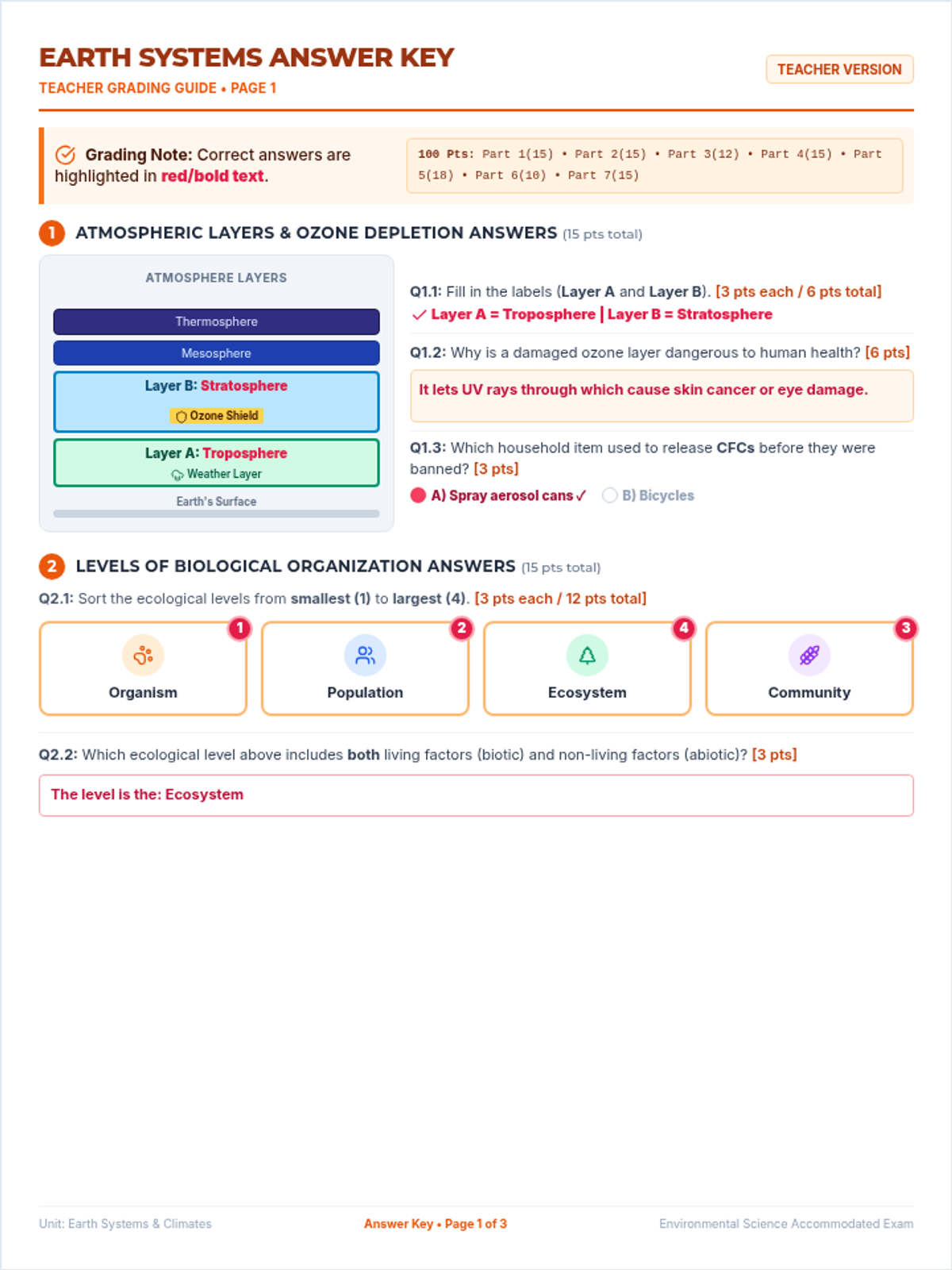
A highly visual, scaffolded assessment and corresponding answer key covering atmospheric layers, resource classification, carbon footprints, biological levels, trophic webs, ice proxies, and photosynthesis.