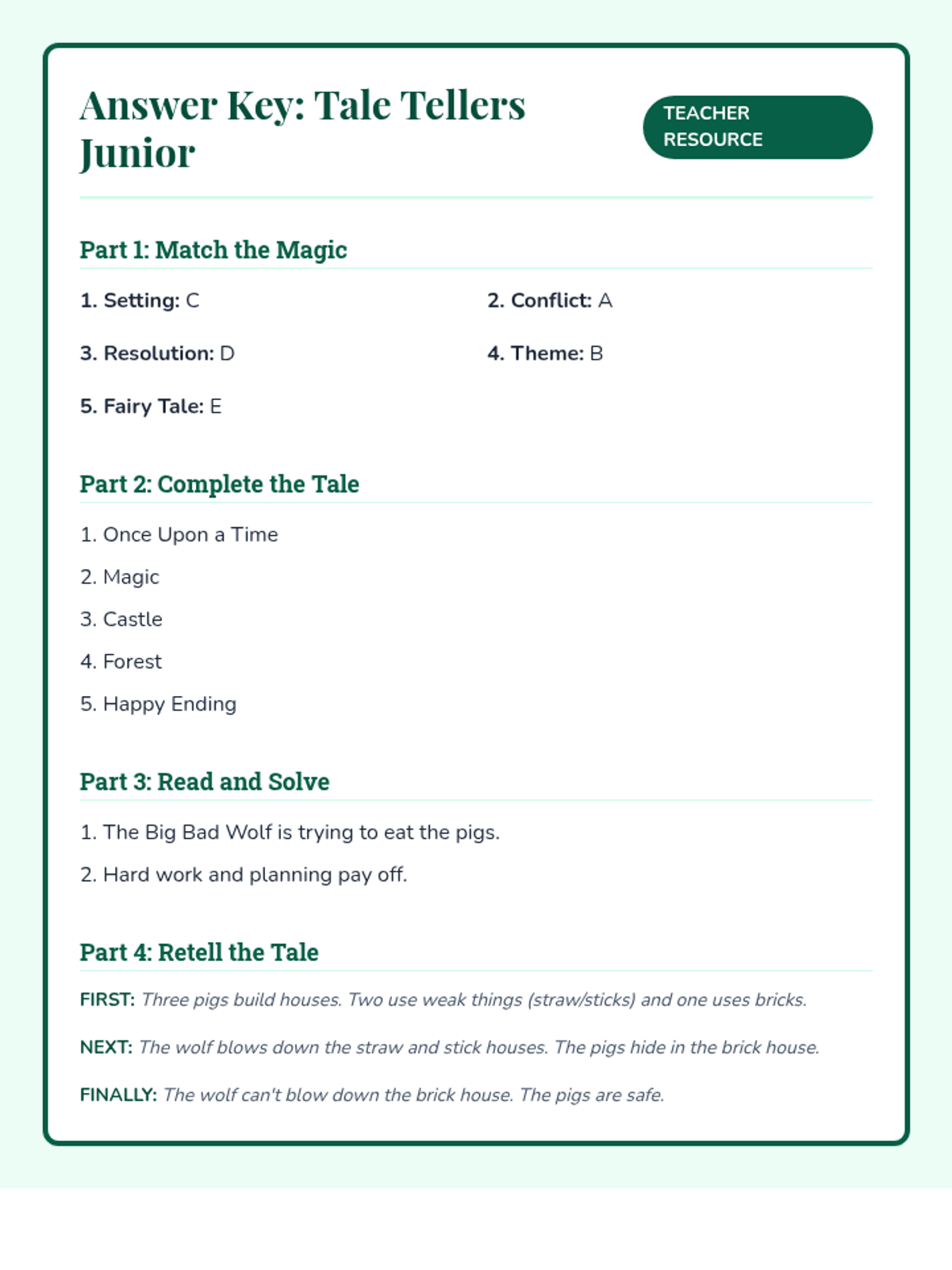
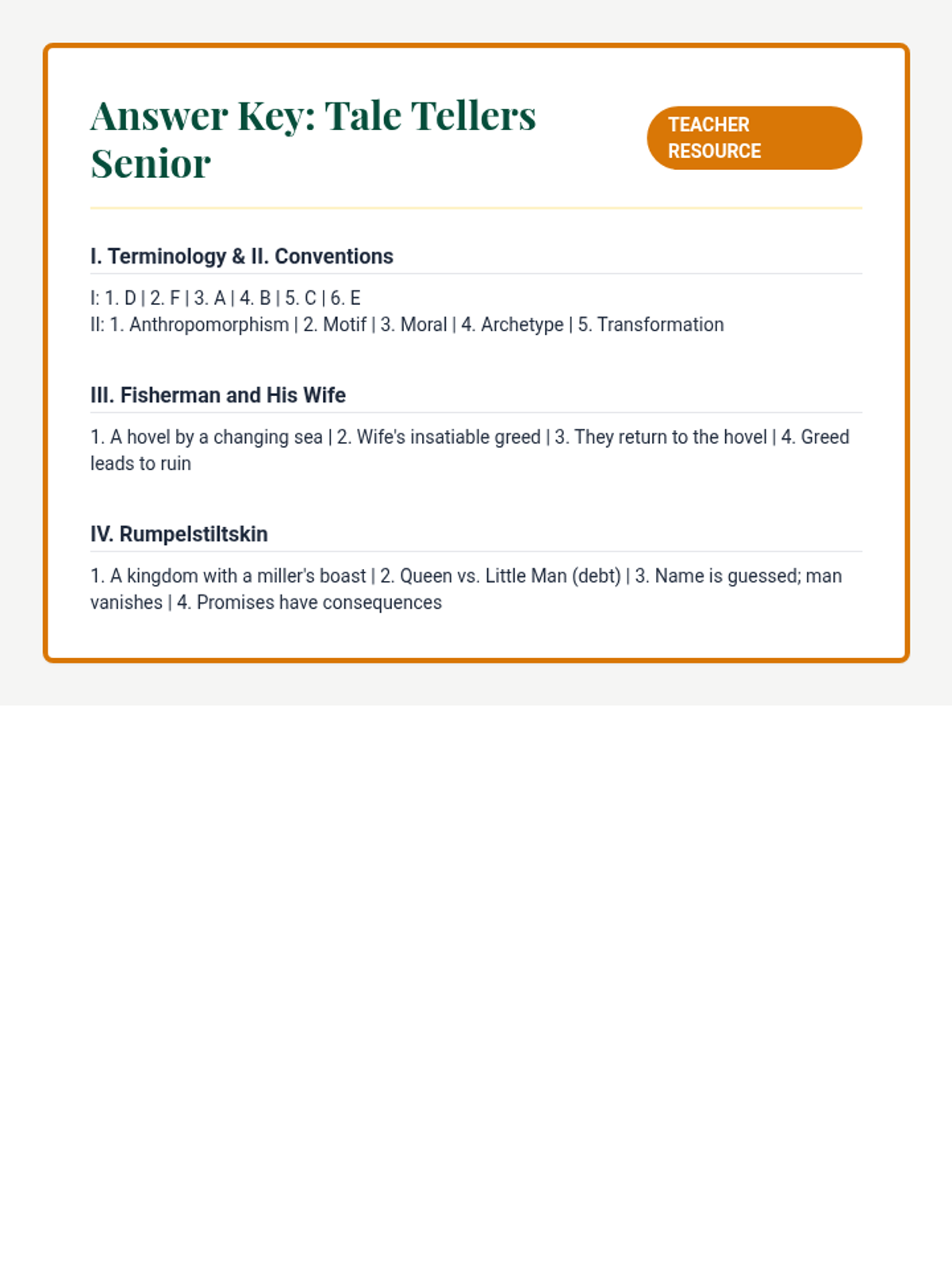
Exploring traditional literature (folktales) to identify universal plot patterns and how characters in legends undergo moral or physical changes. Focuses on text-to-text connections.
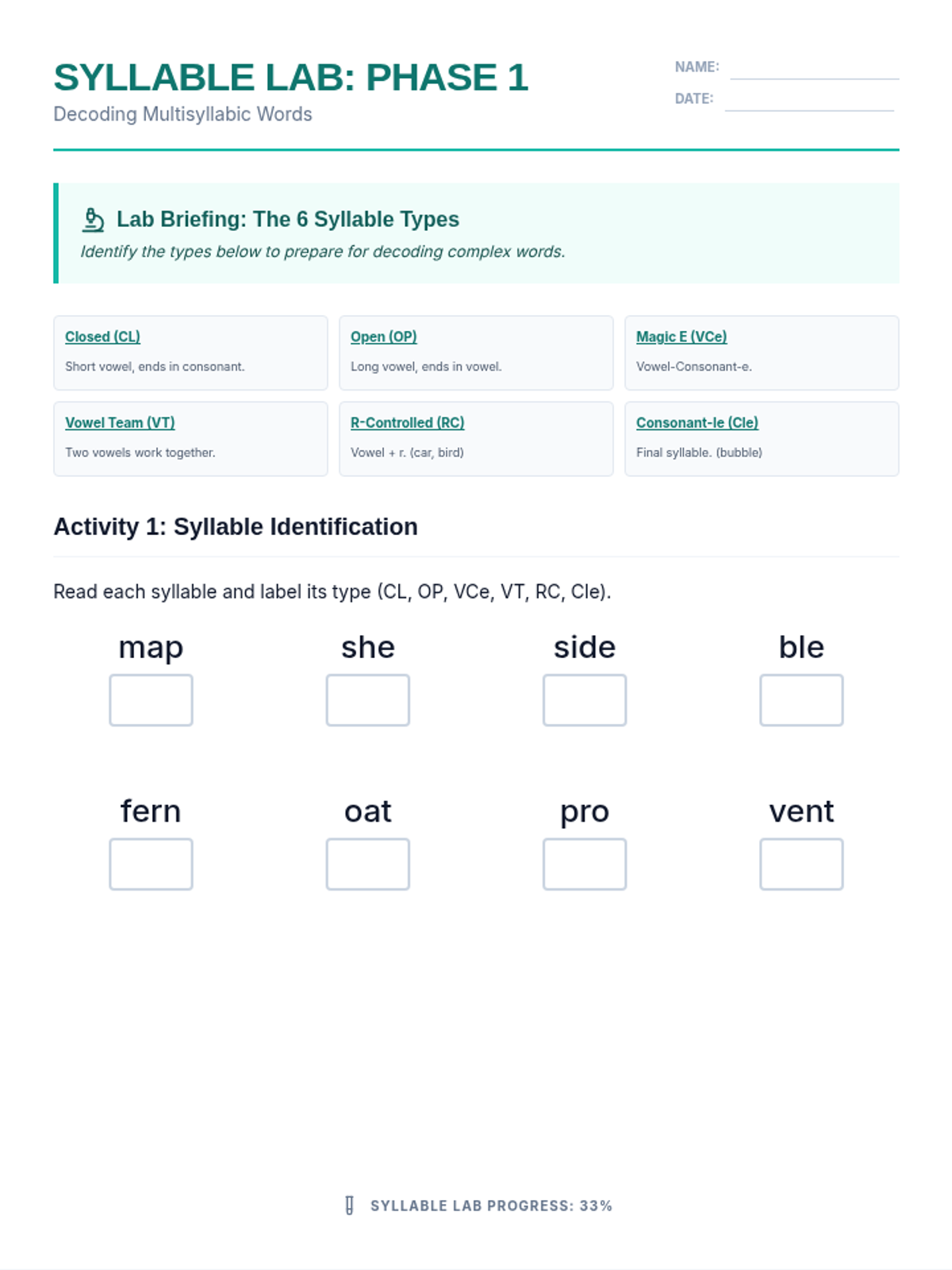
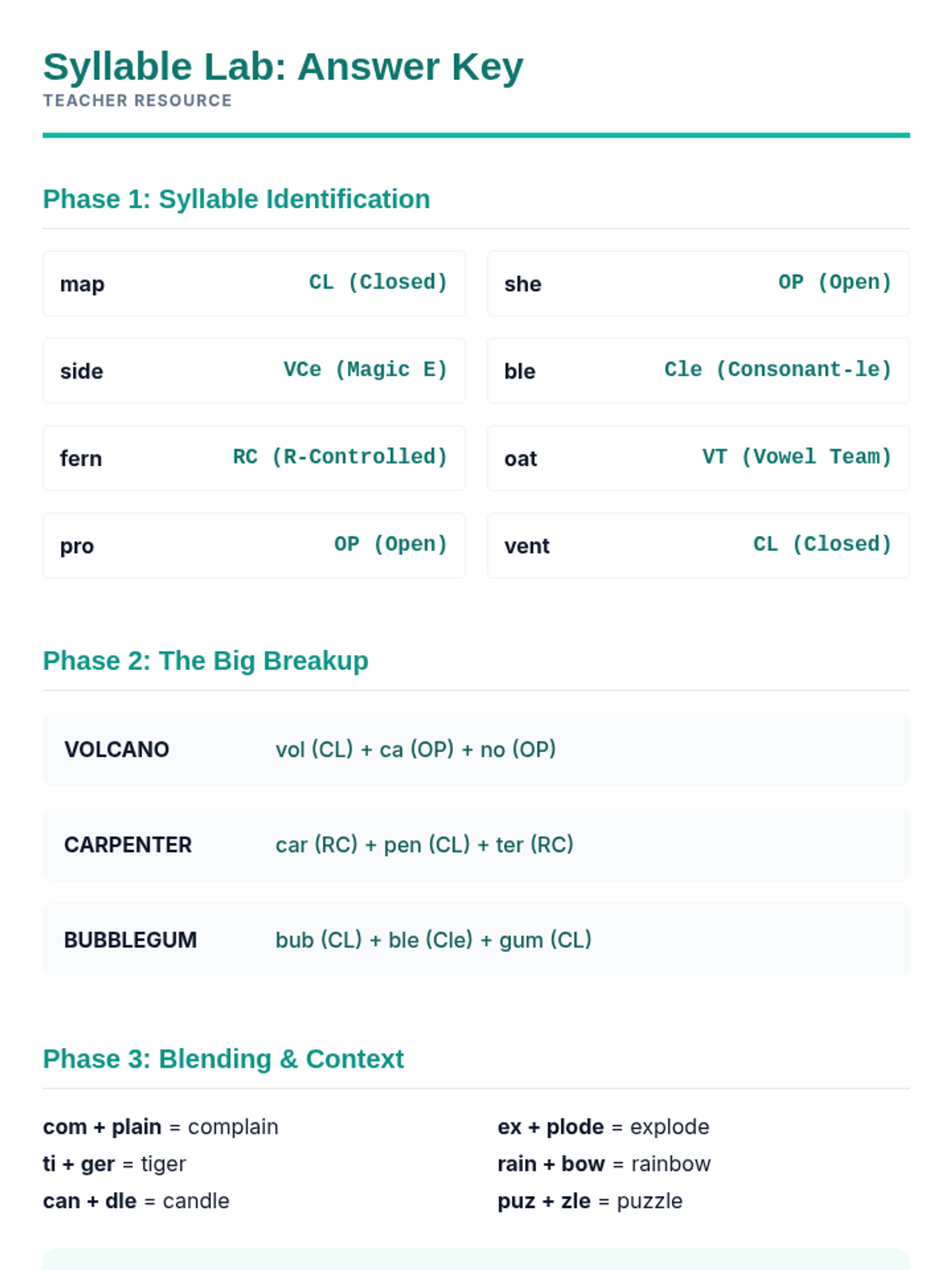
A comprehensive lesson on decoding multisyllabic words using all six syllable types through interactive slides and a multi-page practice packet.
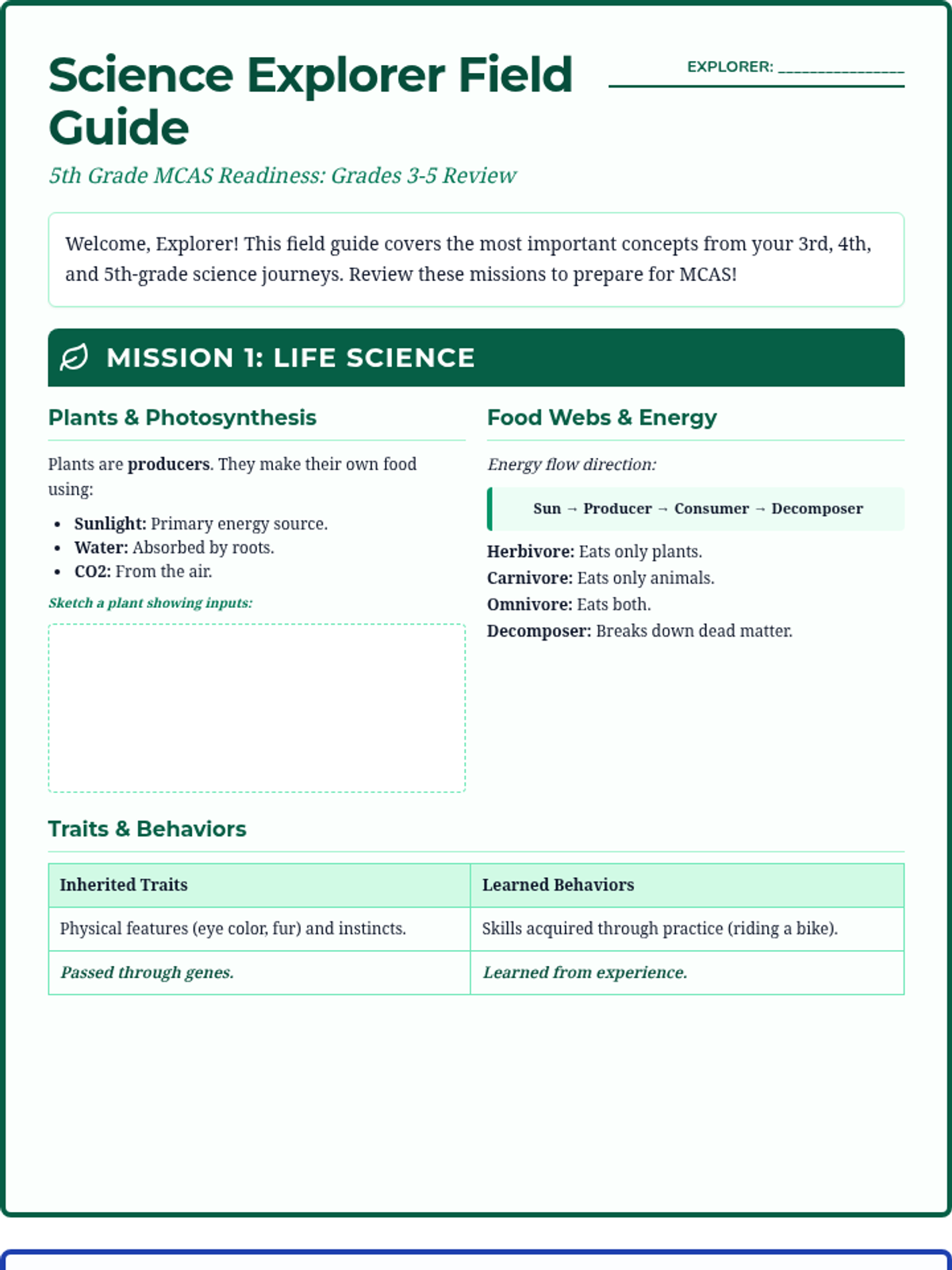
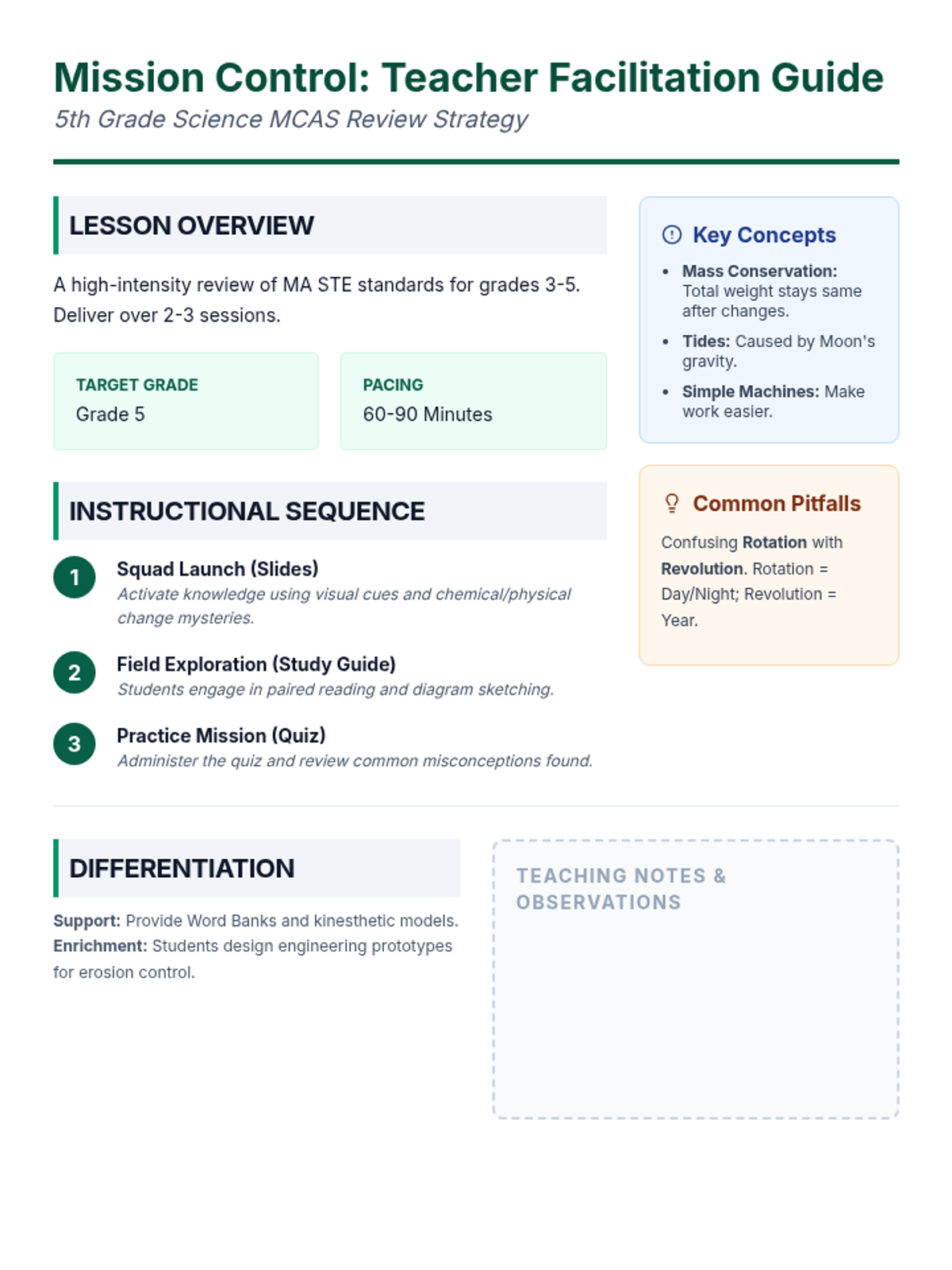
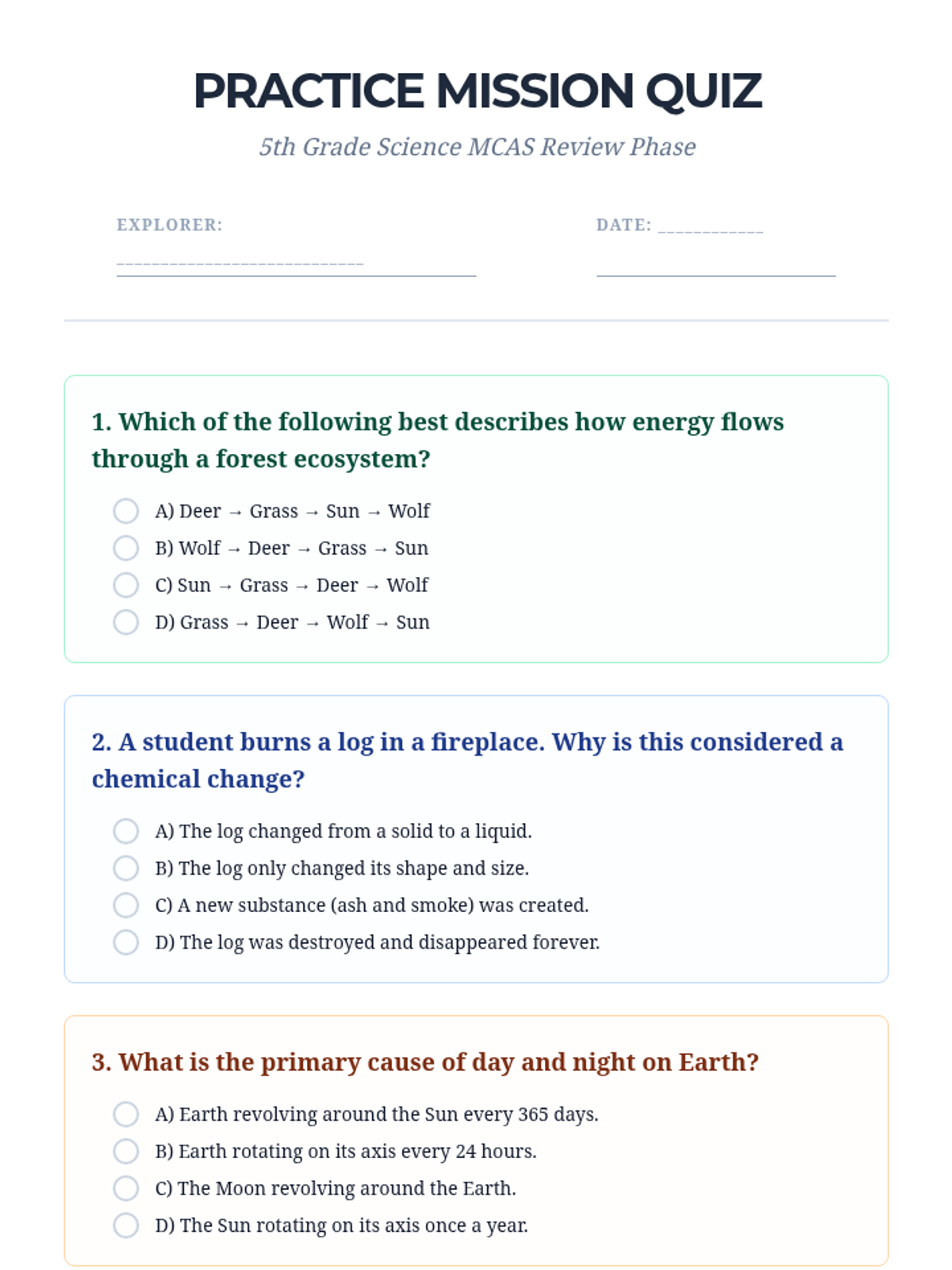
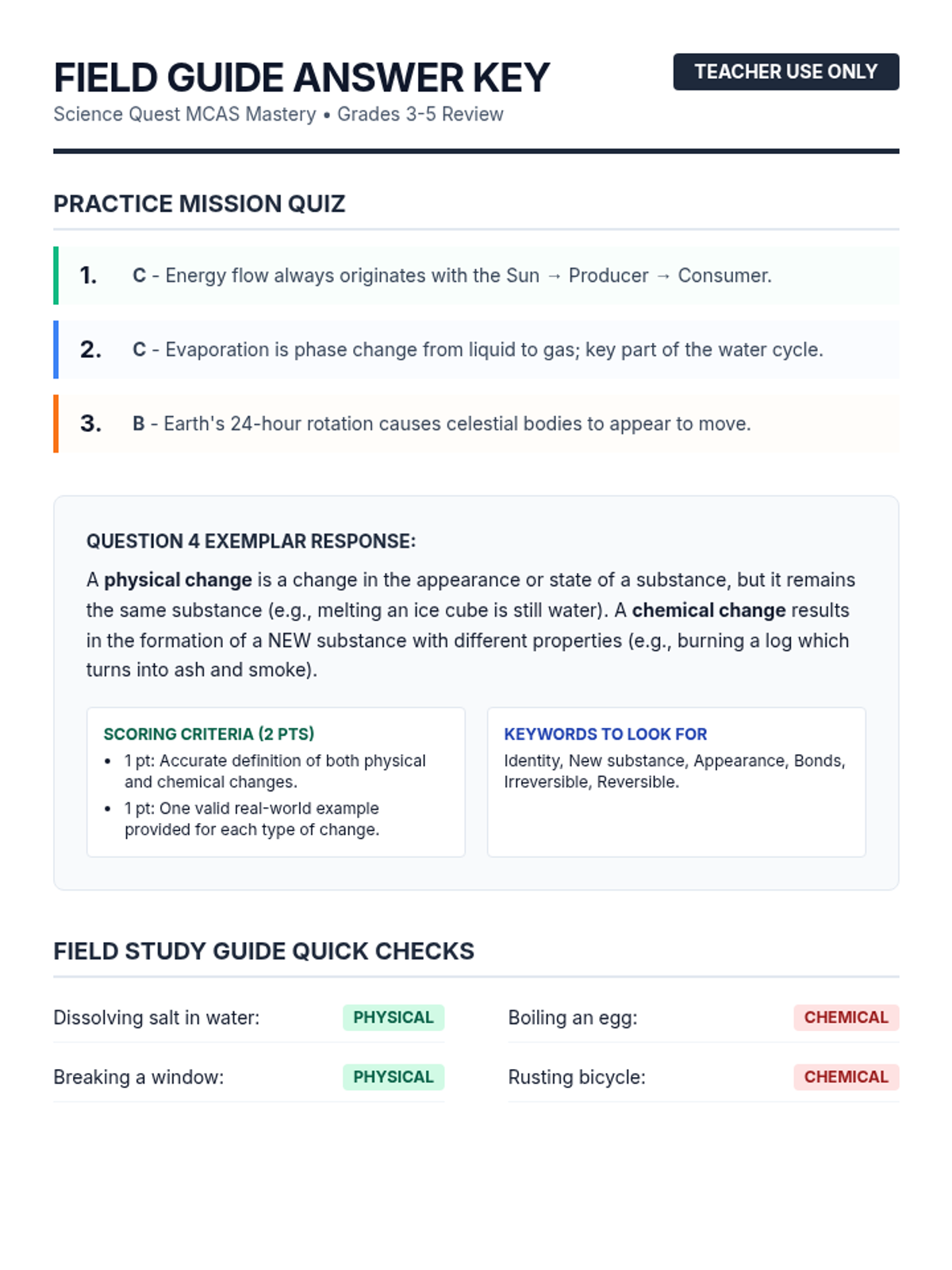
An all-in-one review session covering Life Science, Physical Science, Earth and Space Science, and Engineering Design for the 5th grade MCAS.
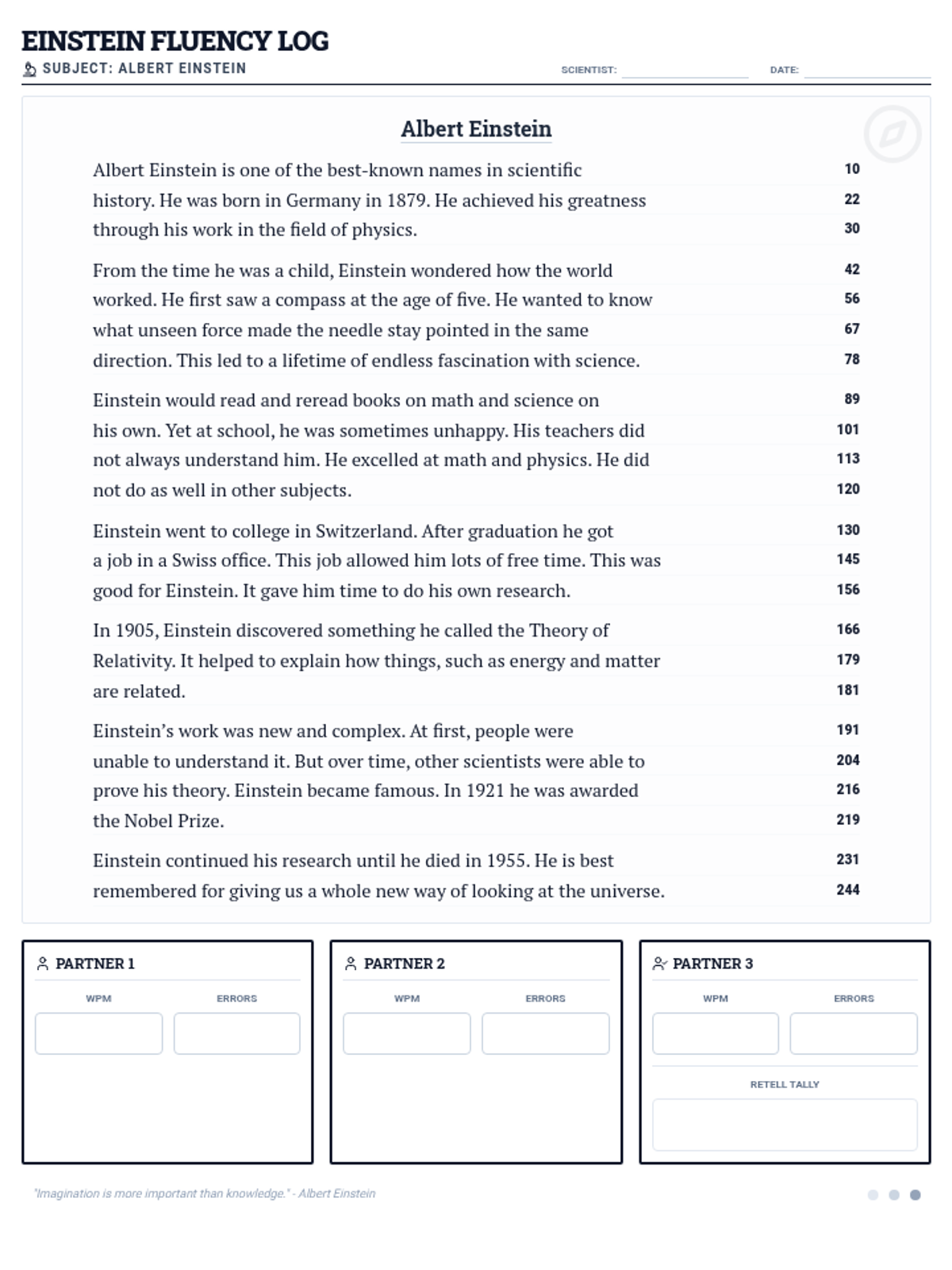
A fluency practice lesson focused on reading speed and comprehension through the story of Albert Einstein, utilizing a peer-partnered tracking system.
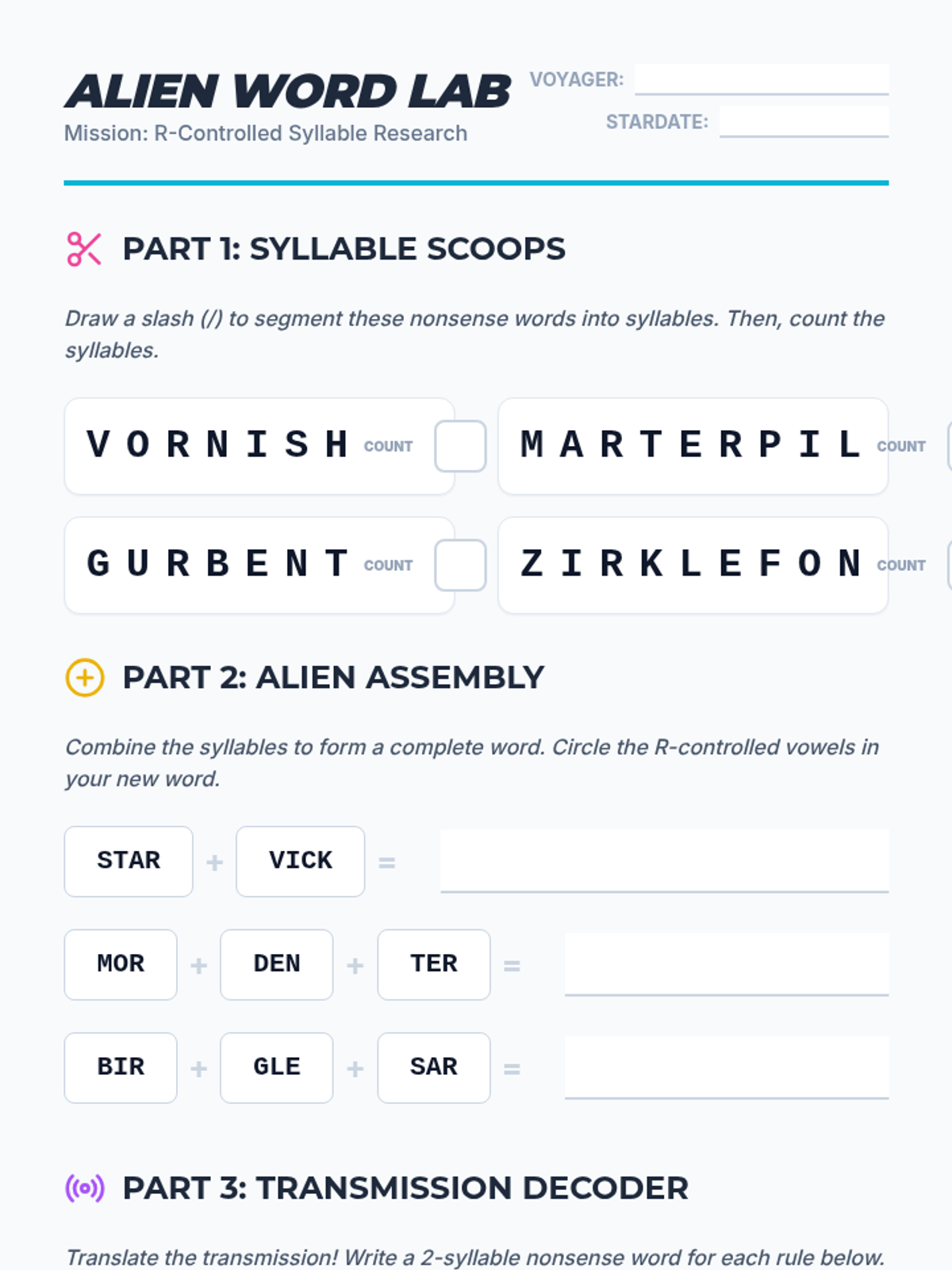
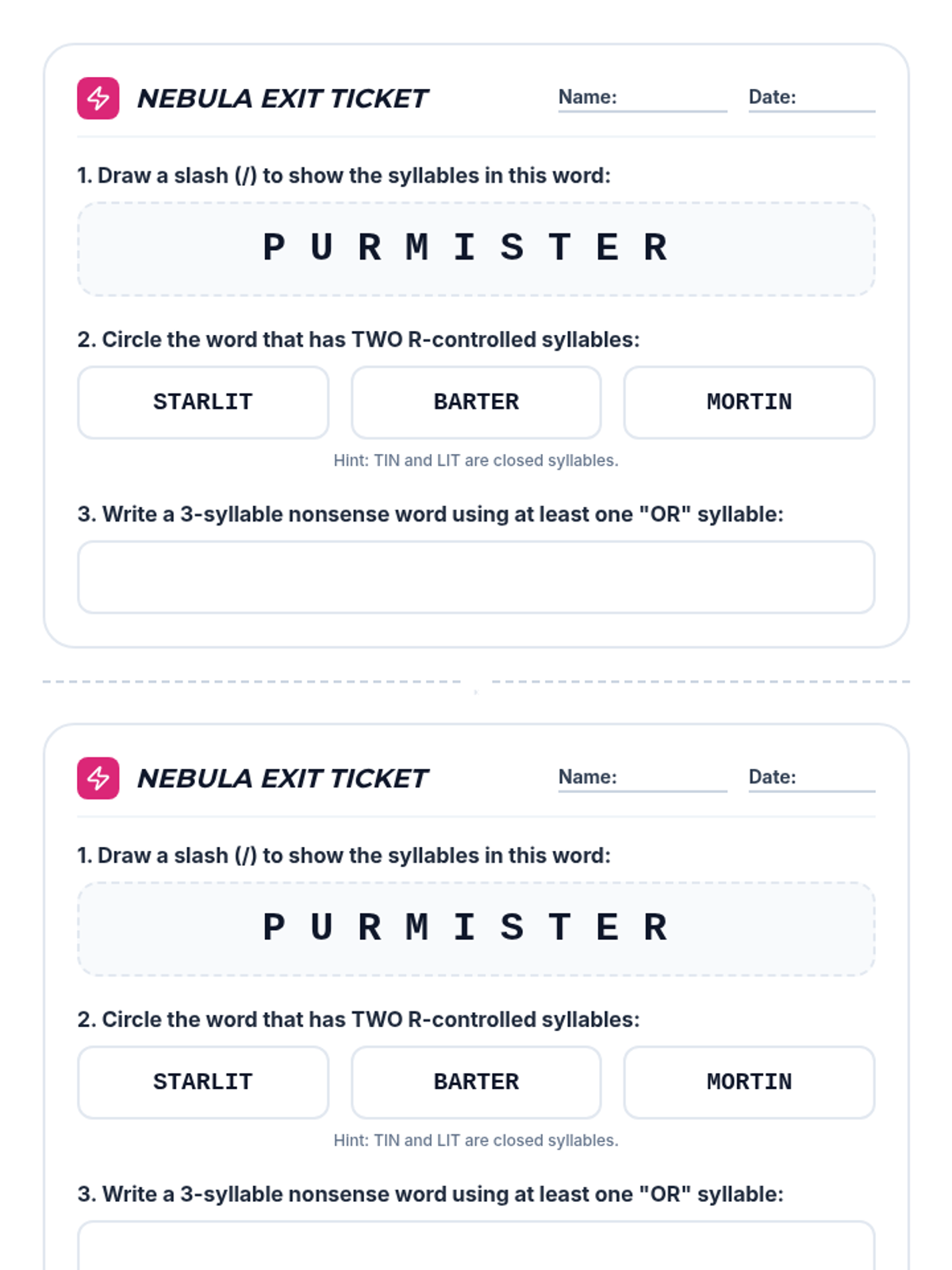
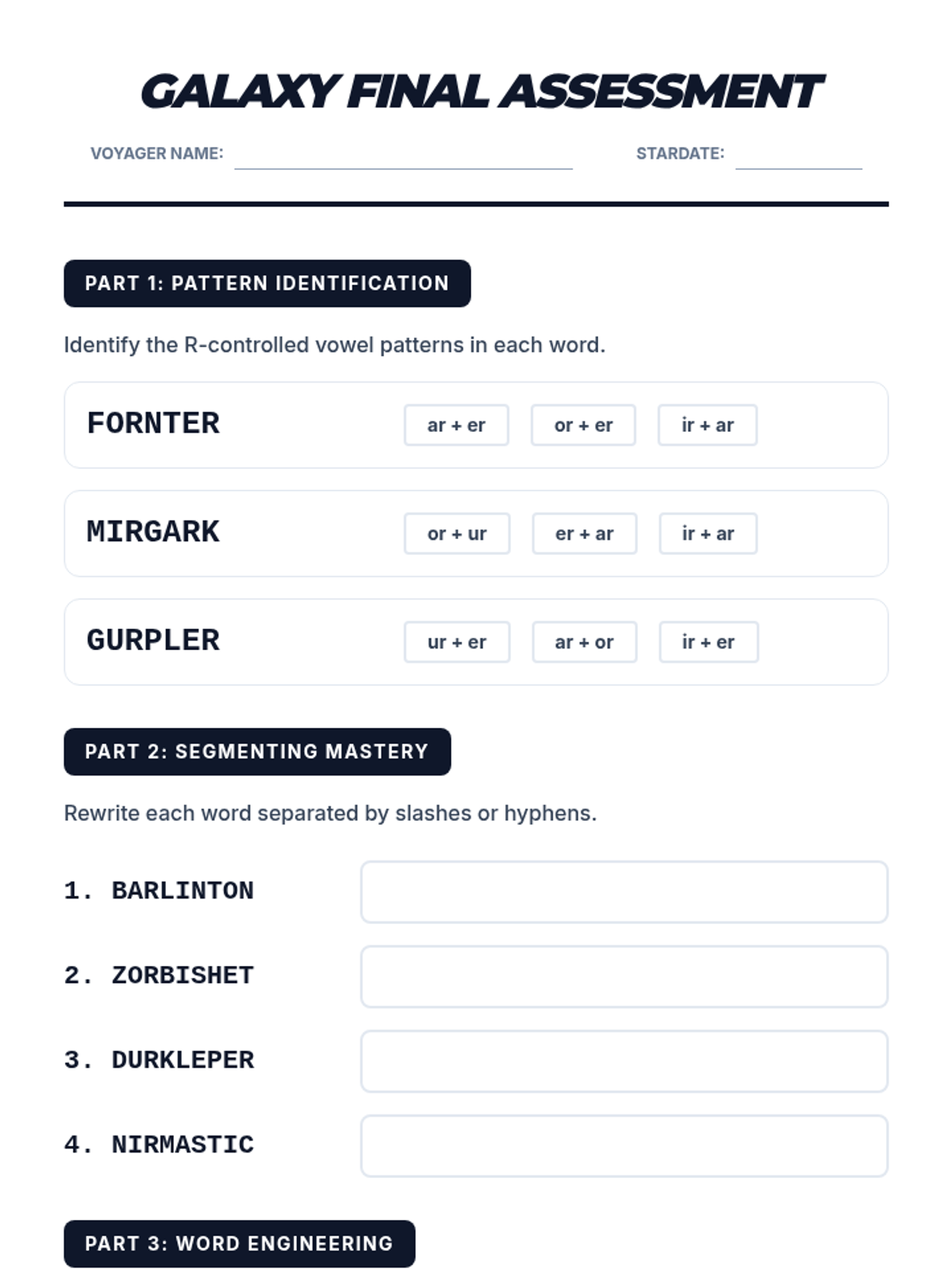
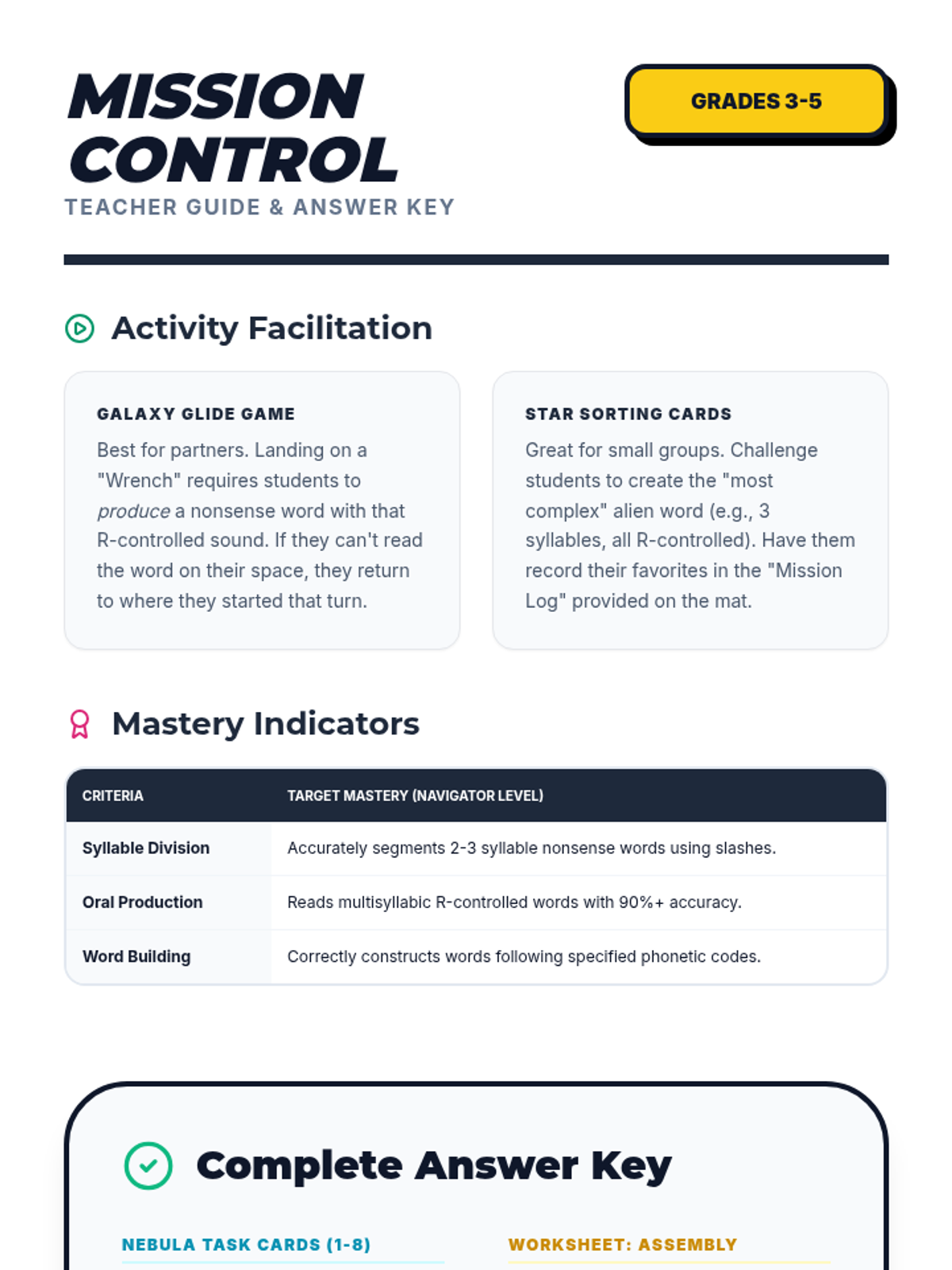
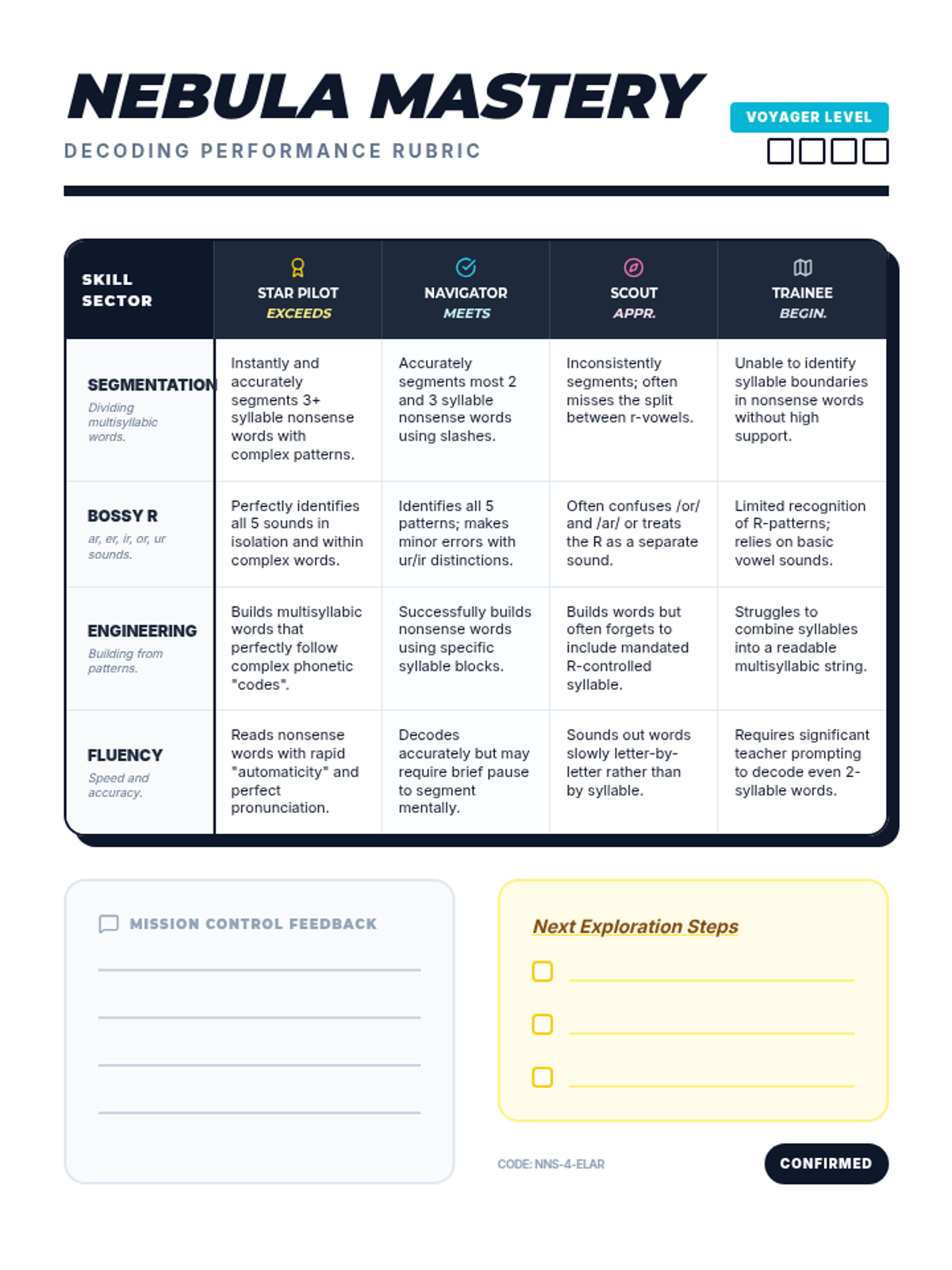
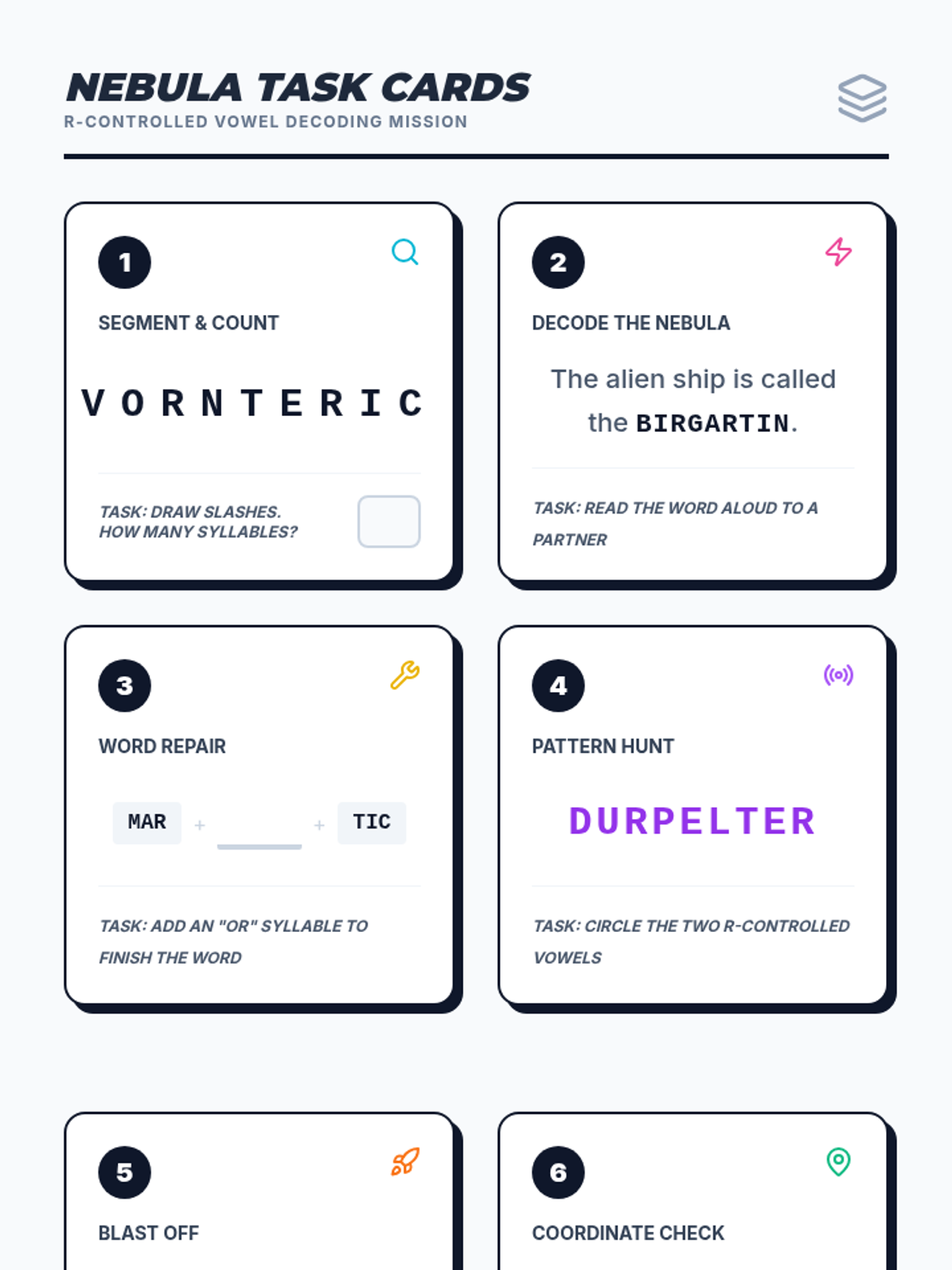
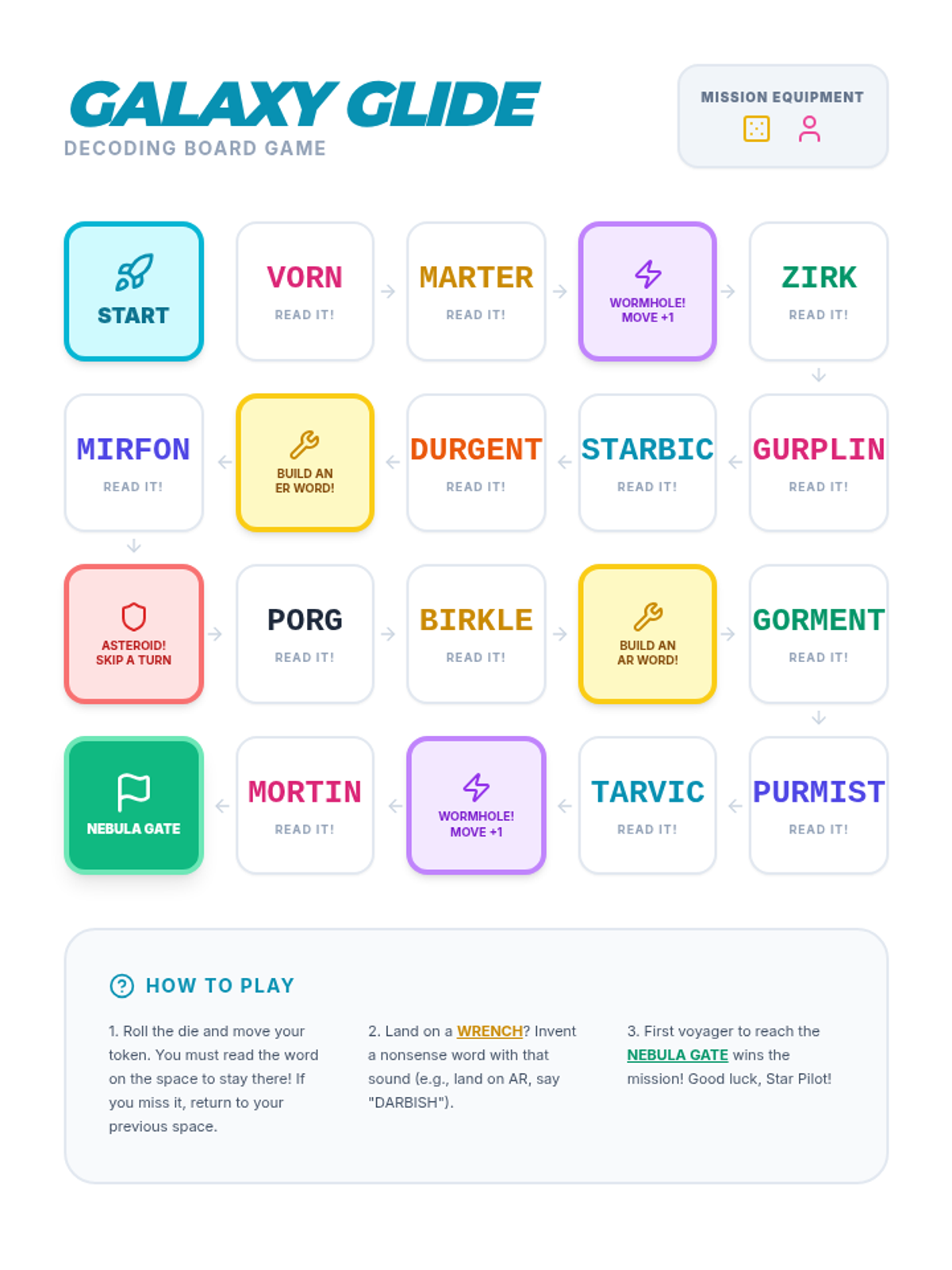
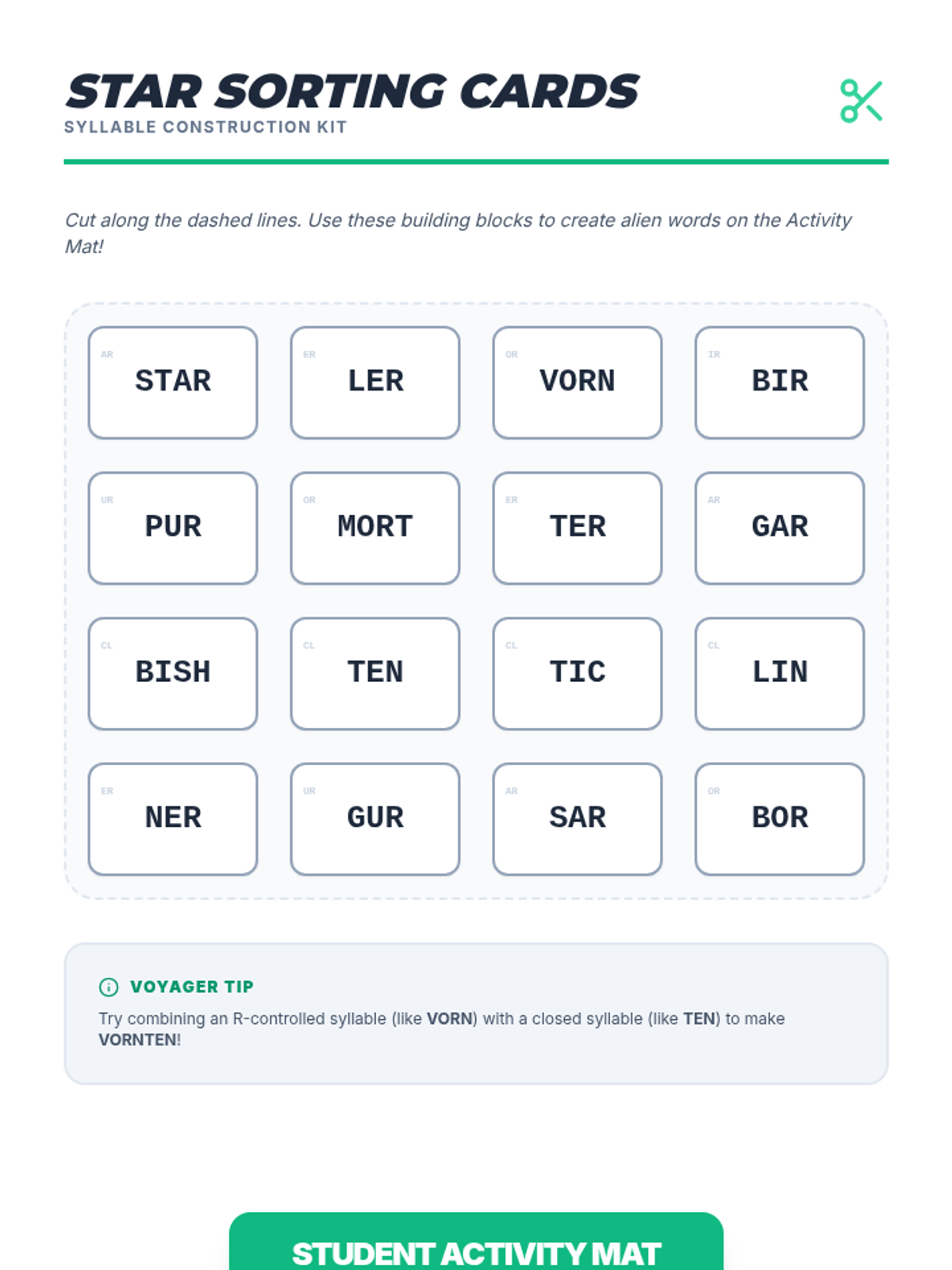
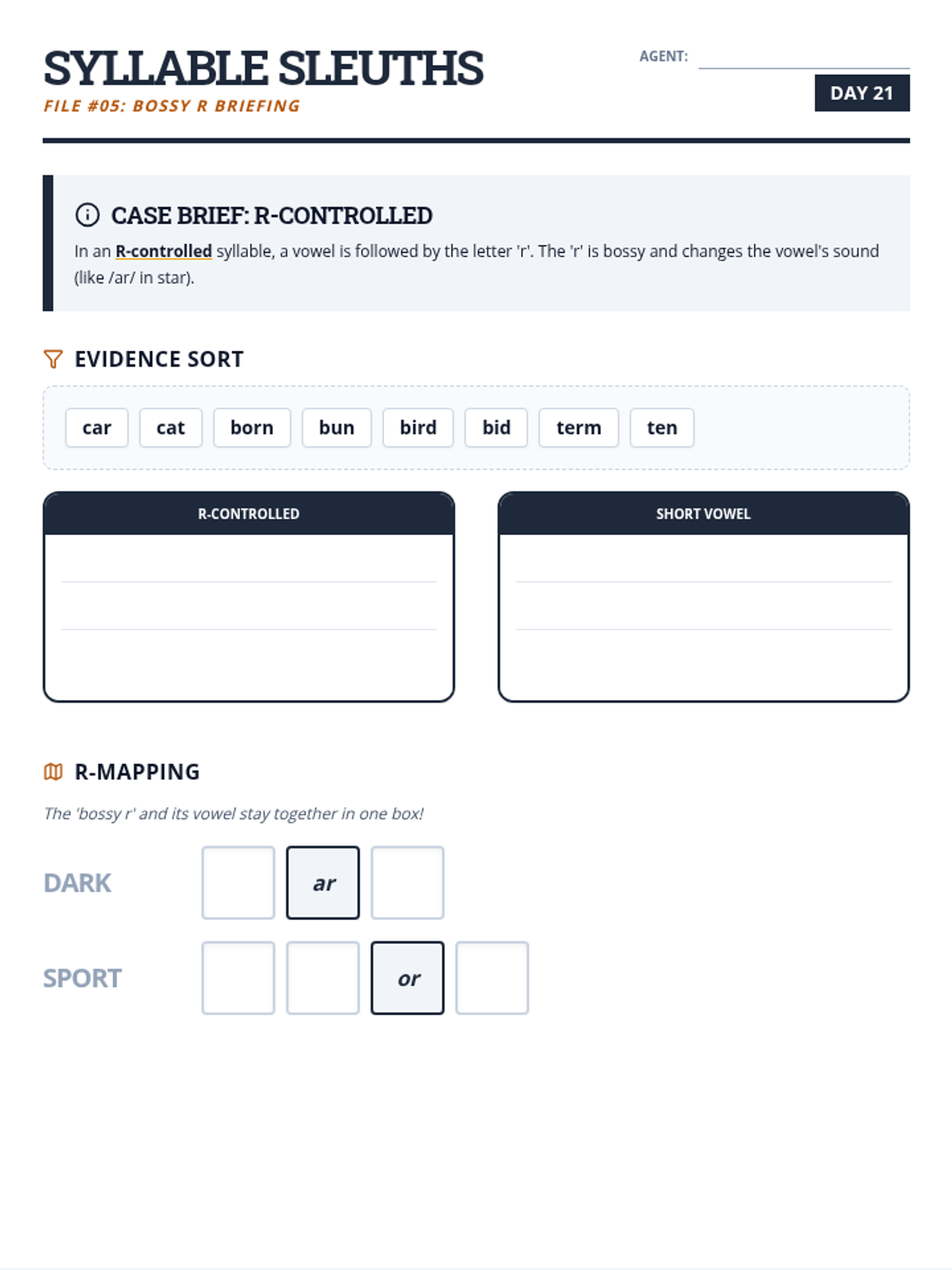
Students will identify, segment, and build multisyllabic nonsense words using R-controlled vowels (ar, er, ir, or, ur) to strengthen their decoding skills.
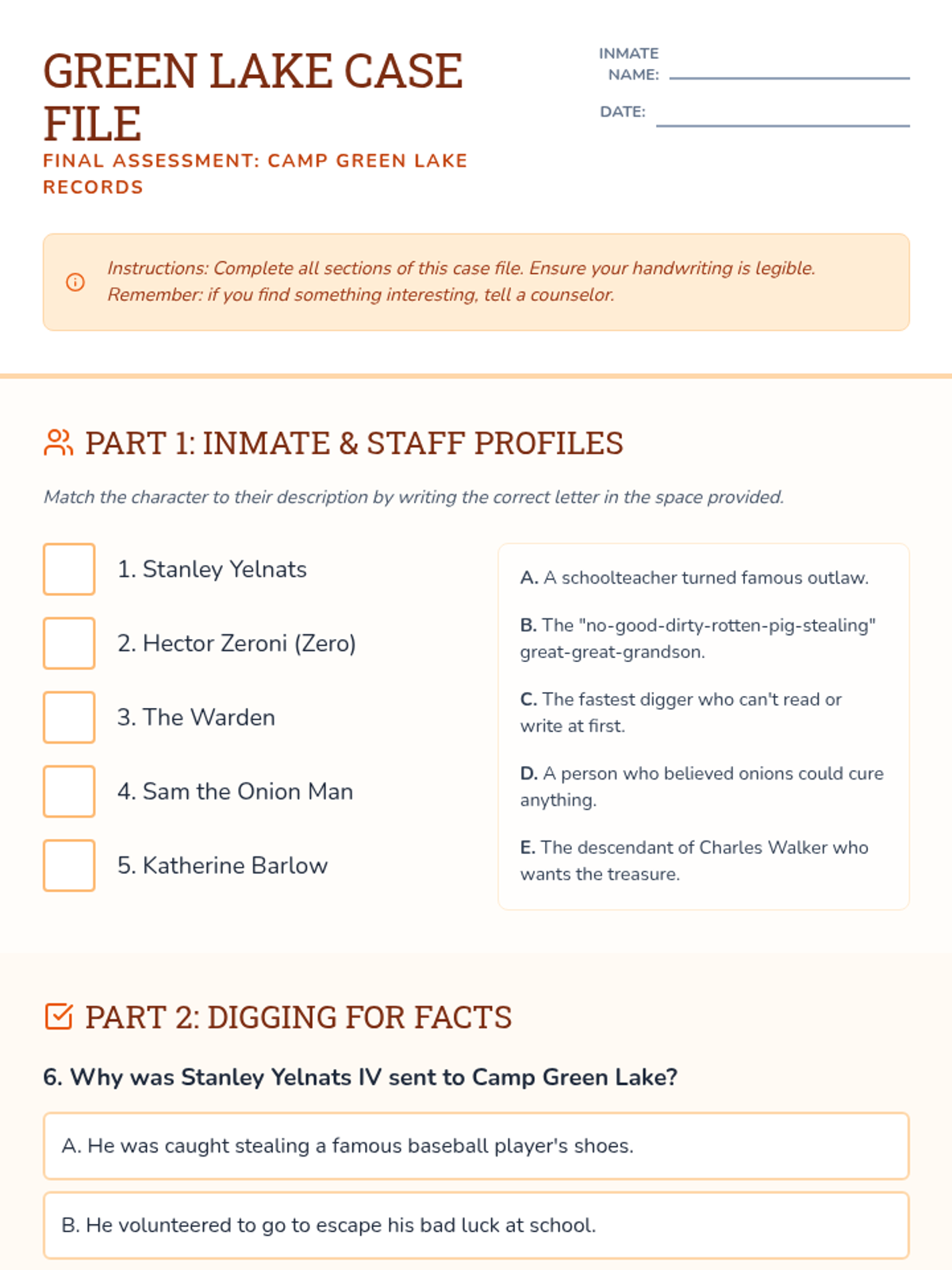
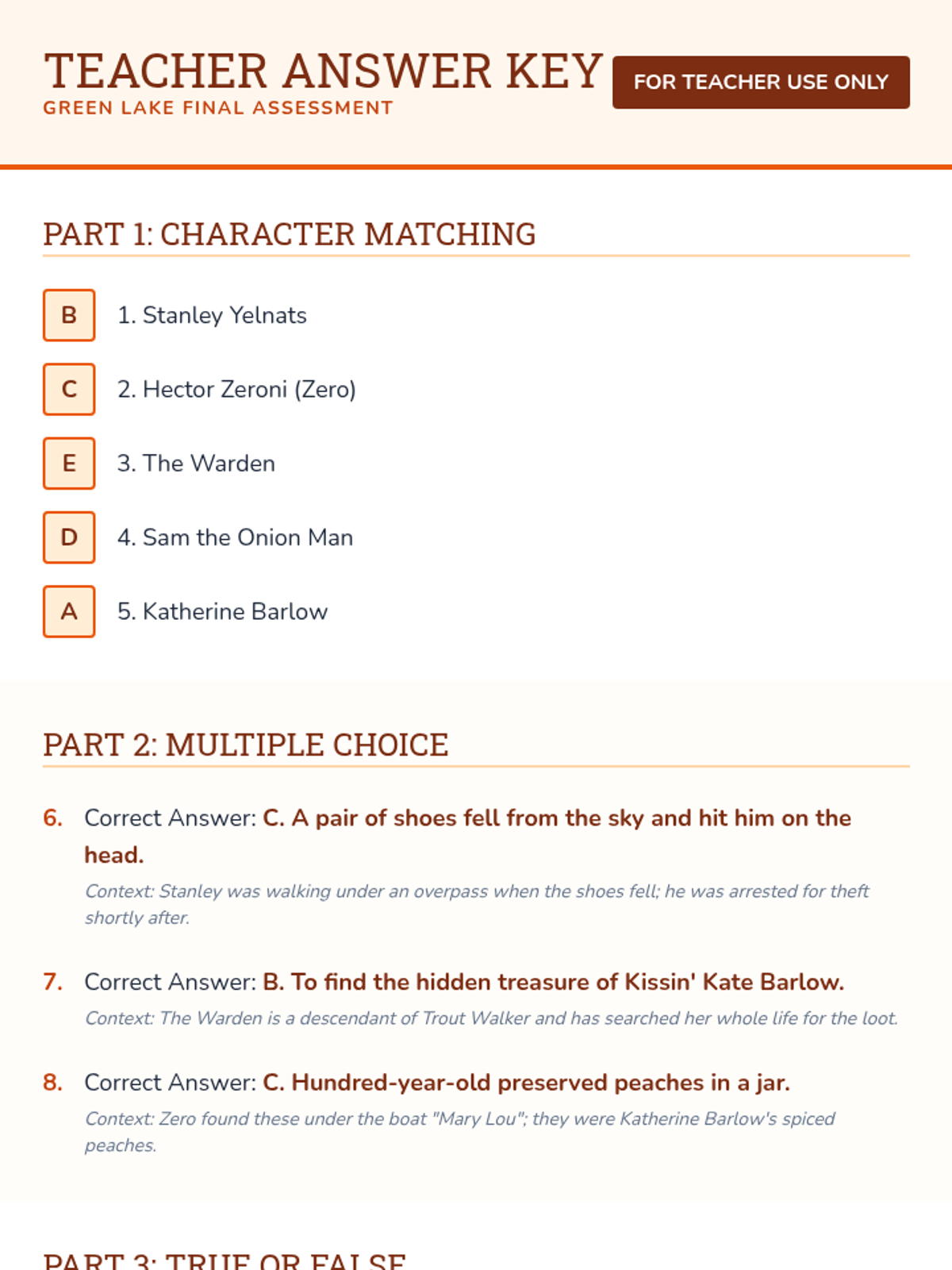
A final assessment and review lesson for the novel Holes by Louis Sachar, focusing on character identification, plot sequencing, and thematic connections. Students will complete a comprehensive test after a visual review of the major story arcs.
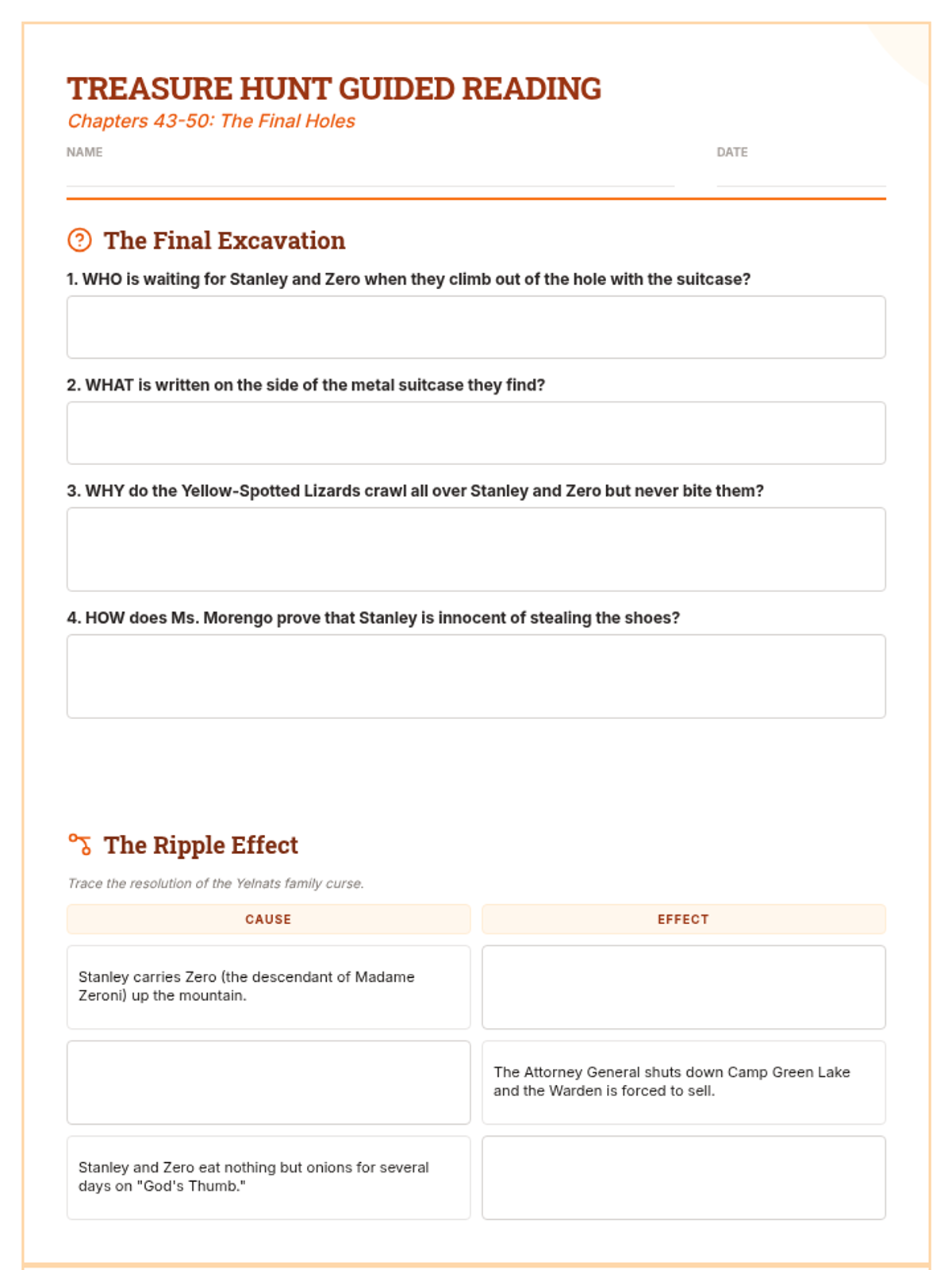
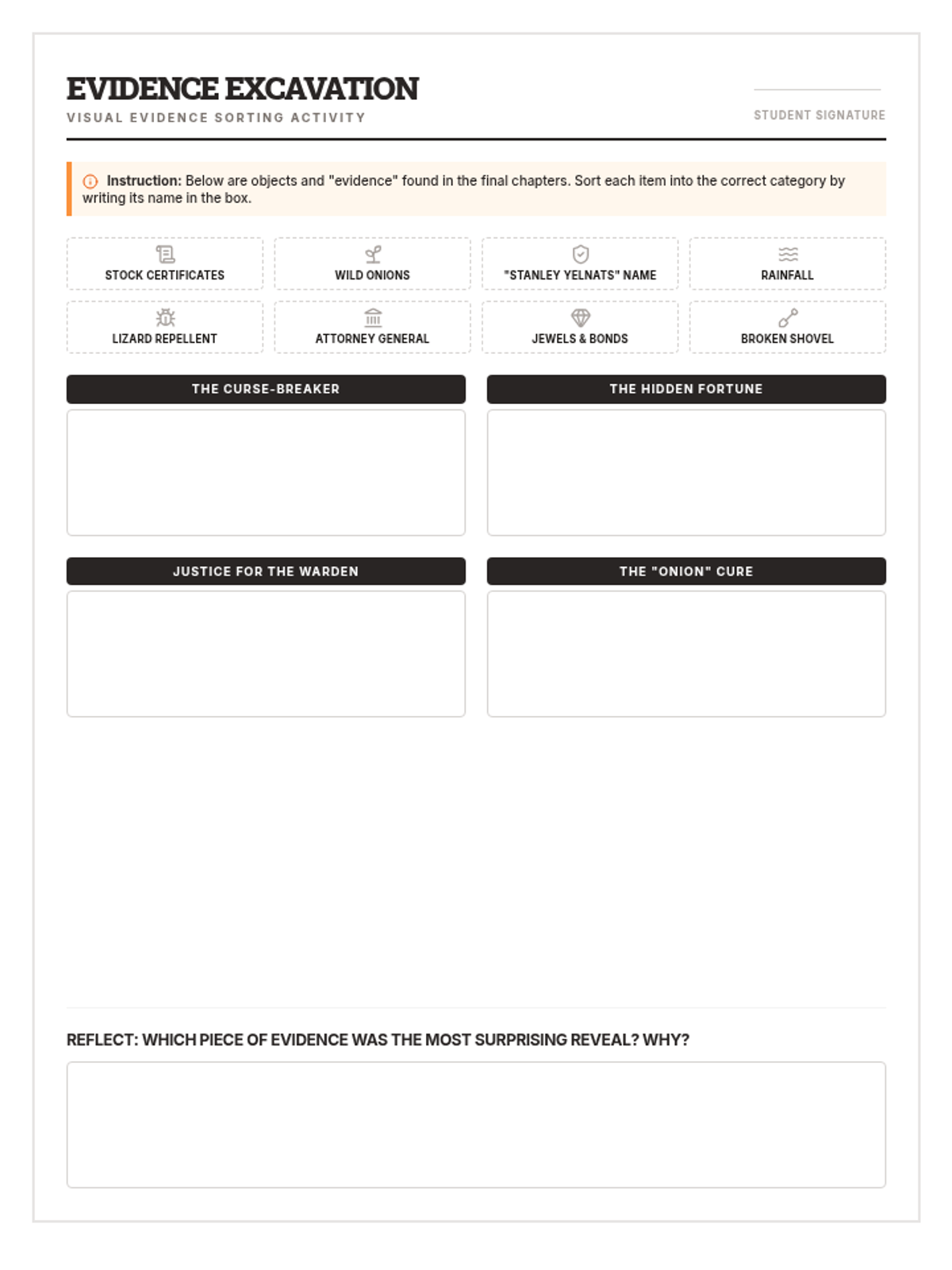
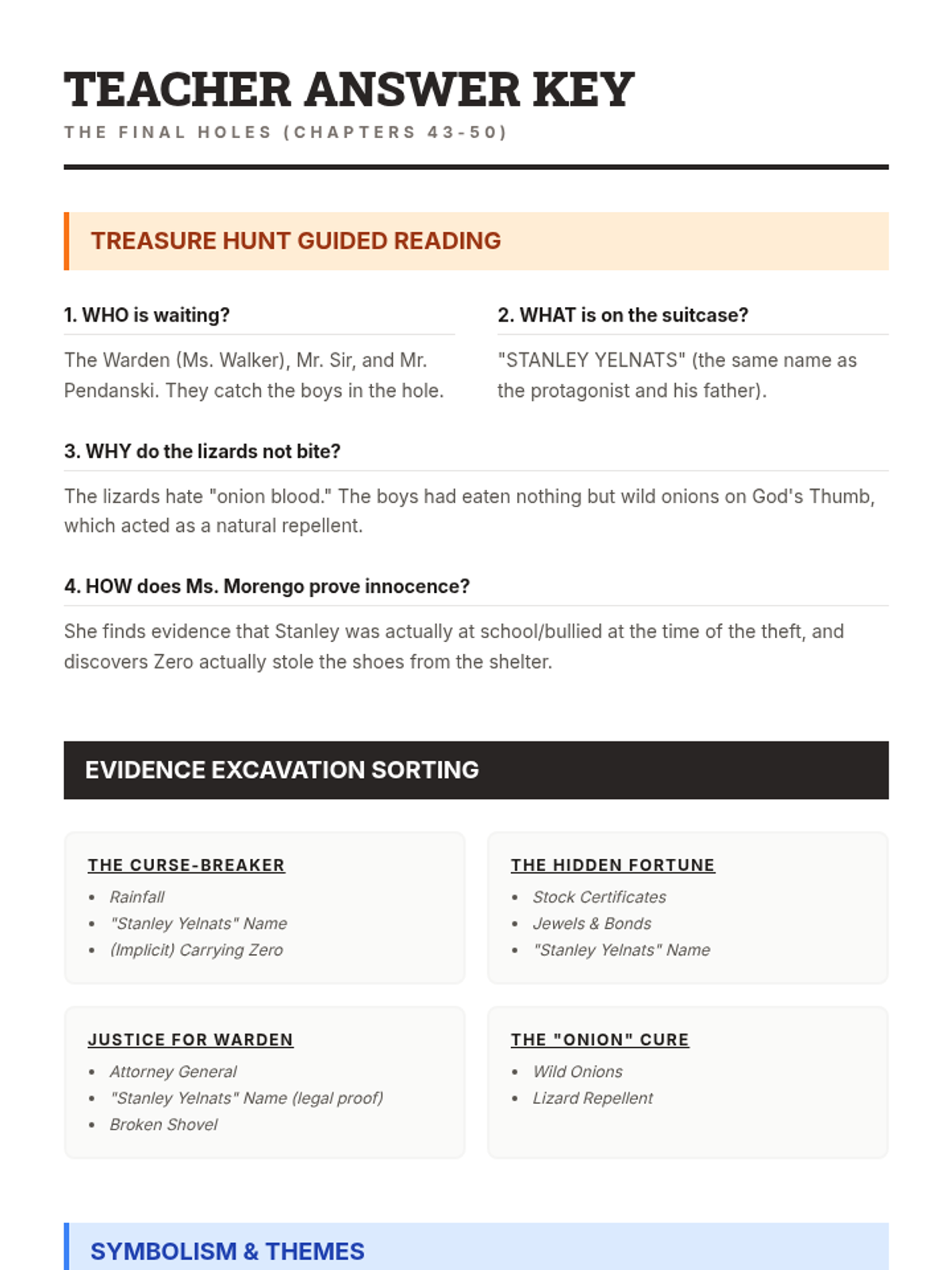
A comprehensive exploration of the final chapters of Holes (43-50), focusing on the resolution of the curse, the reveal of the treasure, and the symbolic cleansing of Camp Green Lake.
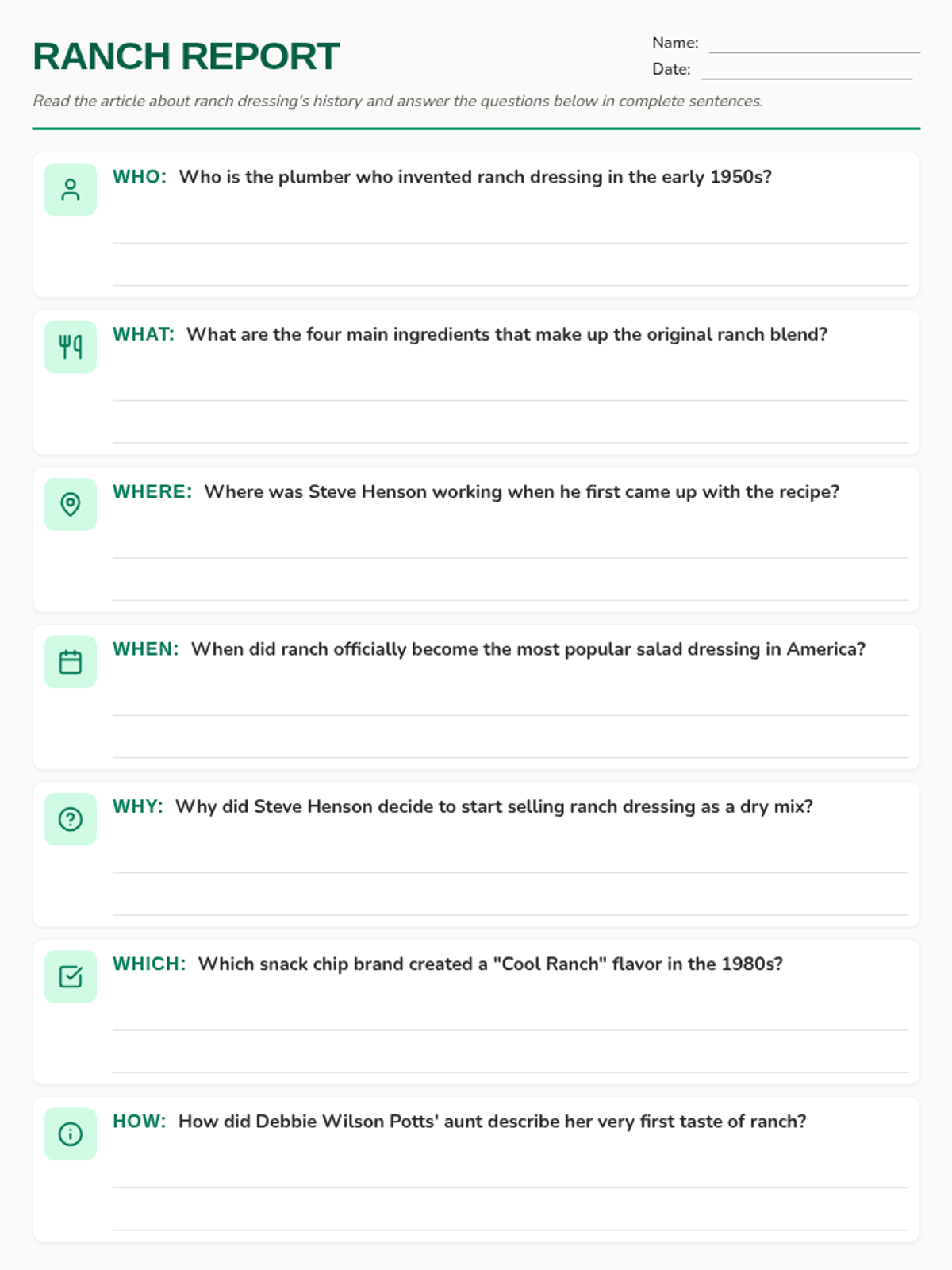
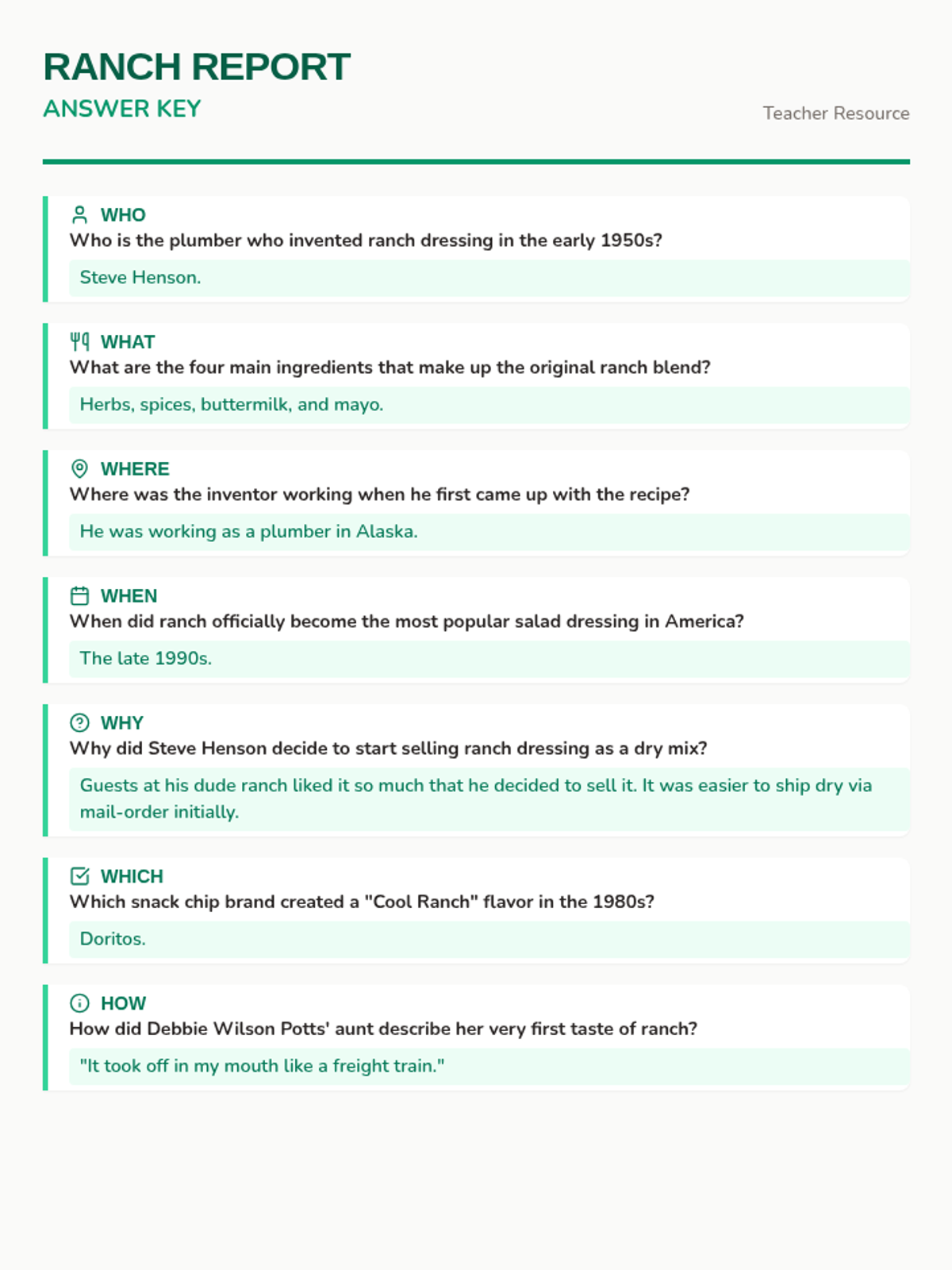
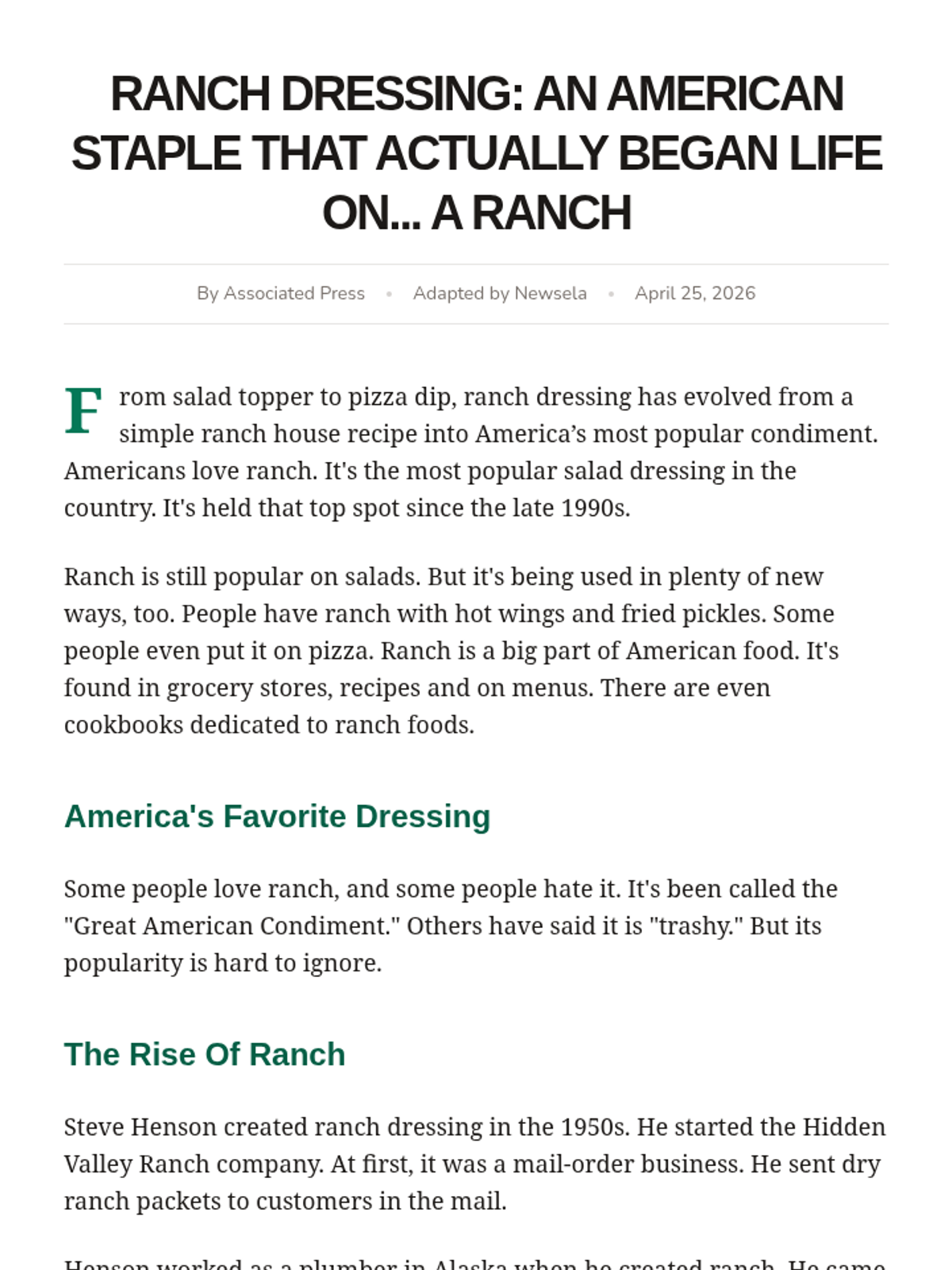
A lesson exploring the history and cultural impact of ranch dressing based on a Newsela article, featuring a reading comprehension worksheet and answer key.
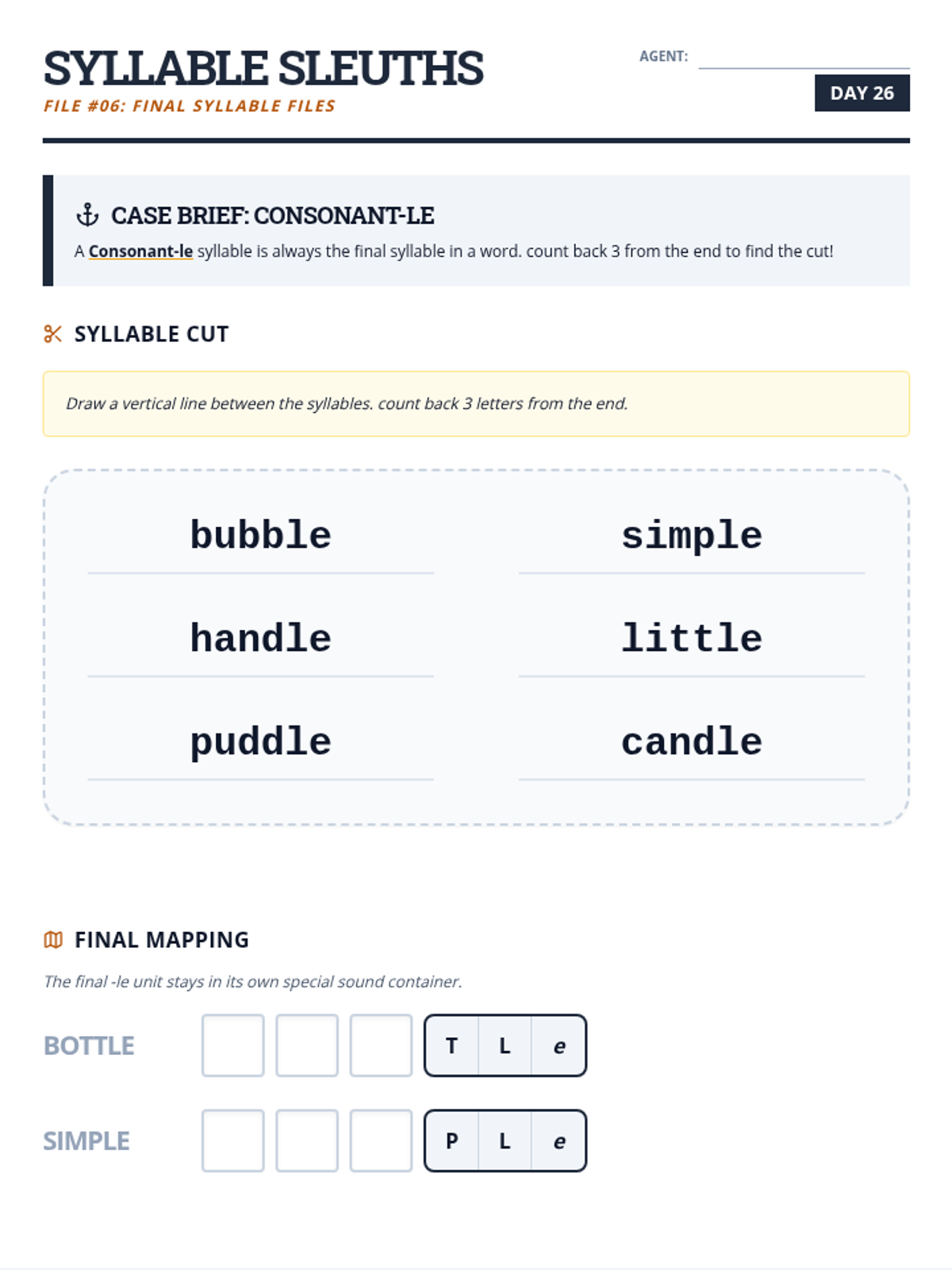
Mastering the final stable syllable 'Consonant-le' found at the end of multi-syllabic words.
Analyzing how the 'Bossy R' influences the sound of the preceding vowel in R-controlled syllables.
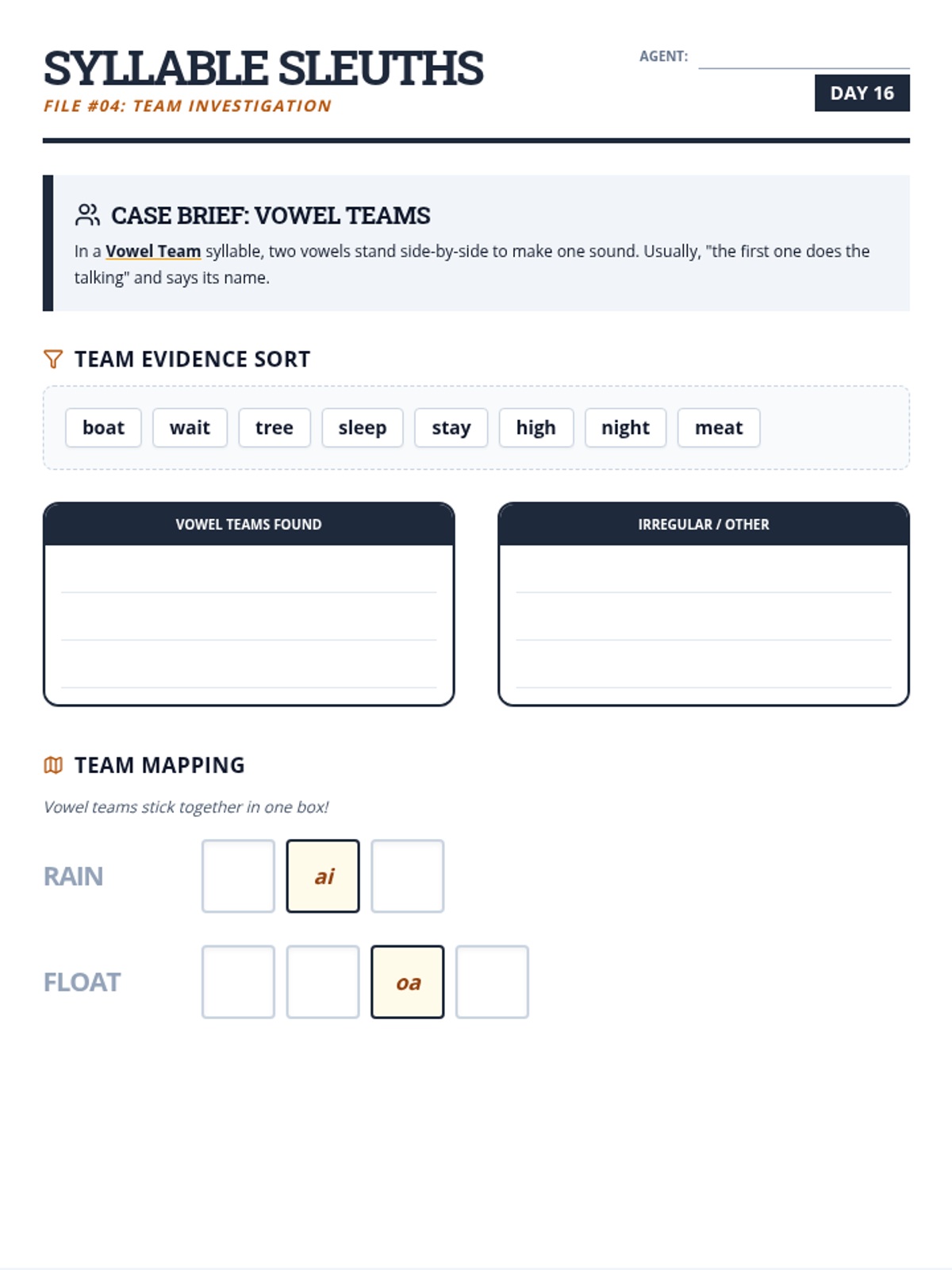
Tracking down vowel teams where two vowels work together to create a specific long or unique vowel sound.
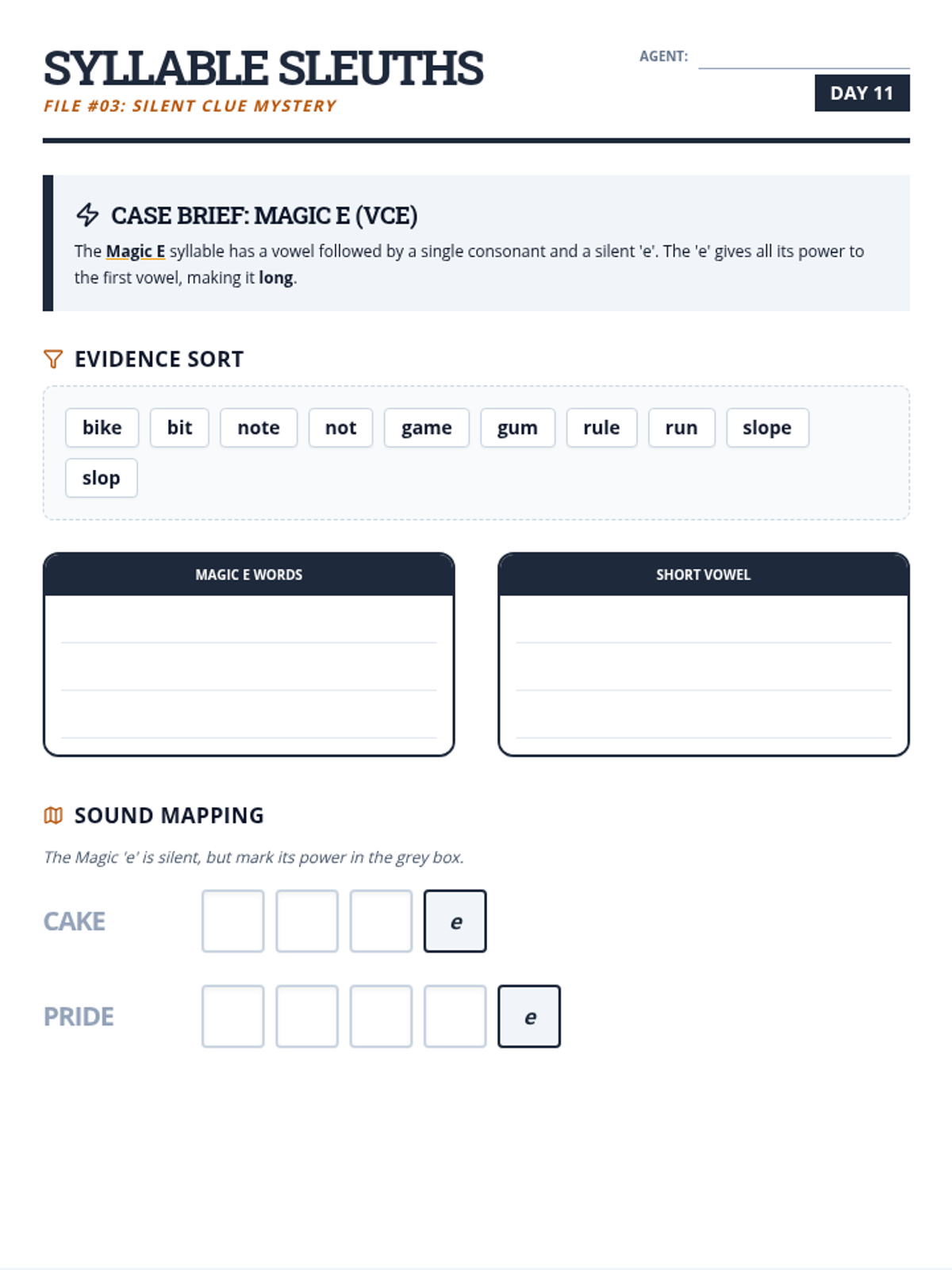
Deciphering the Magic E (VCe) pattern where a silent 'e' at the end of a syllable makes the preceding vowel long.
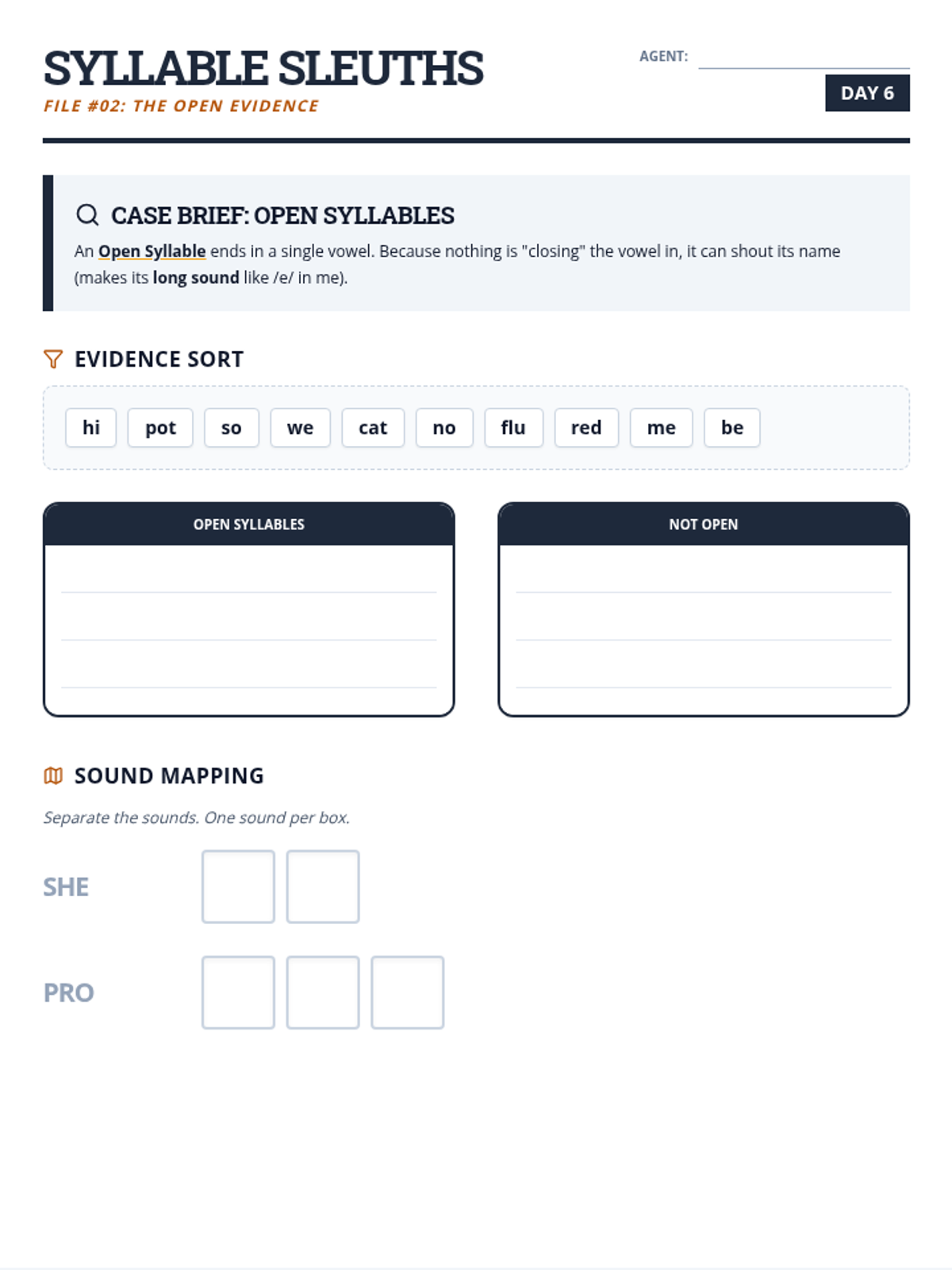
Exploring open syllables that end in a single vowel, which typically makes its long sound.
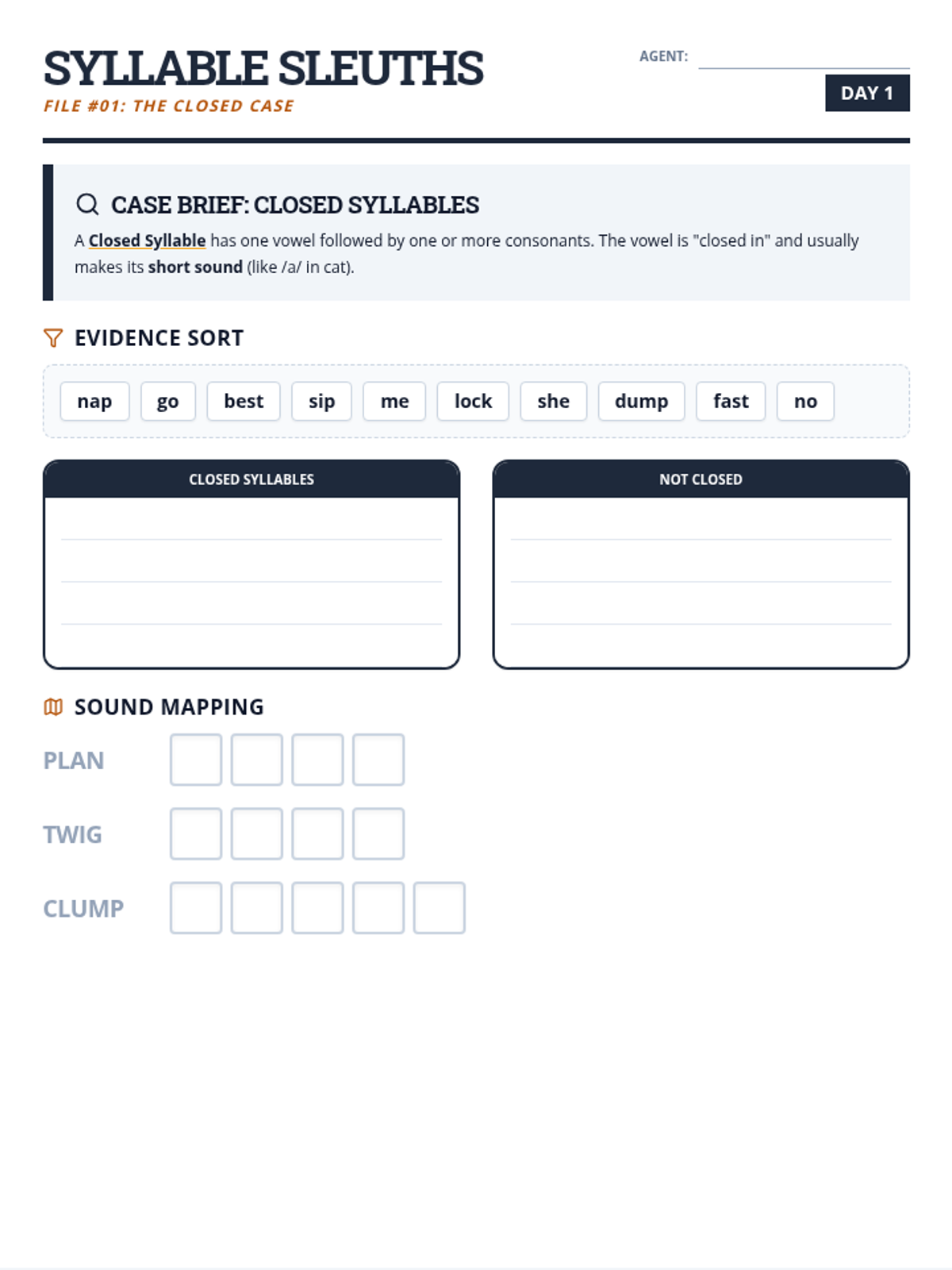
Investigation of closed syllables where a single vowel is followed by one or more consonants, resulting in a short vowel sound.
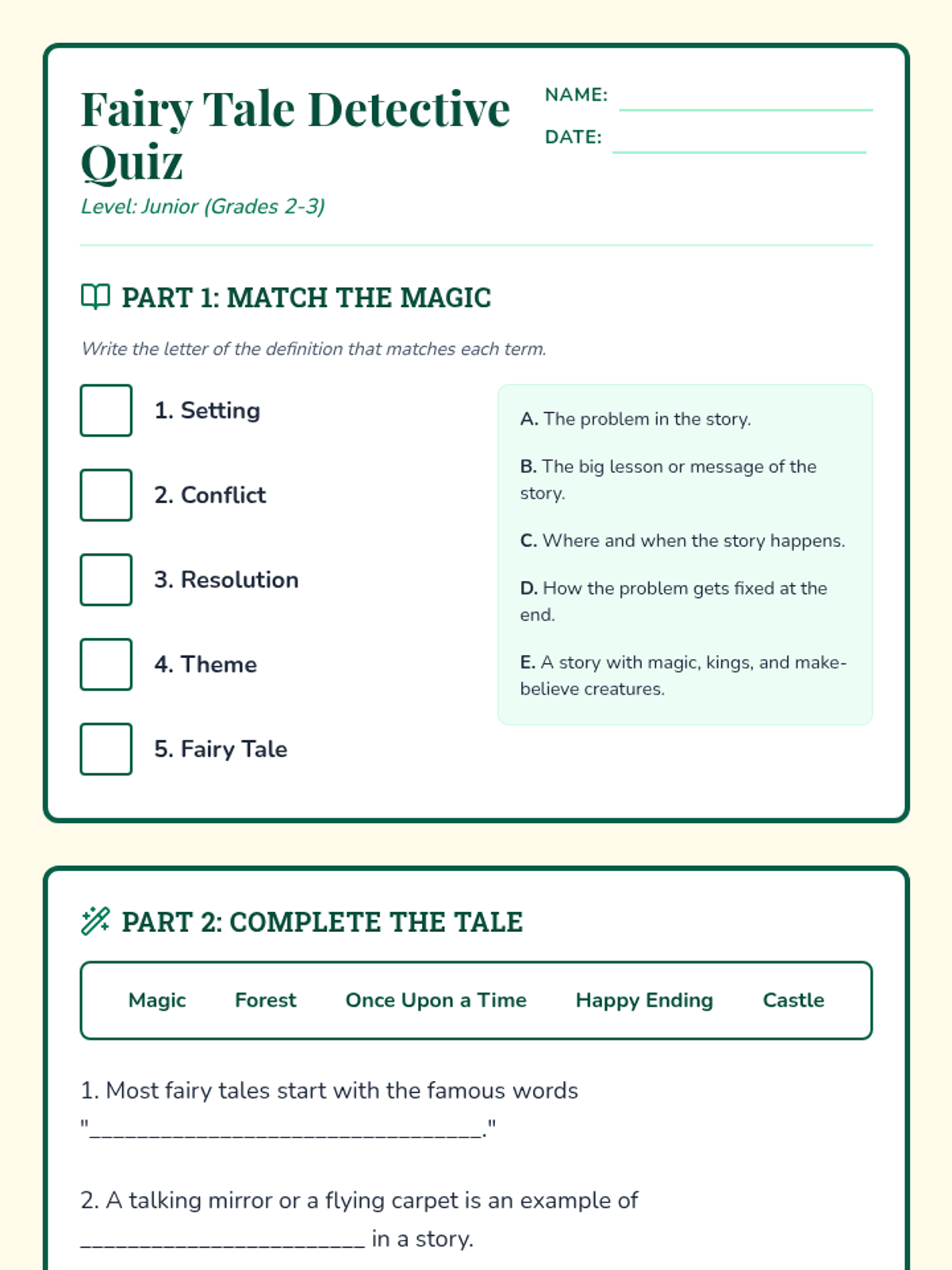
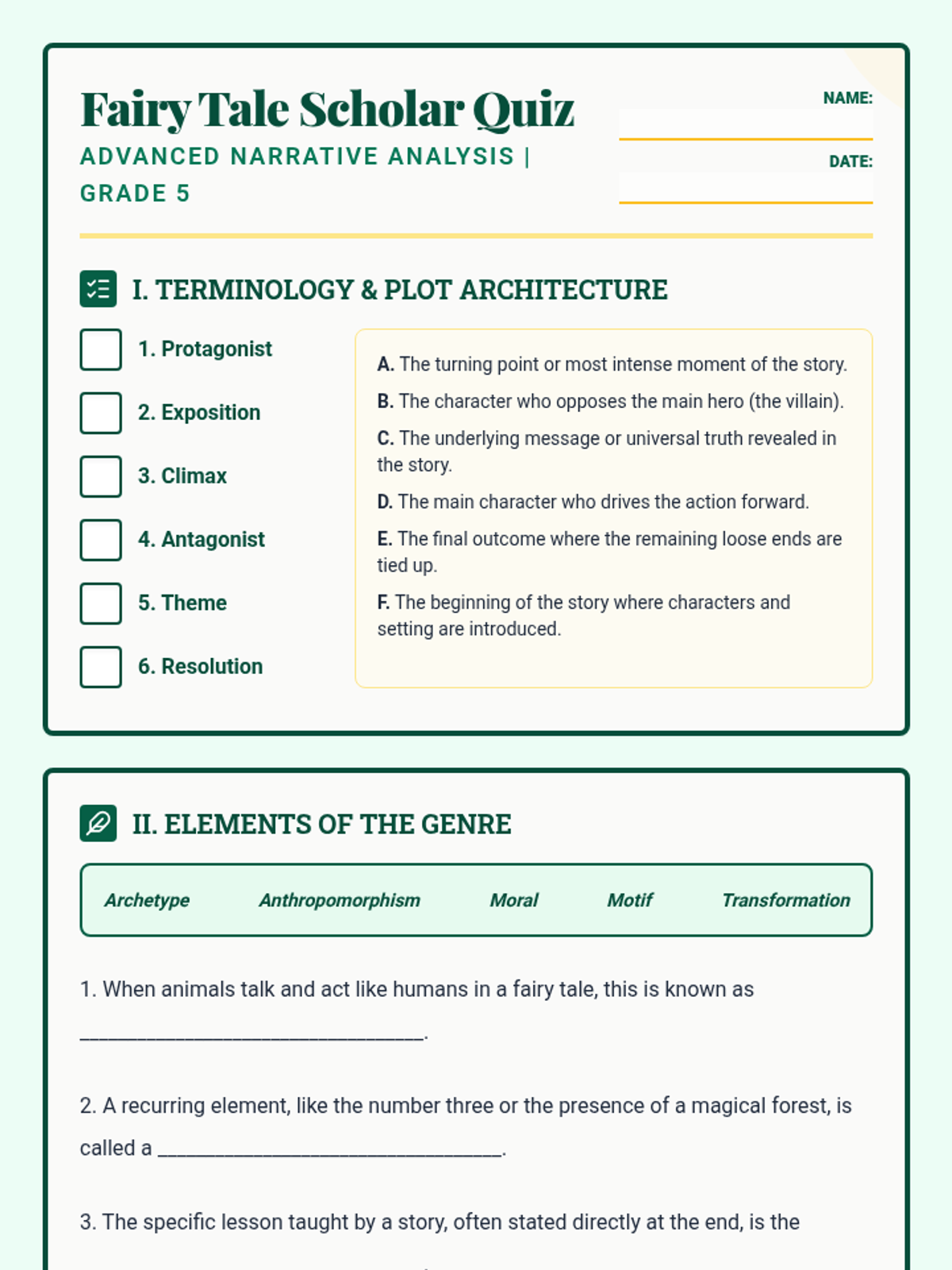
A comprehensive assessment on fairy tale elements and plot structures for elementary students, featuring two differentiated levels to meet specific grade-level standards.