Analyzing how drama uses dialogue to drive plot elements and character interactions. Students make text-to-society connections by examining themes within a play script.
Focusing on CCSS W.4.3.e, students write a satisfying conclusion and reflect on their narrative writing journey through an exit ticket.
Focusing on CCSS W.4.3.b and W.4.3.d, students use dialogue and sensory details to describe the climax and potential solutions to the story's problem.
Focusing on CCSS W.4.3.c, students organize event sequences using transitional words. Groups will plan the 'rising action' for the chosen story start and vote for the best path forward.
Students focus on CCSS W.4.3.a by establishing a situation and introducing characters. They will draft a story 'hook' and vote on the best start for the class's collaborative story.
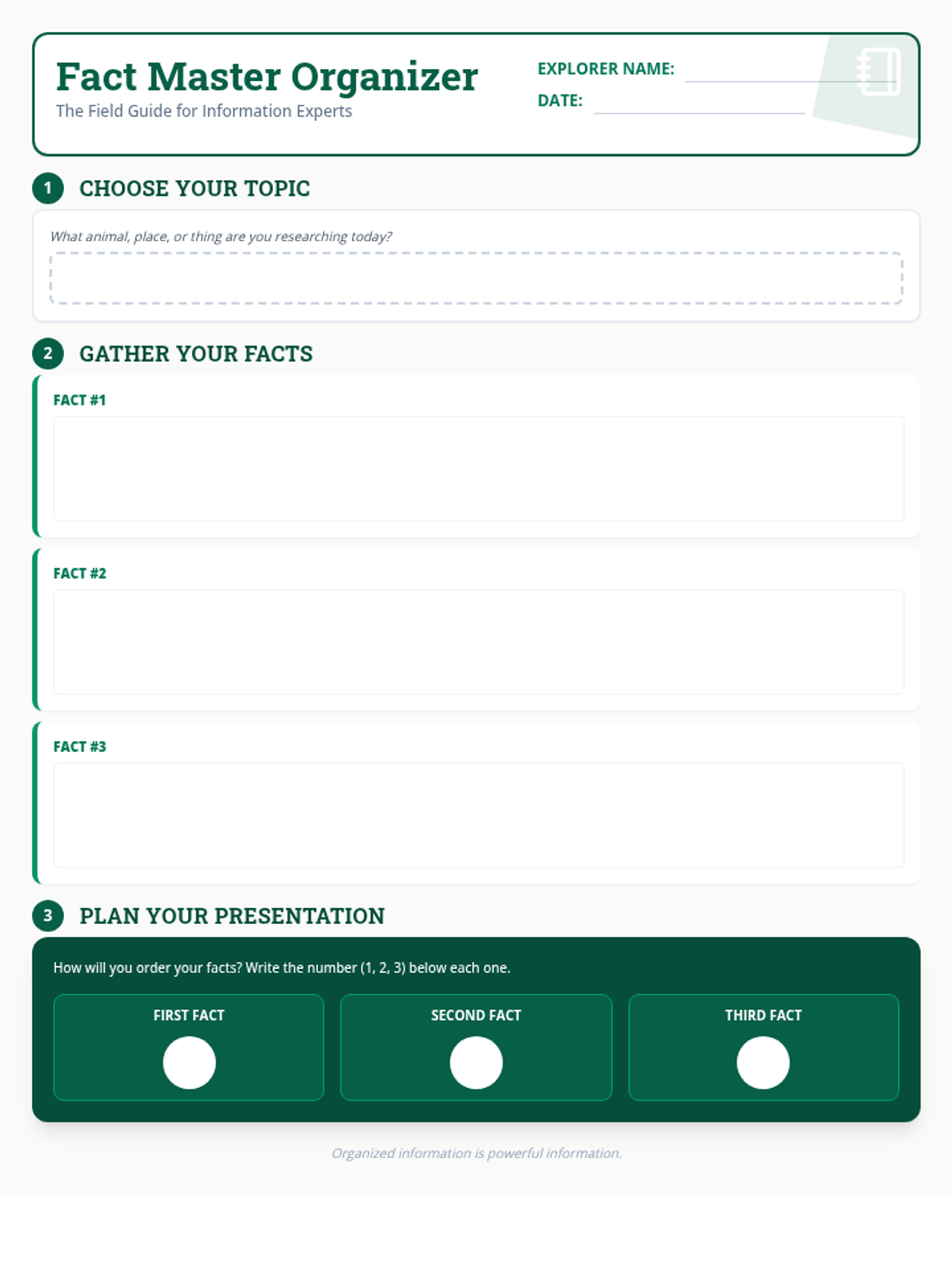
A lesson focused on identifying the main idea and supporting details in nonfiction texts using a comparison of Giant Pandas and Red Pandas.
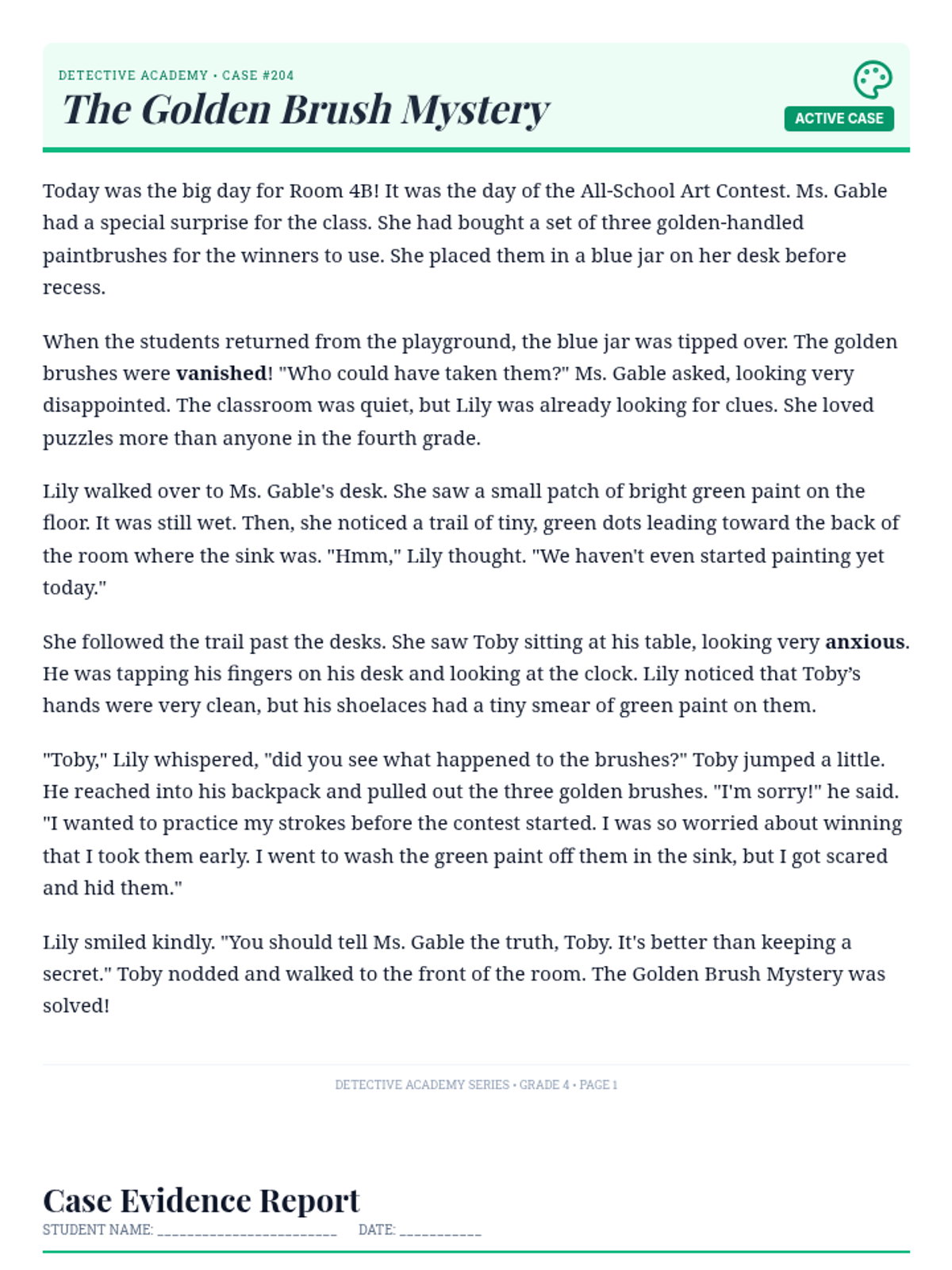
A 45-minute lesson focused on RI.4.8, where students learn to identify specific points an author makes and the reasons and evidence provided to support those points using a detective-themed investigation.
A 4th-grade ELA lesson focused on identifying and distinguishing between first-person and third-person points of view using detective-themed 'clue' identification.
An introduction to Shakespeare's whimsical comedy for young readers, focusing on plot, characters, and the magical setting of the enchanted forest.
A cumulative review using narrative poetry or a short story where students synthesize their skills in plot analysis, character study, and multi-layered connections.