A 7th-grade science lesson exploring the geological processes of orogeny and volcanism through the lens of European mountain formation, featuring hands-on tectonic modeling and scientific diagramming.
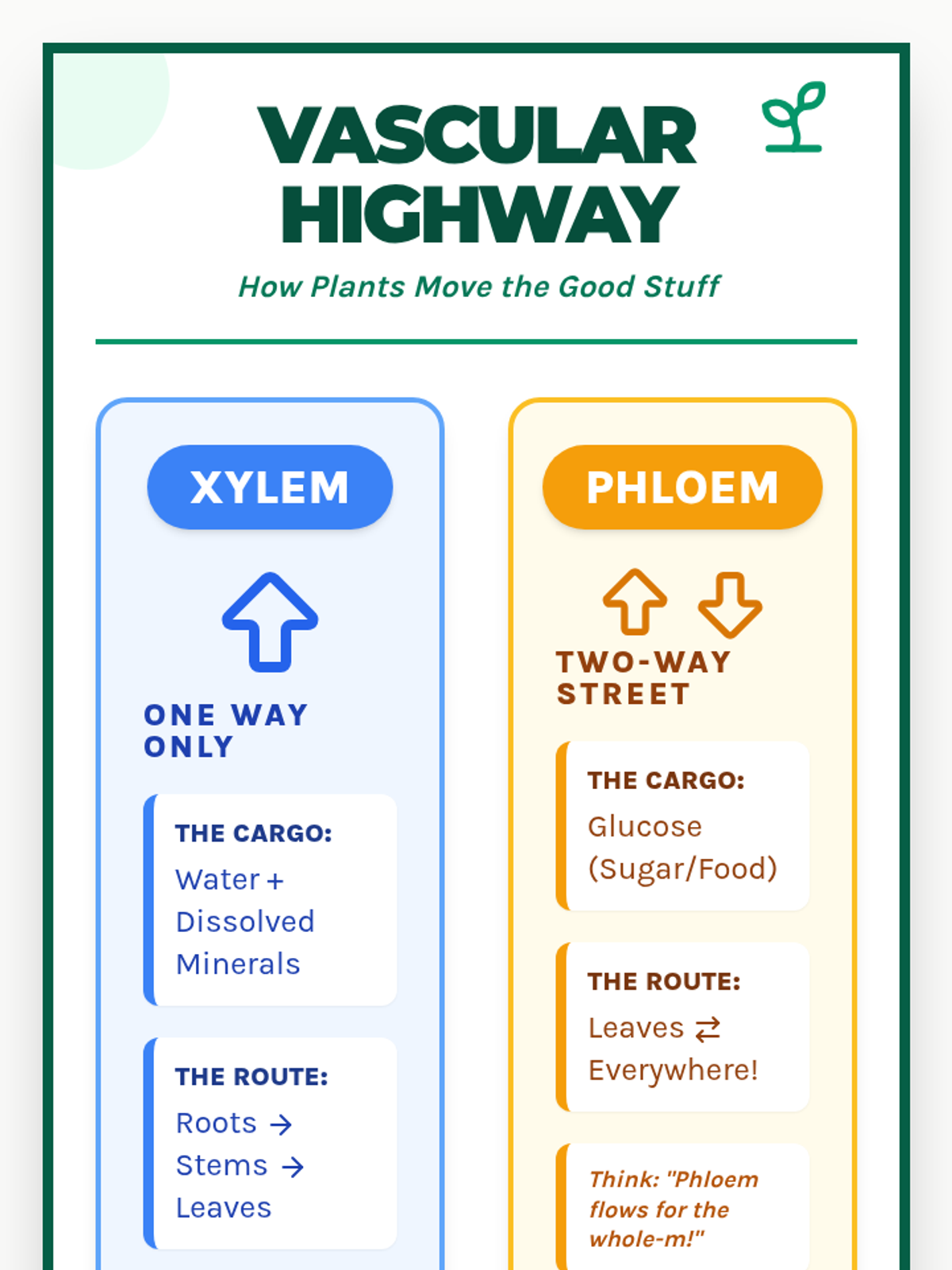
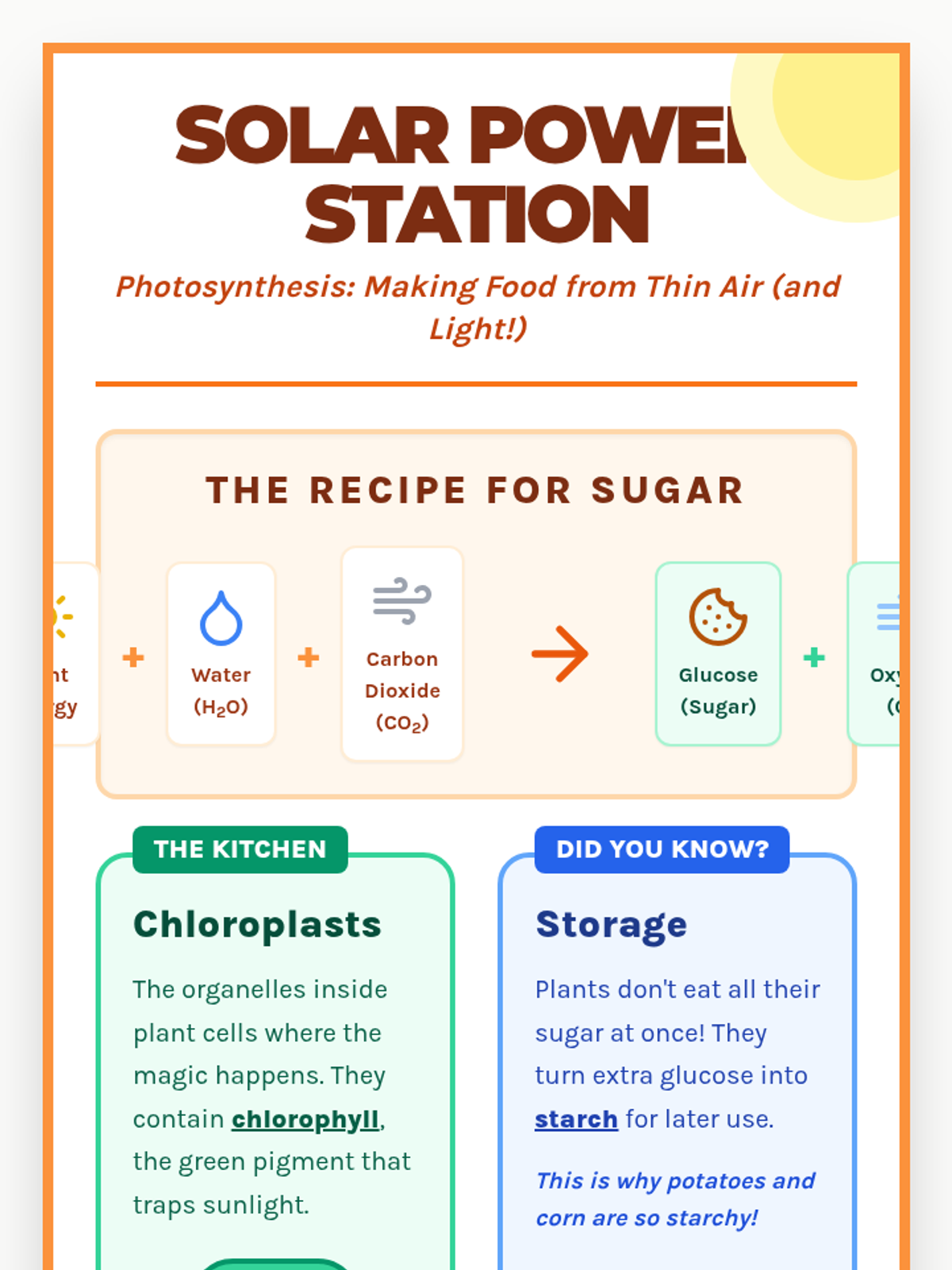
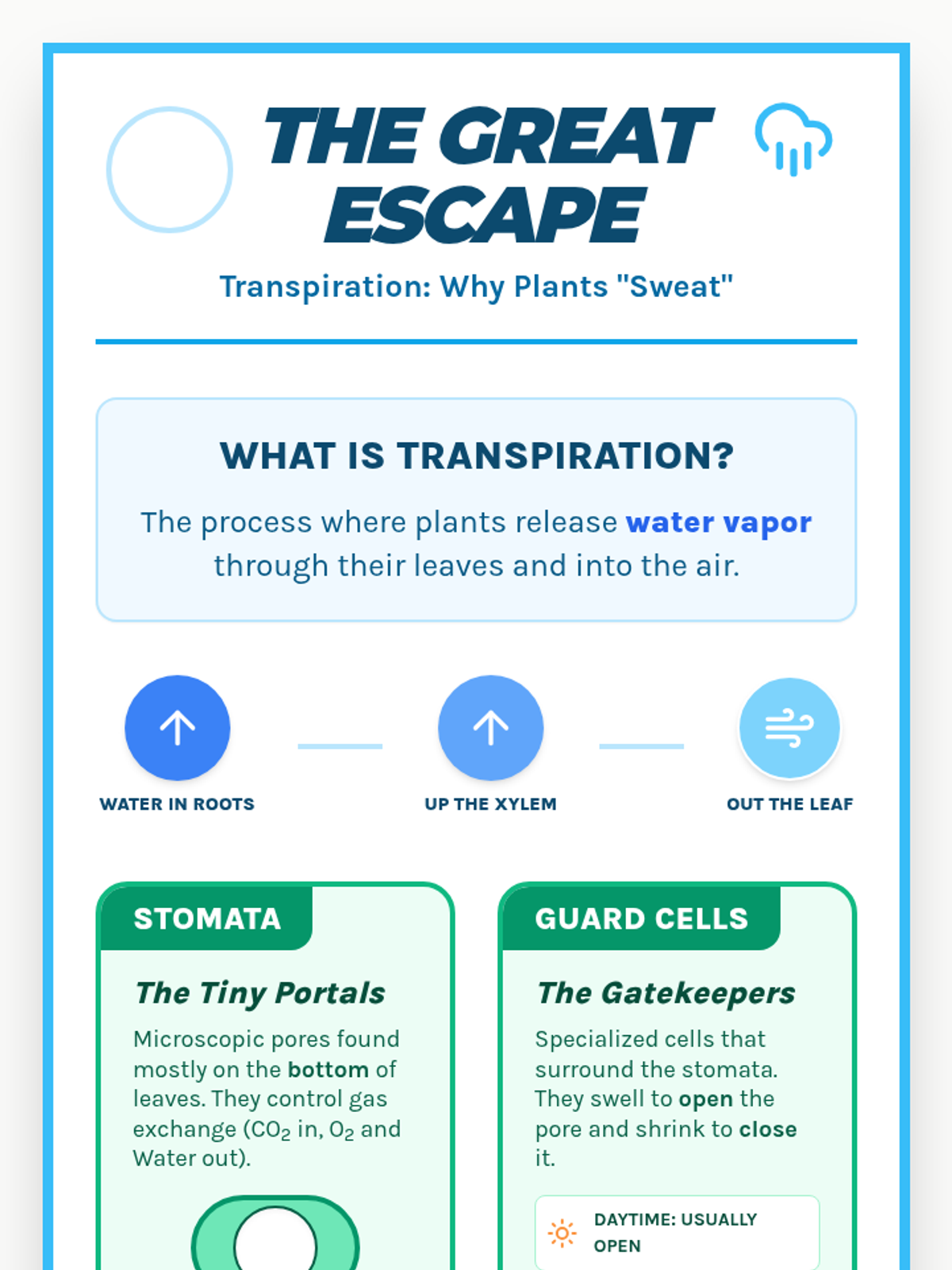
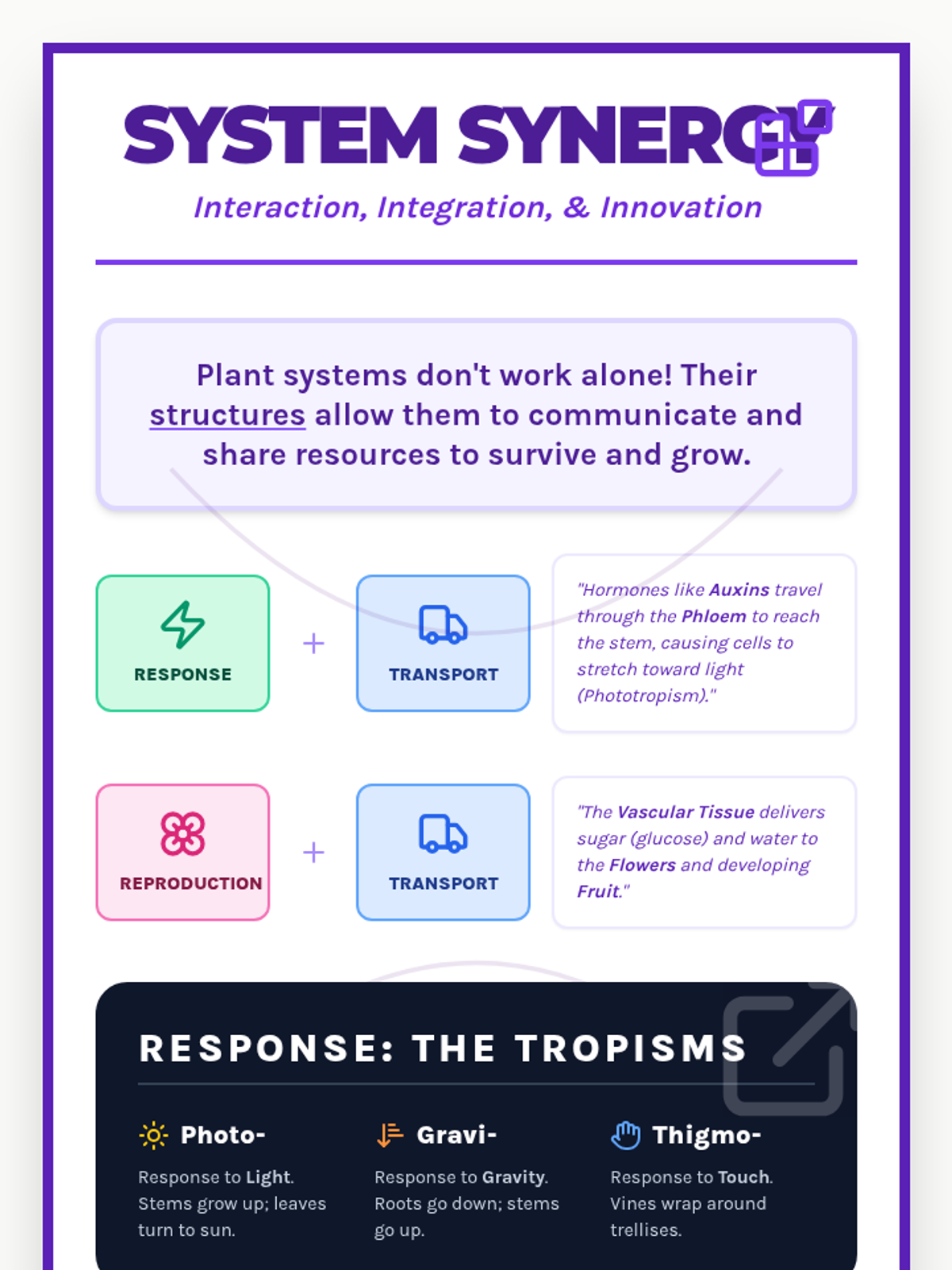
A series of visual anchor charts designed for reference during laboratory investigations into plant vascular systems, photosynthesis, and transpiration.
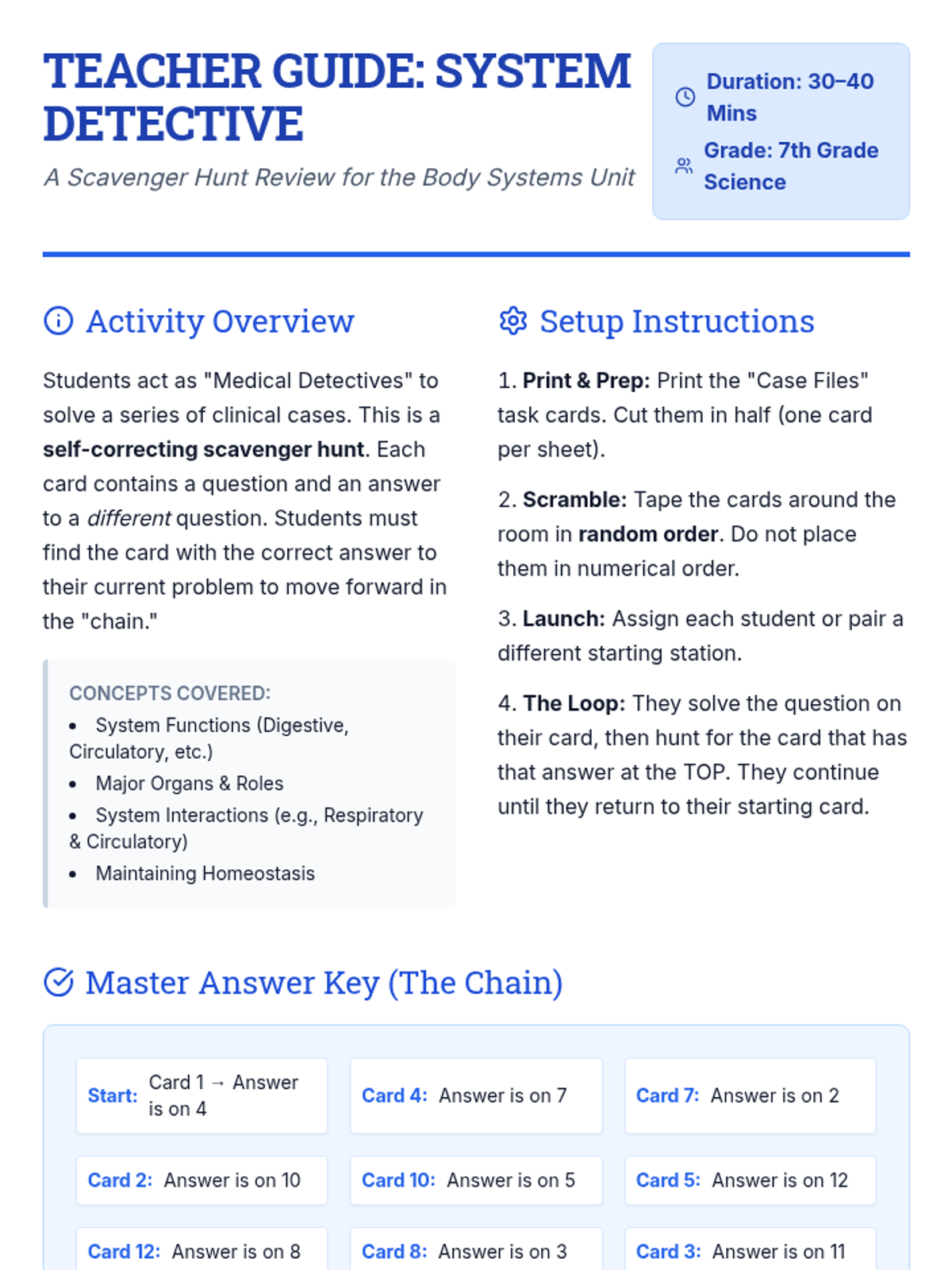
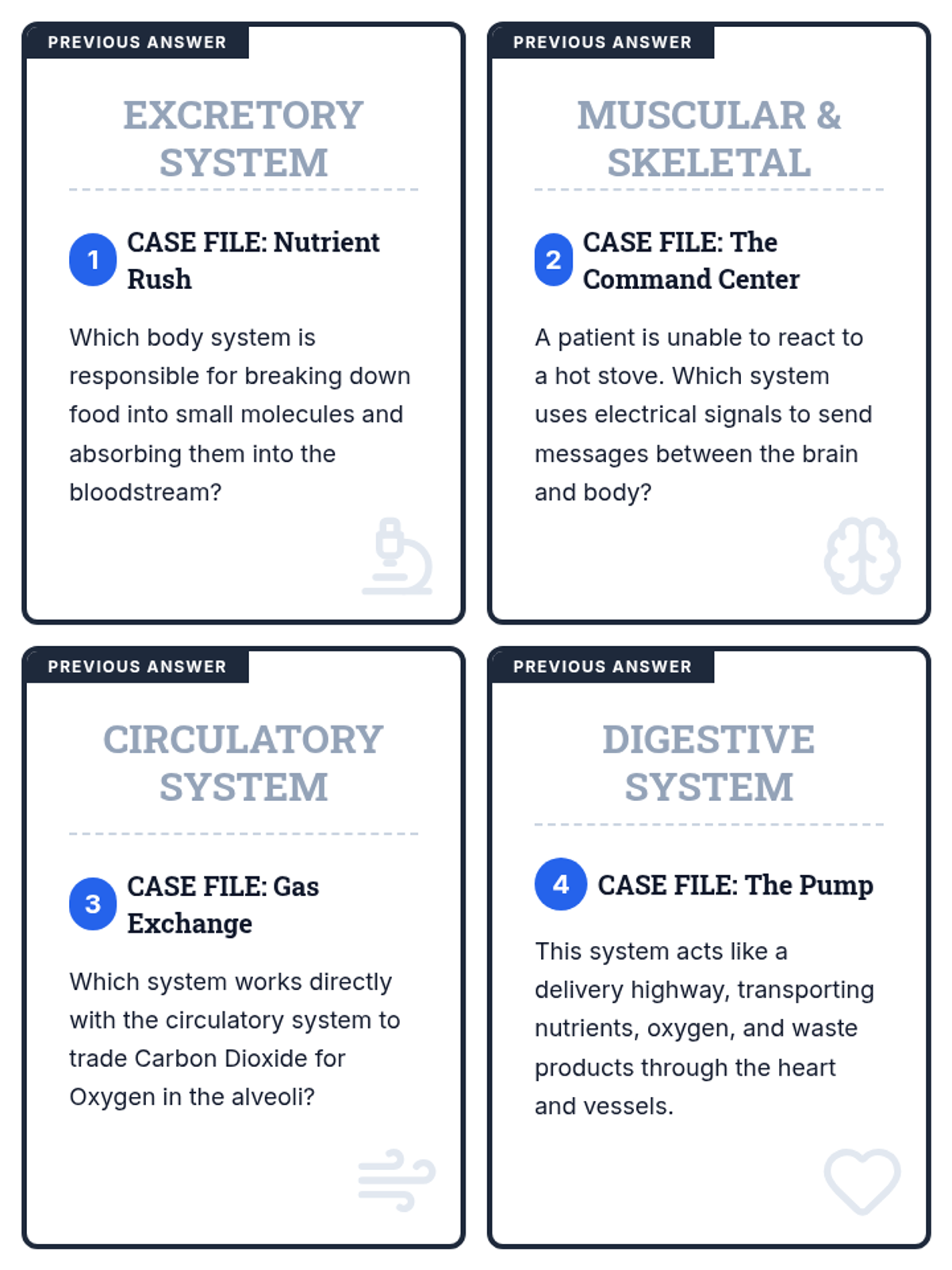
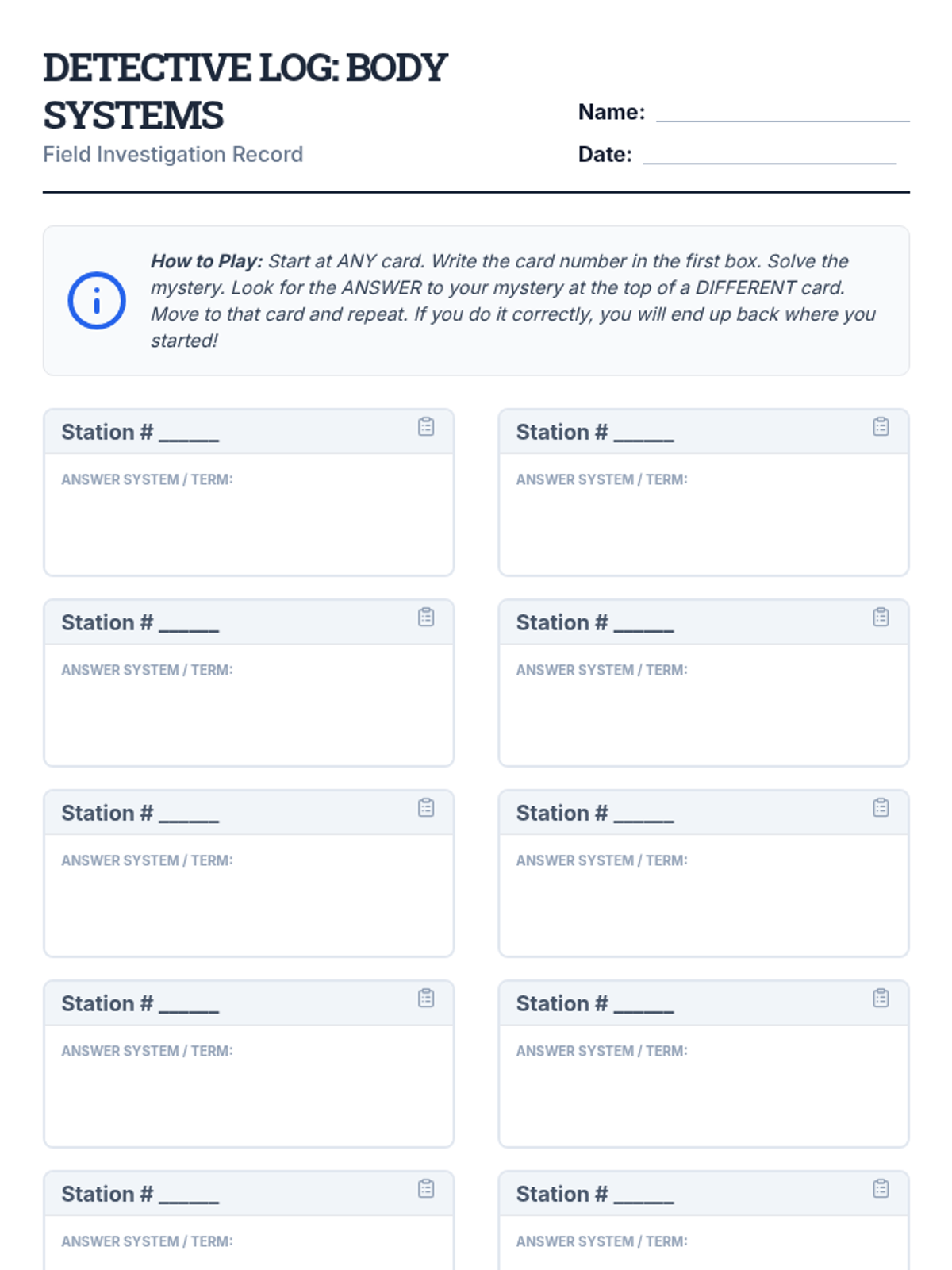
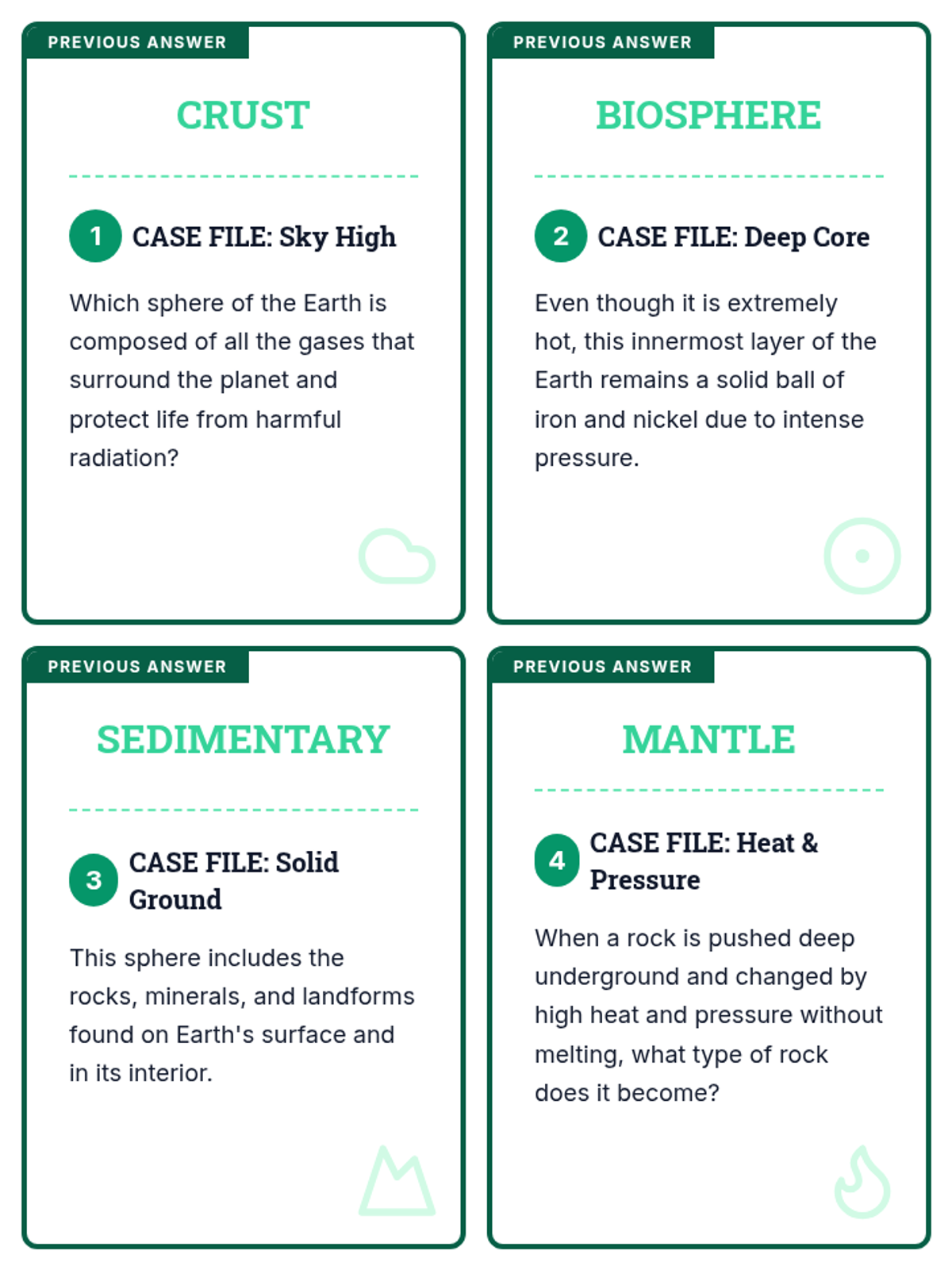
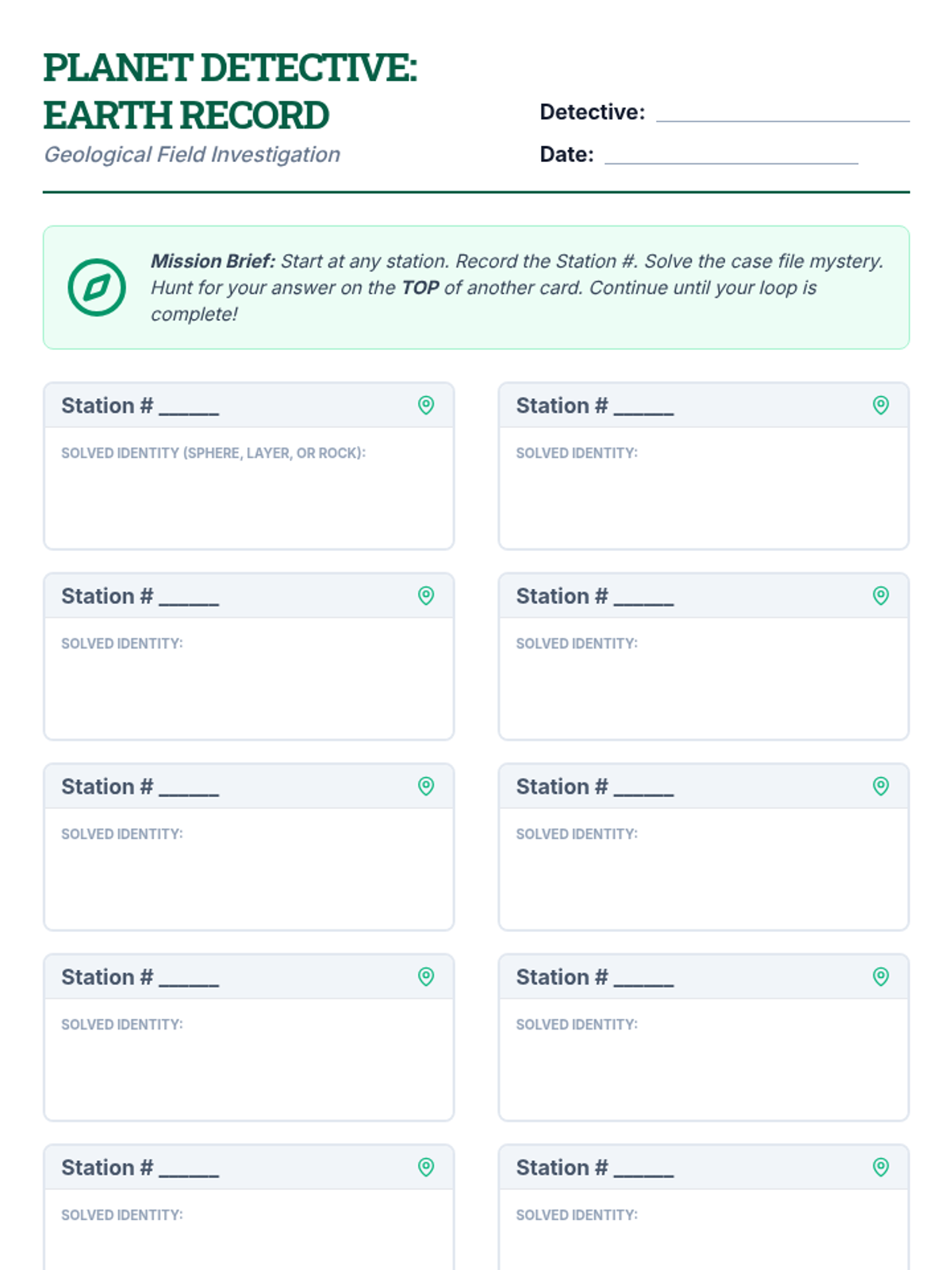
A high-energy, movement-based review activity where students solve 'medical cases' by identifying body systems and their functions. This lesson includes task cards for a classroom scavenger hunt and a structured recording sheet for students.
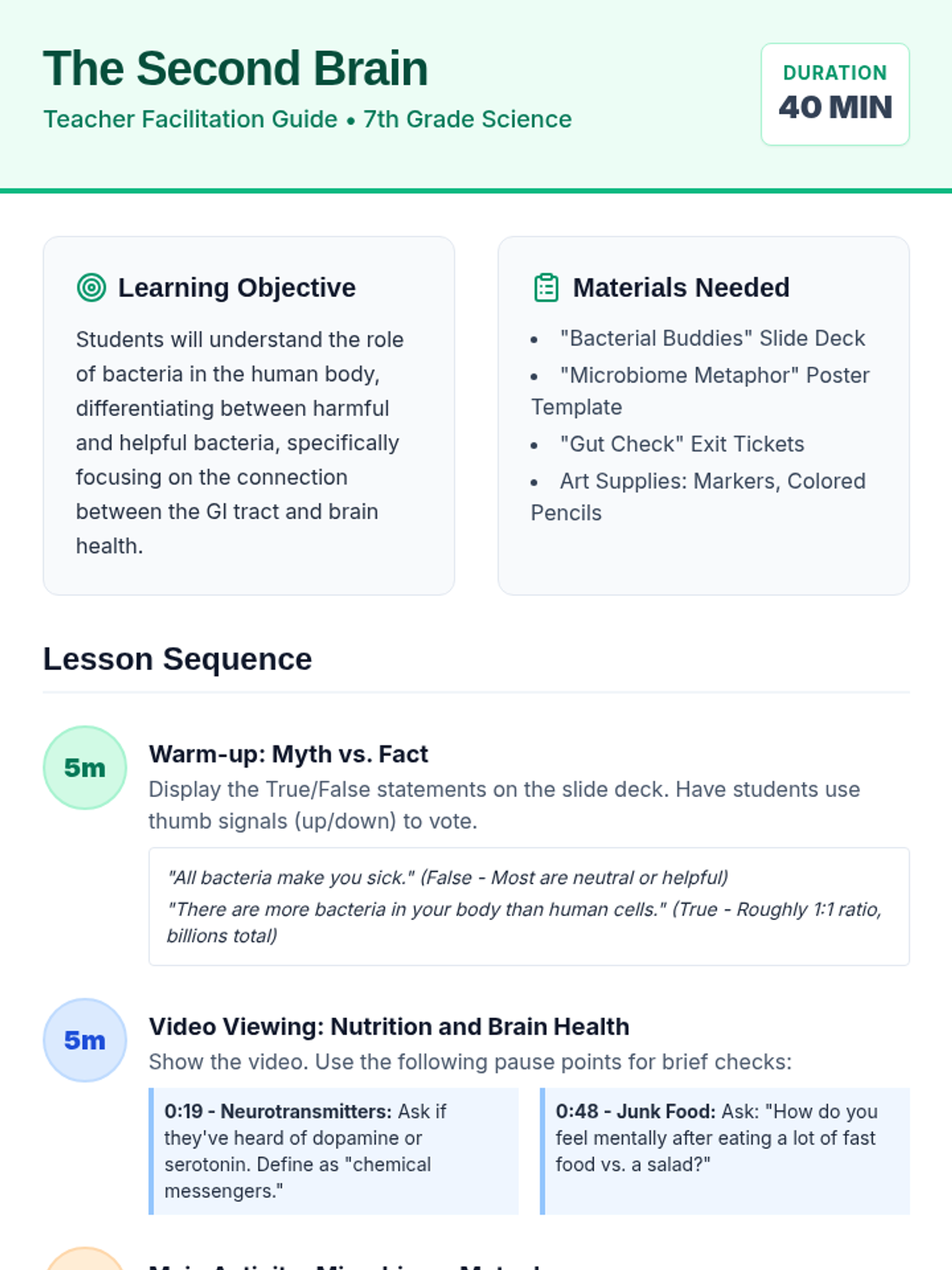
A lesson exploring the symbiotic relationship between humans and gut bacteria, focusing on the gut-brain connection and the impact of nutrition on mood. Students create metaphors for their microbiome and identify ways to support beneficial bacteria.
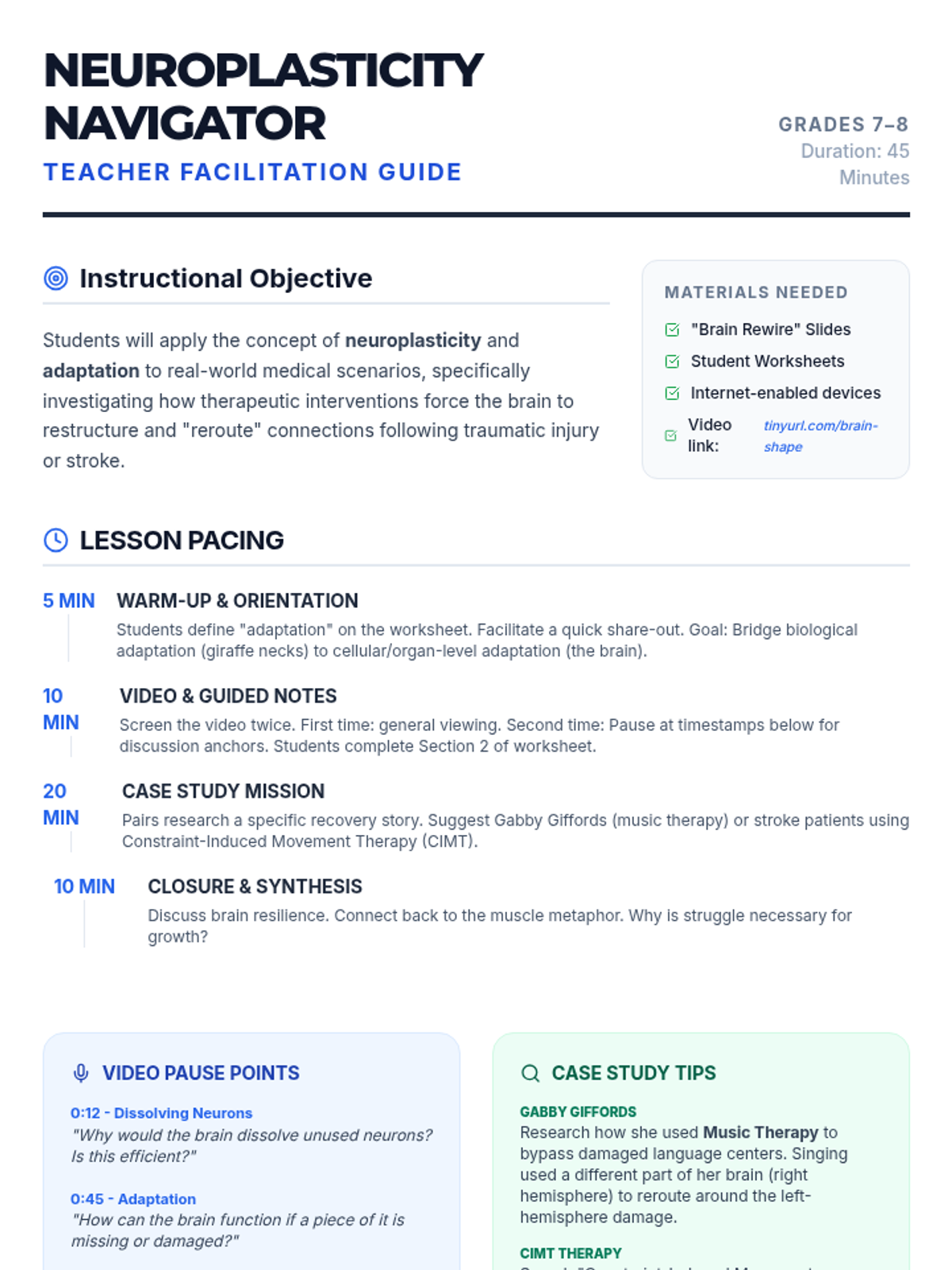
A middle school science lesson exploring neuroplasticity through medical recovery case studies. Students investigate how the brain 'reroutes' neural pathways after injury using adaptation and recovery strategies.
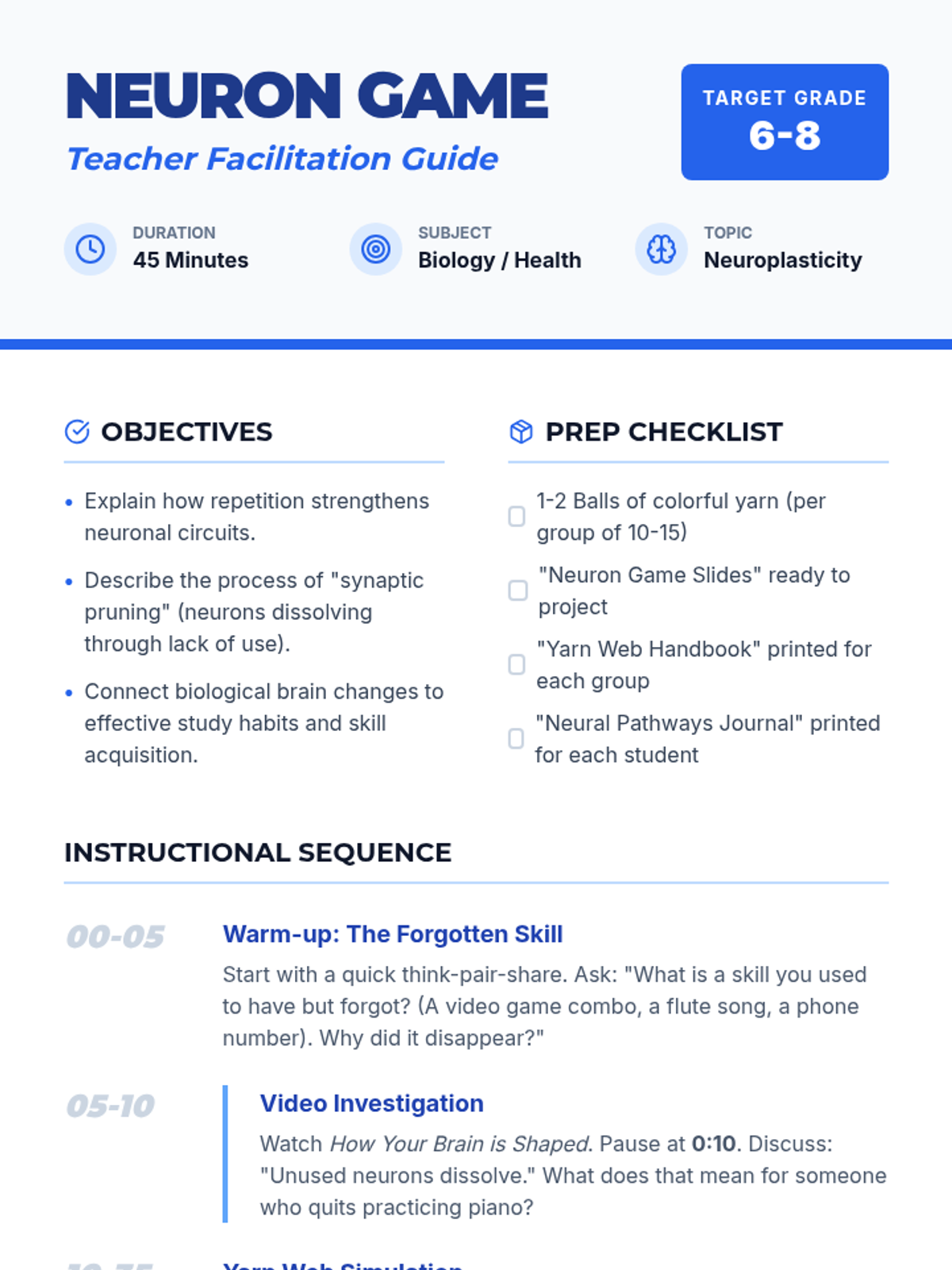
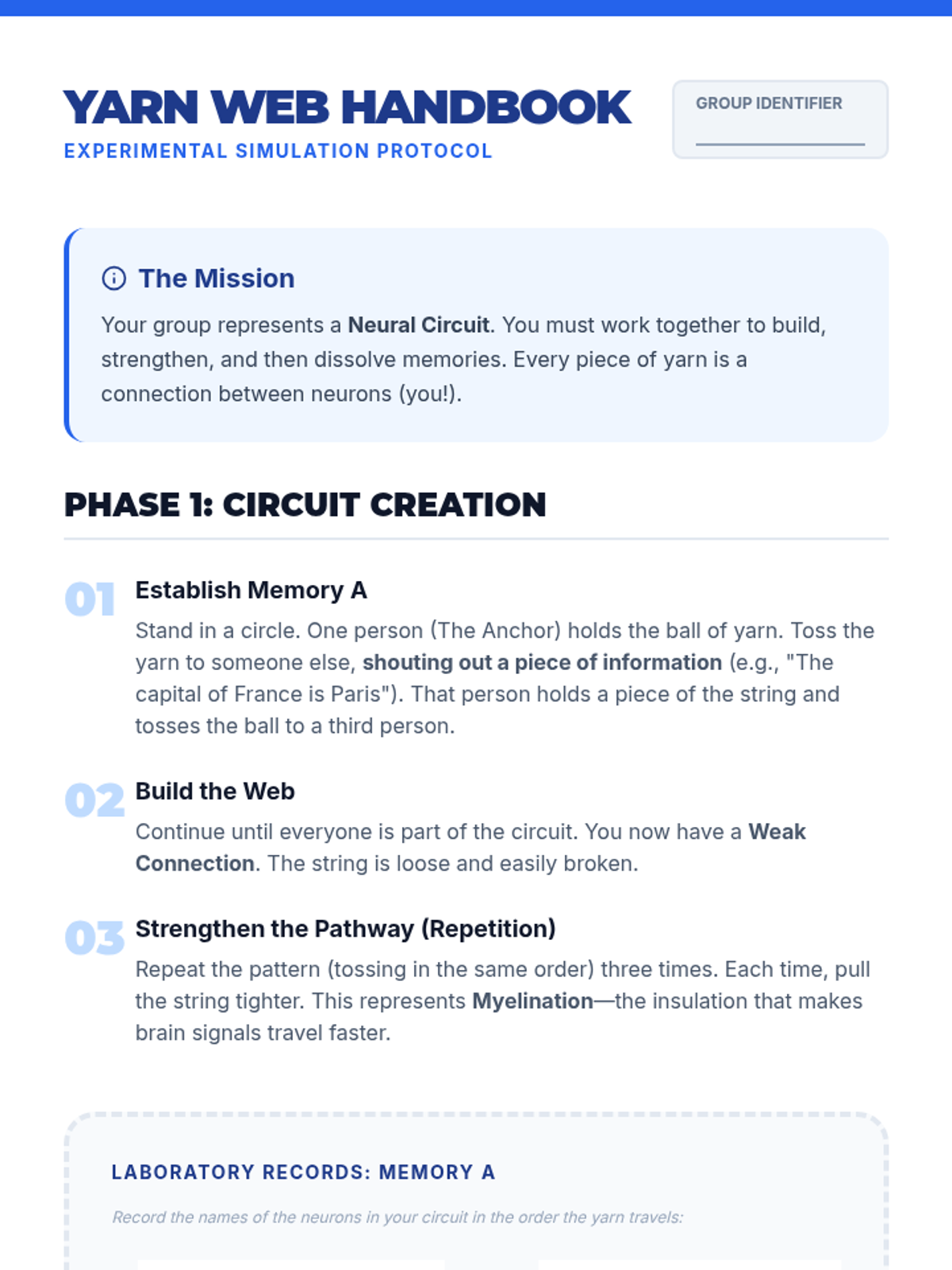
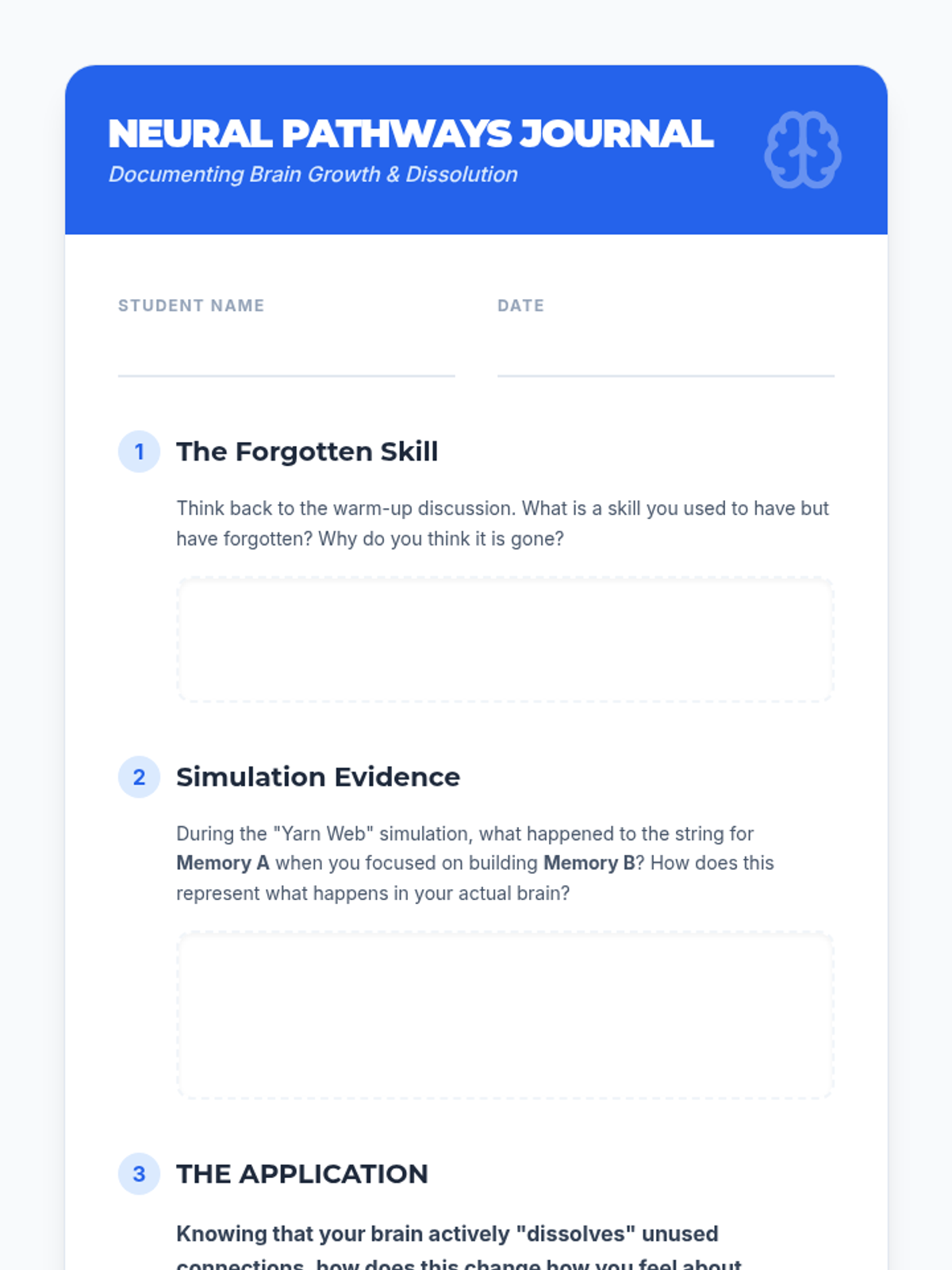
A 6th-8th grade science and health lesson exploring neuroplasticity through a hands-on yarn simulation and a video-based discussion. Students learn how neural pathways strengthen through use and dissolve through neglect.
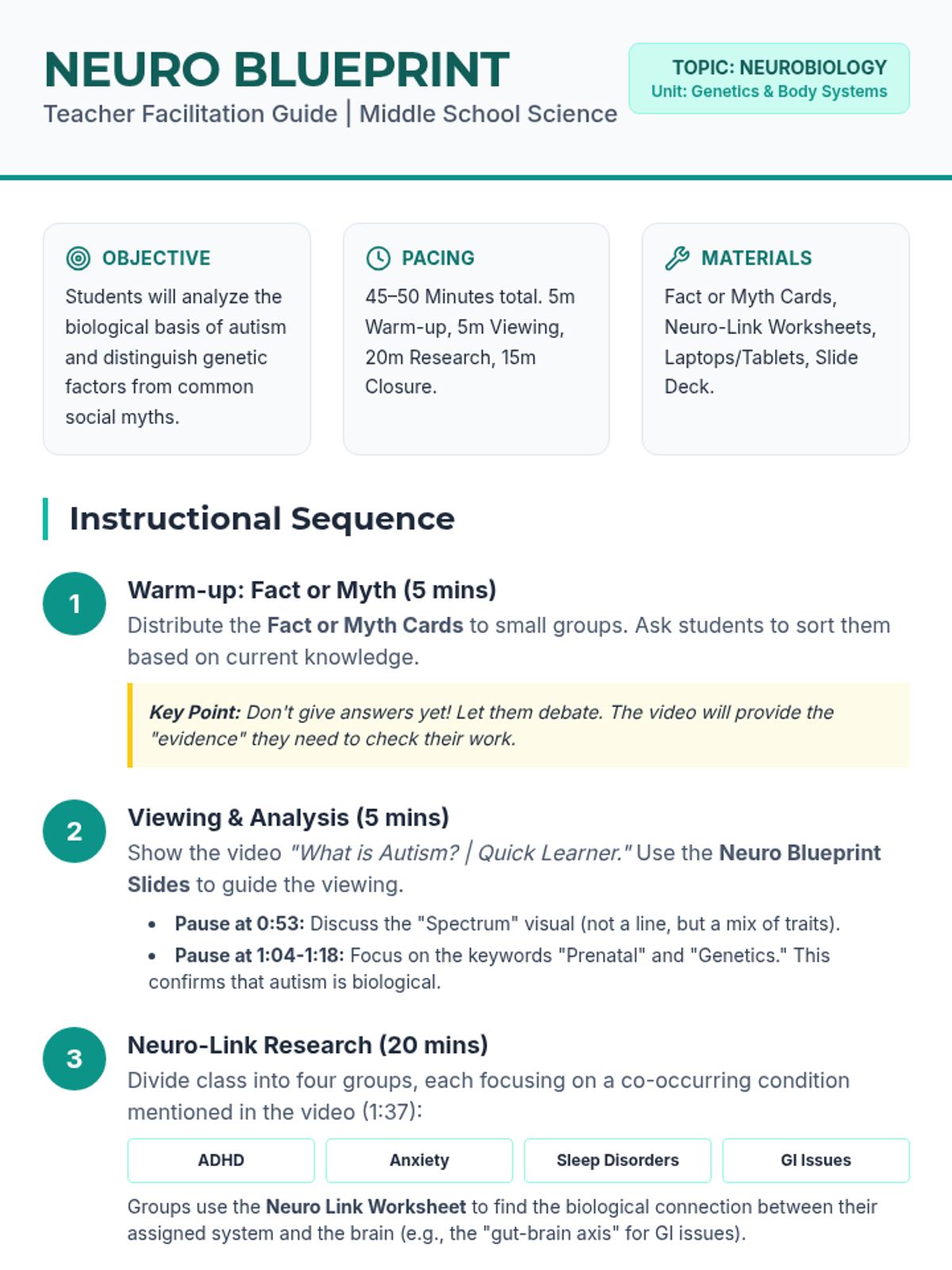
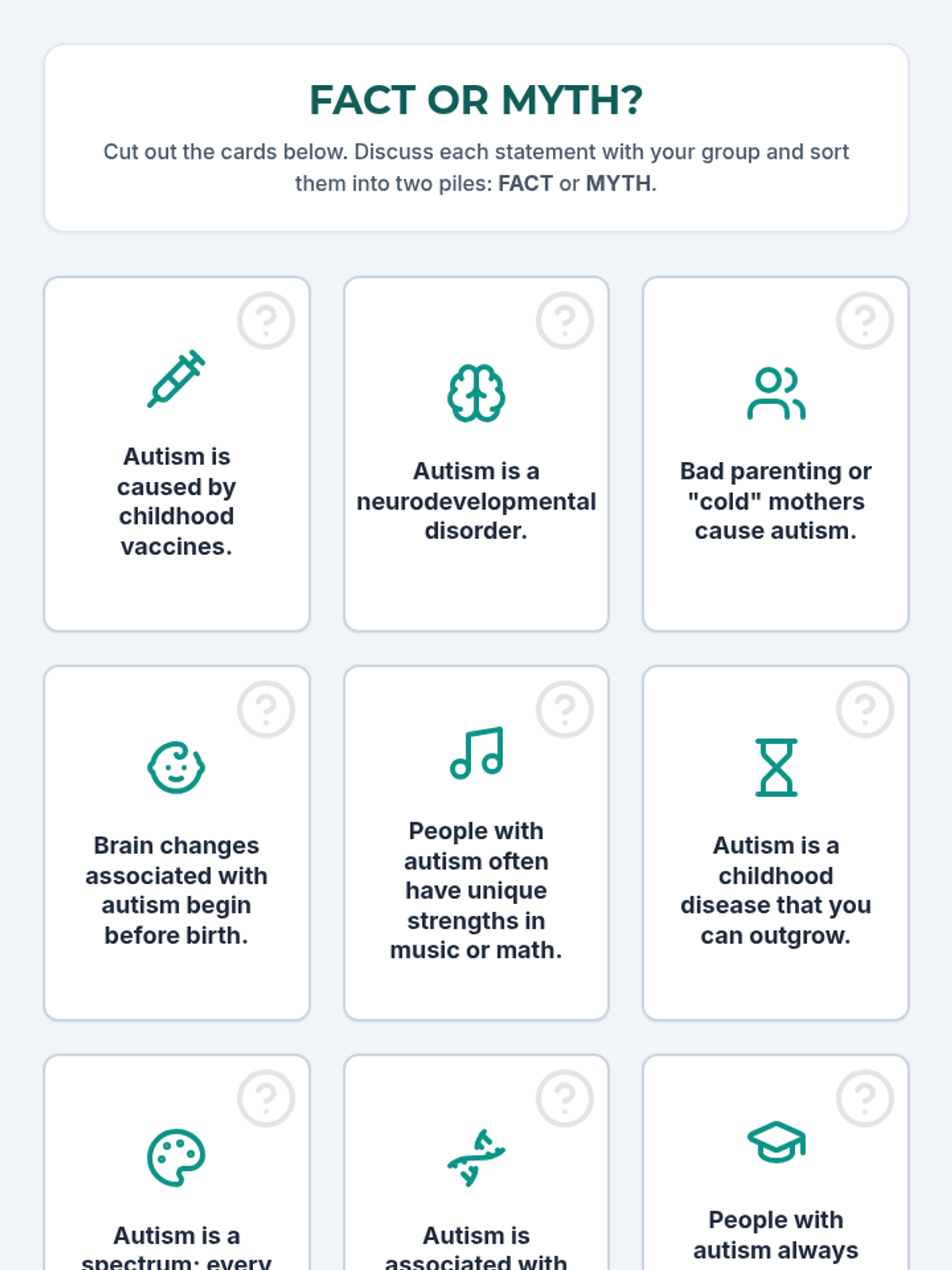
A lesson for 7th-8th grade science focusing on the biological and genetic foundations of autism. Students debunk common myths, analyze brain development through video, and research how the brain interacts with other body systems in co-occurring conditions.
A comprehensive lesson exploring the evolution of hunting from ancient survival to modern conservation, including economic impacts and ethical debates surrounding biodiversity.
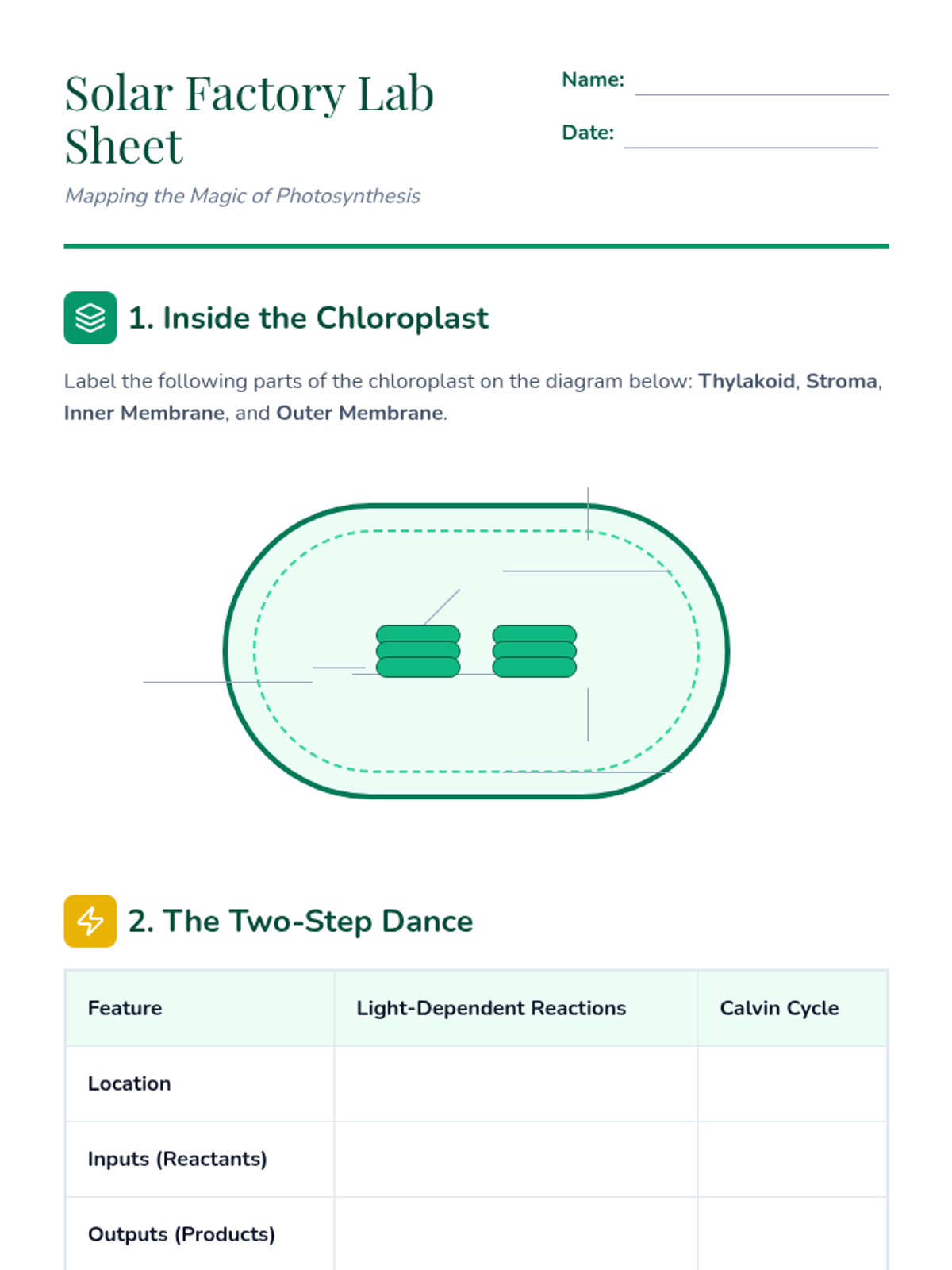
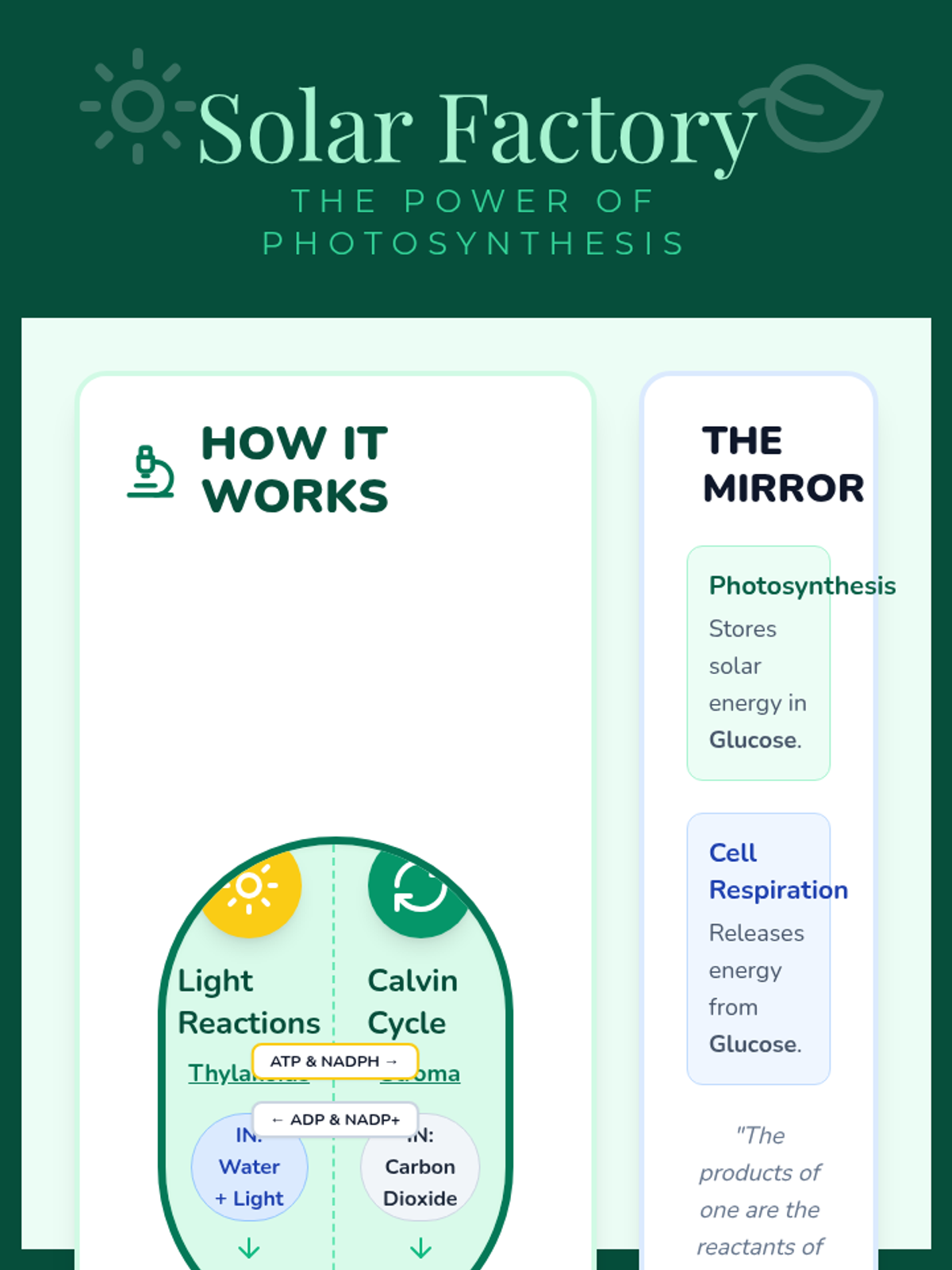
Explore how plants and other organisms capture solar energy to build life-sustaining sugars while comparing the process to cellular respiration.
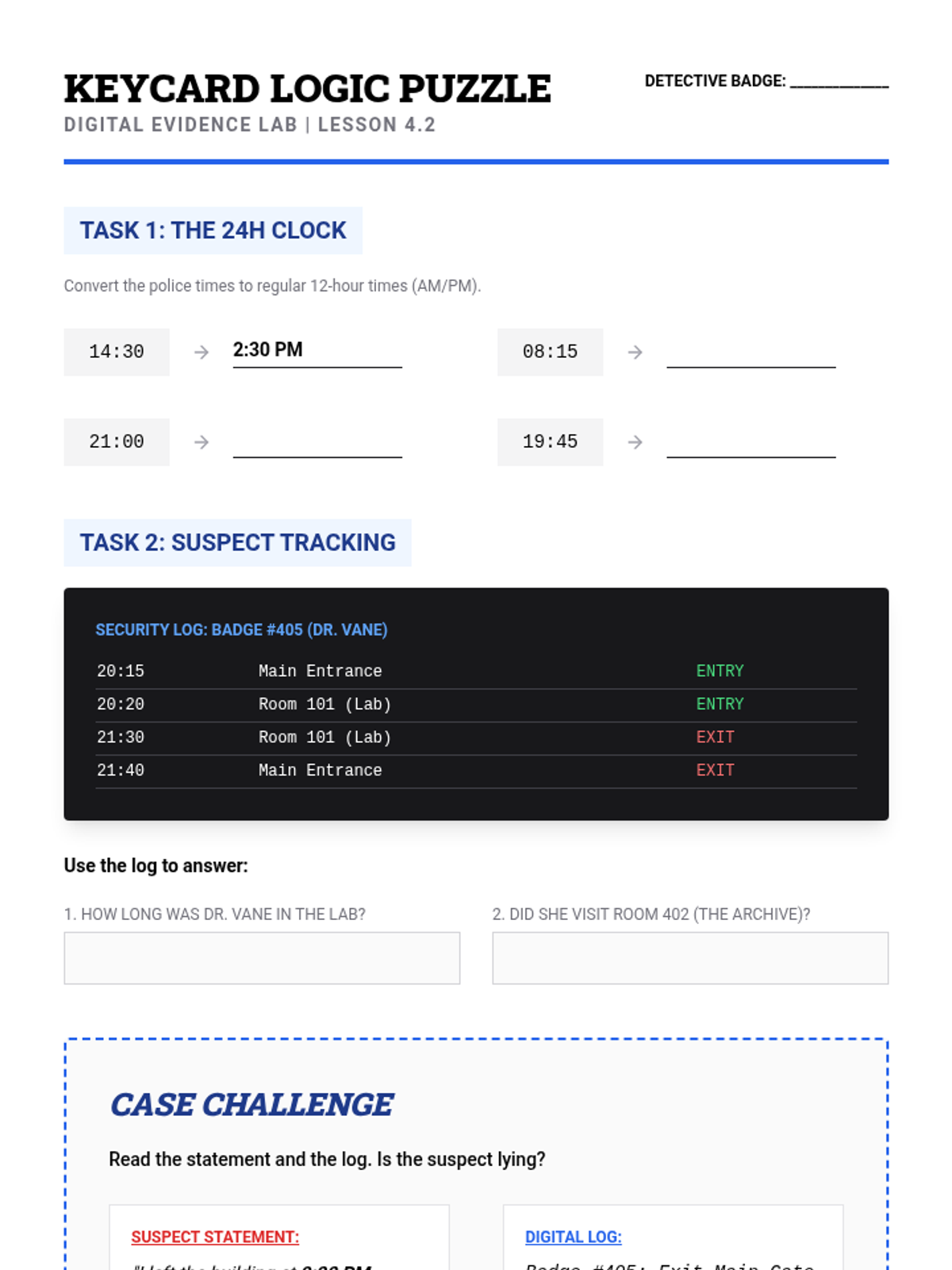
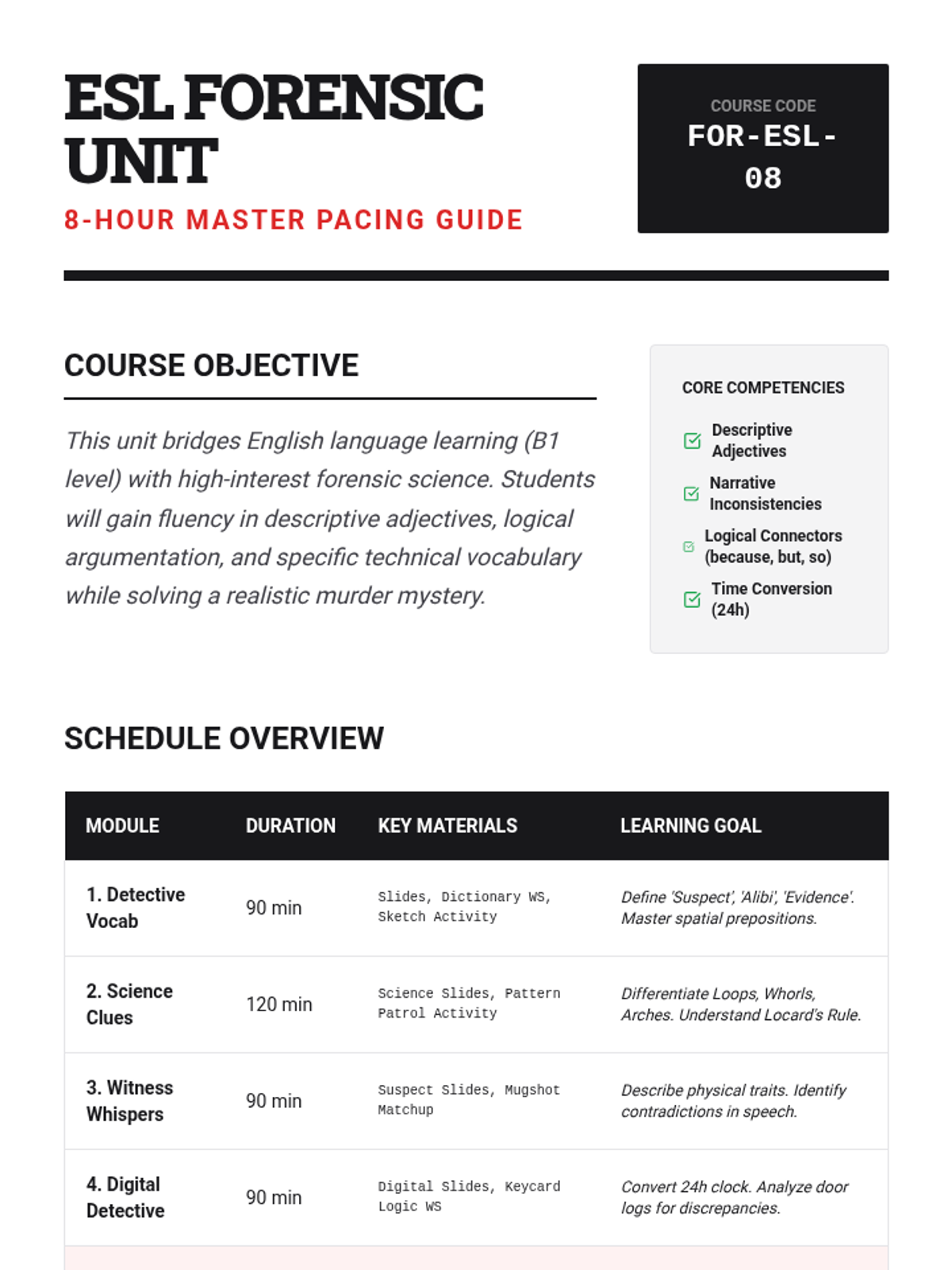
Focuses on reading security logs, understanding time formats (24h vs 12h), and using logic to follow a suspect's movement through keycard data.
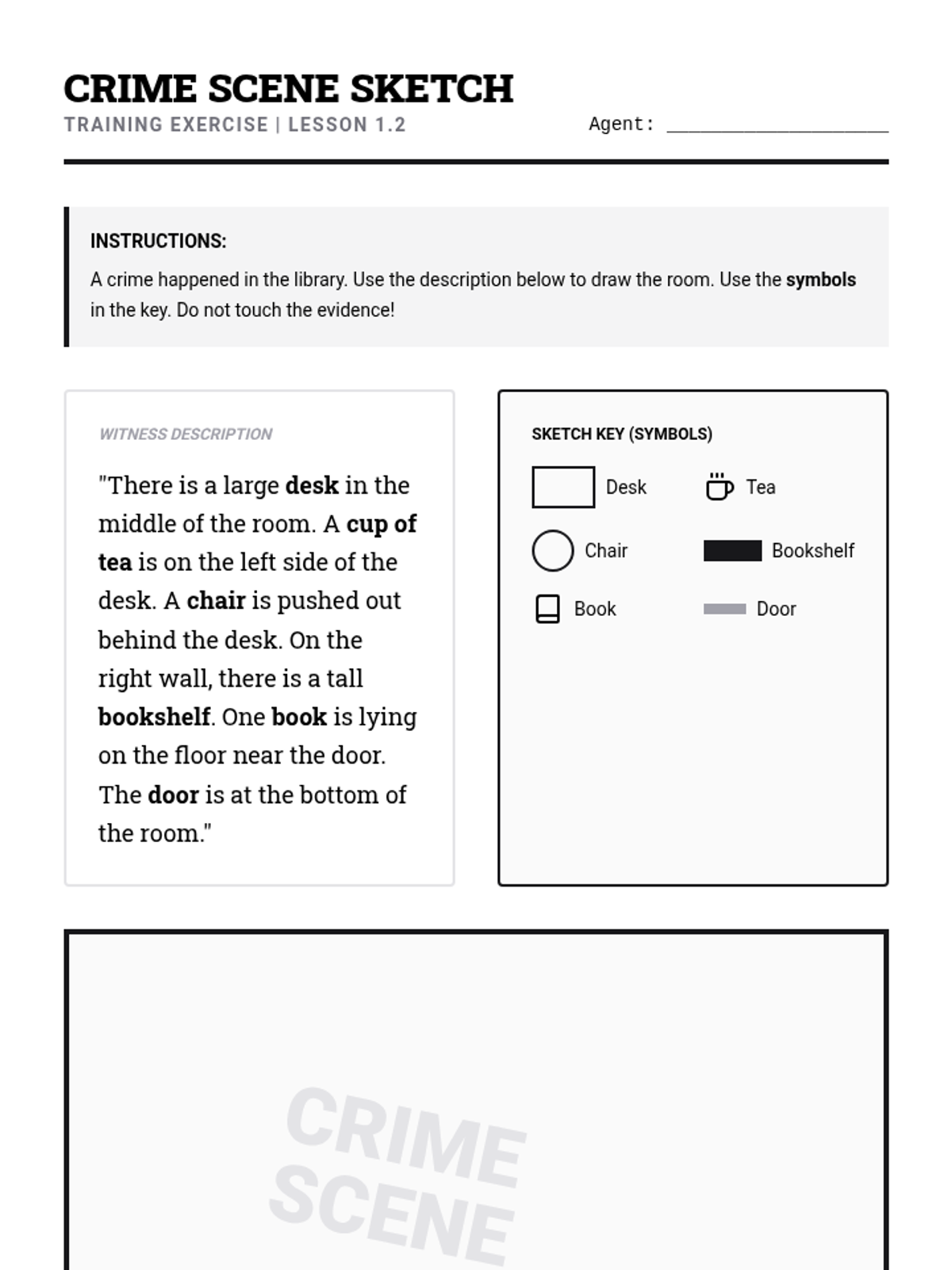
Focuses on descriptive language, memory reliability, and the 'mugshot' process. Students learn to describe suspects and identify inconsistencies in witness stories.
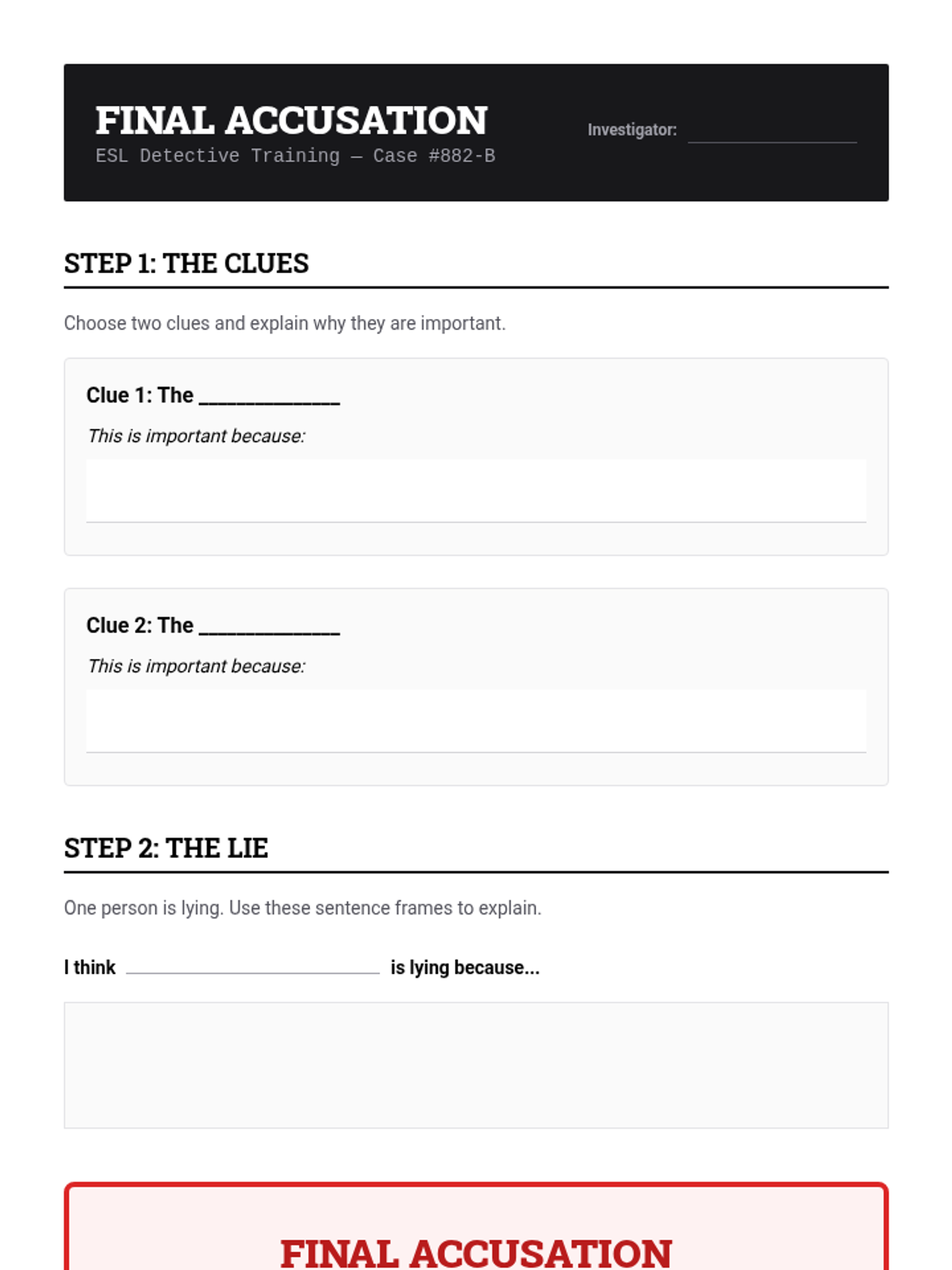
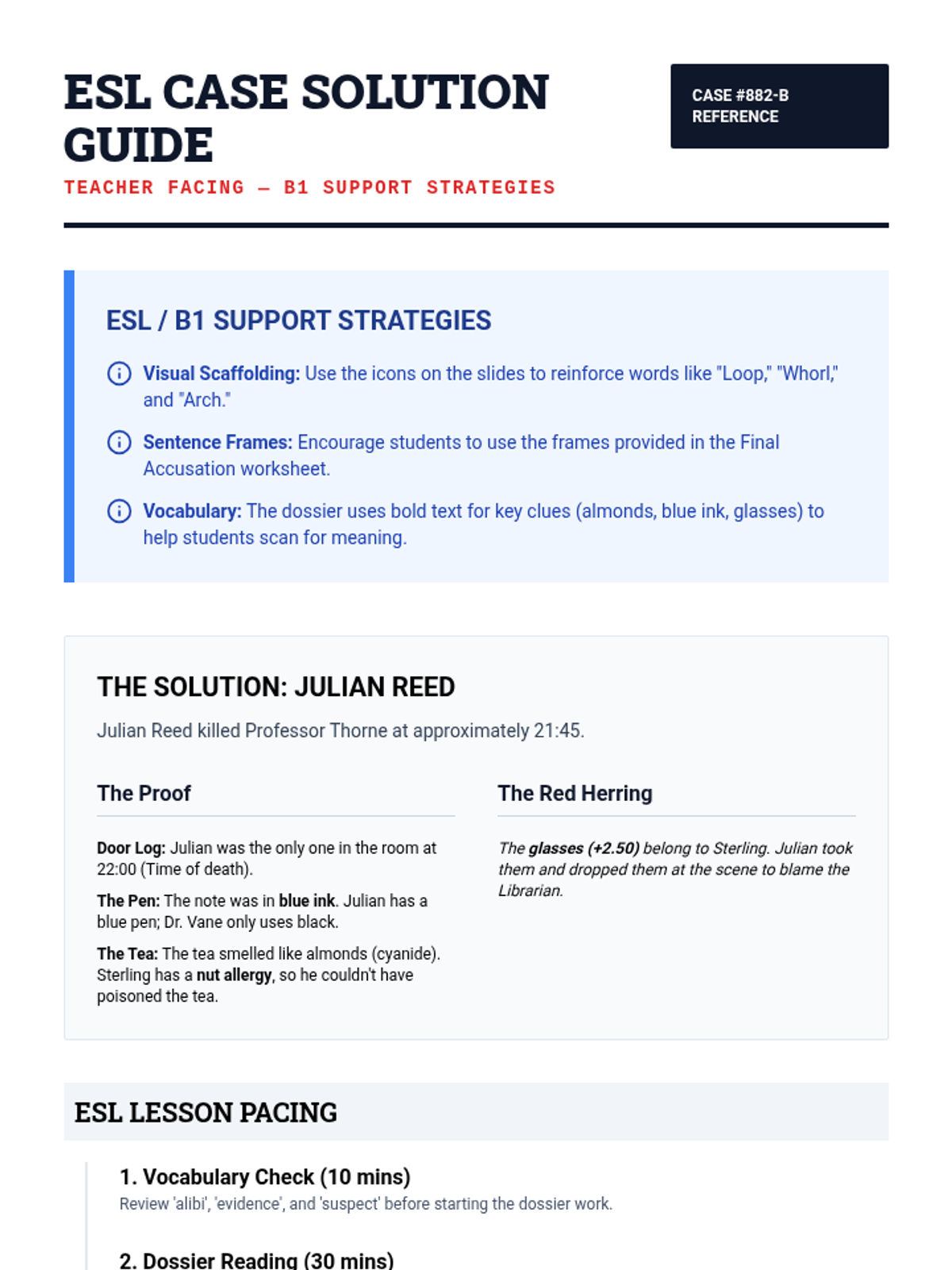
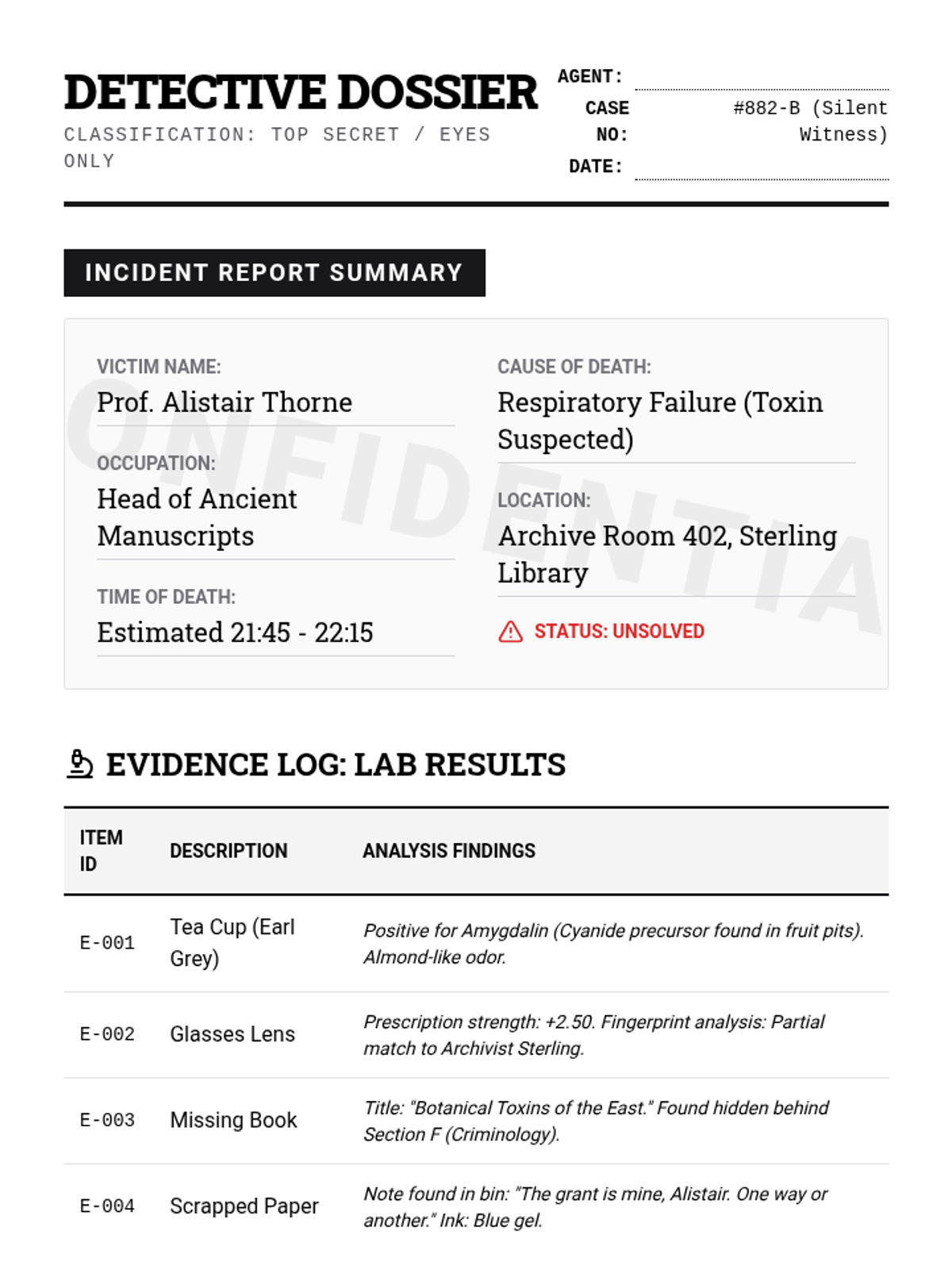
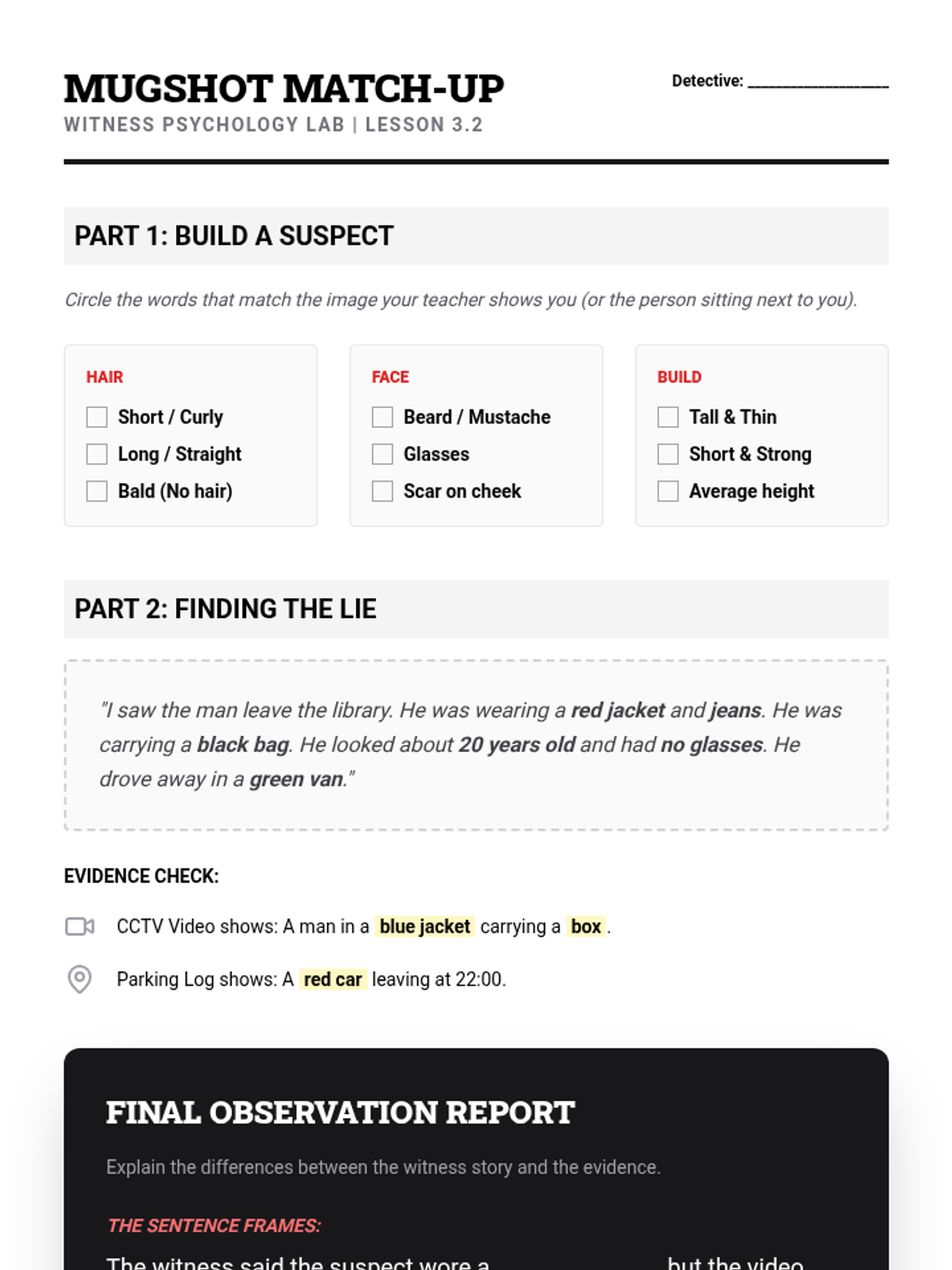
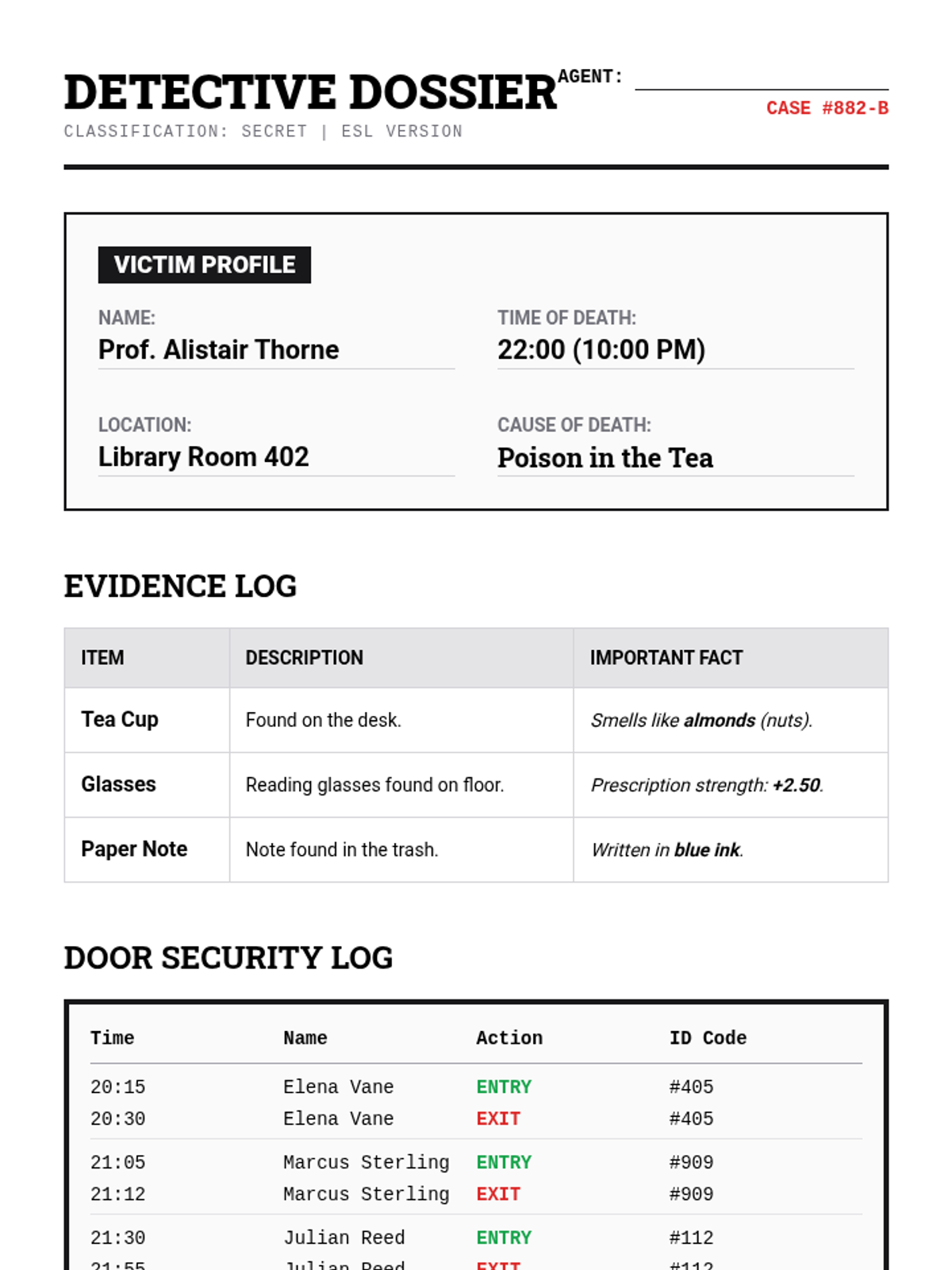
A simplified murder mystery investigation. Students use a detective dossier with B1-level text to solve the crime of Professor Thorne. Includes sentence frames for final accusations.
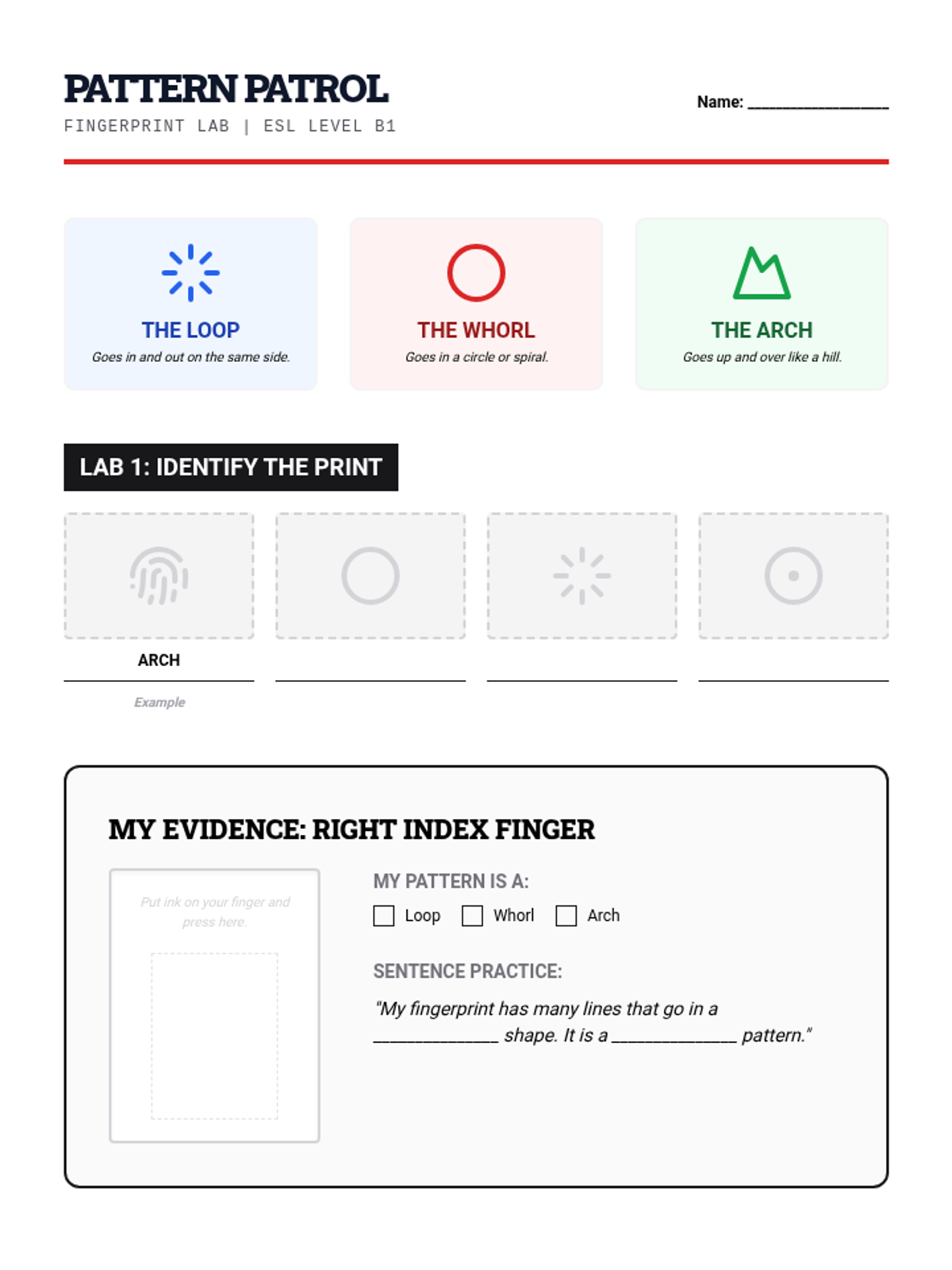
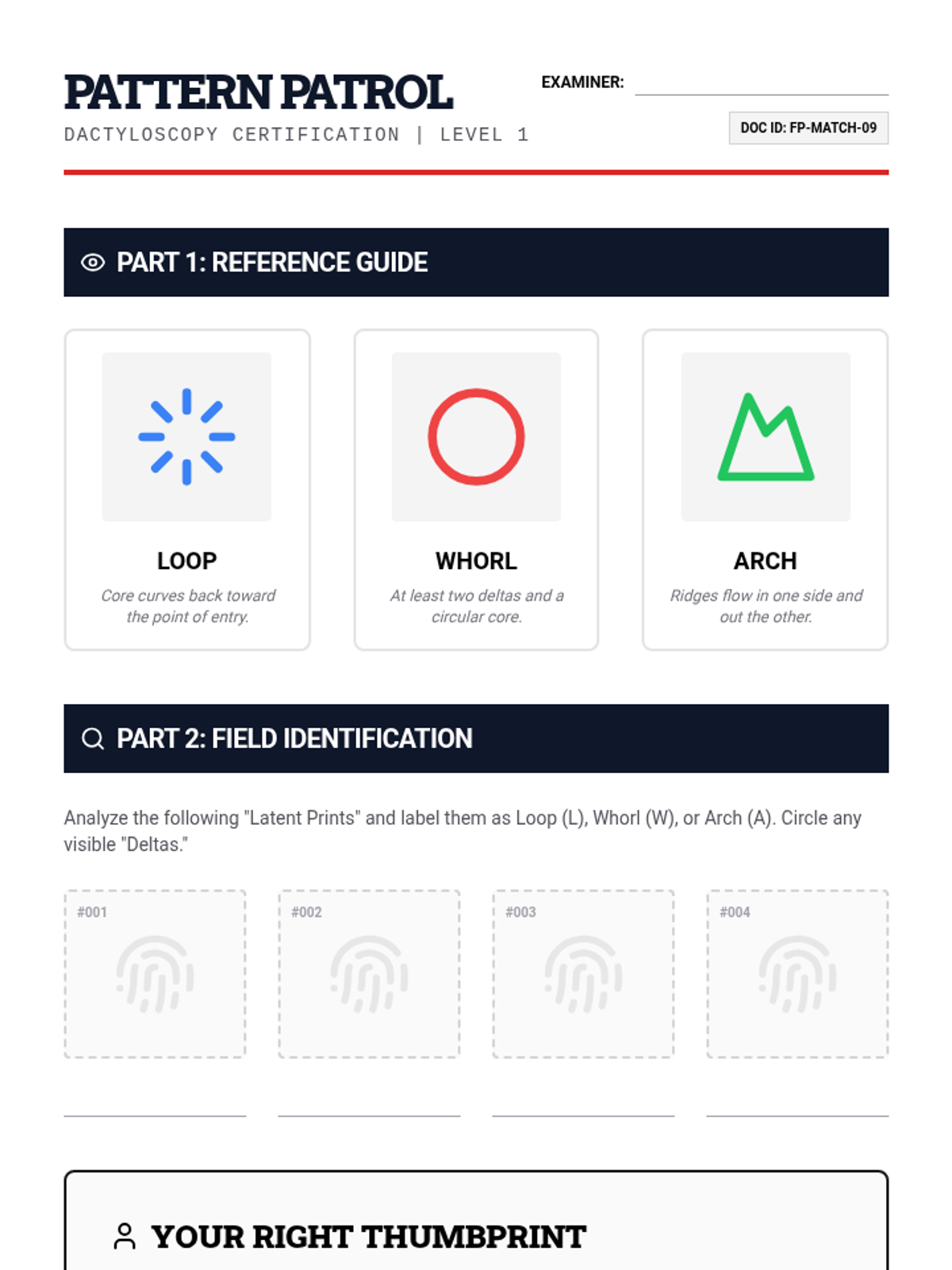
Students explore how fingerprints and DNA help identify people. The lesson uses clear, visual steps to explain identification techniques and Locard's Exchange Principle.
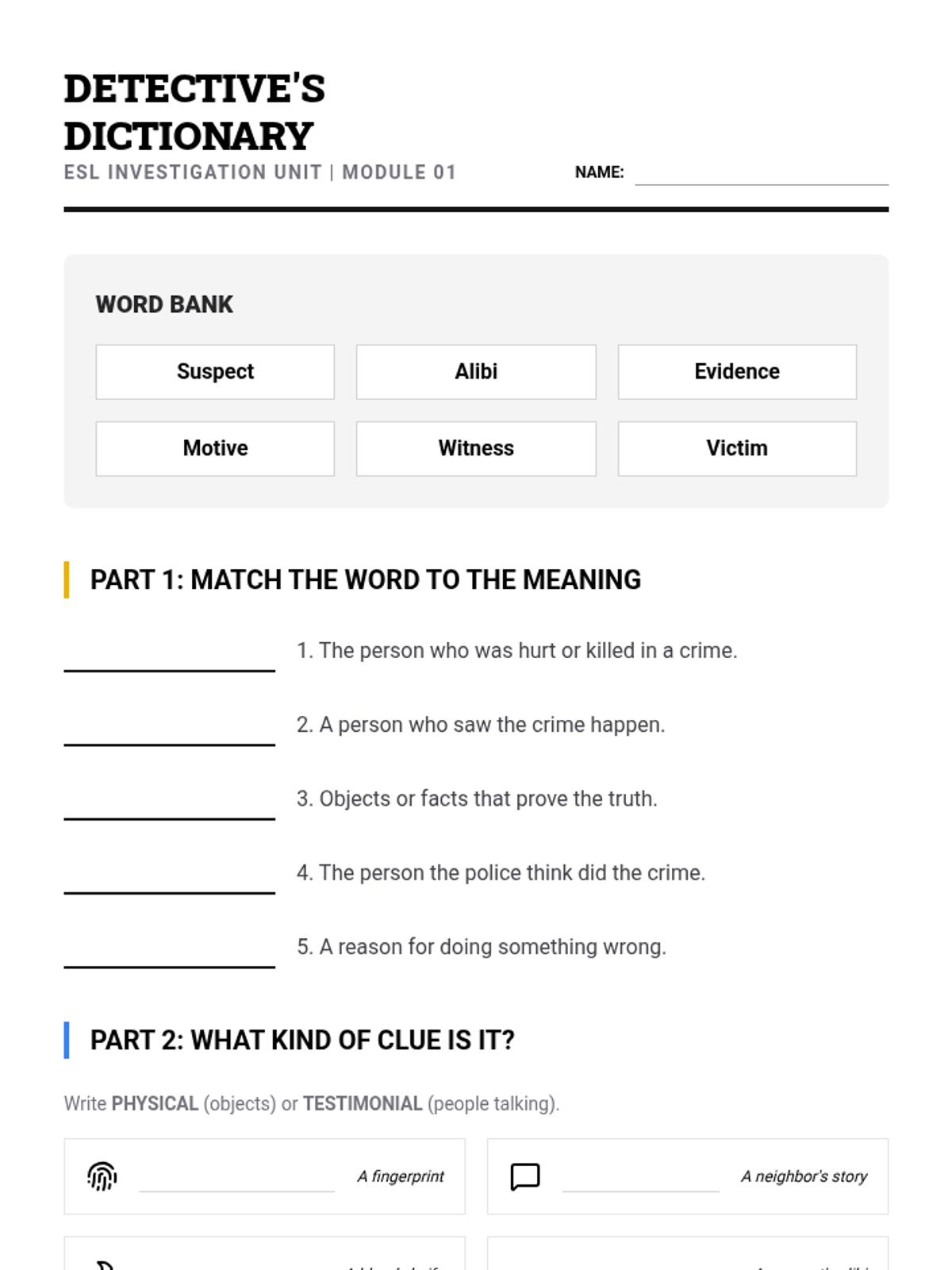
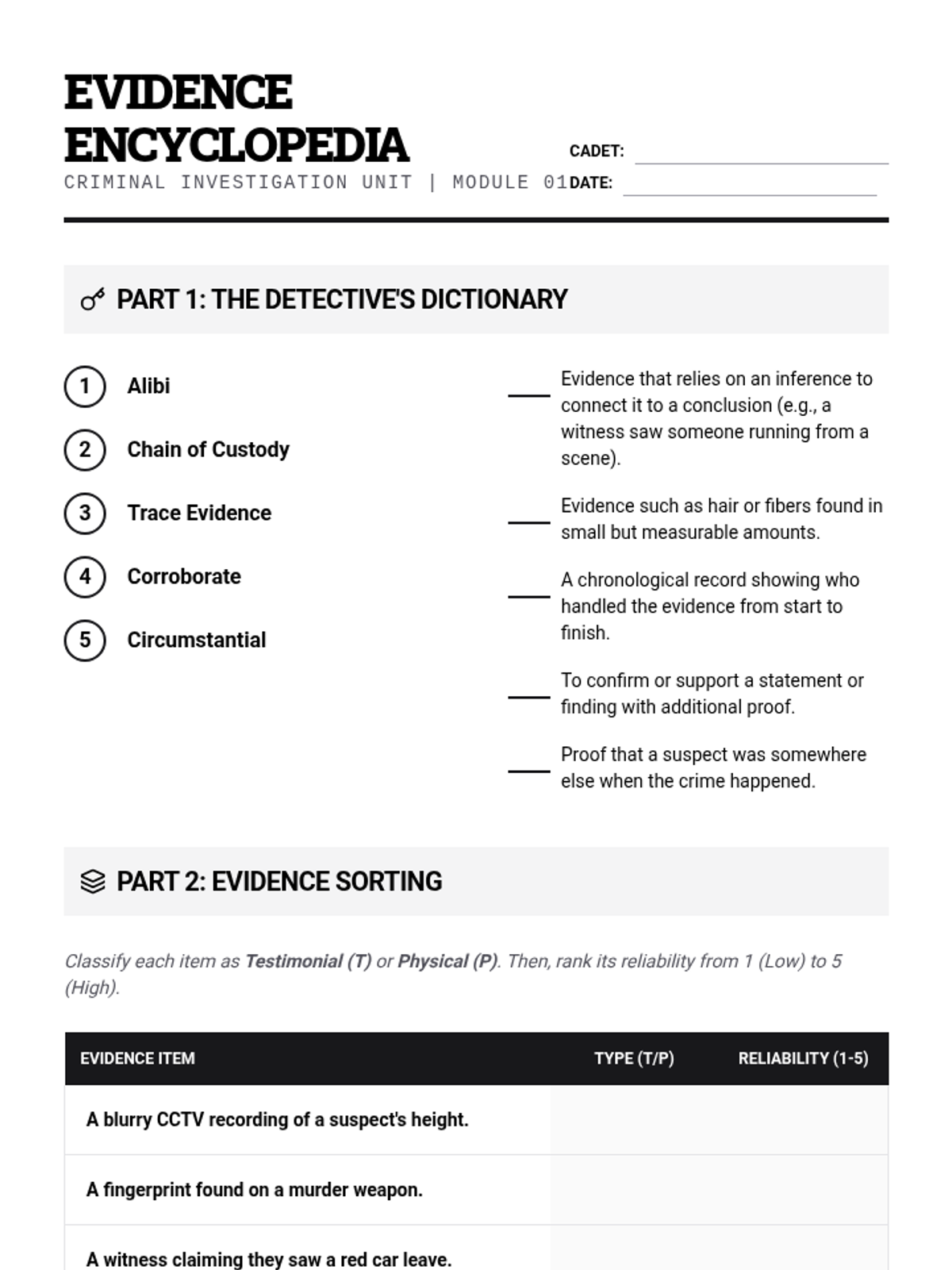
Students learn essential crime-solving vocabulary (alibi, evidence, suspect) and practice categorizing physical vs. testimonial clues using simplified English and visual supports.
An exploration of specialized forensic techniques, focusing on fingerprint classification, DNA profiling basics, and the microscopic analysis of hair and fibers to connect suspects to a scene.
Students master the foundational vocabulary of forensic science, including terms like alibi, chain of custody, and trace evidence, while learning to categorize different types of physical and testimonial evidence.
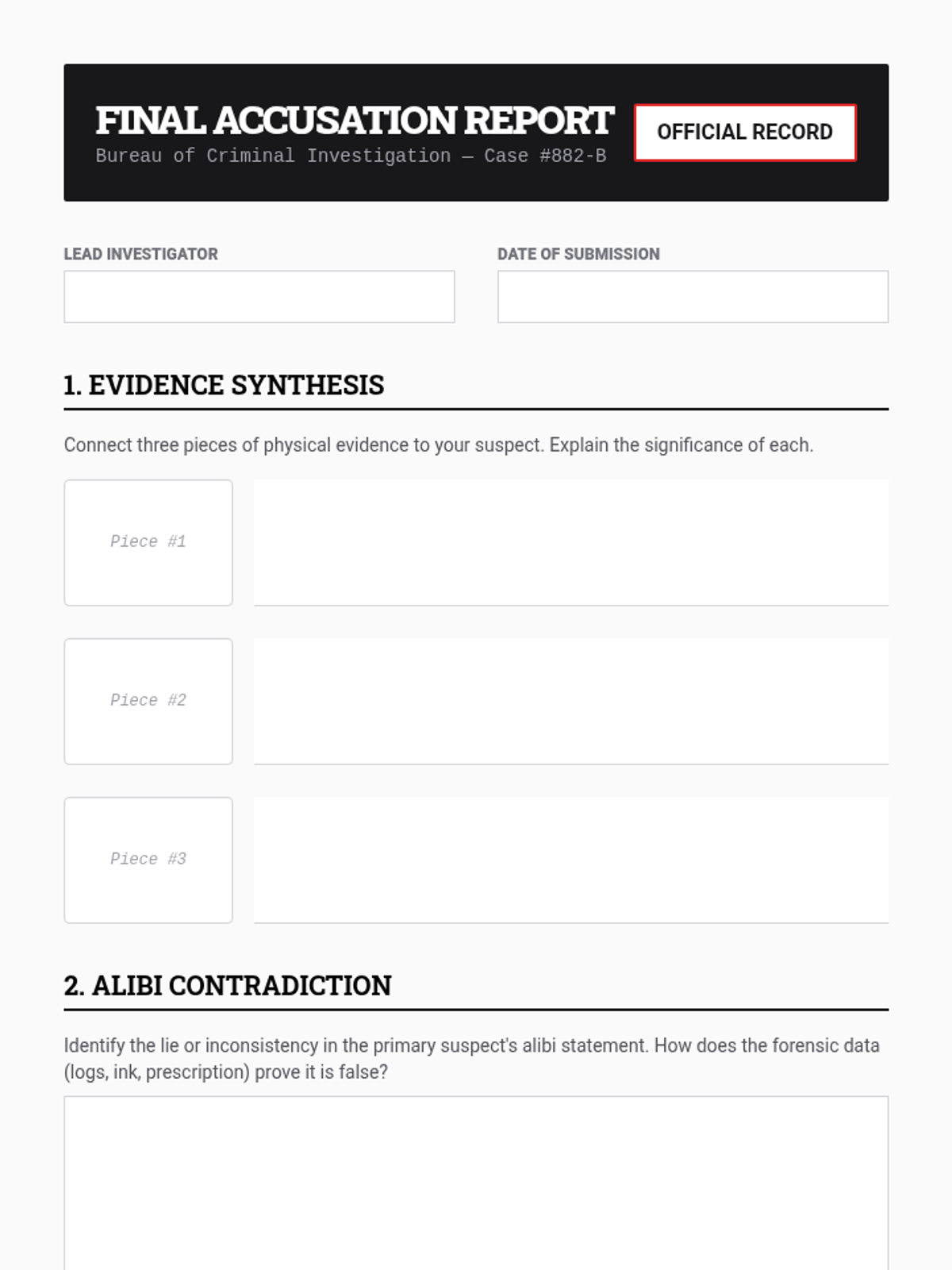
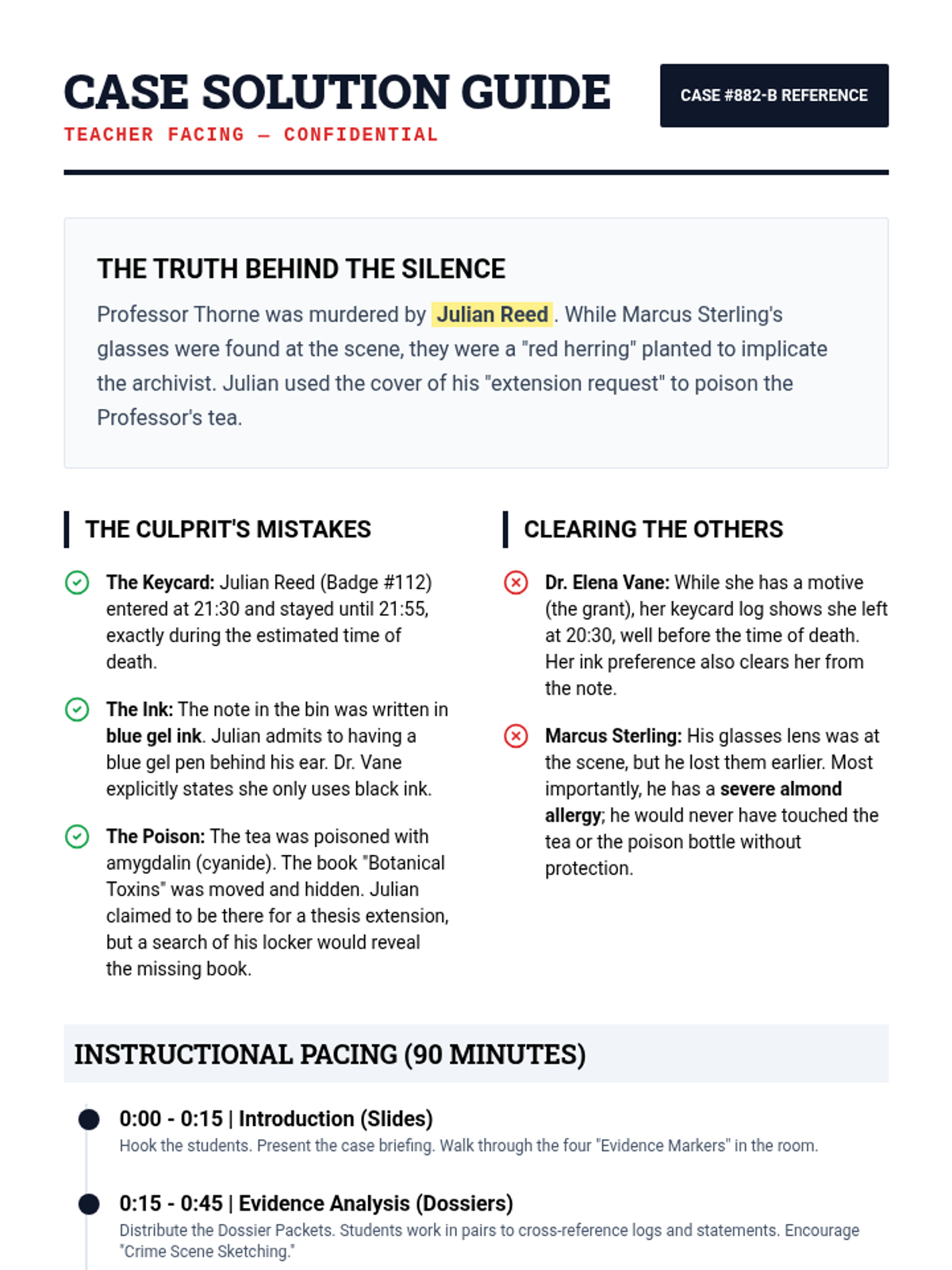
A 90-minute immersive murder mystery experience where students apply forensic techniques to solve the death of a prominent professor. They will analyze evidence, evaluate witness statements, and build a case based on deductive reasoning.
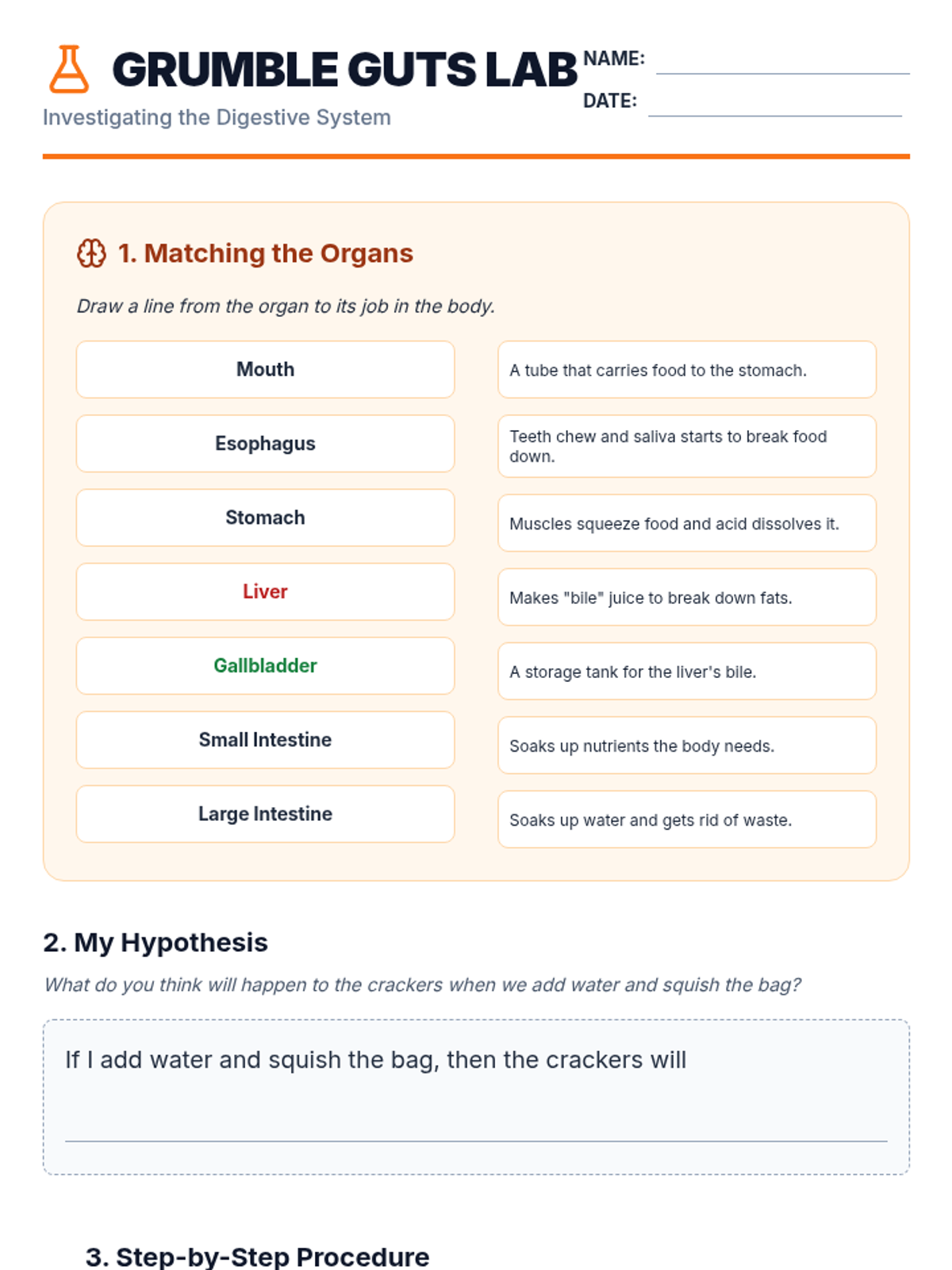
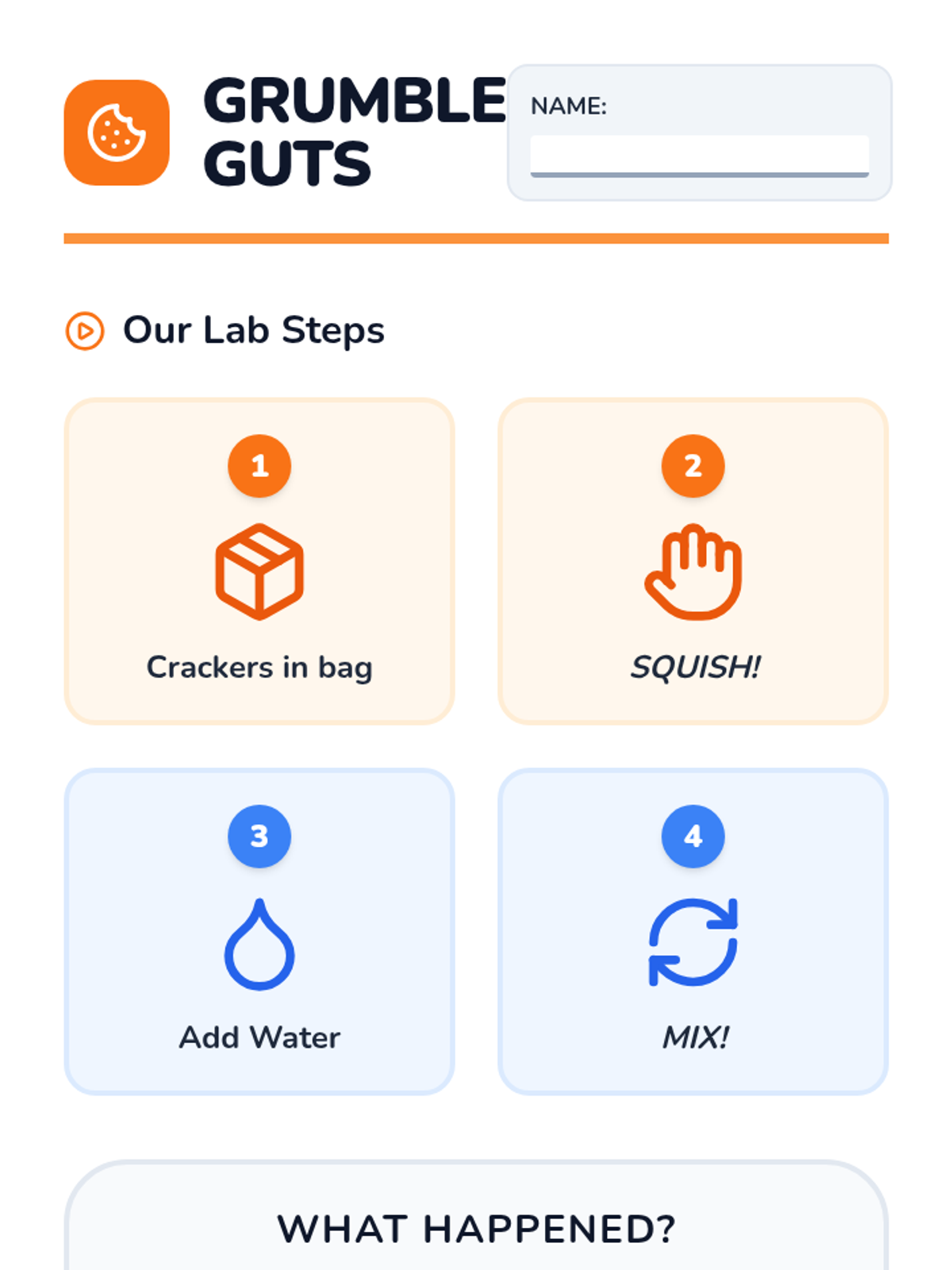
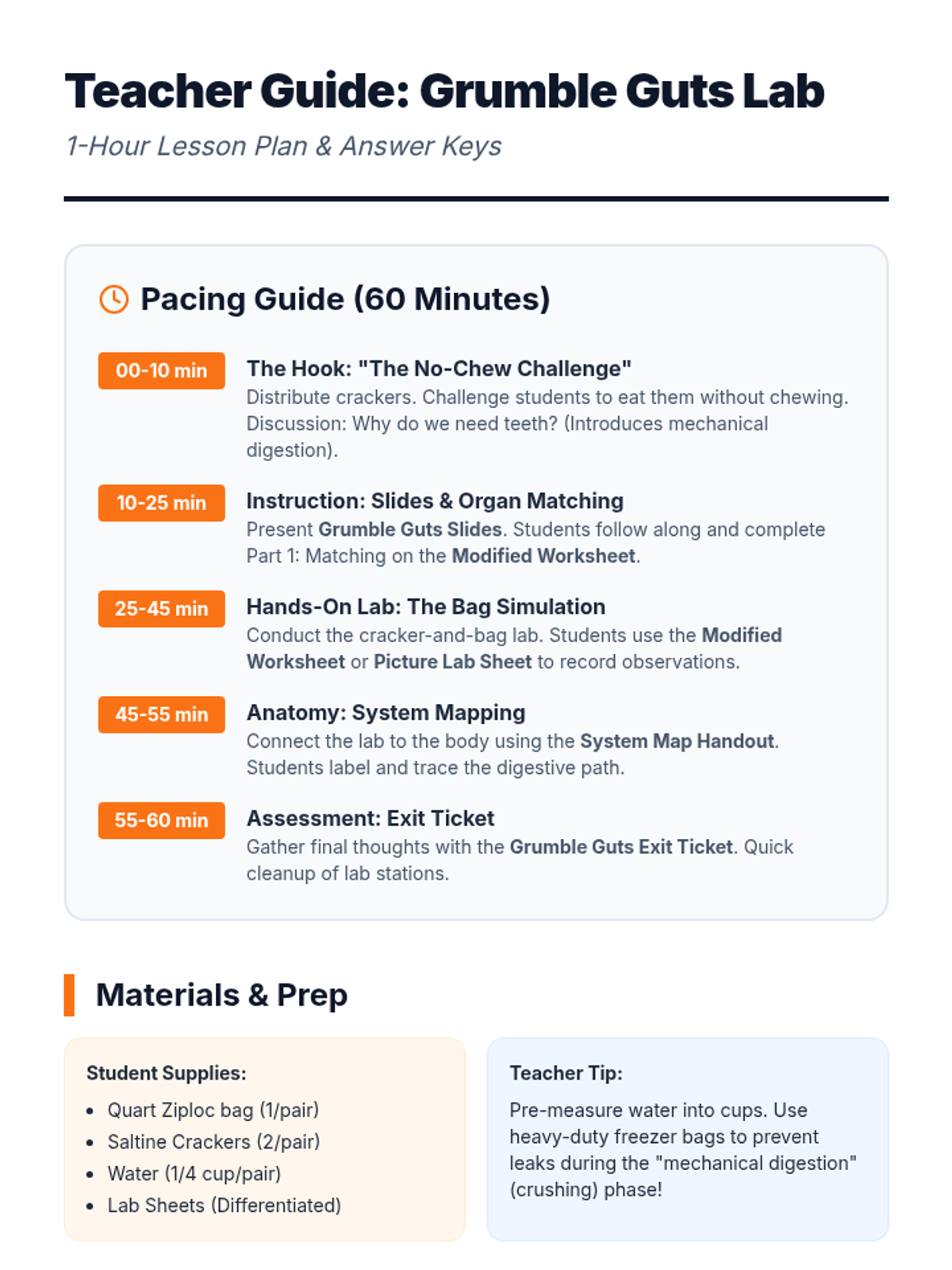
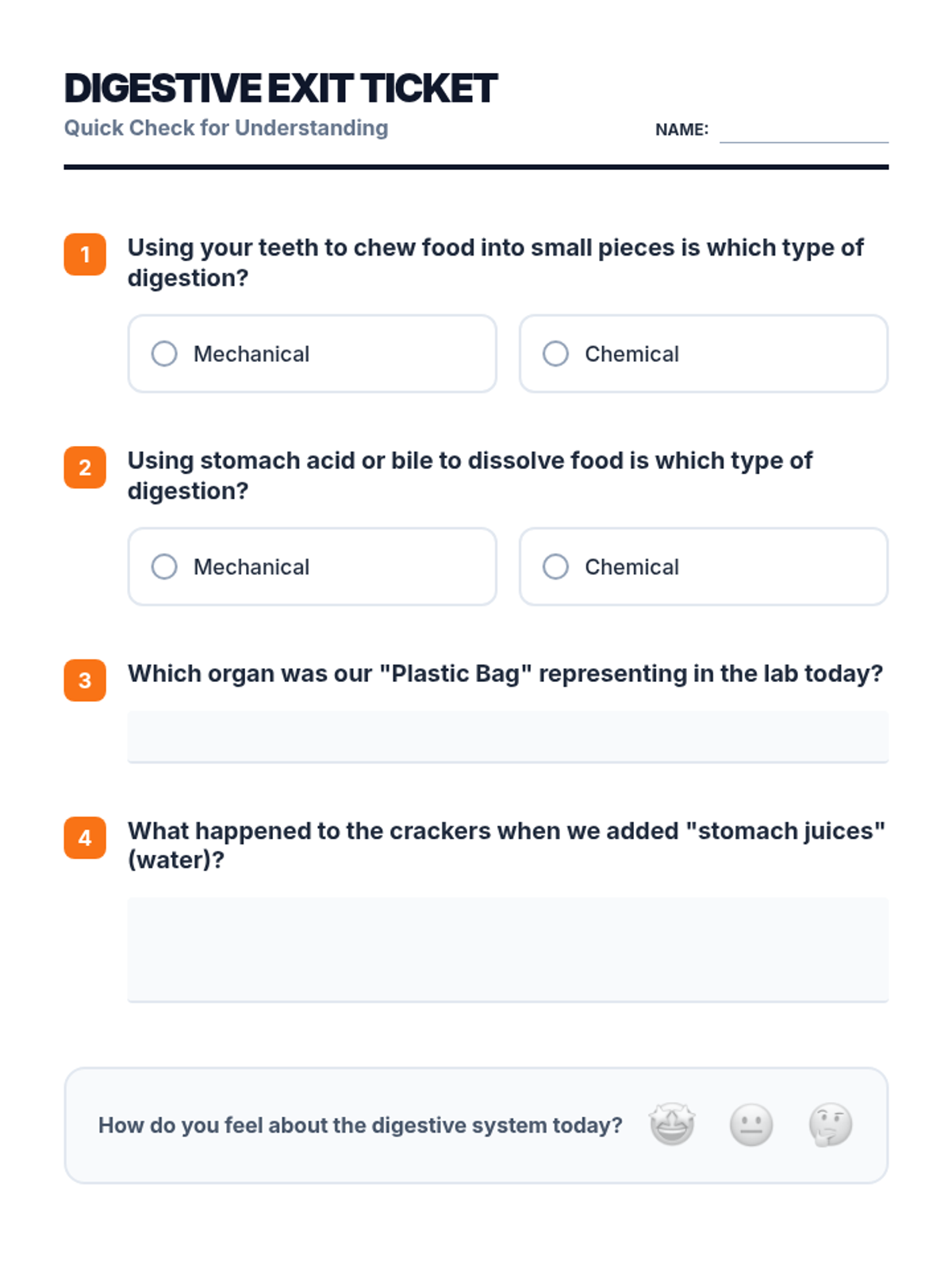
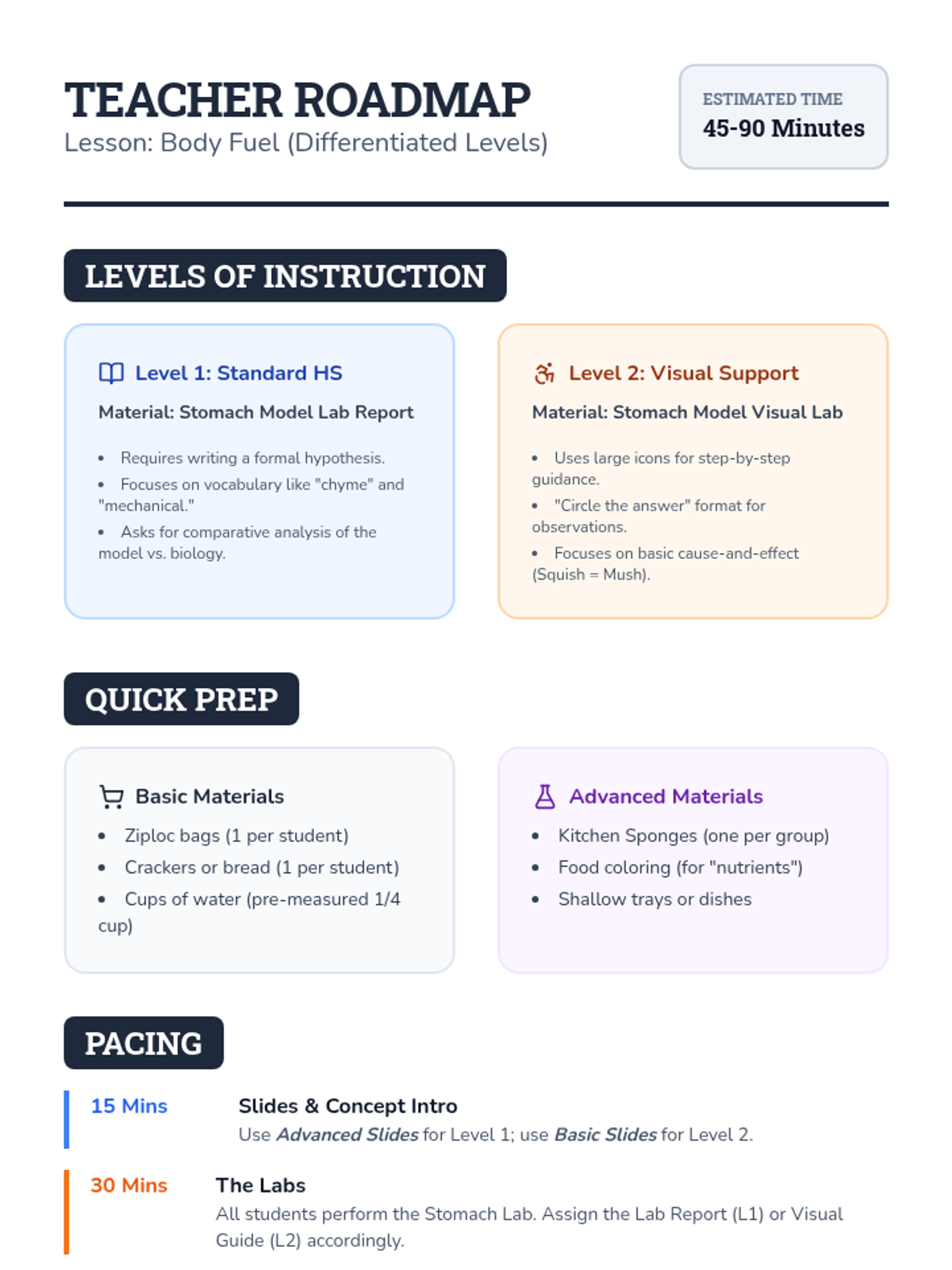
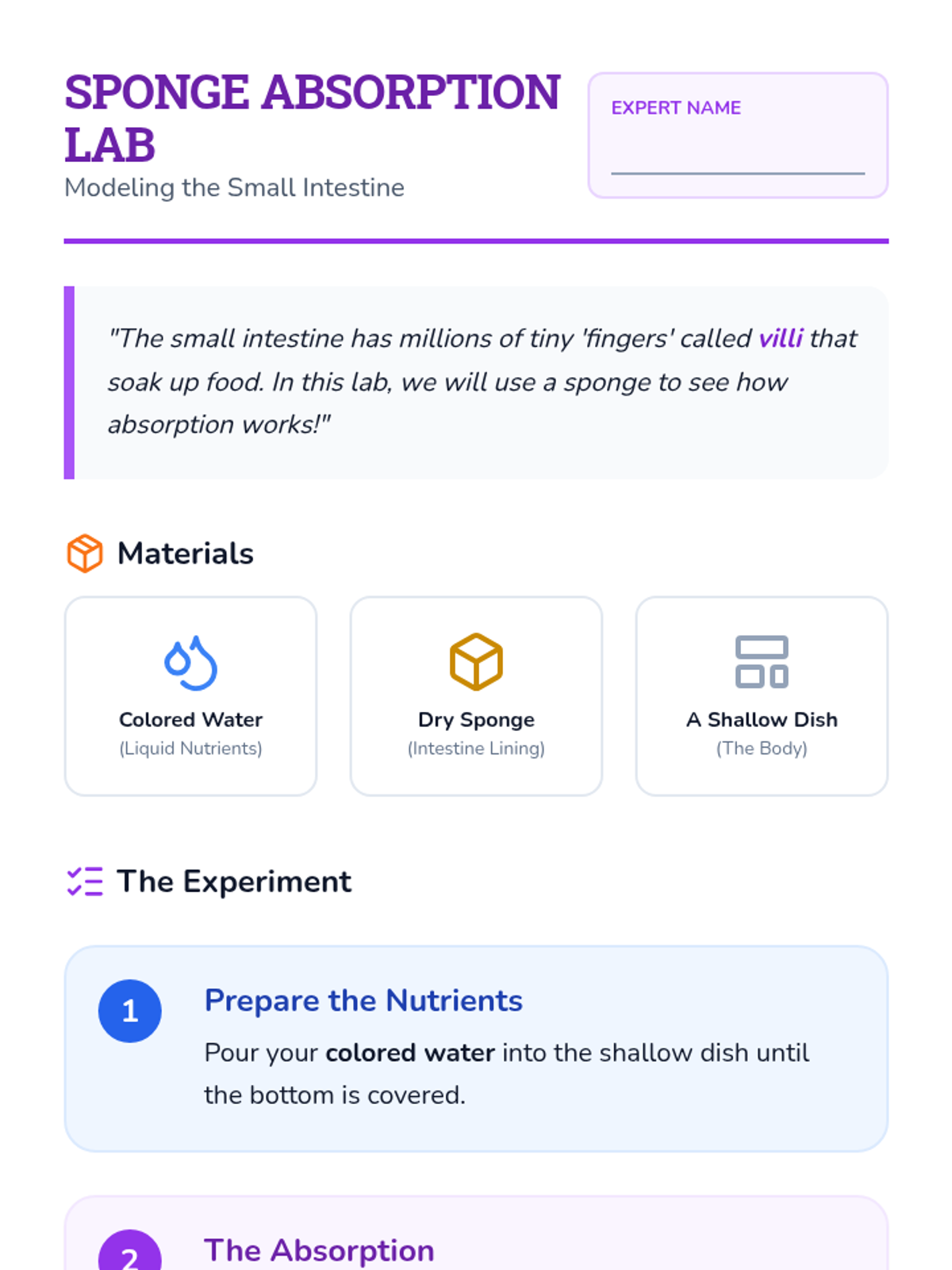
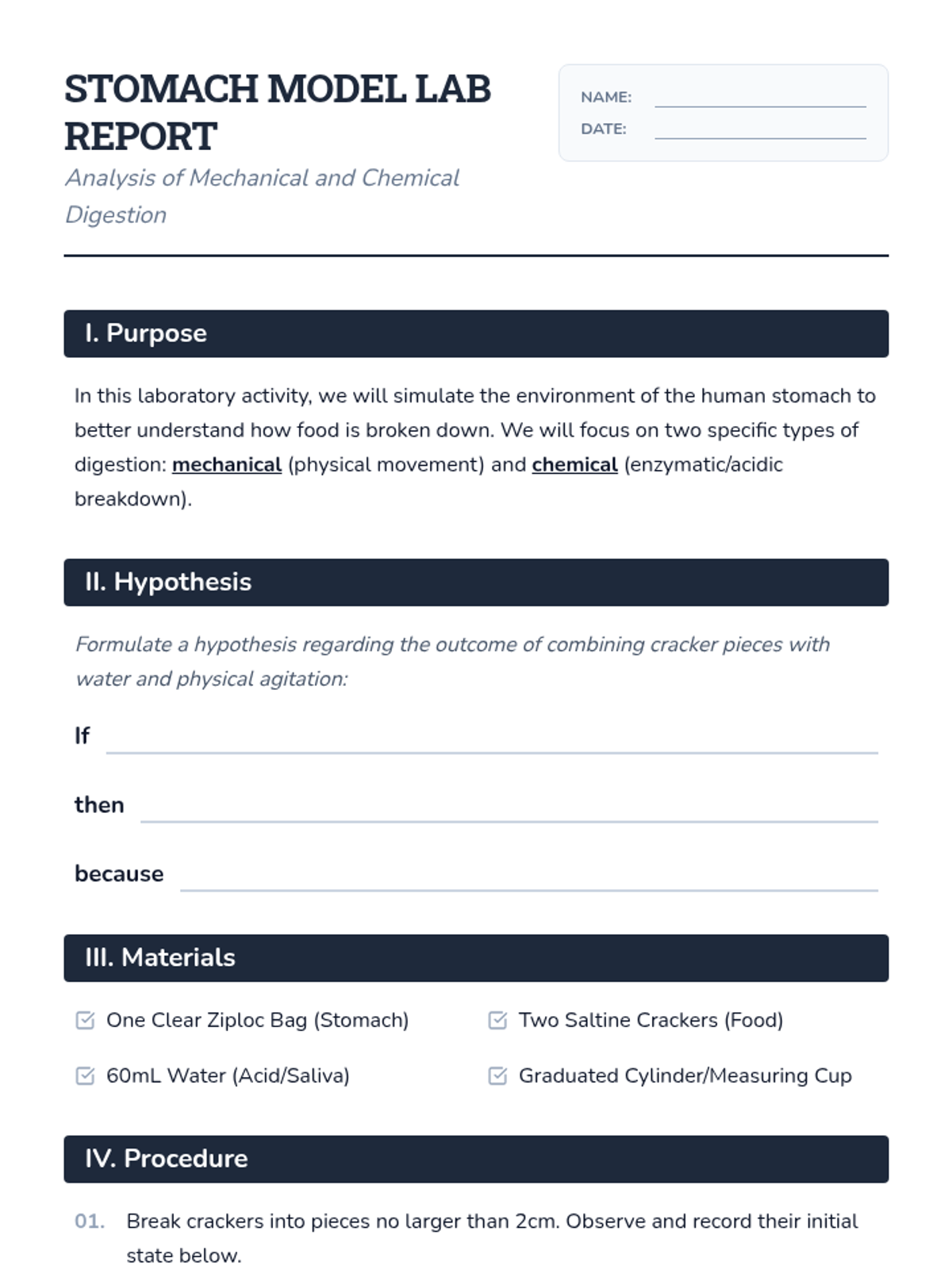
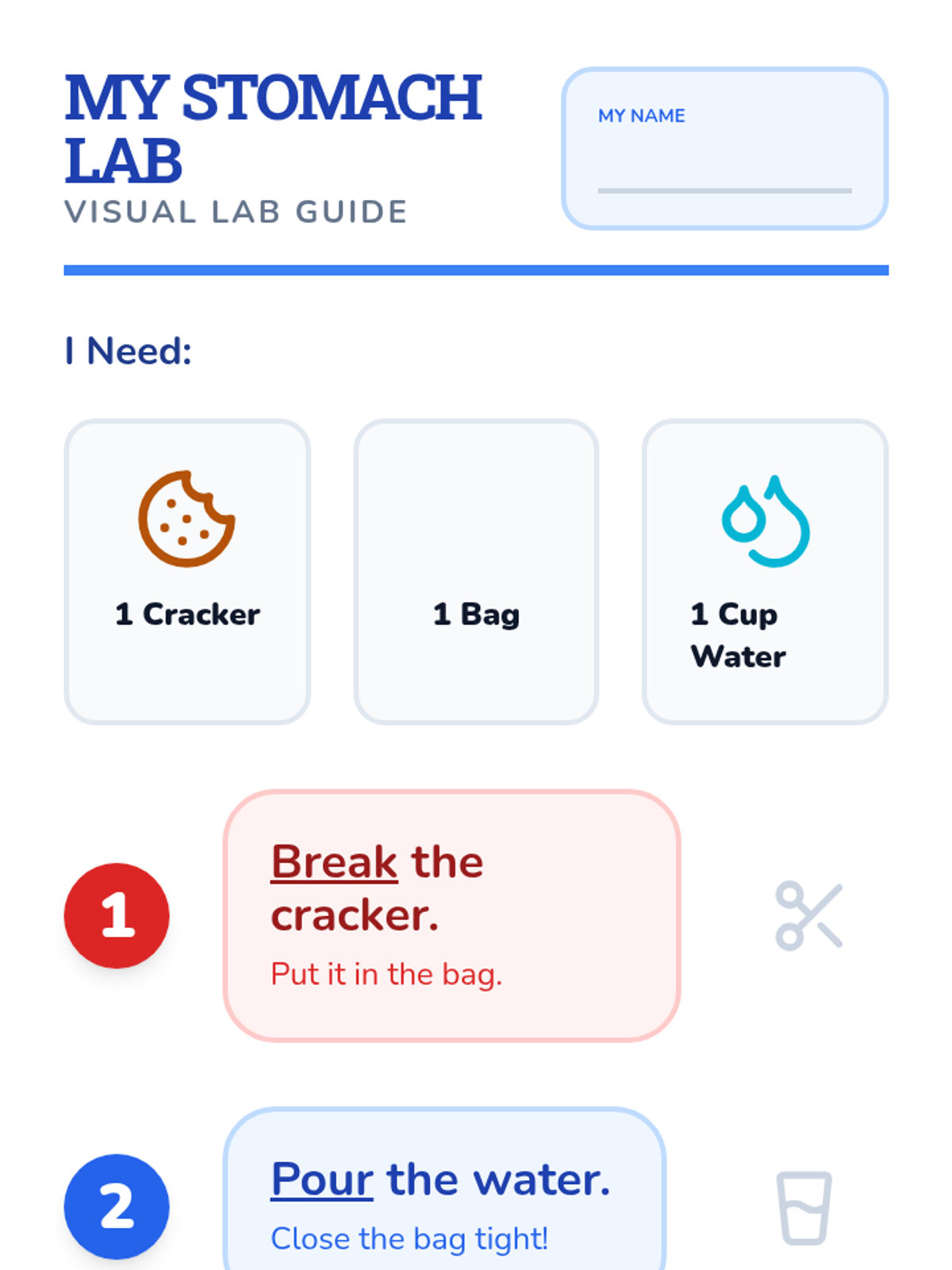
A hands-on science lab using crackers, water, and plastic bags to simulate the digestive process, with differentiated materials for various learner needs.
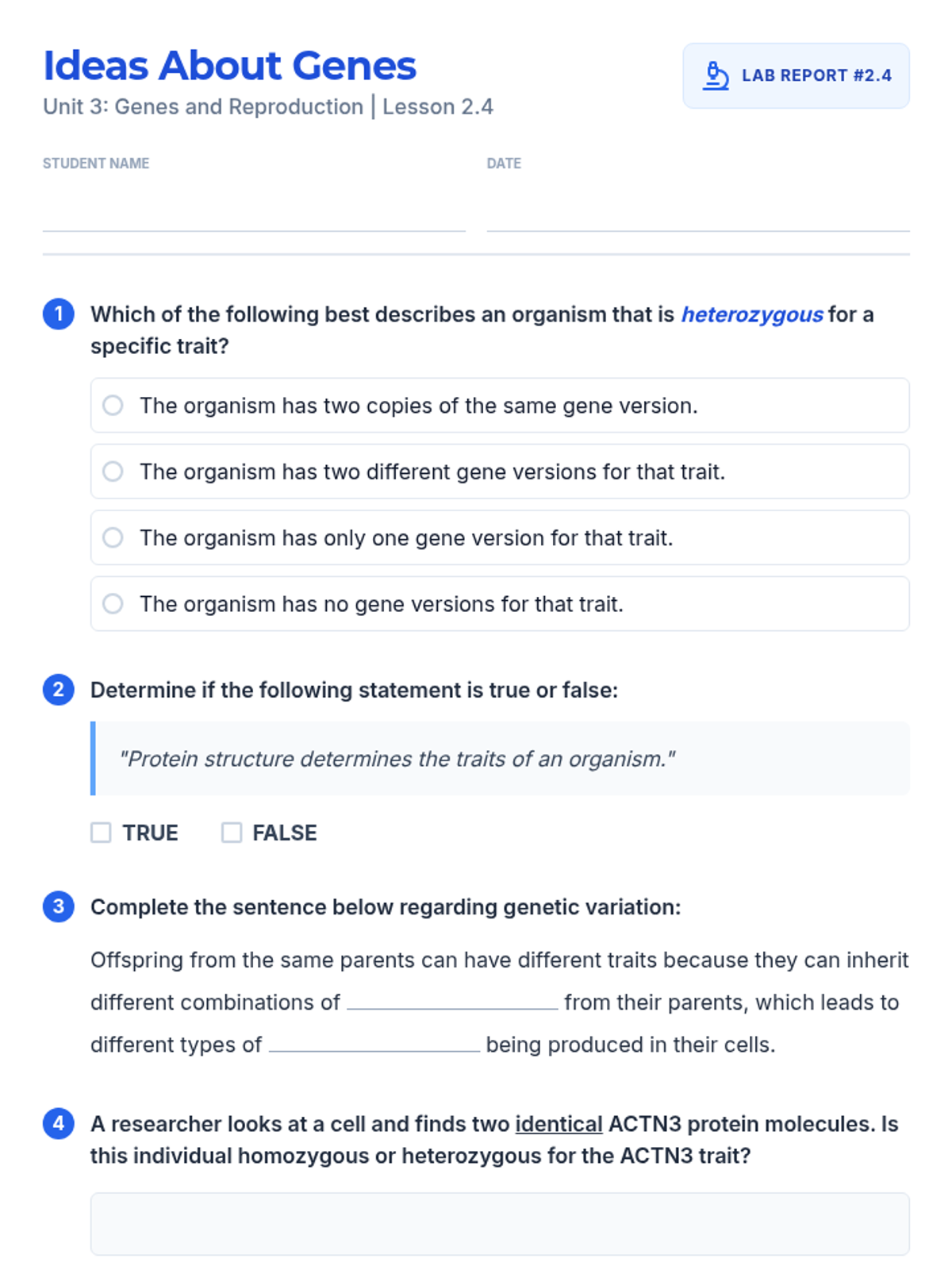
Students explore the relationship between gene versions, proteins, and physical traits, focusing on heterozygous and homozygous genotypes using the context of muscle proteins in runners.
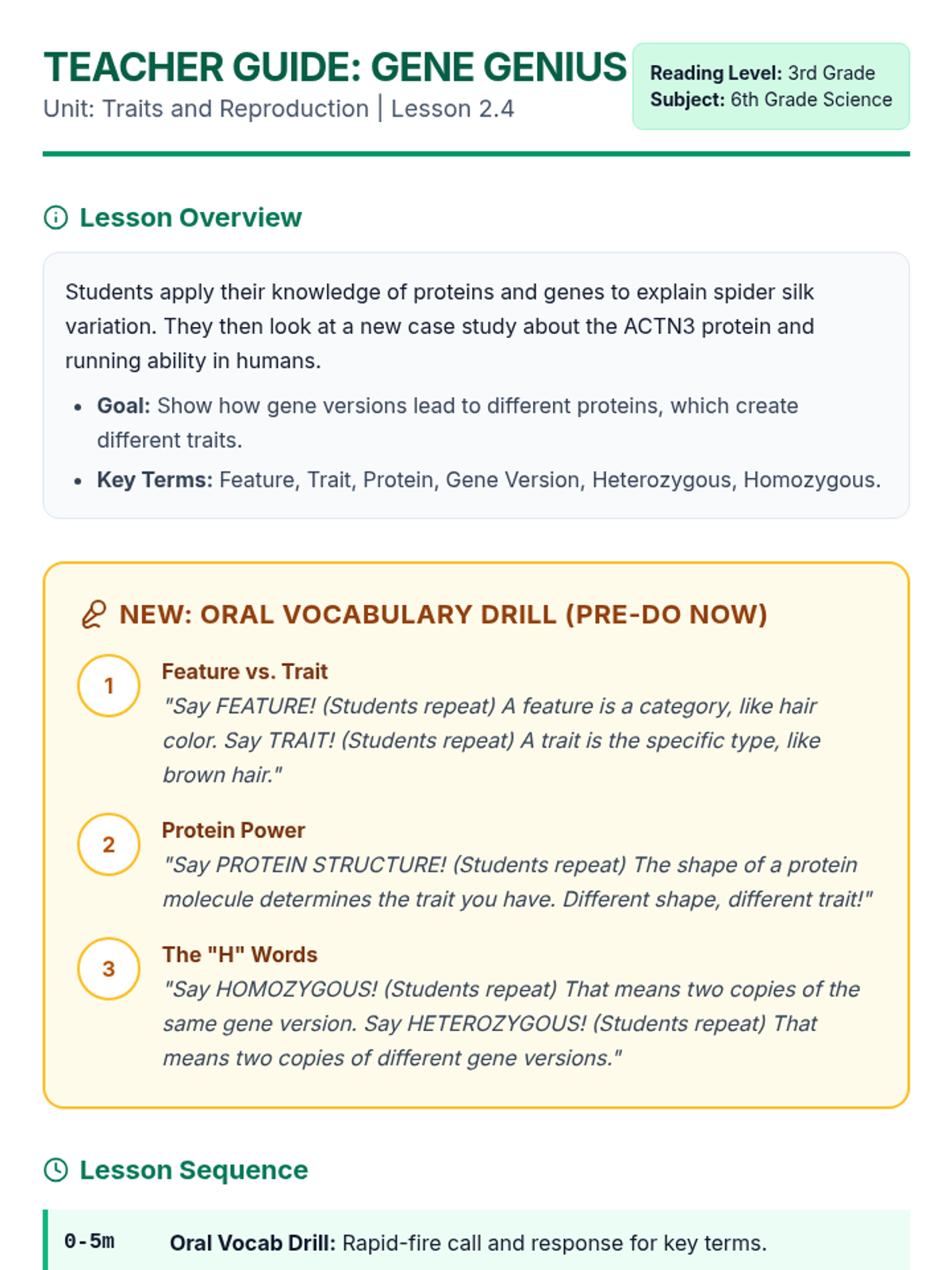
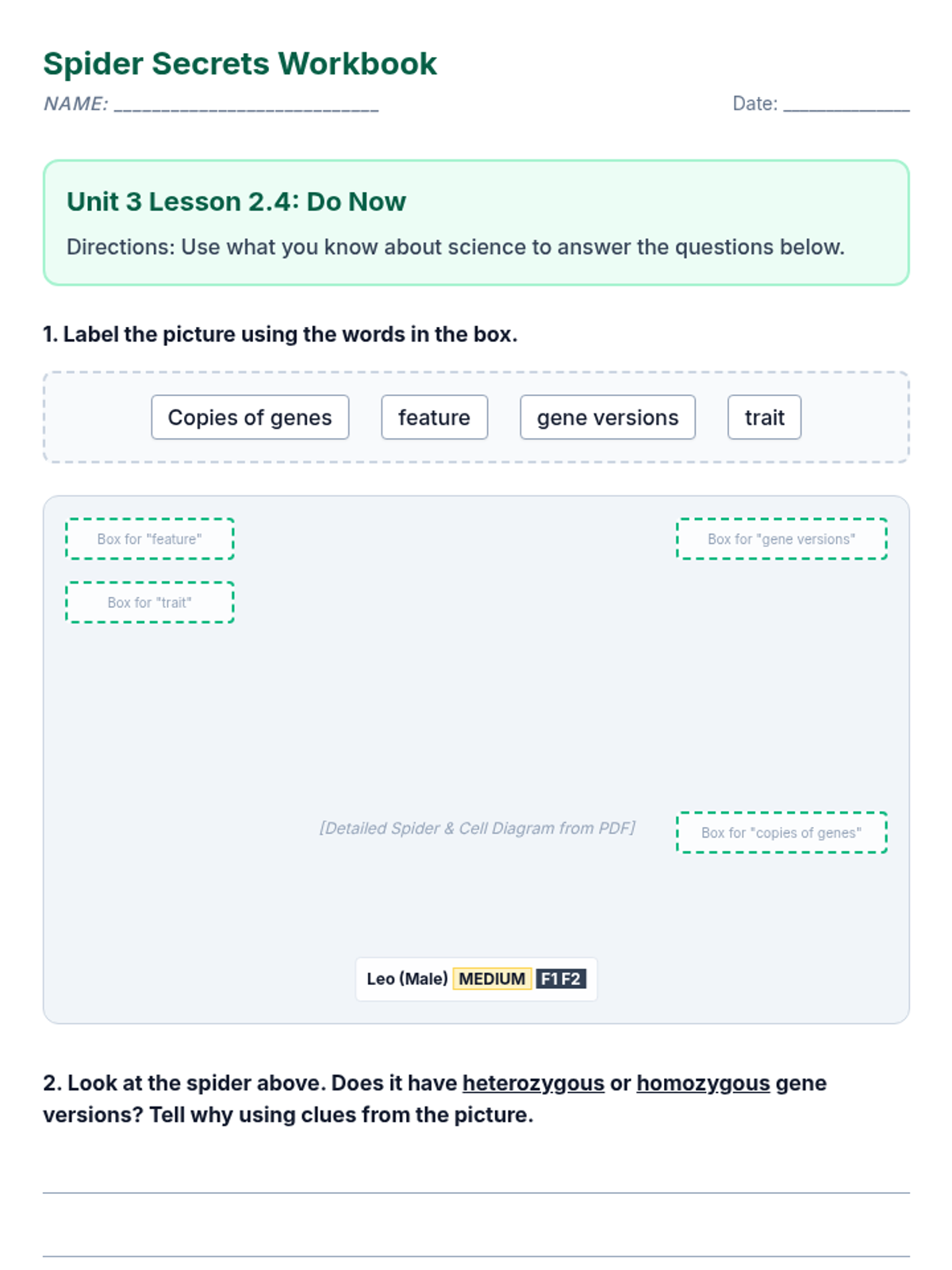
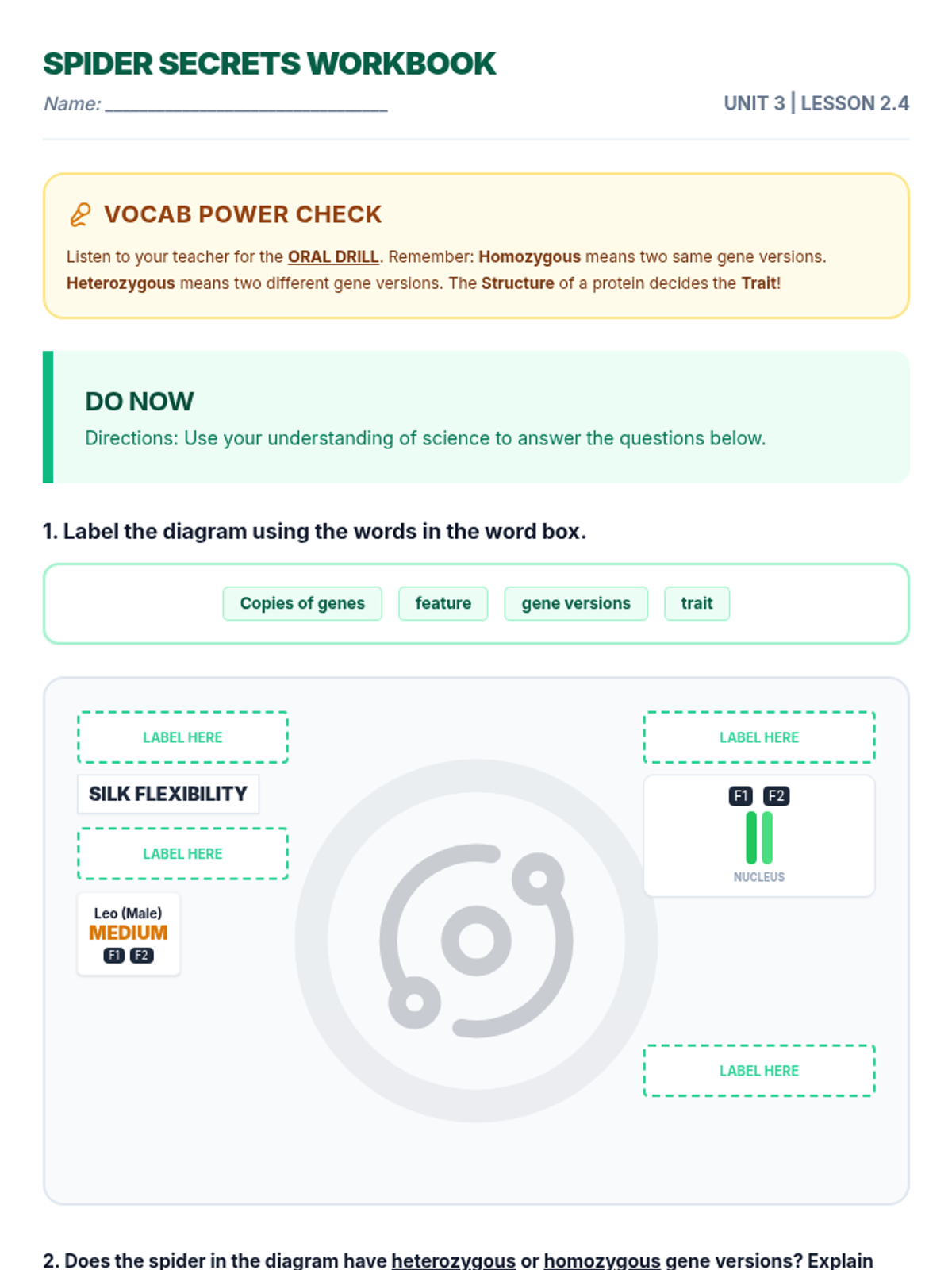
A lesson where students learn how gene versions provide instructions for proteins that determine traits, specifically exploring spider silk flexibility and human running ability. Adjusted for a 3rd-grade reading level while maintaining 6th-grade vocabulary.
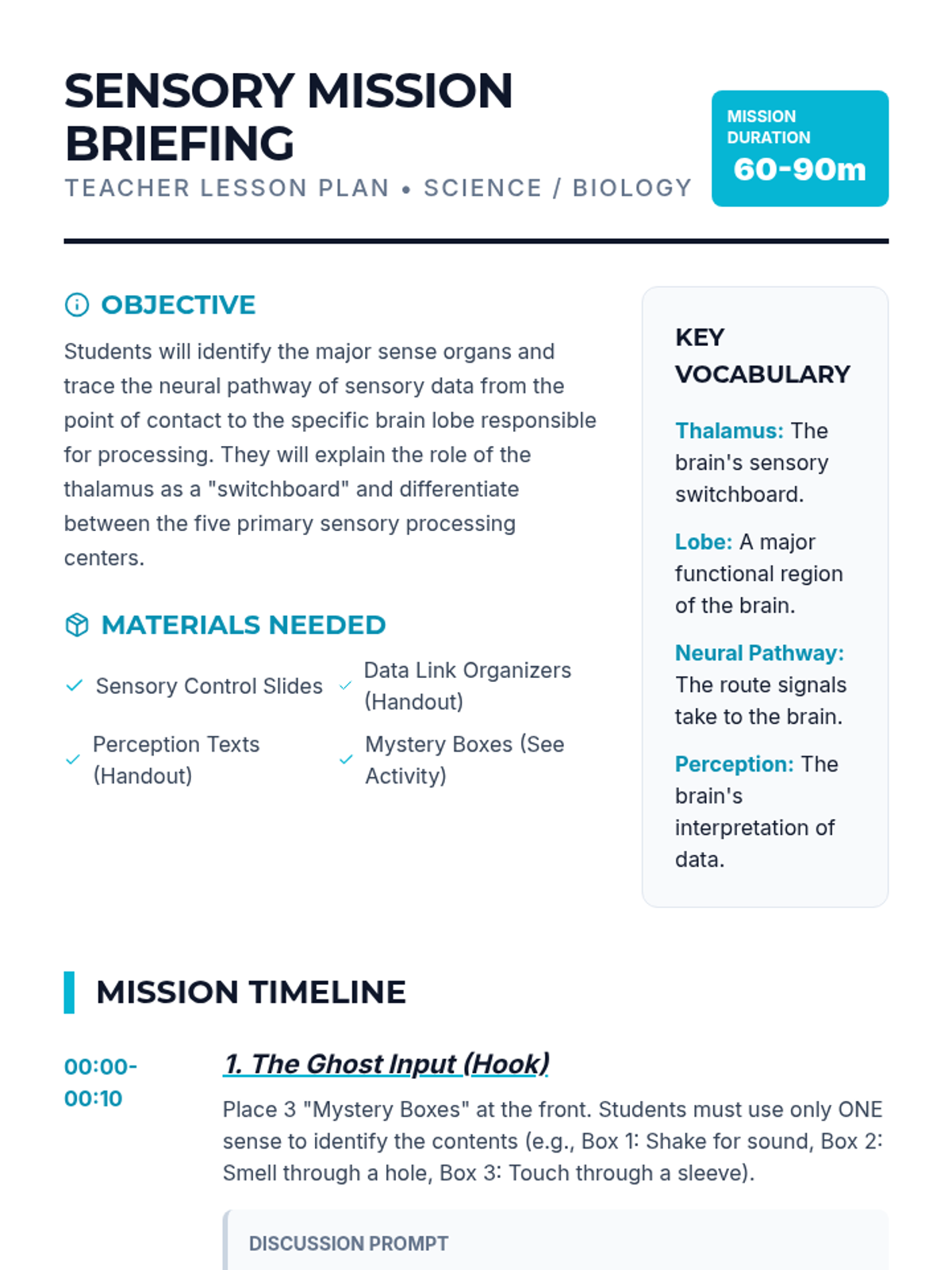
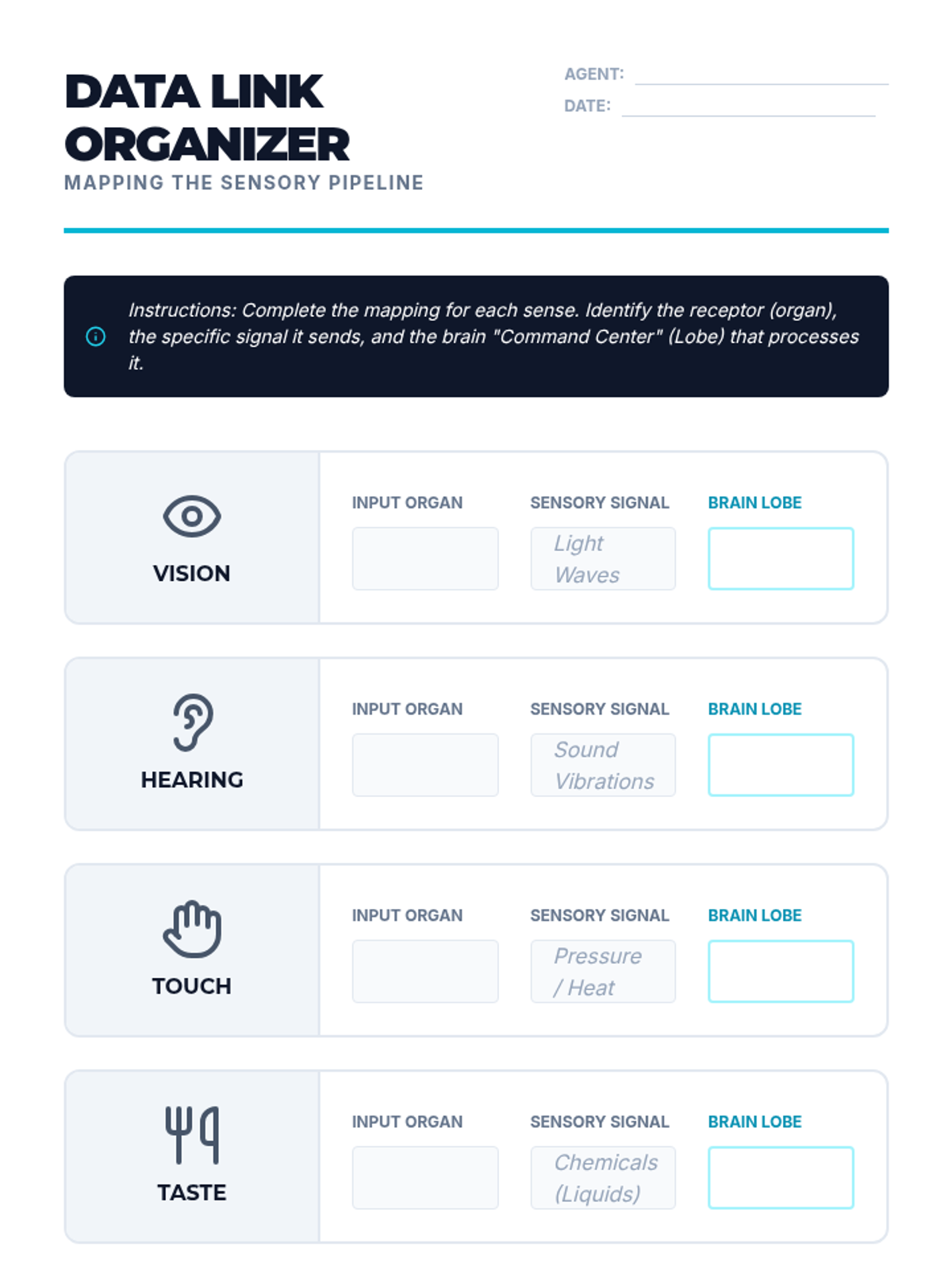
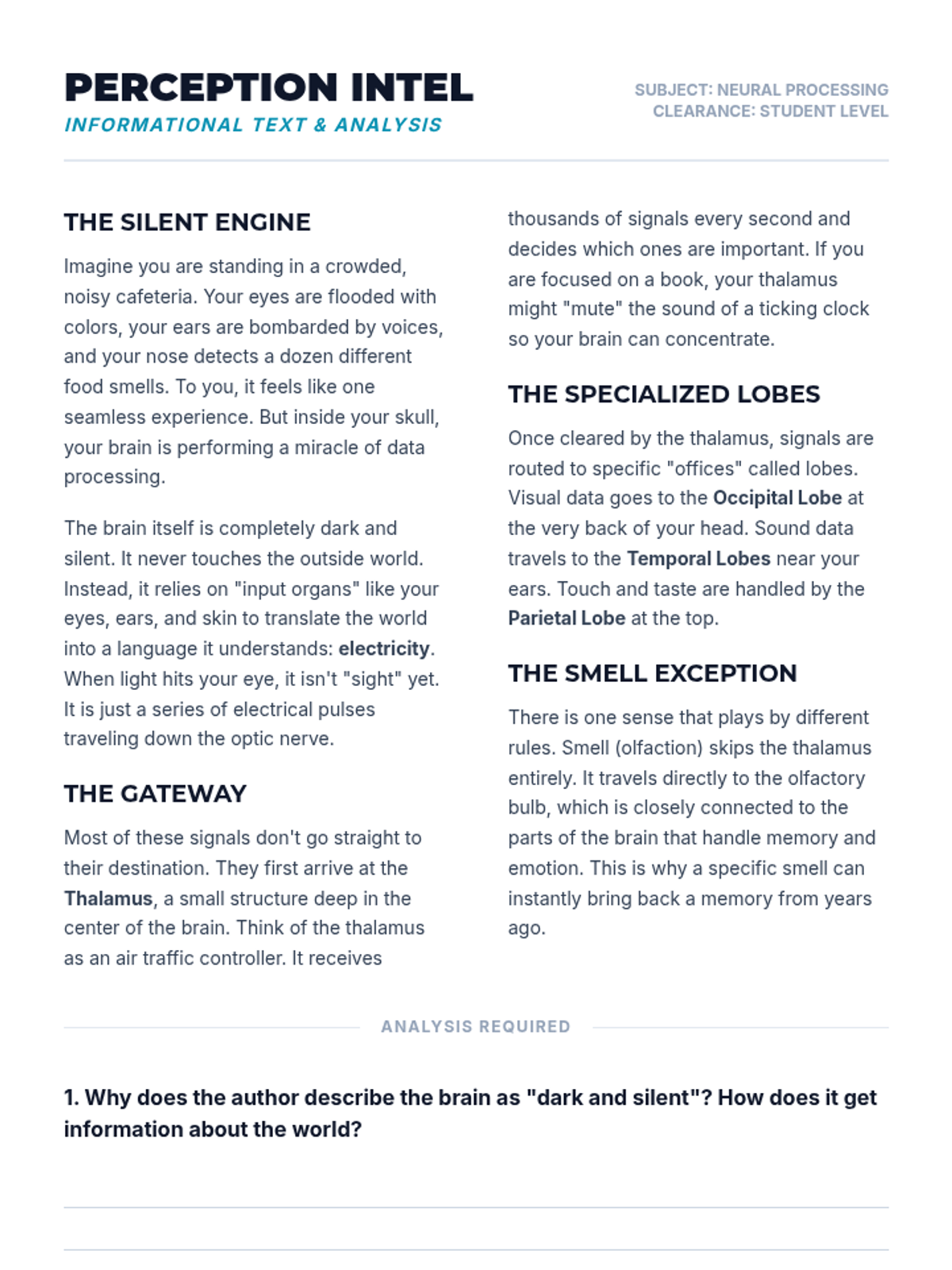
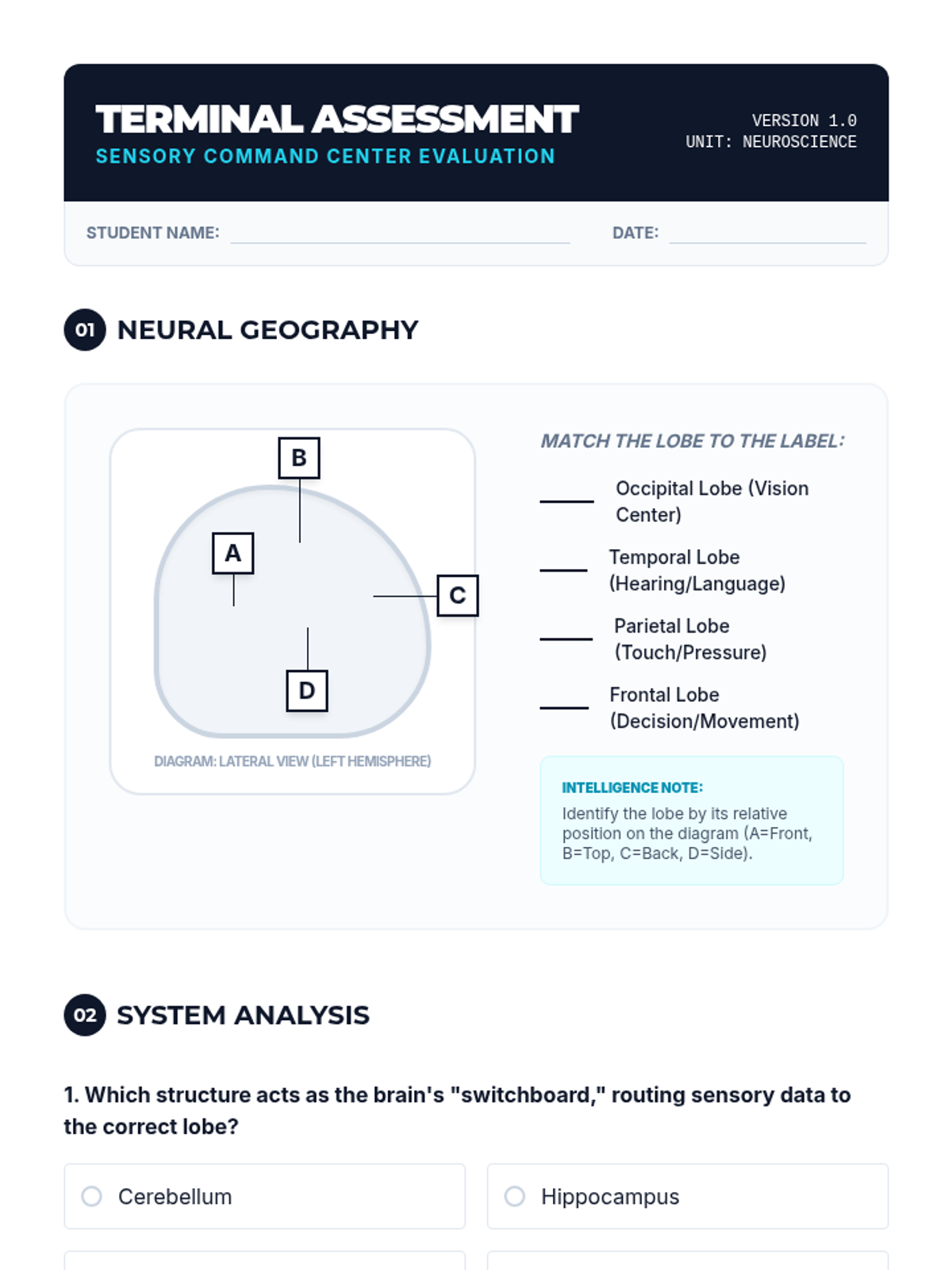
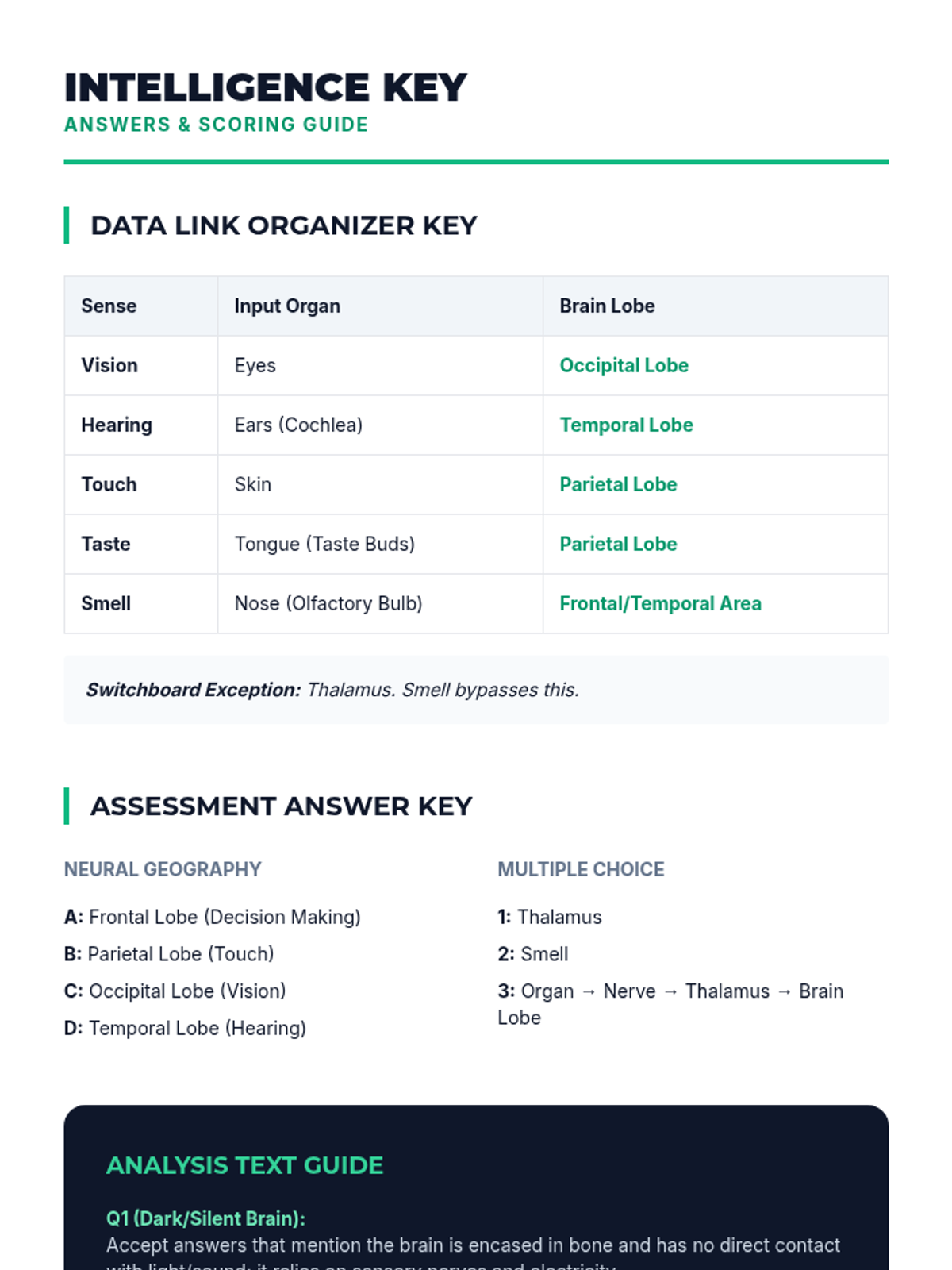
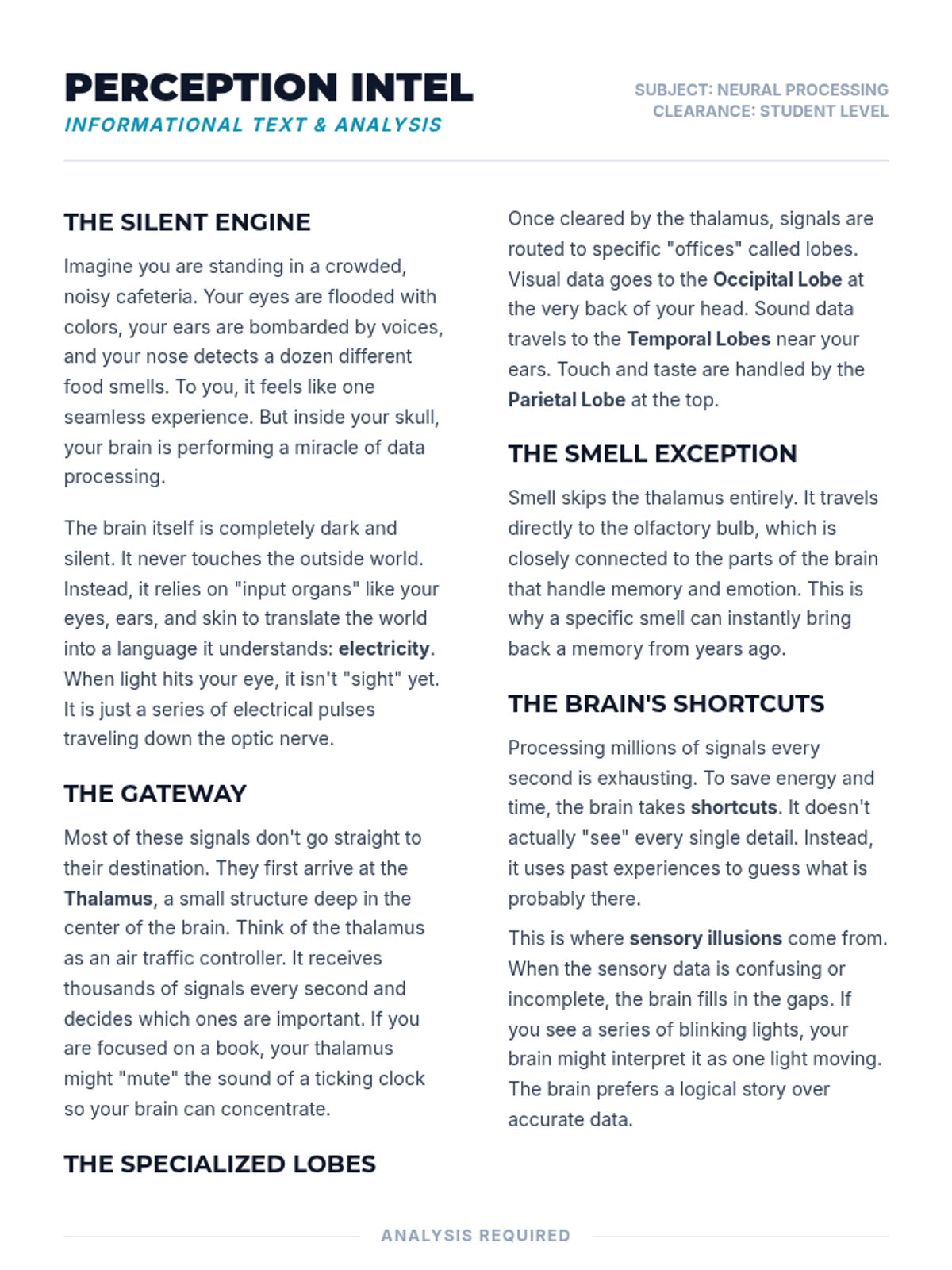
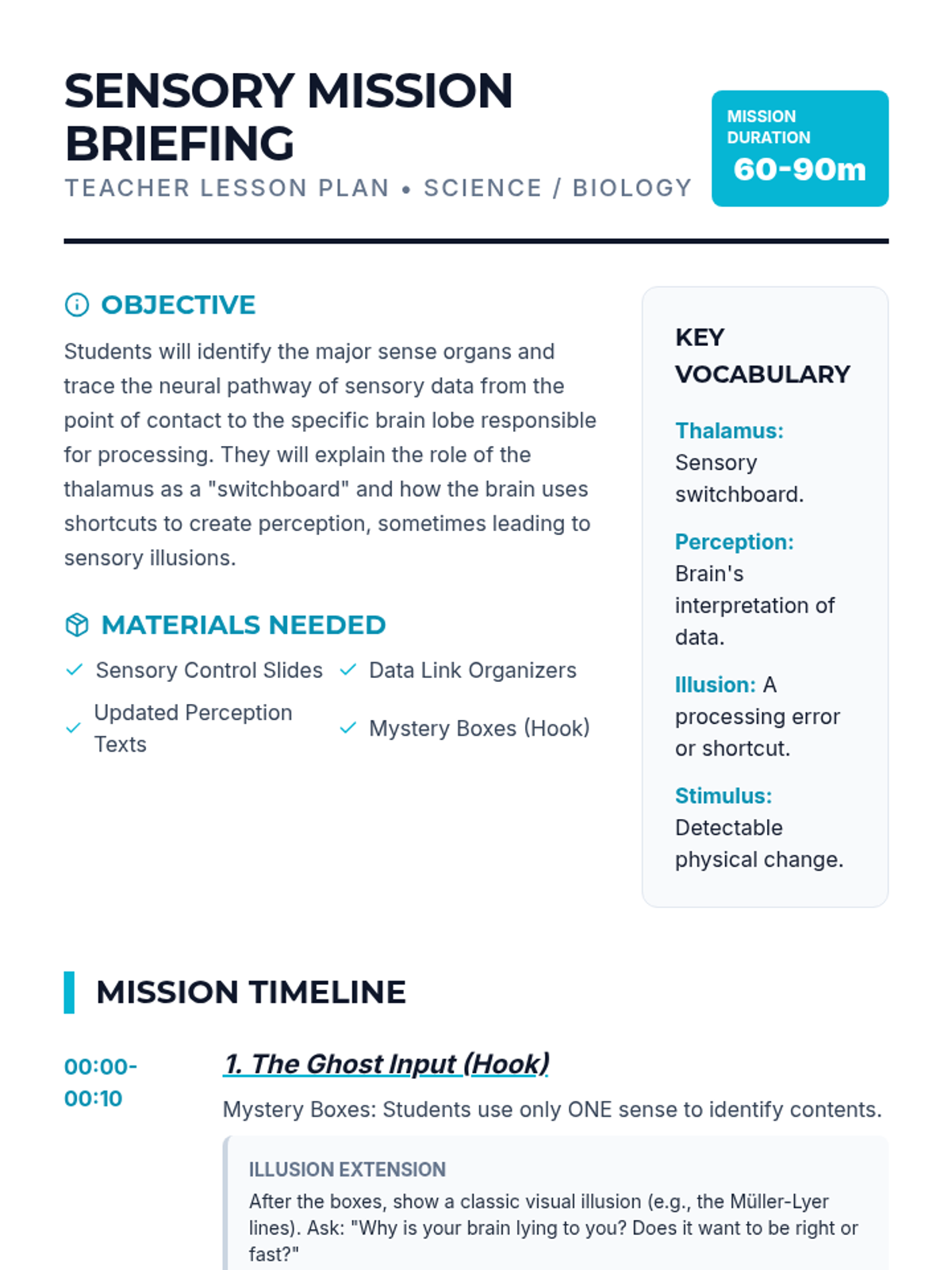
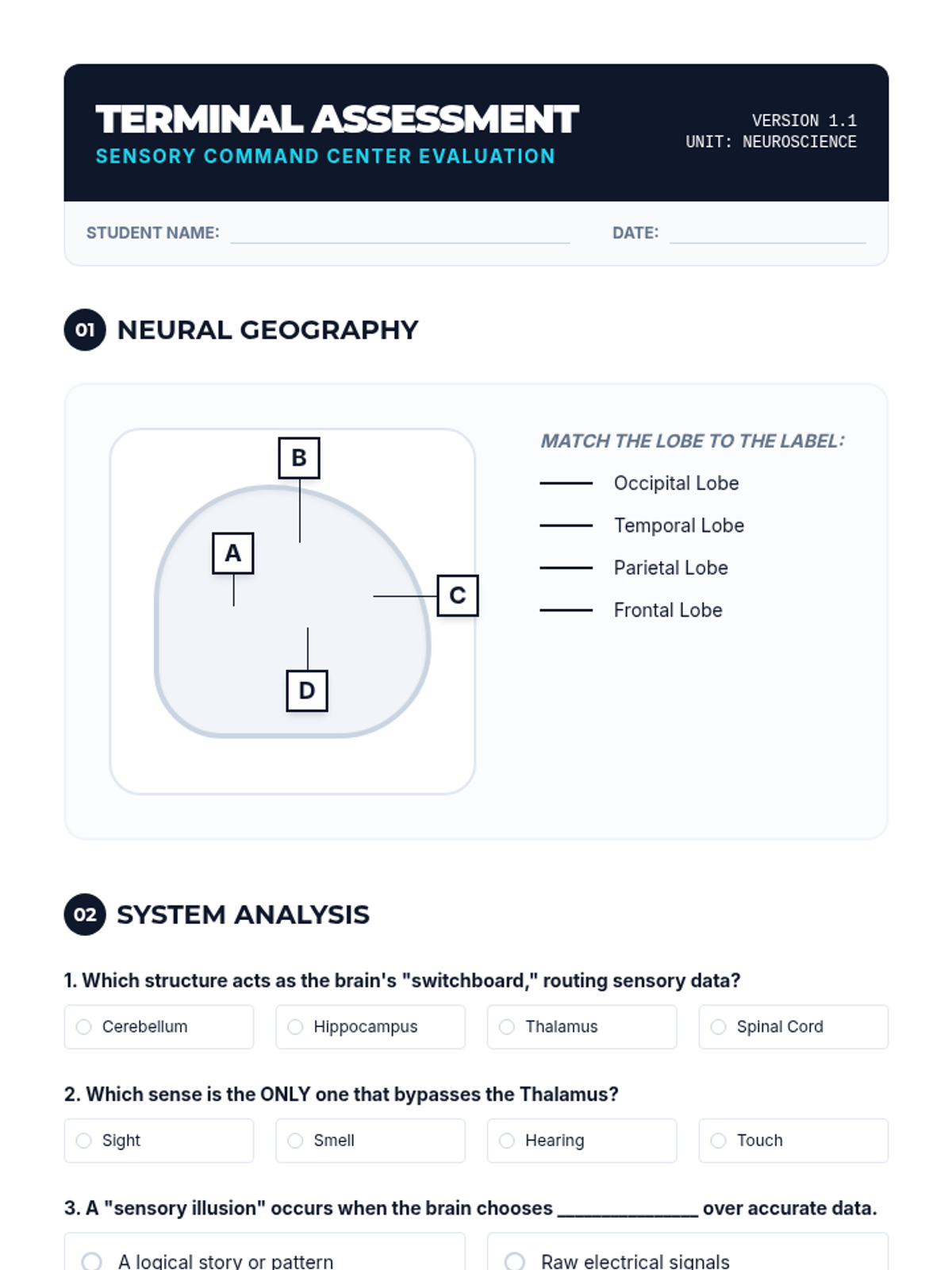
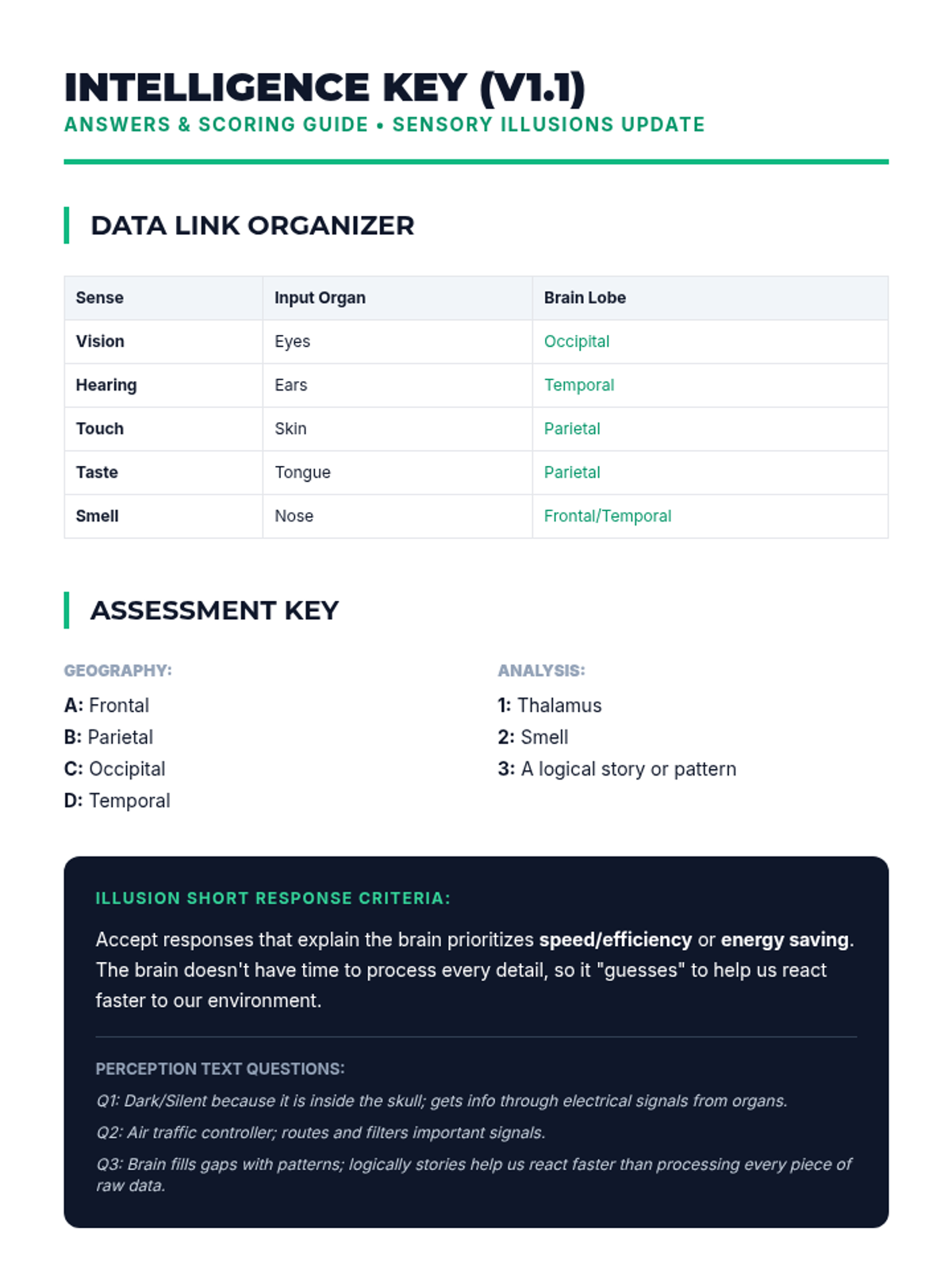
A comprehensive lesson exploring how the five senses collect data and how the brain processes that information to create our perception of the world. Students will map the neural pathways from organ to brain and identify specific brain regions responsible for each sense.
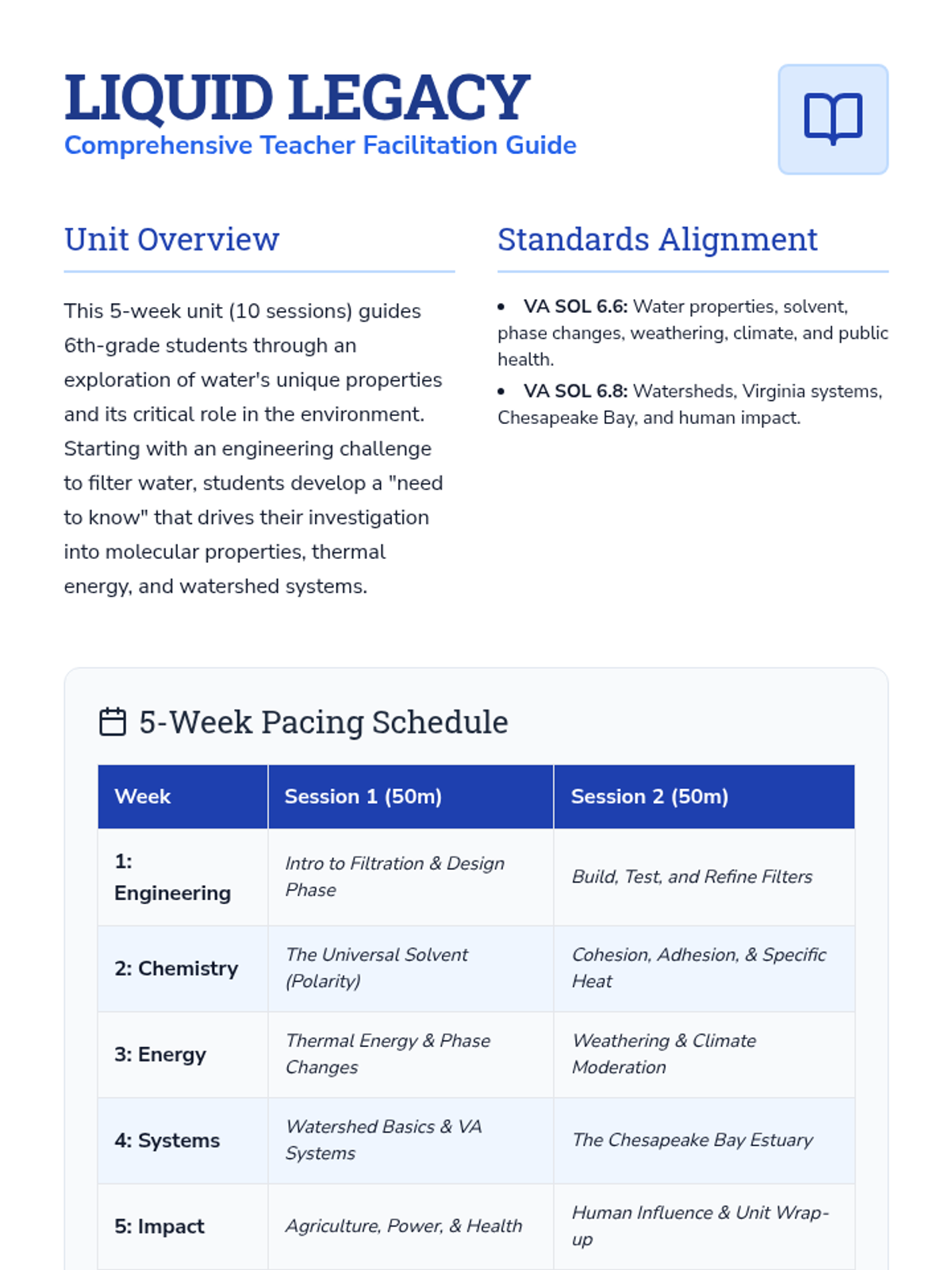
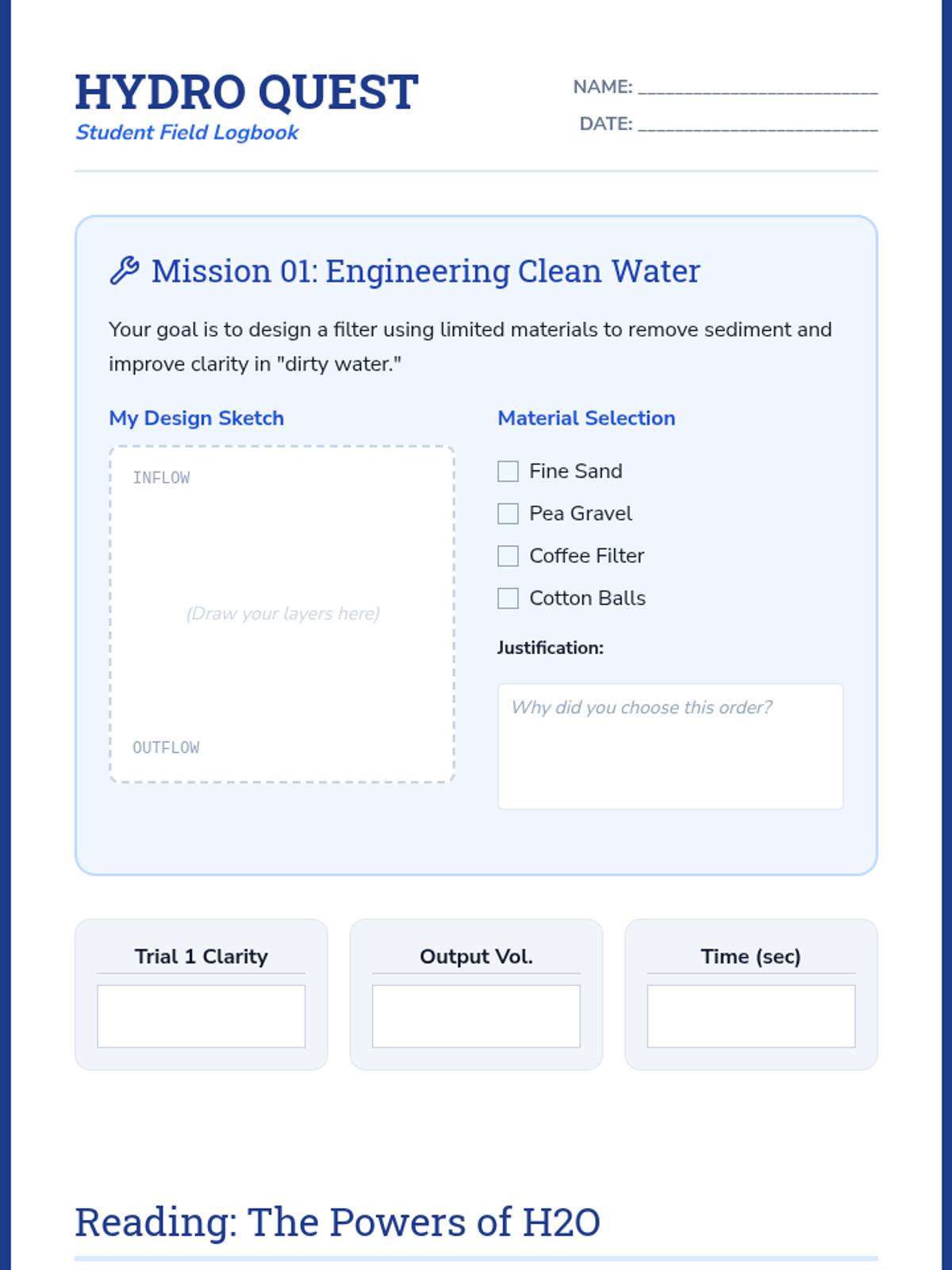
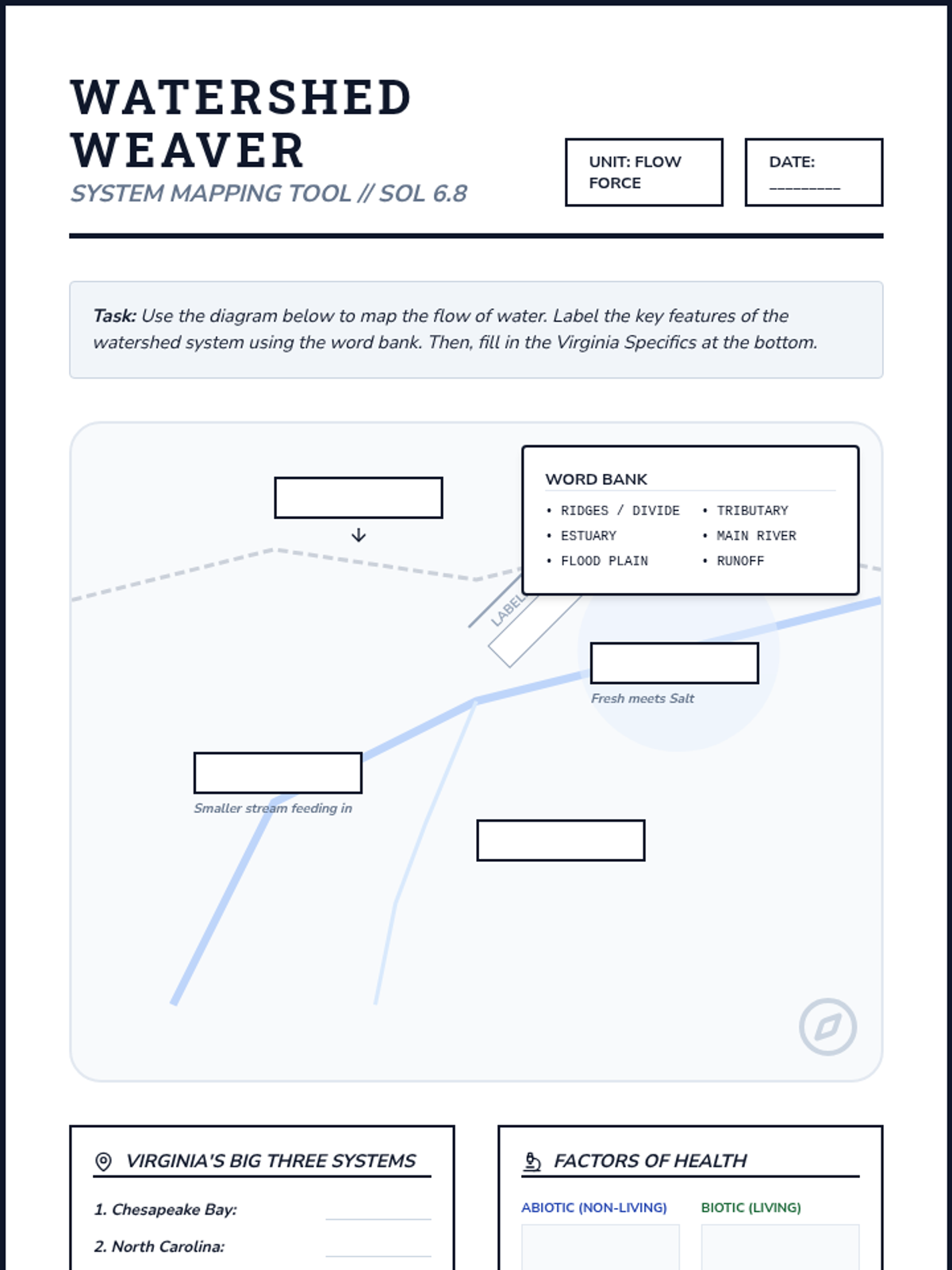
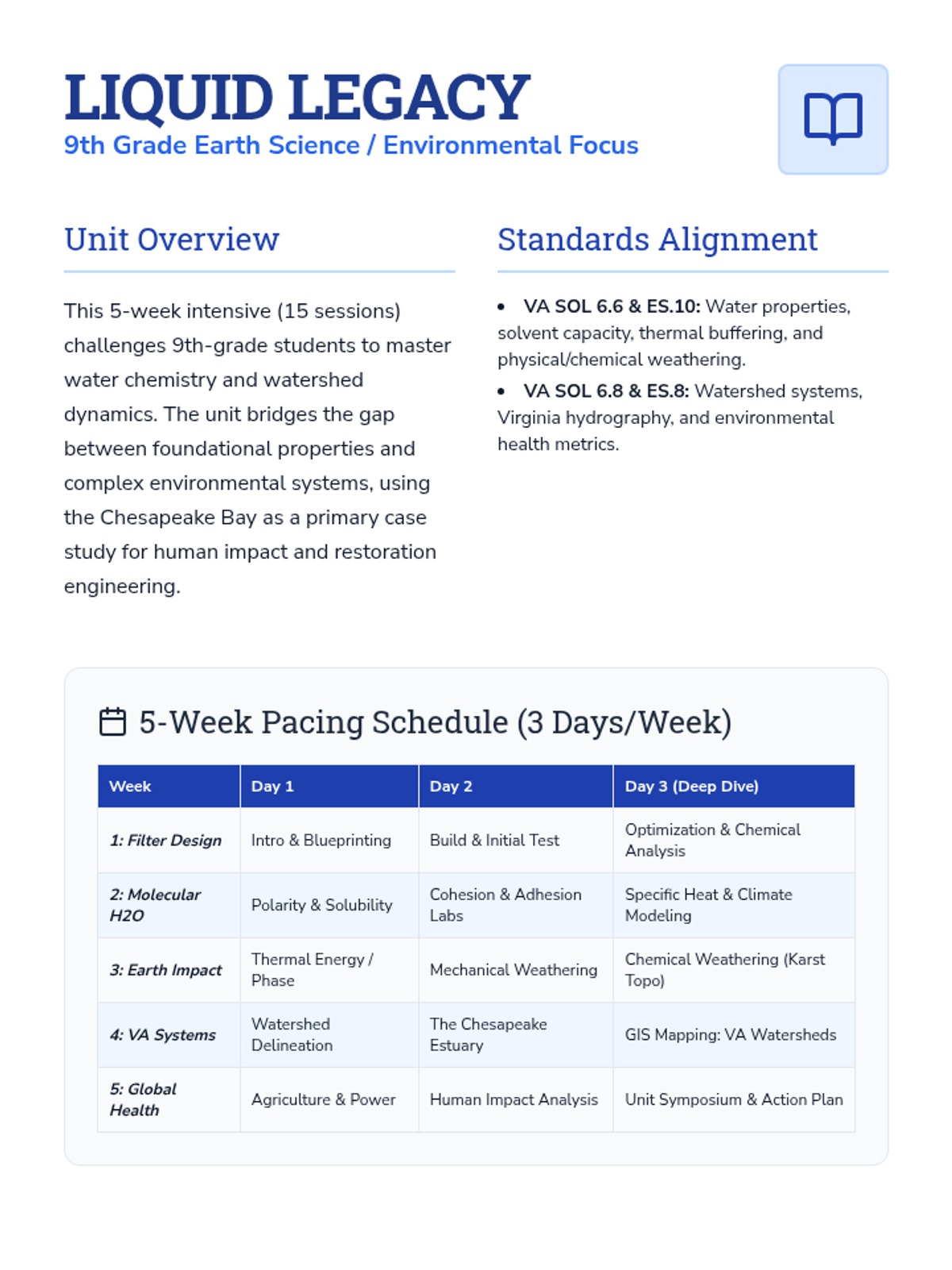
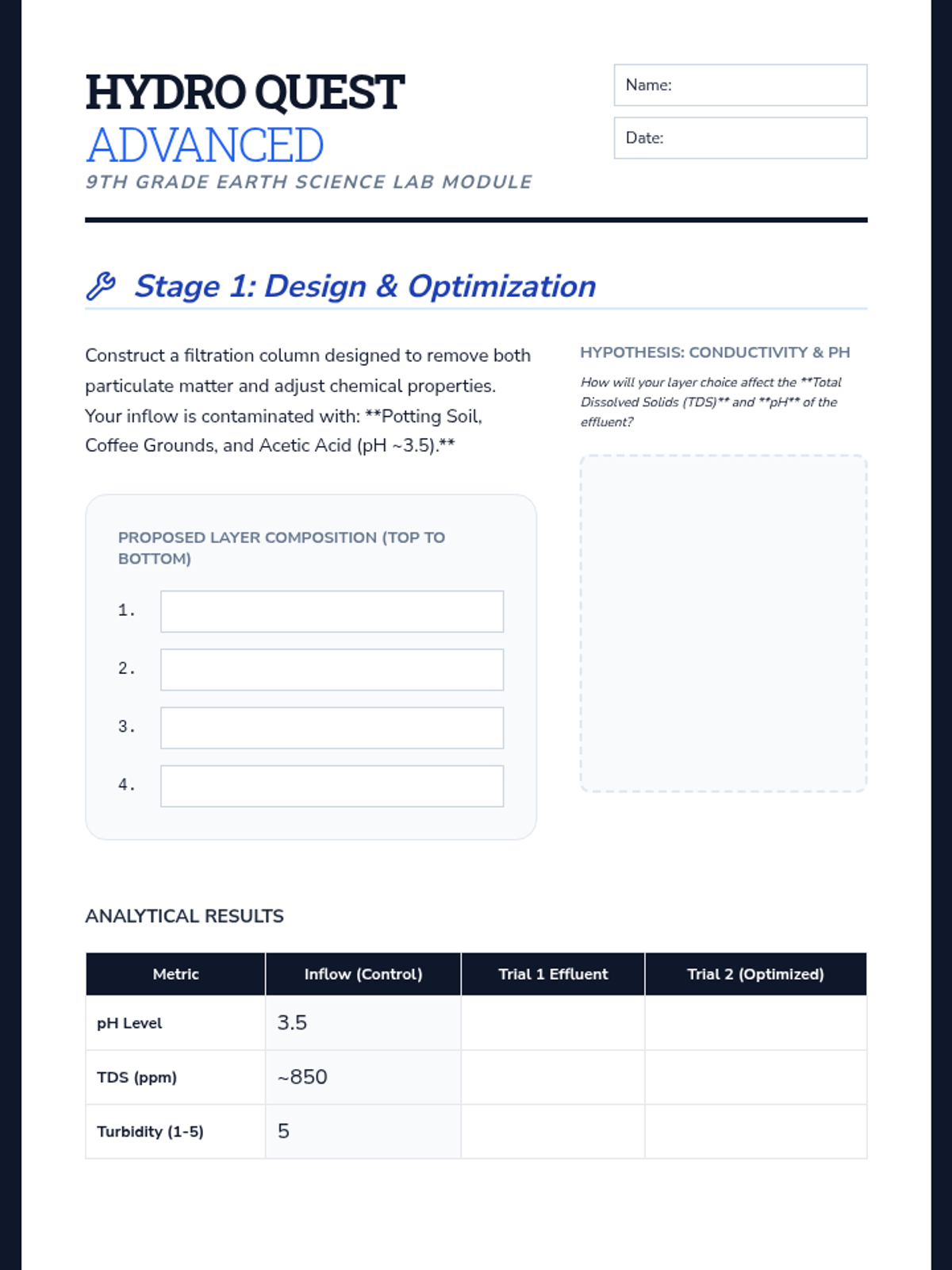
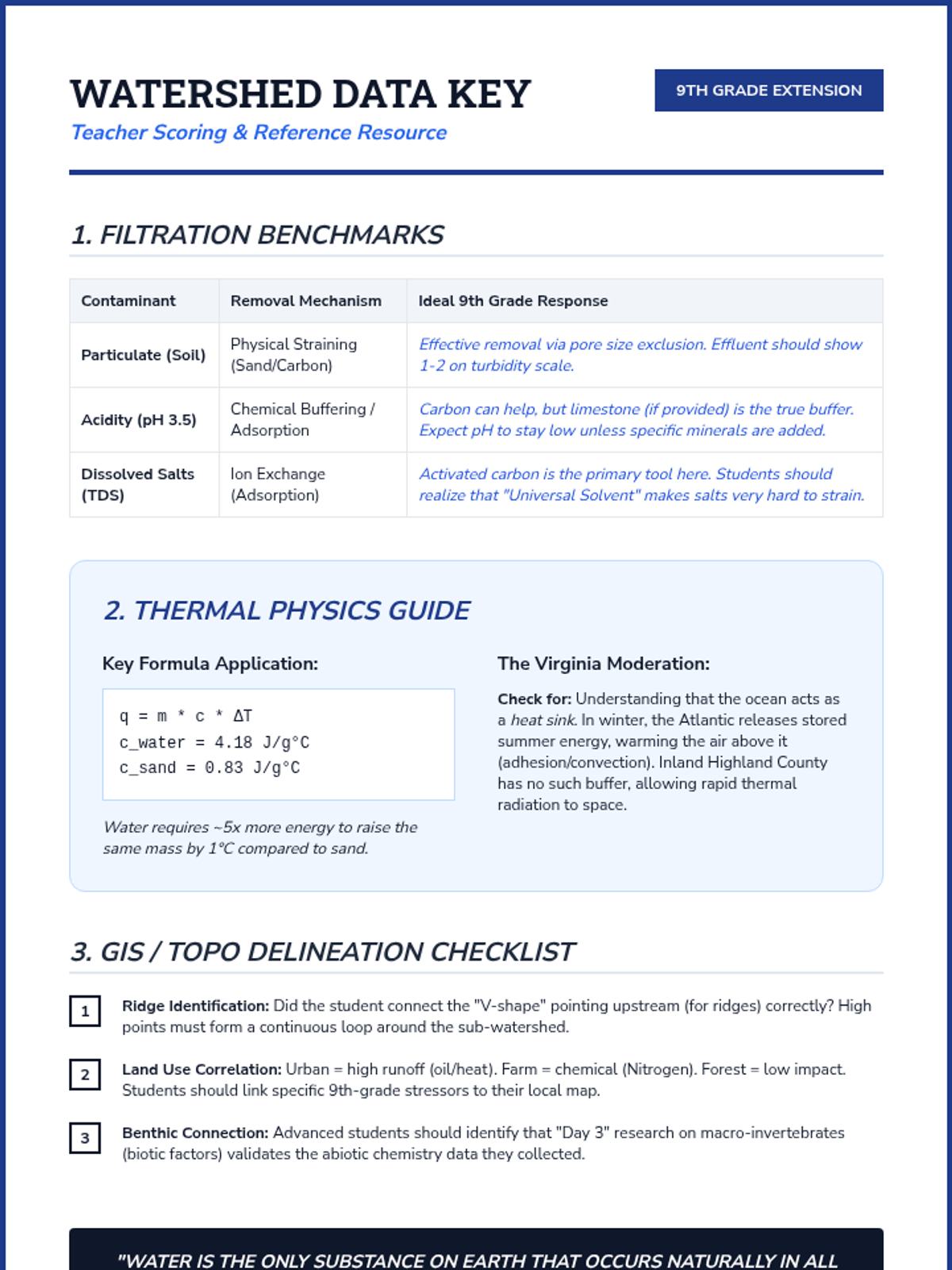
A 10-session unit covering Virginia Standards 6.6 and 6.8, beginning with a water filter engineering challenge and progressing through water chemistry and watershed systems.
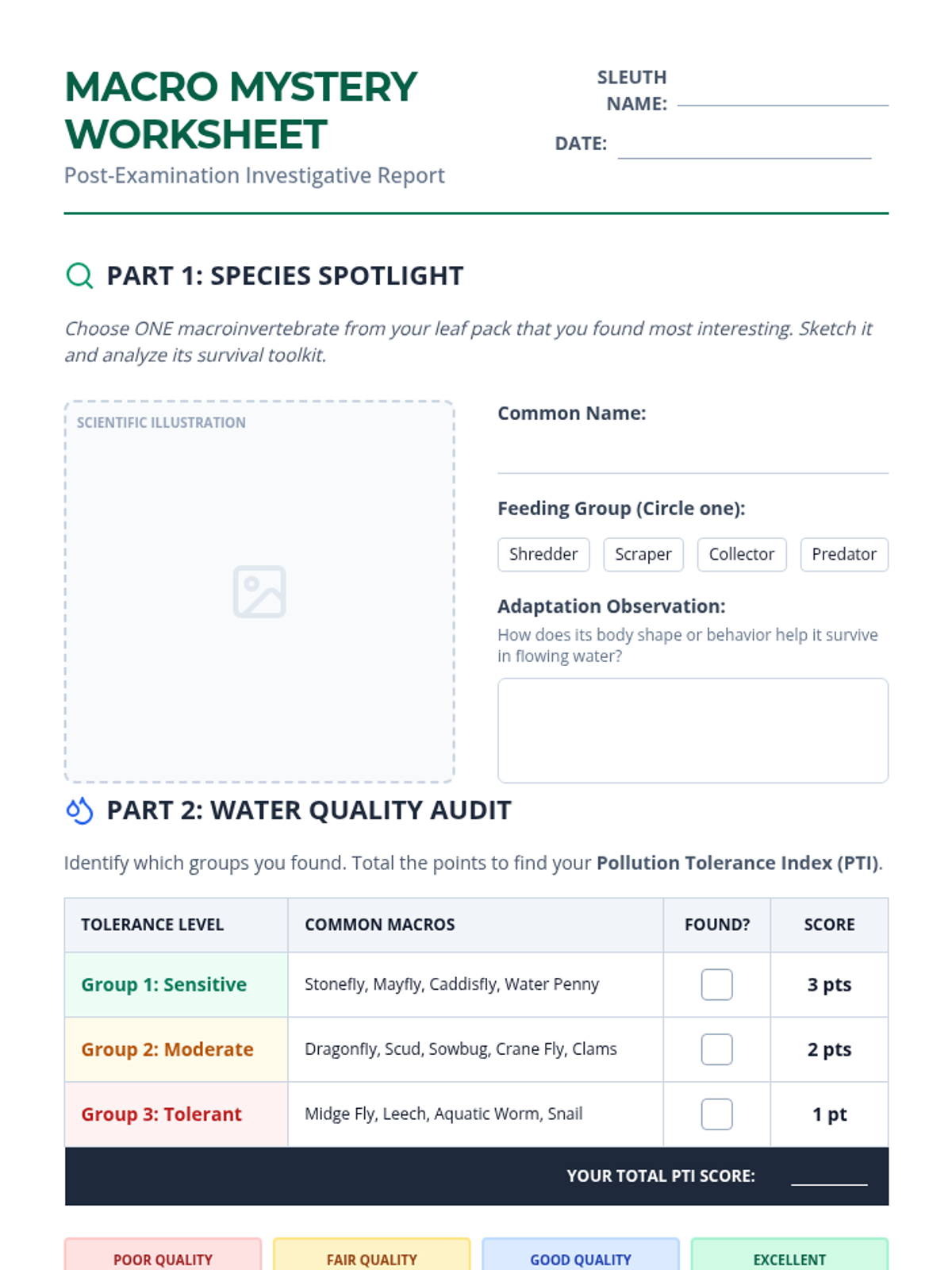
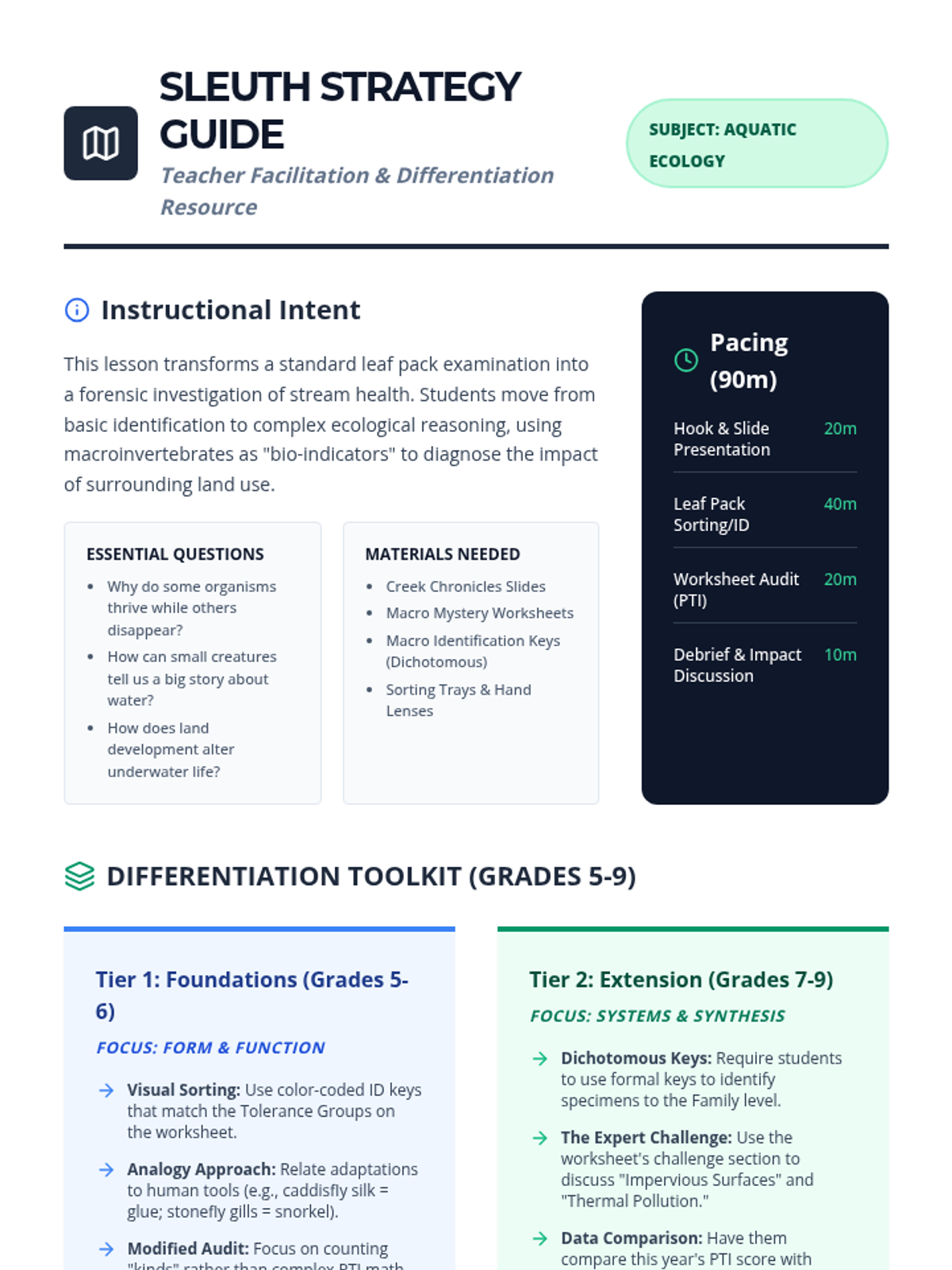
A comprehensive lesson investigating aquatic ecosystems through leaf pack analysis. Students identify macroinvertebrates, explore their specialized adaptations, and evaluate how human activities impact water quality and biodiversity.
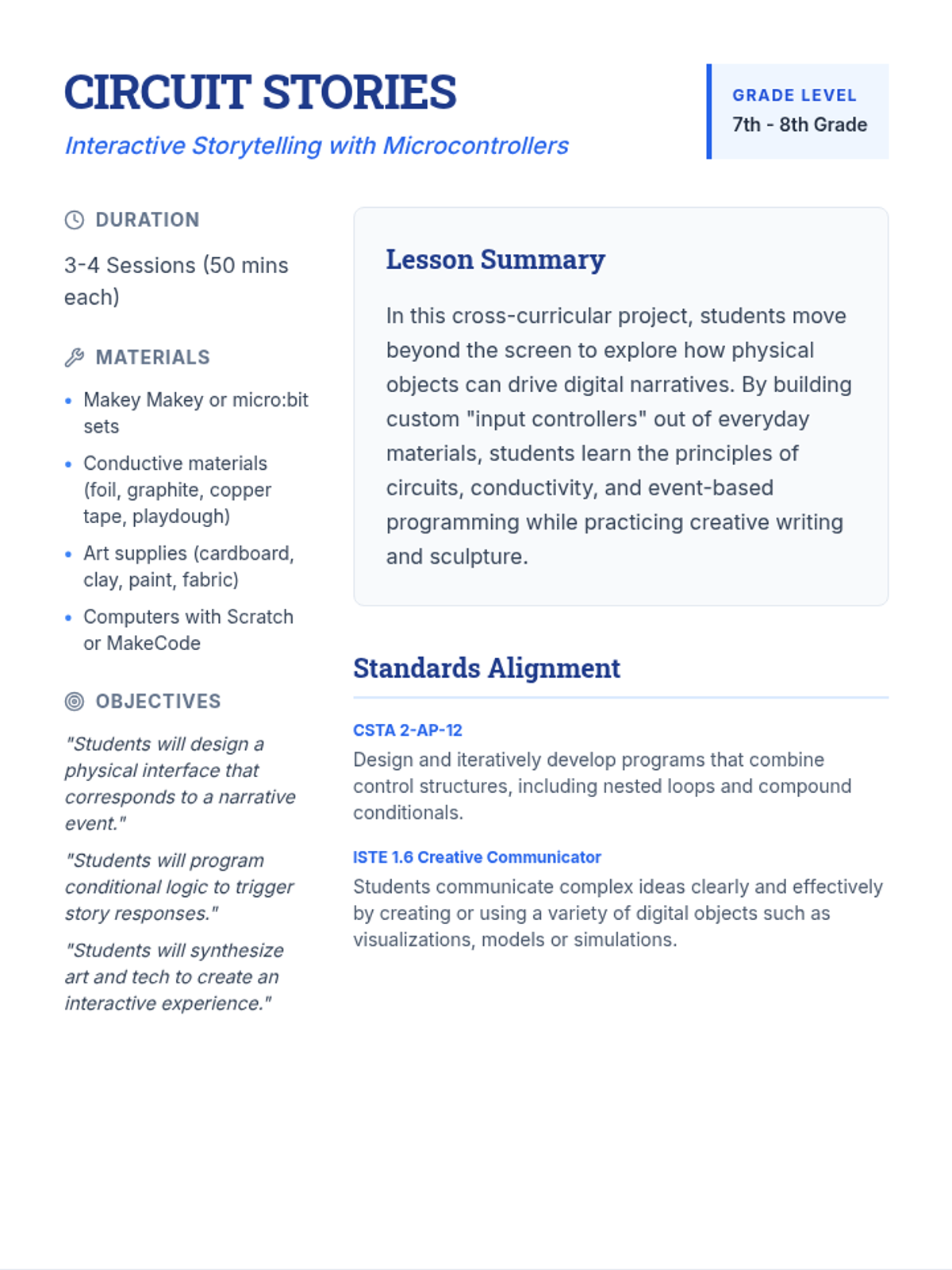
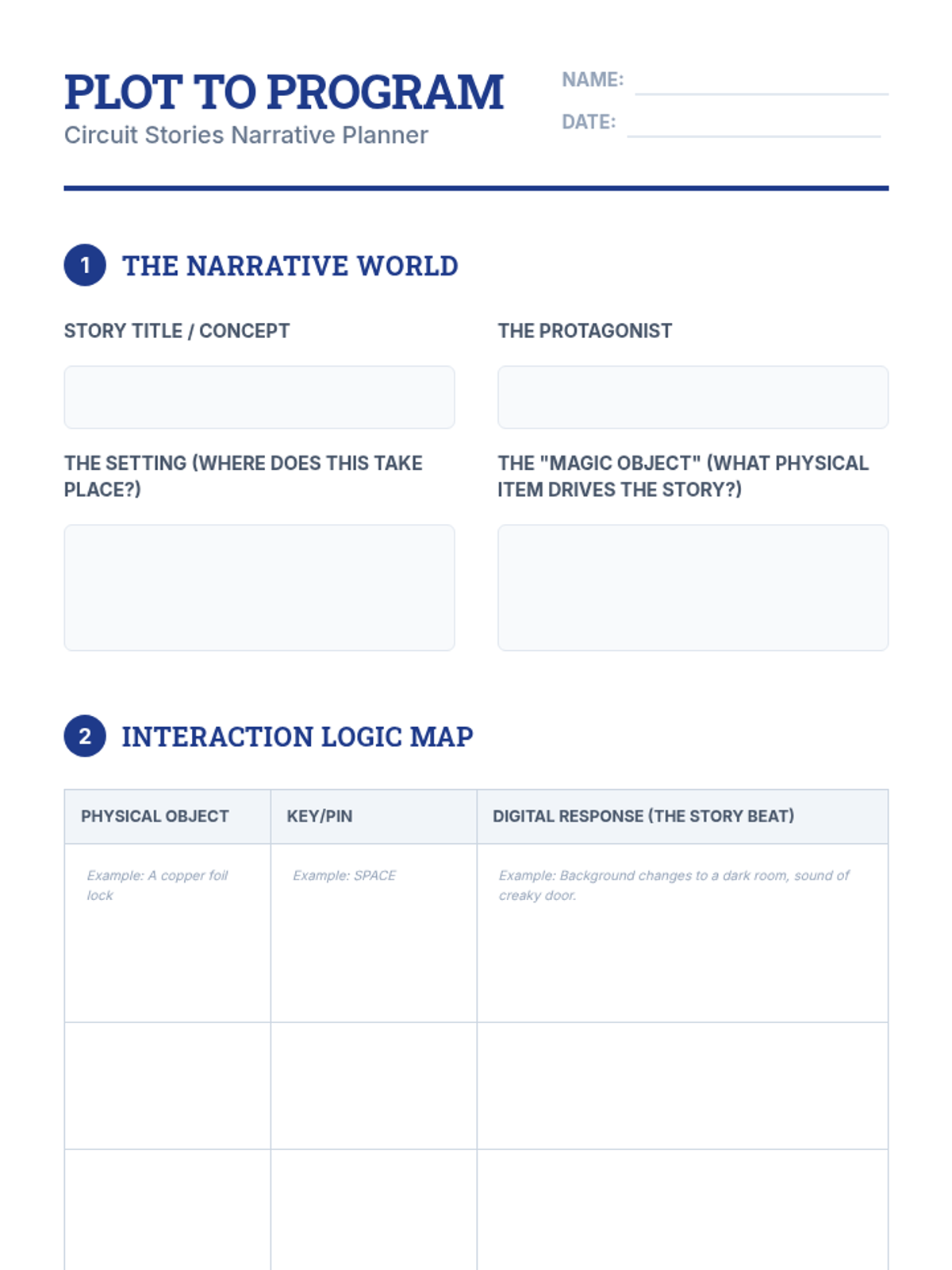
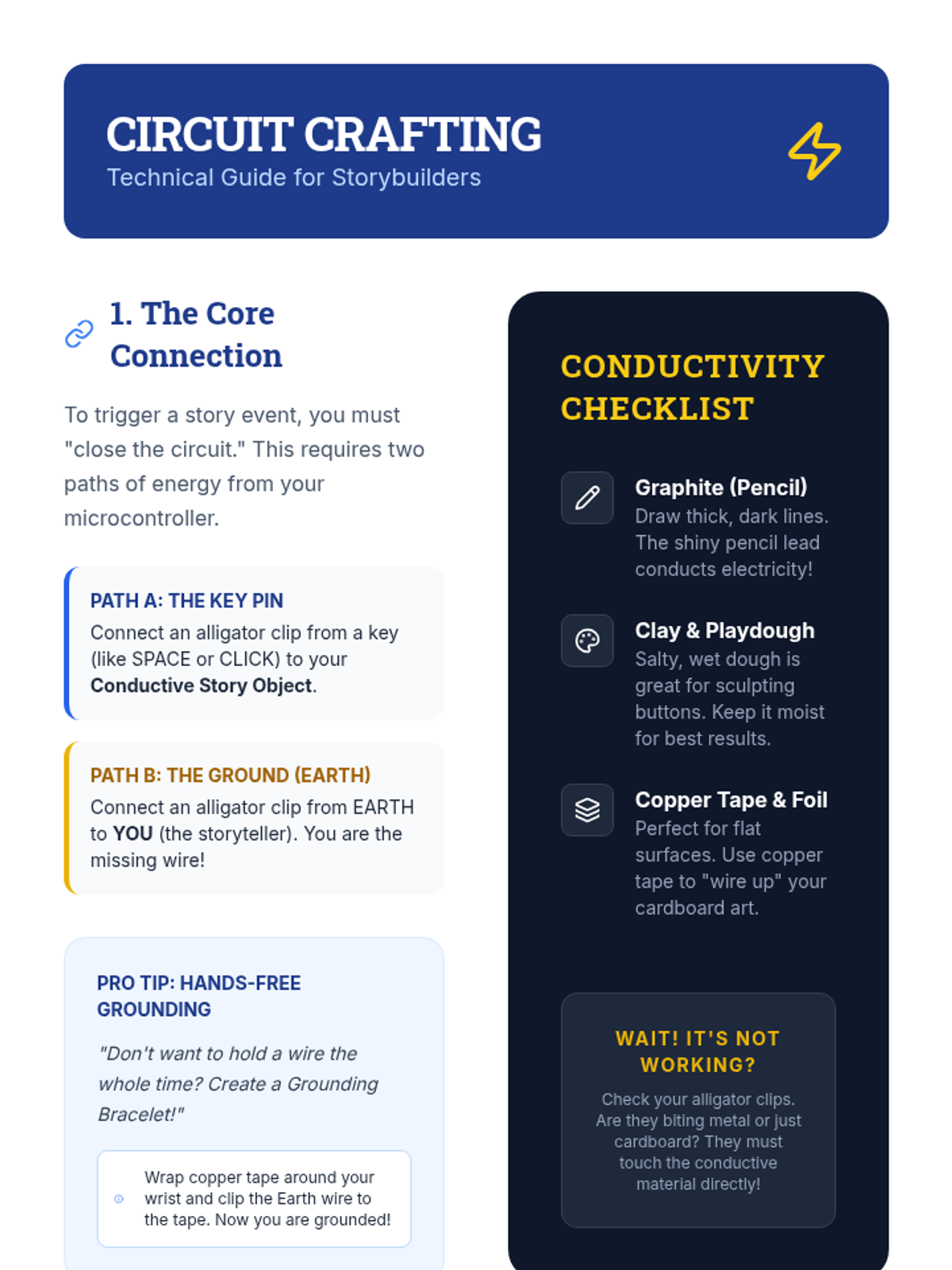
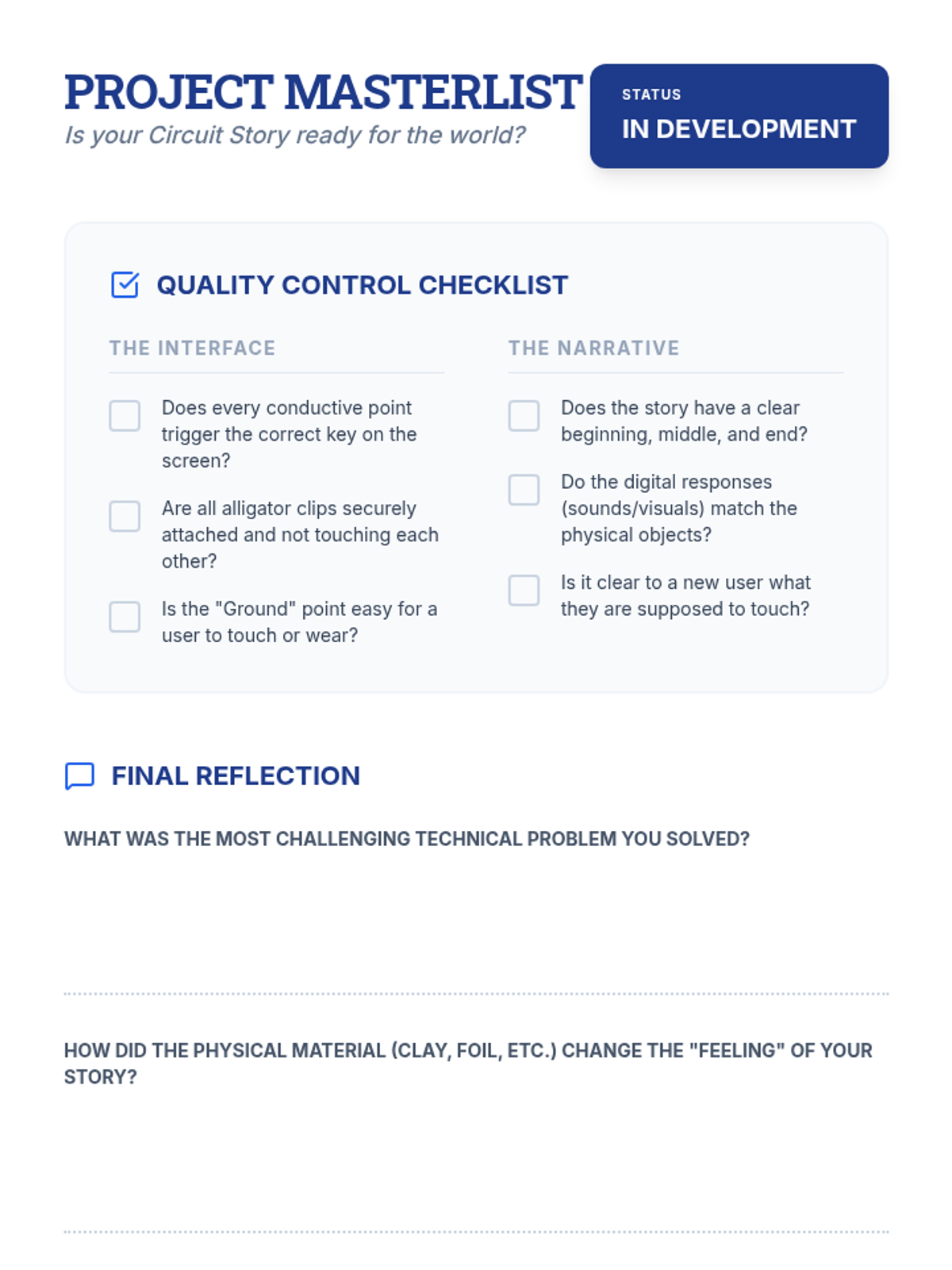
A cross-curricular lesson where students blend narrative arts with physical computing. Students use microcontrollers to create tangible interfaces that trigger digital story events, bridging the gap between physical objects and digital logic.
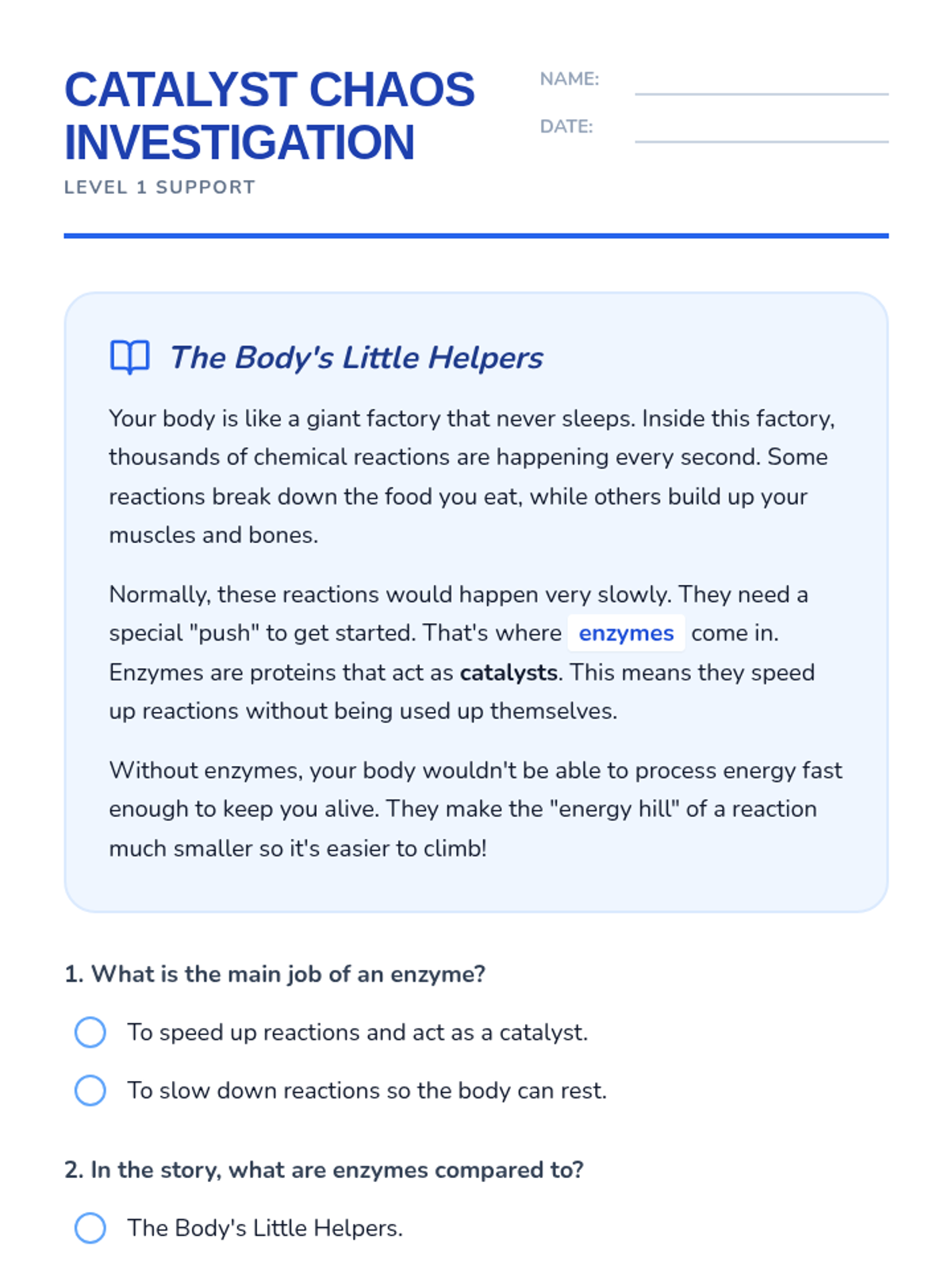
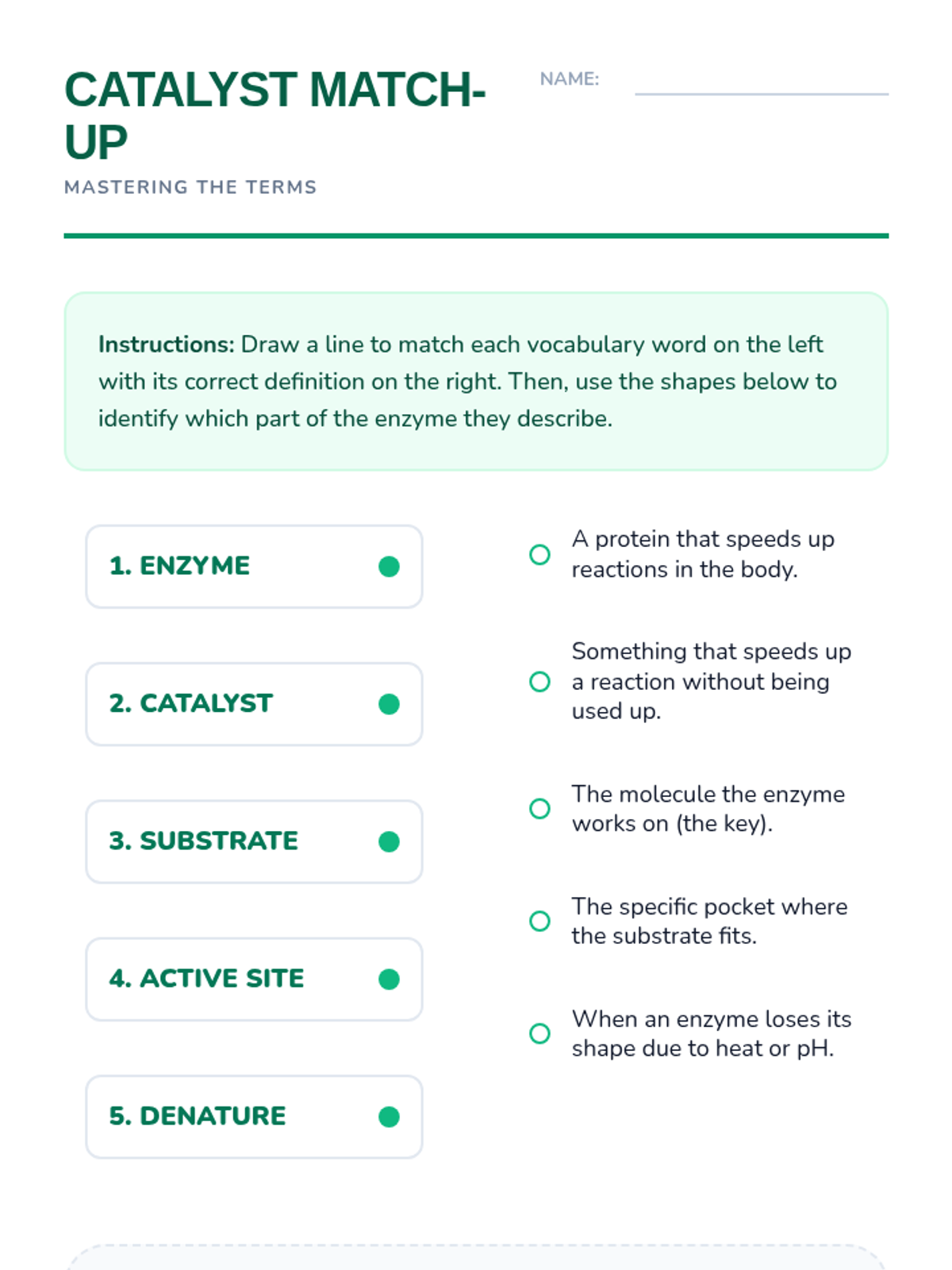
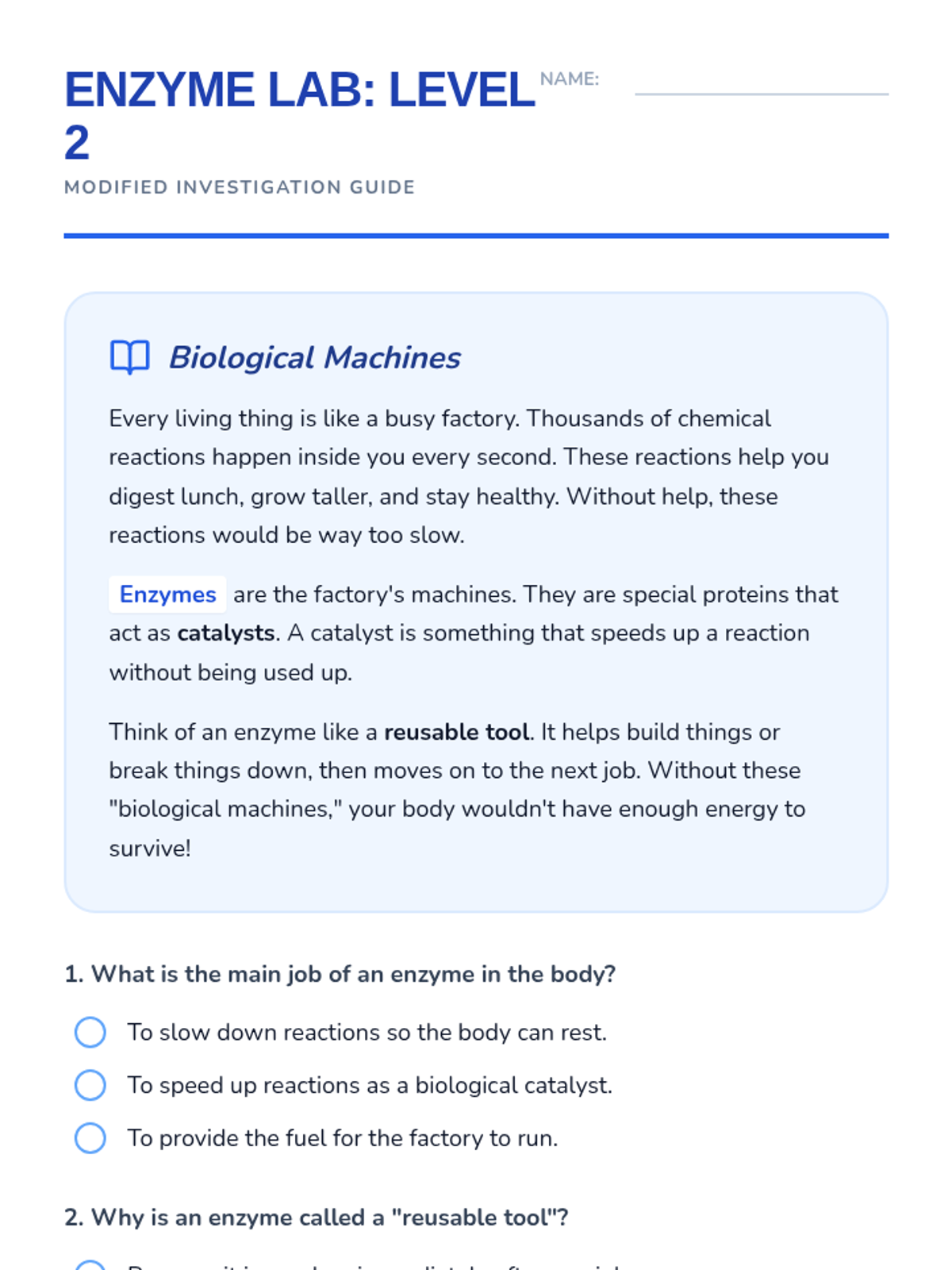
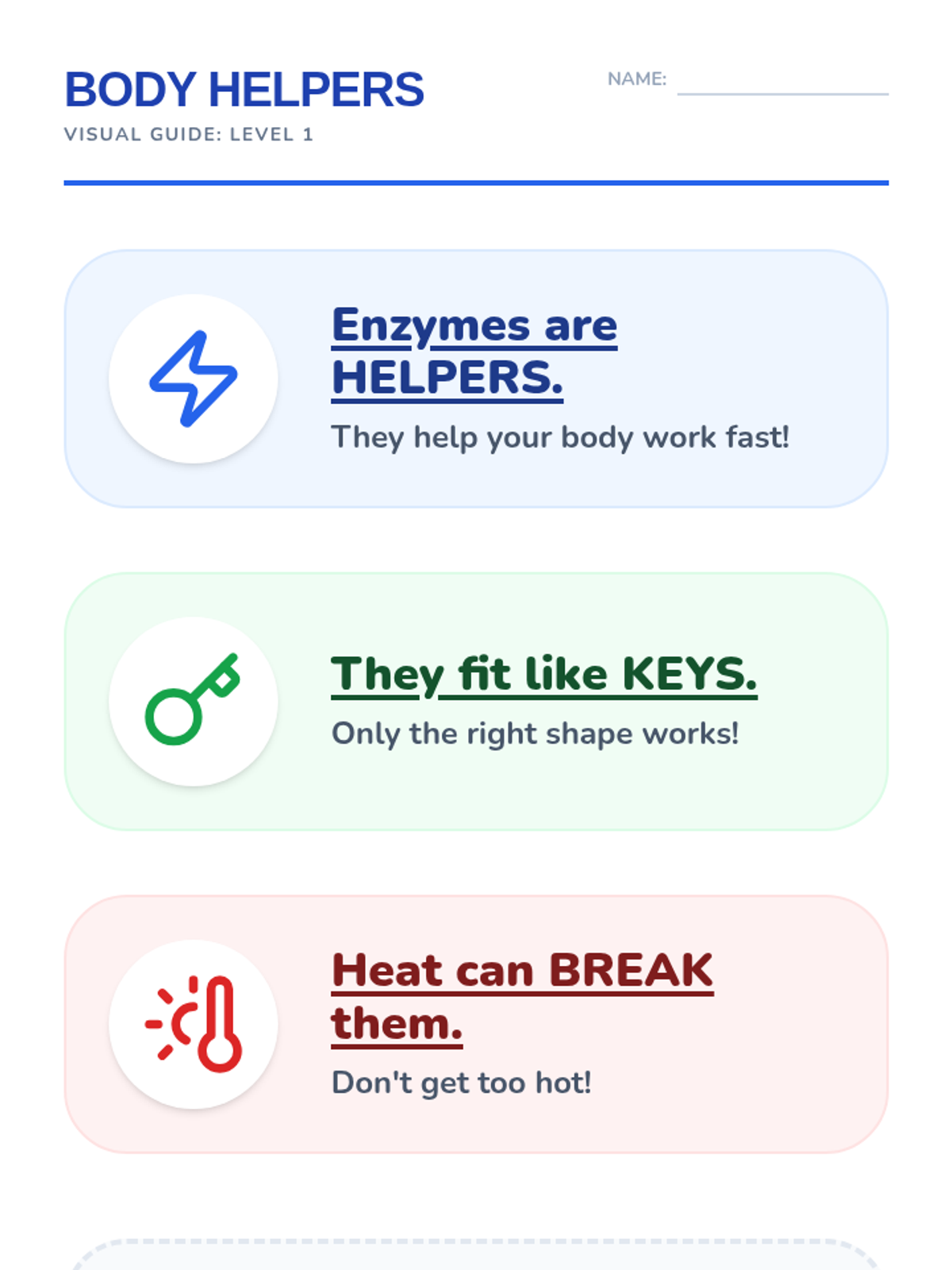
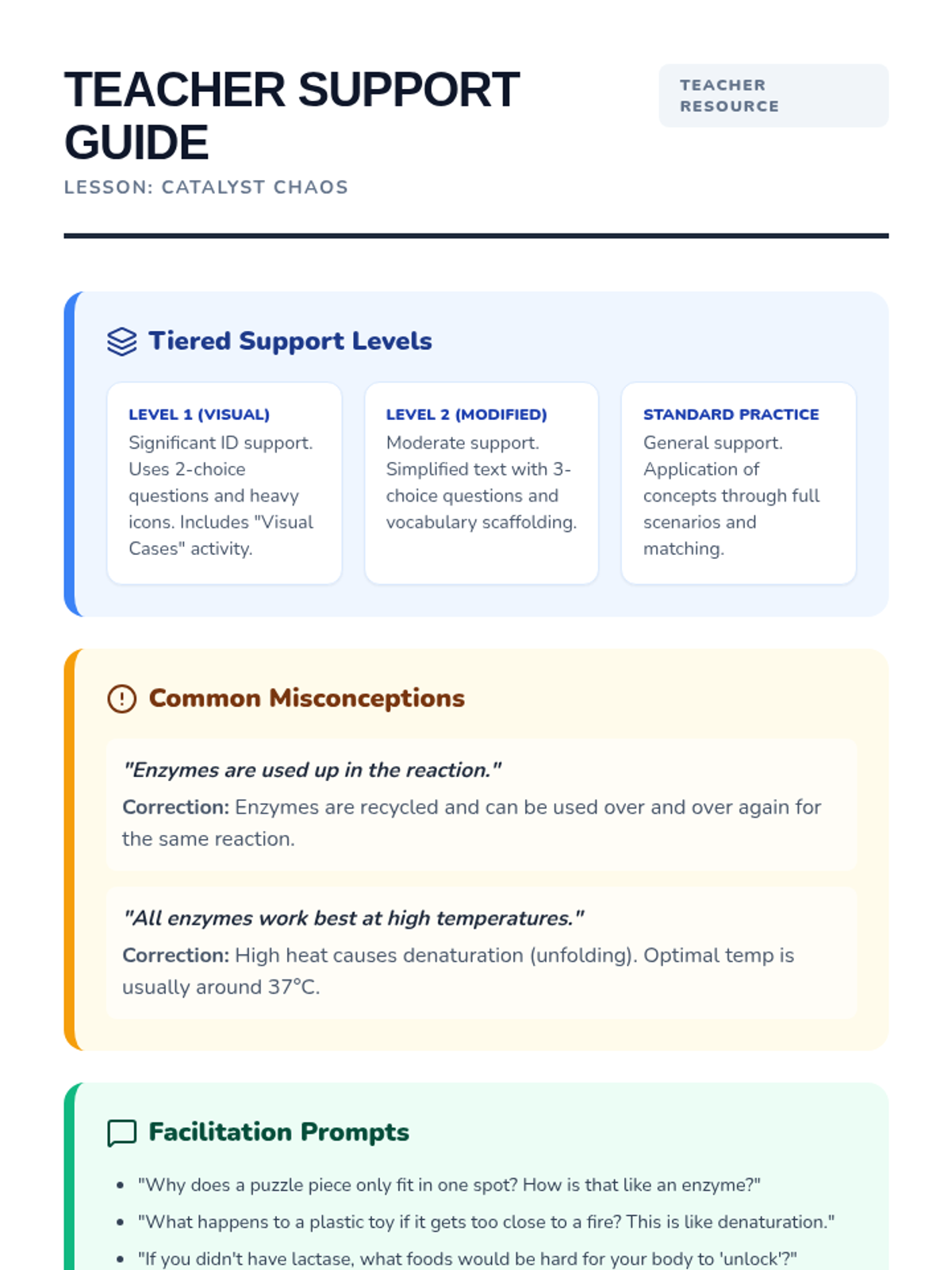
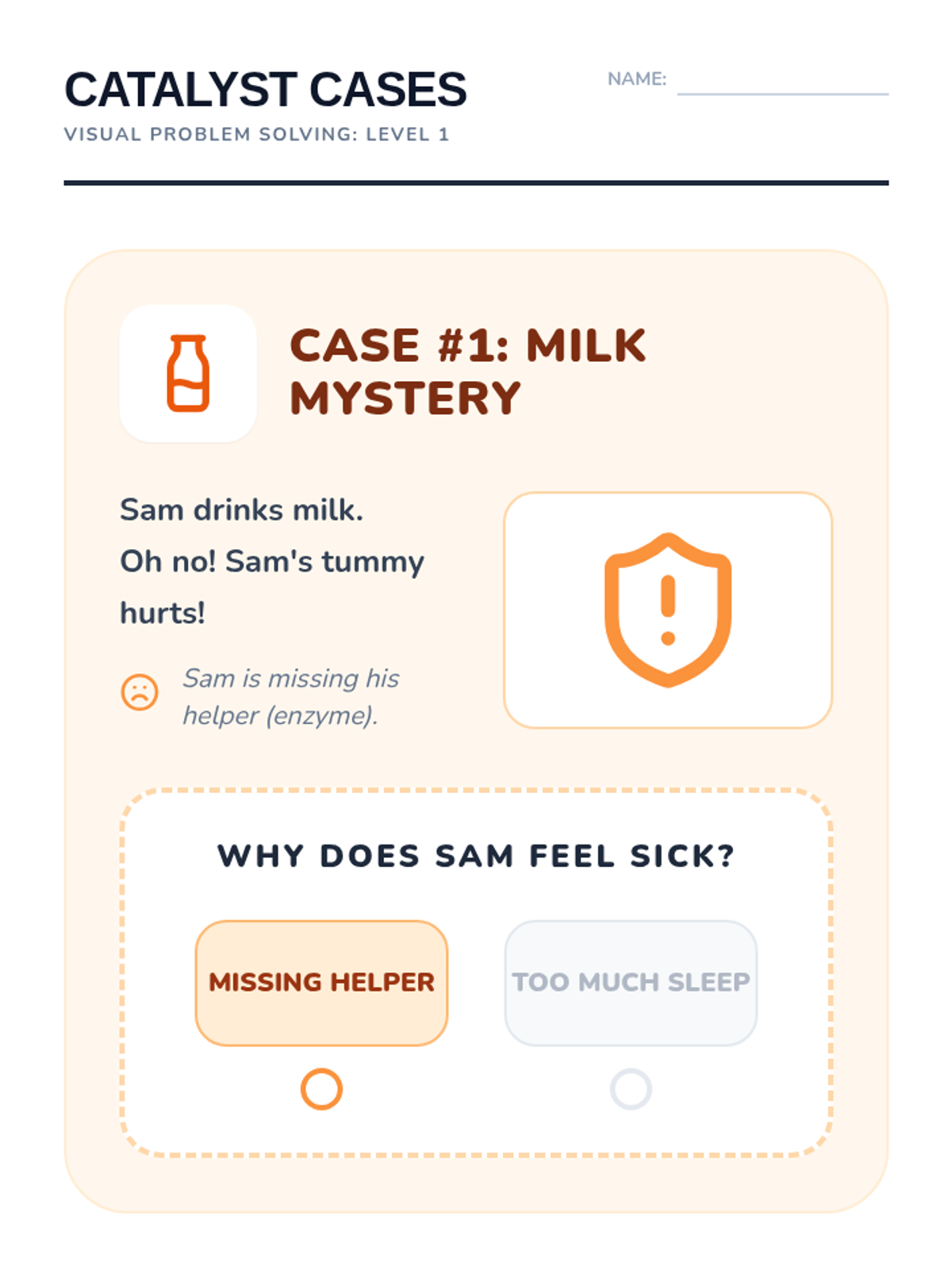
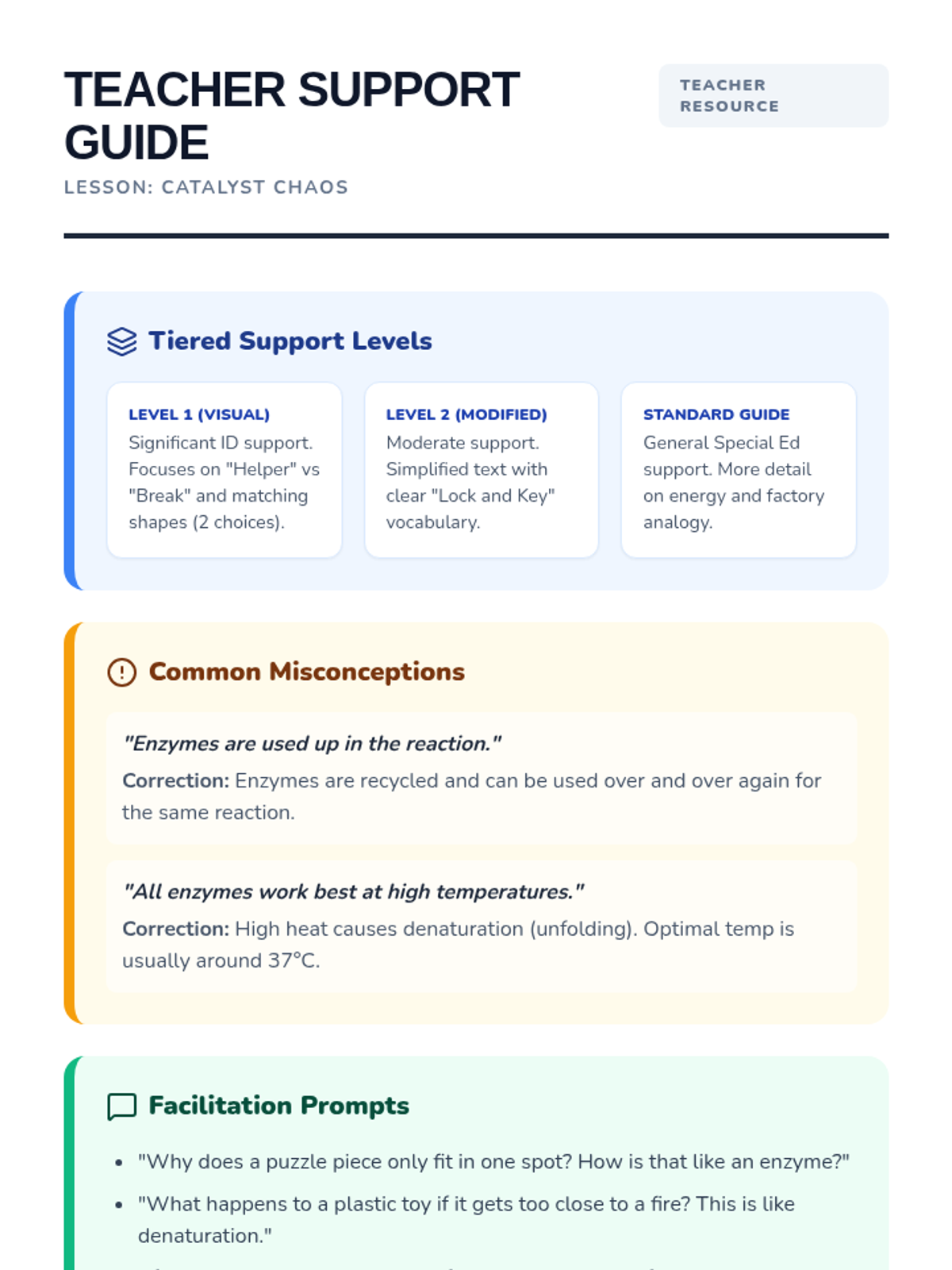
A comprehensive exploration of how enzymes act as biological catalysts, focusing on their structure, function, and the factors that influence their effectiveness. Students will use the real-world example of lactose intolerance to understand enzyme deficiency.
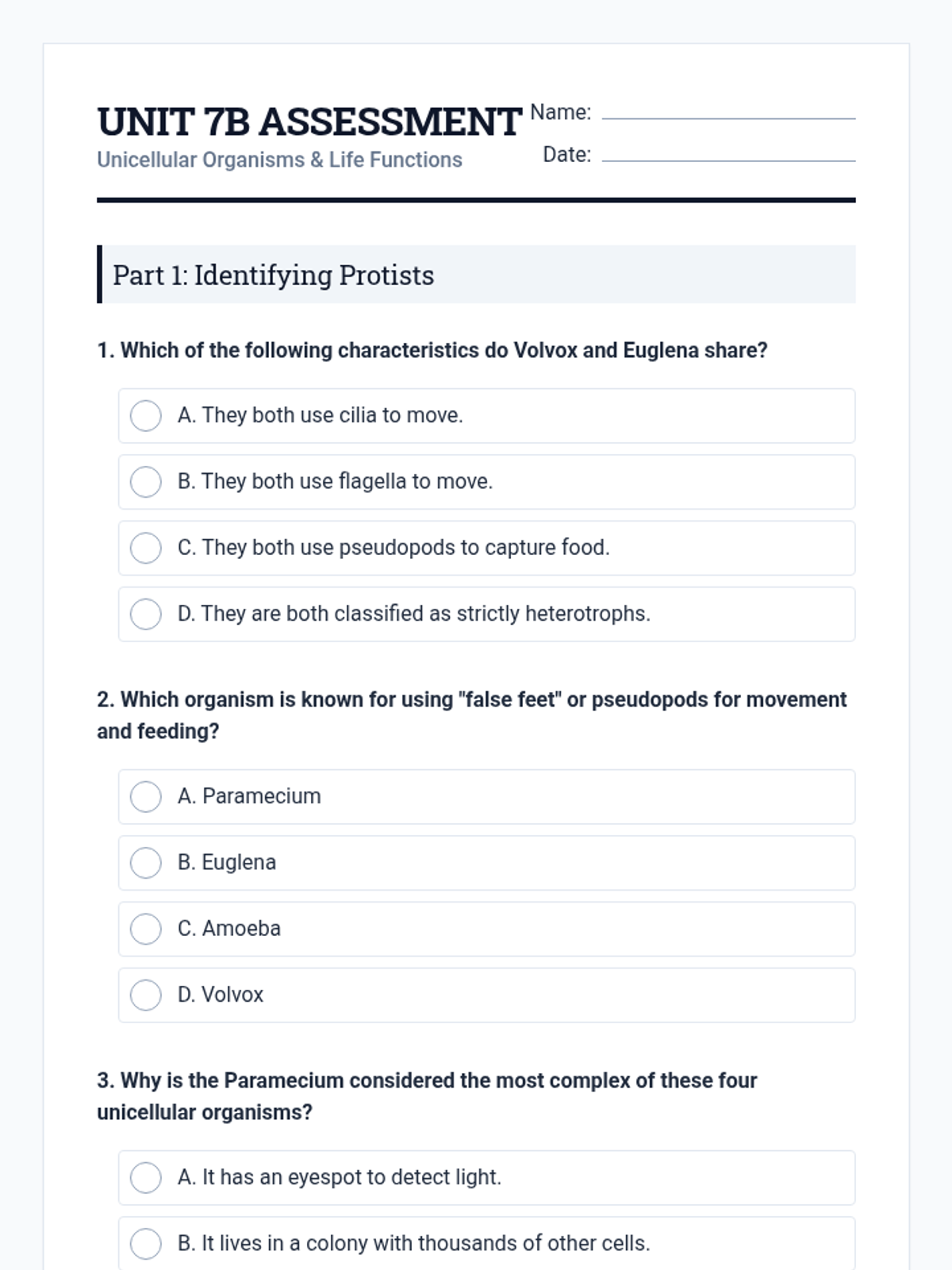
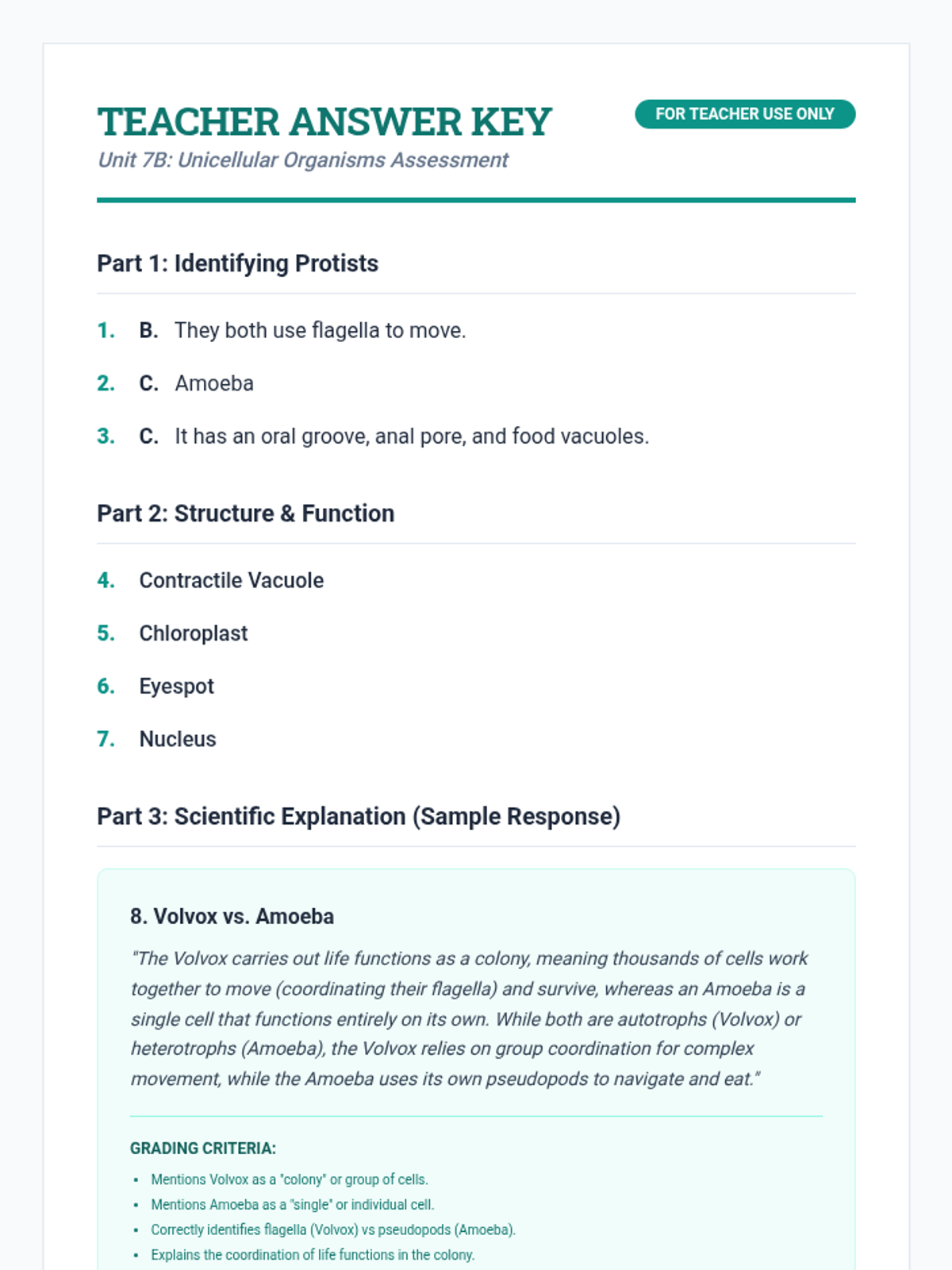
Review key concepts and assess student understanding of unicellular organism structures and functions.
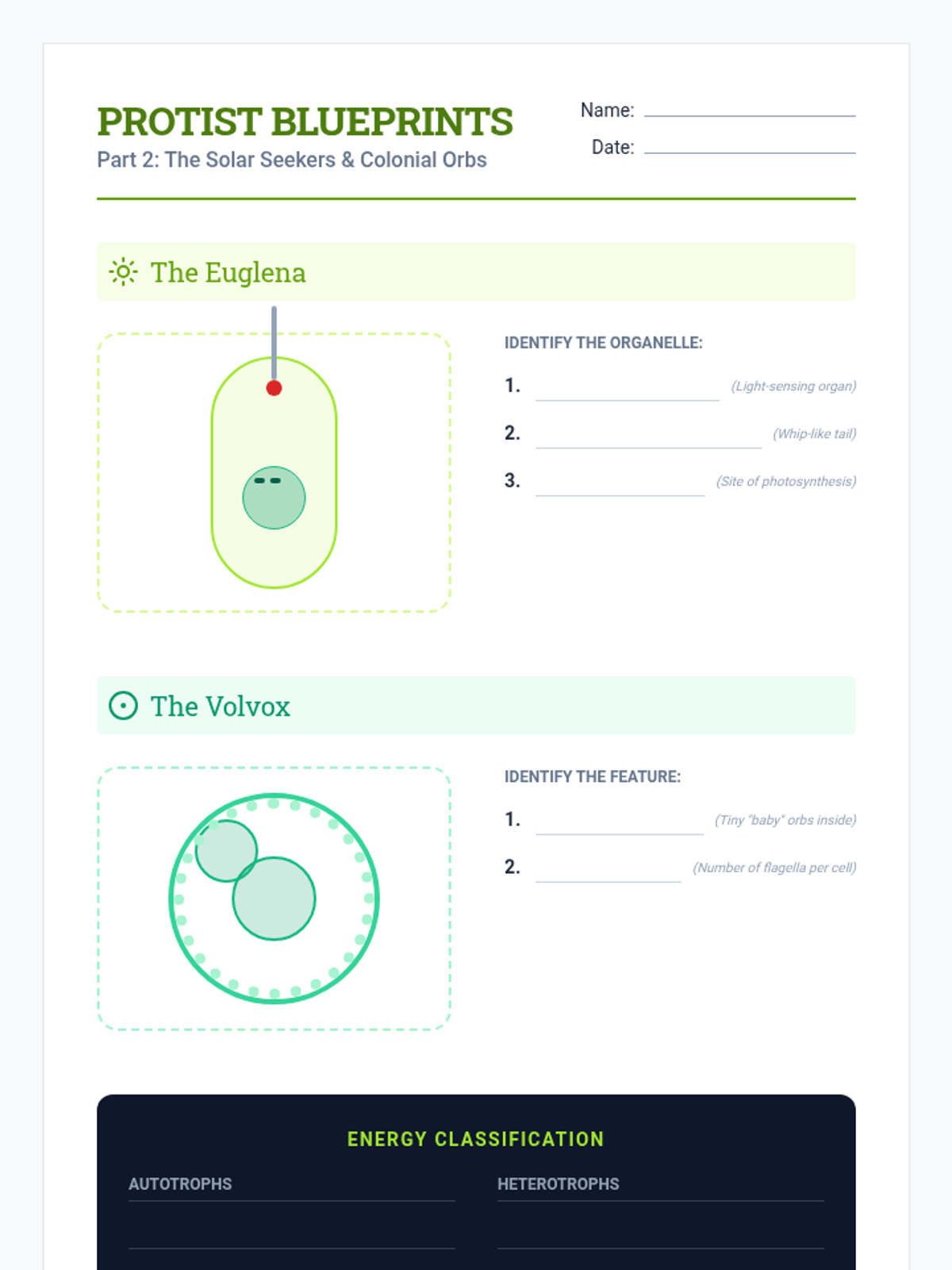
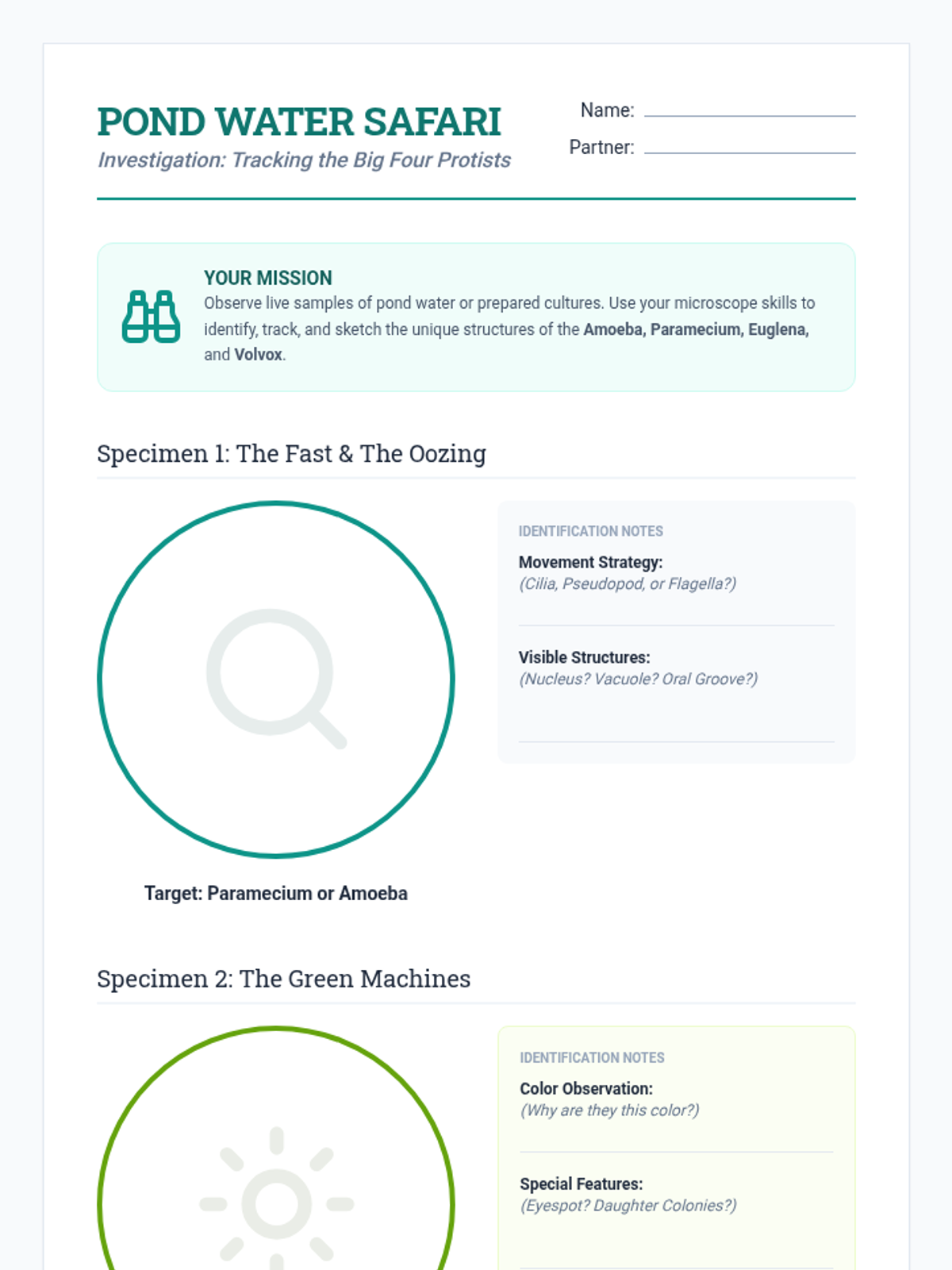
Compare the photosynthetic Euglena and the colonial Volvox, examining their light-sensing eyespots and movement.
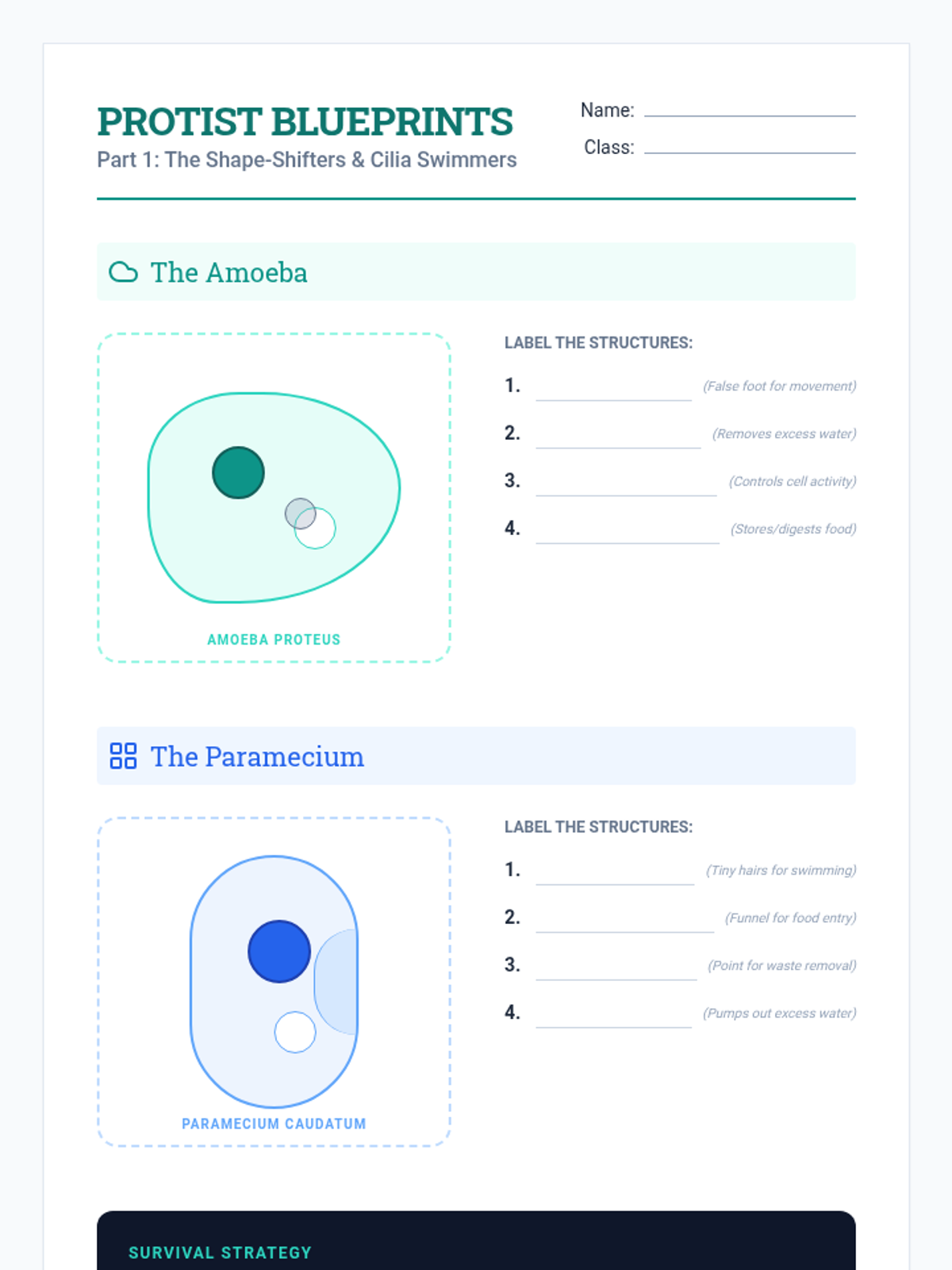
Investigate the structures and survival strategies of the Amoeba and Paramecium, focusing on movement and food acquisition.
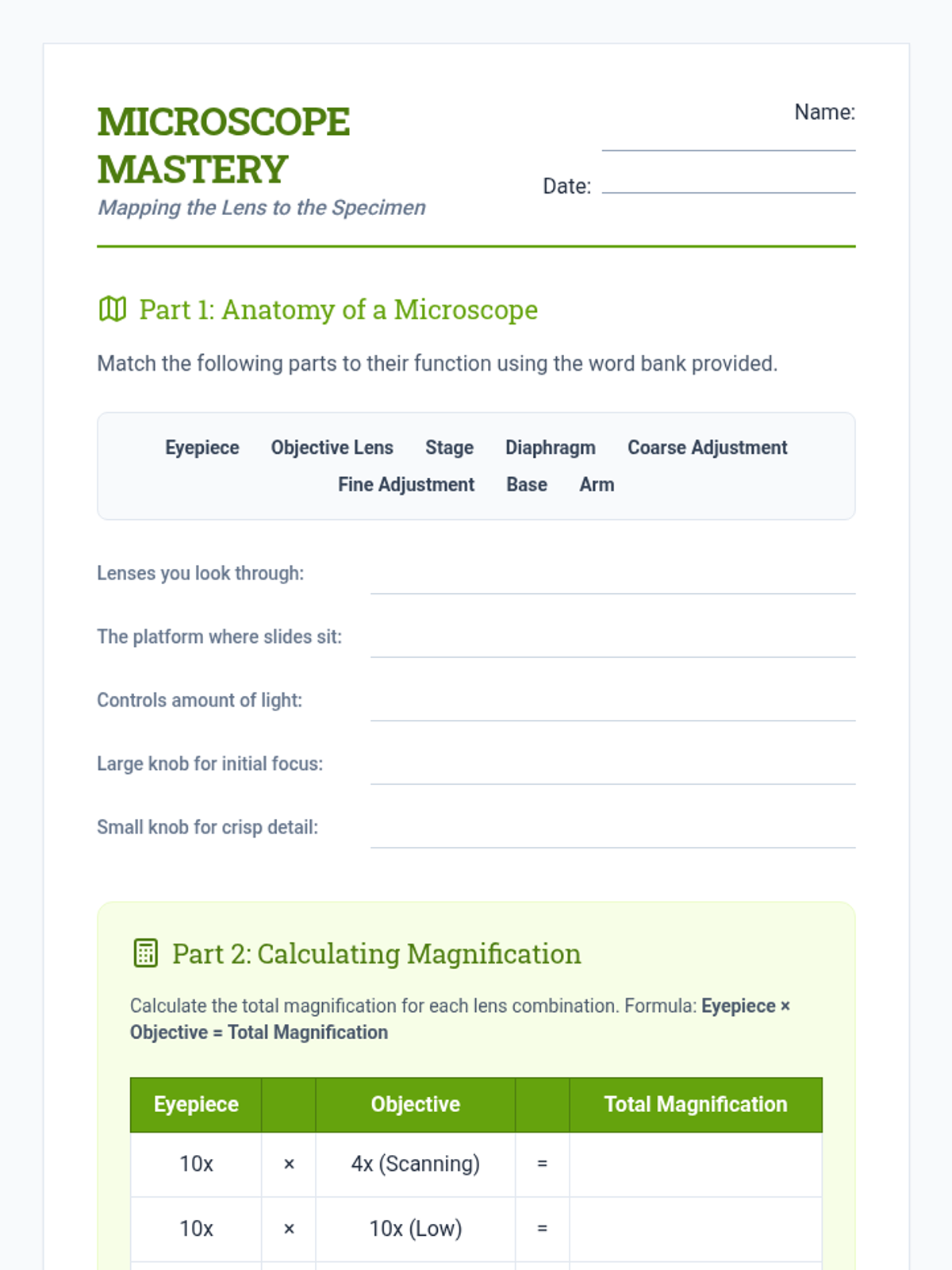
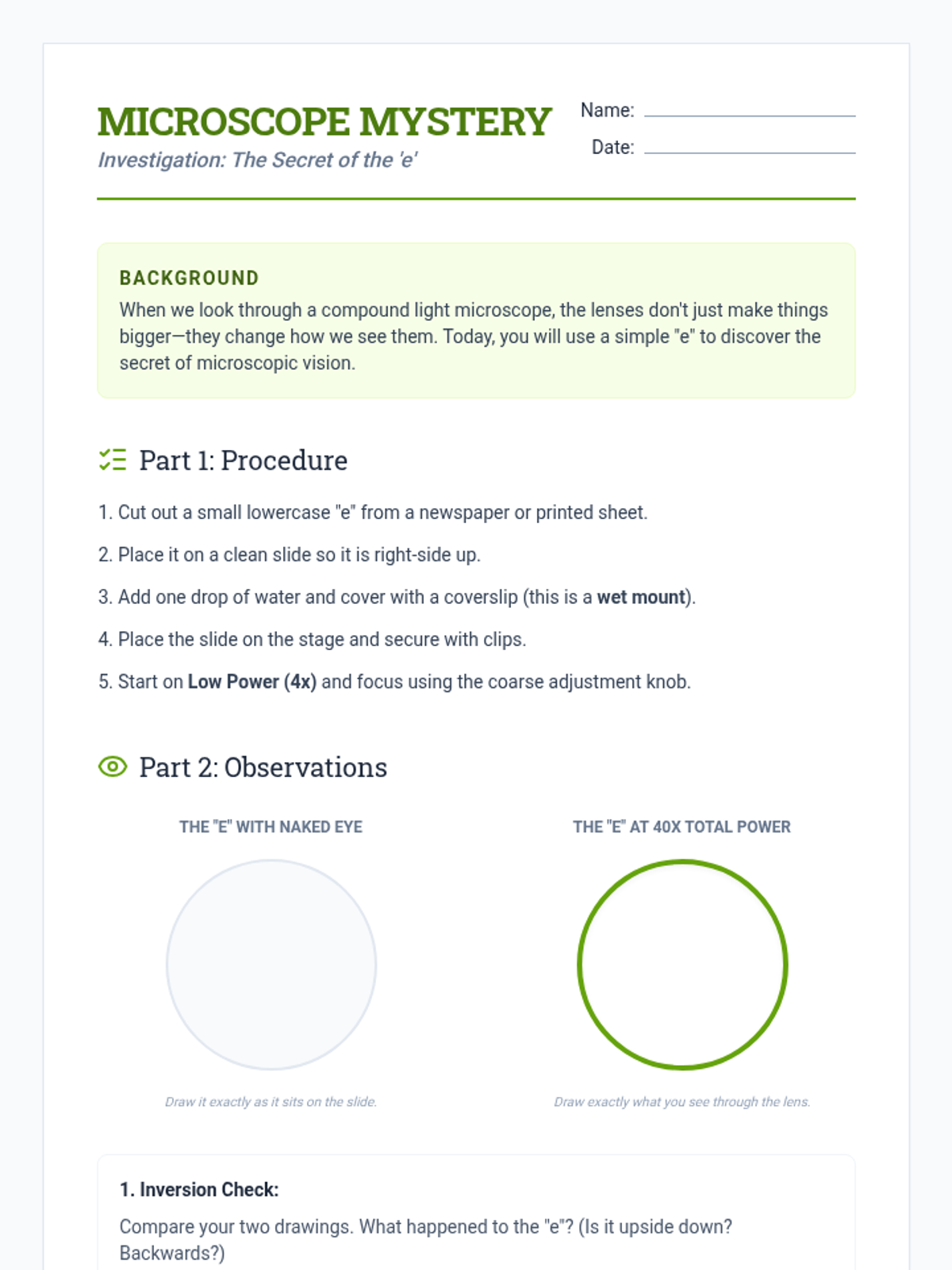
Learn the parts, safety protocols, and magnification calculations for the compound light microscope.
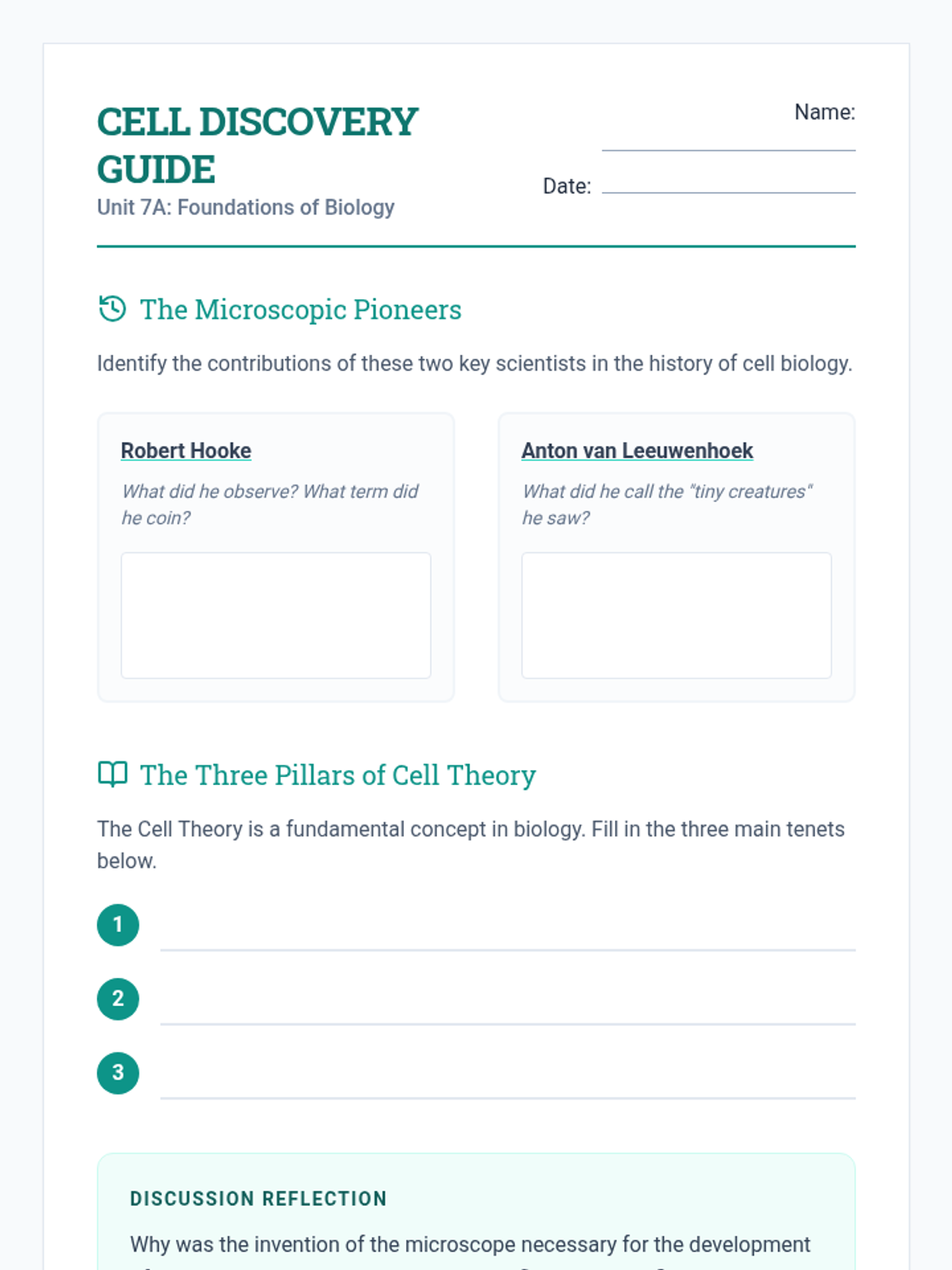
Explore the history of cell discovery and the three core tenets of Cell Theory that form the basis of modern biology.
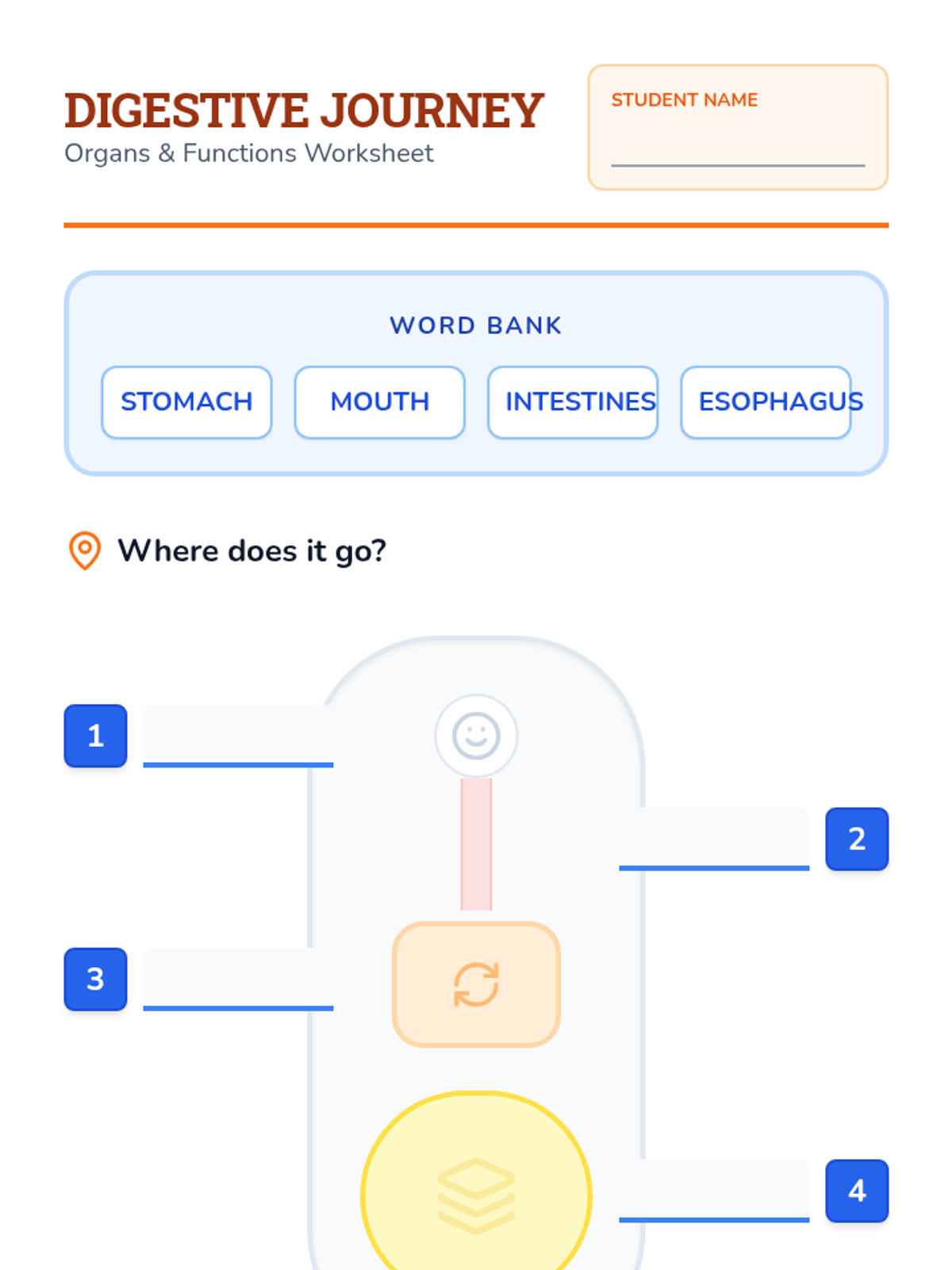
A hands-on lab lesson focusing on the organs and functions of the digestive system, specifically designed for accessibility and low prep. Students use simple materials to model the digestive process and complete interactive sequencing activities.
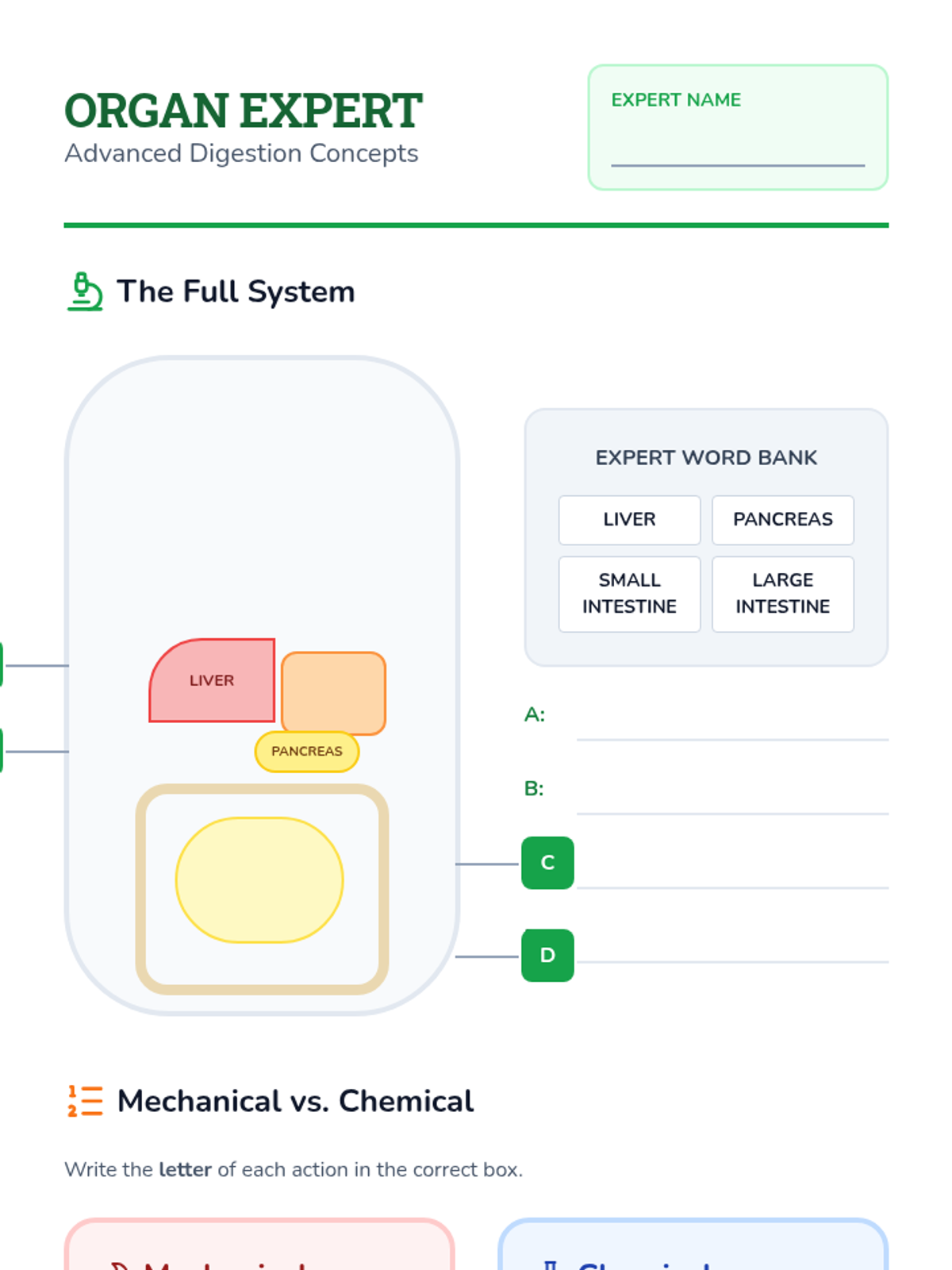
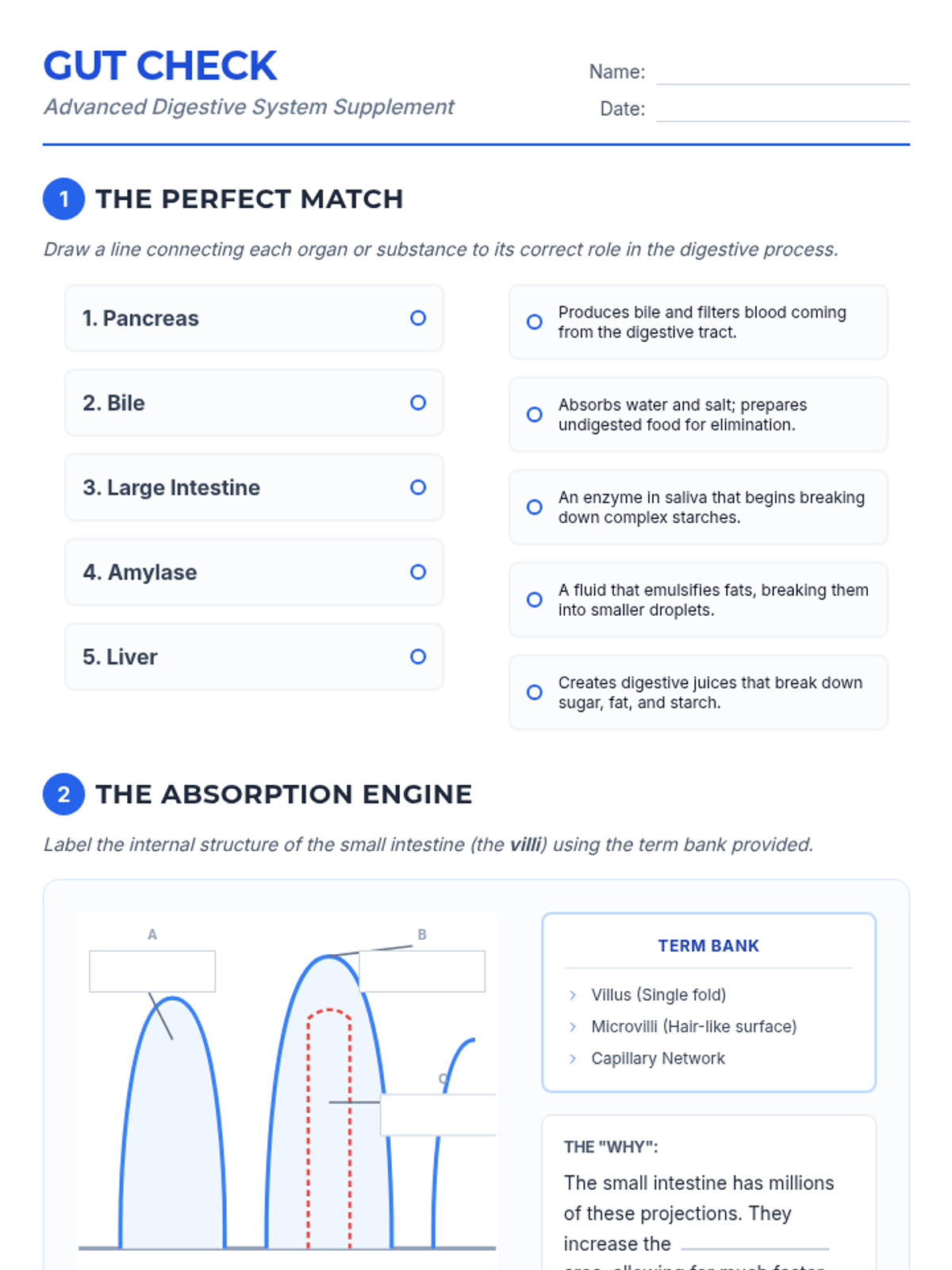
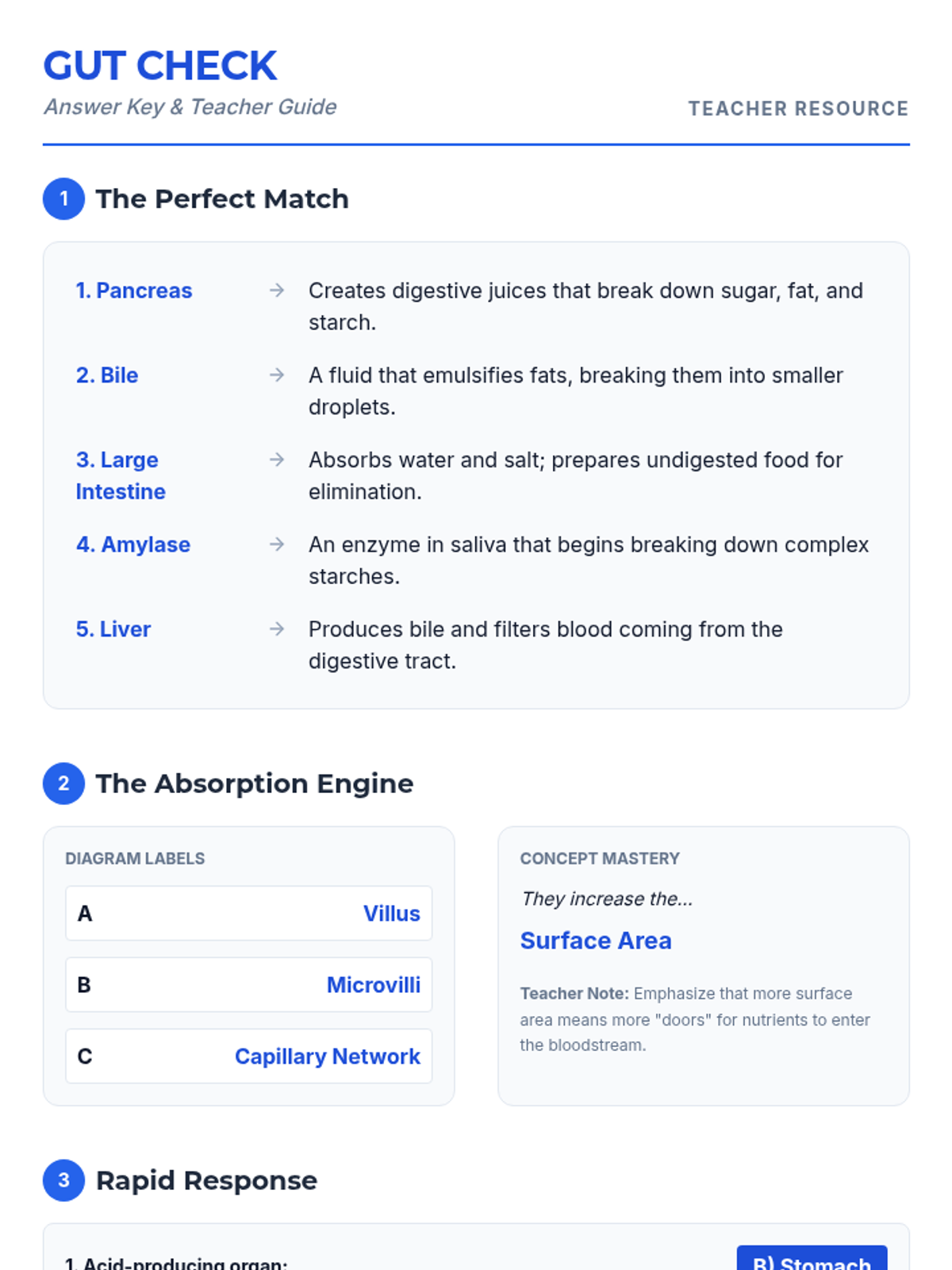
A set of supplementary materials for students who finish their digestive system studies early, focusing on the specific functions of organs and microscopic structures like villi.
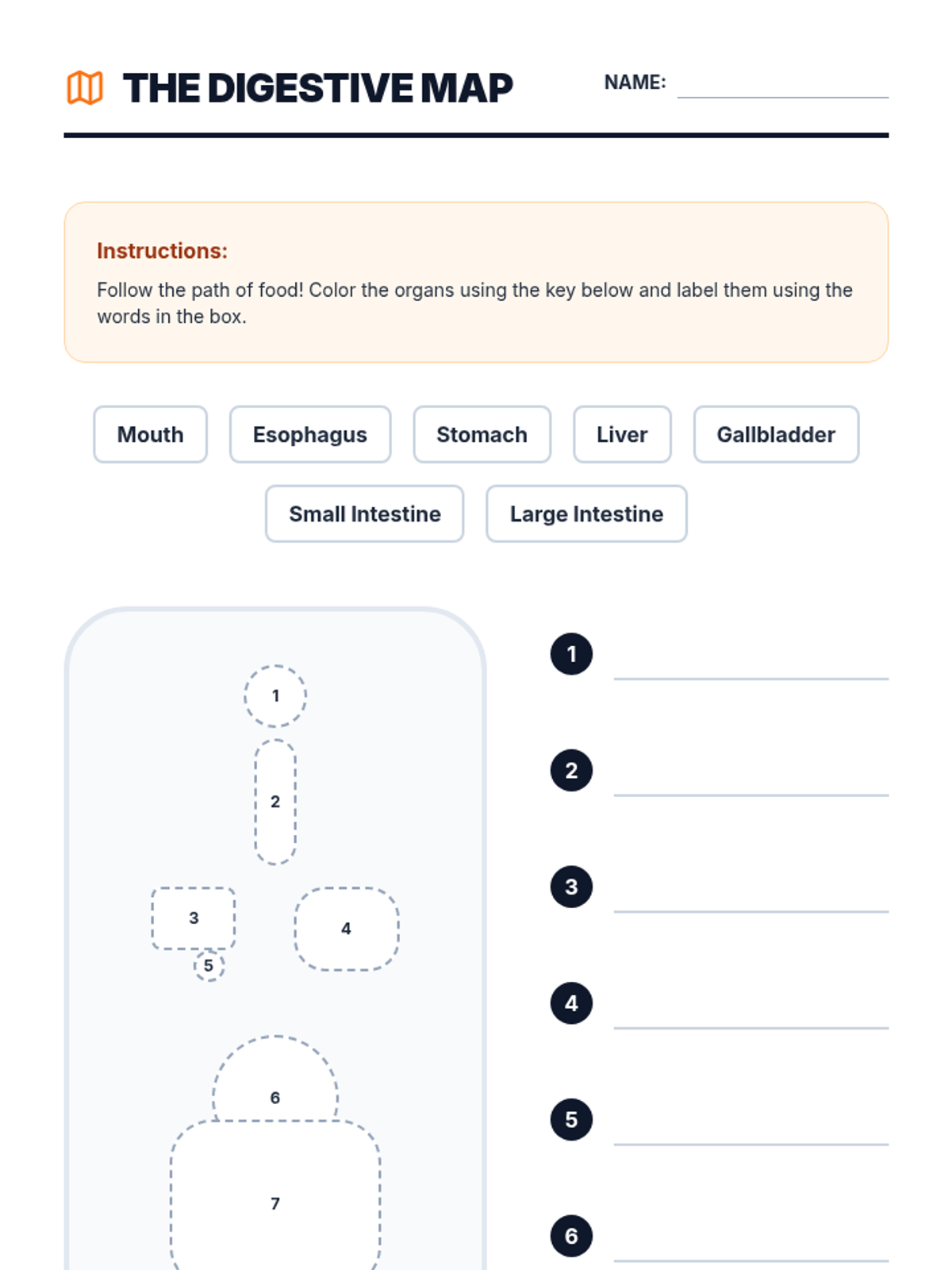
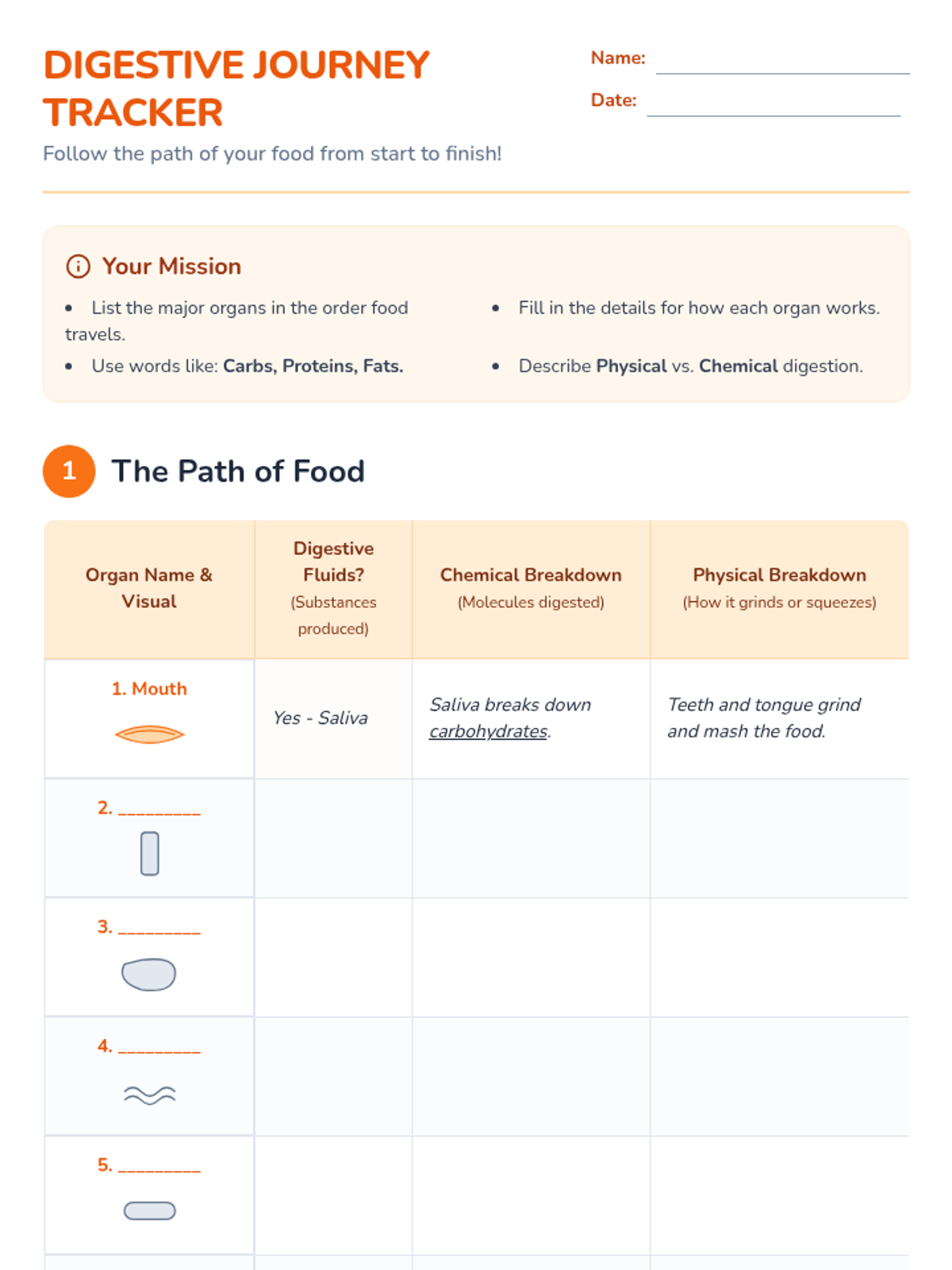
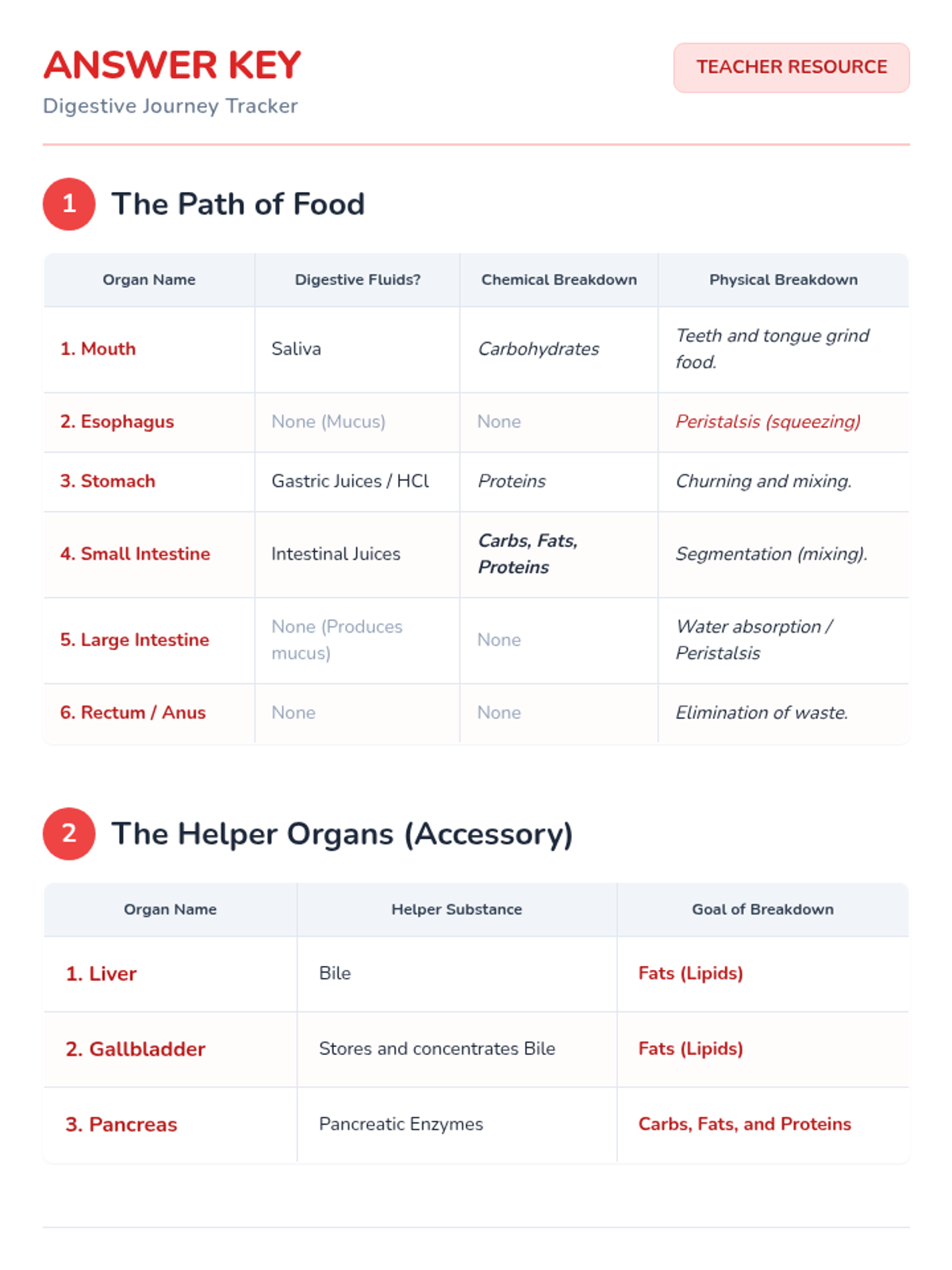
A lesson focused on understanding the human digestive system, tracking the path of food and the role of helper organs.
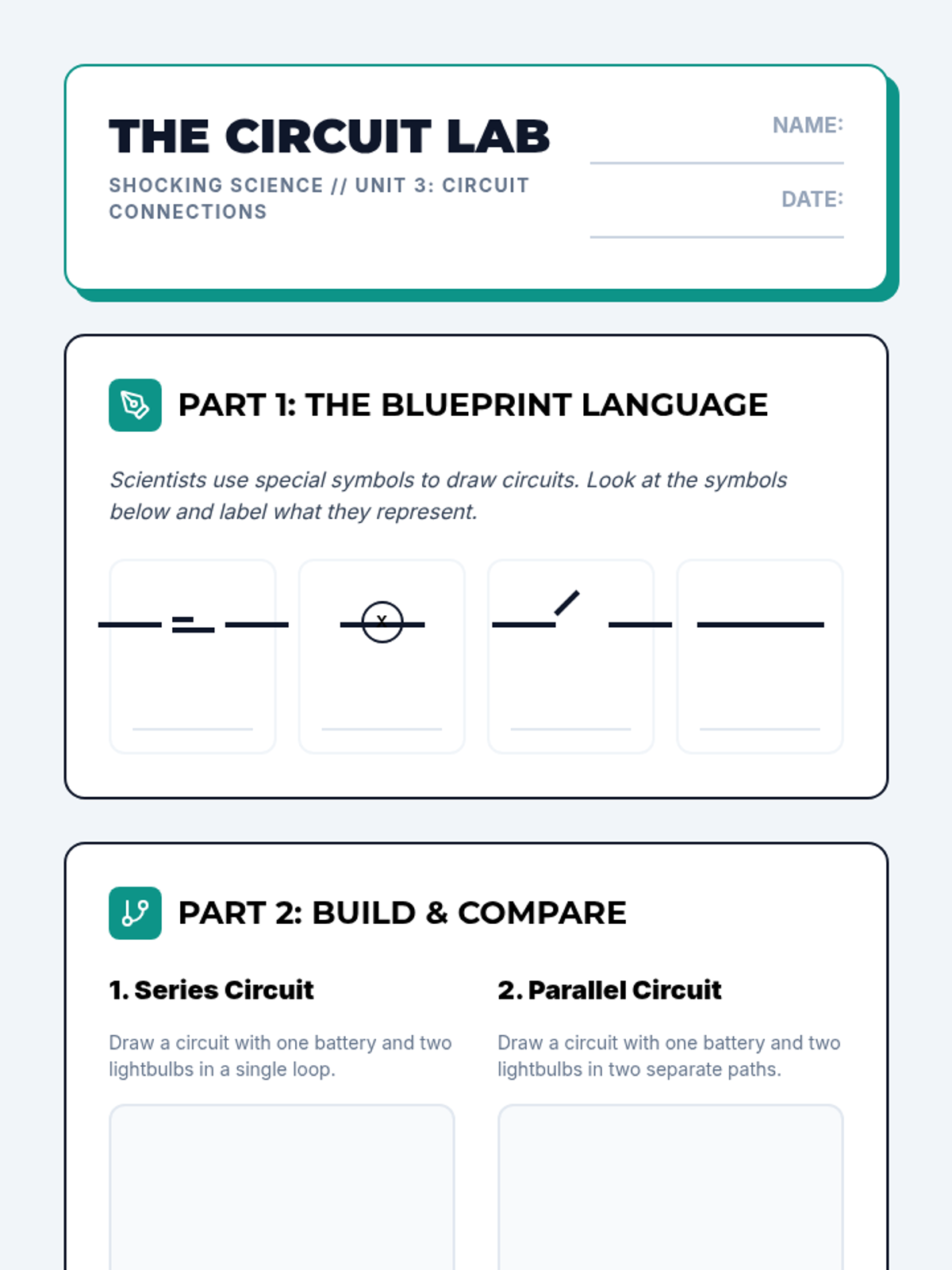
Applying knowledge of electricity and magnetism to build and understand series and parallel circuits.
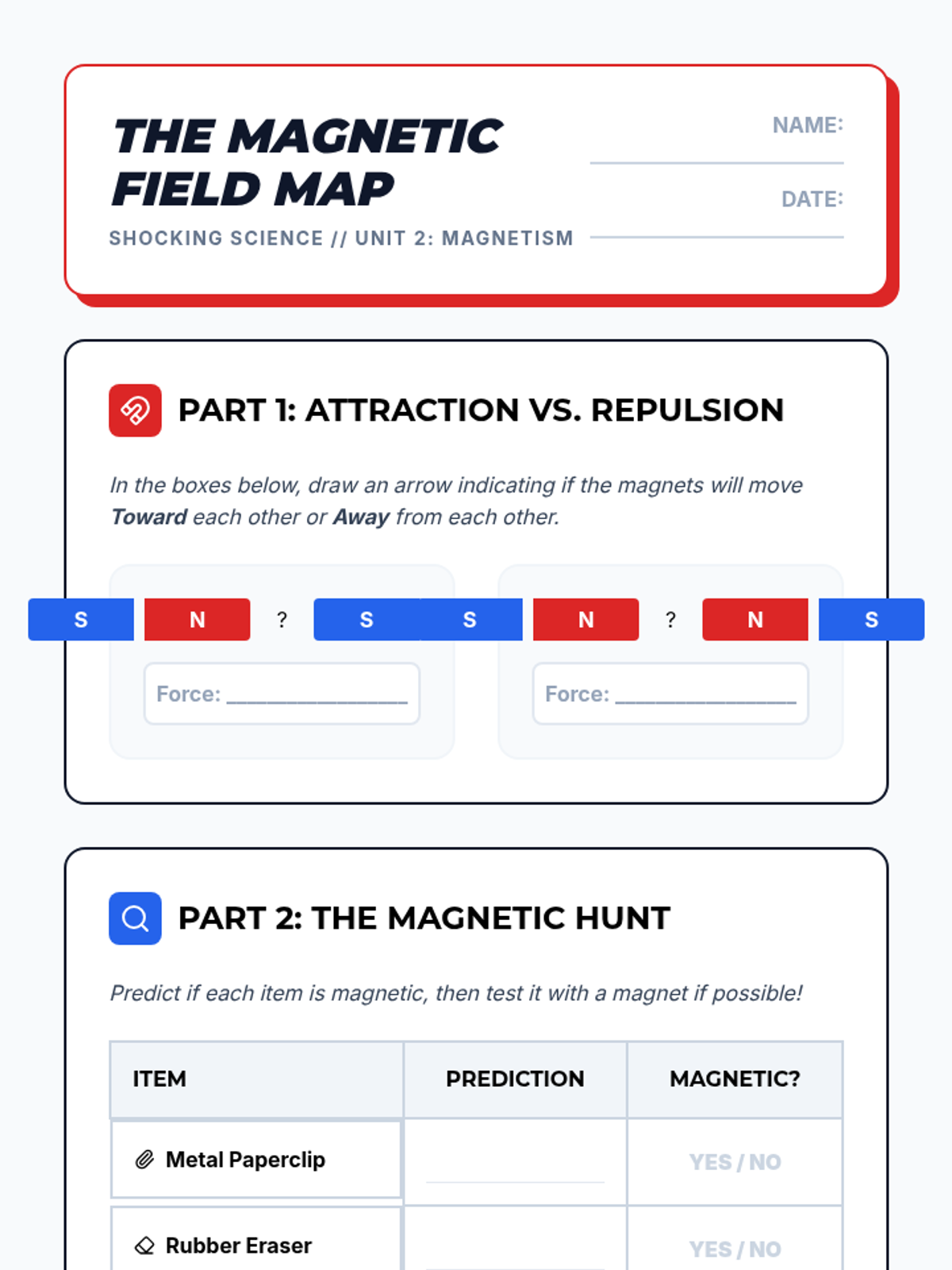
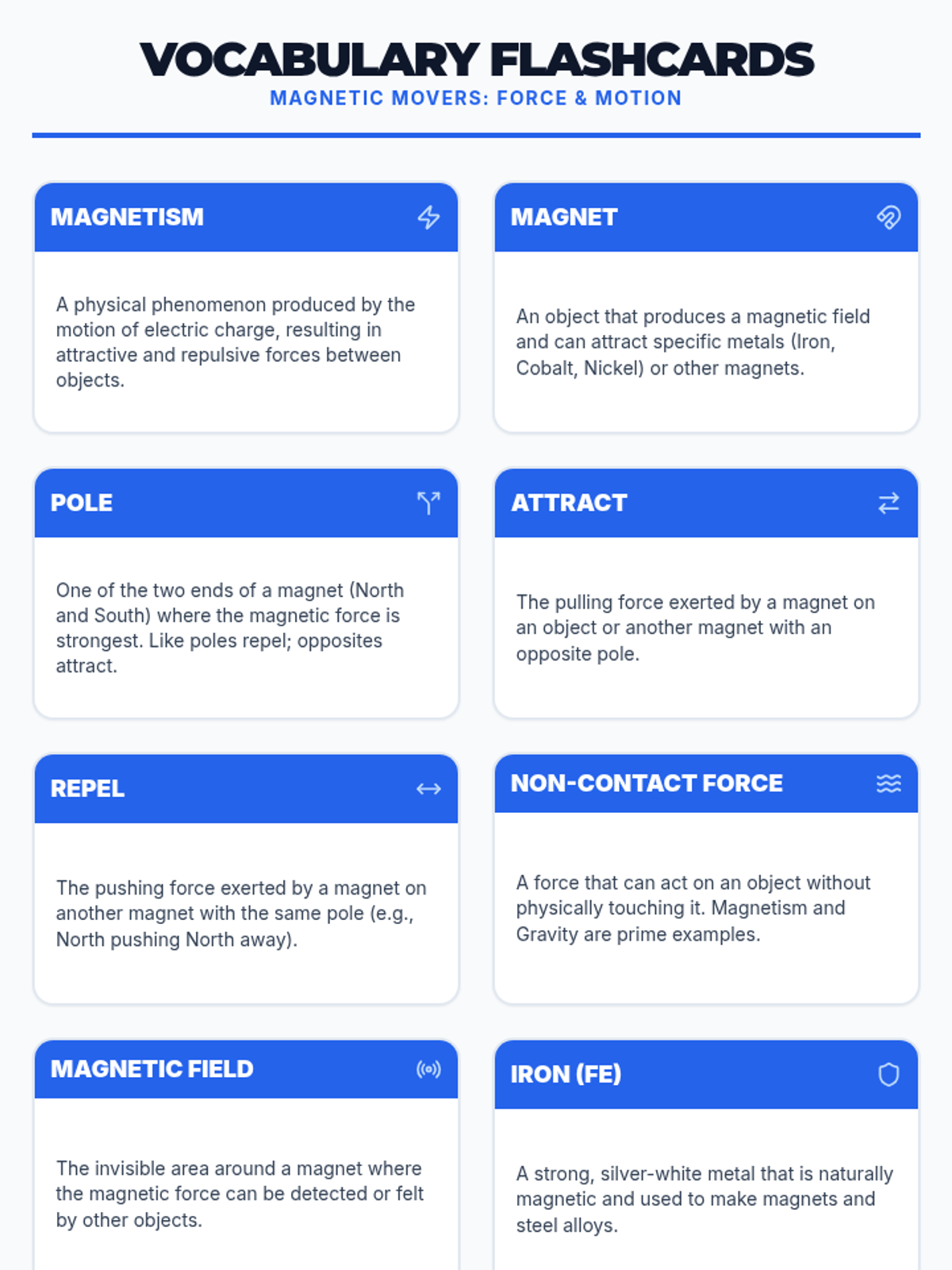
An investigation into magnetic fields, poles, and the invisible forces that attract and repel materials.
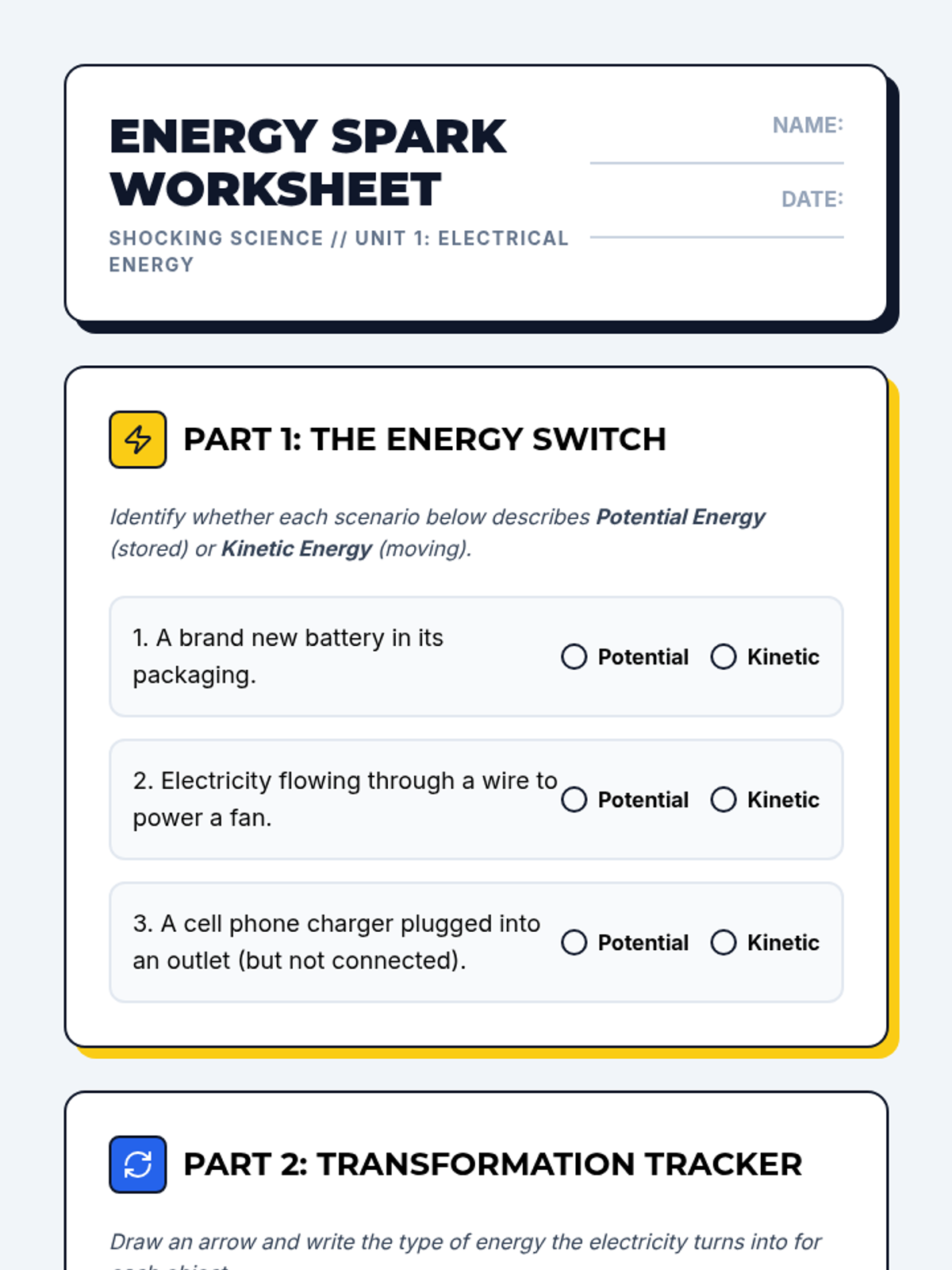
Students explore the concept of electrical energy, understanding where it comes from and how it moves from one form to another.
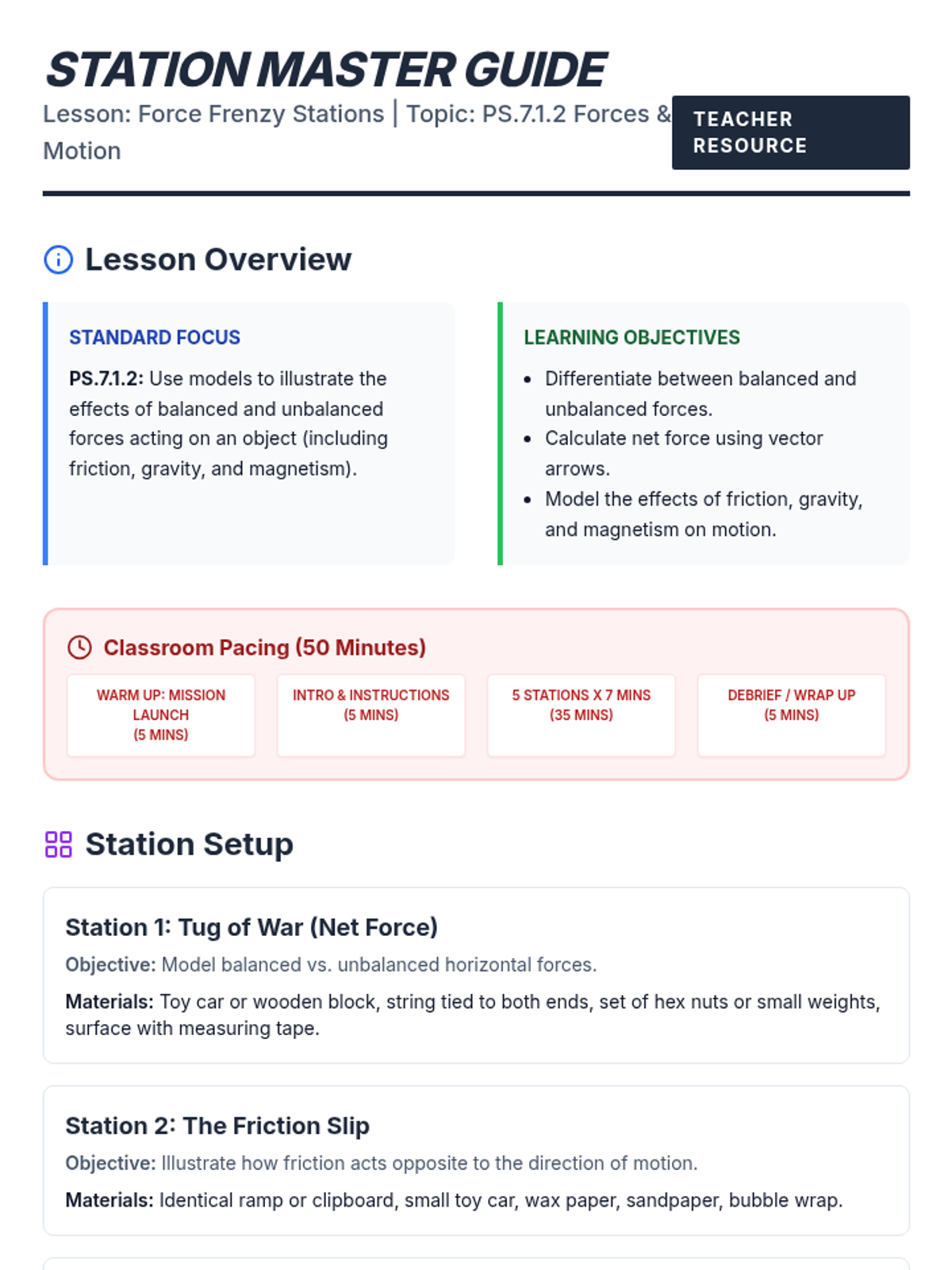
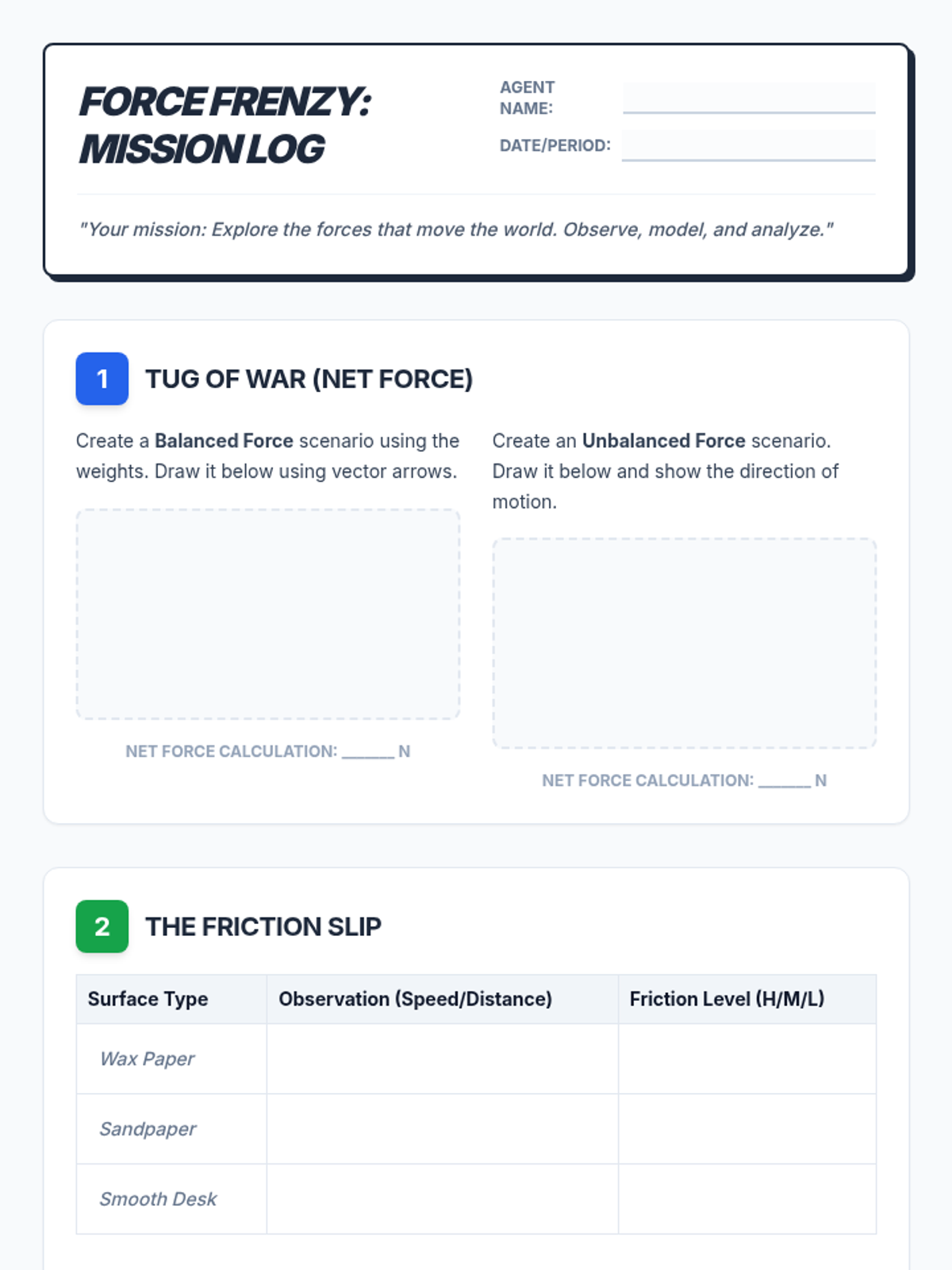
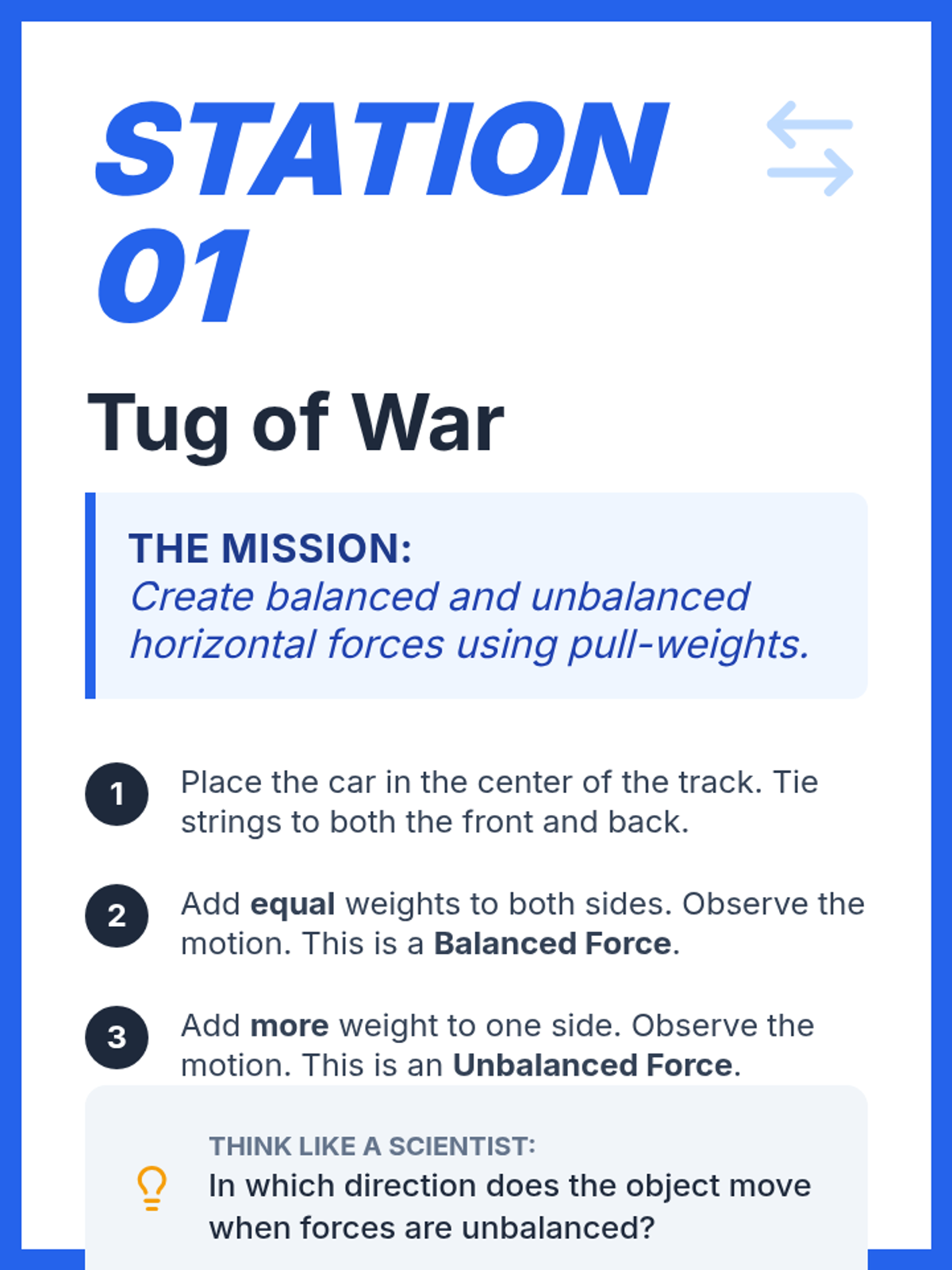
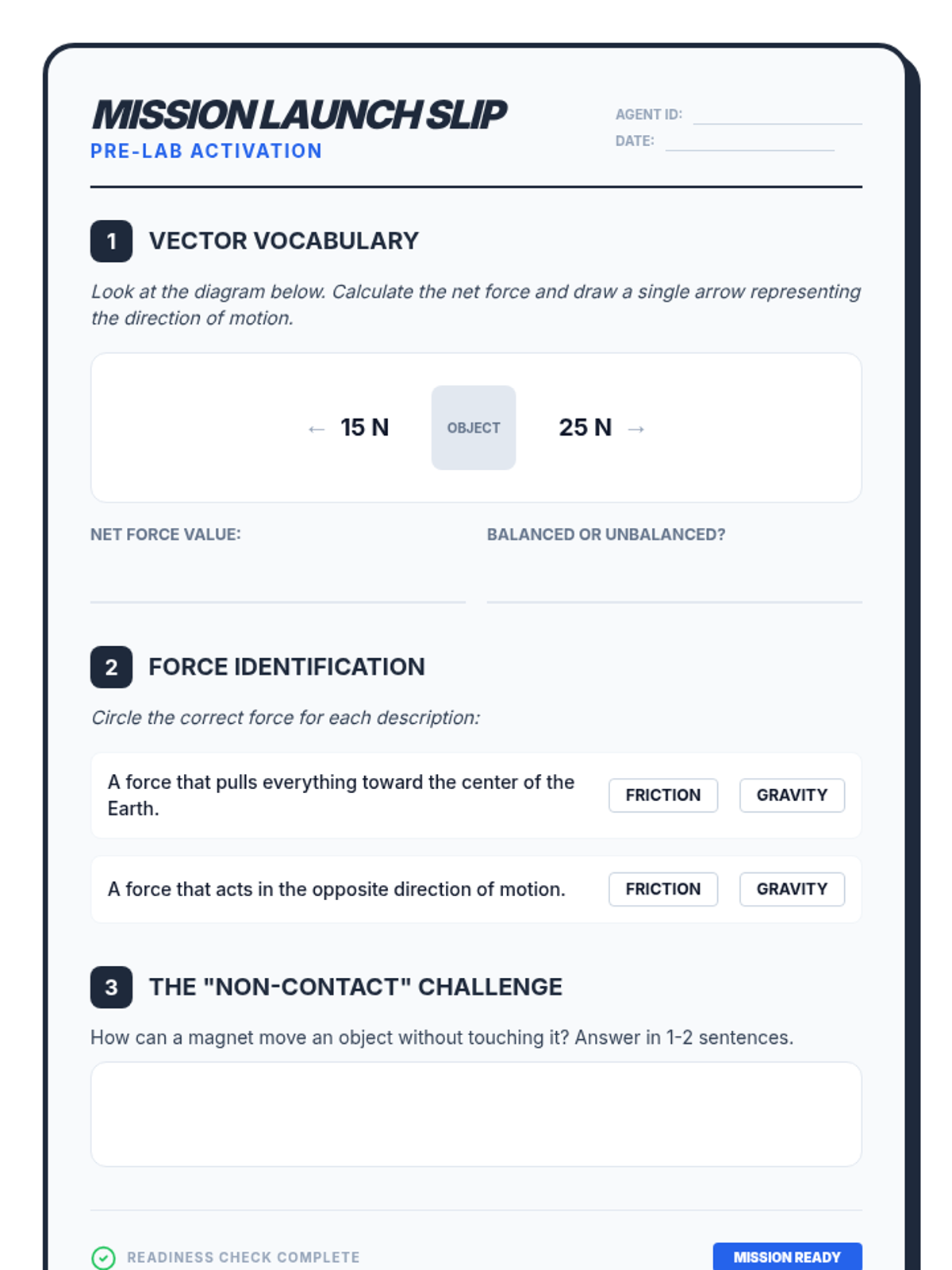
A station-based review lesson where students use physical models and diagrams to explore balanced and unbalanced forces, friction, gravity, and magnetism.
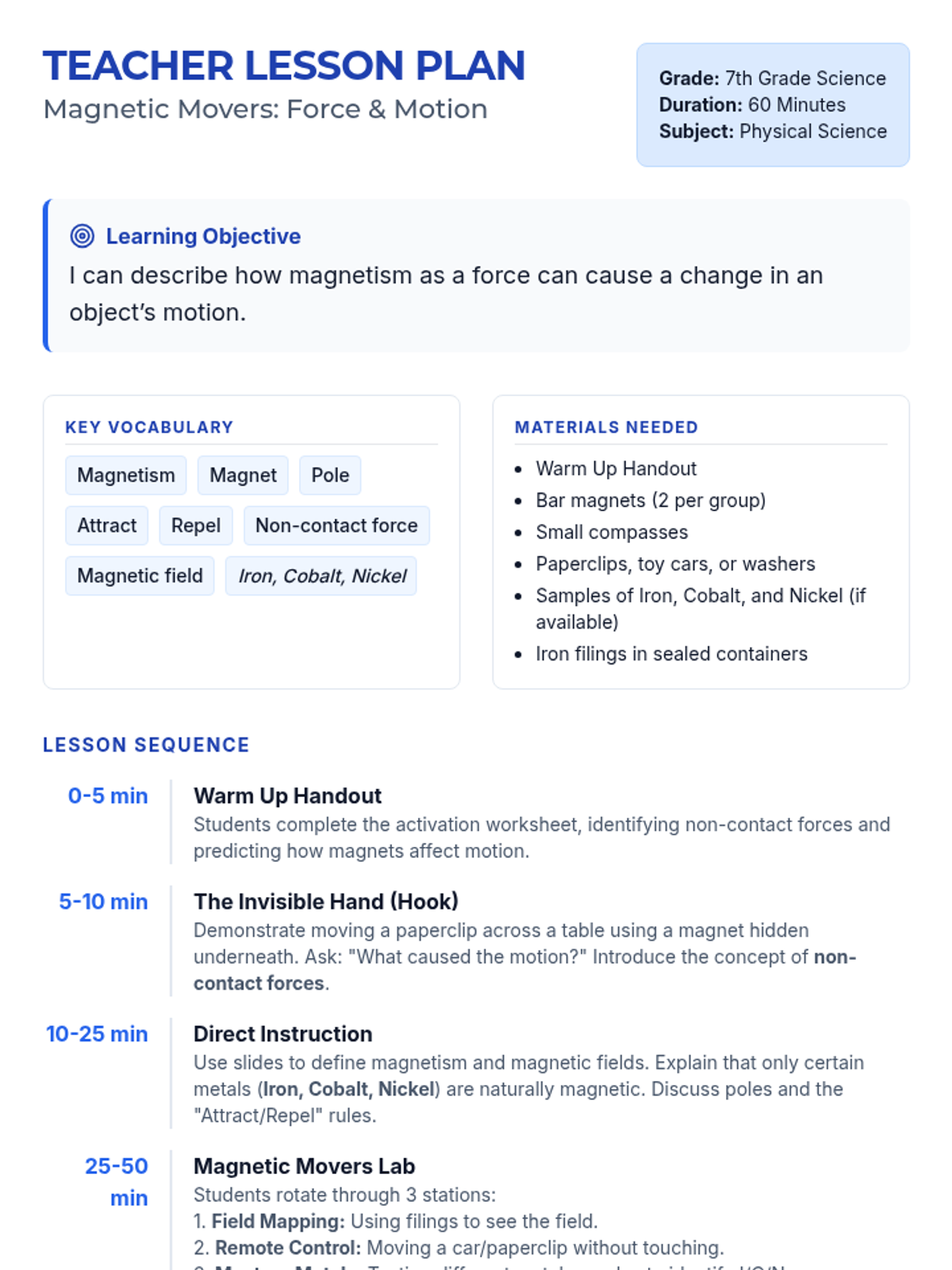
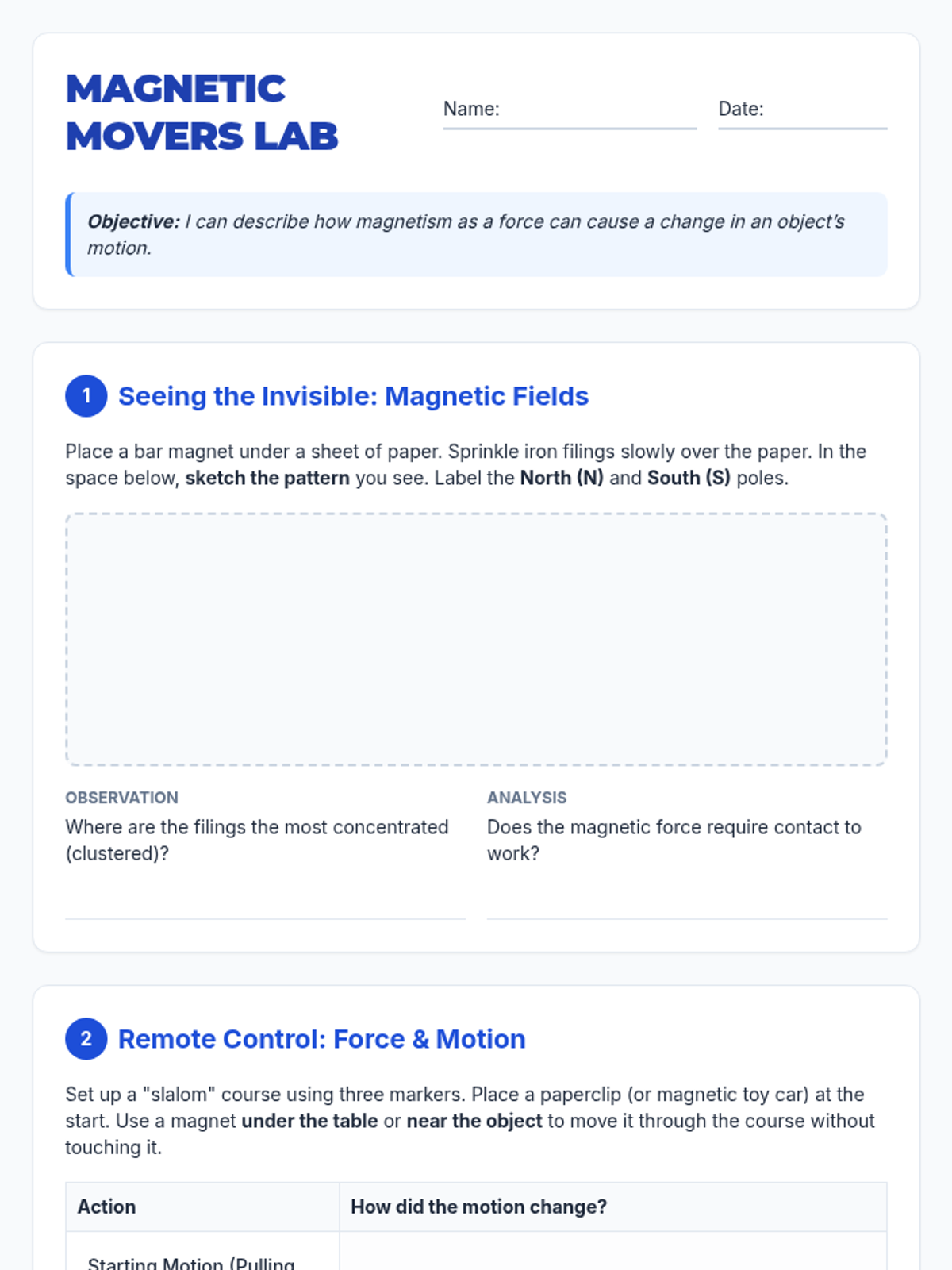
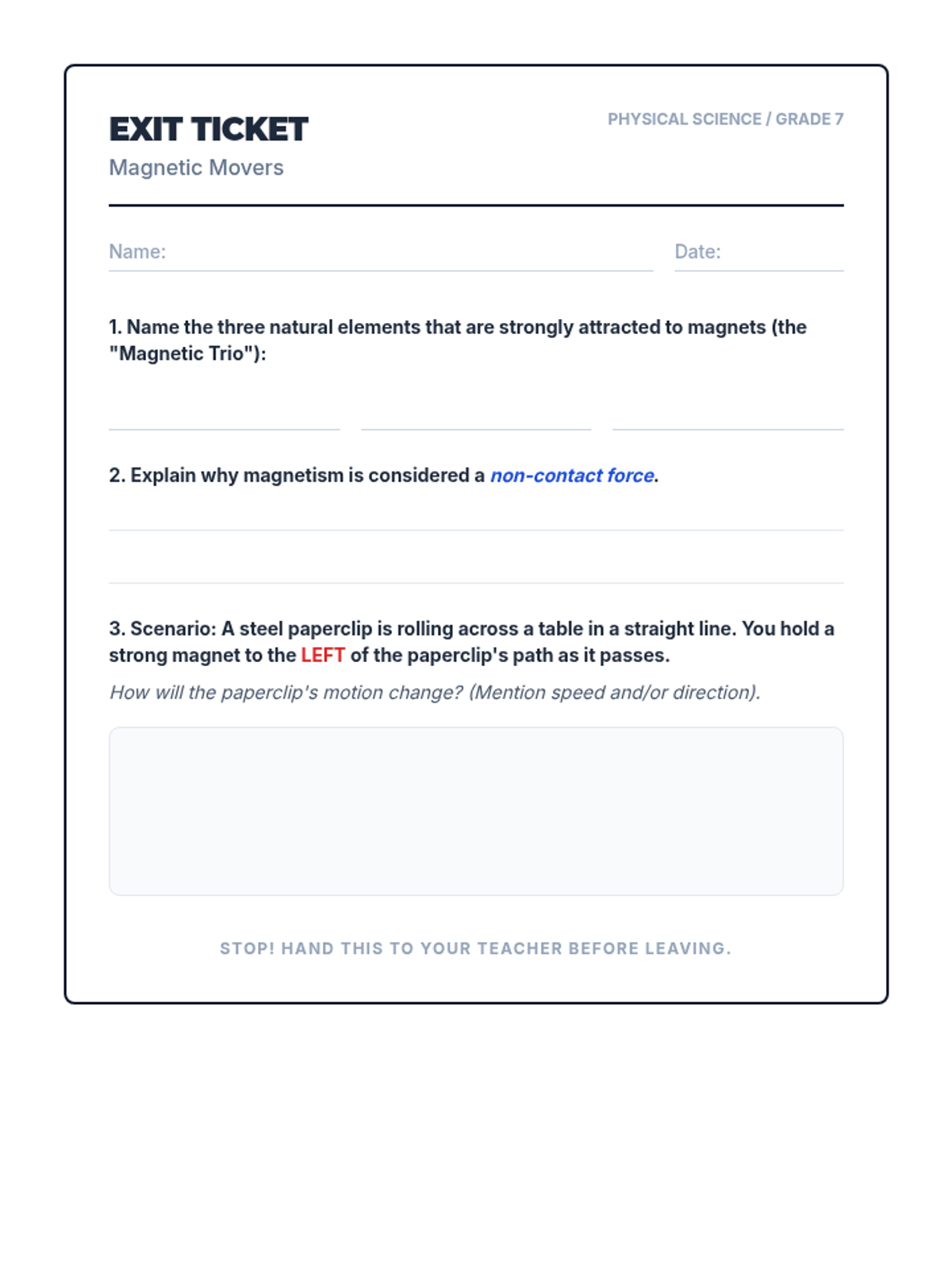
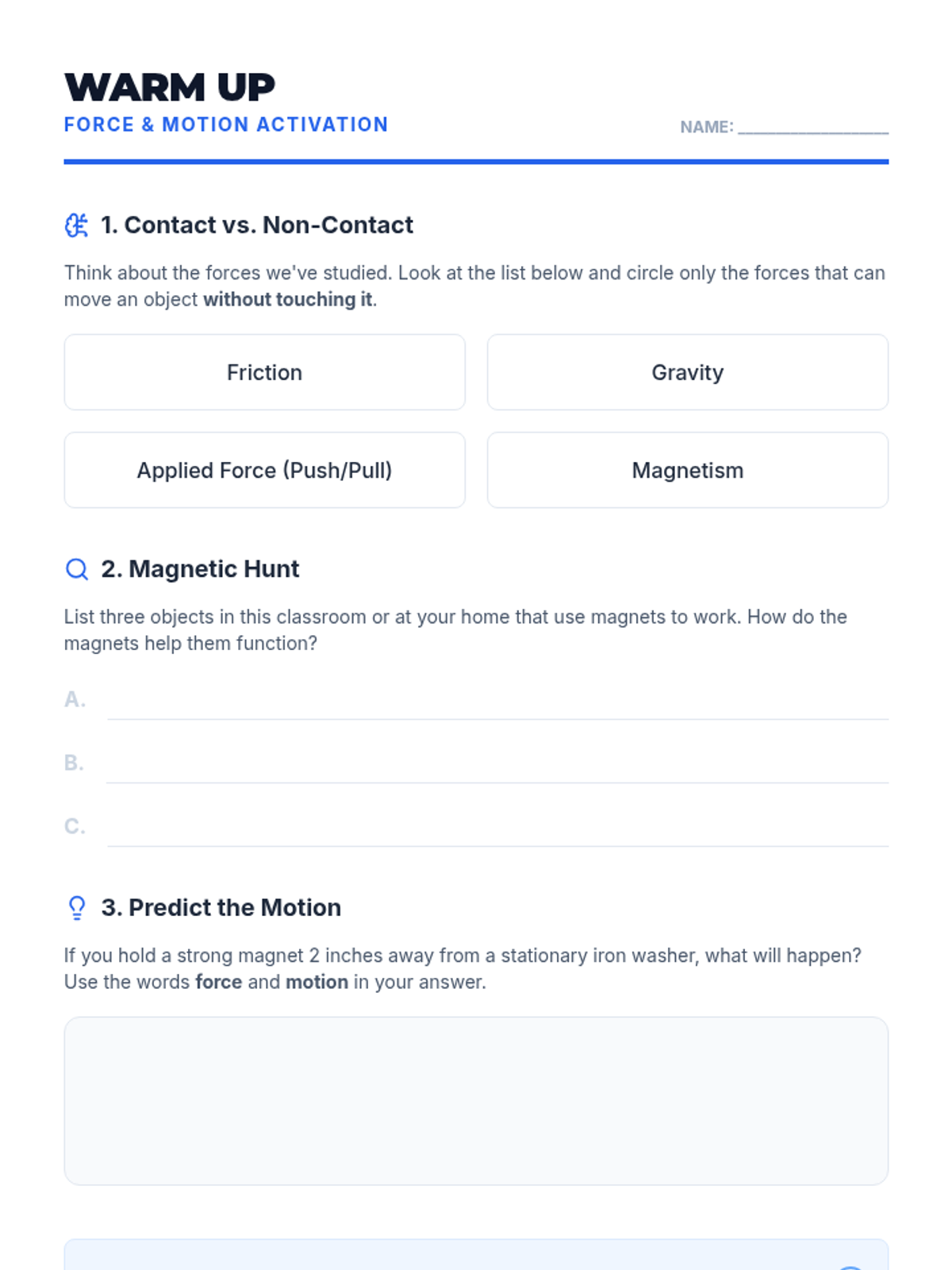
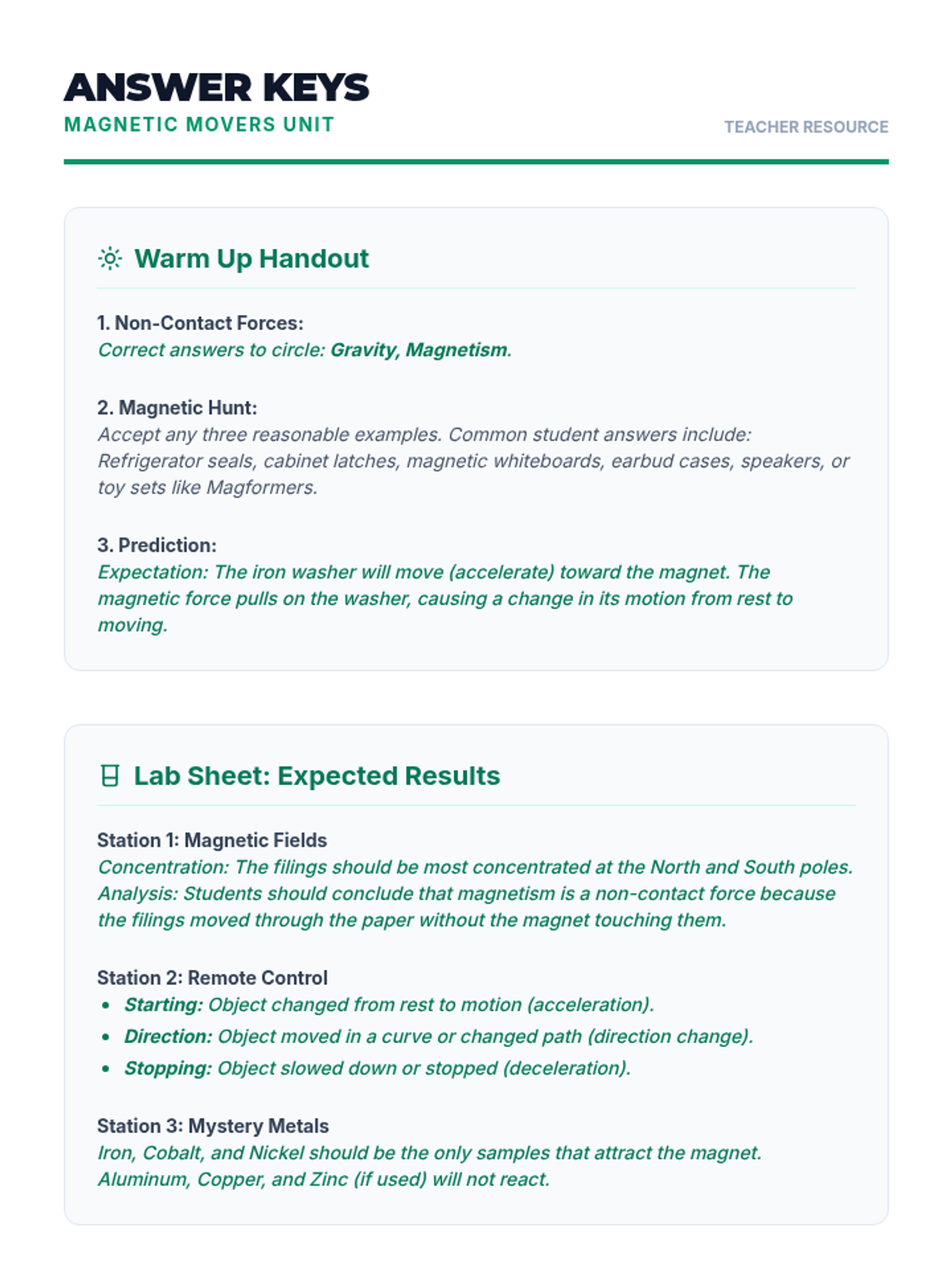
A comprehensive 60-minute science lesson for 7th grade students focused on how magnetic forces affect object motion without direct contact. Students will explore magnetic fields, poles, and specific magnetic materials through hands-on investigation.
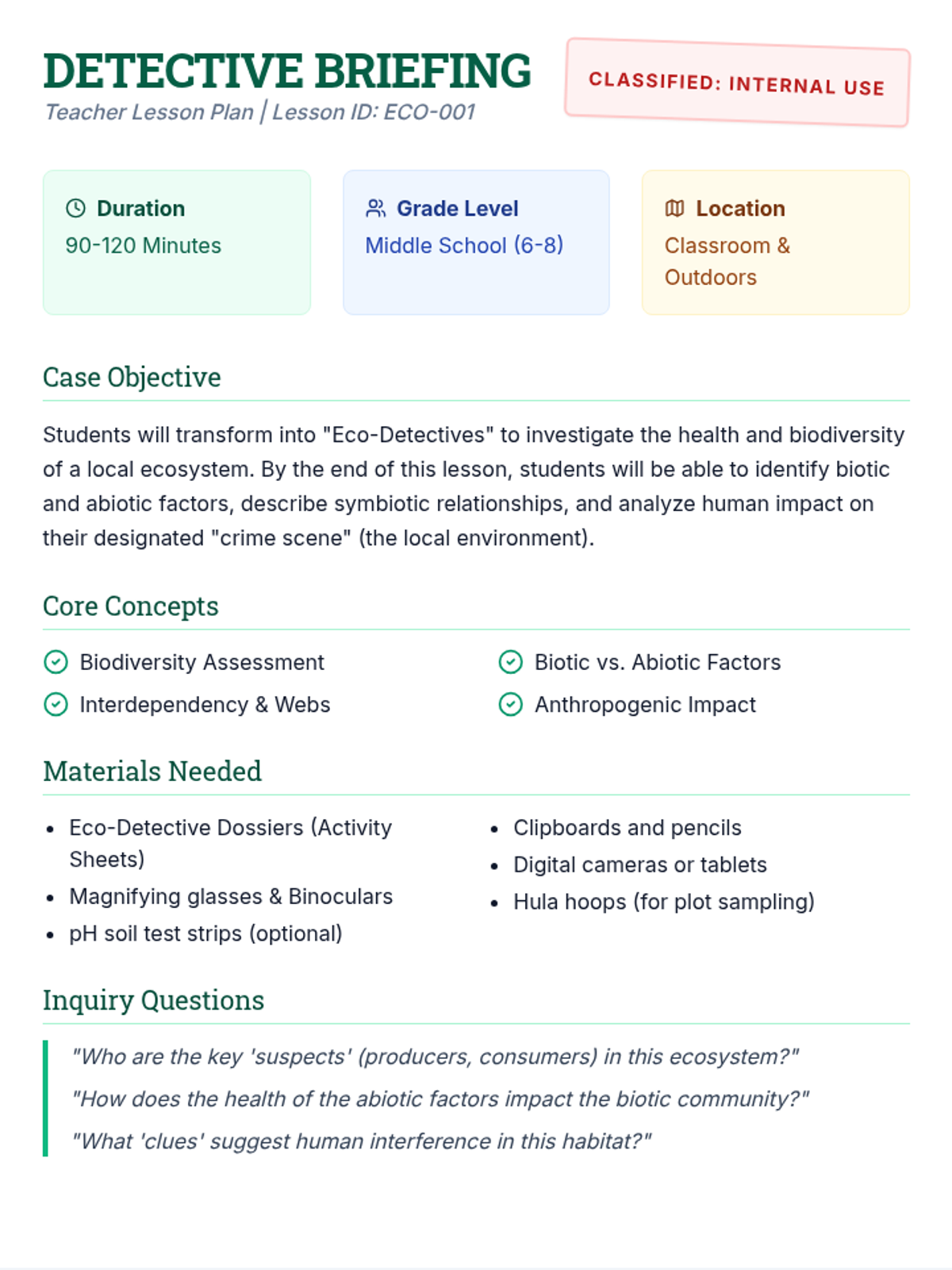
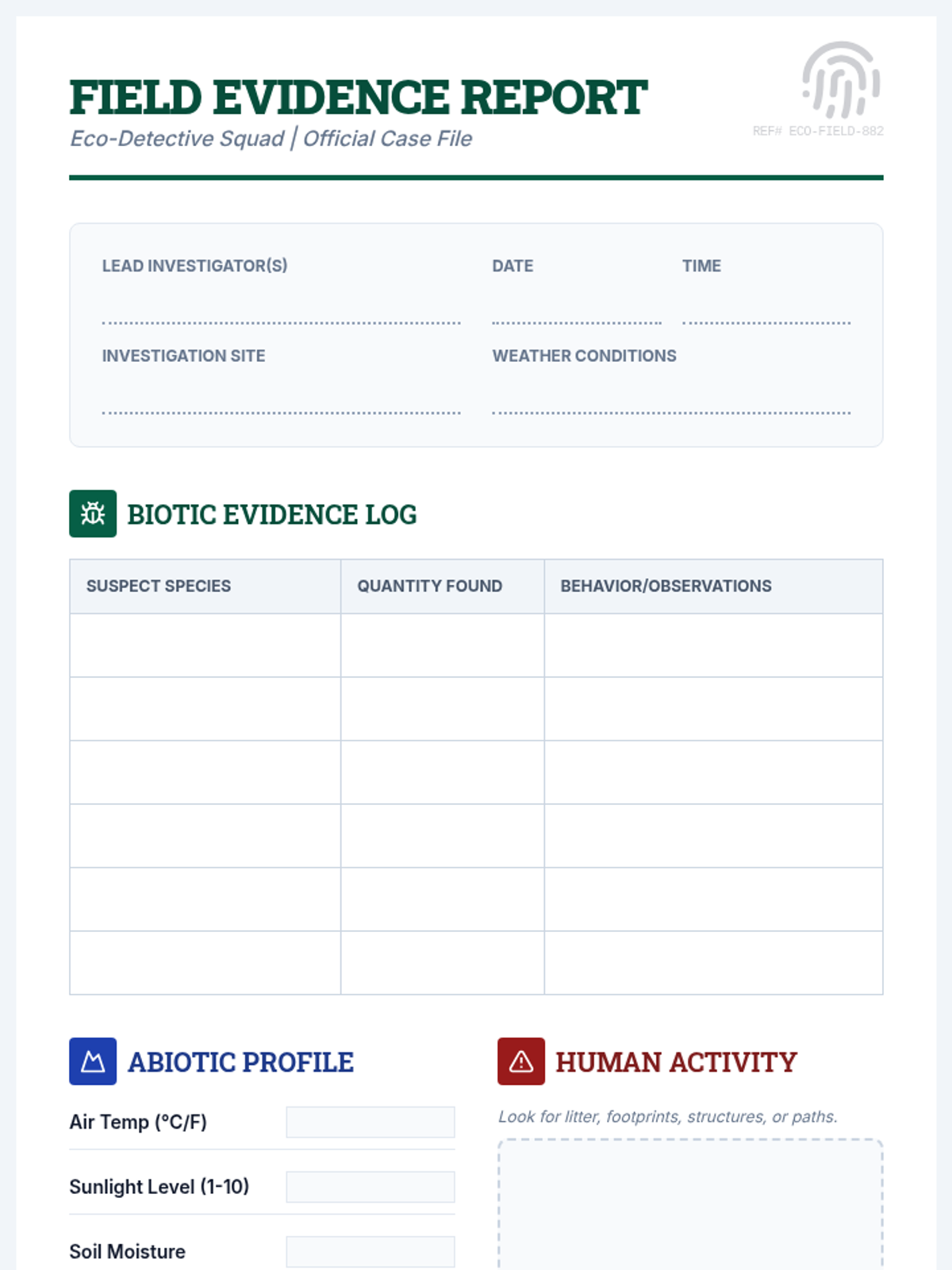
Students learn to observe and analyze their local environment as scientific detectives, focusing on identifying components of an ecosystem and understanding their connections.
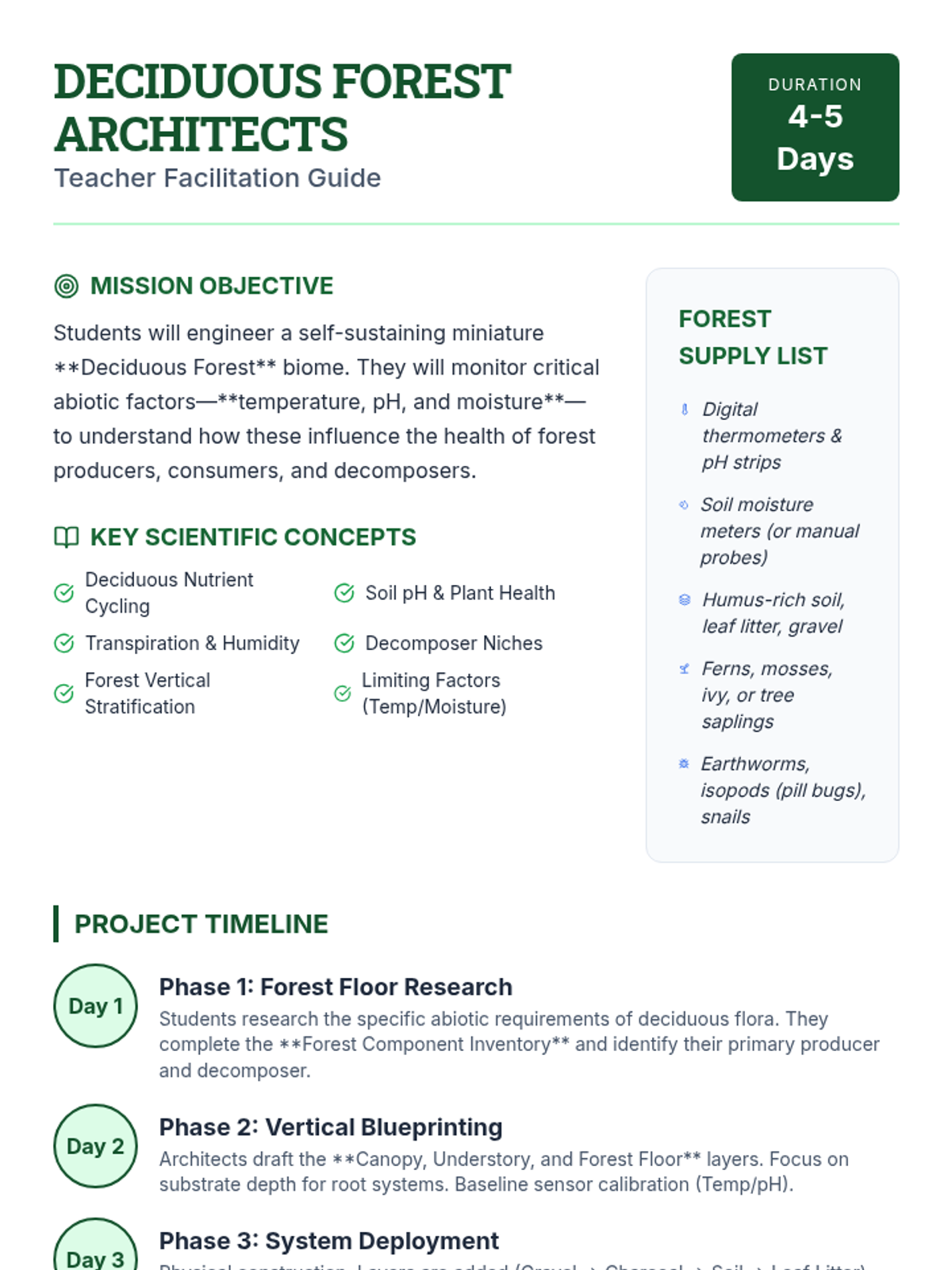
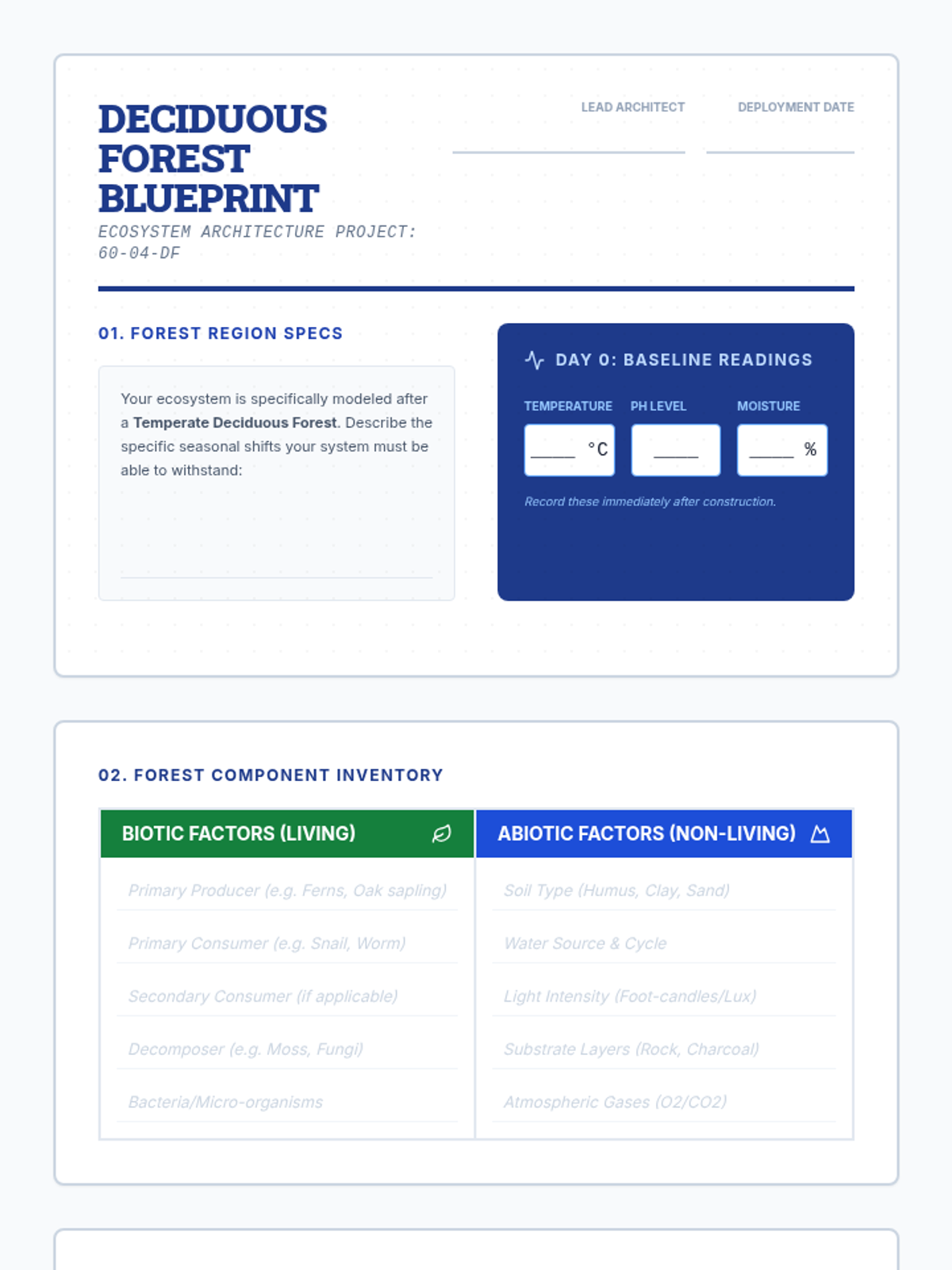
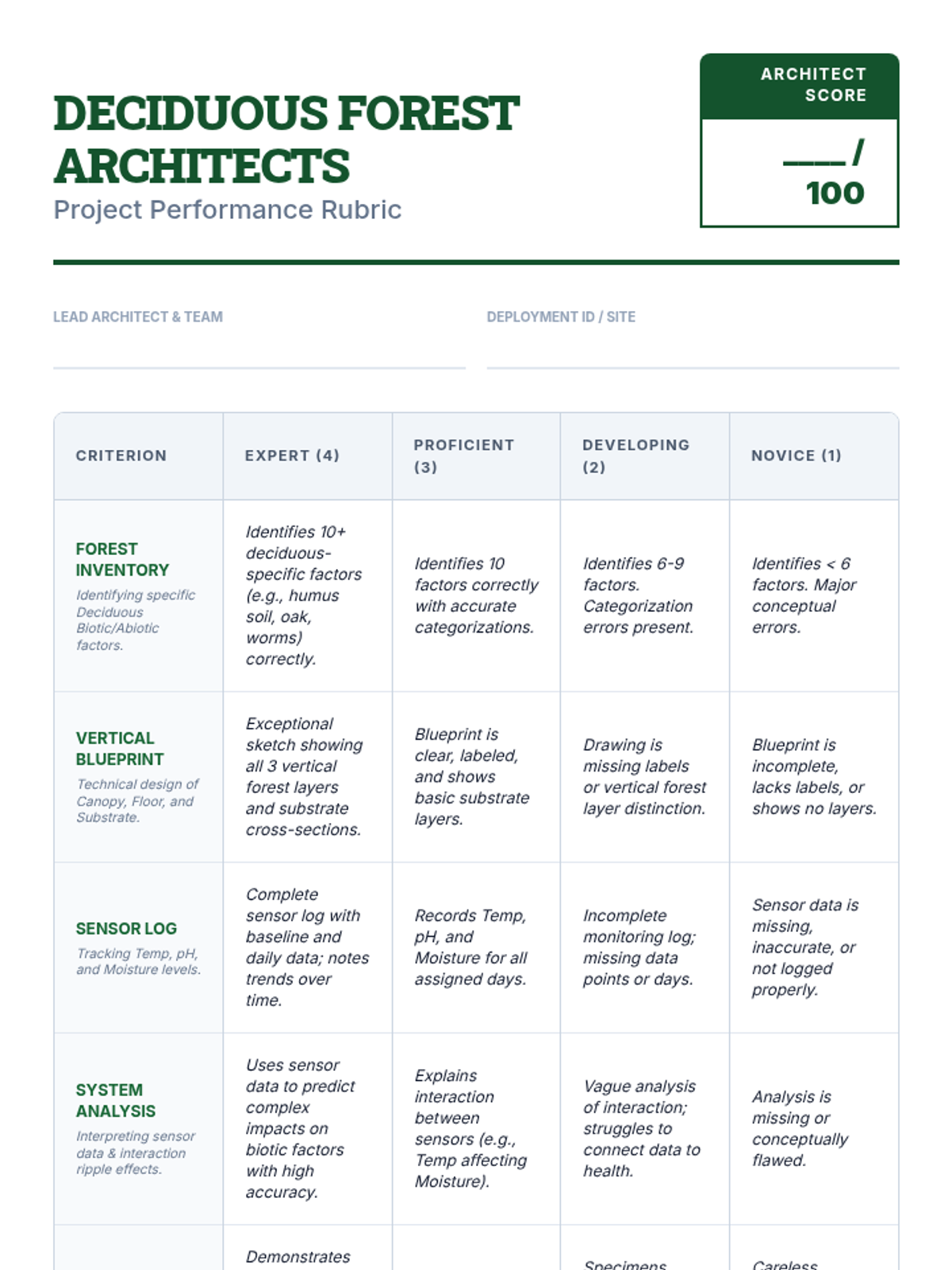
Students become 'Ecosystem Architects' to design and build a miniature biome, identifying biotic and abiotic factors and their complex interactions. This hands-on project-based lesson covers ecosystem components, energy flow, and environmental balance.
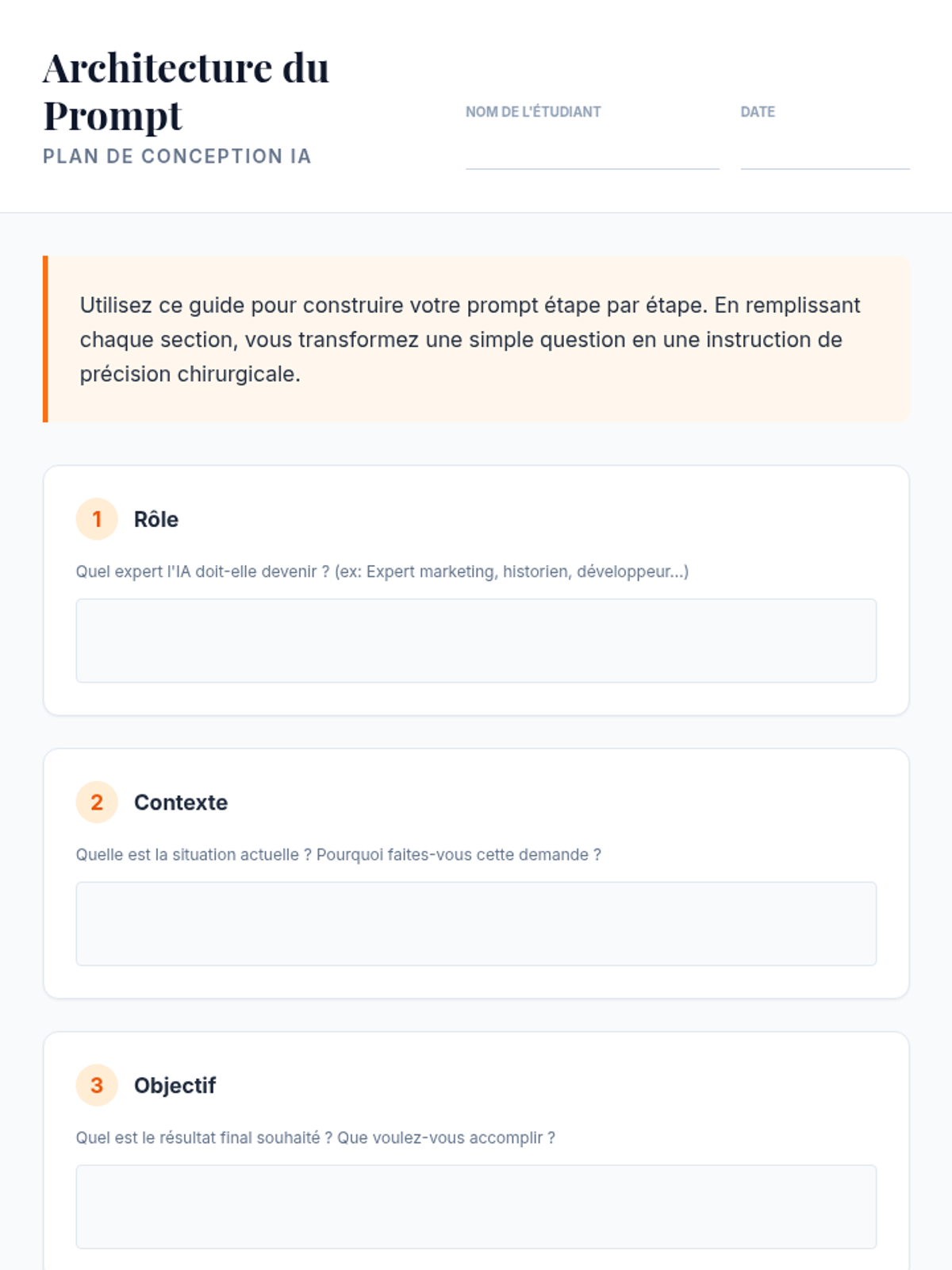
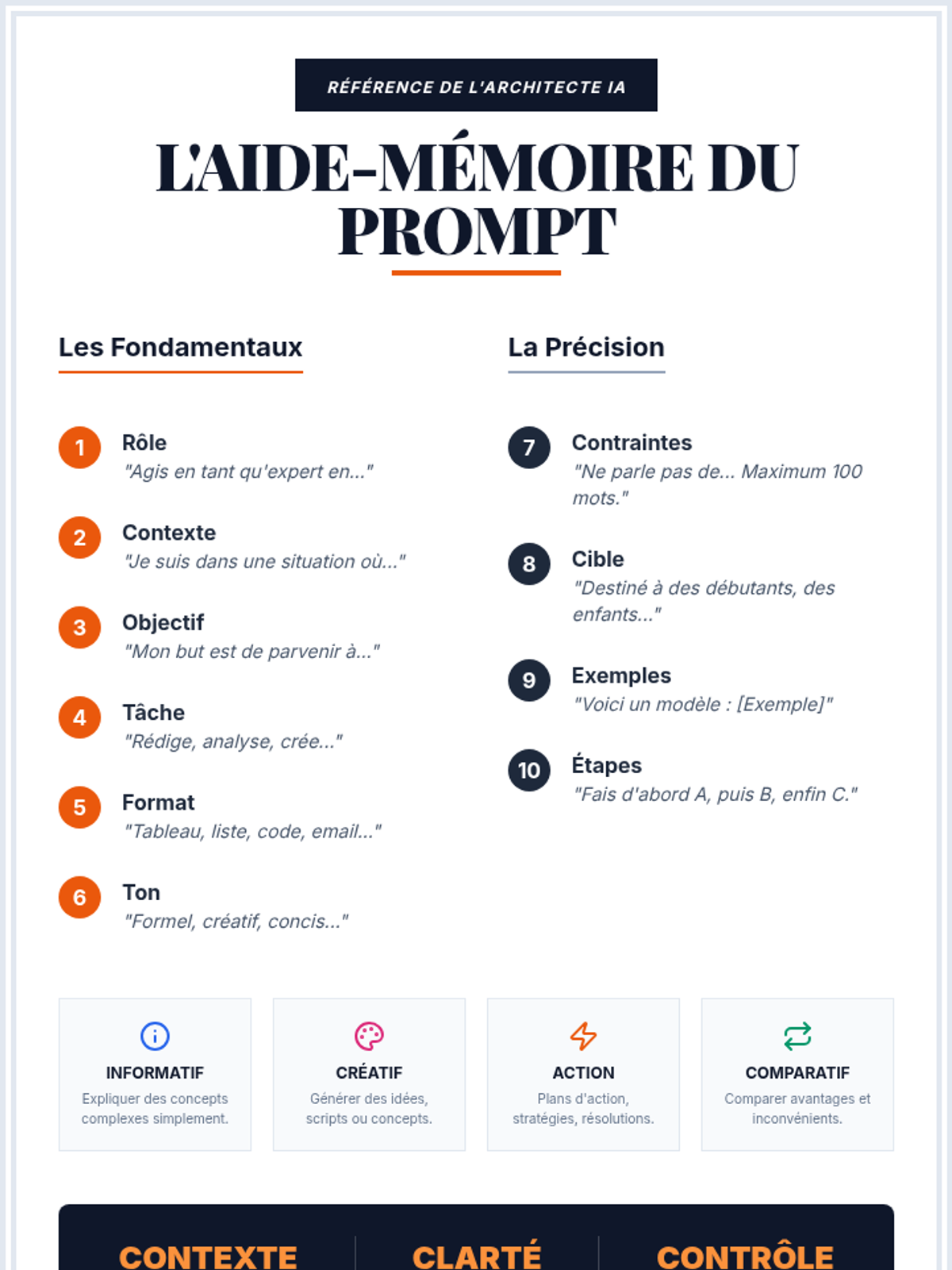
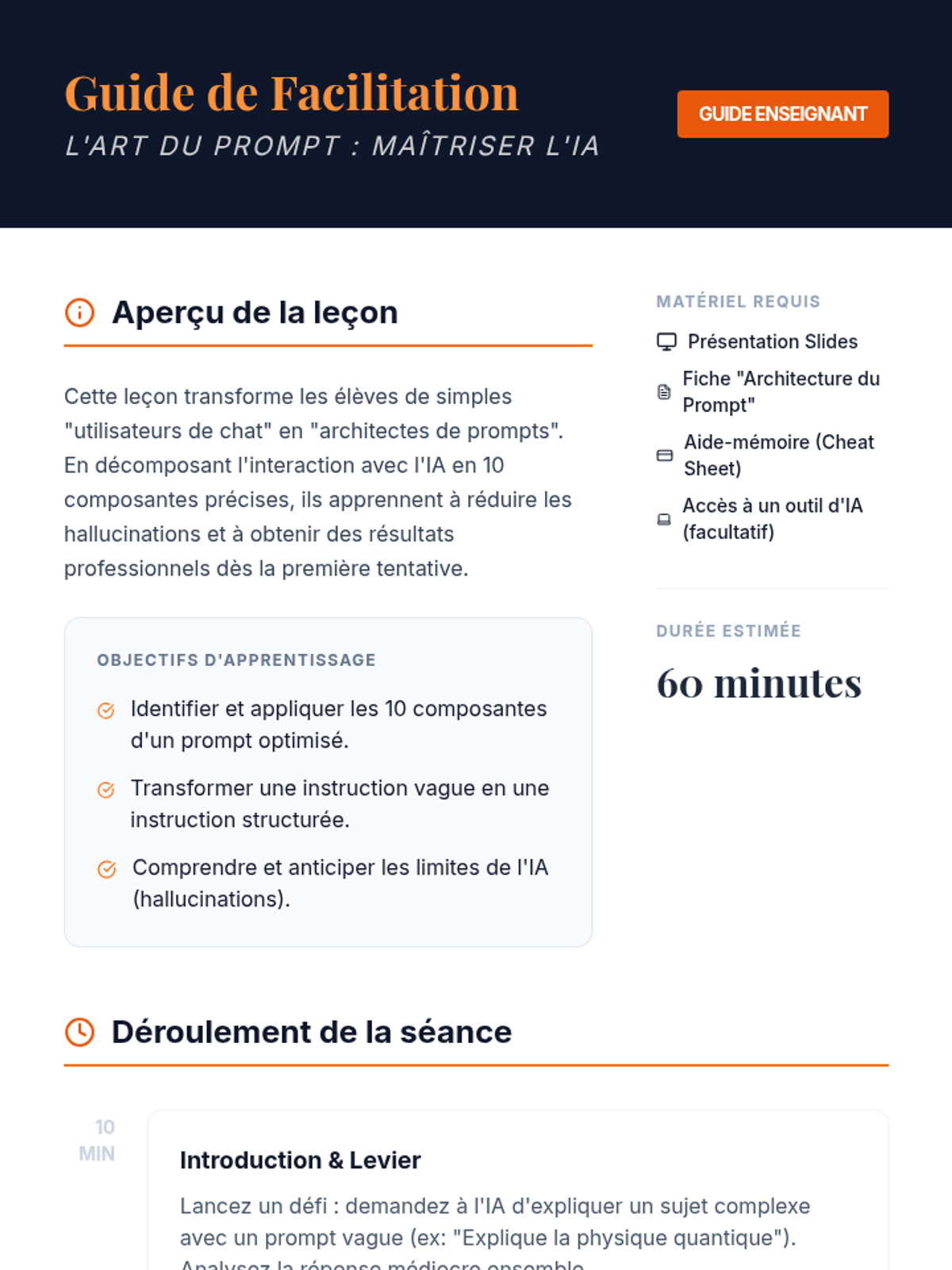
Cette leçon enseigne l'art de concevoir des prompts efficaces pour l'IA en utilisant 10 composantes clés, de la définition du rôle à l'itération finale.
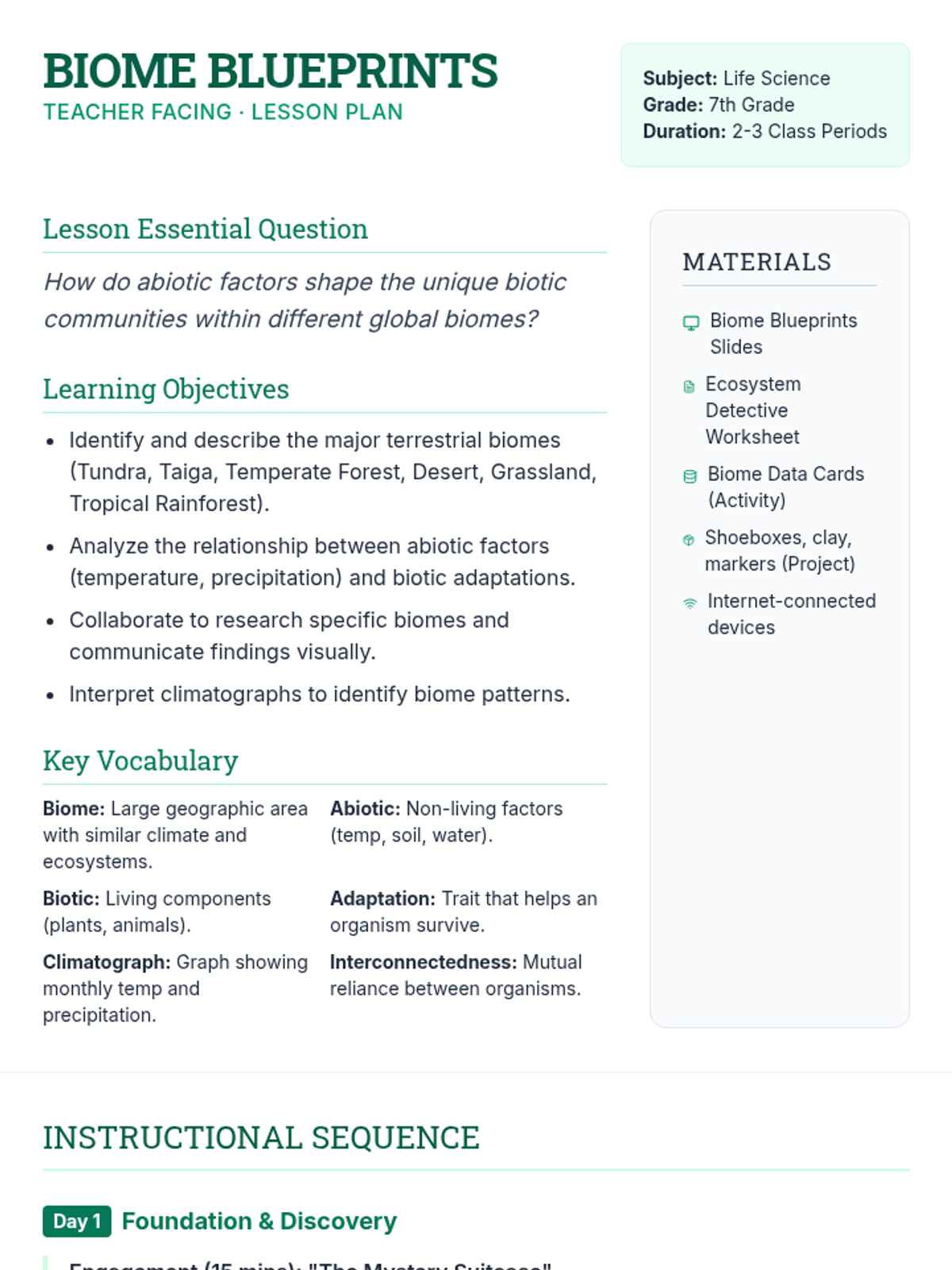
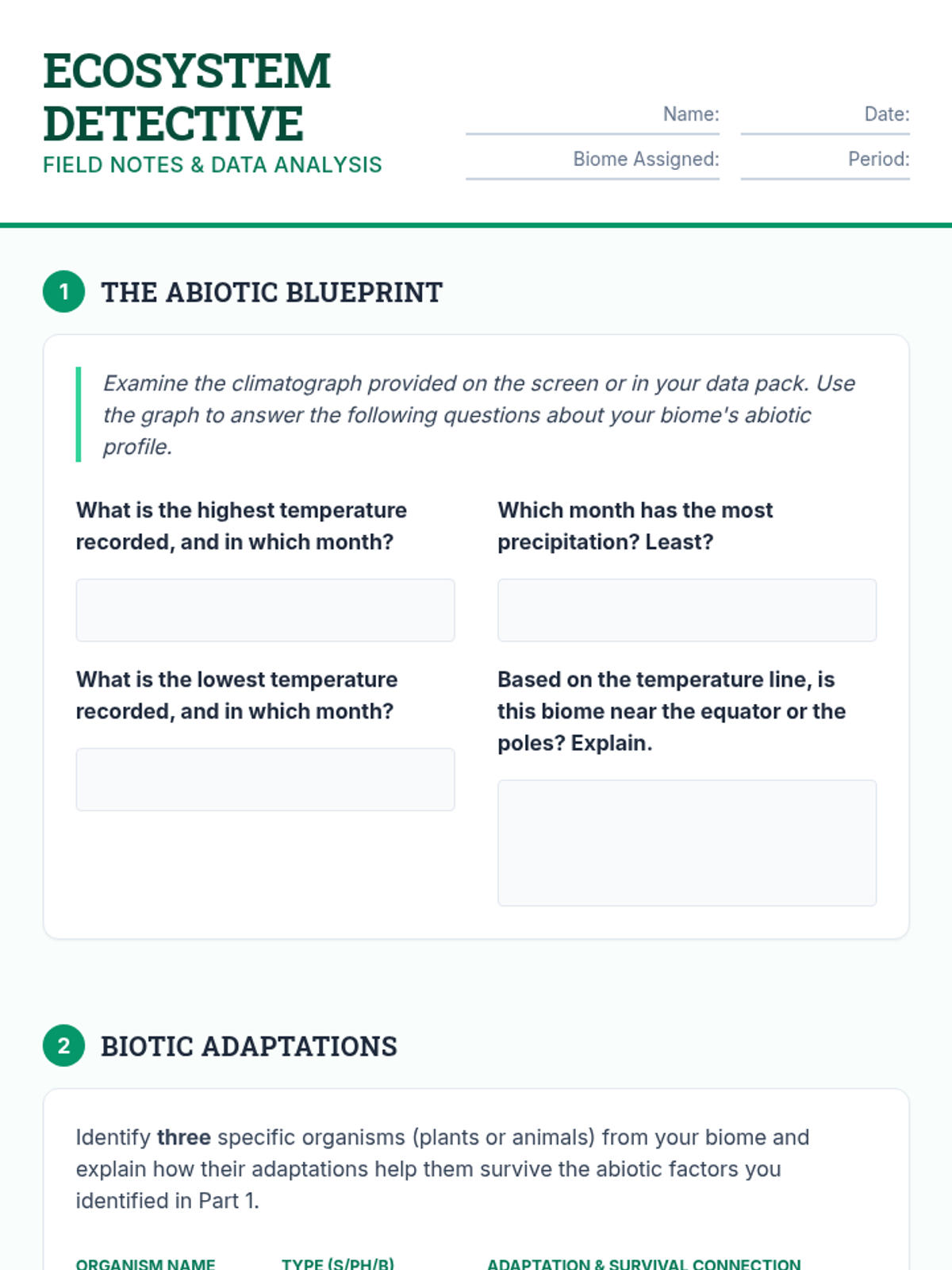
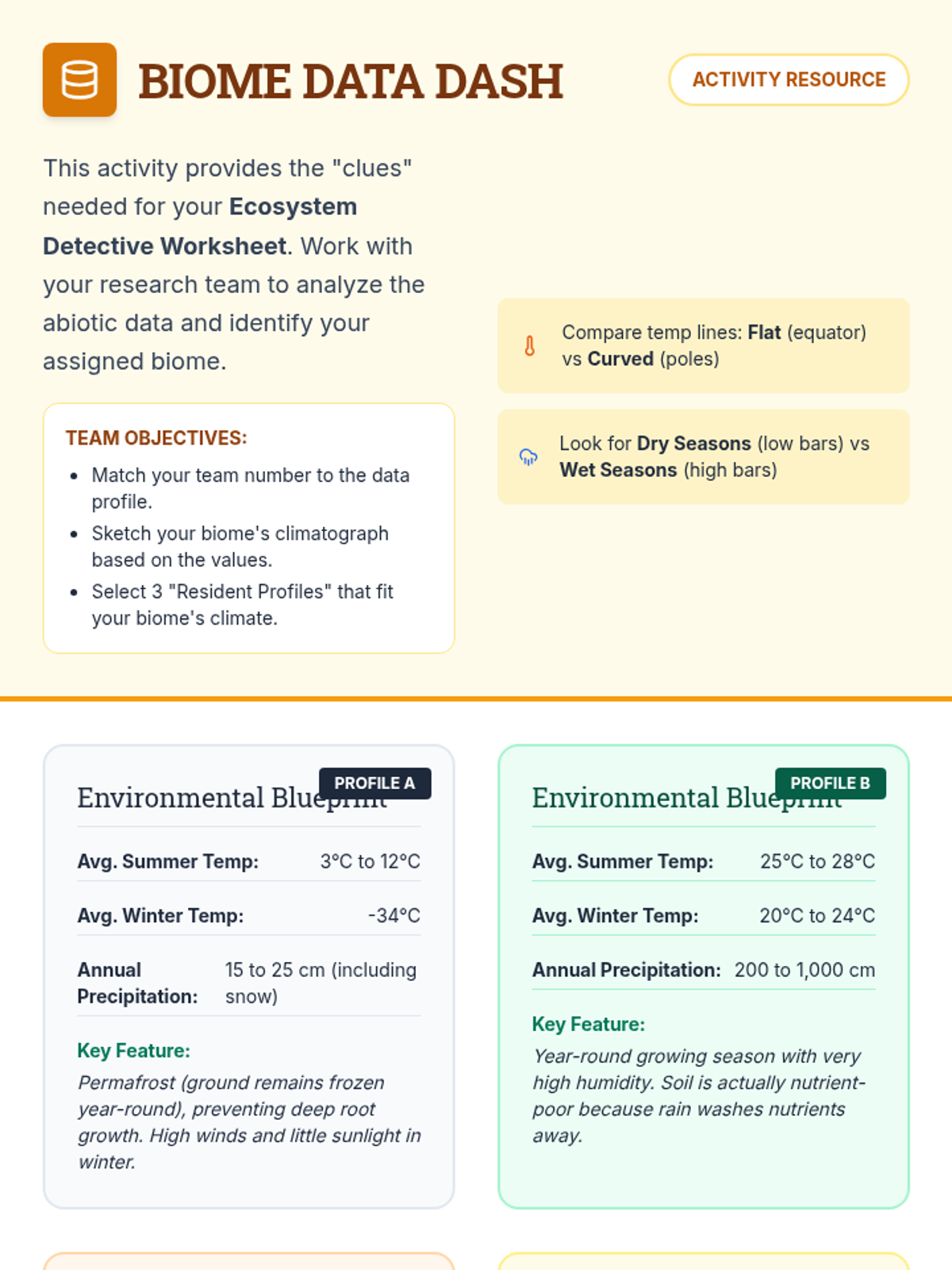
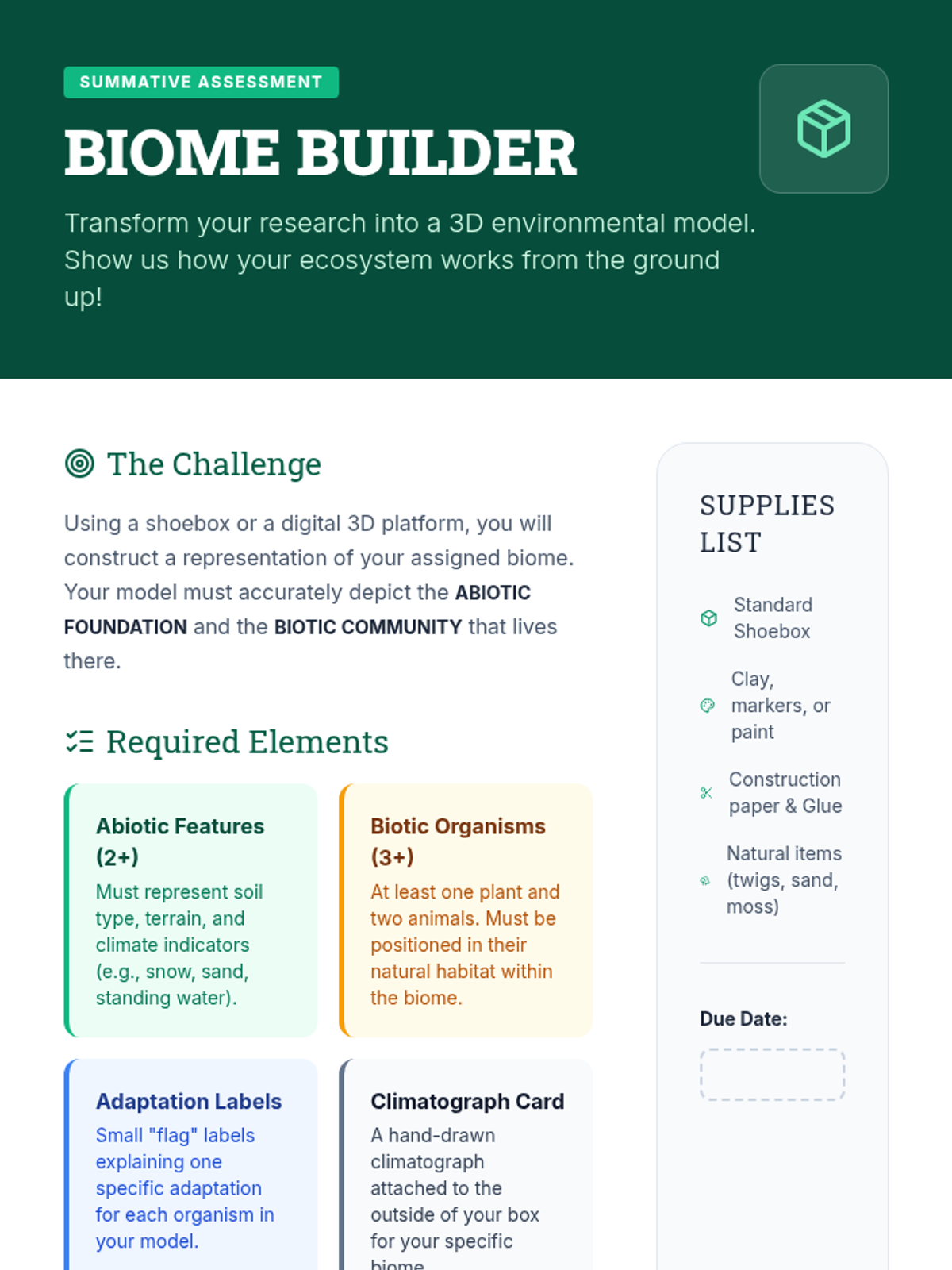
Students explore Earth's major biomes by investigating the relationship between biotic and abiotic factors. They will analyze climate data, research specific adaptations, and create a visual 'Biome Box' or digital representation to demonstrate their understanding.