Using physical manipulatives or digital simulations, students create particle models showing how solvent molecules surround and separate solute particles. This connects the macroscopic disappearance of a solid to microscopic particle redistribution.
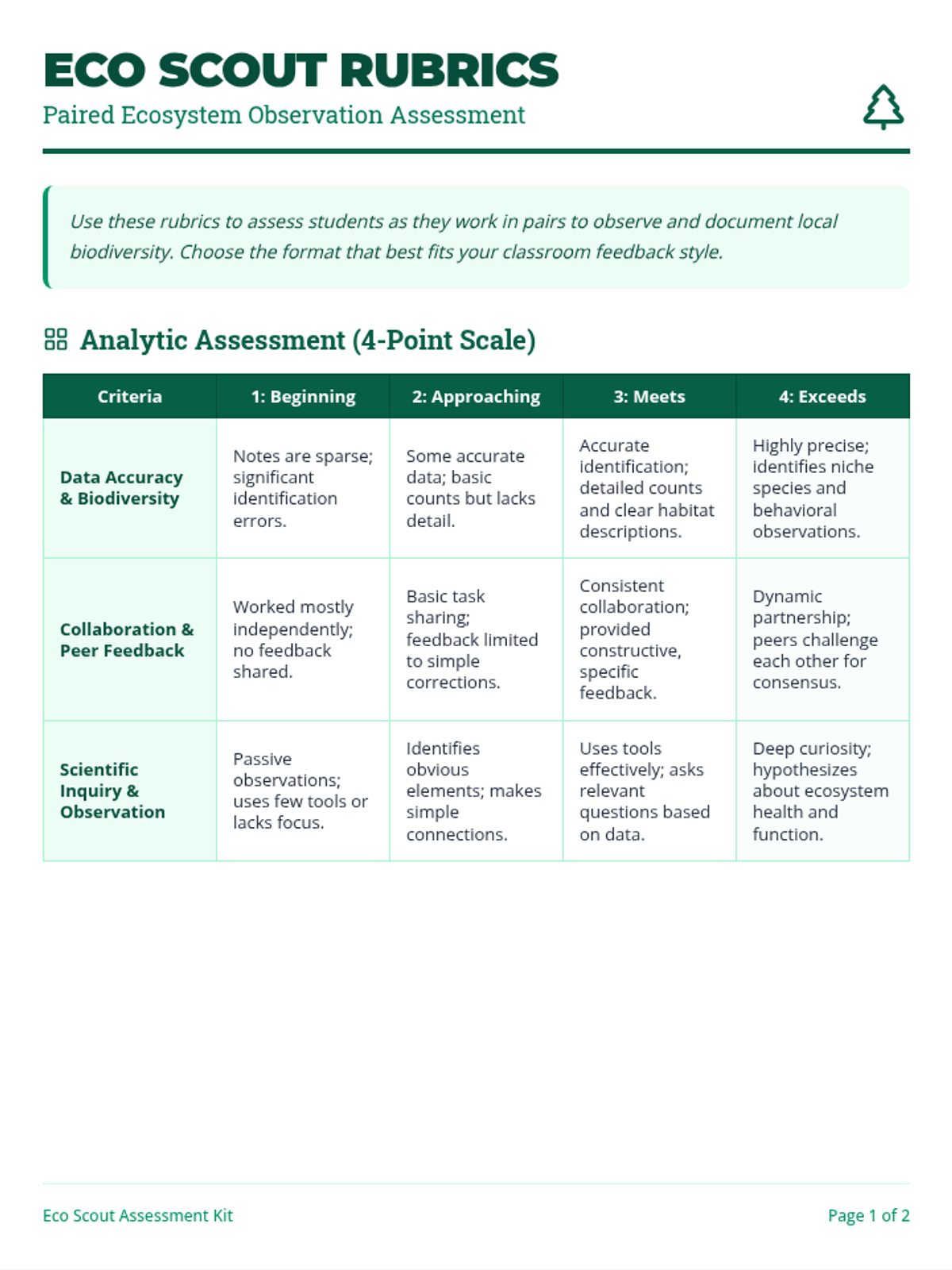
A comprehensive set of rubrics designed for evaluating paired ecosystem observation activities, focusing on scientific accuracy, inquiry, and collaboration.
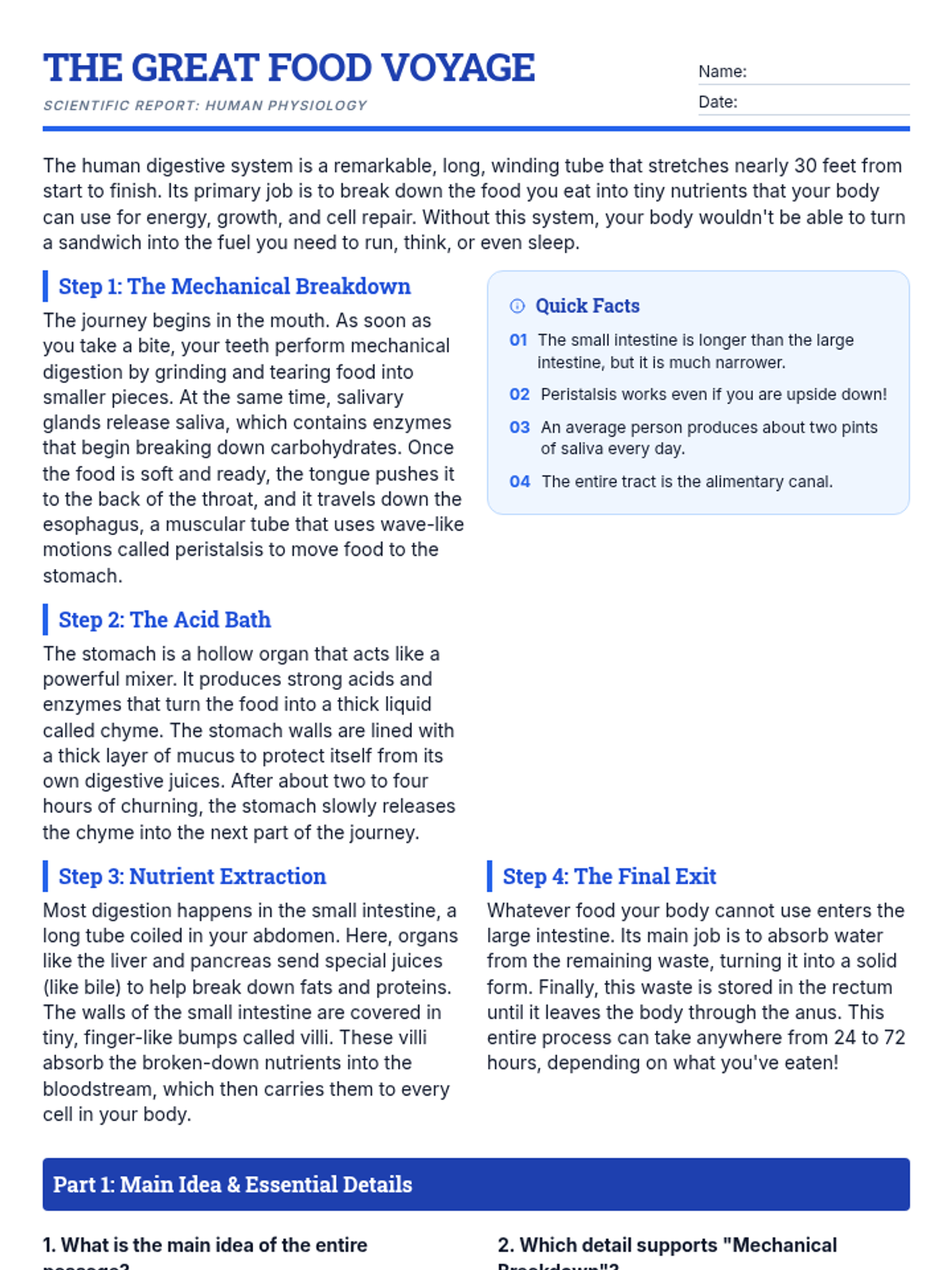
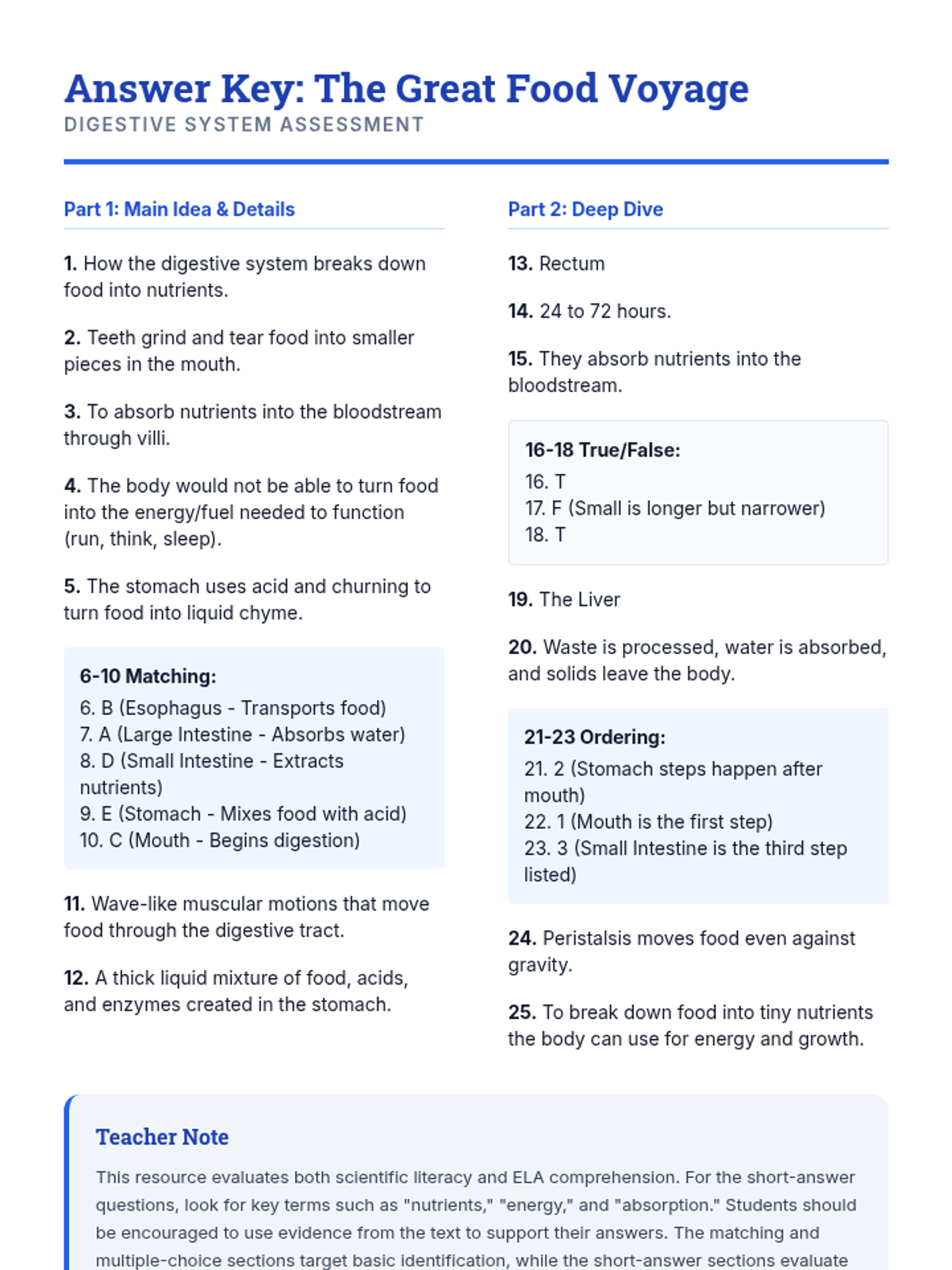
A comprehensive exploration of the human digestive system, focusing on the journey of food and the specific functions of each organ while building ELA skills in identifying main ideas and supporting details.
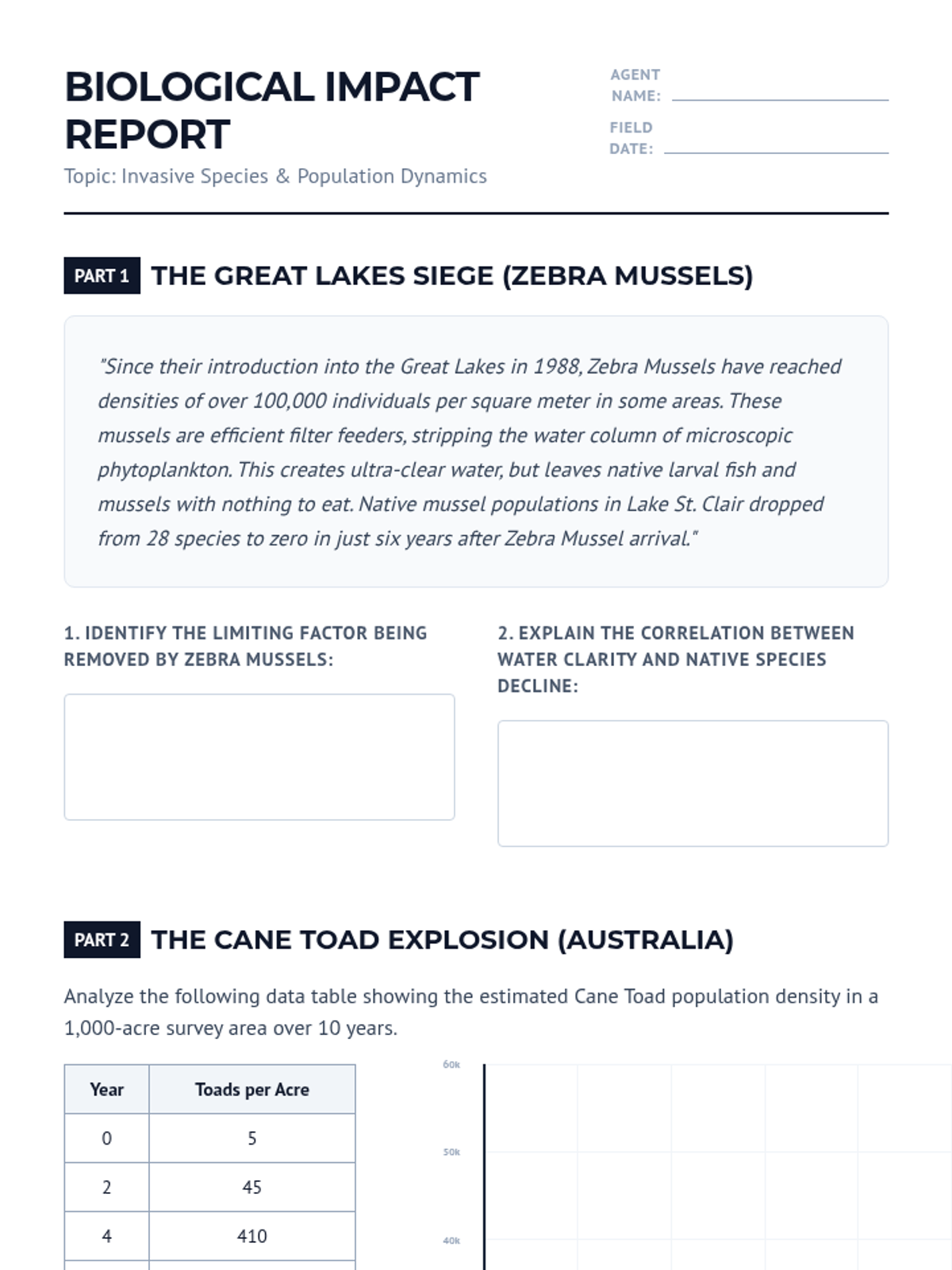
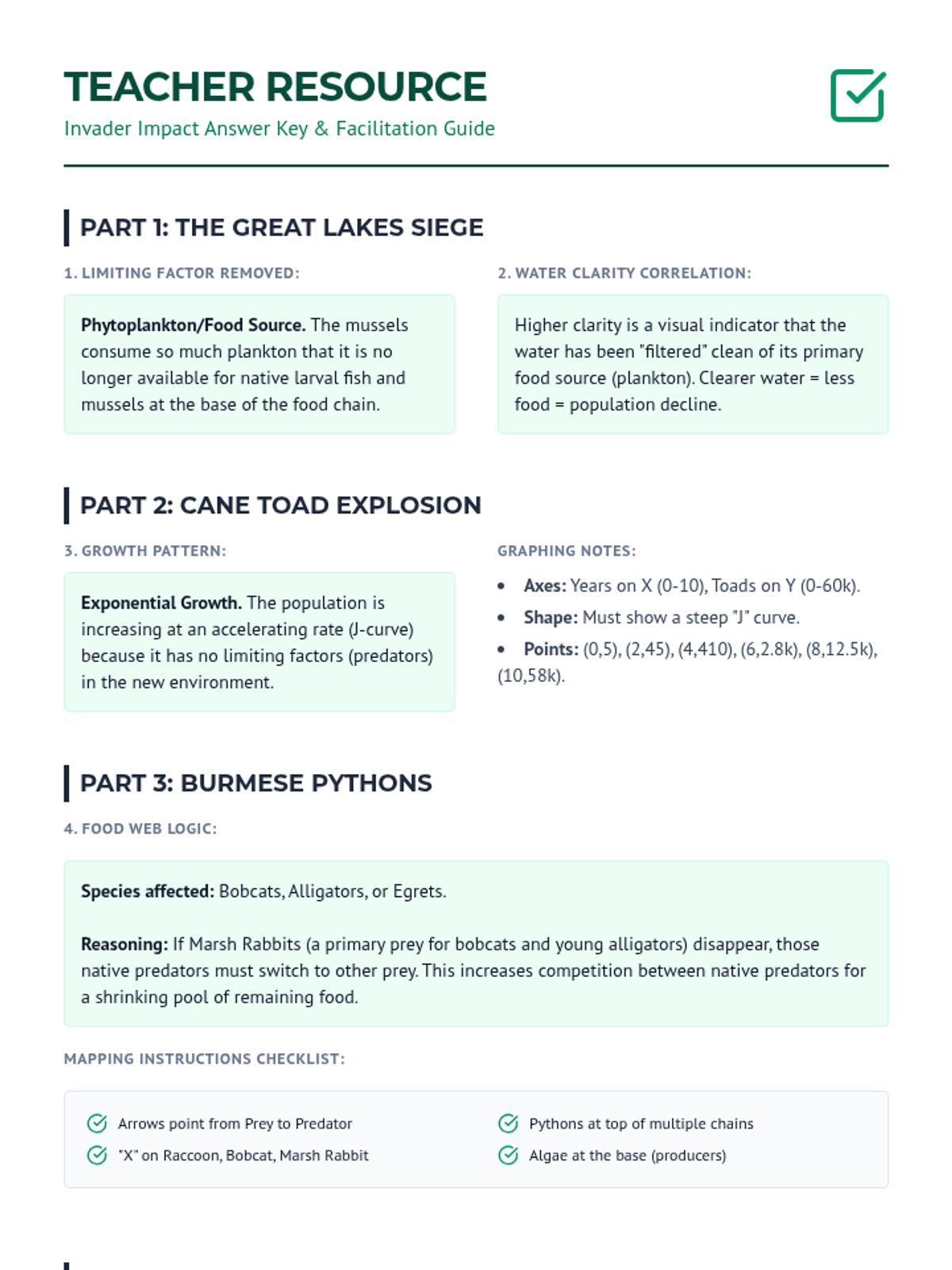
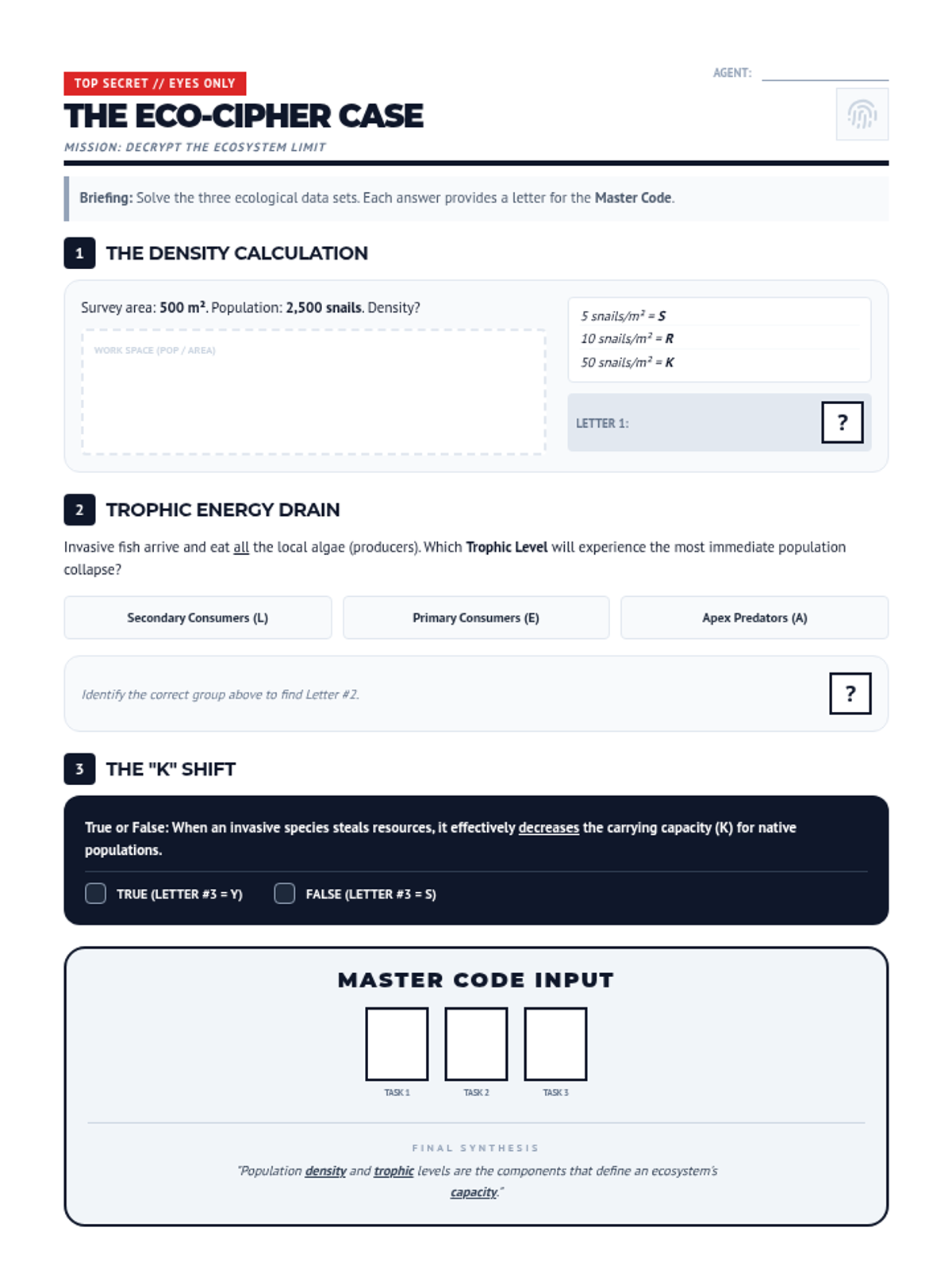
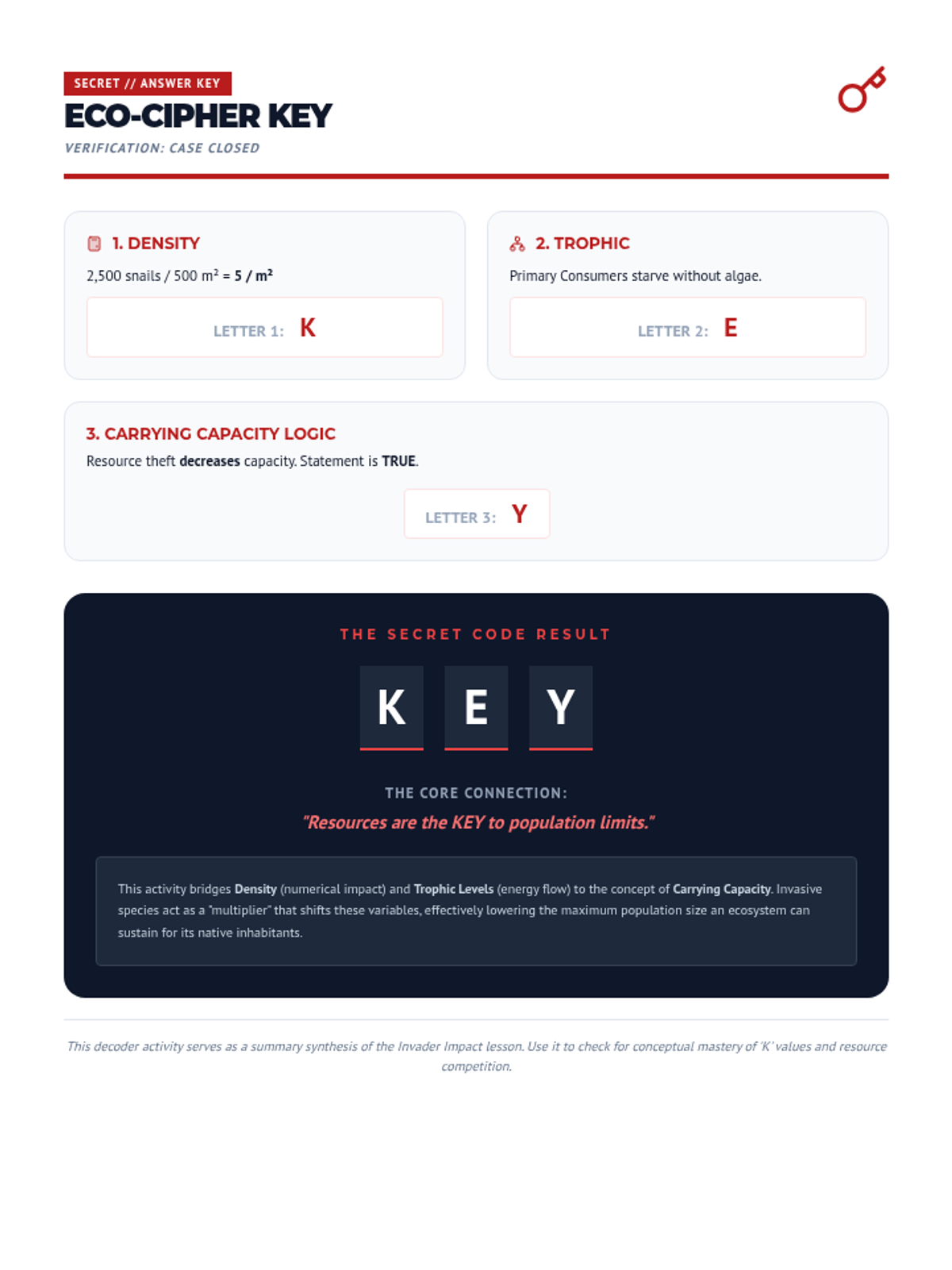
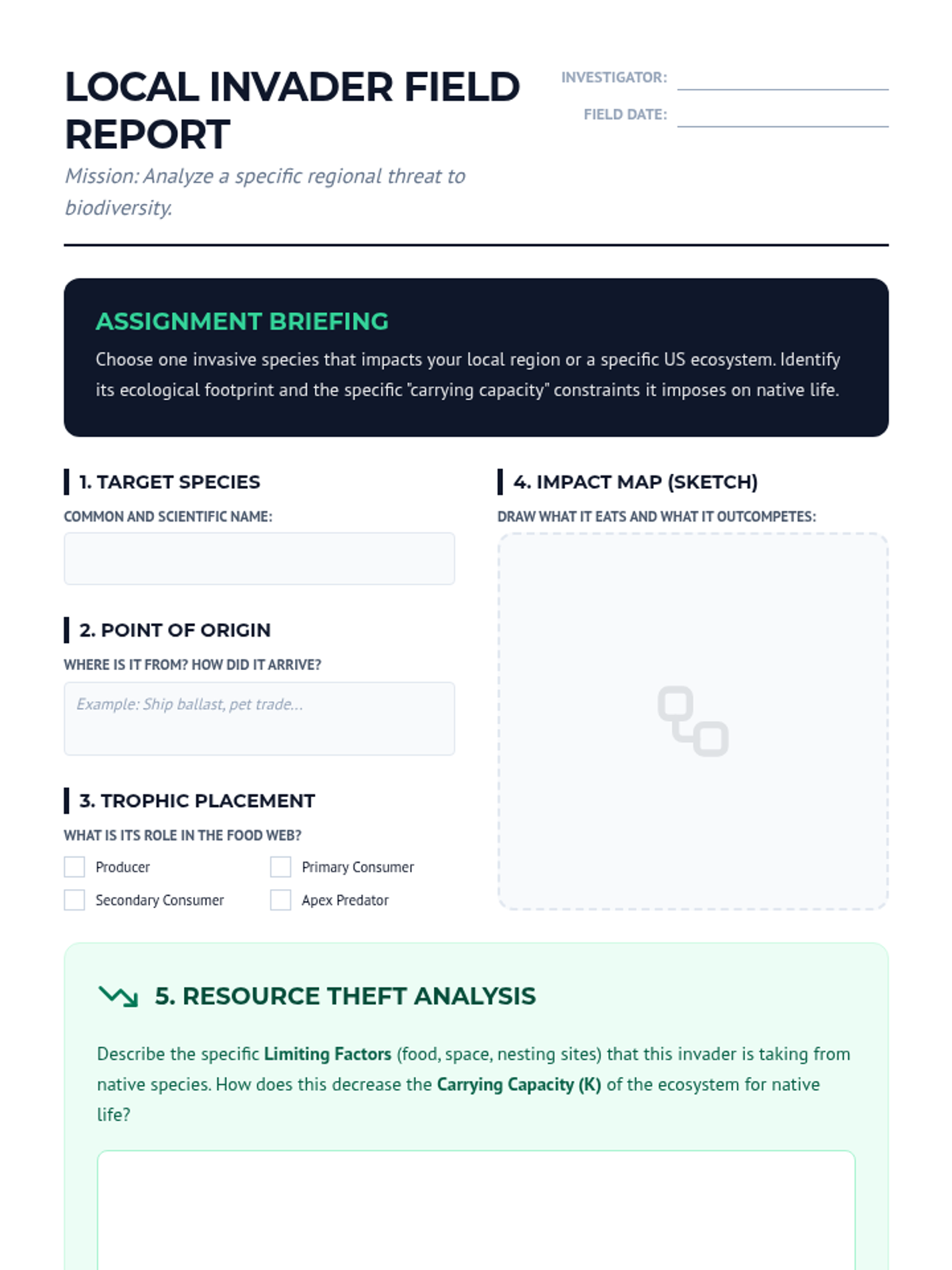
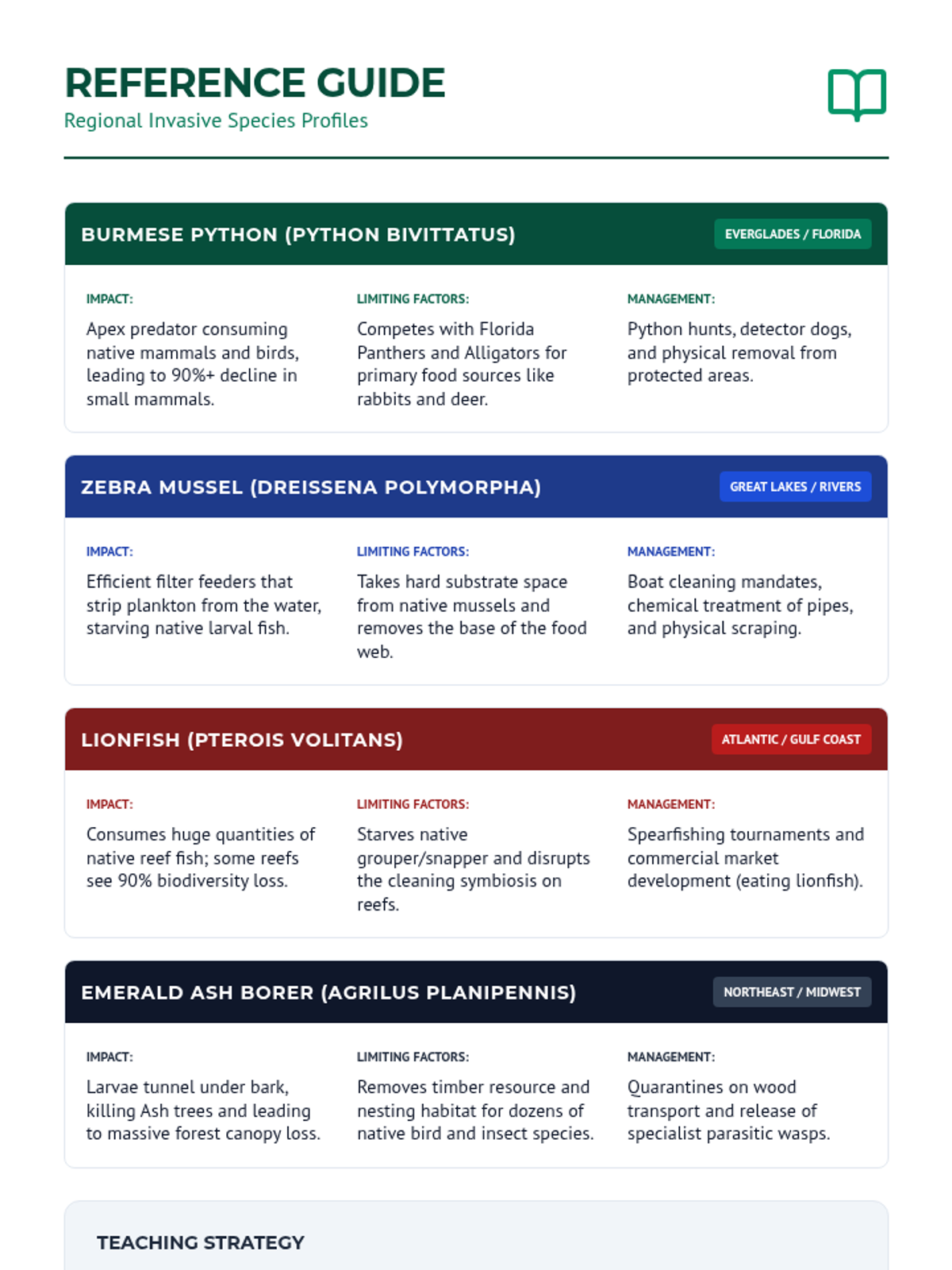
A comprehensive lesson on invasive species focusing on their dramatic impact on local populations and ecosystems through data analysis and food web mapping.
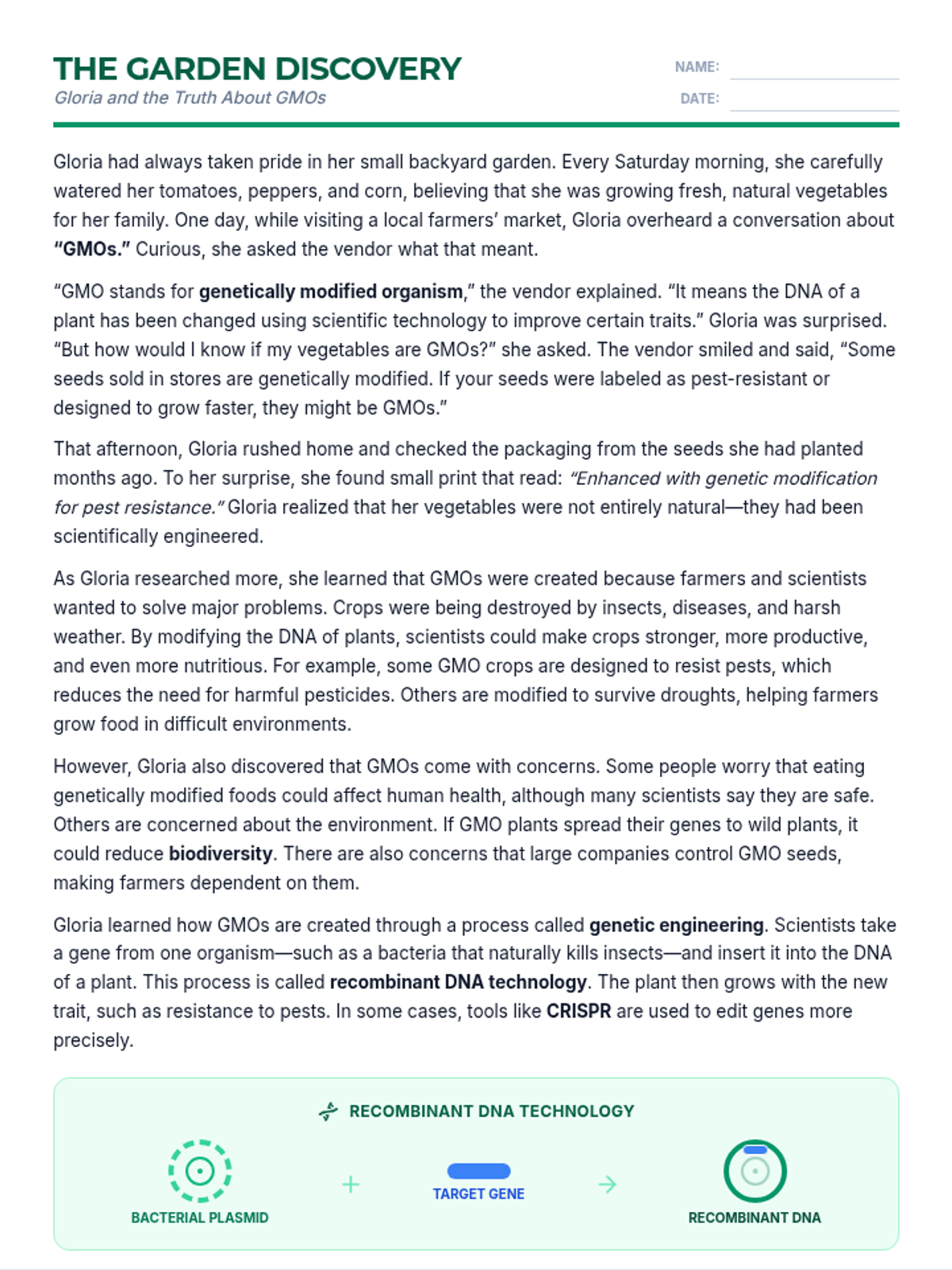
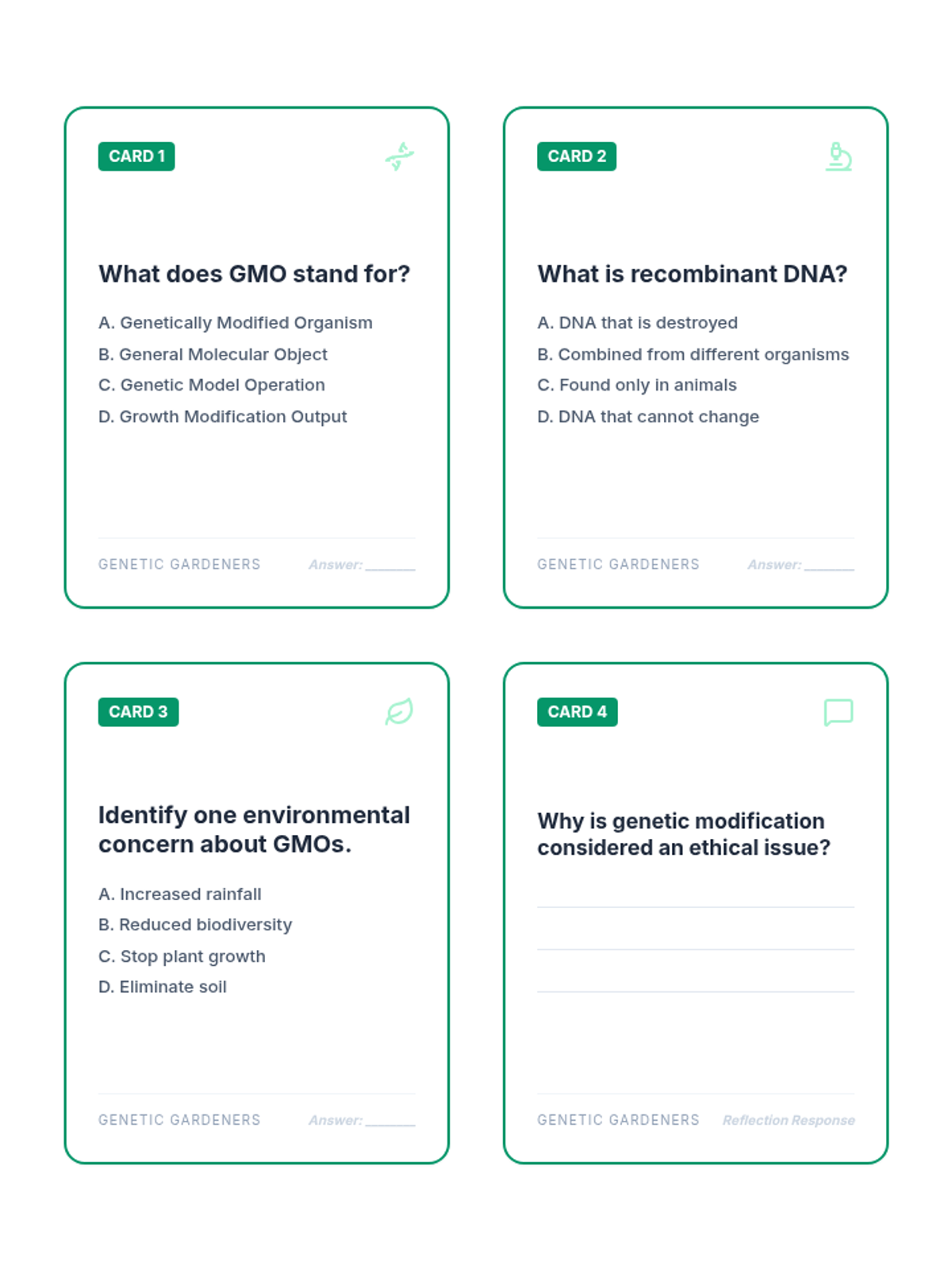
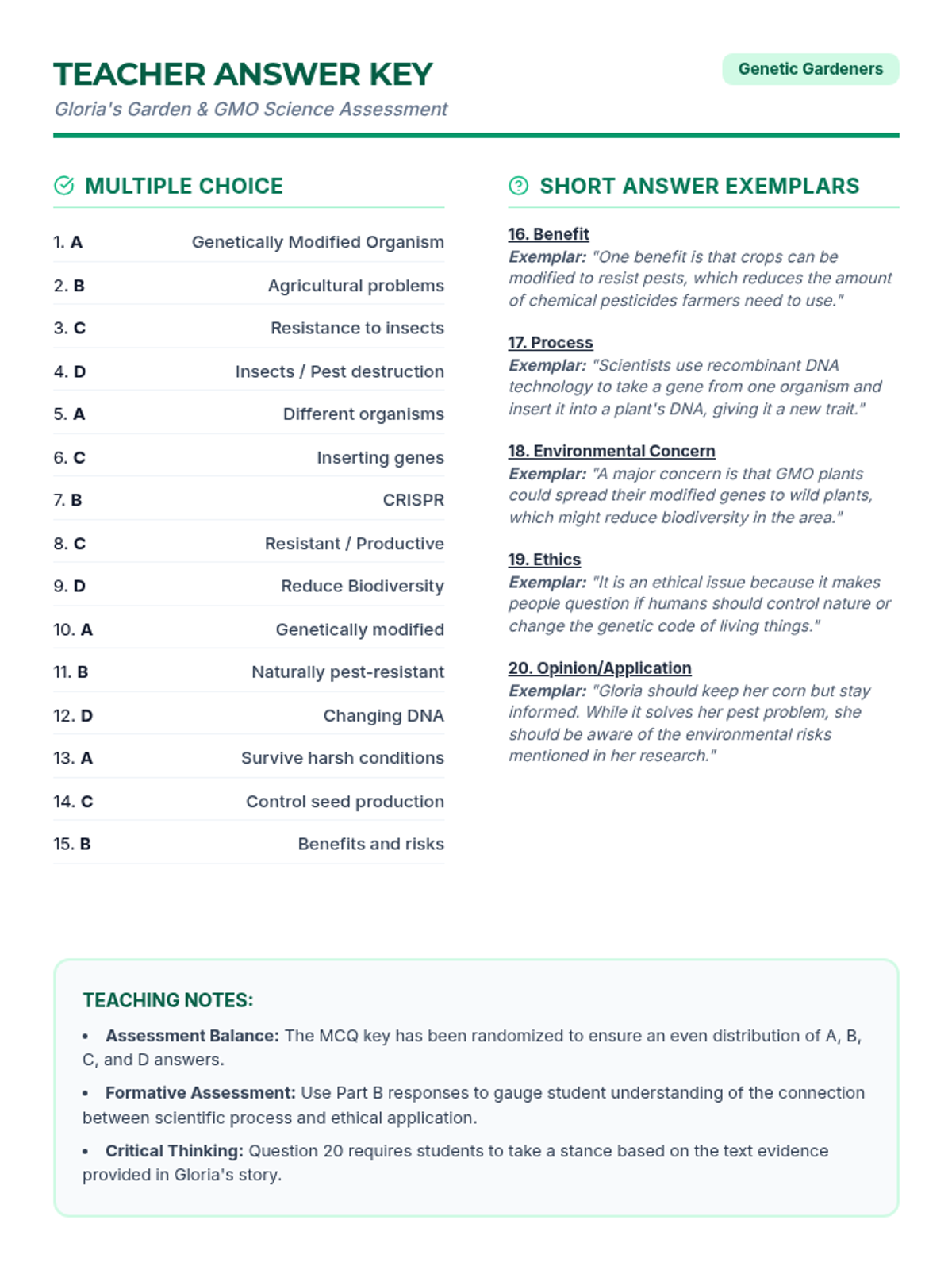
A comprehensive lesson exploring the science, benefits, and ethical considerations of GMOs through the story of Gloria's garden. Includes a reading passage, multiple-choice assessment, and short-answer reflections with supporting scientific diagrams.
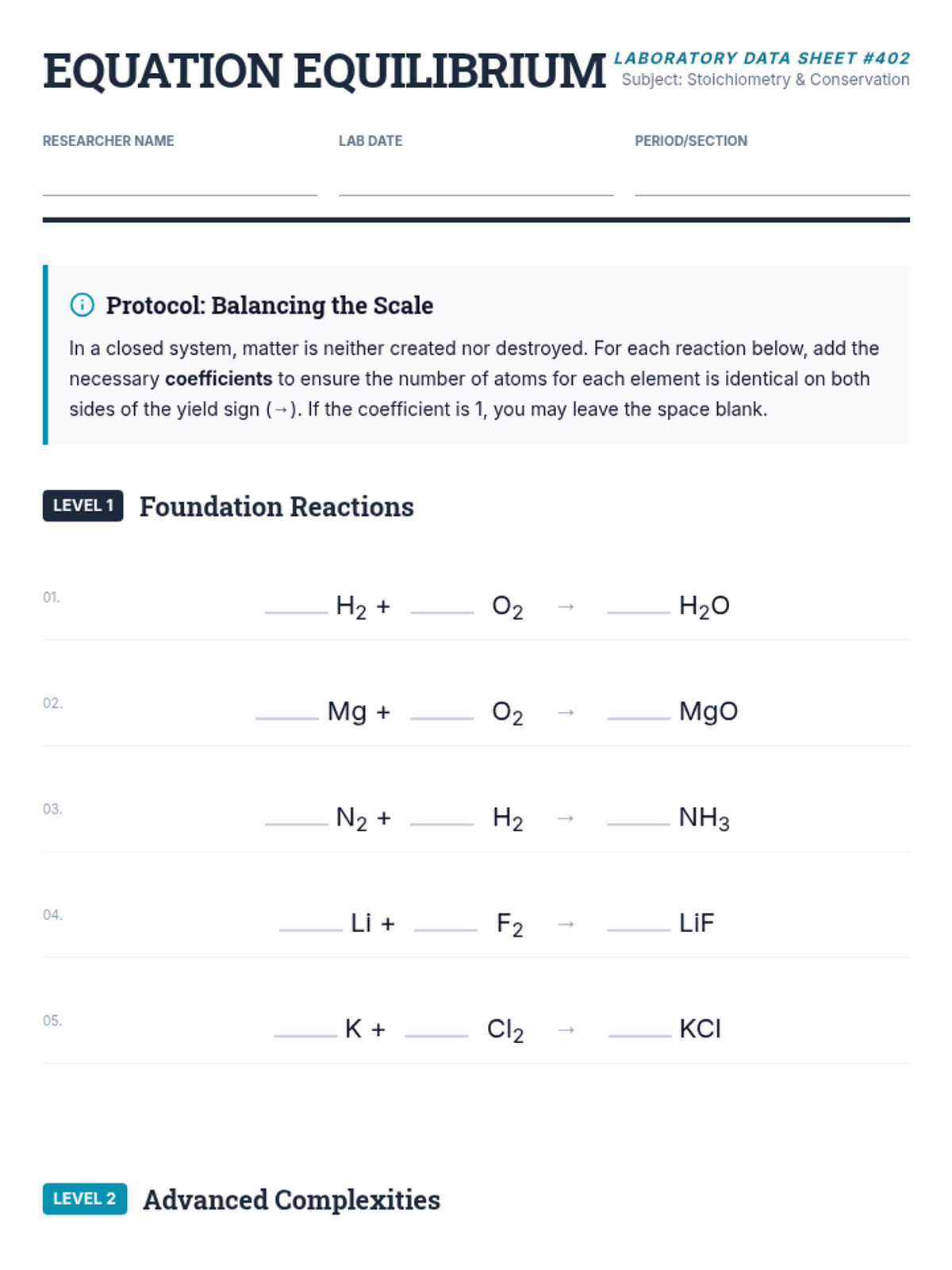
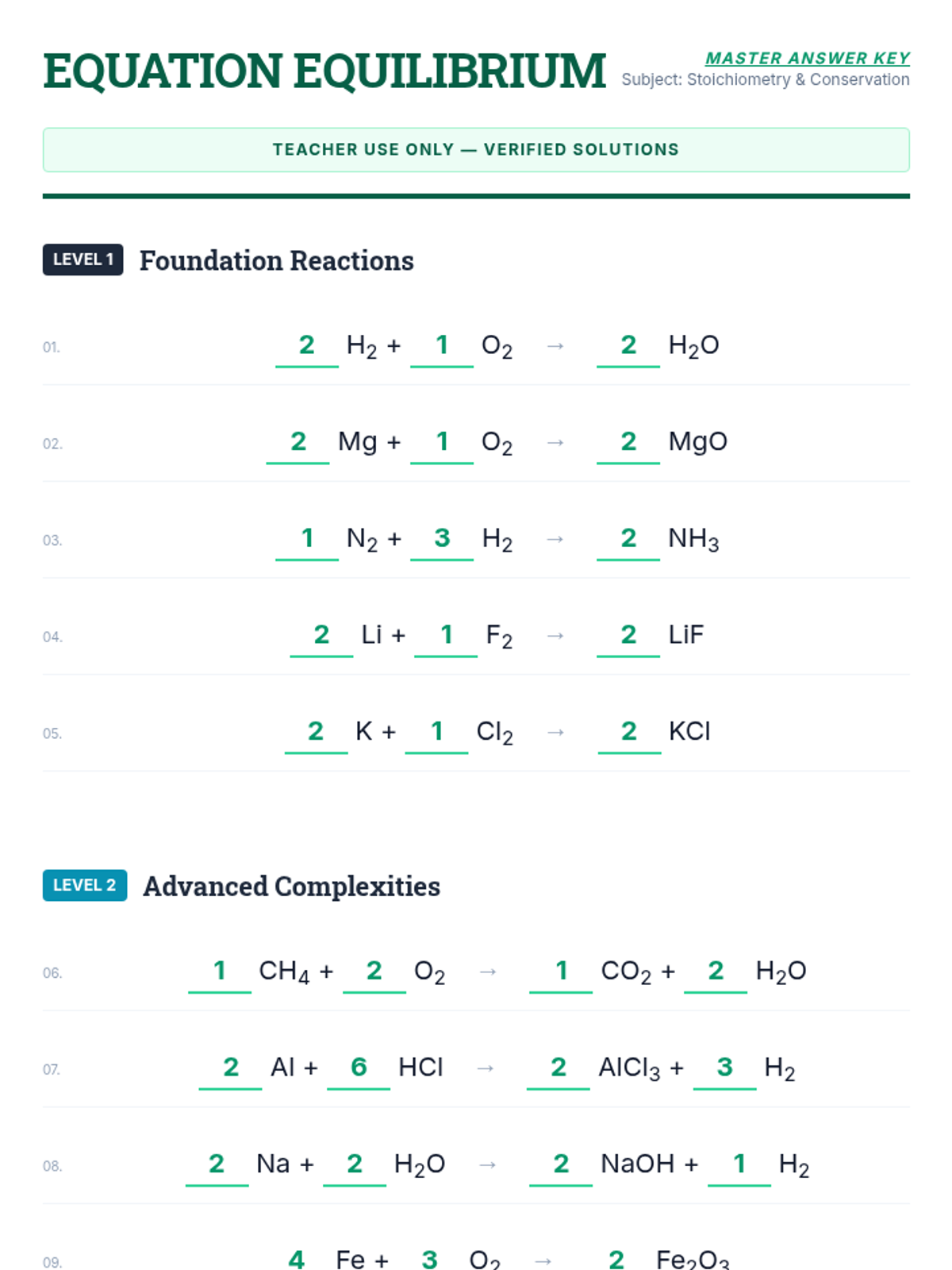
A lesson focused on the Law of Conservation of Mass through the practice of balancing chemical equations. Students move from basic synthesis reactions to more complex combustion and replacement reactions.
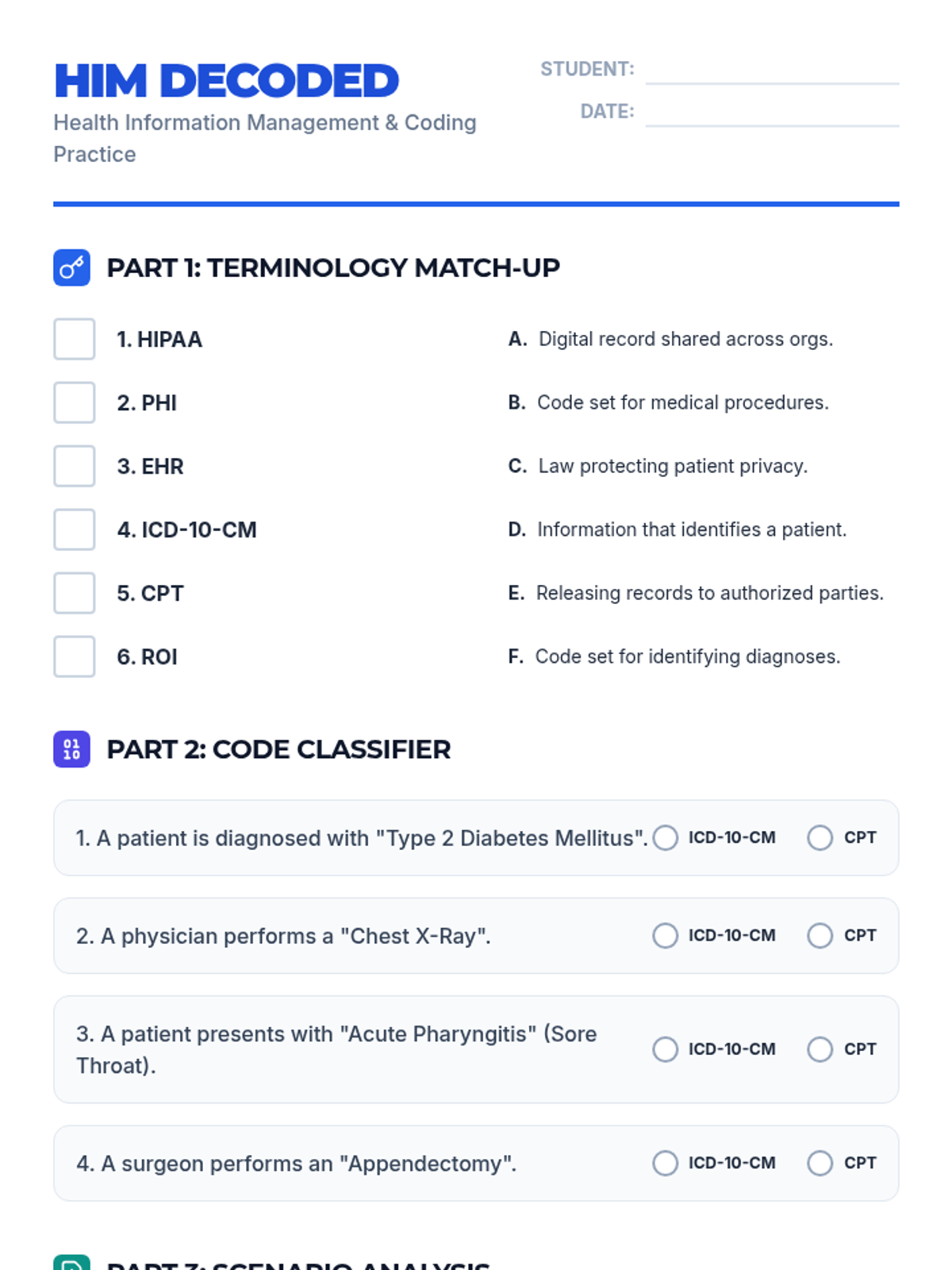
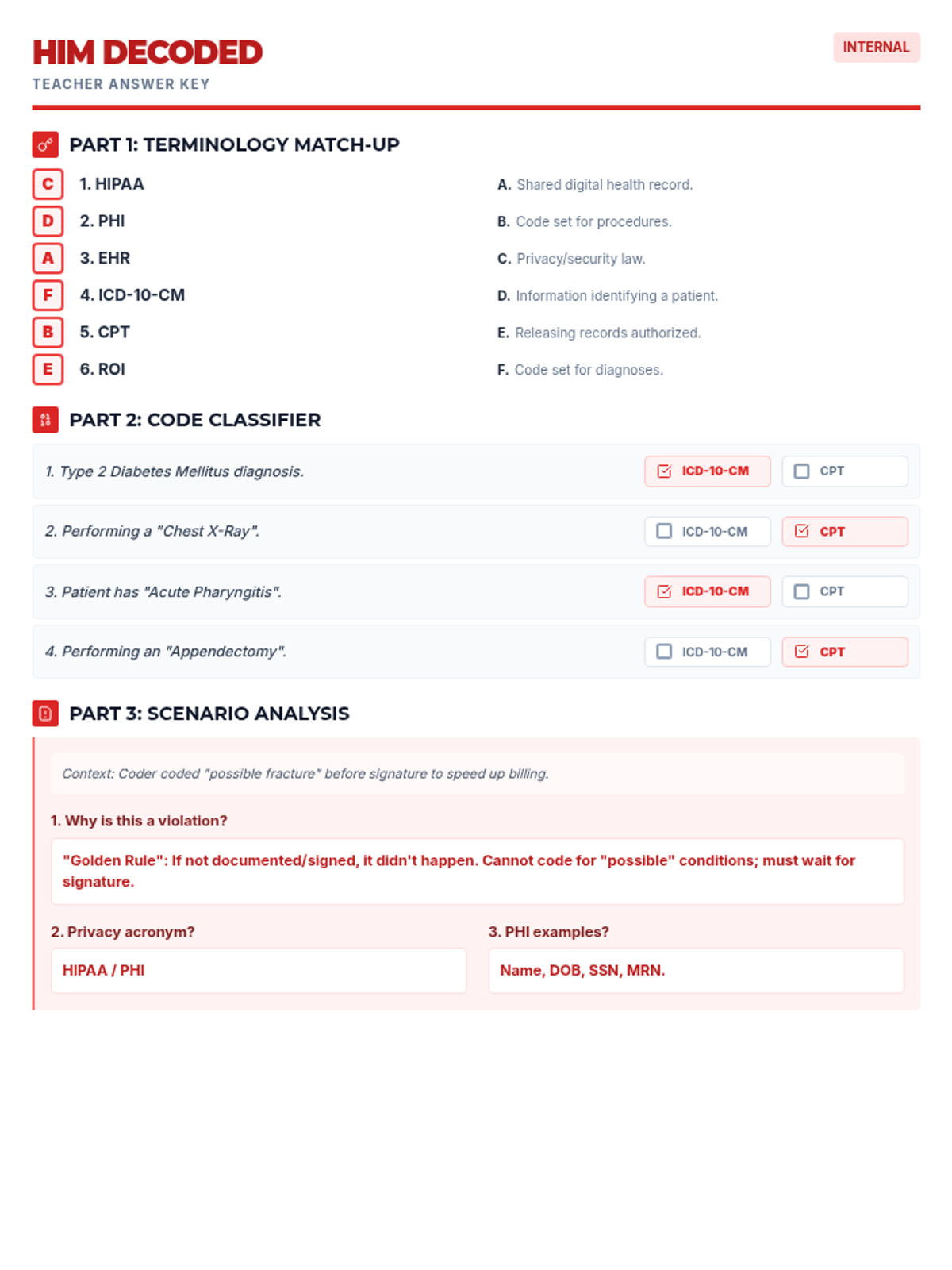
A comprehensive introduction to Health Information Management (HIM), focusing on essential terminology, legal standards like HIPAA, and the basics of medical coding (ICD-10-CM and CPT) for high school CTE students.
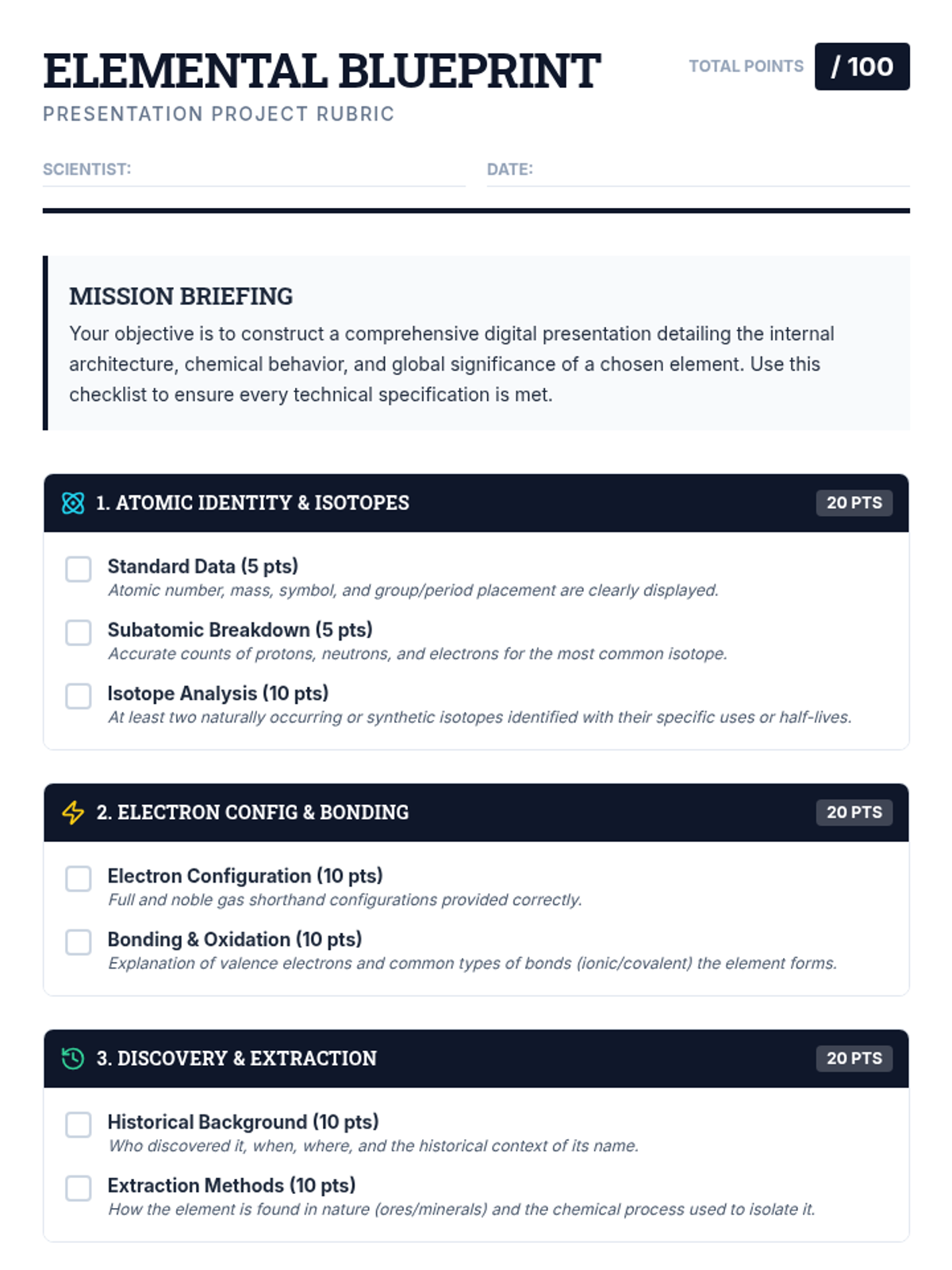
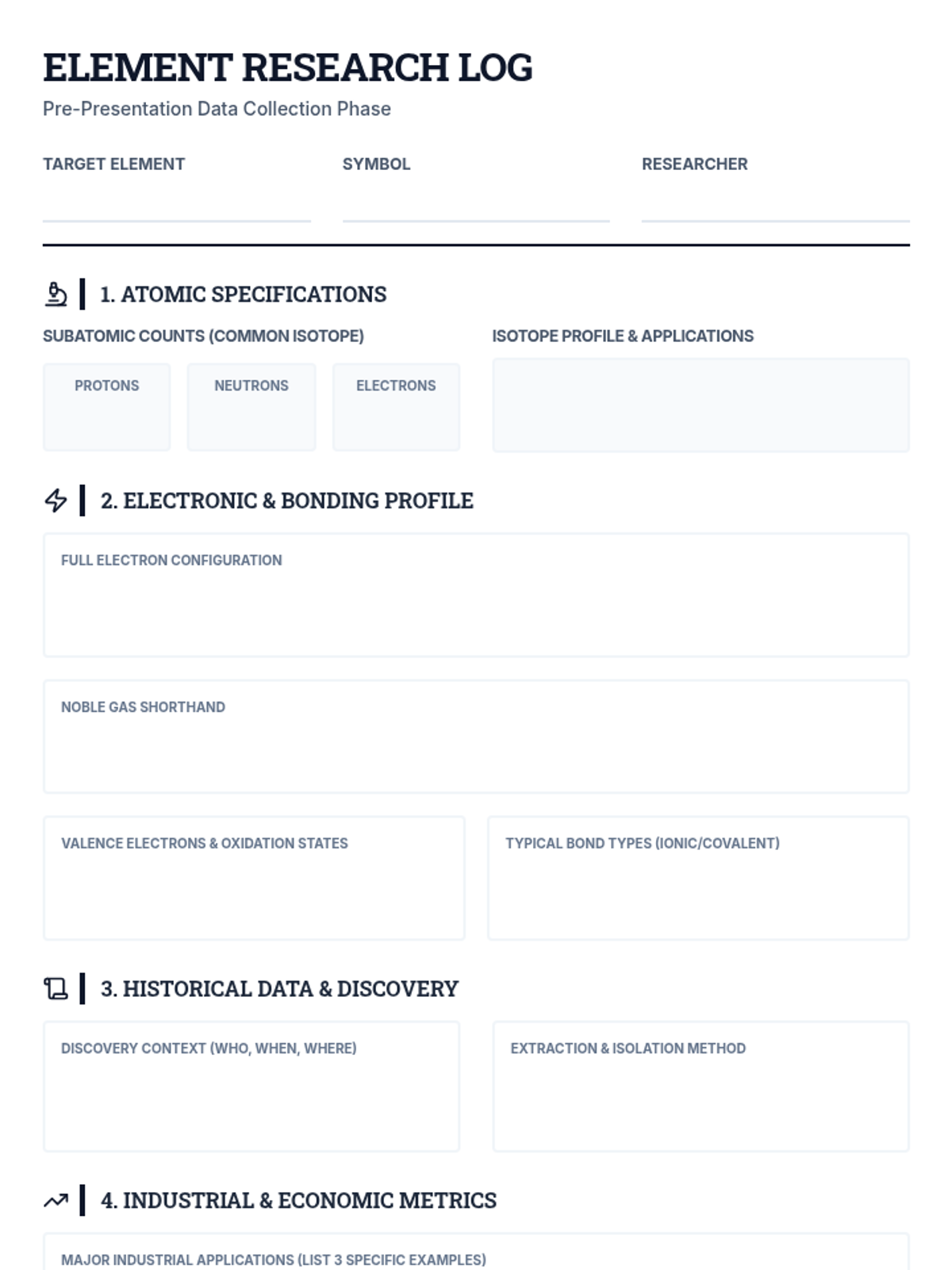
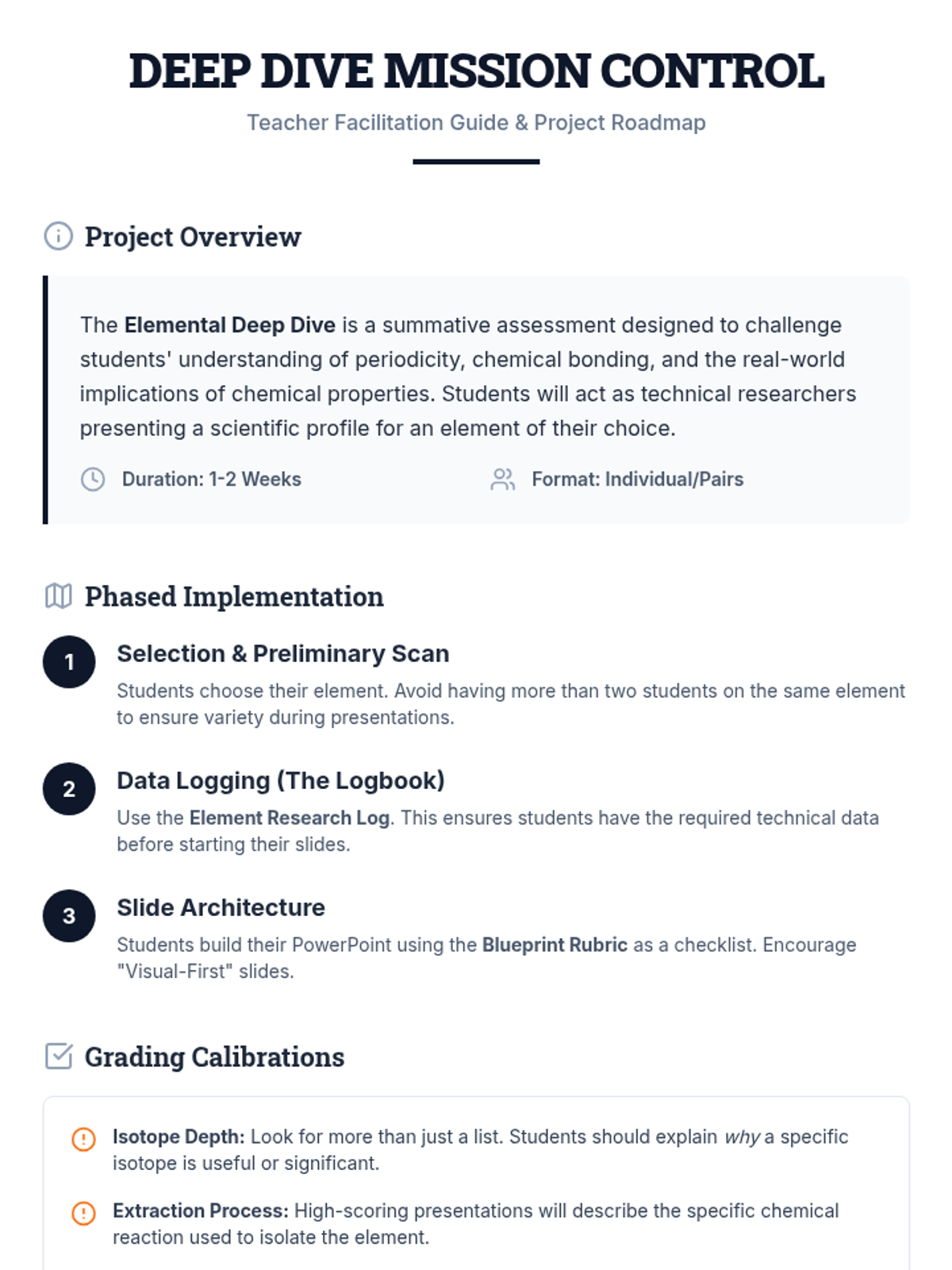
A comprehensive project guide for a deep-dive research presentation on chemical elements, including a detailed point-based rubric and a research organizer.
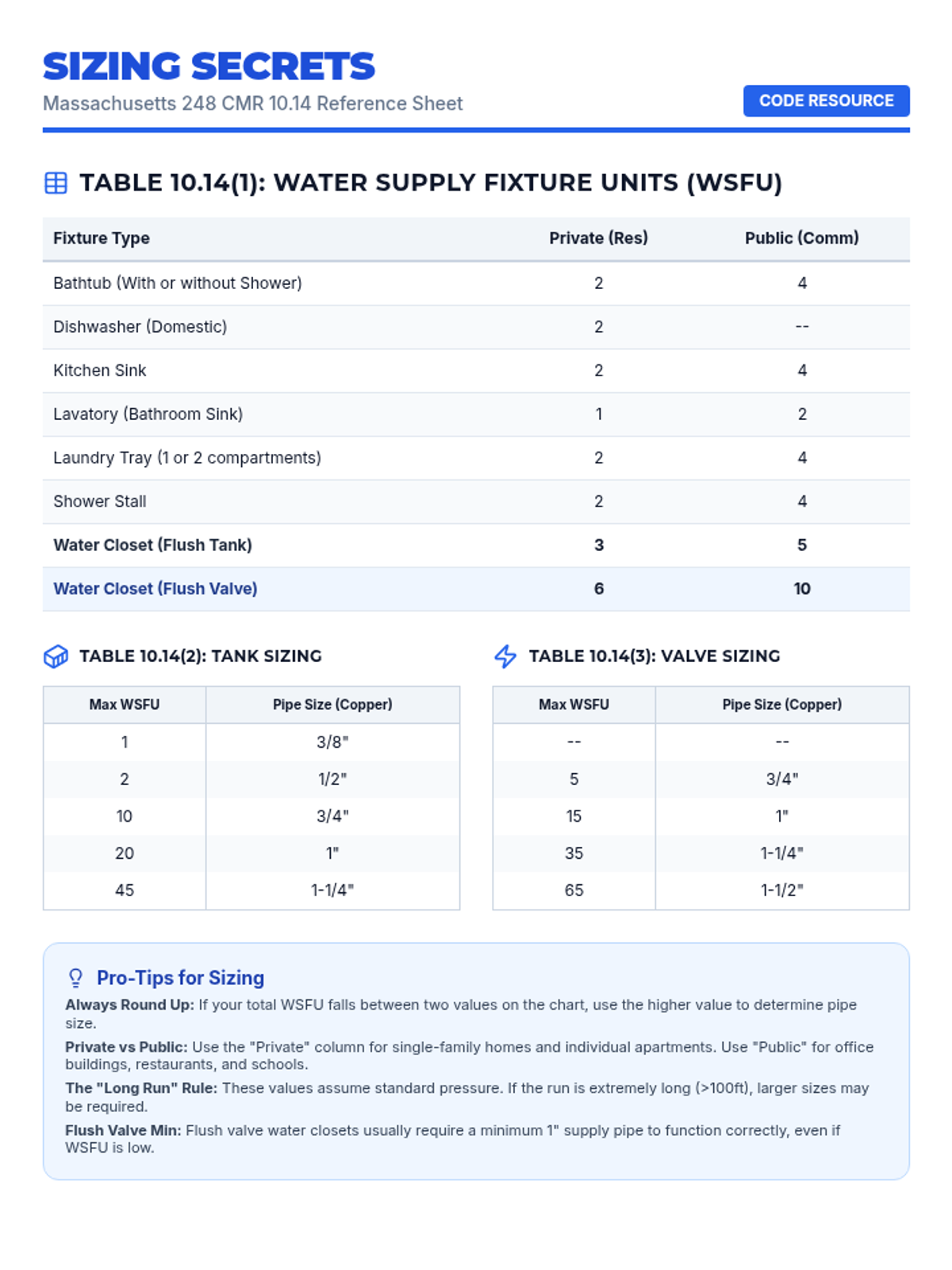
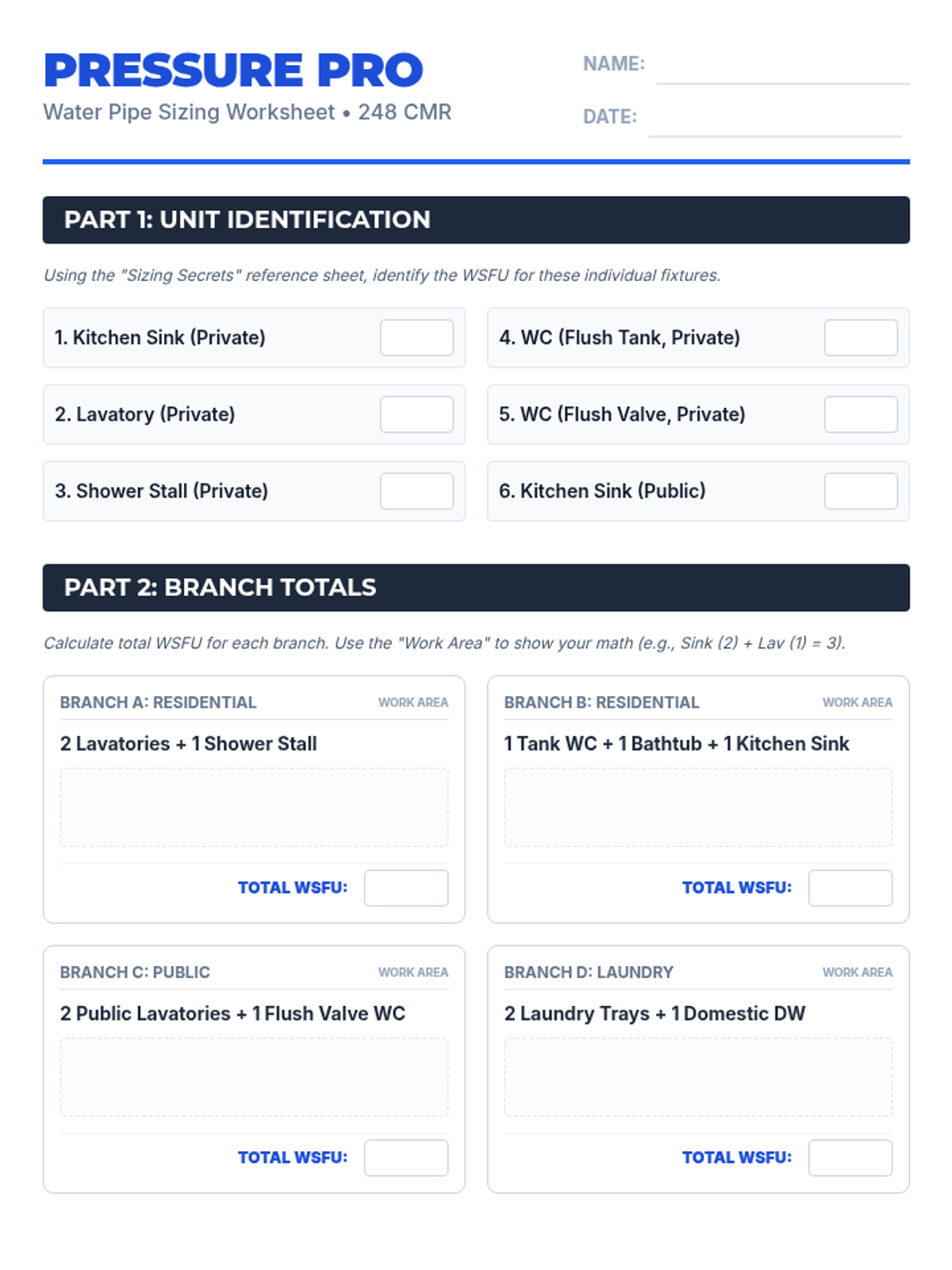
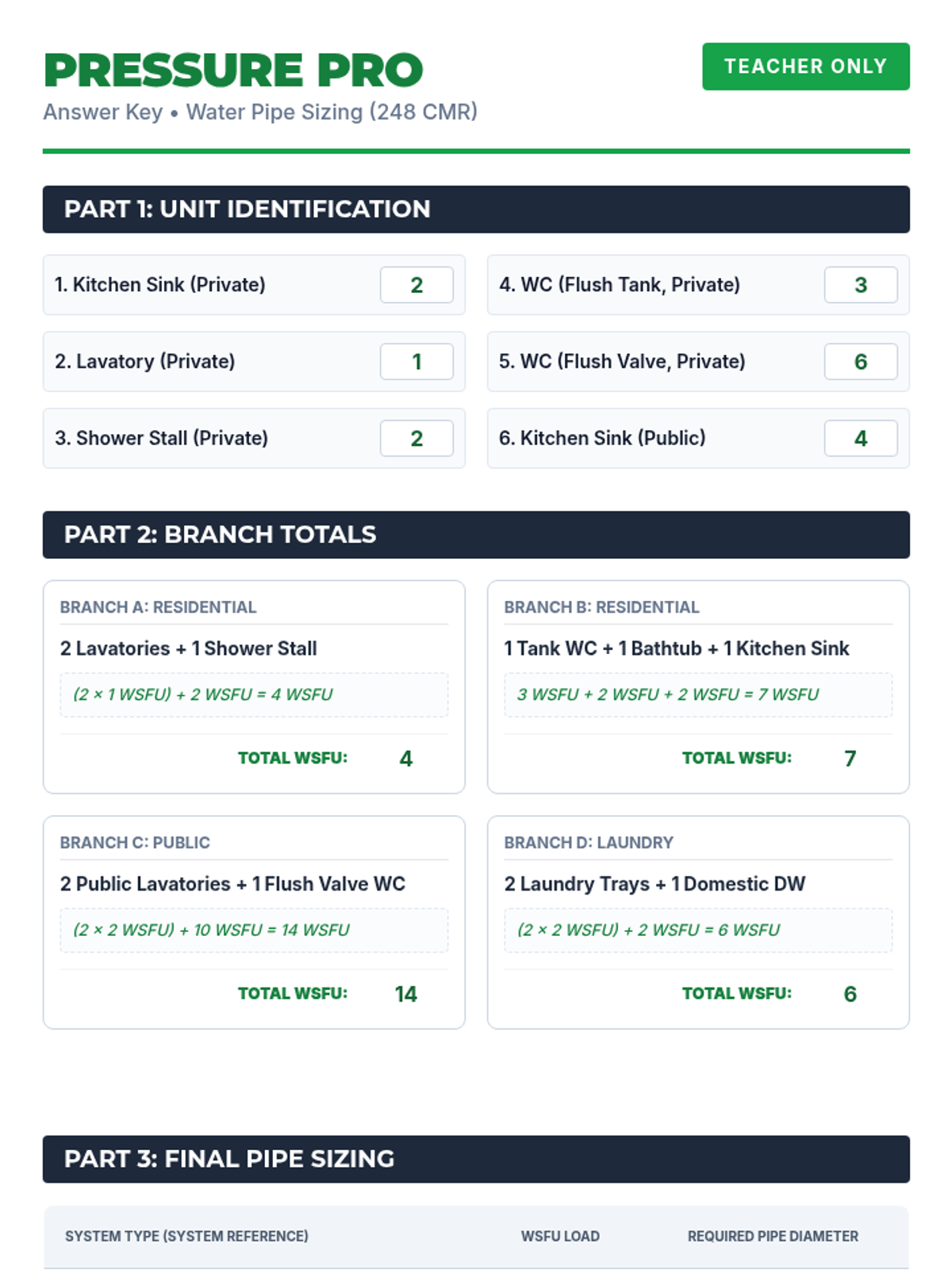
An introductory lesson on sizing water supply pipes using the Massachusetts 248 CMR plumbing code, focusing on Water Supply Fixture Units (WSFU) and table interpretation.
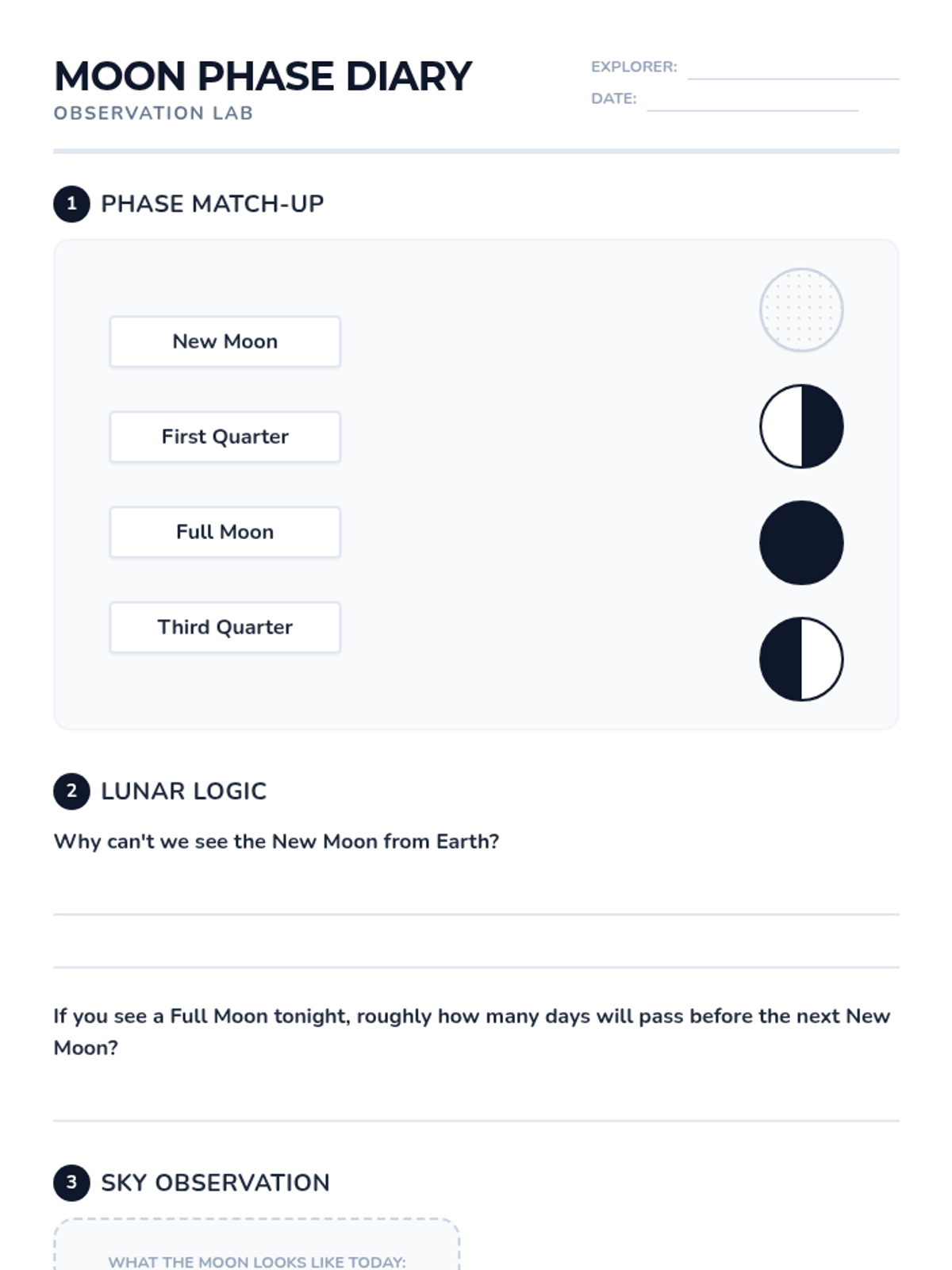
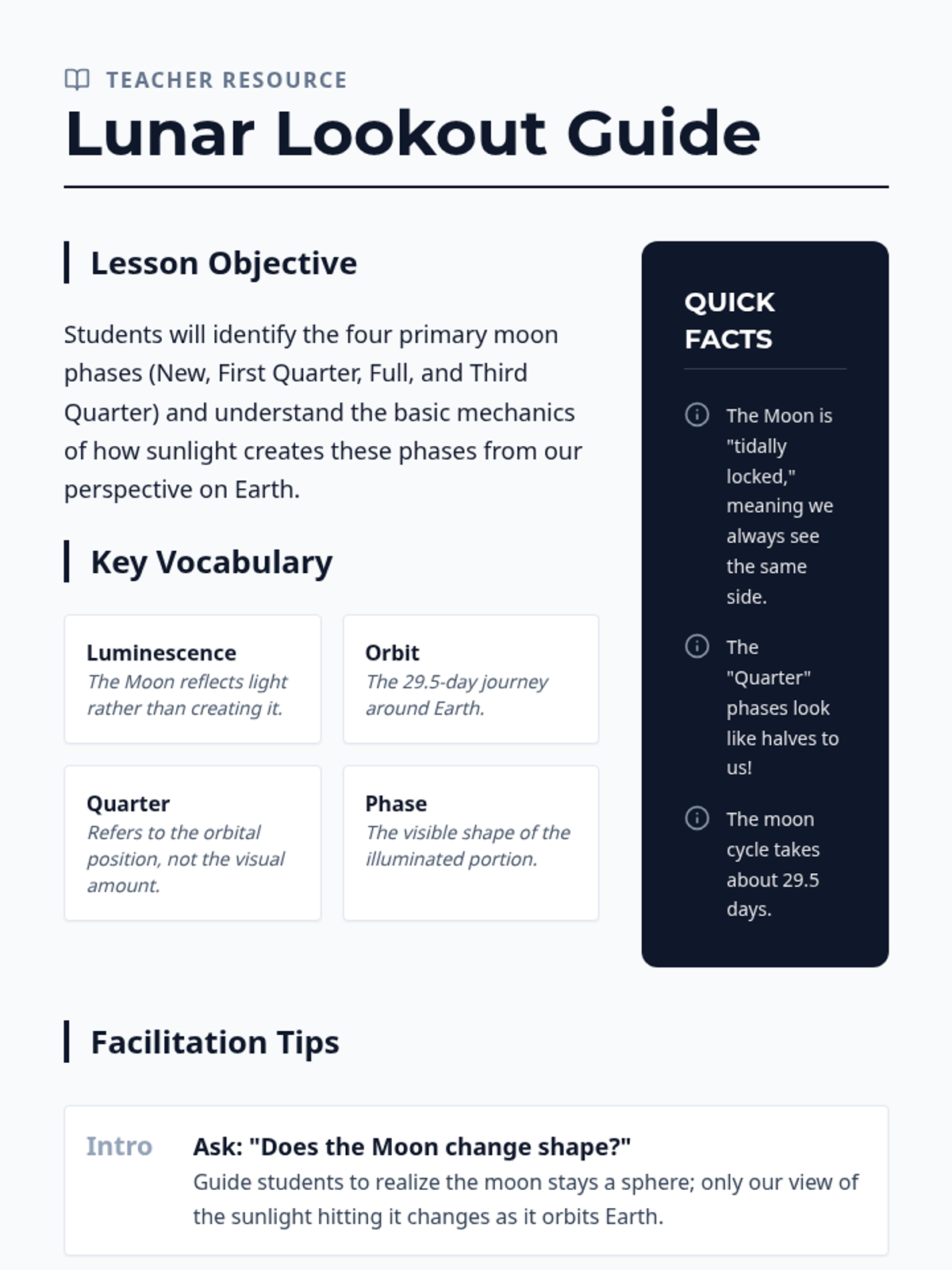
An introductory exploration of the four primary moon phases, helping students identify and understand the lunar cycle through visual observation.
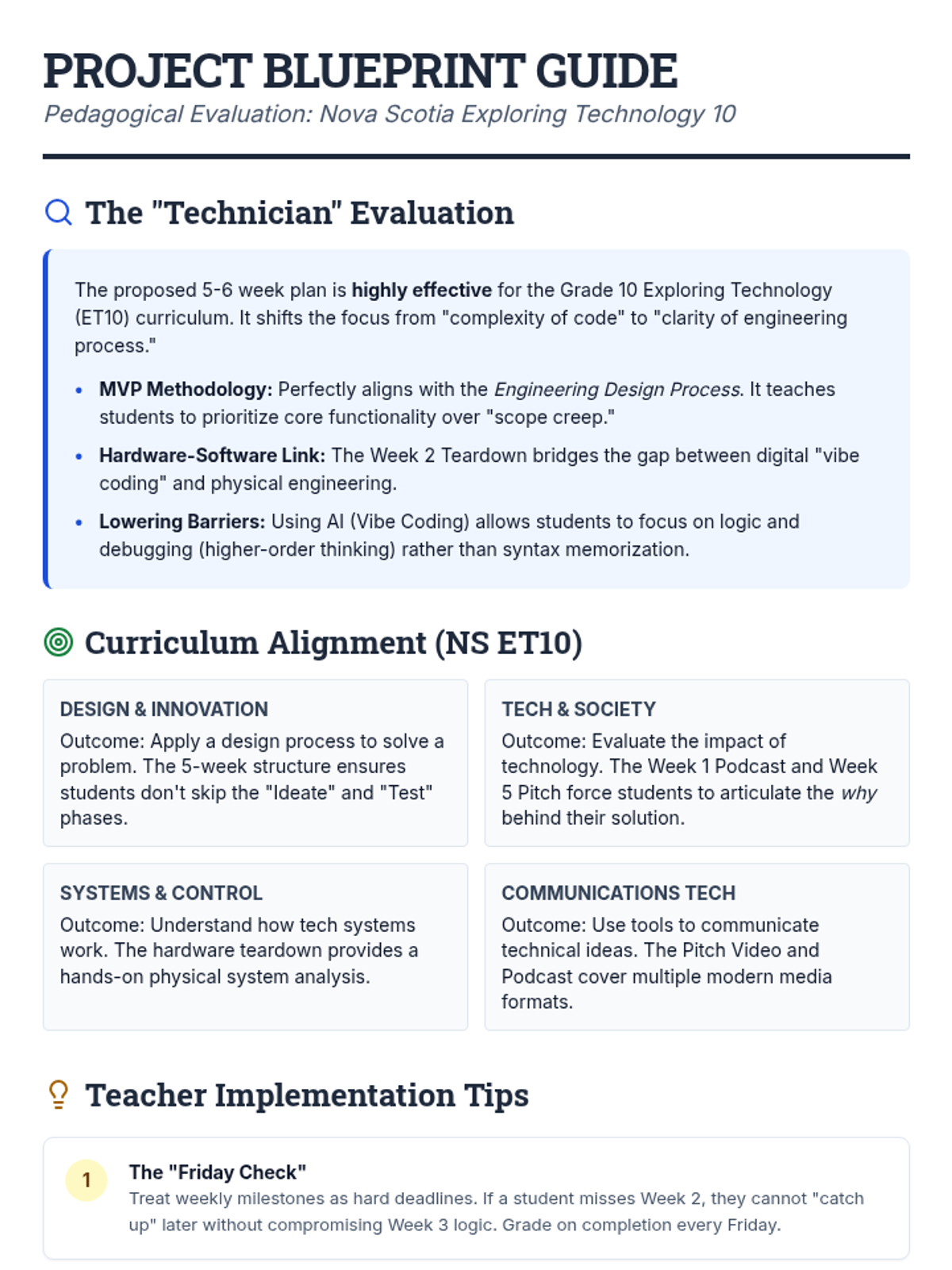
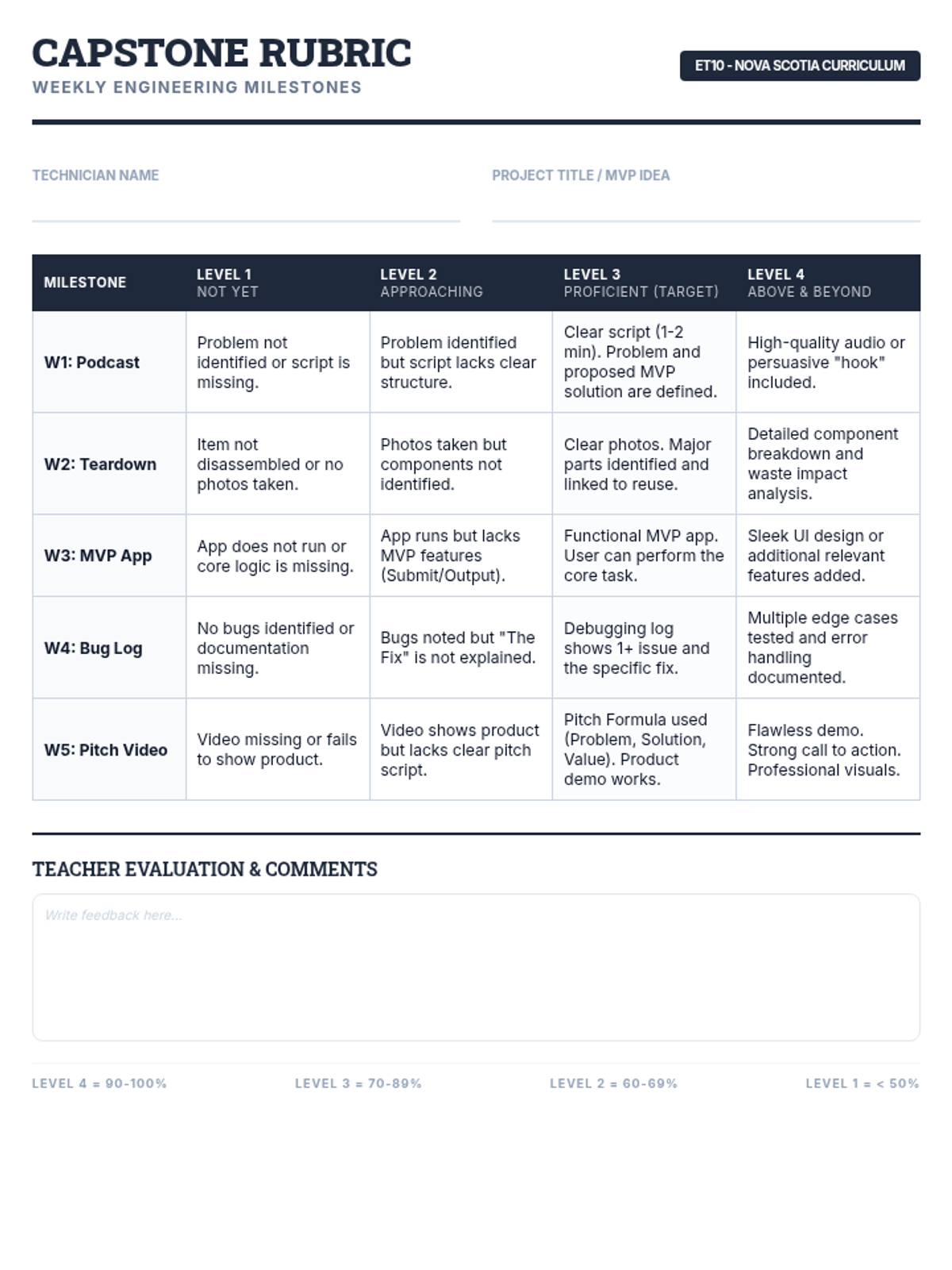
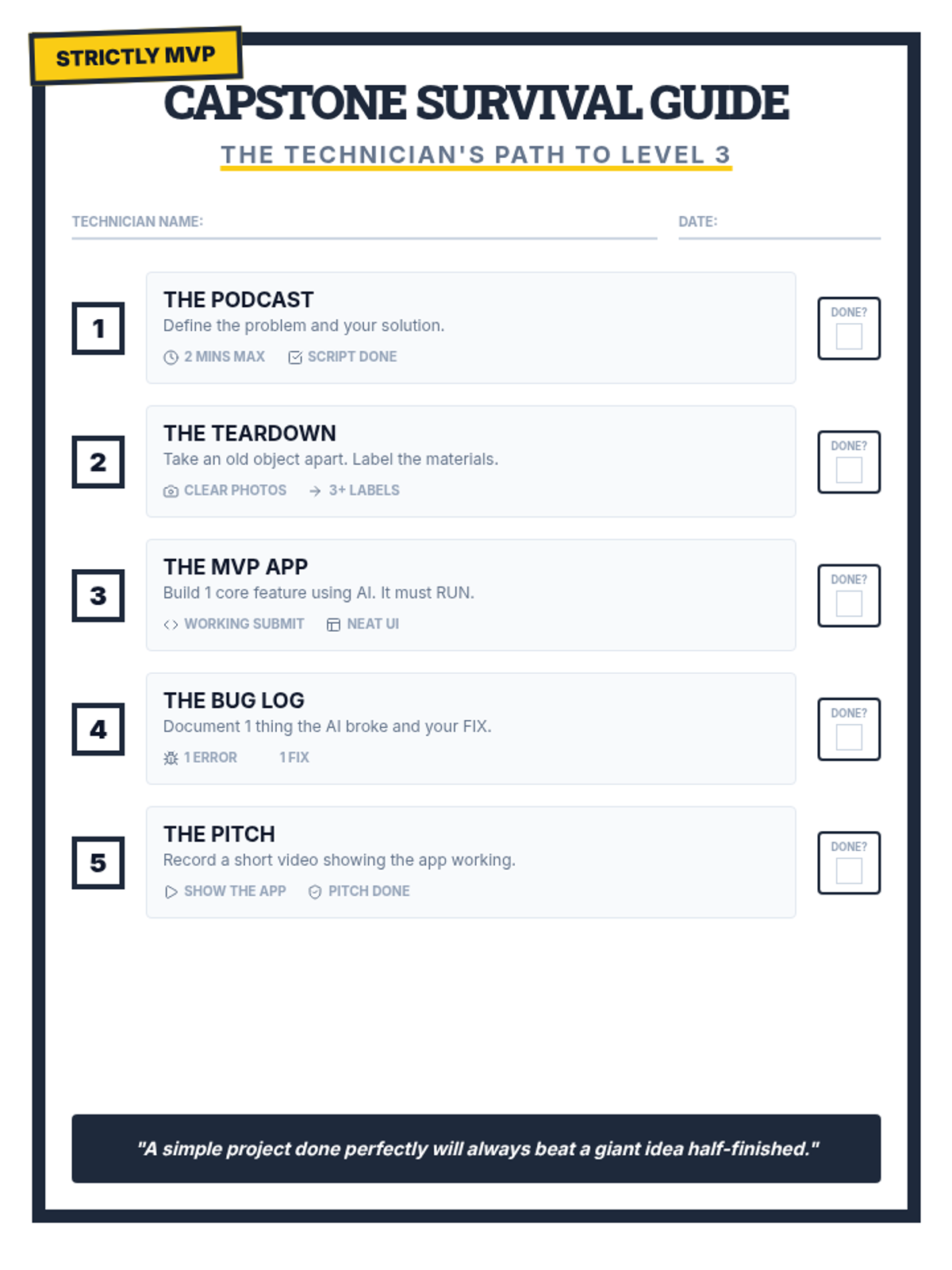
Teacher guidance and student tracking tools for the 5-week Tech Capstone project, including evaluation rubrics and progress monitoring.
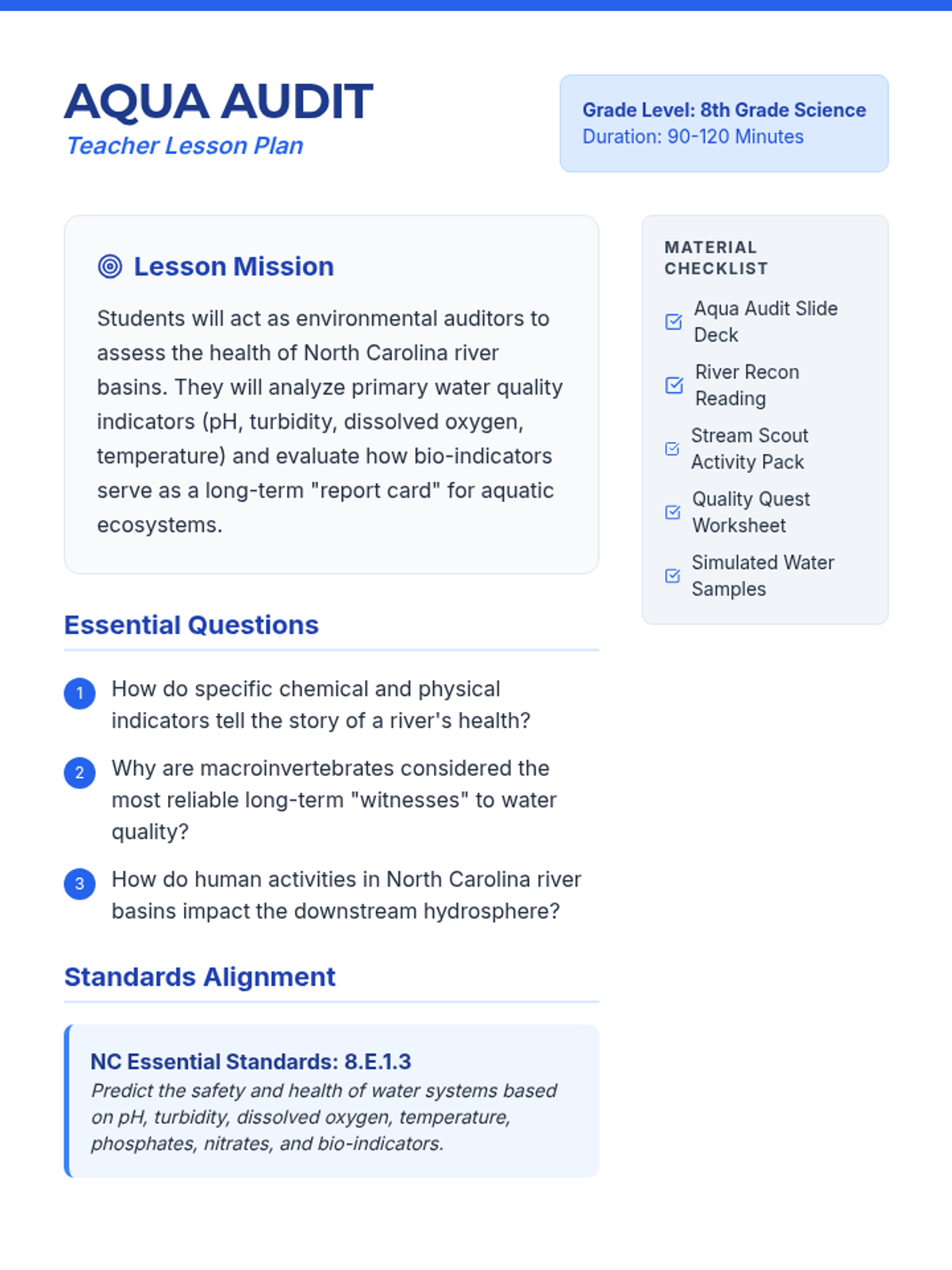
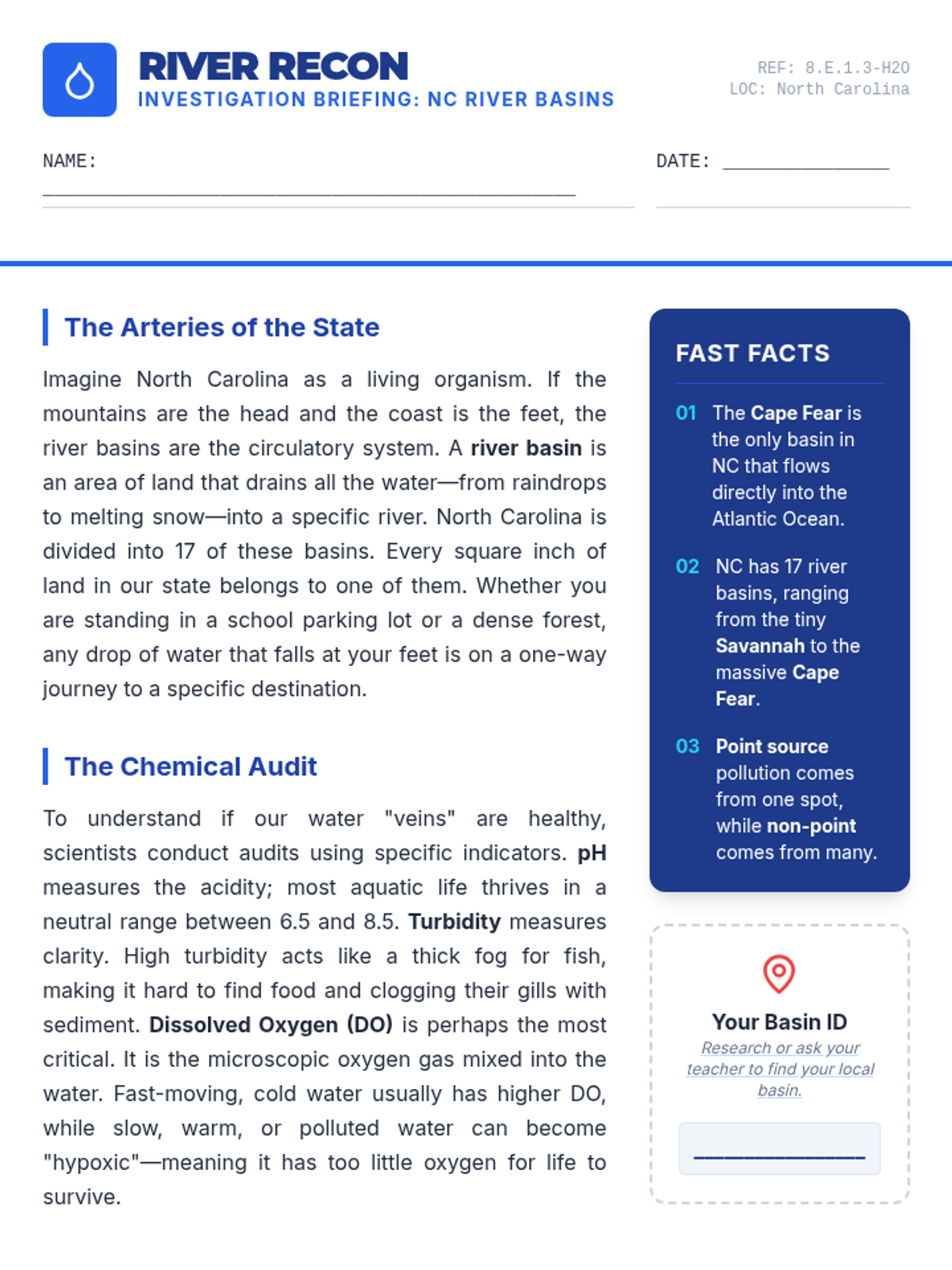
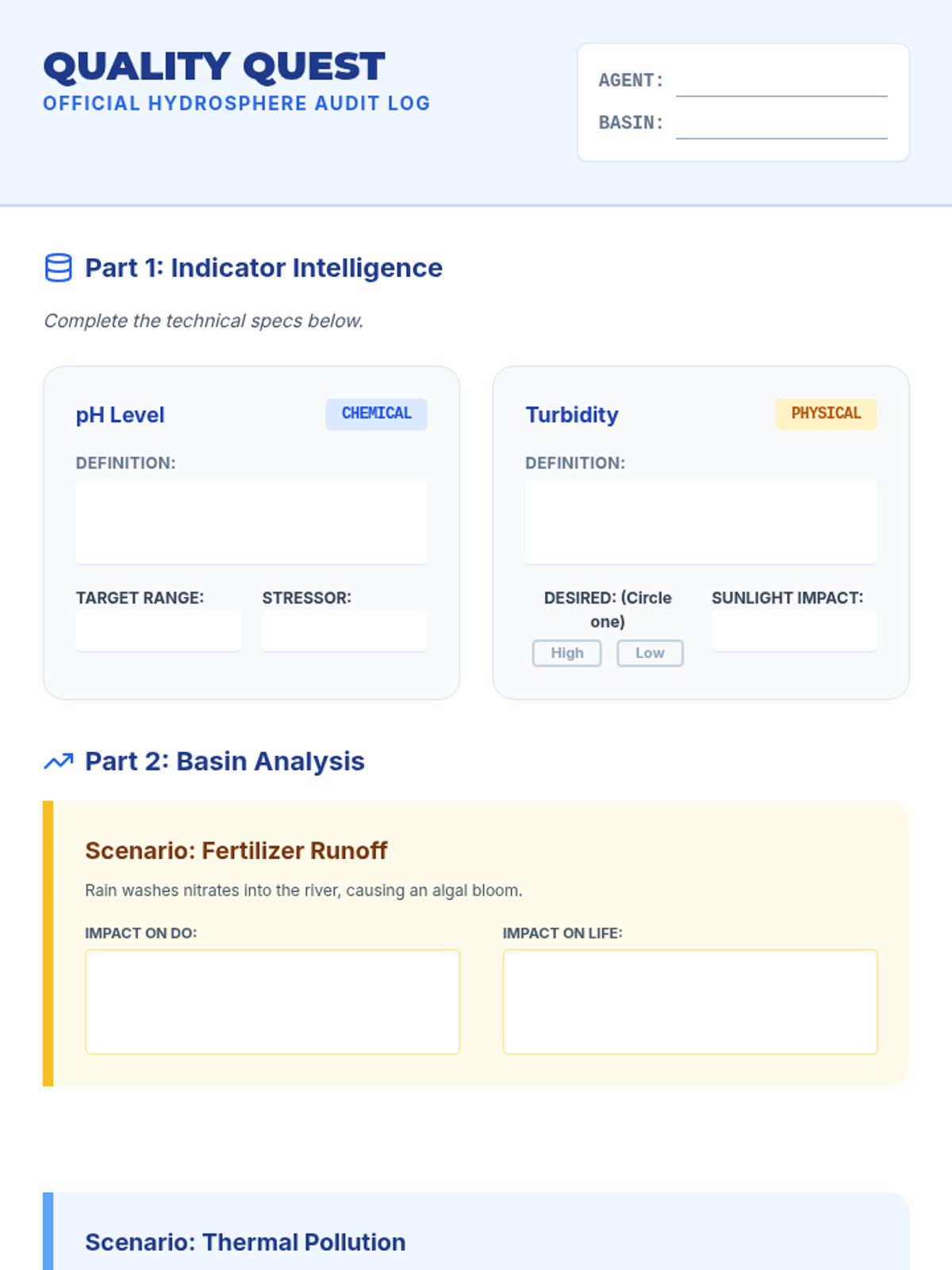
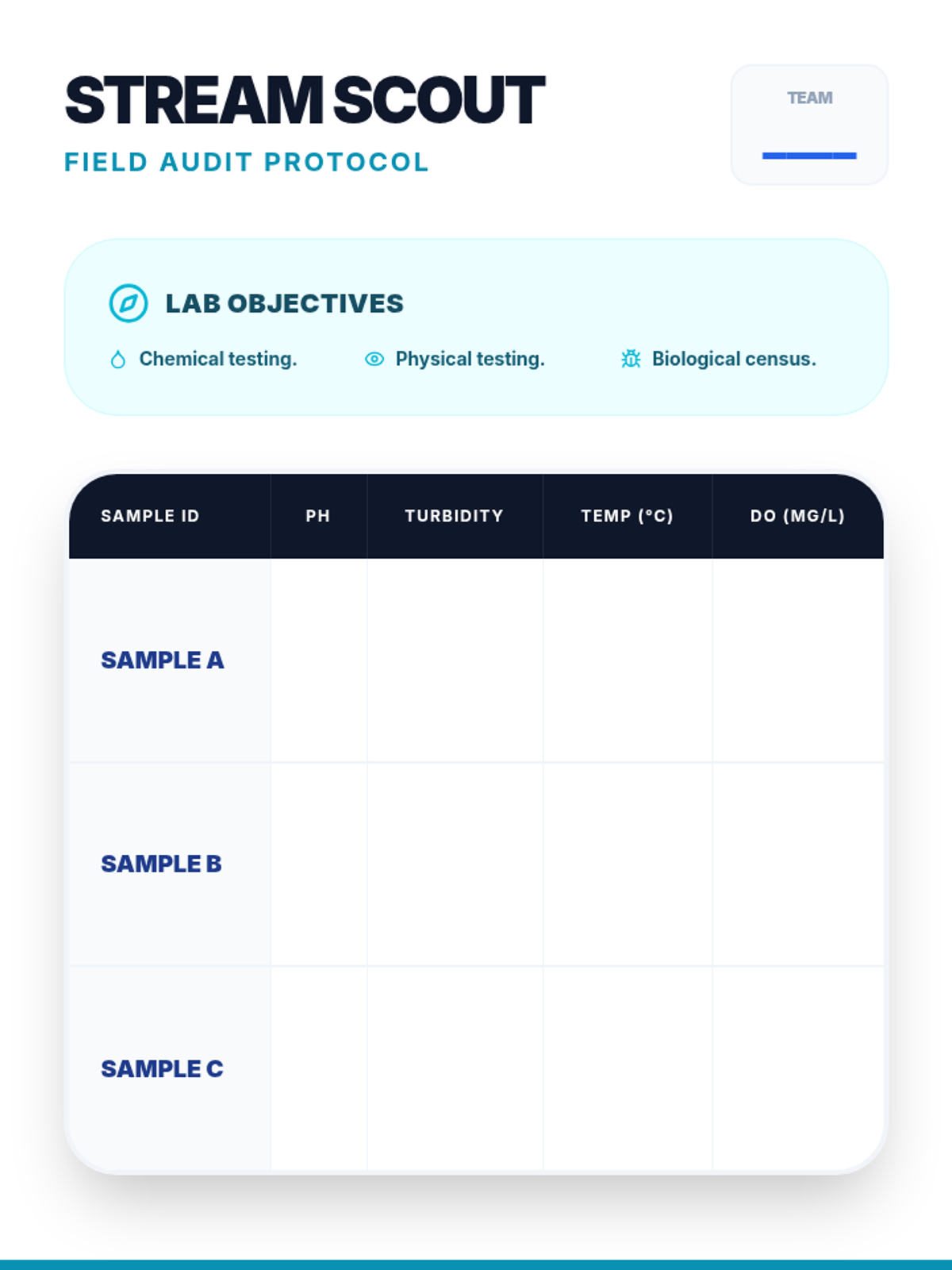
An investigation into North Carolina river basins where students analyze water quality indicators like pH, turbidity, and bio-indicators to audit the health of local aquatic systems.
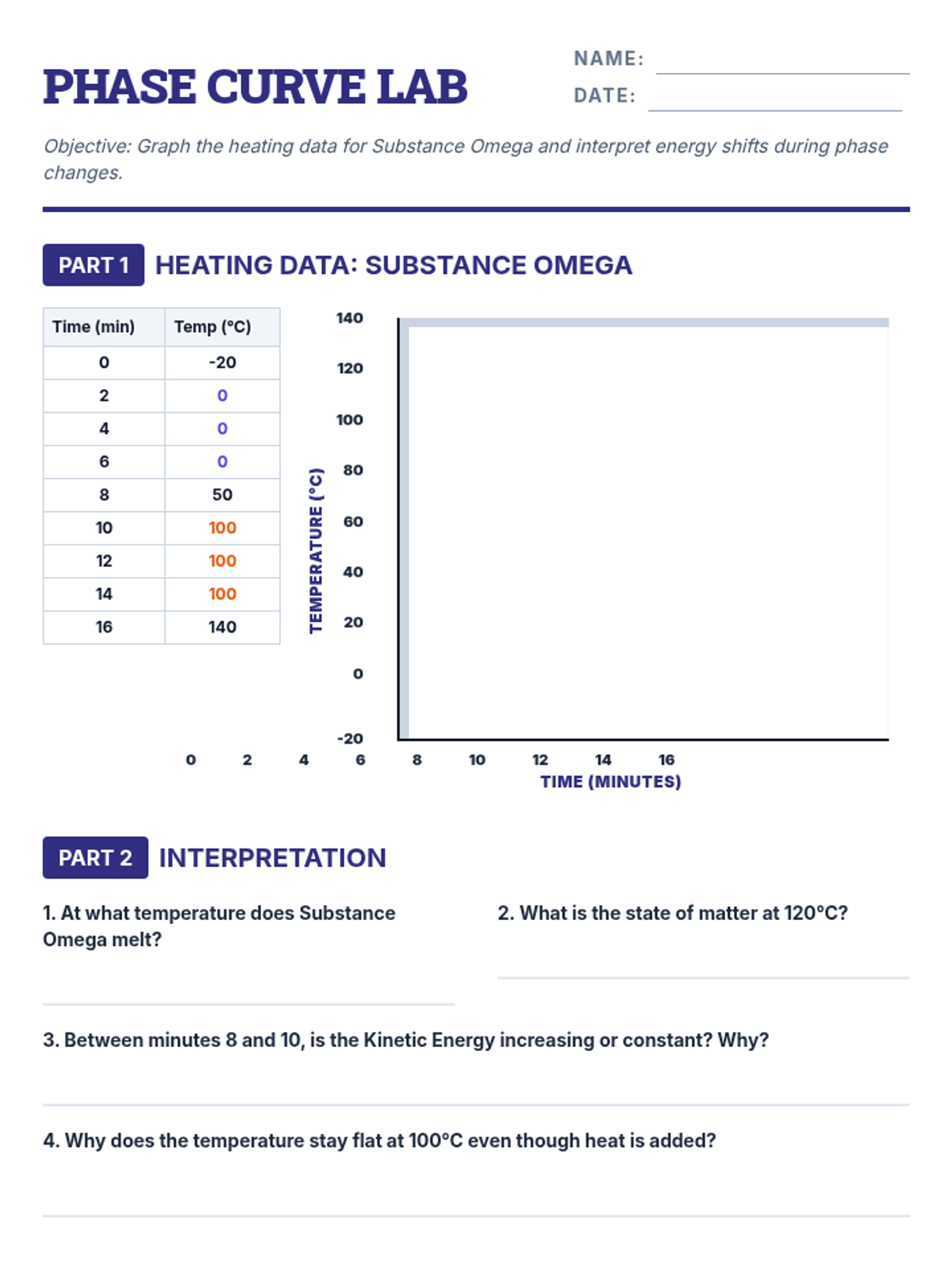
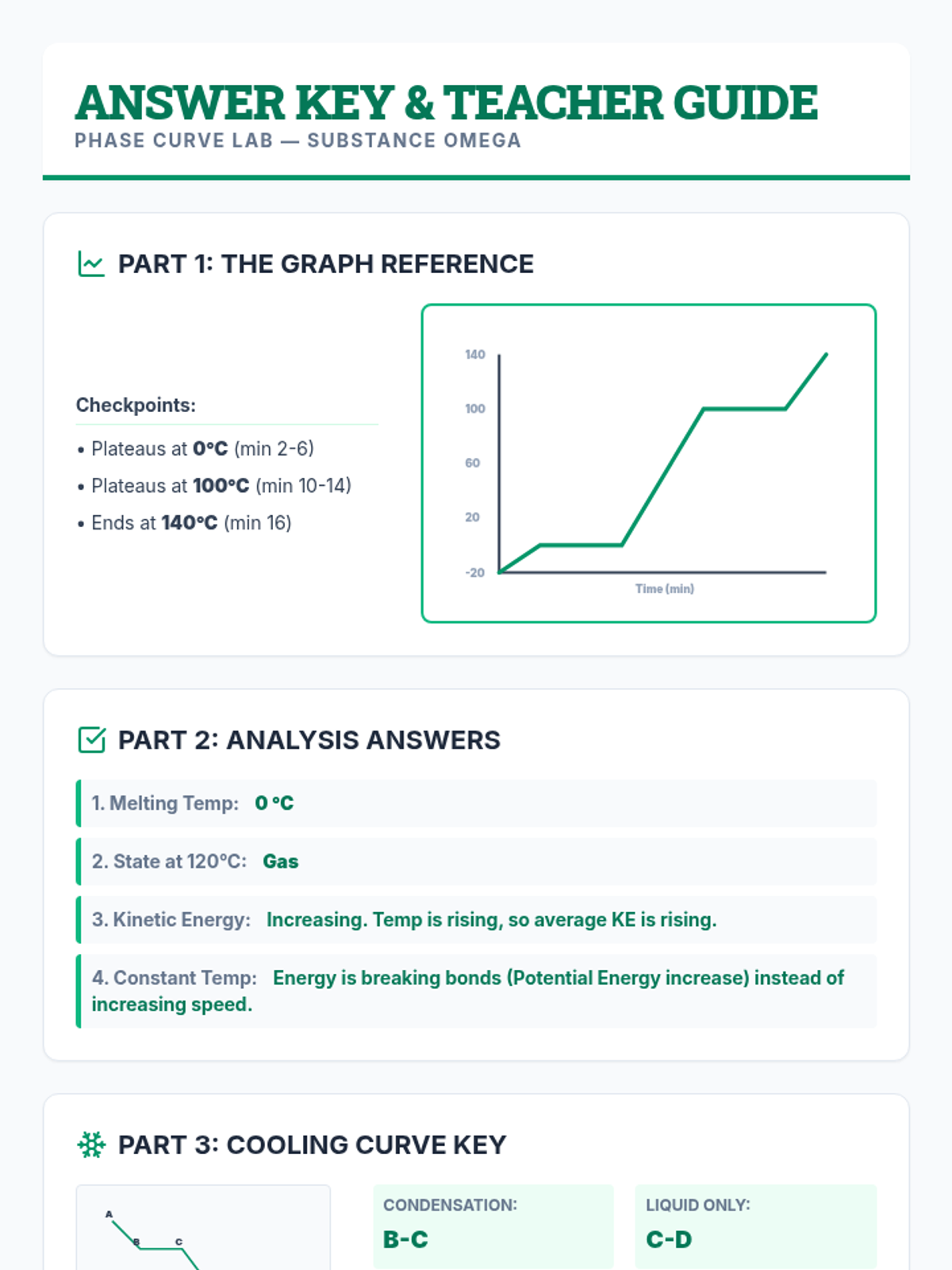
A comprehensive lesson on graphing and interpreting heating and cooling curves, focusing on phase changes and energy transfers.
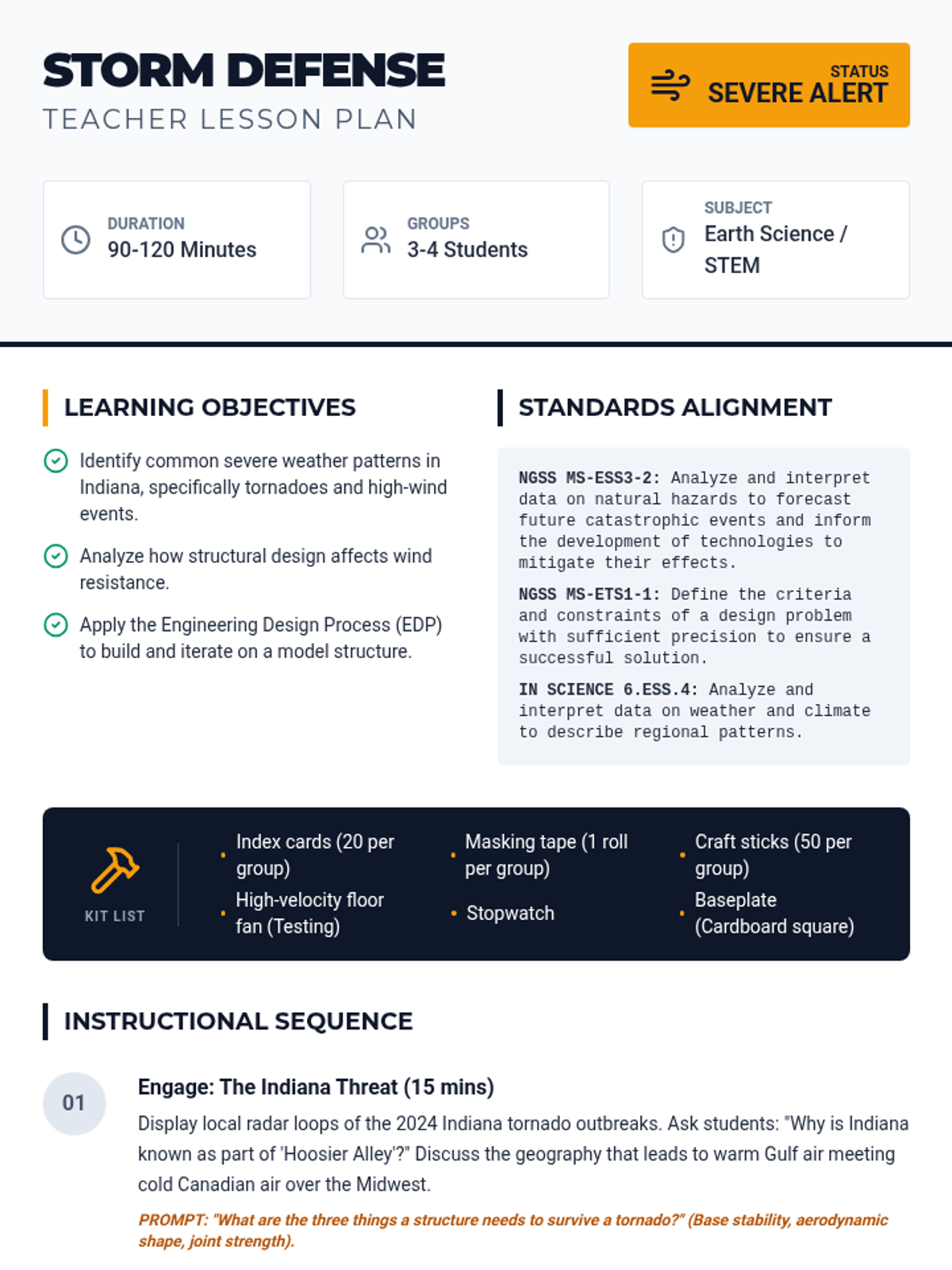
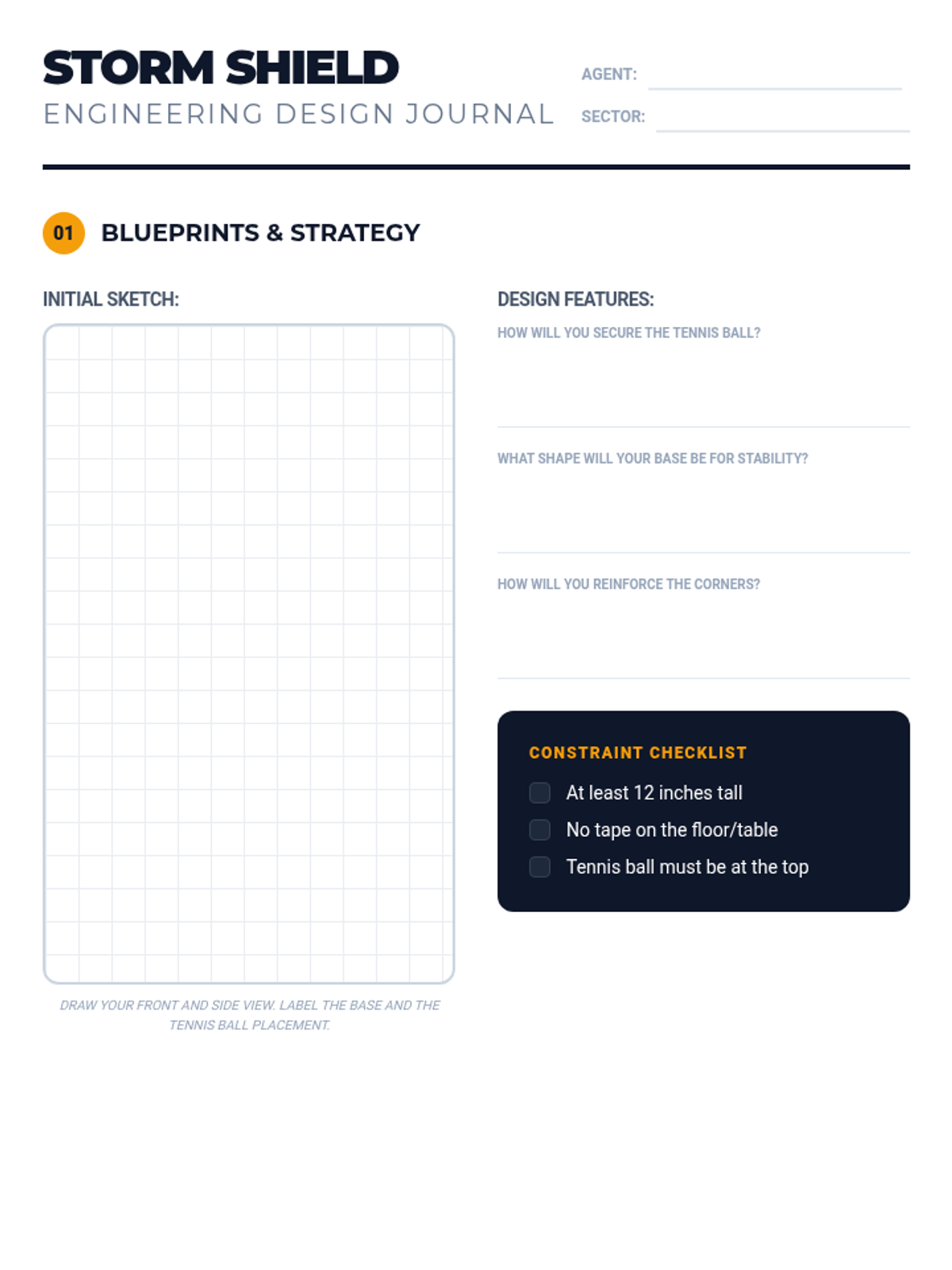
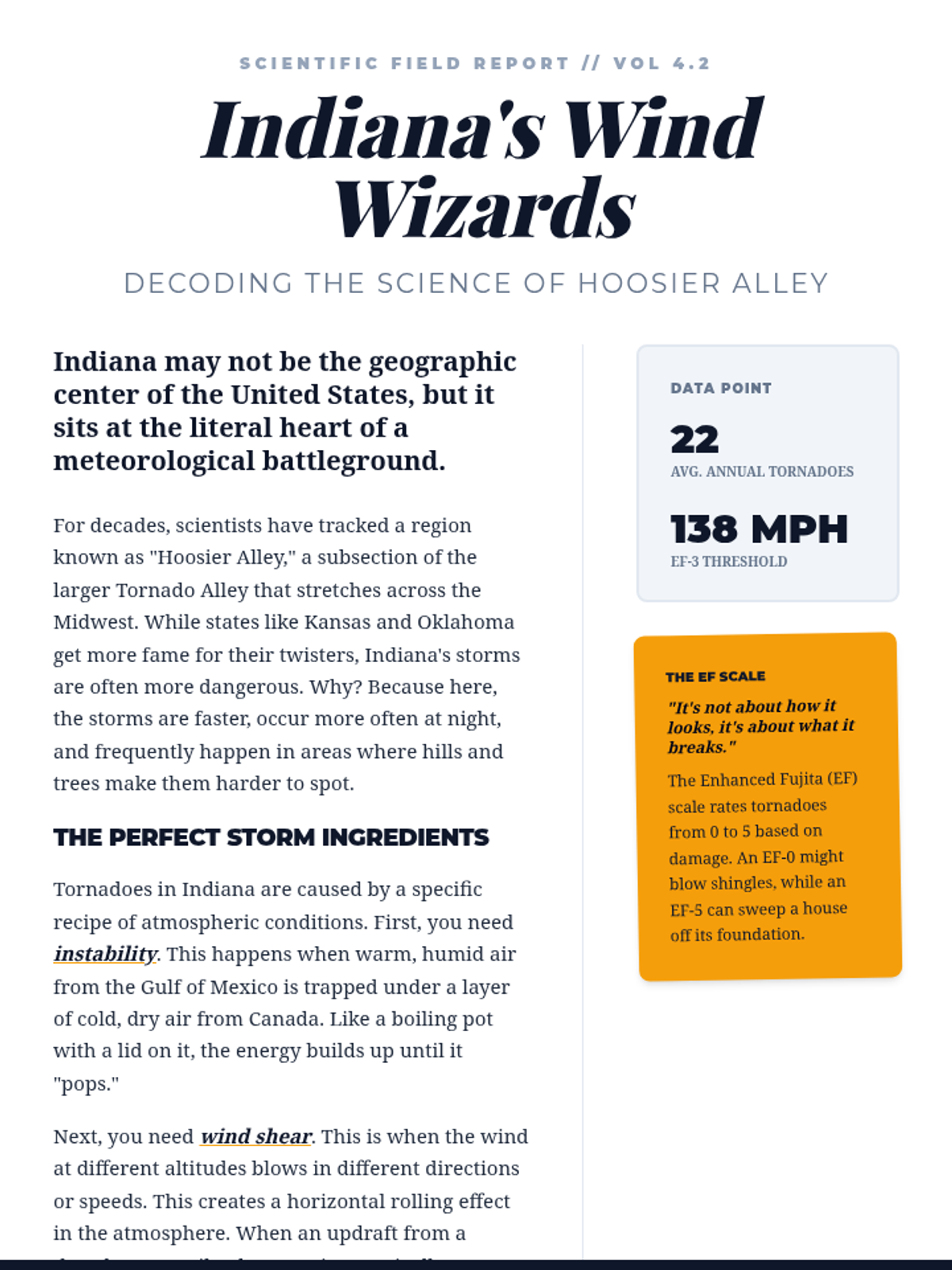
Students investigate severe weather patterns in Indiana and apply engineering principles to design and build structures capable of withstanding high-speed winds. This STEM-focused lesson combines earth science with a hands-on engineering challenge.
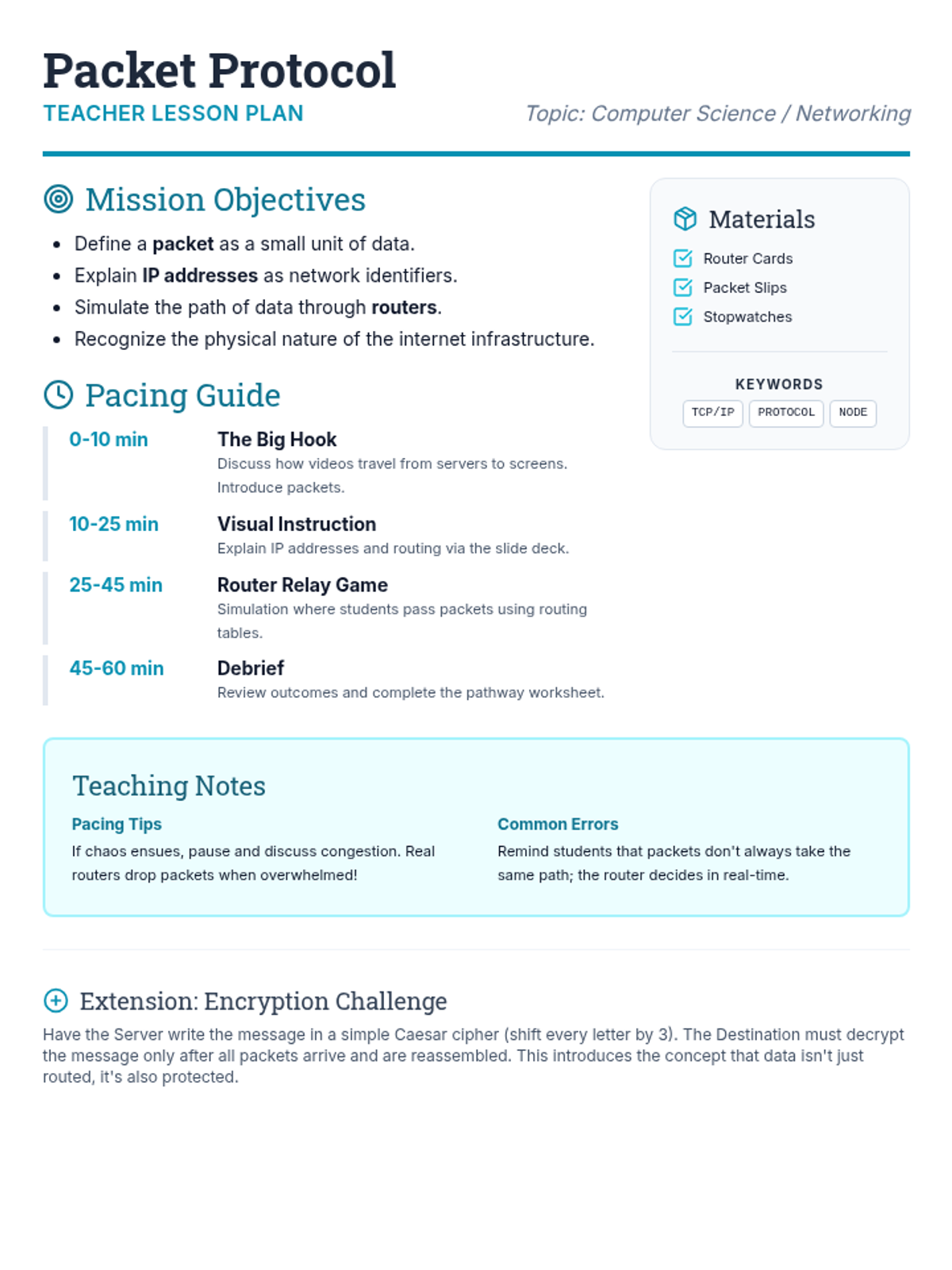
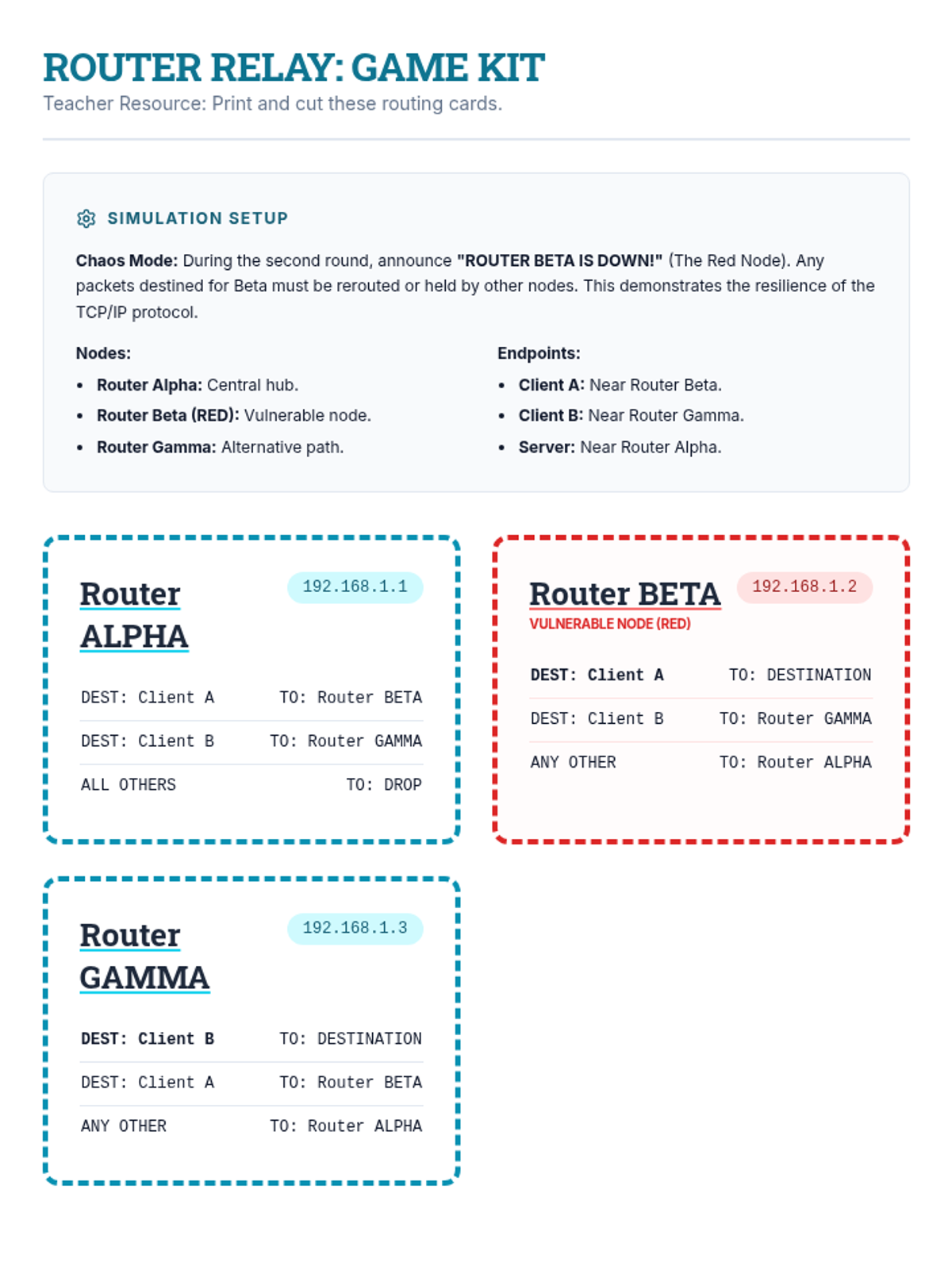
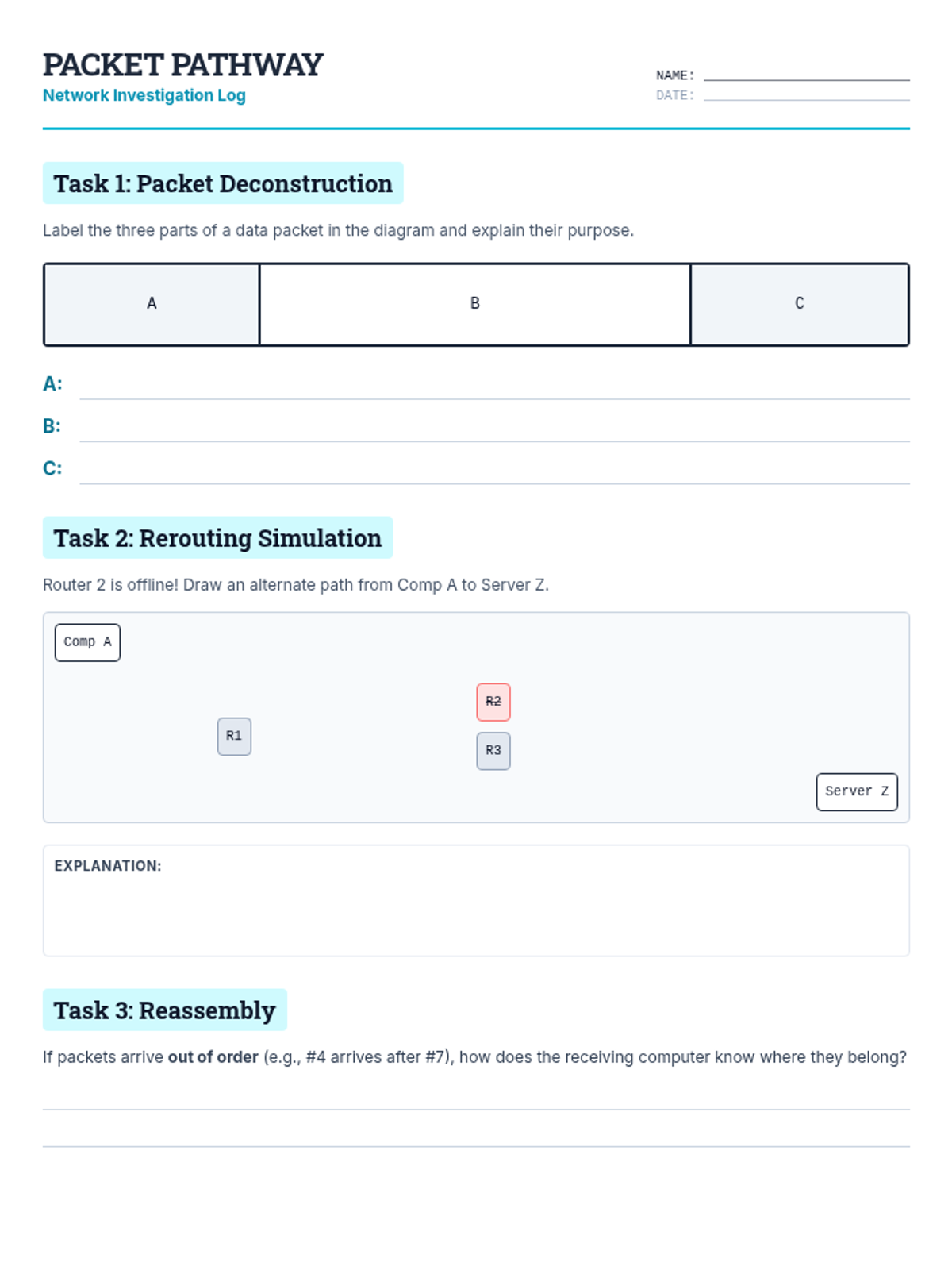
A hands-on simulation lesson where students act as routers and servers to understand how data packets travel across the internet using IP addresses and physical infrastructure.
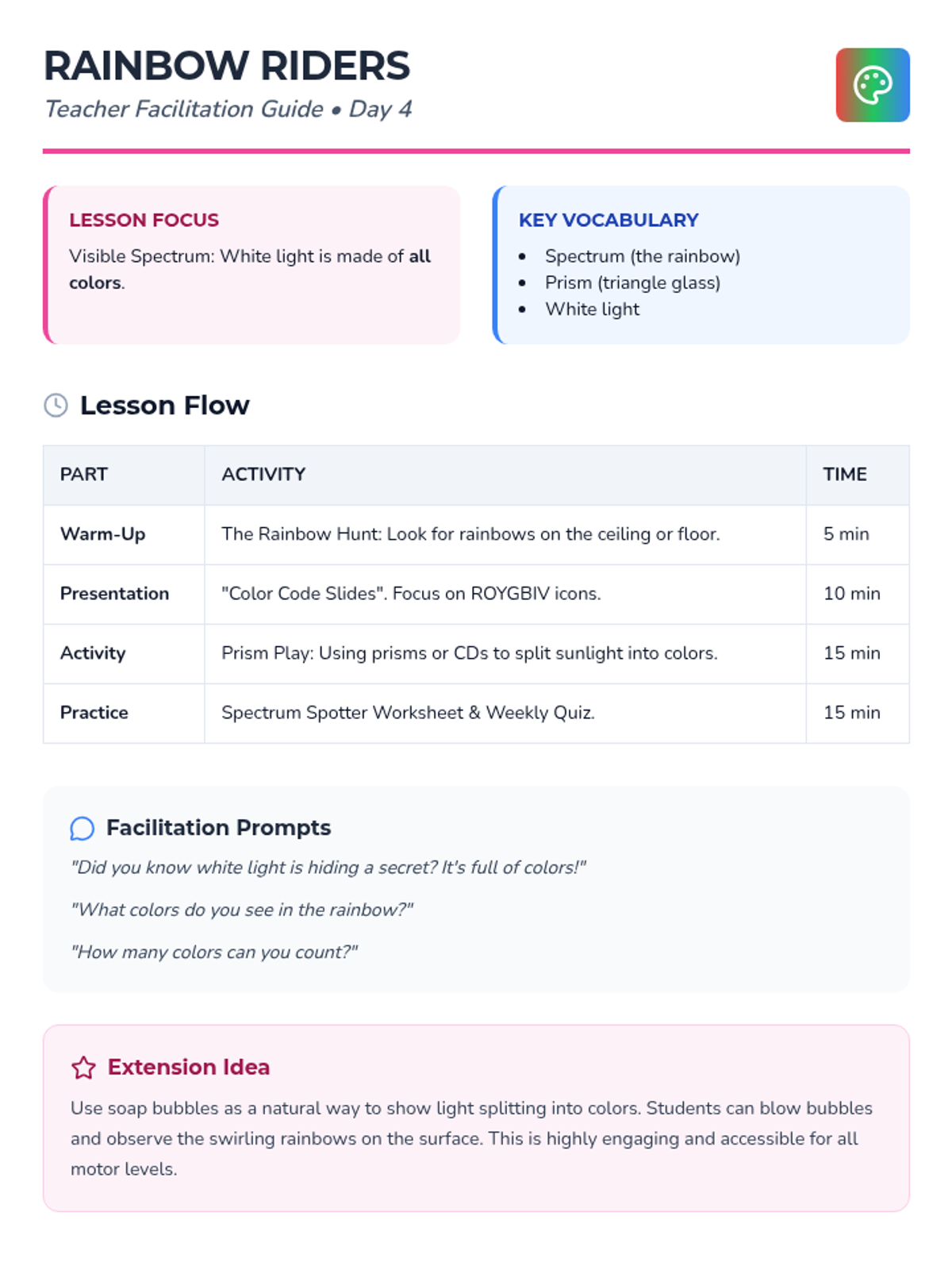
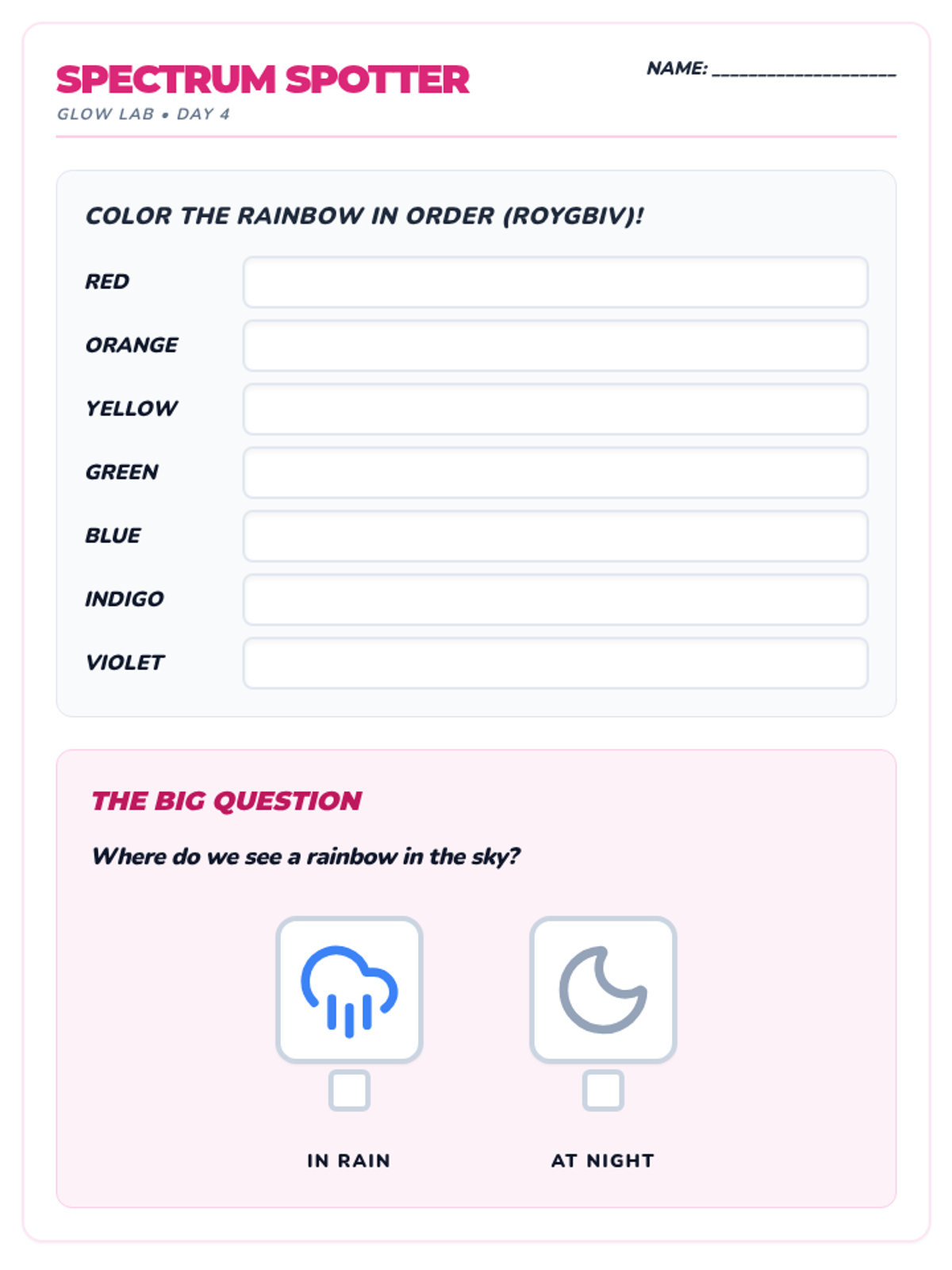
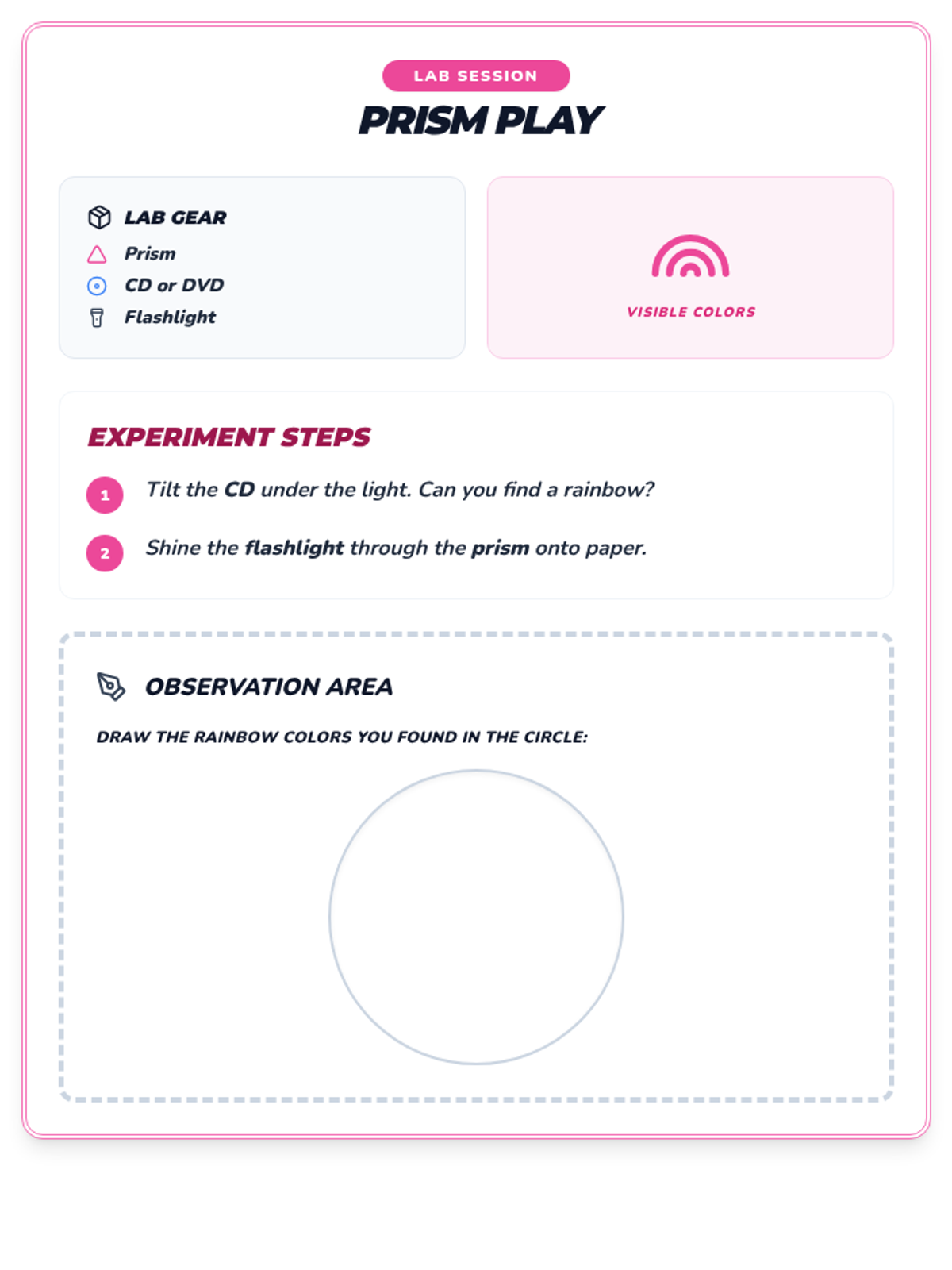
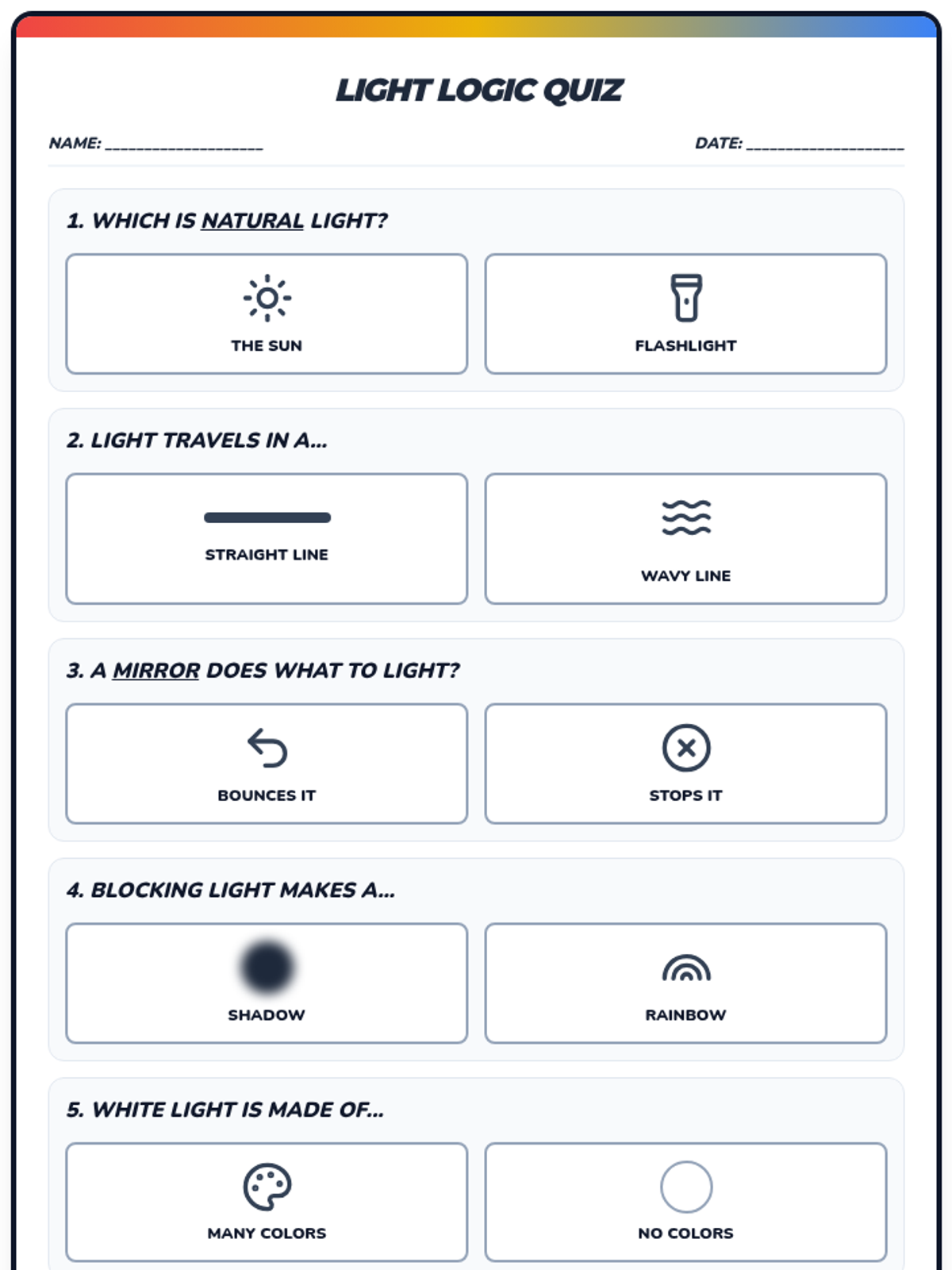
A discovery of the visible spectrum, rainbow colors, and a final unit quiz to celebrate learning.
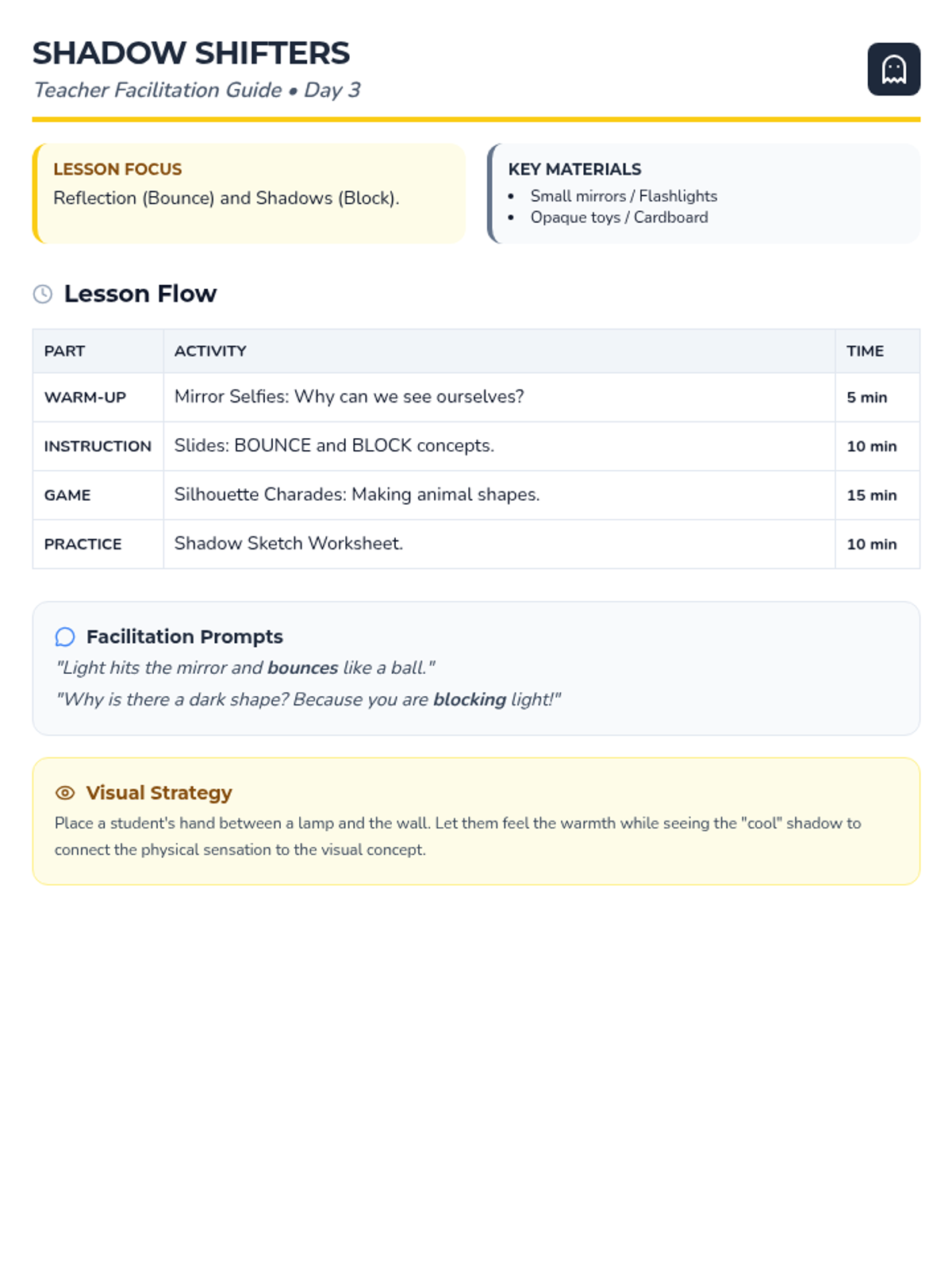
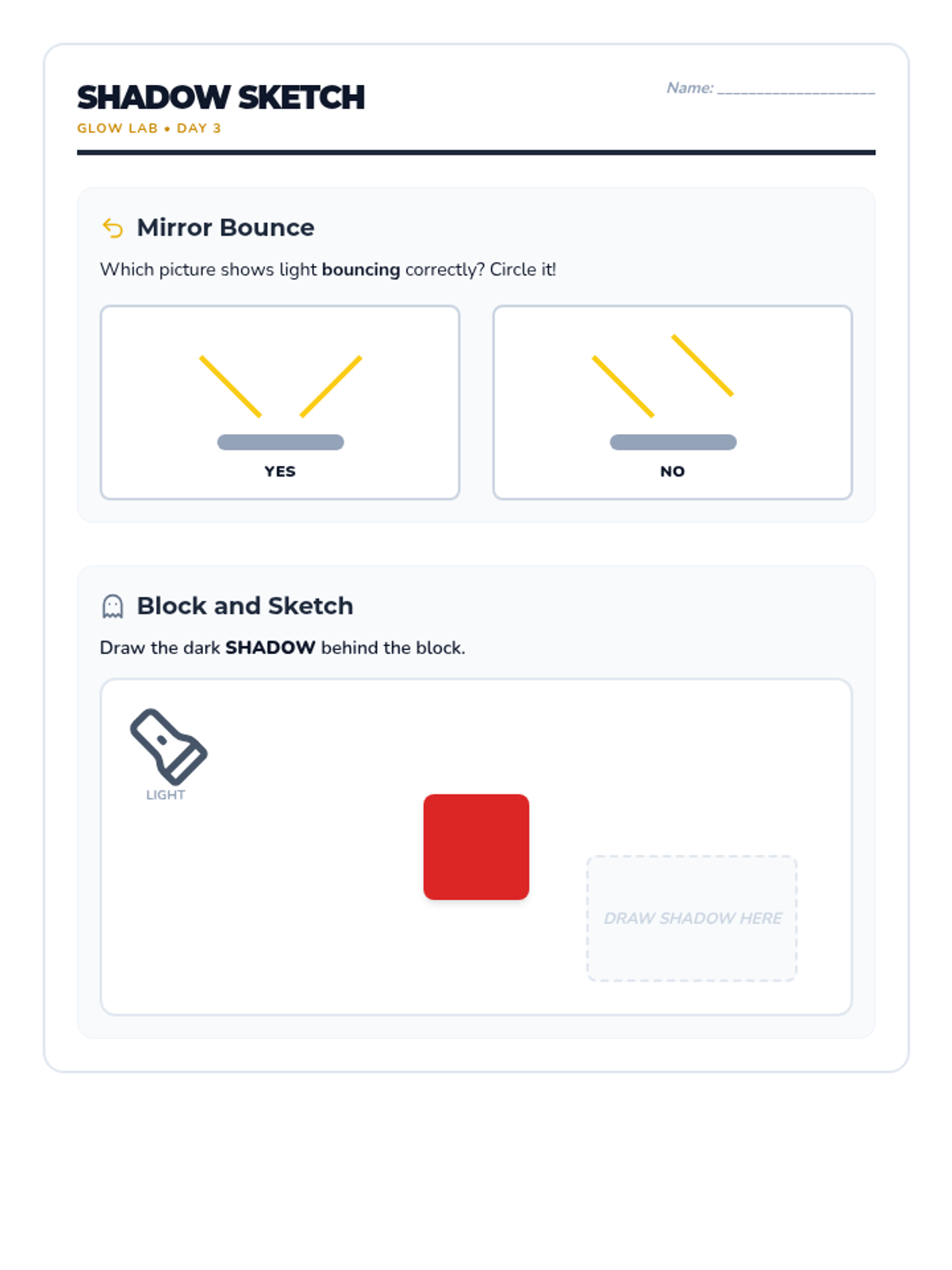
Students investigate how light bounces off mirrors and how objects block light to create shadows.
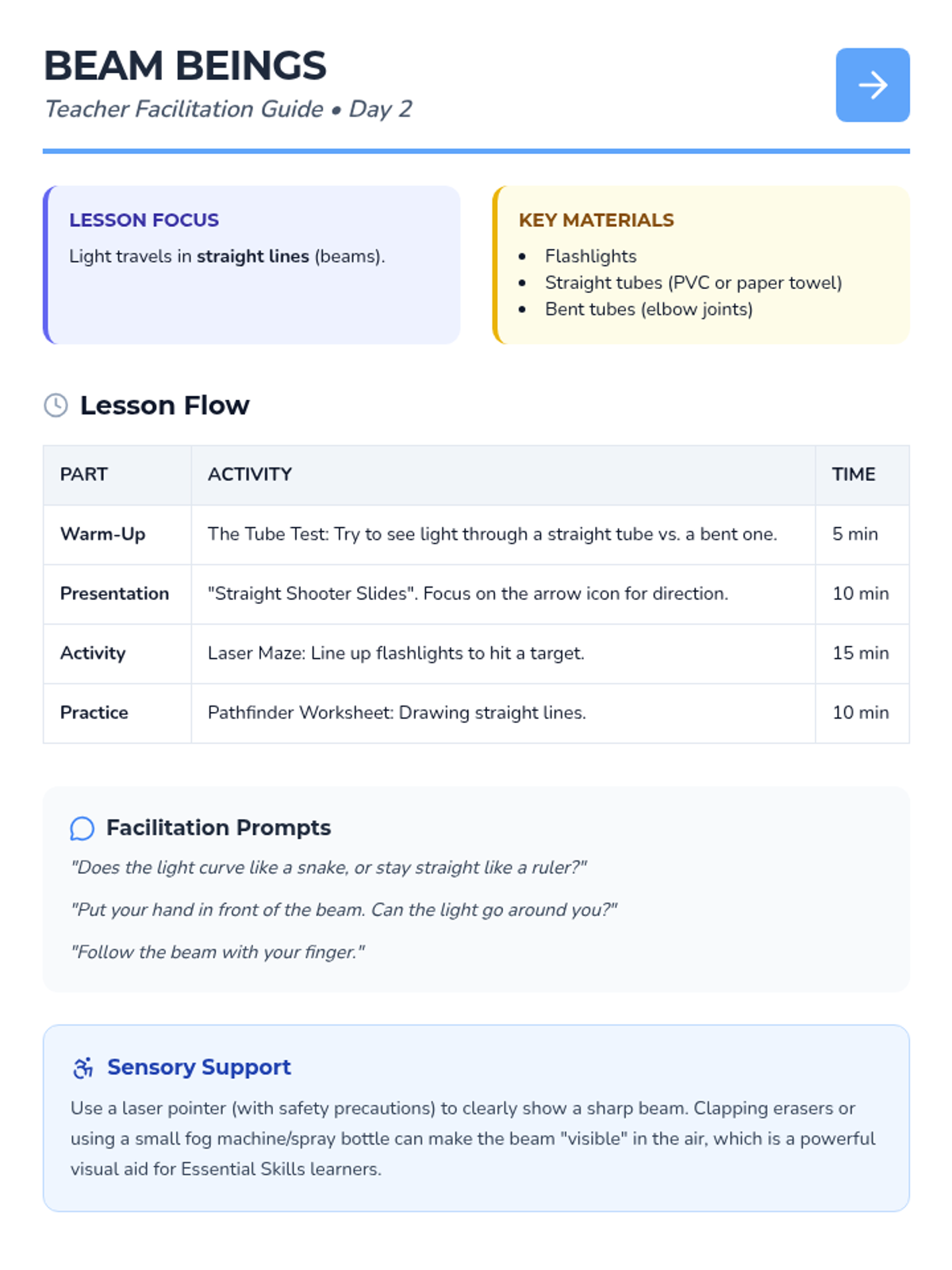
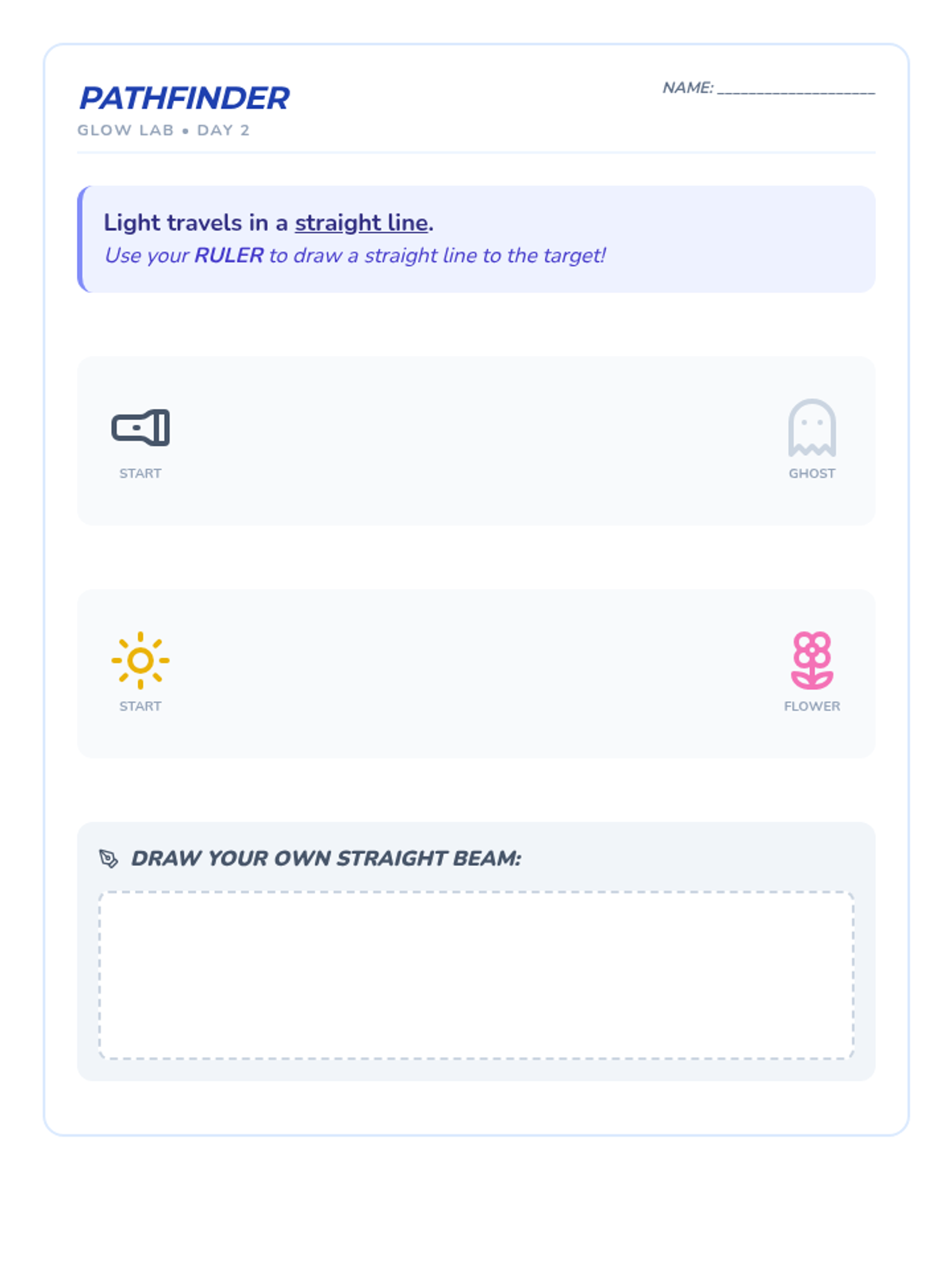
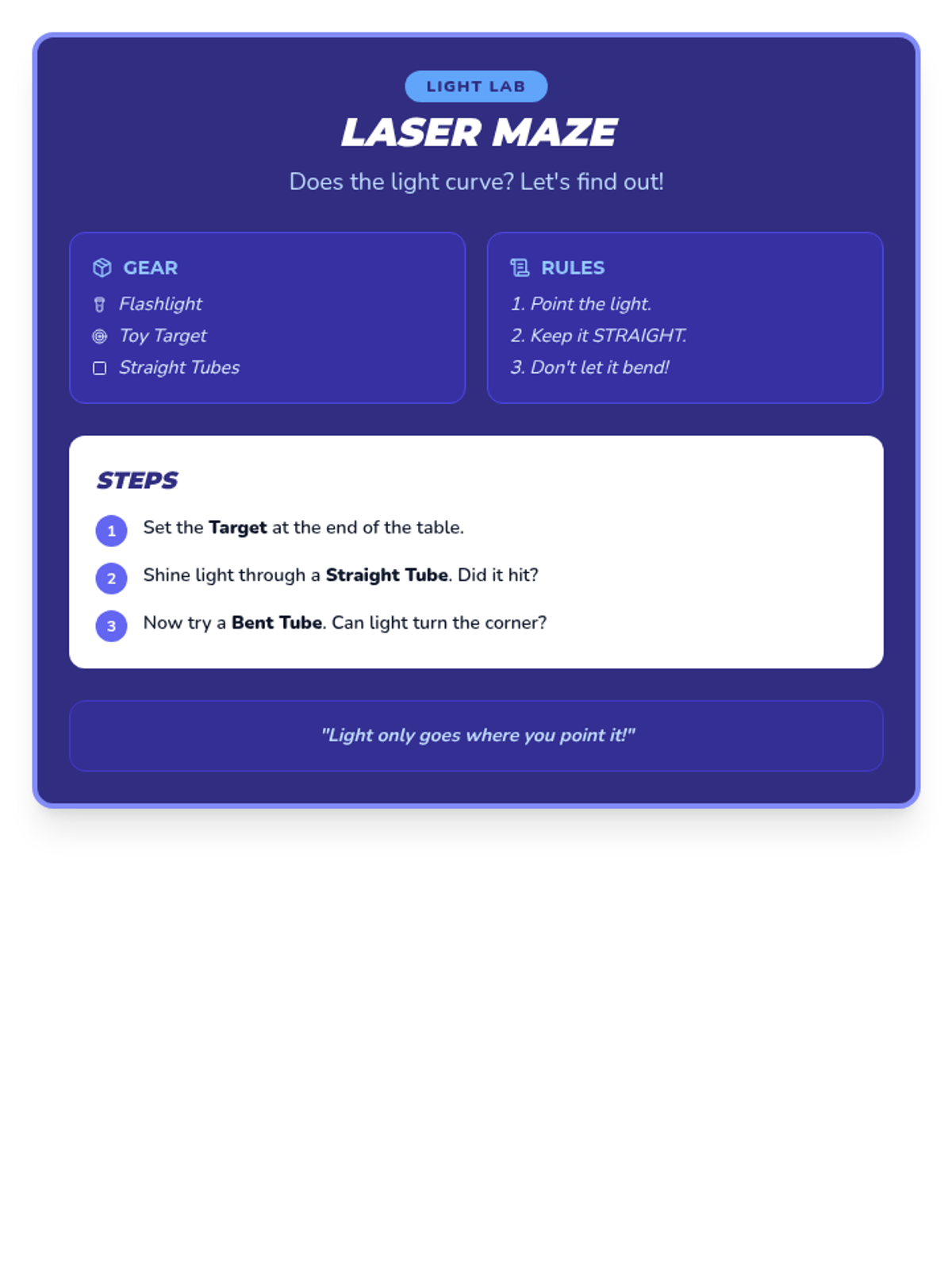
An exploration of how light travels in straight lines and what happens when those beams are interrupted.
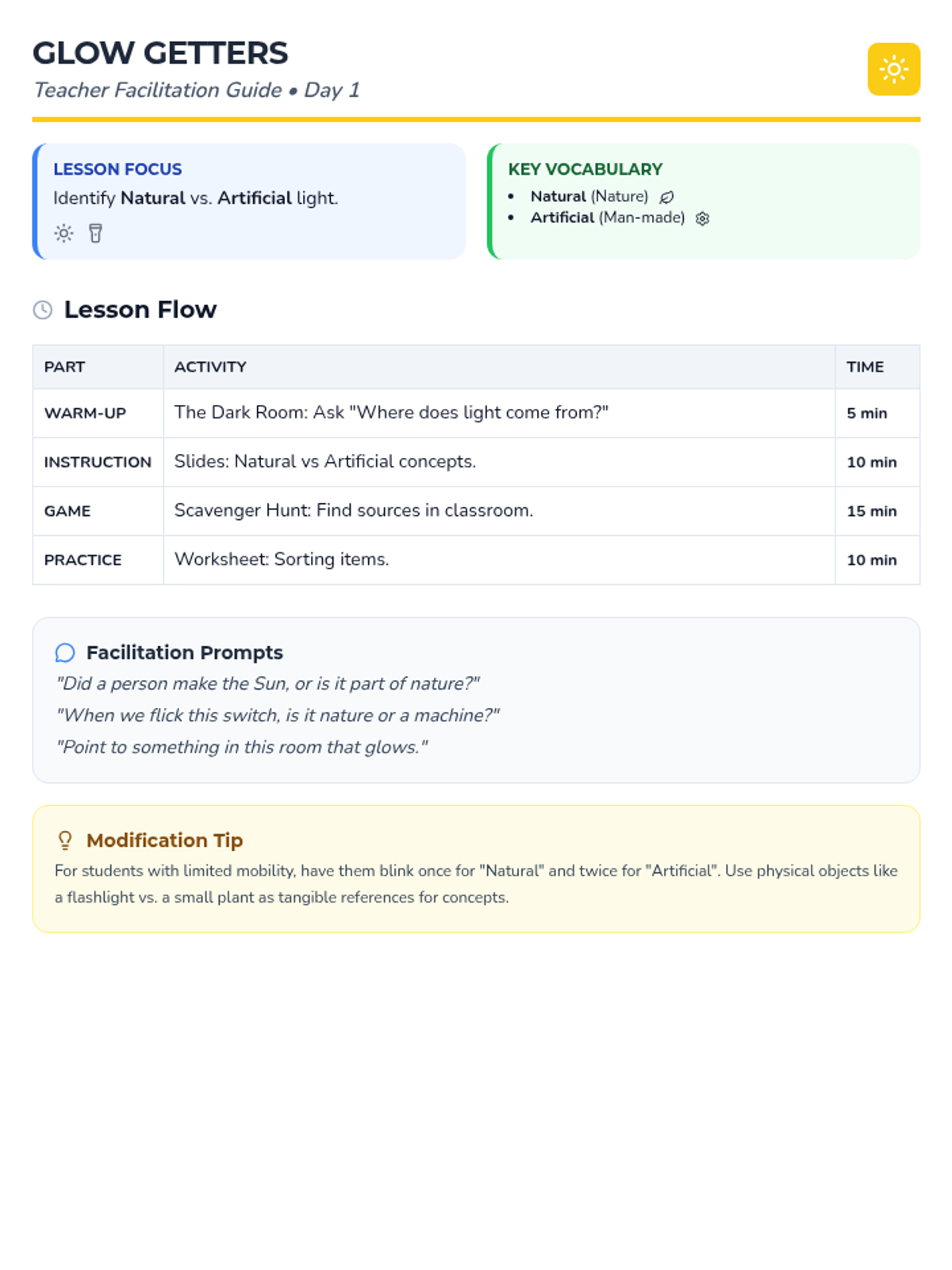
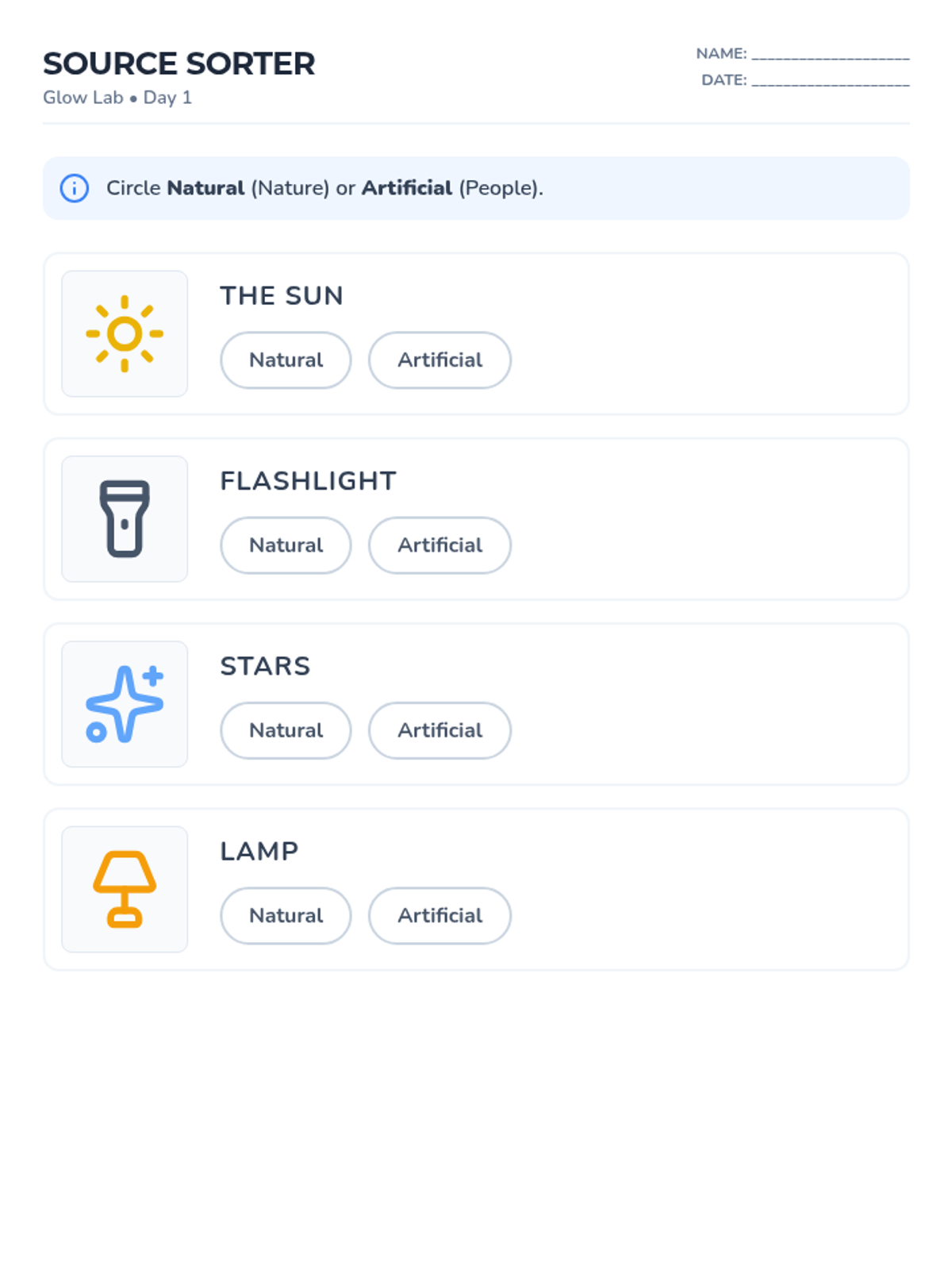
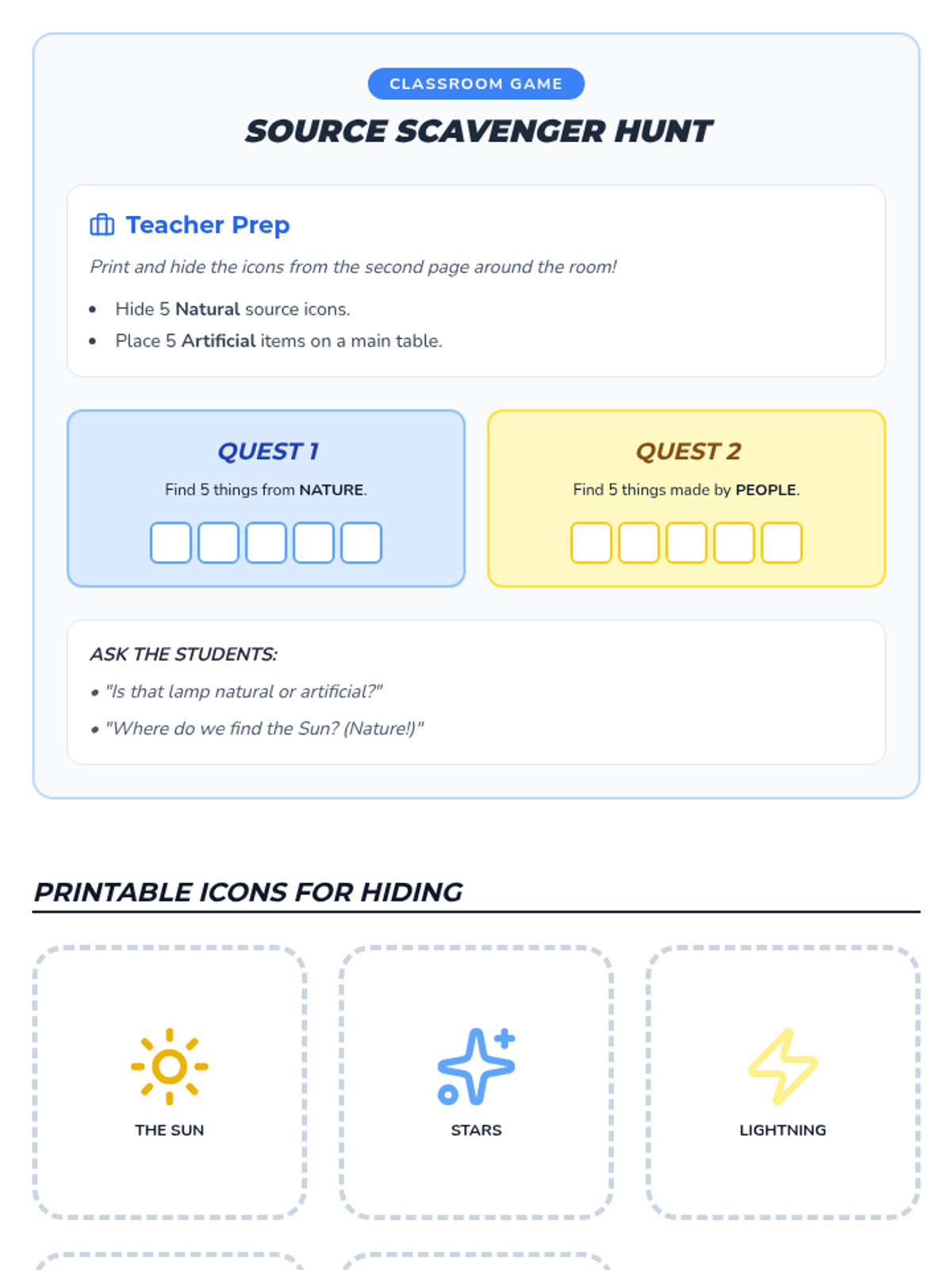
Students identify and differentiate between natural and artificial light sources using high-contrast visuals and sorting activities.
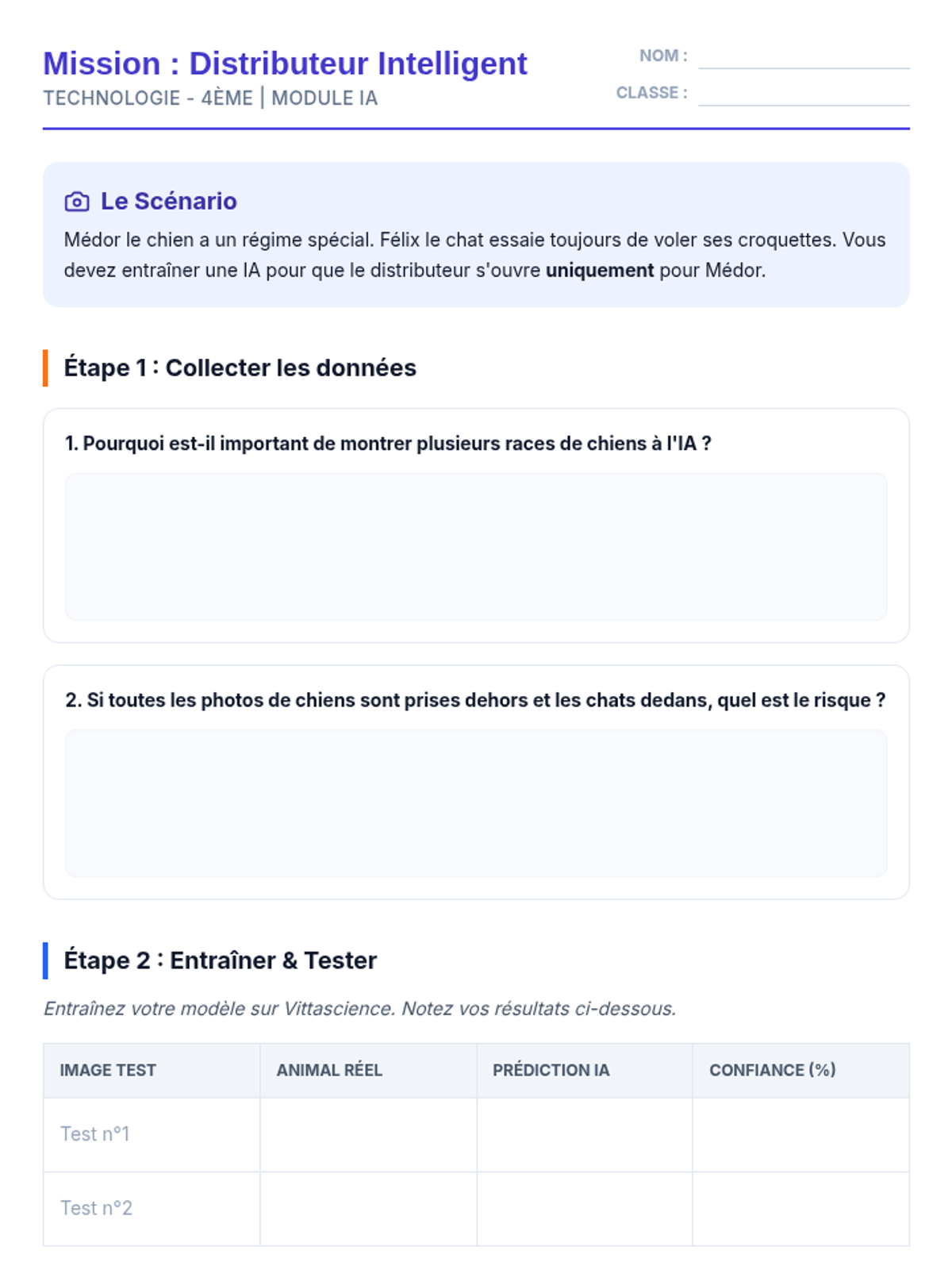
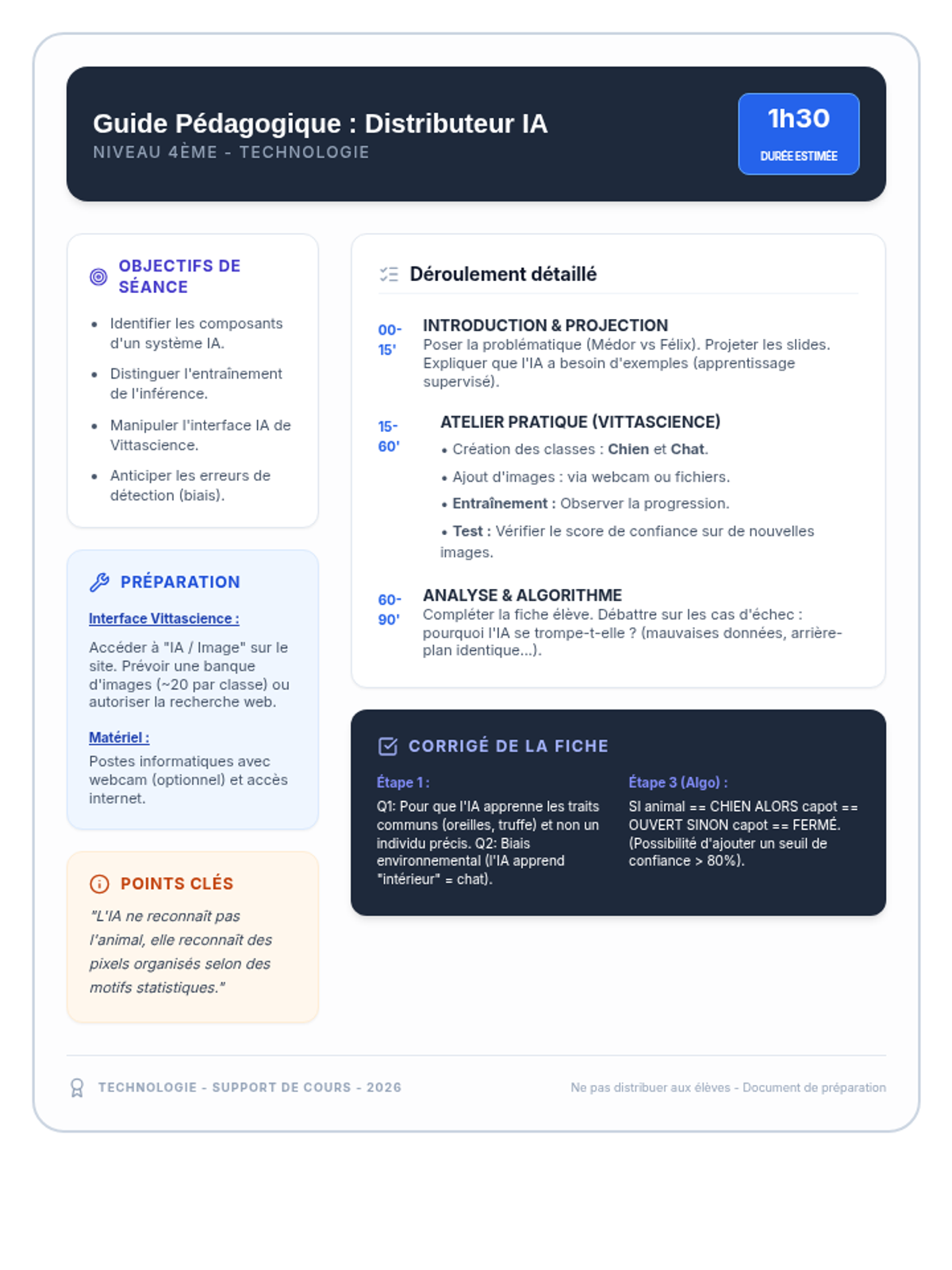
Cette leçon explore le fonctionnement de l'intelligence artificielle appliquée à un distributeur de croquettes intelligent. Les élèves découvrent l'apprentissage supervisé pour distinguer les chiens des chats en utilisant l'interface Vittascience.
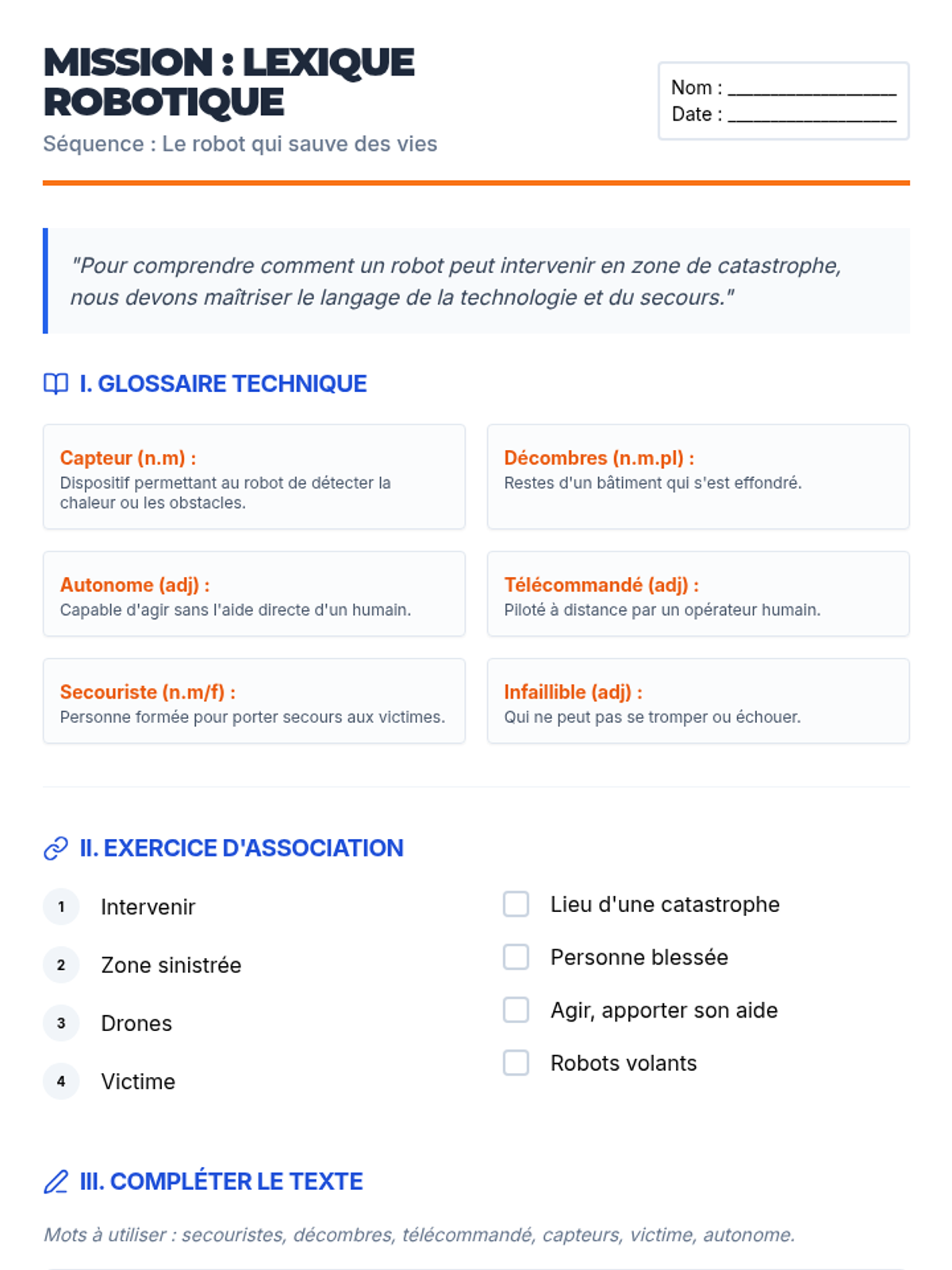
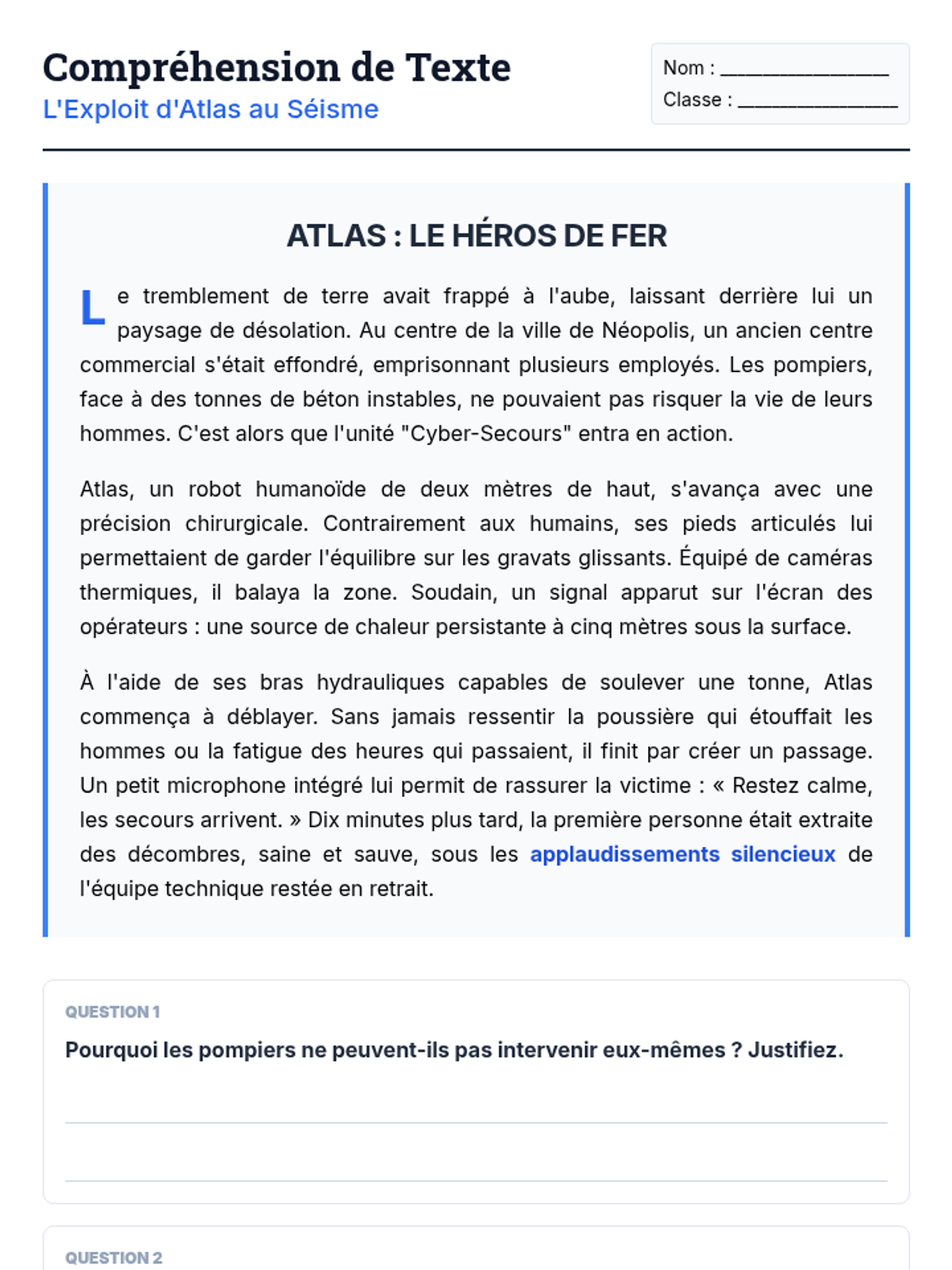
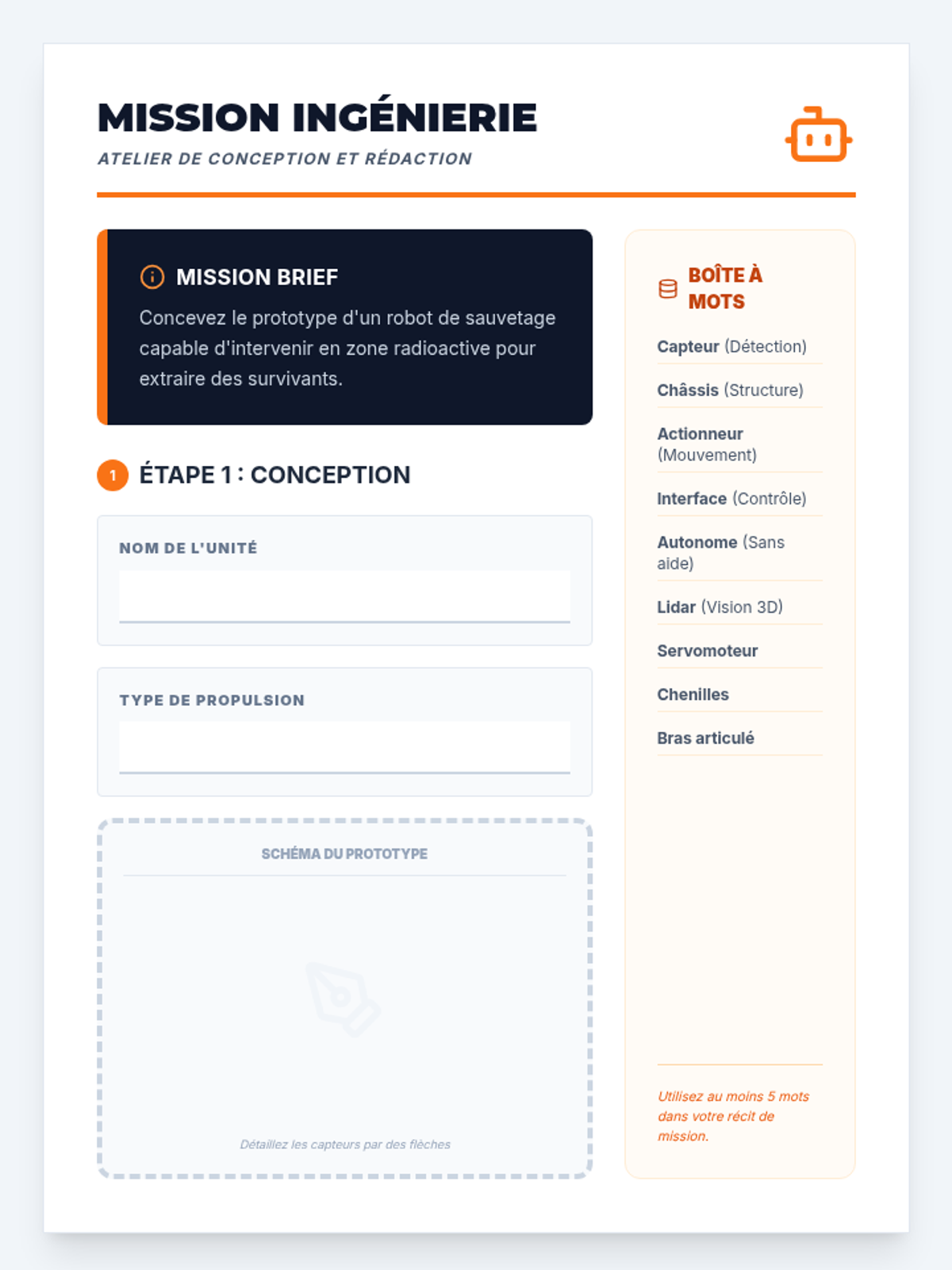
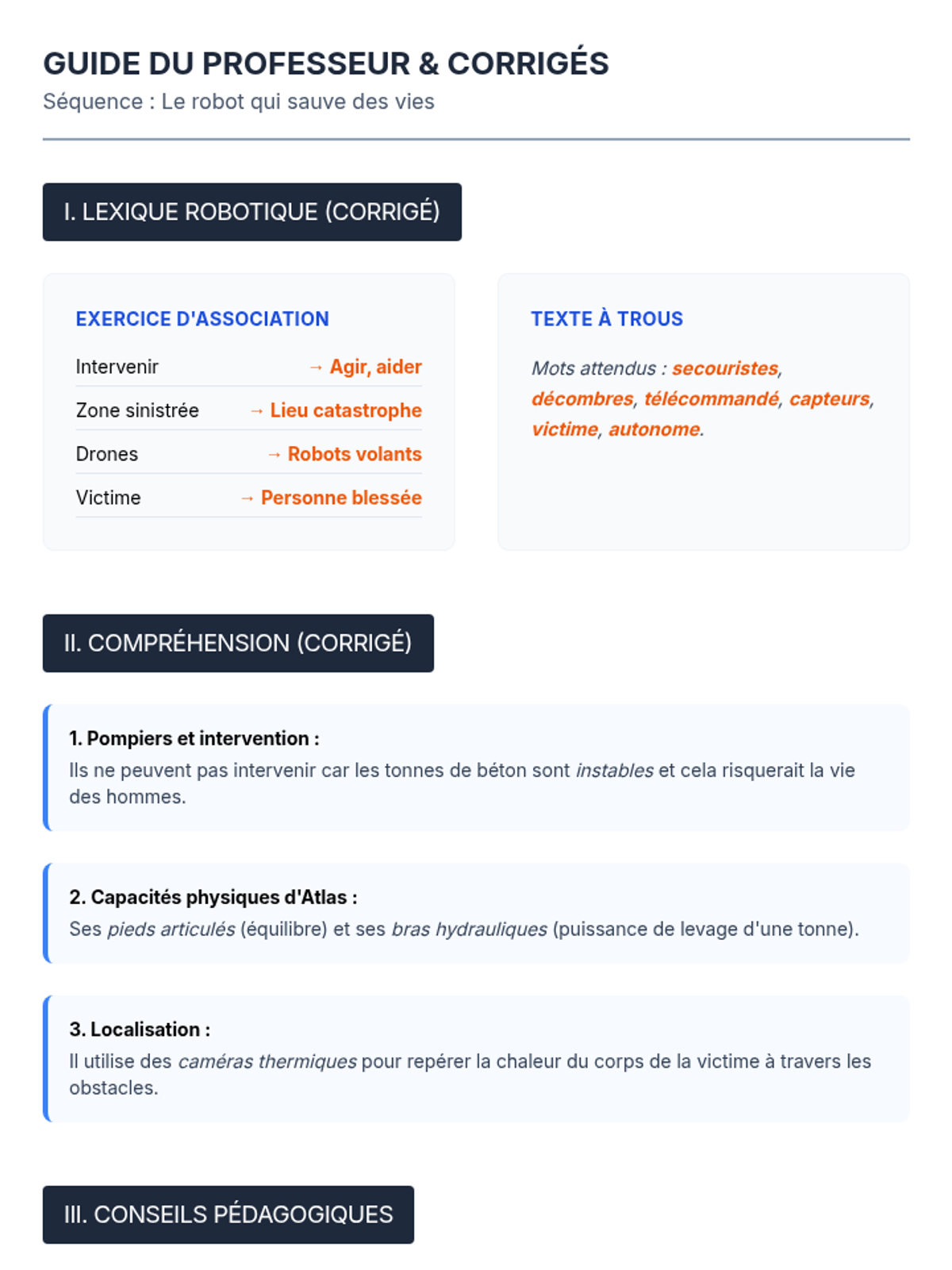
Une séquence complète sur l'utilisation des robots dans les missions de sauvetage et de secours, comprenant vocabulaire technique, lecture et atelier d'écriture.
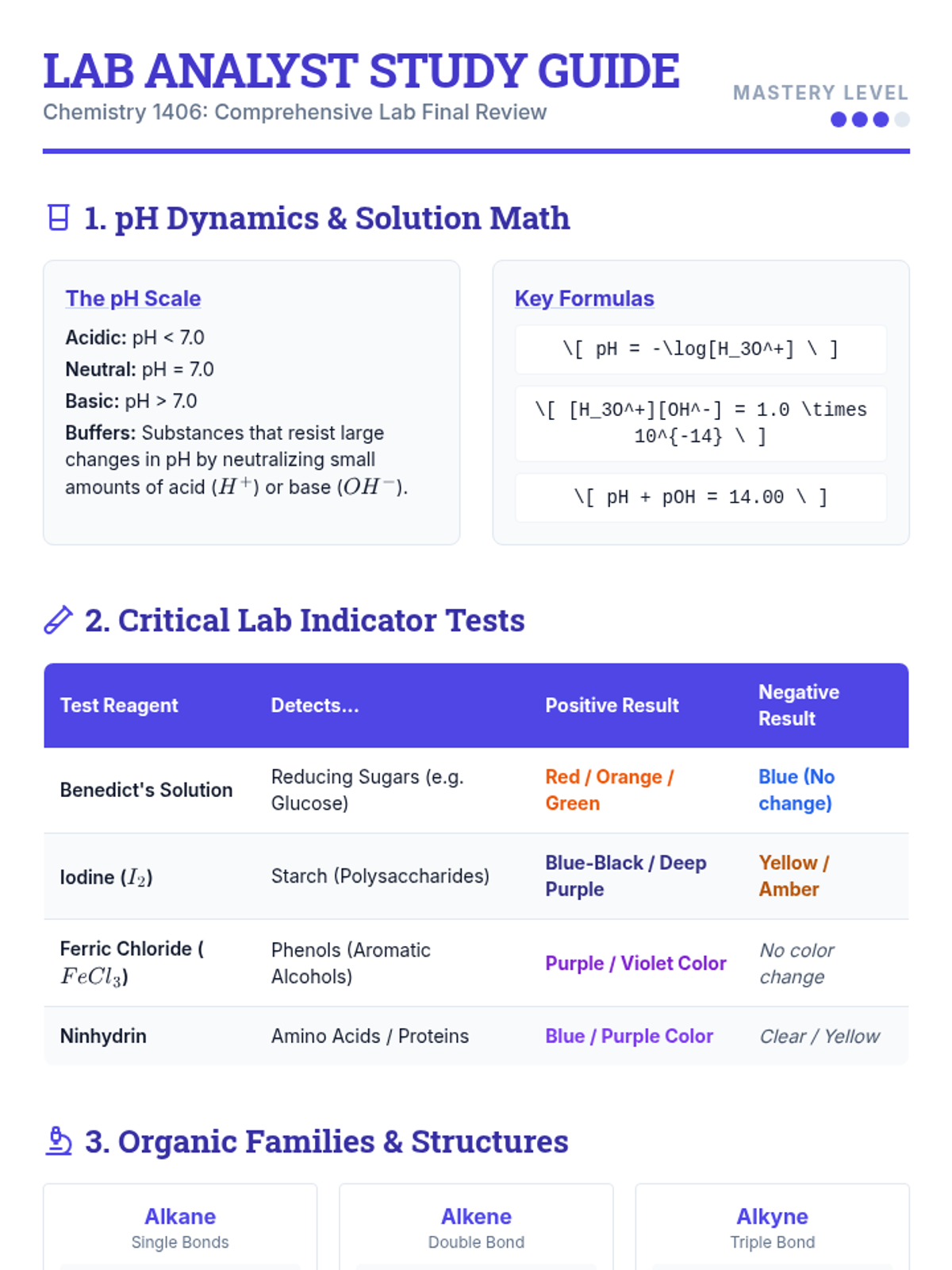
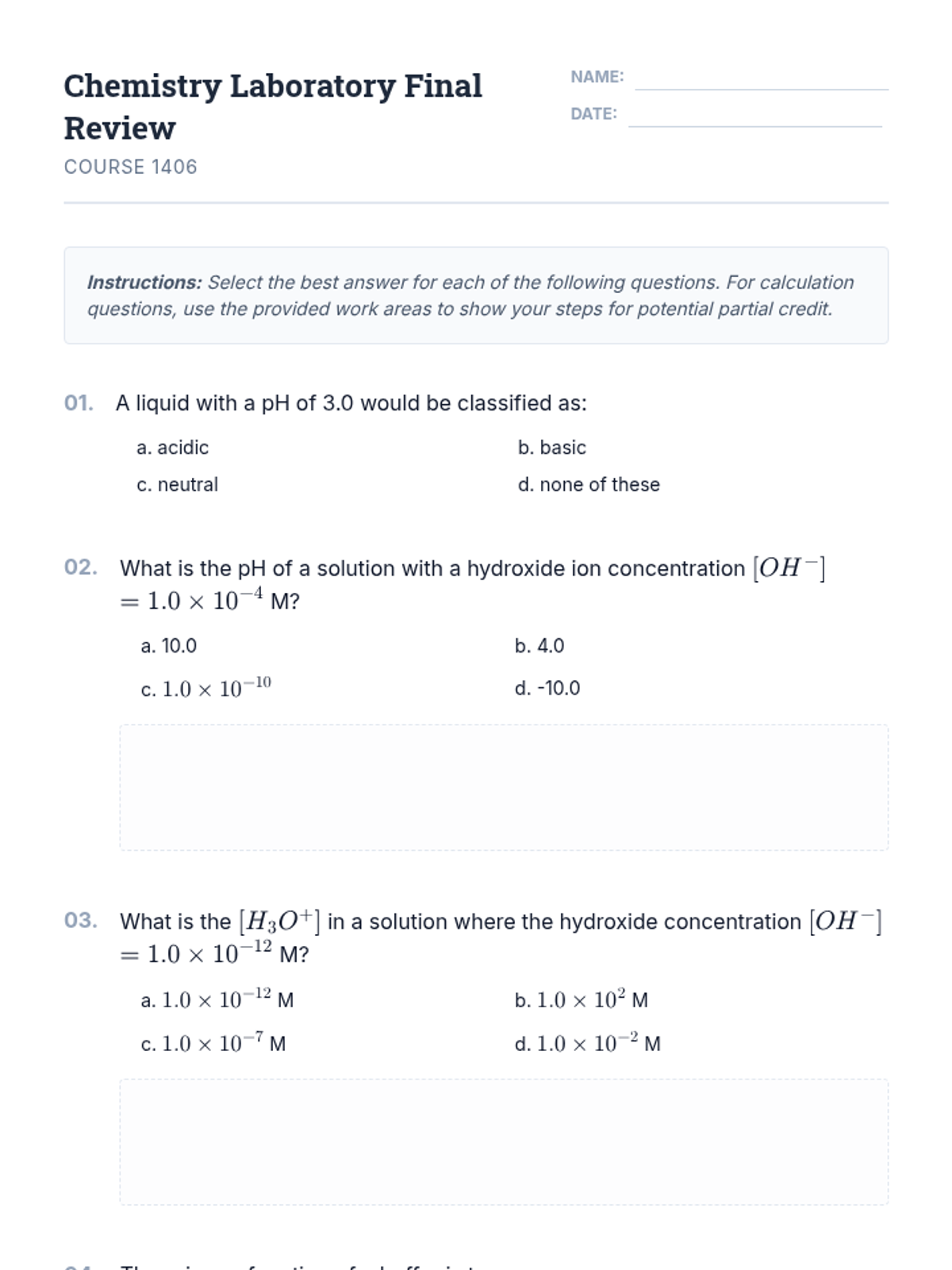
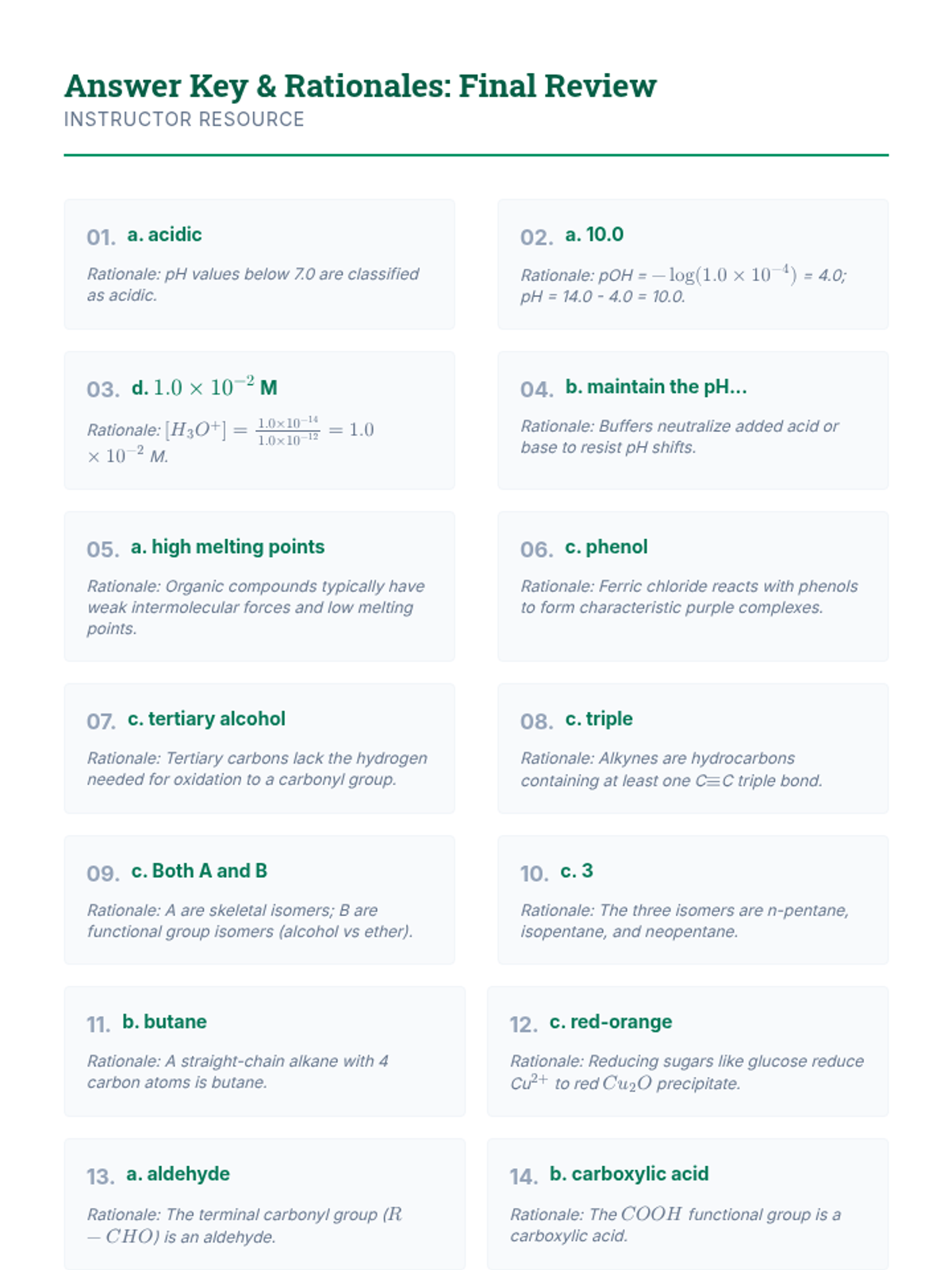
A comprehensive review of introductory chemistry lab concepts including pH calculations, organic nomenclature, functional group identification, and laboratory testing procedures.
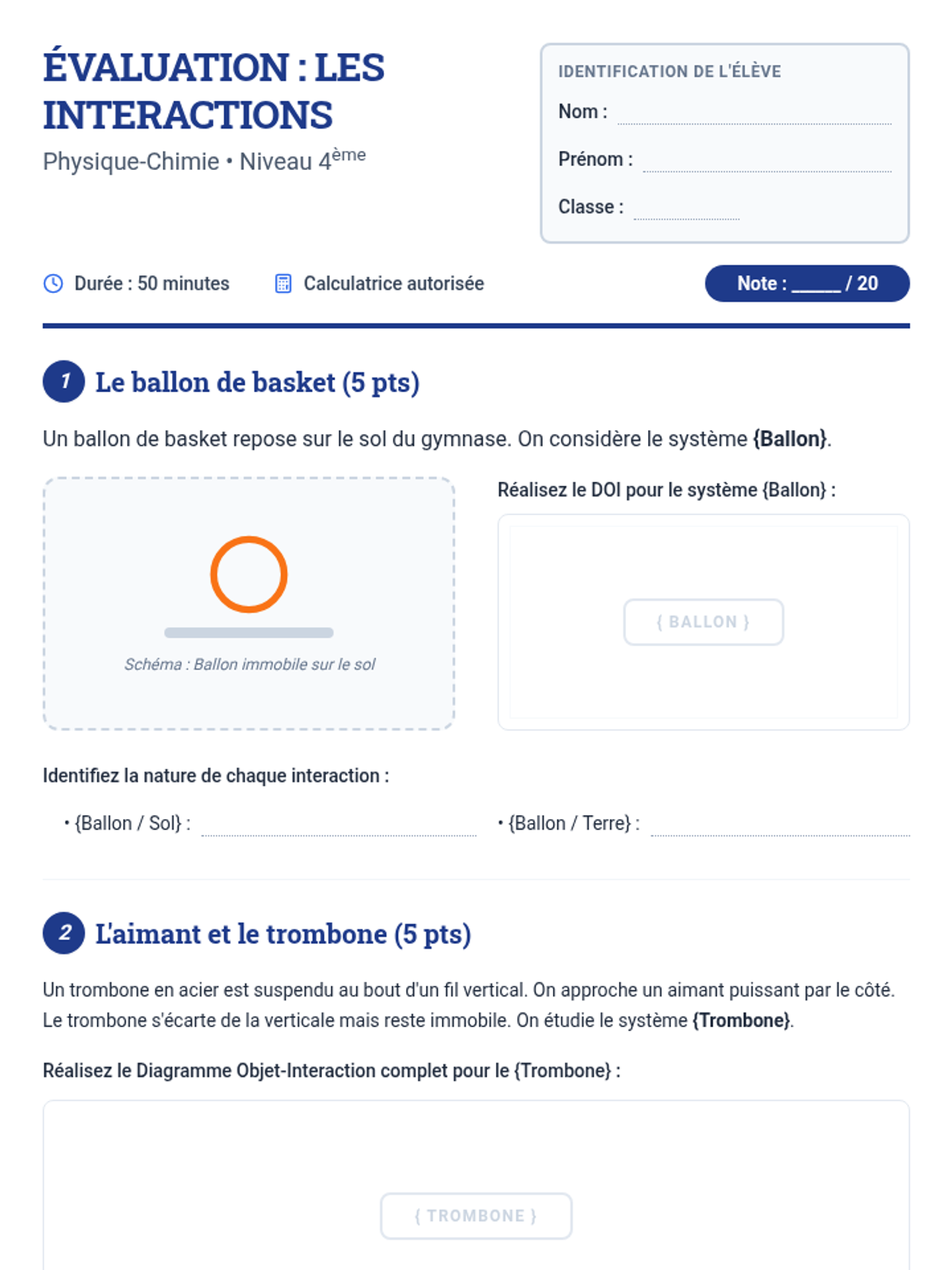
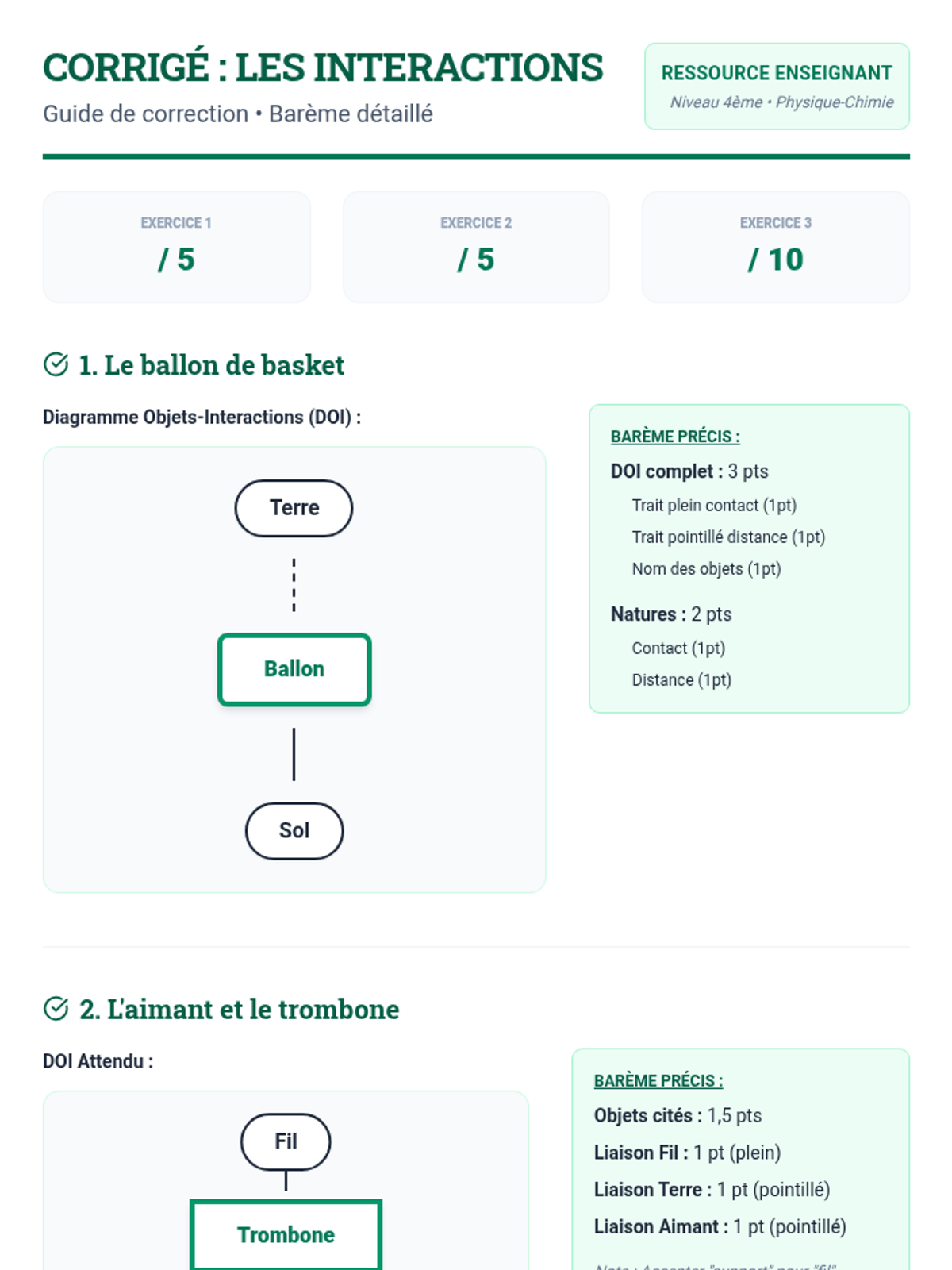
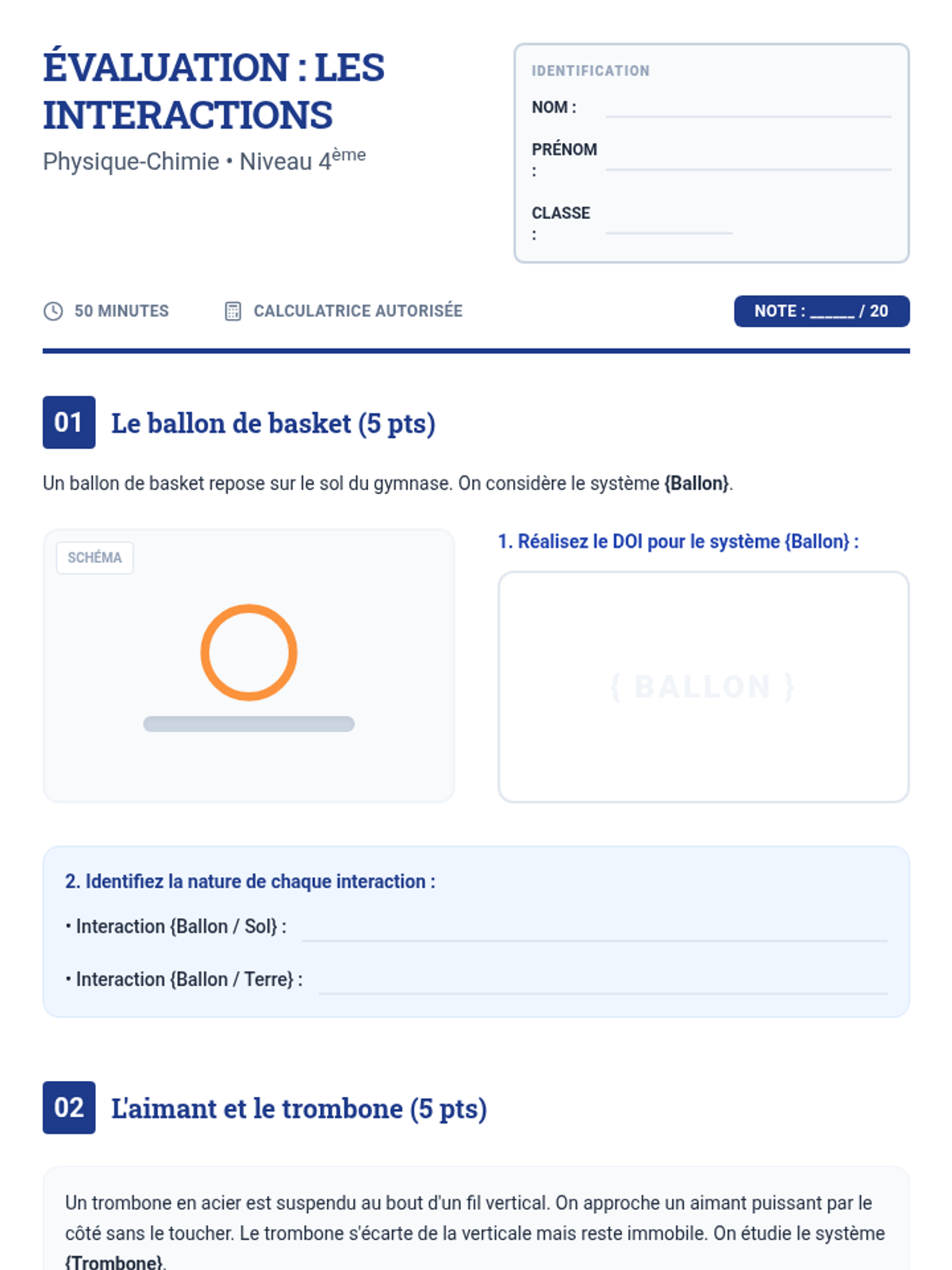
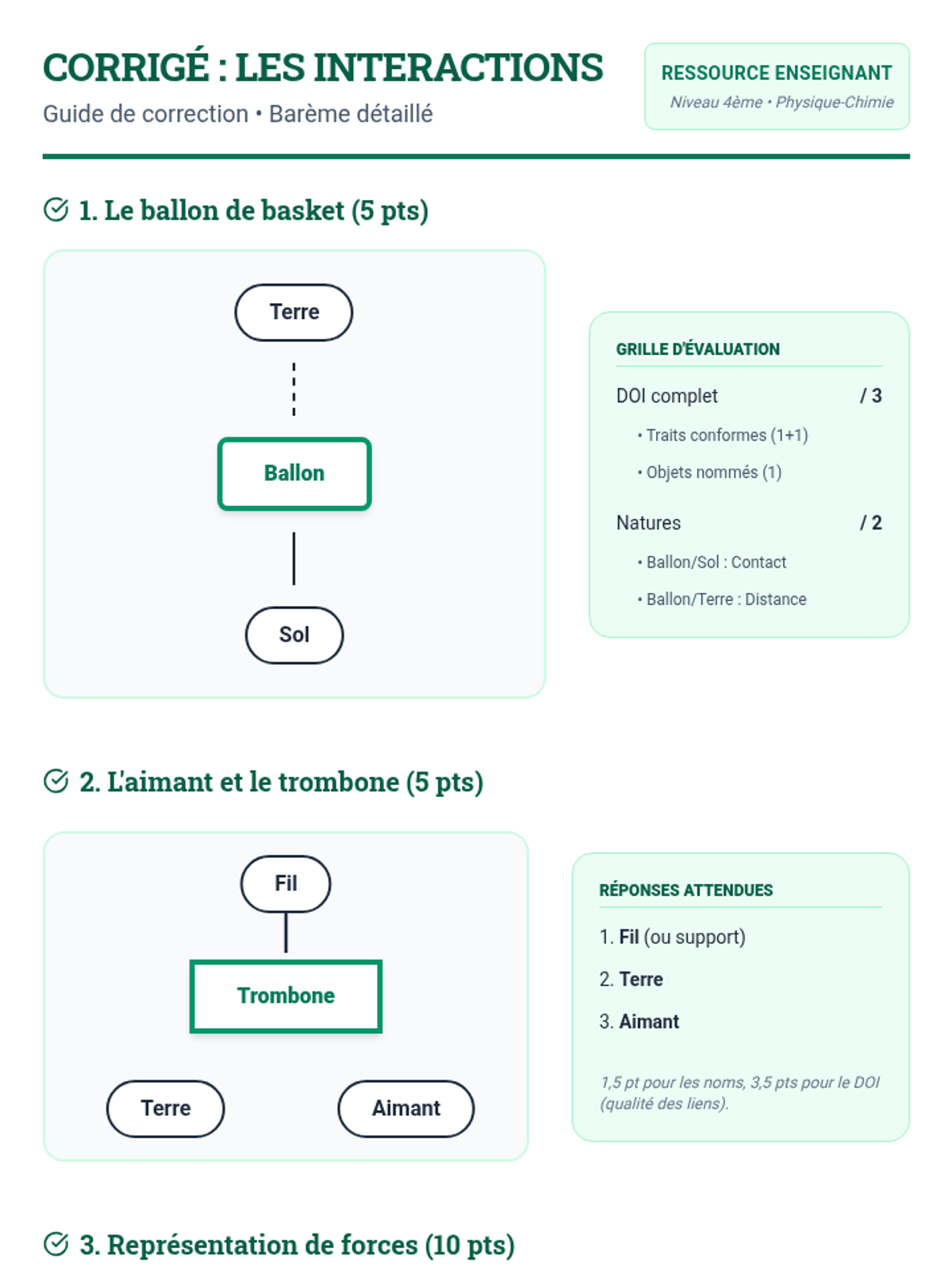
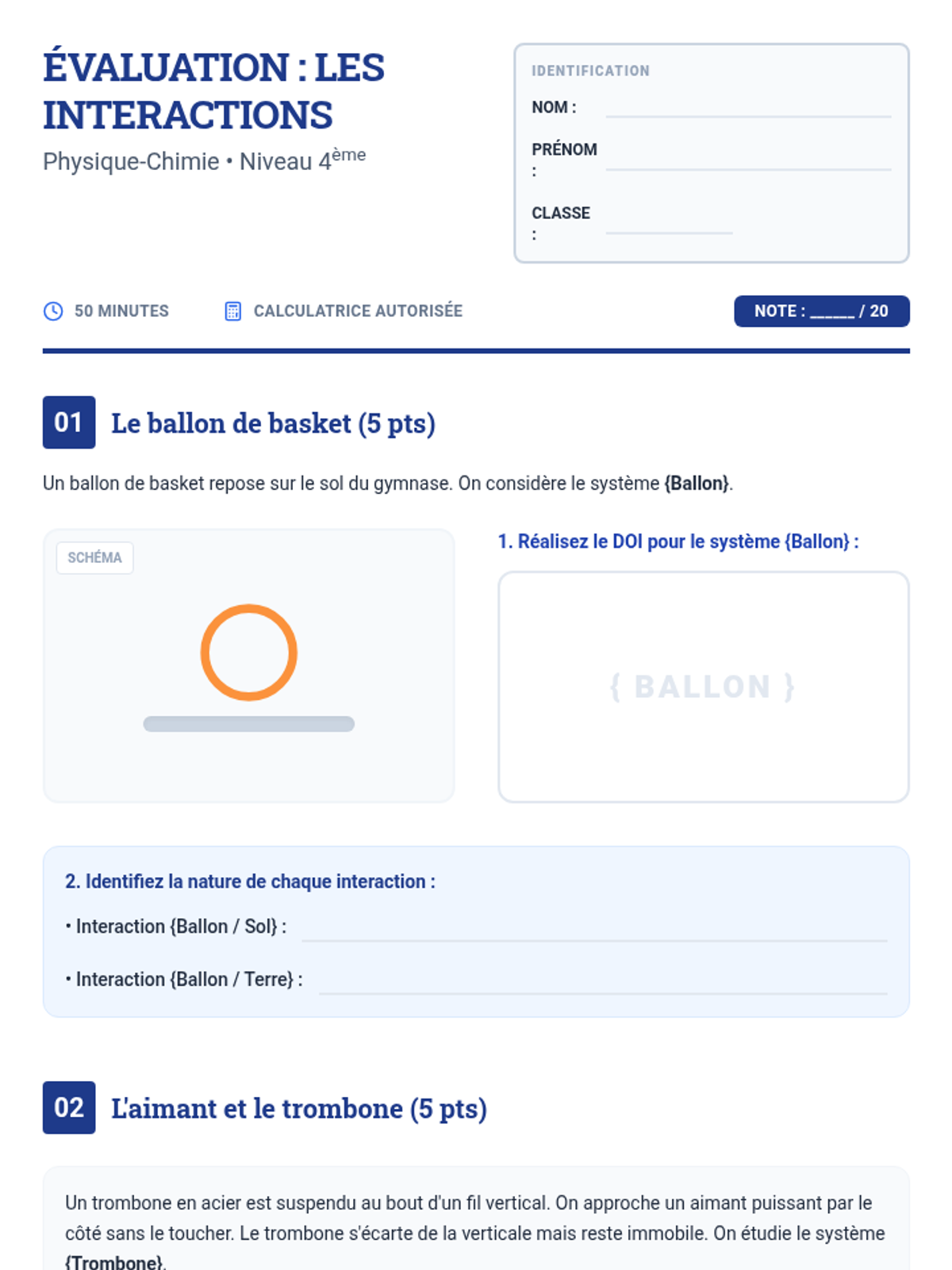
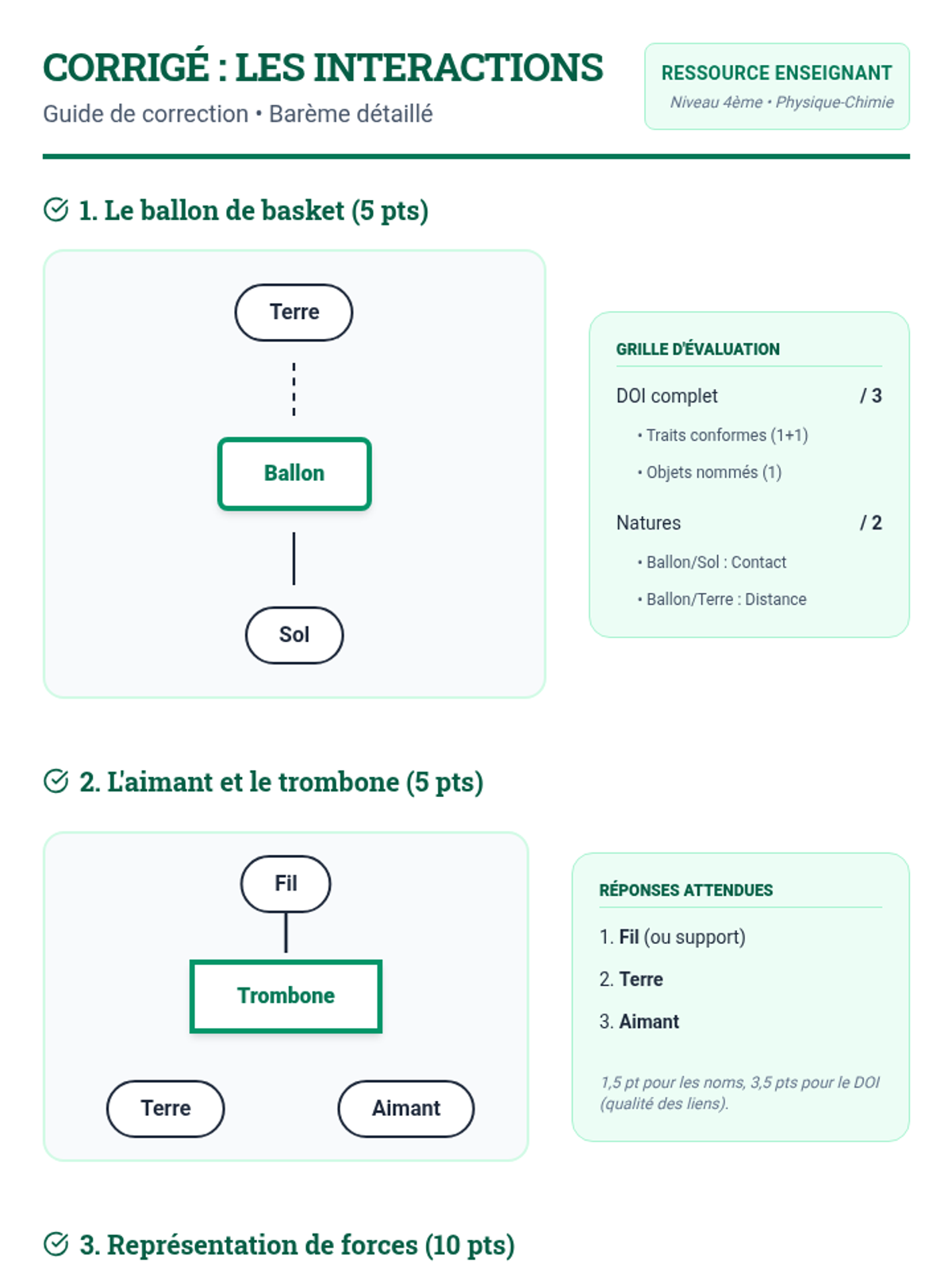
Une évaluation complète sur les interactions et les forces pour le niveau 4ème, incluant des diagrammes objets-interactions et des tracés de vecteurs.
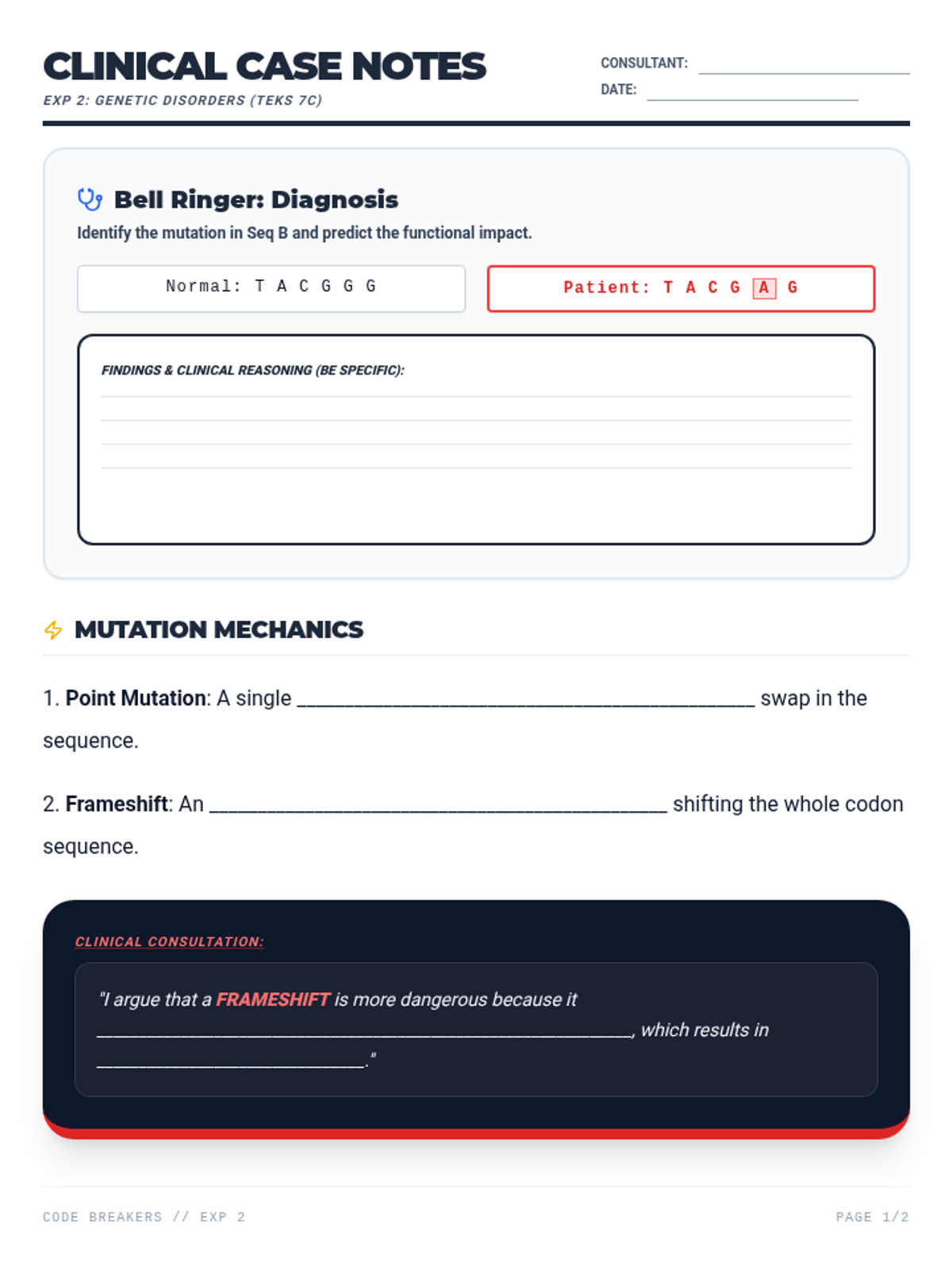
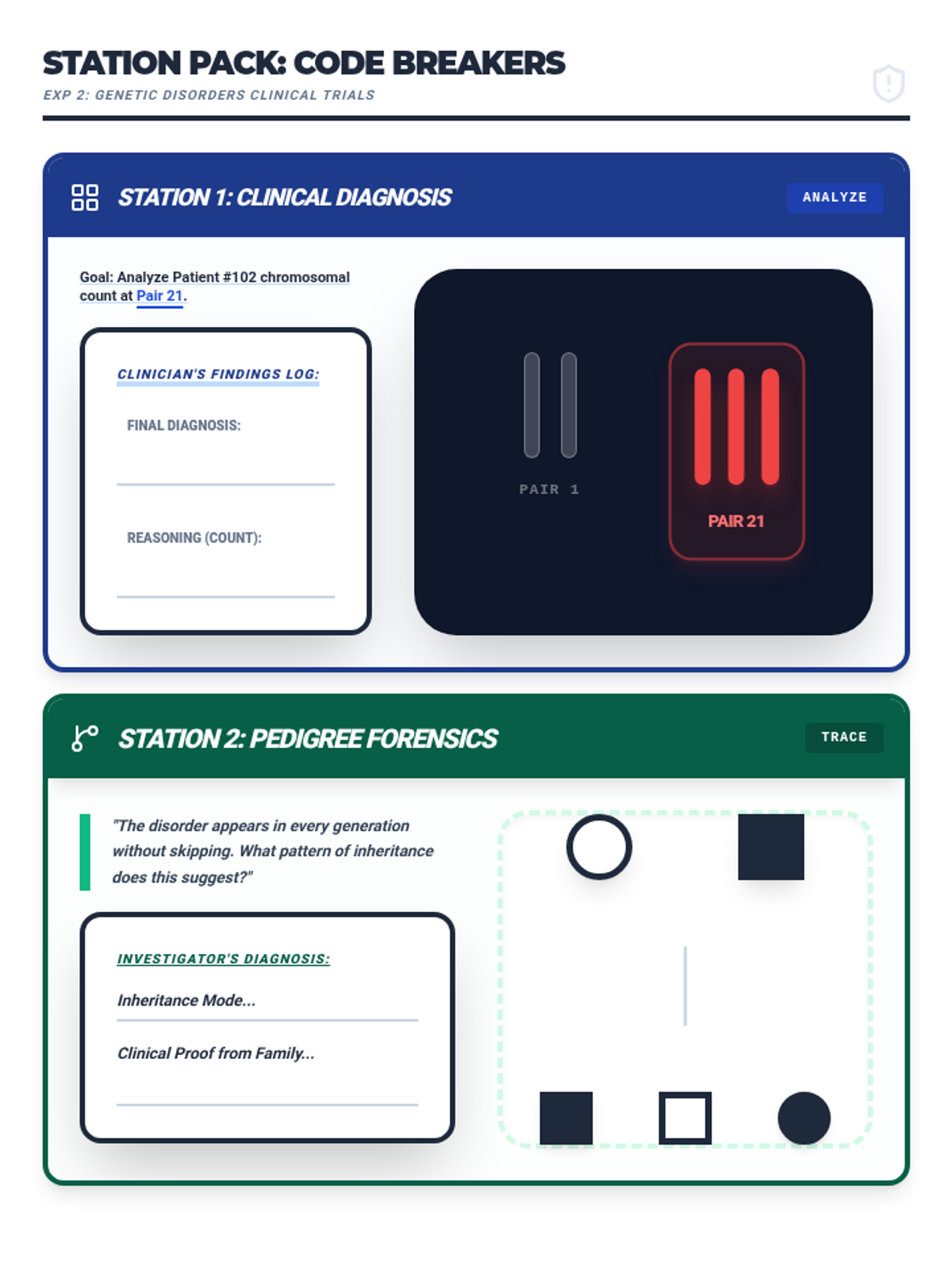
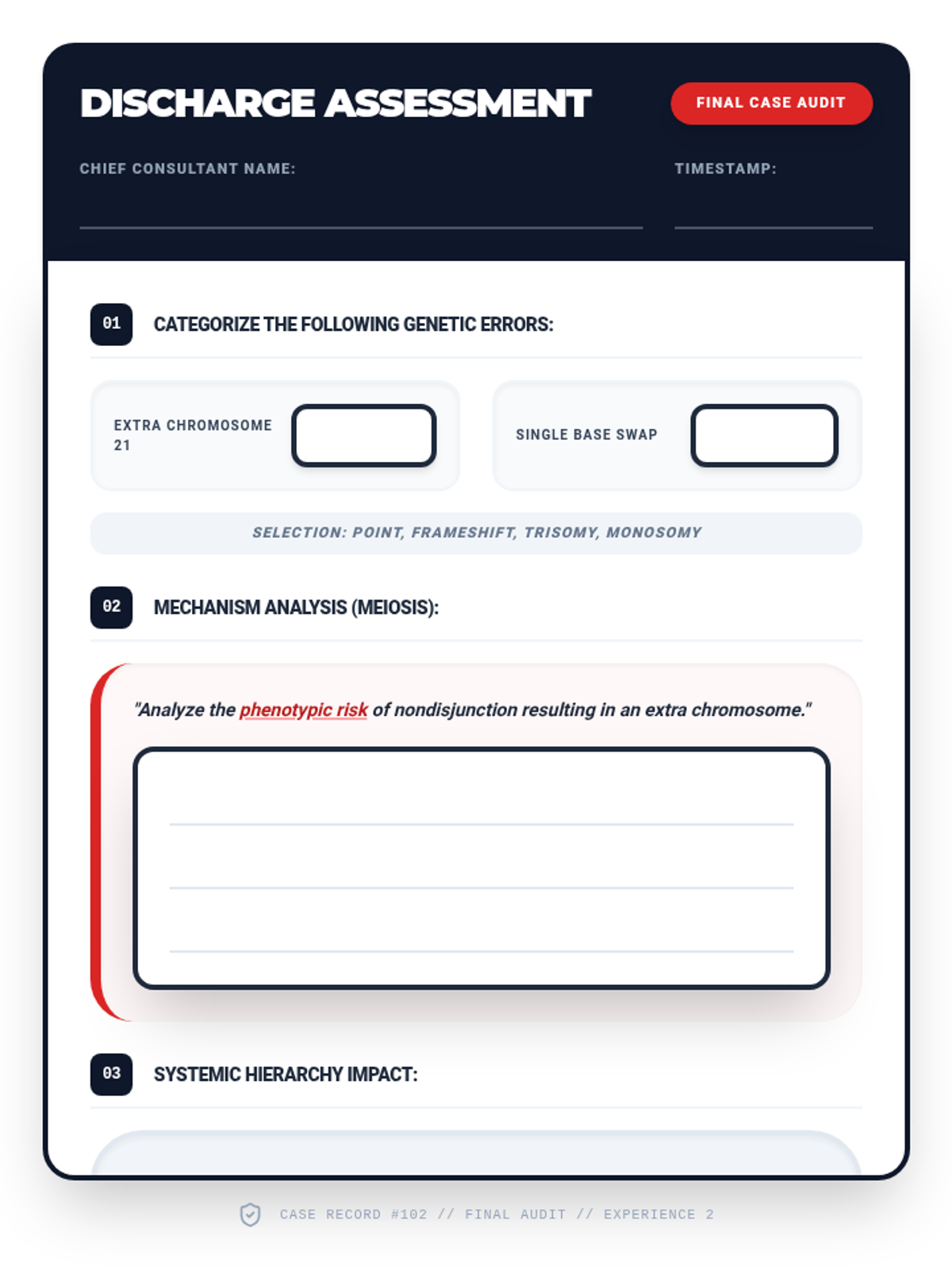
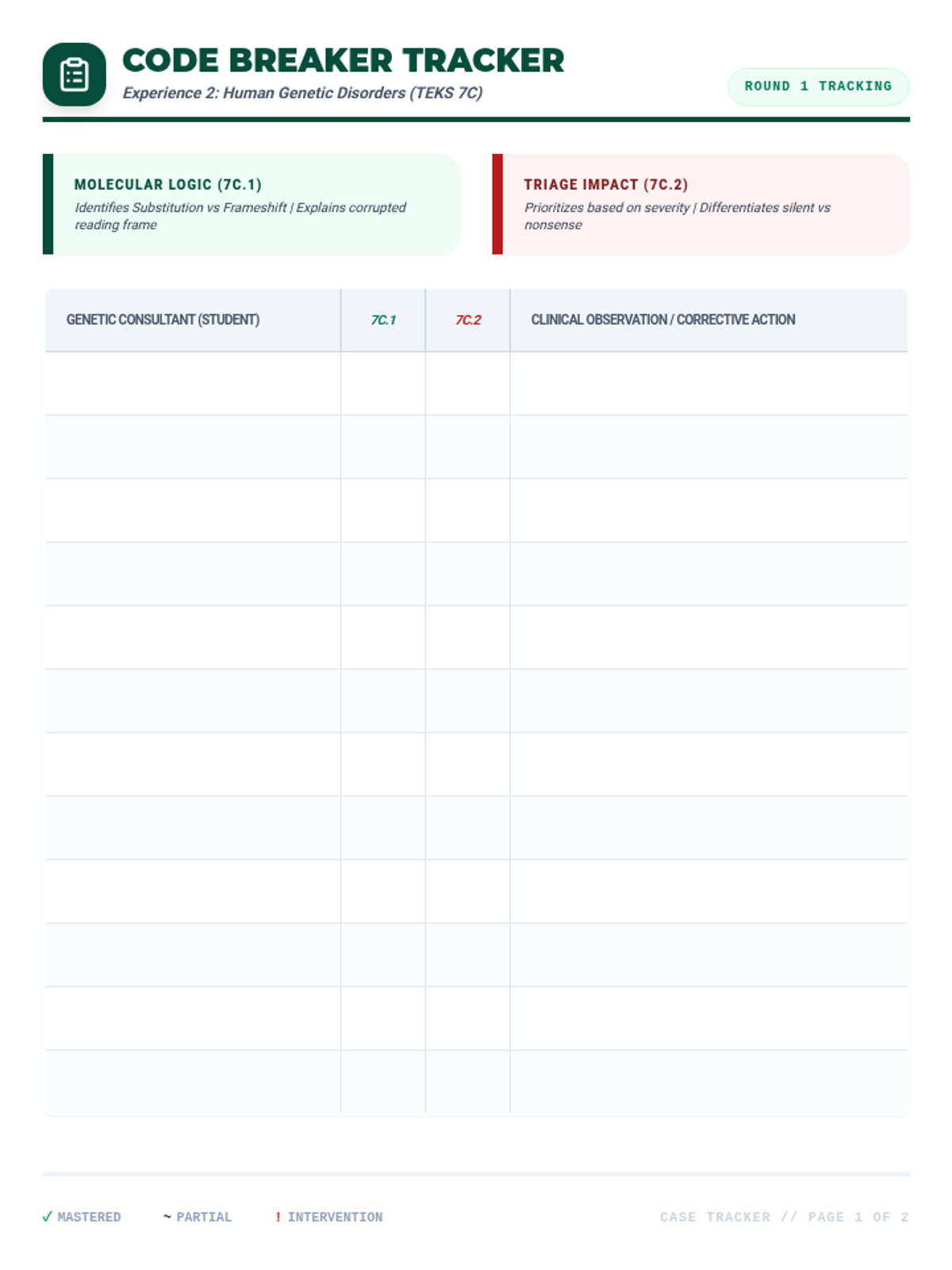
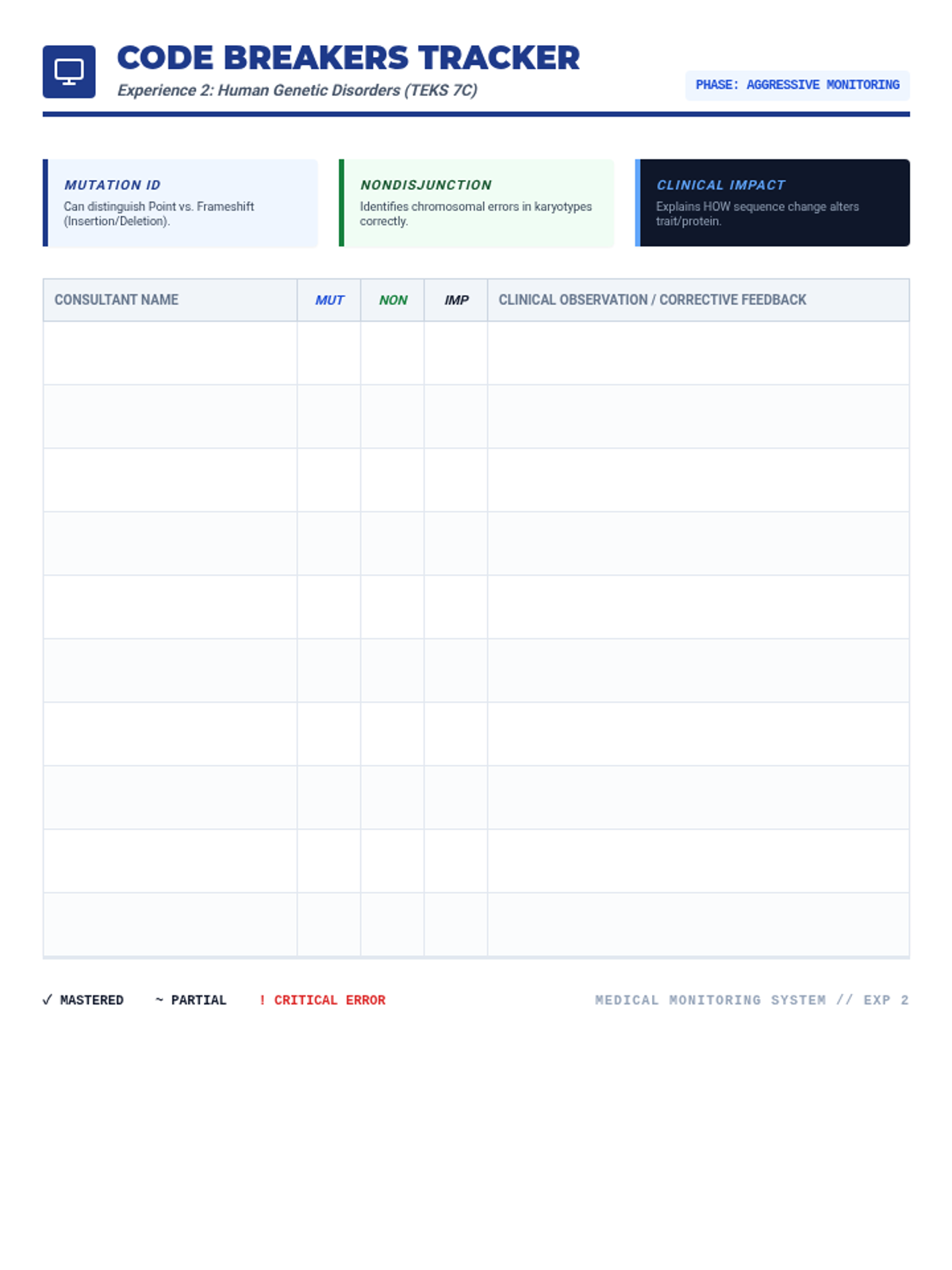
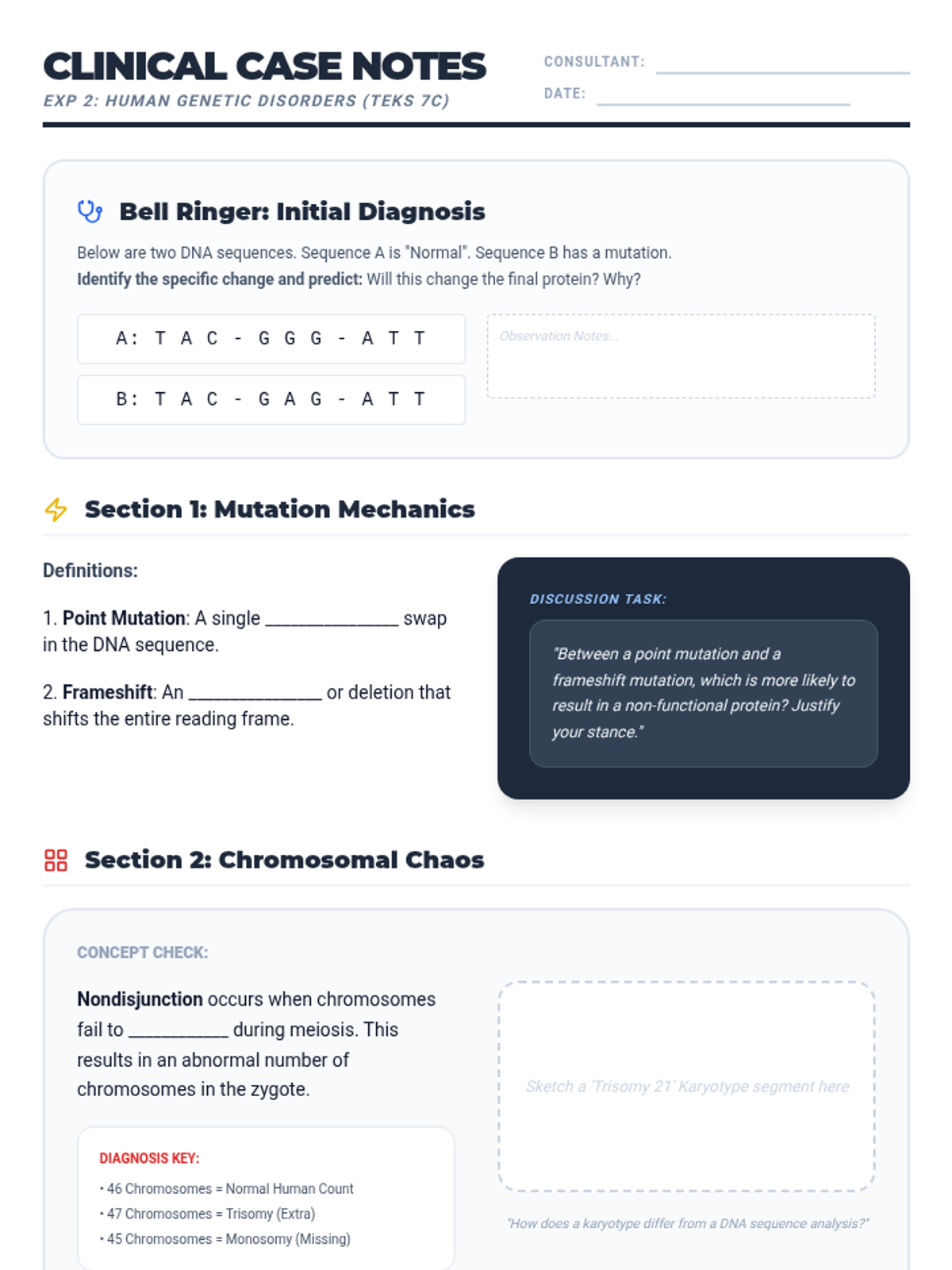
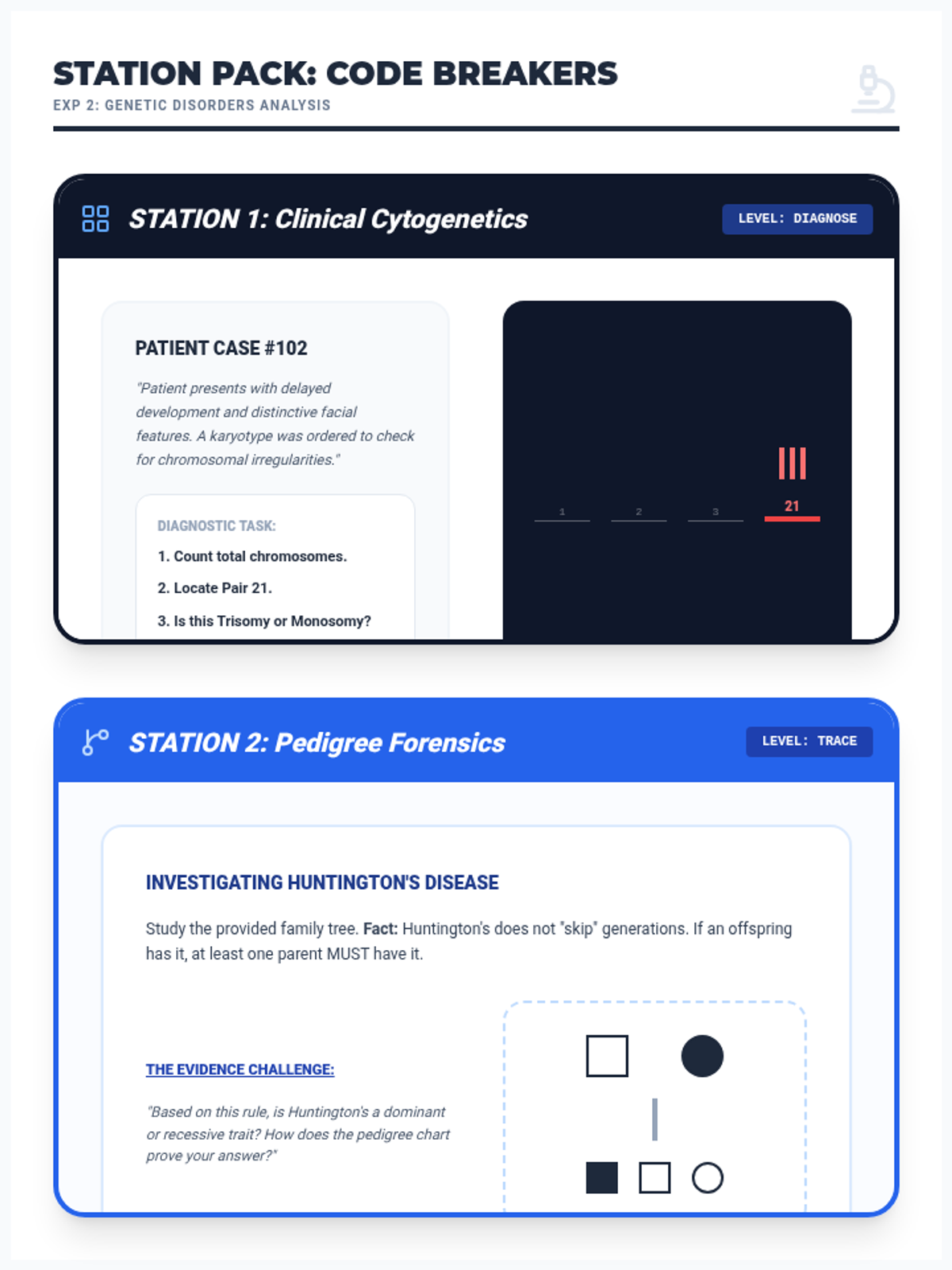
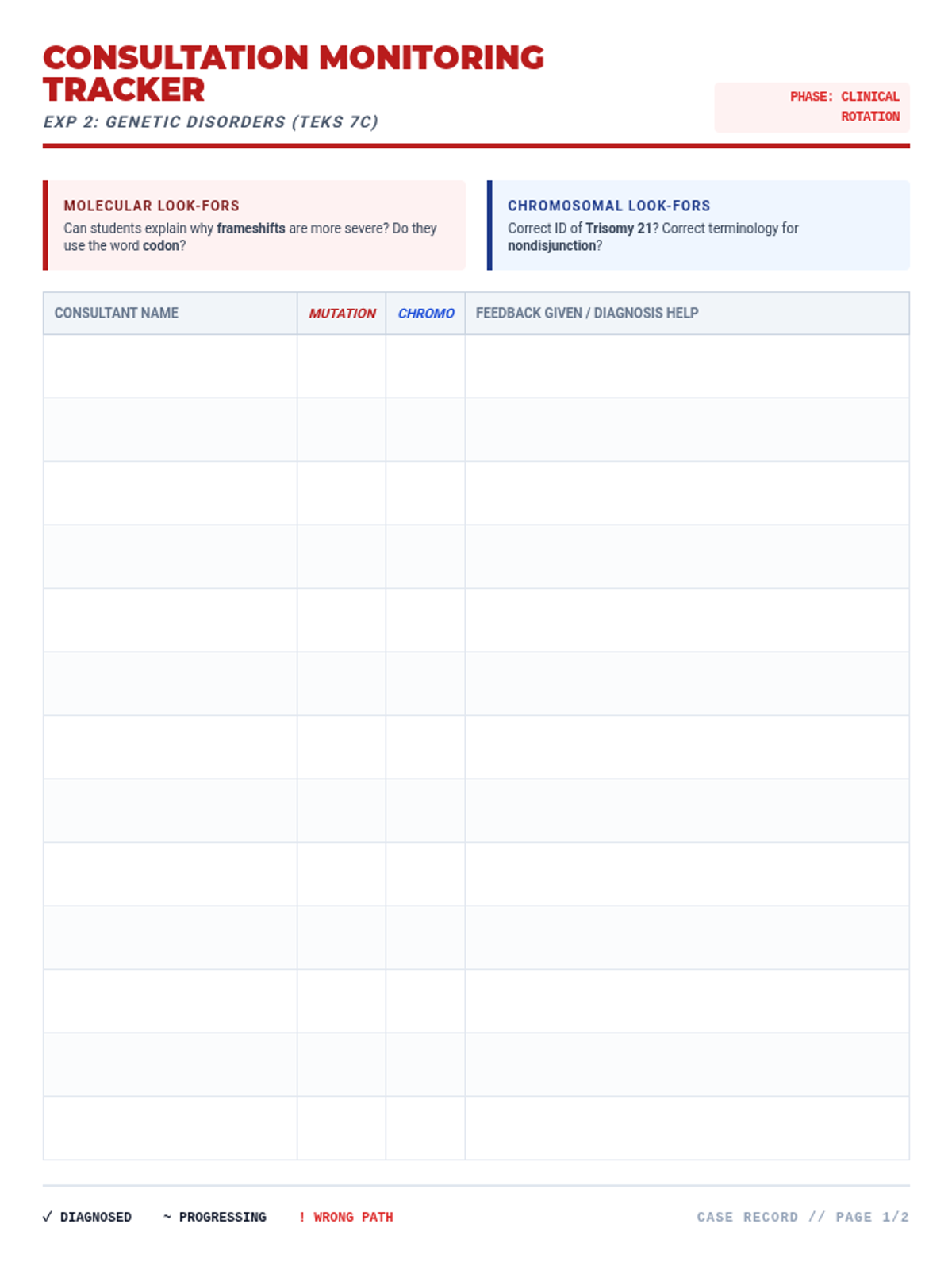
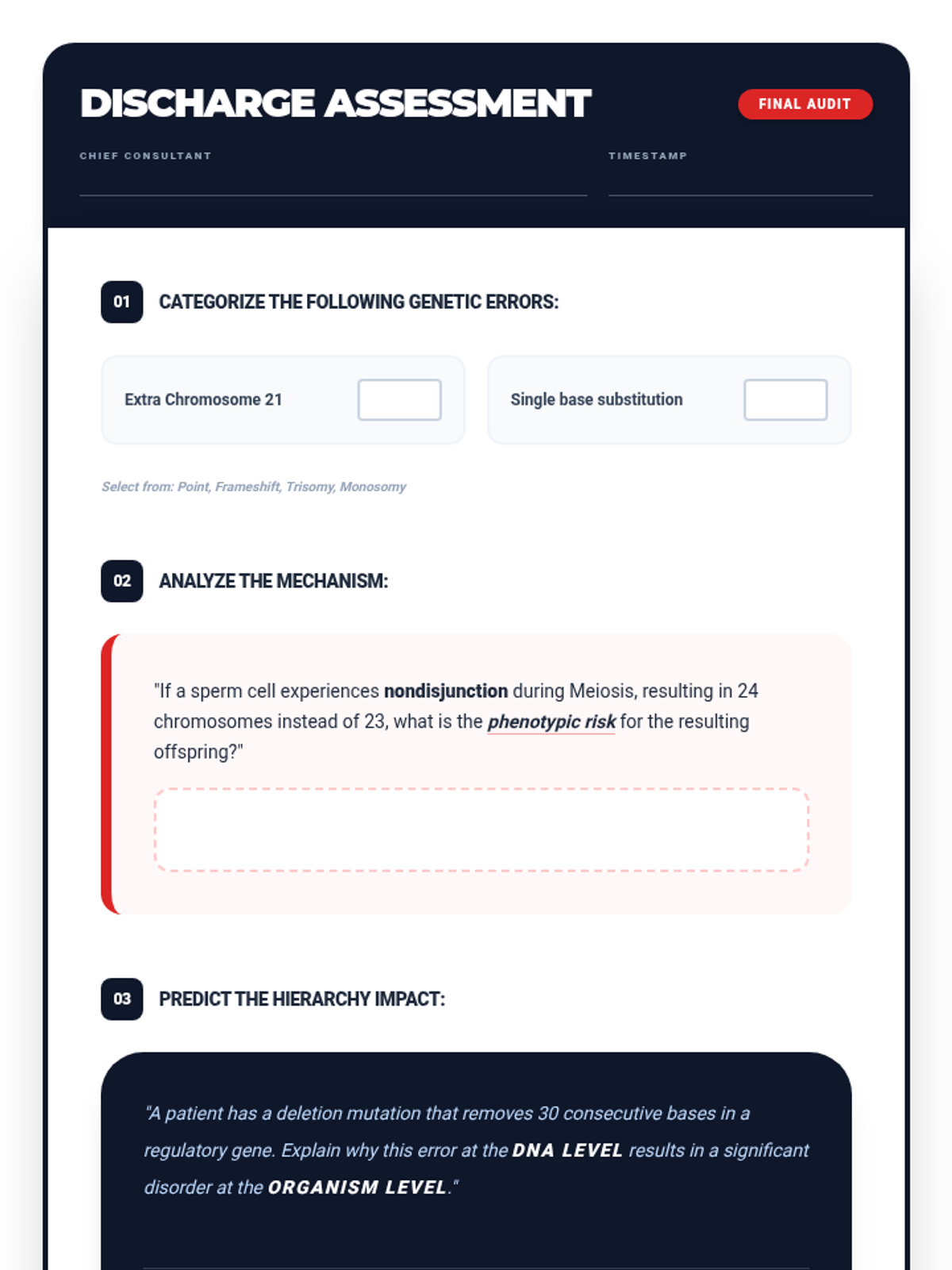
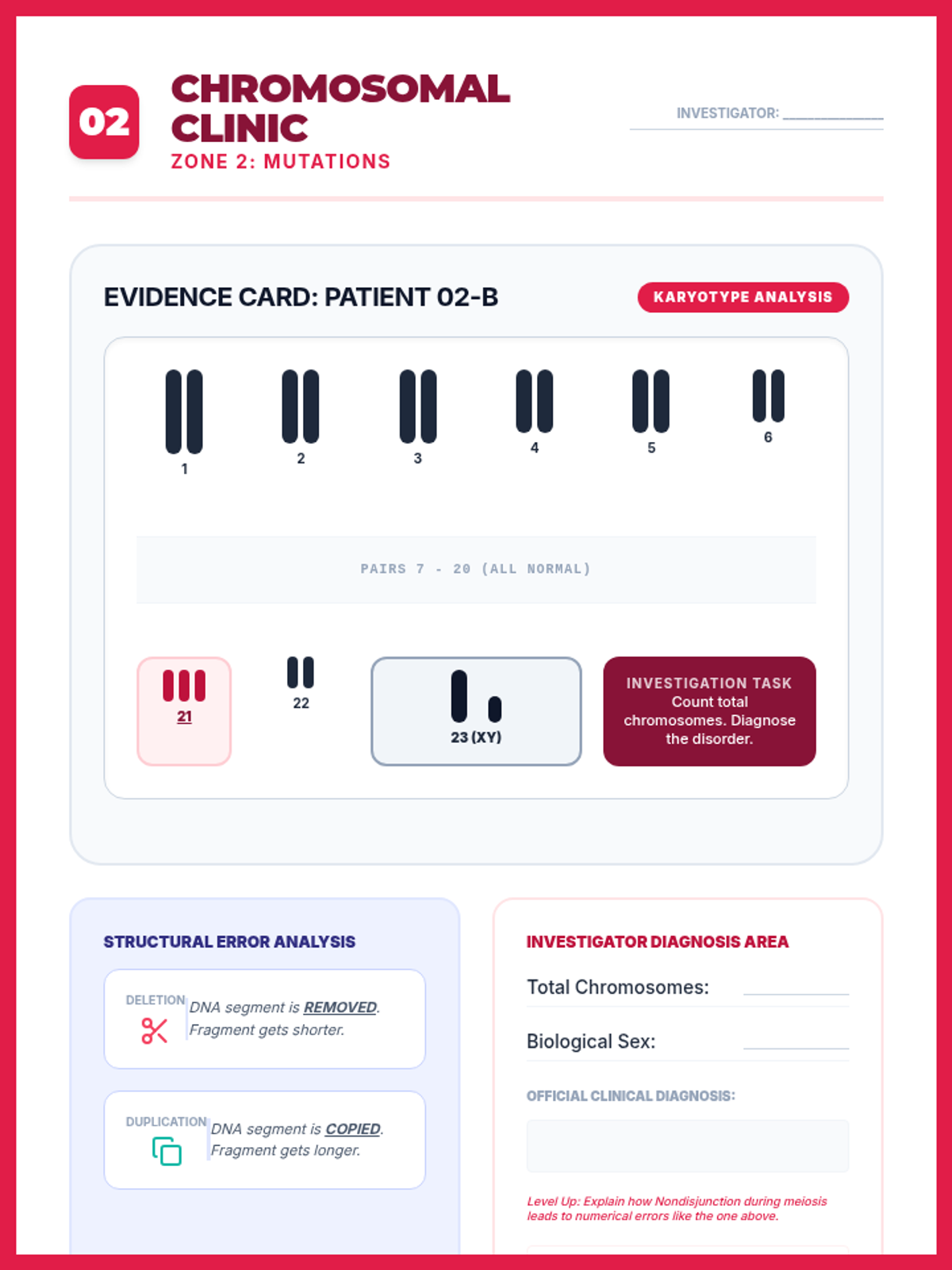
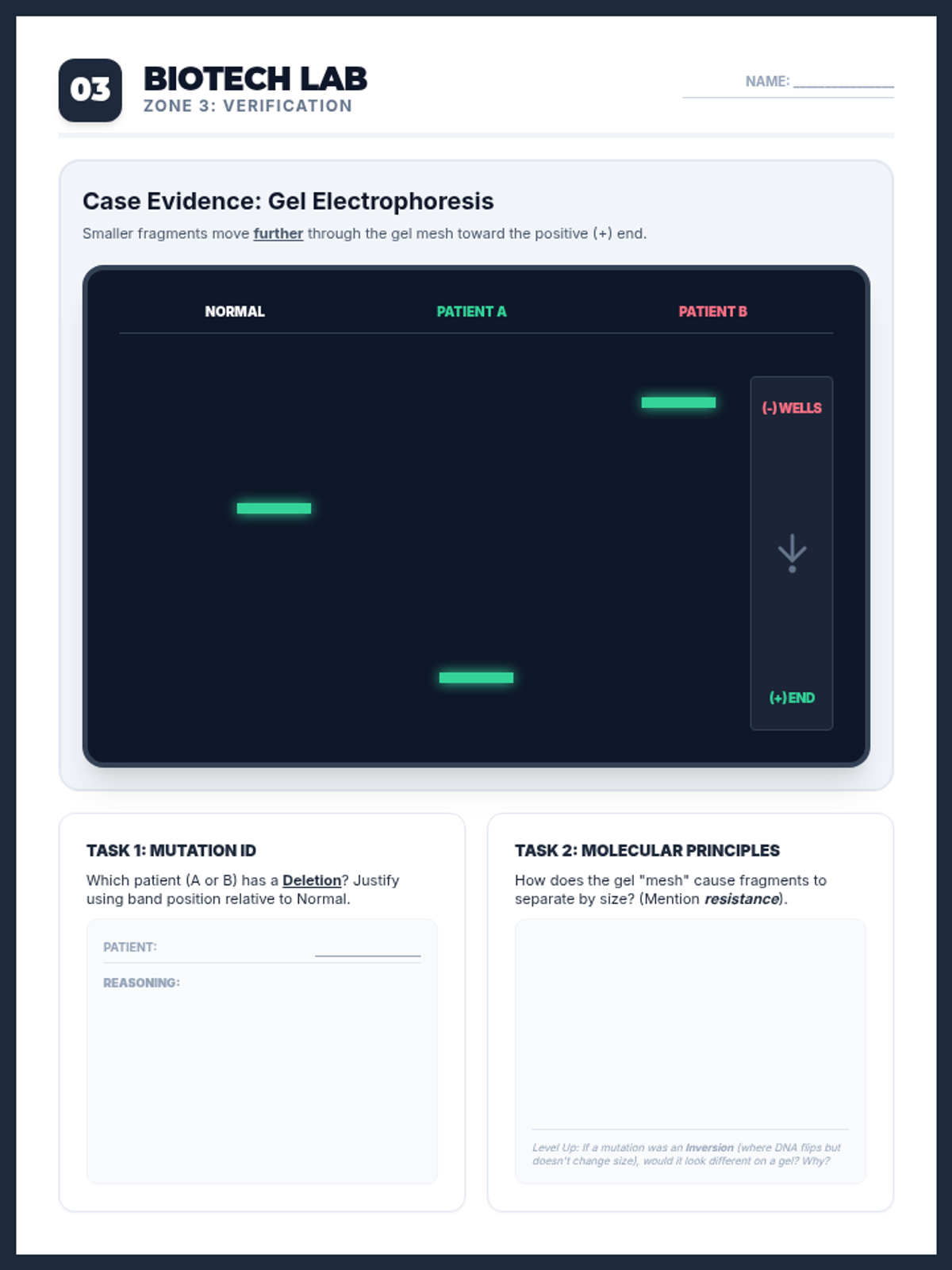
A 90-minute investigation into how genetic mutations and chromosomal abnormalities lead to human disorders. Students act as 'genetic consultants' to analyze karyotypes, pedigrees, and mutation types.
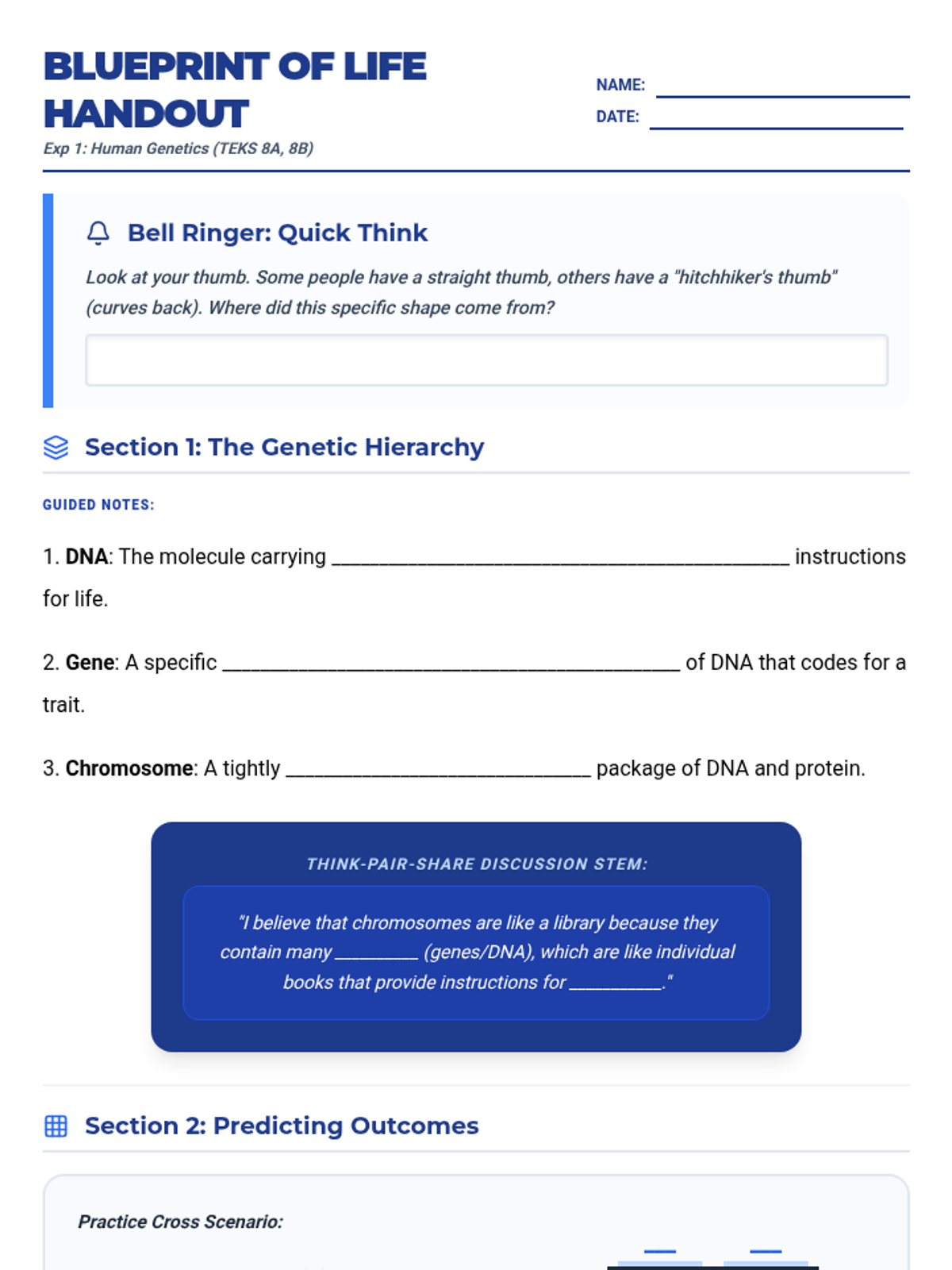
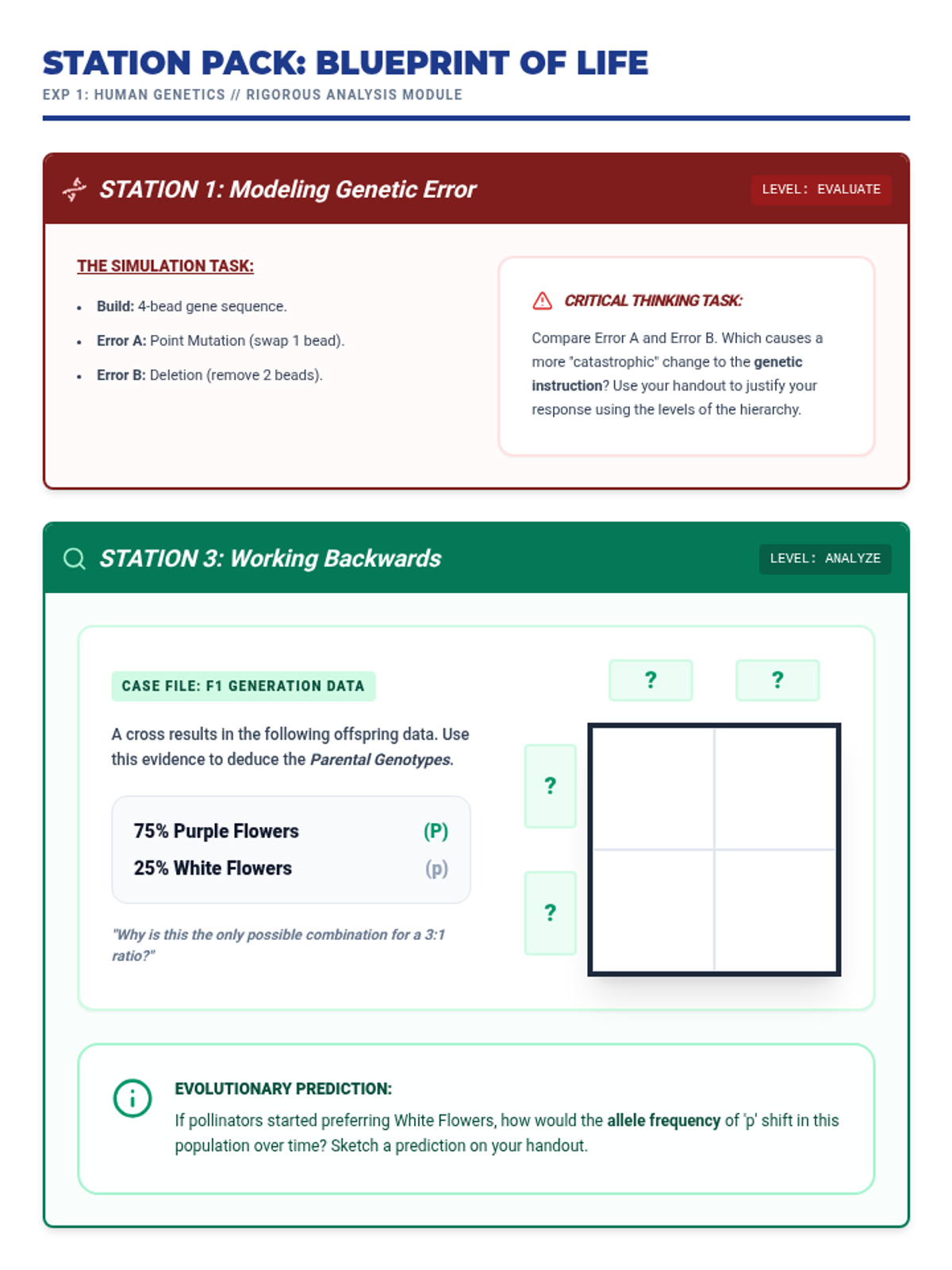
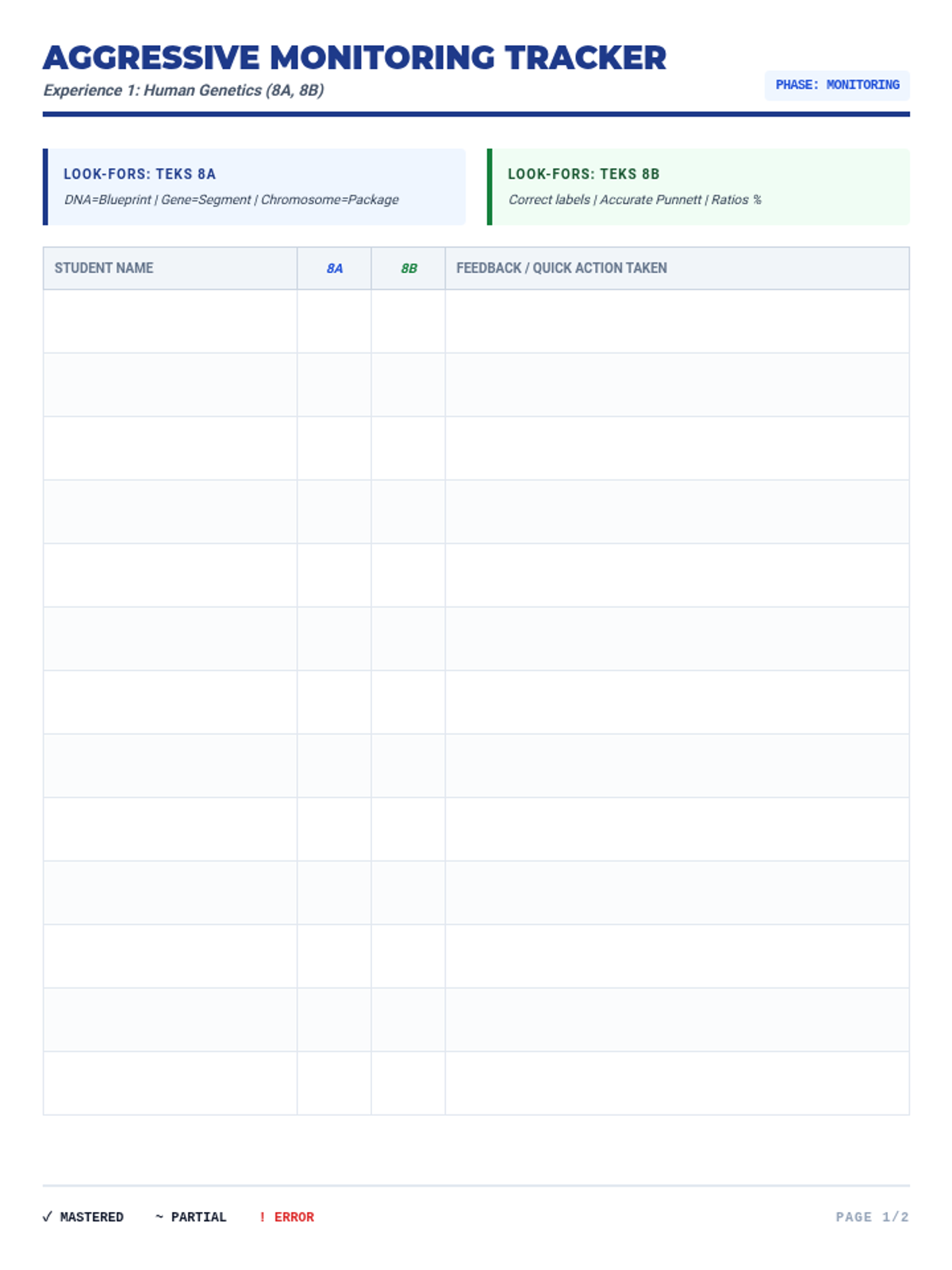
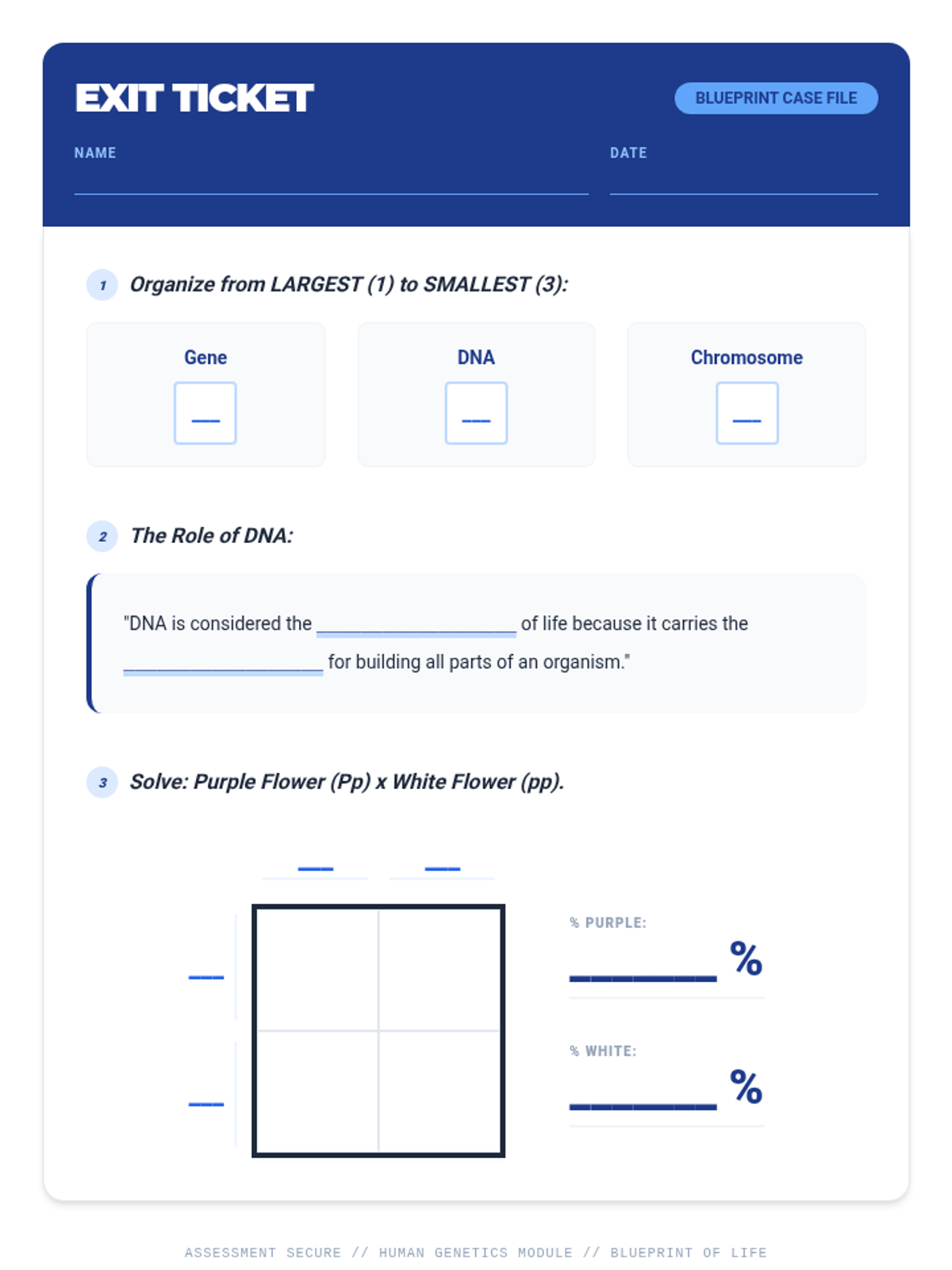
A comprehensive 90-minute lesson on DNA, genes, chromosomes, and genetic crosses. Students explore the 'Blueprint of Life' through chunked instruction, Think-Pair-Share discussions, and hands-on modeling stations.
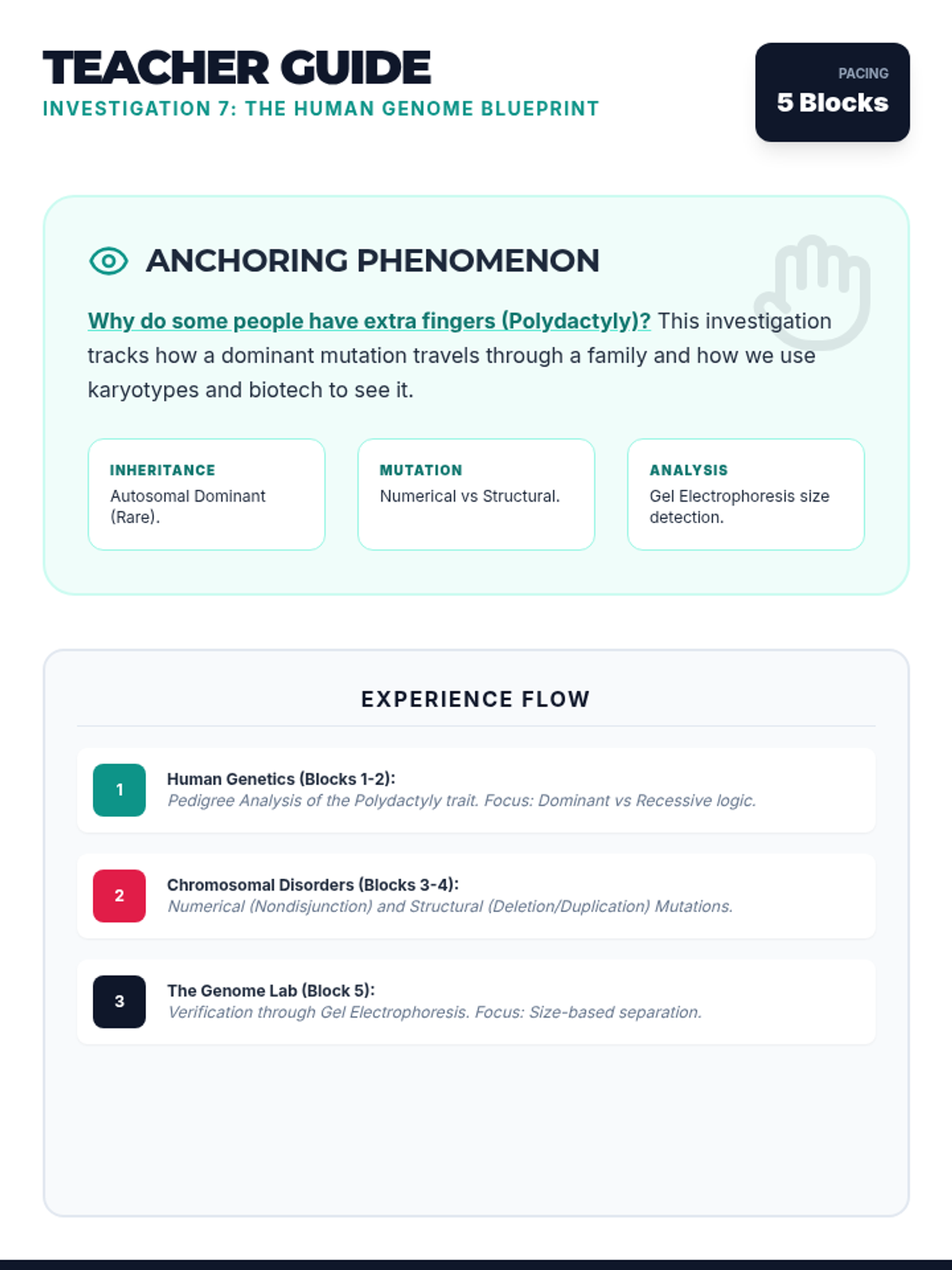
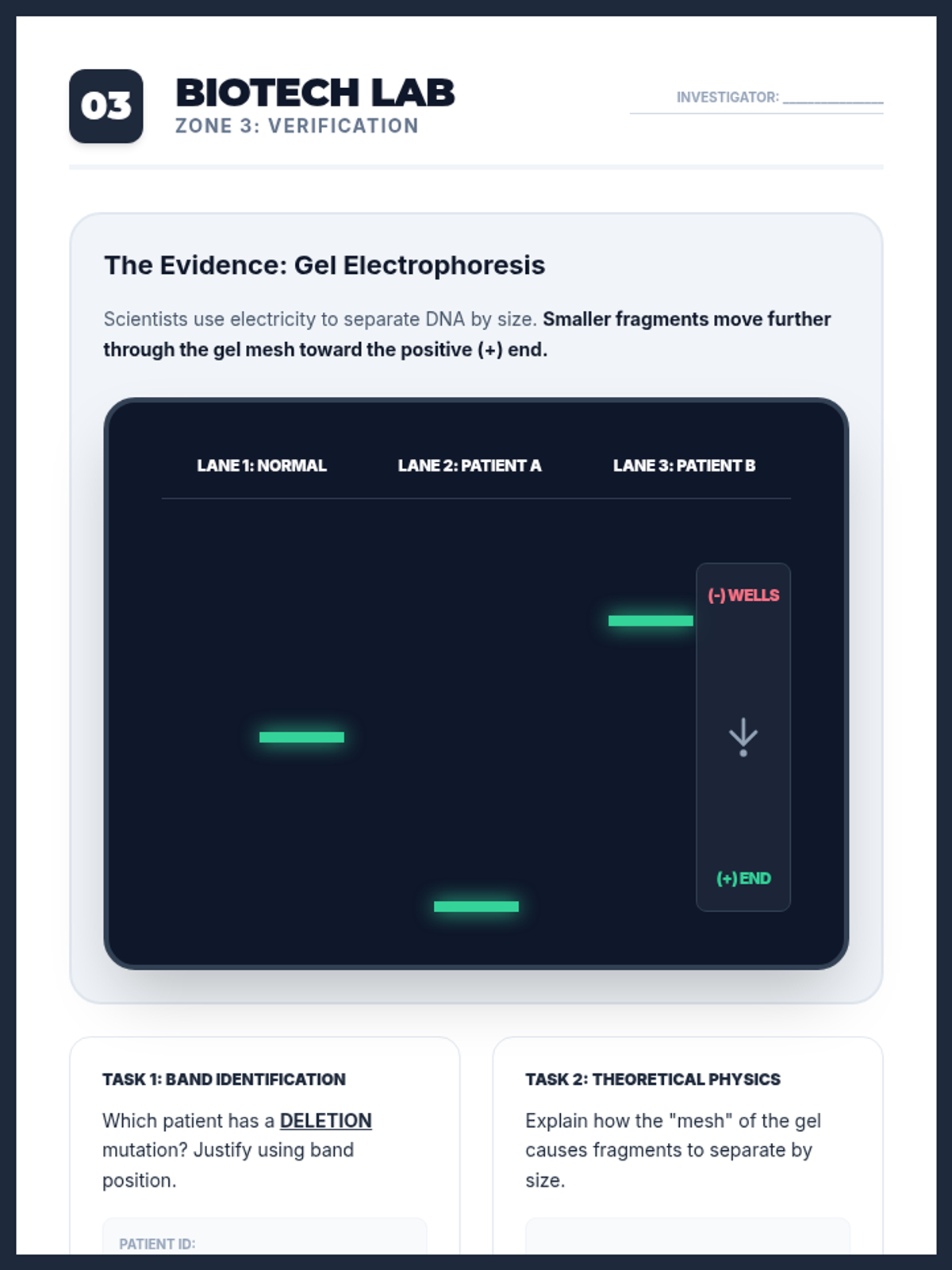
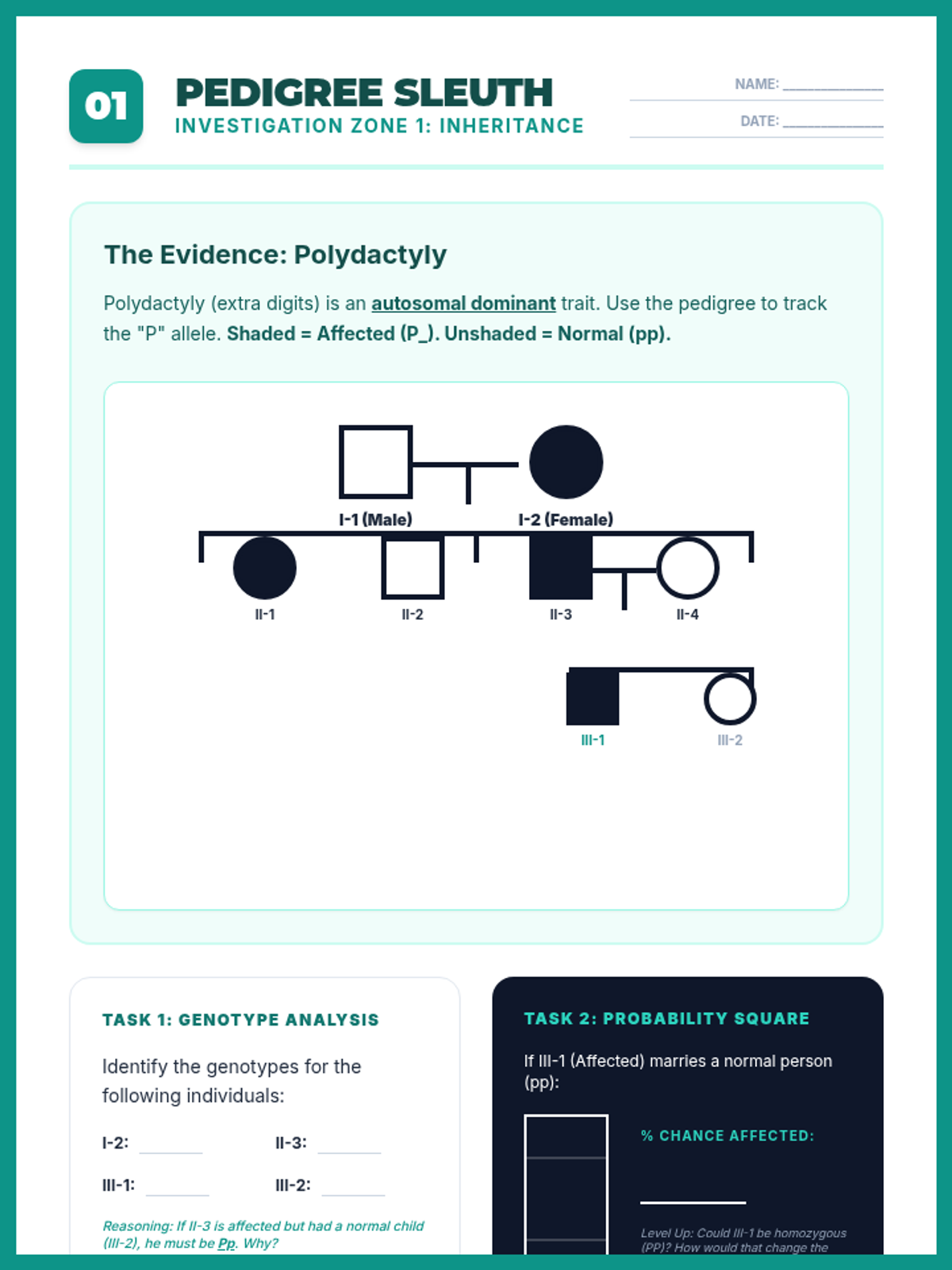
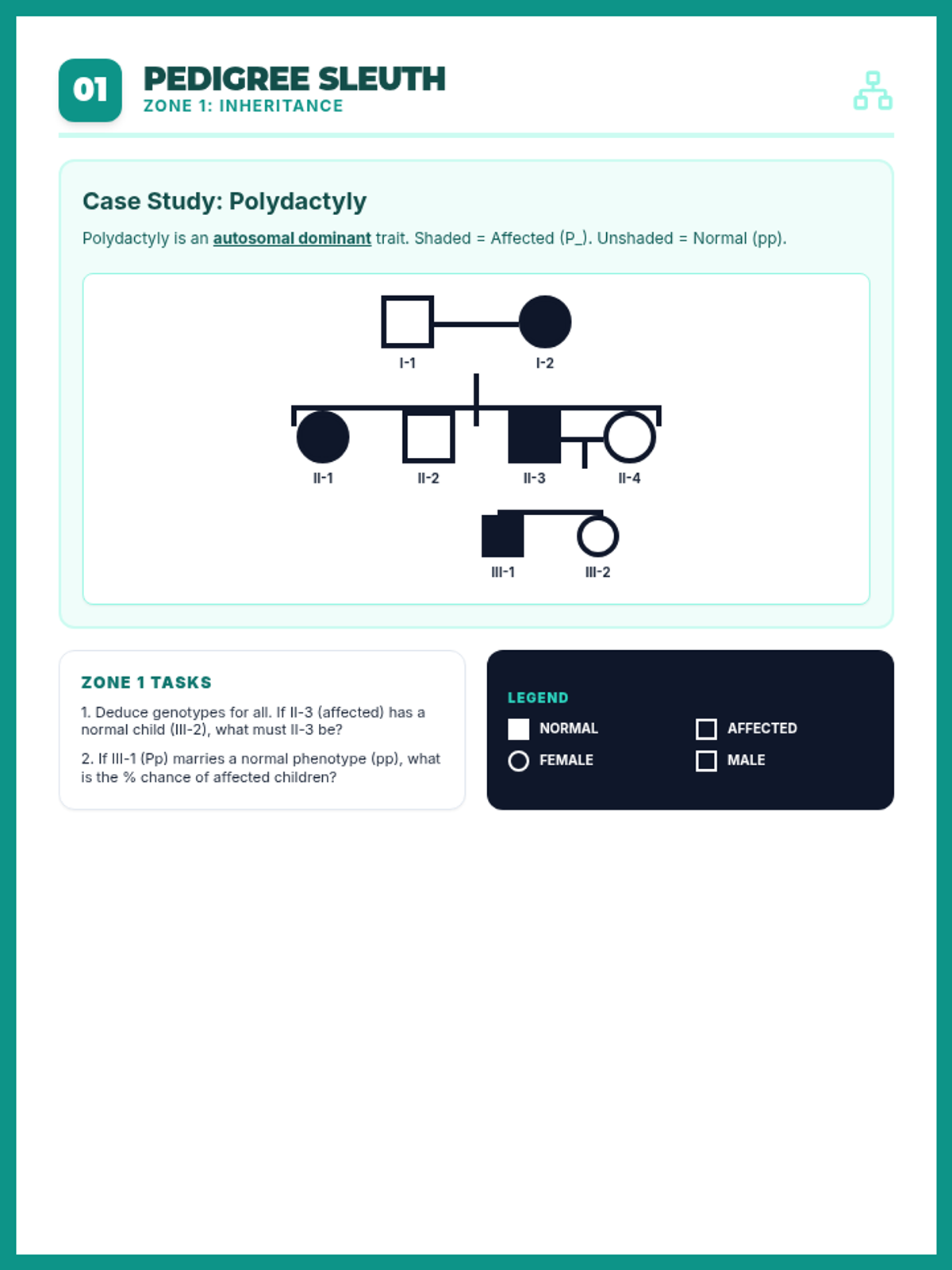
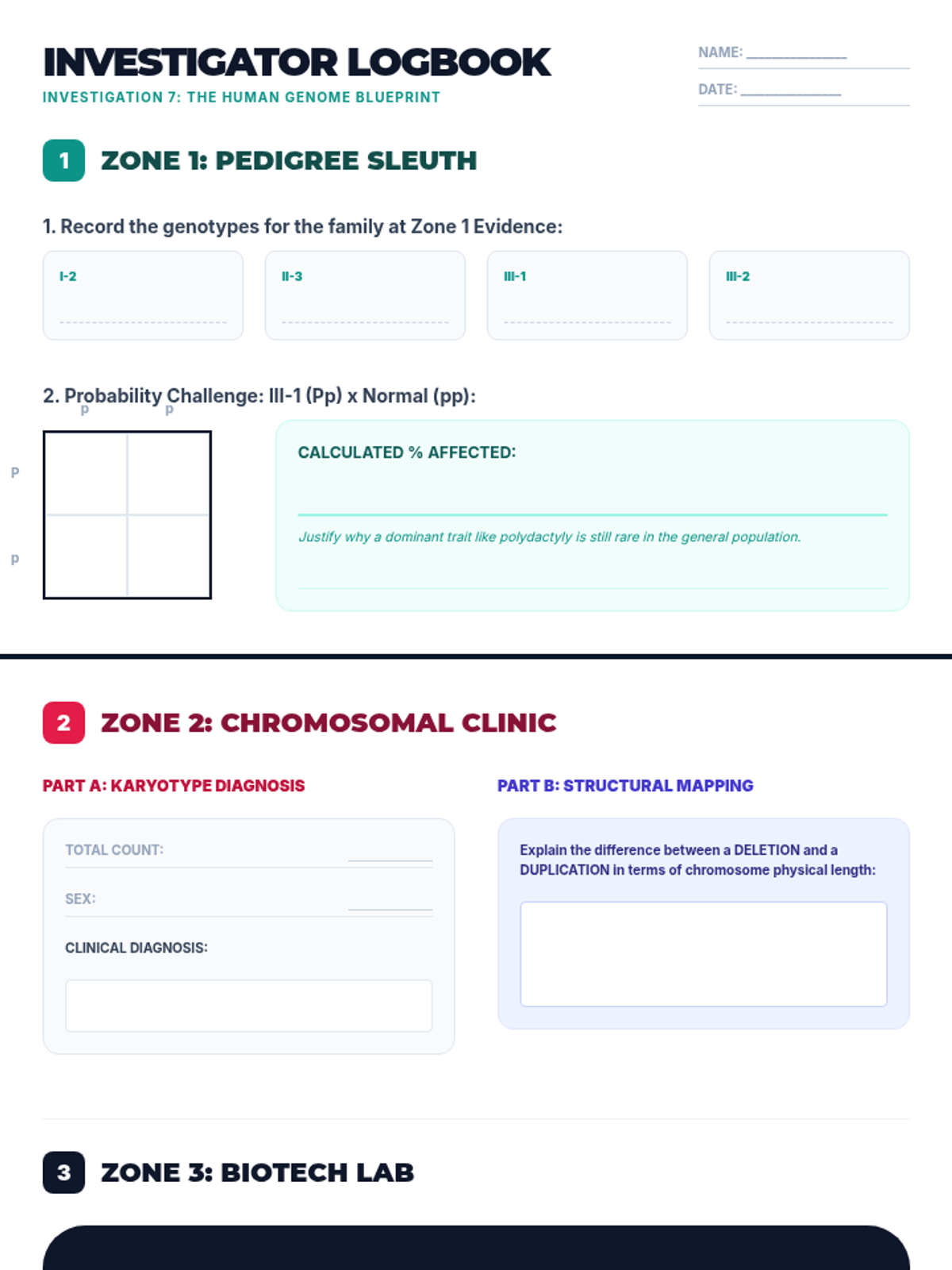
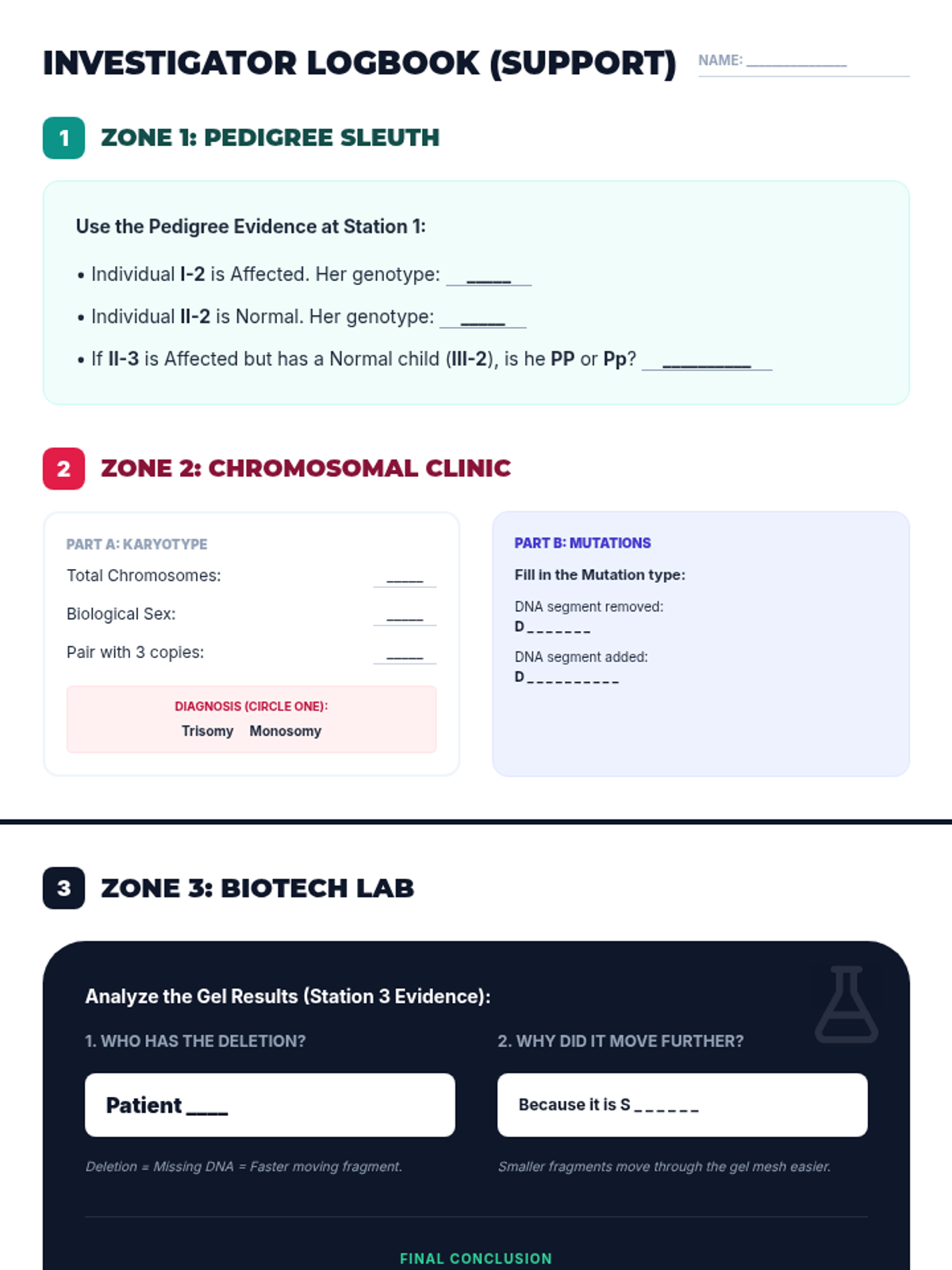
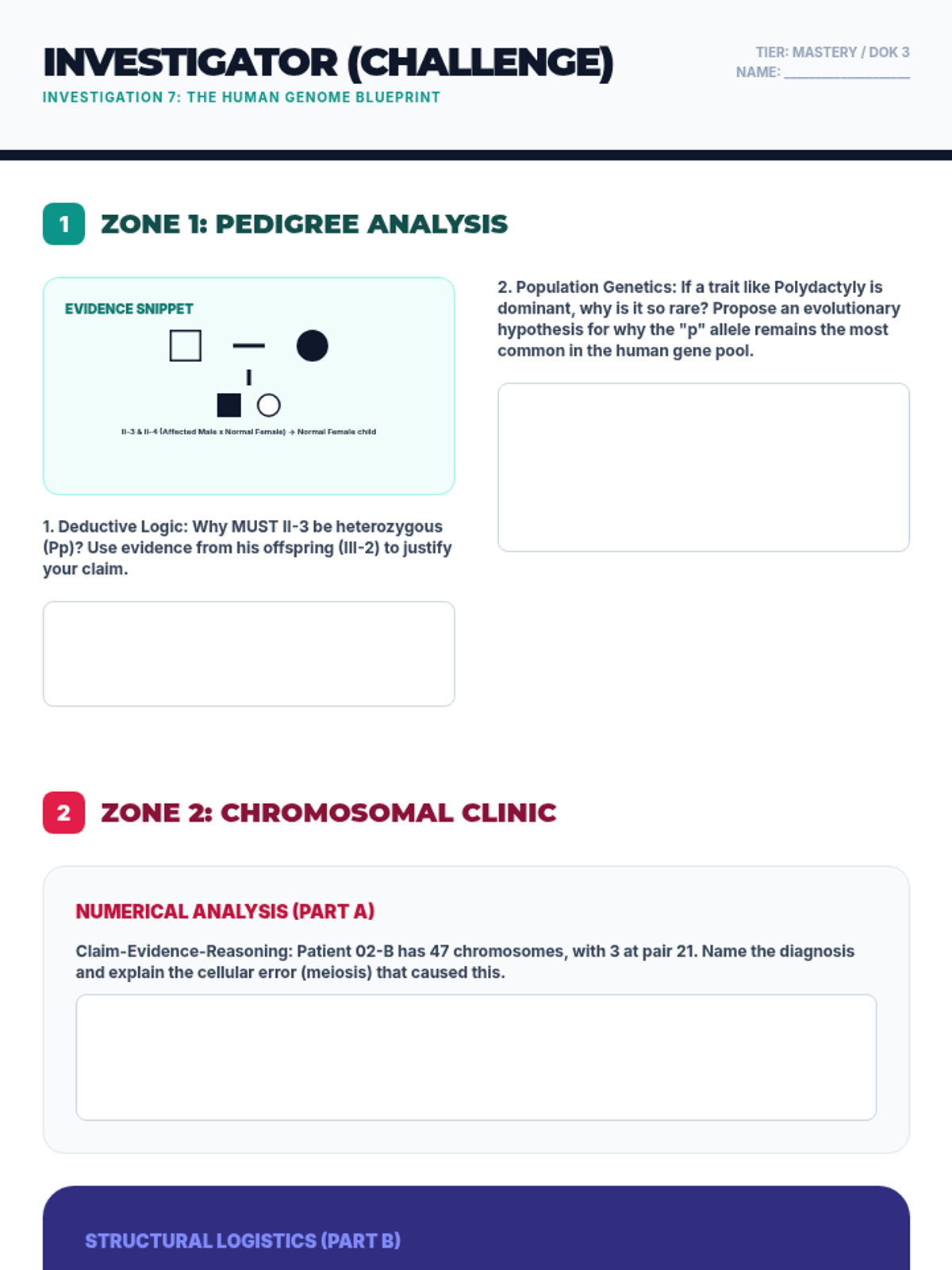
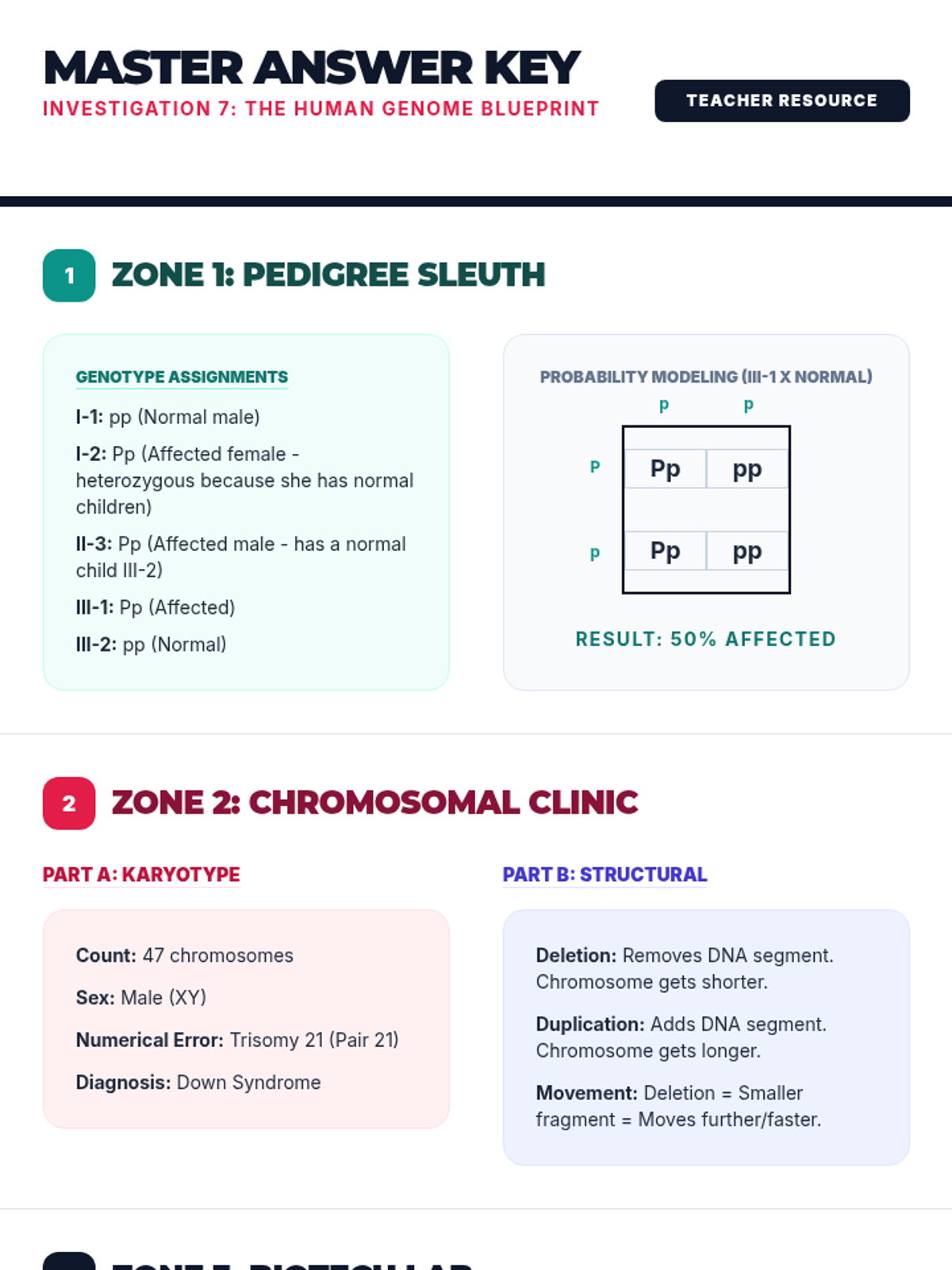
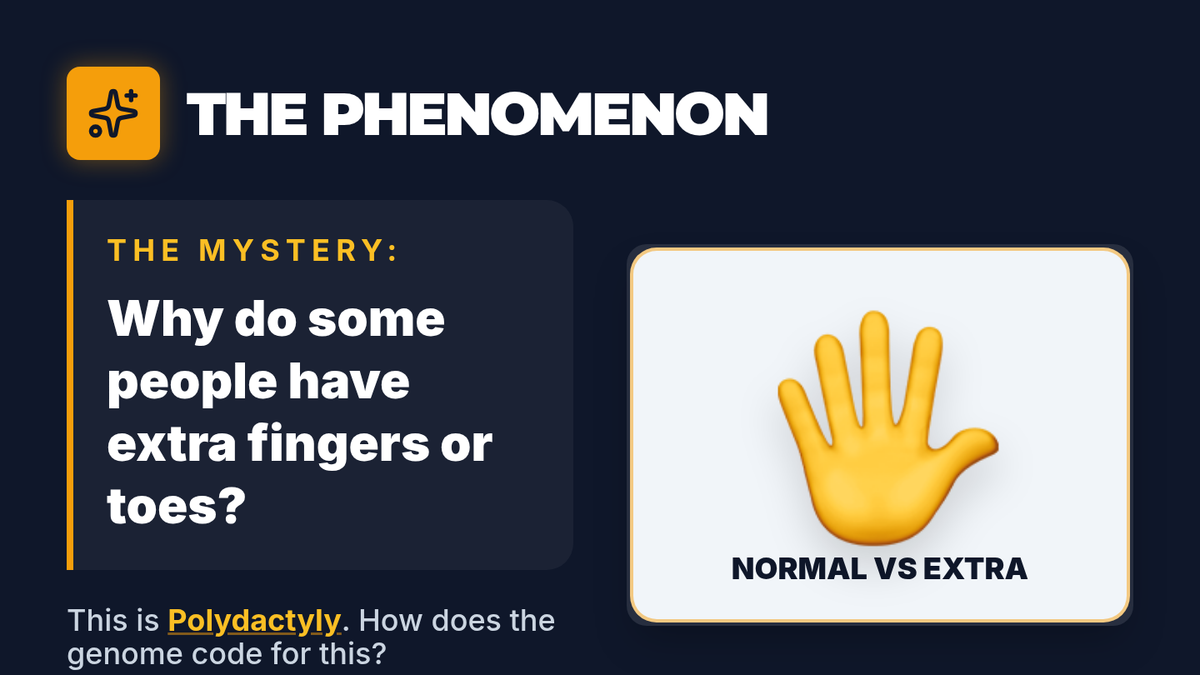
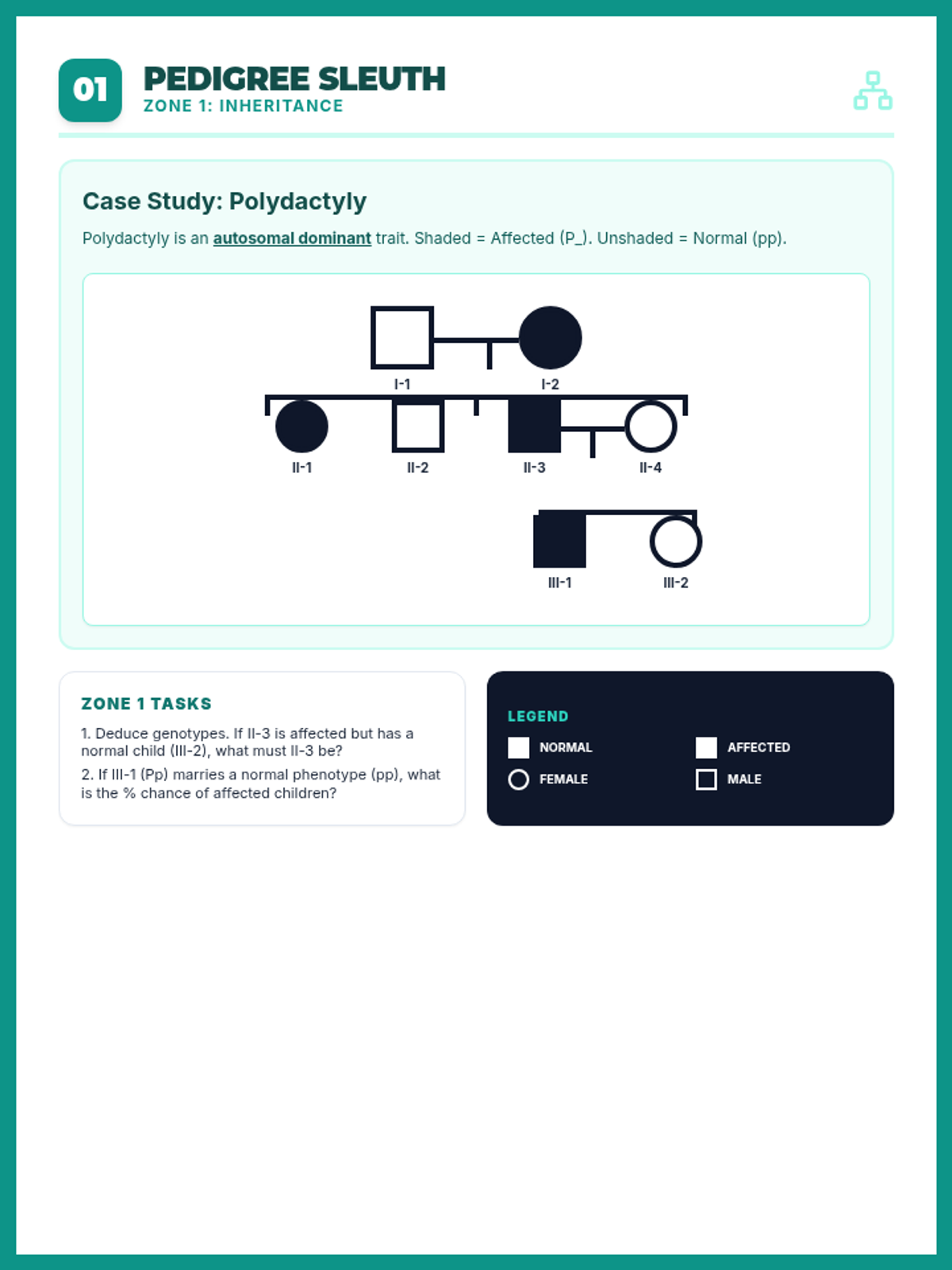
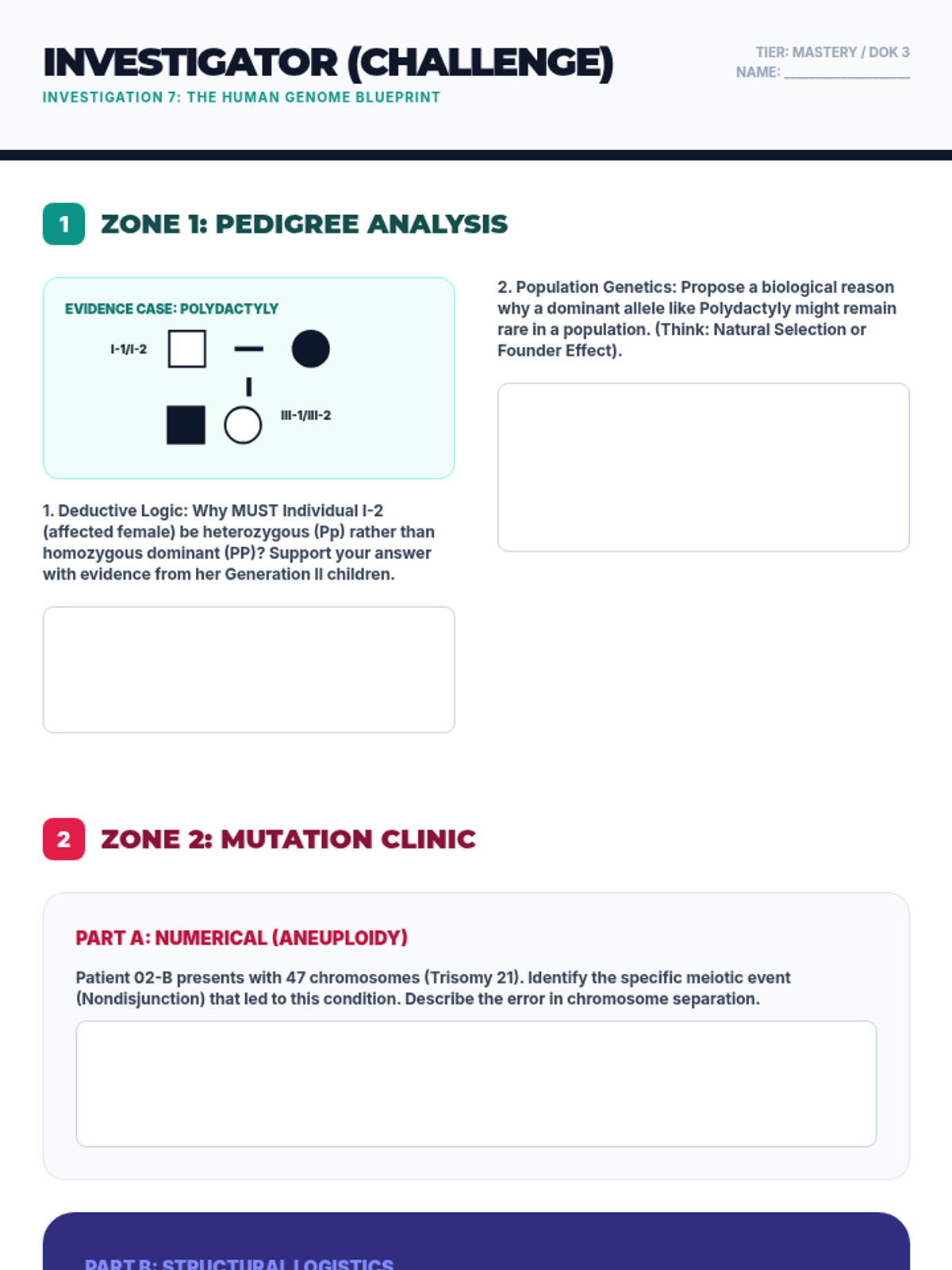
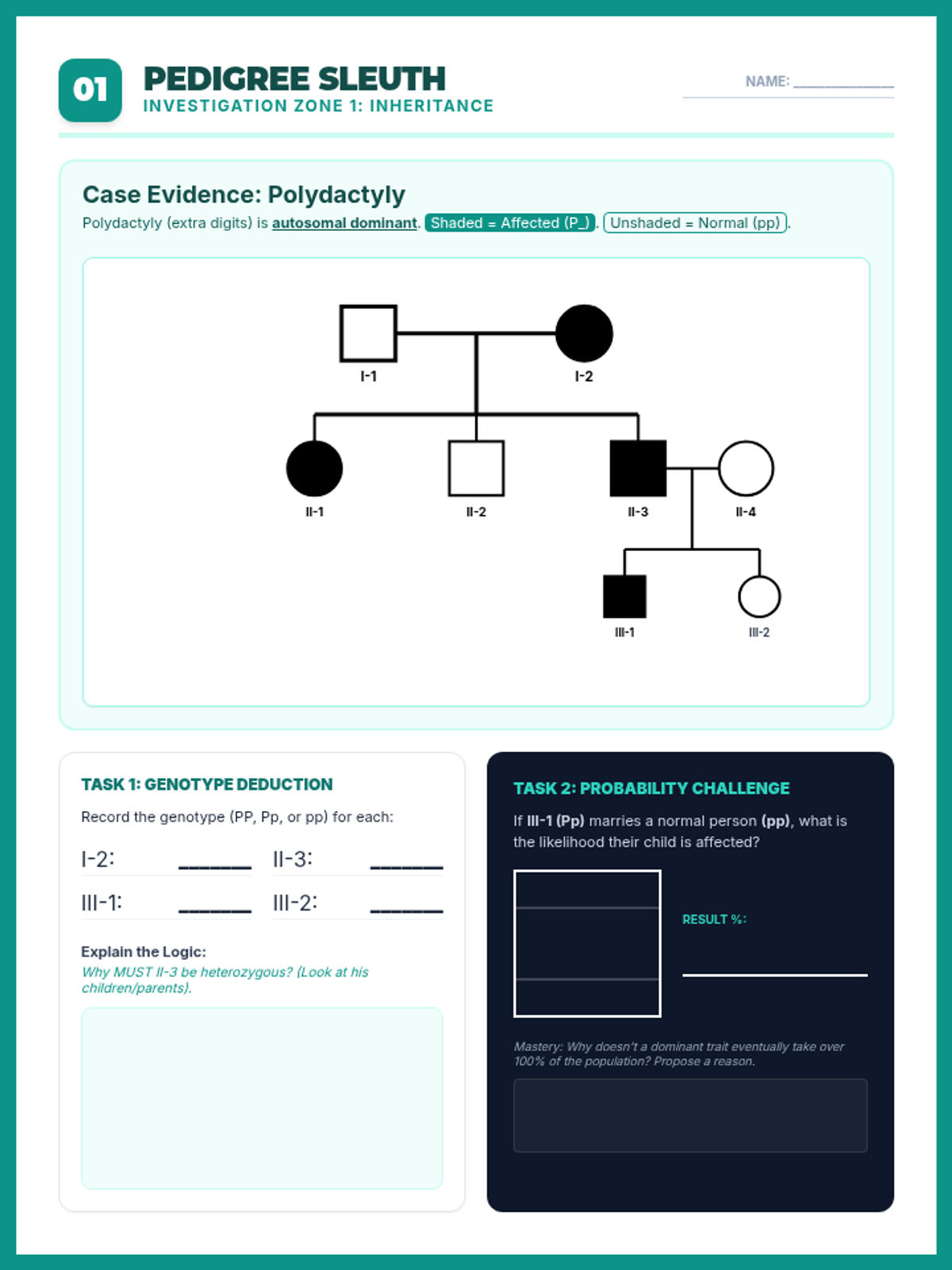
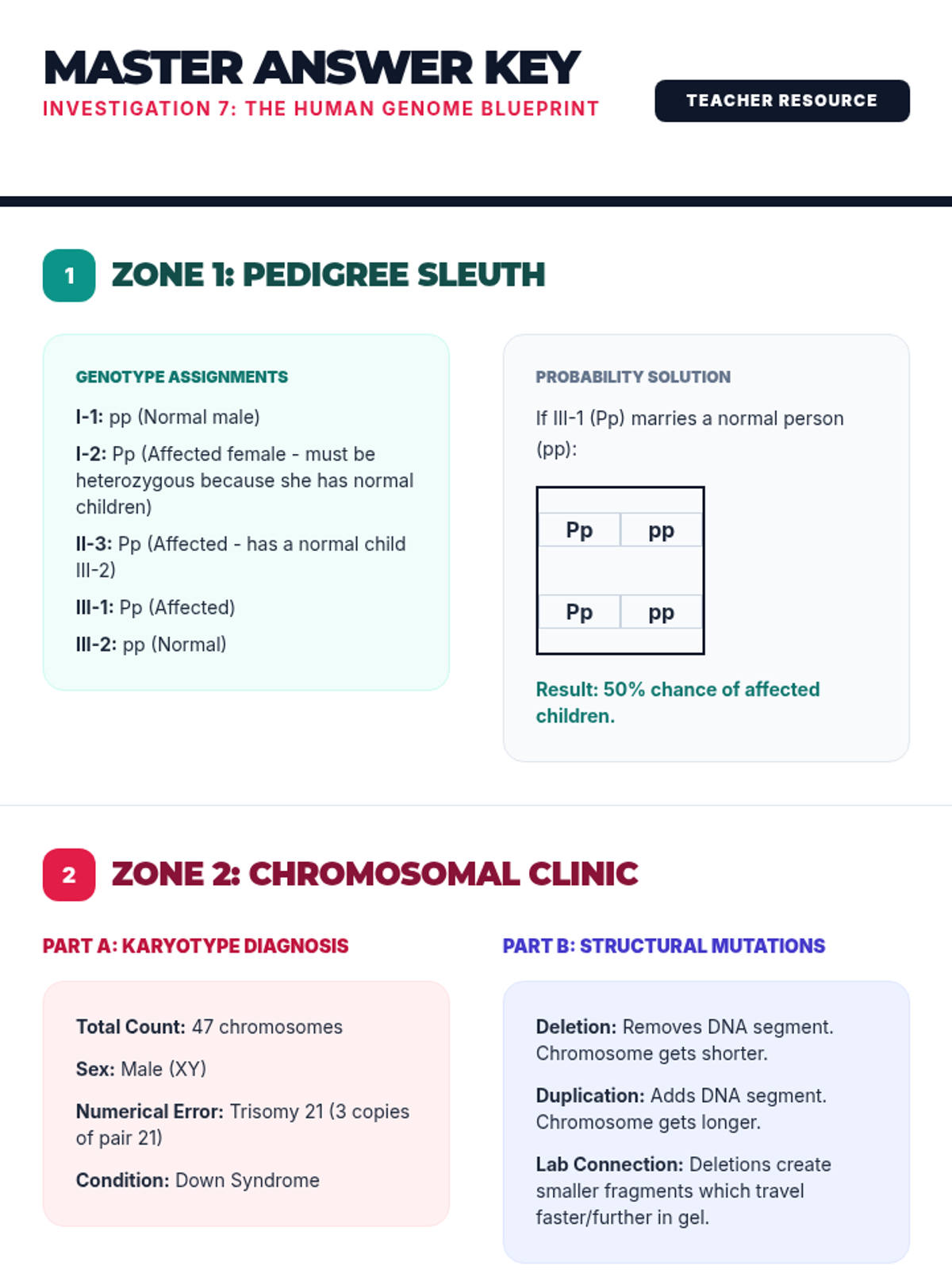
A 5-block (10 period) investigation into the human genome, focusing on patterns of inheritance, chromosomal disorders, and molecular biotechnology through the lens of polydactyly.
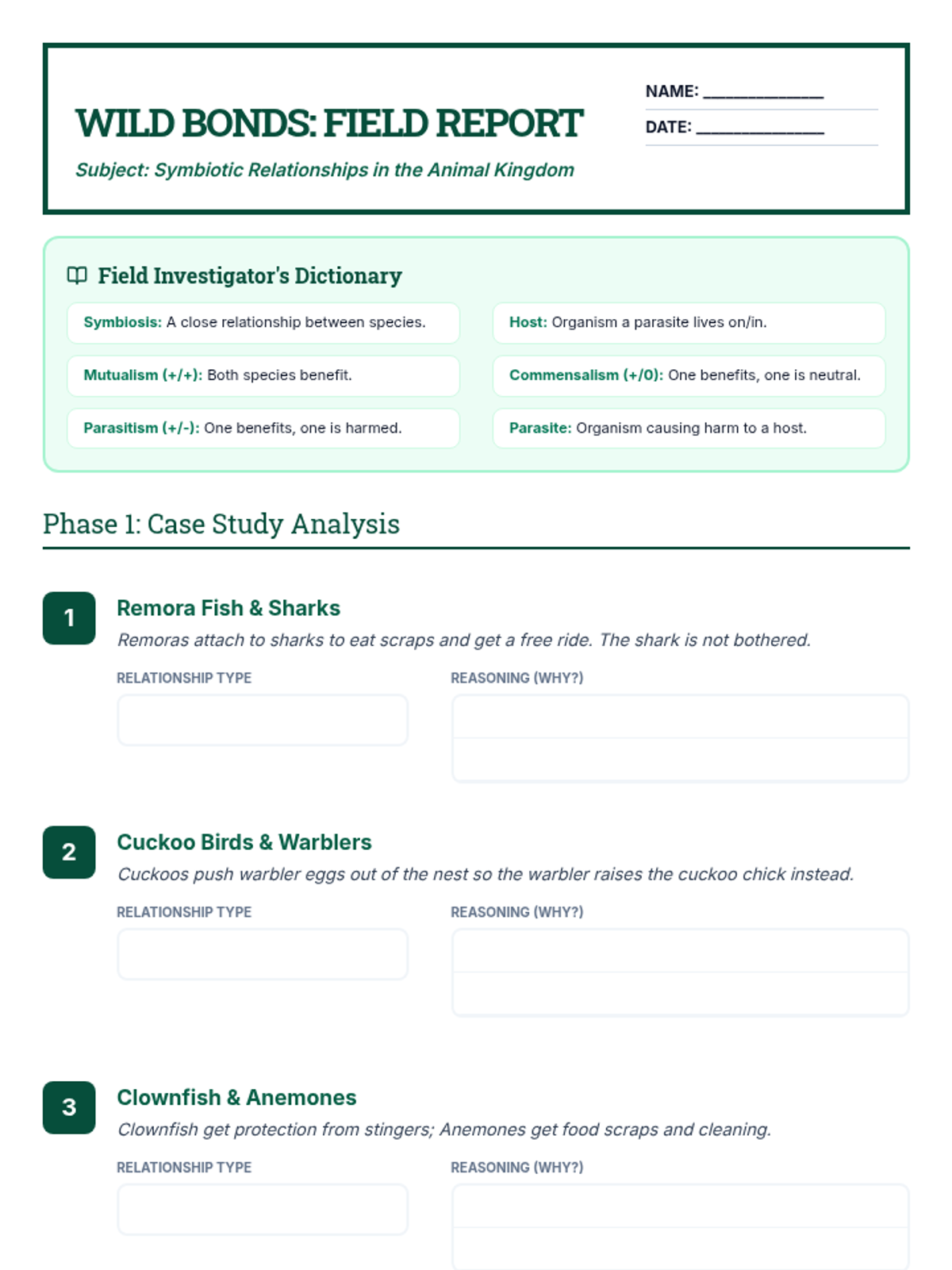
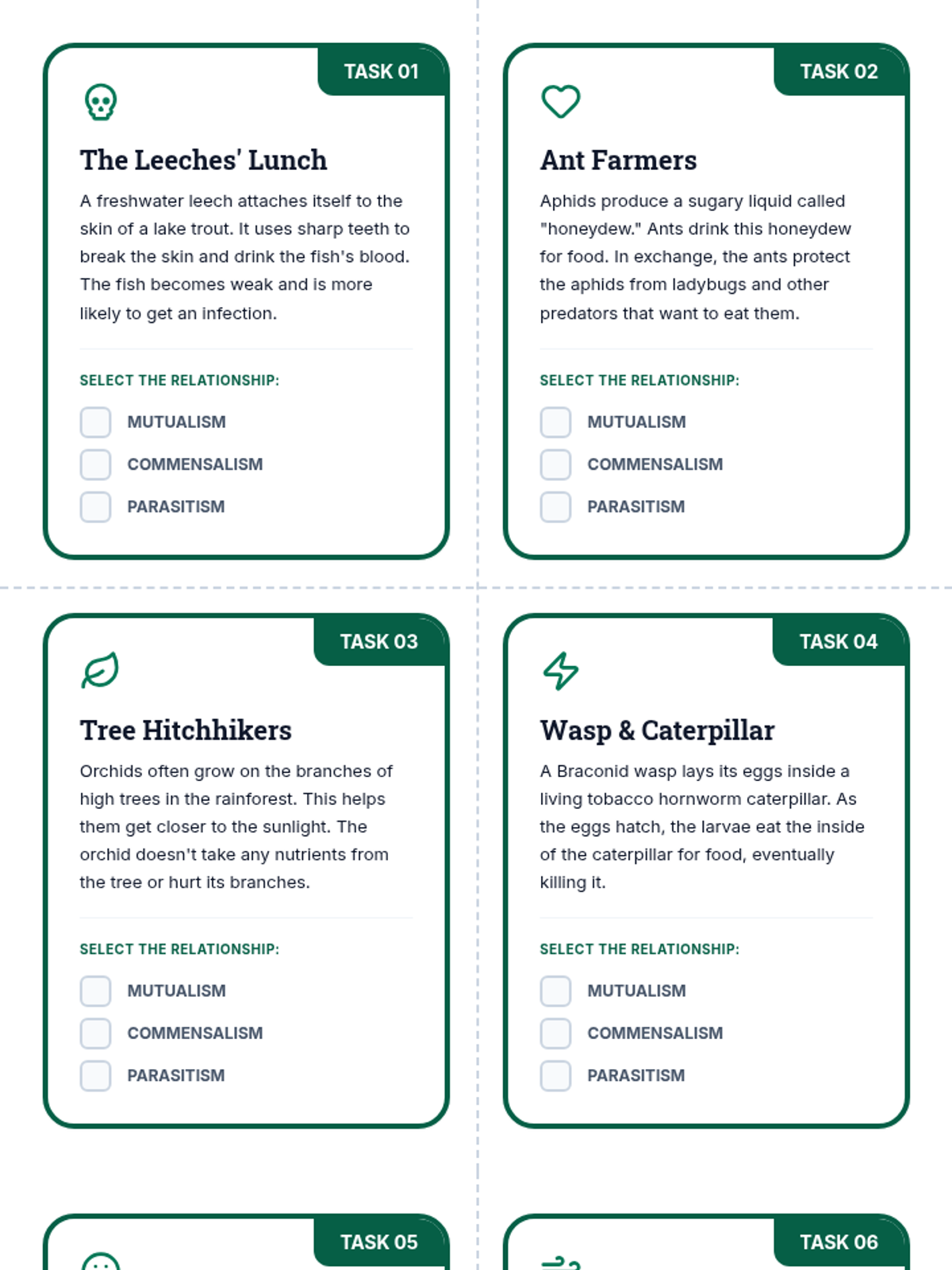
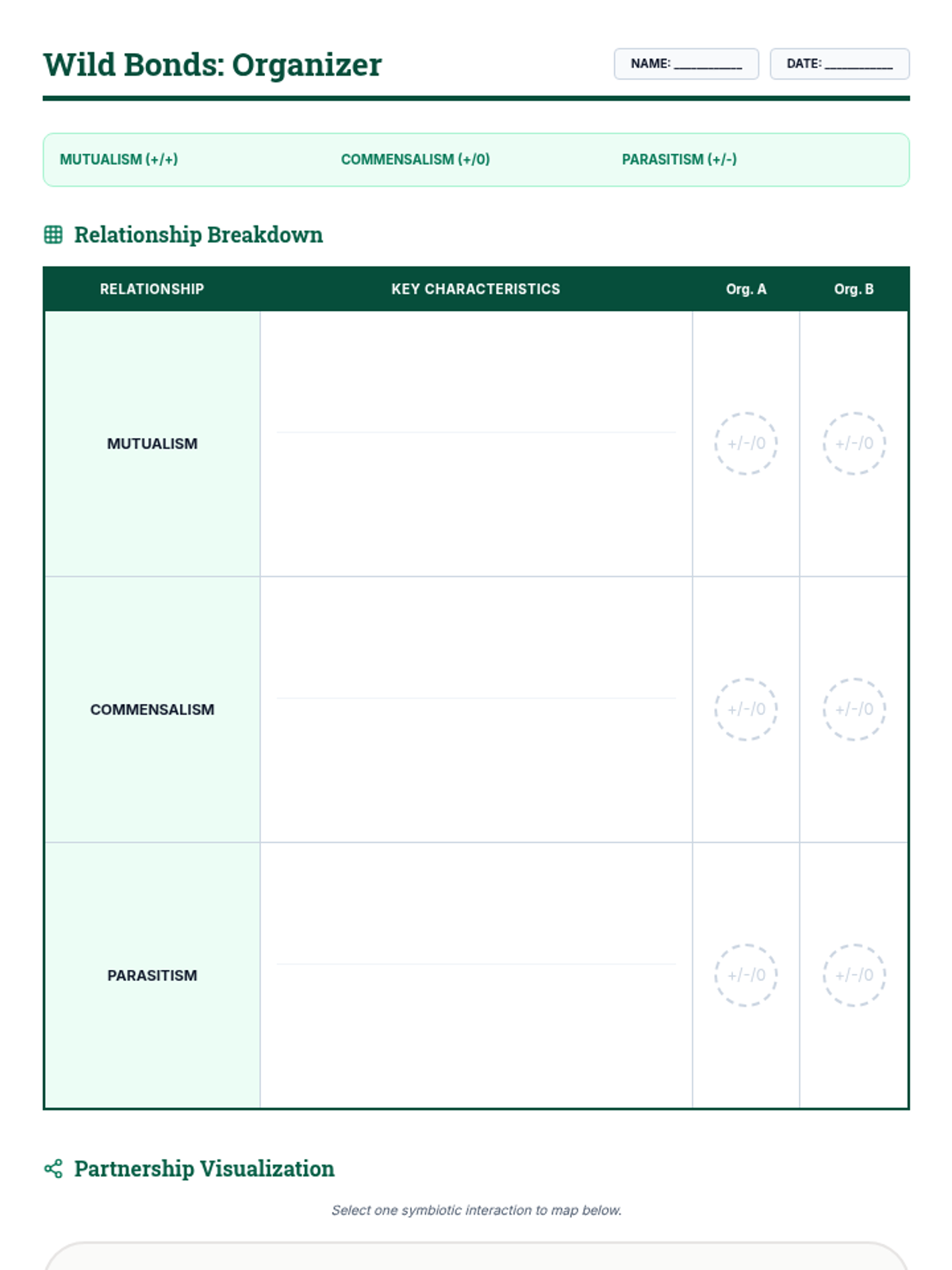
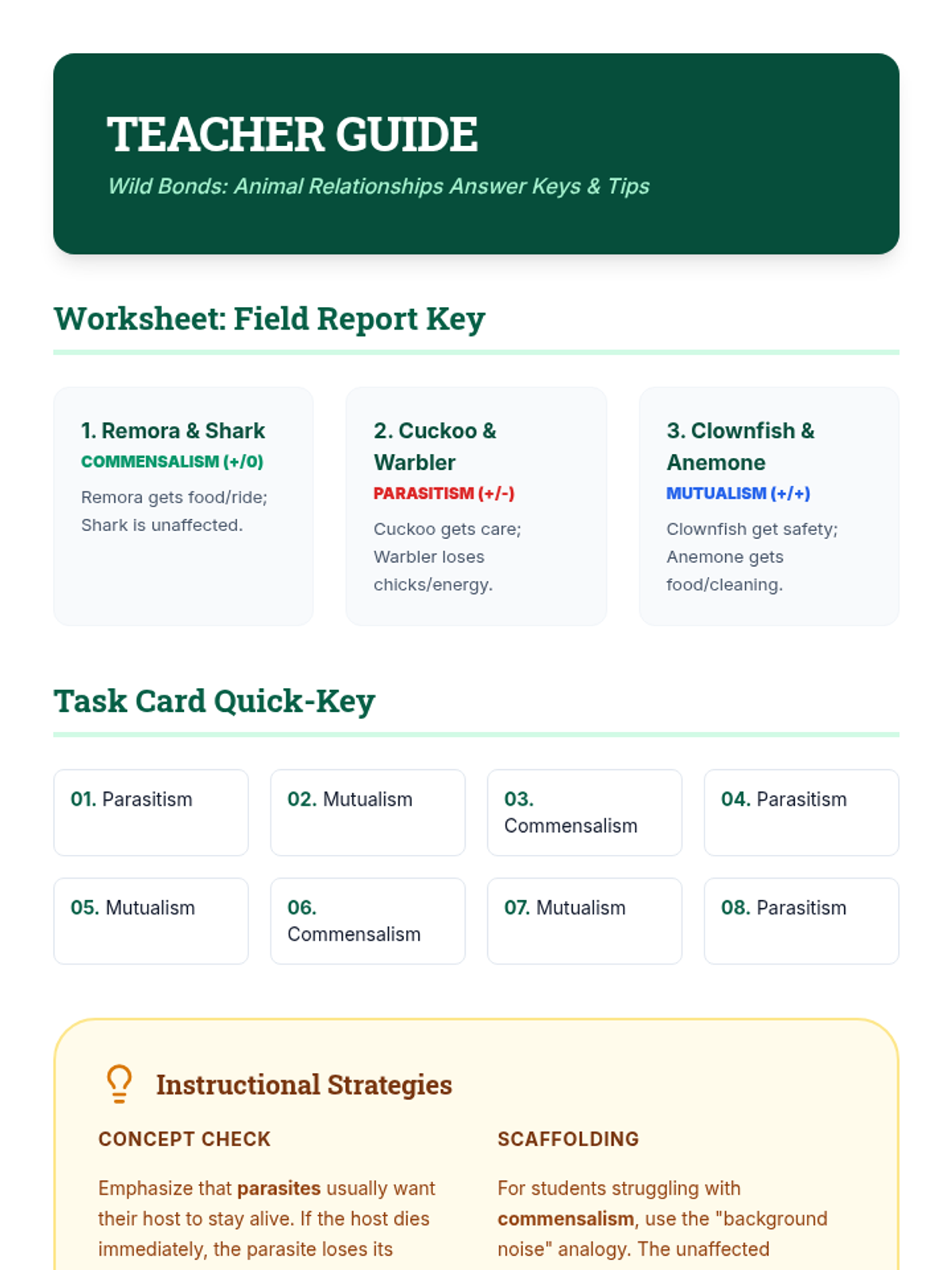
A comprehensive lesson exploring the three primary types of symbiotic relationships: mutualism, commensalism, and parasitism. Students analyze animal interactions through task cards, case studies, and visual organizers.
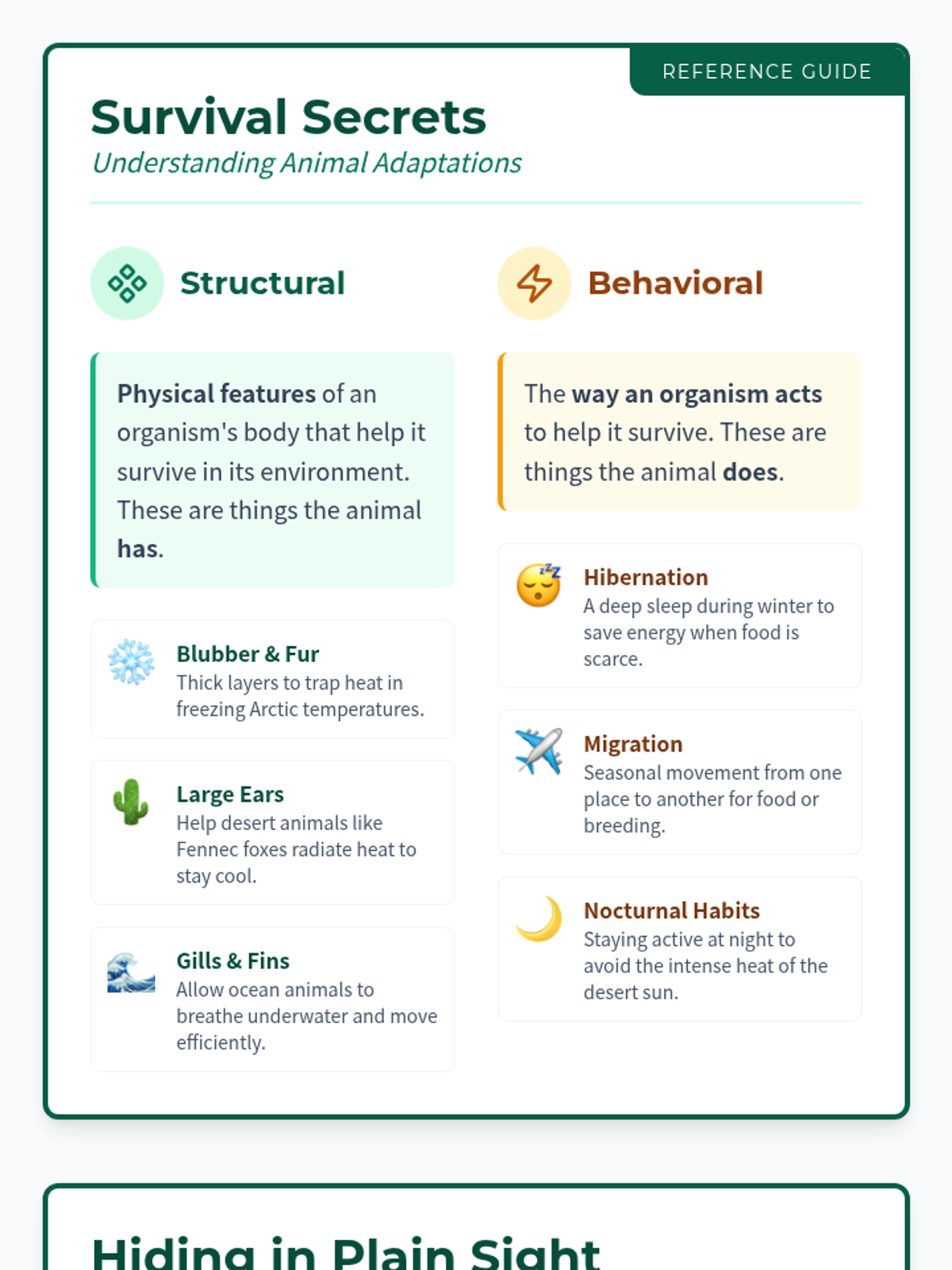
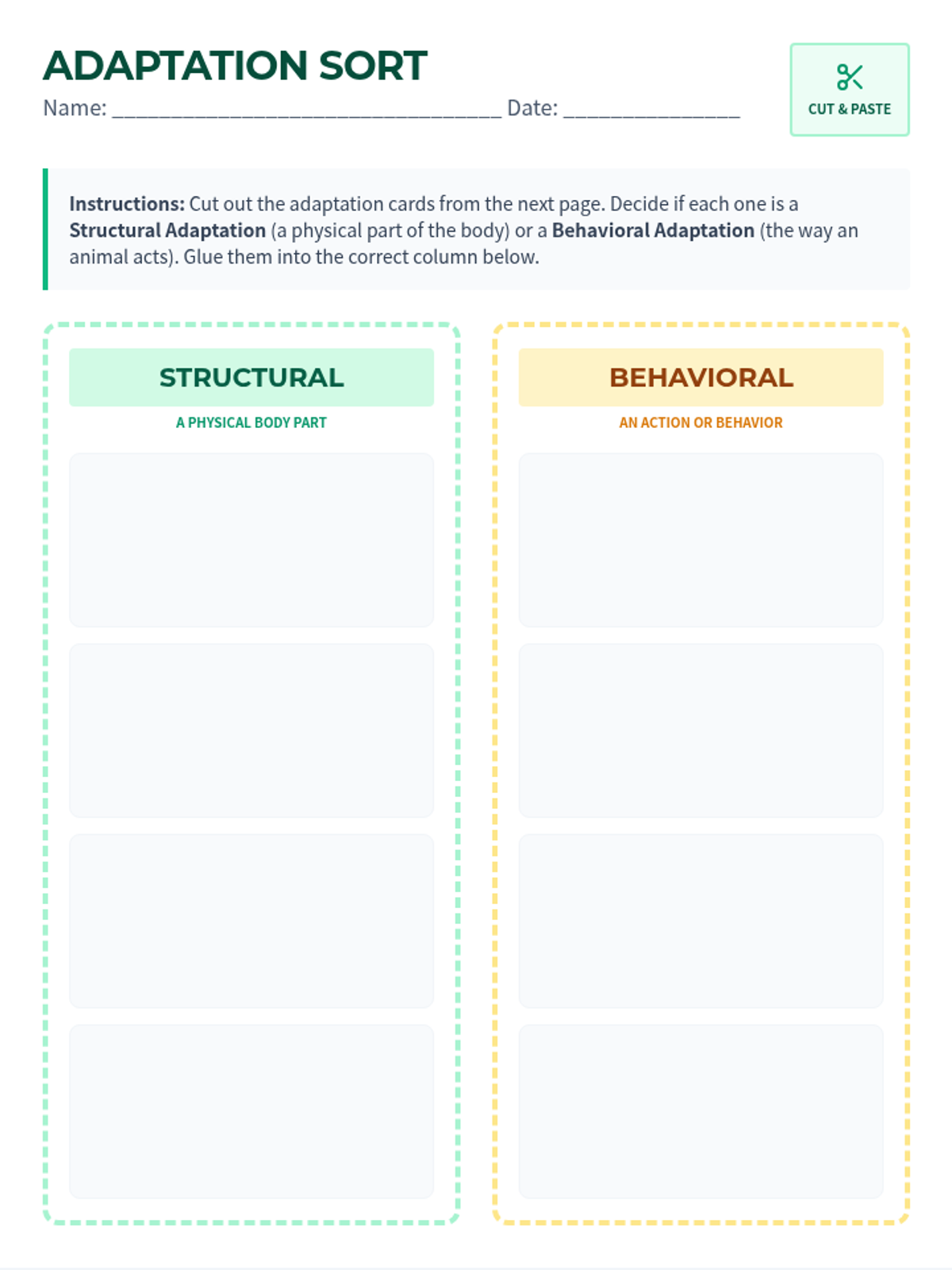
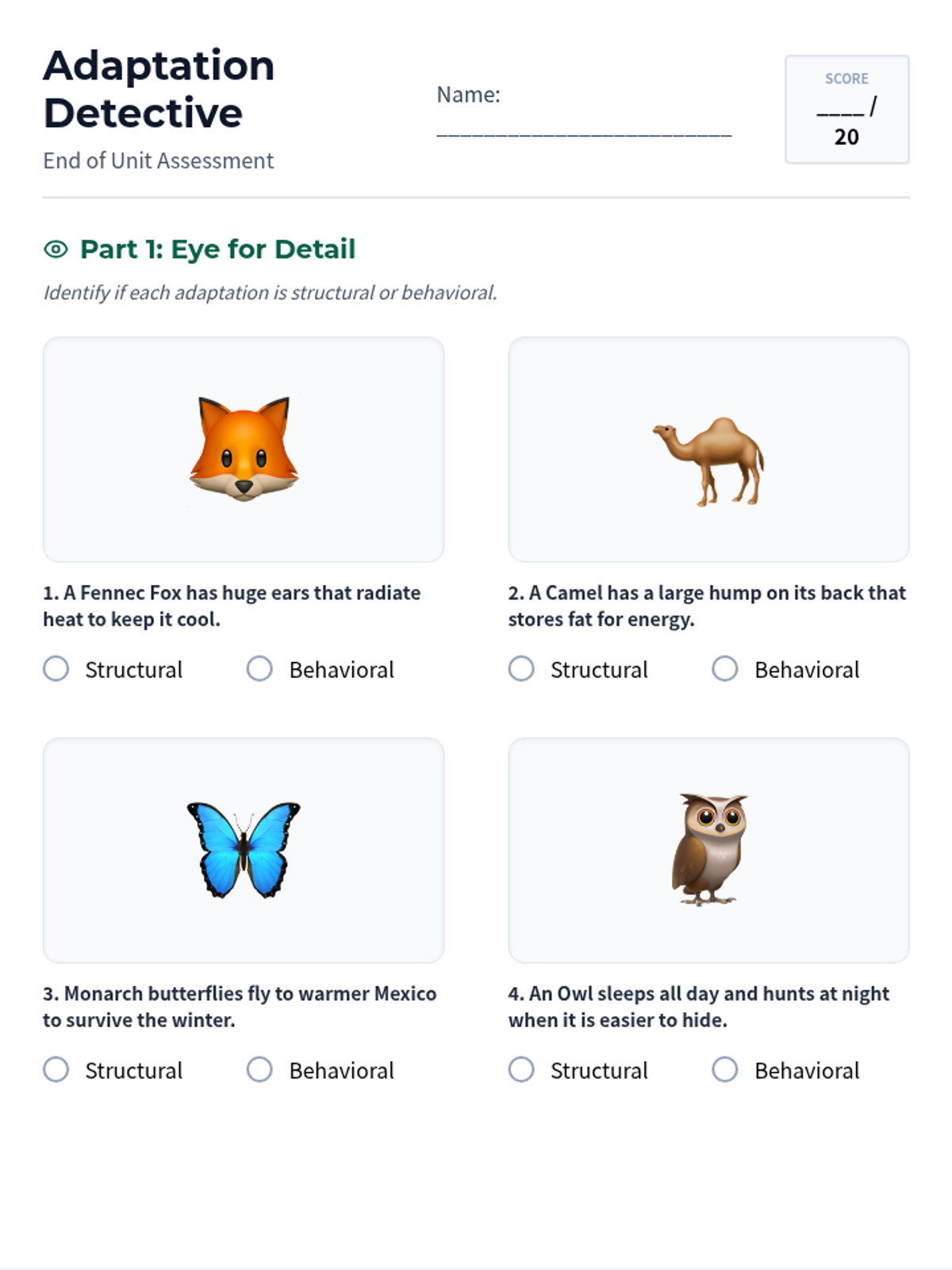
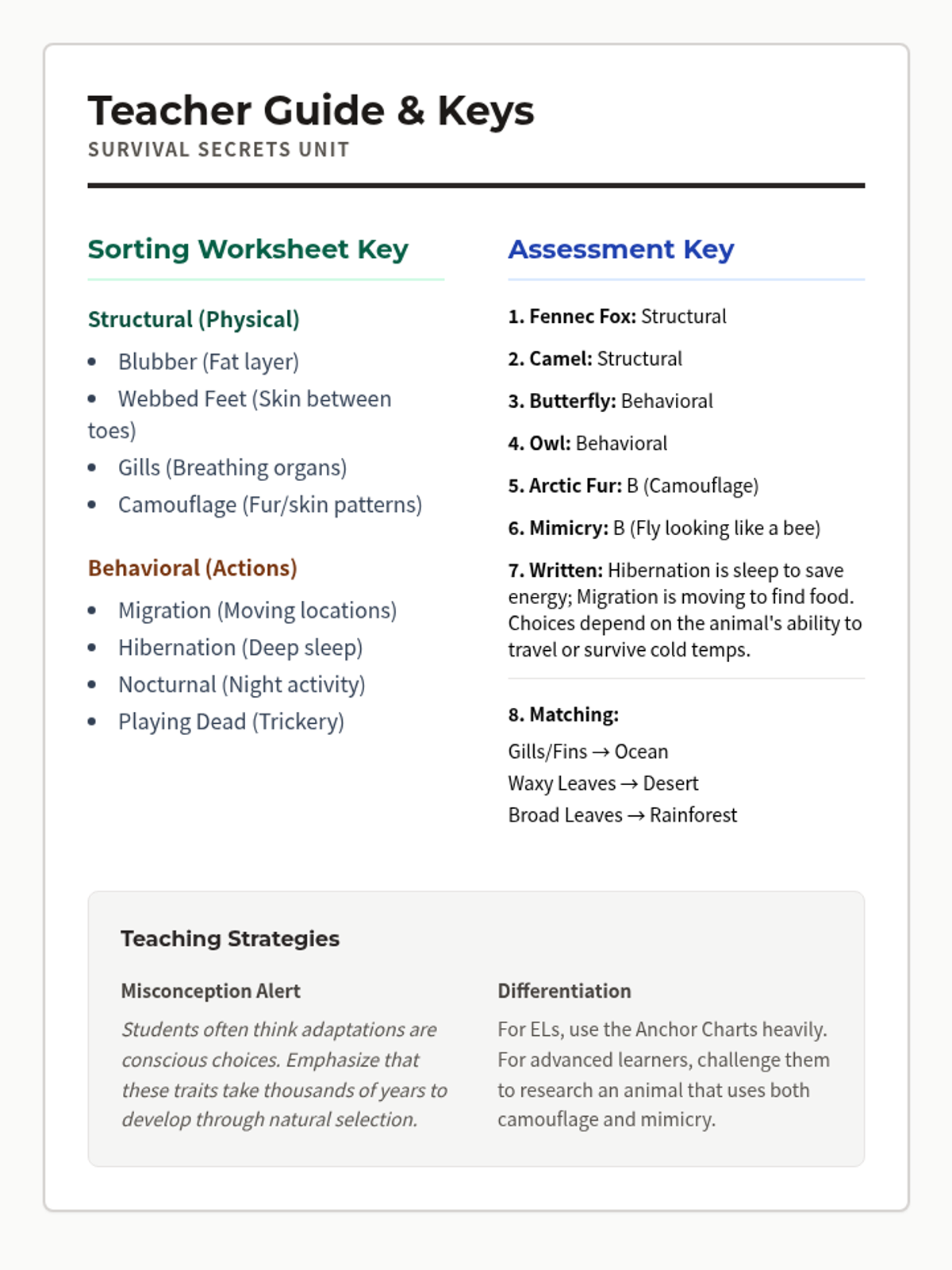
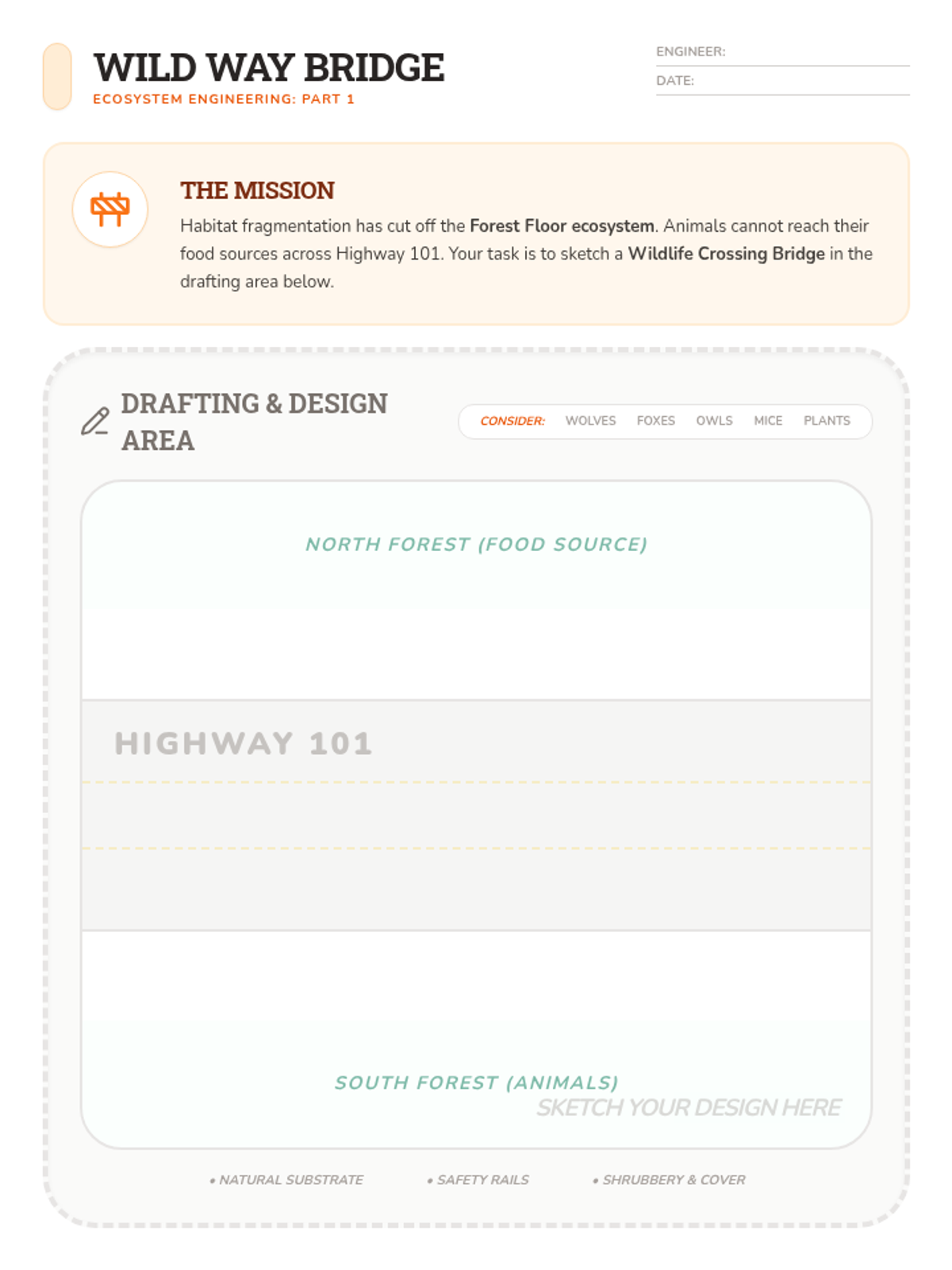
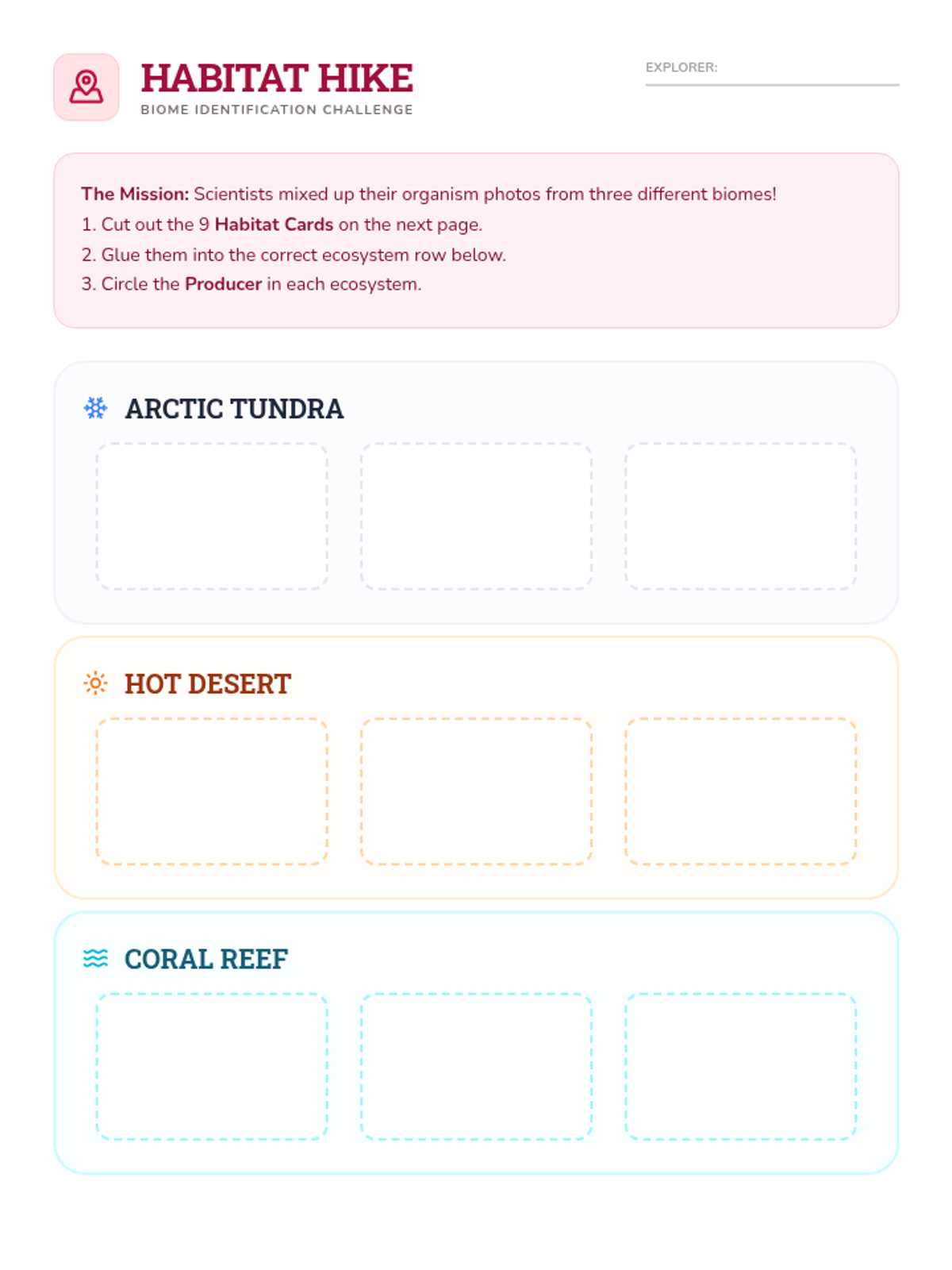
A comprehensive lesson on structural and behavioral adaptations across various biomes, including specialized survival strategies like hibernation, migration, camouflage, and mimicry.
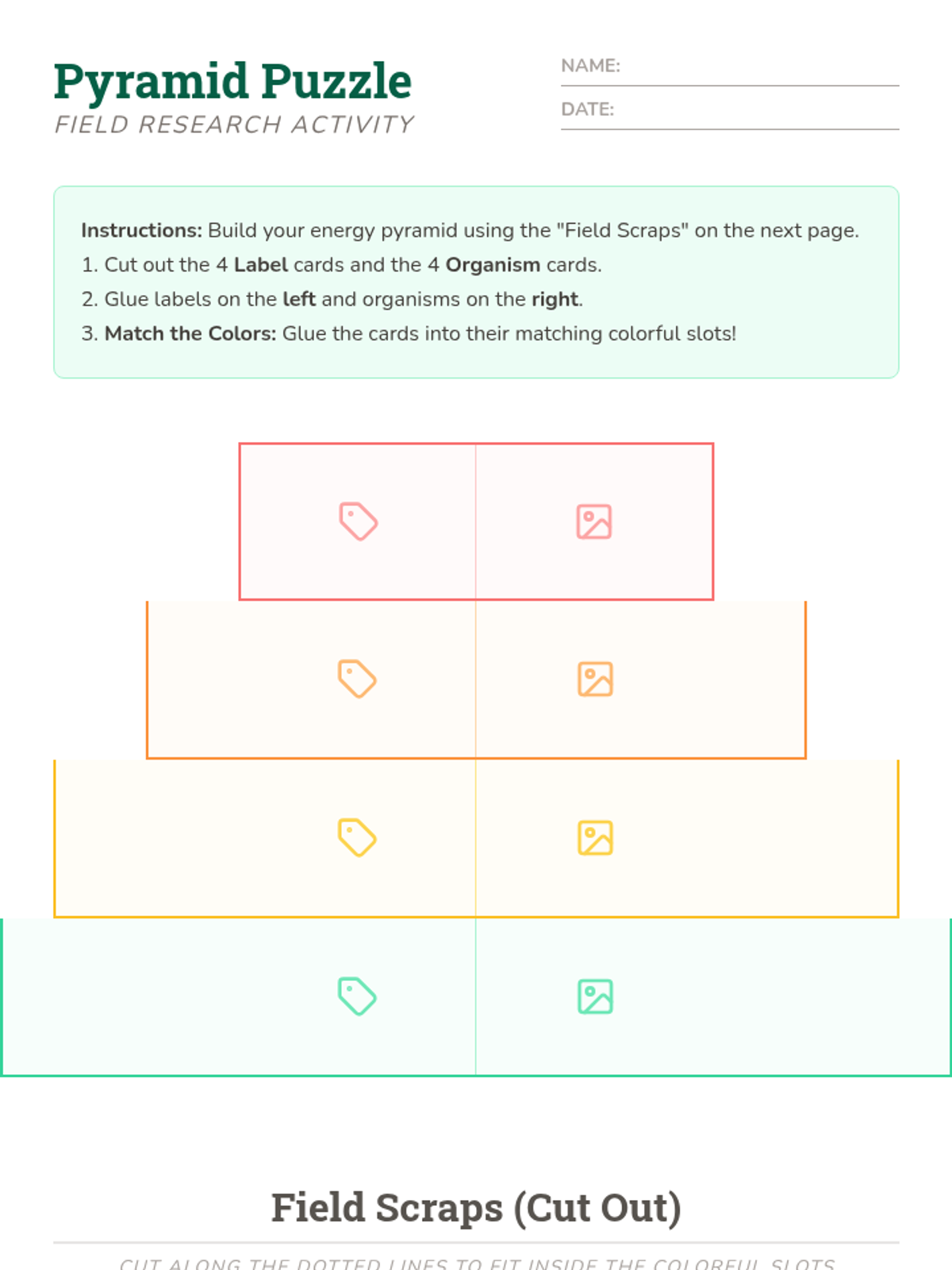
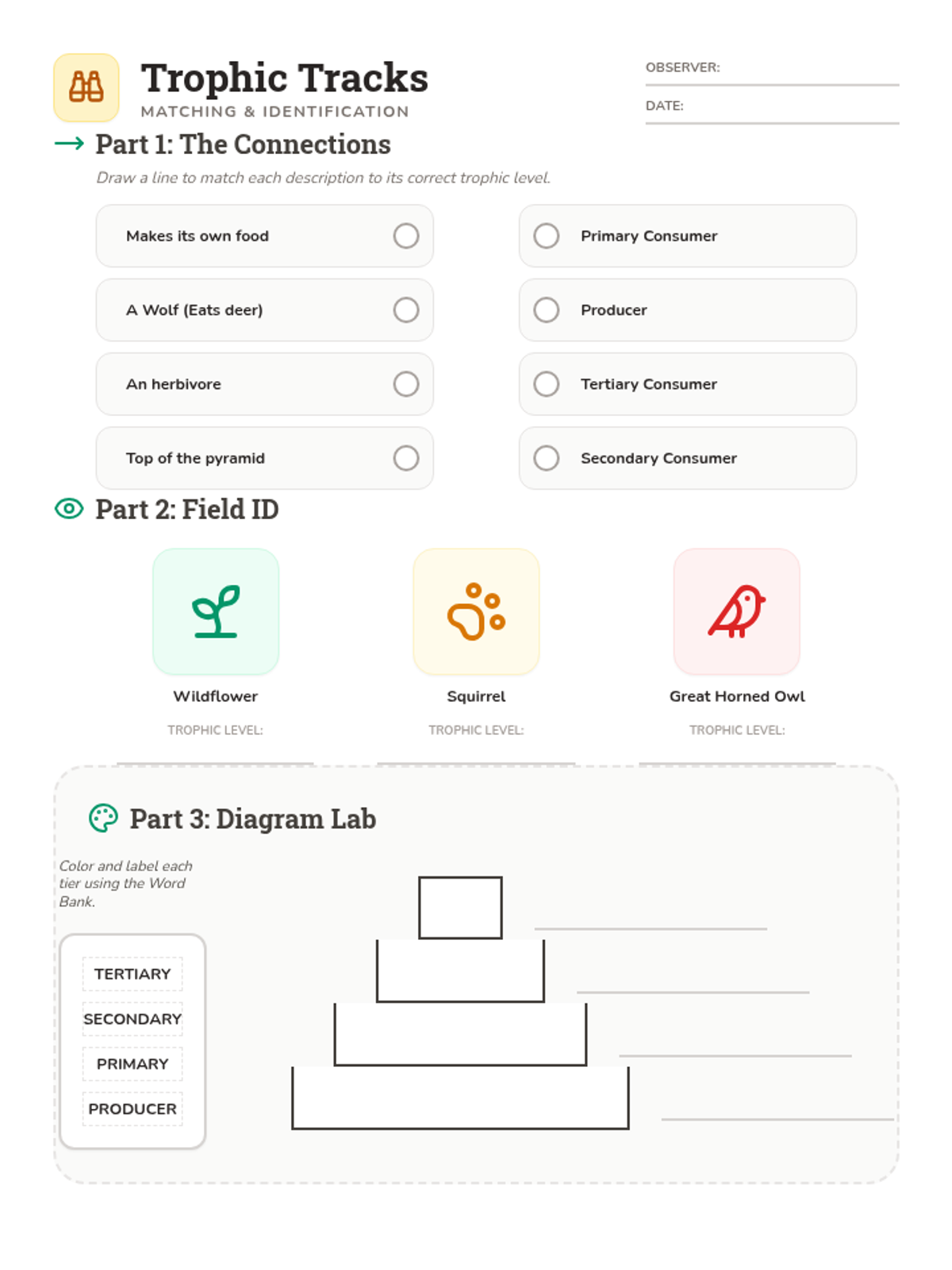
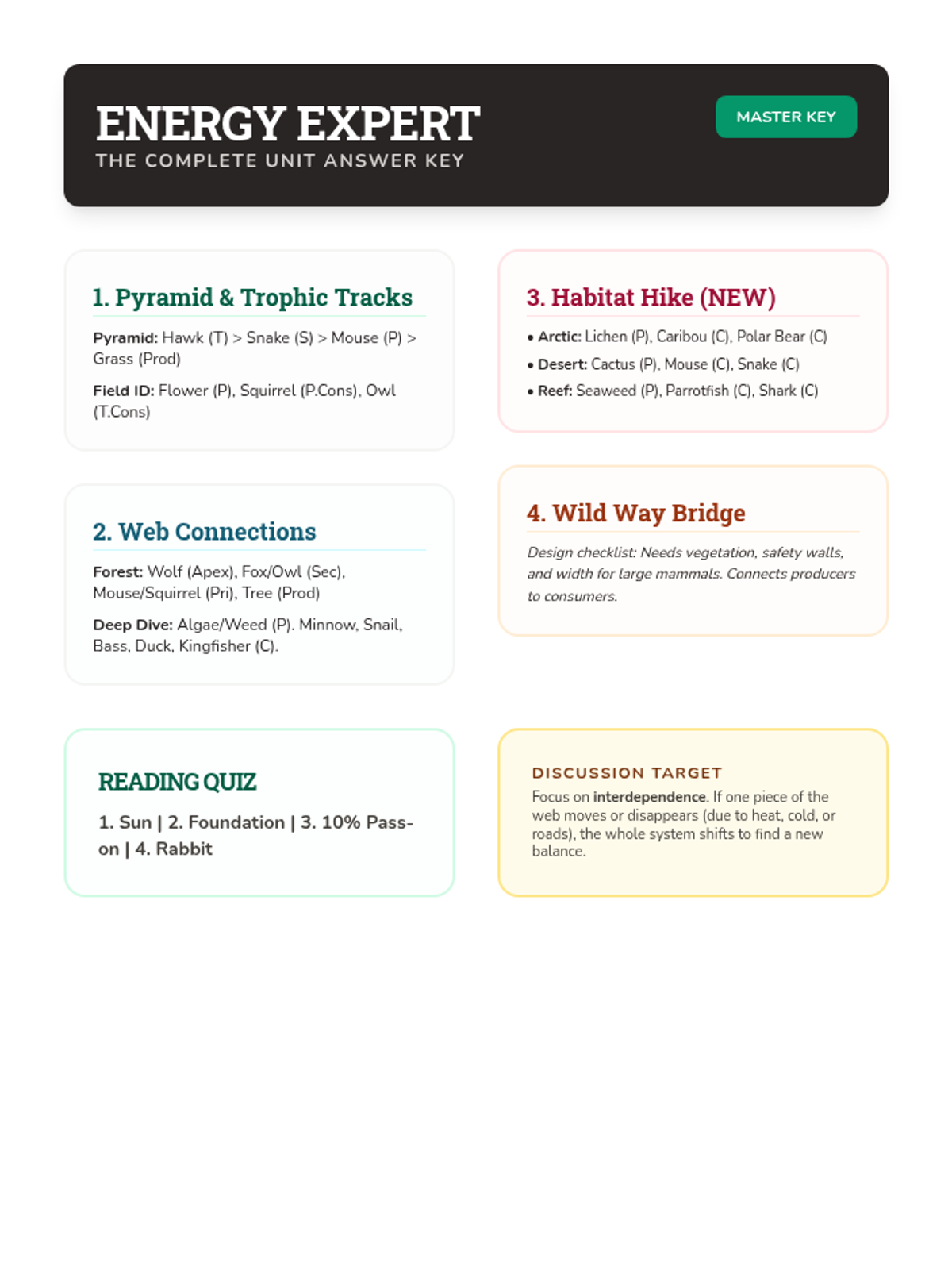
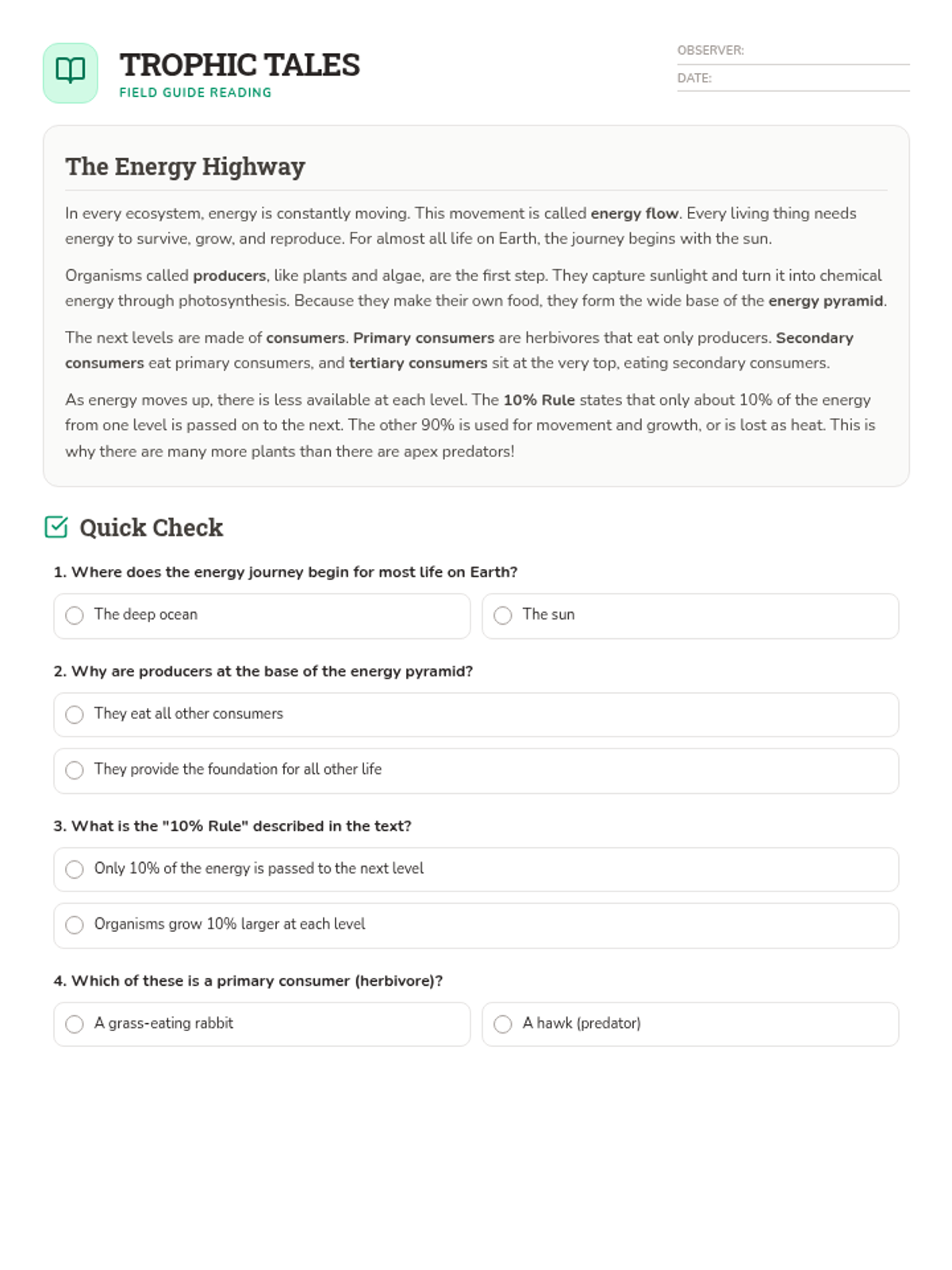
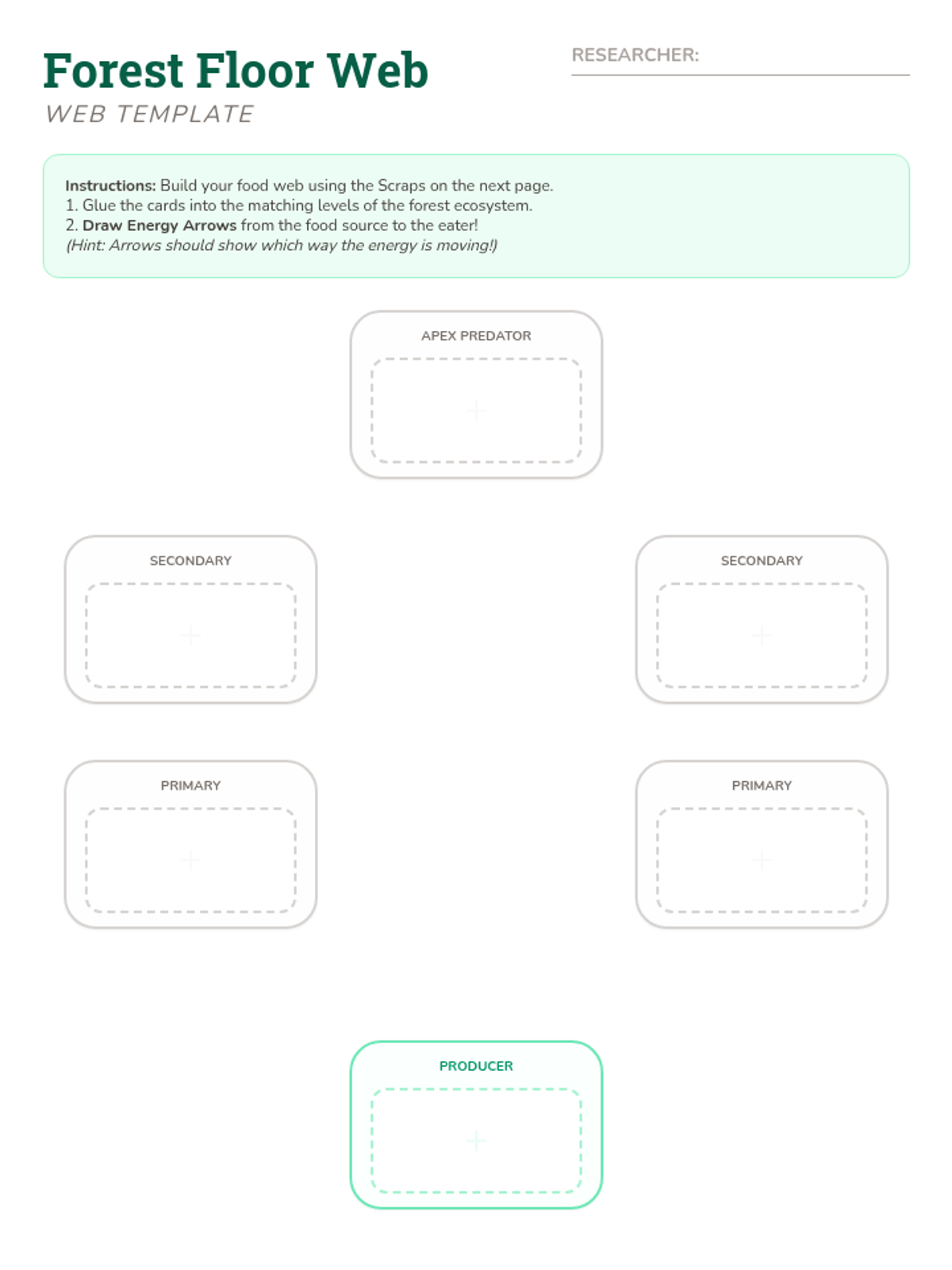
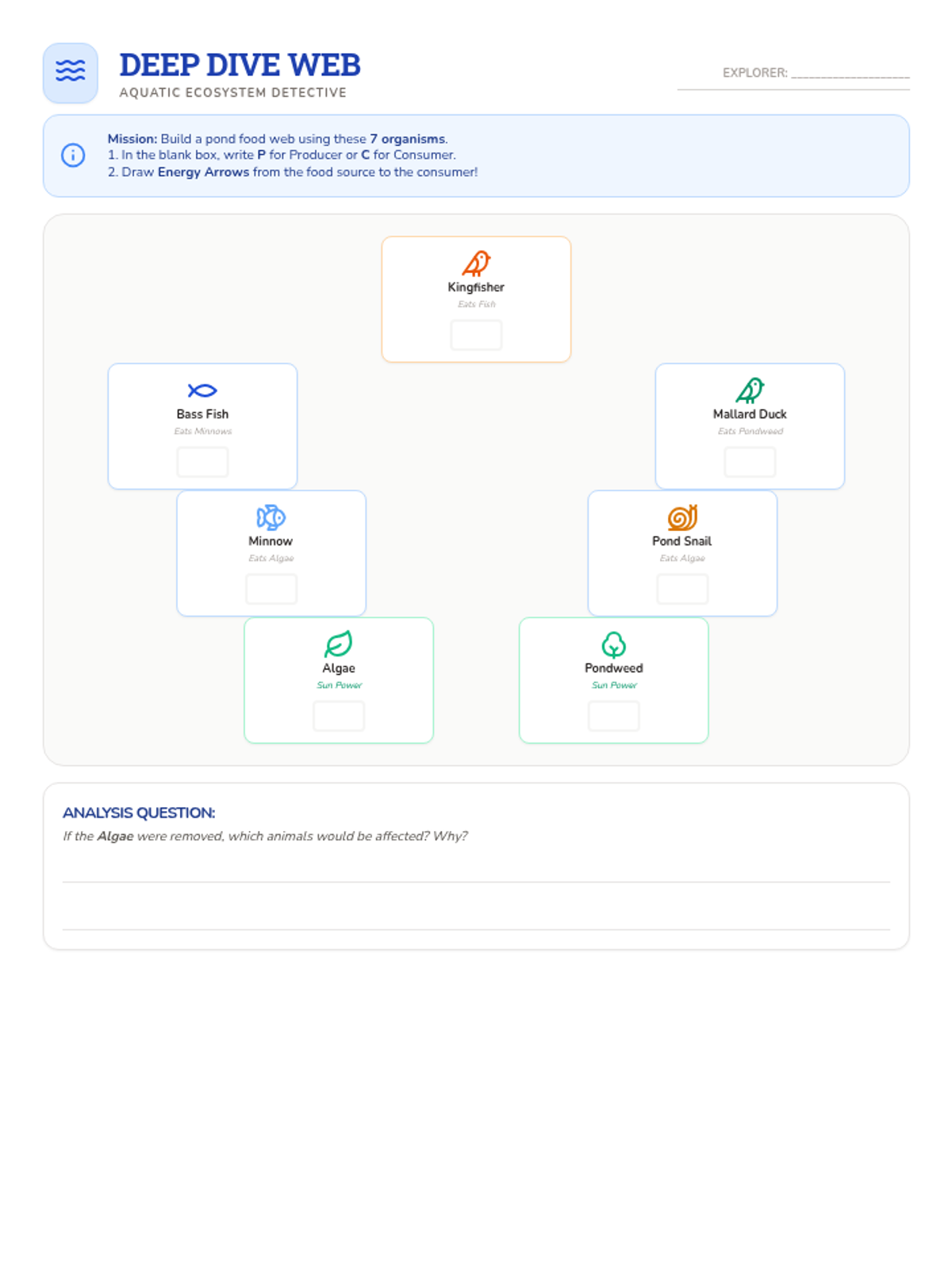
A foundational lesson exploring how energy moves through ecosystems, focusing on trophic levels, the 10% rule, and the complex connections in terrestrial and aquatic food webs.
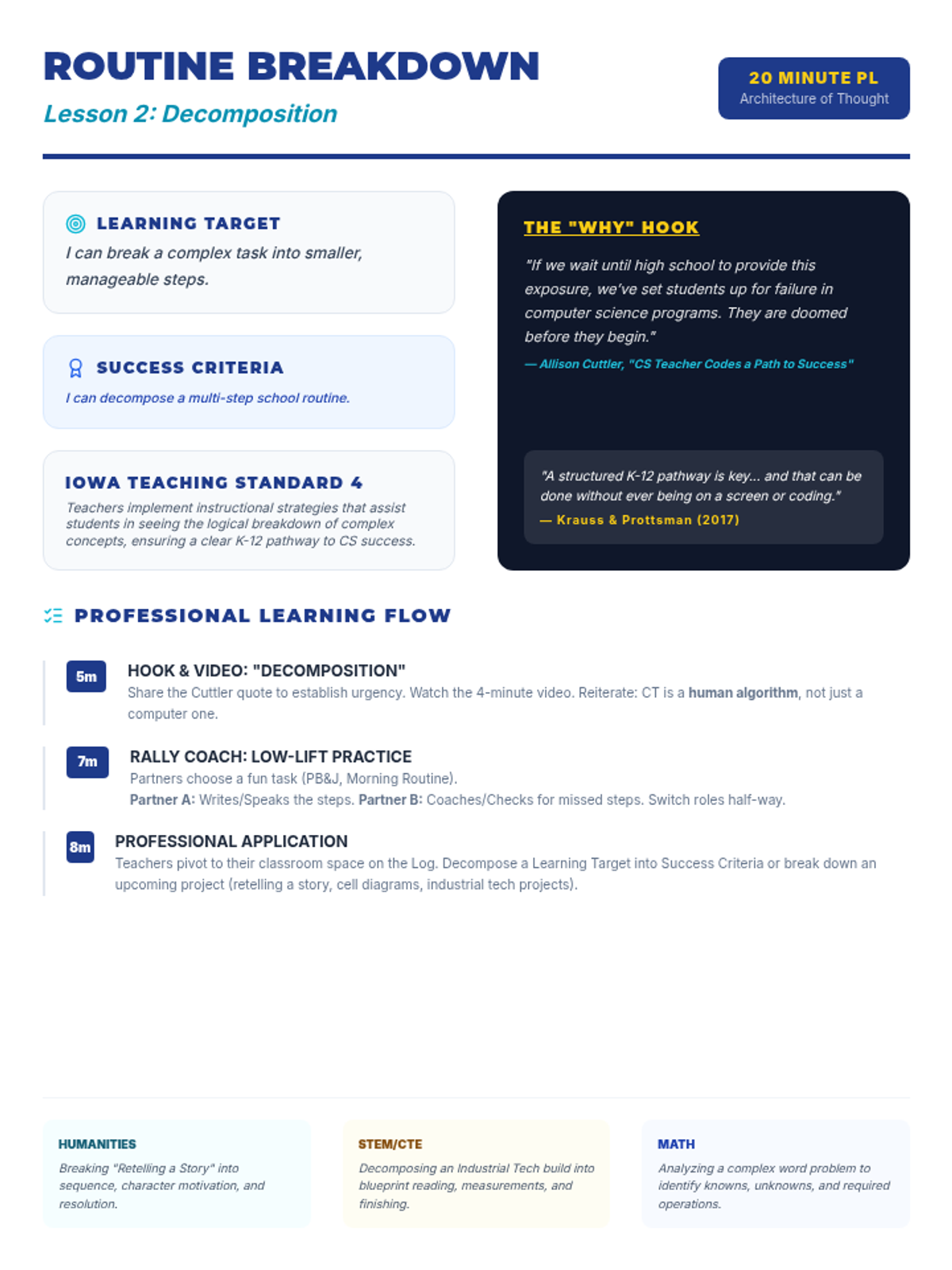
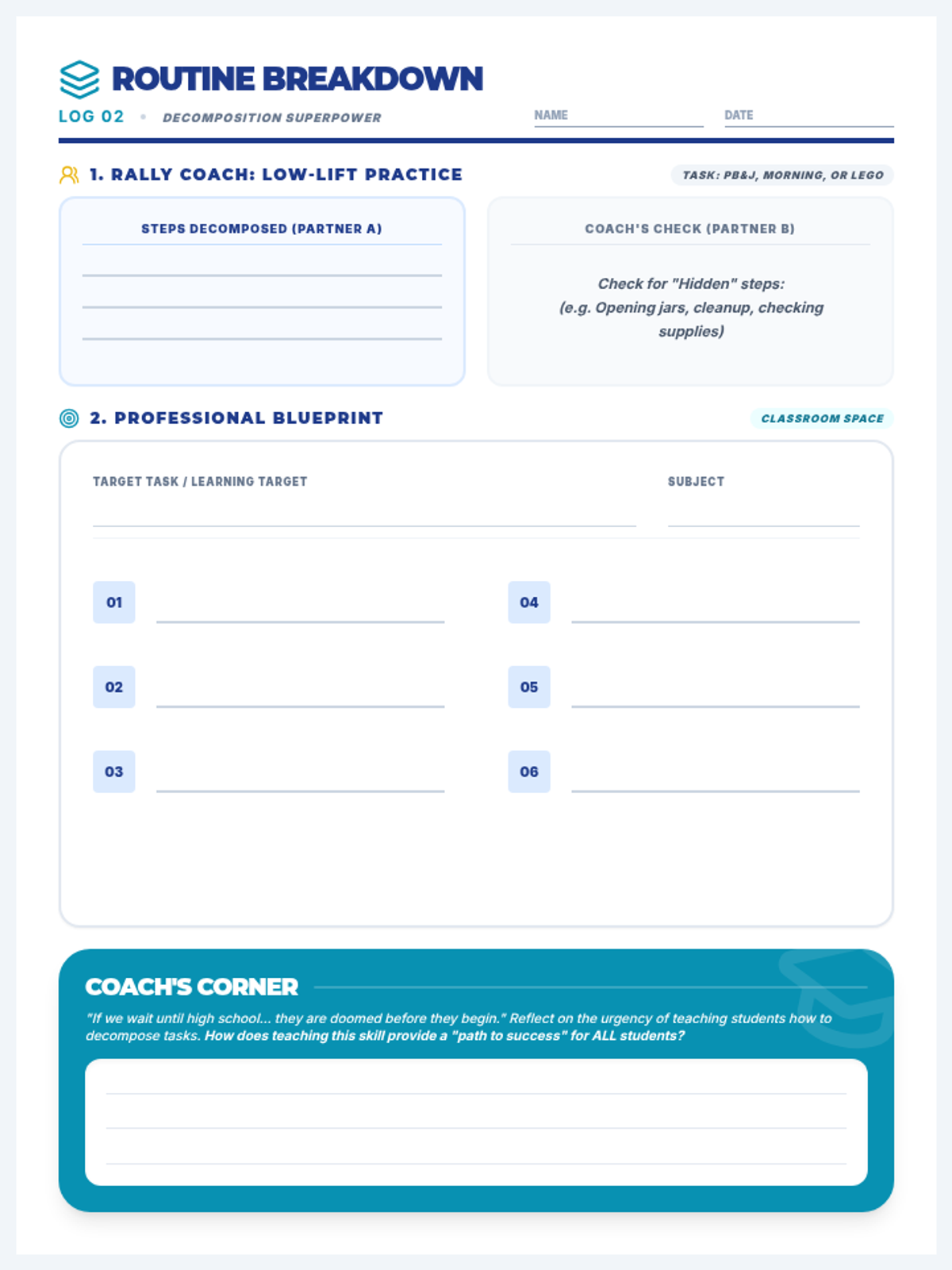
Teachers learn to break complex tasks into smaller, manageable steps using classroom routines and Iowa Core standards as examples.
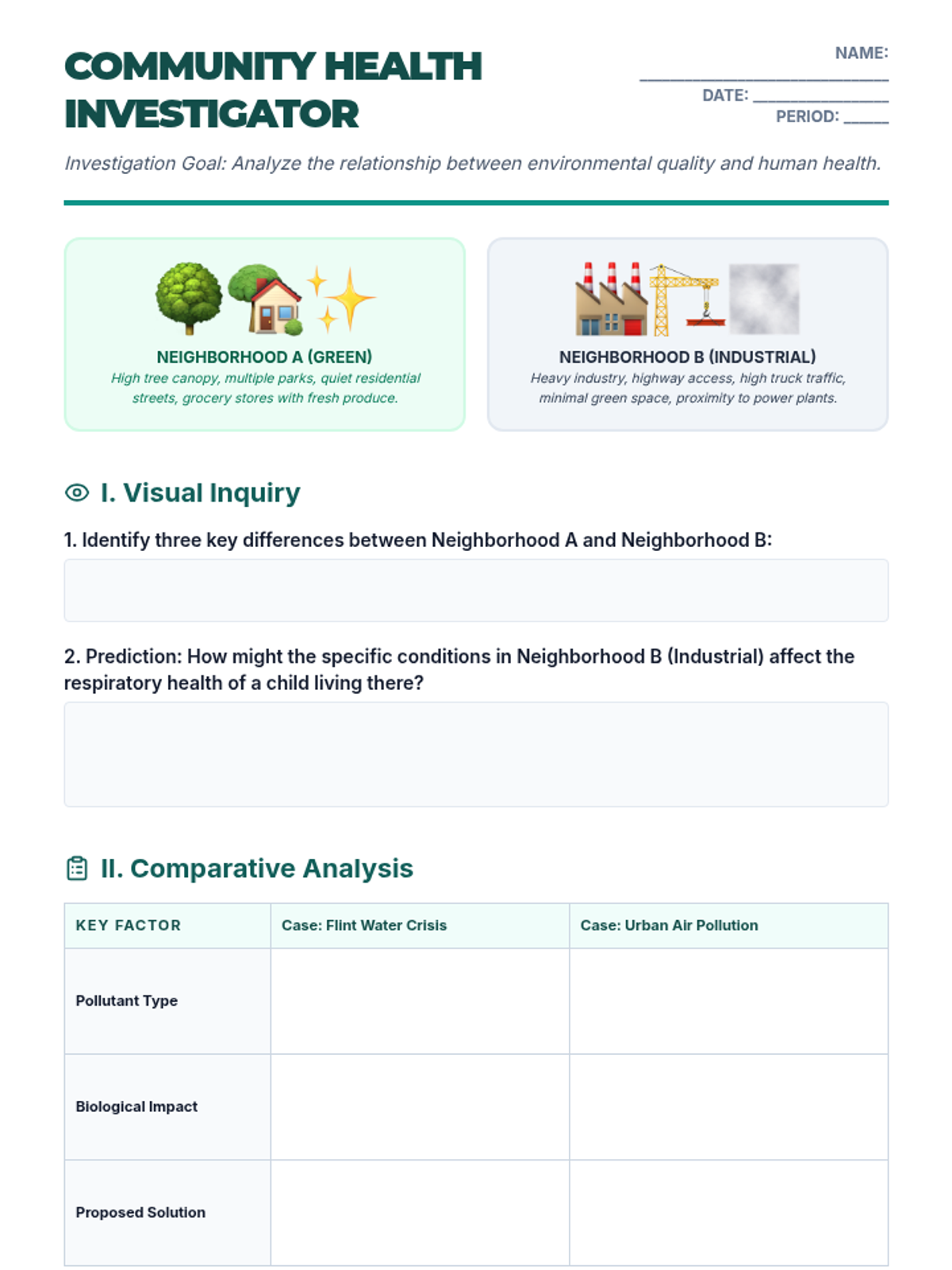
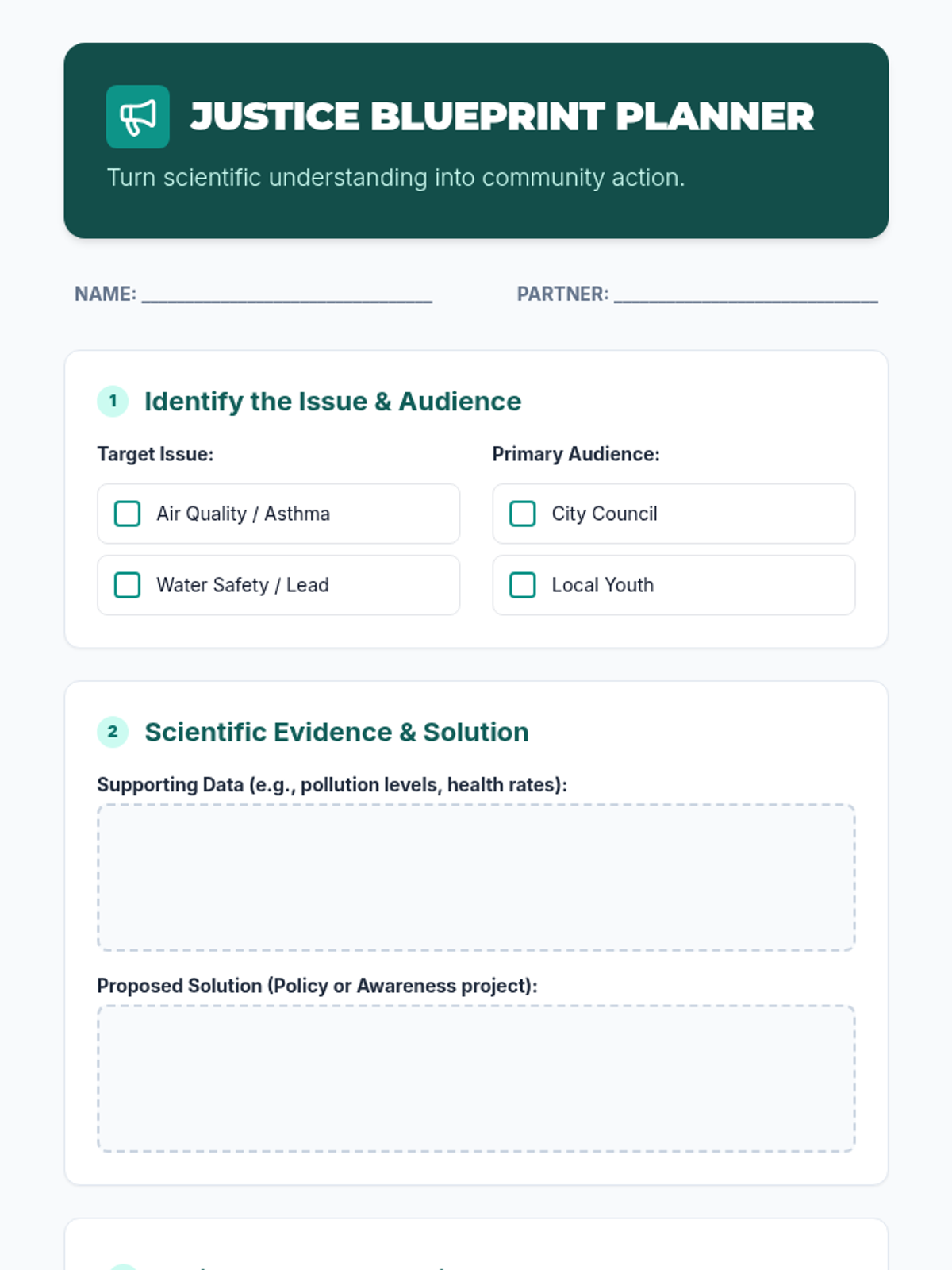
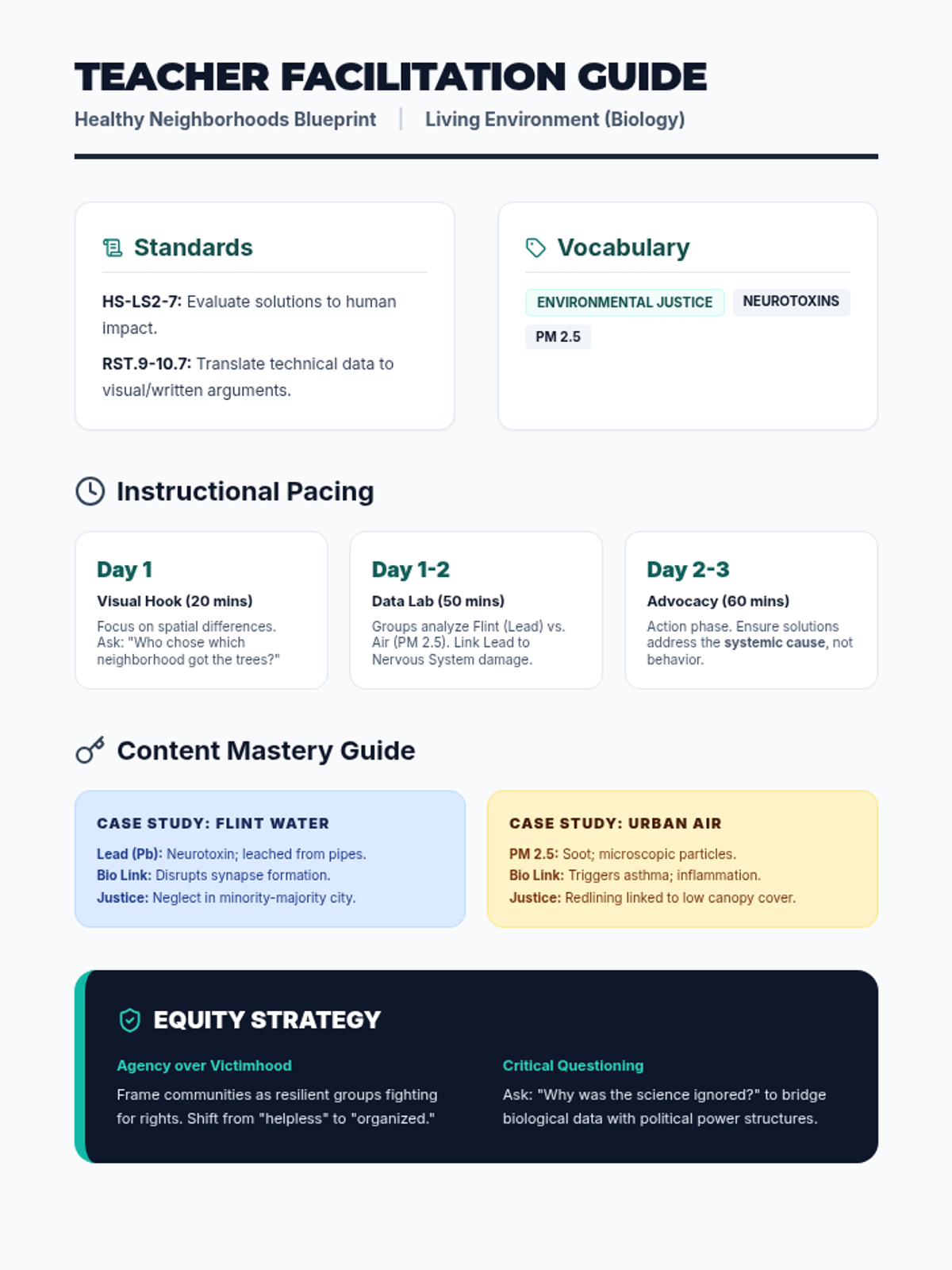
A critical examination of how systemic inequities influence environmental health outcomes, focusing on Flint's water and urban air quality. Students analyze data and develop advocacy products to promote environmental justice.
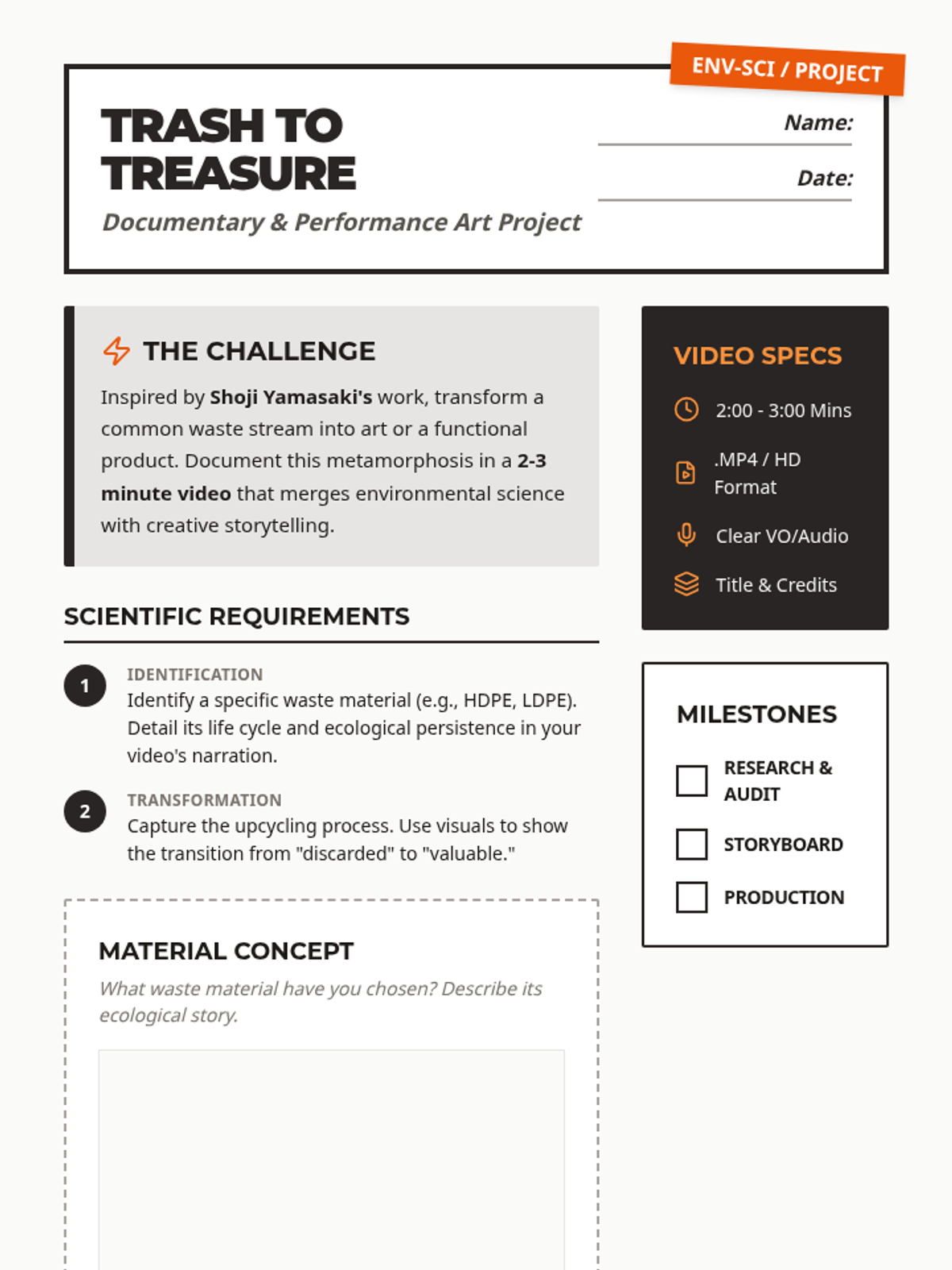
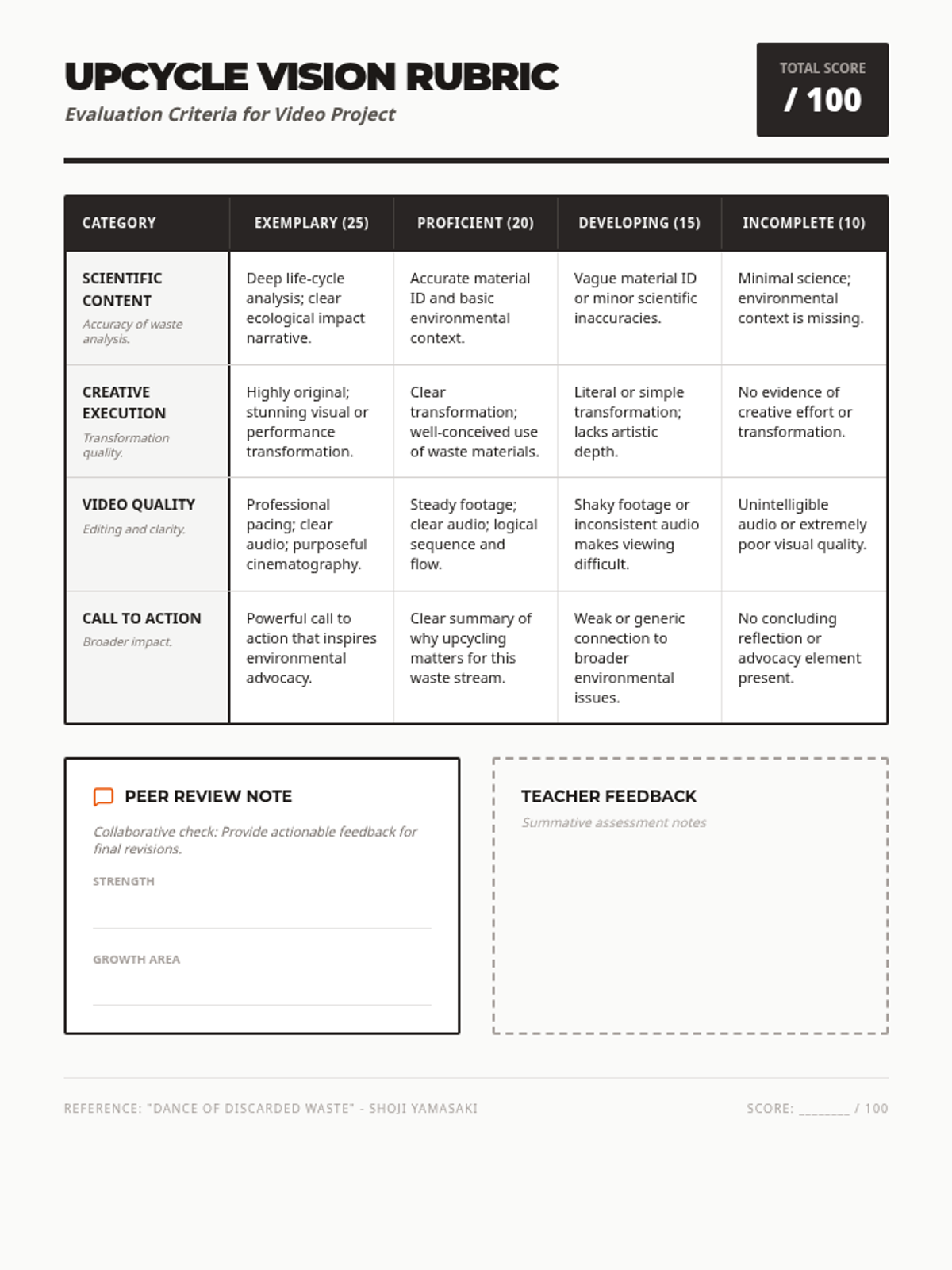
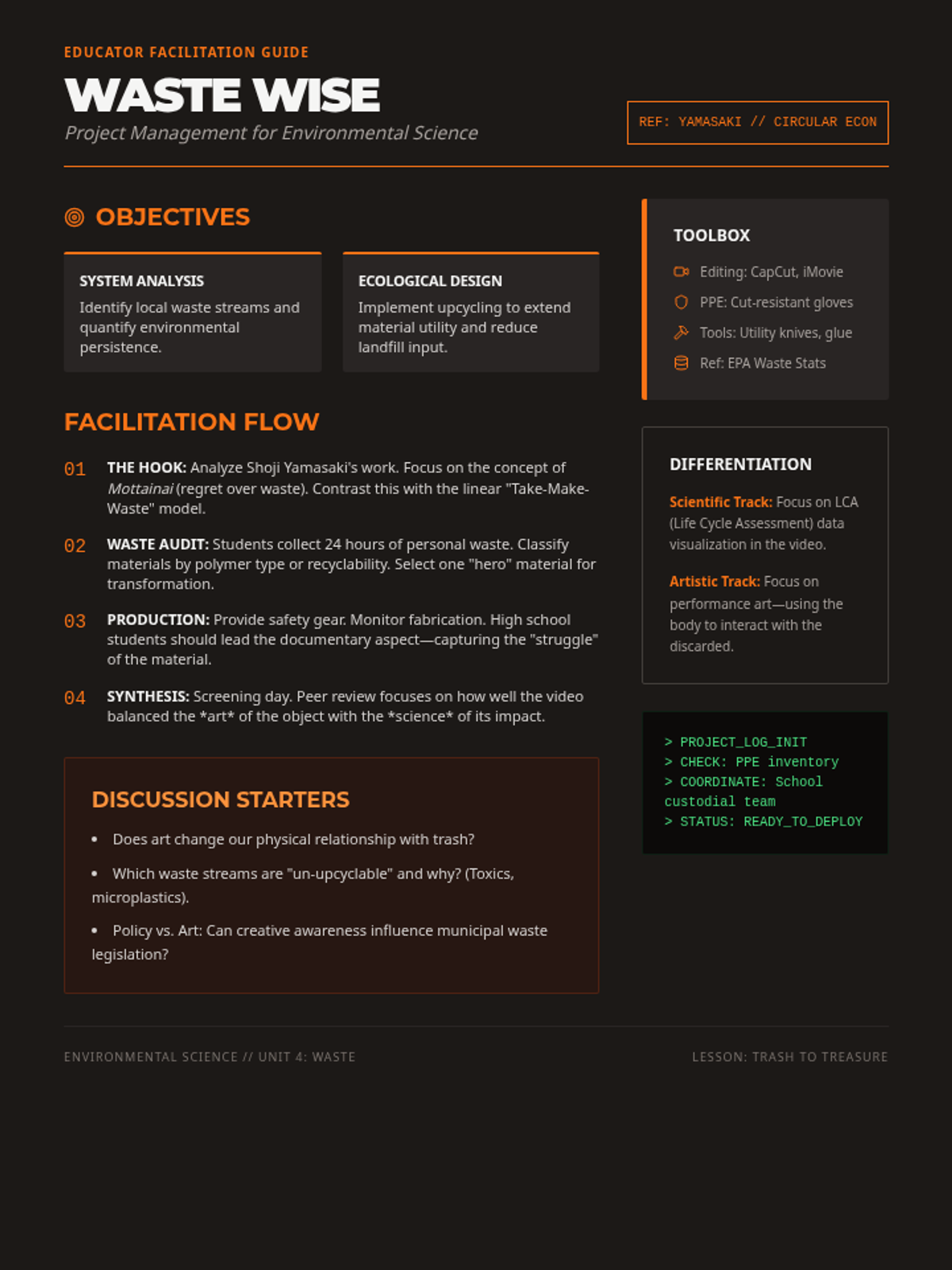
A hands-on project where students explore waste management through the lens of Shoji Yamasaki's art, culminating in a creative video showcasing their own upcycling process or performance.
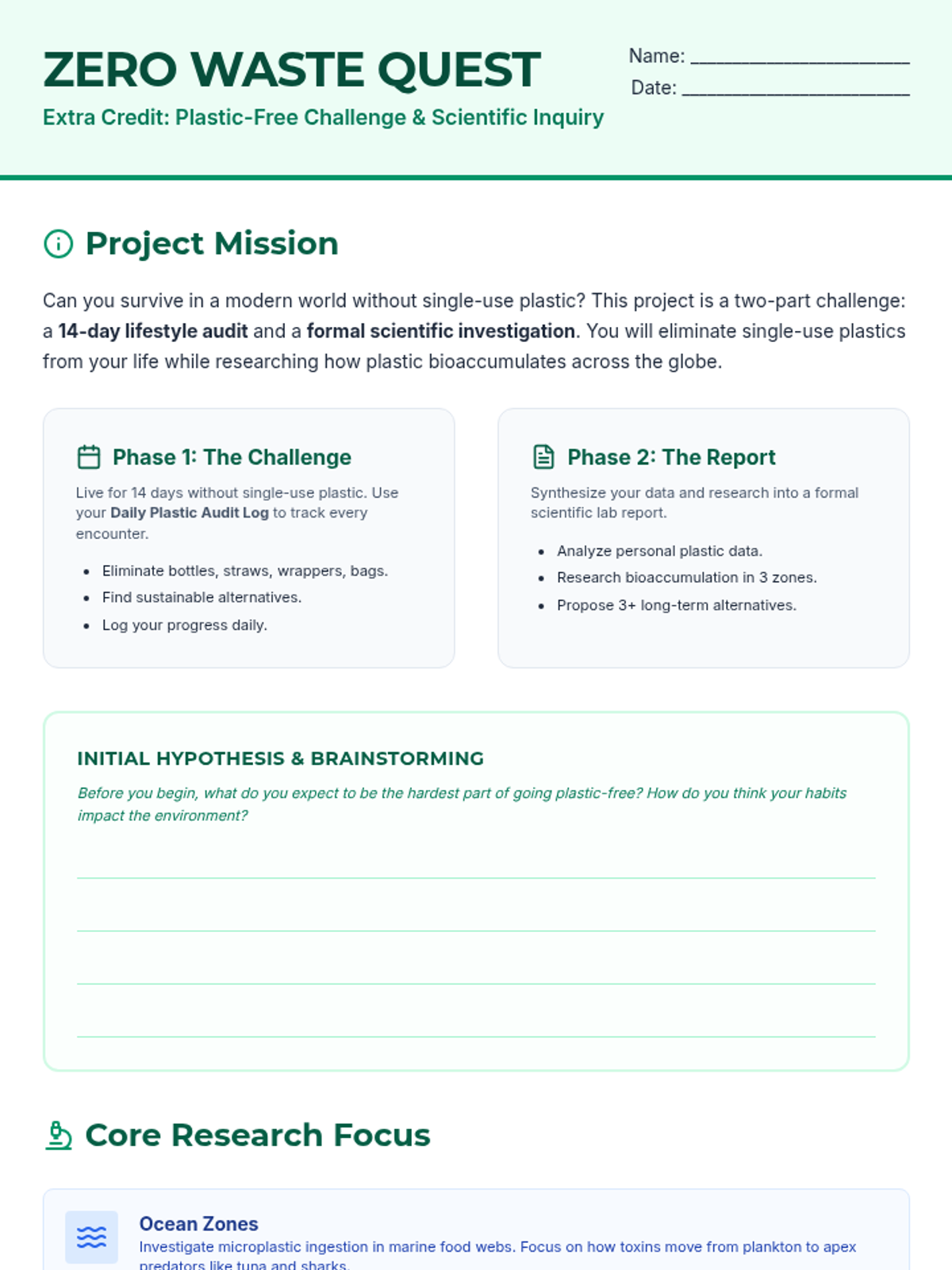
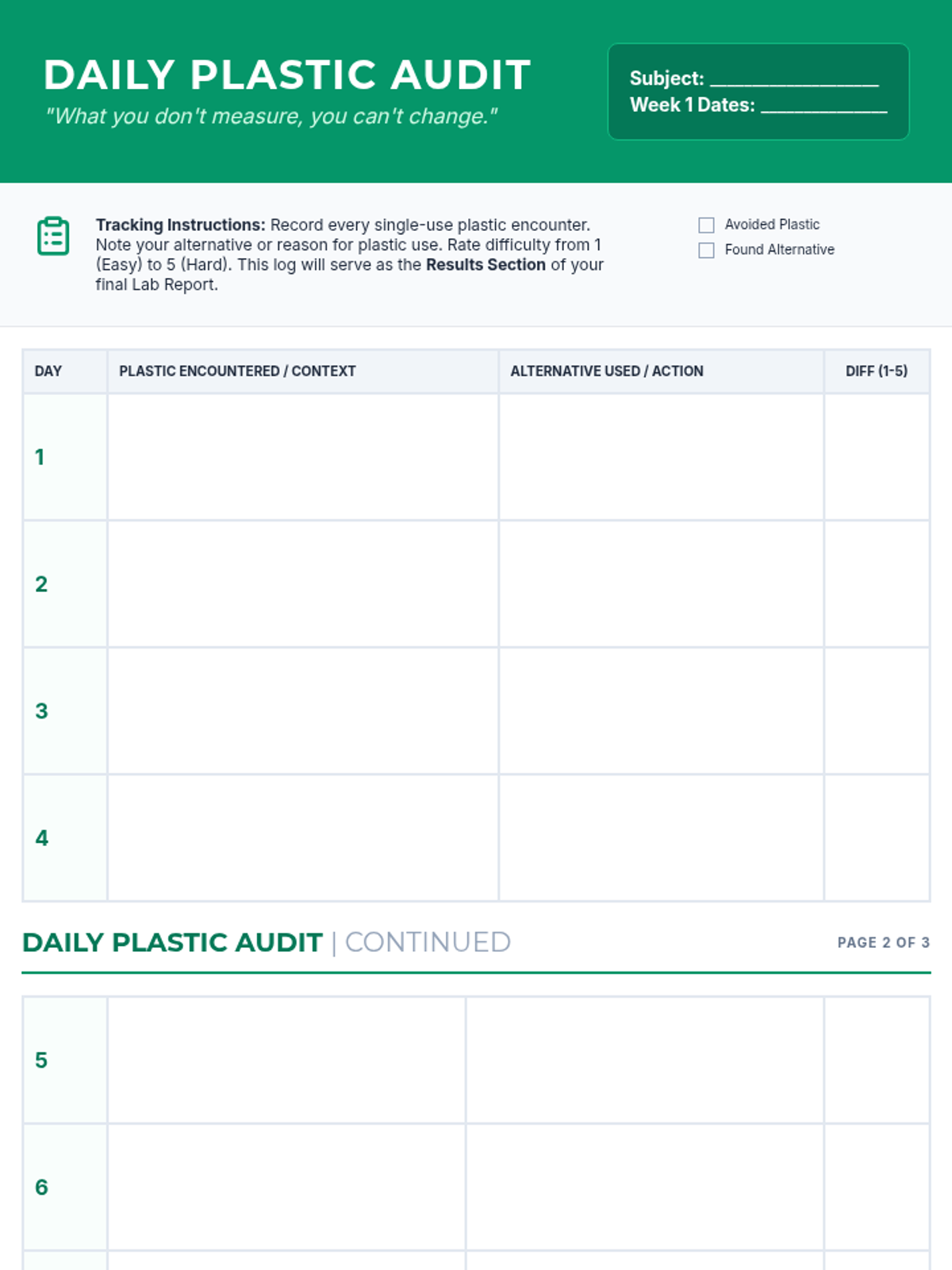
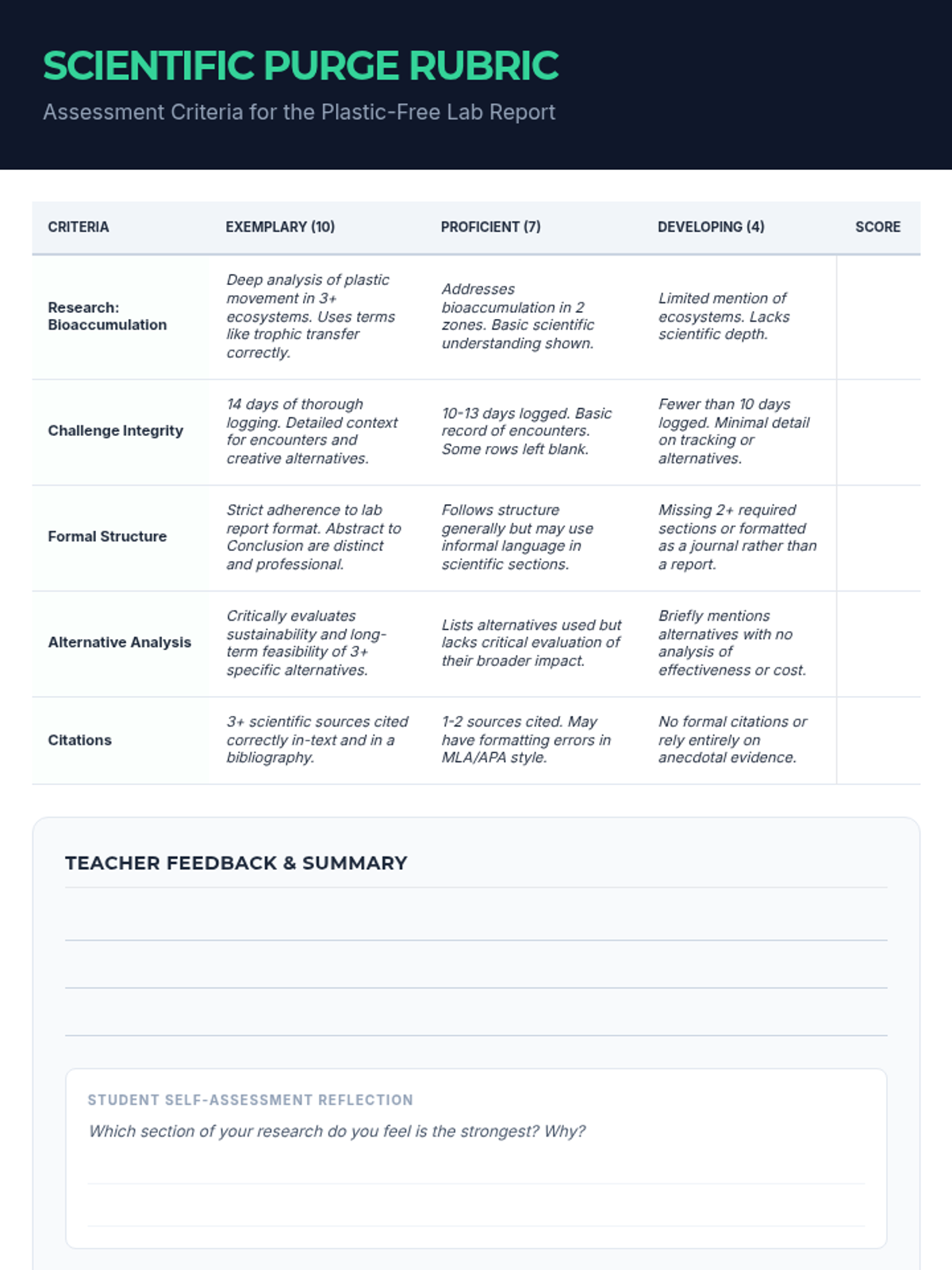
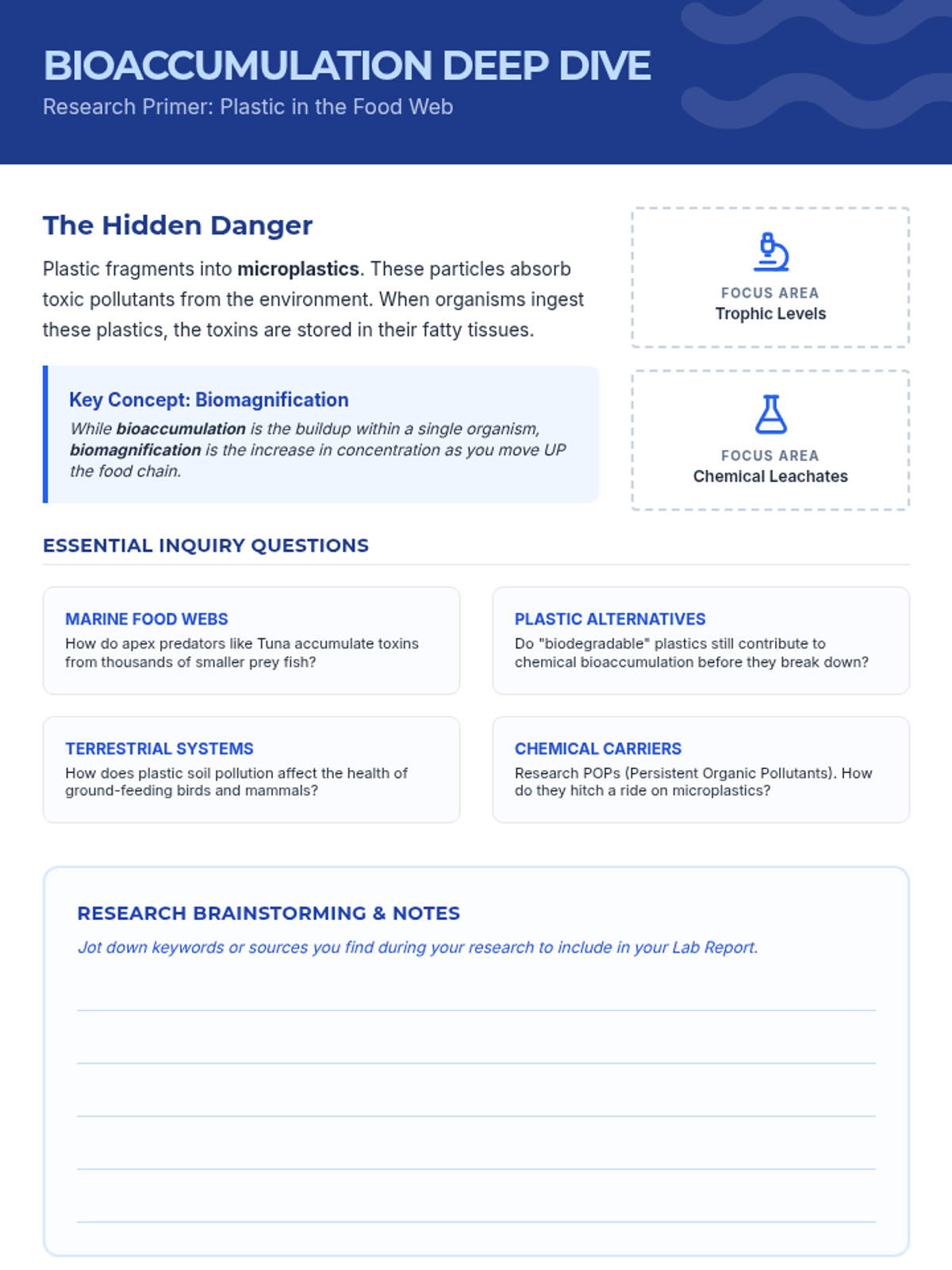
An extra credit project challenging students to live plastic-free for two weeks while researching the impacts of bioaccumulation and exploring sustainable alternatives. Students document their journey and findings in a formal scientific lab report.
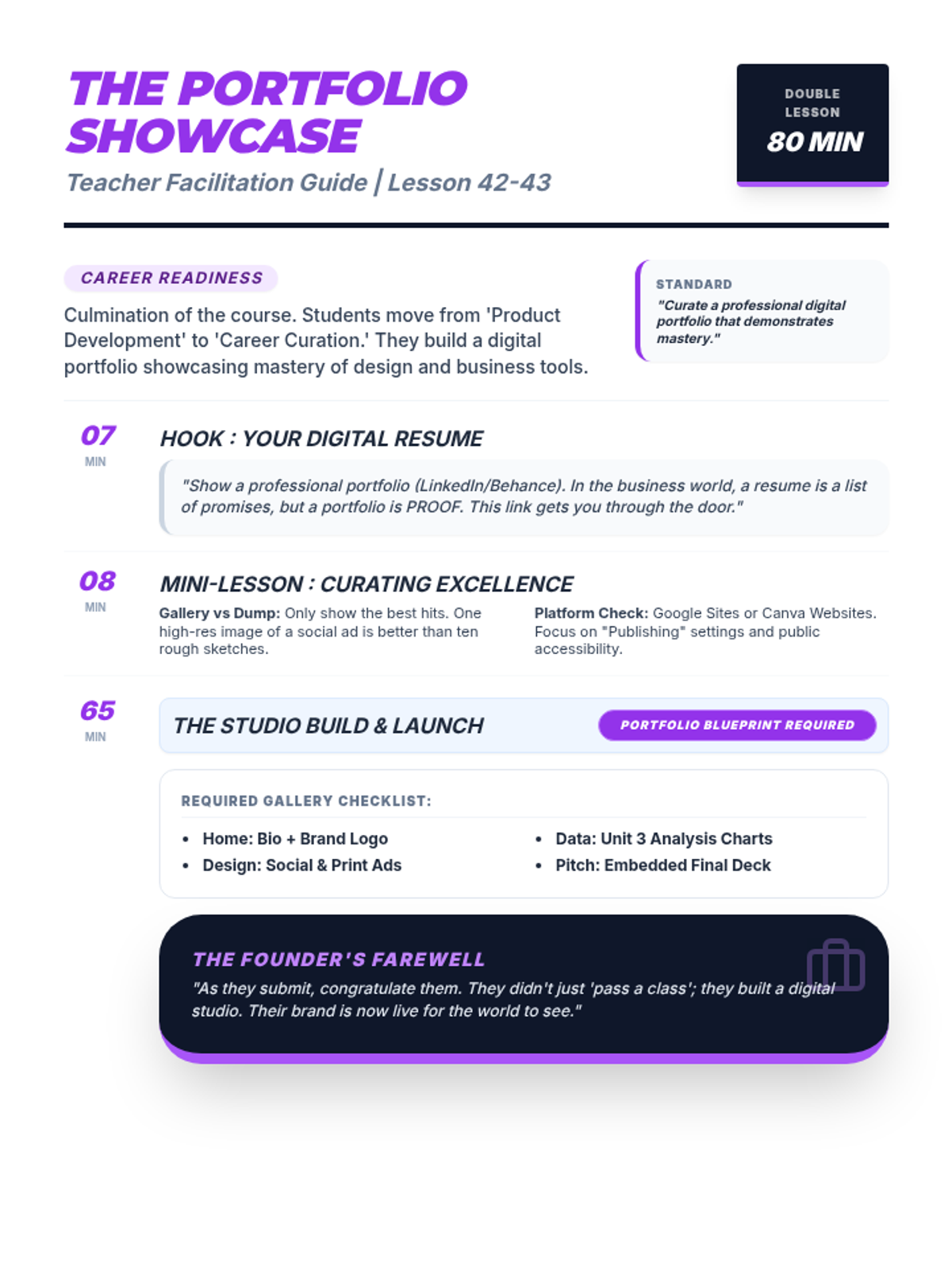
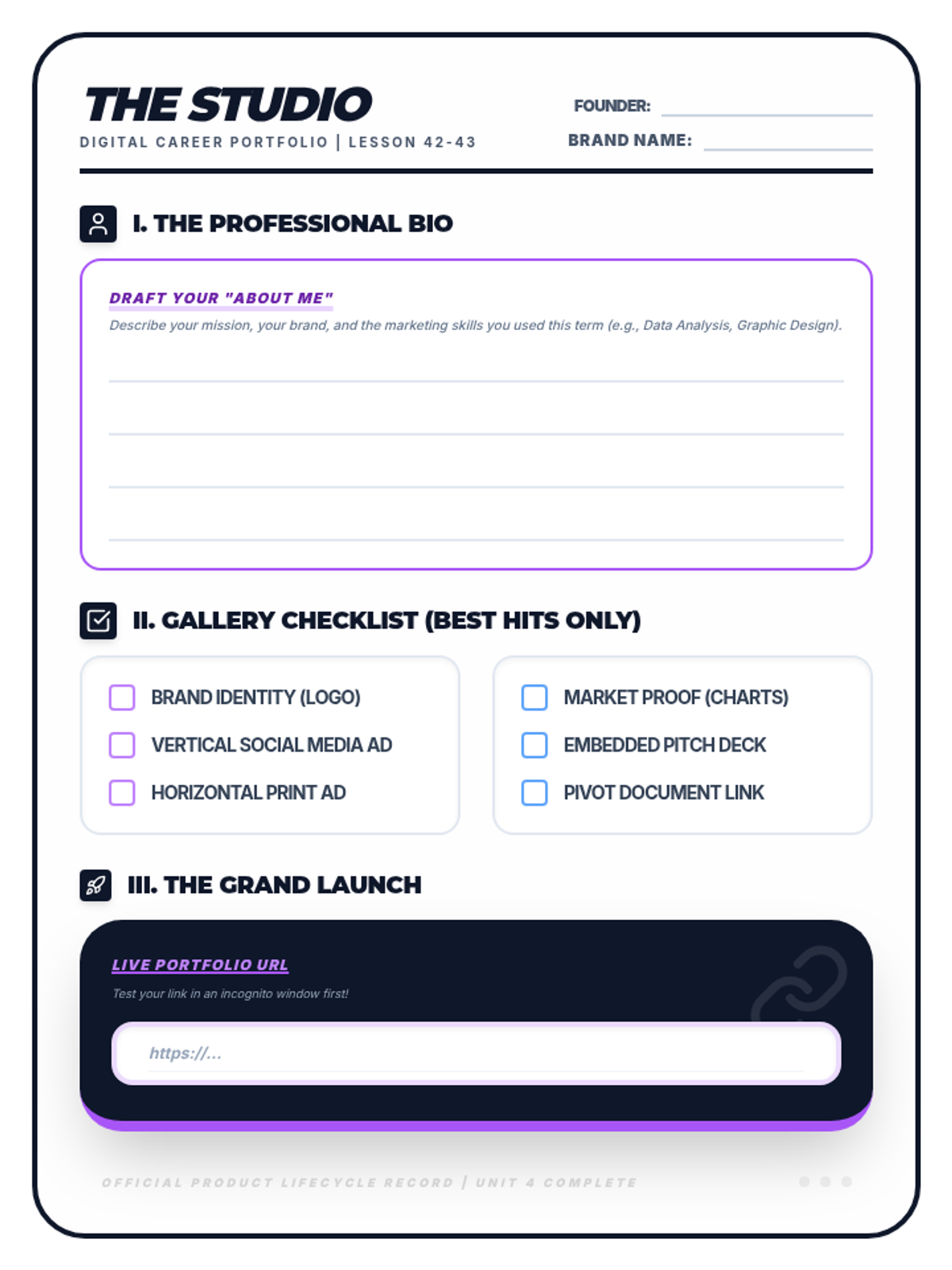
The final project compilation phase where students curate their best work from the term into a professional digital portfolio. Students learn the art of curation and how to publish a simple one-page website as a 'Digital Resume'.
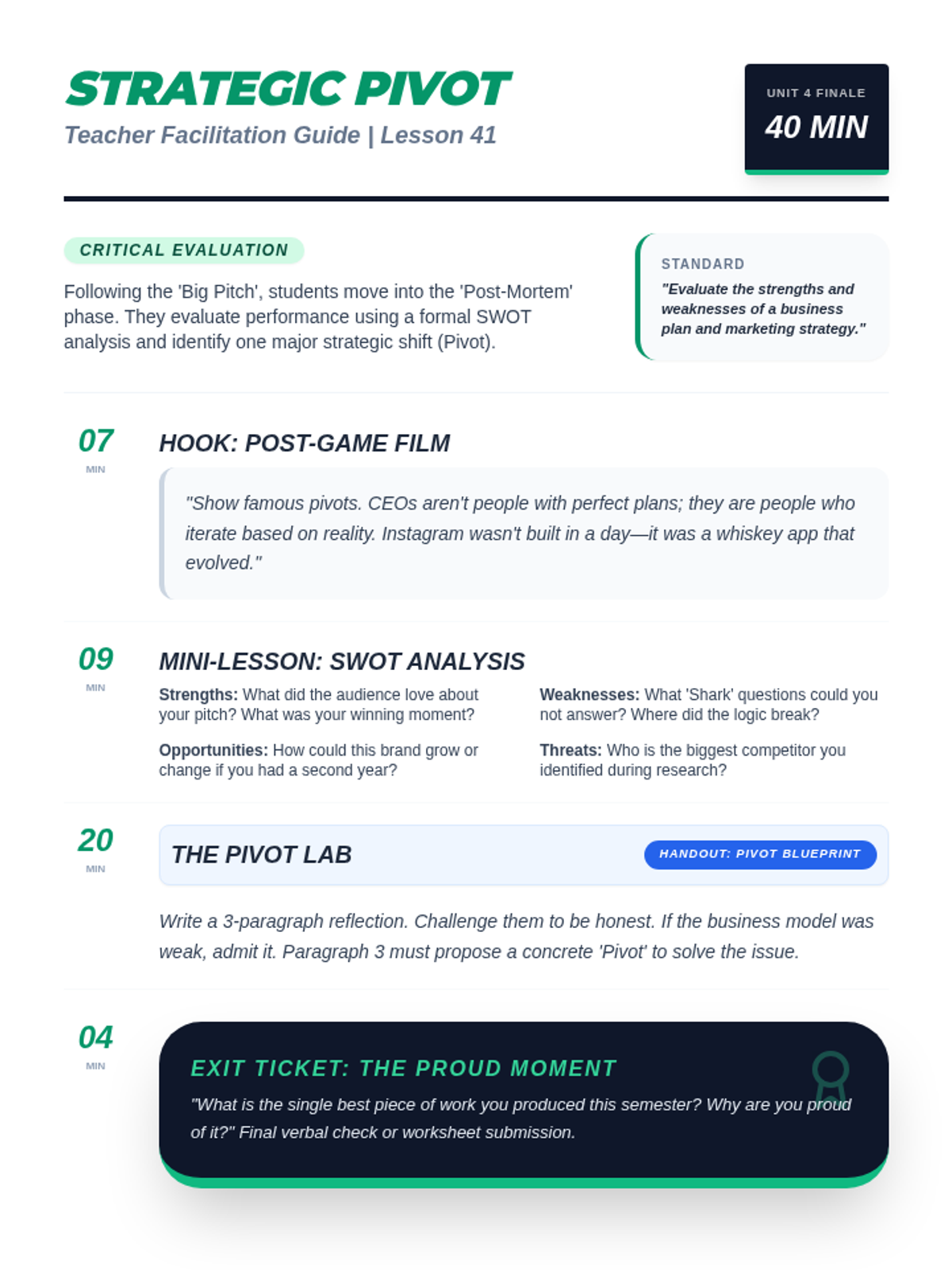
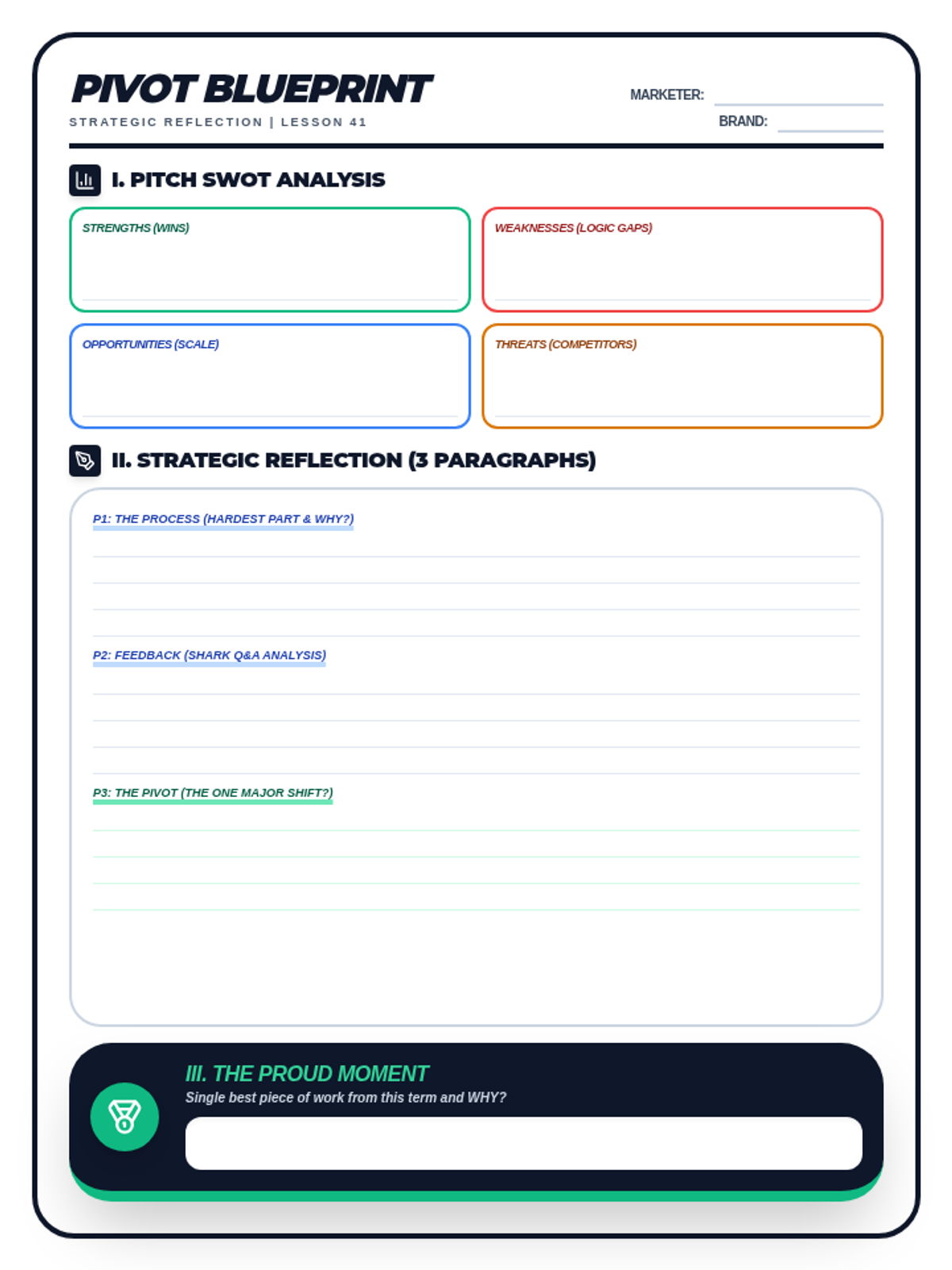
A lesson focused on post-pitch reflection and strategic iteration. Students conduct a SWOT analysis of their own performance and draft a 'Pivot' plan to refine their business concept based on audience feedback.
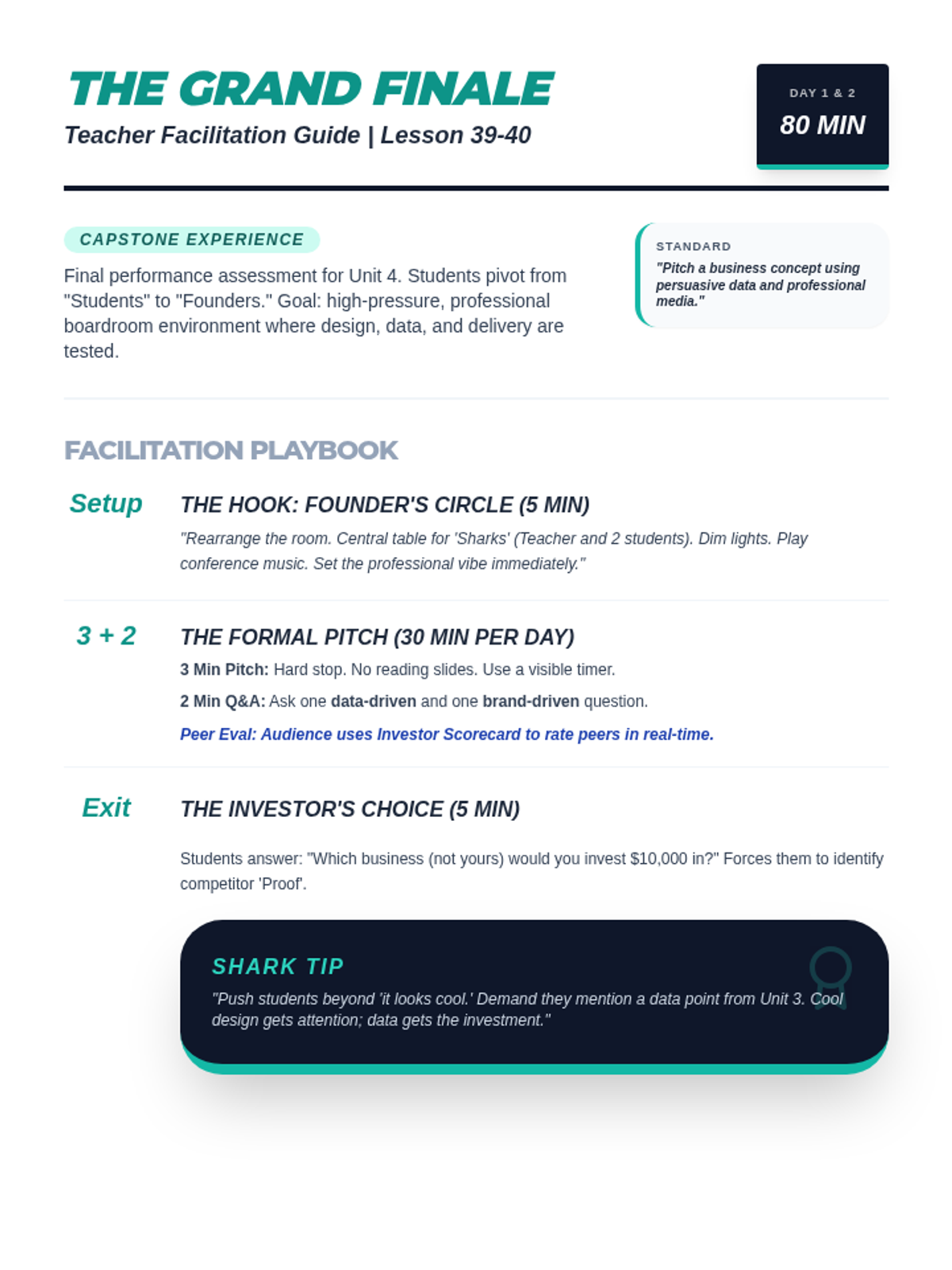
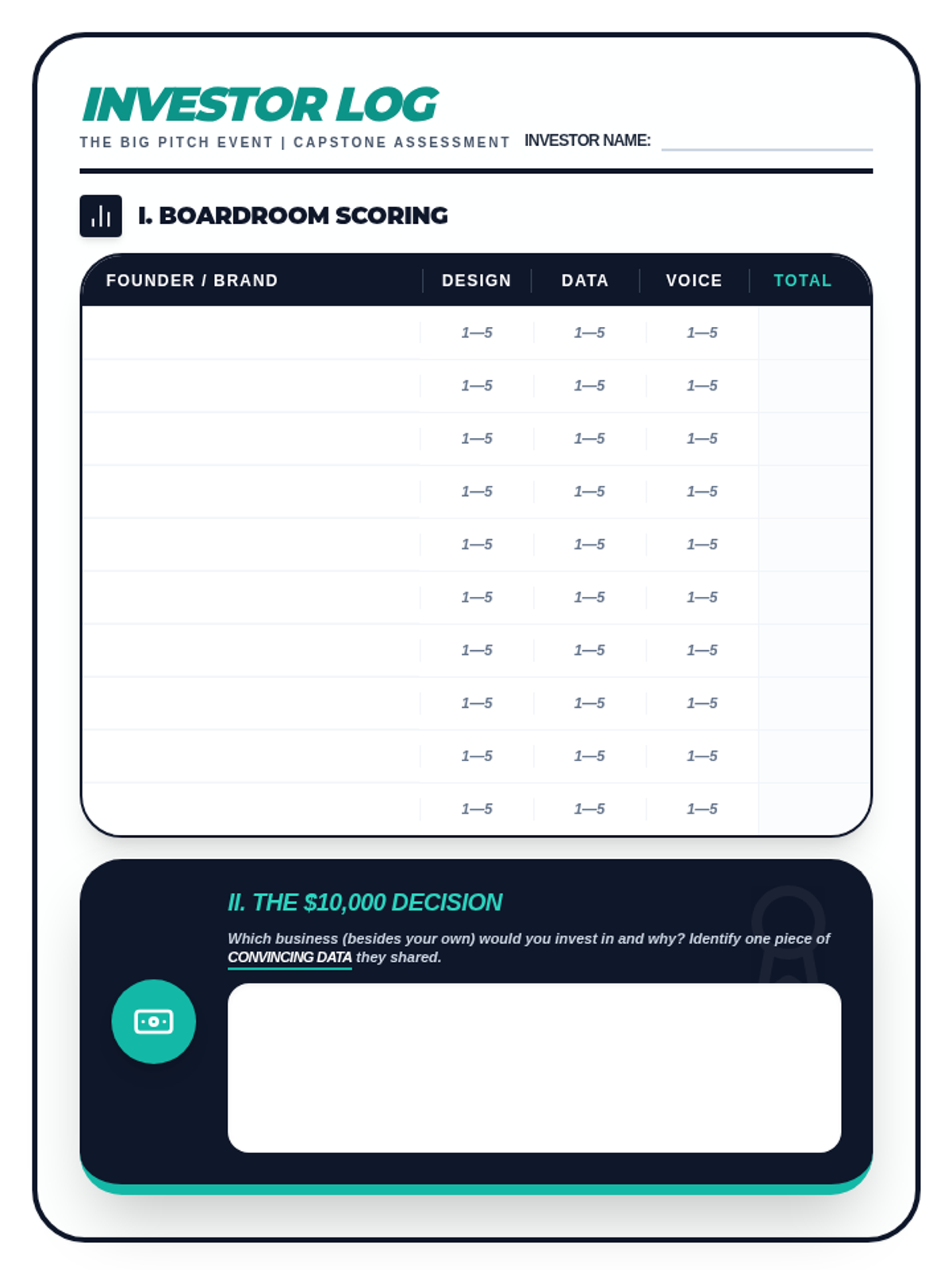
The unit capstone experience where students present their marketing campaigns as founders. Includes a two-day formal pitch event with peer judging, Shark Tank-style Q&A, and 'Class Cash' investment reflections.
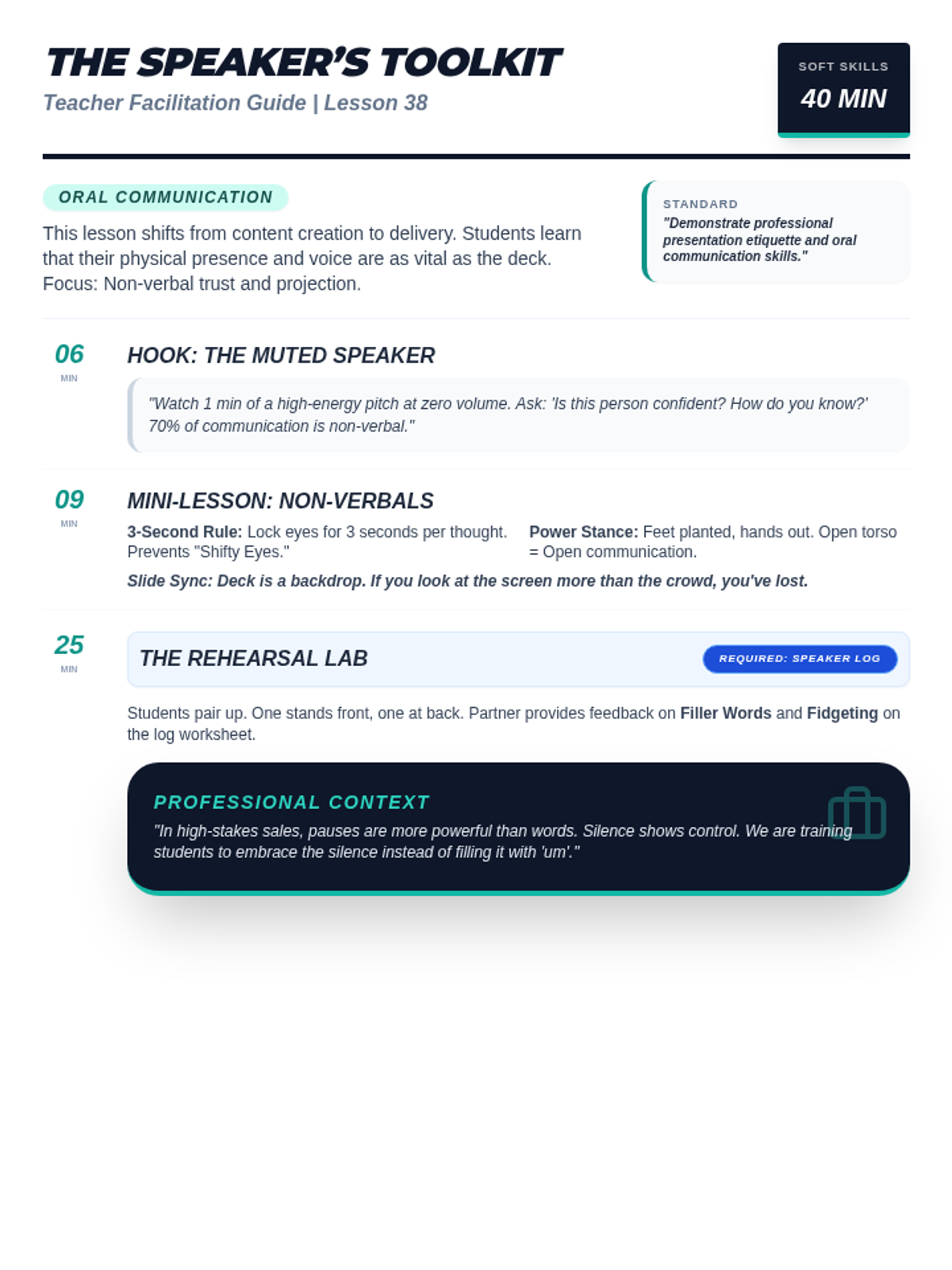
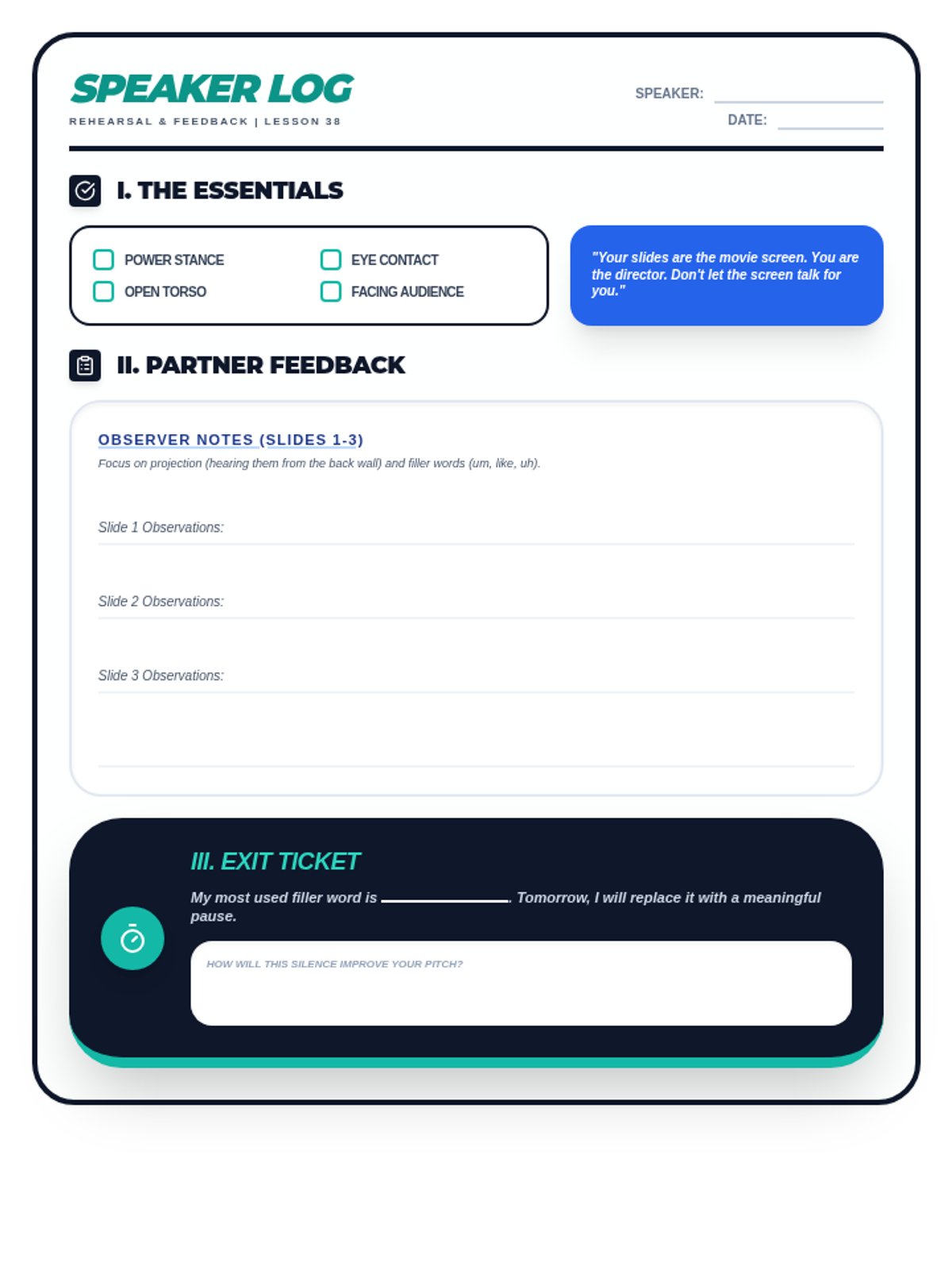
A lesson focused on public speaking and professional presentation etiquette. Students learn non-verbal communication techniques, projection, and how to use digital slides as a backdrop rather than a teleprompter.
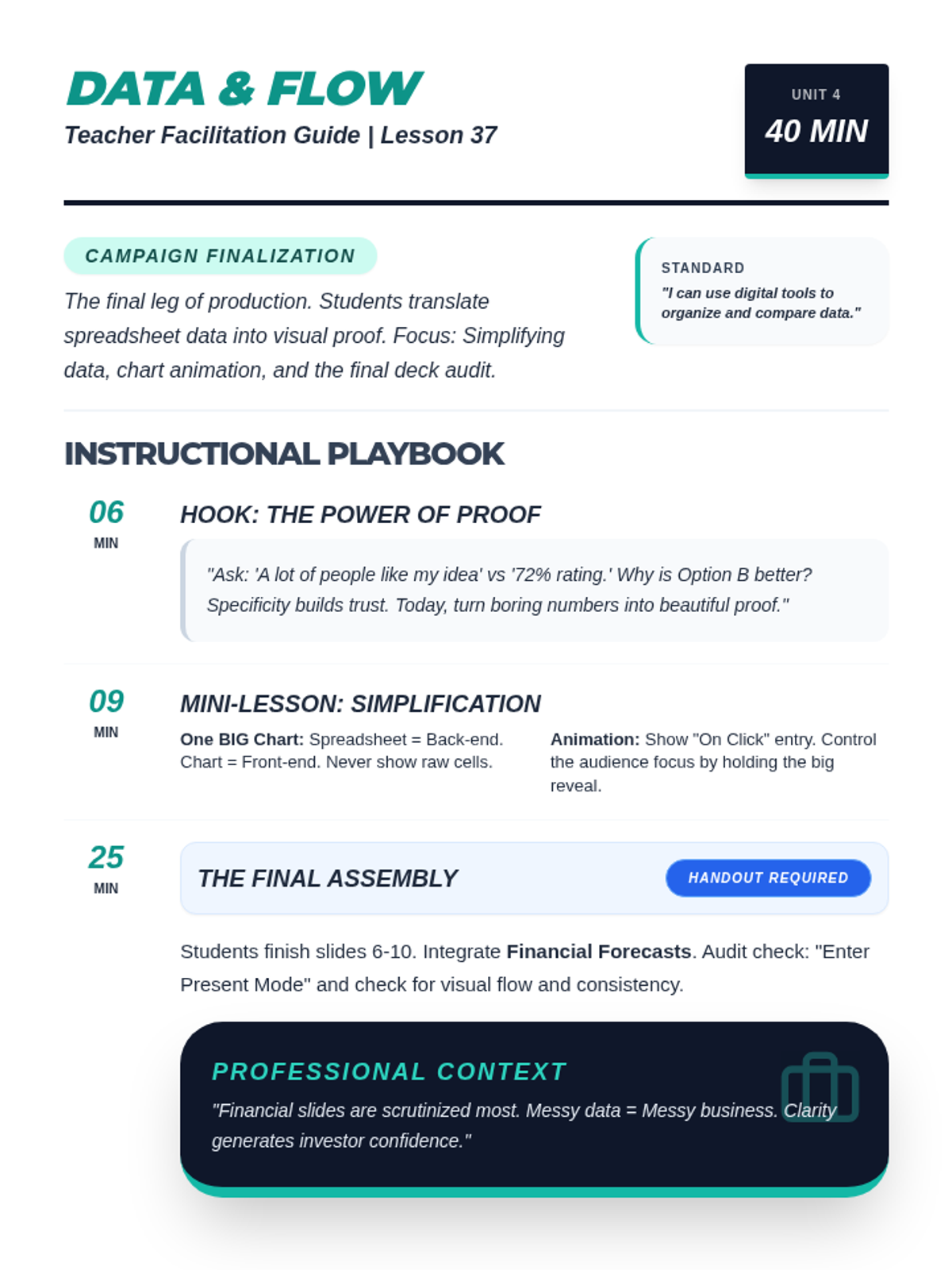
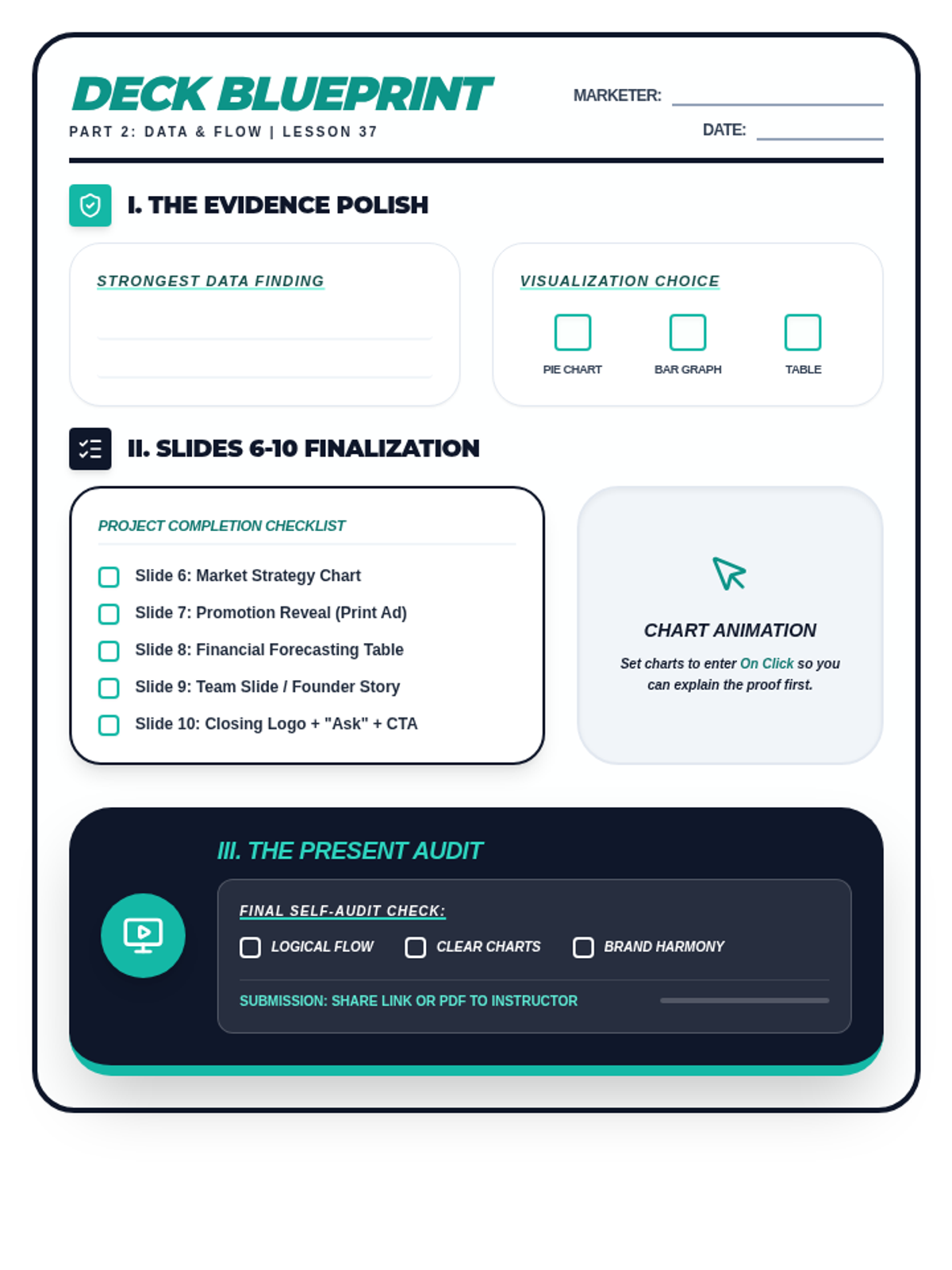
A lesson focused on data visualization and presentation flow. Students learn to simplify complex spreadsheets into high-impact slides, animate charts for storytelling, and finalize their full pitch deck.
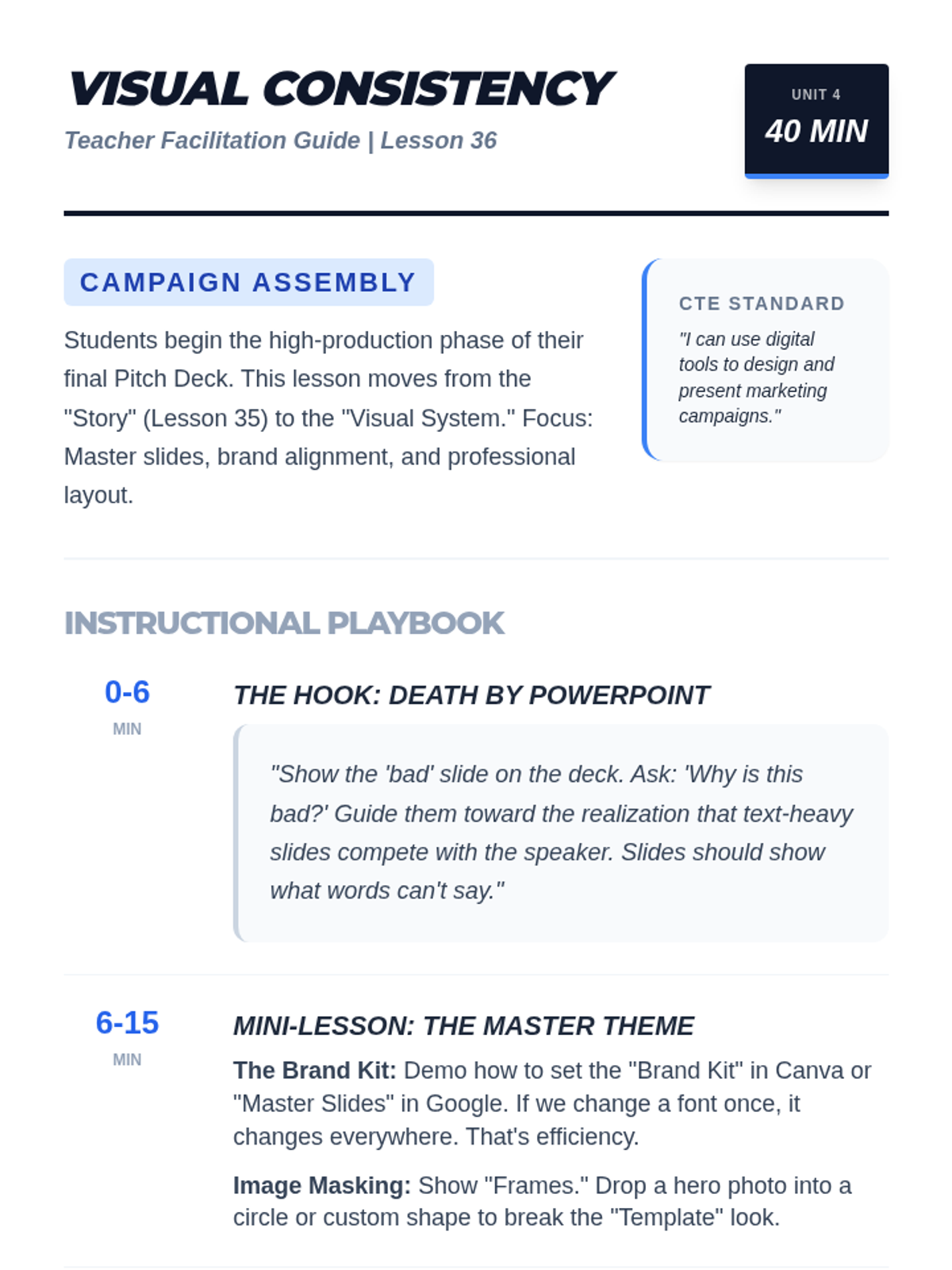
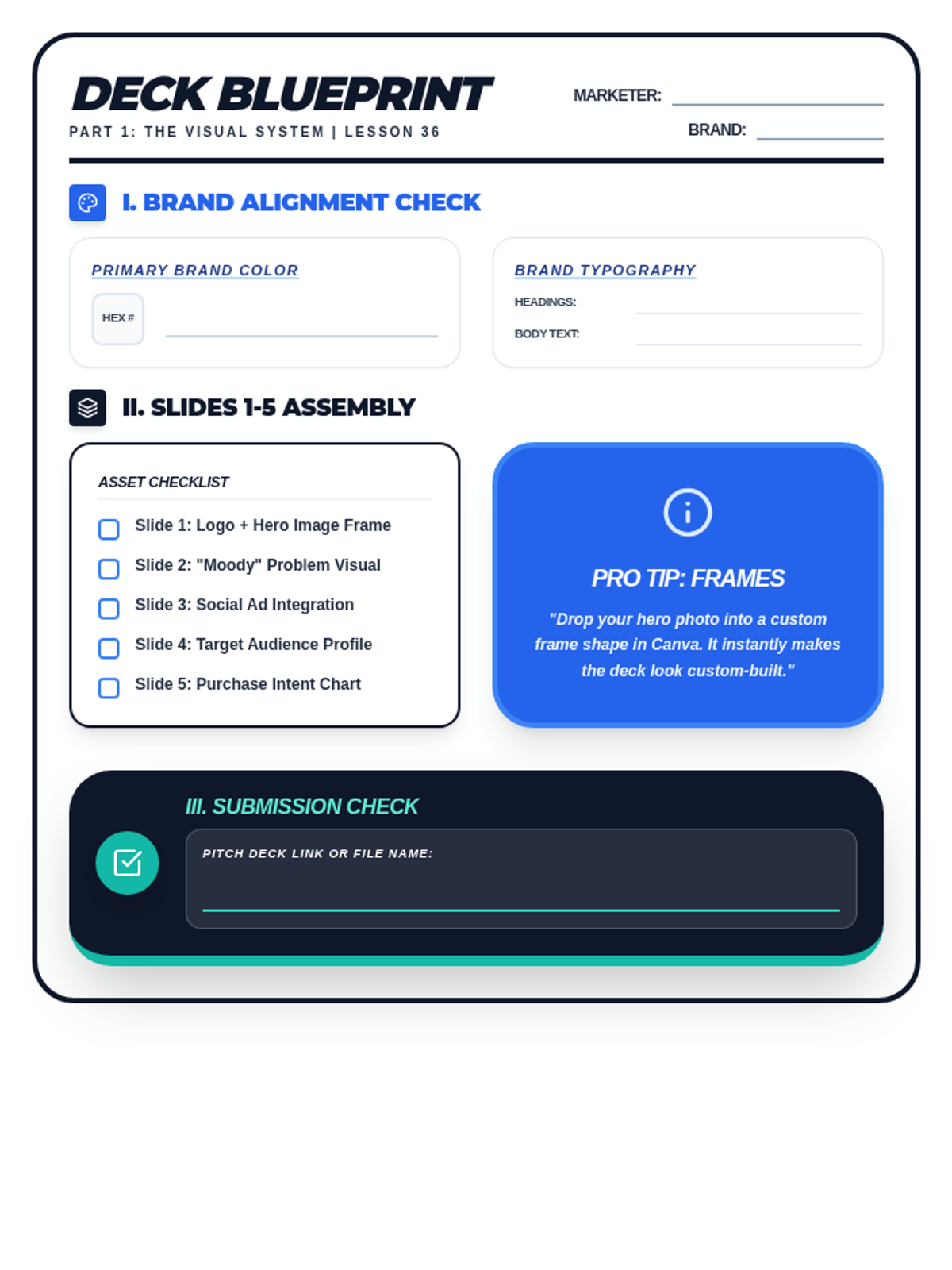
A lesson focused on visual consistency and branding in pitch decks. Students learn to use master slides, image masking, and brand-aligned assets to create the first half of their digital marketing pitch.
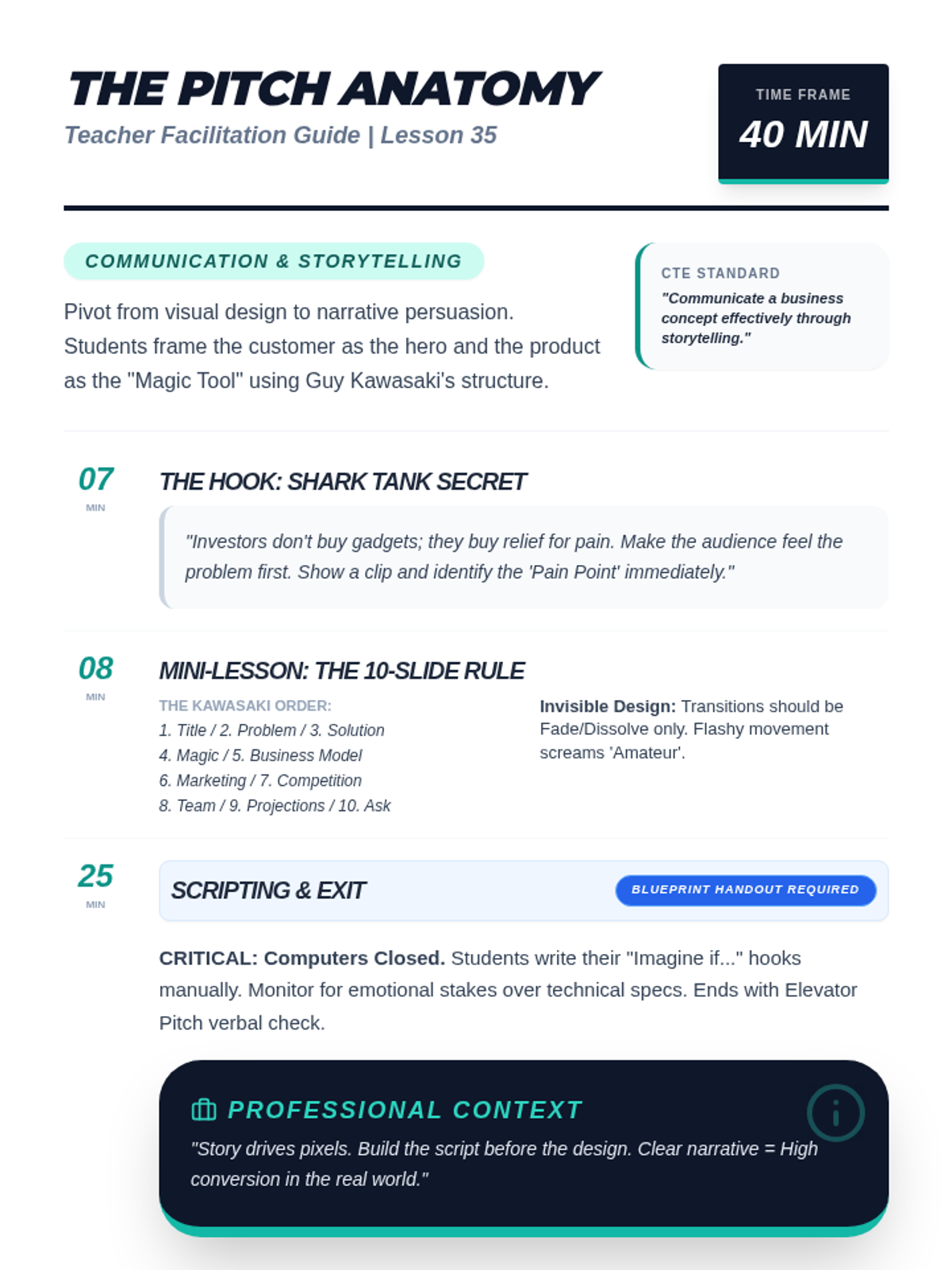
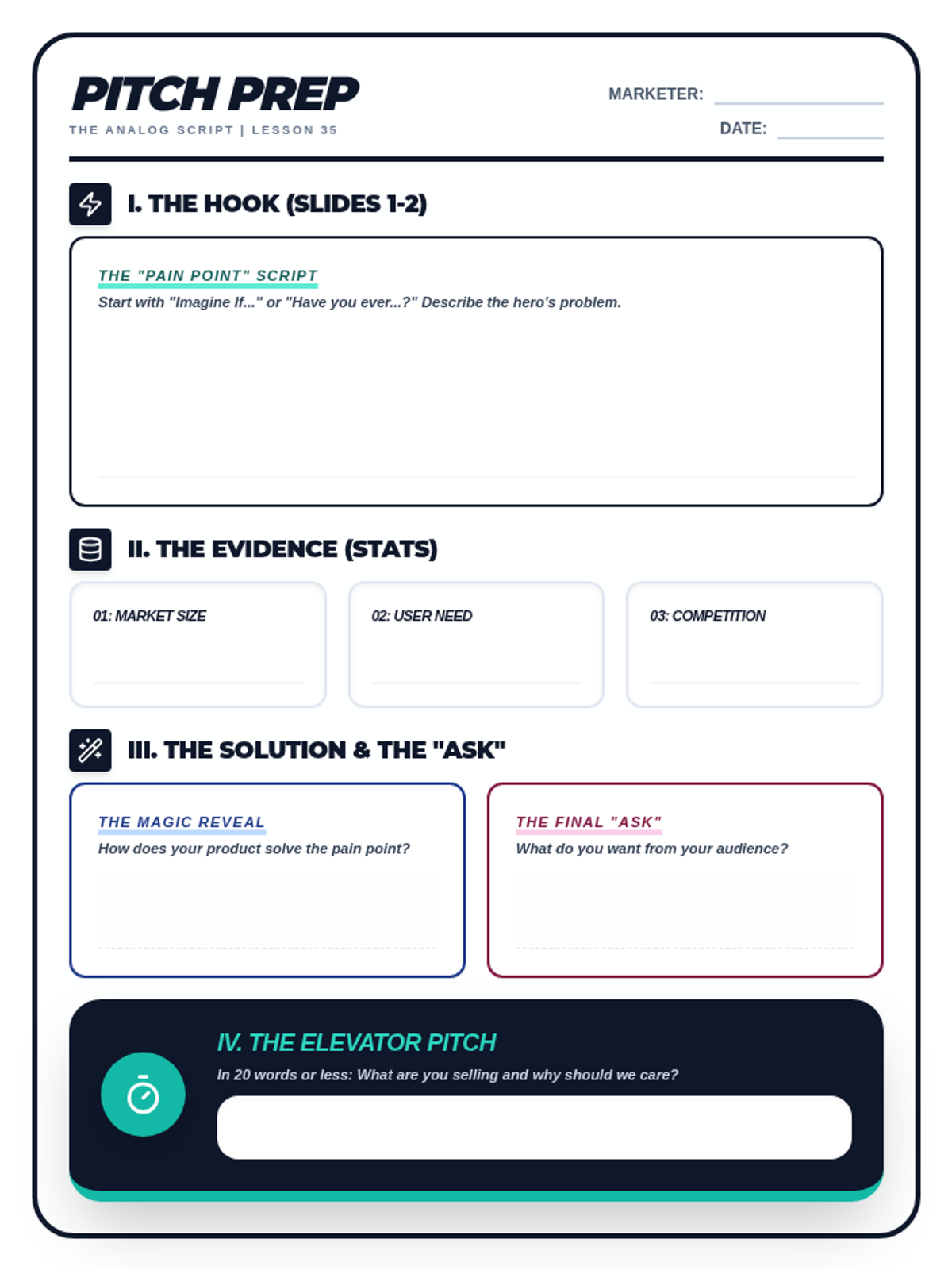
A lesson focused on business storytelling and pitch deck structure. Students learn to frame their marketing campaign as a problem-solving narrative using the 10-Slide Rule and 'invisible' design principles.