A high-stakes review lesson covering all 4th-grade math domains (OA, NBT, NF, MD, G) with a focus on multi-step problem solving and EOG-style questions.
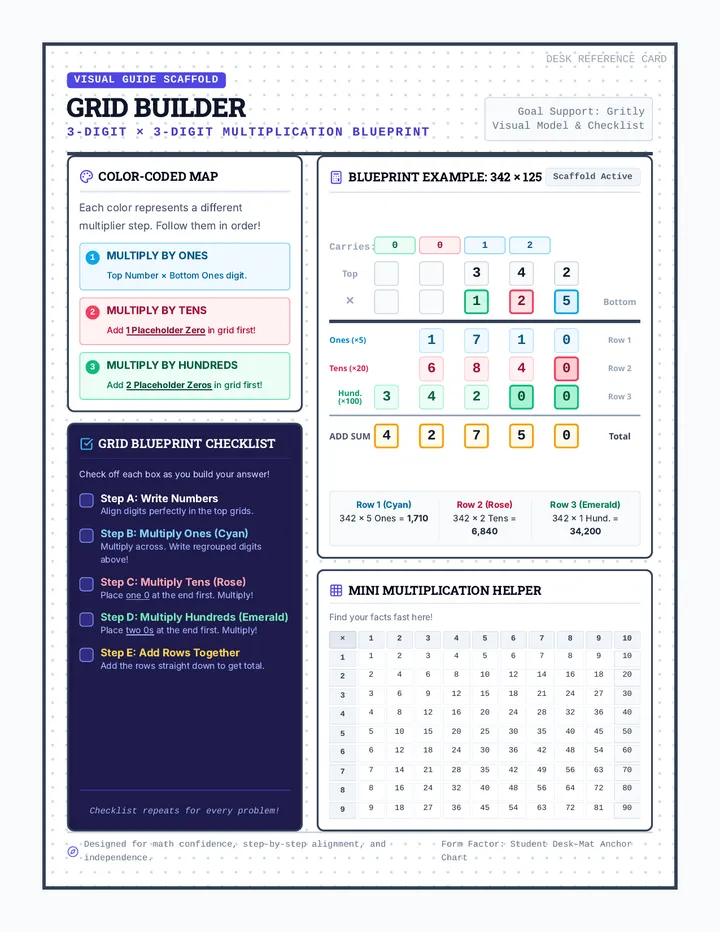
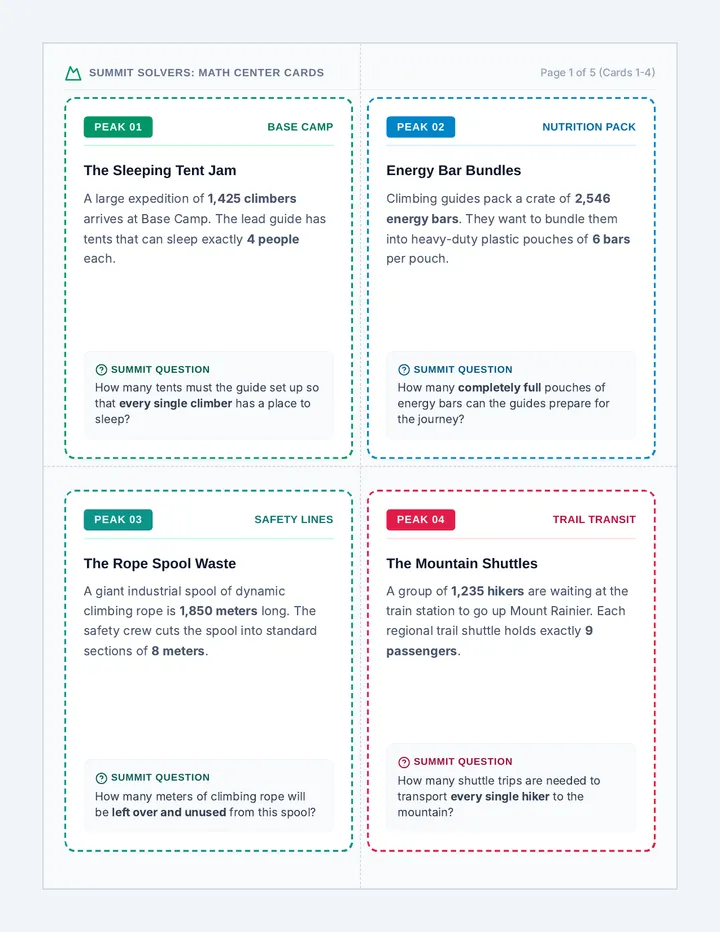
A focused lesson on multiplying double-digit numbers by single-digit numbers using skip-counting tracks and visual organizers to bridge the gap between basic facts and multi-digit algorithms.
A series of vocational math activities focused on landscaping, plumbing, and tool rentals, featuring heavy visual modeling and step-by-step organizers for students interested in the trades.
A foundational math lesson focusing on the property of zero in multiplication through space-themed practice.
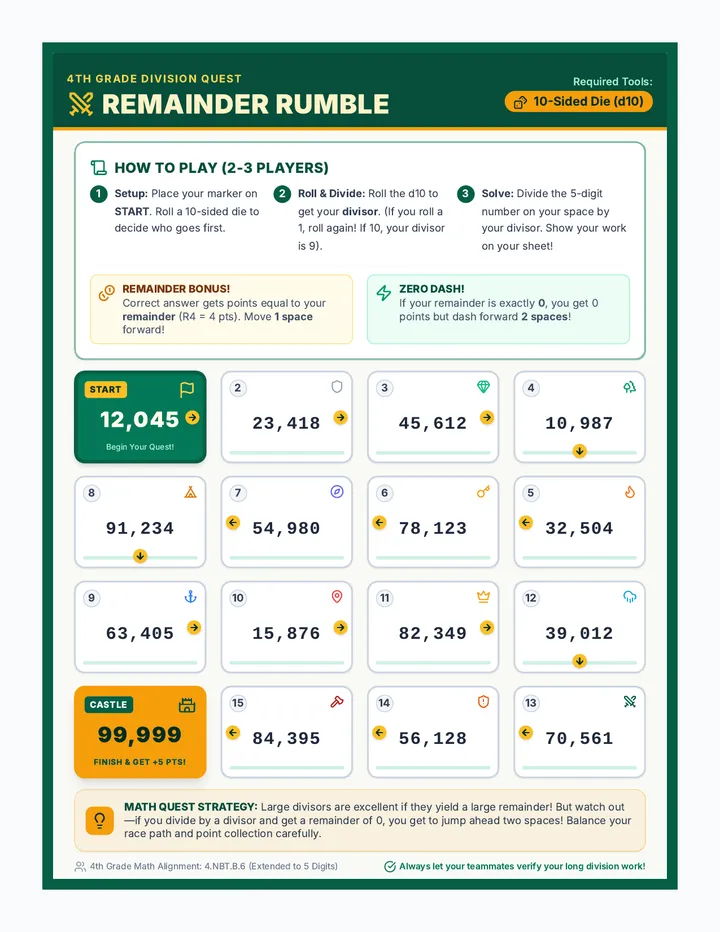
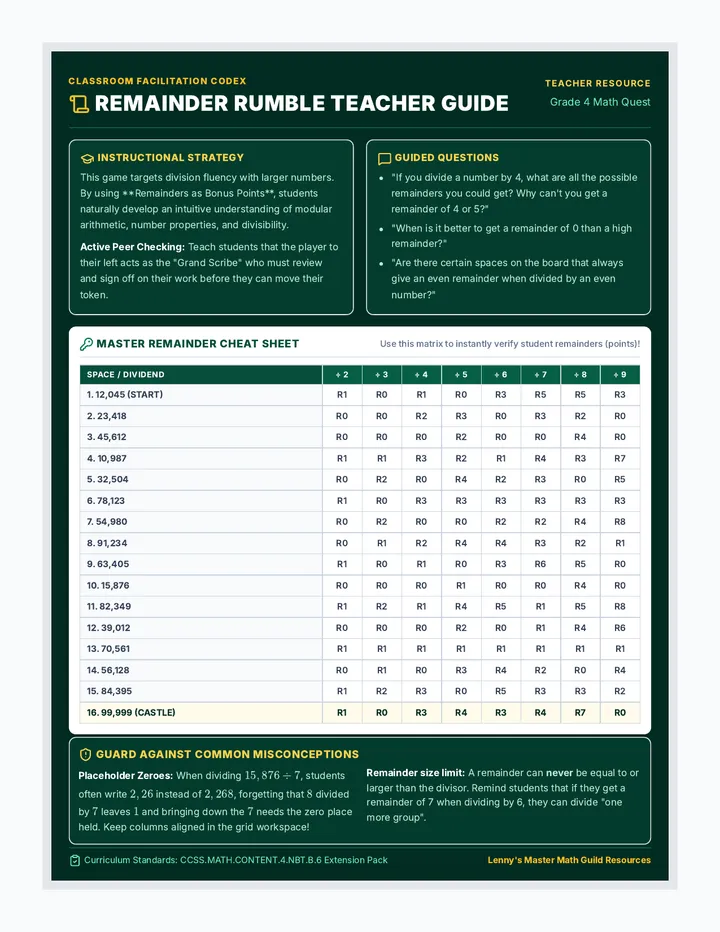
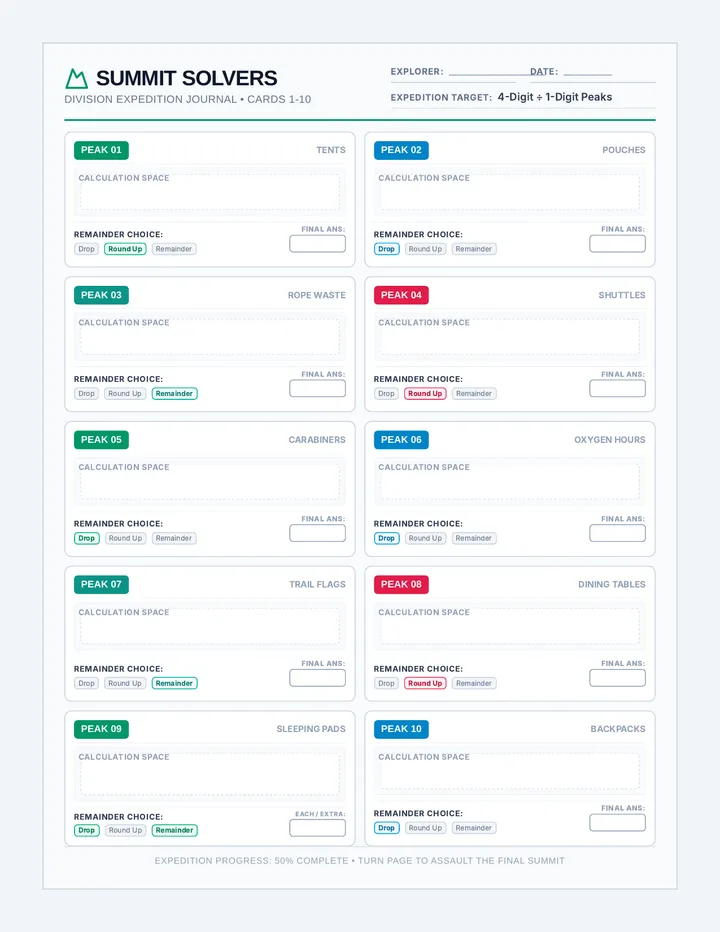
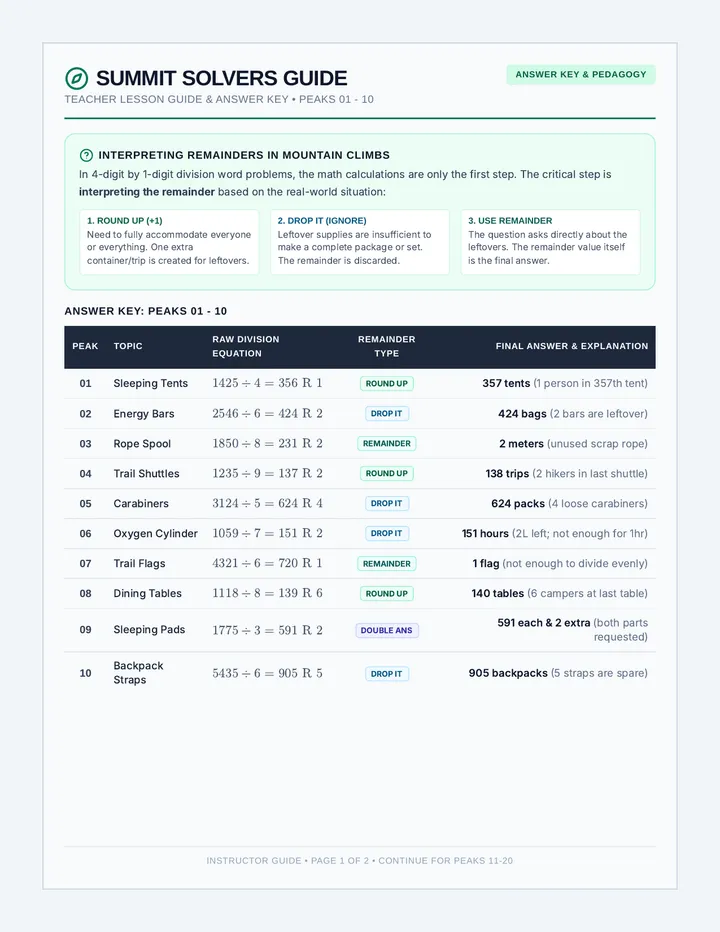
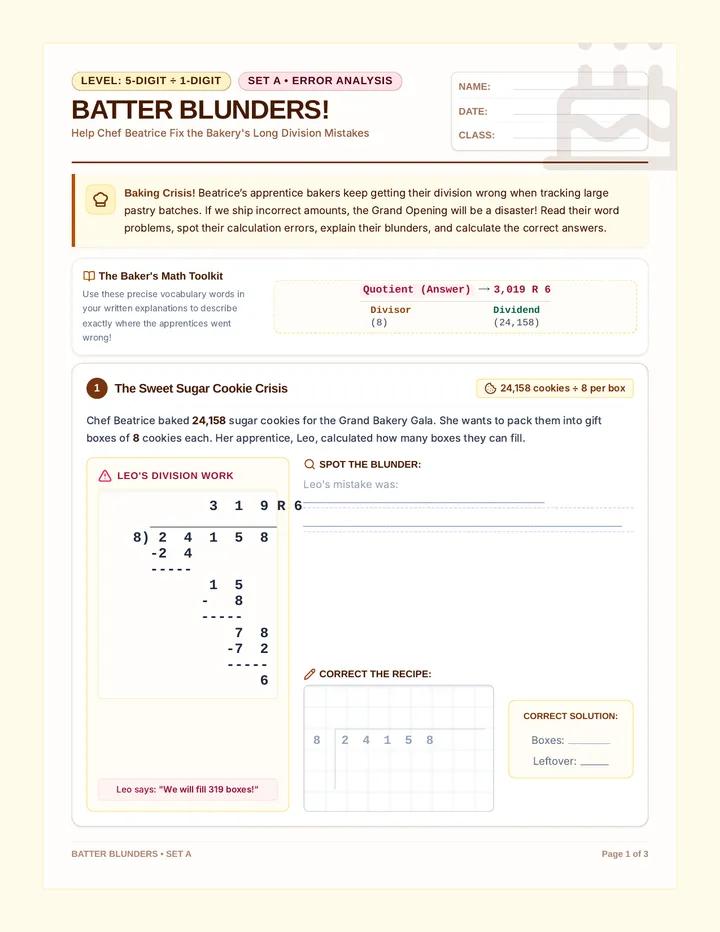
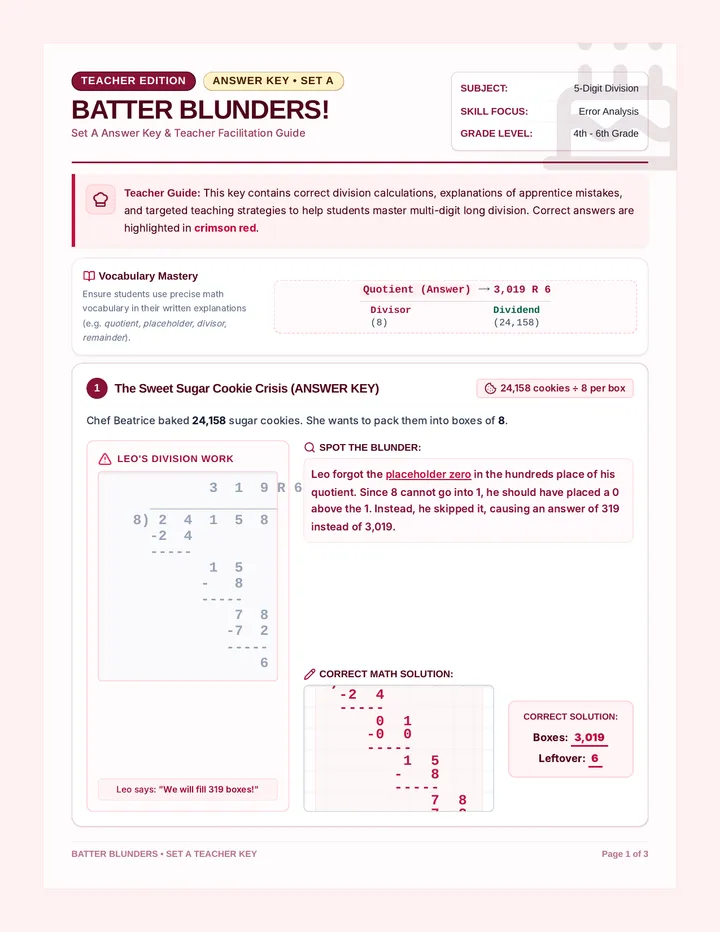
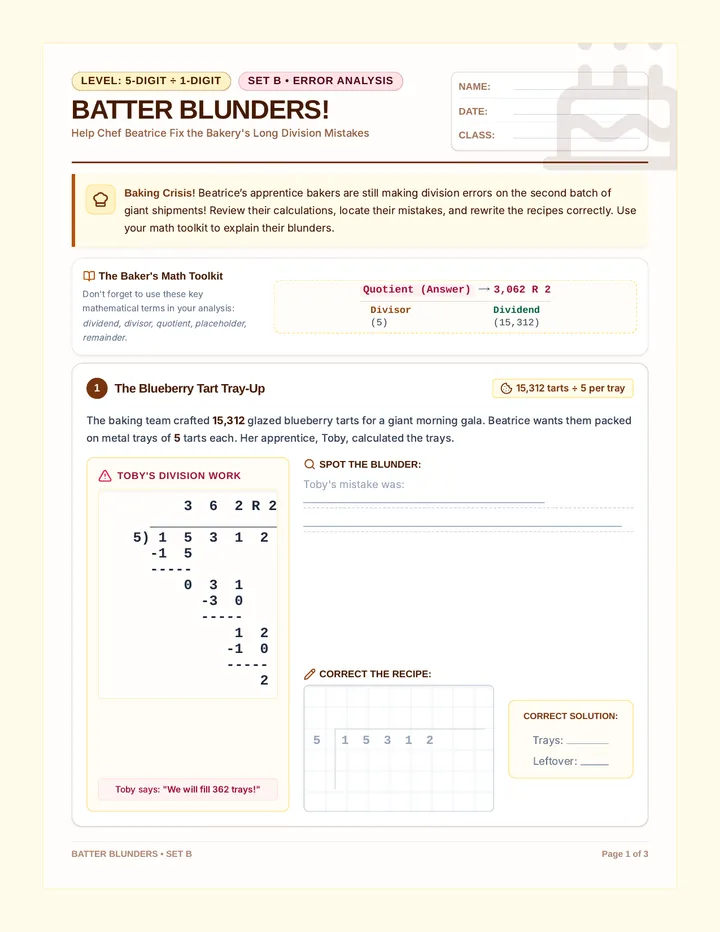
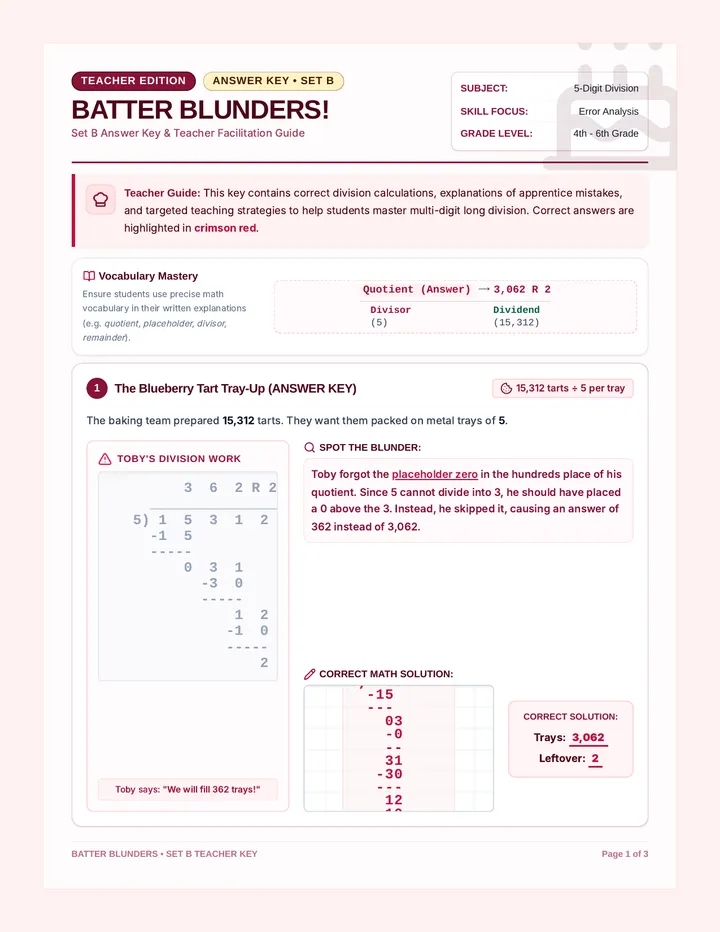
Students apply their knowledge of fact families to solve division problems, understanding division as the inverse of multiplication with single-digit divisors.
Students explore how multiplication sentences are built within a fact family, focusing on factors up to 12 and the commutative property.
A lesson focused on subtracting mixed numbers where regrouping is required, set within a professional bakery context to provide real-world application.
A professional development resource for educators to explore and implement alternative teaching models when traditional math instruction isn't reaching every student. This lesson provides frameworks for co-teaching, math workshops, and targeted interventions.
An intensive small-group intervention lesson focused on breaking down and solving multi-step addition and subtraction word problems using a detective-themed 'Case Cracker' strategy.
A lesson focused on calculating the area of squares and rectangles using whole numbers, themed around architectural blueprints.
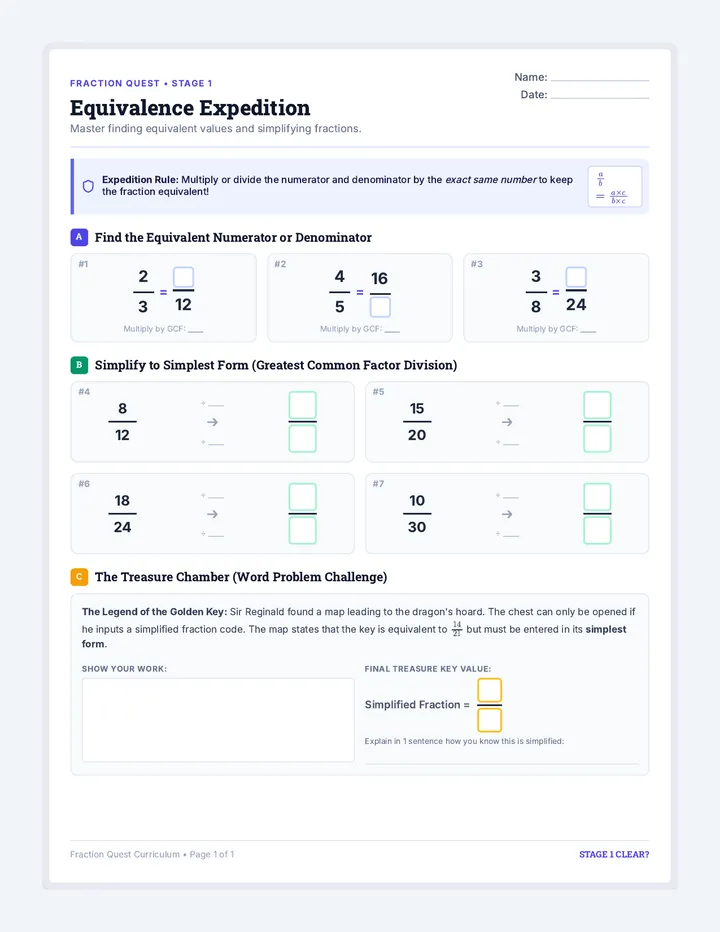
Students will master comparing three fractions with denominators of 2, 4, and 8 by converting to a common denominator and using comparison symbols.
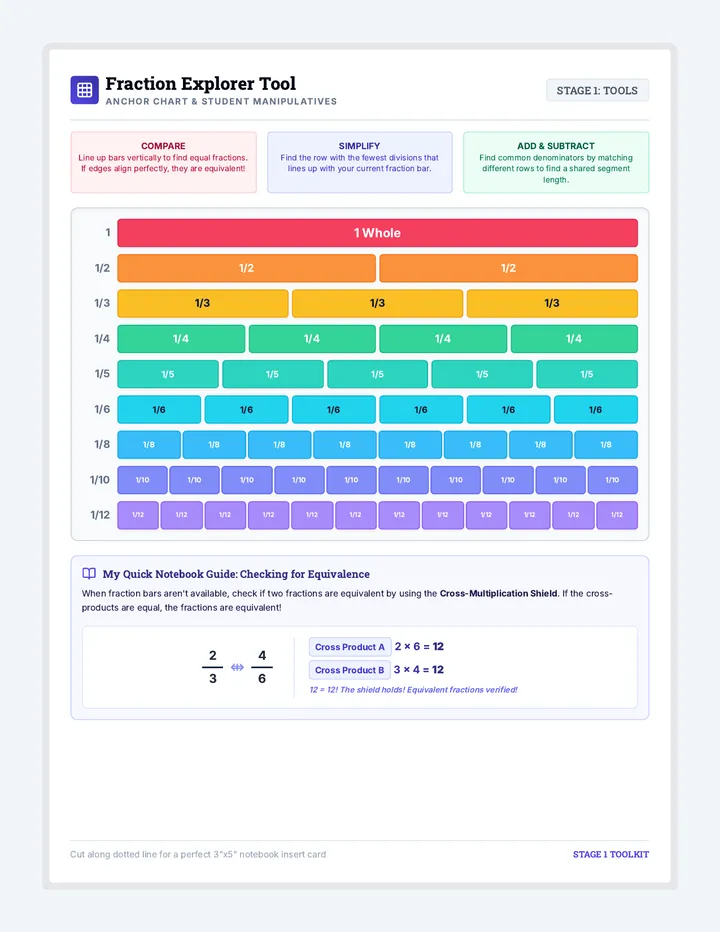
A hands-on lesson focusing on comparing fractions with identical numerators or denominators using visual circle and strip models.
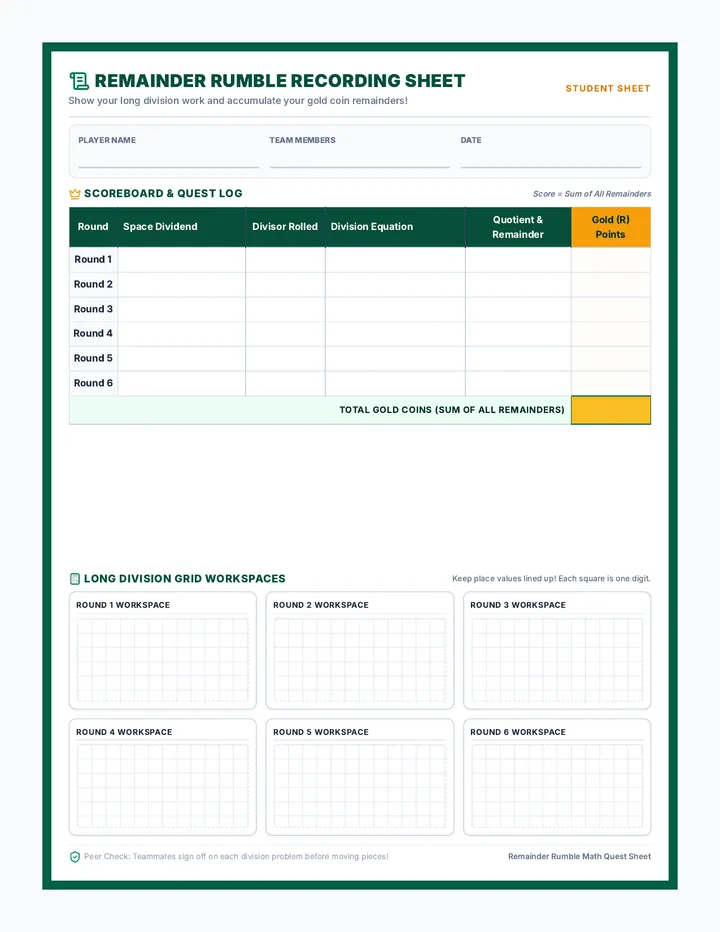
This lesson explores the distributive property of division across addition, focusing on dividing large numbers by divisors in the hundreds place using a 'blueprint' strategy of breaking dividends into friendly multiples.
Students learn to compare fractions using visual area models and number lines, focusing on same denominators and same numerators through an architectural blueprint theme.
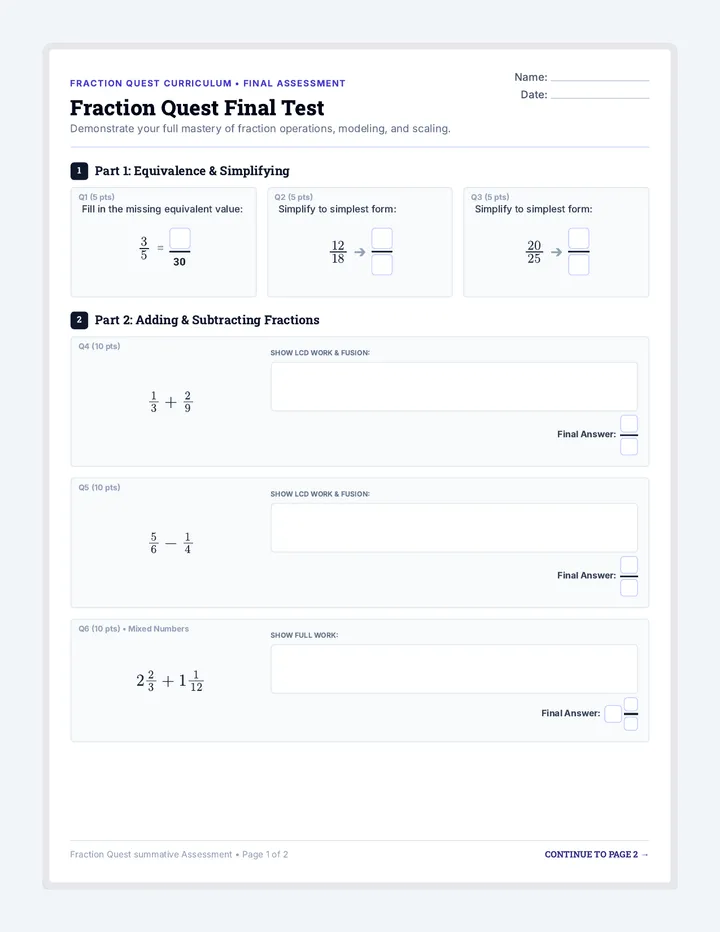
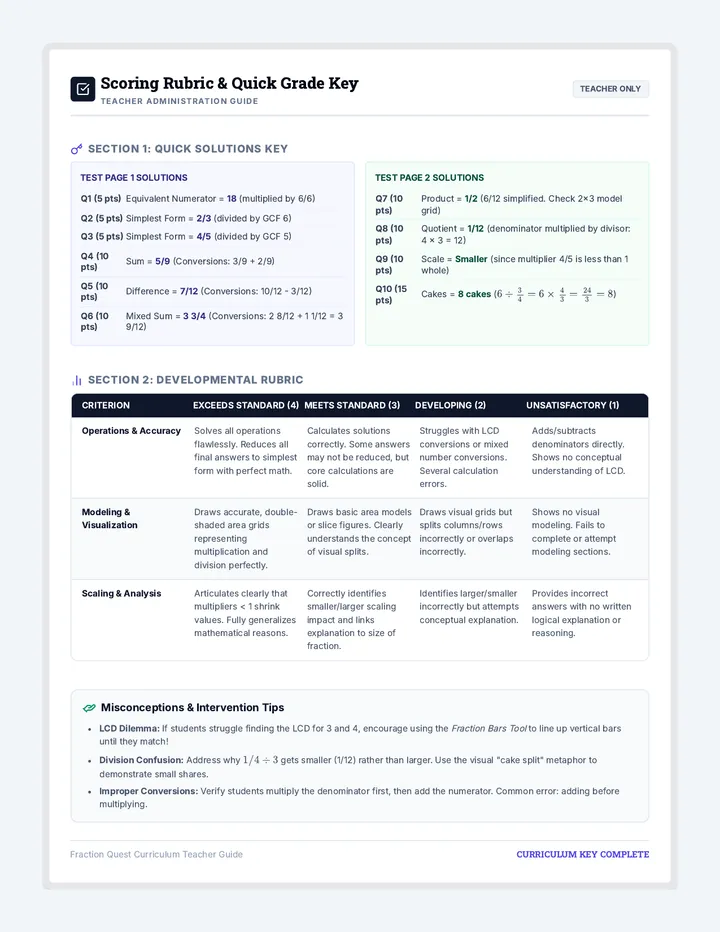
A pair of diagnostic assessments designed to pinpoint gaps in foundational number sense, fractions, and decimals, bridging 3rd-4th grade concepts to 5th grade mastery in preparation for 6th grade math.