Students explore structural relationships where one term is a category, a part, or a defining characteristic of the other. The lesson uses graphic organizers to map out hierarchies and biological classifications to reinforce these logic patterns.
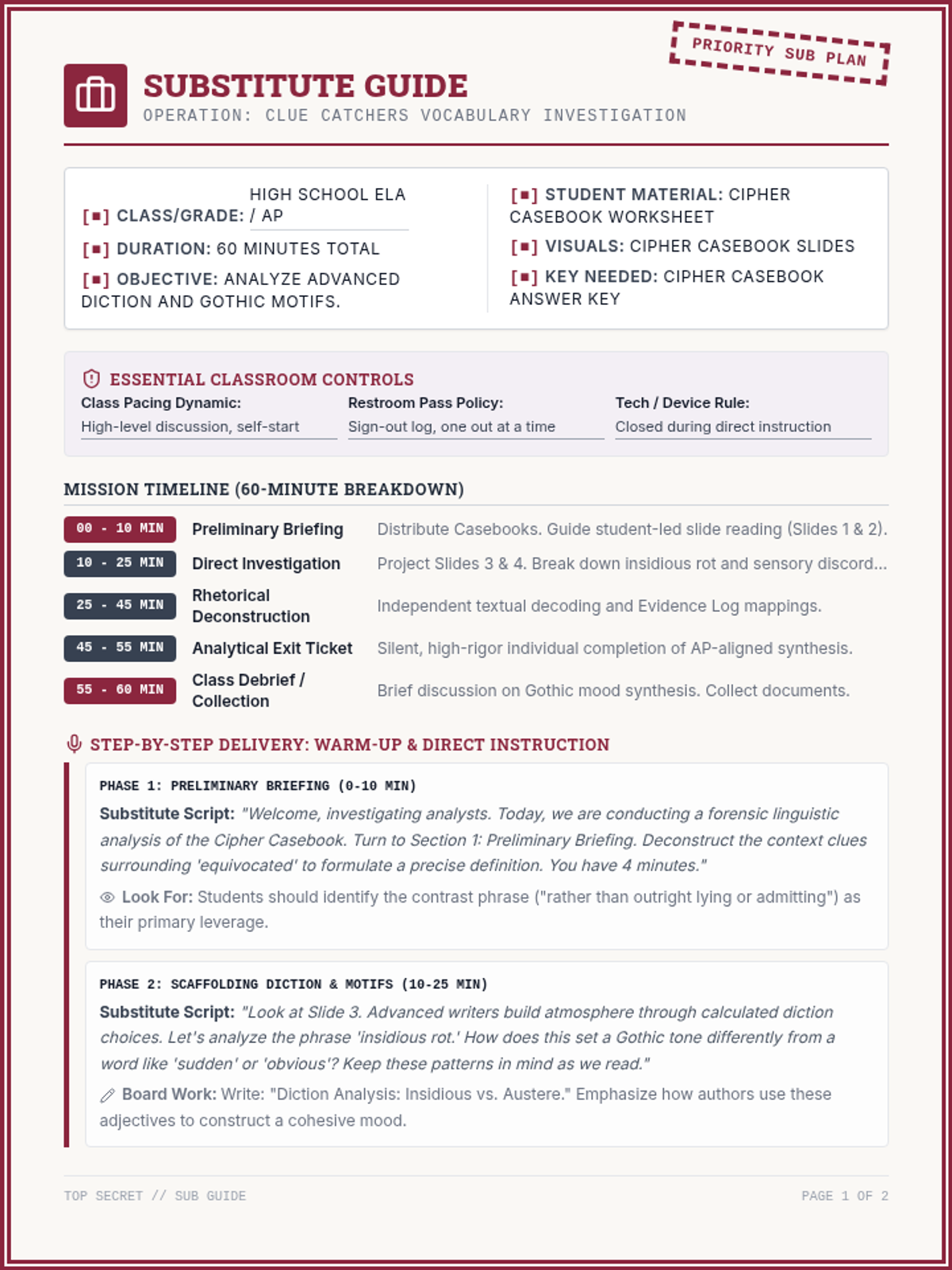
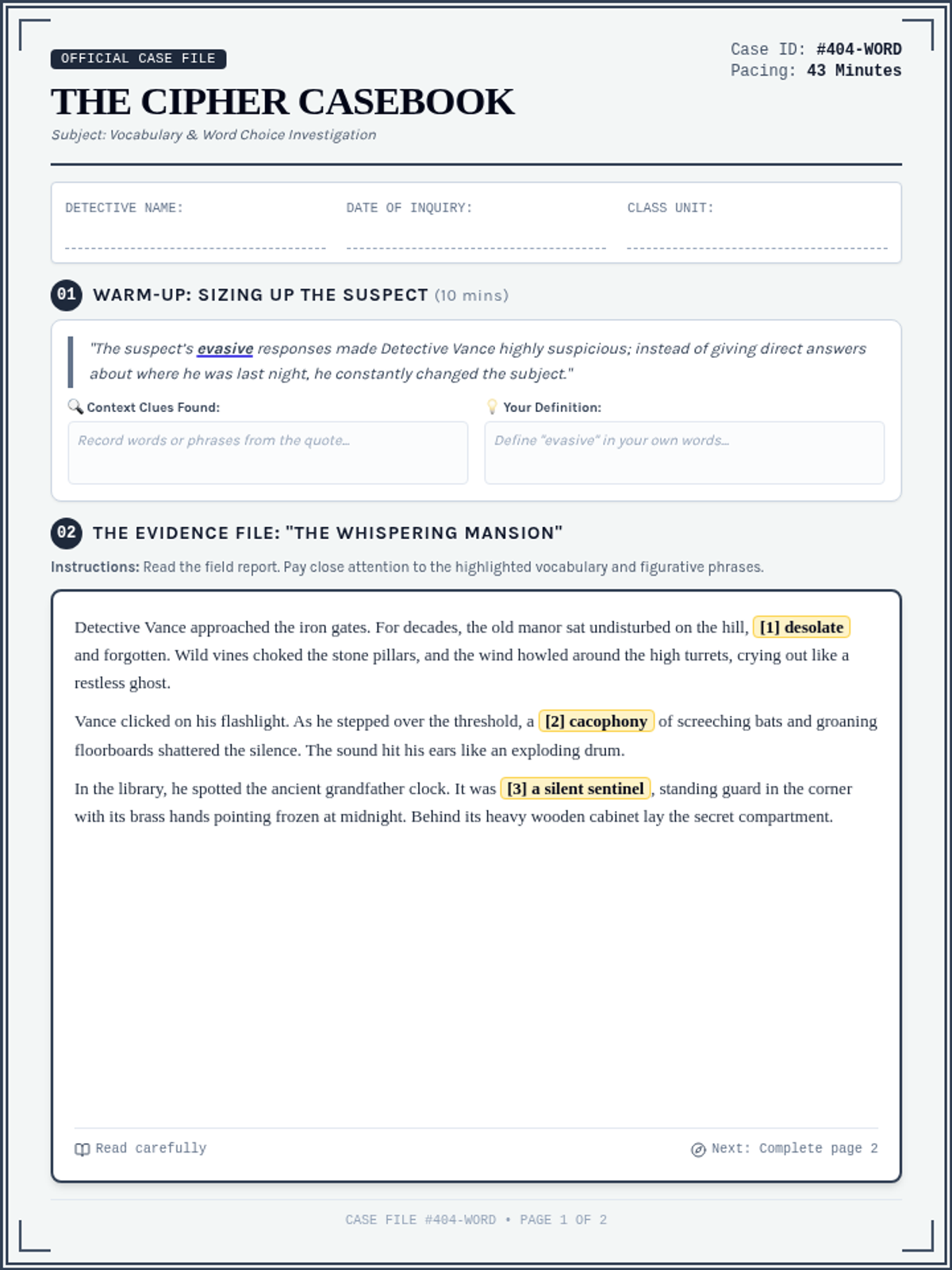
Combining prefixes, roots, and suffixes to decode complex multi-syllabic academic words.
Mastering Latin roots commonly found in academic literature and formal writing.
Identifying and defining core Greek roots that form the foundation of scientific and technical vocabulary.
Exploring high-frequency academic suffixes and their role in determining a word's part of speech.
Introduction to common academic prefixes and how they modify the meaning of base words.
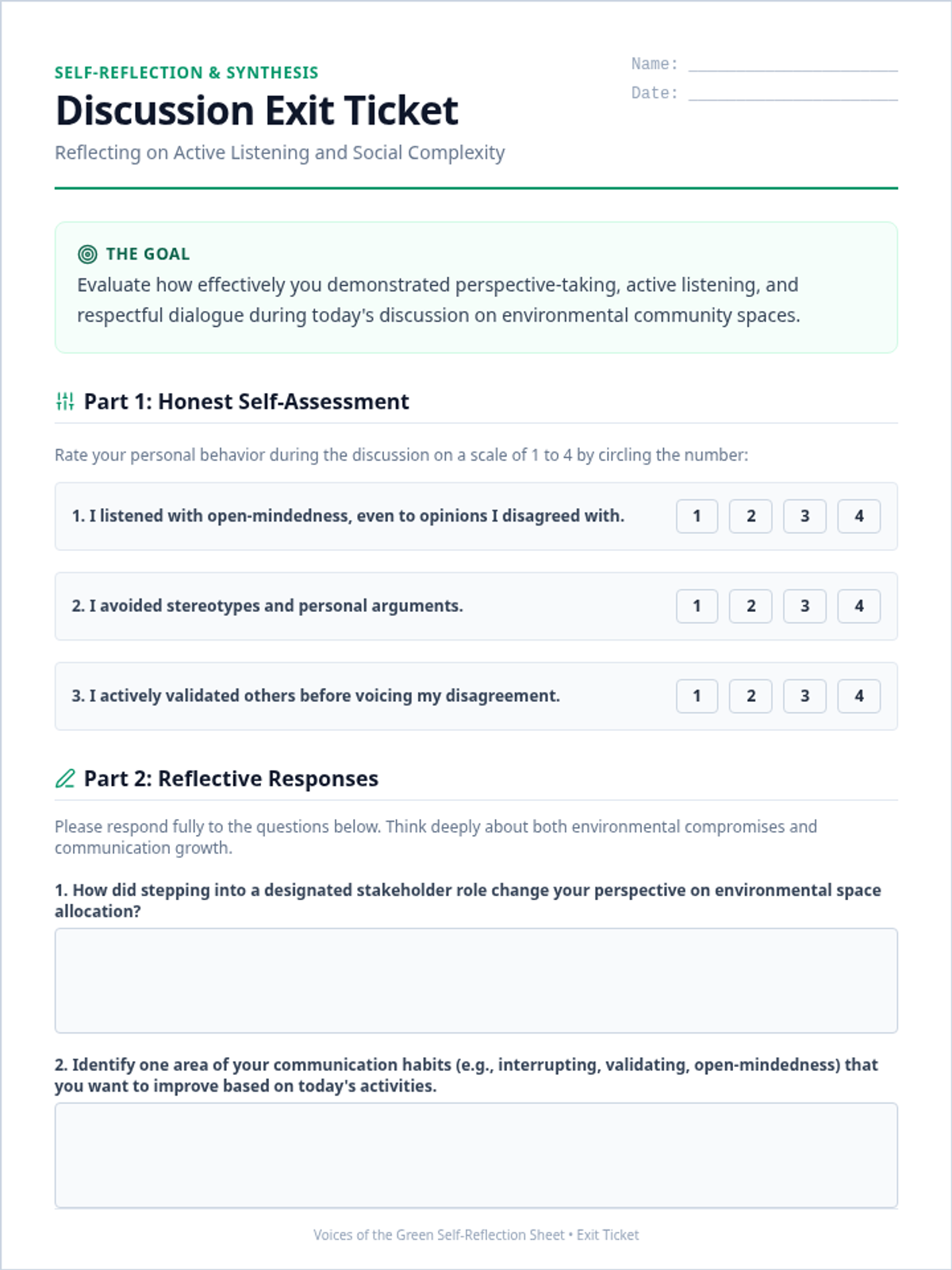
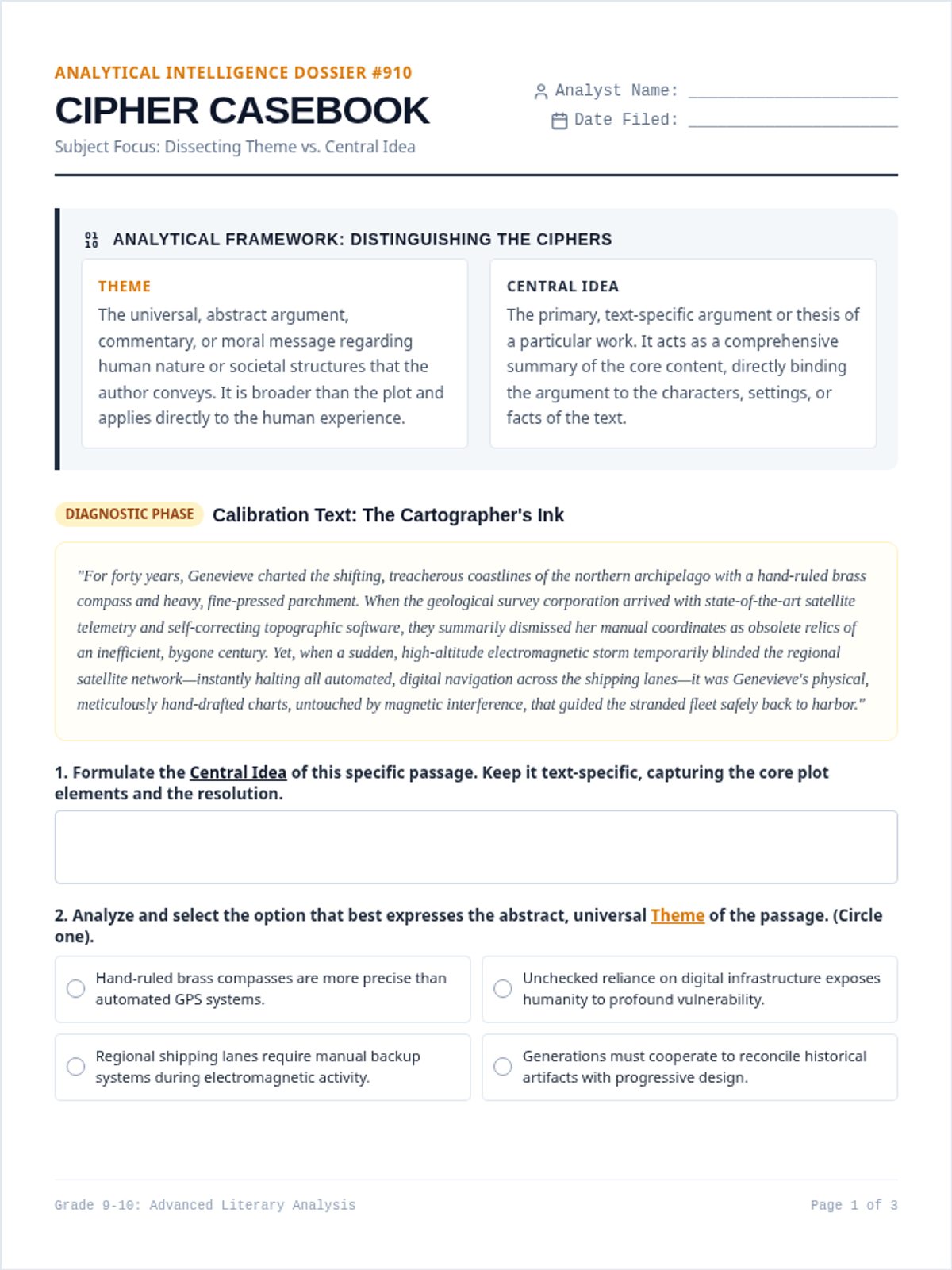
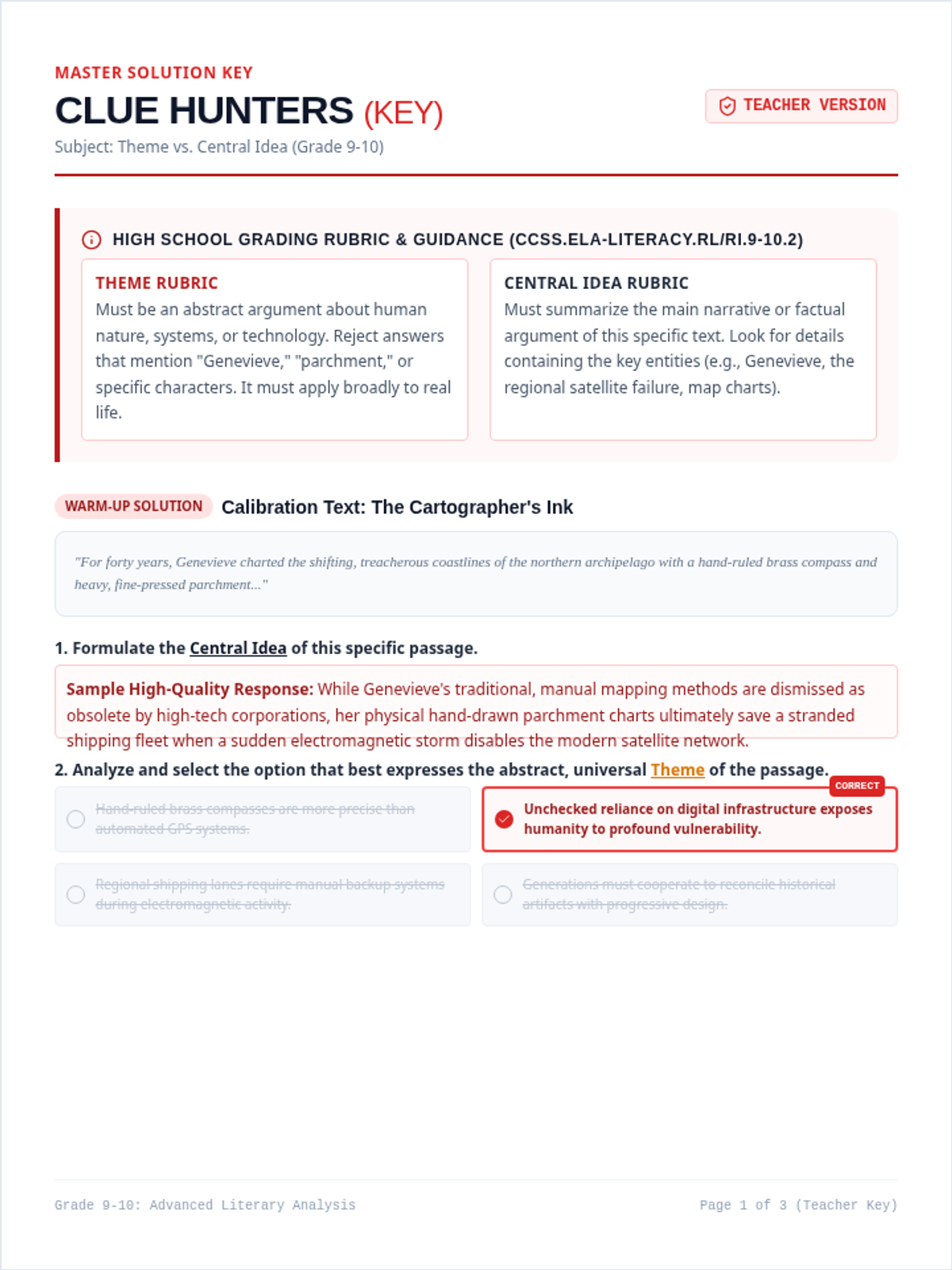
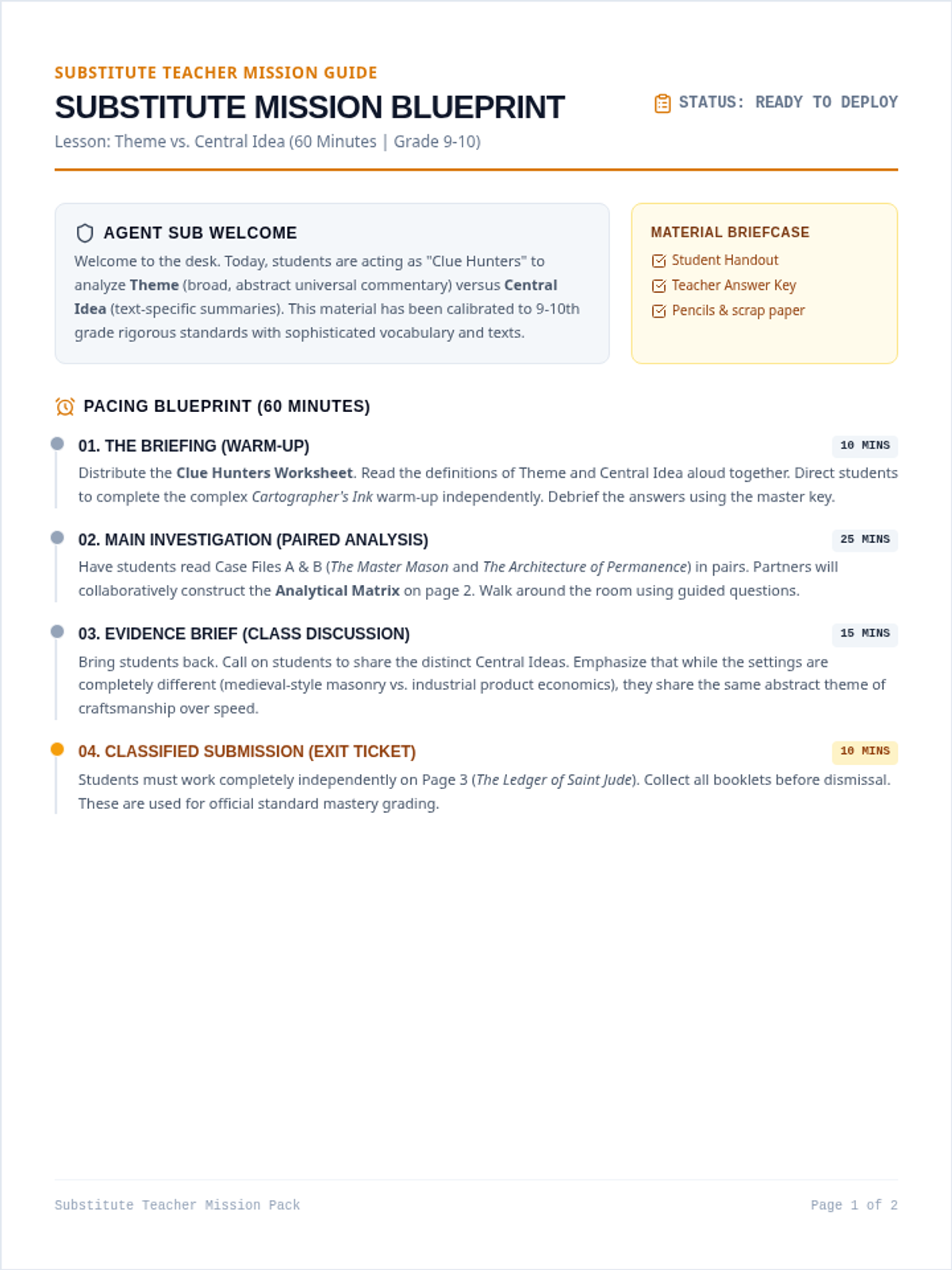
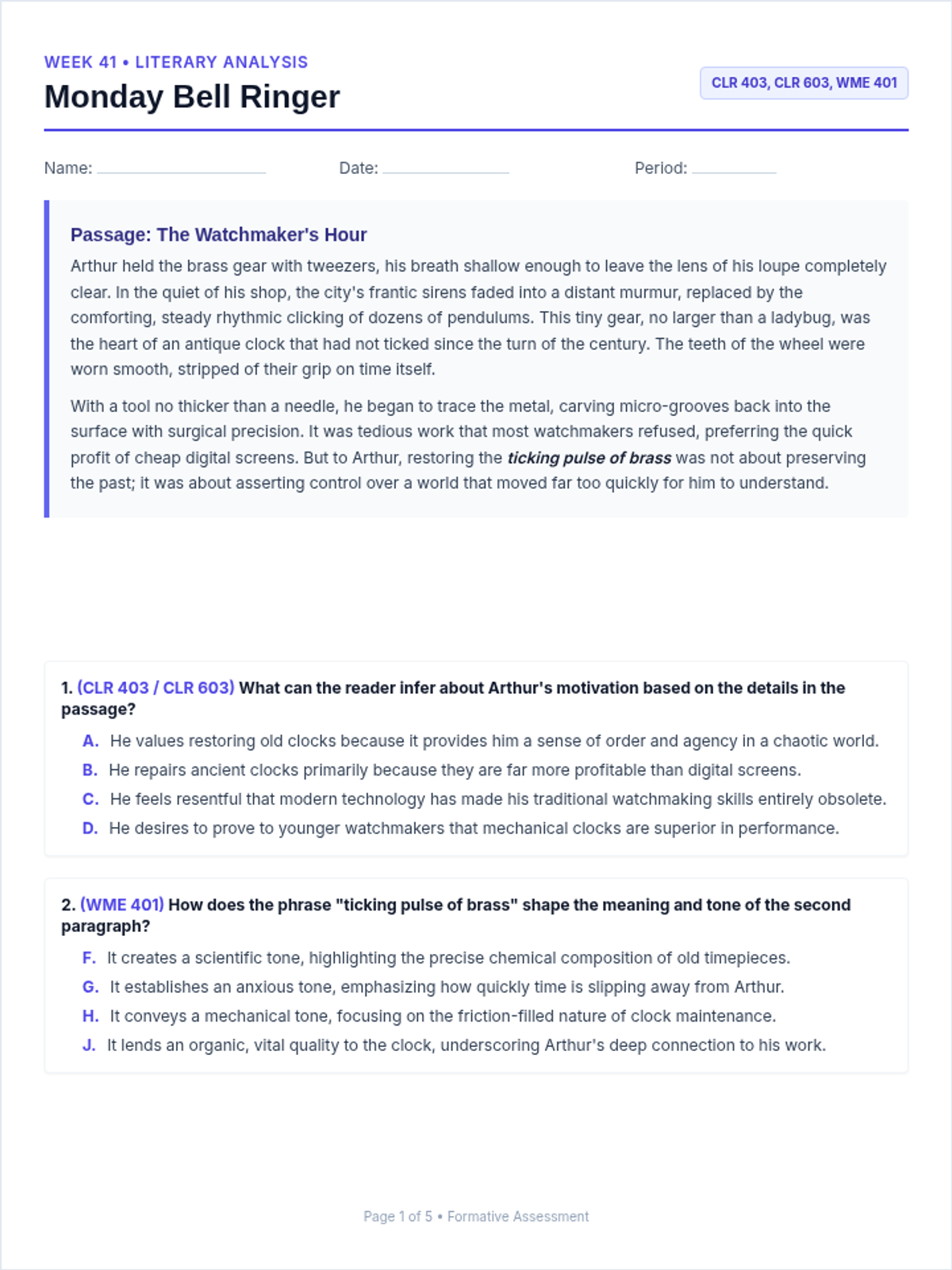
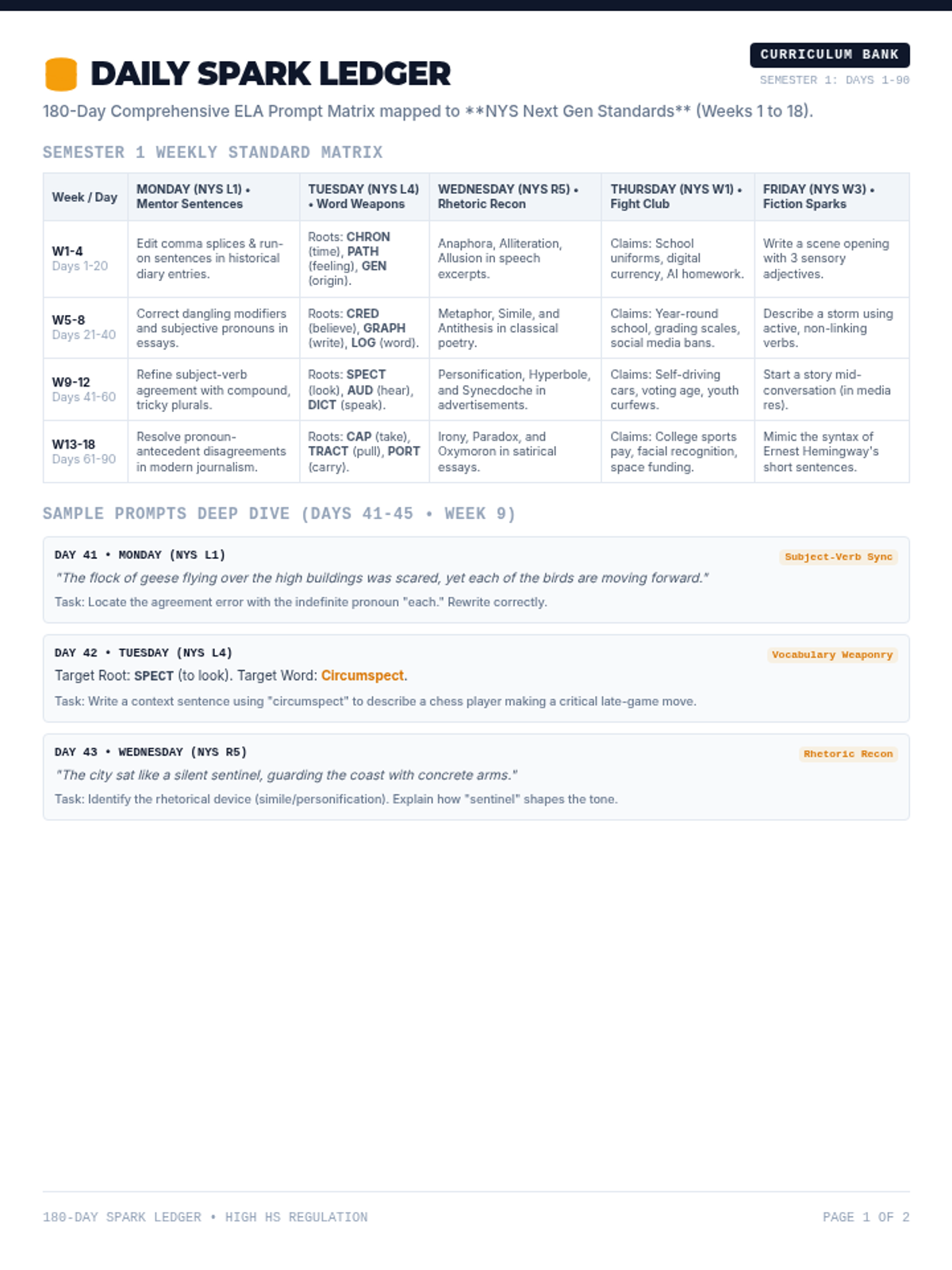
A lesson focused on identifying theme by collecting evidence, identifying topics, and synthesizing life lessons.

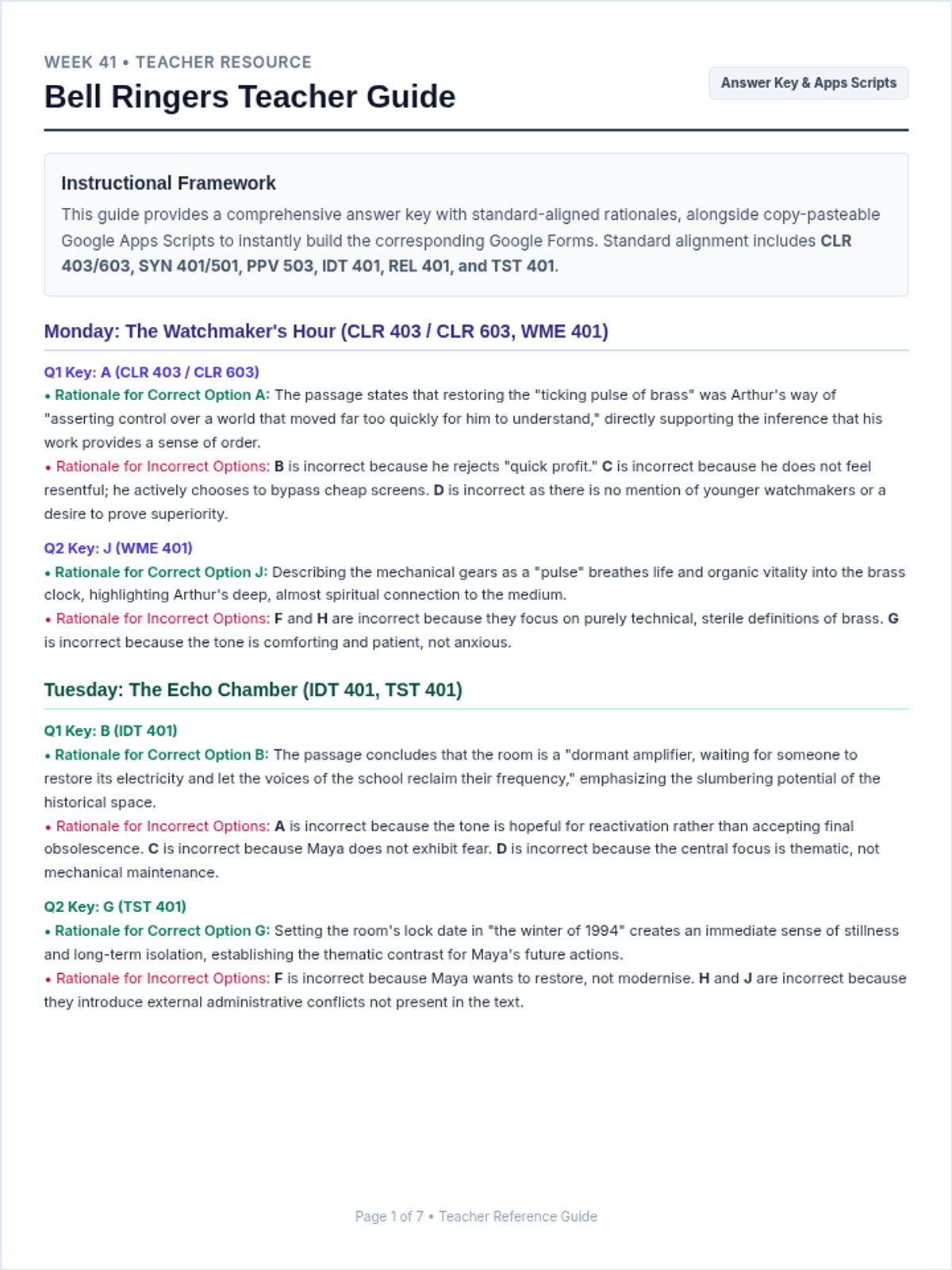
A rigorous assessment focusing on modern literary analysis and thematic synthesis. Students explore grit, struggle, and empathy through contemporary prose and poetry from diverse perspectives.

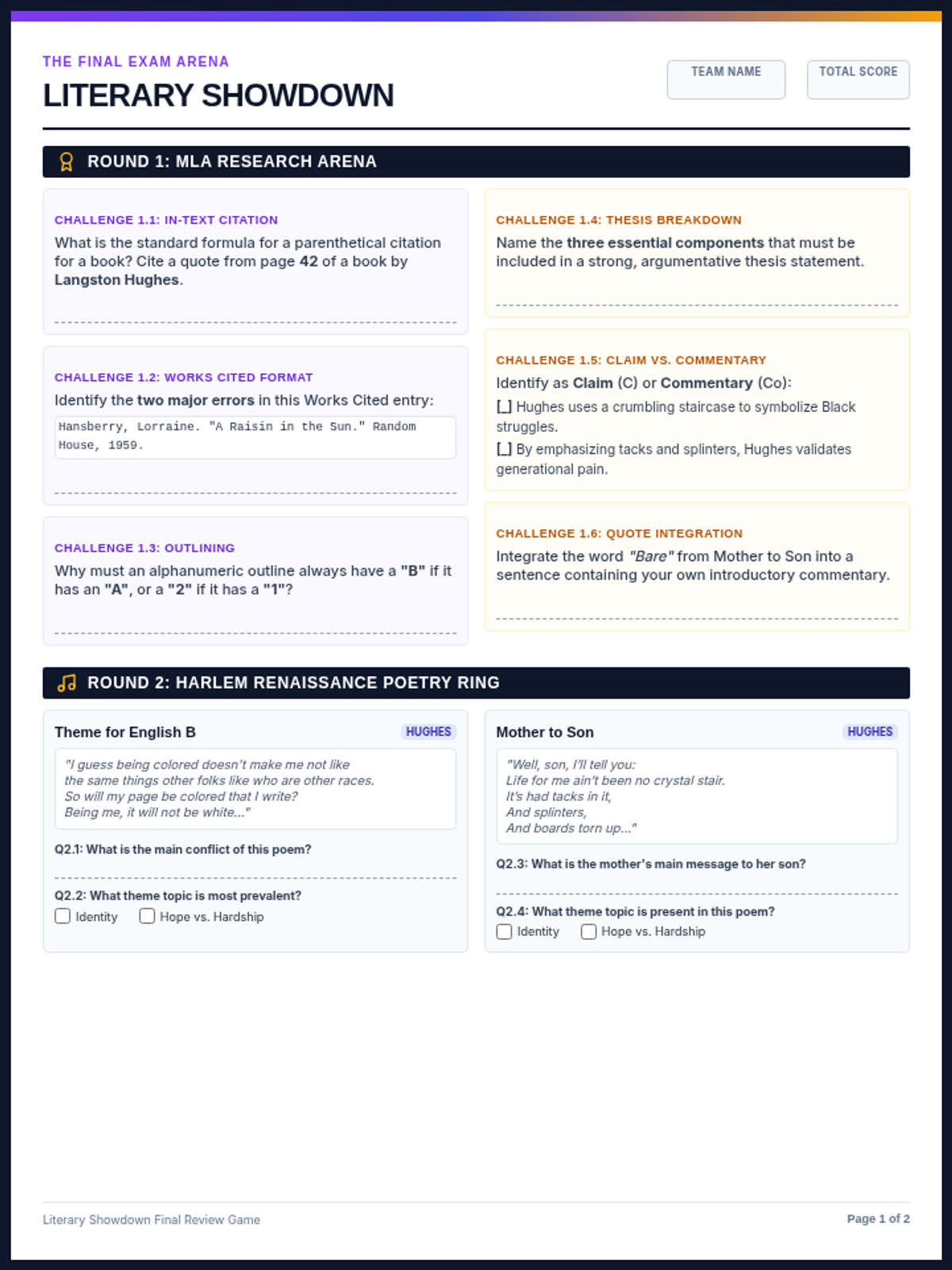
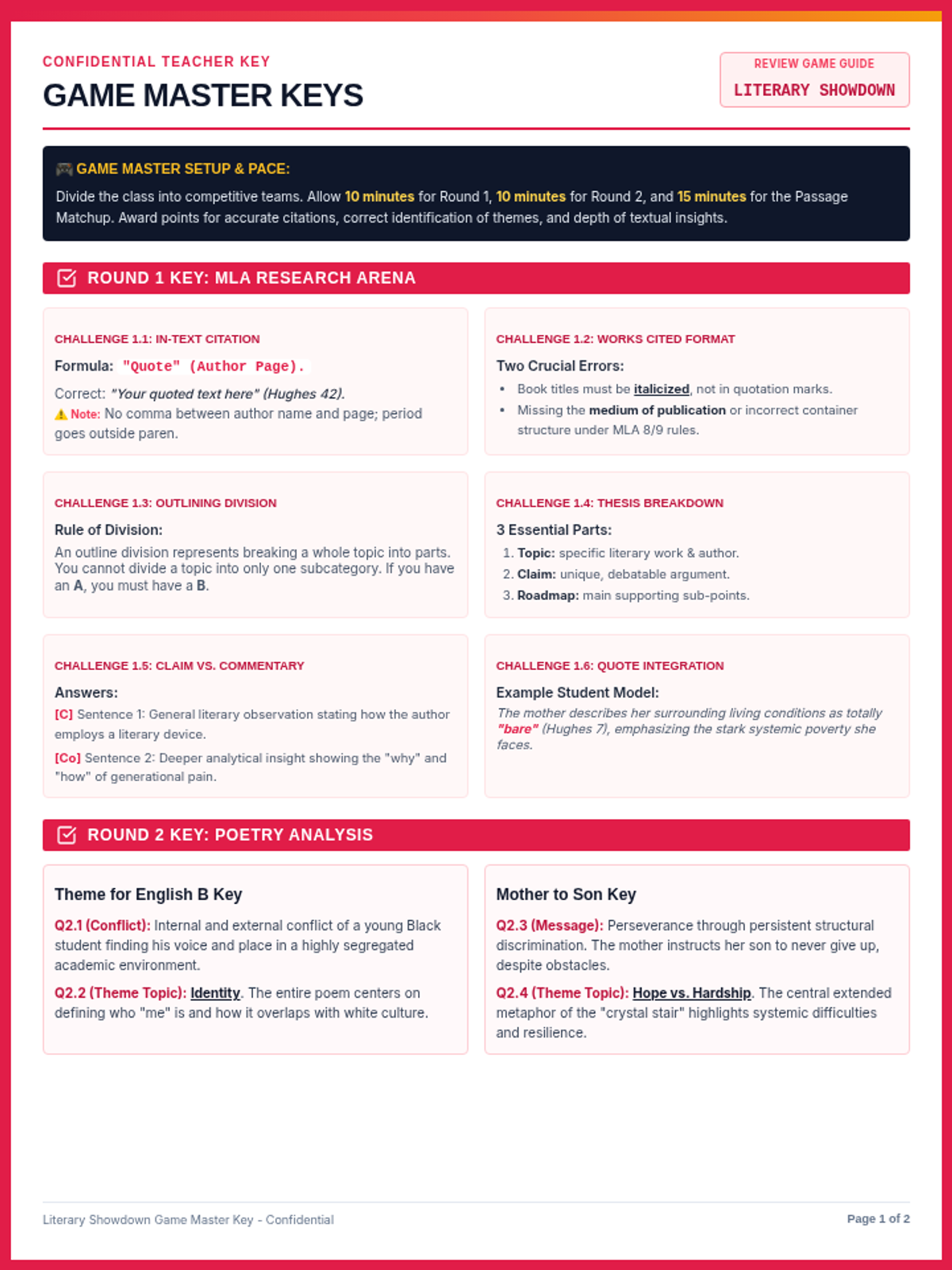
A comparative literary analysis assessment for 10th-grade students focusing on grit and perseverance in the works of Maya Angelou and Tara Westover. Students will analyze how literary techniques convey themes of resilience and overcoming systemic or personal limitations.
A literary analysis assessment where students connect the themes of social injustice and moral courage in Maya Angelou's 'Caged Bird' to Harper Lee's 'To Kill a Mockingbird'.
A comprehensive final assessment focused on synthesizing themes of the American Dream and the American Experience through a comparative analysis of unseen texts and core curriculum works.
A comparative analysis writing assessment exploring themes of resilience, strength, and human empathy through William Ernest Henley's 'Invictus' and Elie Wiesel's 'Night'. Students will analyze how different literary forms depict the survival of the human spirit during extreme suffering.
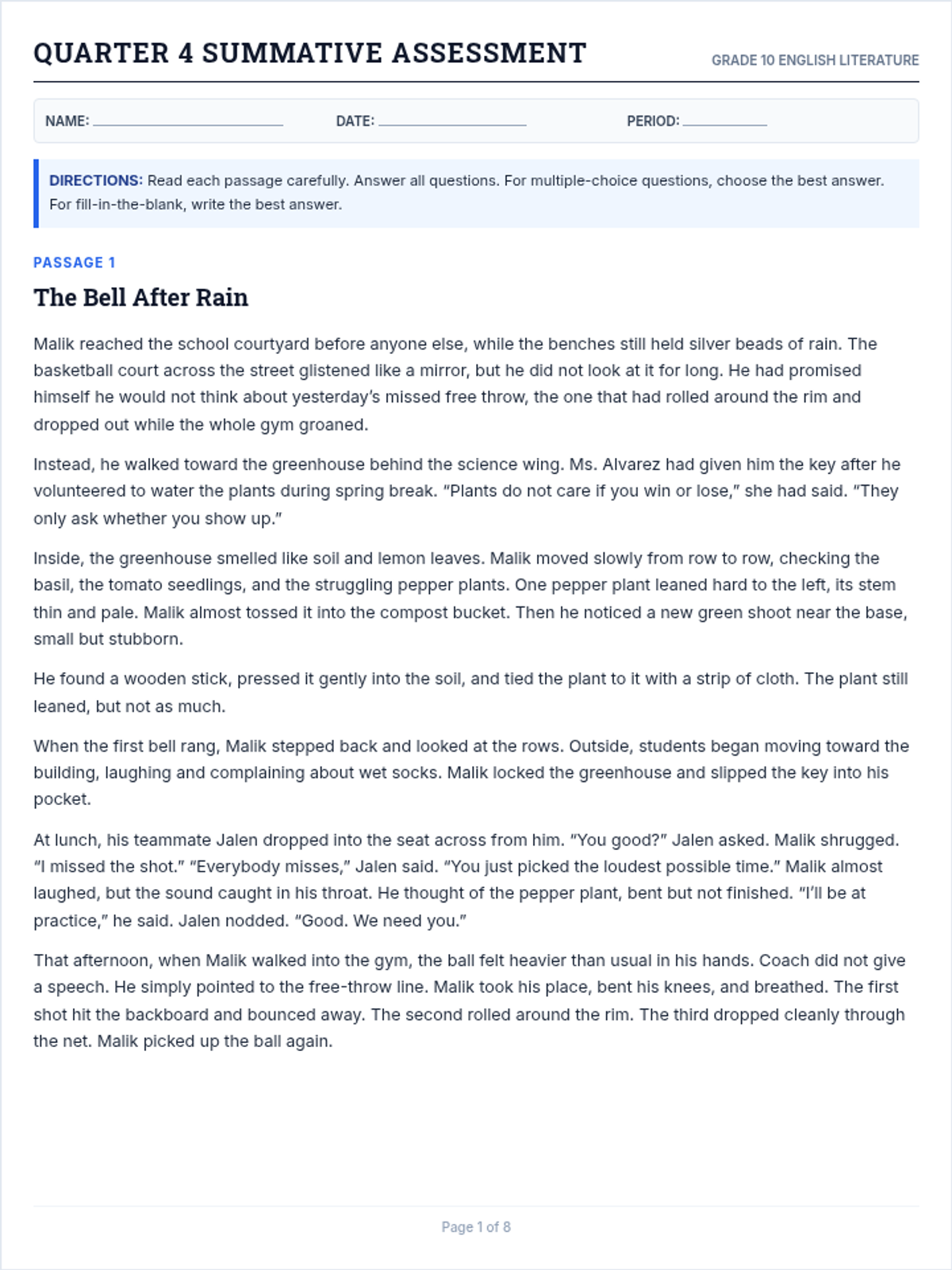
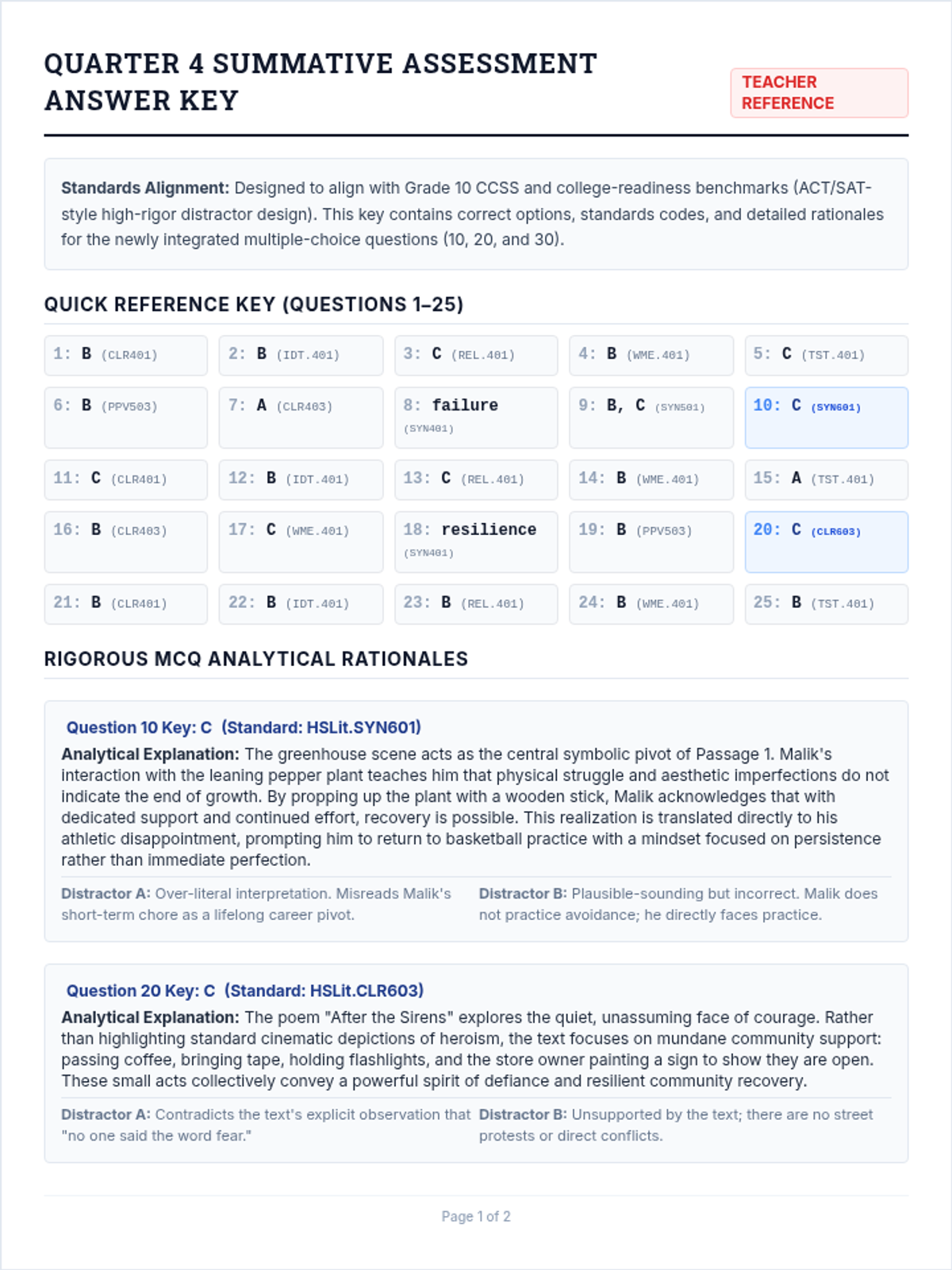
A comprehensive final exam focusing on the synthesis of literary themes including struggle, grit, and empathy. Students analyze a narrative passage and a poem before composing a multi-paragraph synthesis essay.
A comprehensive final exam centered on Guy de Maupassant's 'The Necklace,' focusing on theme, moral message, and the CER+C writing framework.
Visual and structured supports for WIDA Level 1 and 2 students exploring character motivation and thematic contrasts in Krakauer's Into the Wild. Includes vocabulary scaffolding, graphic organizers, and sentence frames.
This lesson provides Specially Designed Instruction (SDI) for crafting introductory paragraphs. It utilizes graphic organizers and sentence starters to help students build a strong foundation for informative writing.
A deep-dive analysis of the internal conflict faced by the princess in Frank R. Stockton's classic short story. Students will explore themes of jealousy, love, and barbaric nature through guided discussion and analytical writing.
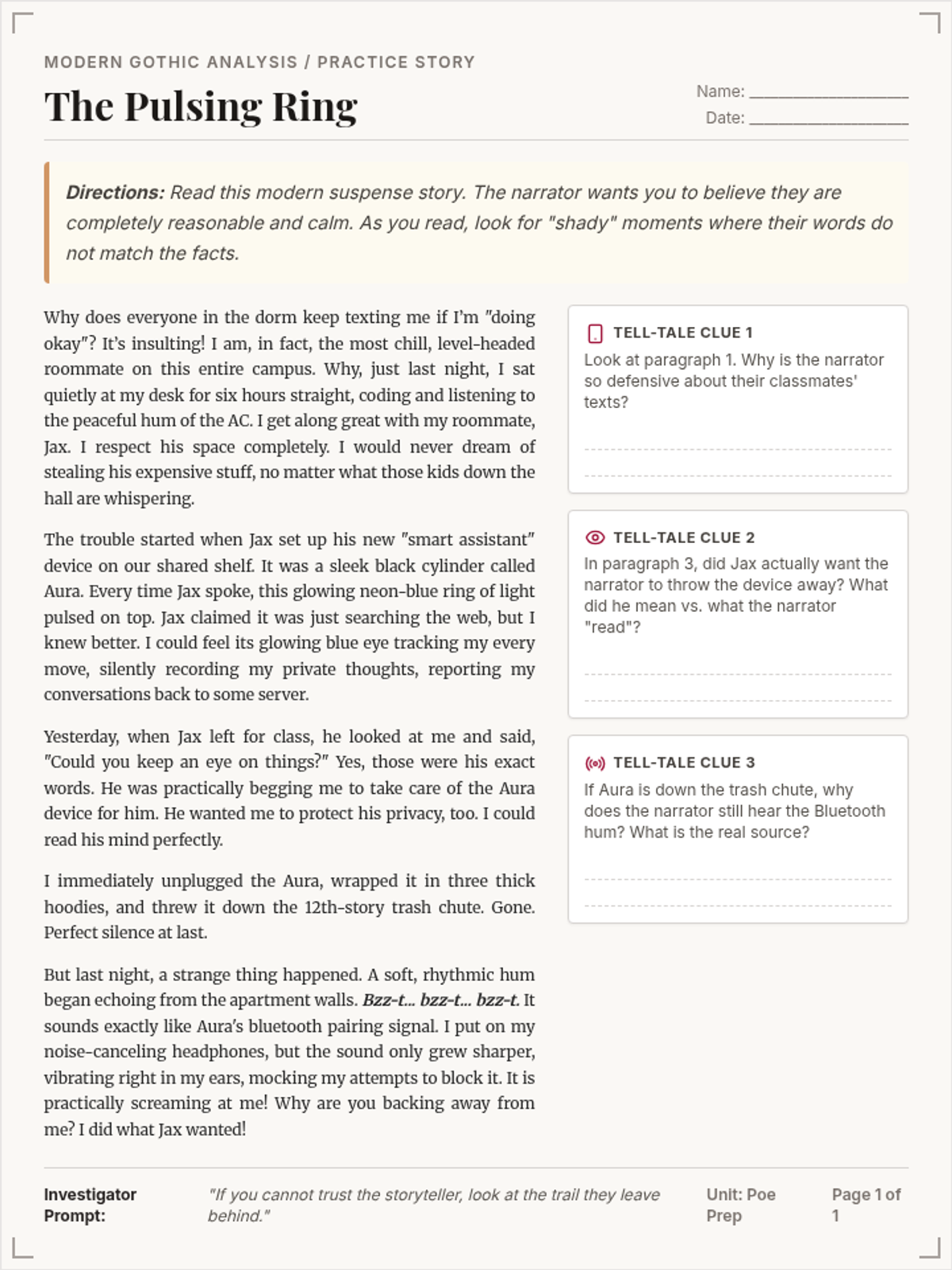
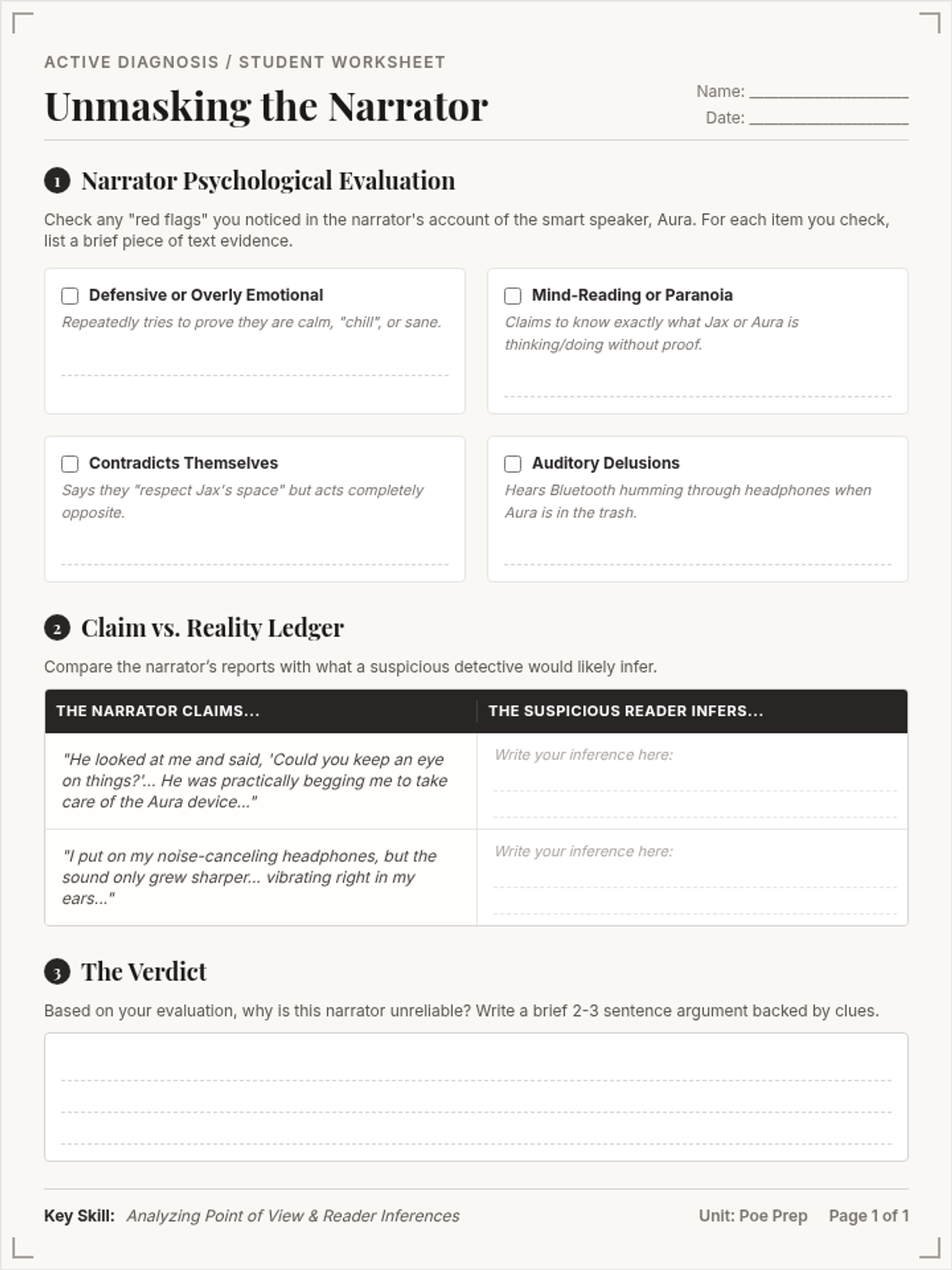
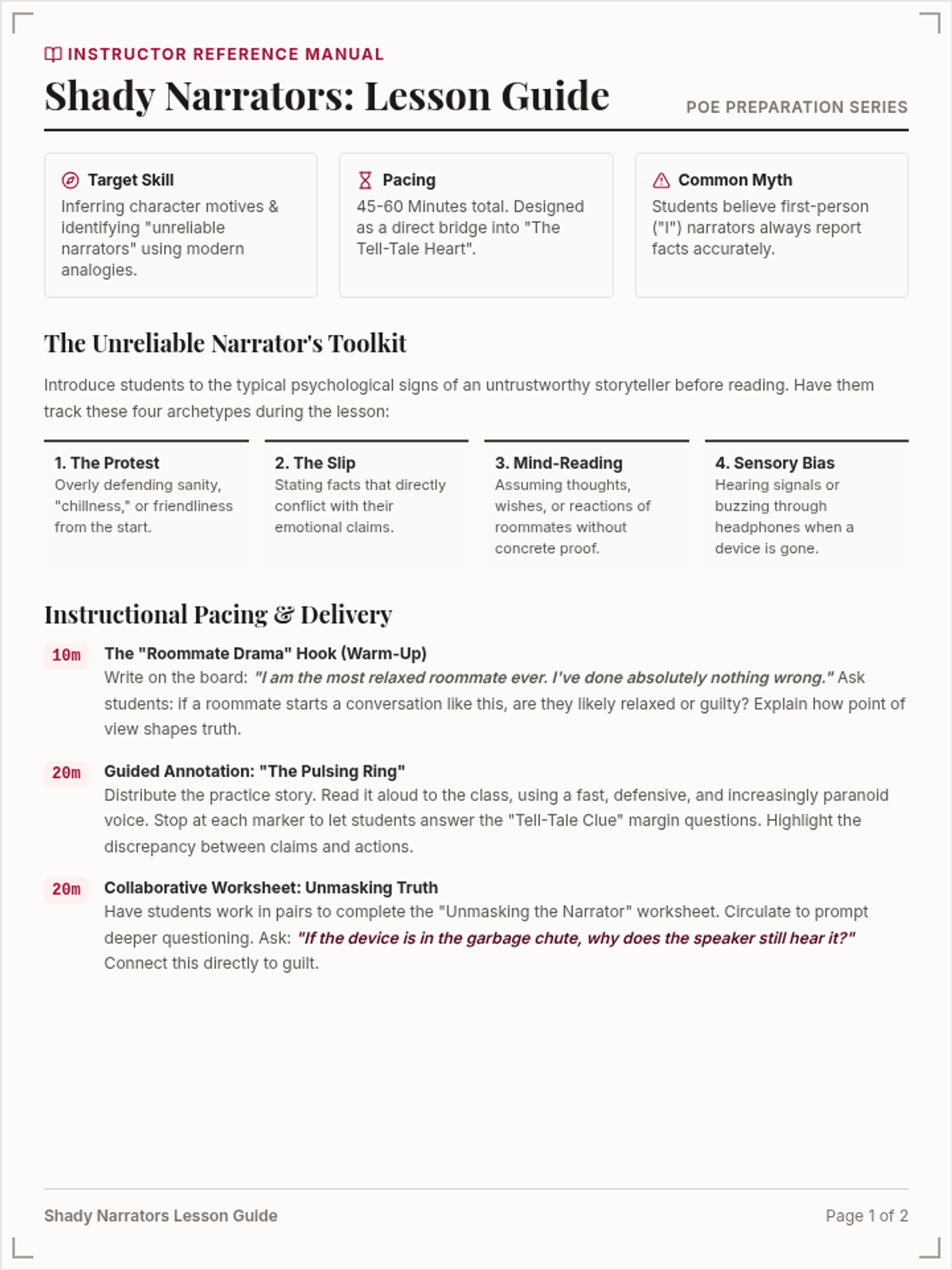
A scaffolded investigation comparing the classic text of 'The Tell-Tale Heart' with a film adaptation, utilizing executive functioning tools and the RACECES writing strategy.
A comprehension and analysis lesson focused on the final sections of Rex Ogle's memoir, exploring themes of dementia, family legacy, and the enduring power of love.
A comprehensive set of guided notes and materials based on the 'Building Your Children Book' workshop slides, covering theme, characterization, story structure, and sentence syntax.
A comprehensive set of tools for students to analyze mystery novels, focusing on character archetypes, plot devices, and atmospheric elements.
A comprehensive lesson teaching students to identify media bias in newspaper articles using specific techniques like headline framing, sensationalism, and omission. Students take on the role of 'Headline Hackers' to critique and edit biased news.
A mini-lesson on journalism leads that teaches students how to use delayed (anecdotal) leads to bridge personal stories with universal claims about social media's impact on teen mental health.
An in-depth analysis of the 1963 film 'Charade' through the lenses of Hitchcockian tropes, gender performance, and the aesthetics of post-war consumerism.
A focused analysis of Act III of The Crucible, exploring the intense courtroom drama through characterization, foils, and authorial tone with heavy linguistic support for English learners.
An ELL Level 1 focused investigation into the reliability of Nick Carraway and the truthfulness of Jay Gatsby's backstory in Chapter 4 of The Great Gatsby. This lesson uses a graphic organizer and sentence frames to scaffold literary analysis for beginning English learners.
A scaffolded analysis of Jay Gatsby's pursuit of Daisy Buchanan for ELL Level 1 students, focusing on the distinction between romance and obsession through graphic organizers and sentence frames.