Using text-to-speech to catch errors and improve flow through auditory feedback and voice-based revisions.
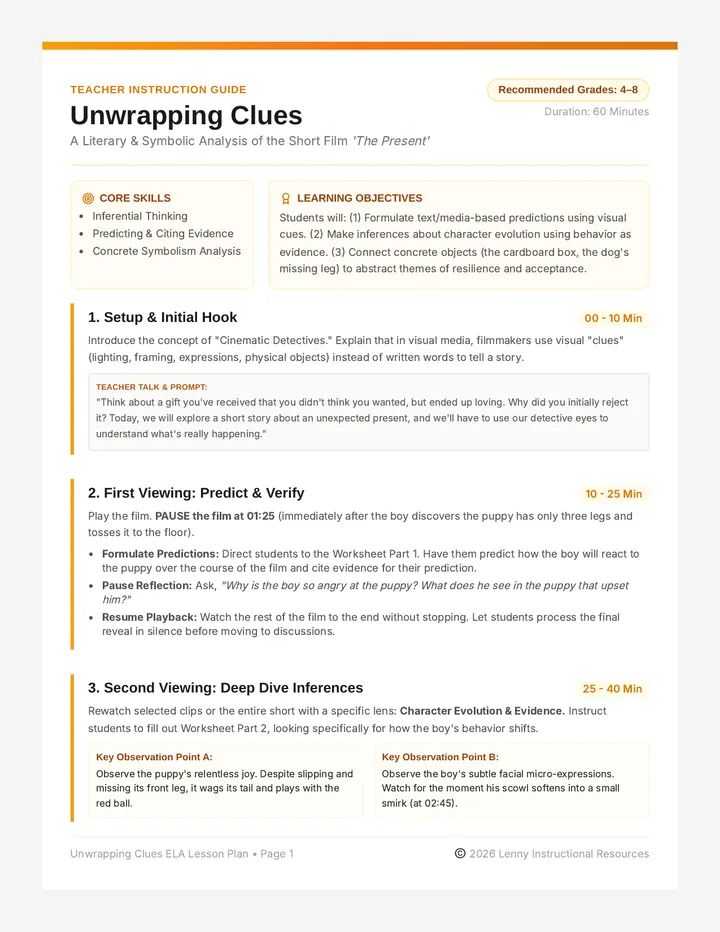
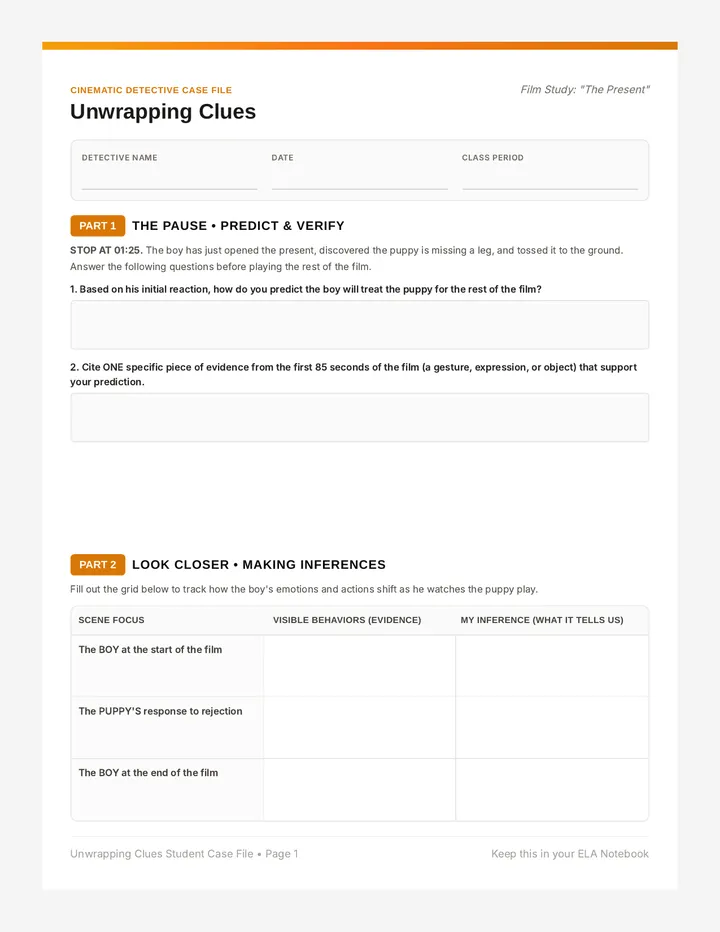
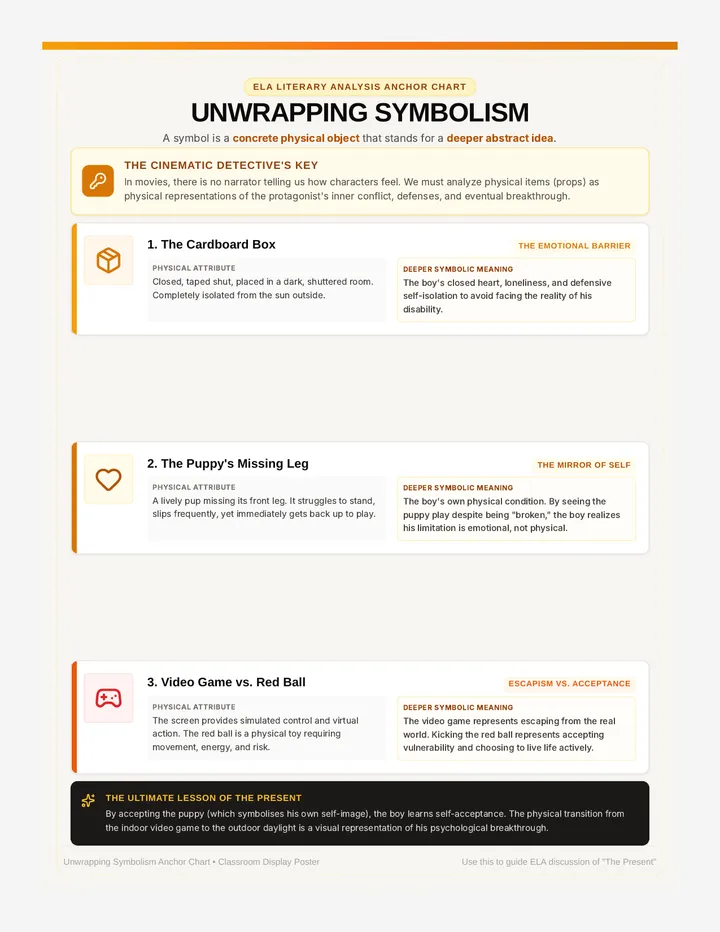
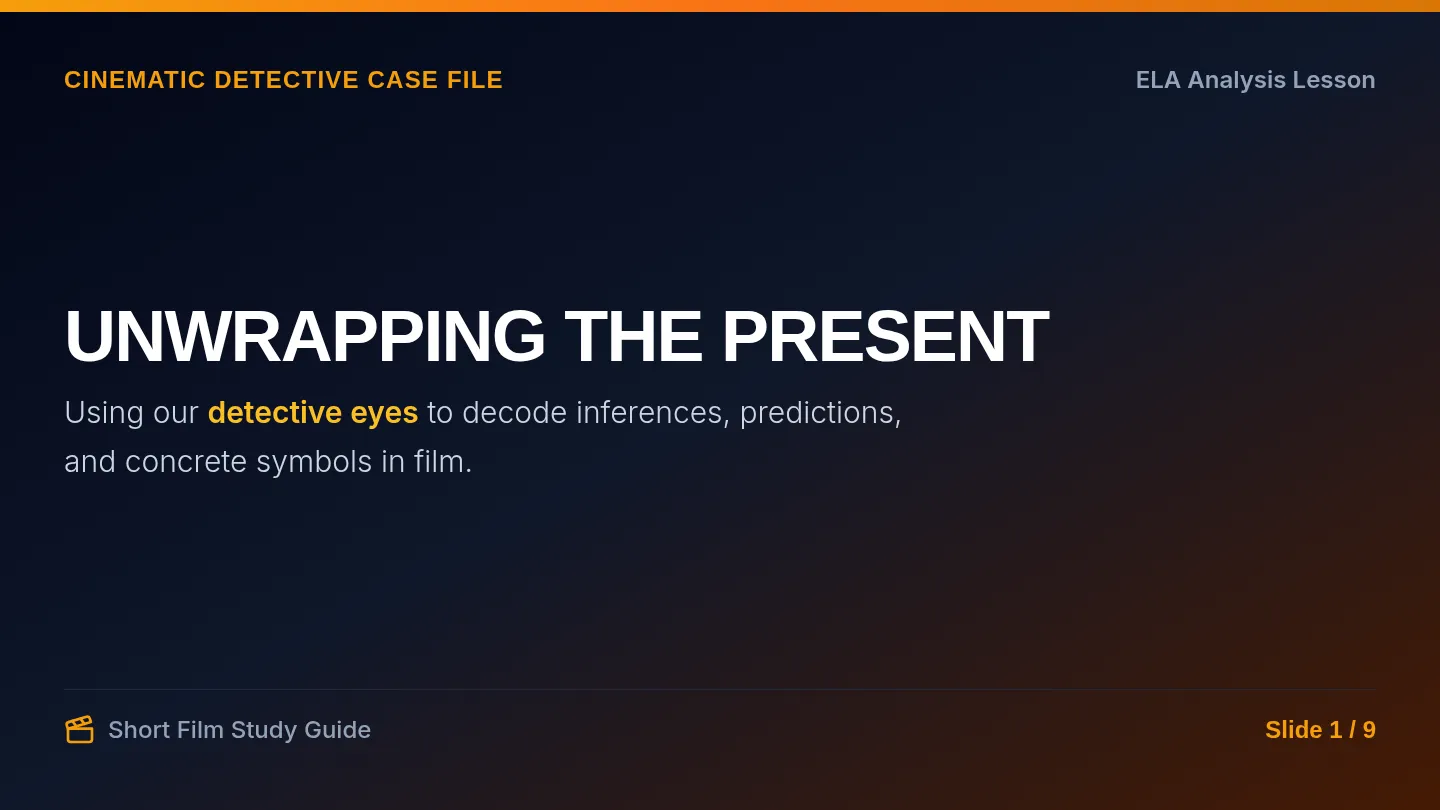
A comprehensive 60-minute ELA lesson focused on the animated short film 'The Present'. Students explore core reading skills—inferential thinking, prediction, citing evidence, and concrete symbolism—by analyzing the boy, the box, the dog, and the final reveal.
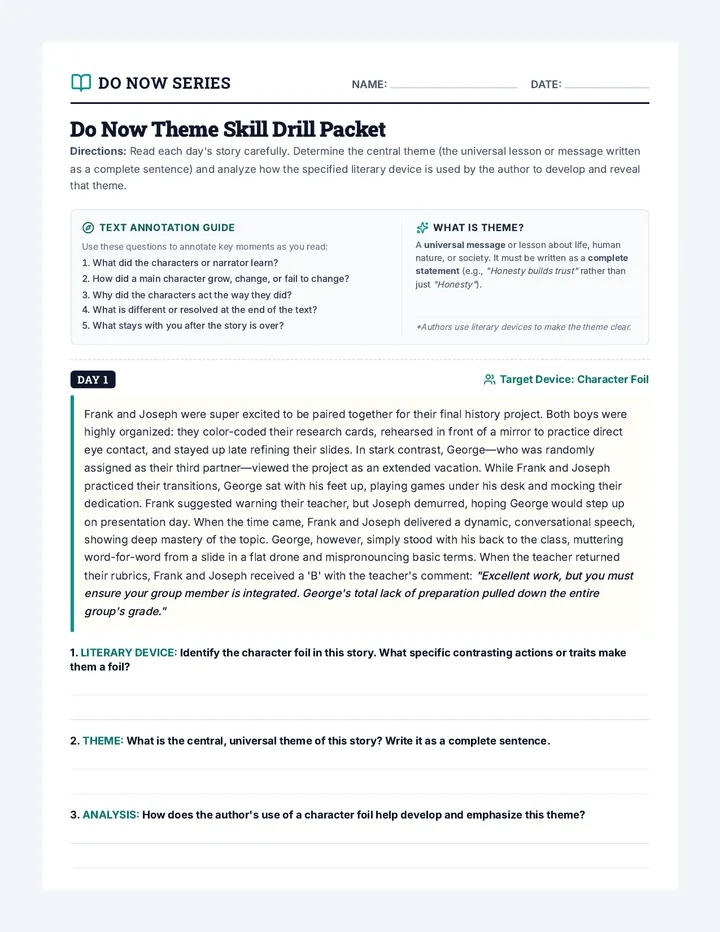
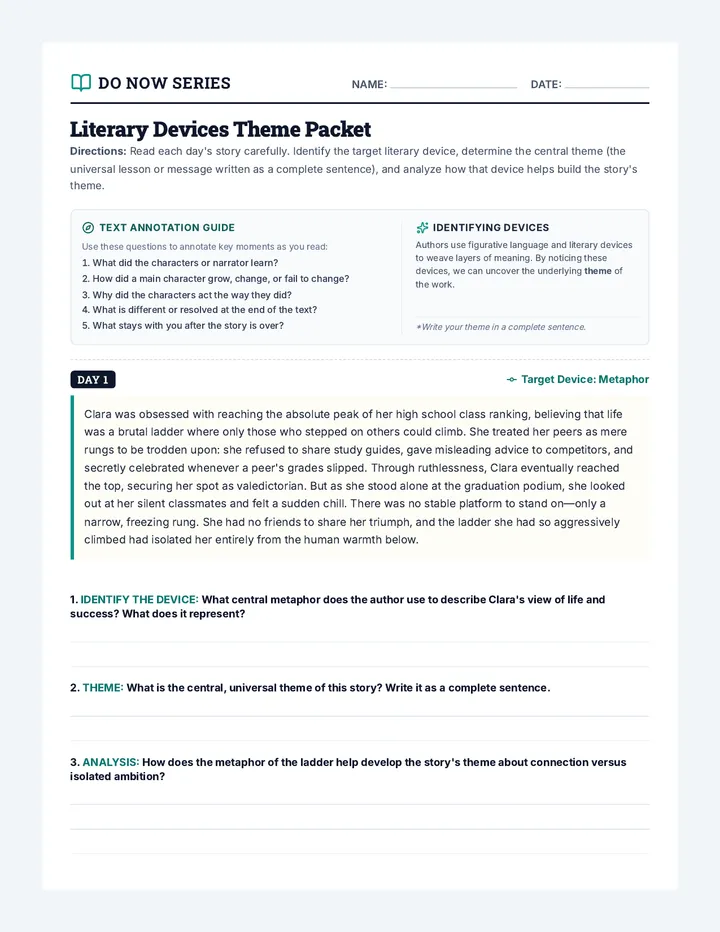
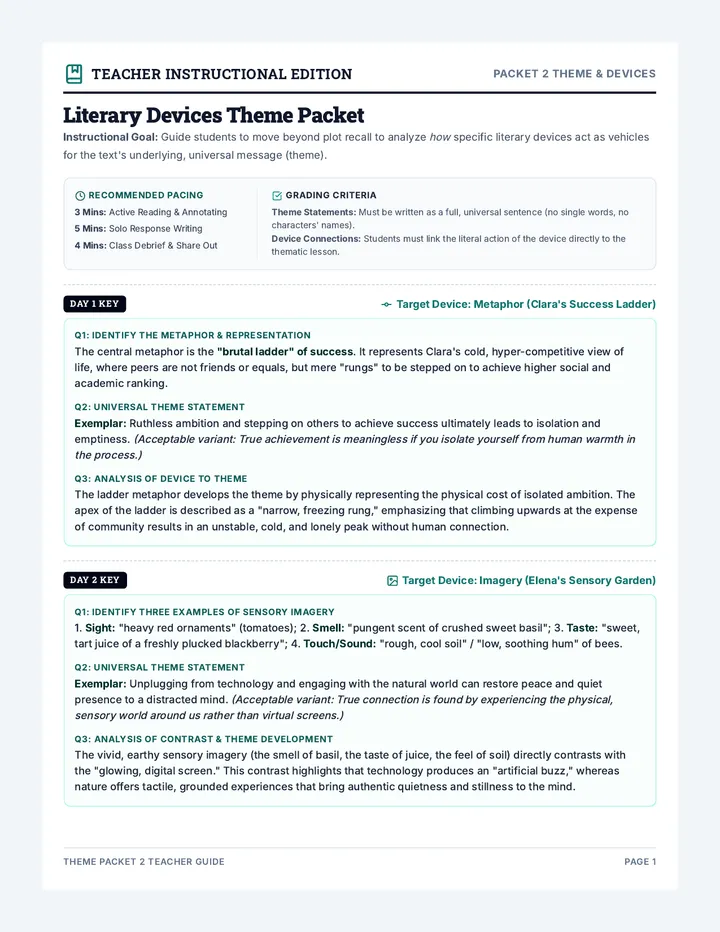
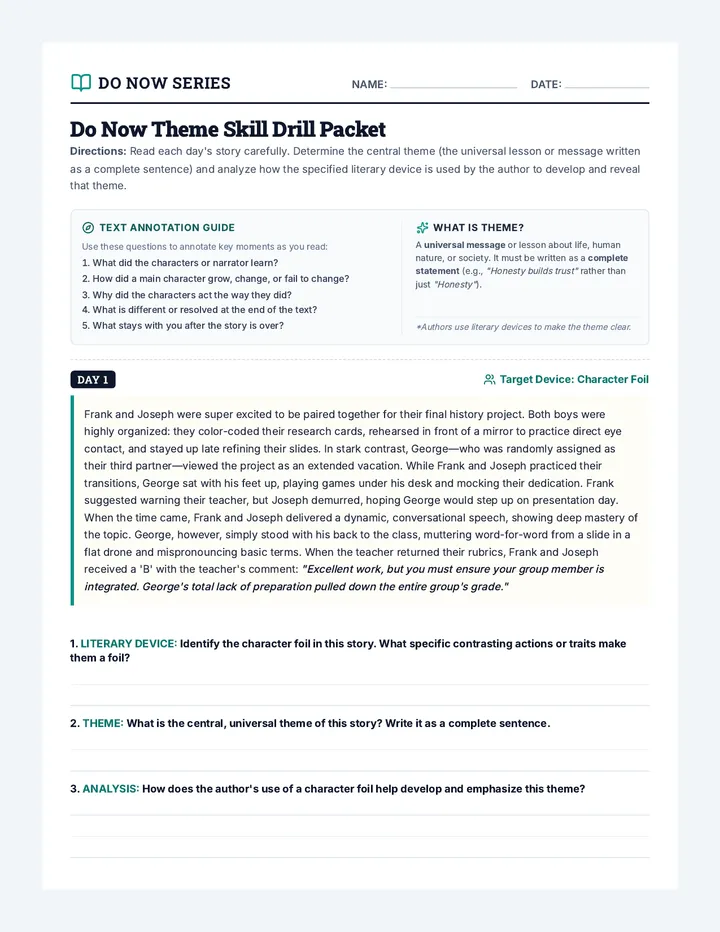
A cohesive lesson and drill series designed to help students master the connection between explicit literary devices and the central themes of literary texts.
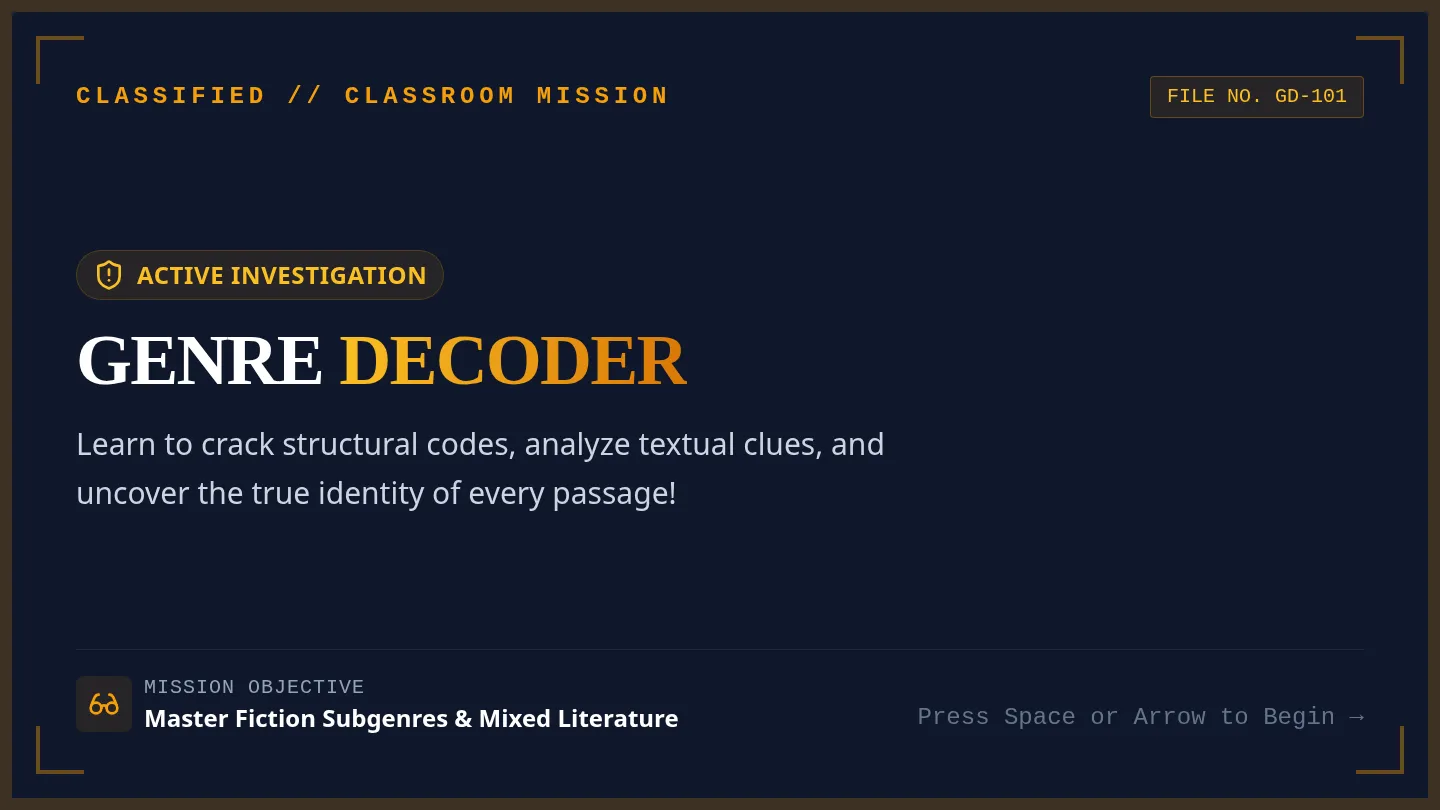
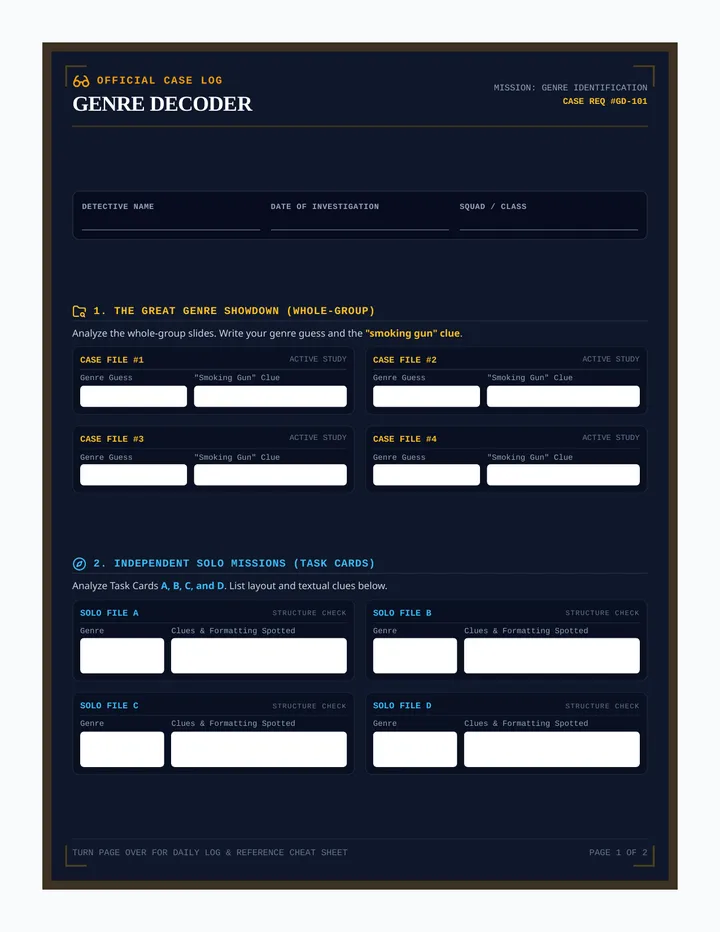
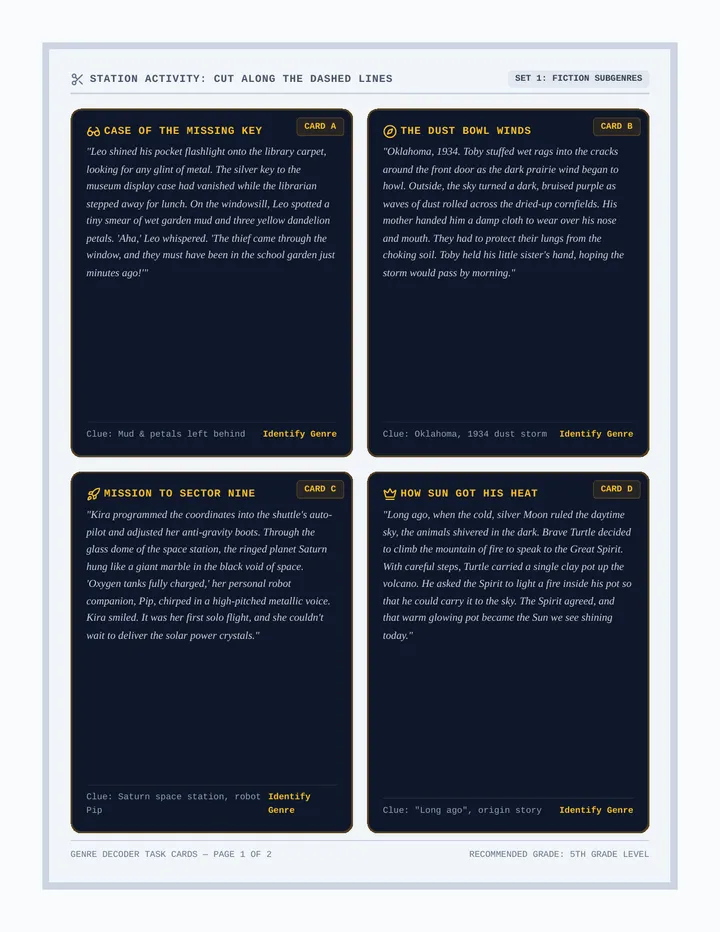
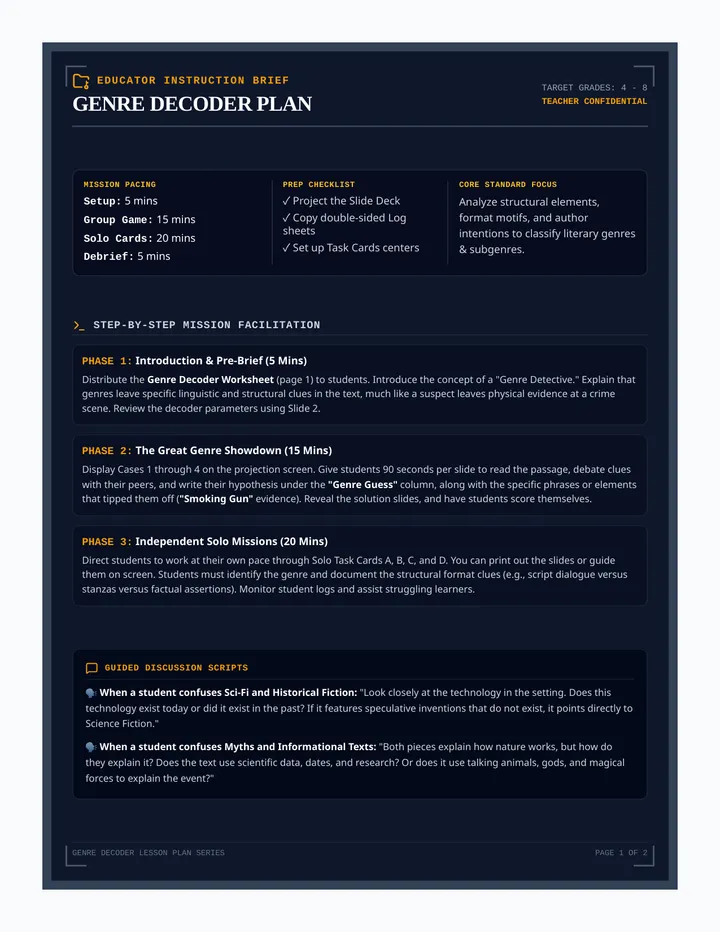
An interactive, gamified lesson where students become 'Genre Detectives' to identify fiction subgenres and mixed literature genres. Includes an interactive classroom presentation, a printable student recording sheet, and a comprehensive teacher guide with full answer keys.
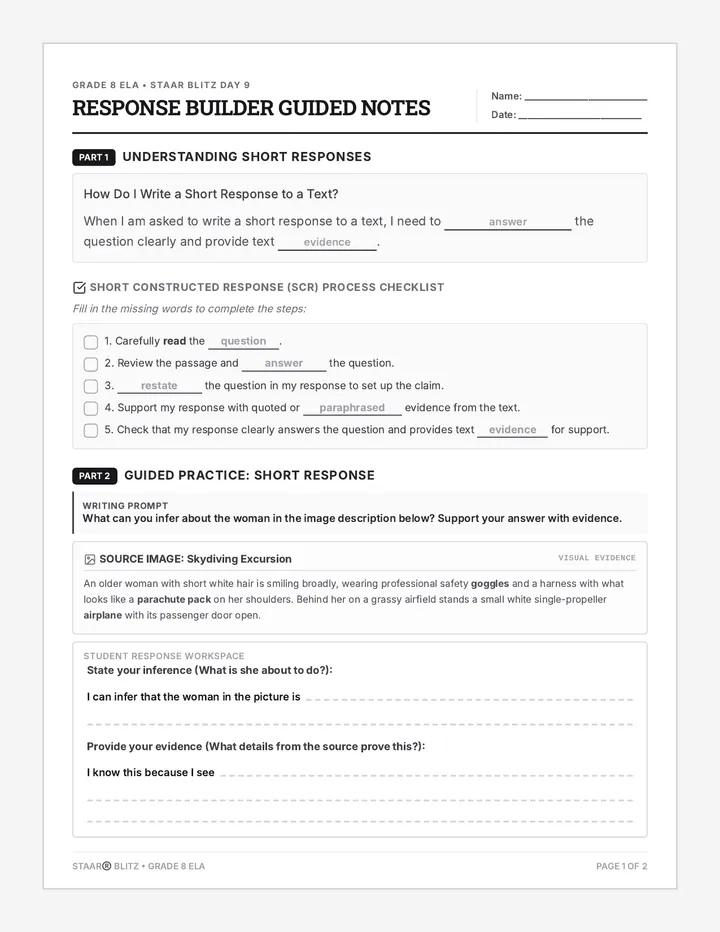
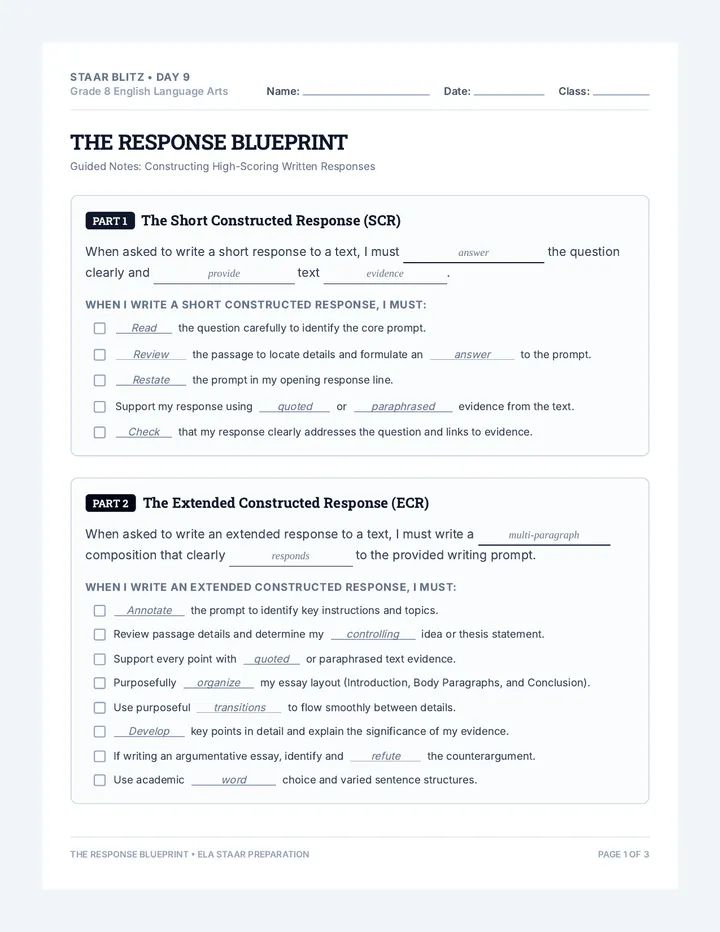
A structured eighth-grade ELA lesson focused on crafting clear, evidence-supported short and extended responses using structured scaffolds, text evidence integration, and argumentative alignment.
A STAAR-aligned lesson focused on teaching students how to write short and extended constructed responses using text evidence and structured controlling ideas.
A planning and writing lesson centered around Joseph Bruchac's novel Two Roads, guiding students to write a structured narrative letter from Cal to Possum with differentiated scaffolding.
Students compile their four-sentence creative stories into a comic strip layout, add simple illustrations, and celebrate their storytelling accomplishments.
Students resolve their story's problem, writing their fourth sentence using "Then, ..." and selecting a happy resolution symbol.
Students introduce a simple conflict or surprise for their character, writing a sentence with "Suddenly..." and problem-based action icons.
Students choose a creative setting (such as outer space or a magic forest) and write a sentence using "They are in..." with visual setting prompt cards.
Students invent a fictional character (such as a superhero or friendly animal) and write a sentence describing them using "This is..." and physical descriptors with visual symbols.
Students present their informational posters to peers using verbal or non-verbal communication supports, celebrating their factual discoveries.
Students assemble their key fact, evidence sentence, and concluding statement into a coherent, illustrated informational poster.
Students conclude their informational piece by writing a third sentence that summarizes their topic using a "Now you know about..." sentence starter and visual symbols.