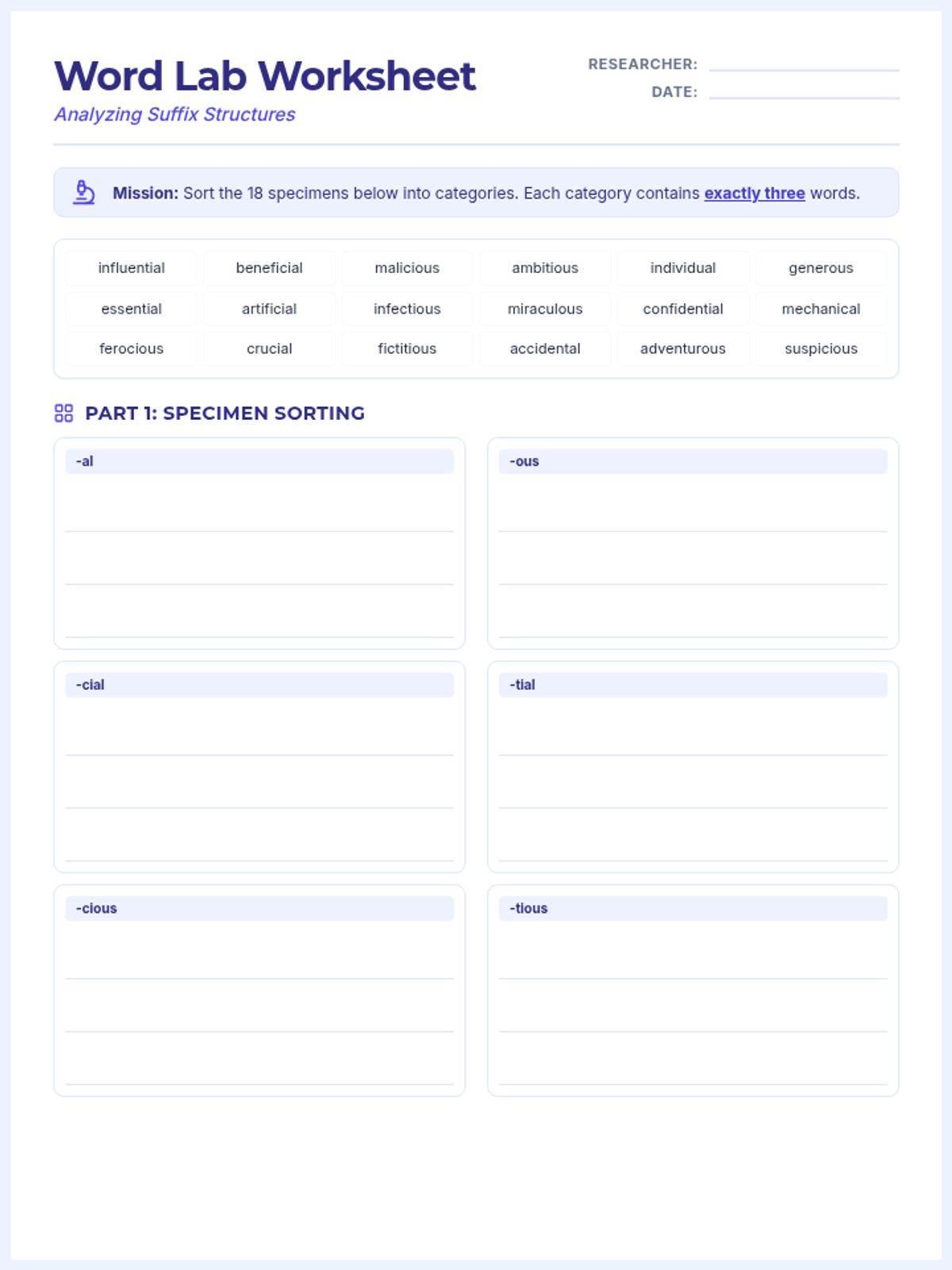
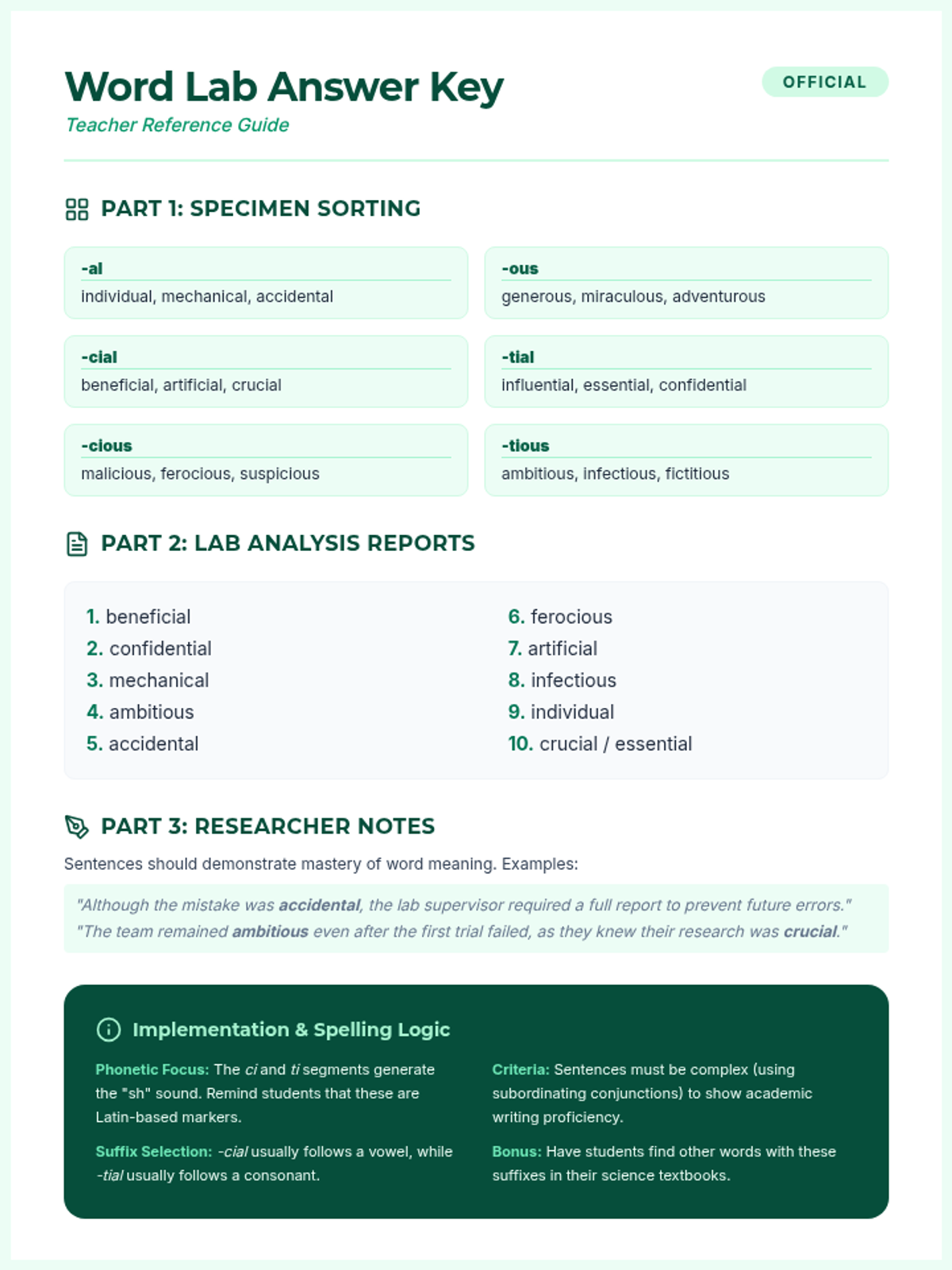
A lesson focused on decoding and spelling complex multisyllabic words with -al, -ous, and various -shun/-shus suffixes. Students investigate word patterns through search and context clues.
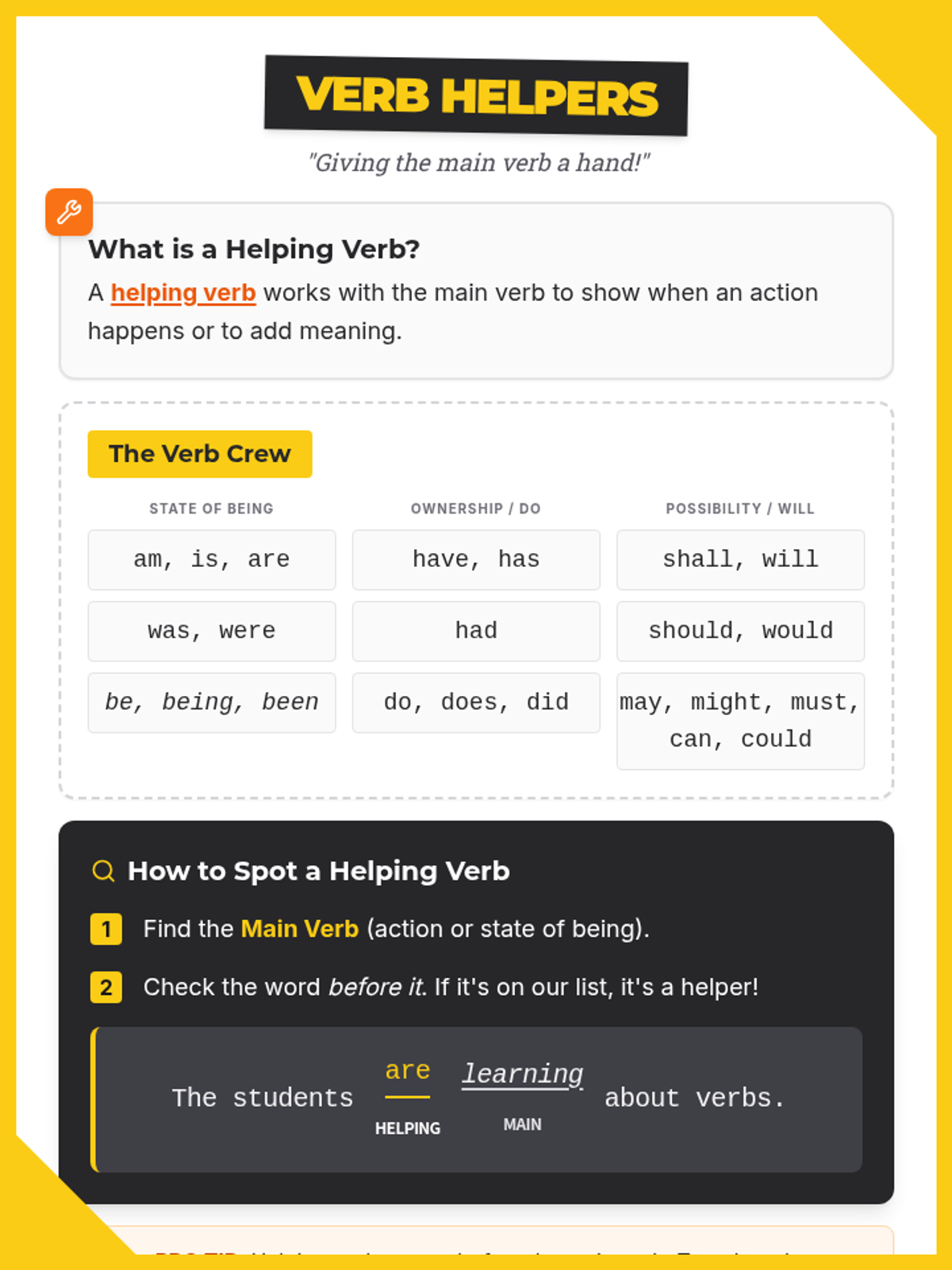
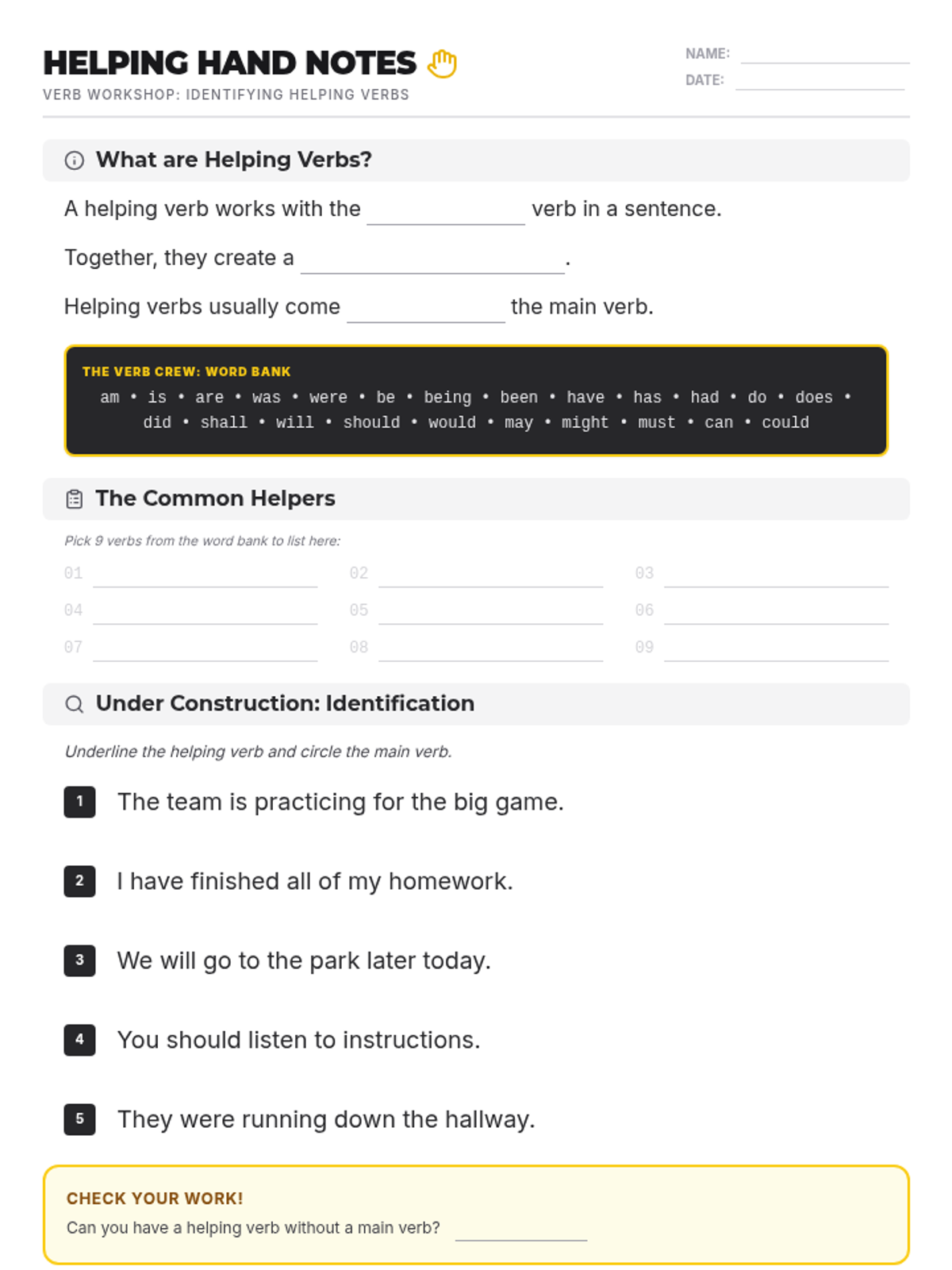
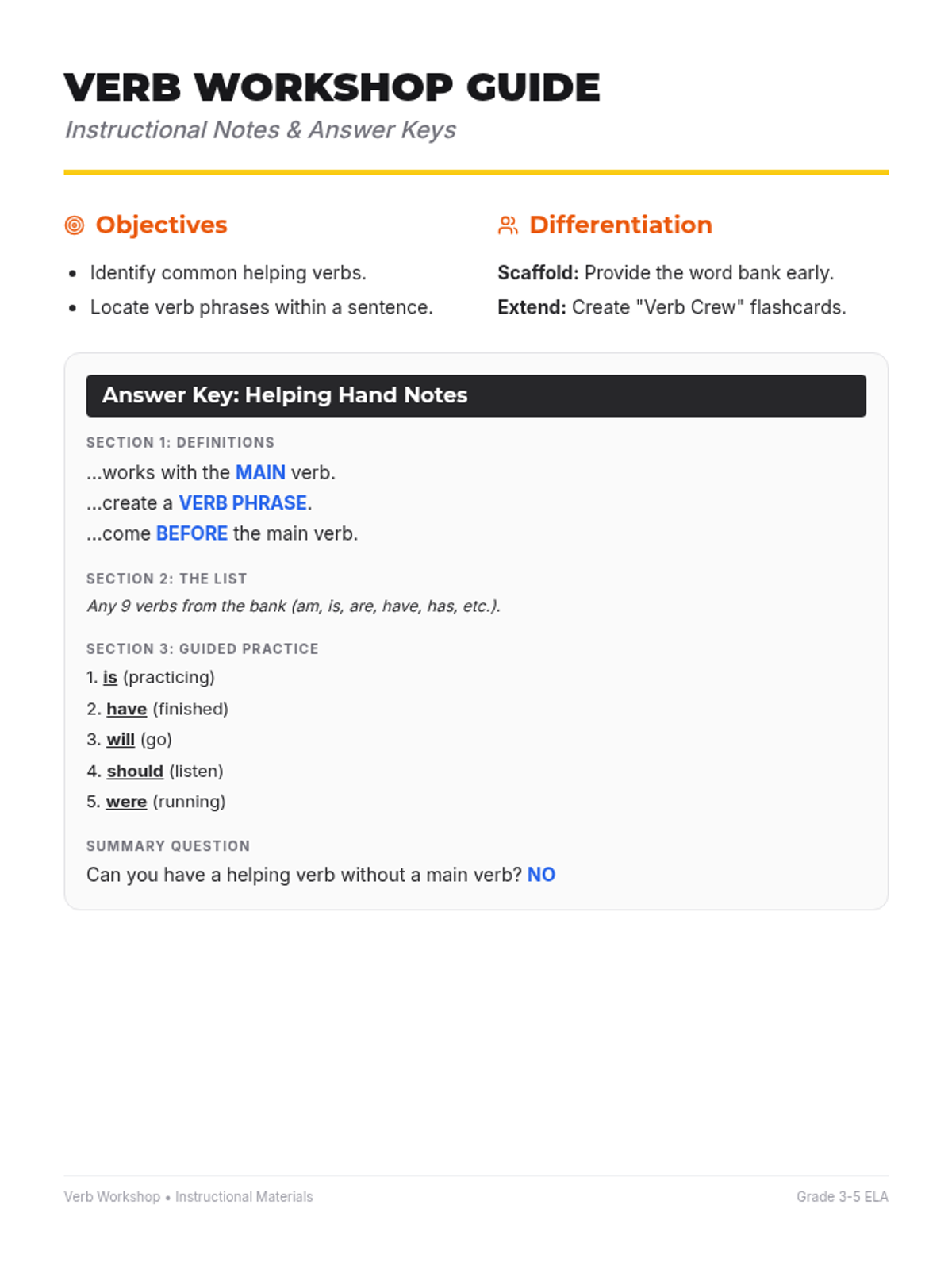
A foundational lesson on identifying helping verbs, featuring visual aids and guided practice to help students understand how auxiliary verbs support main verbs in a sentence.
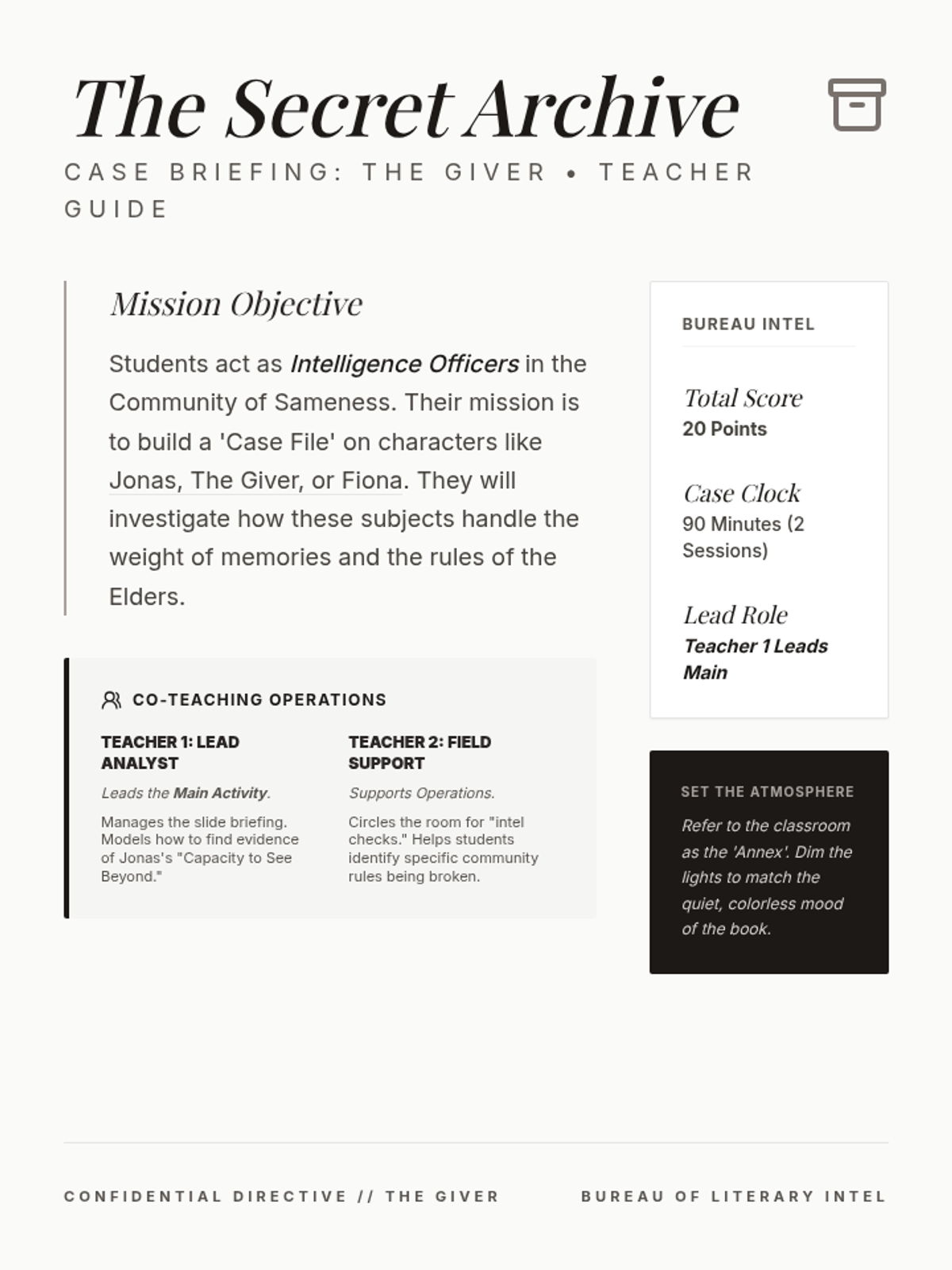
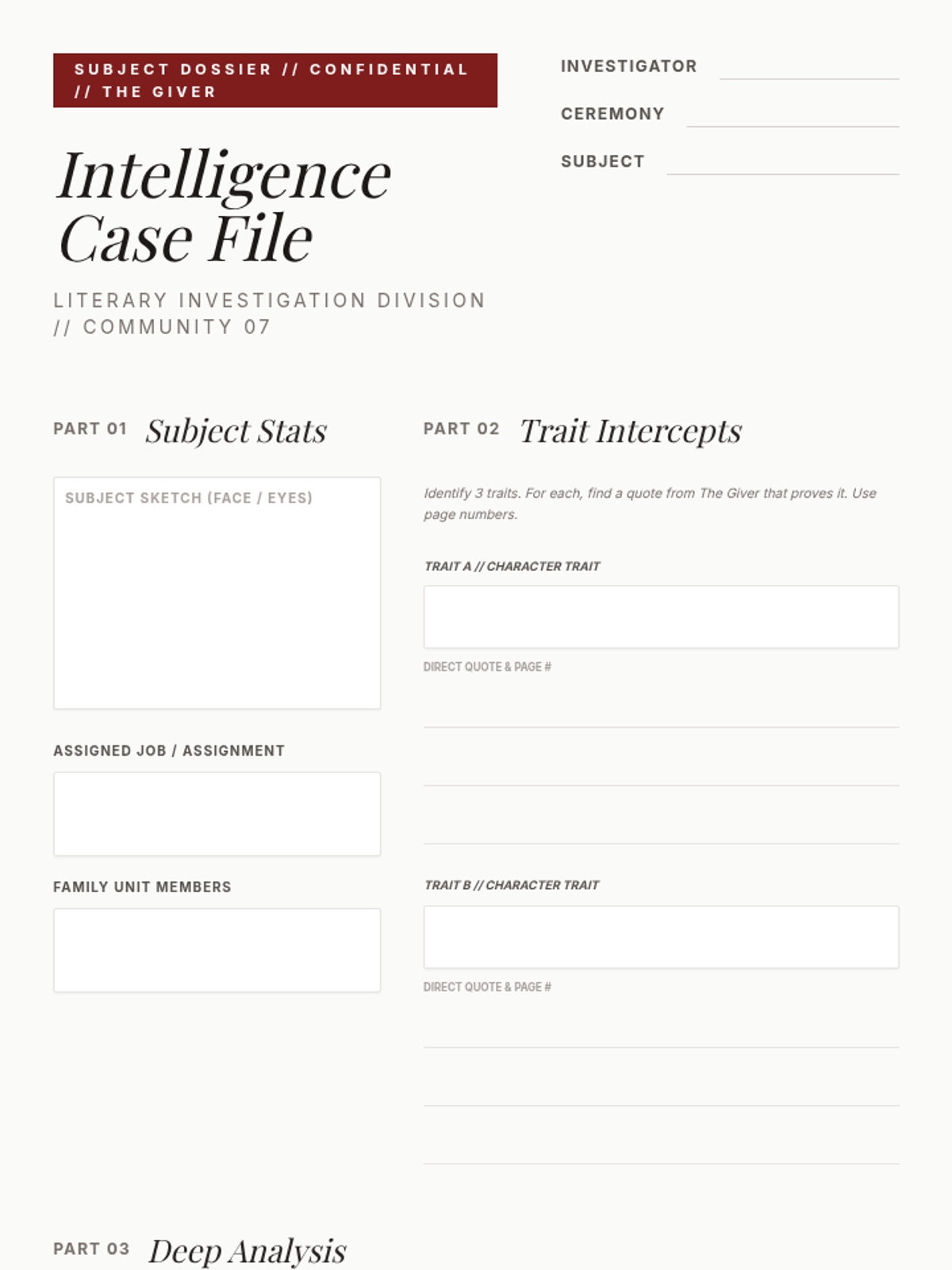
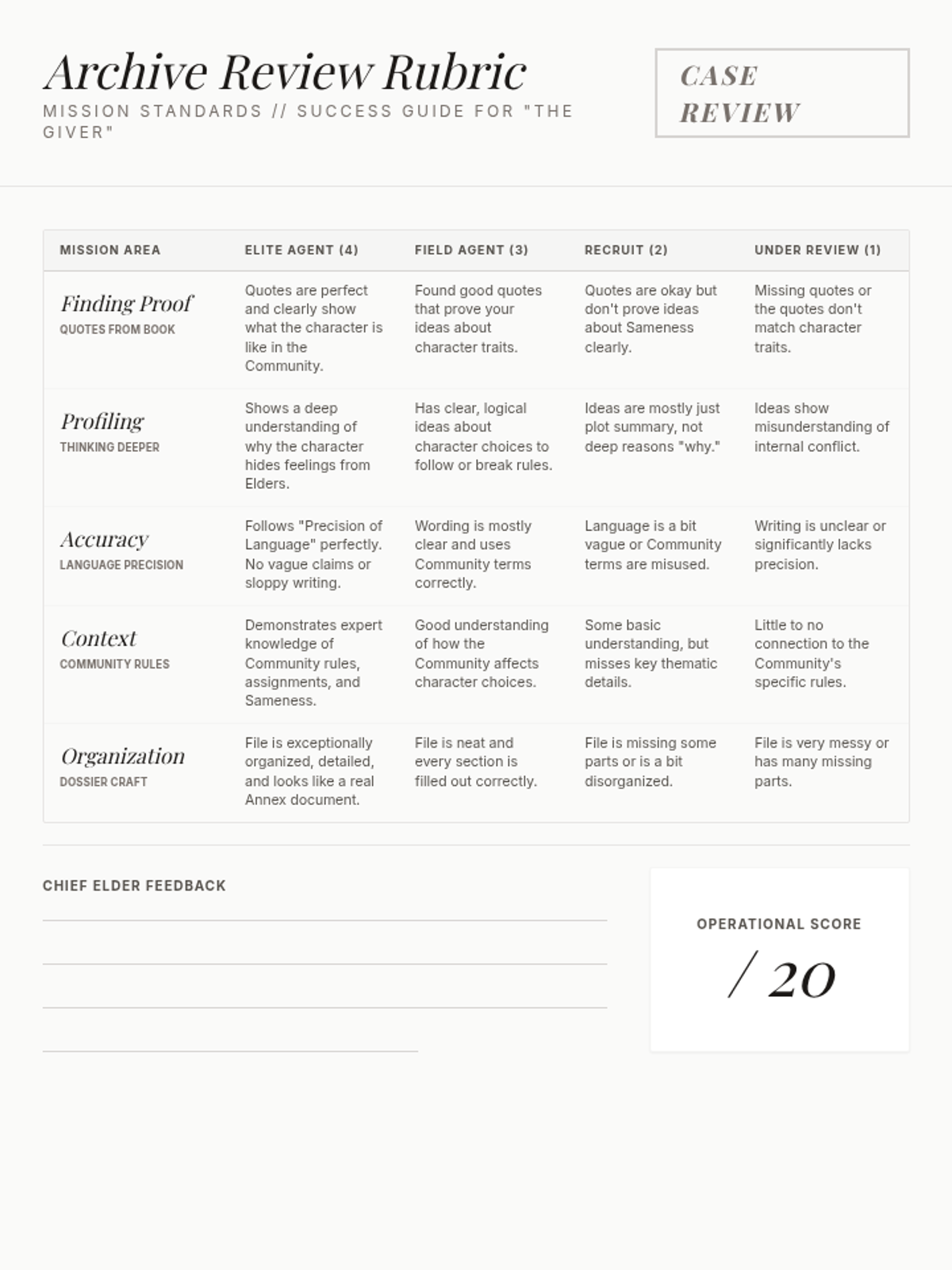
A sophisticated ELA lesson where 7th-grade students act as 'Intelligence Officers' to conduct a character analysis. Students create a physical 'Case File' (dossier) filled with evidence, witness statements, and psychological profiles to deeply understand character motivation and traits.
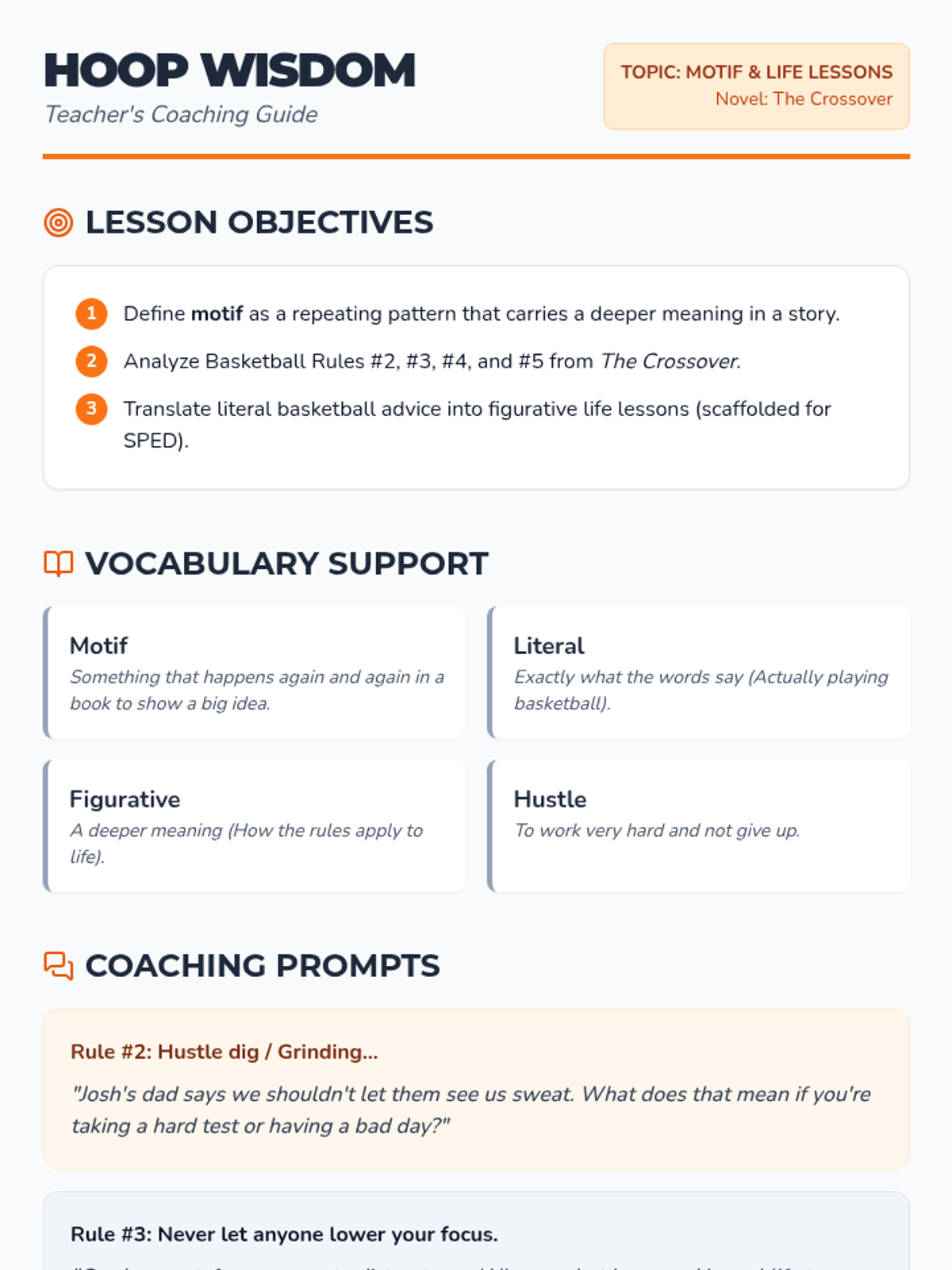
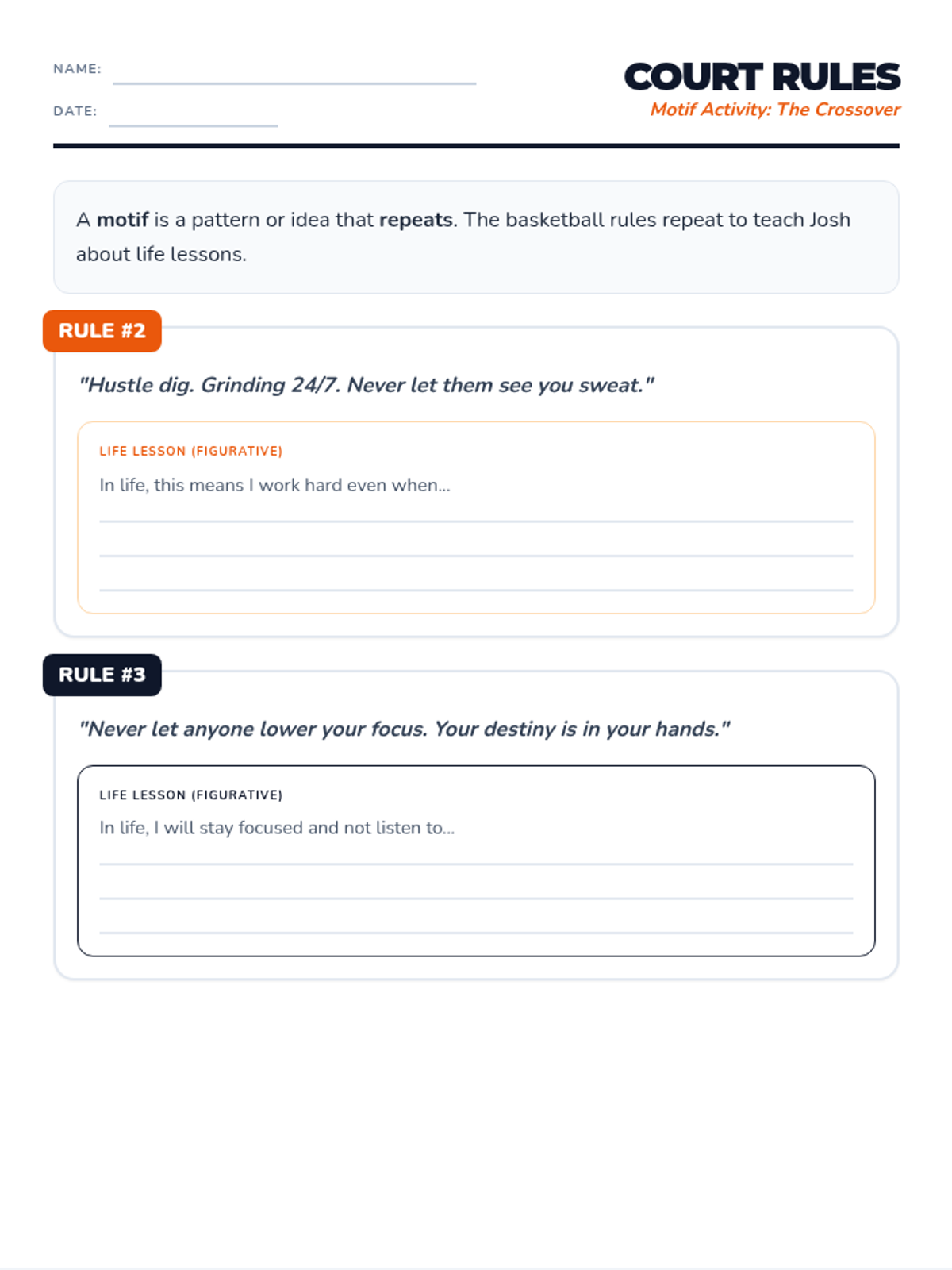
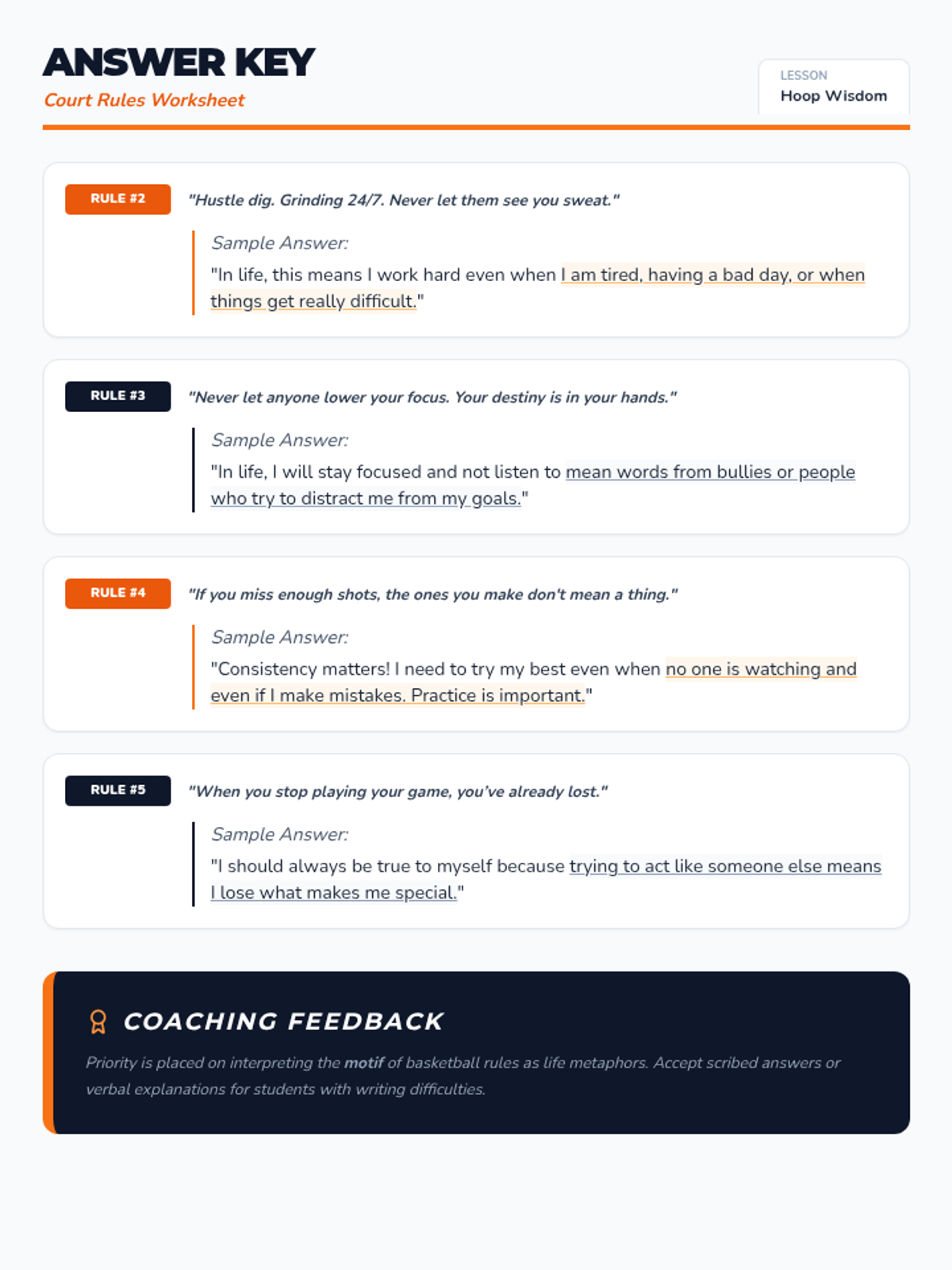
A lesson exploring the motifs in Kwame Alexander's 'The Crossover', specifically focusing on Basketball Rules #2, #3, #4, and #5 and their application to life lessons for 6th grade students.
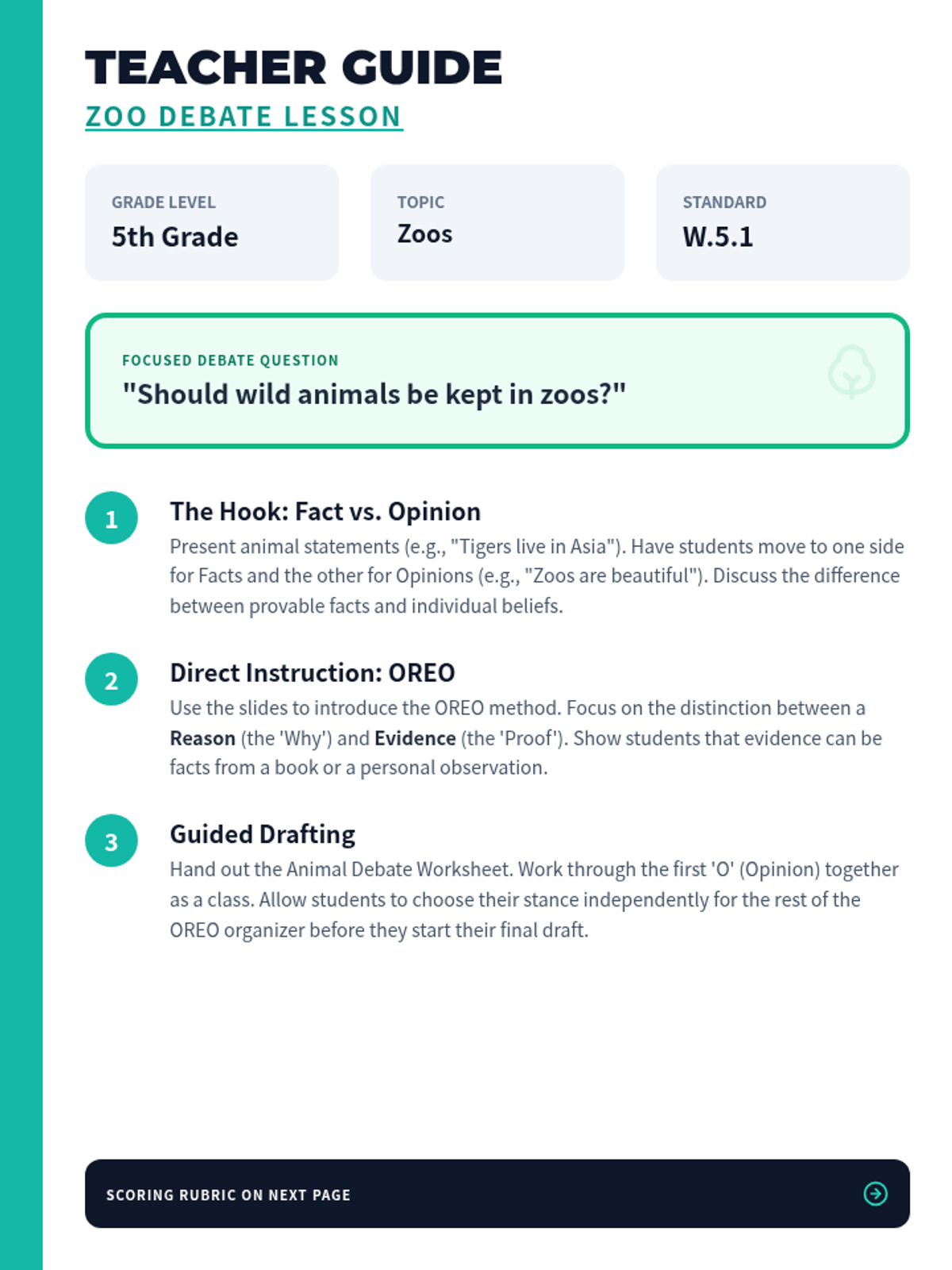
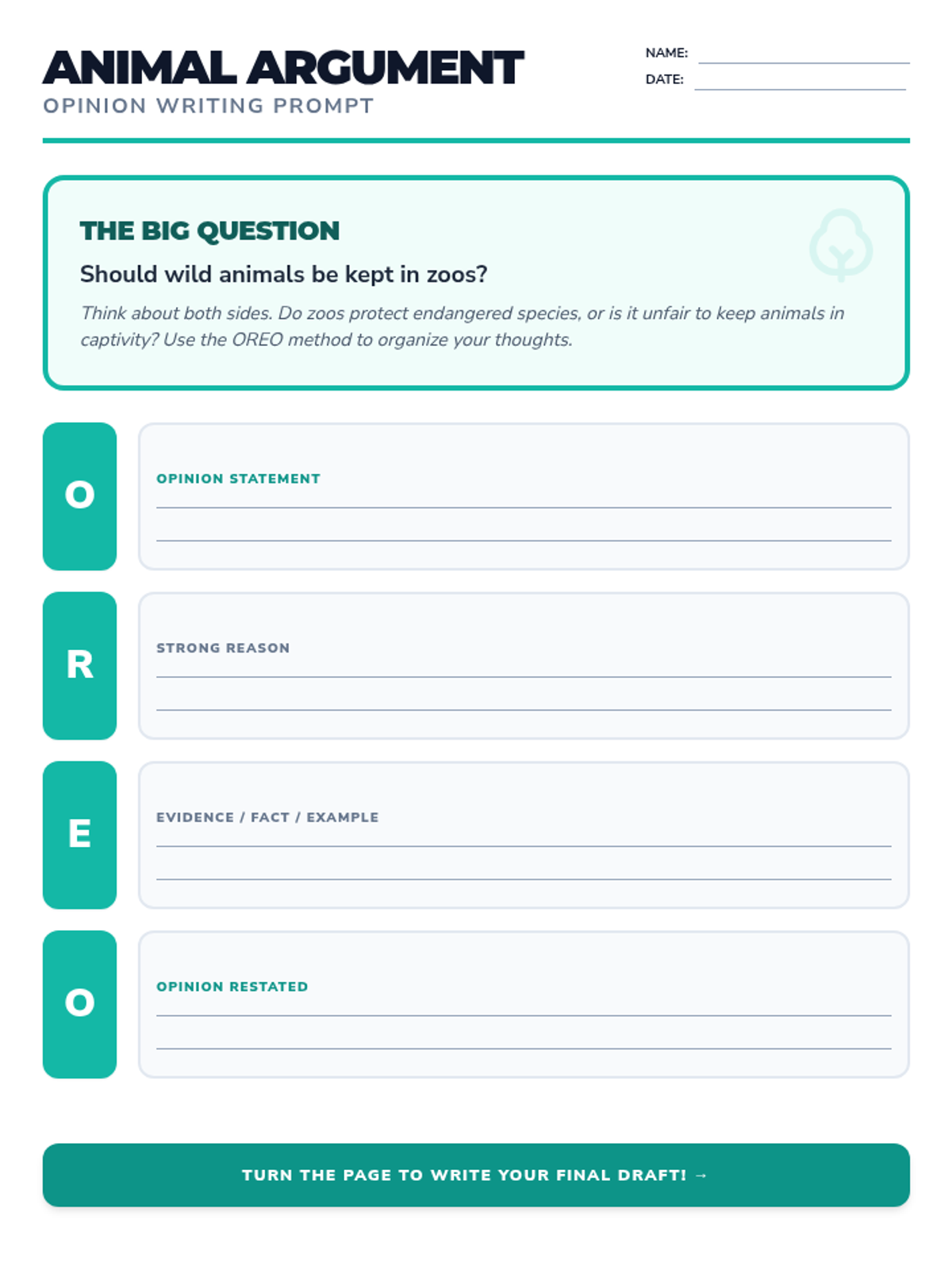
A focused introduction to opinion writing for 5th graders, centering on the single debate topic of whether wild animals should be kept in zoos. Students learn to form a strong claim and support it using the OREO method.
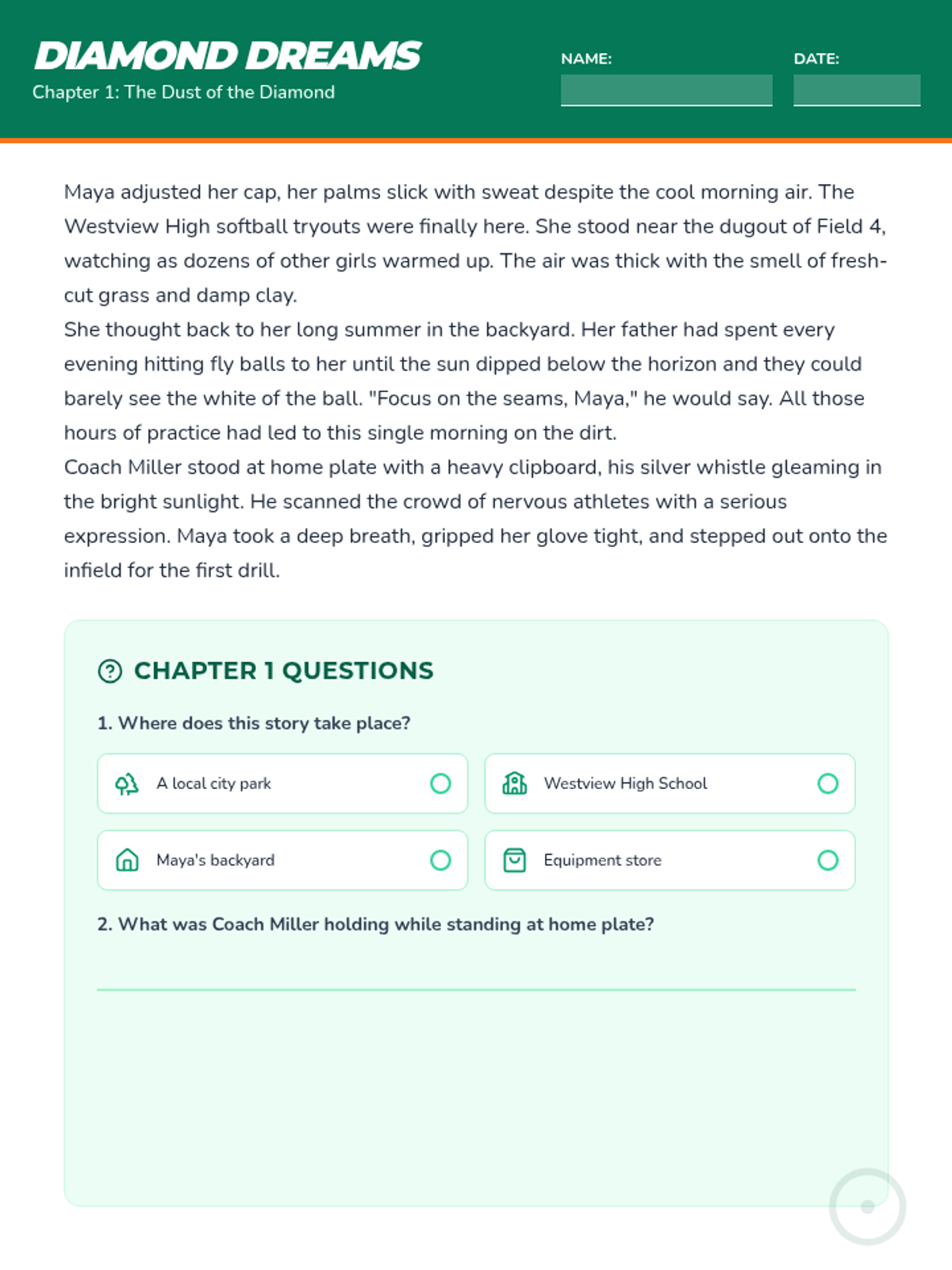
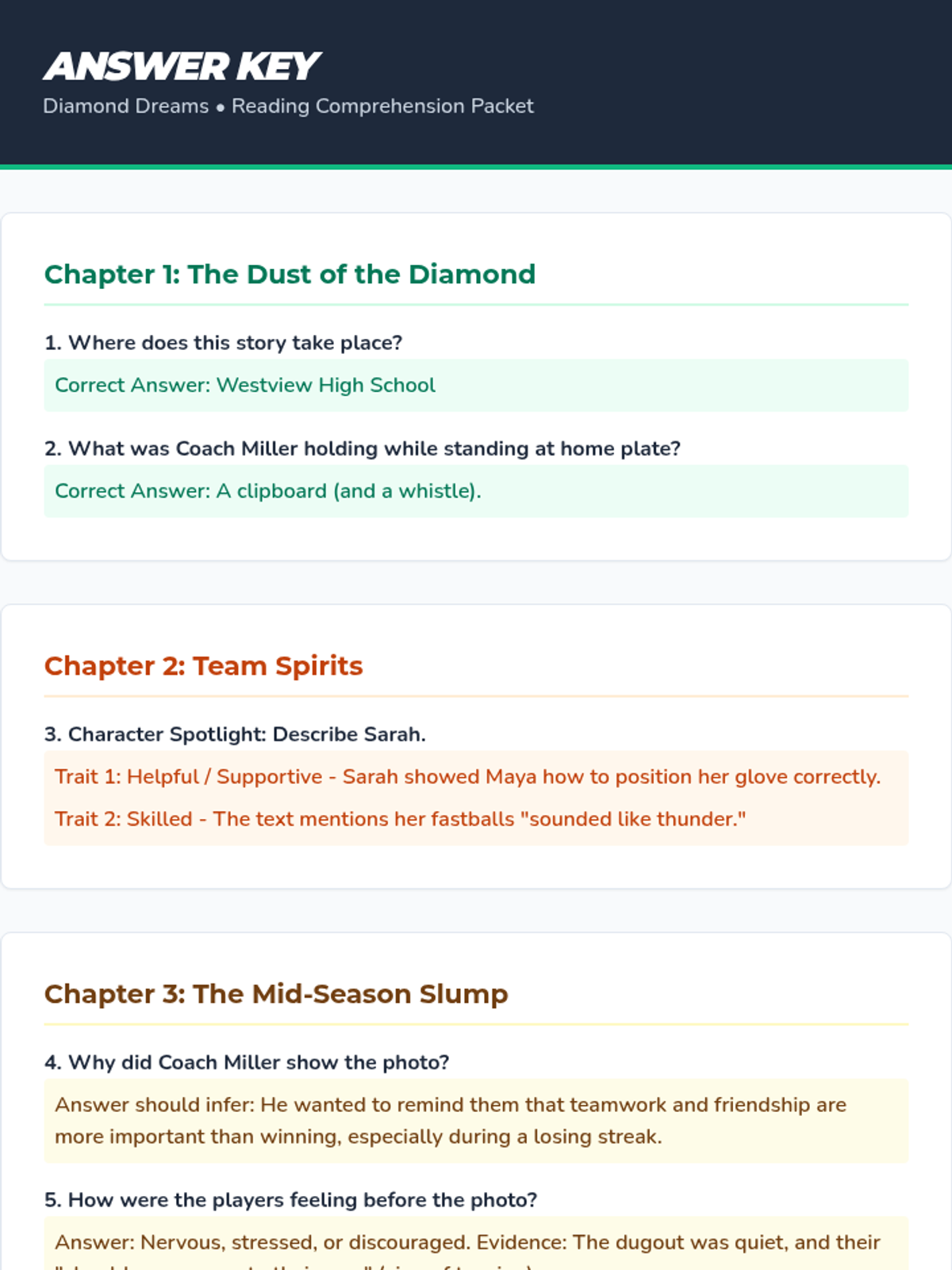
A reading comprehension packet focused on Maya, a high school girl's journey on the softball field, targeting 5th-6th grade reading levels with scaffolding for inferences, sequencing, and character traits.
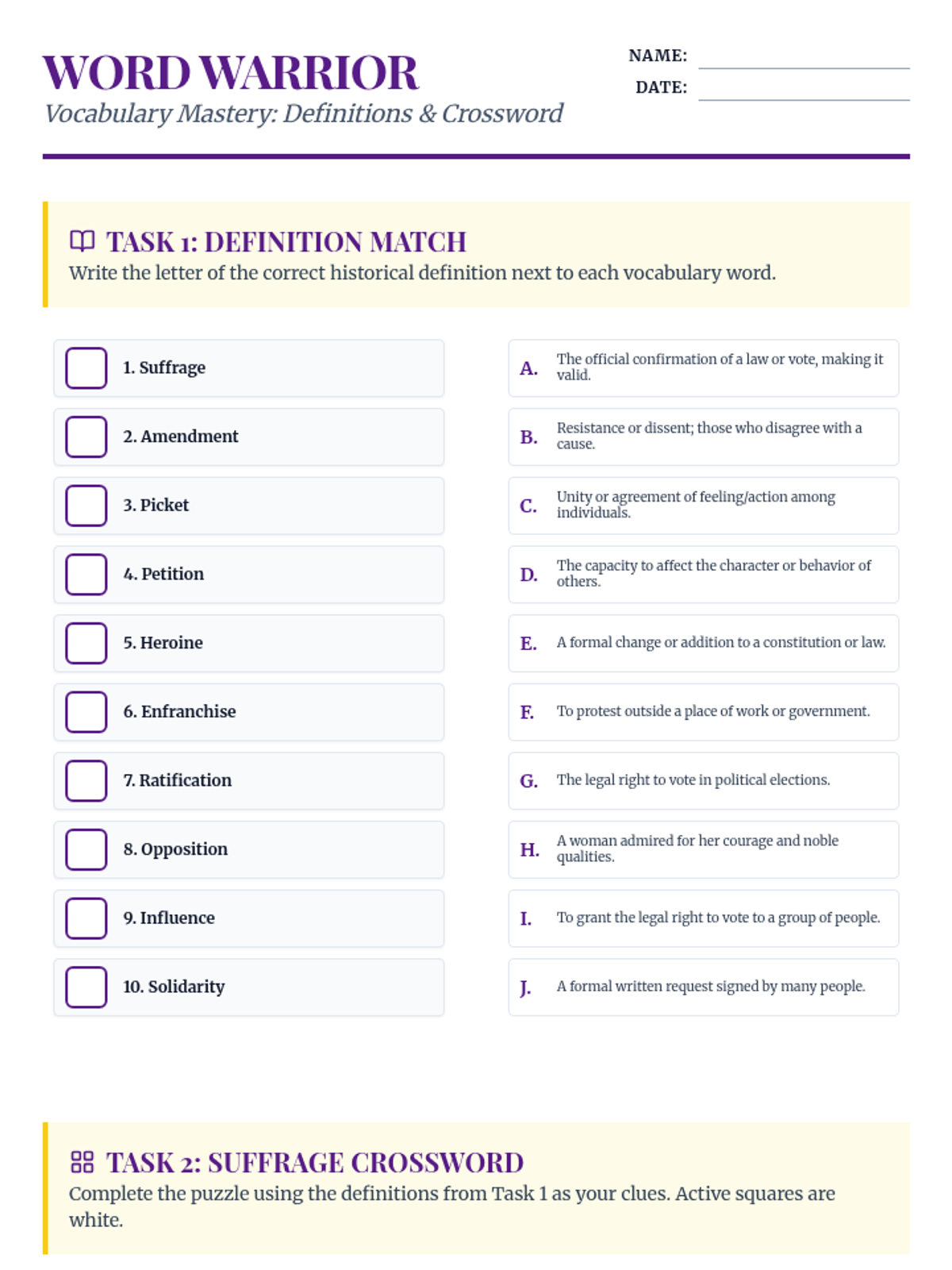
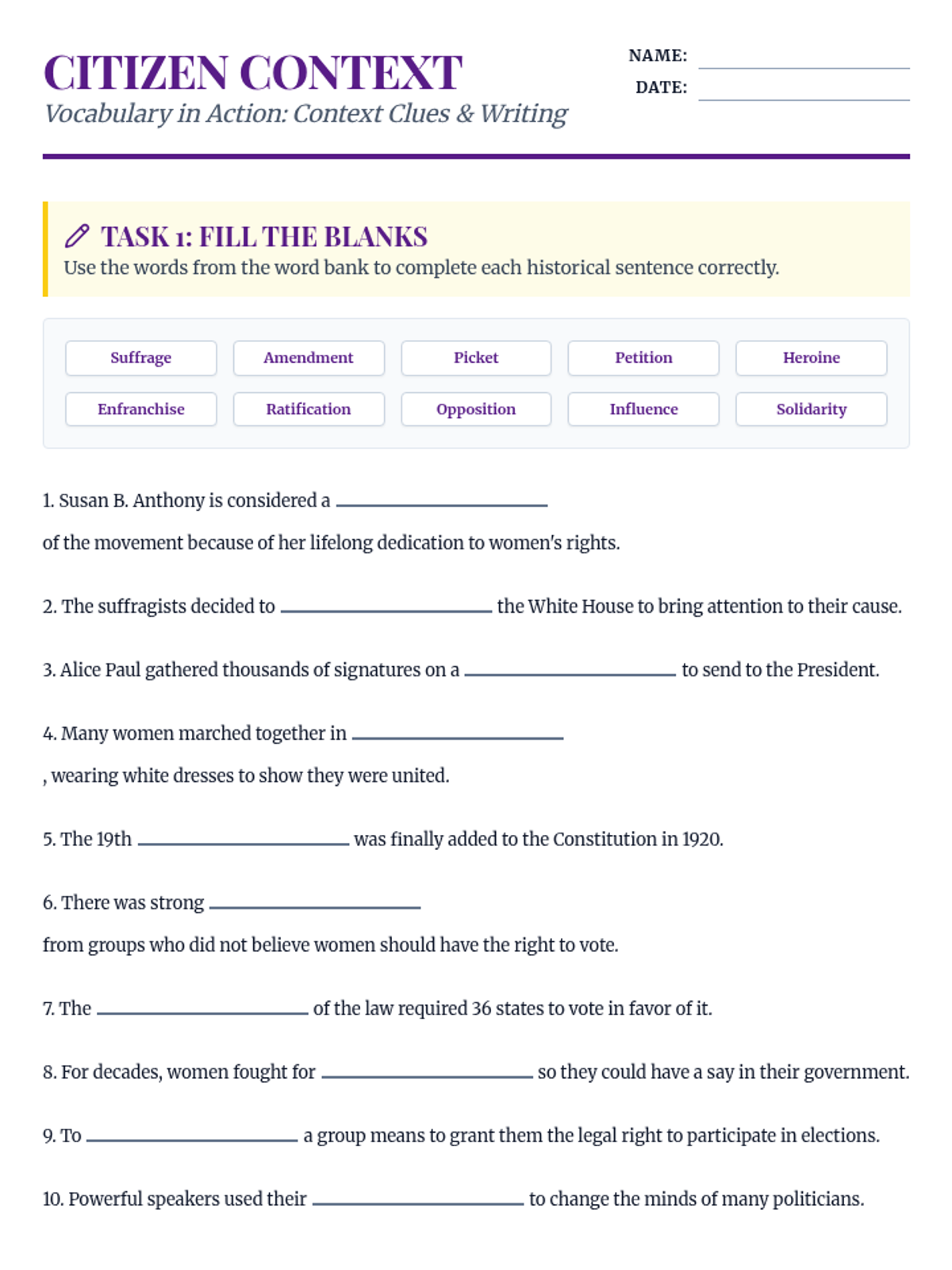
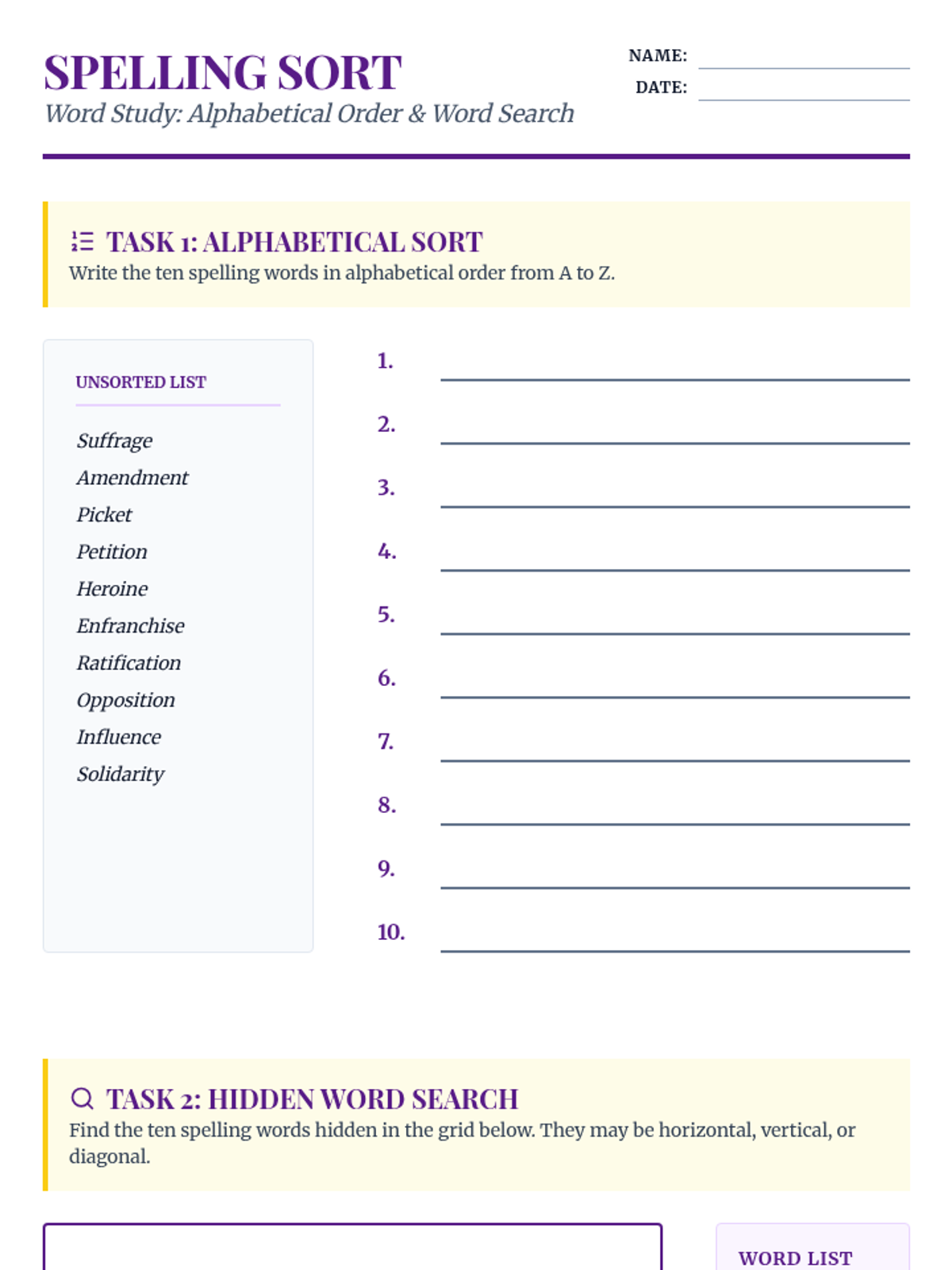
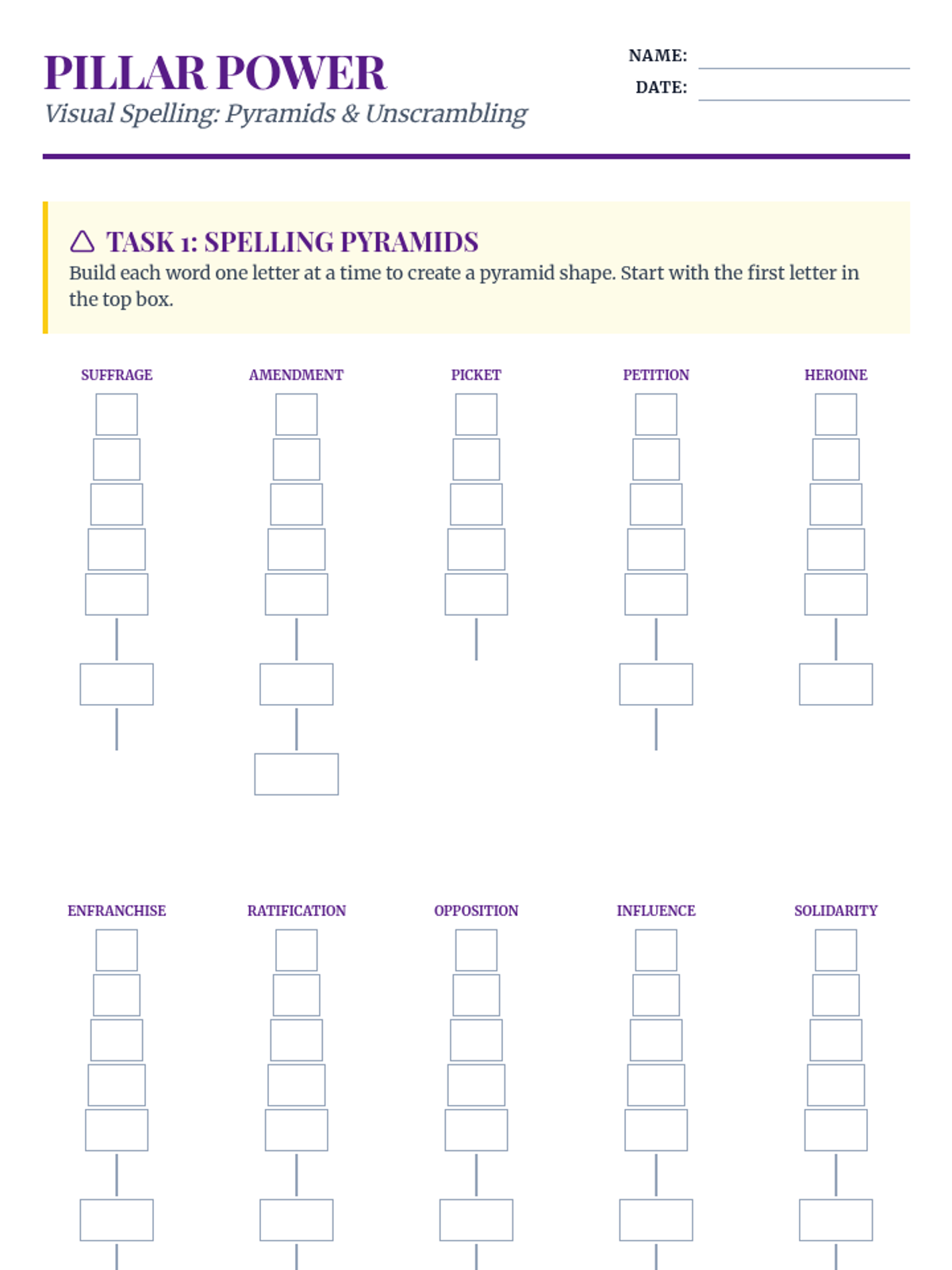
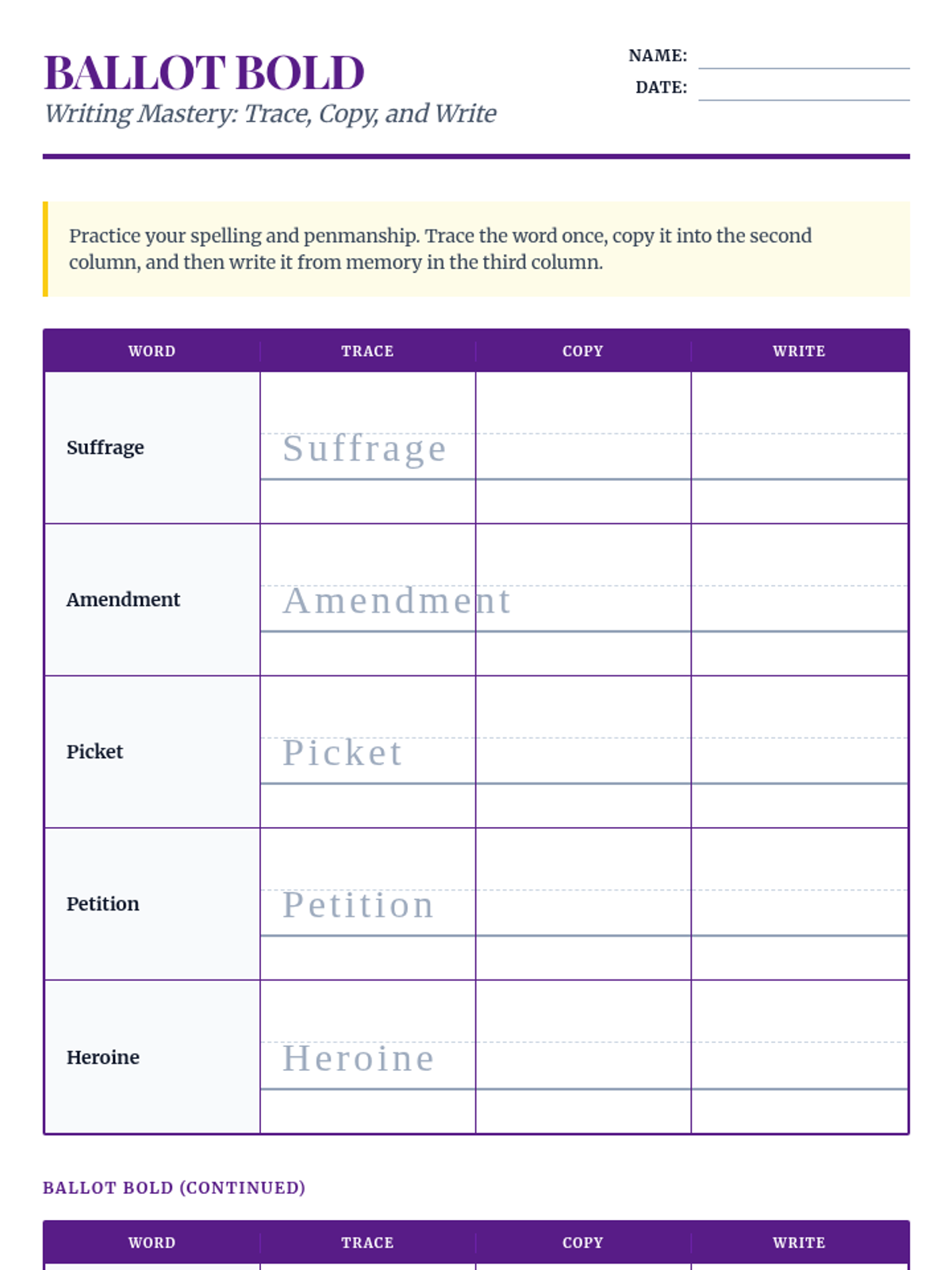
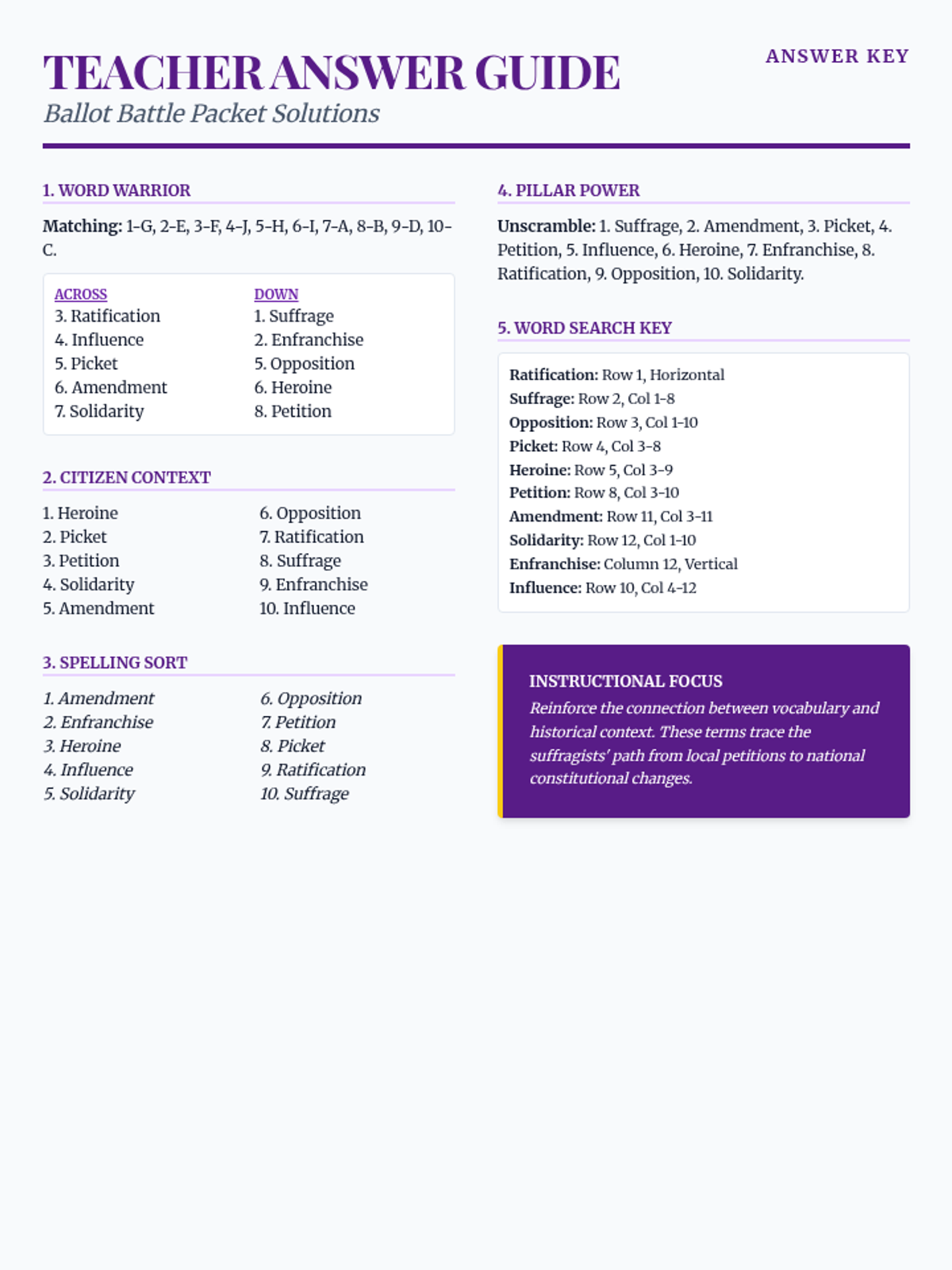
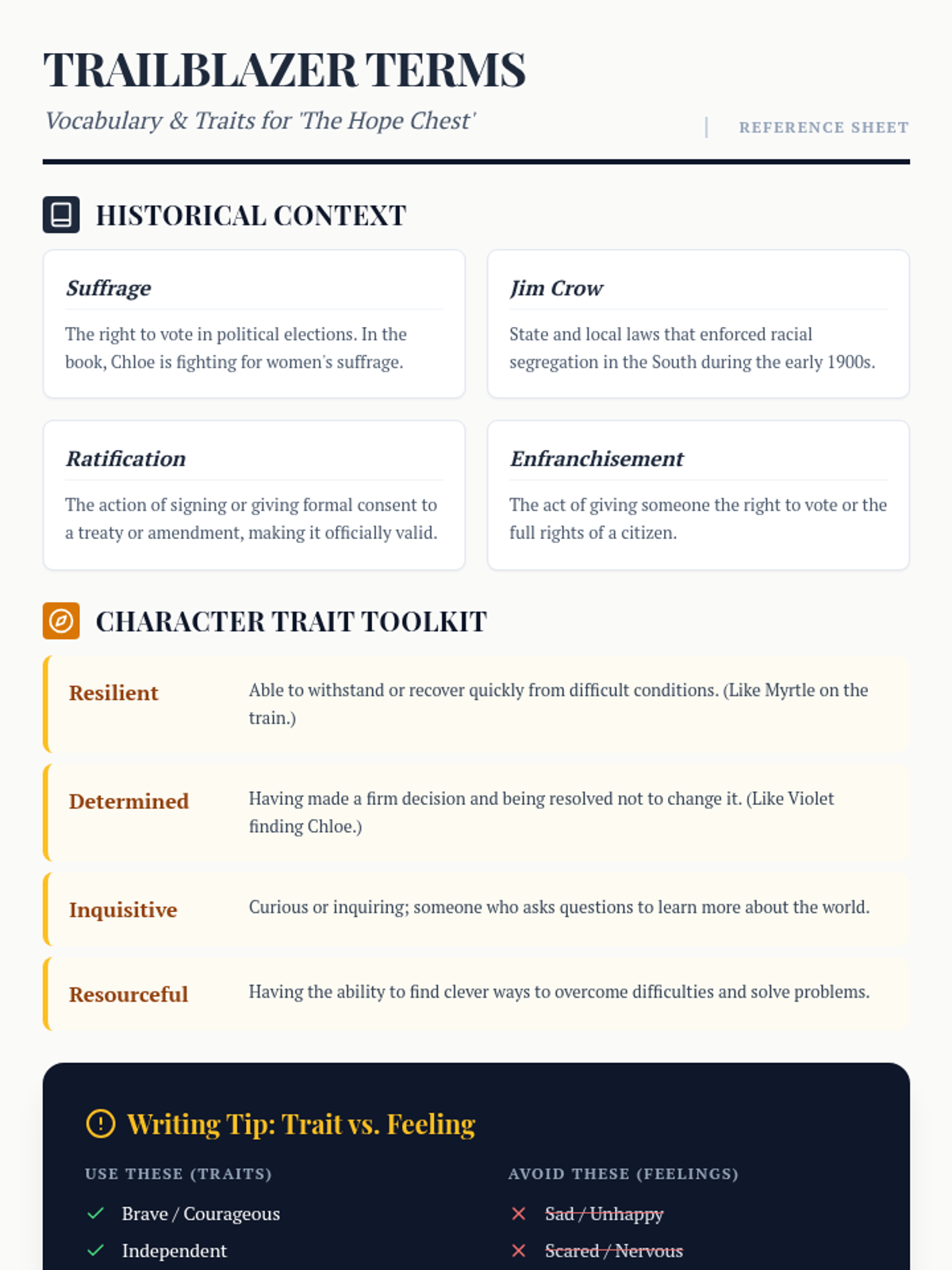
A comprehensive vocabulary and spelling packet focused on the history and language of the Women's Suffrage movement. Students will master ten thematic words through diverse linguistic and orthographic activities.
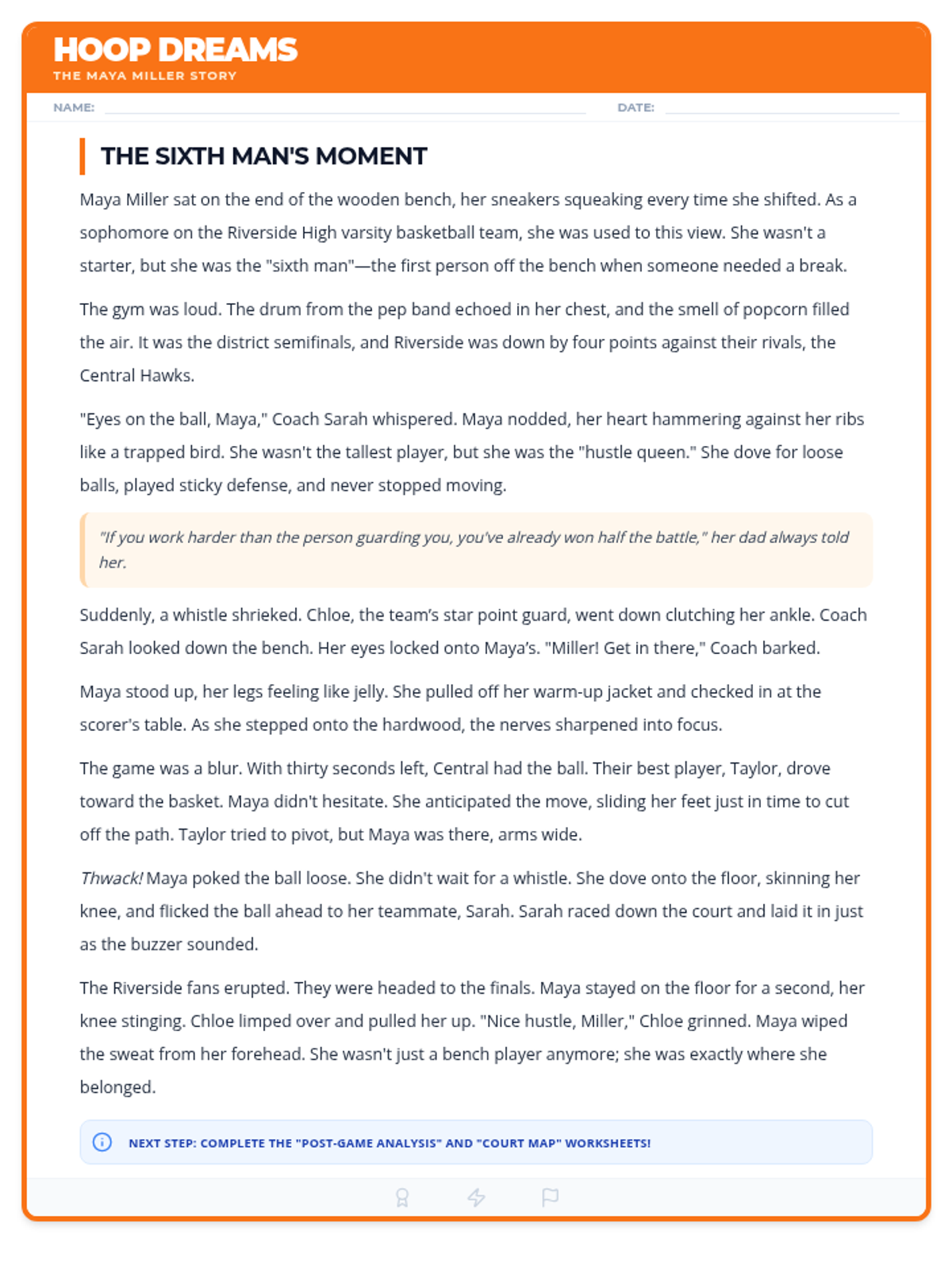
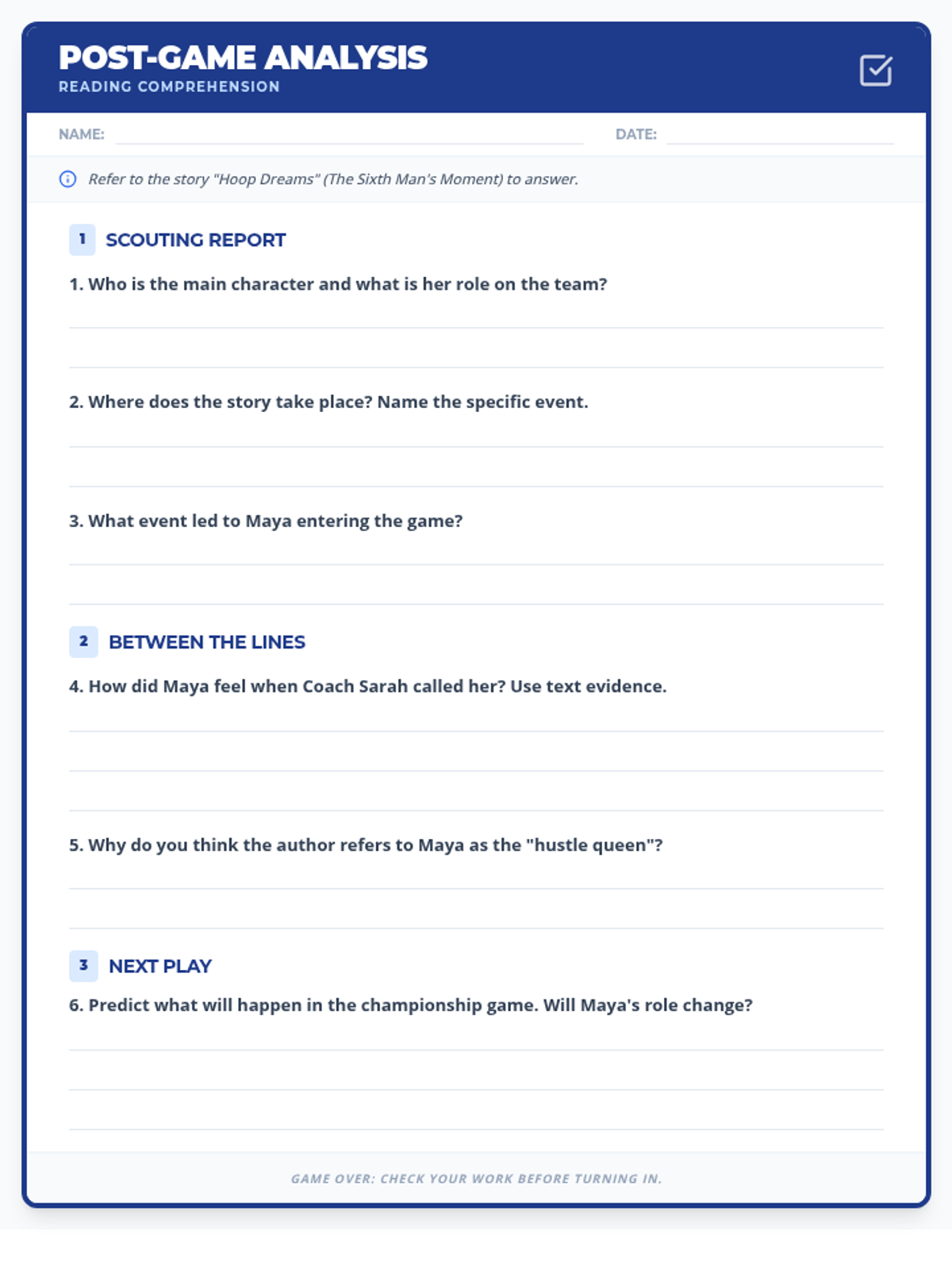
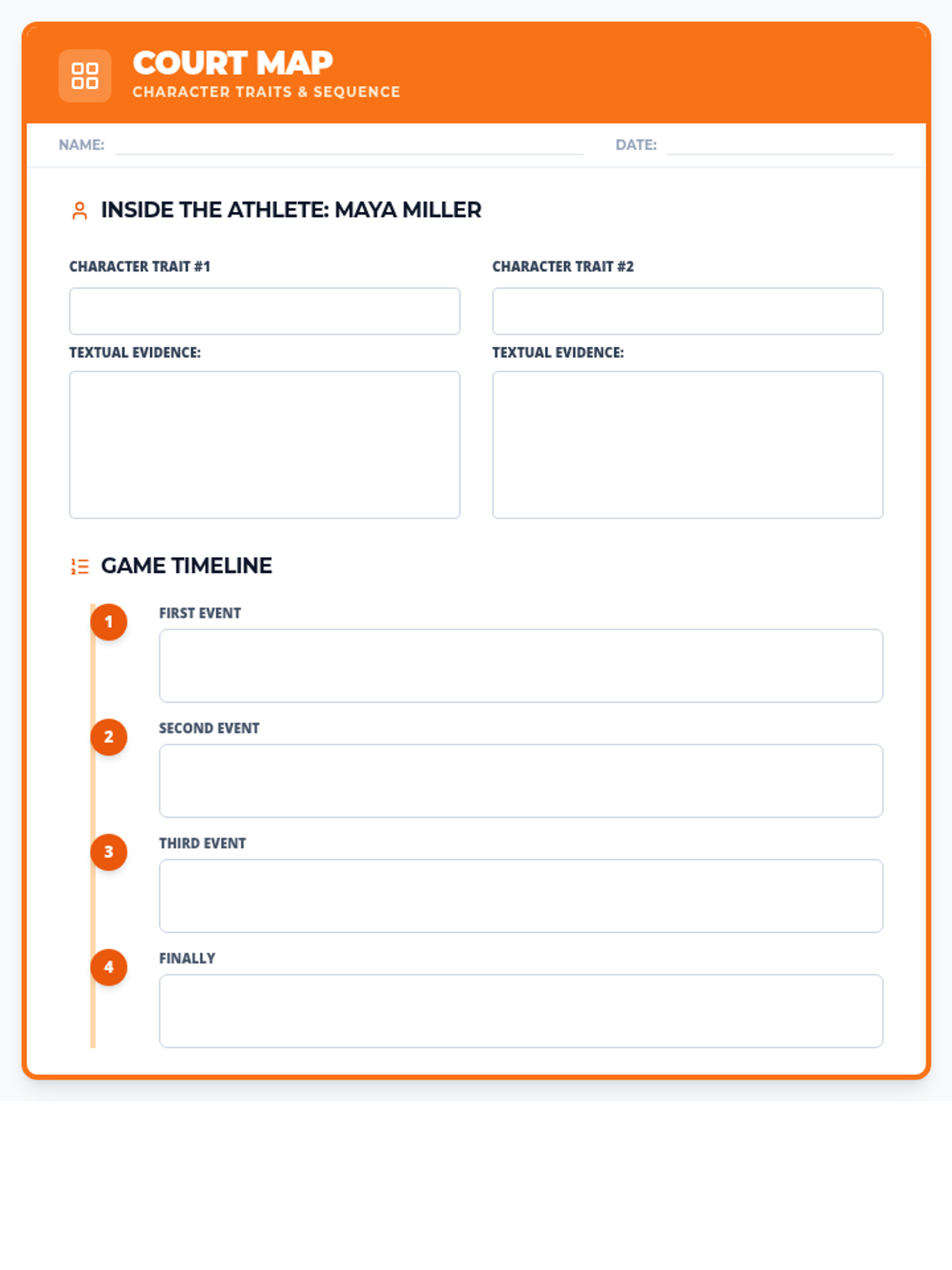
A comprehensive reading comprehension lesson centered on a story about a high school basketball player, focusing on literal understanding, inference, and character analysis.
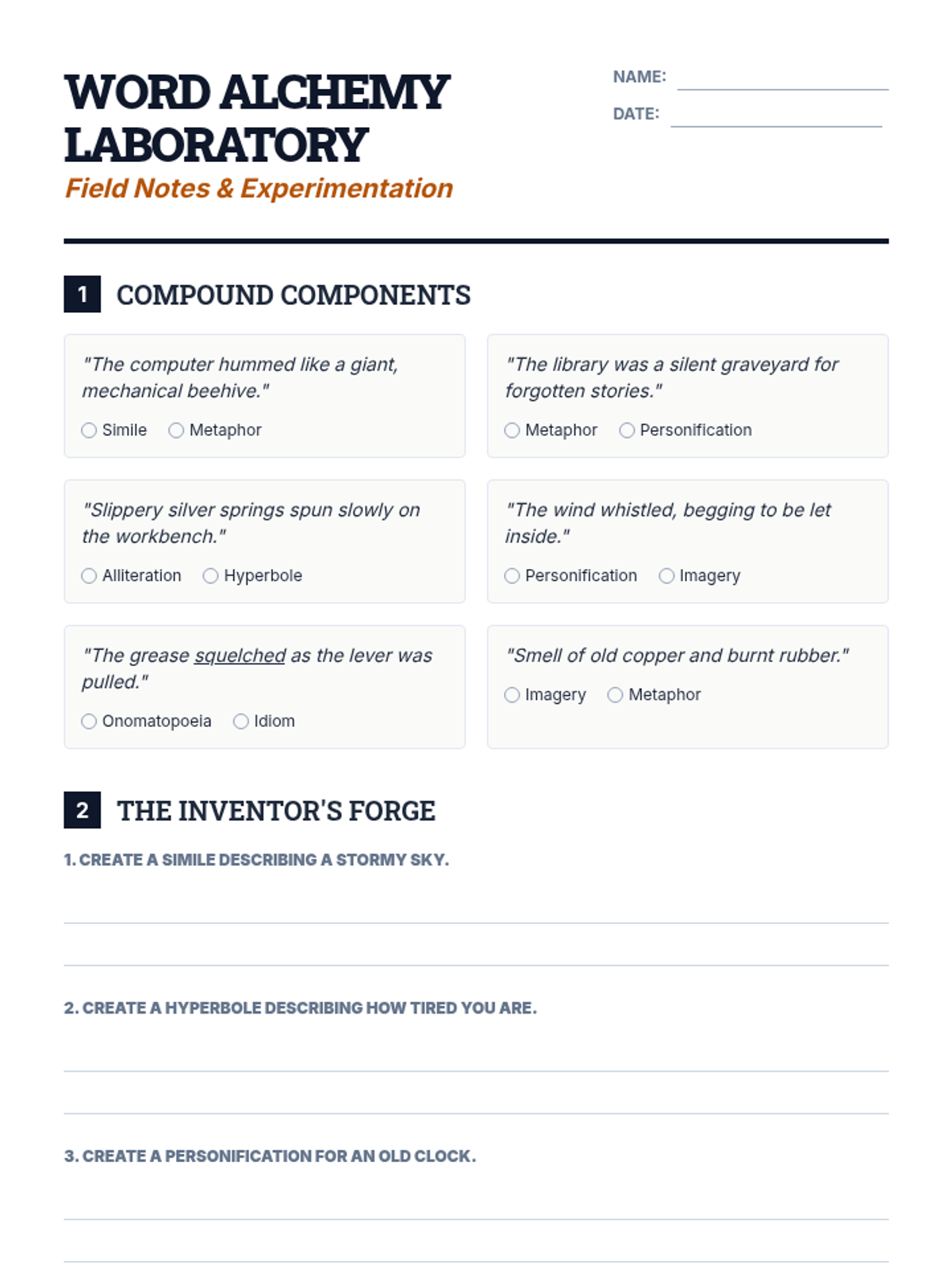
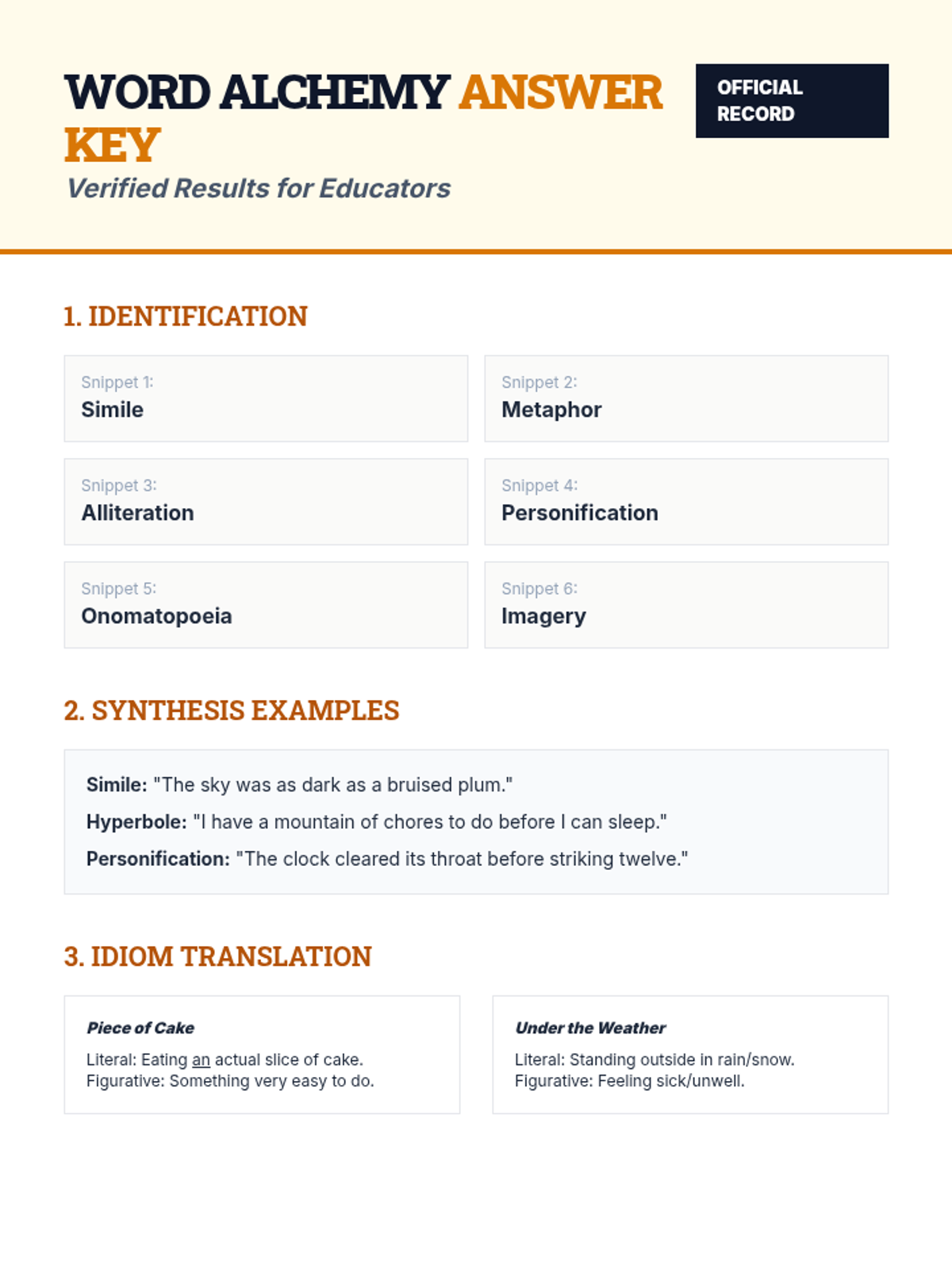
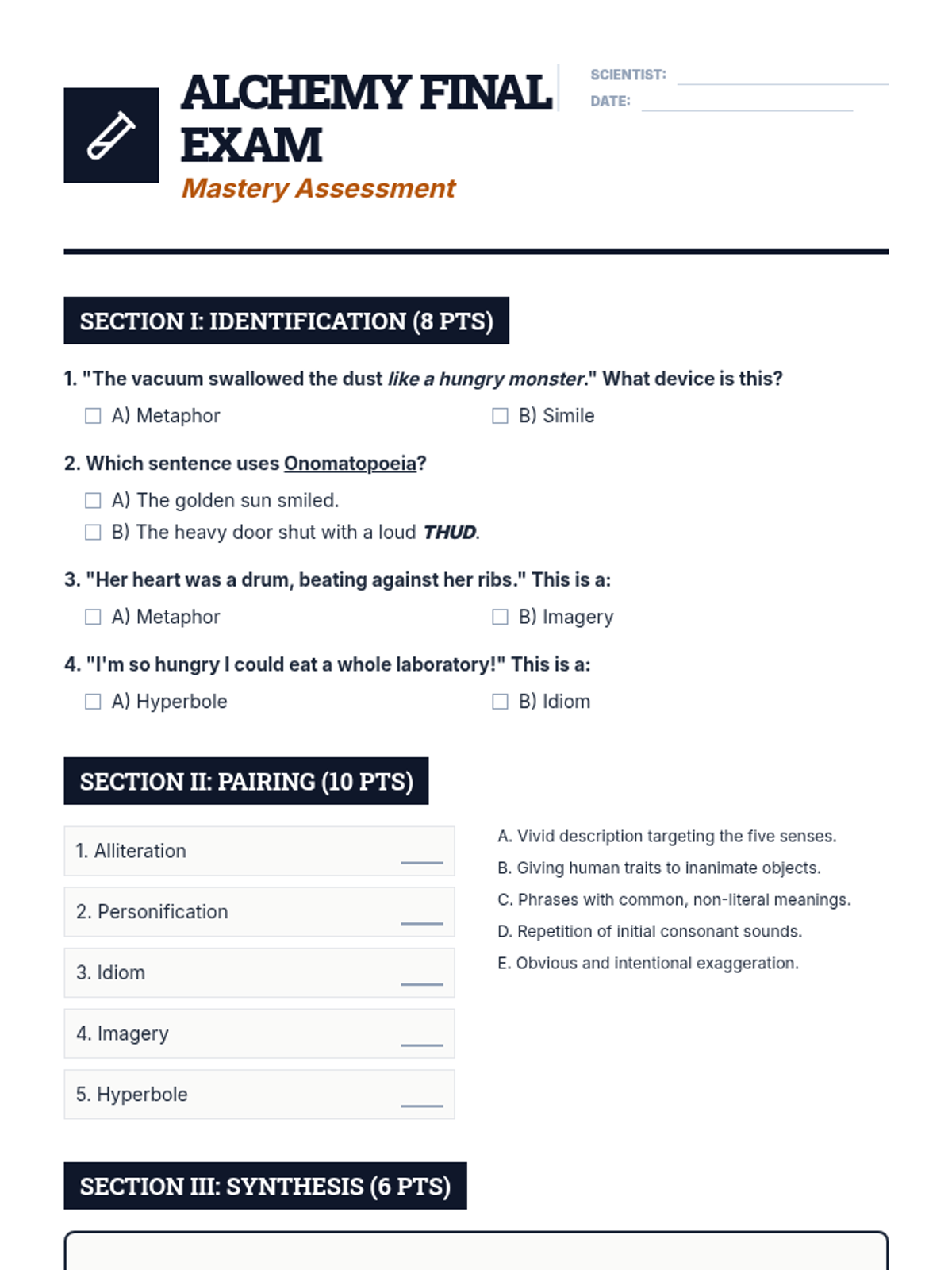
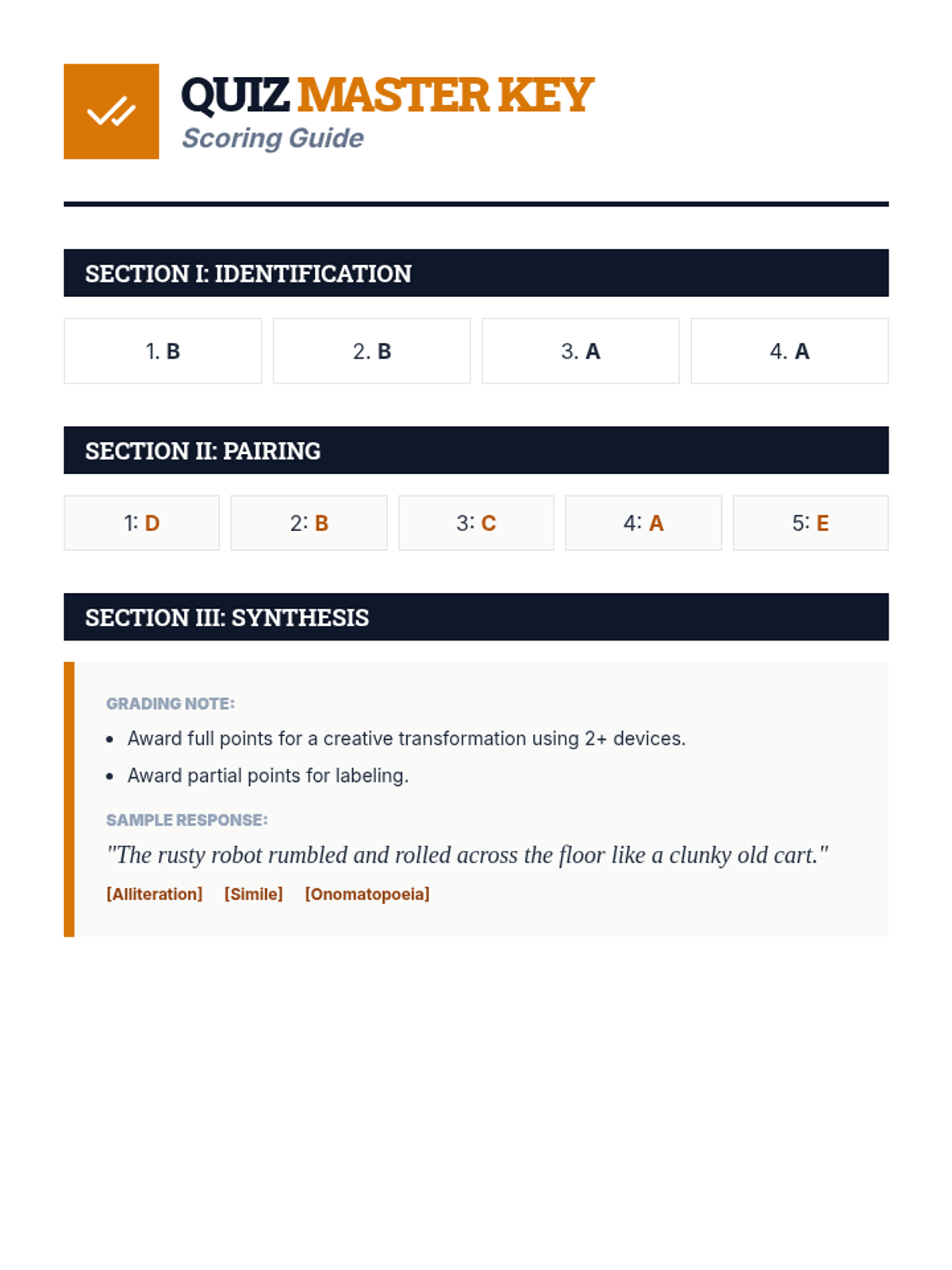
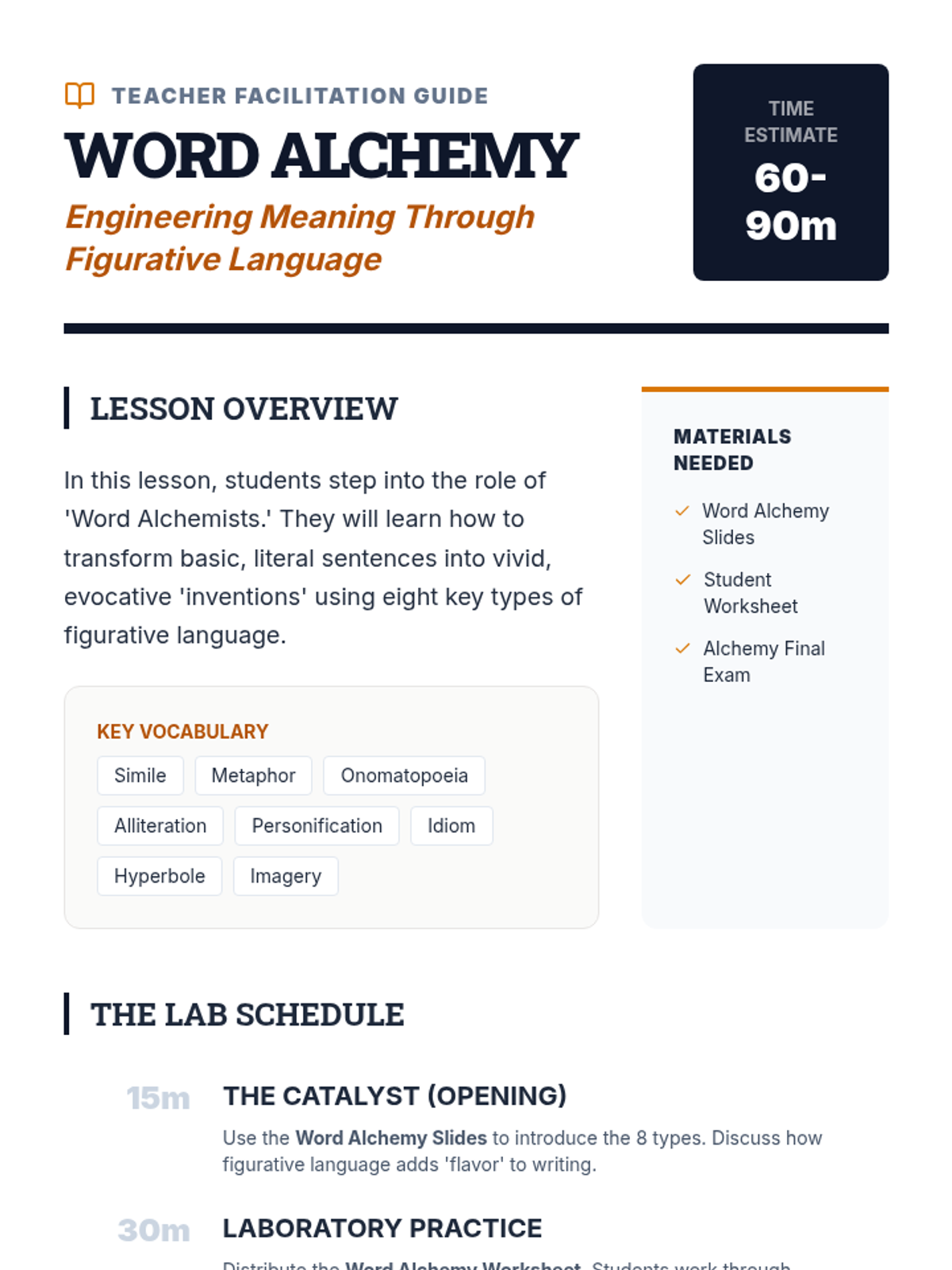
A comprehensive exploration of eight key figurative language types: similes, metaphors, onomatopoeia, alliteration, personification, idioms, hyperbole, and imagery. Students will analyze, identify, and create their own linguistic 'inventions' through a lens of creative alchemy.
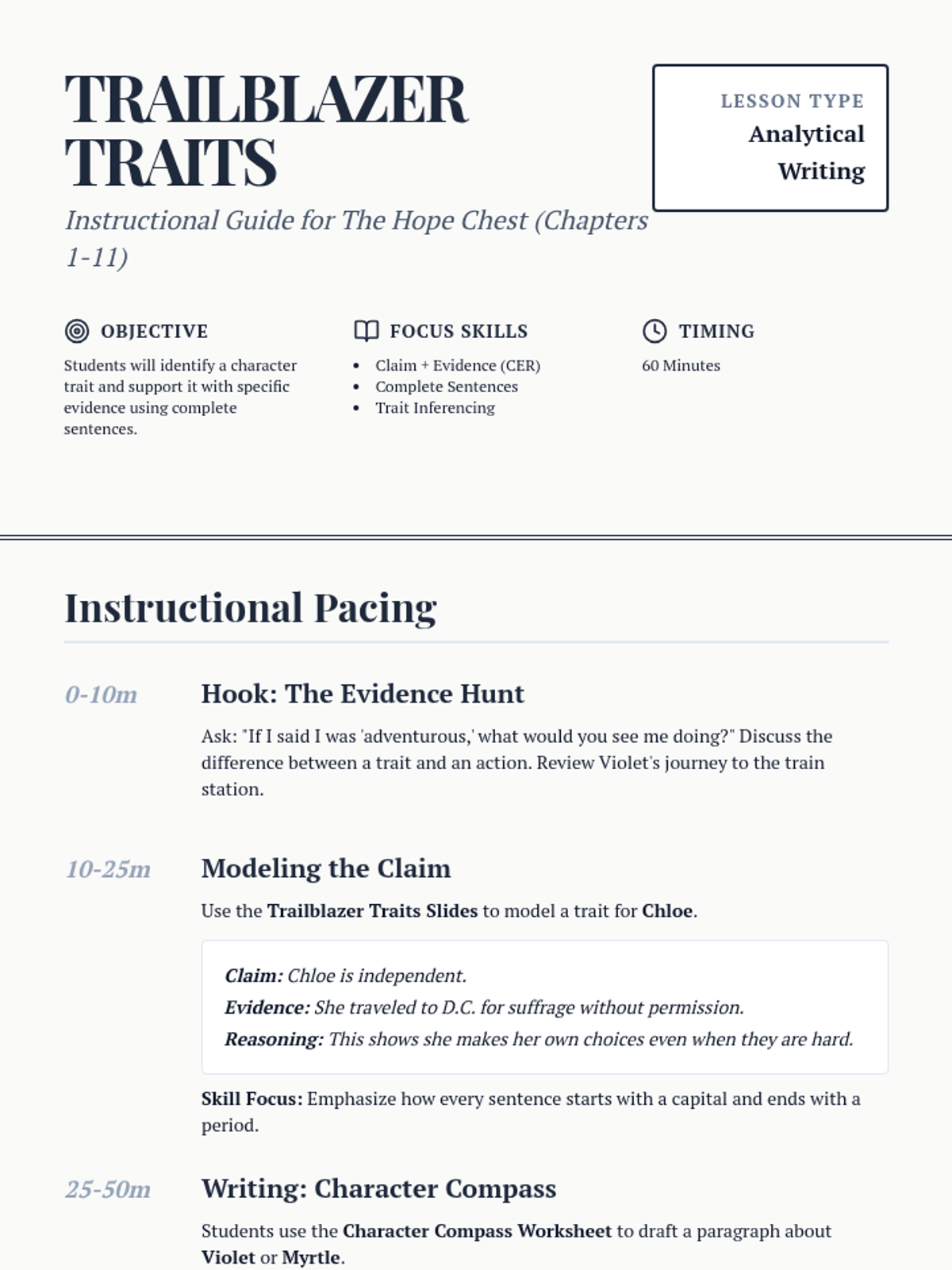
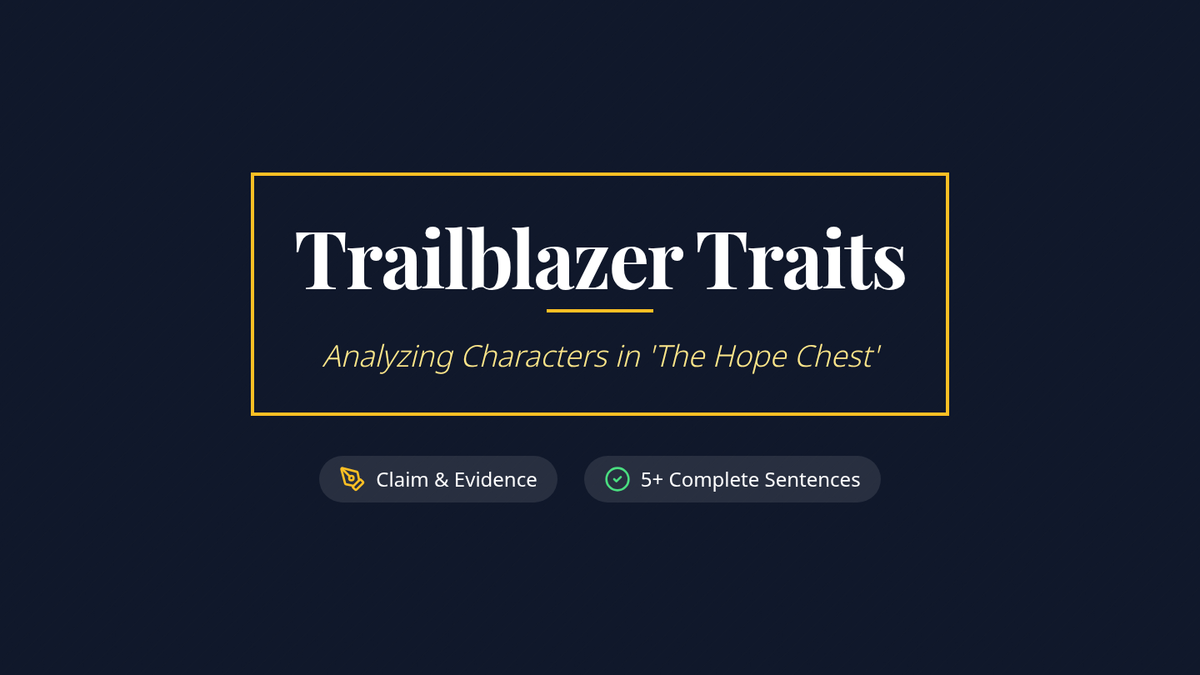
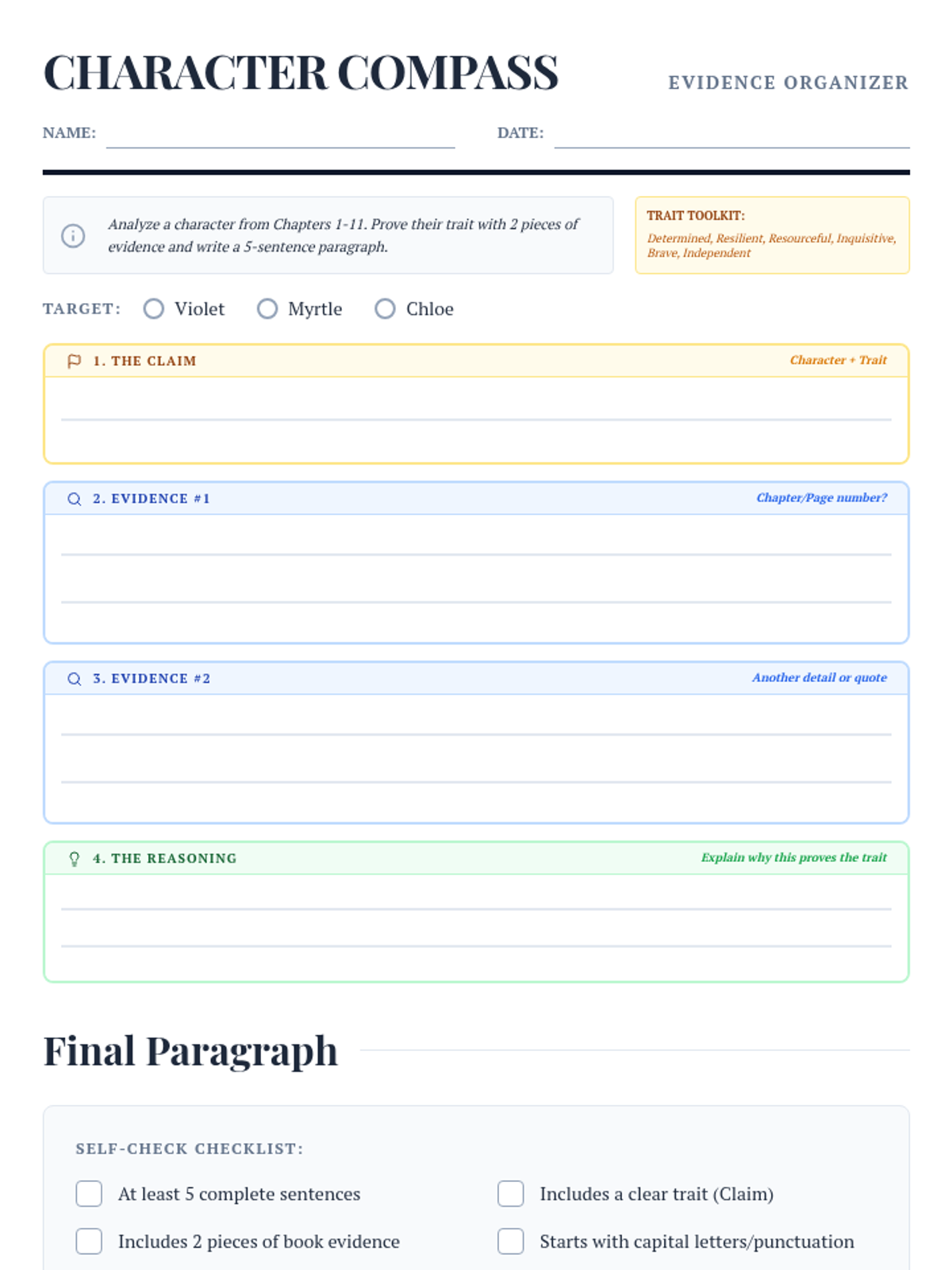
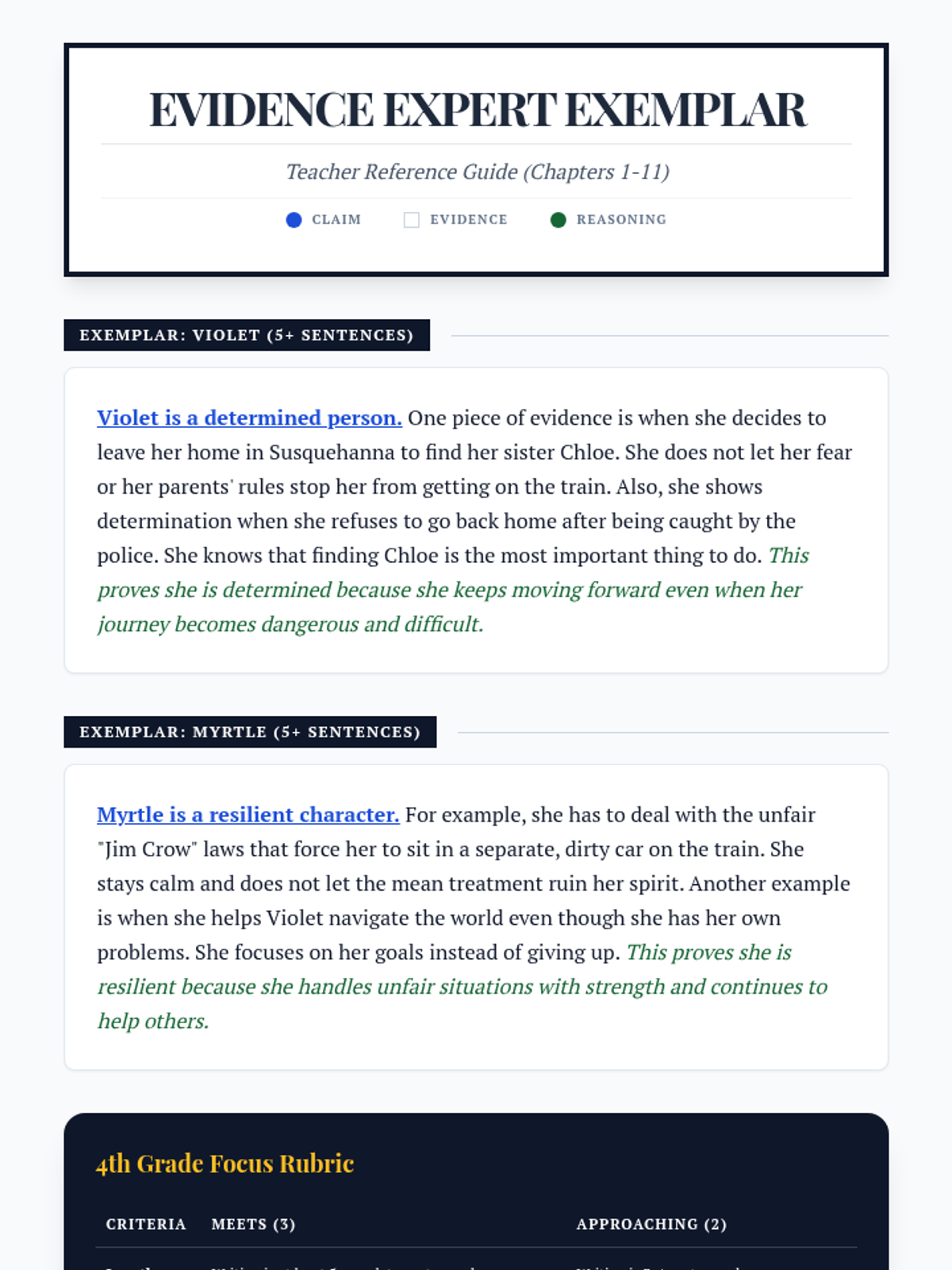
In this lesson, students will analyze character traits in the novel 'The Hope Chest' (Chapters 1-11), focusing on writing a structured paragraph with a clear claim, textual evidence, and complete sentences.
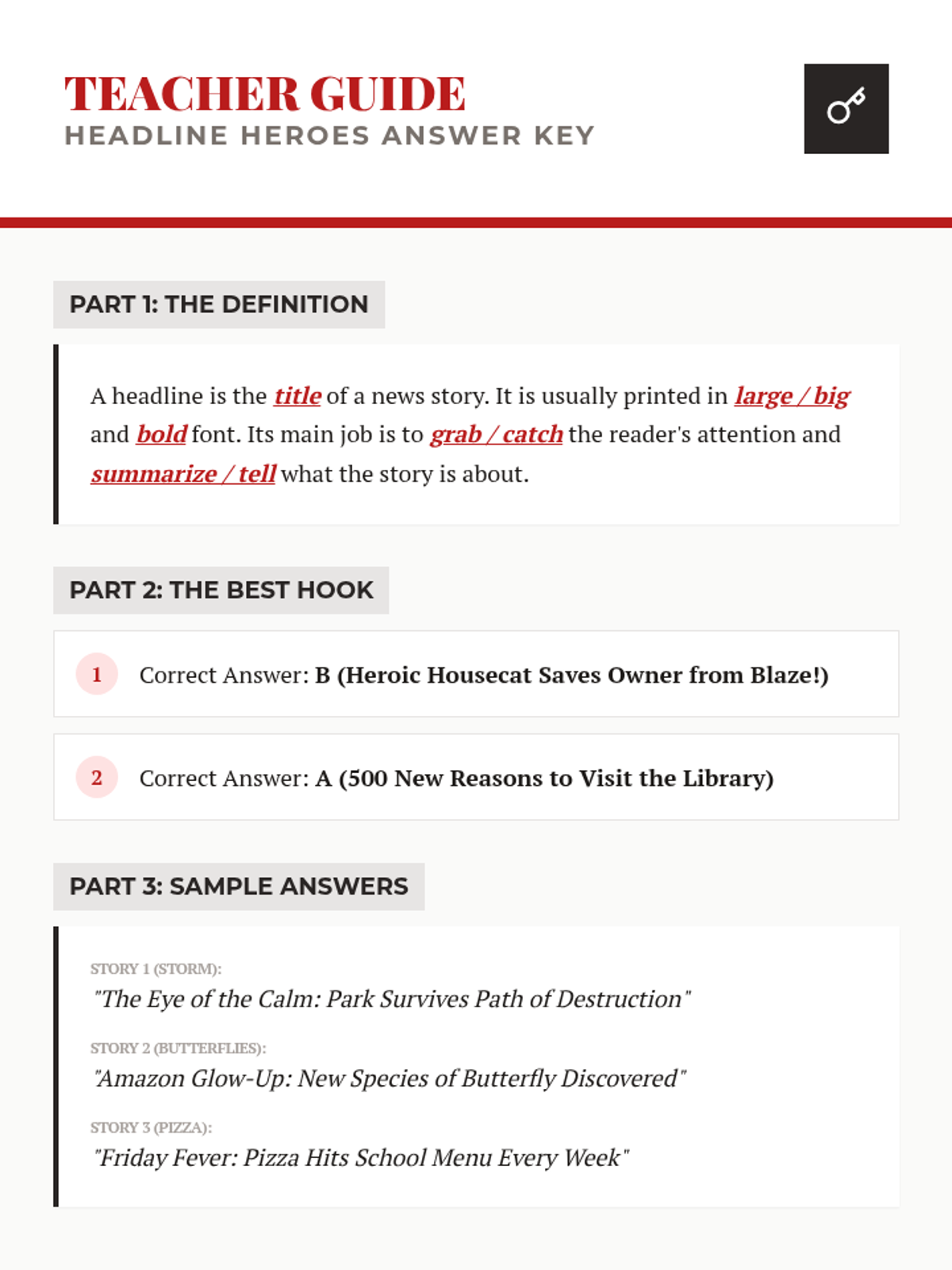
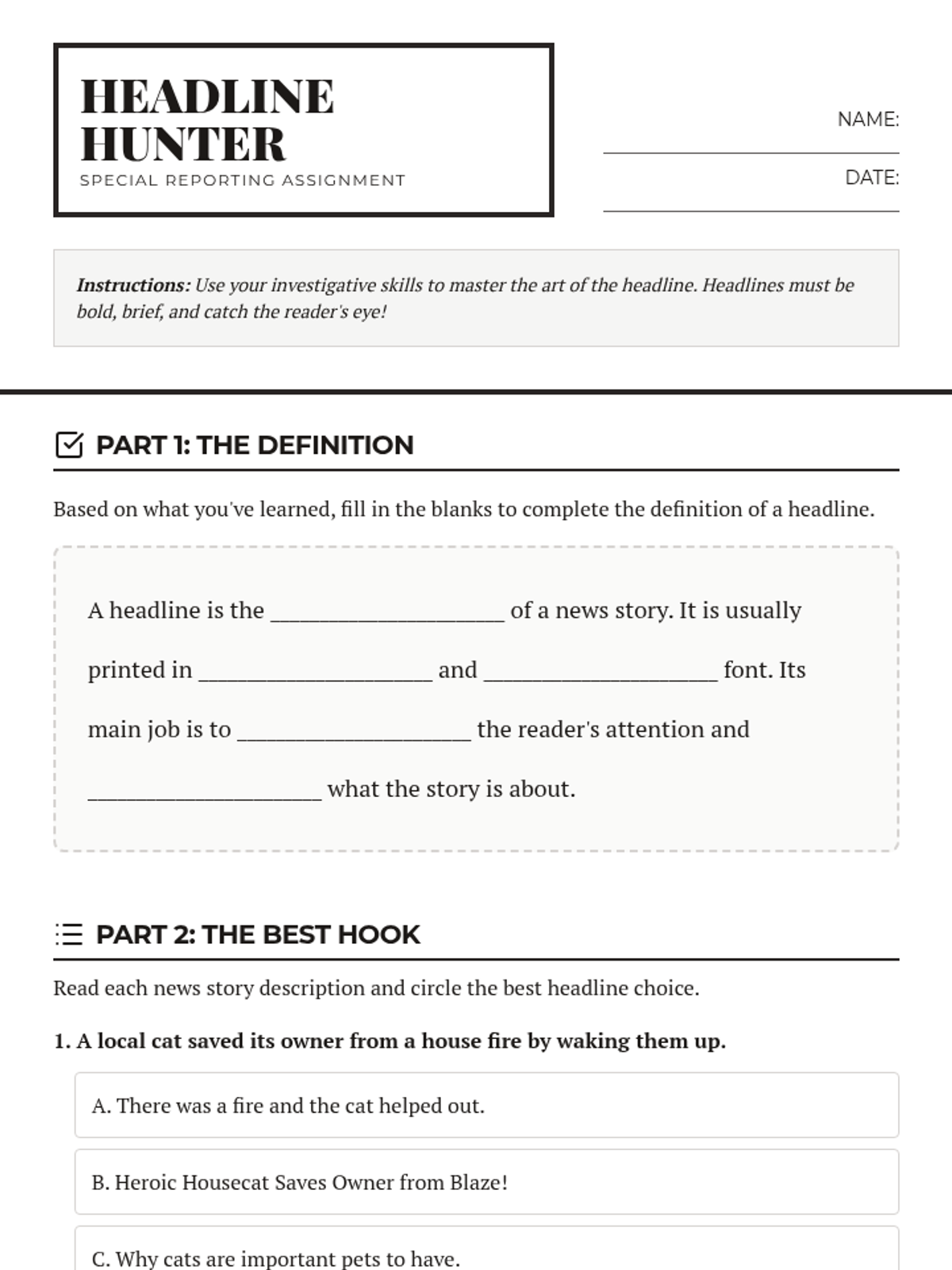
A lesson introducing students to the purpose, structure, and impact of headlines in journalism and media.
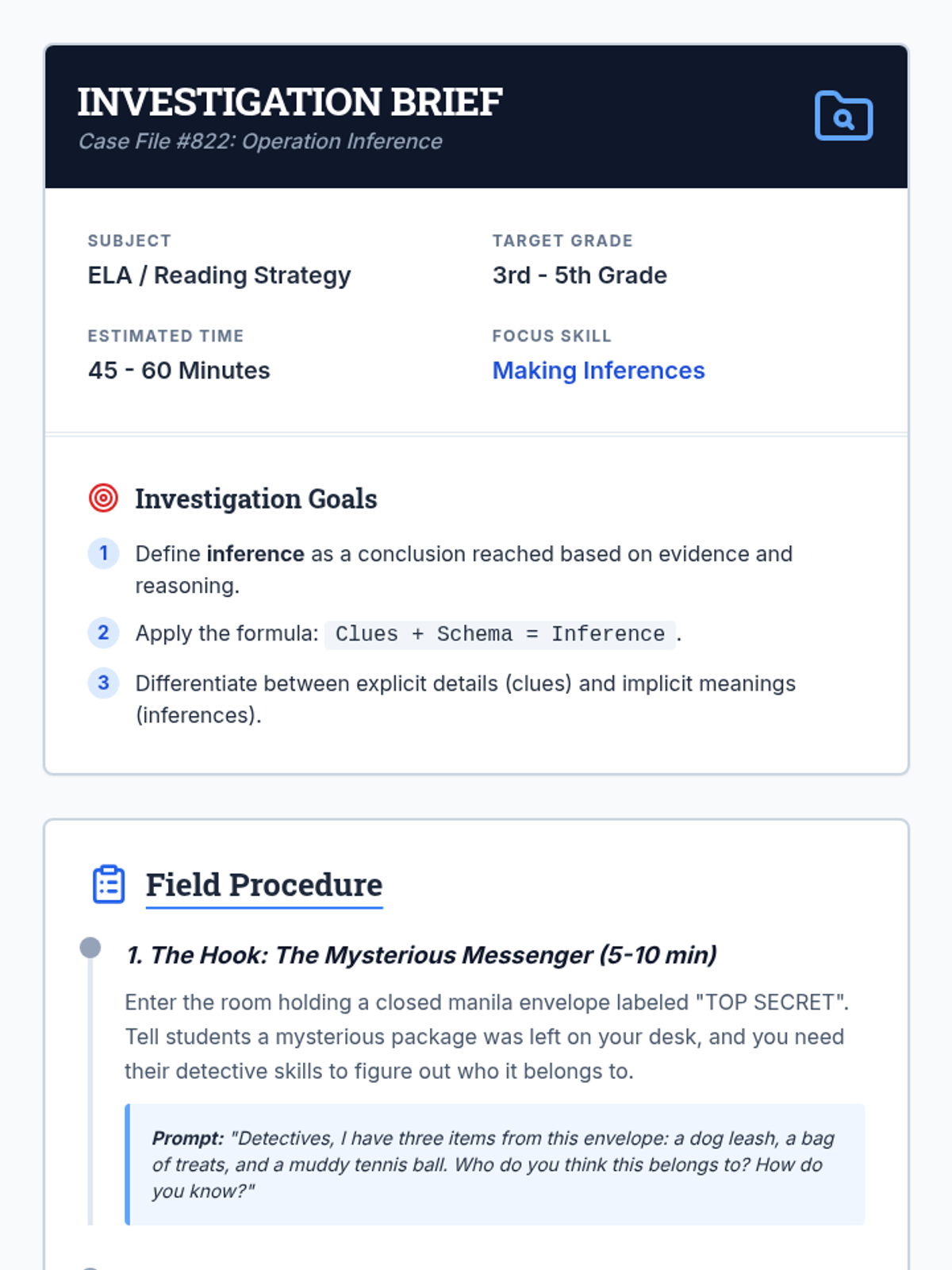
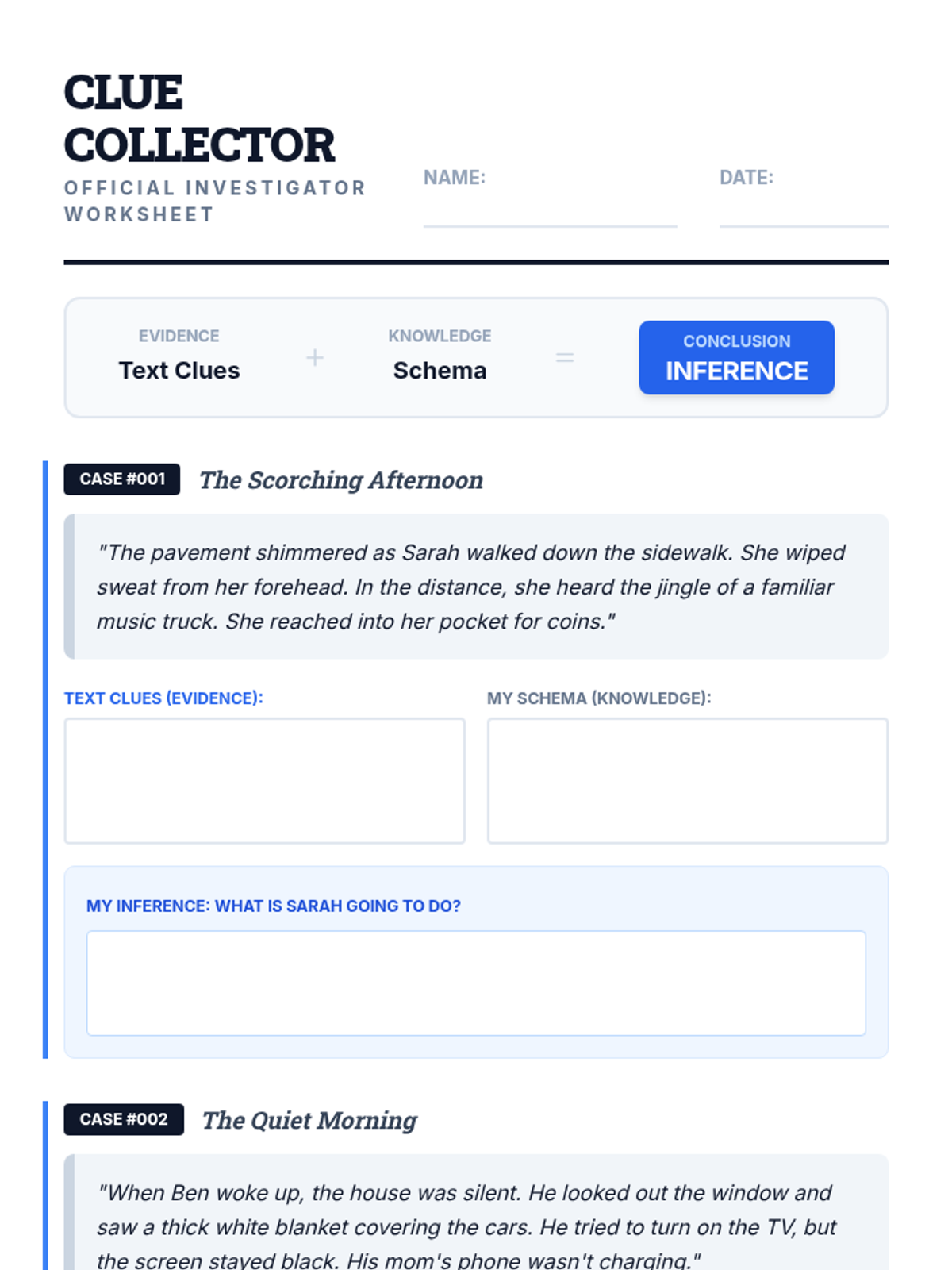
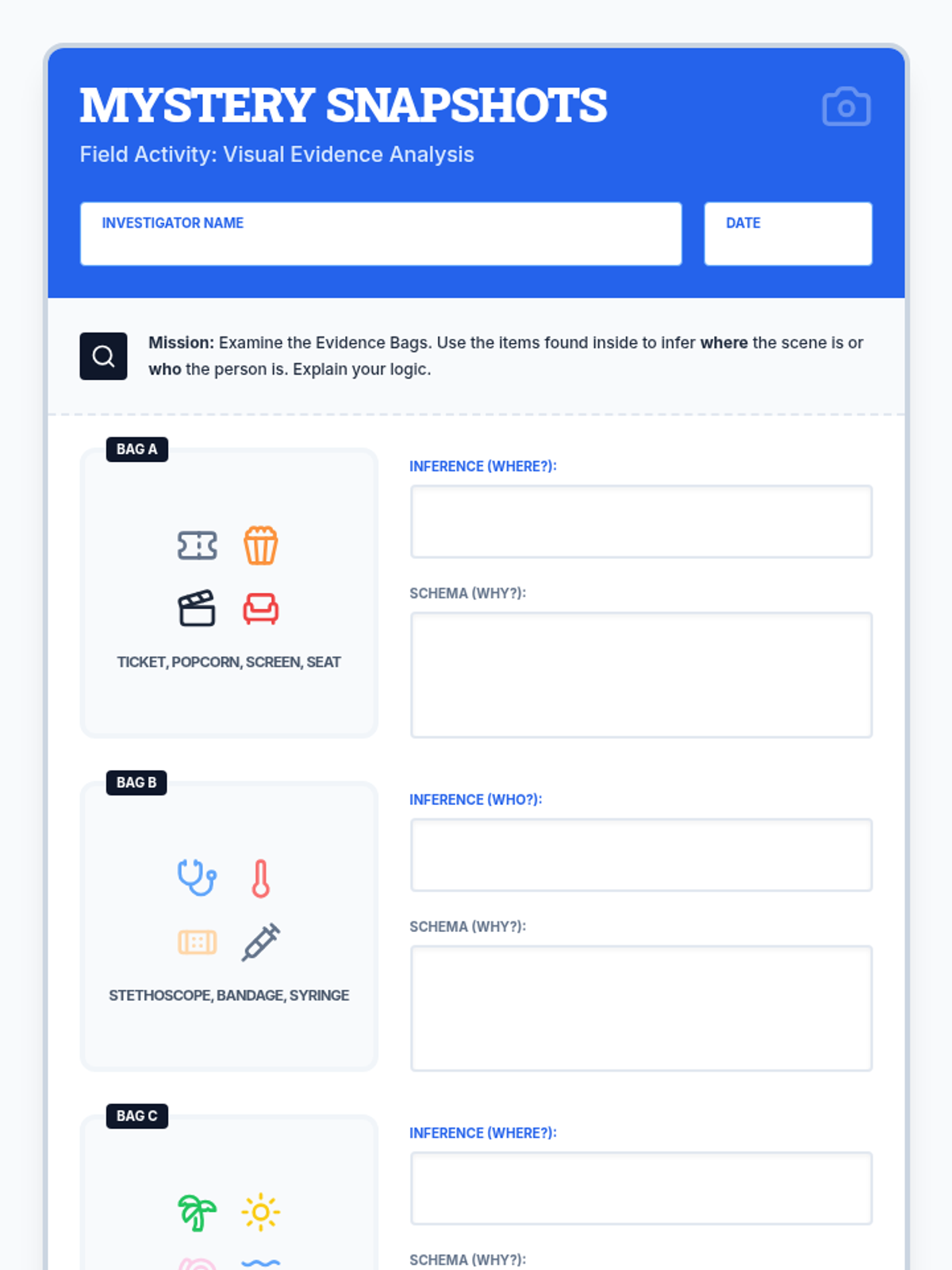
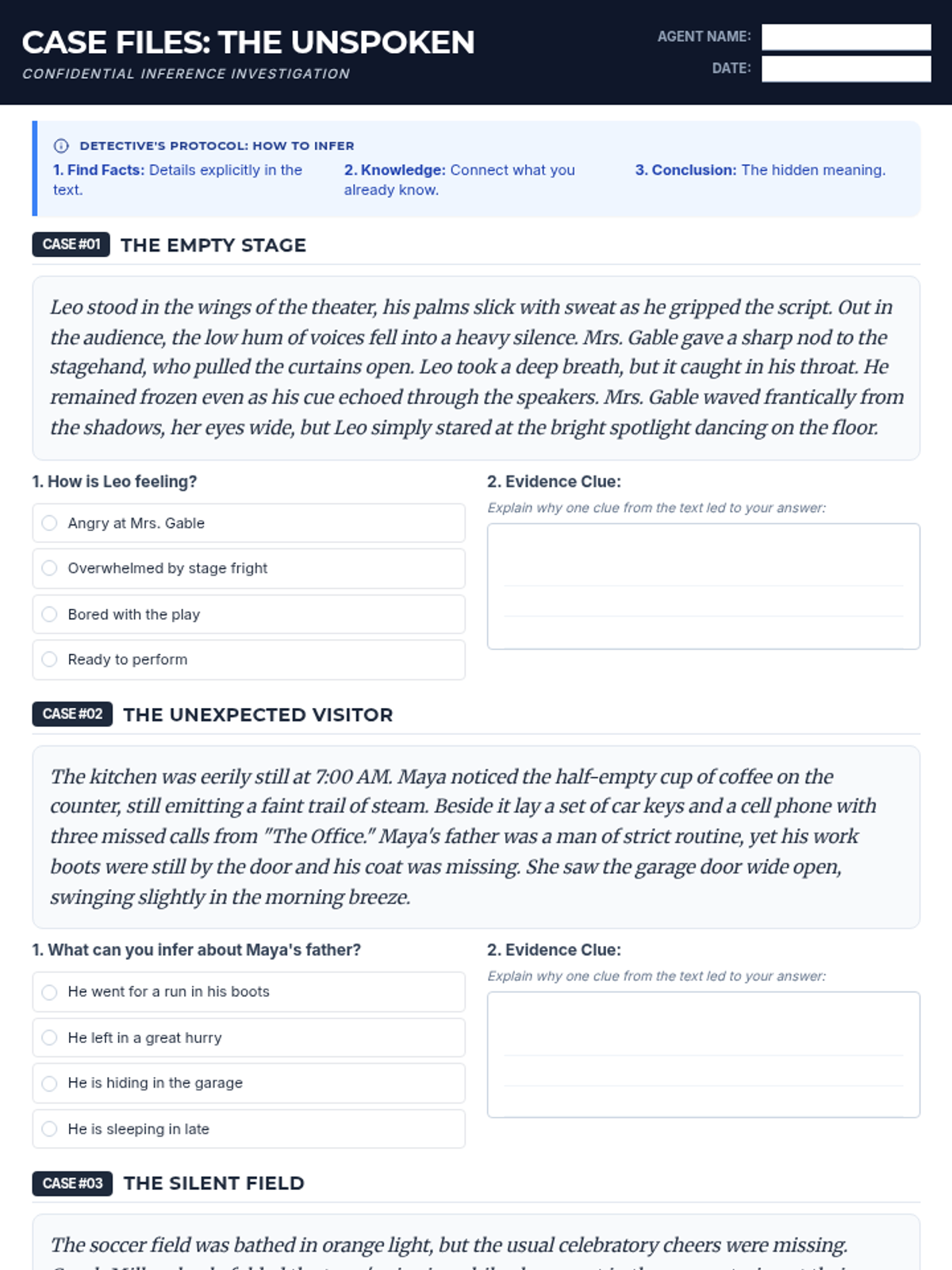
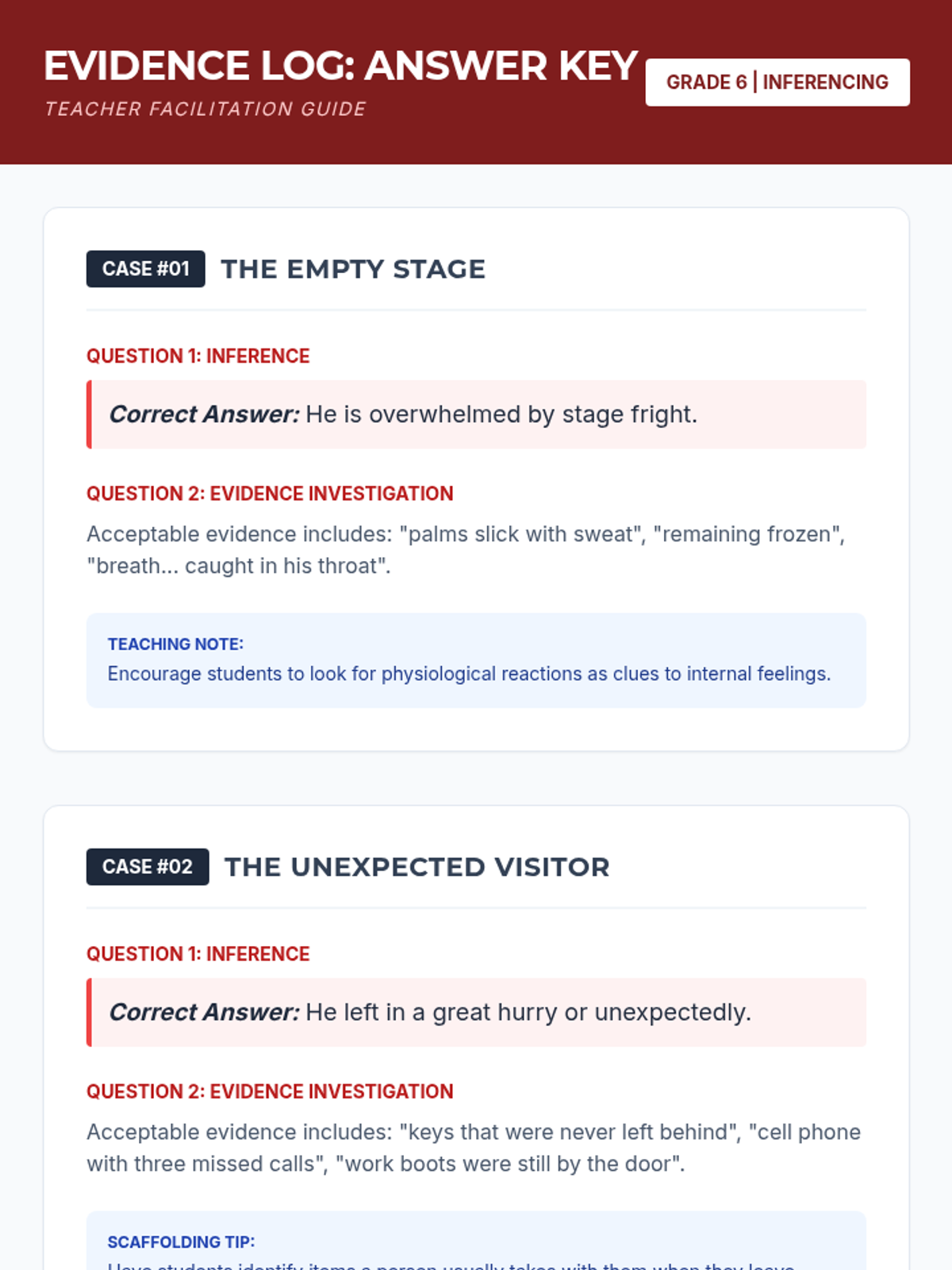
A detective-themed lesson where students learn to combine text clues with background knowledge to make logical inferences. Students act as 'investigators' to solve visual and text-based mysteries using the inference formula: Clues + Schema = Inference.
A lesson focused on identifying and using multisyllabic words with common Latin-based suffixes like -al, -ous, -cious, -tious, -cial, and -tial. Students will practice sorting academic vocabulary and applying words in context.
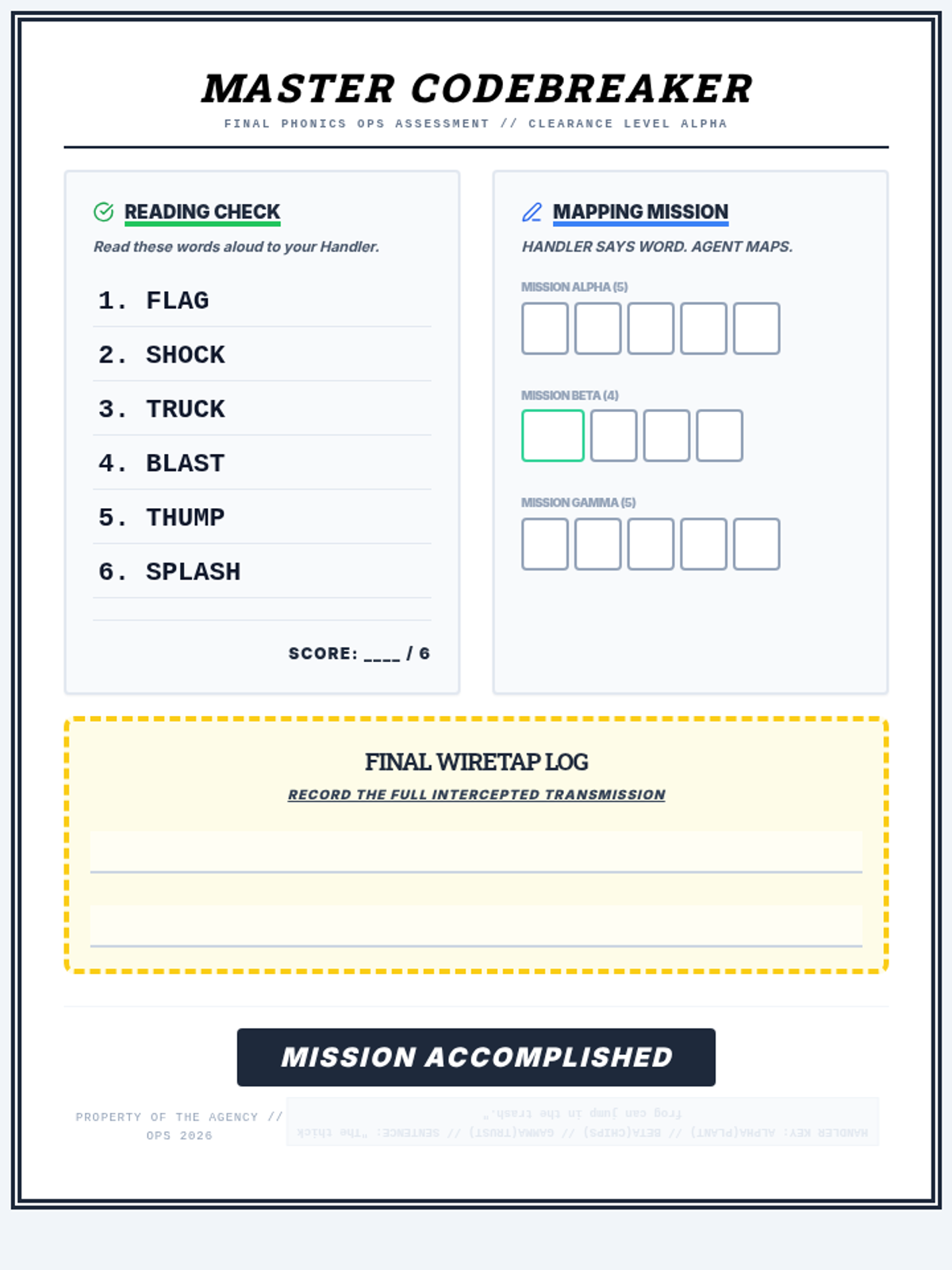
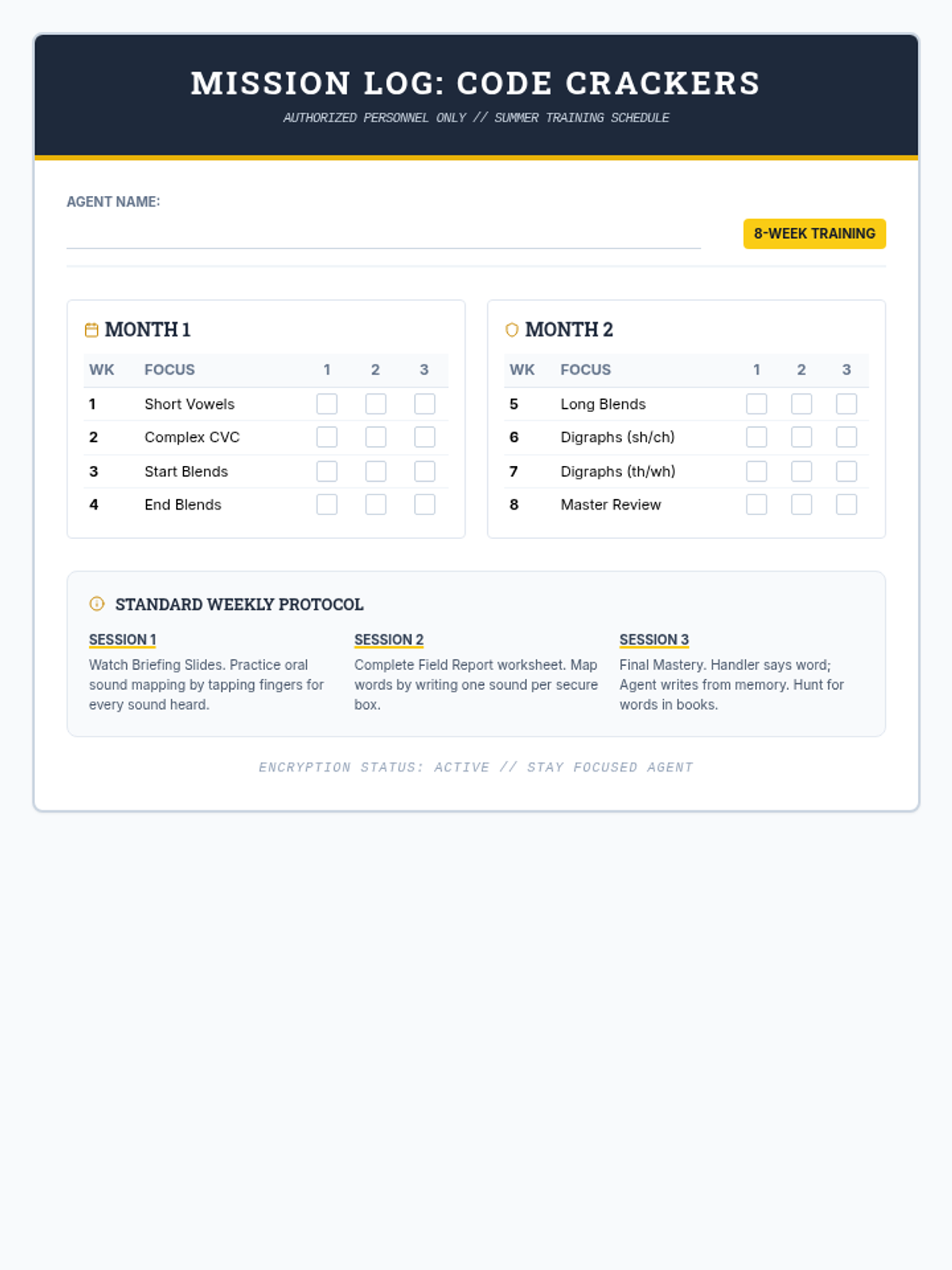
Synthesizes CVC, blends, and digraphs into complex spelling challenges and review missions for the final week.
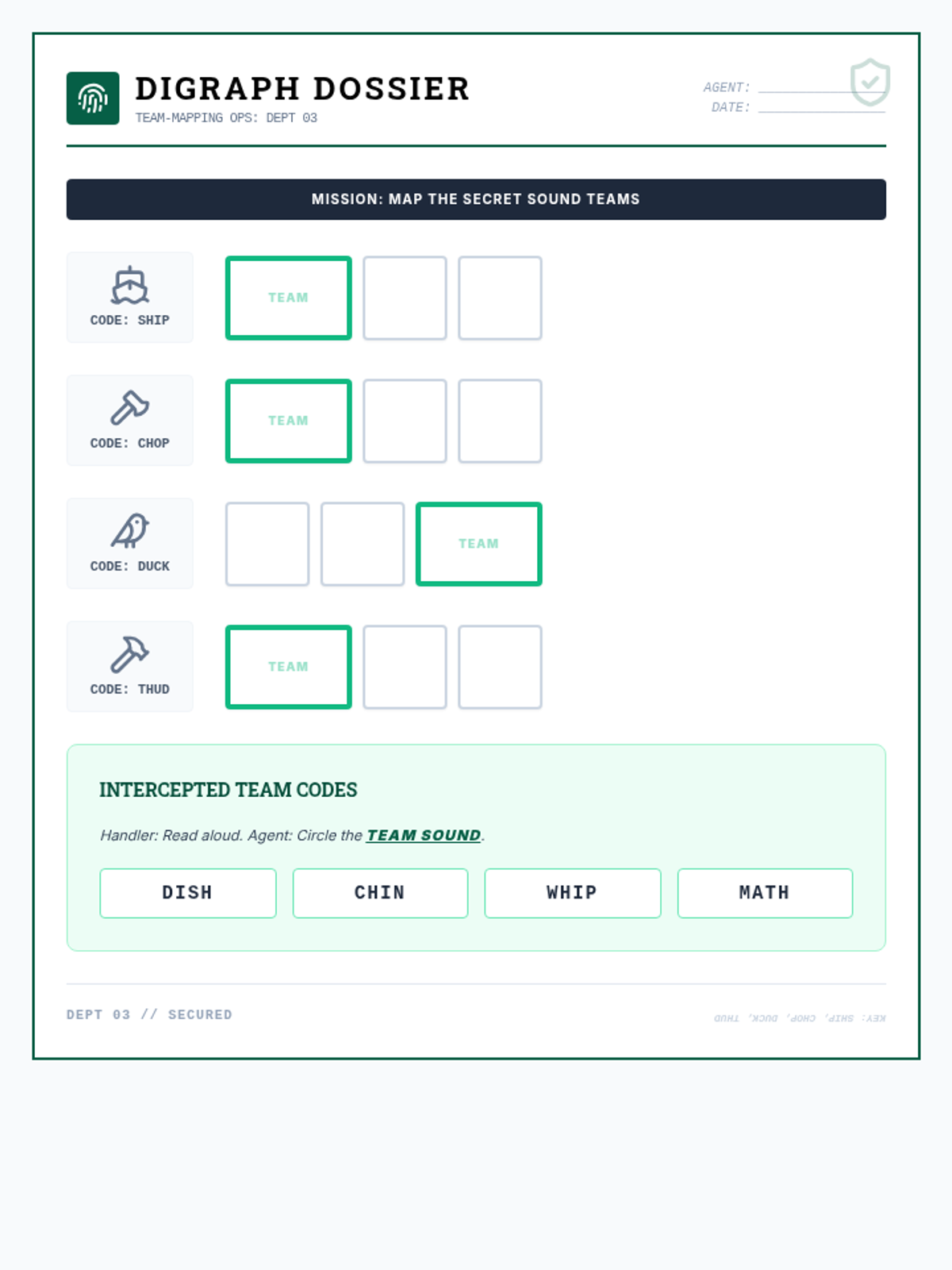
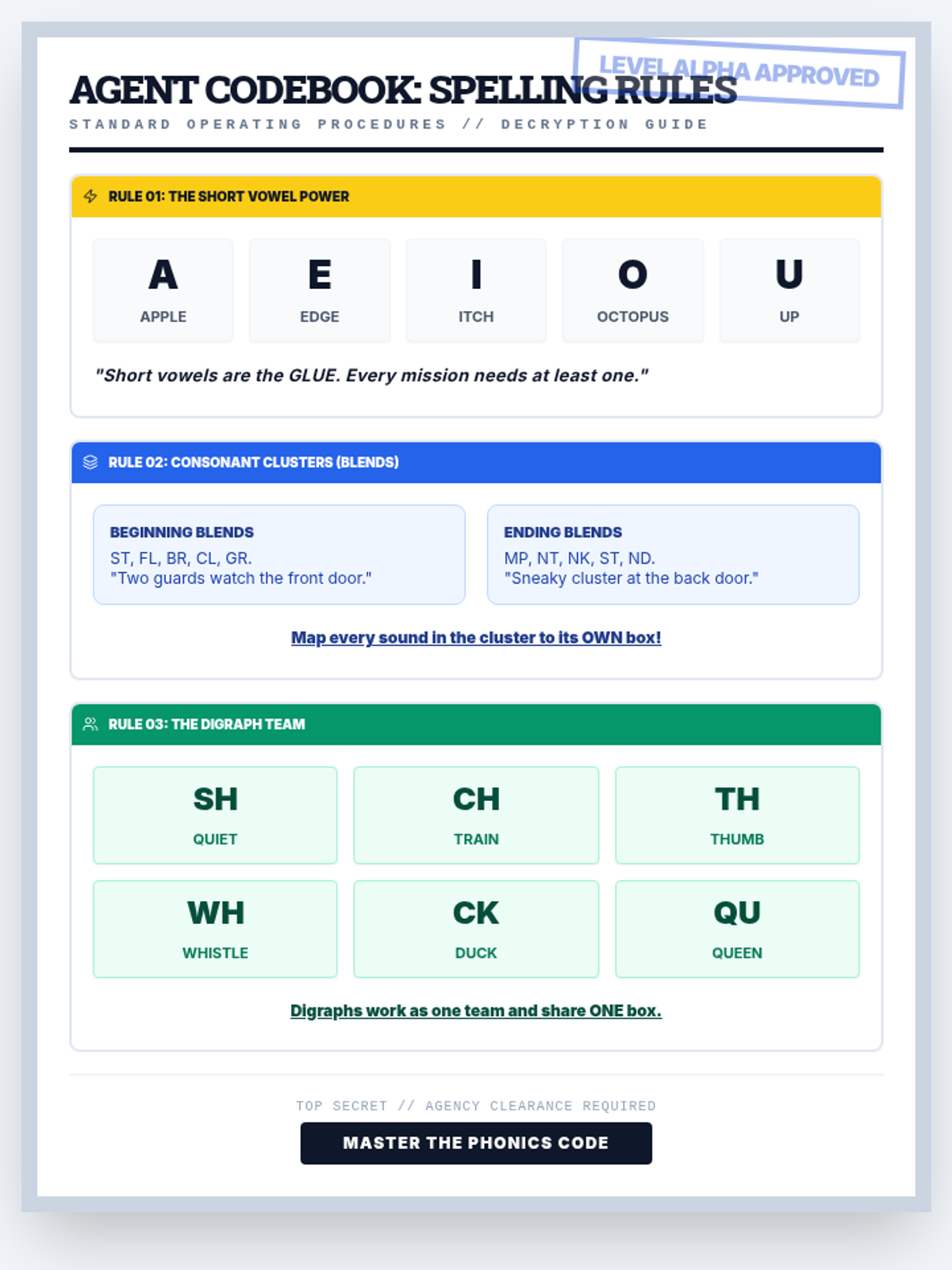
Covers common digraphs (sh, ch, th, wh, ck), teaching students that two letters can represent a single sound for weeks 6-7.
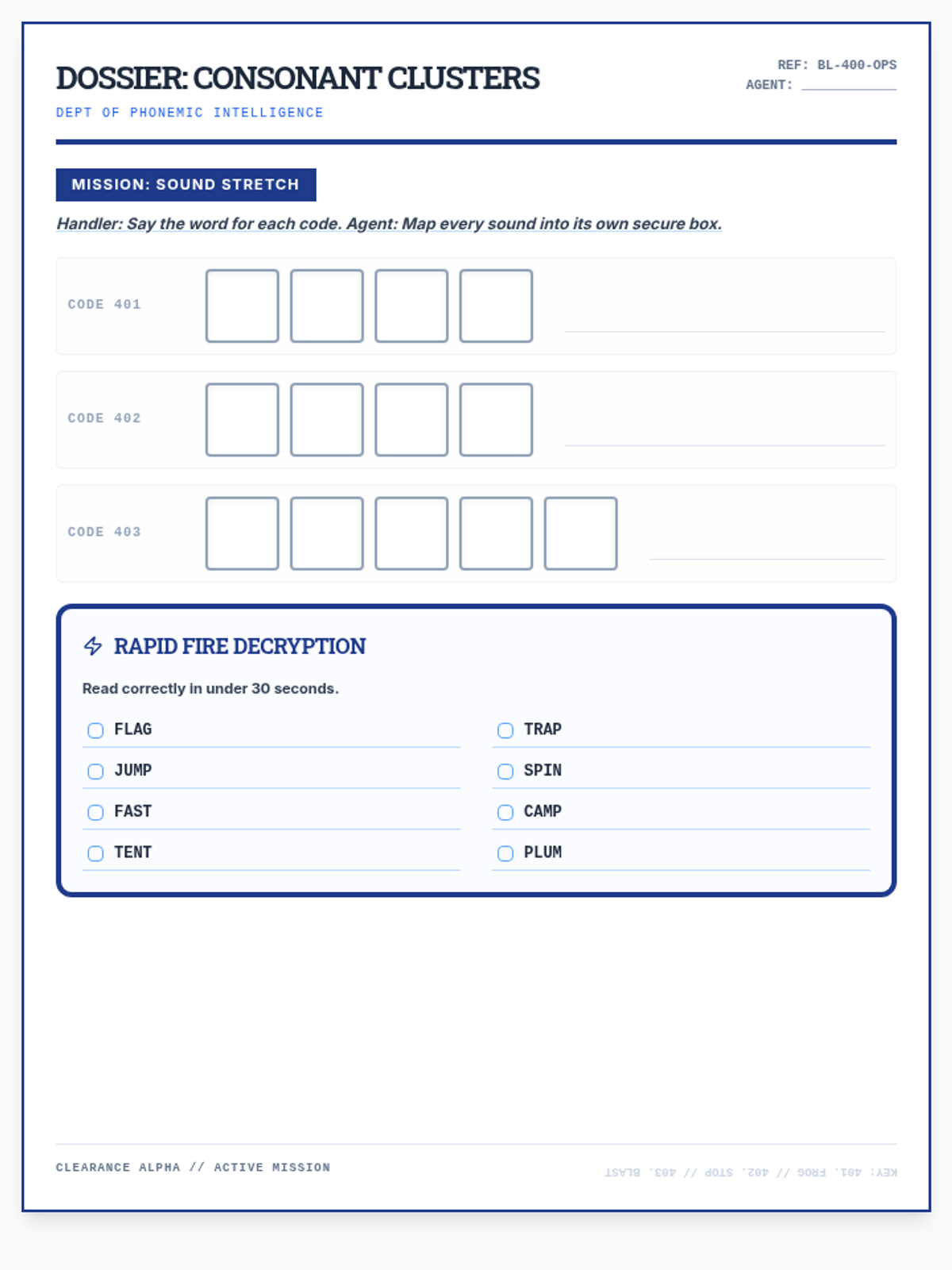
Introduces beginning and ending consonant blends, helping students hear and map multiple sounds within word clusters during weeks 3-5.
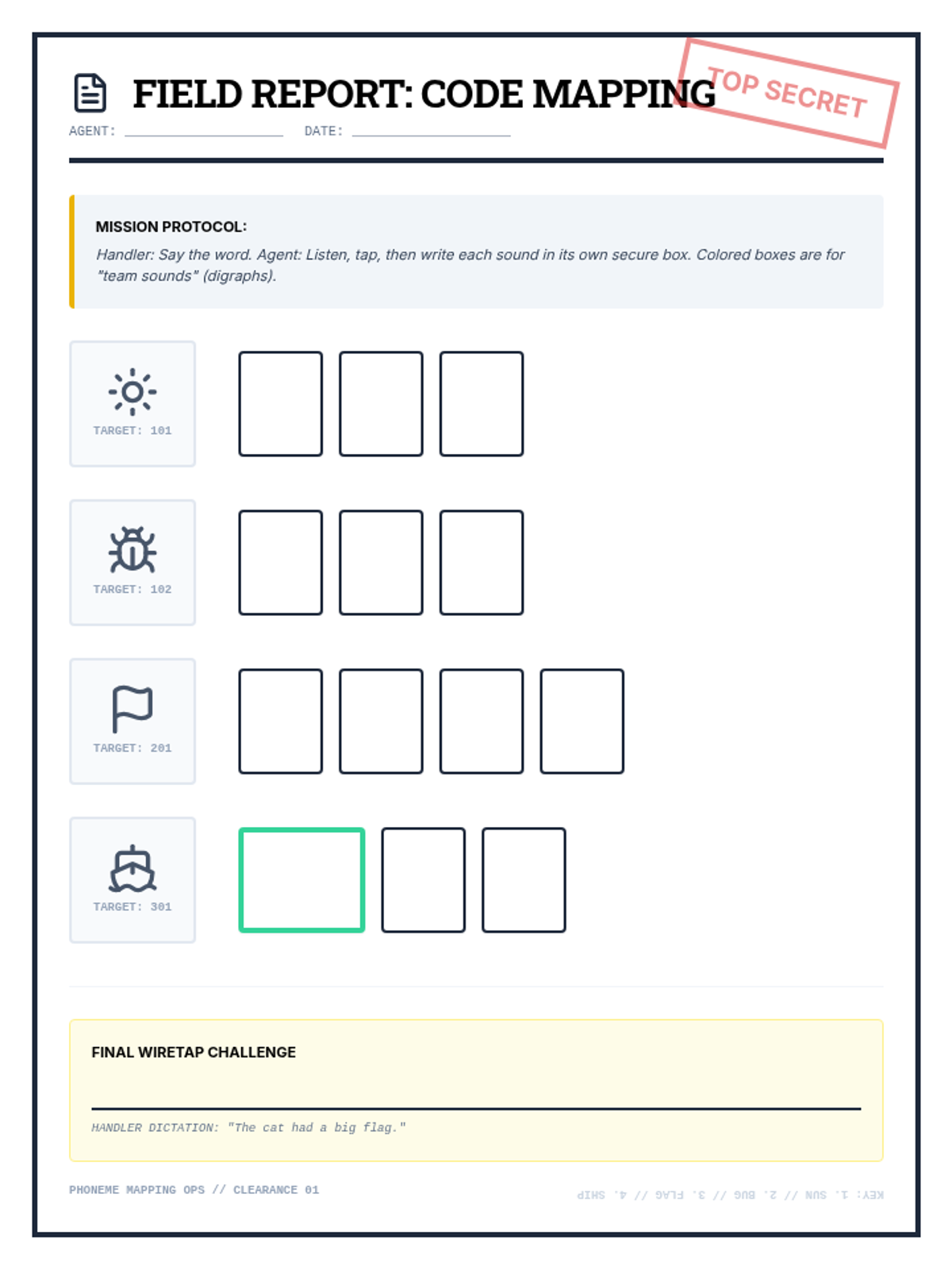
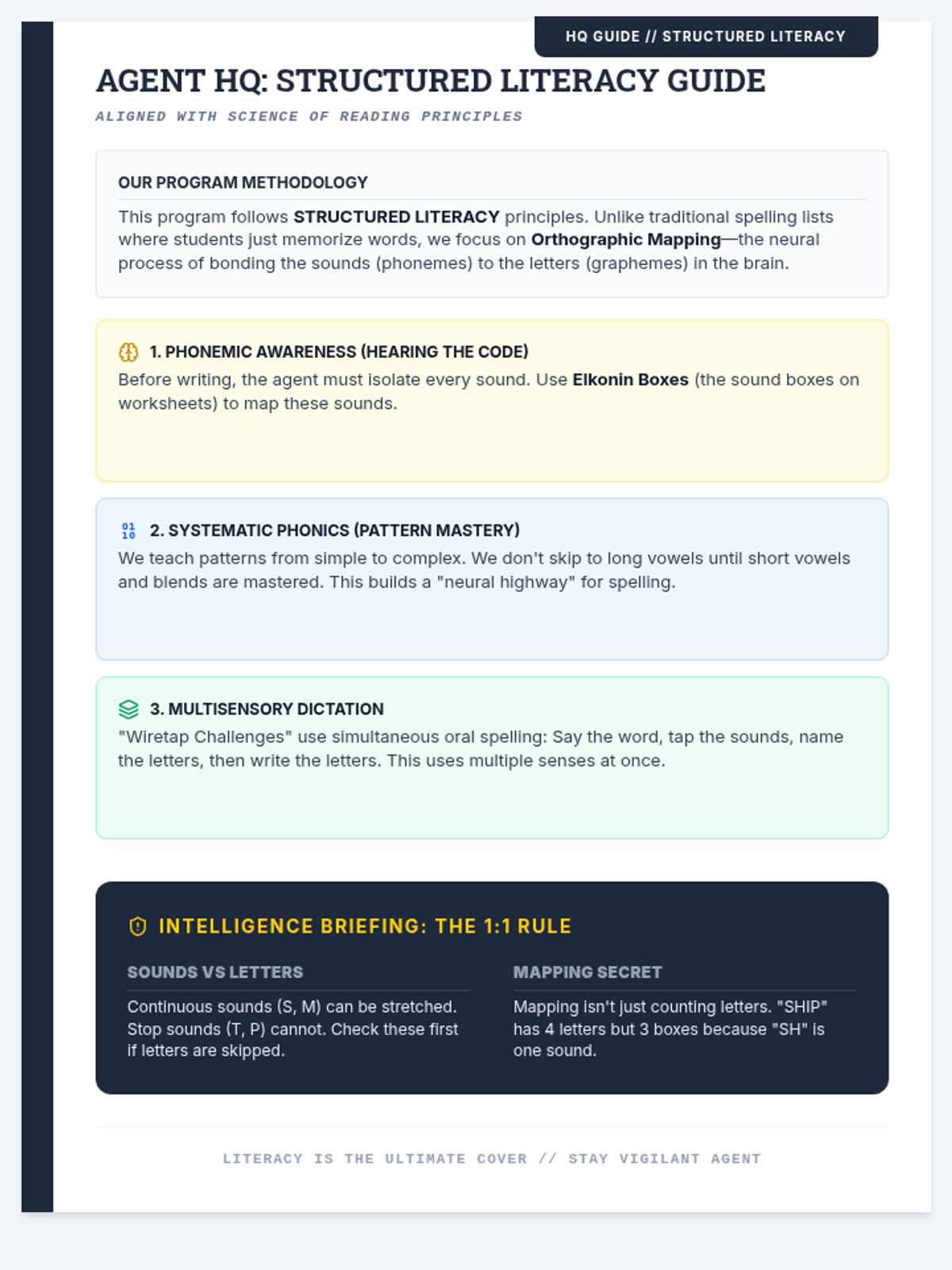
Focuses on CVC (Consonant-Vowel-Consonant) words, emphasizing sound isolation and phonemic awareness for the first two weeks of summer.
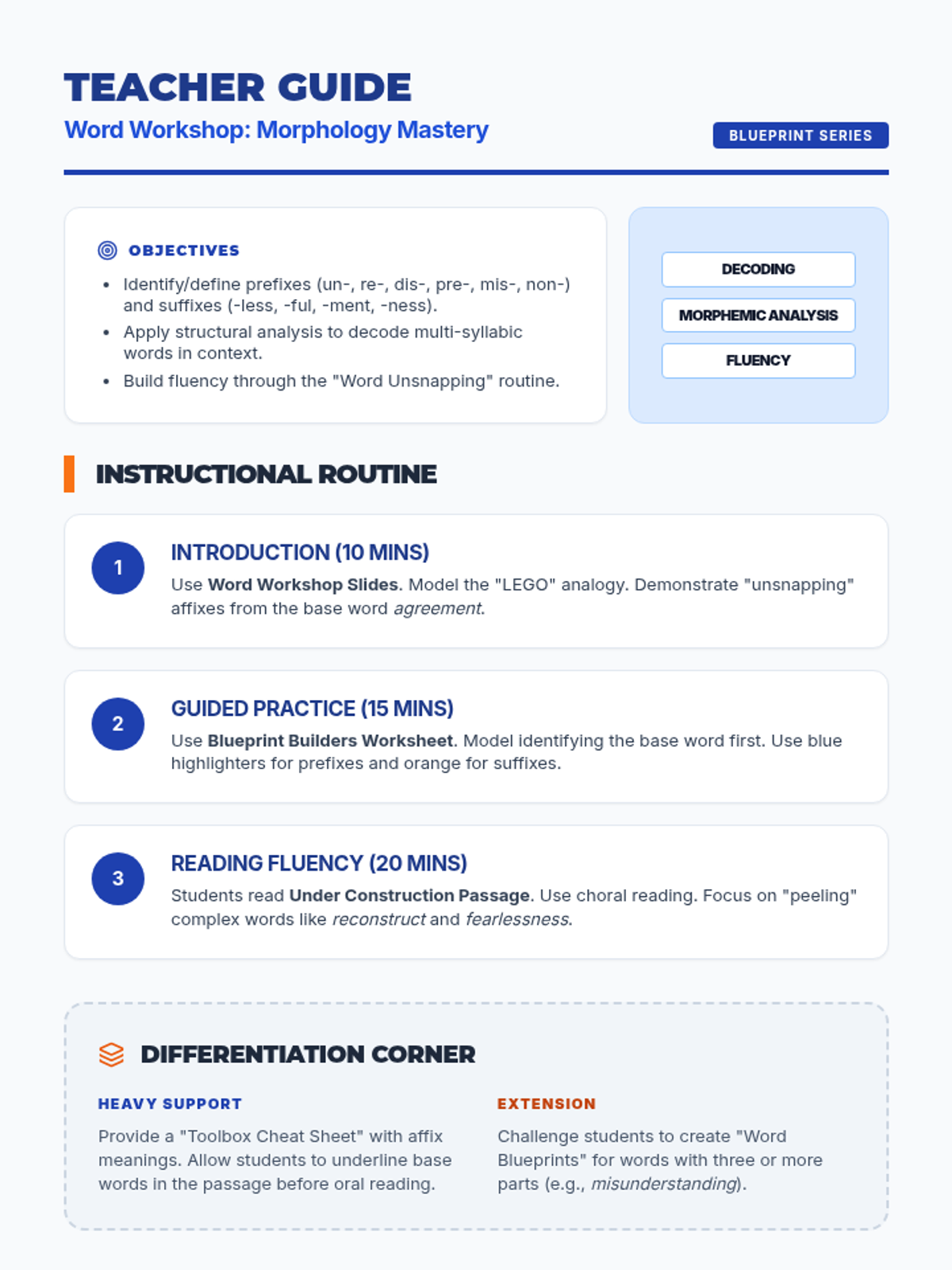
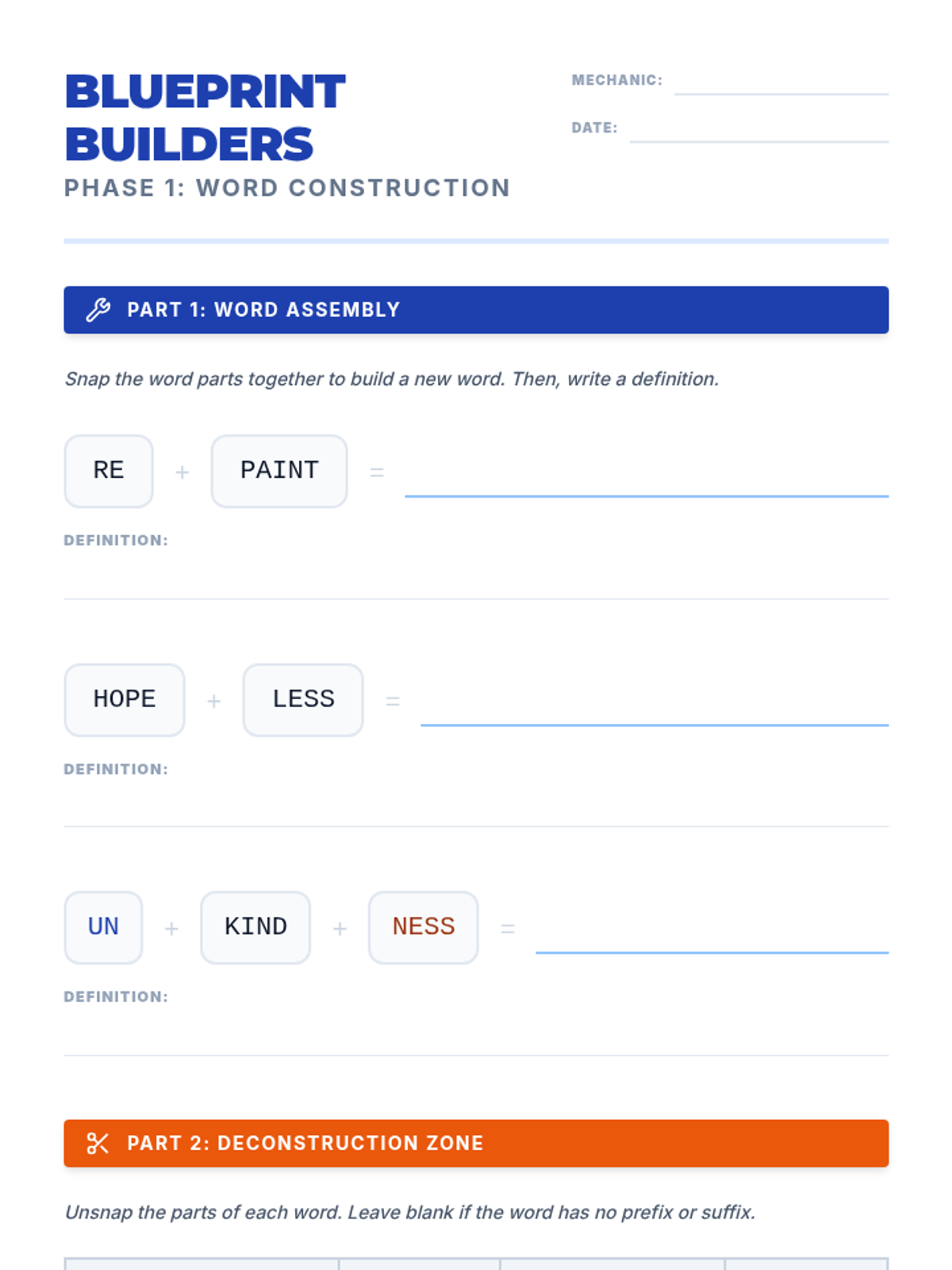
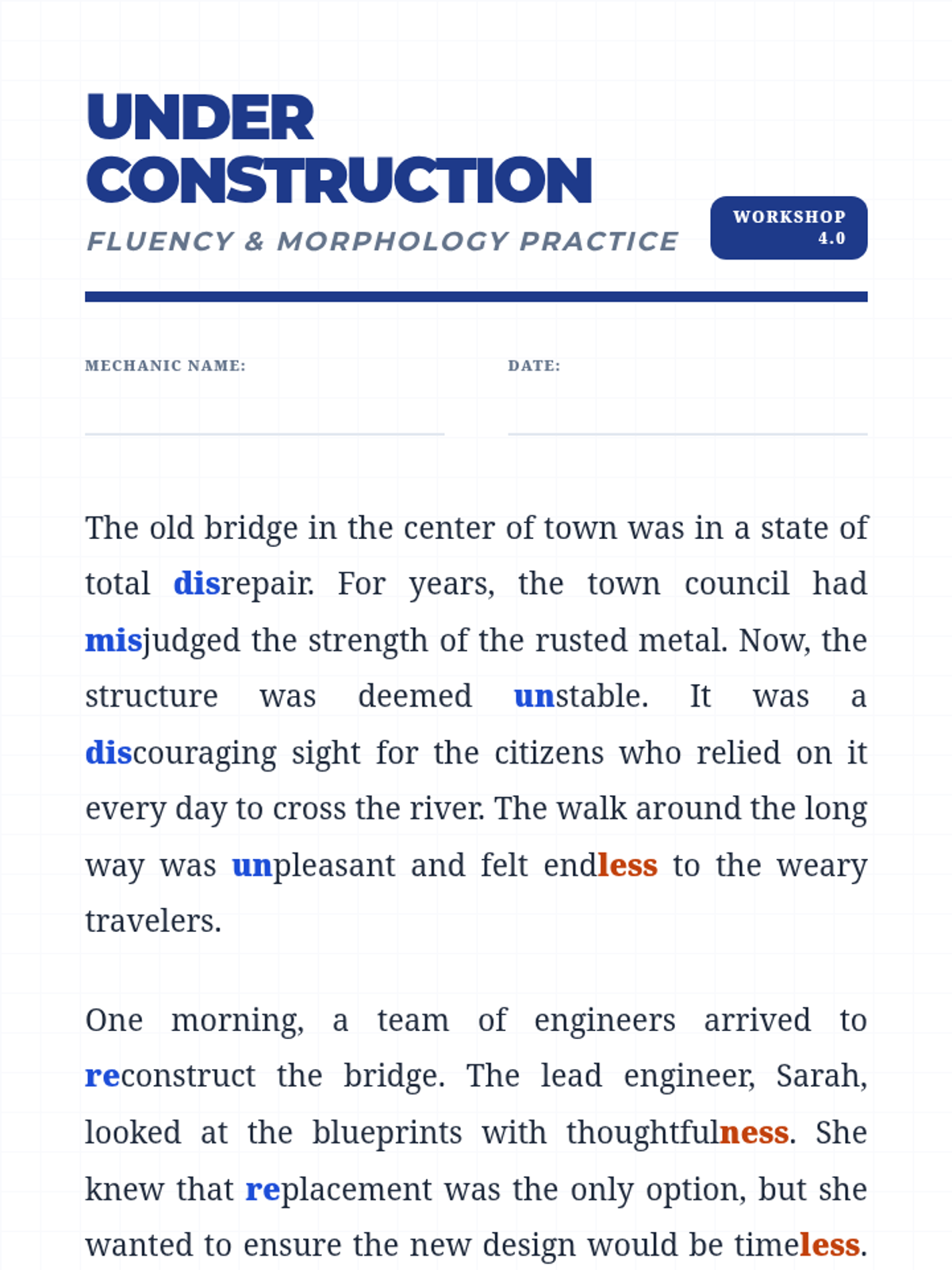
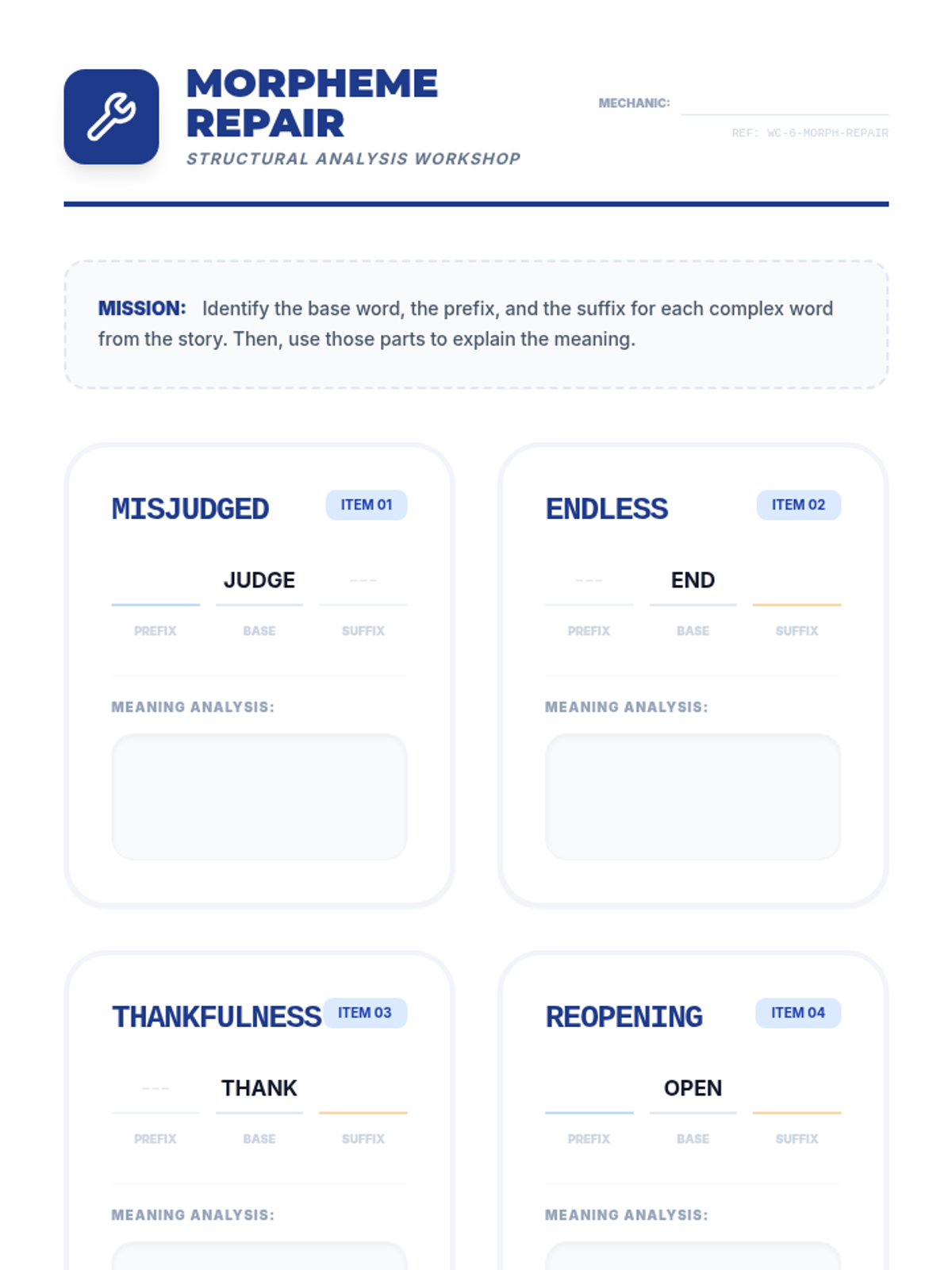
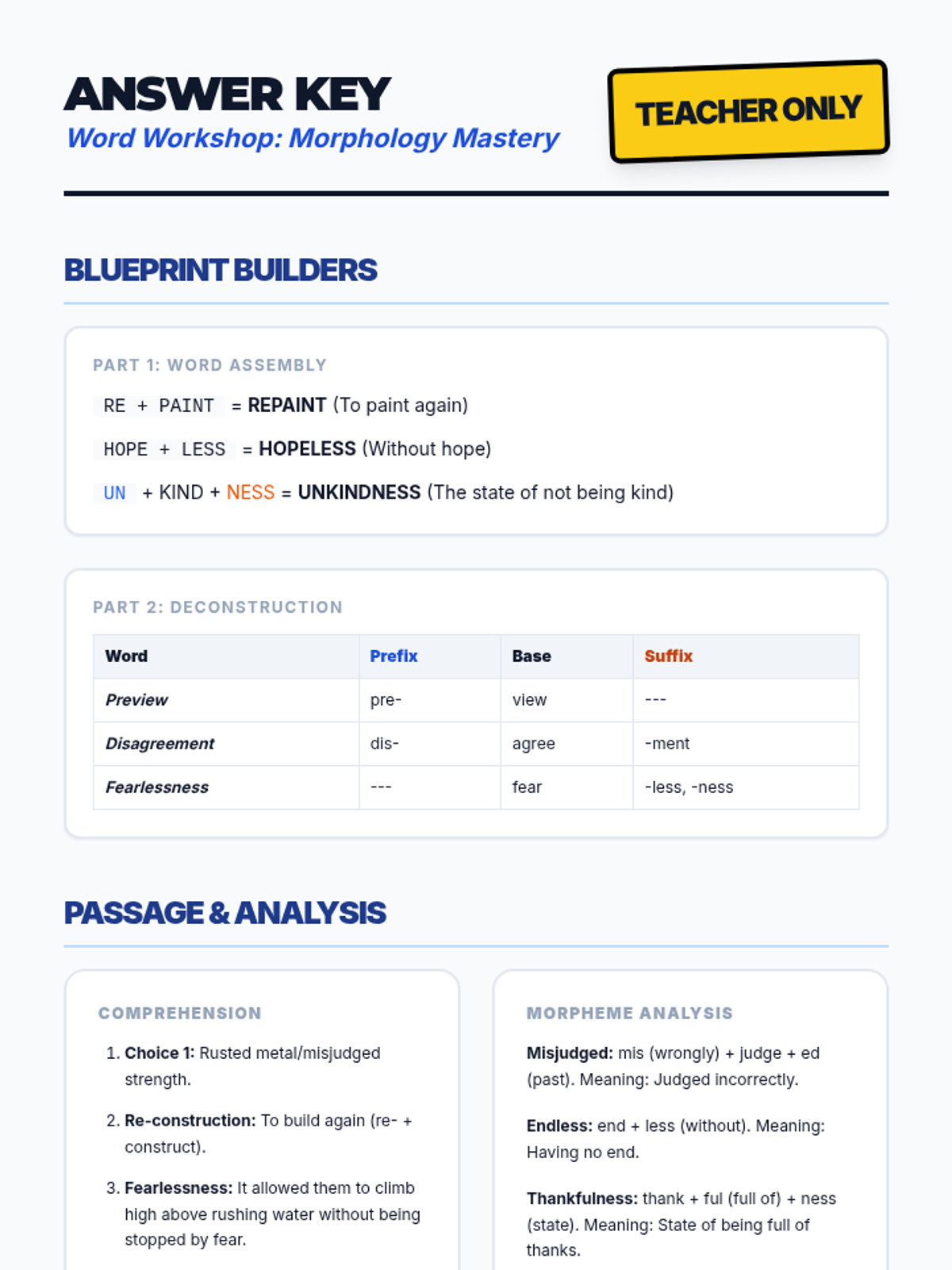
A morphology lesson for 6th-grade struggling readers focusing on common prefixes and suffixes to decode and understand complex words. includes a fluency passage, comprehension questions, and hands-on practice.
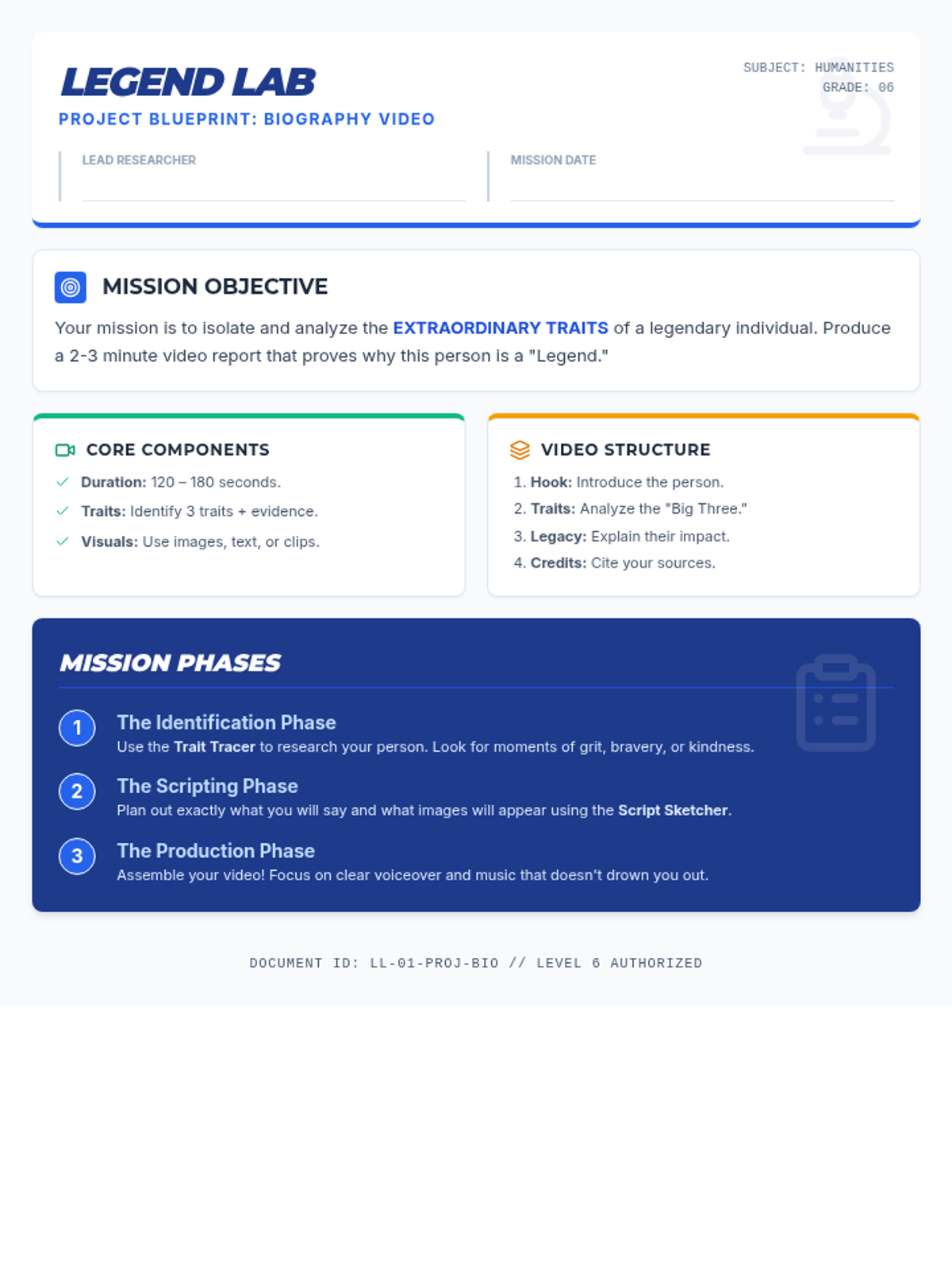
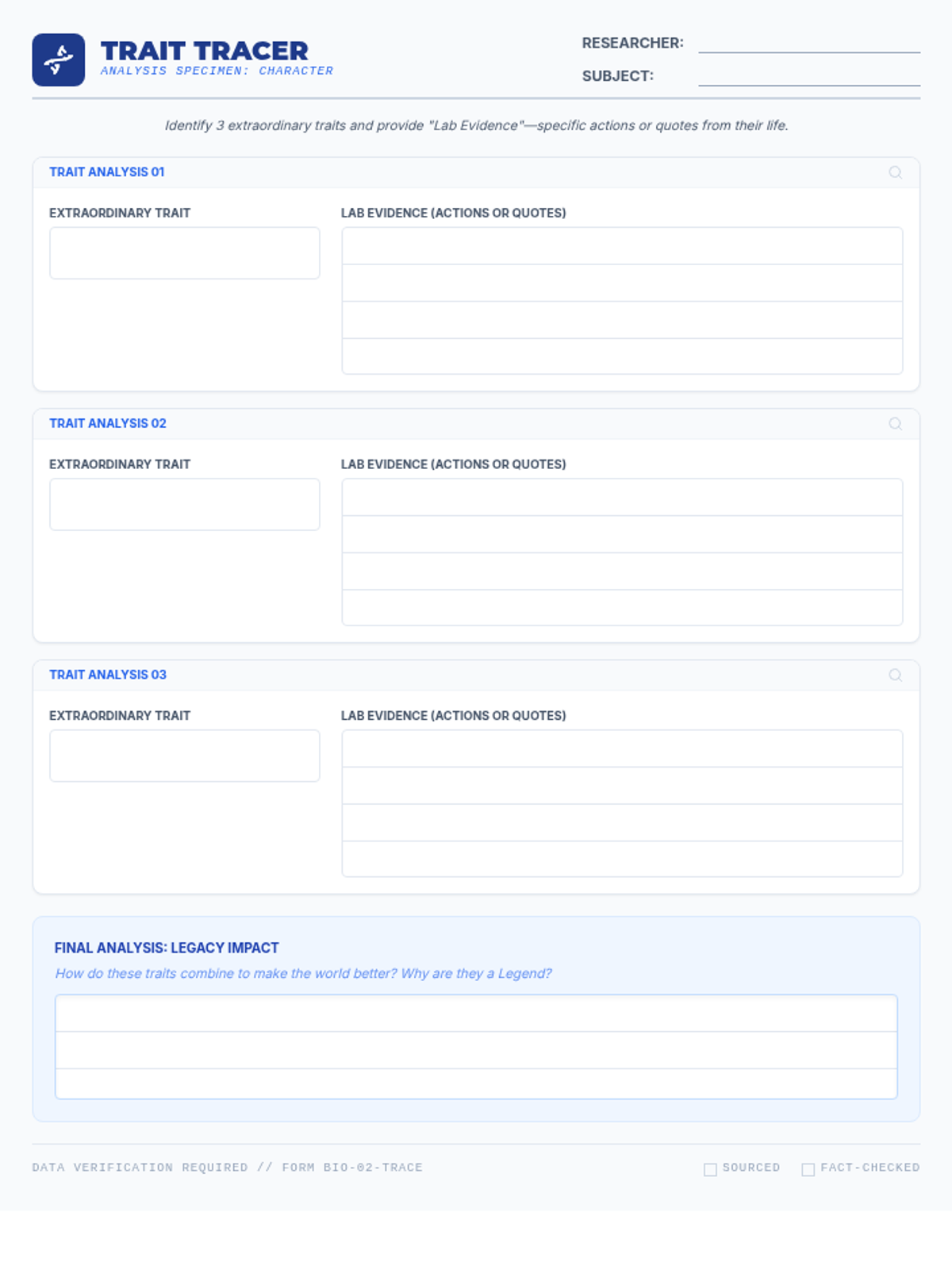
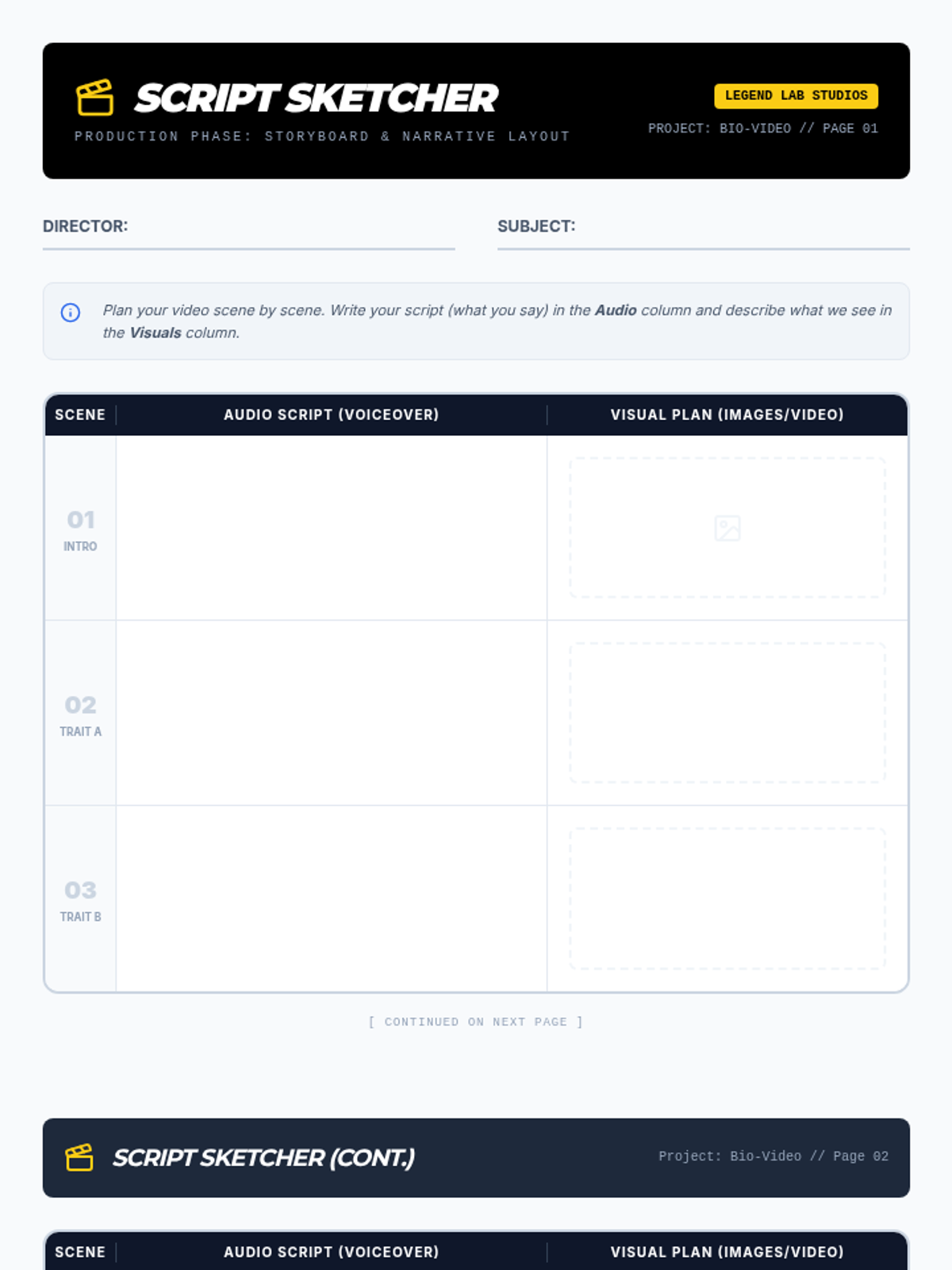
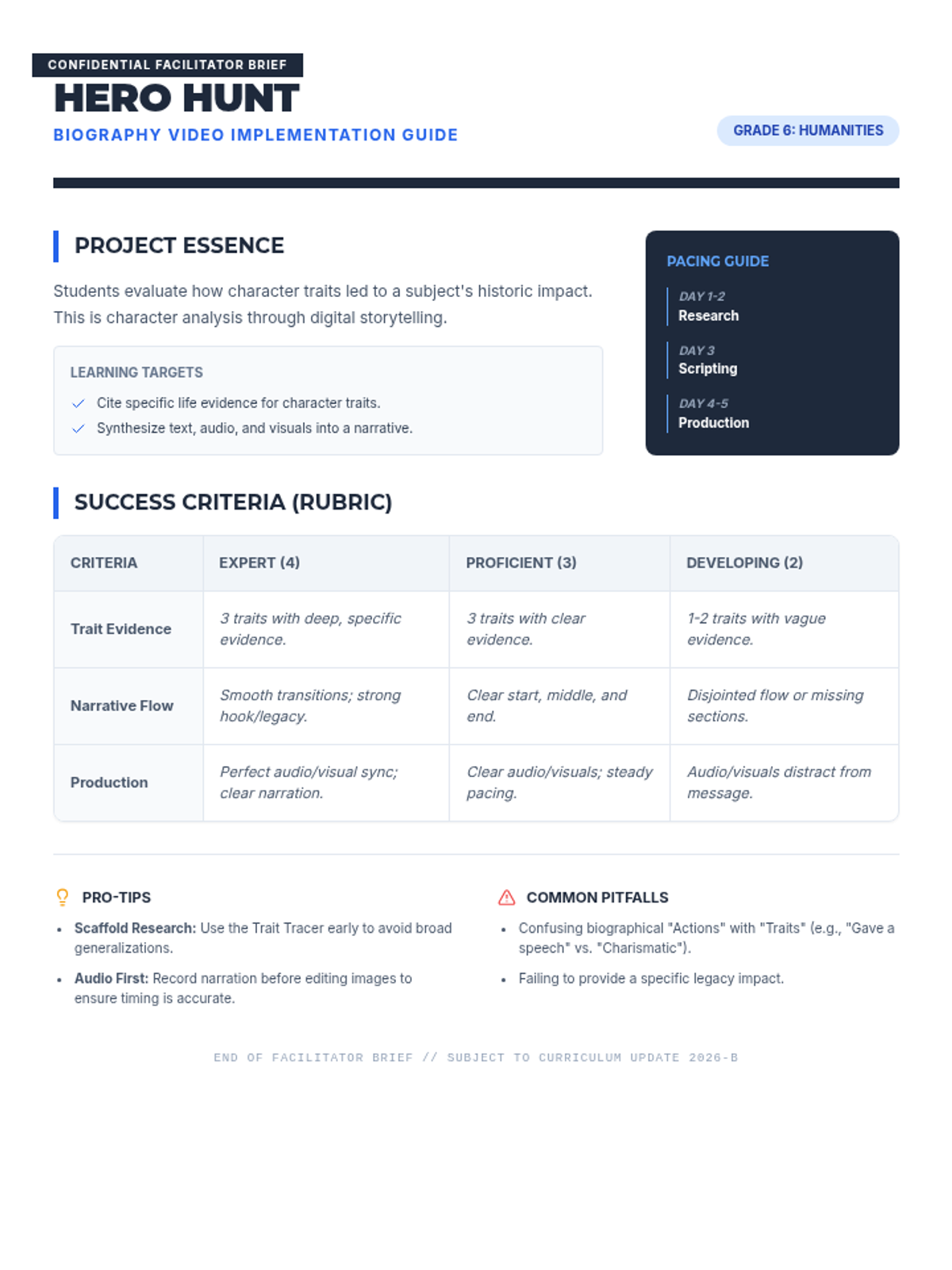
A project-based lesson where 6th-grade students analyze extraordinary traits of historical or contemporary figures and produce a short biography video showcasing their findings.
A focused lesson on developing inferencing skills through text evidence, designed for 6th-grade students with built-in scaffolds for mastery.
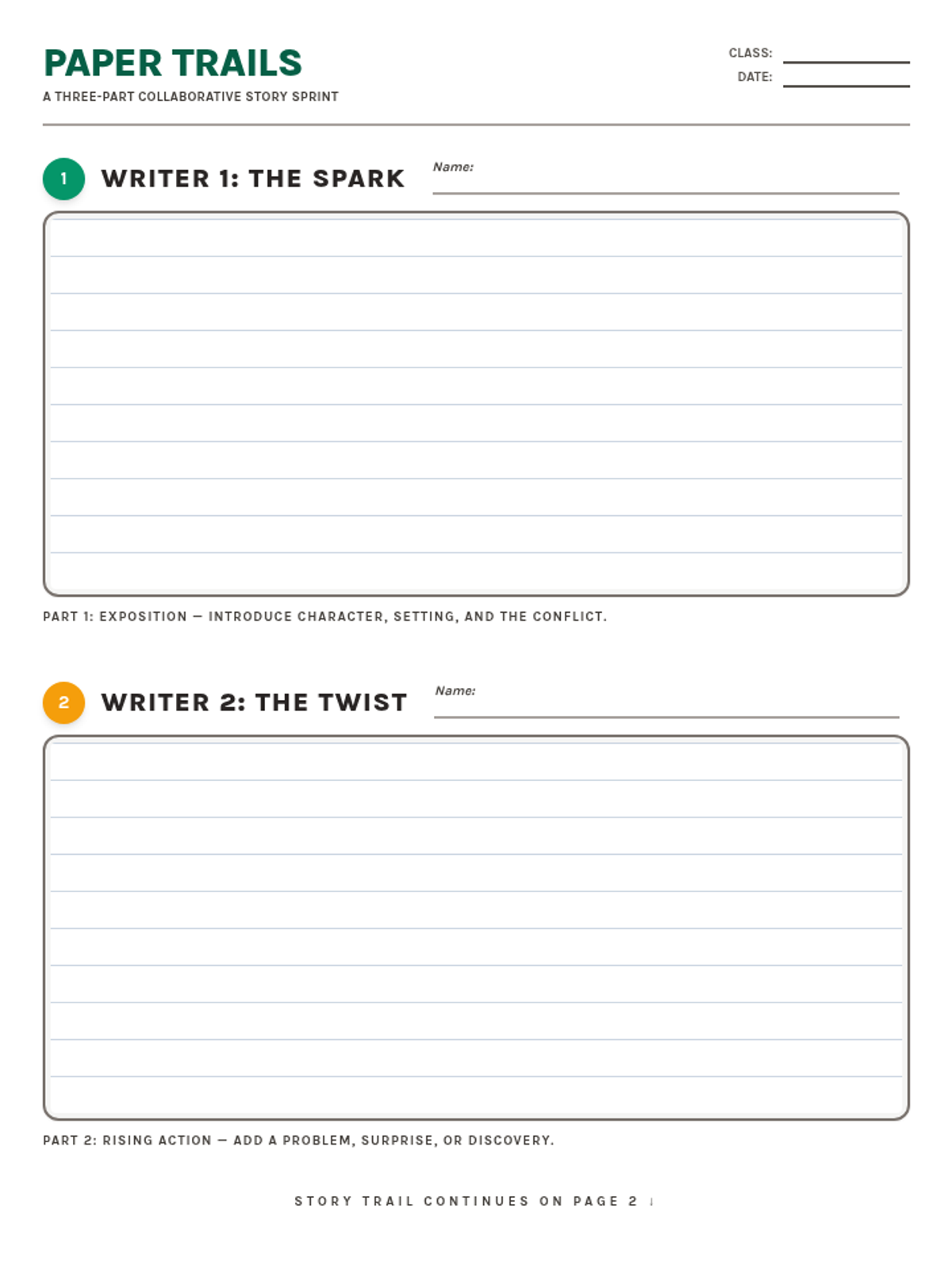
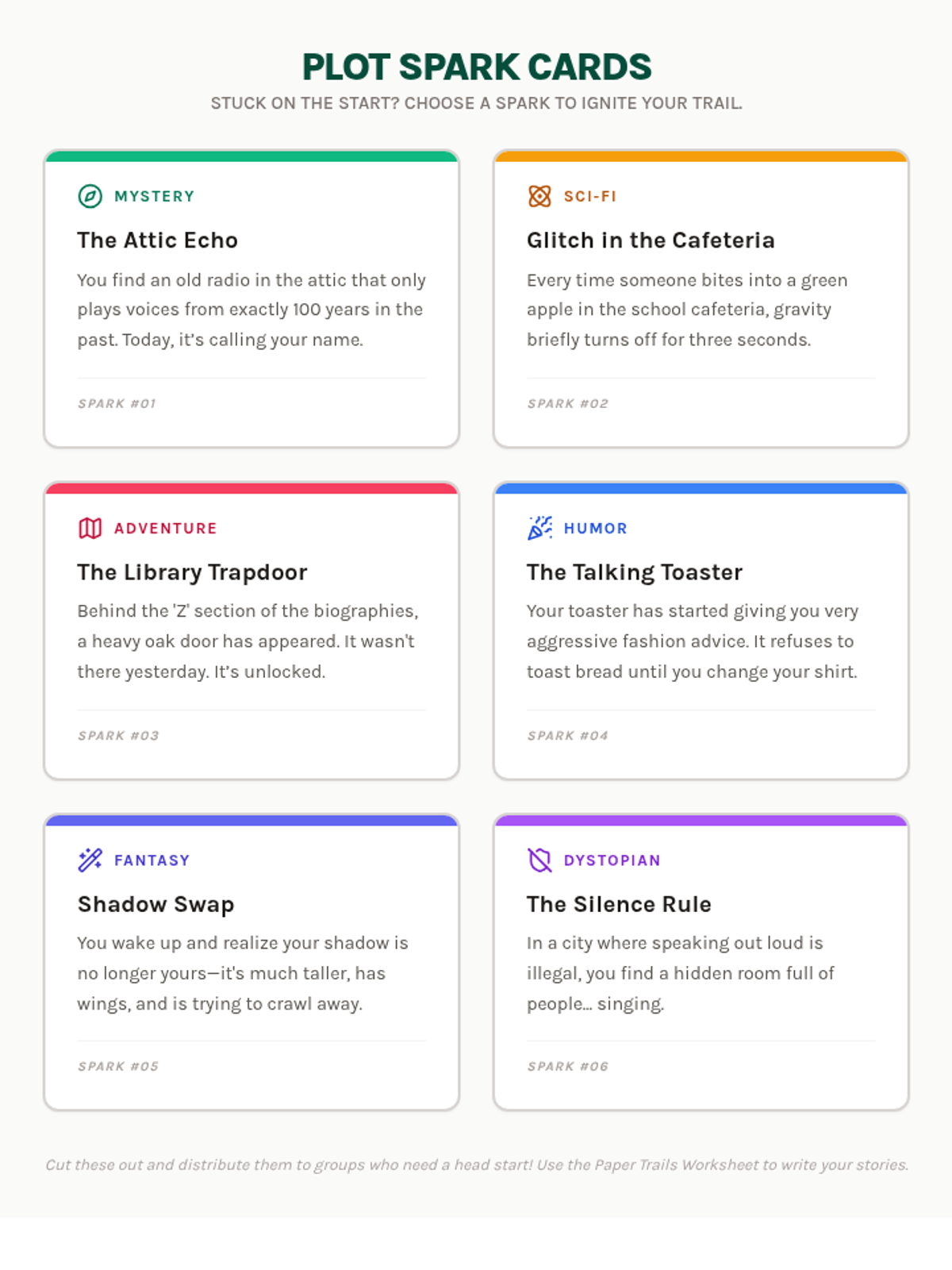
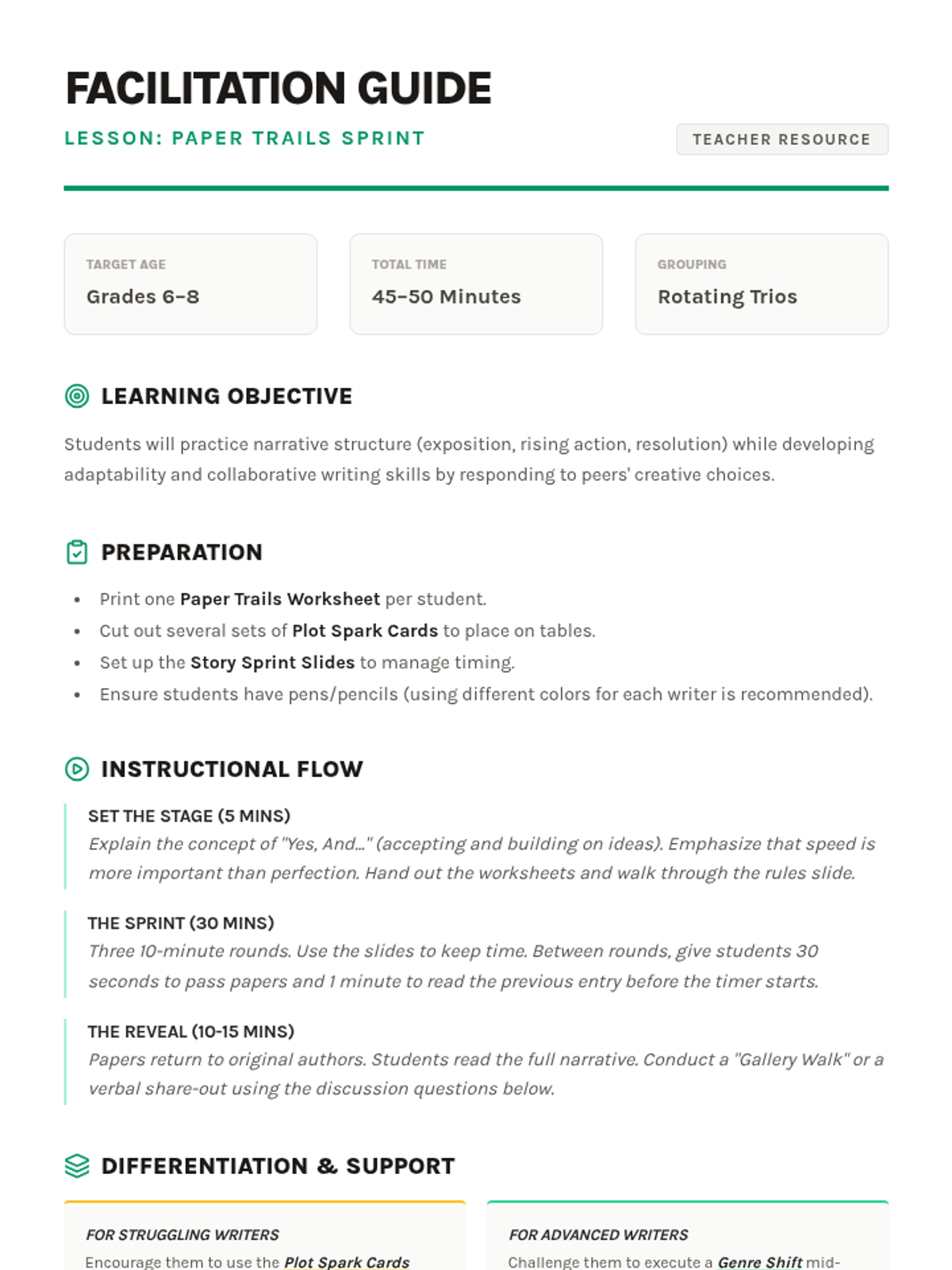
A fast-paced collaborative writing challenge where students rotate their stories three times to build a narrative arc from start to finish.
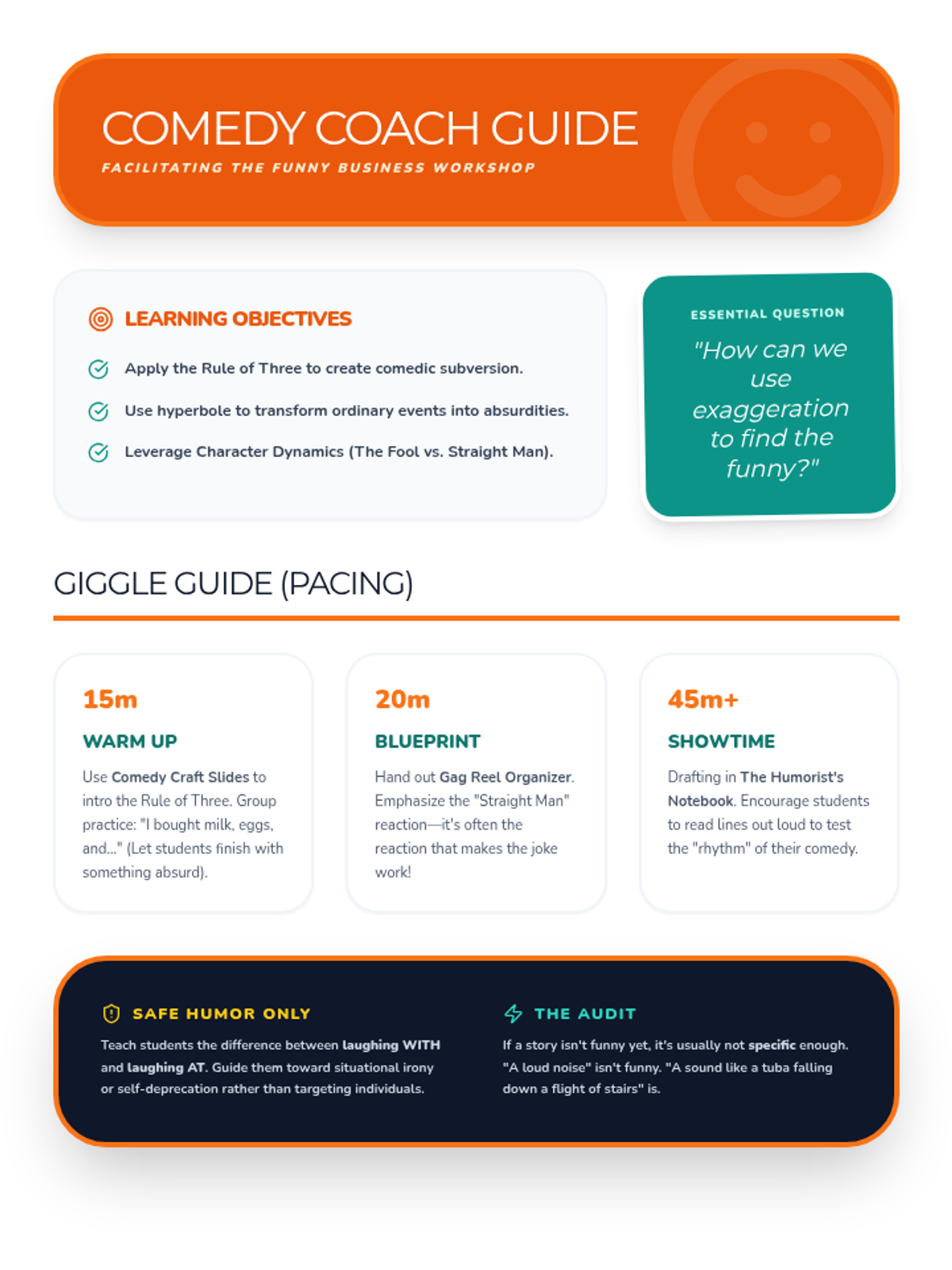
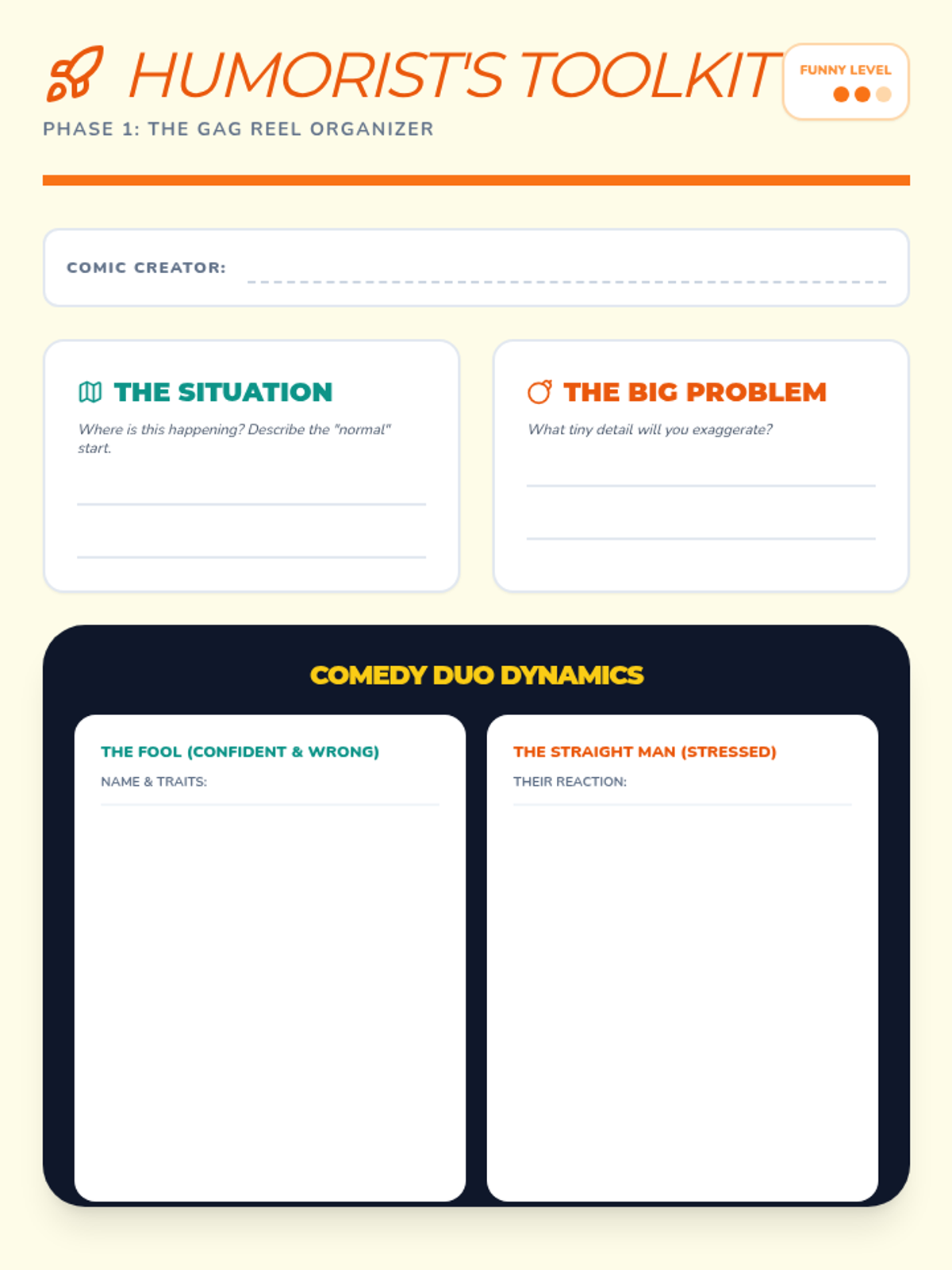
In this workshop, students explore the craft of comedy by learning techniques like the Rule of Three, hyperbole, and character archetypes. They will plan their own humorous story using a structured organizer before writing a final draft.
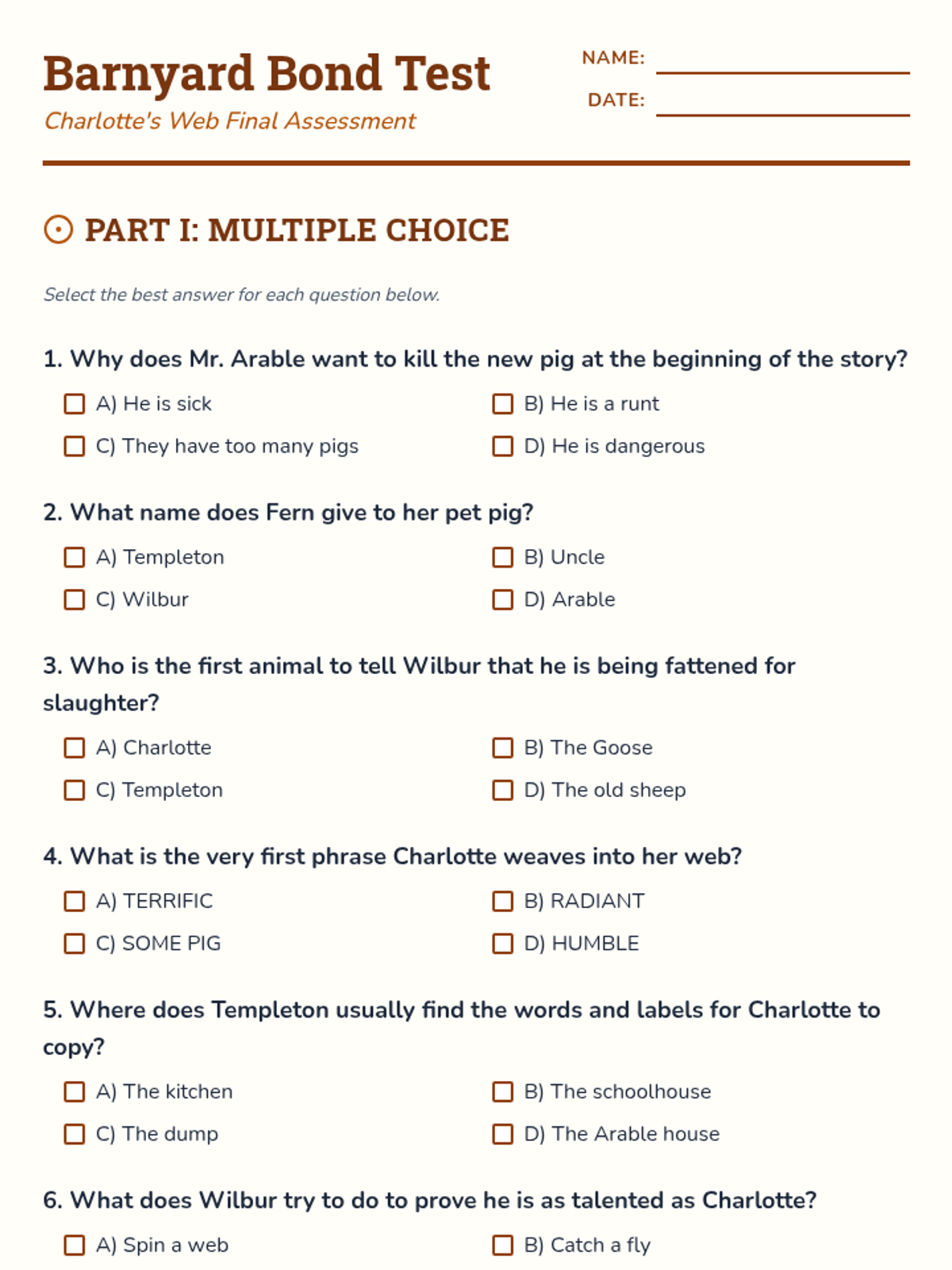
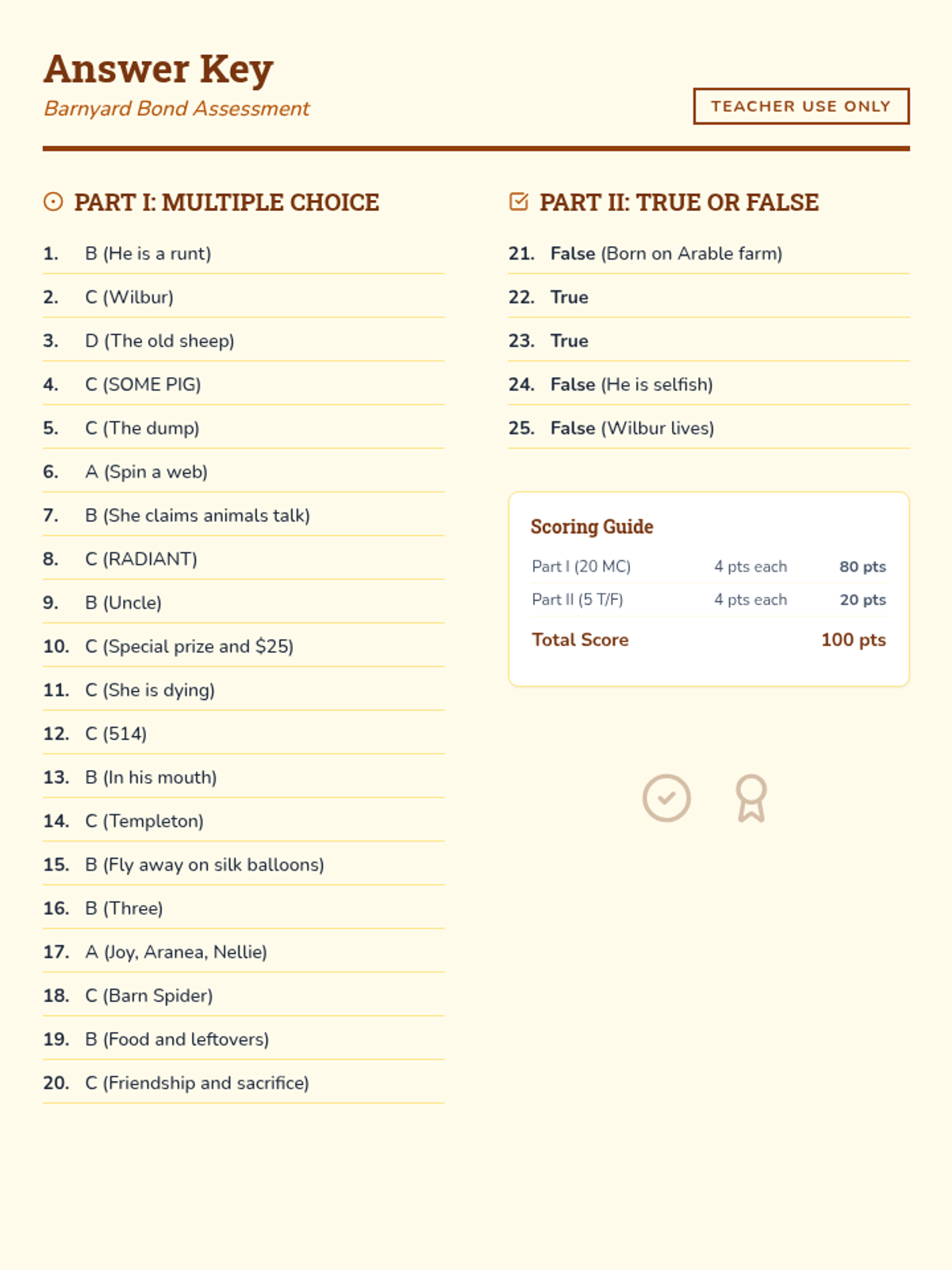
A final assessment for E.B. White's 'Charlotte's Web' including a 25-question test and a corresponding answer key.
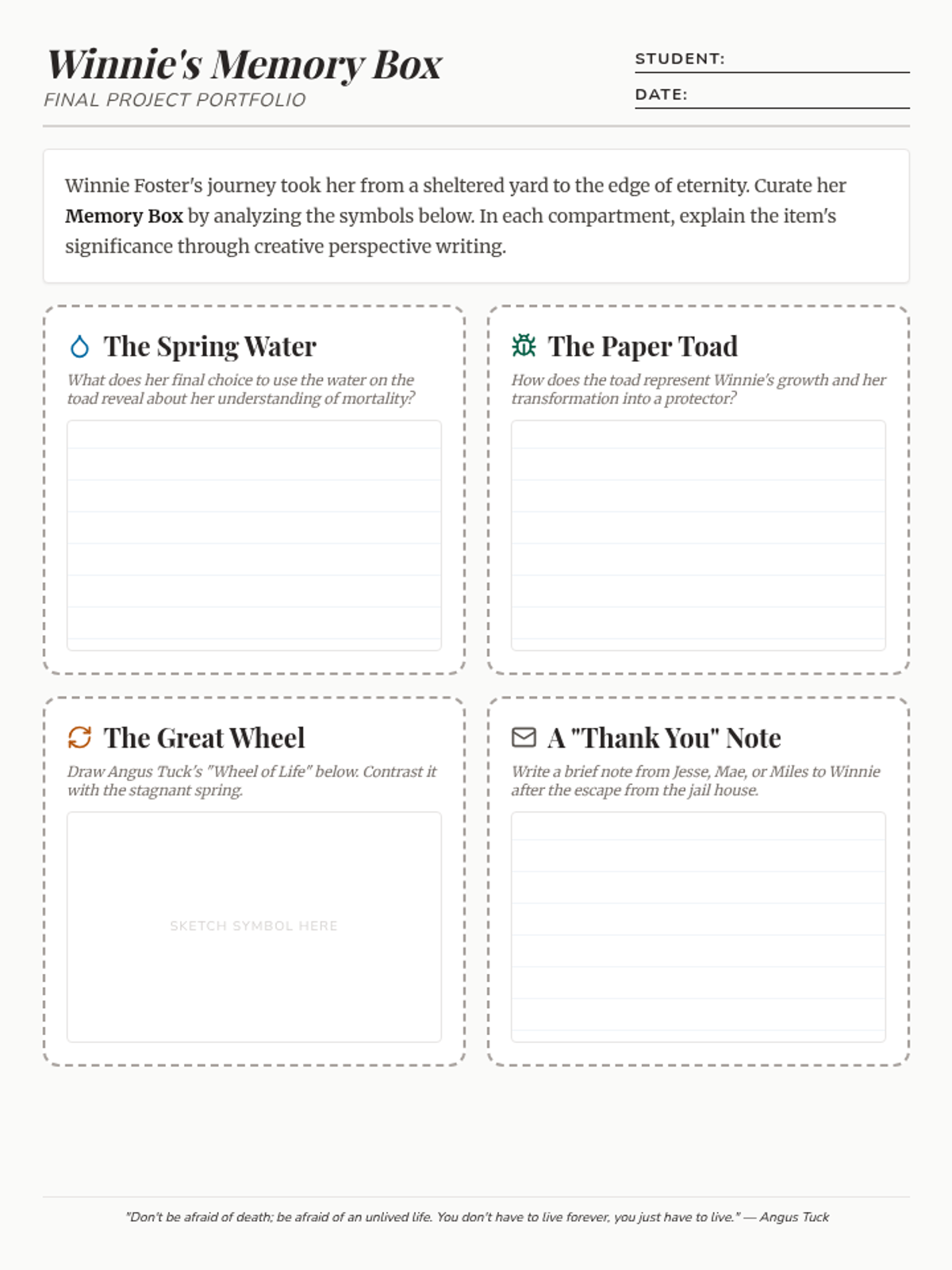
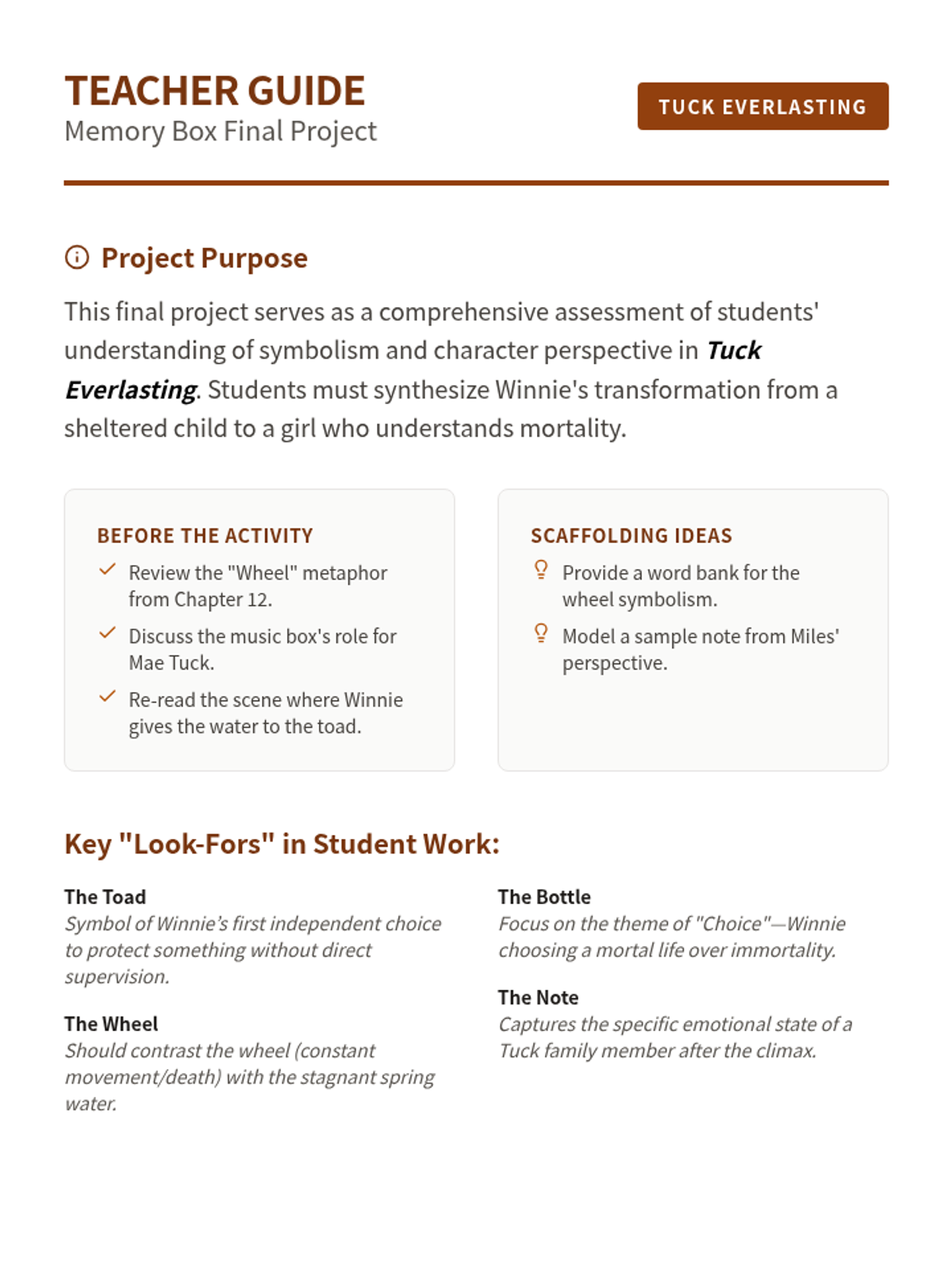
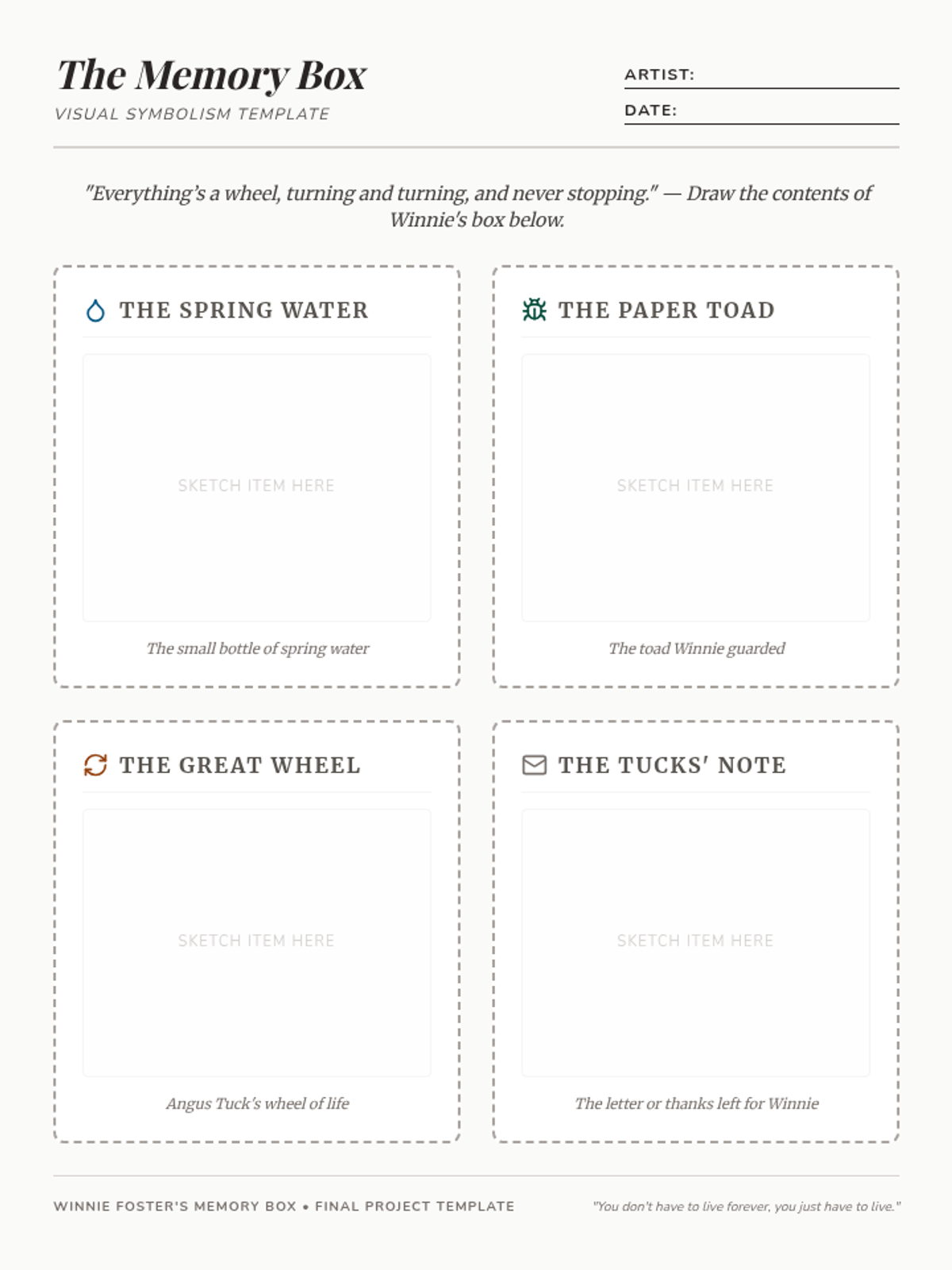
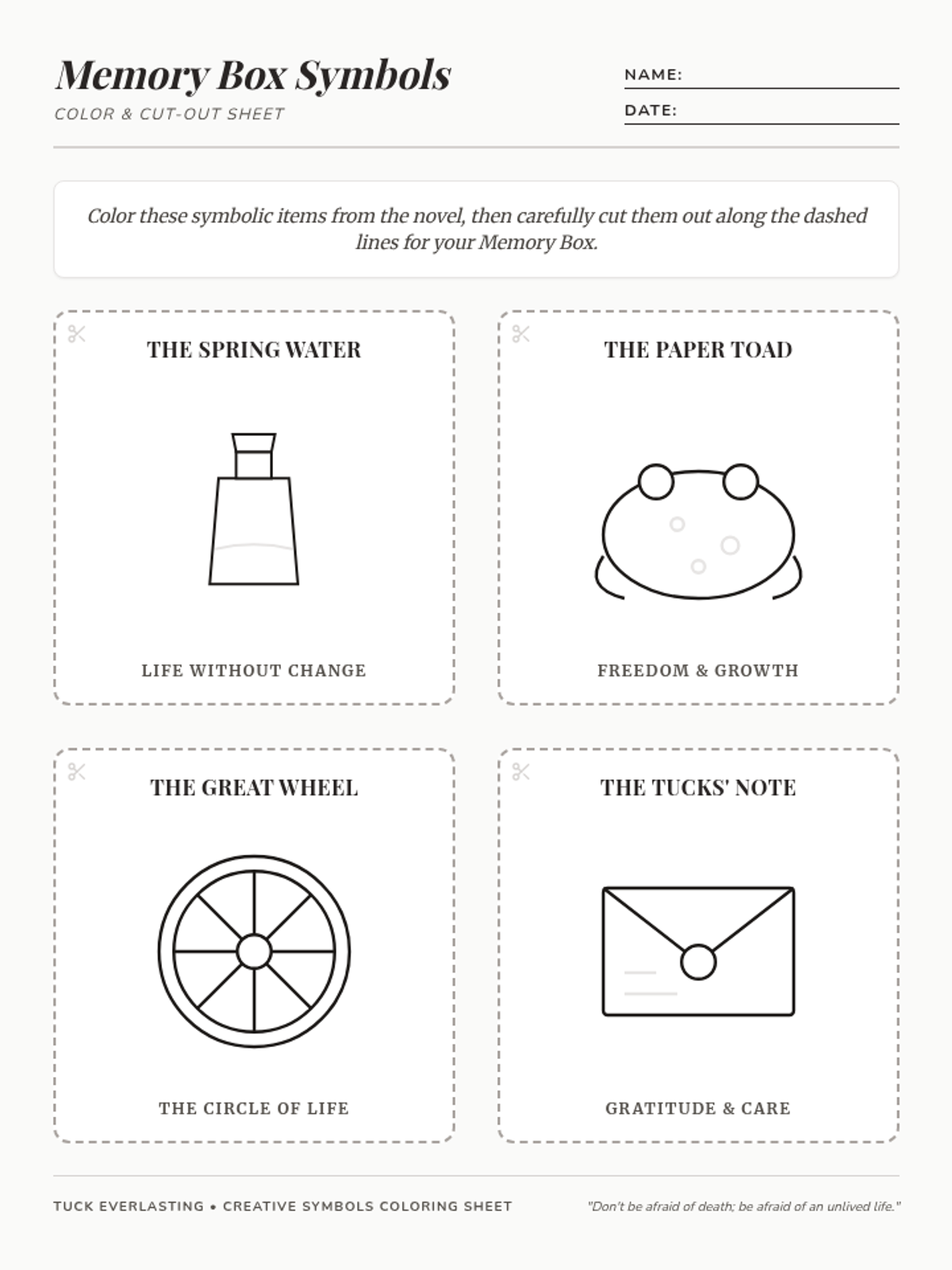
A final project where students curate a symbolic 'Memory Box' for Winnie Foster, exploring themes of immortality, friendship, and the circle of life through perspective writing and visual symbolism.
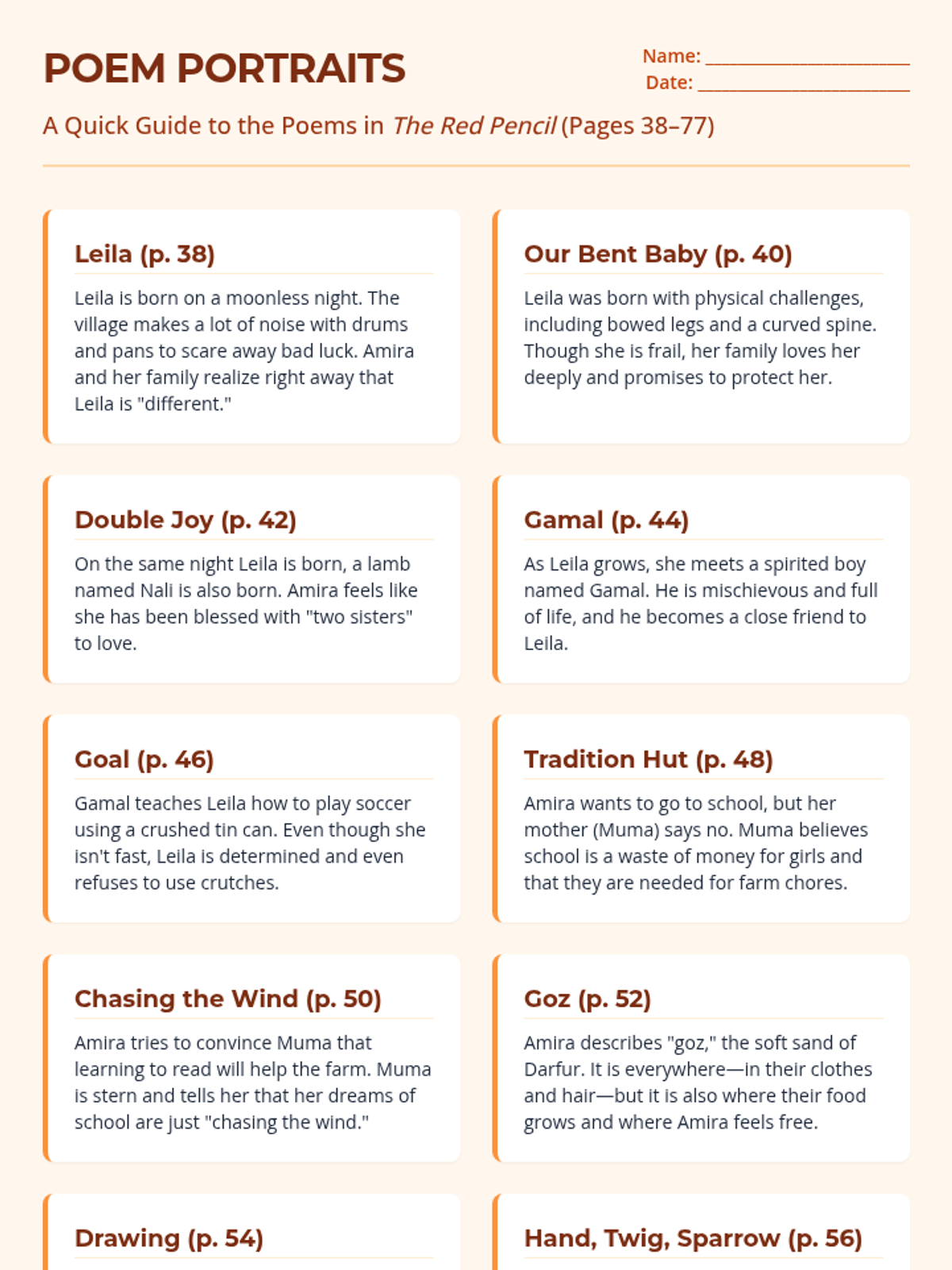
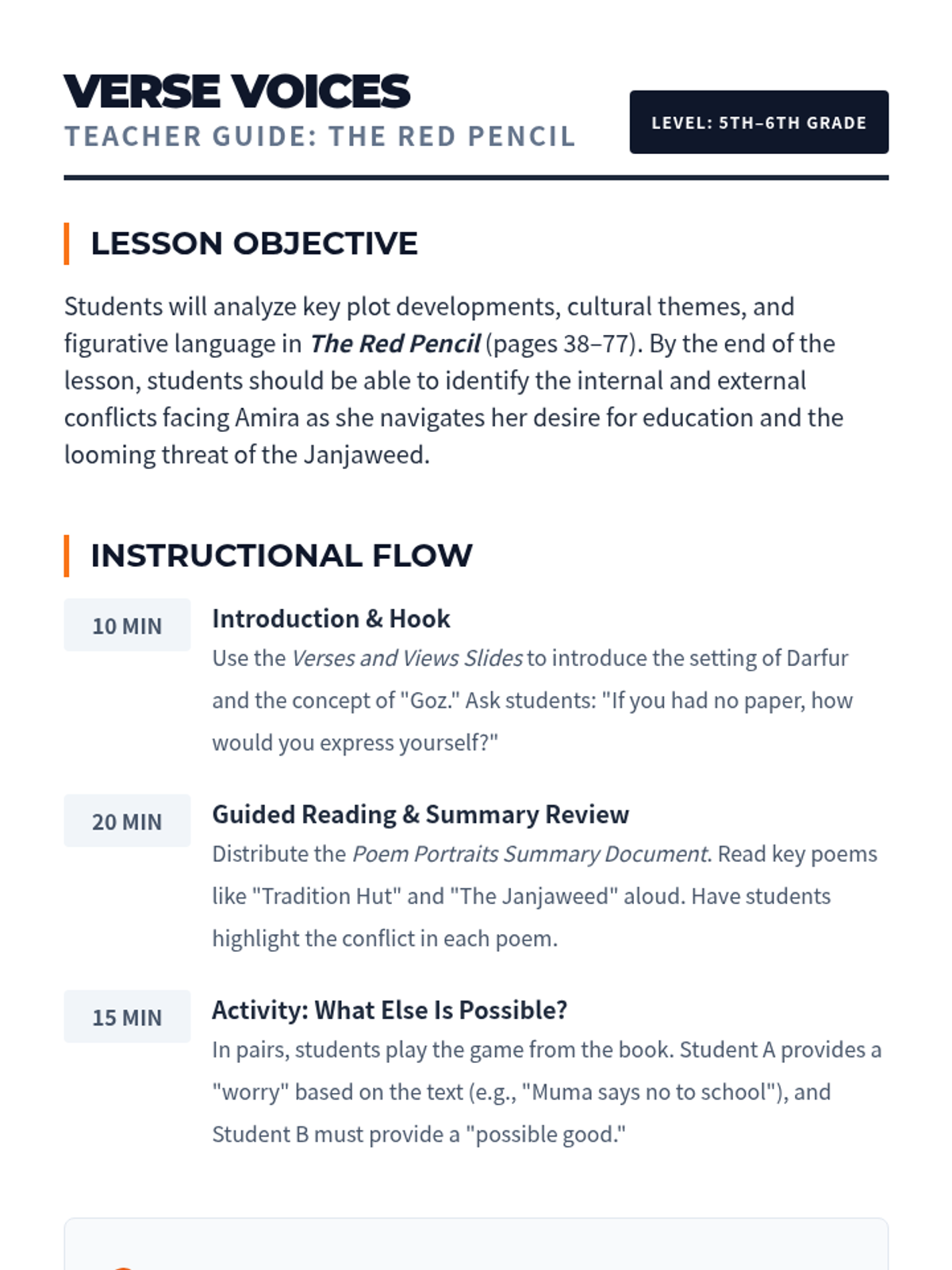
A collection of resources summarizing the poems from The Red Pencil, focusing on character development, cultural context, and the central conflict between tradition and education.
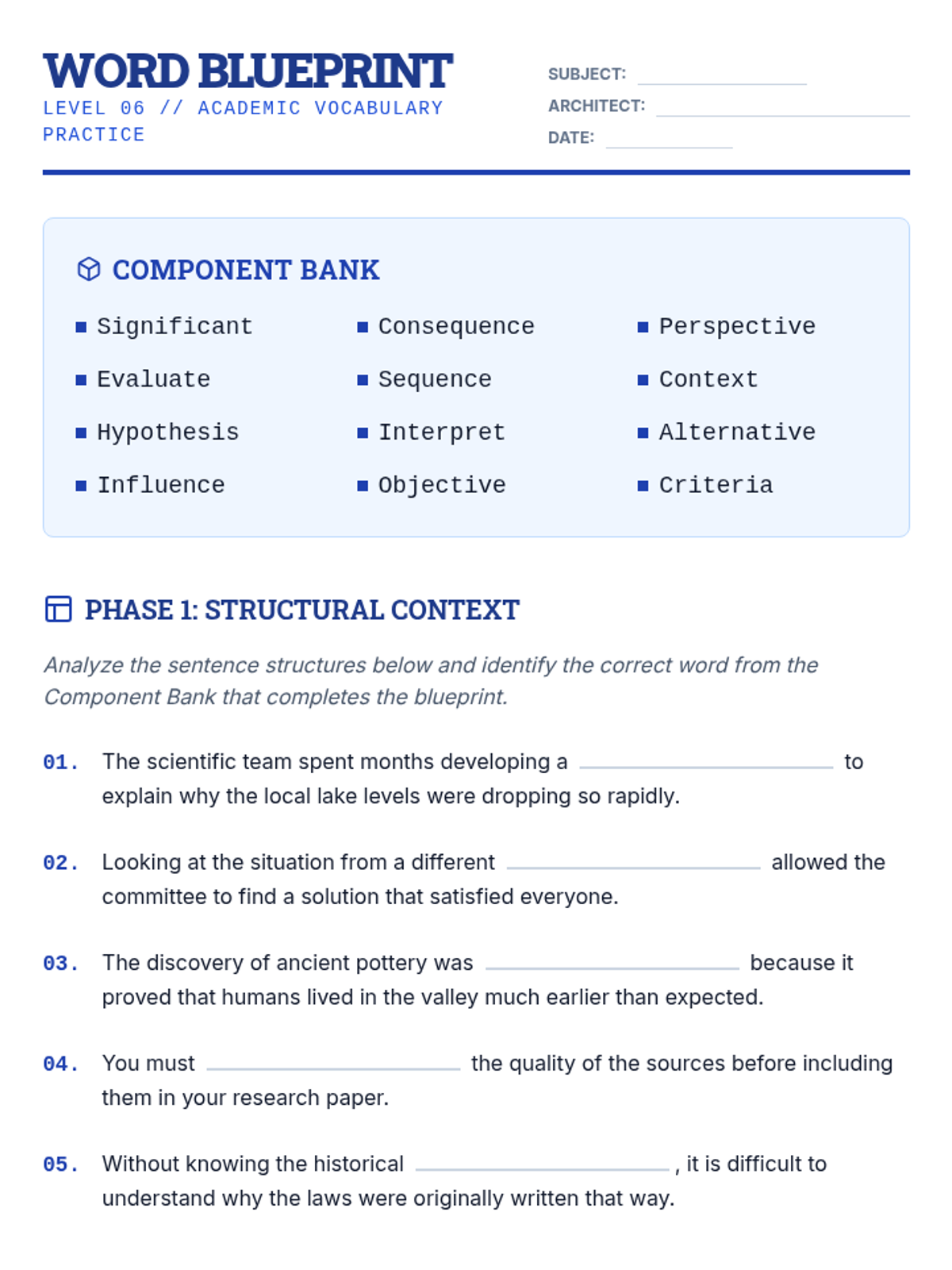
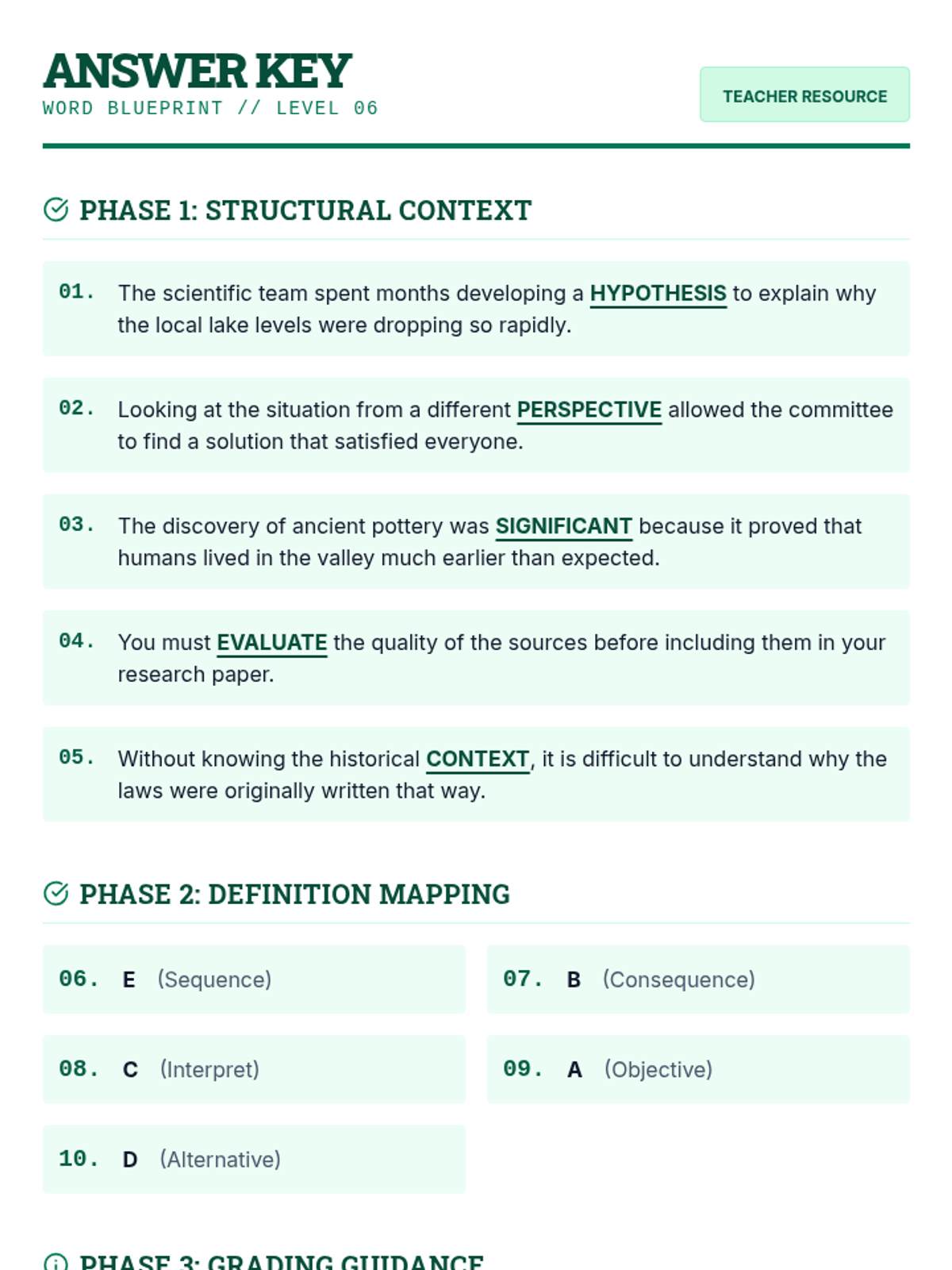
A lesson focused on mastering high-frequency academic vocabulary for 6th grade through structural analysis and application.
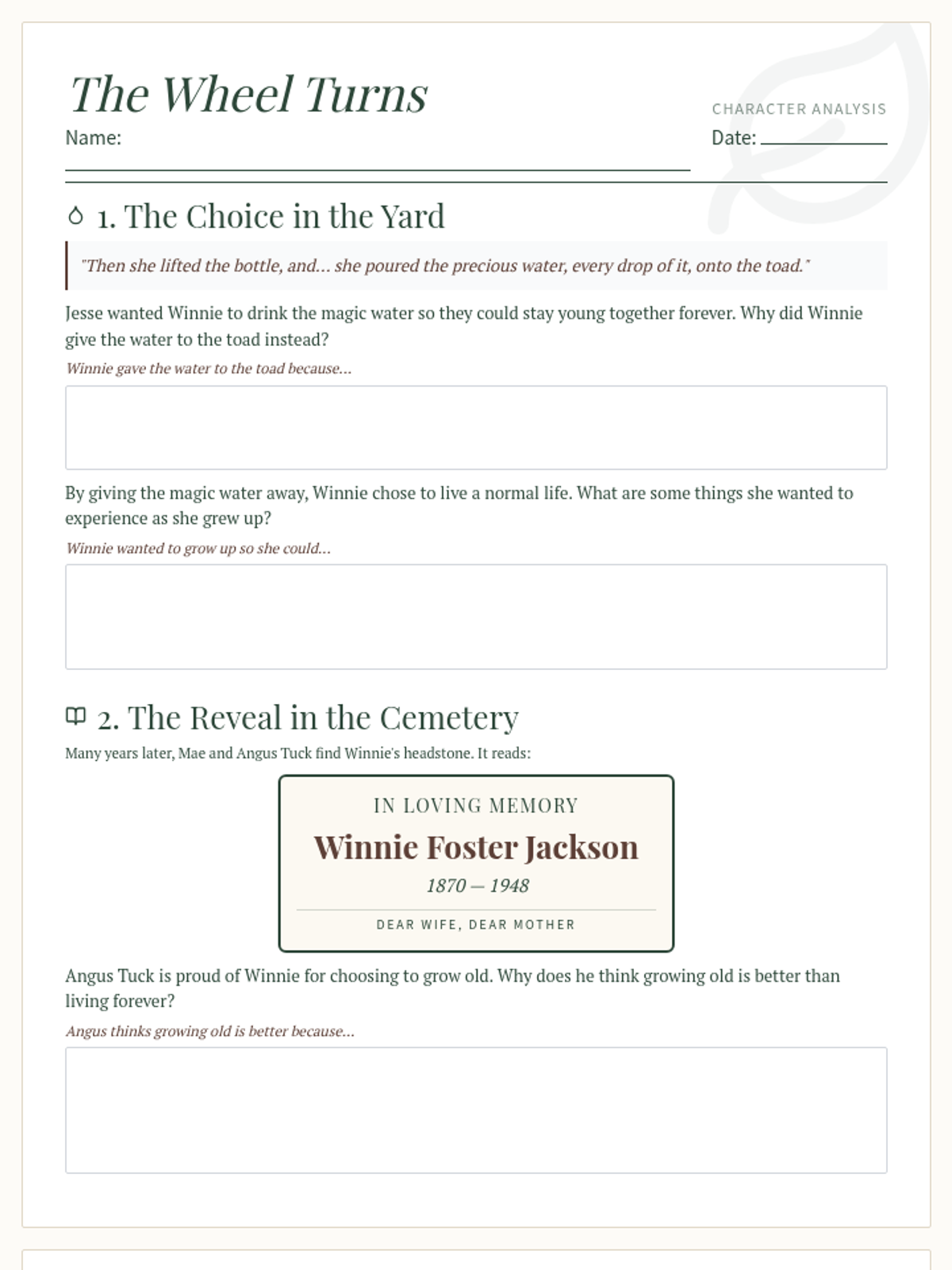
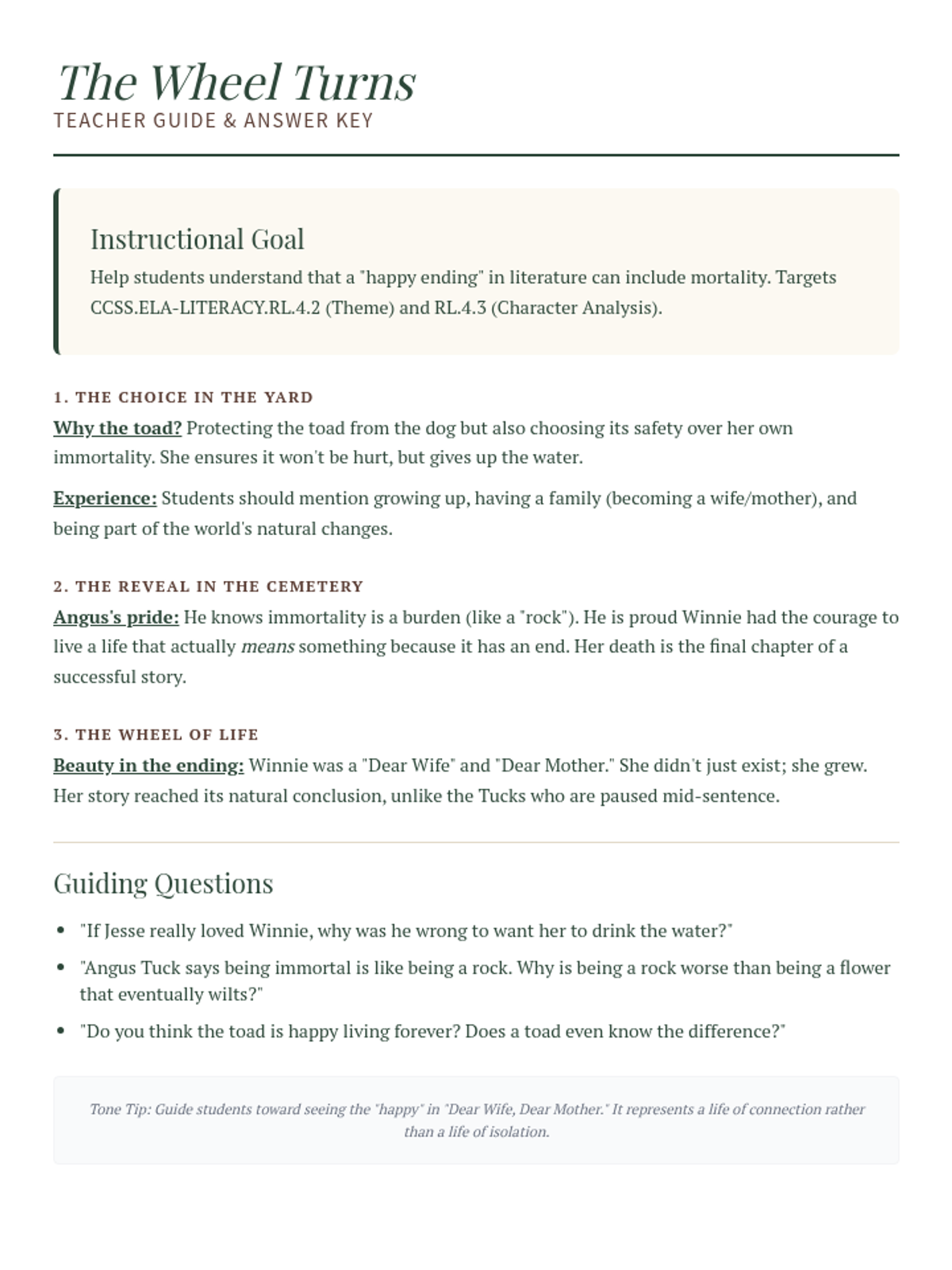
This lesson focuses on the bittersweet conclusion of Tuck Everlasting, guiding students through Winnie Foster's pivotal choice and the theme of the 'Wheel of Life.' Students will analyze how Winnie's decision to live a mortal life reflects the book's central message about the beauty of life's natural cycle.
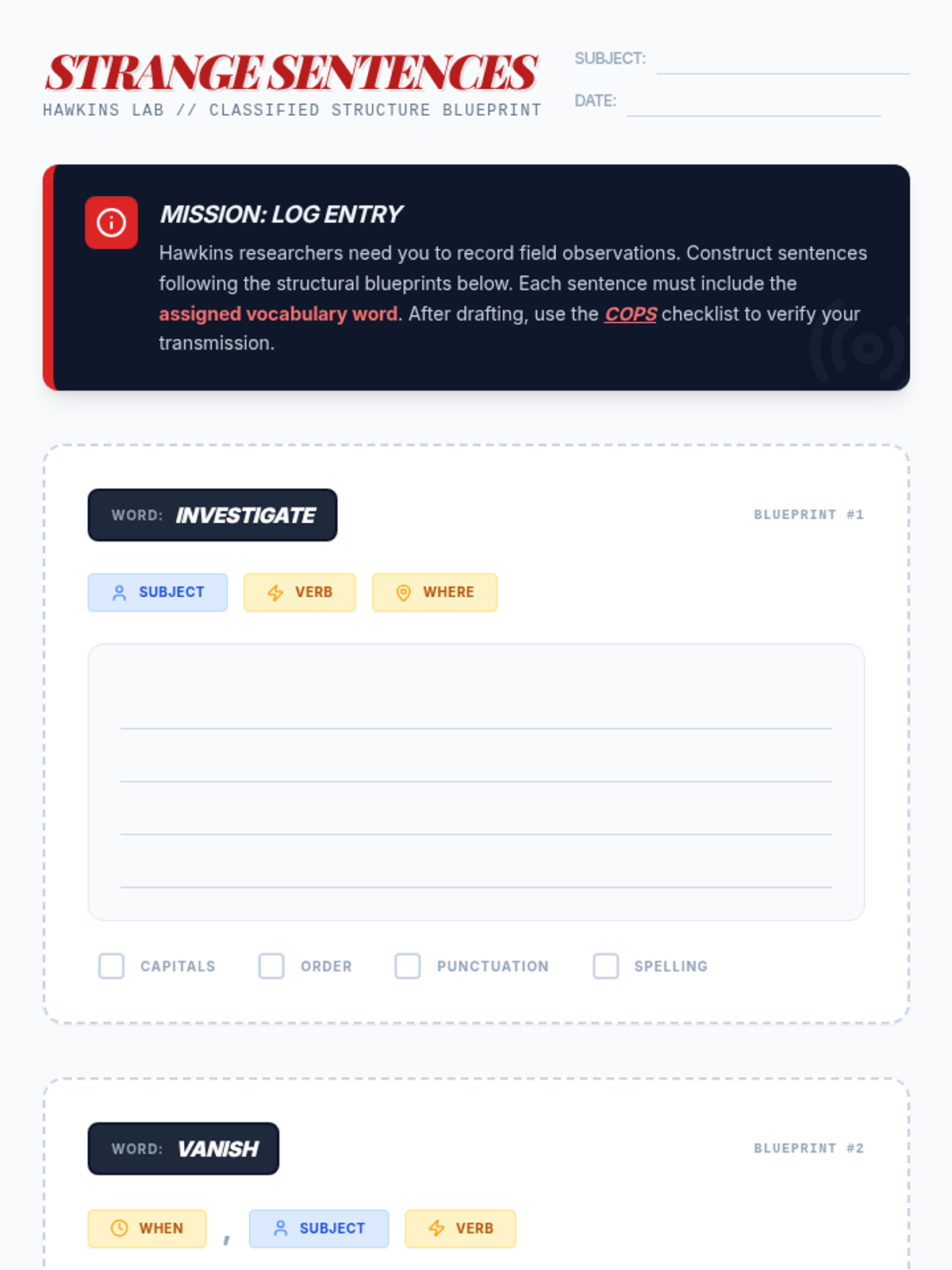
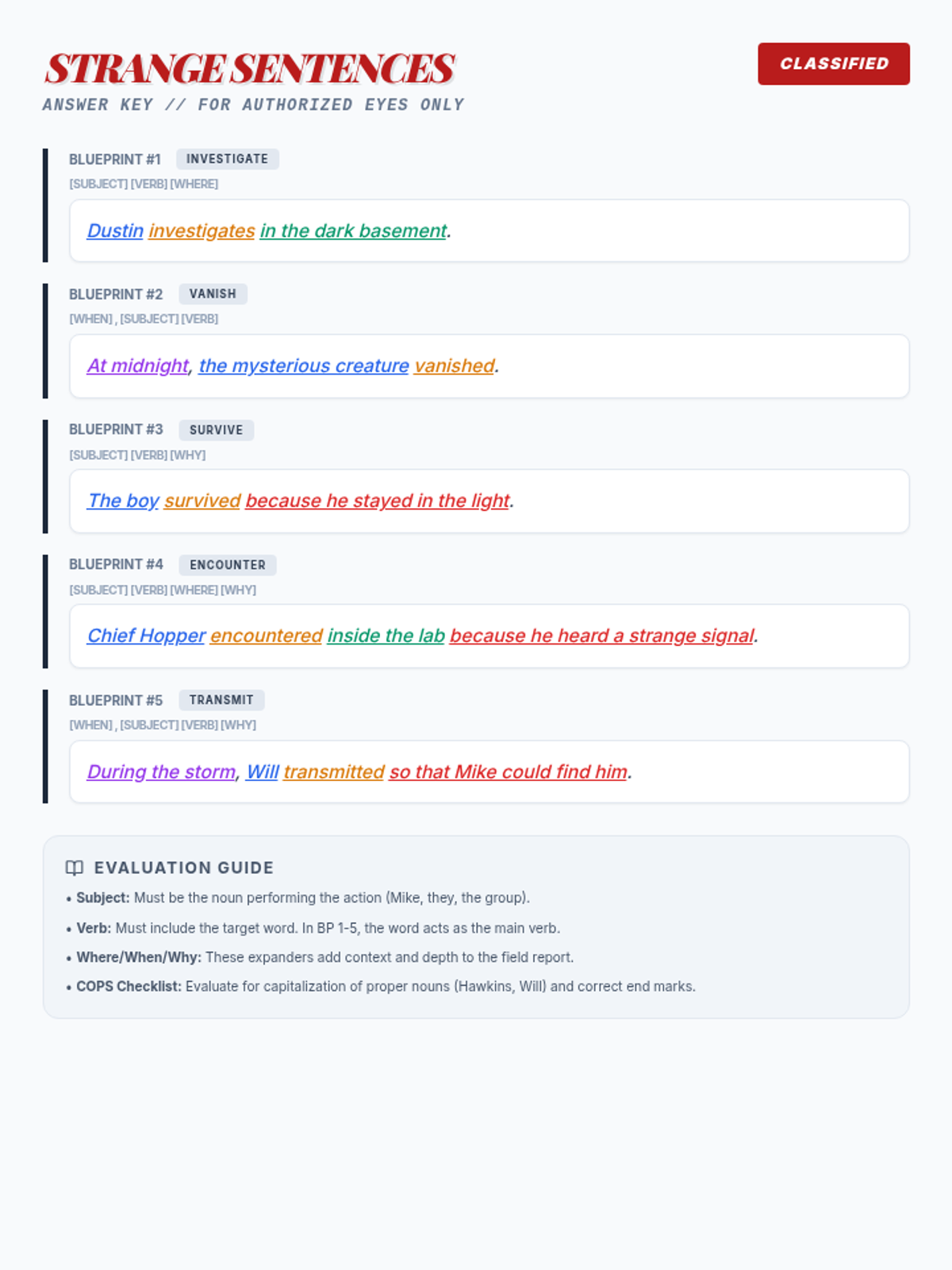
A Stranger Things themed lesson focusing on complex sentence construction using subject, predicate, and various predicate expanders (where, when, why).