A morphology lesson for 6th-grade struggling readers focusing on common prefixes and suffixes to decode and understand complex words. includes a fluency passage, comprehension questions, and hands-on practice.
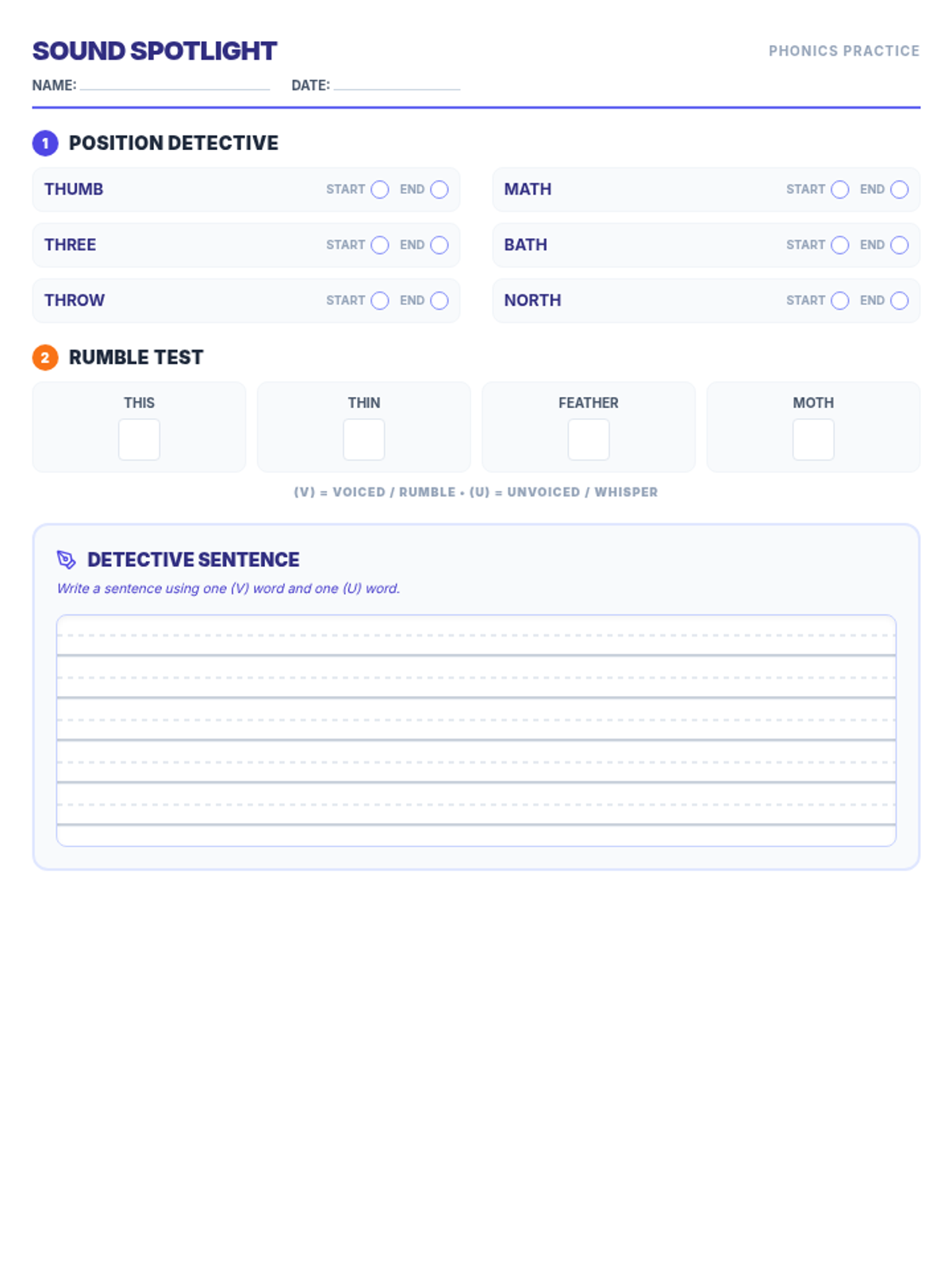
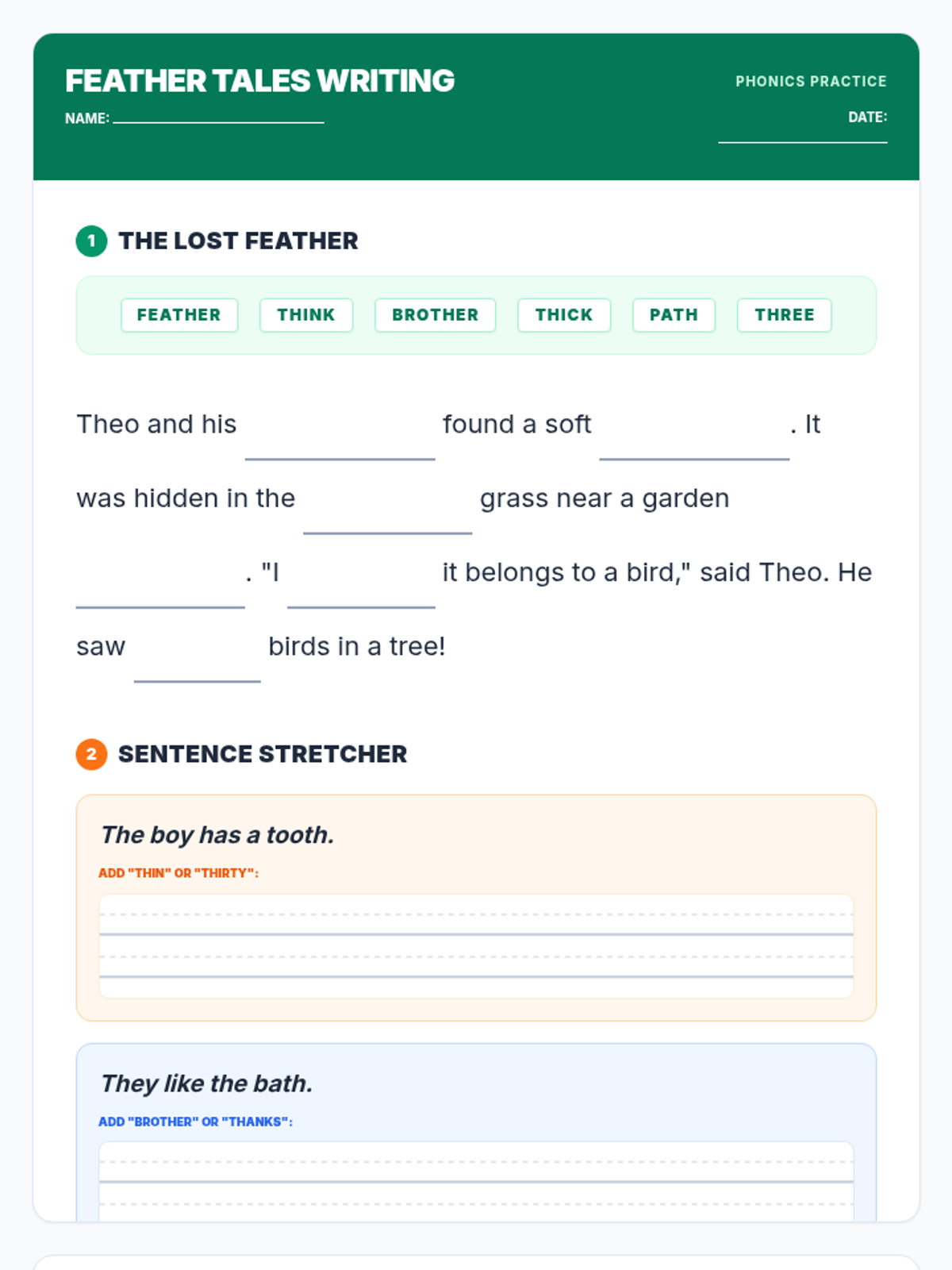
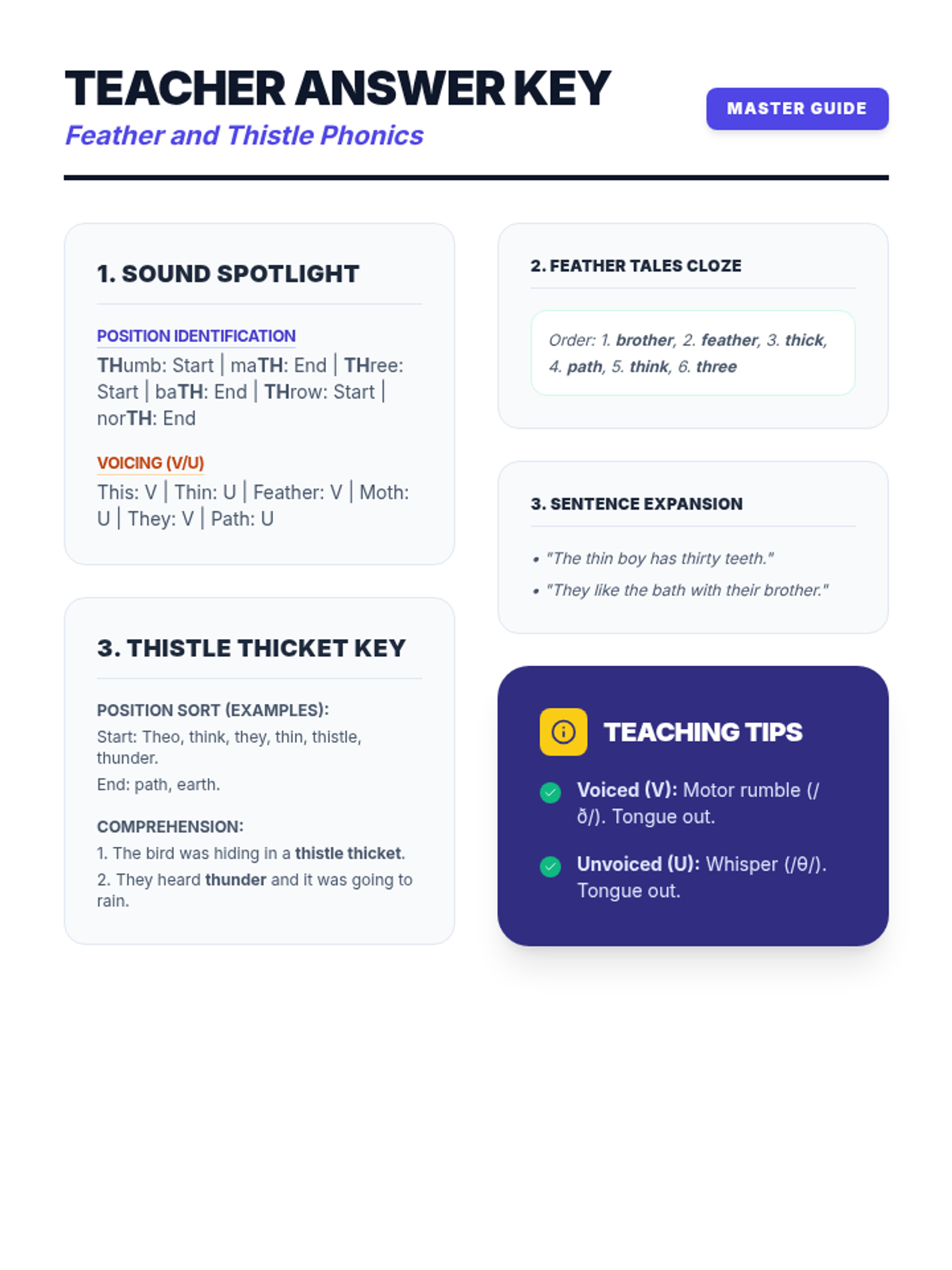
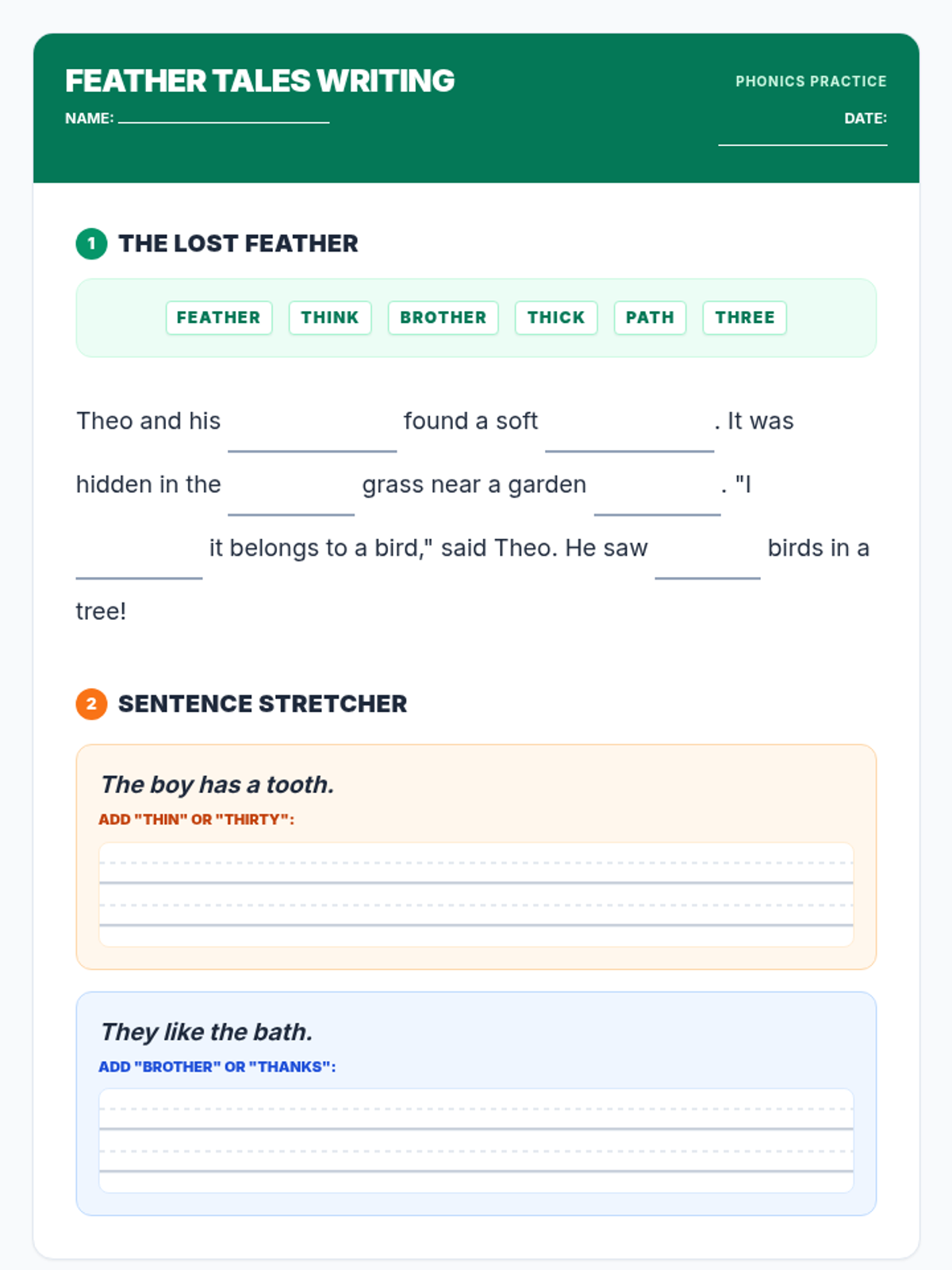
A phonics lesson for 2nd graders to distinguish between the voiced (vibrating) and unvoiced (whisper) 'th' sounds at the beginning and end of words. Students will engage with the 'Thunder and Thistle' theme to categorize words and practice pronunciation.
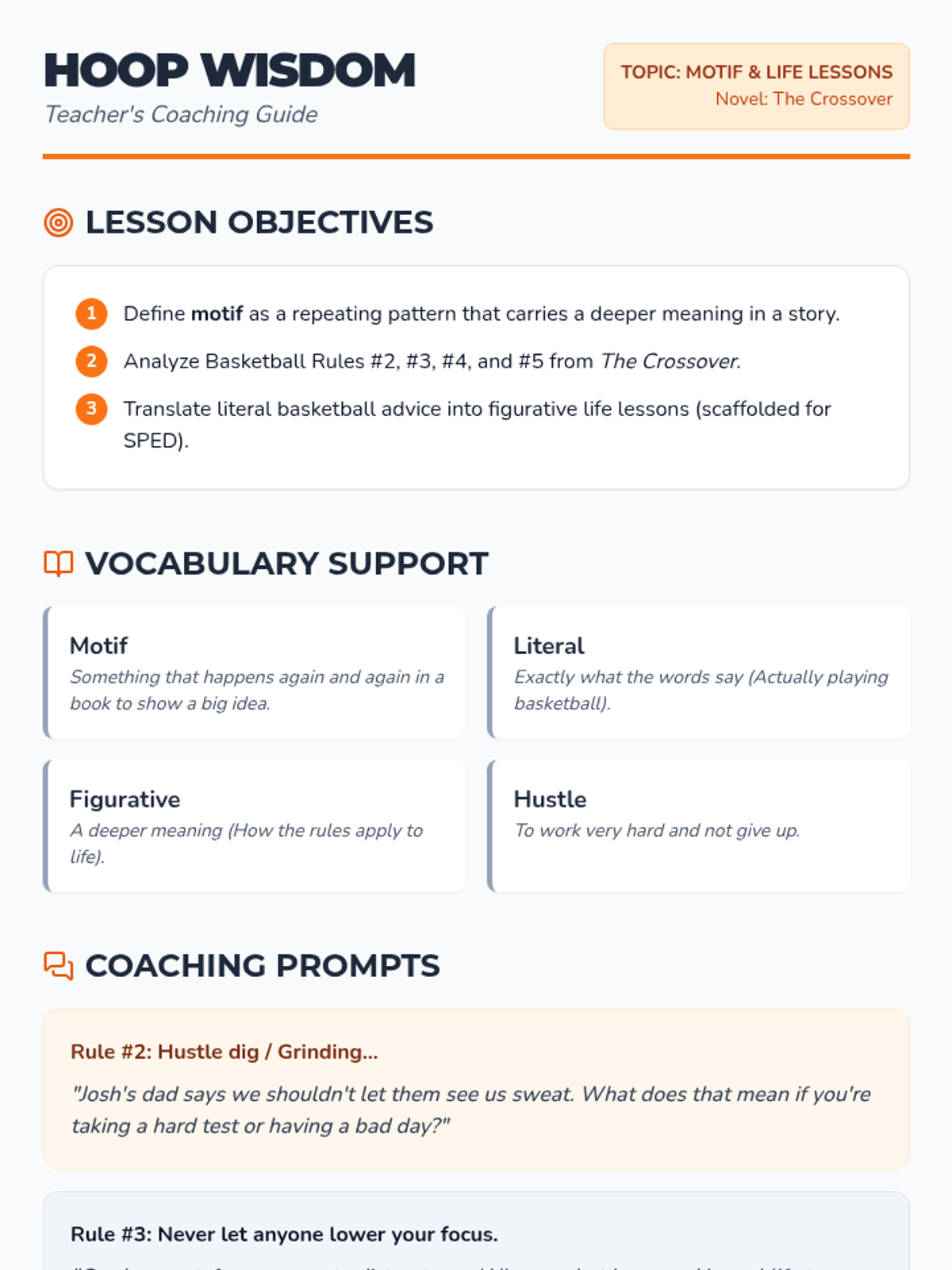
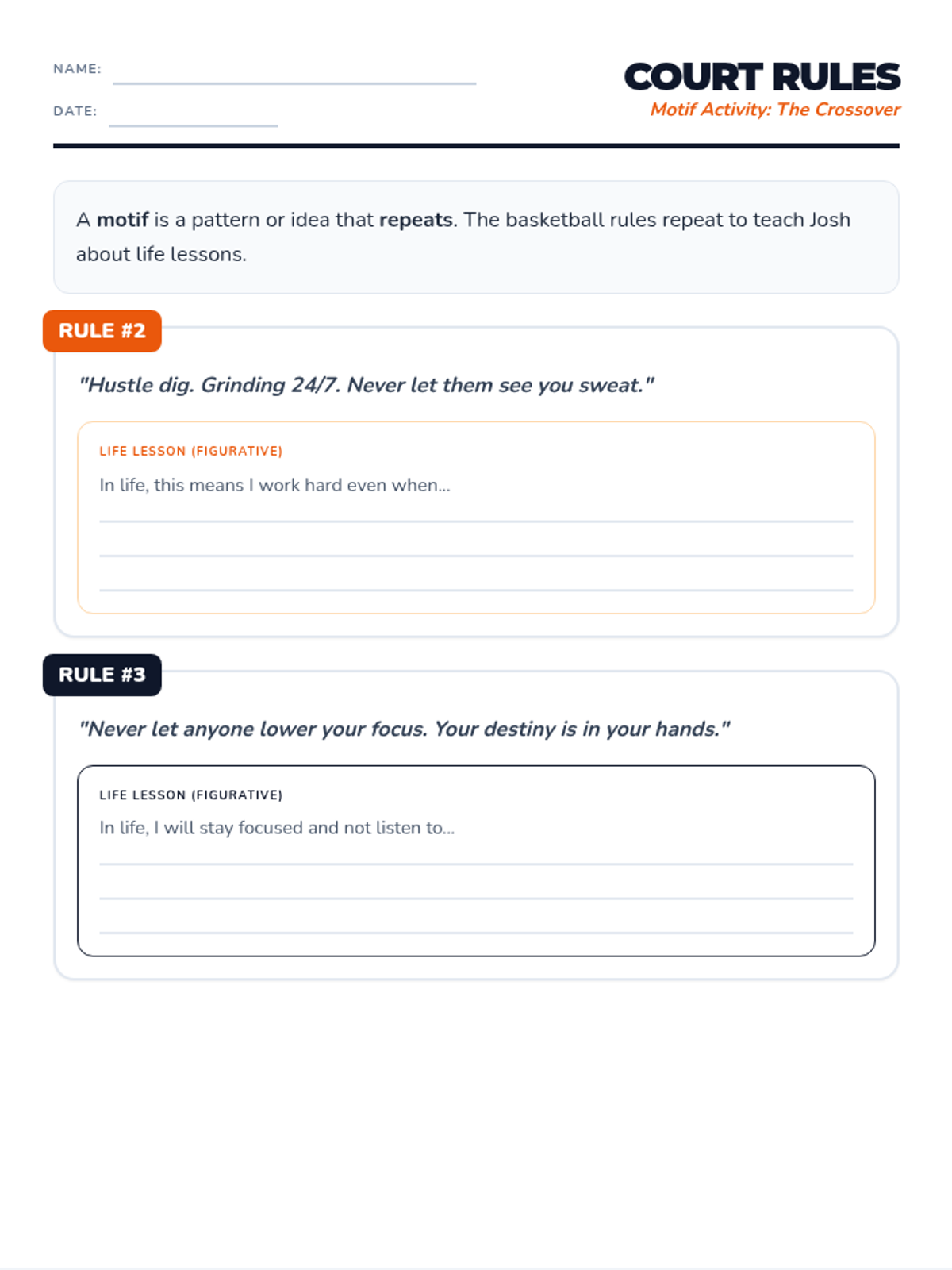
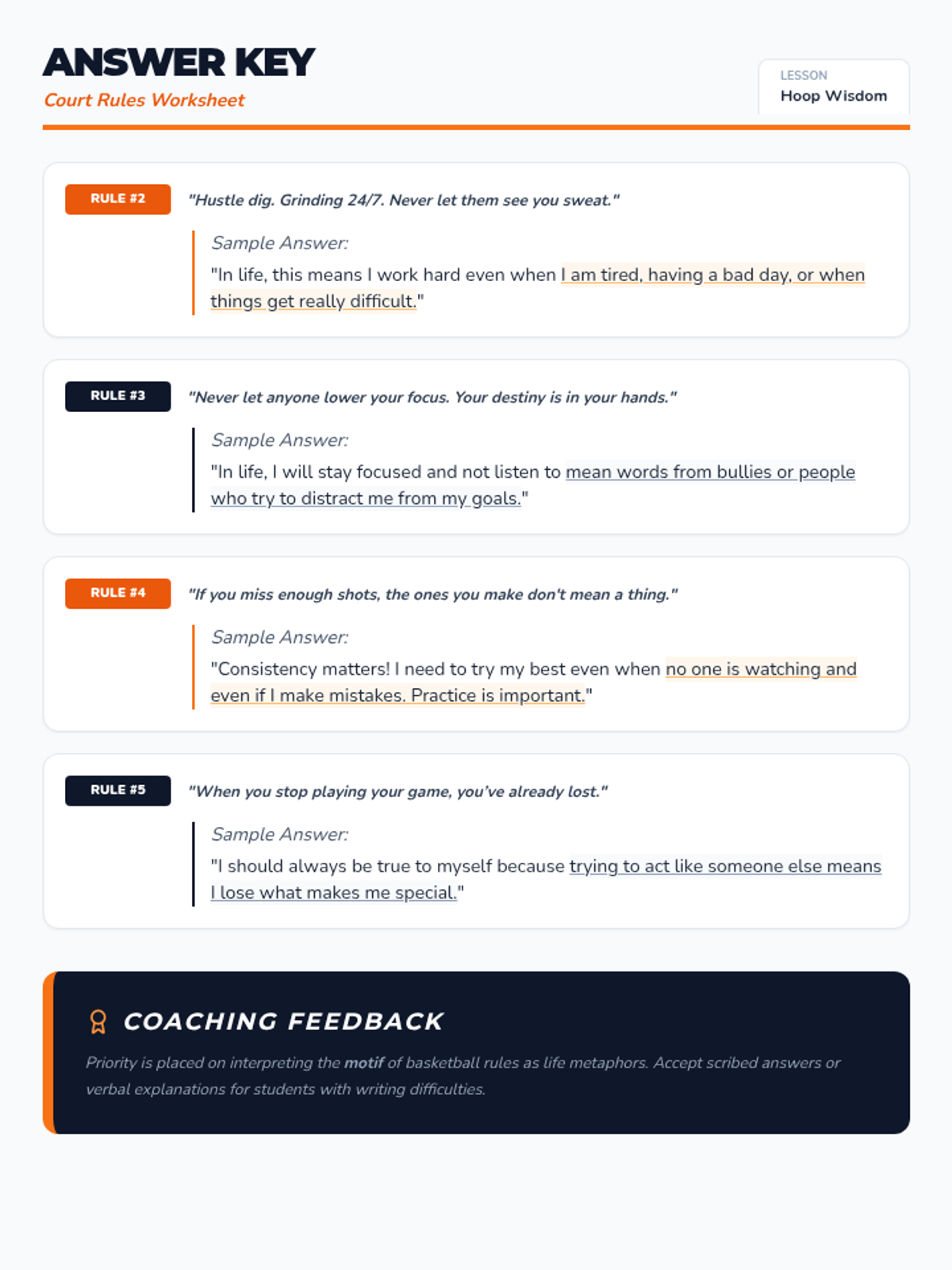
A lesson exploring the motifs in Kwame Alexander's 'The Crossover', specifically focusing on Basketball Rules #2, #3, #4, and #5 and their application to life lessons for 6th grade students.
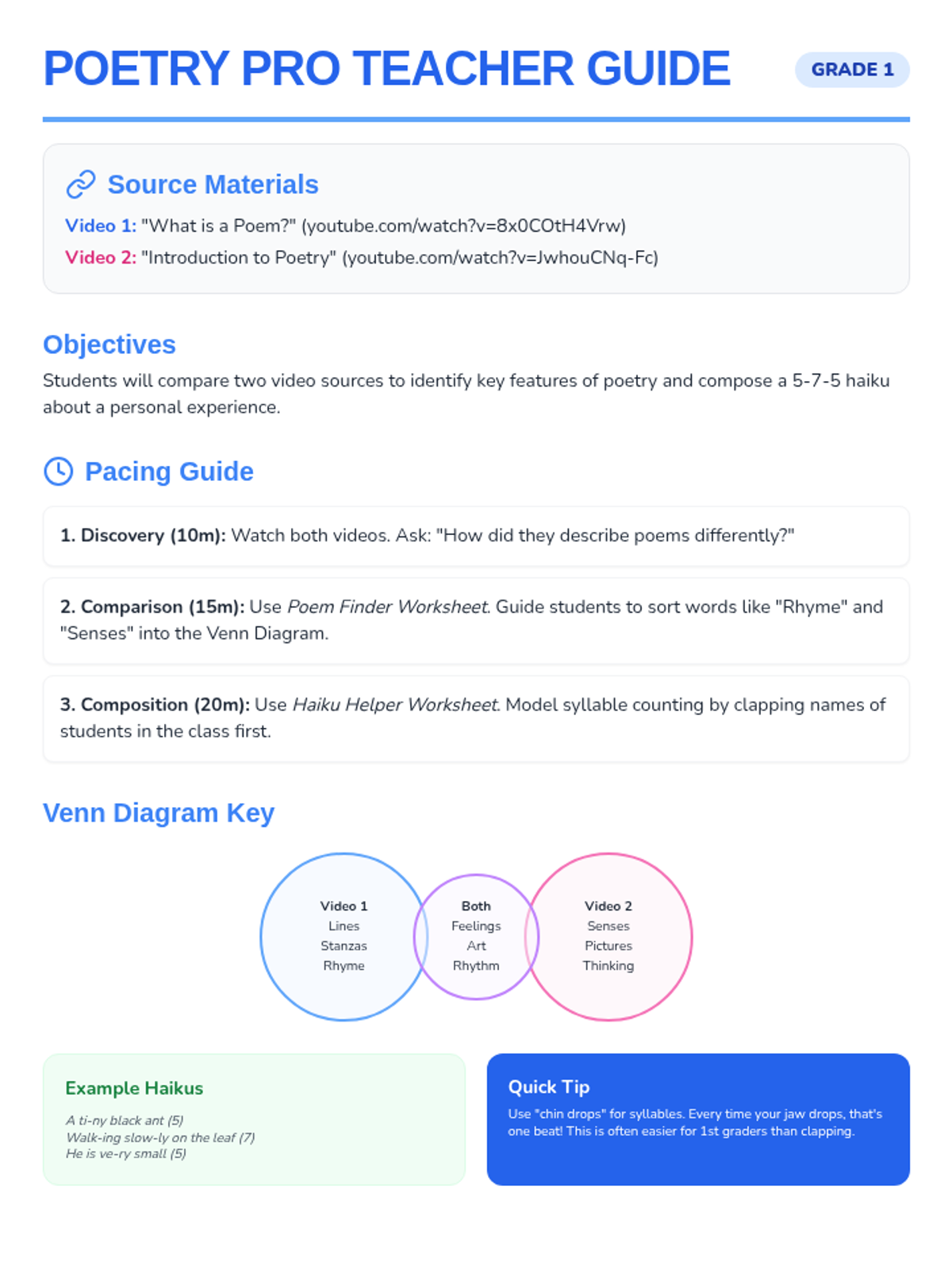
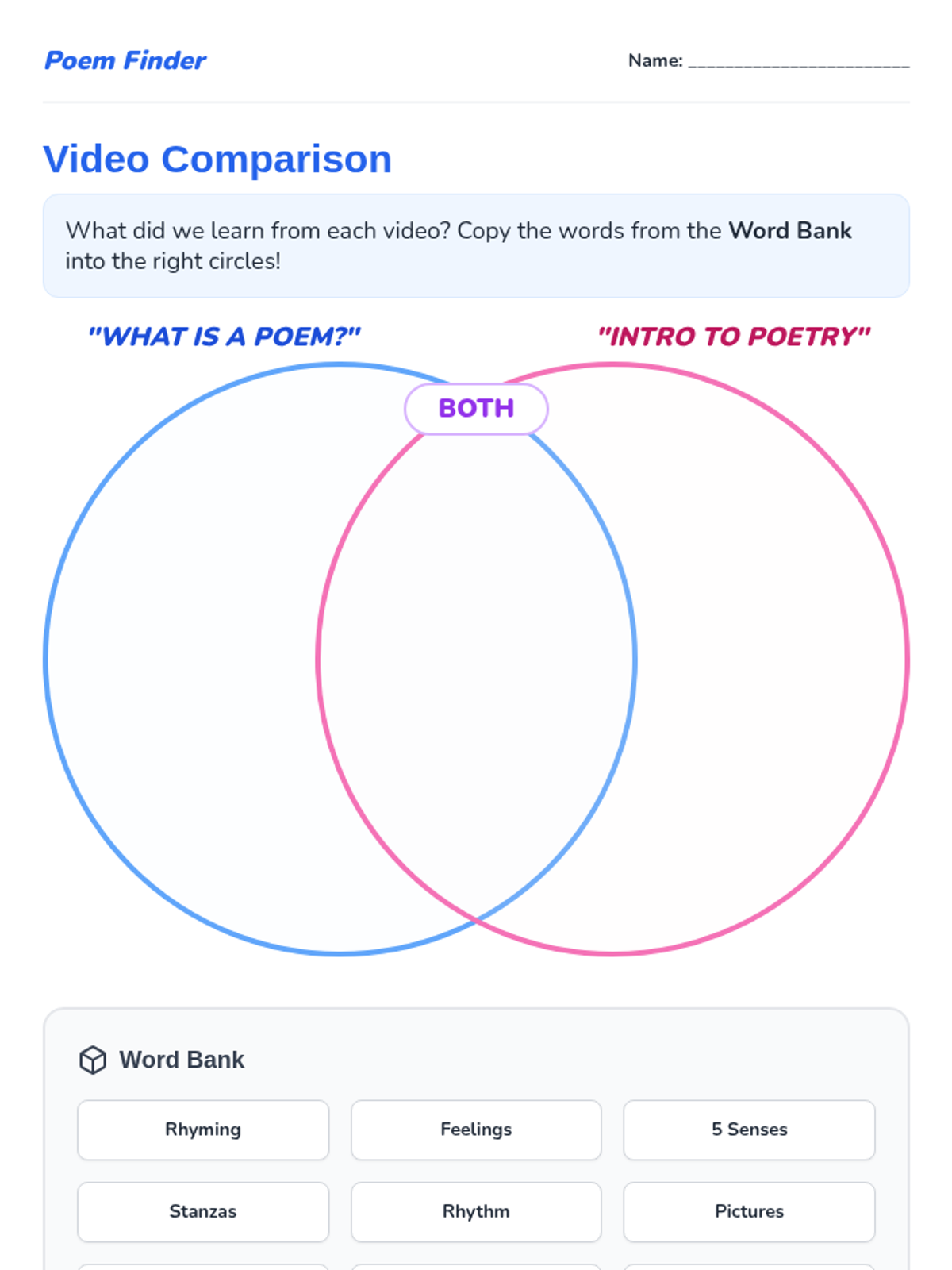
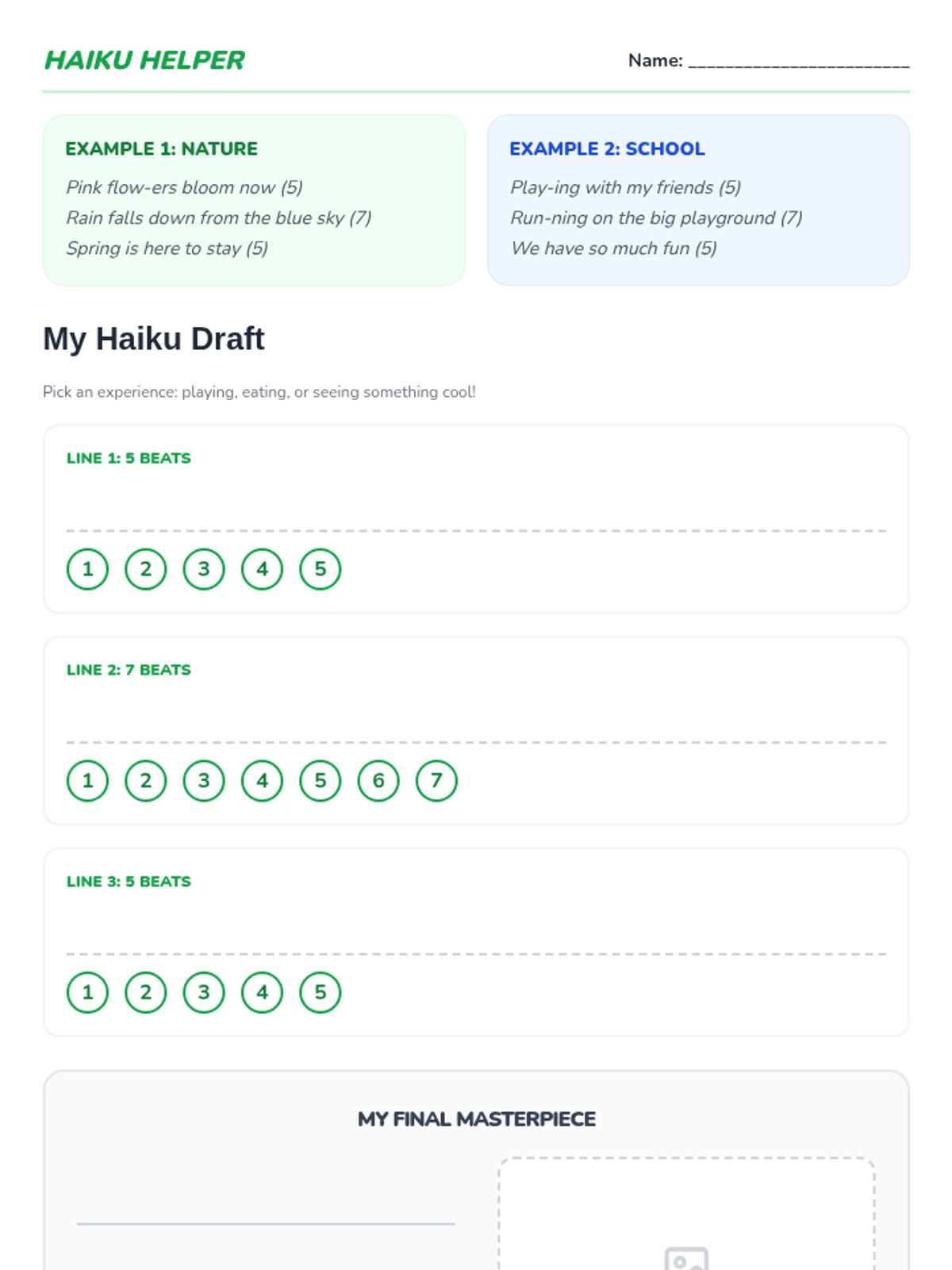
An introductory lesson on poetry for first graders using video analysis and haiku creation. Students compare two perspectives on poetry before writing their own 5-7-5 nature haiku.
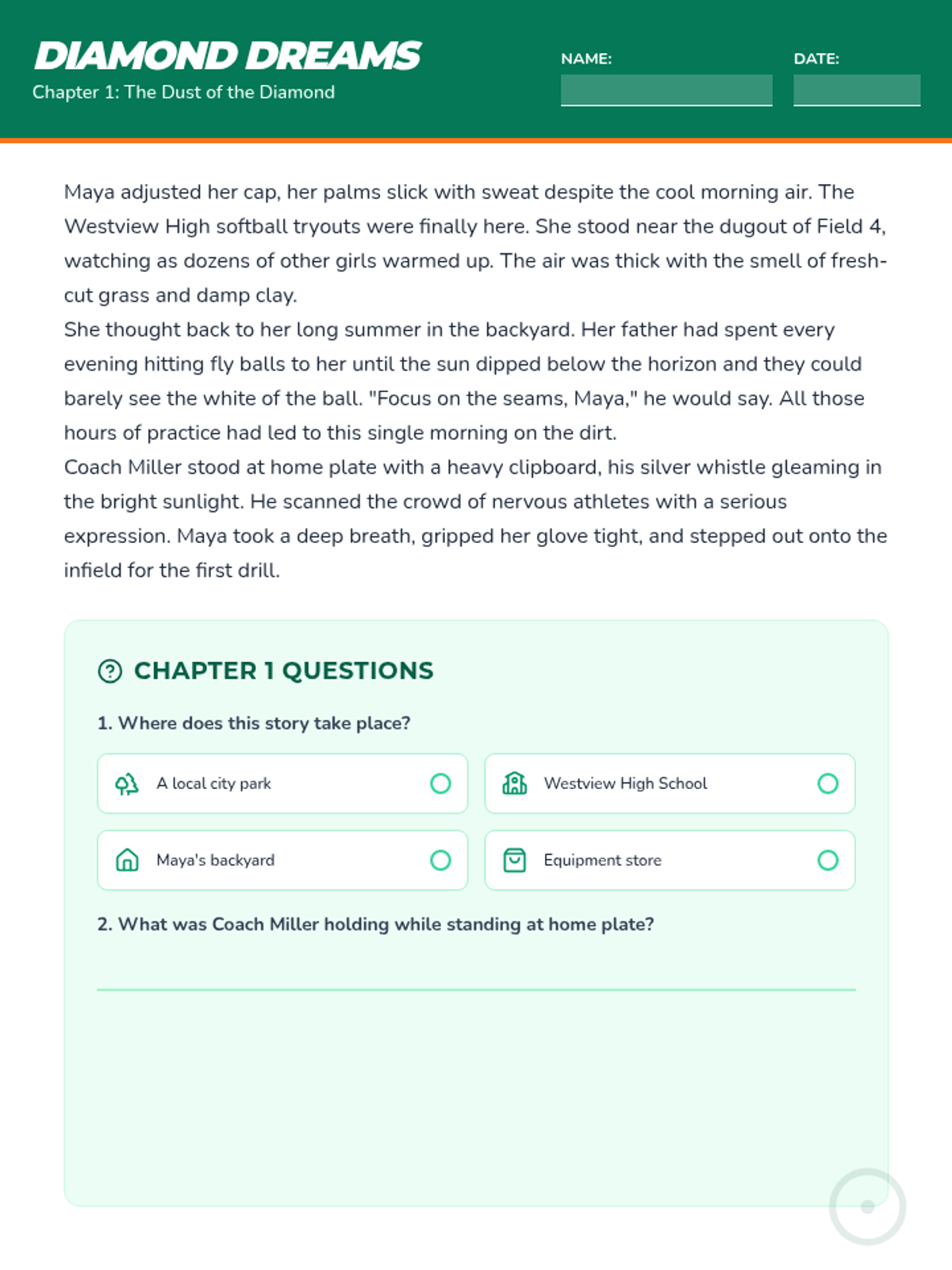
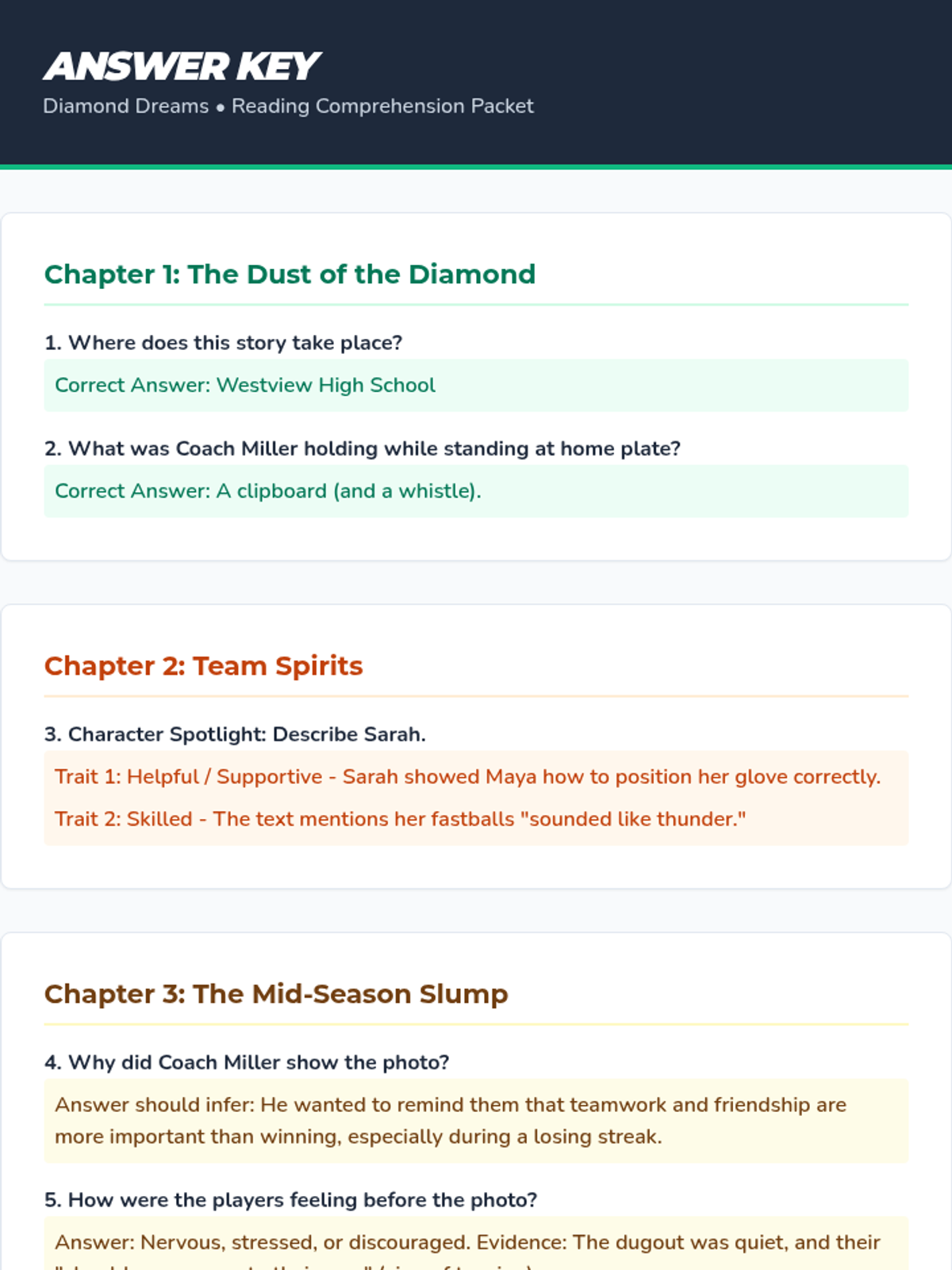
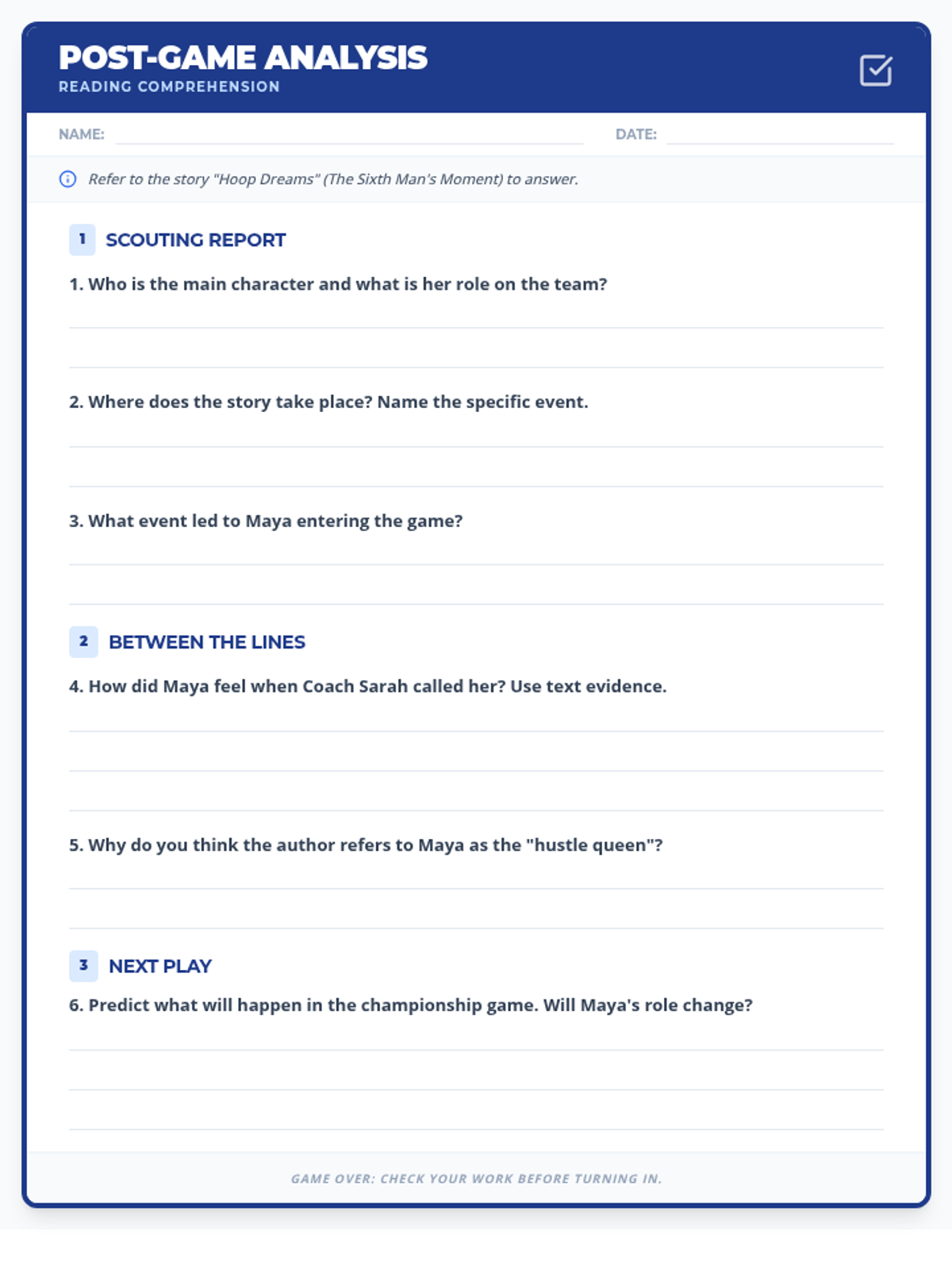
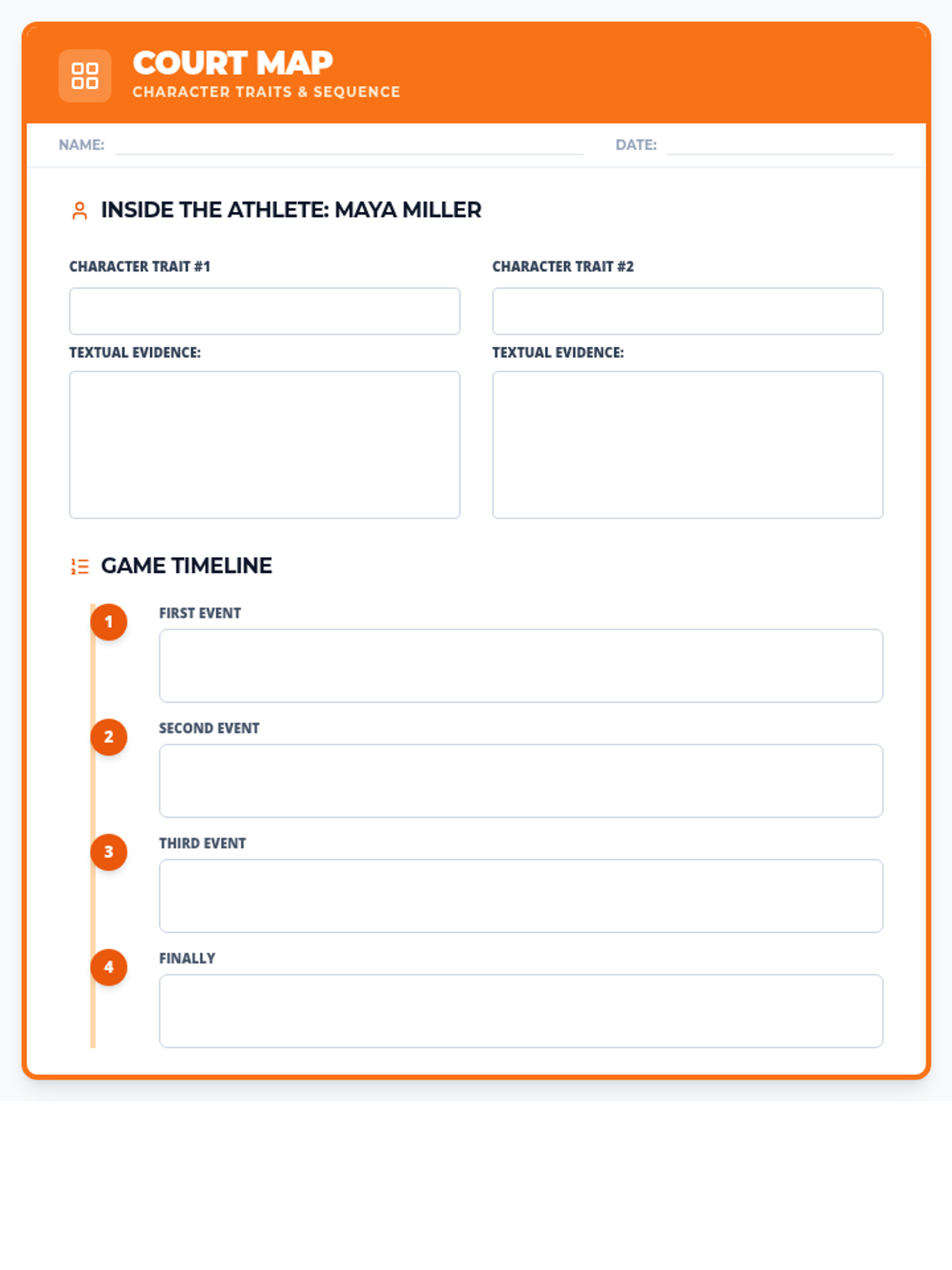
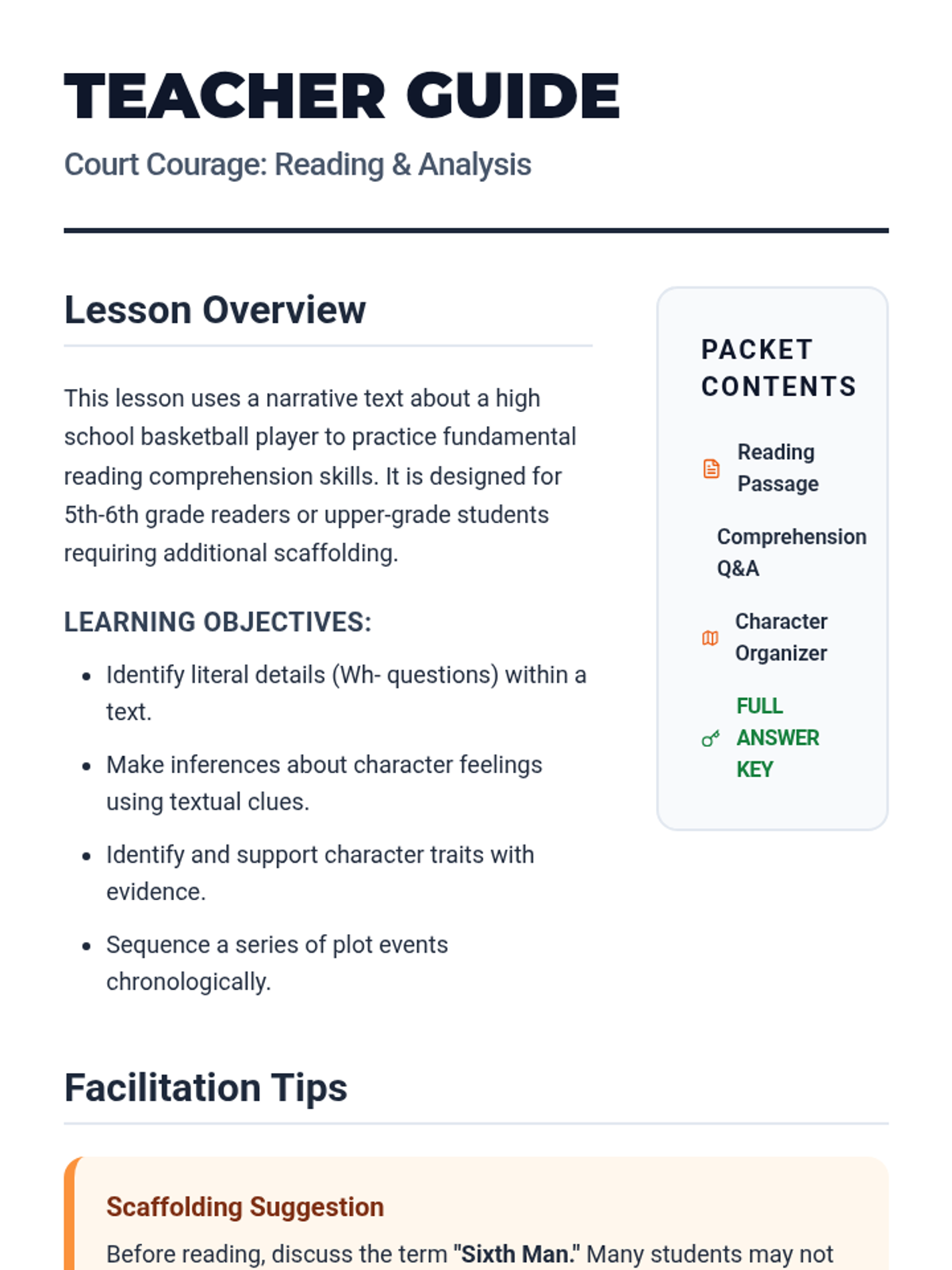
A reading comprehension packet focused on Maya, a high school girl's journey on the softball field, targeting 5th-6th grade reading levels with scaffolding for inferences, sequencing, and character traits.
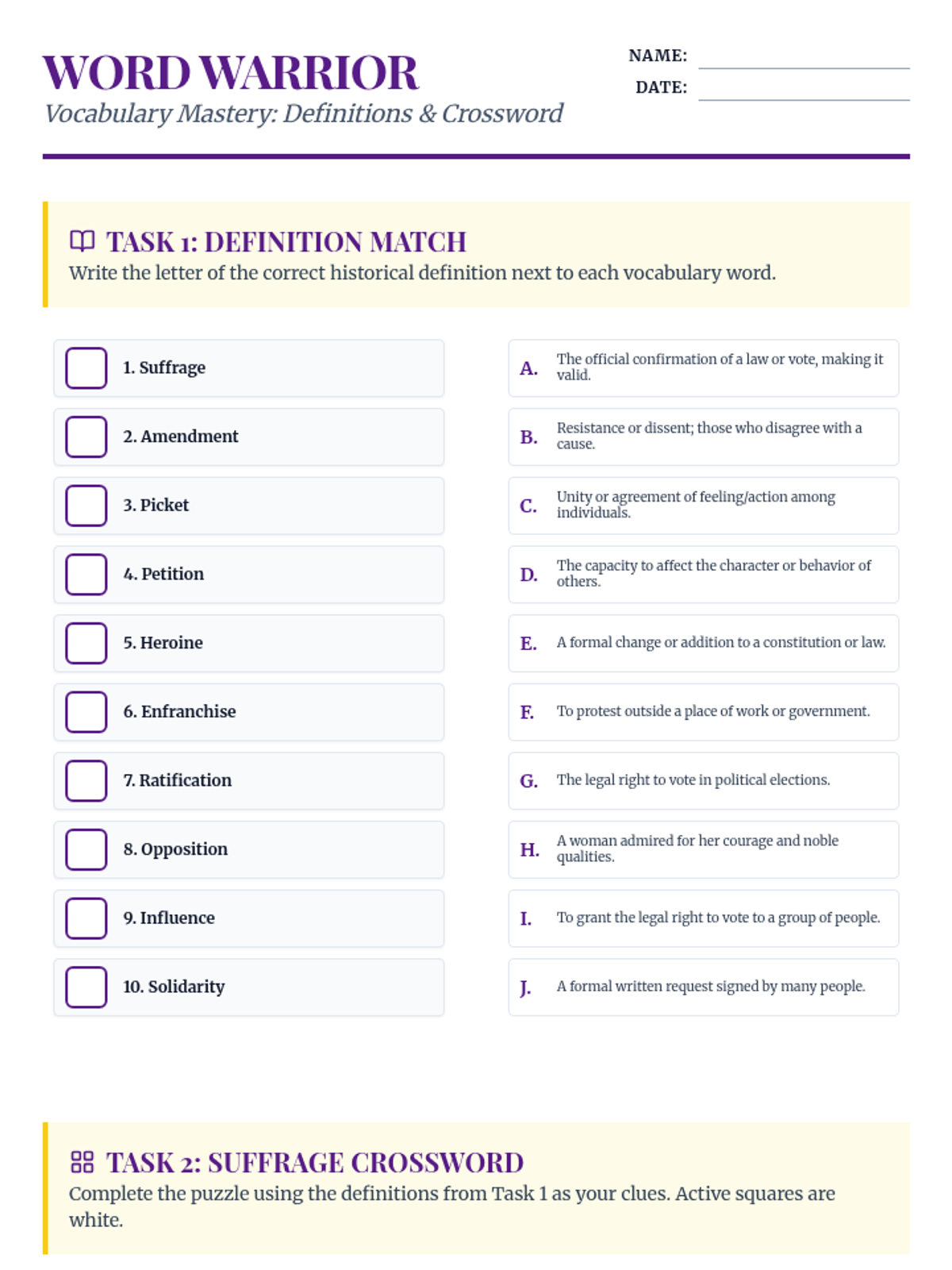
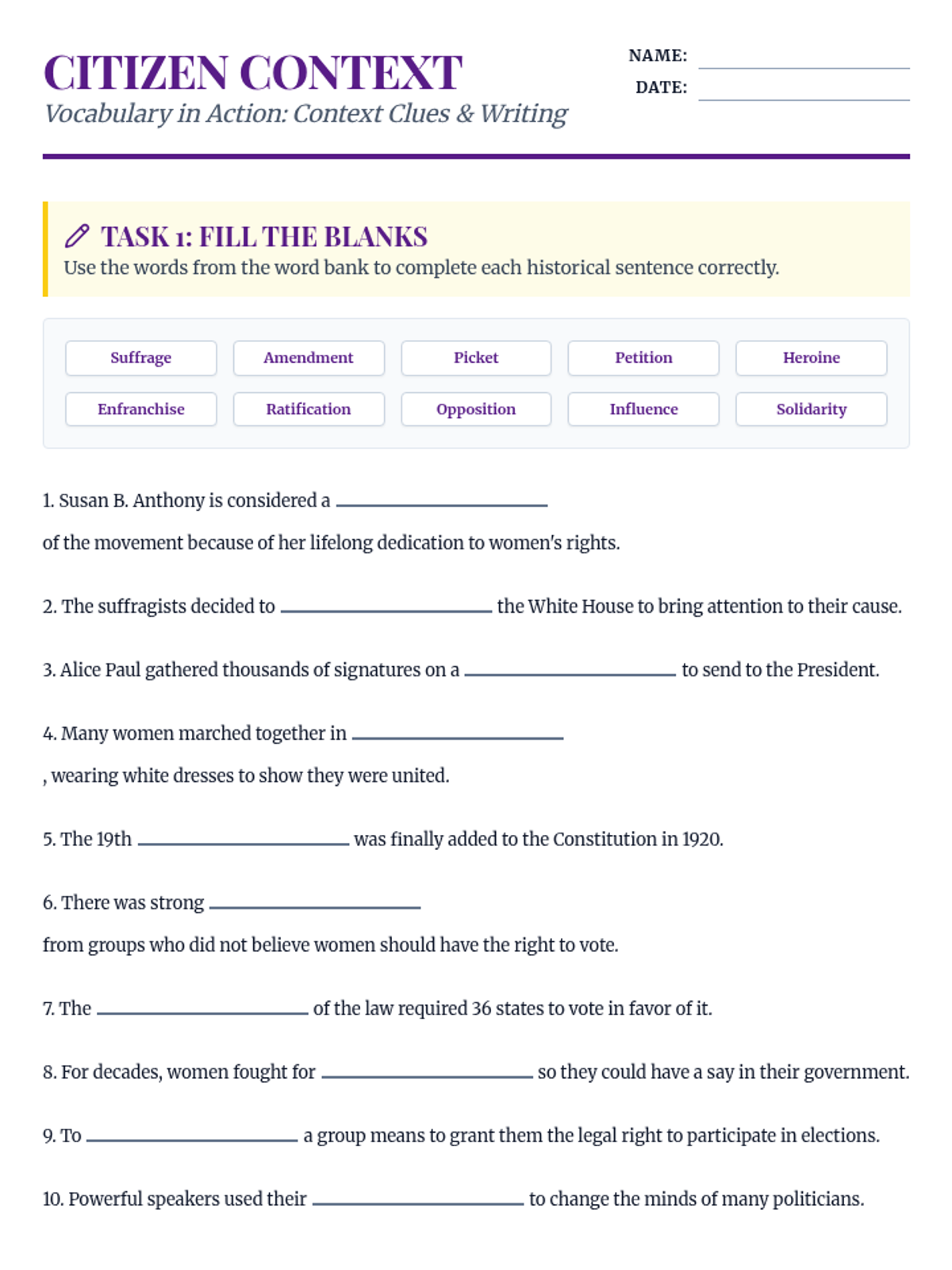
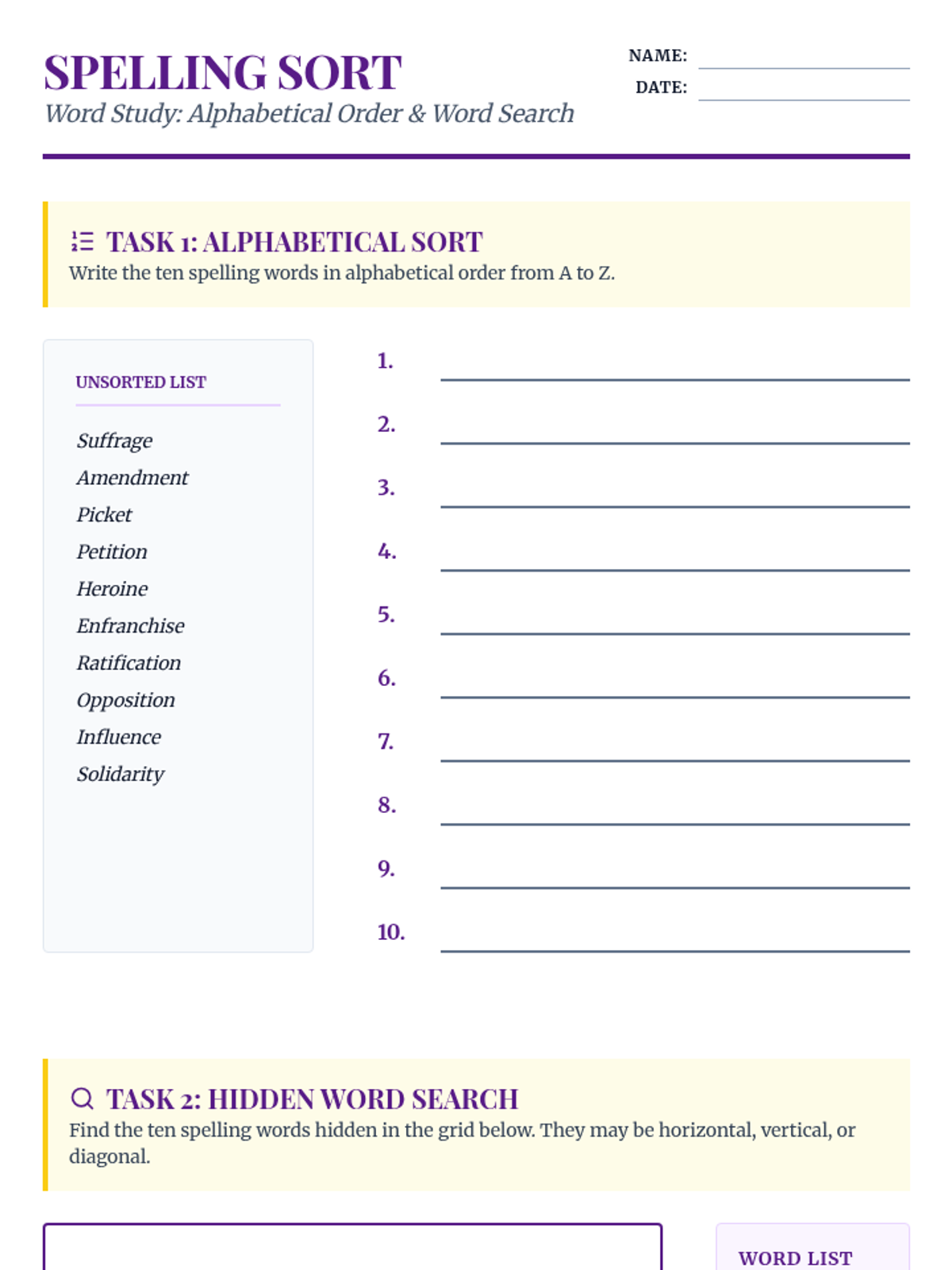
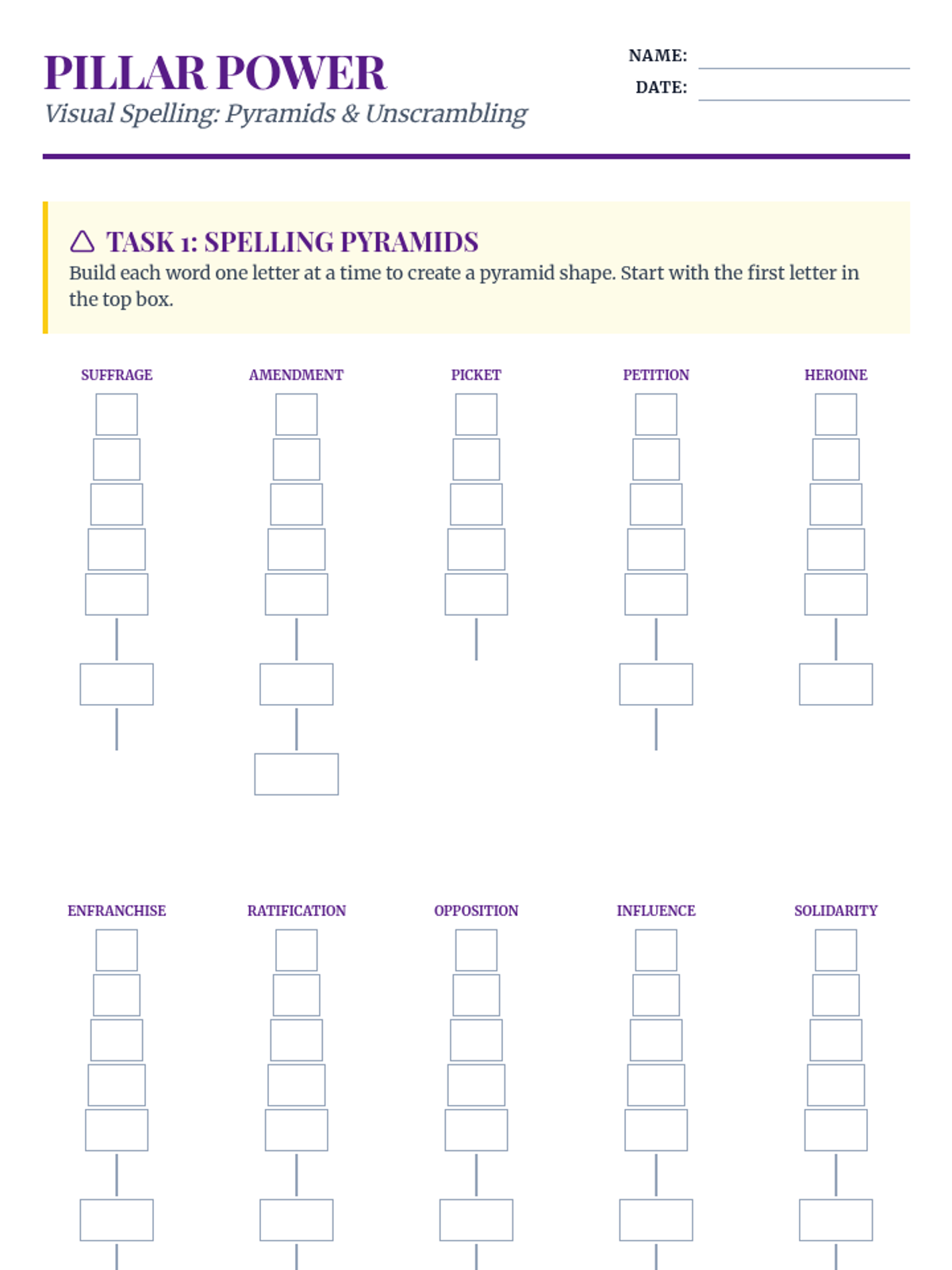
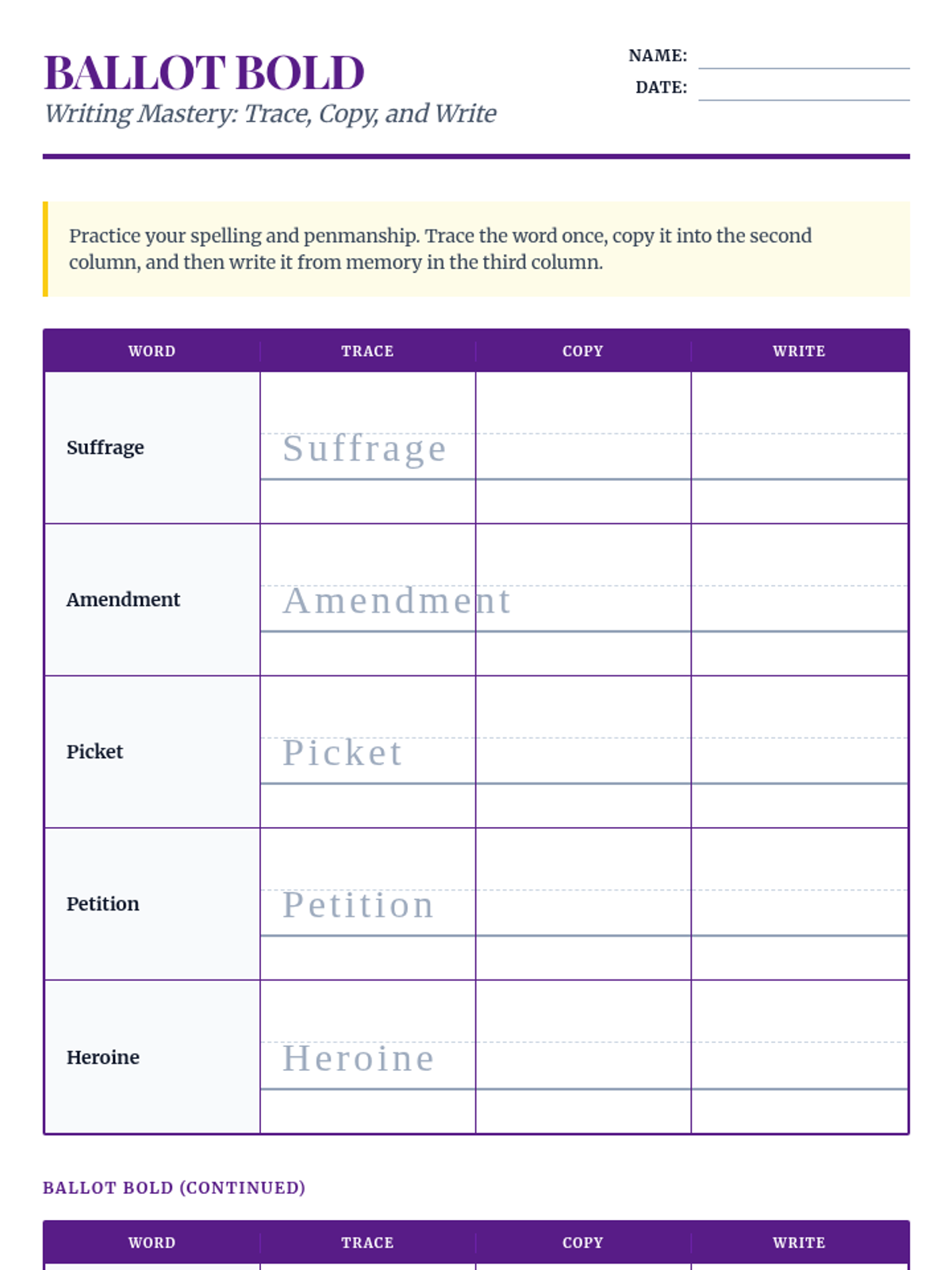
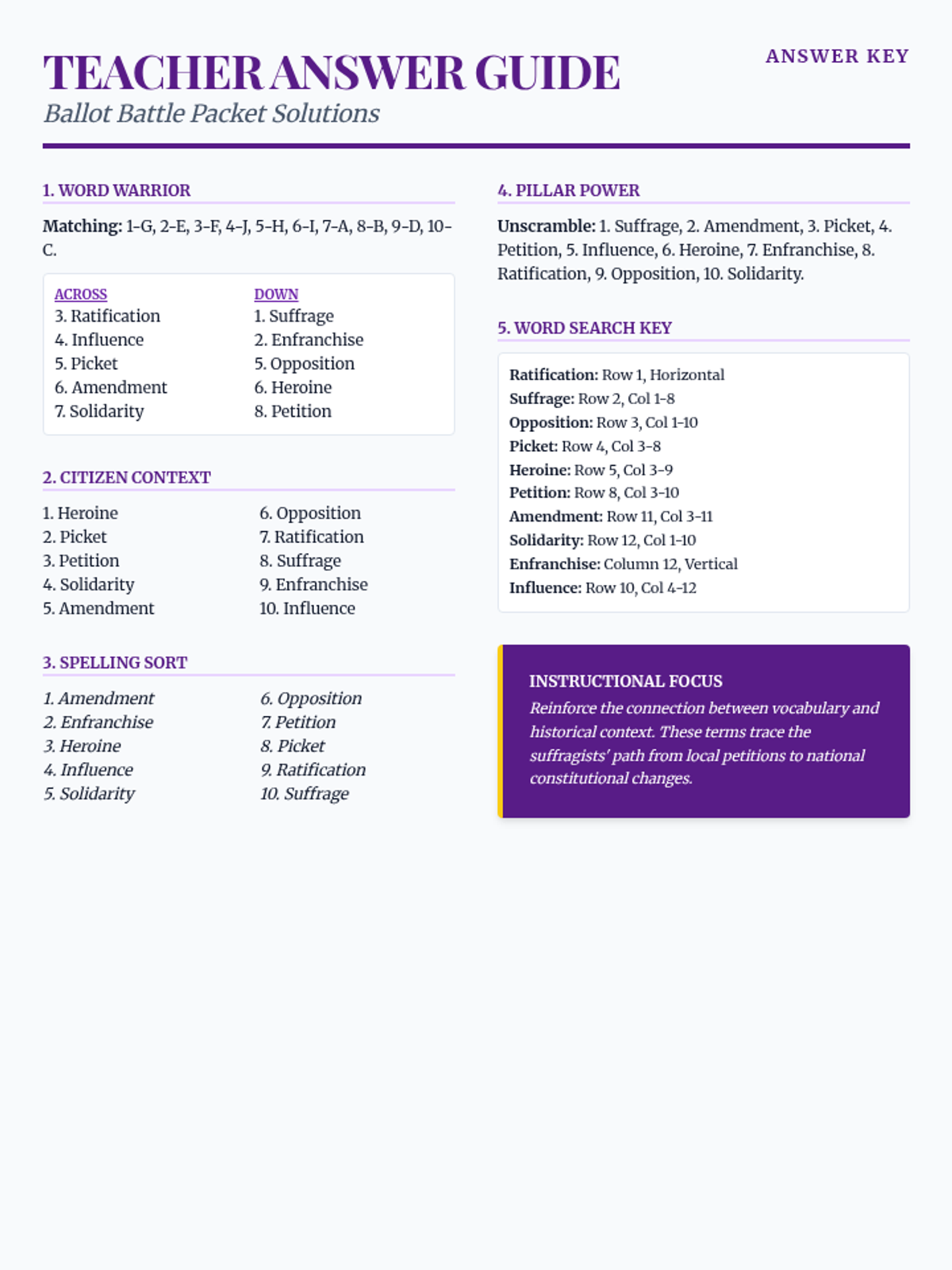
A comprehensive vocabulary and spelling packet focused on the history and language of the Women's Suffrage movement. Students will master ten thematic words through diverse linguistic and orthographic activities.
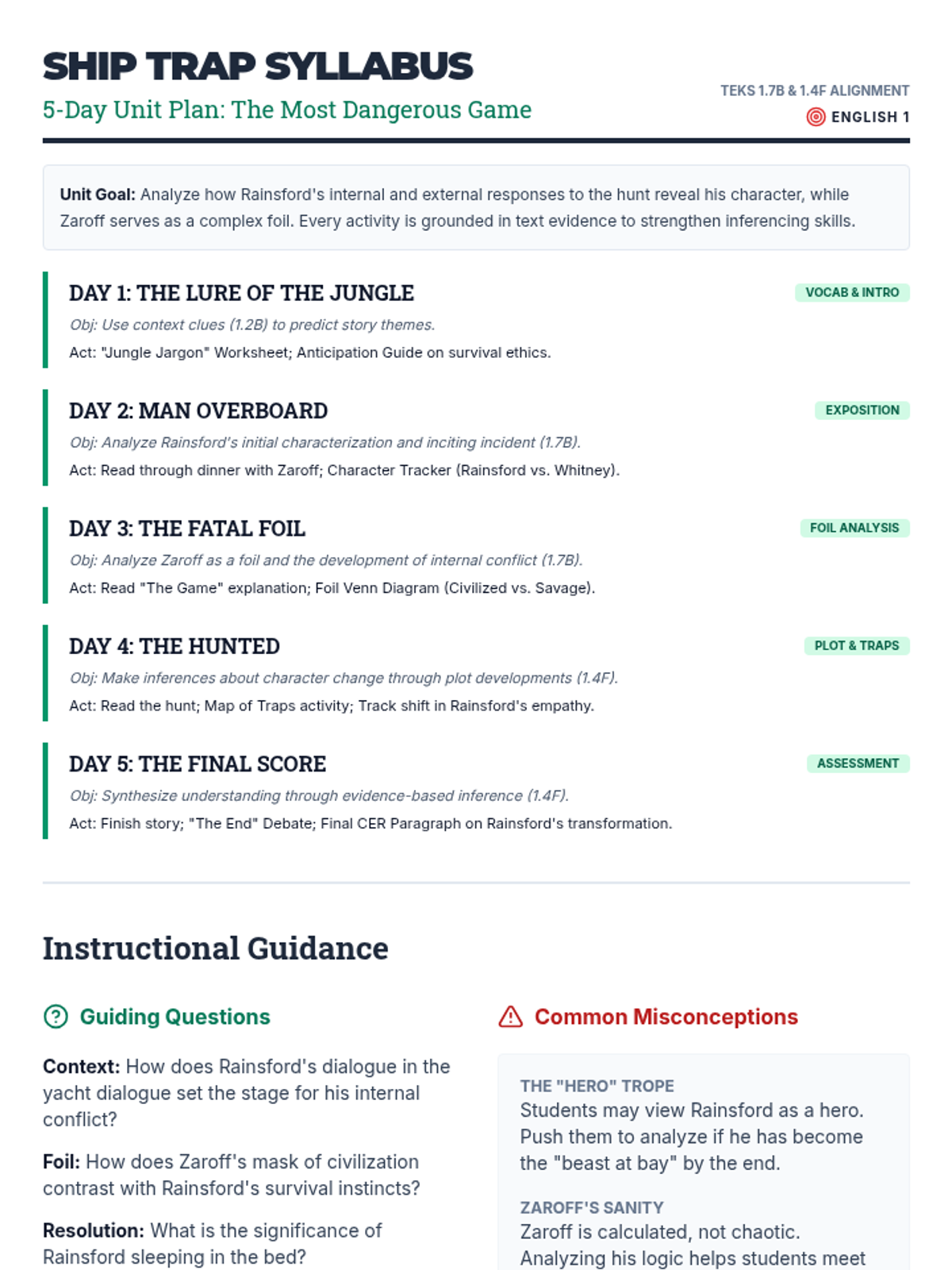
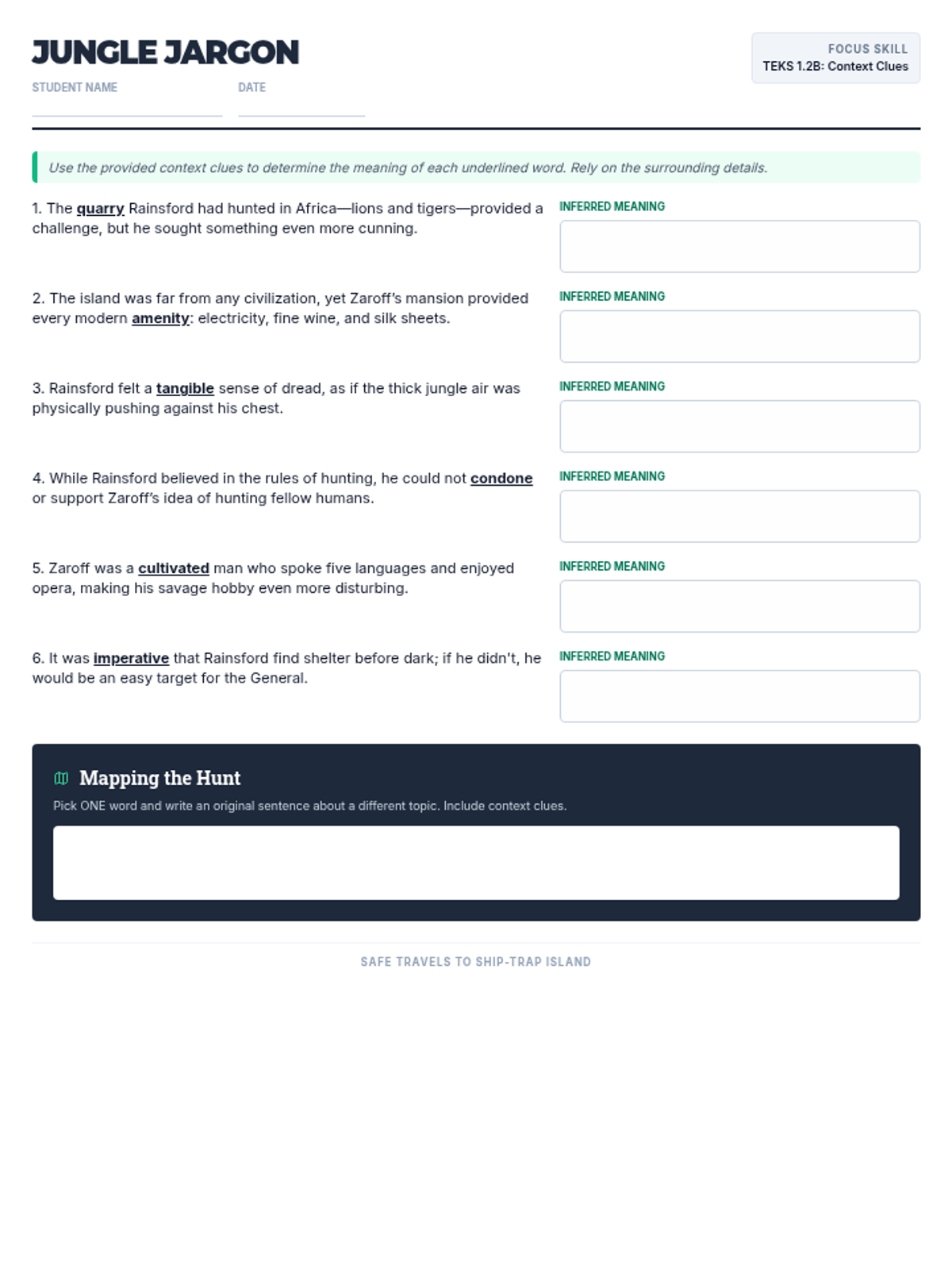
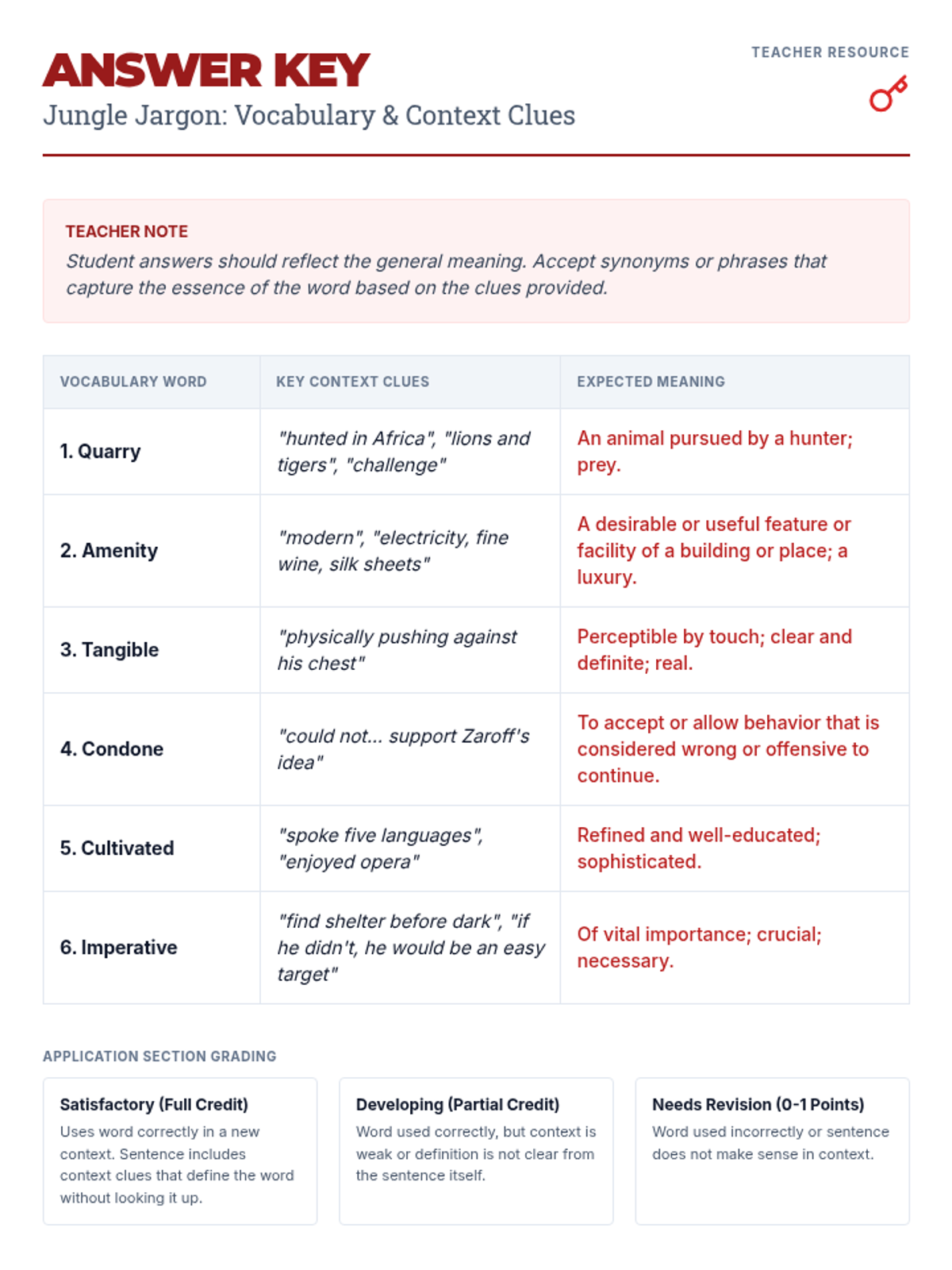
Foundational materials for the unit, including the master 5-day plan and introductory vocabulary exercises to build context for the story's themes.
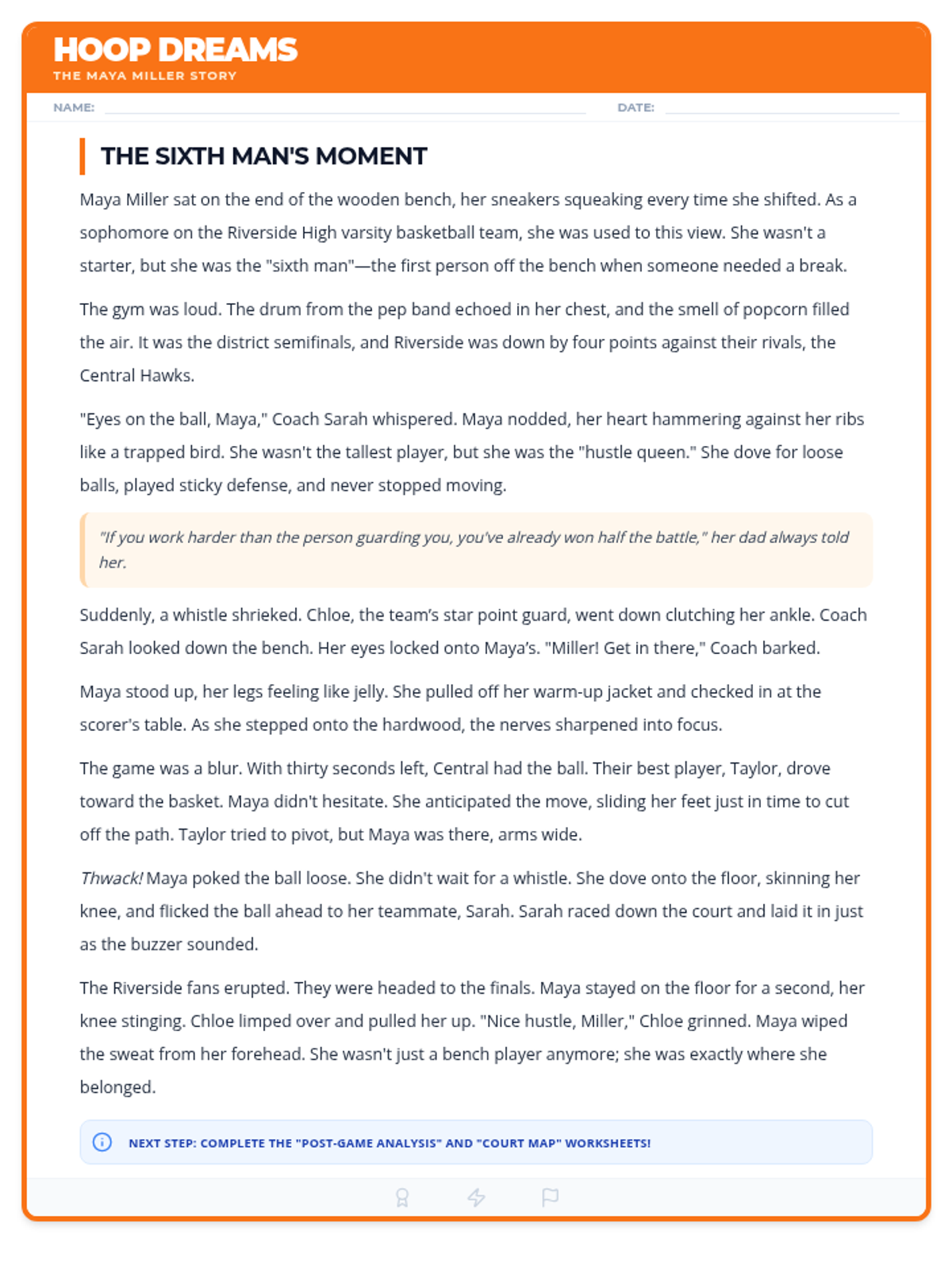
A comprehensive reading comprehension lesson centered on a story about a high school basketball player, focusing on literal understanding, inference, and character analysis.
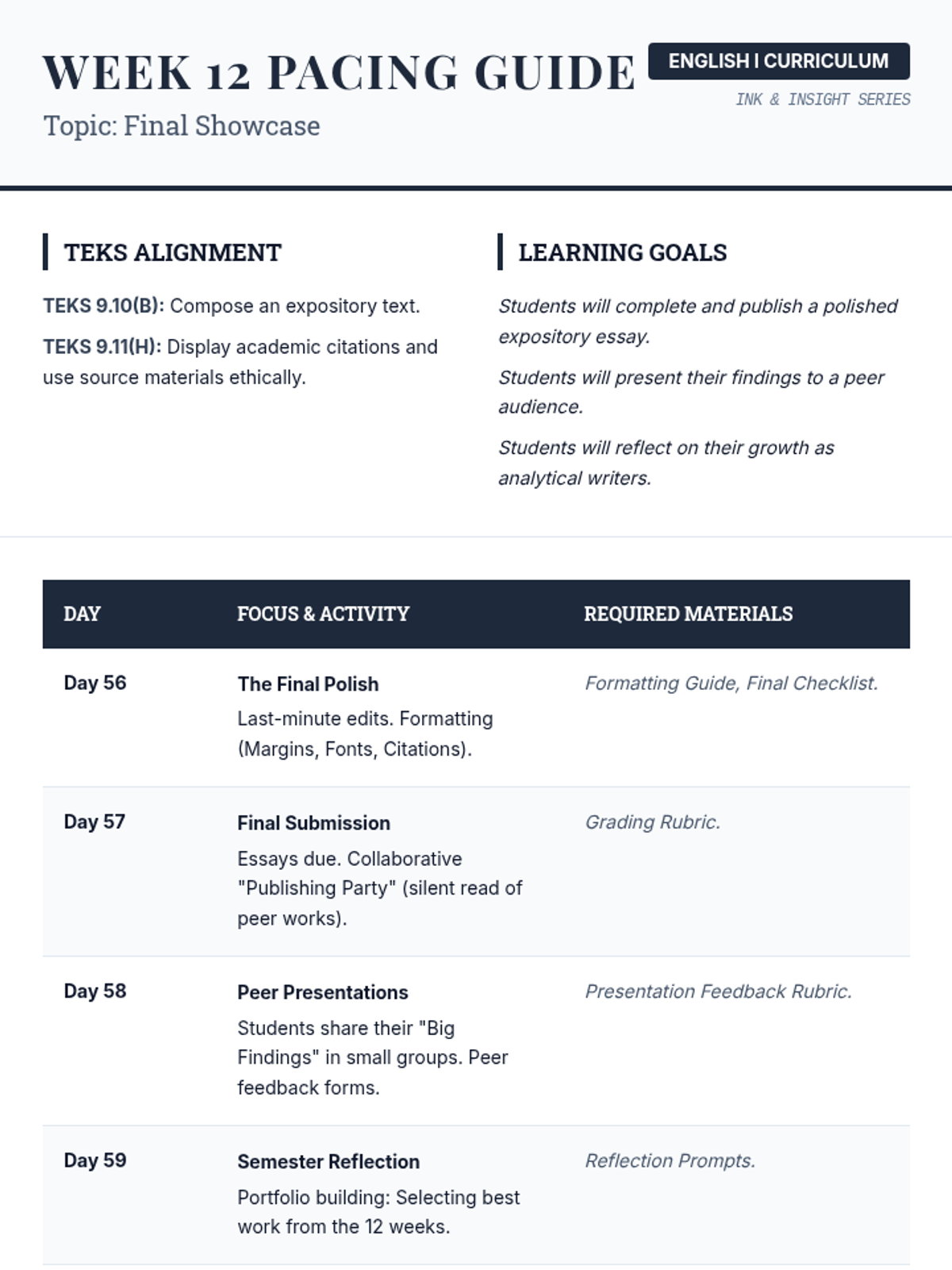
Summative expository writing project involving research, drafting, and peer publication.
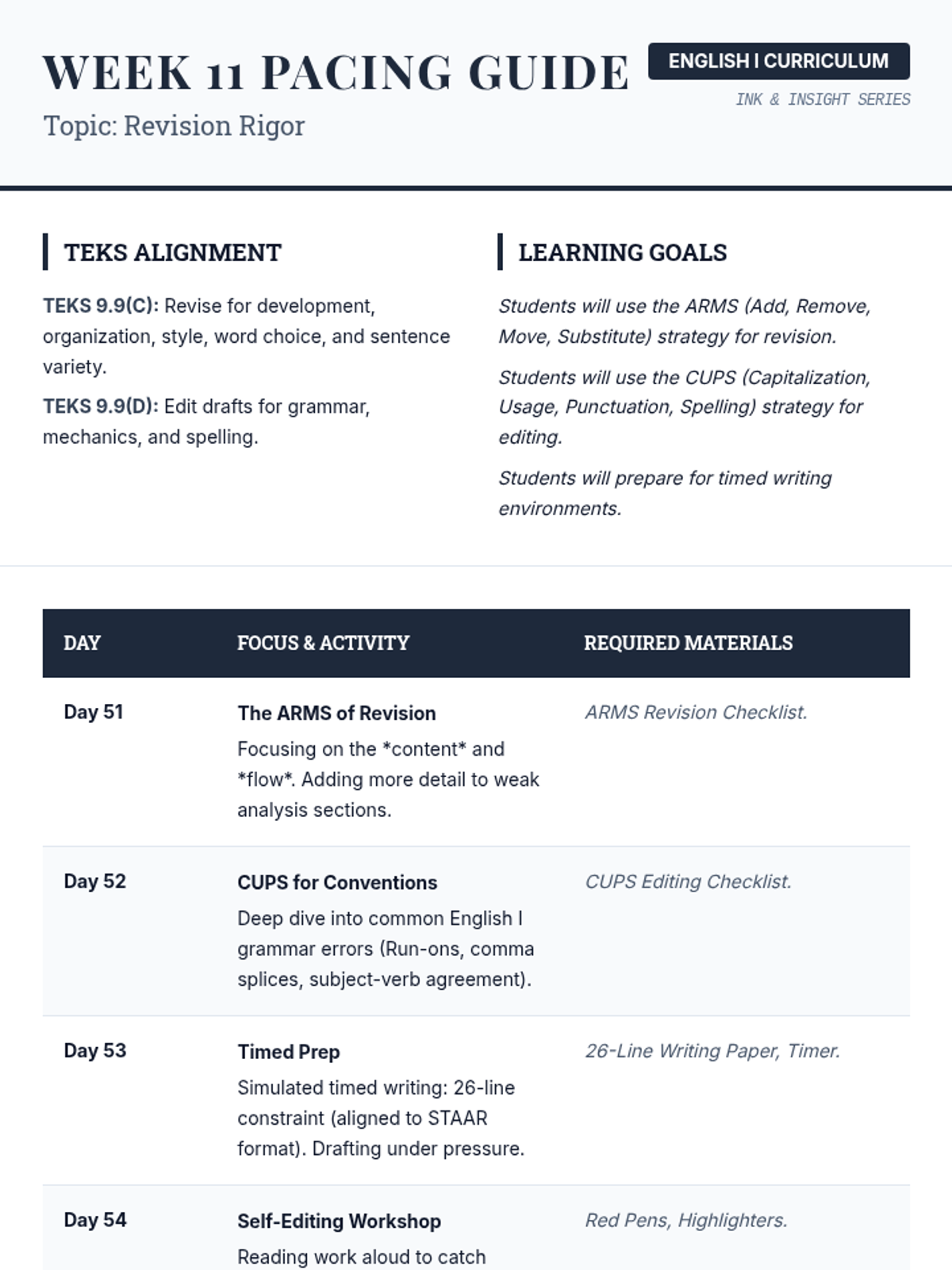
Strategies for revising content for clarity and editing for conventions in timed writing environments.
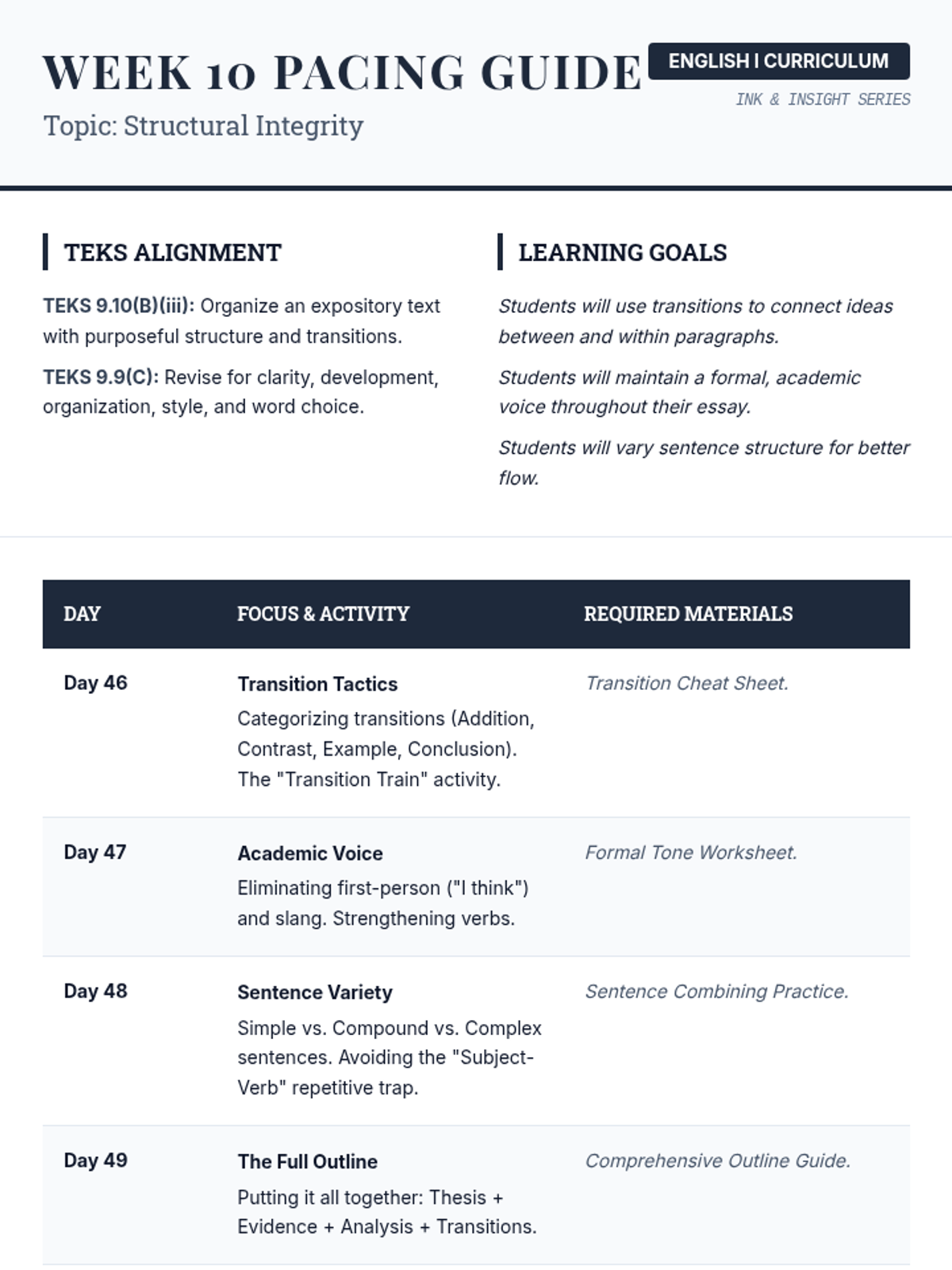
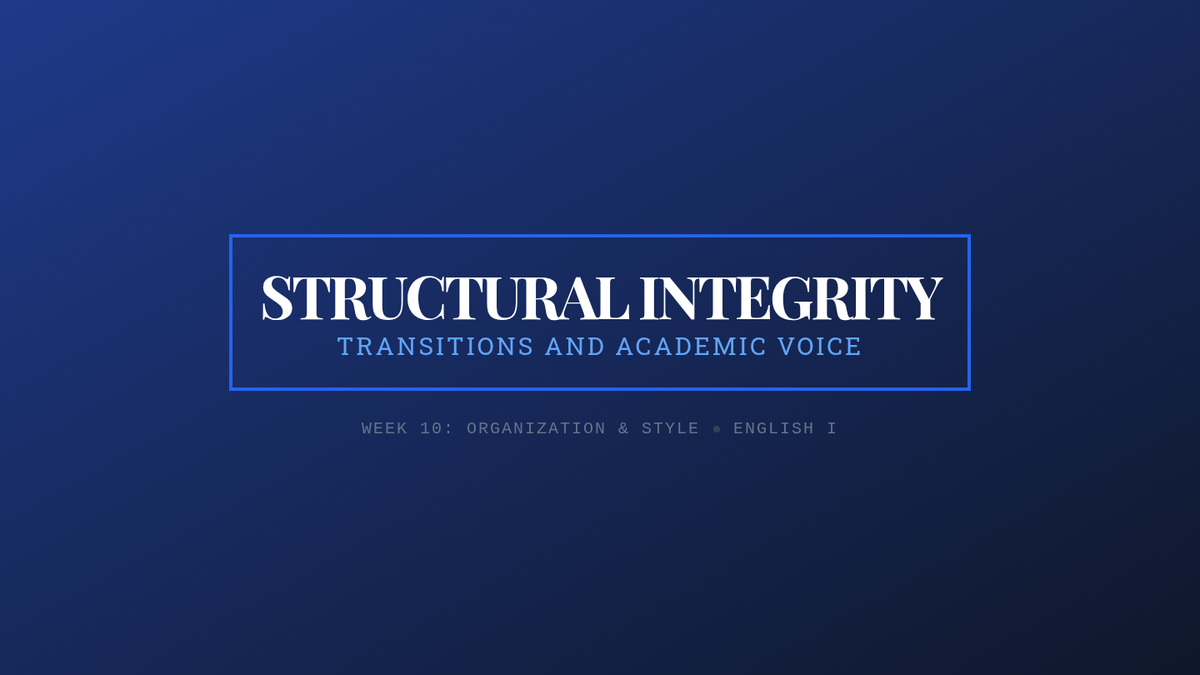
Developing logical flow through transitions, sentence variety, and academic voice.
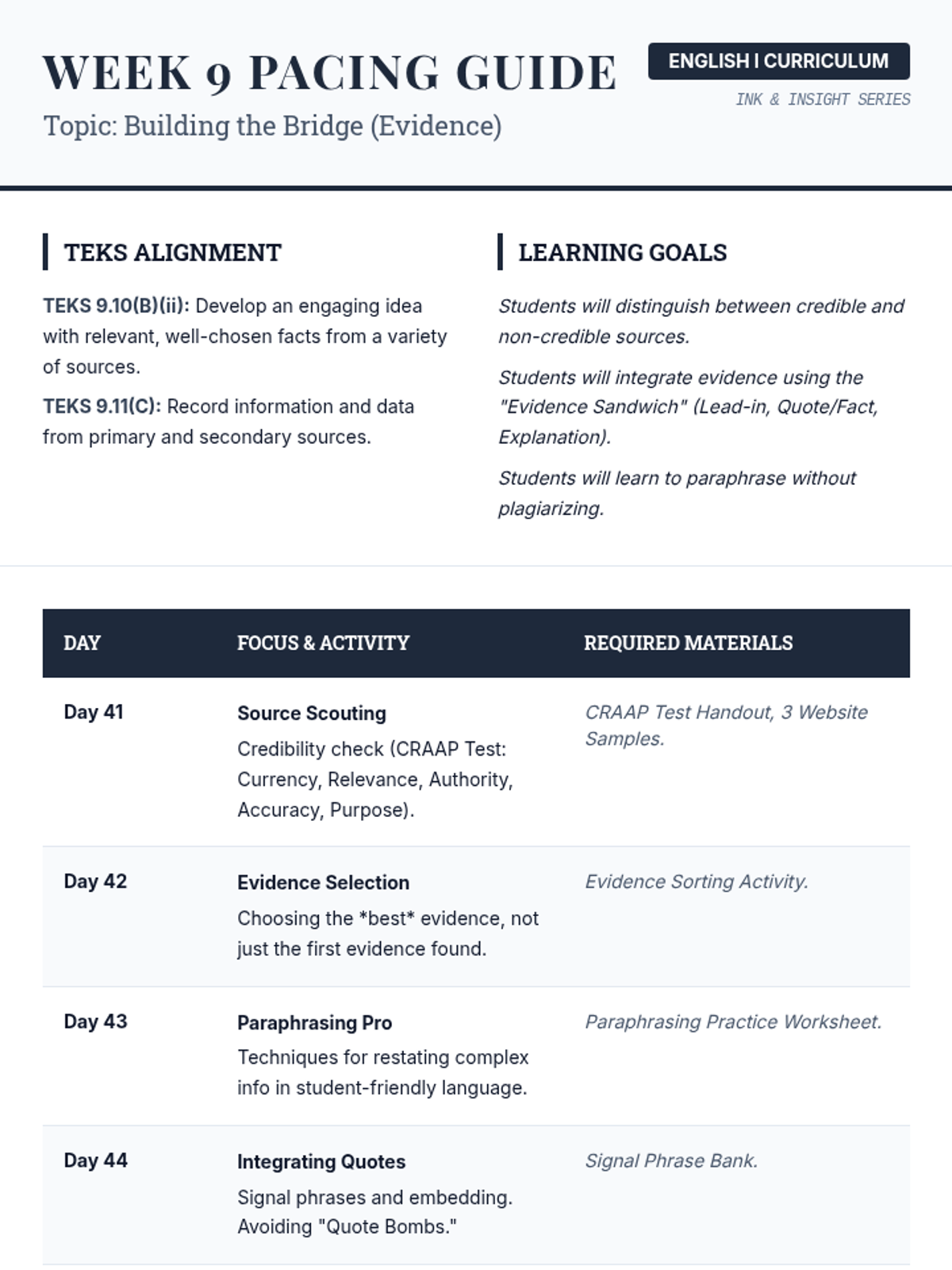
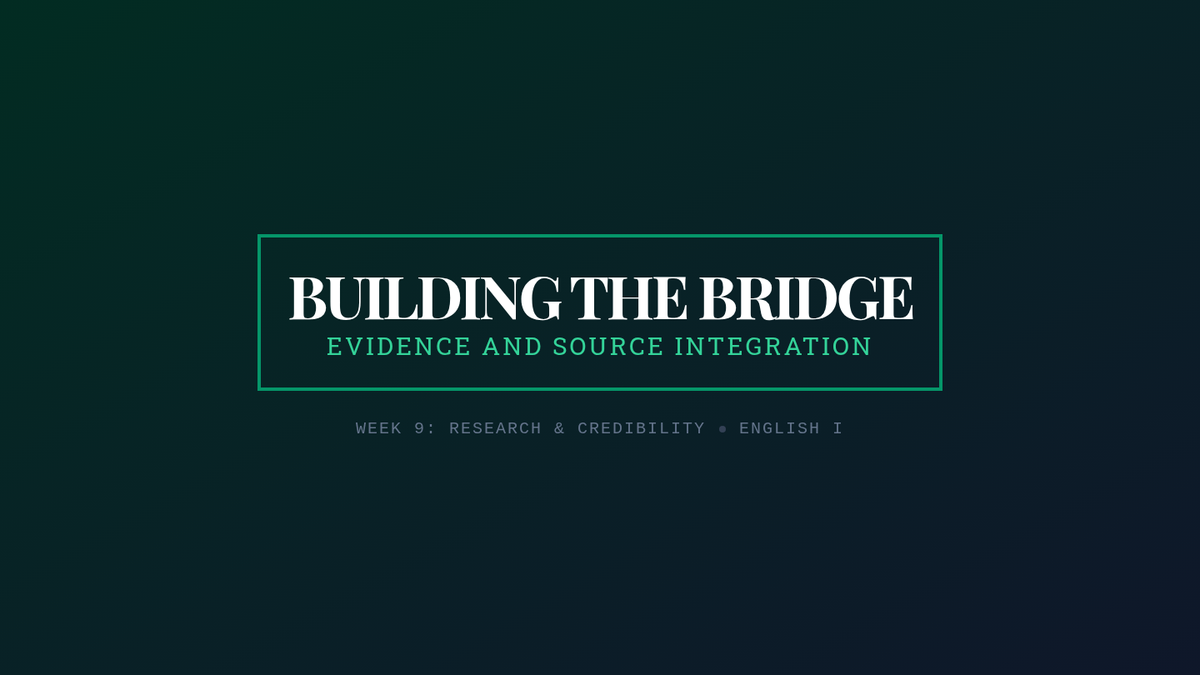
Strategies for researching, selecting, and integrating credible evidence to support expository claims.
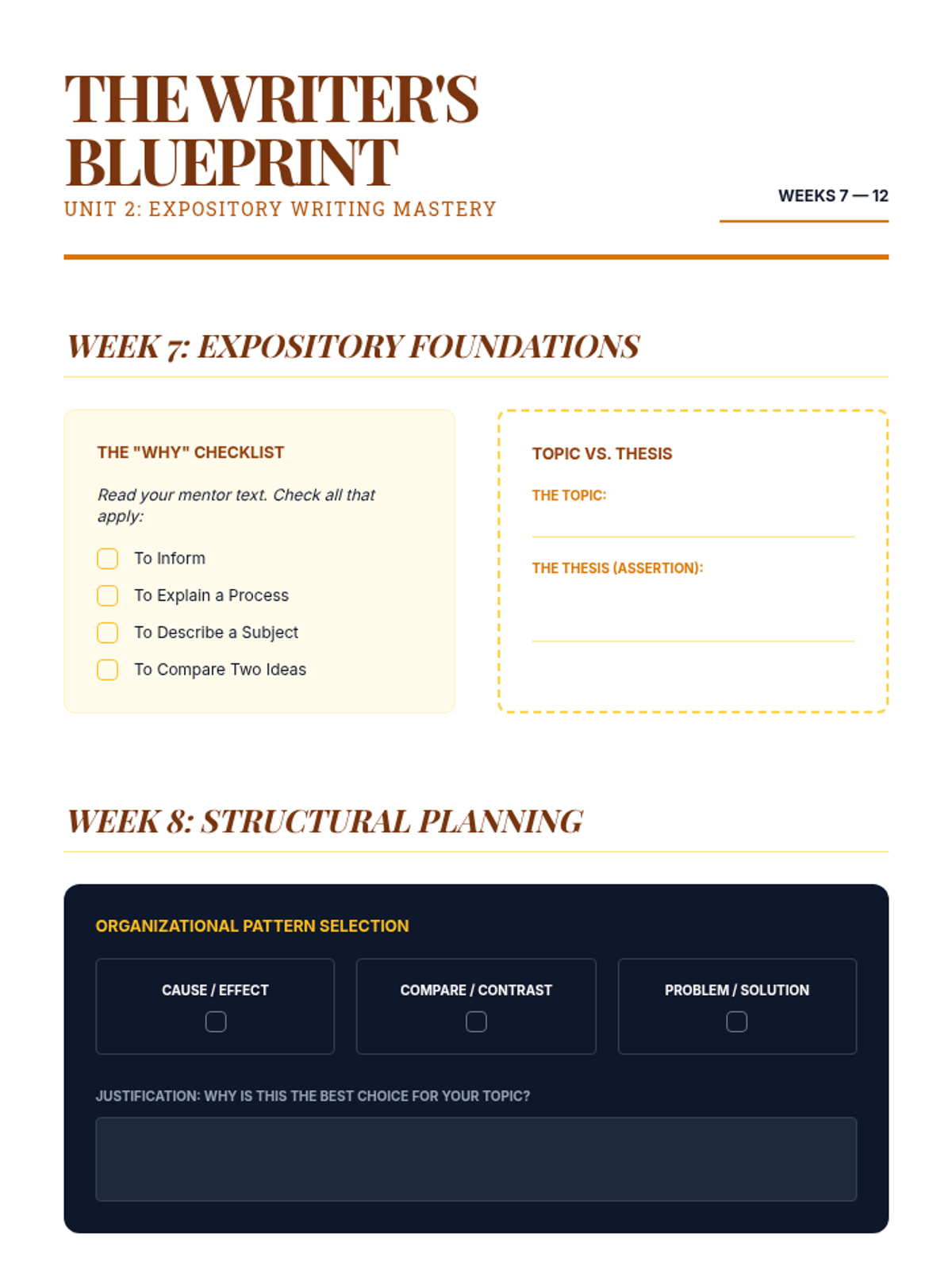
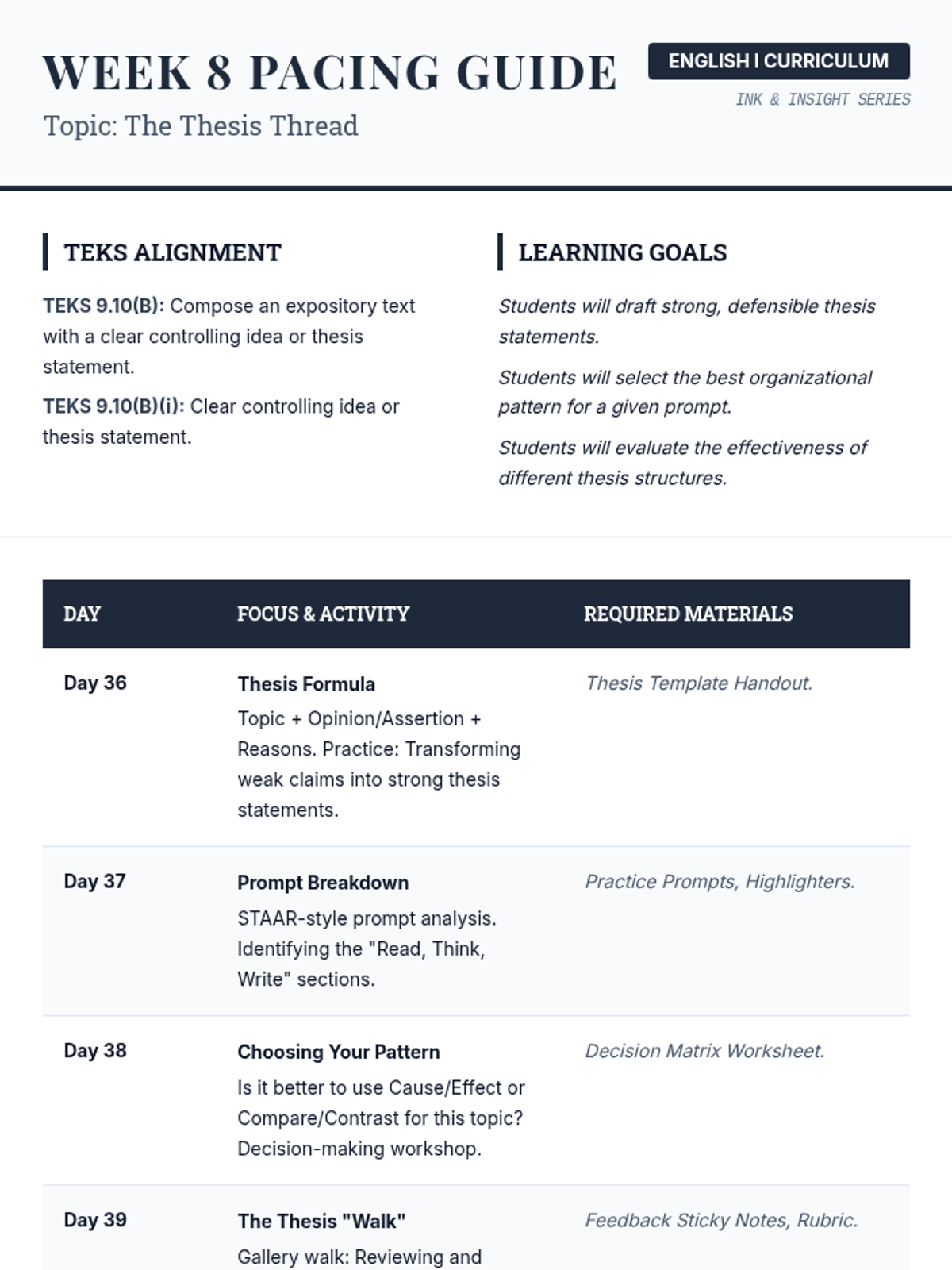
Crafting effective thesis statements and choosing organizational patterns for informative essays.
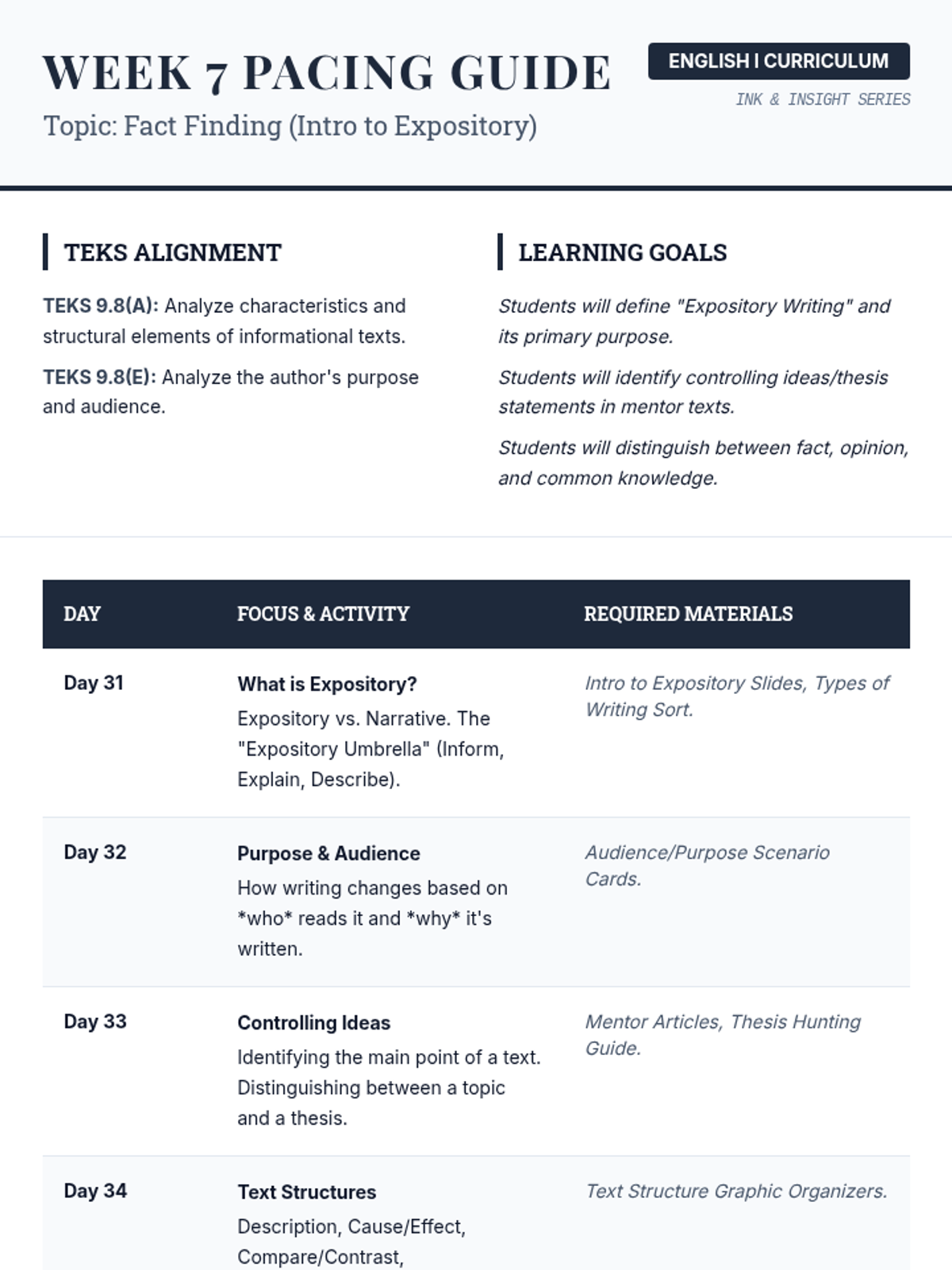
Introduction to the characteristics of expository writing, identifying purpose, and analyzing informational mentor texts.
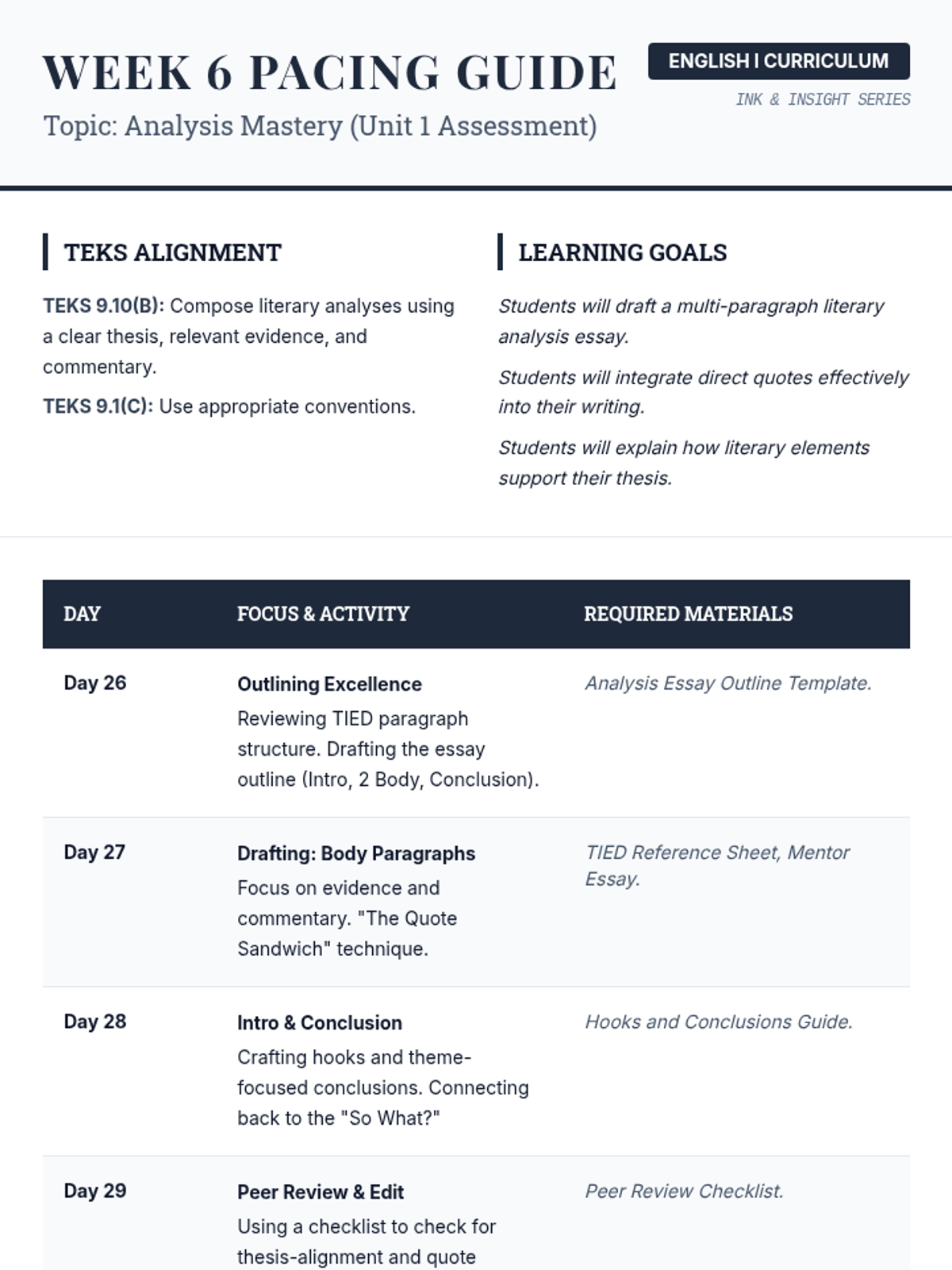
Guided writing workshop focusing on crafting analytical responses and literary essays.
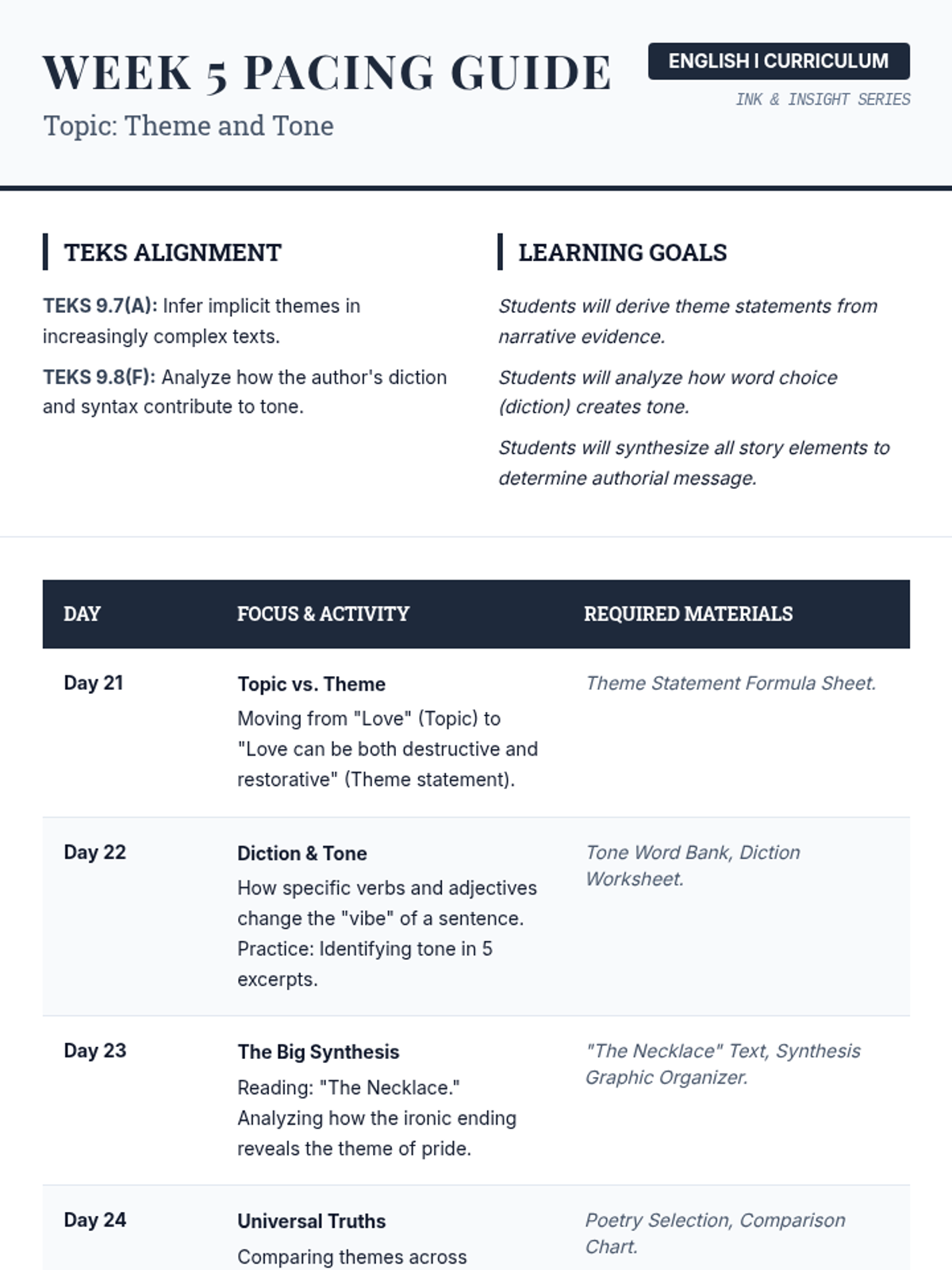
Synthesizing narrative elements to identify universal themes and authorial tone.
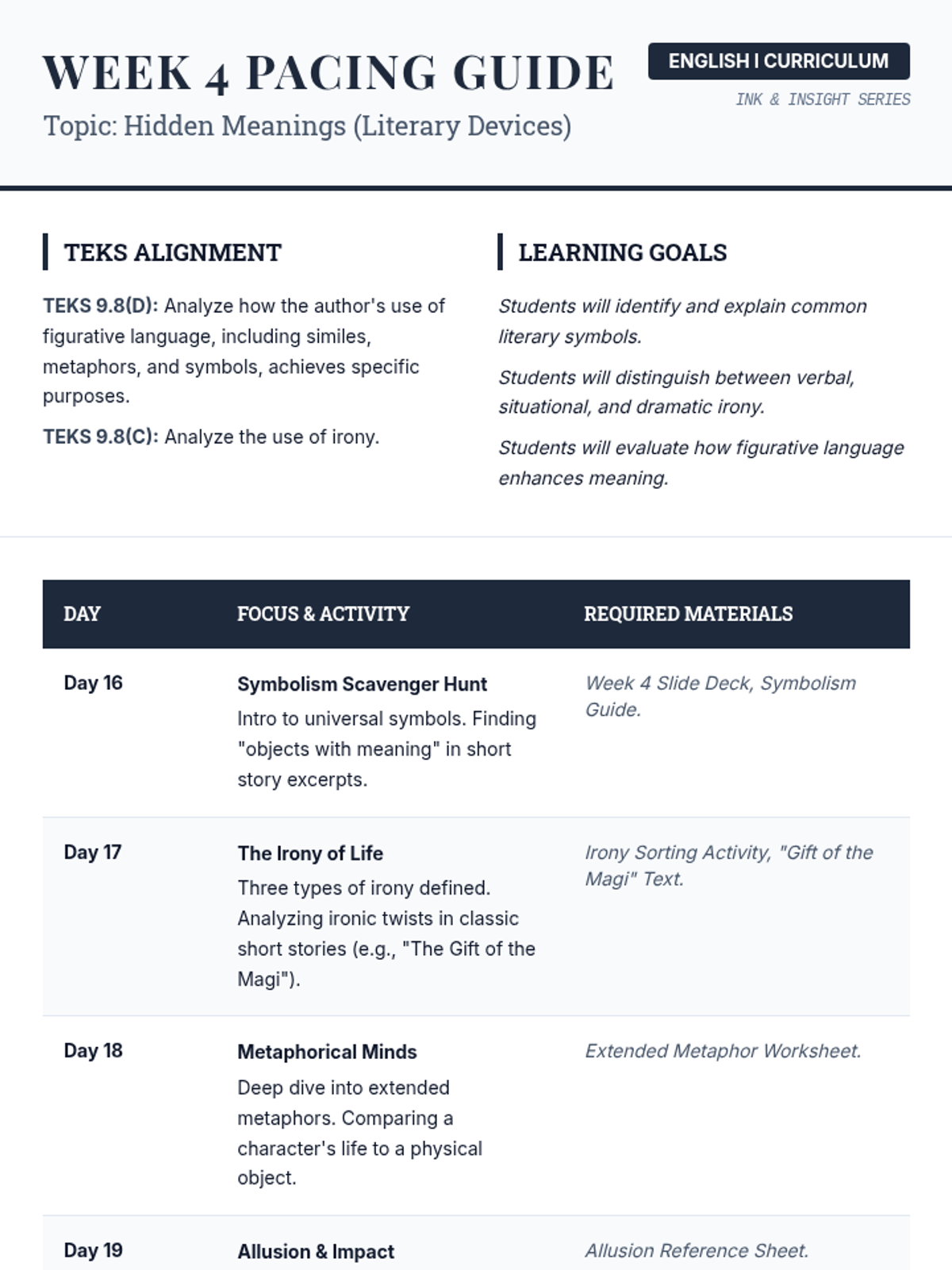
Analysis of symbolism, irony, and figurative language to uncover deeper meanings in literature.
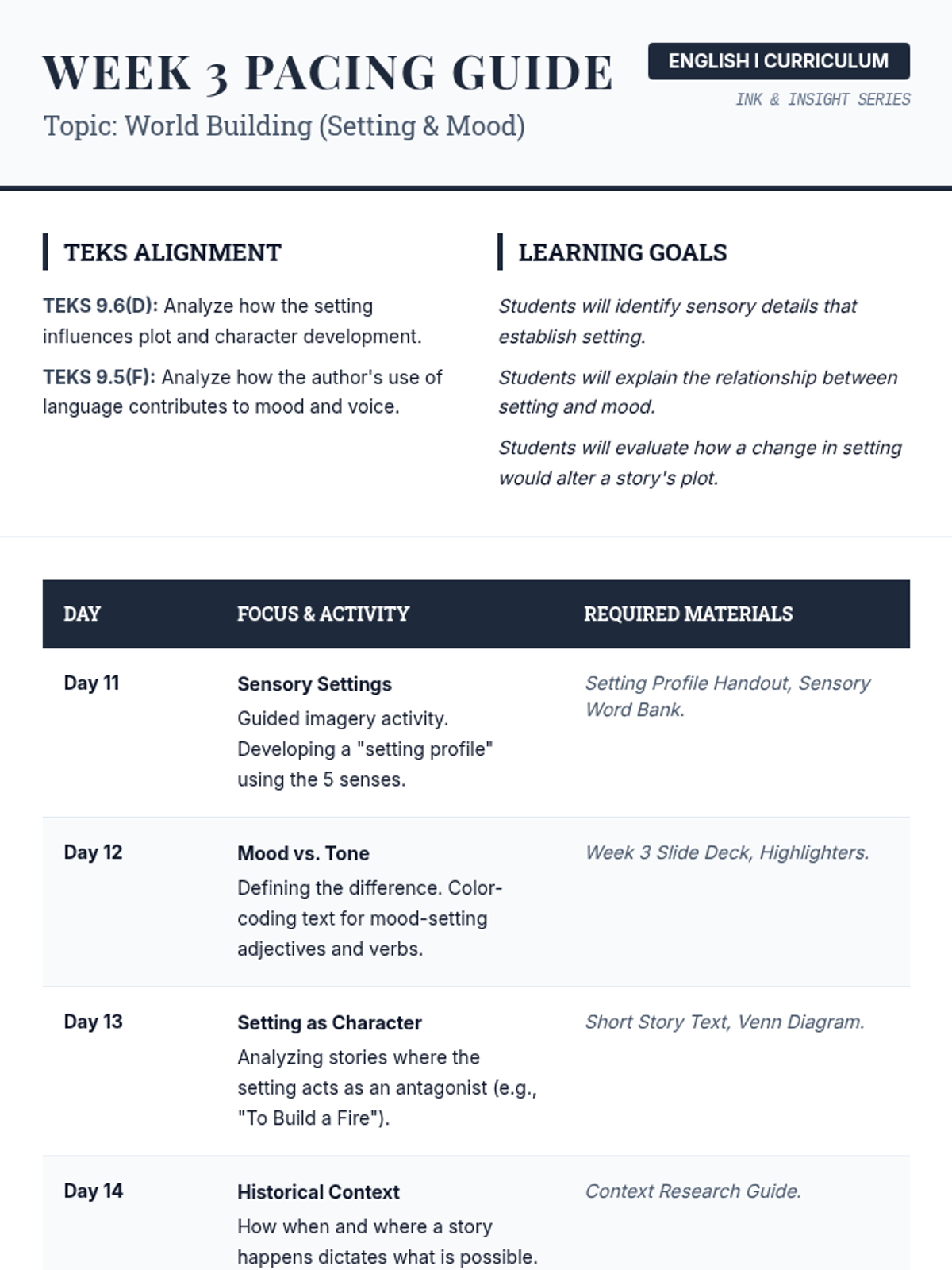
Exploration of how setting influences mood, tone, and character behavior in diverse narratives.
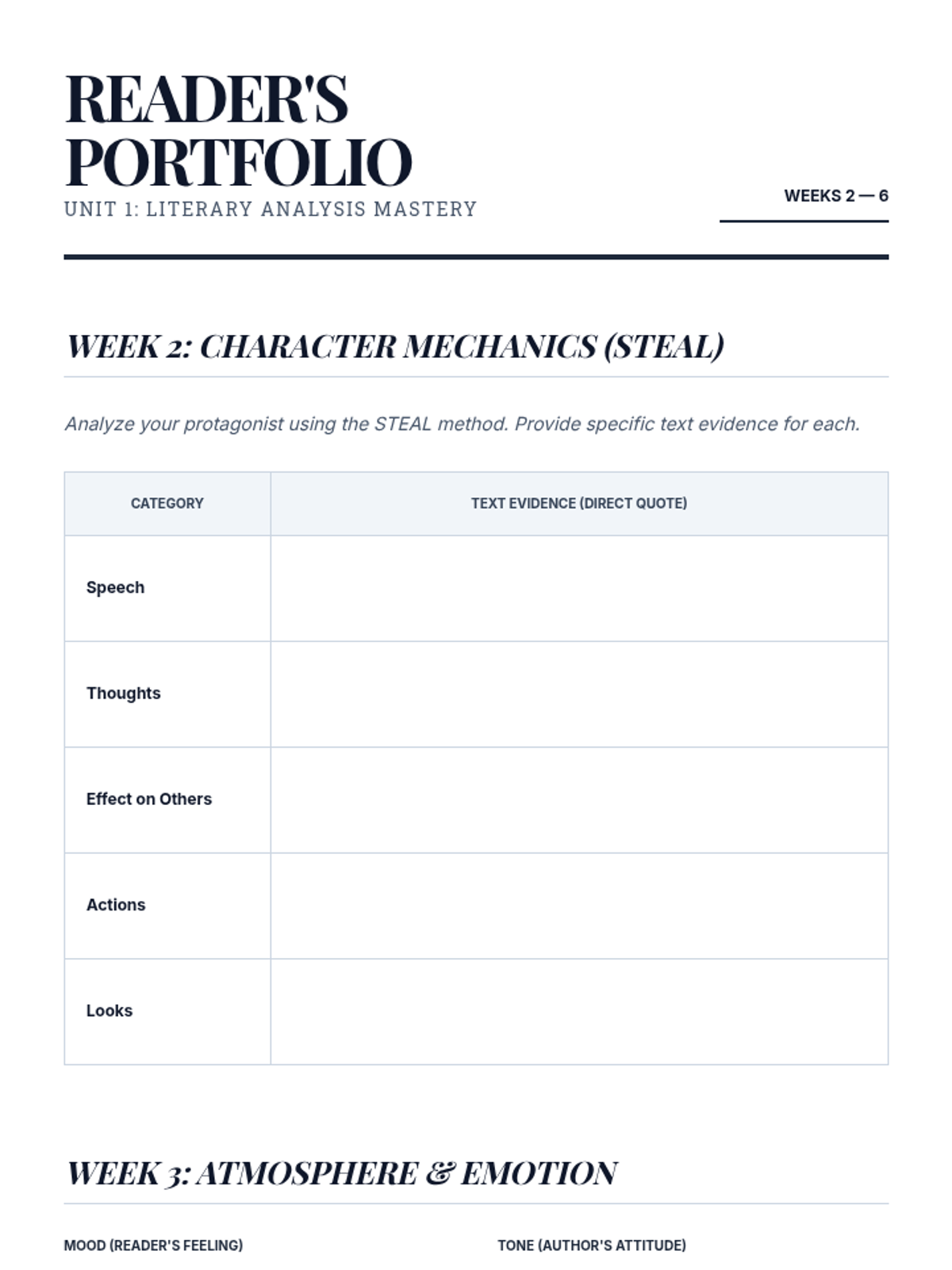
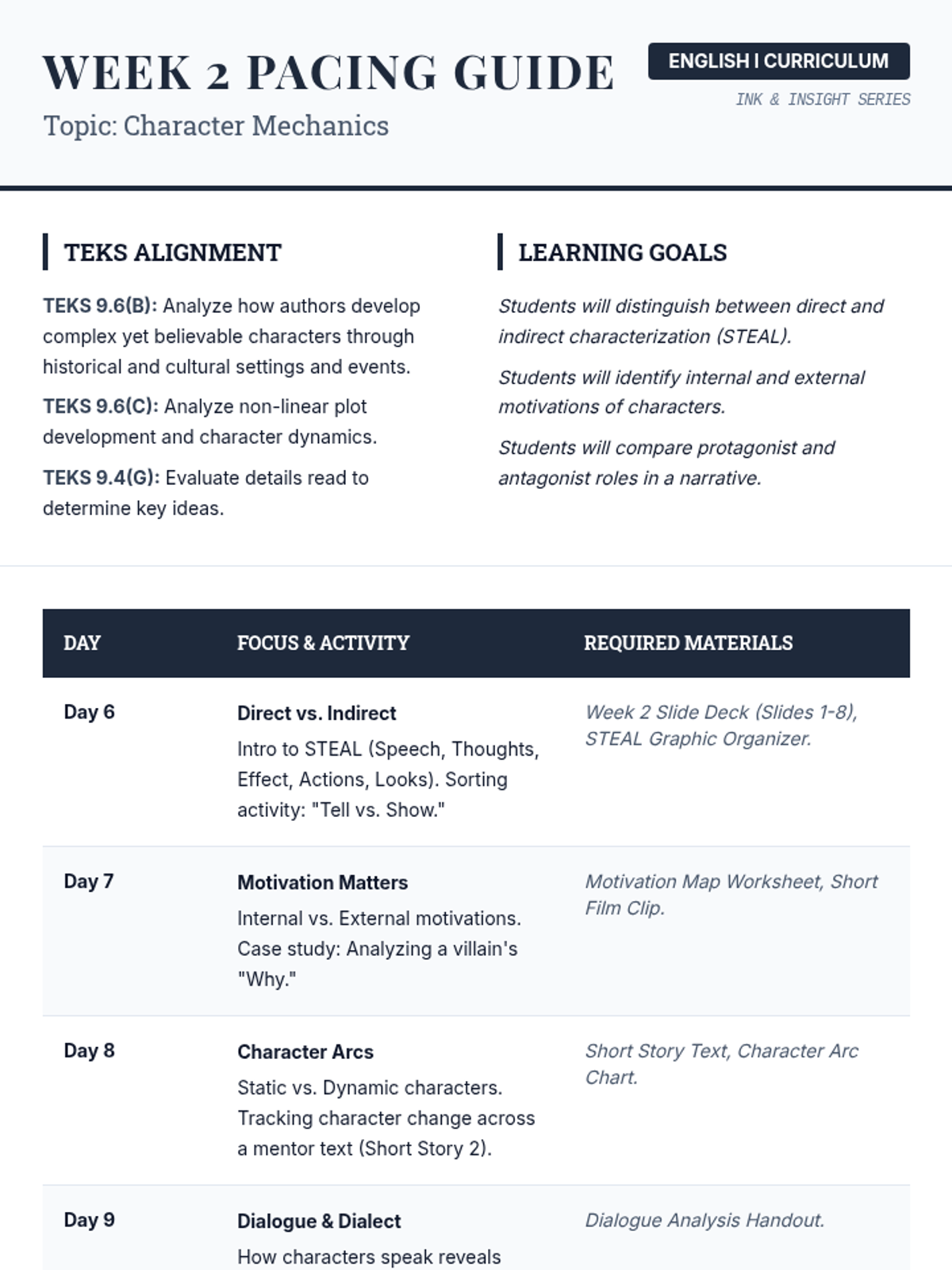
In-depth analysis of direct and indirect characterization, protagonist/antagonist dynamics, and character motivation.
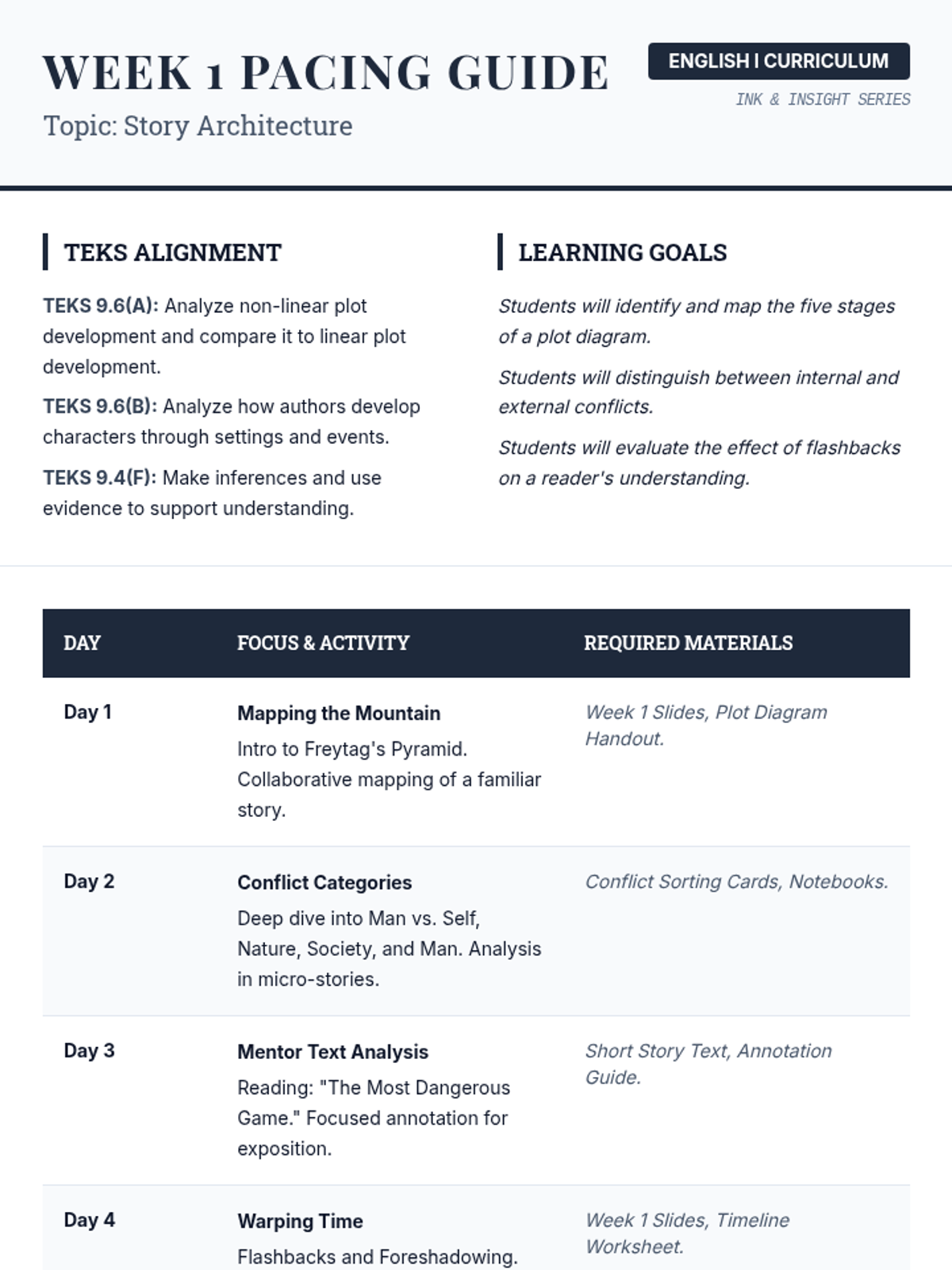
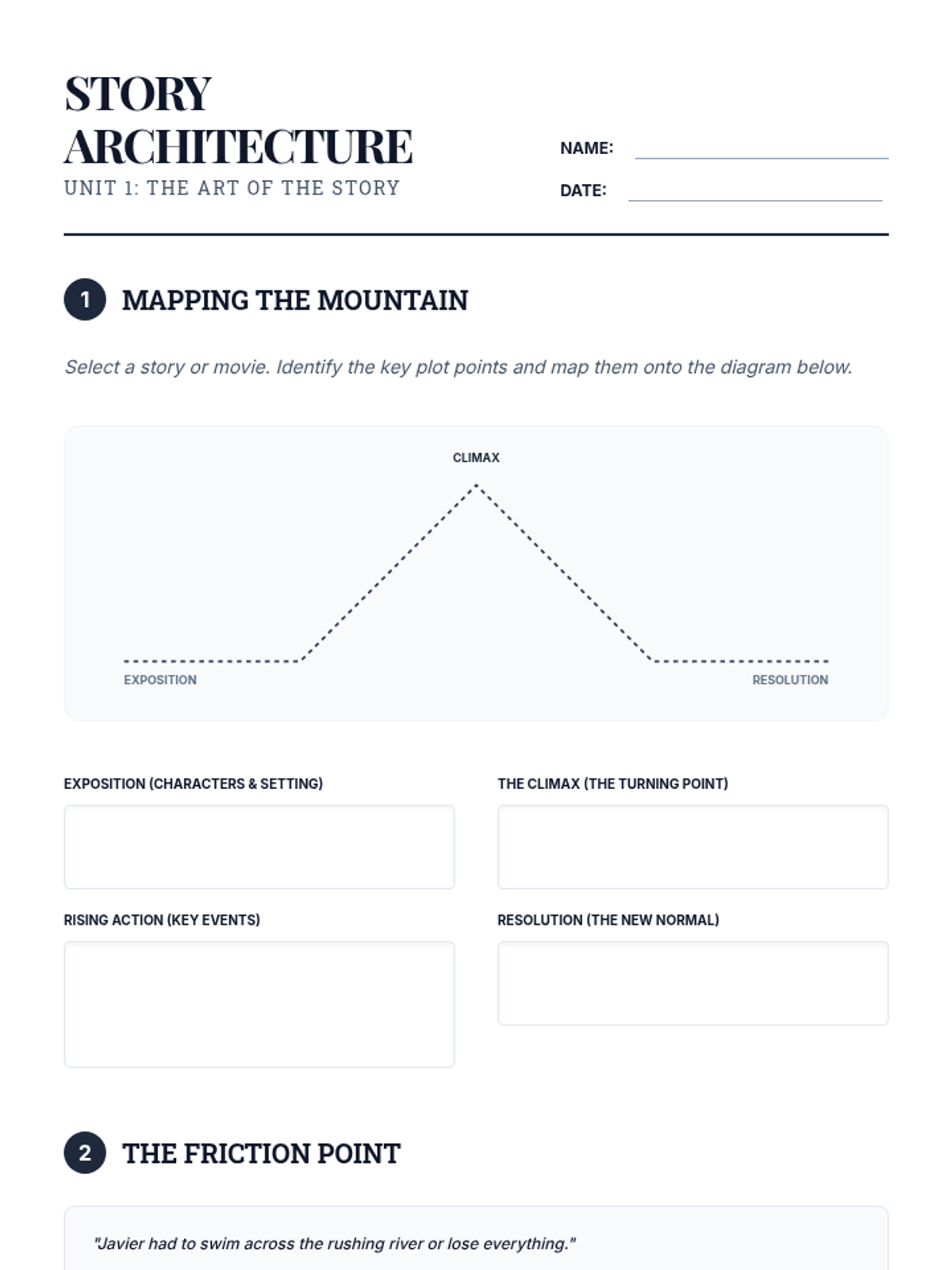
Introduction to short story structures, plot diagrams, and conflict types using classic and modern mentor texts.
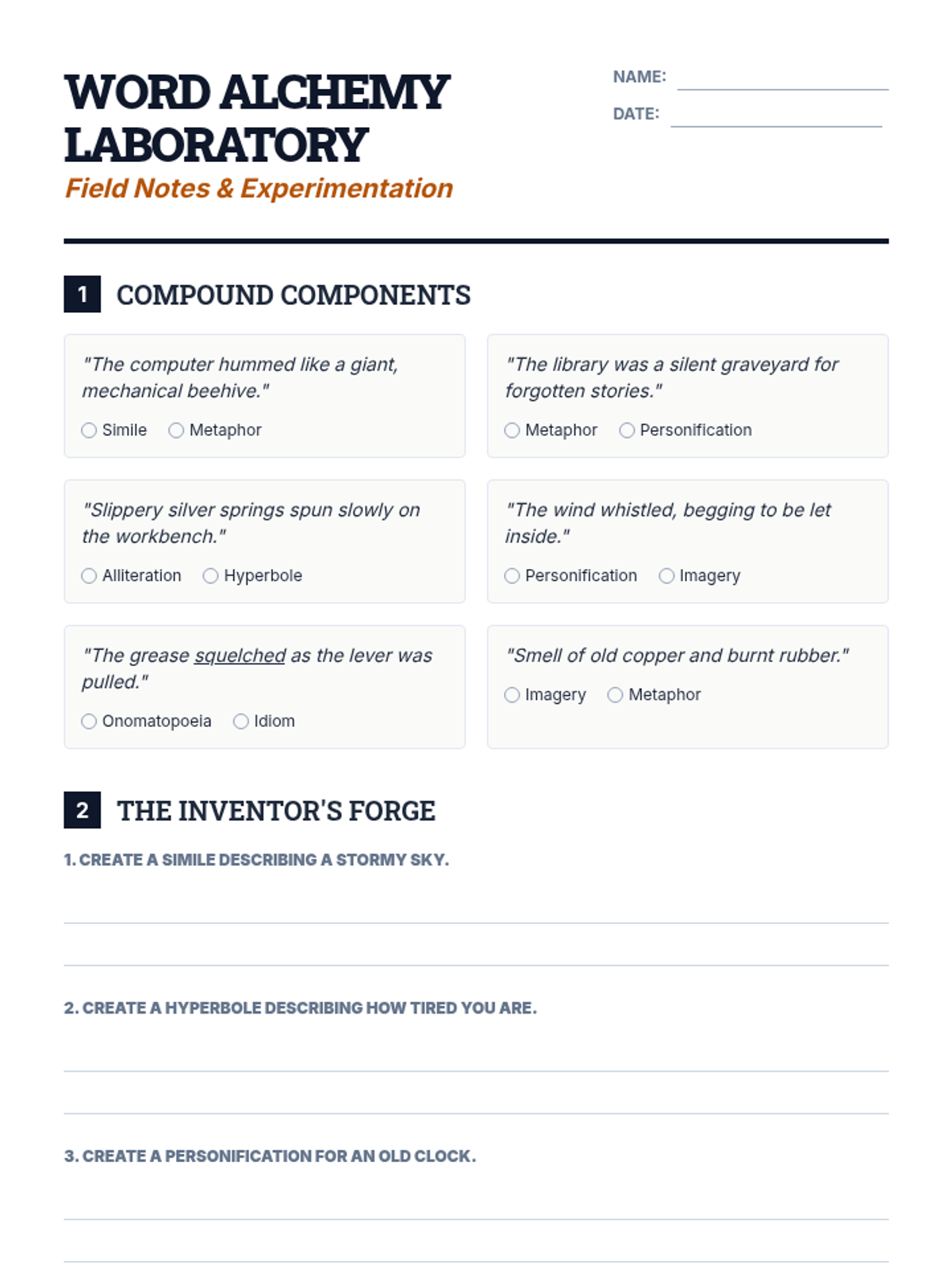
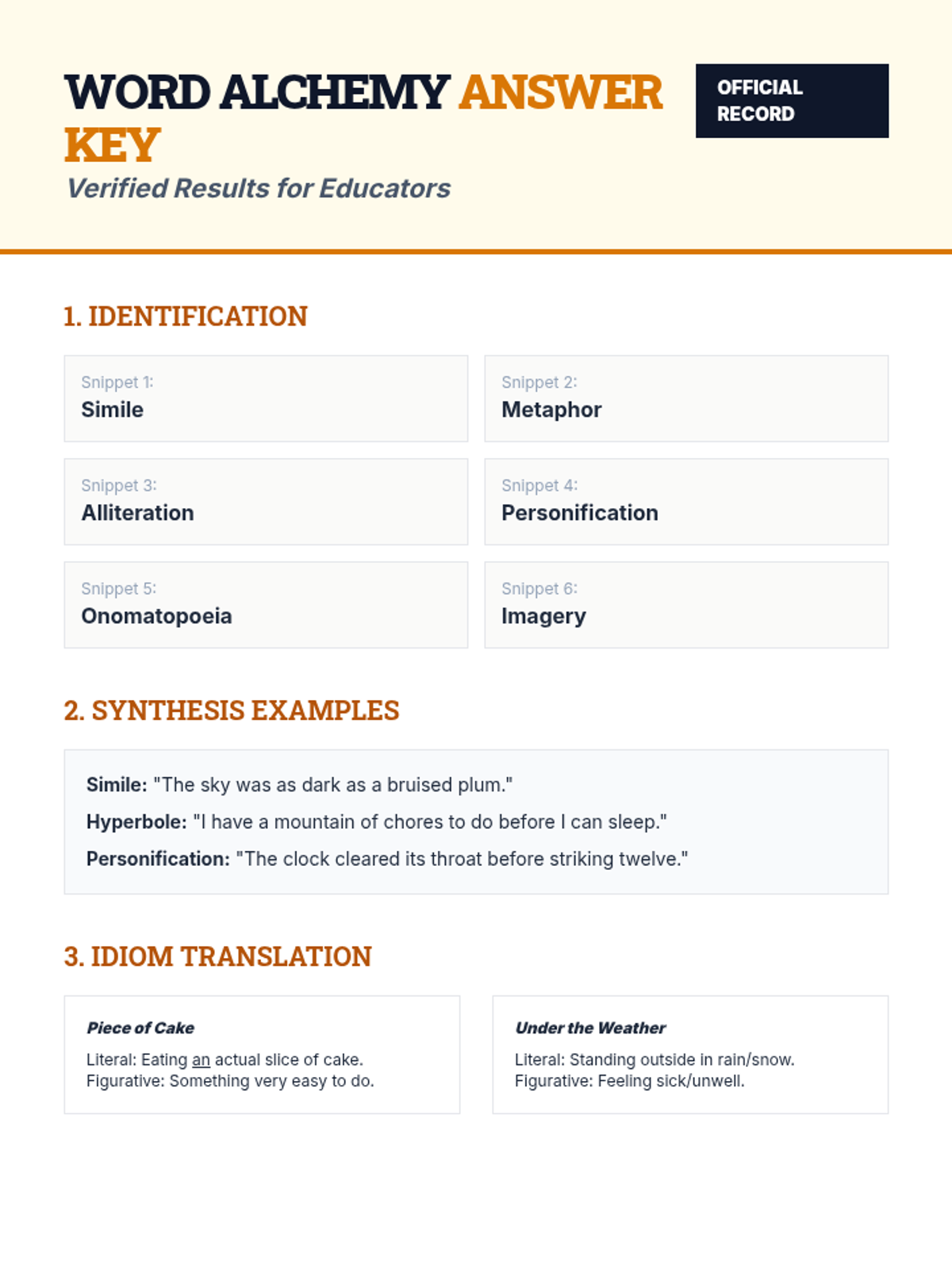
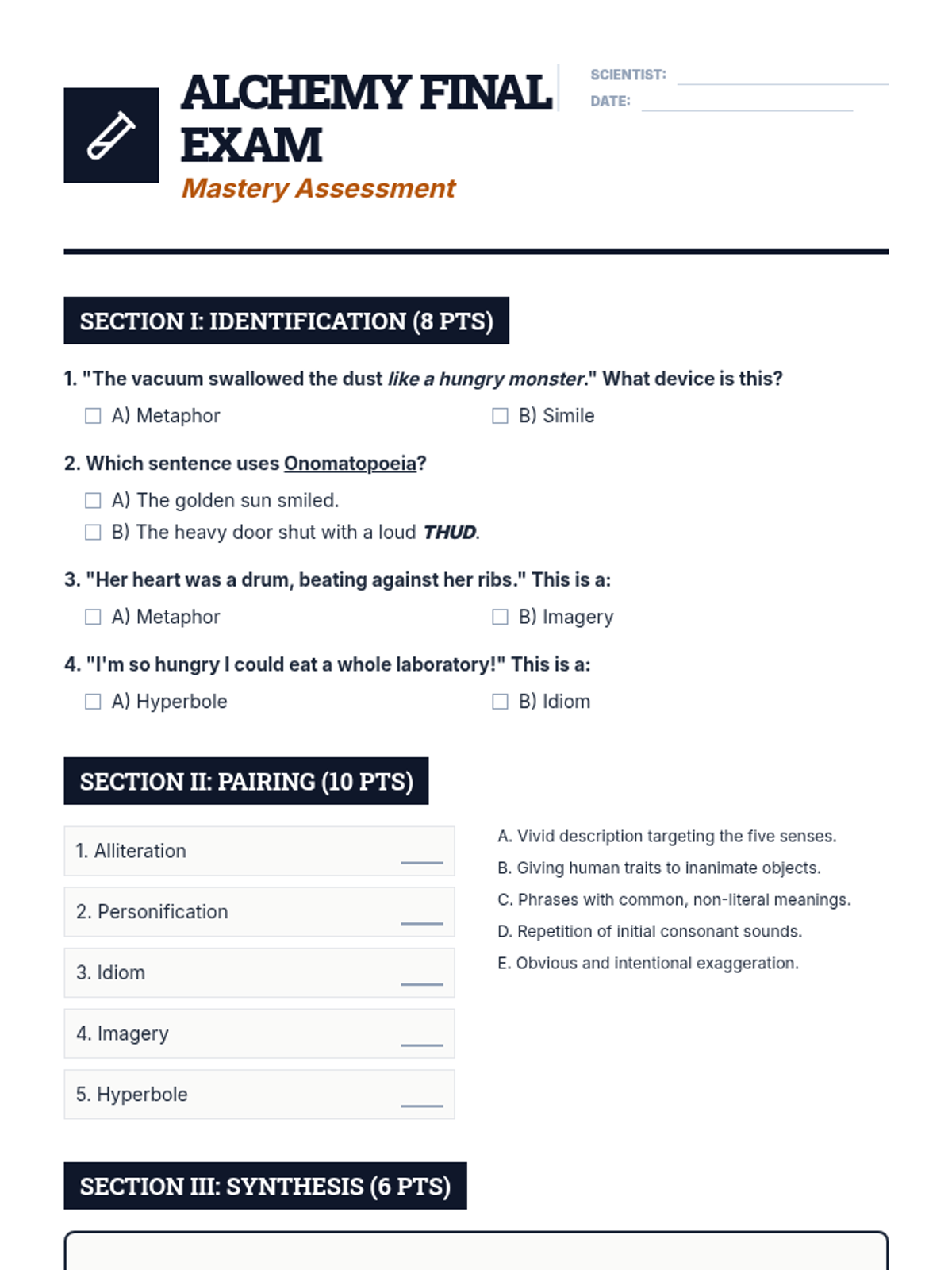
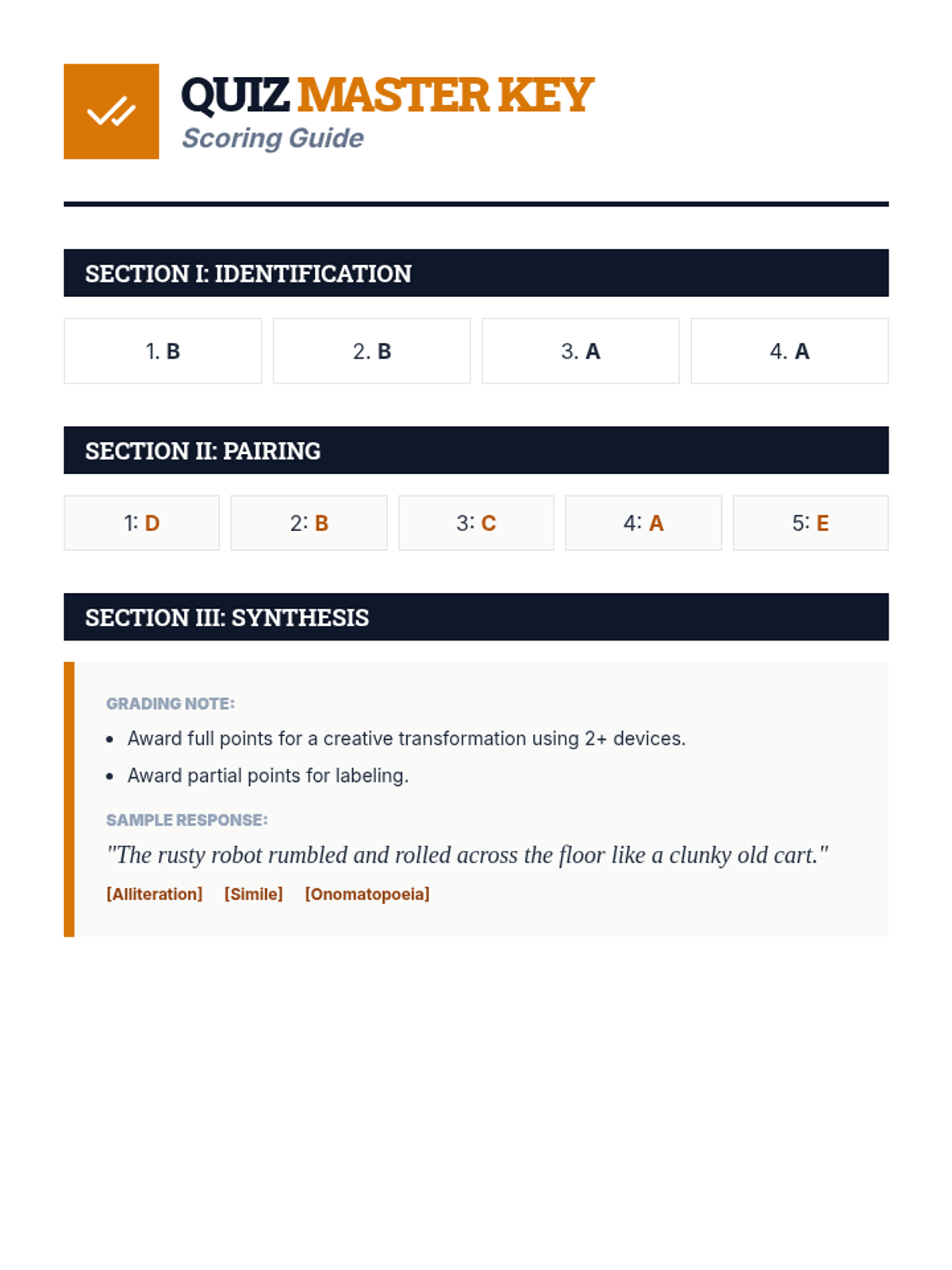
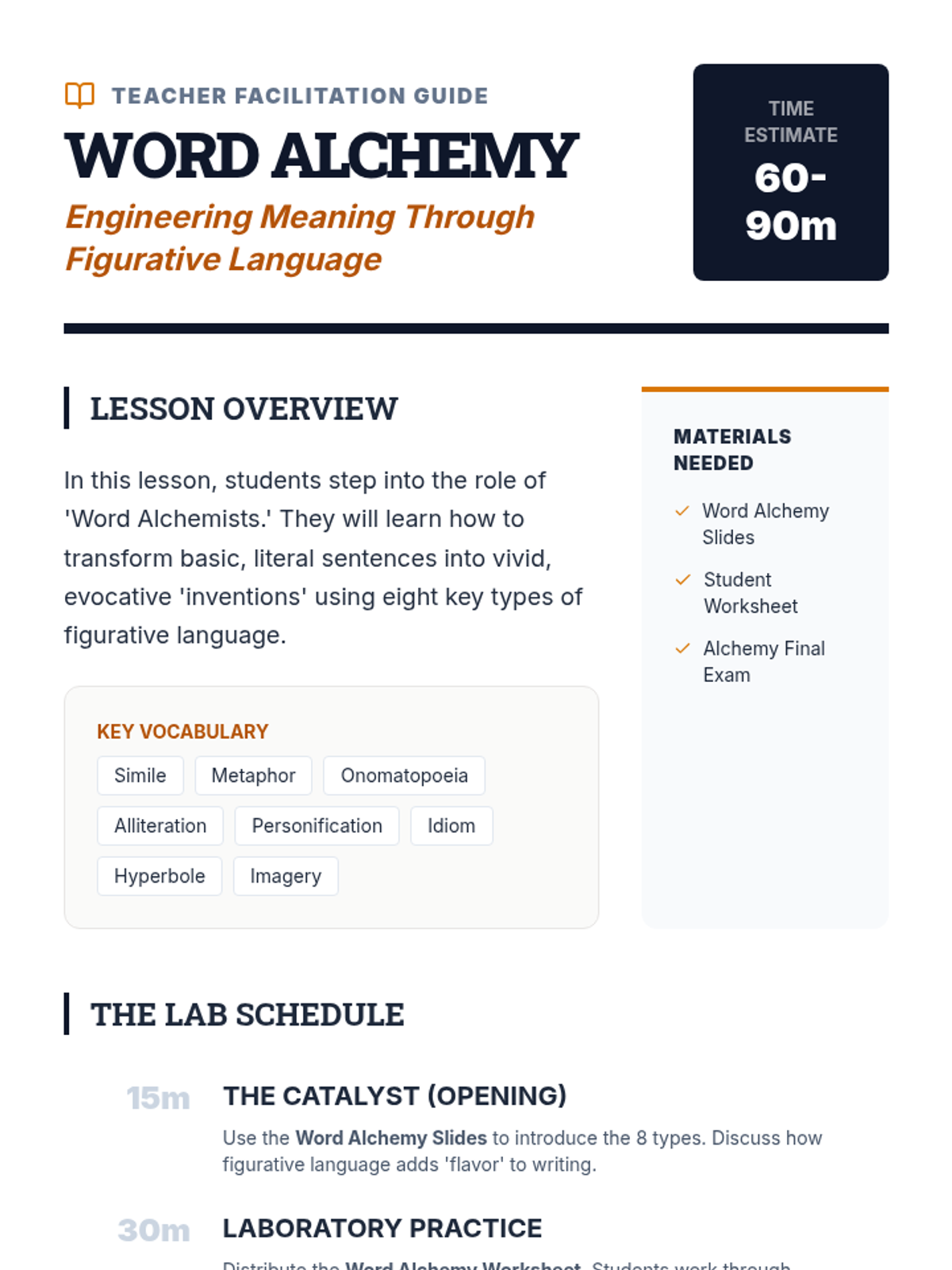
A comprehensive exploration of eight key figurative language types: similes, metaphors, onomatopoeia, alliteration, personification, idioms, hyperbole, and imagery. Students will analyze, identify, and create their own linguistic 'inventions' through a lens of creative alchemy.
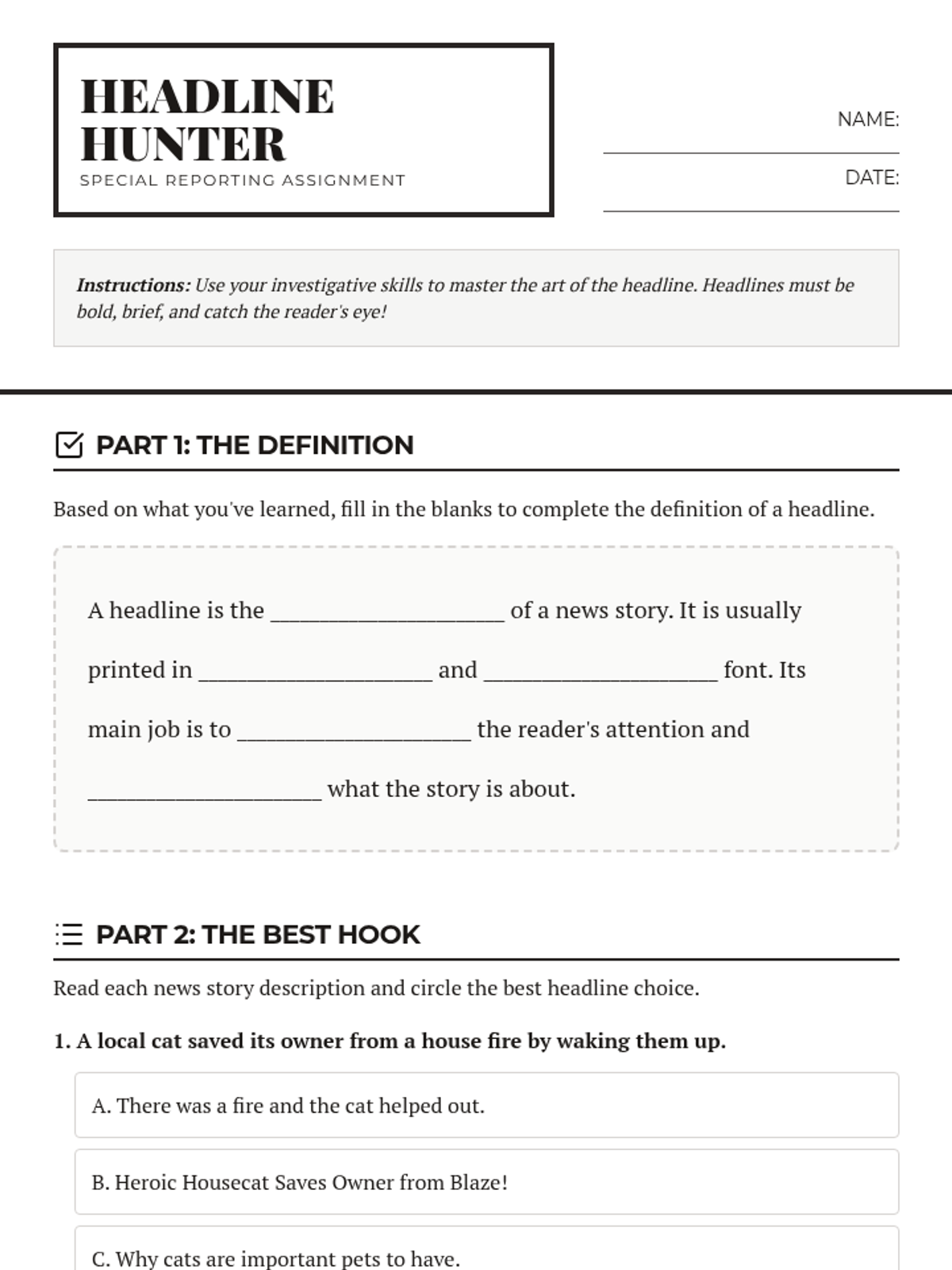
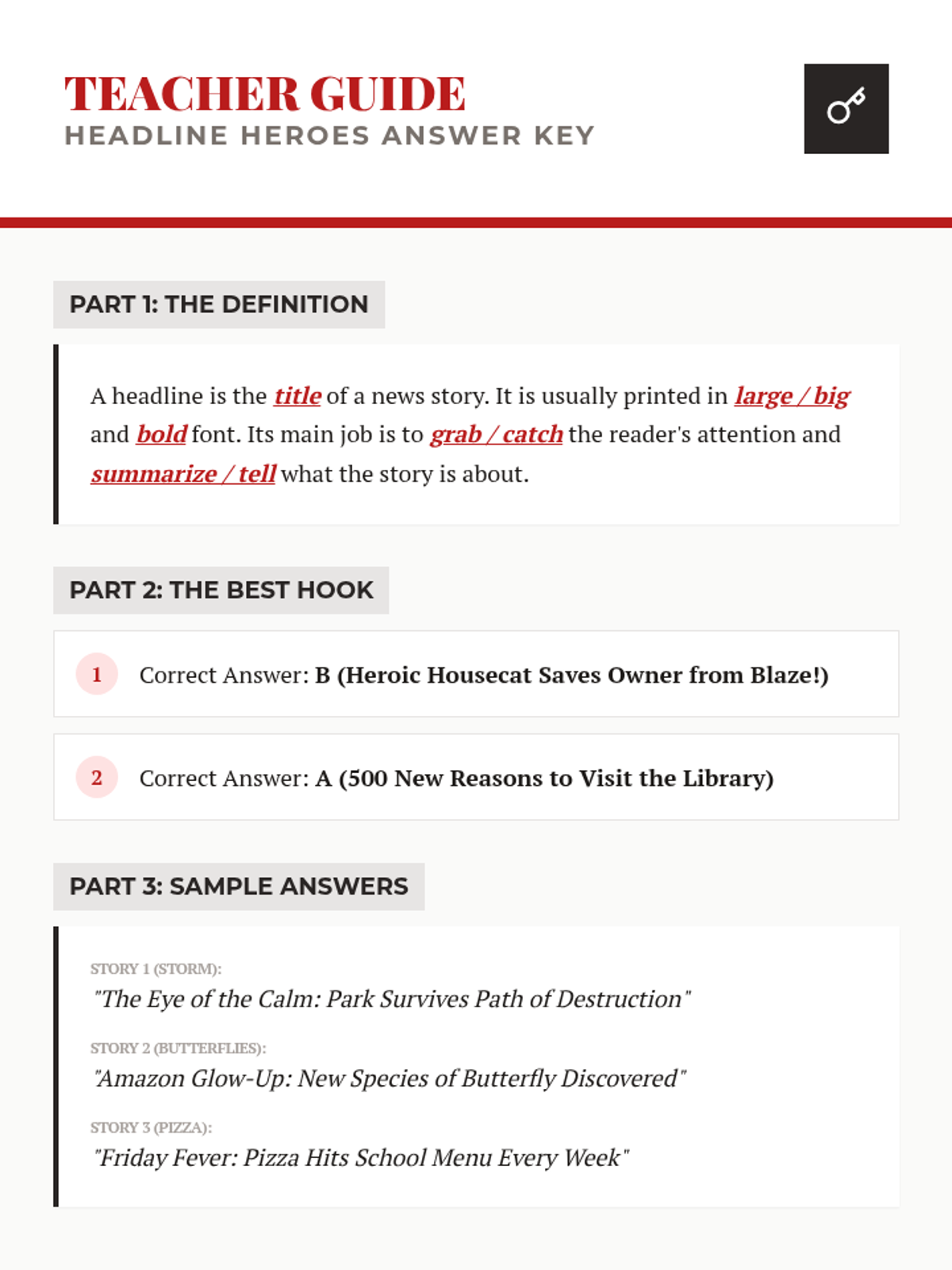
A lesson introducing students to the purpose, structure, and impact of headlines in journalism and media.
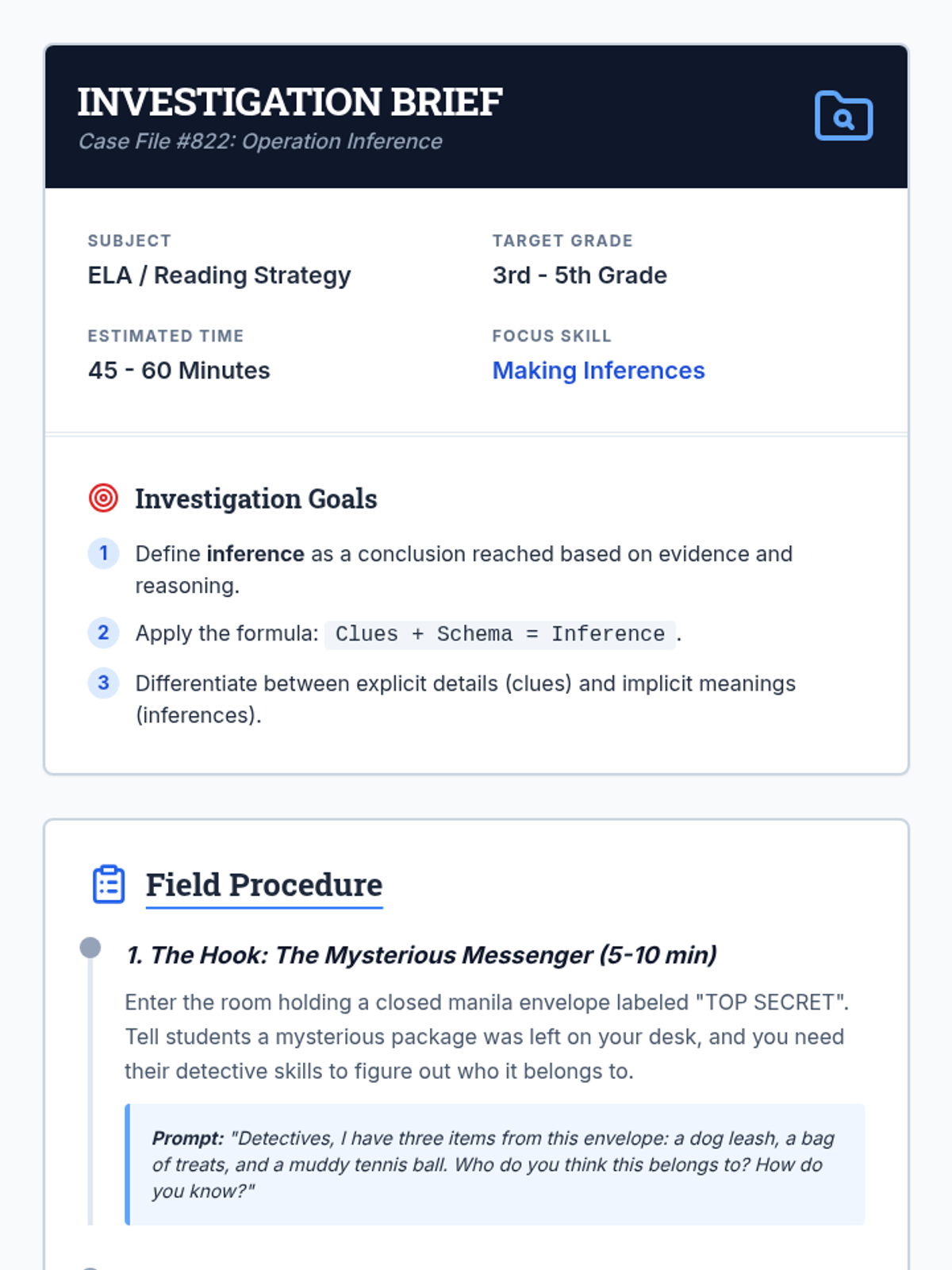
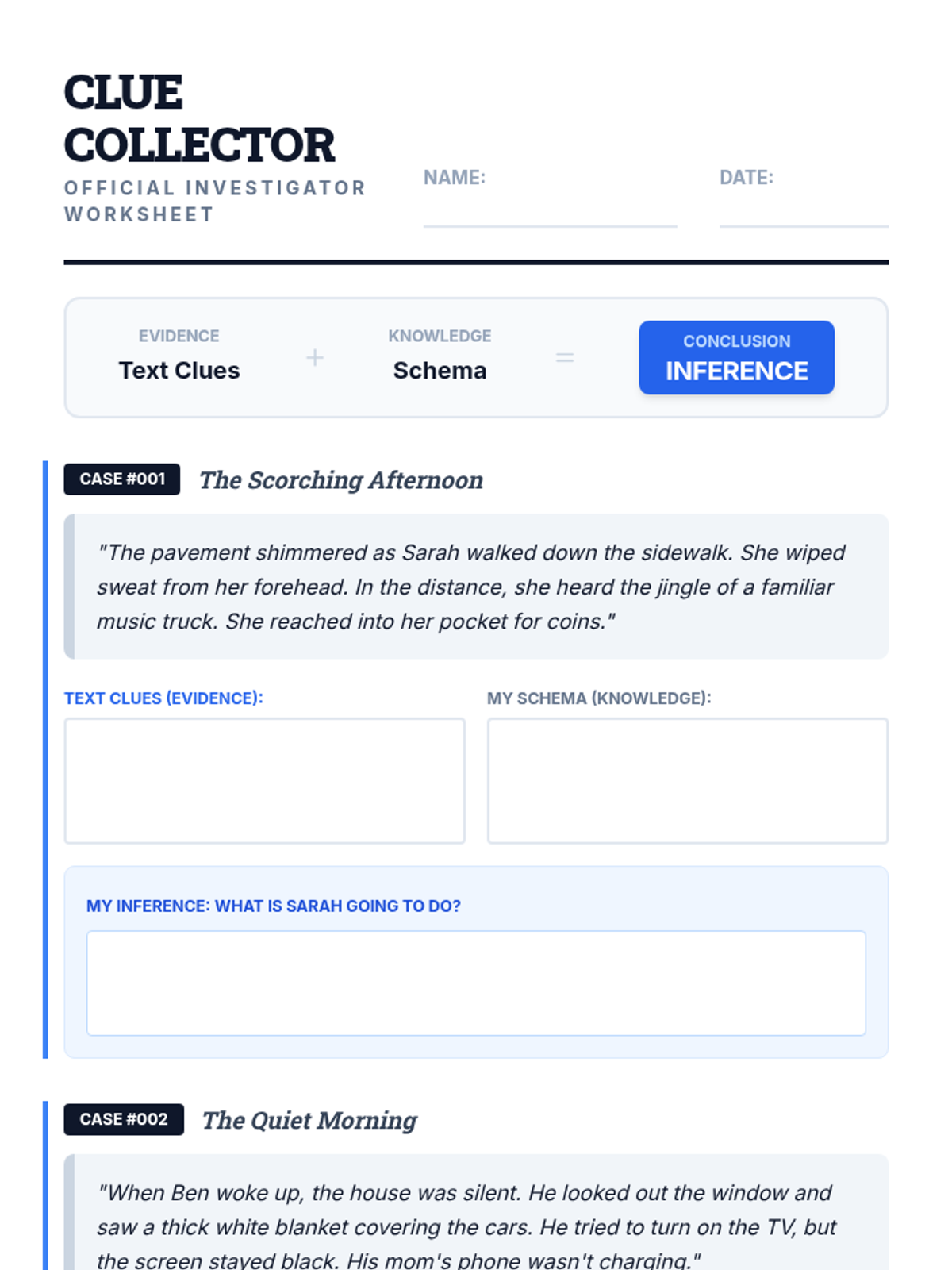
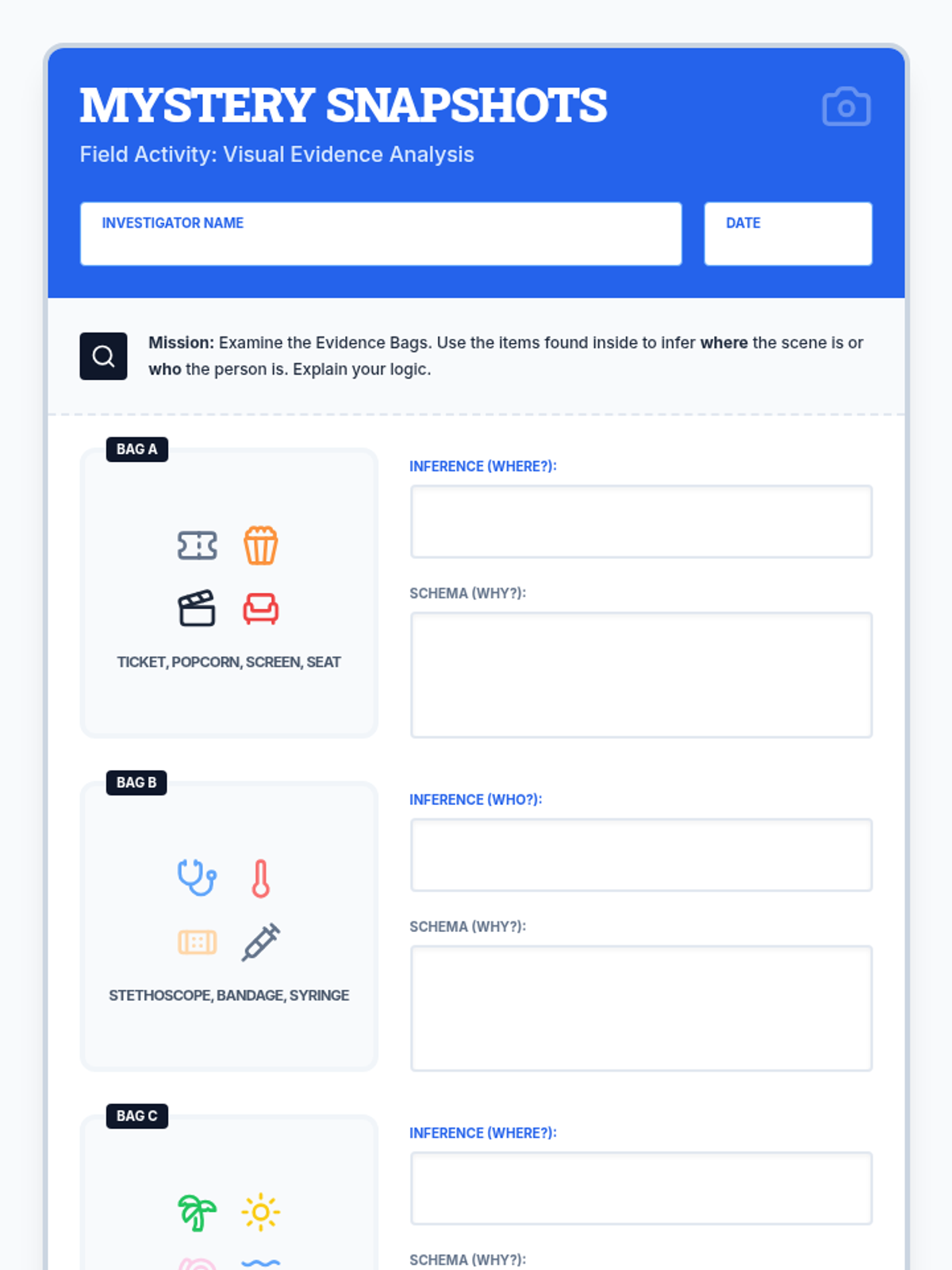
A detective-themed lesson where students learn to combine text clues with background knowledge to make logical inferences. Students act as 'investigators' to solve visual and text-based mysteries using the inference formula: Clues + Schema = Inference.