Cette seconde séance confronte les élèves aux soustractions complexes avec de grands nombres (jusqu'à 100 000) et se concentre sur le redoutable piège des zéros intercalés (ex: 10 004 - 3 245).
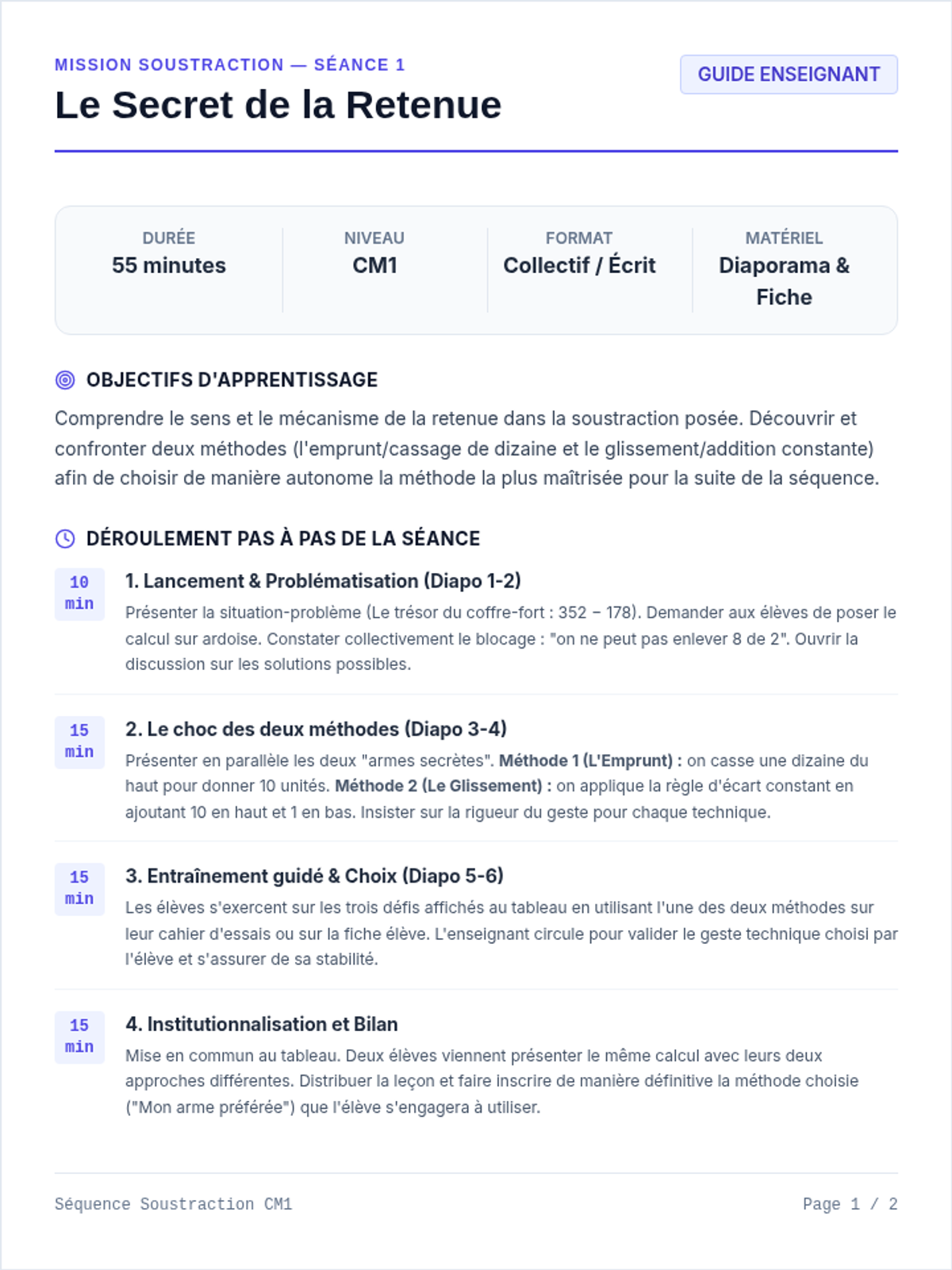
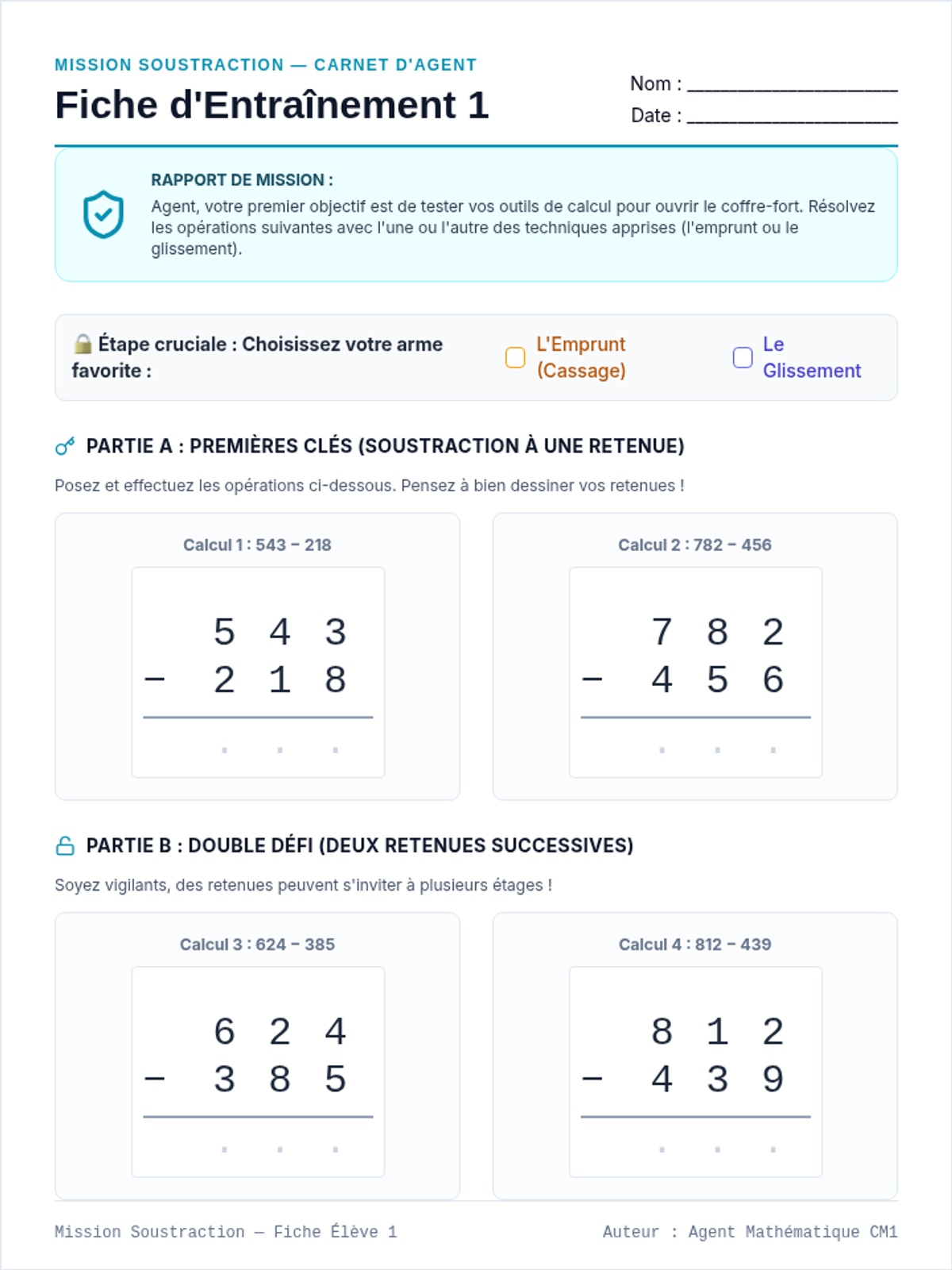
Cette première séance permet d'élucider le mécanisme de la retenue dans la soustraction posée. Les élèves comparent les deux techniques (emprunt/cassage de la dizaine vs. glissement/addition constante) pour choisir celle qu'ils maîtrisent le mieux.
A hands-on, collaborative math project where students work in teams to design and budget for an ultimate classroom picnic, practicing multi-digit addition, subtraction, and critical decision-making.
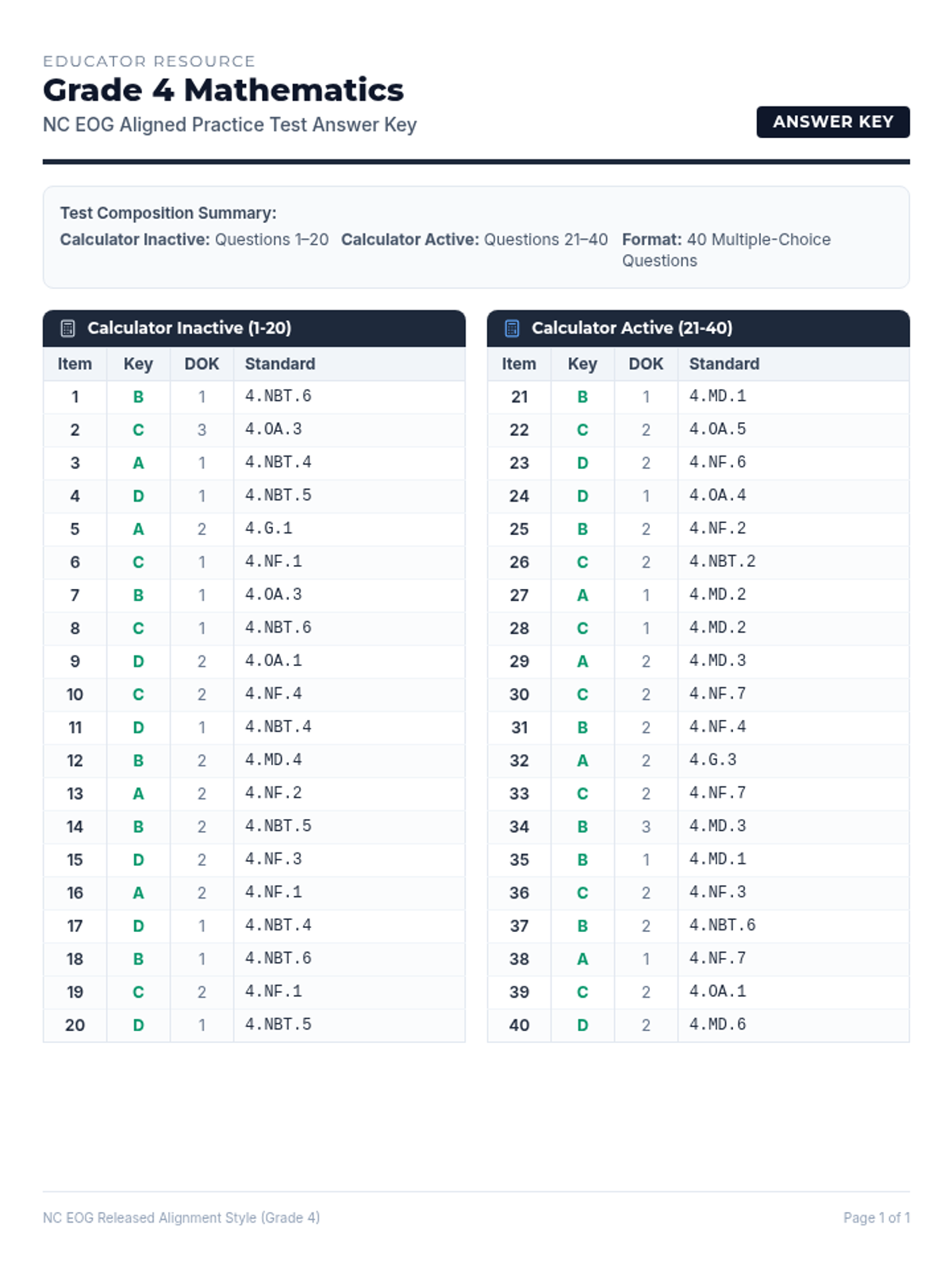
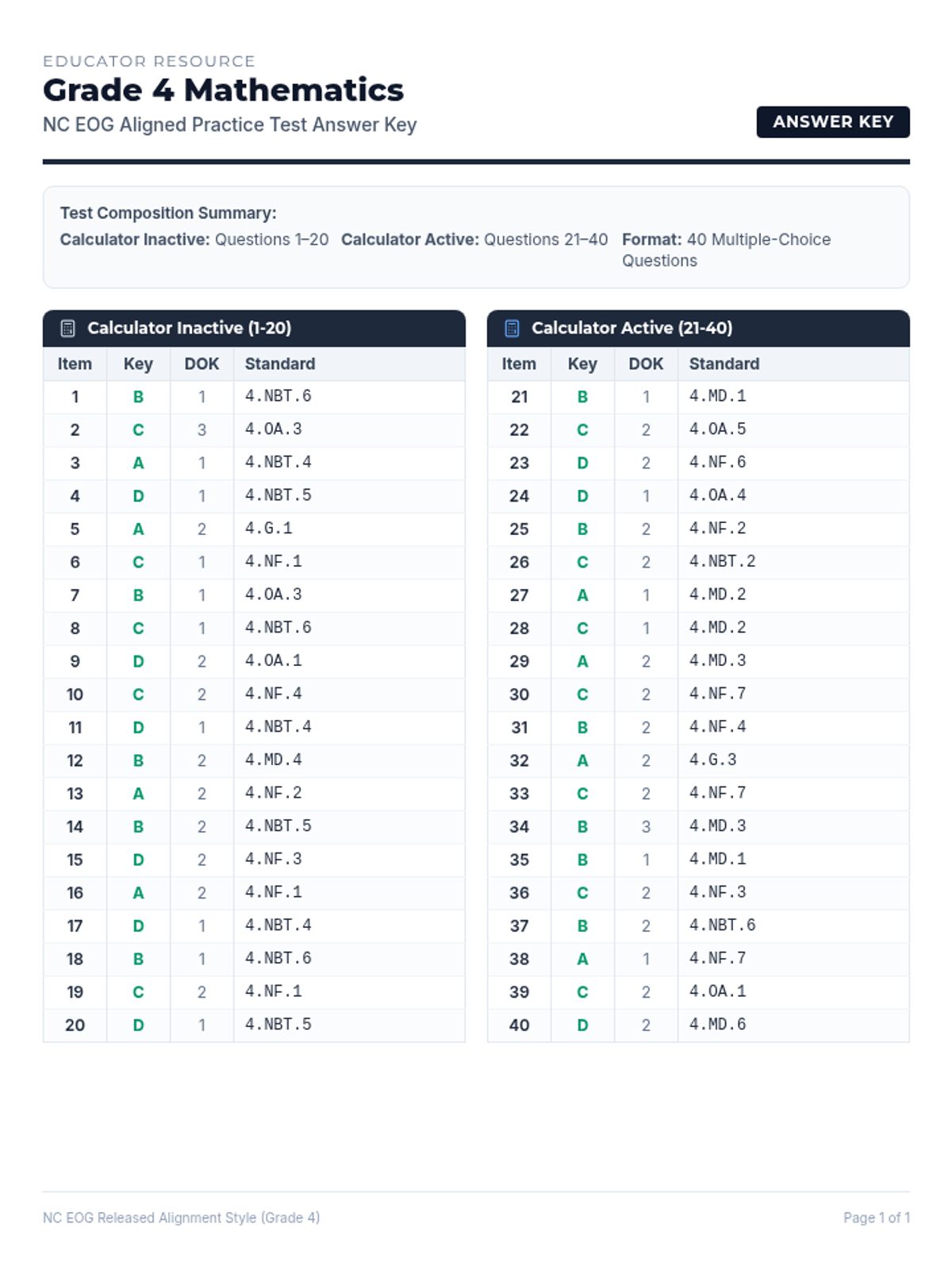
A comprehensive Grade 4 mathematics assessment modeled after the NC End-of-Grade released form, divided into Calculator Inactive and Calculator Active parts.
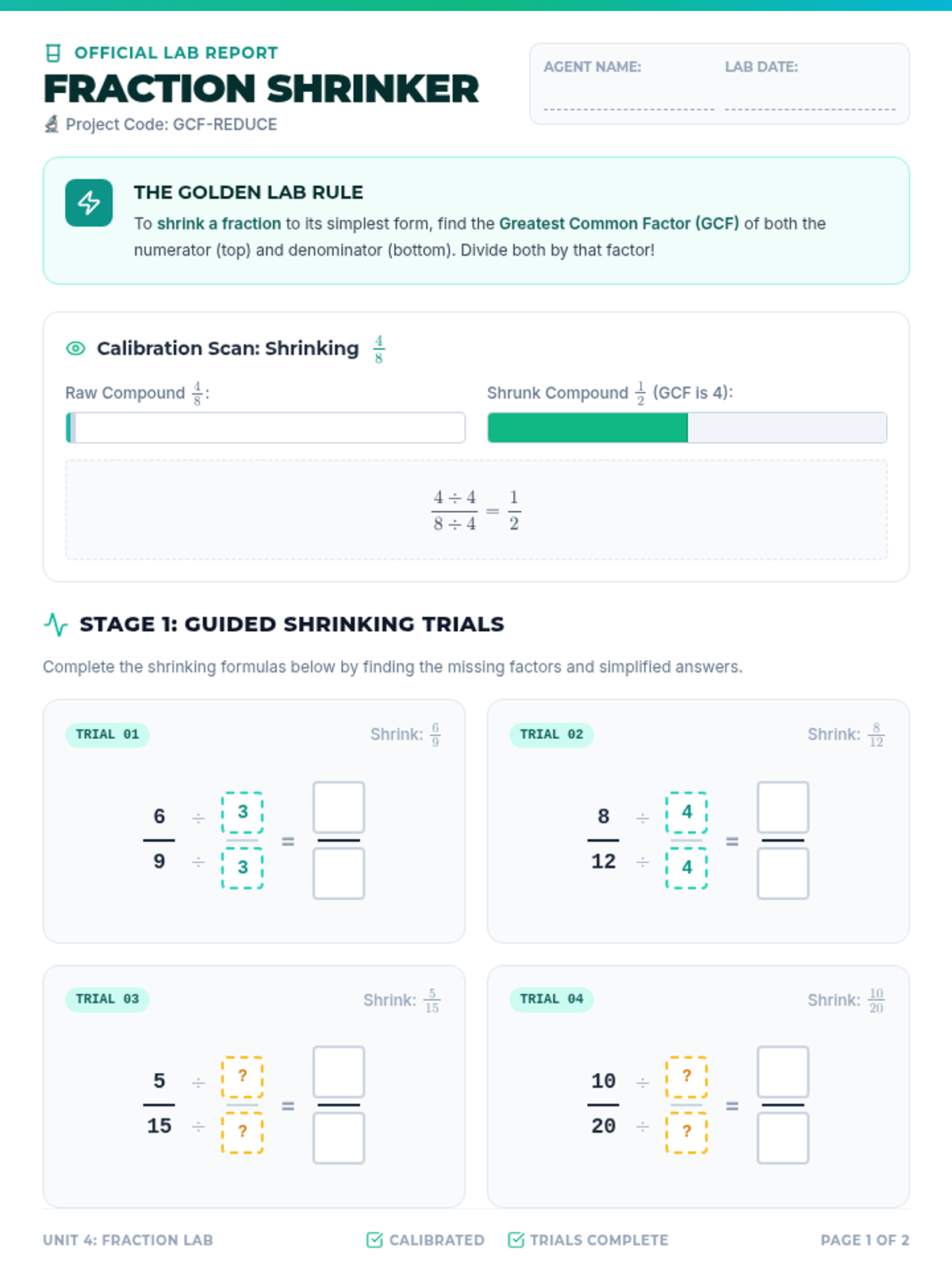
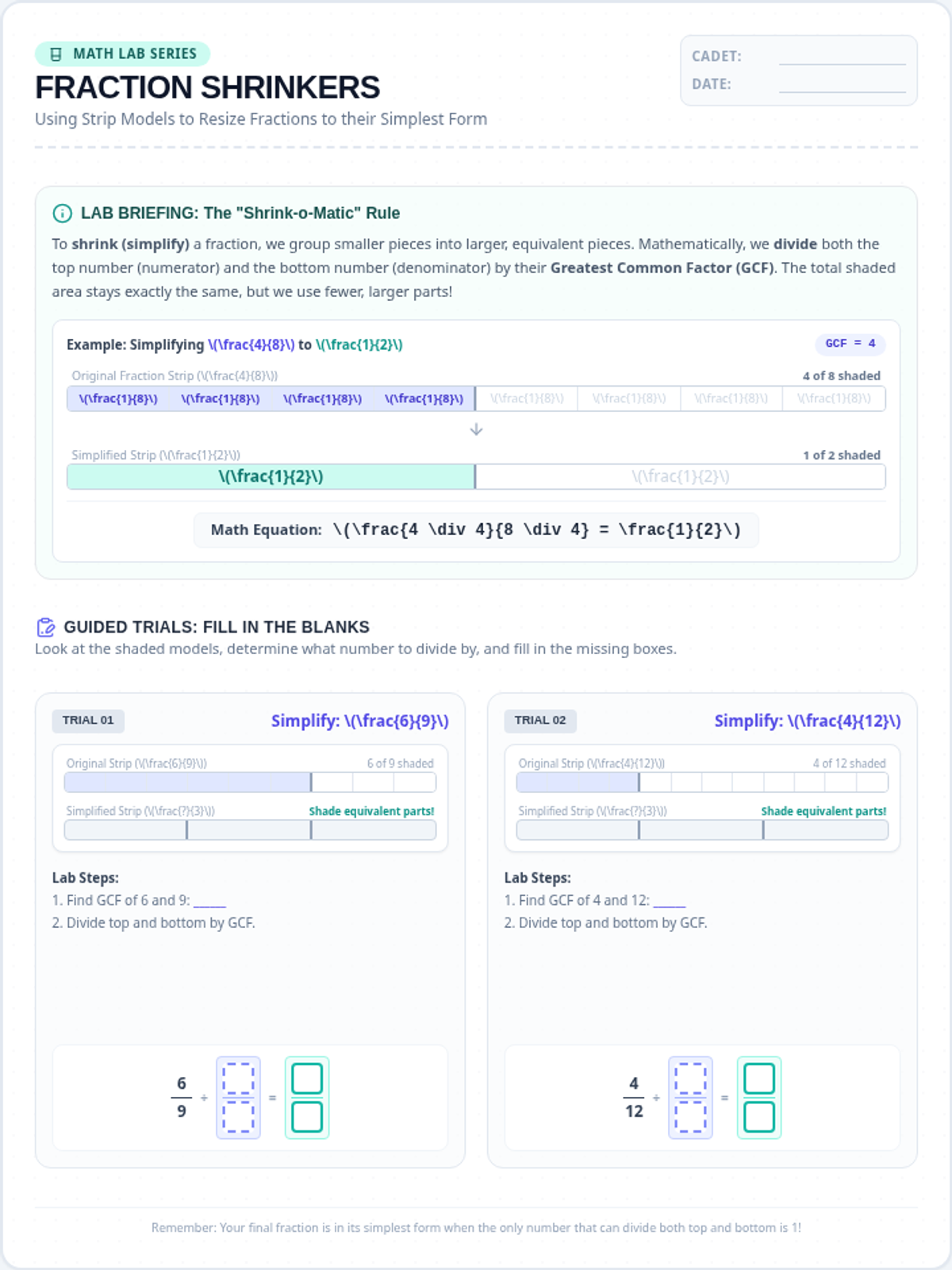
A focused lesson on simplifying fractions using visual models, greatest common factors, and guided practice. Students learn to 'shrink' fractions to their simplest form using a lab-themed framework.
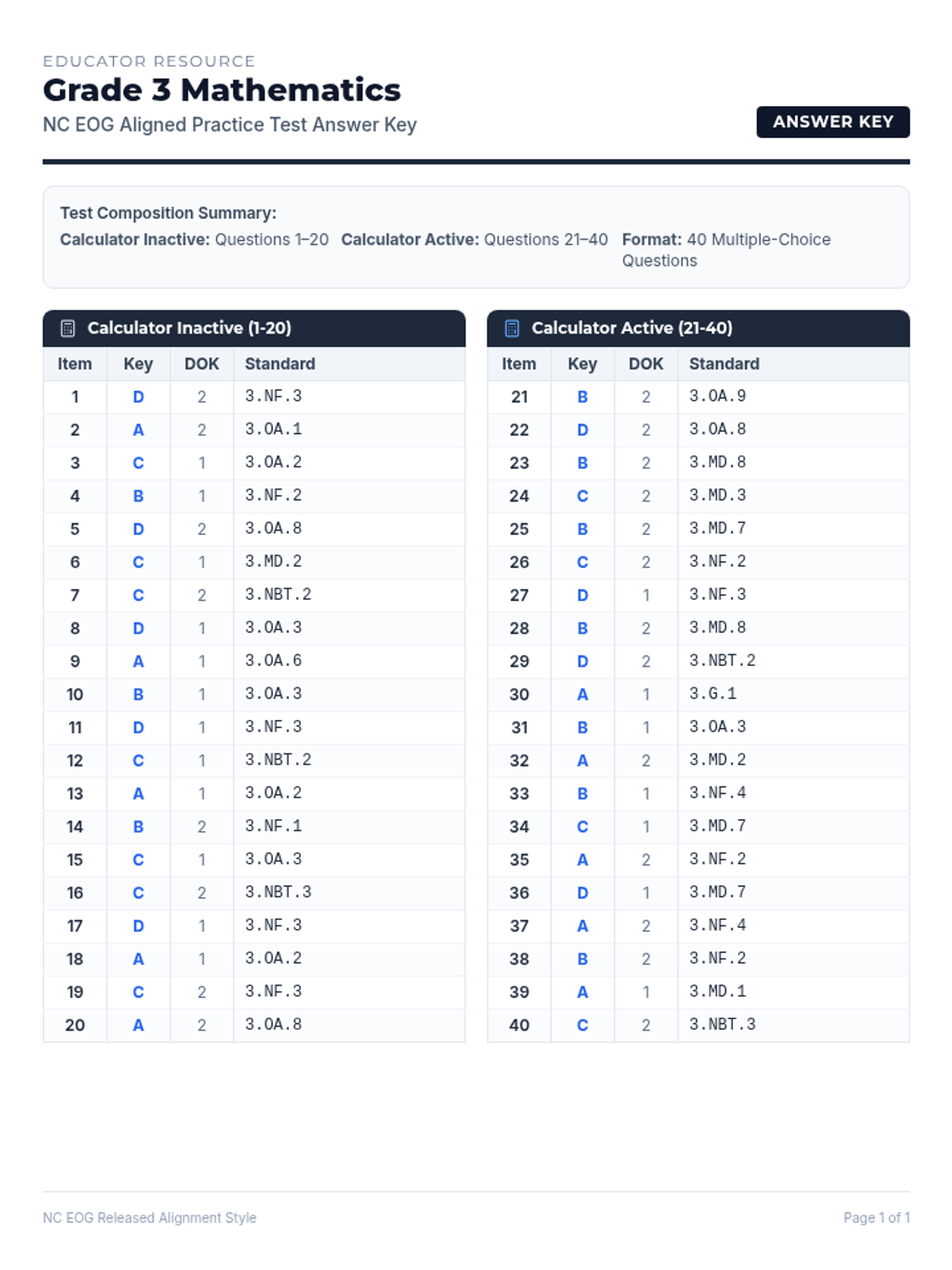
A comprehensive Grade 3 mathematics assessment modeled after the NC End-of-Grade released form, divided into Calculator Inactive and Calculator Active parts.
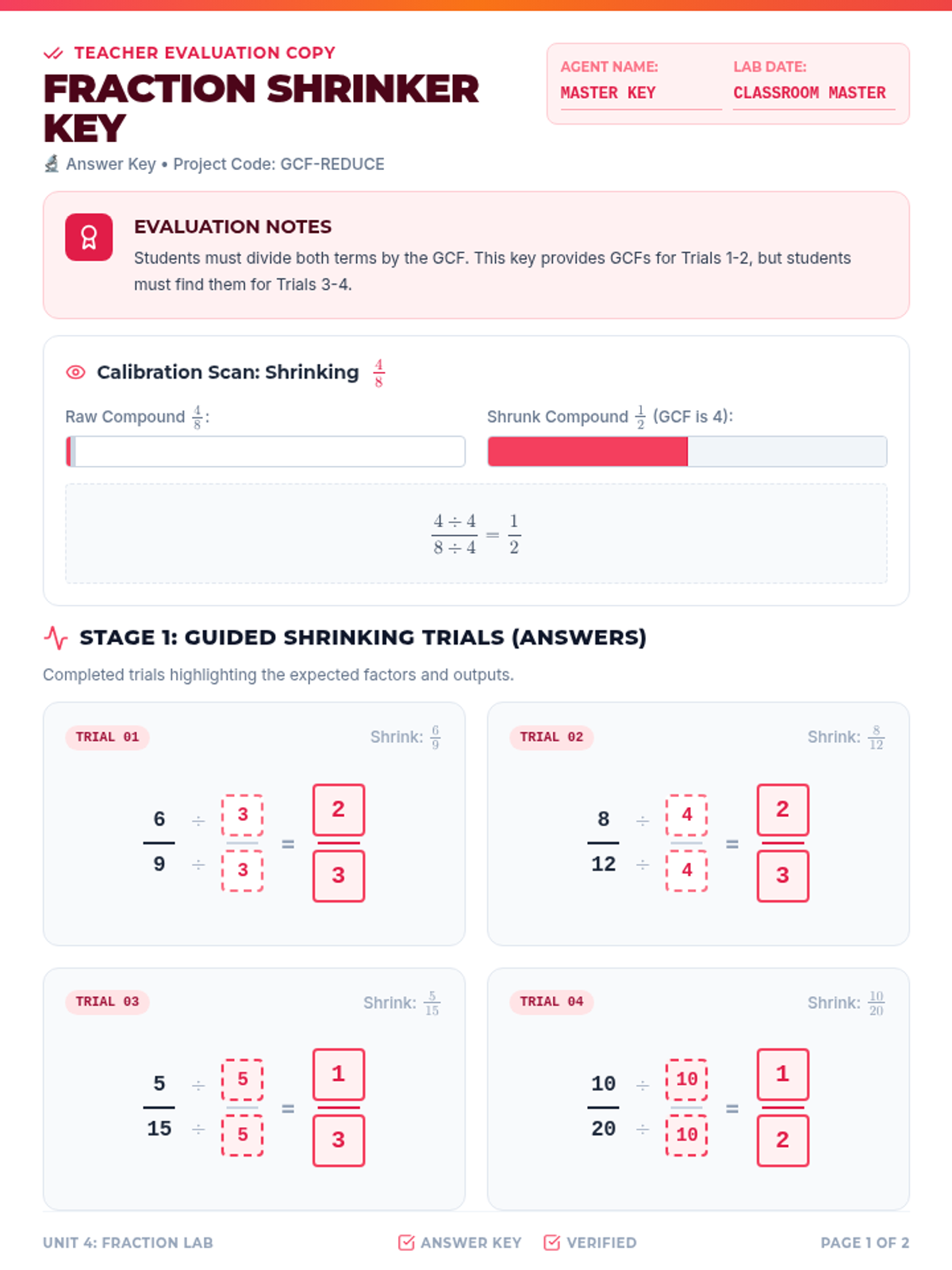
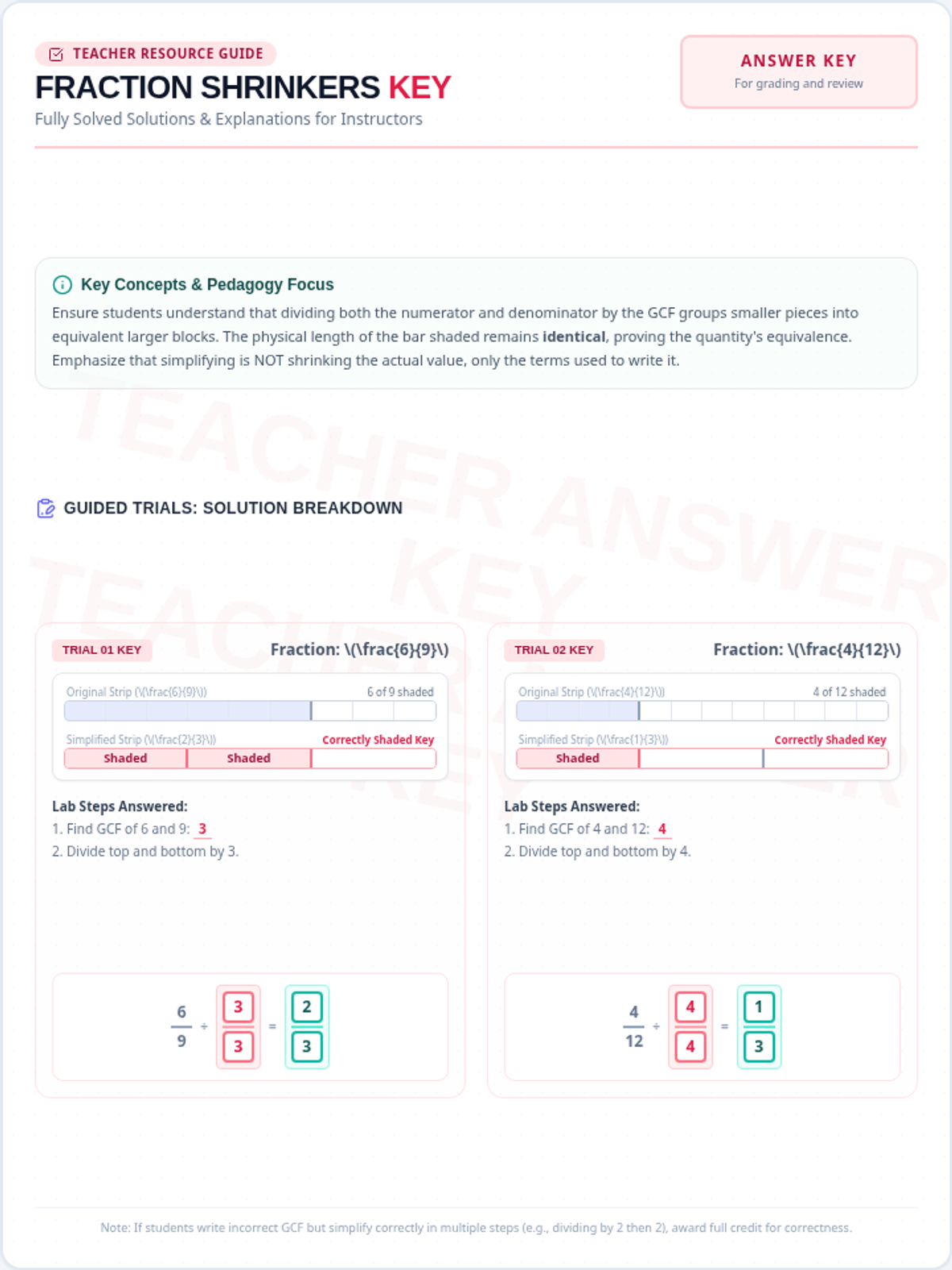
A comprehensive lesson introducing fraction simplification using visual fraction strip models as key scaffolding, complete with guided worksheets, error analysis, and a teacher answer key.
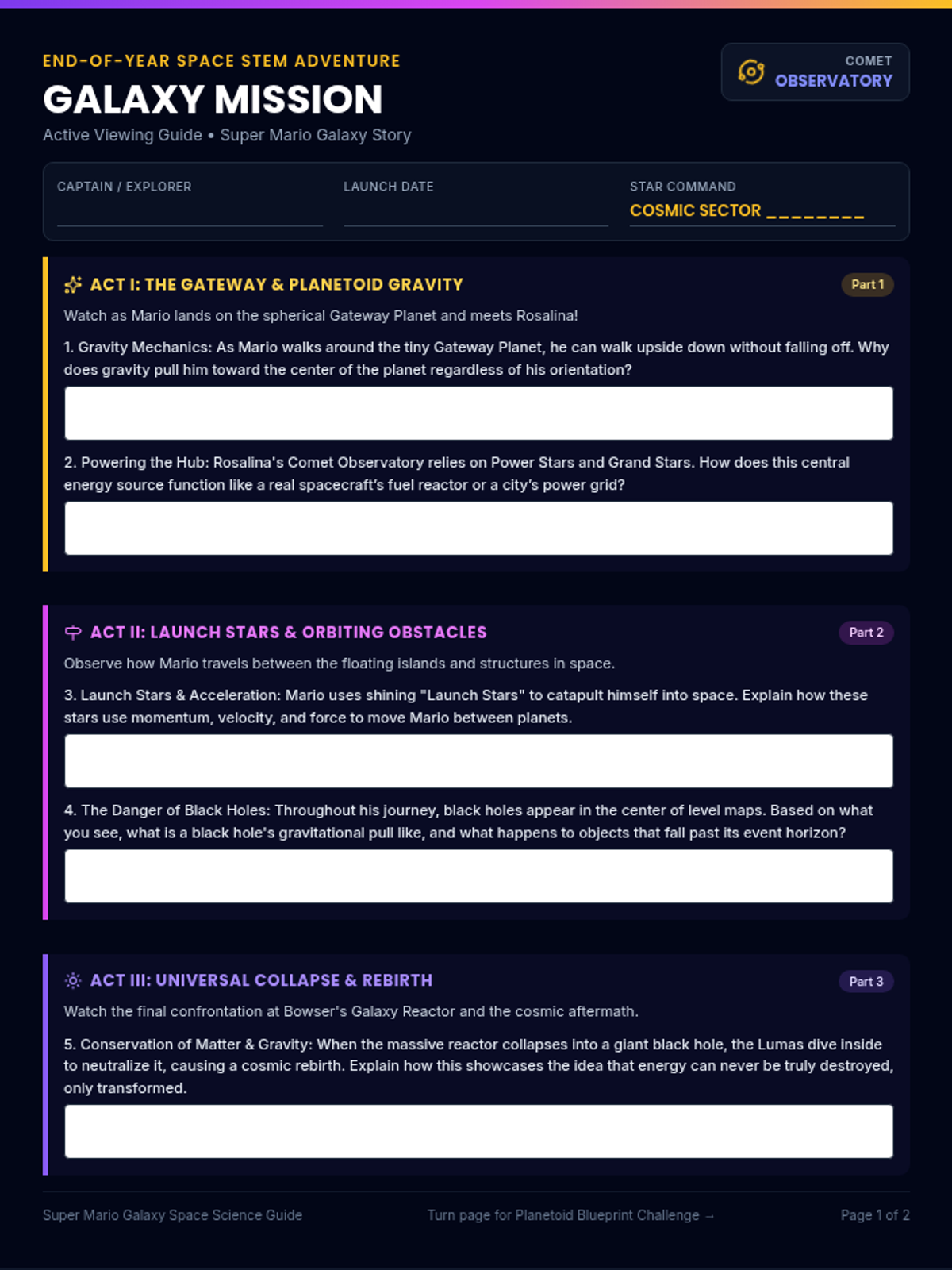
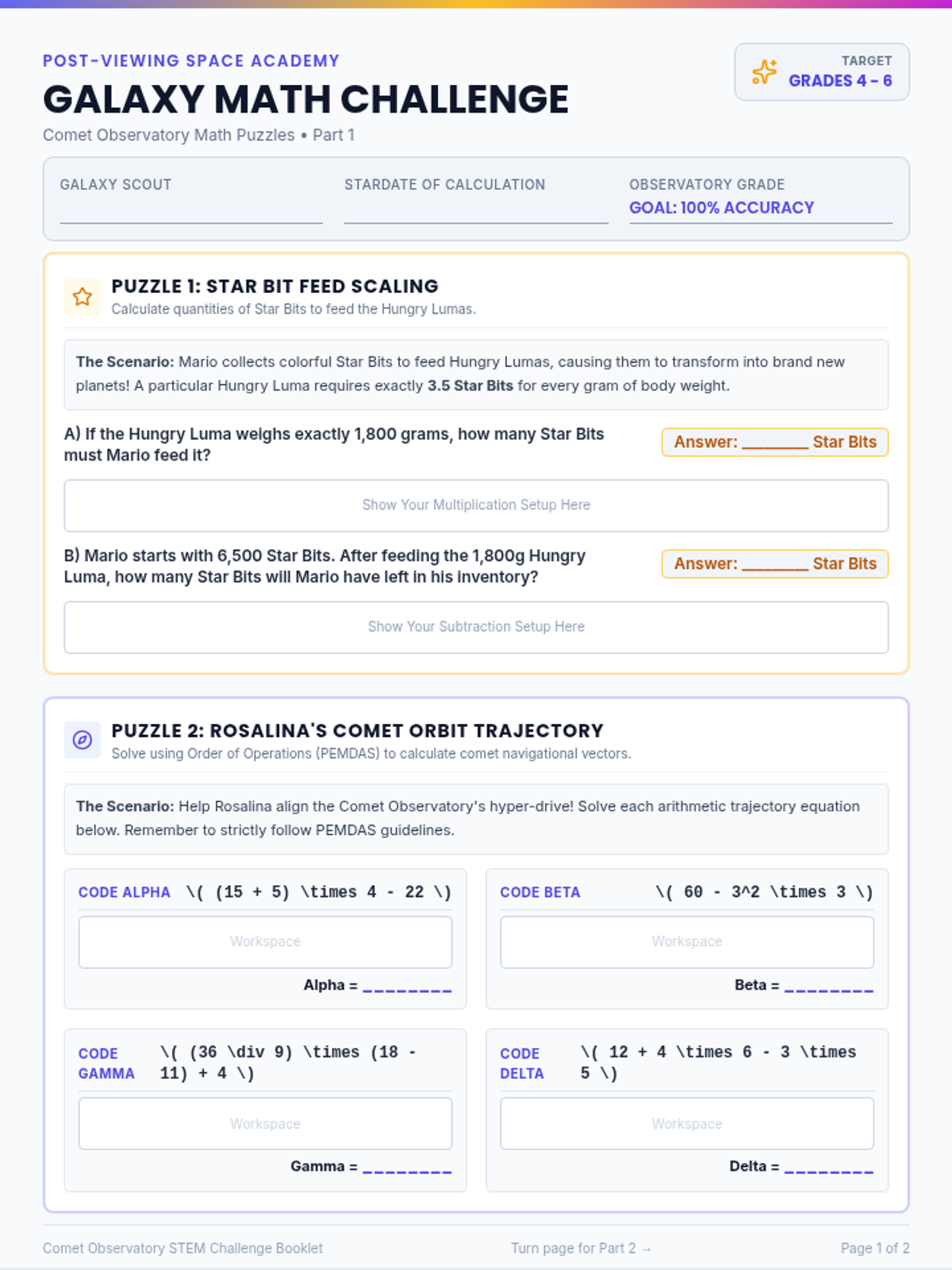
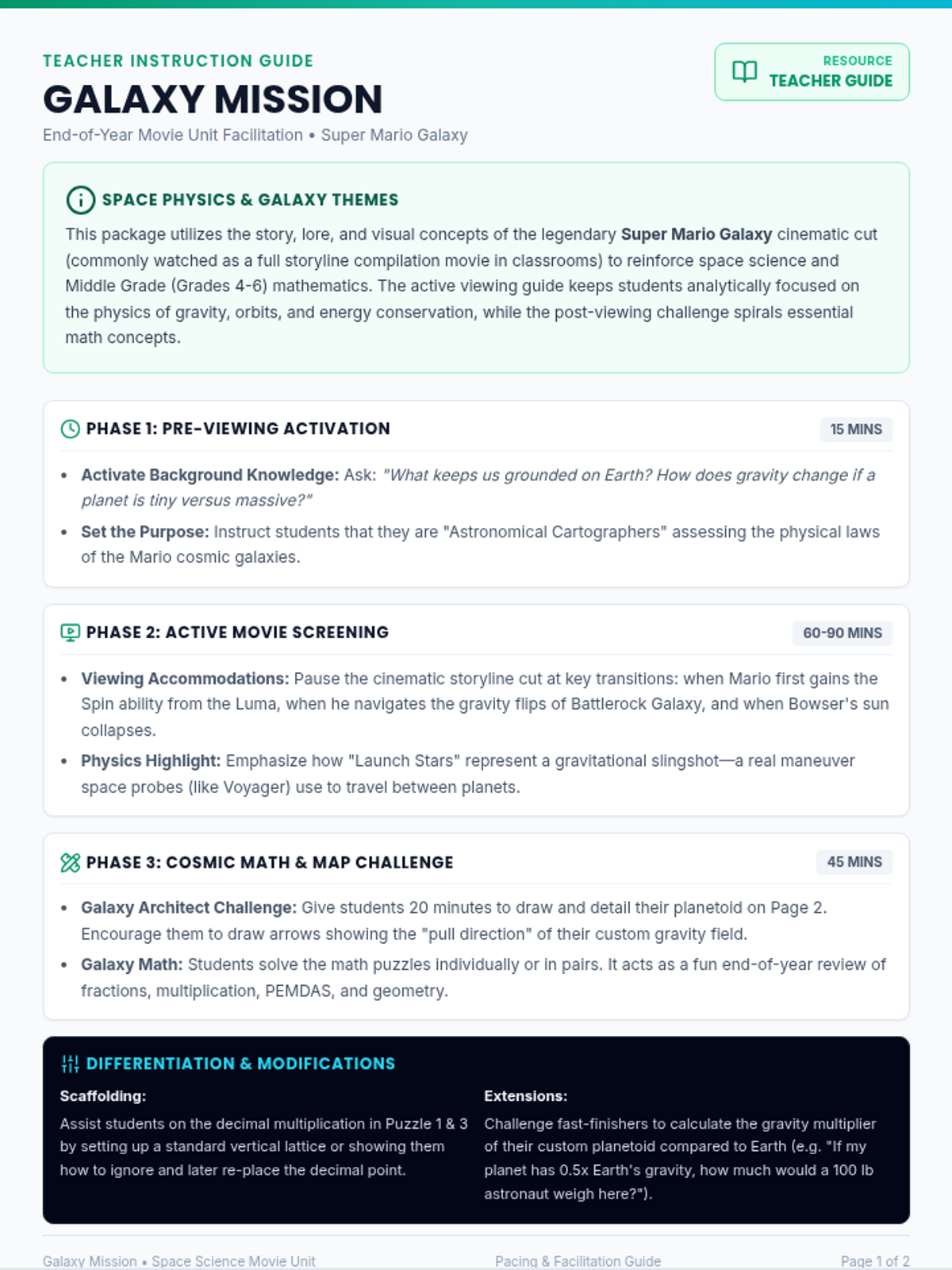
An end-of-year educational movie unit and math workbook based on the story of Super Mario Galaxy. Students explore gravity, orbits, and space physics through active viewing, followed by high-energy space-themed math puzzles.
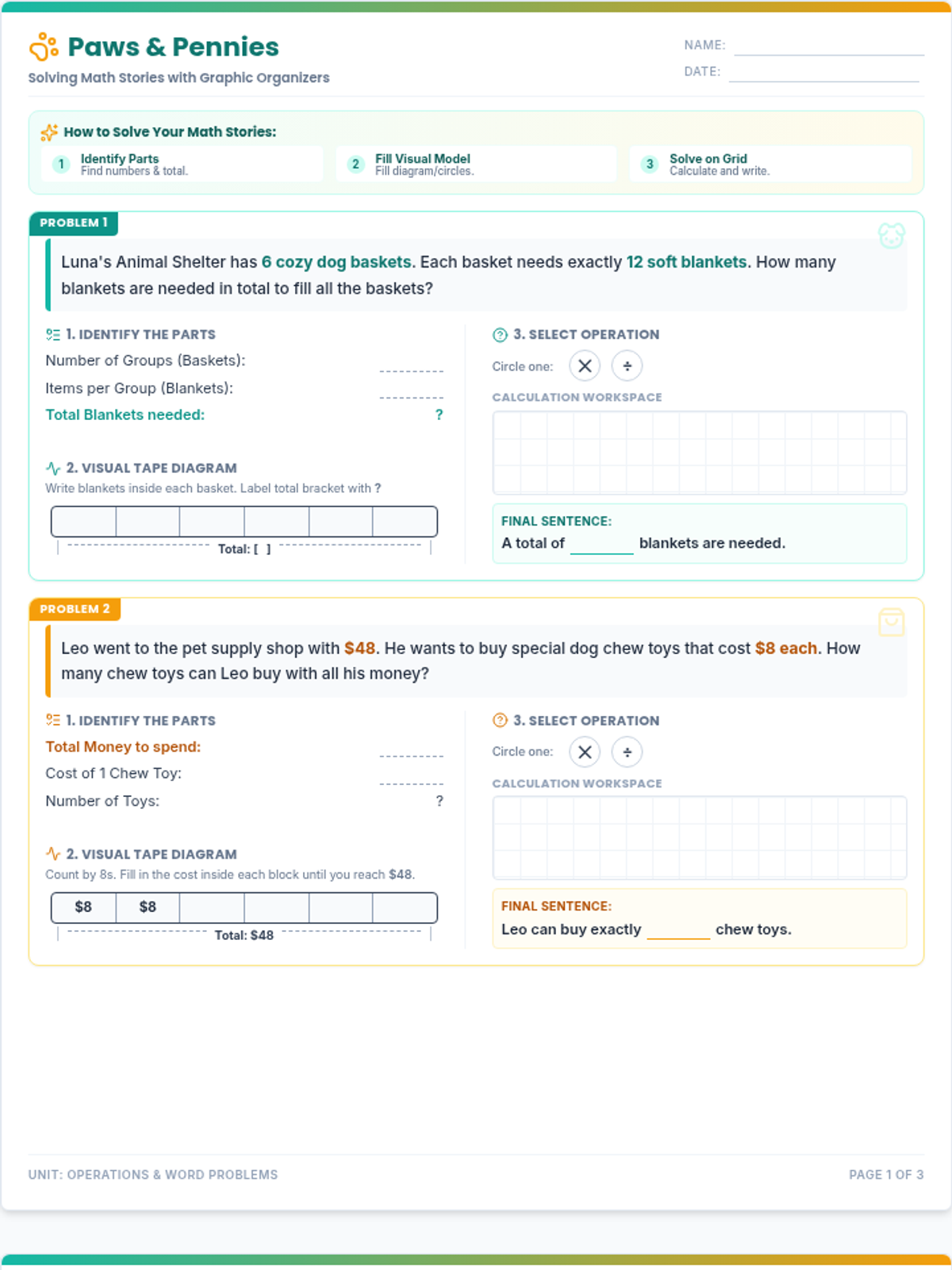
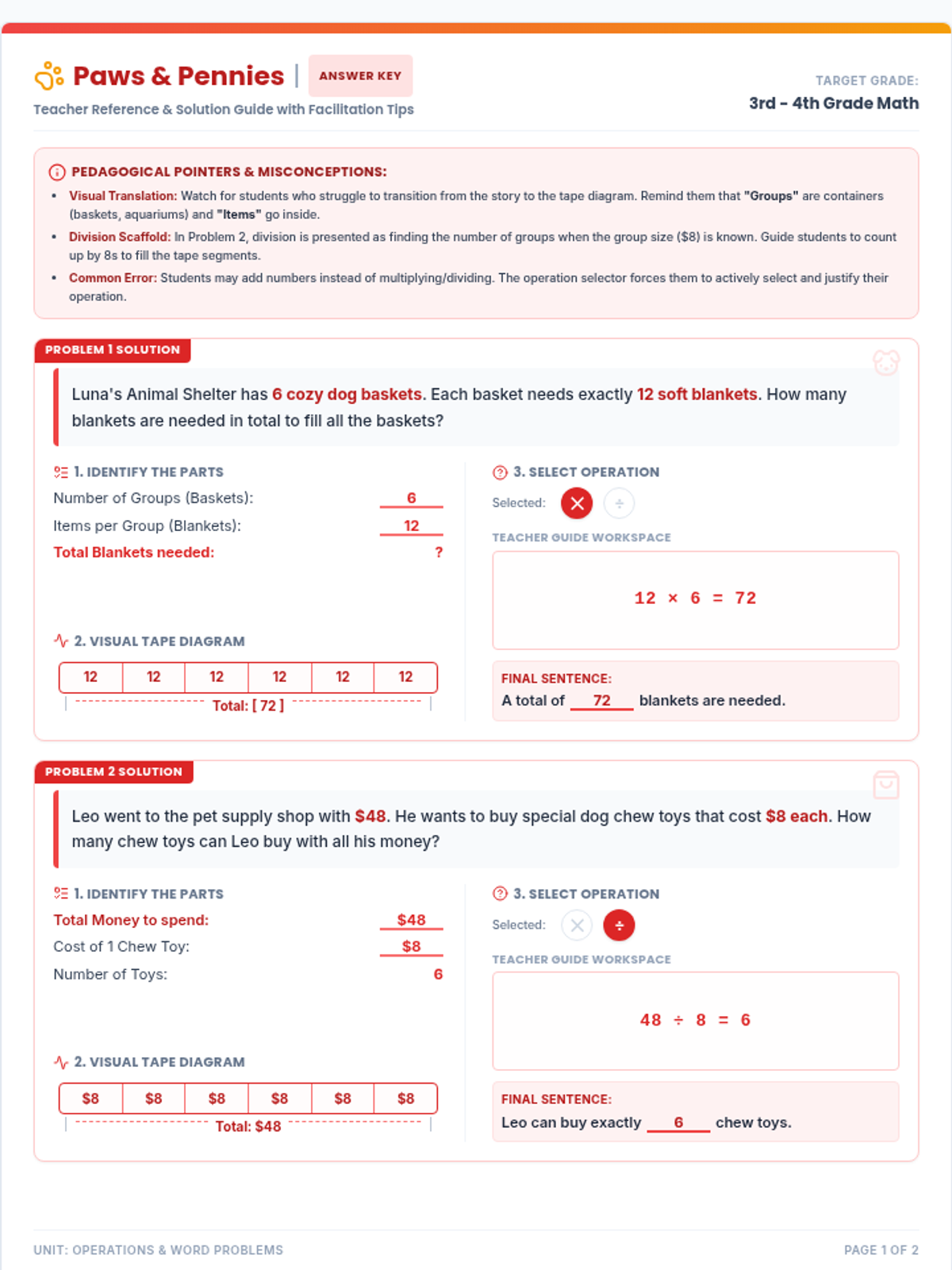
A lesson focusing on solving one-step multiplication and division word problems involving single and double-digit numbers, themed around animal care and shopping transactions. Students use structured visual graphic organizers to break down problems, identify operations, and calculate answers.
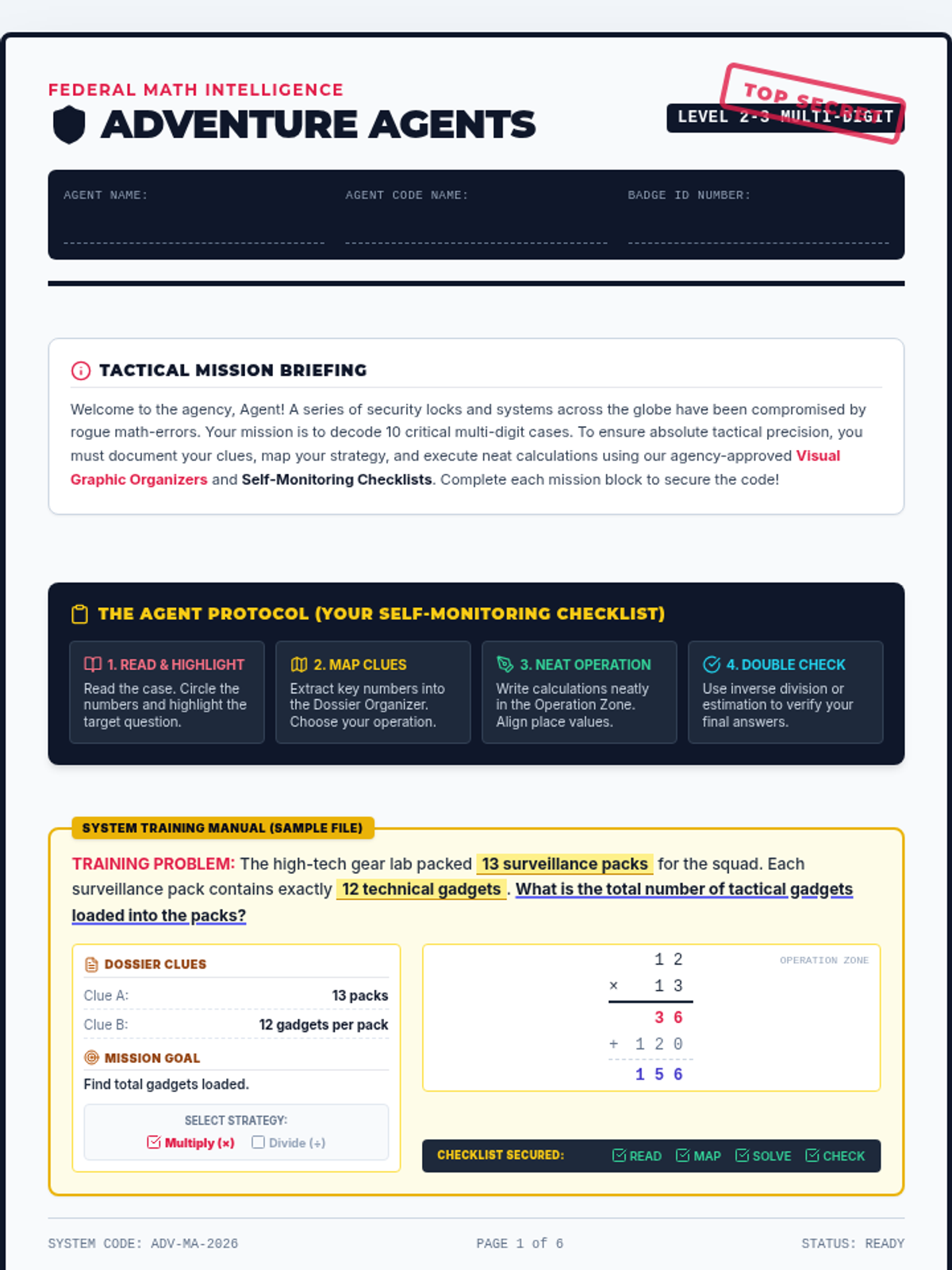
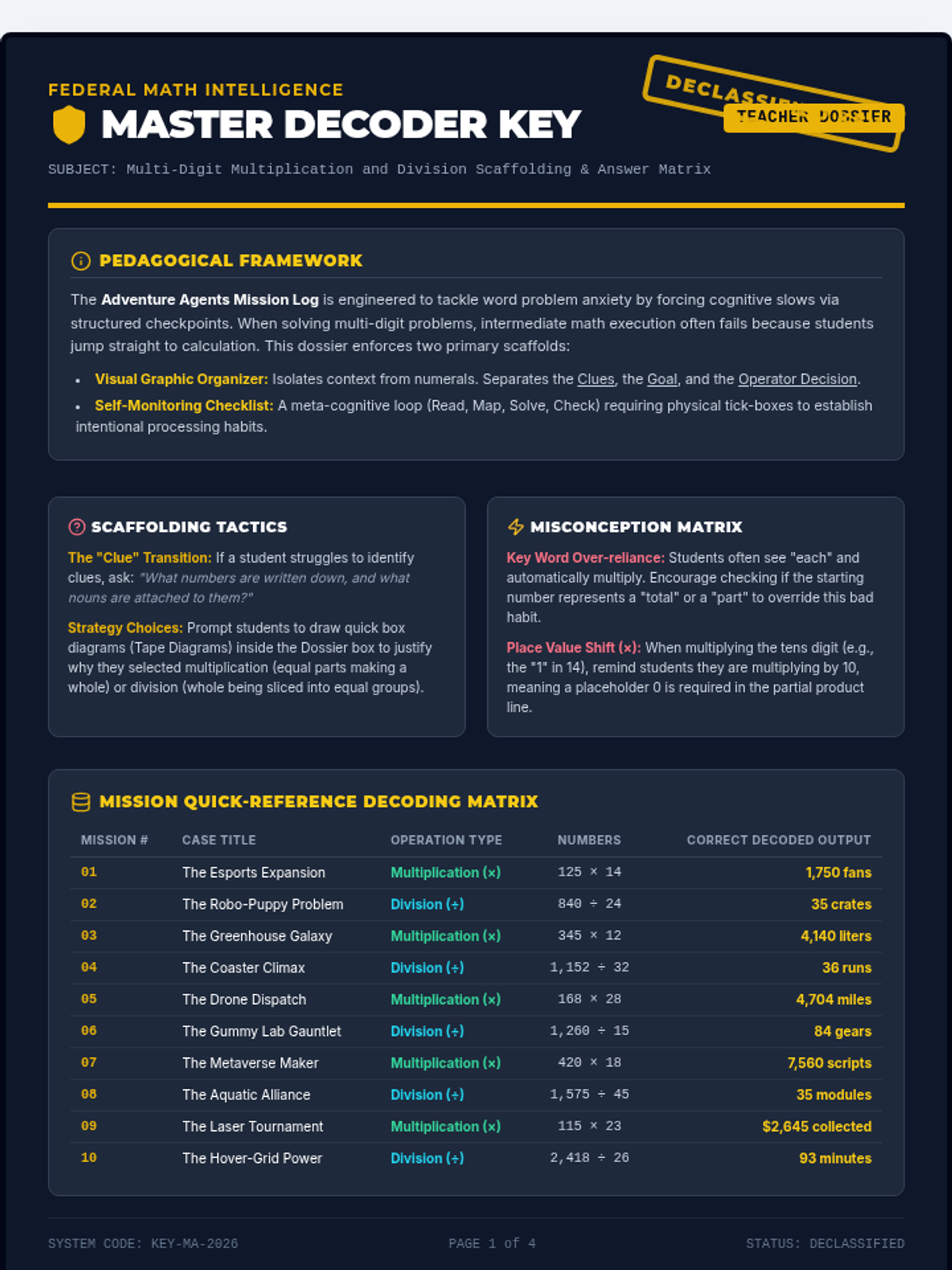
A high-interest word problem mission where students use visual graphic organizers and self-monitoring checklists to solve multi-digit multiplication and division challenges.
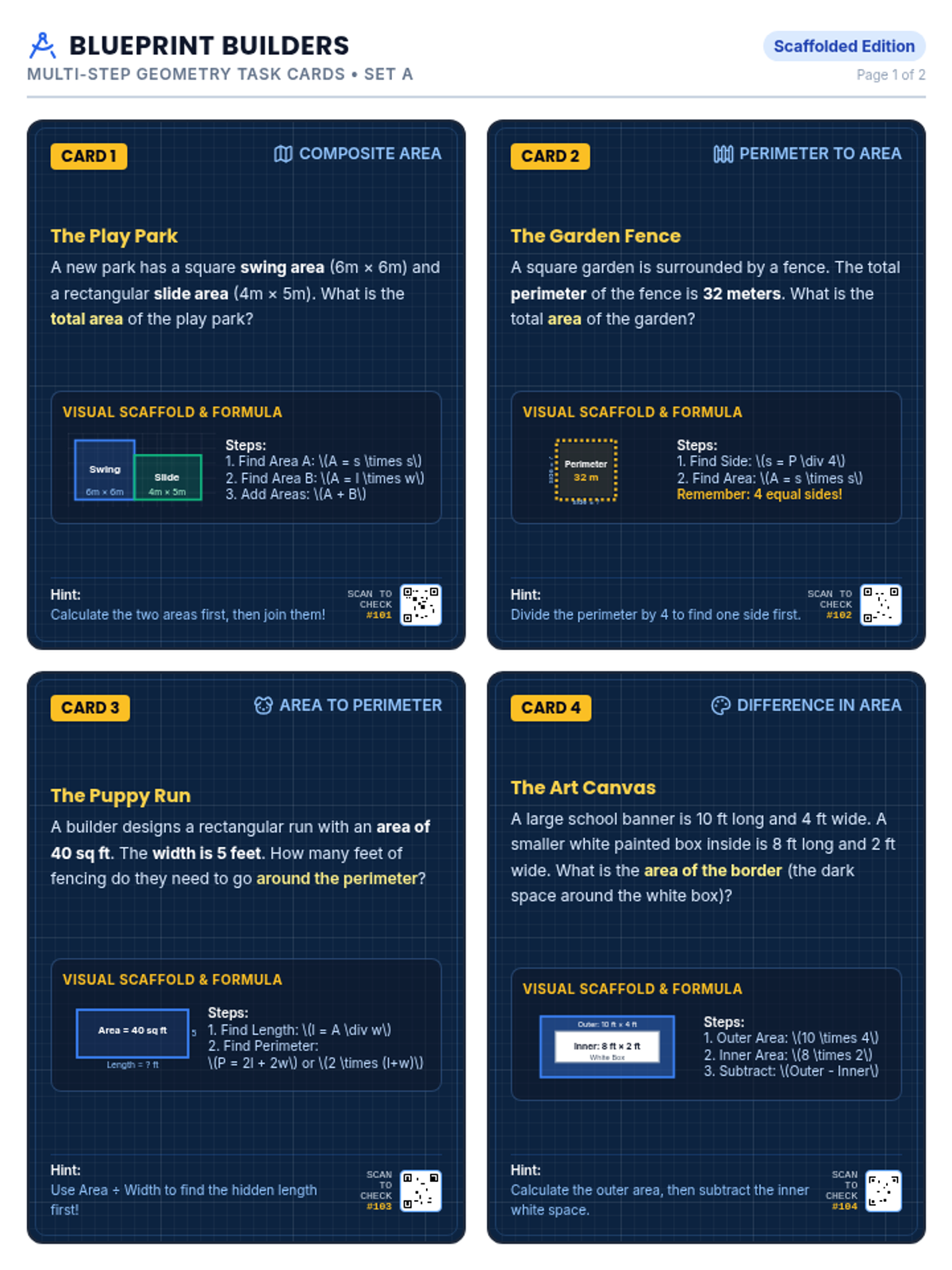
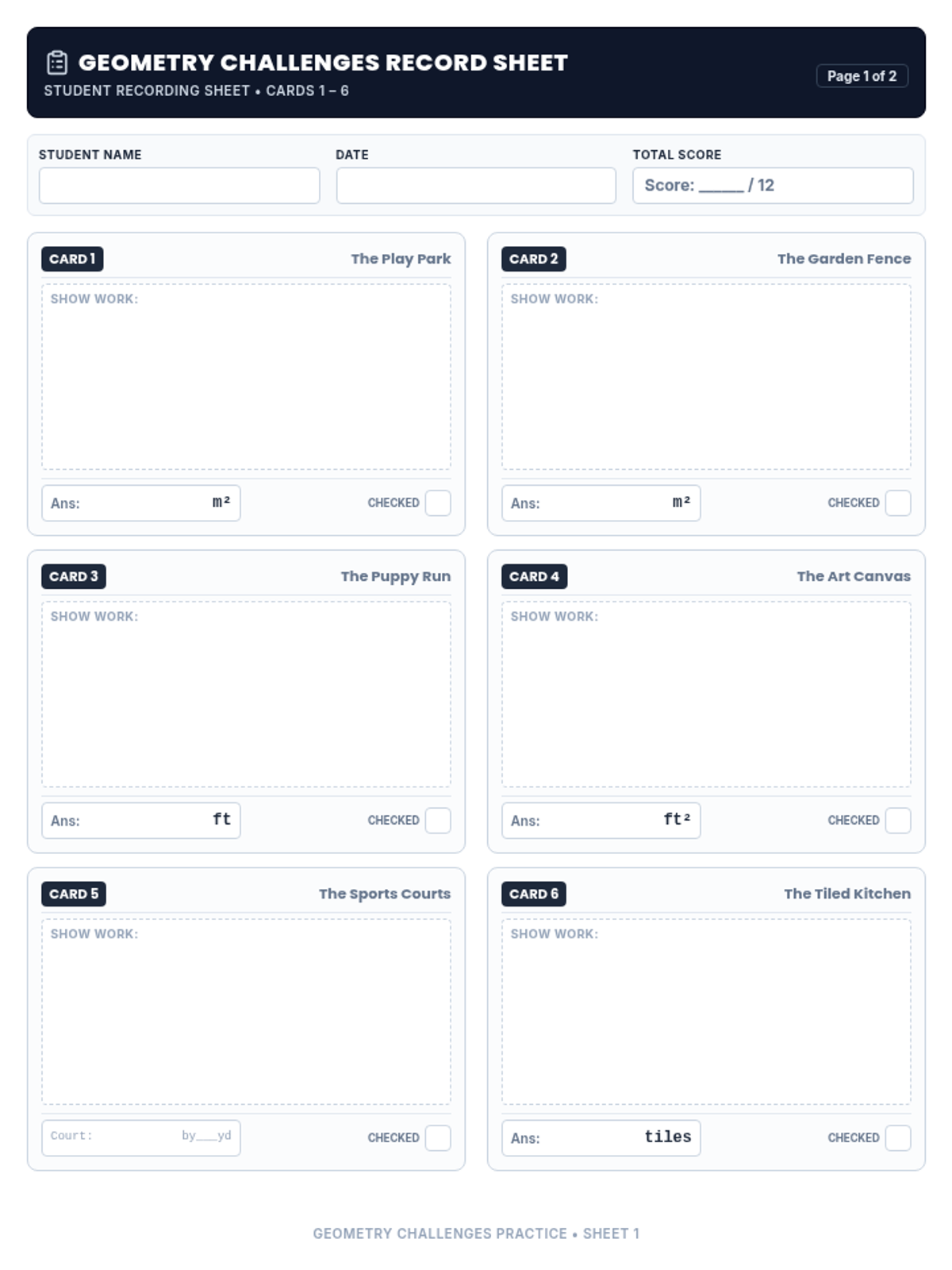
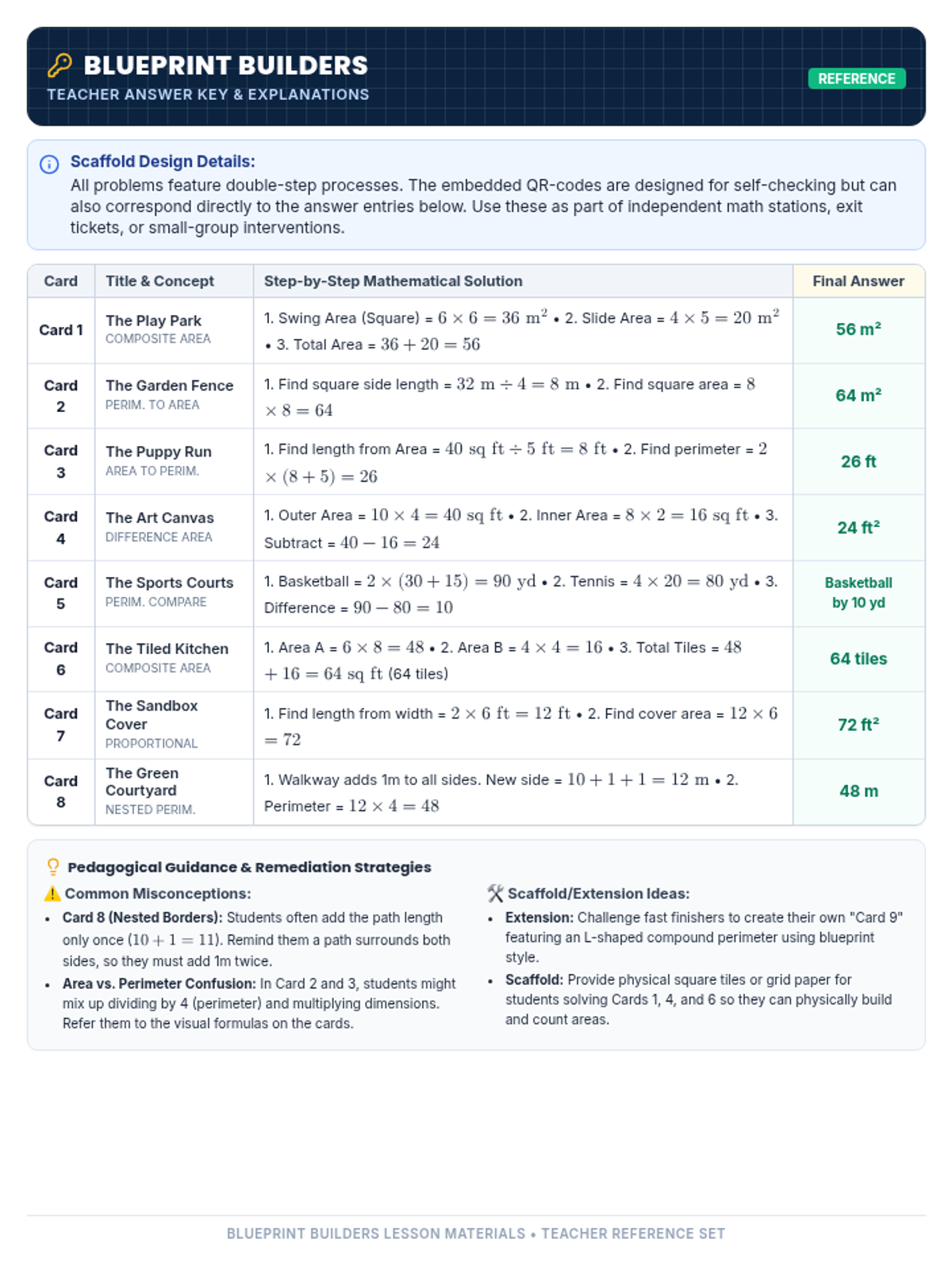
A minimalist, high-contrast geometry lesson where students solve multi-step area and perimeter problems. It features clean, print-friendly task cards with visual scaffolds and simplified language to support diverse learners.
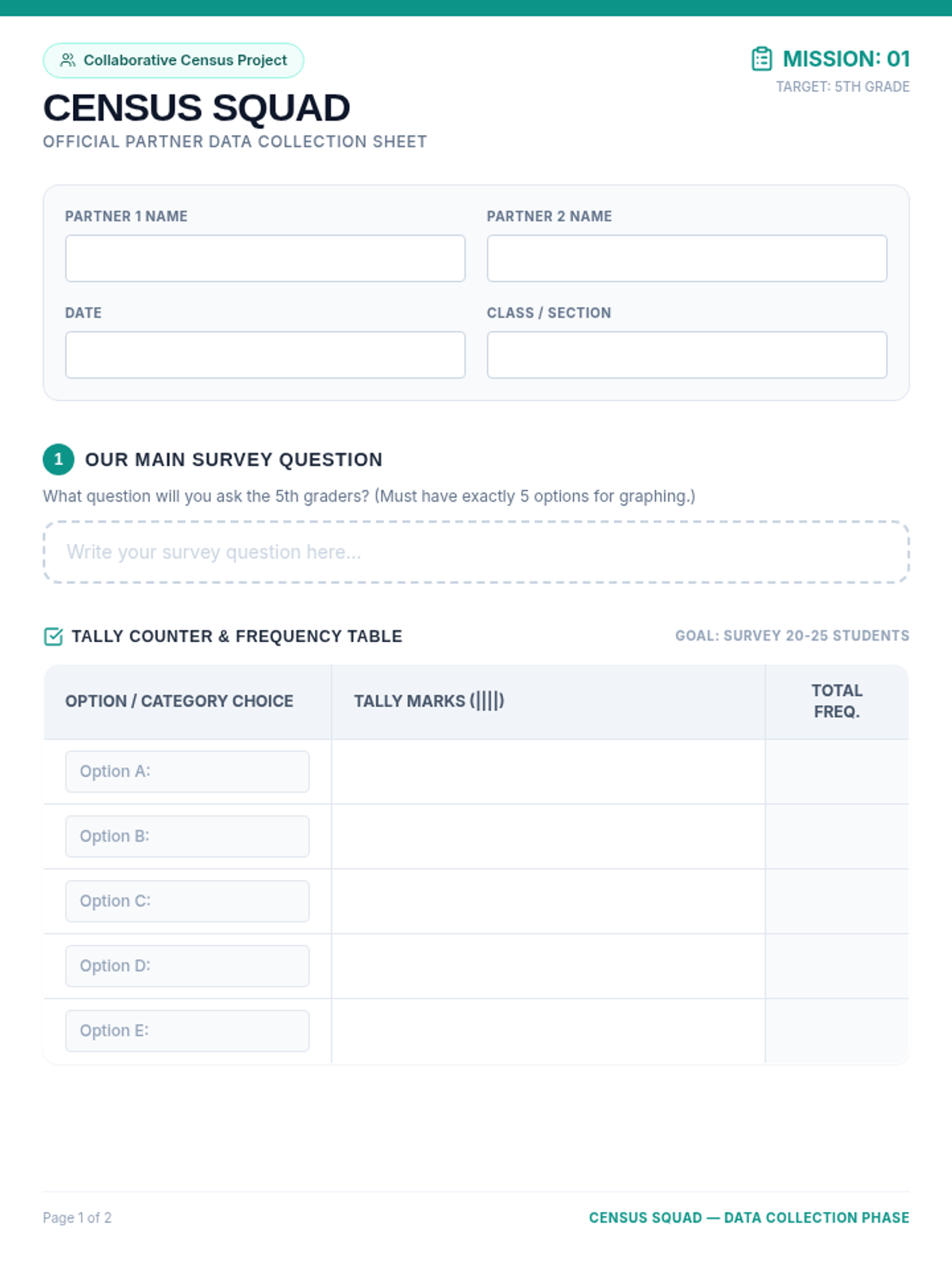
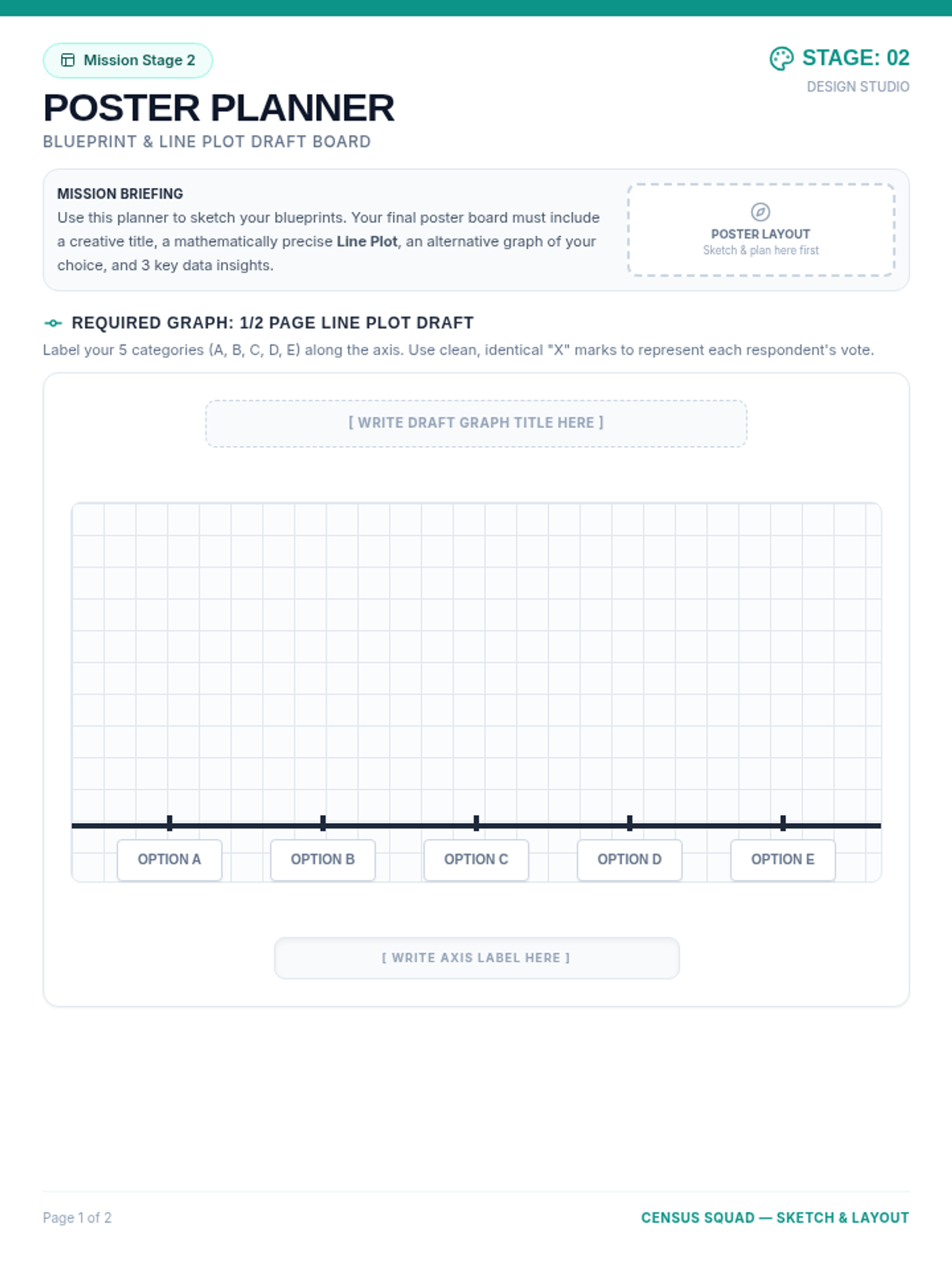
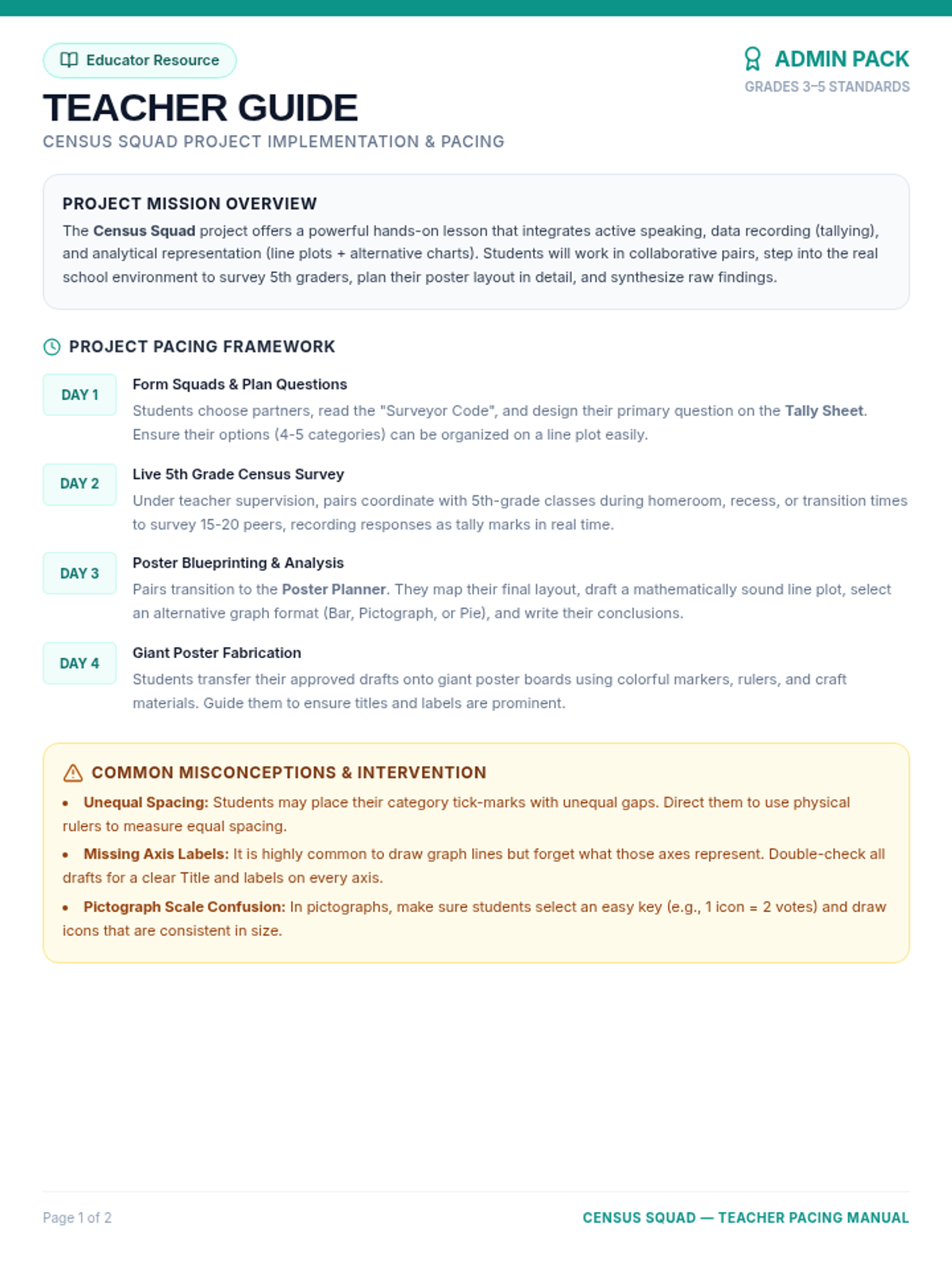
A collaborative data collection and graphing project where students partner up to survey 5th graders, collect tally mark data, and design a custom poster featuring a line plot and an alternative graph style.
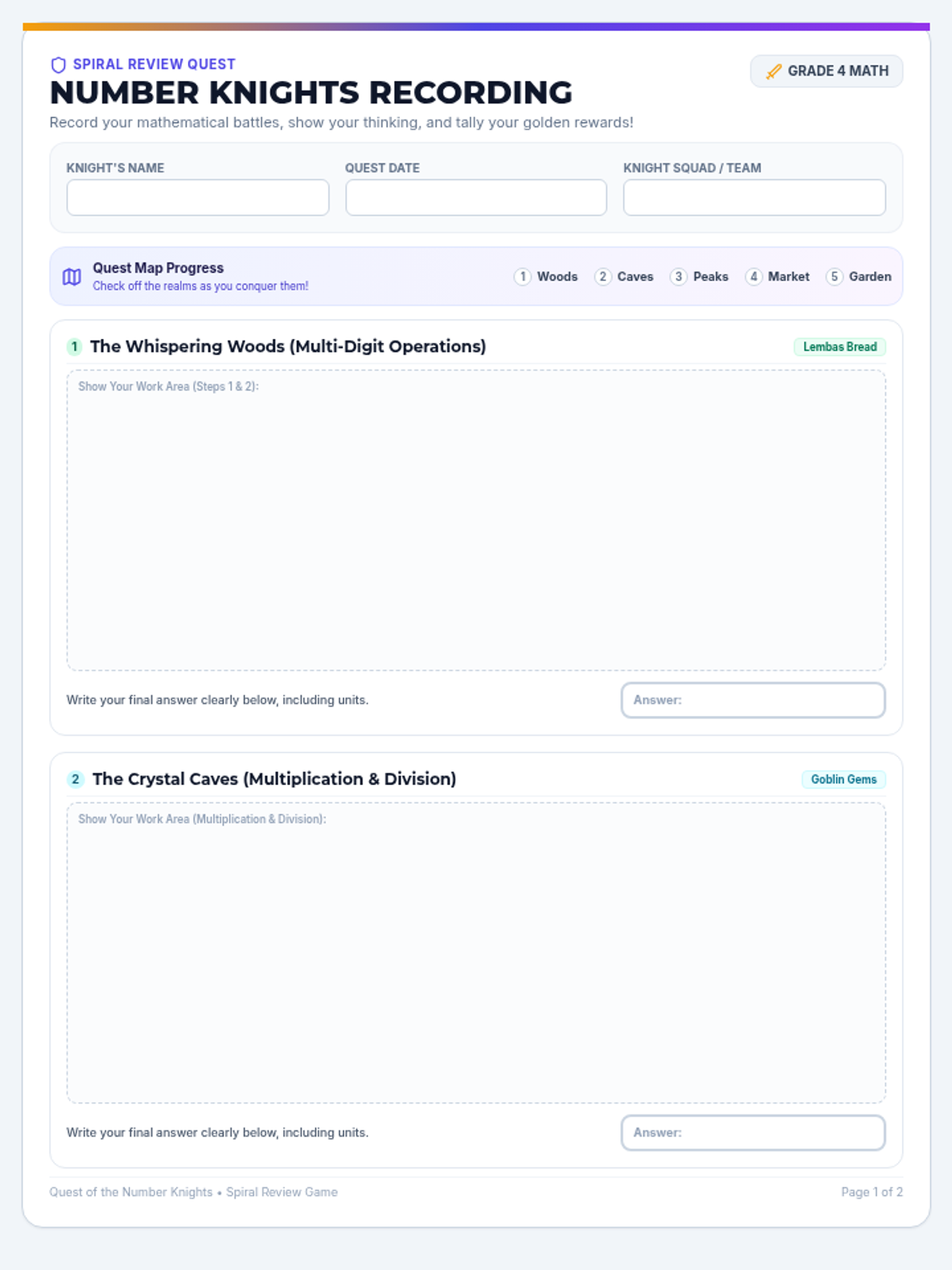
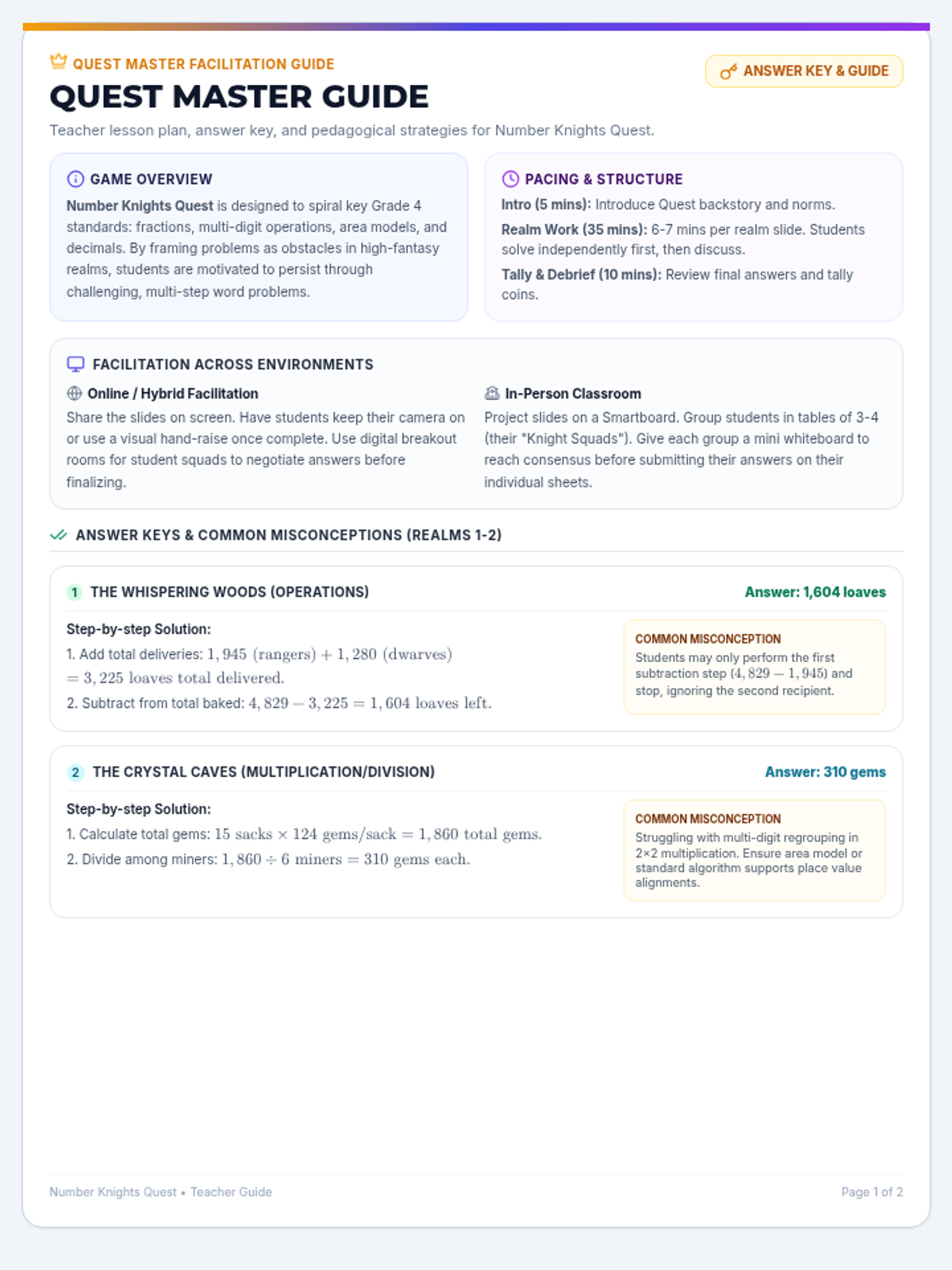
A high-engagement, adventure-themed 4th-grade math spiral review game. Students solve word problems spanning fractions, multi-digit operations, area, and decimals to complete a fantasy quest, perfect for online display or in-person play.
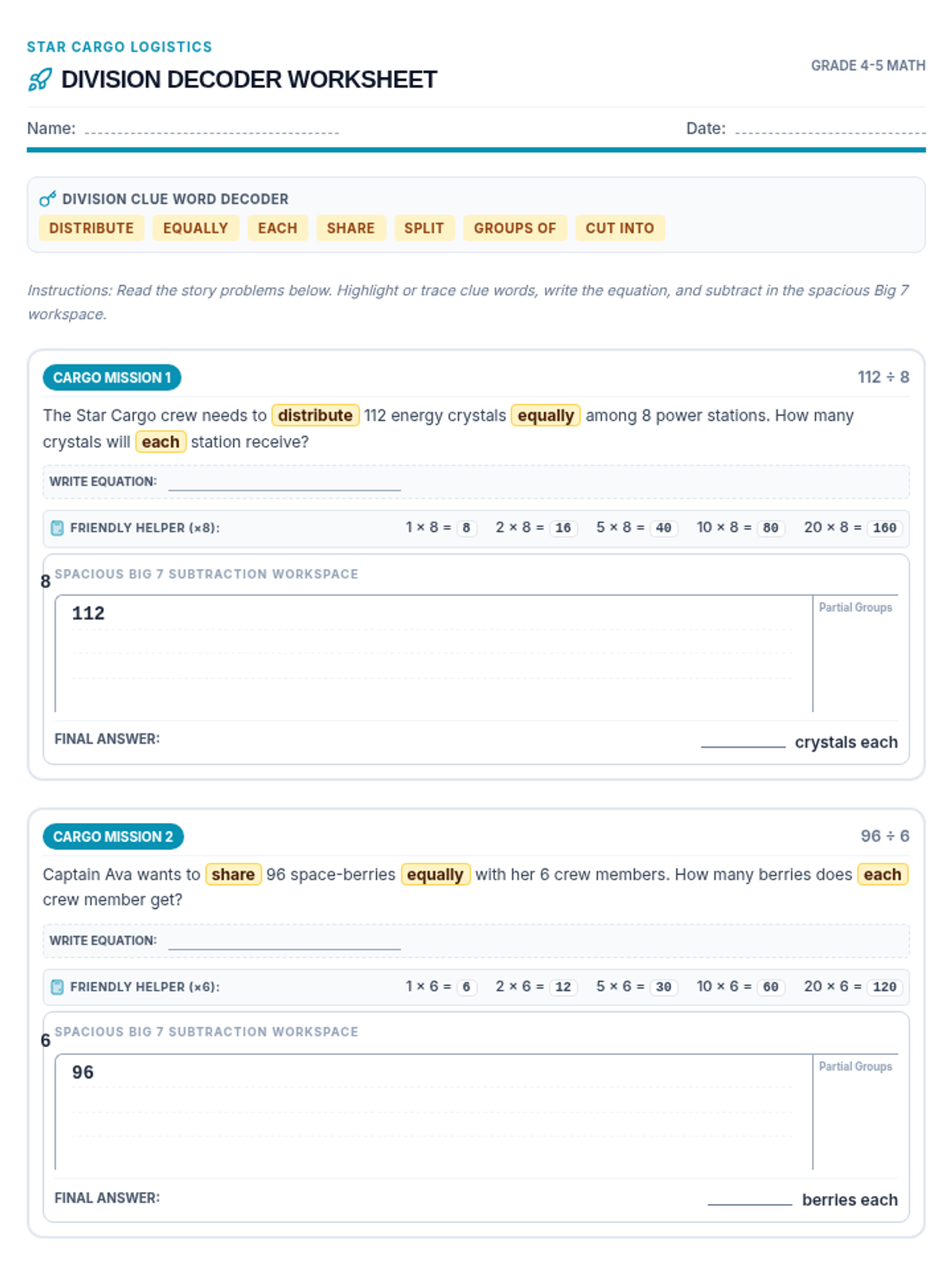
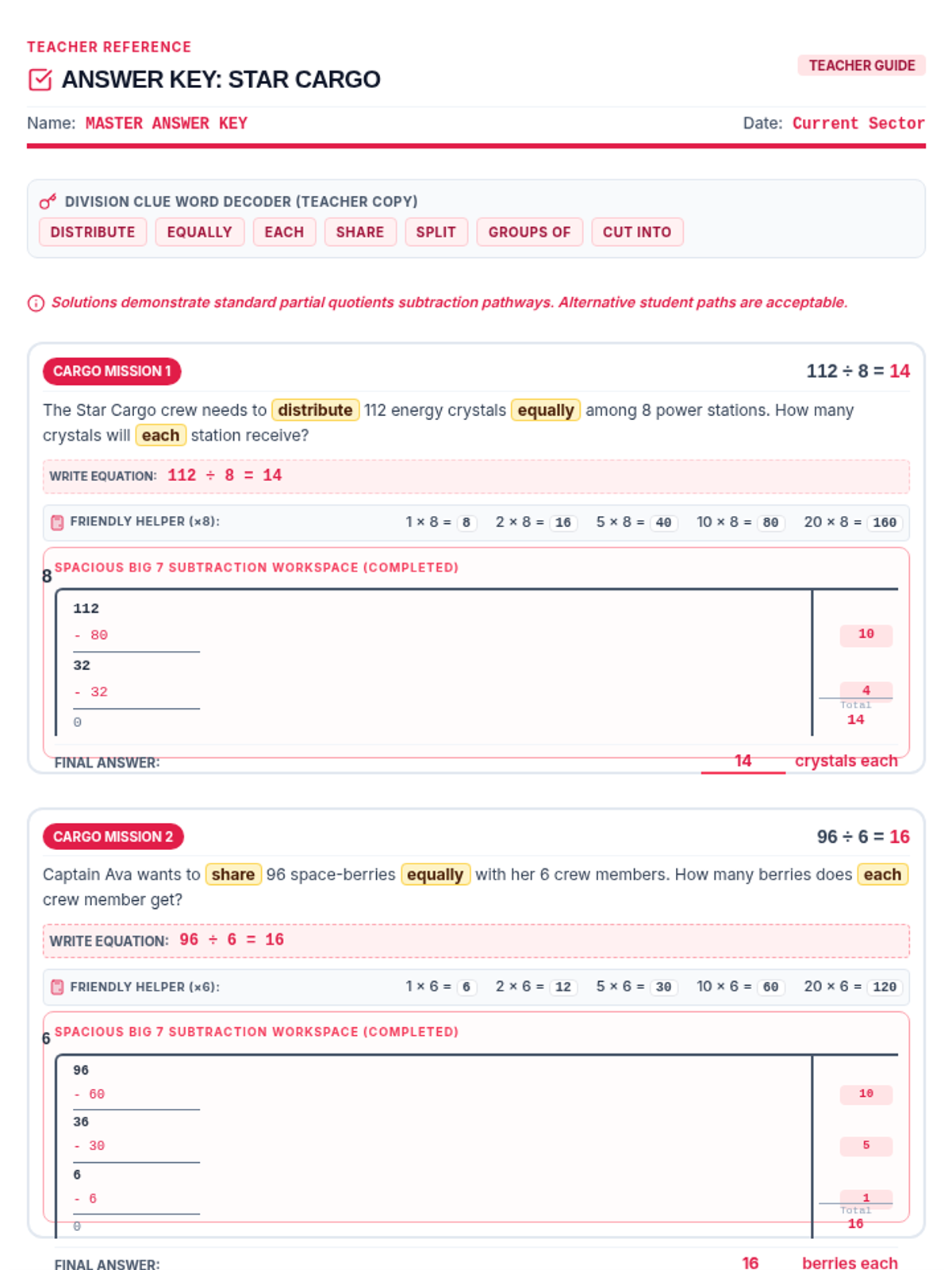
A math lesson on division using the partial quotients (Big 7) method. Students explore division word problems and extra practice using a 'friendly numbers' multiplication helper and subtraction workspace in a sci-fi space cargo theme.
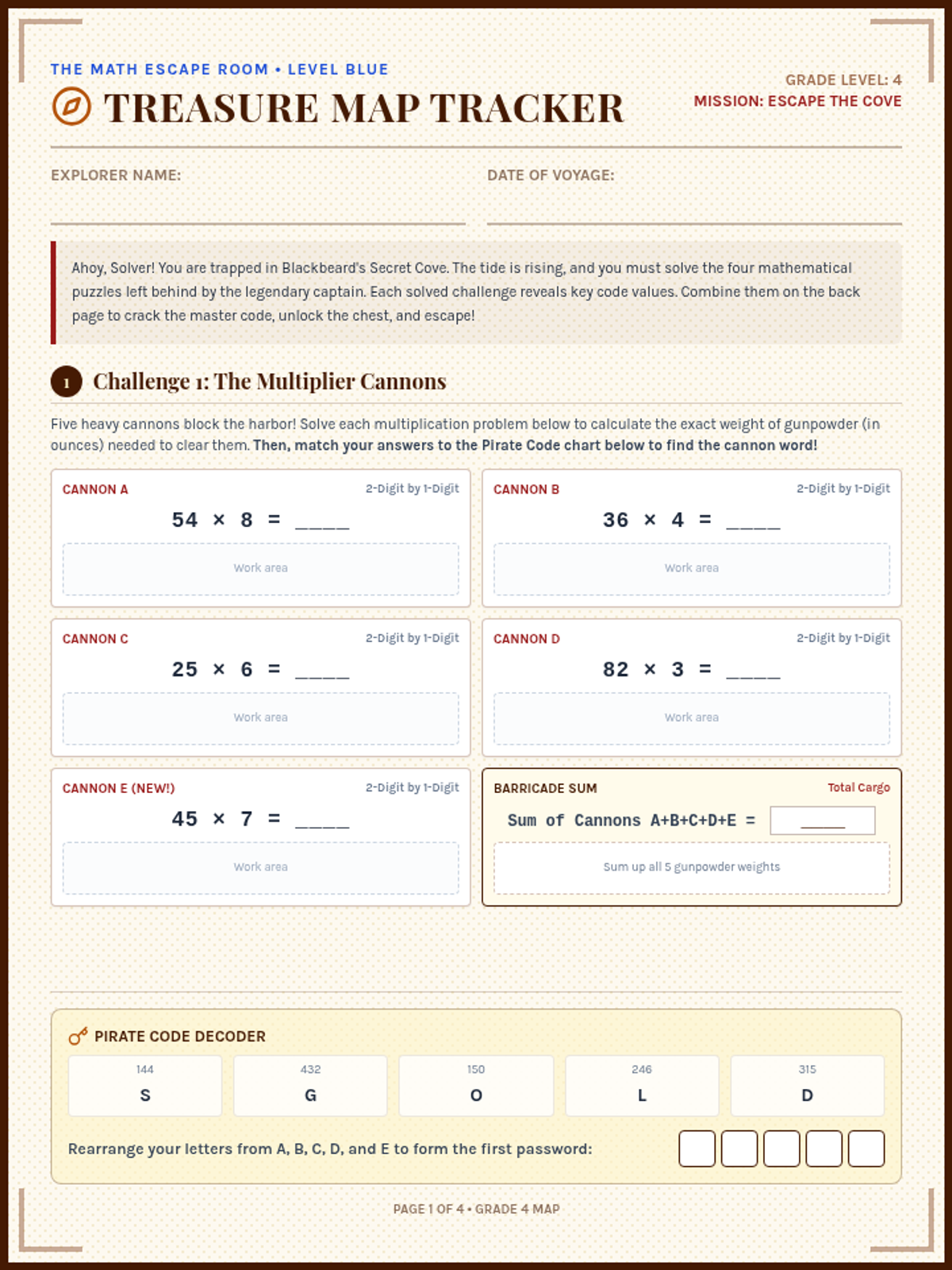
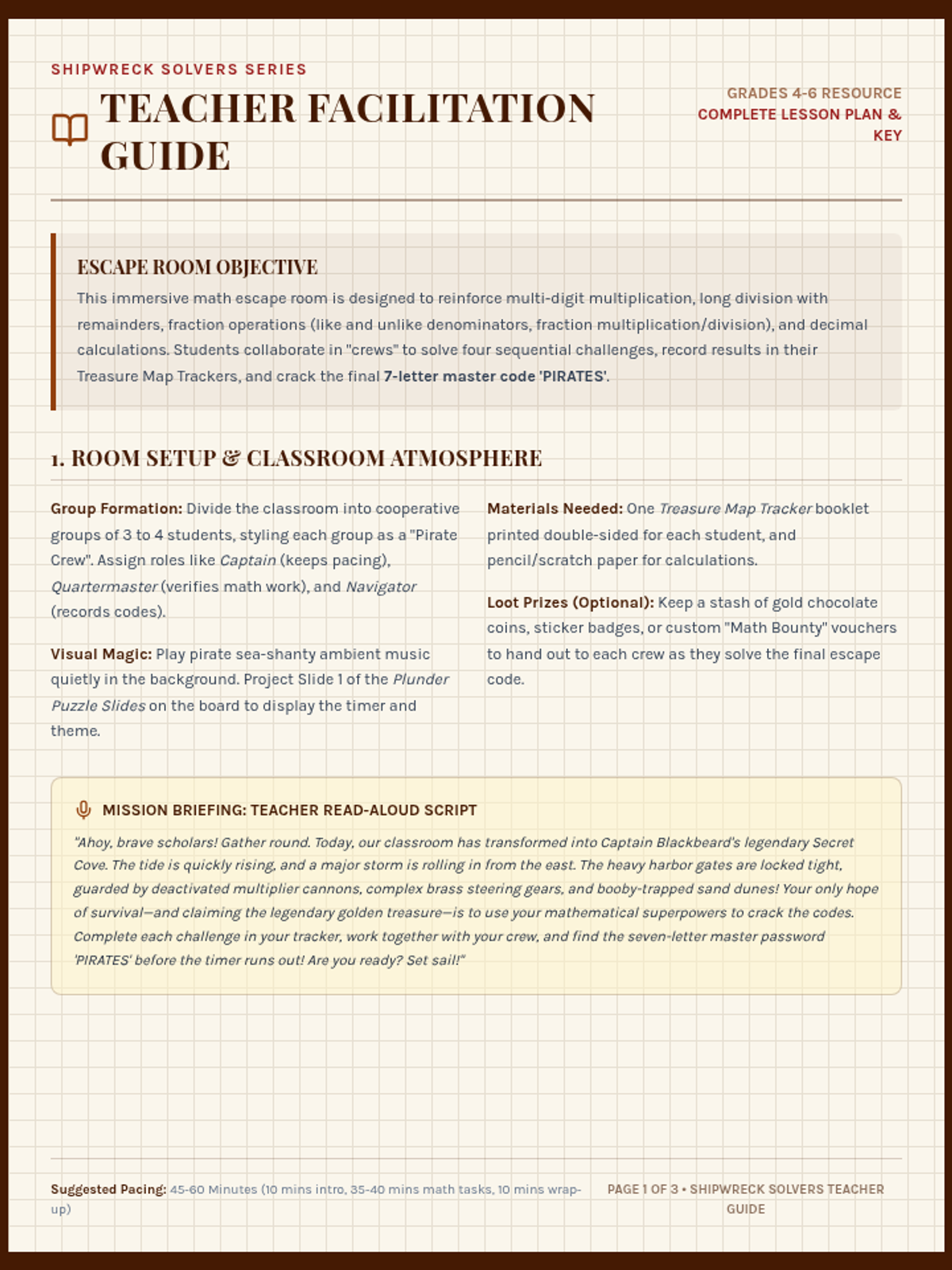
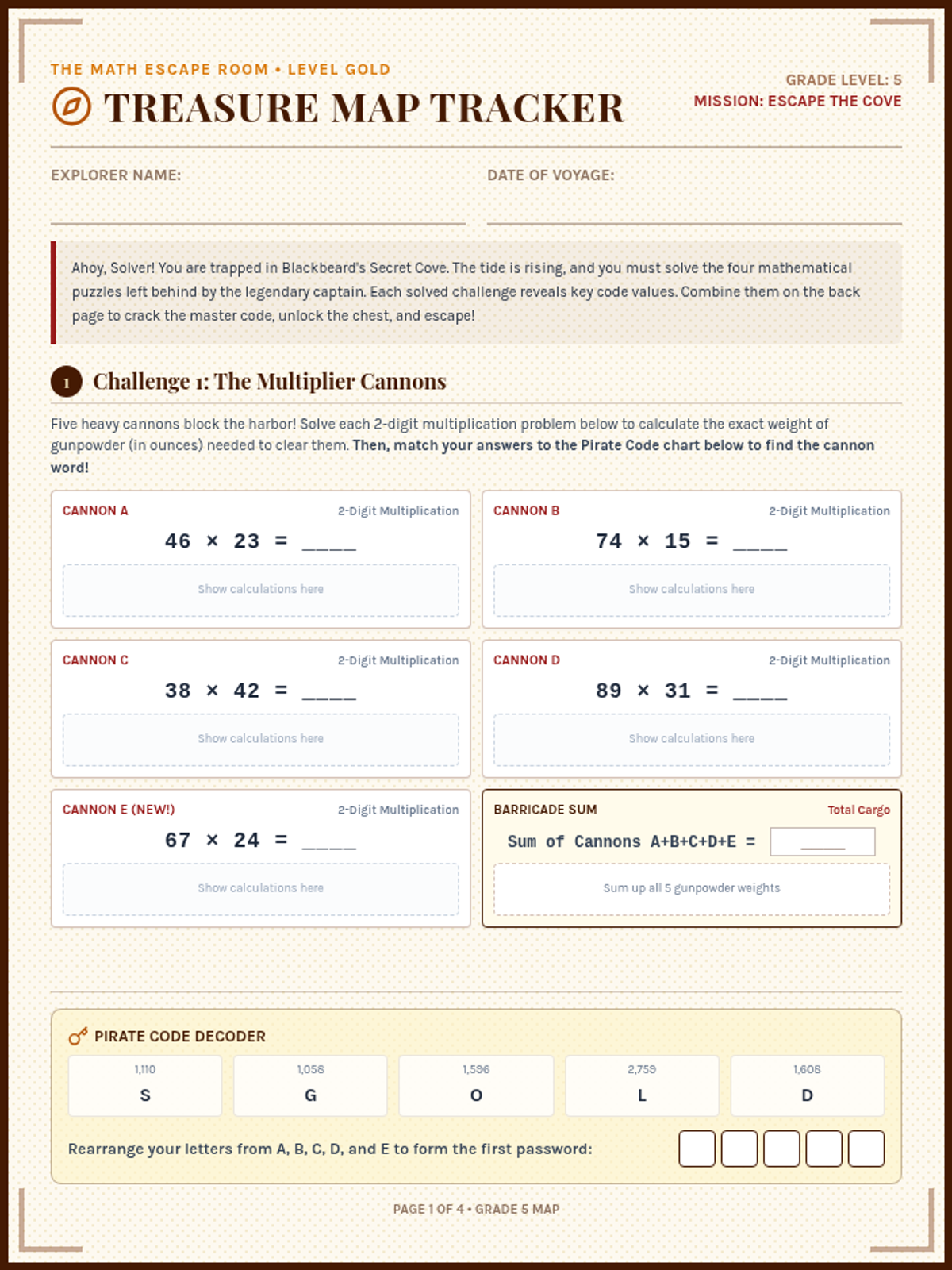
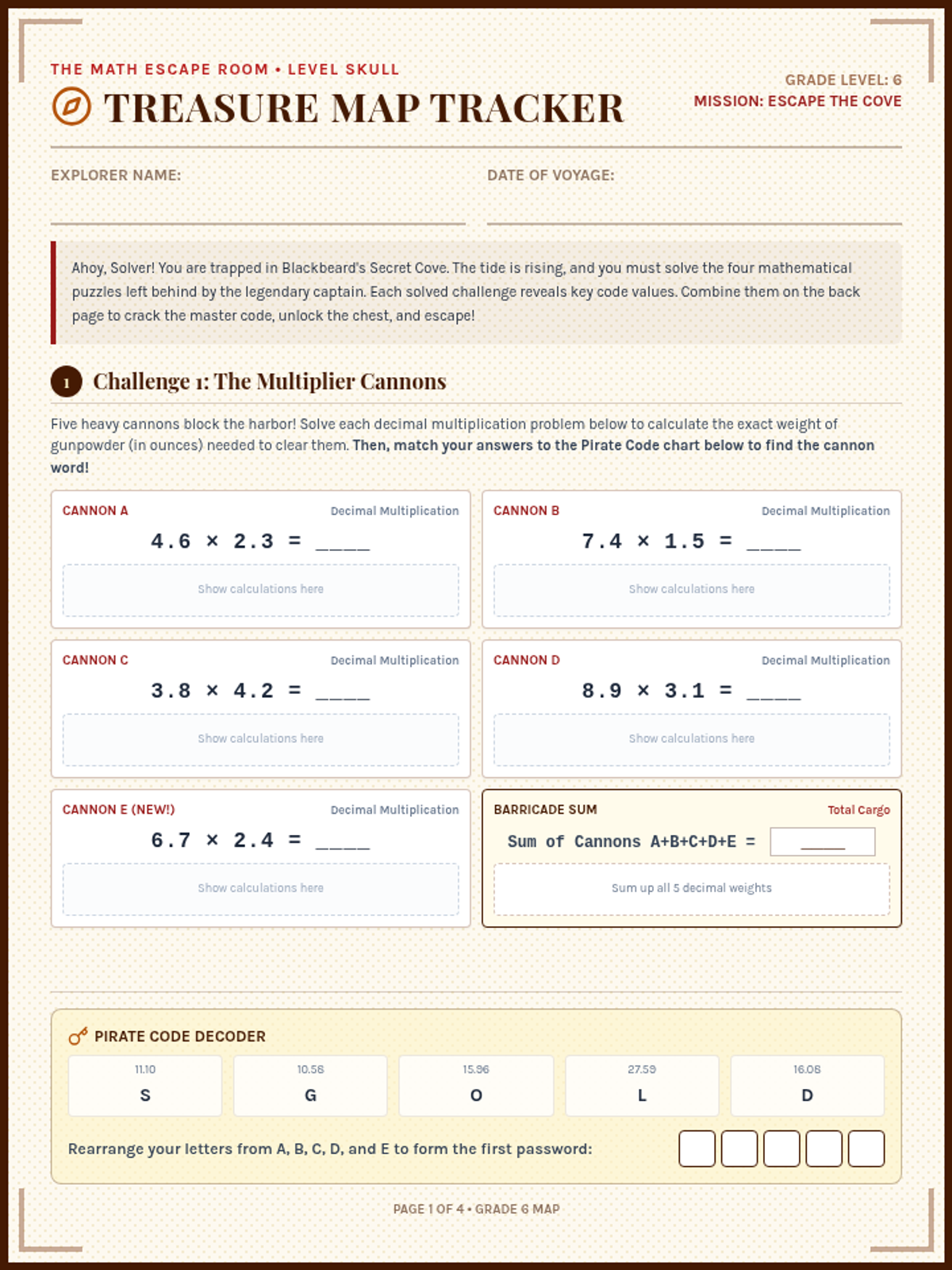
An immersive, pirate-themed math escape room where students solve puzzles in multi-digit multiplication, long division, fraction operations, and decimals to crack codes and discover Captain Blackbeard's legendary lost treasure.
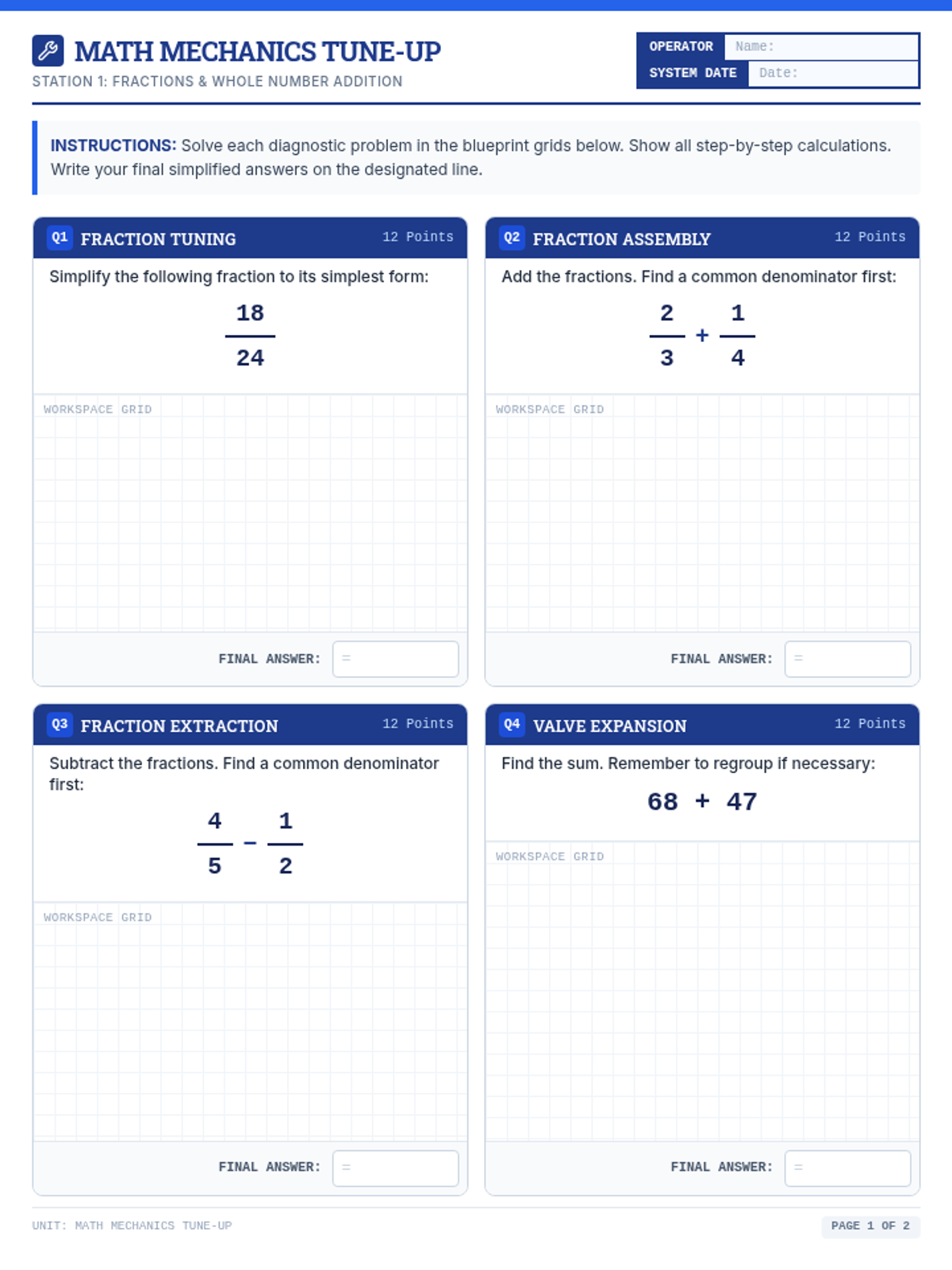
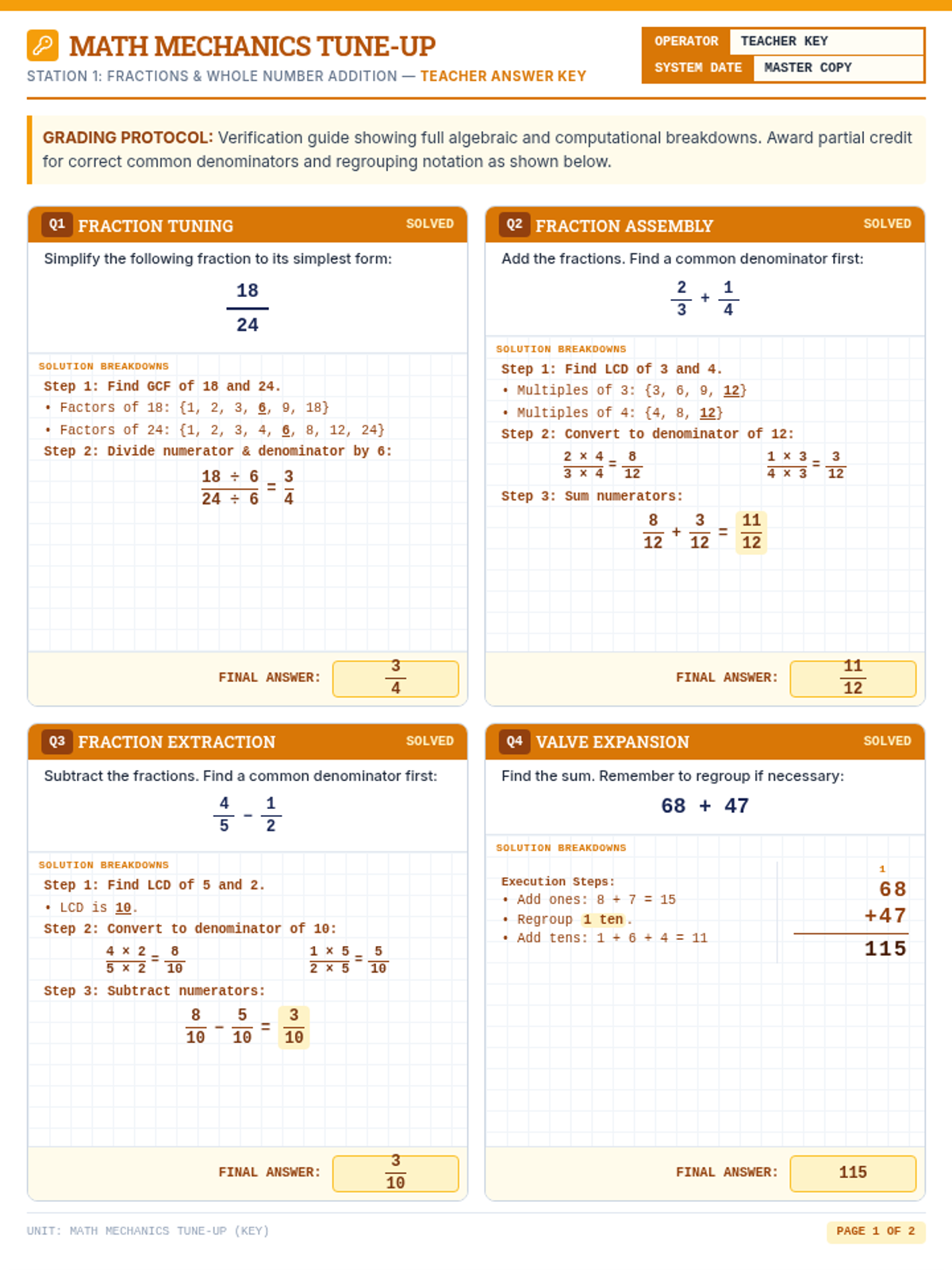
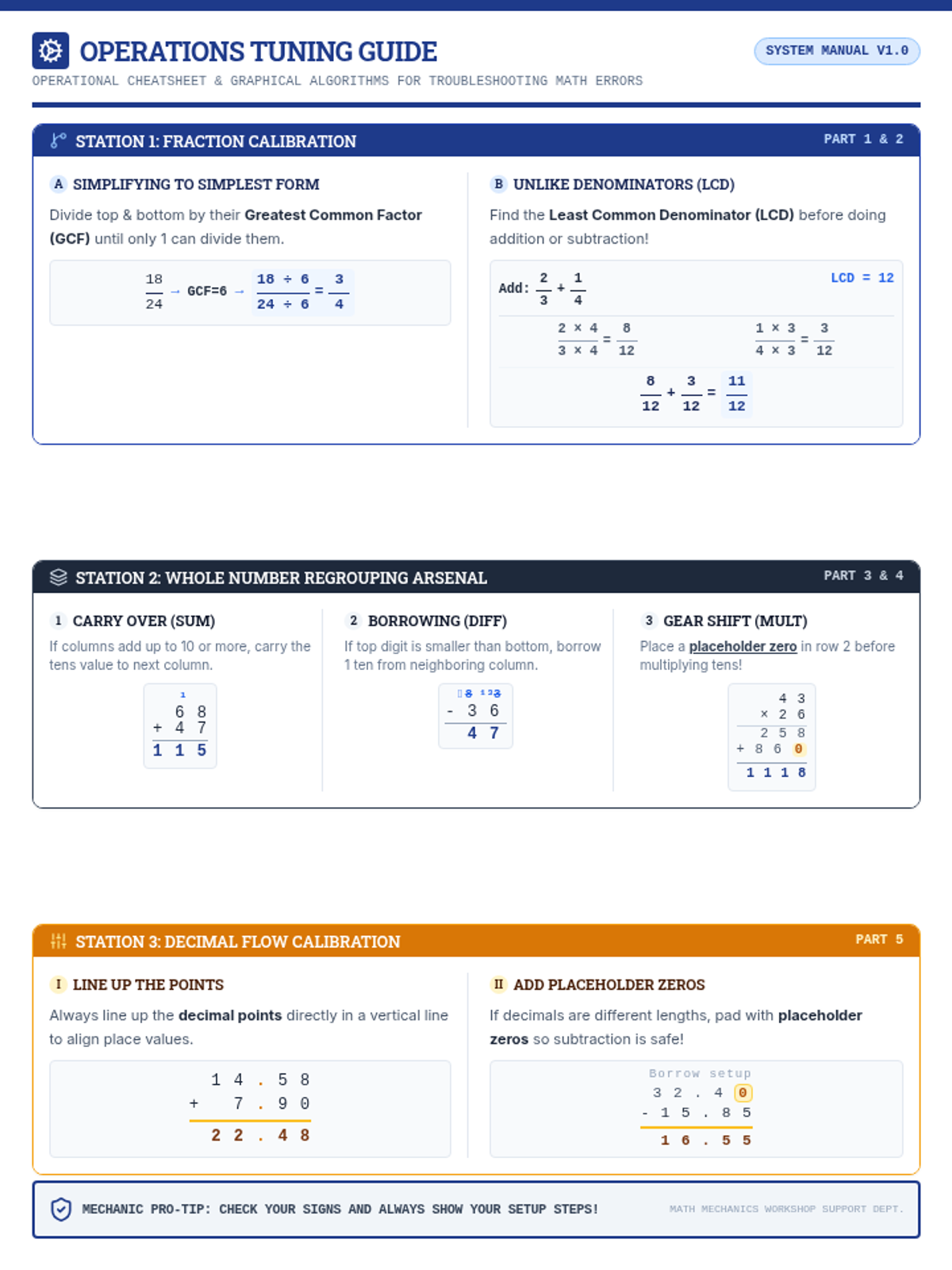
A comprehensive practice and support system designed to reinforce fundamental operations, including fractions, multi-digit integers, and decimals. Features a structured 2-page workspace worksheet, a detailed step-by-step teacher answer key, and a visual diagnostic anchor chart.
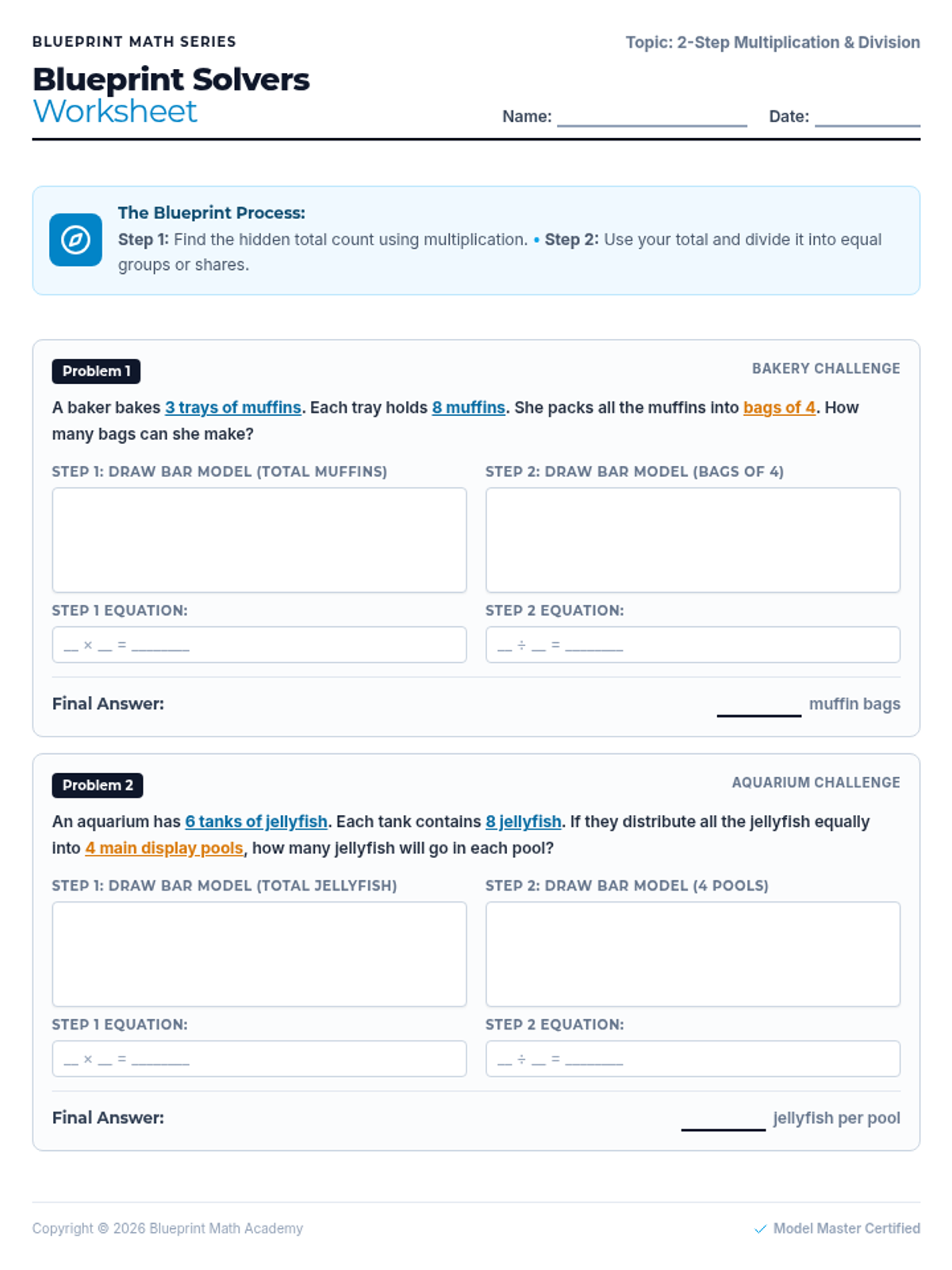
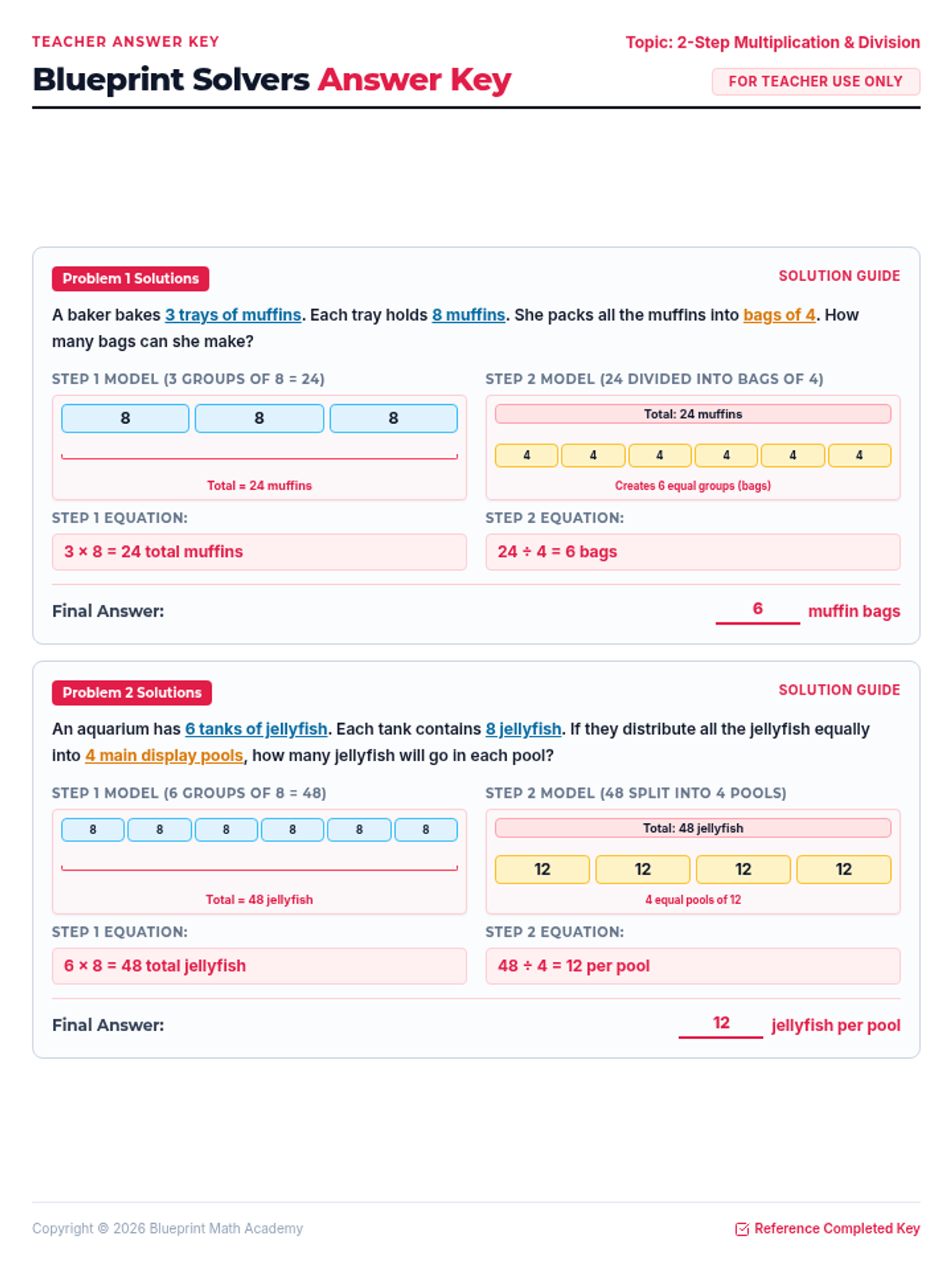
An introductory lesson on breaking down two-step word problems involving multiplication and division using clear, visual bar diagrams.
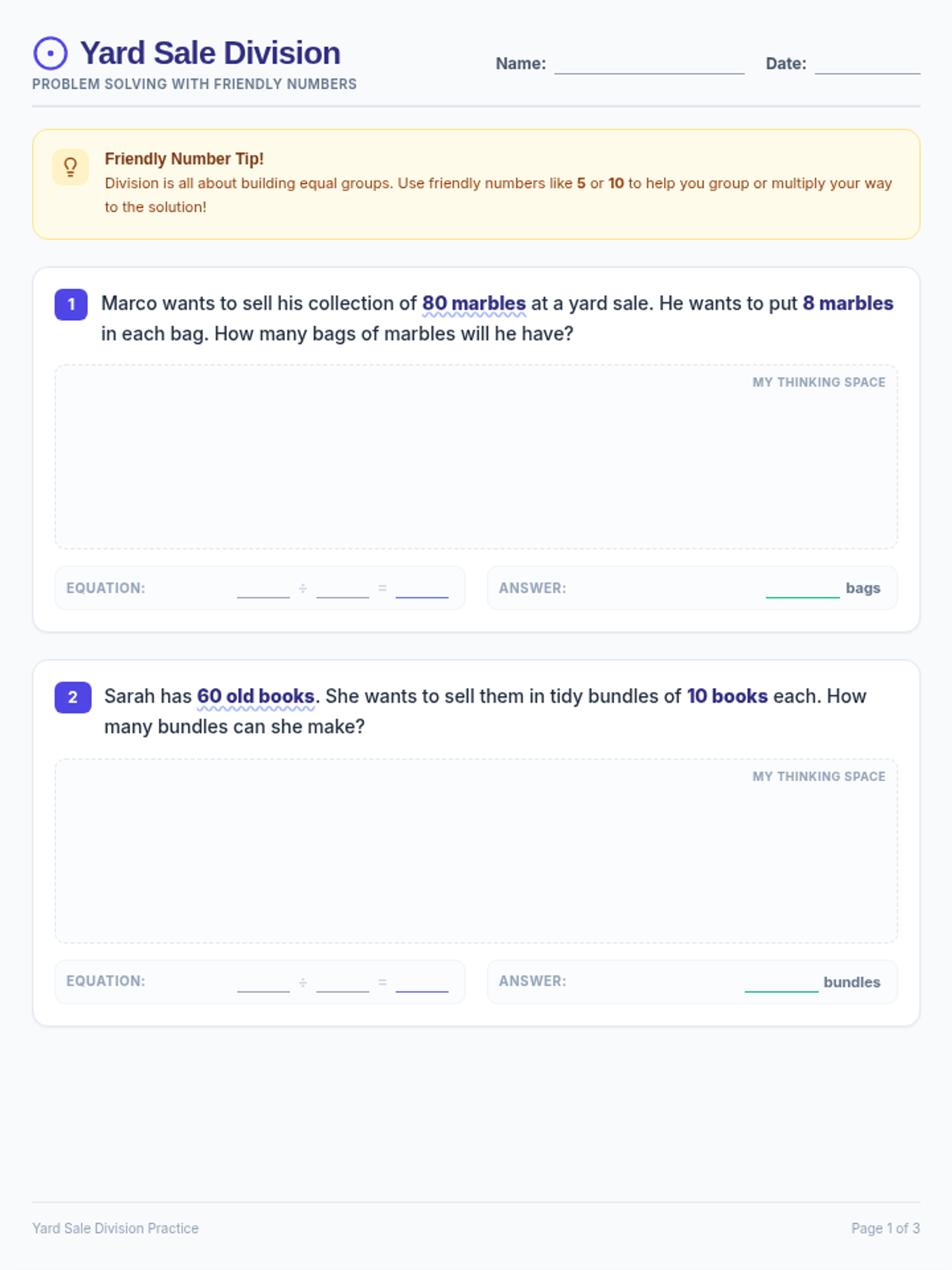
A math lesson focused on solving real-world division problems using friendly numbers (like 5 and 10). It includes warm-up slides and a spacious multi-page worksheet.
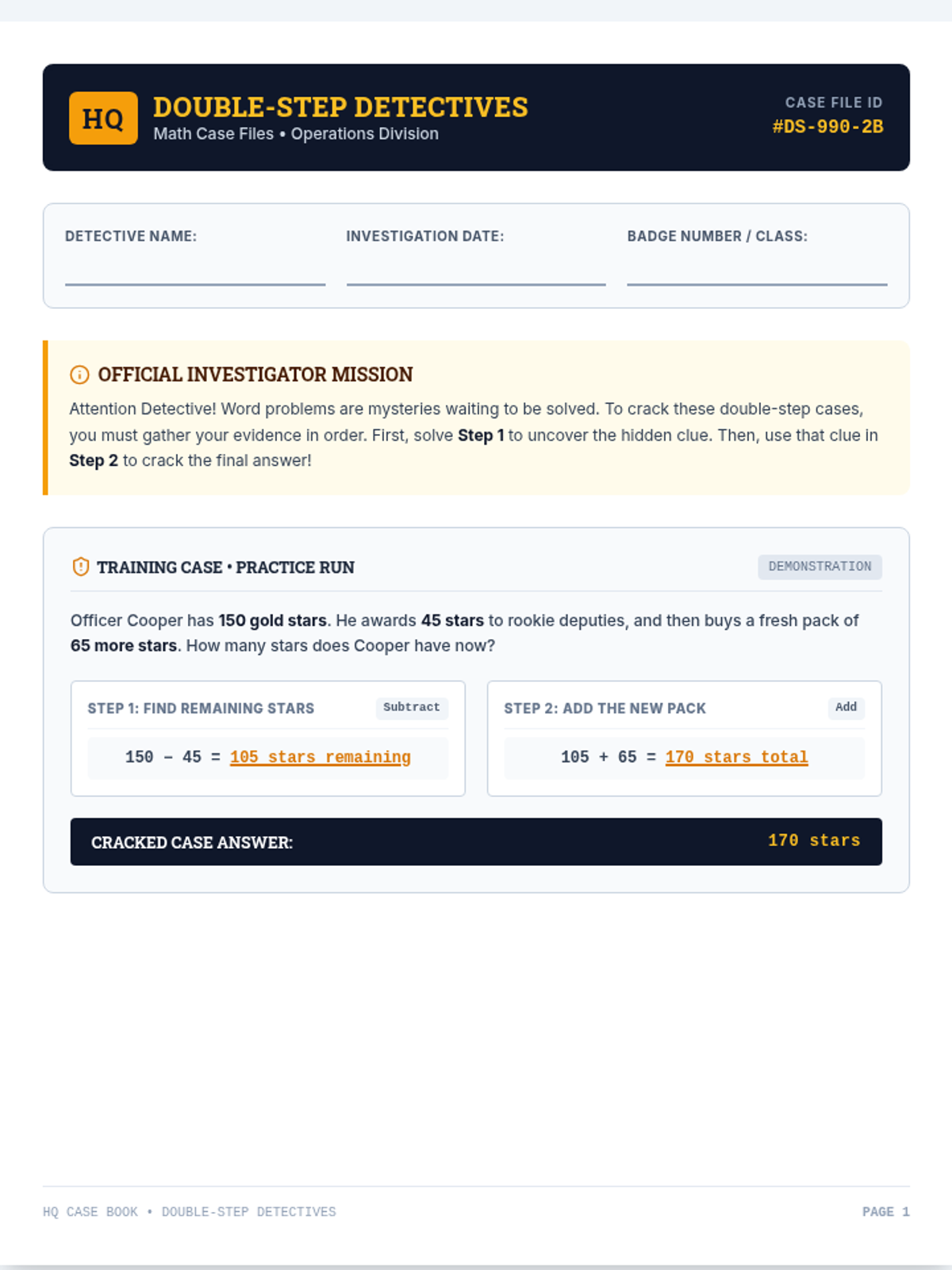
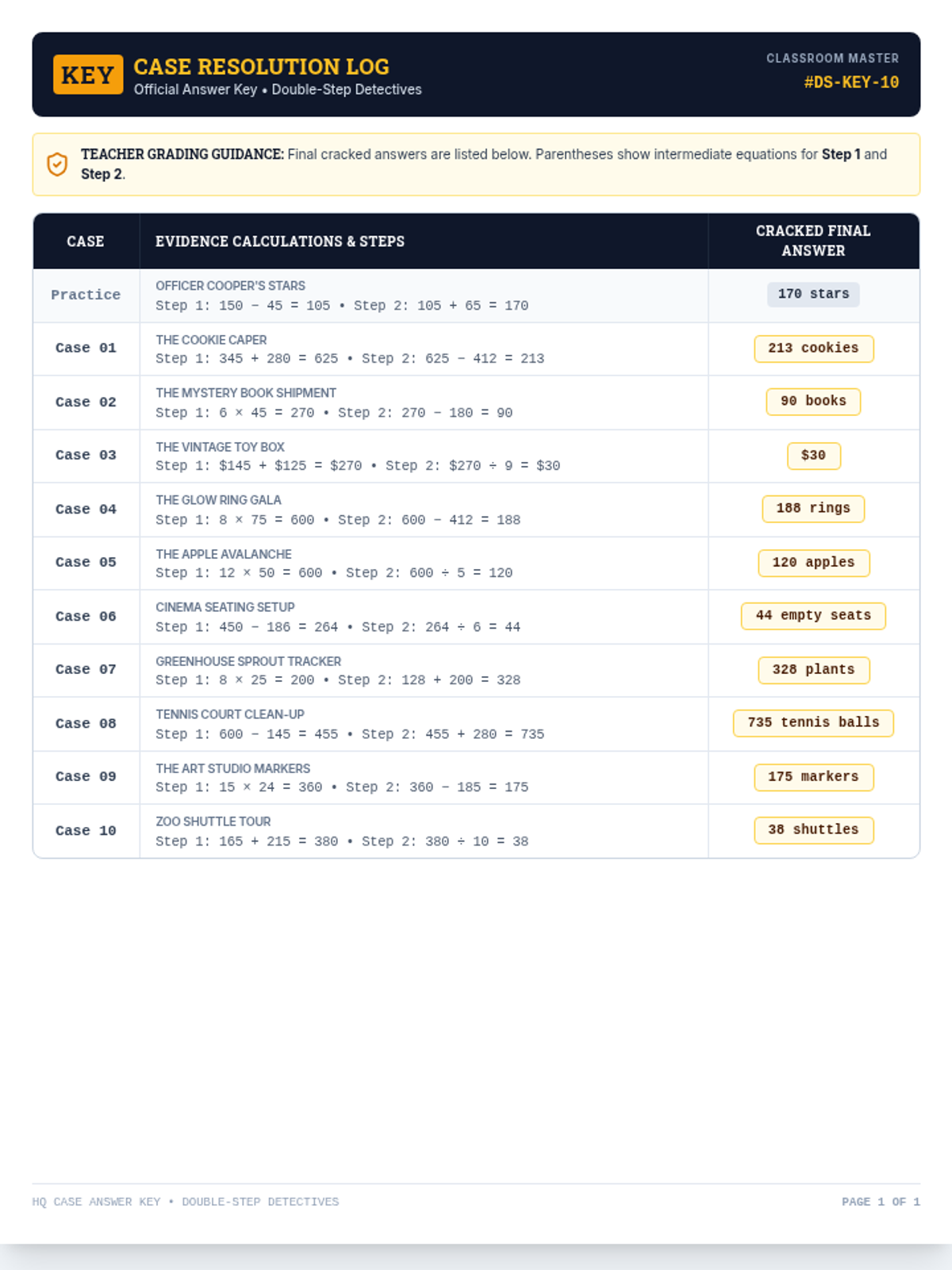
A 2-step word problem math lesson designed for 3rd to 5th grade students using mixed operations and 2-3 digit numbers. Includes custom graphic organizers for Step 1 and Step 2 of each word problem to guide and scaffold student problem-solving, plus an answer key.
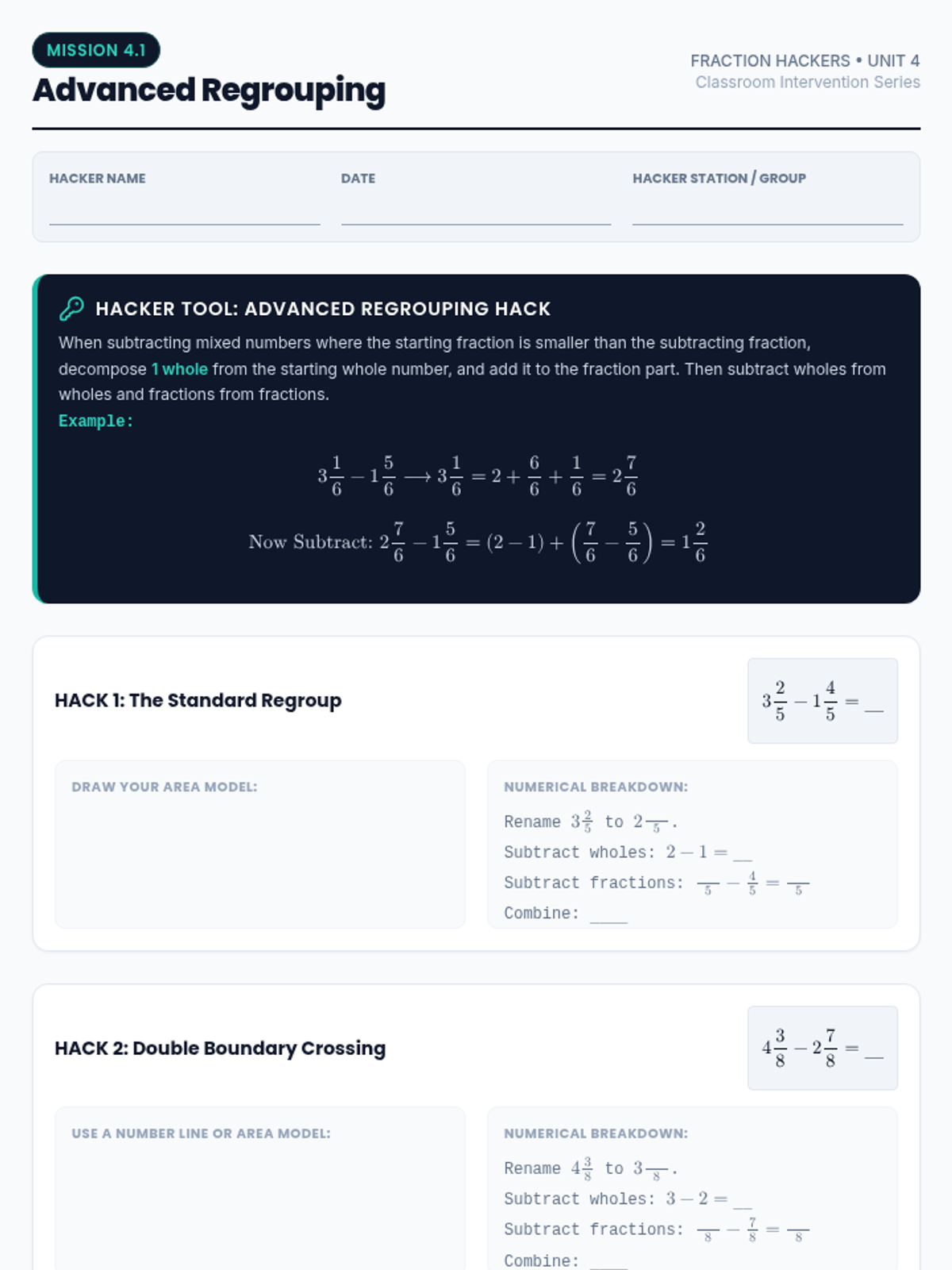
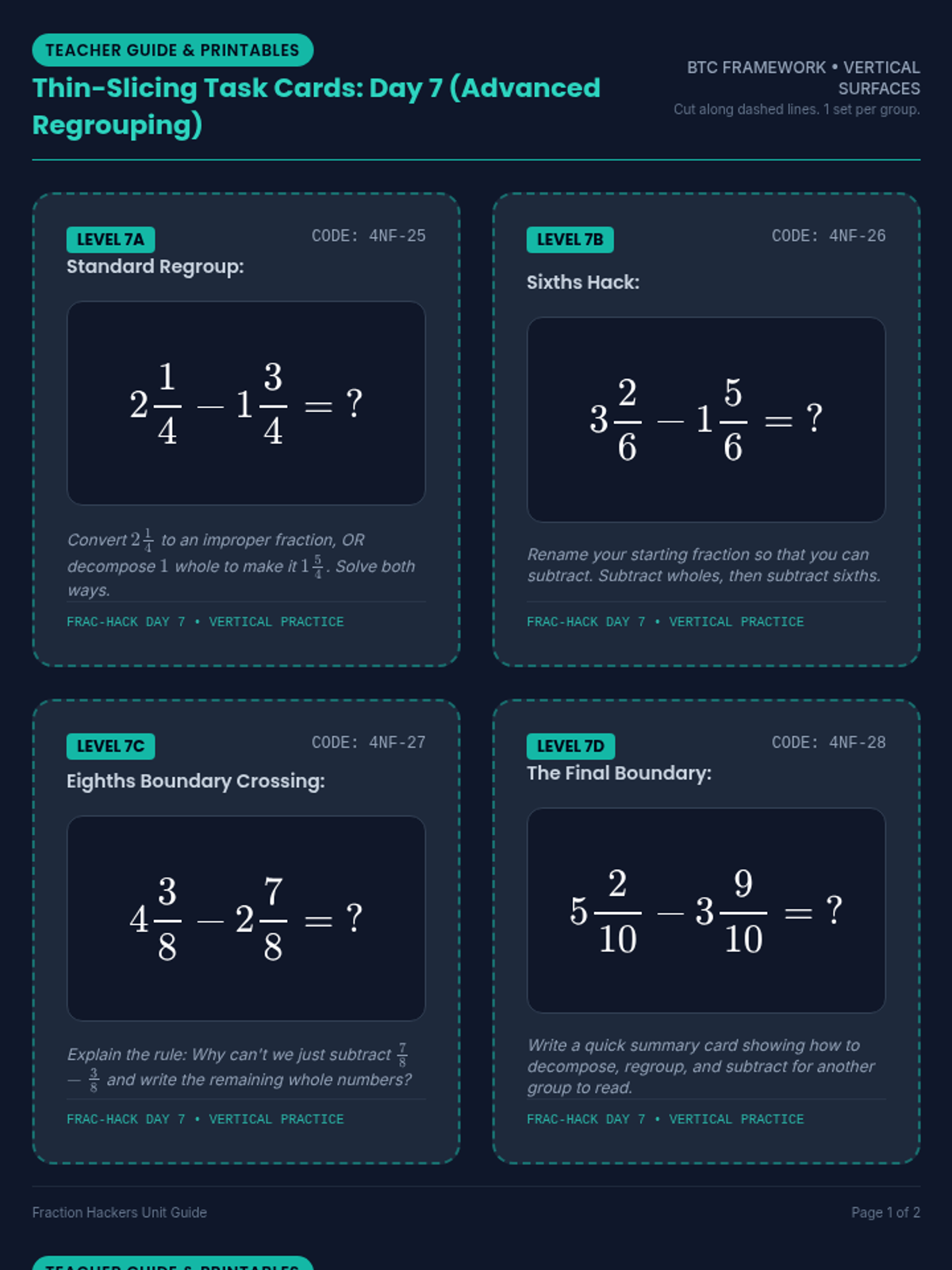
Covers Day 7 (Advanced Mixed Number Regrouping) and Day 8 (Multi-step Real World Word Problems). Students master multi-step tasks, abstracting their visual models into numerical strategies.
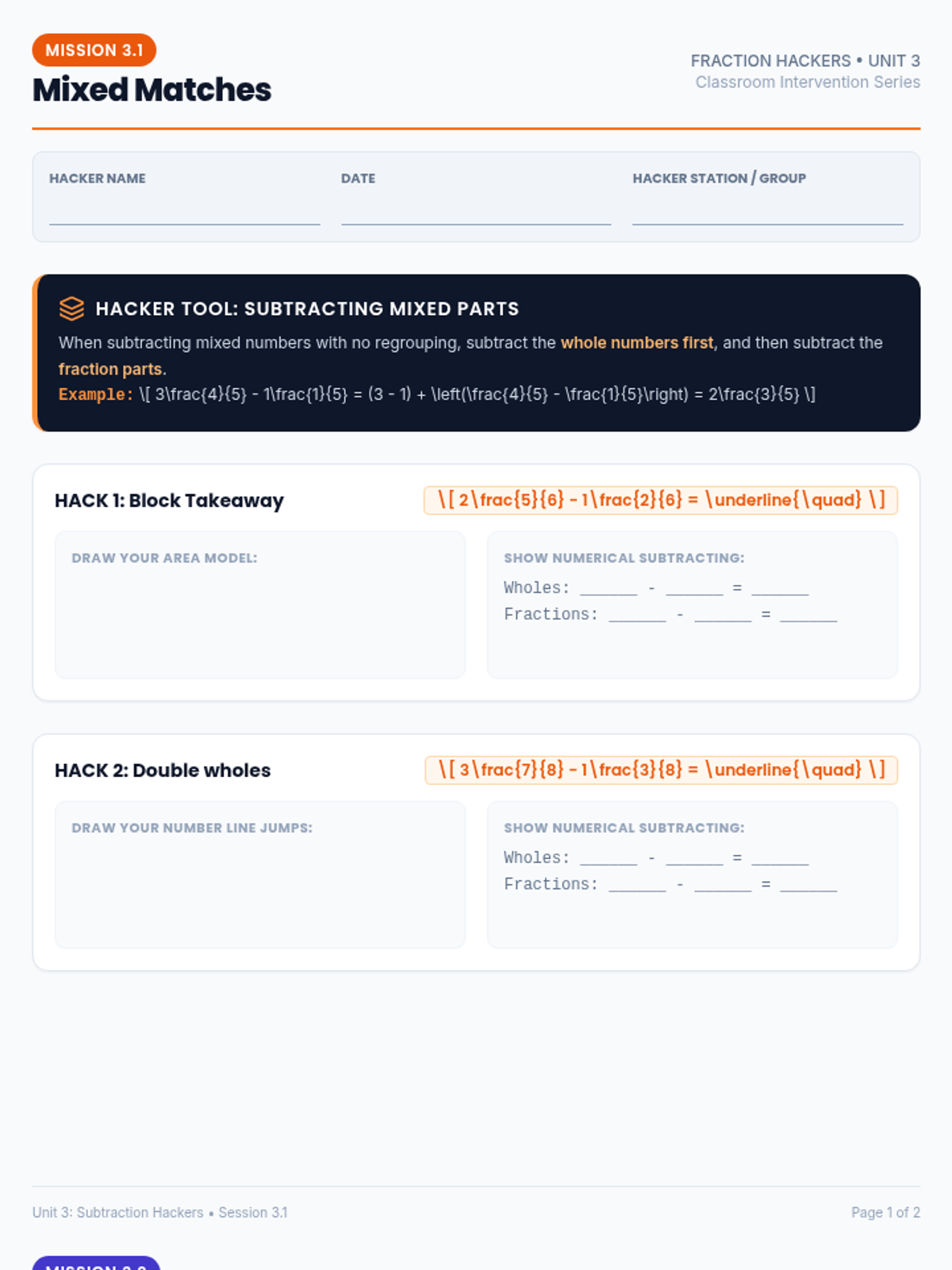
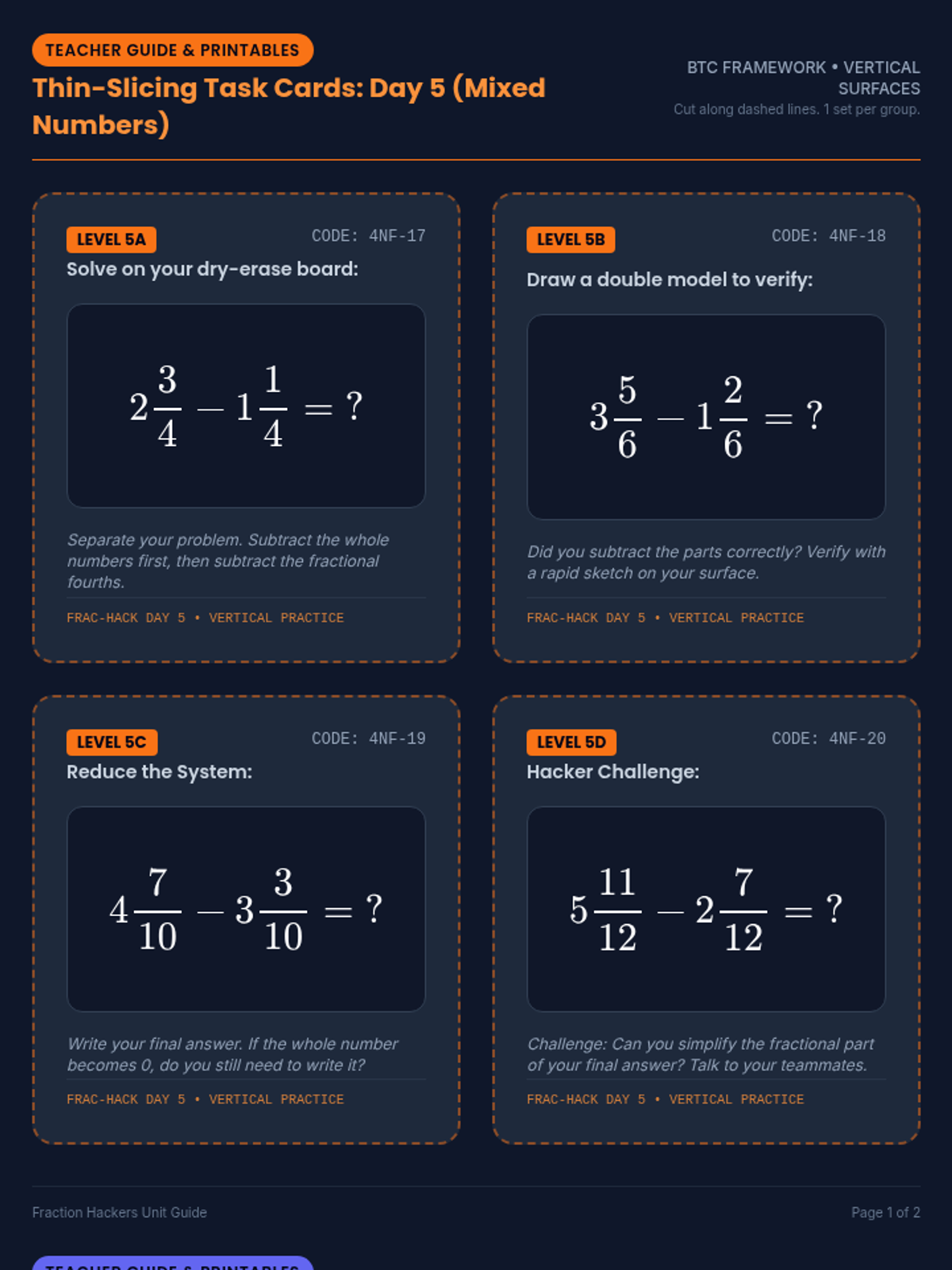
Covers Day 5 (Mixed Numbers with No Regrouping) and Day 6 (Introduction to Regrouping with Mixed Numbers). Students transition from simple subtraction of mixed numbers to decomposing a whole to subtract a larger fractional part.
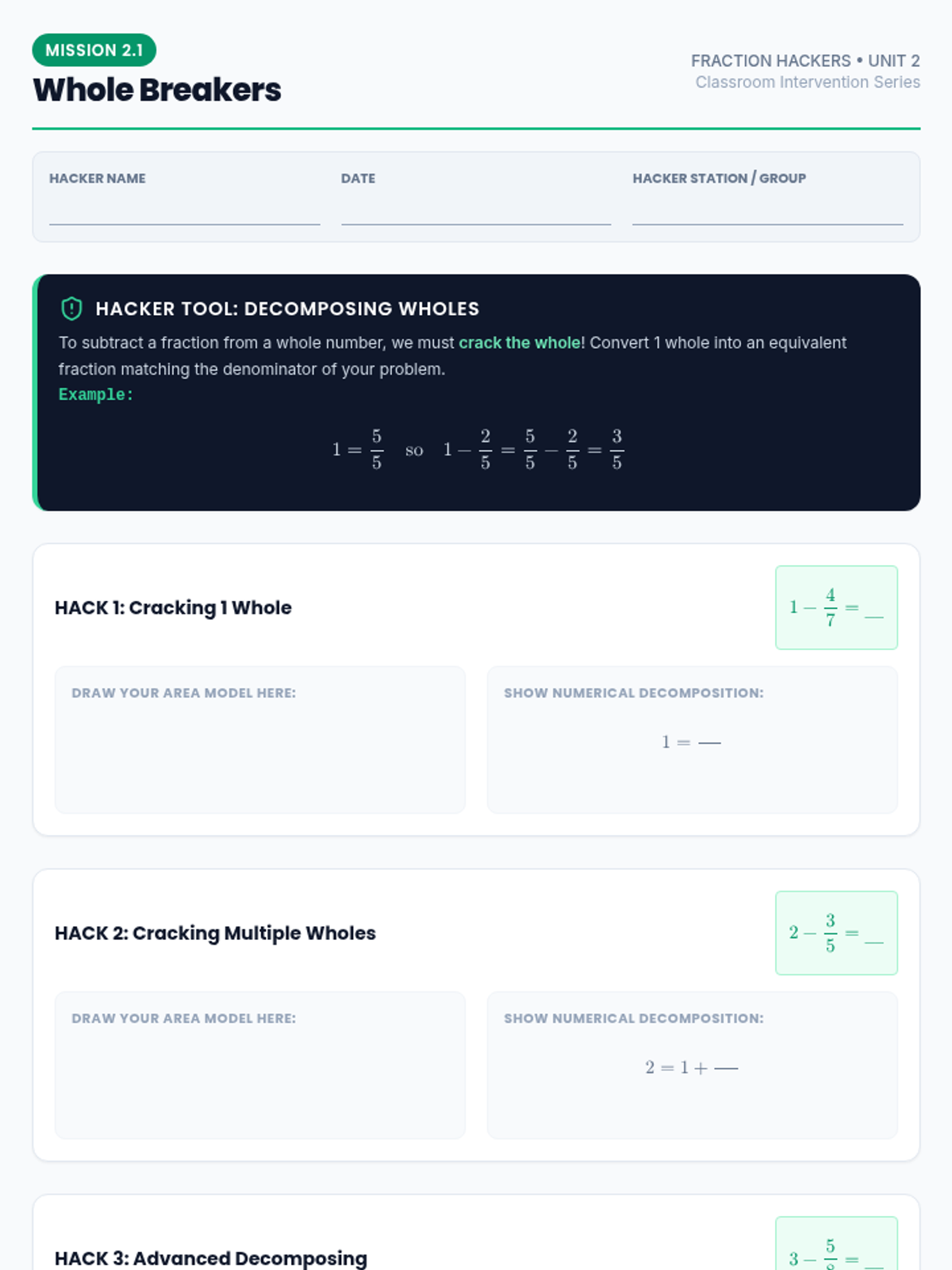
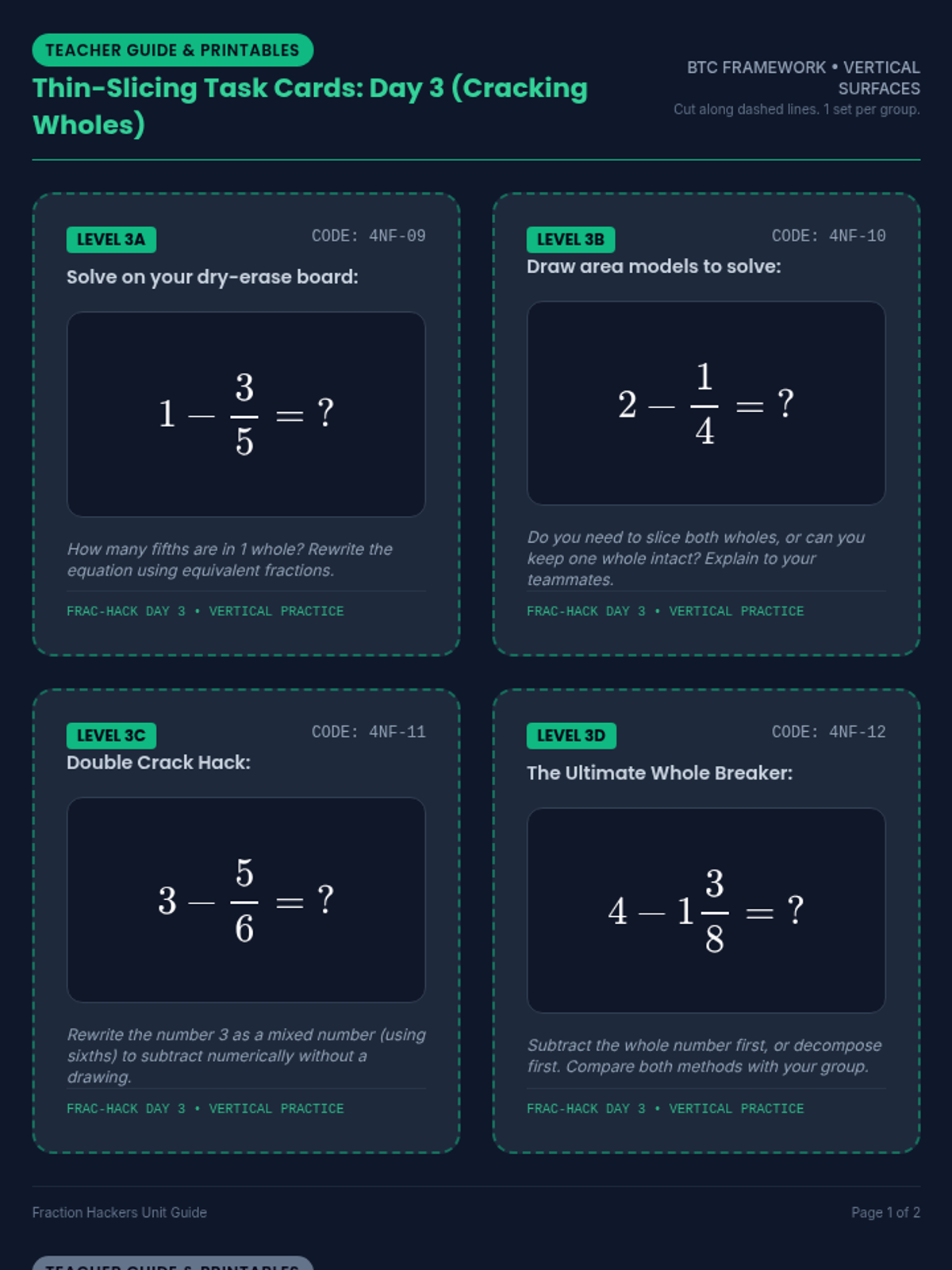
Covers Day 3 (Subtracting from a Whole Number) and Day 4 (Solving Word Problems with no regrouping). Students decompose whole numbers into equivalent fractions to solve subtraction equations and decode realistic scenarios.
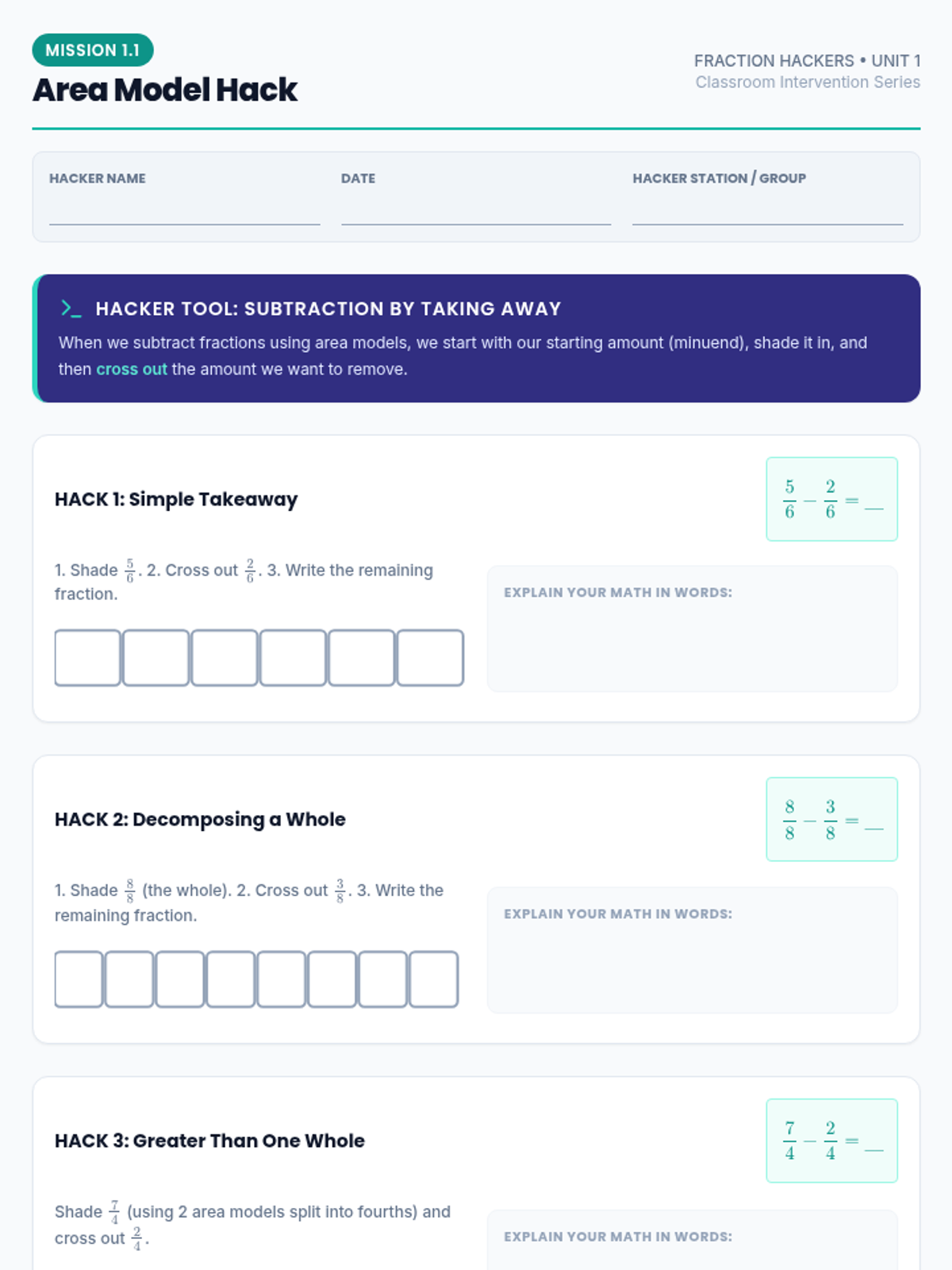
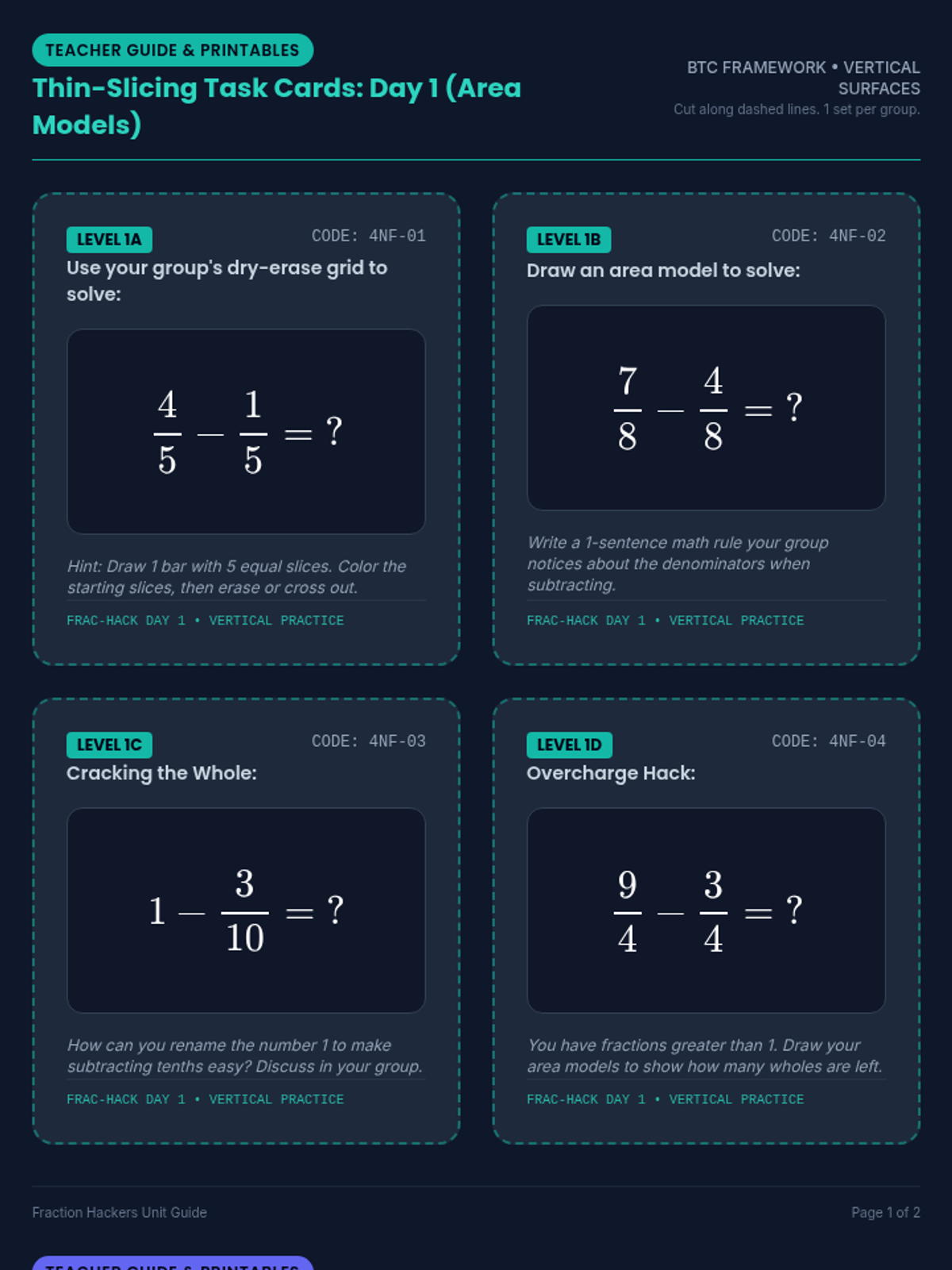
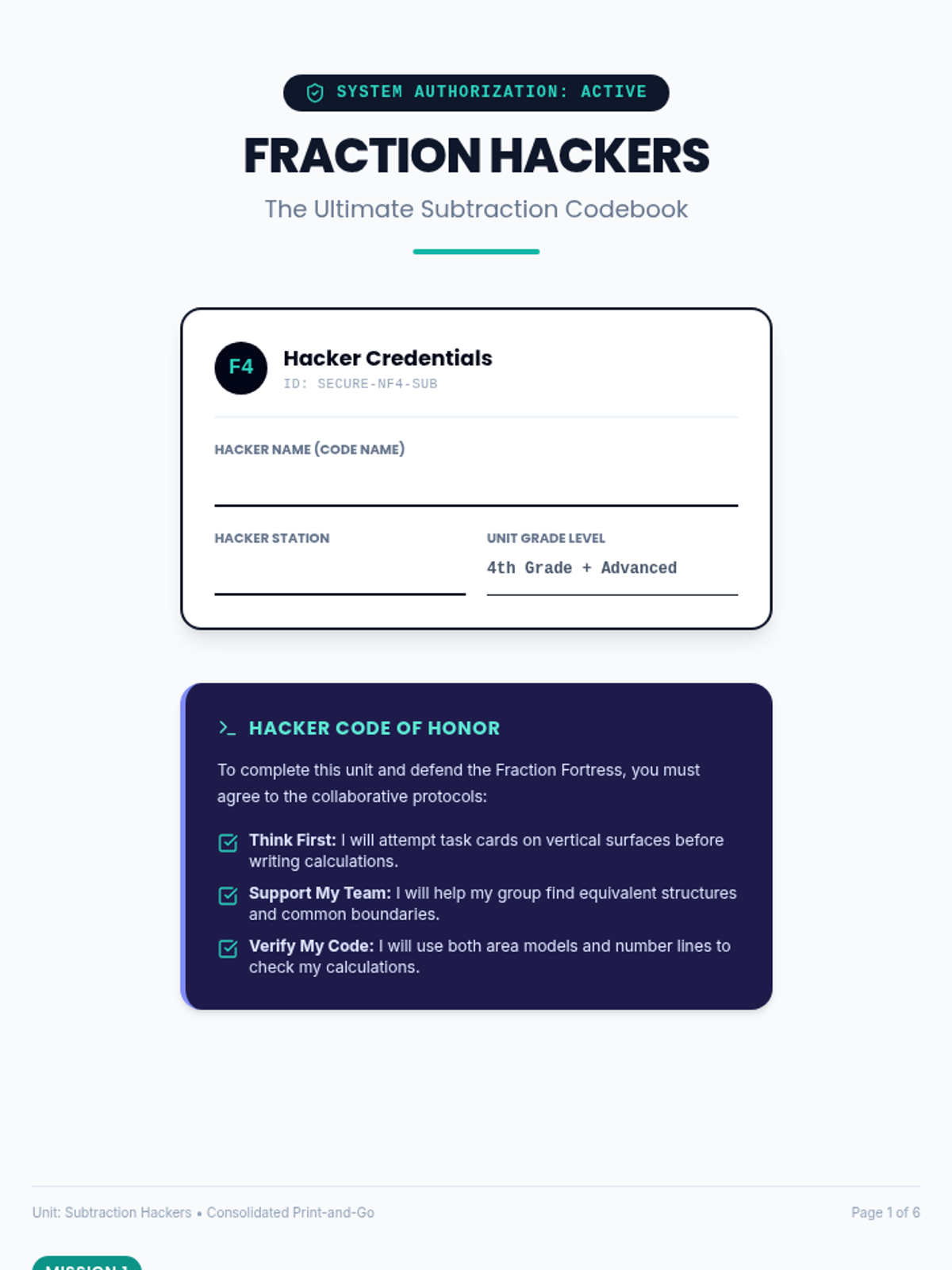
Covers Day 1 (Area Models) and Day 2 (Number Lines) of subtraction with like denominators and no regrouping. Students build foundational conceptual understanding of subtraction as 'taking away' and 'distance between' using highly visual, collaborative thin-slicing tasks.
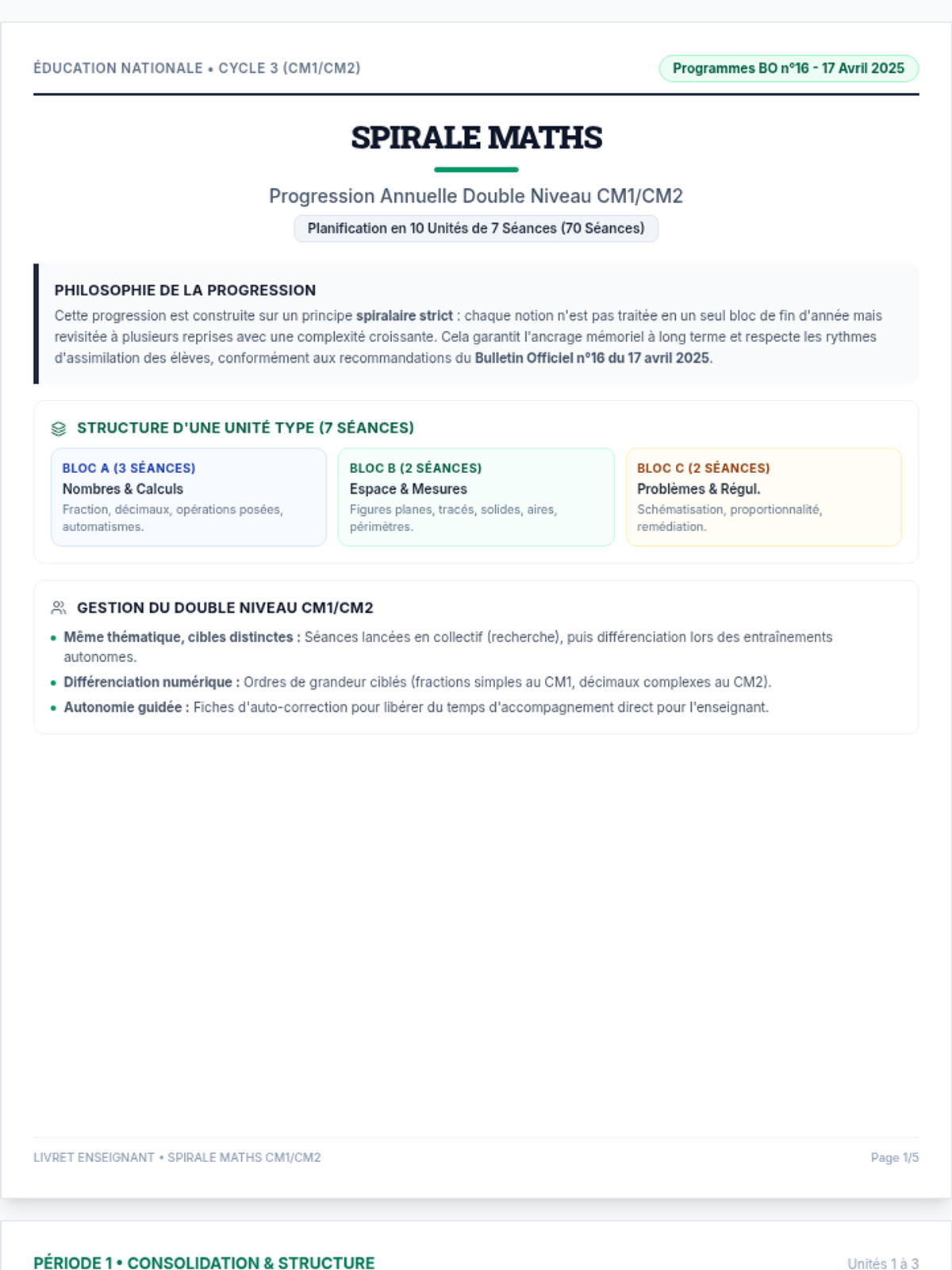
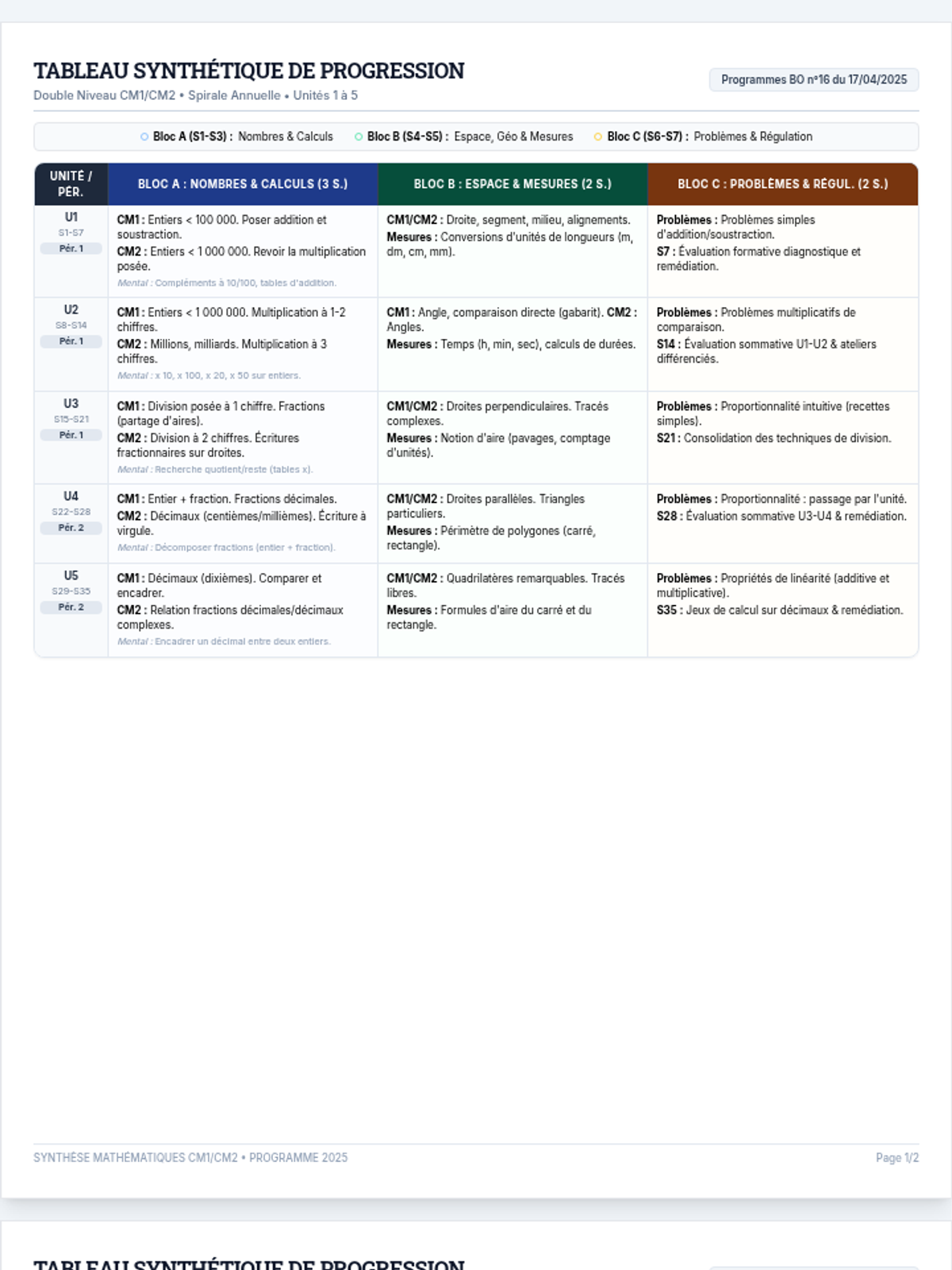
Outils de planification annuelle pour l'enseignant de CM1/CM2, comprenant un livret détaillé unité par unité et un tableau synthétique pour suivre la progression spiralaire conforme au BO du 17 avril 2025.