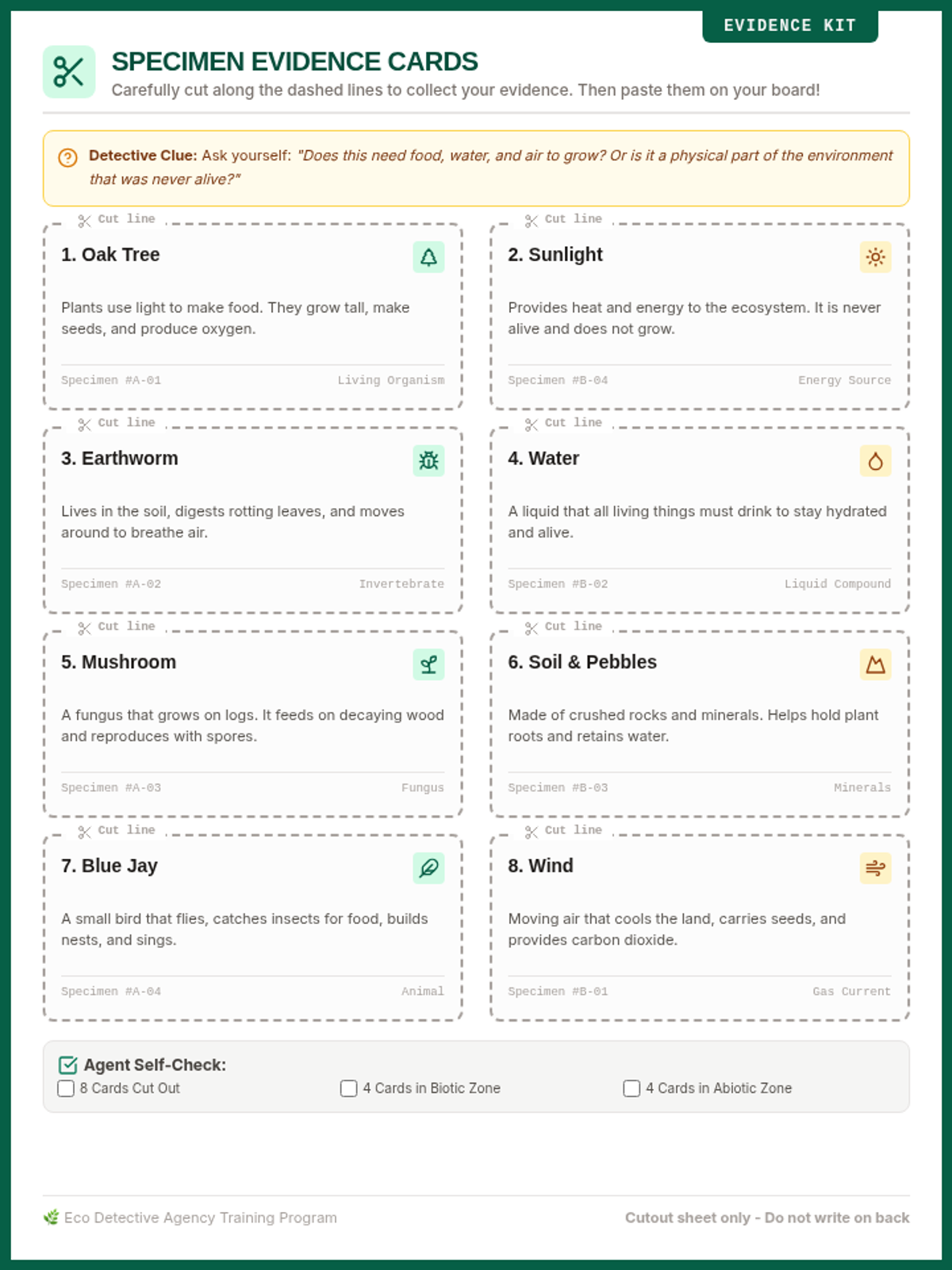
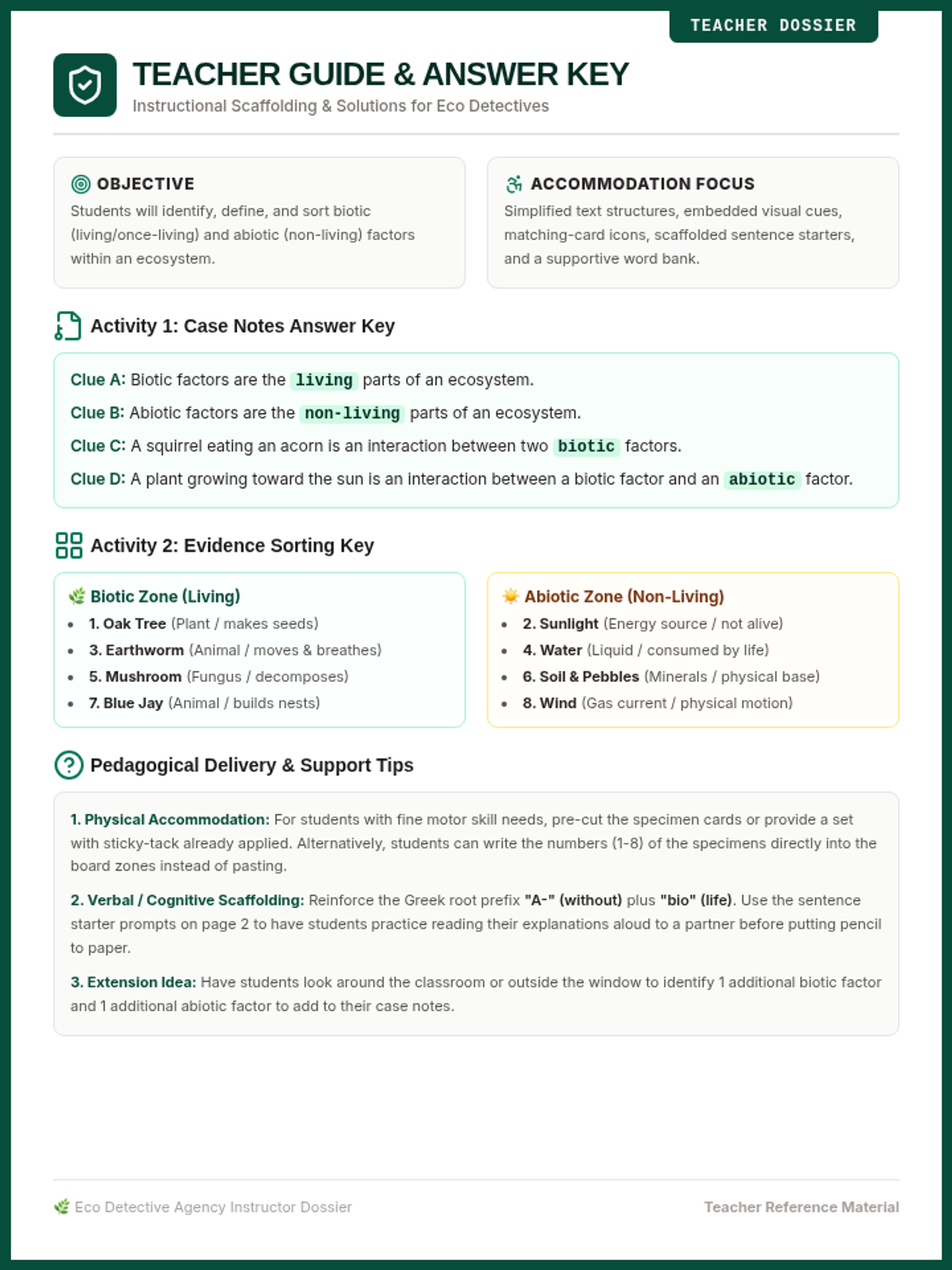
Using building blocks as an analogy, students model how multicellular organisms are constructed from individual cell units. This lesson reinforces the concept that large organisms are built from many tiny, repeating parts.
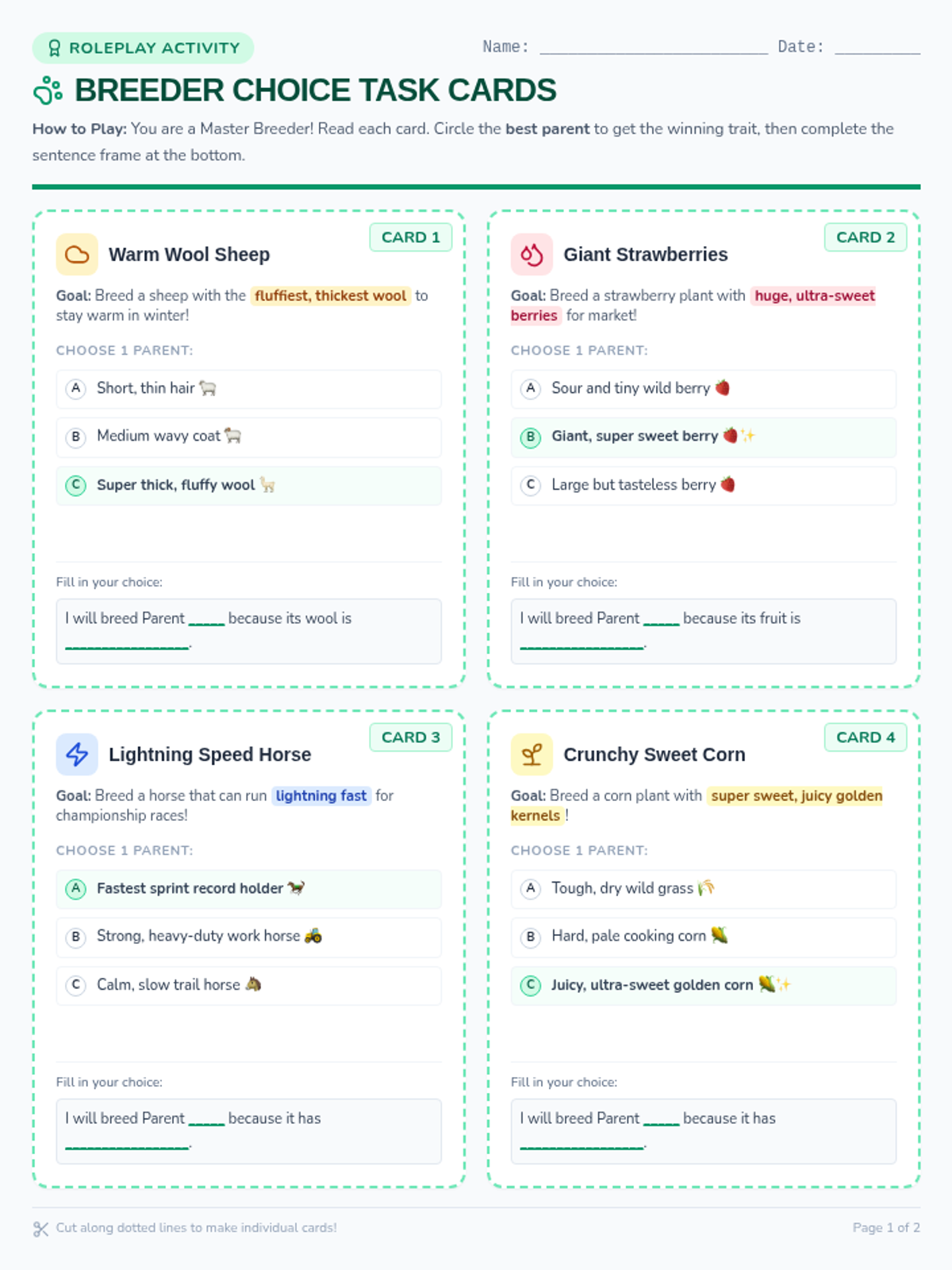
A foundational toolkit for setting up a physical engineering and maker space, covering physical layout, collaborative roles, and essential classroom routines.
A creative engineering lesson where students use LEGO bricks to design and build detailed animal models based on specific prompt constraints. Focuses on spatial reasoning, creative problem-solving, and descriptive writing.
A foundational lesson on the three main stages of the water cycle: evaporation, condensation, and precipitation. Includes a visual anchor chart and a hands-on labeling activity.
A guided reading lesson for 3rd graders exploring the fundamental differences between stars and planets, focusing on light production, composition, and movement.
A fascinating look at decomposers for 3rd graders, explaining how fungi, bacteria, and worms break down dead matter to recycle nutrients back into the food chain.
An engaging lesson for 3rd graders on consumers in a food chain, exploring herbivores, carnivores, and omnivores, and how they get their energy from eating other living things.
A foundational lesson on food chains for 3rd graders, focusing on producers as the start of energy flow and the correct use of arrows to represent that energy movement.
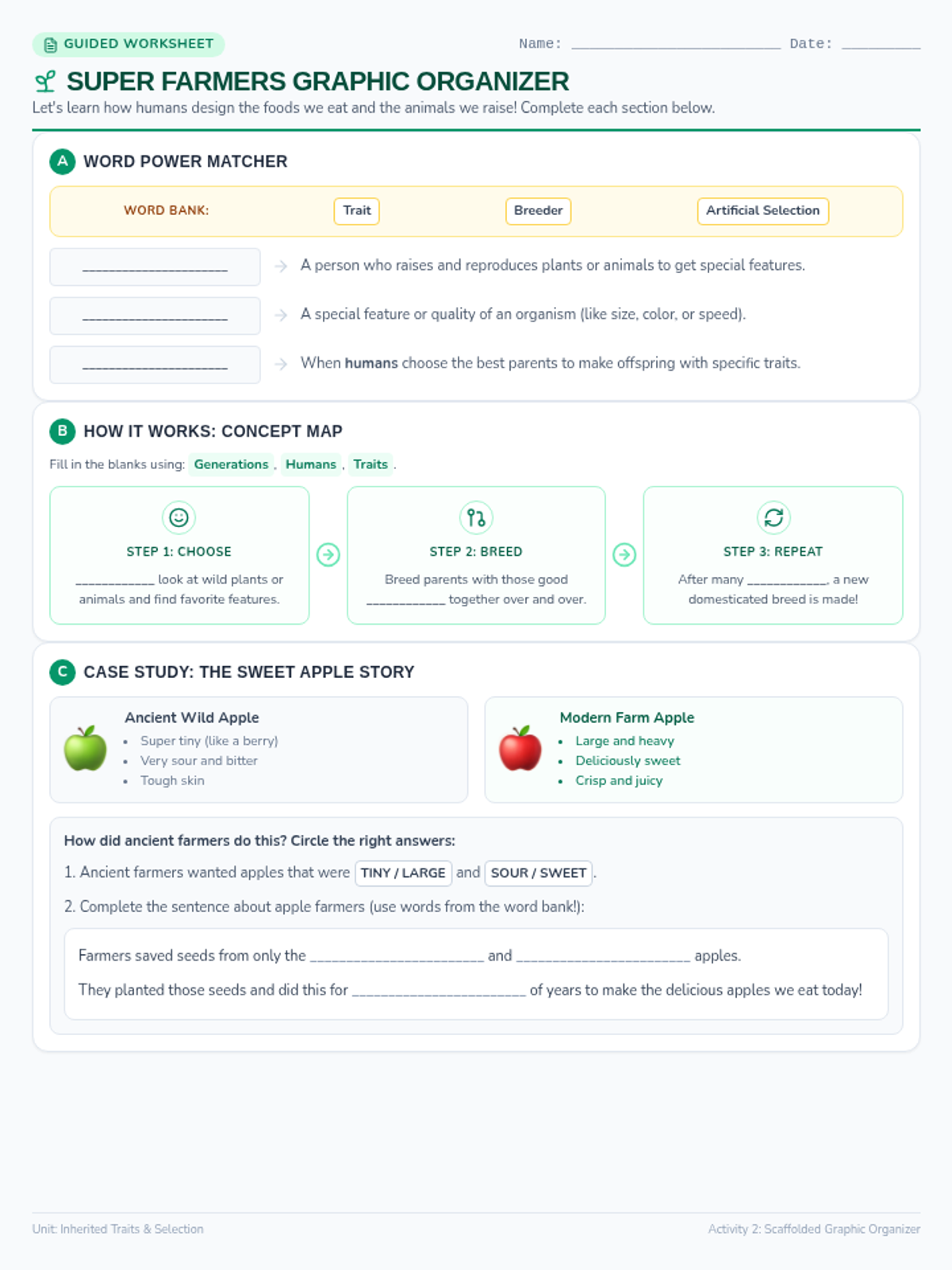
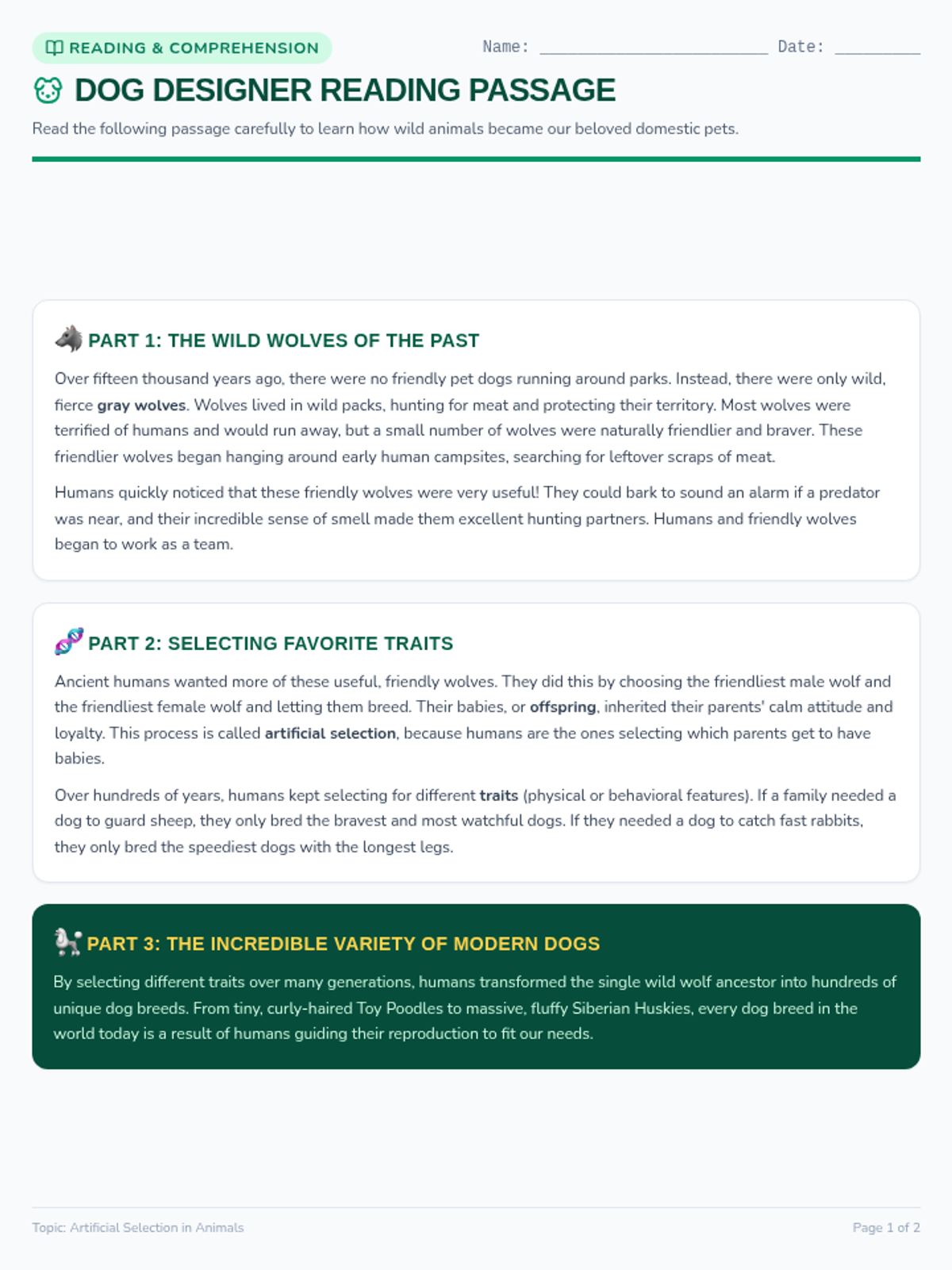
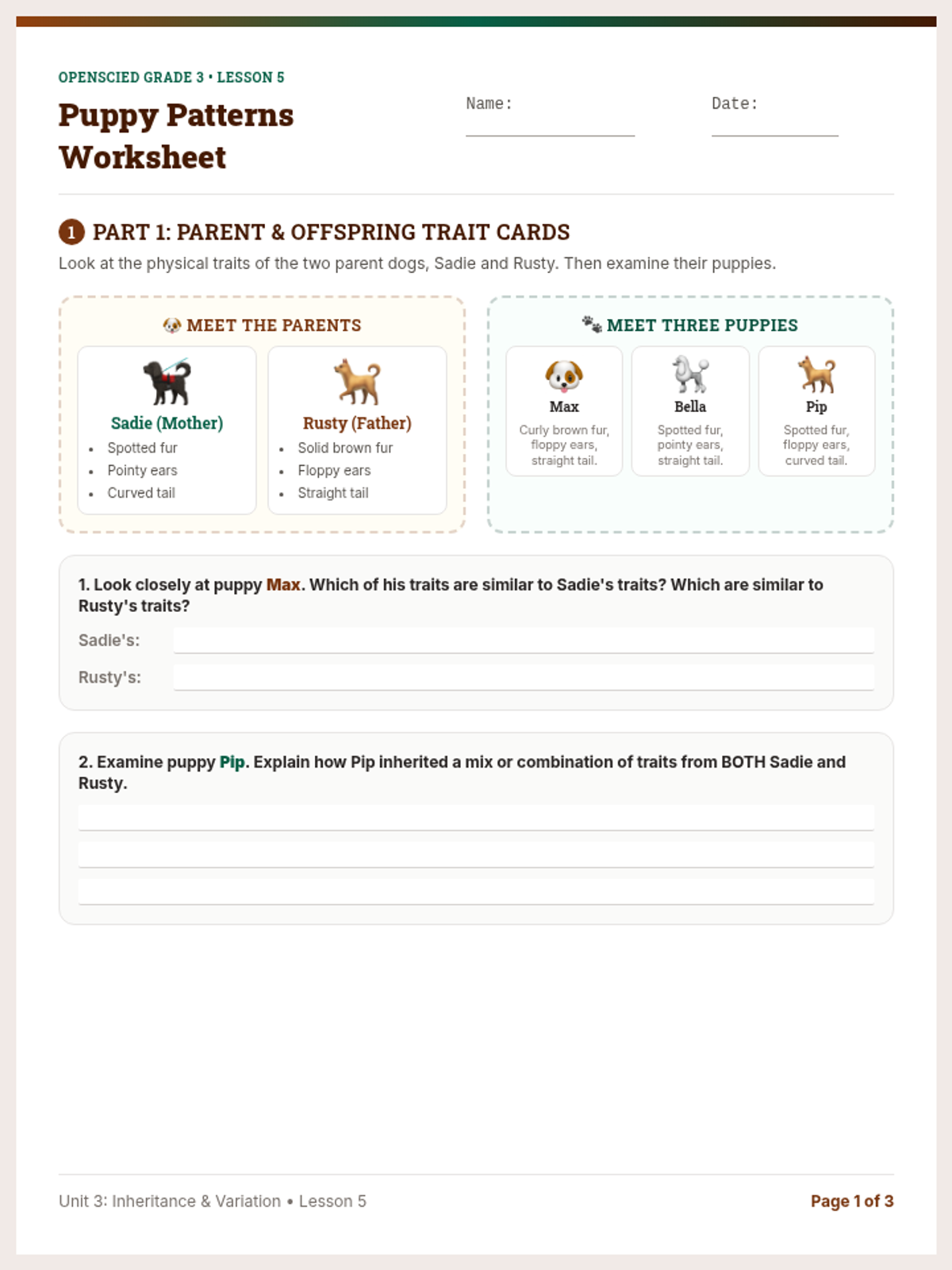
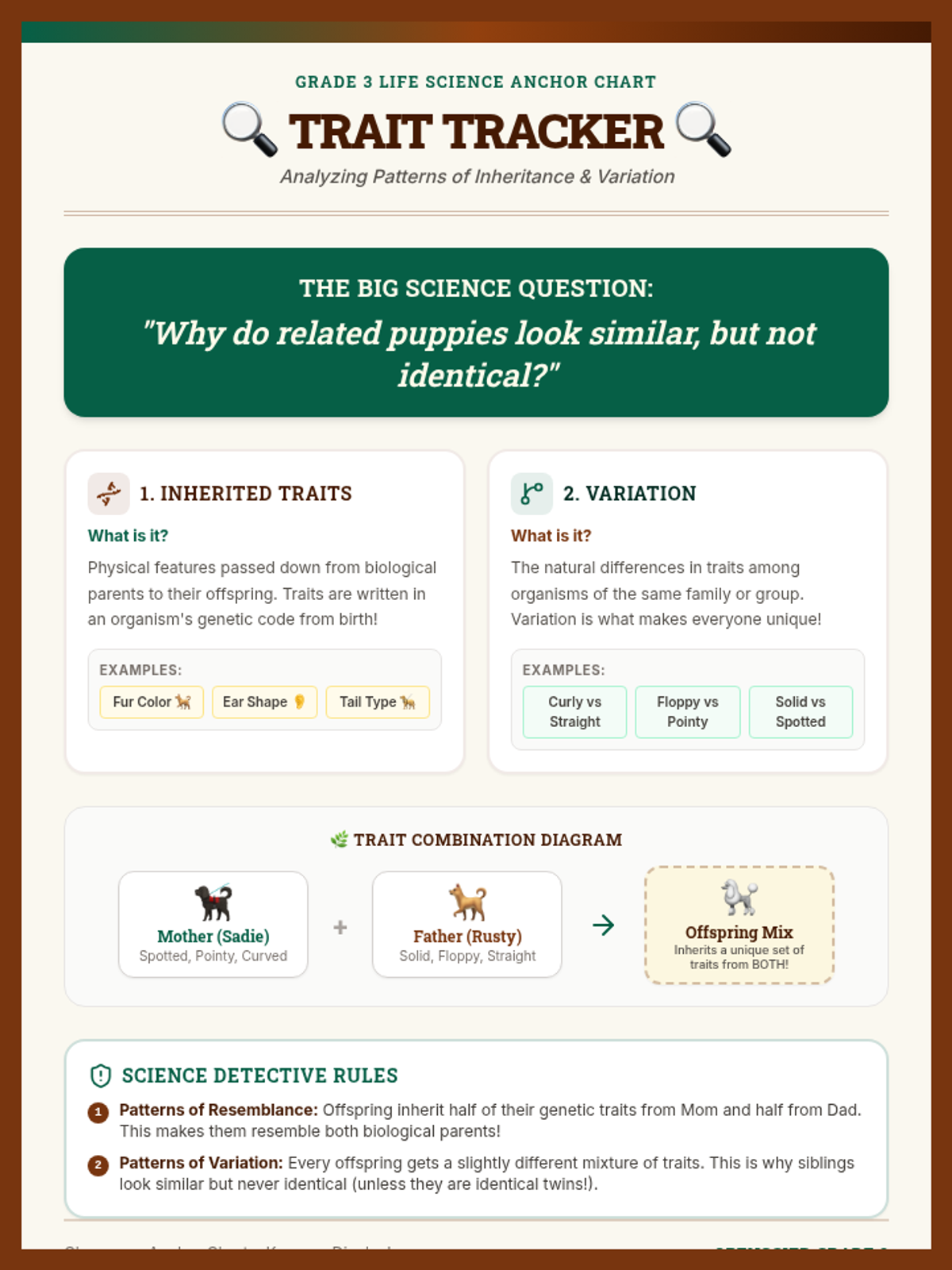
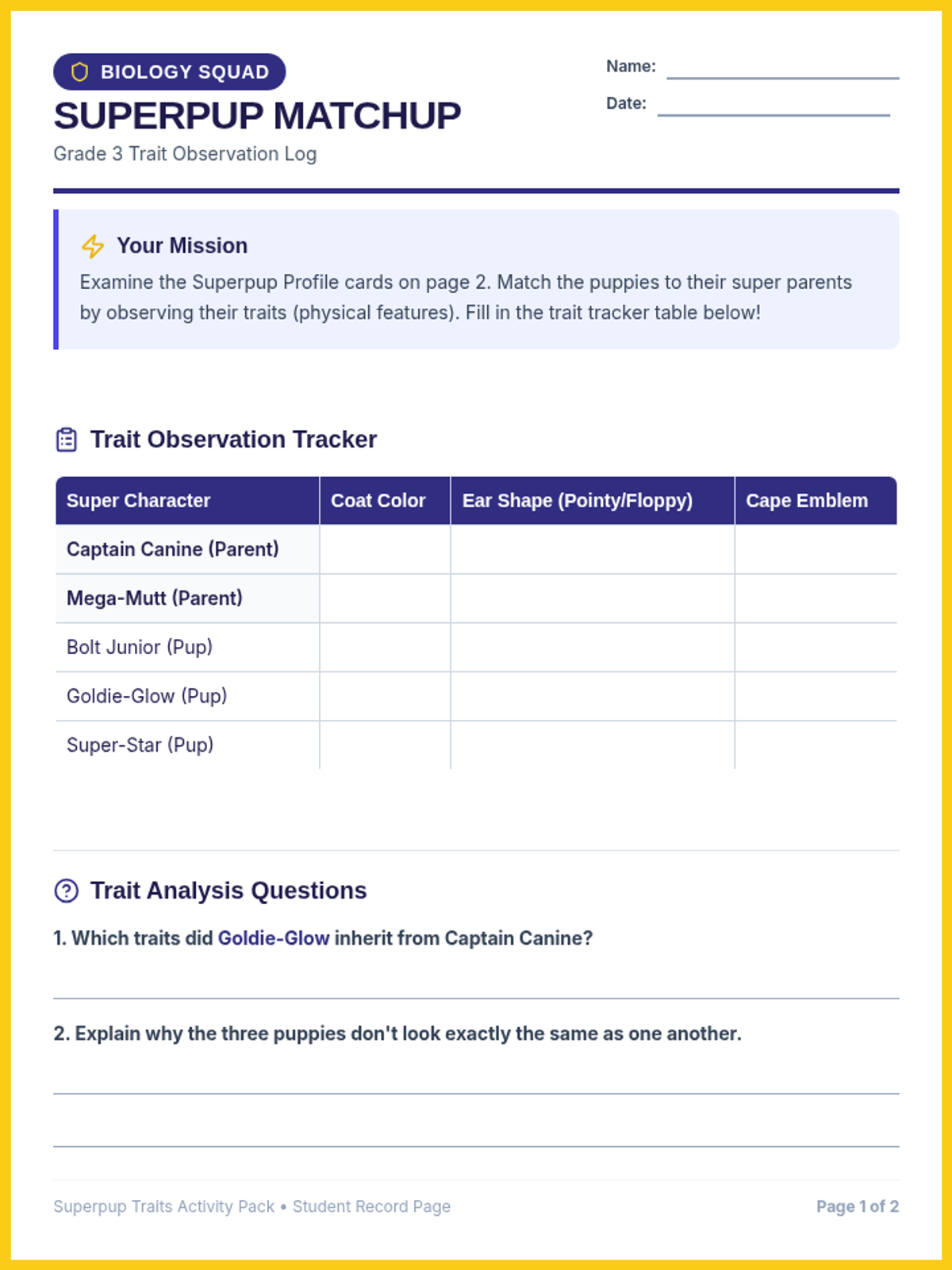
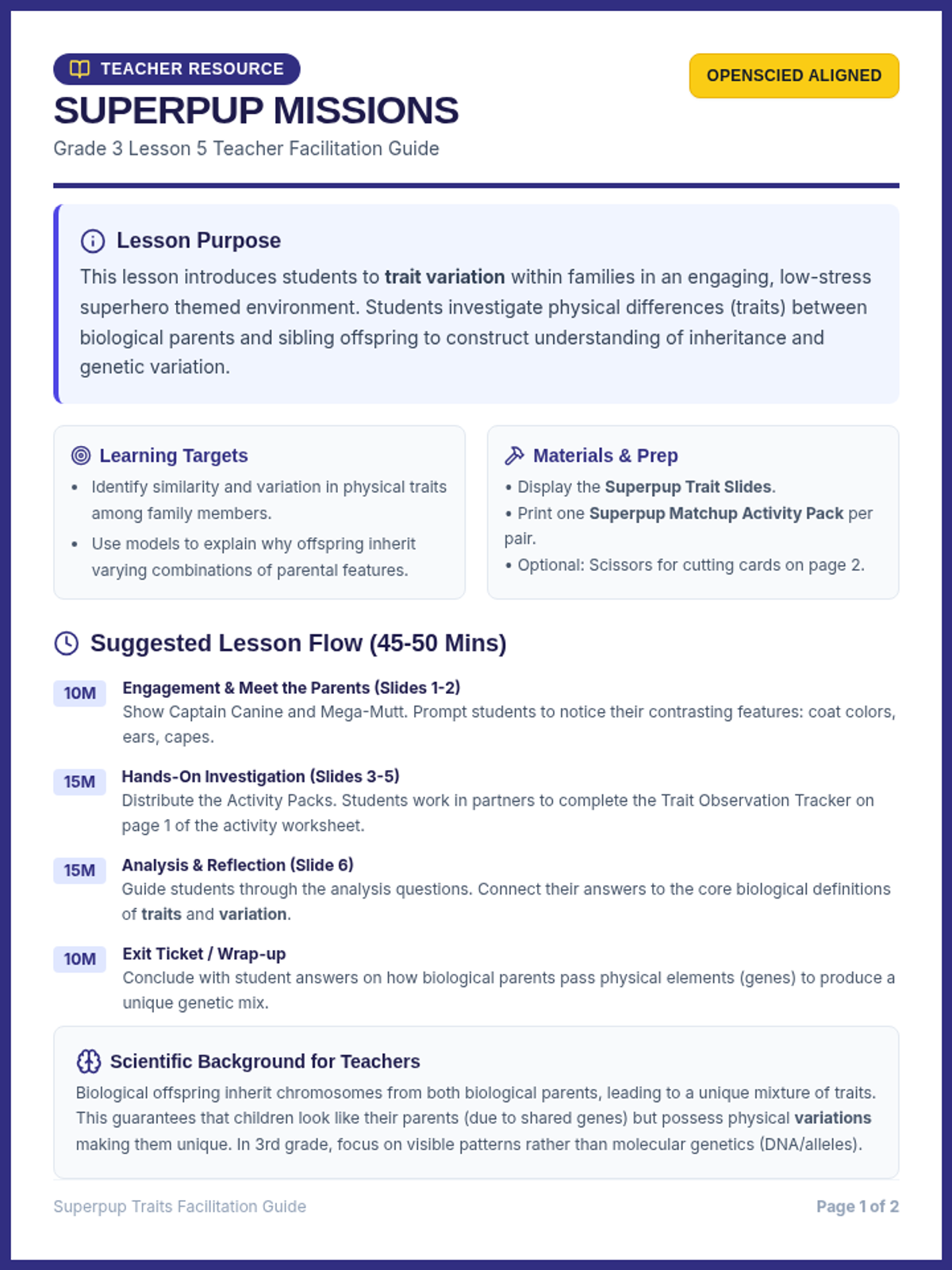
A 3rd-grade integrated science and literacy lesson exploring inheritance and variation in traits. Using 'Plants and Animals' by Rose Padilla, students analyze how animals are like their parents yet different from each other, gathering explicit text evidence to support scientific explanations.
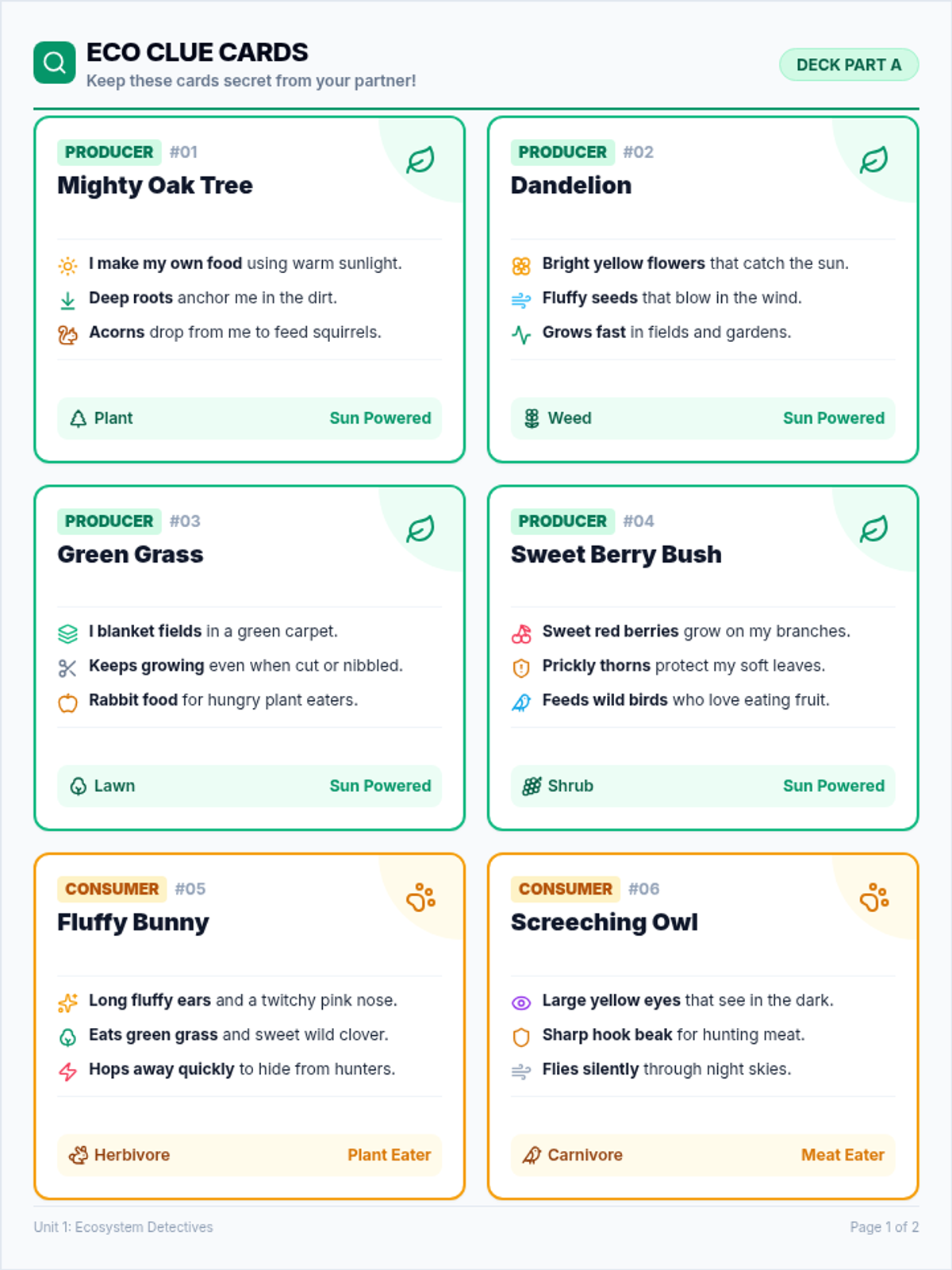
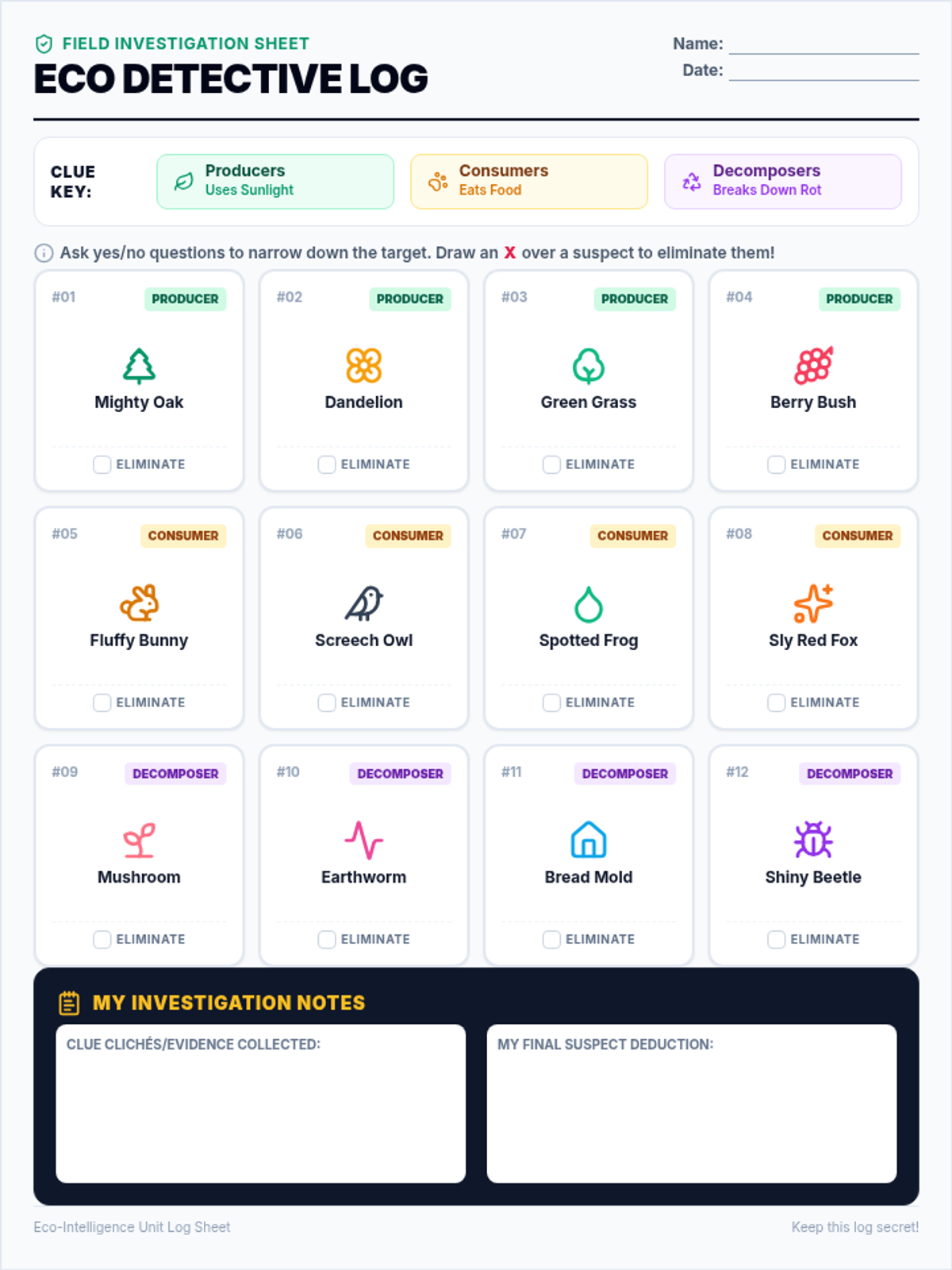
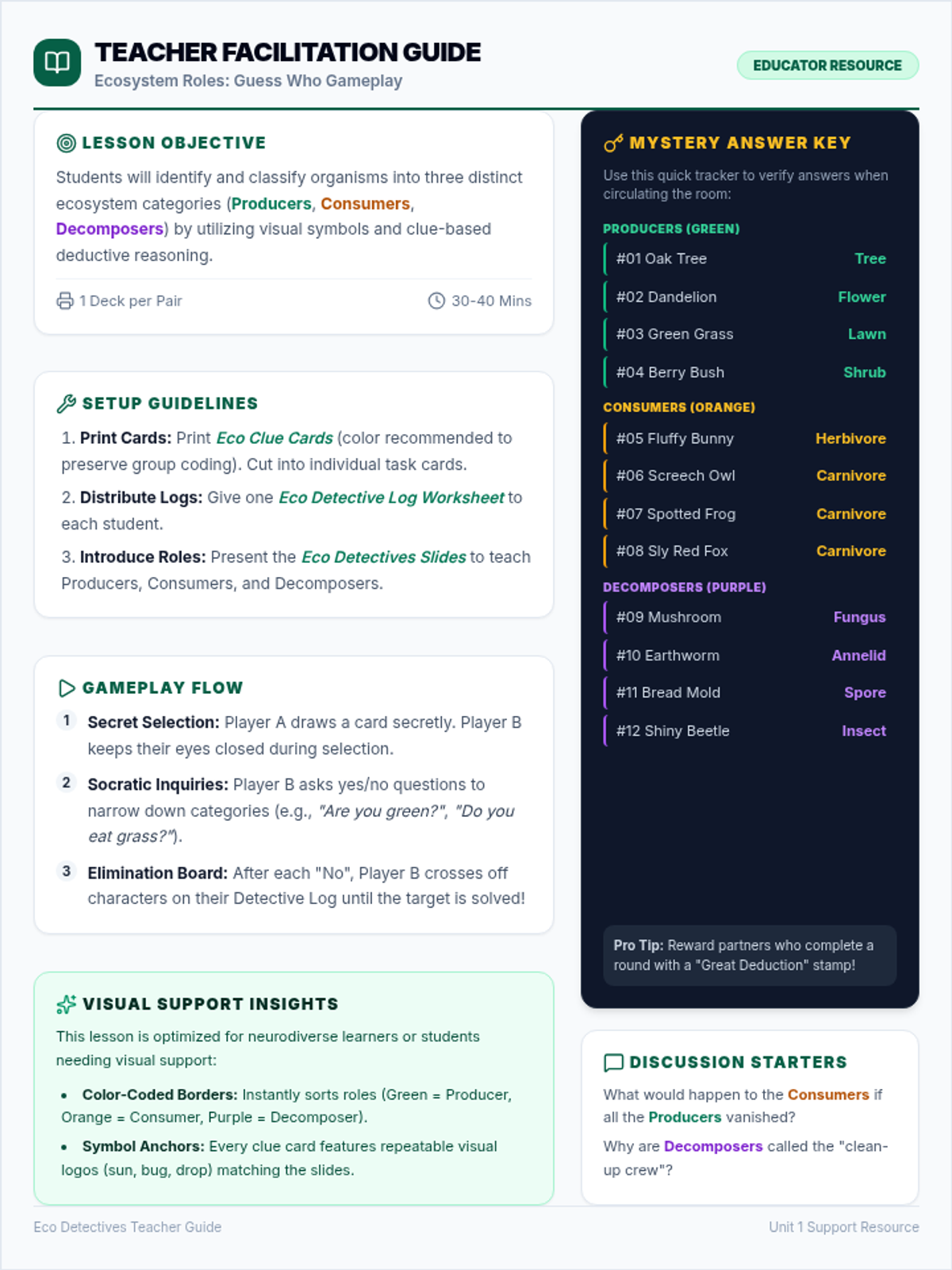
Students explore the flow of energy in a grassland ecosystem by identifying producers, consumers, and decomposers. They will construct their own food chains through a hands-on sorting and linking activity.
Students explore the various ways life from the past became preserved in stone, distinguishing between body and trace fossils while identifying specific preservation methods like amber, casts, and carbon films.
A hands-on STEM lesson for 6th-grade students where they learn the physics and technology of stop-motion animation, from frame rates and persistence of vision to storyboarding and filming their own creative shorts.
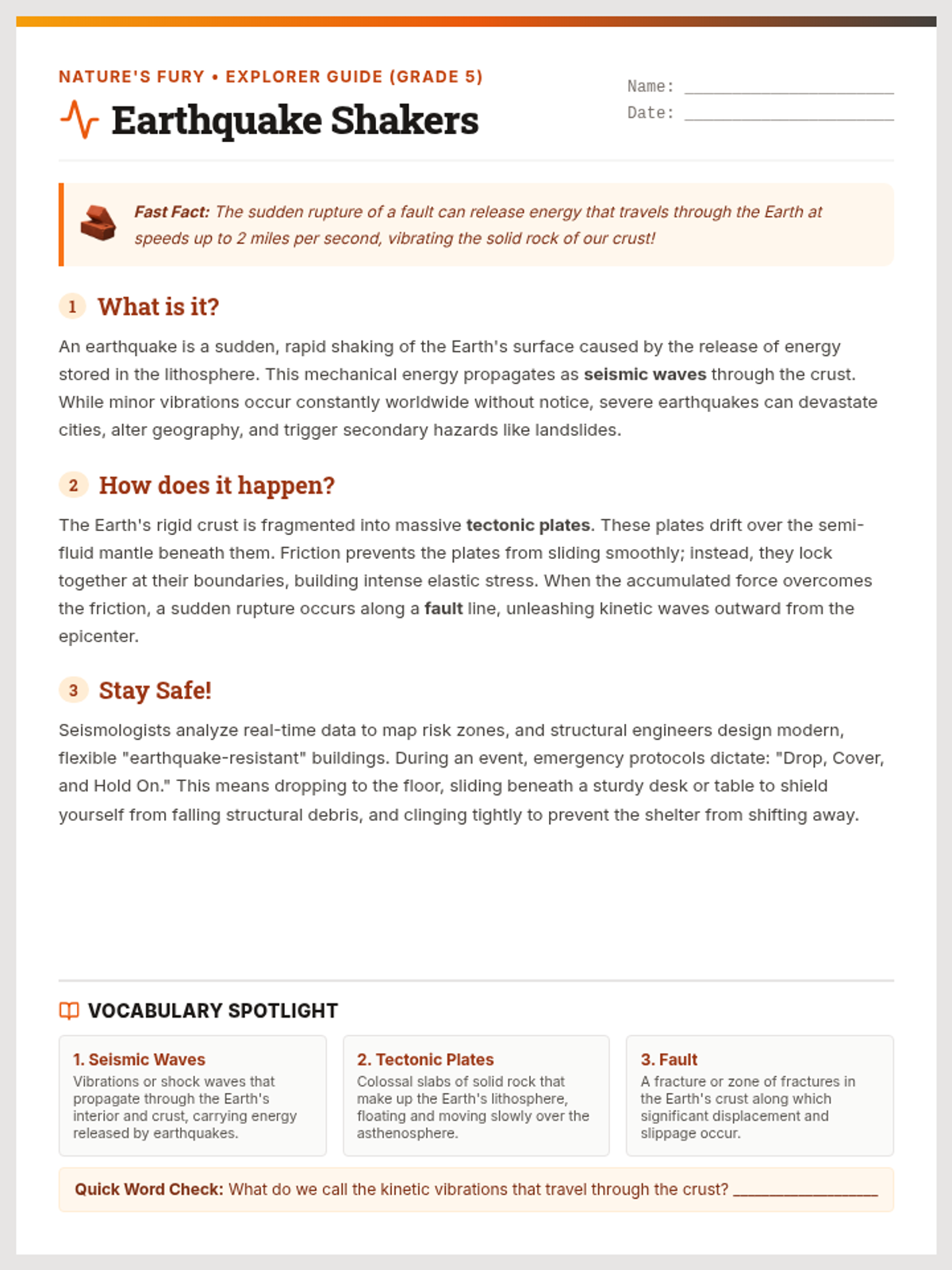
A project-based lesson where 3rd-grade students explore the physical characteristics of mountains, wetlands, plains, and deserts through a variety of creative choices.
A 20-minute outdoor investigation where students compare the diversity of life in two different micro-habitats to understand patterns of biodiversity. This lesson integrates art through scientific sketching and a nature color hunt.
Students explore the essential relationship between plants and pollinators, identifying how they depend on each other for survival. The lesson culminates in a hands-on project where students design a pollinator-friendly garden tailored to their local ecosystem.
A hands-on gardening lesson that turns natural distractions into learning opportunities. Students learn seasonal planting, water conservation, tool safety, and wildlife cohabitation through the lens of being 'Earth Architects'.
A high-energy, station-based review session designed to build testing stamina and subject-switching agility for NC EOGs. Students rotate through ELA, Math, and Science challenges in timed 'sprints'.
A 30-minute introductory lesson for 3rd graders on the integumentary system, focusing on skin layers, sweating for temperature control, and the healing process of scabs.