A high-school Algebra 2 lesson focused on solving rational equations by converting negative exponents and clearing denominators using the Least Common Denominator (LCD). Students watch a guided video and practice step-by-step algebraic manipulation.
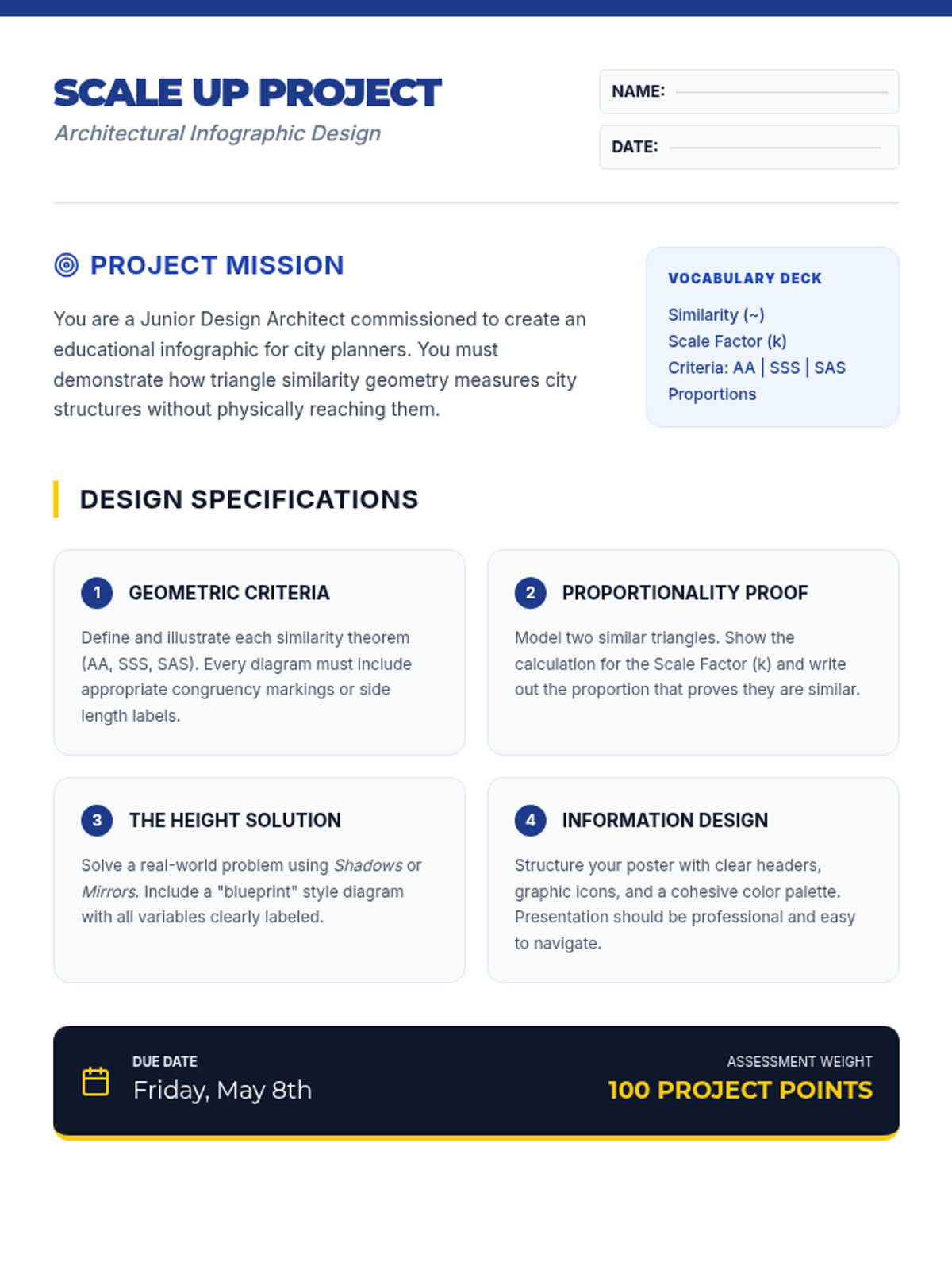
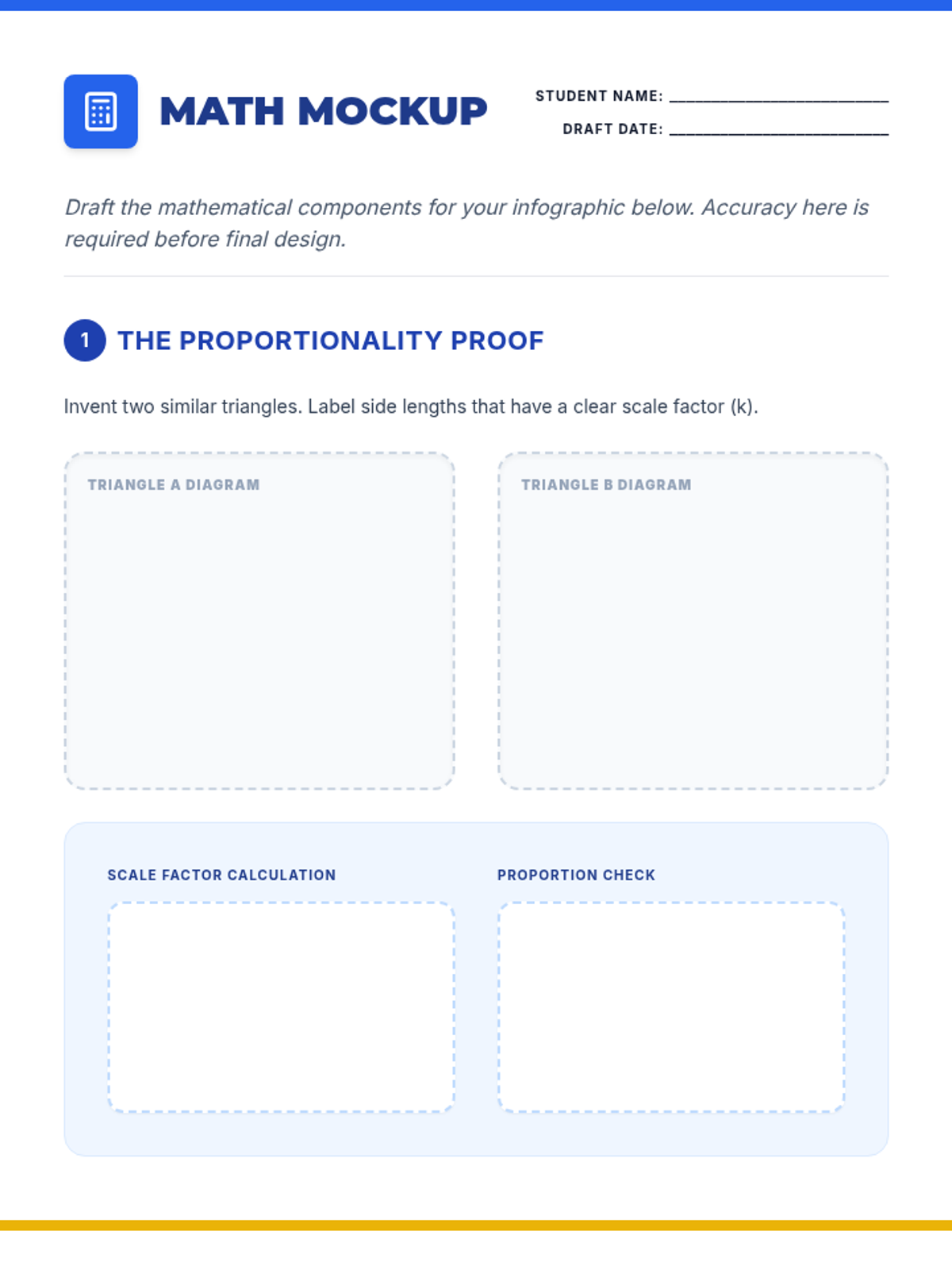
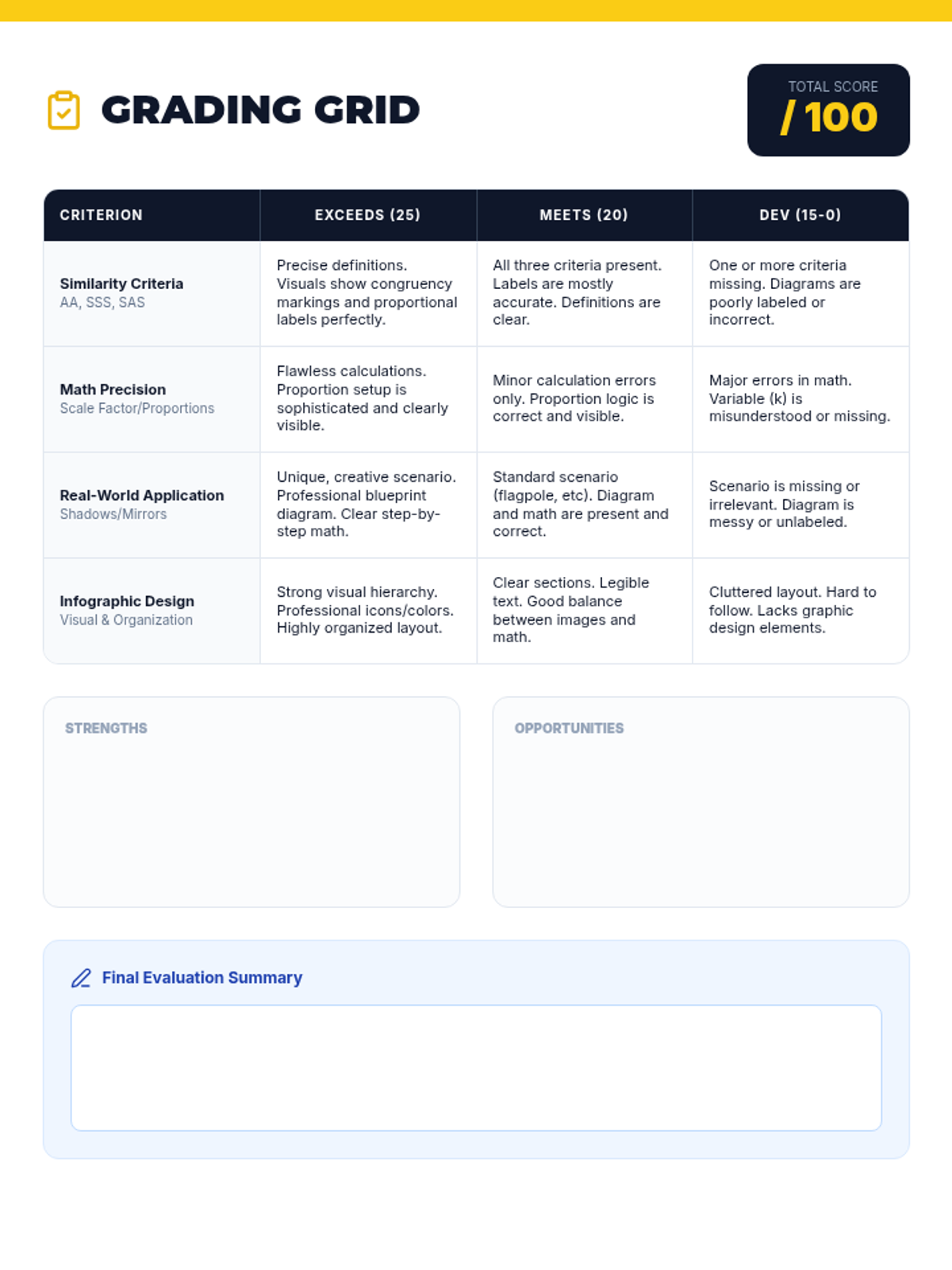
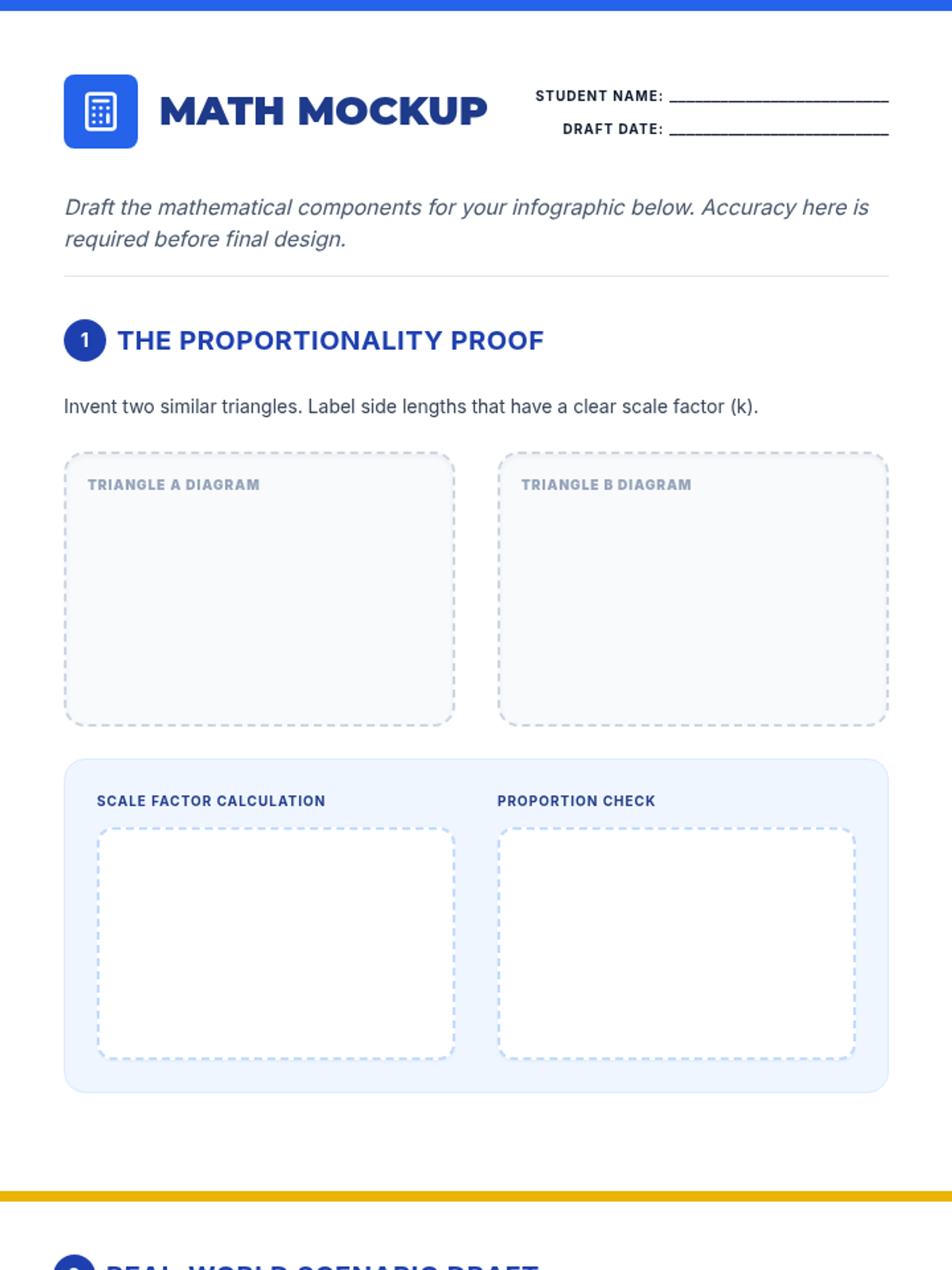
A project-based lesson where students design an infographic poster demonstrating their mastery of triangle similarity criteria and real-world proportional reasoning.
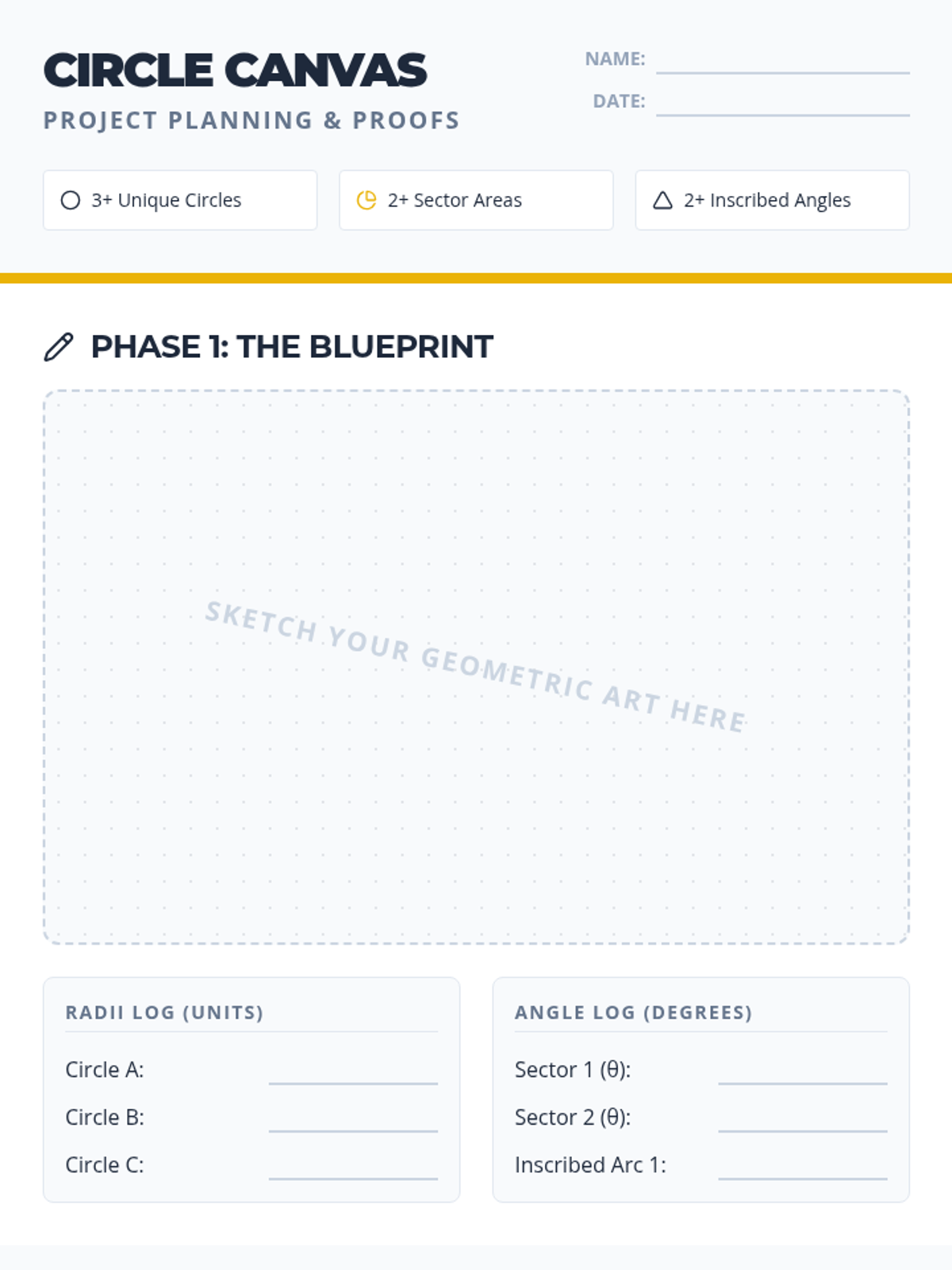
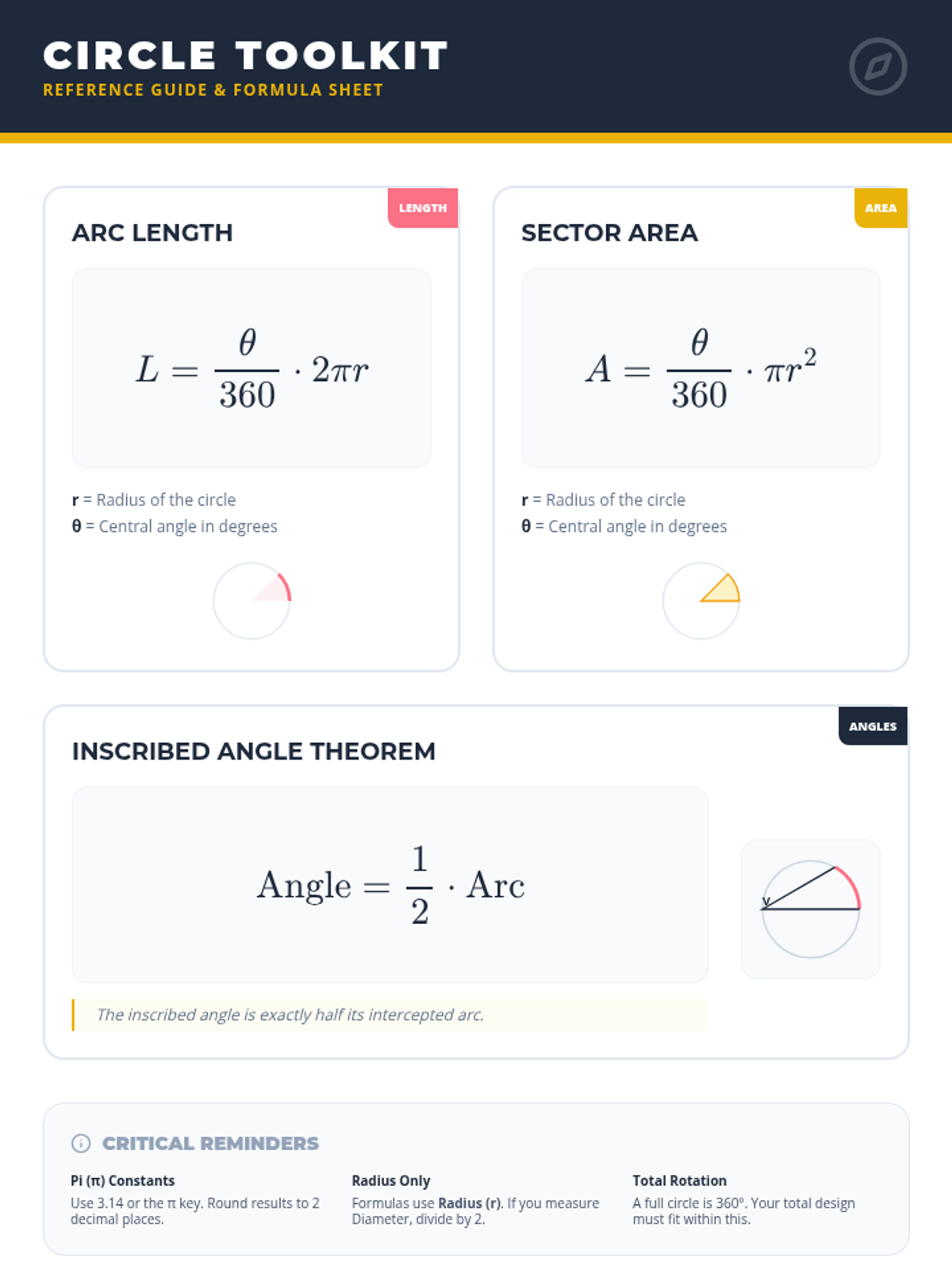
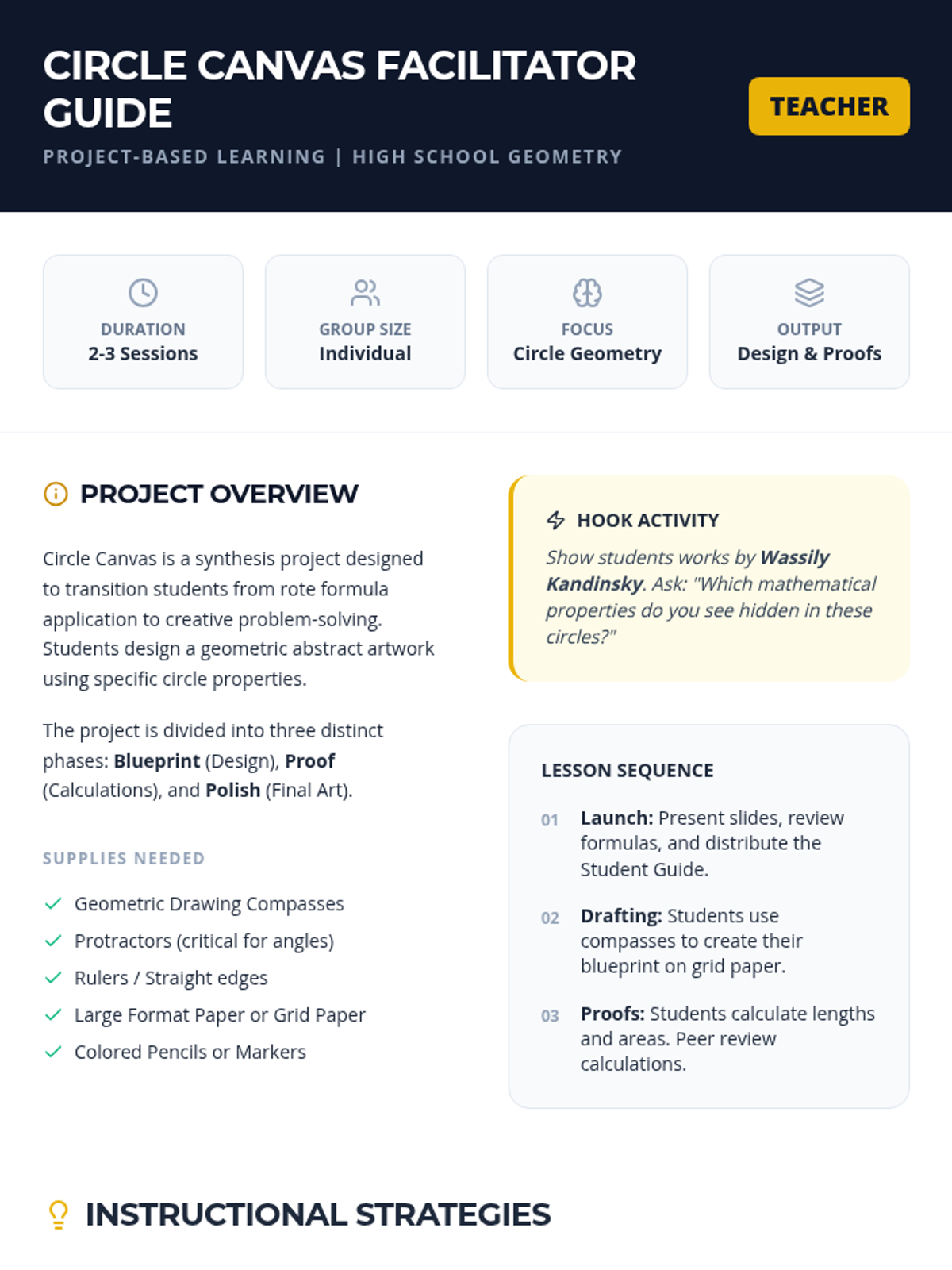
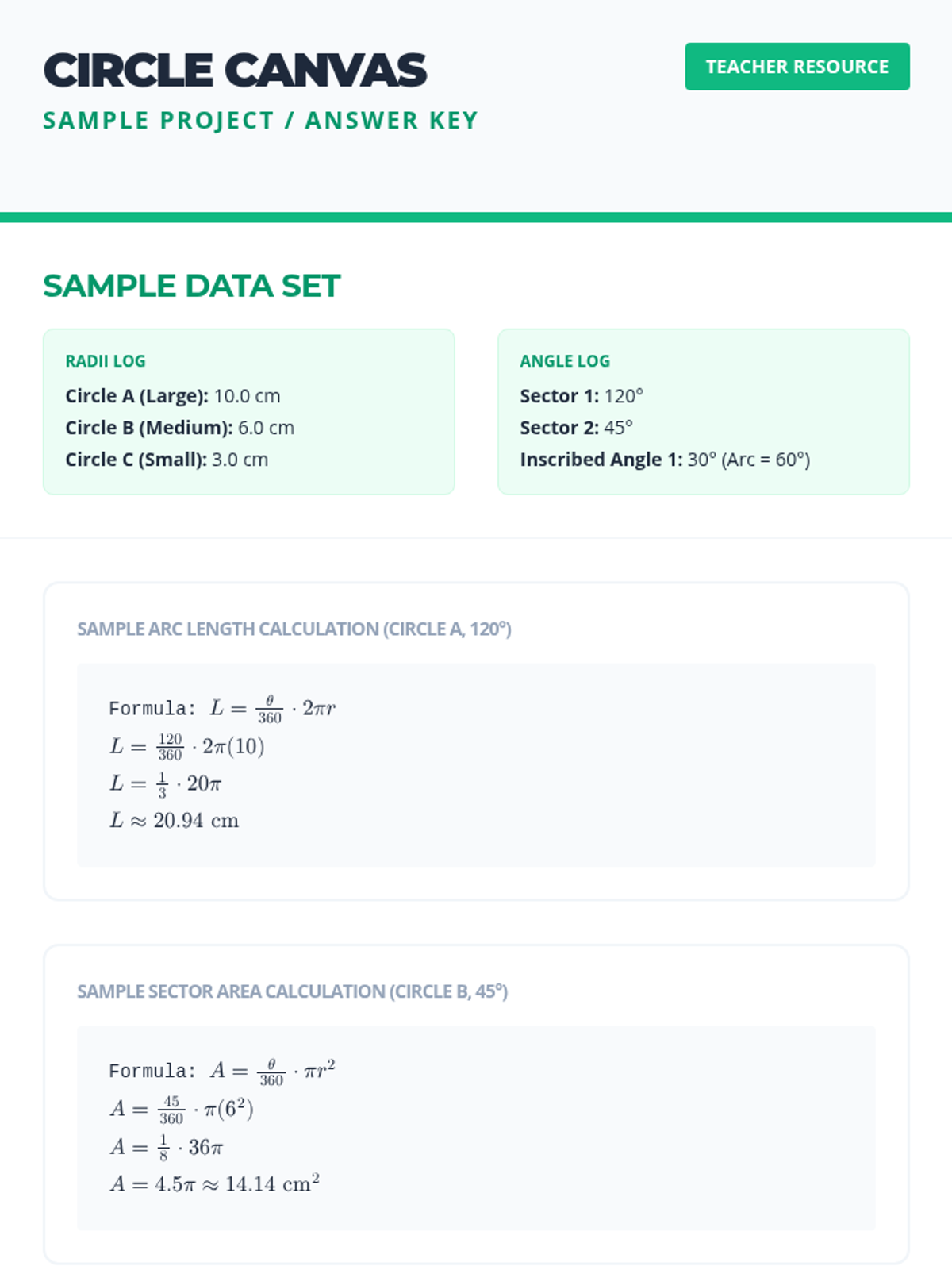
A creative art-based project where students apply circle geometry concepts—arc length, sector area, and inscribed angles—to design and calculate a geometric masterpiece.
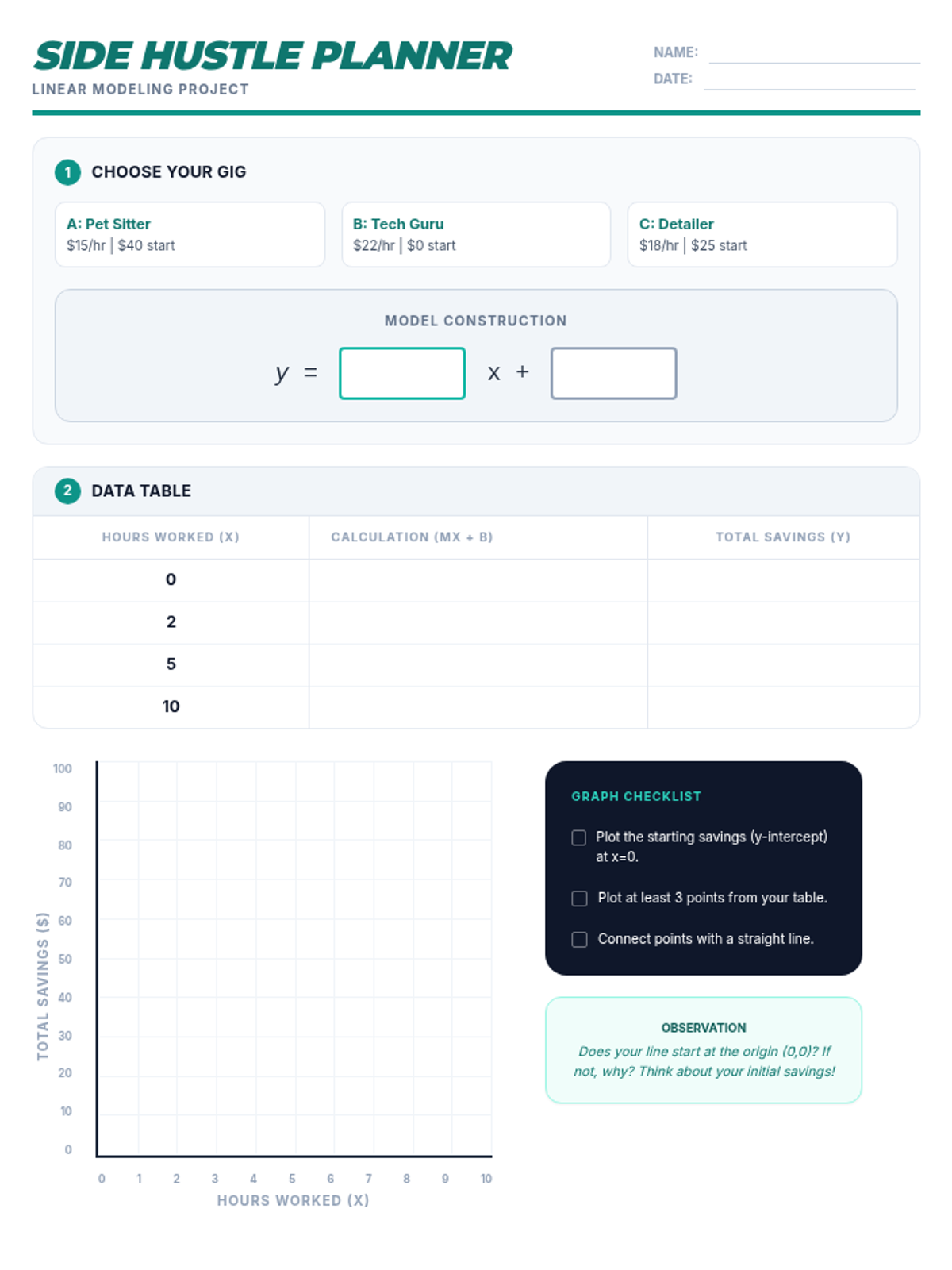
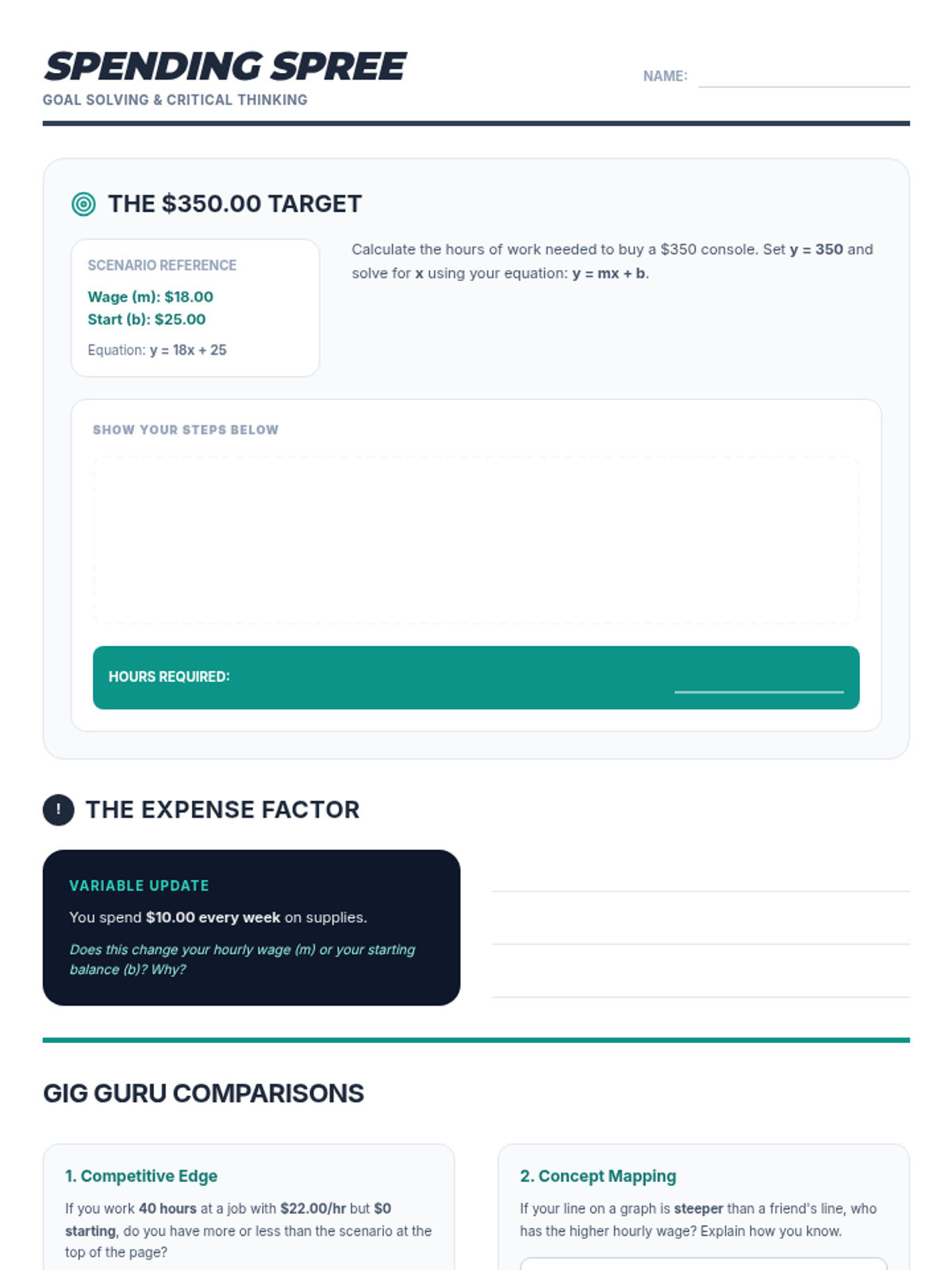
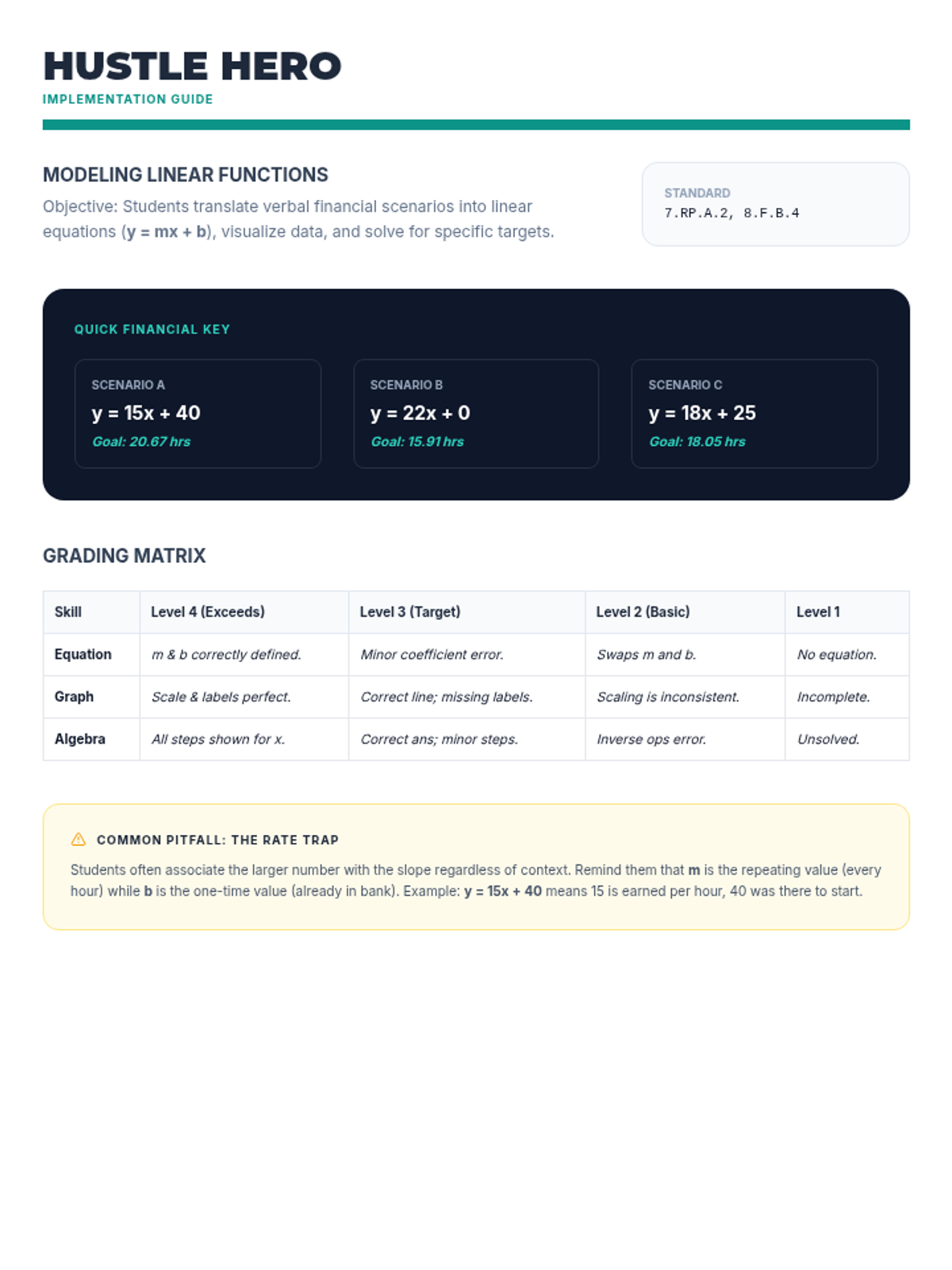
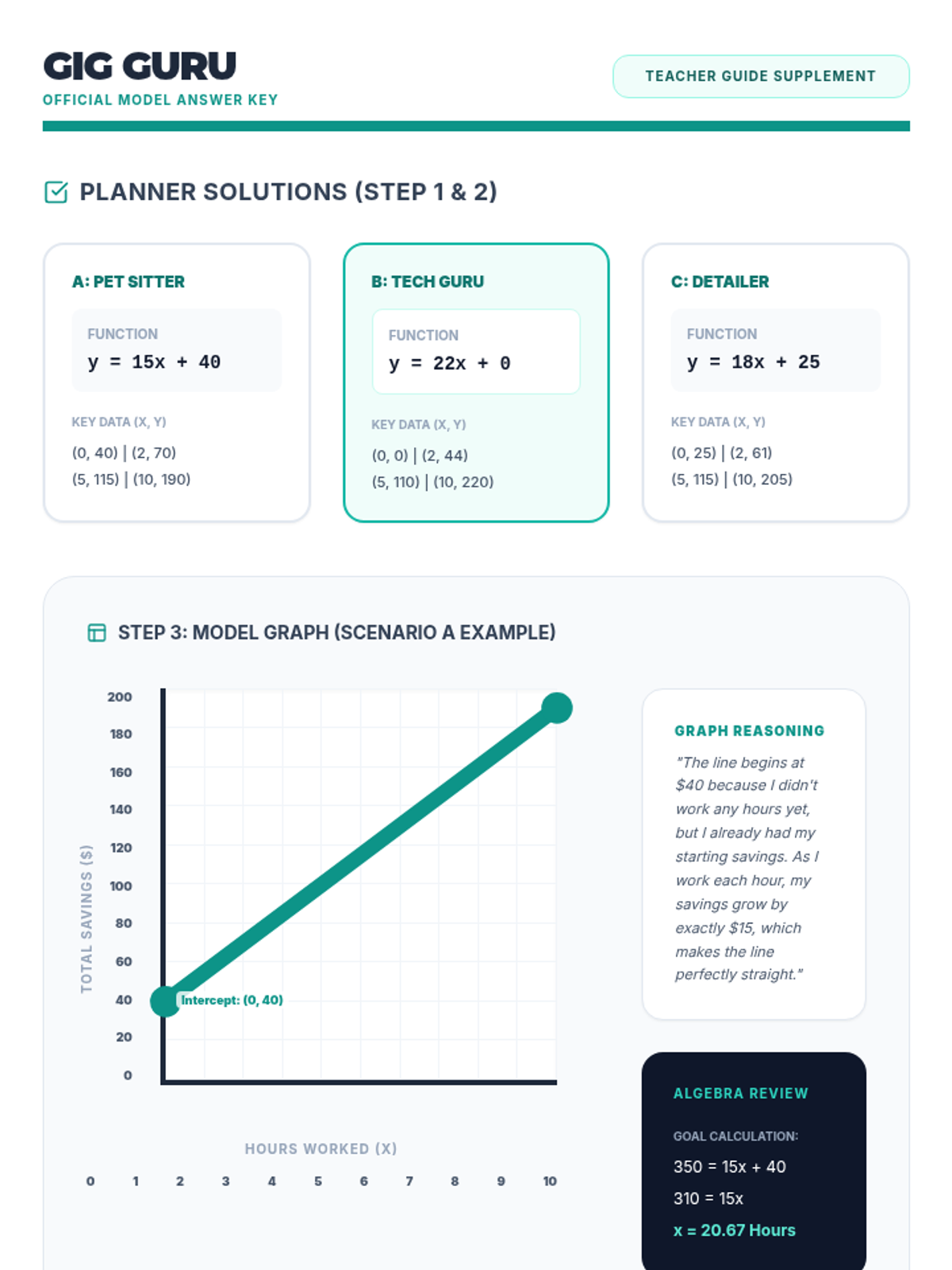
Students apply linear function concepts to model a real-world income and expense scenario. They will calculate rates of change, identify initial values, and visualize their budget through graphing.
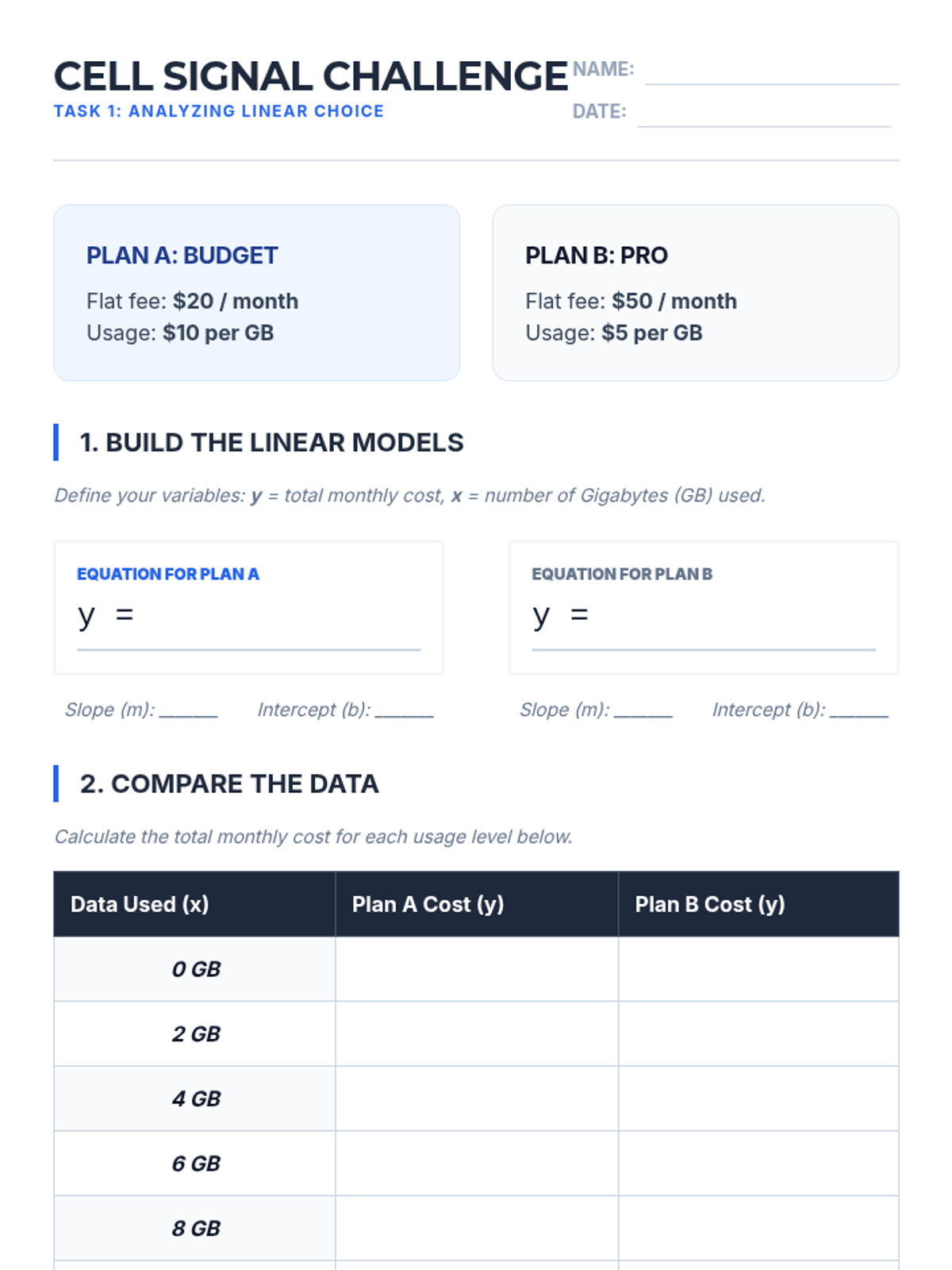
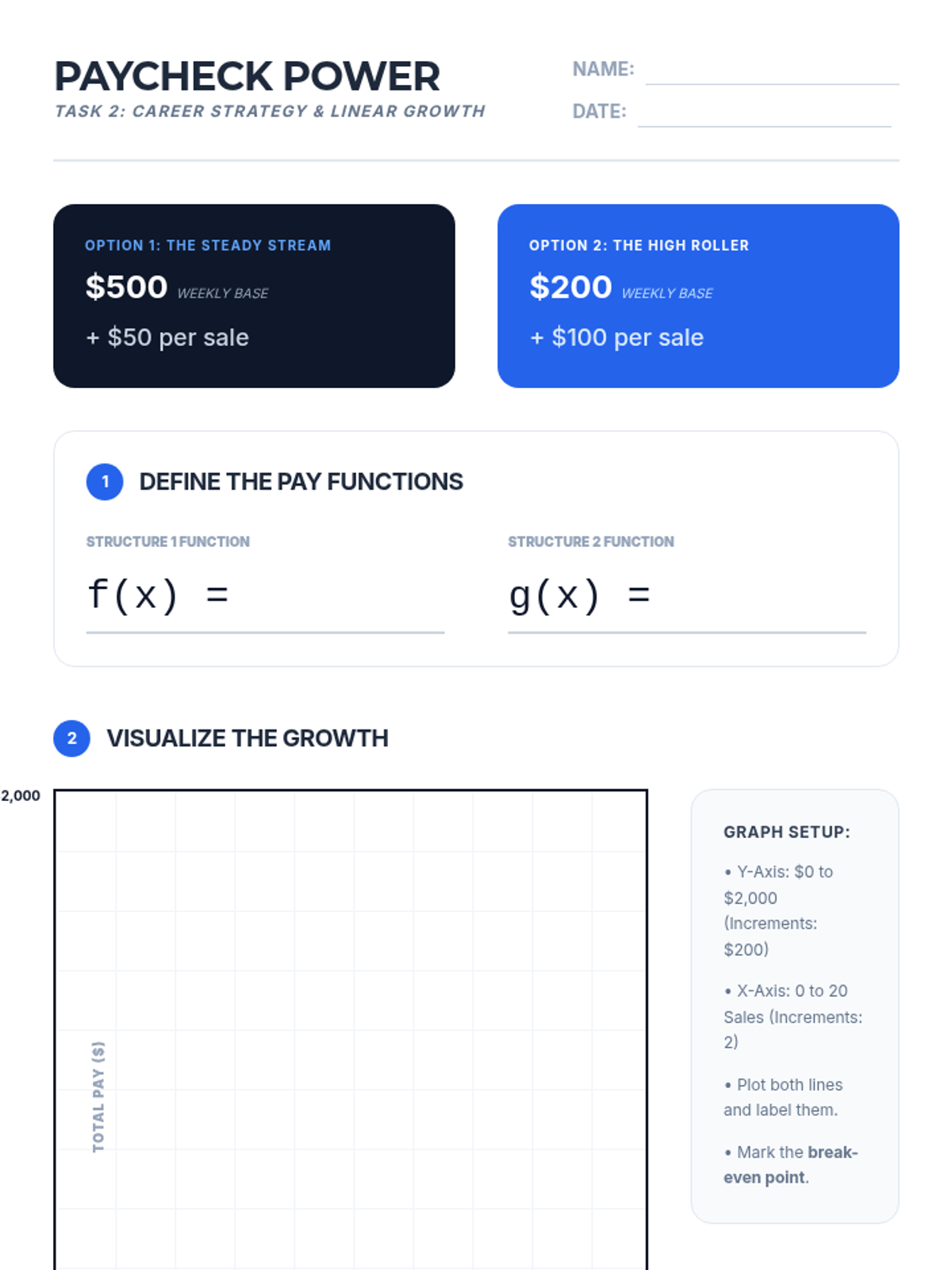
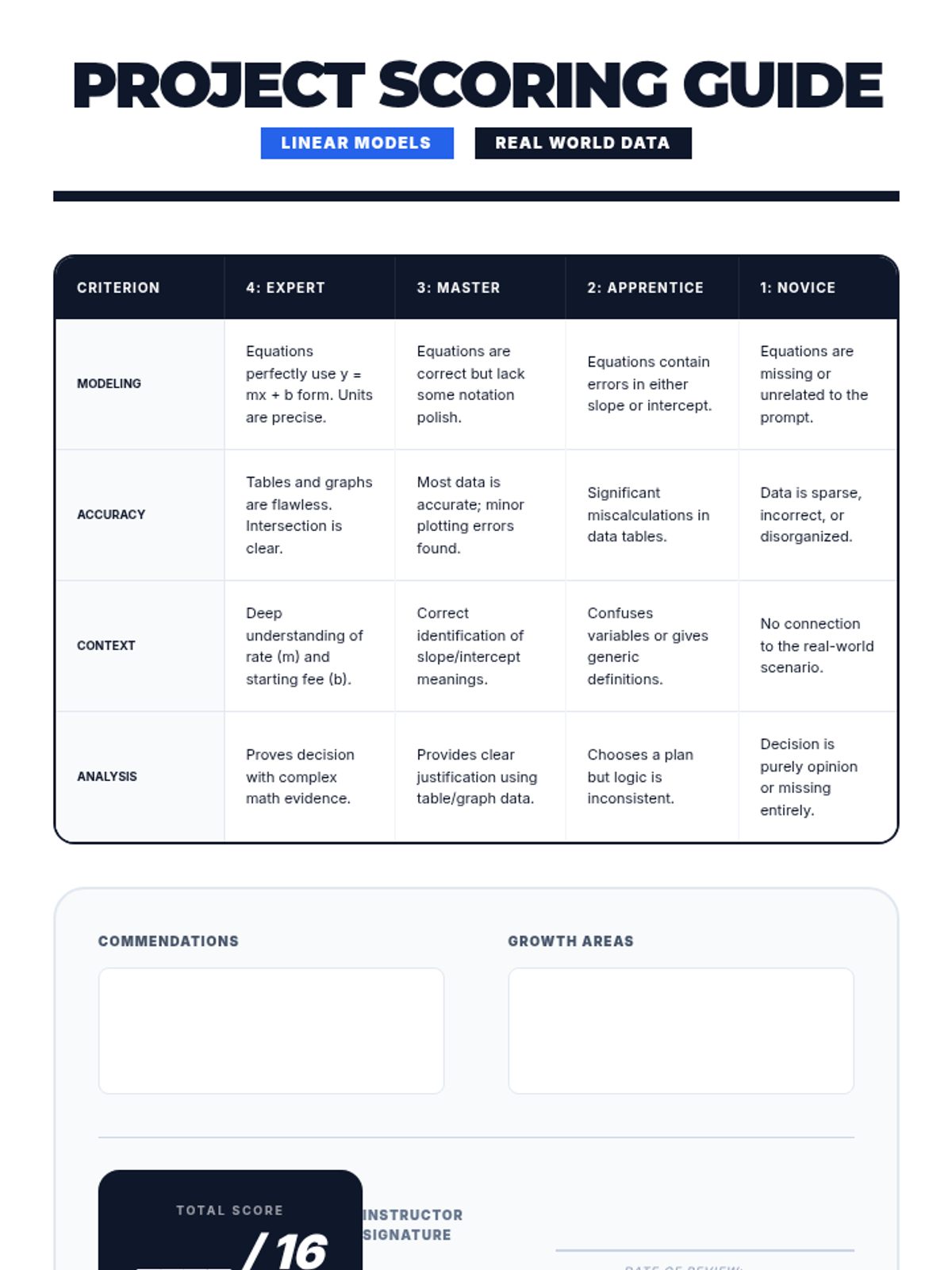
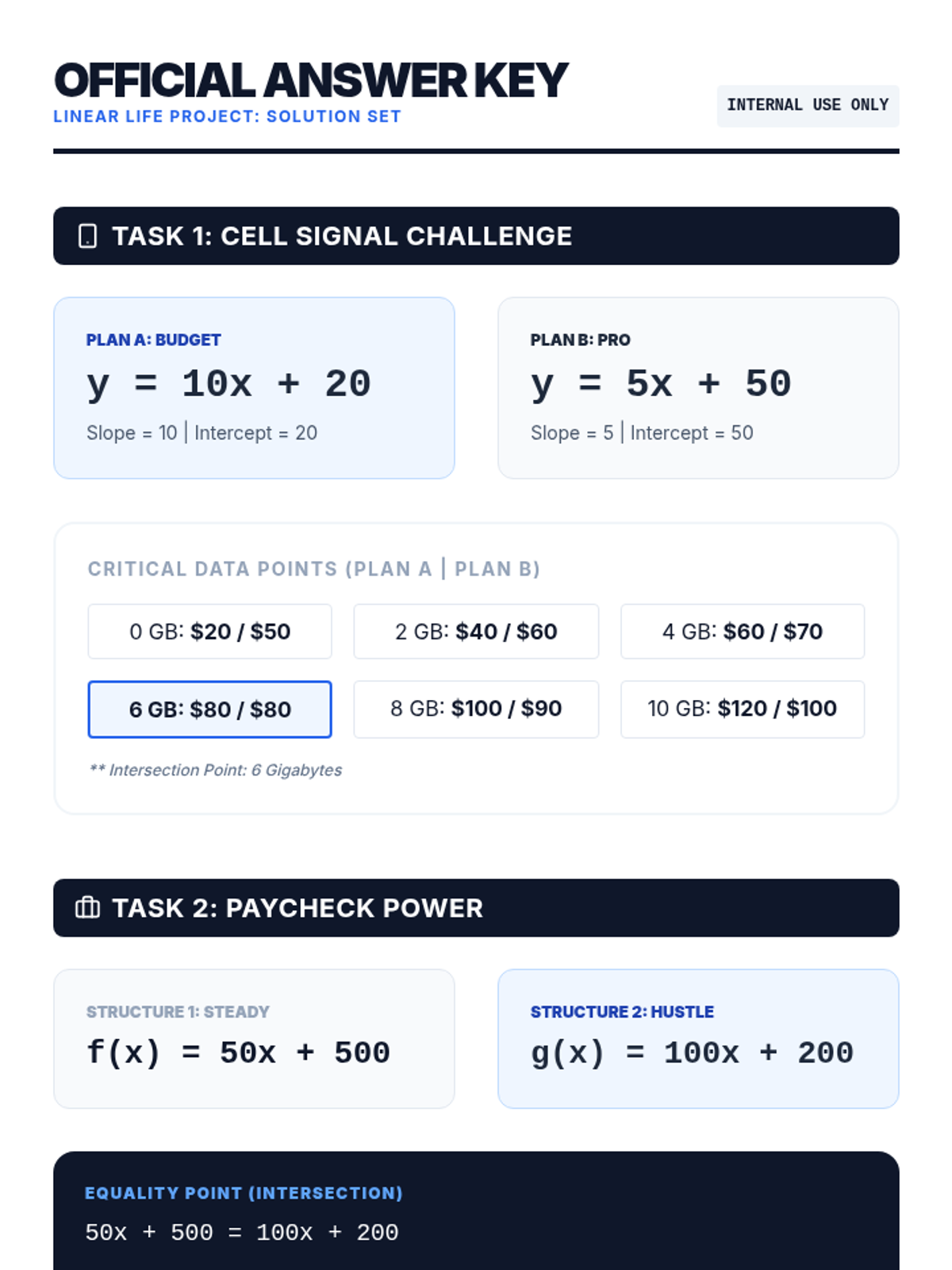
A real-world project exploring linear functions through cell phone plans and career earnings. Students analyze slope as a rate of change and the y-intercept as a starting value.
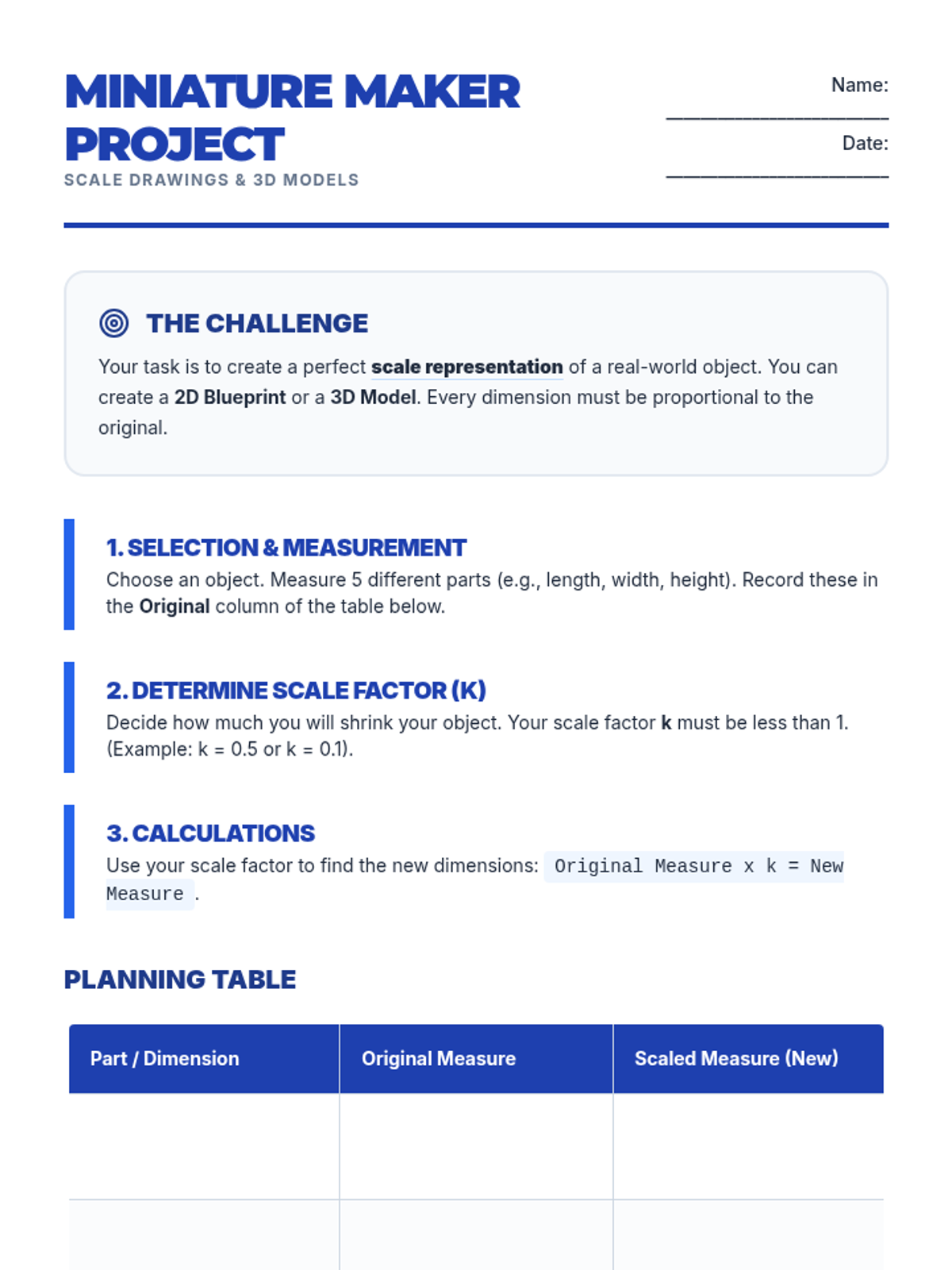
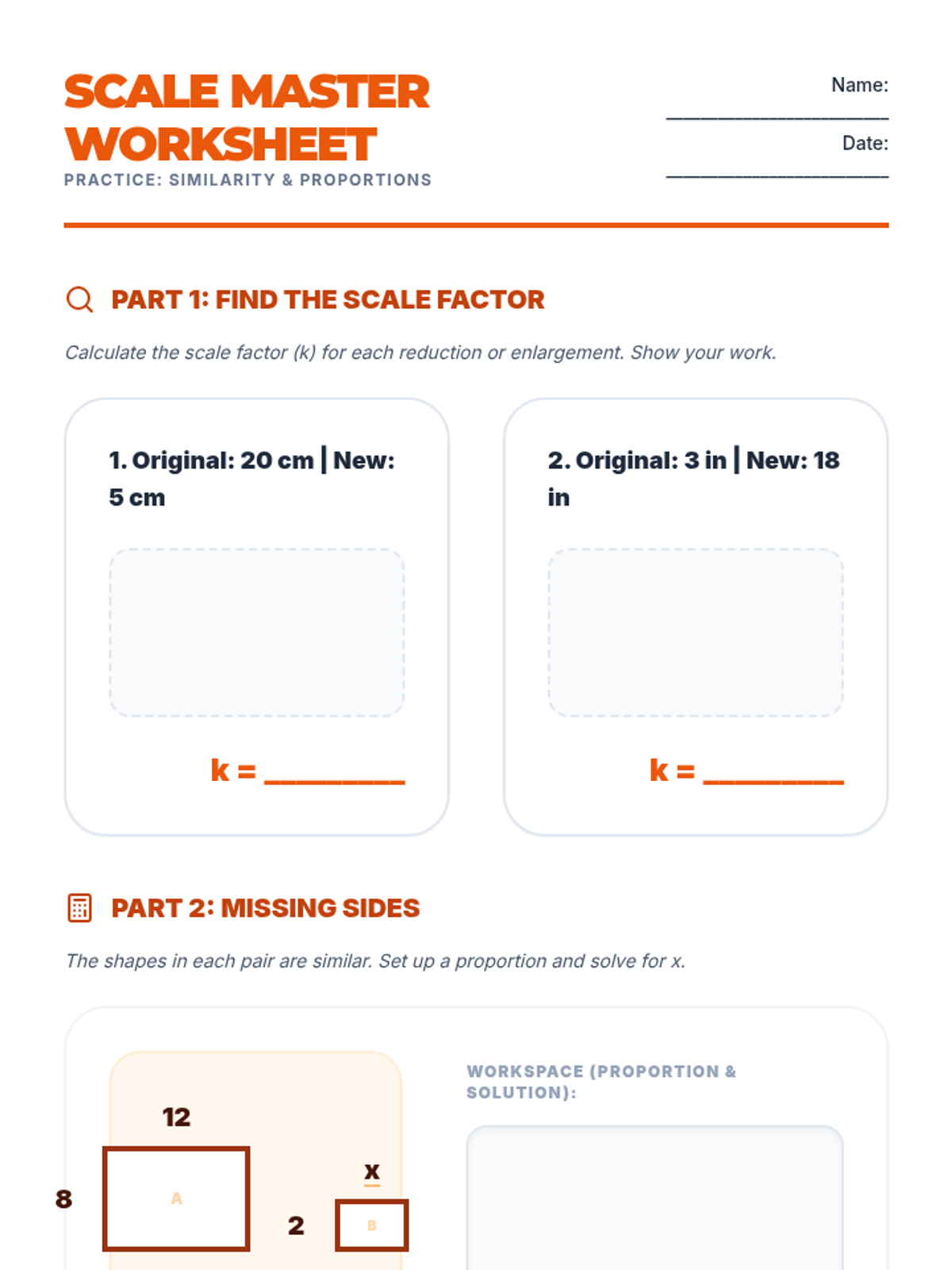
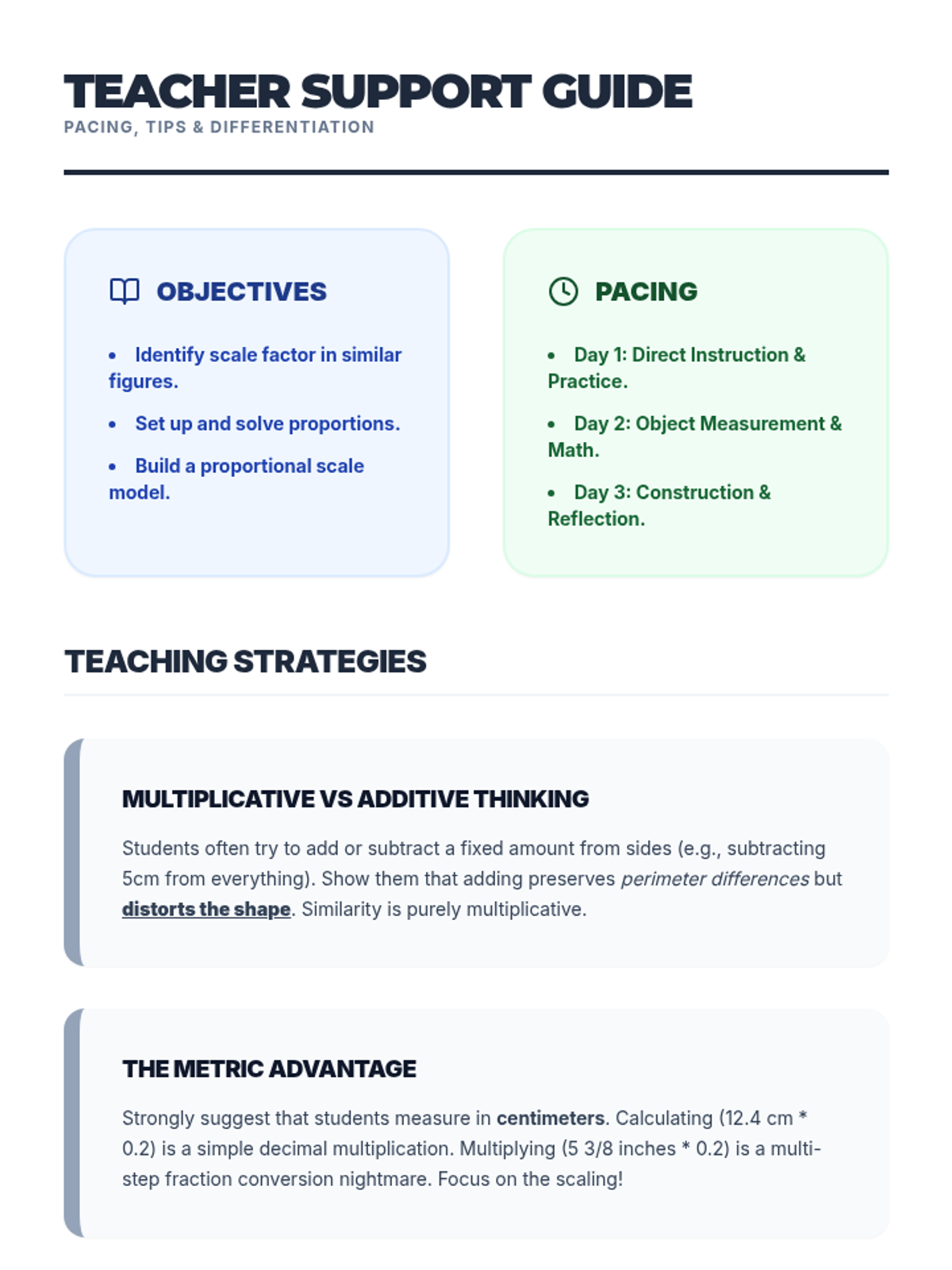
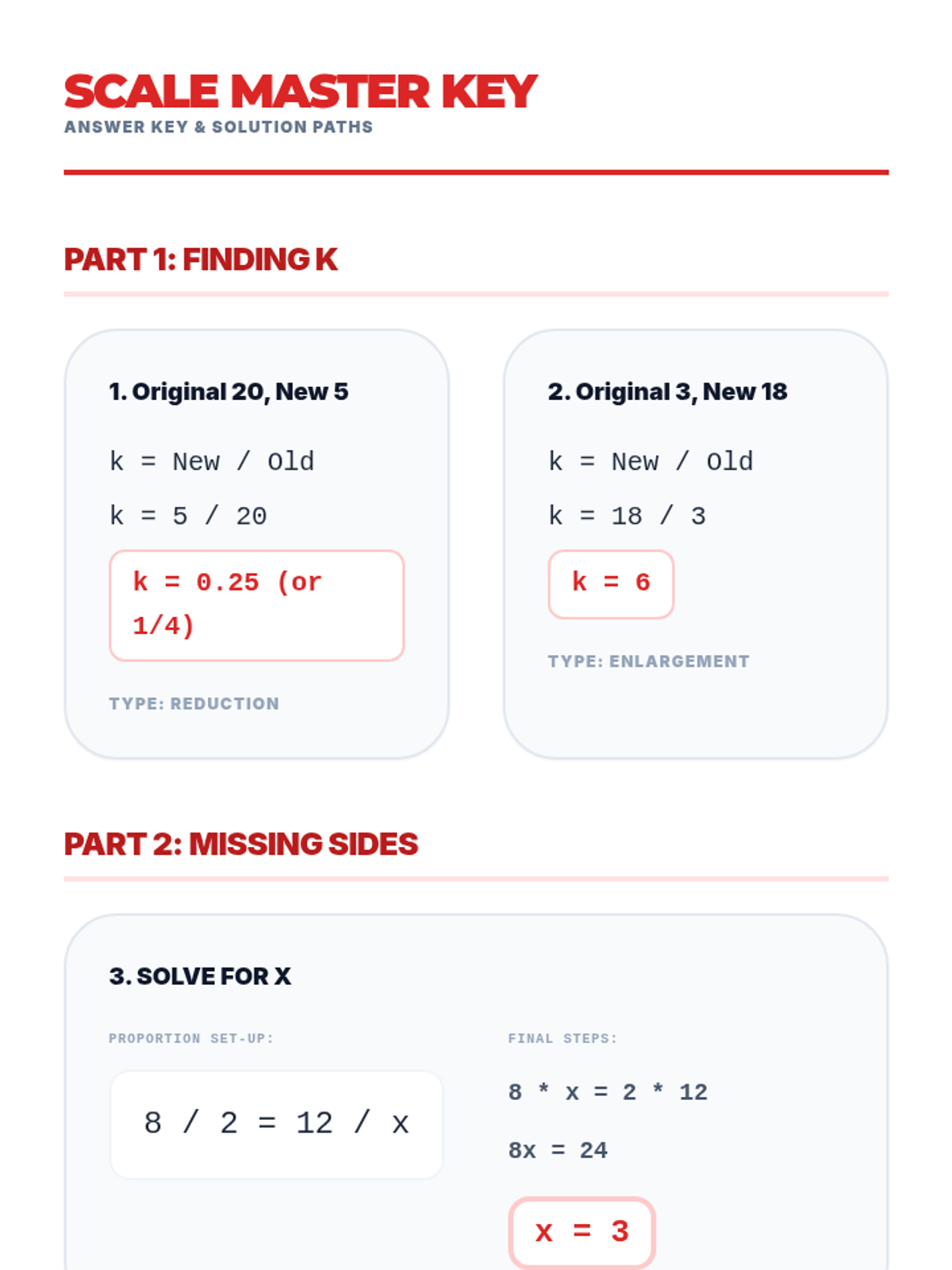
A project-based lesson where students apply concepts of similarity, scale factor, and proportions to create a scale drawing or 3D model of a real-world object. Students move from mathematical practice to creative application.
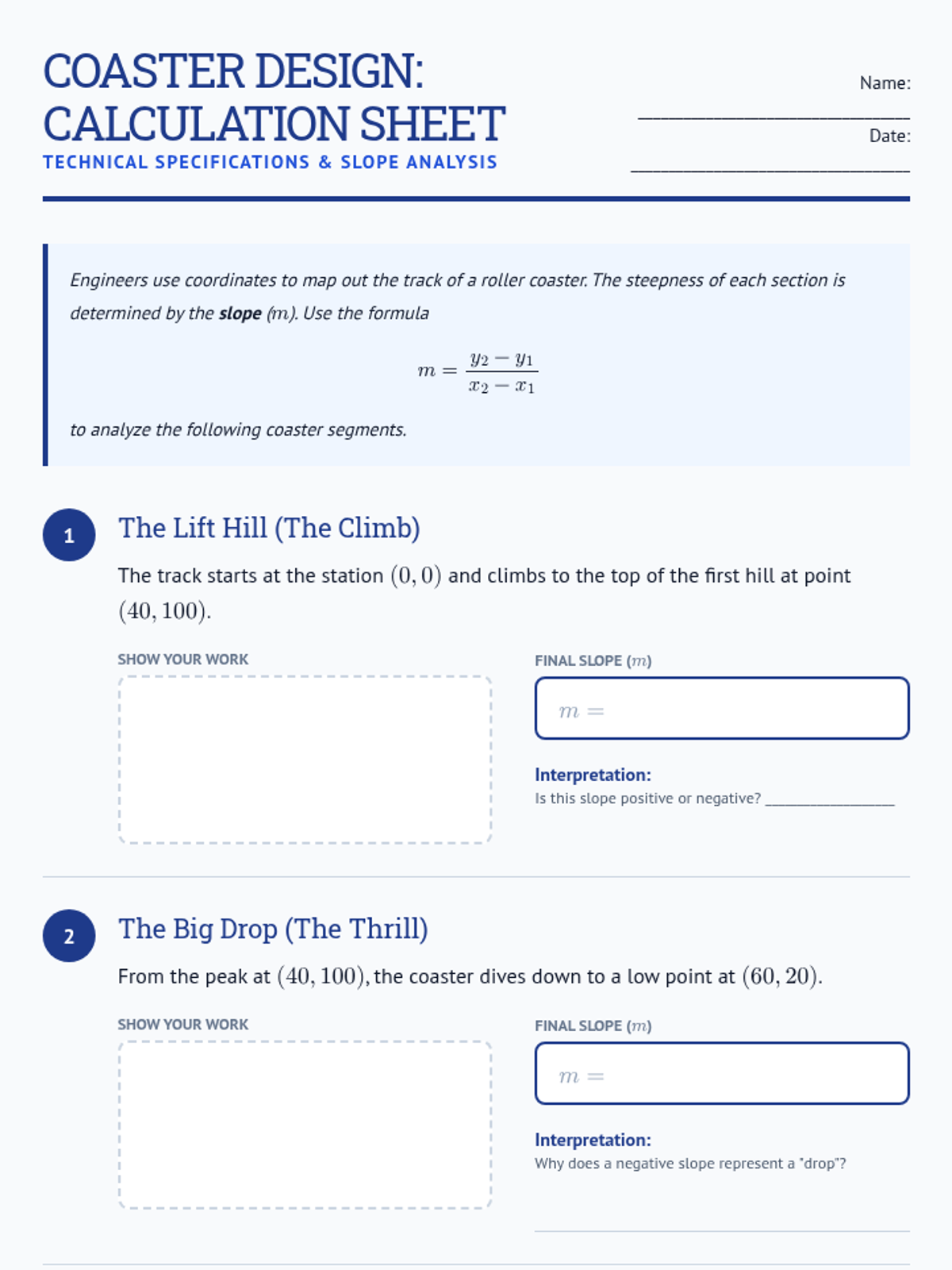
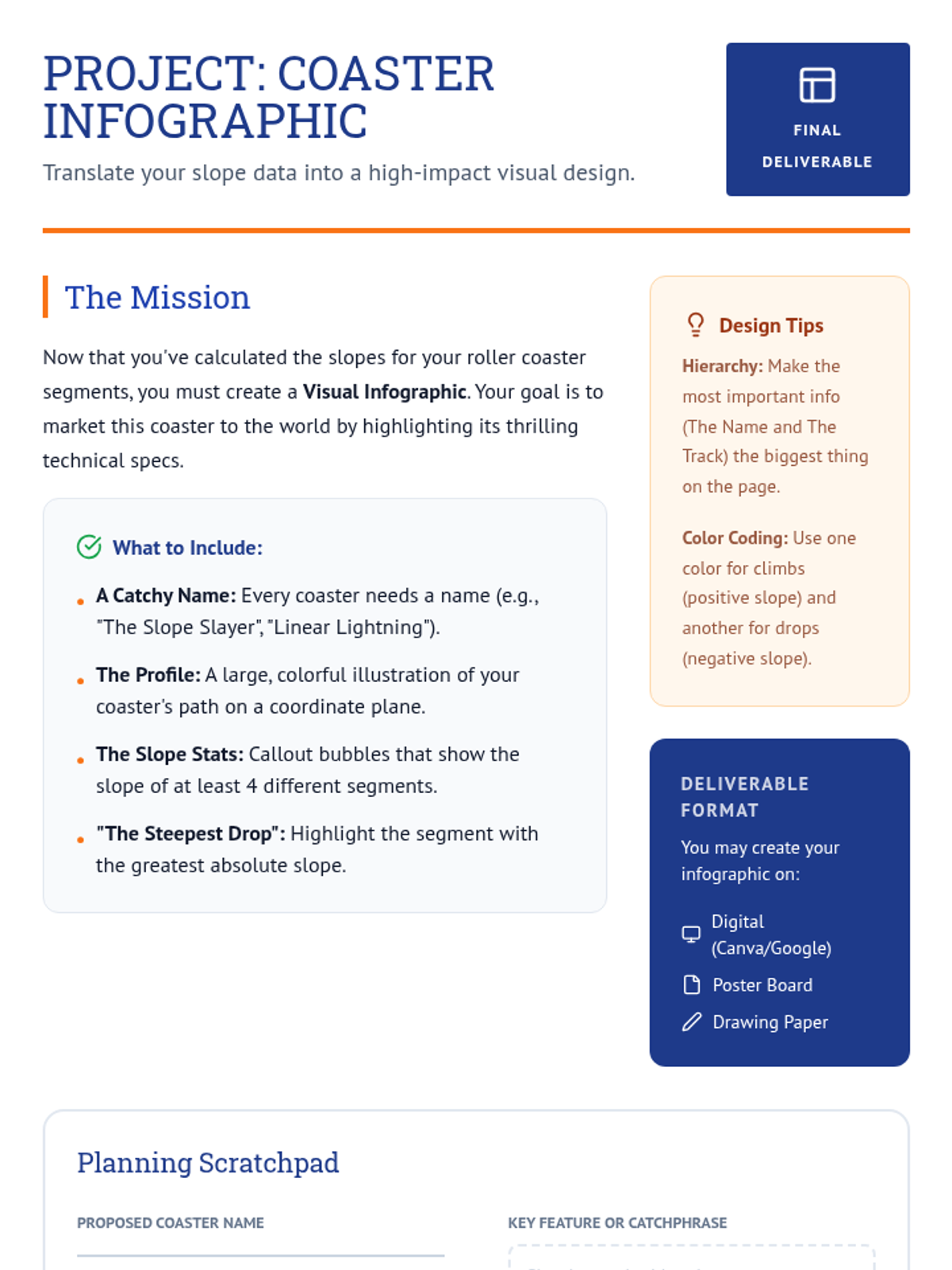
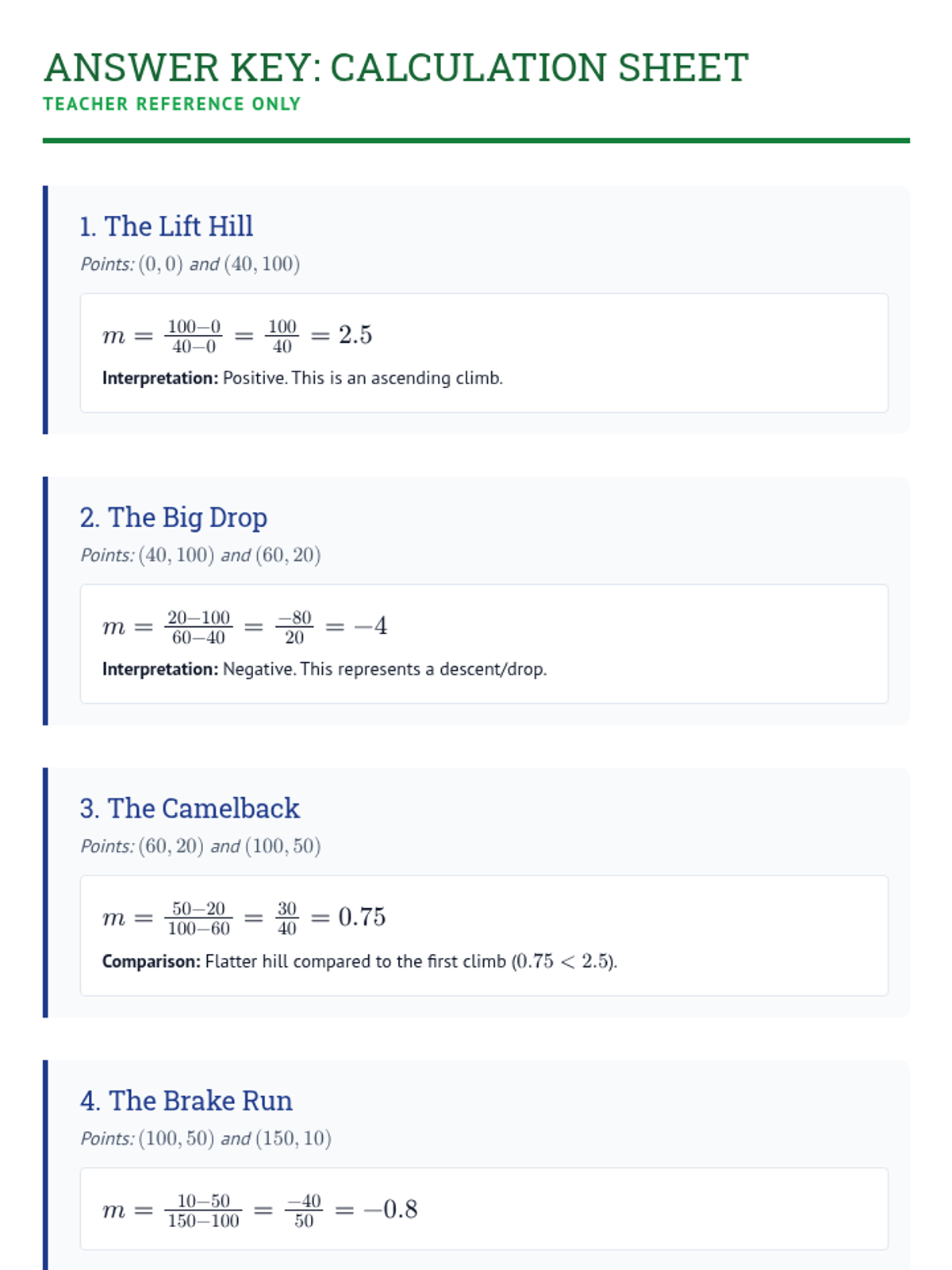
Students apply their knowledge of slope to design a roller coaster. They calculate the steepness of various drops and climbs, representing their findings through a technical blueprint and a visual infographic.
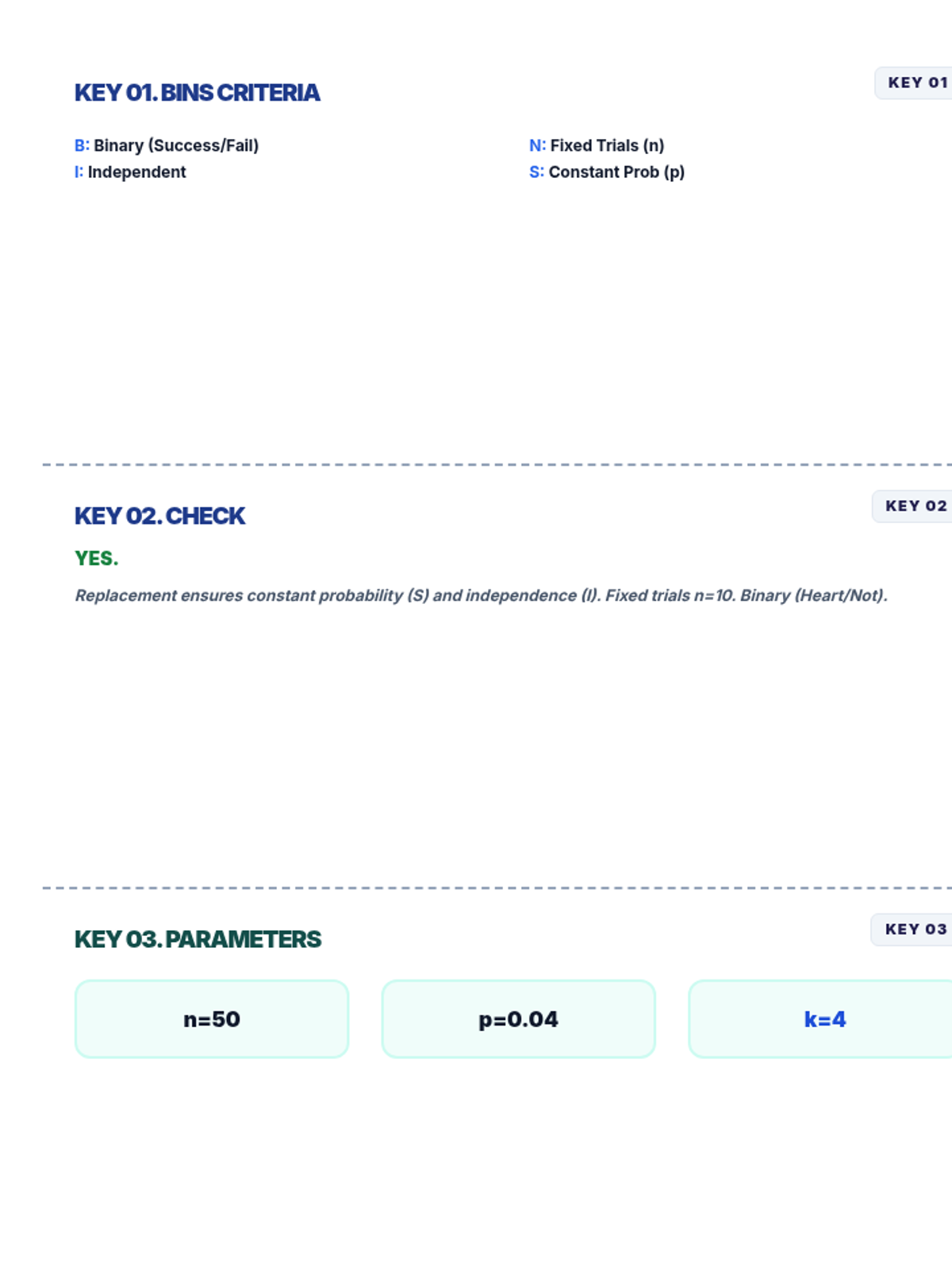
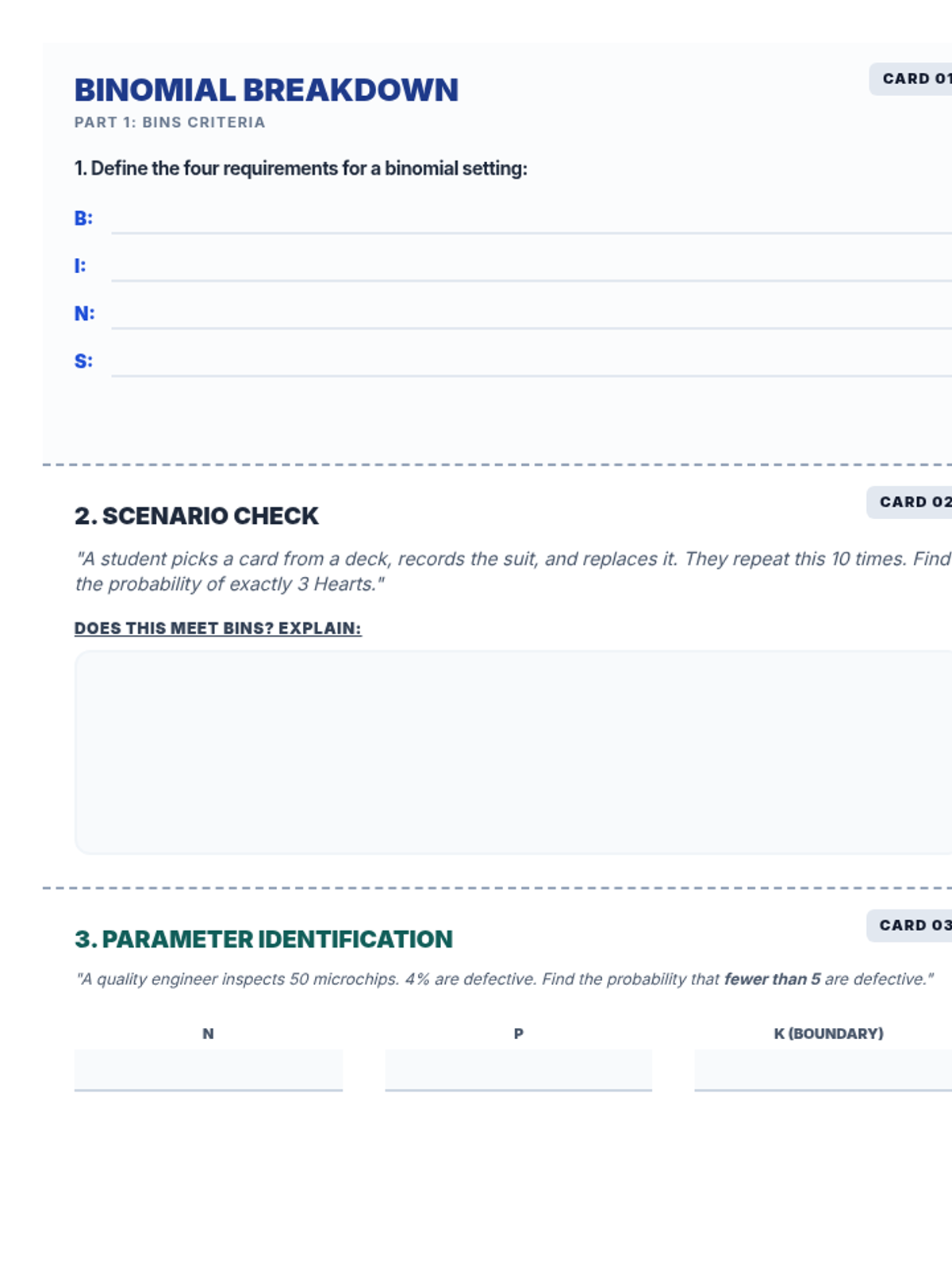
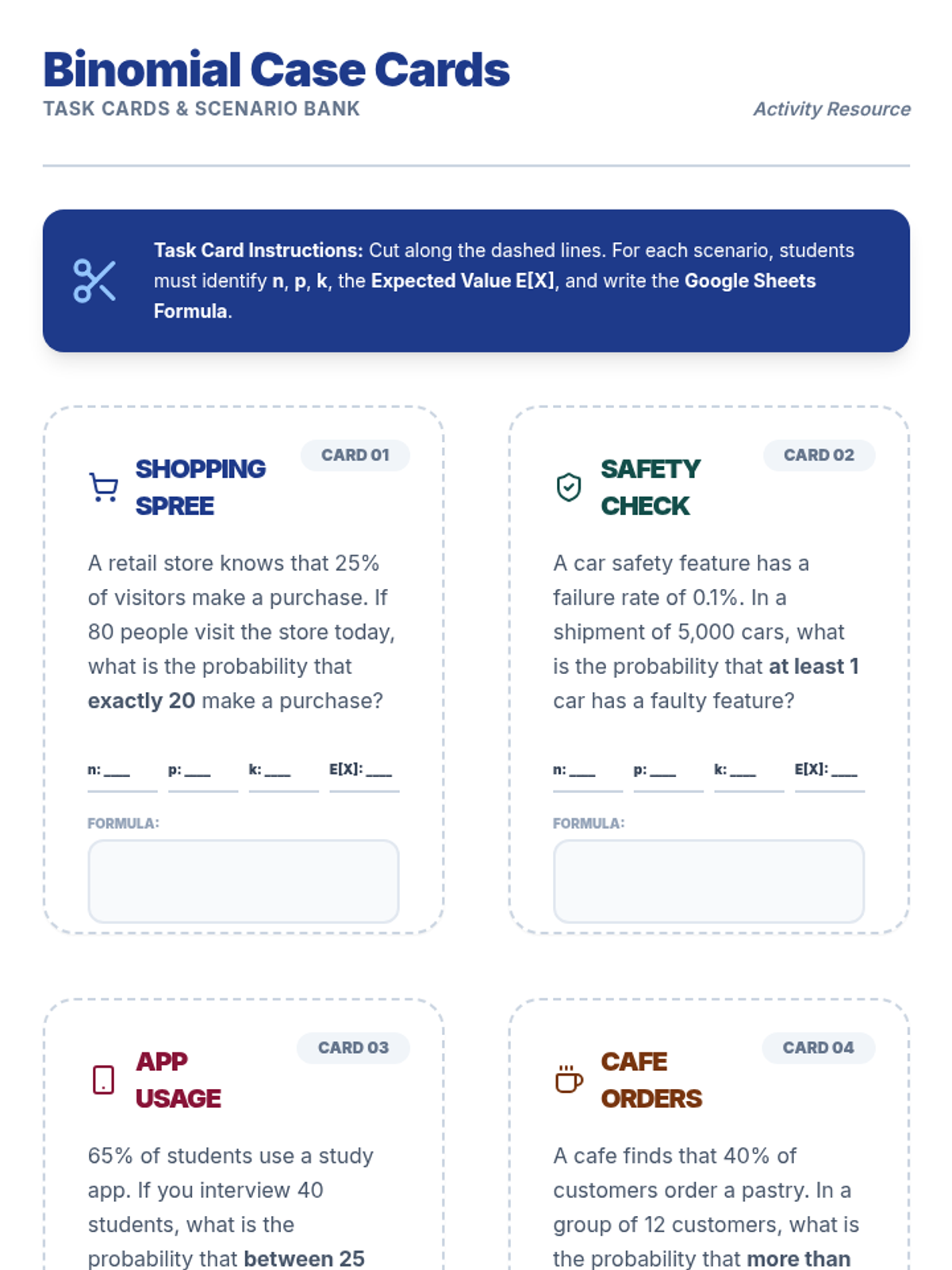
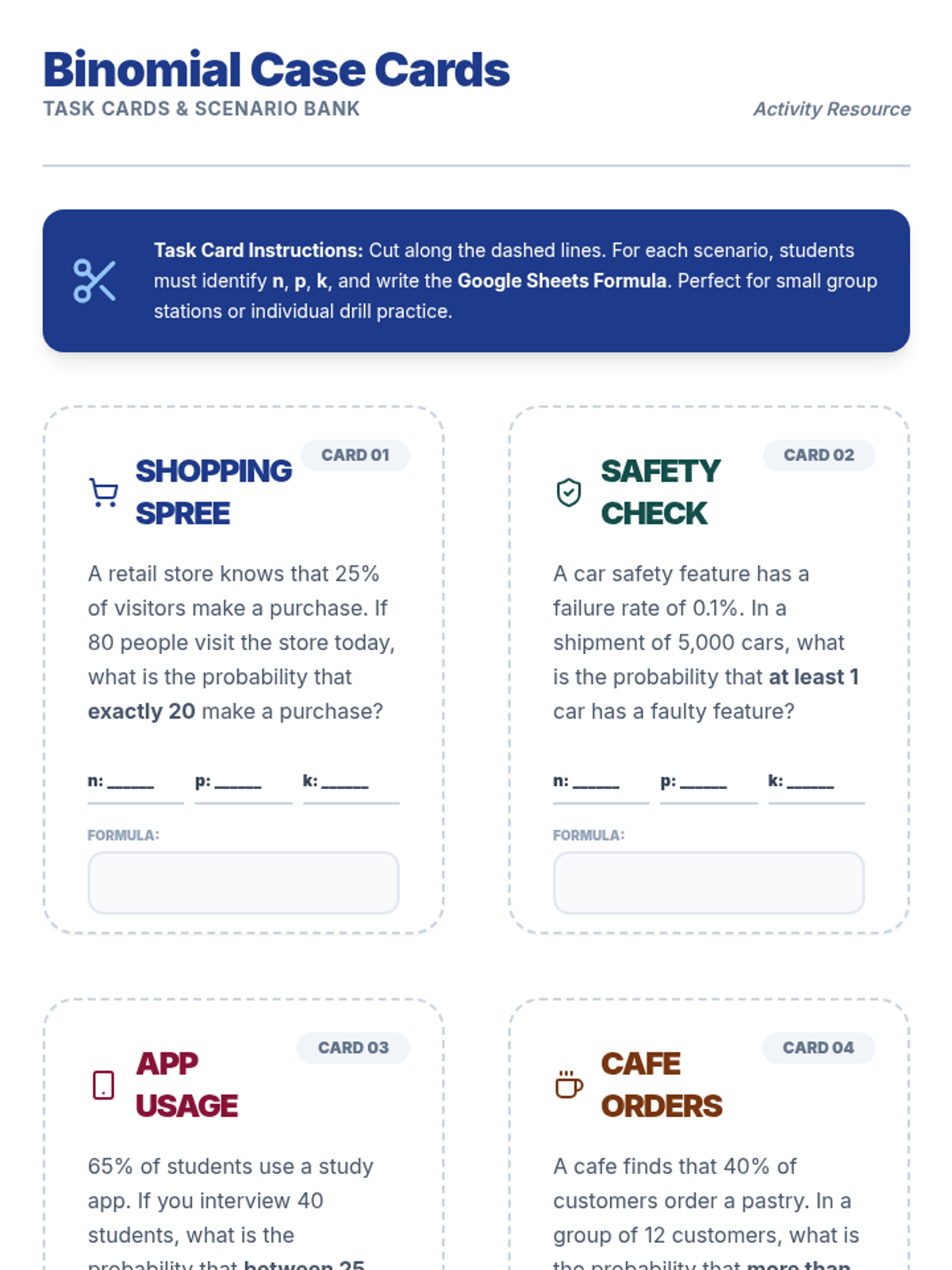
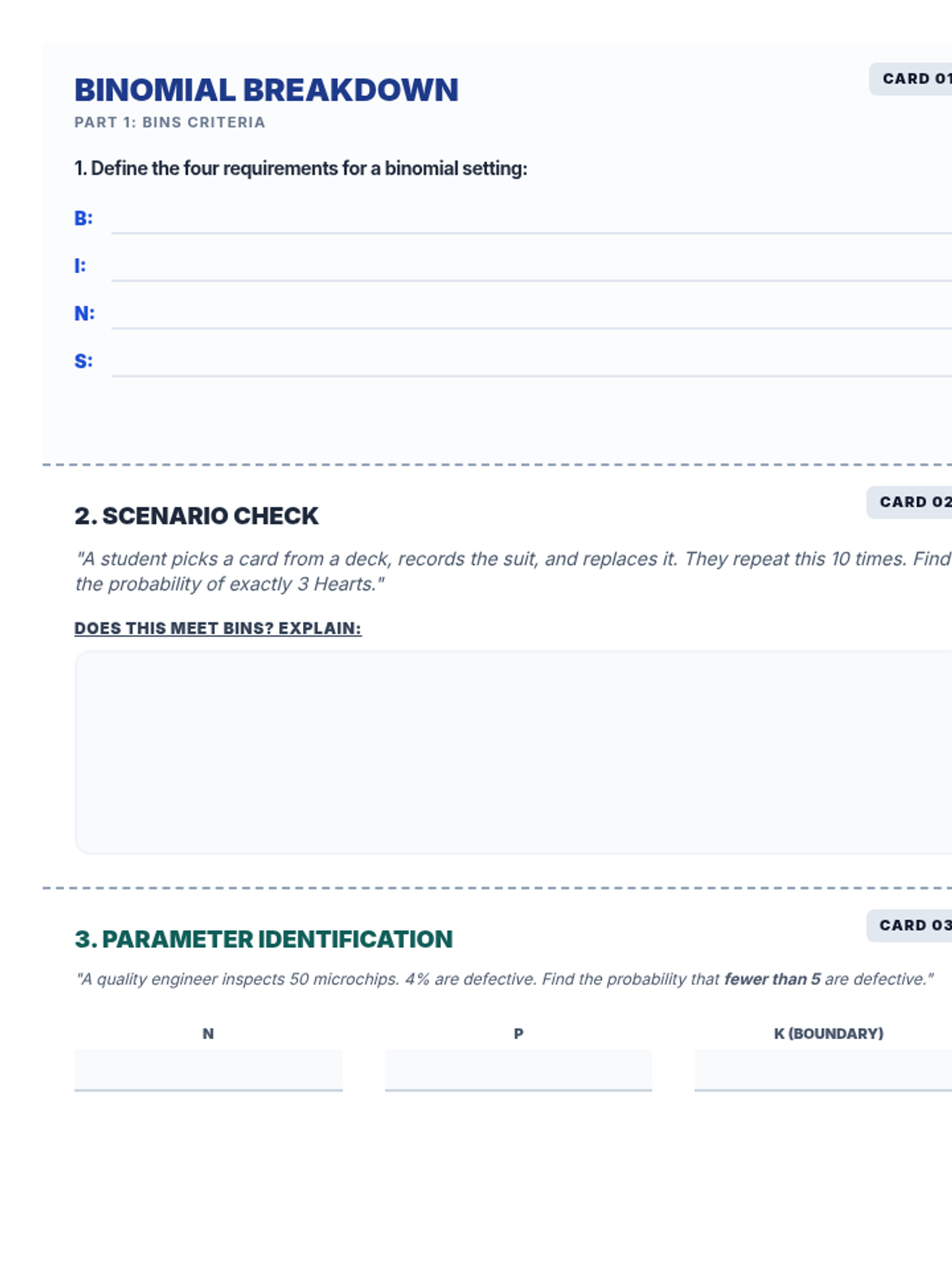
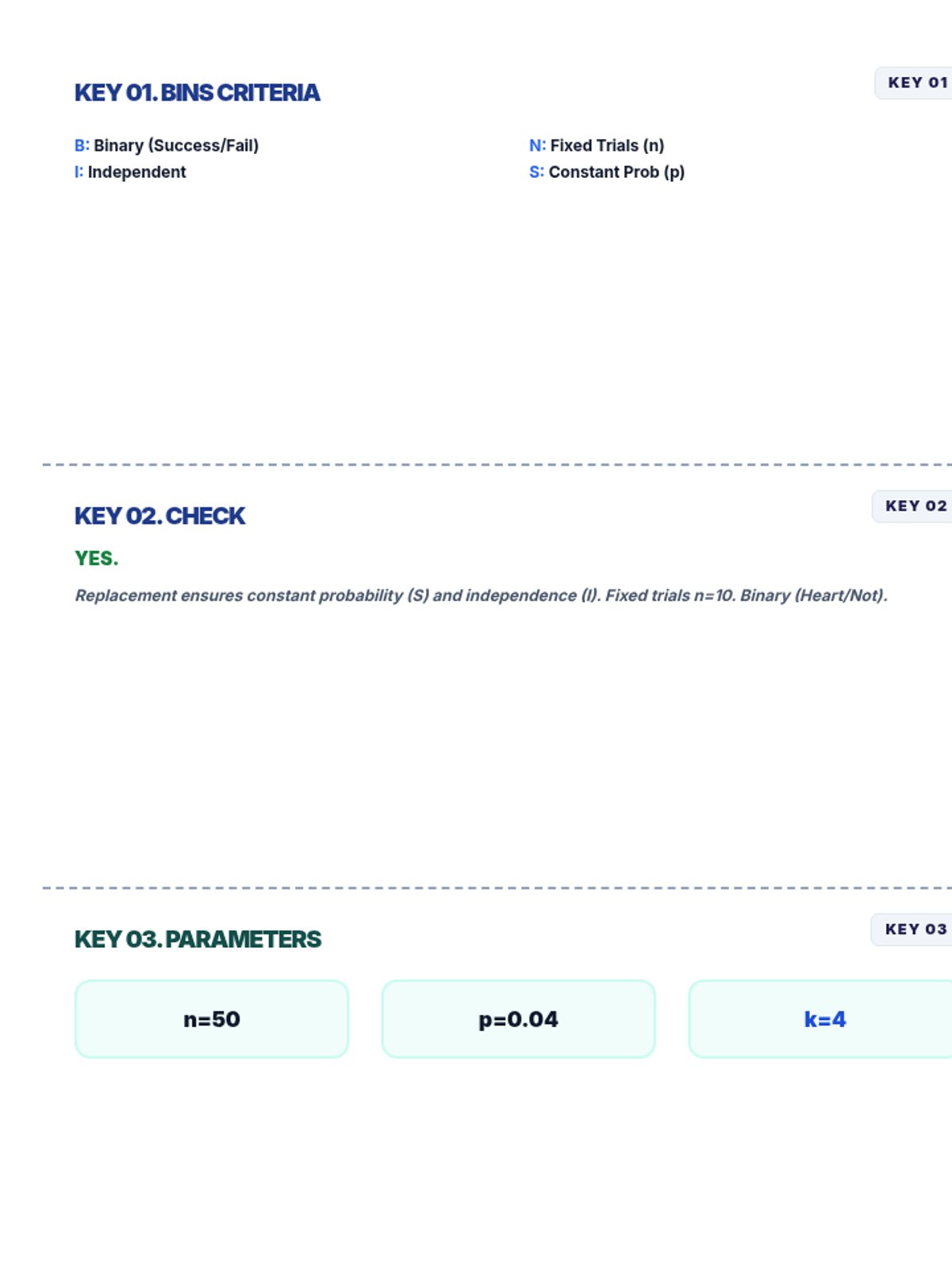
A focused lesson on the binomial distribution, covering the BINS criteria, identifying parameters, and calculating probabilities using digital spreadsheet tools.
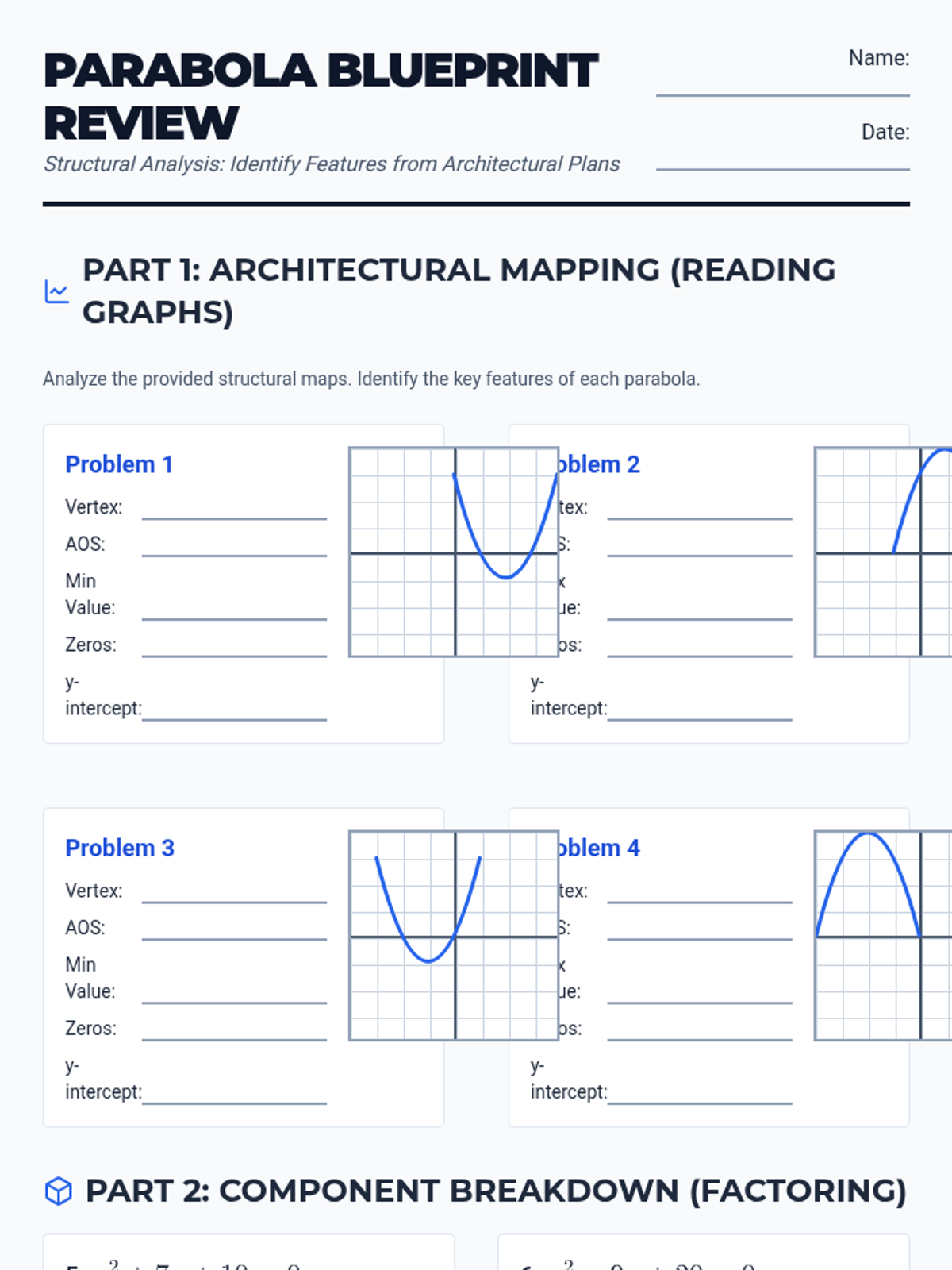
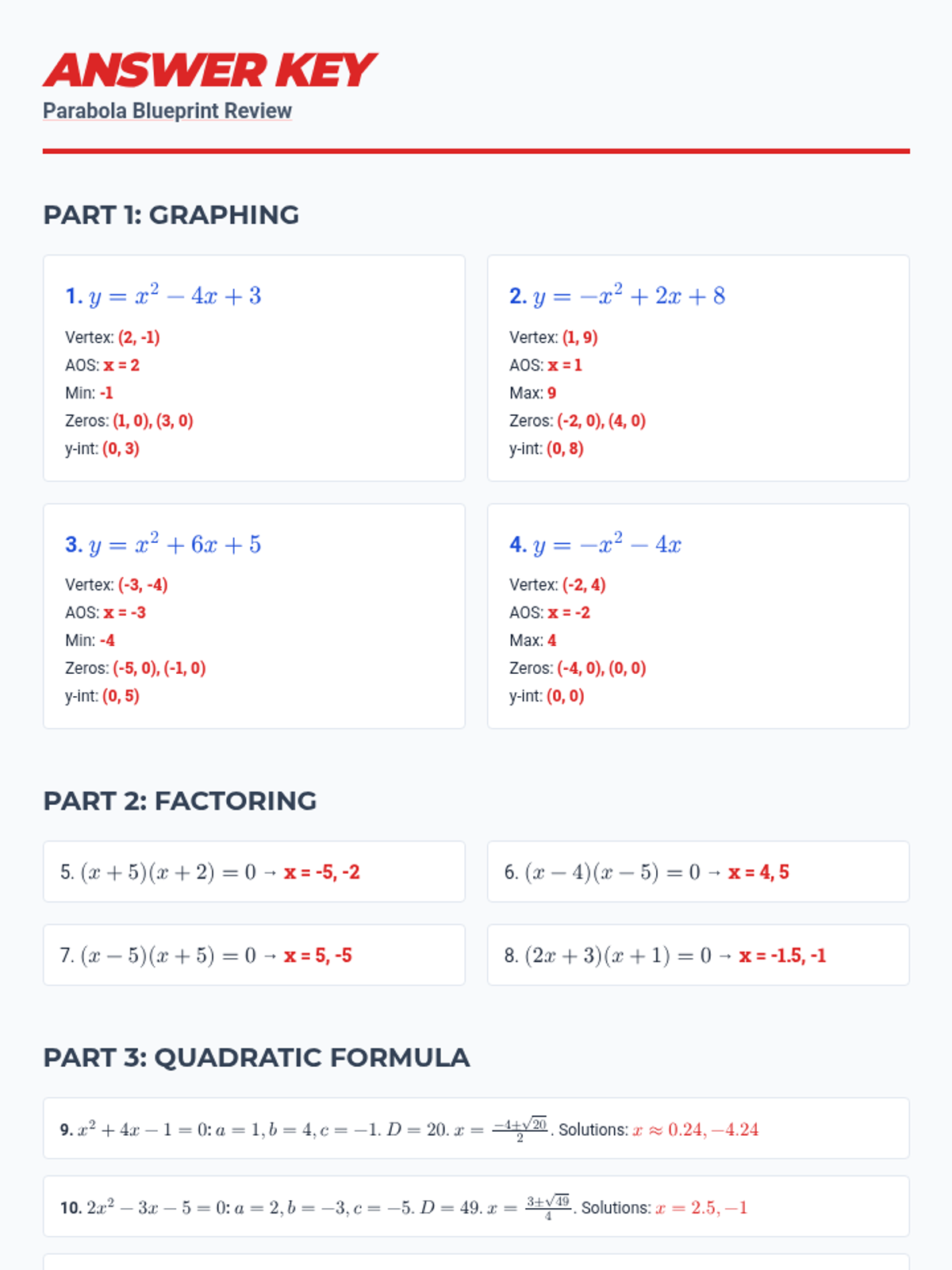
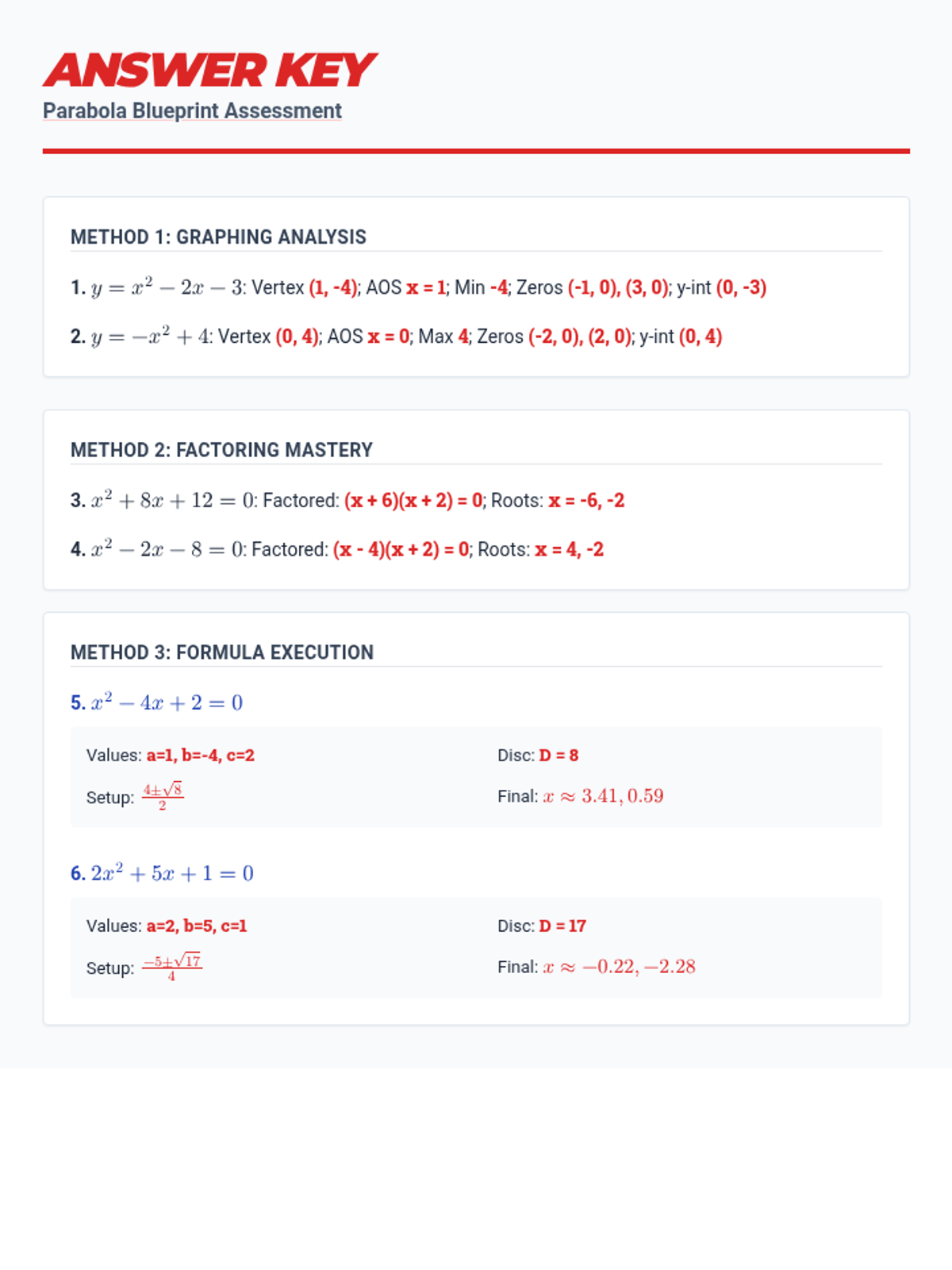
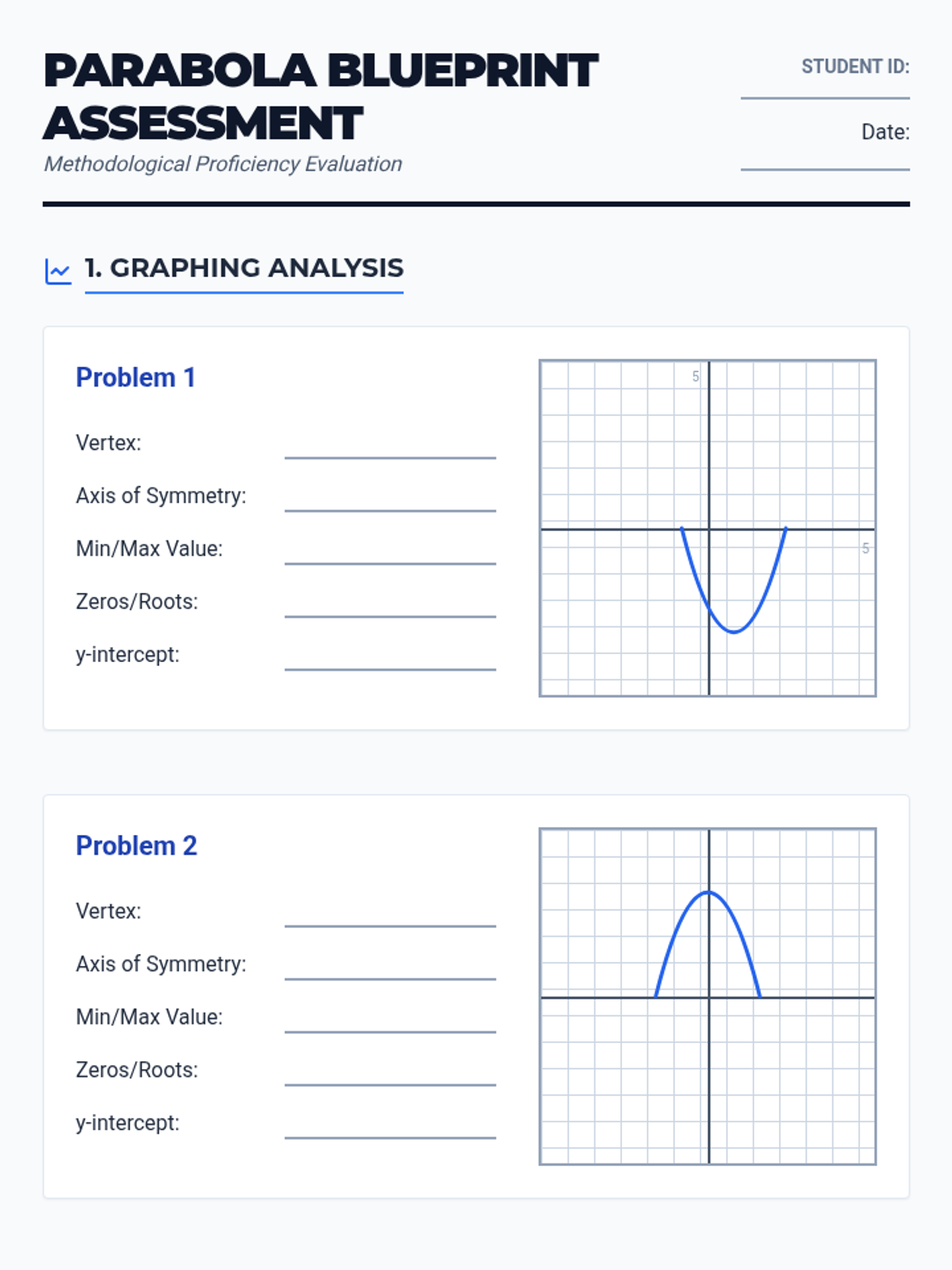
A comprehensive unit review and summative assessment covering three key methods for solving quadratic equations: graphing, factoring, and the quadratic formula. Students practice identifying key features of parabolas, algebraic manipulation for factoring, and the step-by-step application of the quadratic formula.
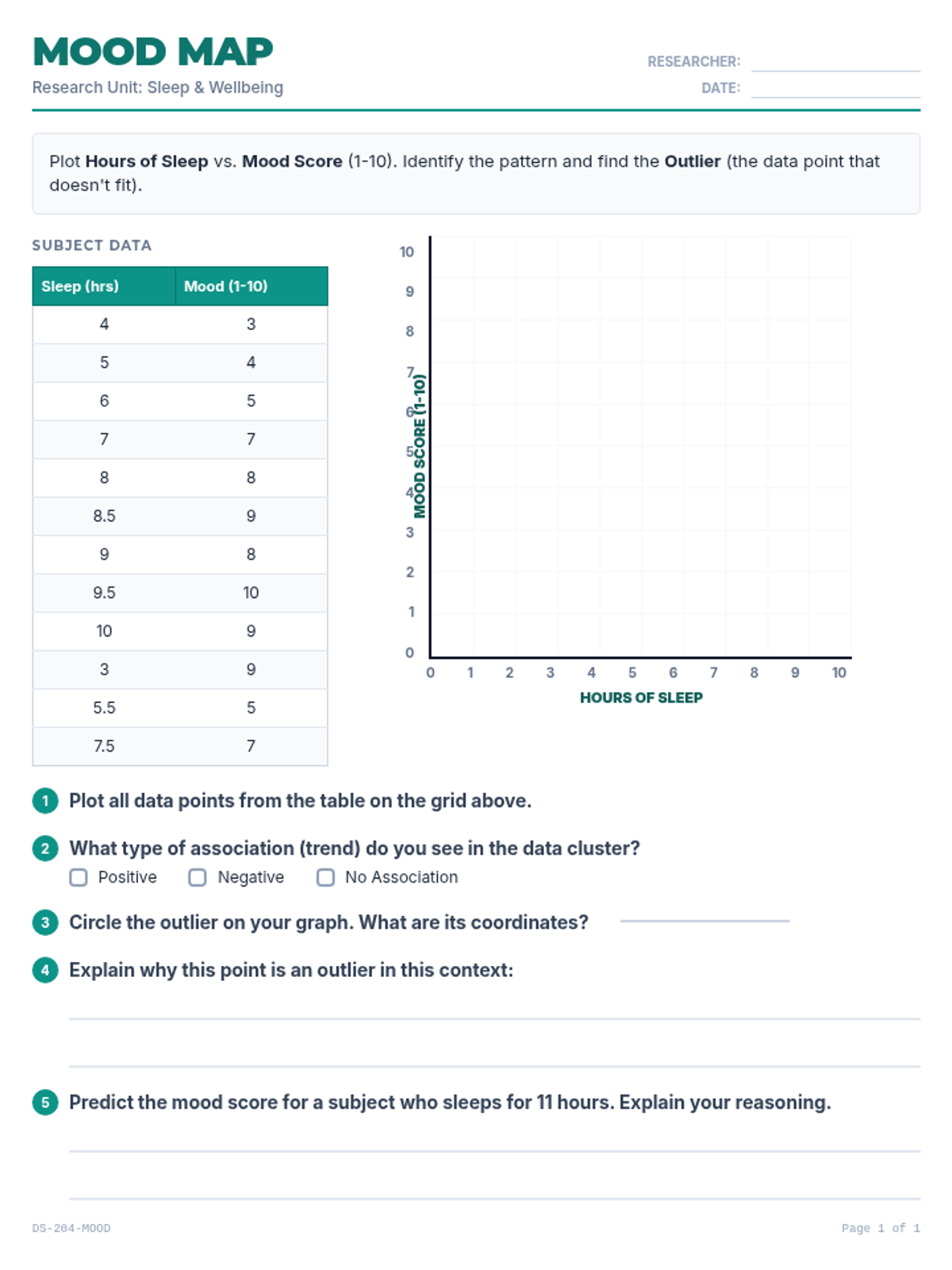
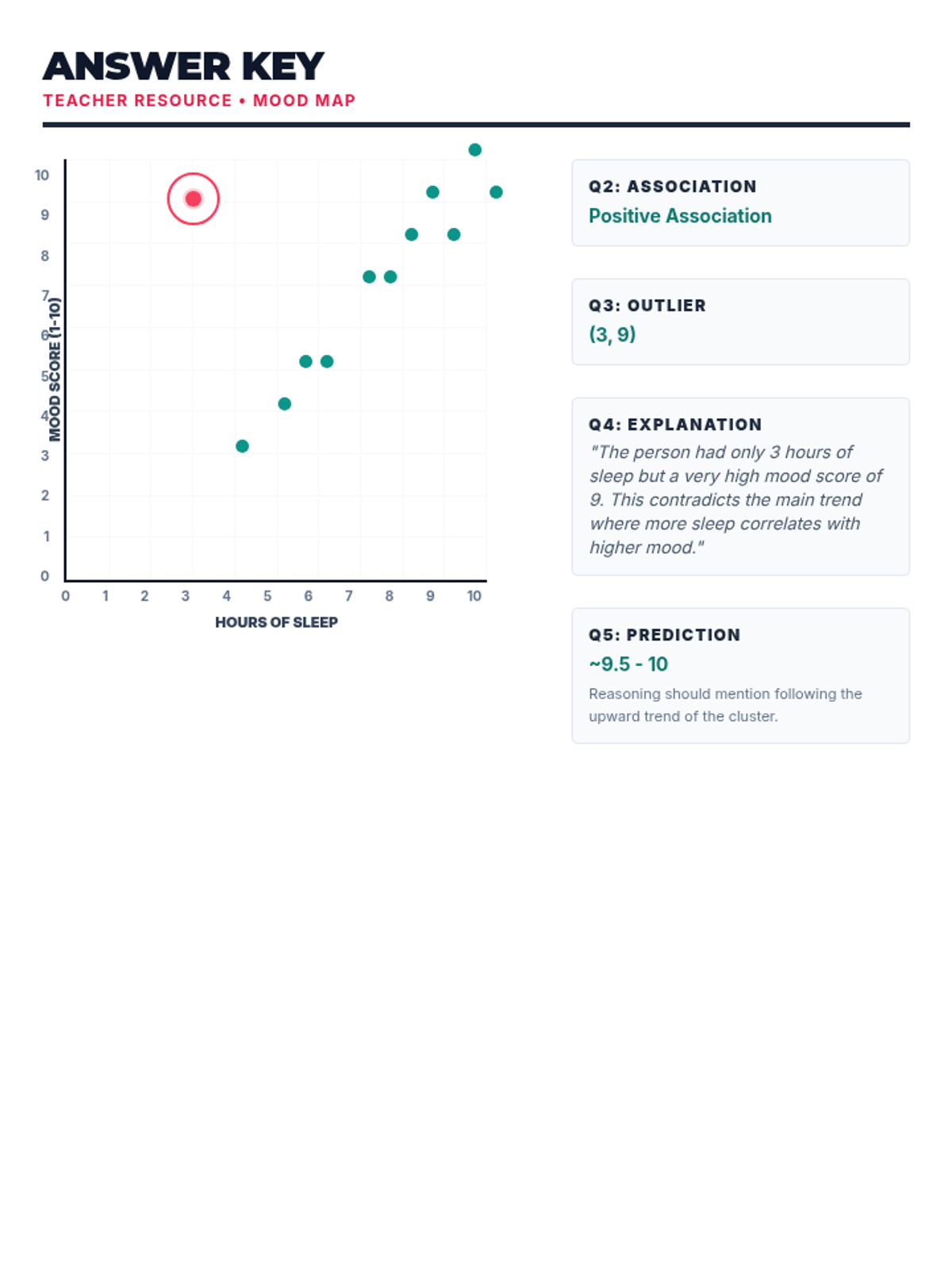
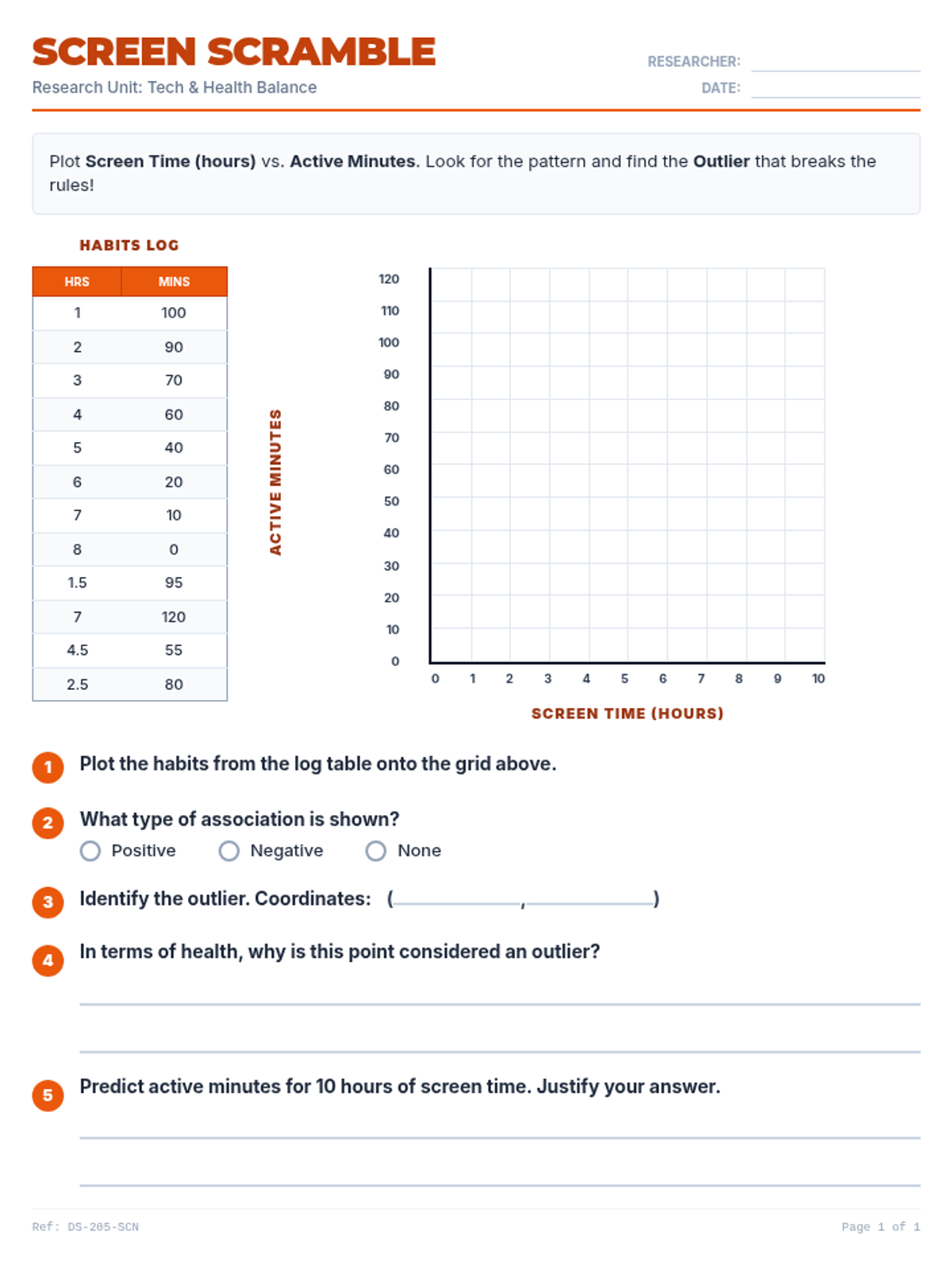
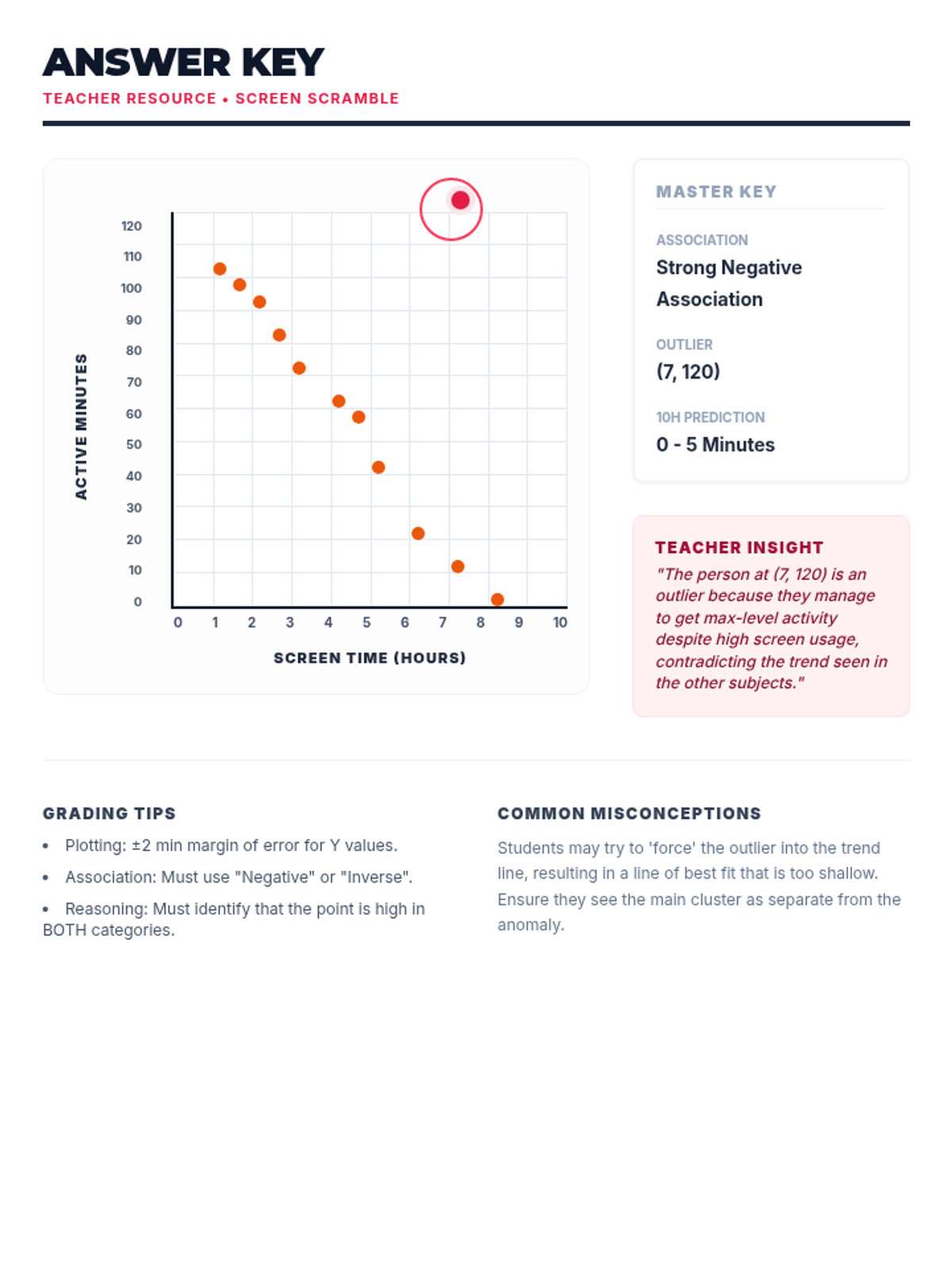
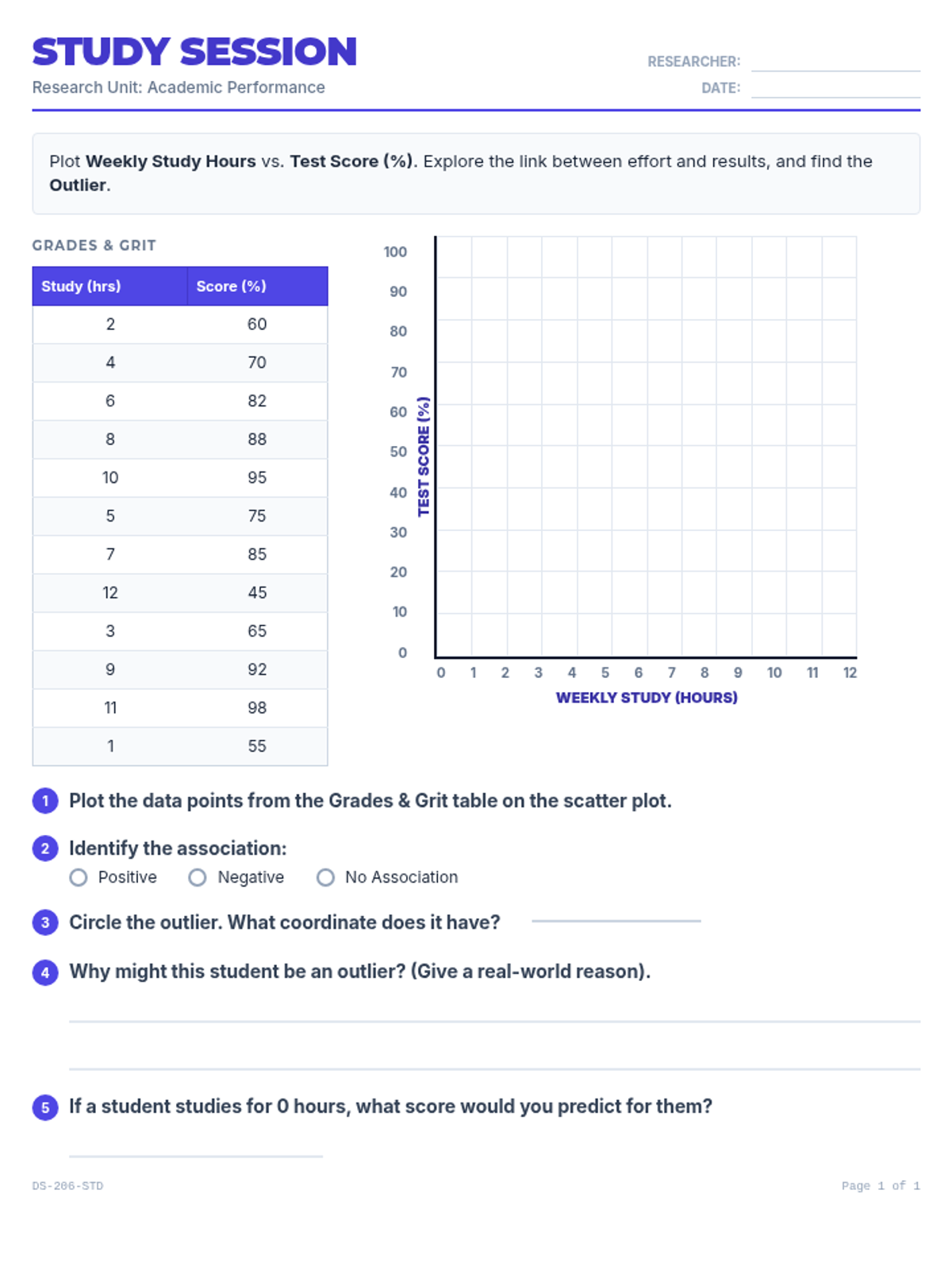
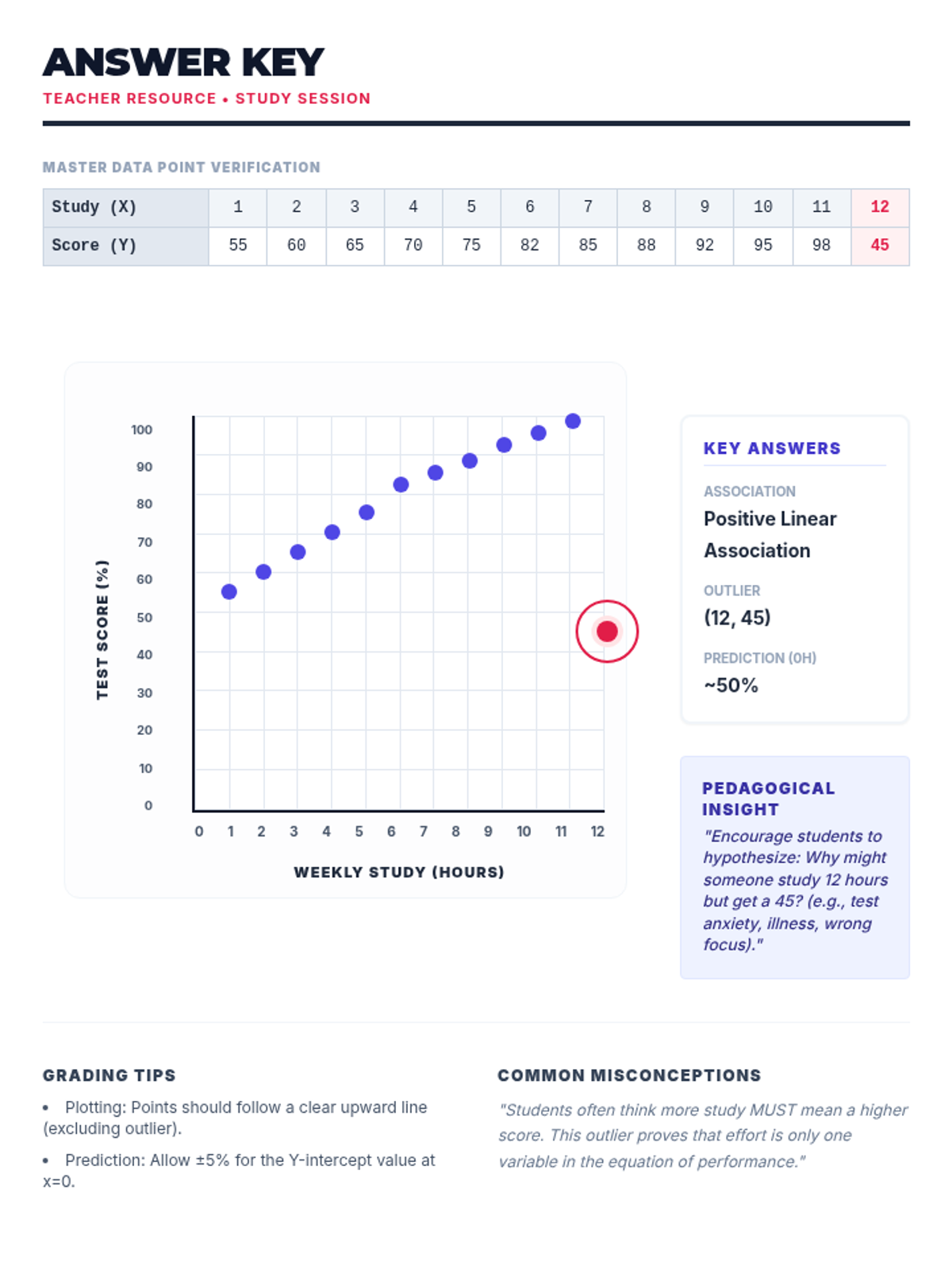
Students learn to plot bivariate data, identify trends, and spot outliers using a real-world scenario of sleep and mood.
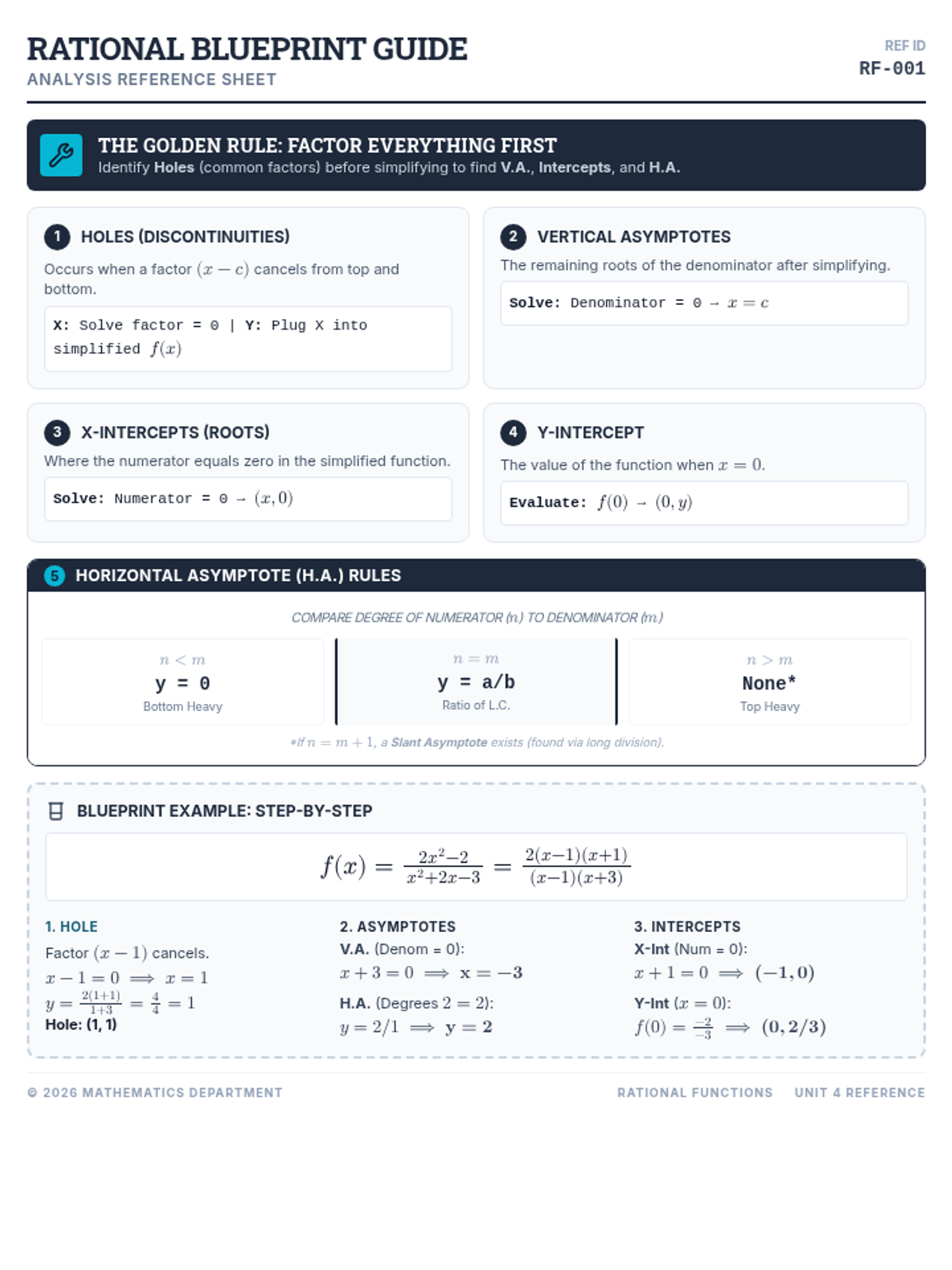
A comprehensive guide to analyzing and graphing rational functions, covering all key features from asymptotes to holes.
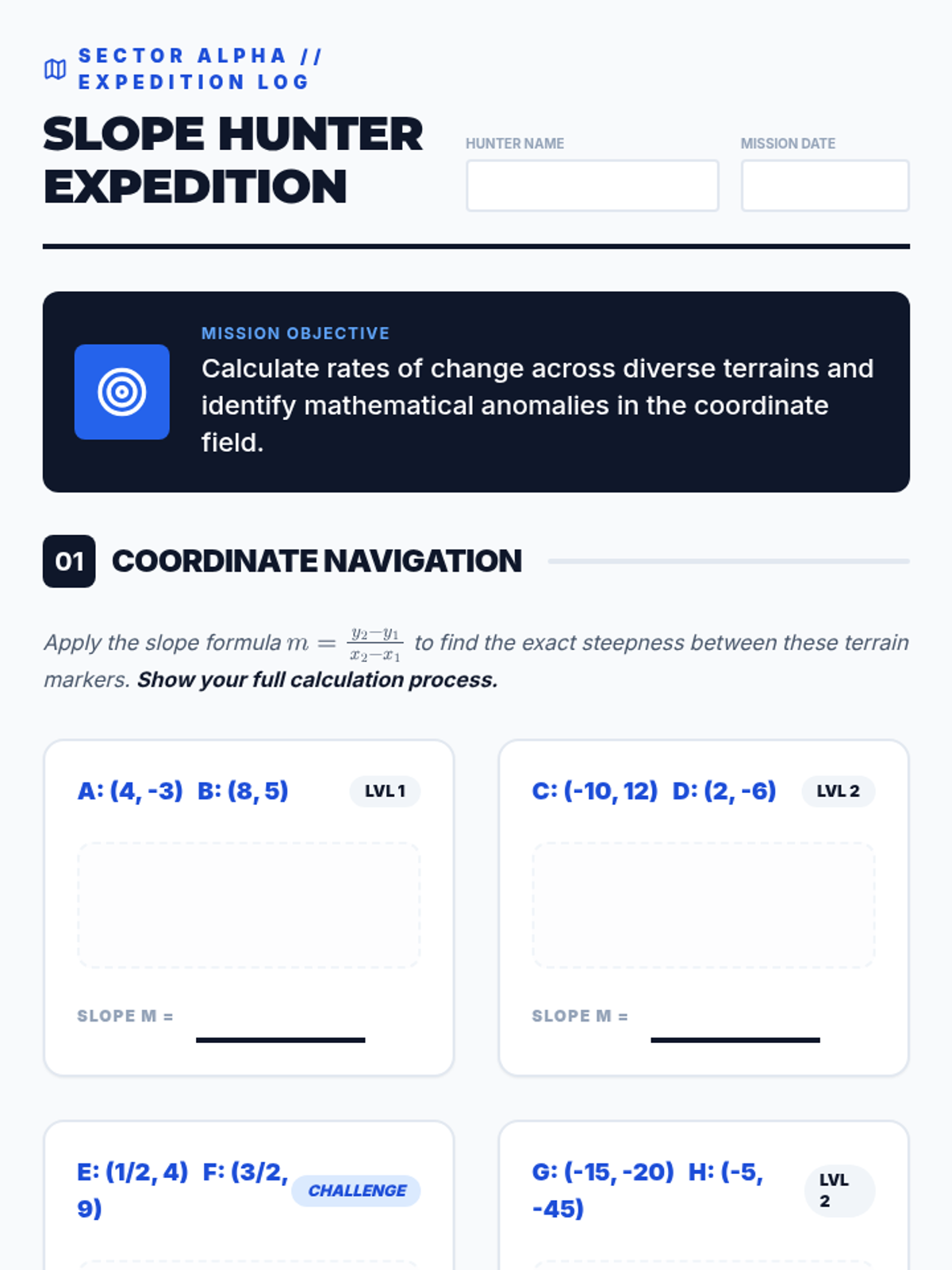
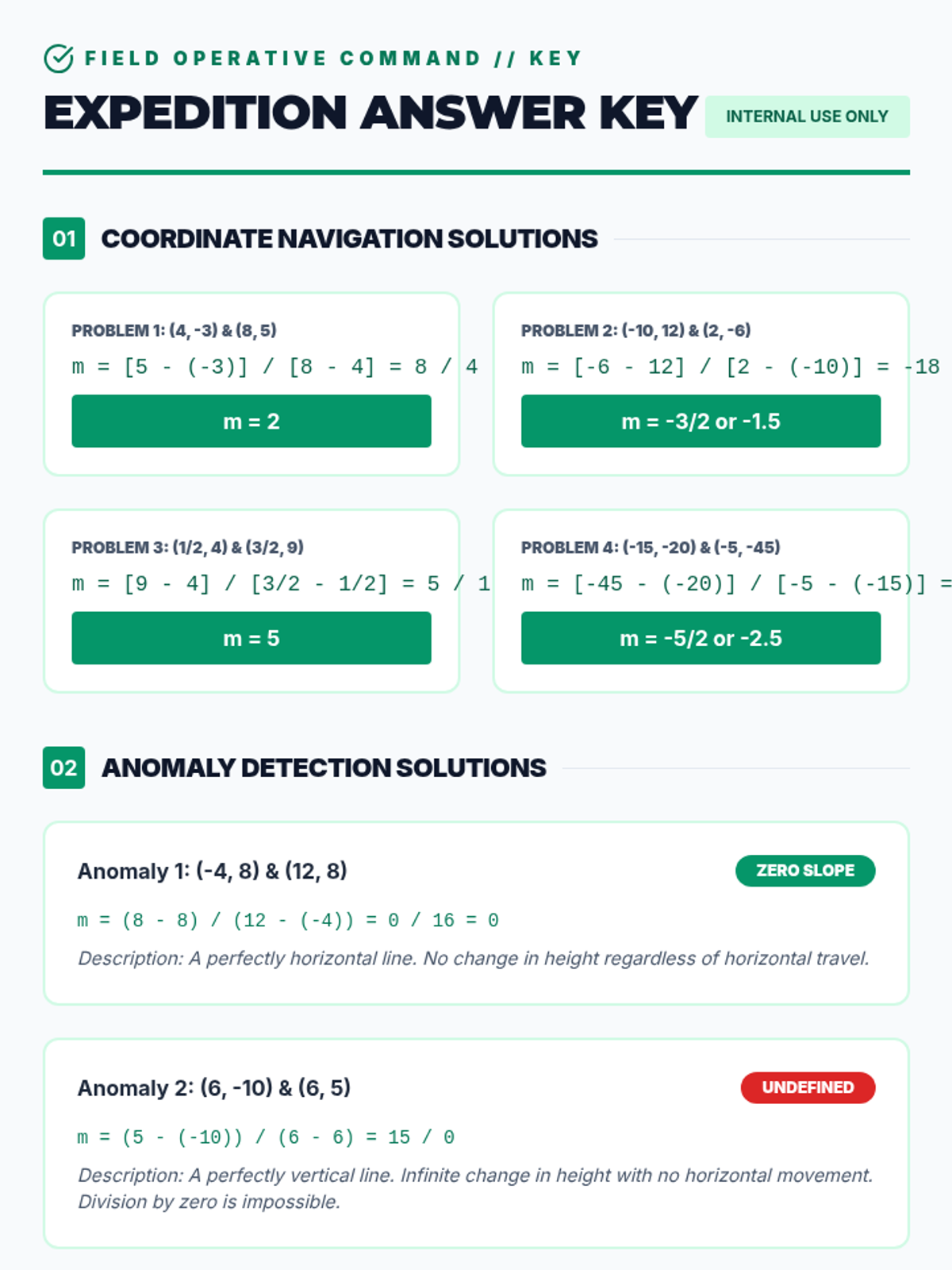
An advanced look at slope as a rate of change, including calculation from coordinates and understanding special cases like zero and undefined slopes.
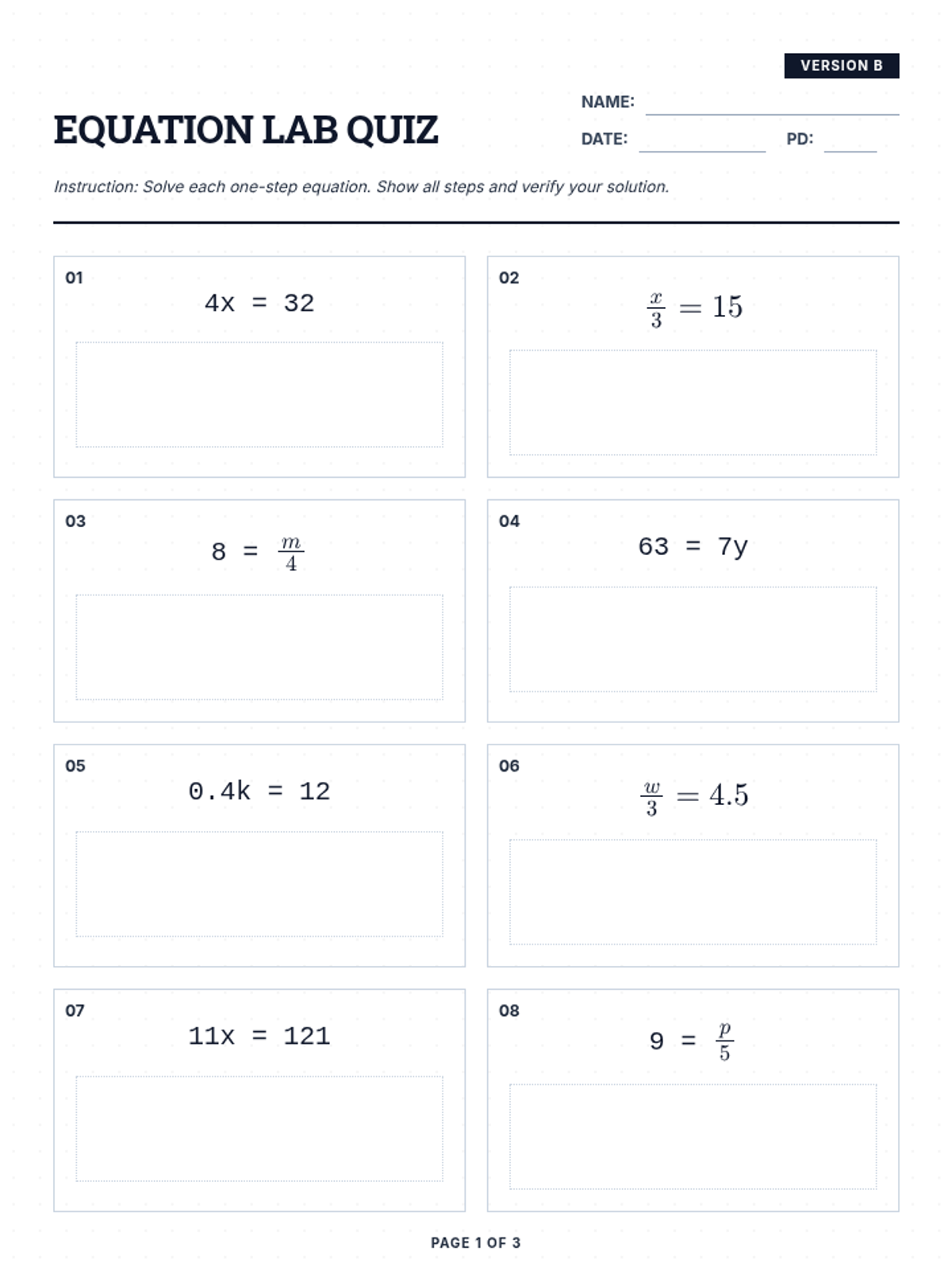
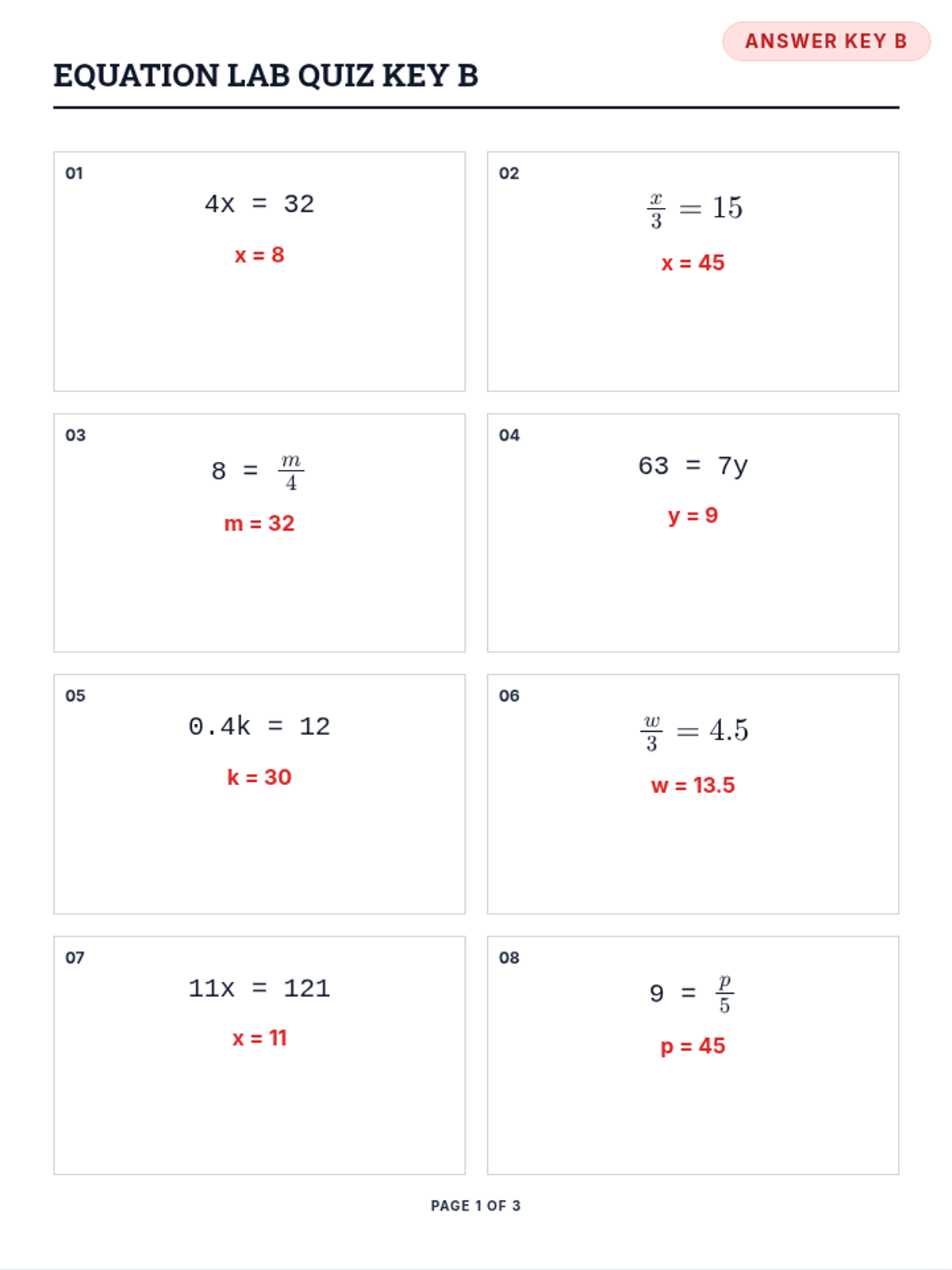
A comprehensive assessment lesson focusing on mastering one-step equations involving multiplication, division, and basic addition/subtraction.
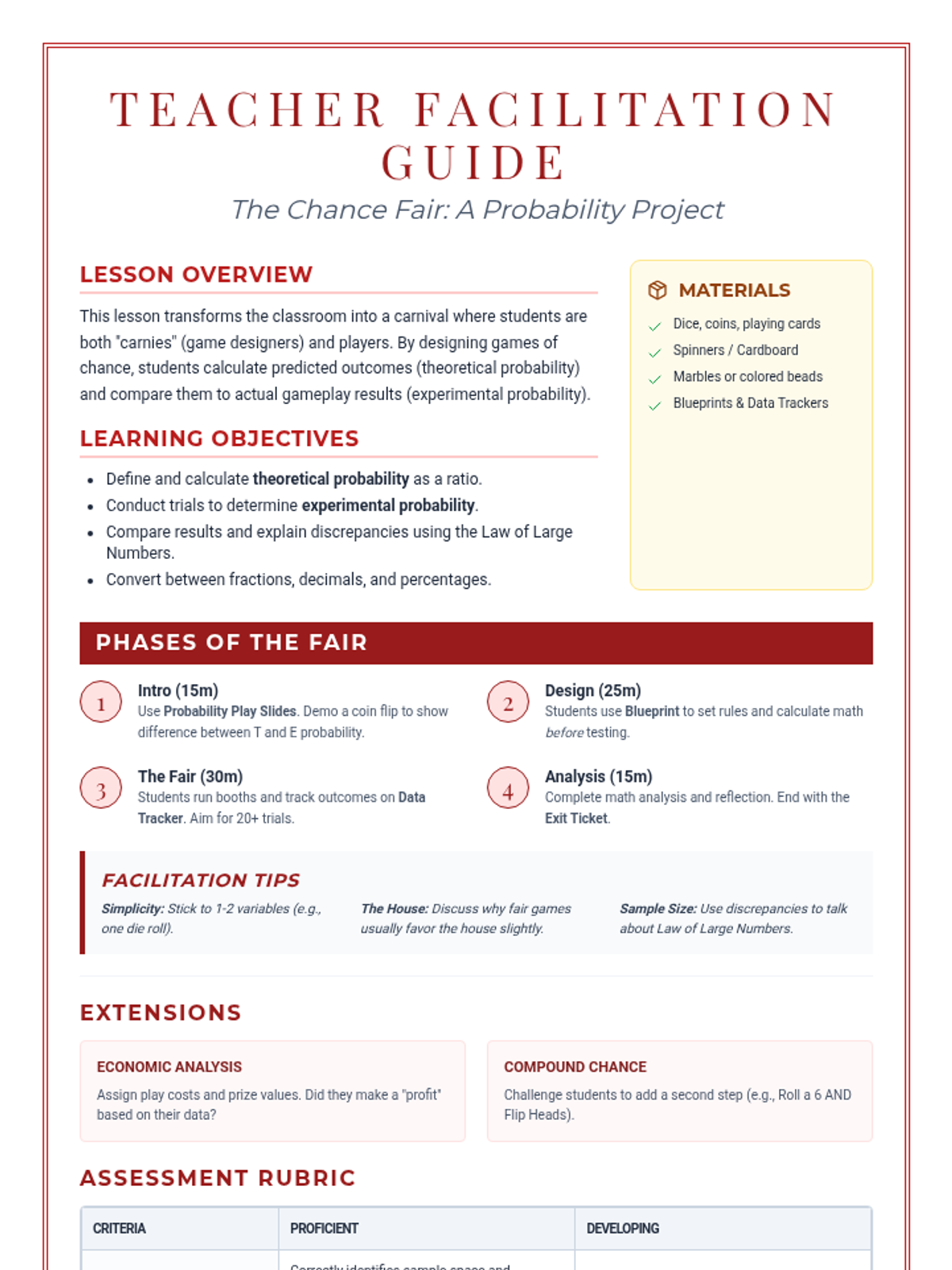
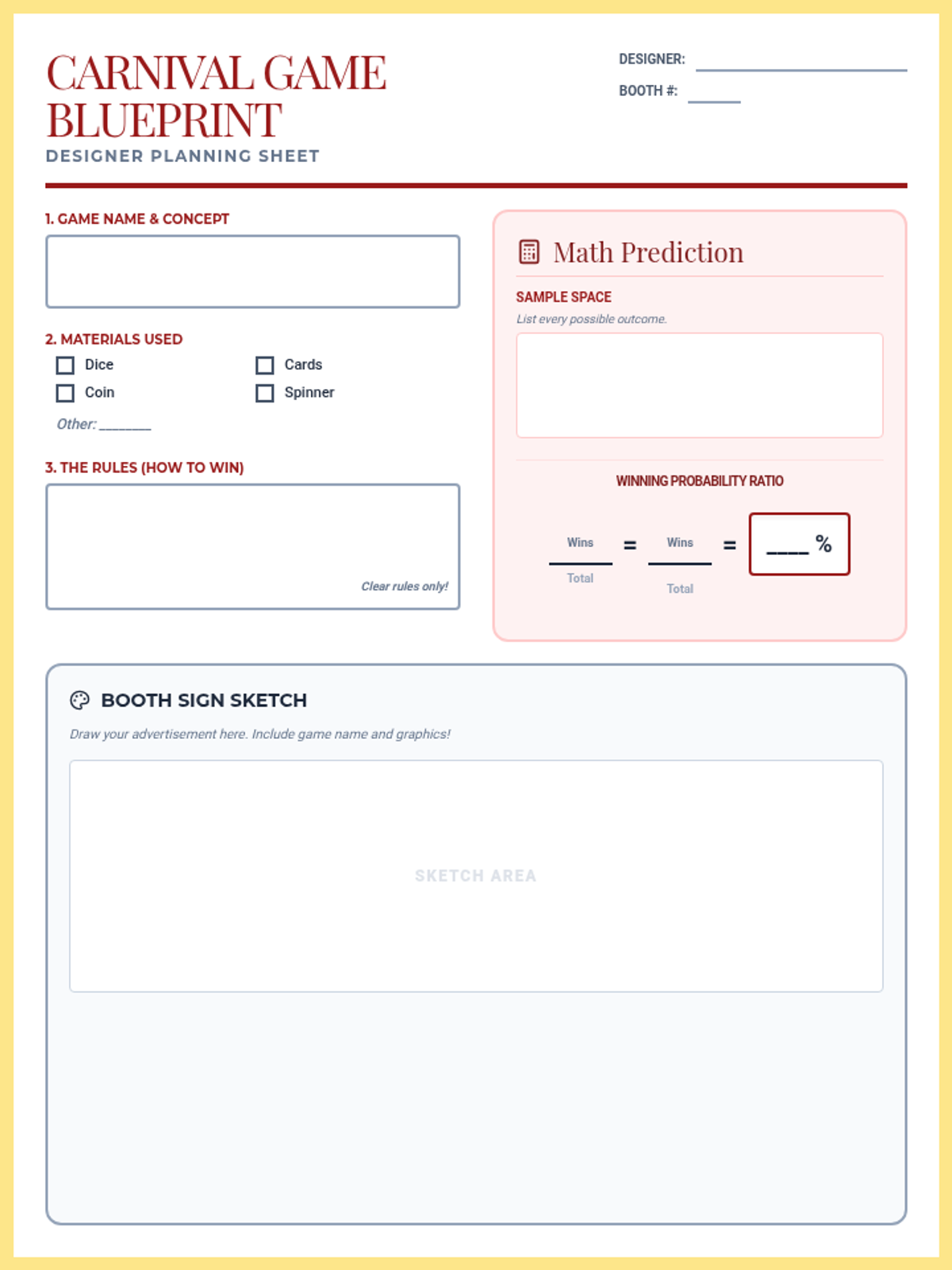
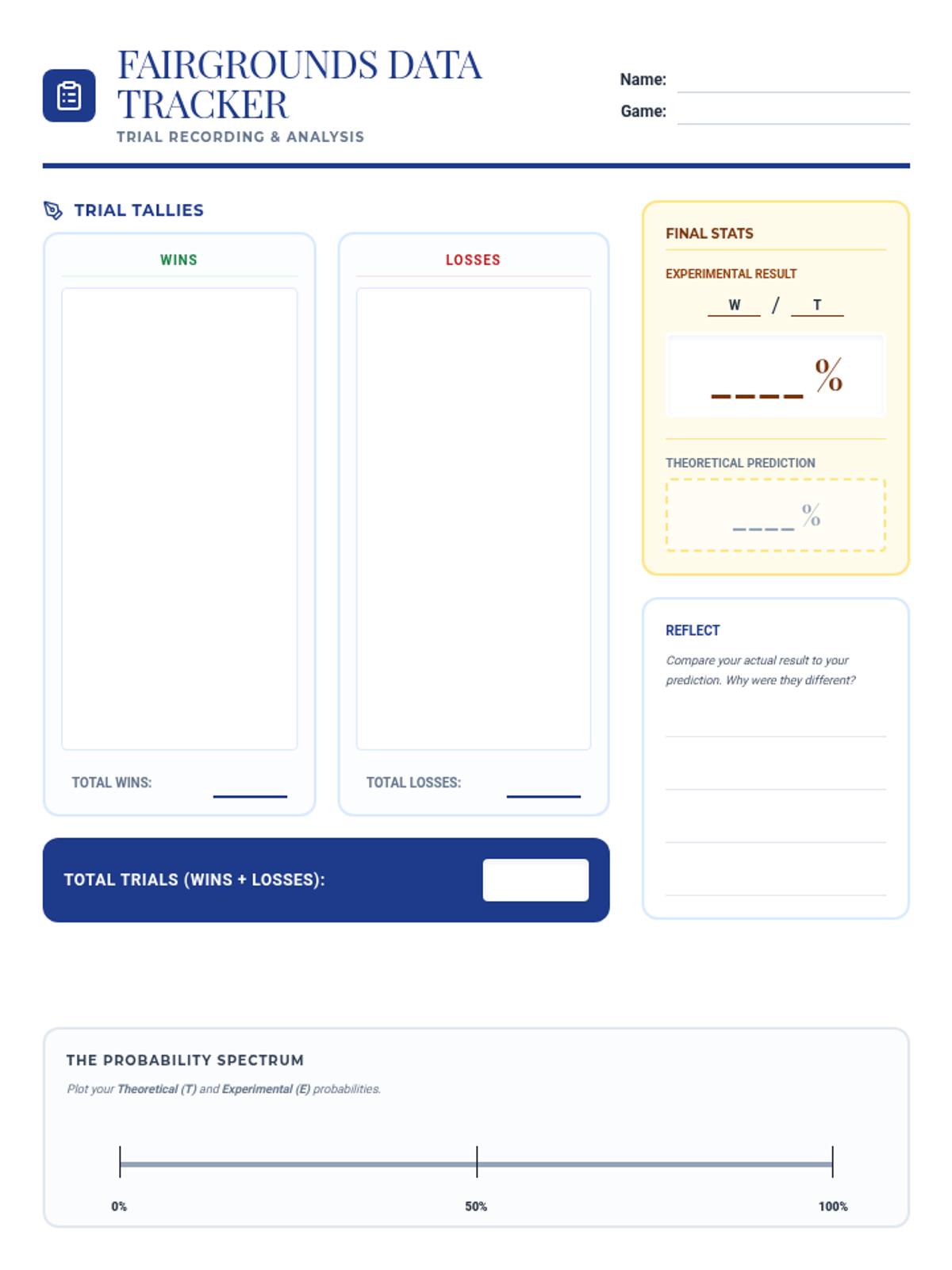
A hands-on math project where students design carnival games to explore theoretical versus experimental probability through data collection and analysis.
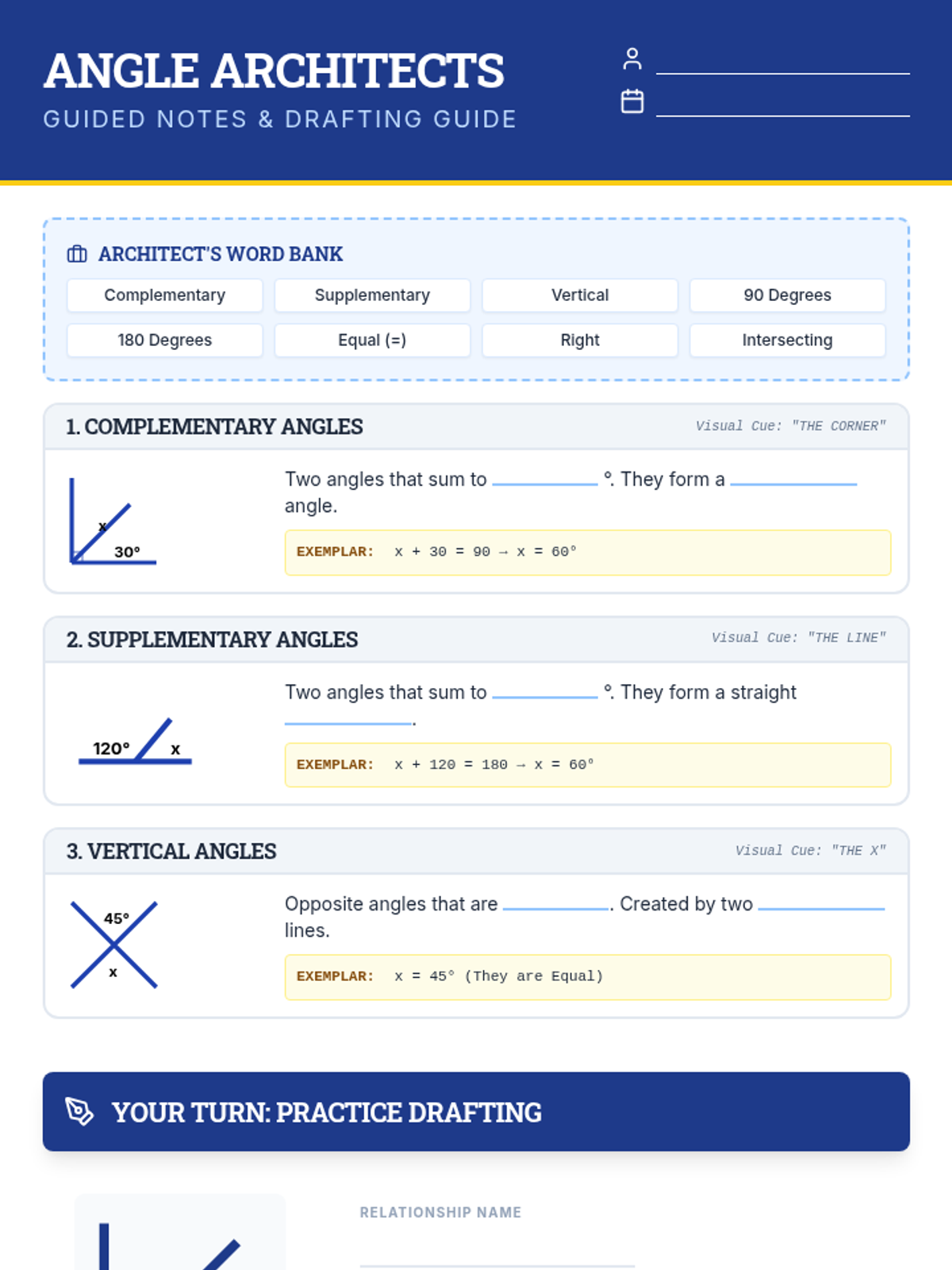
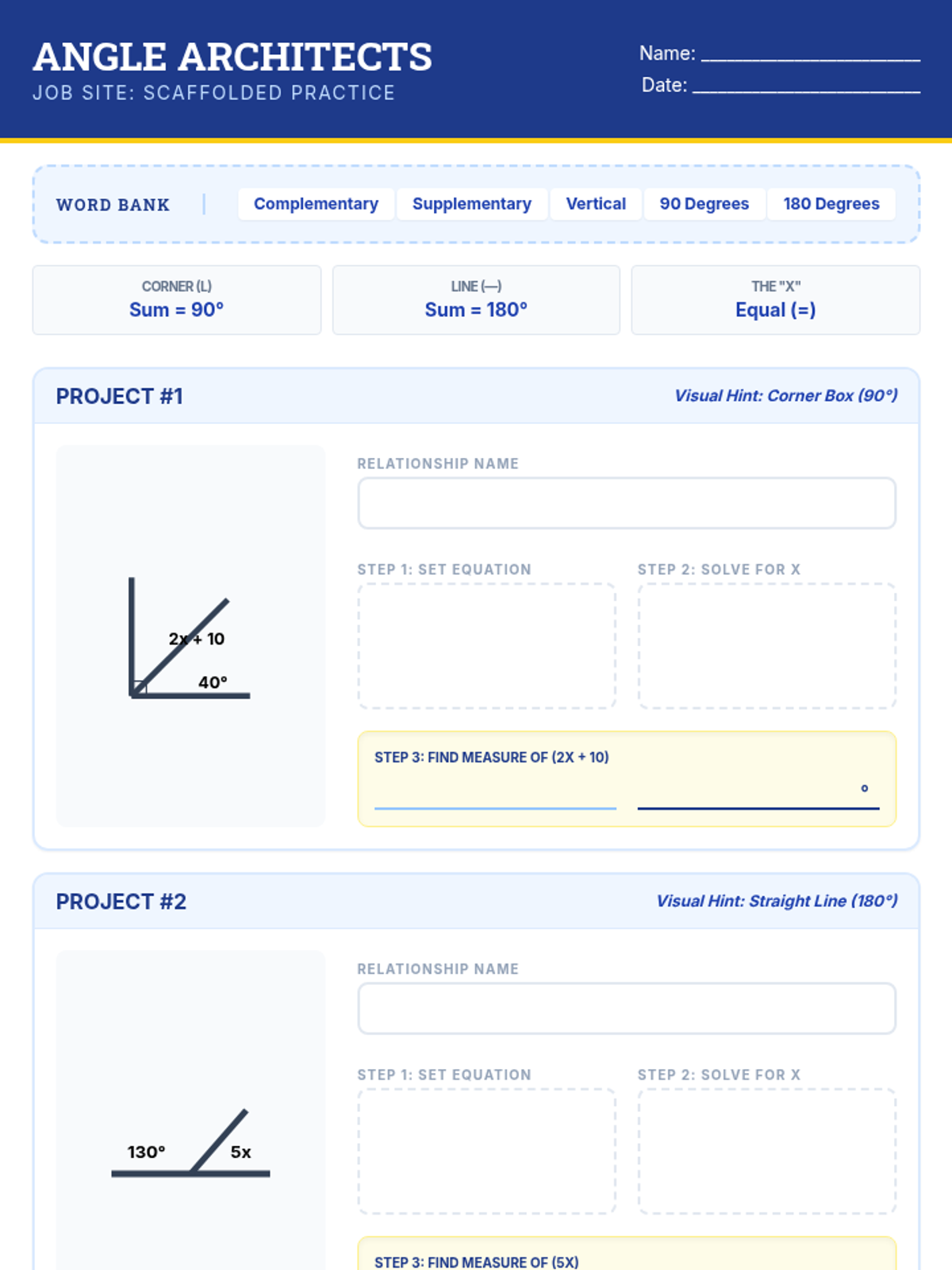
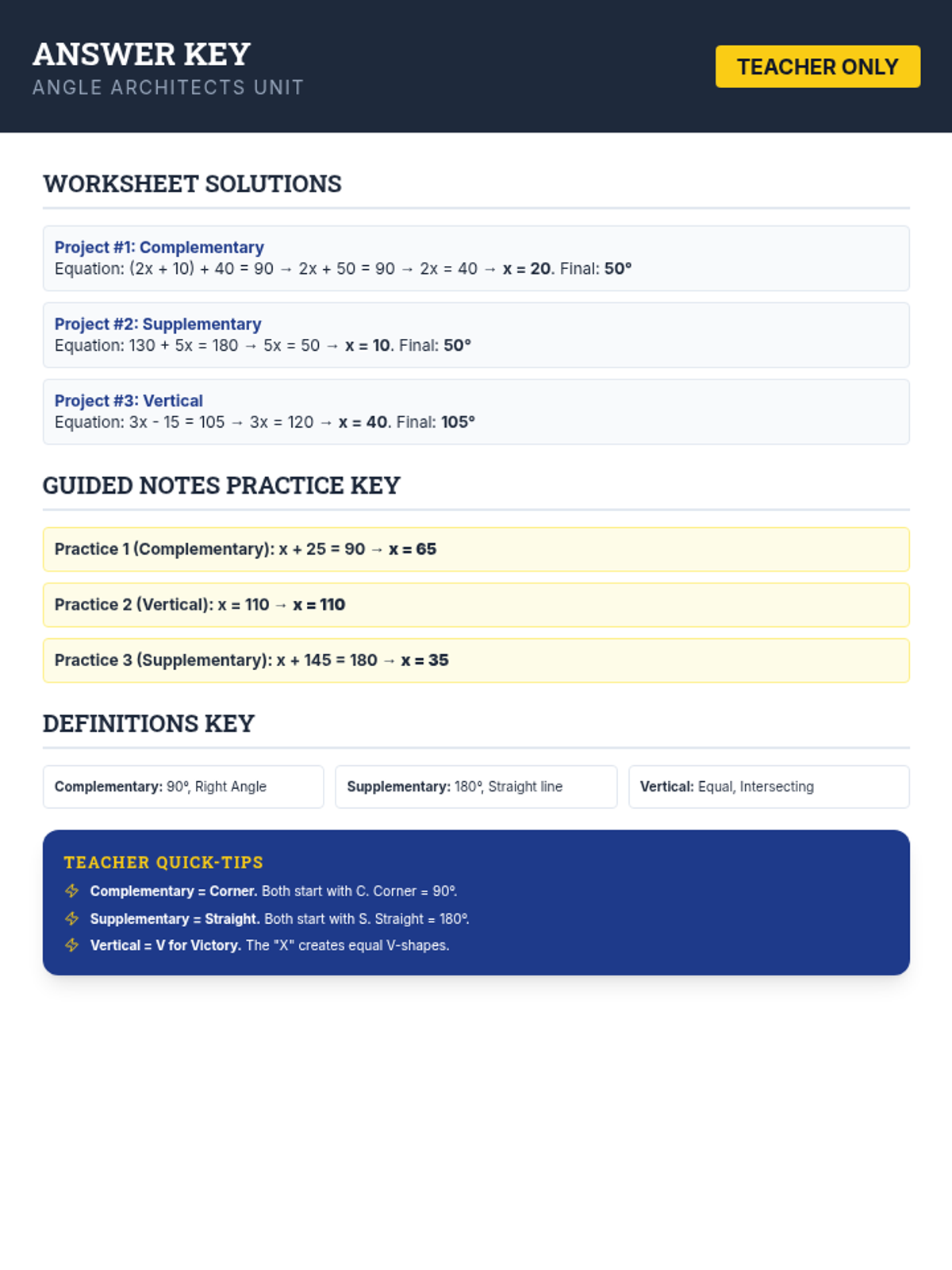
A highly scaffolded lesson on angle relationships (vertical, complementary, and supplementary) featuring an architectural blueprint theme. Includes guided notes with exemplars and step-by-step practice materials.
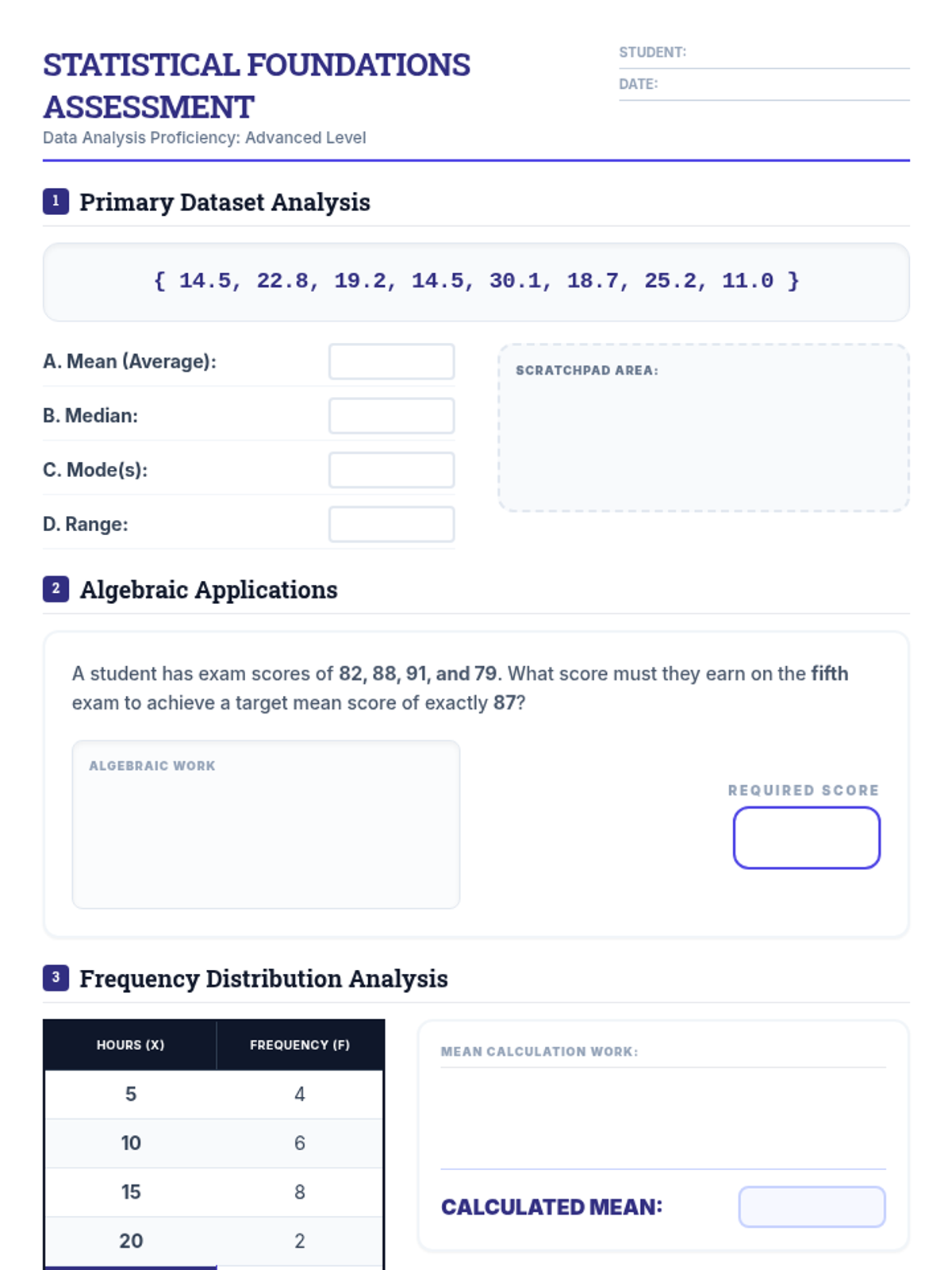
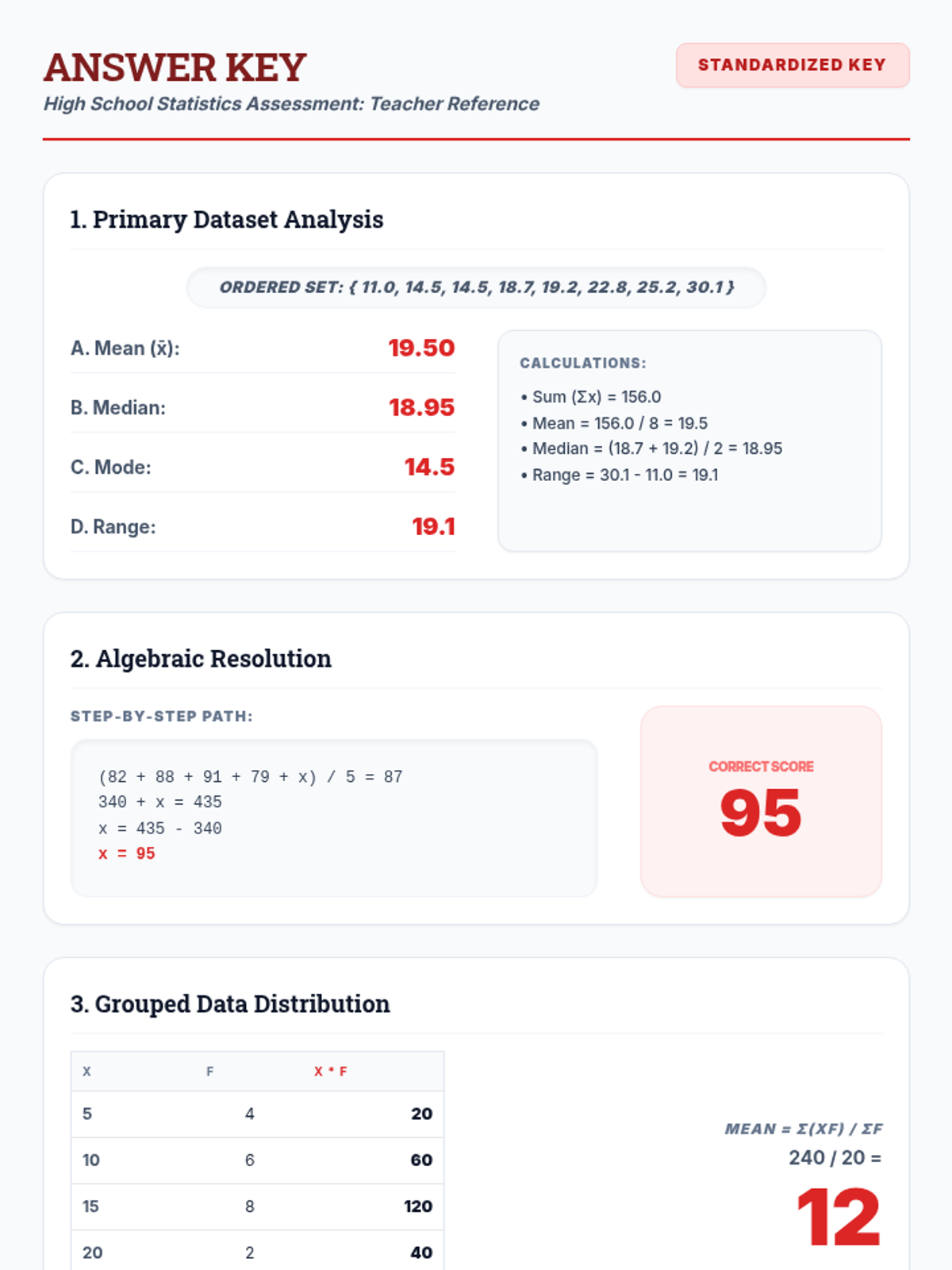
Advanced applications of central tendency and spread, including algebraic problem-solving, weighted means, and the mathematical impact of outliers for high school students.