A lesson exploring the relationship between common benchmark fractions and their decimal equivalents through the lens of kitchen measurements and baking. Students will master 1/4, 1/2, and 3/4 conversions through visual models and hands-on matching.
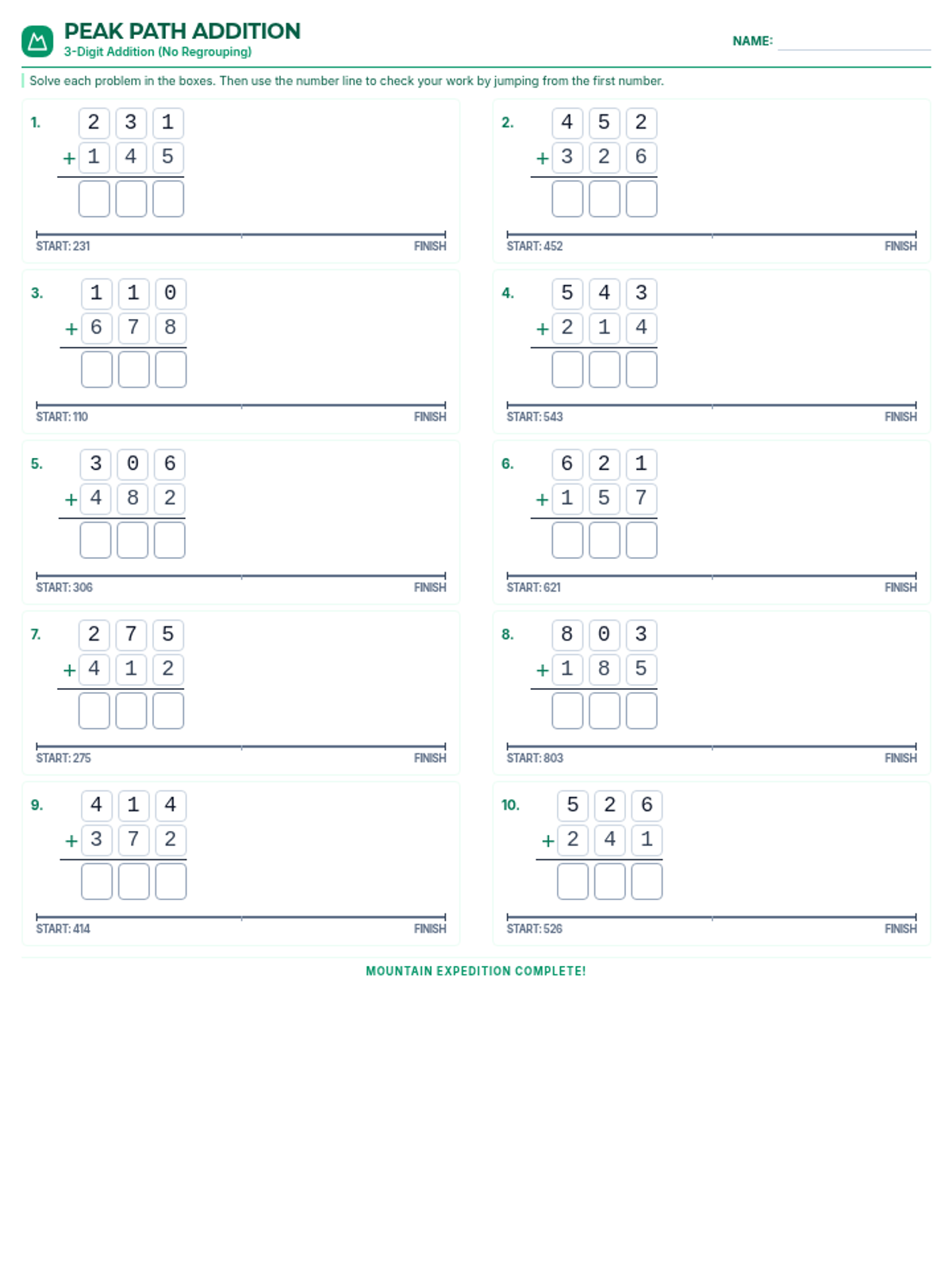
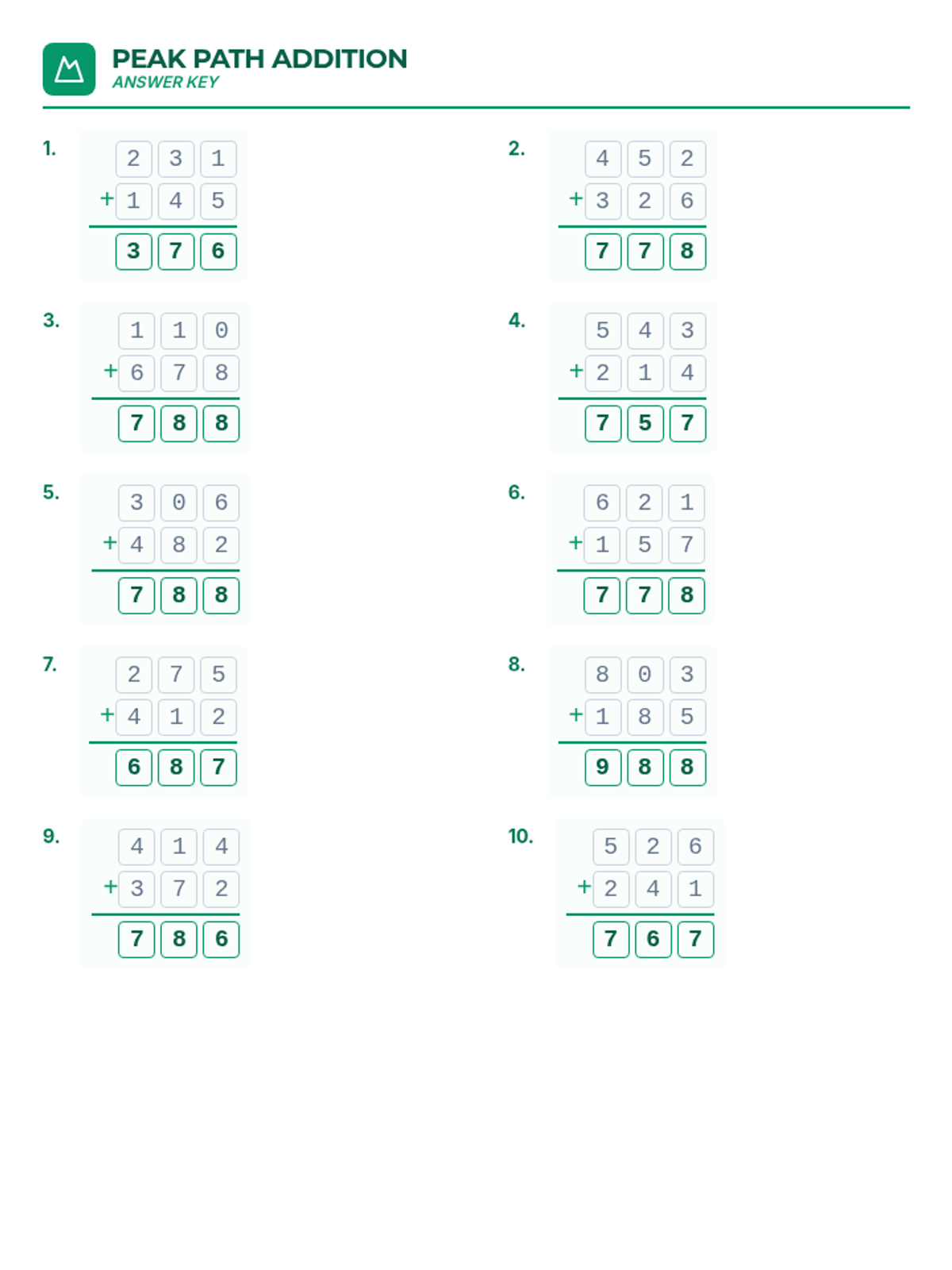
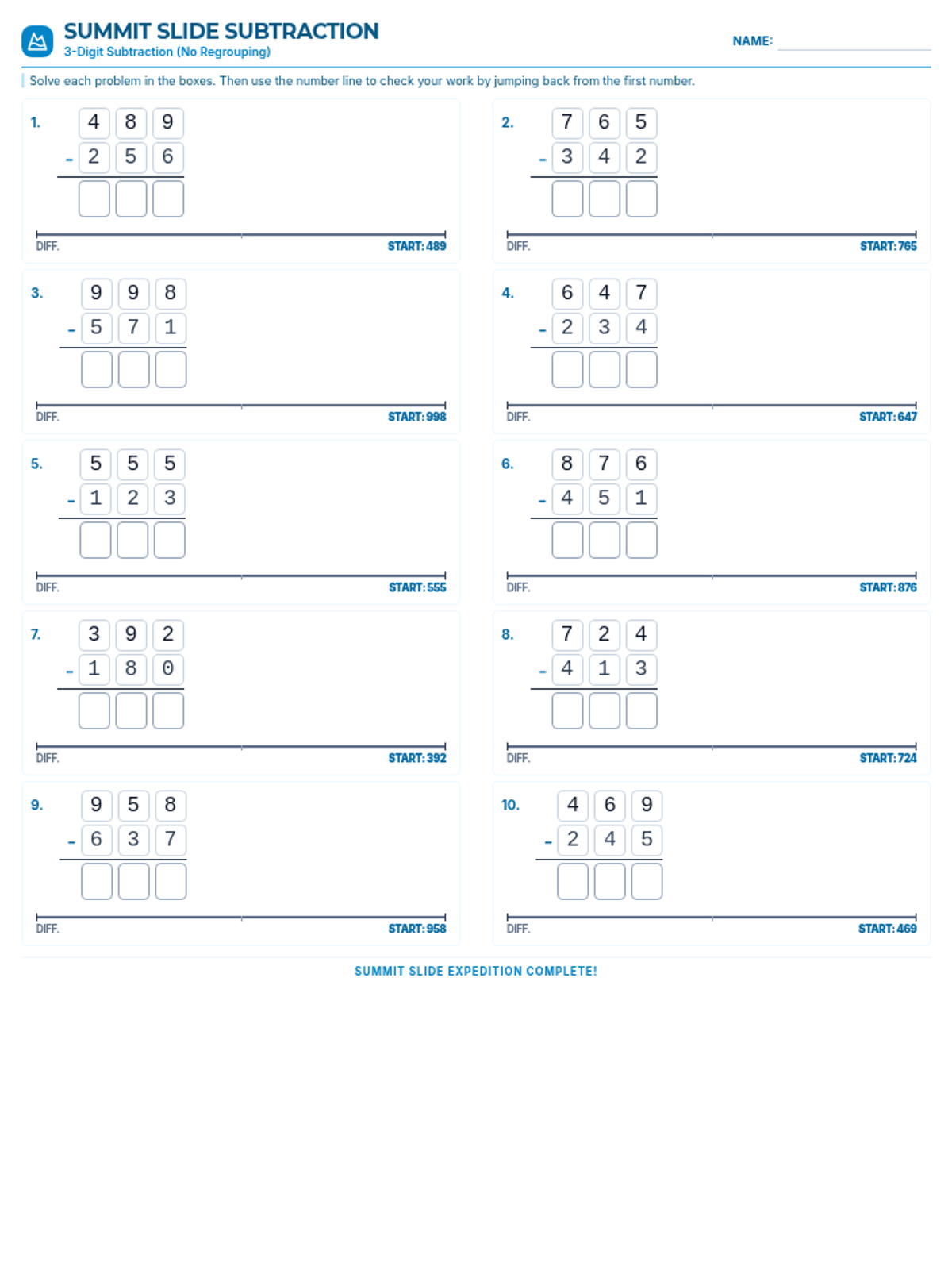
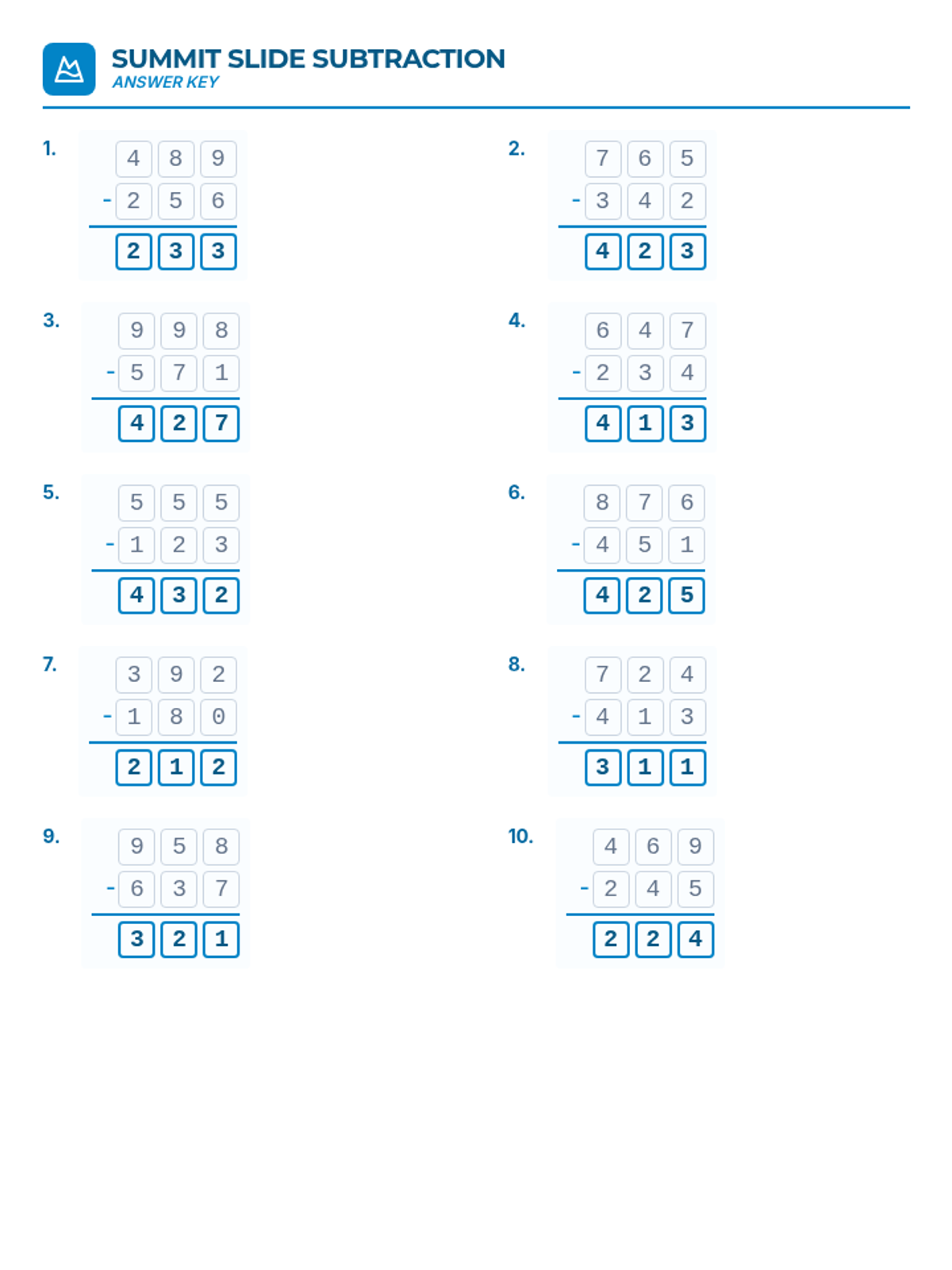
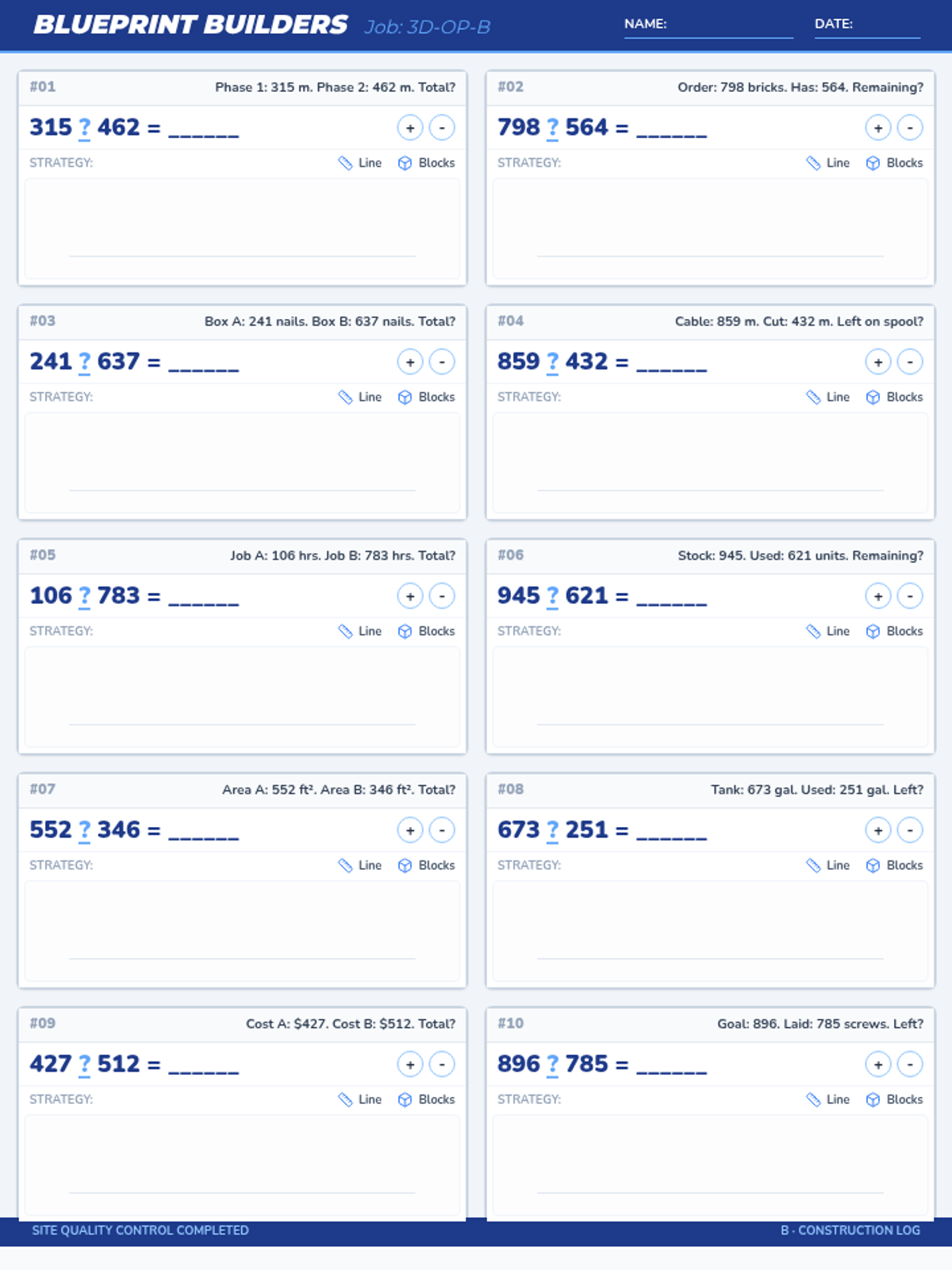
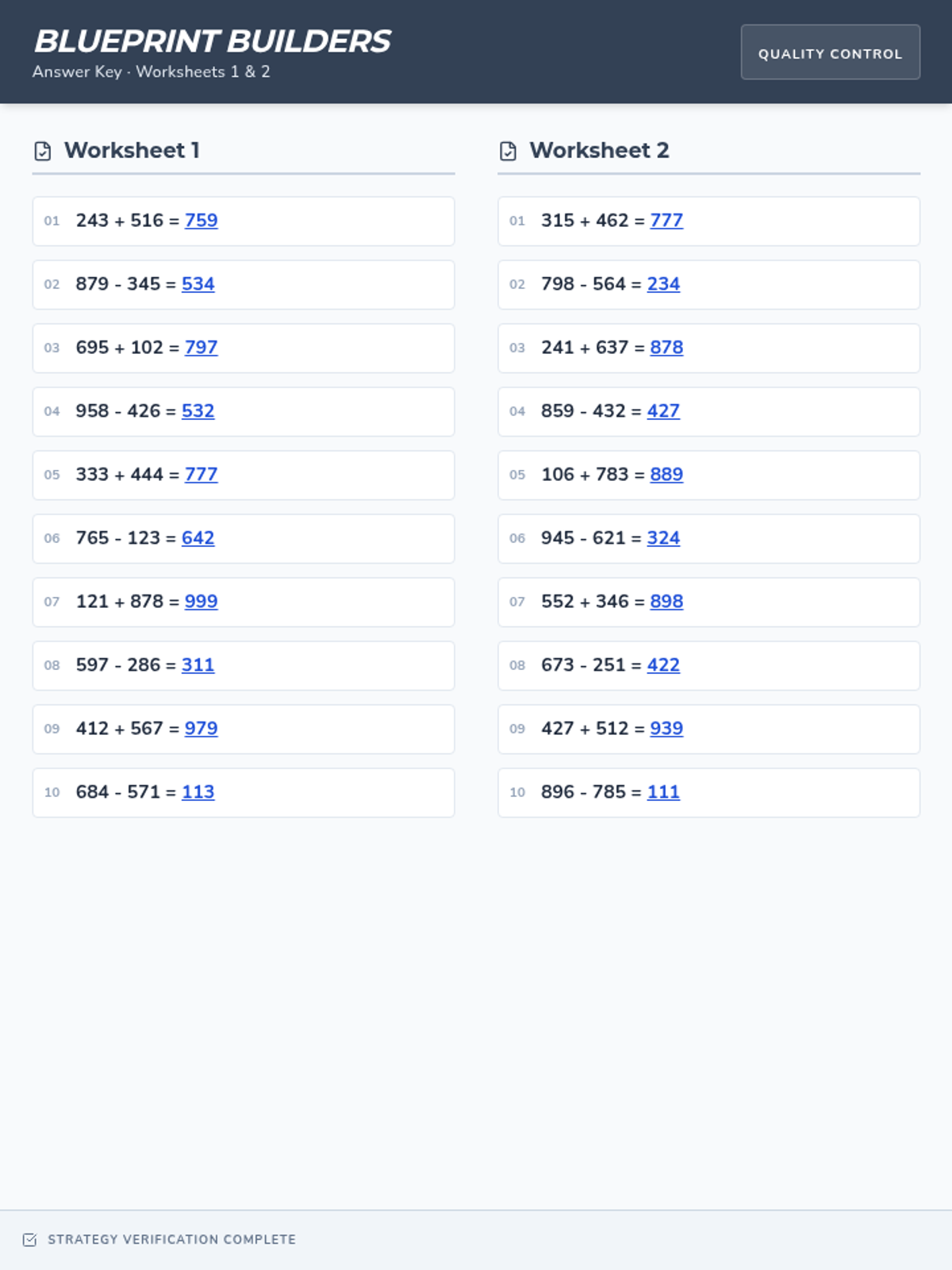
A pair of worksheets focused on three-digit addition and subtraction without regrouping, using number lines as a visual strategy to build mental math and place value understanding.
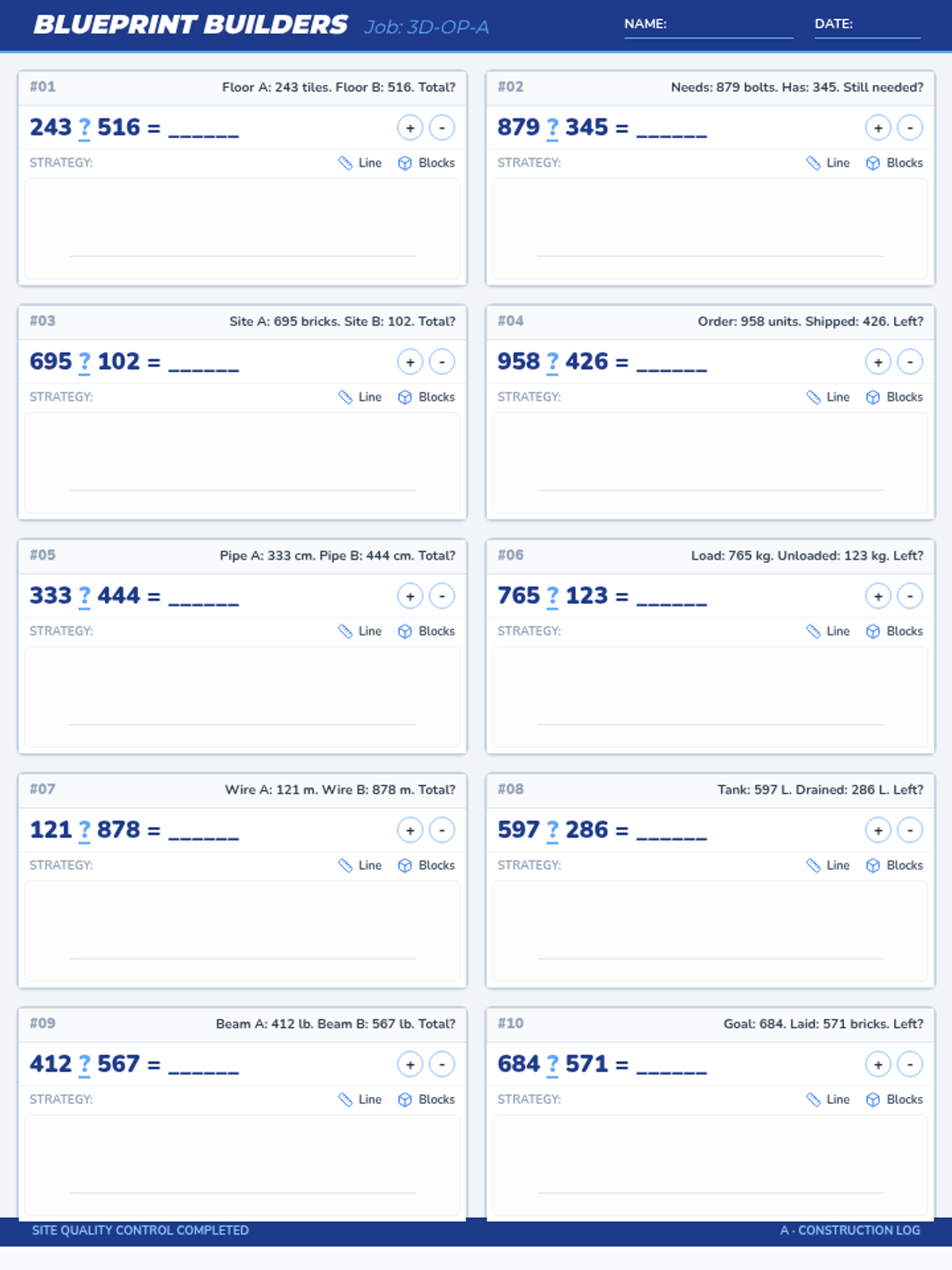
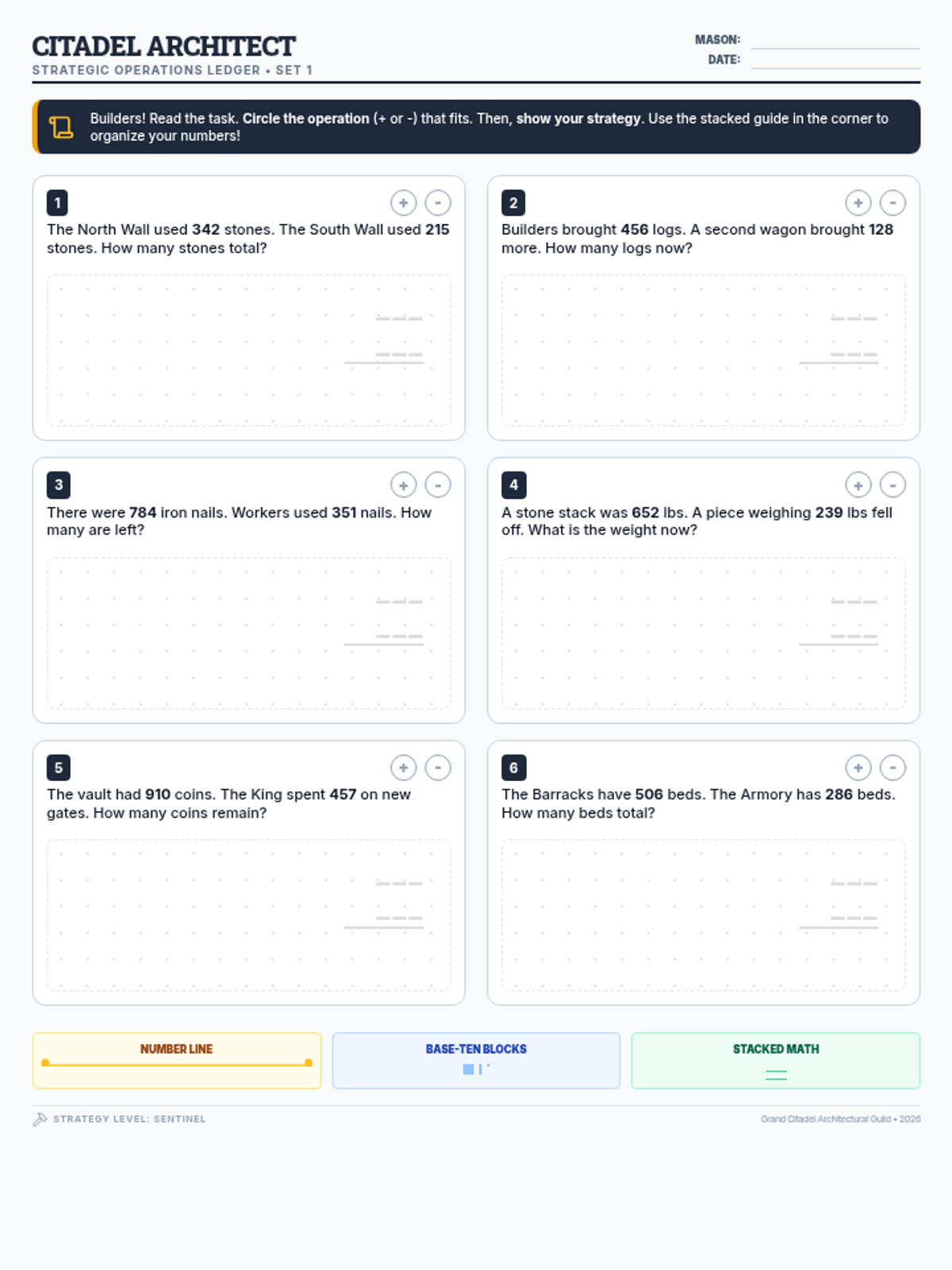
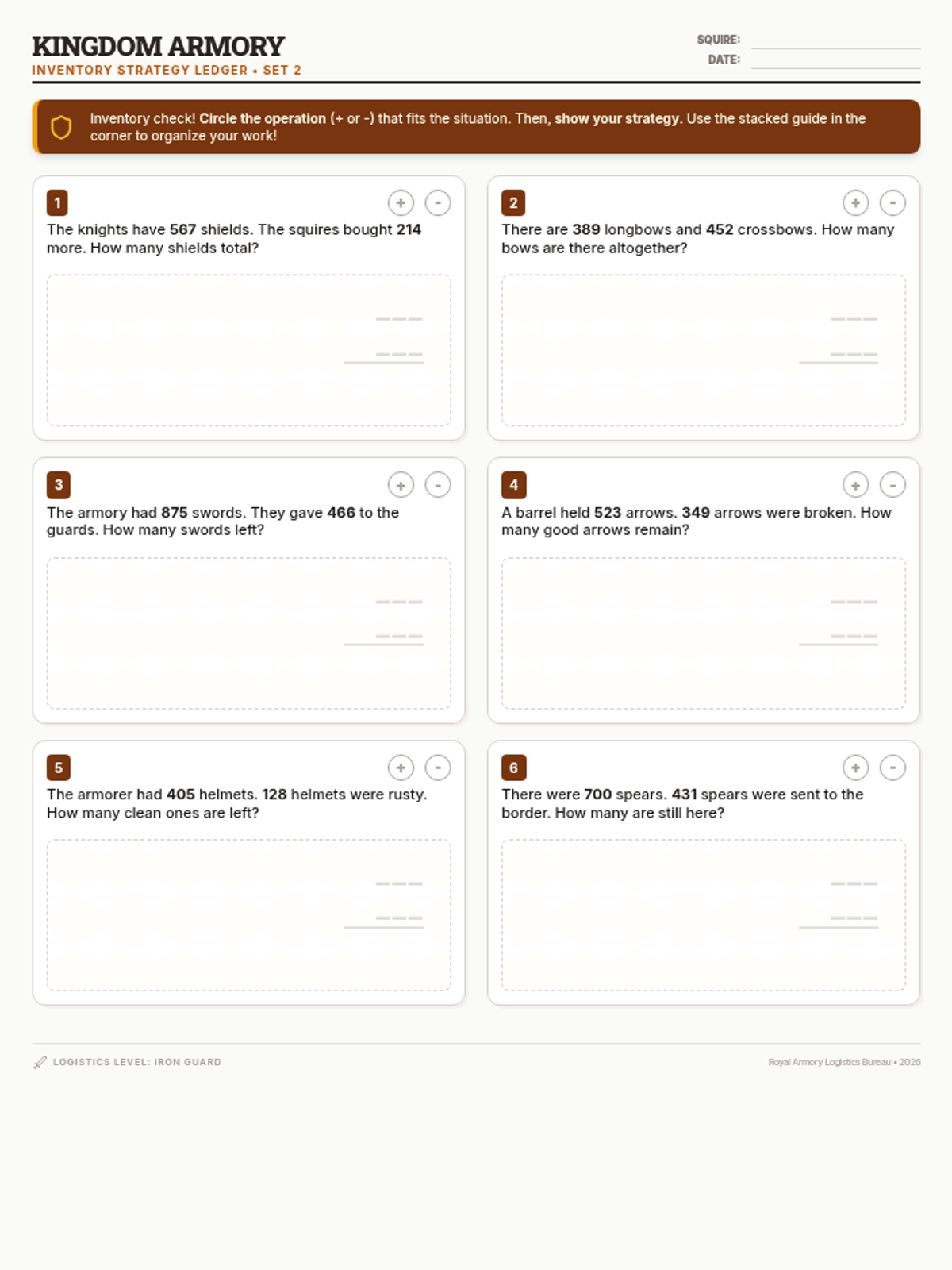
A set of worksheets focused on three-digit addition and subtraction without regrouping, emphasizing operation selection and strategy use.
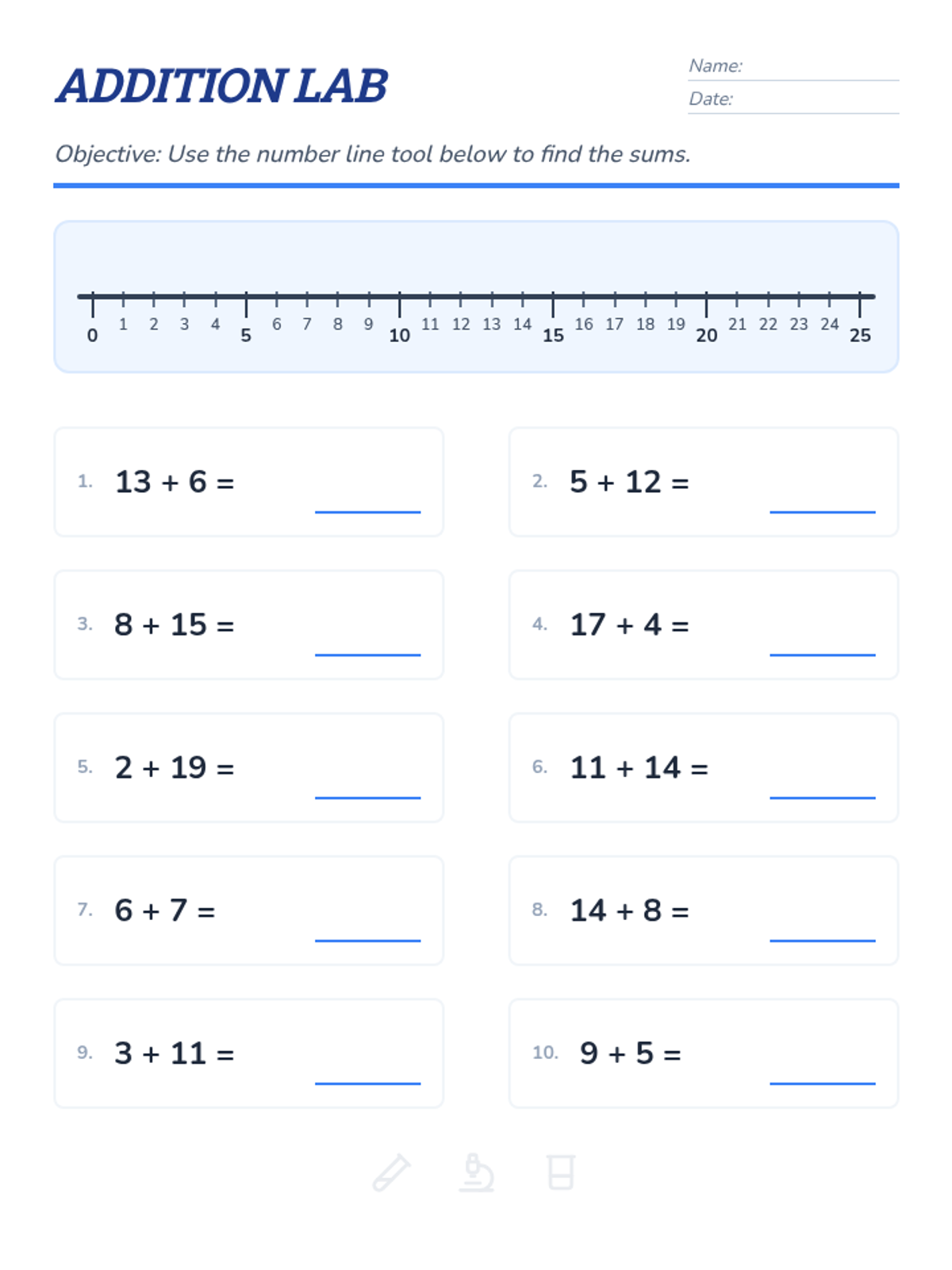
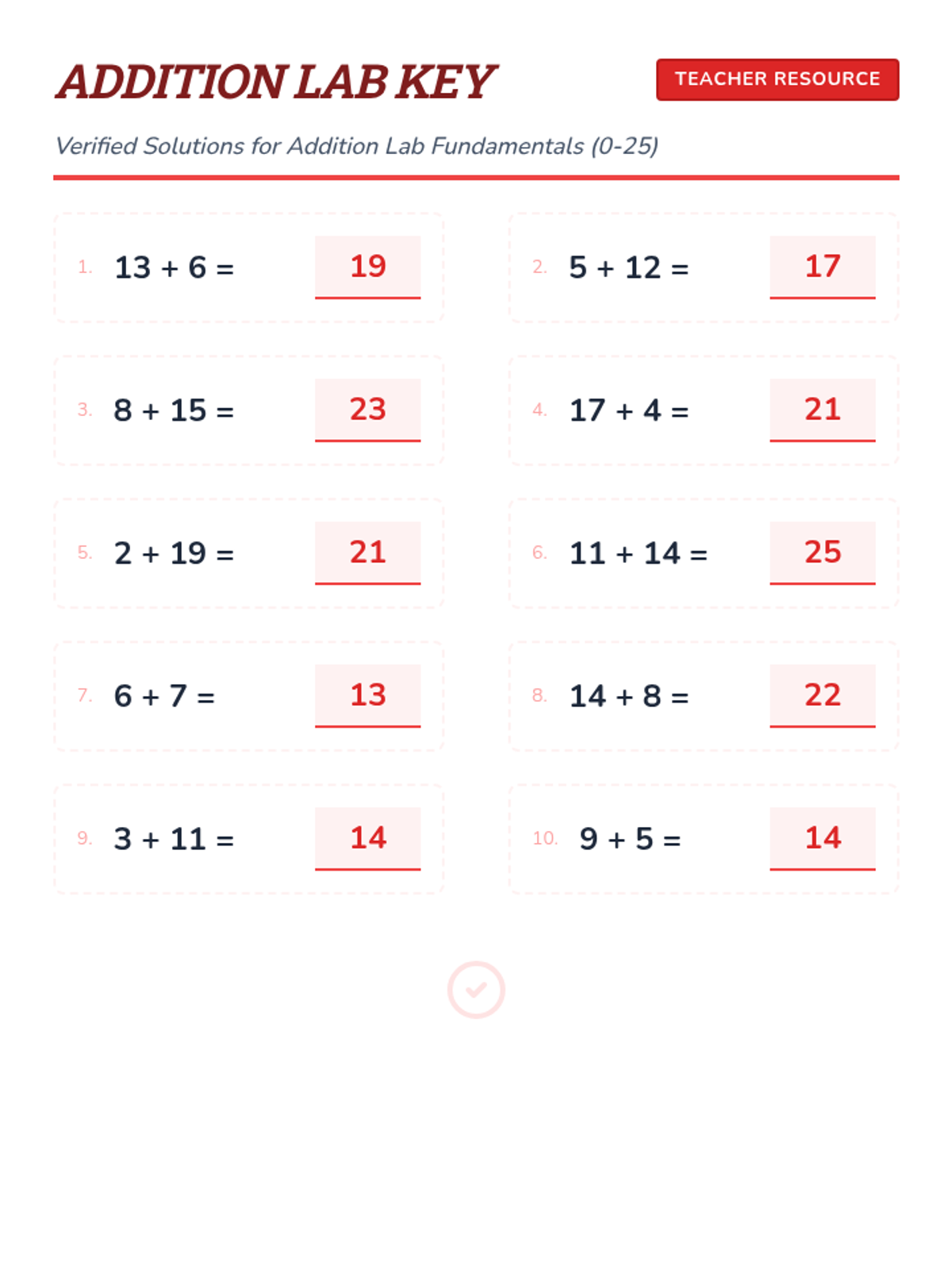
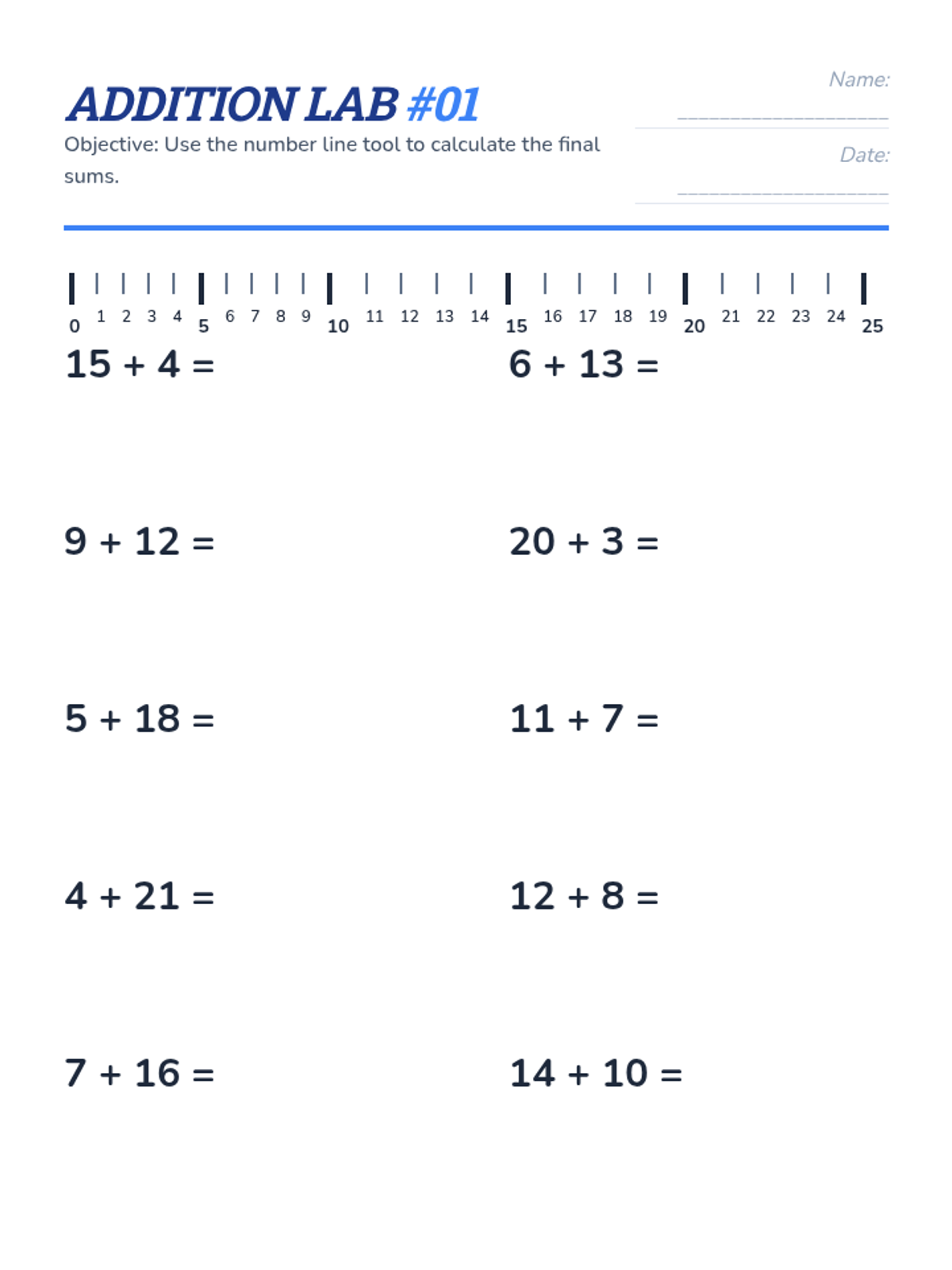
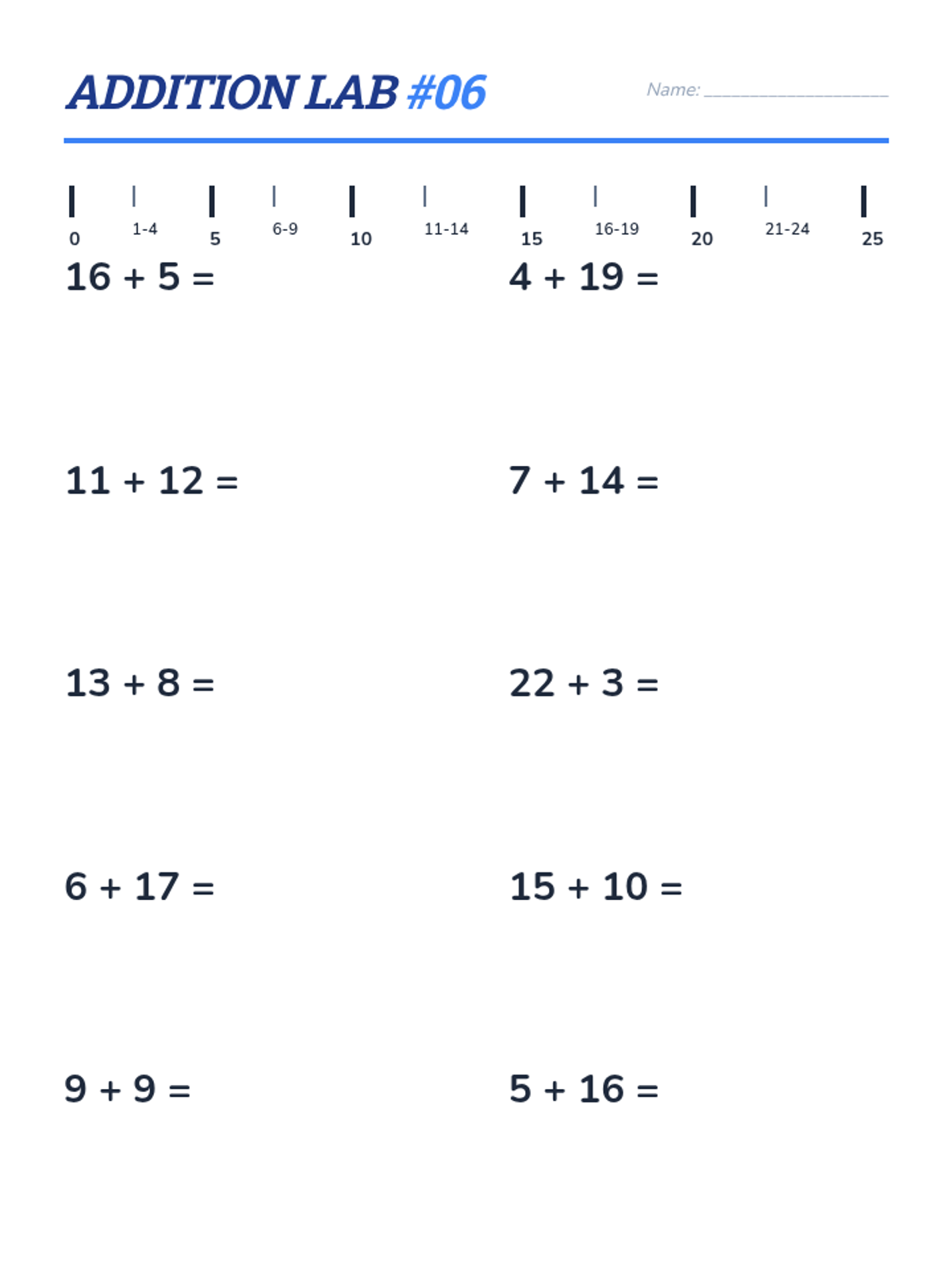
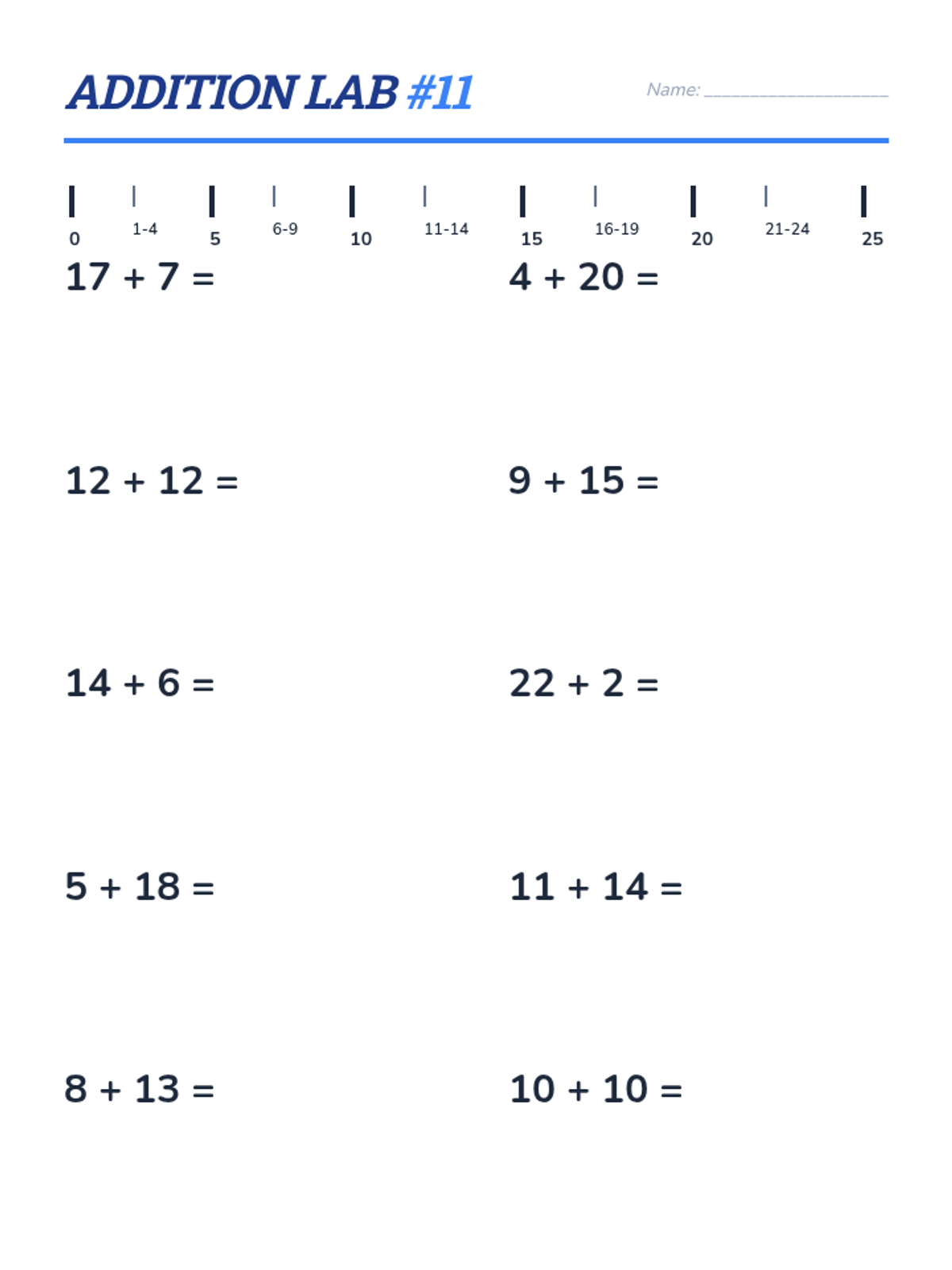
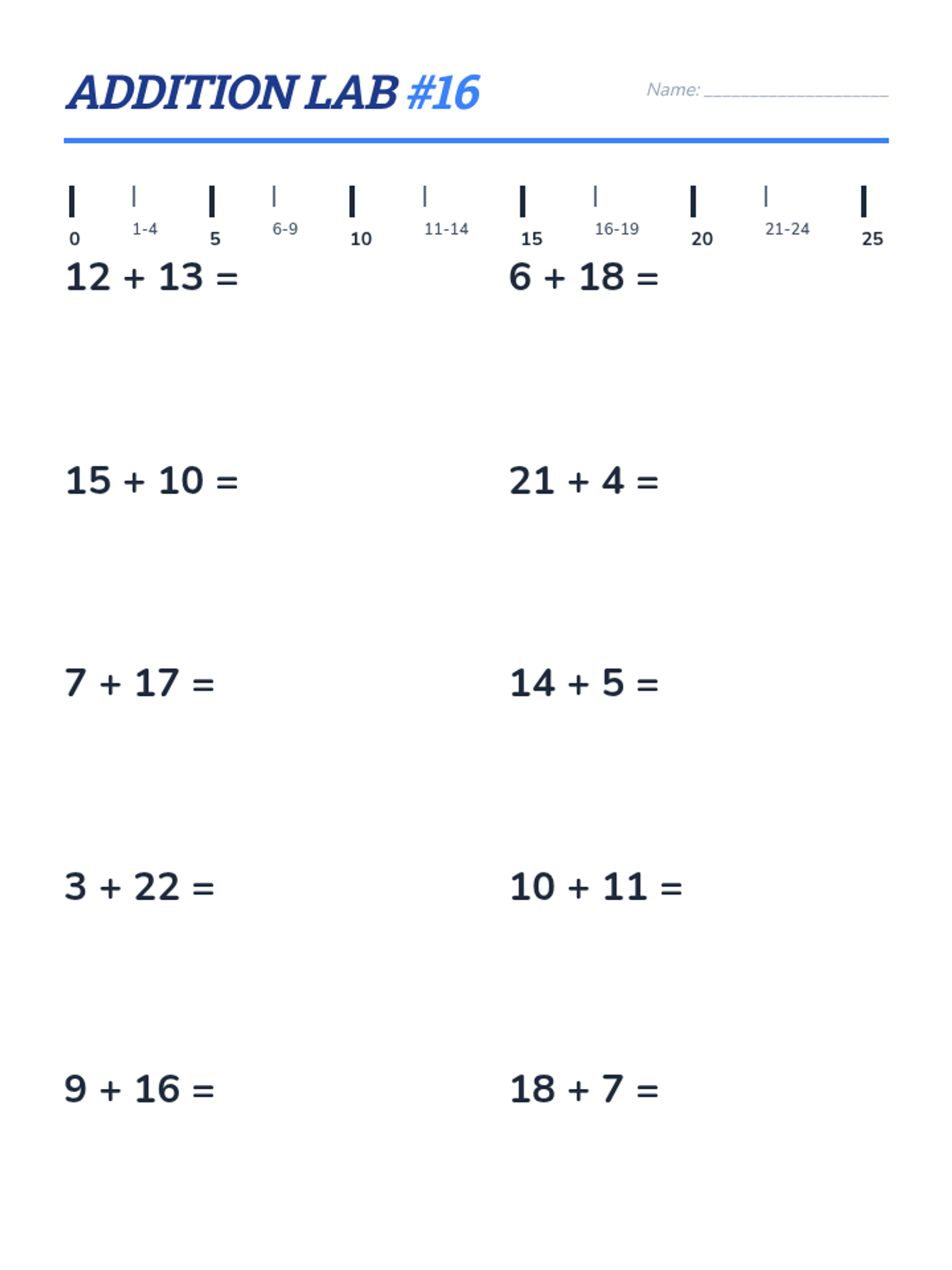
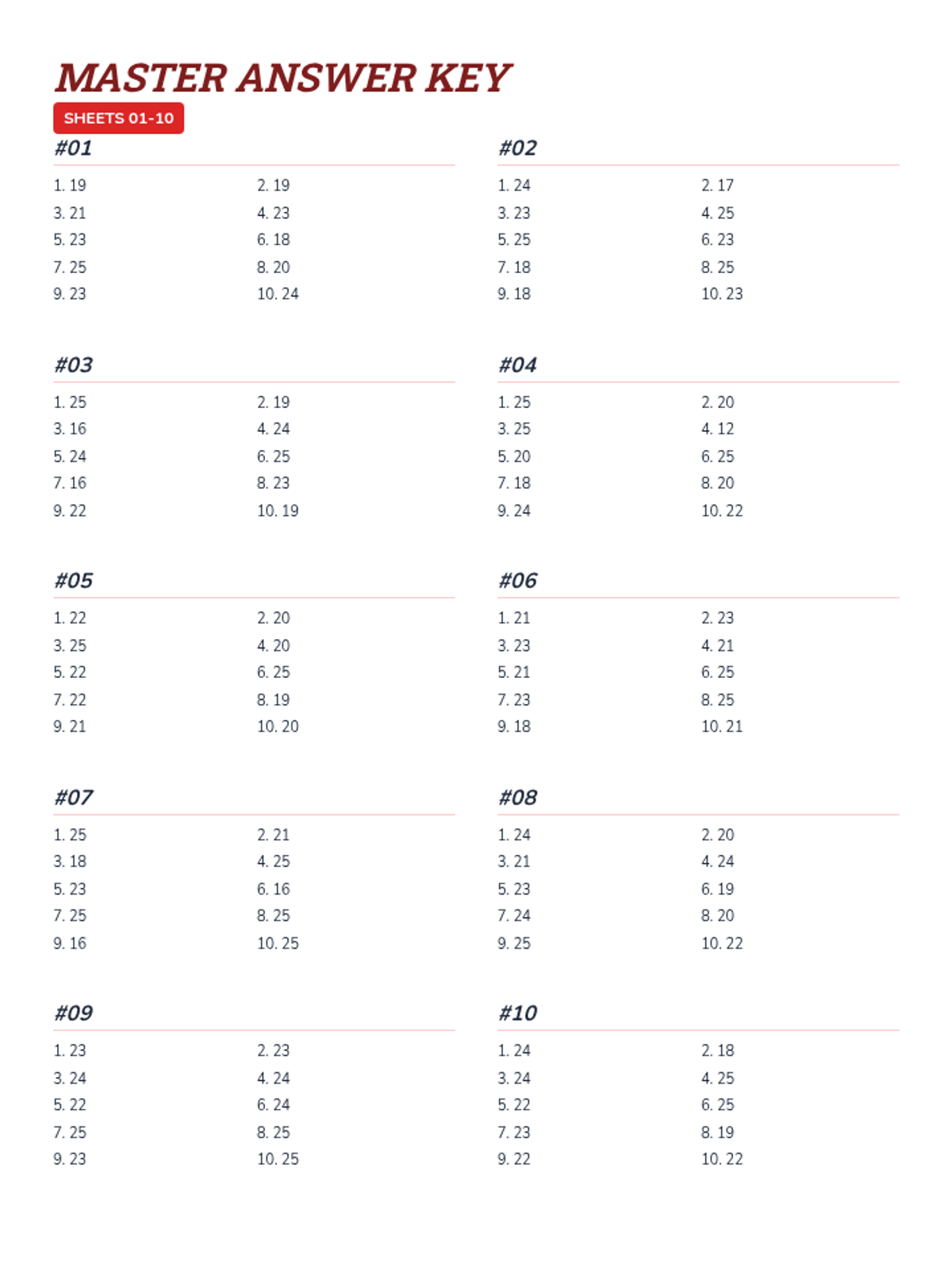
A foundational lesson focusing on addition within the 0-25 range using a number line as a reference tool. Students practice mental math and linear counting to solve ten mixed addition problems.
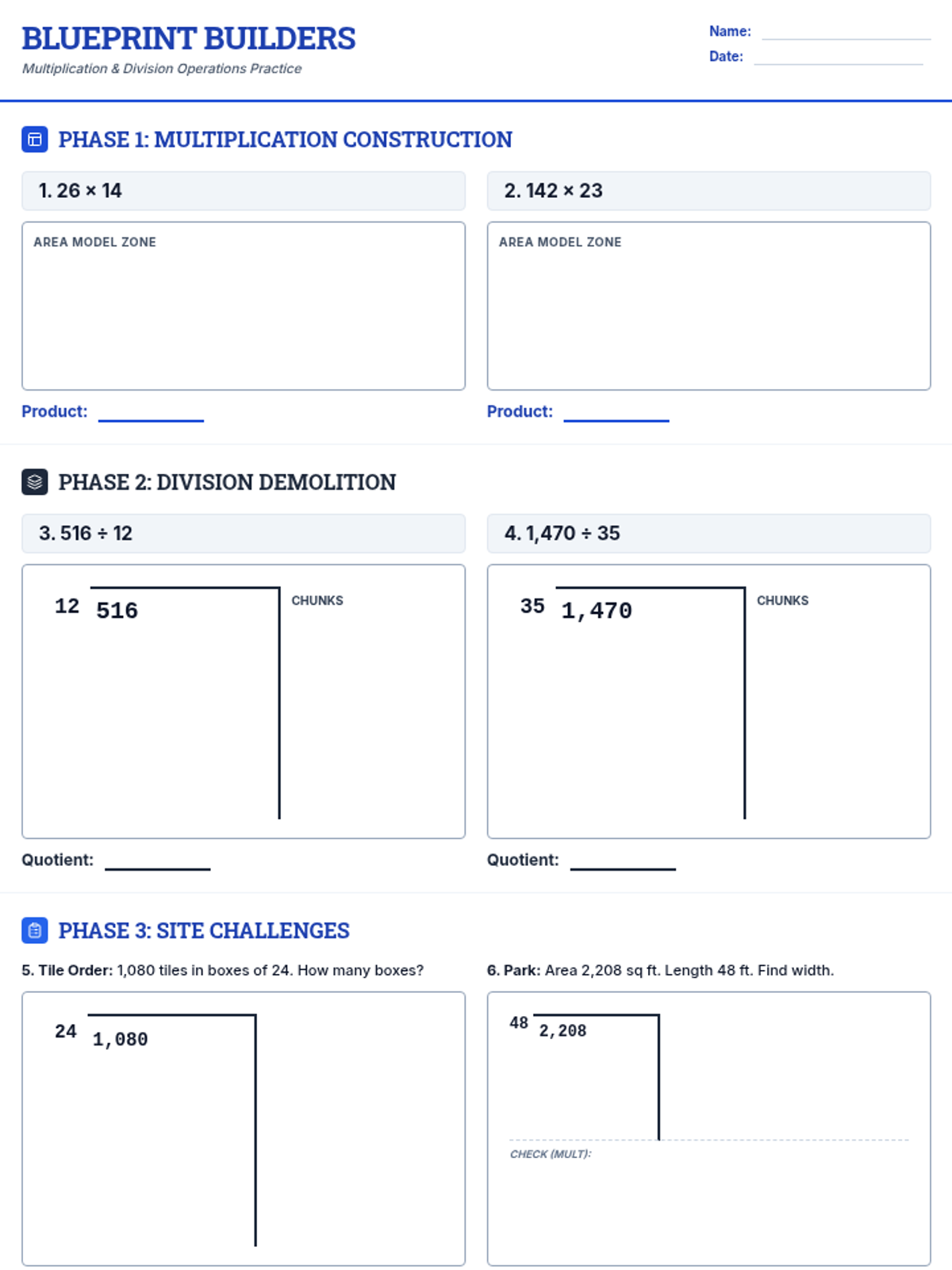
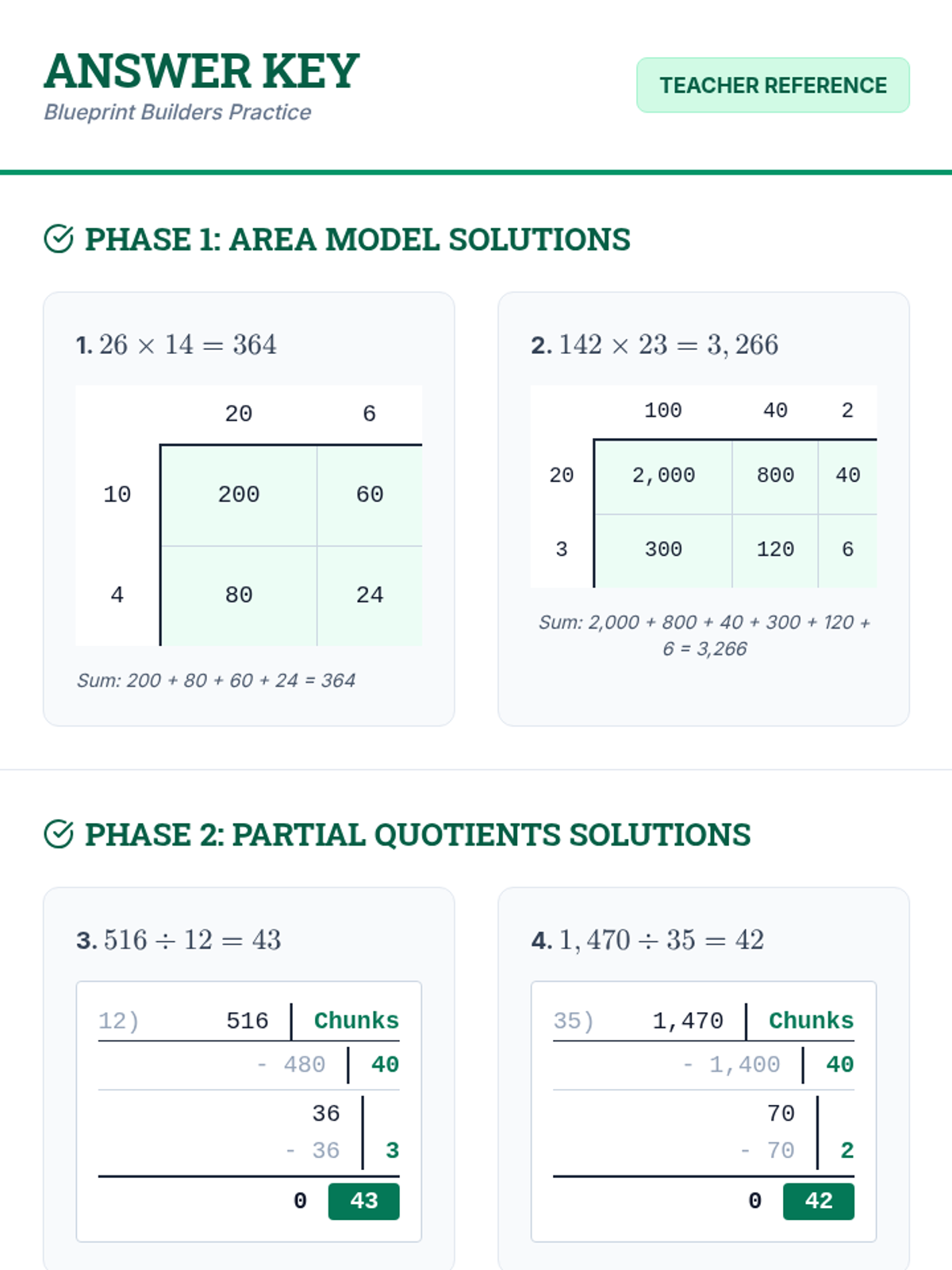
A comprehensive lesson on multi-digit multiplication and division using area models and partial quotients, highlighting the inverse relationship between these operations.
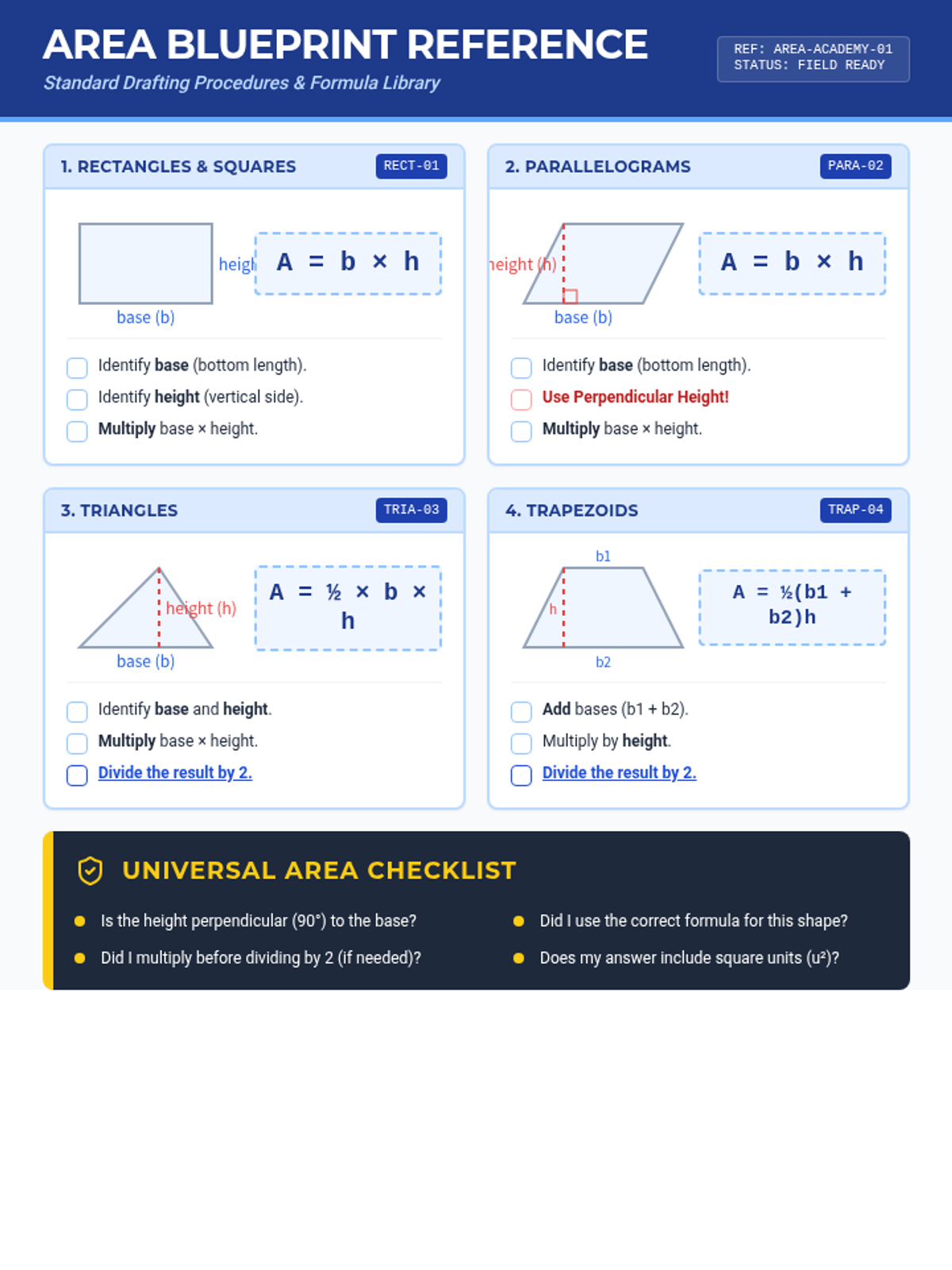
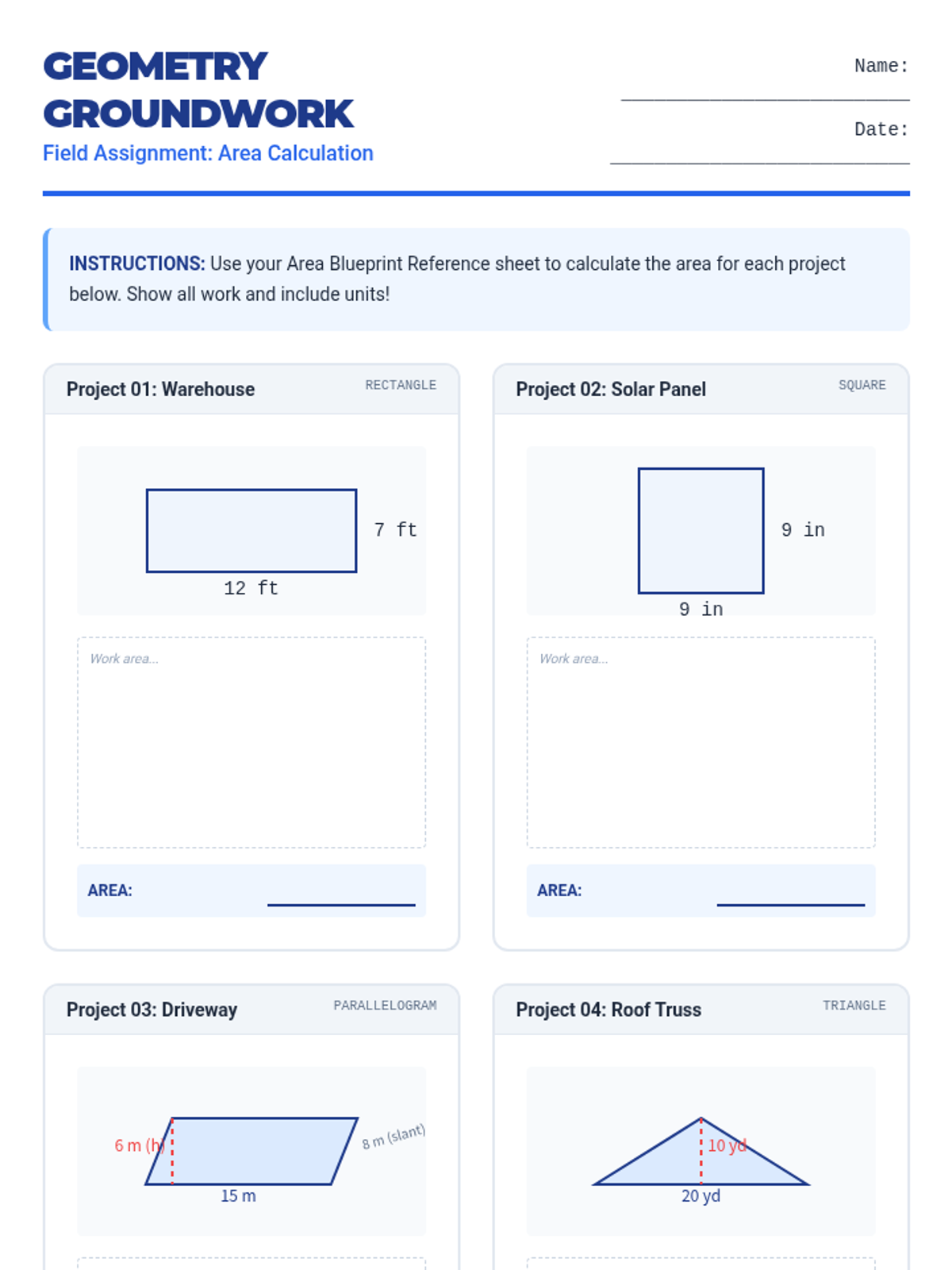
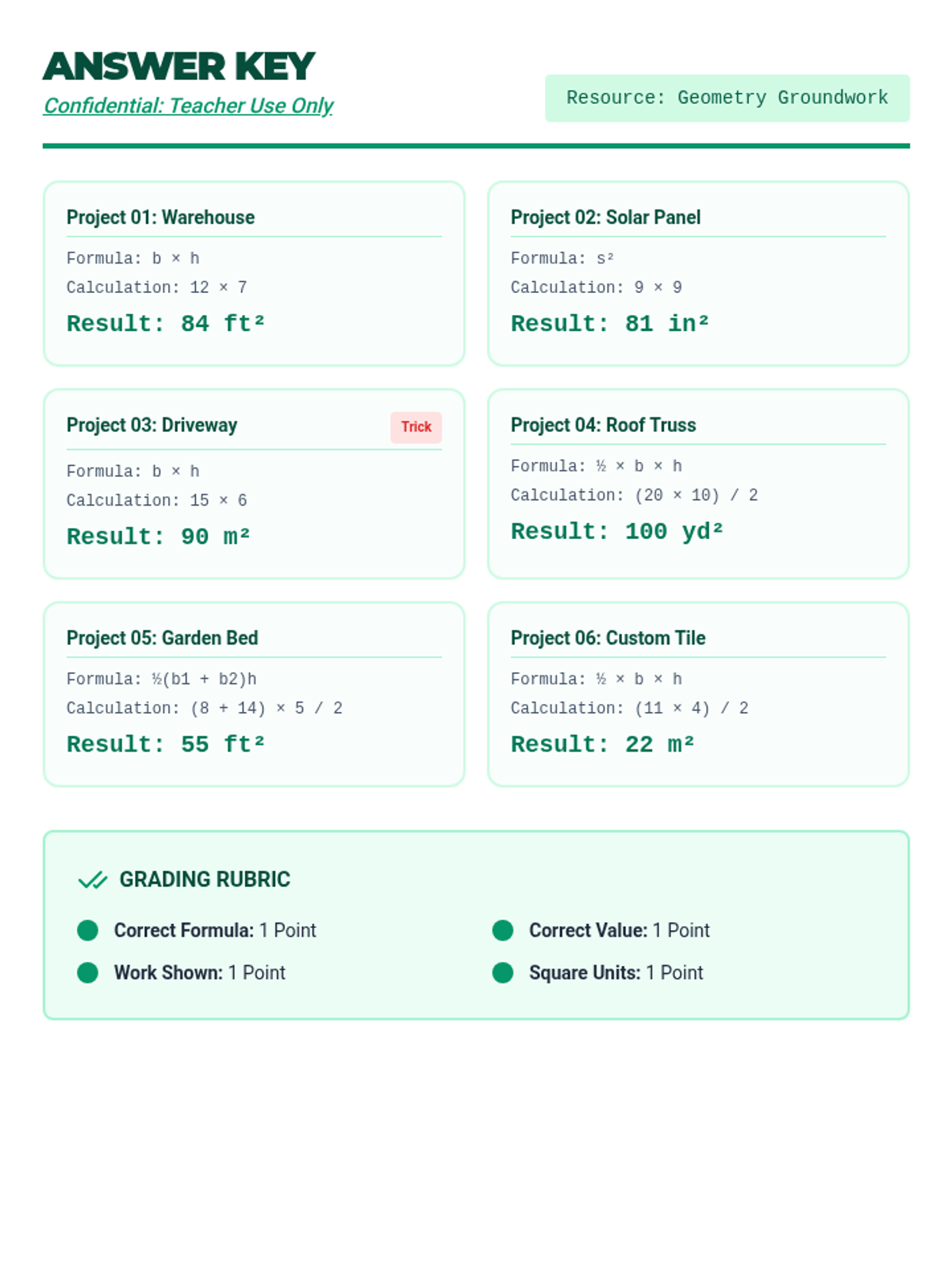
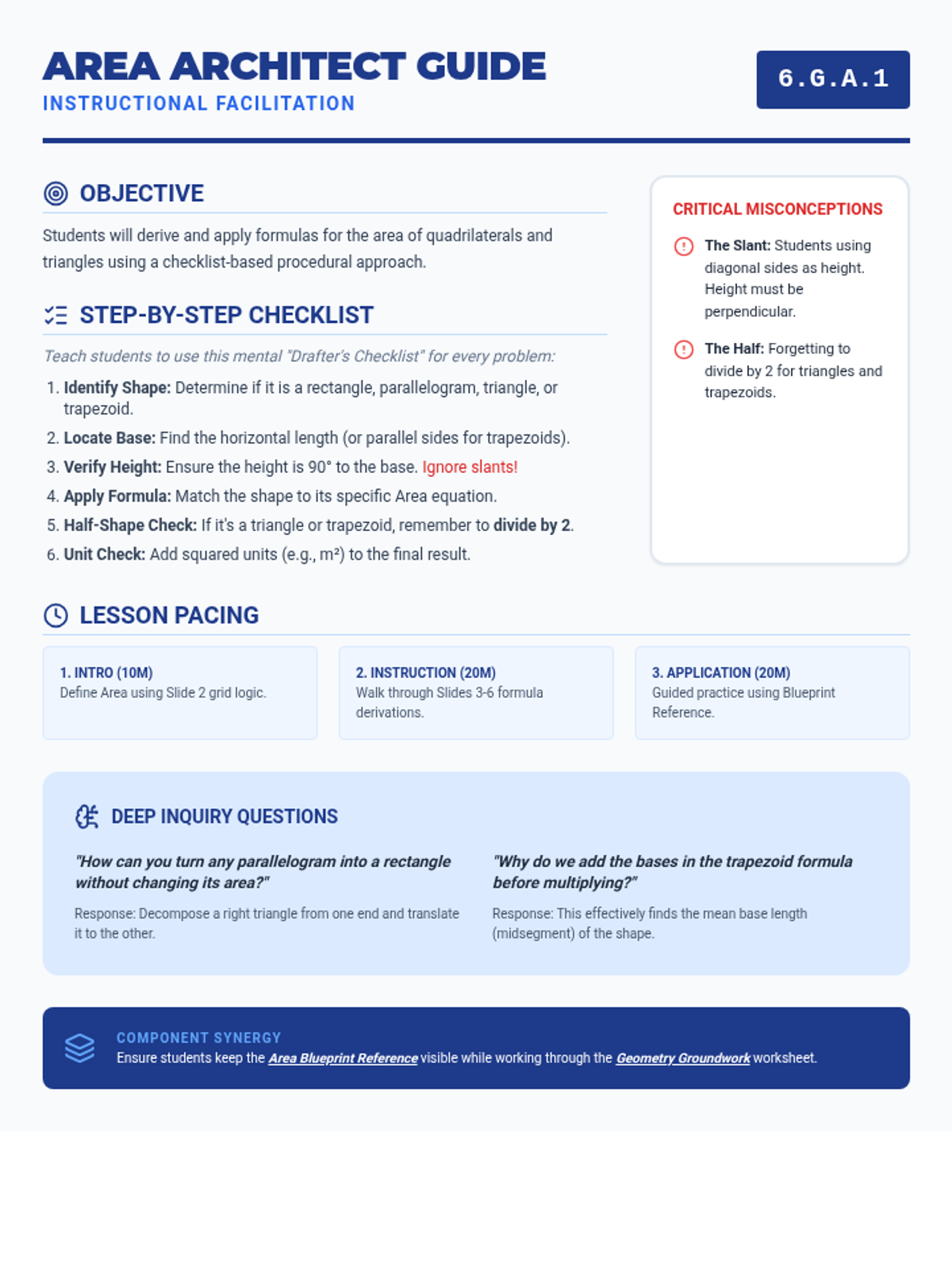
Students will learn to identify base and height dimensions and apply formulas to find the area of various quadrilaterals and triangles using step-by-step checklists.
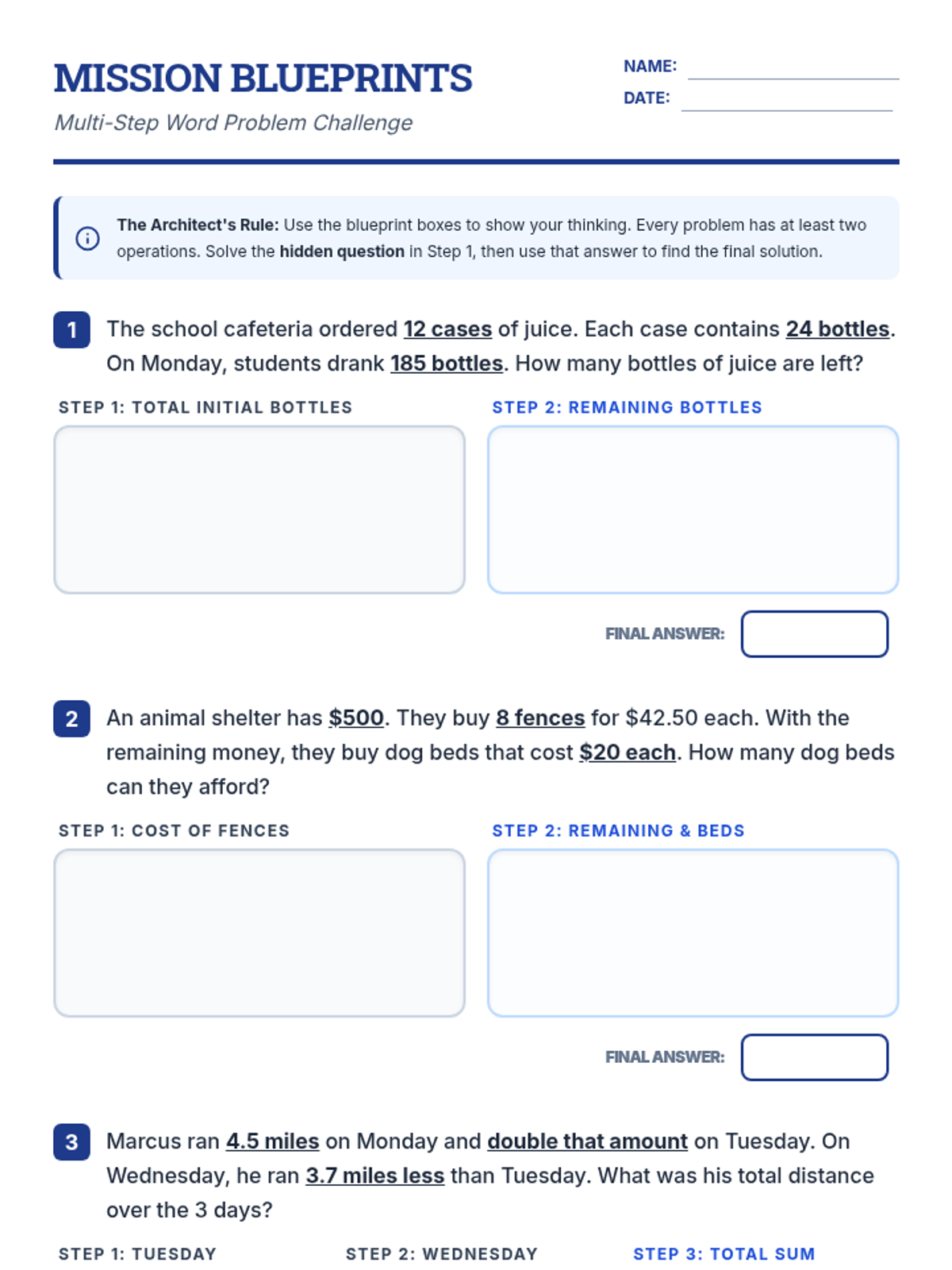
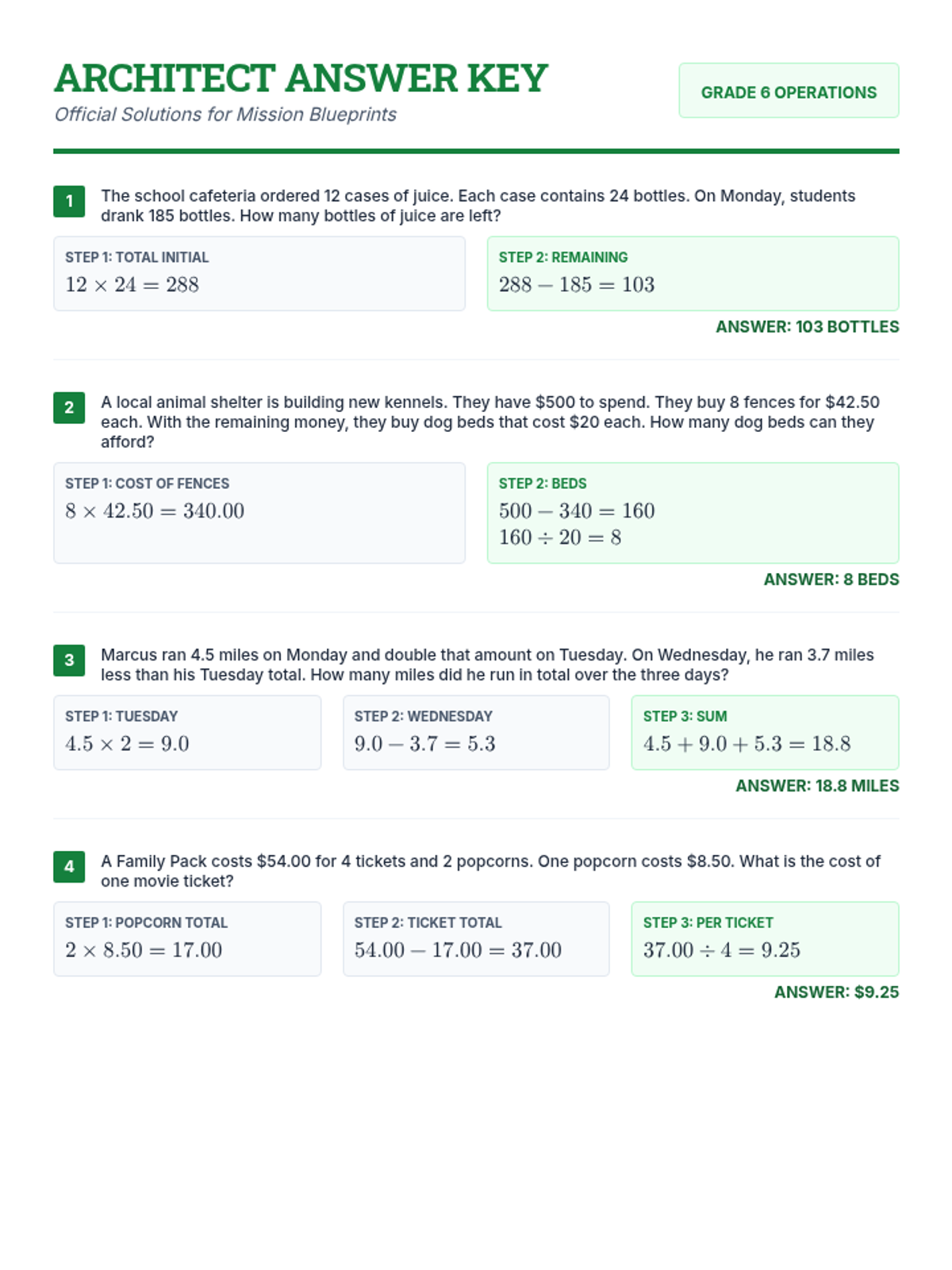
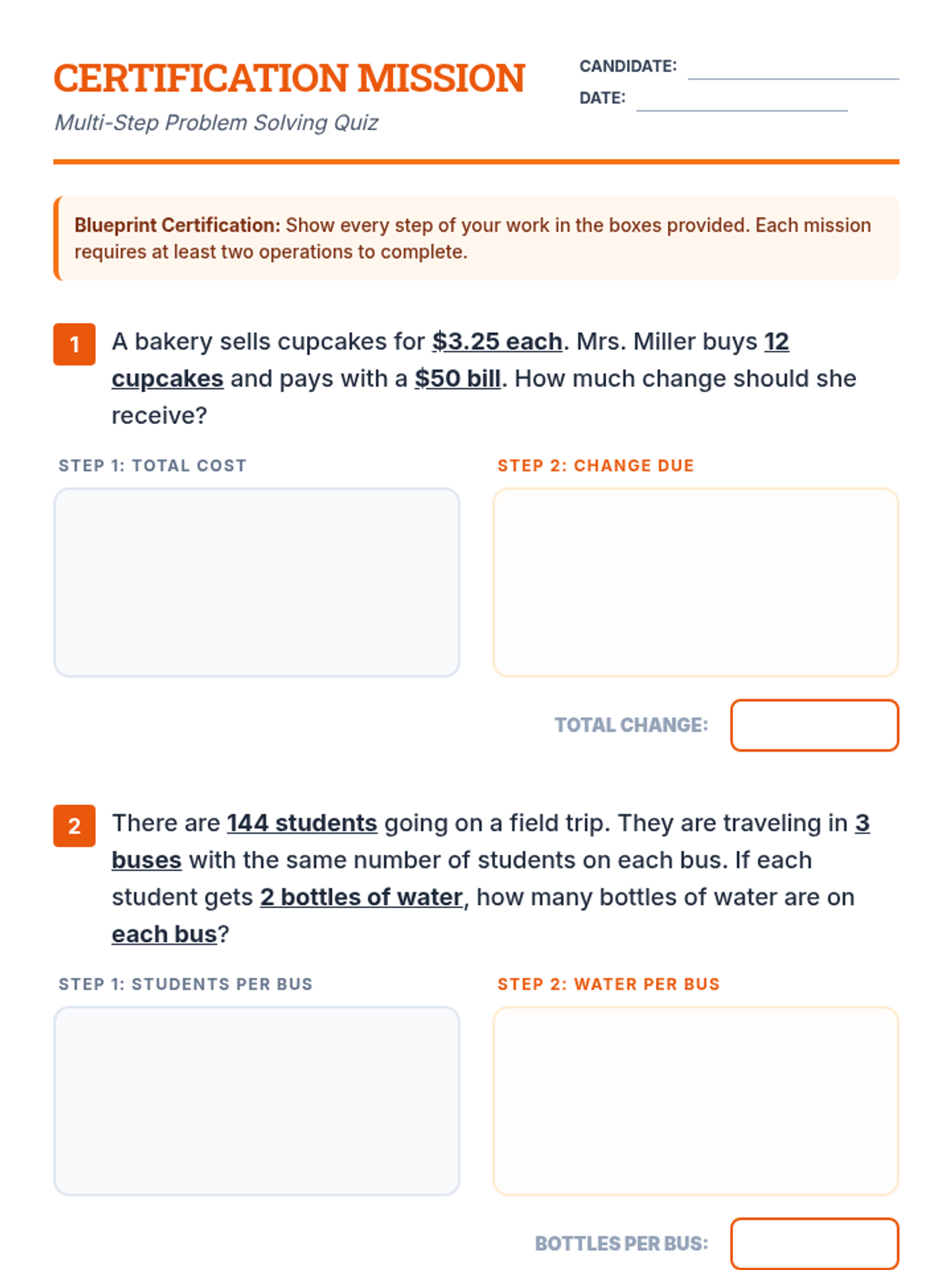
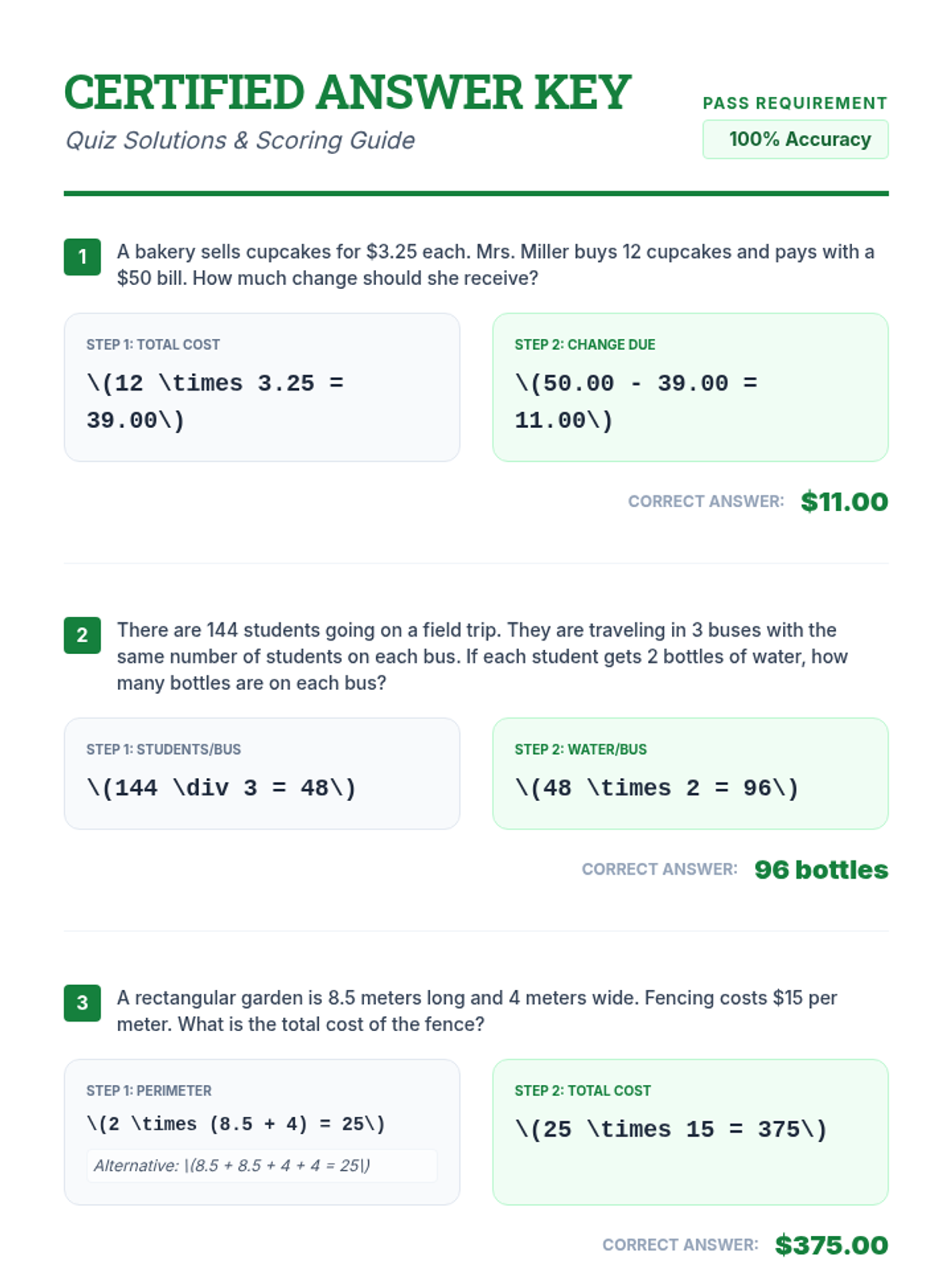
Students learn to use graphic organizer 'blueprints' to decompose multi-step word problems involving addition, subtraction, multiplication, and division into manageable steps.
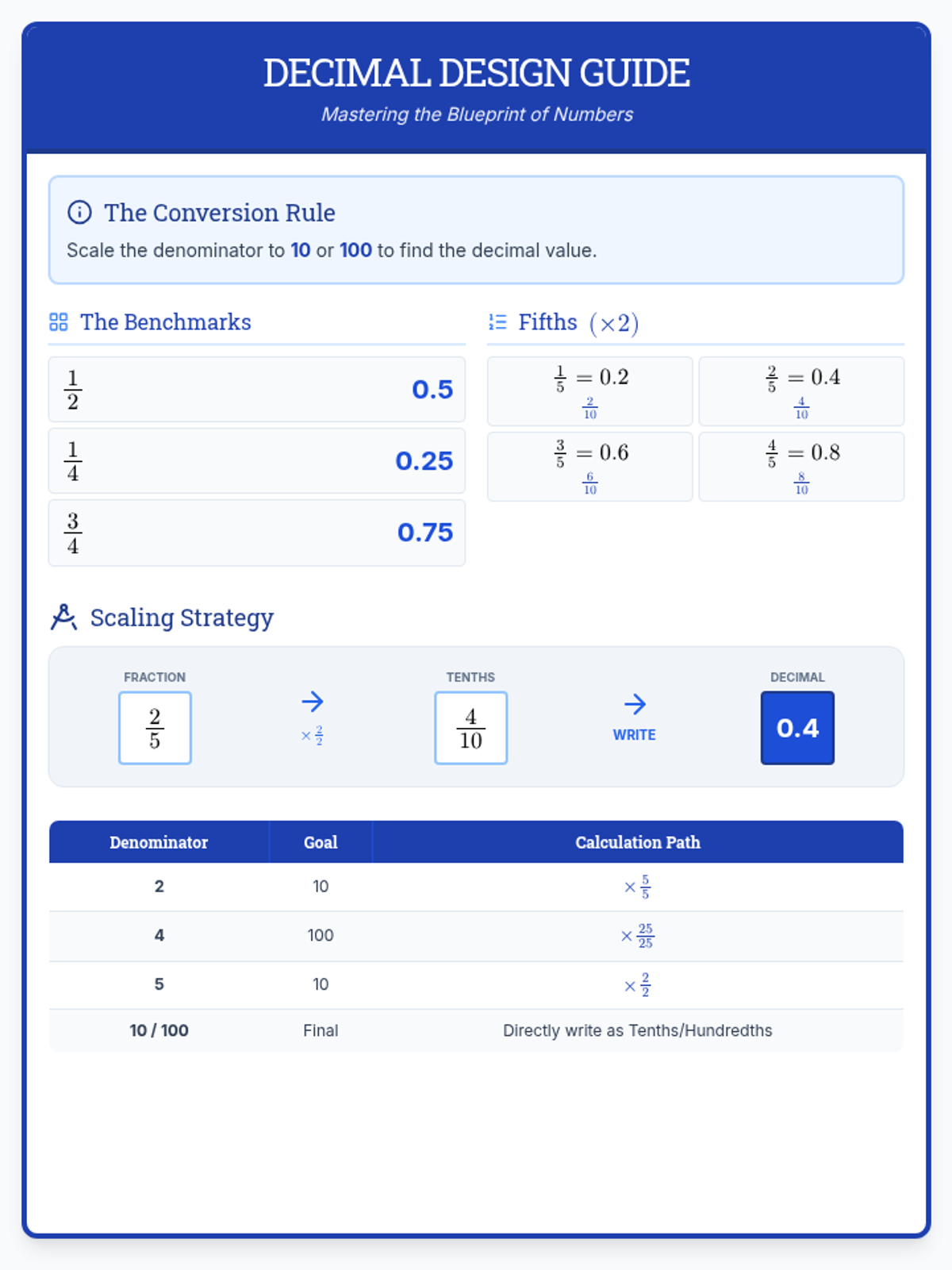
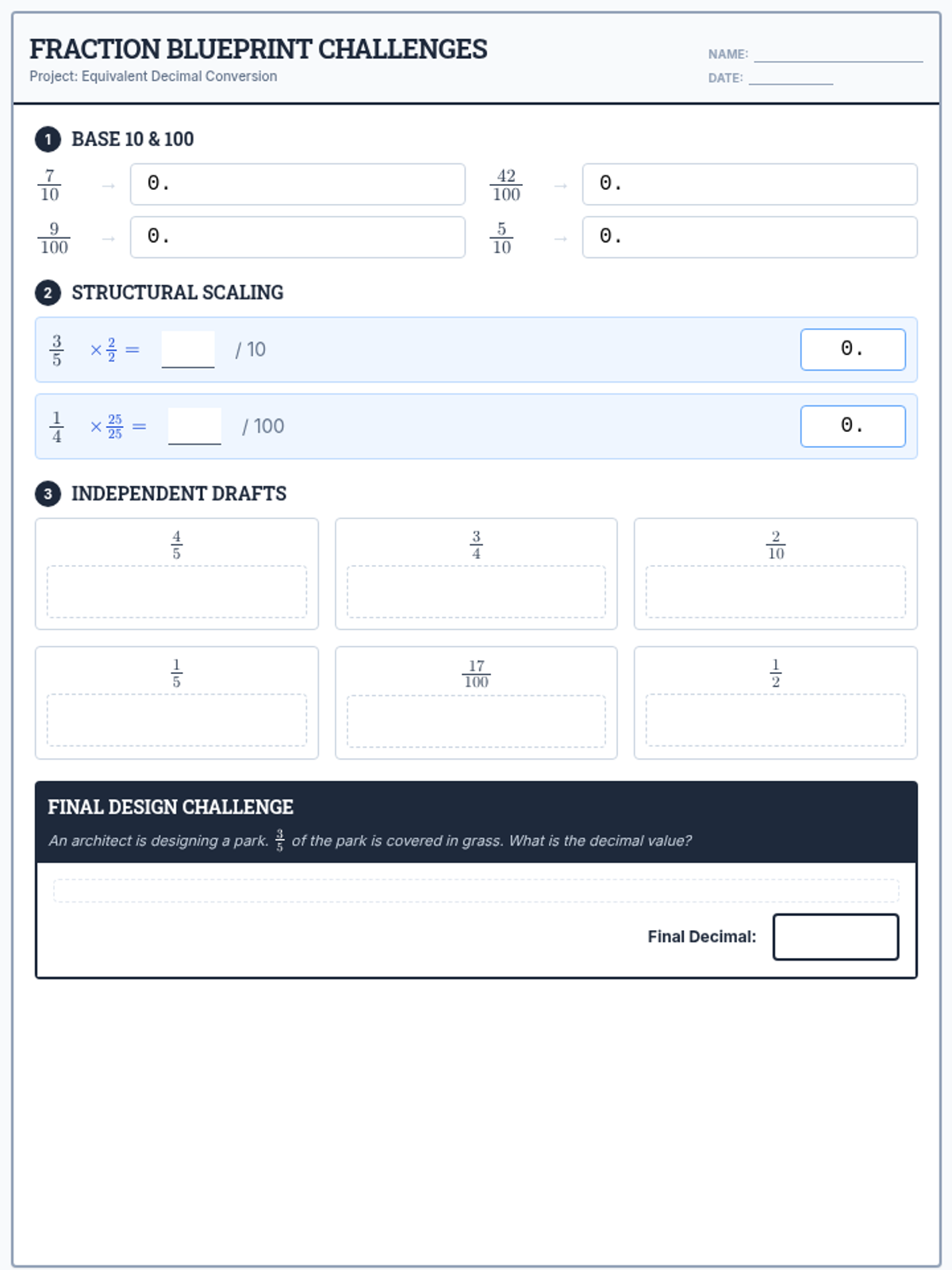
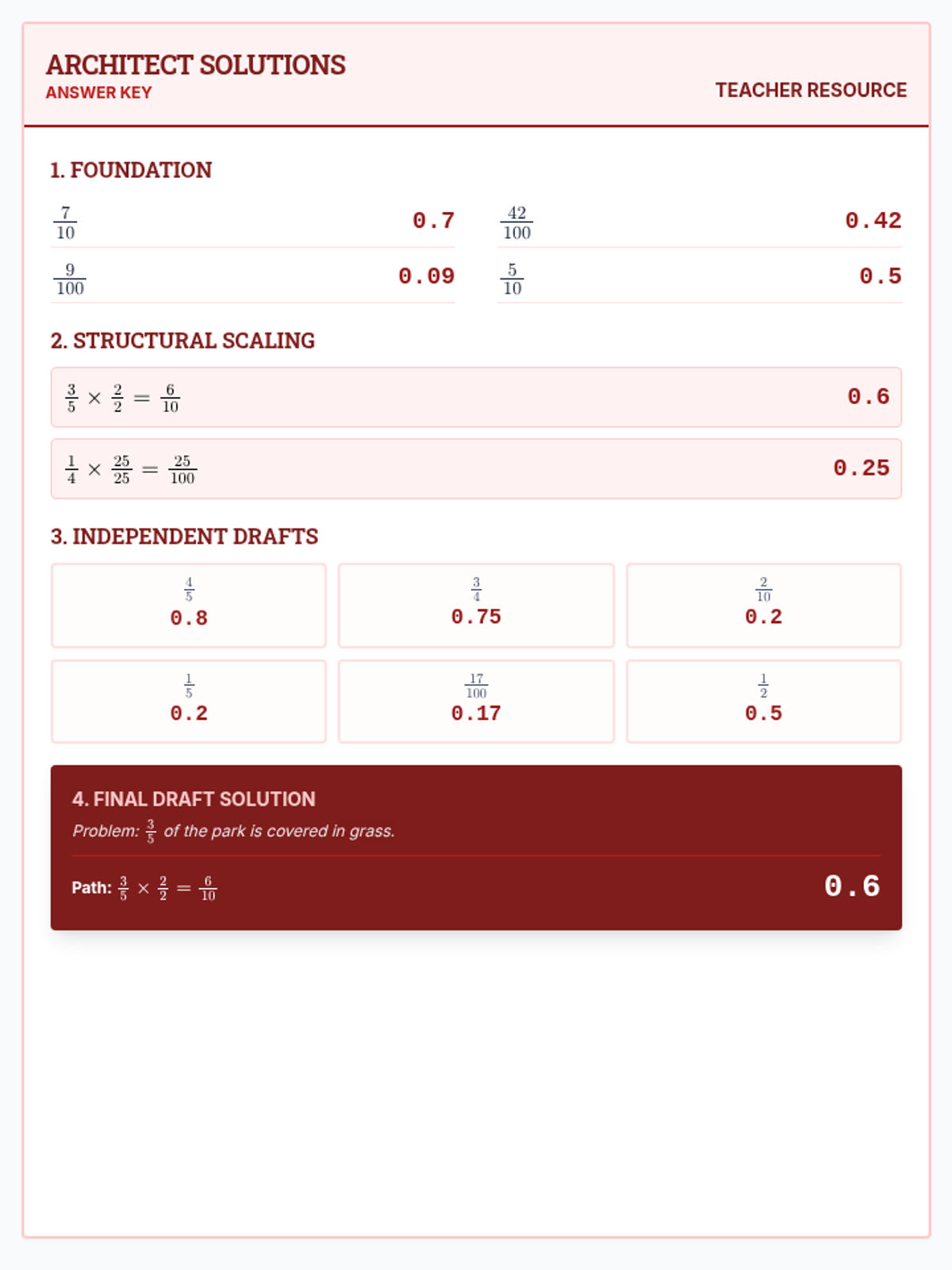
A focused lesson on converting common fractions with denominators of 2, 4, 5, 10, and 100 into their decimal equivalents through visual models and scaling strategies.
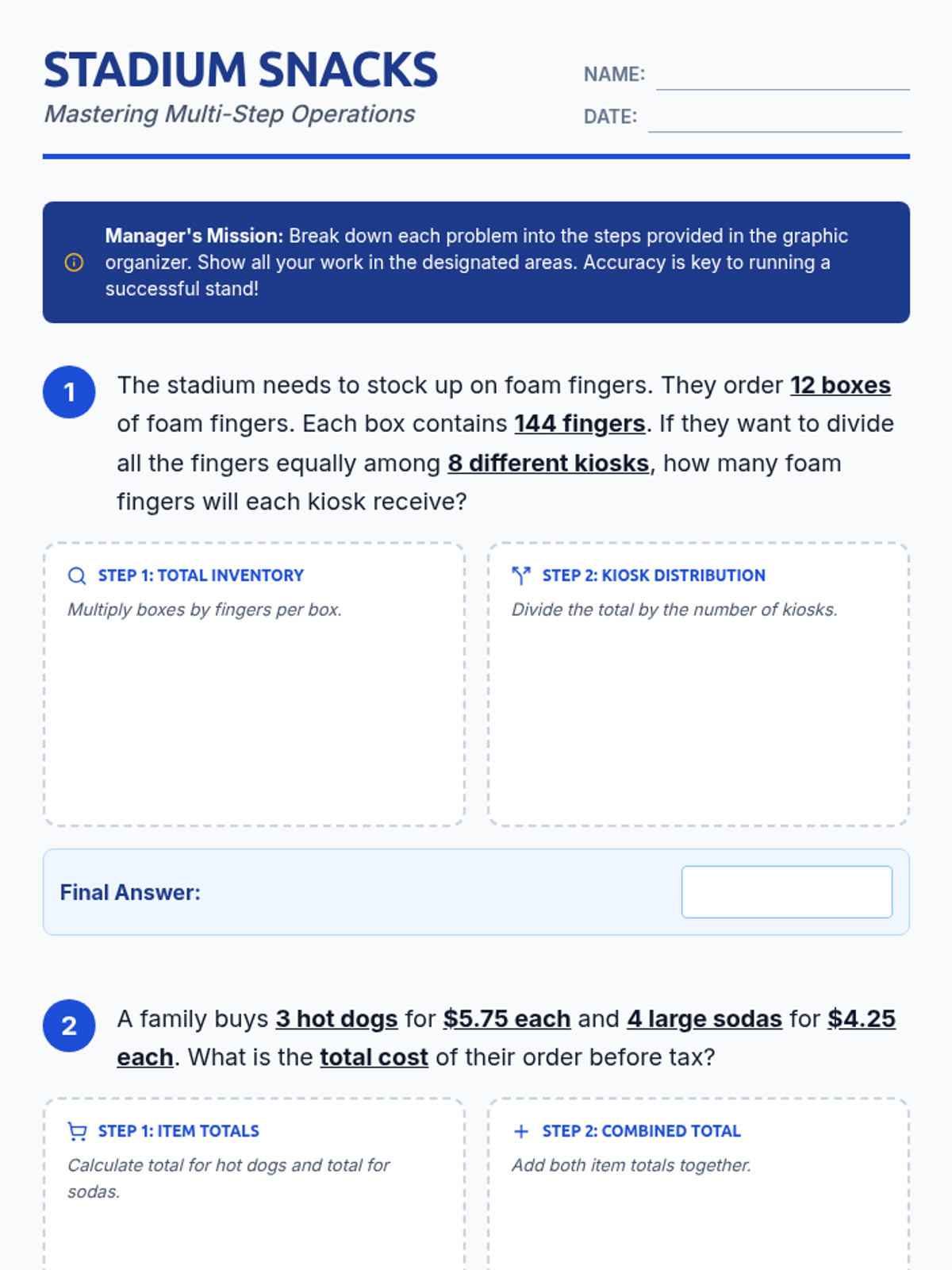
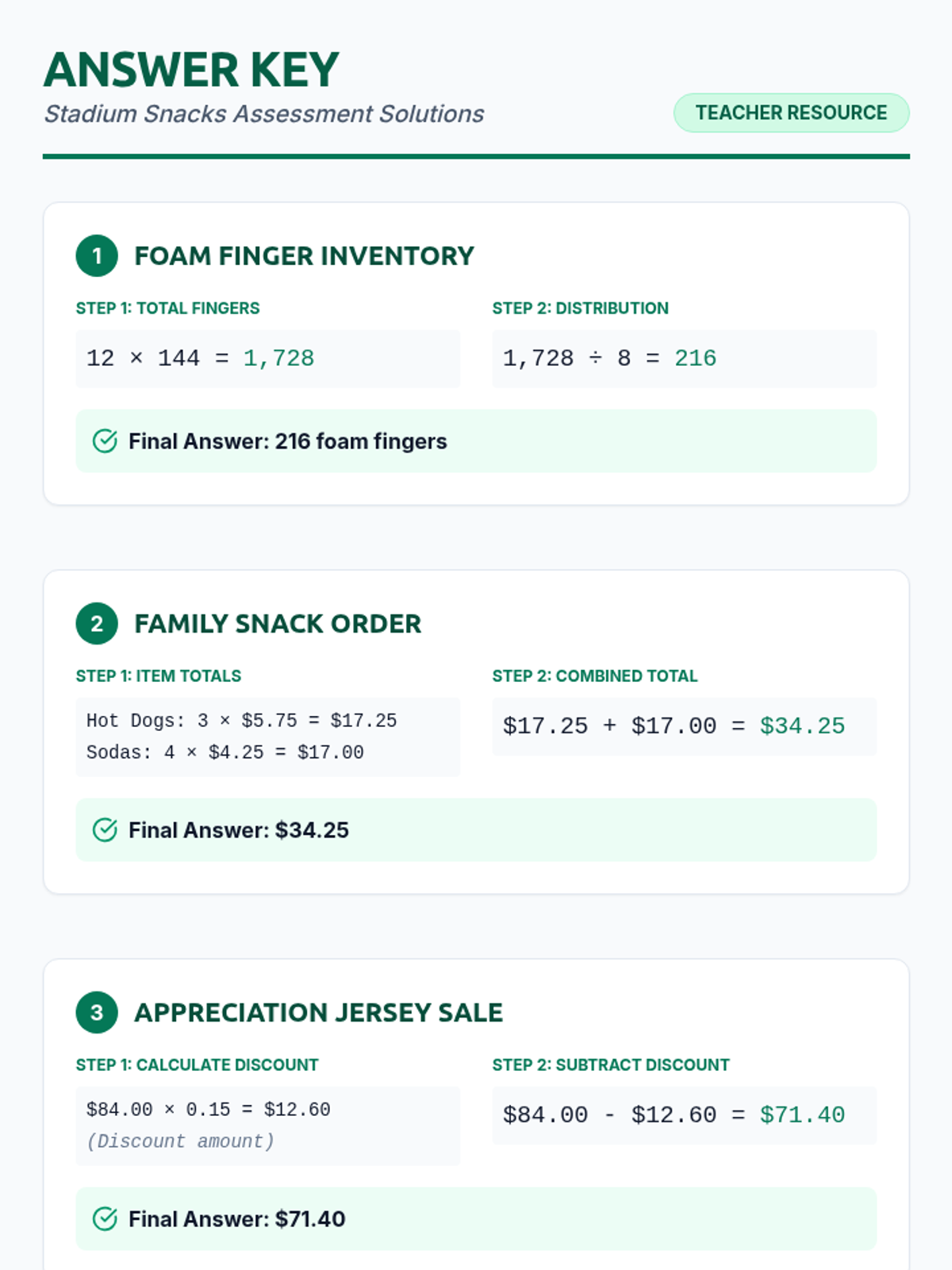
A multi-step math assessment focused on decimals, percentages, and whole number operations within a stadium concession stand theme. Students use graphic organizers to break down complex problems into manageable steps.
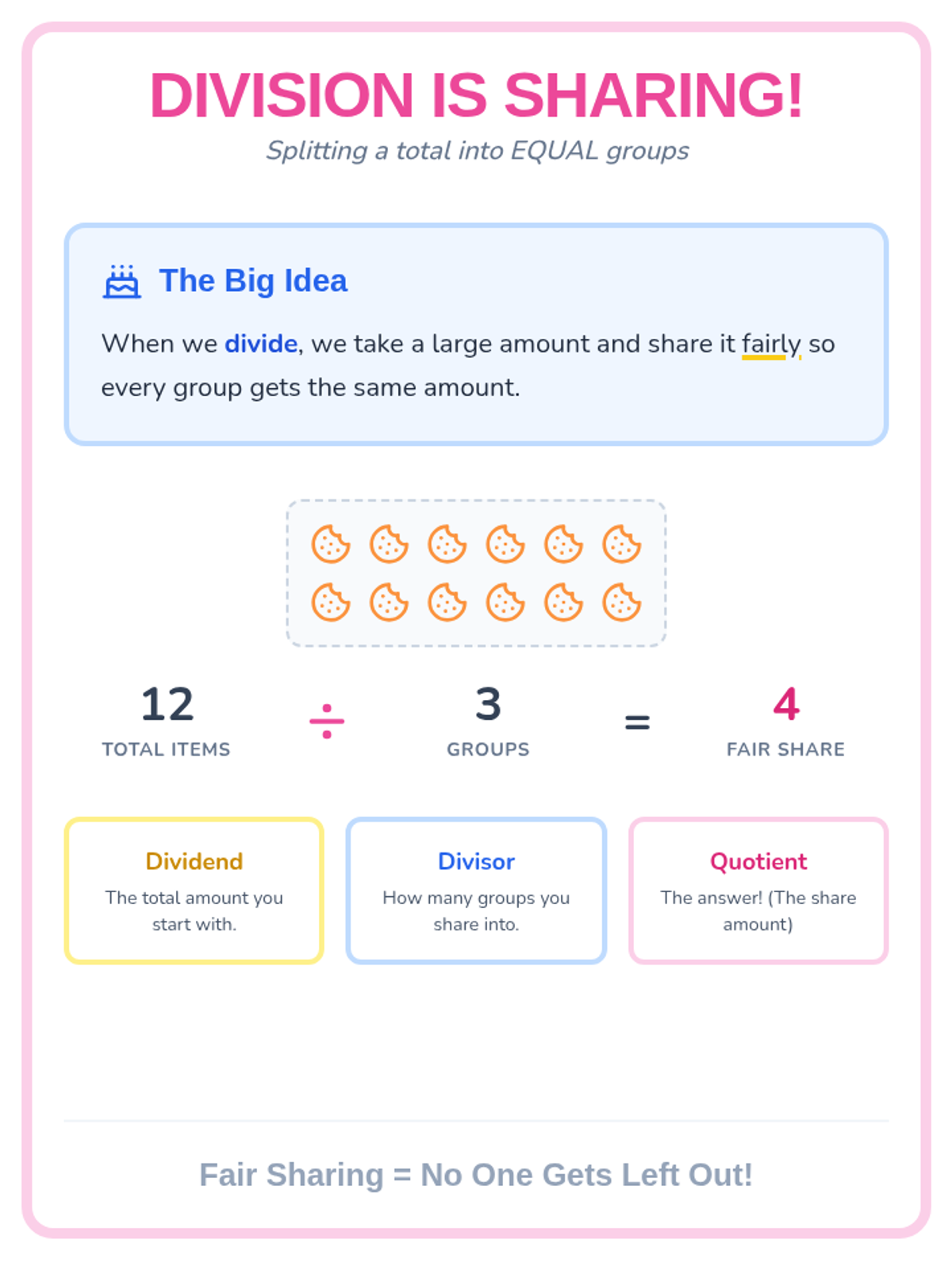
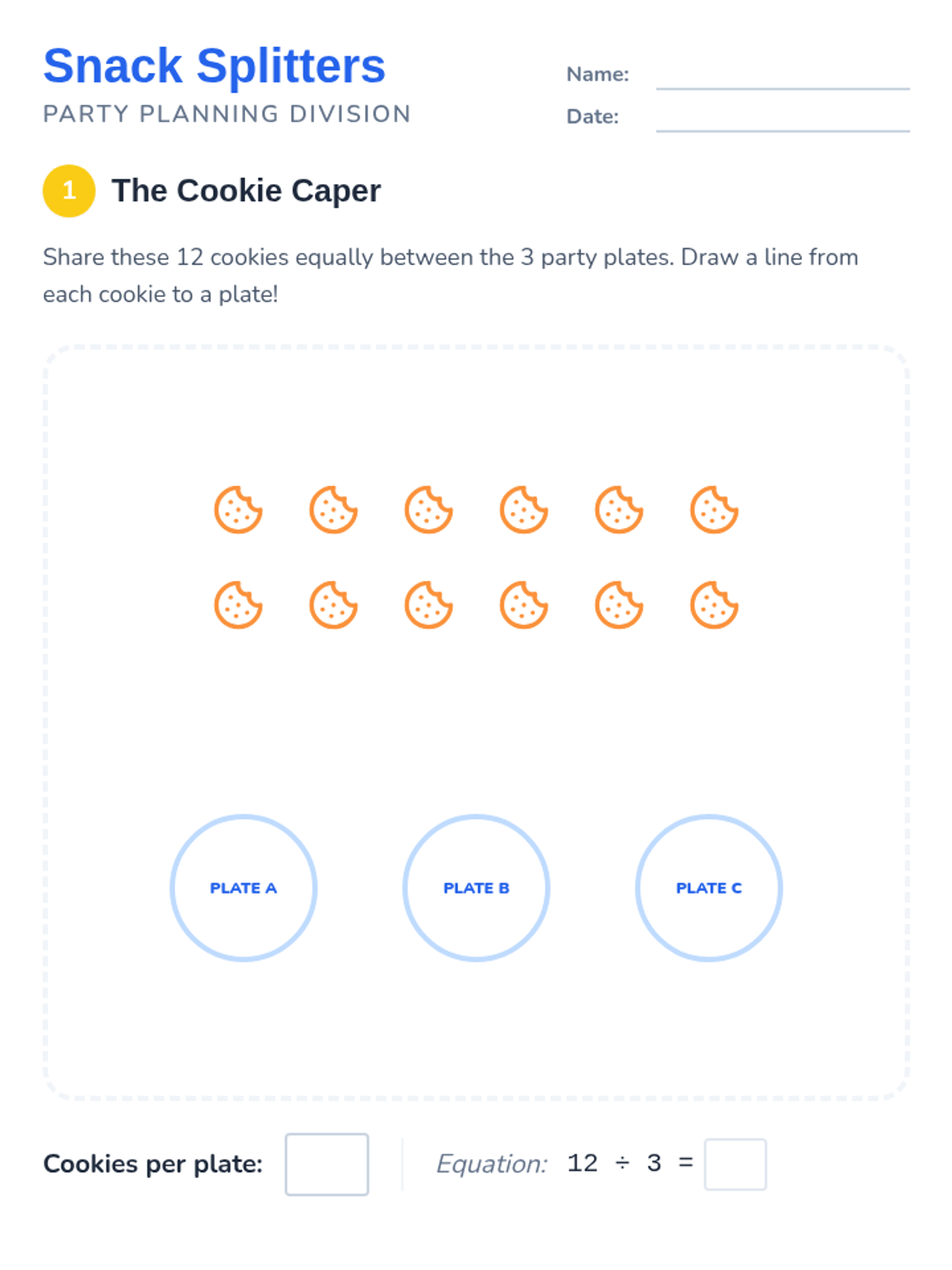
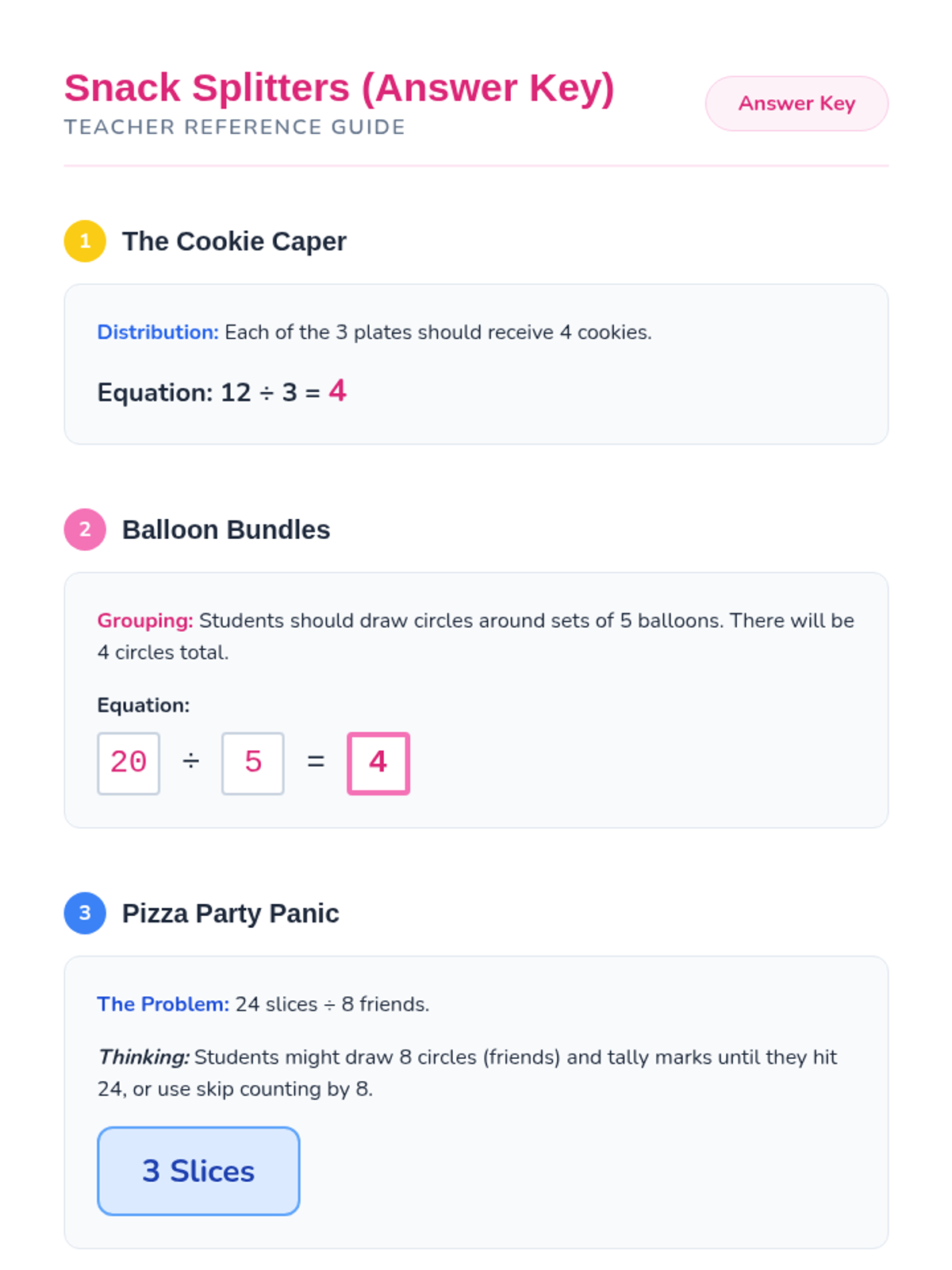
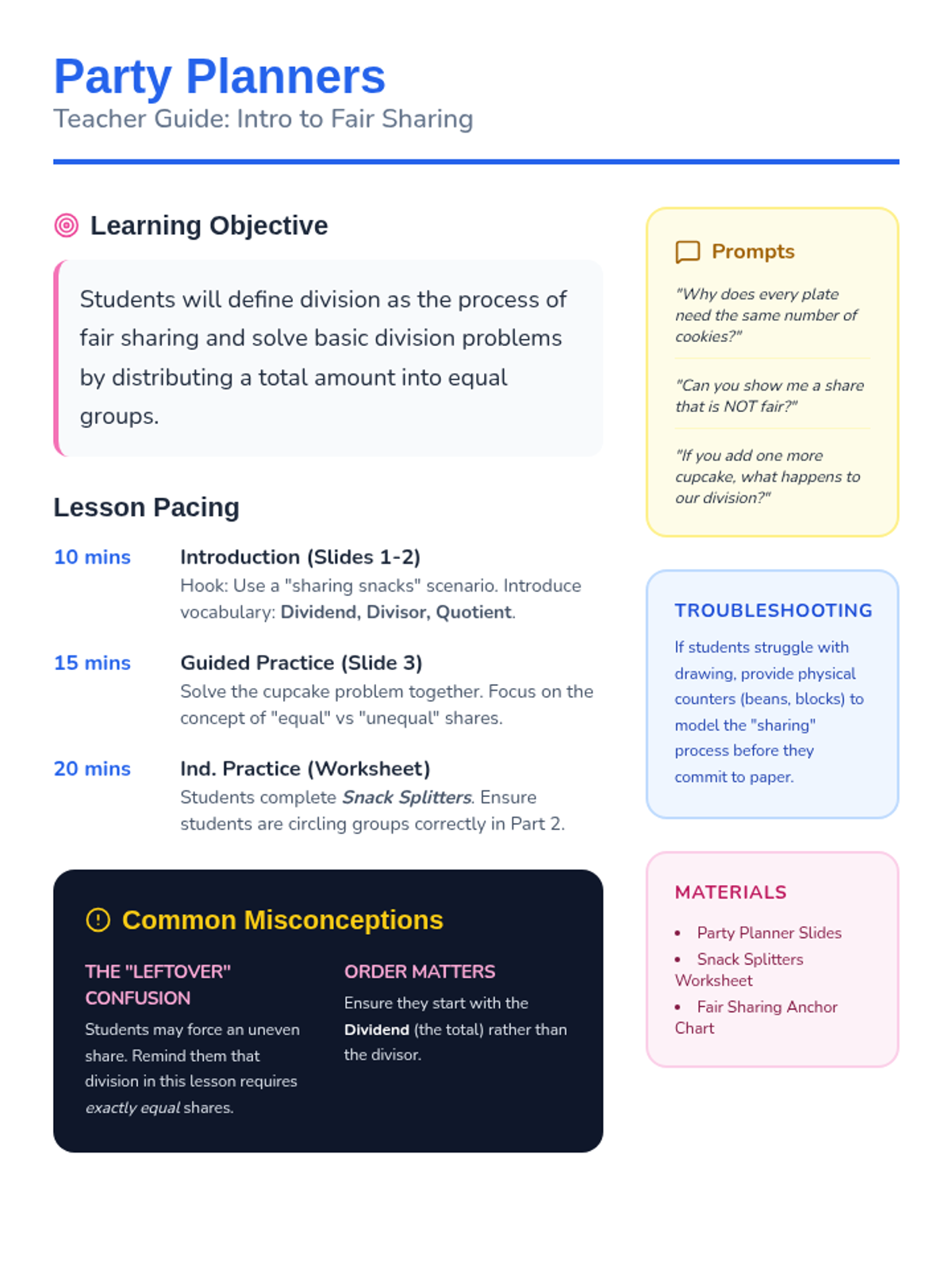
A foundational introduction to division, framing the operation as the process of sharing a total amount equally among a specific number of groups. Students use party-themed scenarios to visualize and solve basic division problems.
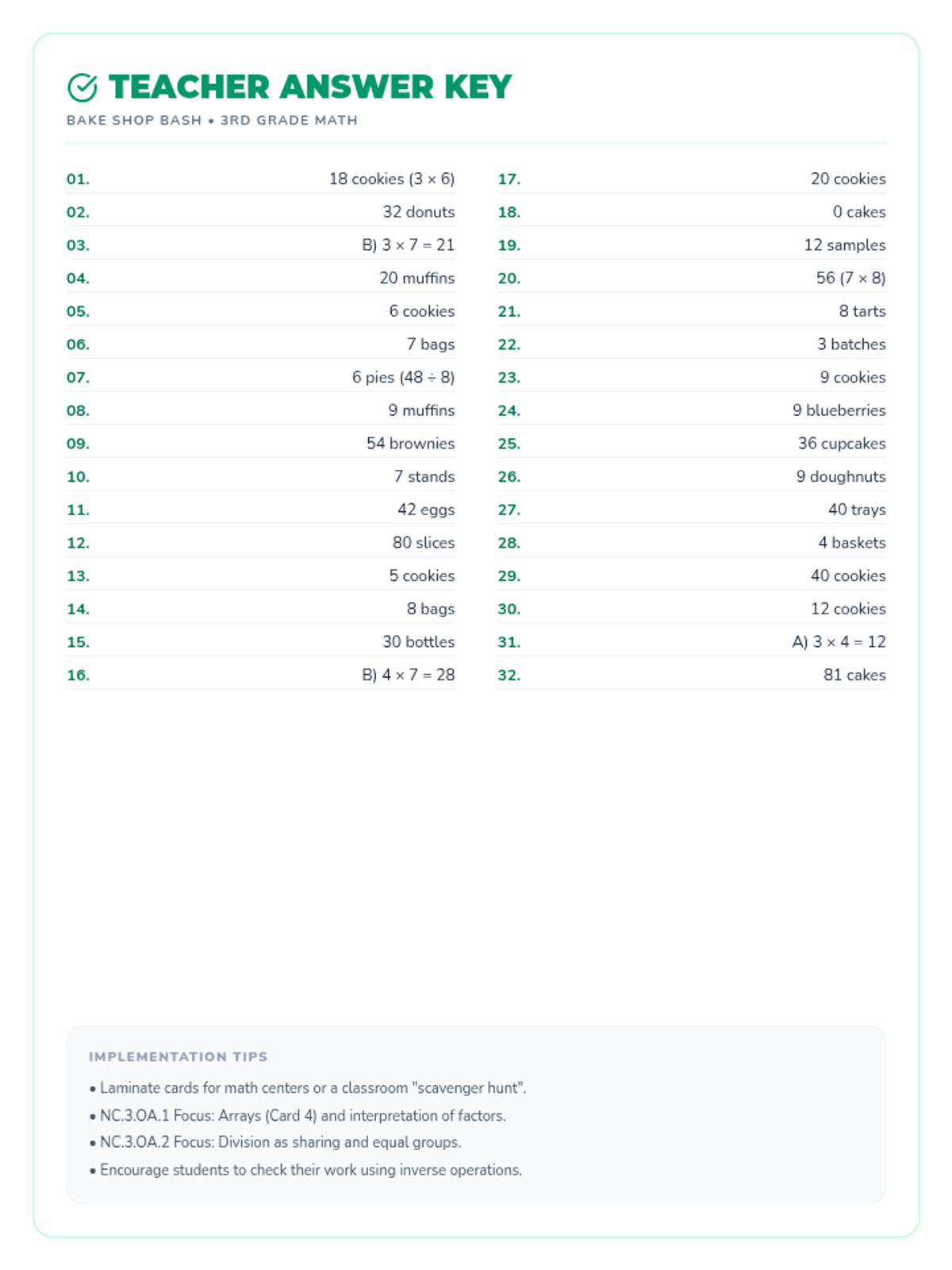
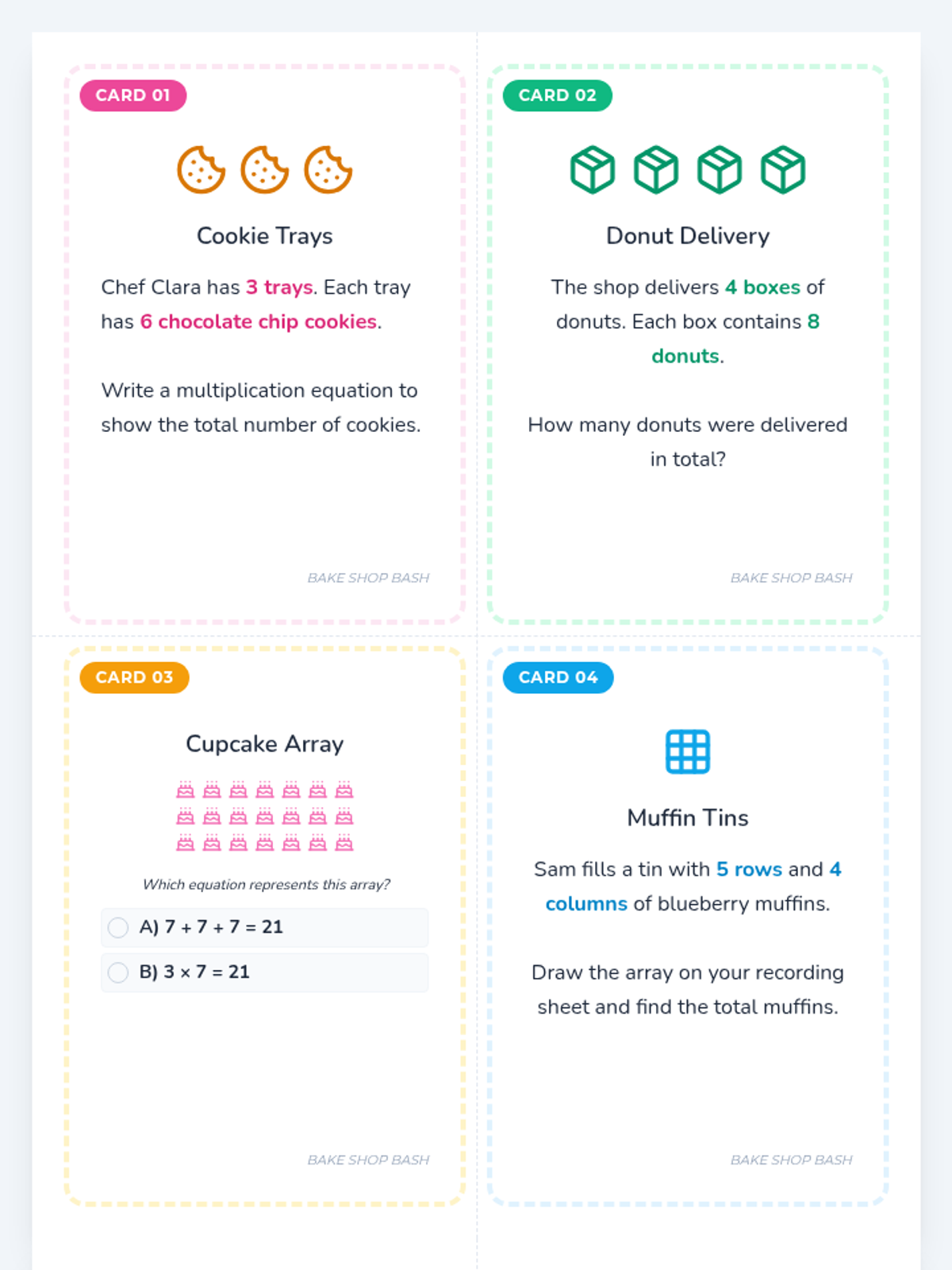
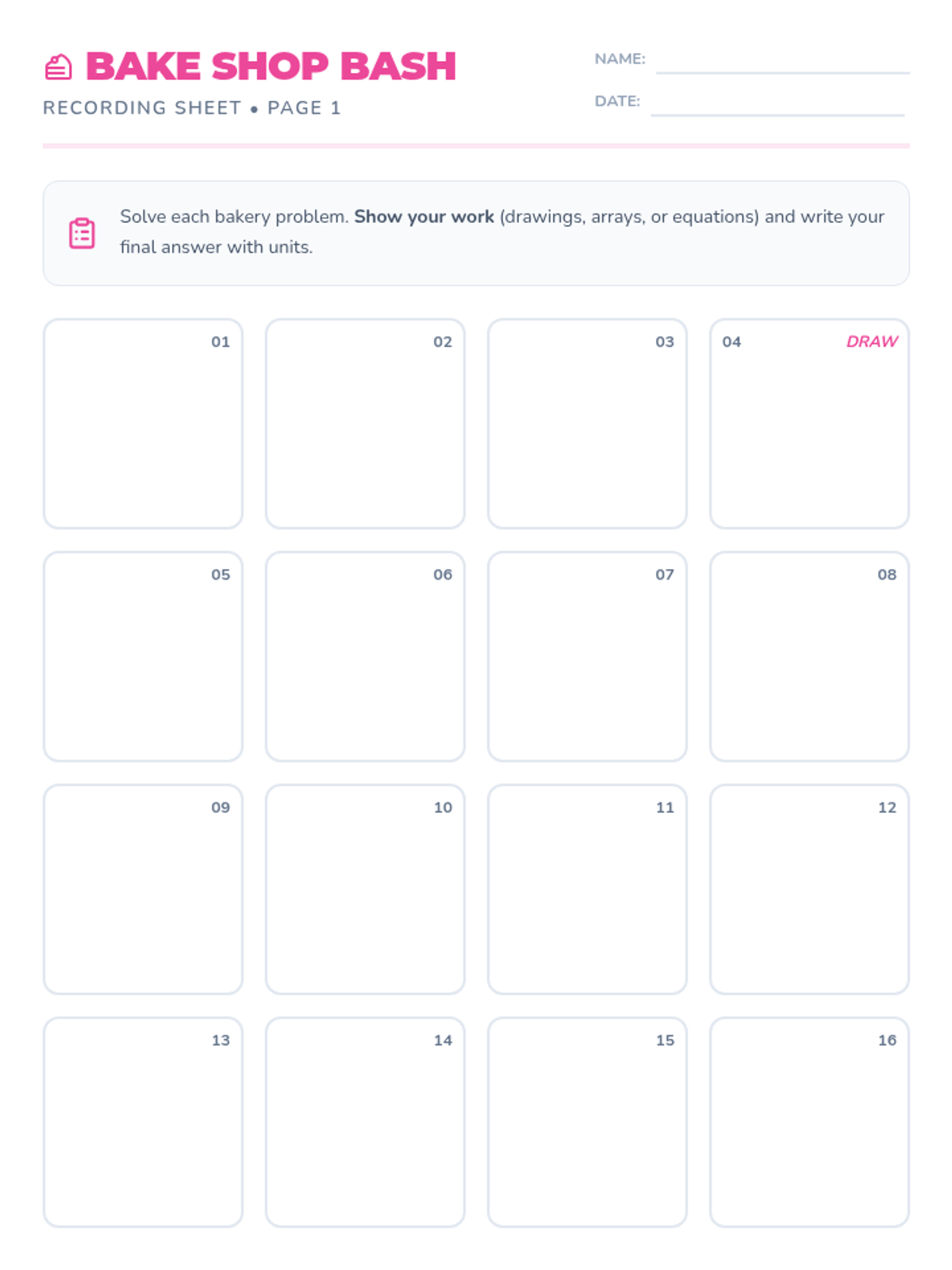
A task-card based lesson where students apply their knowledge of multiplication and division to solve real-world problems in a bakery setting. The lesson includes task cards, a recording sheet, and a teacher answer key.
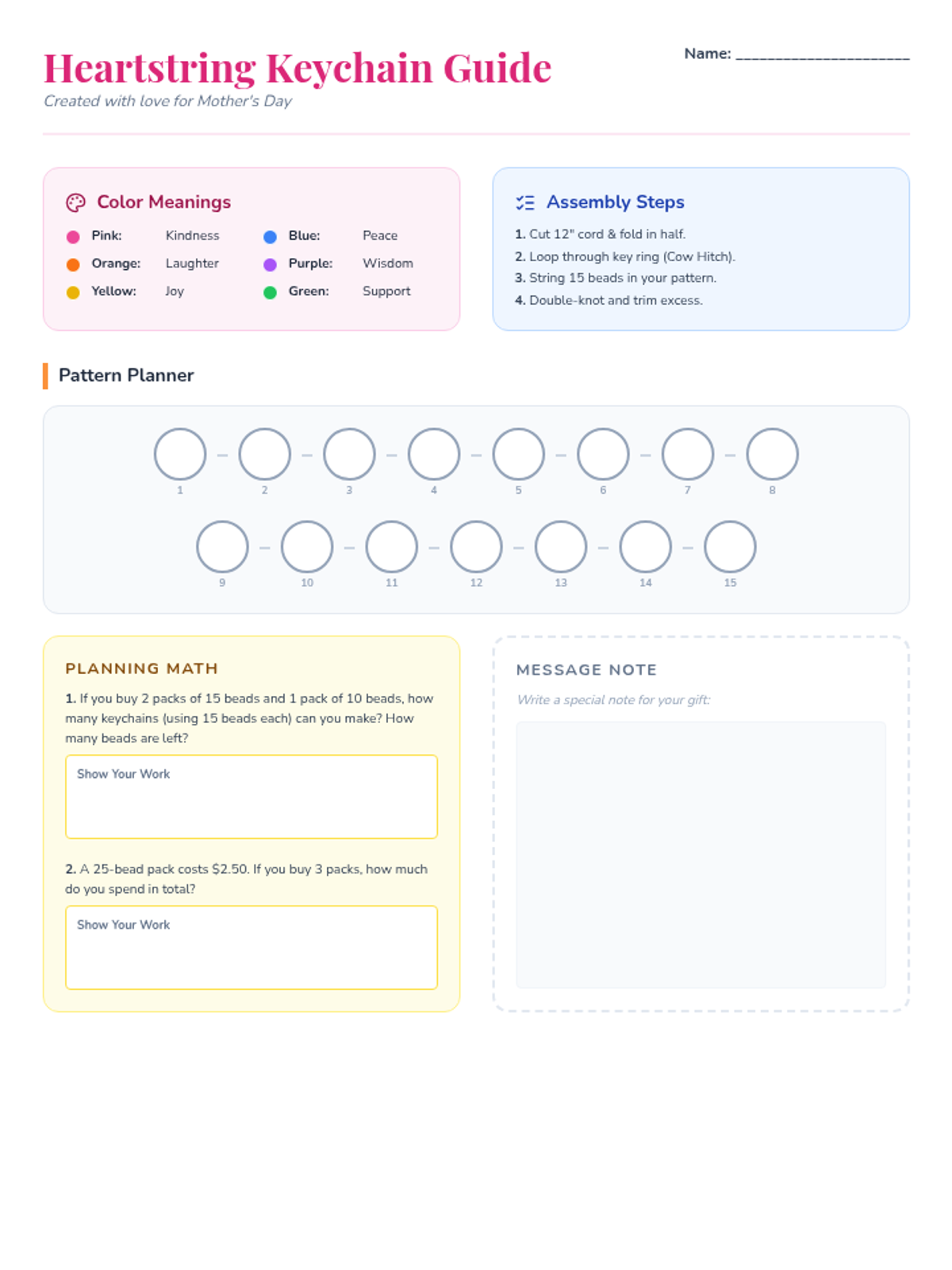
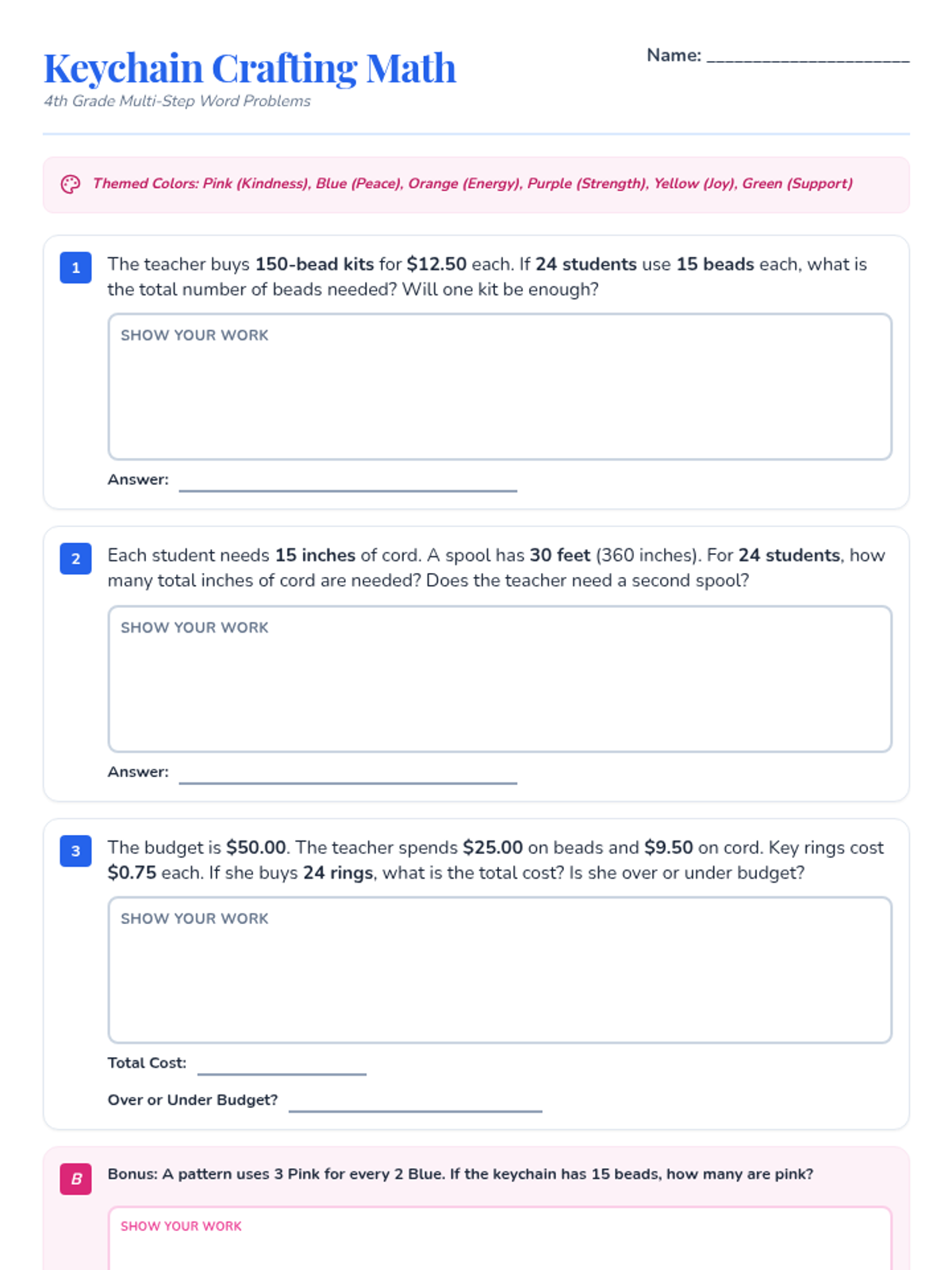
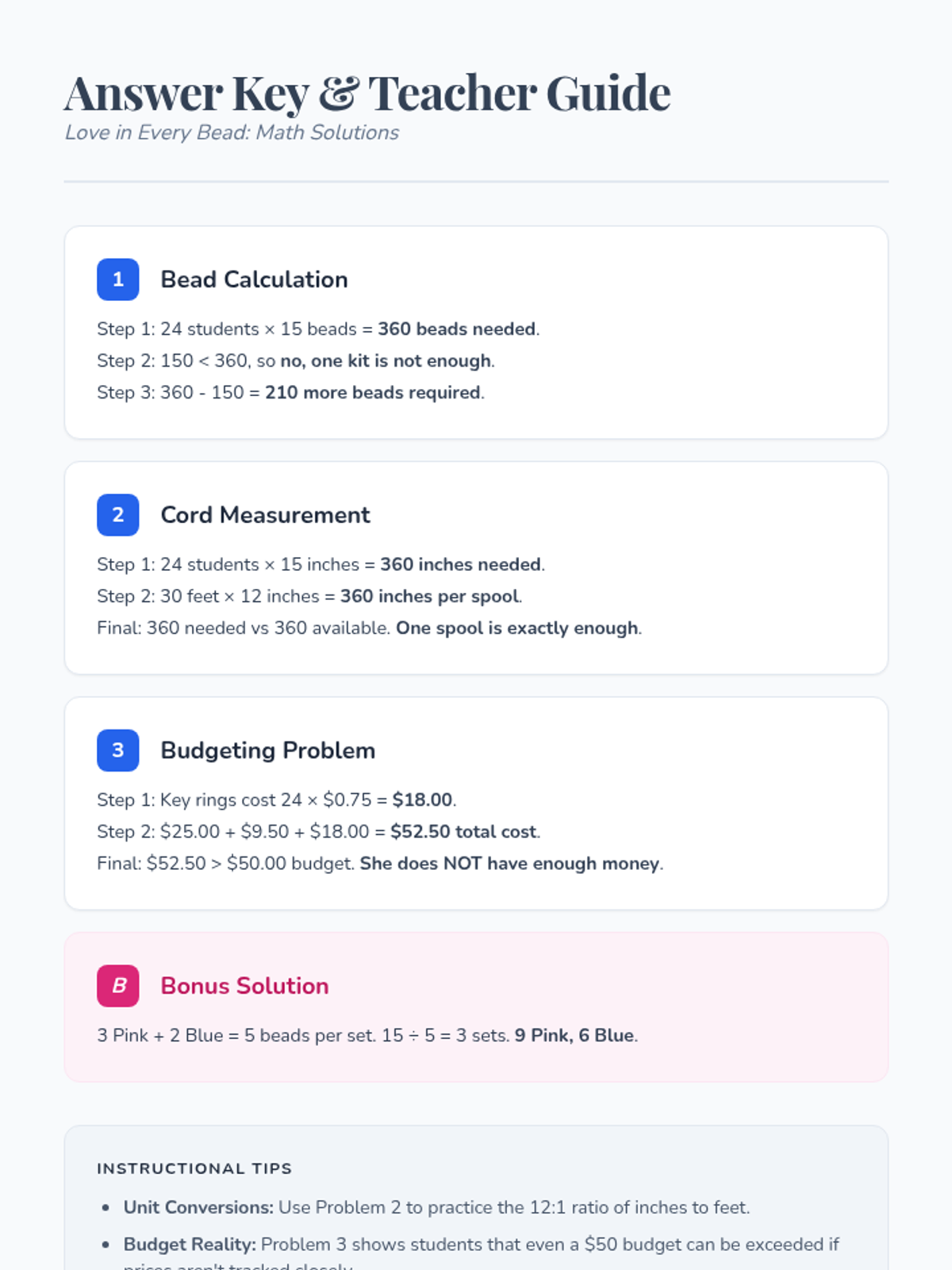
A creative Mother's Day lesson where students create personalized beaded keychains. The lesson integrates 4th-grade multi-step word problems themed around the crafting process, budgeting for supplies, and pattern design.
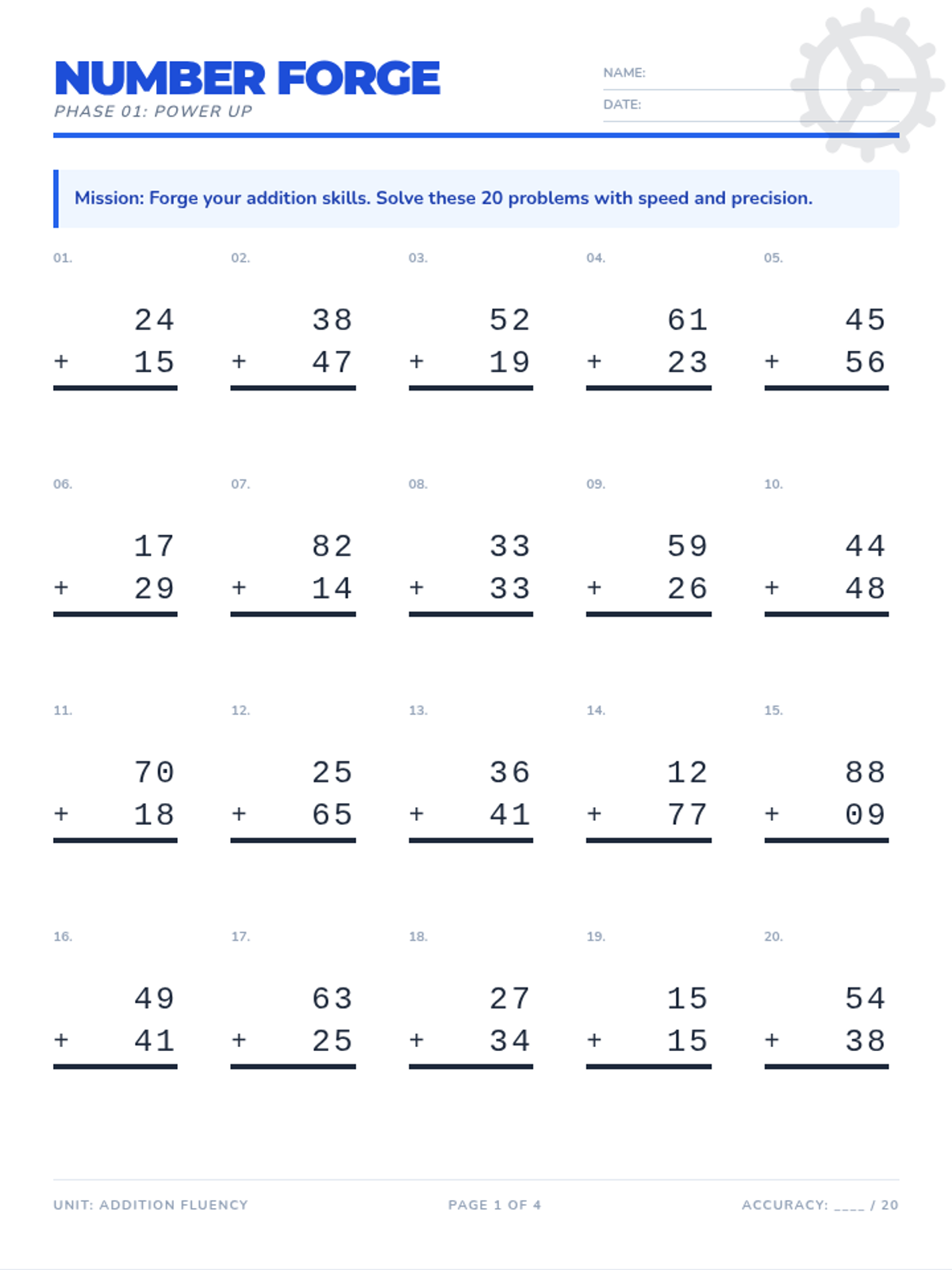
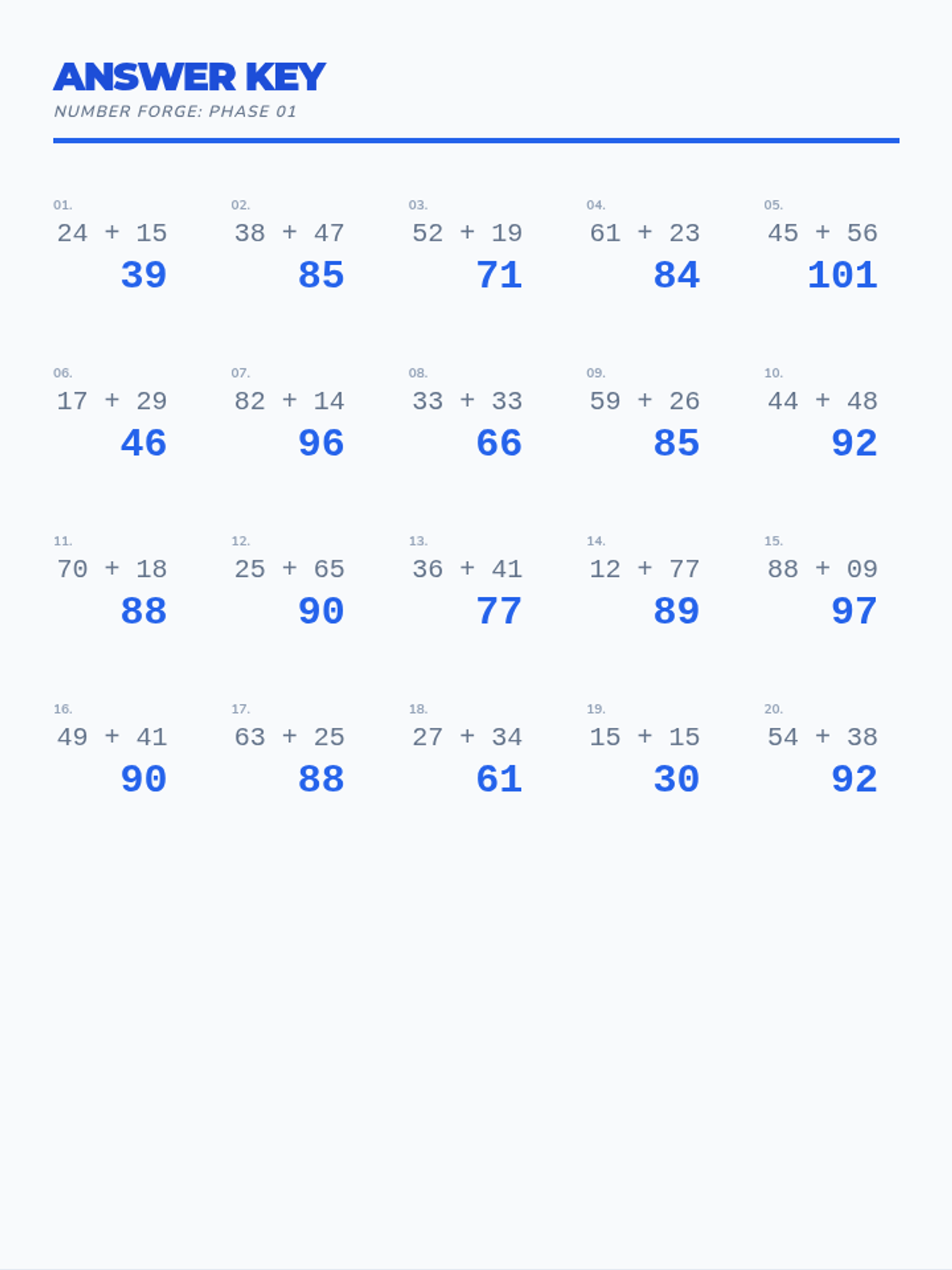
A fast-paced fluency practice set for two-digit addition, featuring mixed regrouping and non-regrouping problems to build calculation speed and accuracy.
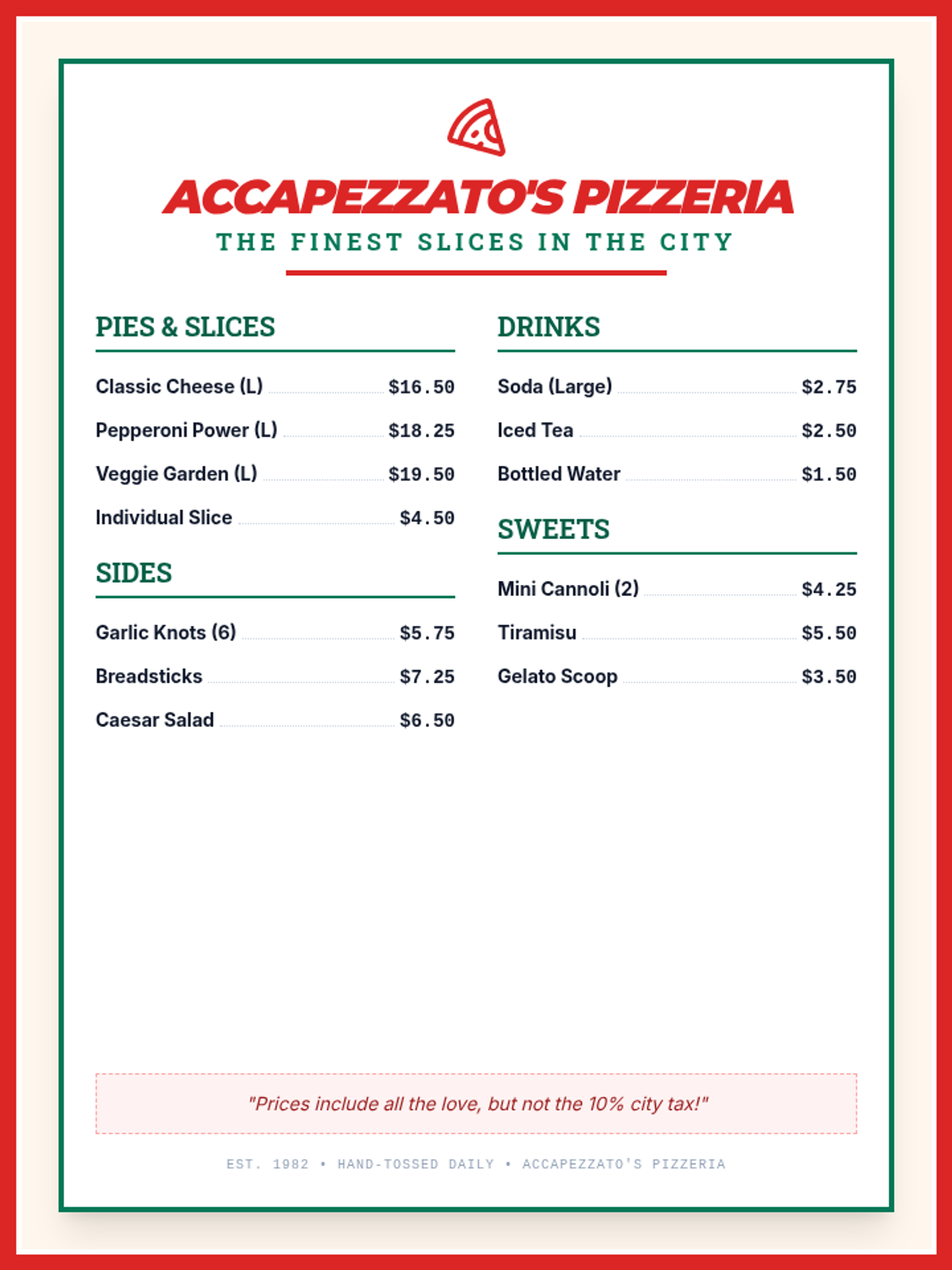
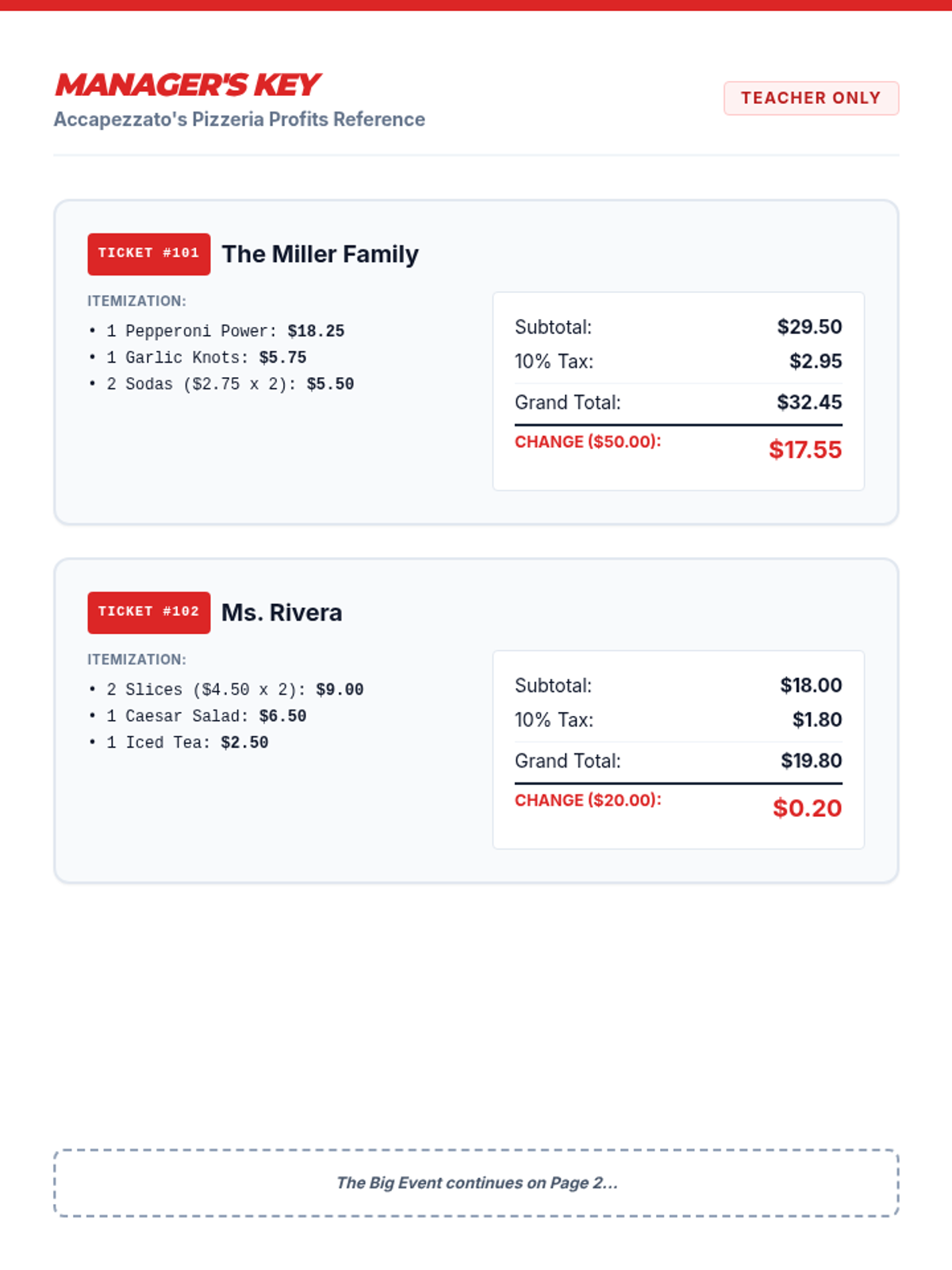
A 45-minute independent math project where 5th graders manage a pizza parlor, calculating costs, 10% sales tax, and making change for hungry customers.
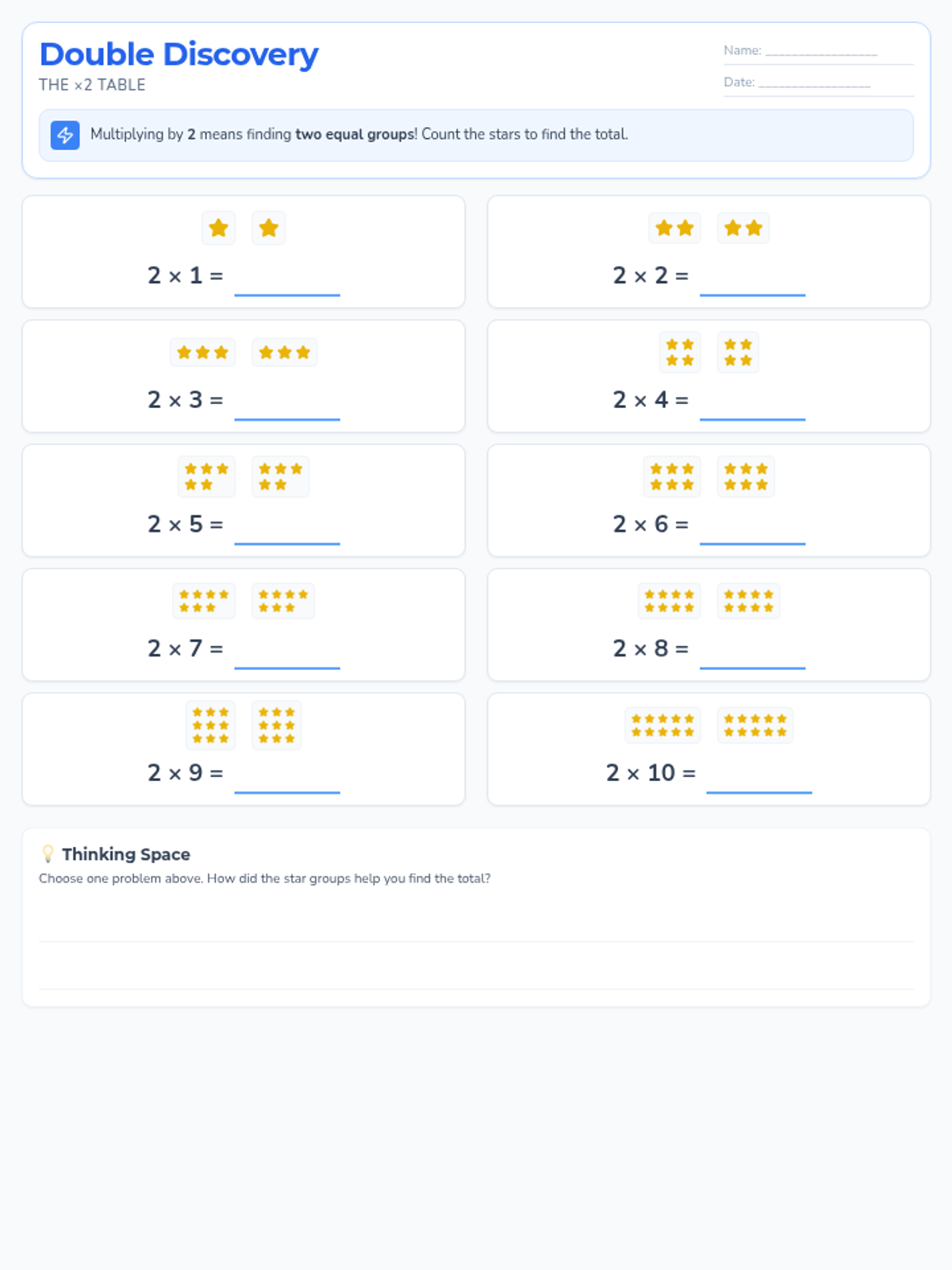
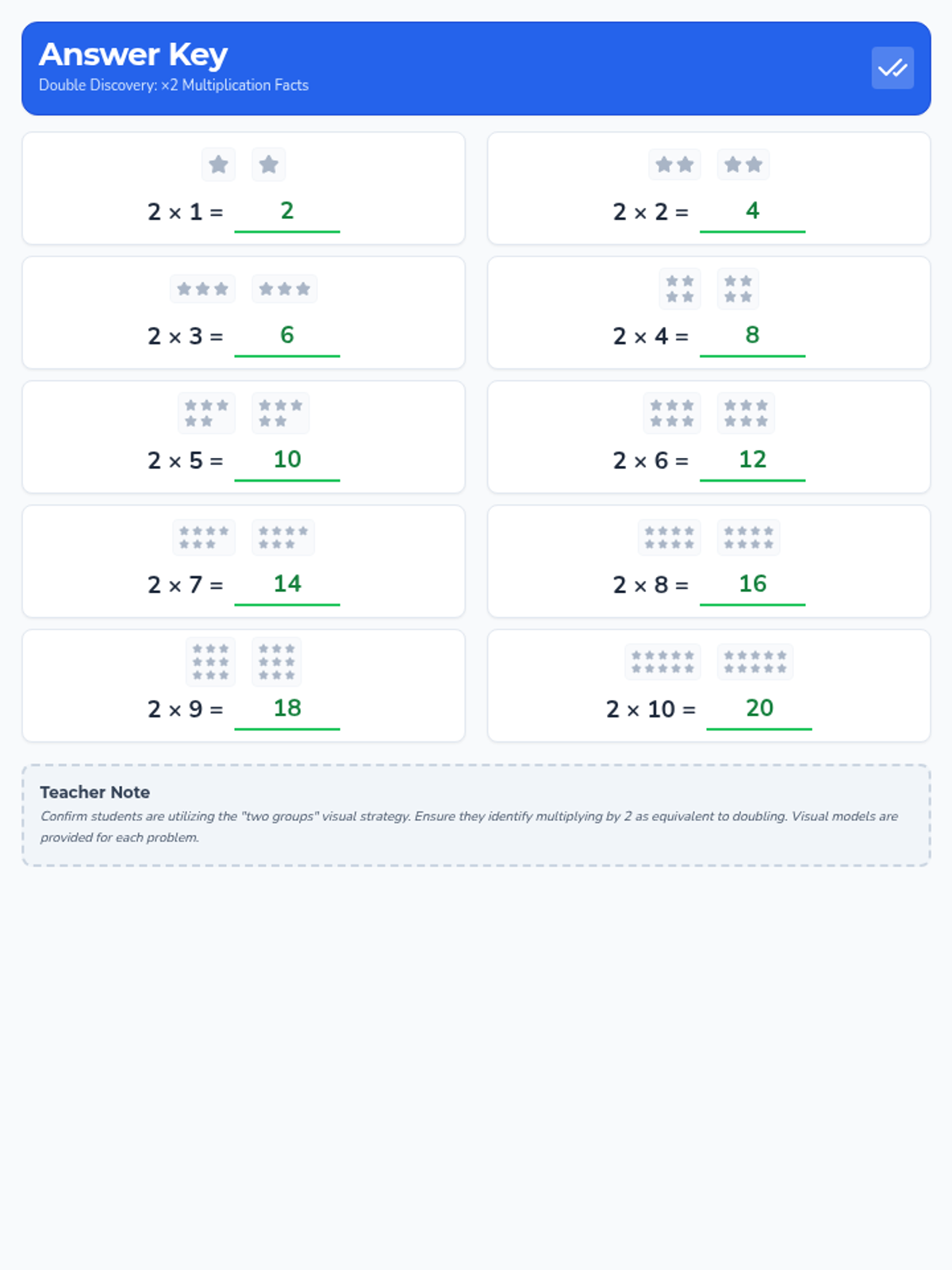
A foundational lesson on multiplying by 2, focusing on the concept of doubling using visual models and horizontal equations.
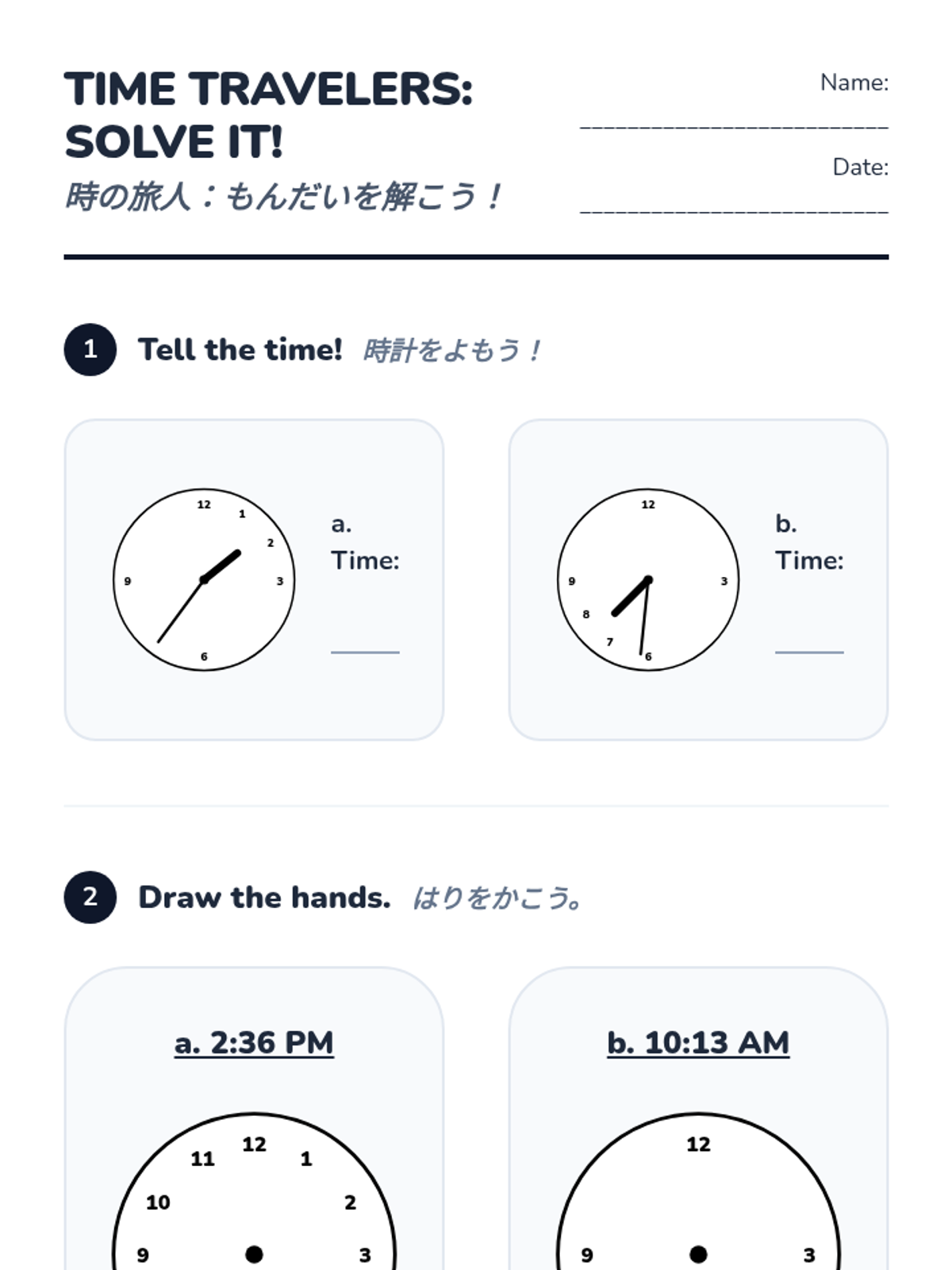
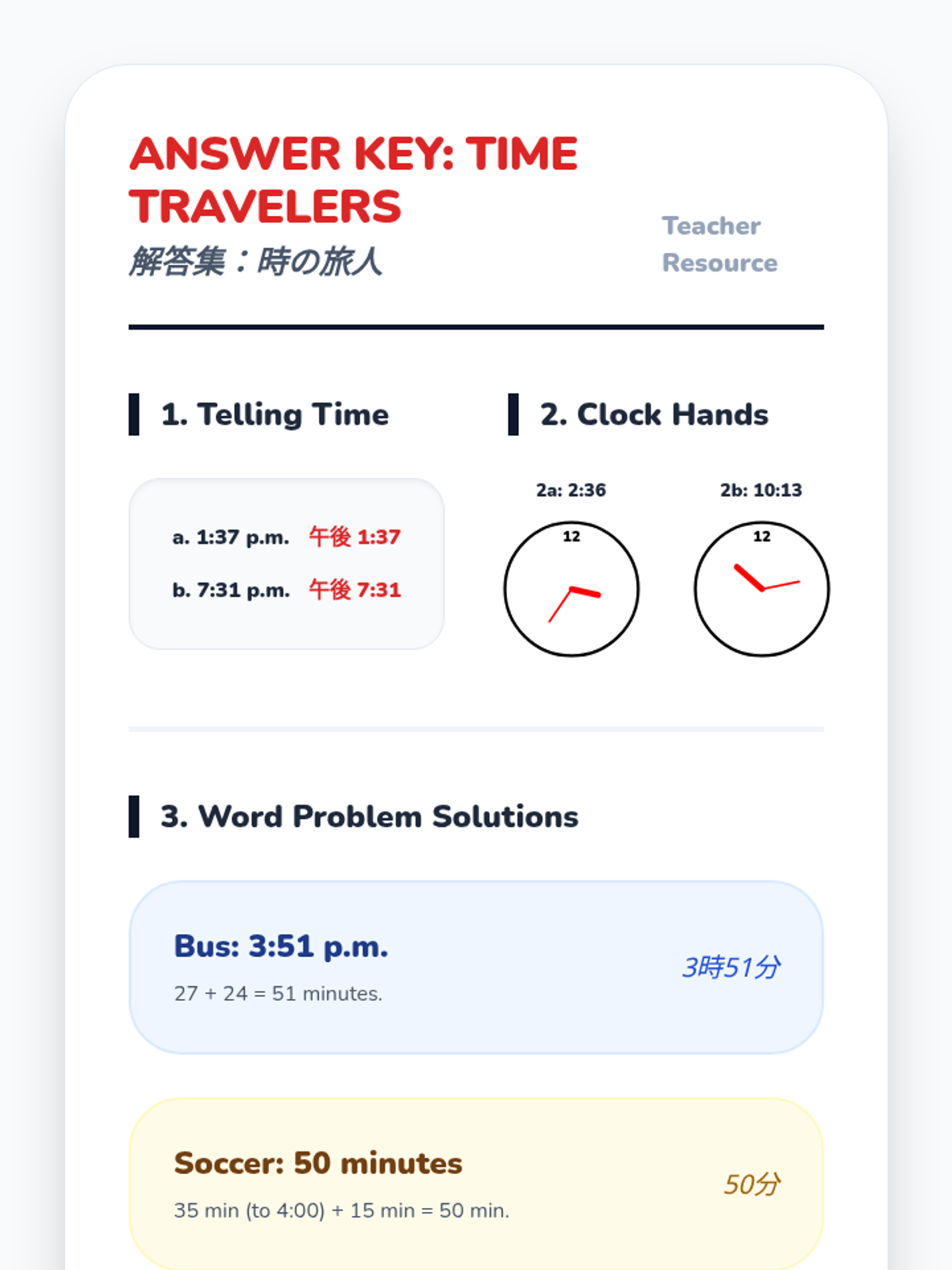
A bilingual (English and Japanese) lesson focused on solving time-related word problems, telling time to the minute, and understanding time intervals.
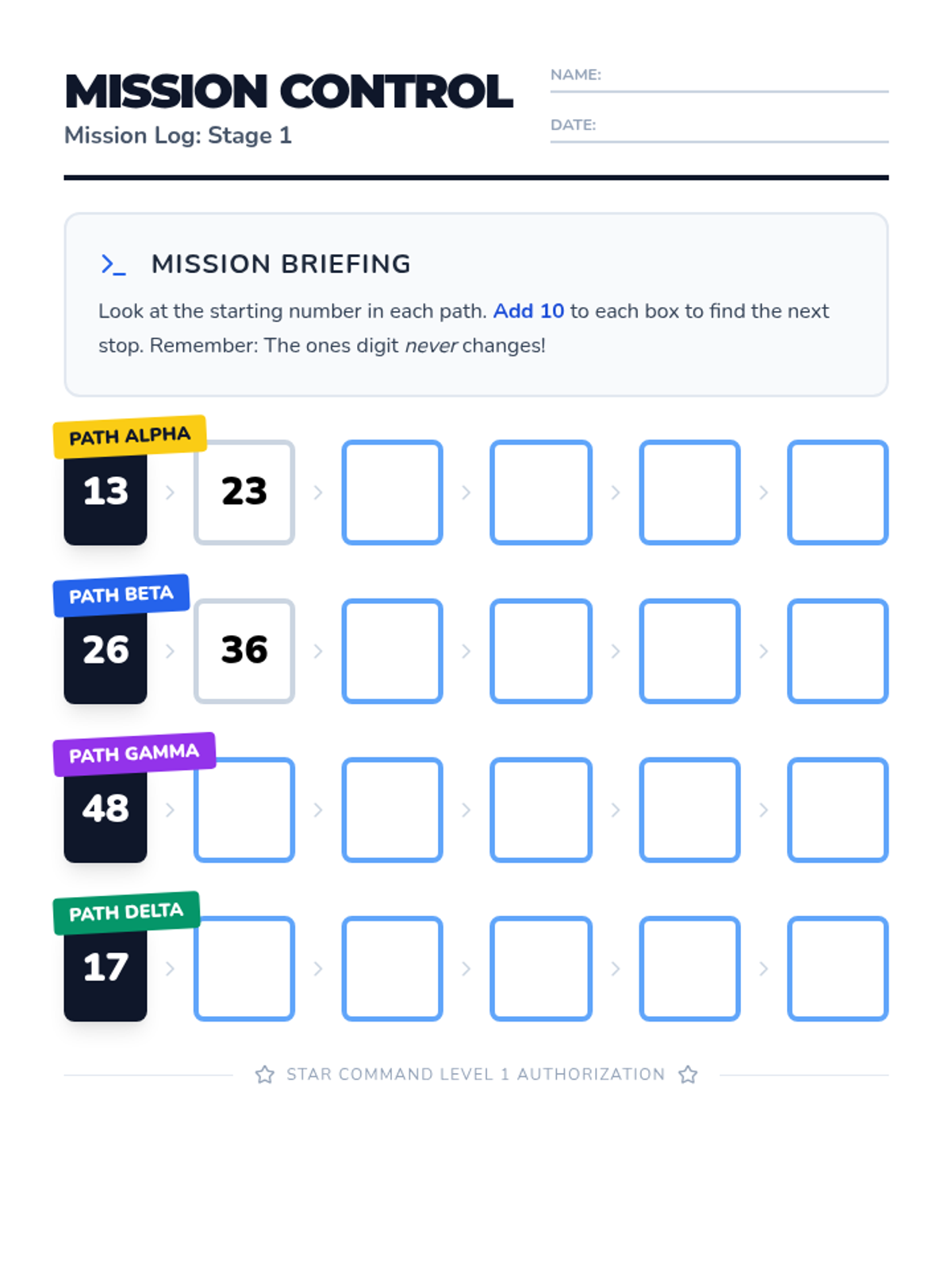
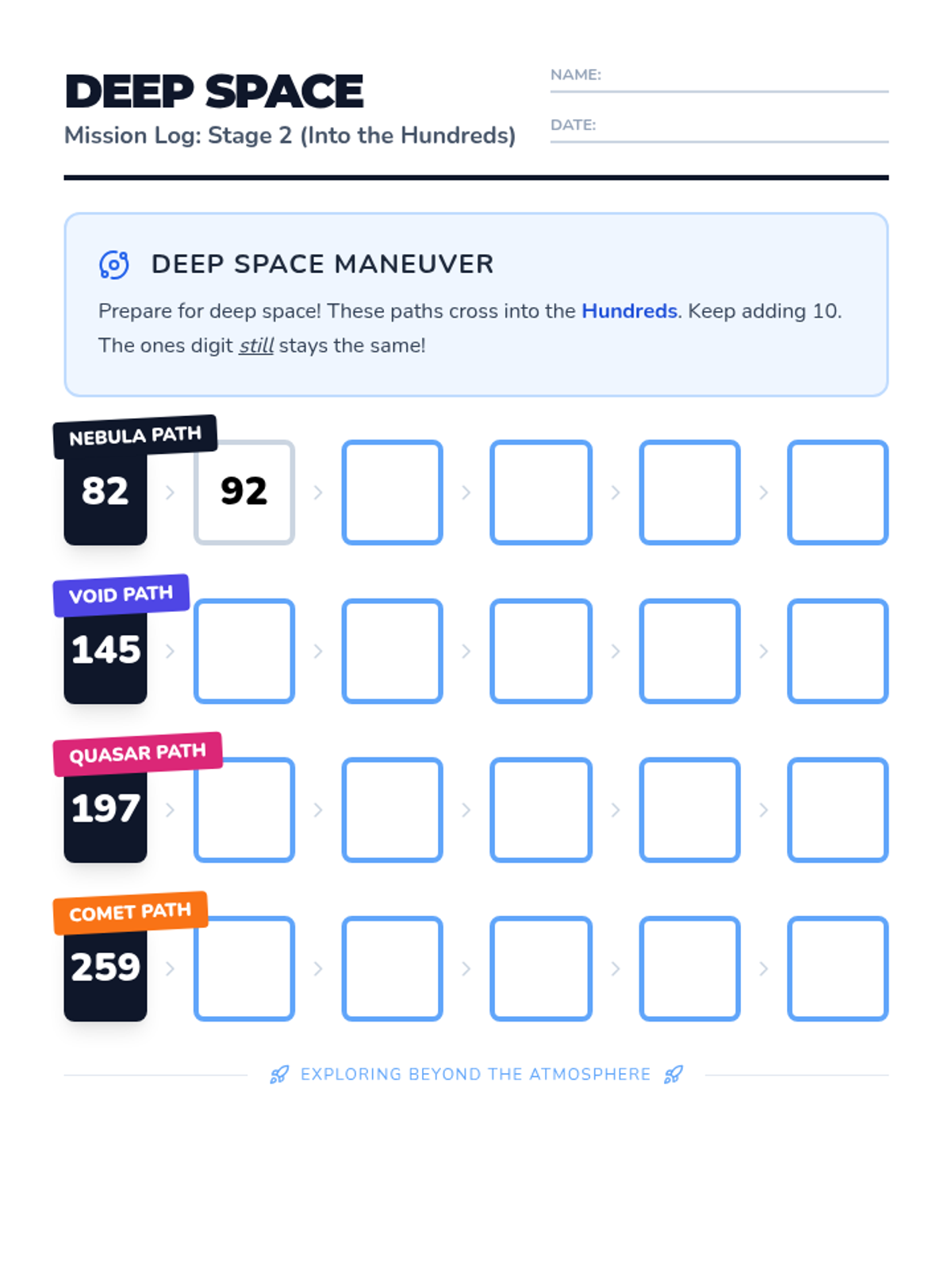
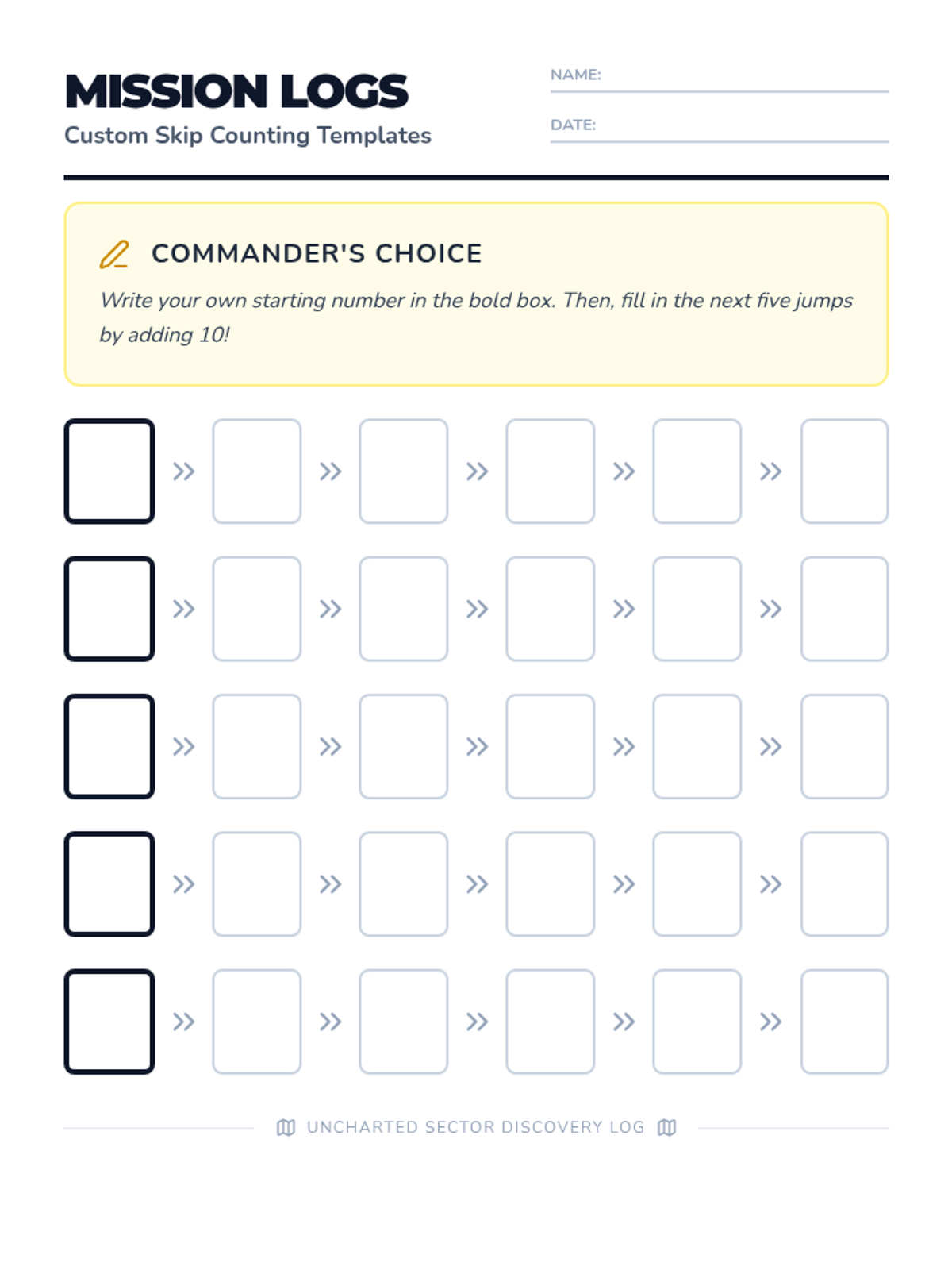
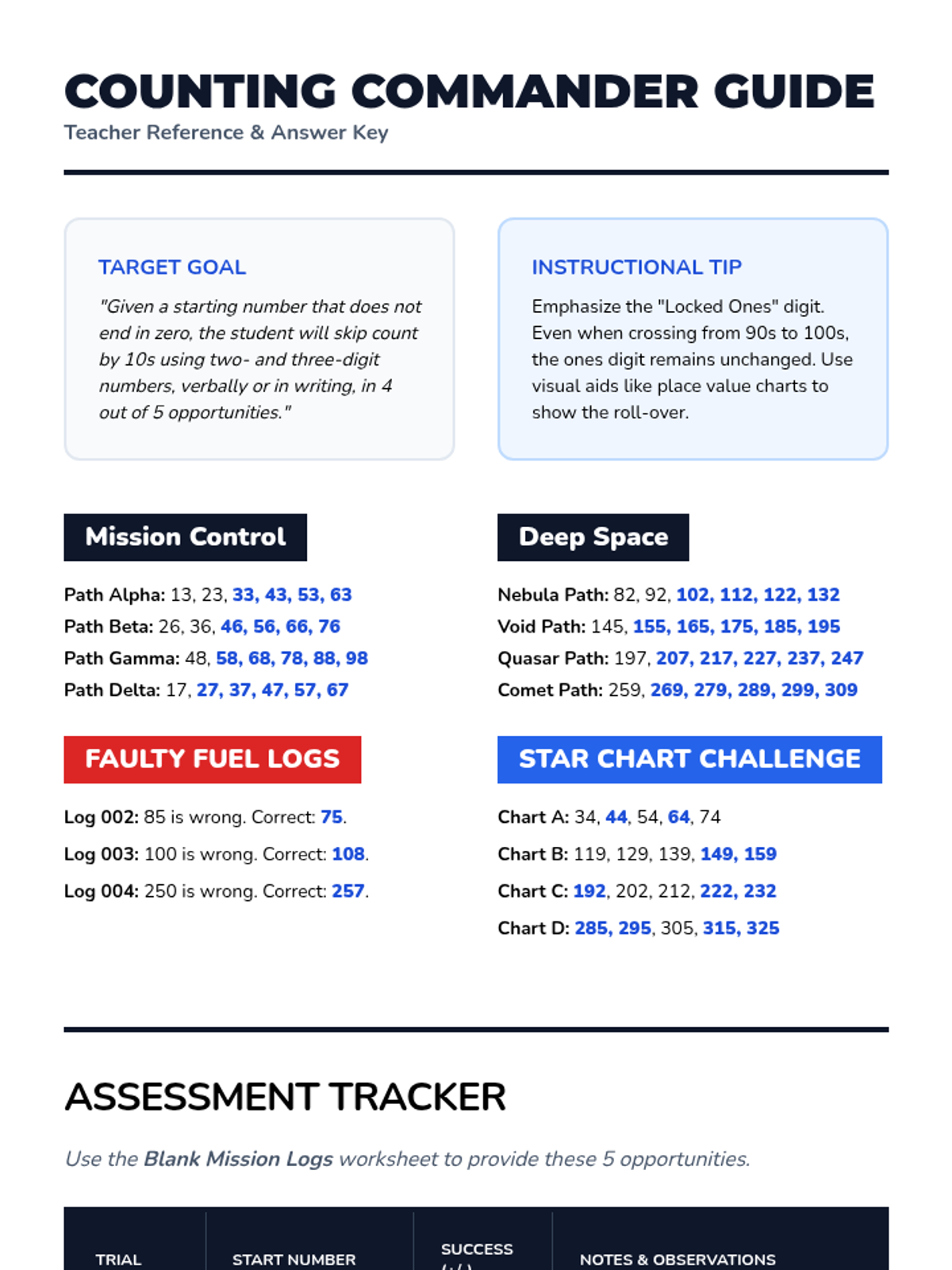
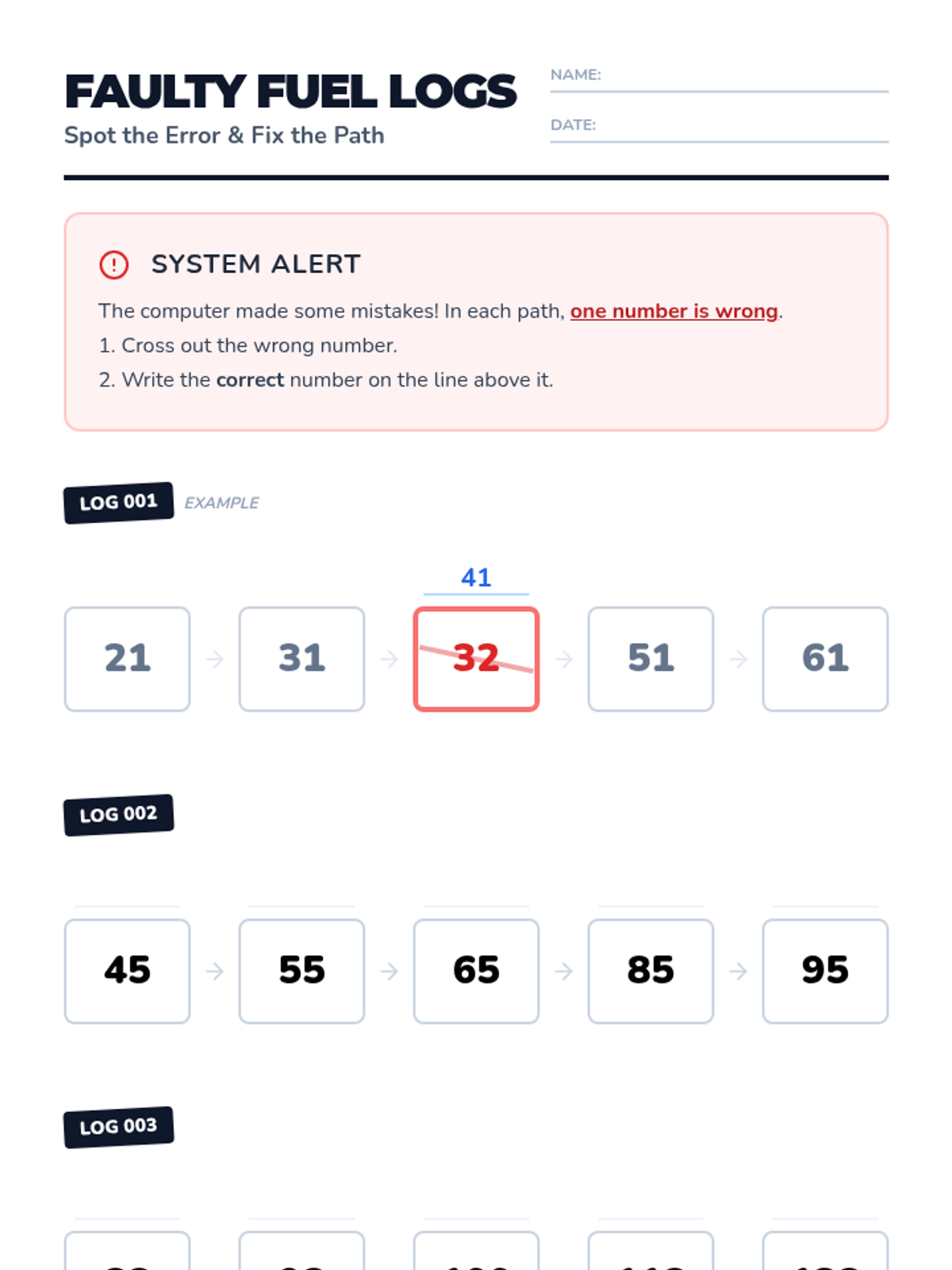
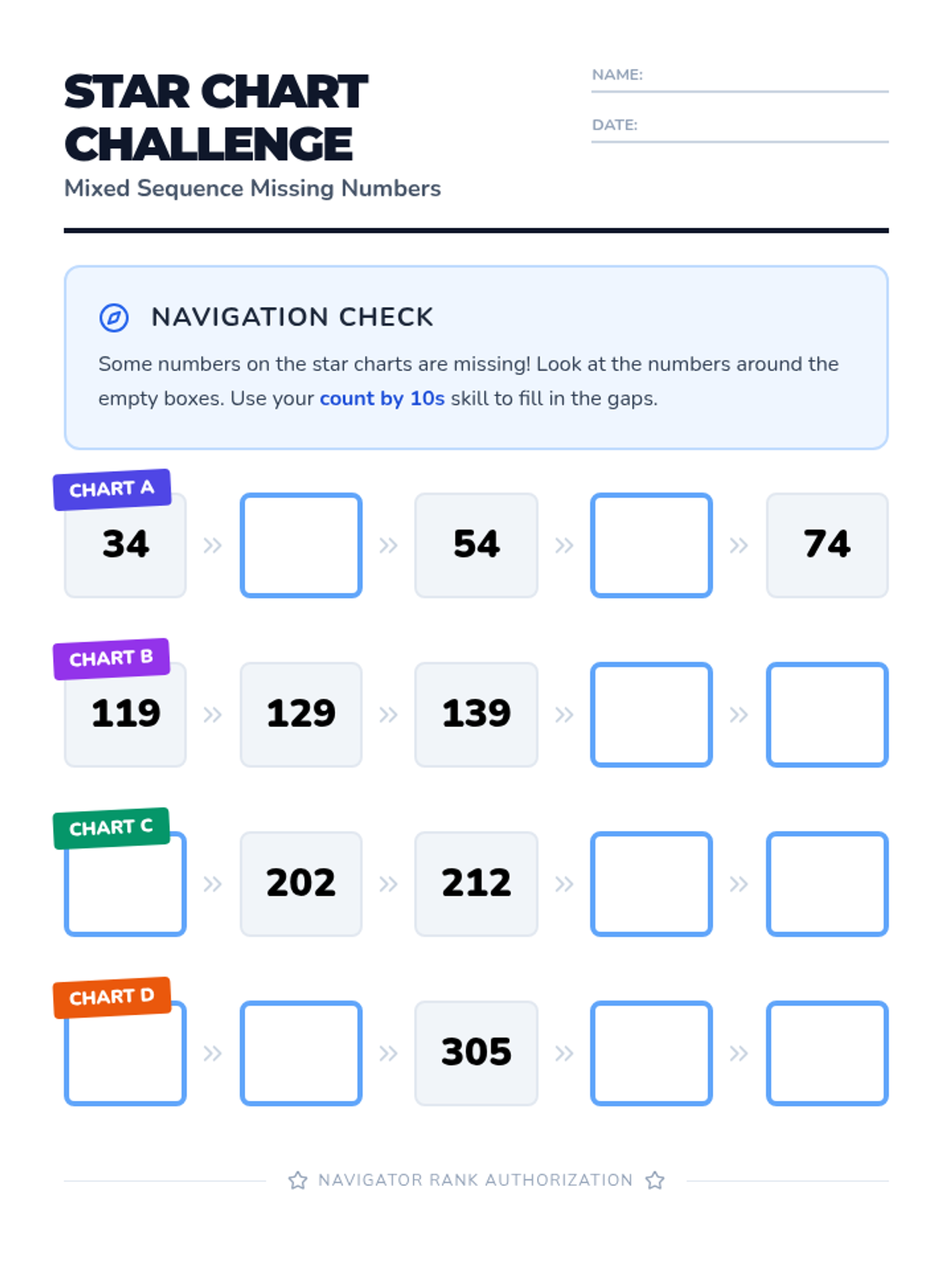
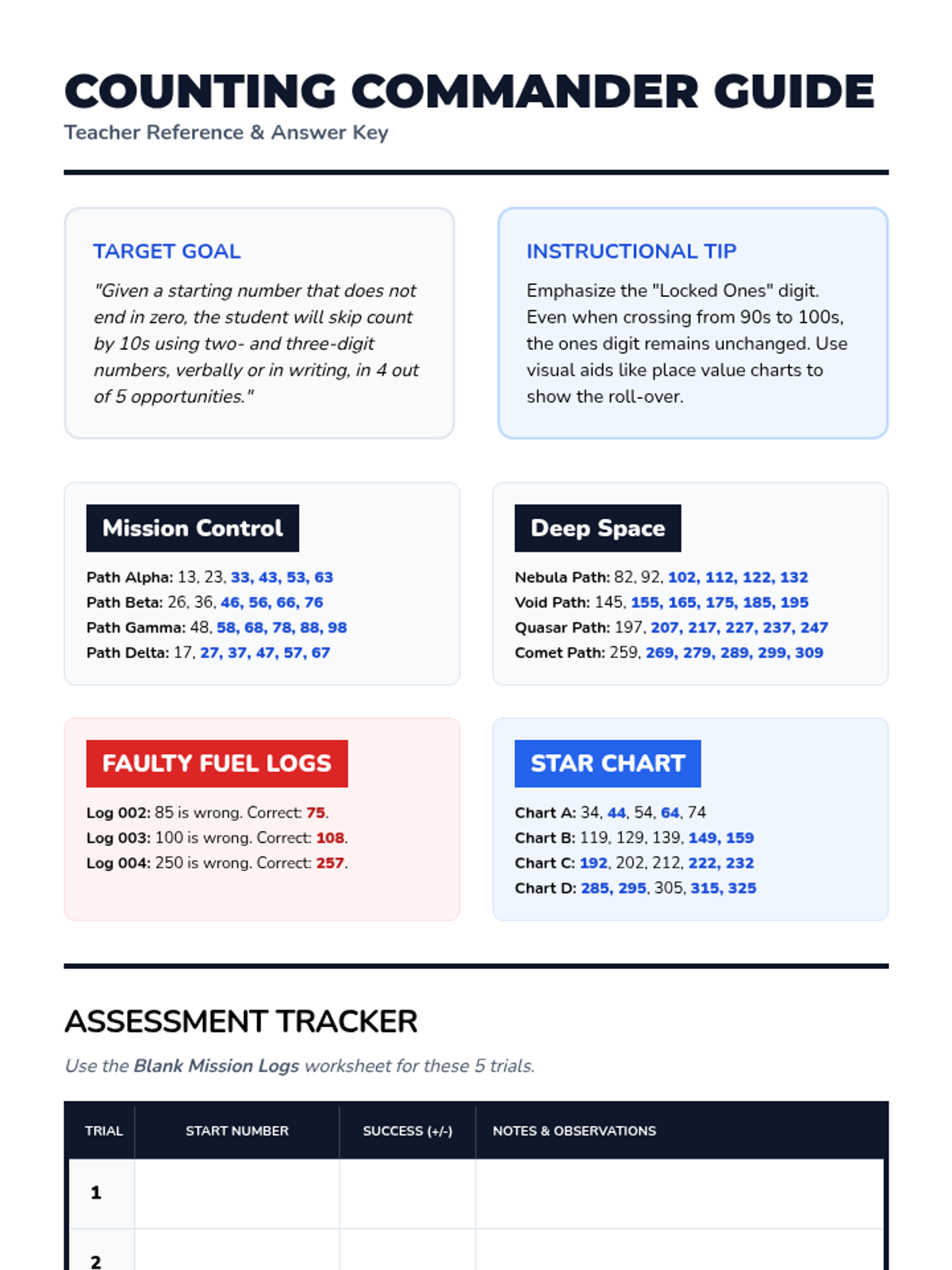
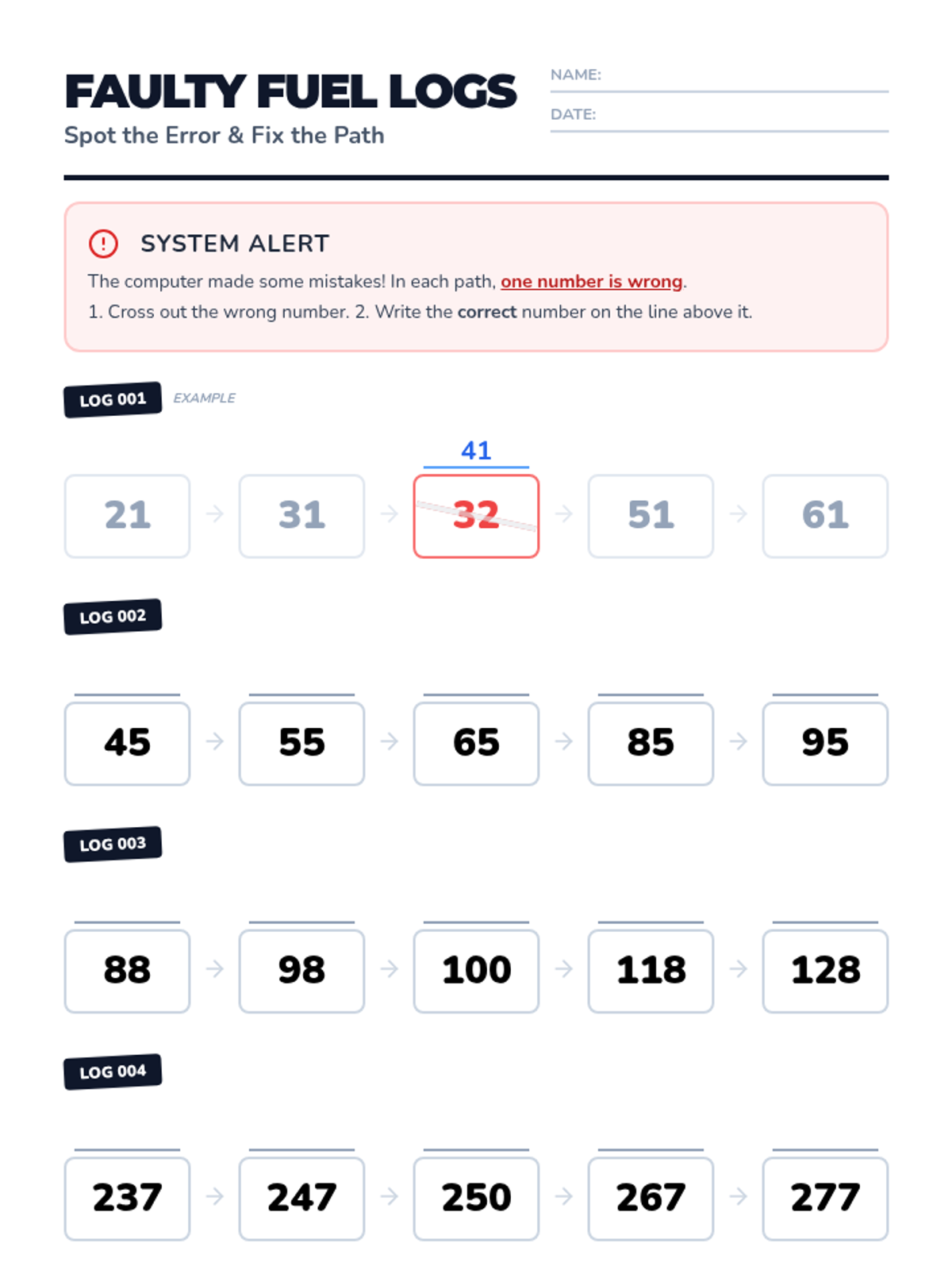
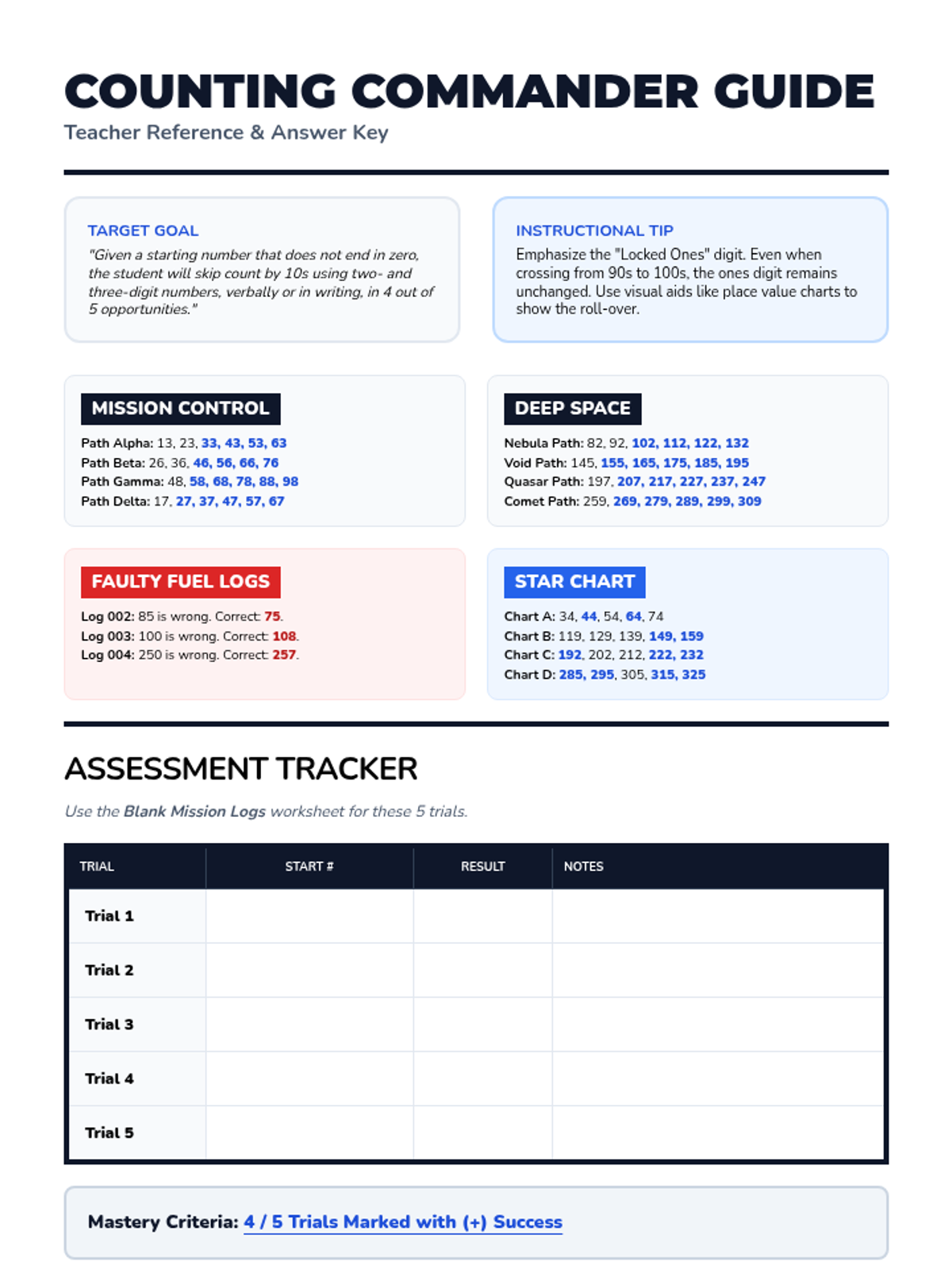
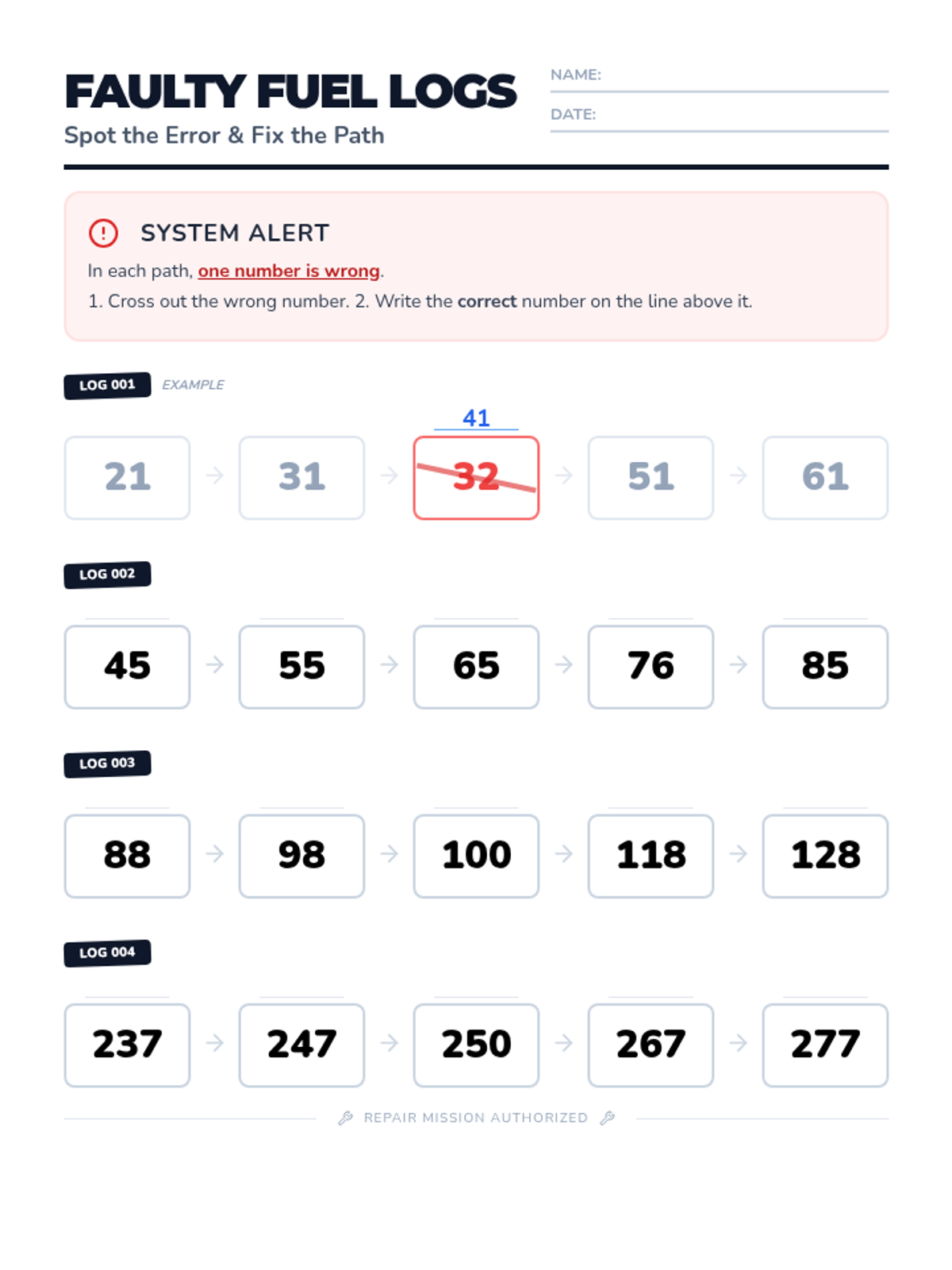
A cosmic-themed lesson focusing on skip counting by 10s starting from non-zero digits. Students explore patterns in the tens place and learn to navigate the transition from two-digit to three-digit numbers.
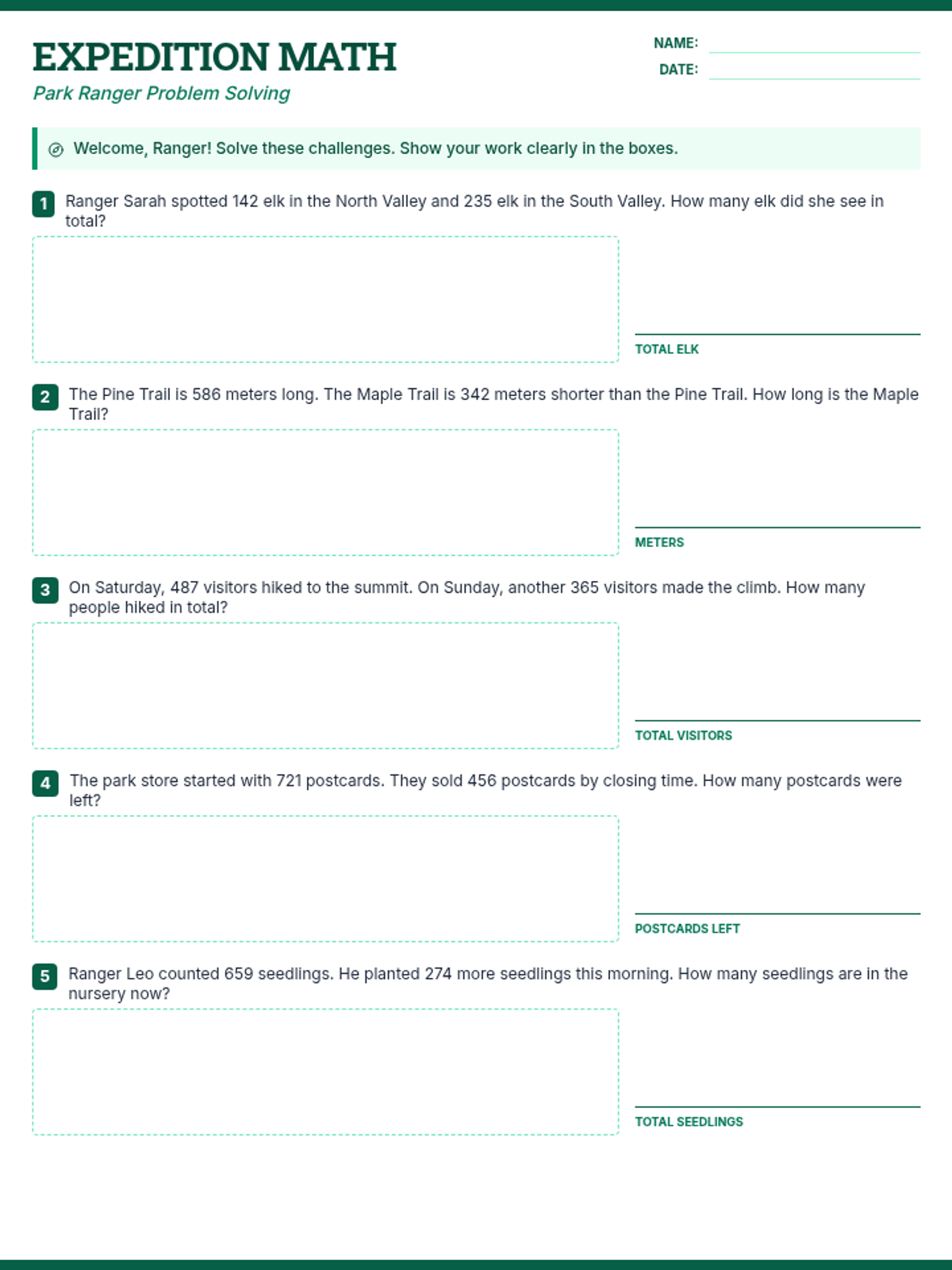
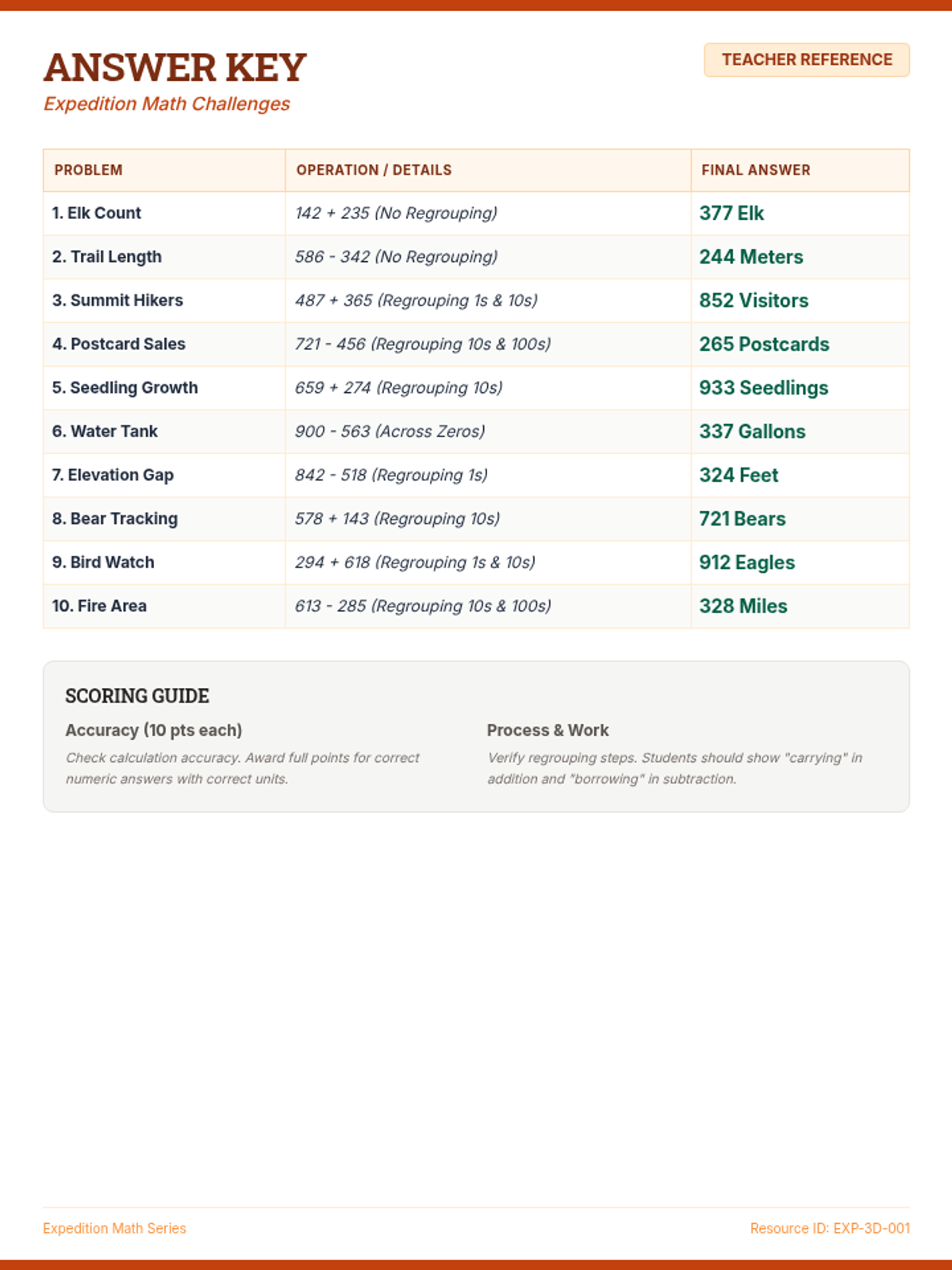
A lesson focused on solving one-step addition and subtraction word problems with 3-digit numbers, exploring both regrouping and non-regrouping scenarios through a national park theme.
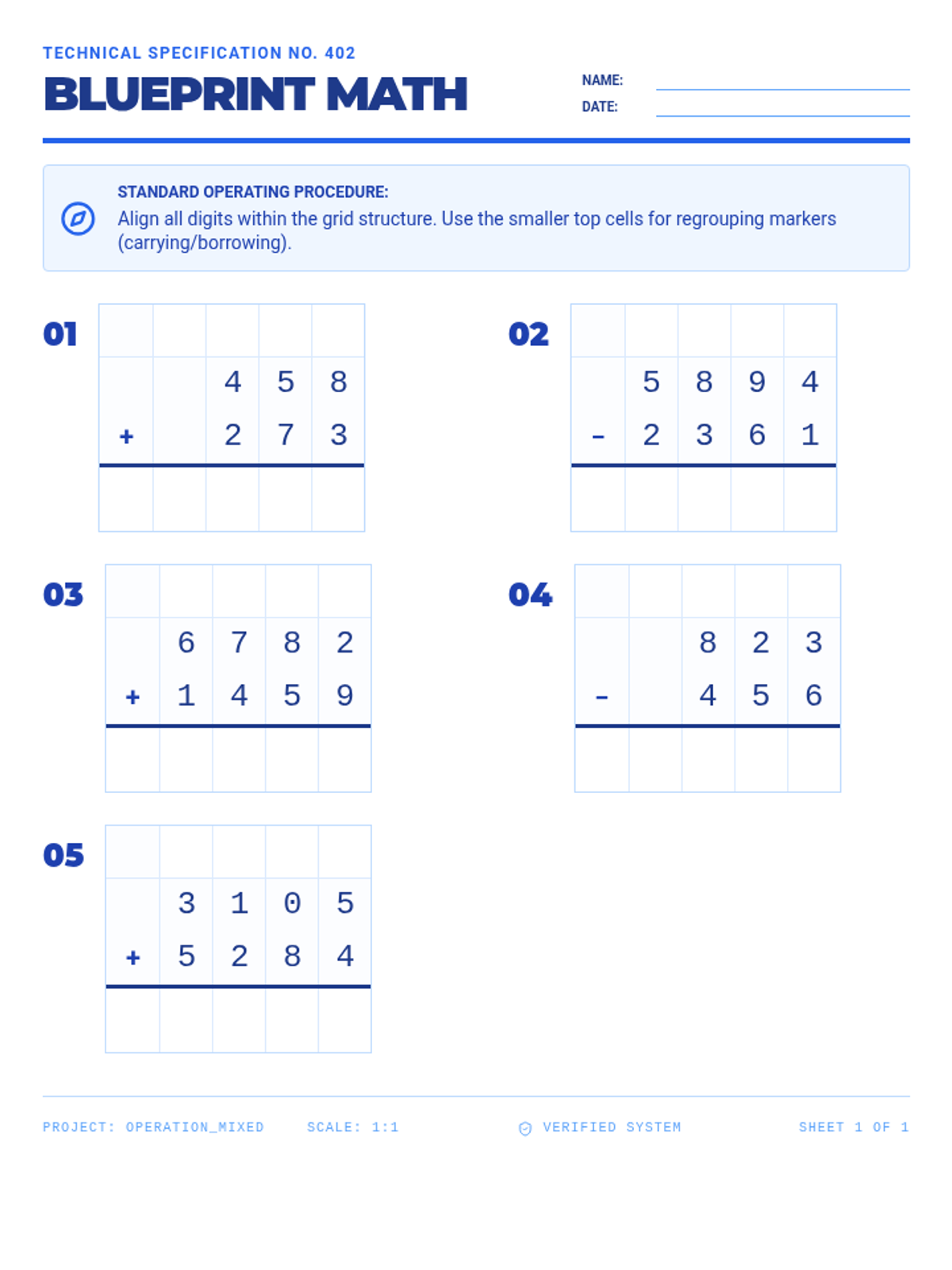
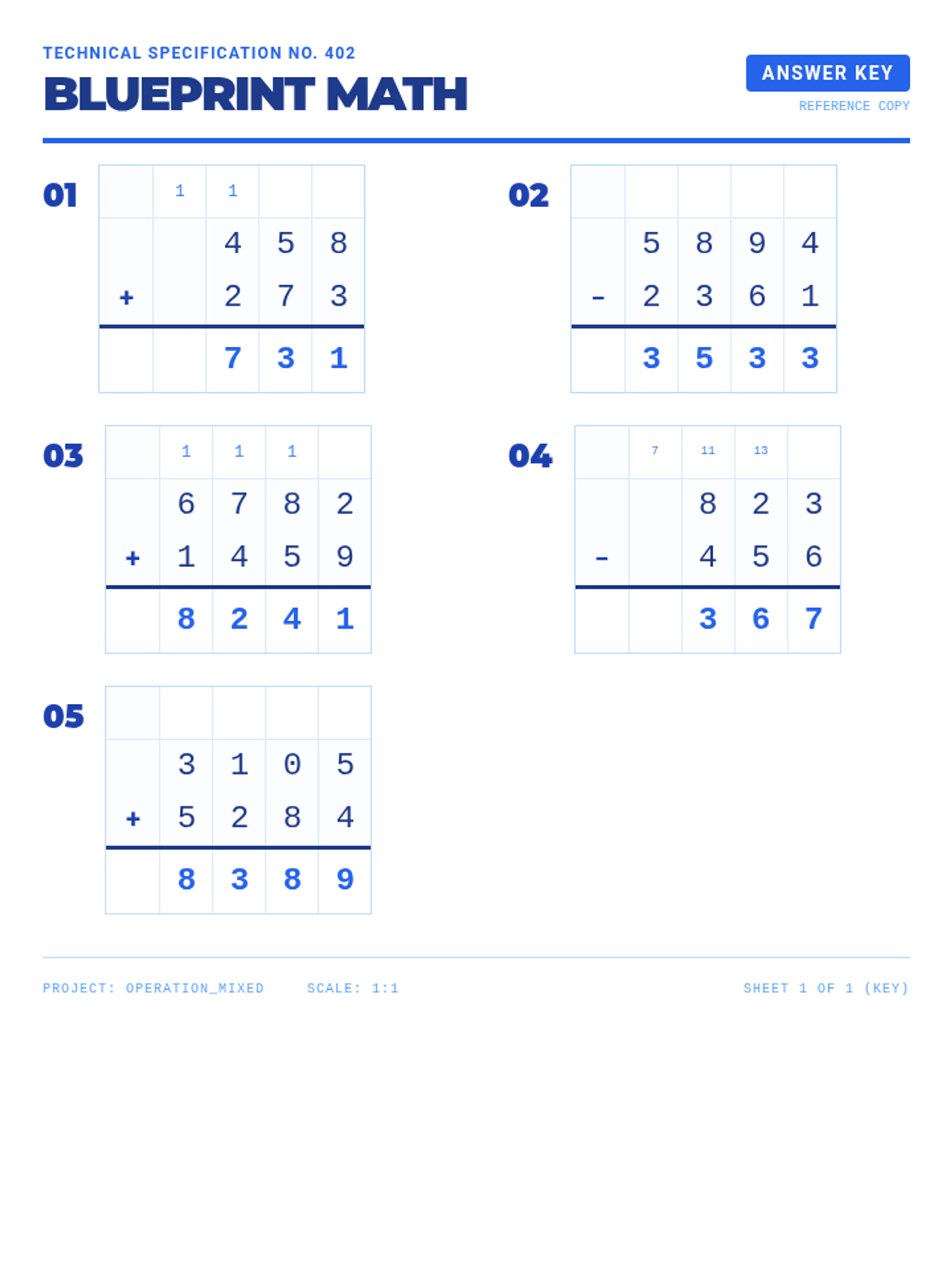
A math lesson focused on multi-digit addition and subtraction using a blueprint-style grid to support alignment and regrouping.
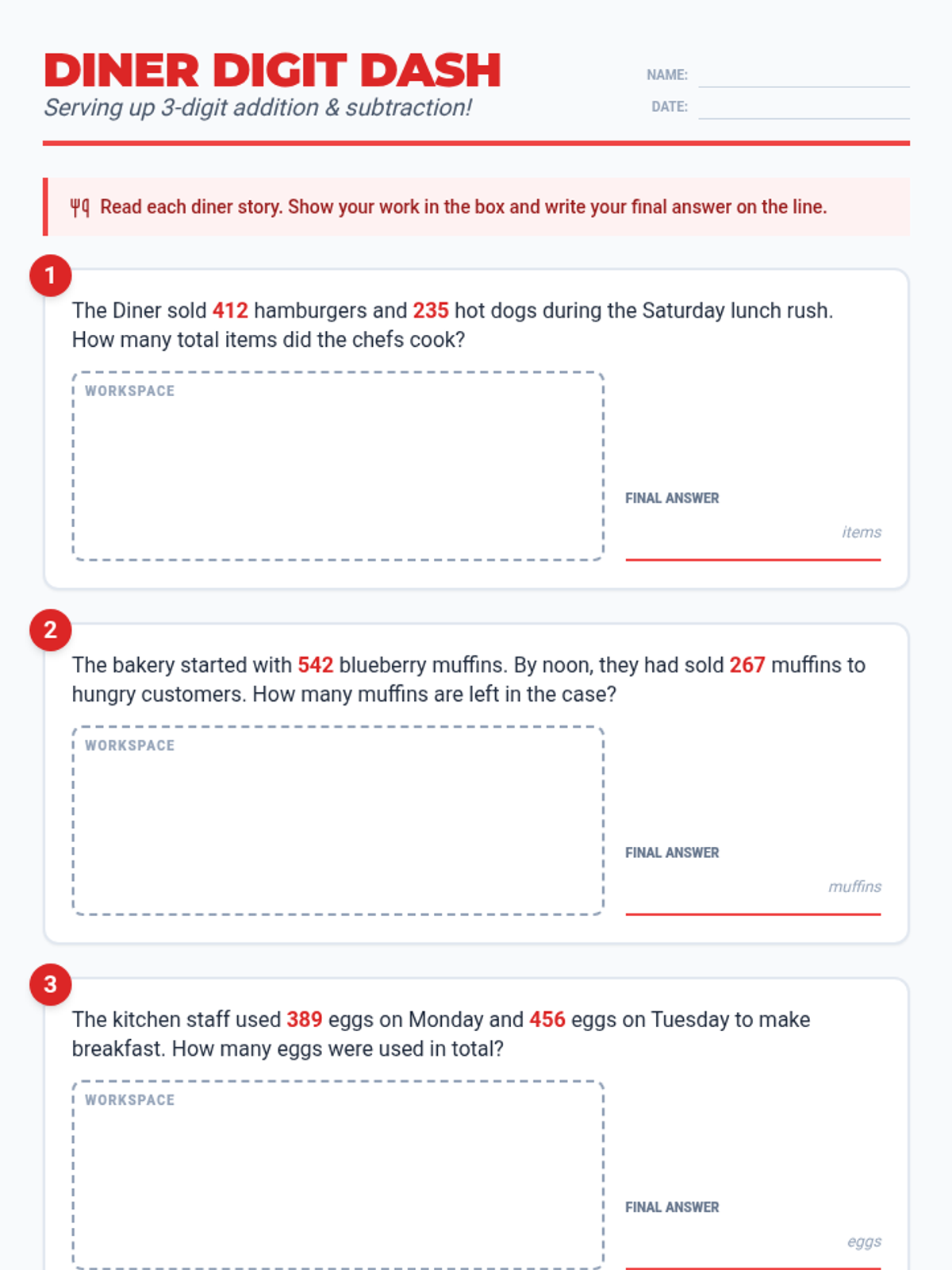
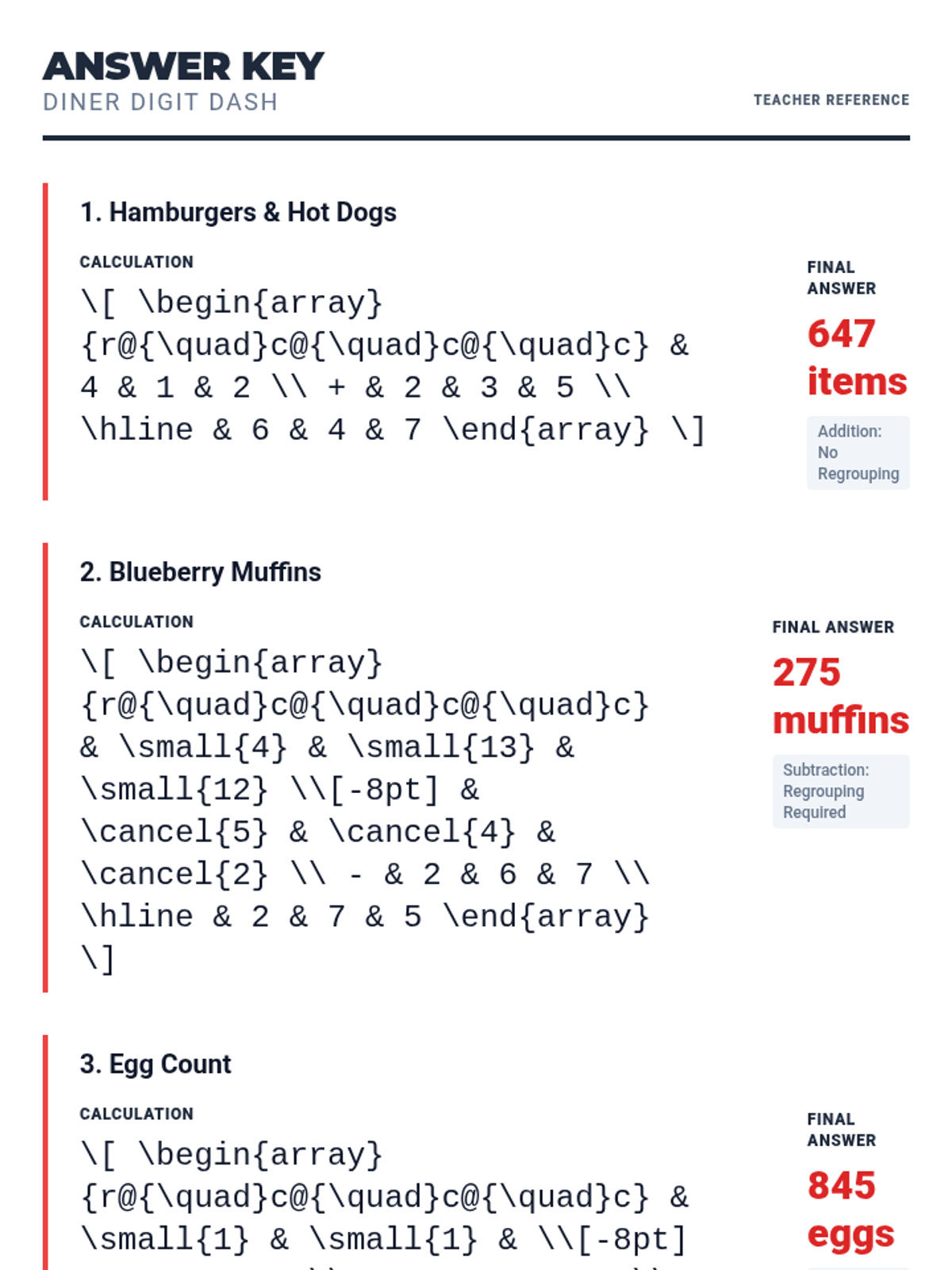
A set of one-step addition and subtraction word problems themed around a busy diner, focusing on 3-digit numbers with and without regrouping.
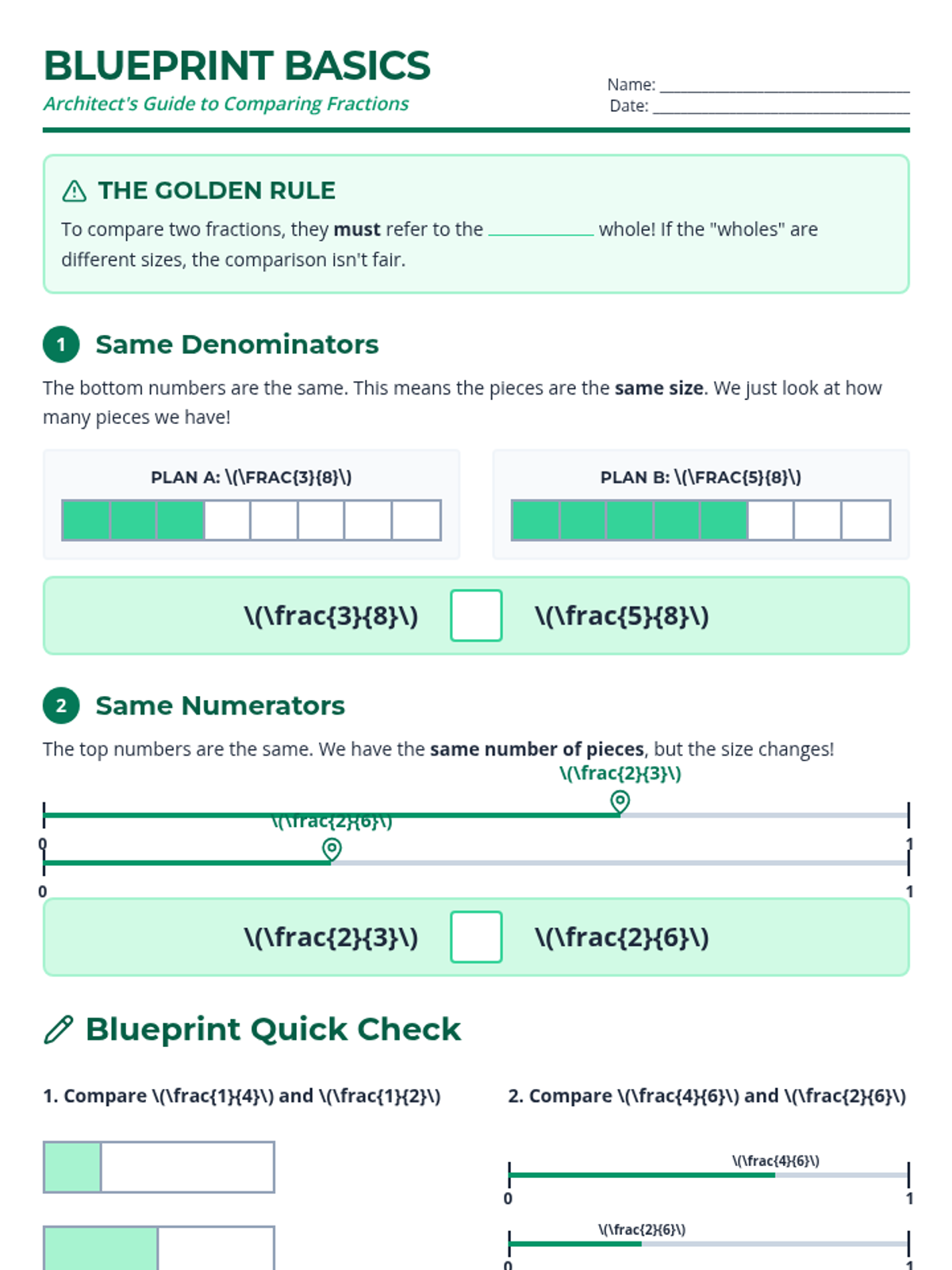
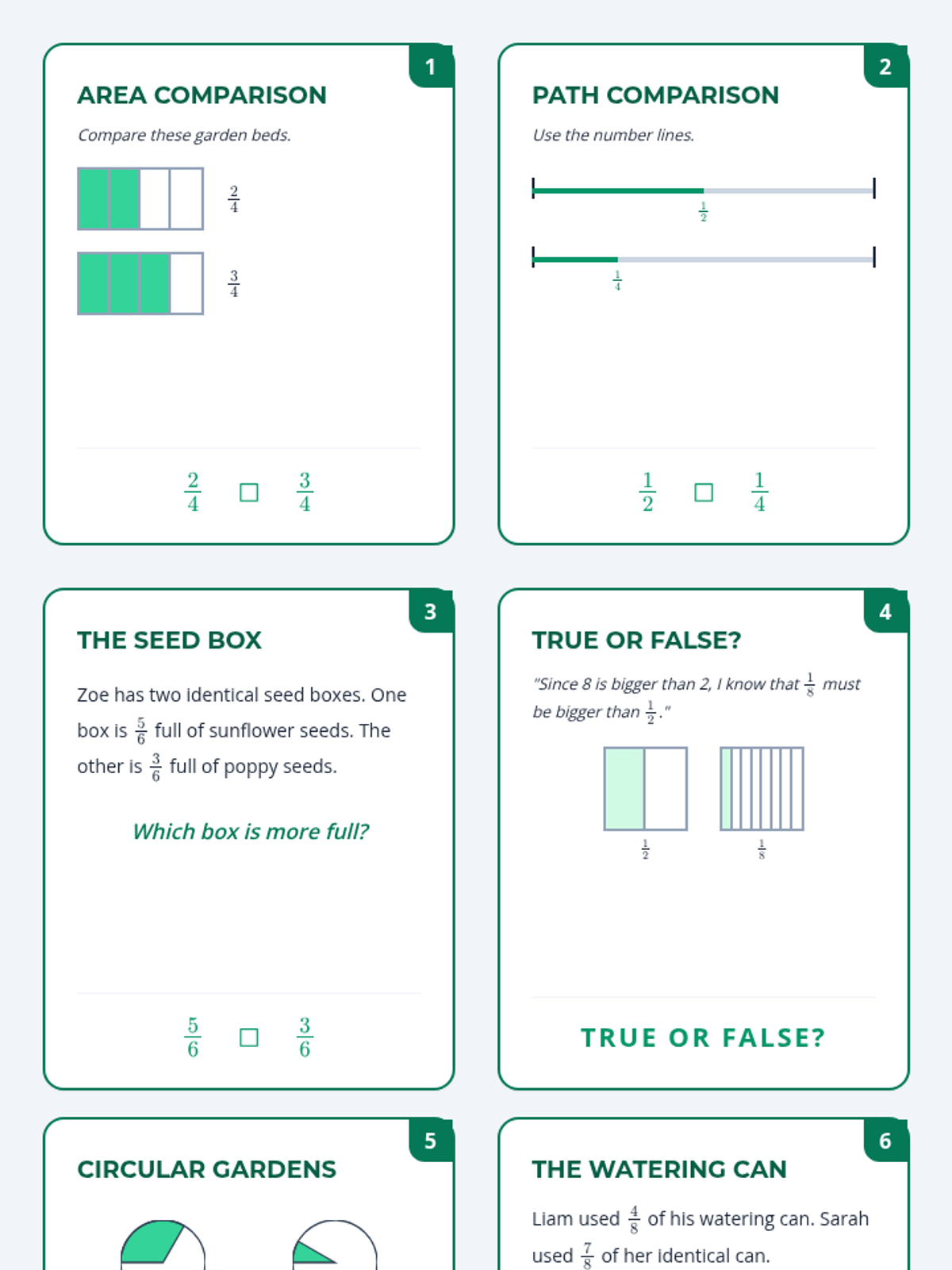
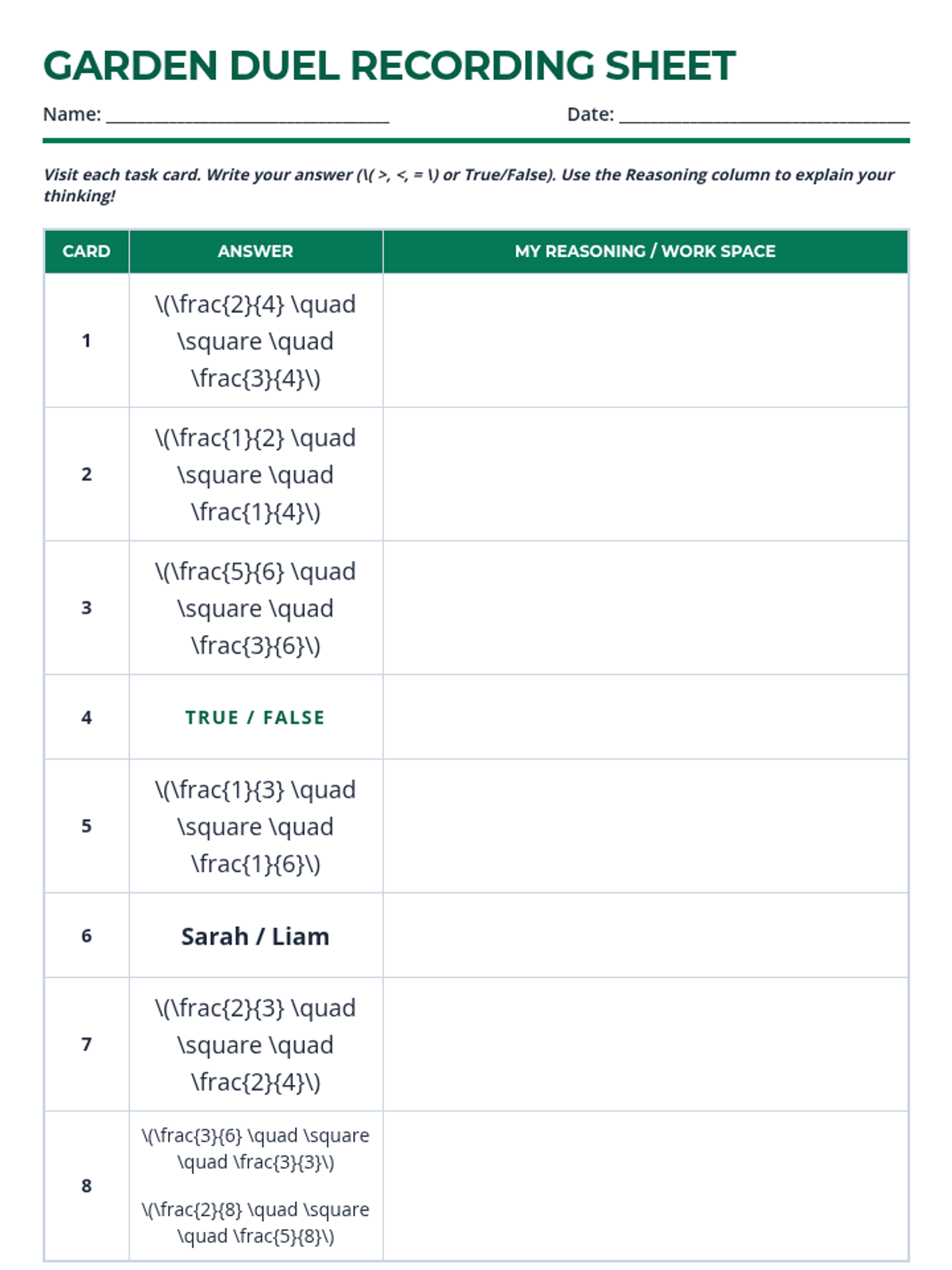
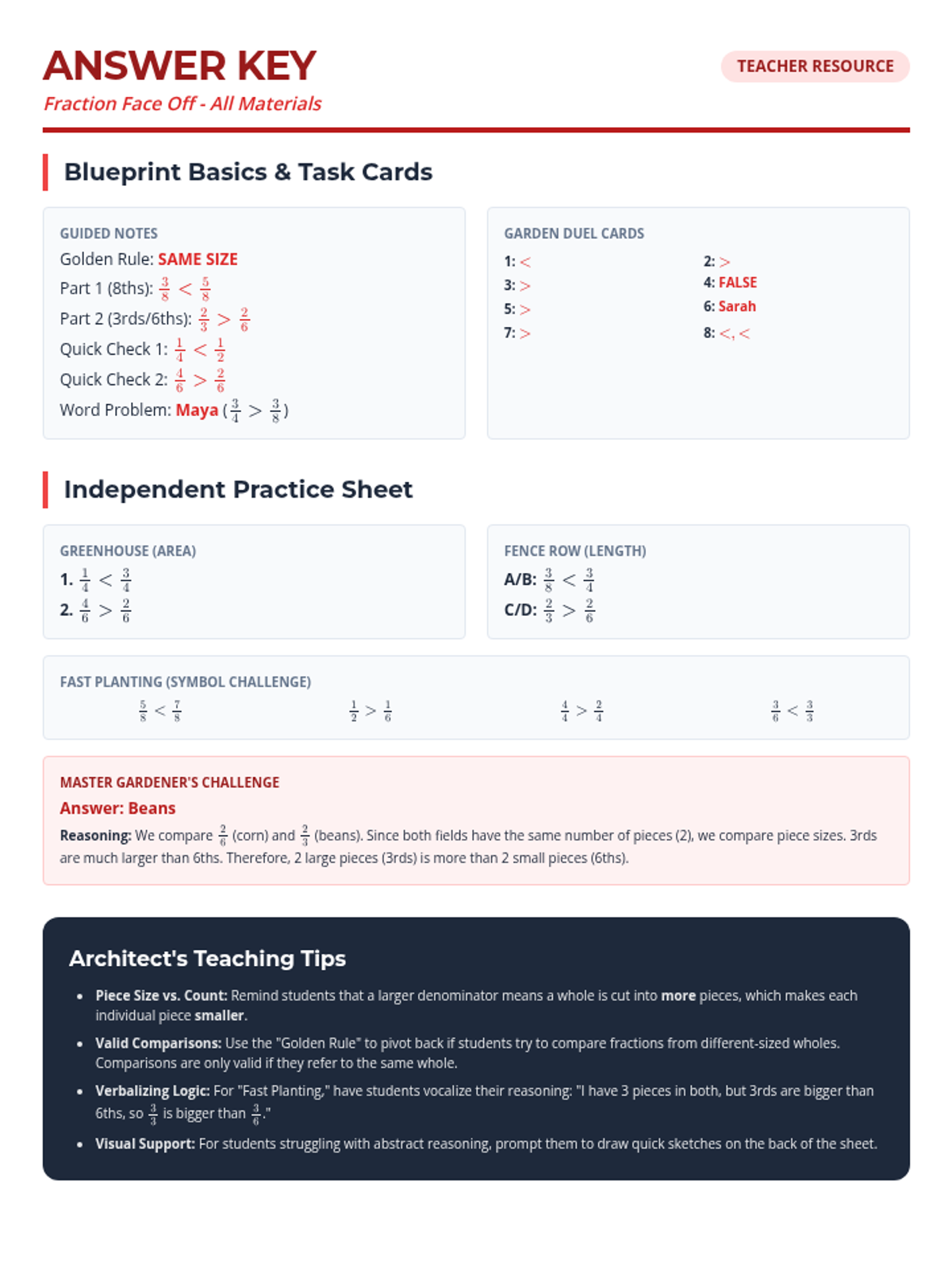
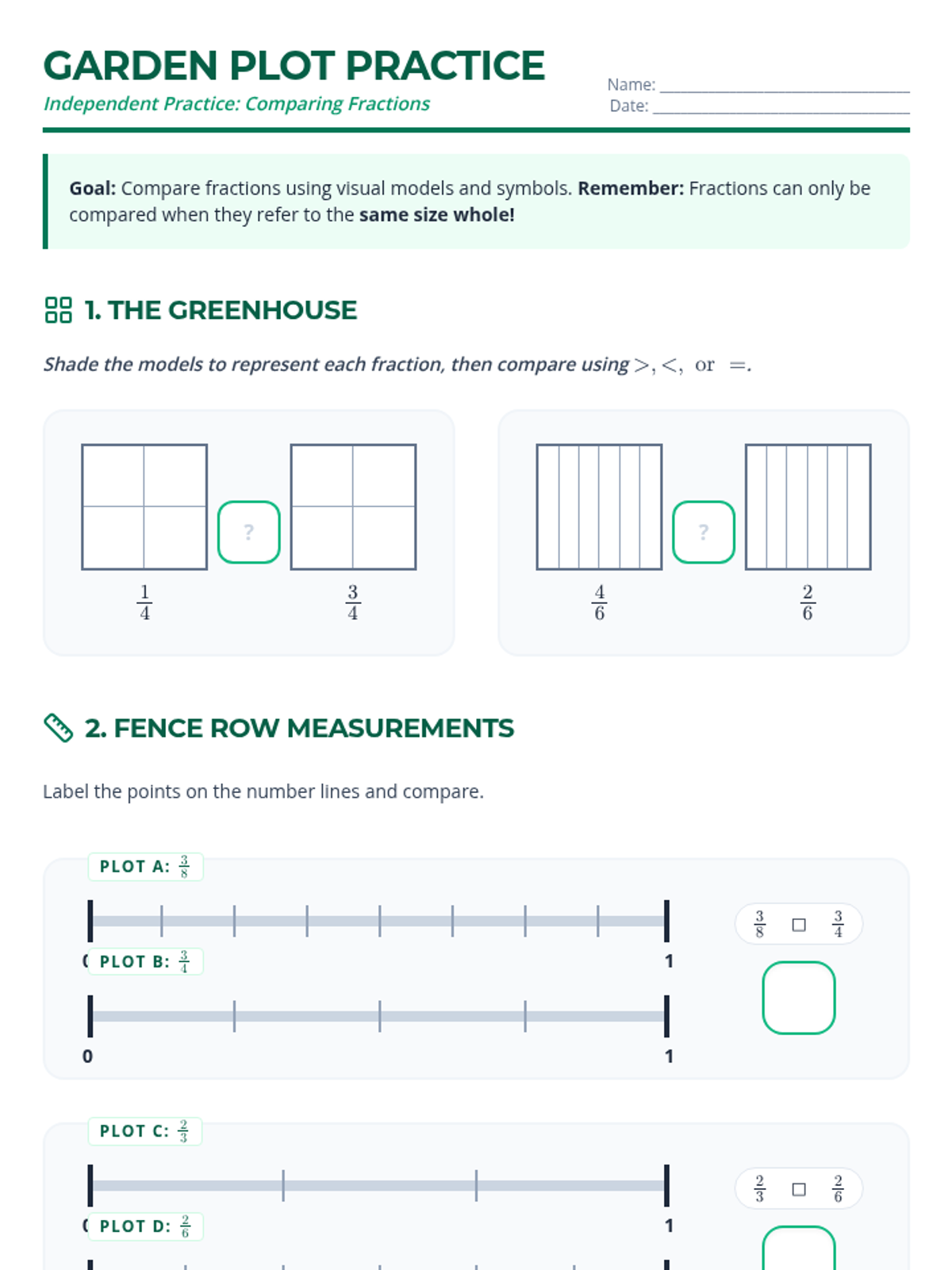
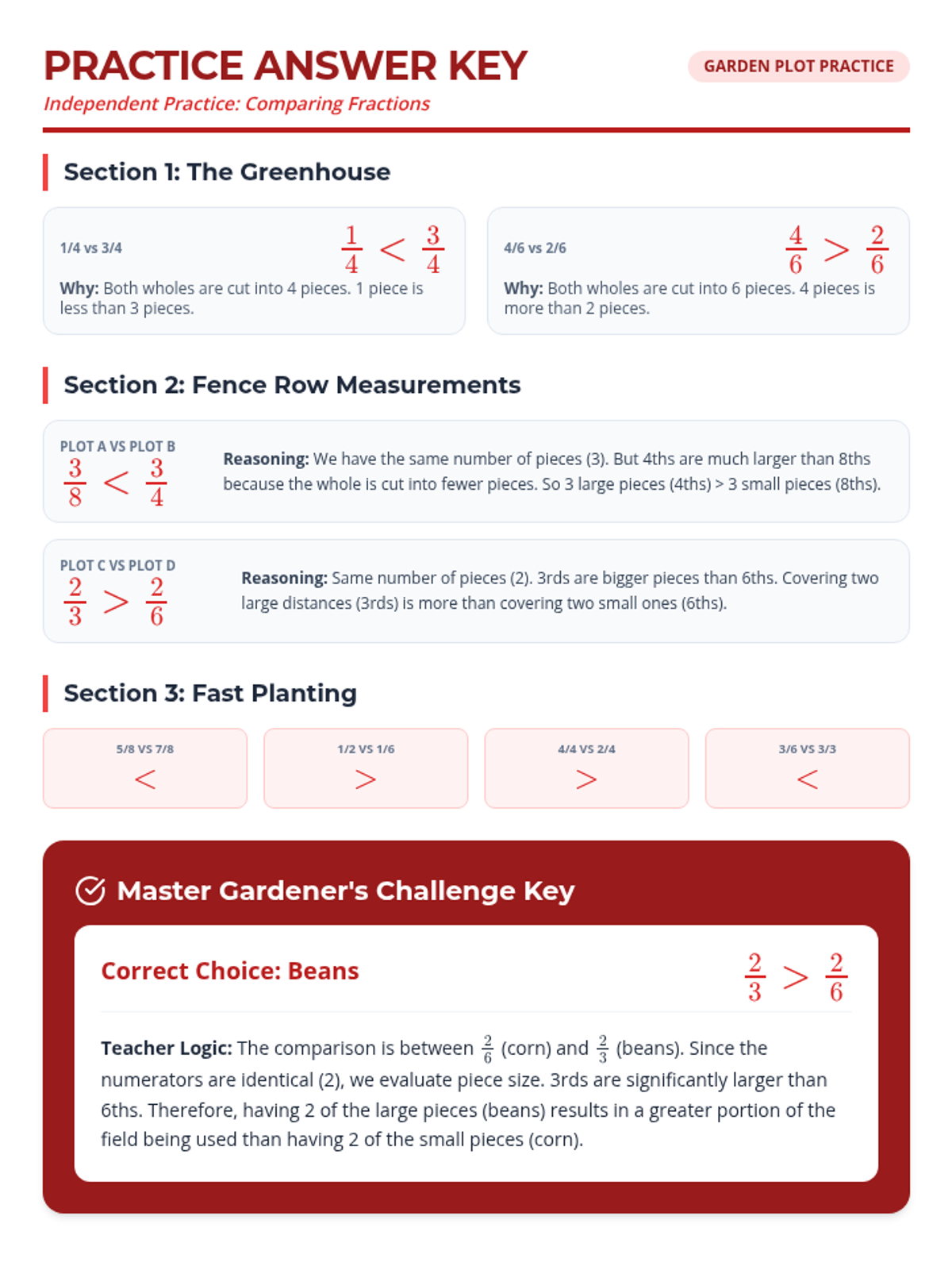
A comprehensive lesson on comparing fractions with like numerators or denominators using visual models and symbols, specifically for 3rd grade standards.
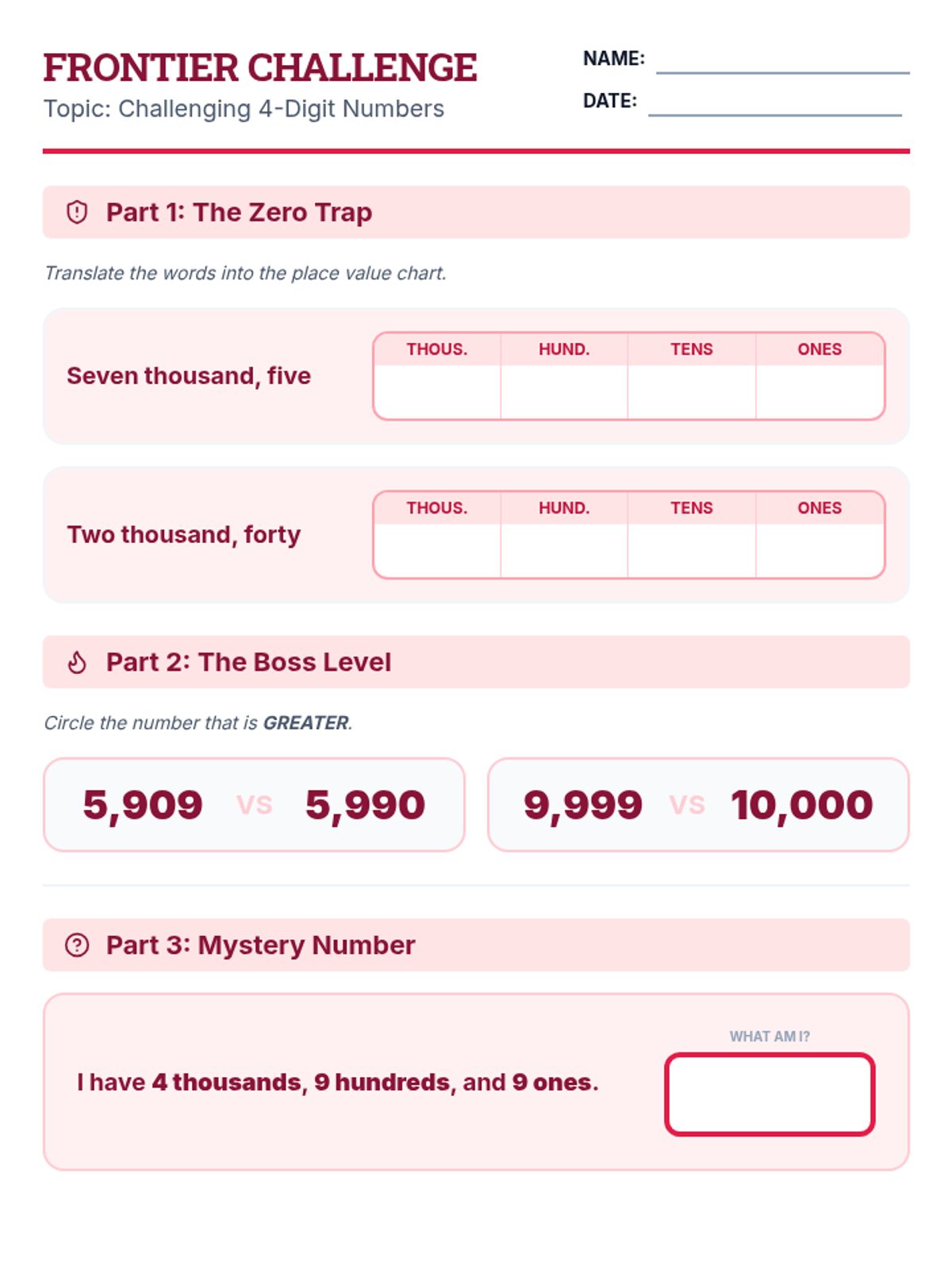
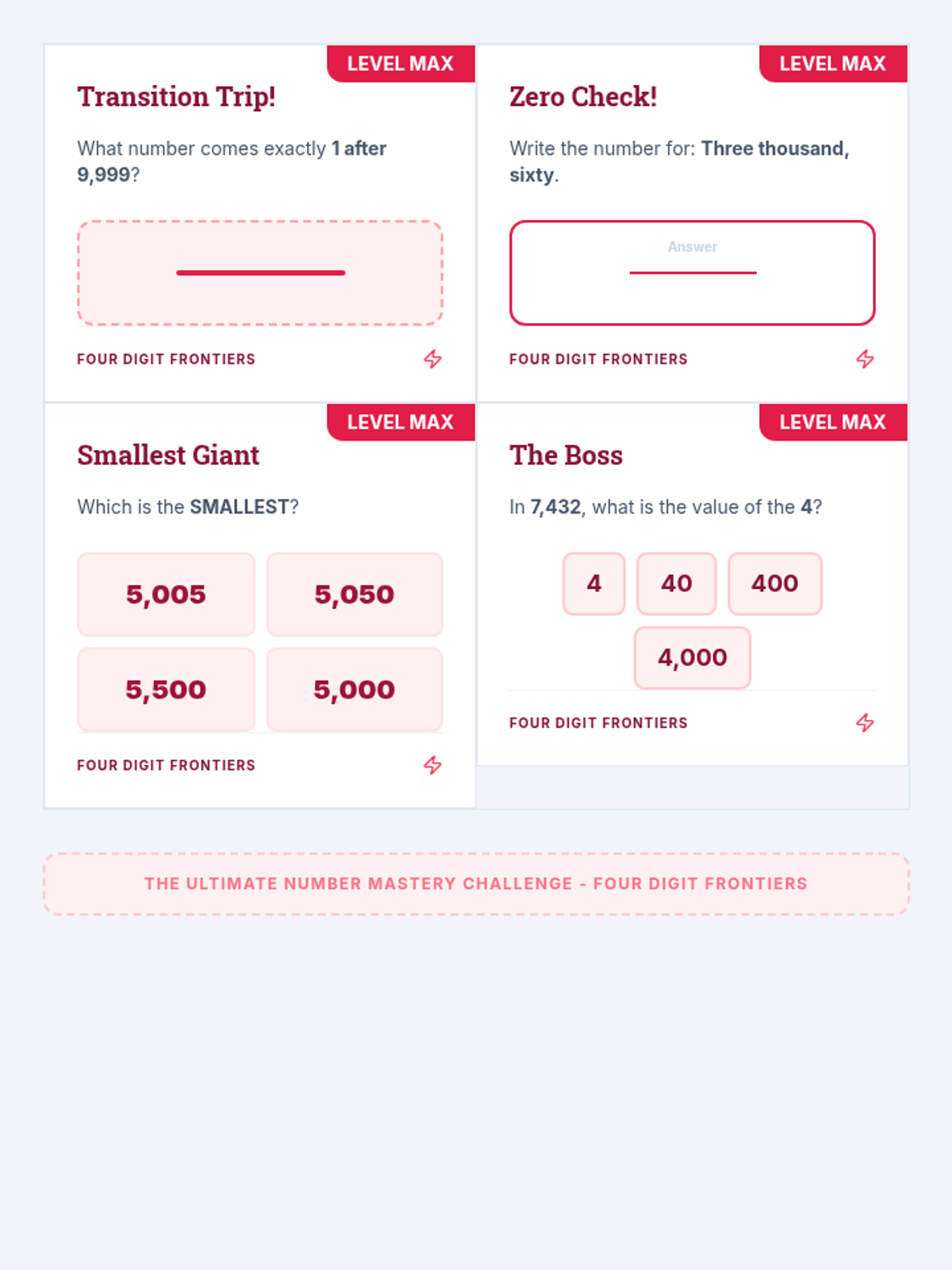
Explores numbers beyond 1,000, focusing on the thousands place value and comparing large numbers that look similar to test place value mastery.
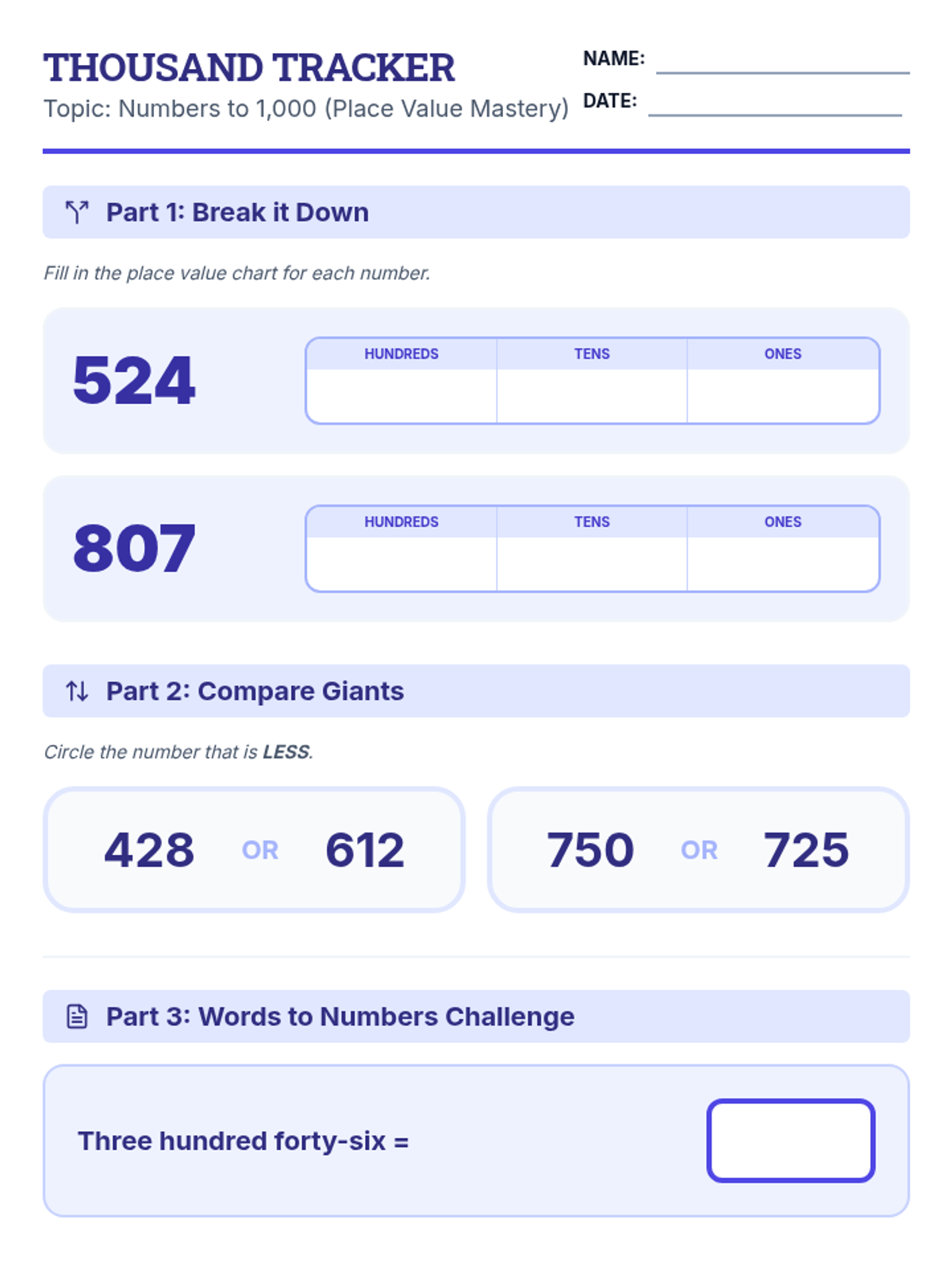
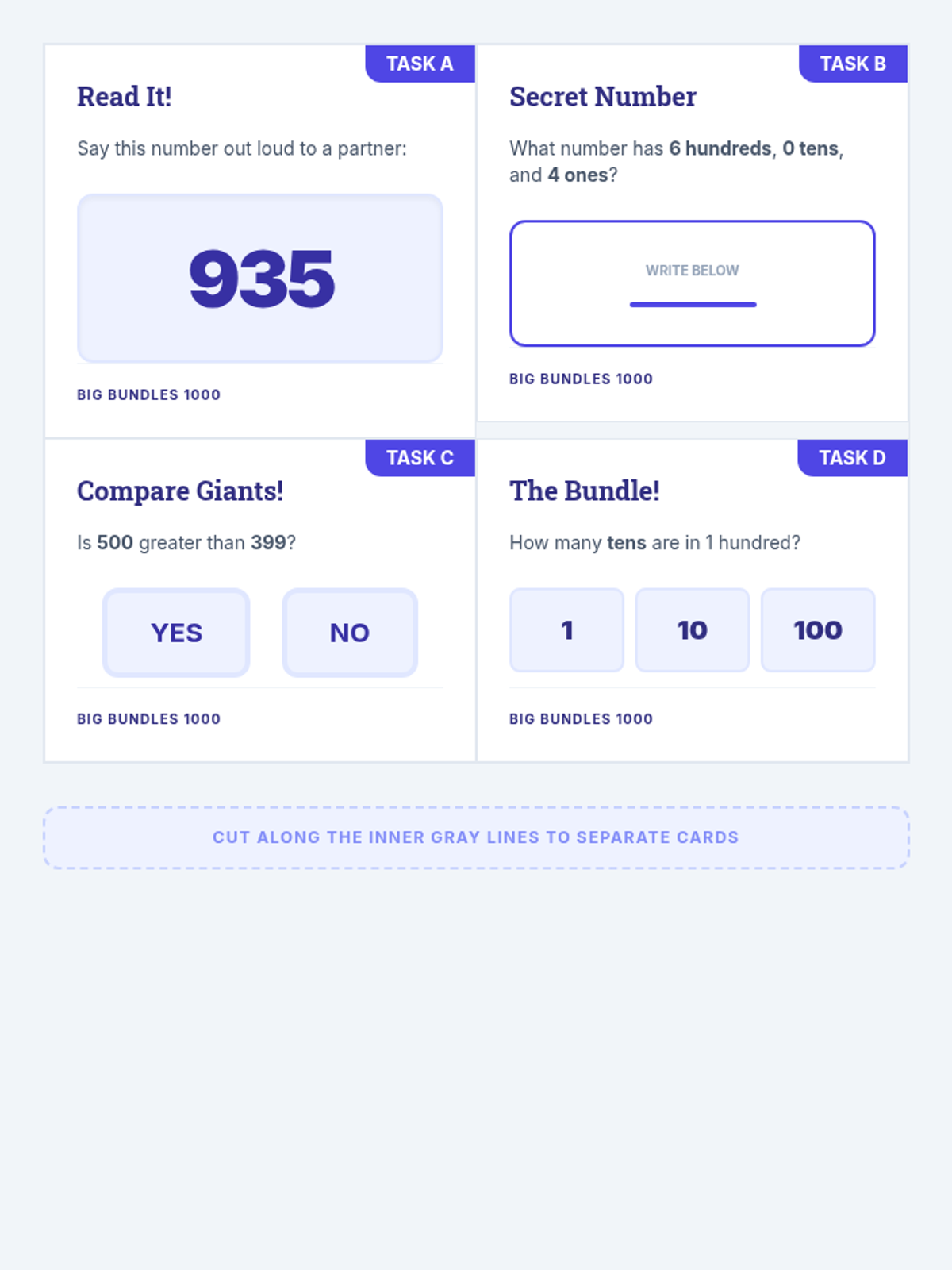
Expands number sense to 1,000, focusing on hundreds, tens, and ones with visual place value models and comparison strategies.
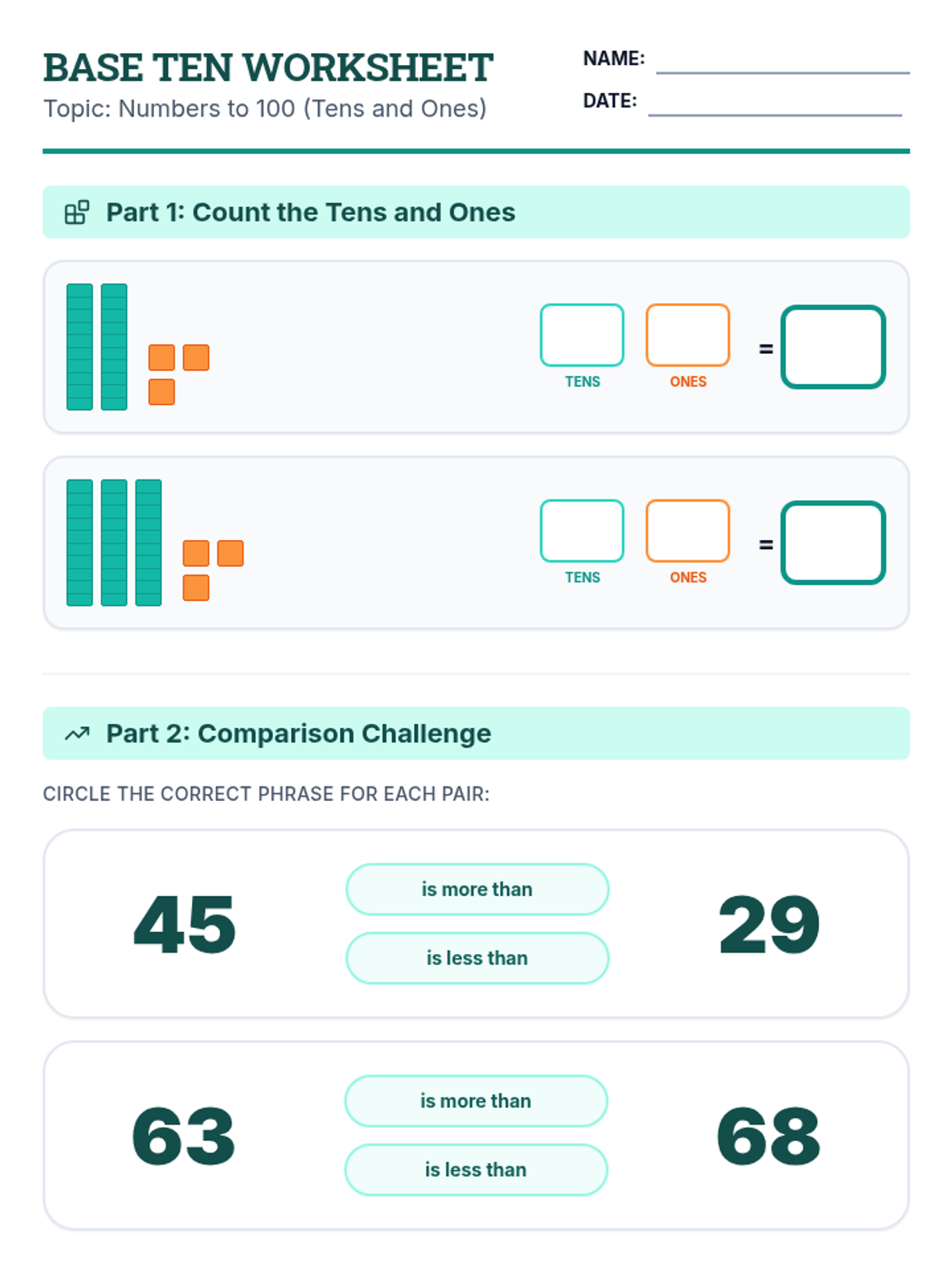
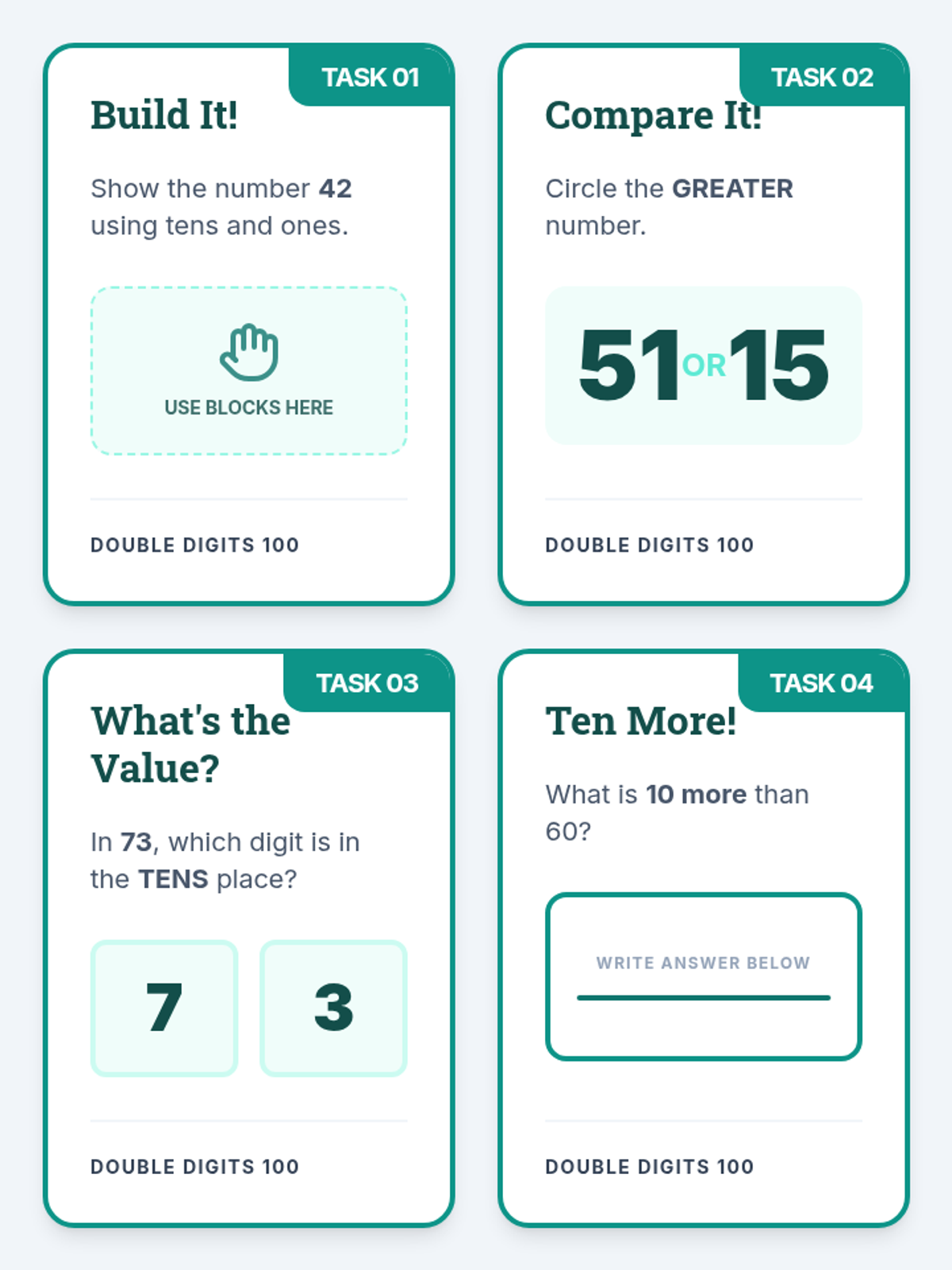
Introduces place value for numbers up to 100, using base-ten blocks (tens and ones) to help students visualize and compare larger values.
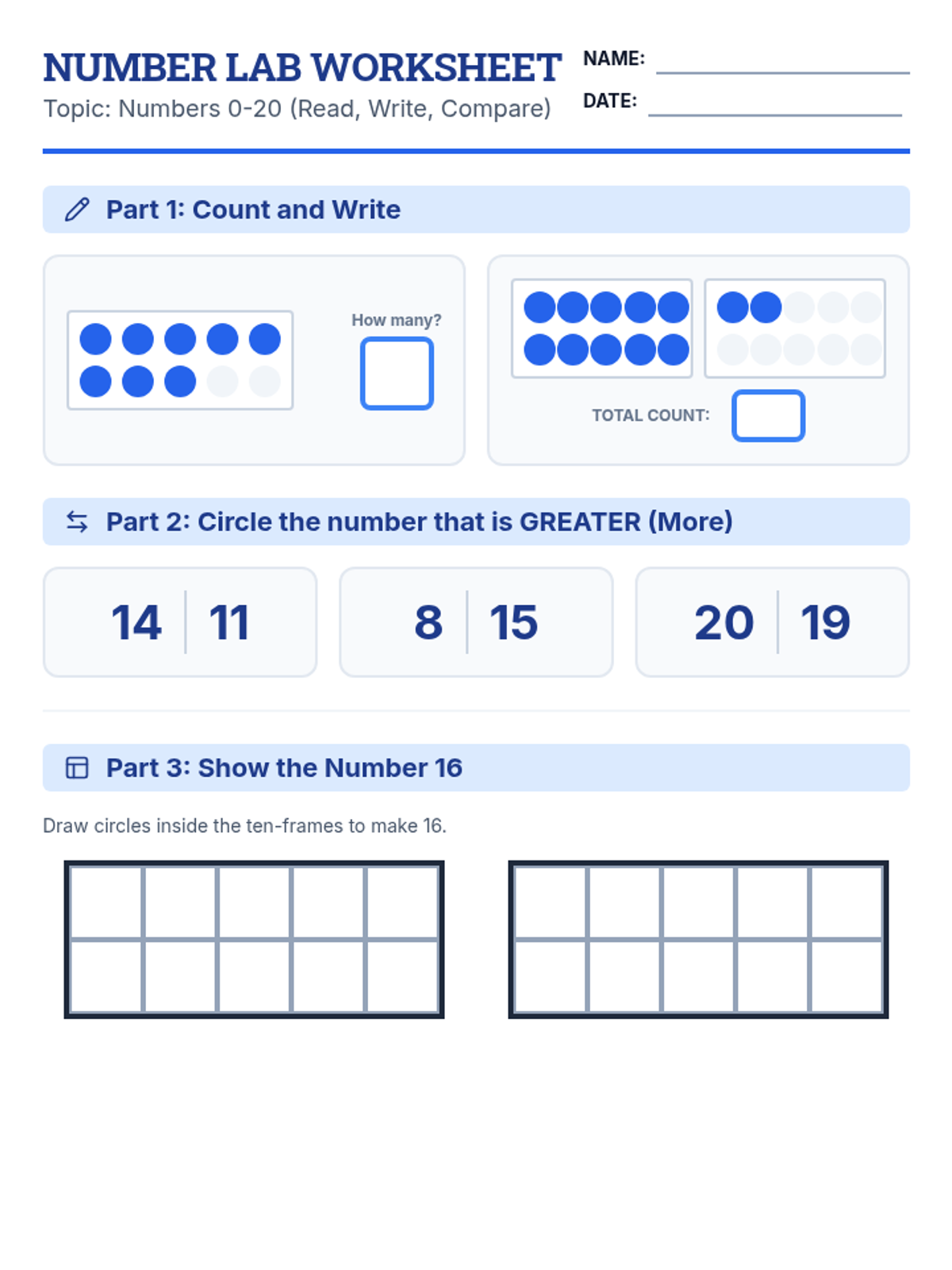
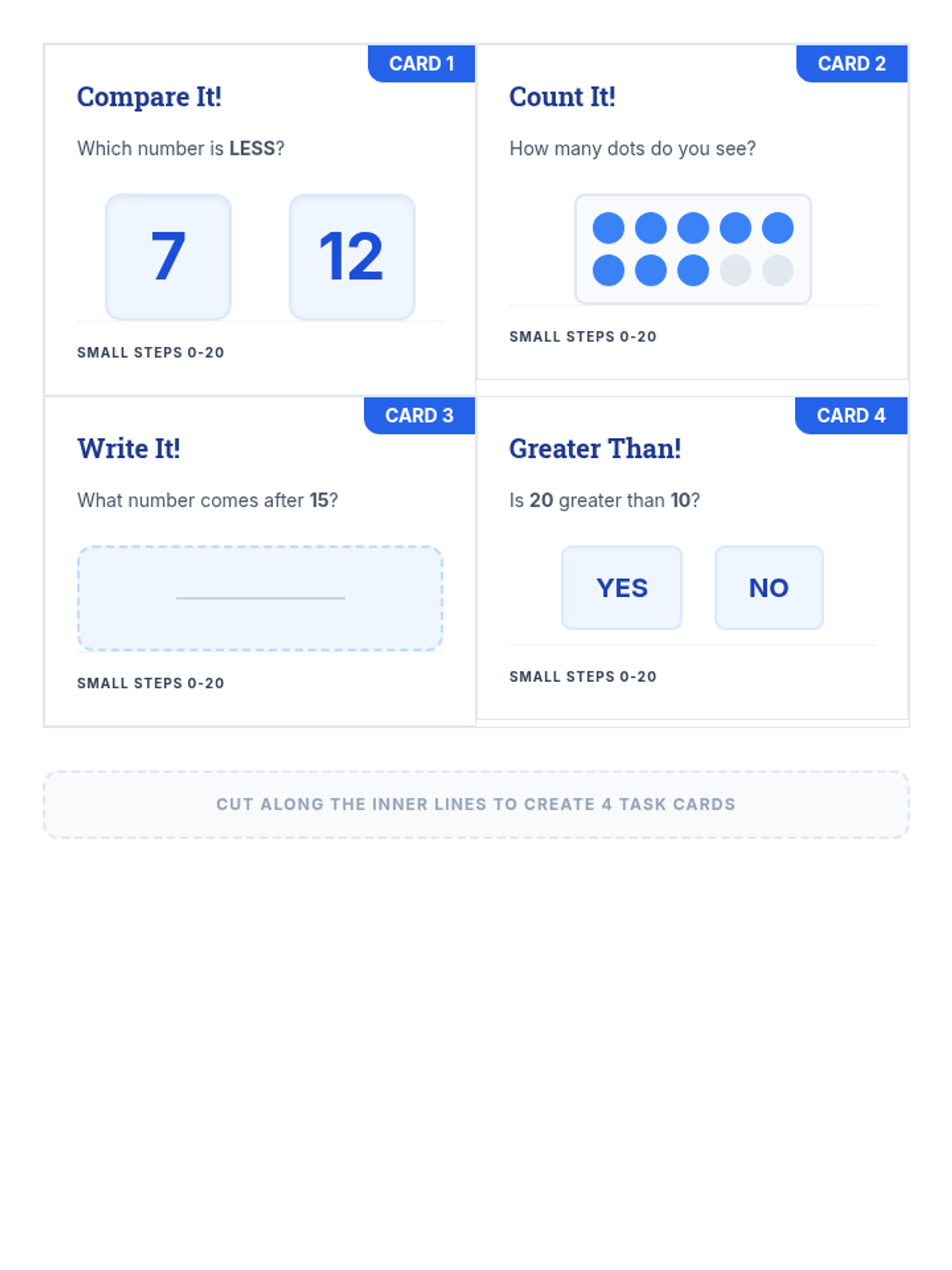
Focuses on reading, writing, and comparing numbers from 0 to 20 using ten-frames and counters to provide concrete visual support.
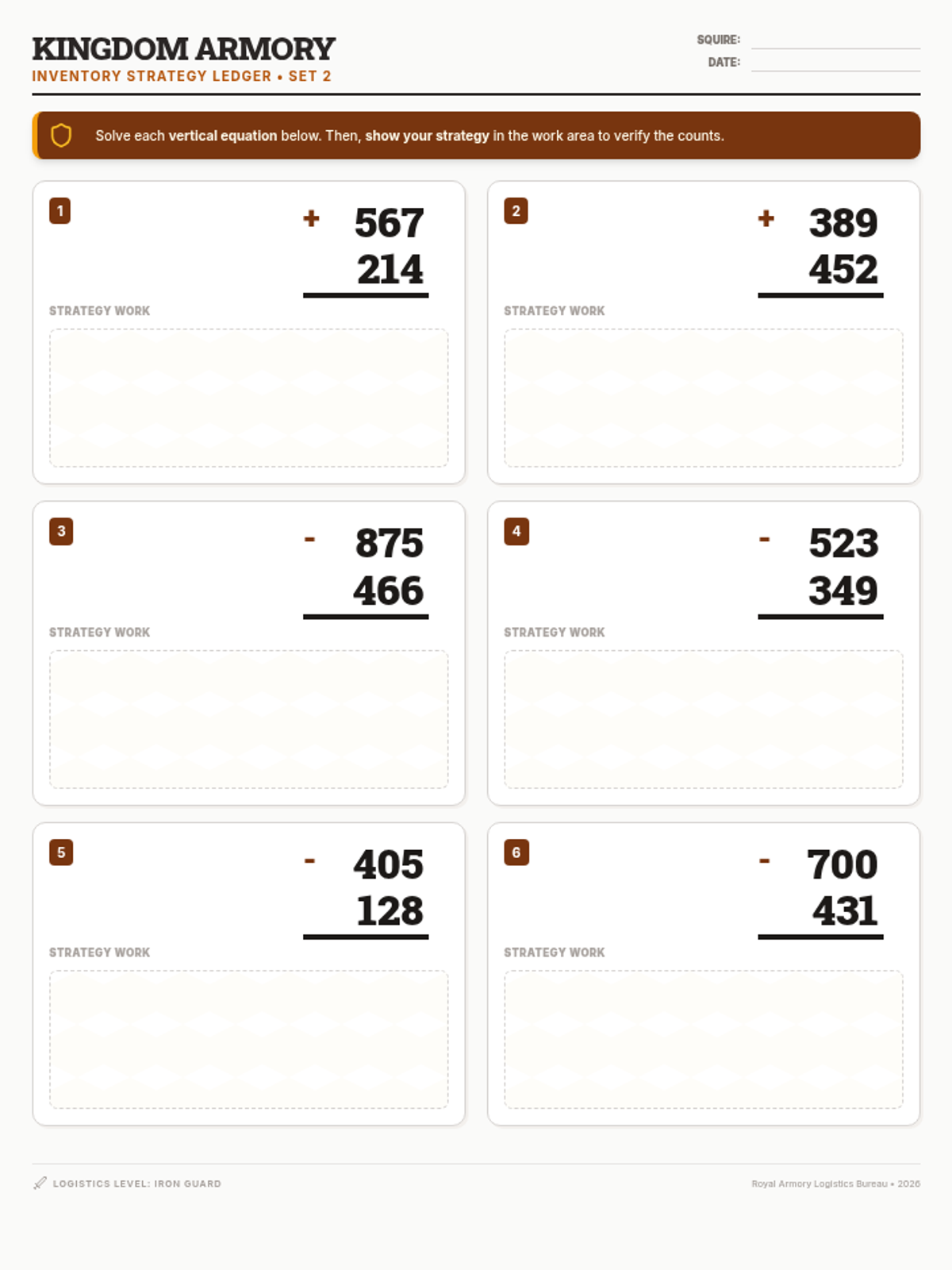
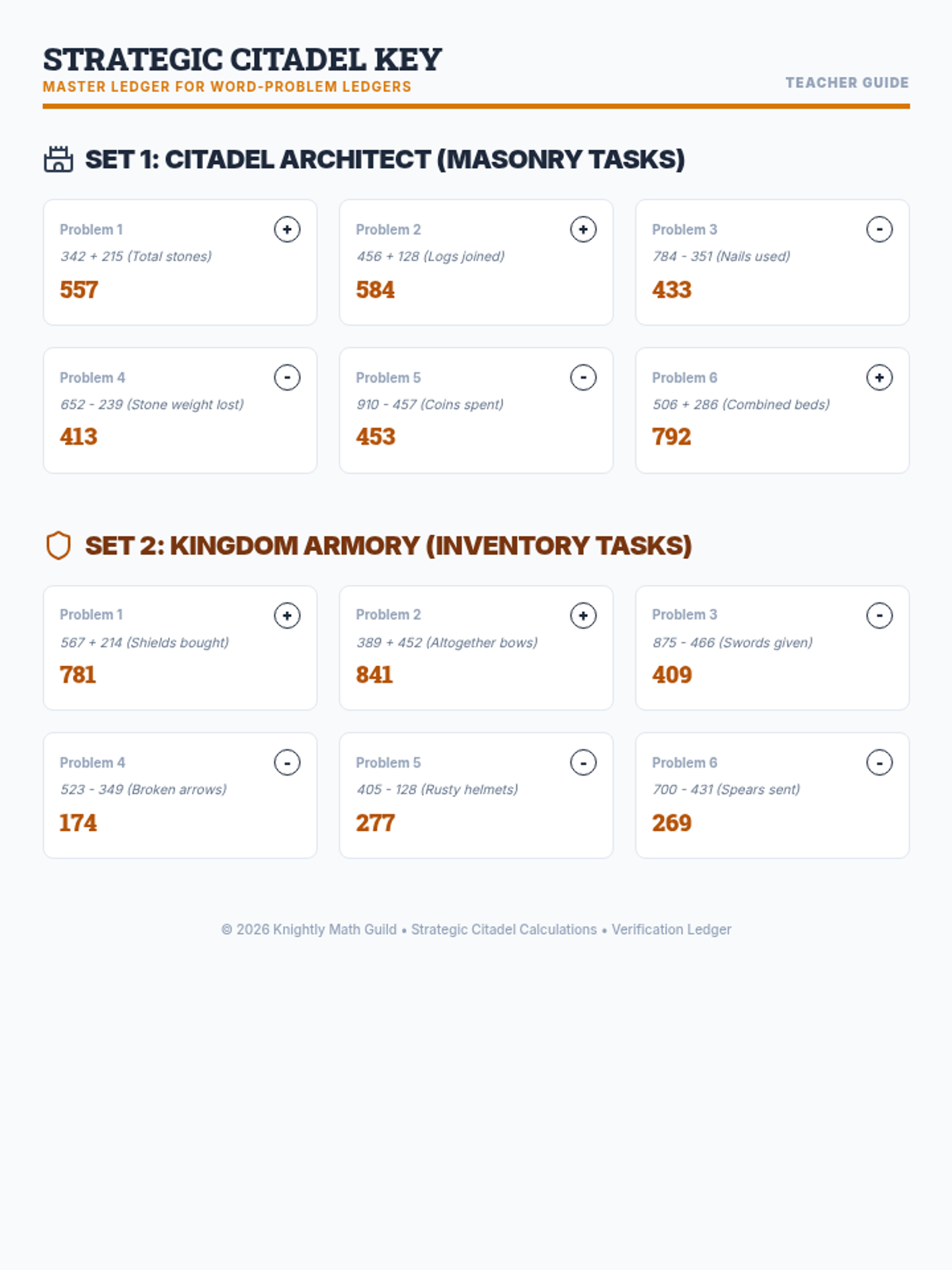
Students will master 3-digit addition and subtraction by identifying the correct operation and selecting appropriate mathematical strategies such as number lines, place value models, or partial sums. This lesson emphasizes strategic thinking and procedural fluency within a medieval architectural and inventory context.
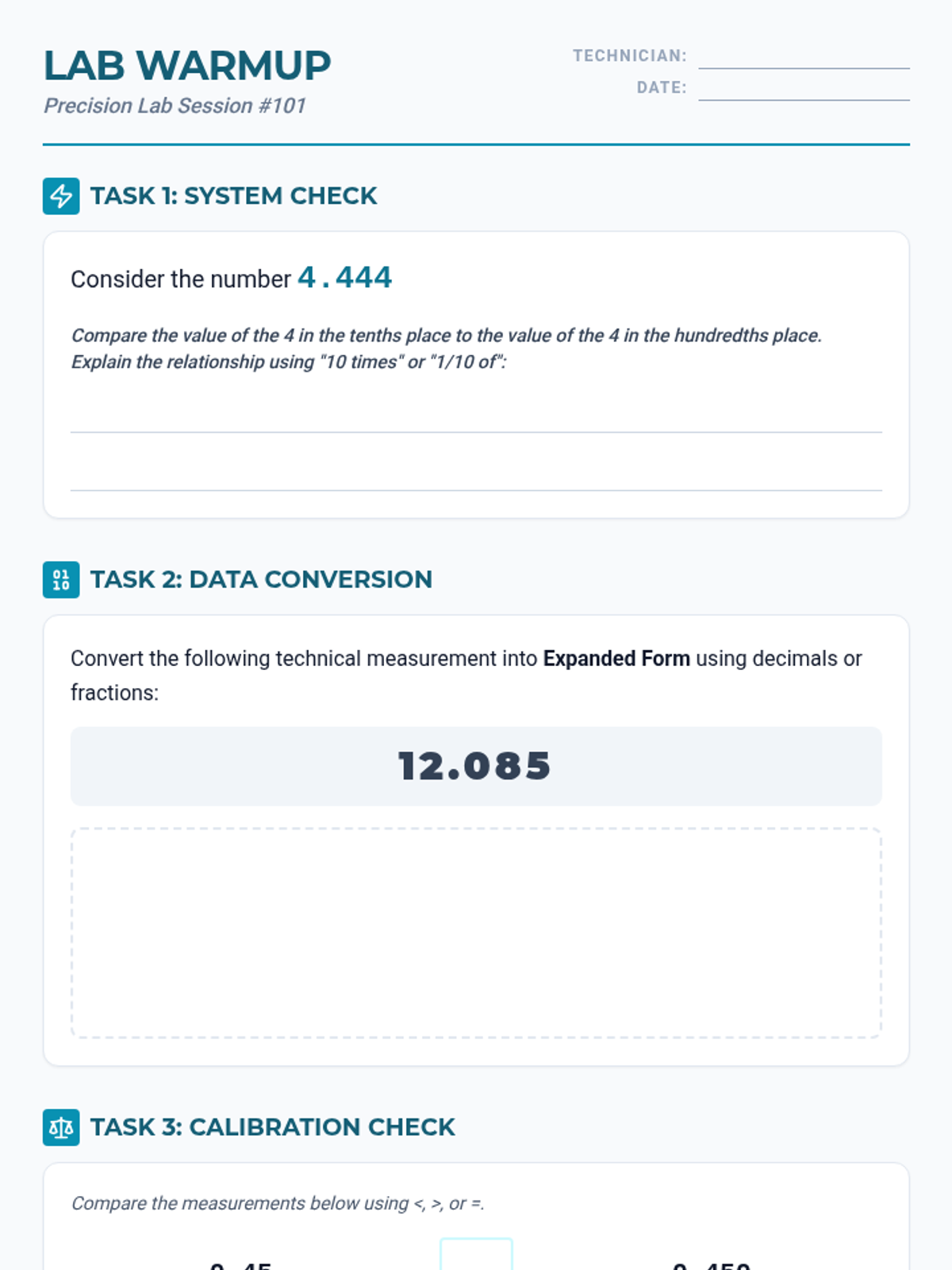
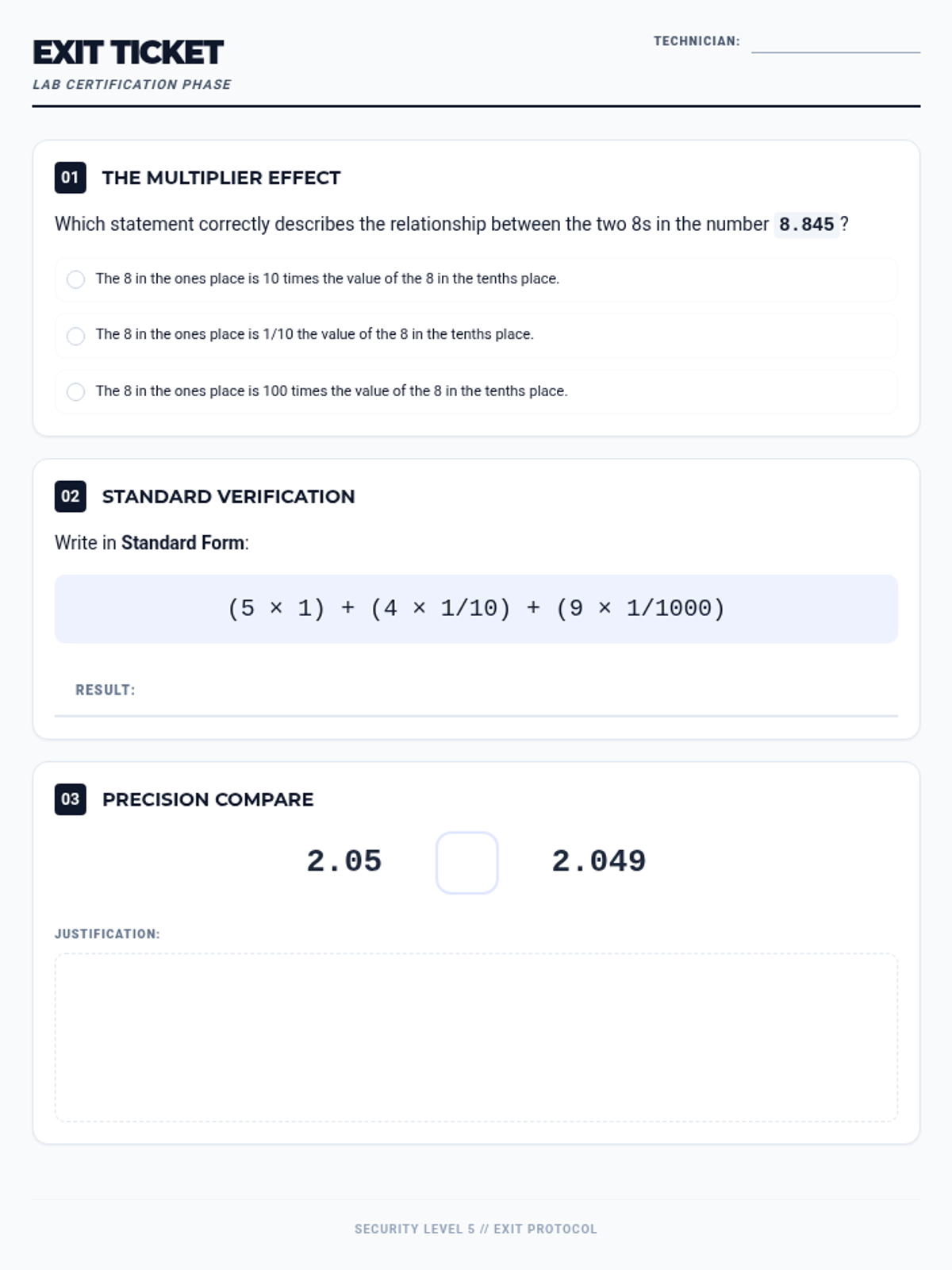
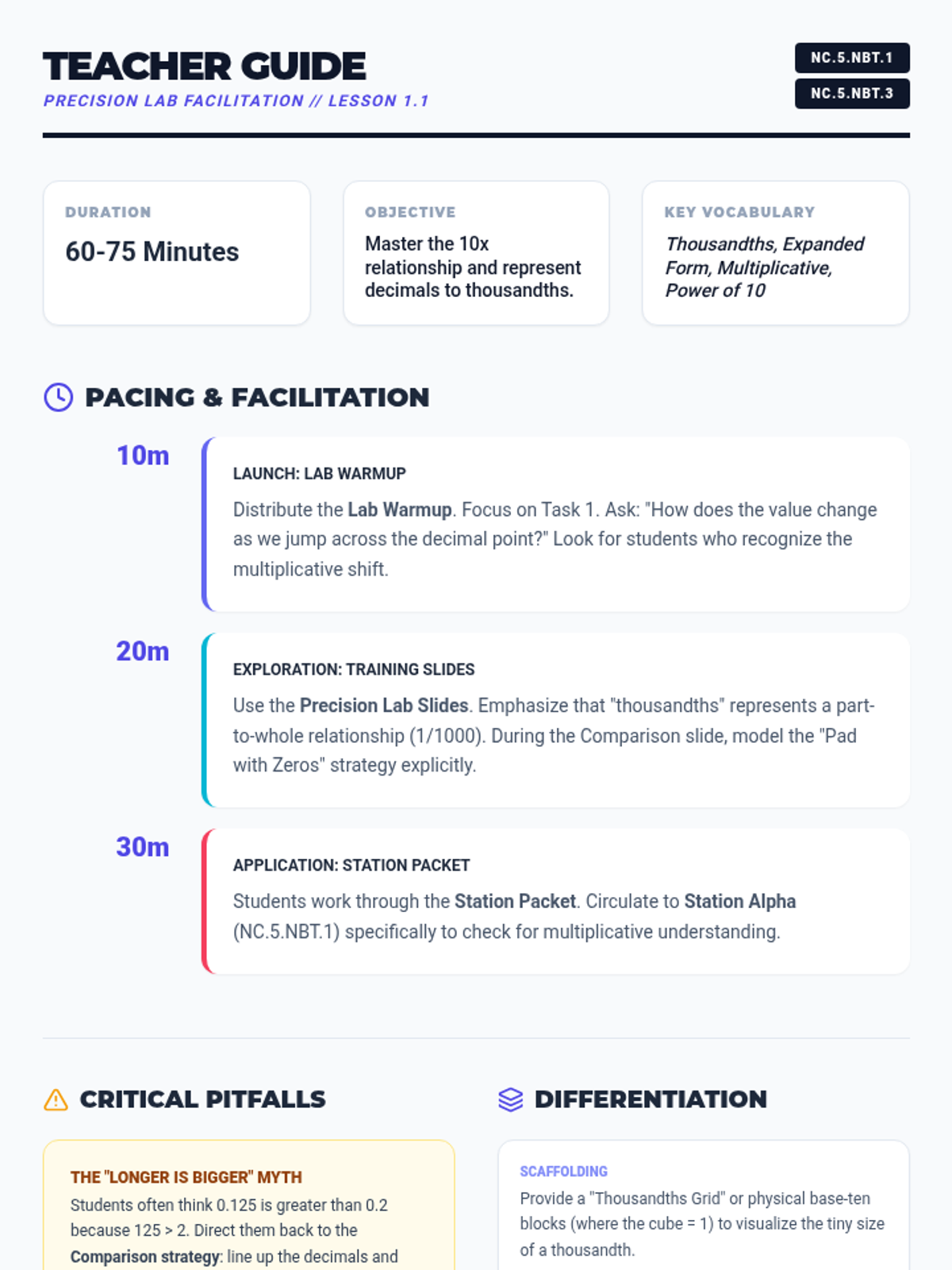
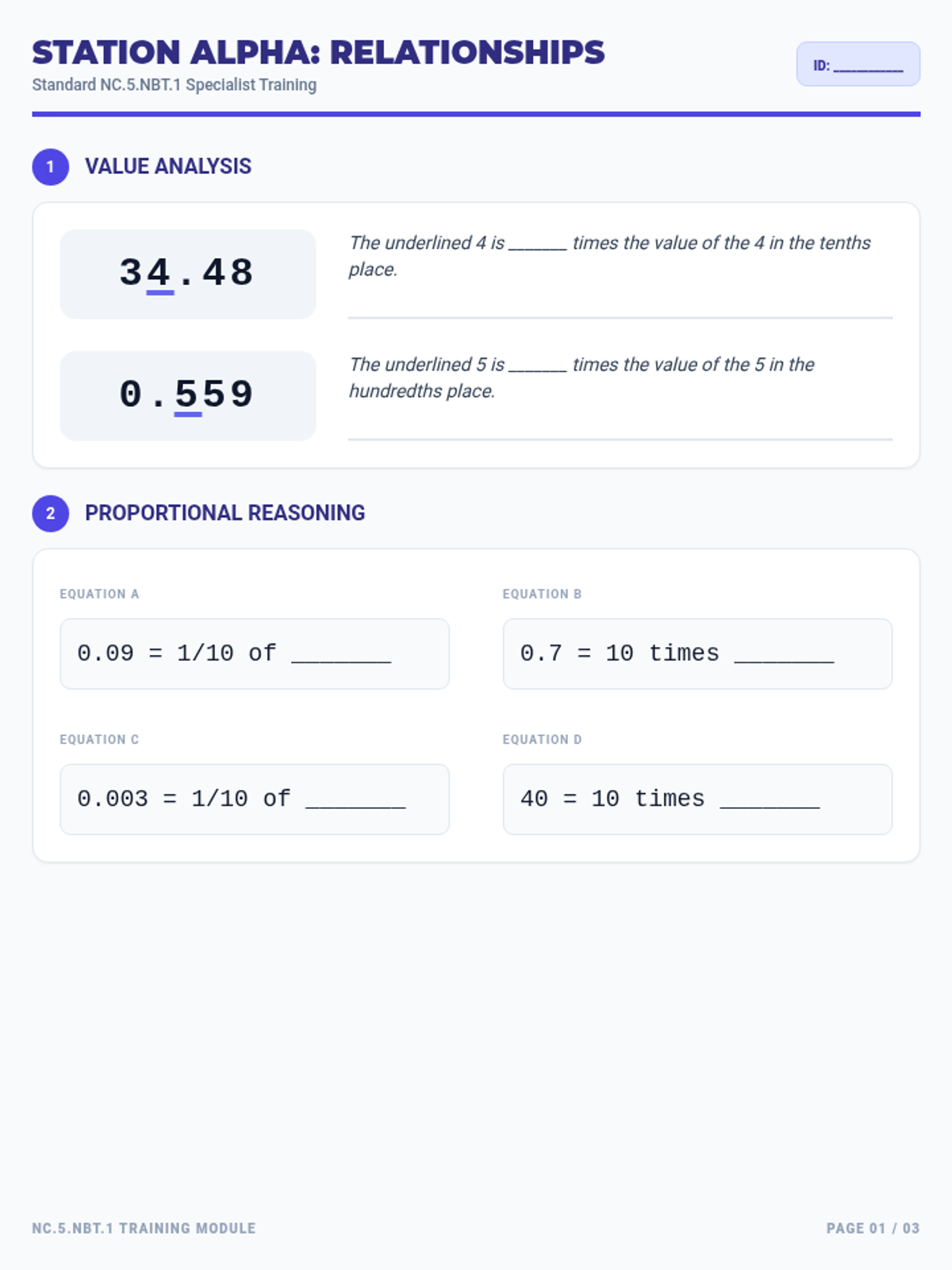
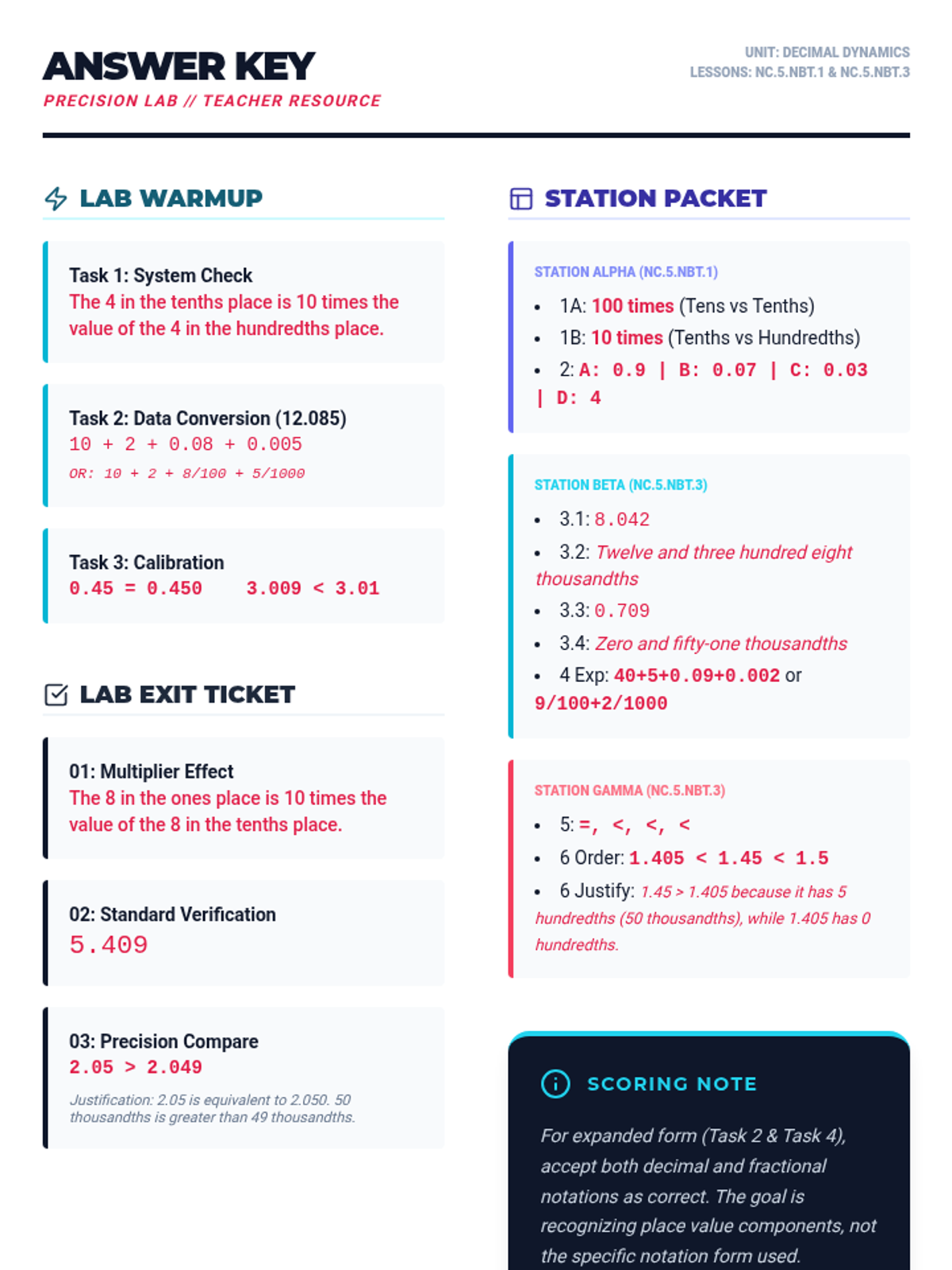
An introductory lesson focused on the multiplicative relationship between place values and the formal representation of decimals through various forms and comparisons.
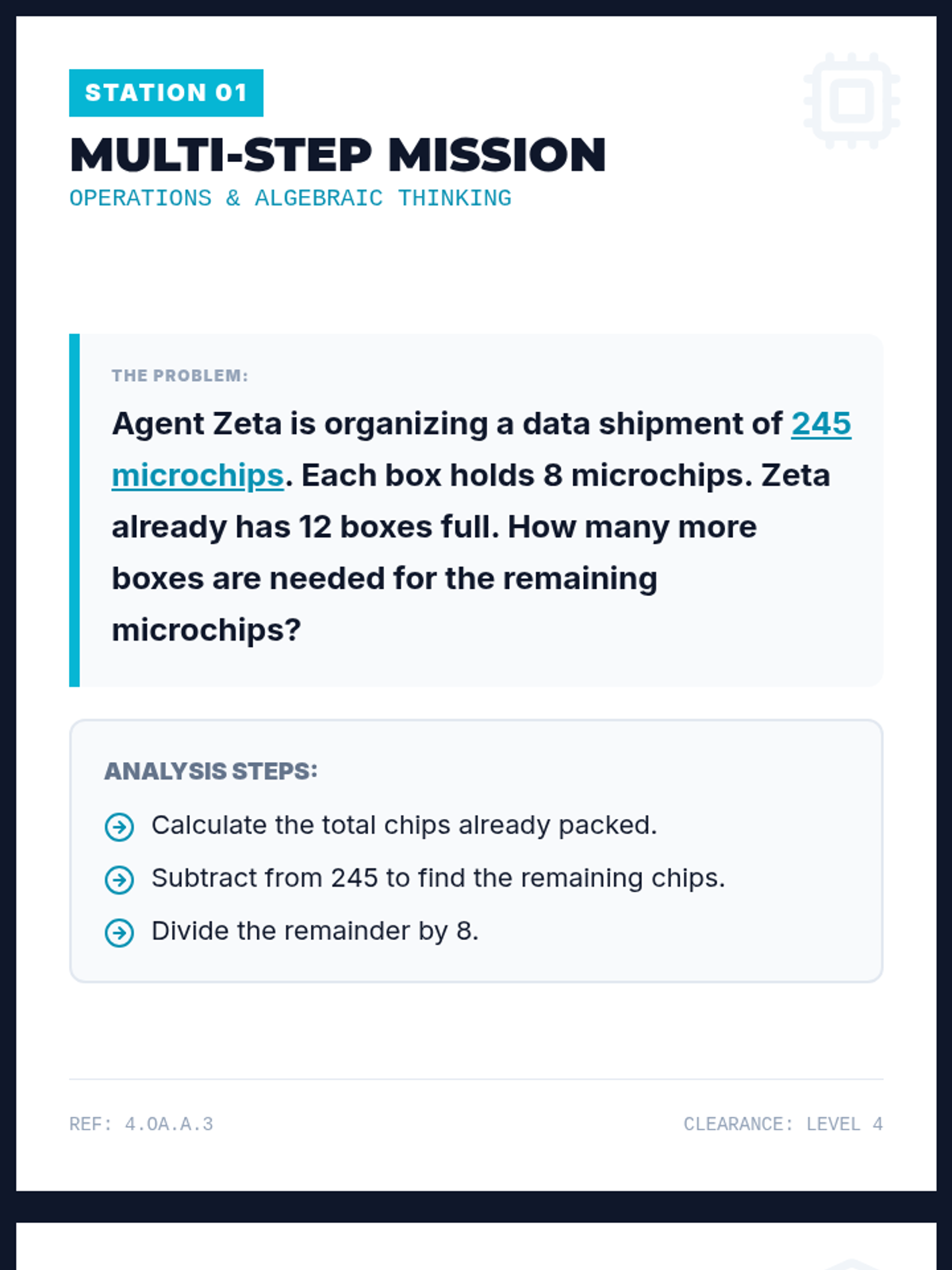
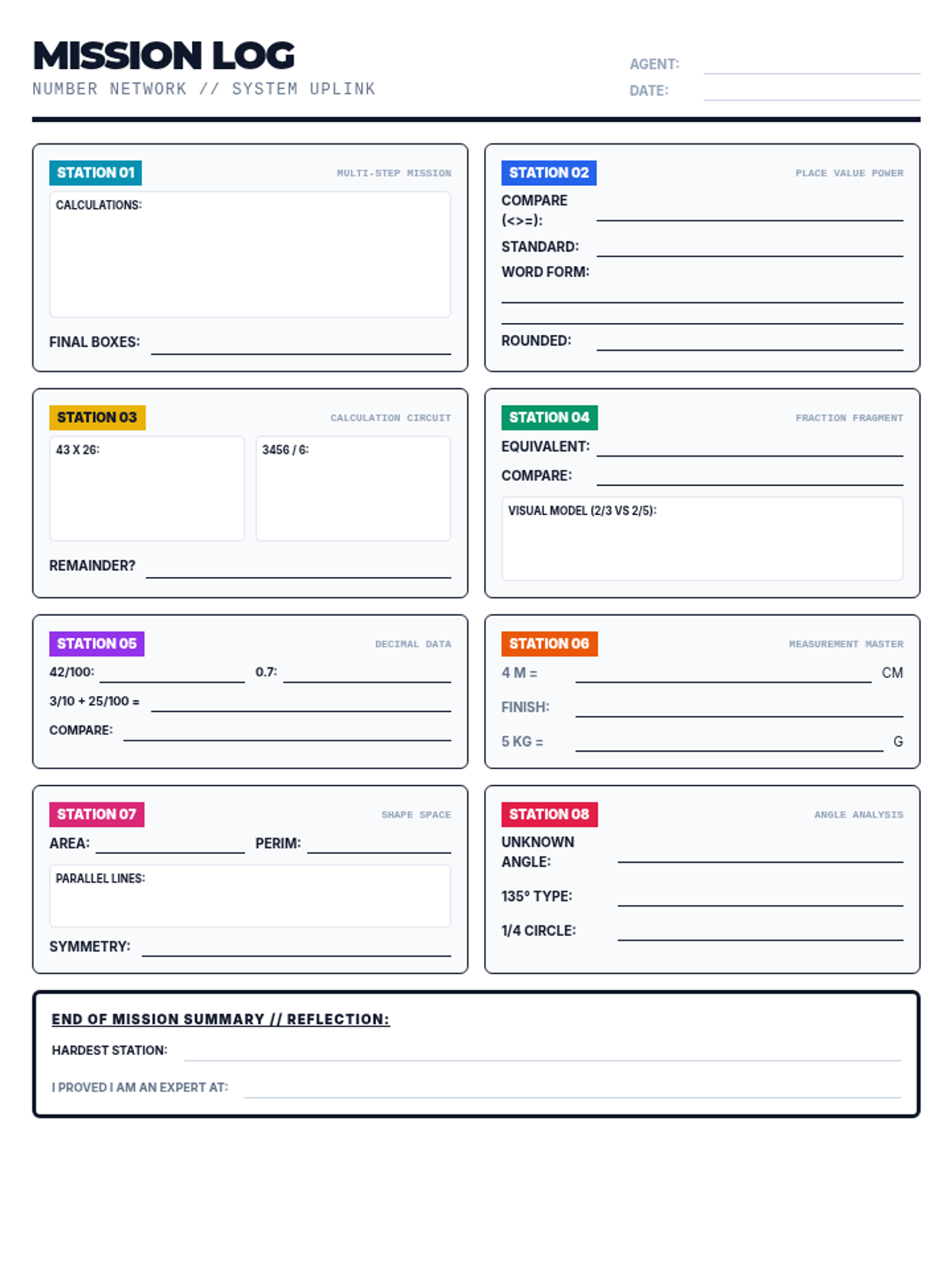
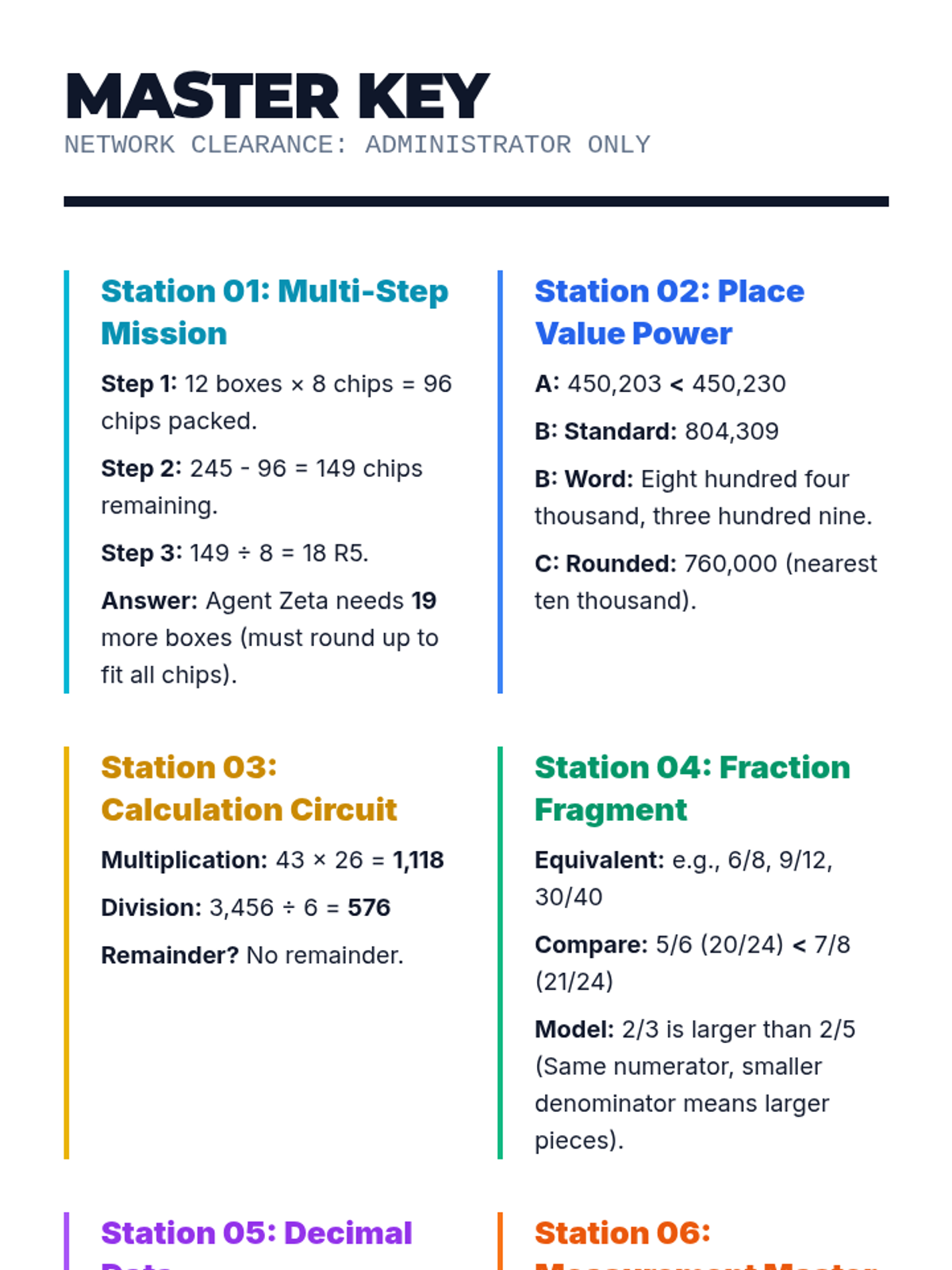
A comprehensive 4th-grade math spiral review designed as an interactive gallery walk. Students rotate through 8 high-energy stations covering all major domains to prepare for end-of-grade testing.

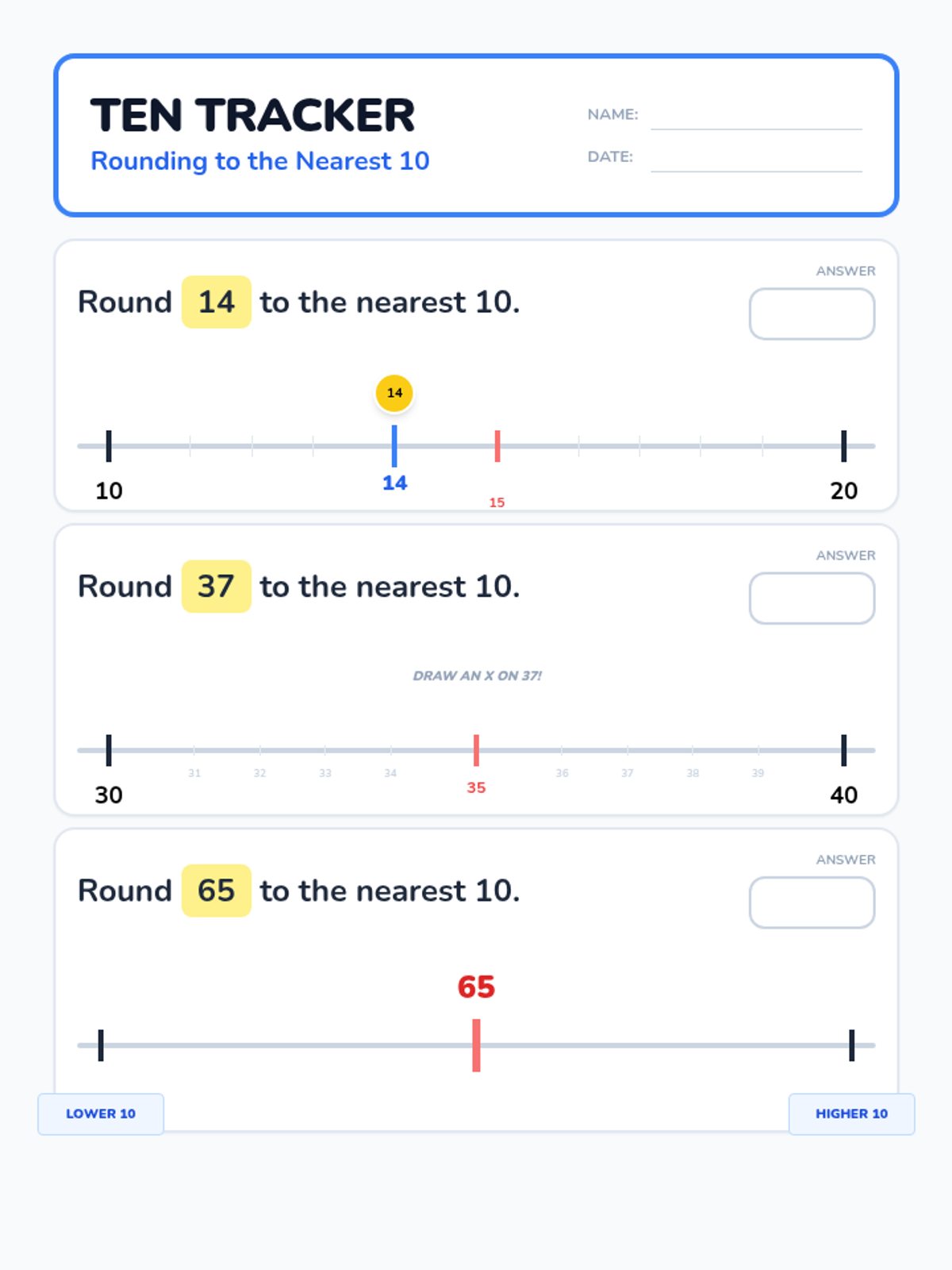
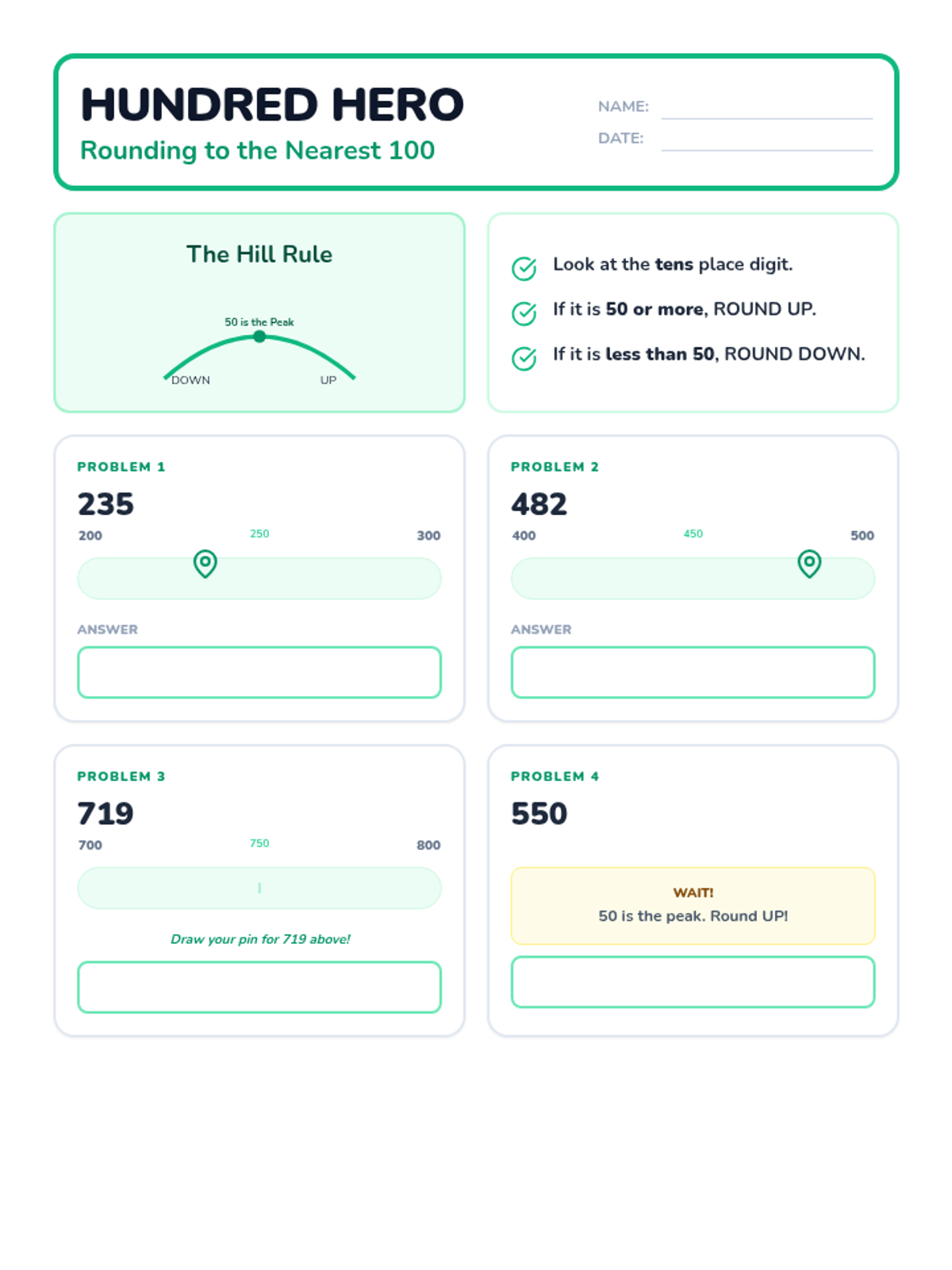
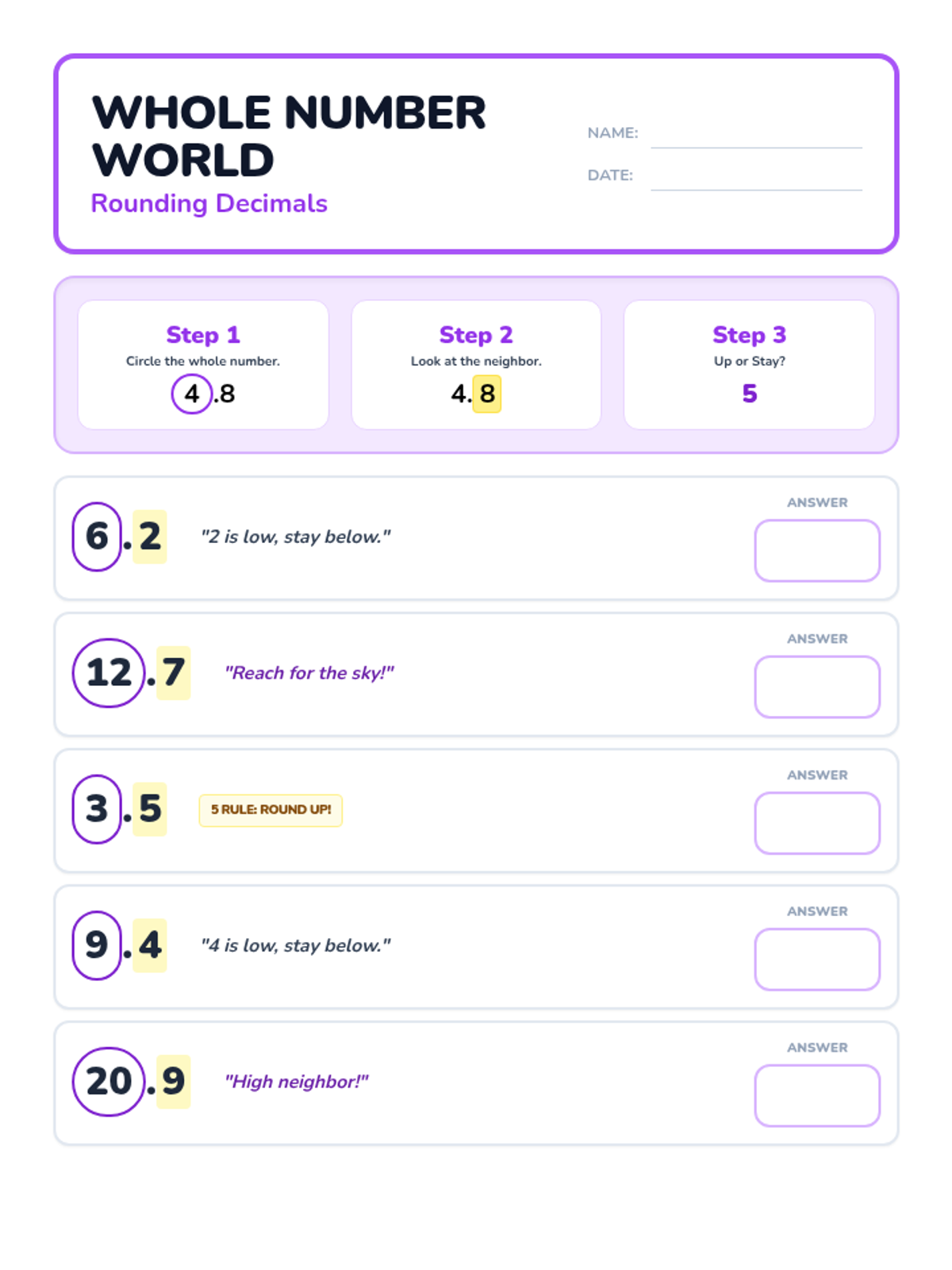
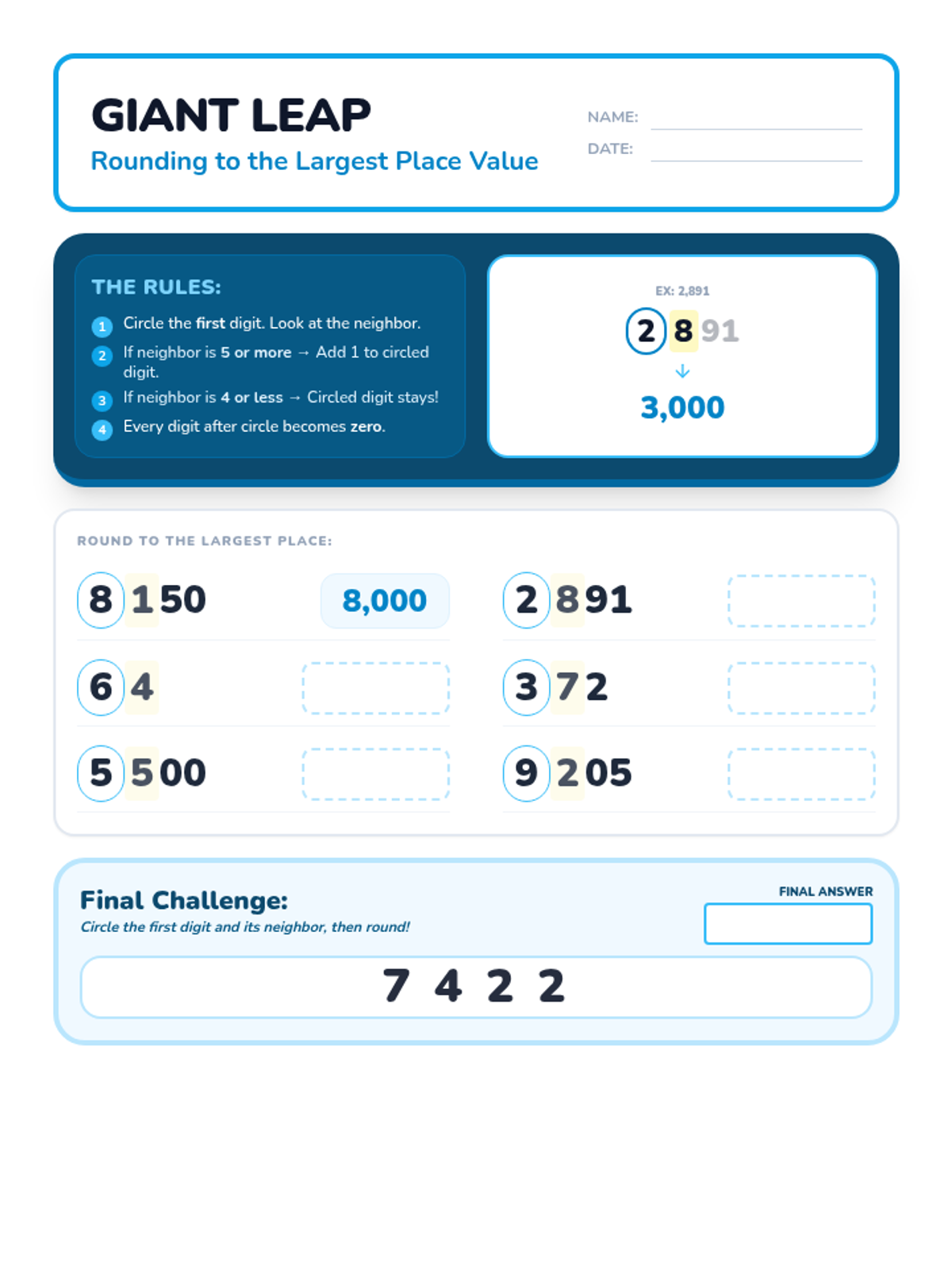
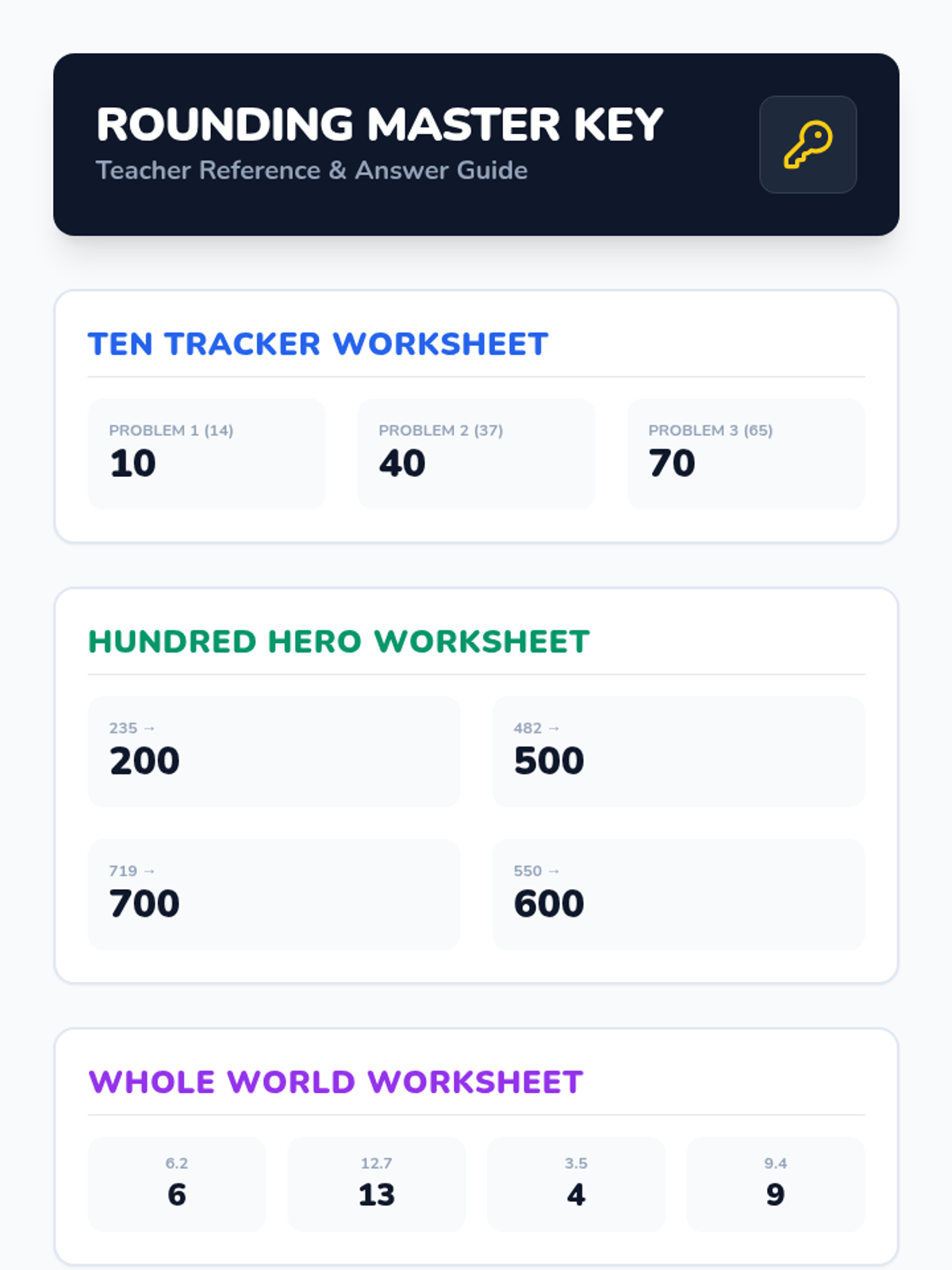
A comprehensive lesson on rounding numbers, specially designed for students with IEPs. Covers rounding to the nearest 10, 100, whole number, and largest place value using visual aids and scaffolded practice.
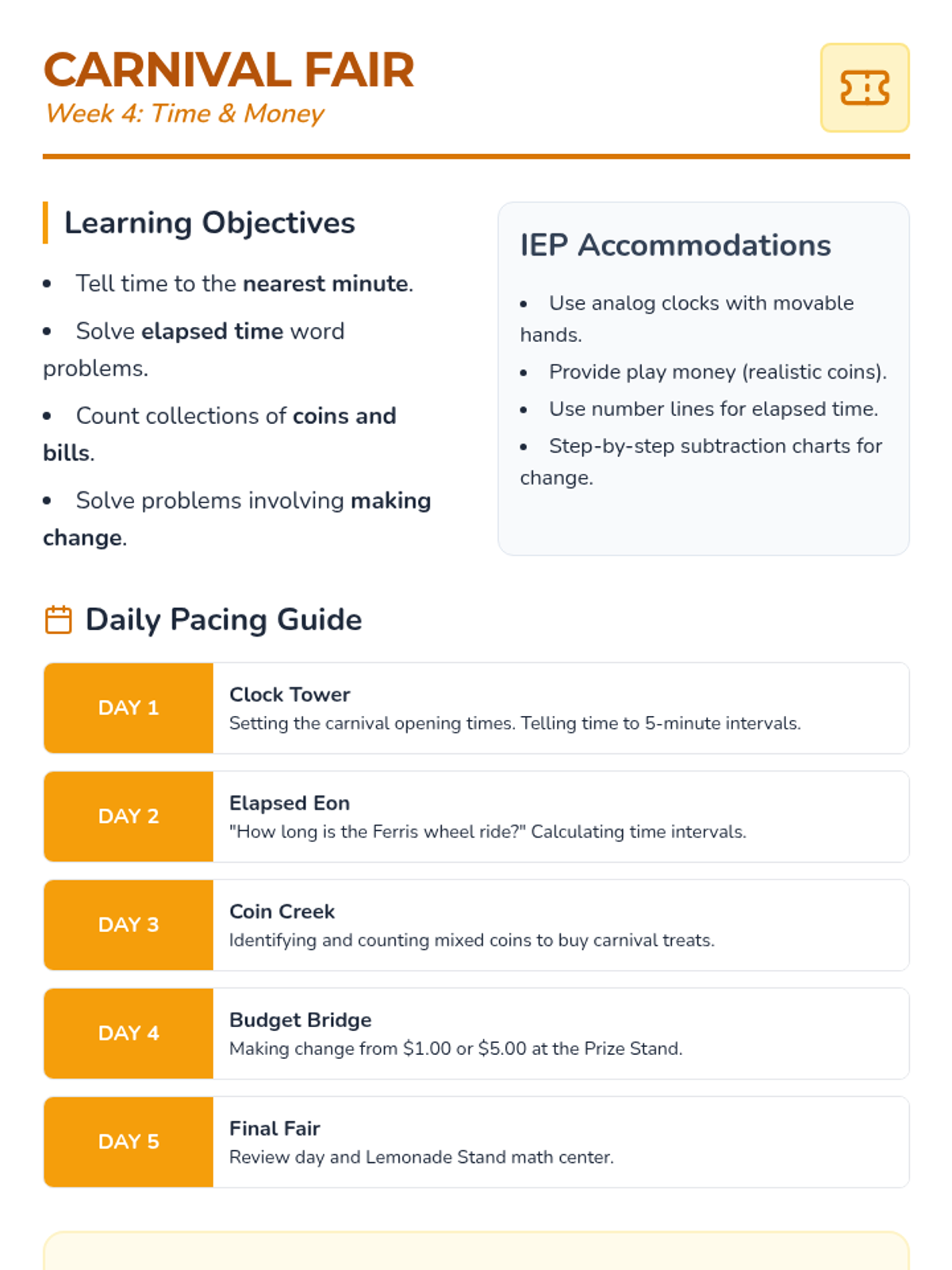
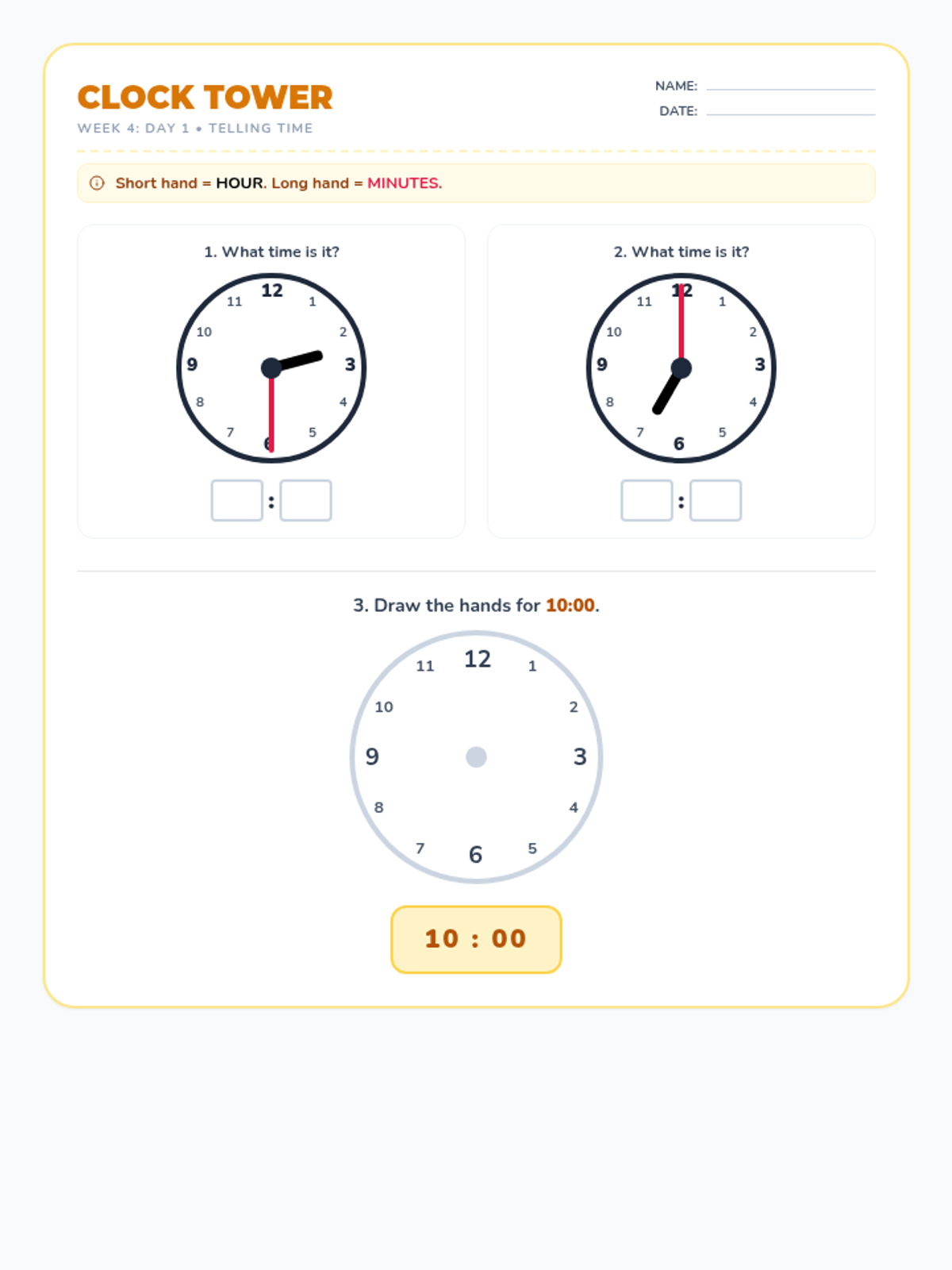
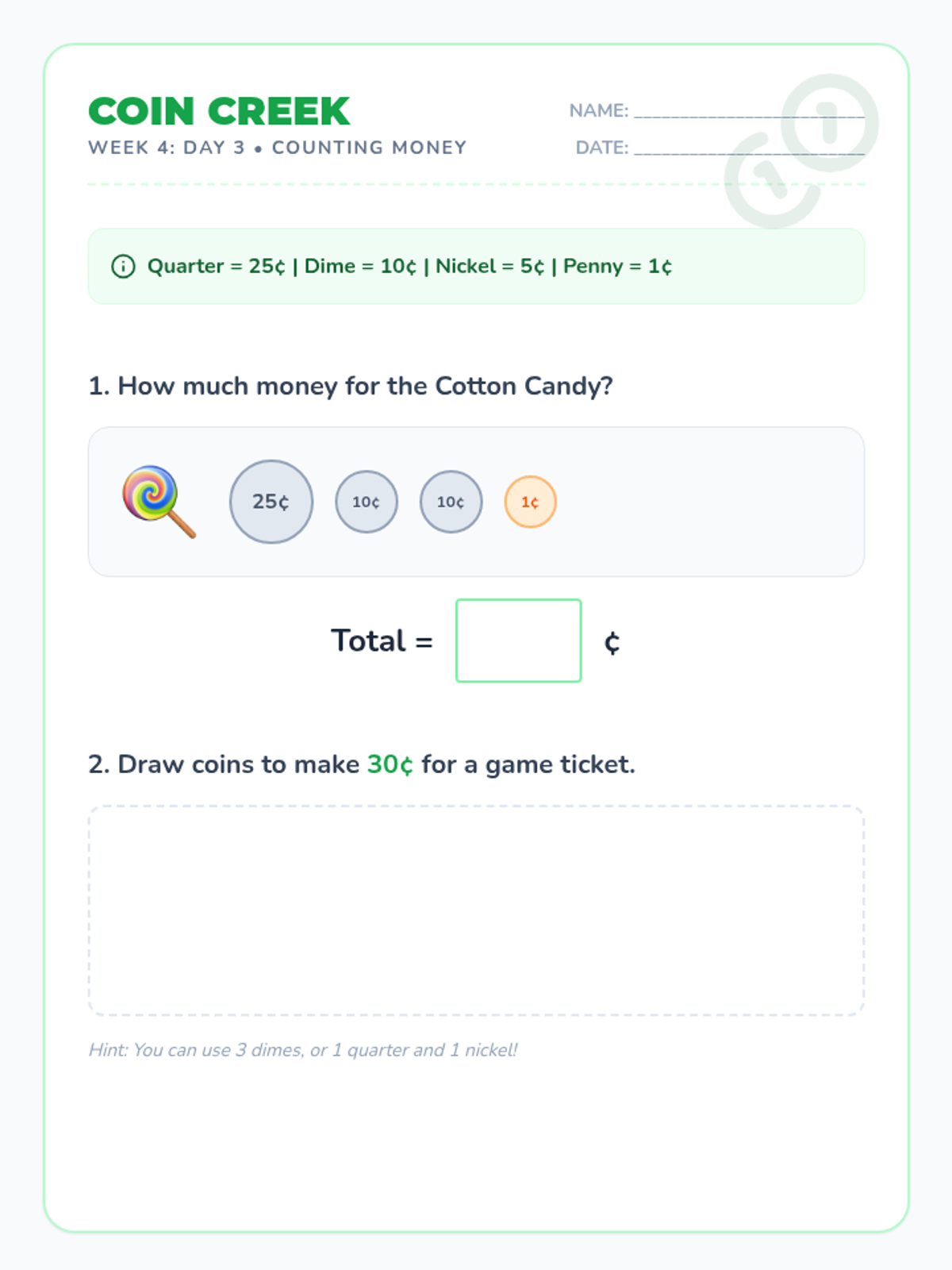
Week 4 focuses on telling time and counting money in a Carnival setting, teaching elapsed time, coin identification, and basic budgeting.
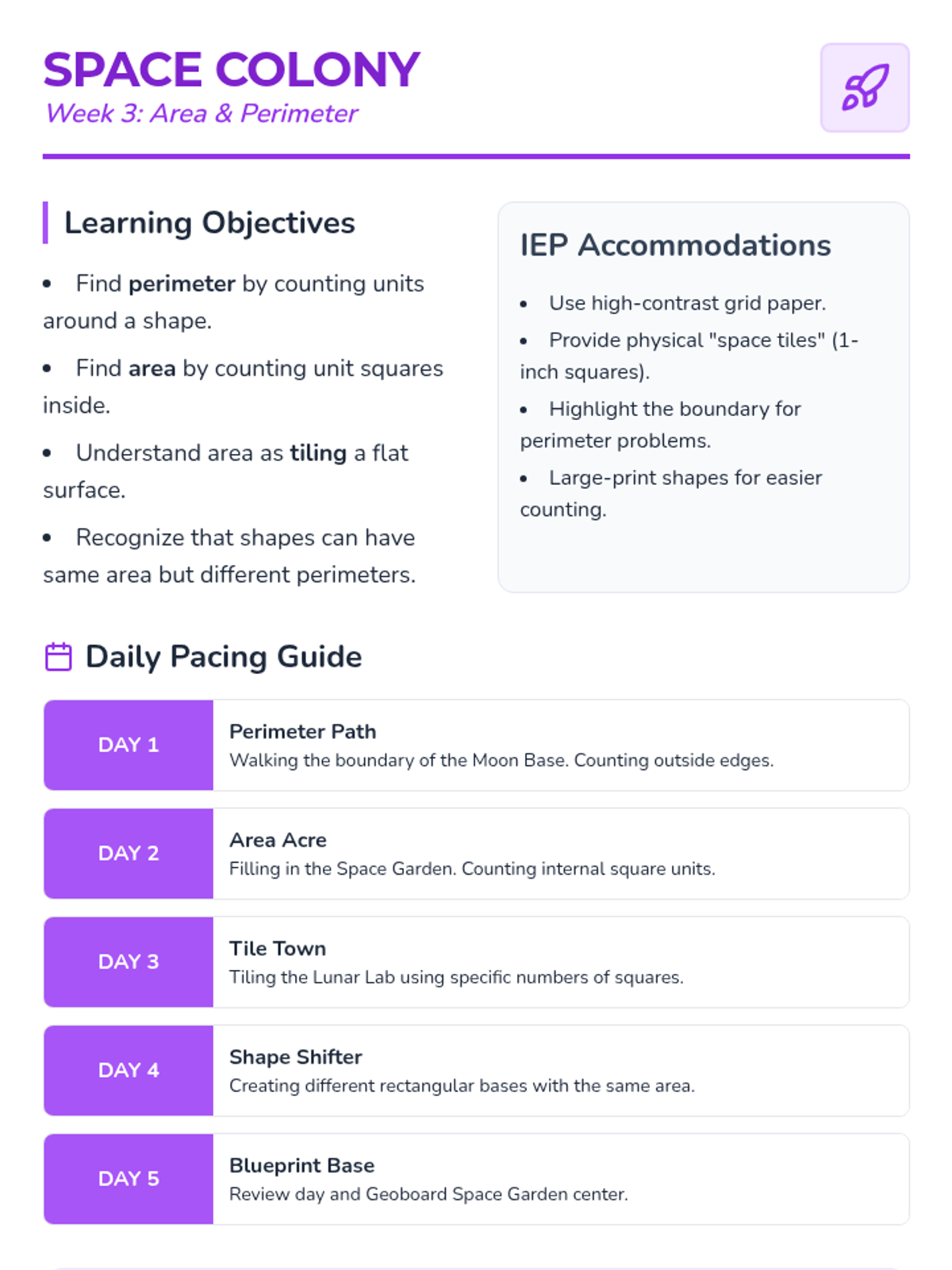
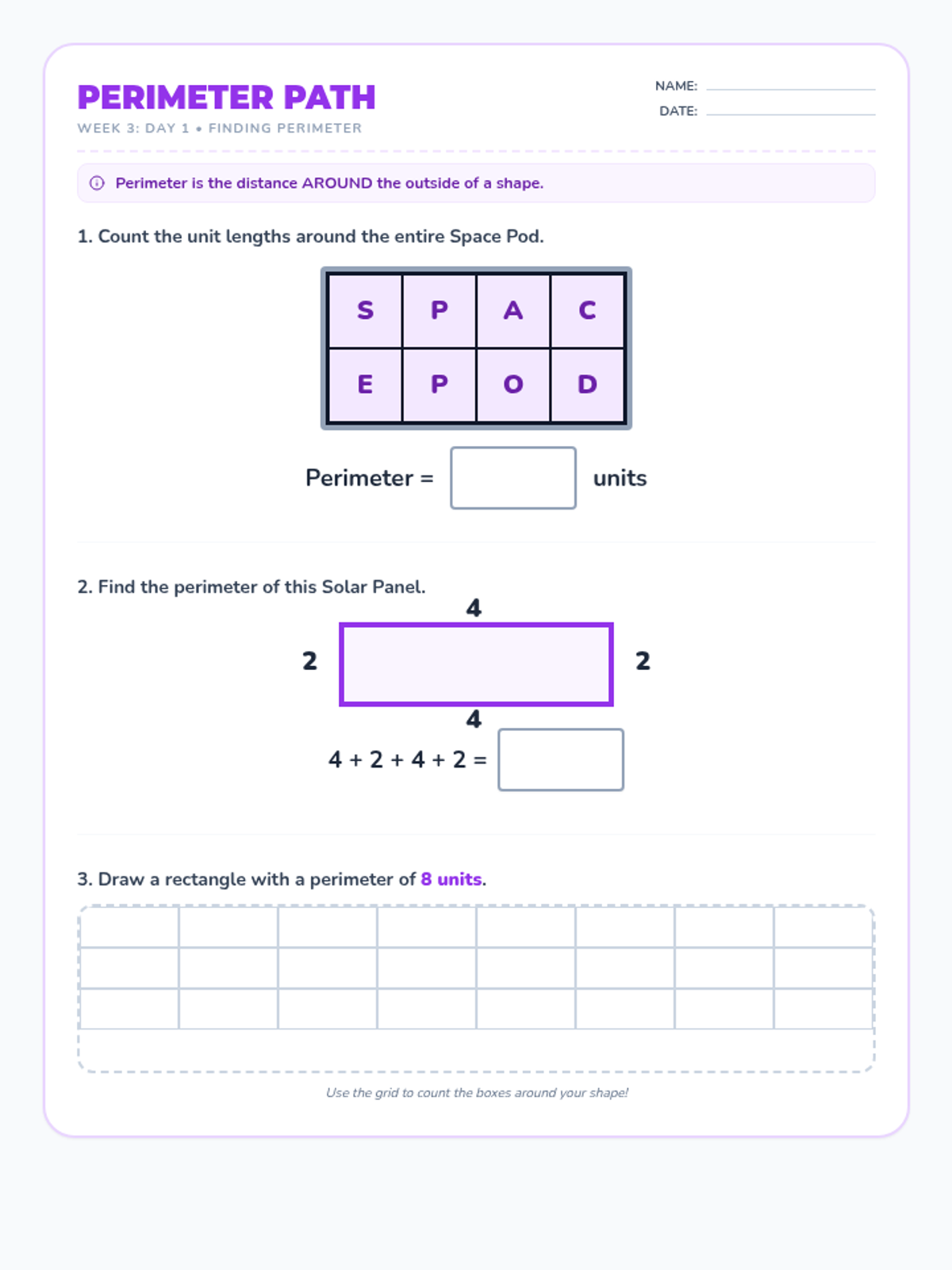
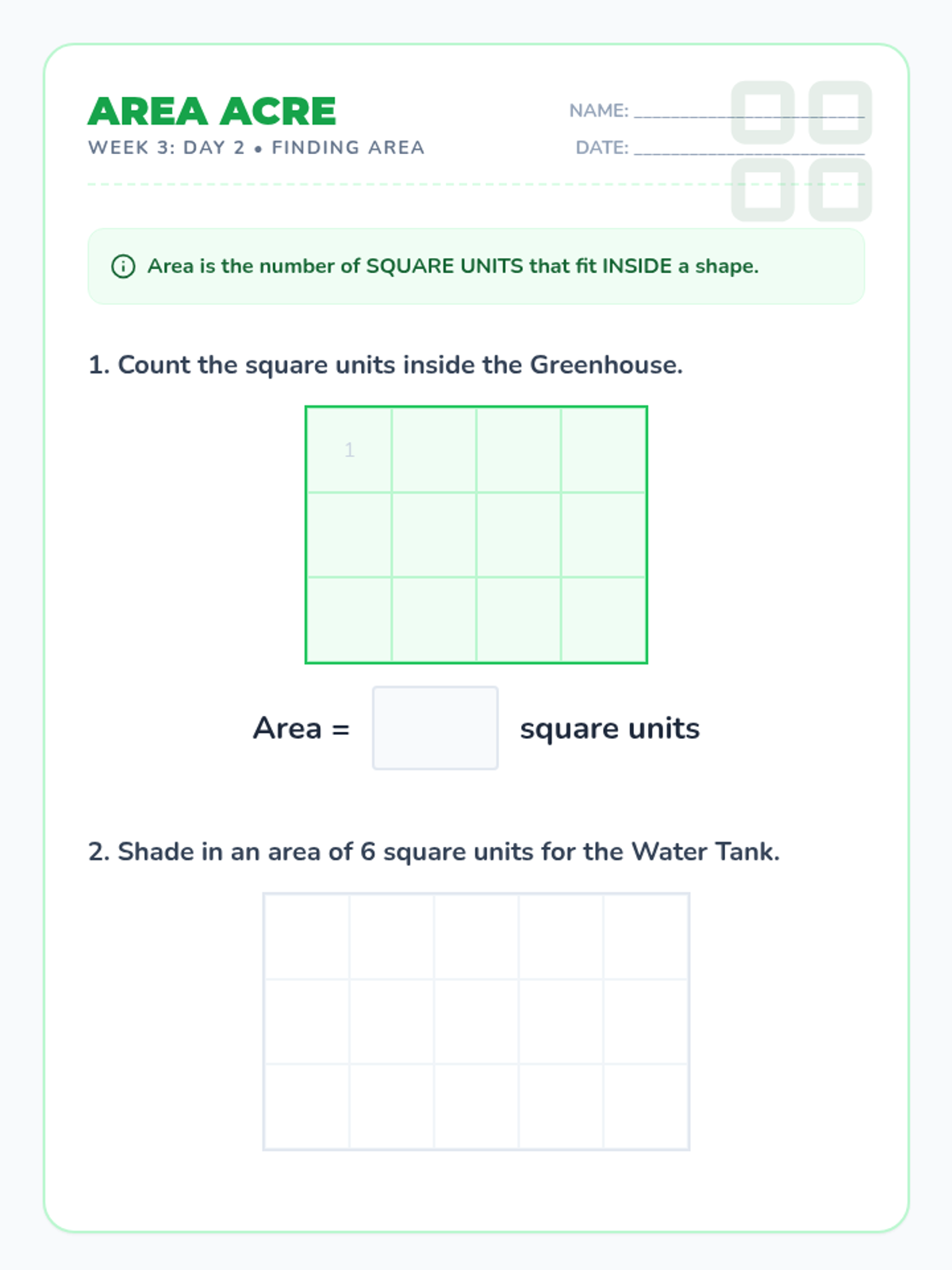
Week 3 covers area and perimeter while building a Space Colony, using grid paper, tiling, and simple addition to find boundaries and space.
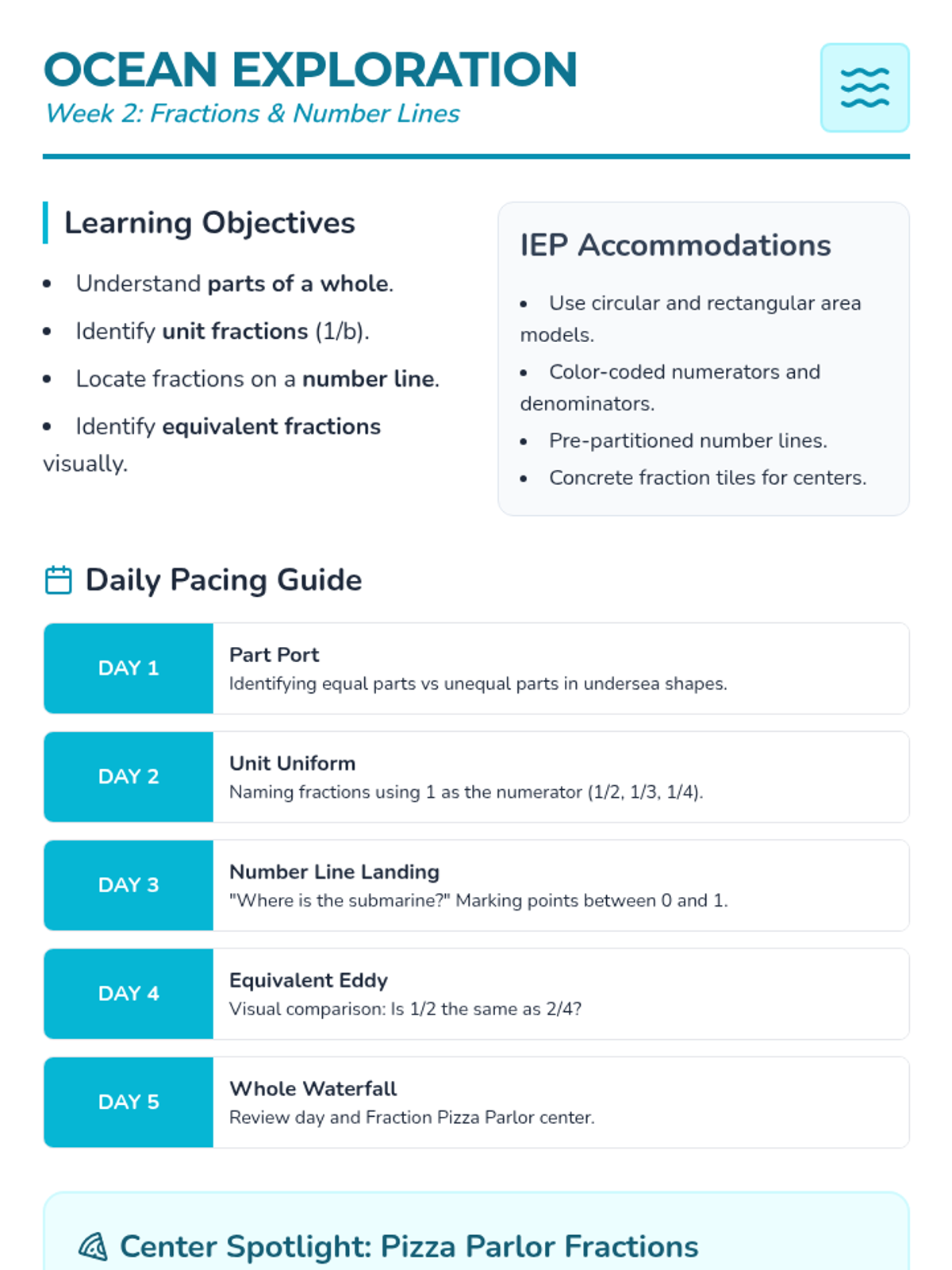
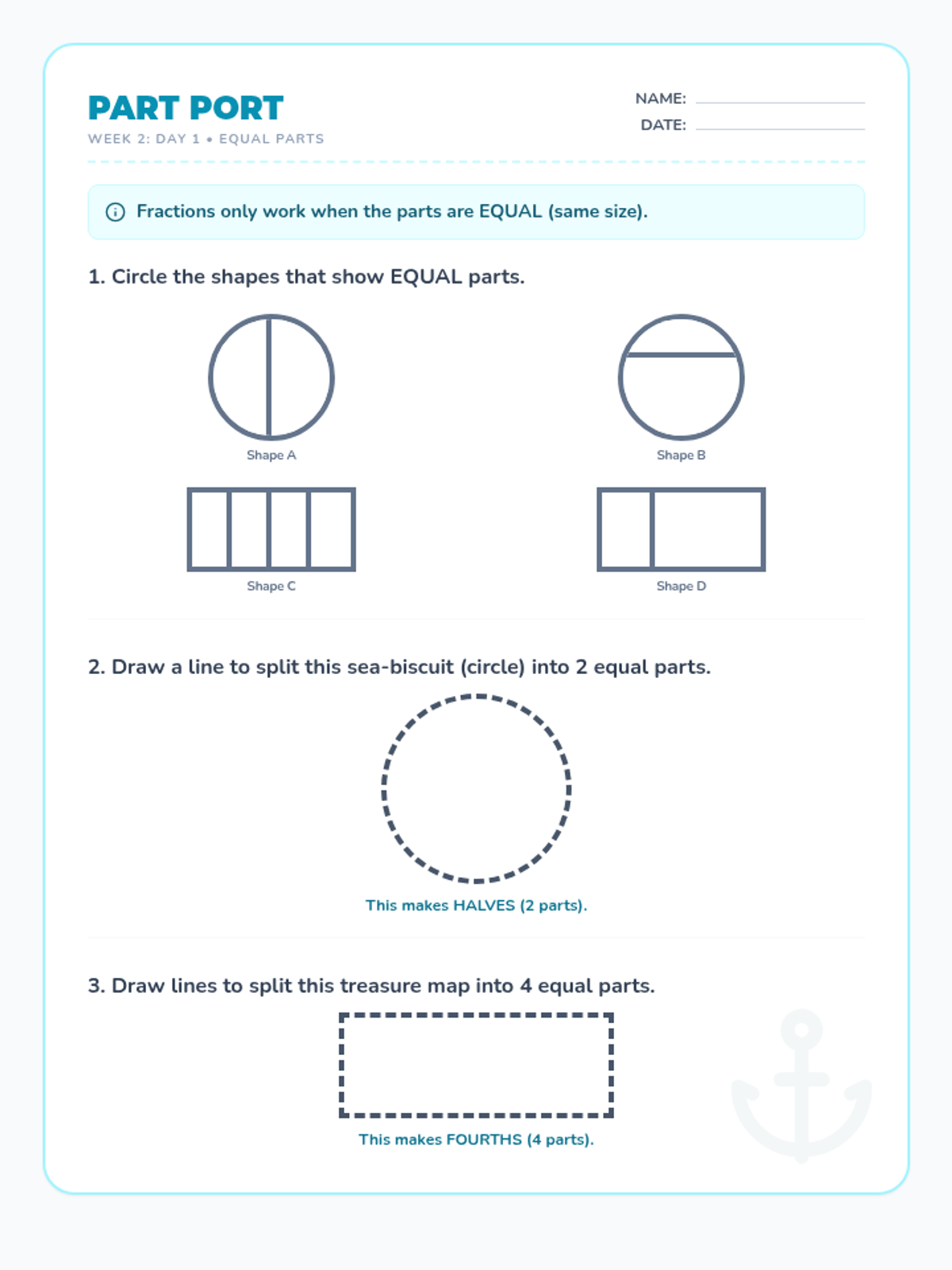
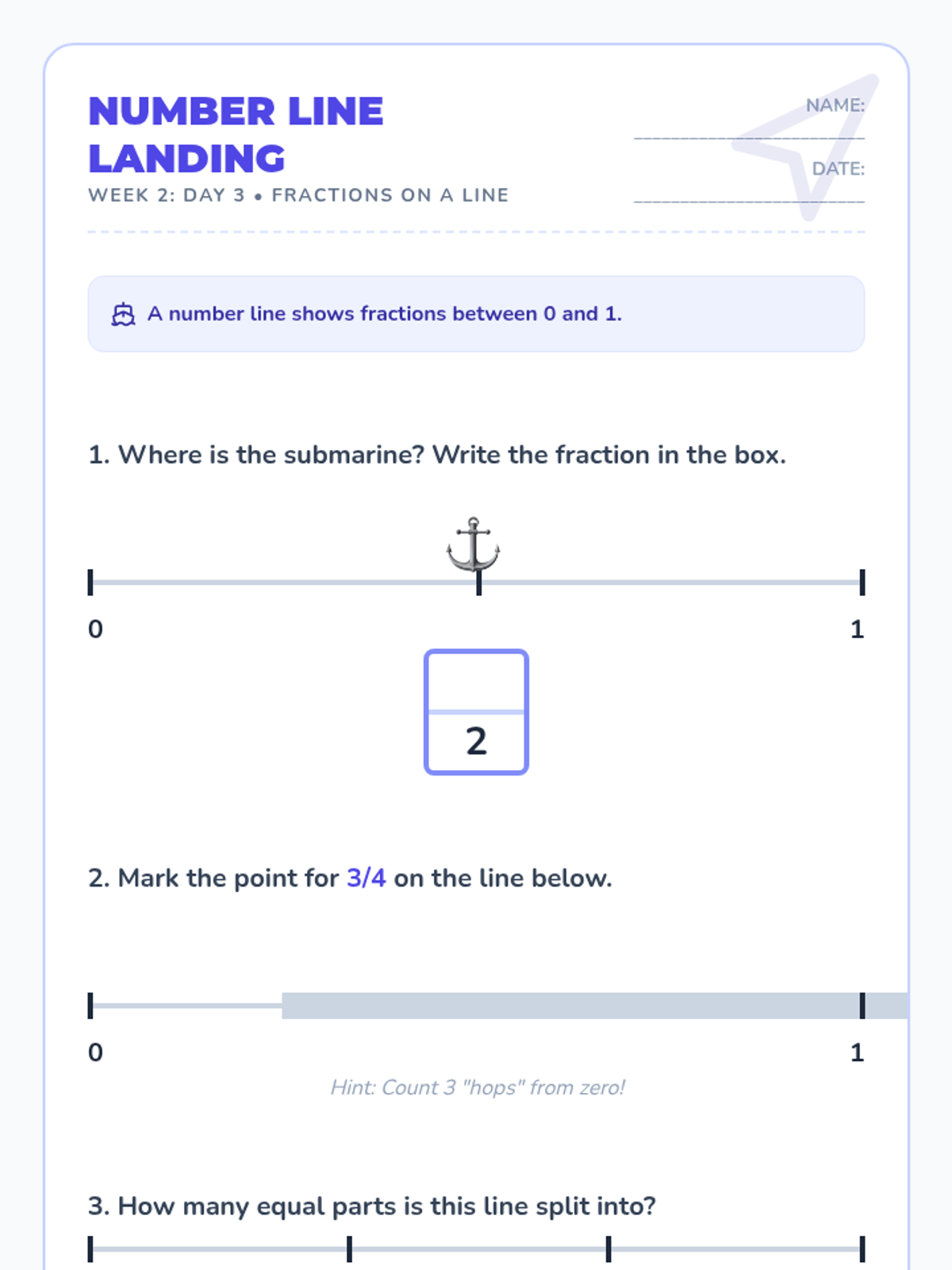
Week 2 explores fractions and number lines with an Ocean Exploration theme, focusing on parts of a whole, unit fractions, and locating numbers on a line.