Irony Investigator Sheet Balance Check
A refined one-page reference sheet for Frederick Douglass Chapter 3. It focuses on a single, deep-dive example of irony involving Old and Young Barney to demonstrate how Douglass develops the theme of a 'skewed reality' through subverting reader expectations.
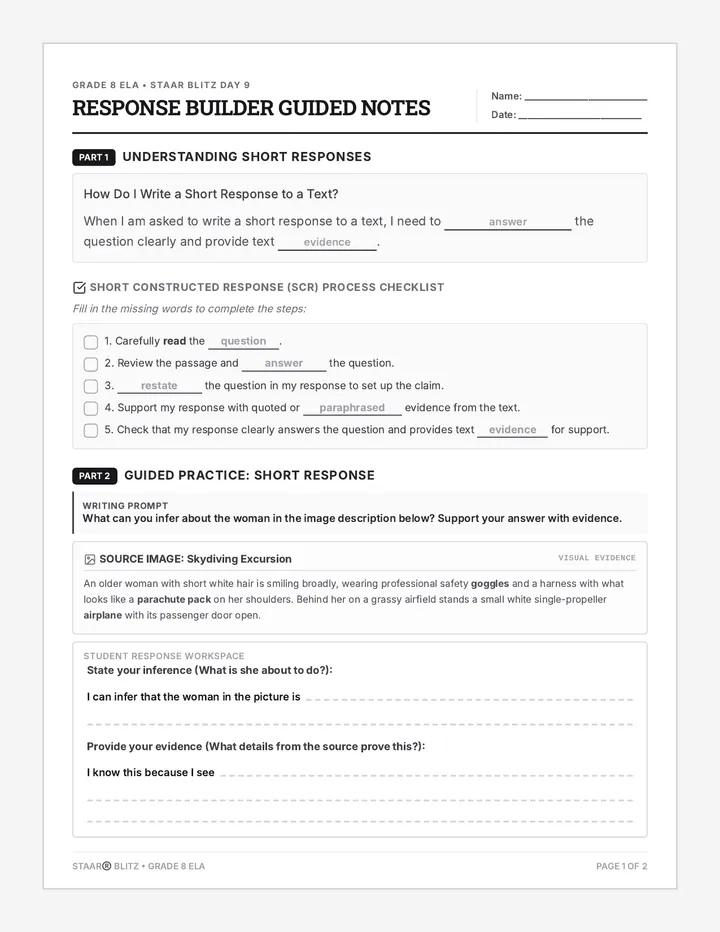
Skewed Reality Worksheet
A student-facing writing worksheet for Frederick Douglass Chapter 3. Includes sections for the initial Everybody Writes response, space for class discussion notes, and a structured area for the final revised response with guided instructions.
Irony Awareness Slides
Instructional slides for Chapter 3 of Frederick Douglass's narrative. Covers context review, the definition of irony as a 'call to attention', annotation guides, and discussion prompts to help students develop the theme of 'skewed reality'.
Irony Awareness Teacher Guide
A teacher facilitation guide for Chapter 3 of Frederick Douglass's narrative. Includes instructional sequence, monitoring questions, anticipated student errors with discourse prompts, and a full-text student exemplar for the writing prompt.
Chapter 3 Evidence Breakdown Handout
A comprehensive breakdown of all three major ironic moments in Chapter 3 of Frederick Douglass's narrative. Each section analyzes the scene, the irony (expectation vs. reality), and how it develops the theme of a skewed perception of reality, designed for small group support.