Students will learn to visualize and solve integer division (negative divided by positive) using physical chip models and inverse operations, connecting mathematical rules to the conceptual idea of splitting 'debt' into equal groups.
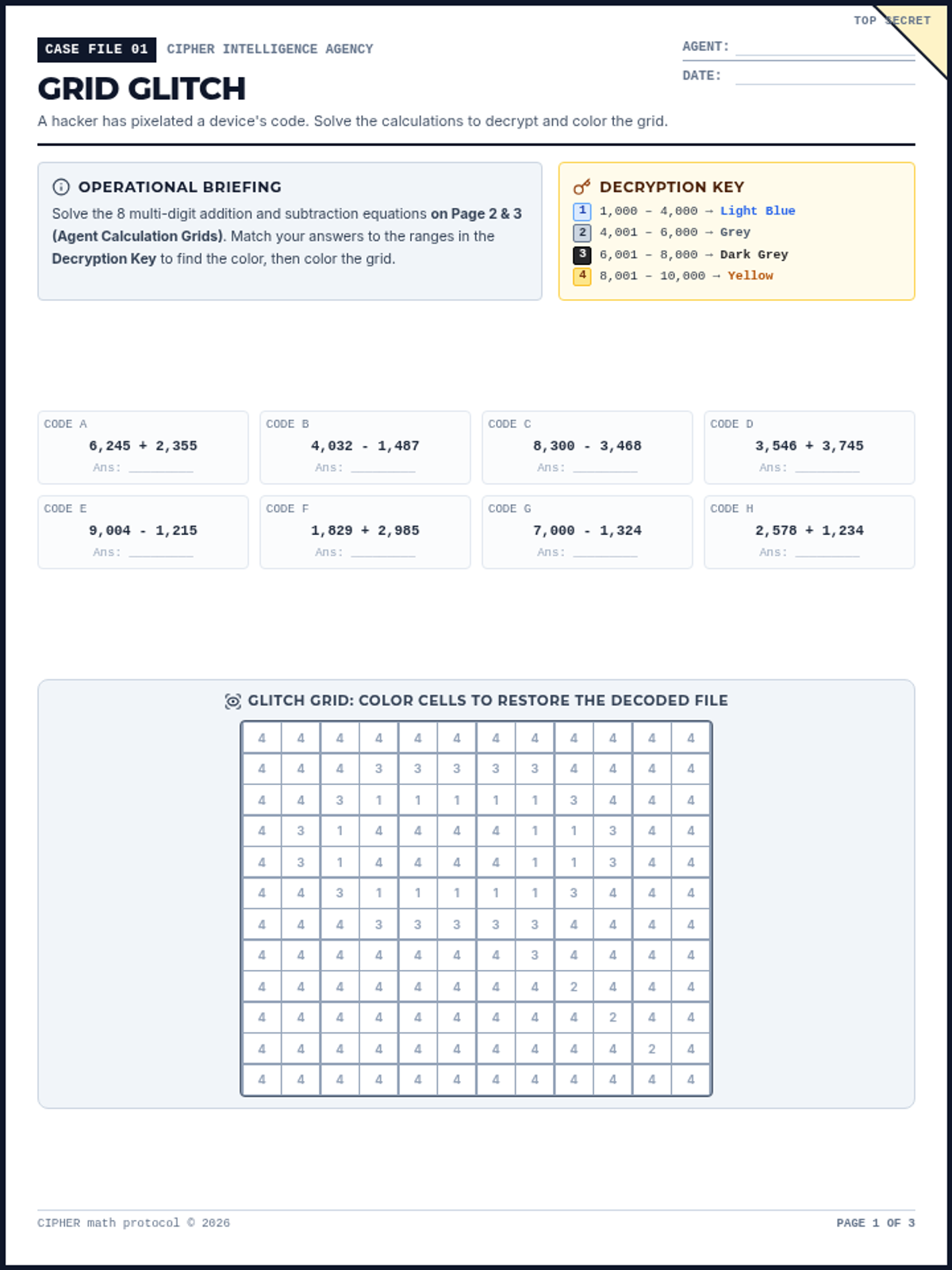
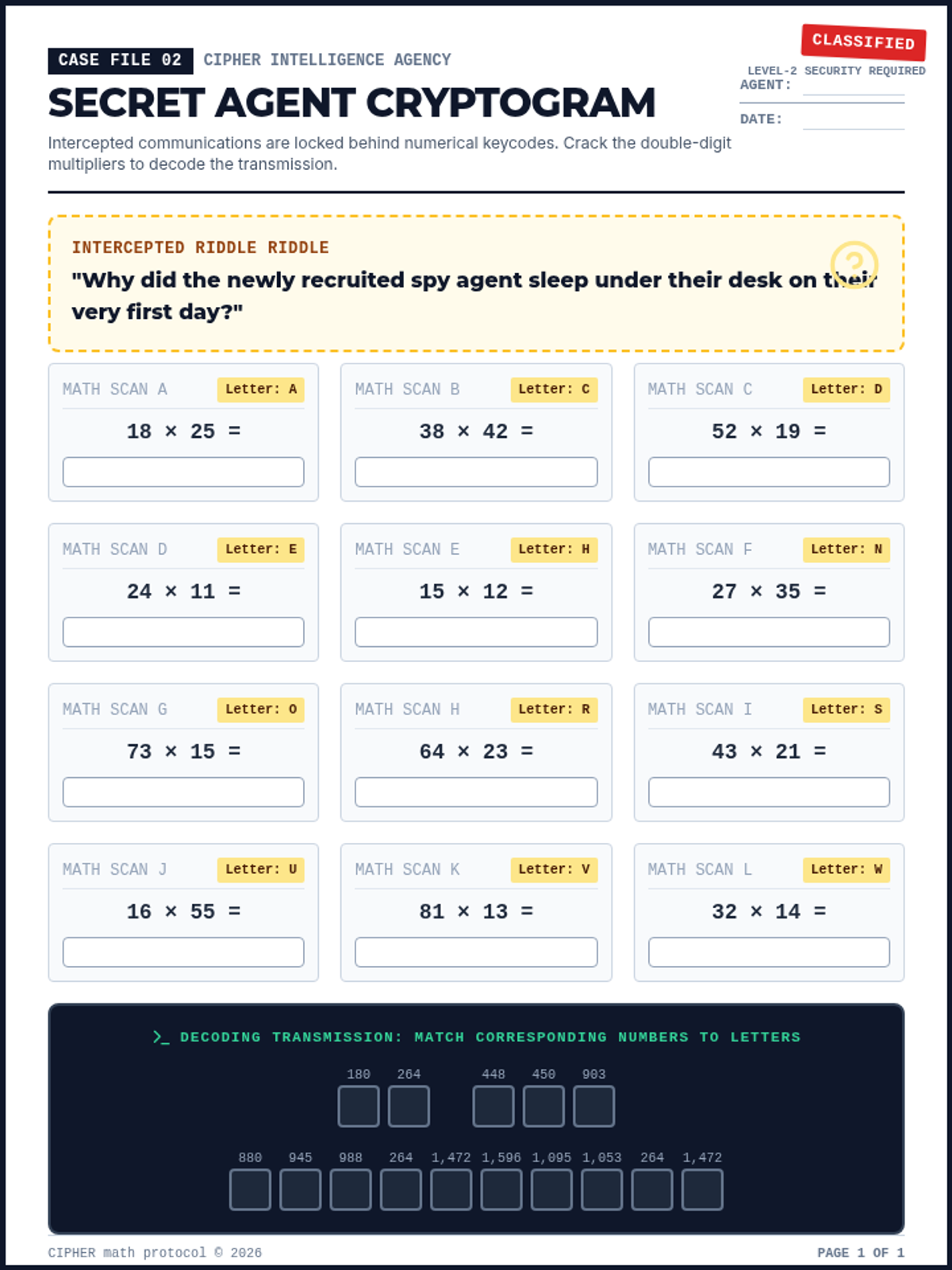
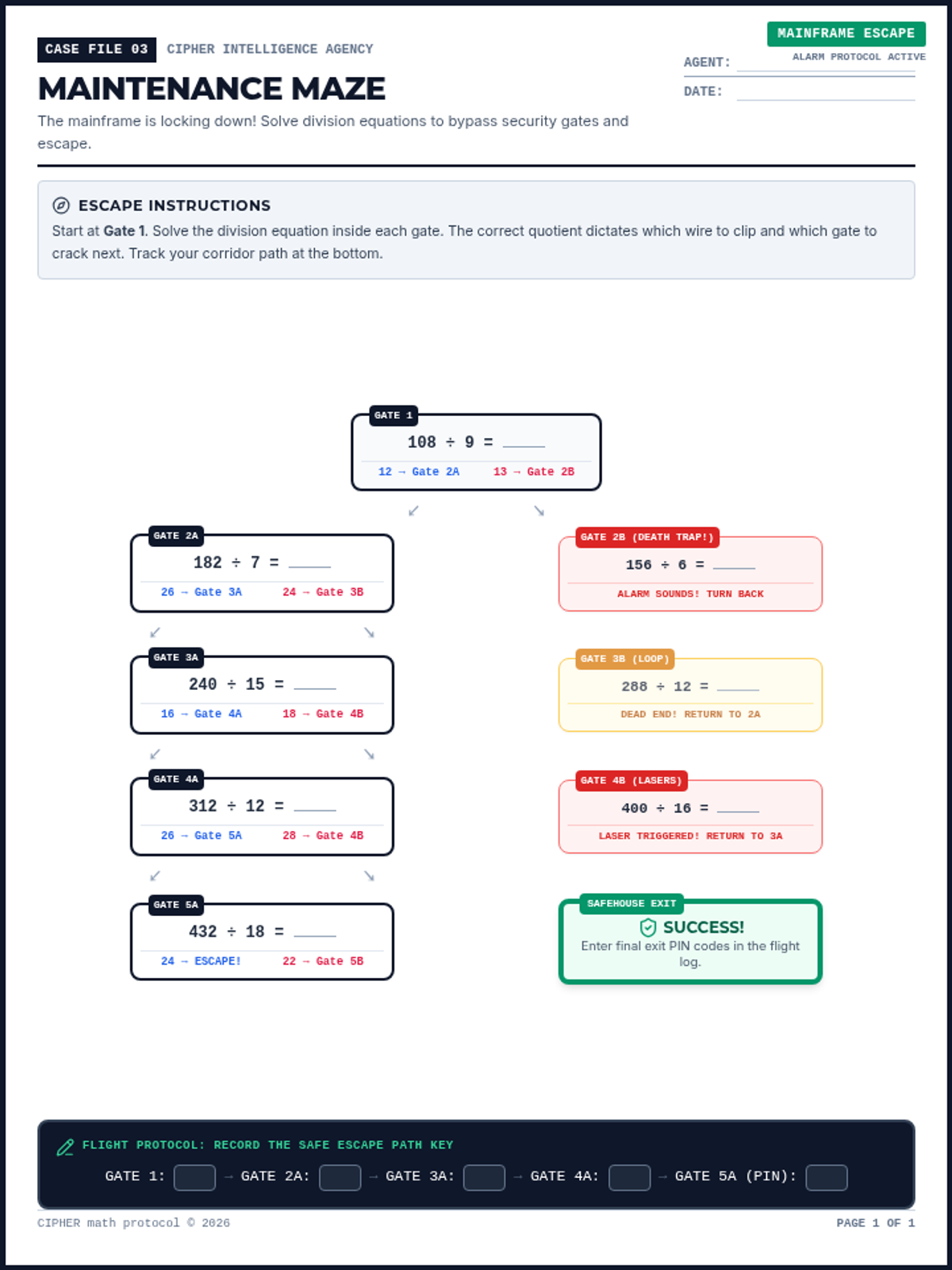
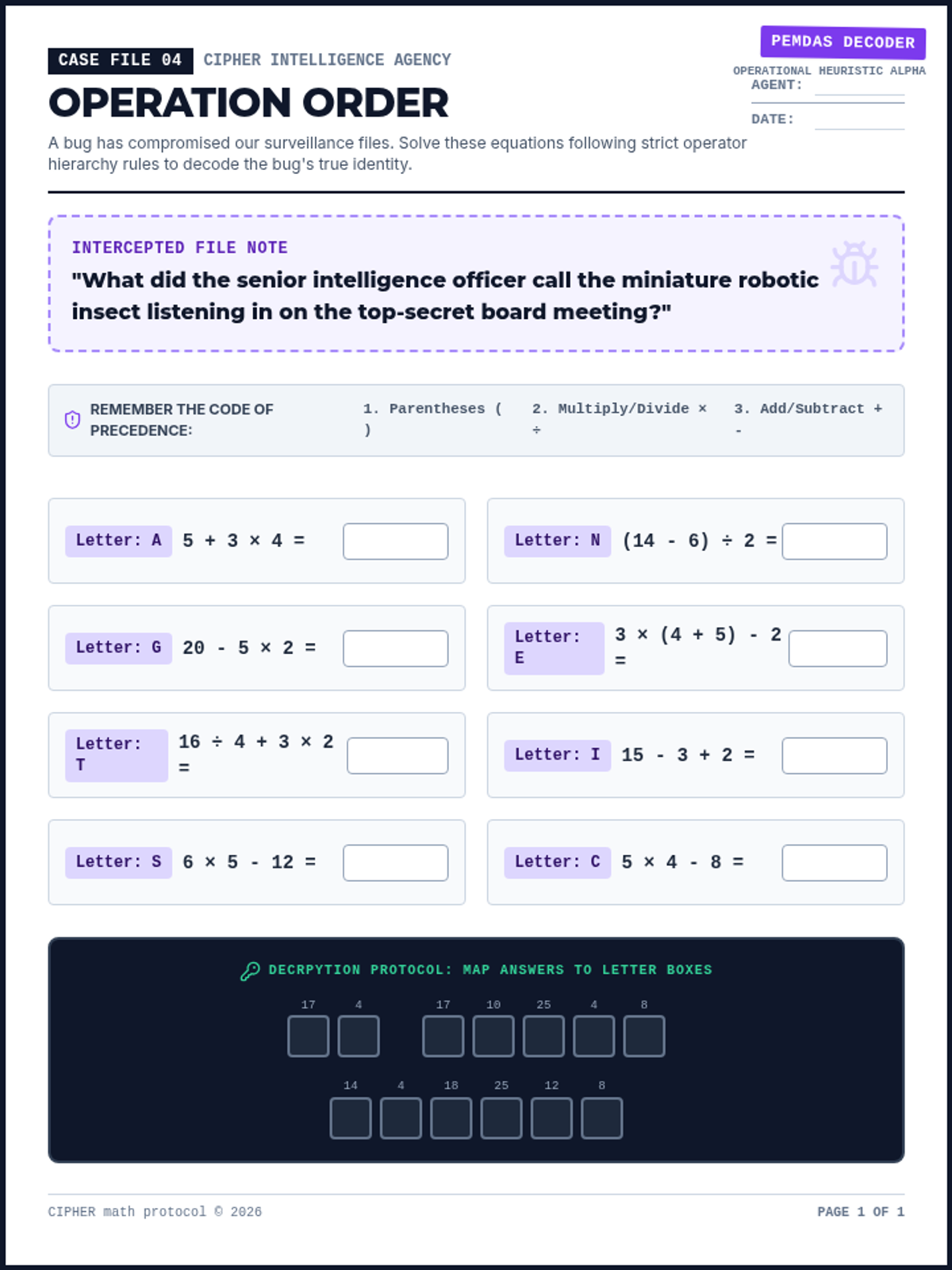
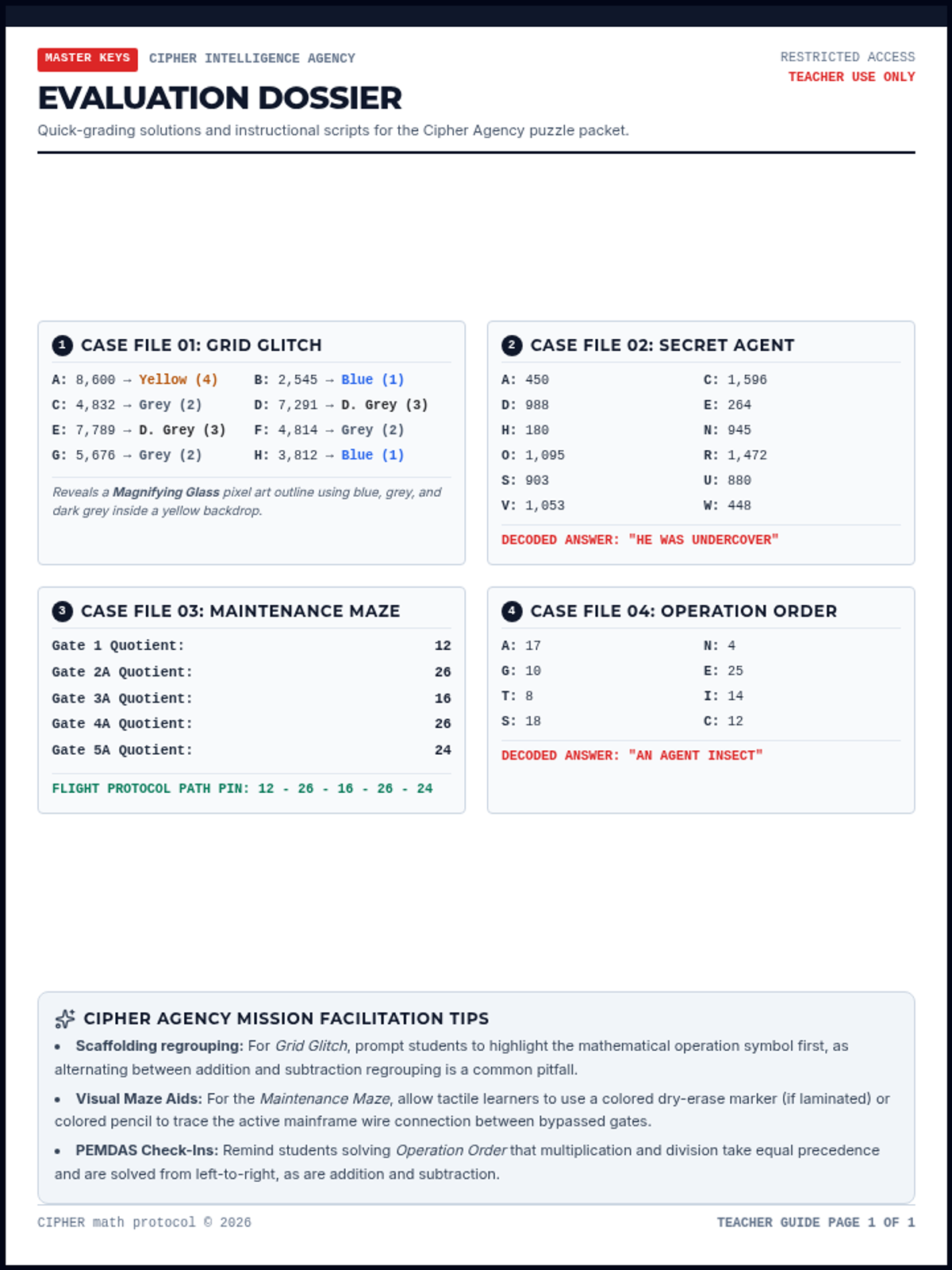
A collection of ready-to-print math puzzle worksheets and a teacher answer key designed to reinforce elementary arithmetic through engaging spy-themed cryptograms and pixel art.
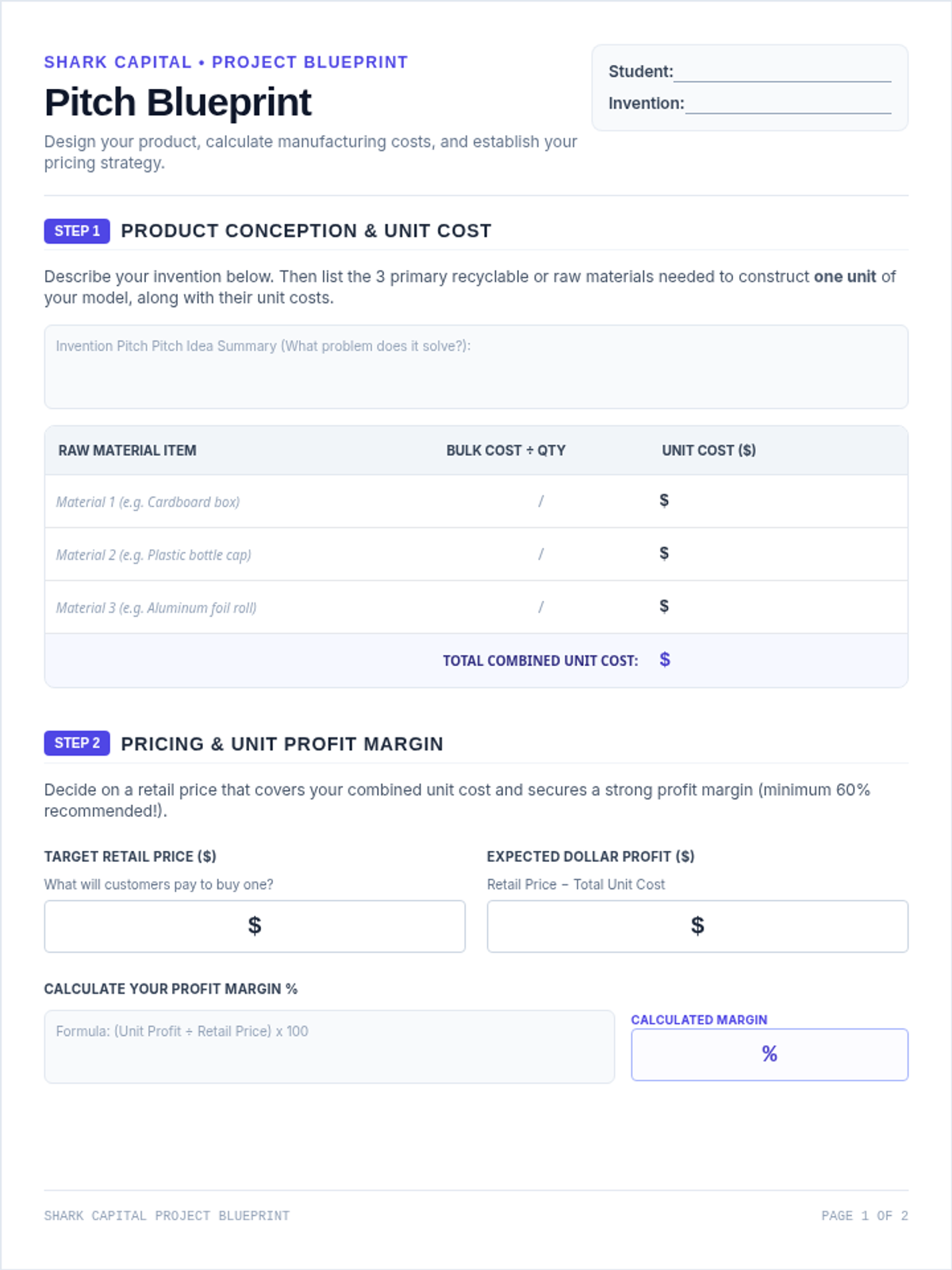
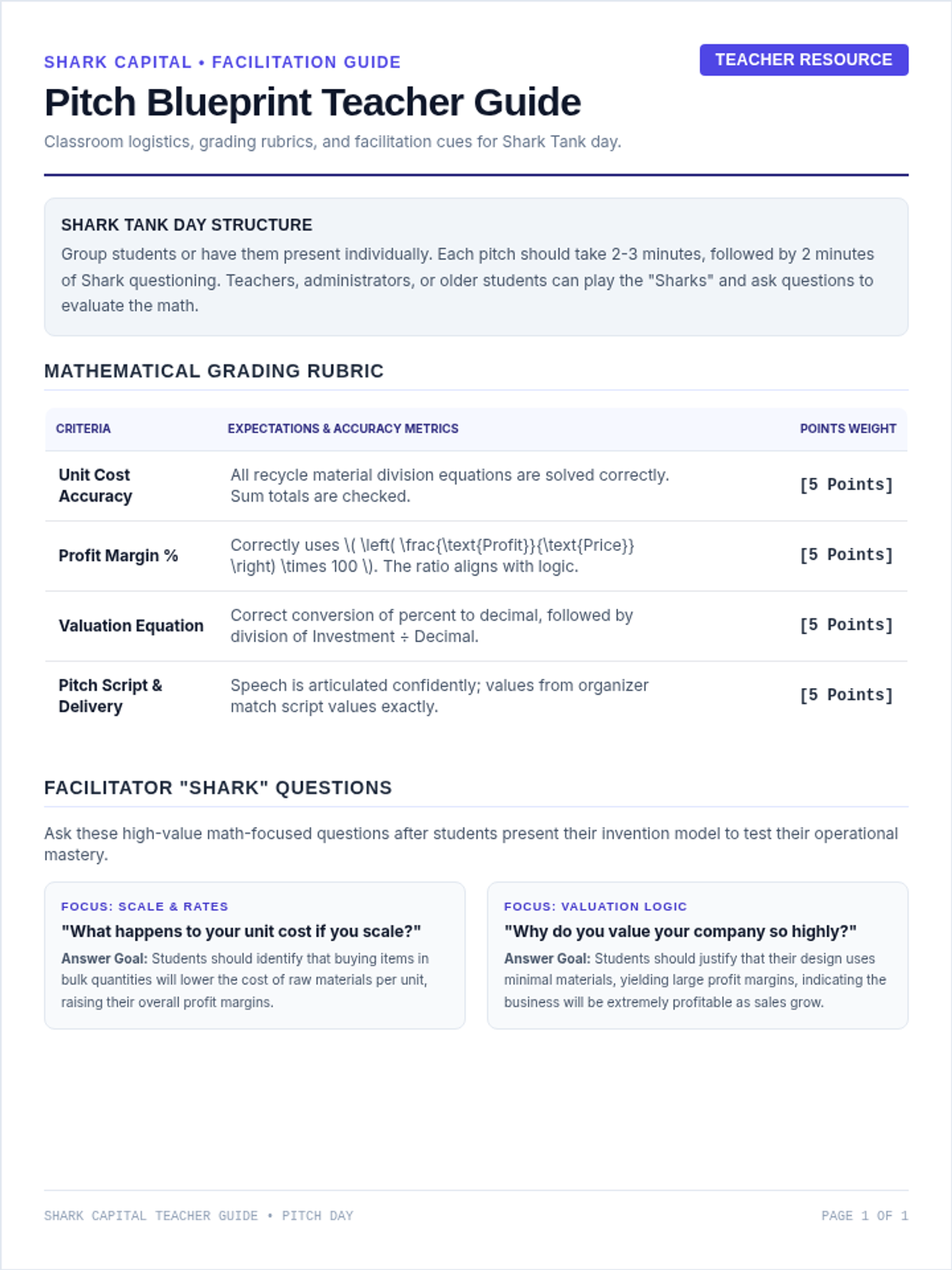
Students apply their mathematical knowledge to their own inventions. They calculate their product costs, set their retail price, determine their company valuation, and write the math portion of their pitch speech.
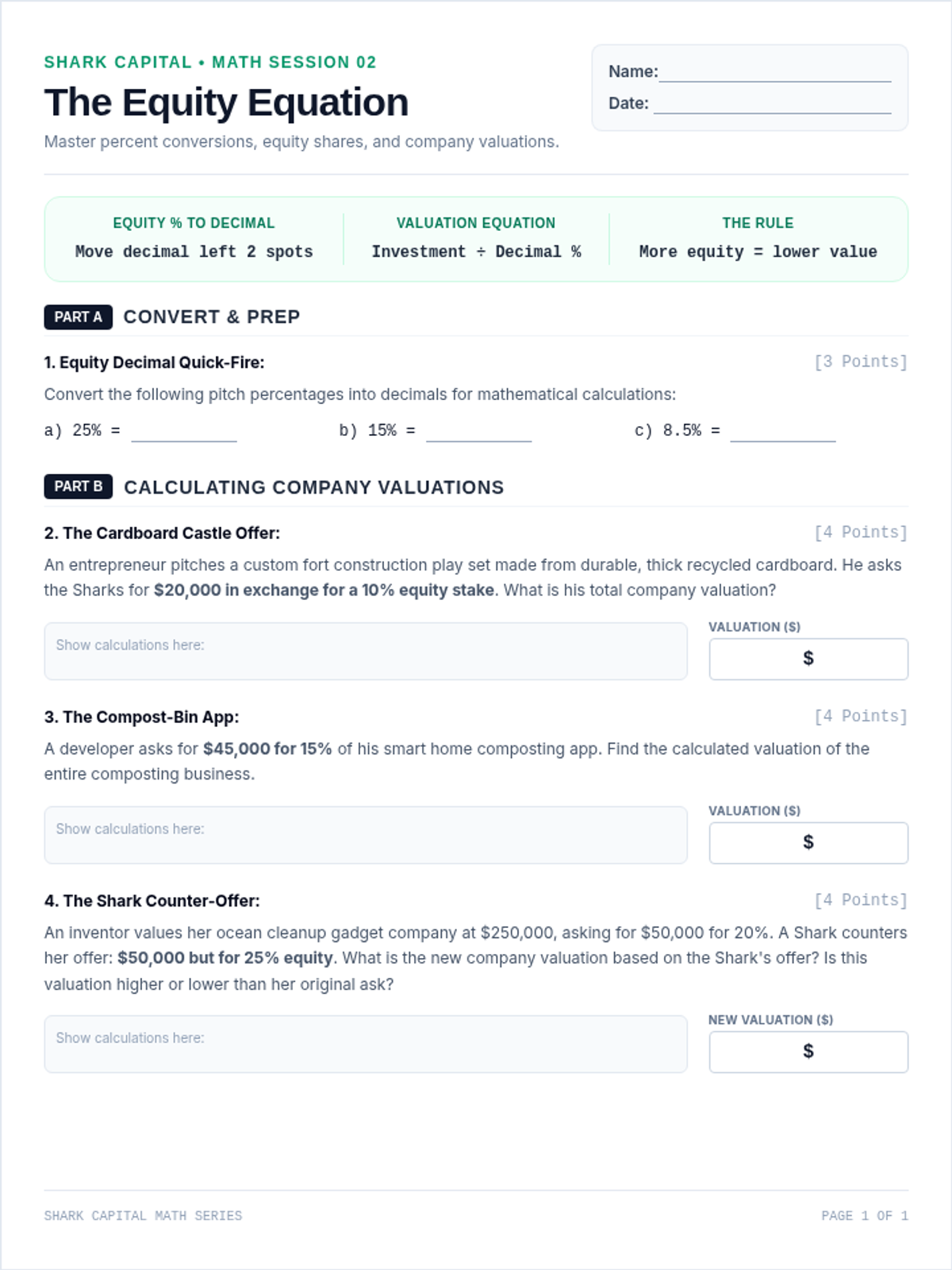
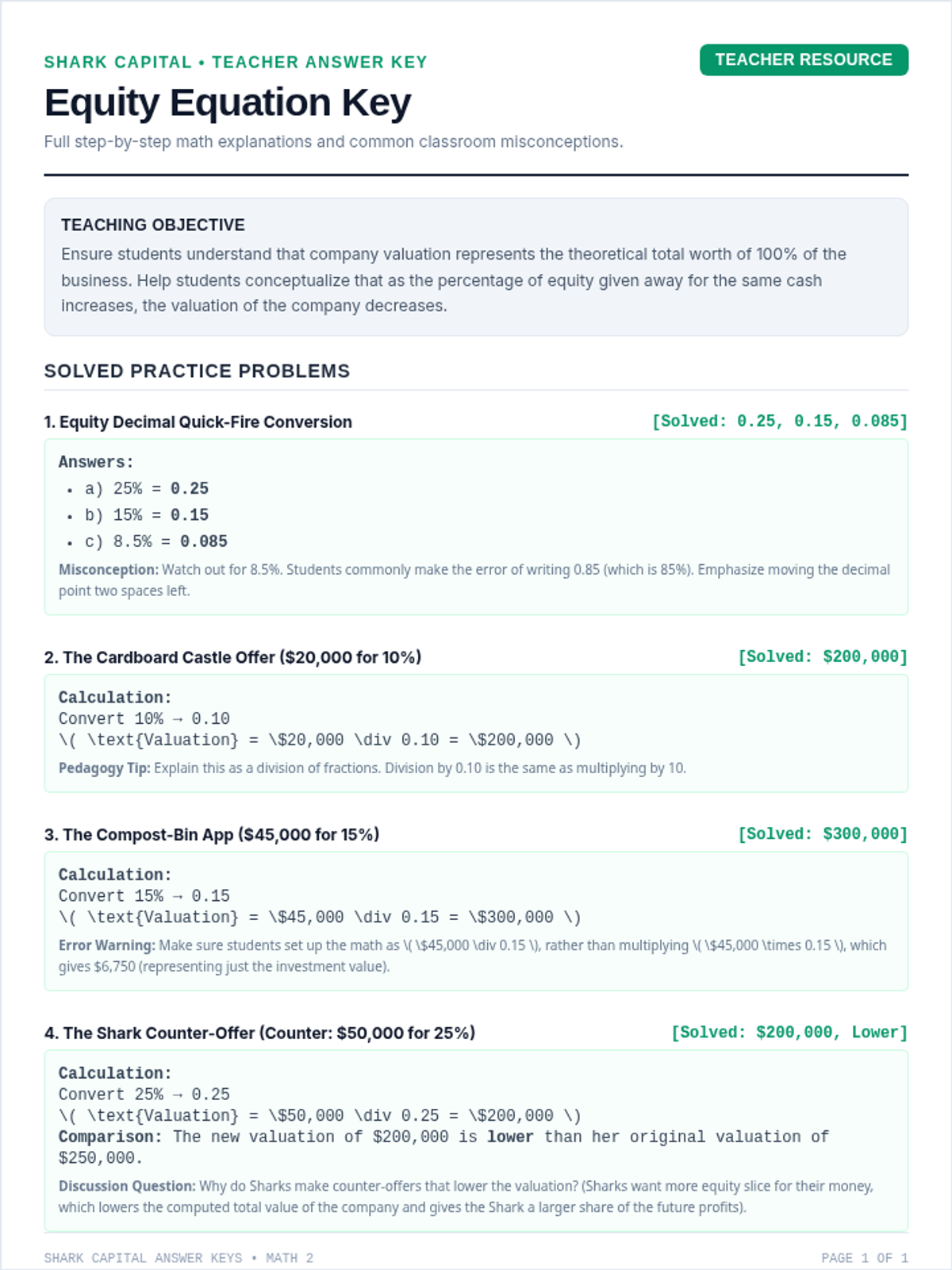
Students tackle company valuations, percentage offers, and equity calculations. They learn the math behind asking for investment and determining what percentage of their company to sell.
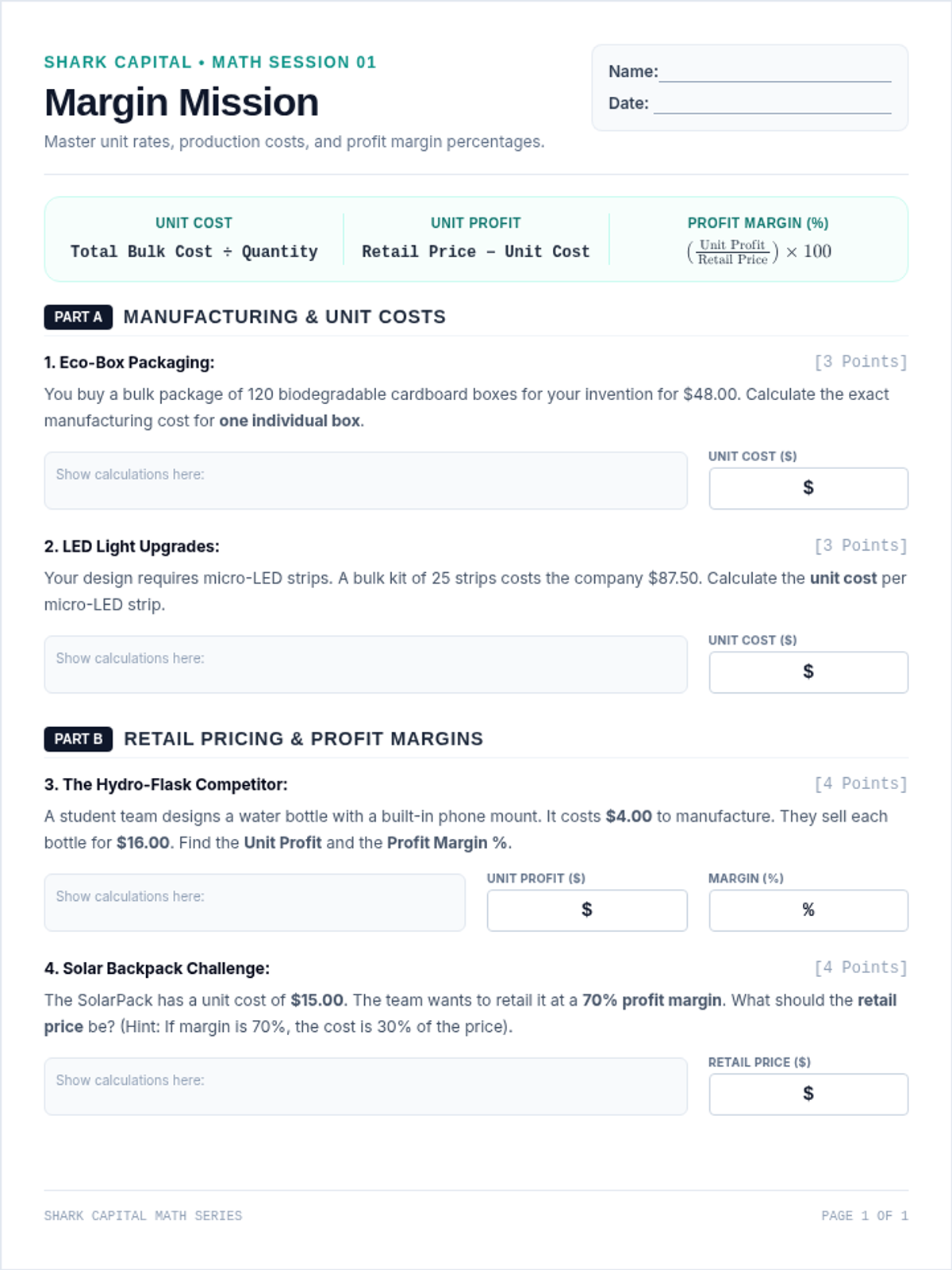
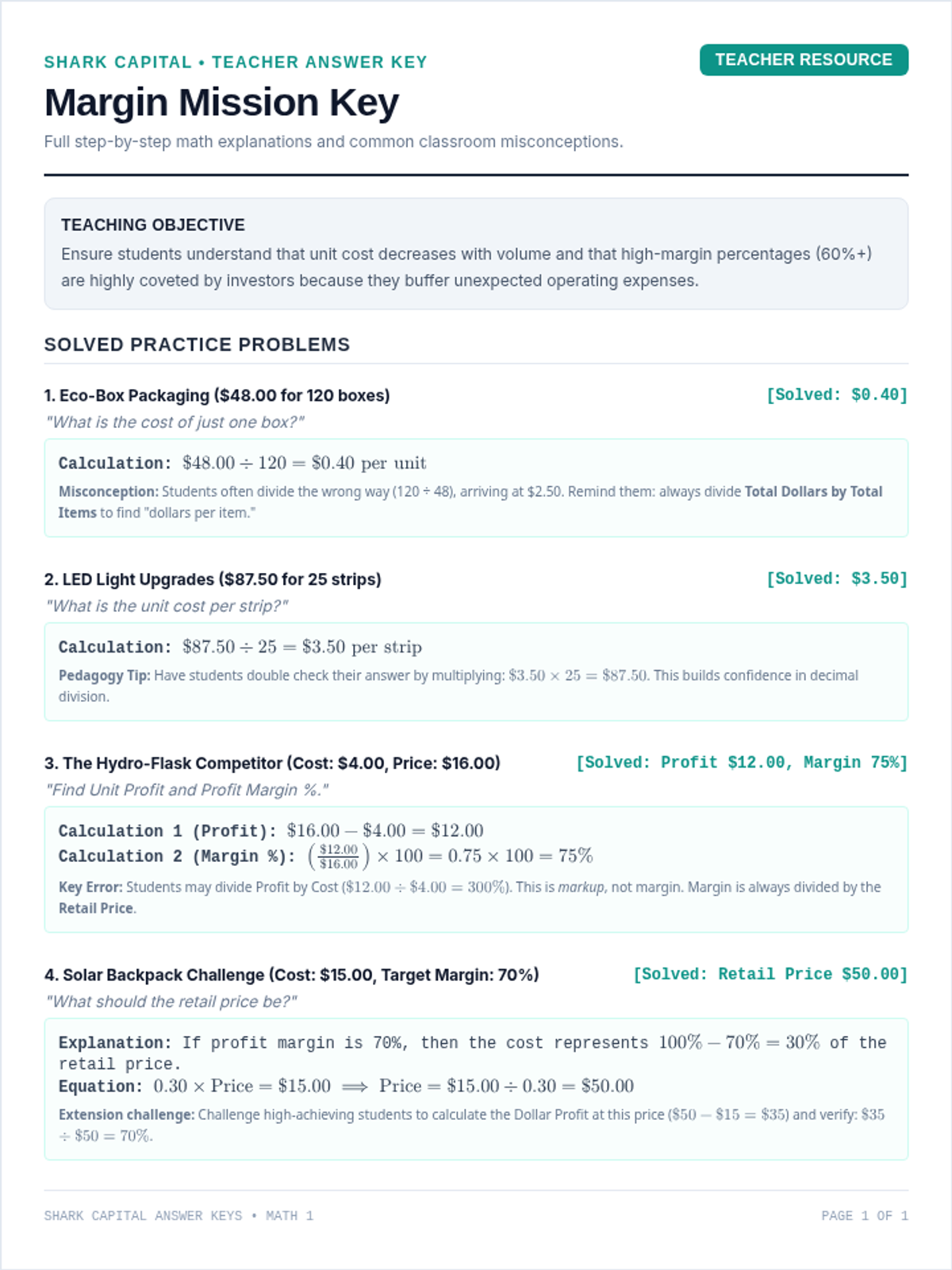
Students master unit rates, production costs, retail pricing, and profit margin percentages. They learn how to analyze whether an invention is financially viable on a unit level.
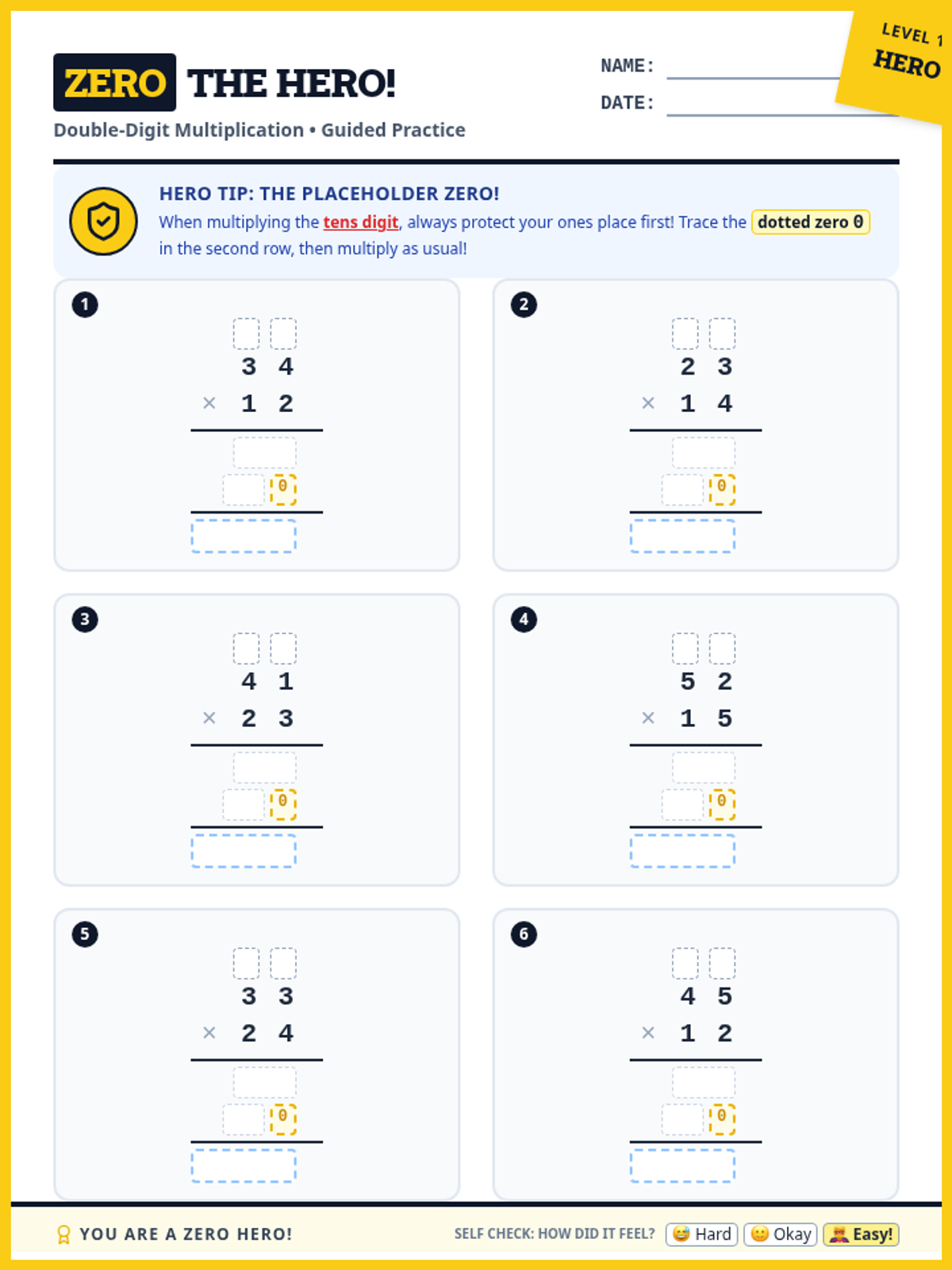
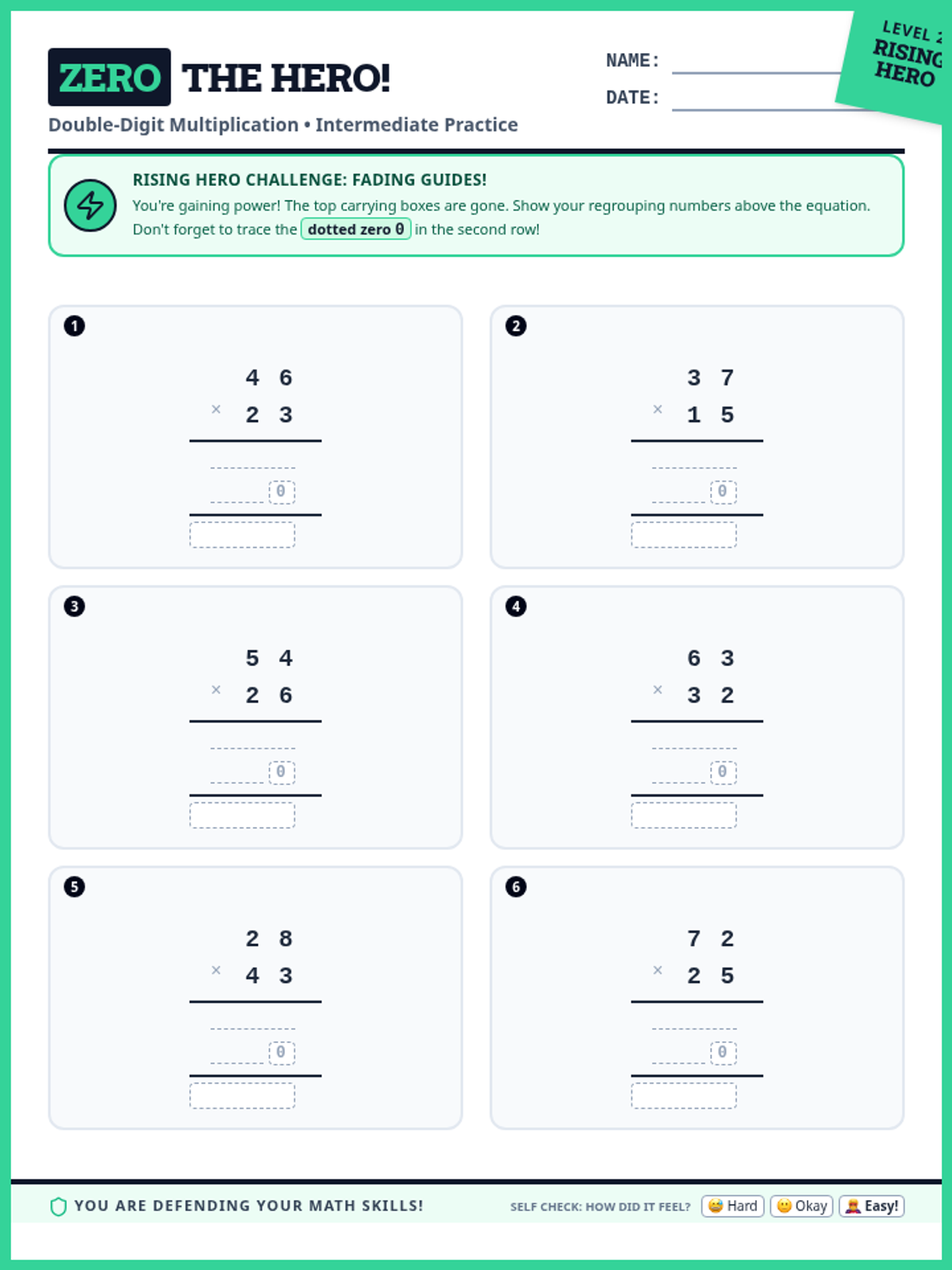
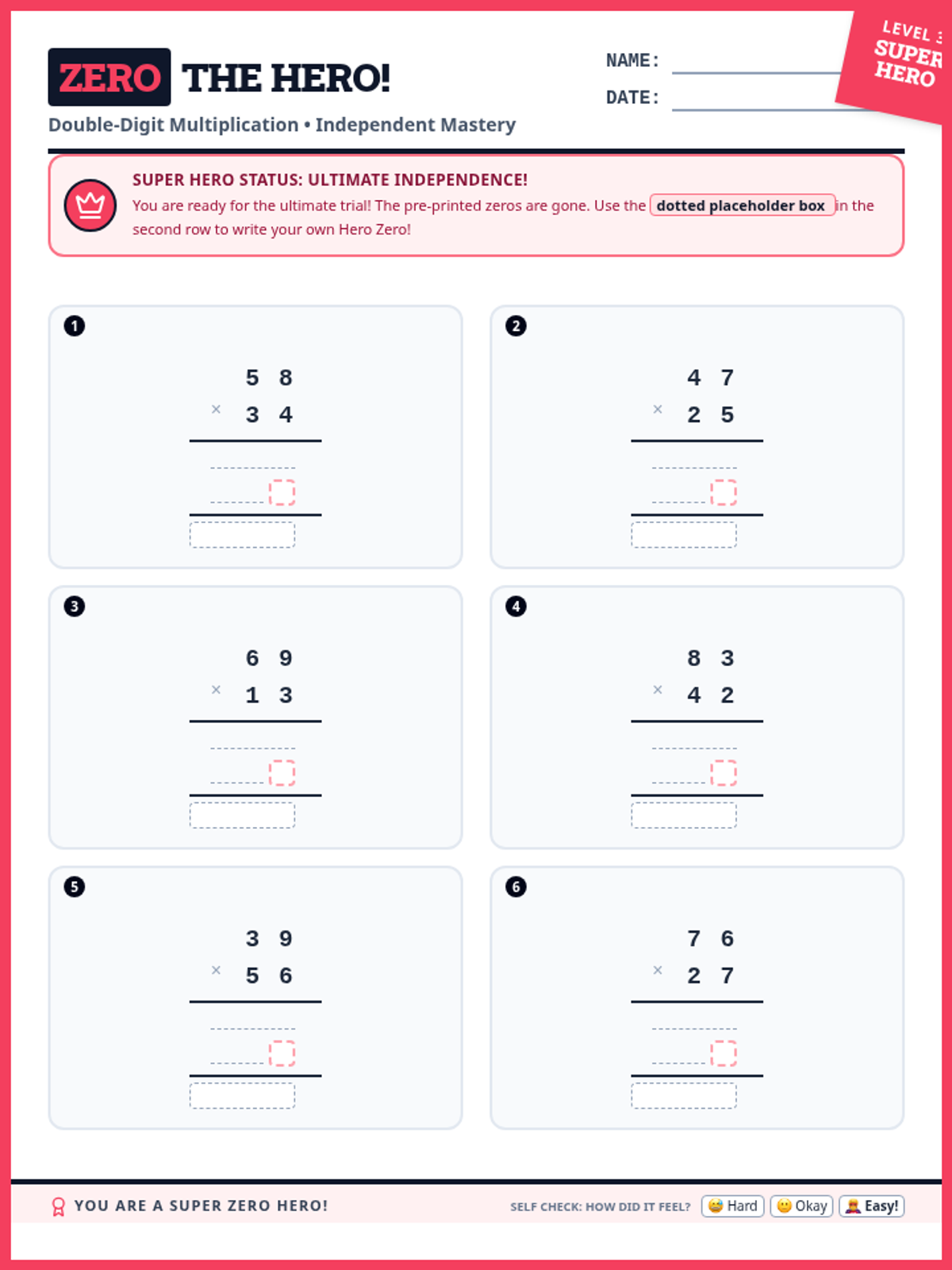
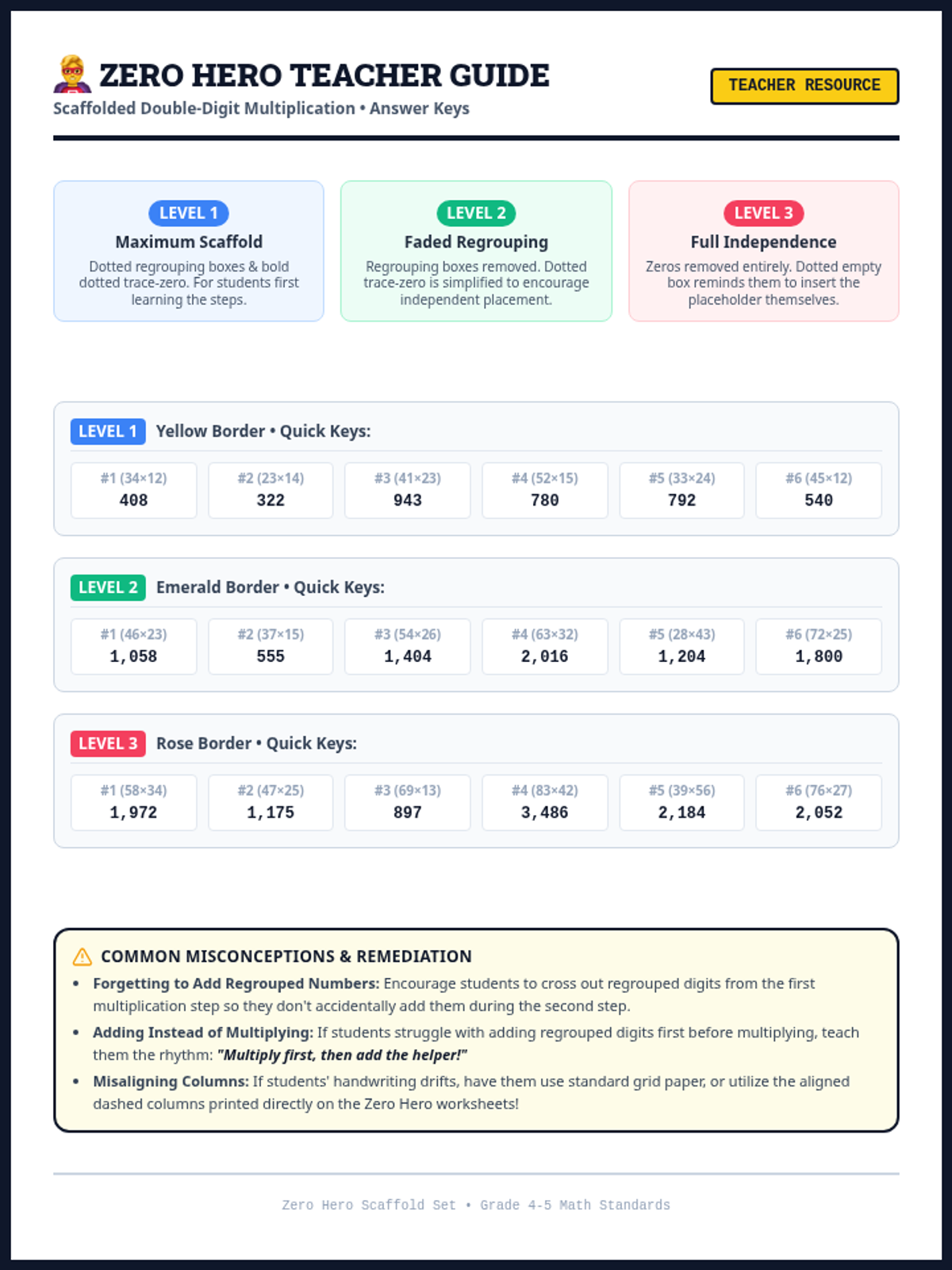
A three-level differentiated worksheet set teaching double-digit multiplication. Each worksheet utilizes a 'dotted placeholder zero' method with progressive prompt fading to support students as they master the multi-step algorithm.
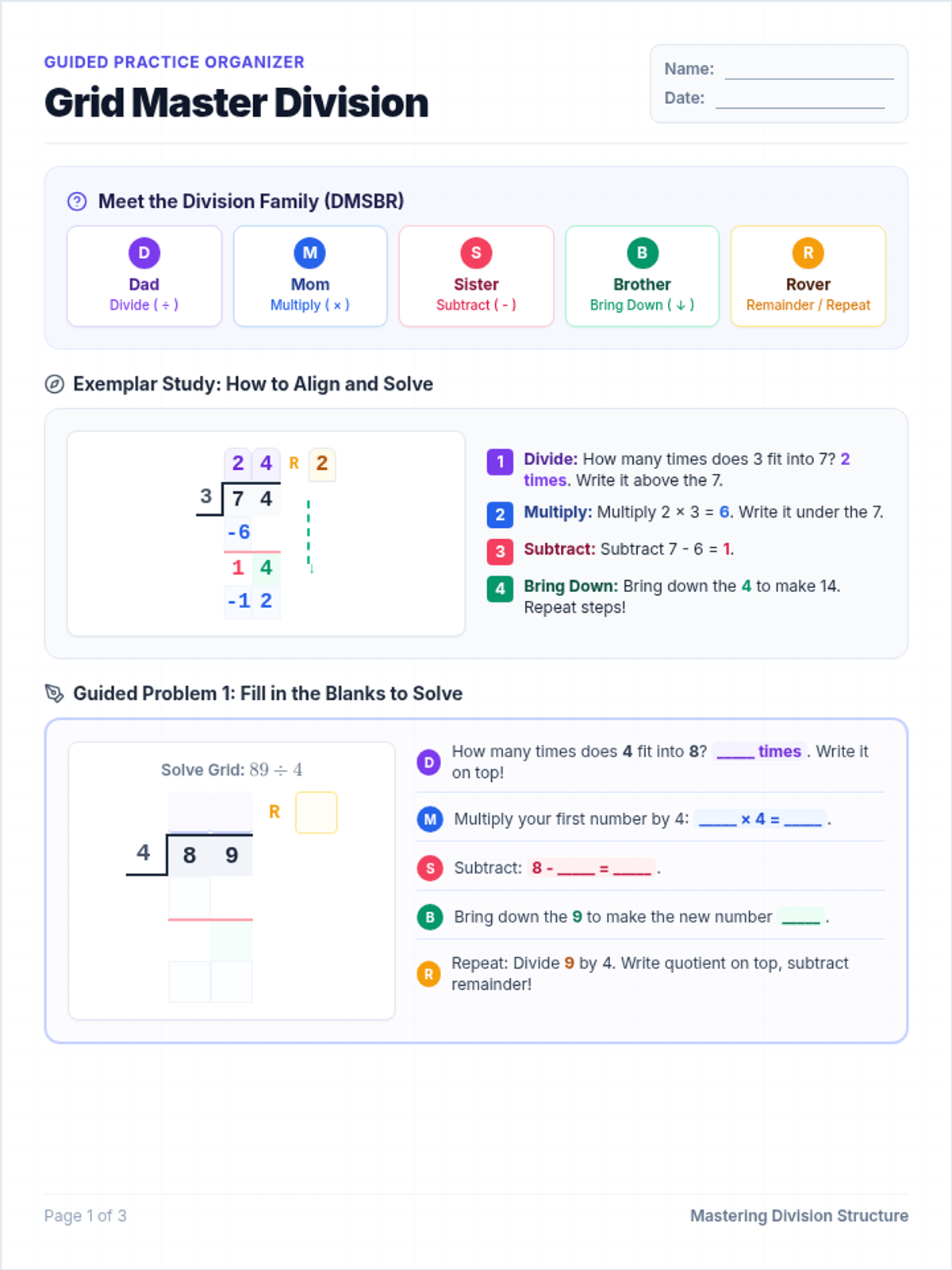
A guided math lesson focused on long division with remainders, employing strict alignment grids and color-coded step-by-step visual scaffolds to support learners with spatial organization.
A step-by-step guided lesson pack for practicing long division with remainders. It utilizes grid lines, large fonts, and color-coded graphic organizers to help students keep their calculations vertically aligned.
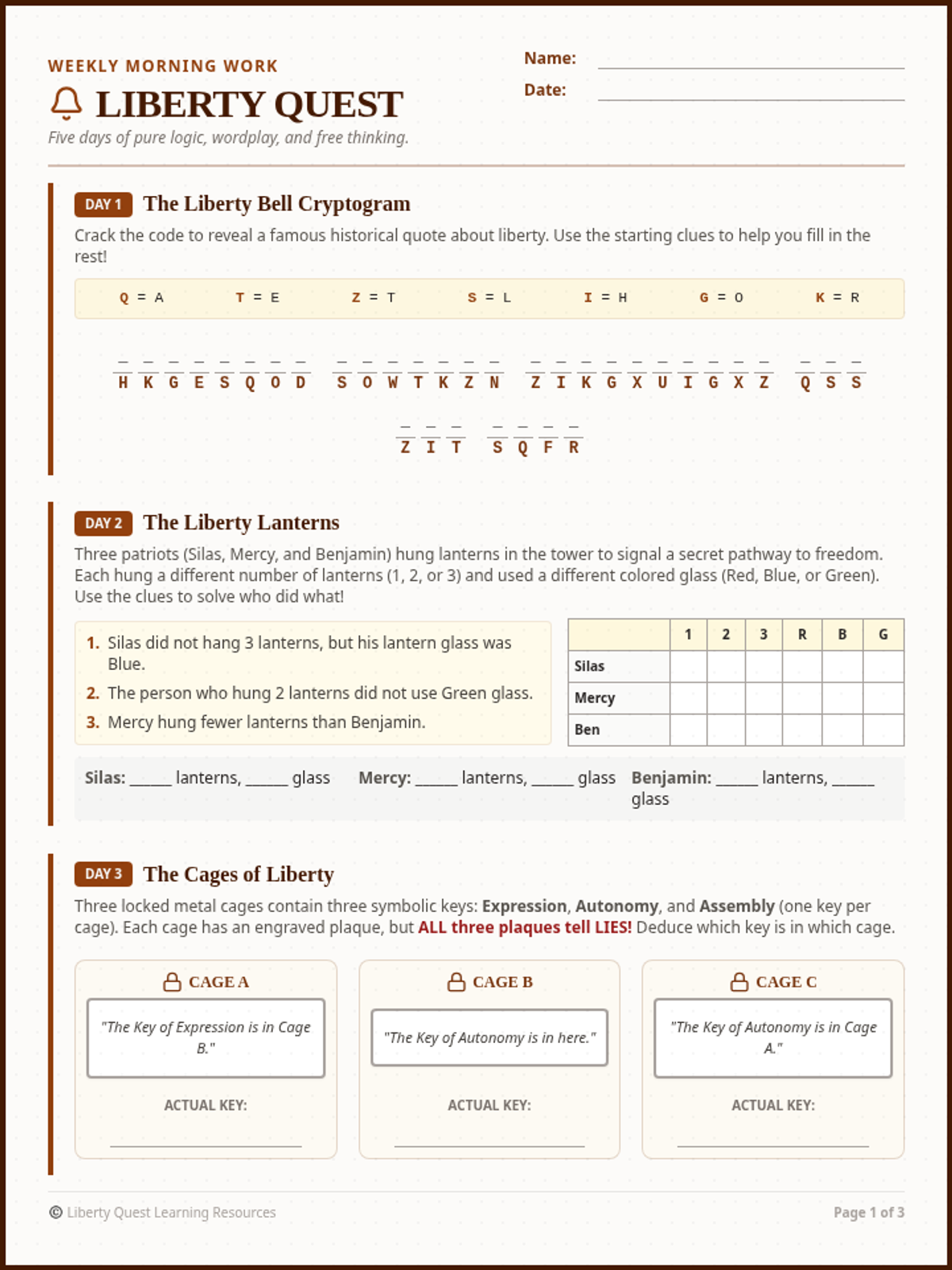
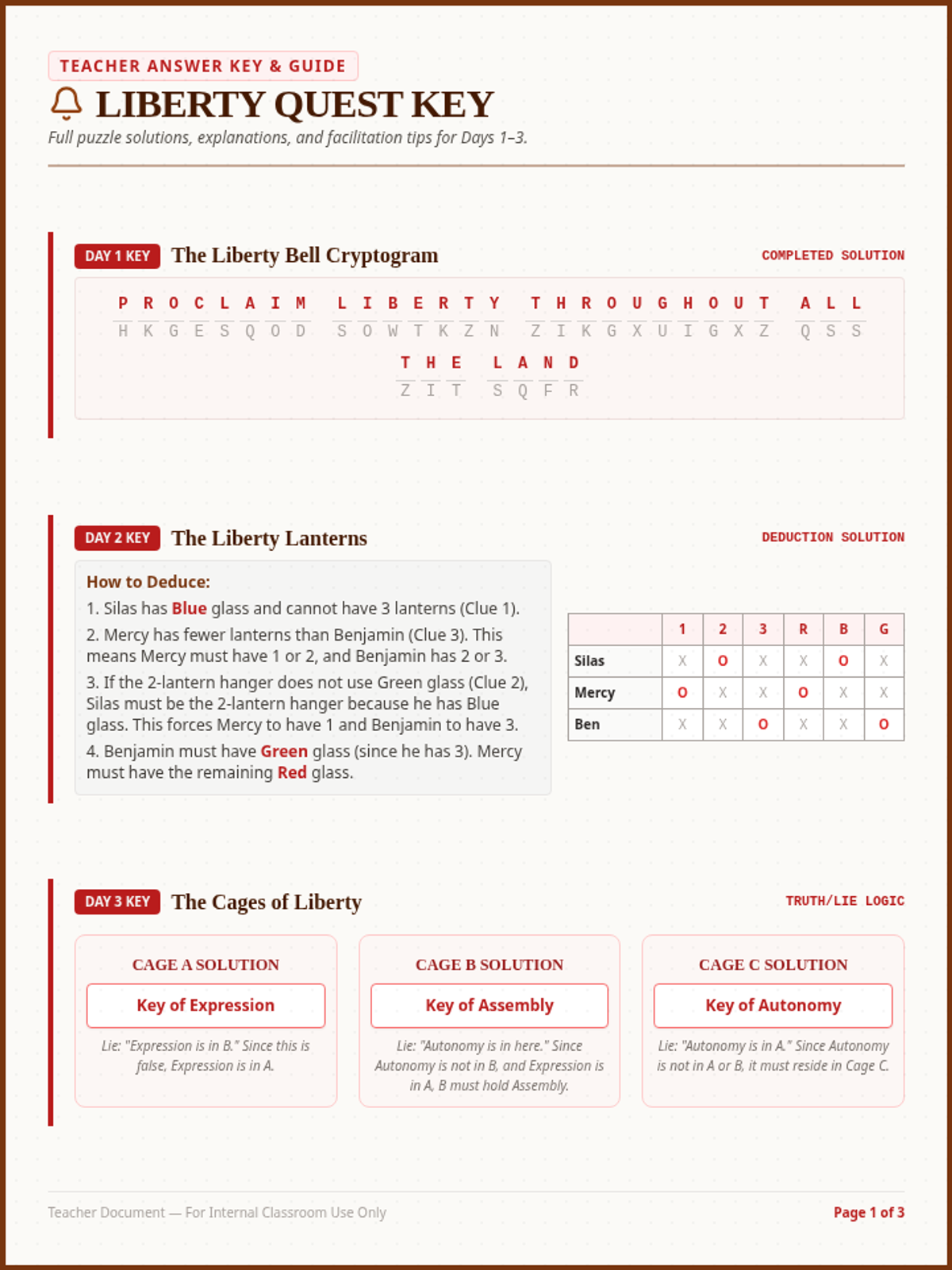
A 5-day daily warm-up packet based on logic puzzles and wordplay themed around liberty and freedom. Focuses on critical thinking and non-numerical deduction.
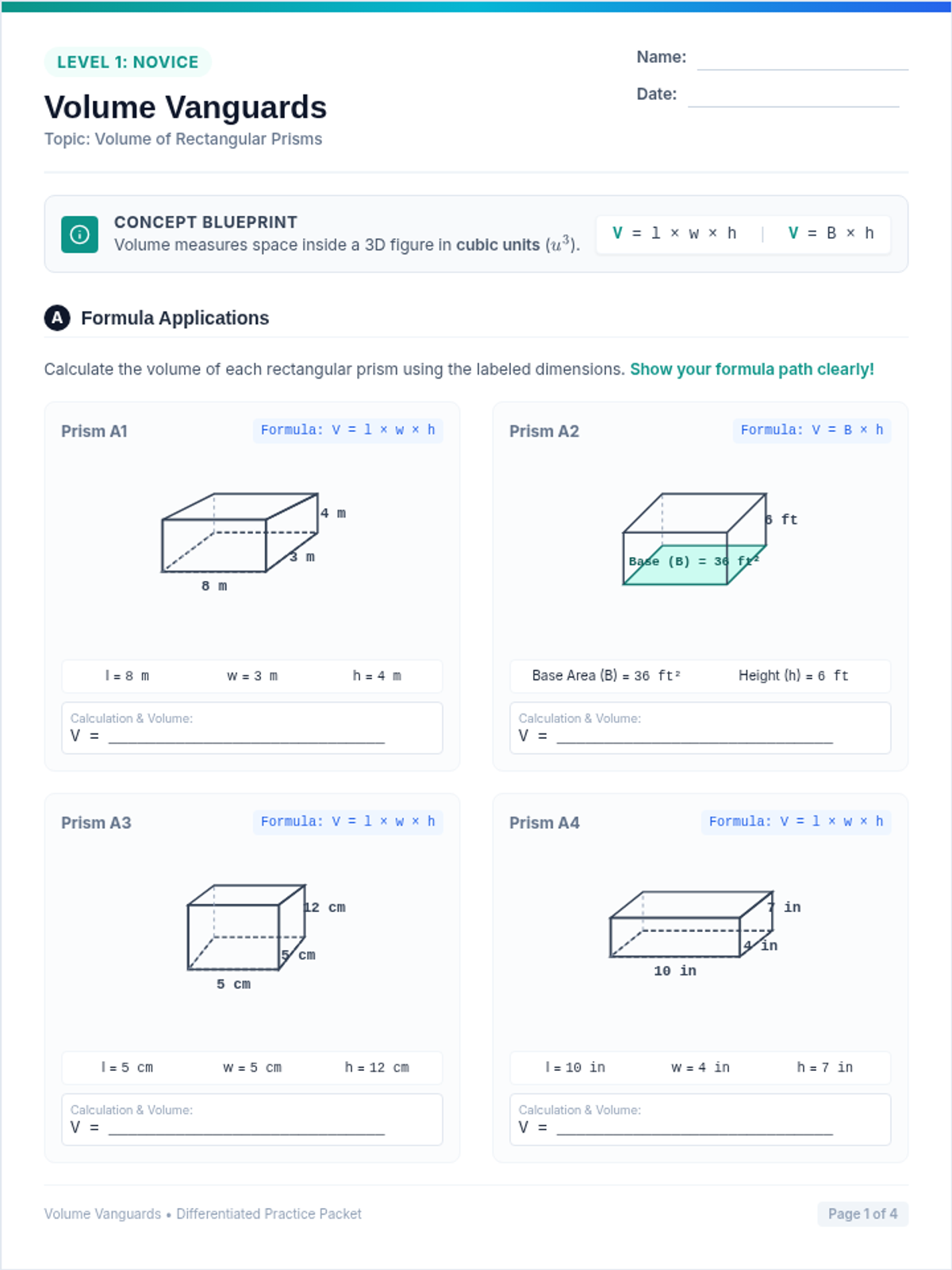
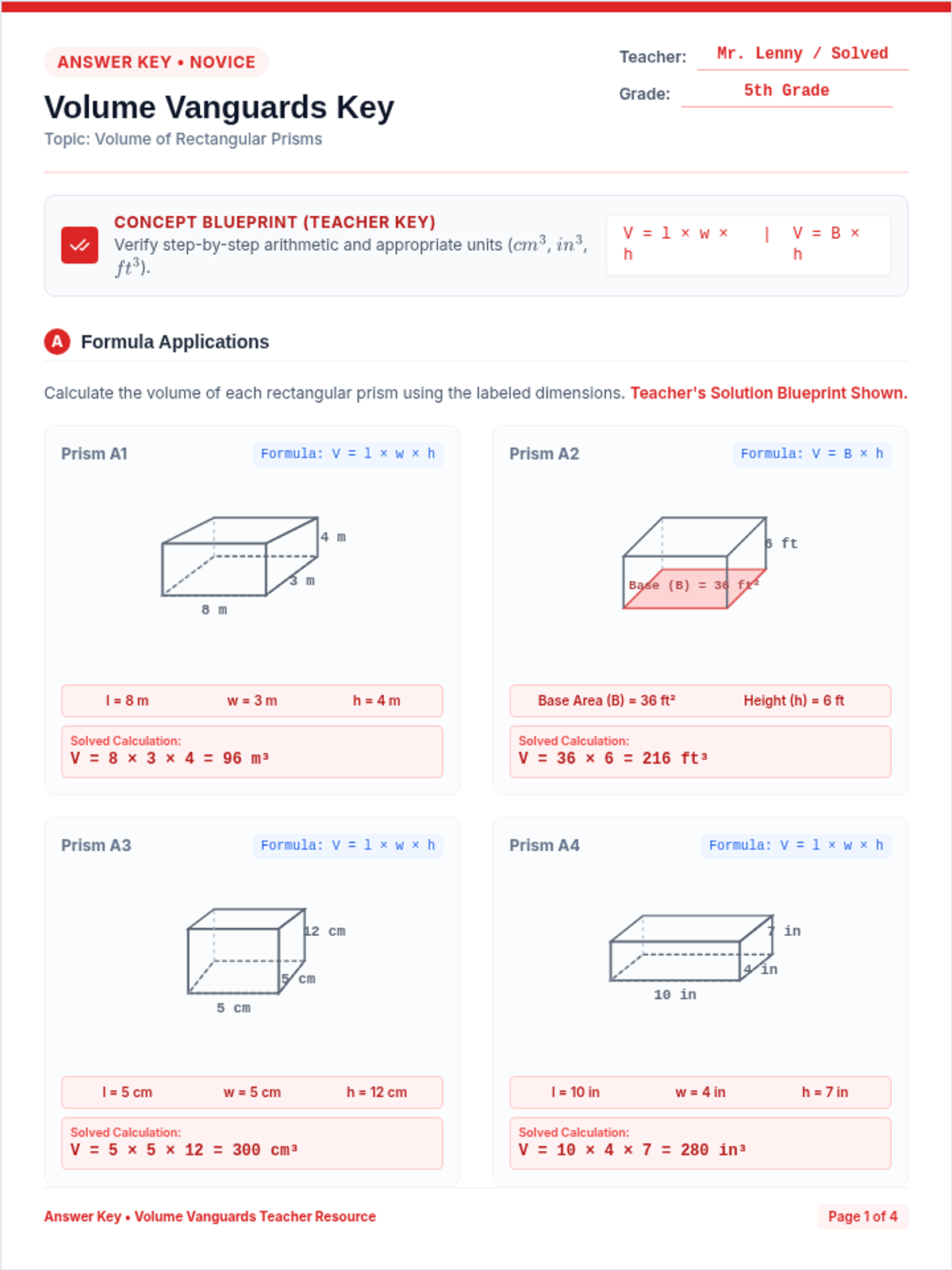
A comprehensive 5th-grade lesson on calculating the volume of rectangular prisms and composite/irregular 3D shapes. Students progress from counting unit cubes to applying formulas and decomposing irregular figures to find additive volume.
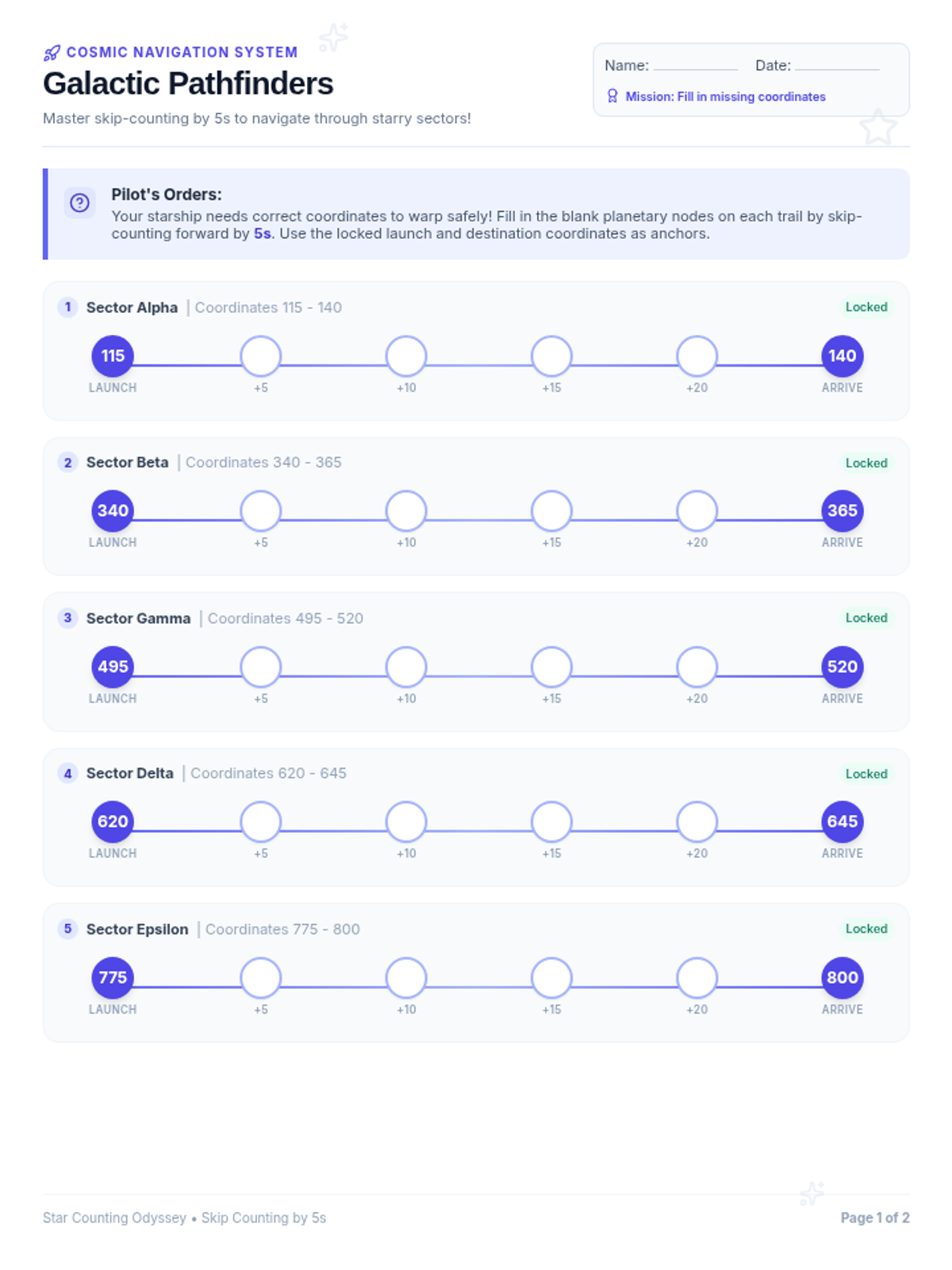
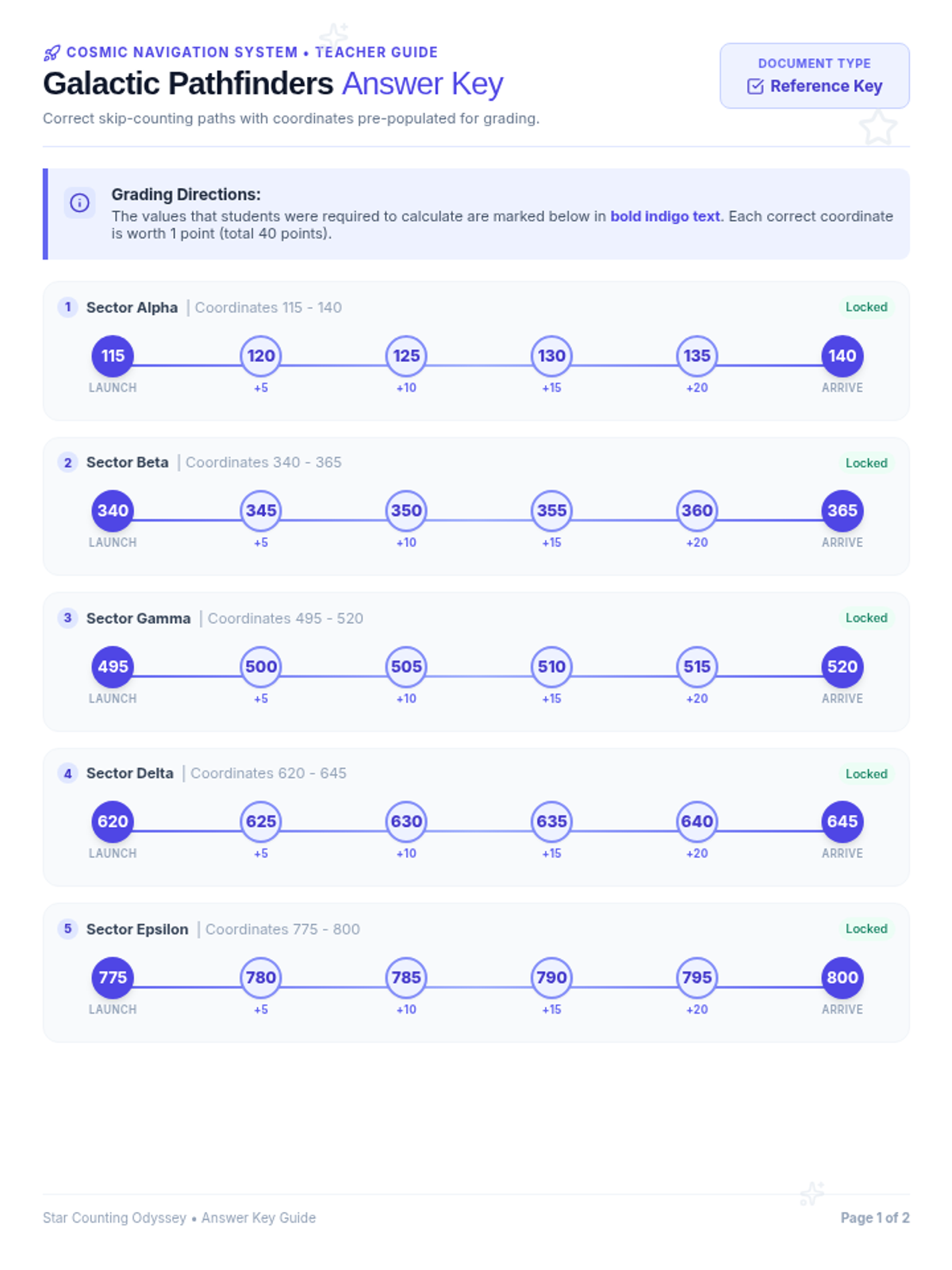
A space-themed skip counting lesson where students master counting by 5s to 1000. Using visual cosmic pathways (number lines), students apply moderate-support scaffolding to guide their spaceship through starry quadrants.
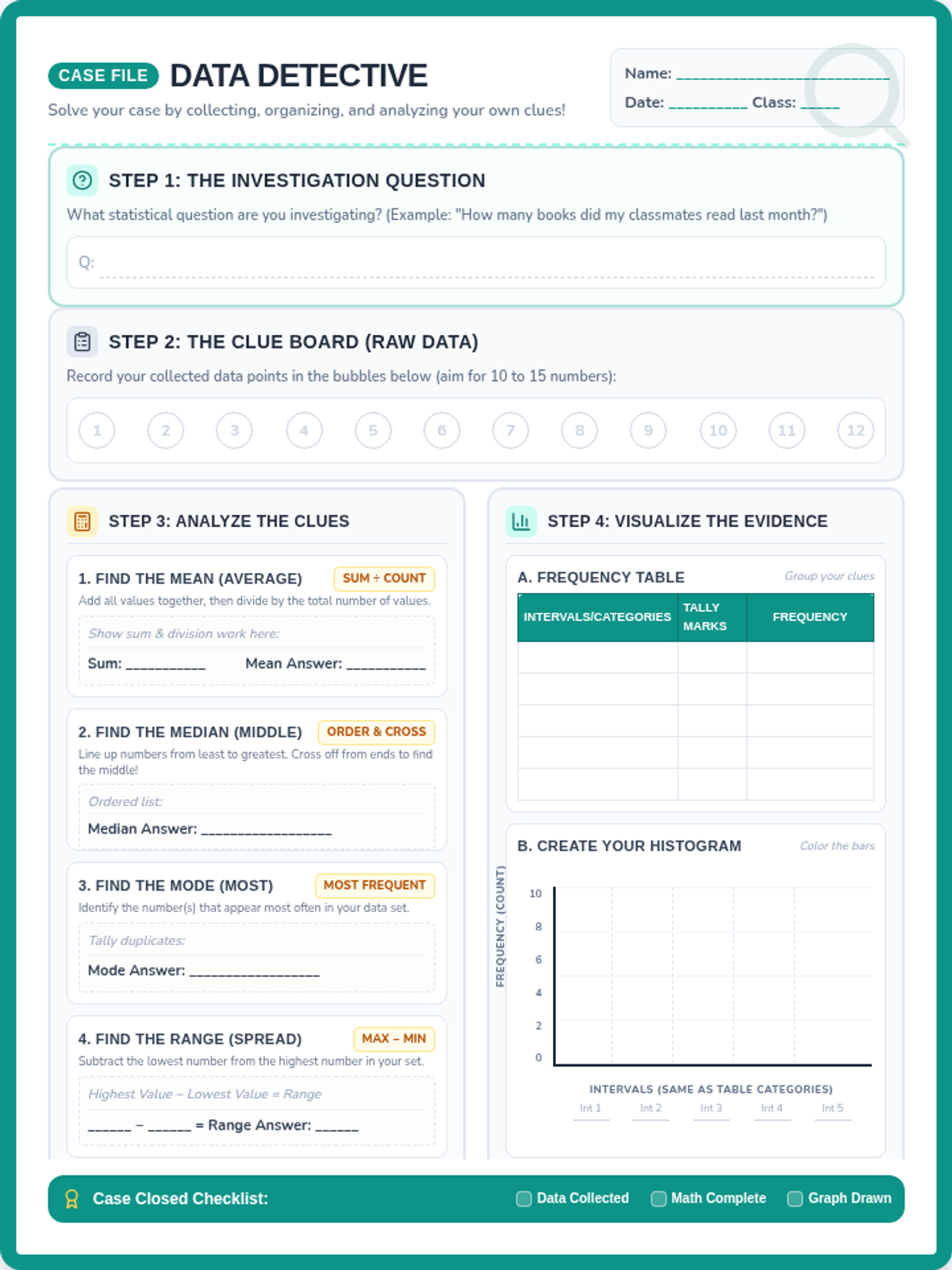
A lesson where students act as data detectives, collecting their own survey data, organizing it in a frequency table and histogram, and analyzing it using central tendency measures (mean, median, mode, and range).
An Algebra 1 lesson introducing projectile motion through the lens of launching rockets. Students learn to identify key features of quadratic graphs—specifically the vertex as maximum height and x-intercepts as landing times—and evaluate quadratic functions to find heights at specific seconds.
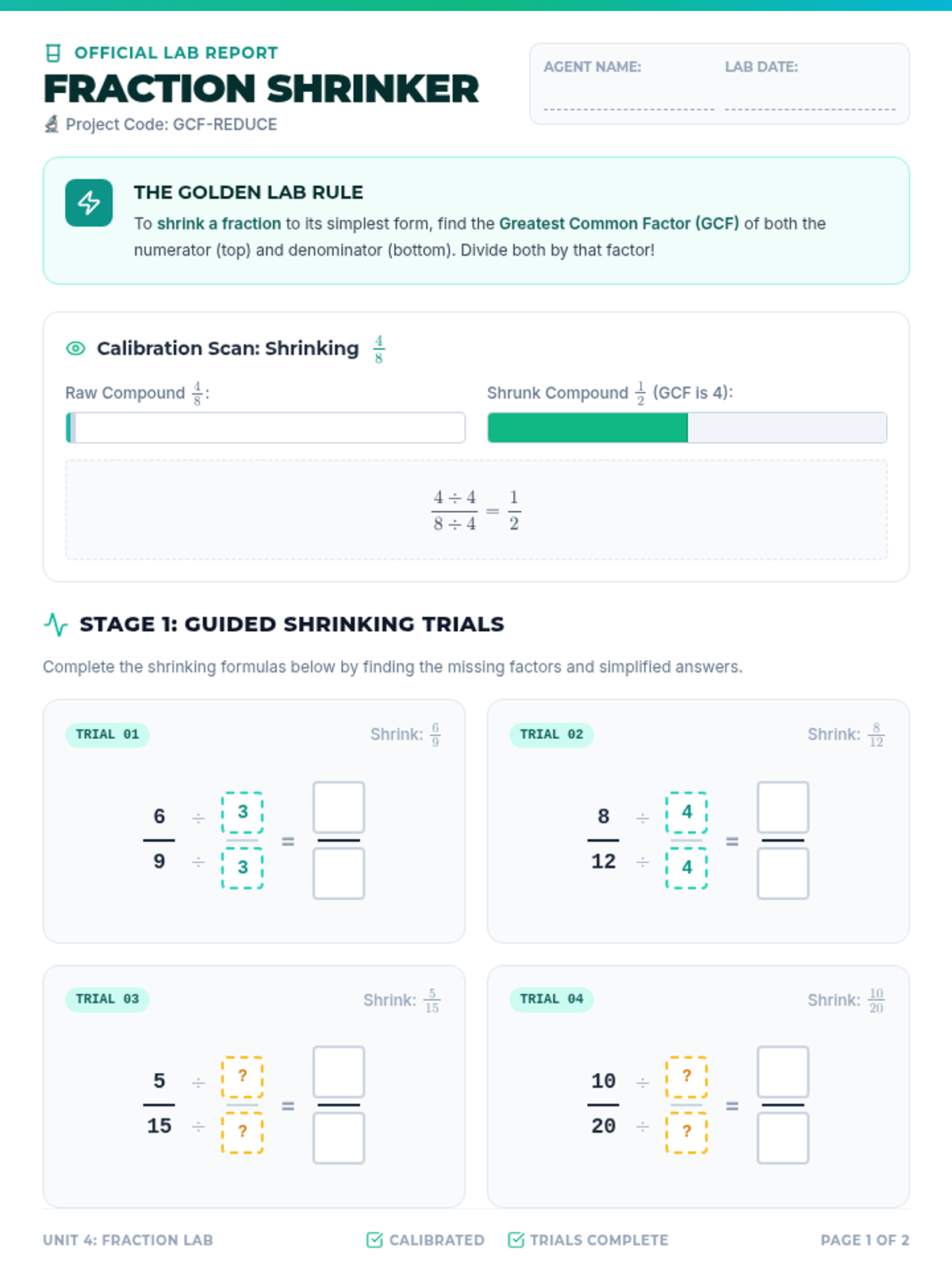
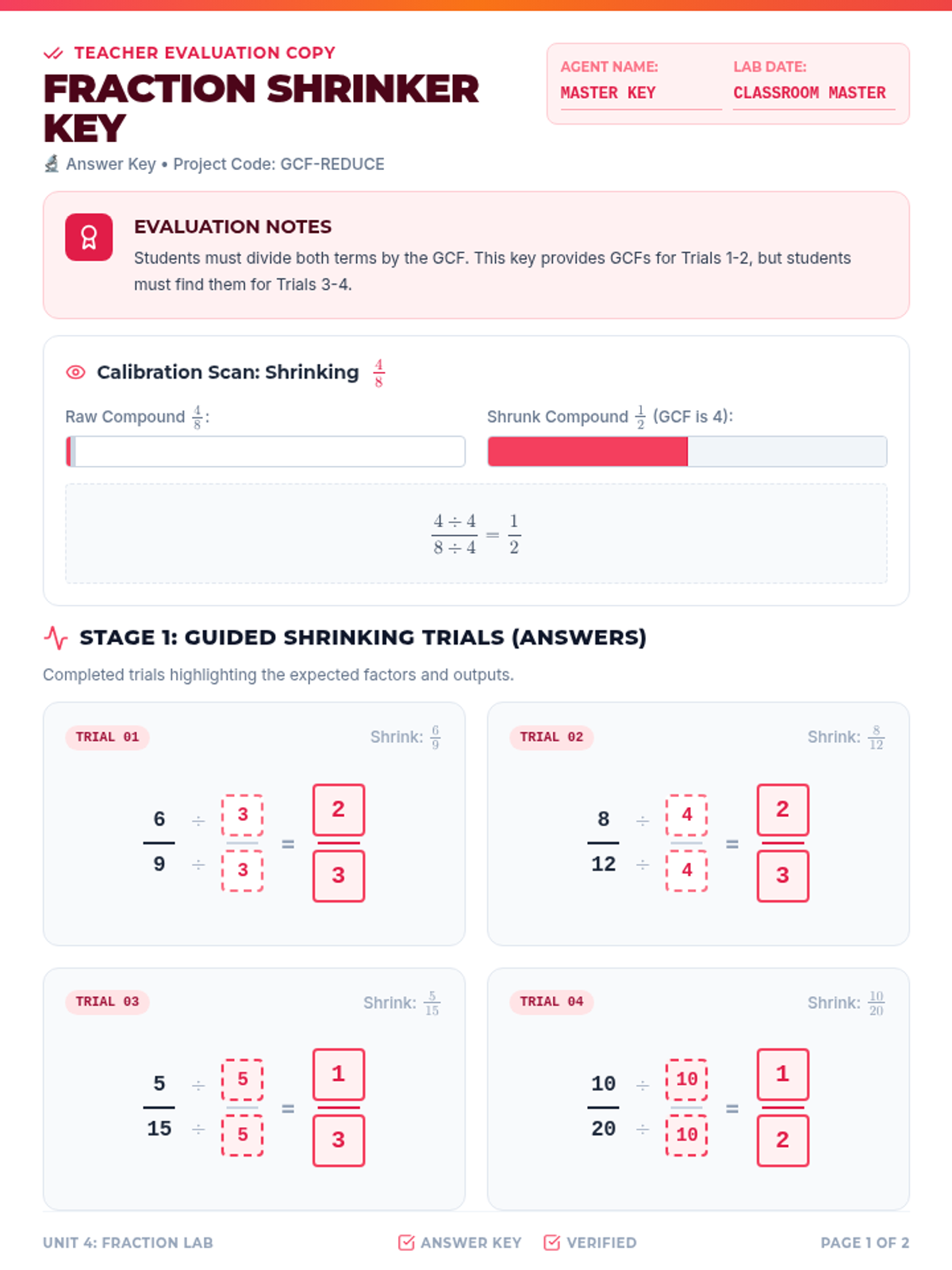
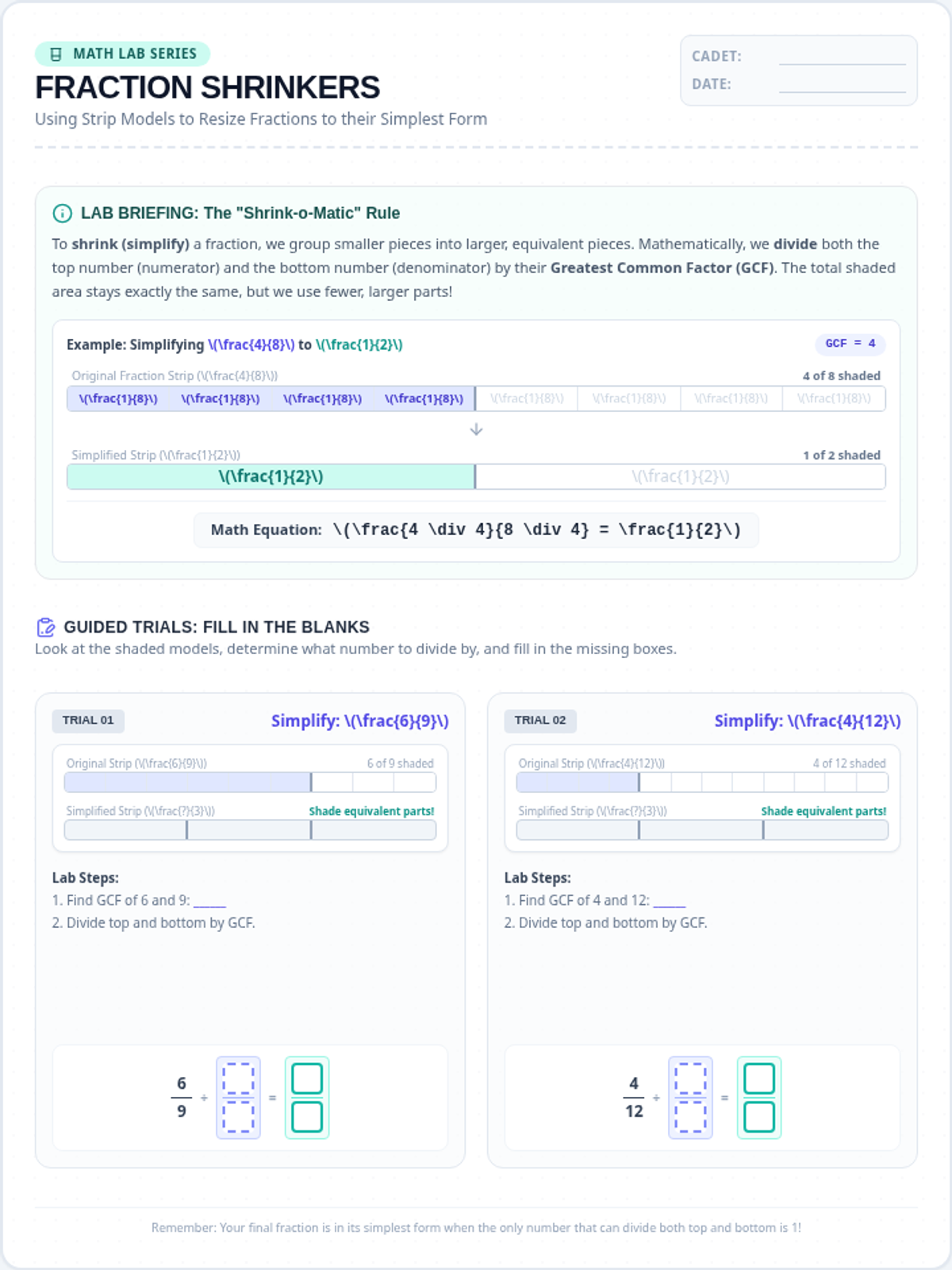
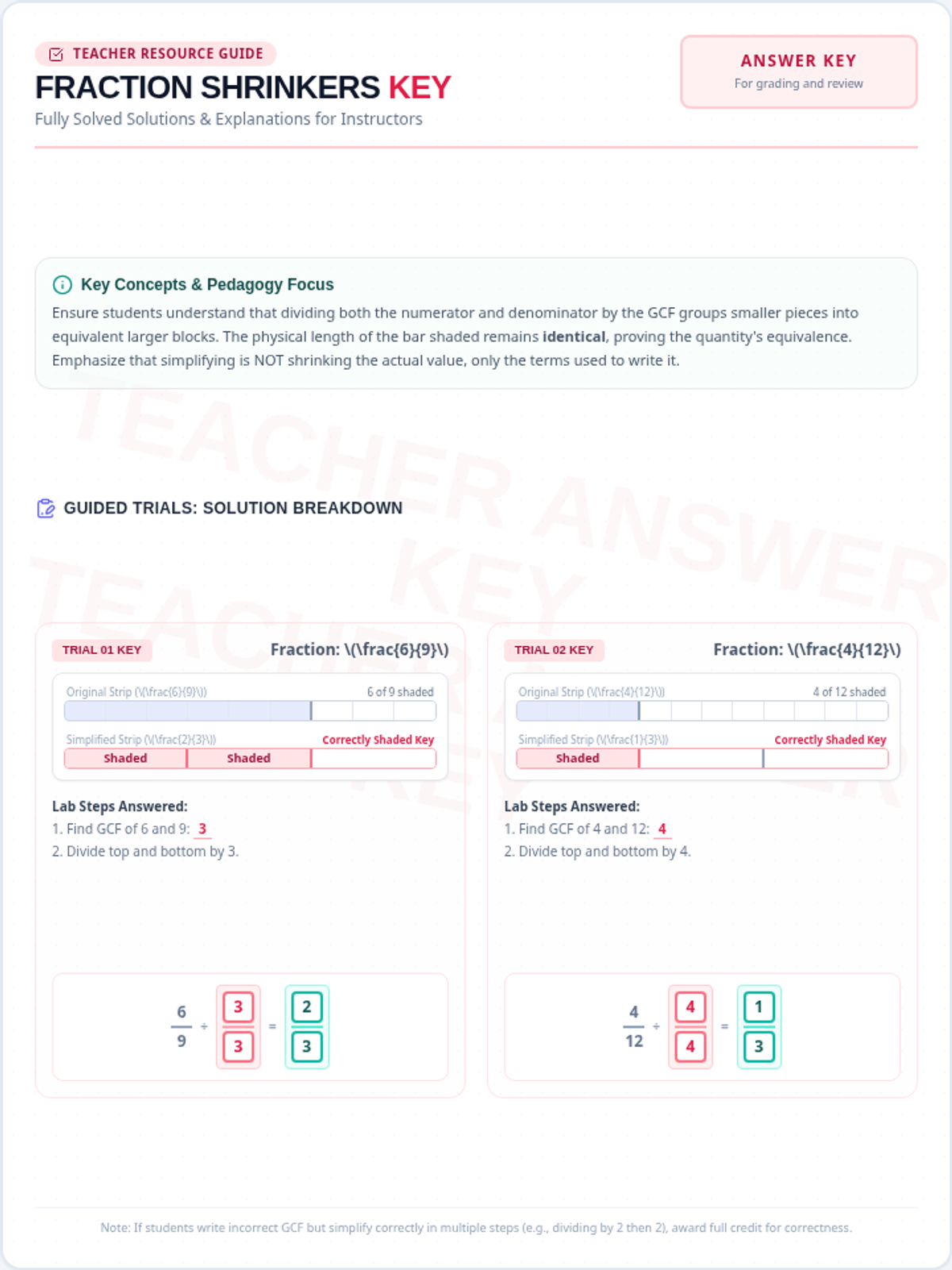
A focused lesson on simplifying fractions using visual models, greatest common factors, and guided practice. Students learn to 'shrink' fractions to their simplest form using a lab-themed framework.
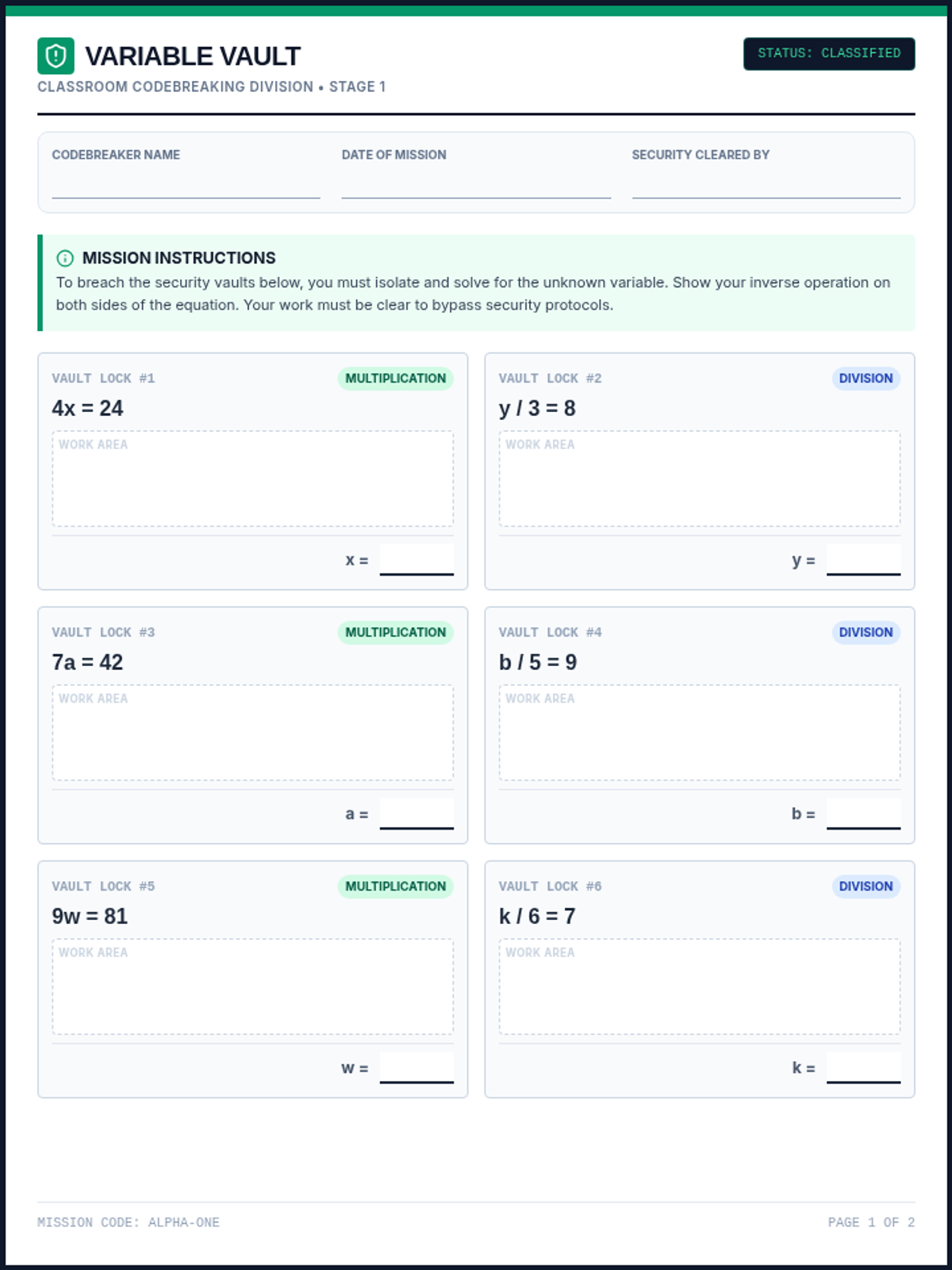
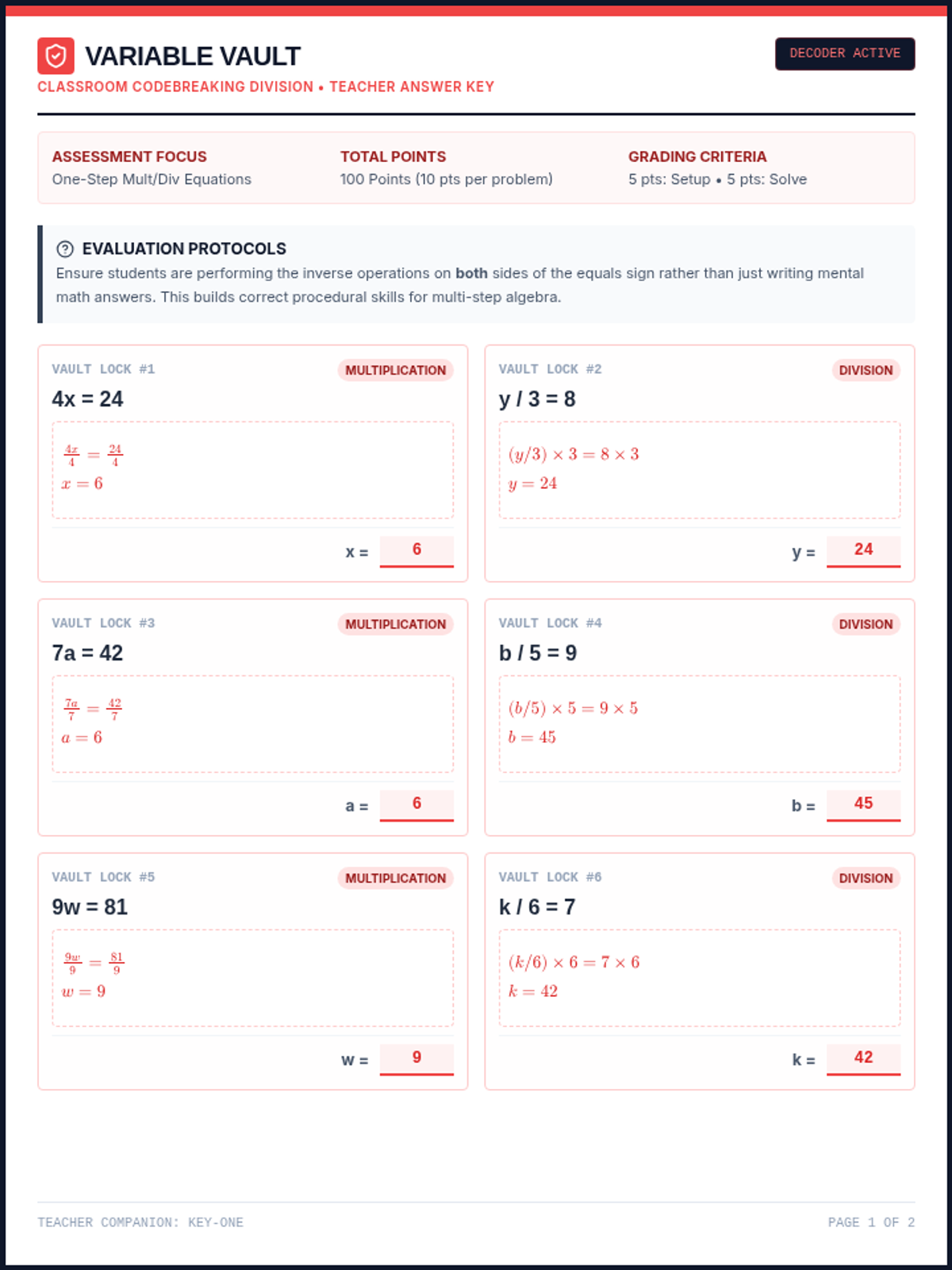
An assessment package for solving one-step equations involving whole number multiplication and division. Includes a student assessment worksheet and a teacher answer key with detailed step-by-step solutions.
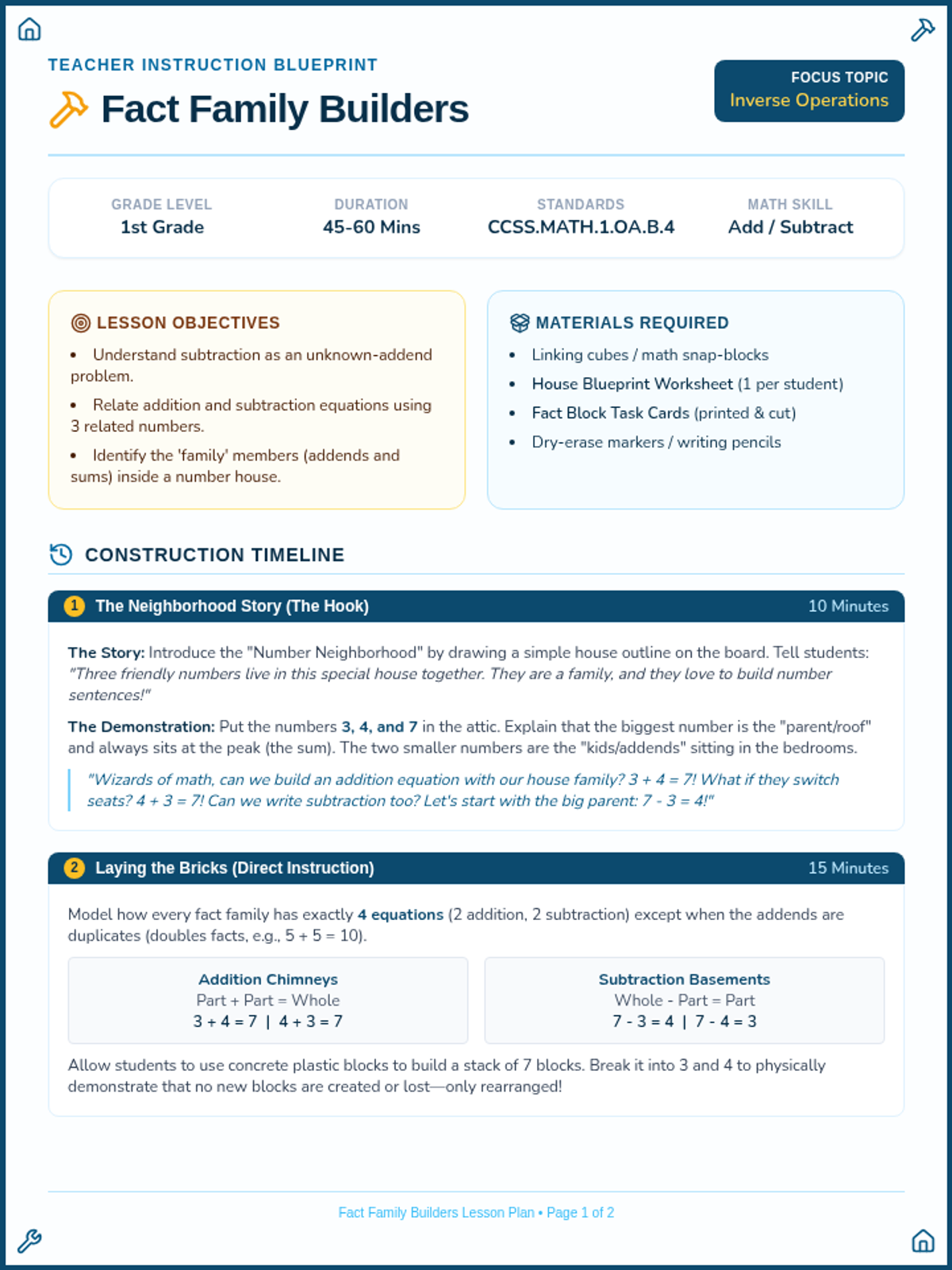
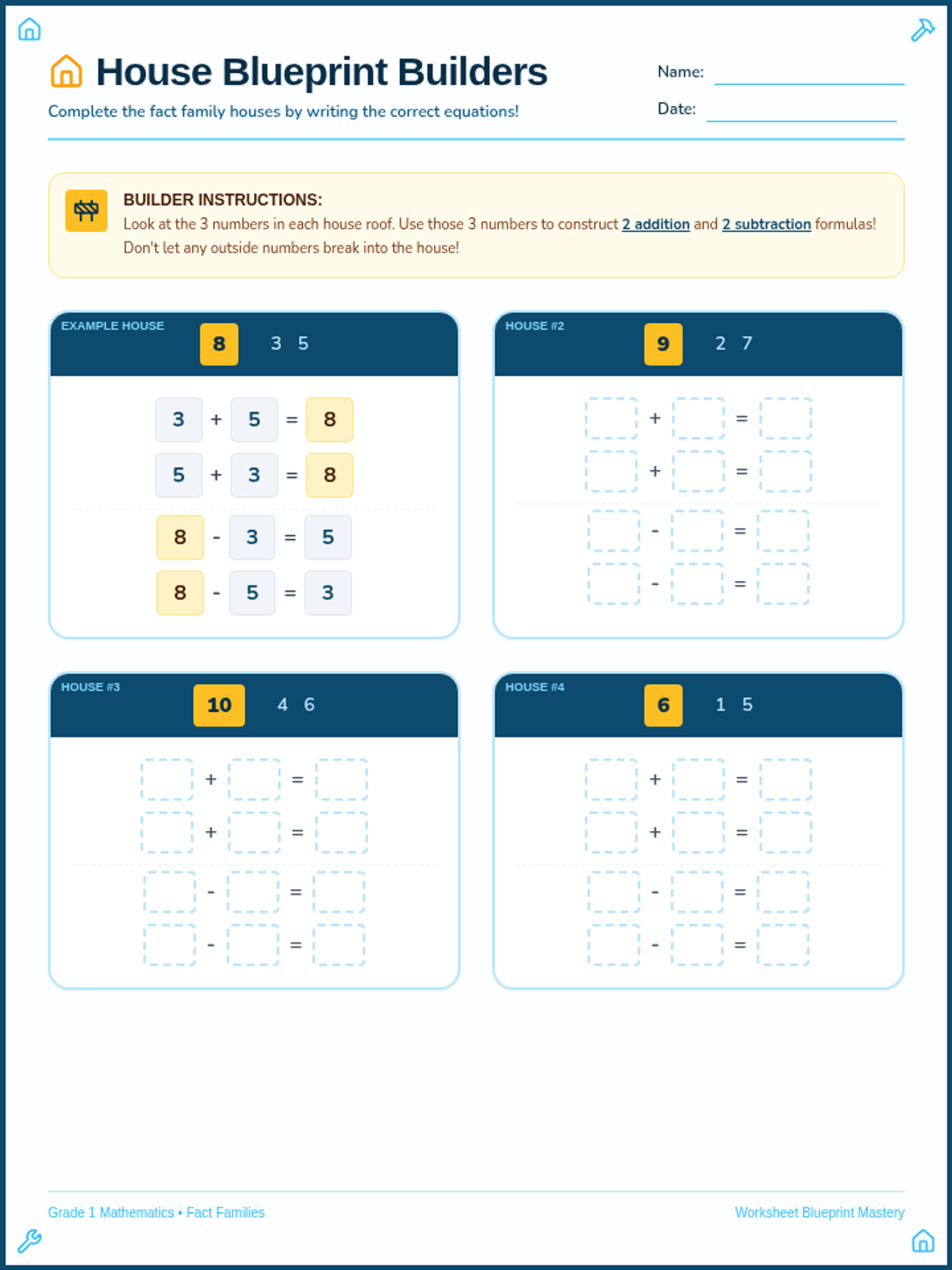
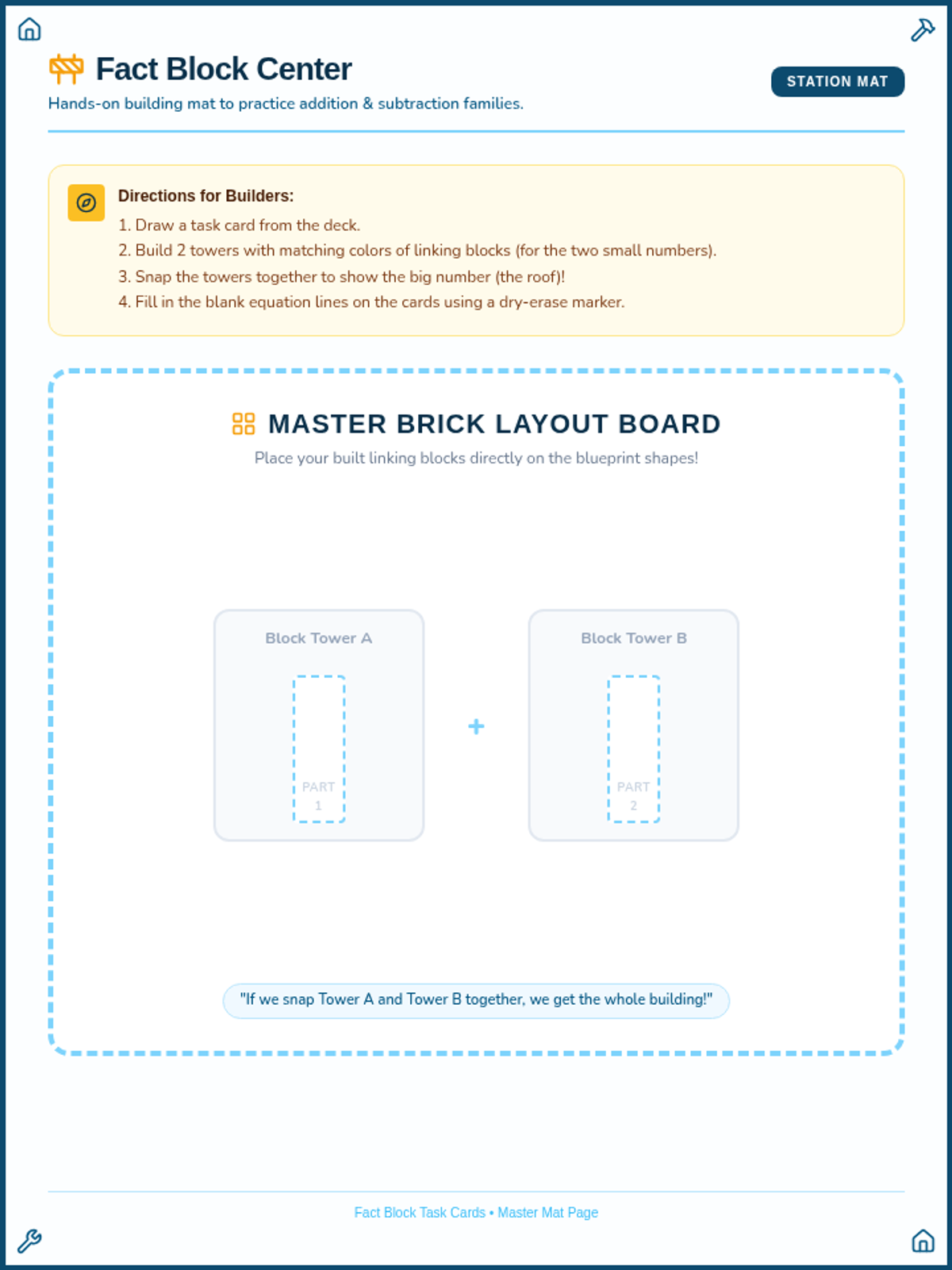
An engaging first-grade math lesson that teaches addition and subtraction relationships using cute, interactive fact family houses.
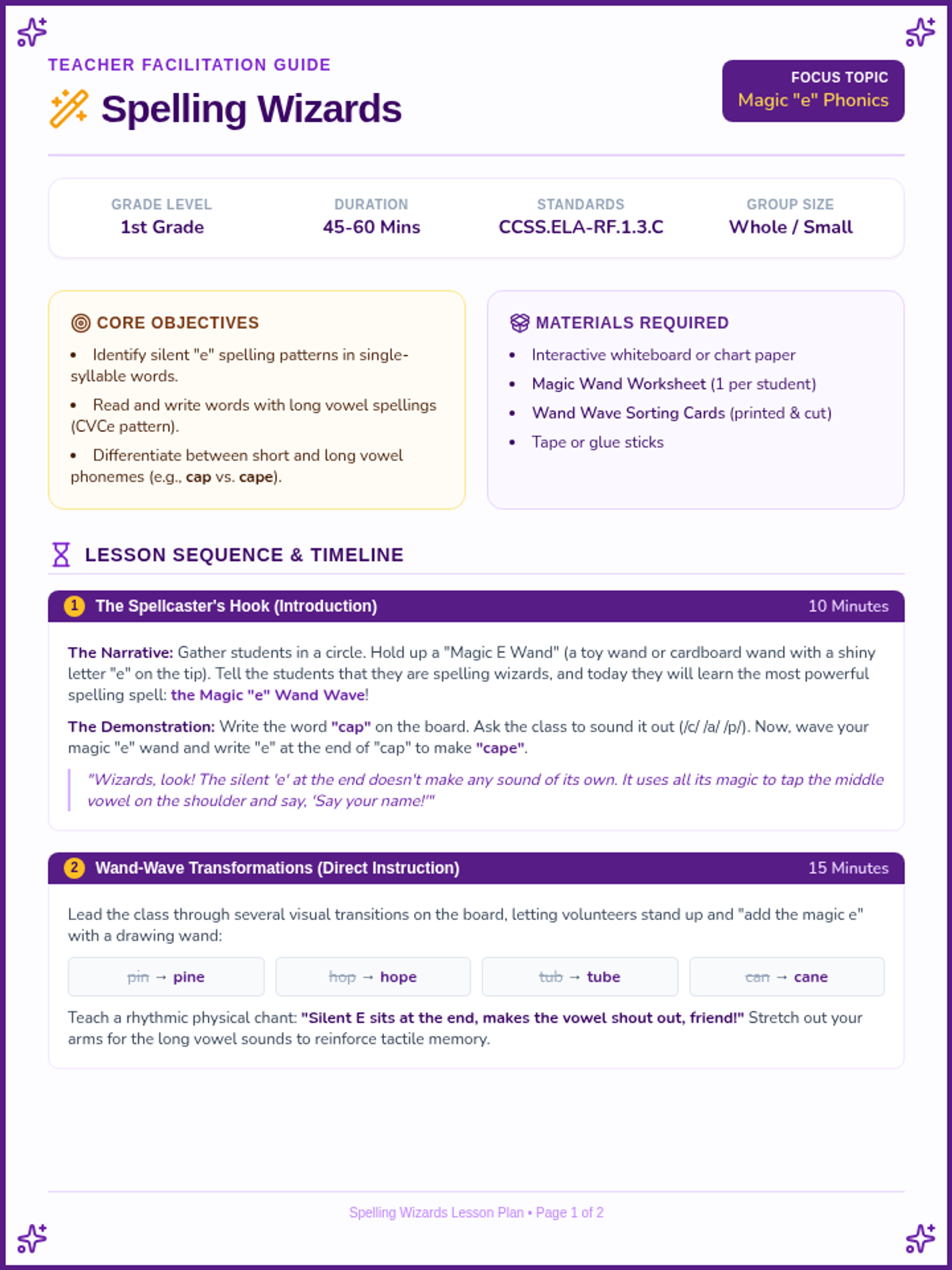
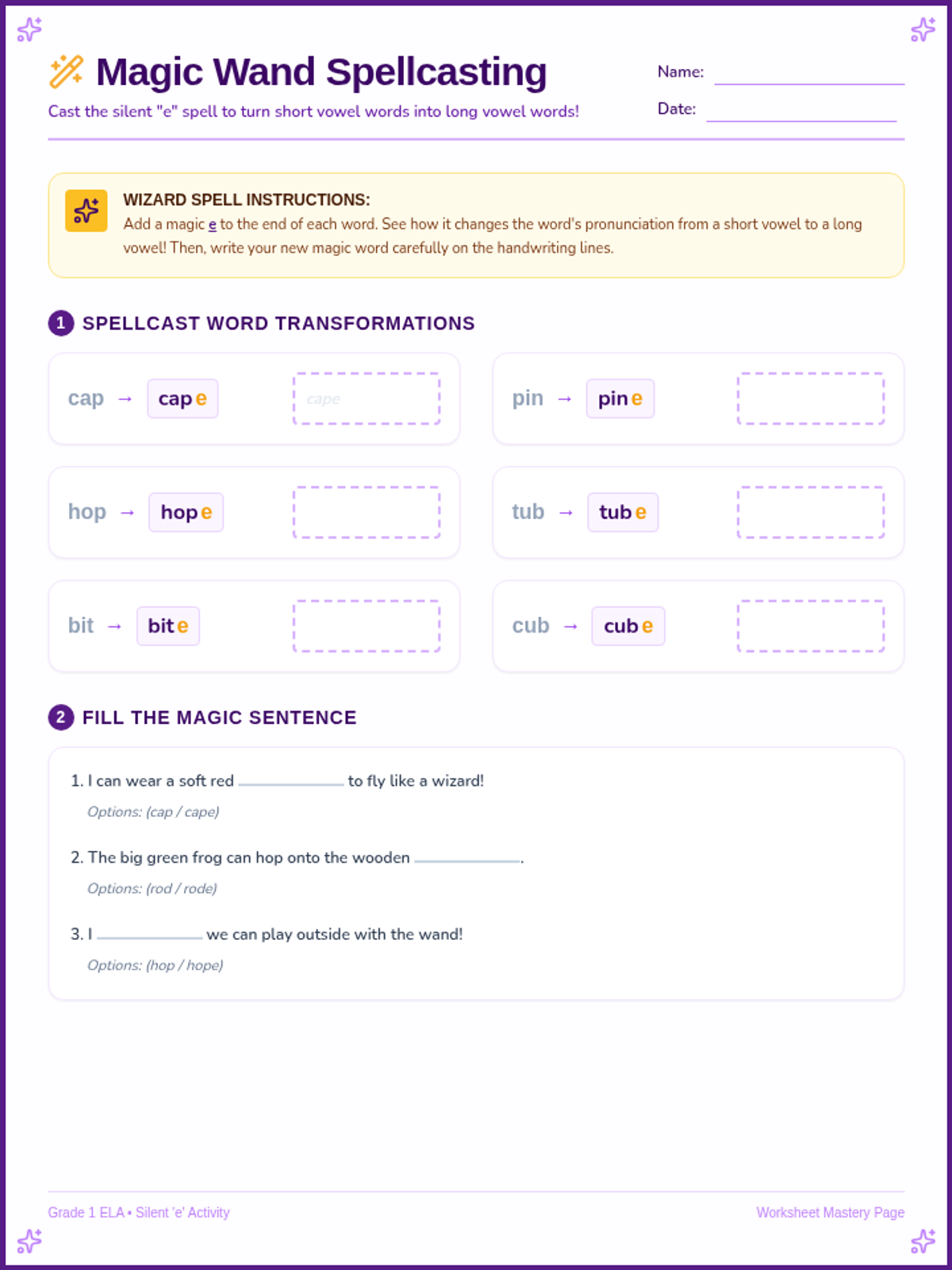
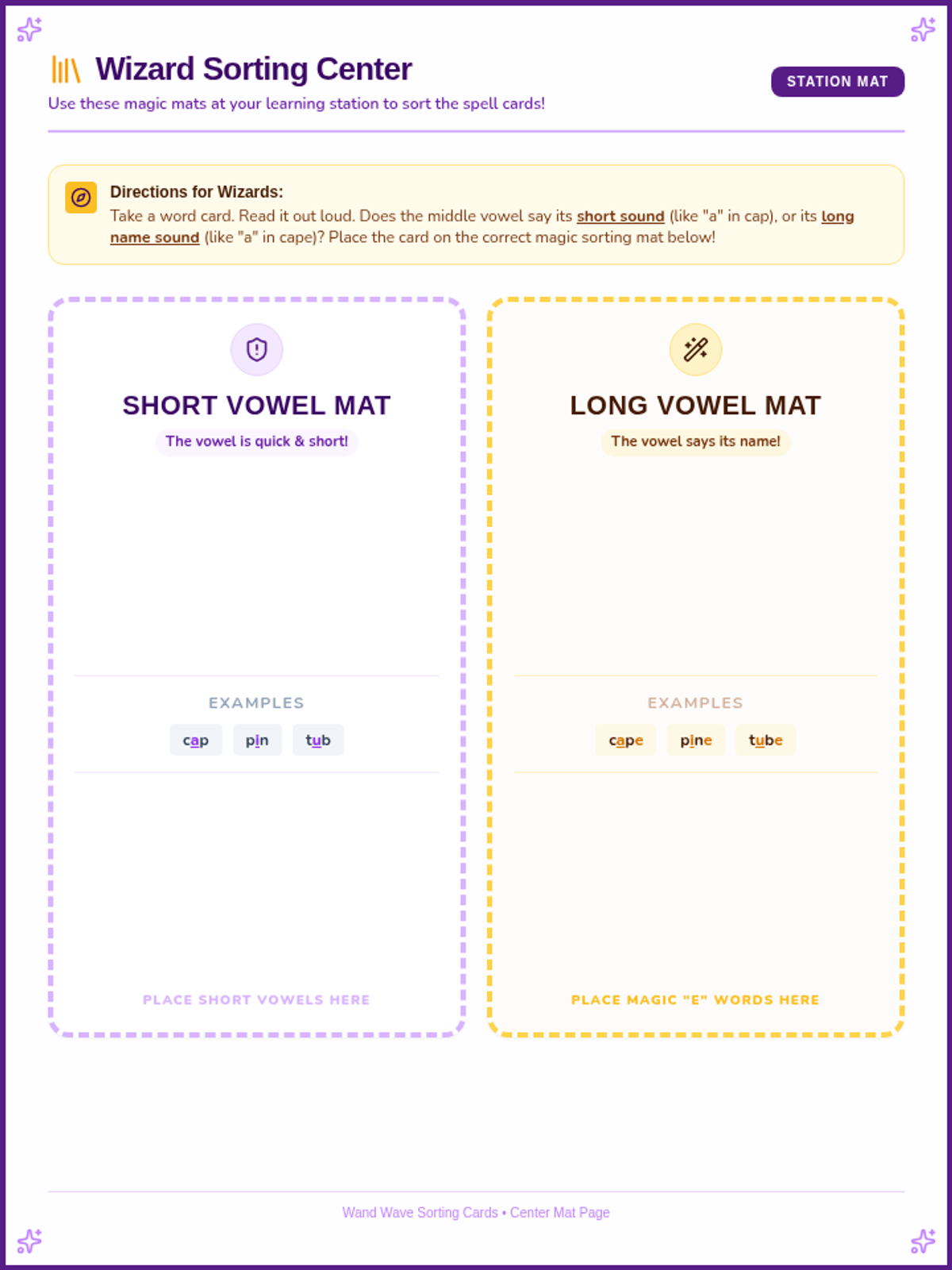
A whimsical first-grade ELA lesson teaching the power of silent 'e' through hands-on spelling wizard activities and guided practice.
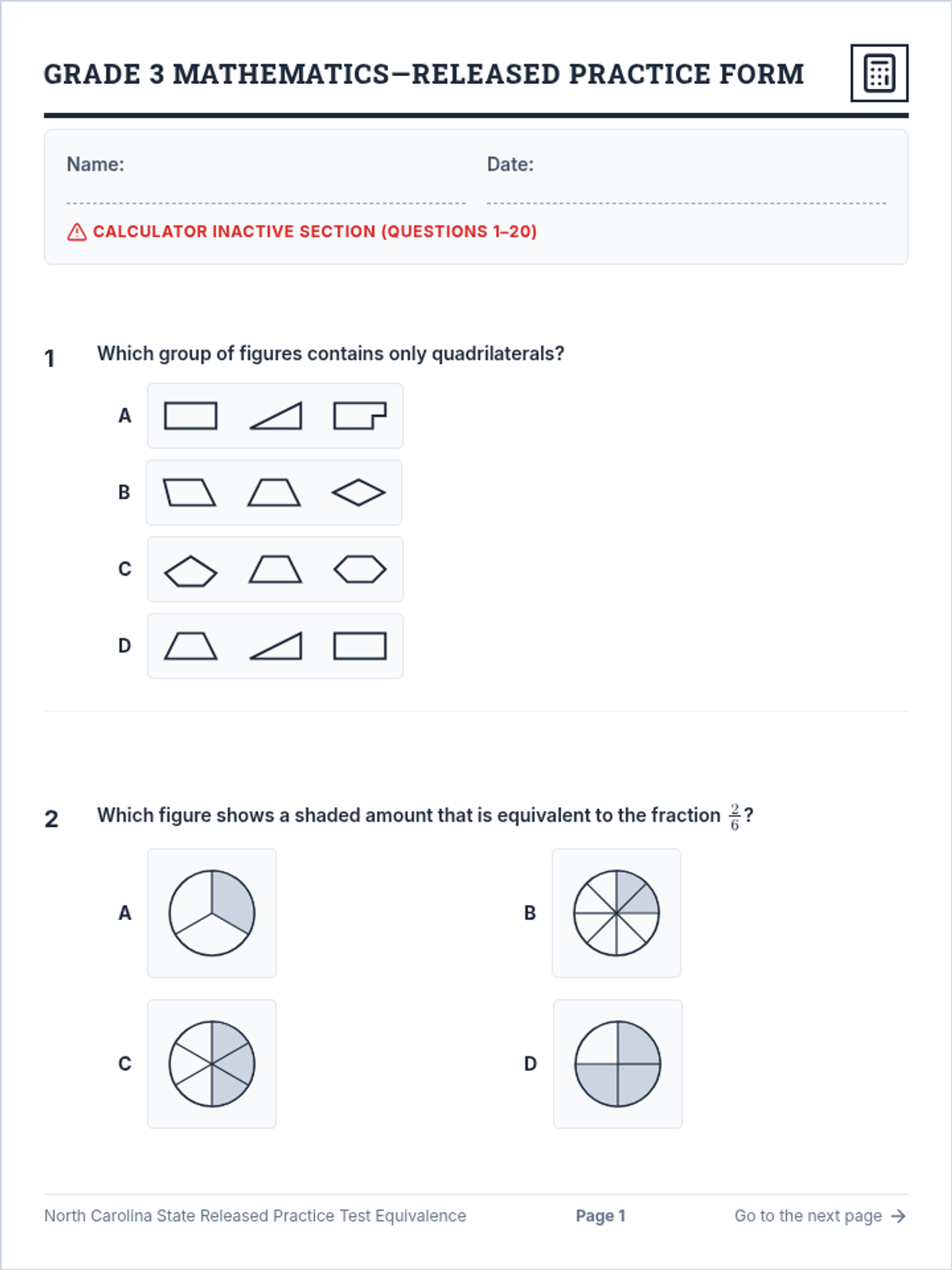
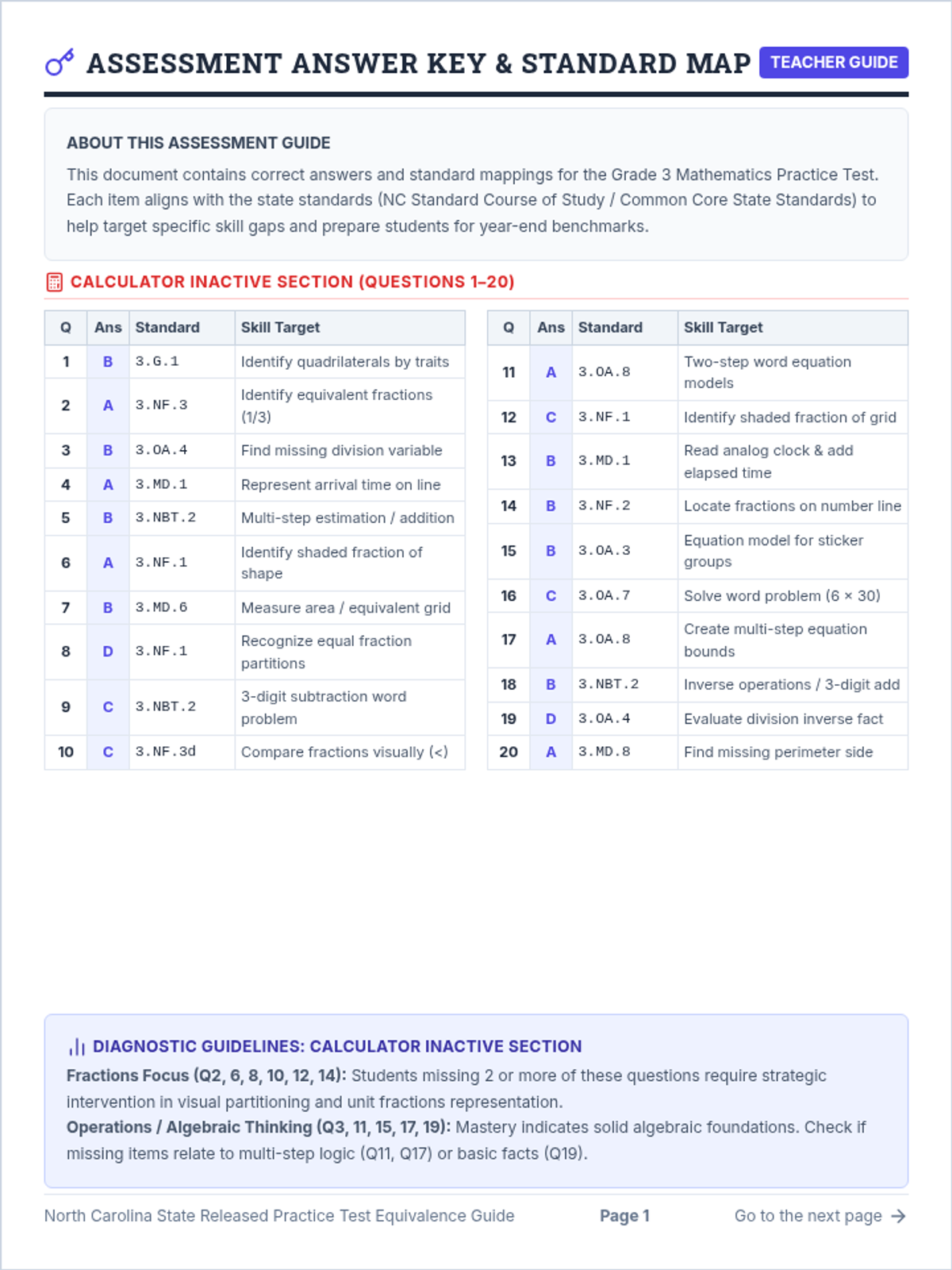
A comprehensive 3rd-grade mathematics practice exam modeled after the released state test, complete with exactly 40 standard-aligned questions divided into calculator-inactive and calculator-active sections, and an accompanying answer key and standards map.
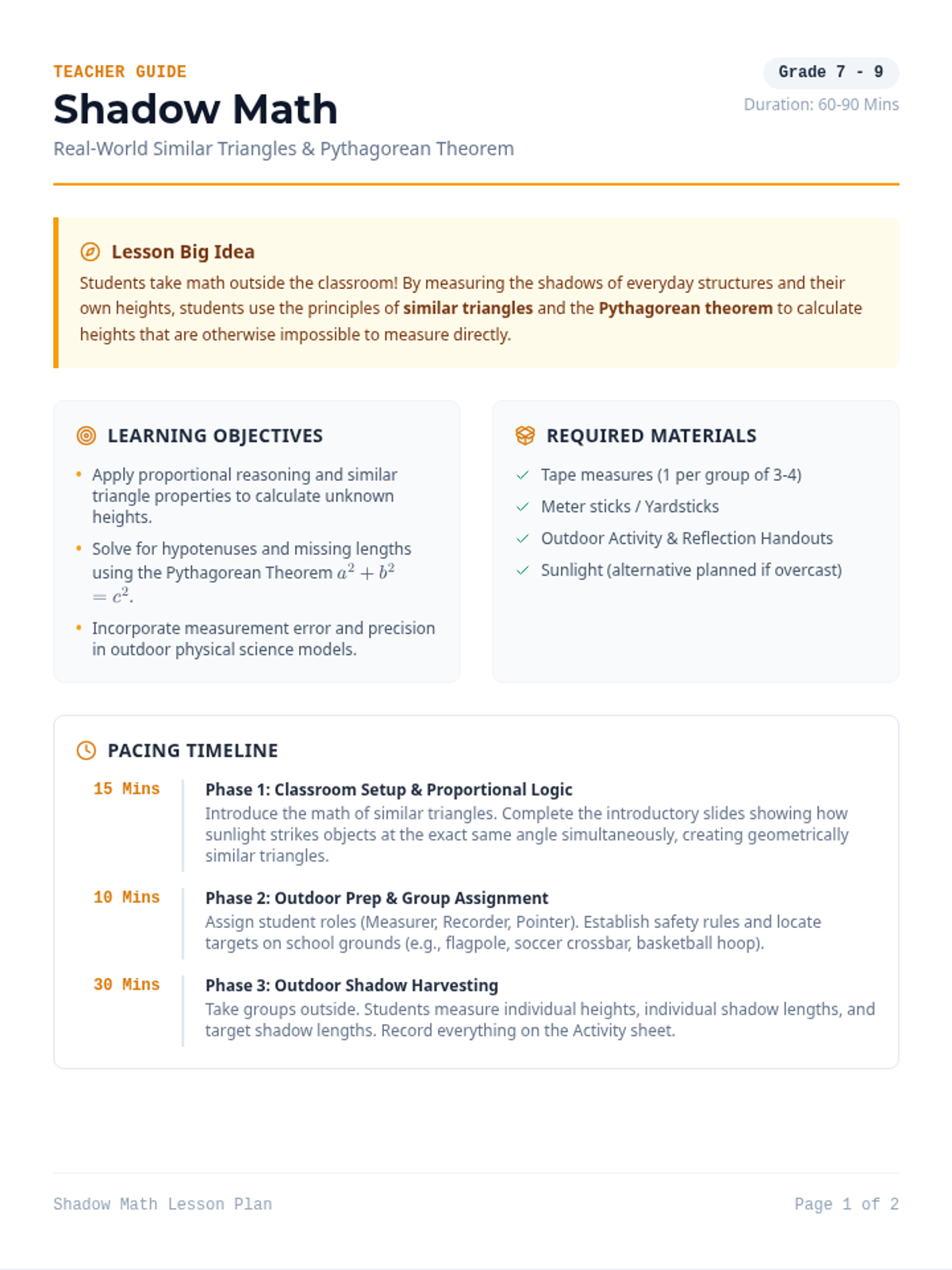
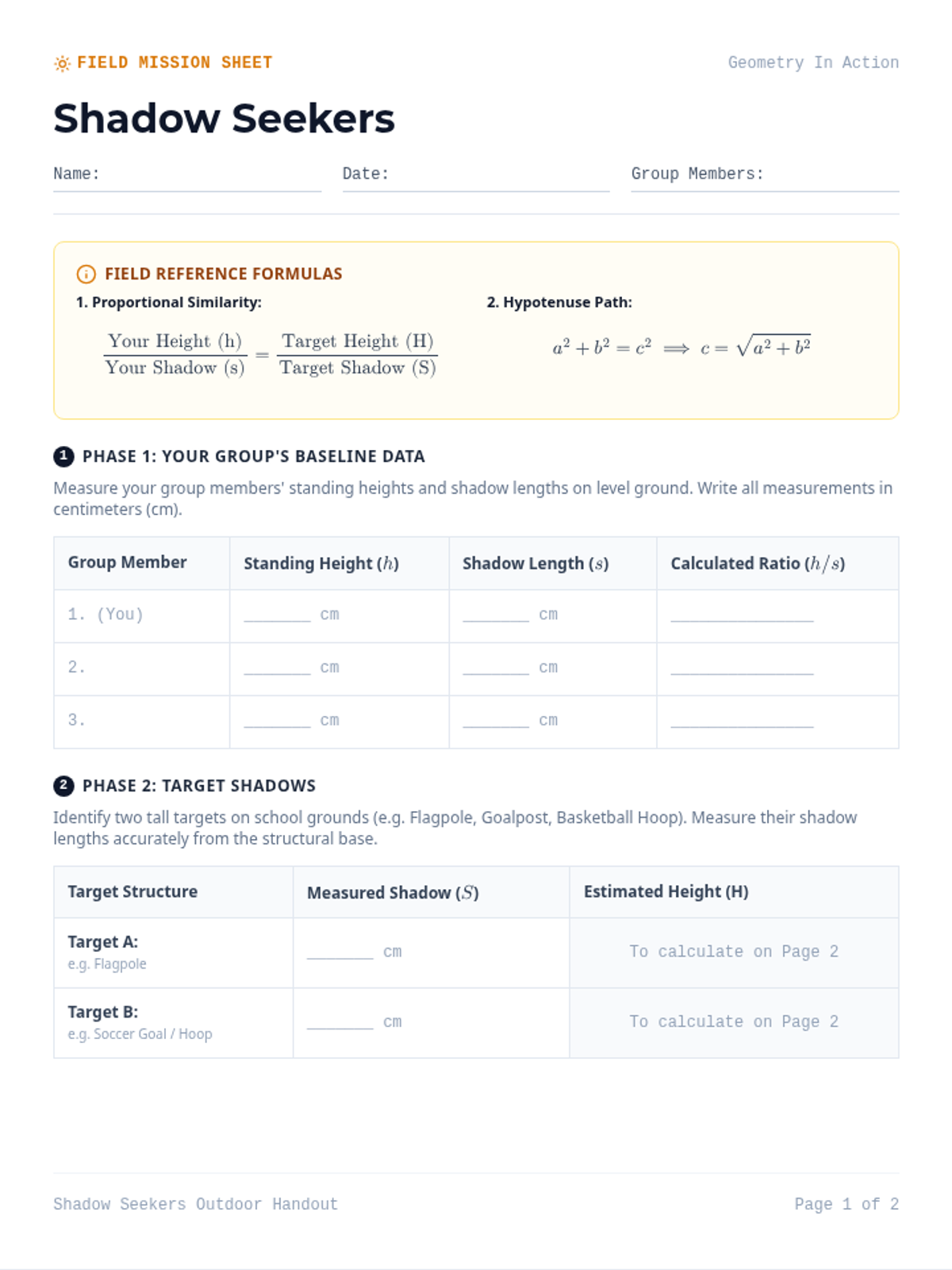
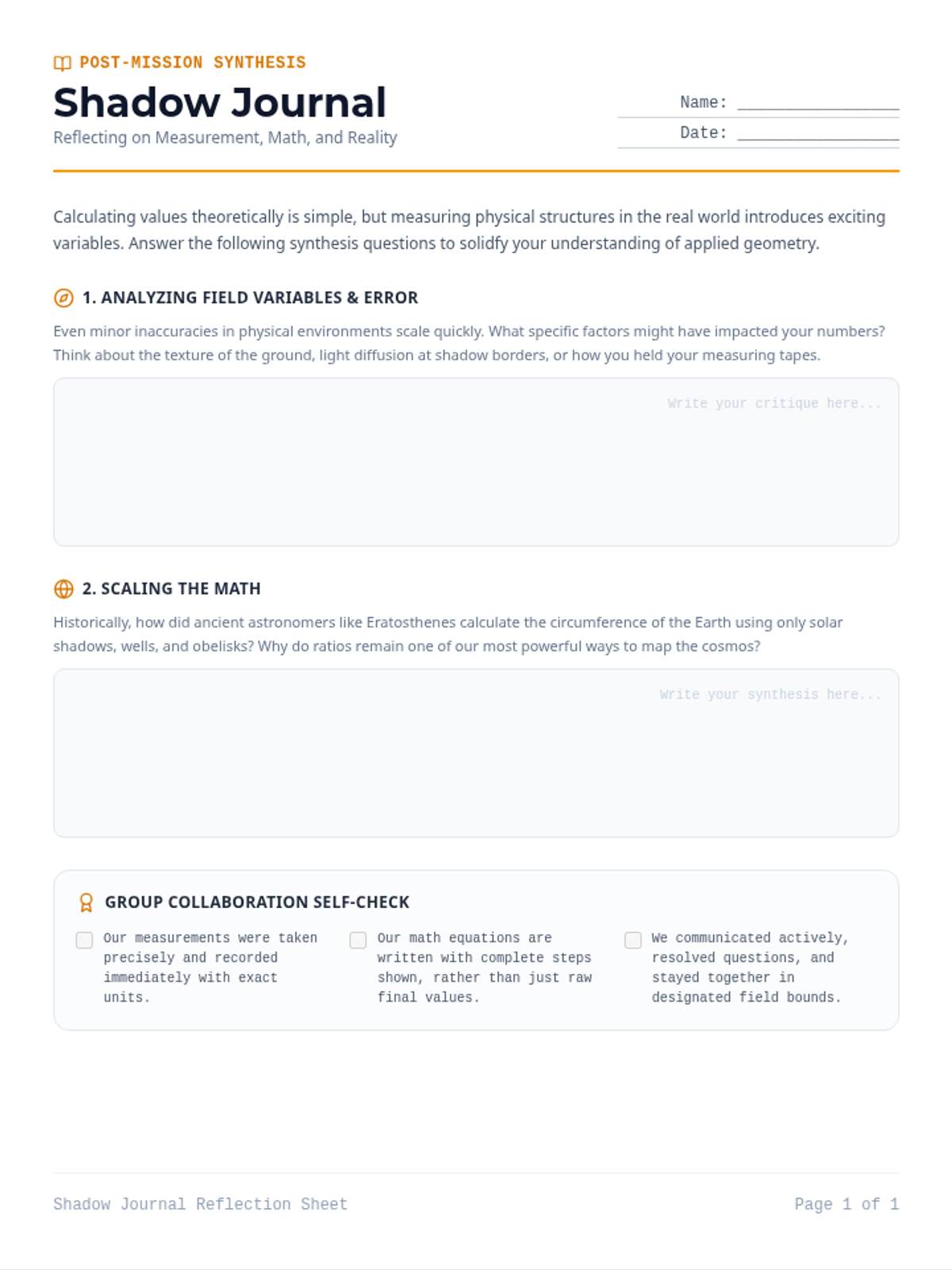
A hands-on geometry lesson where students head outdoors to measure shadows and use the Pythagorean theorem and geometric ratios to calculate the height of school structures. Includes a lesson plan, slide deck, outdoor activity guide, and reflection journal.
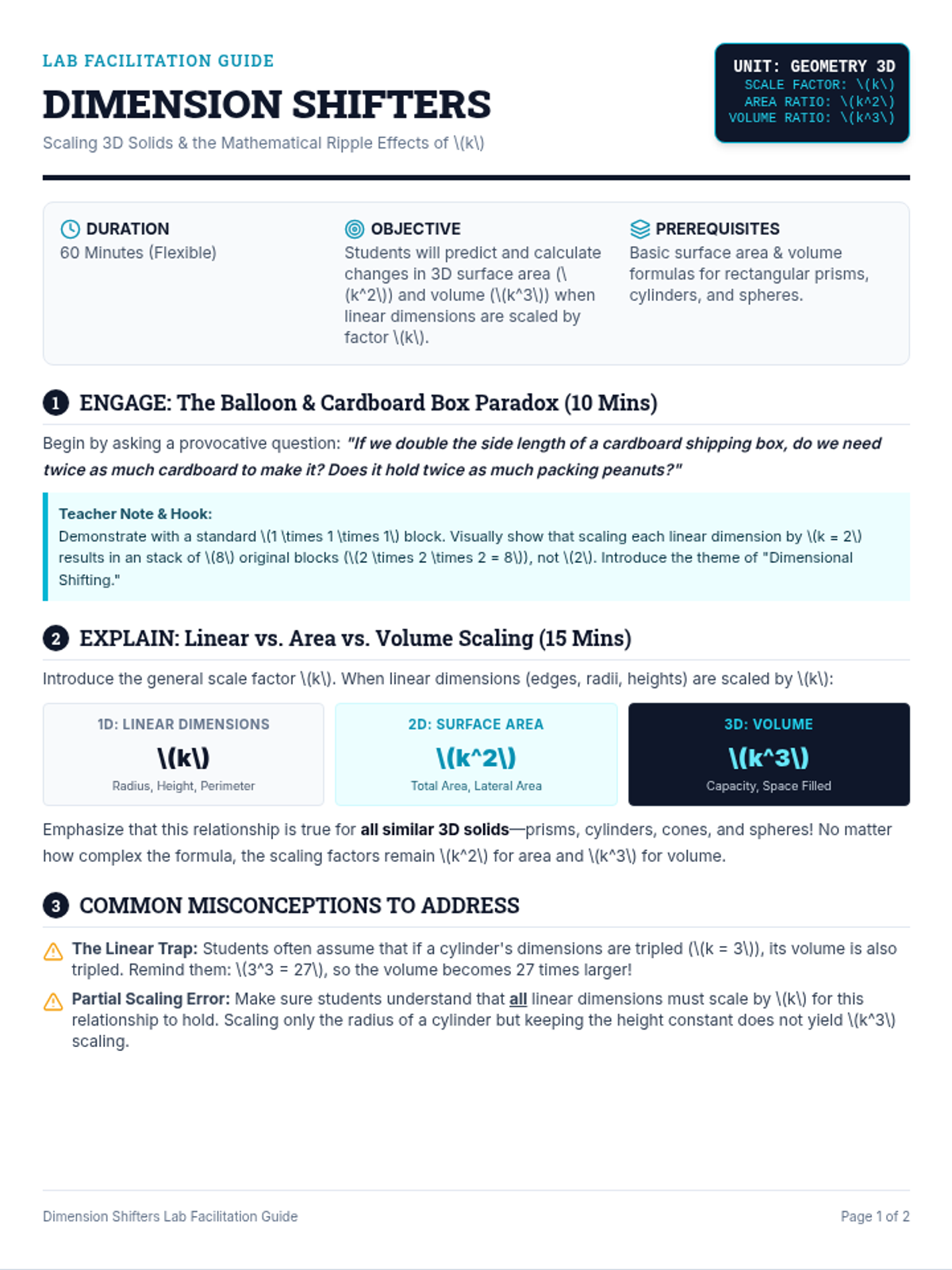
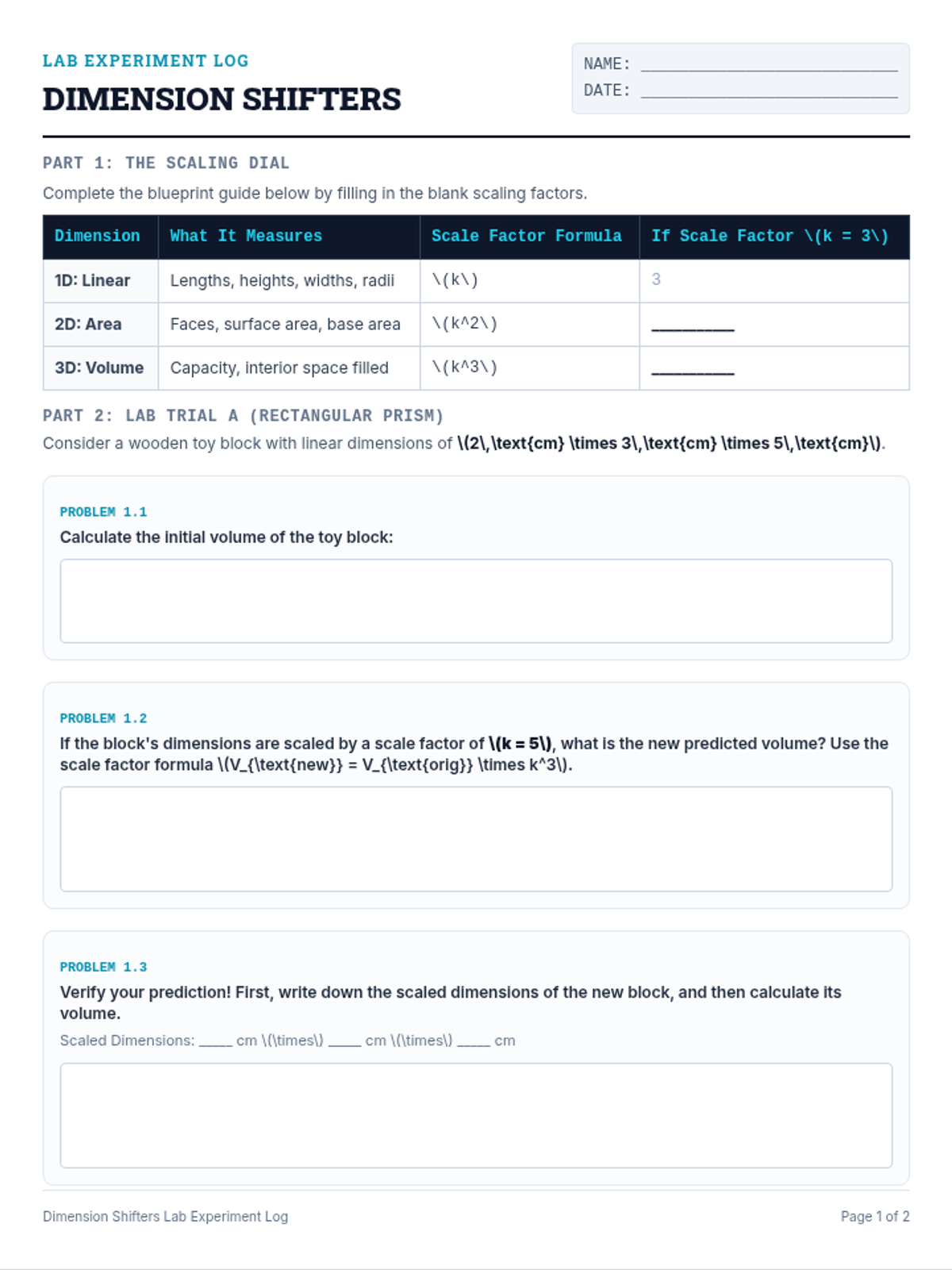
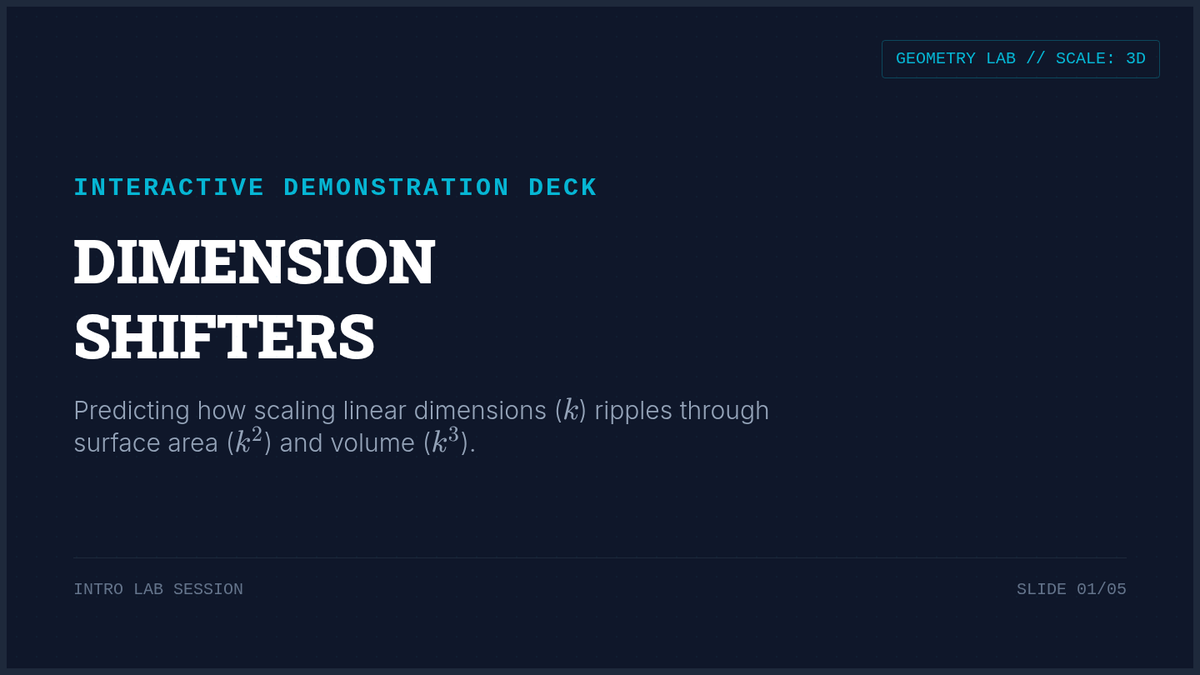
A hands-on geometry lesson exploring how scaling the linear dimensions of 3D solids by a scale factor k impacts their total surface area (by k²) and volume (by k³). Features interactive model-scaling examples, a vocabulary challenge, and guided practice.
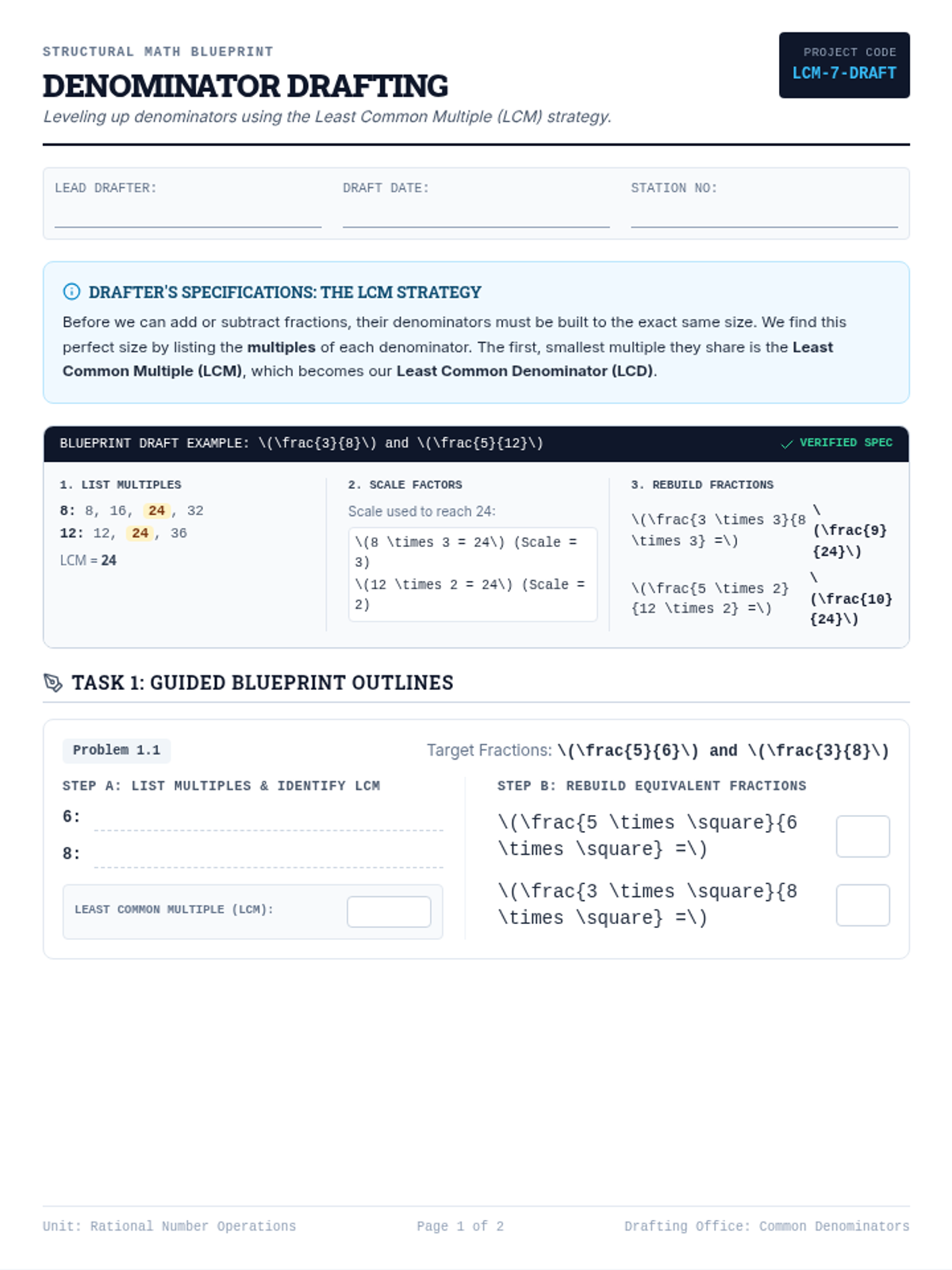
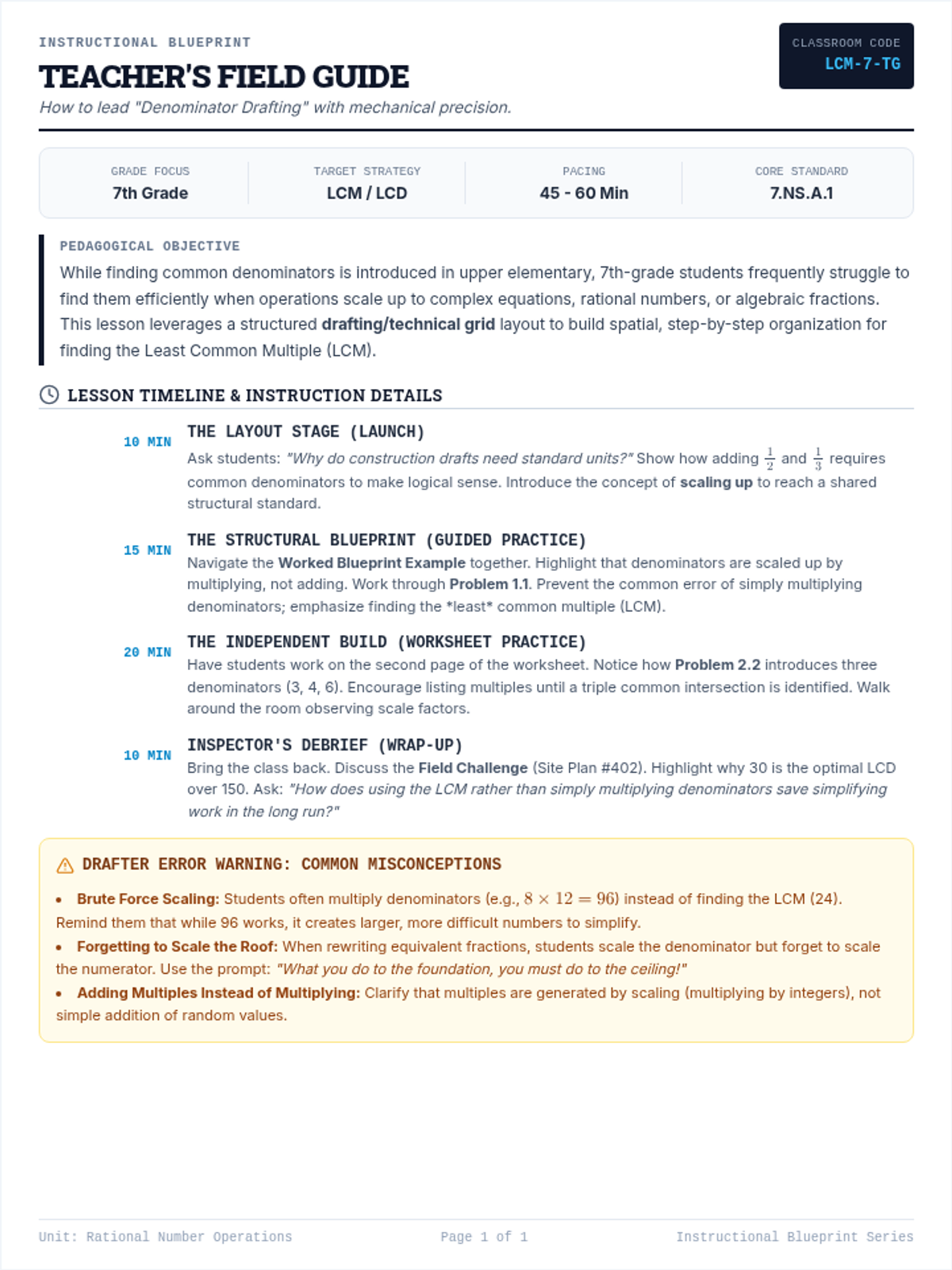
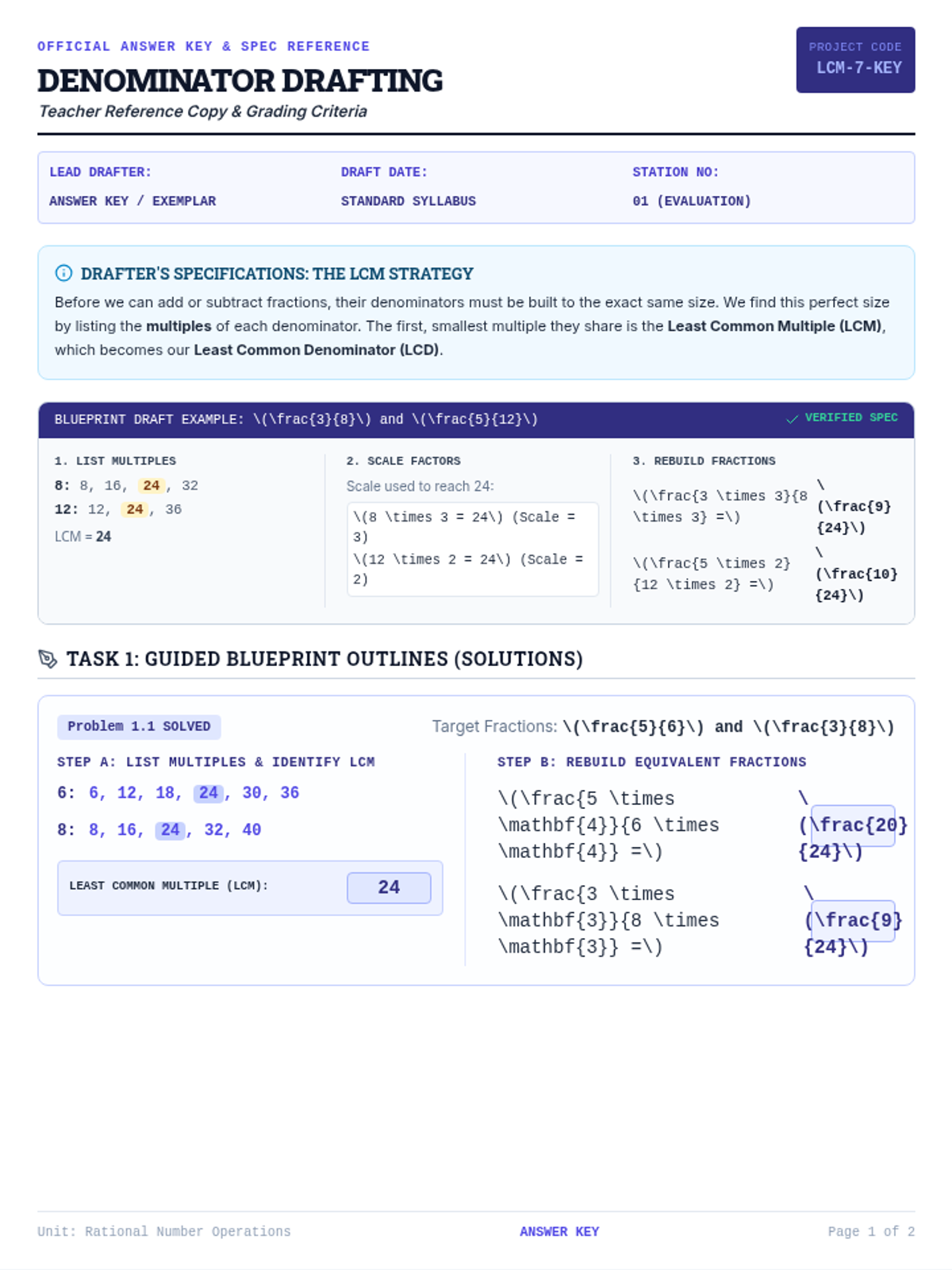
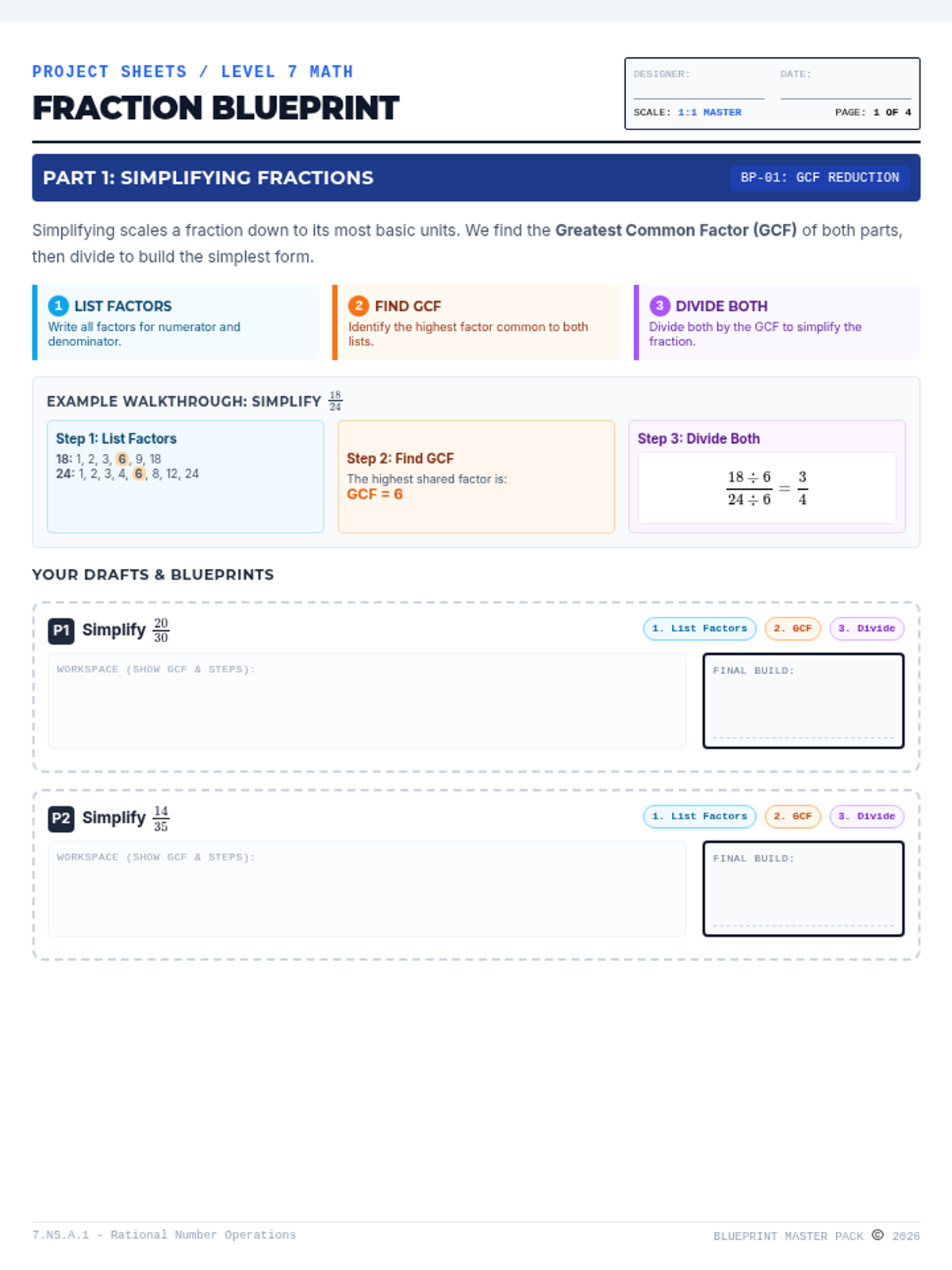
A scaffolded lesson for 7th-grade students to master finding common denominators using the Least Common Multiple (LCM) strategy, structured around a technical blueprint drafting theme.
A comprehensive lesson introducing fraction simplification using visual fraction strip models as key scaffolding, complete with guided worksheets, error analysis, and a teacher answer key.
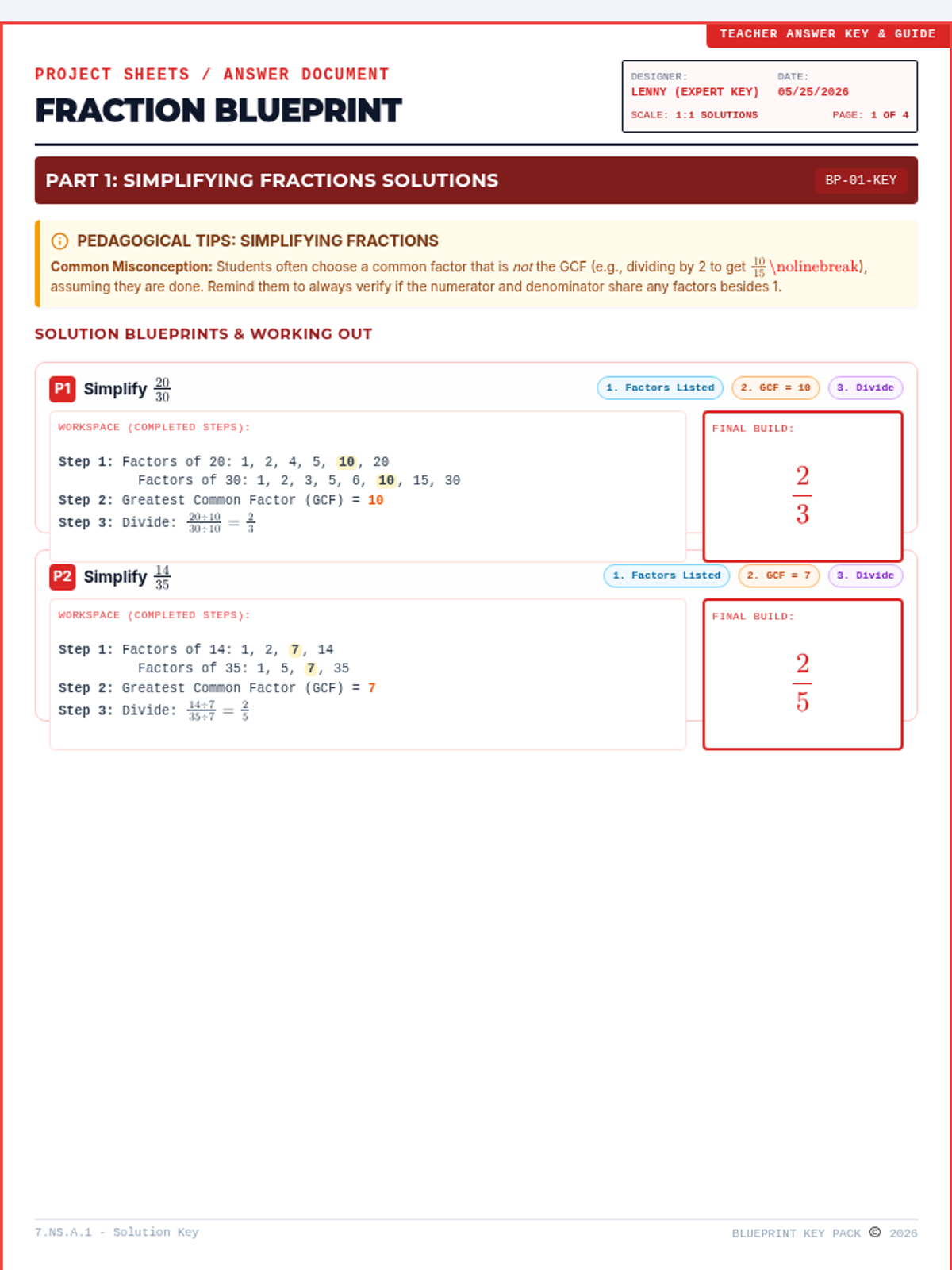
A structured, 7th-grade lesson on fraction operations (simplifying, finding common denominators, adding, subtracting, multiplying, and dividing) with color-coded step-by-step guides to support learners.
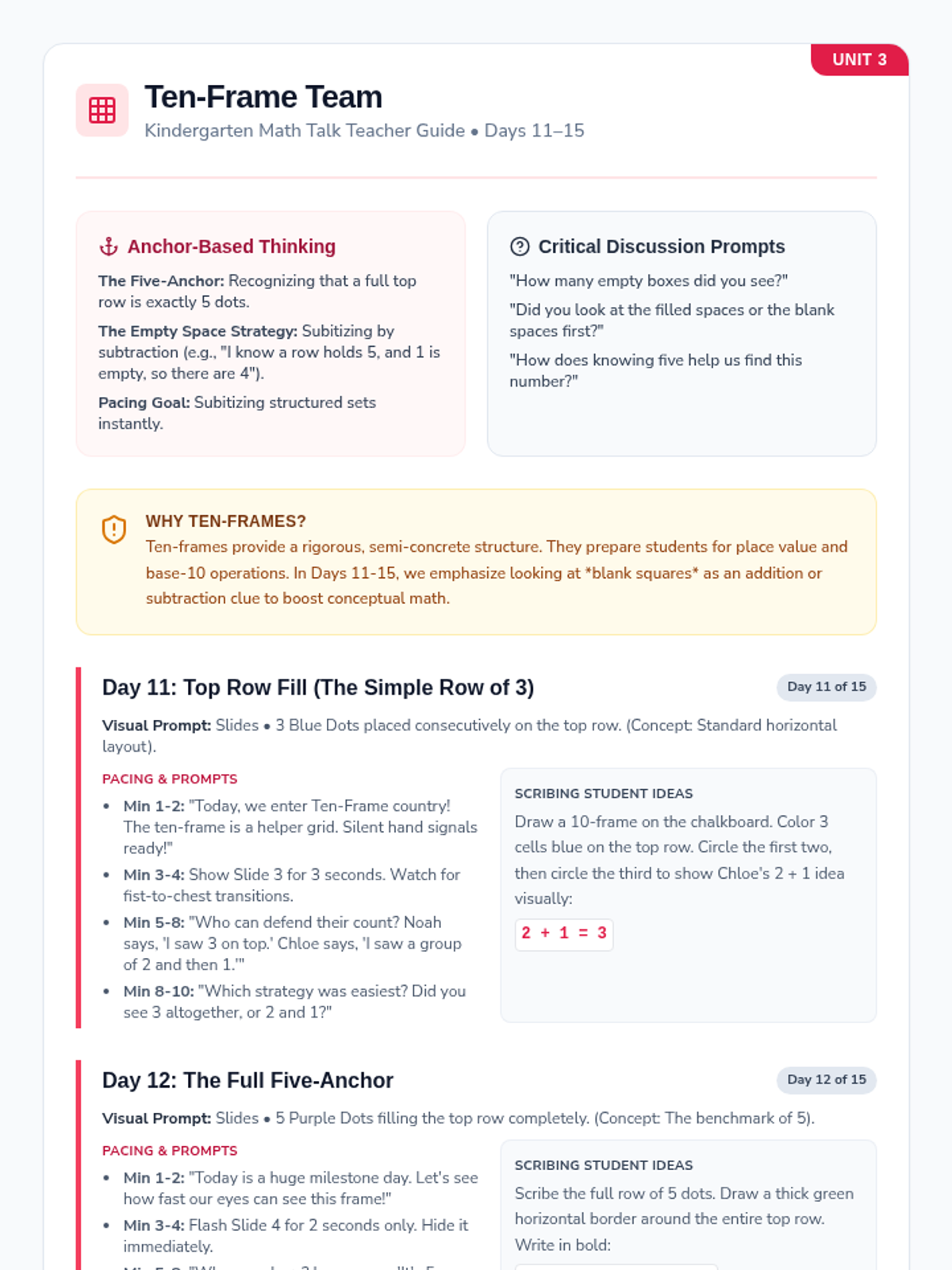
Explores subitizing numbers 1-5 within a ten-frame structure, helping students visualize numbers relative to five- and ten-anchors over Days 11-15.
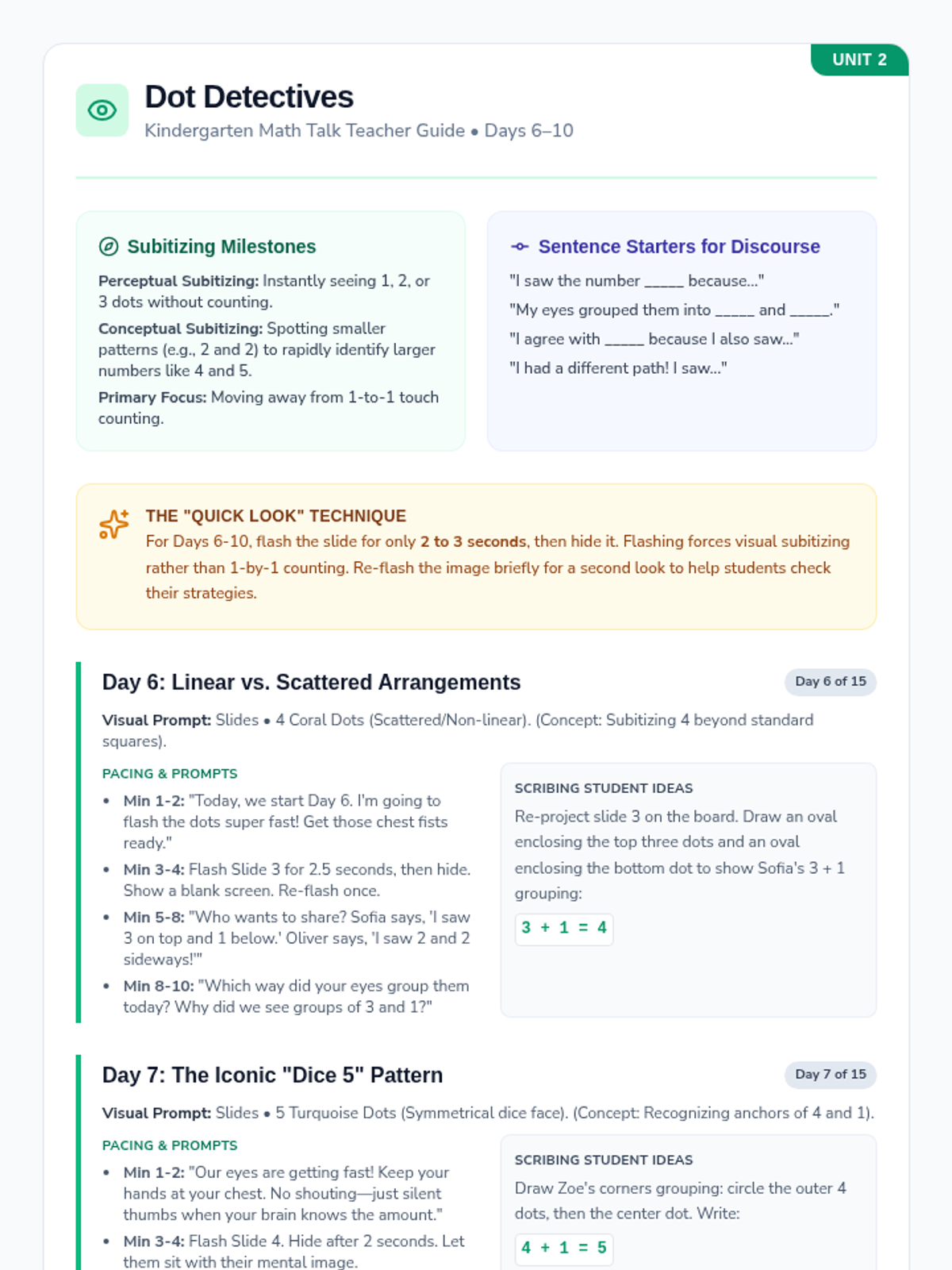
Develops rapid subitizing and spatial awareness for numbers 1 to 5 using varied dot configurations (dice, linear, and scattered) over Days 6-10.
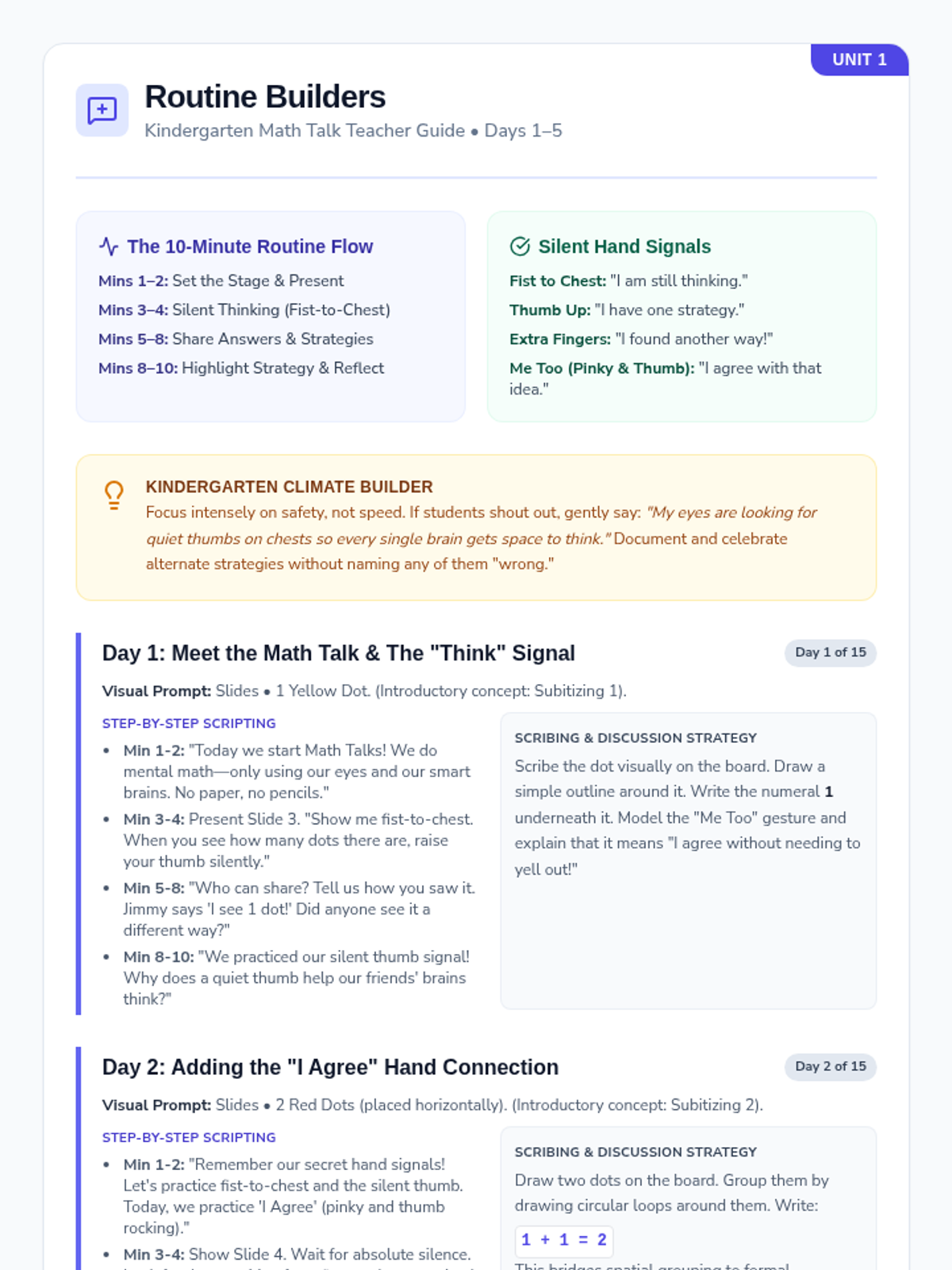
Introduces the foundational mental math protocols, silent hand signals, and first simple visual count talks (dots/fingers) over Days 1-5 to build classroom safety.
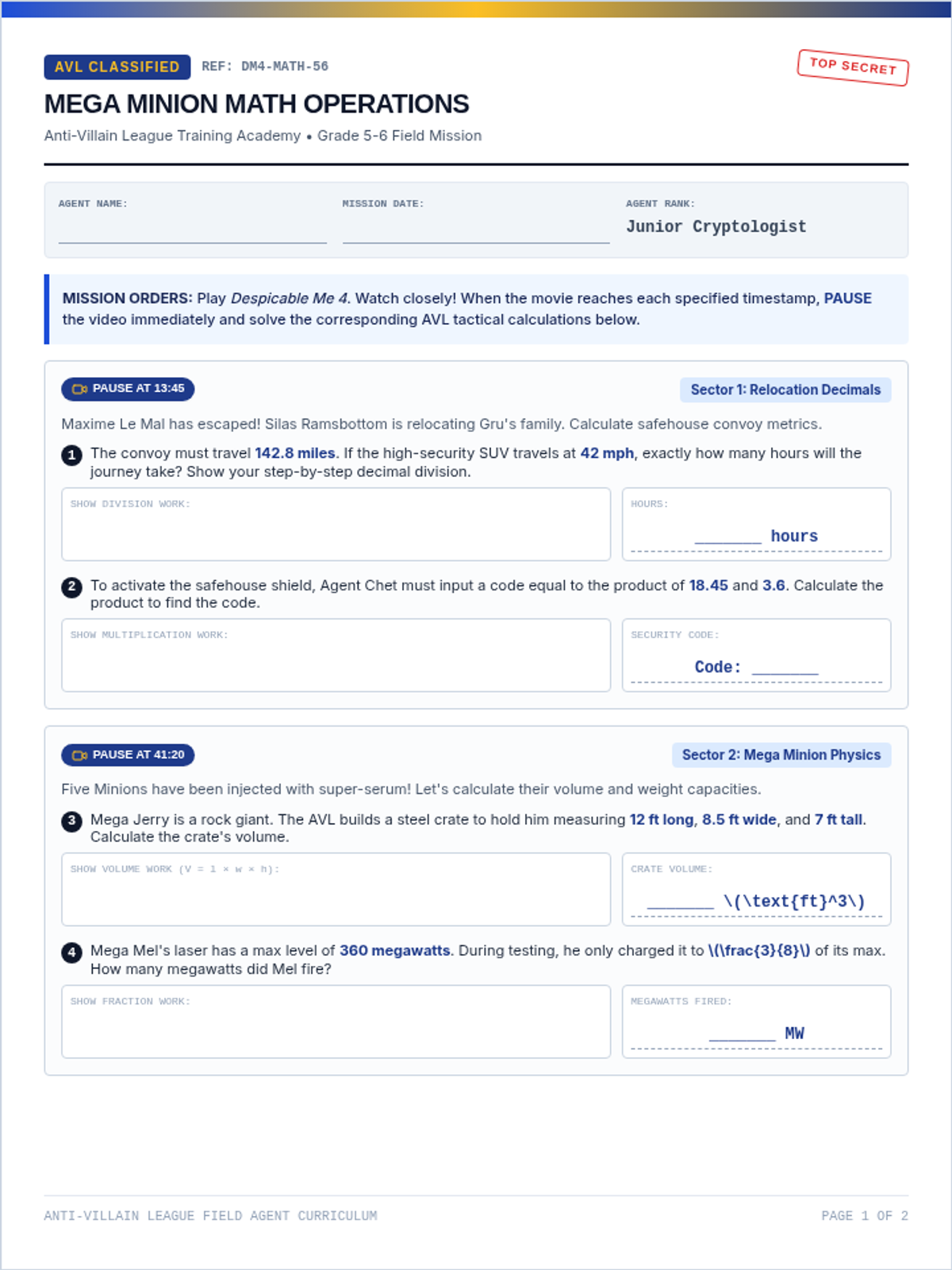
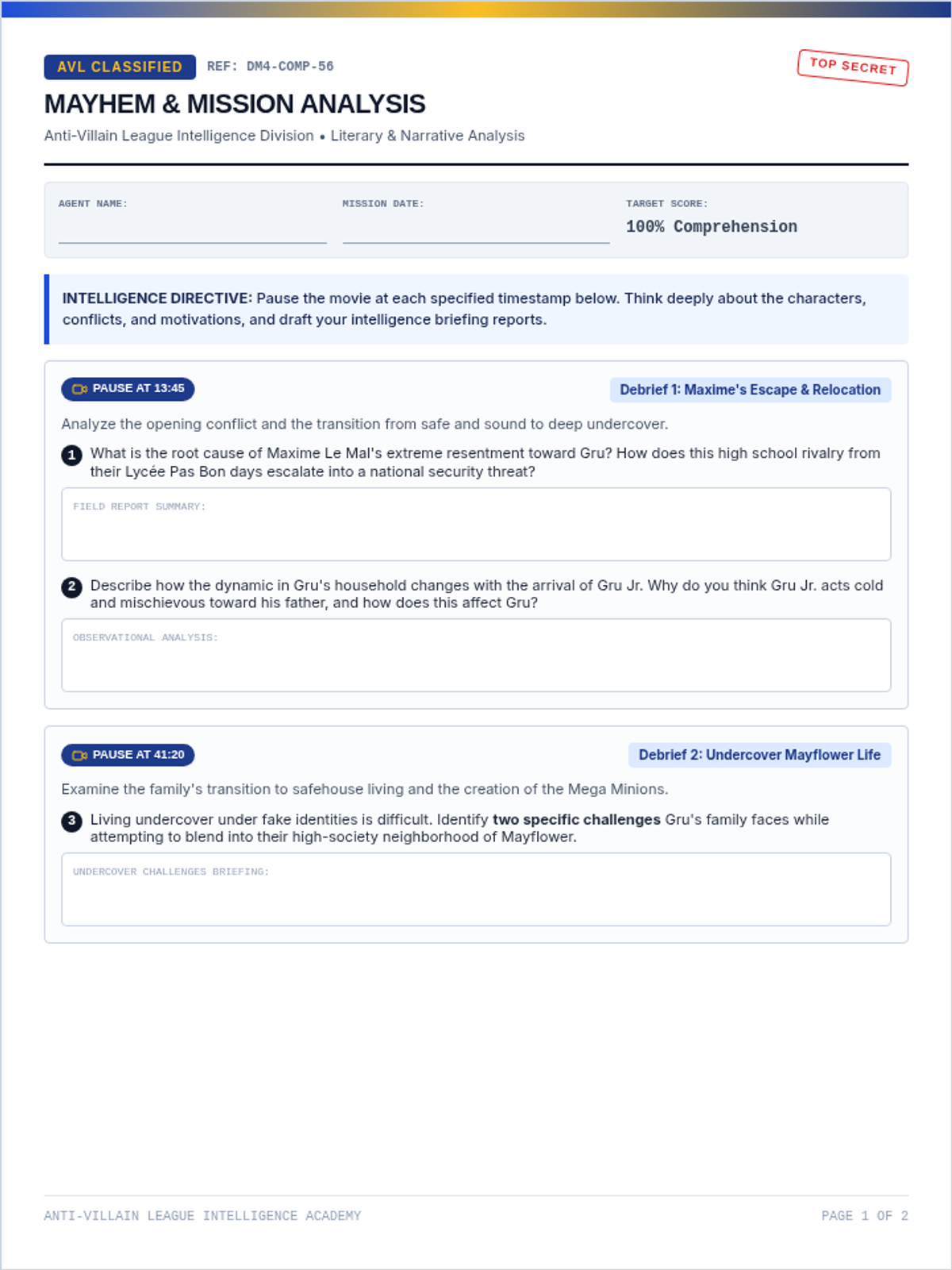
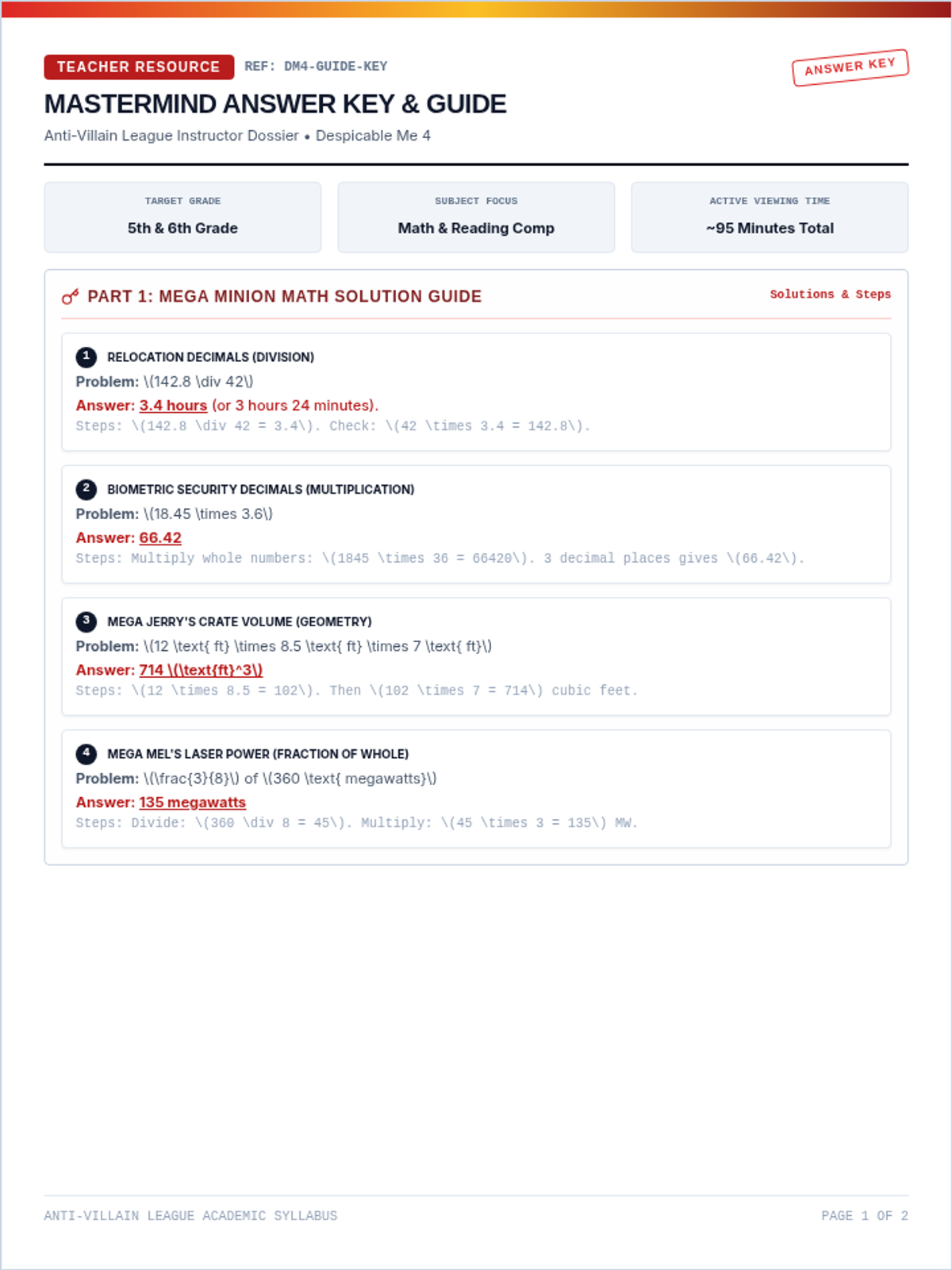
A movie companion lesson set for Despicable Me 4, targeting 5th and 6th-grade students. It features highly engaging math and reading comprehension worksheets organized around specific movie pause timestamps, plus a teacher answer key and guide.
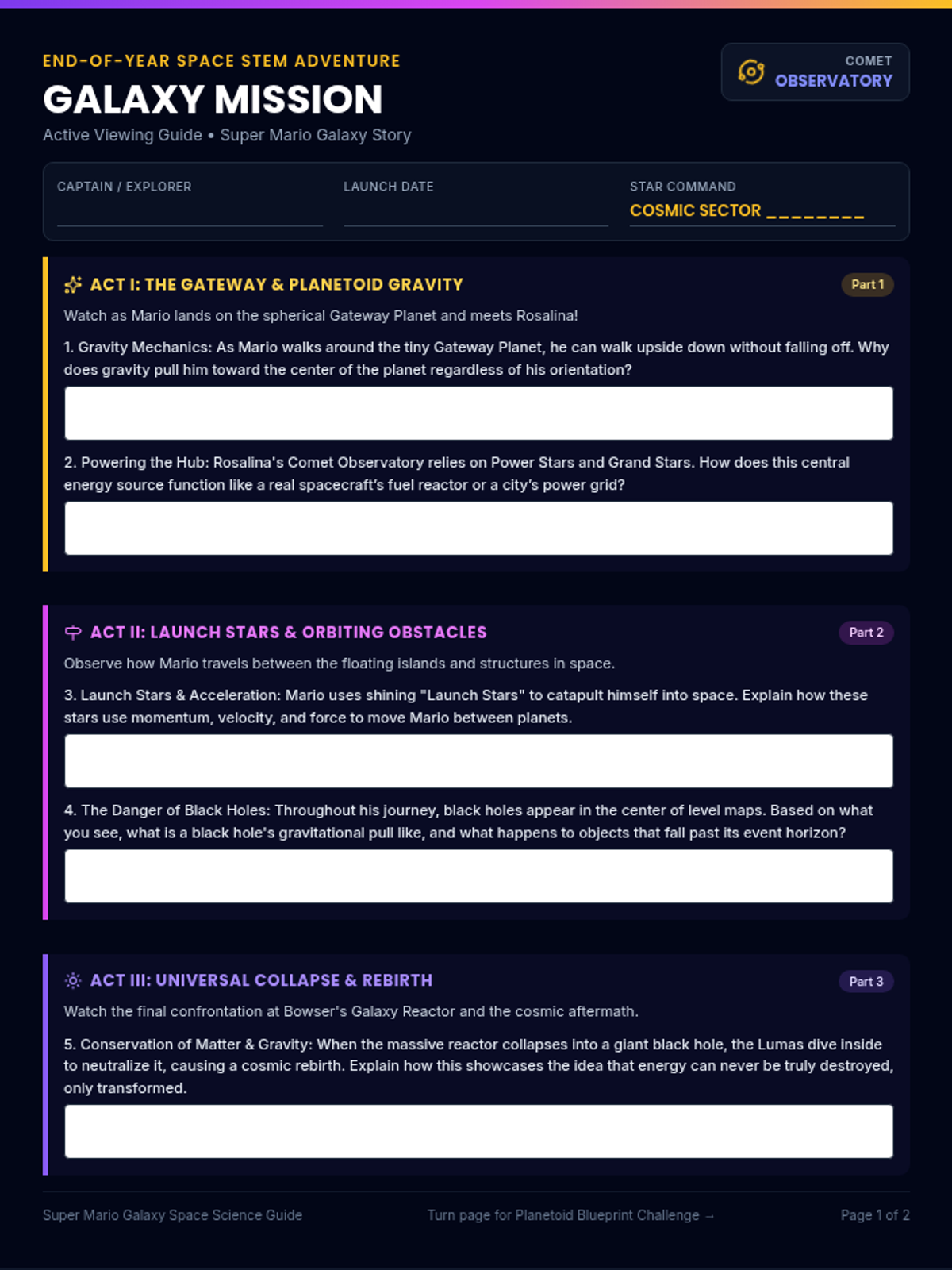
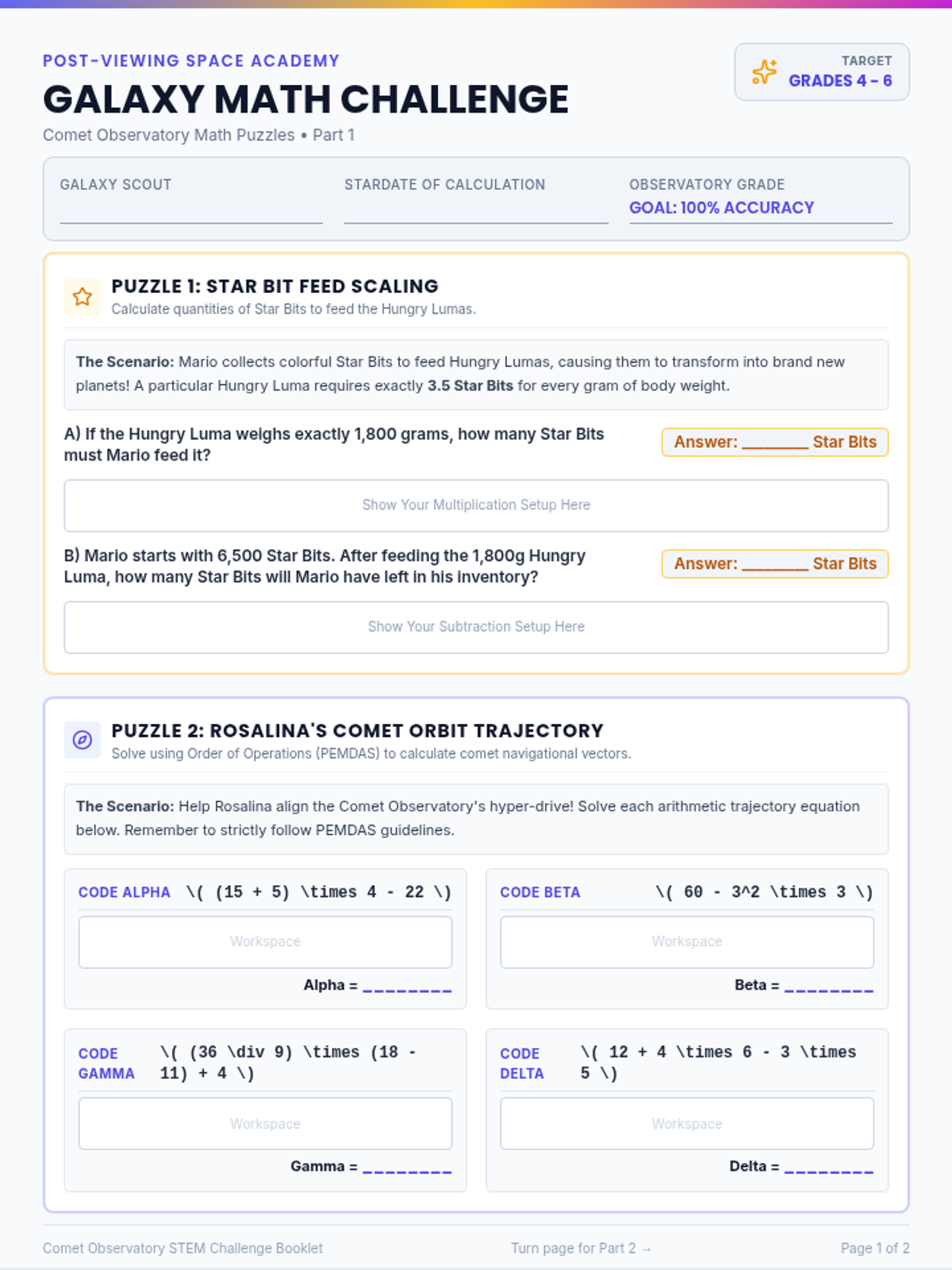
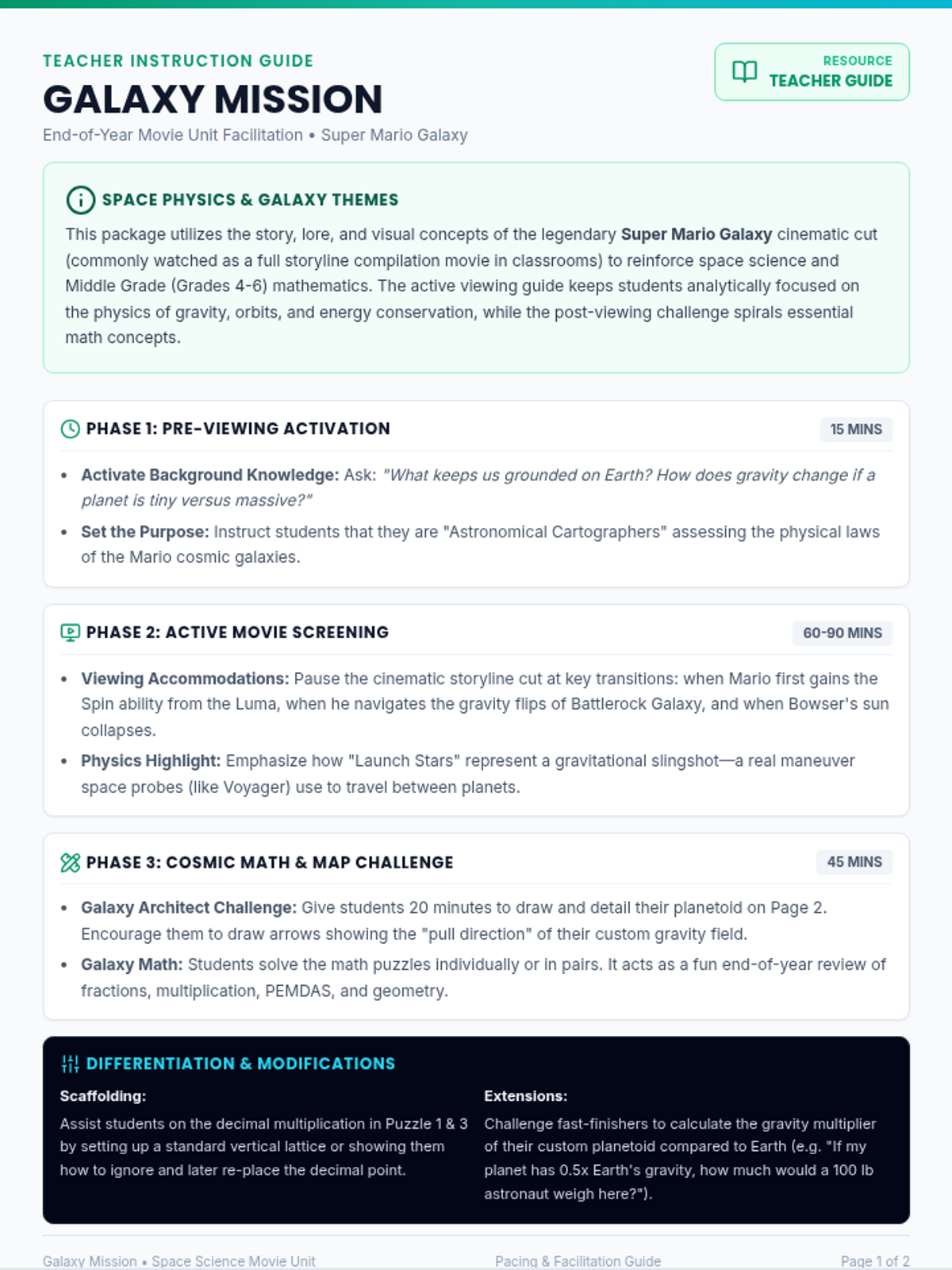
An end-of-year educational movie unit and math workbook based on the story of Super Mario Galaxy. Students explore gravity, orbits, and space physics through active viewing, followed by high-energy space-themed math puzzles.