A comprehensive lesson on adding and subtracting integers using visual models like number lines and integer chips. Designed with modifications for accessibility, including step-by-step anchors and real-world applications.
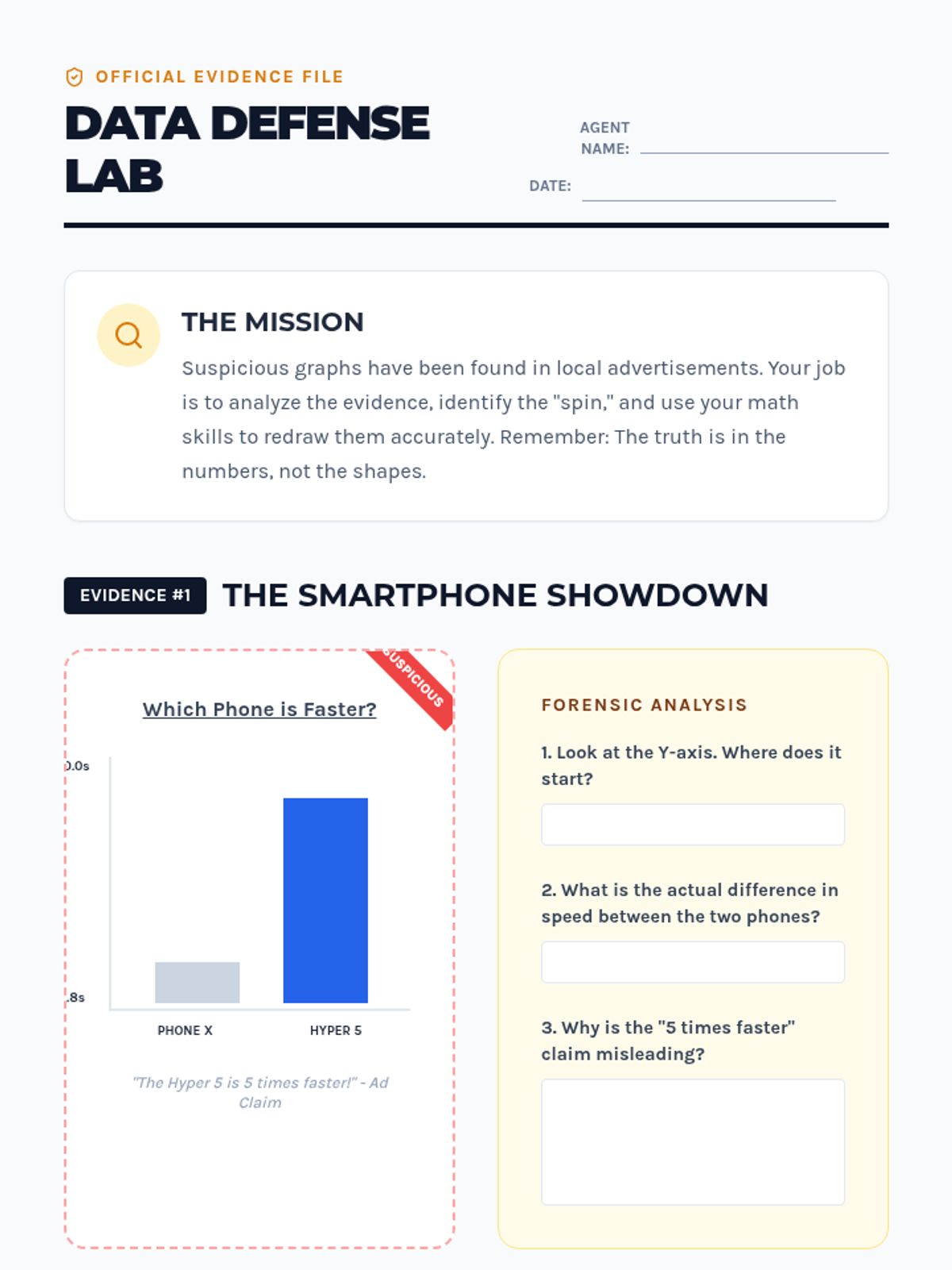
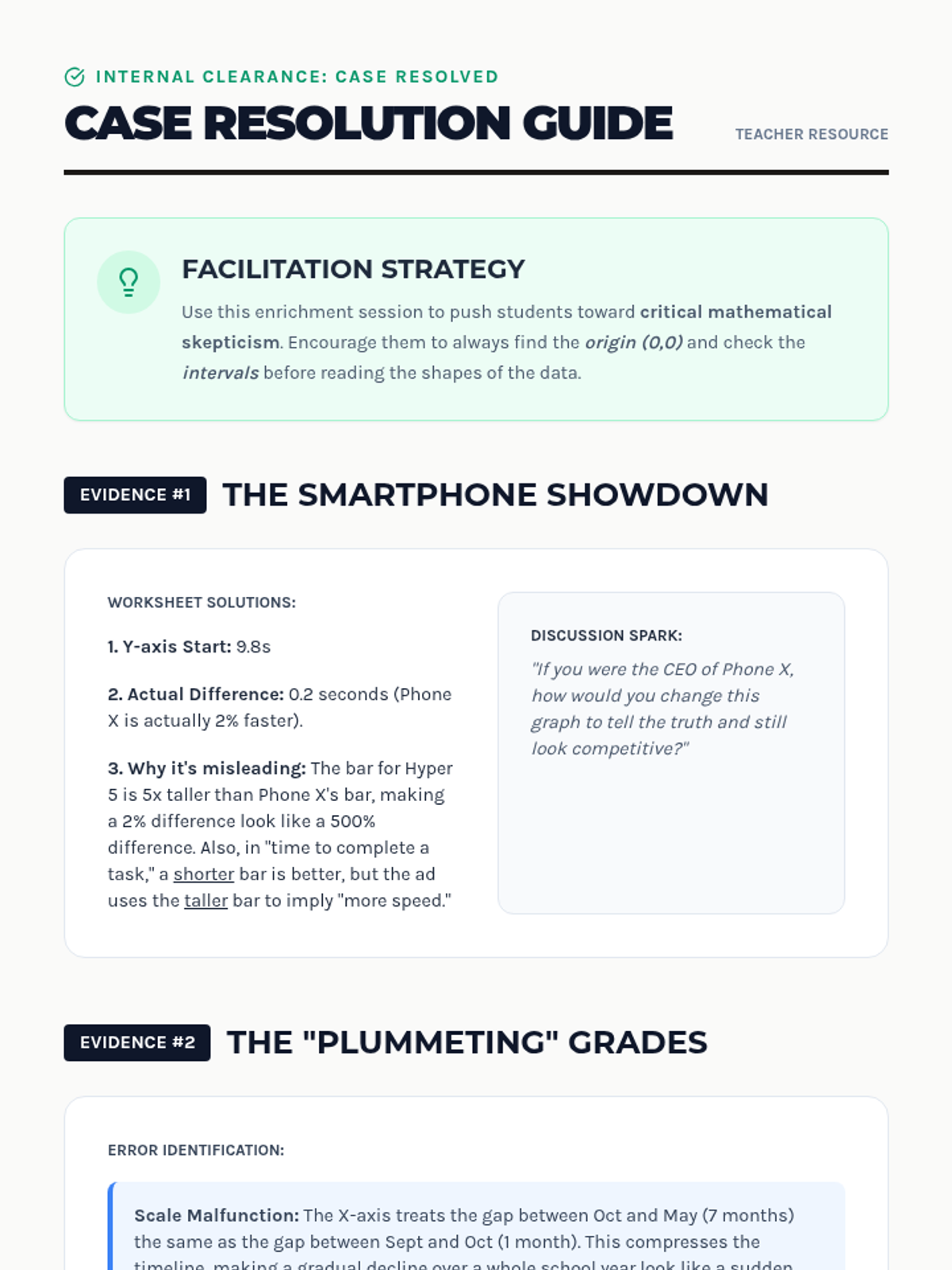
Students learn to identify common techniques used to create misleading graphs, such as truncated axes and inconsistent scales, and learn how to redraw them for accuracy.
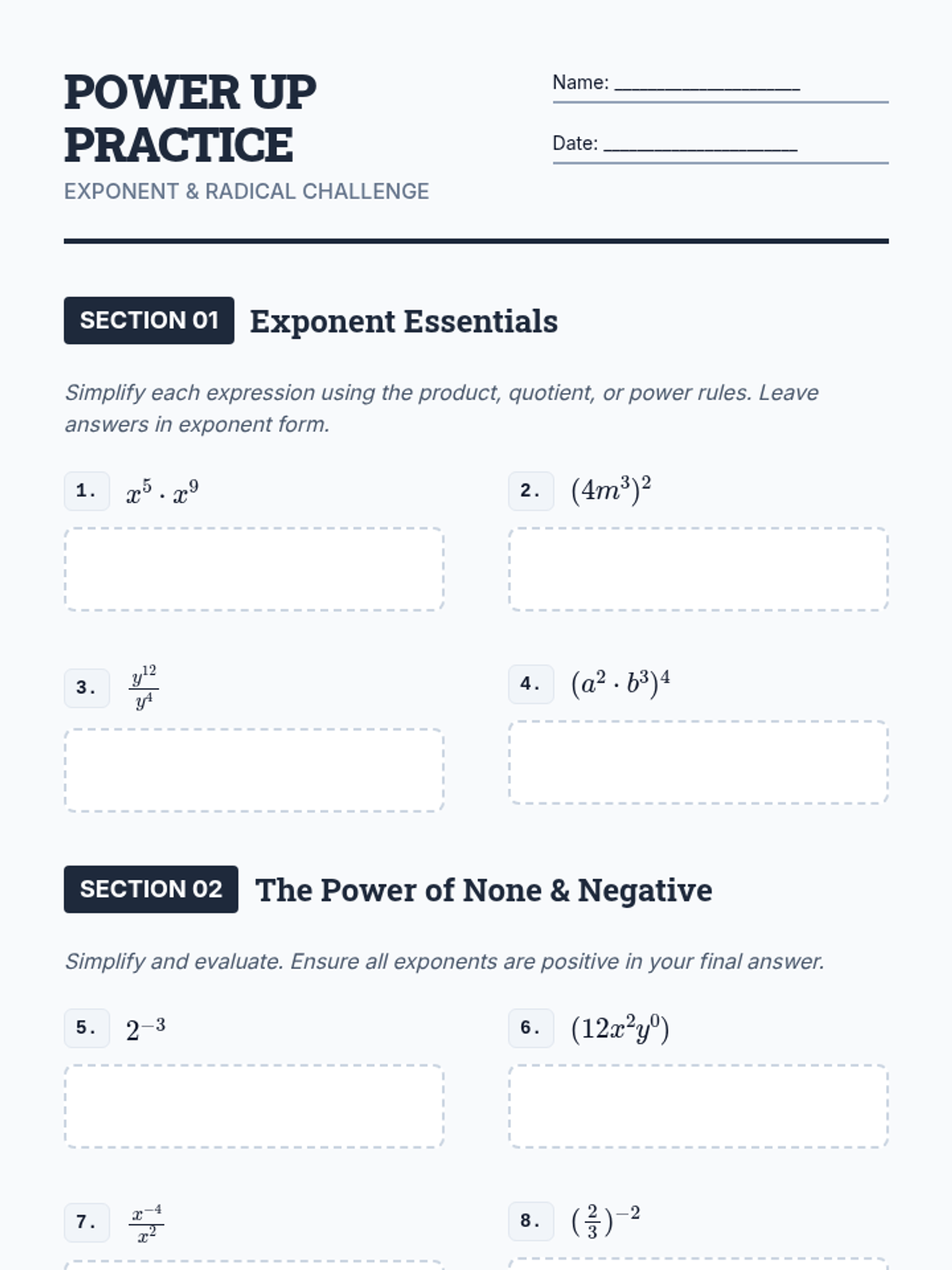
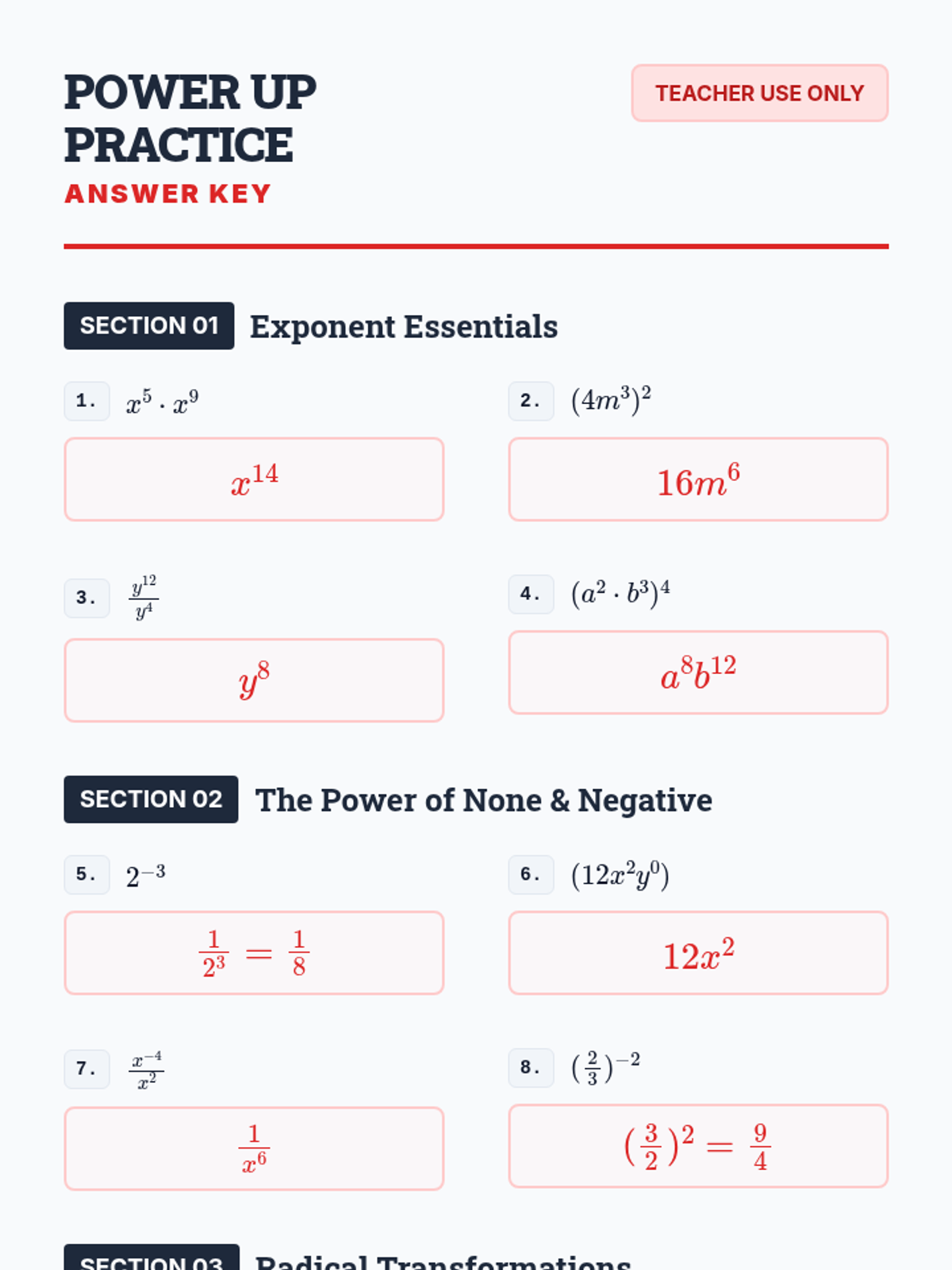
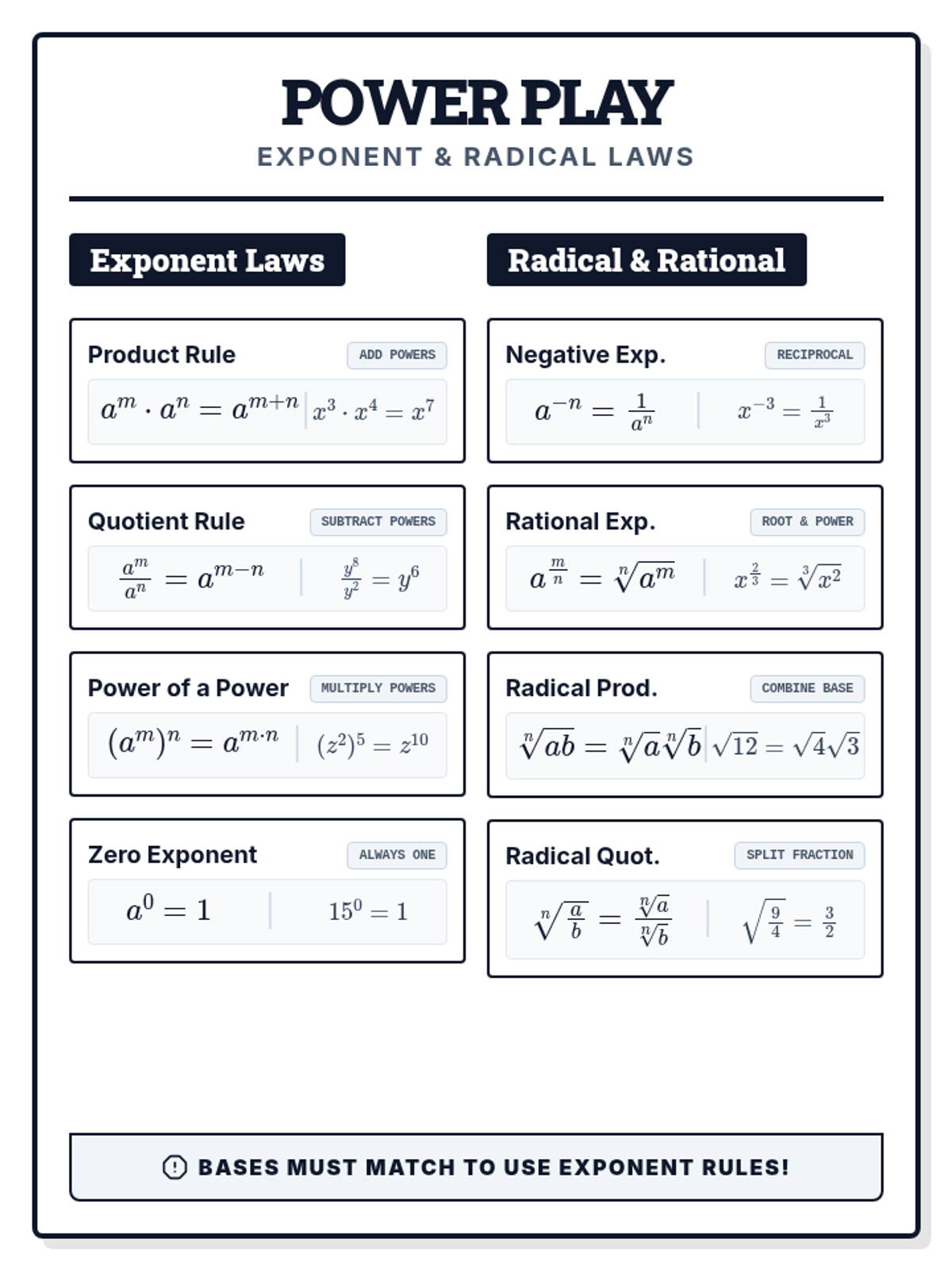
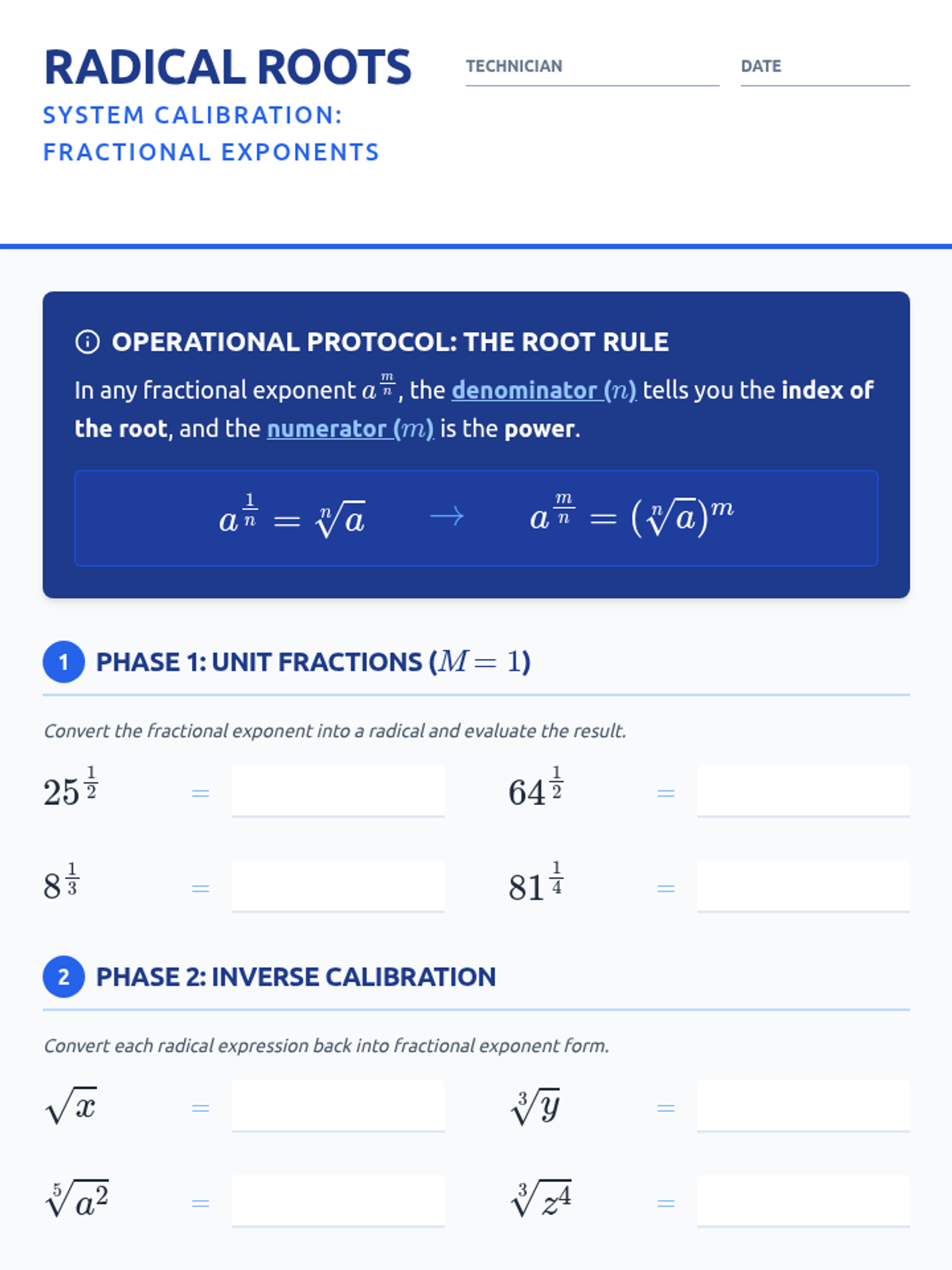
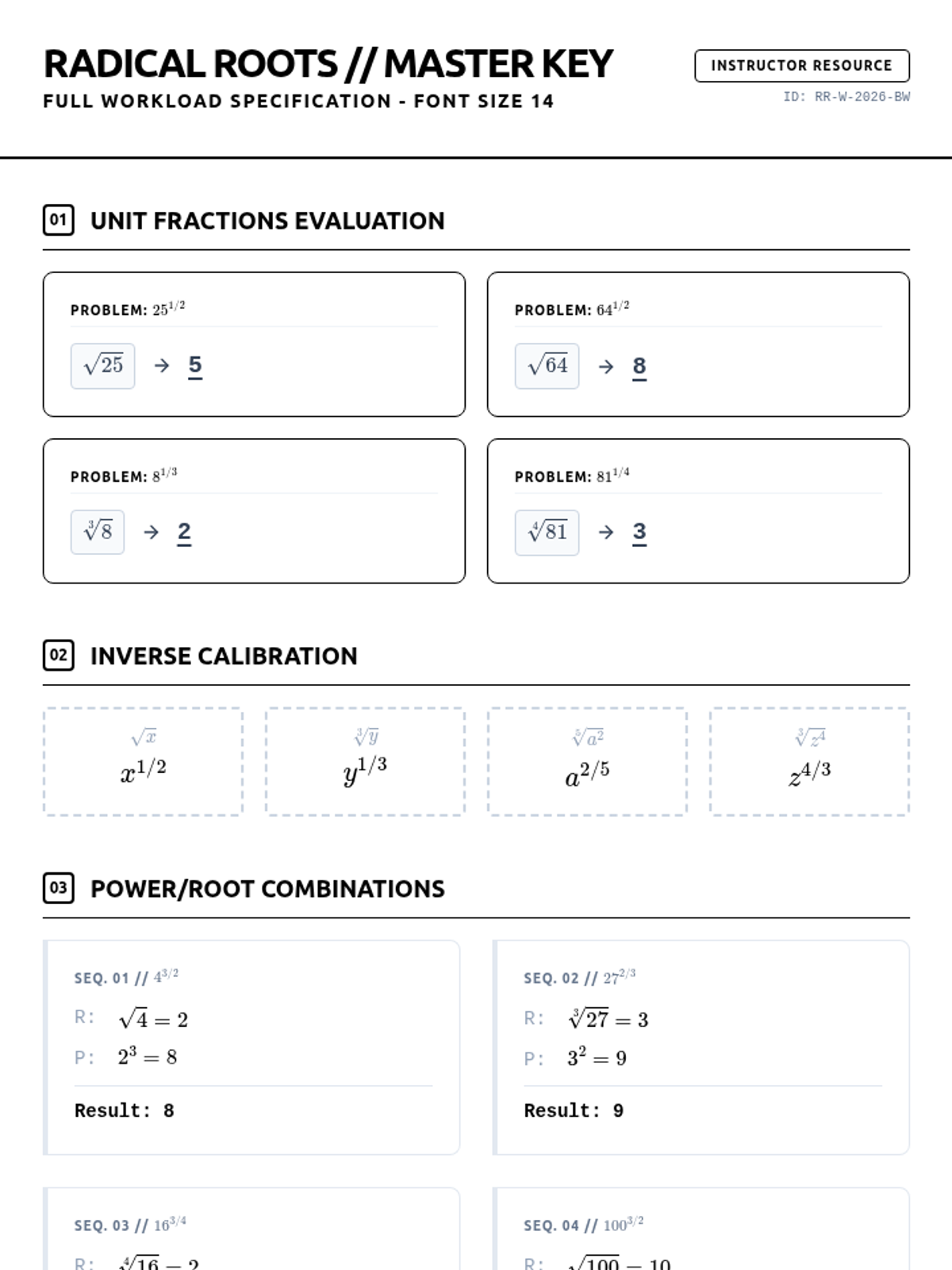
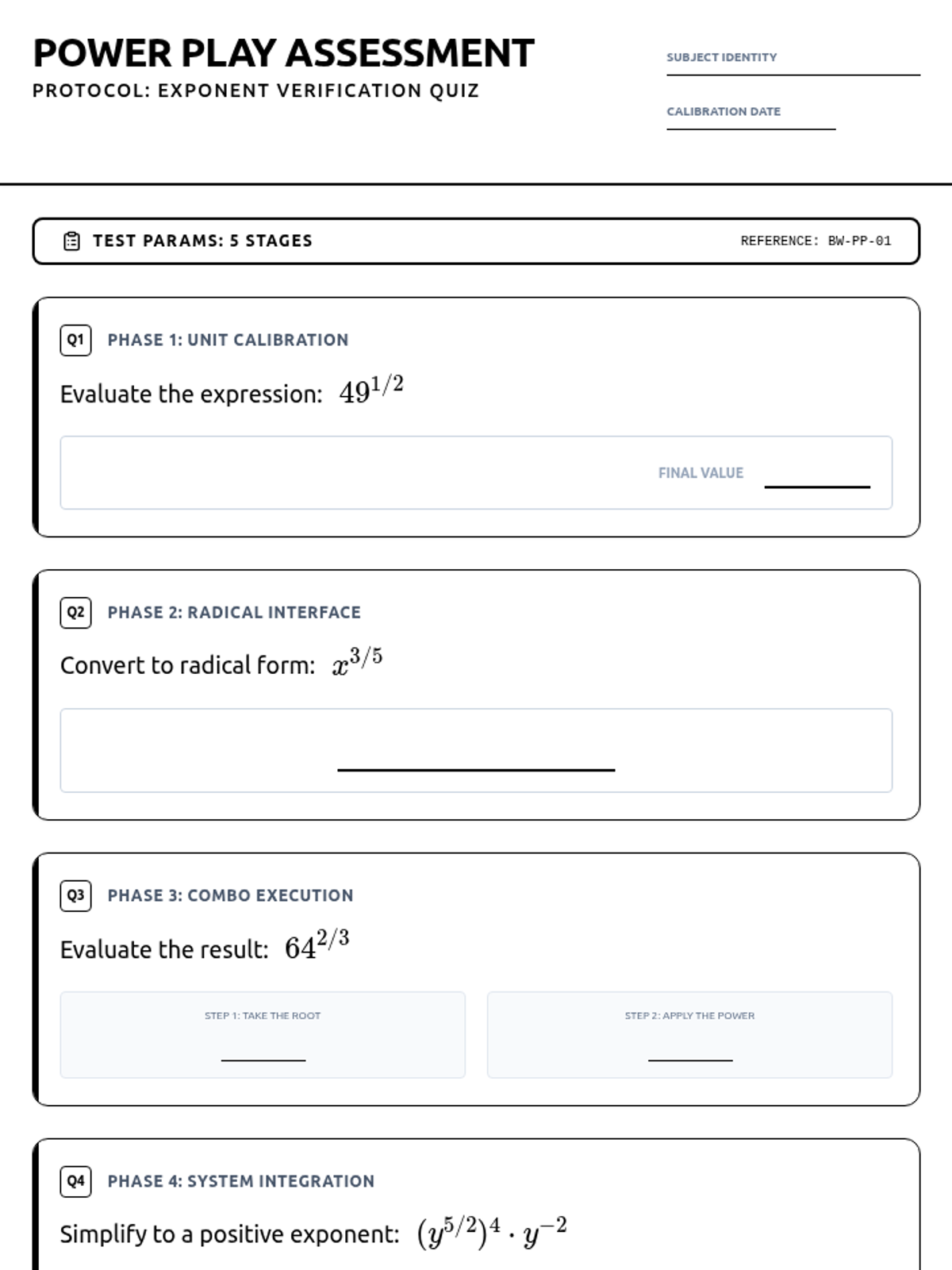
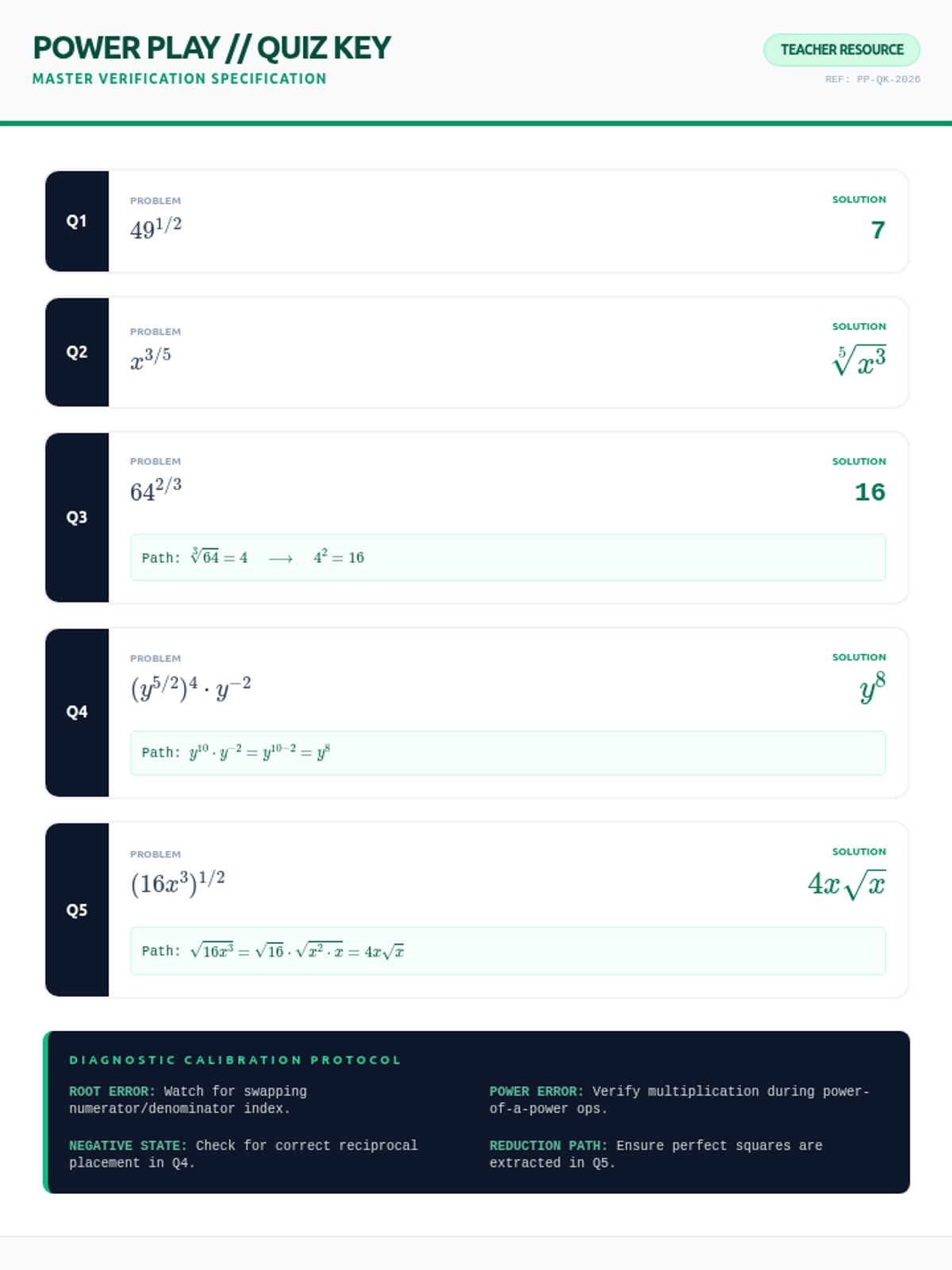
A comprehensive guide to mastering the rules of exponents and radicals, featuring a high-visibility anchor chart and practice materials.
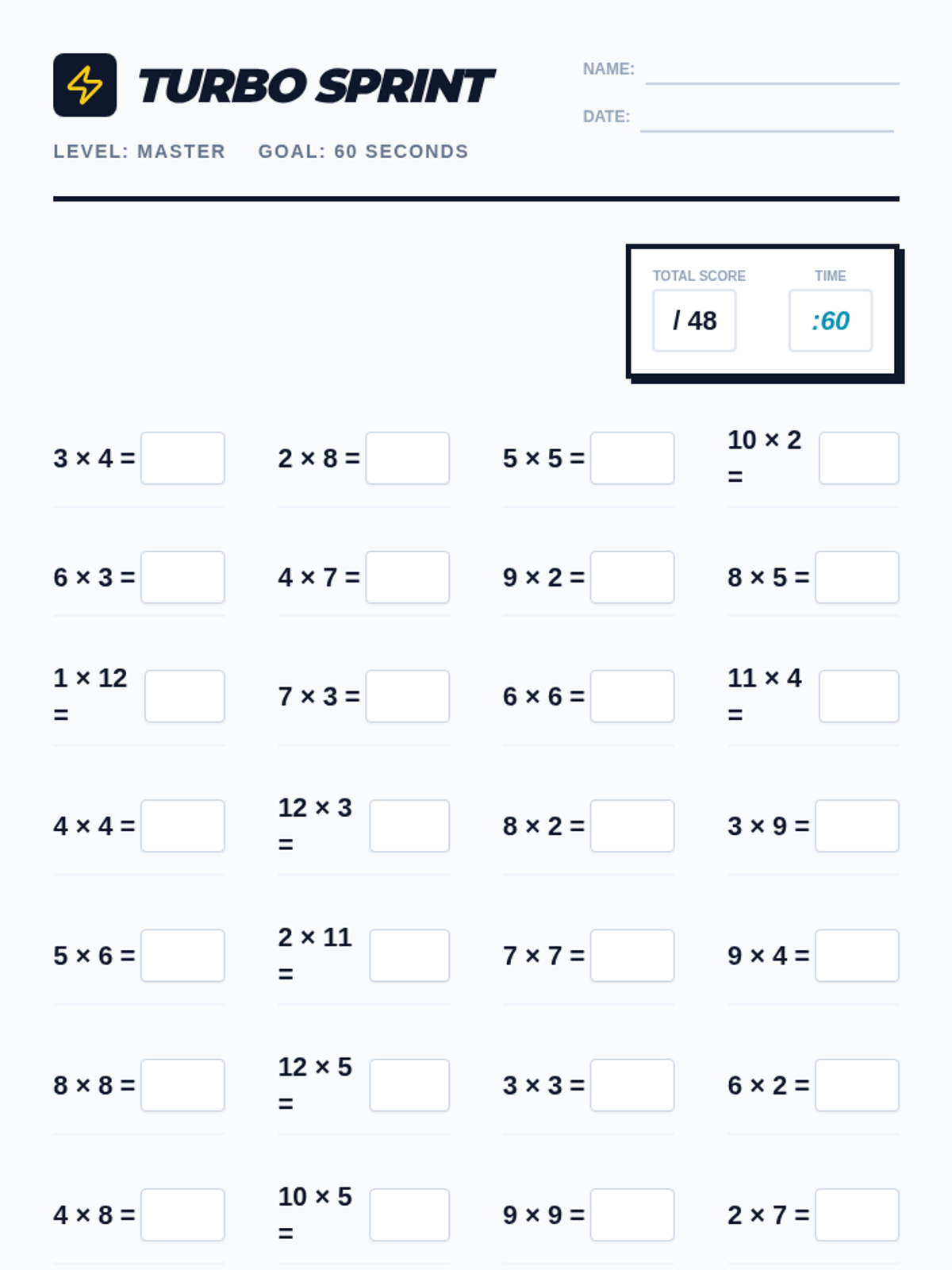
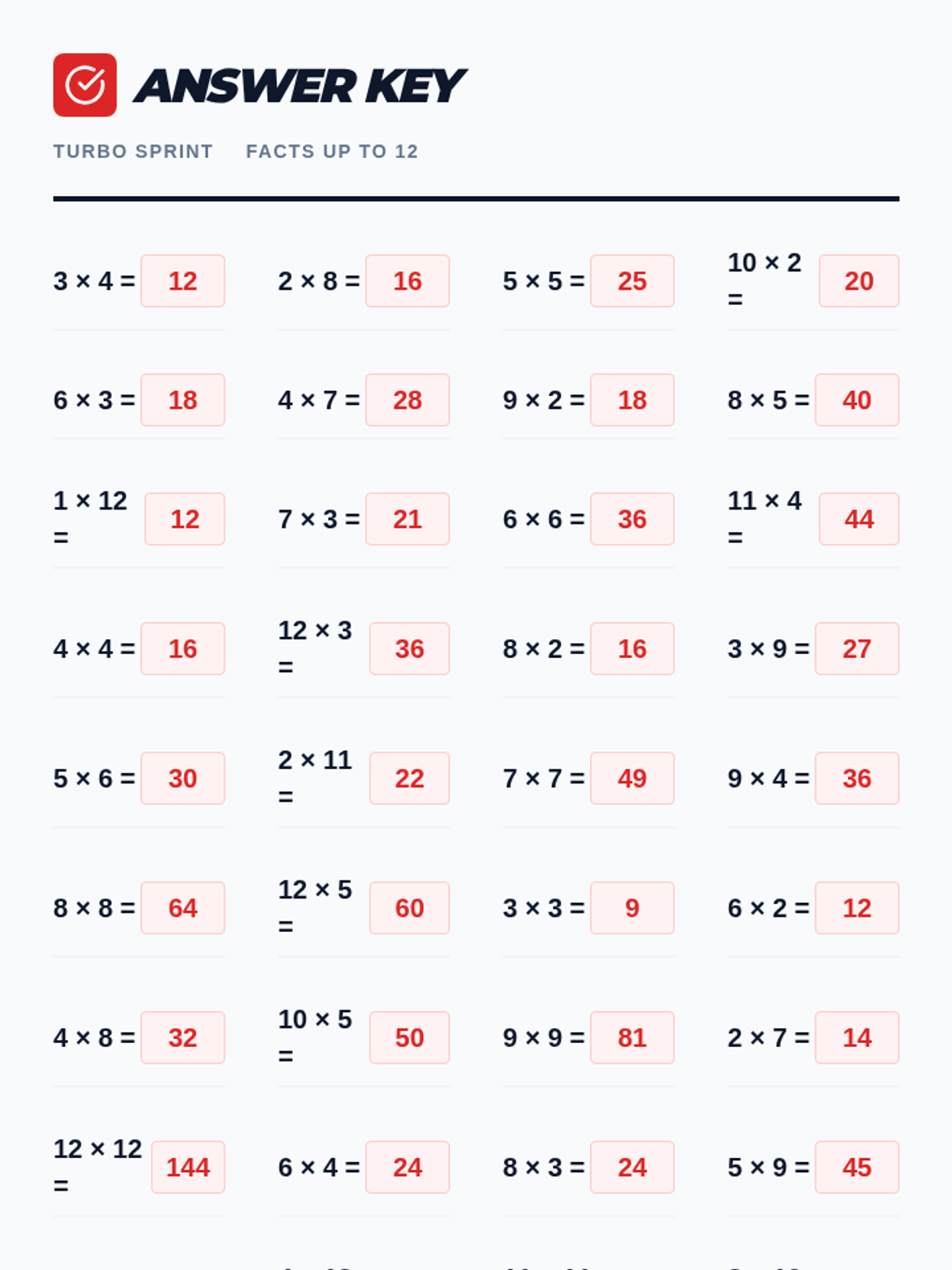
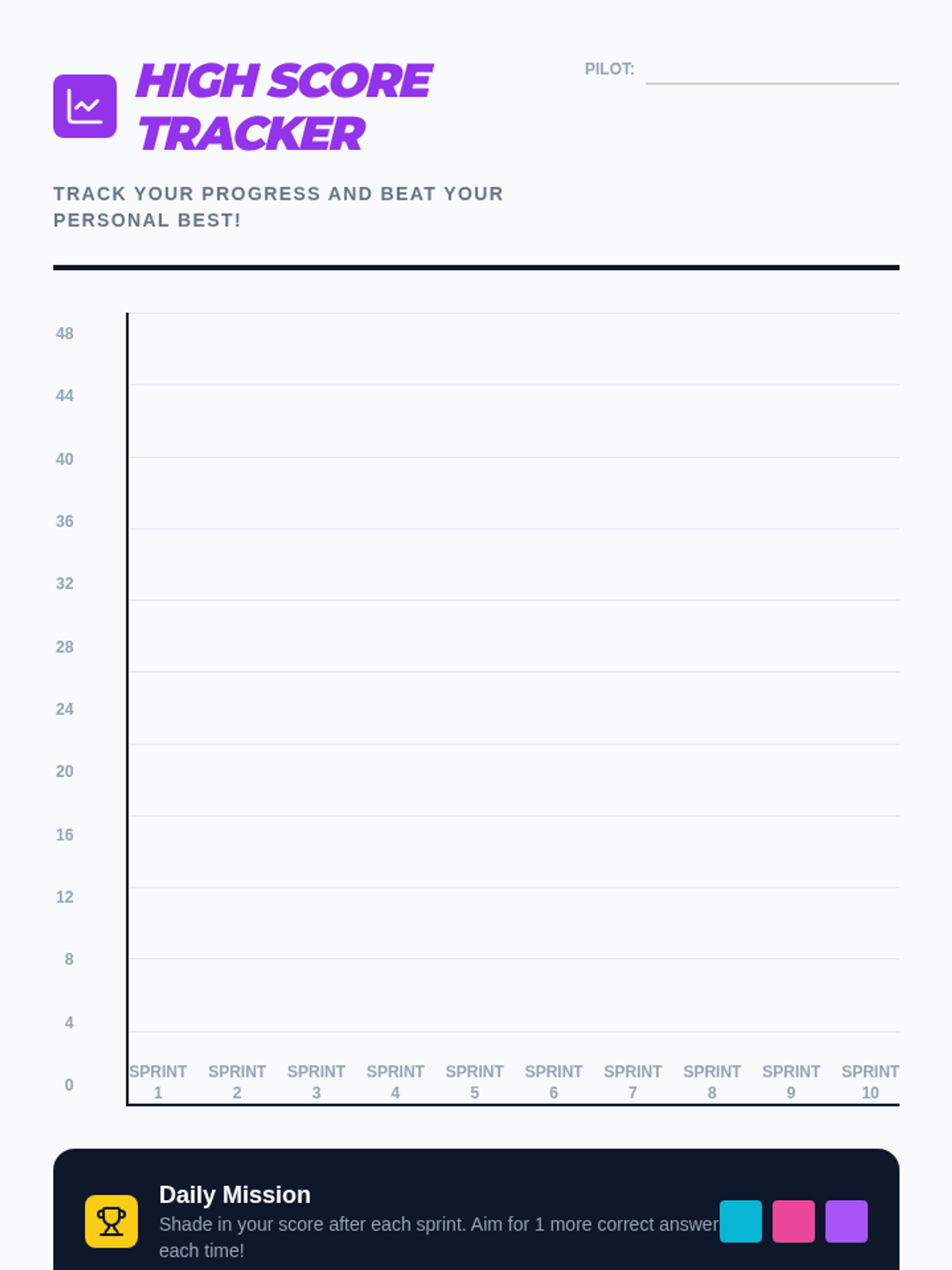
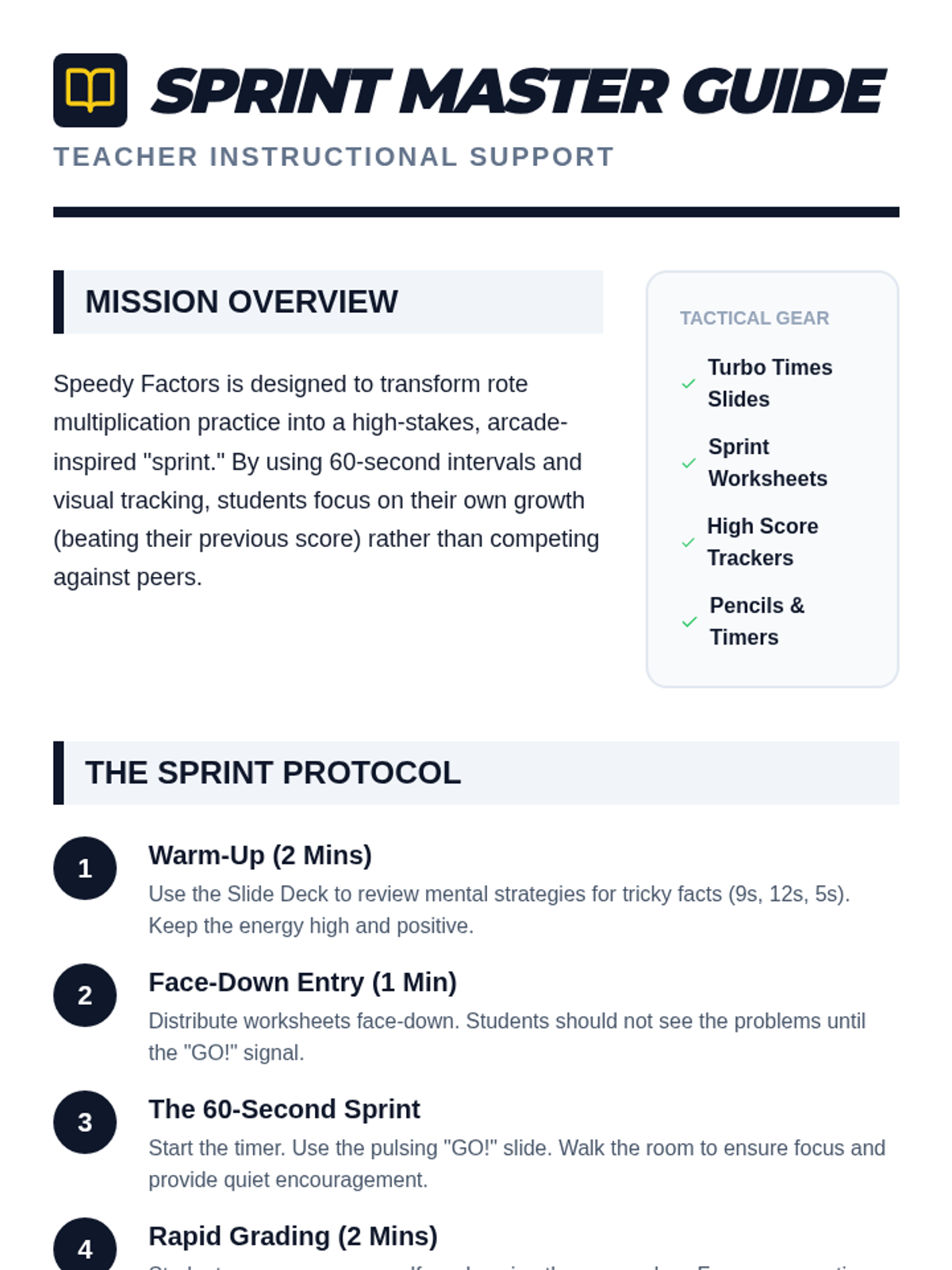
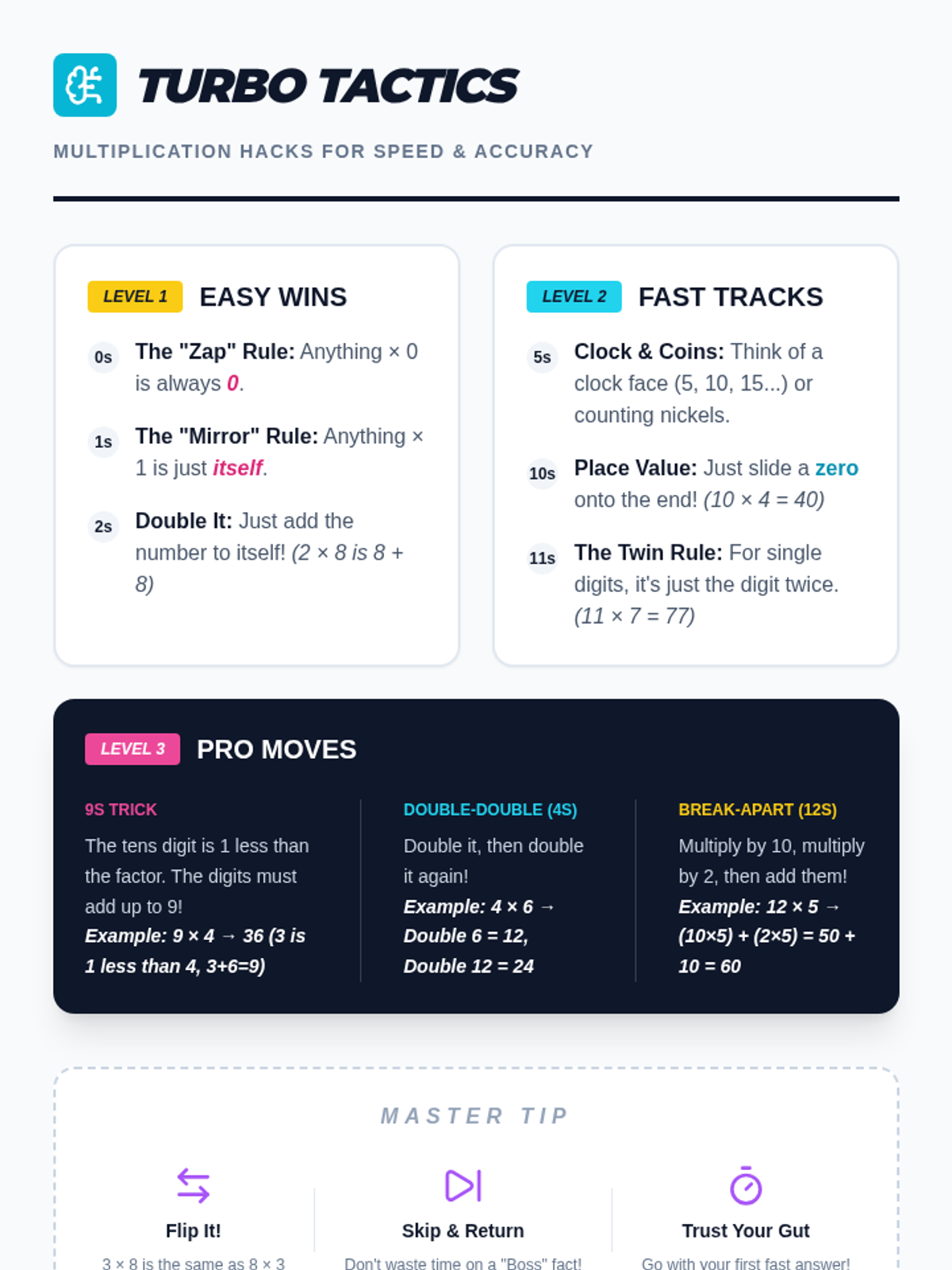
A high-energy lesson focused on building multiplication fact fluency through timed drills and progress tracking. Students will engage in 'sprints' to improve their speed and accuracy with facts up to 12.
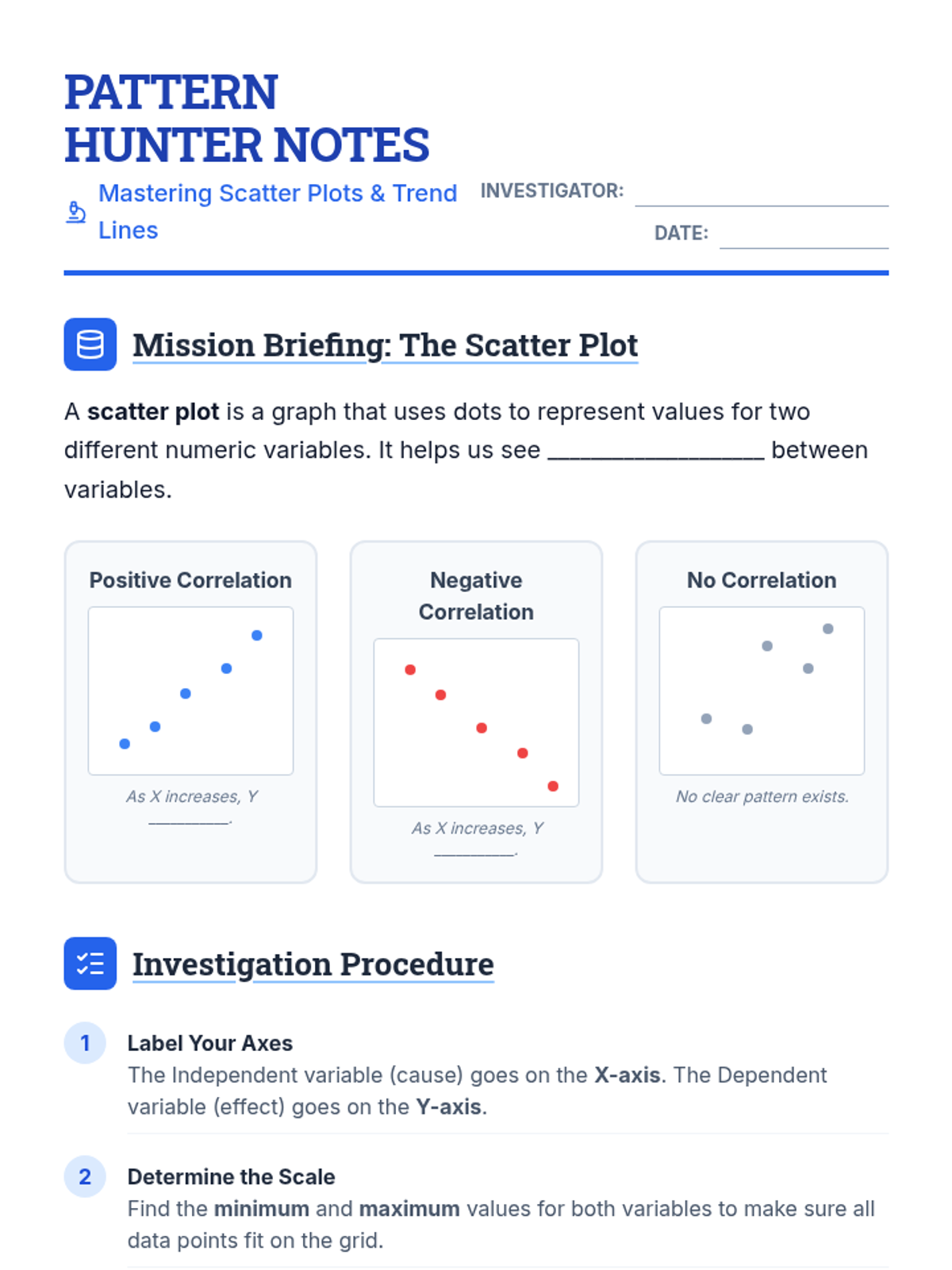
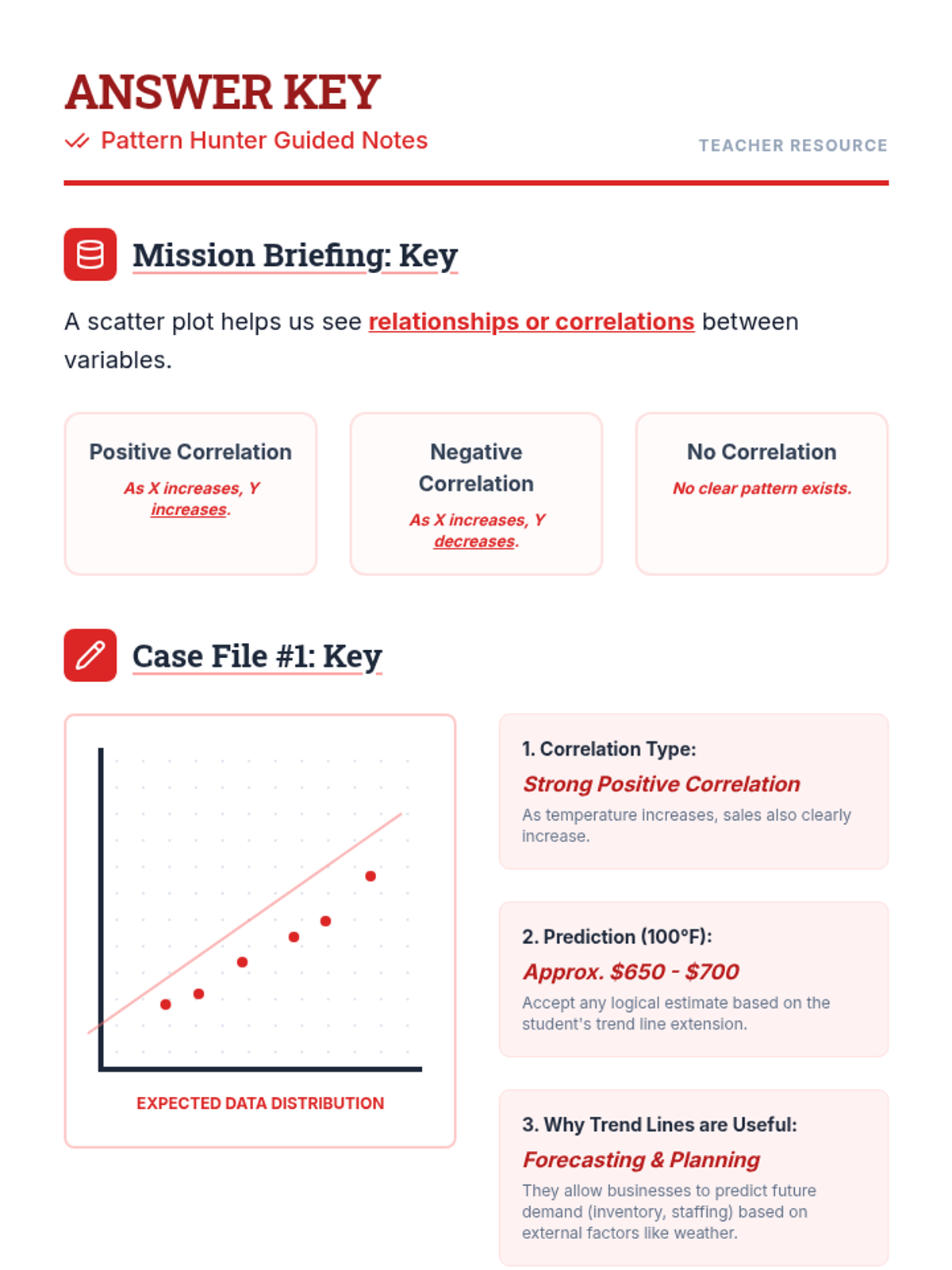
A comprehensive lesson on creating and interpreting scatter plots, identifying correlations, and drawing trend lines to make predictions. Students practice plotting real-world data and analyzing relationships between variables.
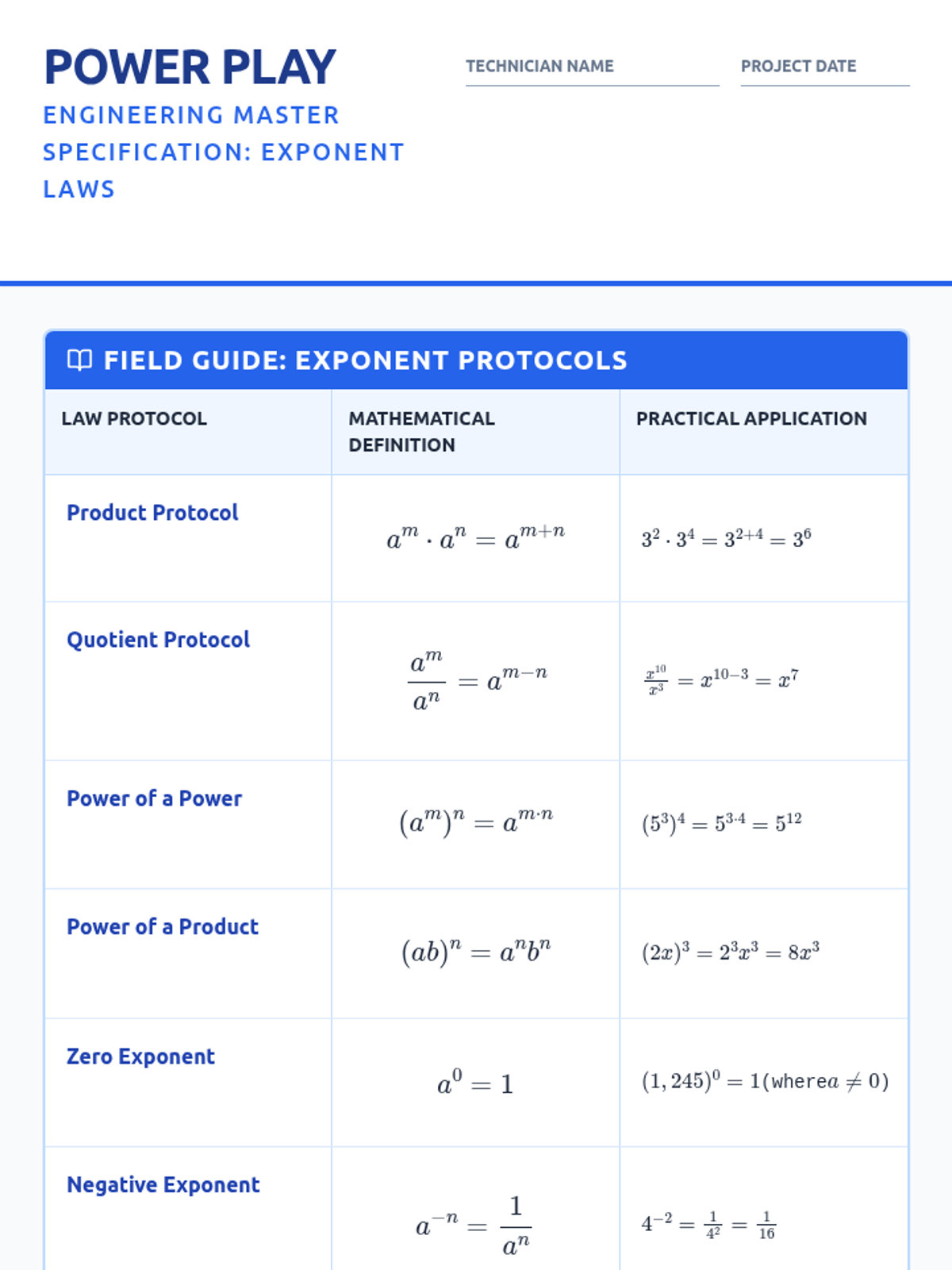
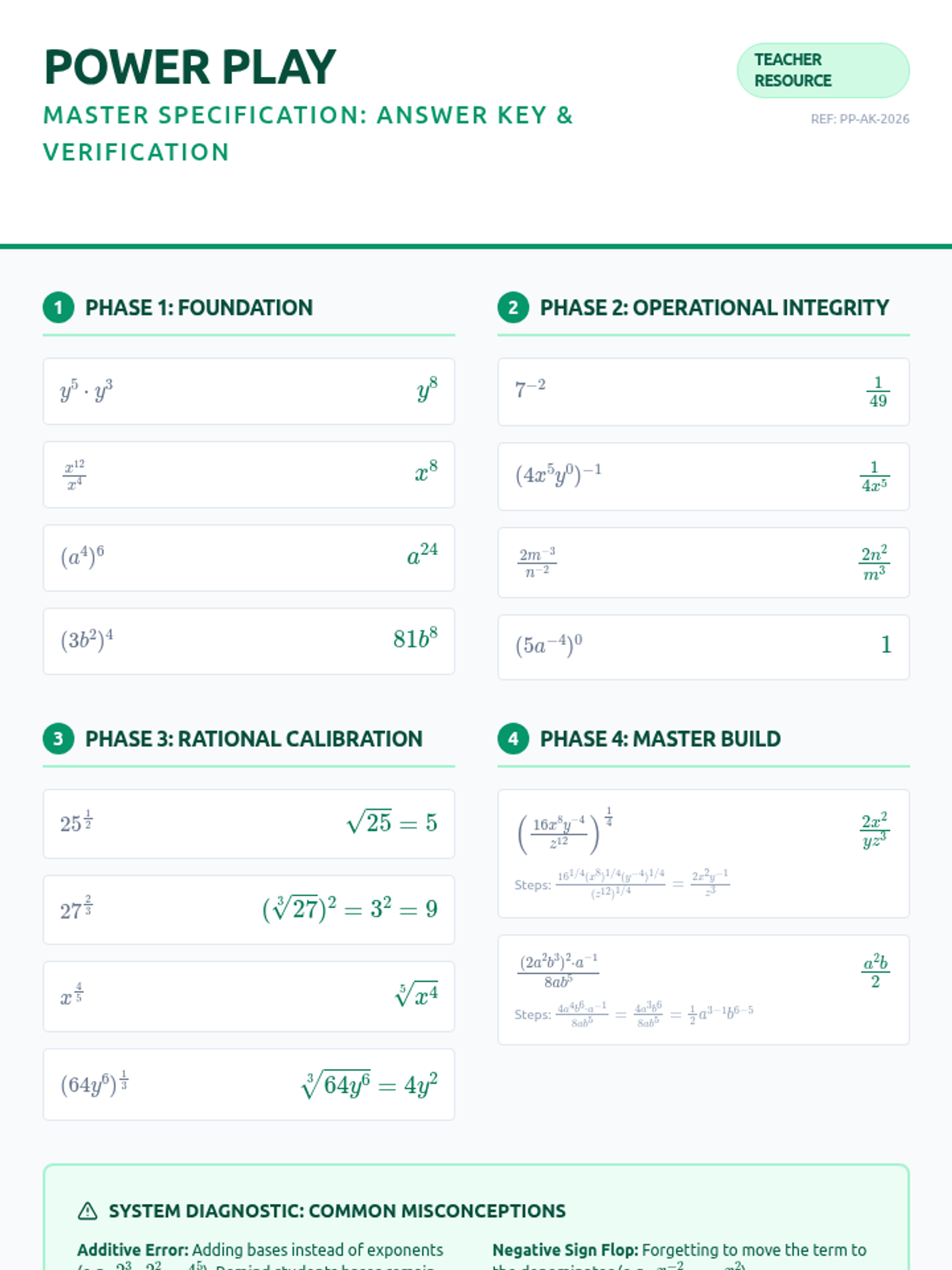
A comprehensive guide to mastering exponent laws, from basic products to complex fractional roots. Includes a detailed reference sheet and scaffolded practice problems.
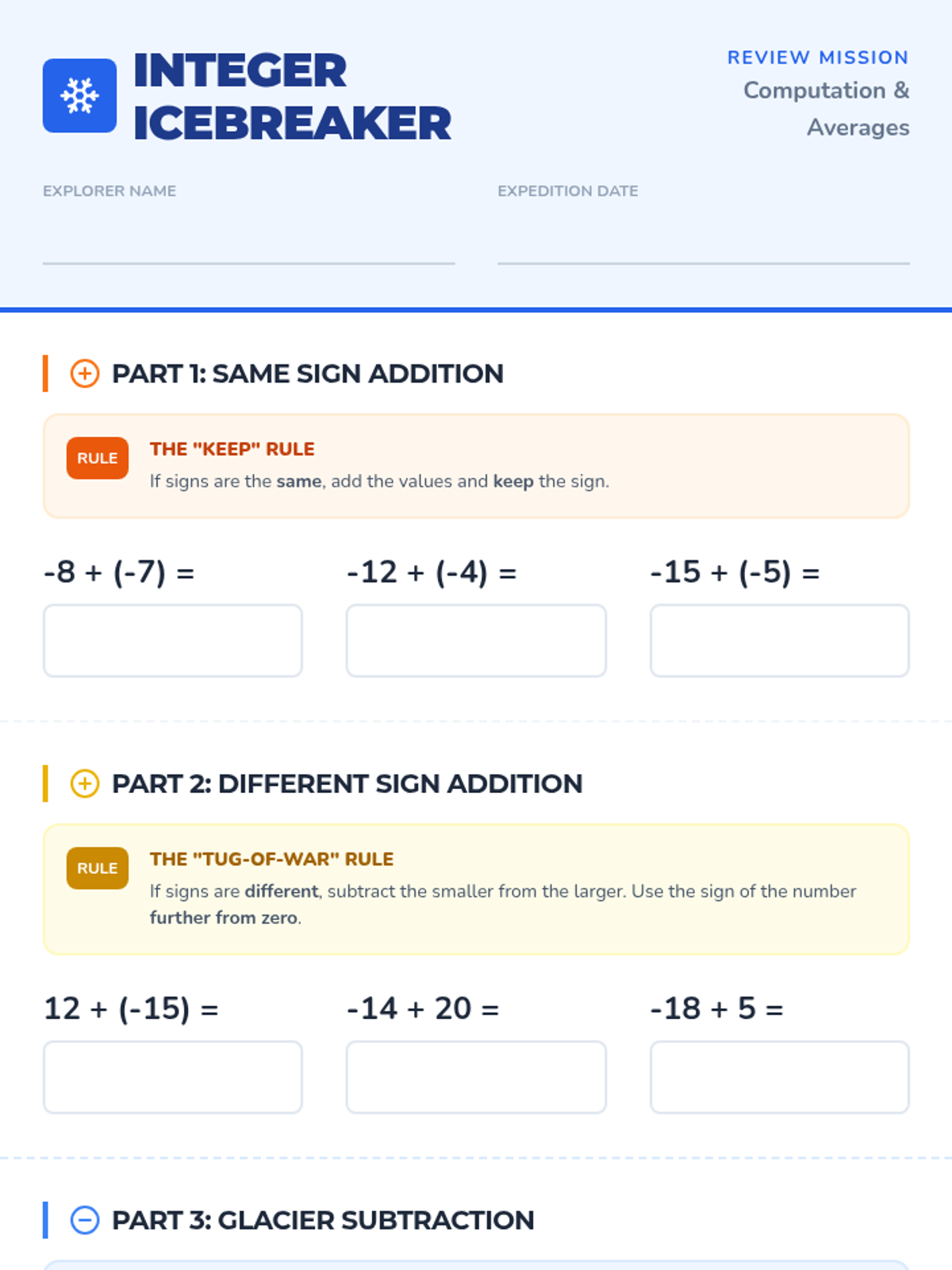
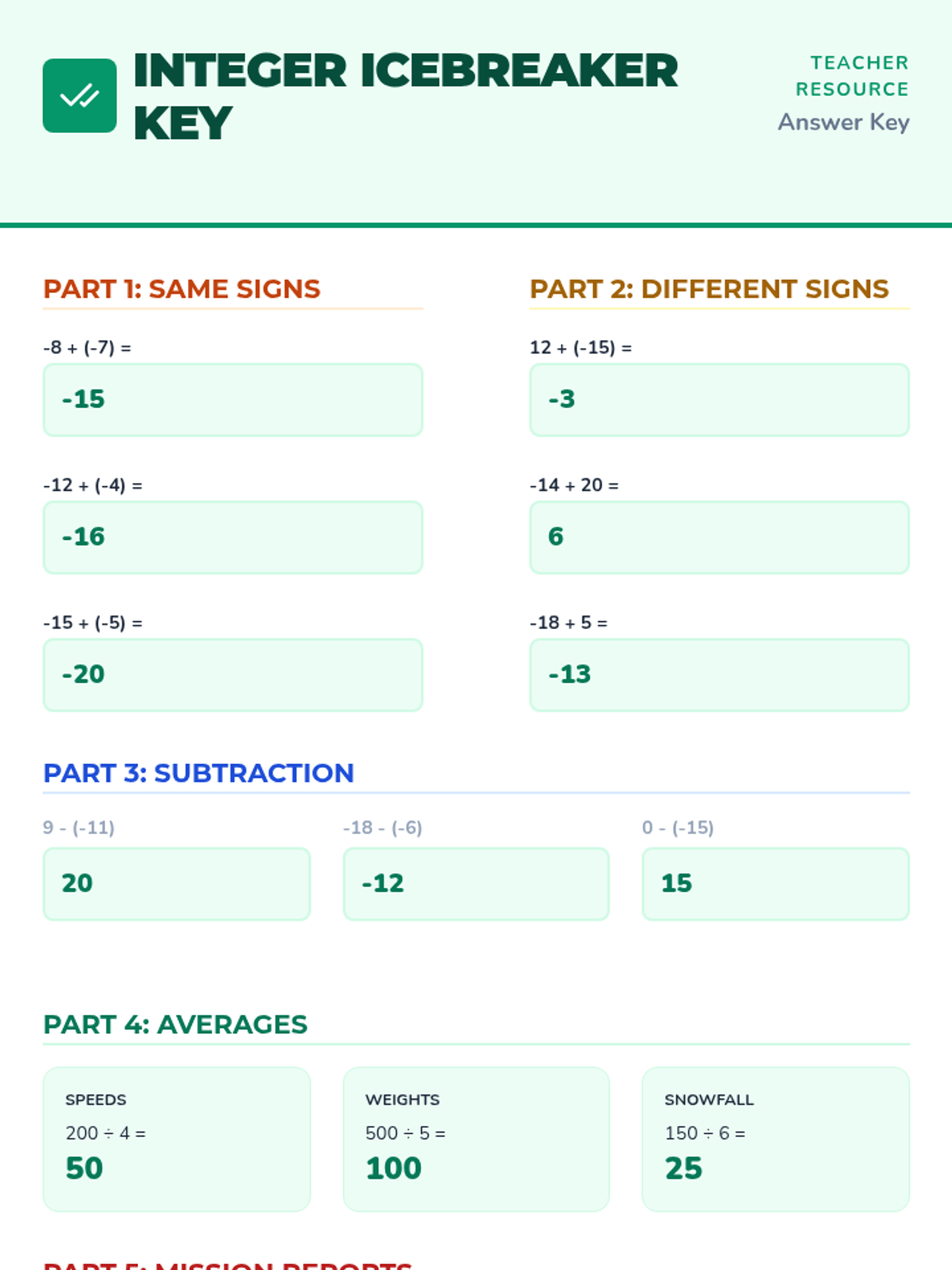
A comprehensive review of adding and subtracting integers and calculating averages using numbers between -20 and 20, set in a polar exploration theme.
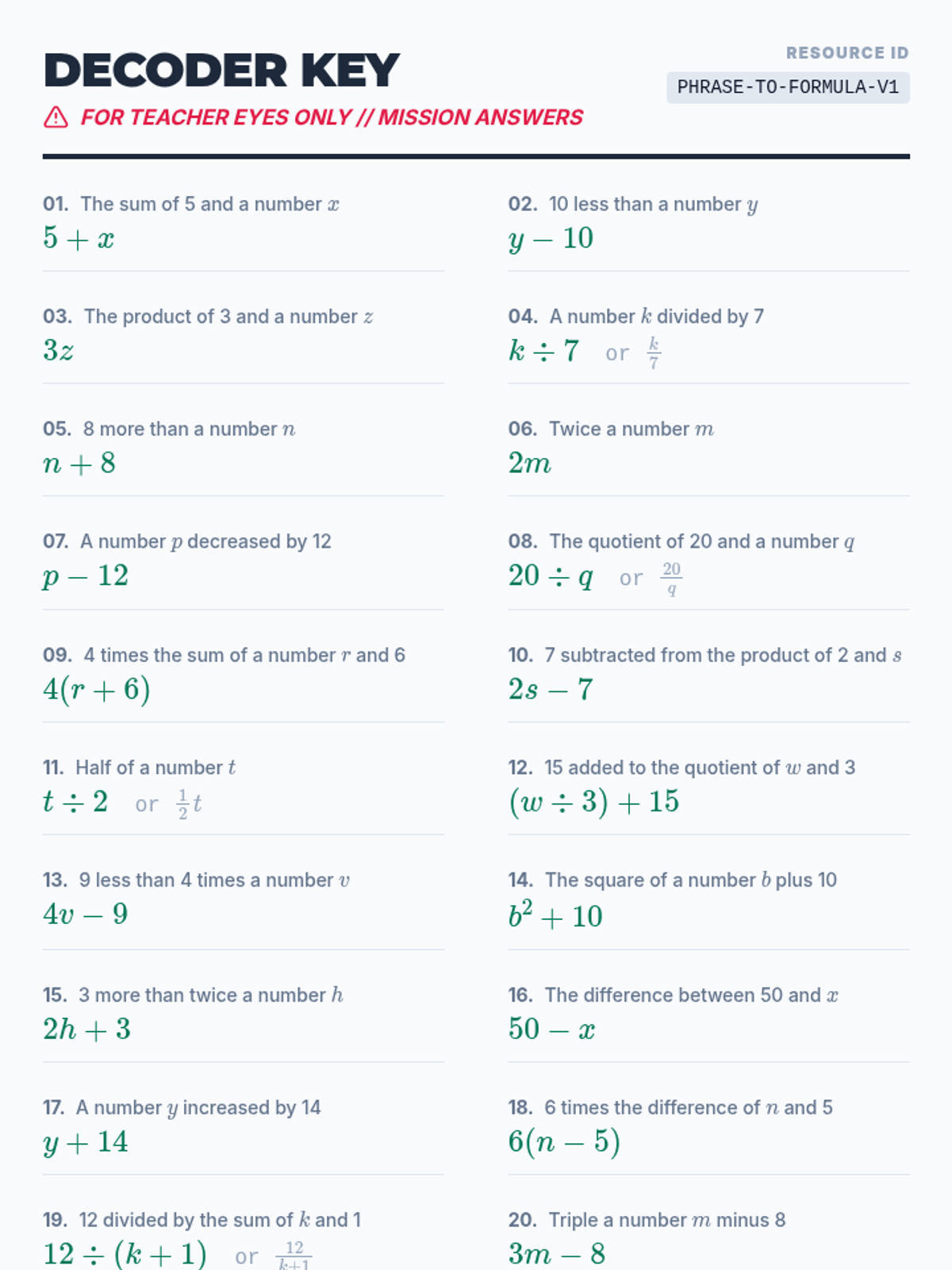
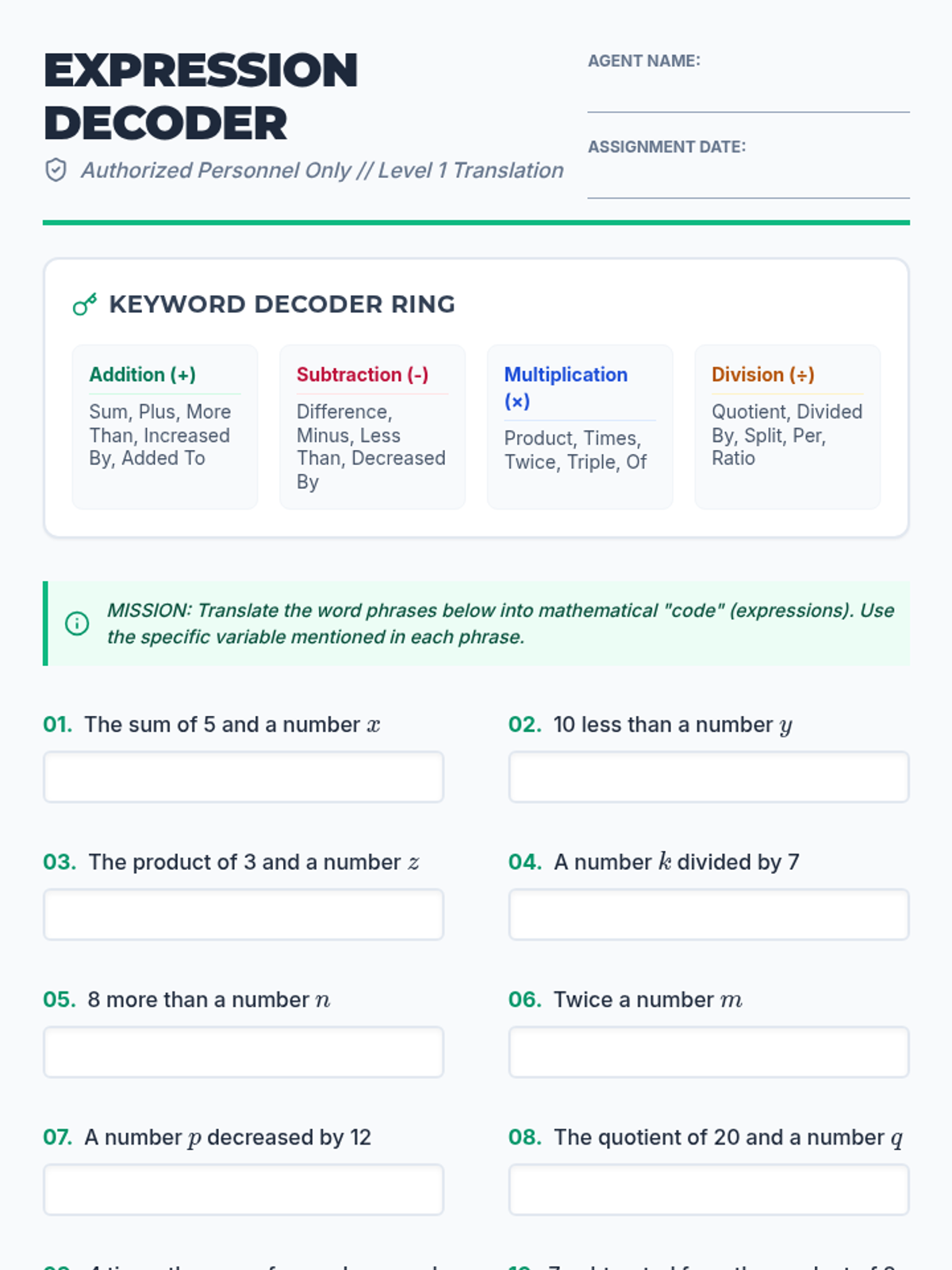
Students practice translating English word phrases into mathematical expressions using variables and operations.
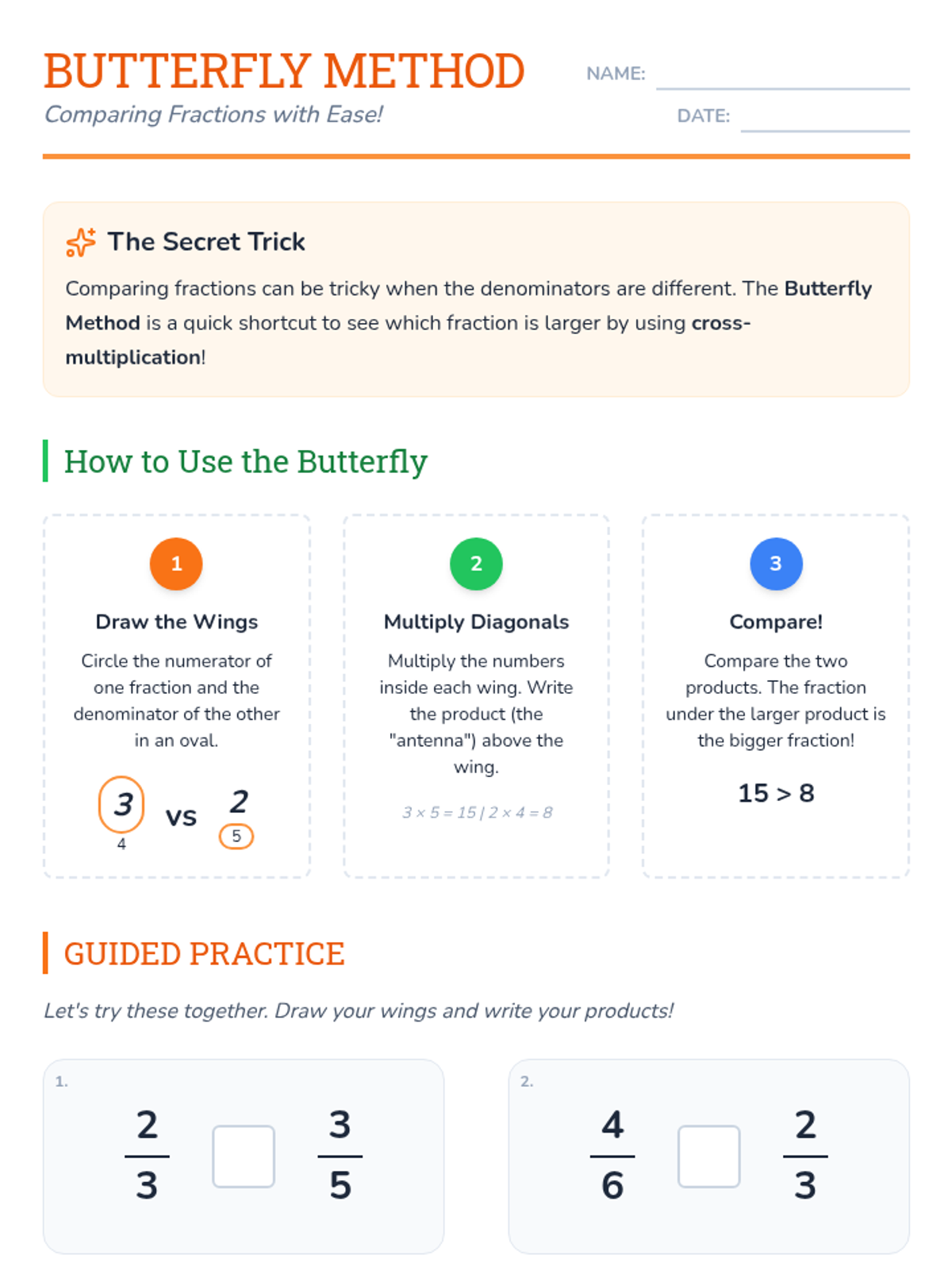
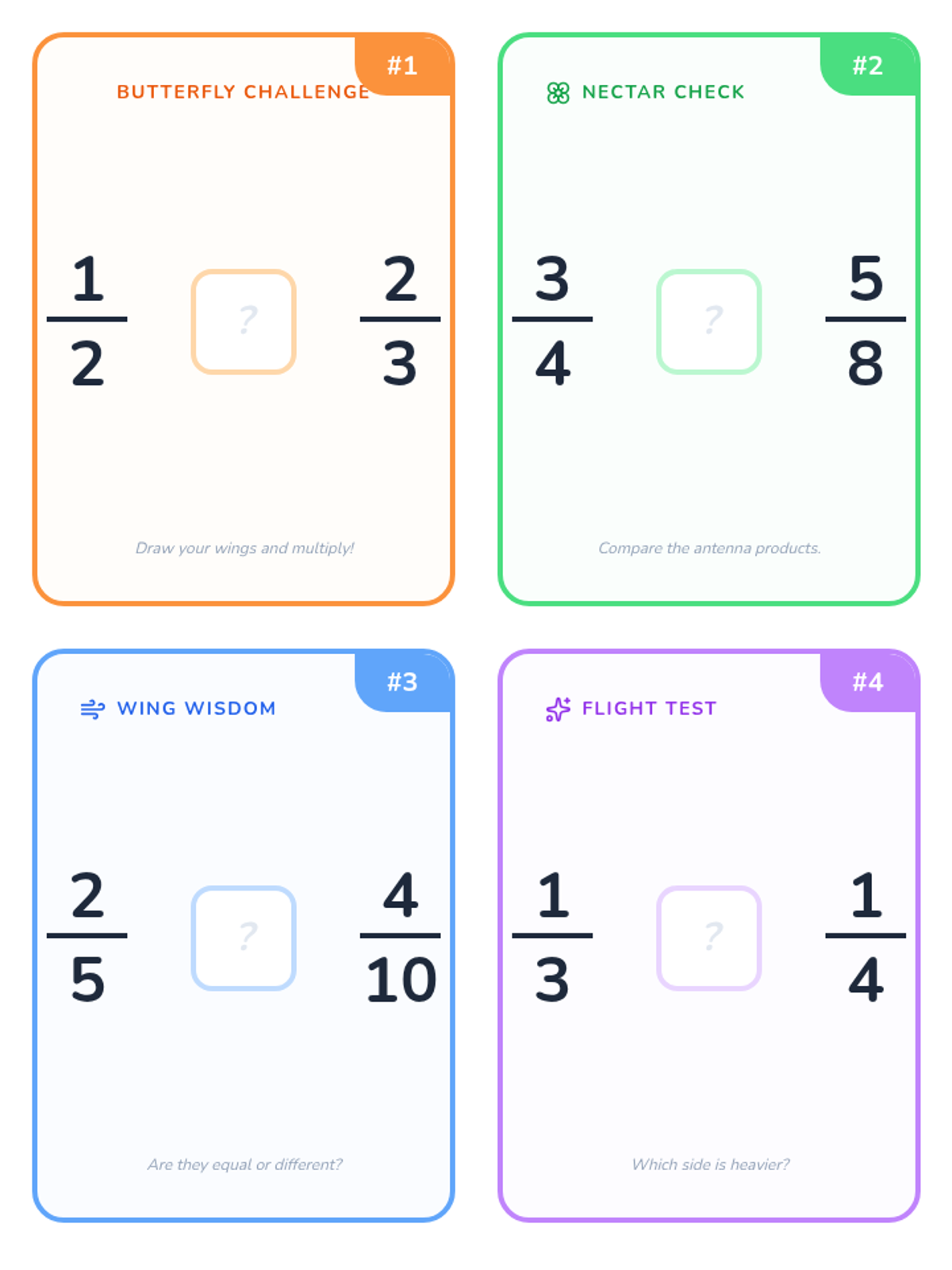
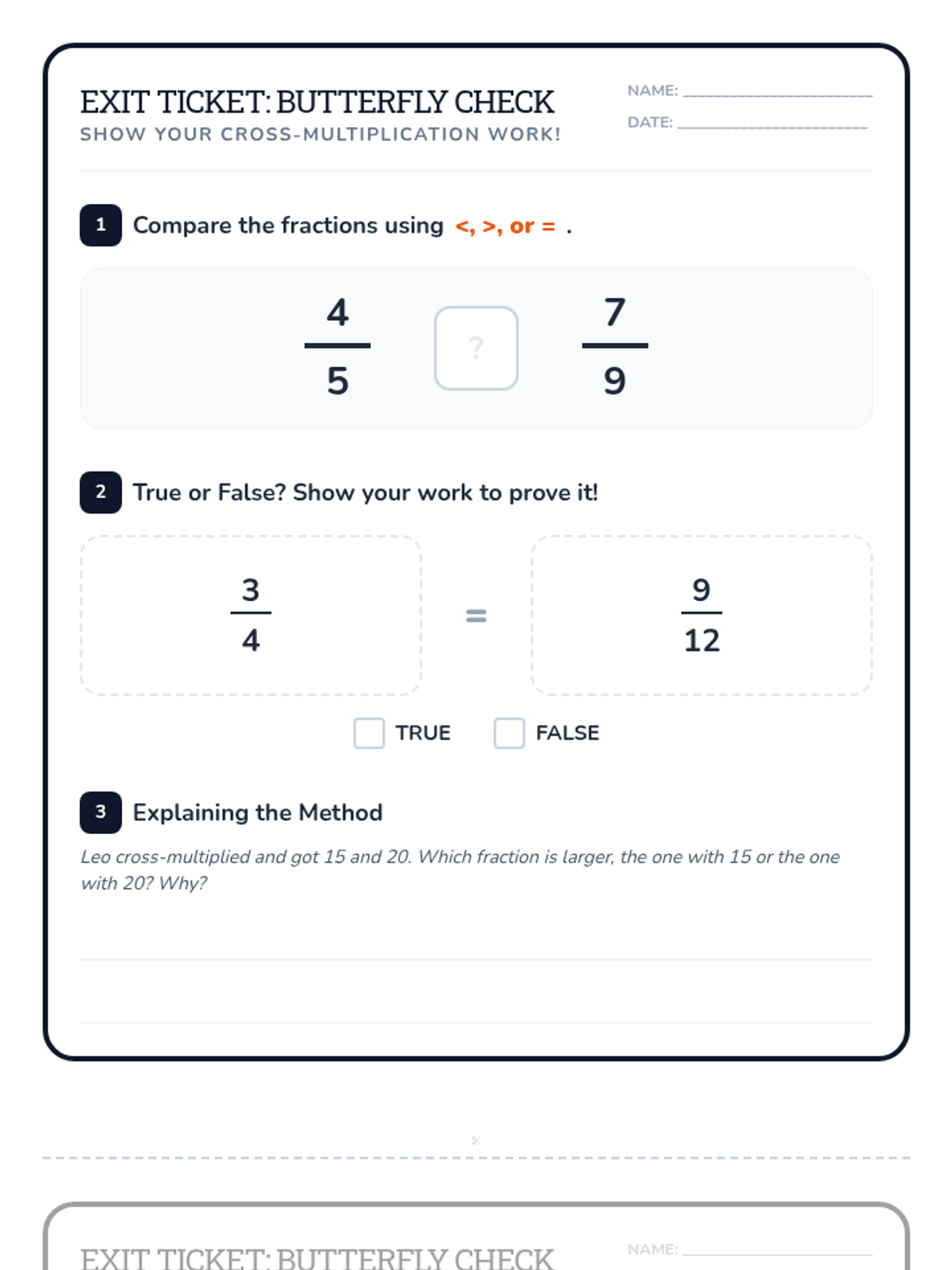
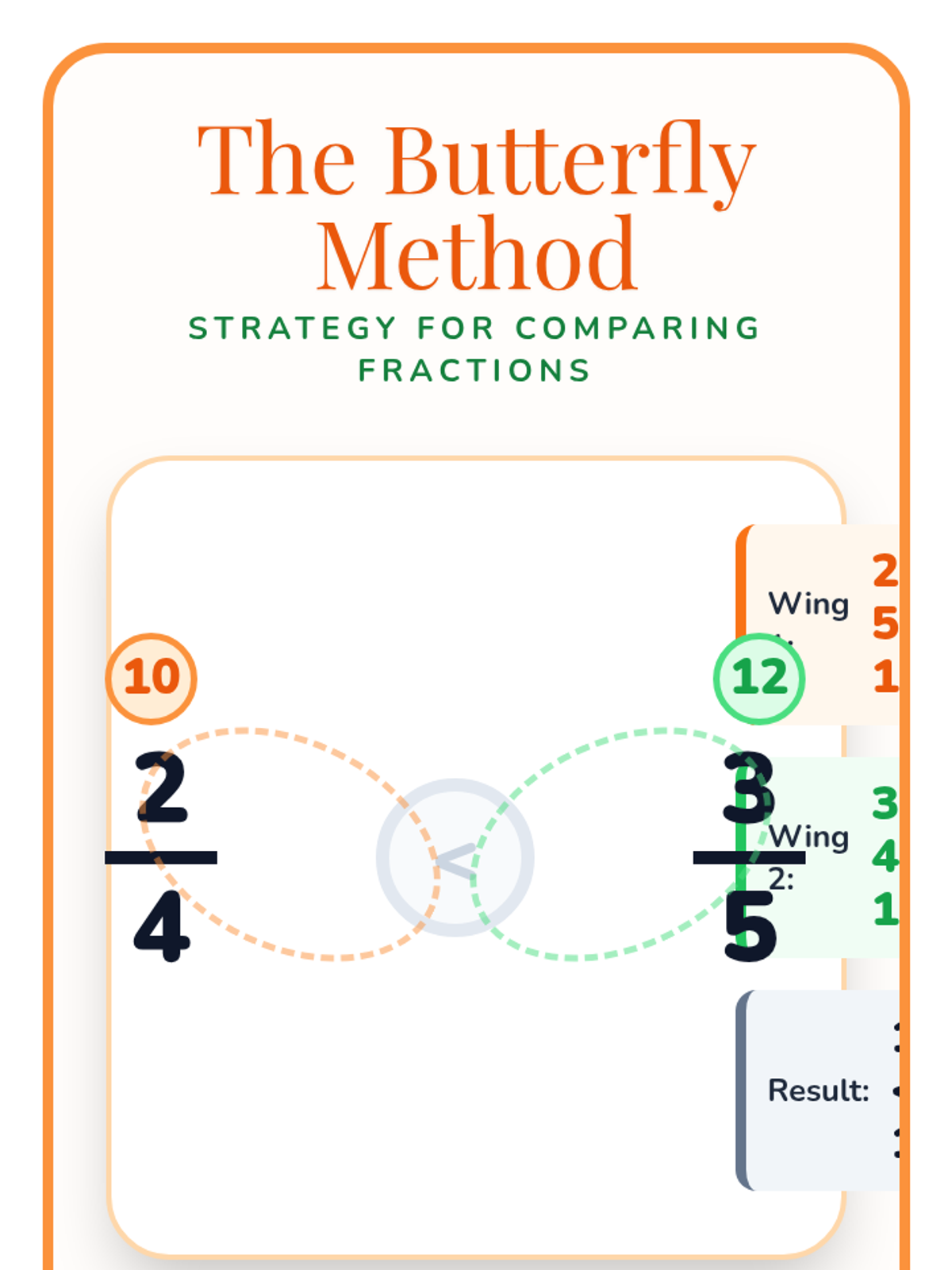
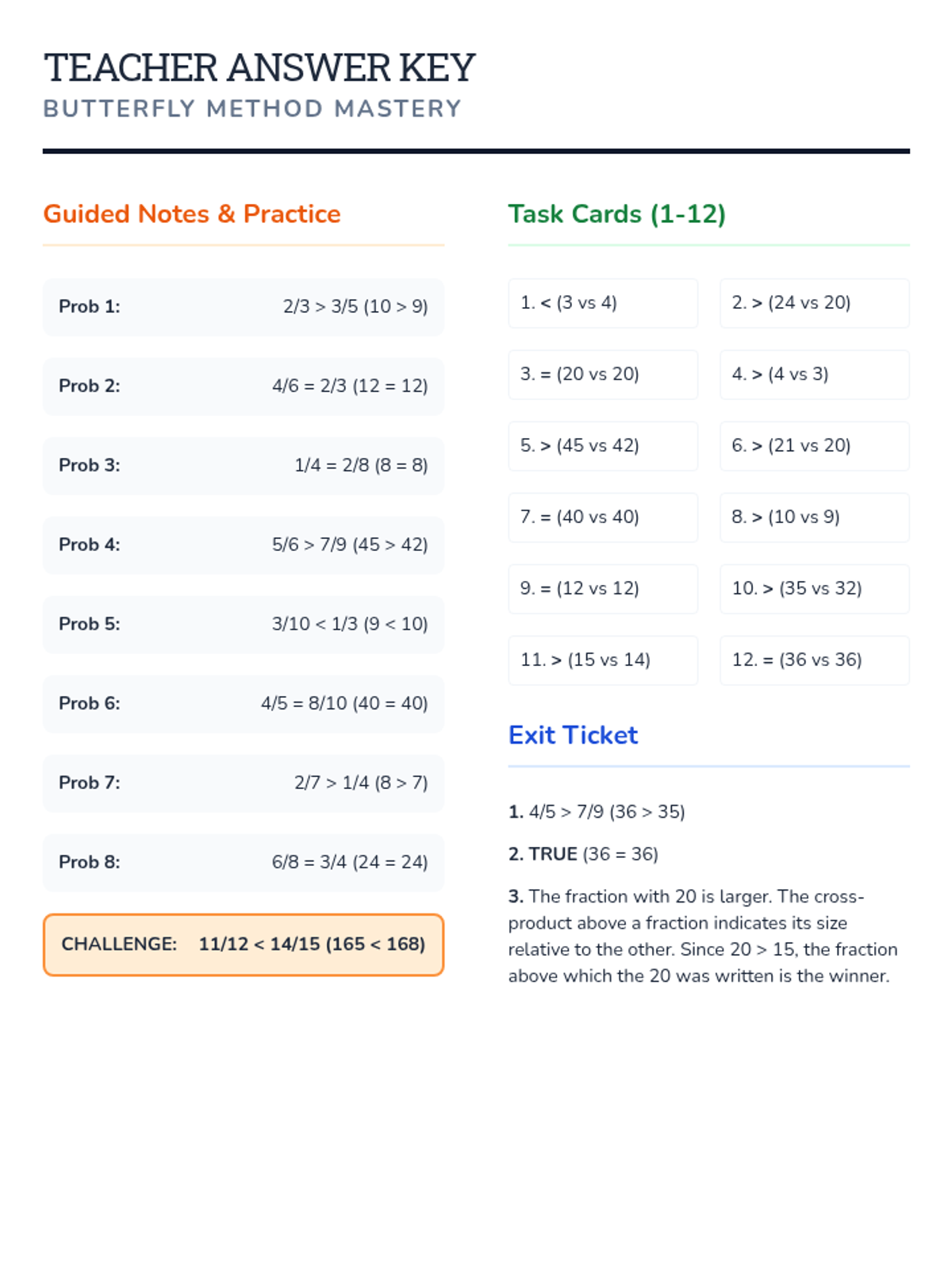
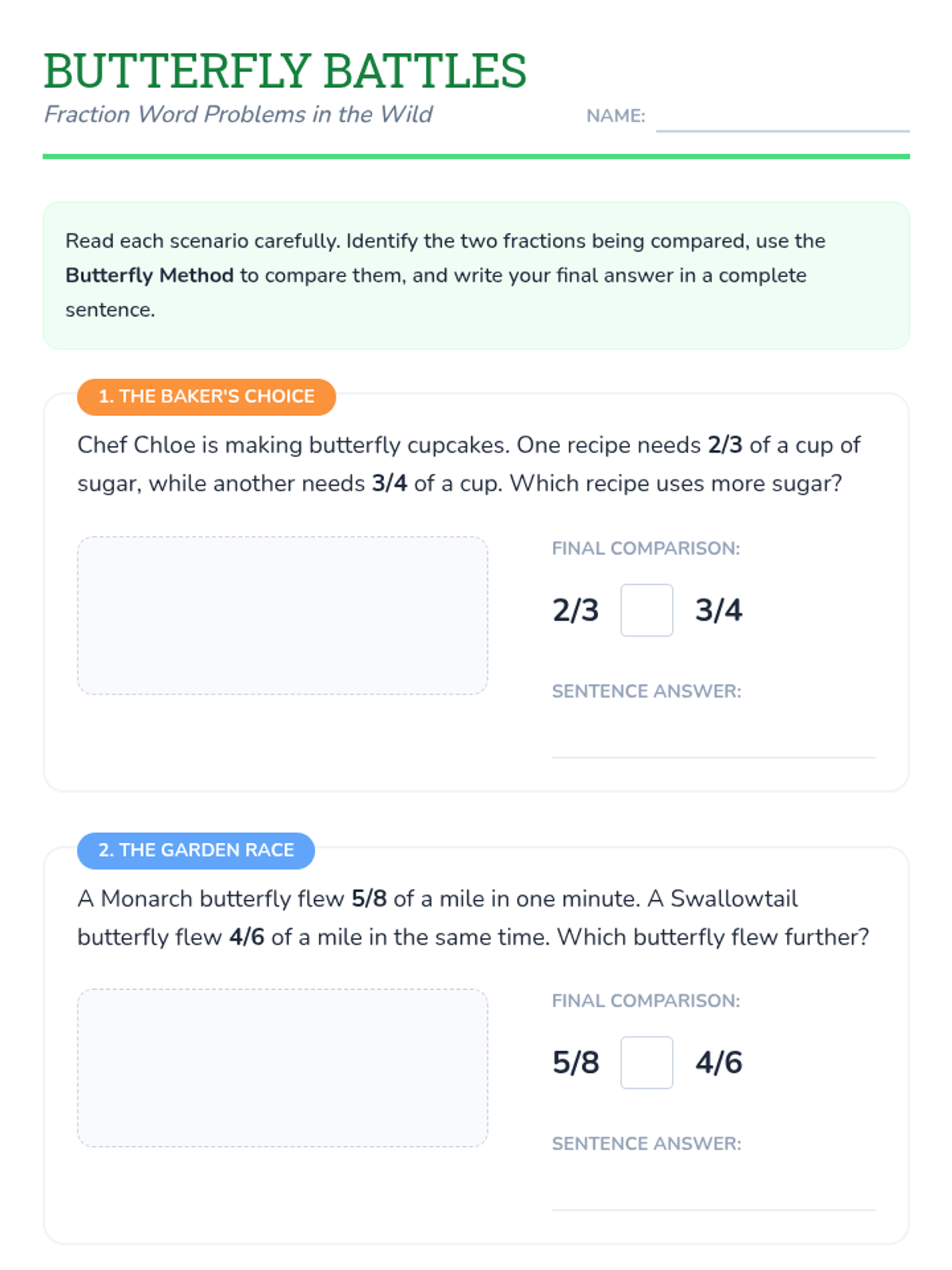
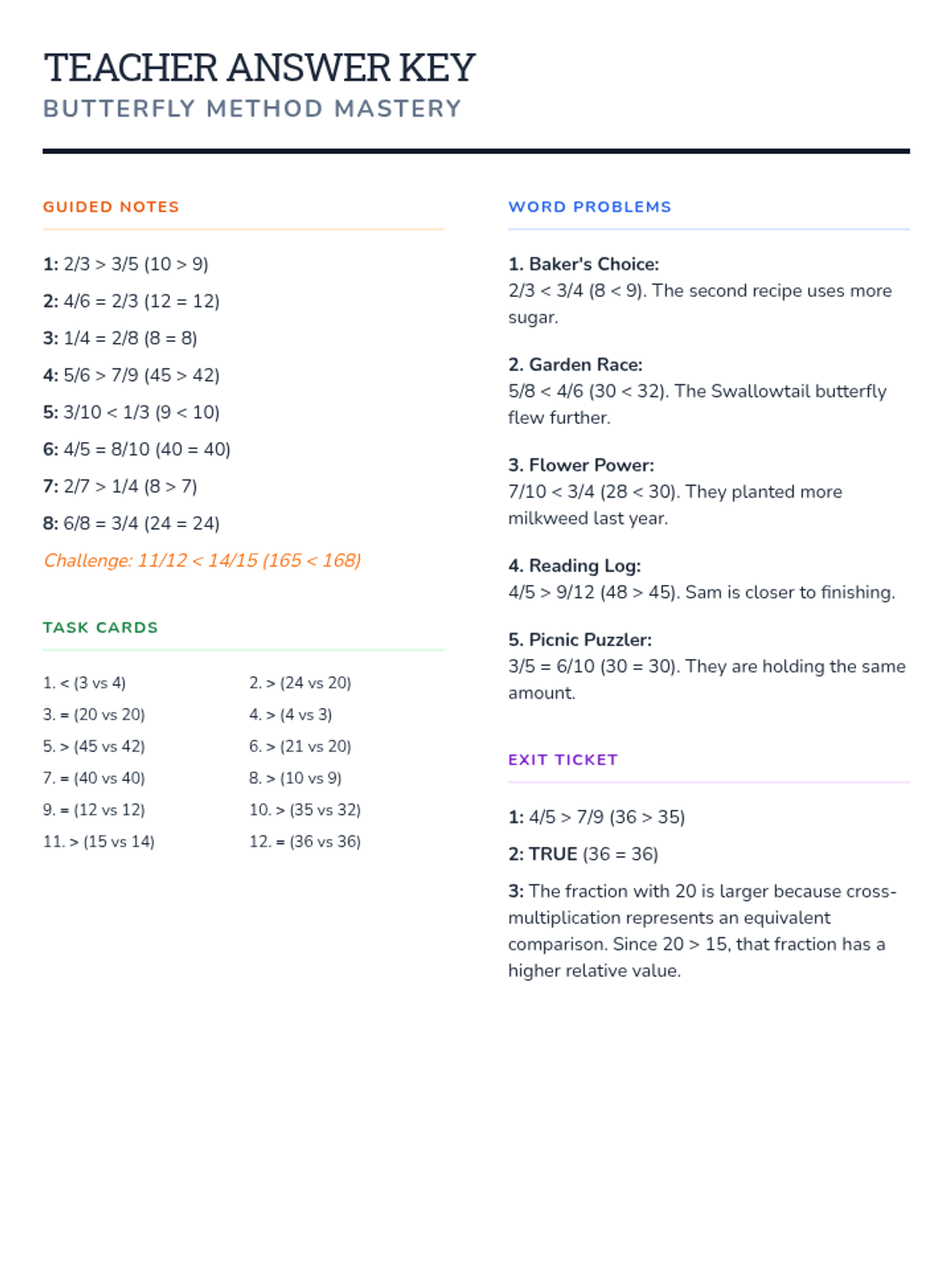
This lesson teaches students the 'Butterfly Method' (cross-multiplication) as a strategy to compare fractions with unlike denominators, including guided practice and independent application.
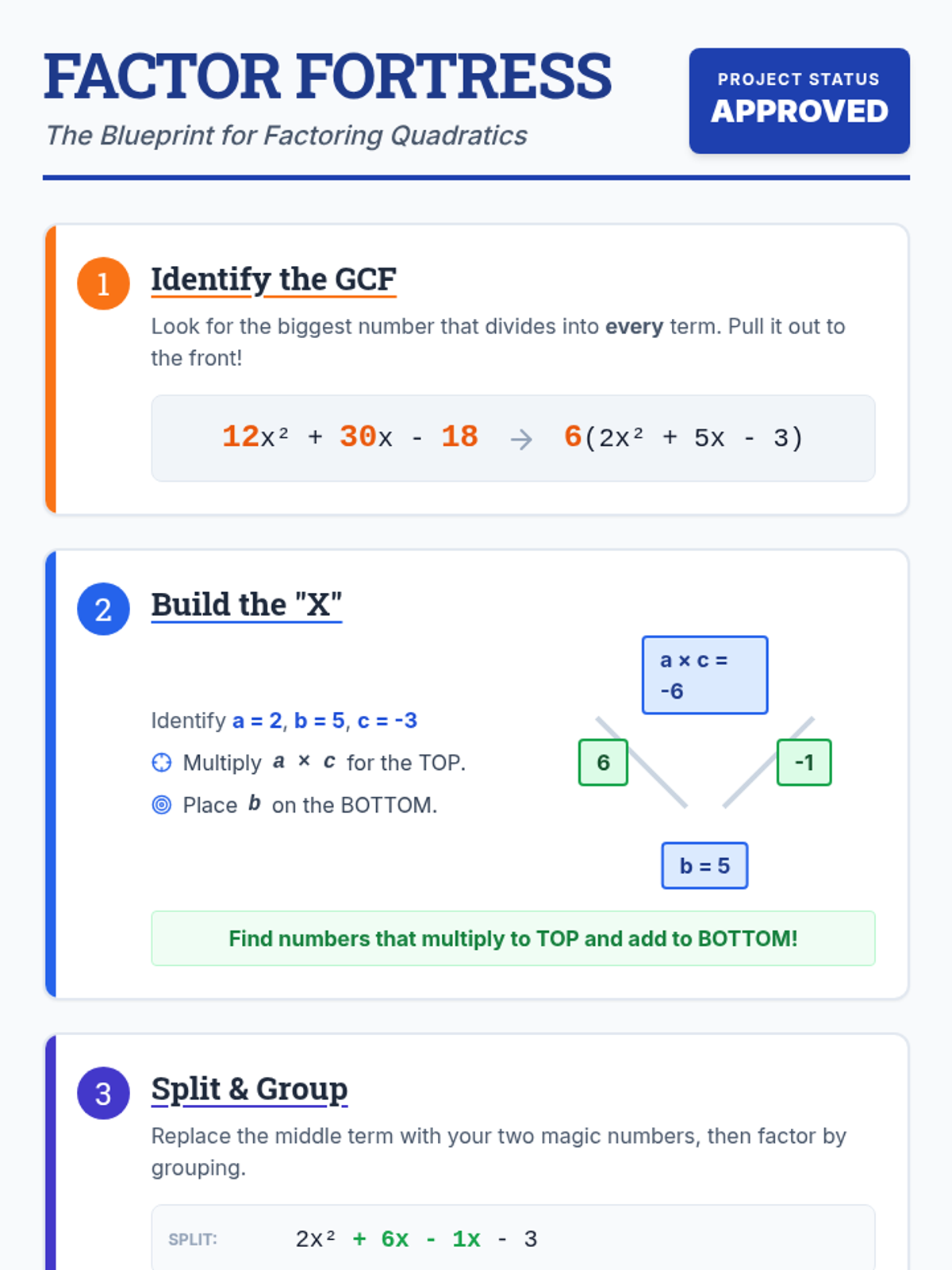
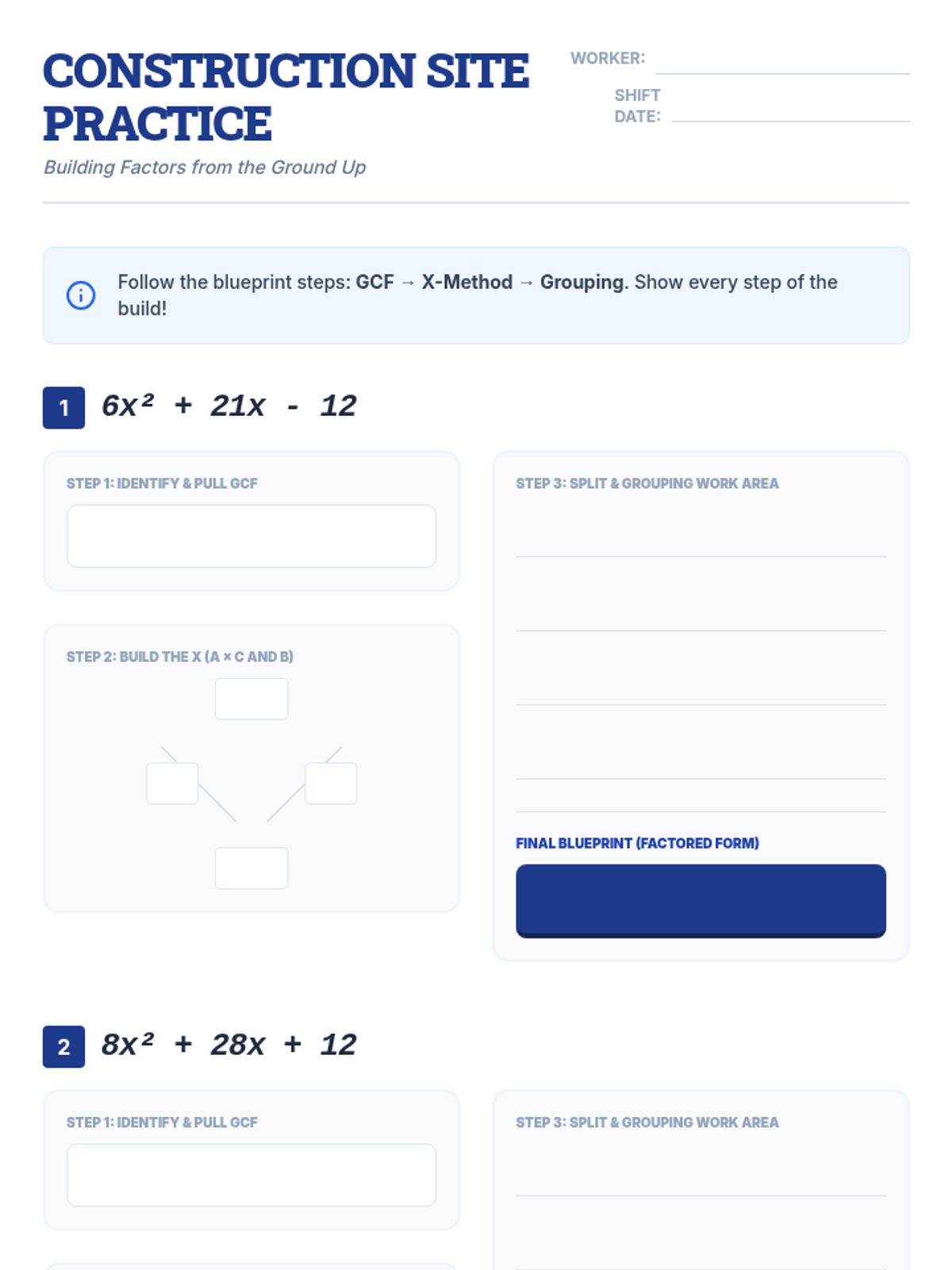
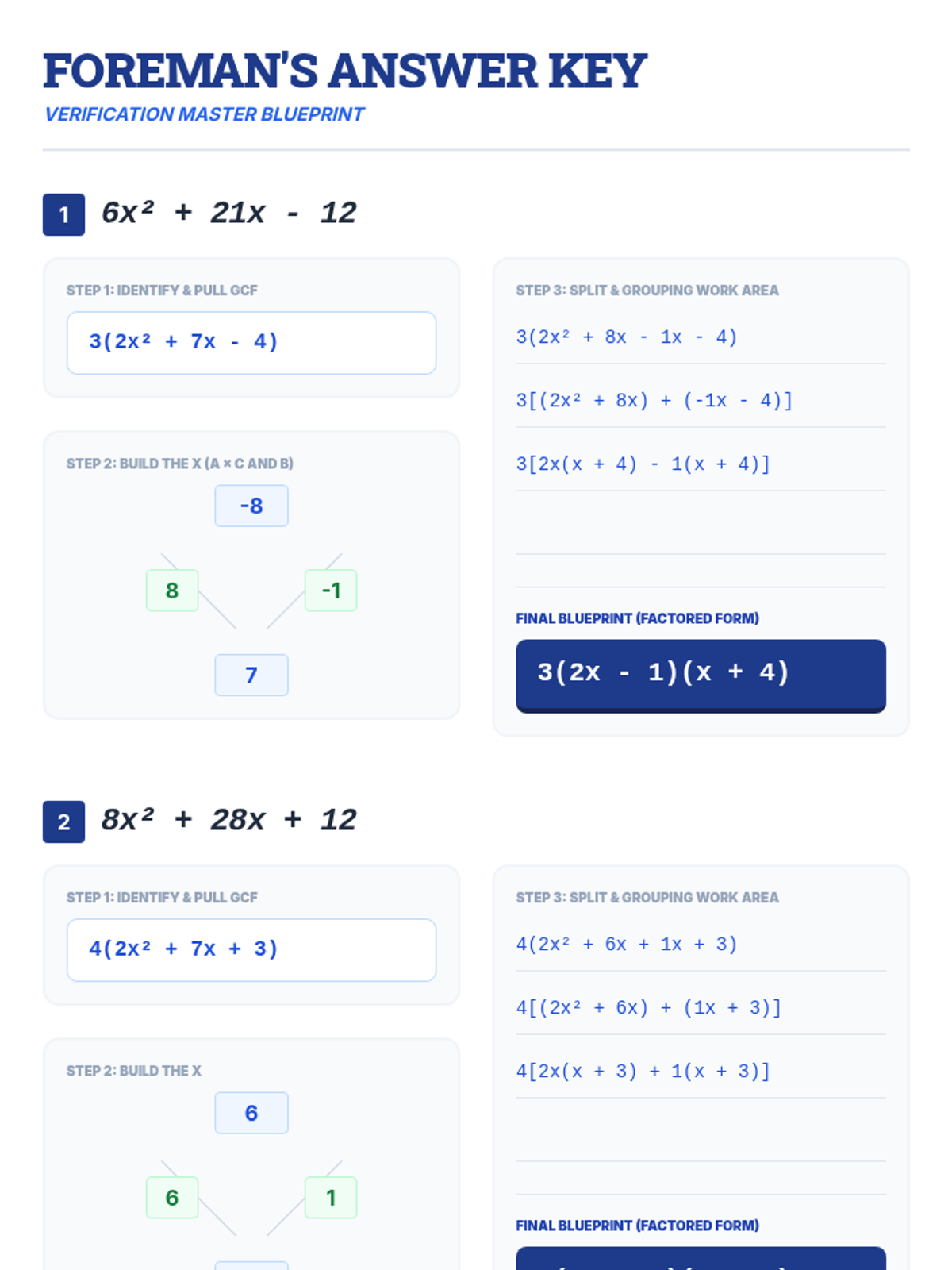
A comprehensive guide for students to master factoring quadratic expressions using the GCF, X-Method, and Grouping. This lesson breaks down complex expressions into manageable construction-themed steps.
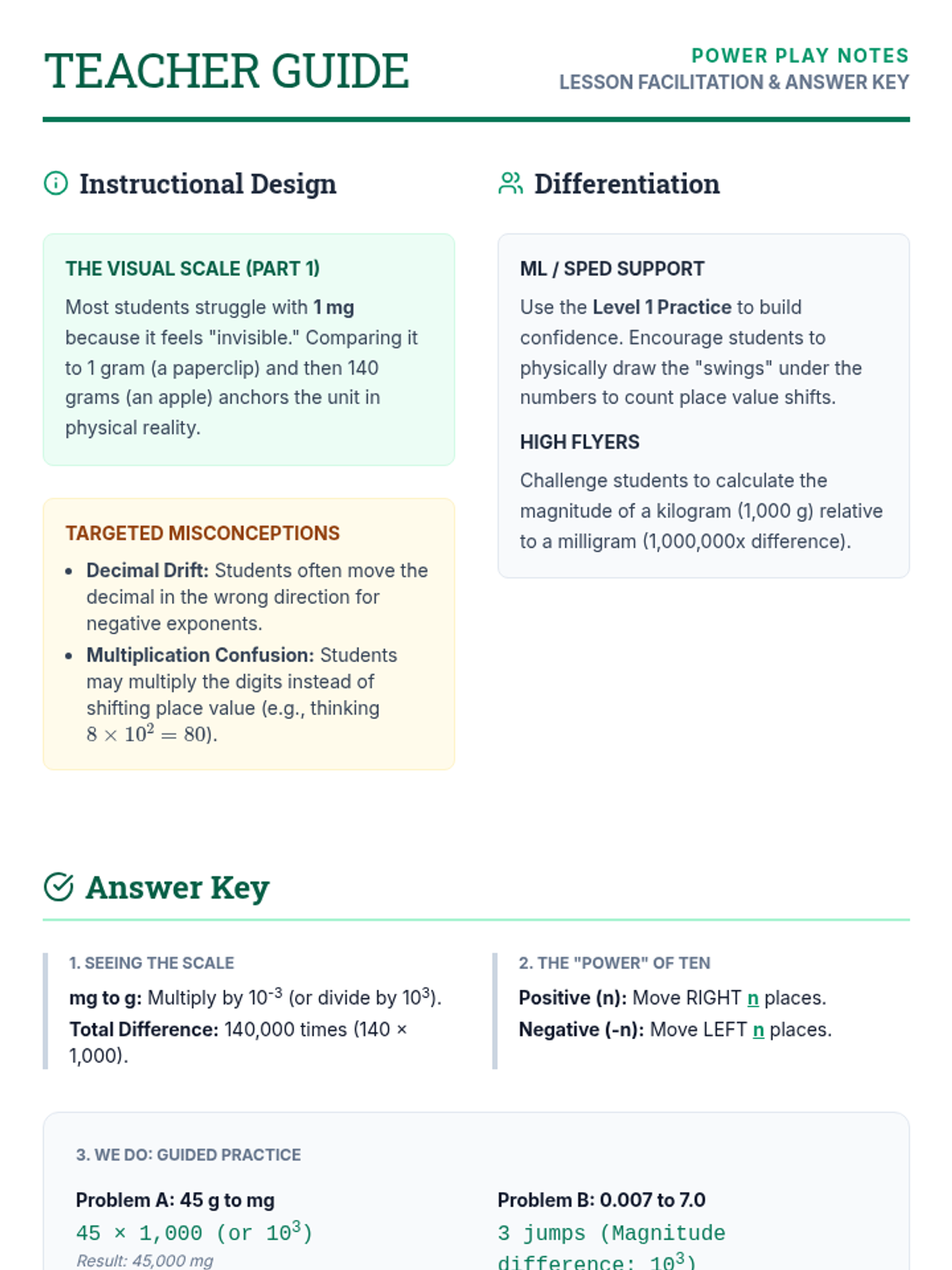
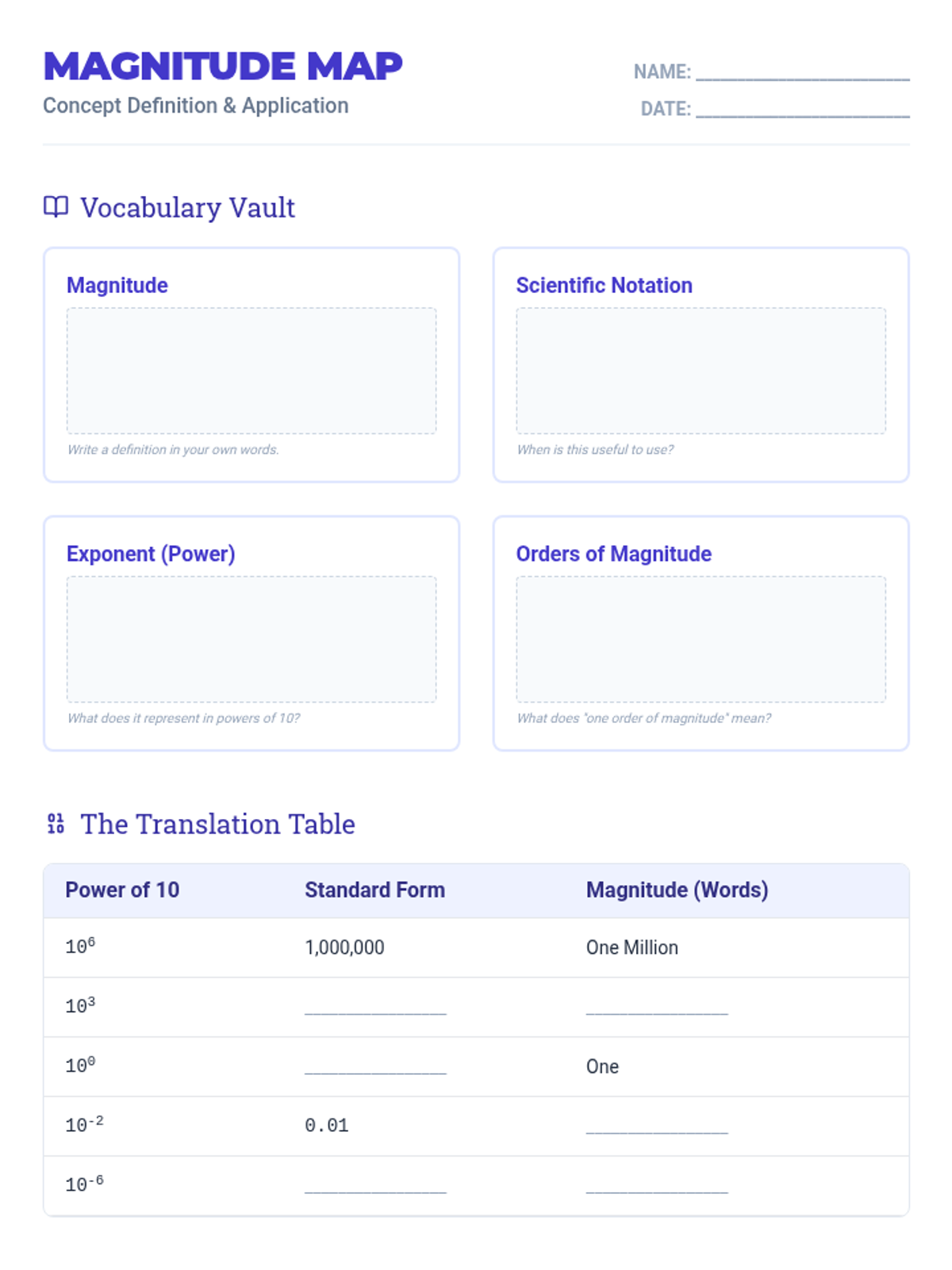
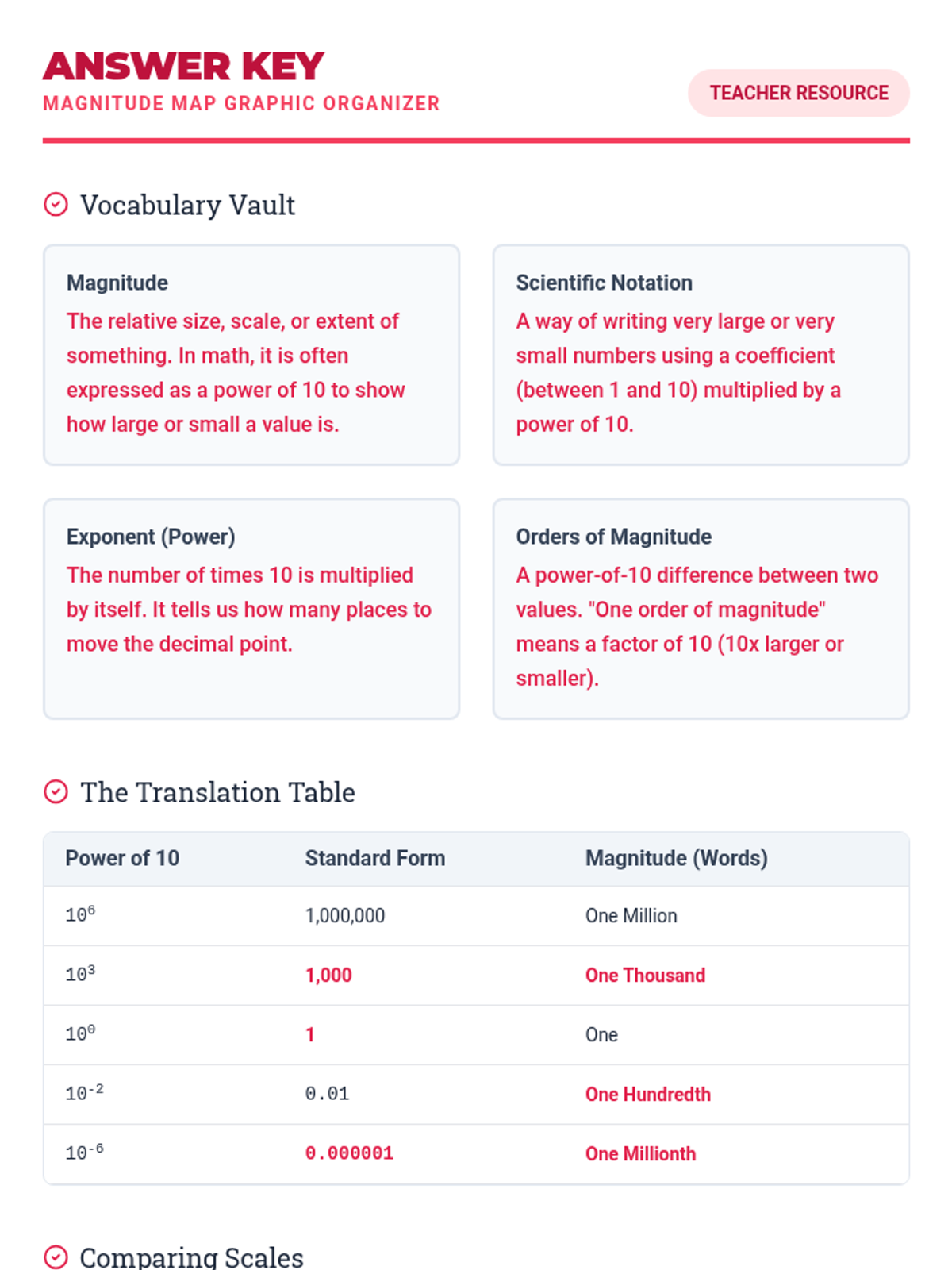
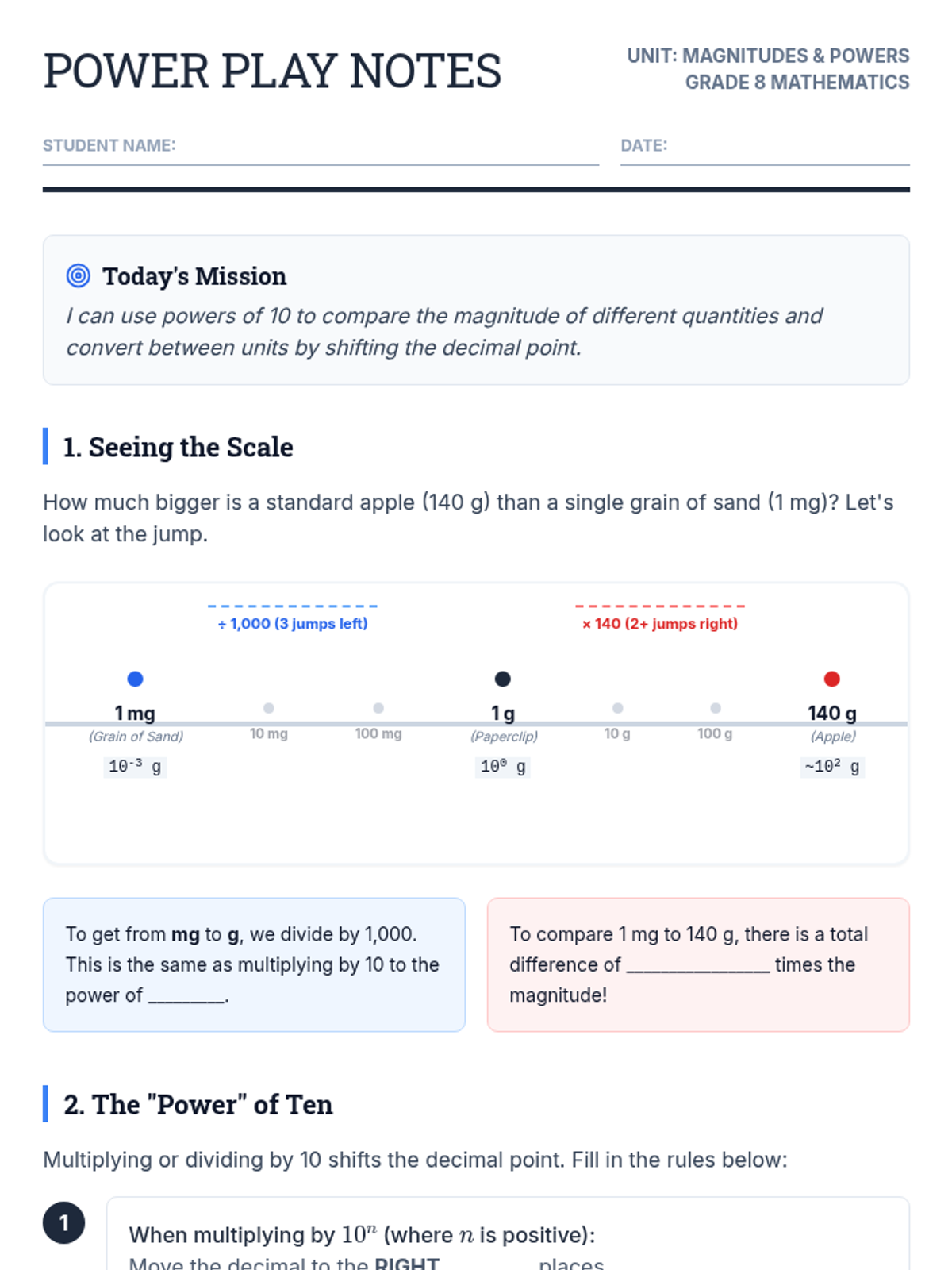
A lesson focused on understanding the magnitude of numbers through powers of 10, comparing small units like milligrams to larger quantities like grams using visual scales and scaffolded practice.
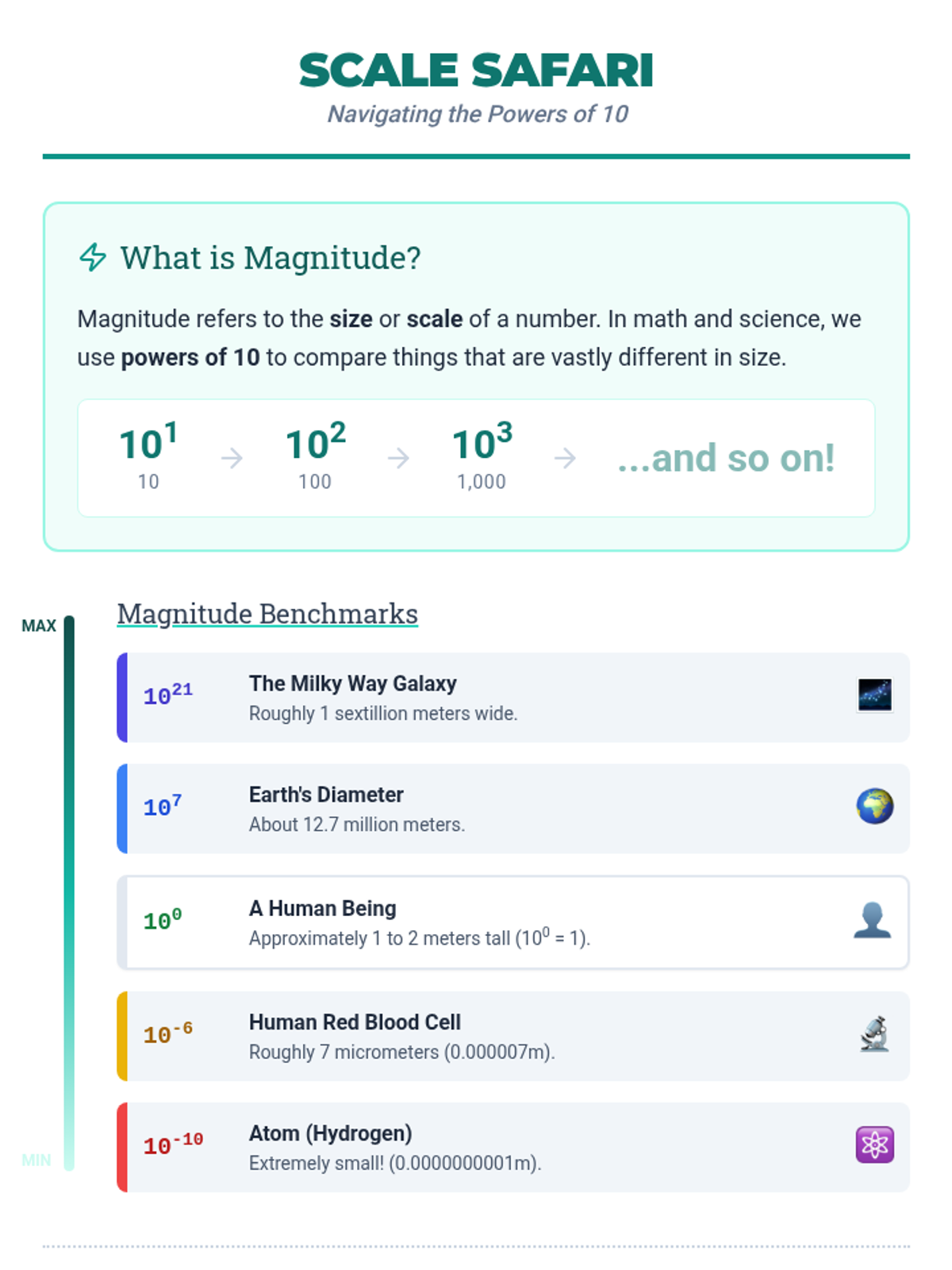
A comprehensive look at the powers of 10, scientific notation, and comparing the scale of objects from the microscopic to the cosmic. Students will learn to visualize and calculate magnitude differences.
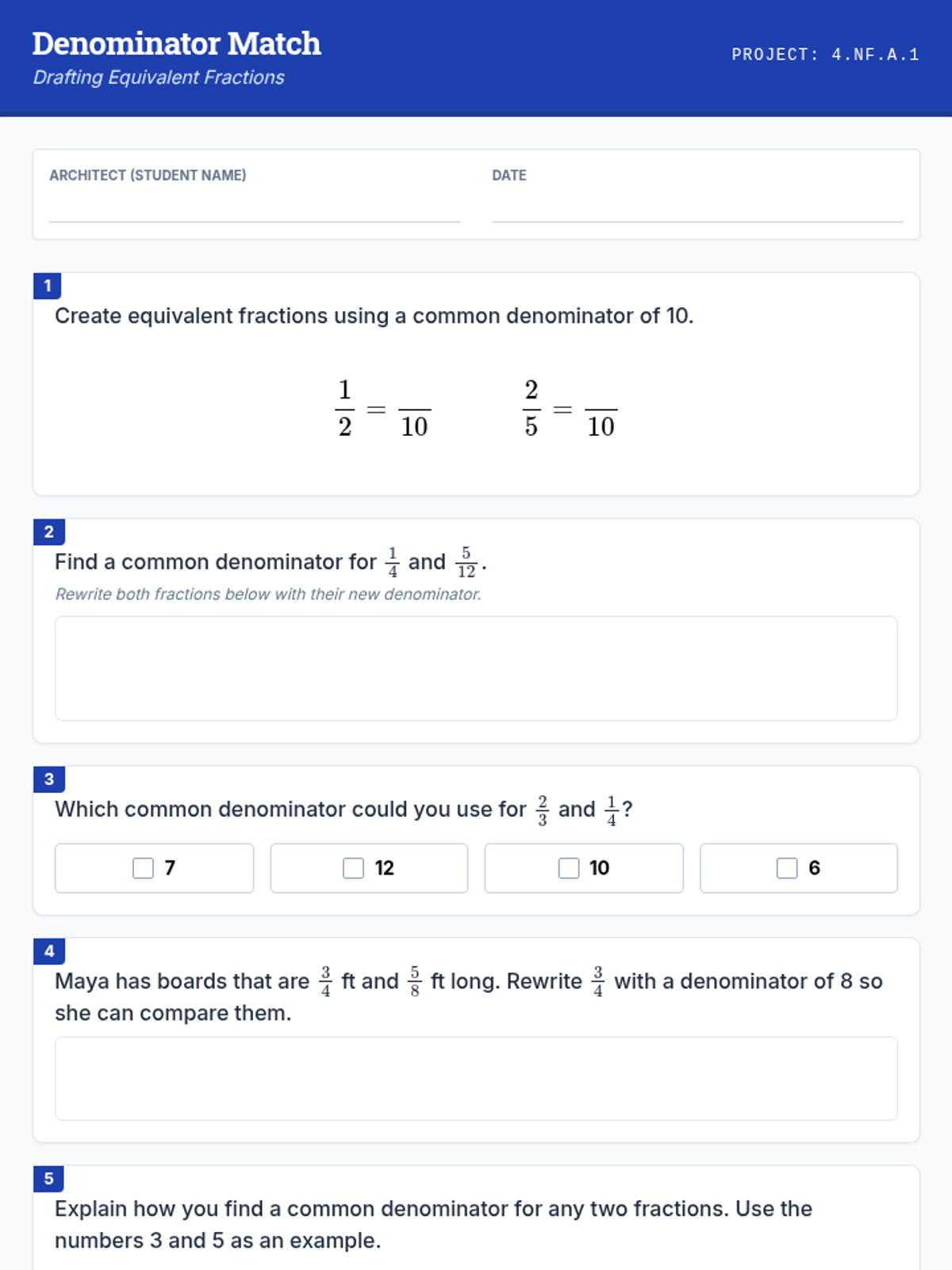
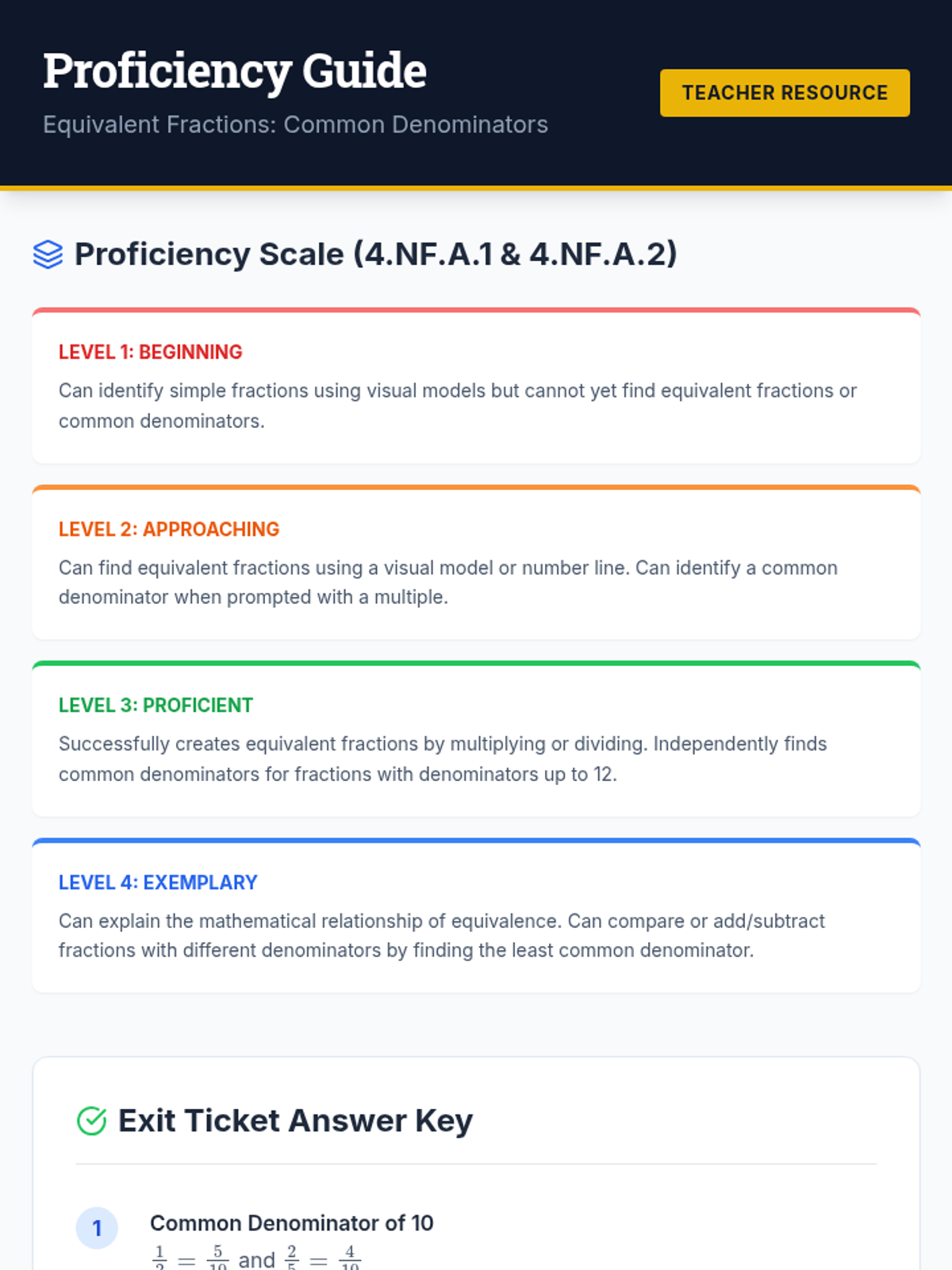
A short assessment focused on the 4th-grade skill of finding common denominators to create equivalent fractions. Includes a student exit ticket and a teacher proficiency guide.
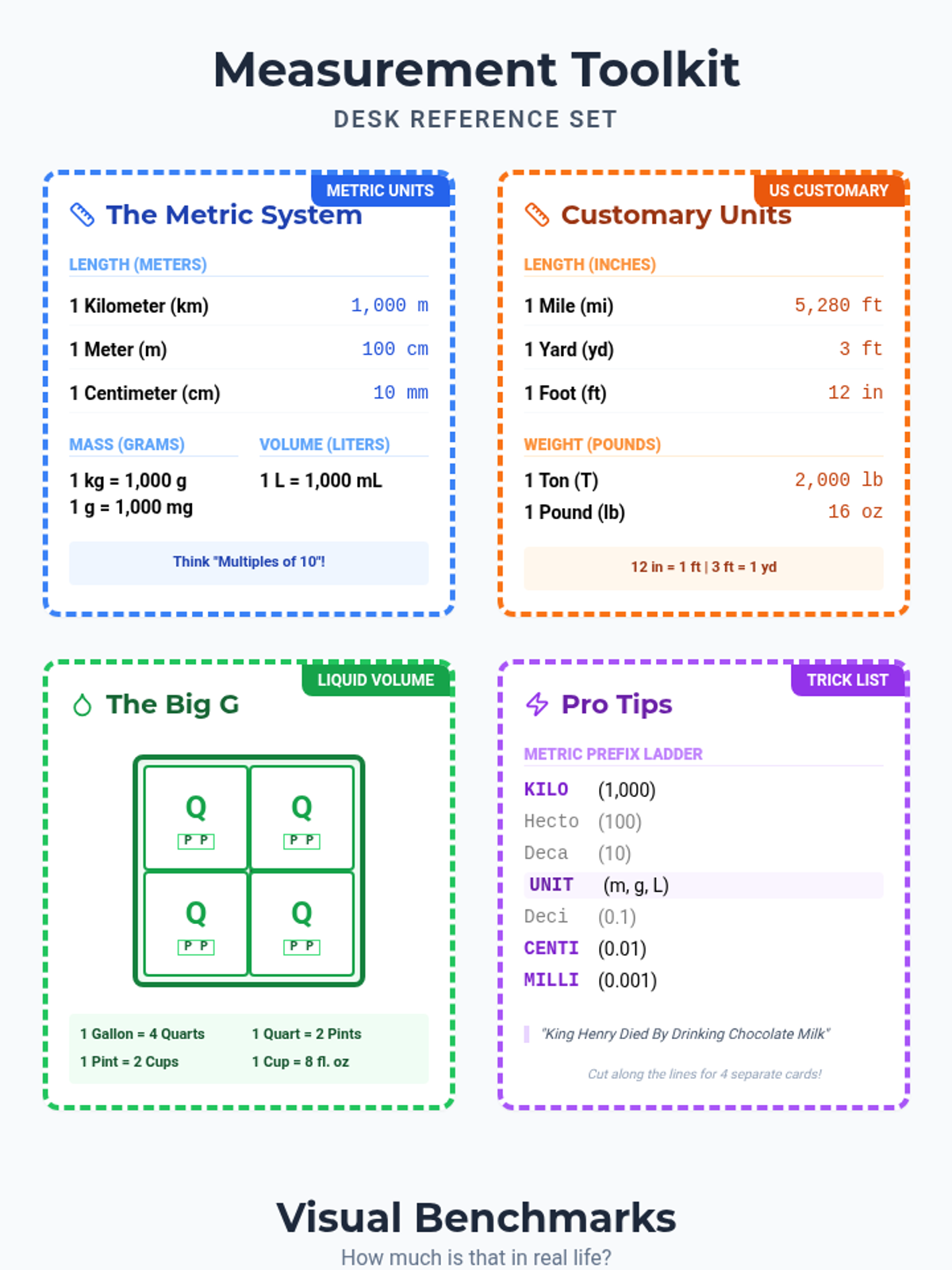
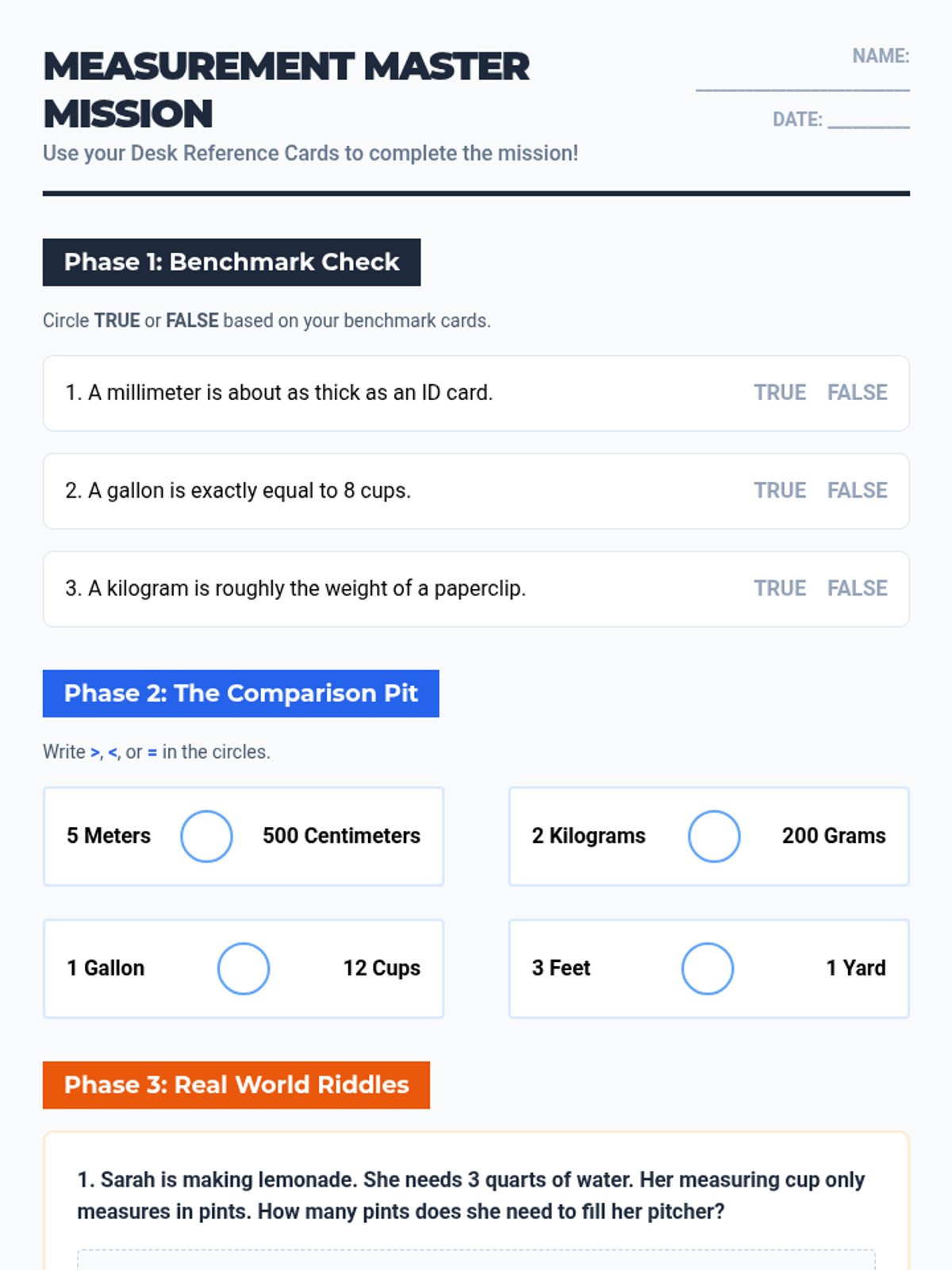
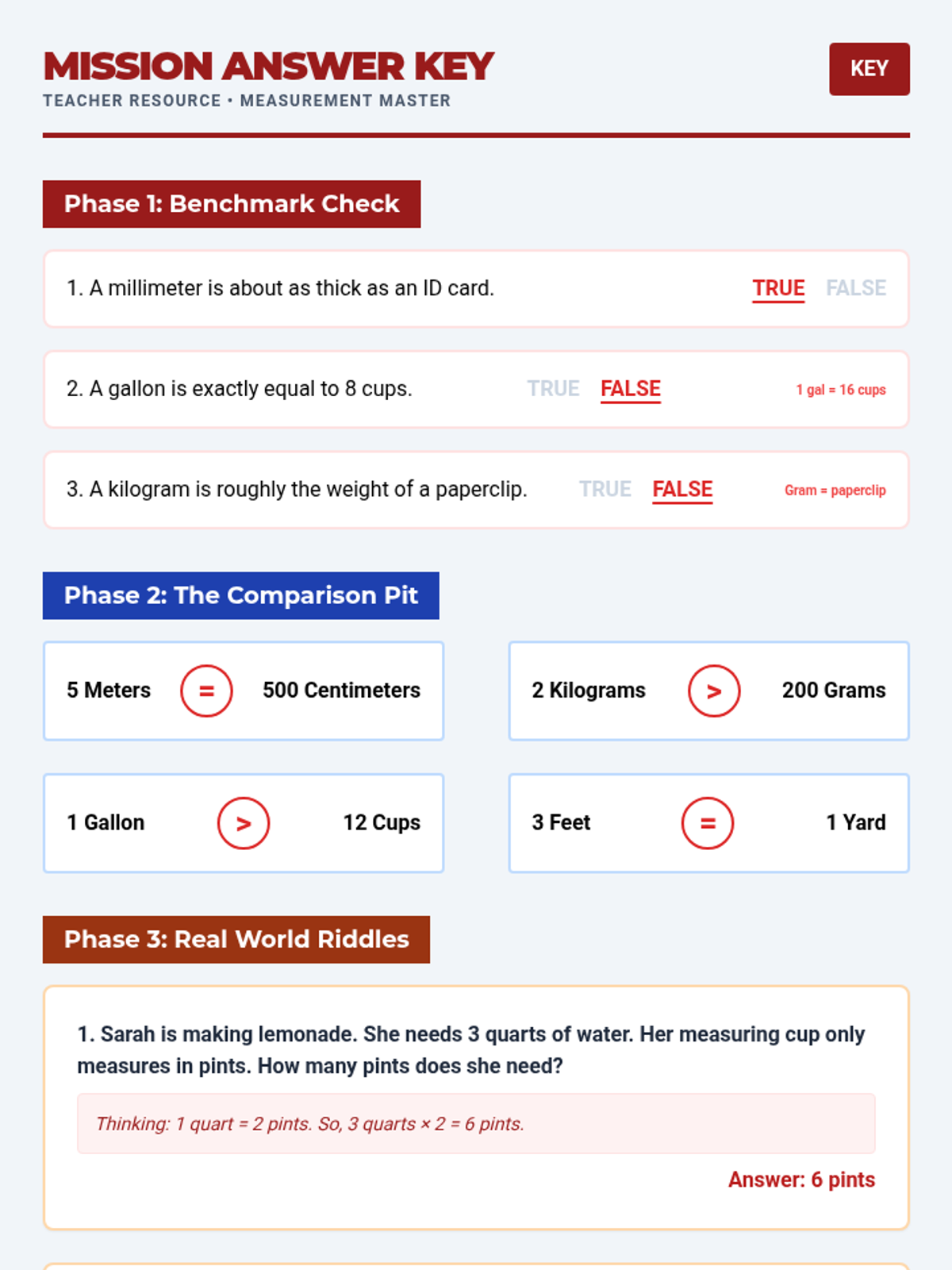
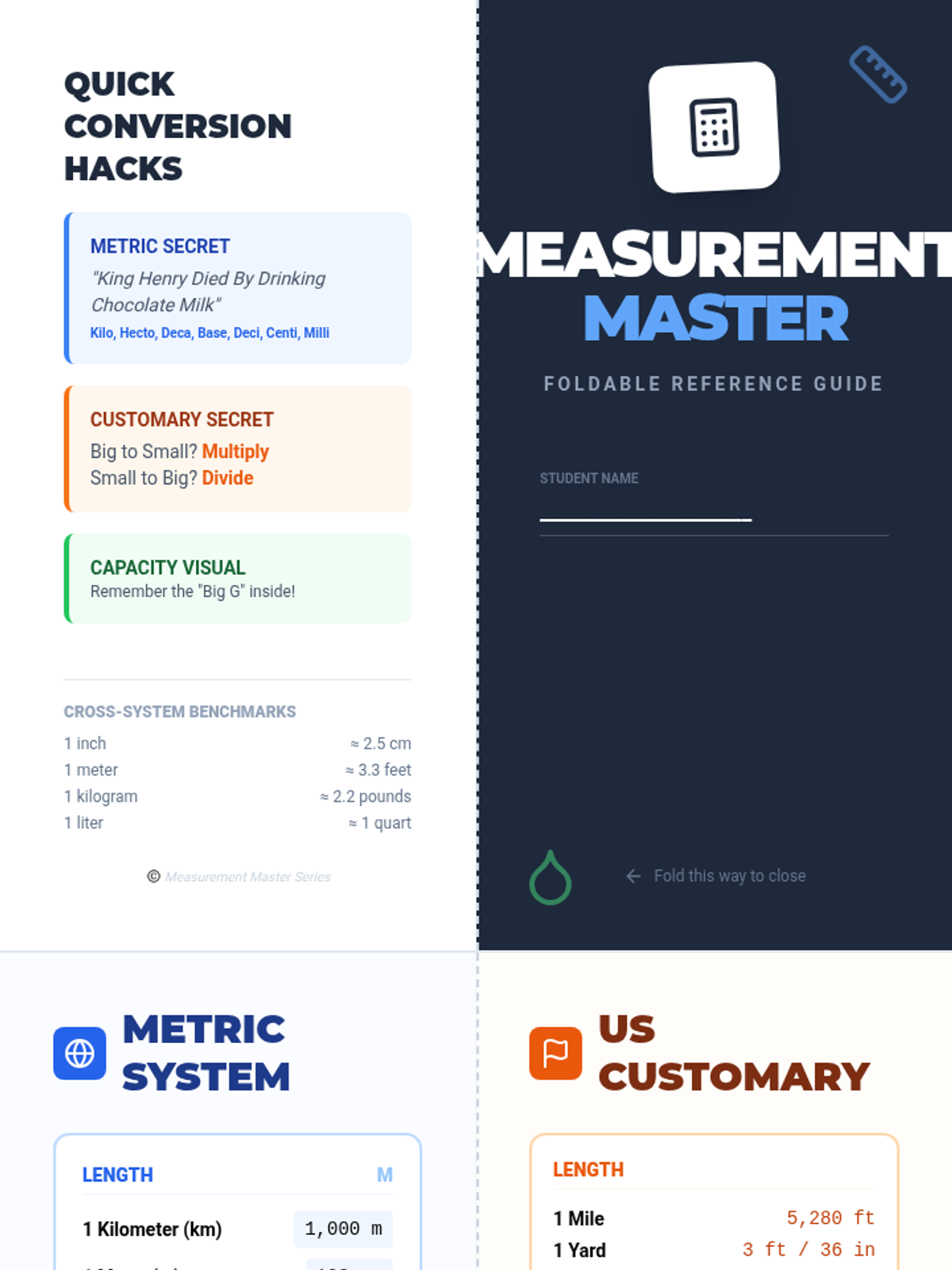
A comprehensive set of visual reference cards for both Metric and US Customary systems of measurement, designed for student desks or notebooks.
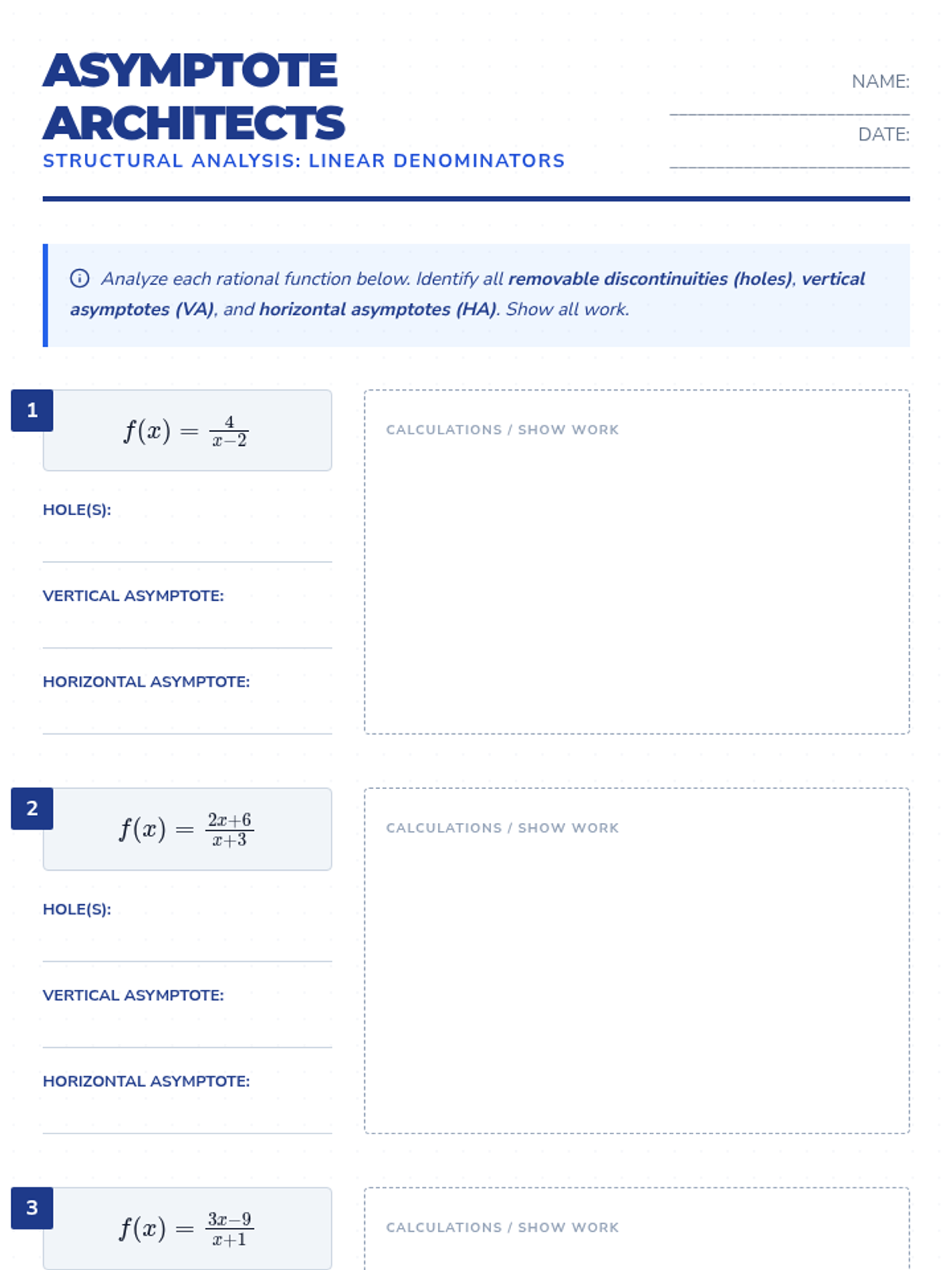
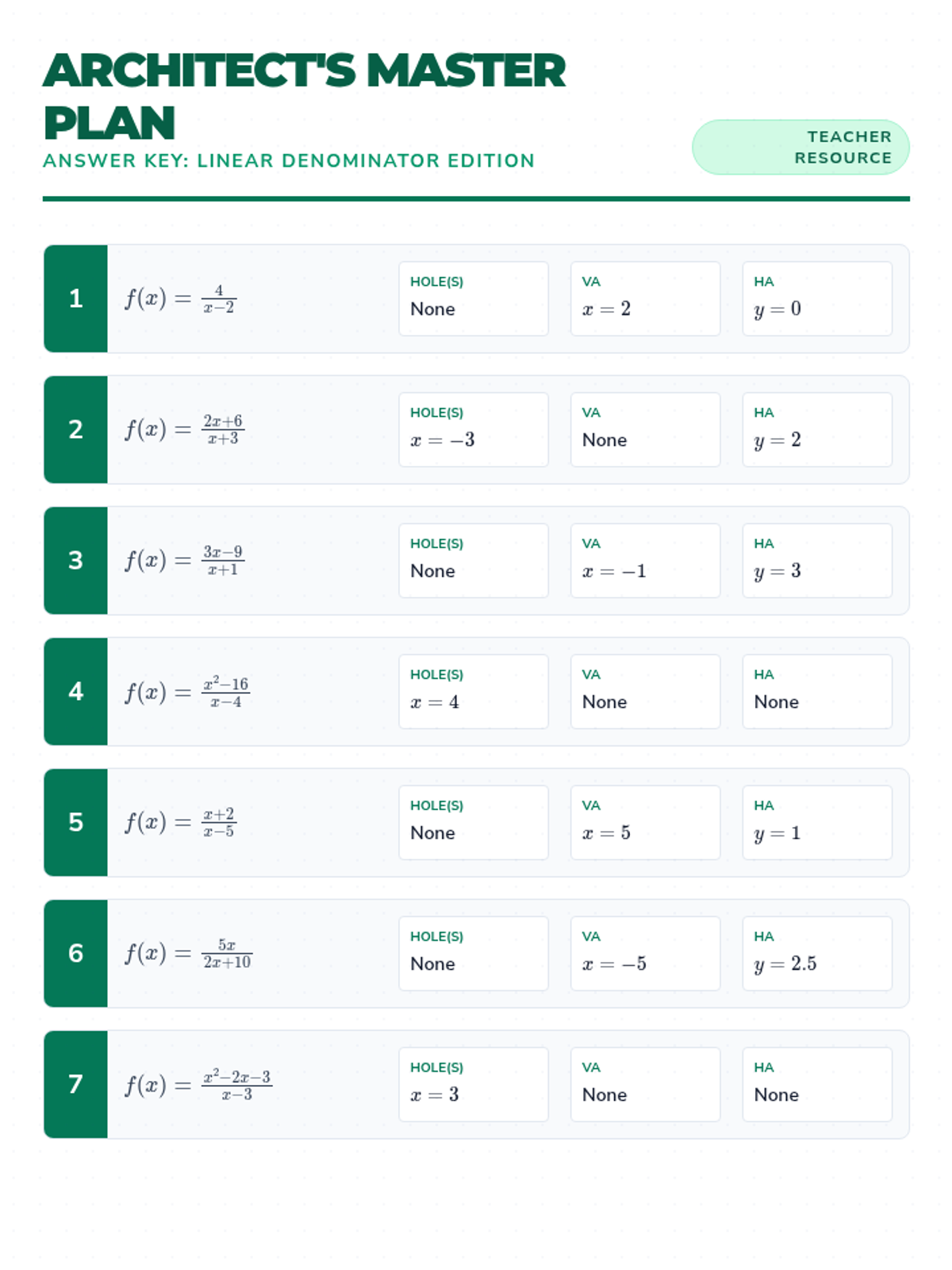
A comprehensive lesson on identifying and calculating vertical asymptotes, horizontal asymptotes, and removable discontinuities (holes) in rational functions. Students will practice factoring and simplifying functions to reveal their underlying structure.
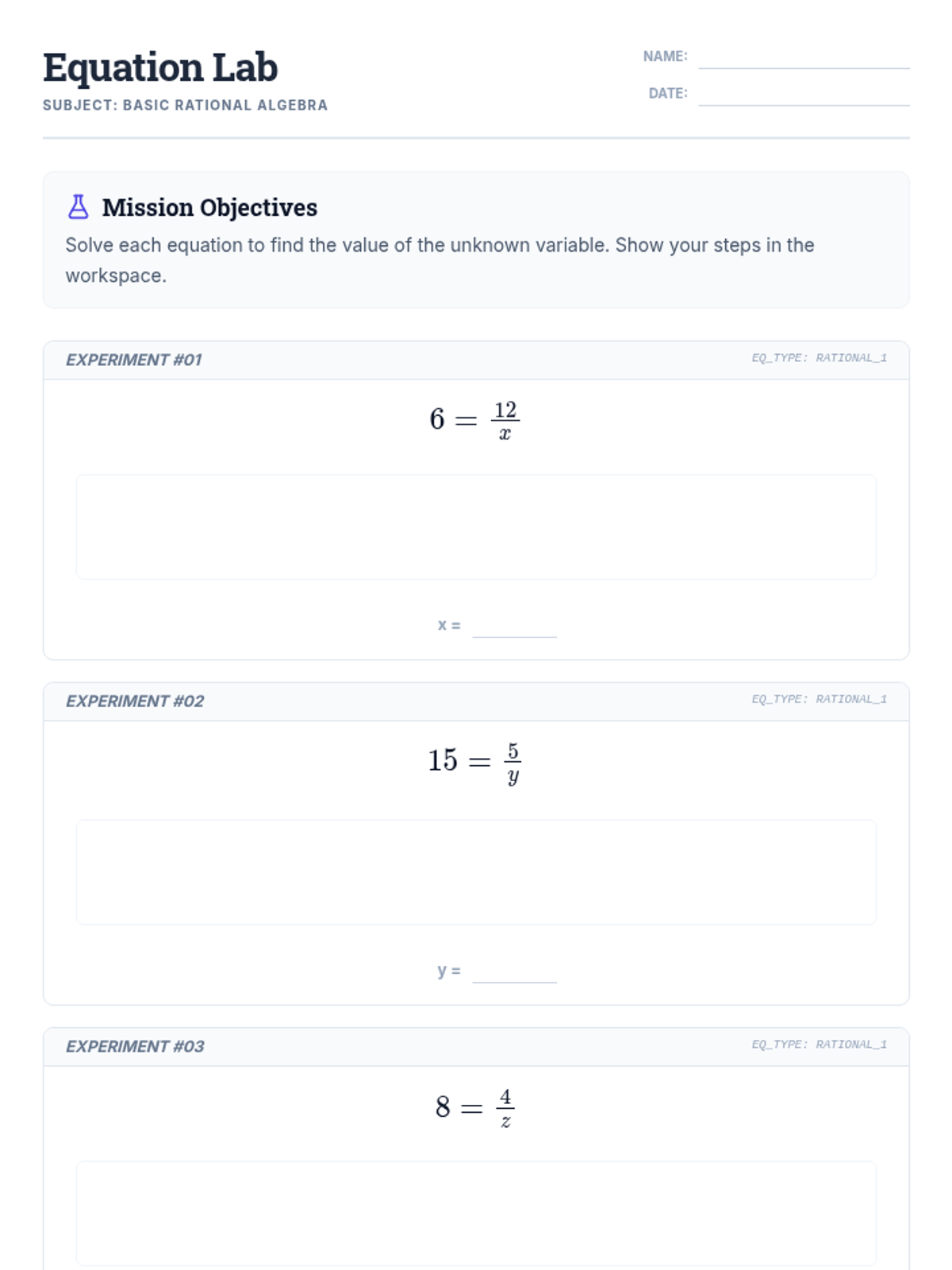
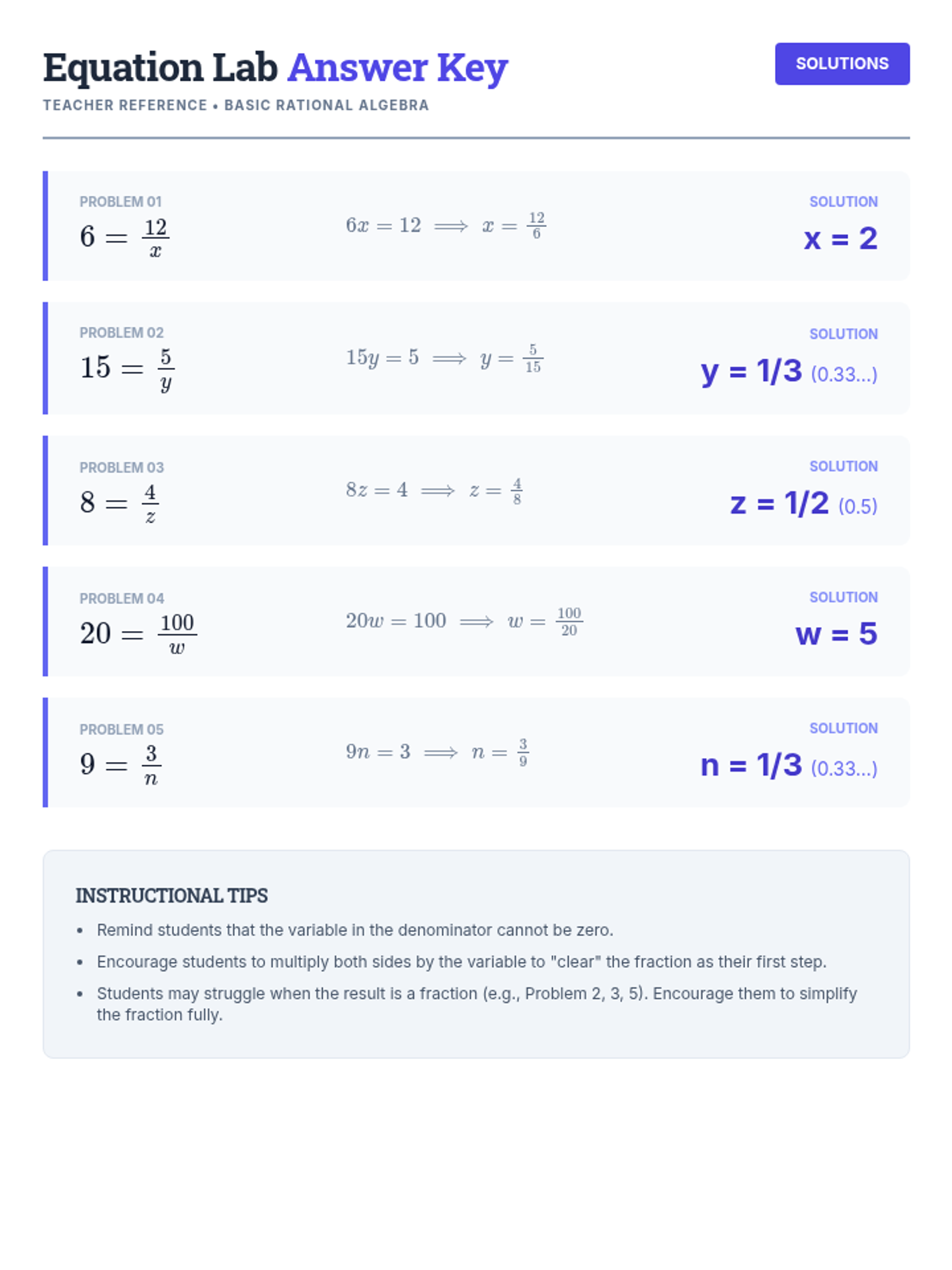
A quick practice set focused on solving basic rational equations where a single variable is in the denominator. Students will develop their algebraic manipulation skills to isolate the variable and find solutions.
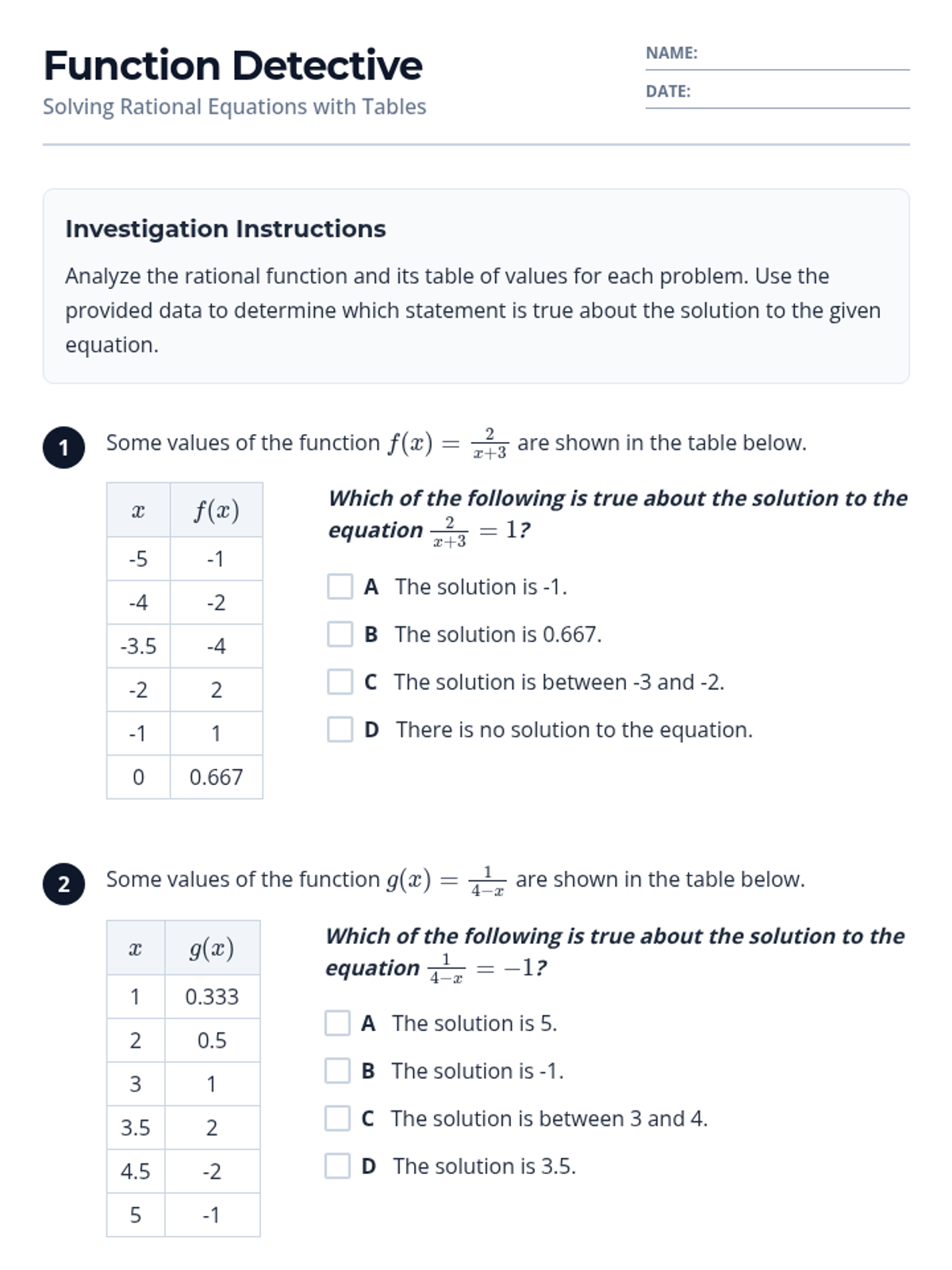
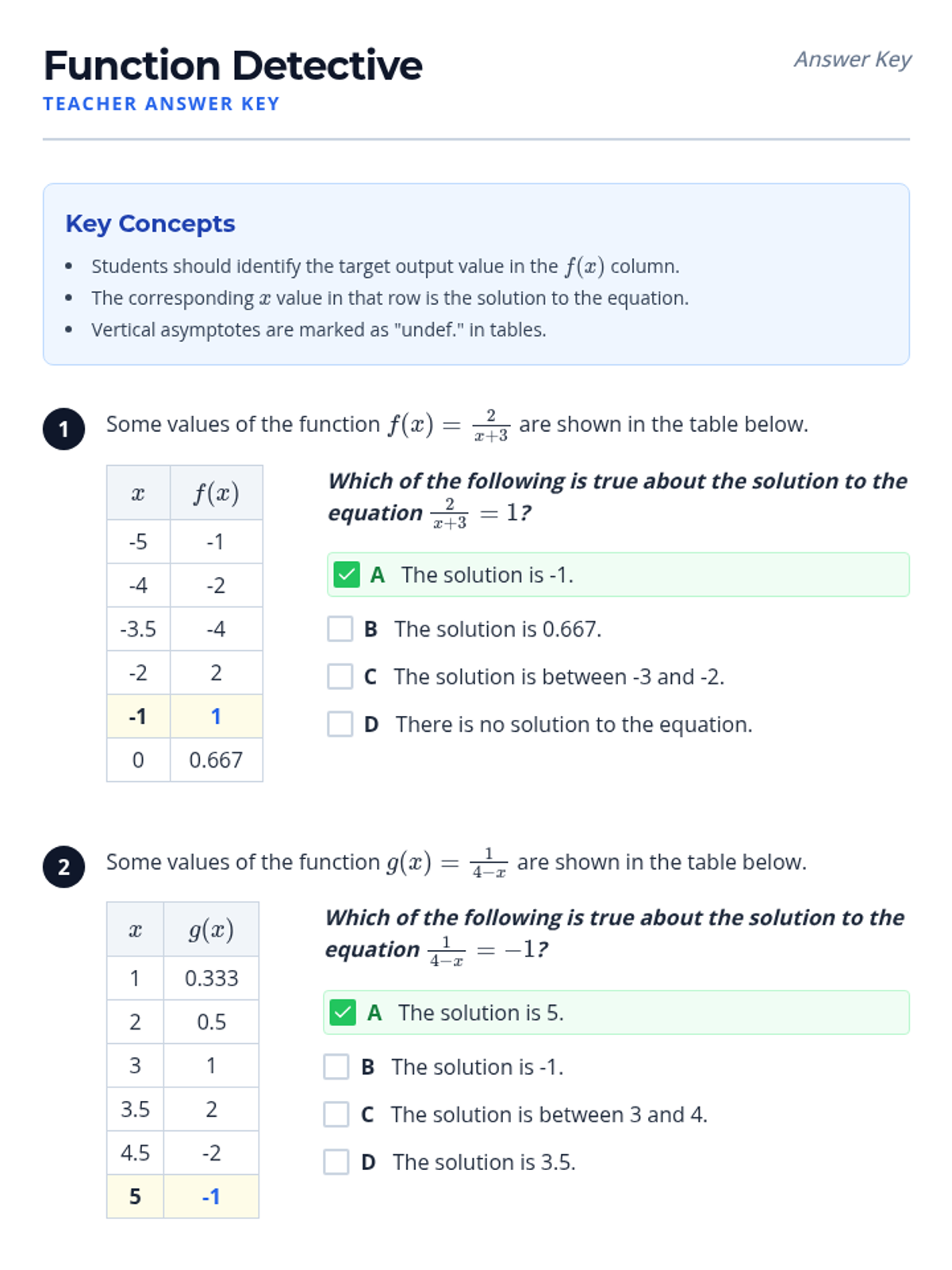
A practice lesson focusing on identifying solutions to rational equations using function tables. Students analyze given functions and their corresponding tables to find specific x-values for target outputs.
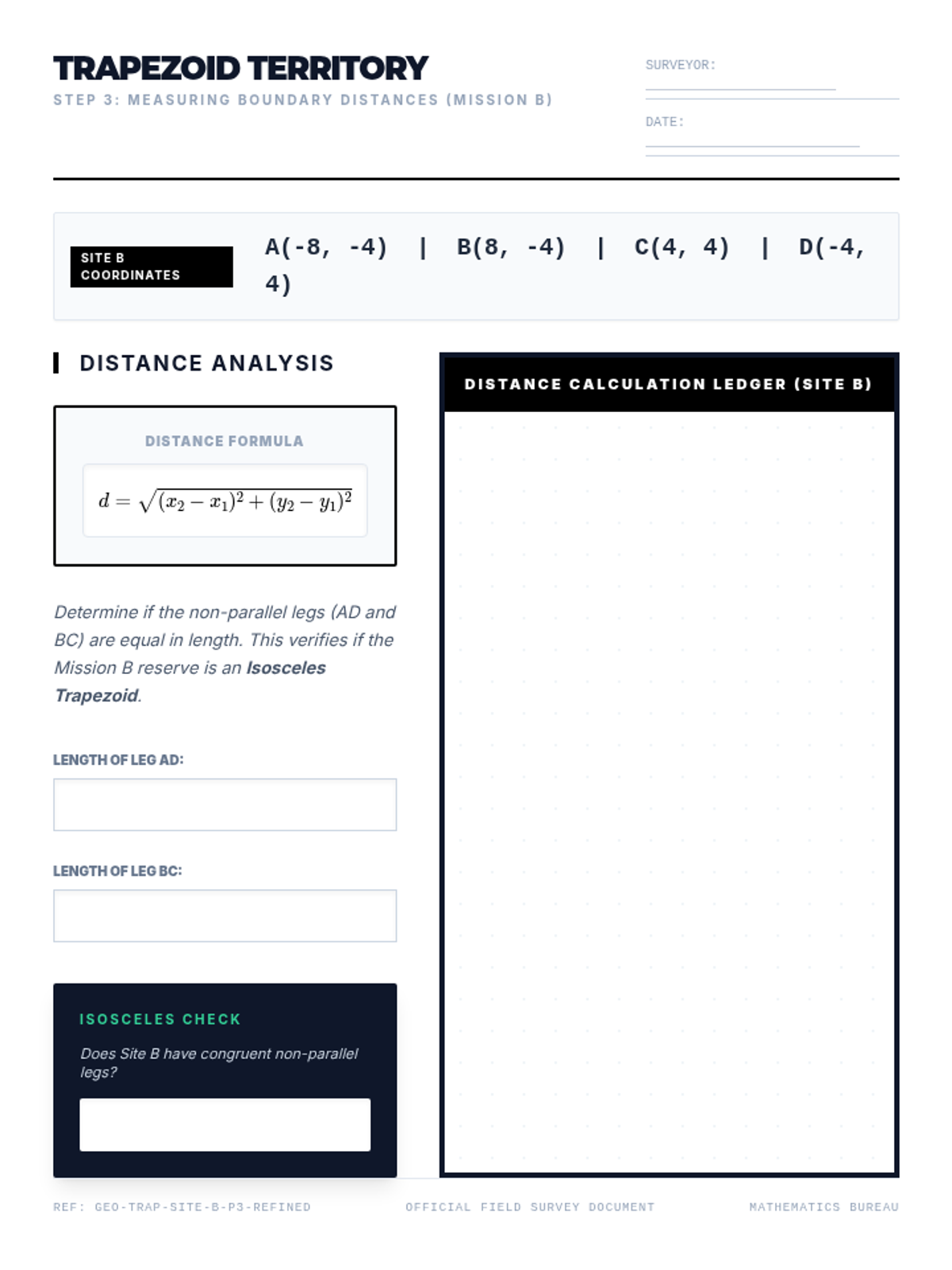
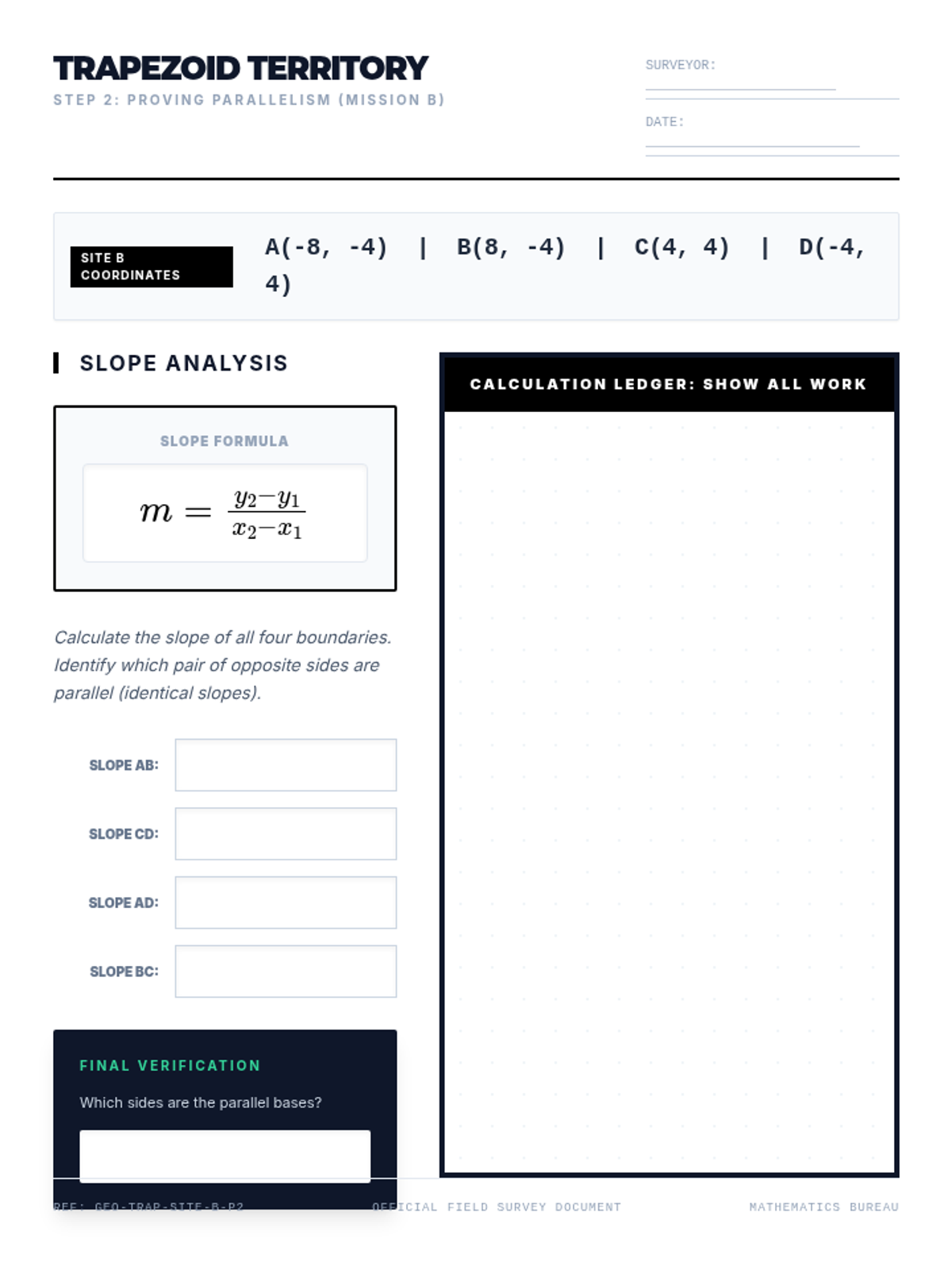
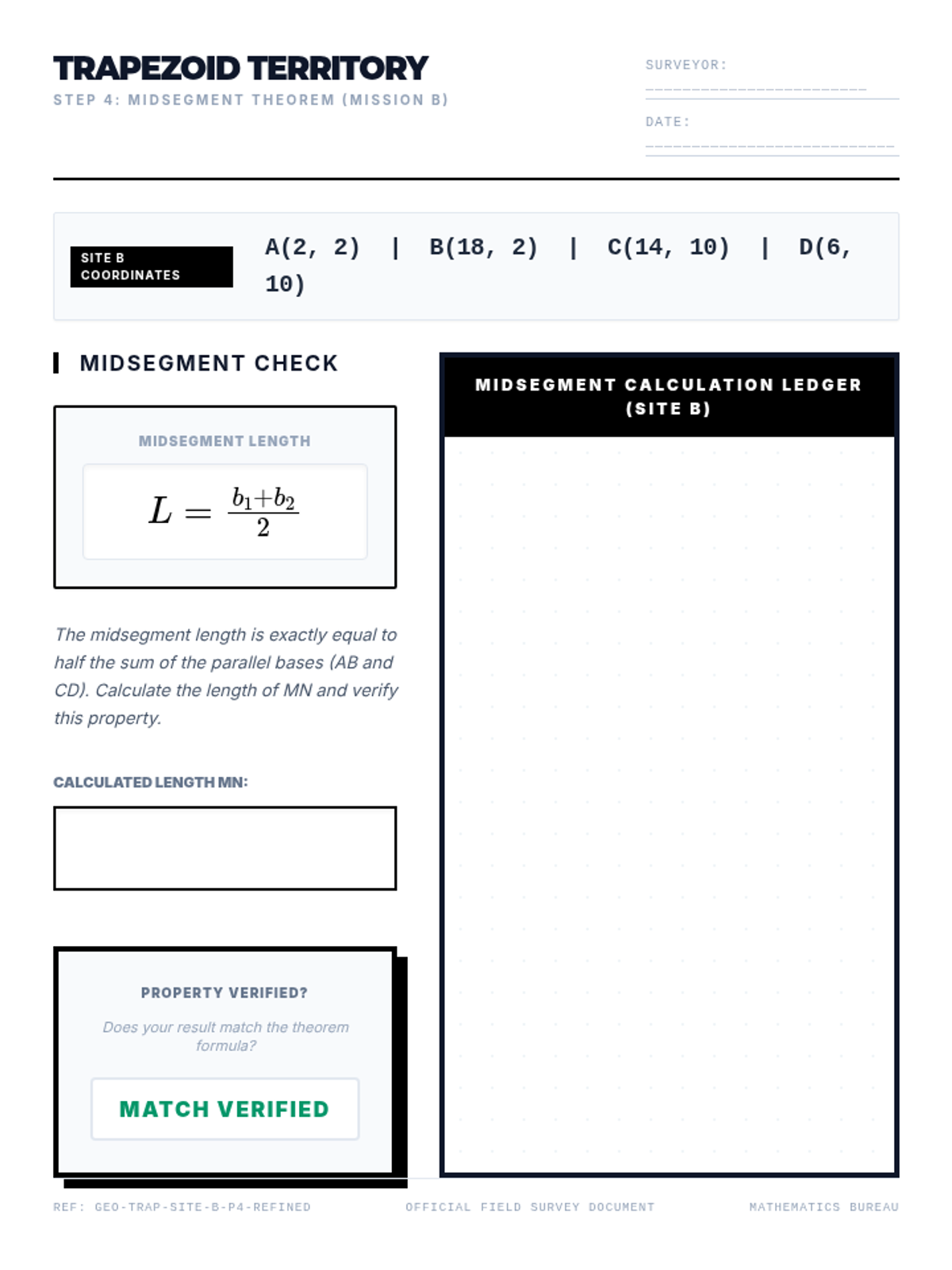
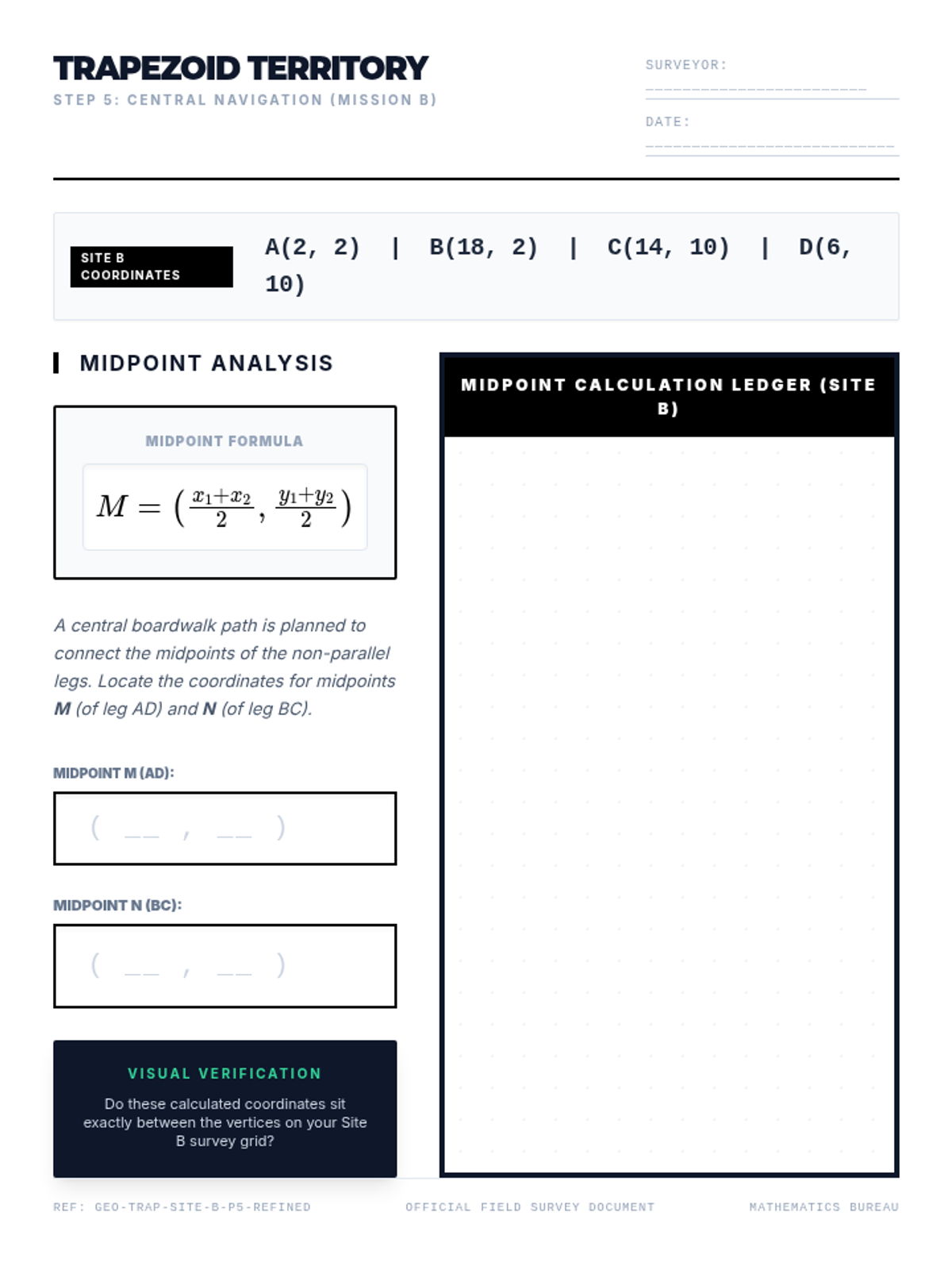
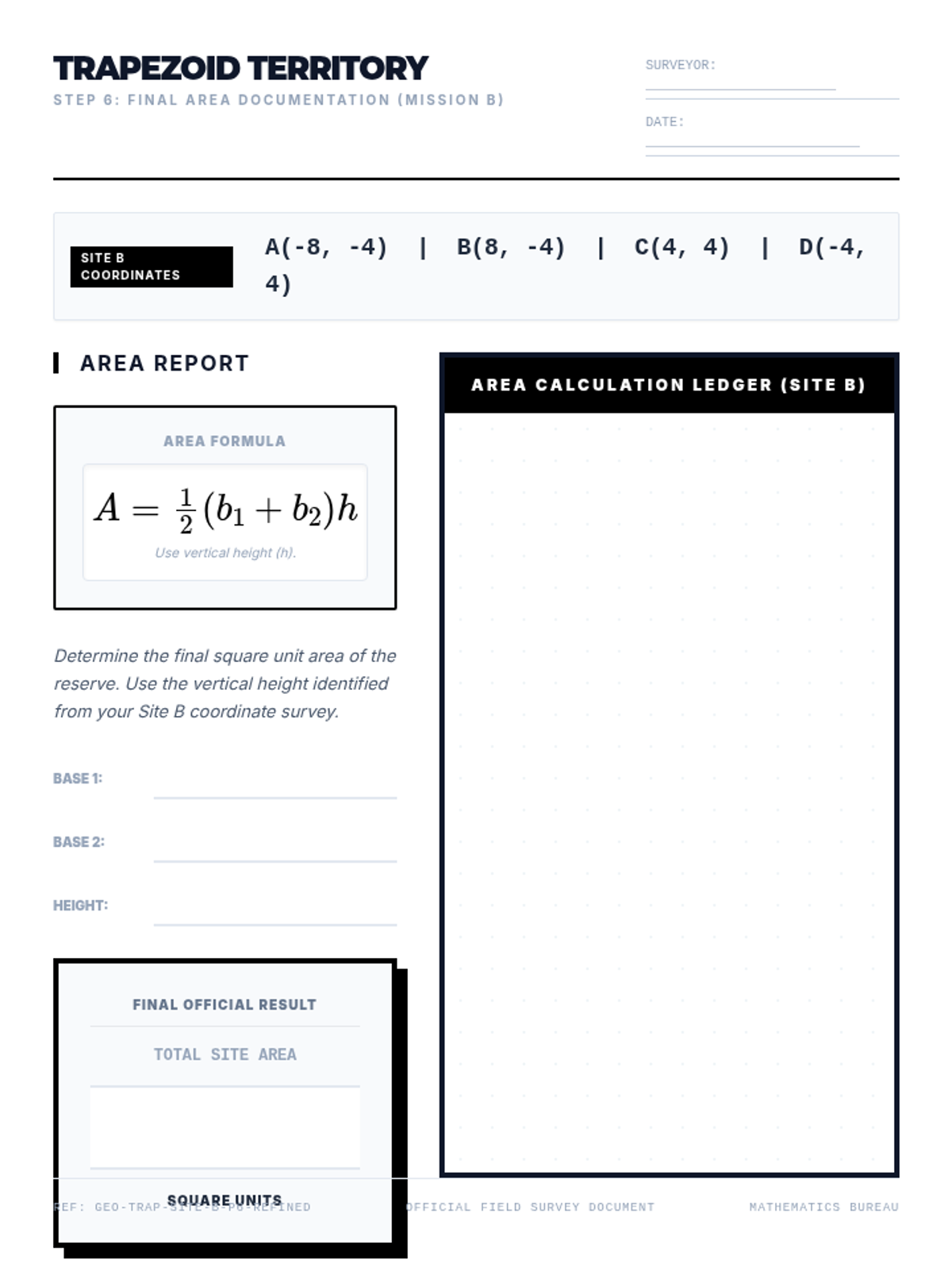
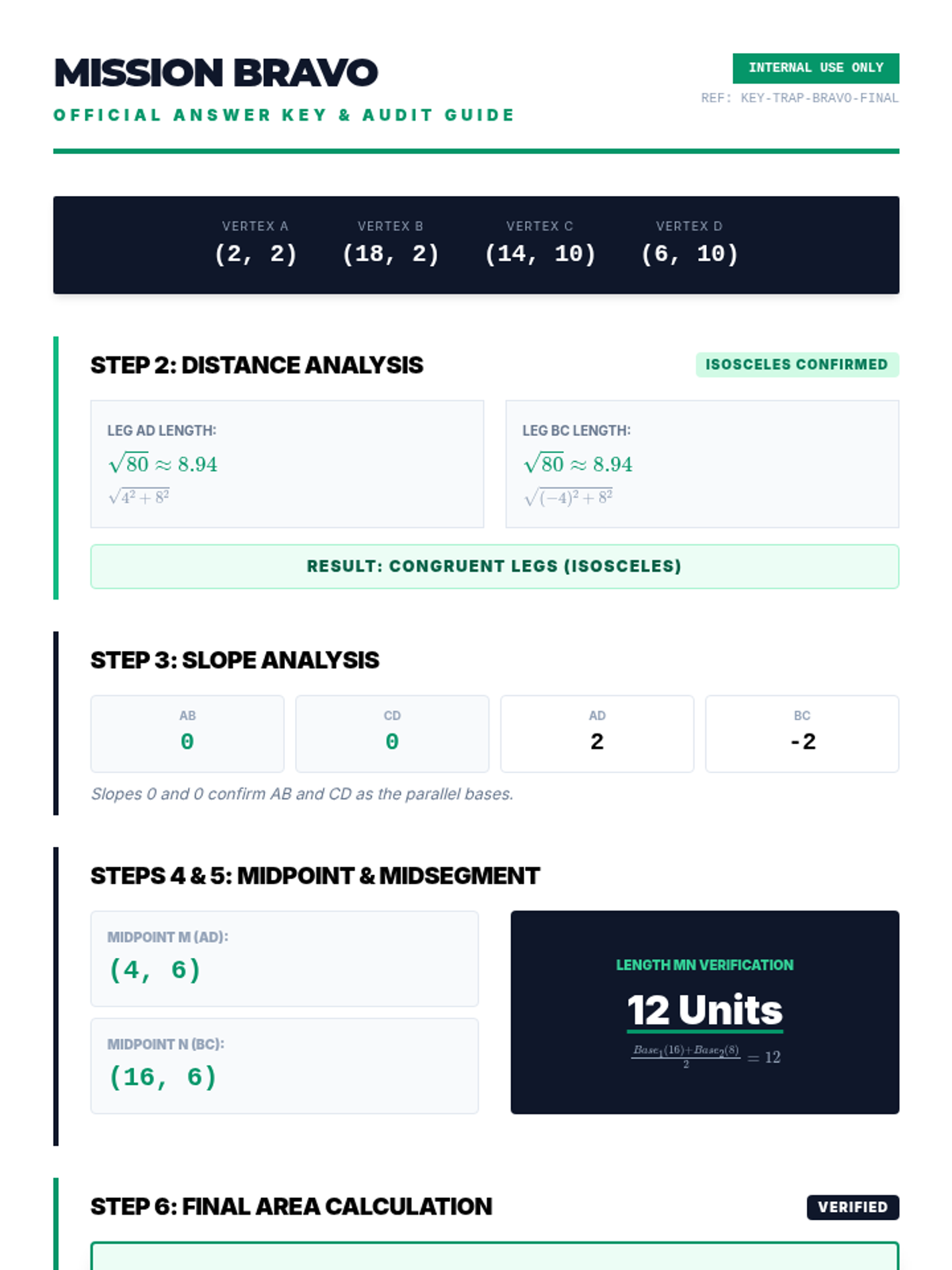
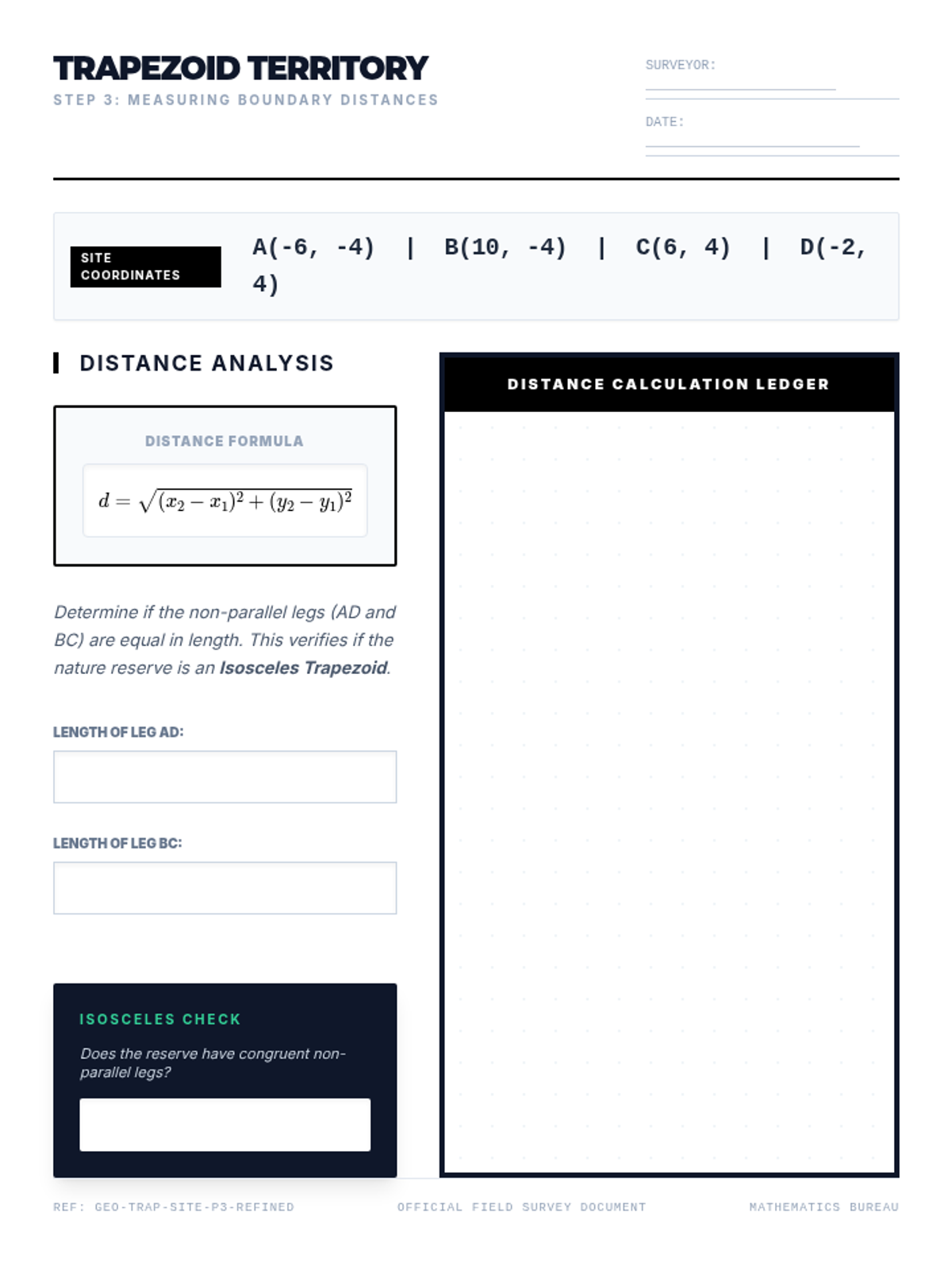
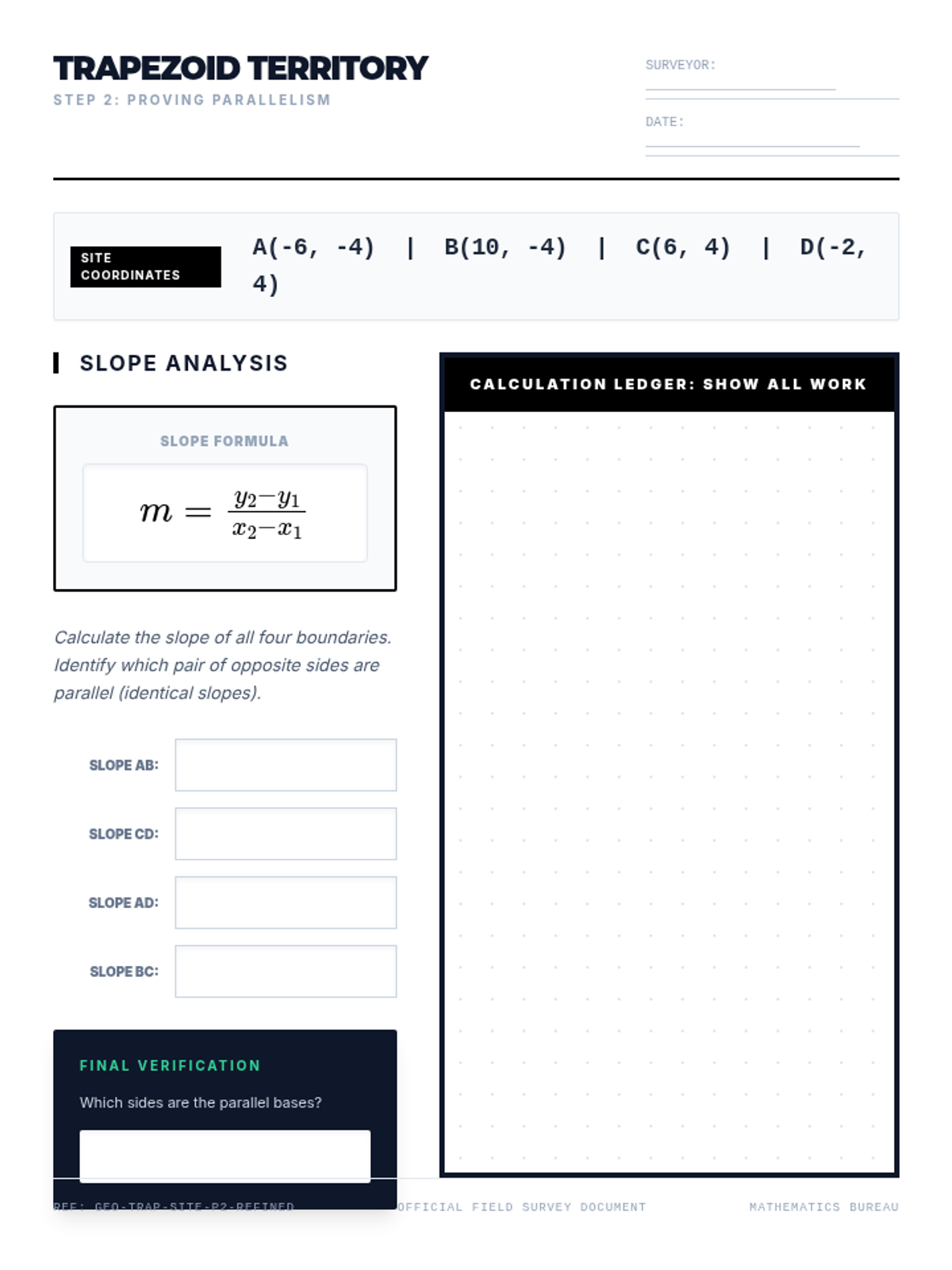
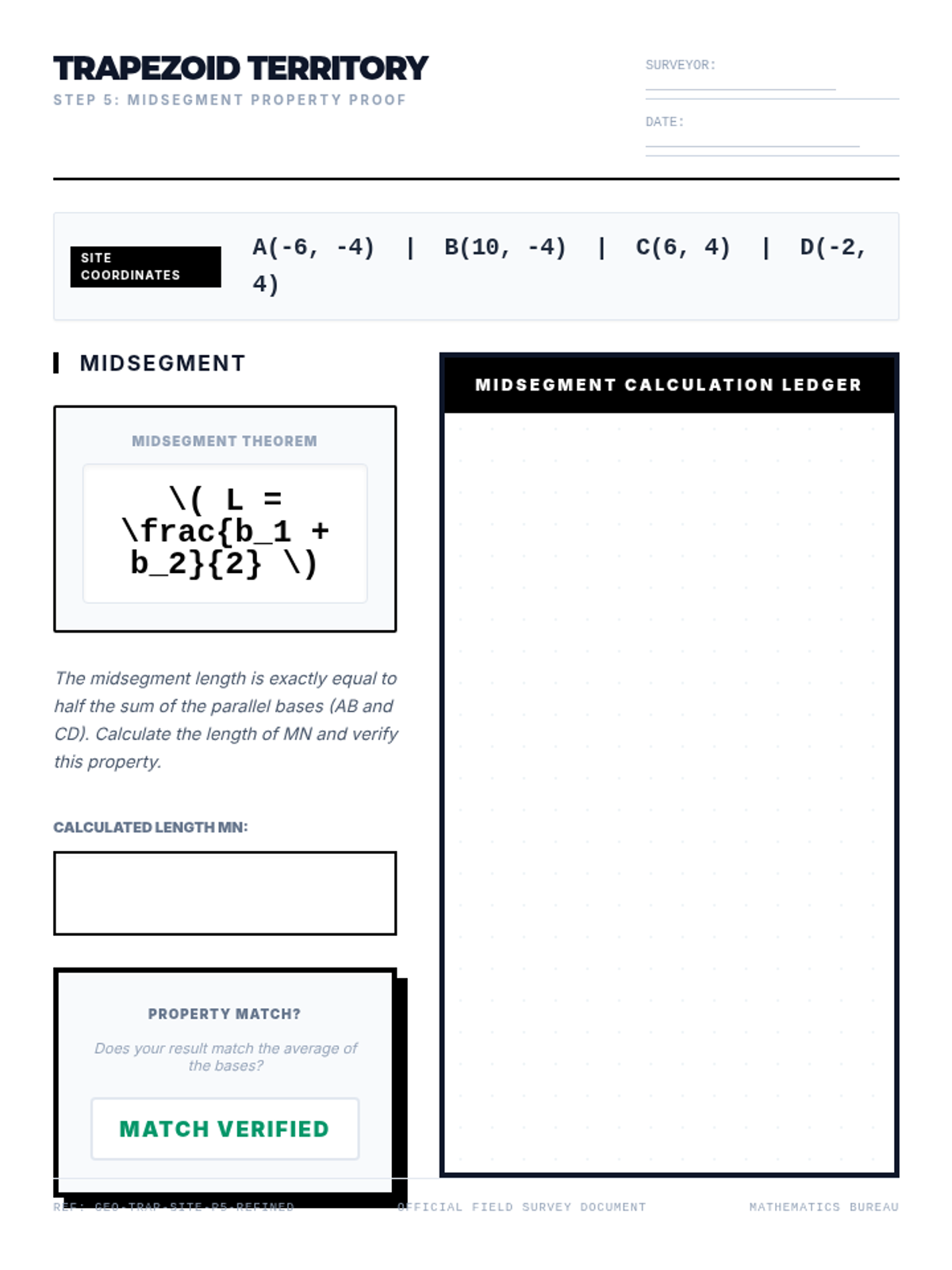
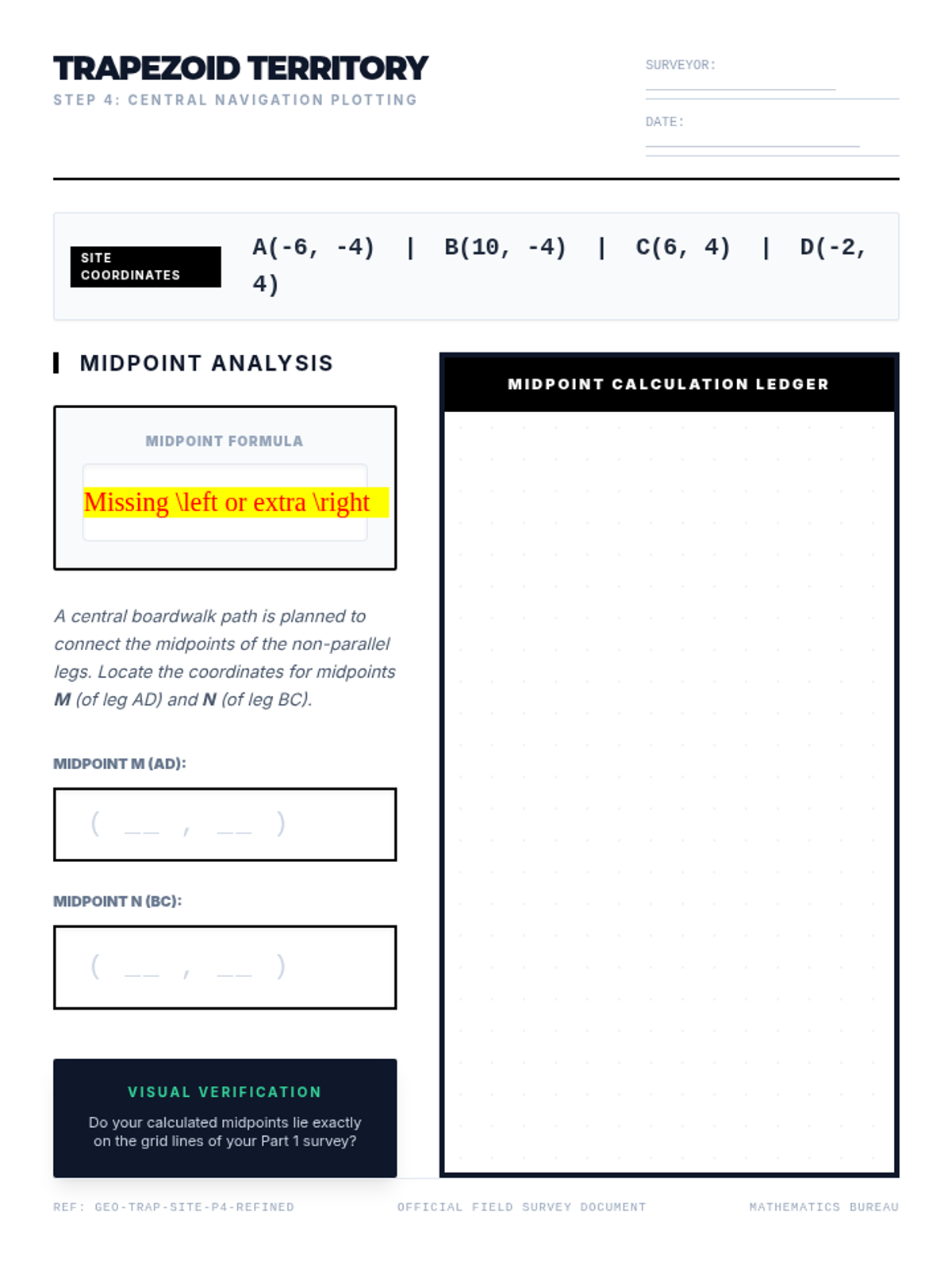
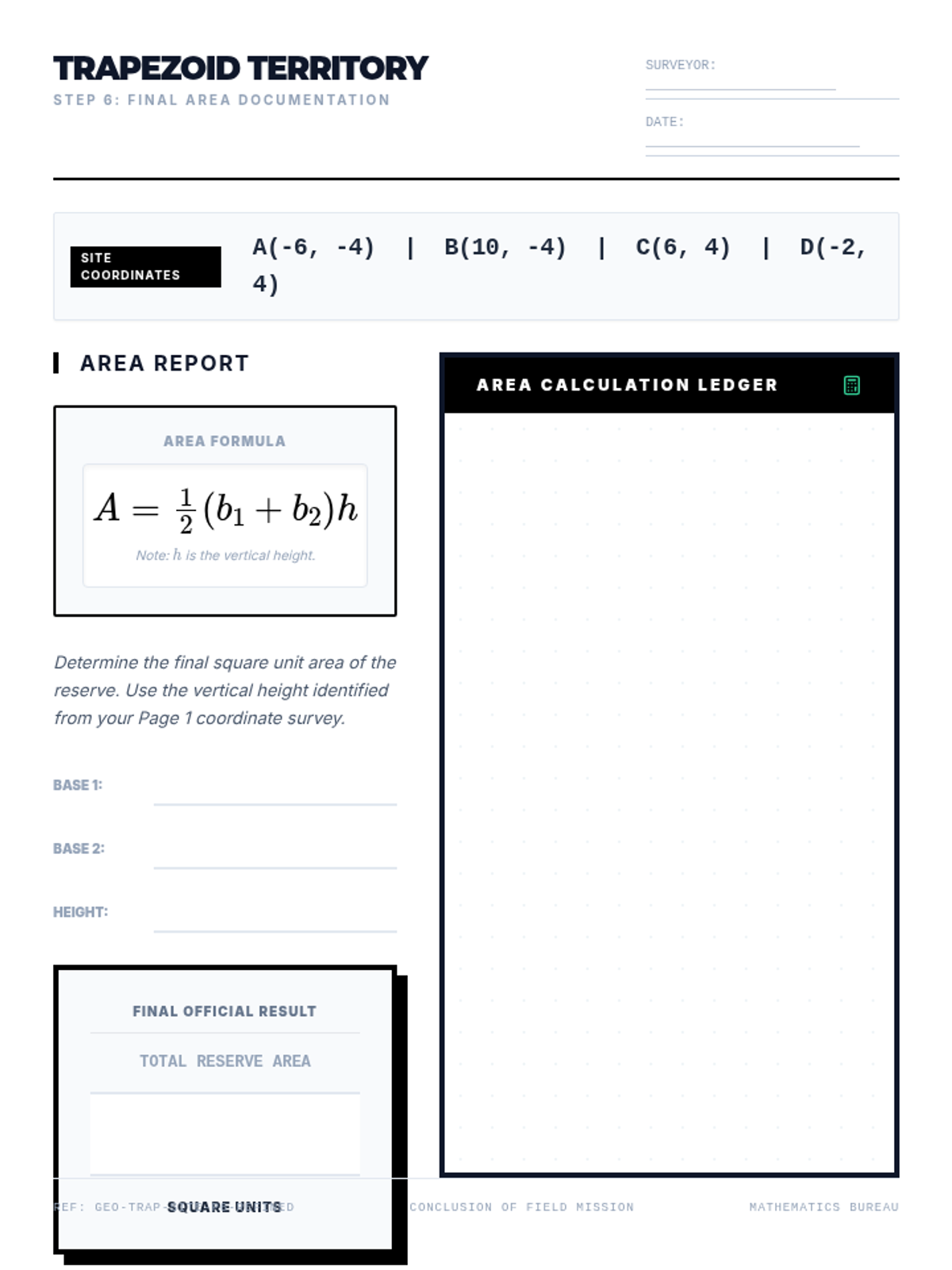
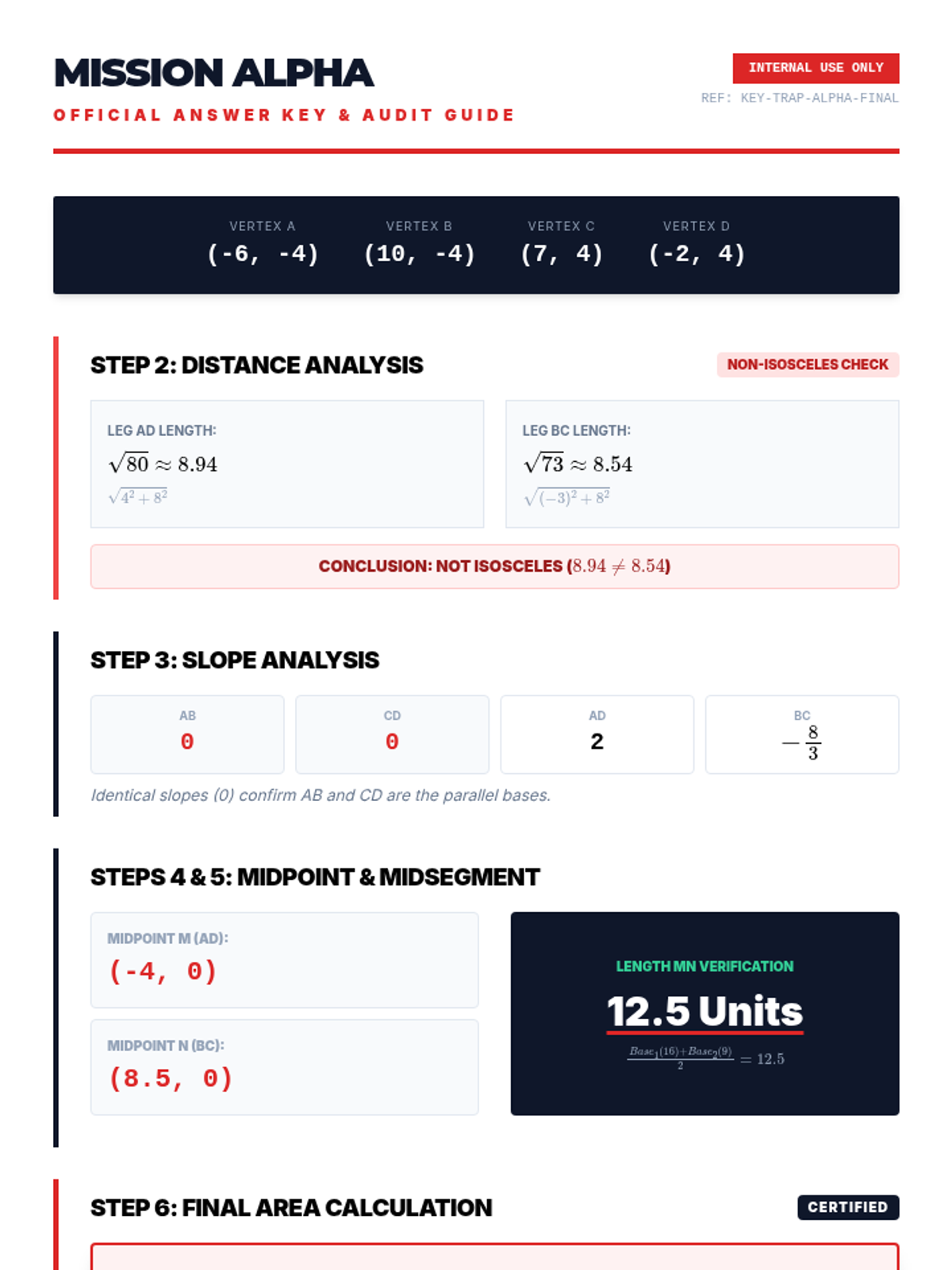
An alternate version of the Trapezoid Territory mission featuring a larger plot of land and new coordinate data. Students continue to apply coordinate geometry formulas for survey verification.
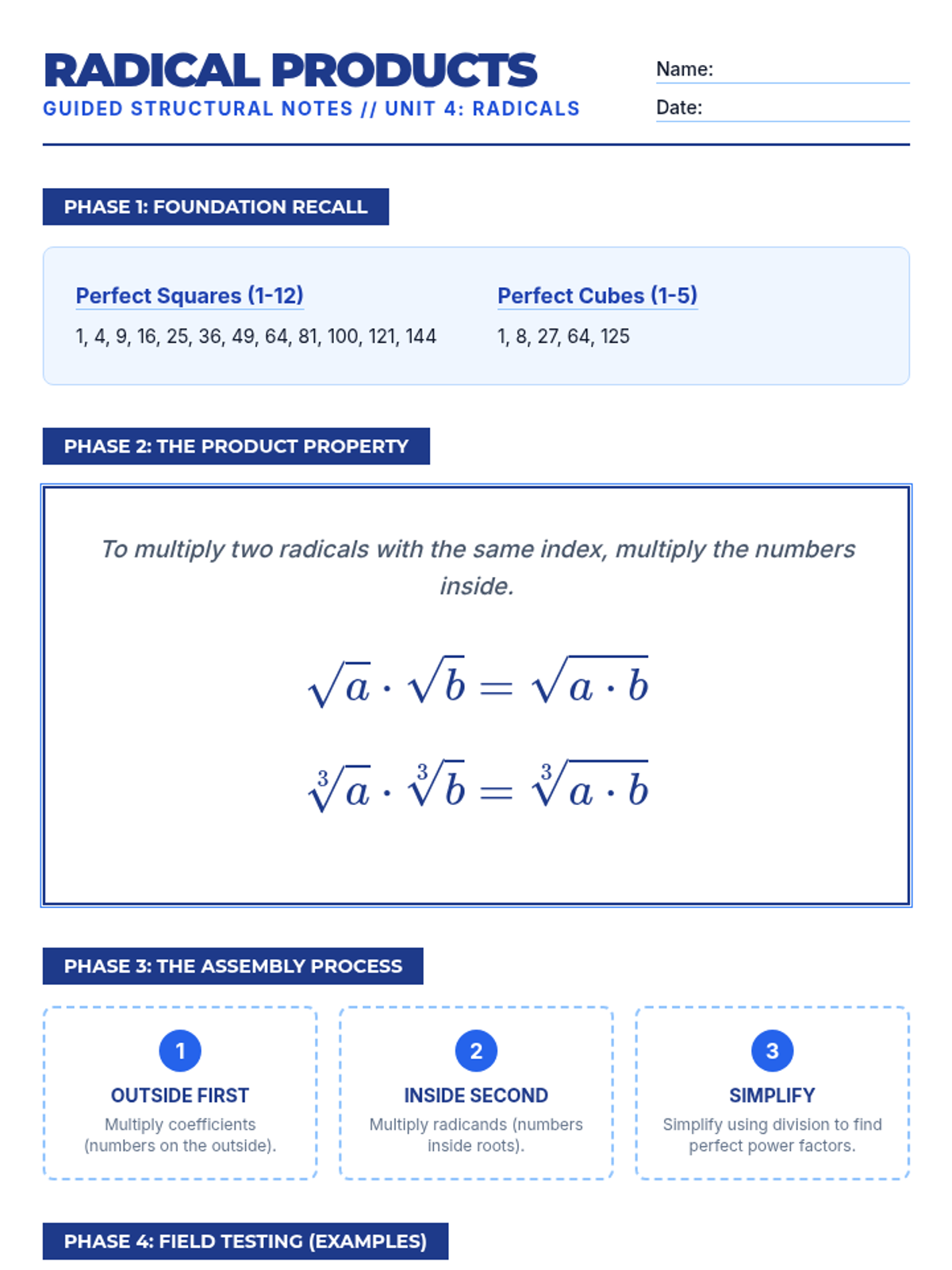
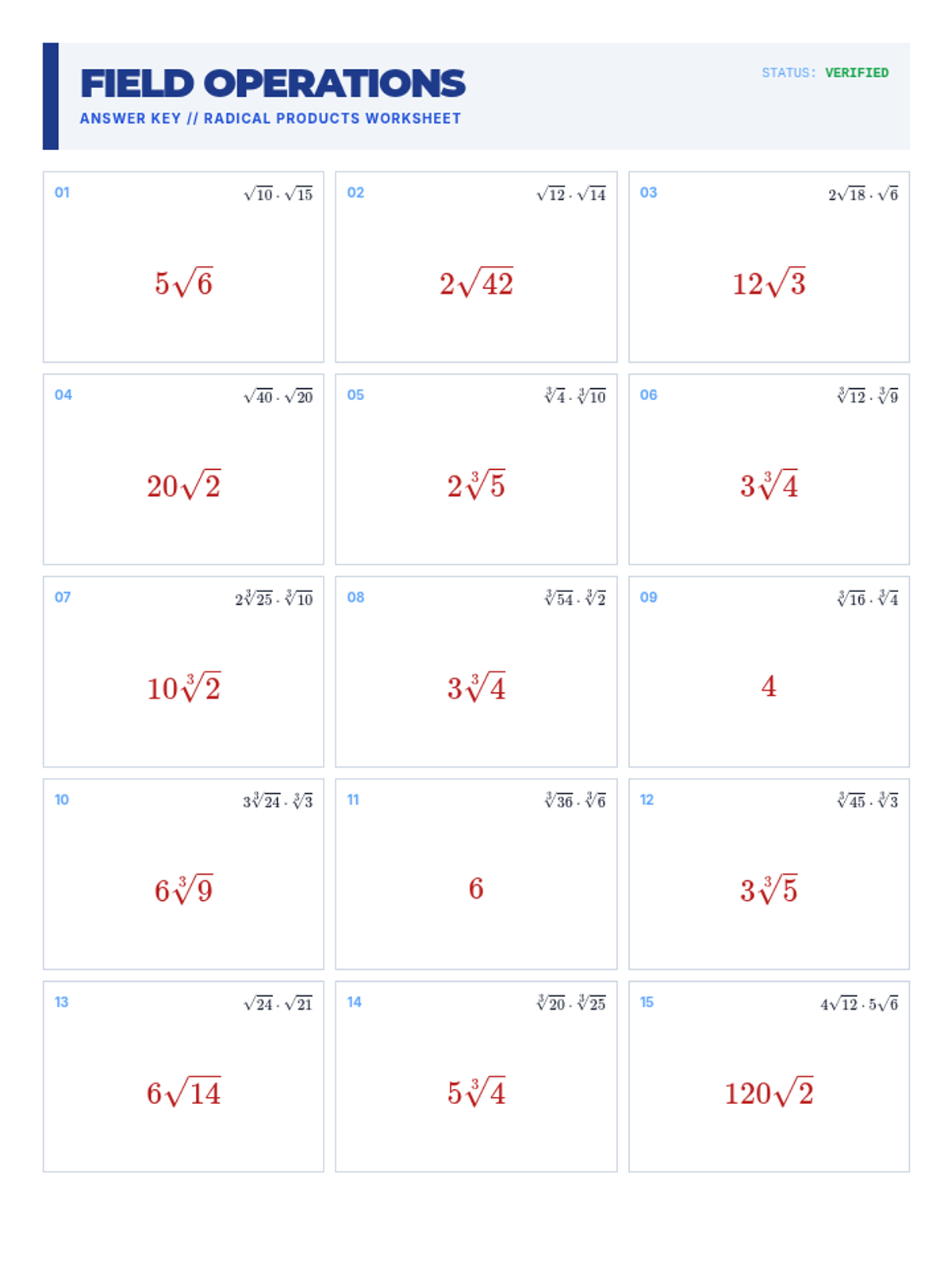
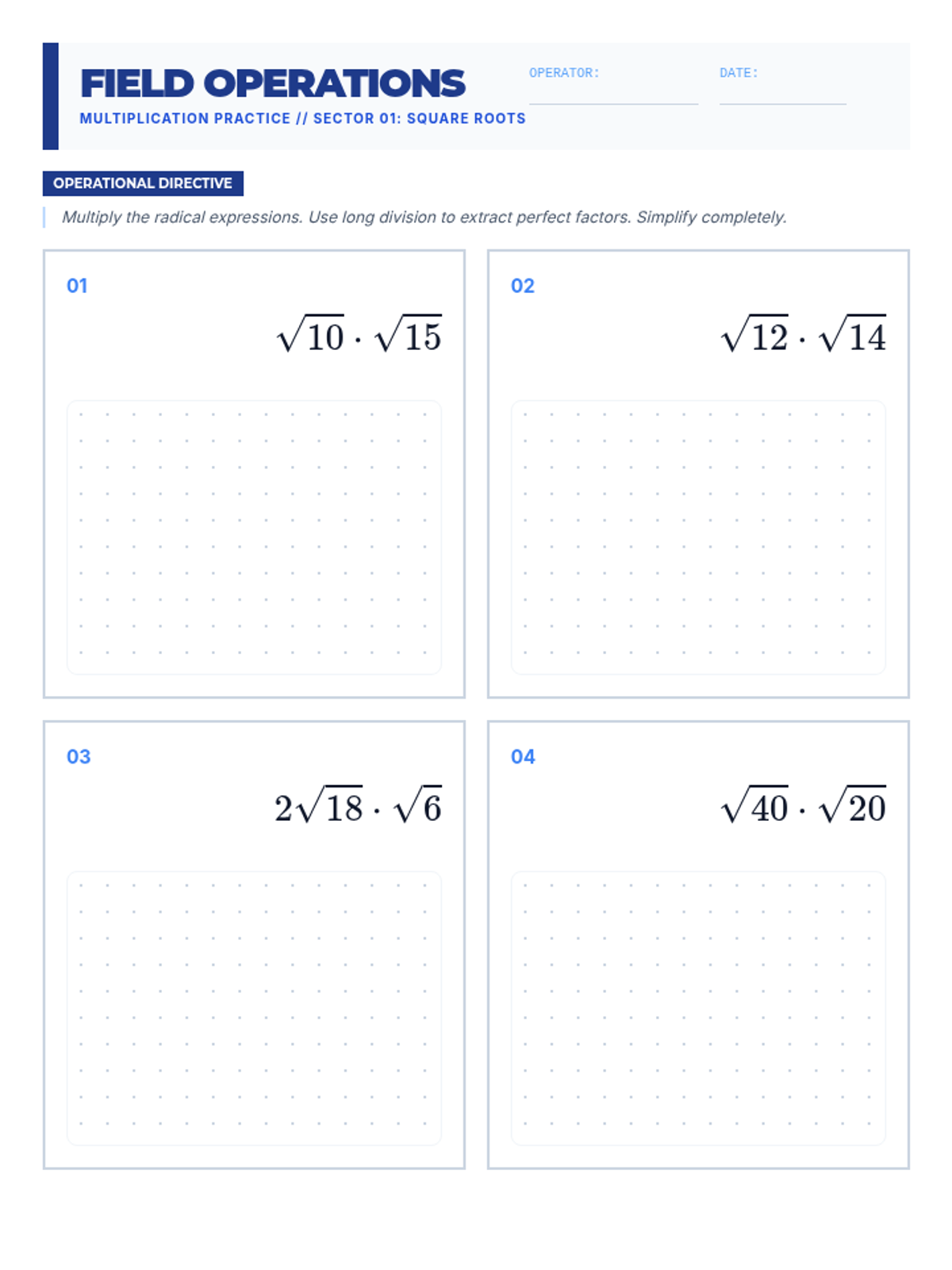
A lesson on multiplying radical expressions focusing on square roots and cube roots with numerical radicands. Students will learn the product property of radicals and apply it to simplify expressions.
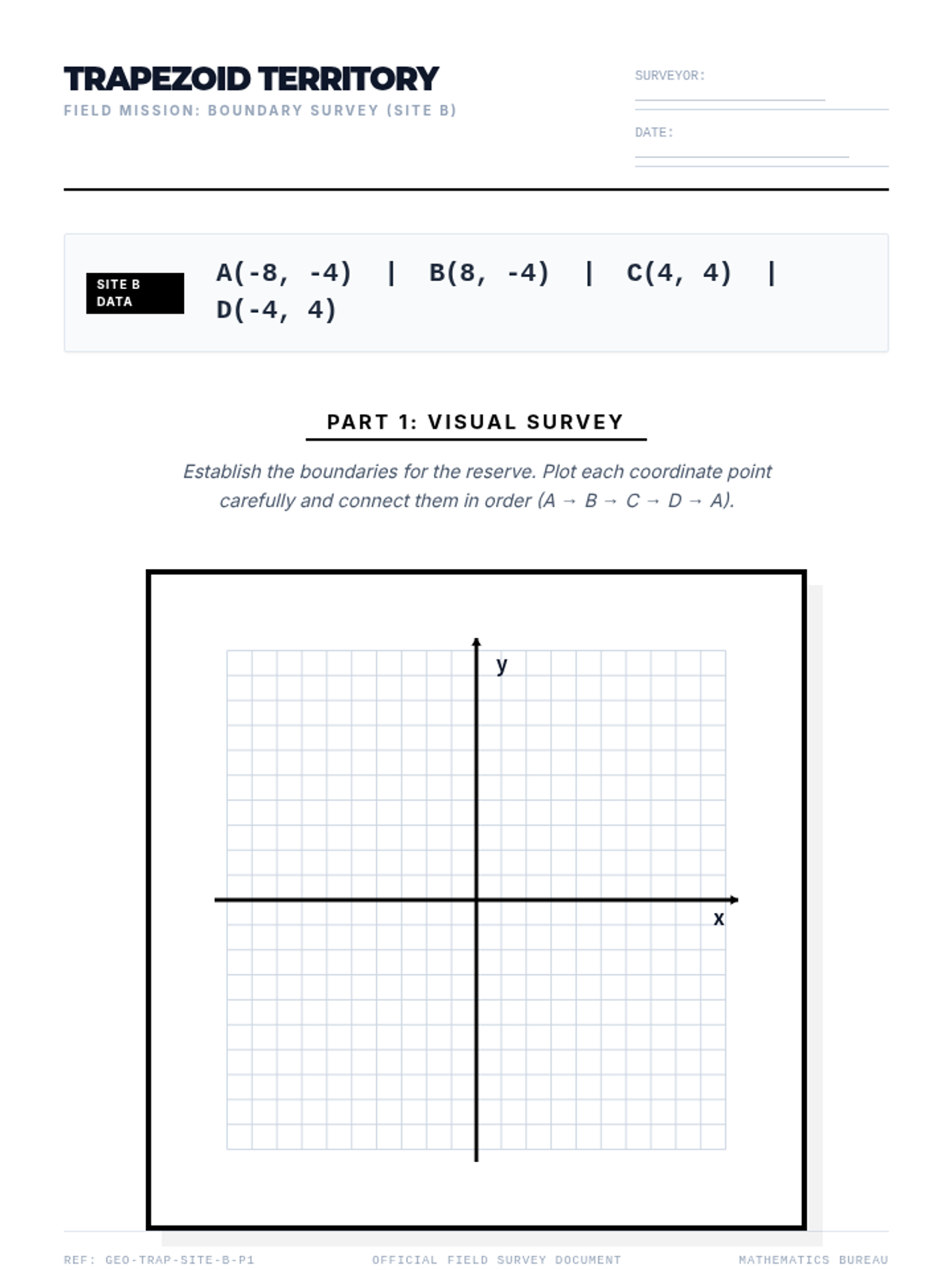
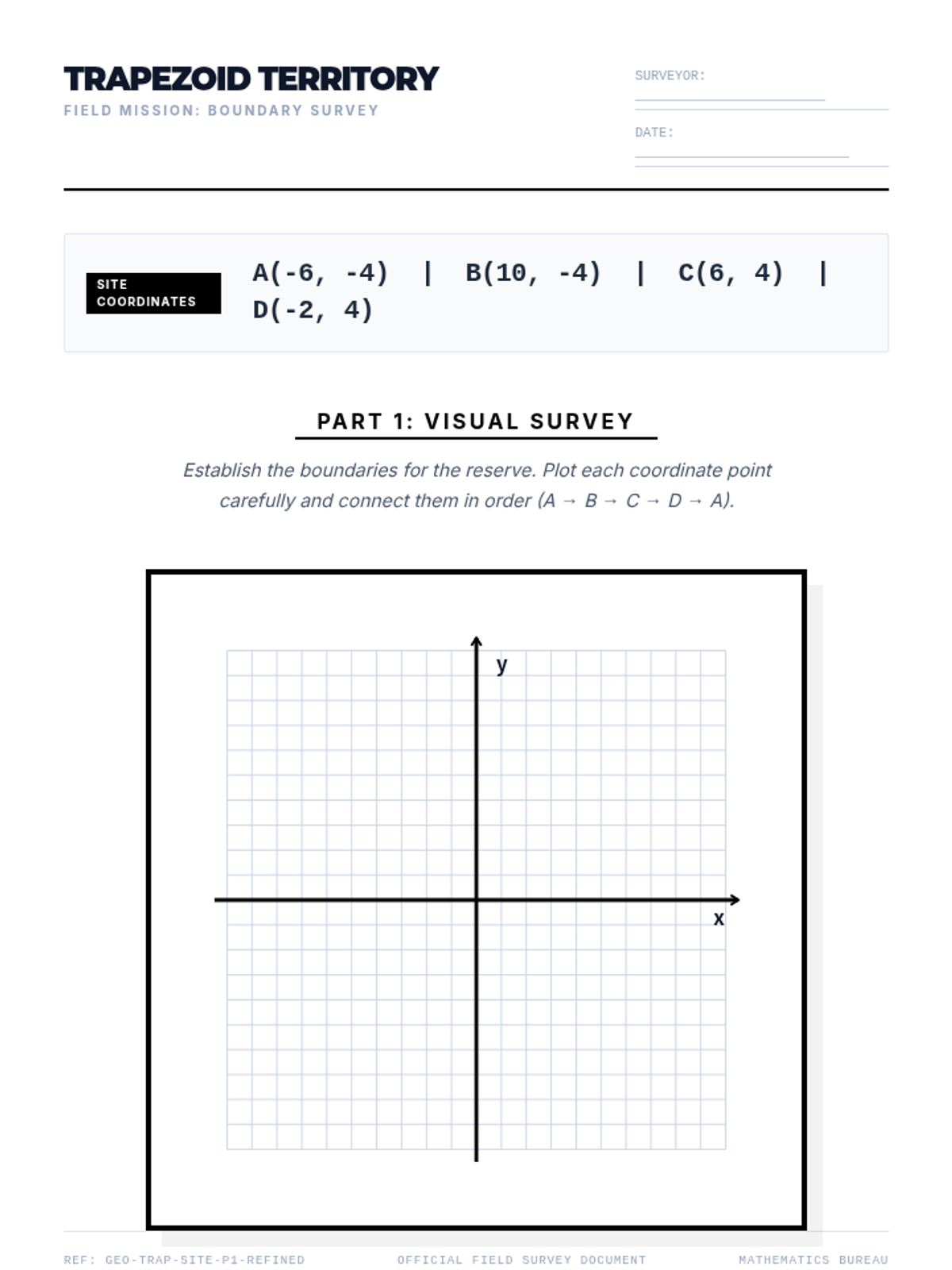
The opening mission for the Trapezoid Territory unit. Students plot the primary boundary coordinates on a 2D plane to visualize the land reserve.
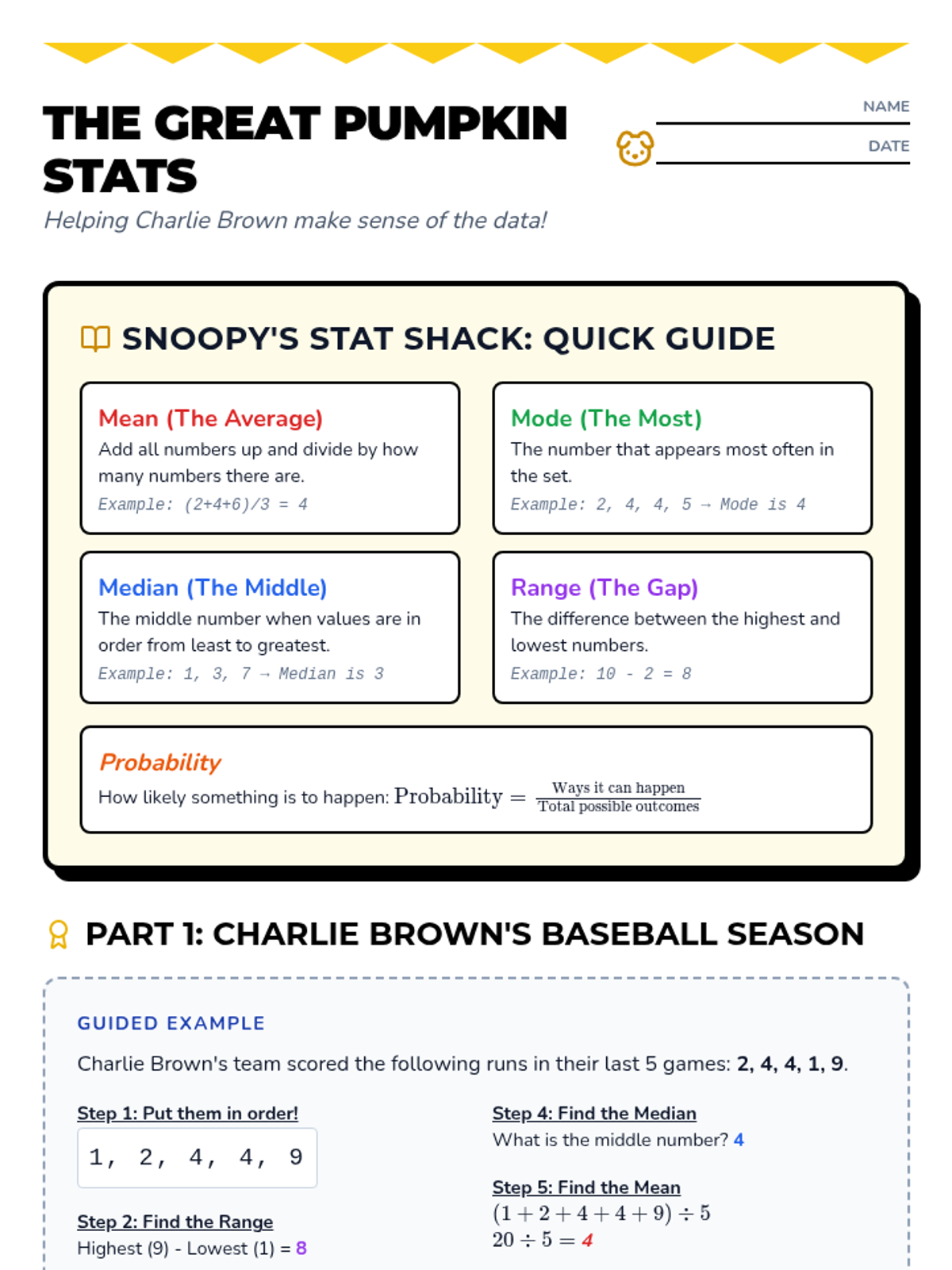
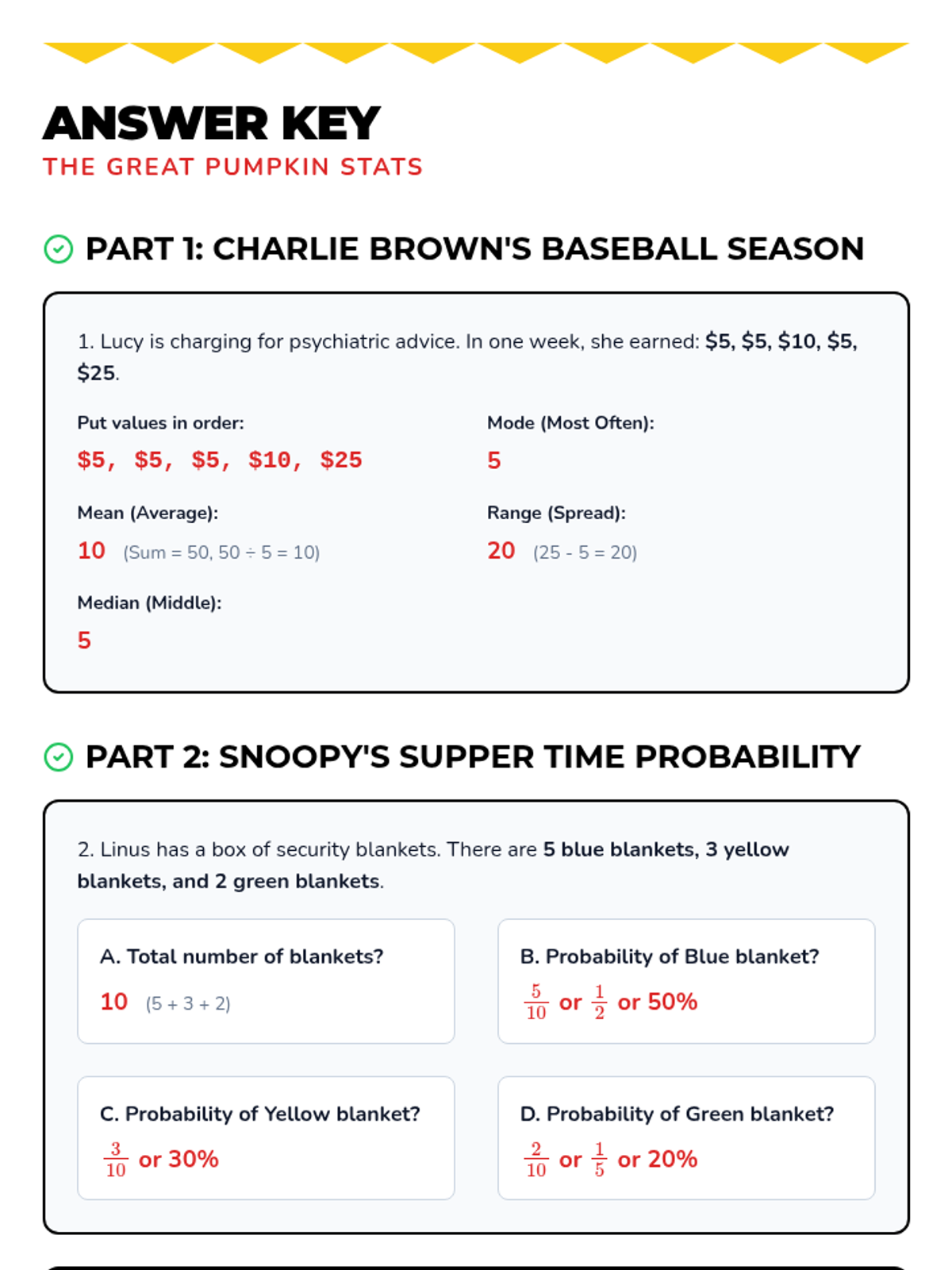
An introduction to basic statistics including measures of central tendency (mean, median, mode, range) and simple probability, themed around the Peanuts comic strip.
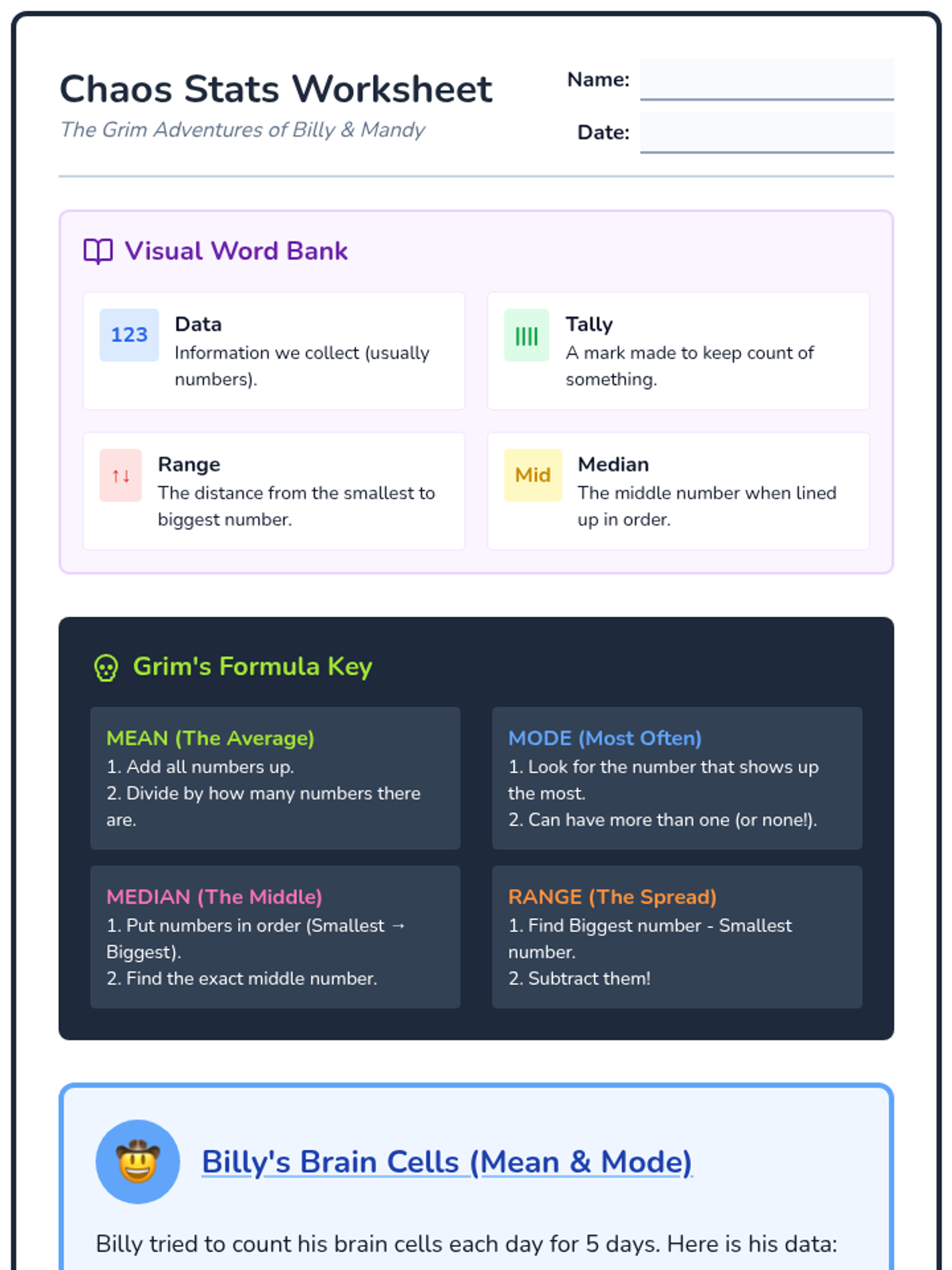
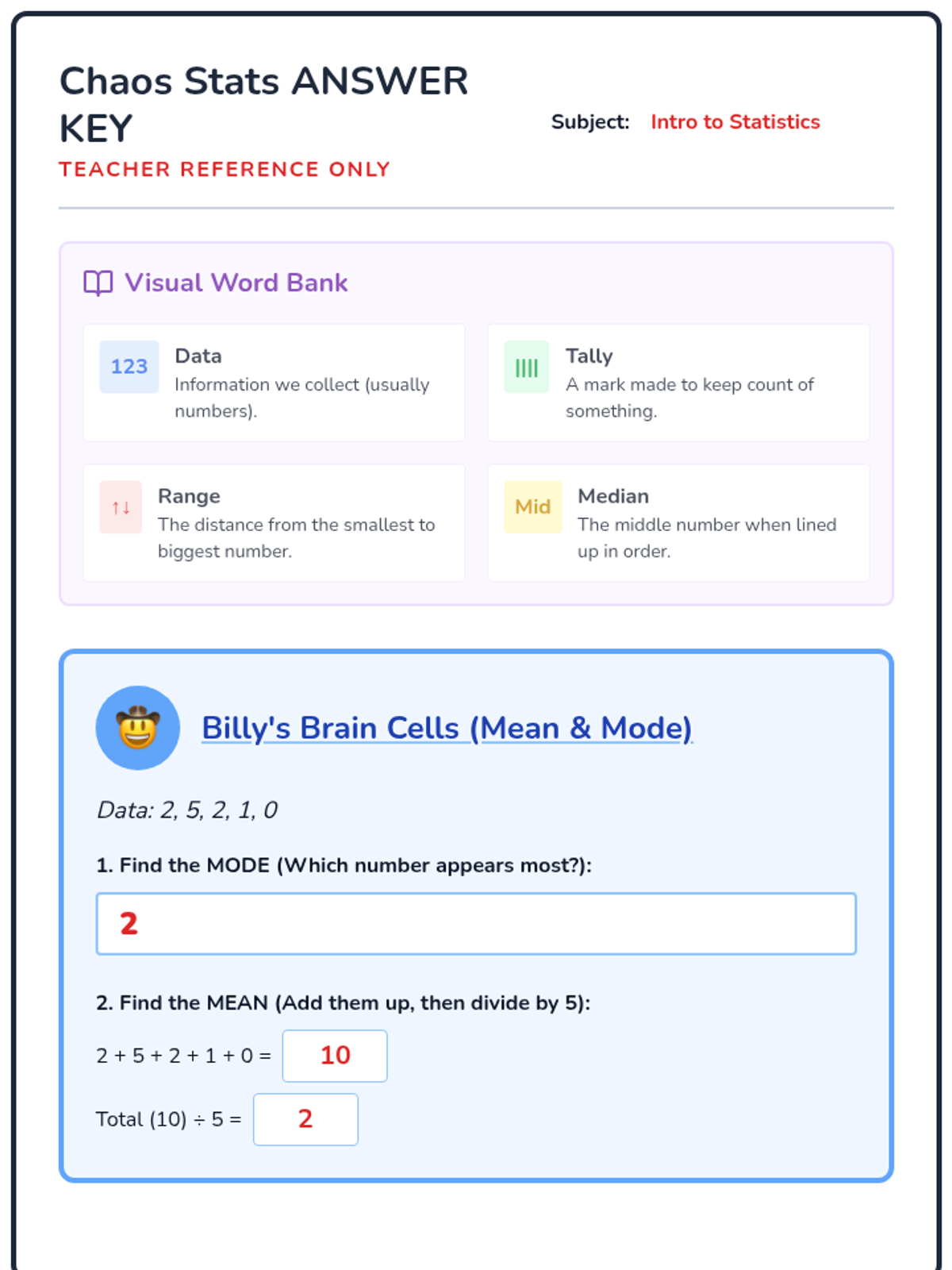
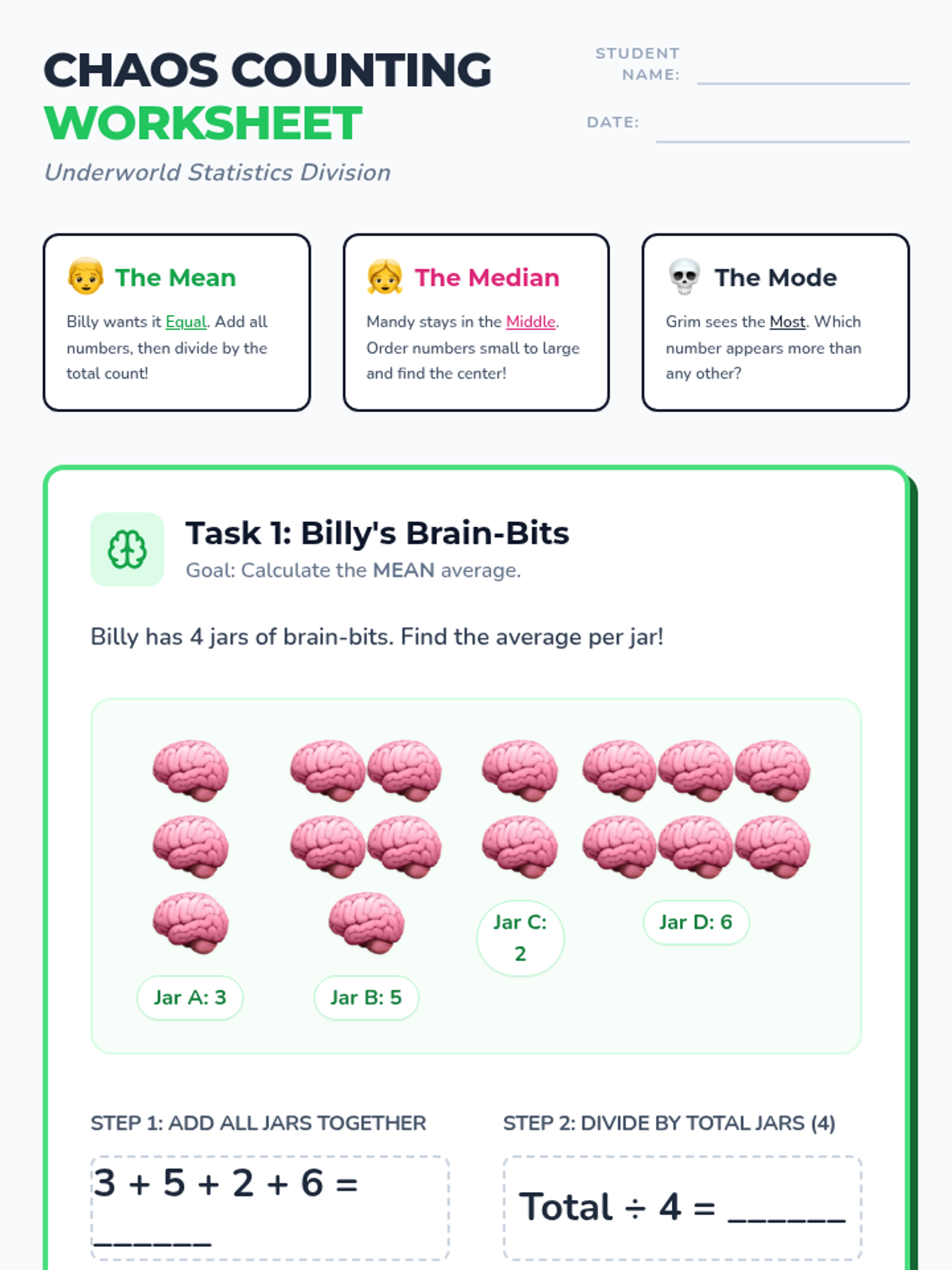
An introductory statistics lesson themed after The Grim Adventures of Billy & Mandy, focusing on central tendency (mean, median, mode) and range, as well as basic data collection.
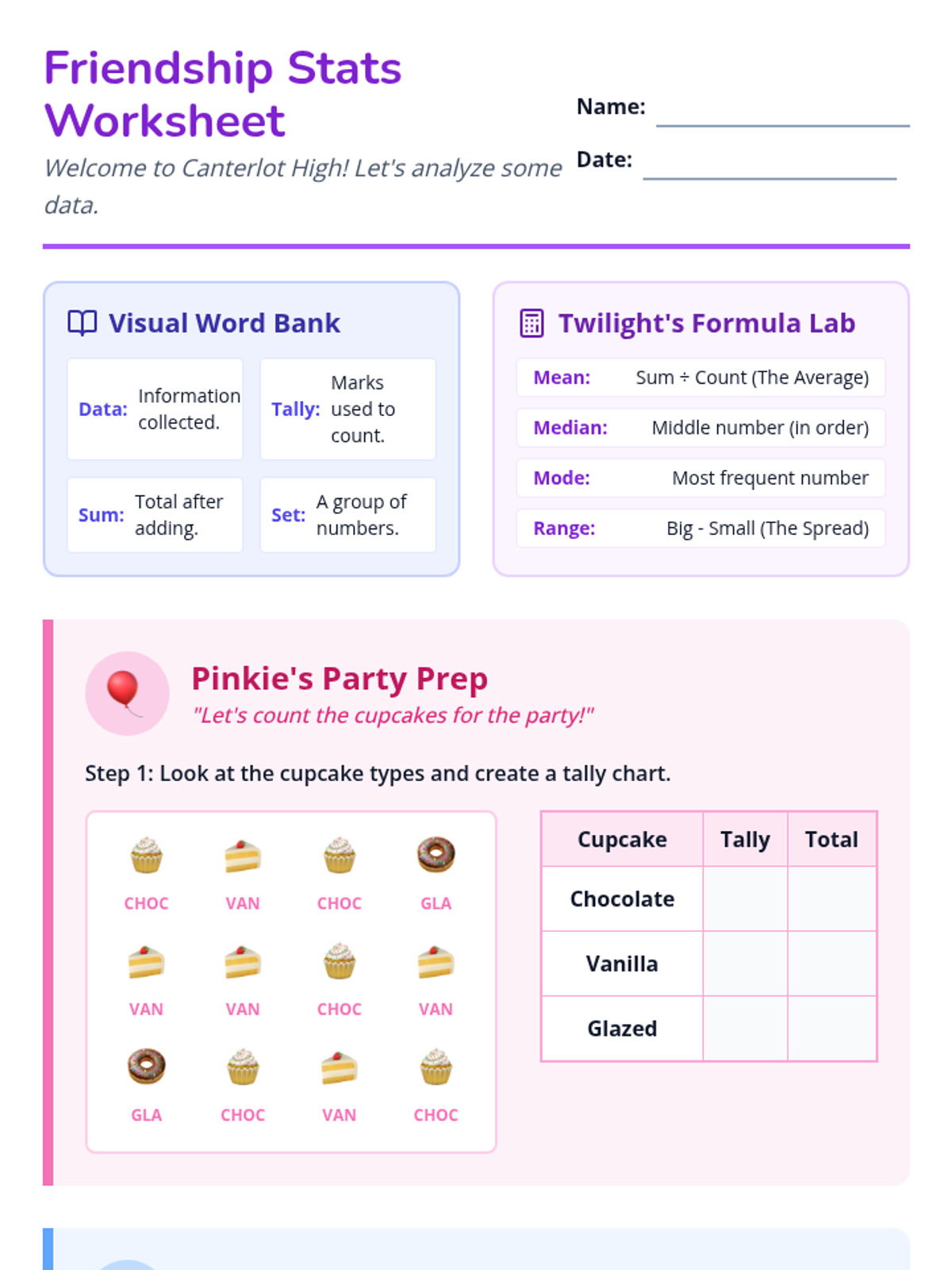
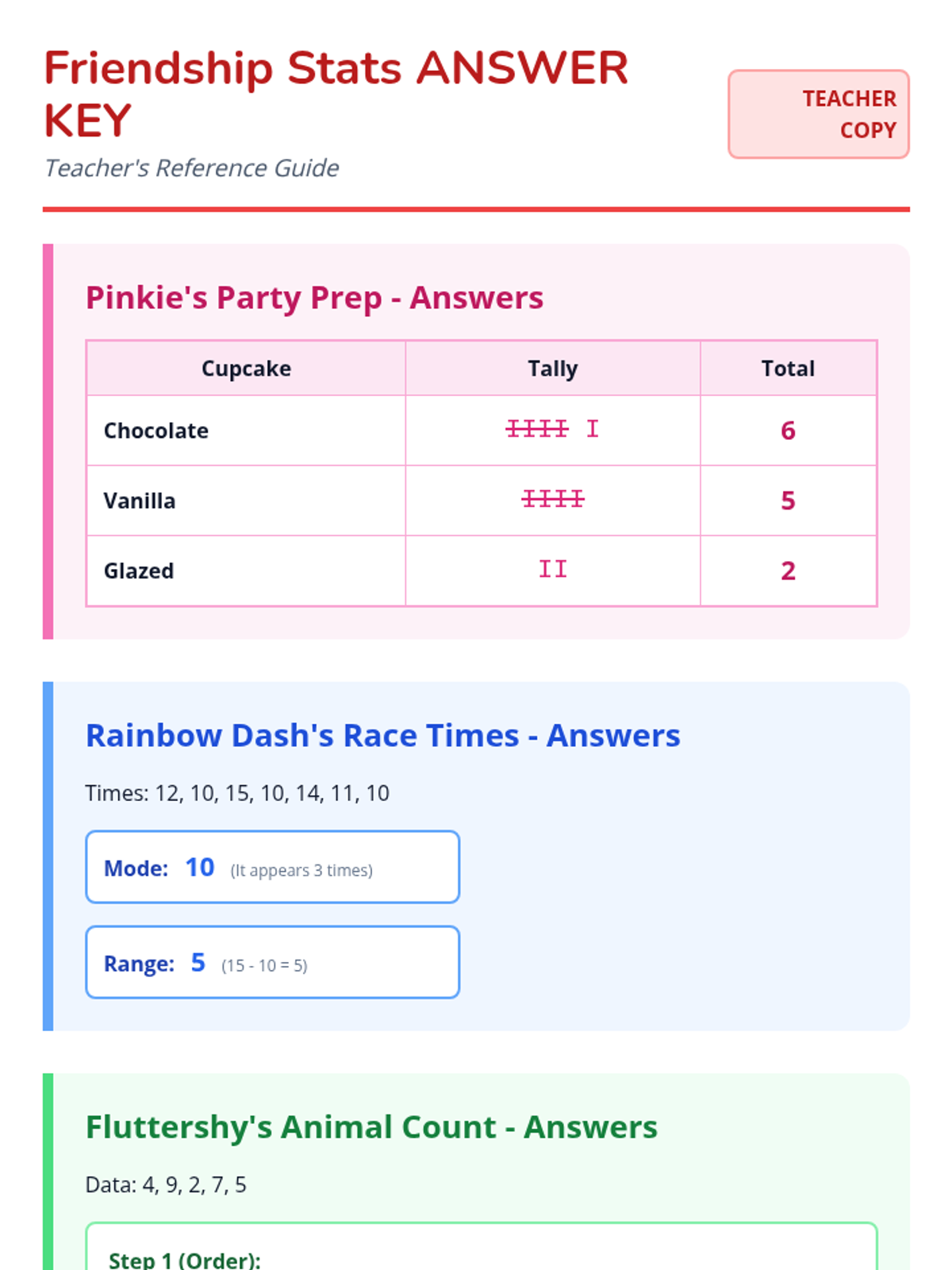
An introduction to basic statistics concepts (Mean, Median, Mode, Range) and data collection using an Equestria Girls theme to engage students. This lesson includes visual aids and color-coded sections for clear organization.
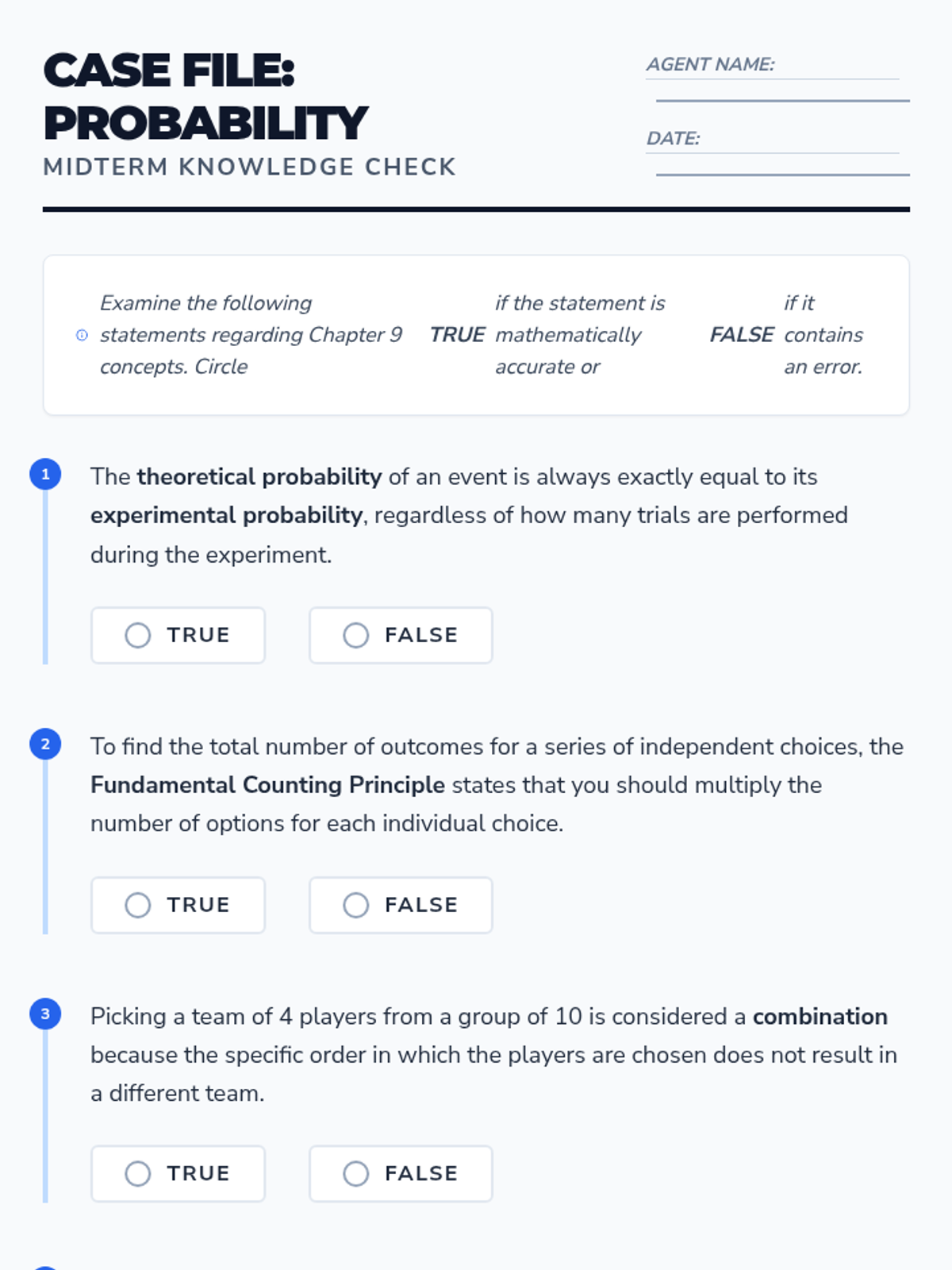
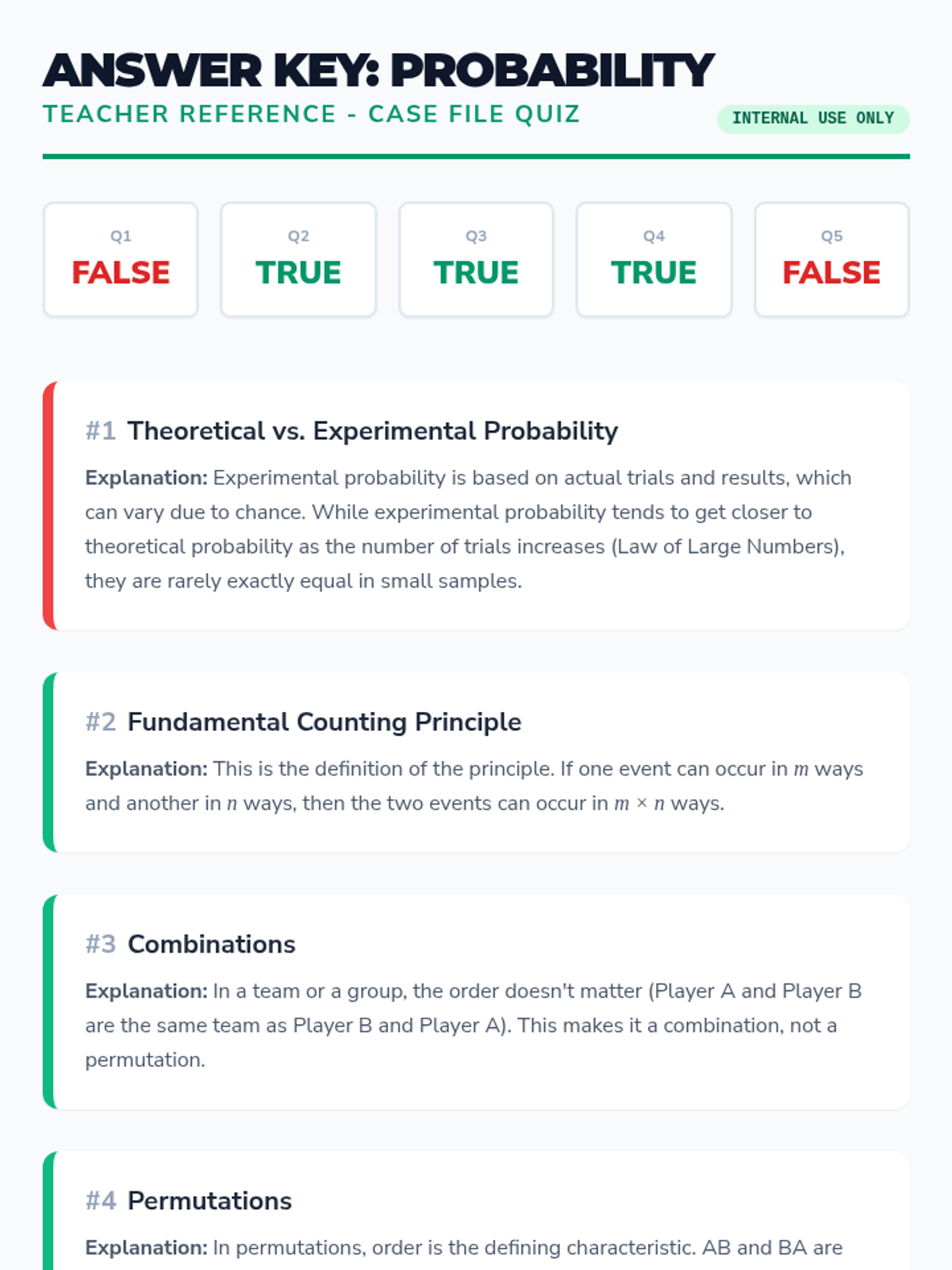
A focused review lesson covering the core concepts of probability, counting principles, and event types from Pre-Algebra Chapter 9.
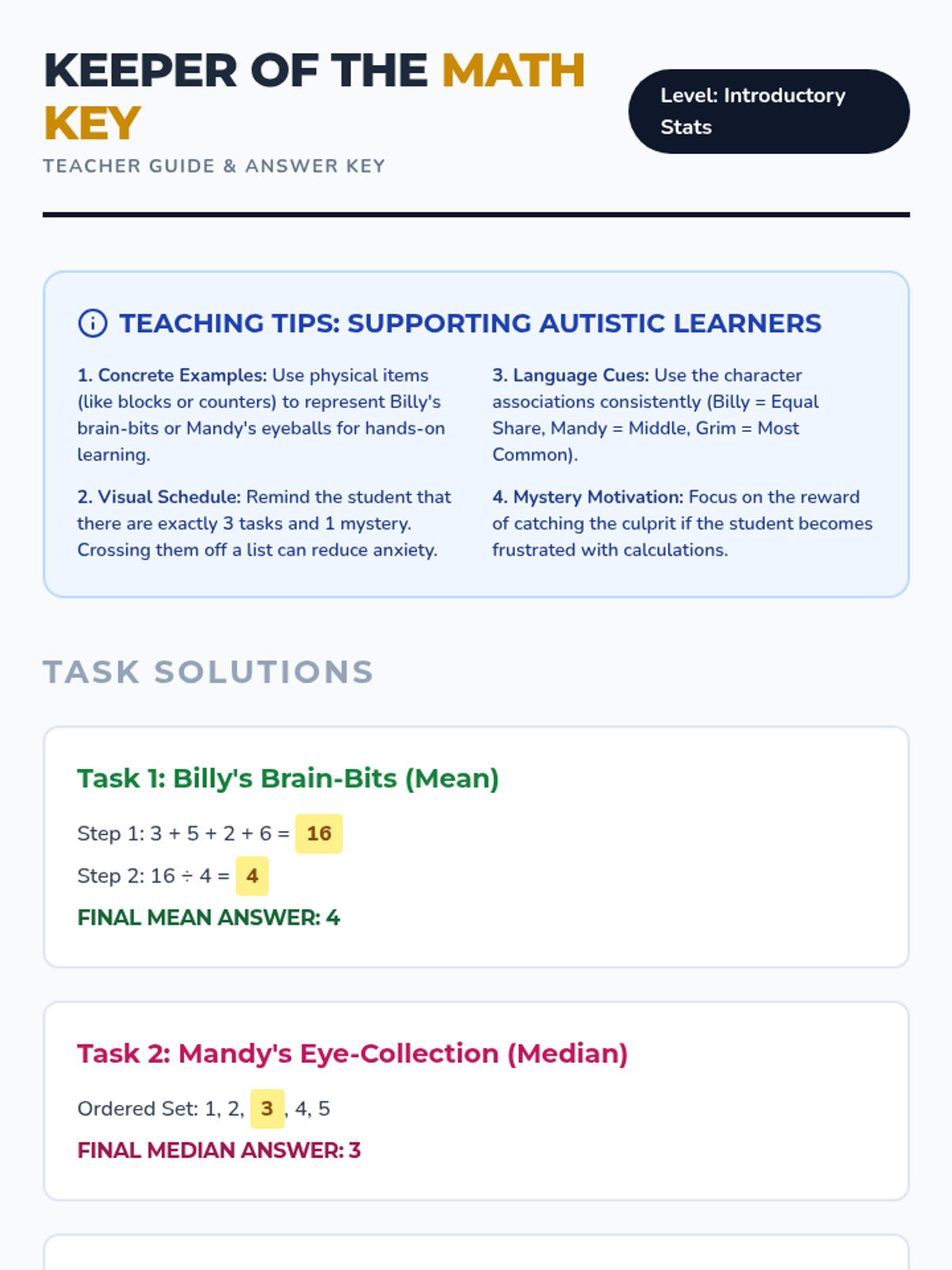
A spooky and fun introduction to the basics of statistics (mean, median, and mode) featuring the characters from Billy and Mandy. Students will use visual icons to calculate data sets and solve a logic mystery to help Grim find his missing scythe.
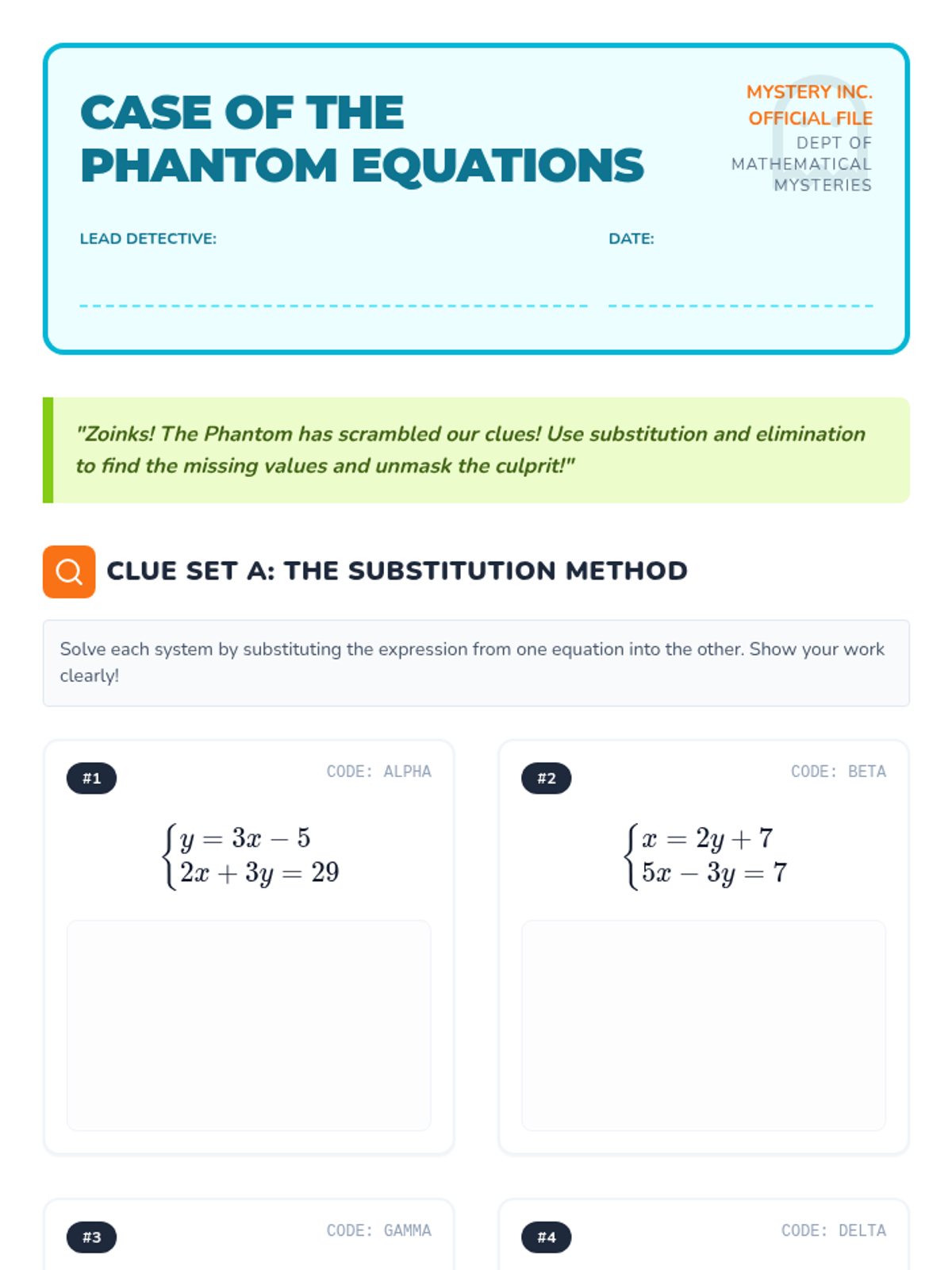
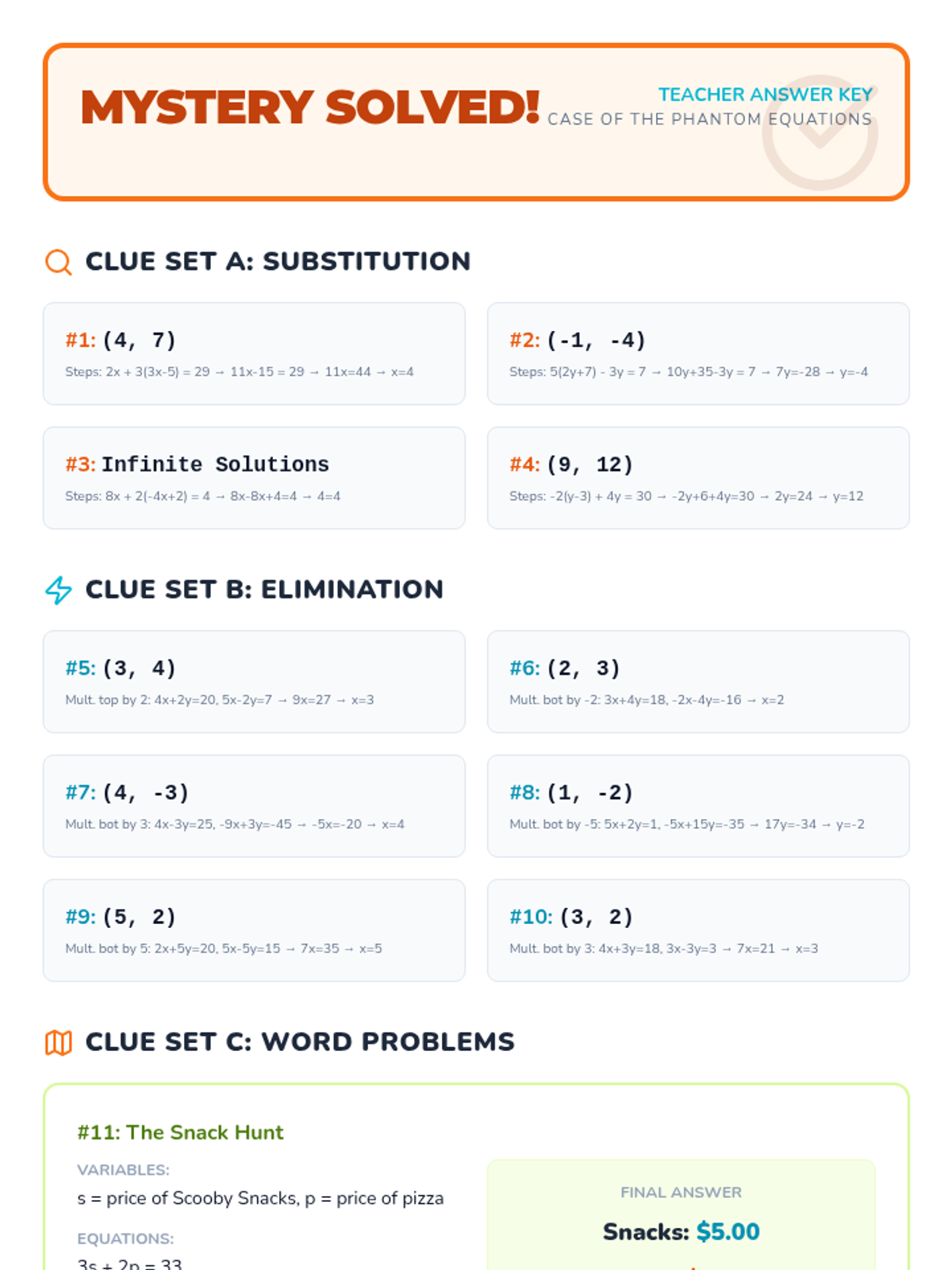
A systems of equations lesson themed around Scooby-Doo, focusing on solving through substitution and elimination with a special emphasis on multi-step problems and word problem applications.
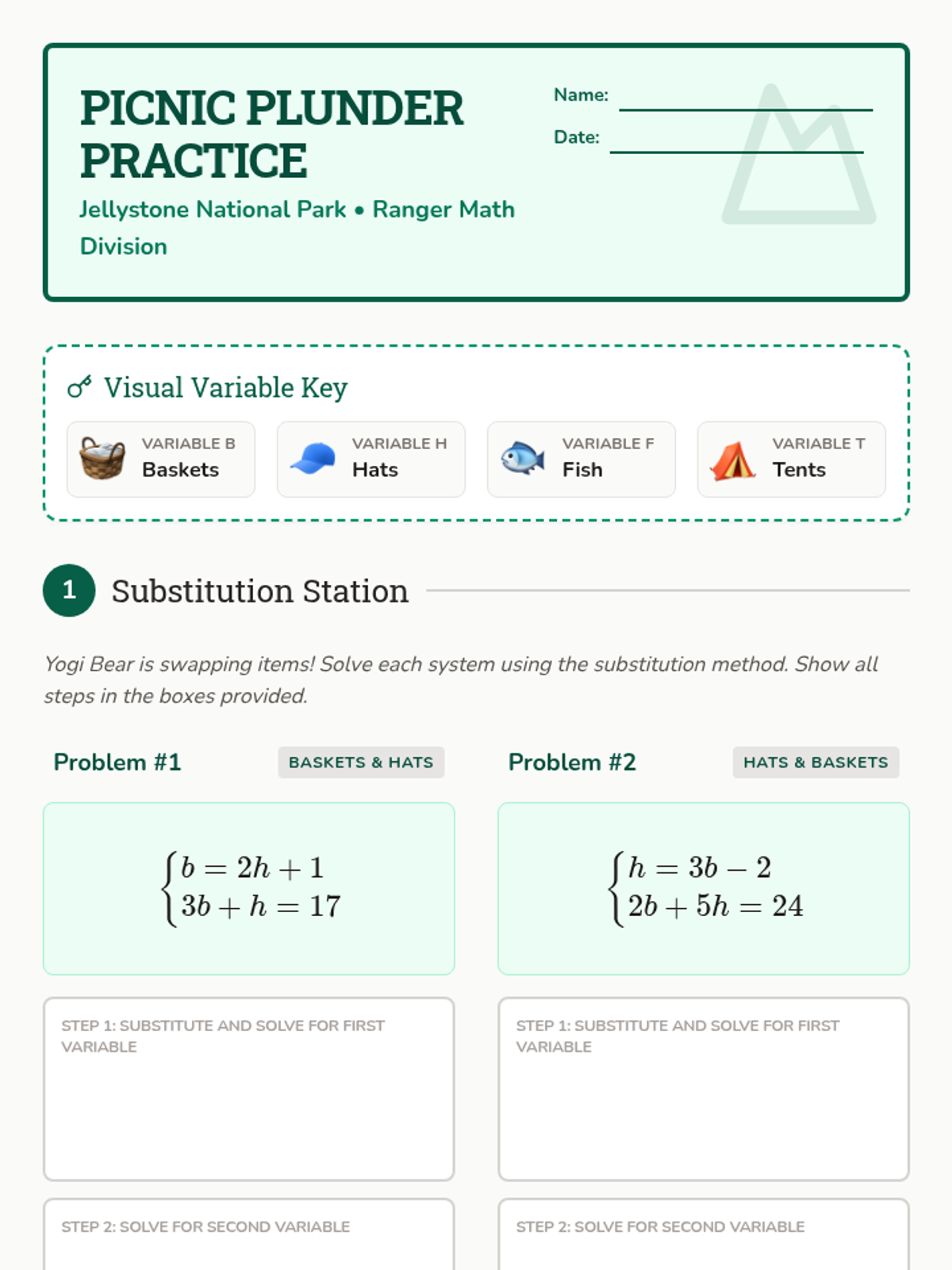
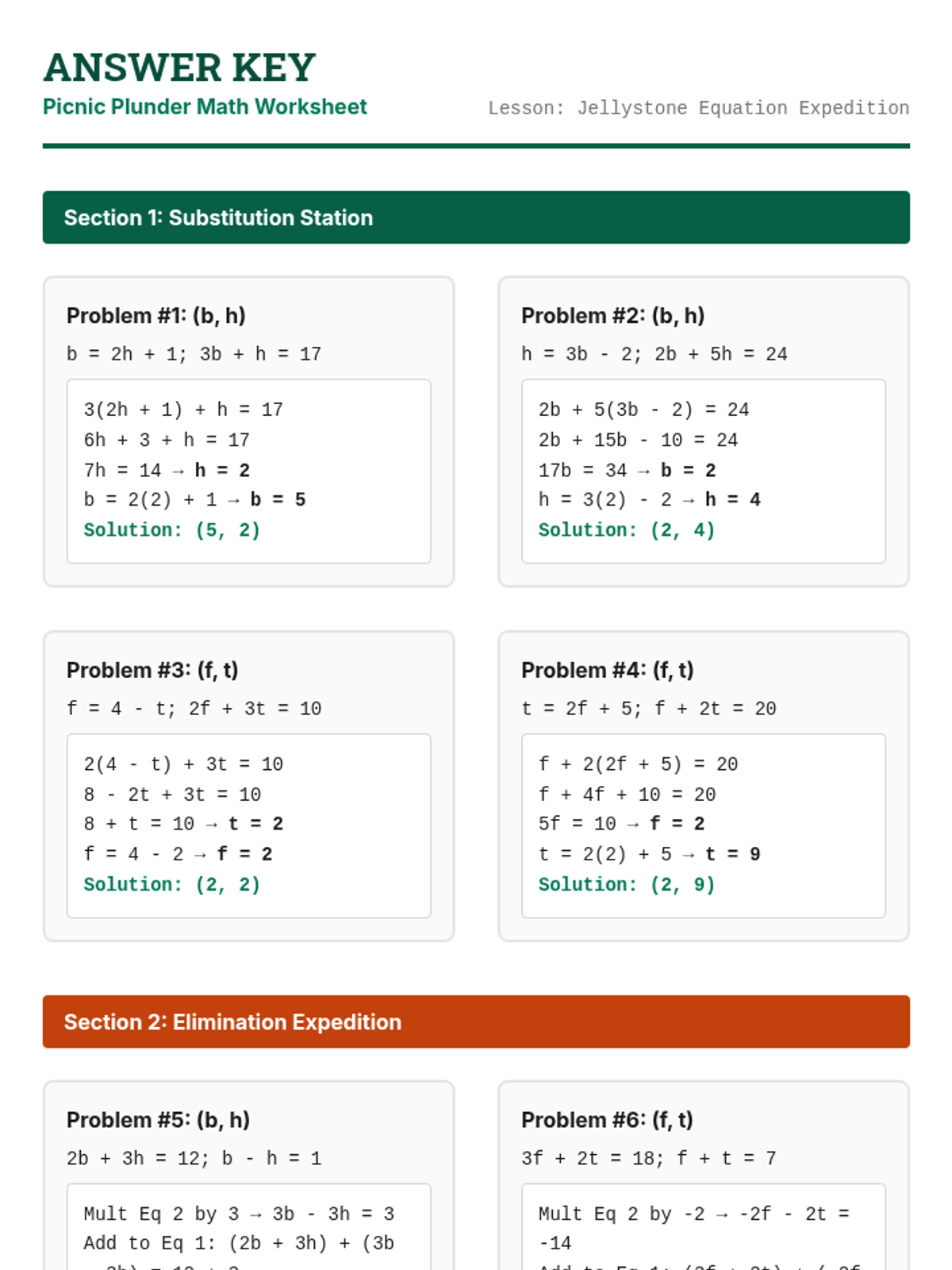
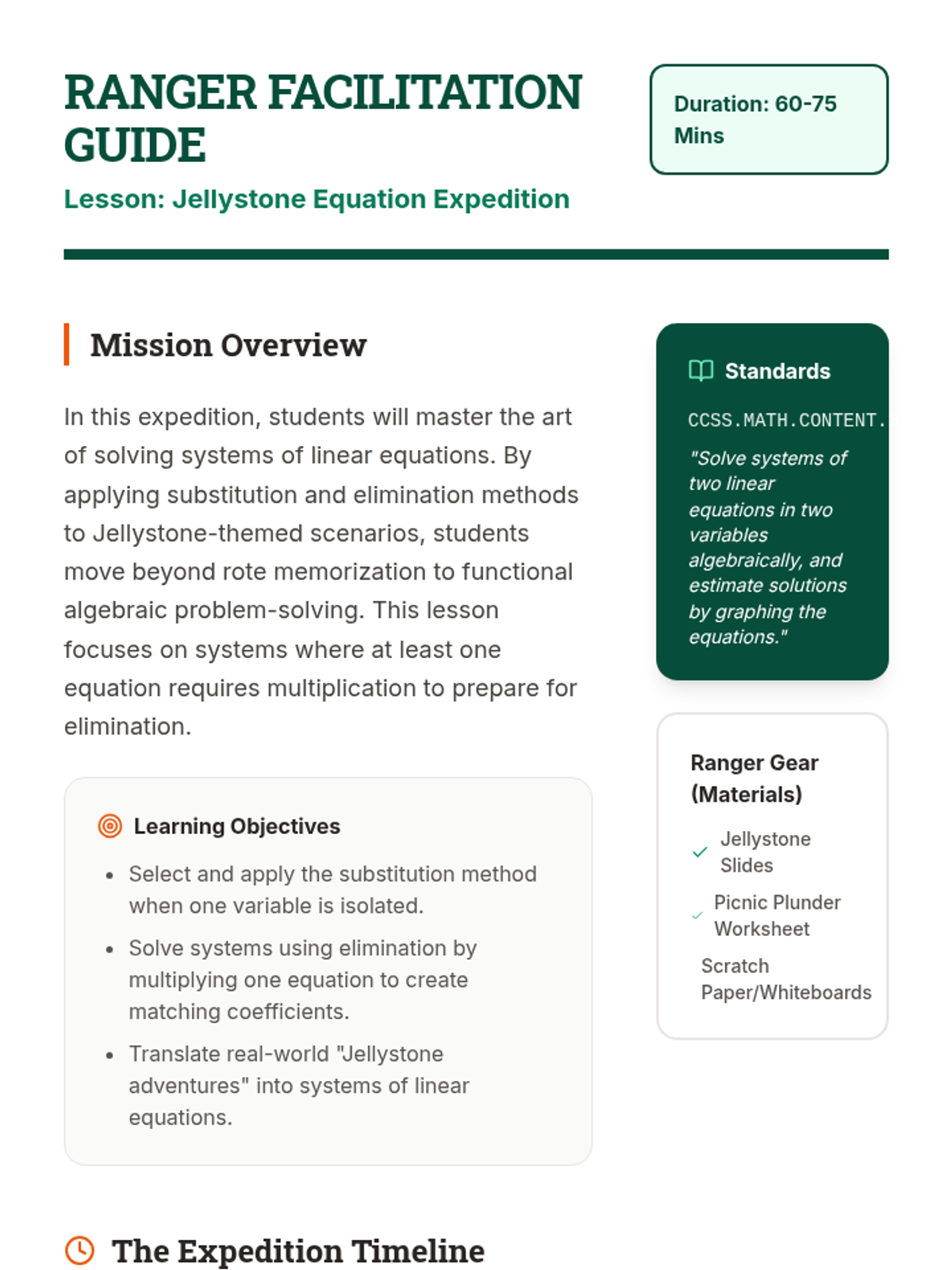
A math lesson focused on solving systems of linear equations using substitution and elimination methods, set in the whimsical world of Jellystone Park. Students will solve equations requiring single-variable multiplication and tackle park-themed word problems.
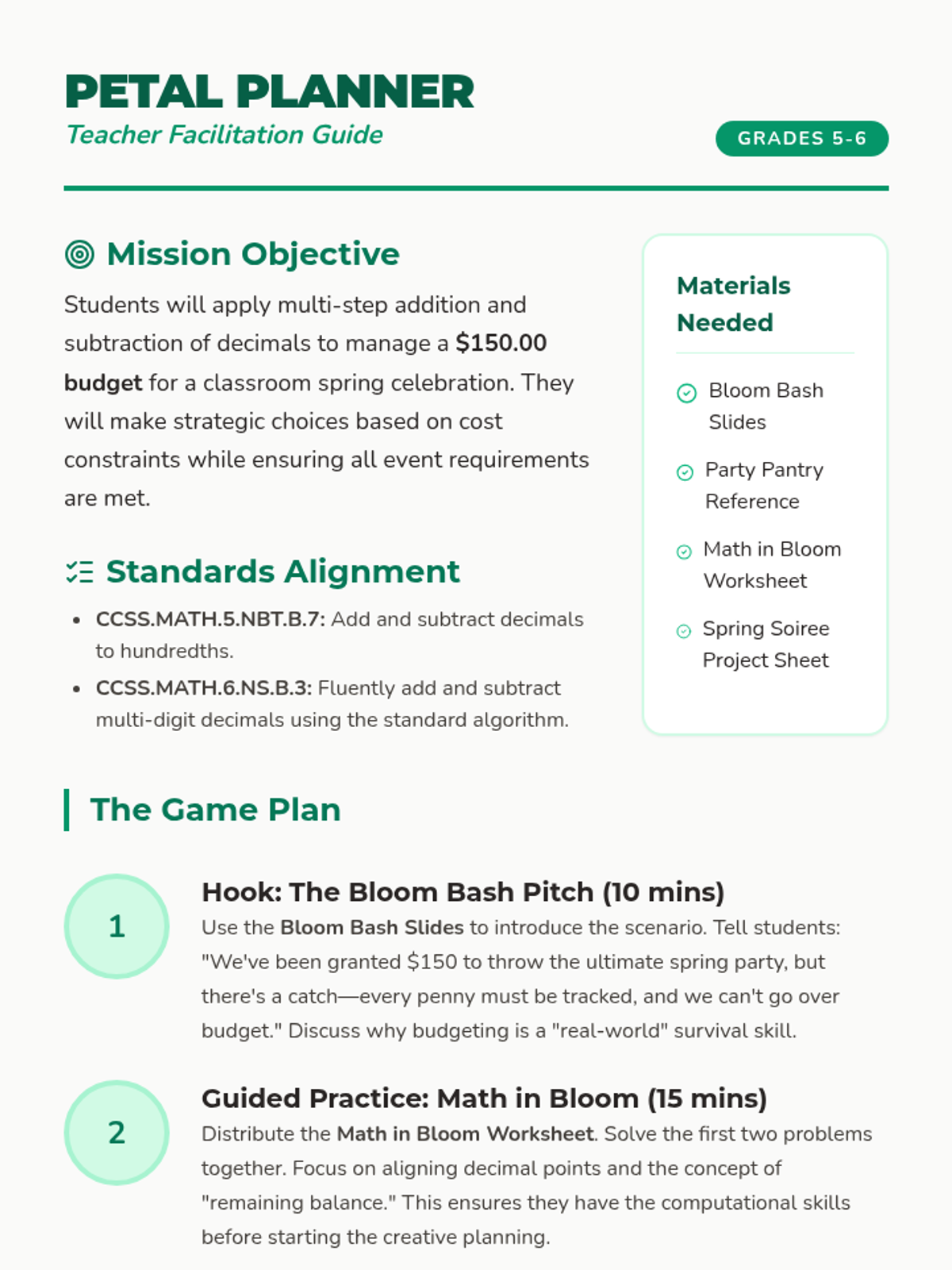
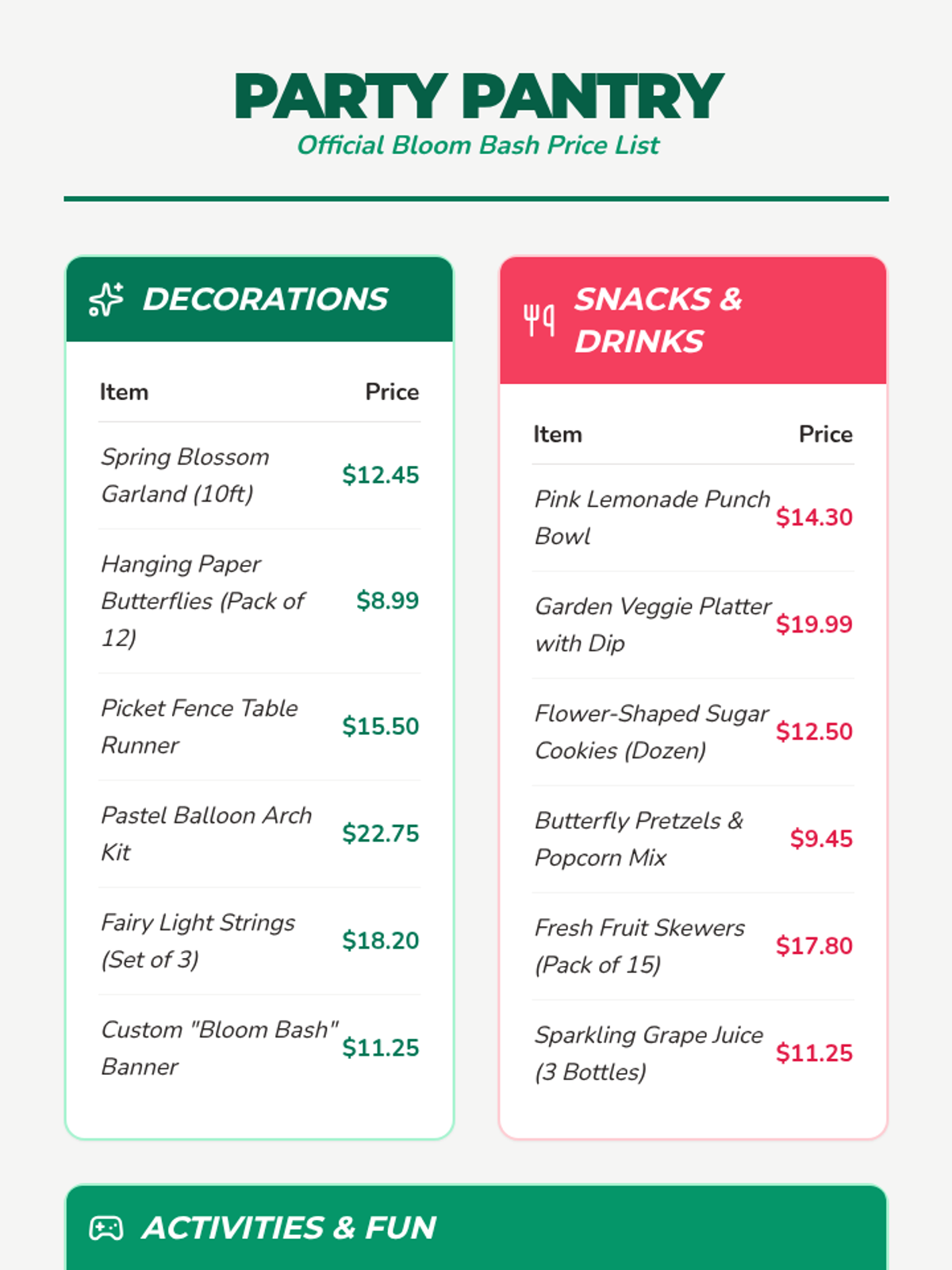
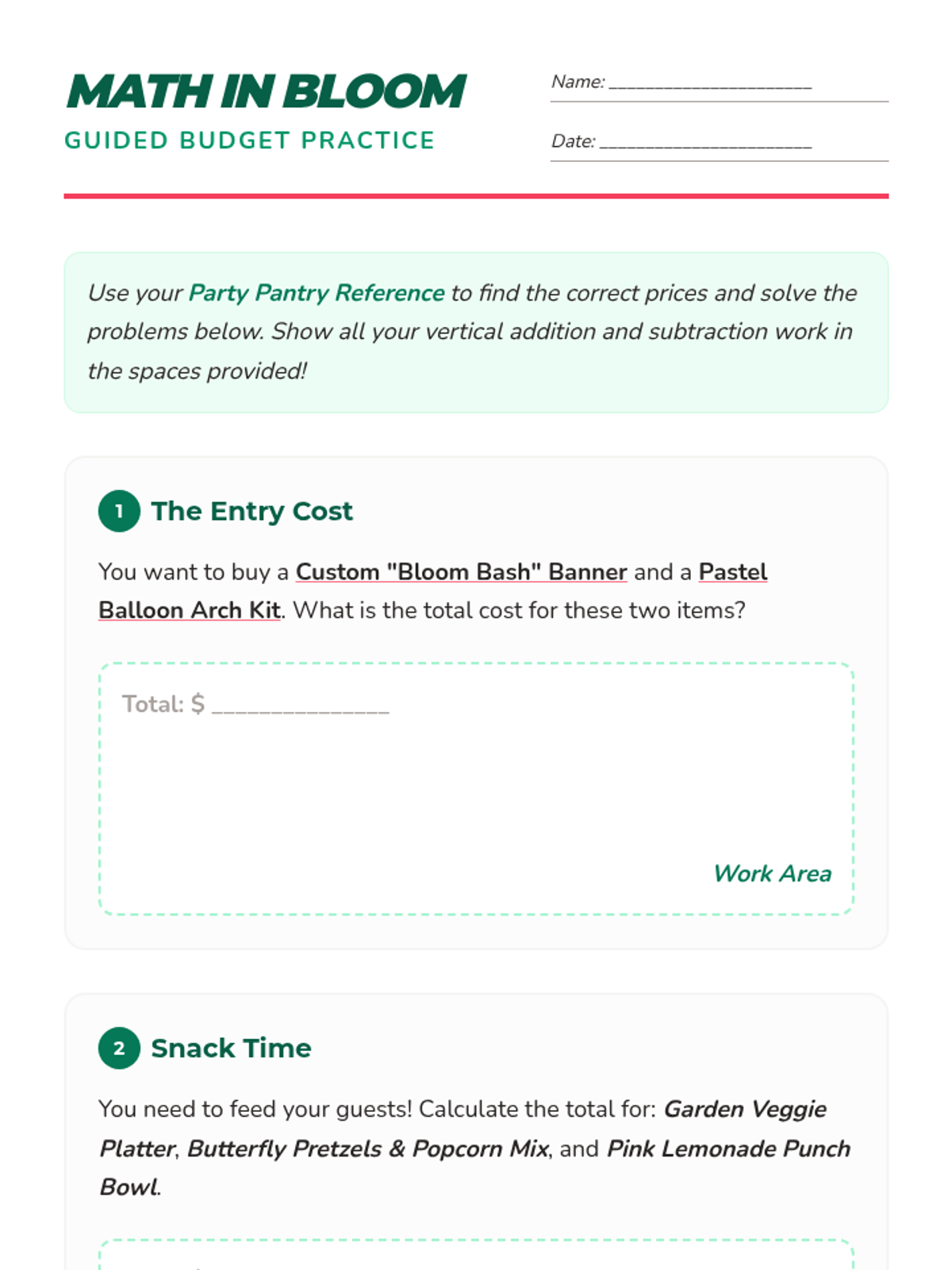
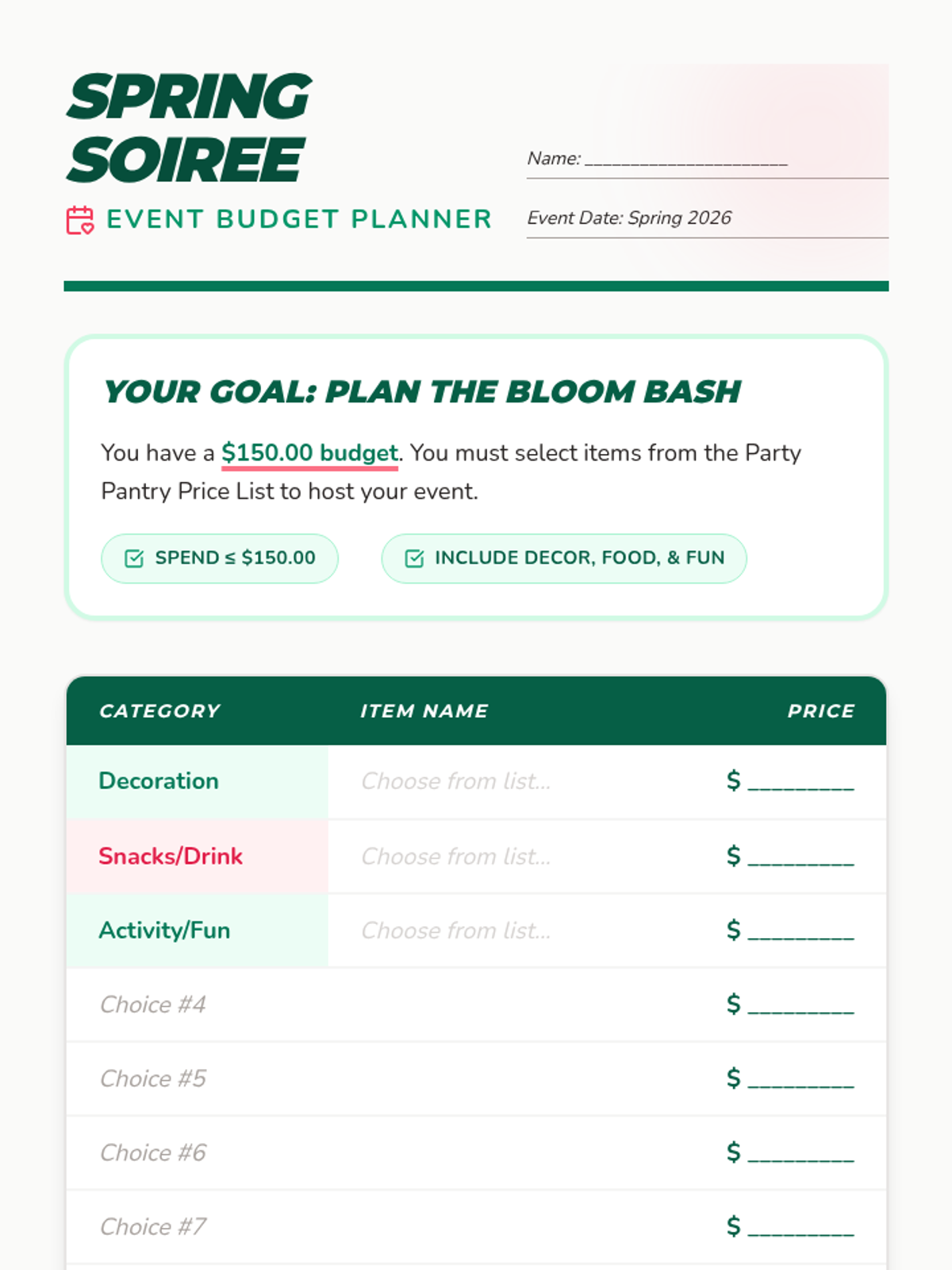
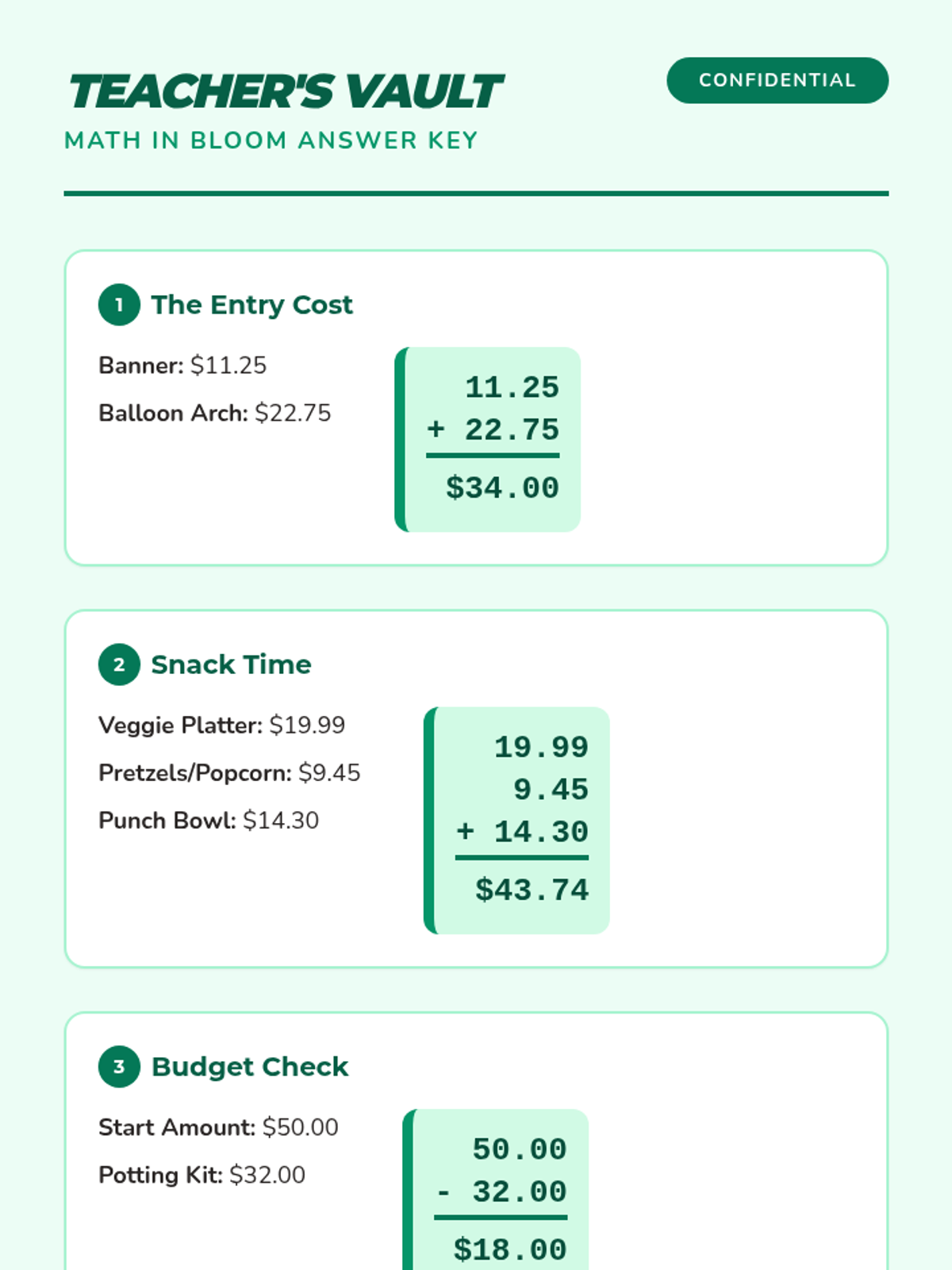
A hands-on functional math lesson where students plan a spring classroom event within a strict budget, practicing multi-step addition and subtraction of decimals.
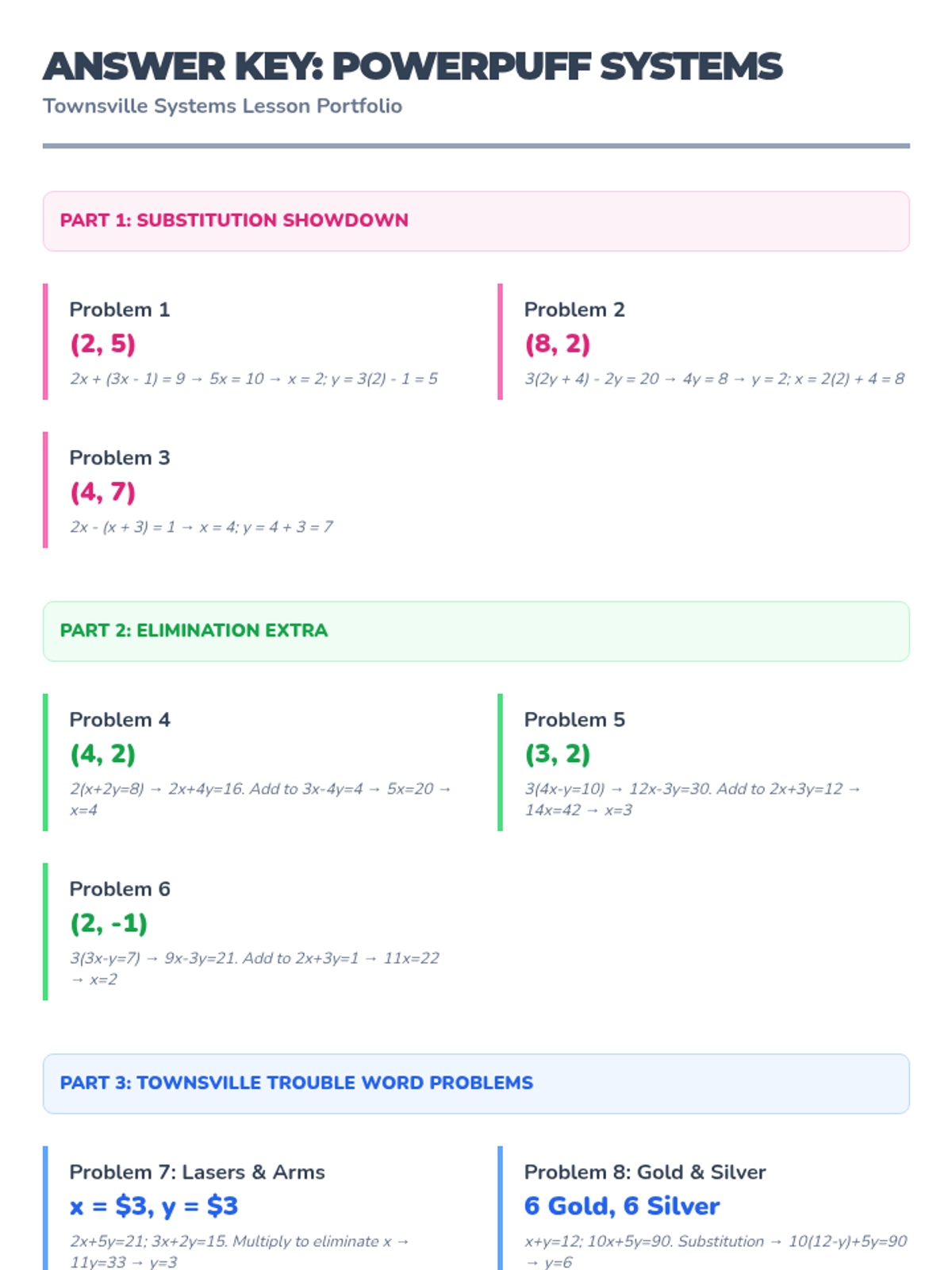
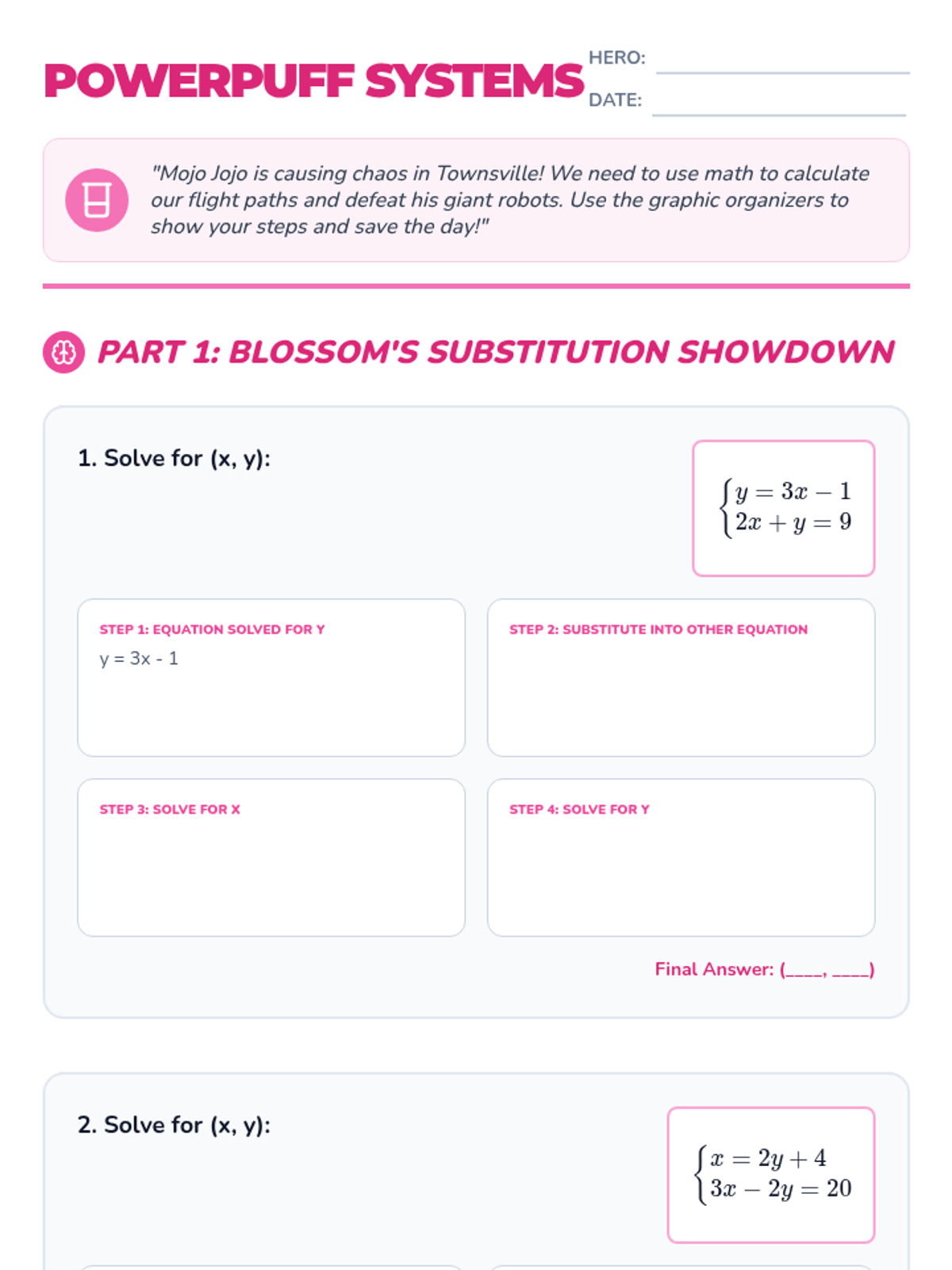
Students will master solving systems of linear equations using substitution and elimination methods through a themed Townsville adventure. This lesson includes scaffolded graphic organizers to support multi-step problem solving for diverse learners.
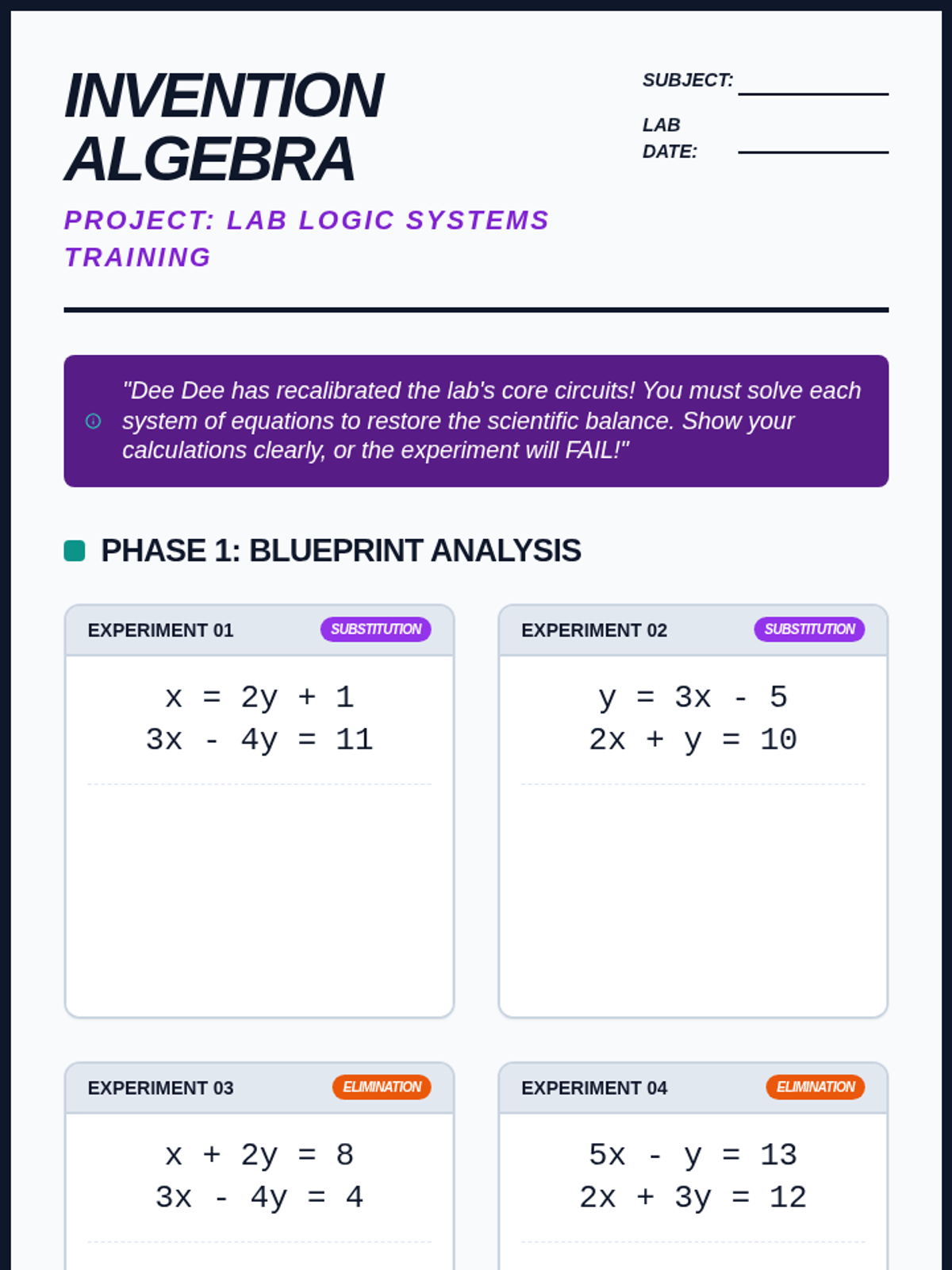
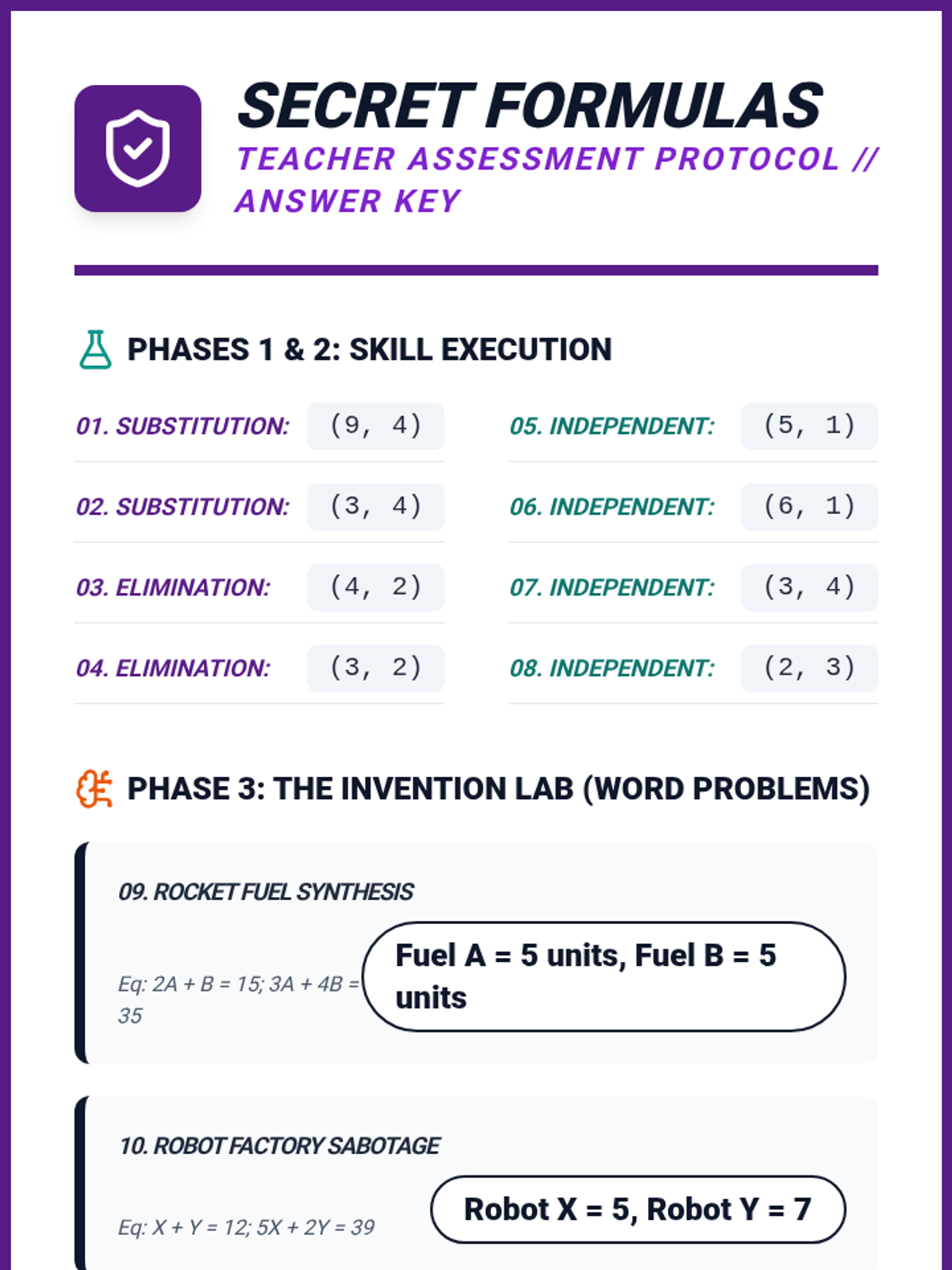
A math lesson focused on solving systems of equations using substitution and elimination, themed around Dexter's Laboratory. Students will help Dexter solve scientific dilemmas and prevent Dee Dee's interference through algebraic precision.
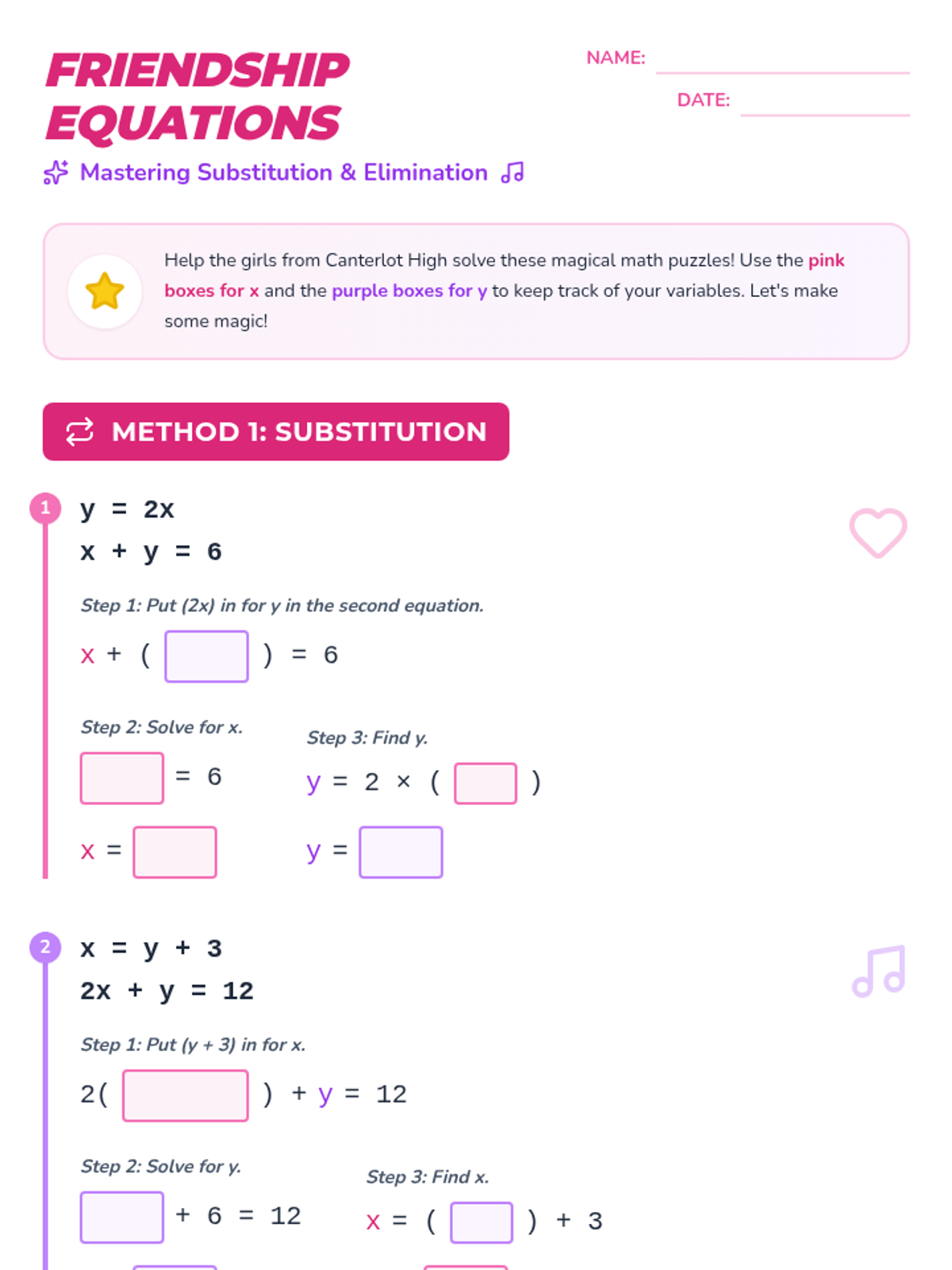
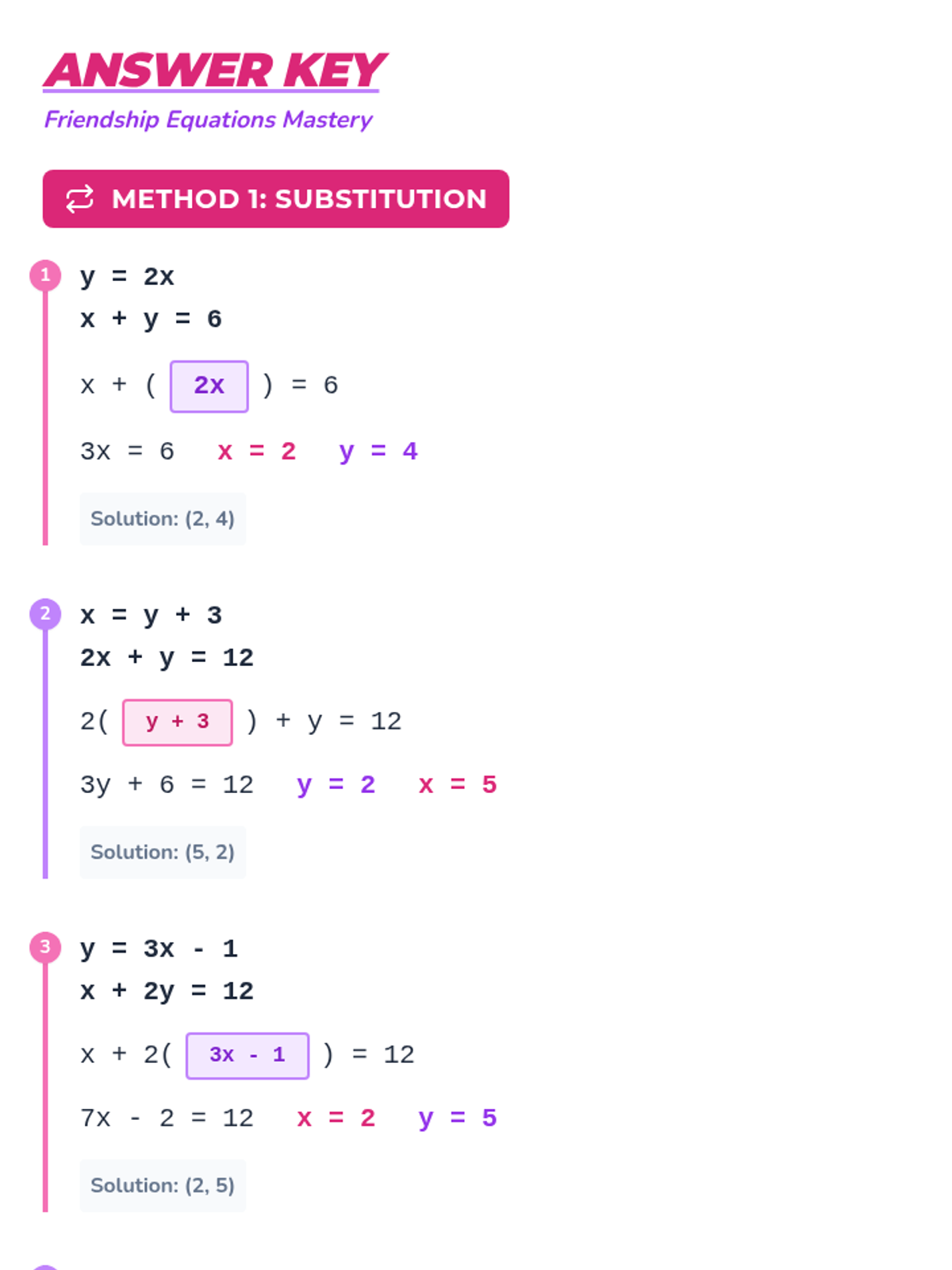
A step-by-step guide to solving systems of equations using substitution and elimination, featuring a vibrant Equestria Girls theme to engage students. This lesson provides high-support scaffolds like color-coded boxes and guided fill-in-the-blank steps designed for learners who benefit from structured visual cues.
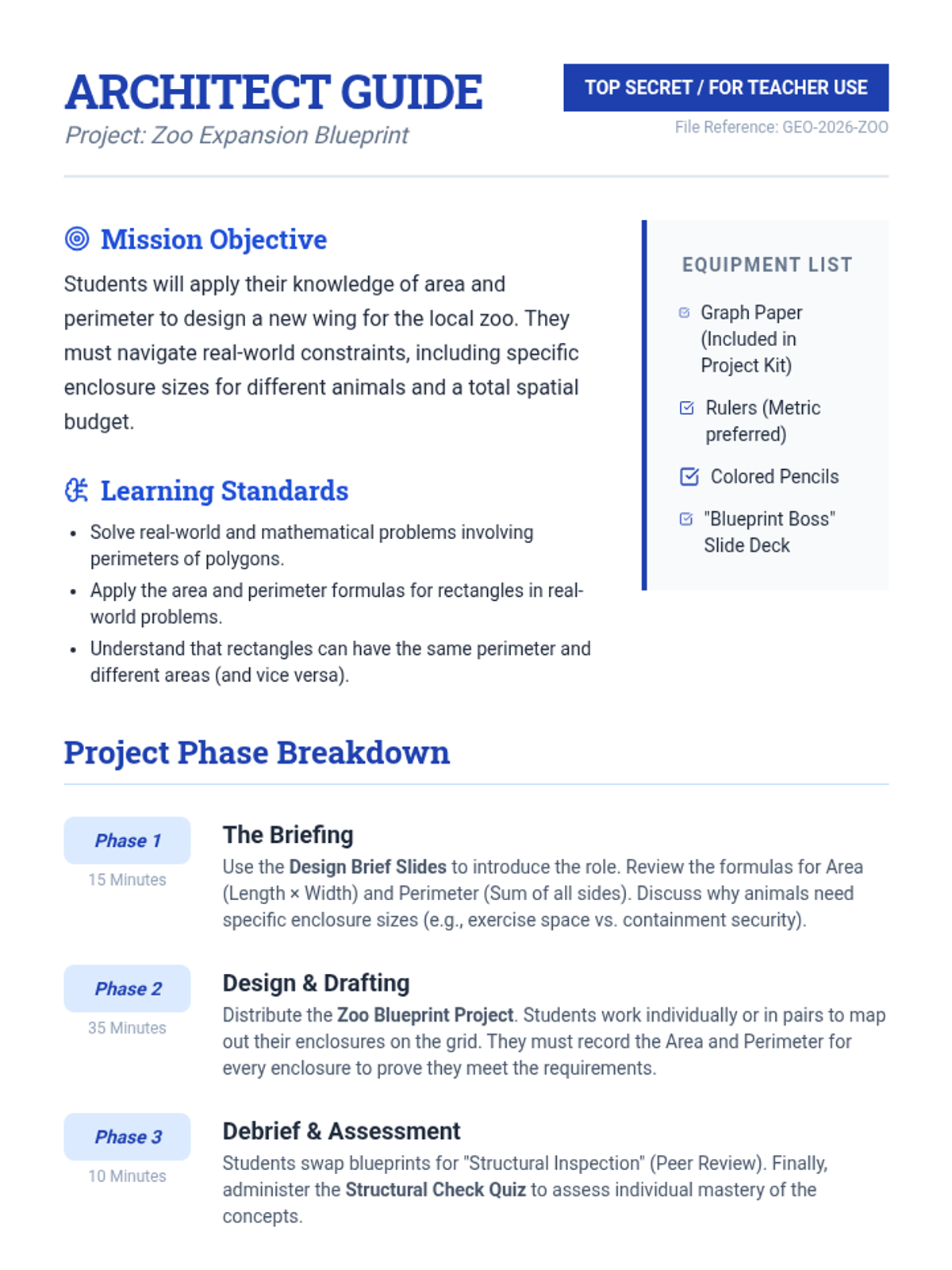
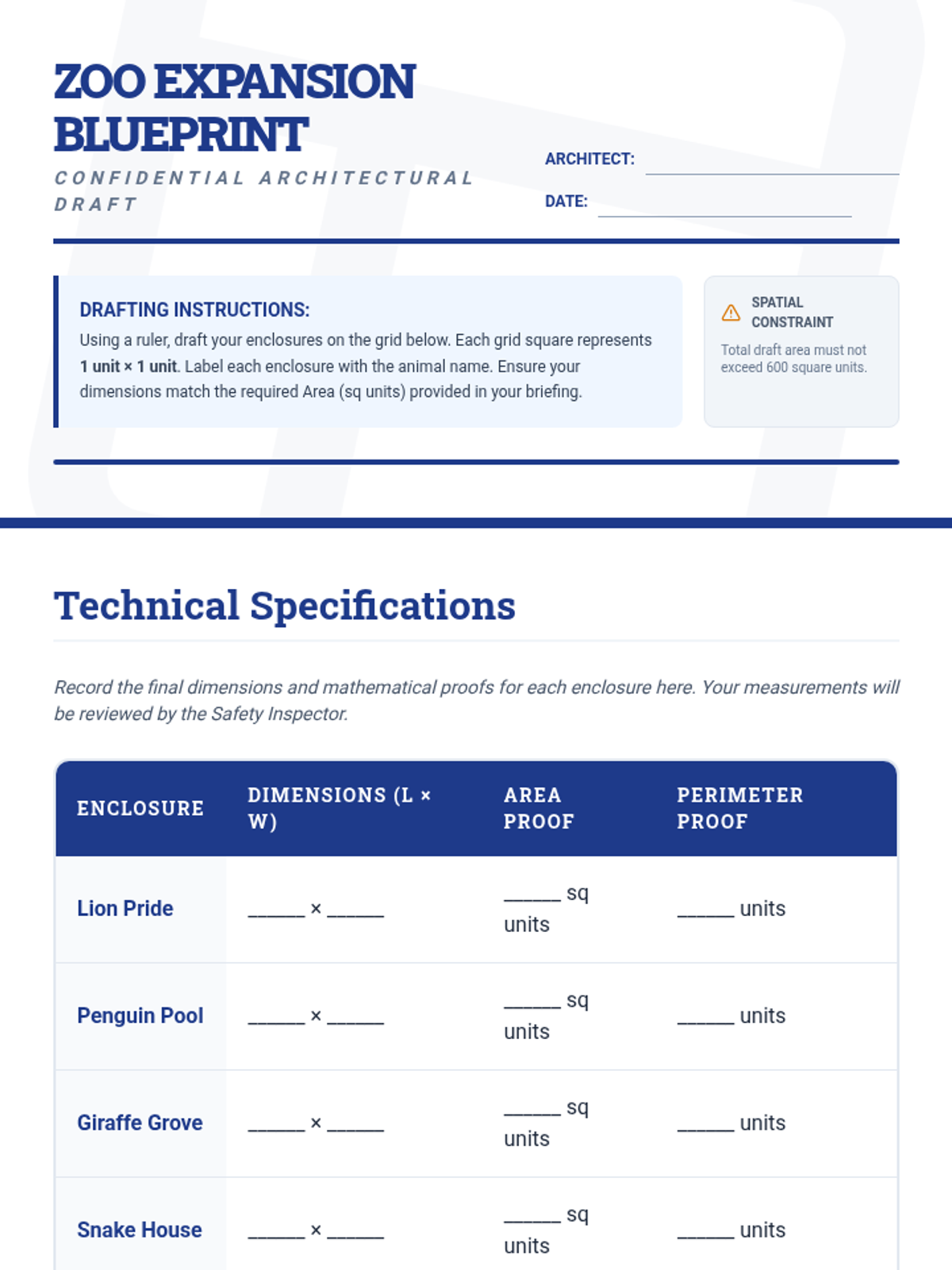
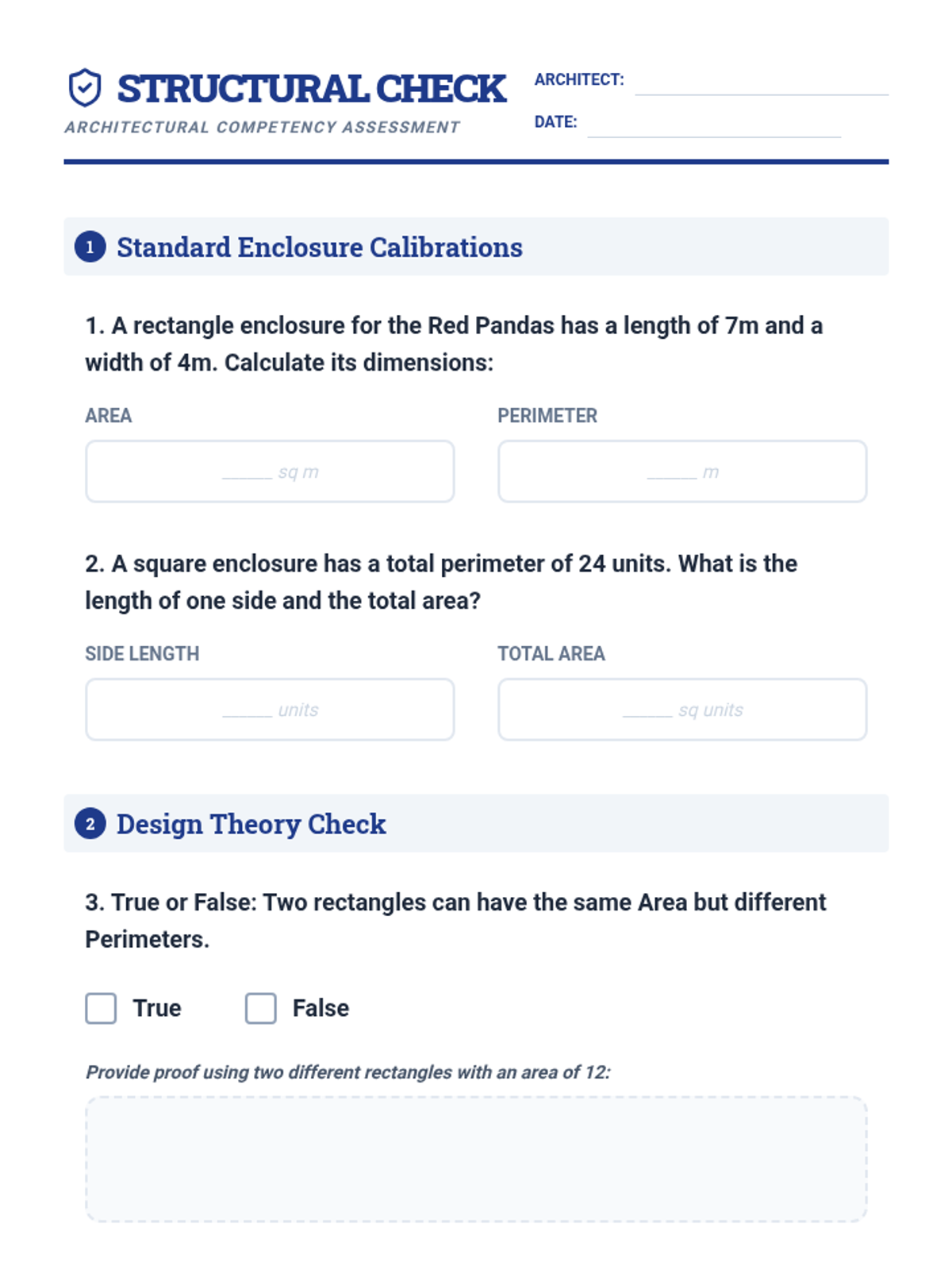
In this hands-on geometry lesson, students step into the role of lead architects to design a zoo expansion. They will apply area and perimeter concepts to create functional animal enclosures while balancing strict spatial and budgetary constraints.