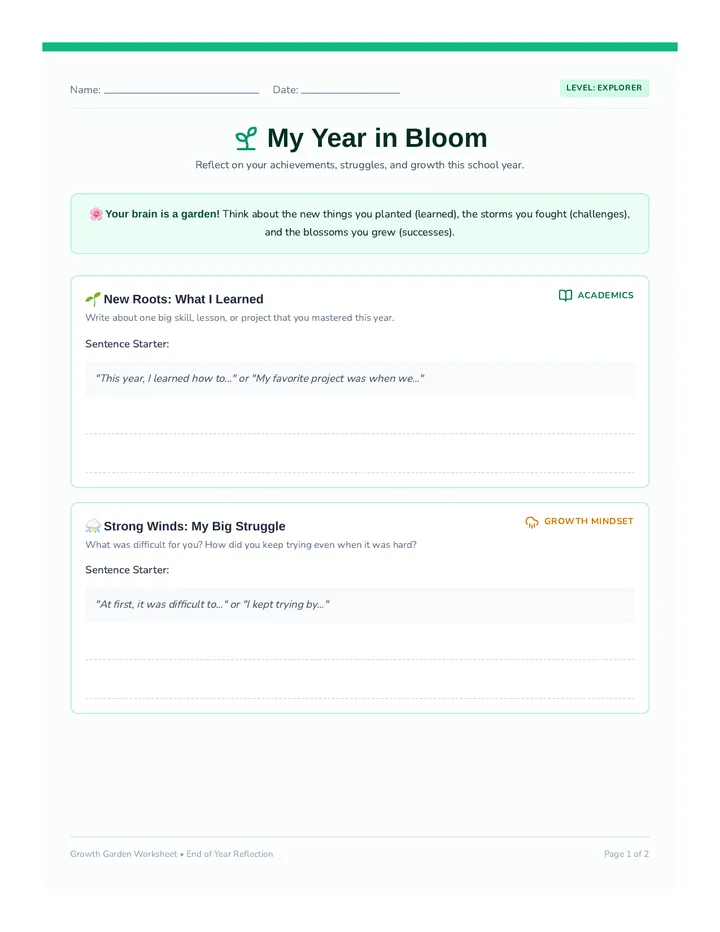
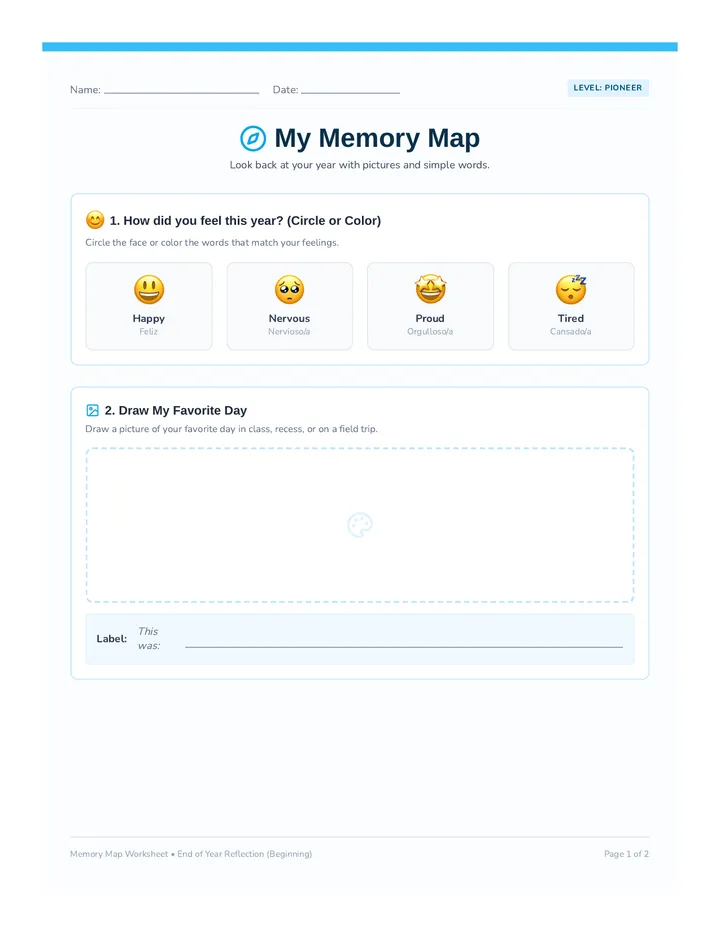
A comprehensive collection of 100 creative writing prompts designed to spark middle schoolers' imagination, self-reflection, and critical thinking across six key themes.
An introduction to Book 3, focusing on Jack's growing anxiety about his friends 'outgrowing' the apocalypse and the initial mysterious signals from the outside world.
A lesson focused on identifying text structures using visual scaffolding, signal words, and sentence starters designed for English Language Learners.
A comprehensive lesson teaching 6th graders how to use graphic organizers (Cornell notes, mind maps, and T-charts) to organize information effectively. Includes a detailed lesson plan, a visual anchor chart, and guided practice worksheets.
A deep dive into Chapter 6 of 'The Last Kids on Earth and the Nightmare King', focusing on character motivations and the introduction of the Nightmare King's lore.
A lesson focused on identifying the main idea and supporting details in nonfiction texts using a detective-themed investigation approach. Students will learn to distinguish between the 'big picture' and the evidence that supports it.
A lesson focused on identifying the topic, main idea, and supporting details in non-fiction textbook chapters using a 'Textbook Trek' expedition theme.
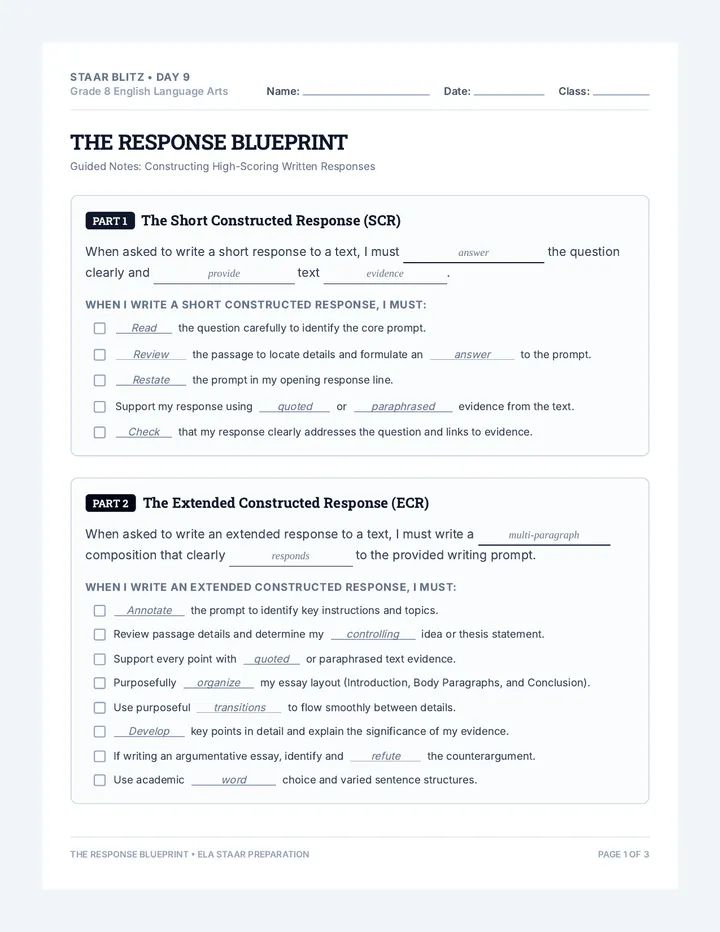
Intensive test preparation materials designed to mimic the format and rigor of STAR 360 and OSAS assessments, focusing on strategic elimination and evidence retrieval.
Synthesizes all skills through complex grade-level texts to prepare for end-of-year assessments.
Compares written texts to their visual or auditory interpretations, analyzing how the medium influences the message.
Identifies author biases and logical fallacies in complex informational texts to determine their impact on an argument.
Evaluates the reasoning, evidence, and credibility of arguments while describing differing opinions on the same topic.
Determines the author's purpose in informational texts and evaluates the use of rhetorical devices to further that purpose.
Analyzes word choices and sentence structure in informational texts to see how they develop and refine key ideas and tone.
Examines how the structure of literary texts contributes to meaning and style, comparing two or more texts.
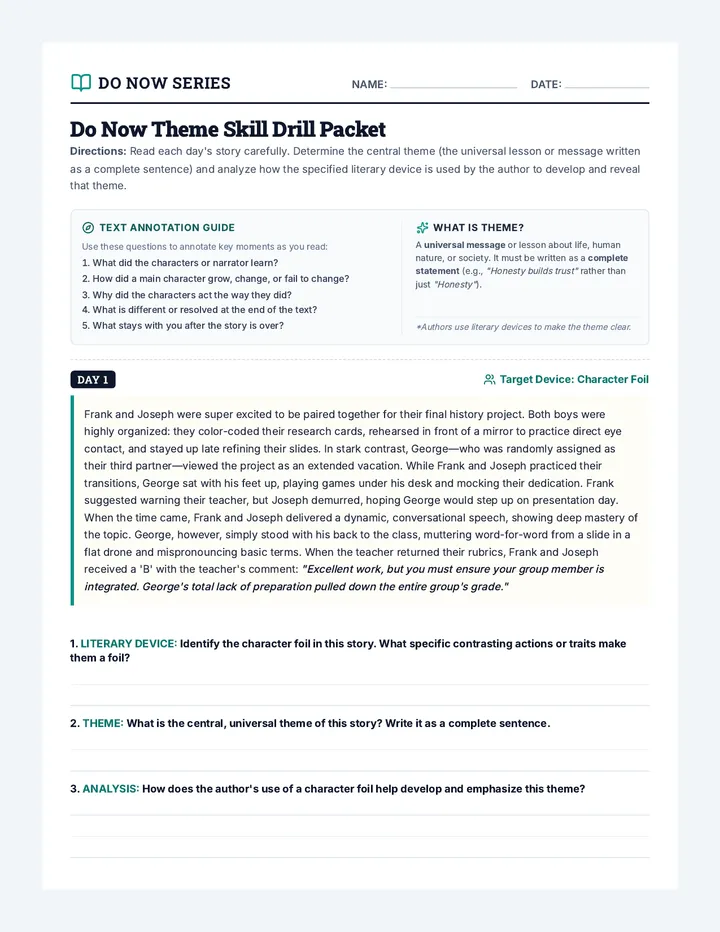
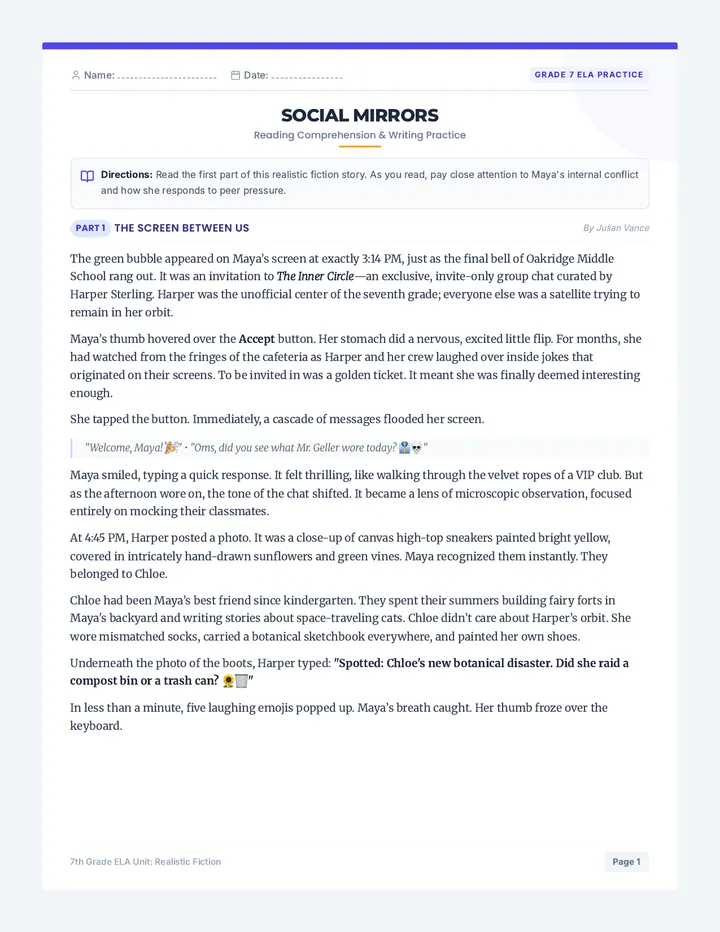
Focuses on identifying and explaining the contribution of literary devices, specifically dramatic irony and its effect on the reader.
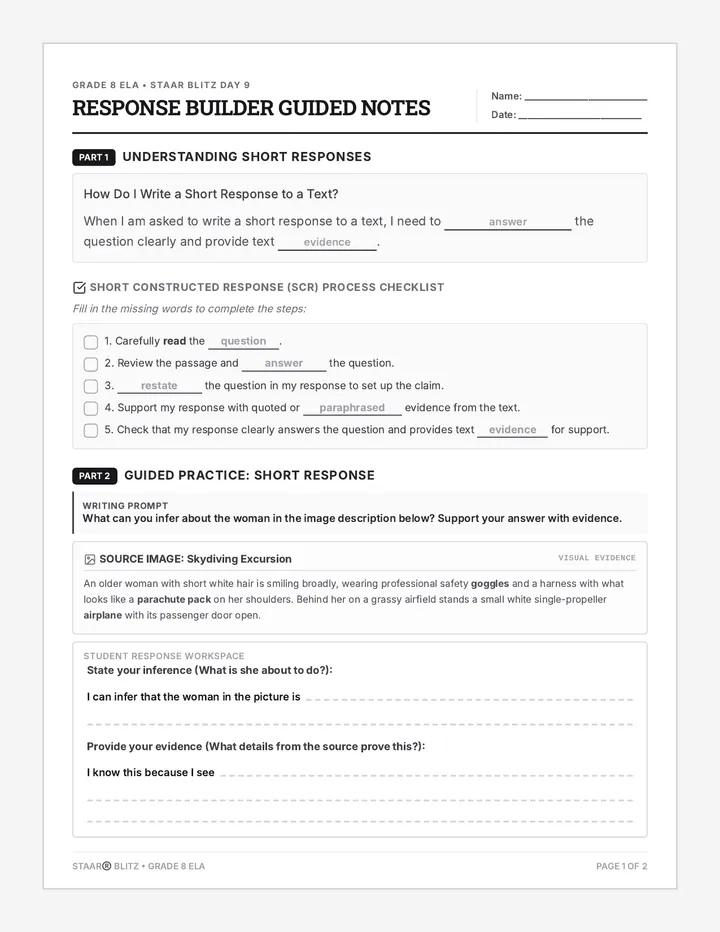
Analyzes the effects of various points of view and the narrator's impact on the narrative, covering Grade 8 Craft and Structure standards.
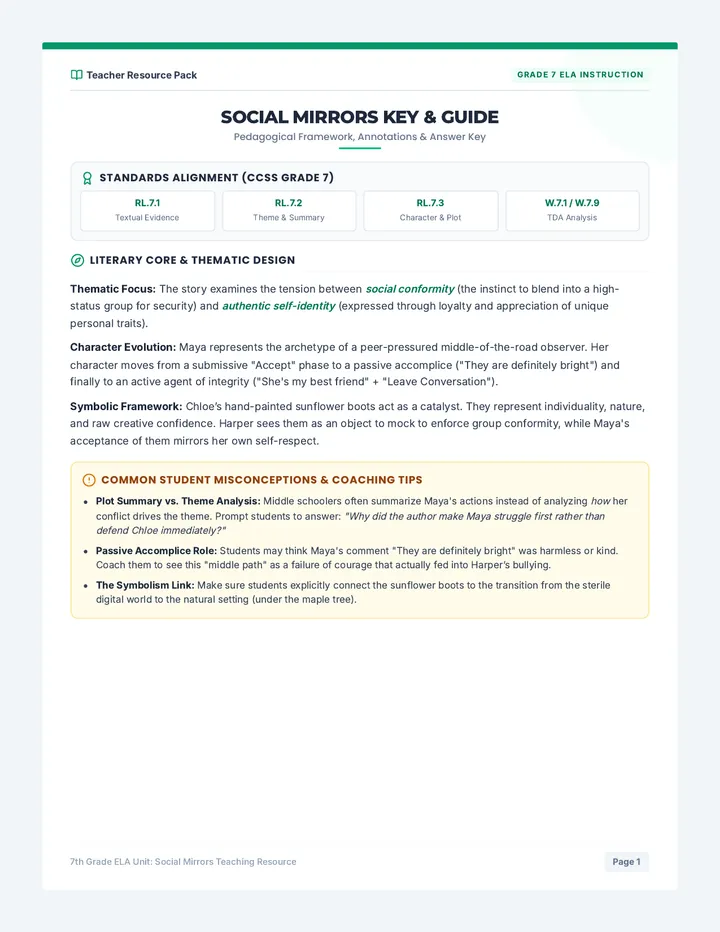
Focused on tracing plot development and providing objective summaries, aligning with Grade 8 Key Ideas and Details standards.