A comprehensive set of grading tools and rubrics for 6th-grade informational essays, featuring analytic and single-point rubrics to streamline feedback and assessment.
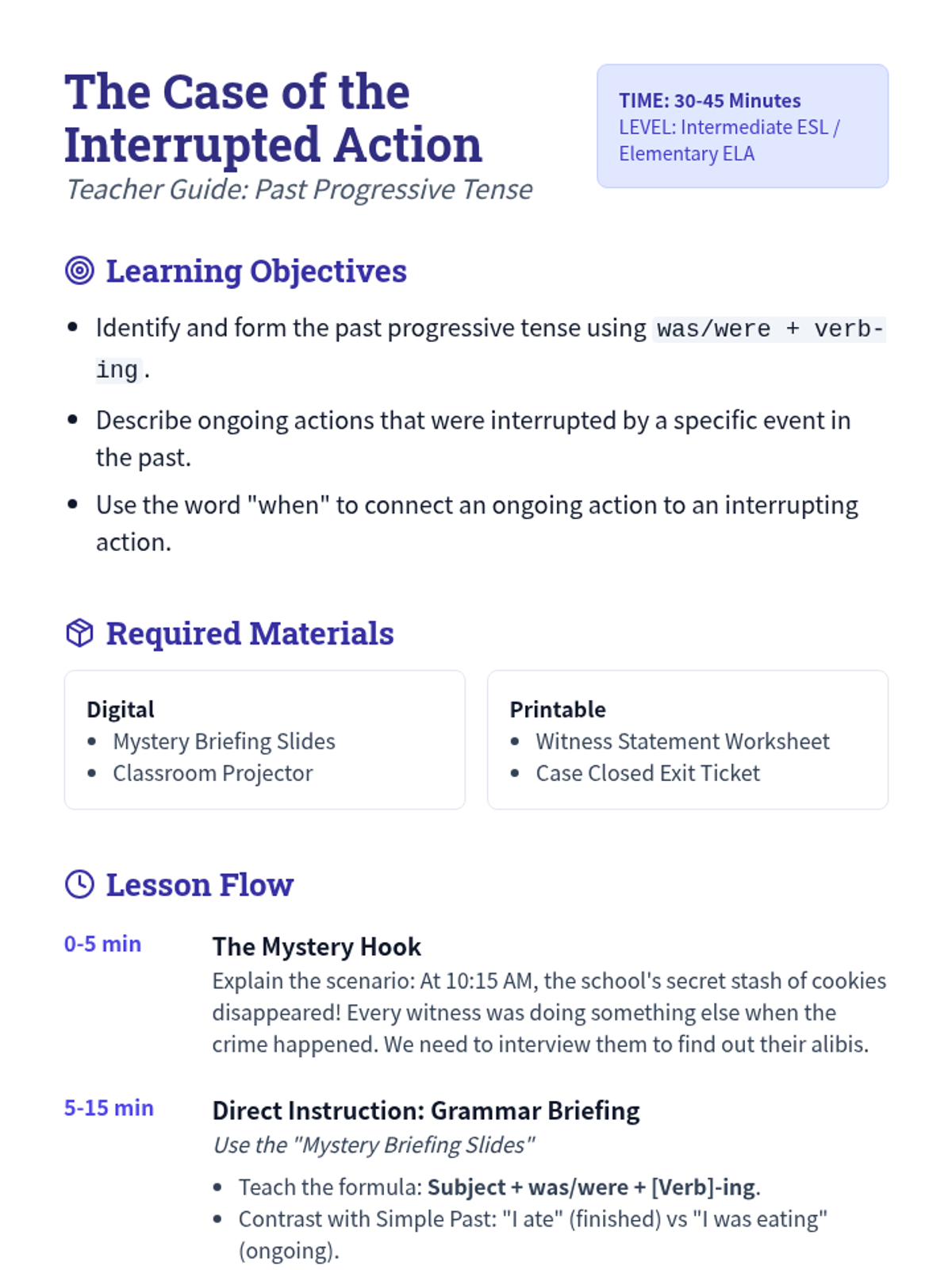
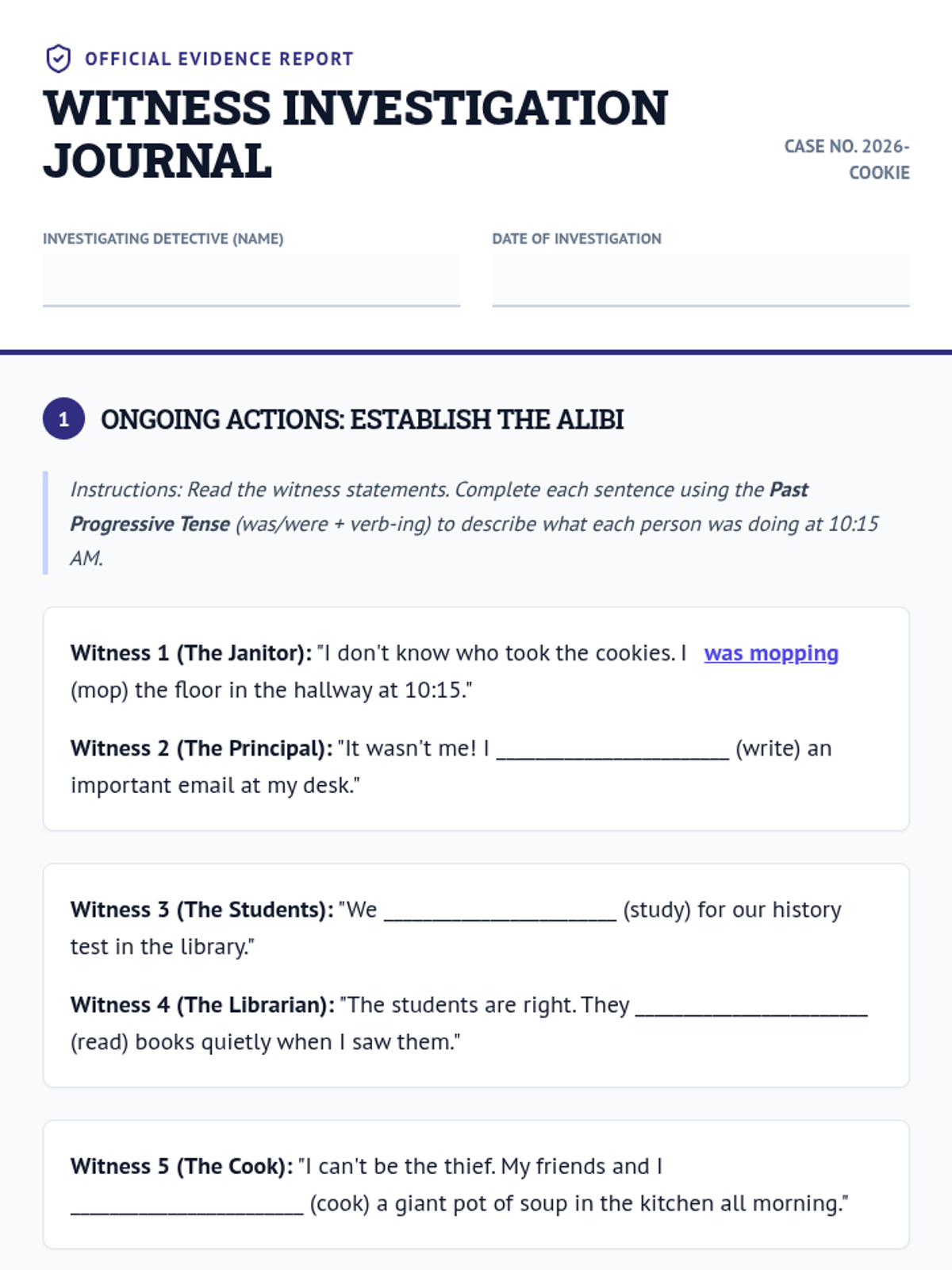
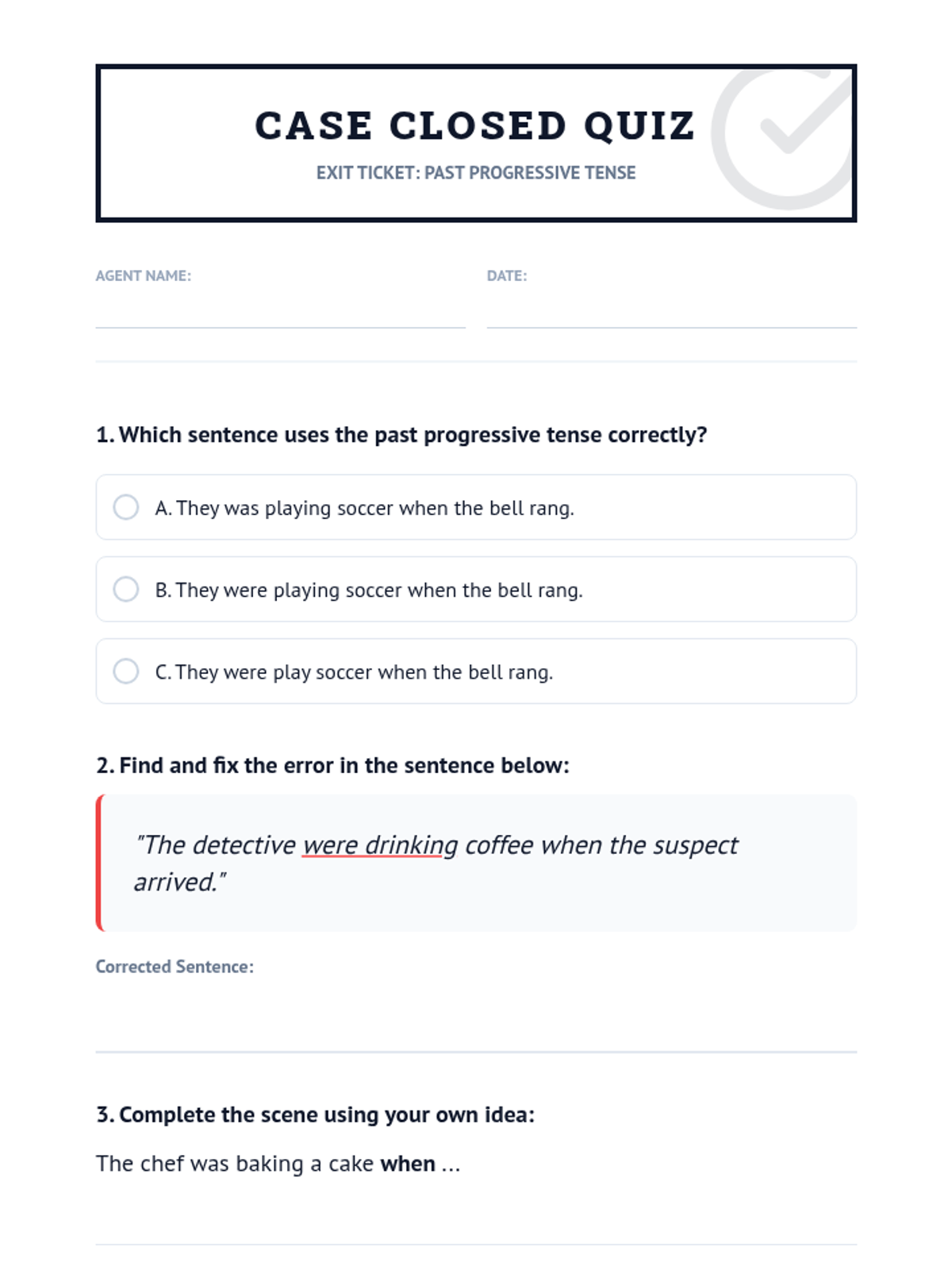
A lesson on the past progressive tense (was/were + verb-ing) focused on describing ongoing and interrupted actions in the past through a detective mystery theme.
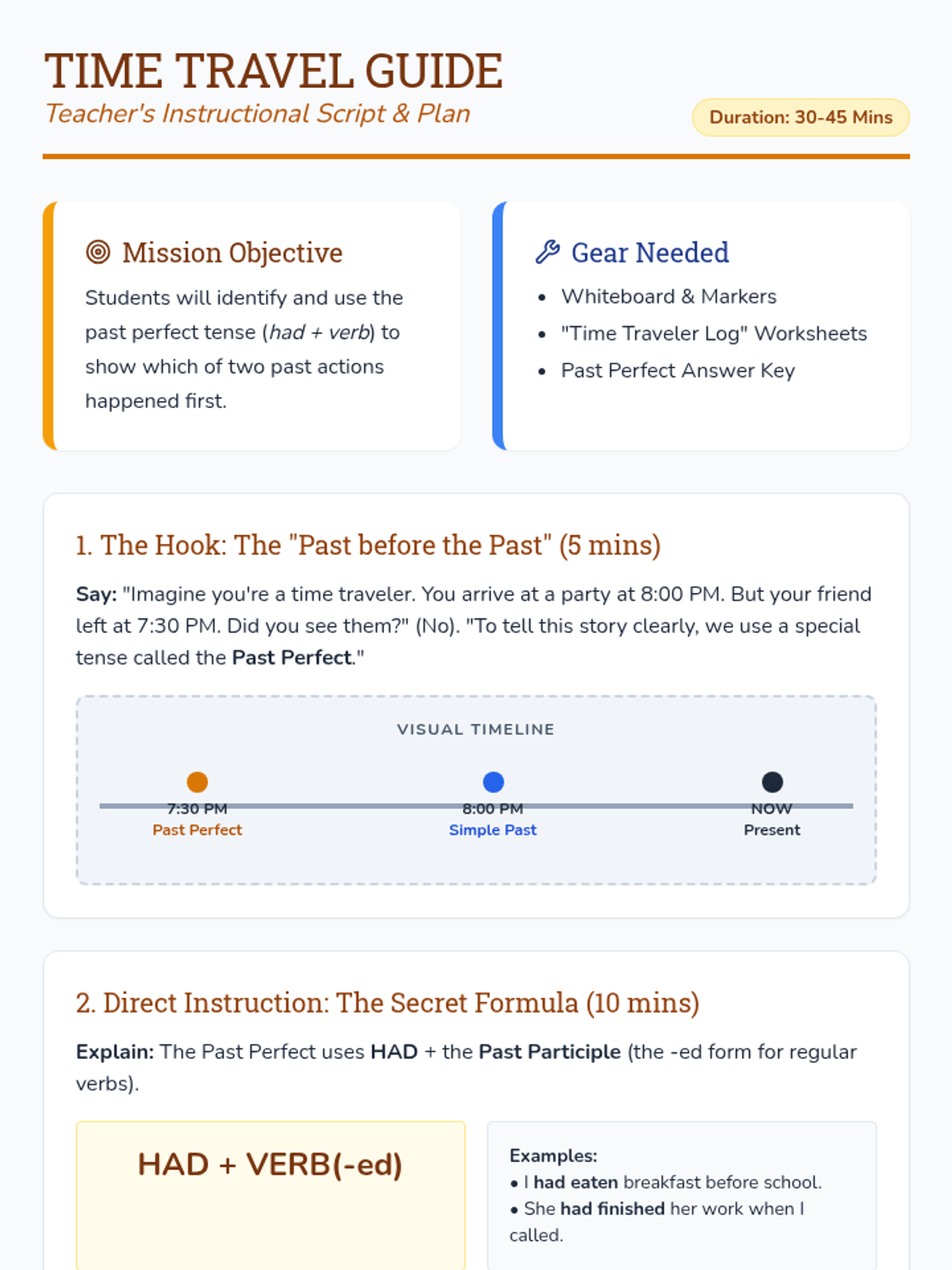
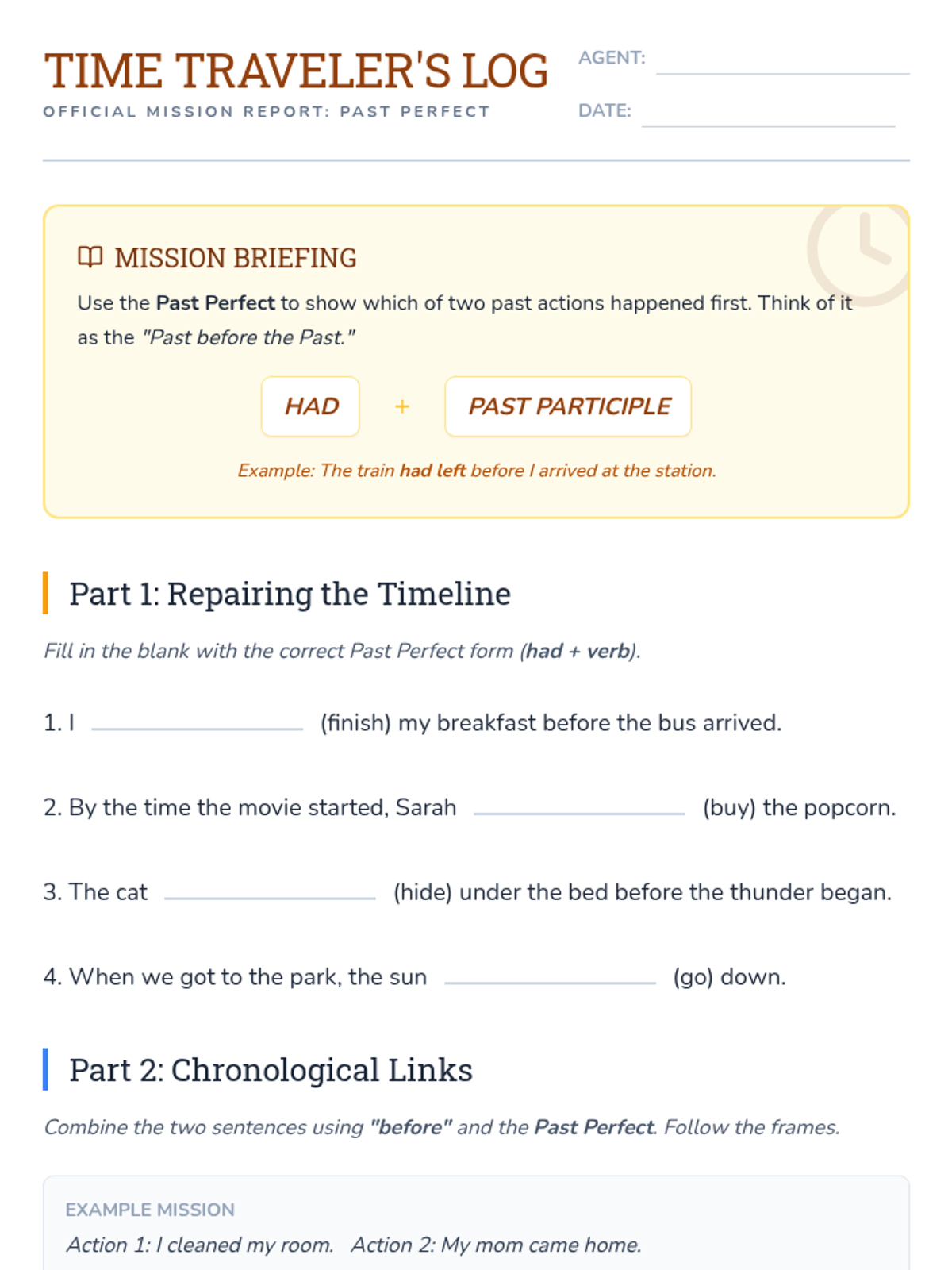
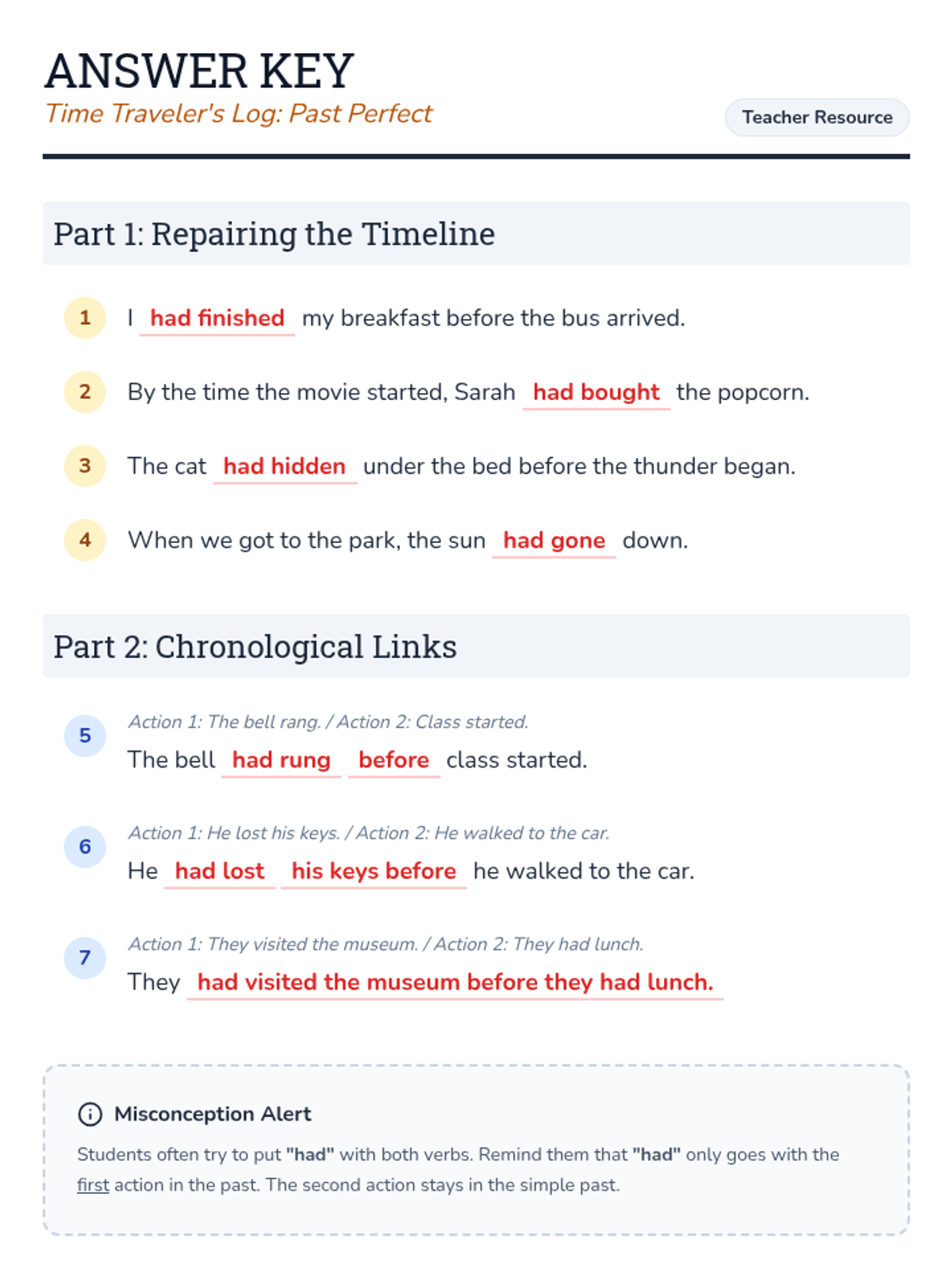
A comprehensive 30-45 minute lesson on the past perfect tense, featuring explicit instructions, a time-travel themed worksheet, and a detailed teacher guide. This lesson helps students understand how to sequence two past events using the 'past before the past' structure.
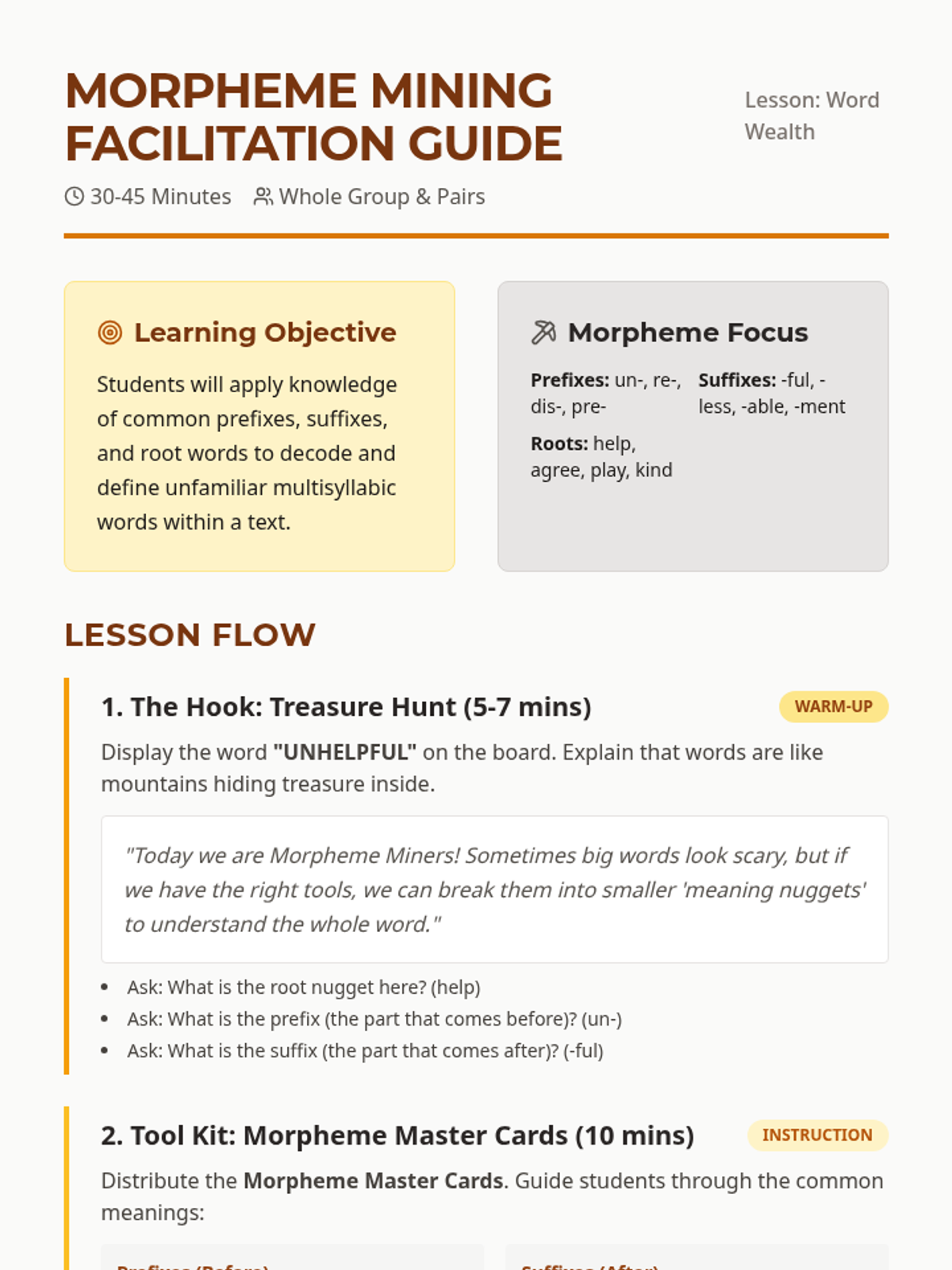
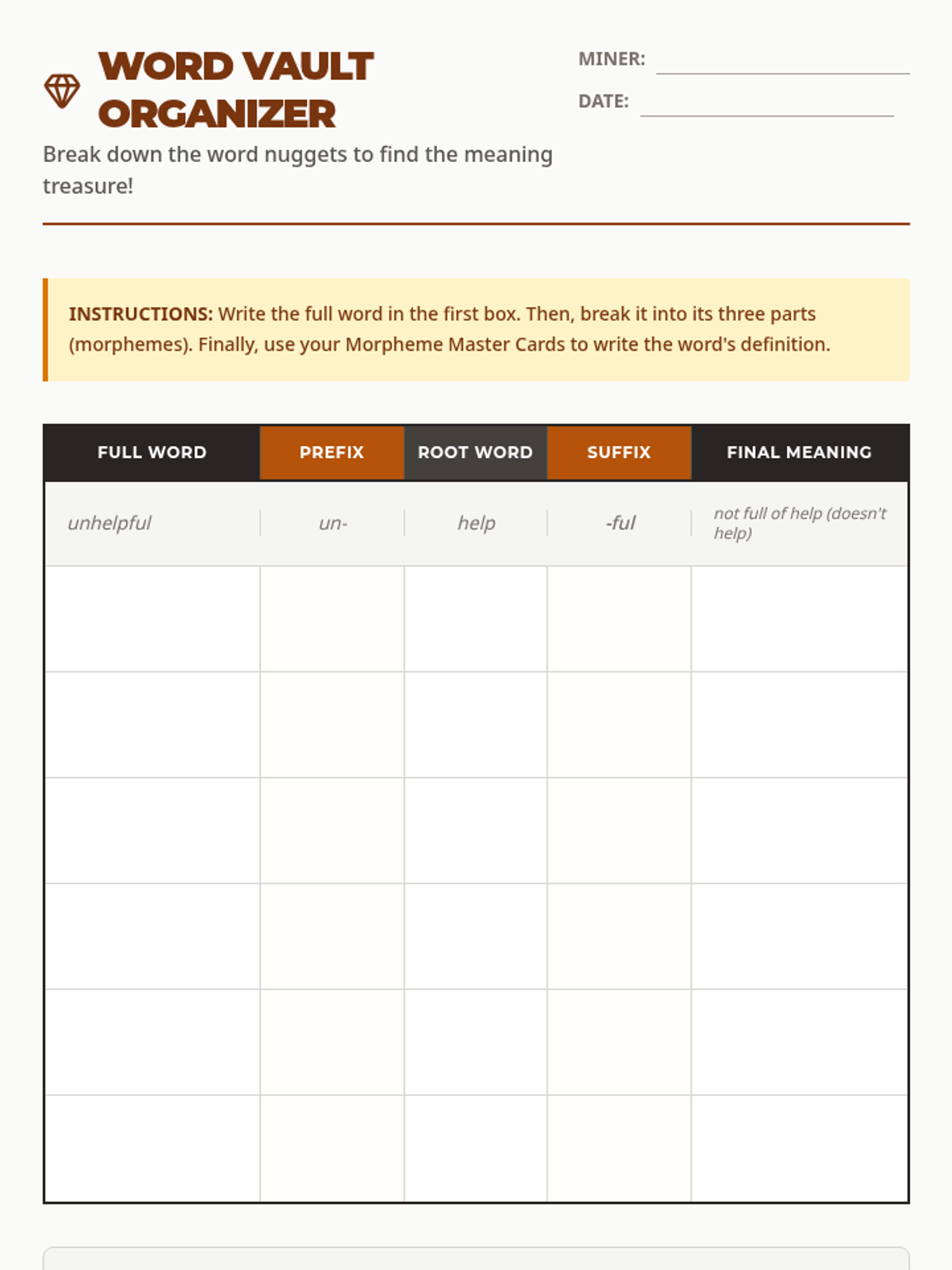
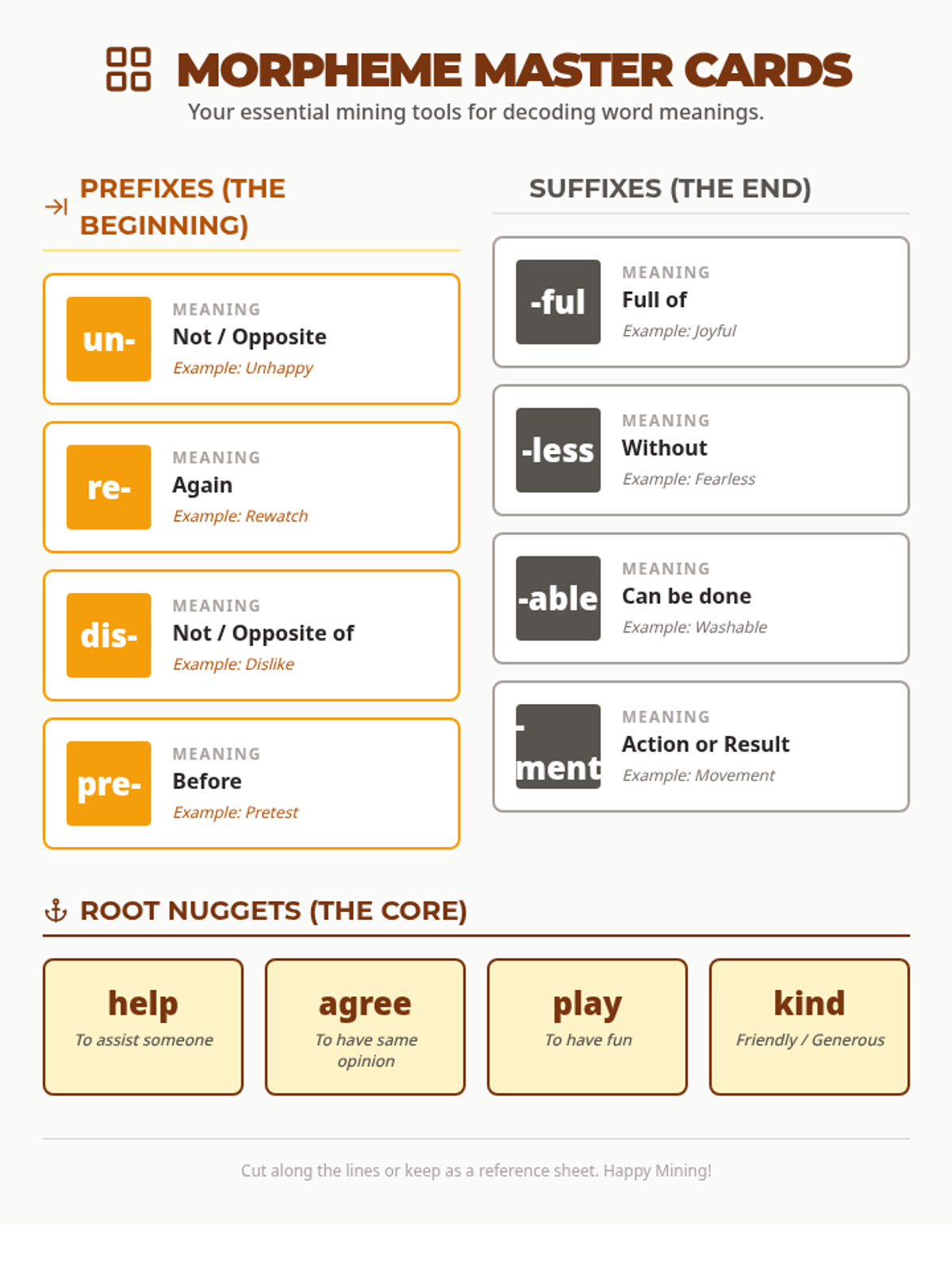
A 30-45 minute lesson focused on decoding multisyllabic words using morphology (prefixes, suffixes, and root words). Students will learn to 'mine' for meaning by breaking words into their component parts.
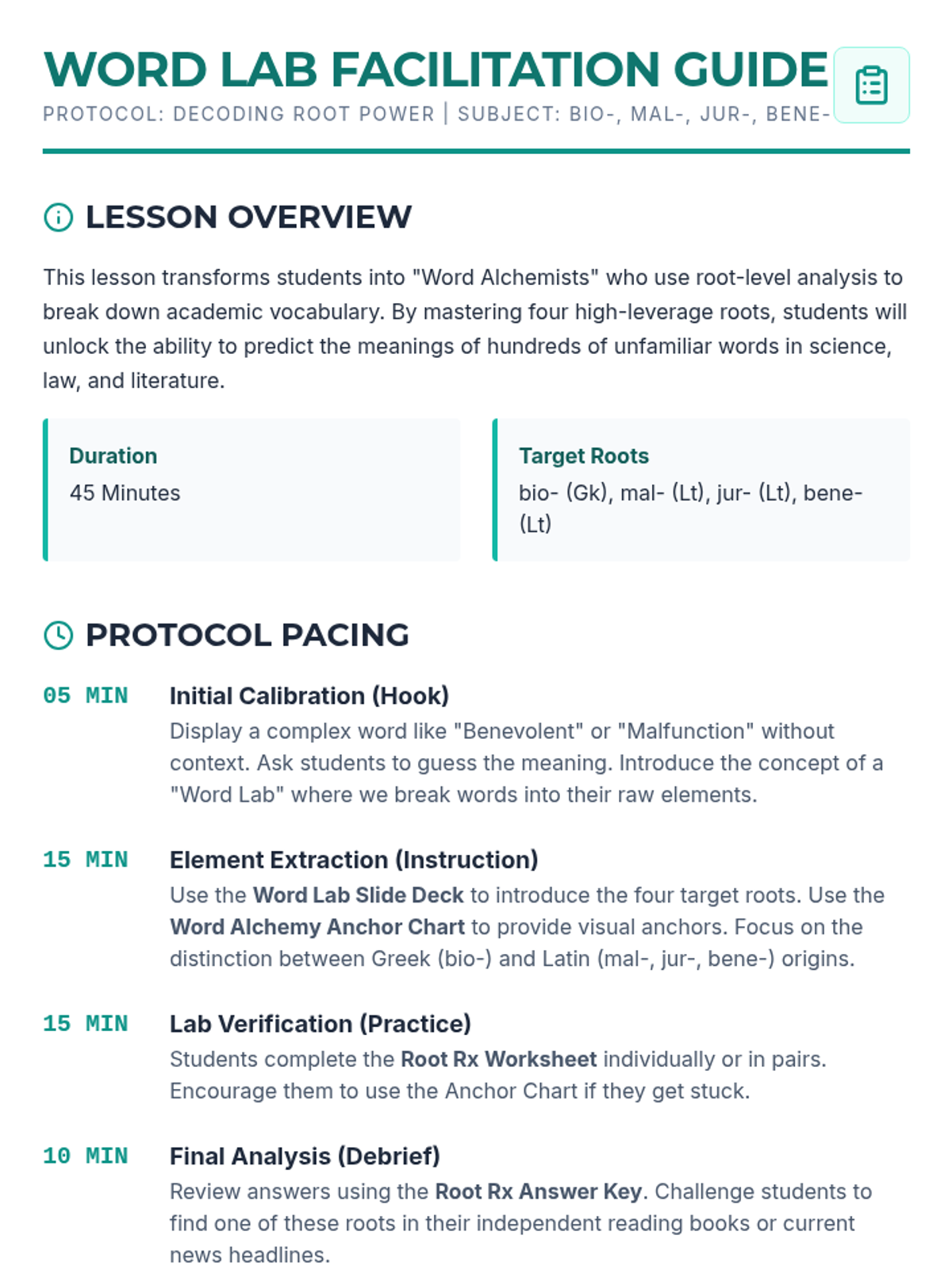
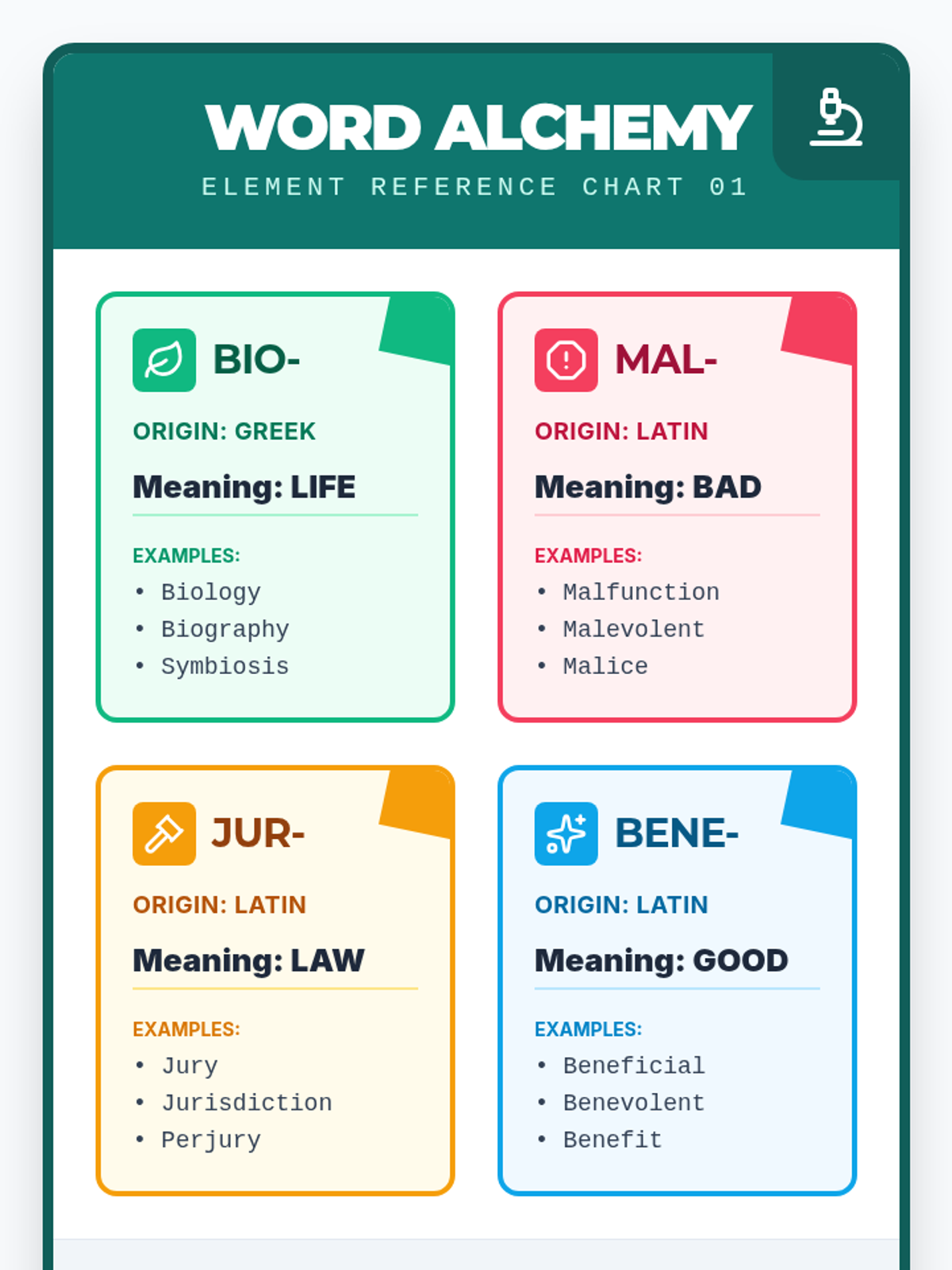
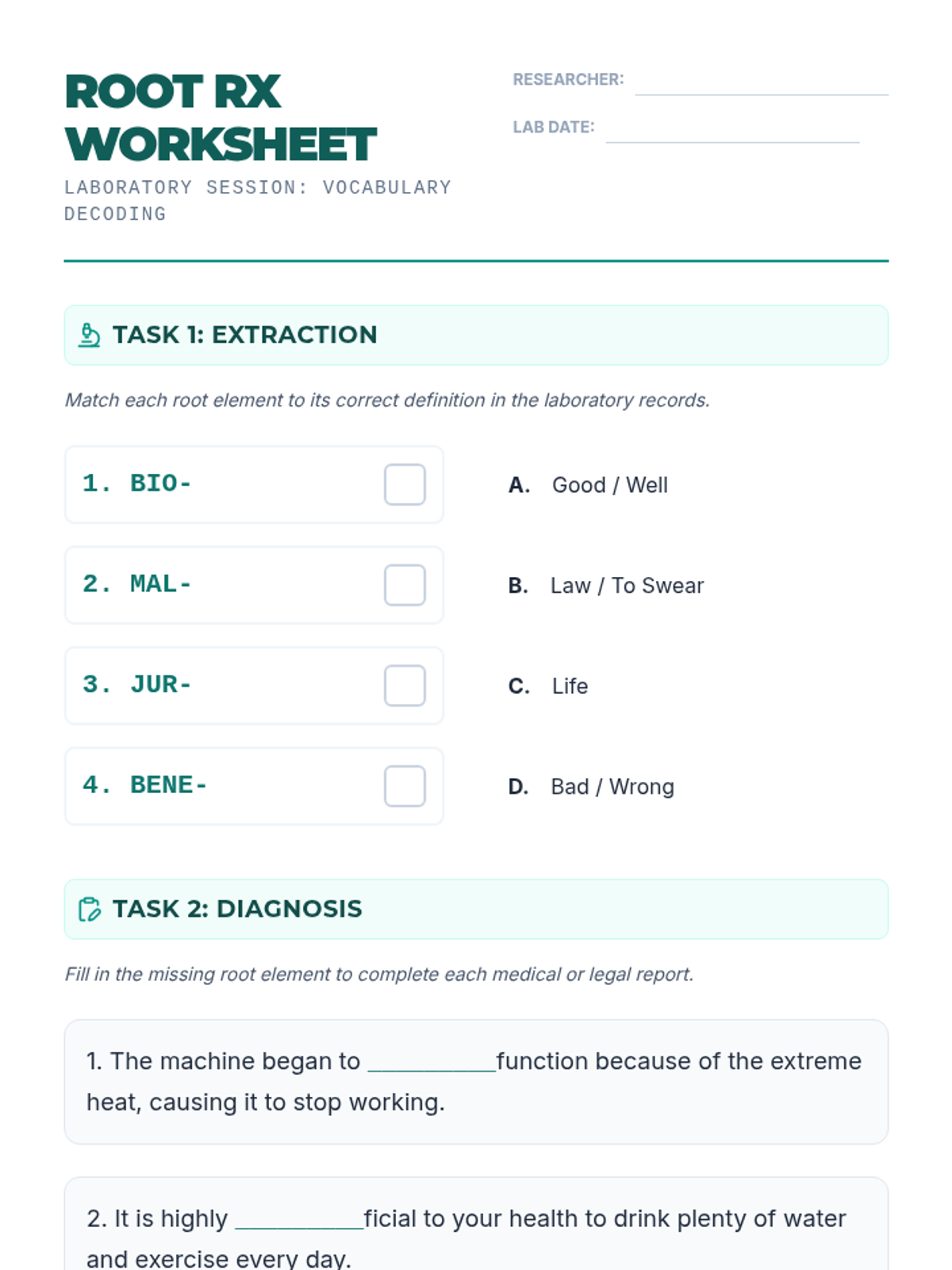
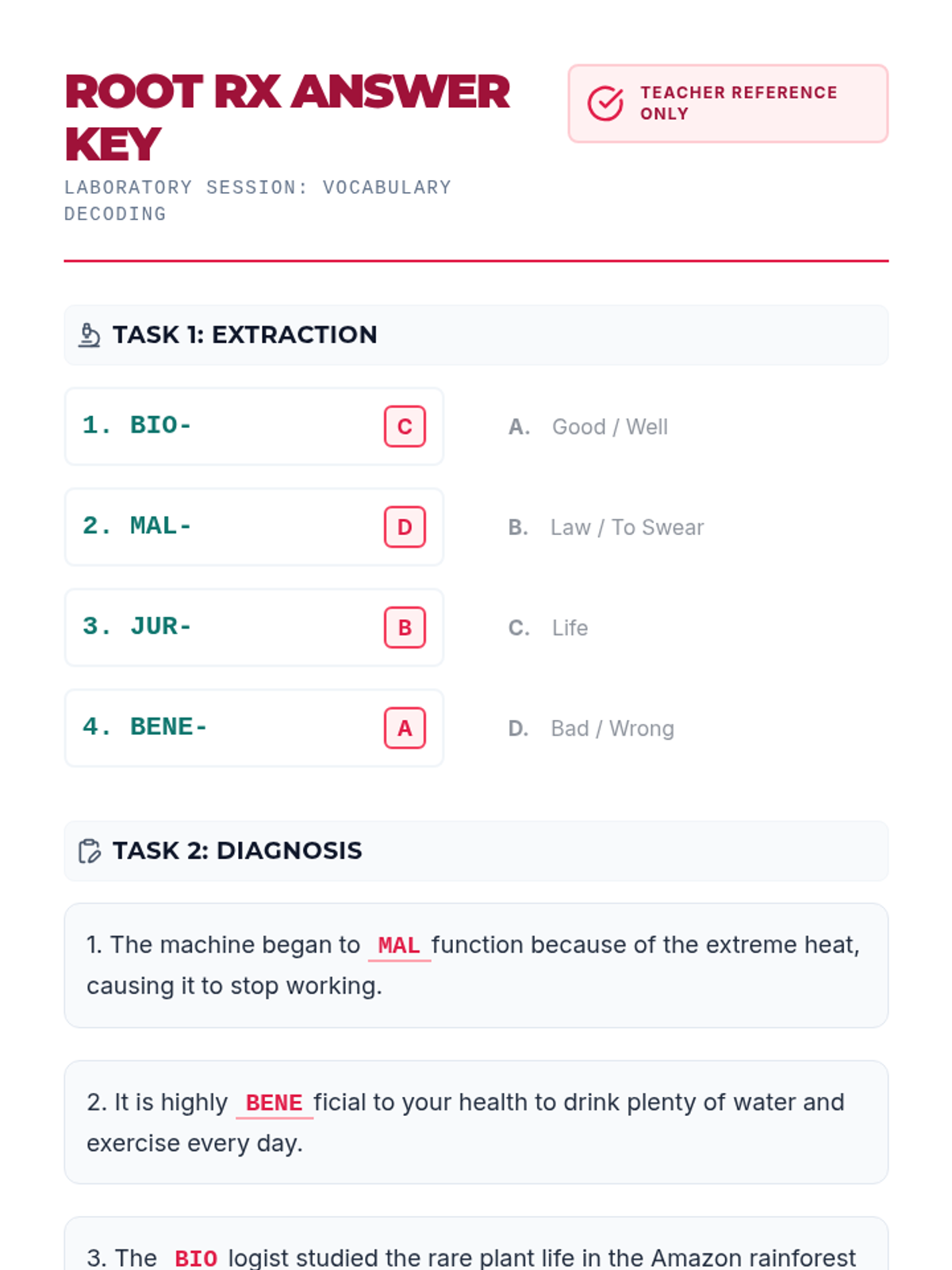
A 45-minute deep dive into the Greek and Latin roots bio-, mal-, jur-, and bene-, designed to help students decode complex academic vocabulary using the 'Word Lab' approach.
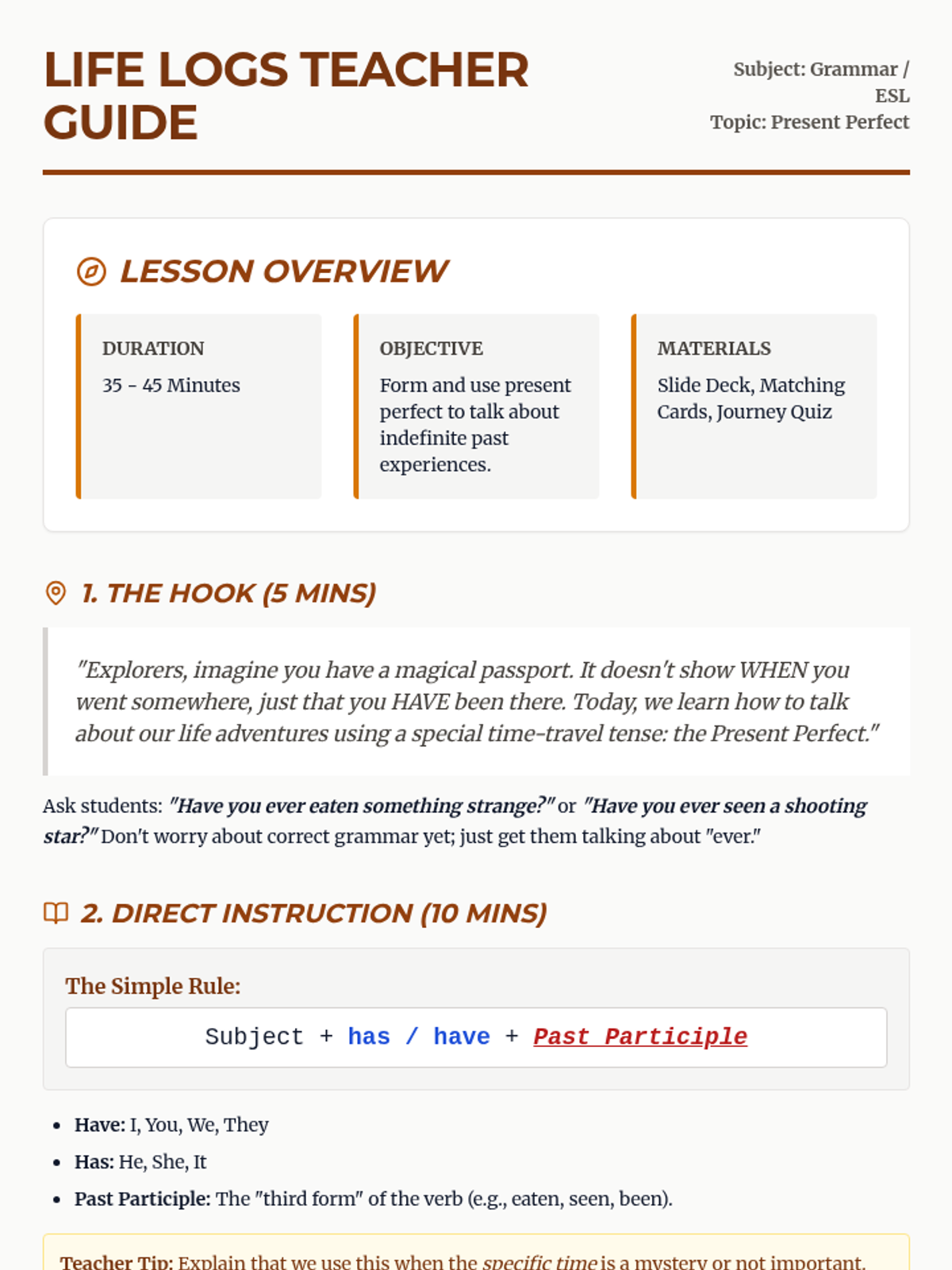
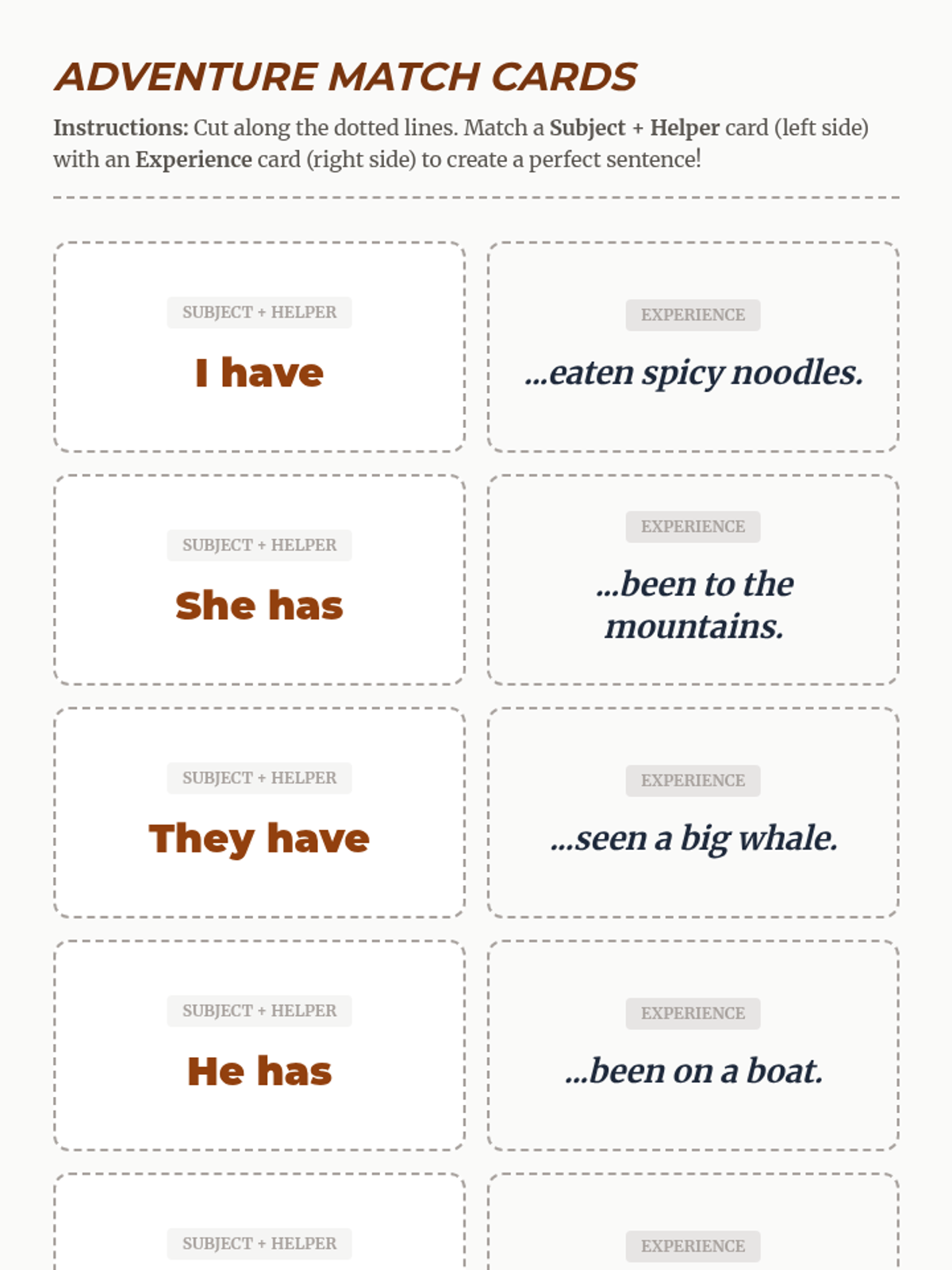
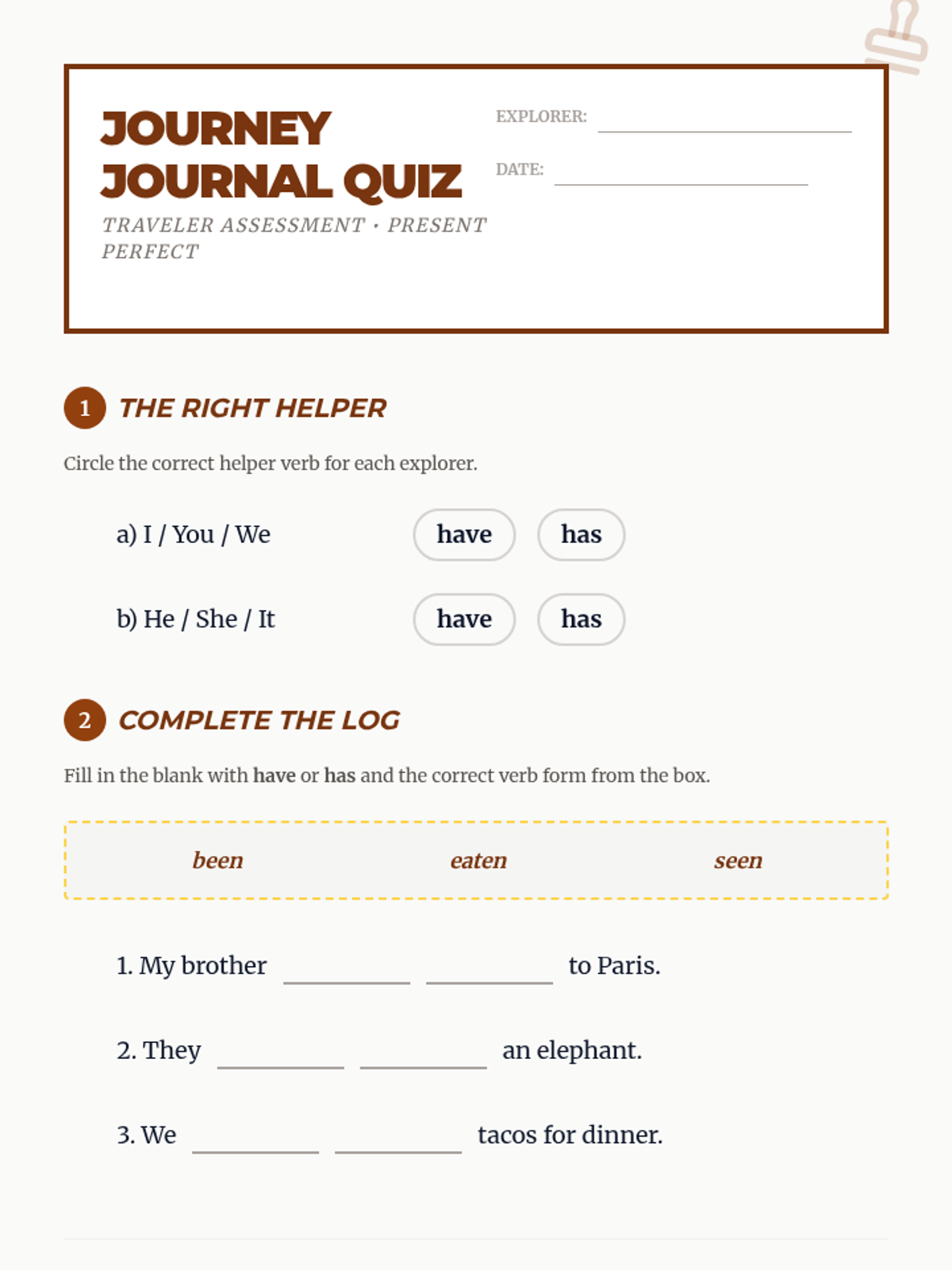
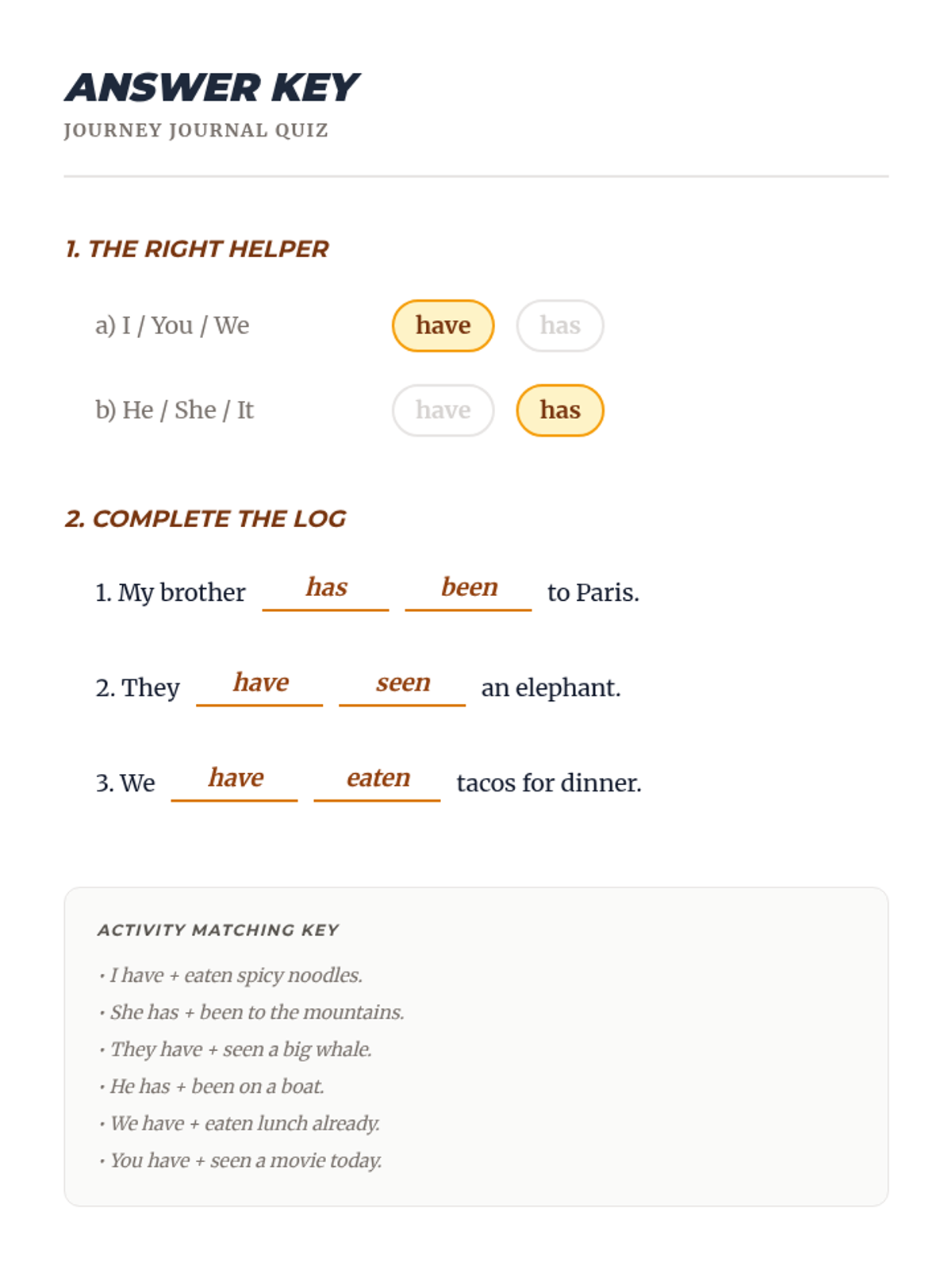
A beginner-friendly lesson on using the present perfect tense to talk about past experiences without a specific time. Includes direct instruction on the has/have + past participle formula and interactive matching activities.
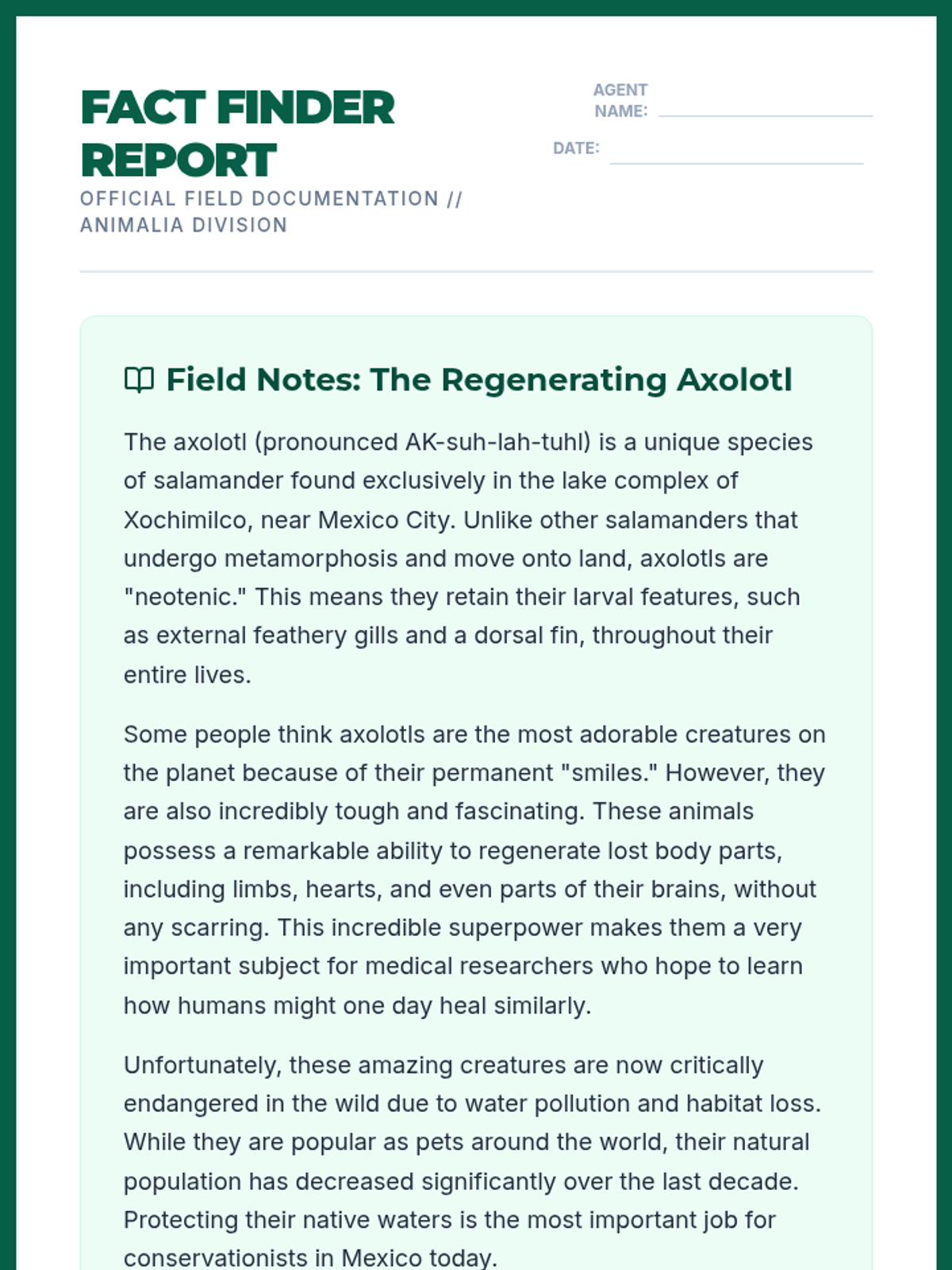
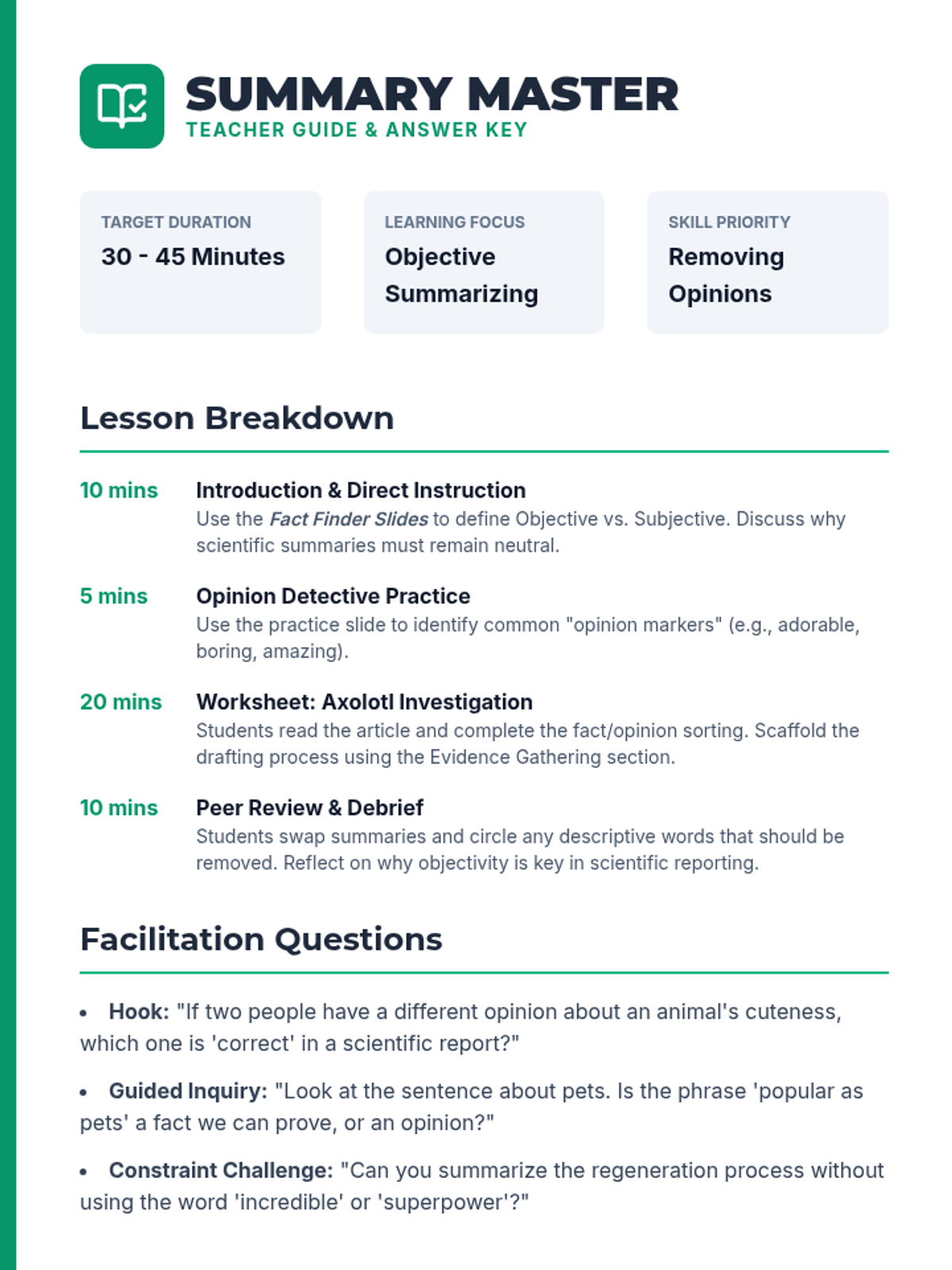
A lesson focused on writing objective summaries of non-fiction texts by distinguishing between facts and personal opinions using an animal-themed article.
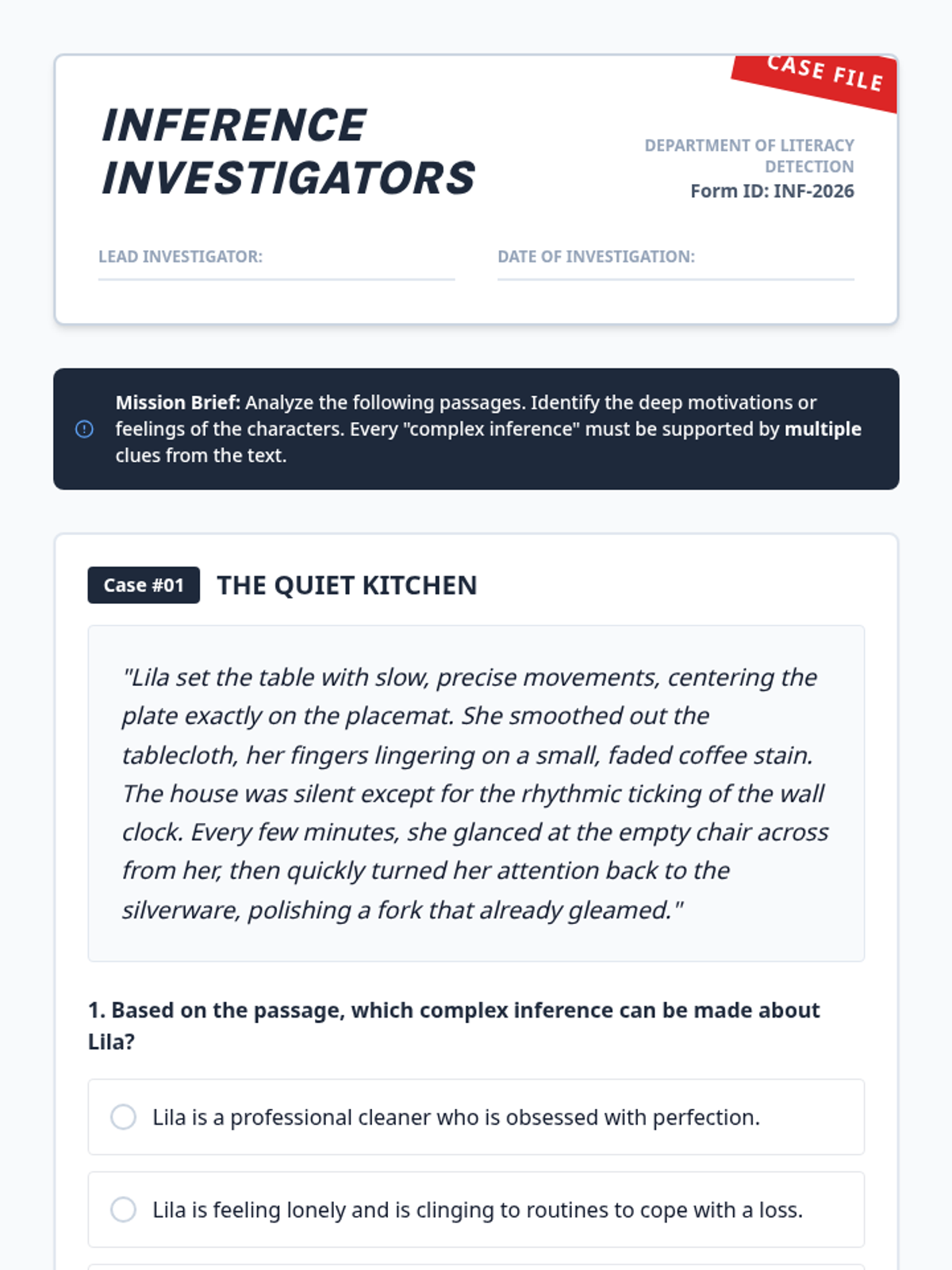
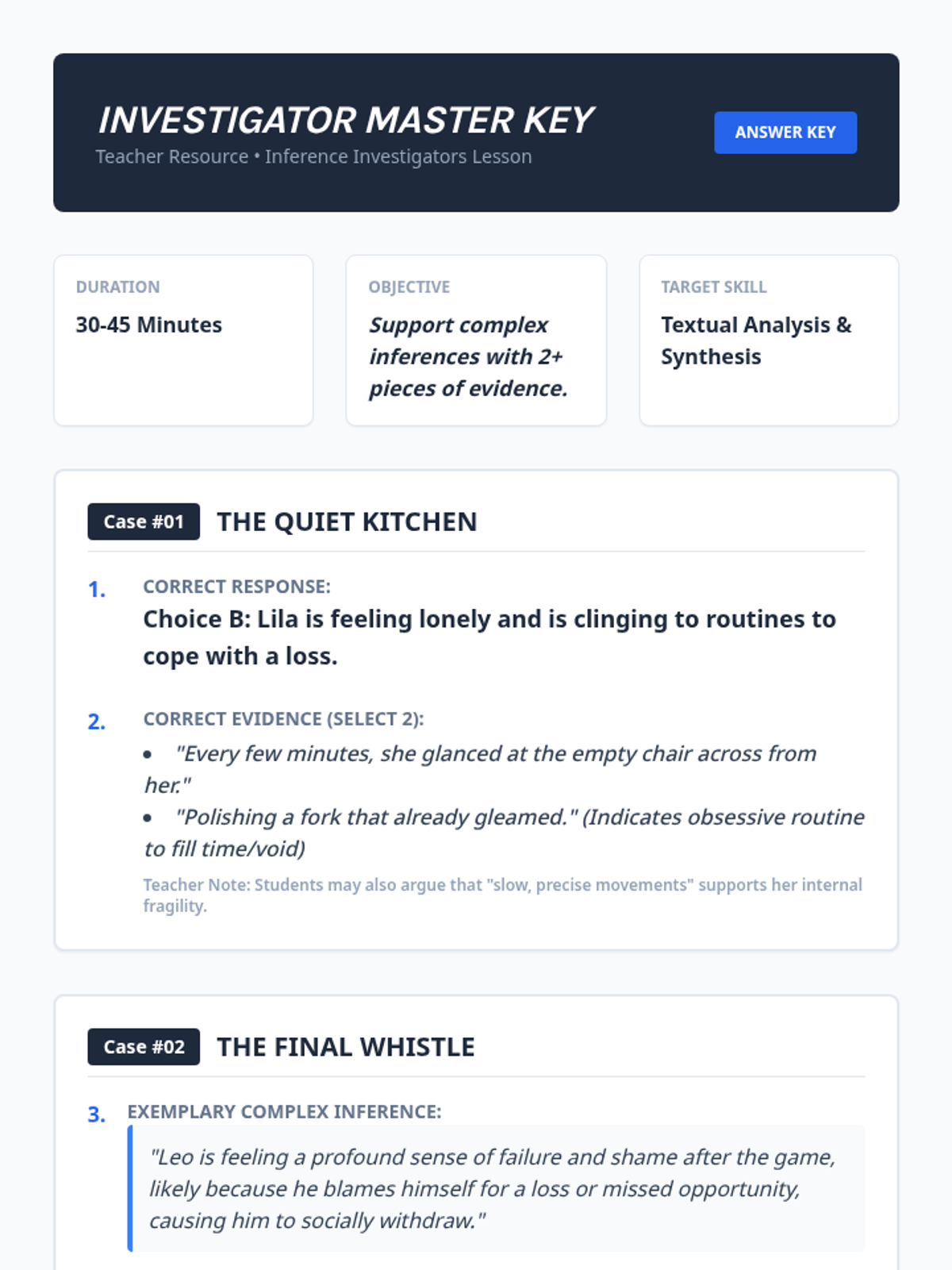
A lesson focused on making complex inferences supported by multiple pieces of textual evidence. Students act as 'Inference Investigators' to decode short fictional passages and build strong, evidence-backed conclusions.
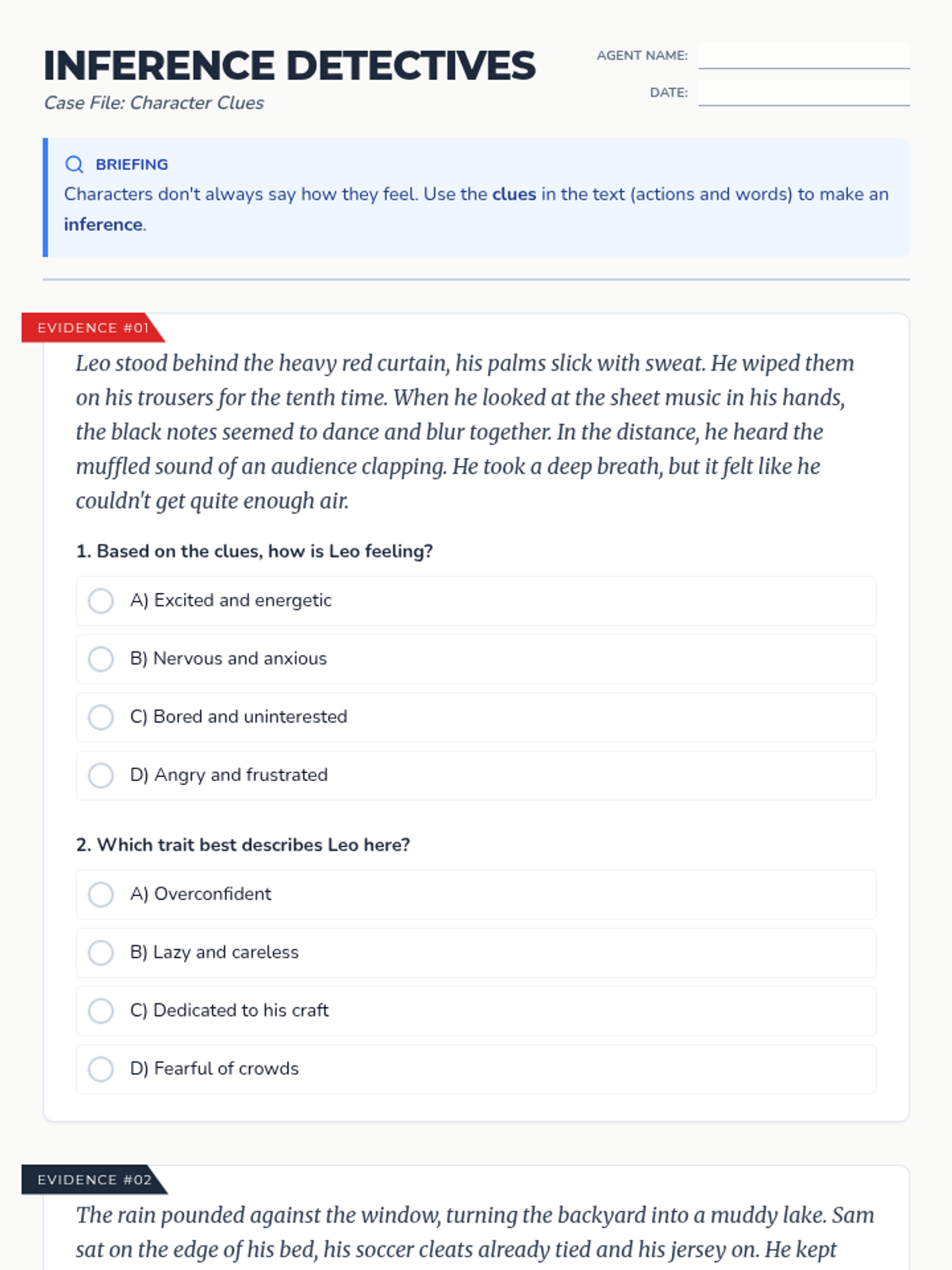
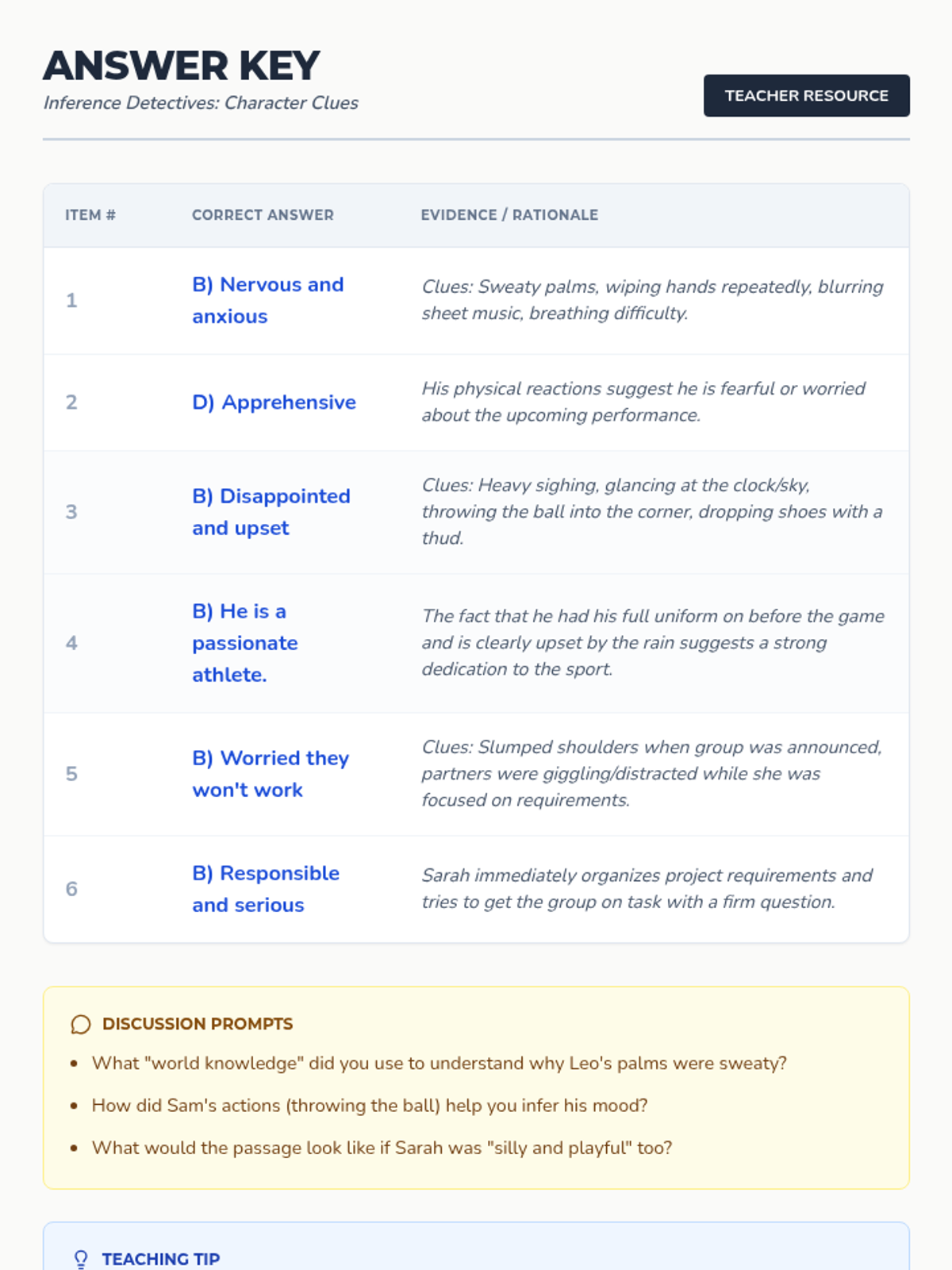
A lesson focused on teaching students how to infer character traits and feelings from short fictional scenarios. Includes a themed detective worksheet and an answer key.
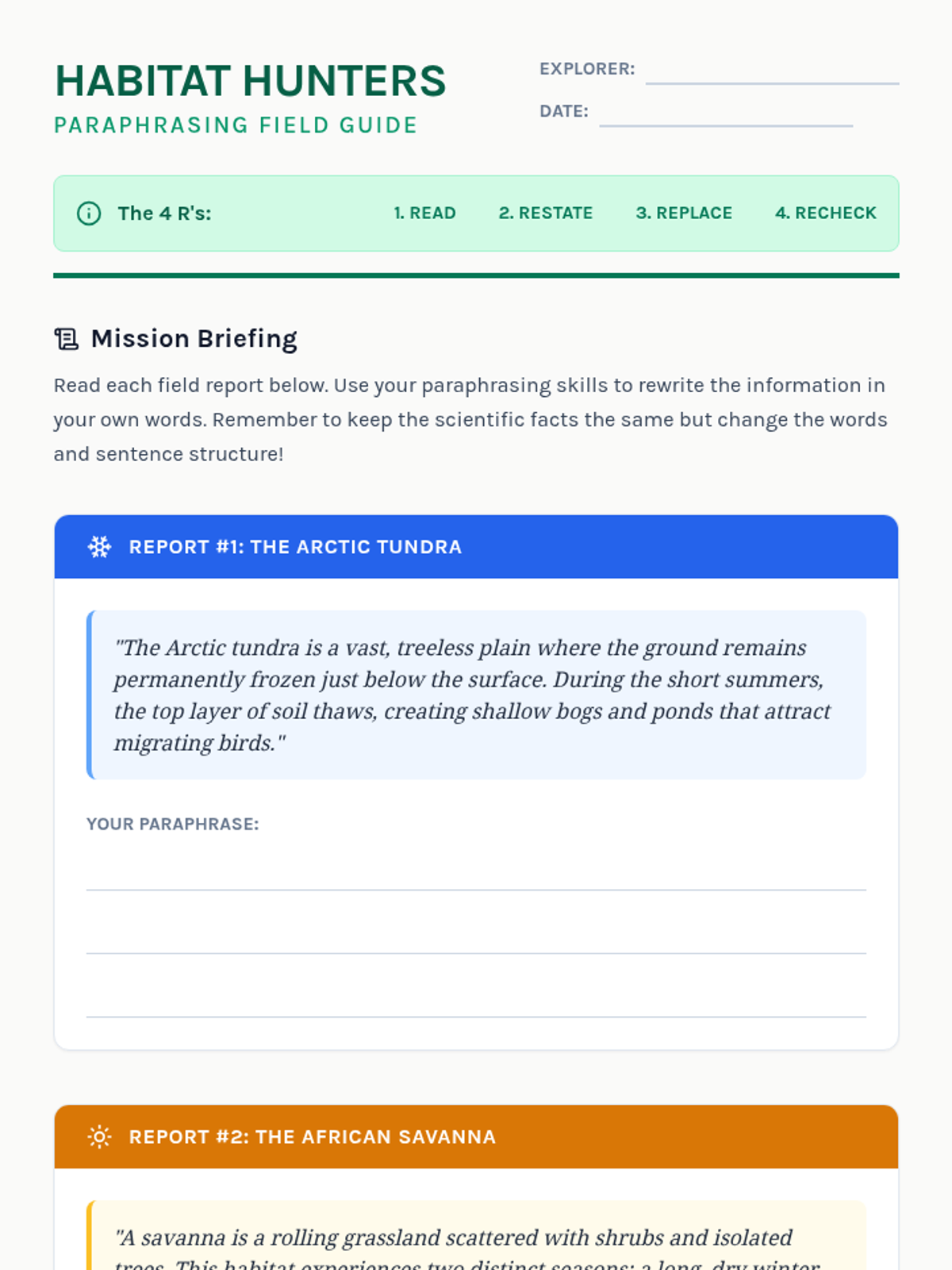
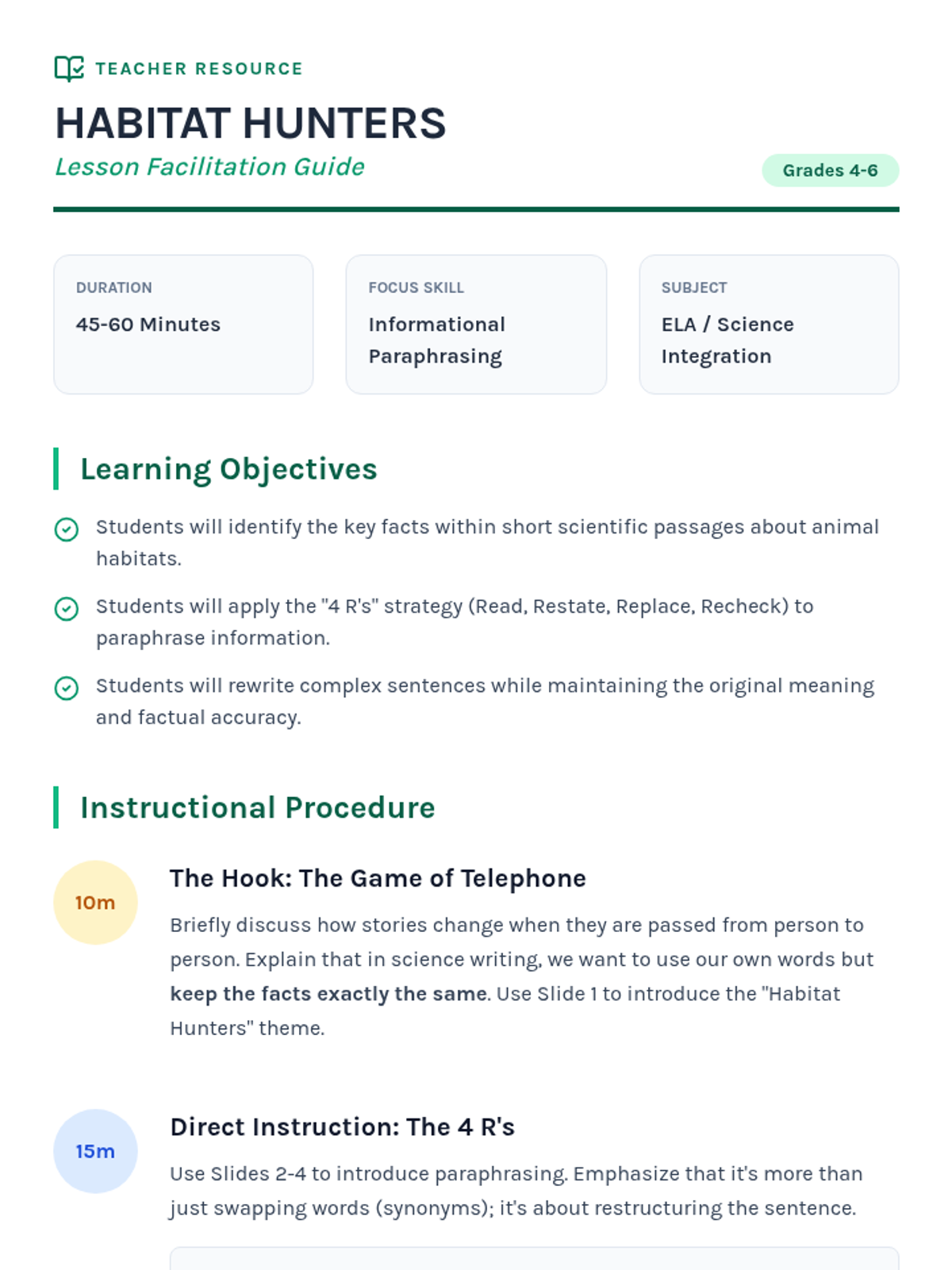
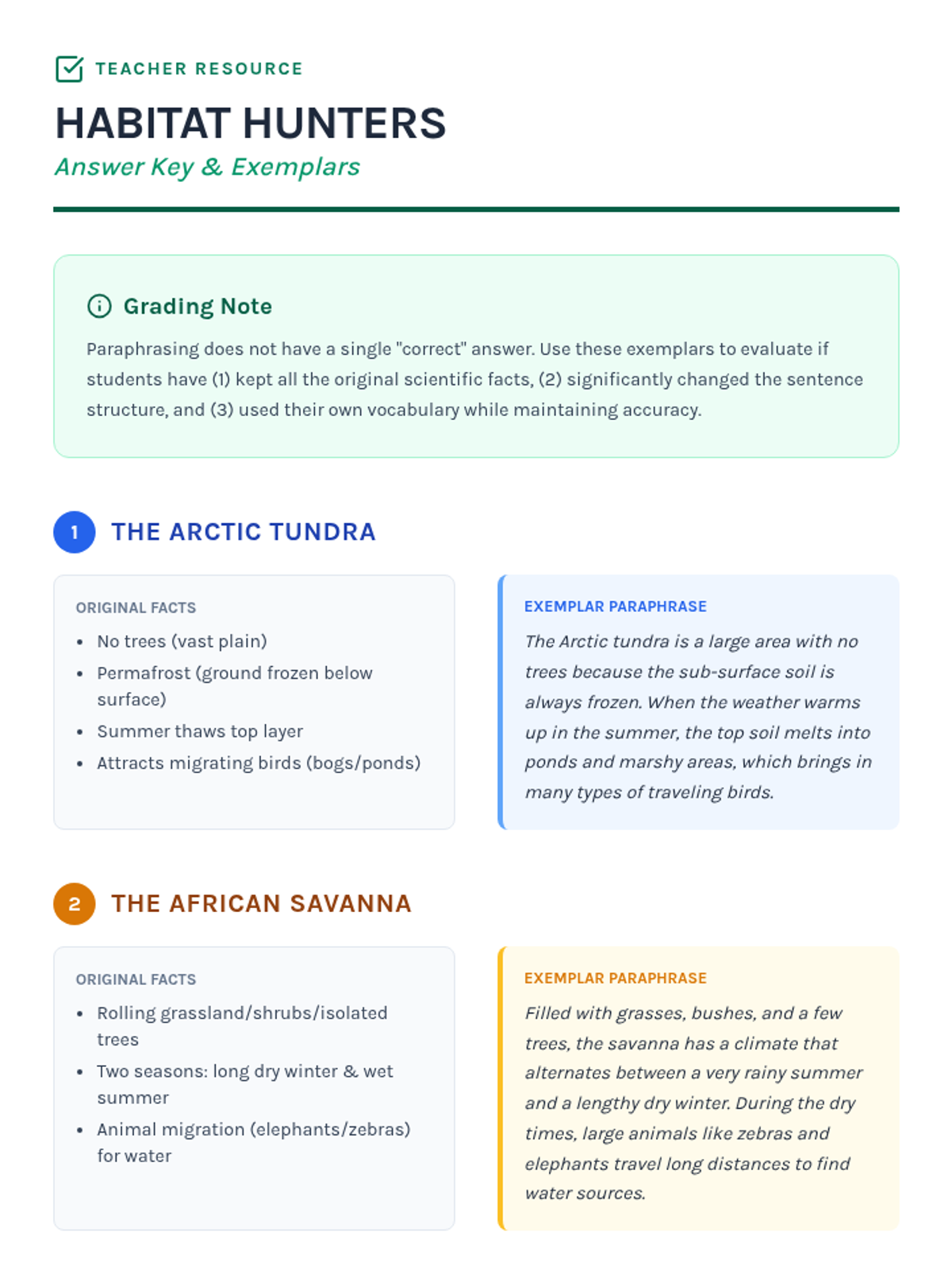
A science-focused lesson where students learn to paraphrase information using short passages about diverse animal habitats. Students will practice identifying key details and restating them in their own words without changing the original meaning.
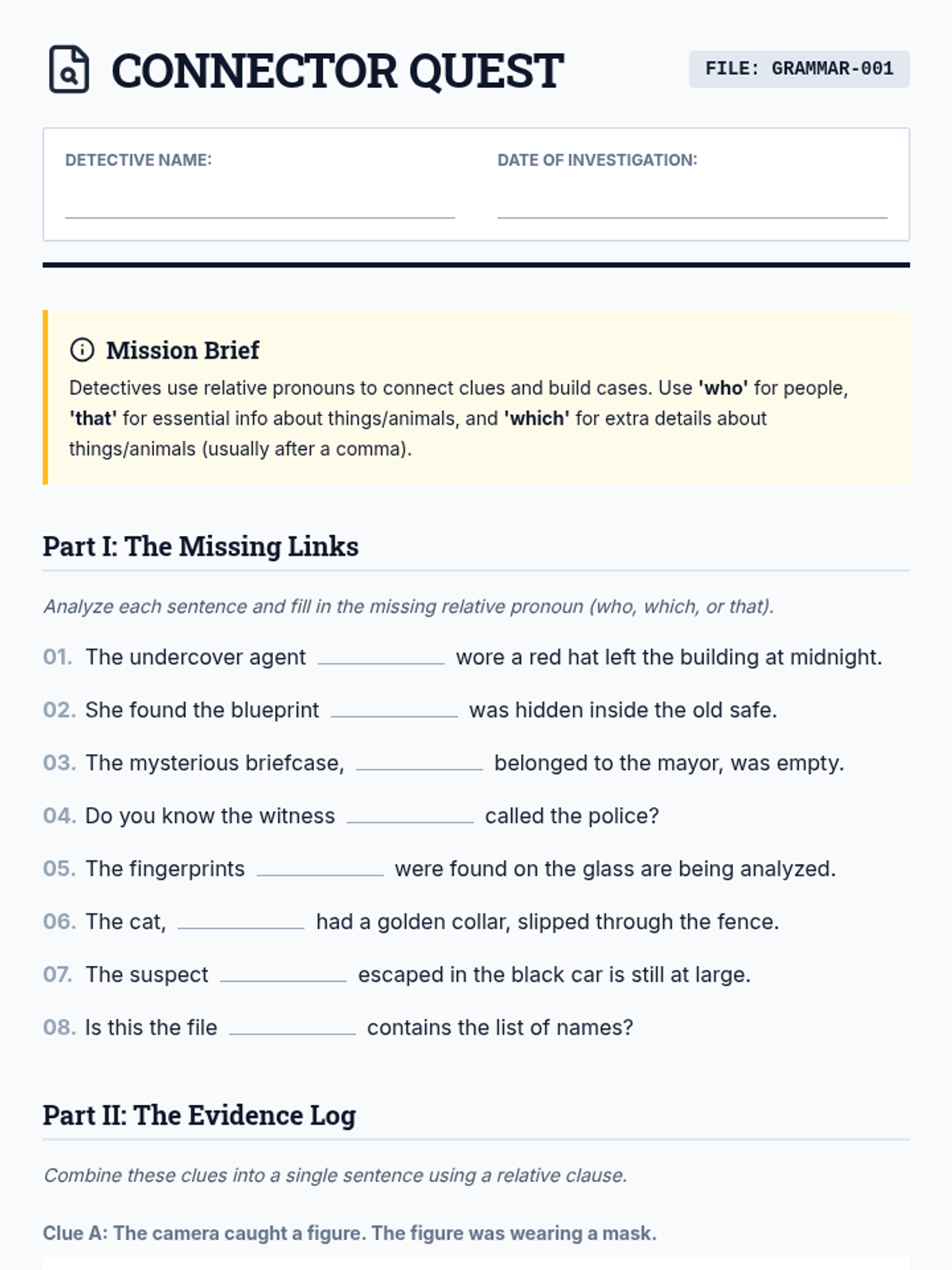
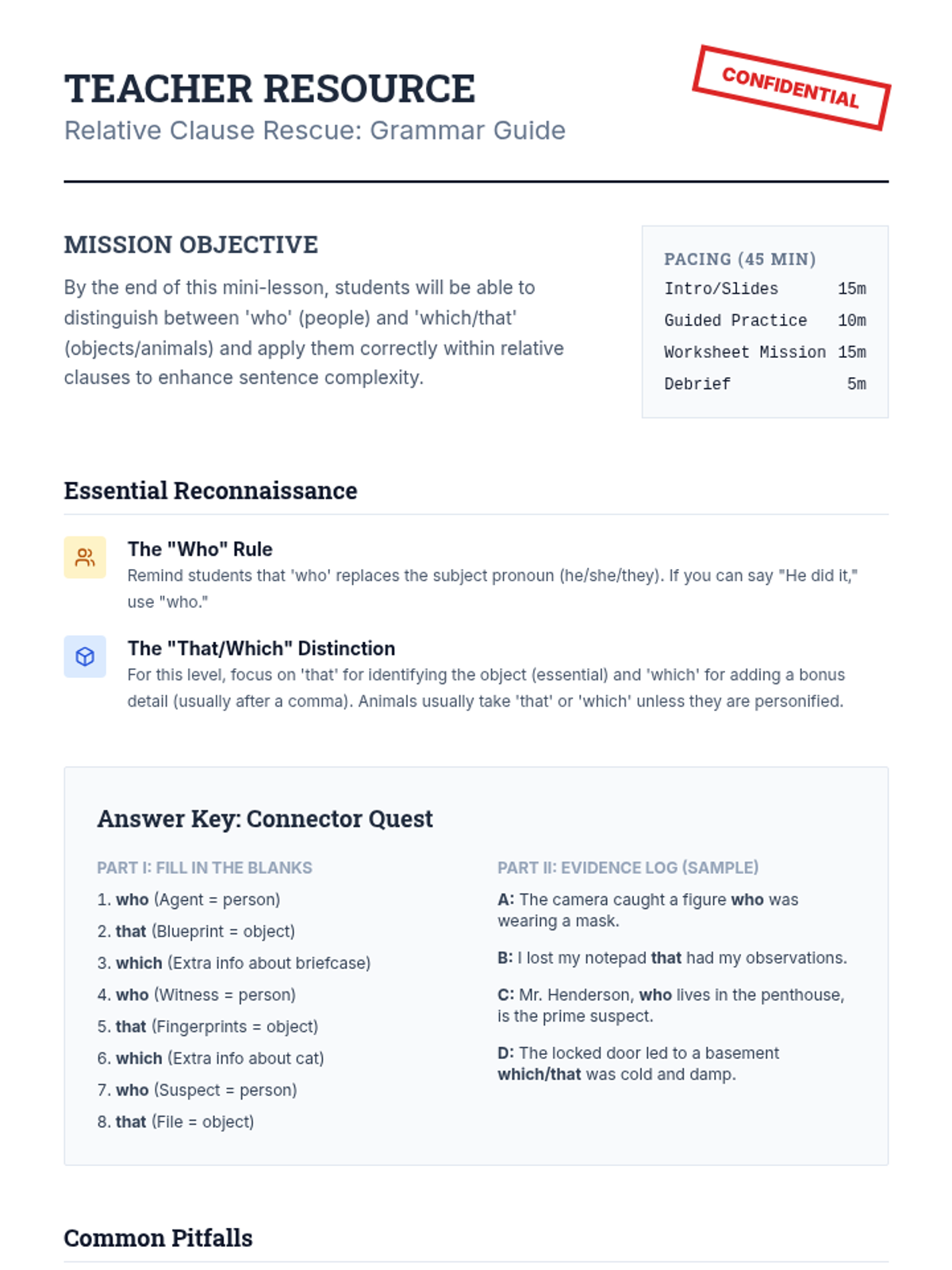
A detective-themed grammar lesson focused on correctly using relative pronouns 'who', 'which', and 'that'. Students will identify the correct pronouns for people versus objects through interactive instruction and a practice mission.
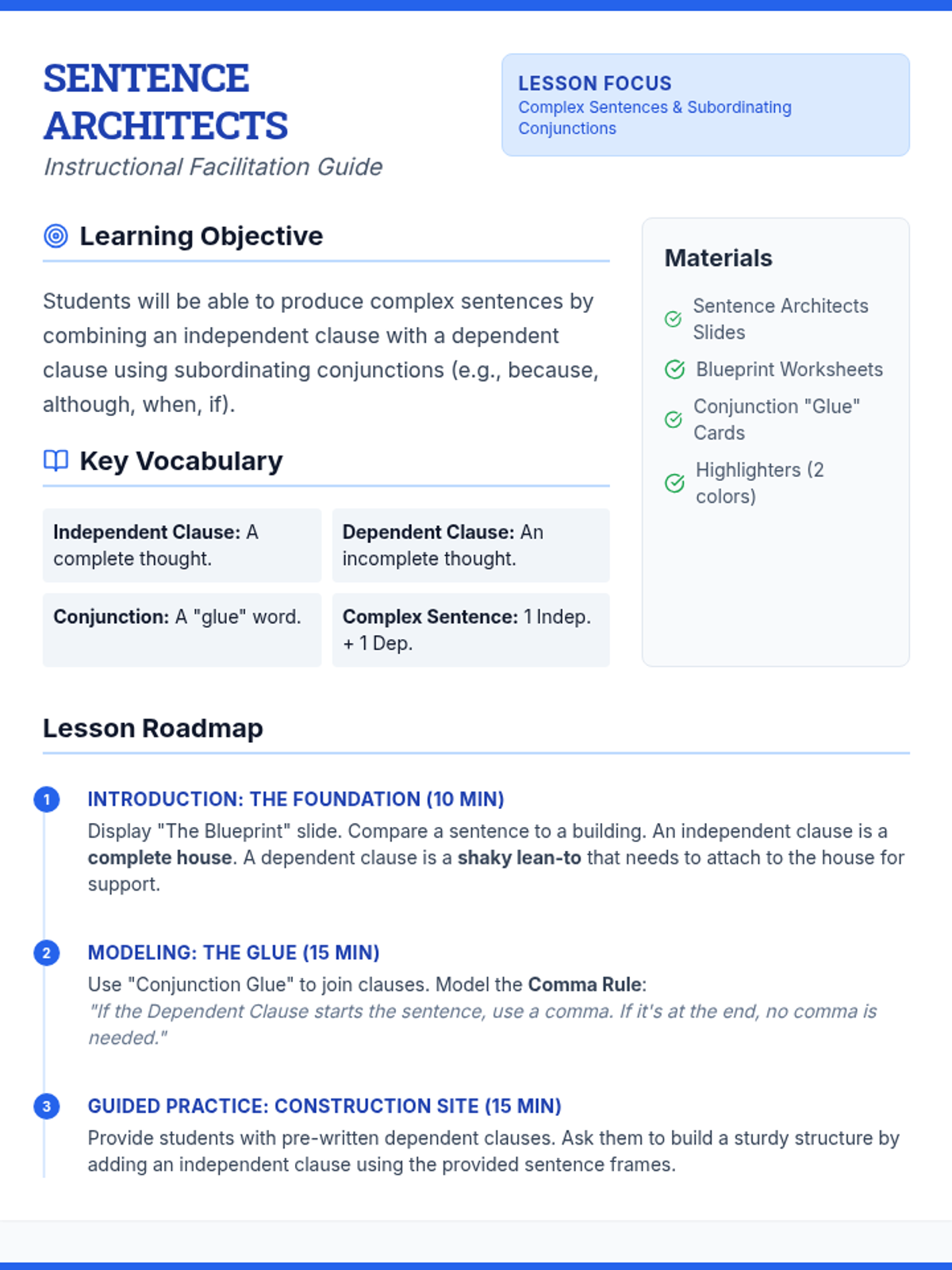
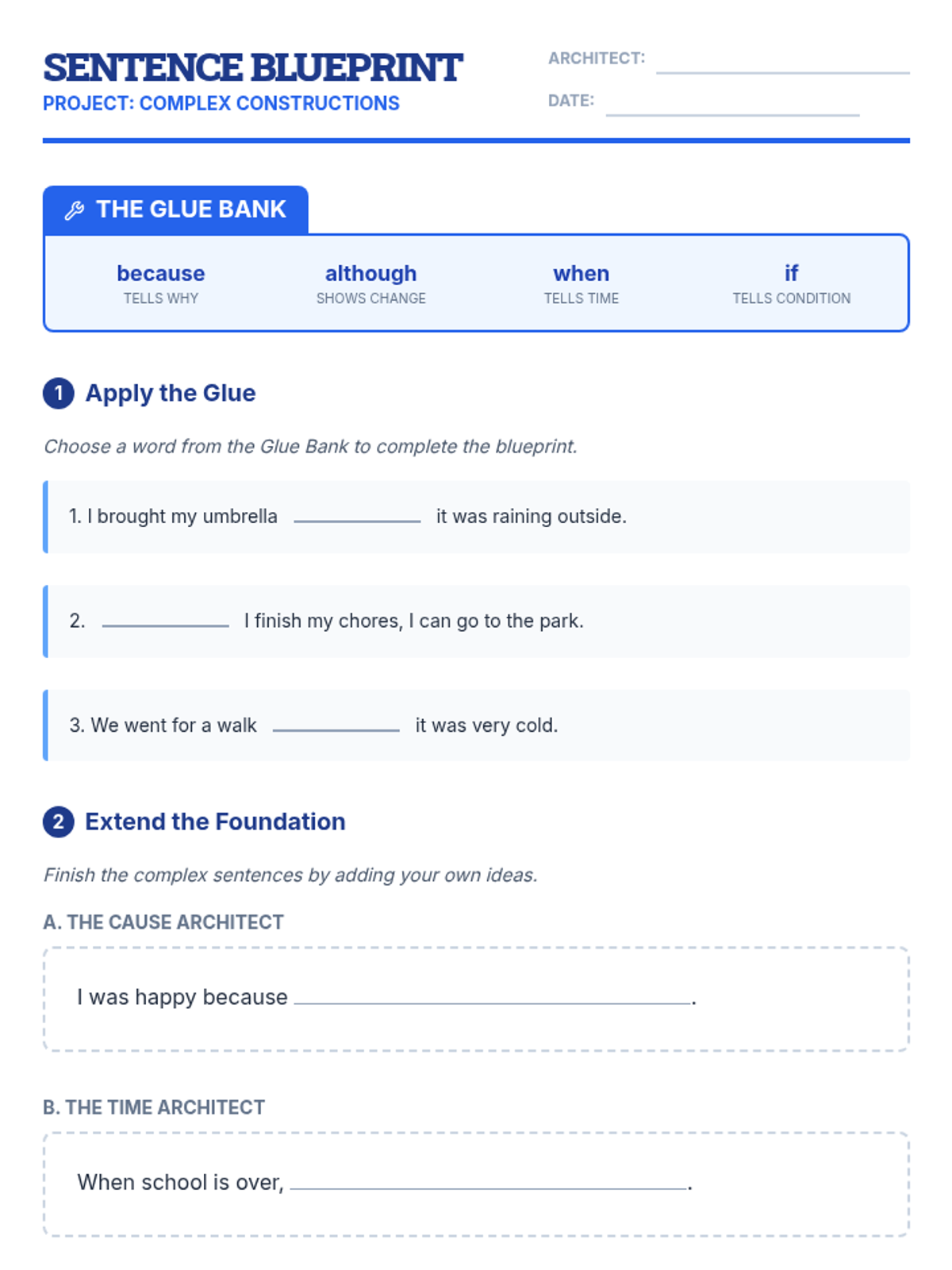
A lesson focused on constructing complex sentences using subordinating conjunctions, featuring architectural-themed scaffolds and sentence frames for Special Education support.
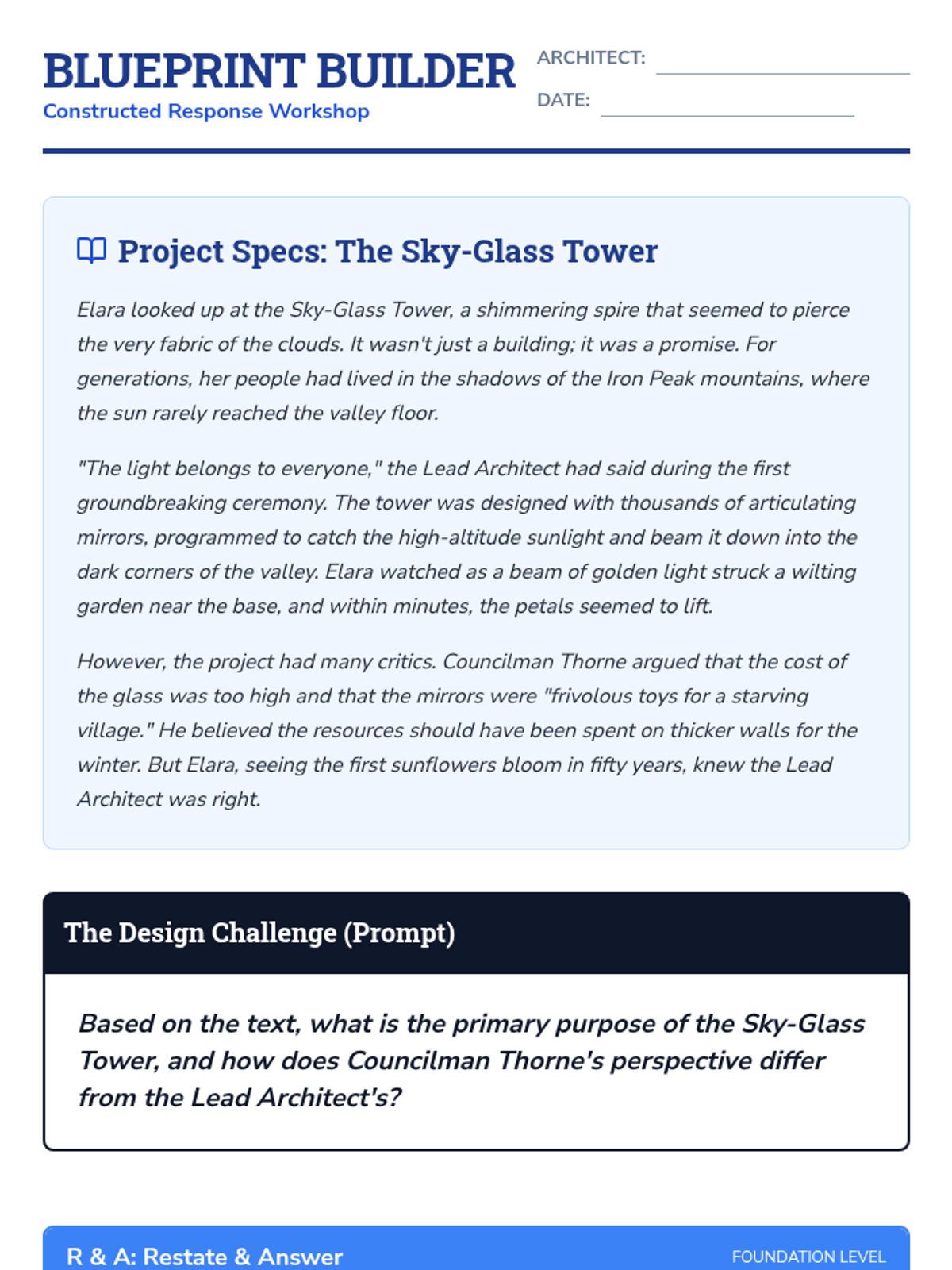
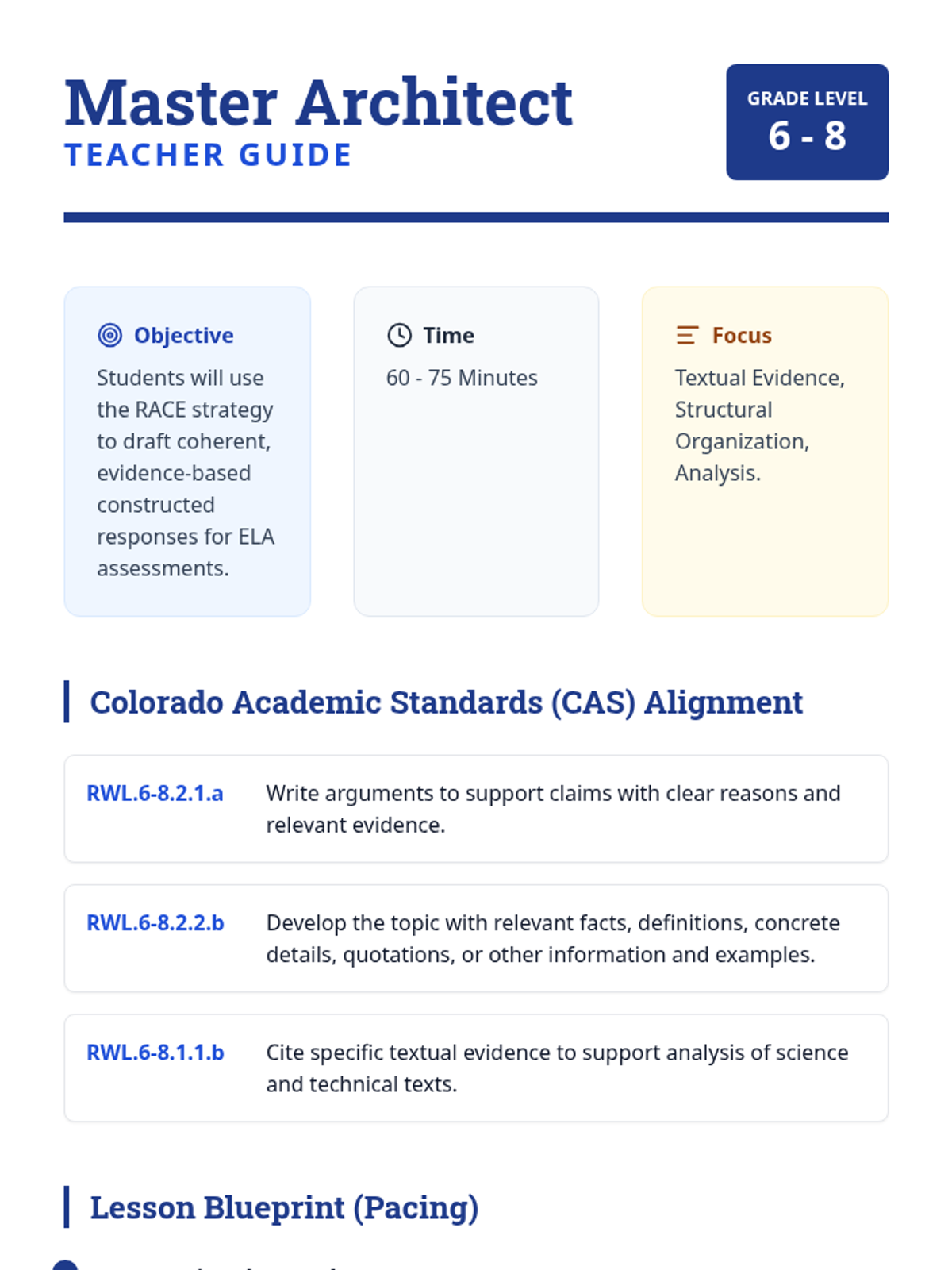
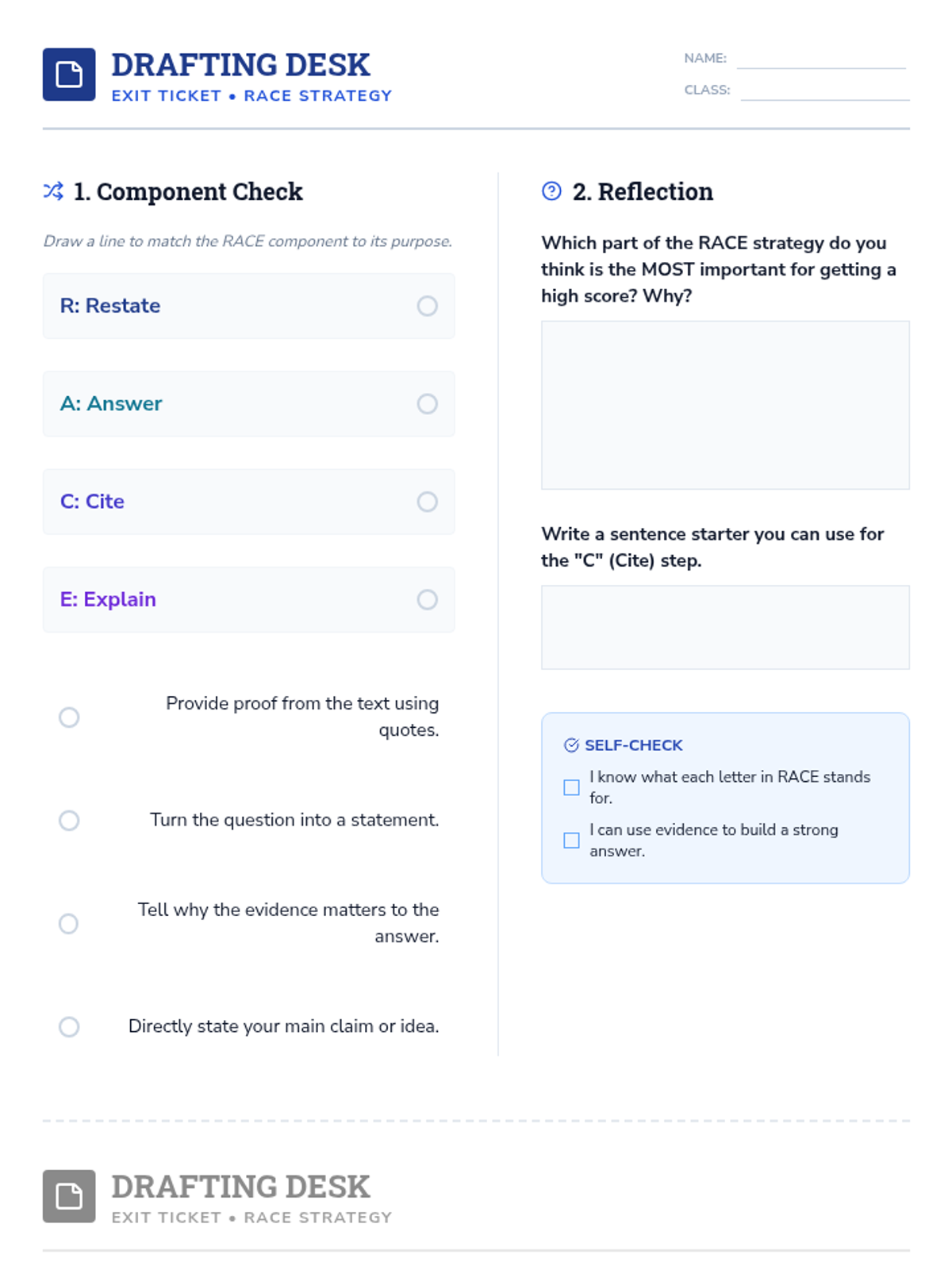
This lesson teaches middle school students the RACE strategy (Restate, Answer, Cite, Explain) to construct high-quality, evidence-based responses for standardized tests and classroom assessments. Students will learn to architect their answers using a structural blueprint approach.
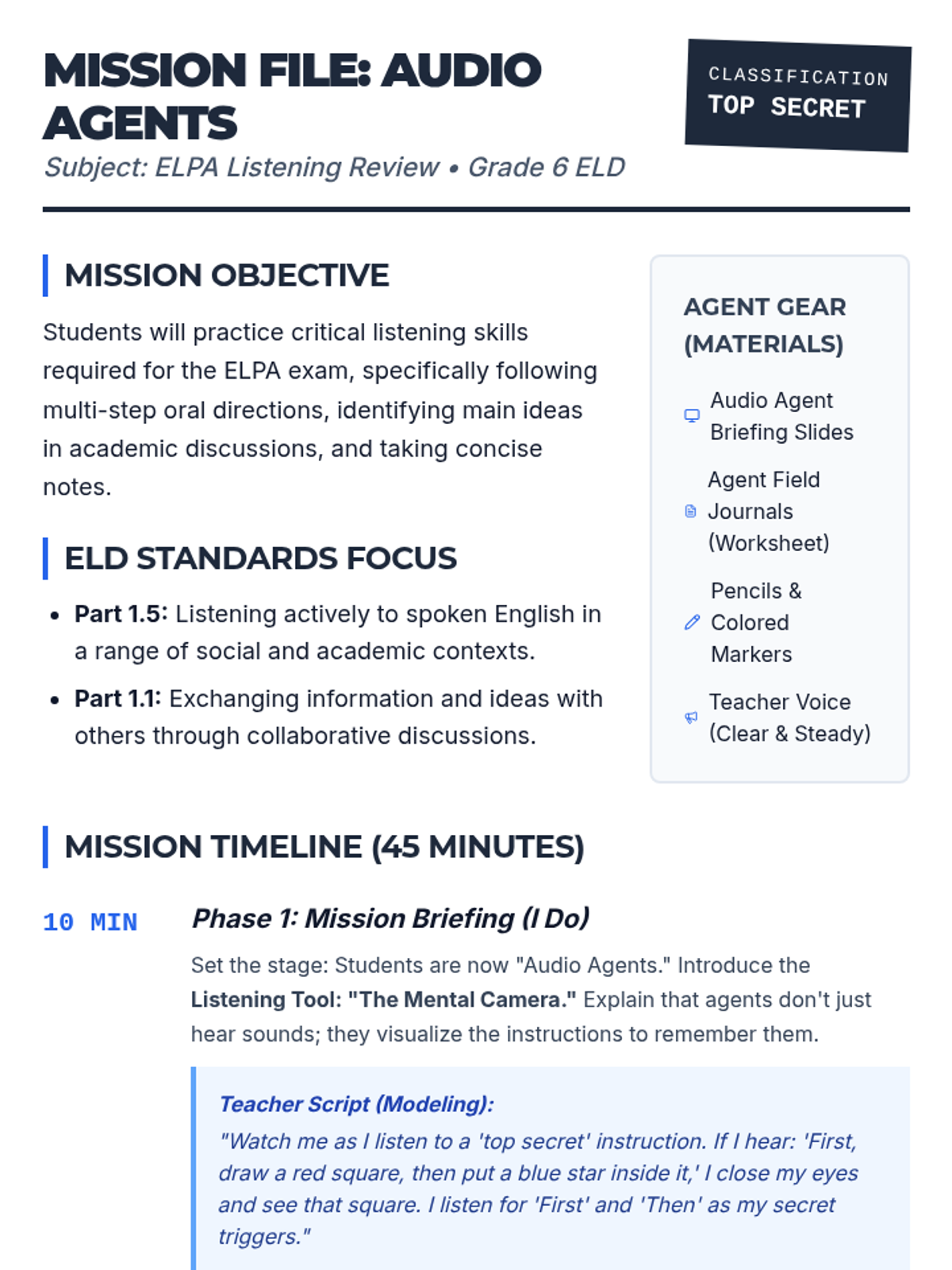
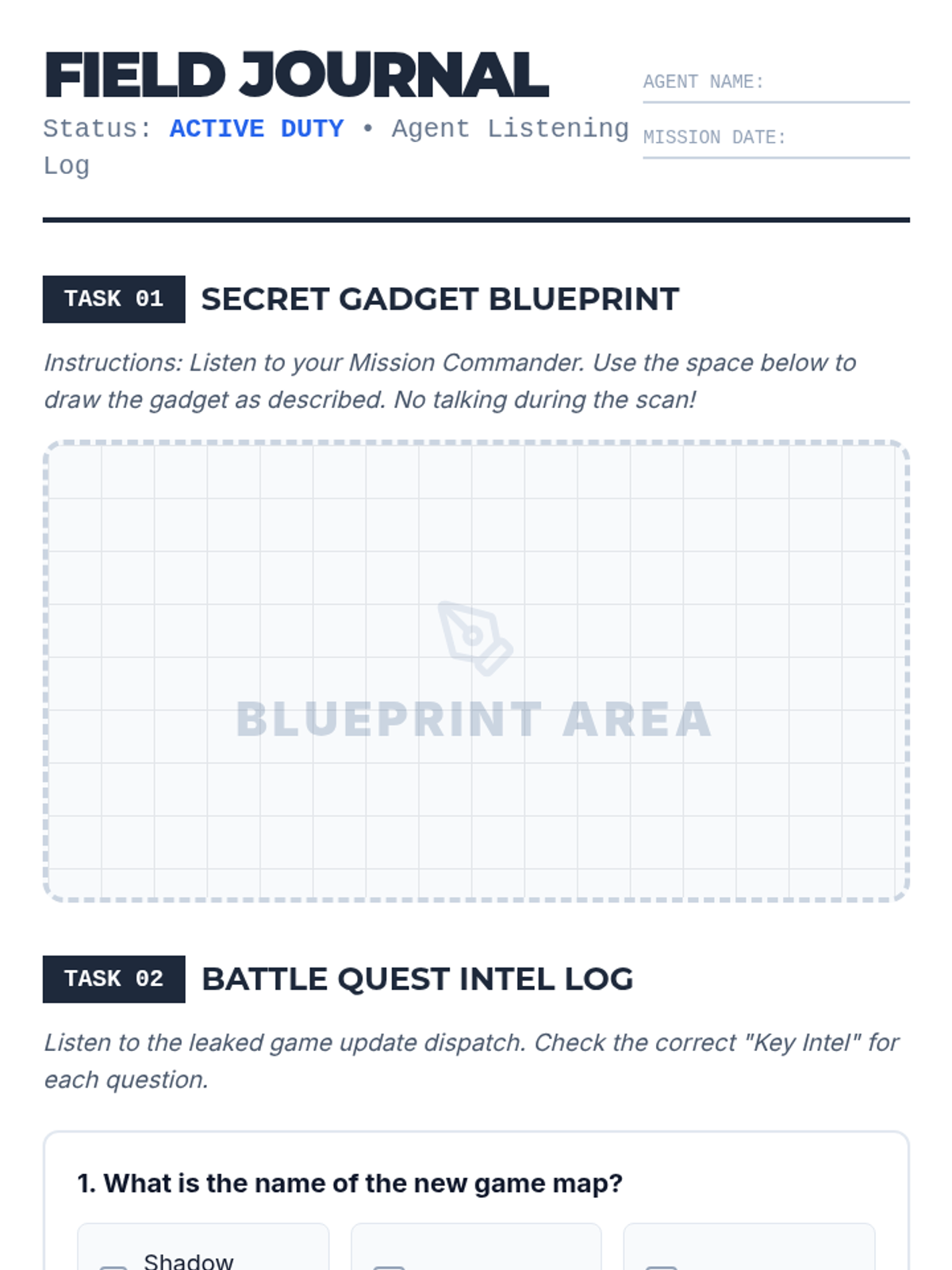
An active, spy-themed ELD lesson focused on mastering ELPA listening standards through scaffolded practice, oral directions, and collaborative tasks.
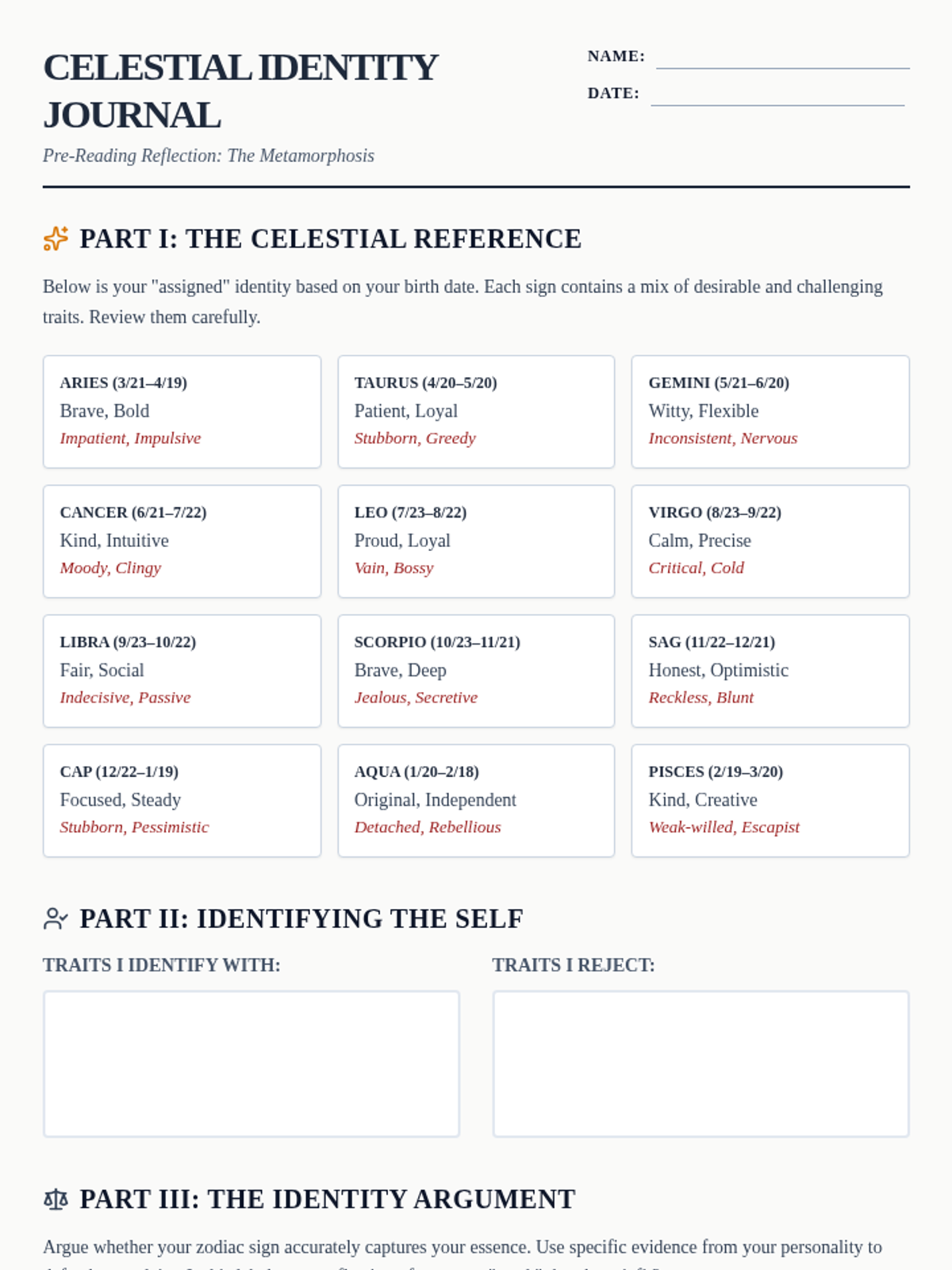
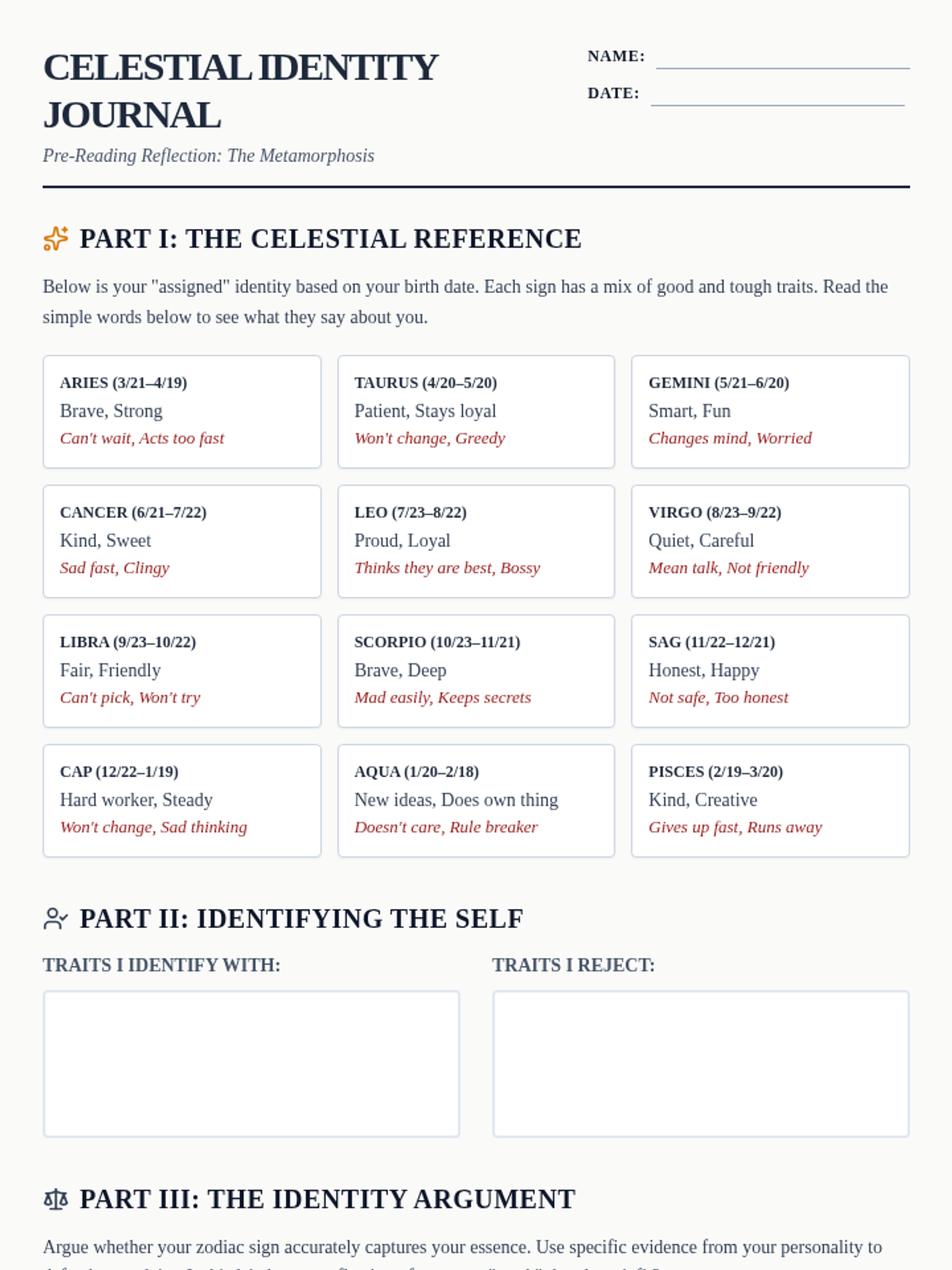
An introductory lesson for Kafka's 'The Metamorphosis' that explores themes of identity, external labels, and transformation through the lens of astrology and personal argumentation.
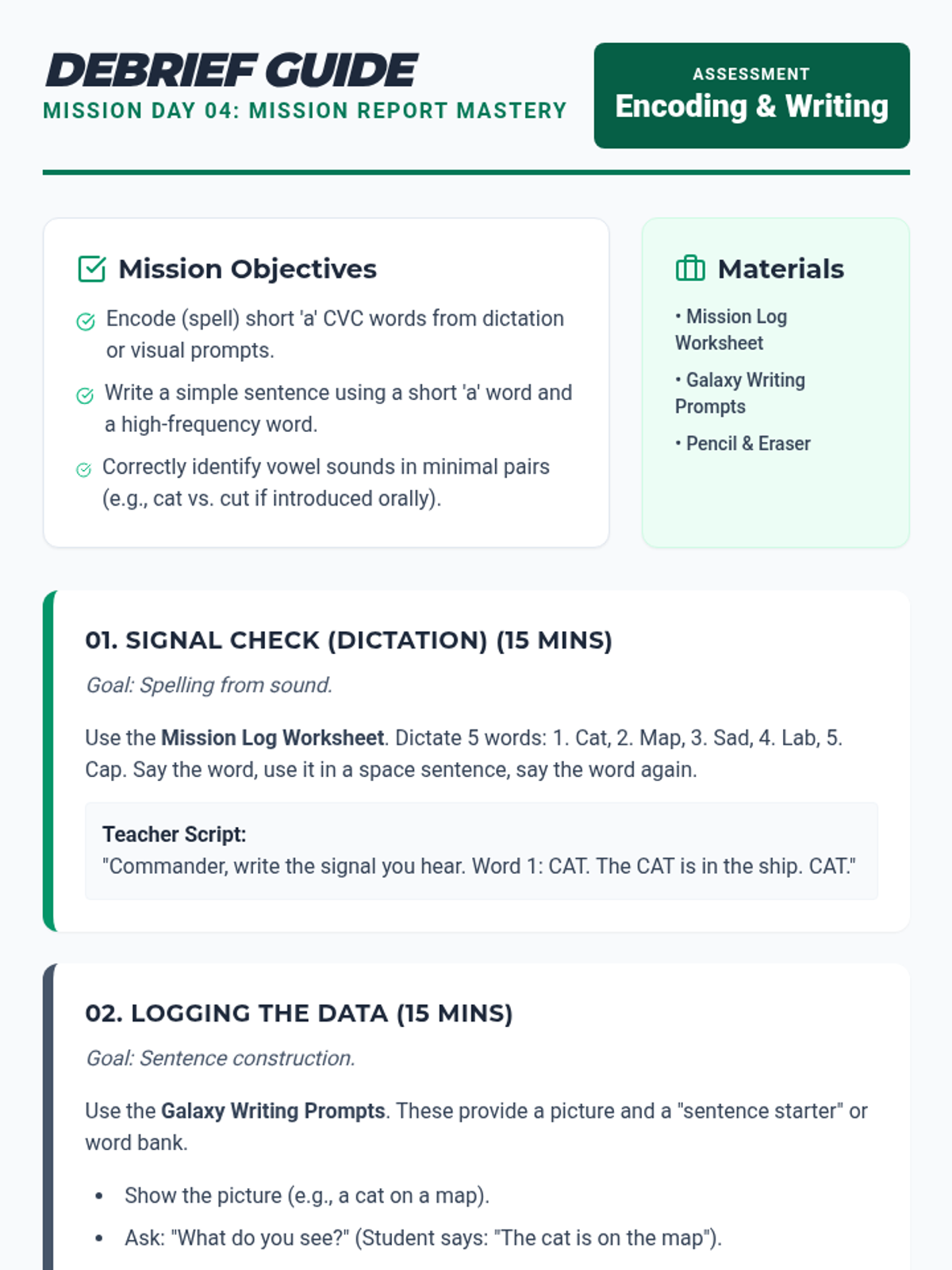
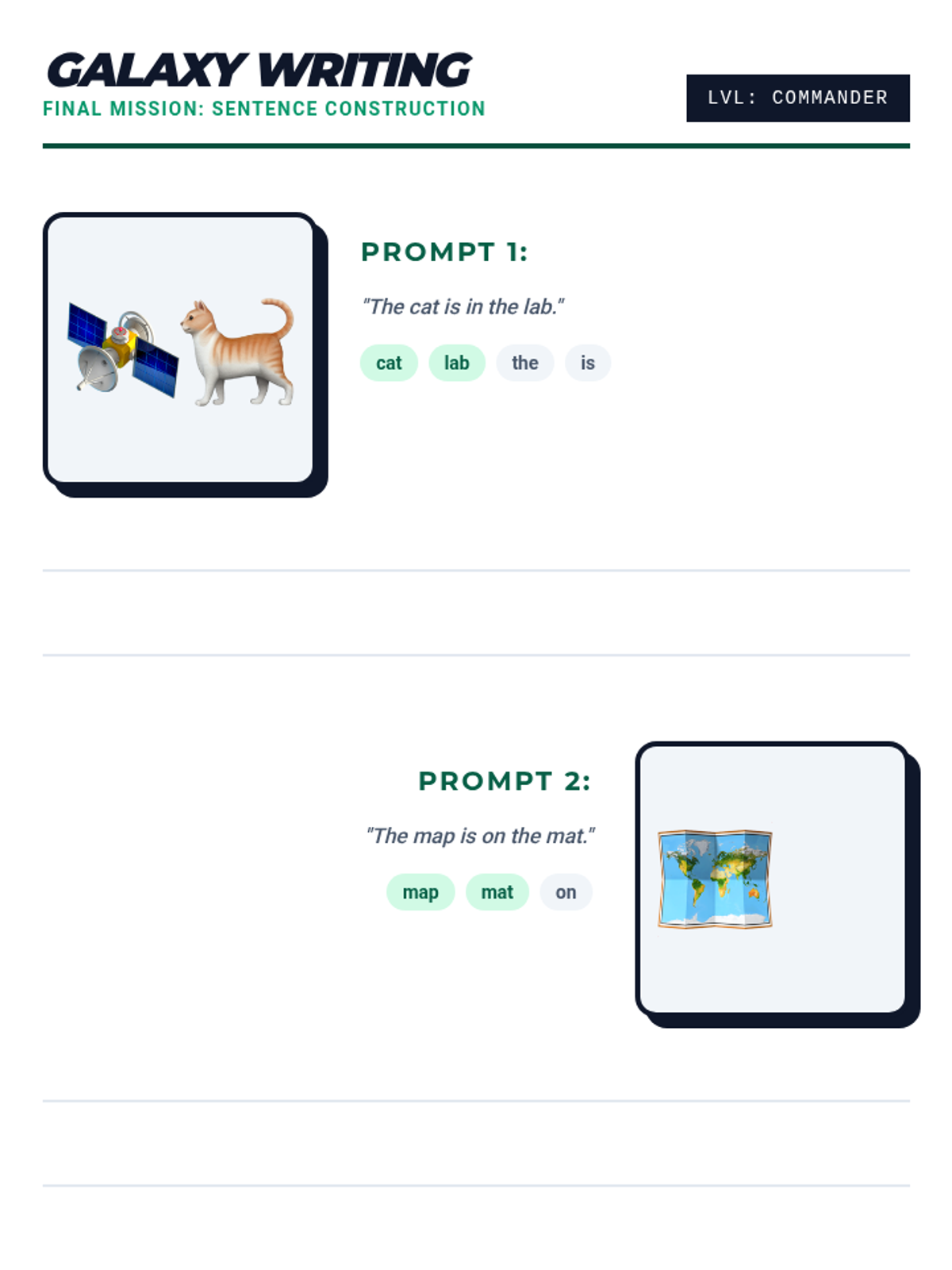
Finalizes the mission with interactive writing prompts and a comprehensive worksheet to assess encoding and sentence construction skills.
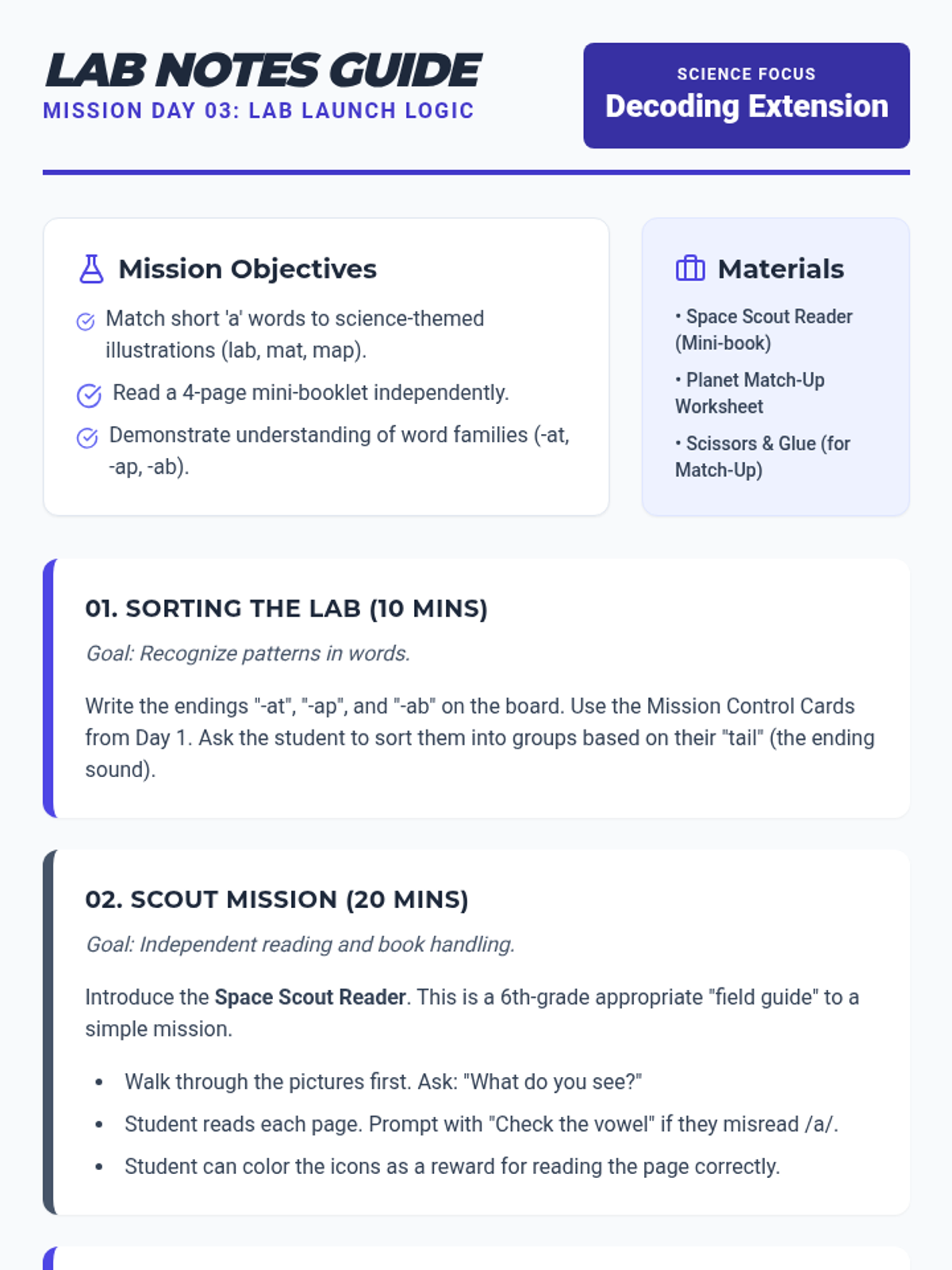
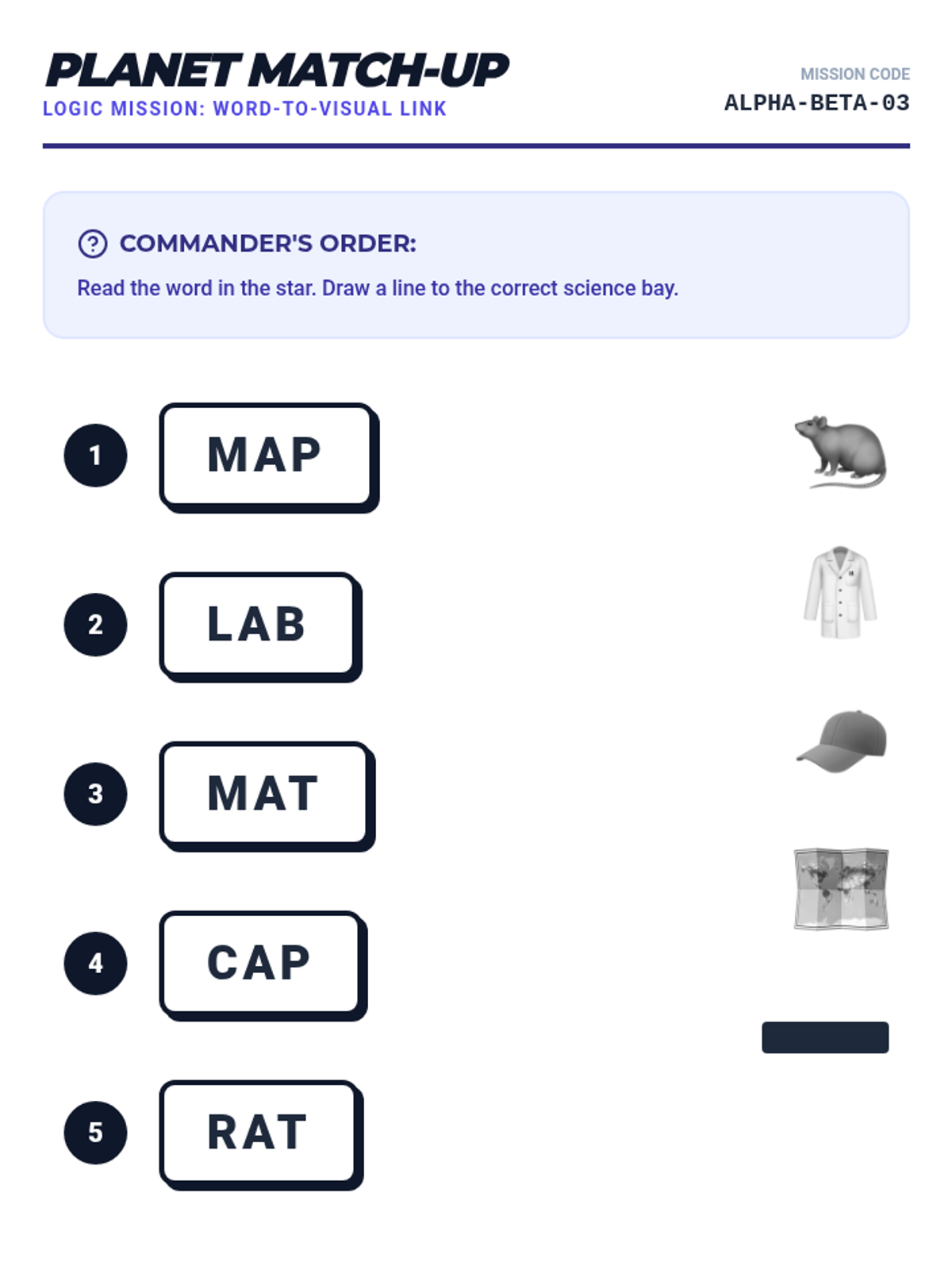
Engages the student with a decodable reader and matching activities that connect short 'a' words to scientific concepts like maps and labs.