This lesson focuses on teaching ELL students how to draw conclusions from implicit meaning in texts, specifically targeting multiple-choice questions from Part 1 of the ELA Regents exam.
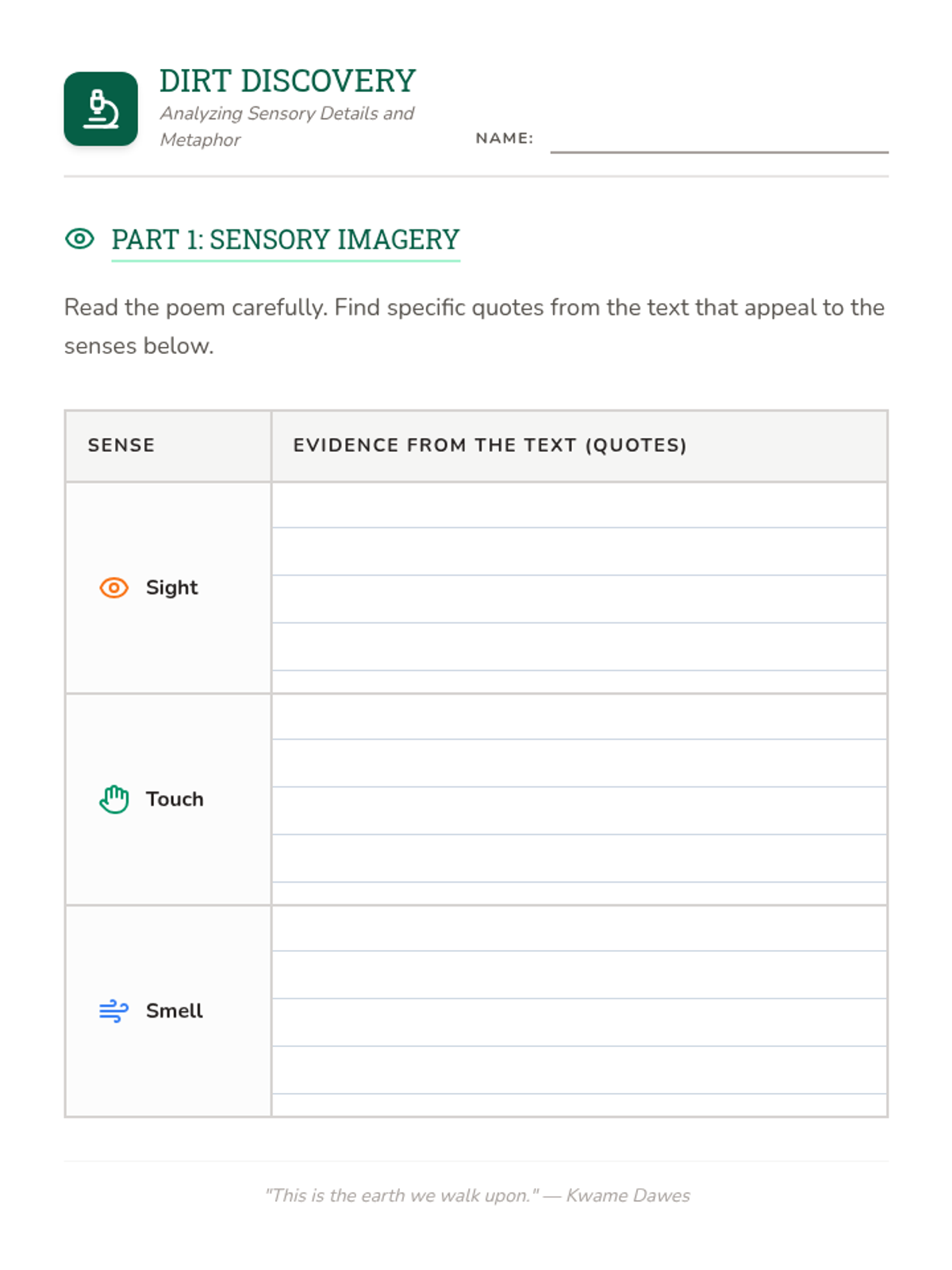
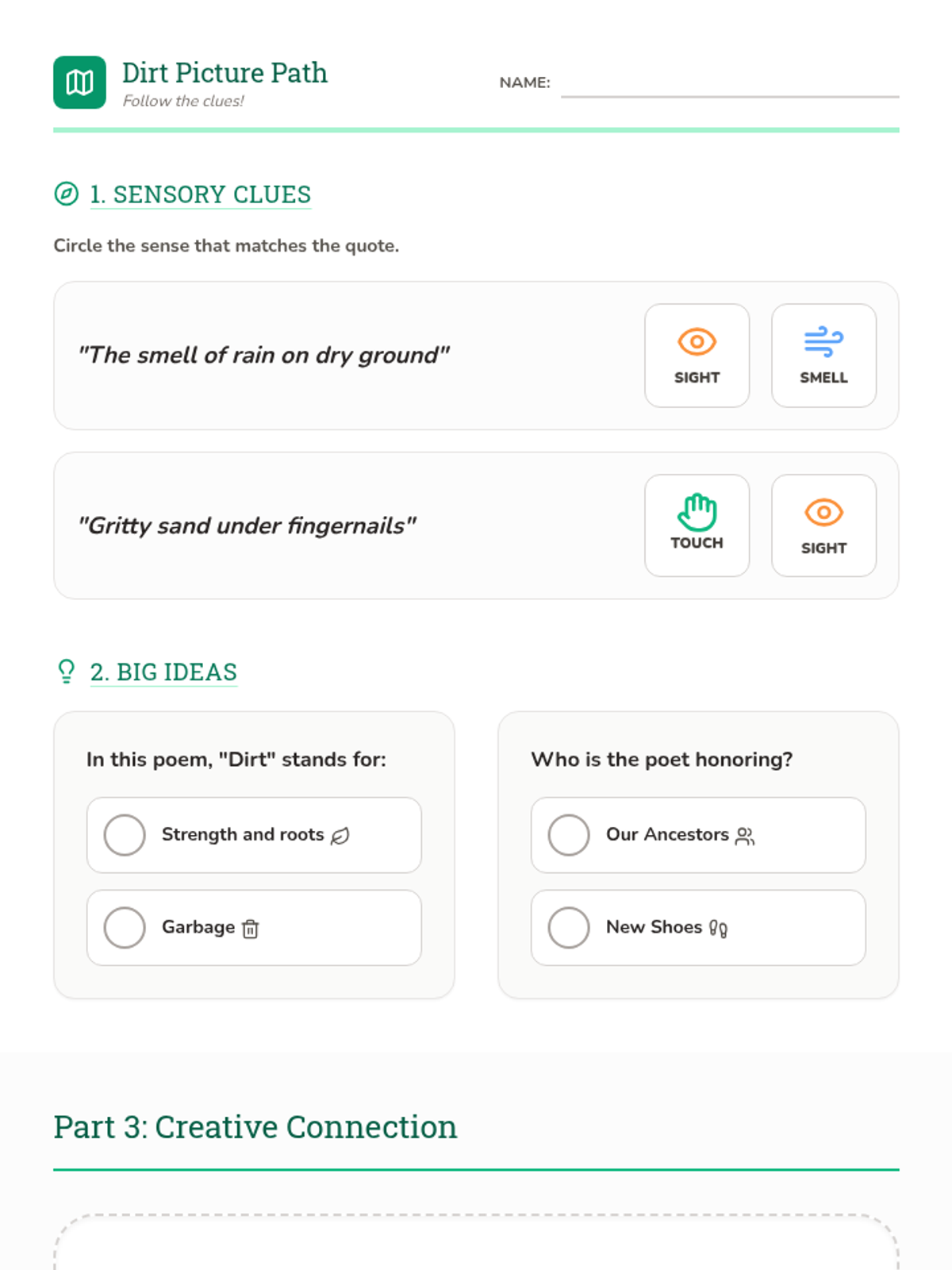
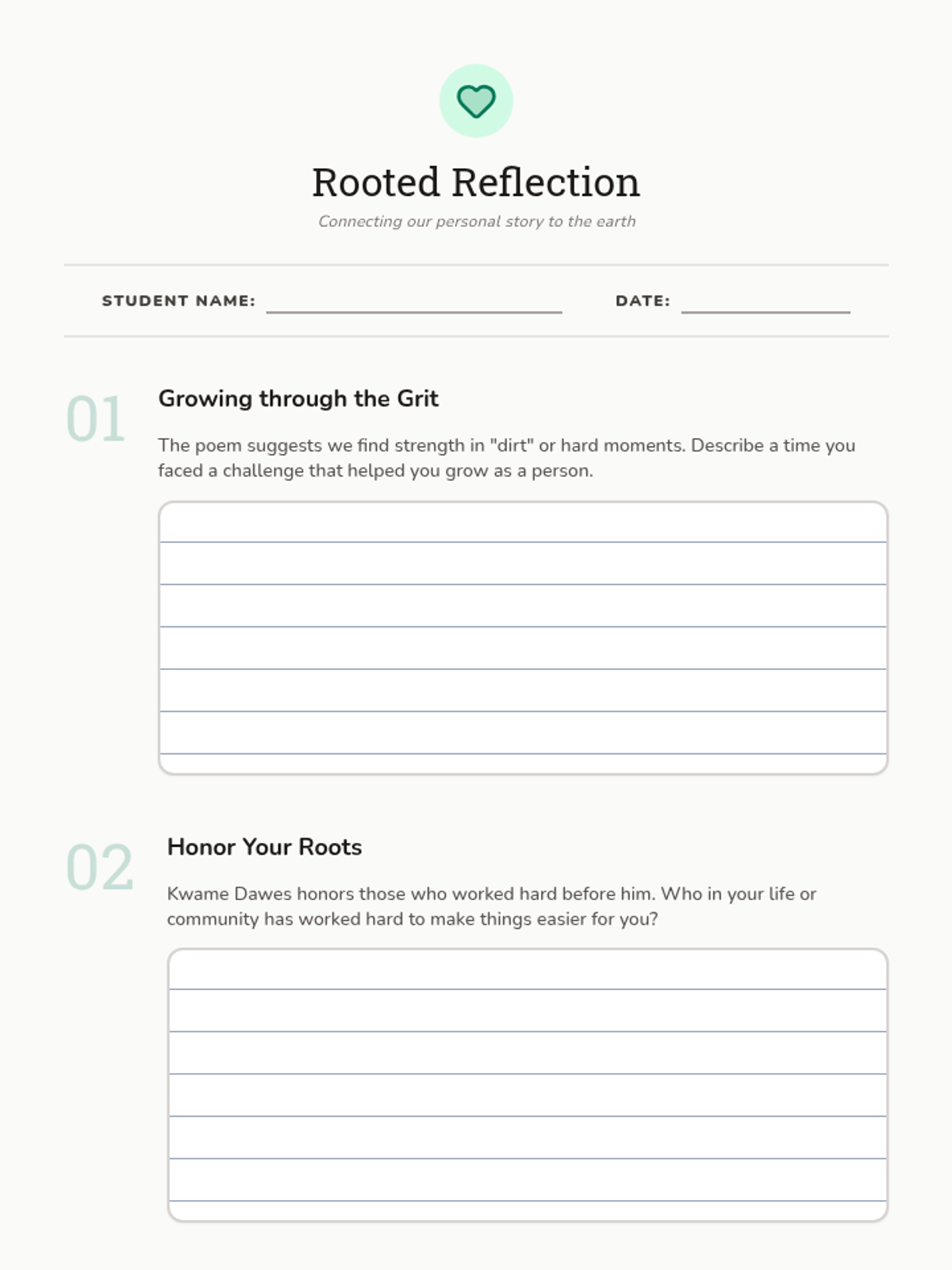
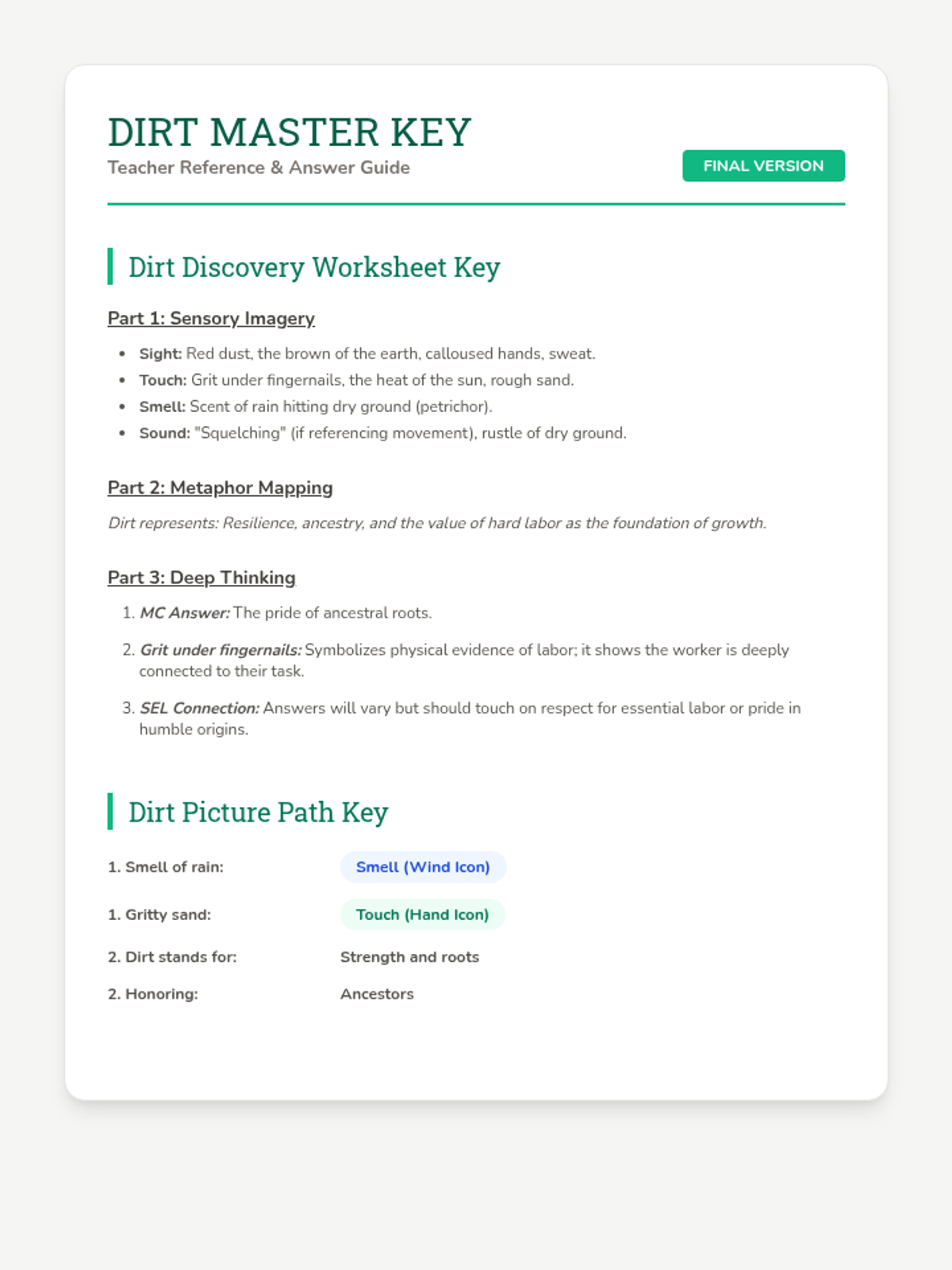
A comprehensive analysis of Kwame Dawes' poem 'Dirt,' focusing on sensory imagery, metaphors, and the social-emotional connections to ancestry and resilience. This lesson includes differentiated materials for varying reading levels.
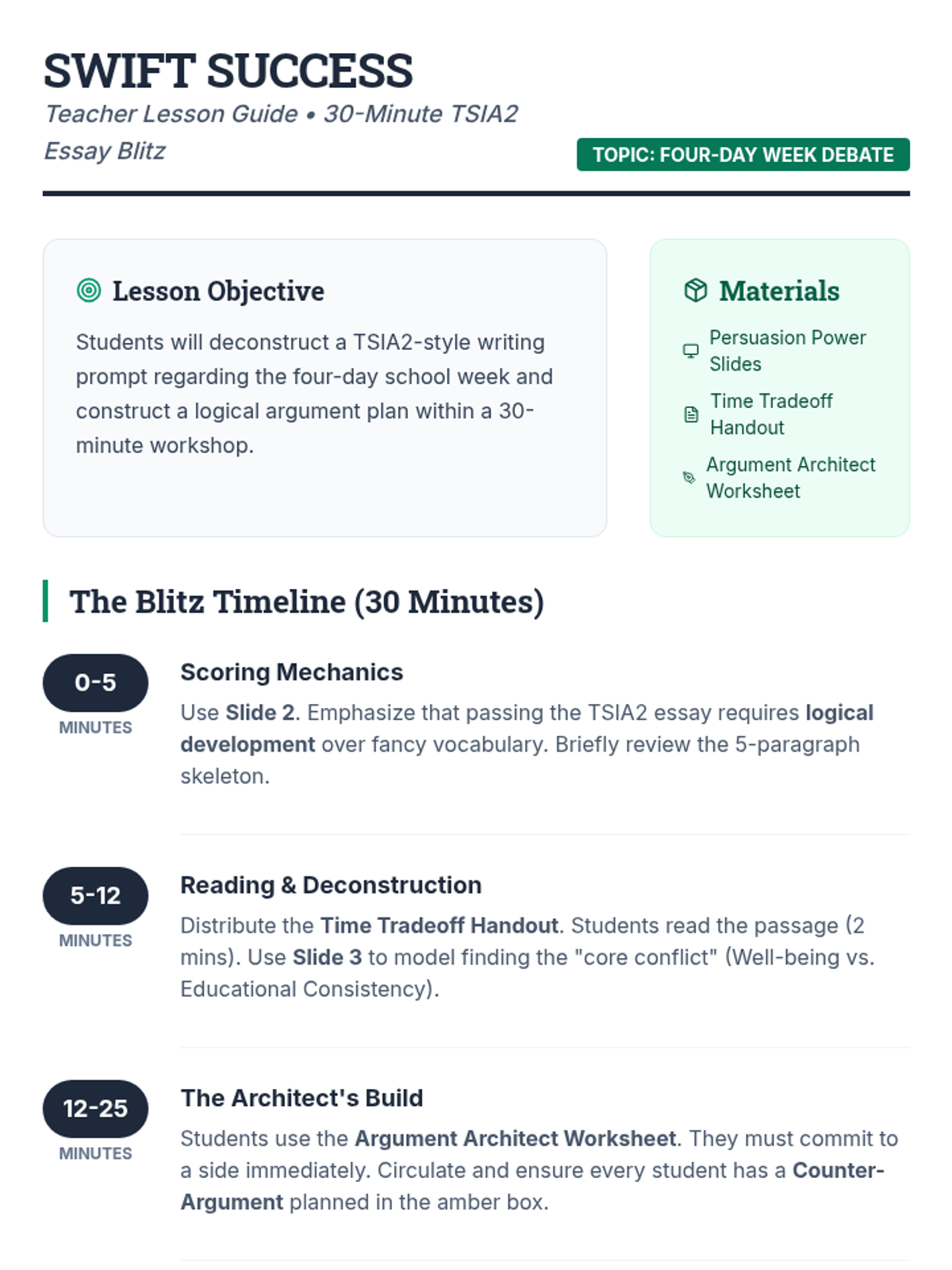
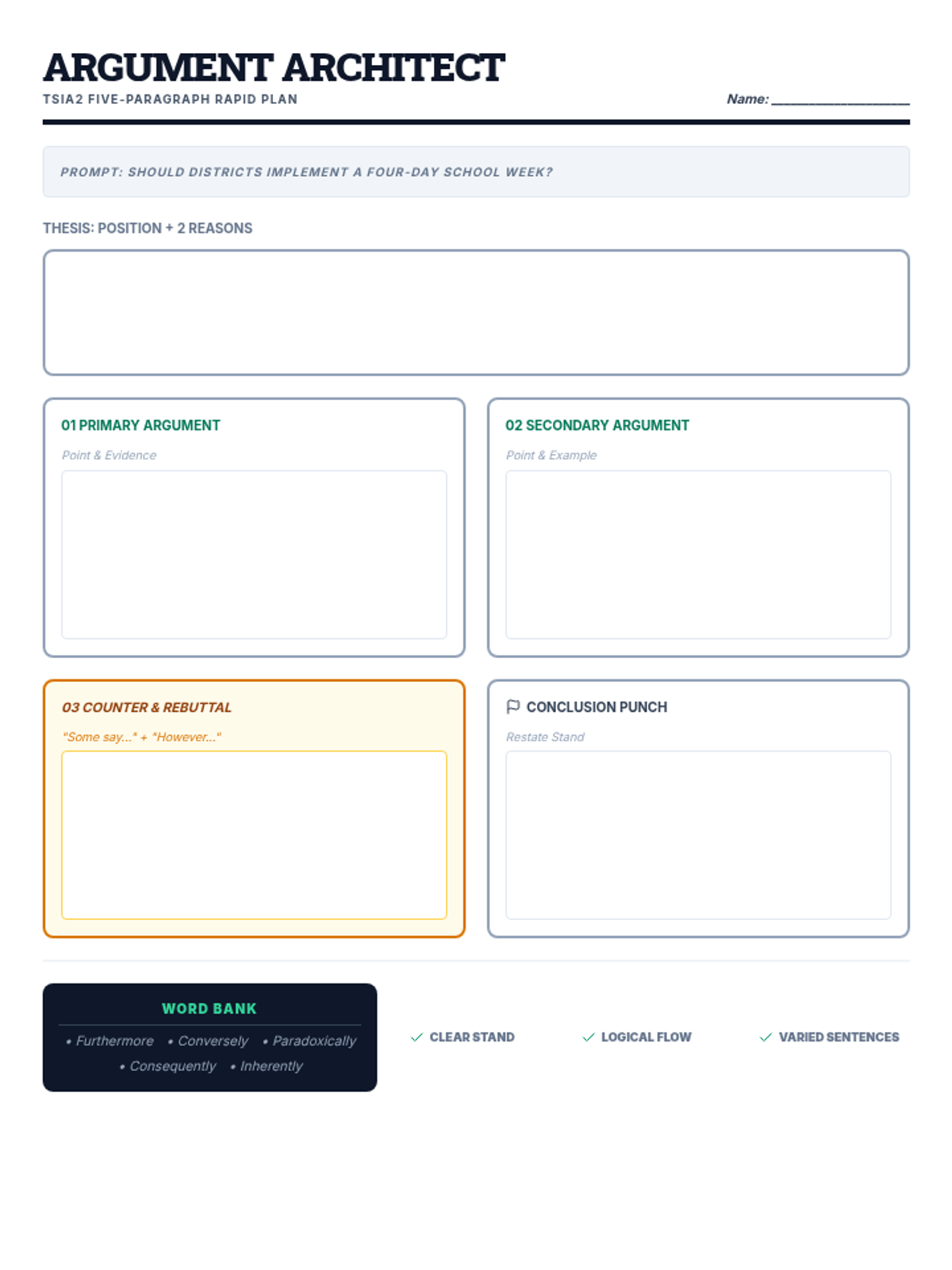
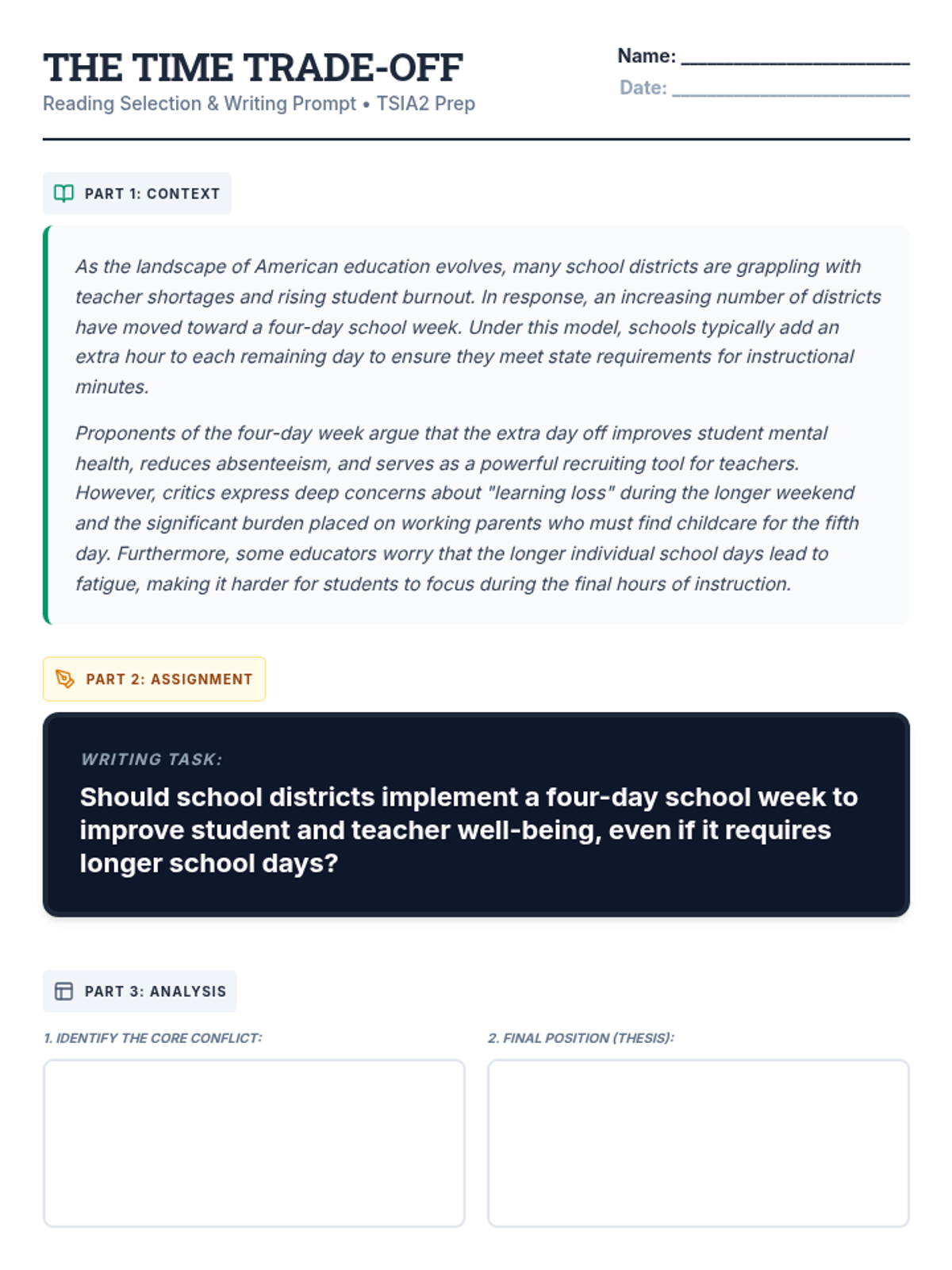
A high-intensity 30-minute workshop designed to help 11th graders master the structure and persuasion requirements of the TSIA2 essay. Students analyze a contemporary text and plan a cohesive response.
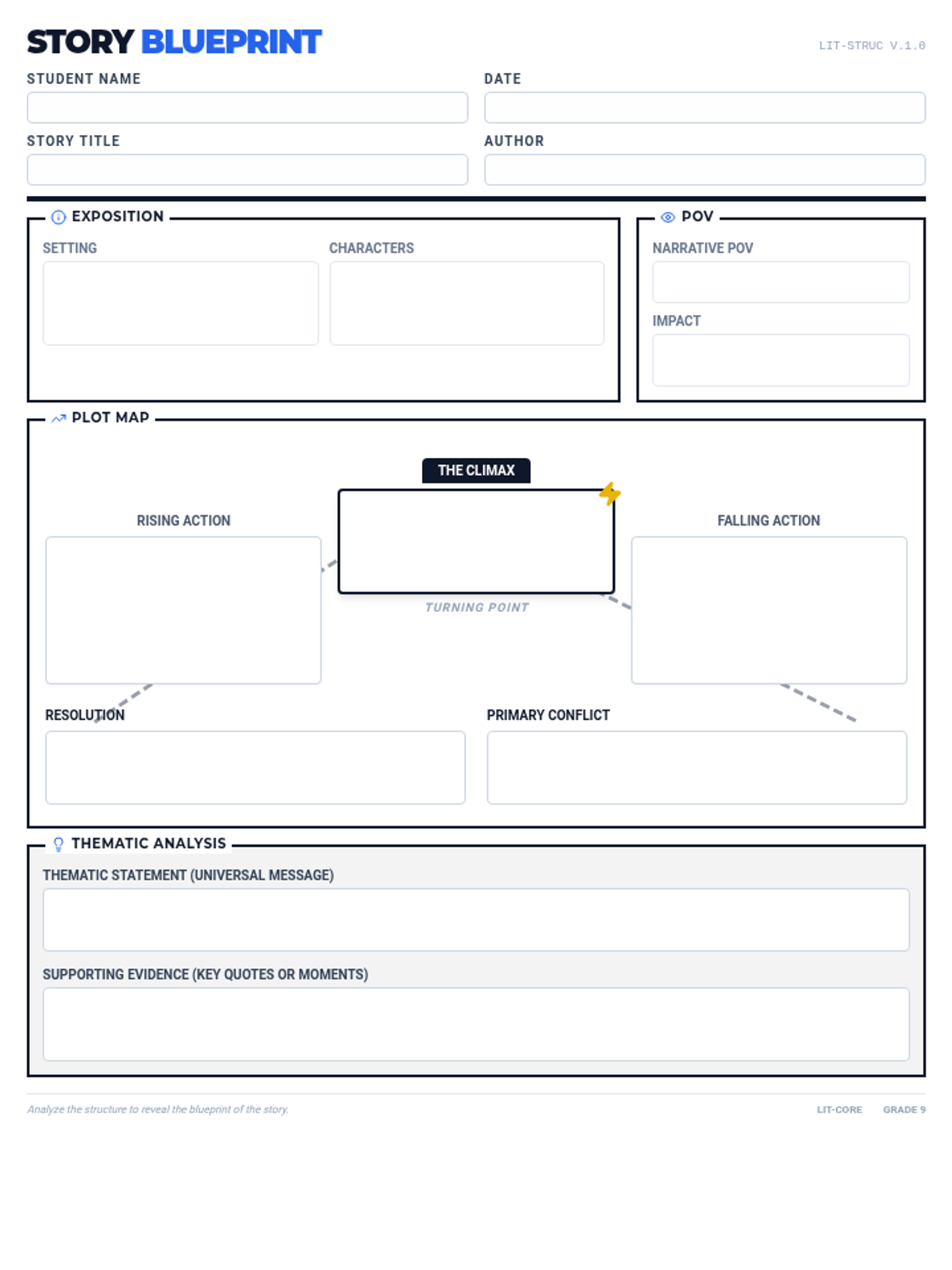
A comprehensive set of tools for analyzing and mapping the structural elements of short stories and novels.
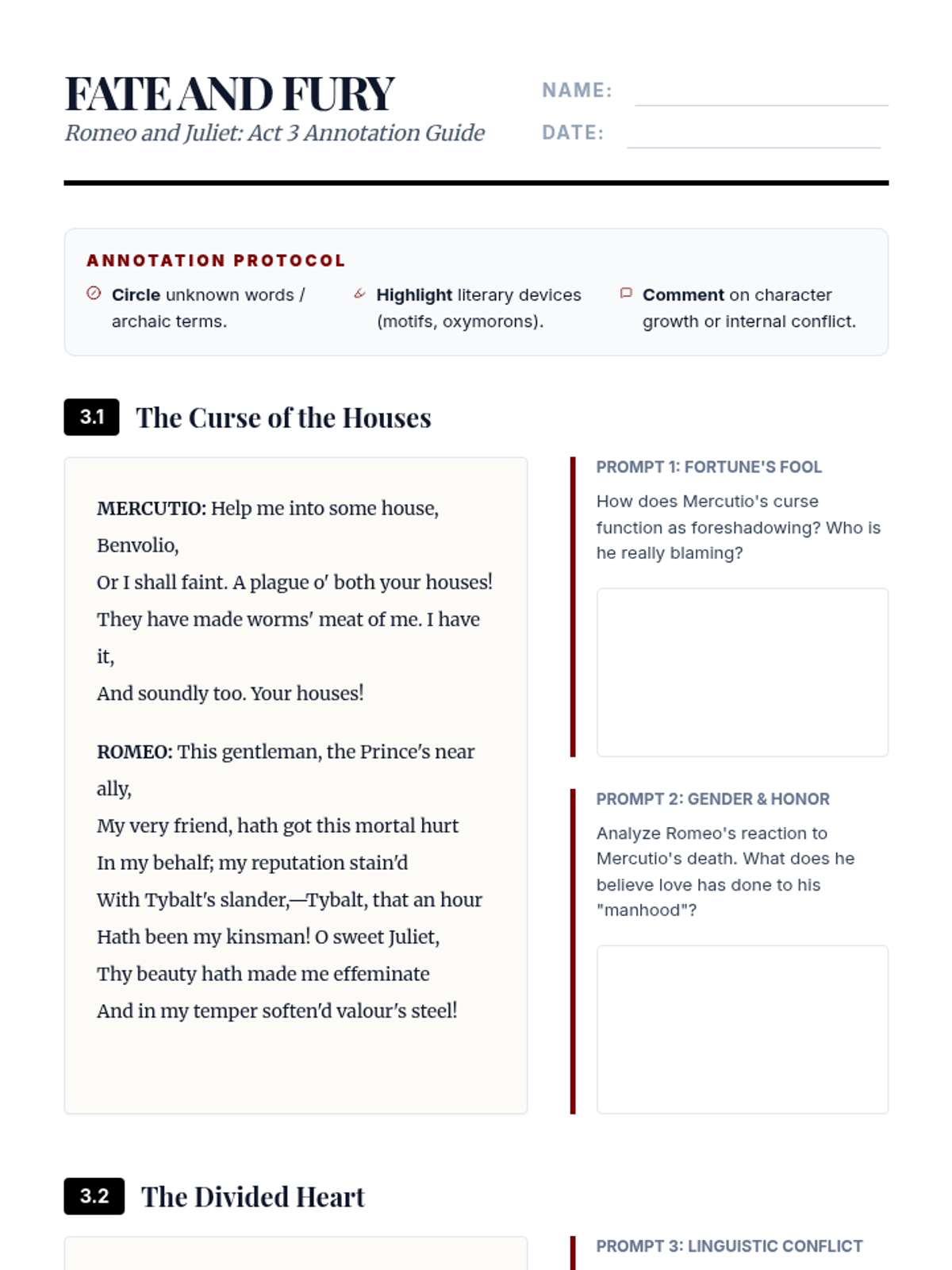
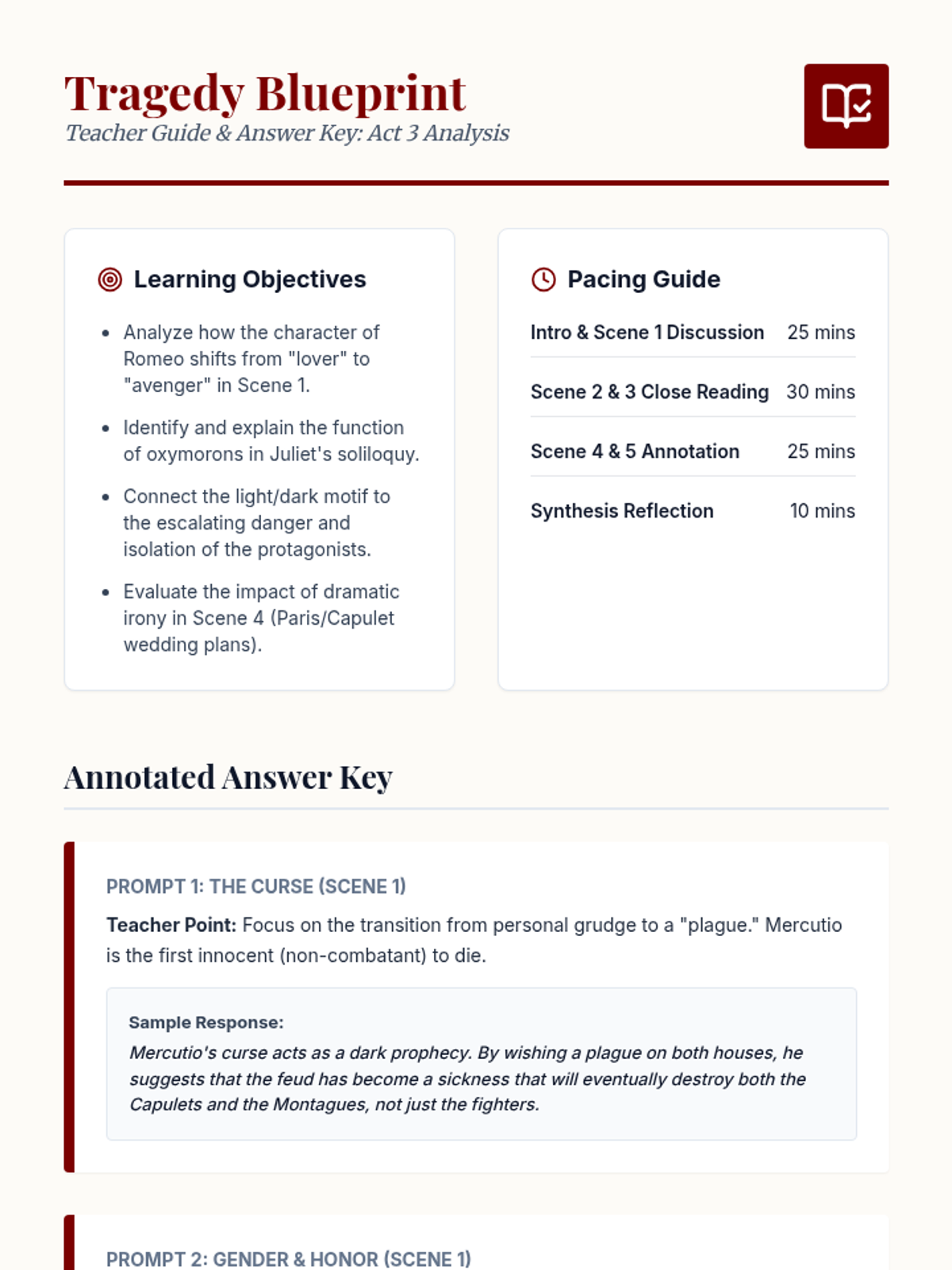
A comprehensive study of Act 3 of Romeo and Juliet, focusing on the pivotal turning points, the escalation of violence, and the shift from comedy to tragedy. Students will annotate key passages and analyze character motivations.
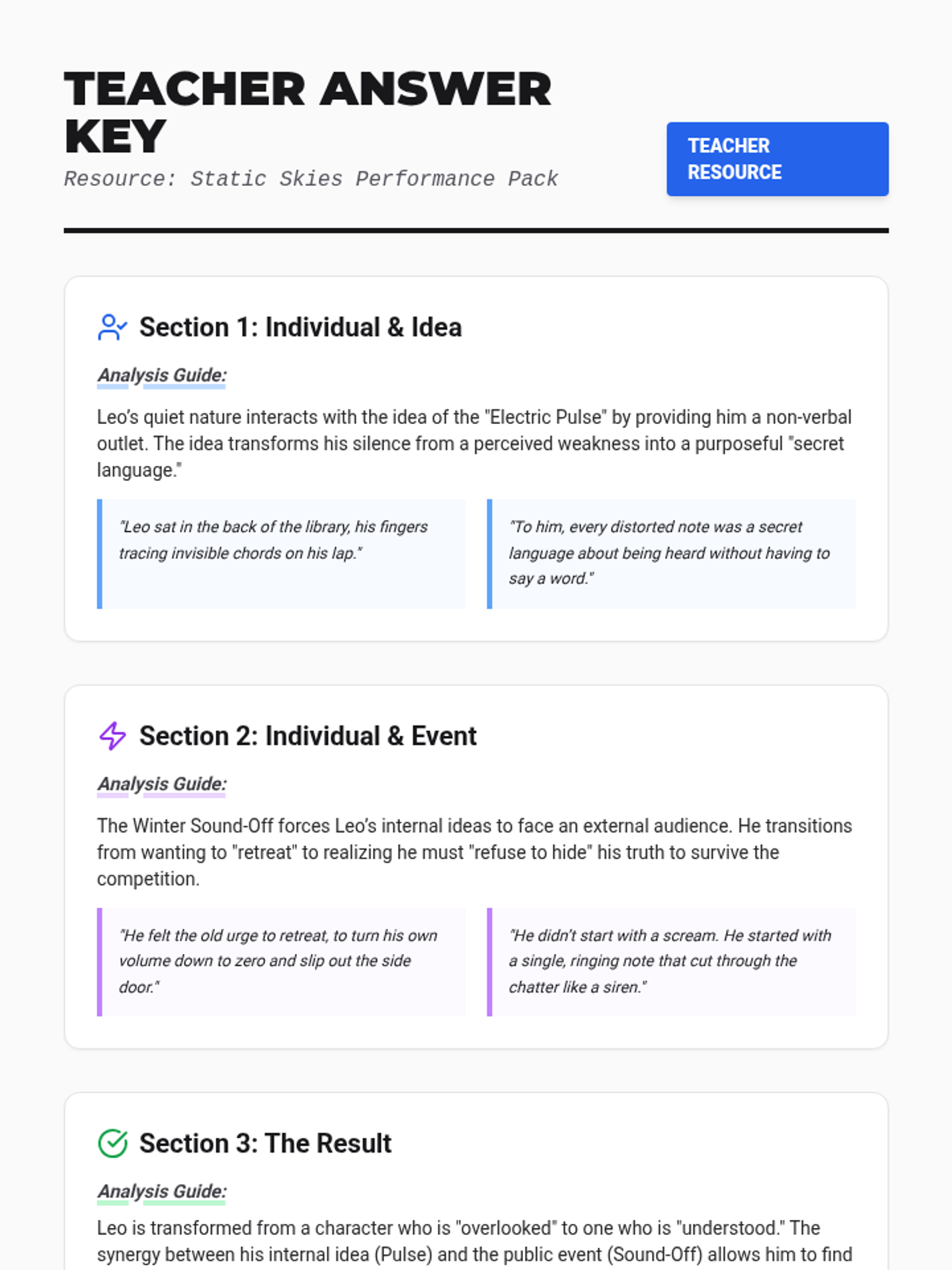
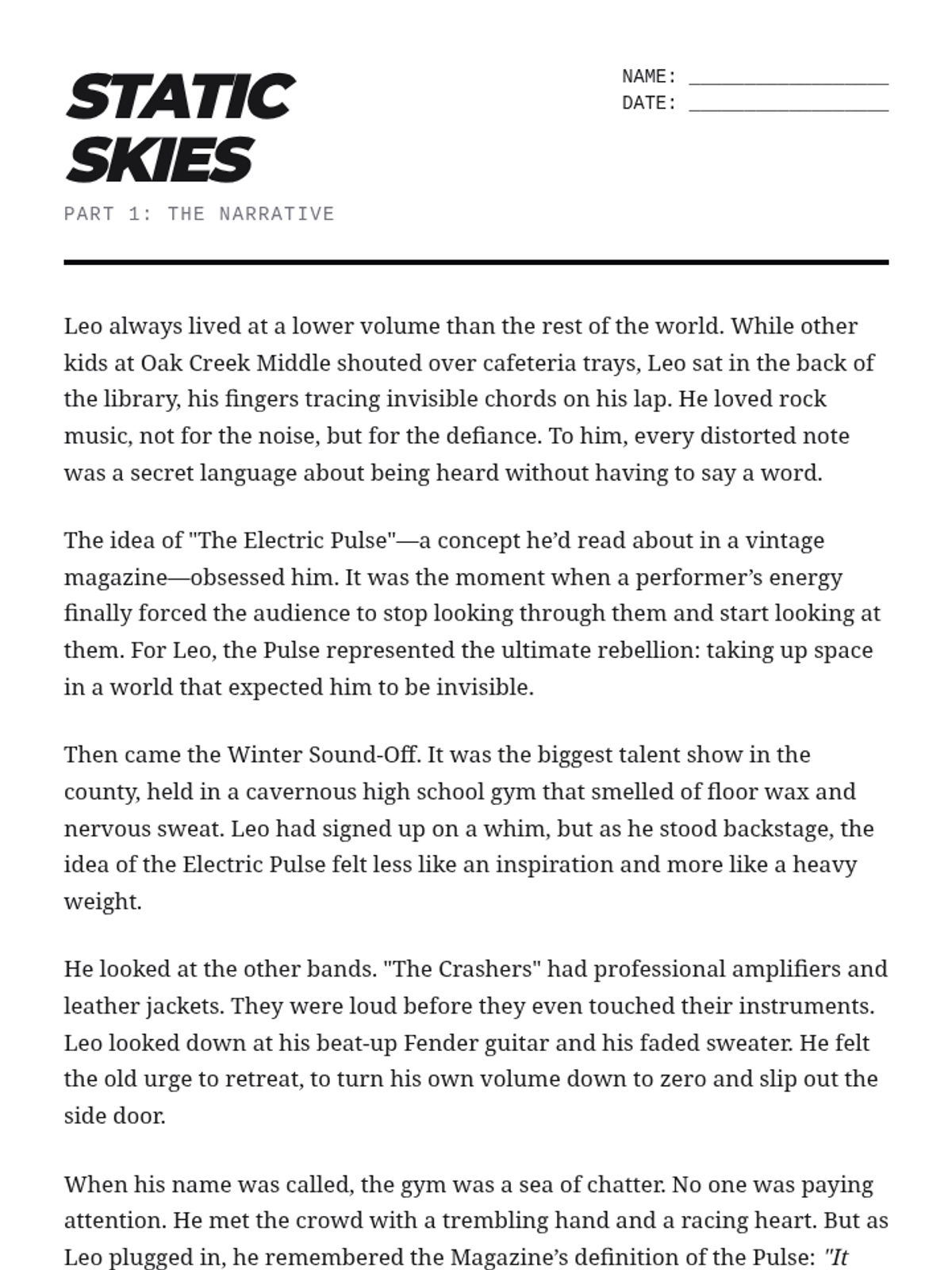
A focused activity set designed to help students analyze how individuals, ideas, and events interact within a rock-themed narrative. This lesson uses the high-energy world of rock music to teach literary analysis skills.
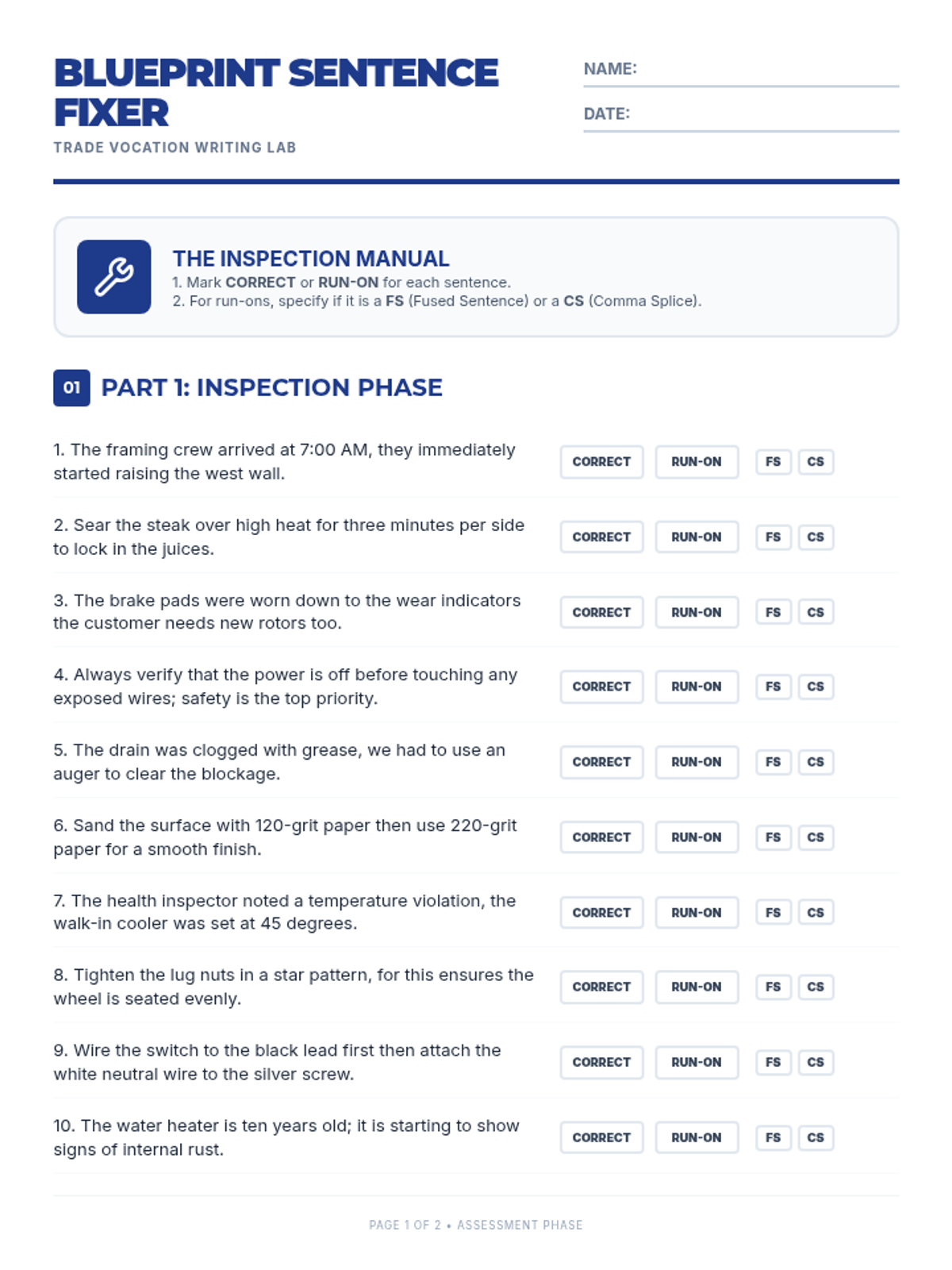
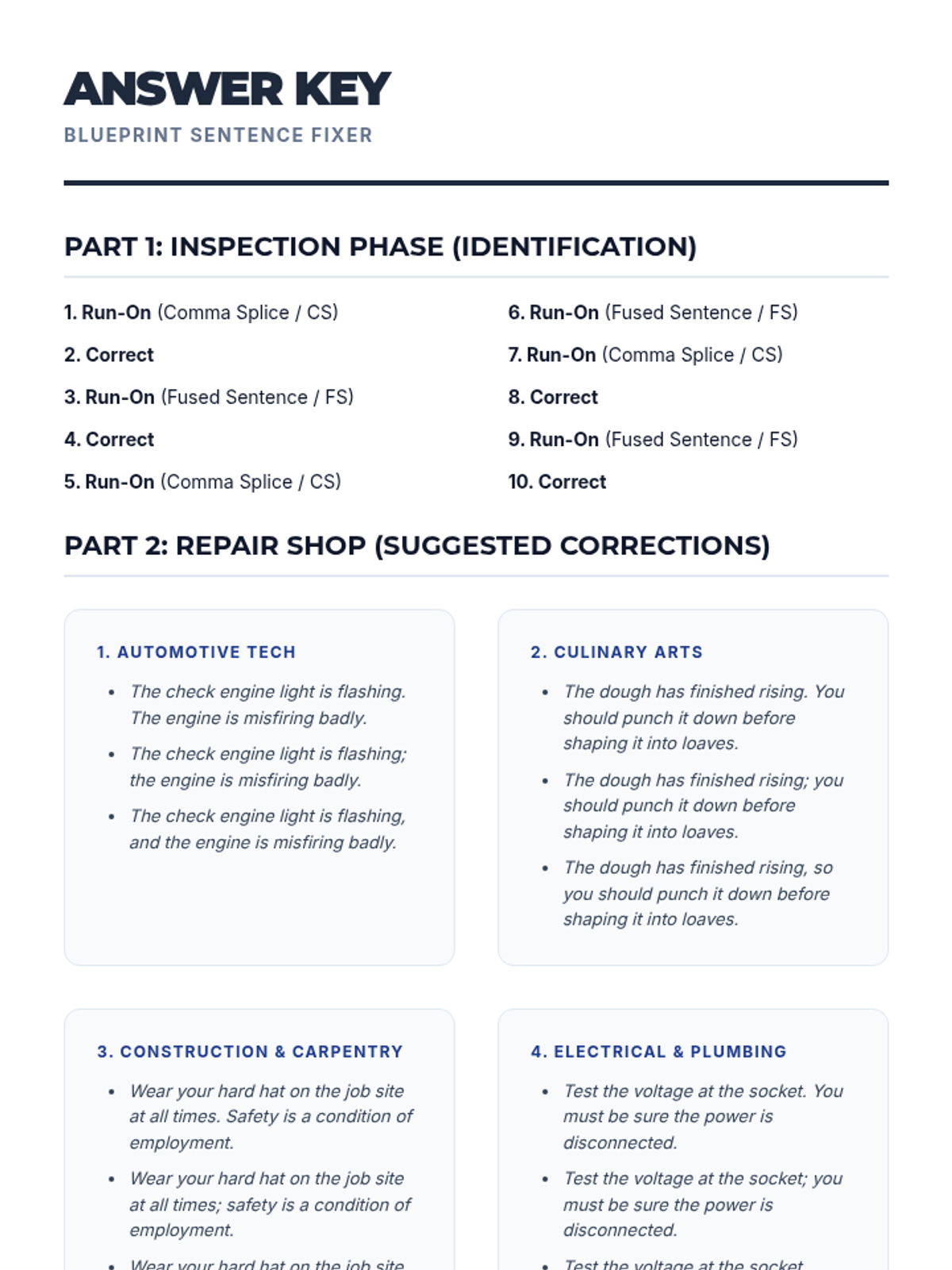
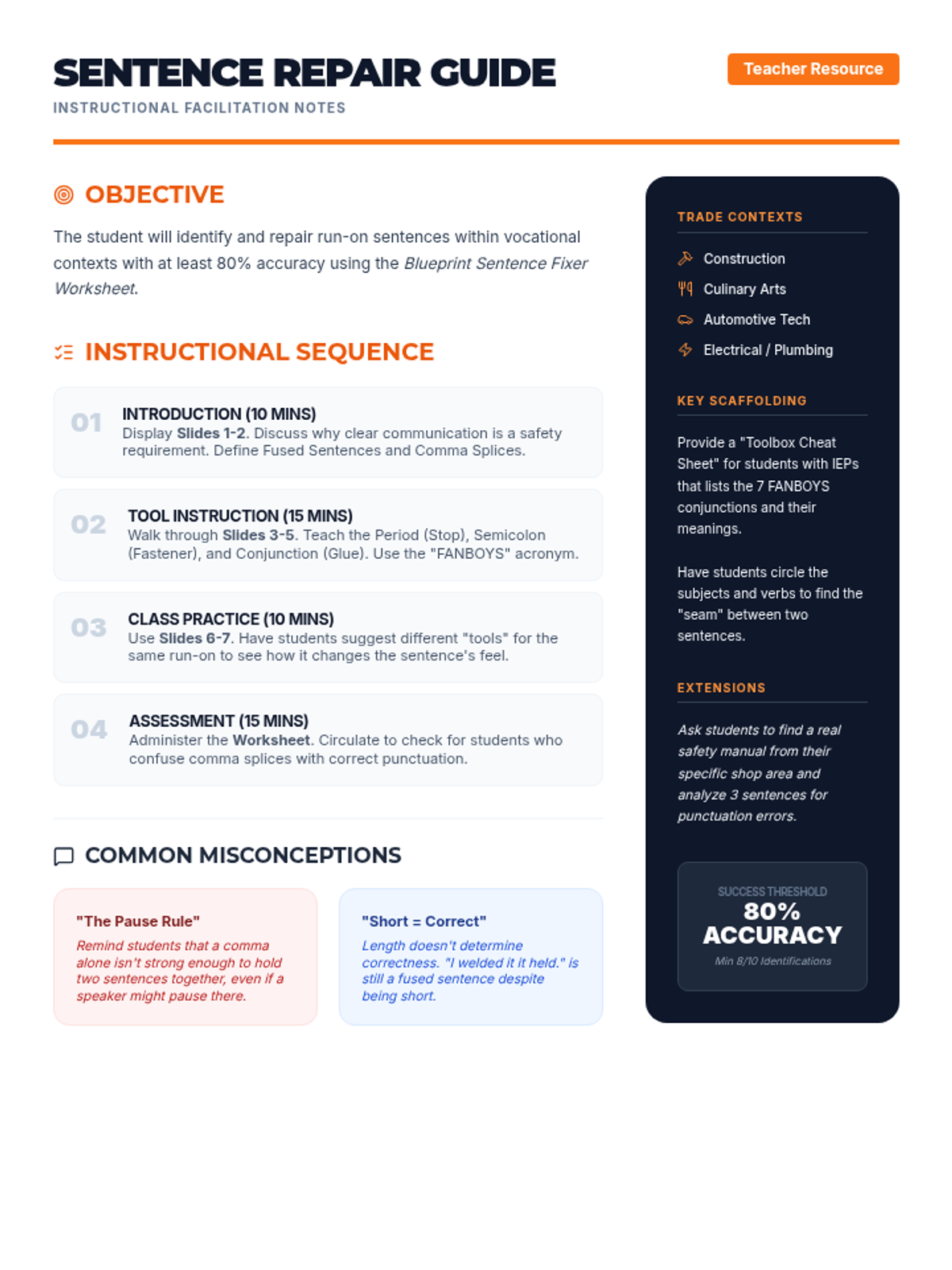
A comprehensive lesson focused on identifying and repairing run-on sentences within the context of vocational trades, including construction, culinary arts, automotive technology, and electrical/plumbing. Students will learn to use periods, semicolons, and conjunctions as 'tools' for sentence repair.
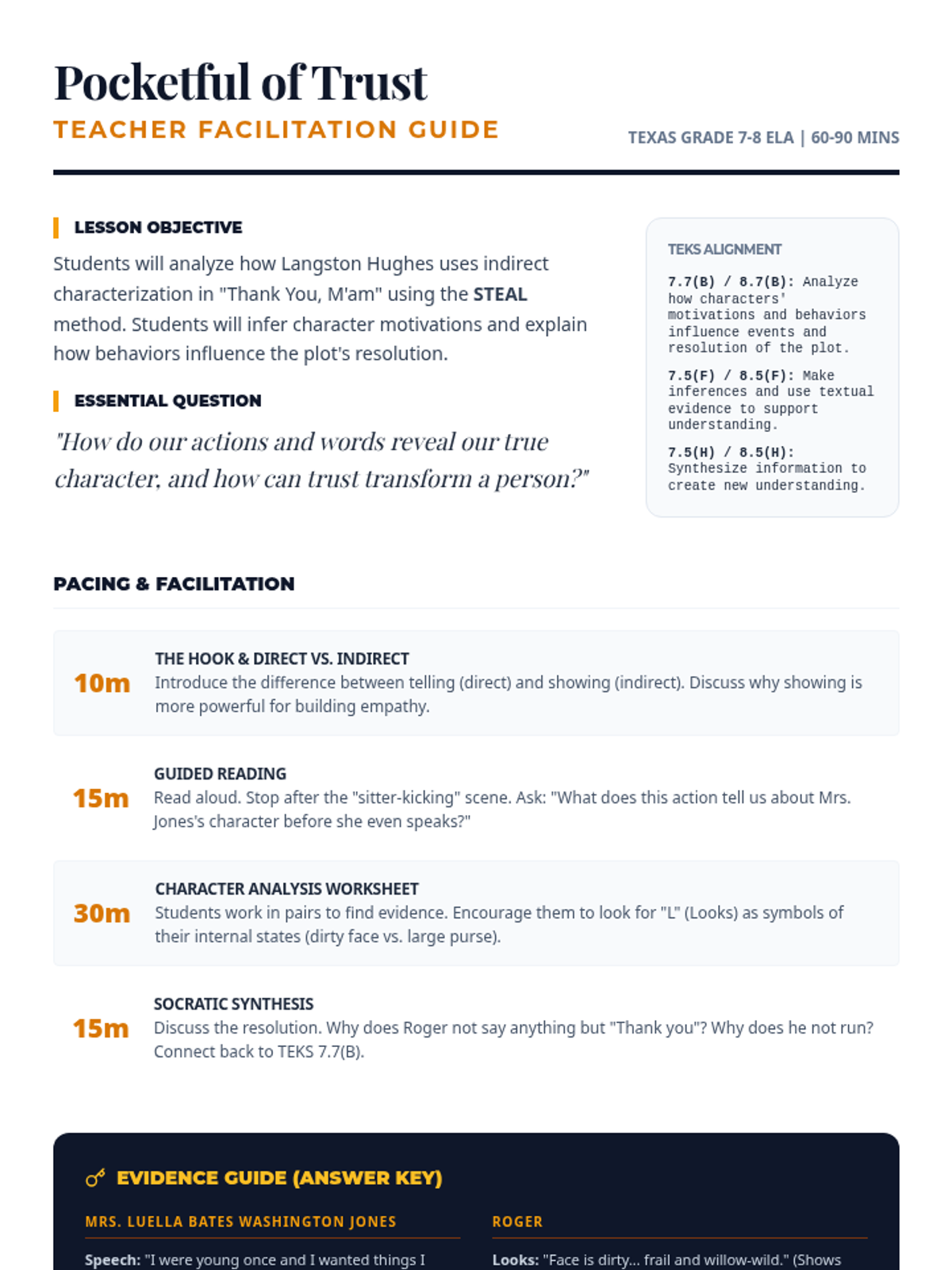
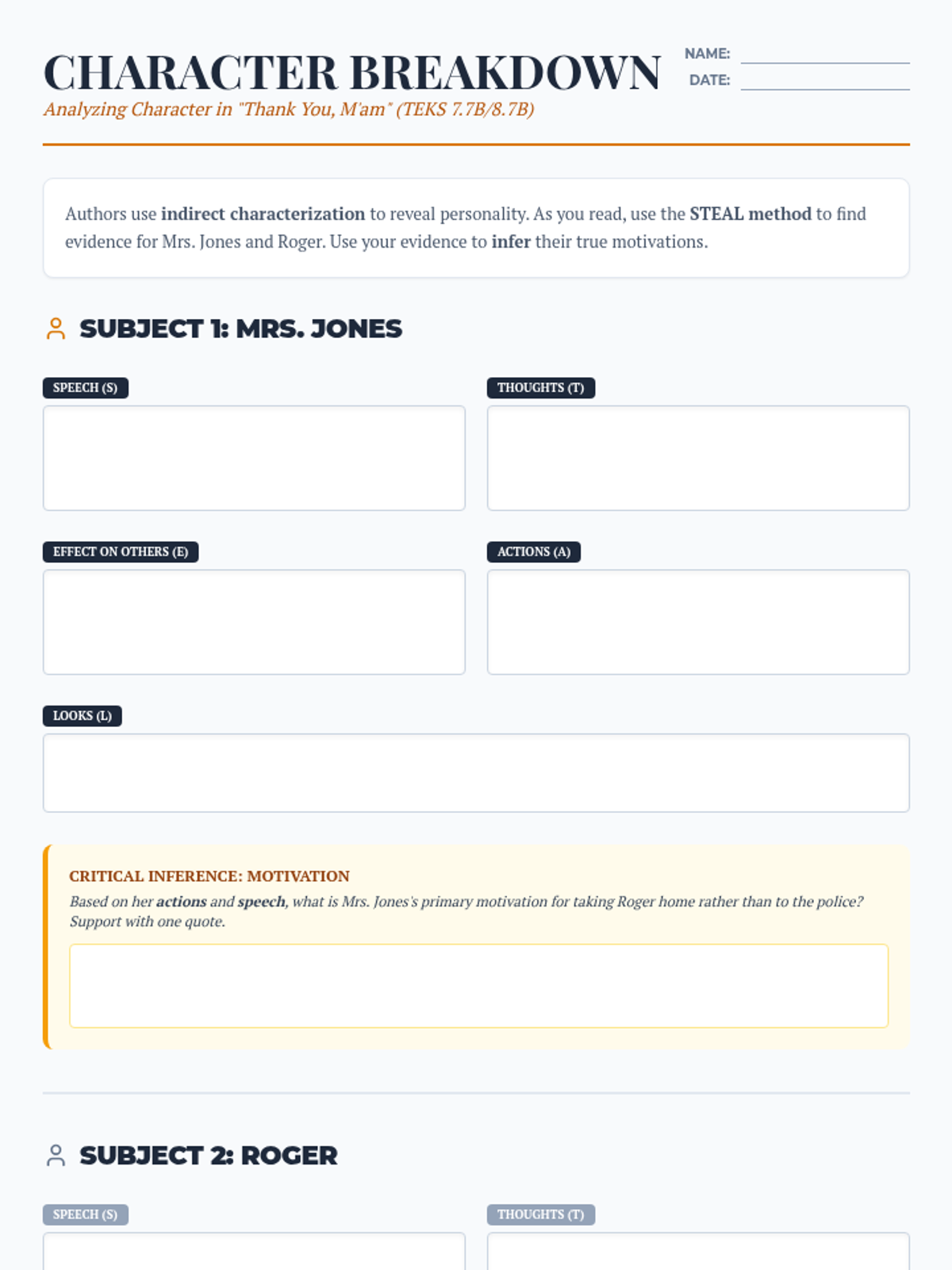
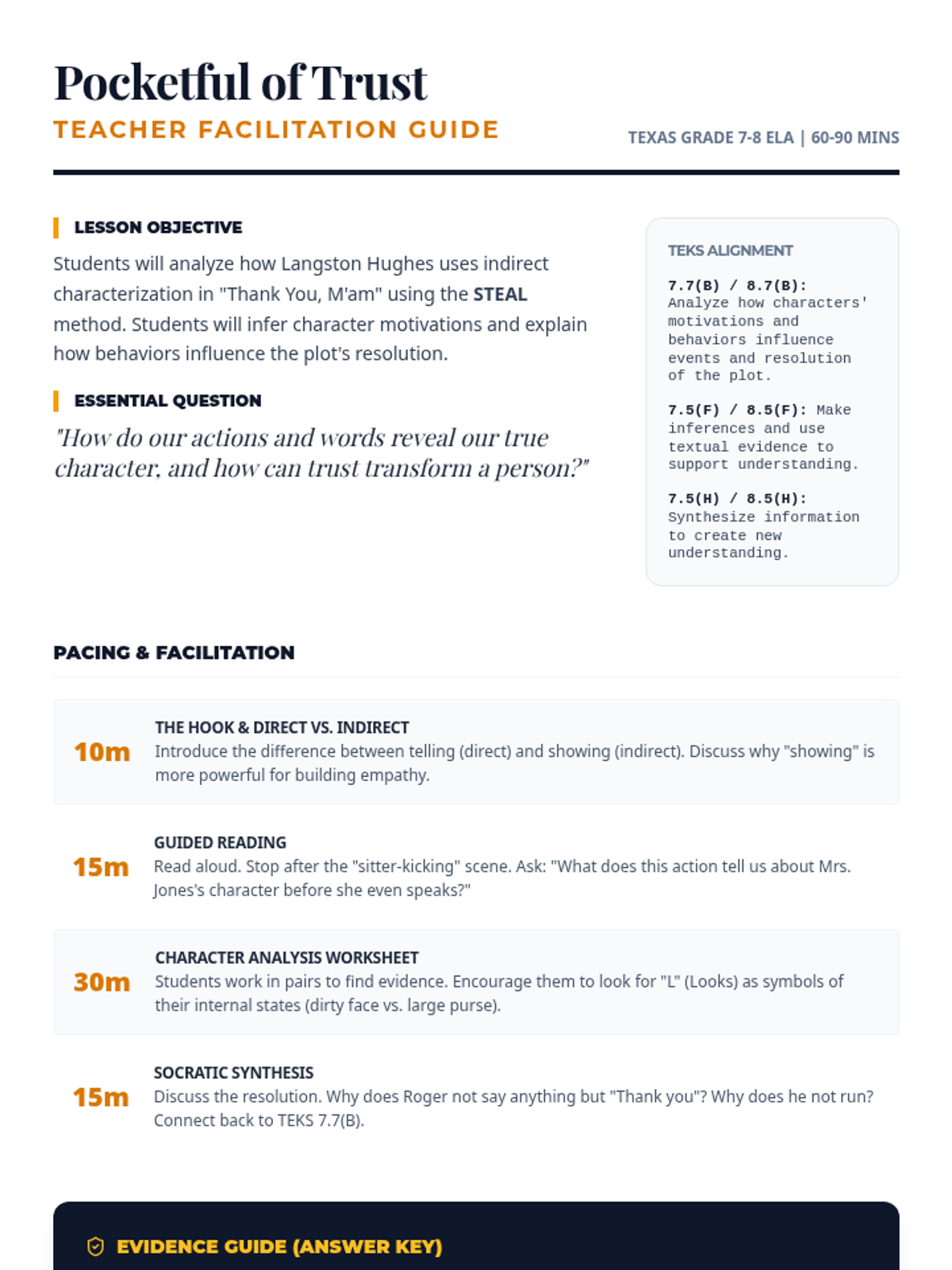
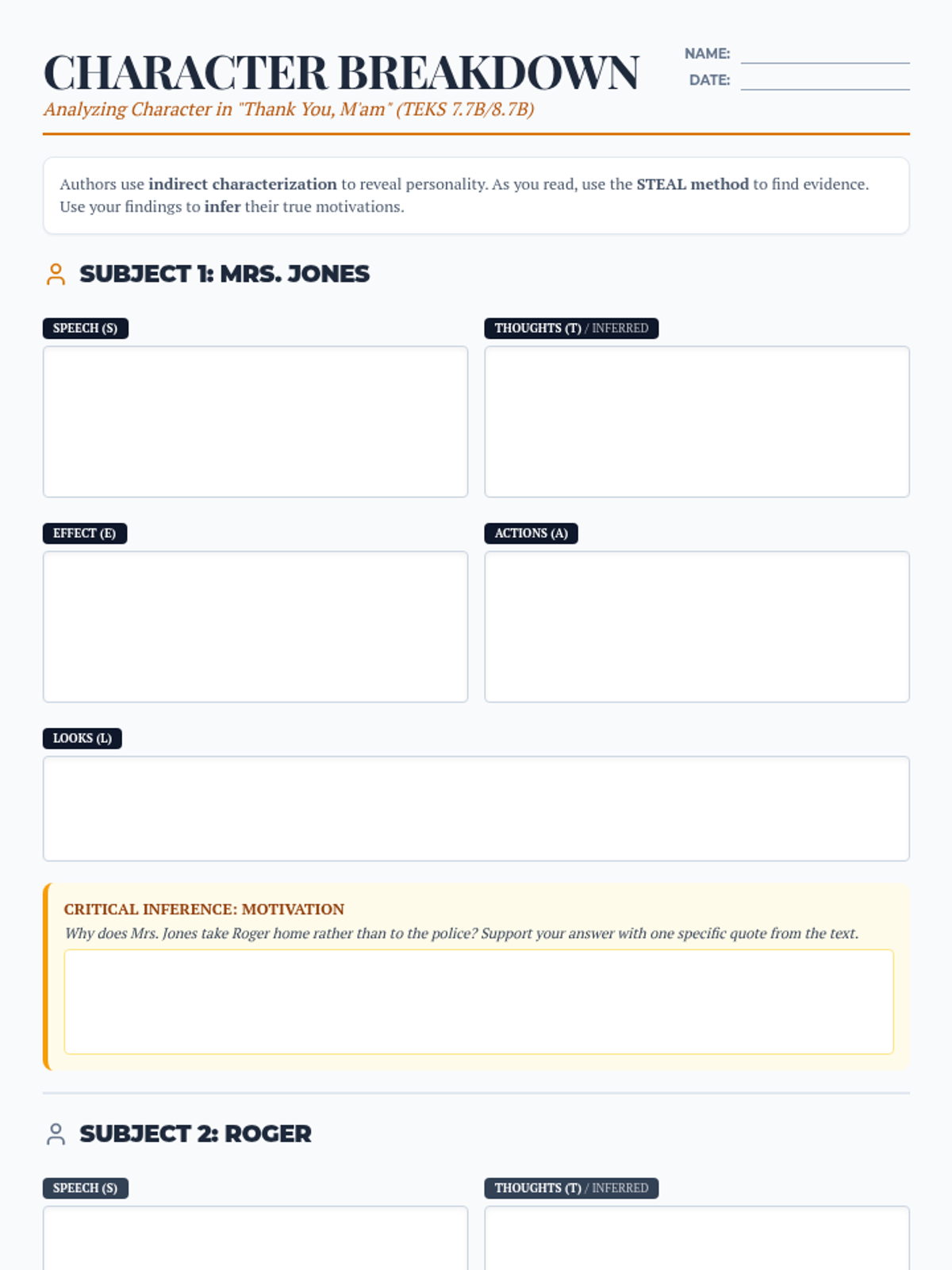
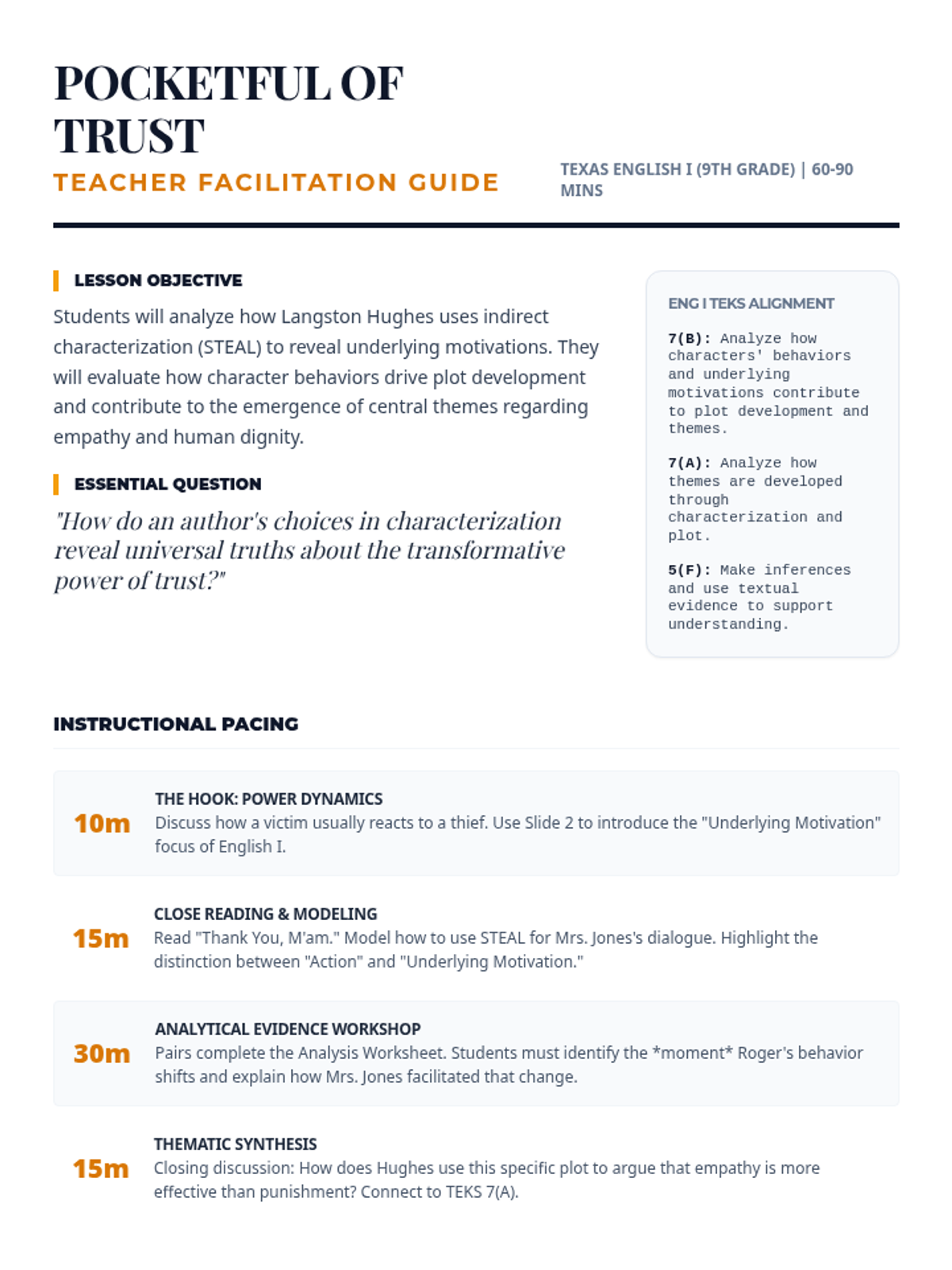
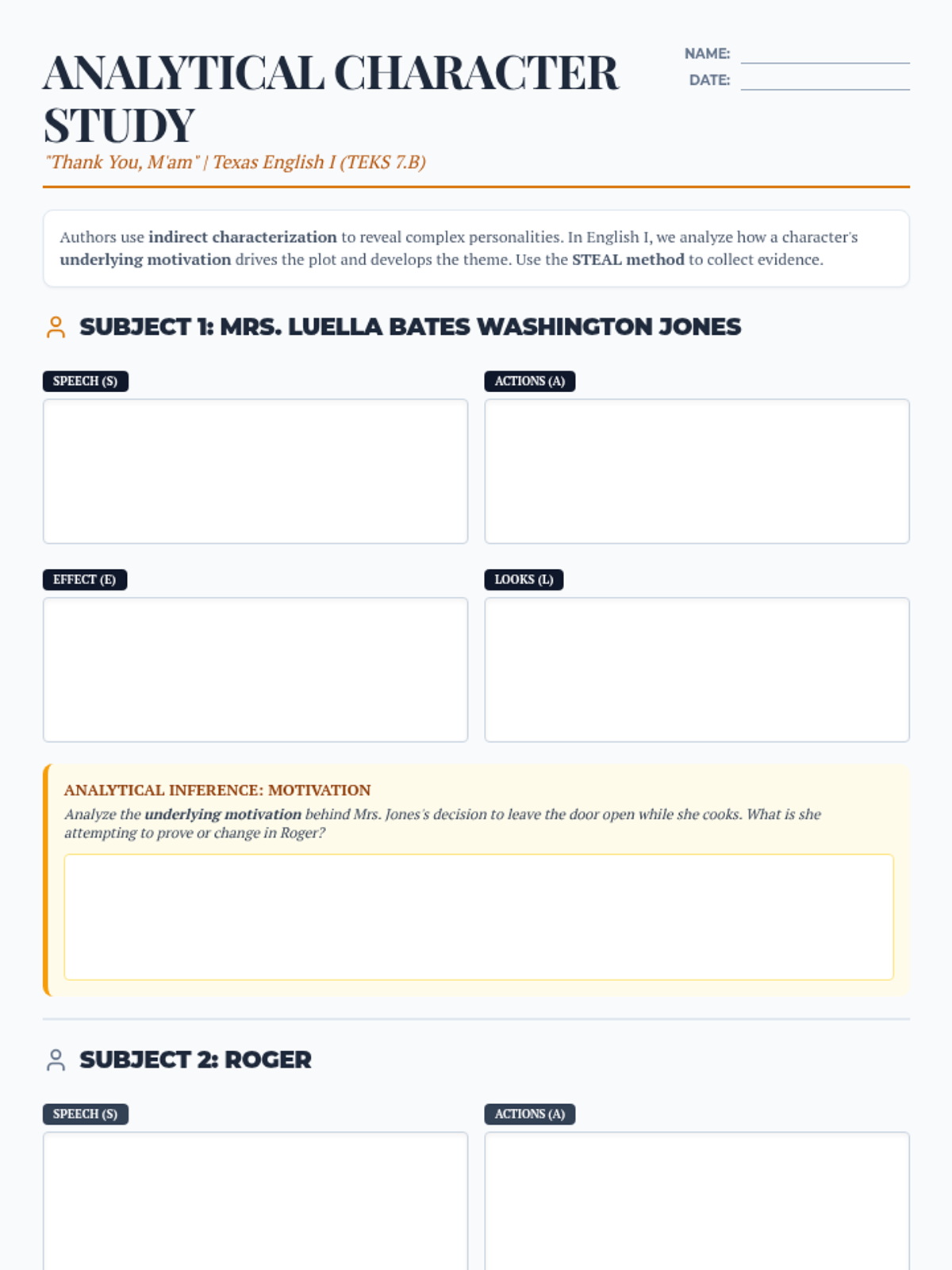
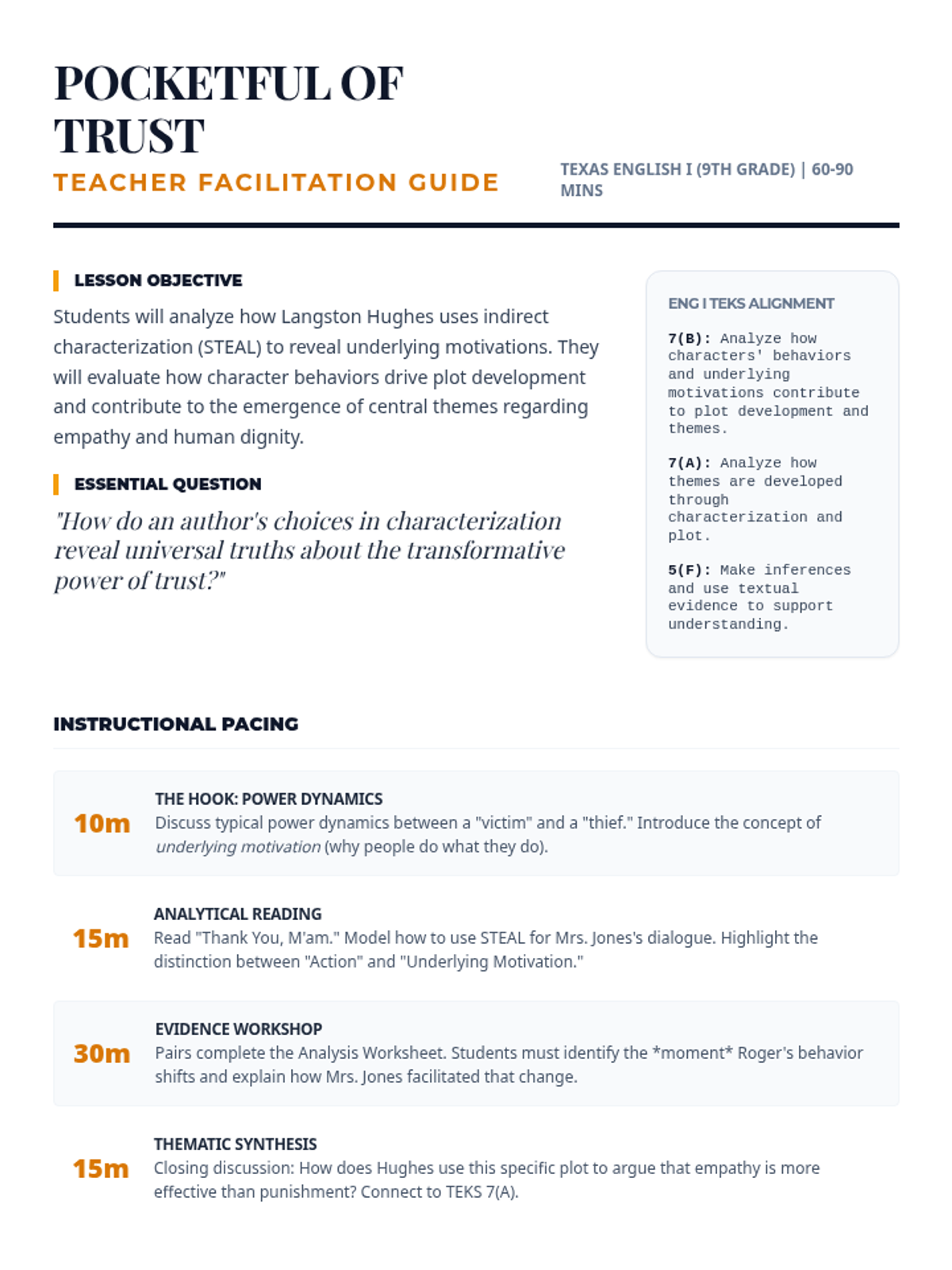
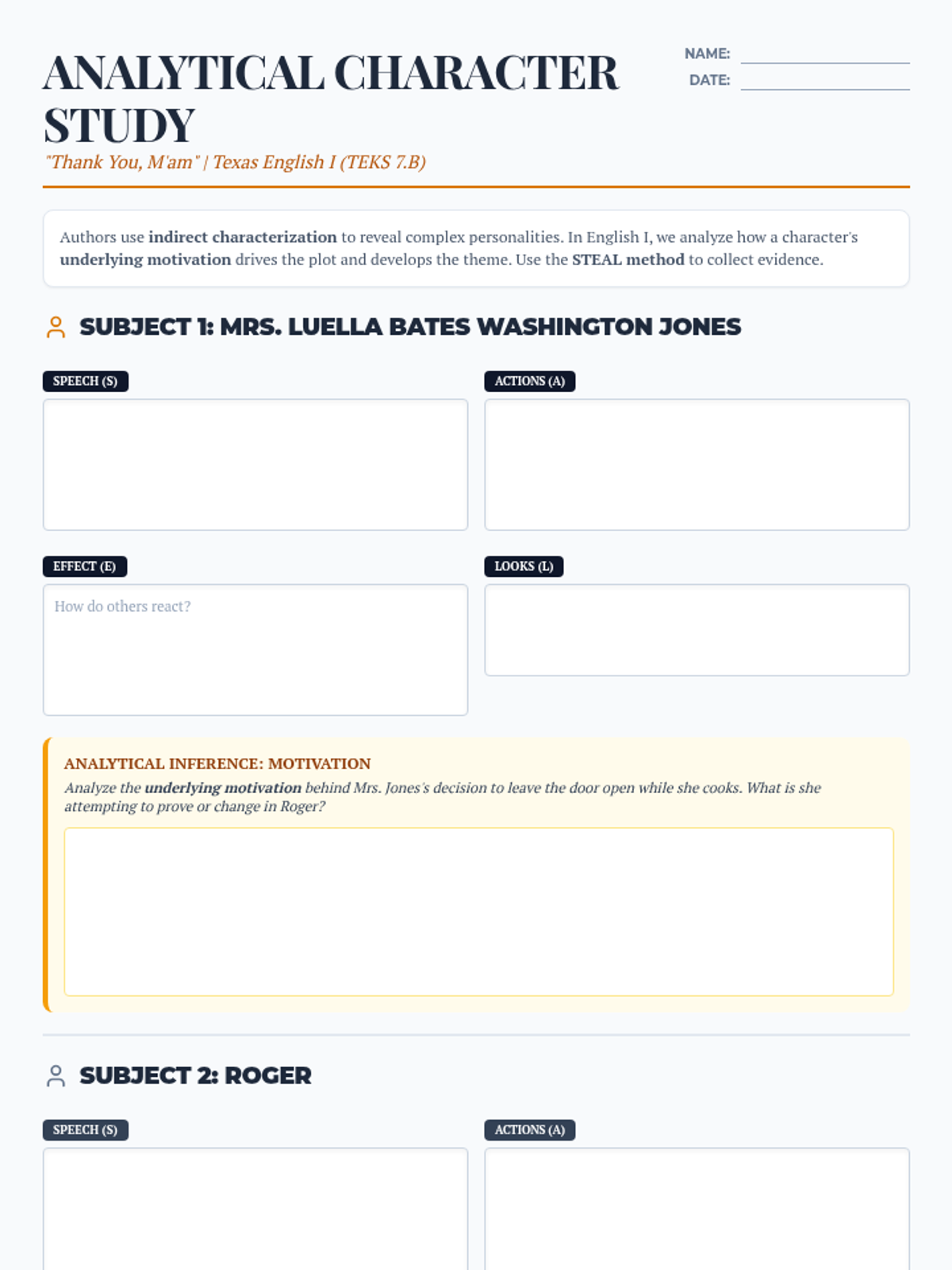
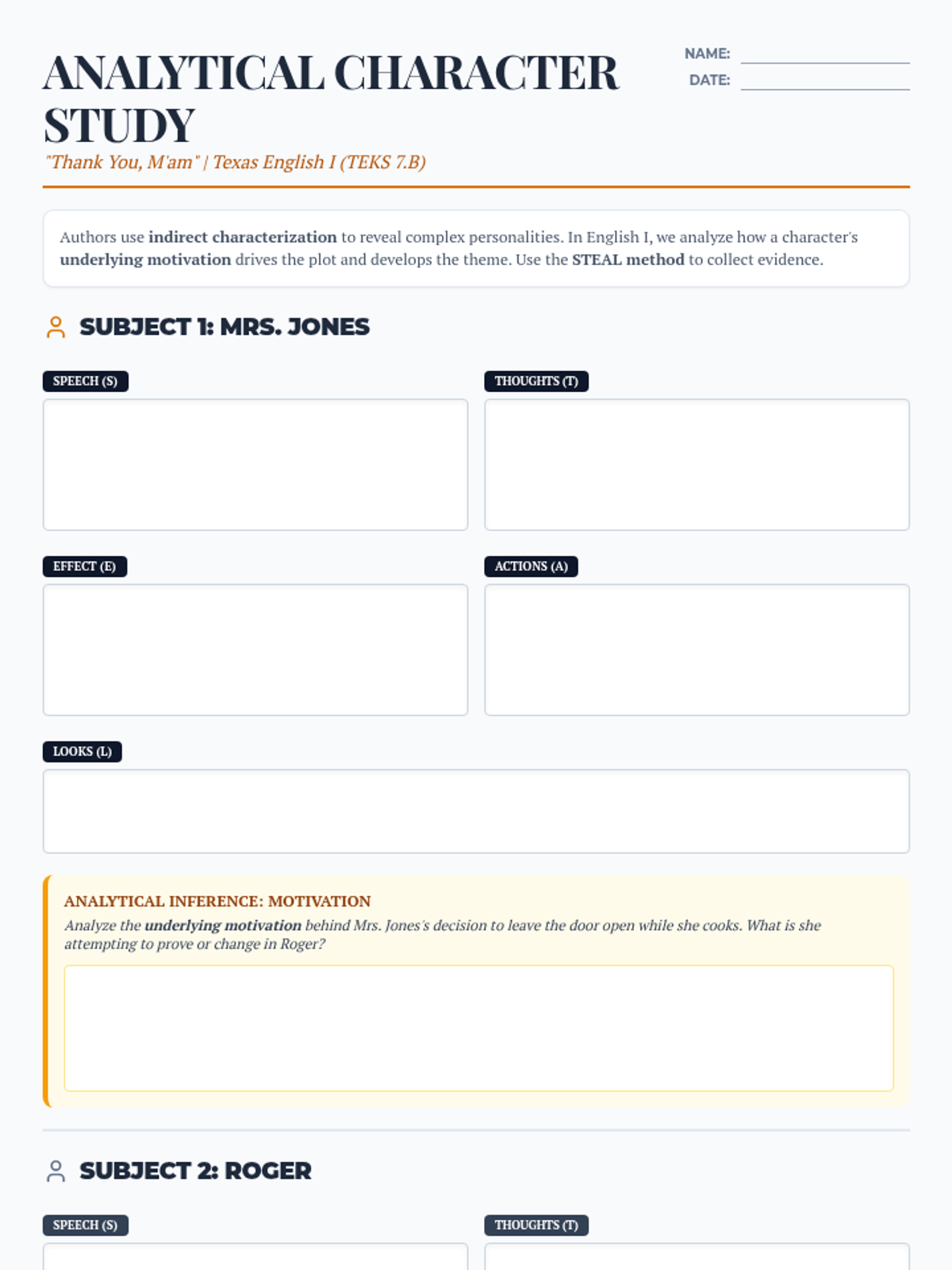
A TEKS-aligned lesson (Grade 7-8) exploring characterization in Langston Hughes's 'Thank You, M'am'. Students use the STEAL method to analyze how characters' motivations and behaviors influence events and the resolution of the plot (TEKS 7.7B).
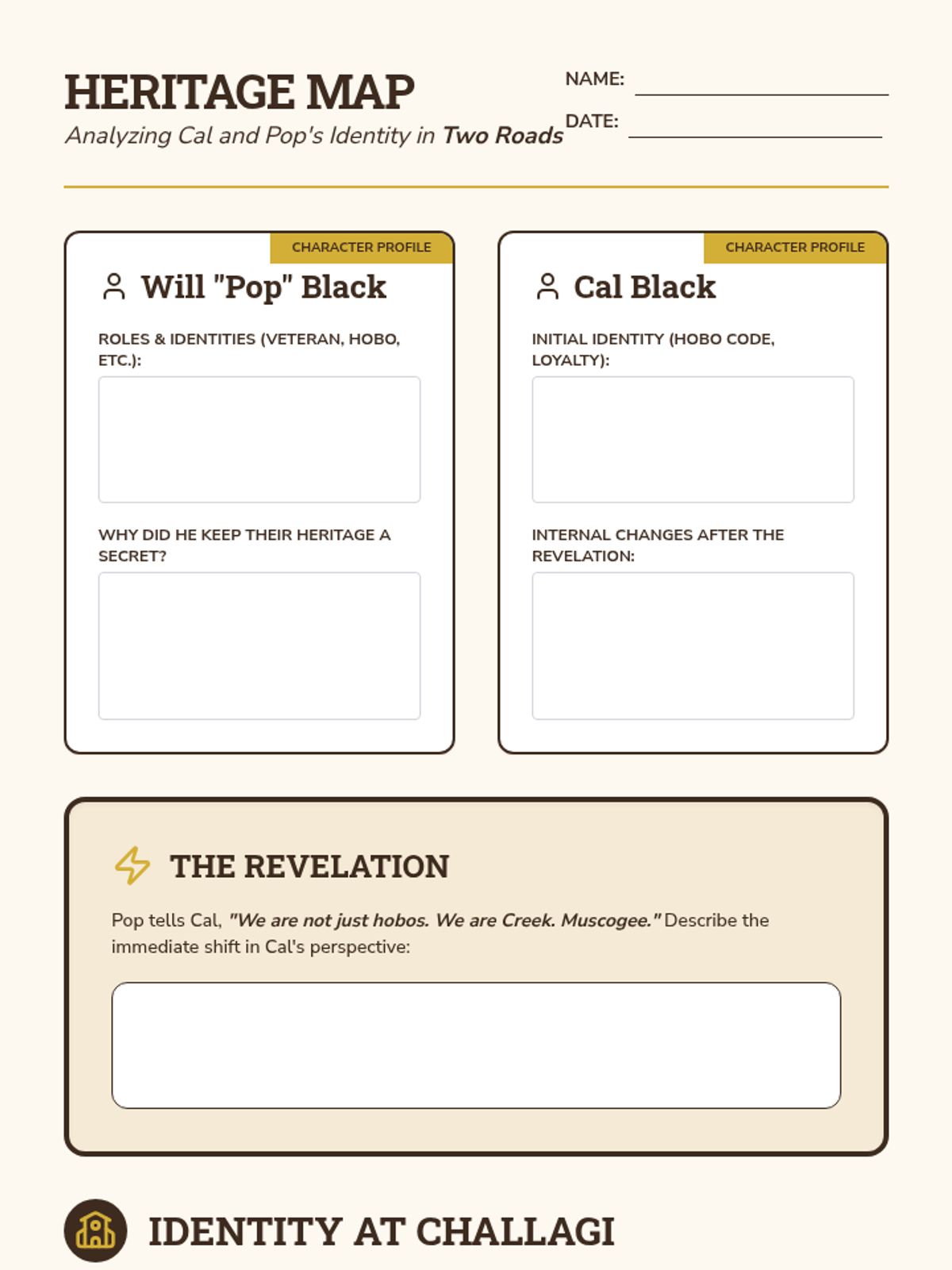
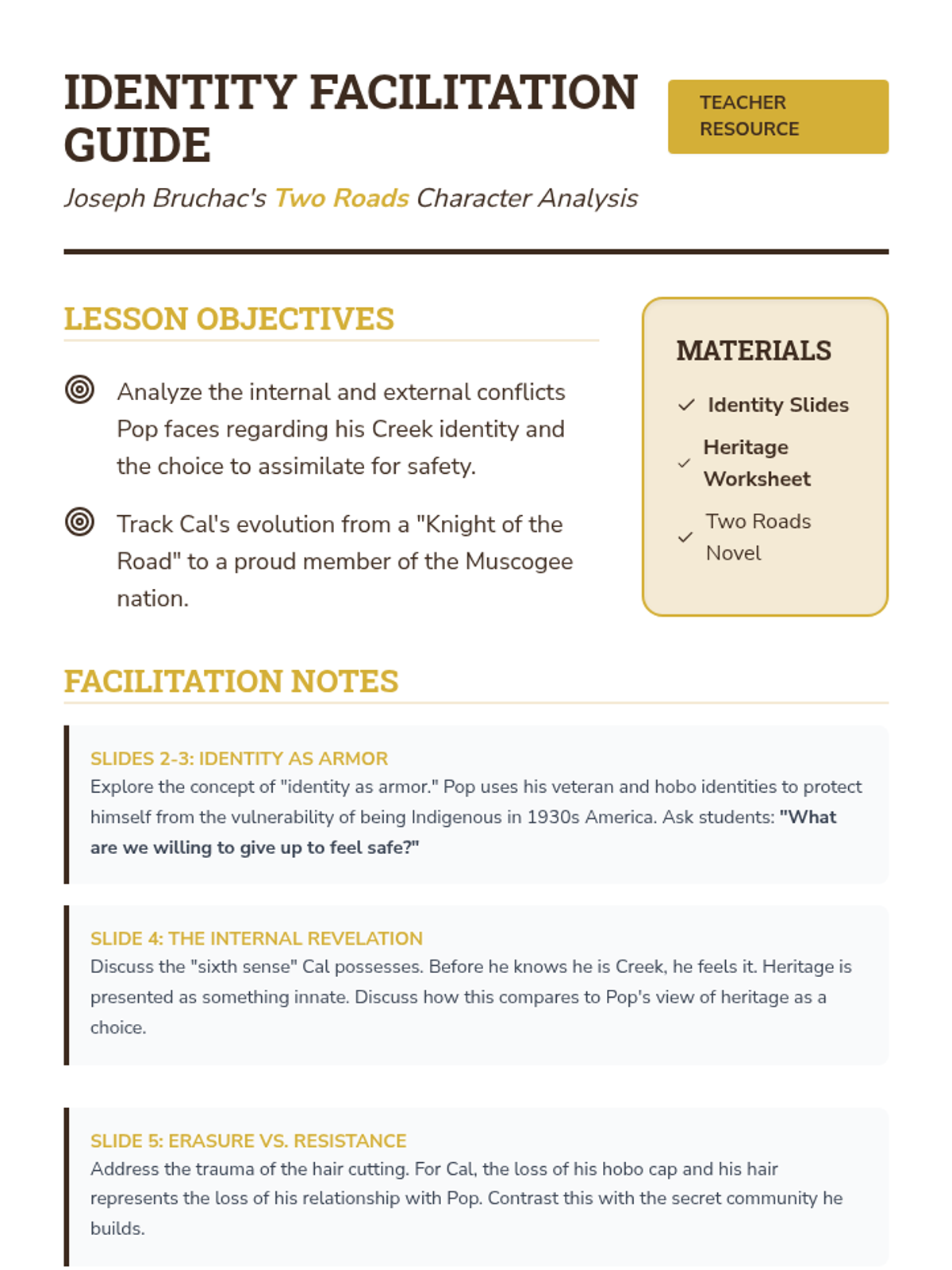
A slide-based analysis of Cal and Pop's evolving identities and Creek heritage in Joseph Bruchac's novel *Two Roads*. Students will explore how the Great Depression and historical boarding schools shaped the characters' understanding of themselves.