A lesson for English Language Learners to identify and practice common American idioms using visual aids and video-based instruction. Students will explore literal vs. figurative meanings and practice using idioms in spoken sentences.
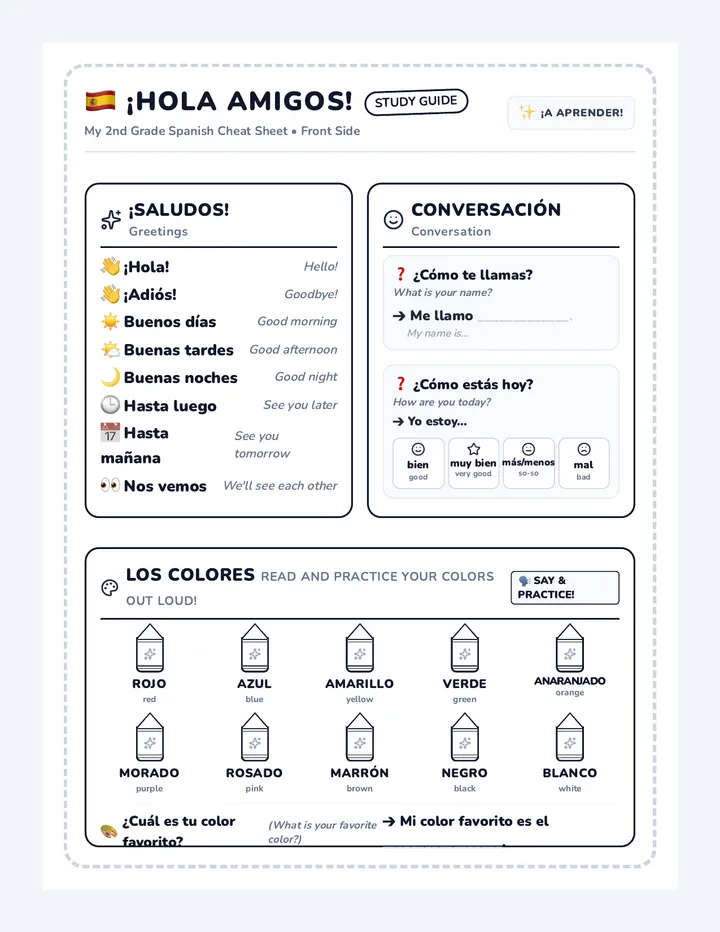
An introductory Spanish lesson for 2nd graders covering basic greetings, colors, numbers 0-30, and simple questions. Includes a beautiful, double-sided coloring study guide.
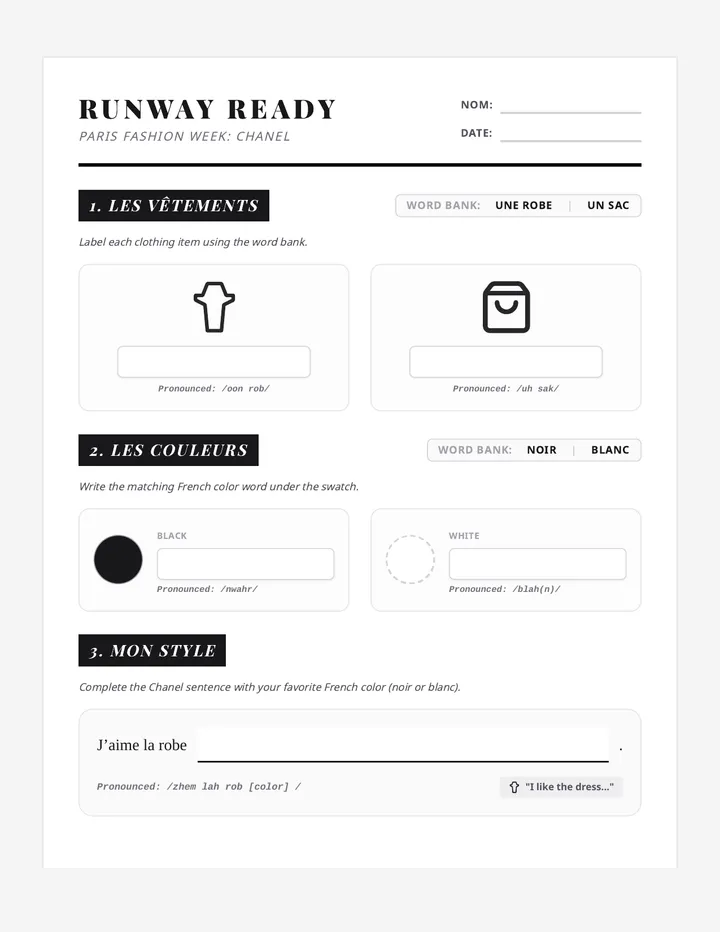
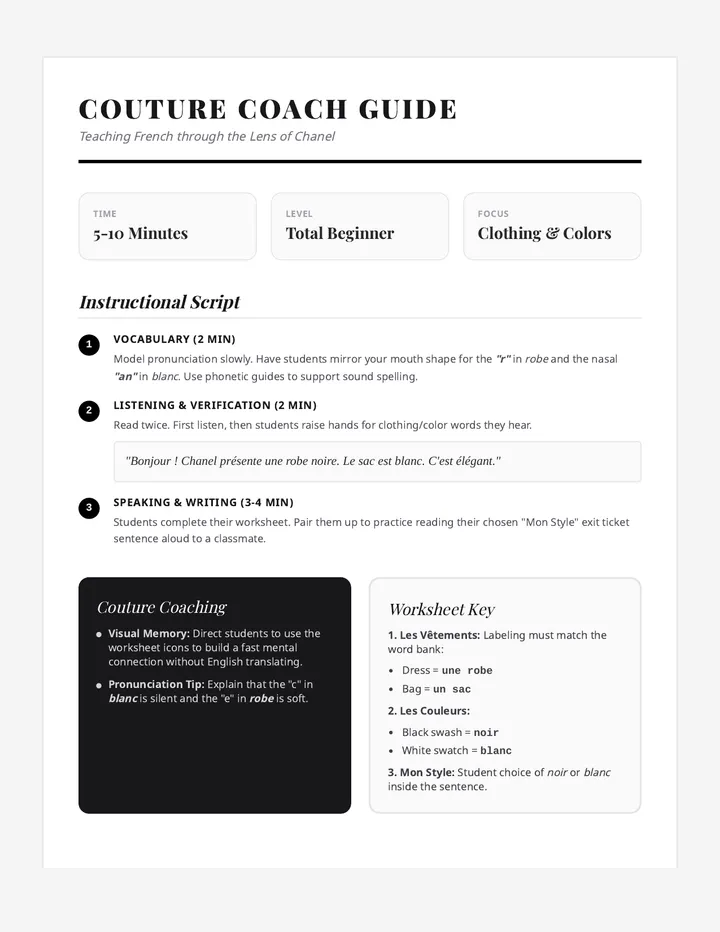
A 5-minute introductory lesson on French fashion vocabulary and basic colors. Students practice listening, speaking, and writing simple sentences about Chanel's iconic style.
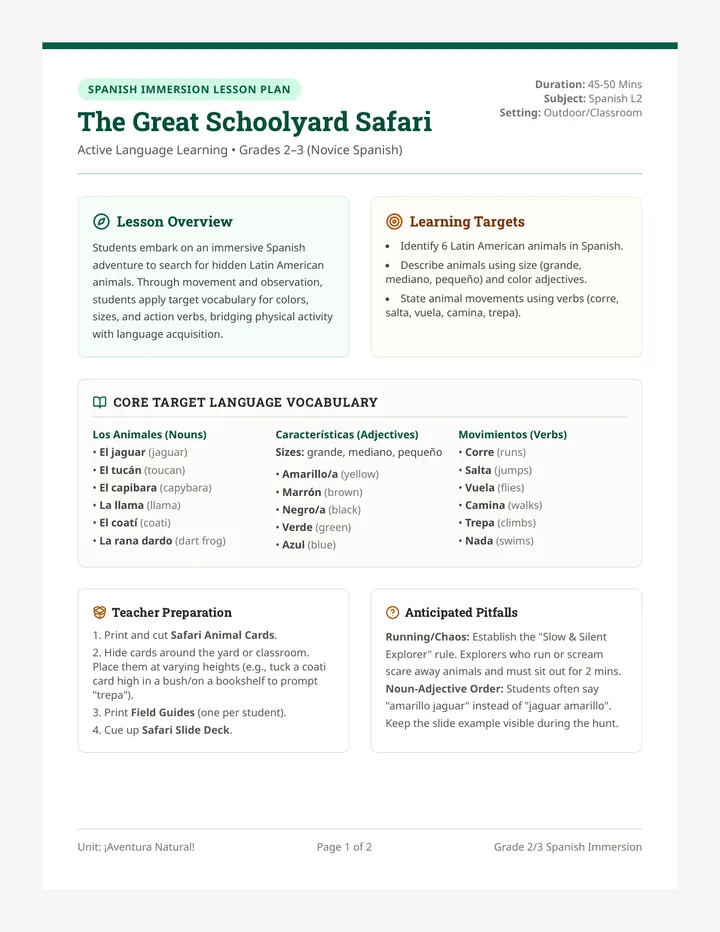
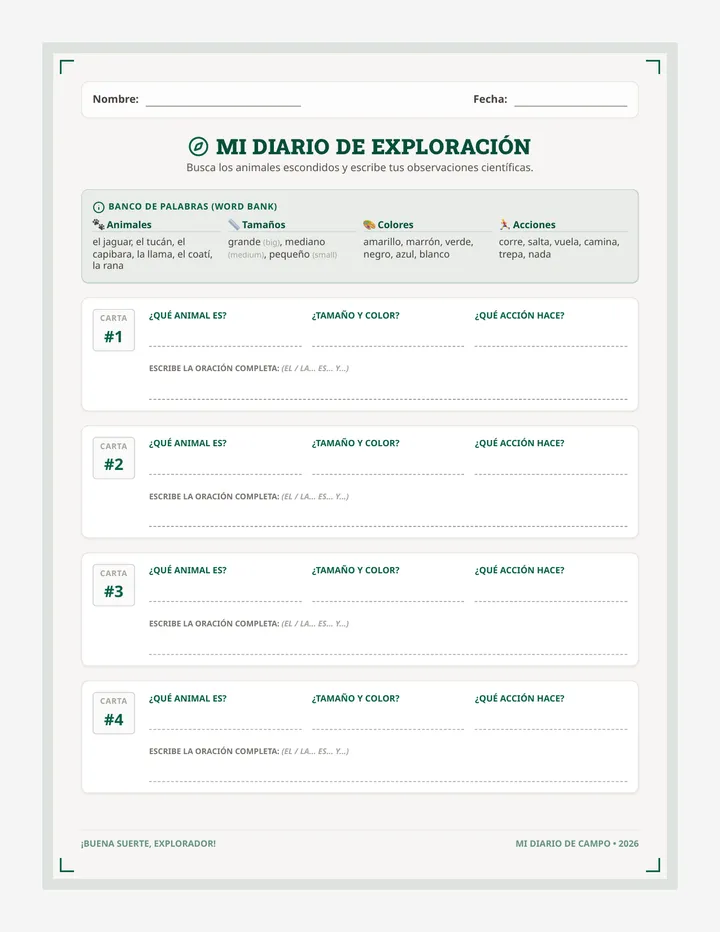
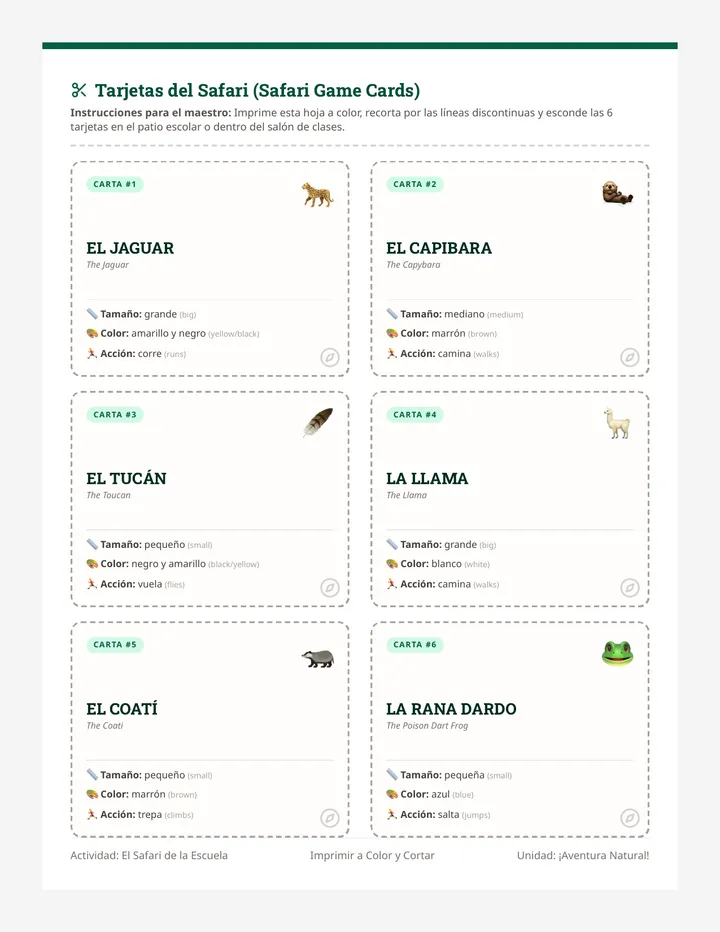
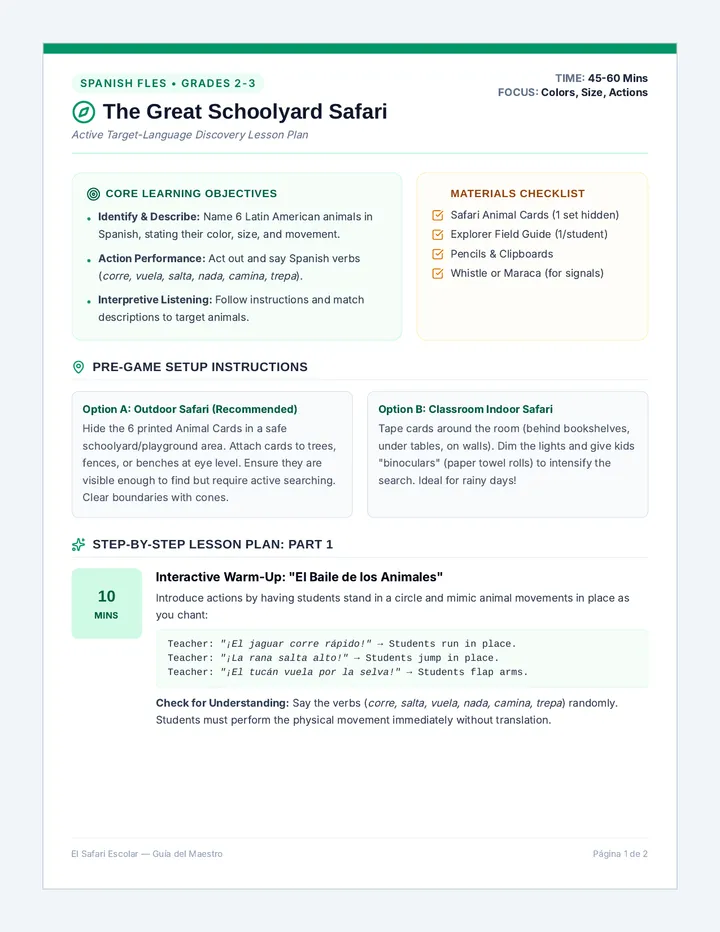
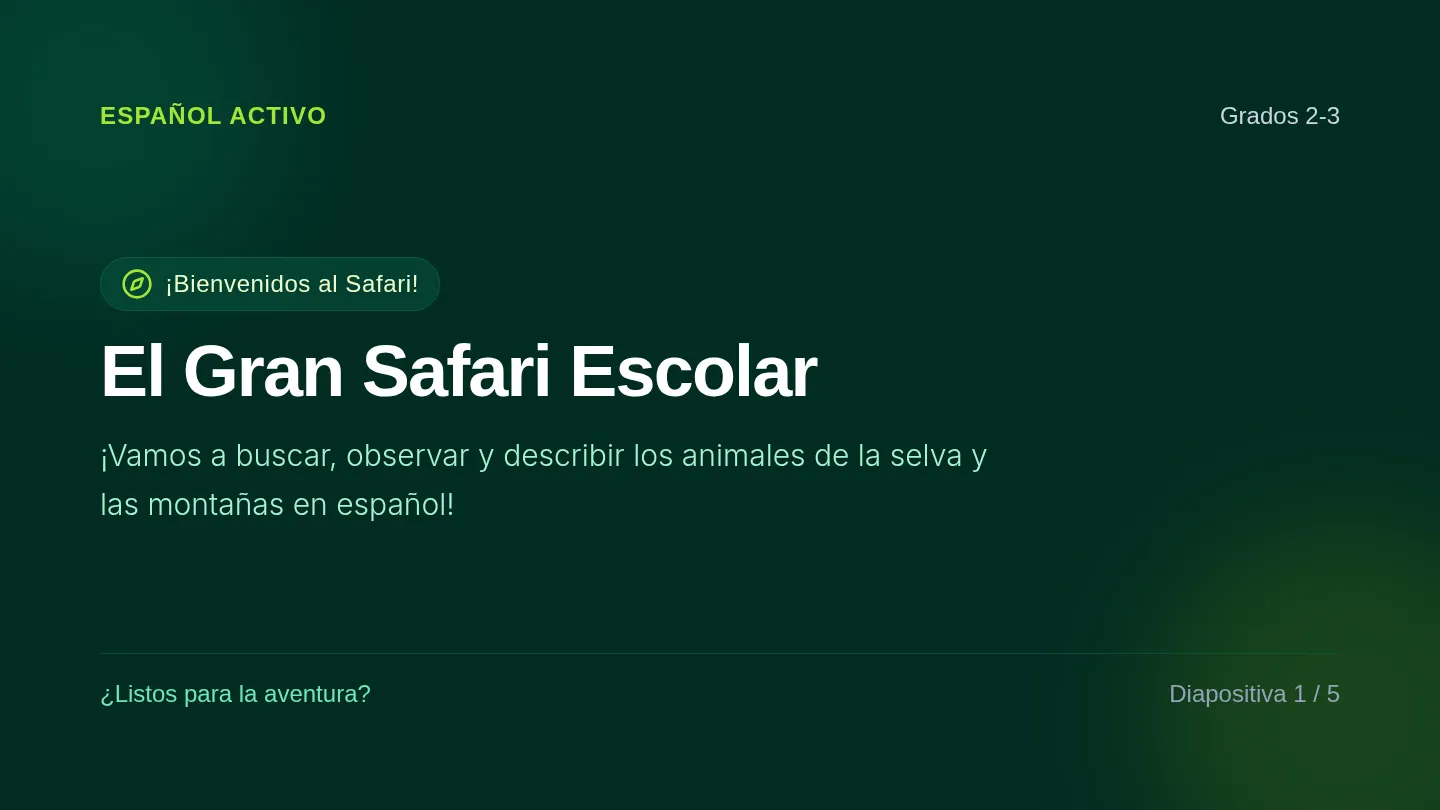
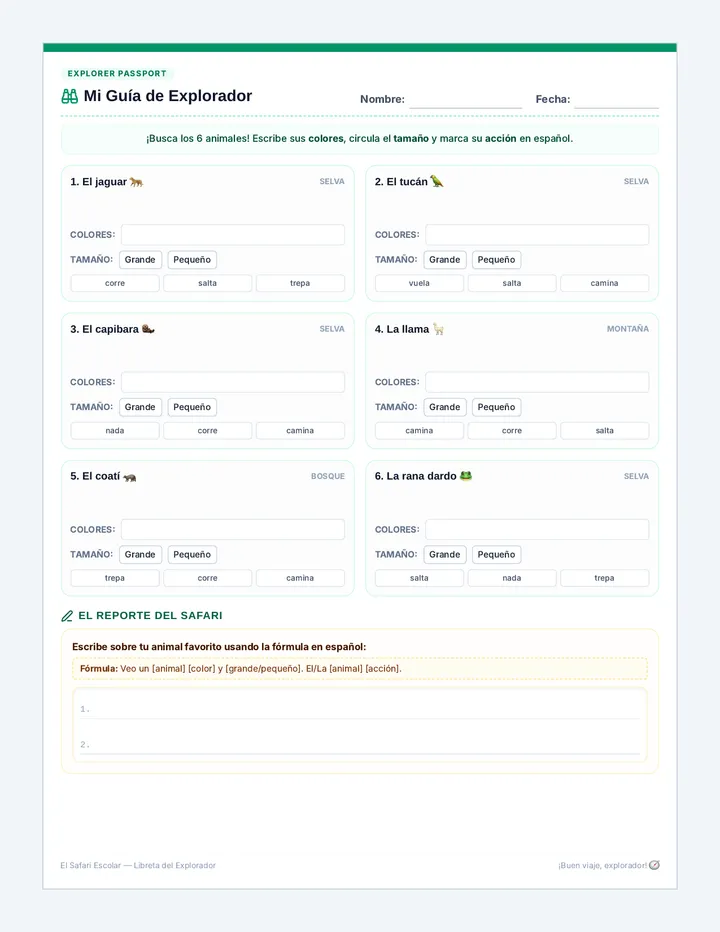
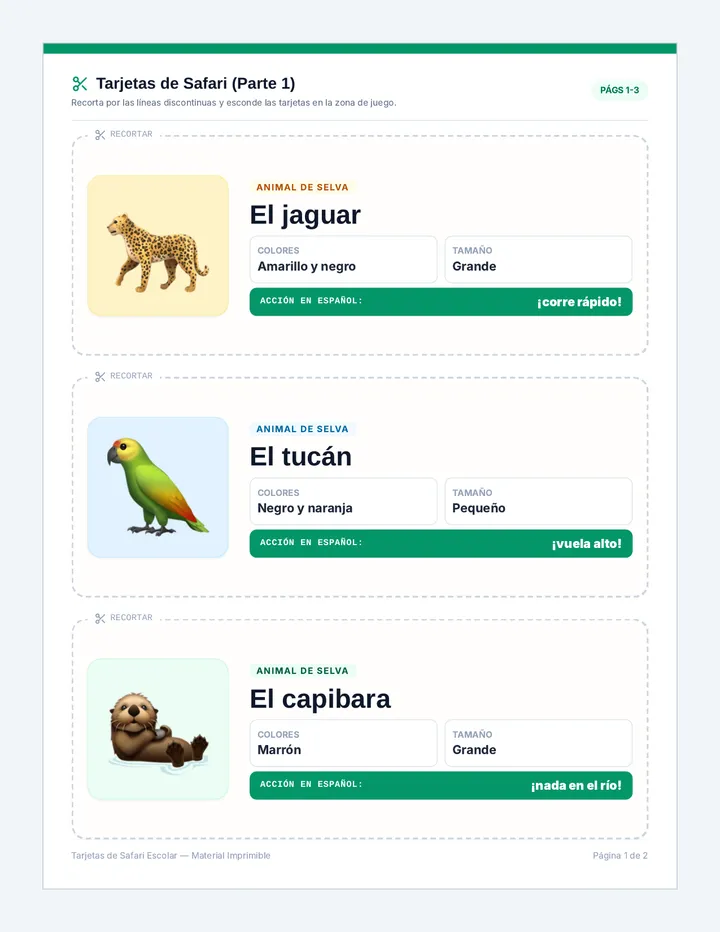
An active Spanish immersion lesson where 2nd and 3rd-grade students search outdoor spaces or the classroom for hidden Latin American animals. Students practice target language vocabulary for colors, sizes, and action verbs to describe physical features and movements.
An active, immersive elementary Spanish lesson where 2nd and 3rd graders search for target-culture animals in outdoor or indoor spaces. Students describe animal colors, sizes, and action verbs through movement and discovery.
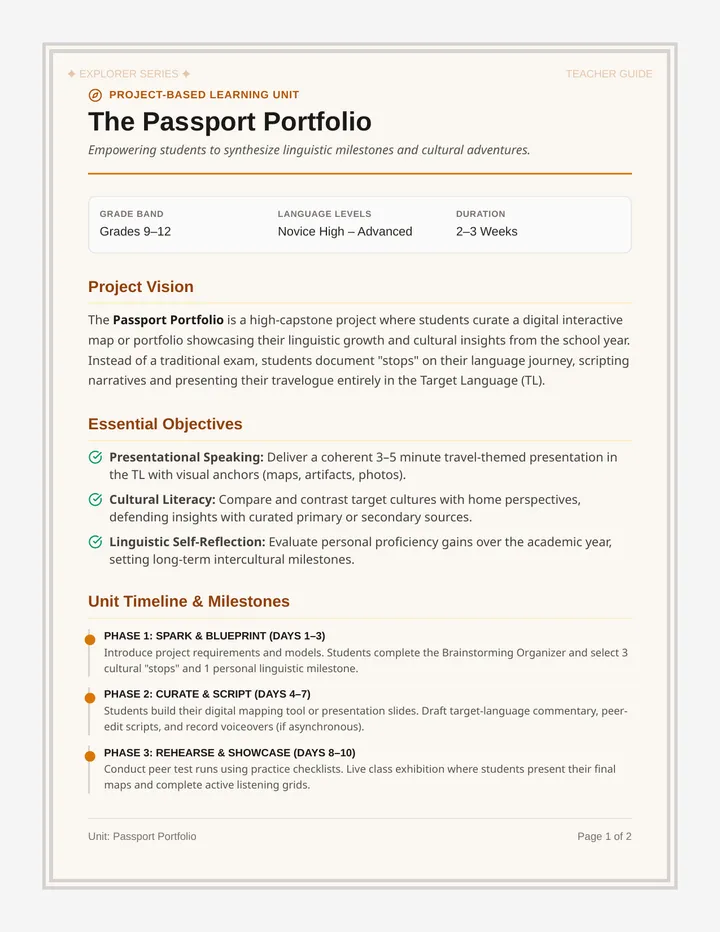
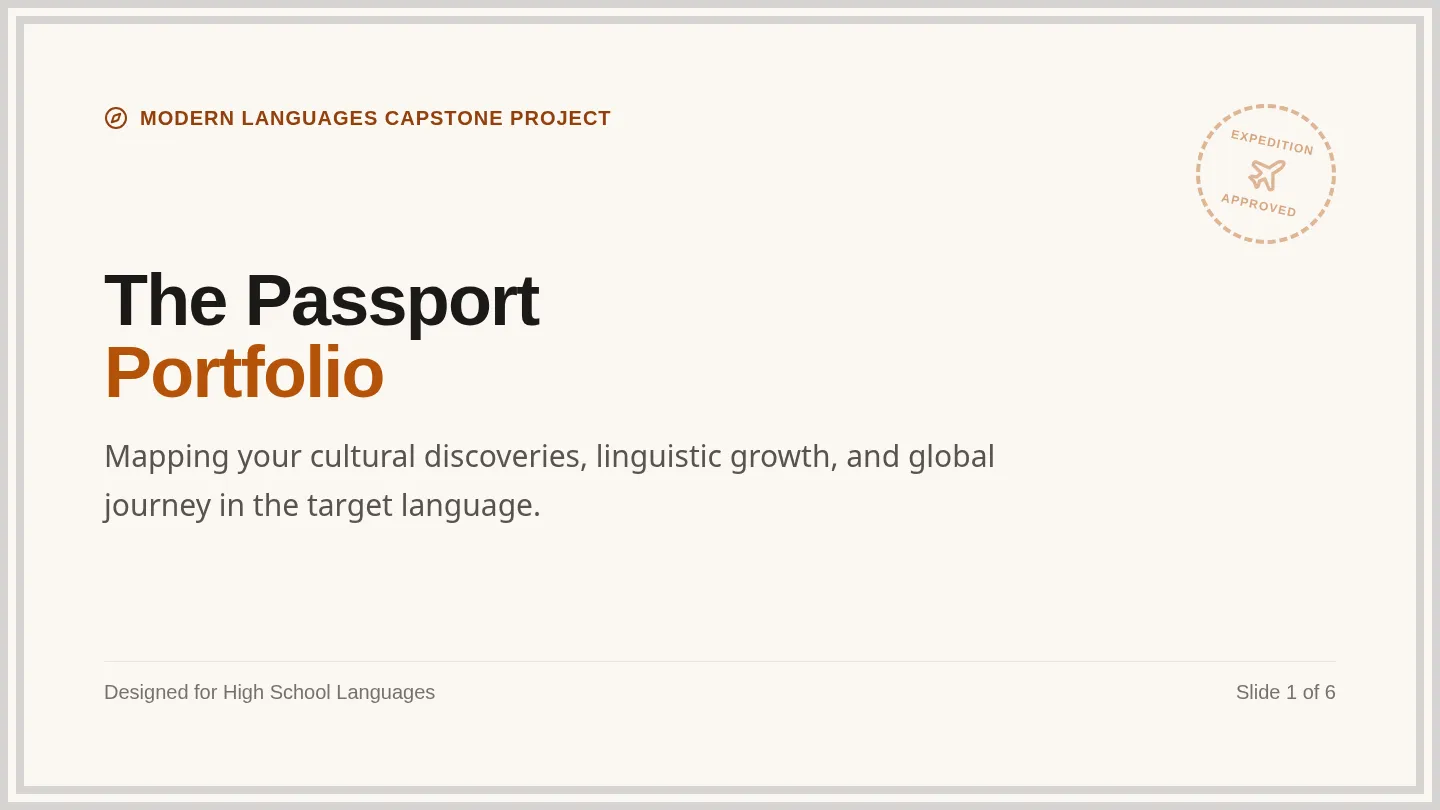
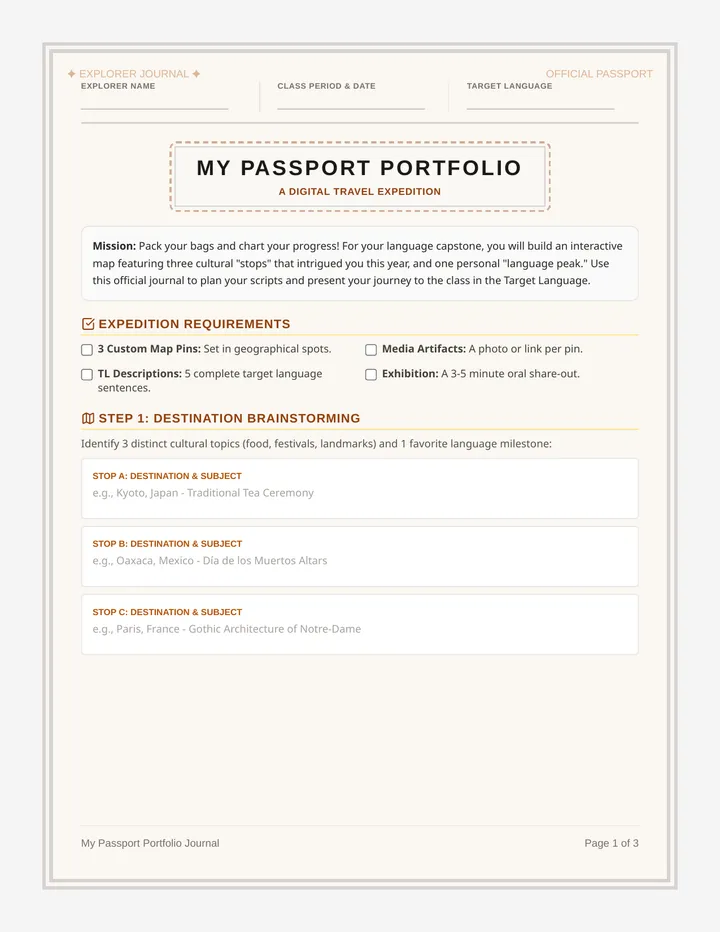
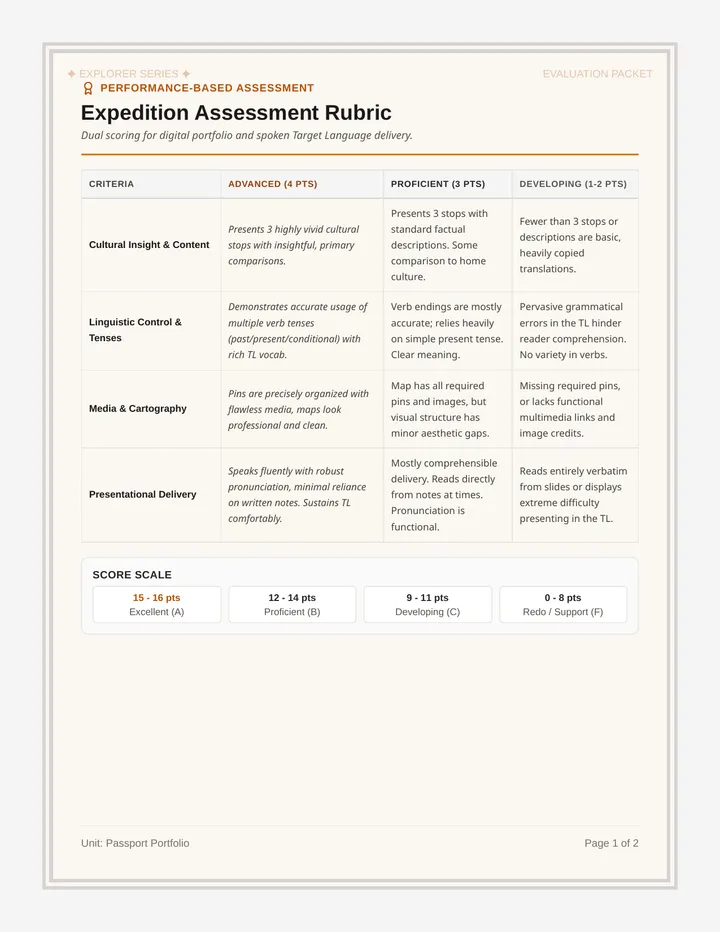
A project-based lesson where high school students design a digital travel map or portfolio of their cultural and linguistic discoveries, presenting their work in the target language.
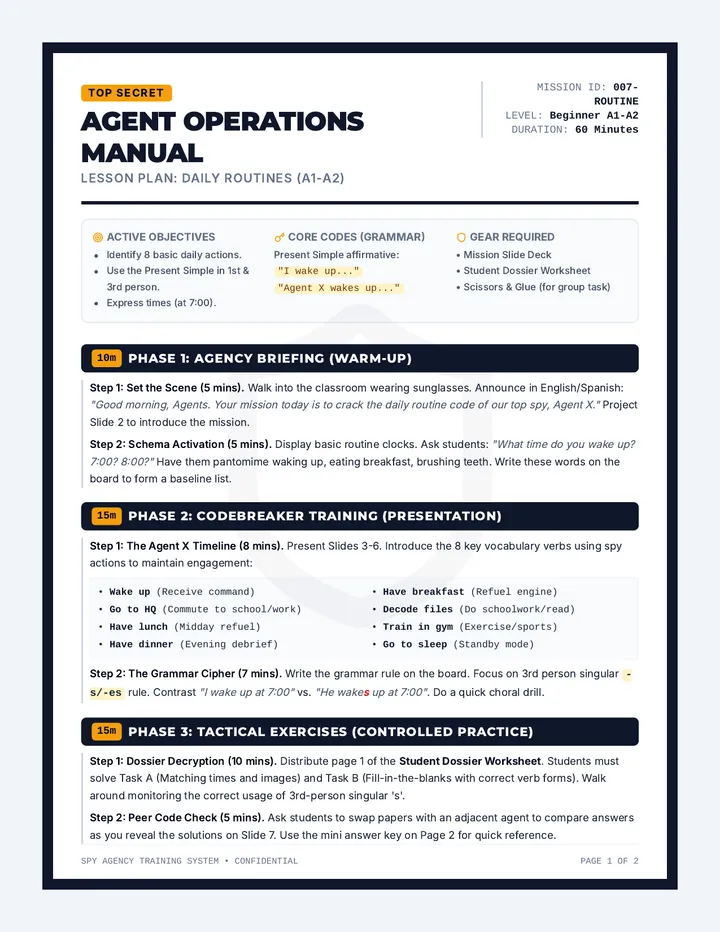
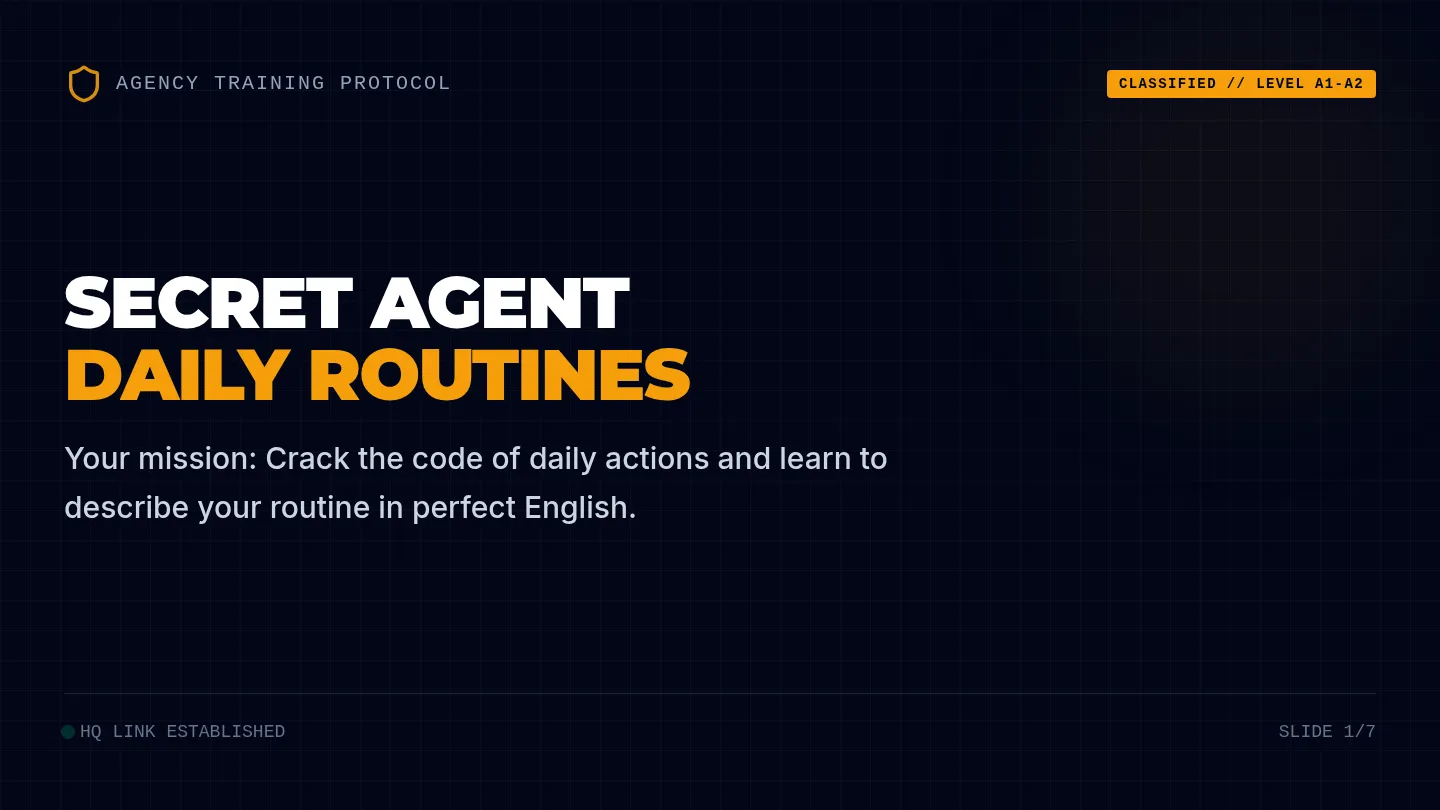
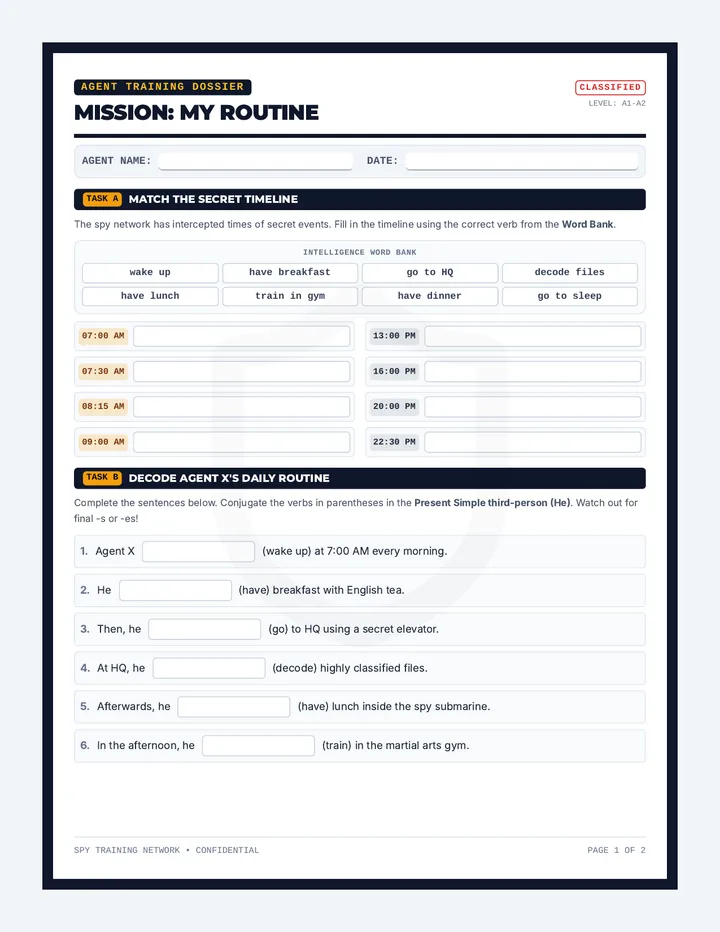
A high-engagement A1-A2 English lesson about daily routines using the exciting theme of secret agents. Includes a comprehensive step-by-step teacher lesson plan, an instructional slide deck, and printable student worksheets with daily routine practice.
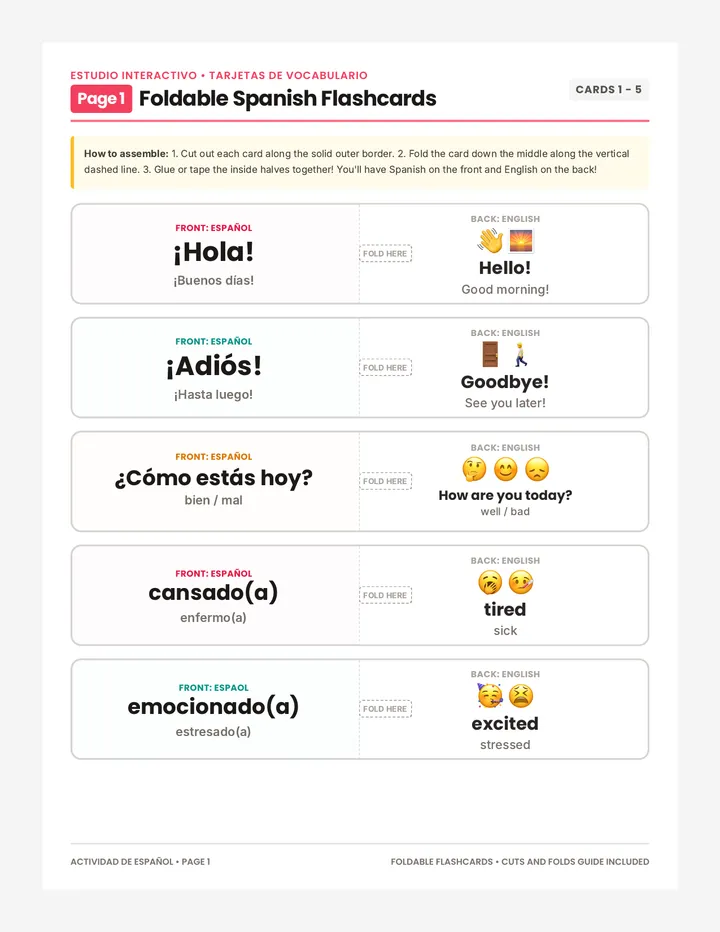
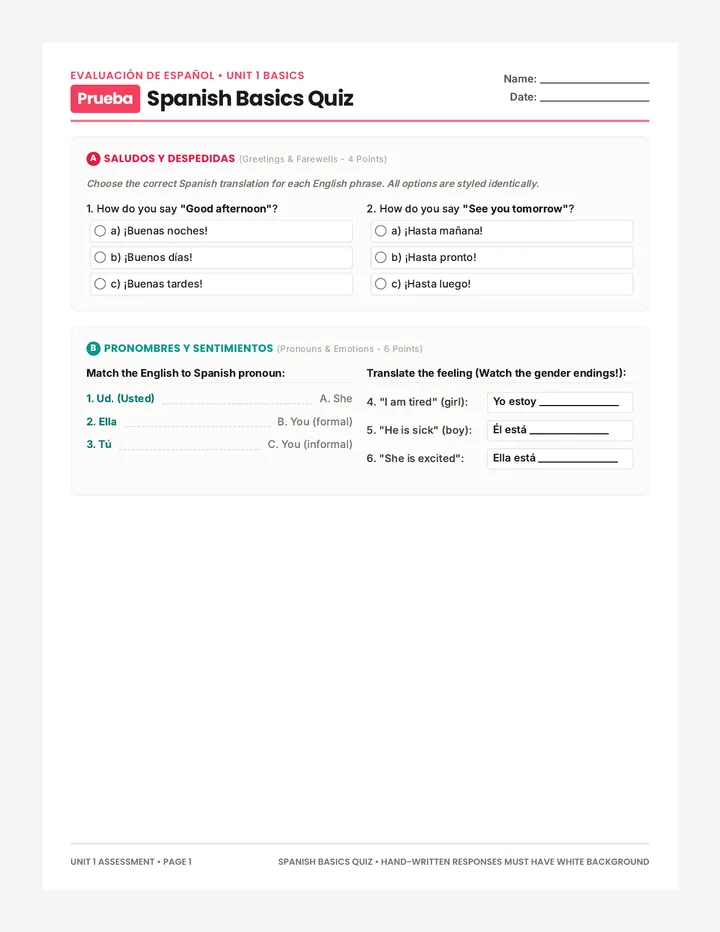
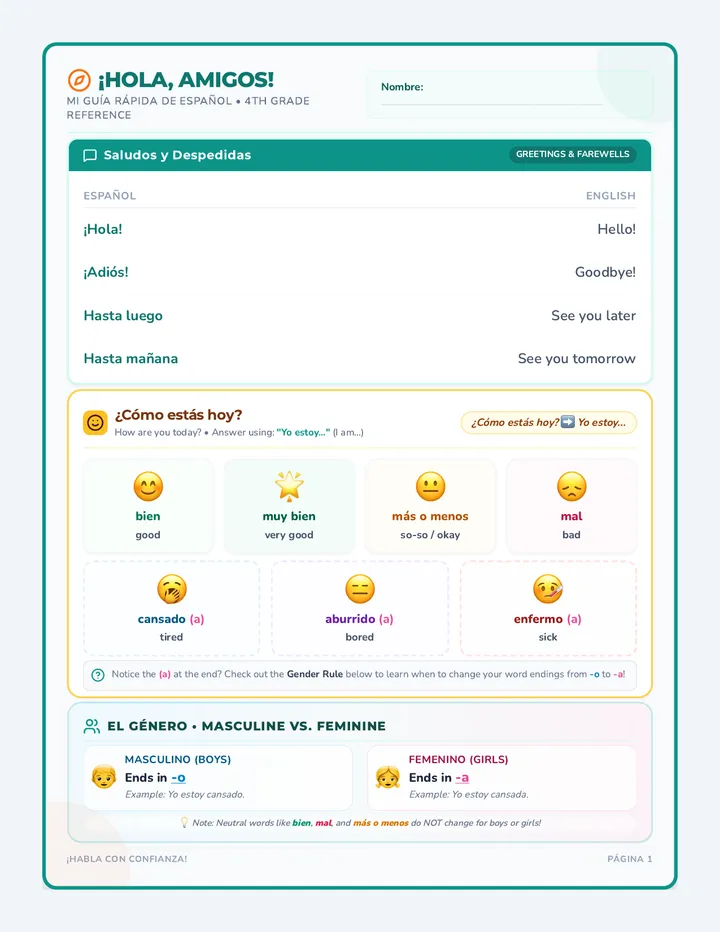
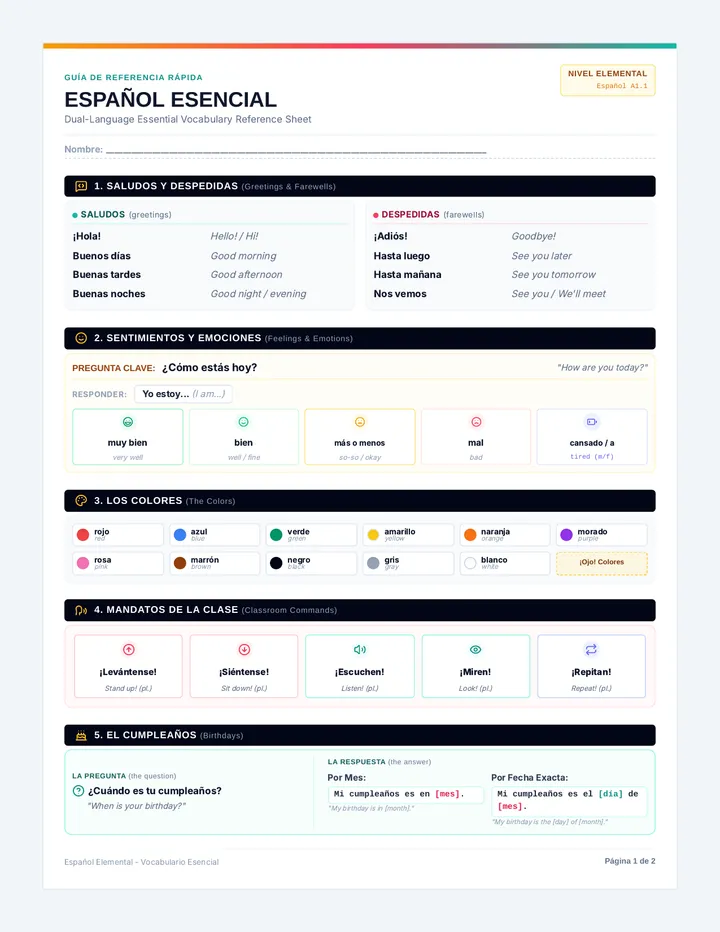
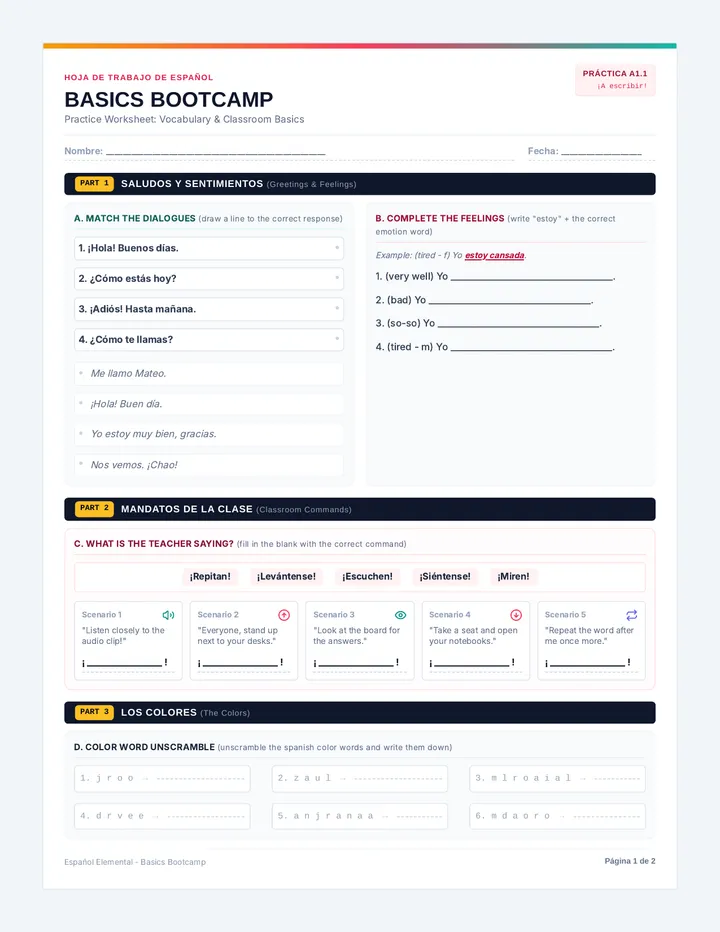
A comprehensive introductory Spanish unit designed for 5th-grade students. It covers greetings, personal information, emotions, grammar essentials (pronouns and articles), numbers, colors, the calendar, weather, and real-world conversations.
An interactive and engaging unit designed to teach elementary students fundamental Spanish conversational skills, vocabulary, and classroom routines.
A foundational introductory lesson for 2nd grade Spanish learners, focusing on essential daily vocabulary including greetings, feelings, numbers 0-30, colors, days, months, and basic personal questions.
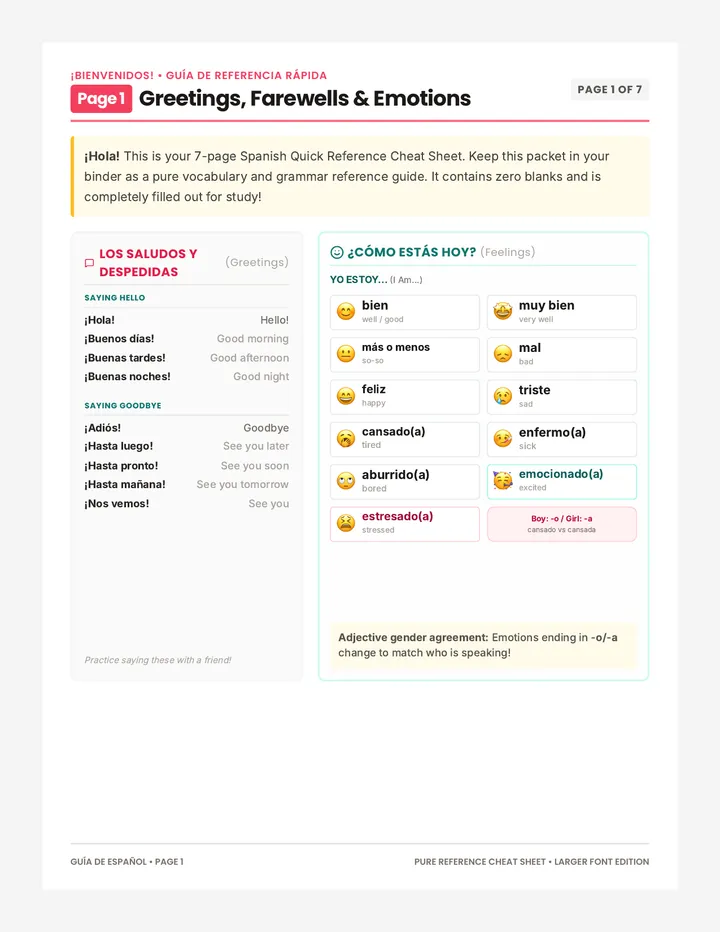
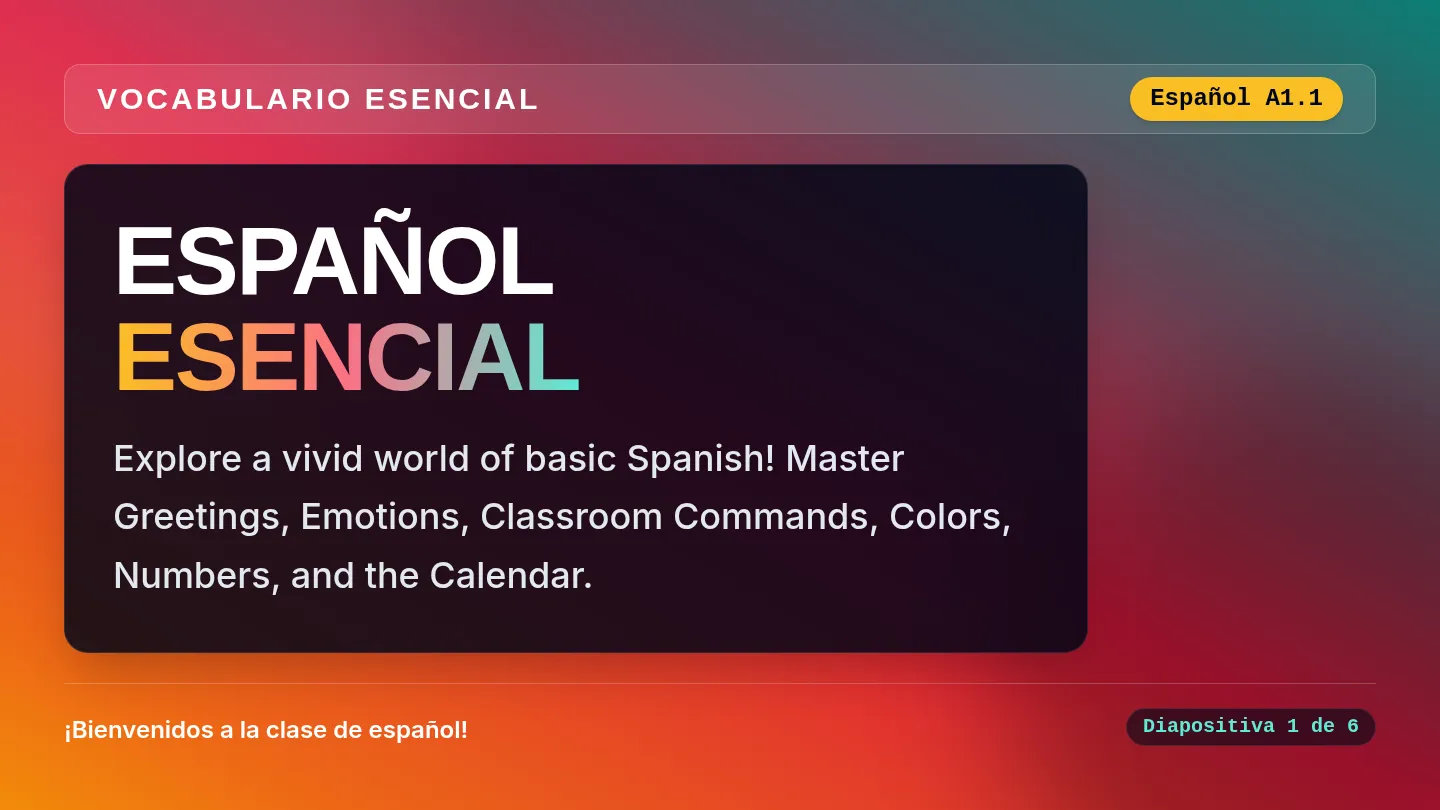
A foundational Spanish lesson covering basic conversational items: greetings, emotions, colors, numbers 0 to 40, and calendar systems (days of the week, months, and birthdays).
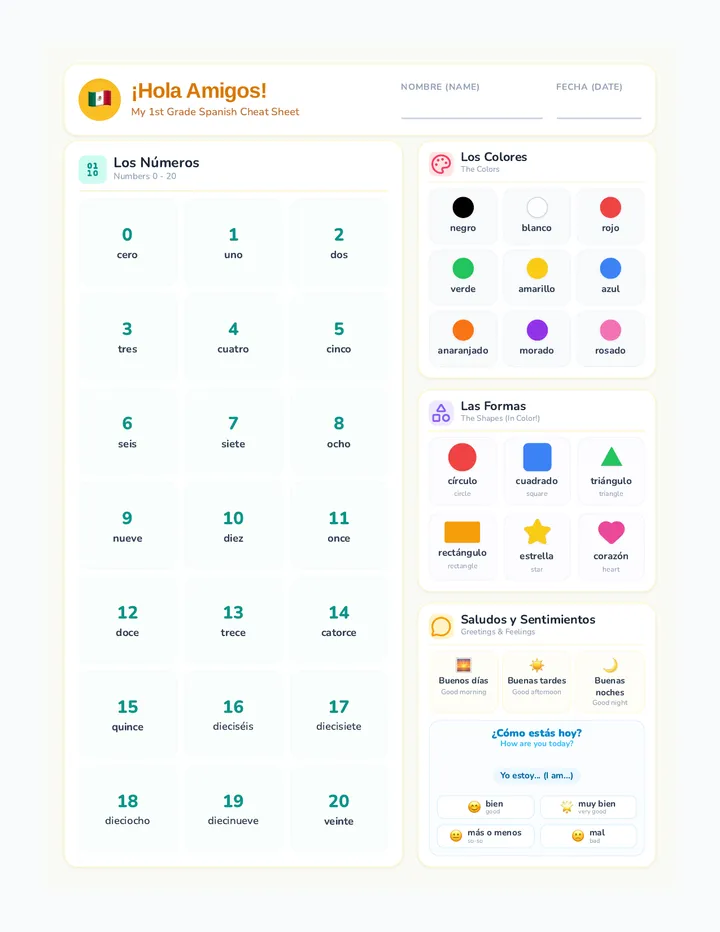
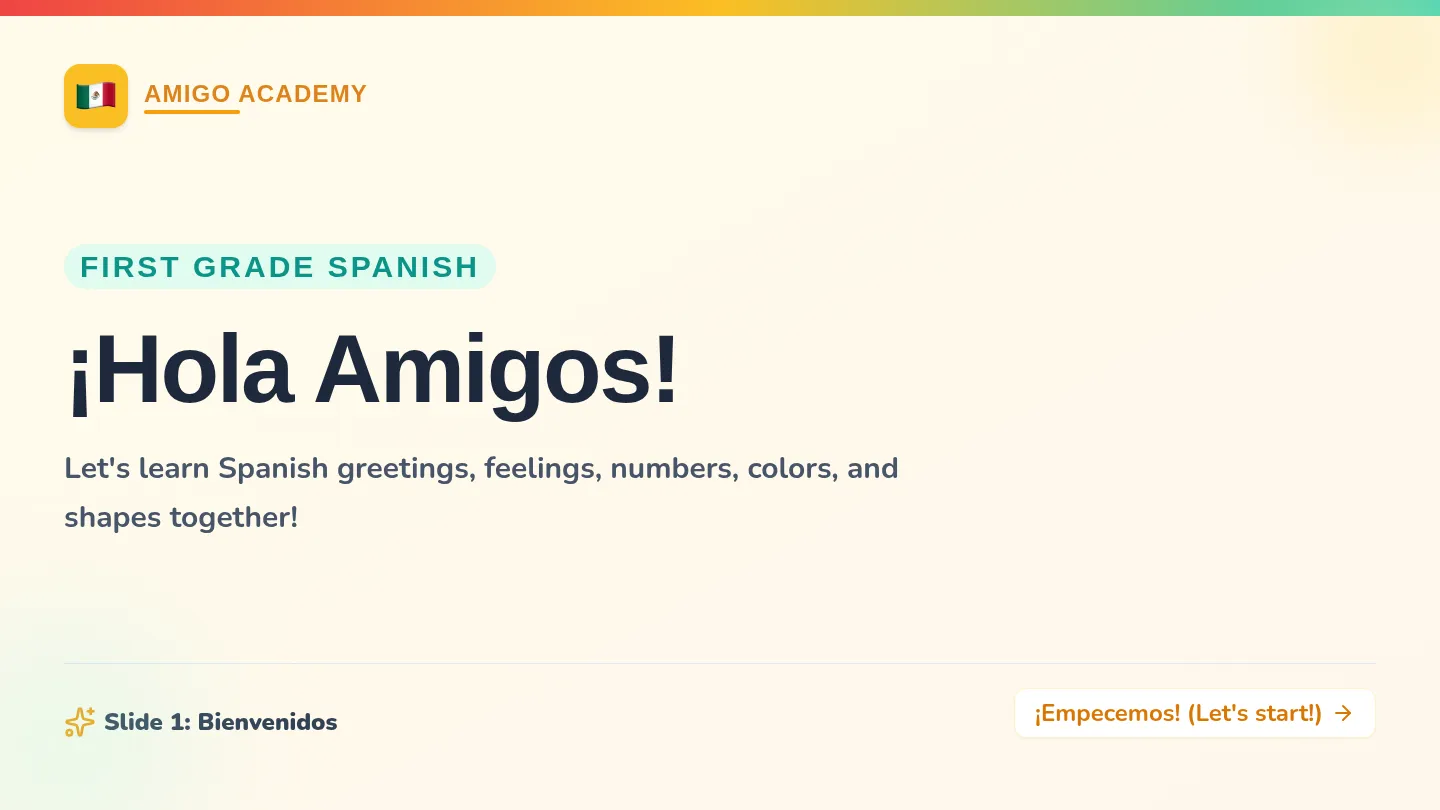
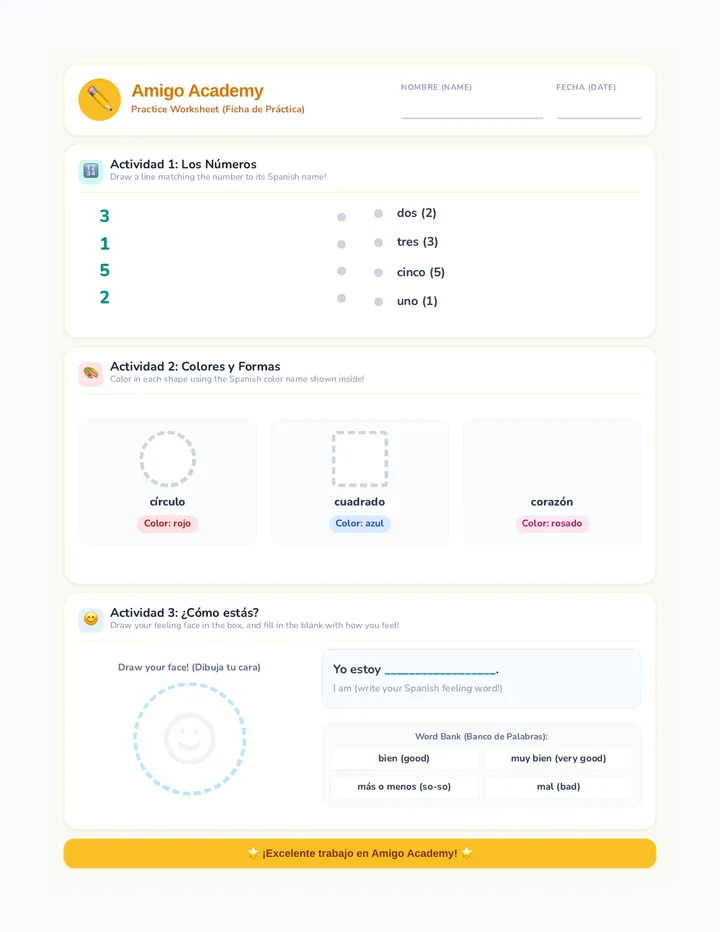
An introductory Spanish lesson for first graders covering basic greetings, feelings, numbers, shapes, and colors through high-energy visual materials.
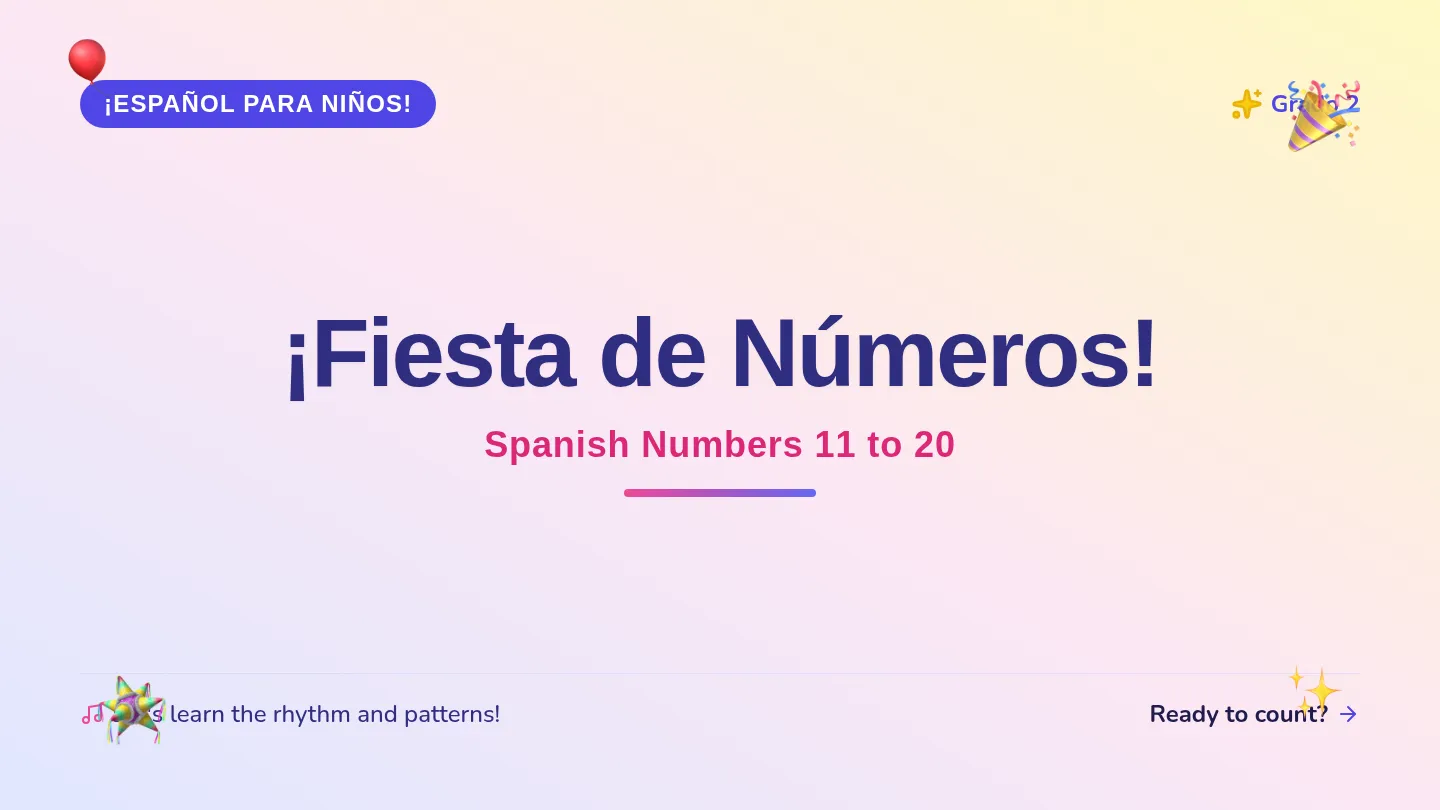
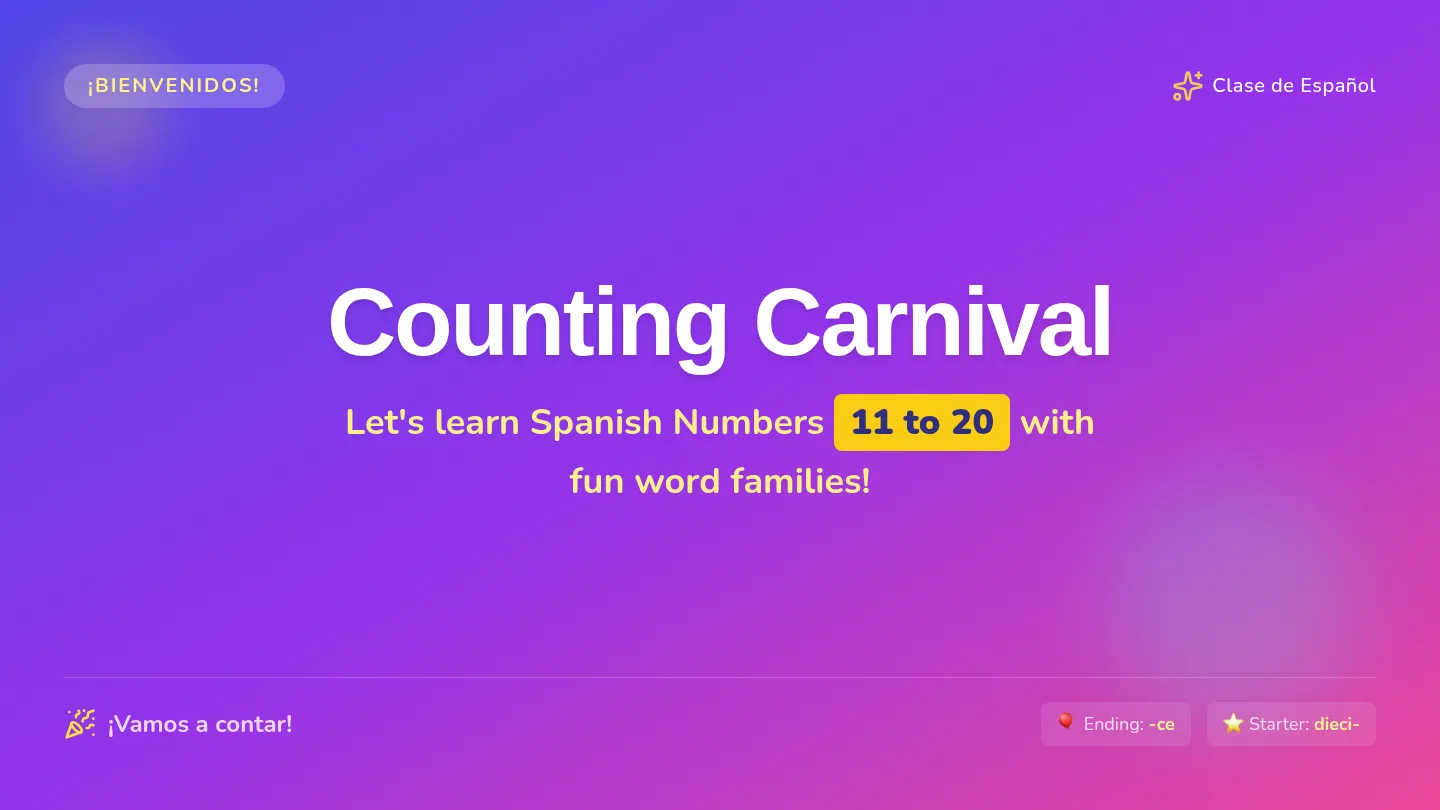
An interactive and visually engaging Spanish lesson for 2nd grade students focused on learning numbers 11 to 20. The lesson emphasizes patterns in spelling, highlighting the '-ce' suffix for numbers 11-15 and the 'dieci-' prefix for numbers 16-19 through colorful visual slides.
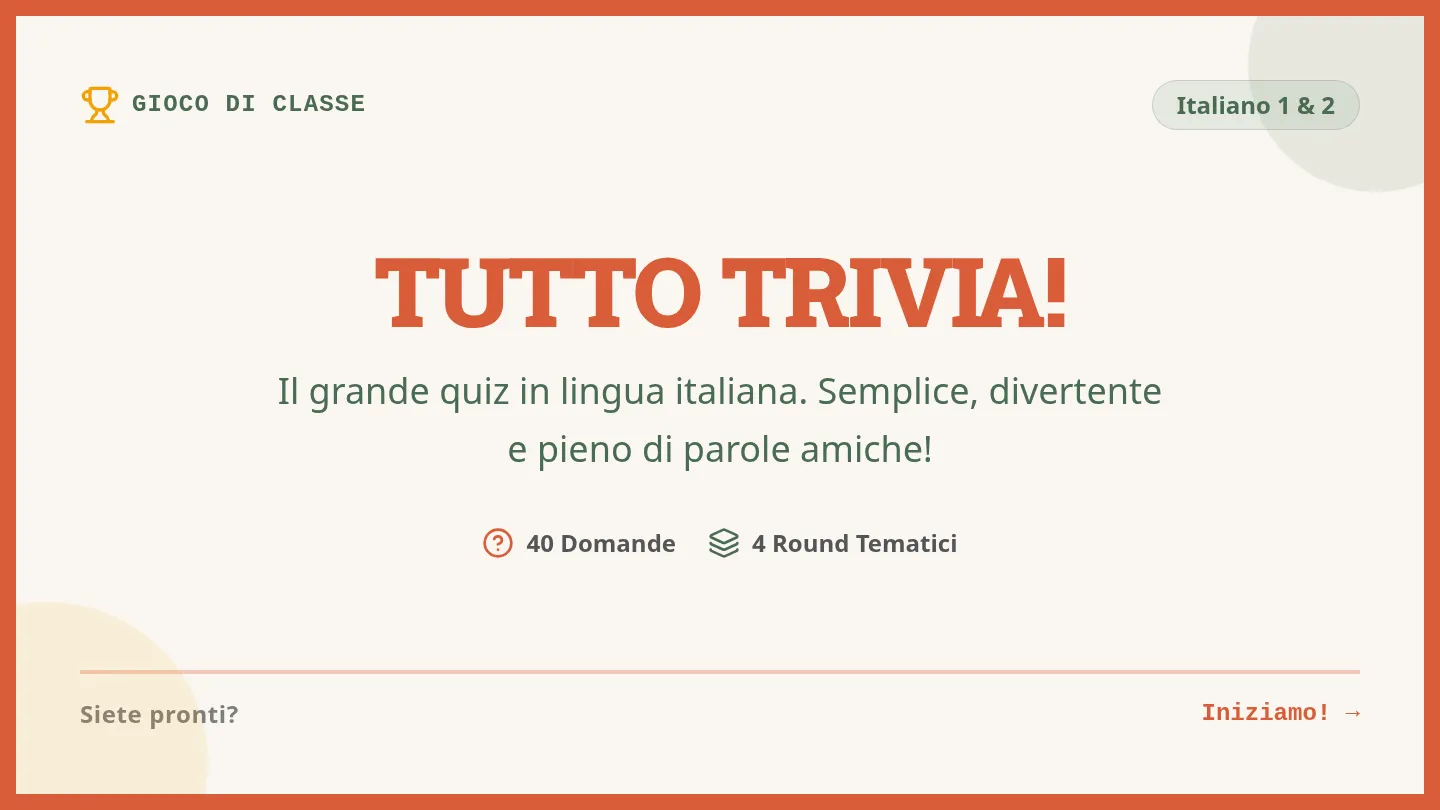
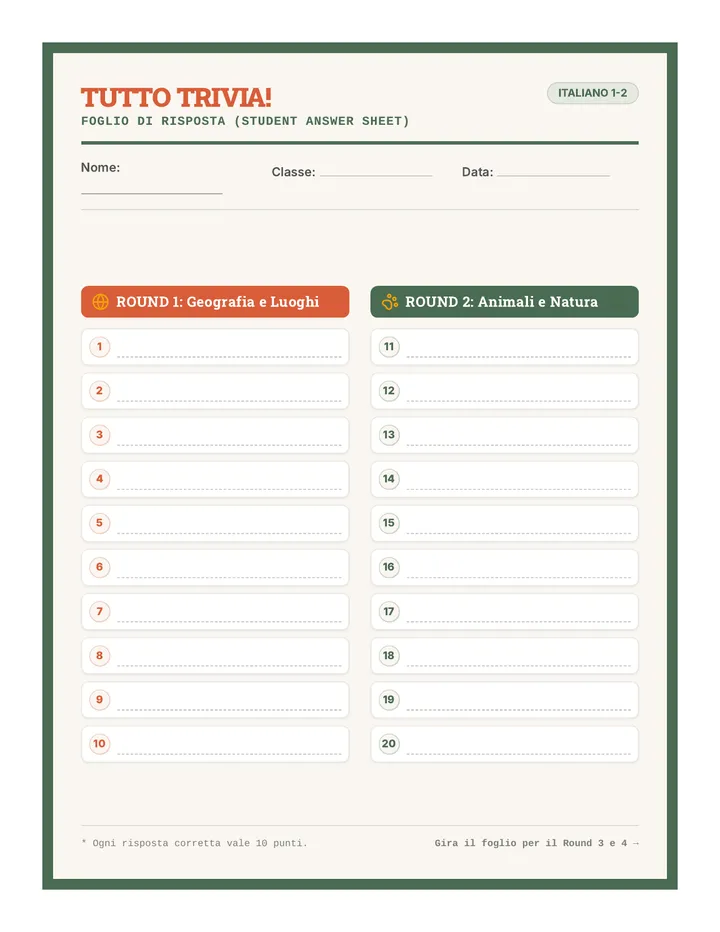
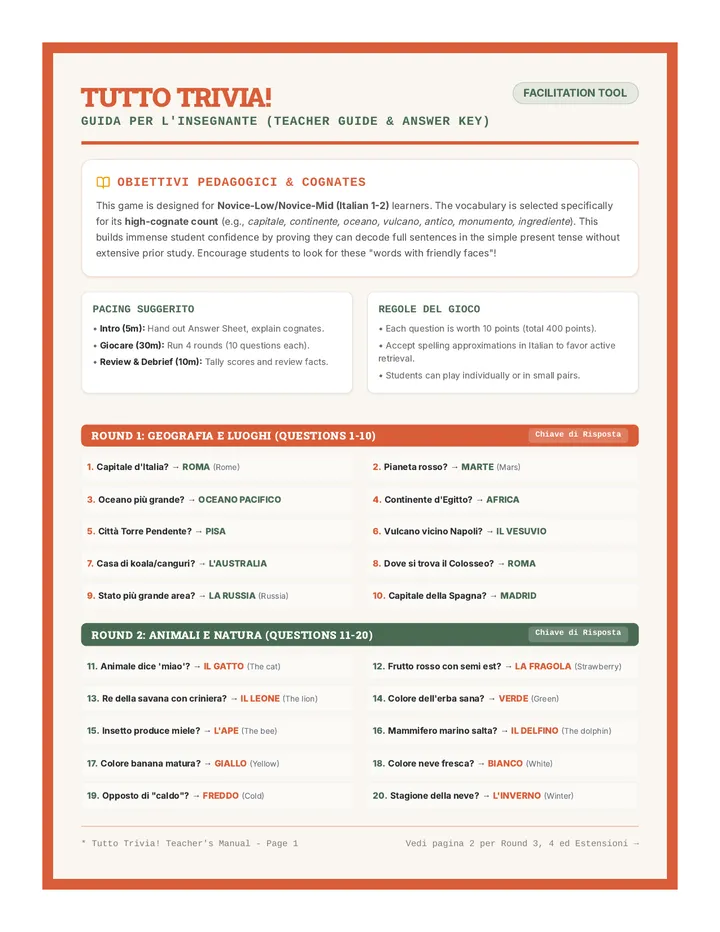
A comprehensive classroom trivia game featuring 40 highly cognate-rich questions in simple present tense. Students listen, read, and write down their answers, building confidence in Italian vocabulary, grammar, and sentence structure.
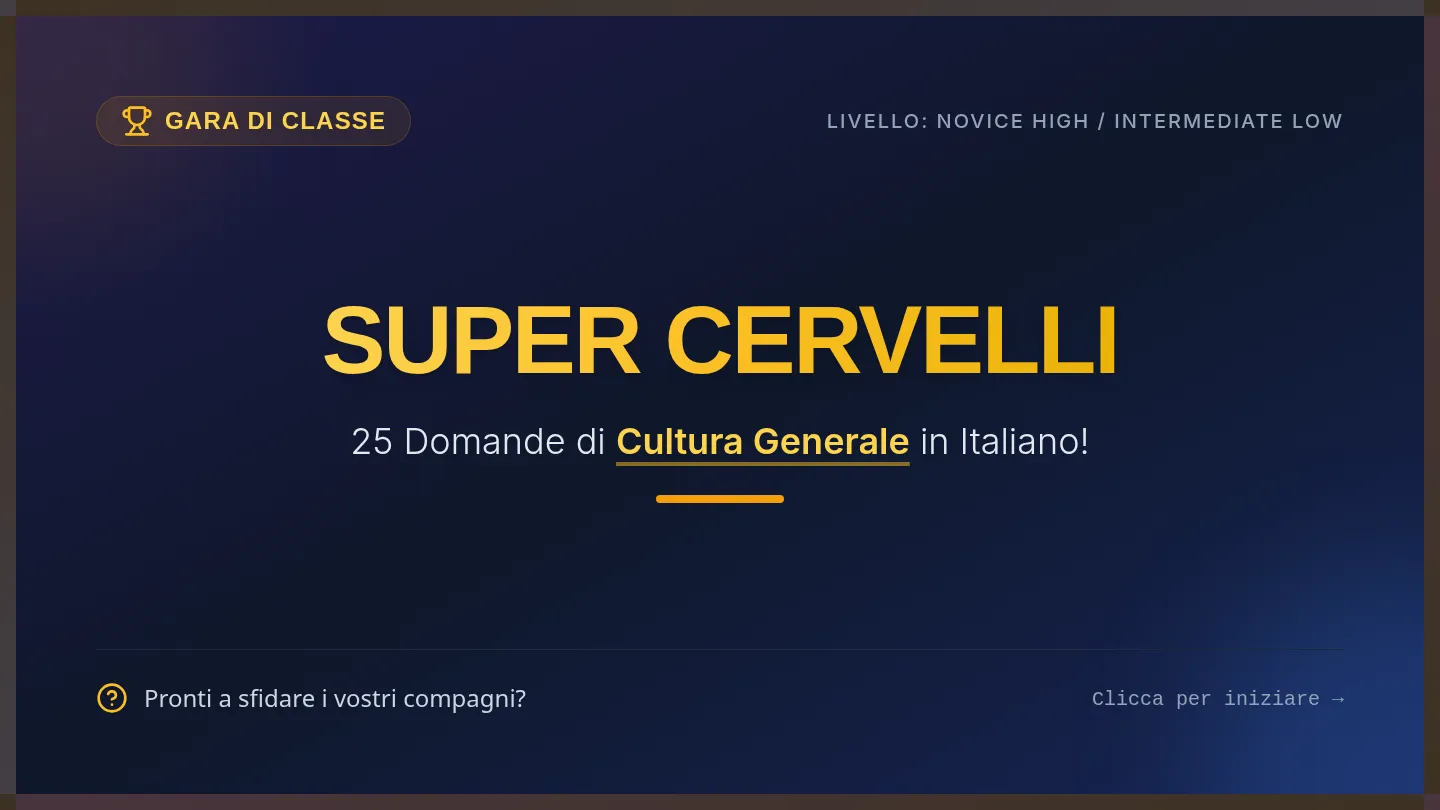
Una lezione divertente e interattiva focalizzata sul vocabolario di cultura generale in lingua italiana per studenti di livello Novice High / Intermediate Low.
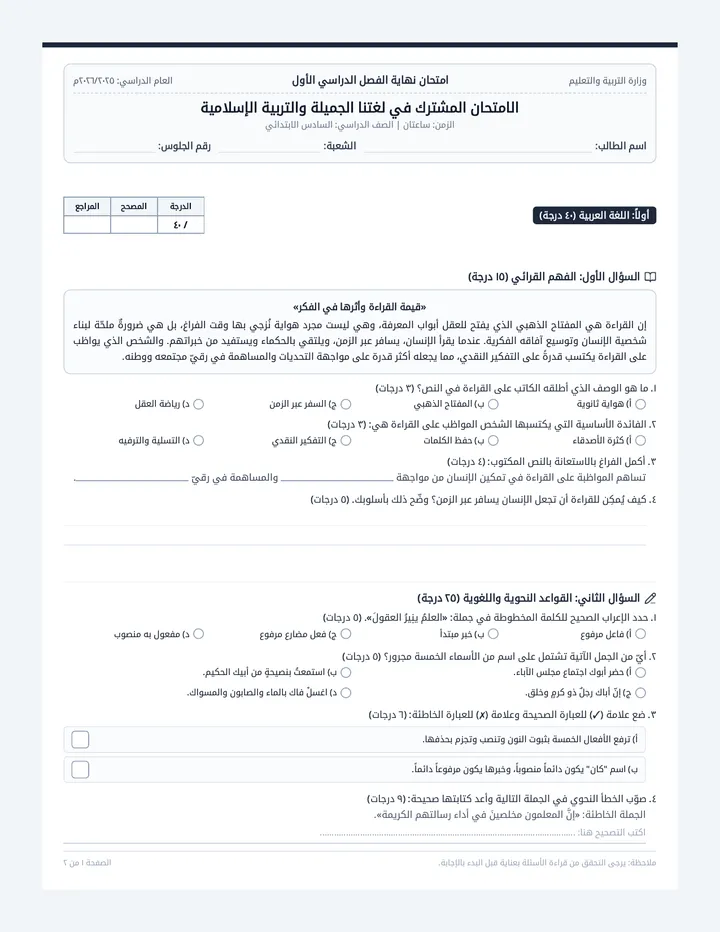
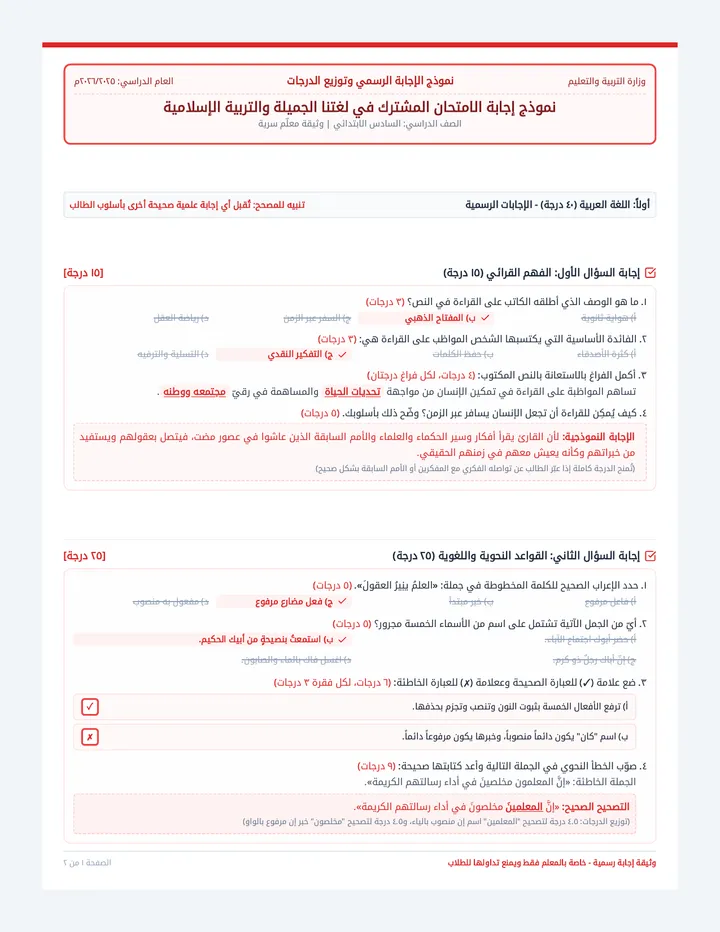
امتحان شامل وممنهج لمادتي اللغة العربية والتربية الإسلامية، يحتوي على نصوص قرائية، قواعد نحوية، أسئلة مقالية، وفراغات، مصمم بطريقة مرتبة ومحاكية للاختبارات الرسمية.
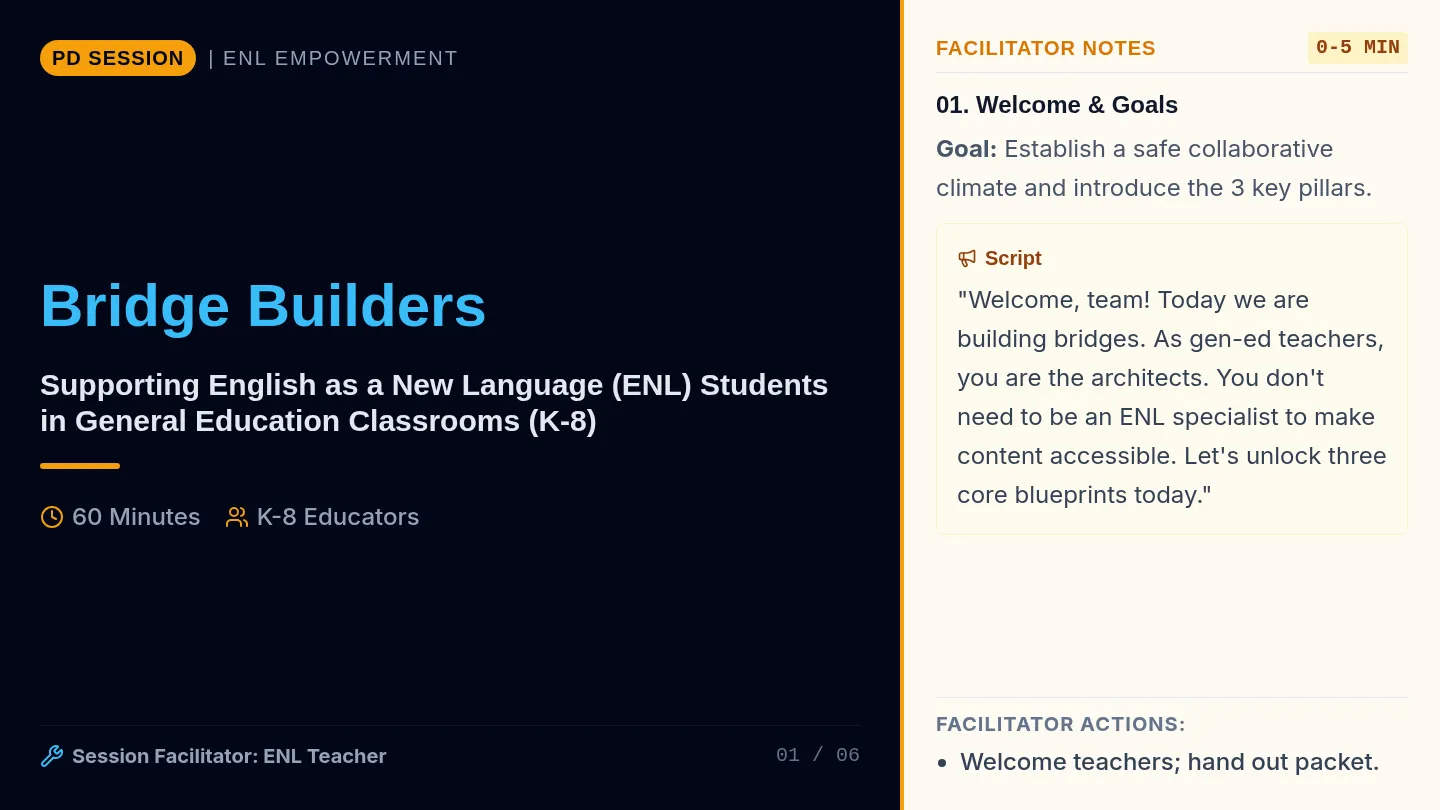
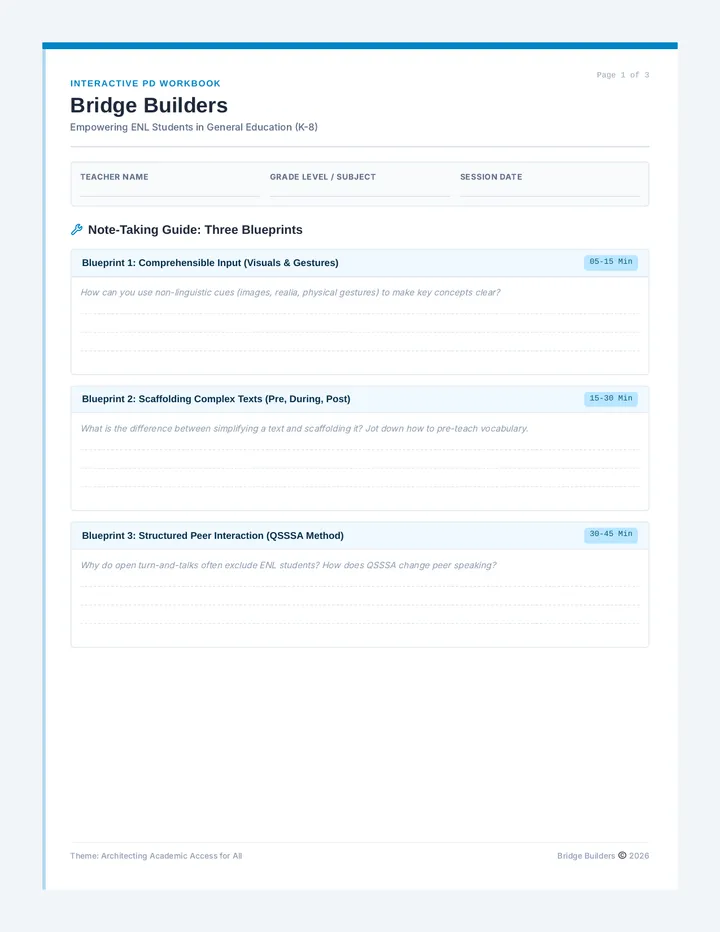
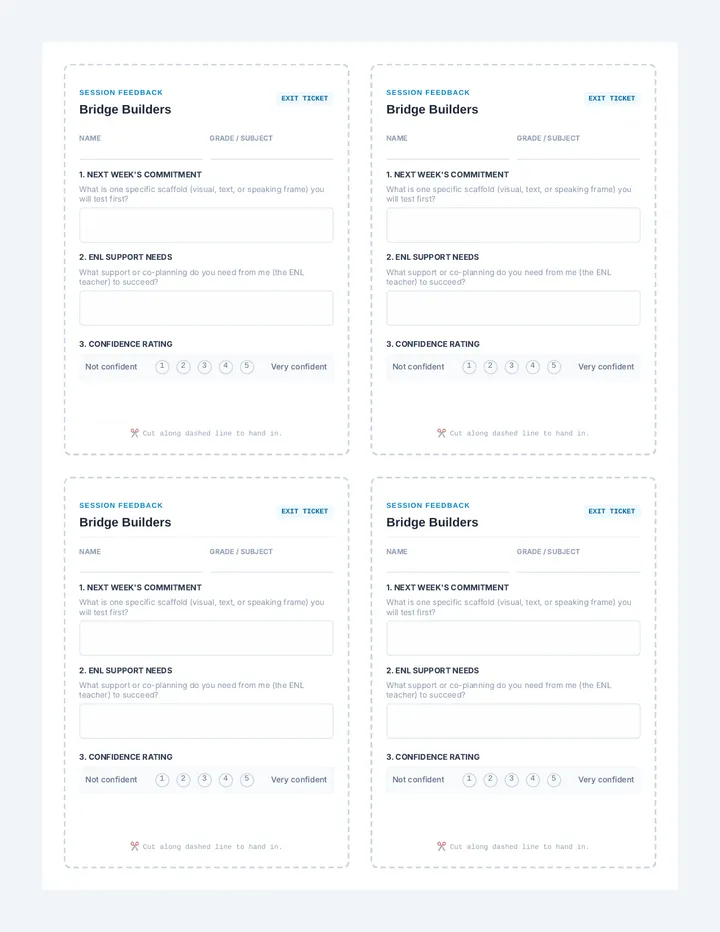
A 60-minute interactive professional development session for general education teachers (K-8) to master comprehensible input, text scaffolding, and structured peer speaking.
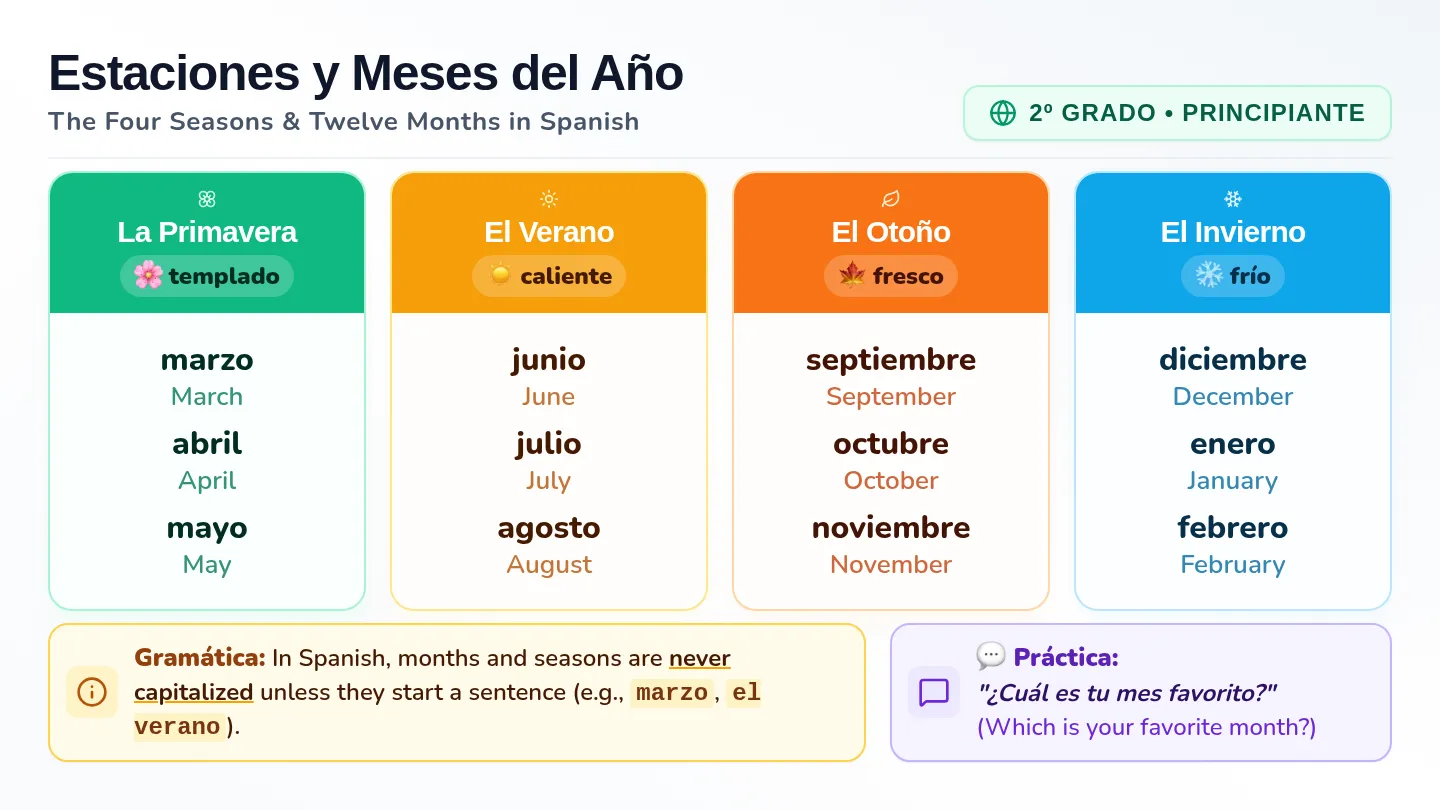
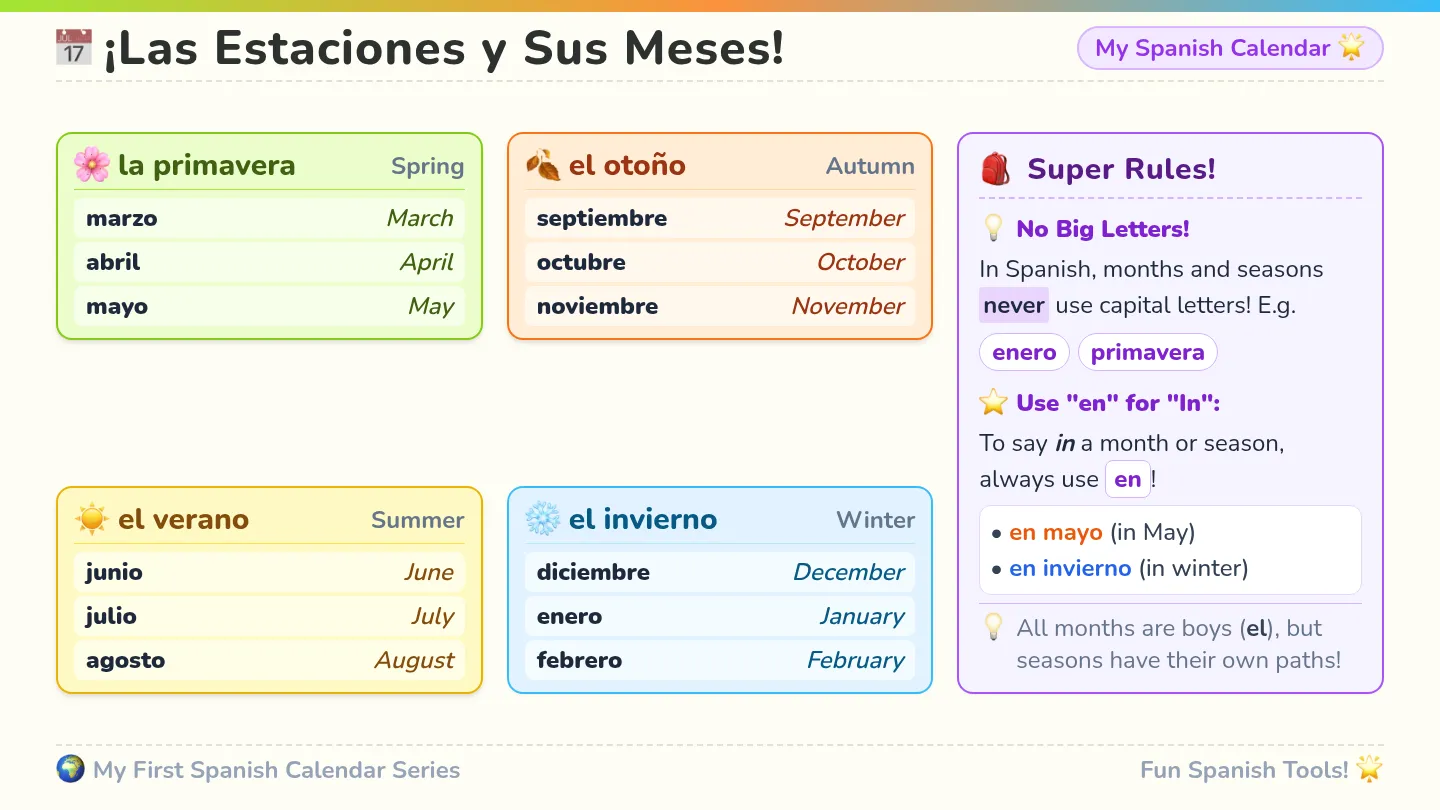
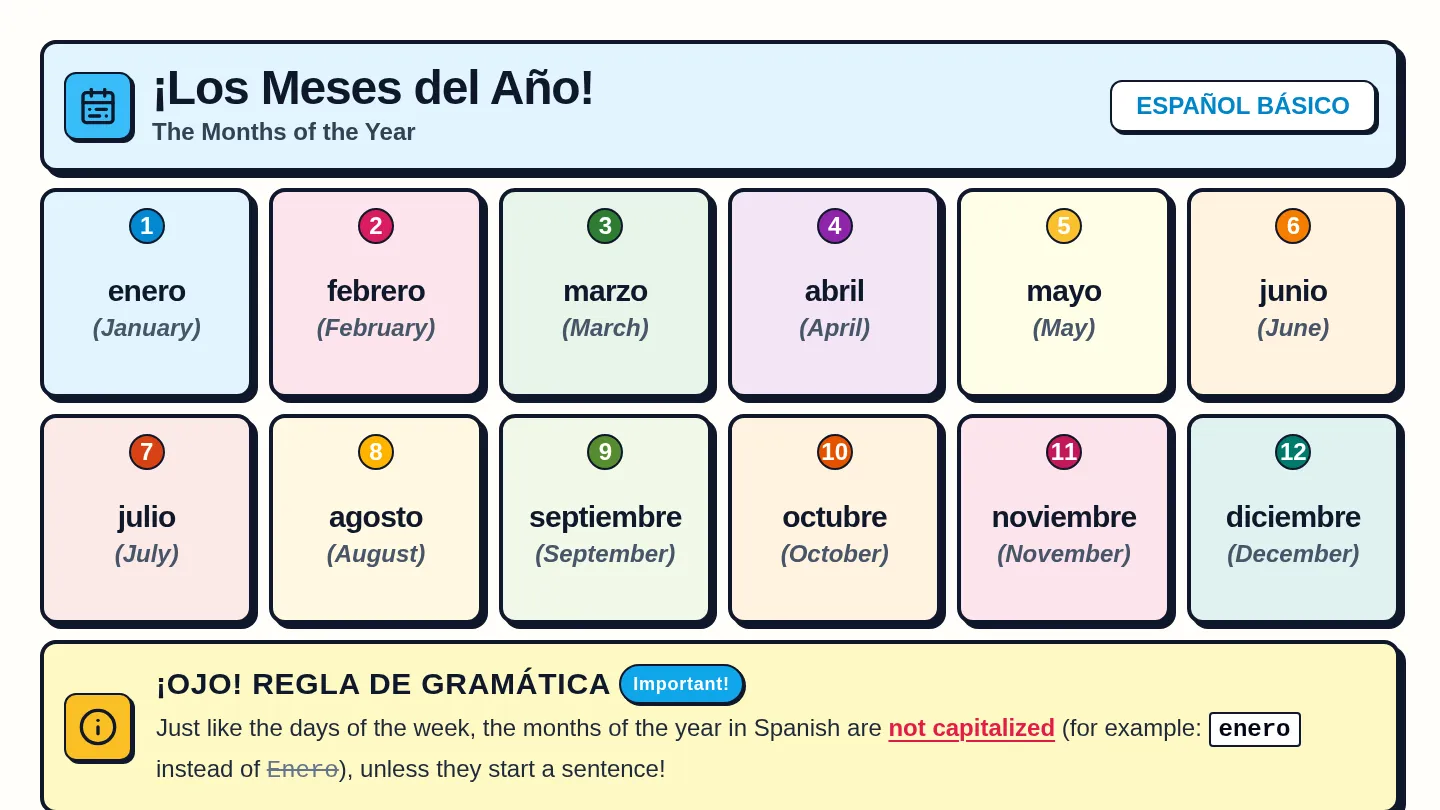
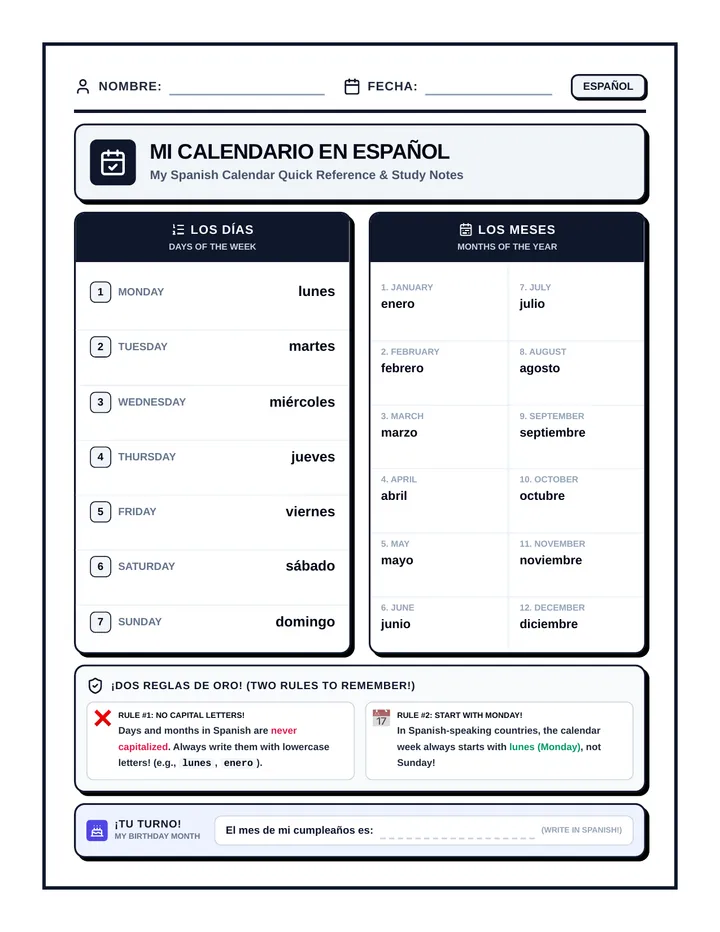
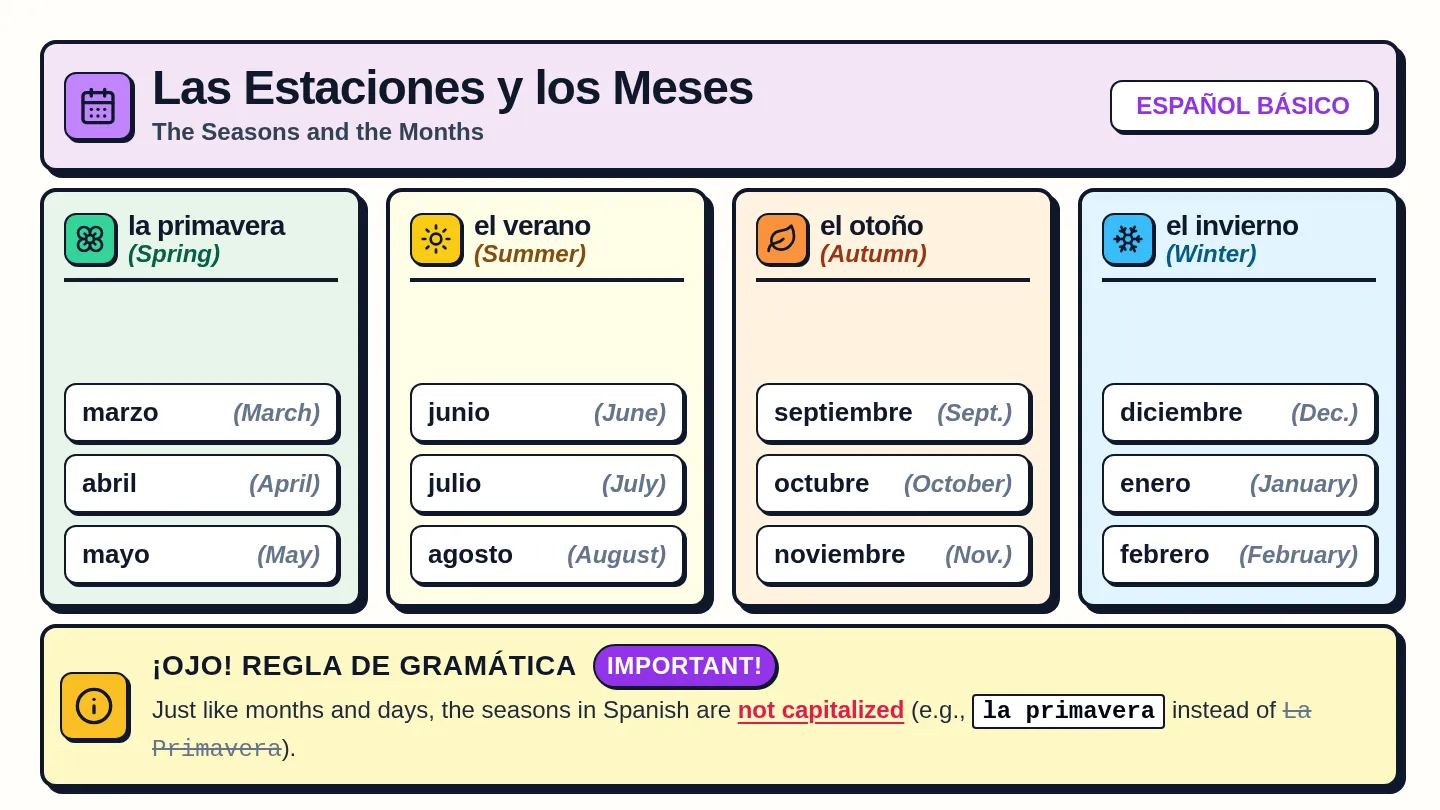
A beginner-friendly lesson introducing the four seasons and twelve months of the year in Spanish, emphasizing capitalization rules and basic vocabulary.
An academic lesson on Spanish months, seasons, and key capitalization rules, tailored specifically for older beginners and adult learners.
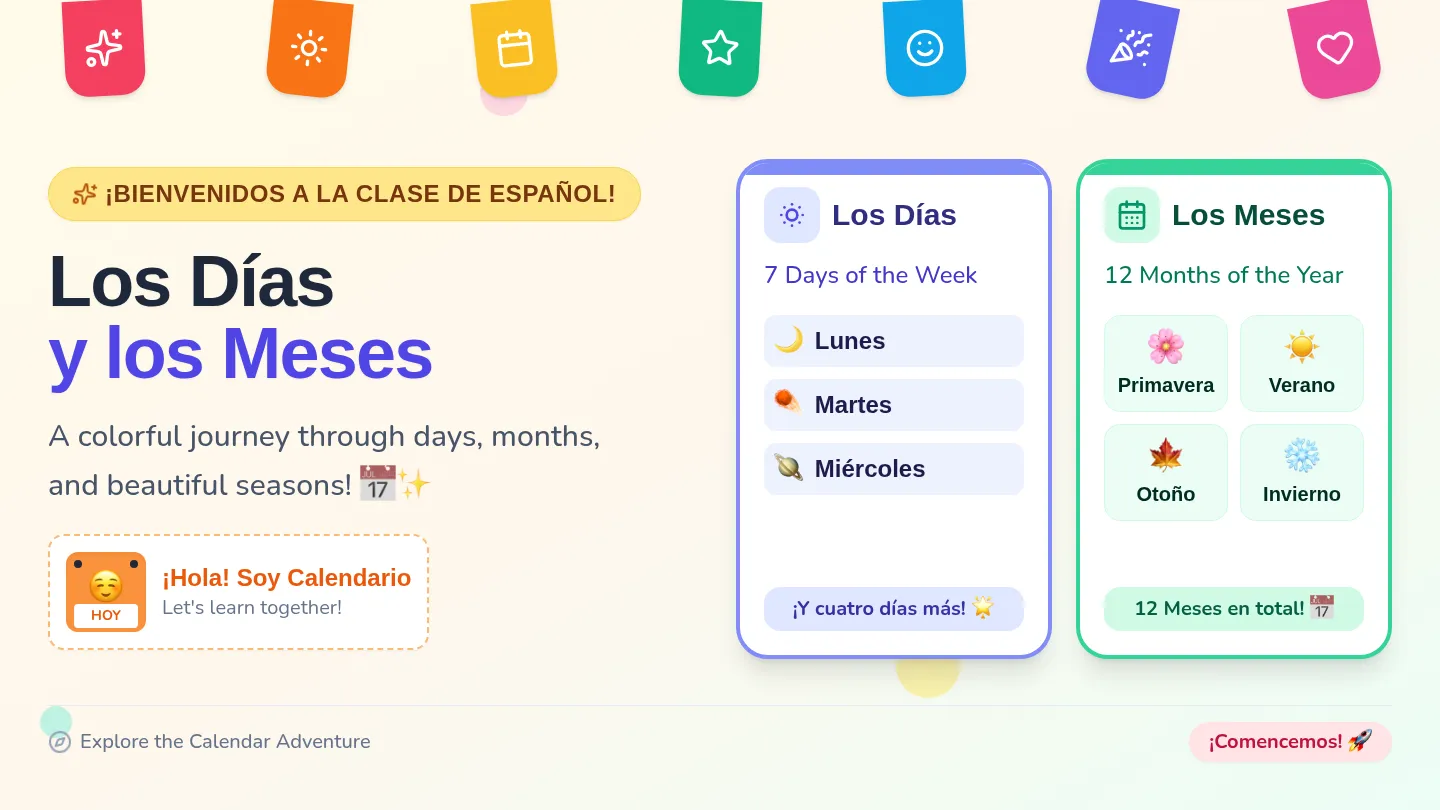
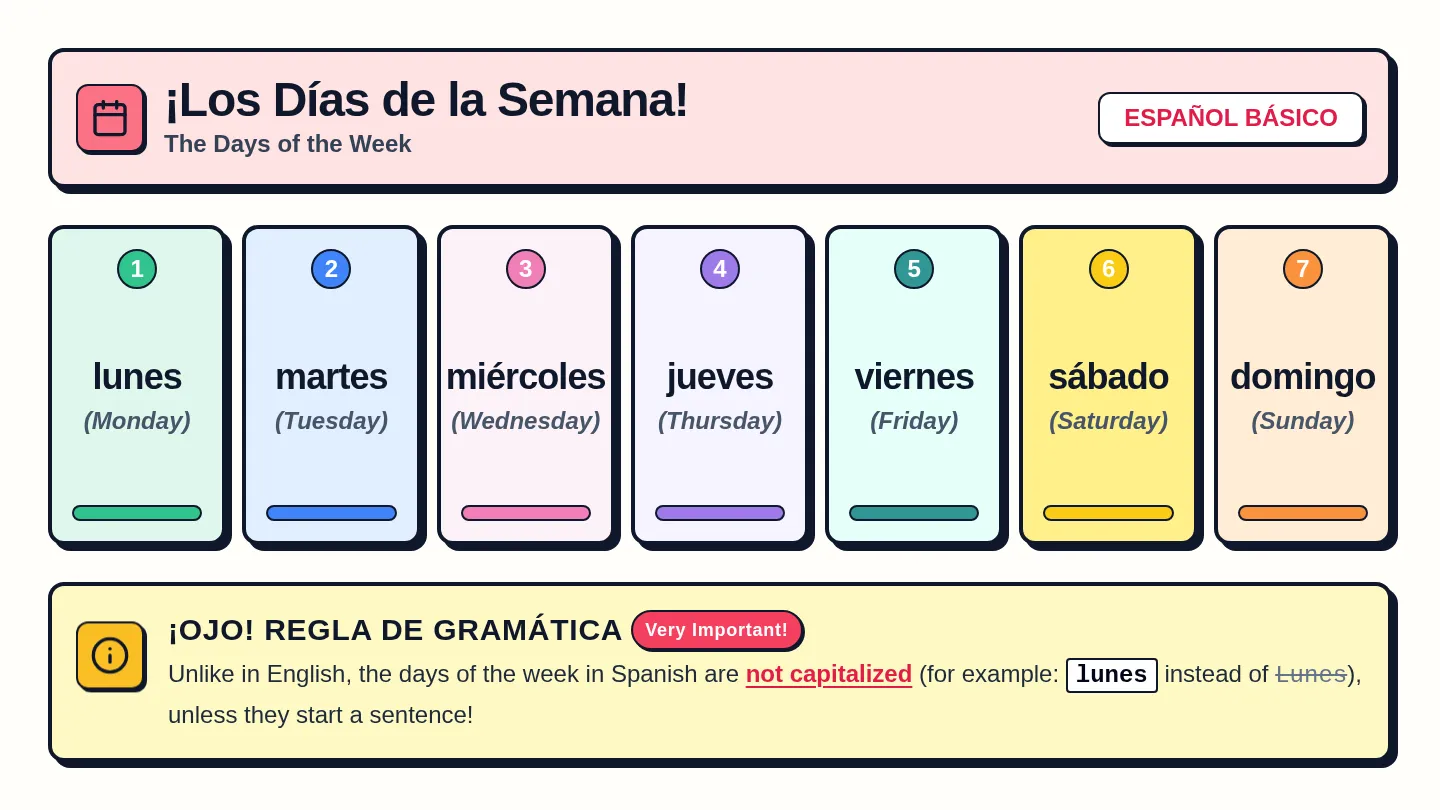
An engaging and vibrant introductory lesson to help young learners master the days of the week and months of the year in Spanish through high-impact, visual, and thematic play.
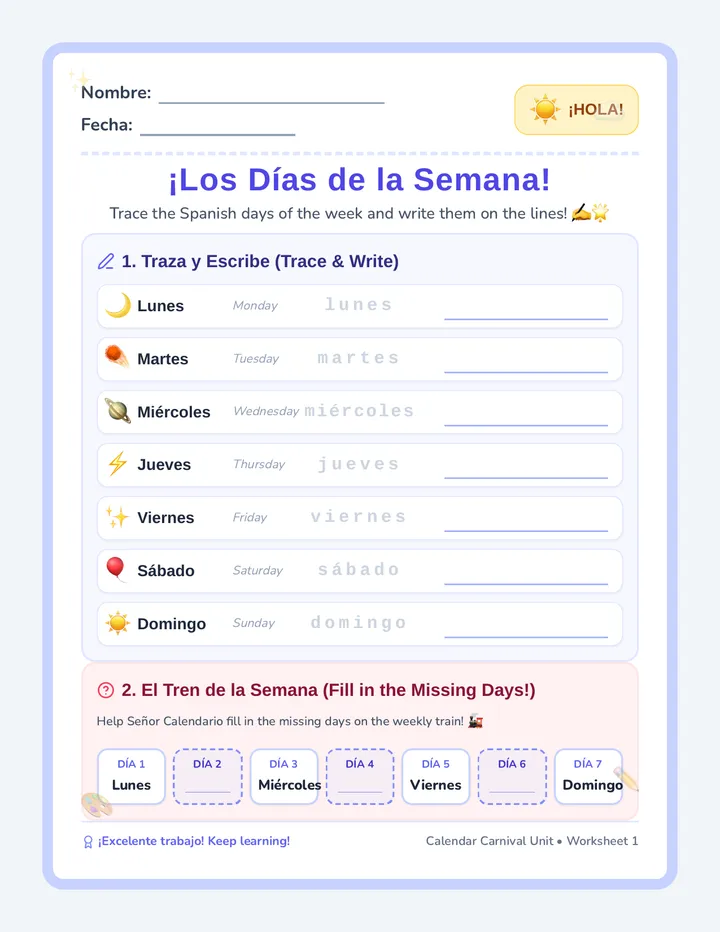
An introductory lesson on Spanish calendar vocabulary, teaching students the days of the week, correct pronunciation, and important capitalization rules.
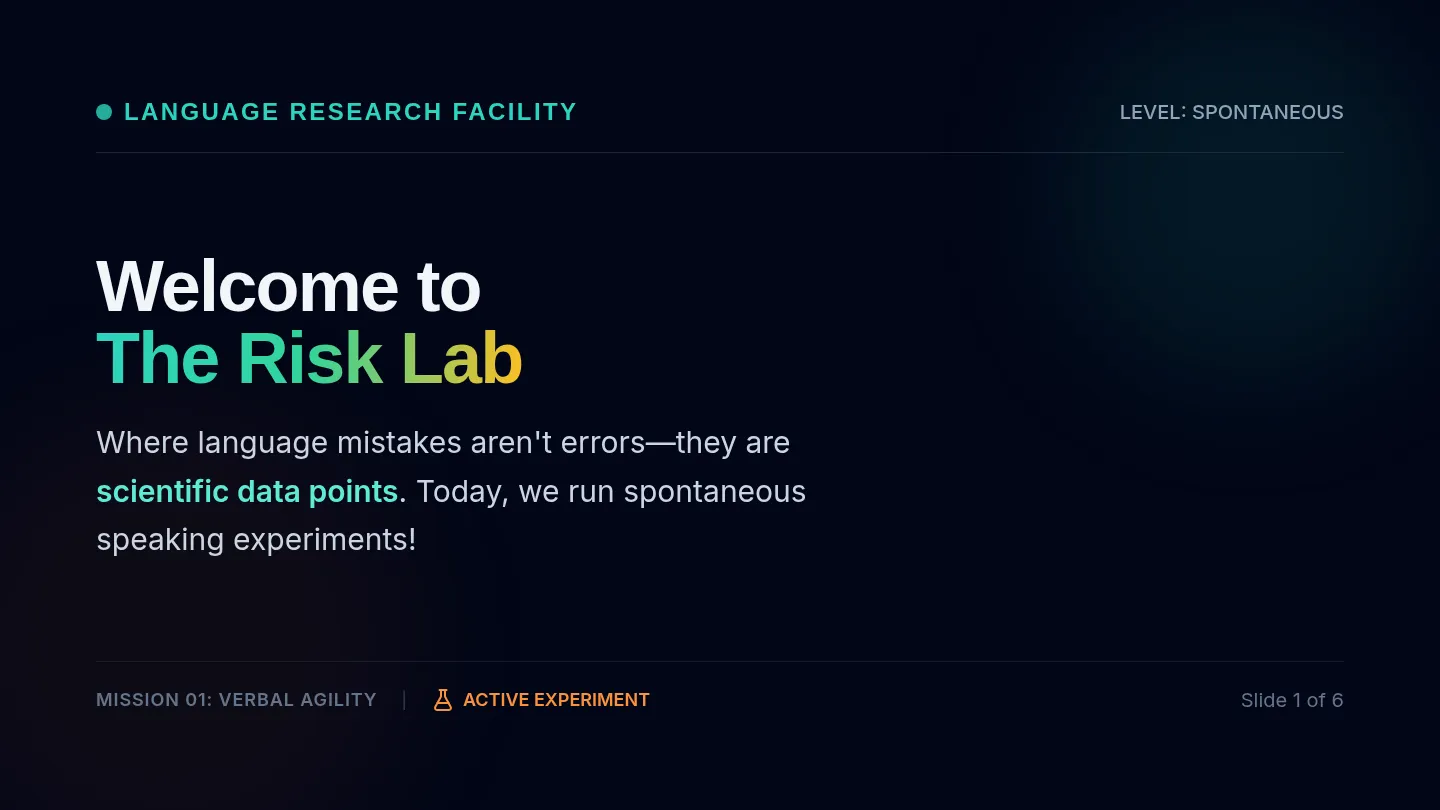
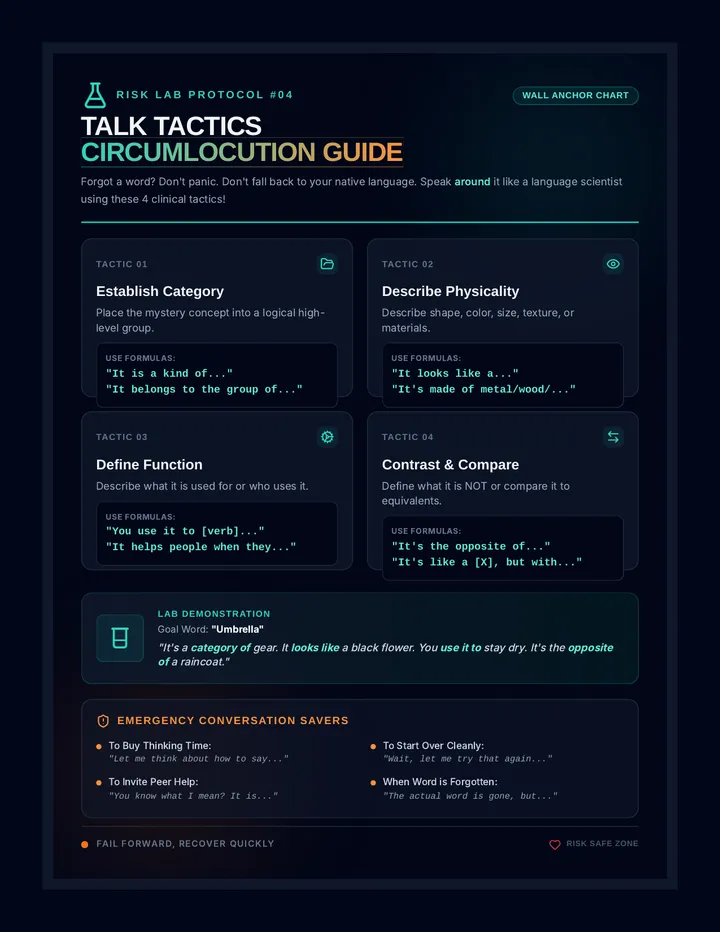
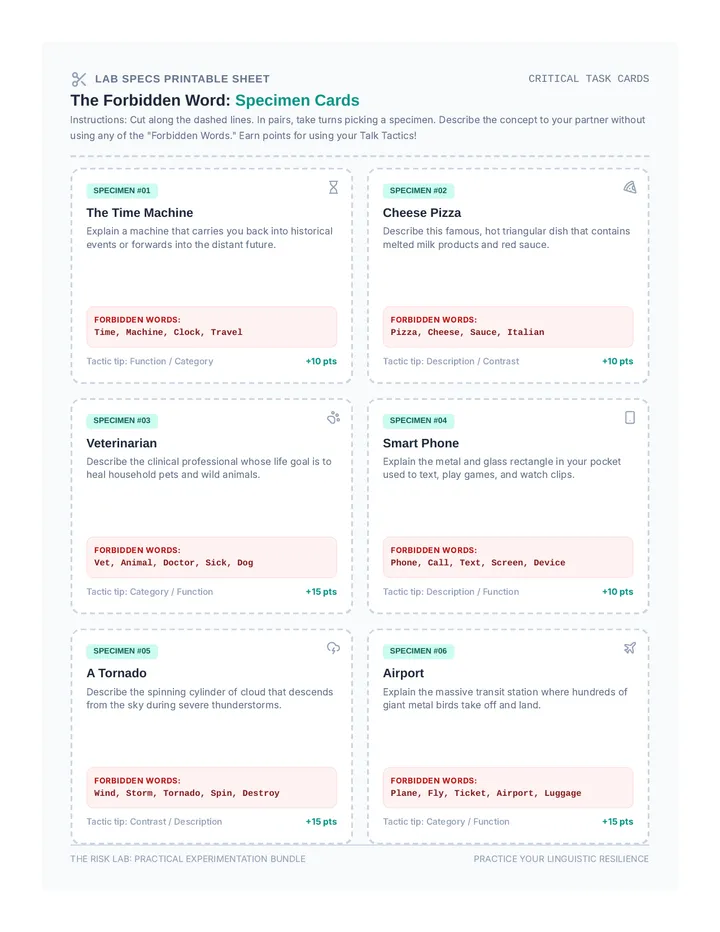
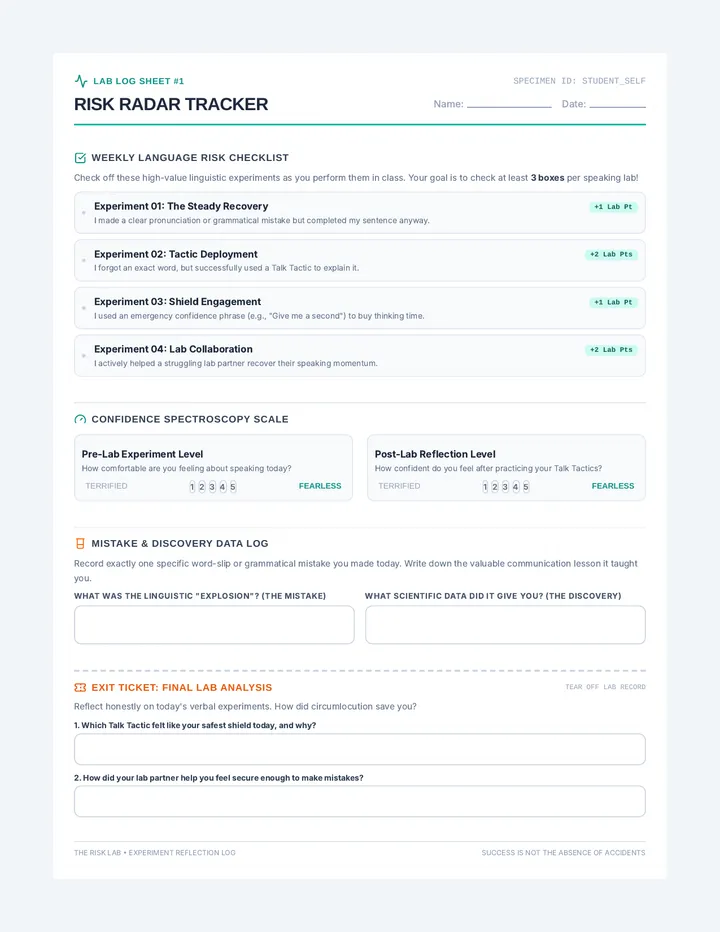
A confidence-boosting speaking lesson that reframes linguistic mistakes as scientific data points, training students in circumlocution and spontaneous conversation through the metaphor of a chemistry laboratory.
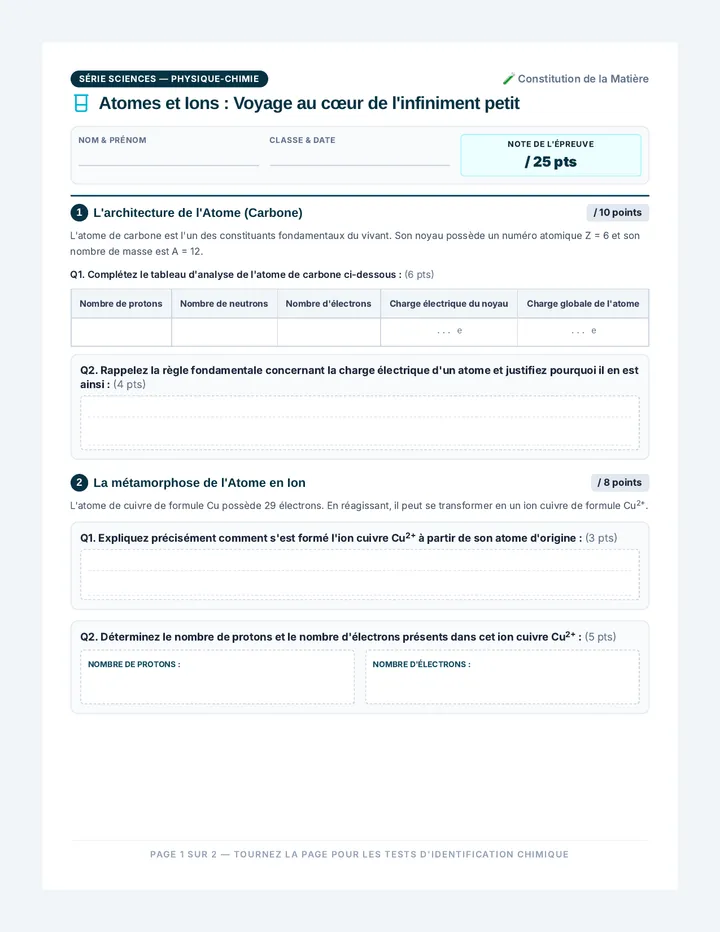
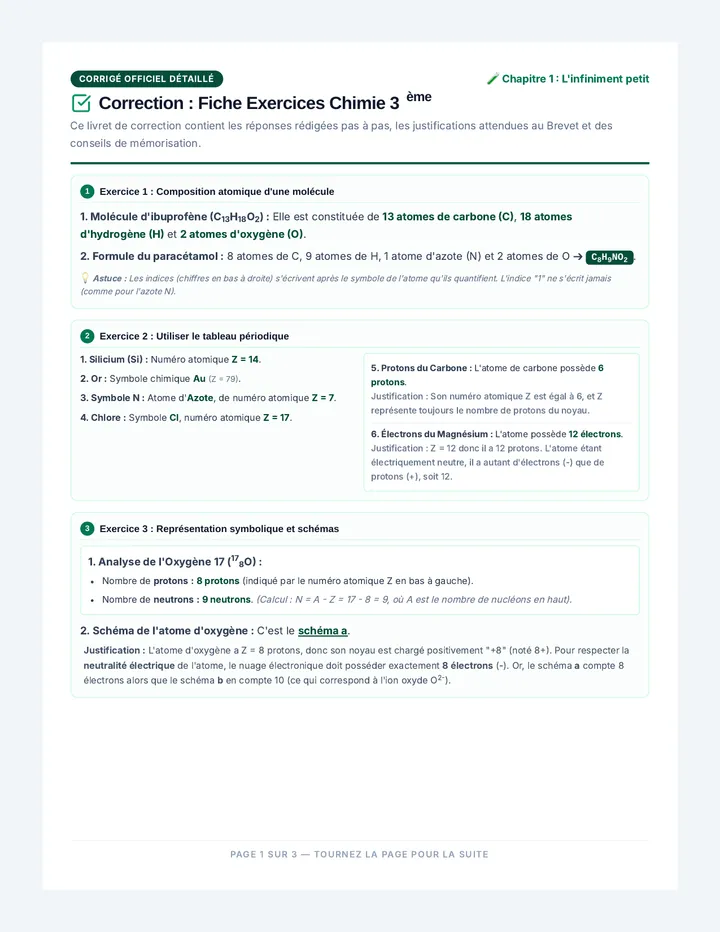
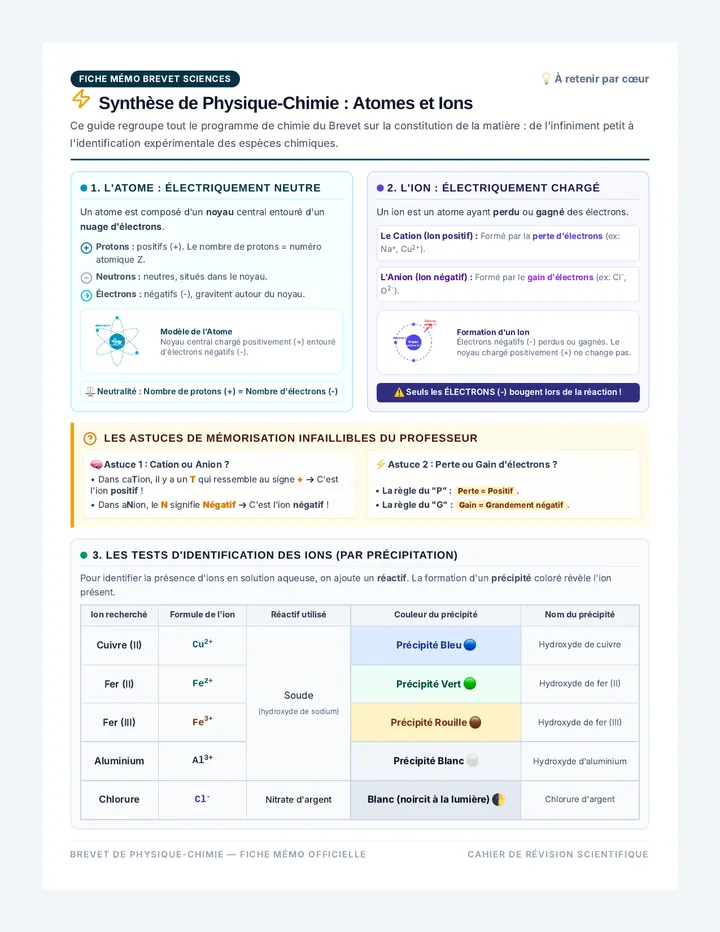
Une leçon de physique-chimie de niveau 3ème pour maîtriser la structure des atomes, la formation des ions et les tests d'identification chimique du Brevet.
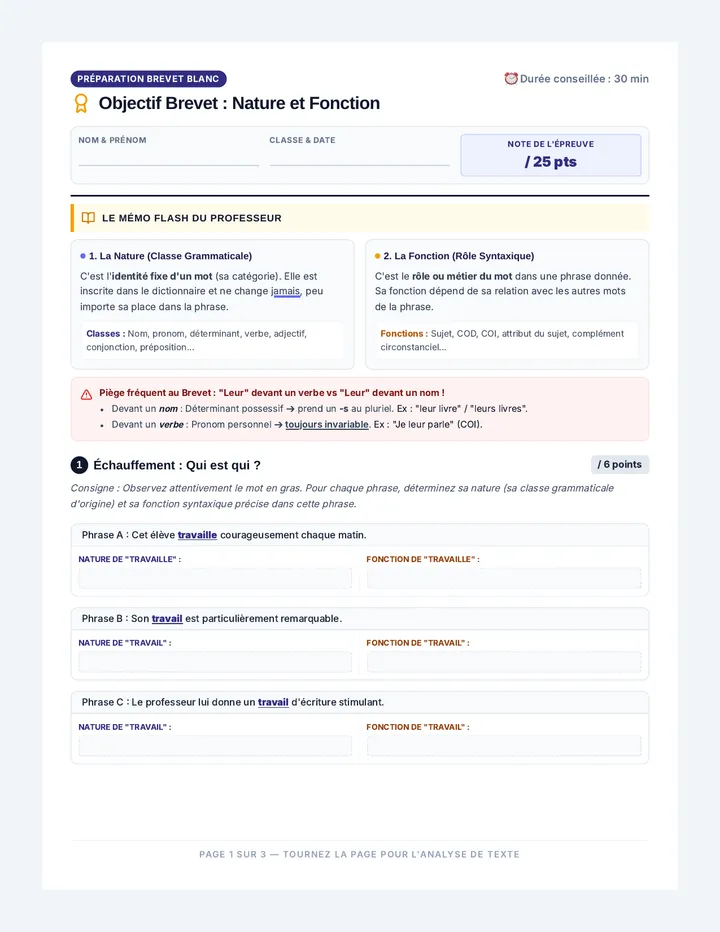
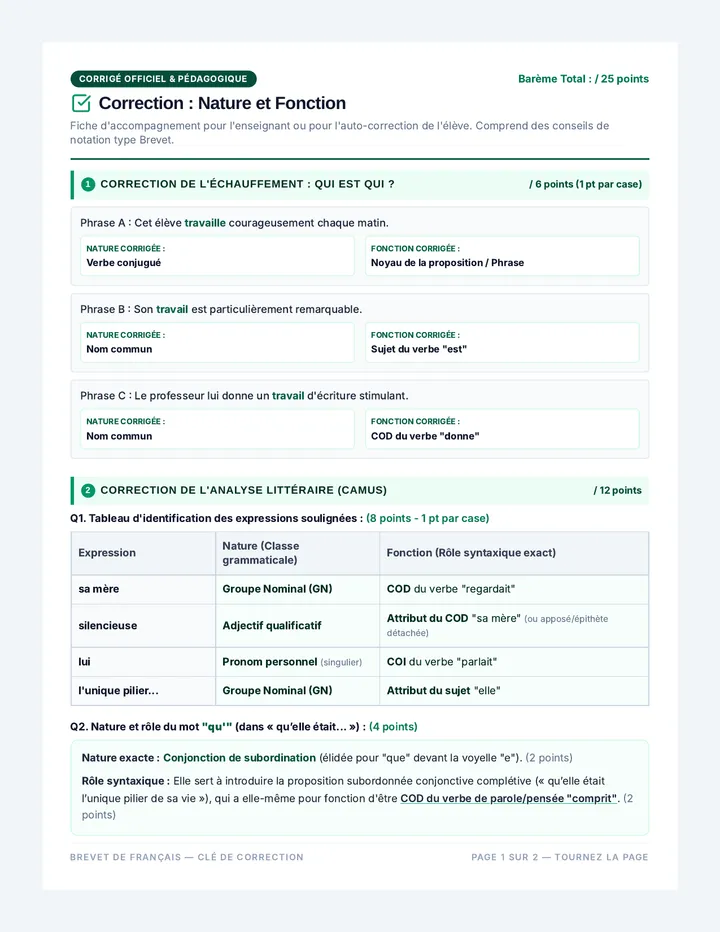
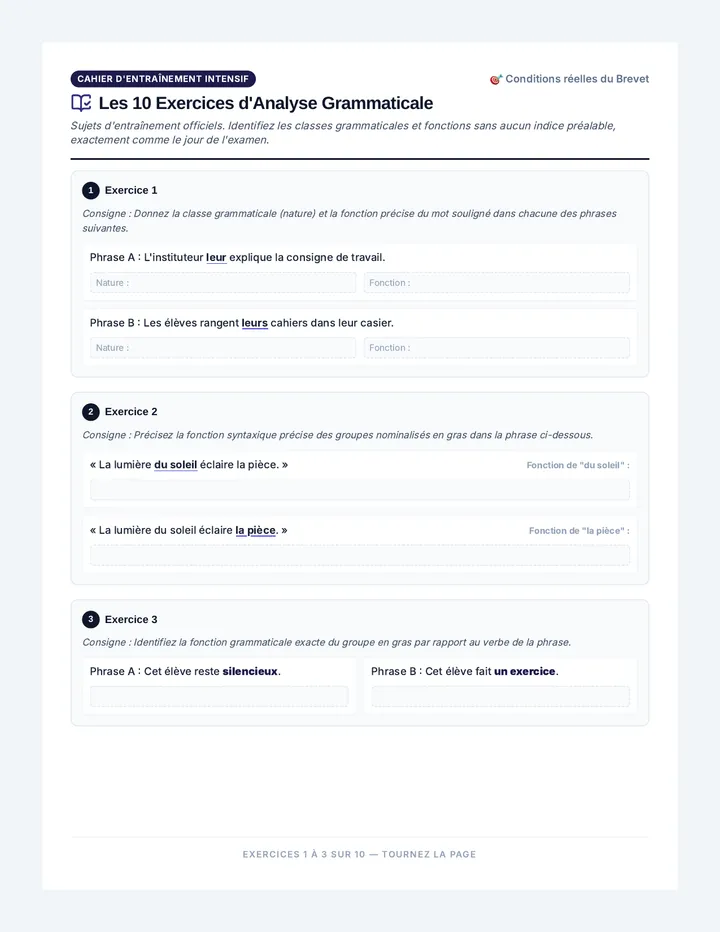
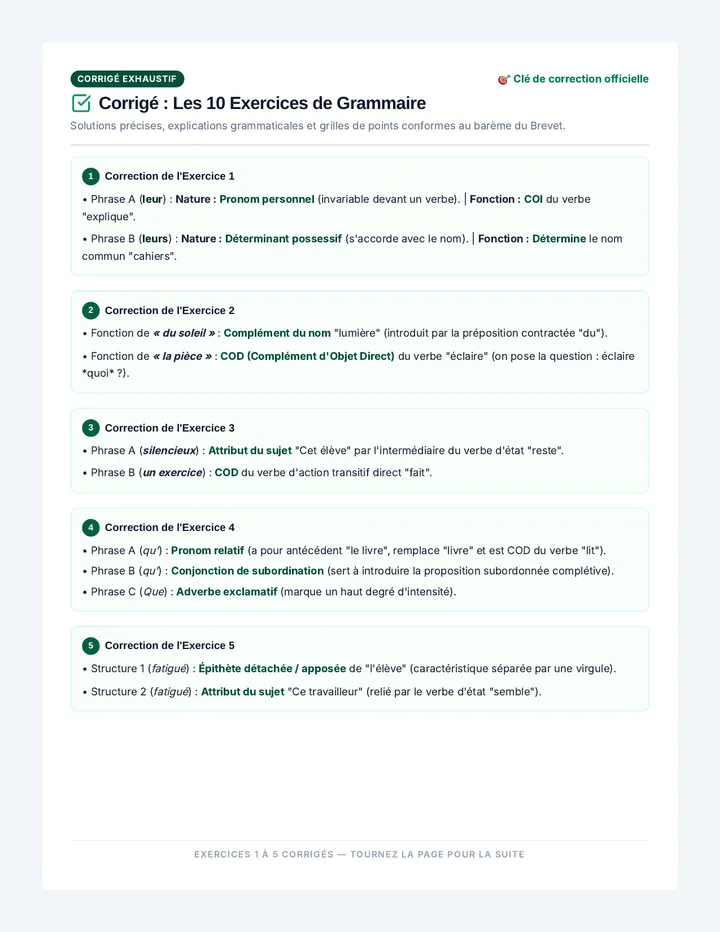
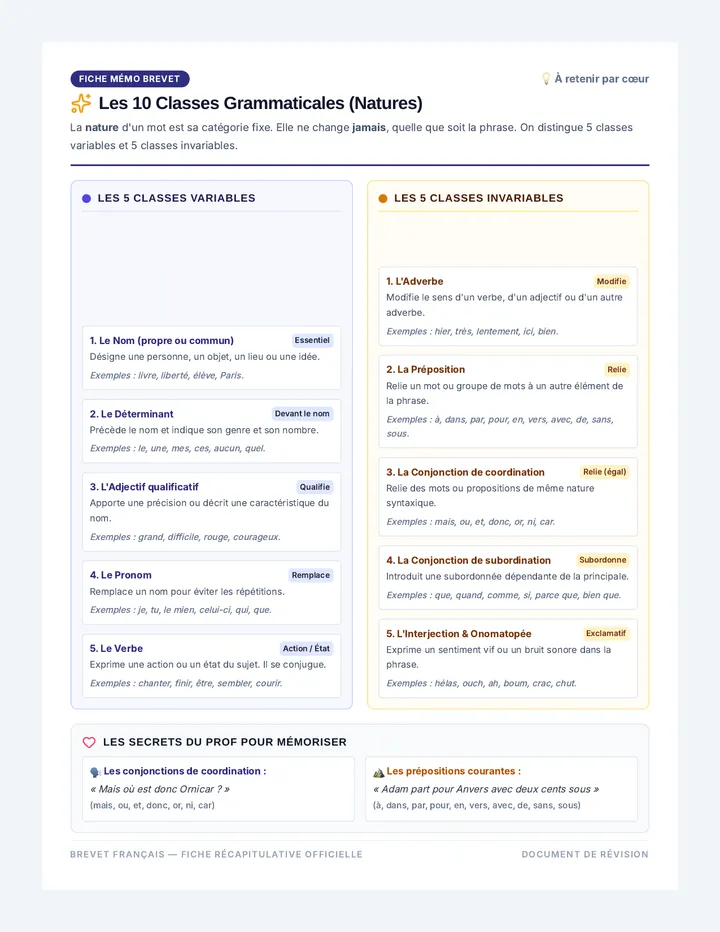
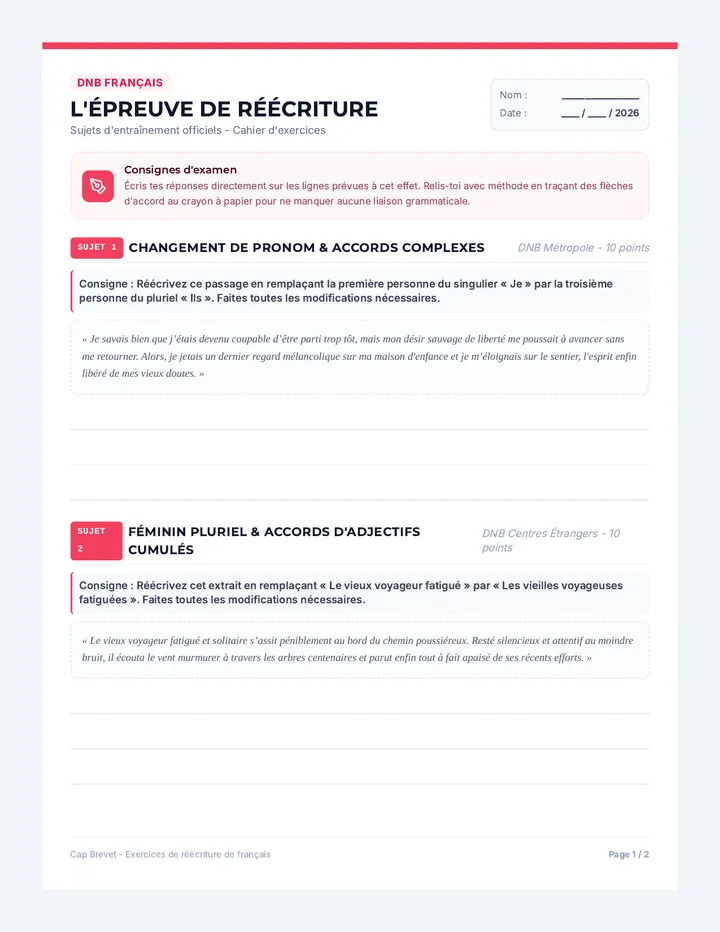
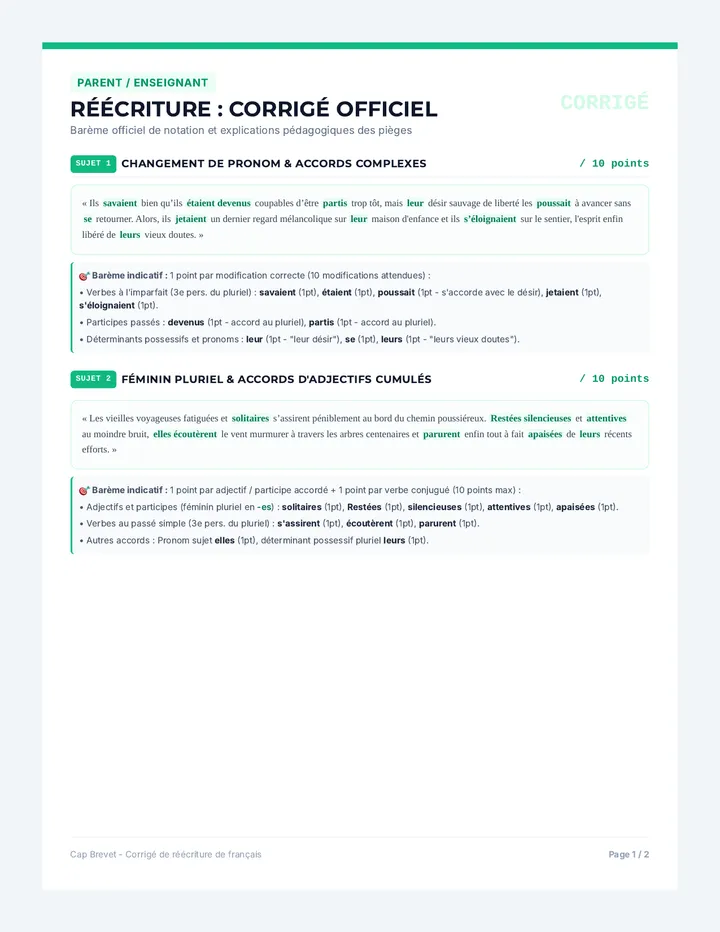
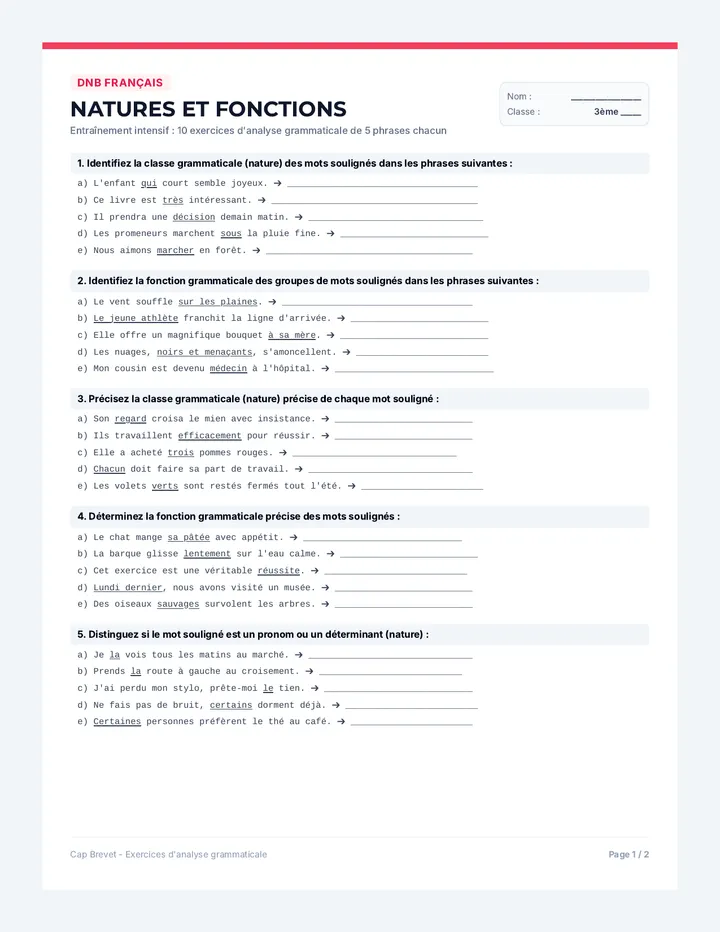
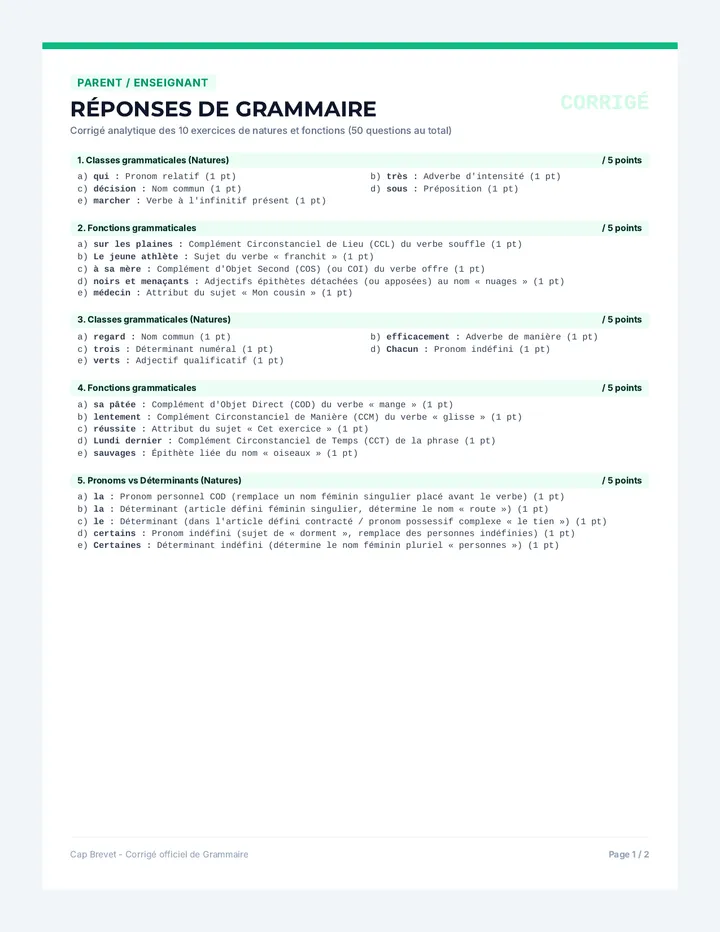
Séance d'entraînement intensive de 30 minutes conçue par un professeur pour maîtriser la distinction cruciale entre nature et fonction au brevet de français, accompagnée de sa correction détaillée.
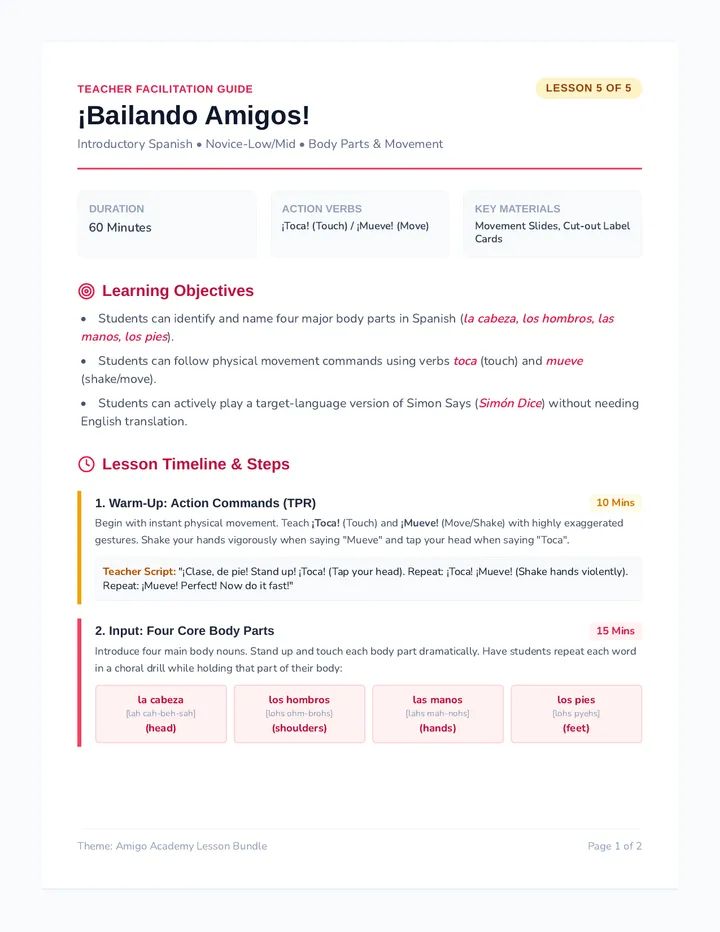
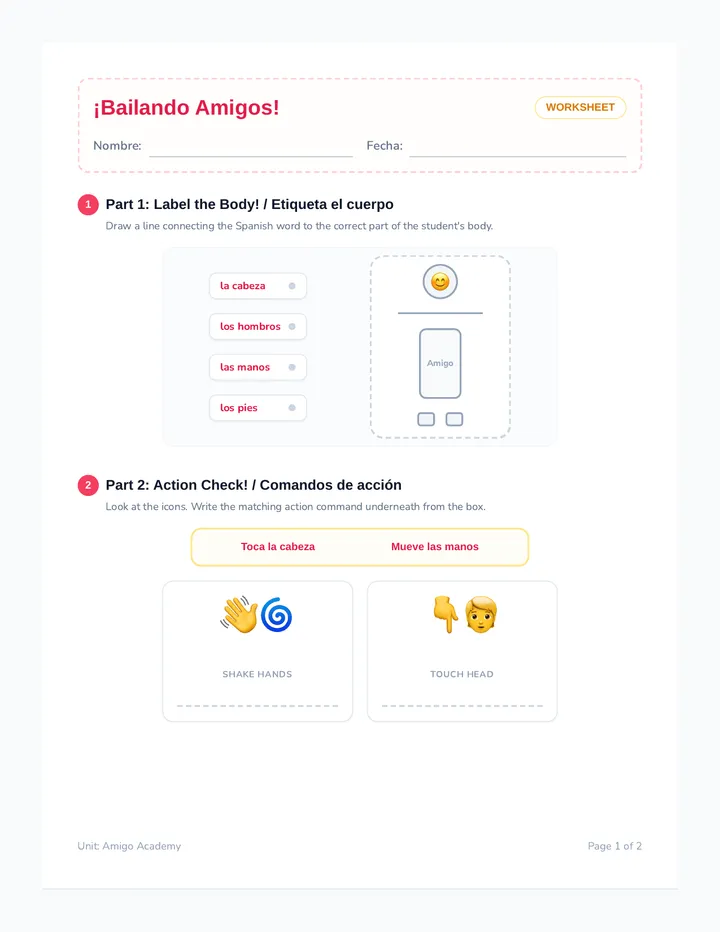
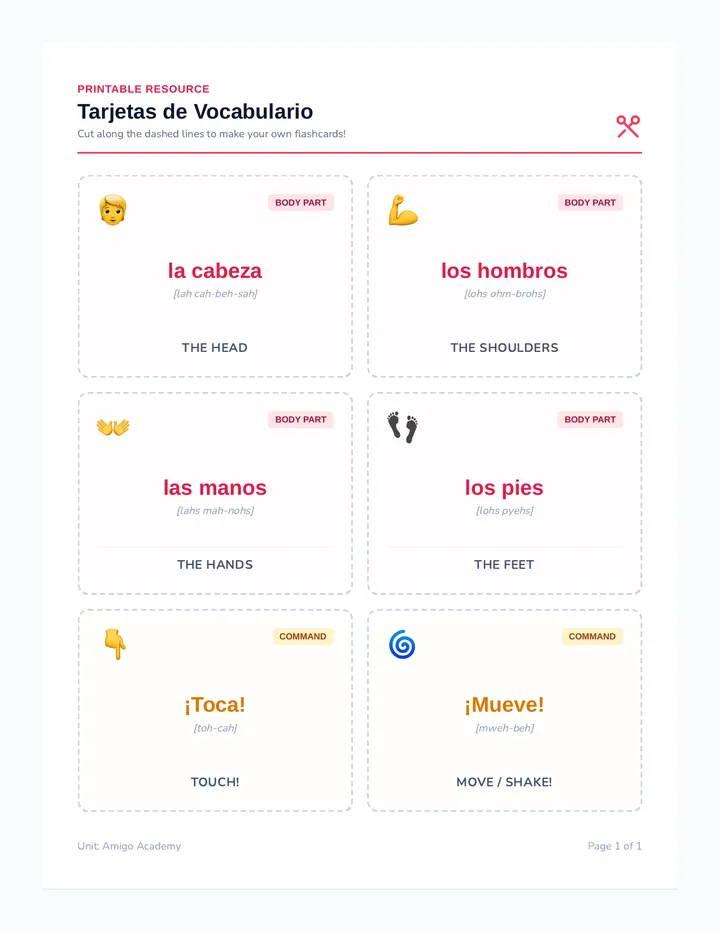
An active, movement-based beginner Spanish lesson teaching high-frequency body parts (cabeza, hombros, manos, pies) and physical action verbs (toca, mueve) through rhythmic dances and interactive 'Simón Dice' games.
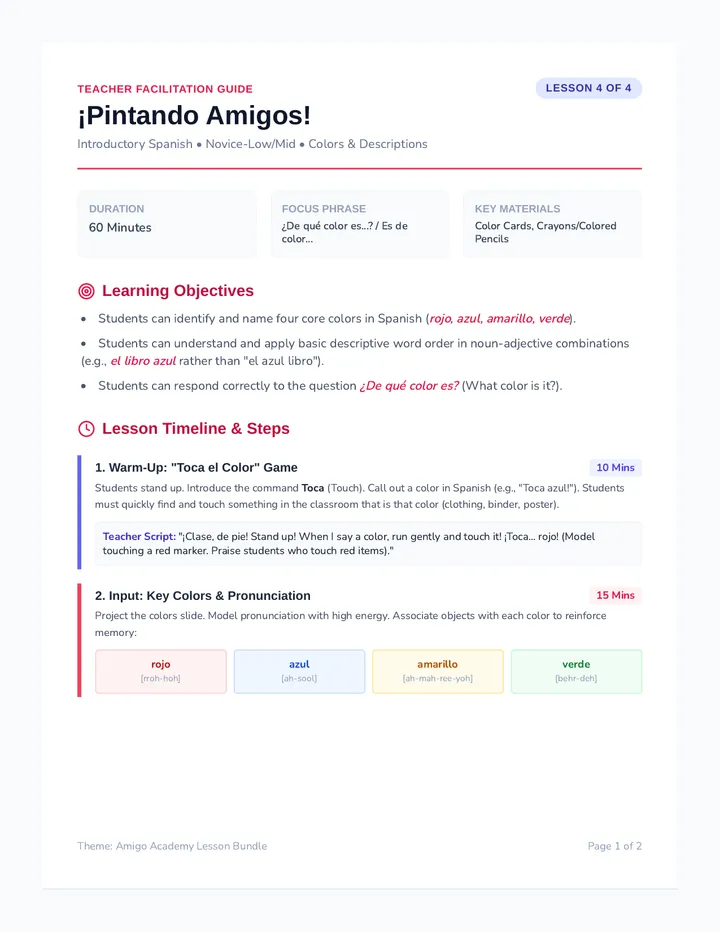
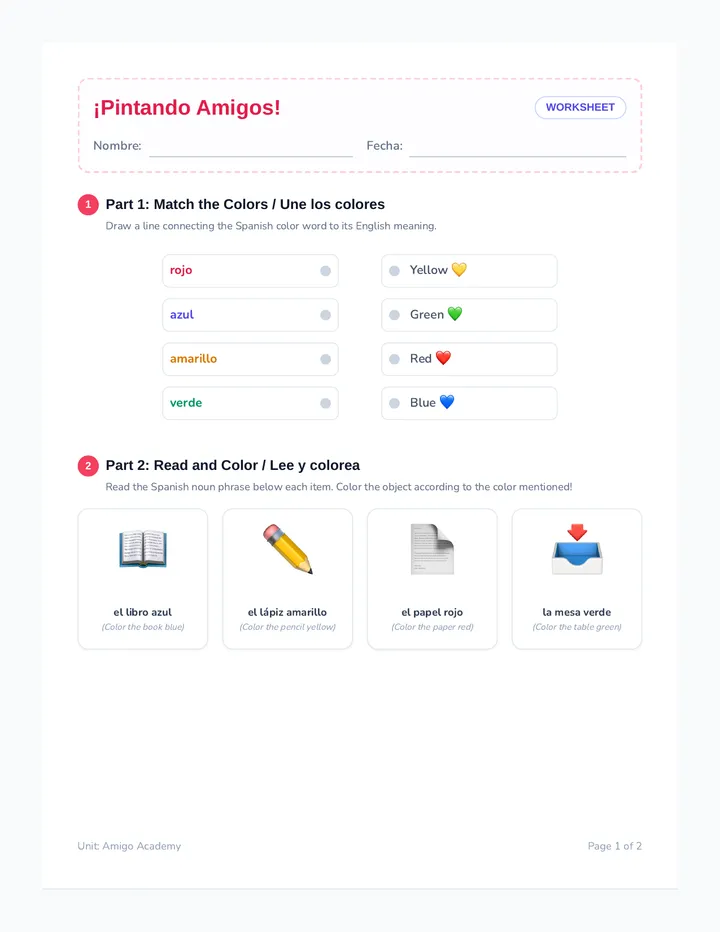
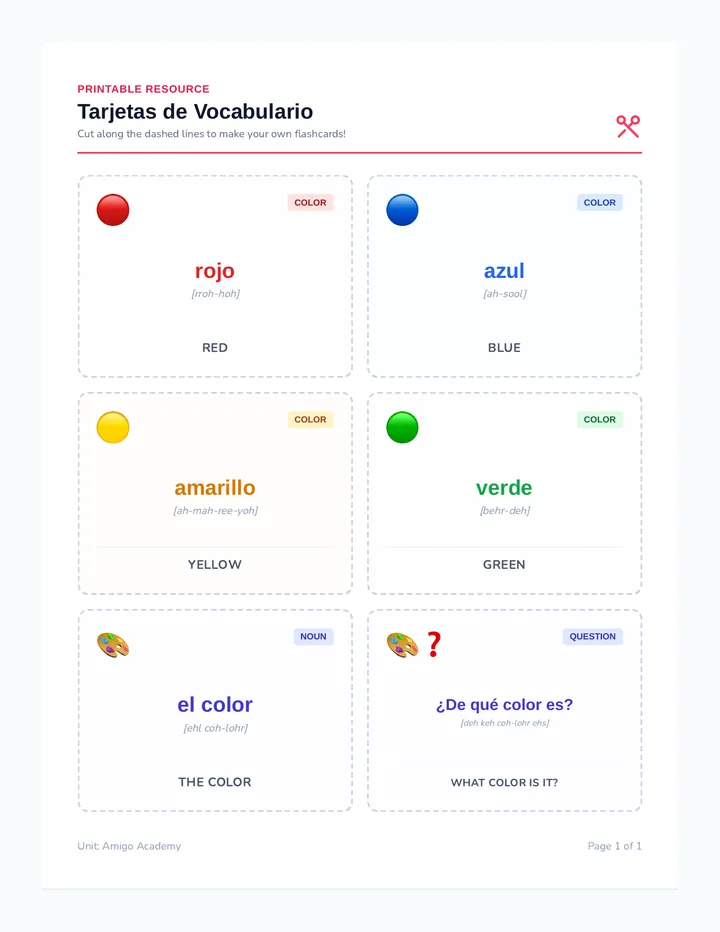
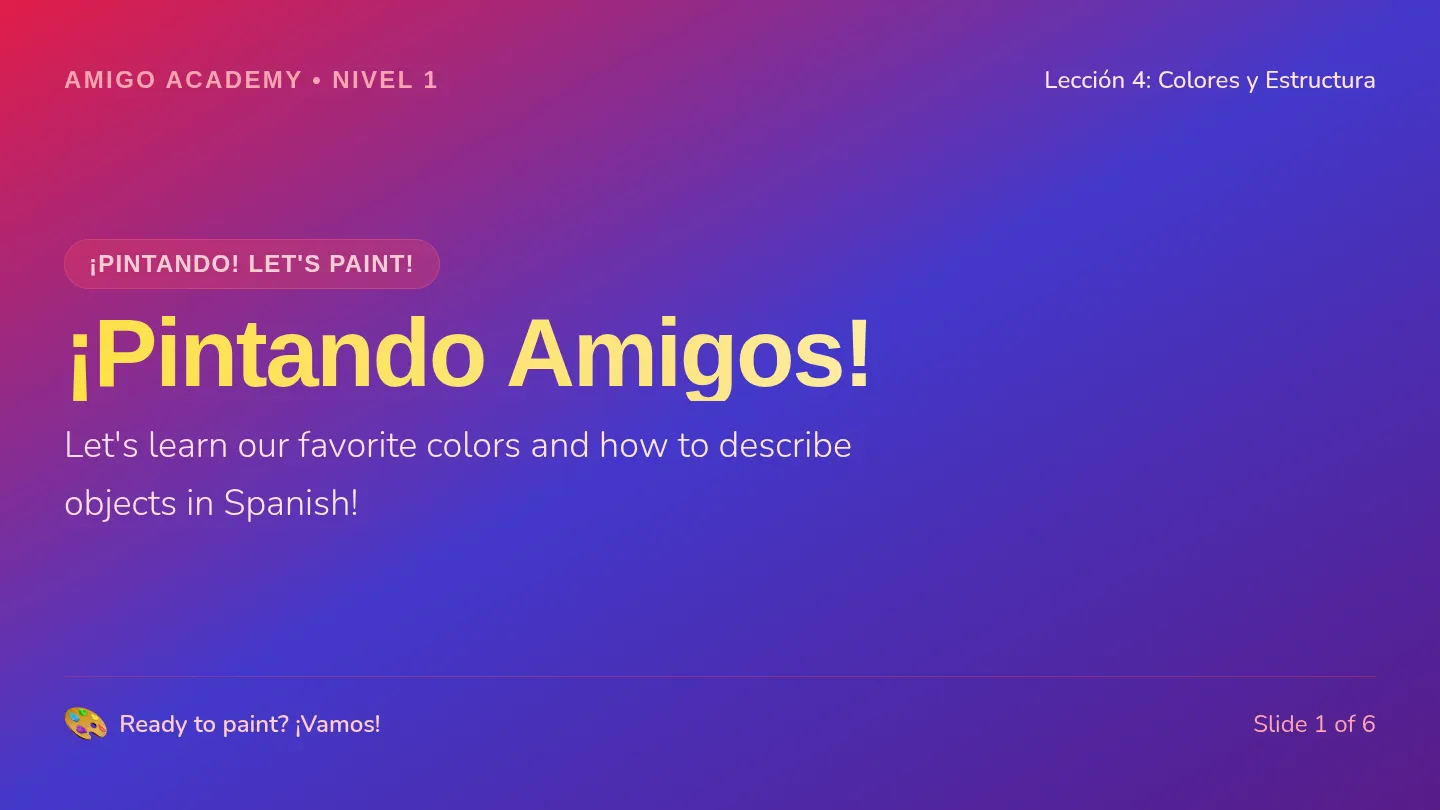
A vibrant beginner Spanish lesson teaching high-frequency colors (rojo, azul, amarillo, verde) and basic agreement/descriptive word order (e.g., 'el libro azul') through active color hunts and creative sorting activities.
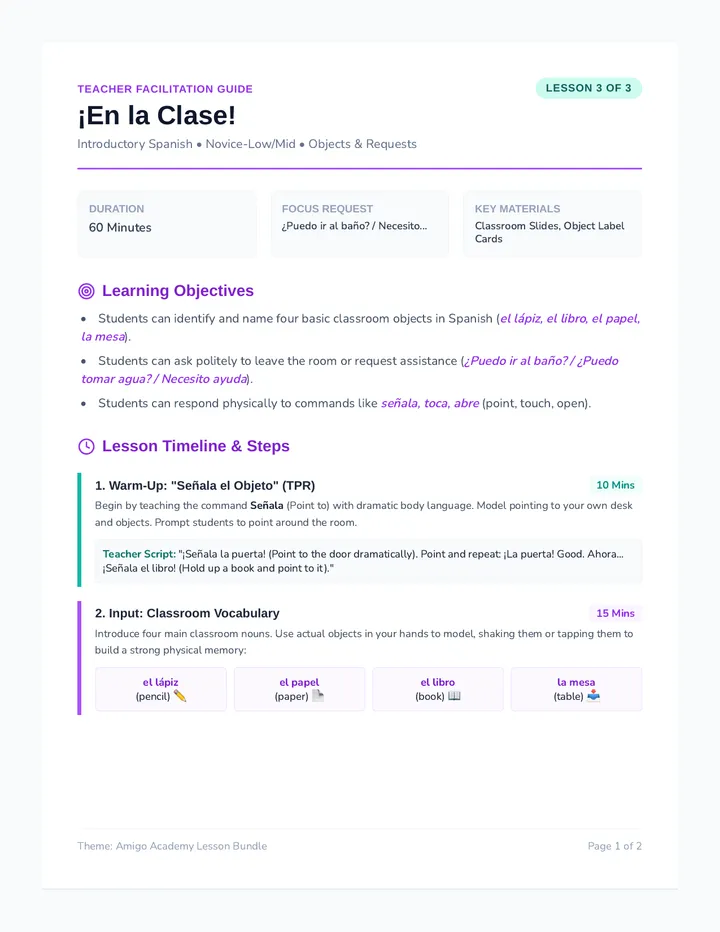
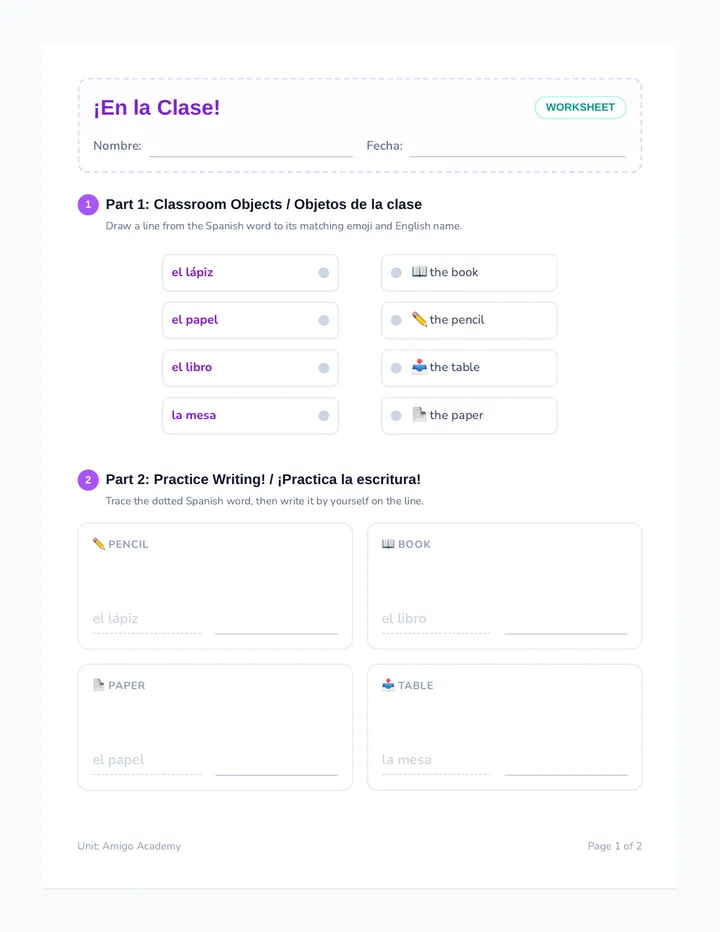
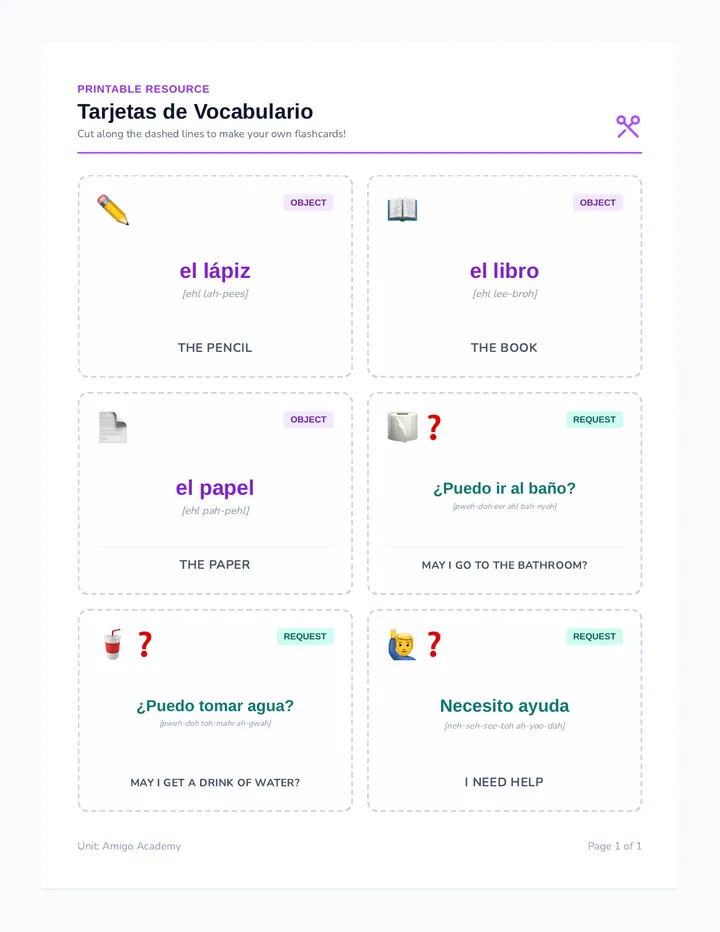
A beginner Spanish lesson teaching high-frequency classroom objects (lápiz, papel, libro) and essential classroom requests (¿Puedo ir al baño?, Necesito un lápiz) using physical pointing activities and visual matching cards.
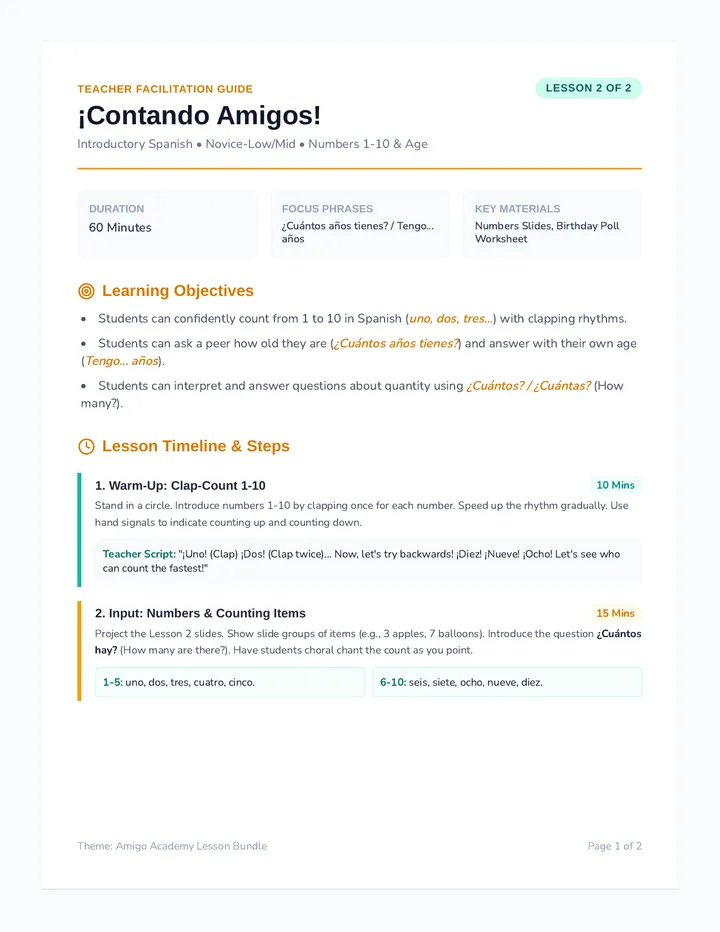
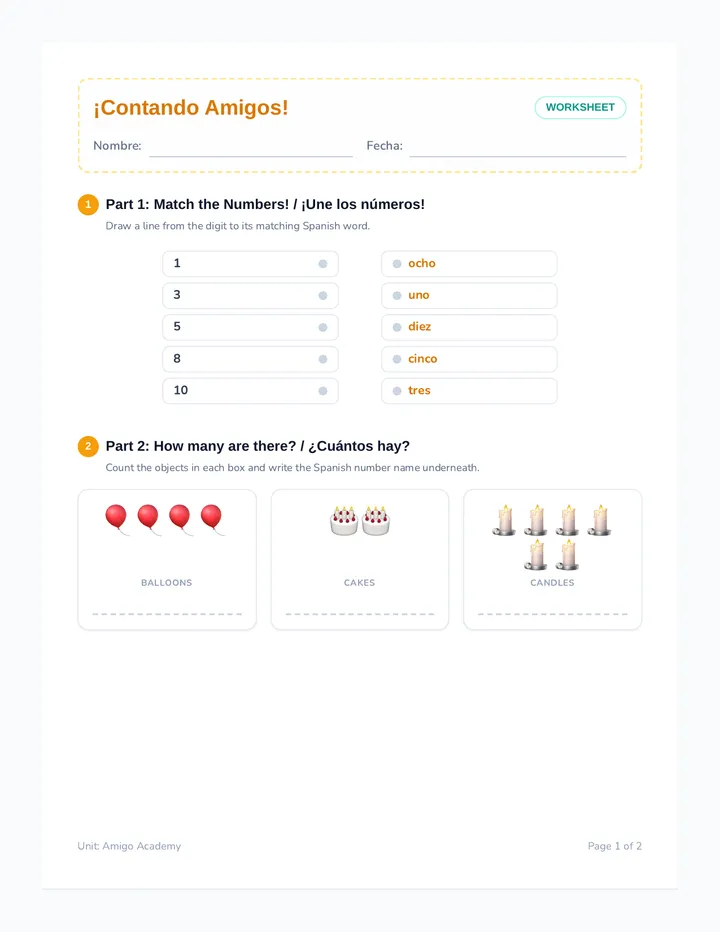
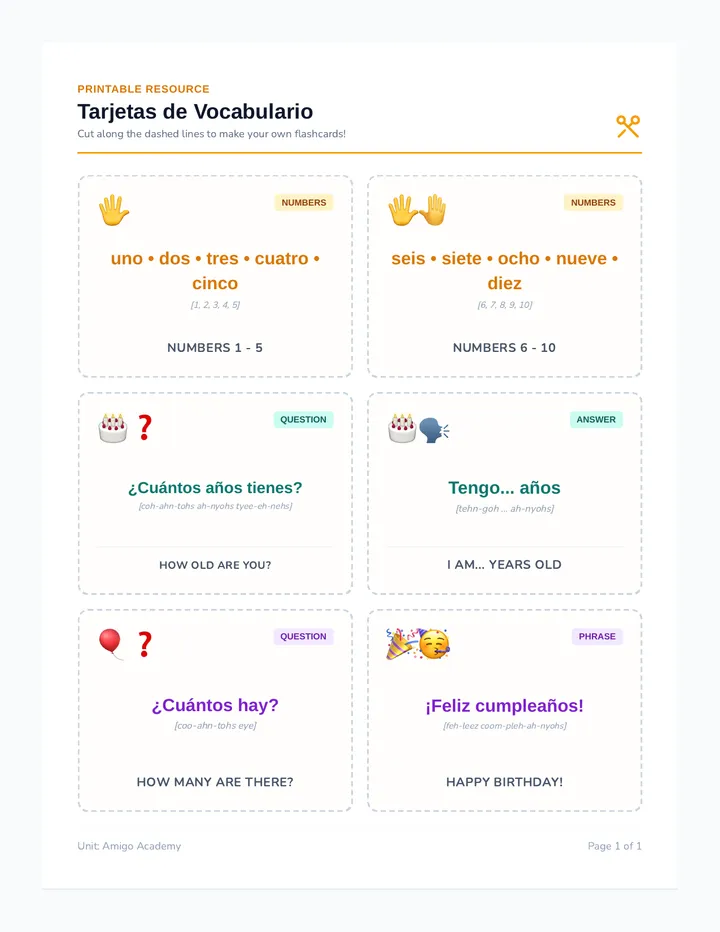
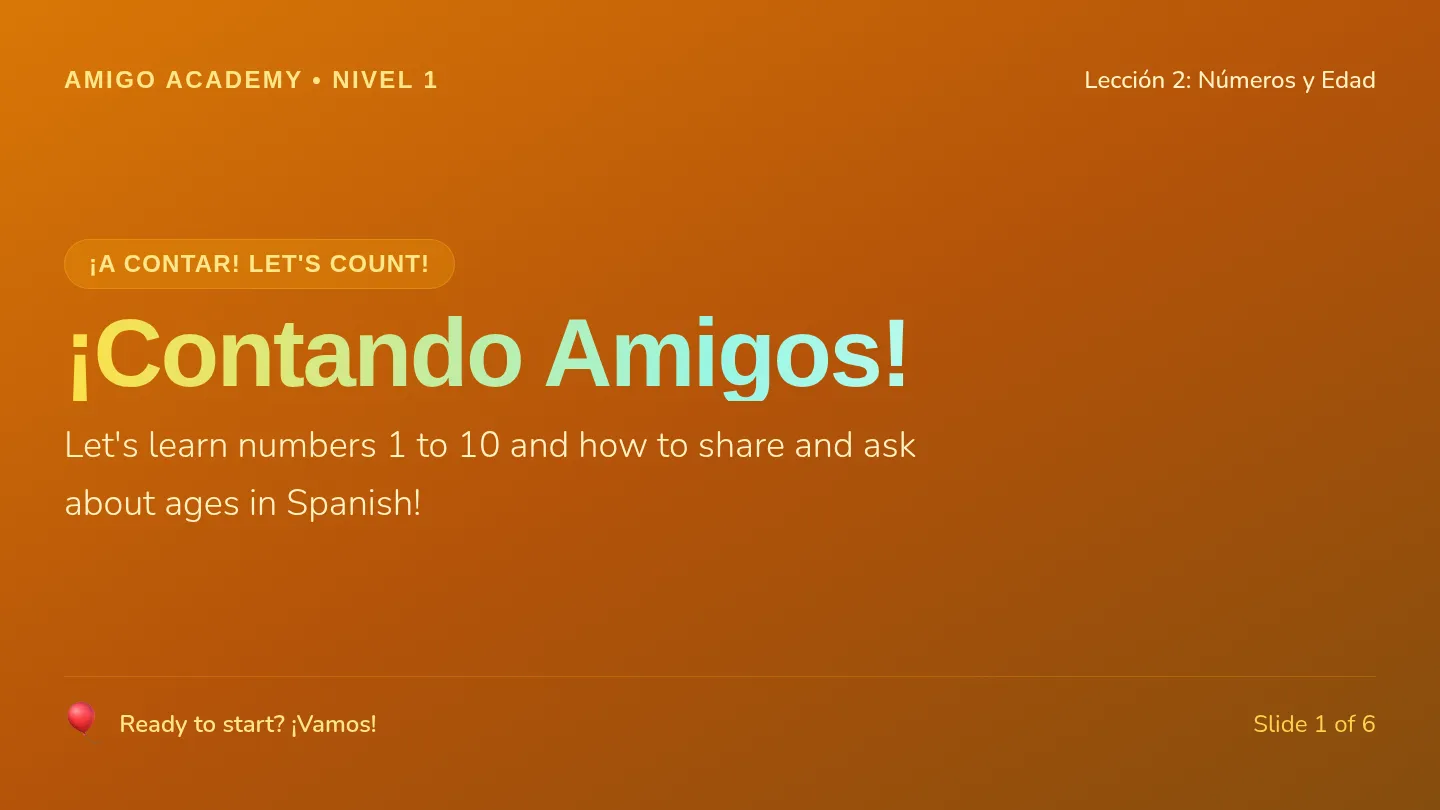
An engaging beginner Spanish lesson focusing on numbers 1-10, asking and answering age questions (¿Cuántos años tienes? Tengo... años), and conducting a classroom birthday/age poll.
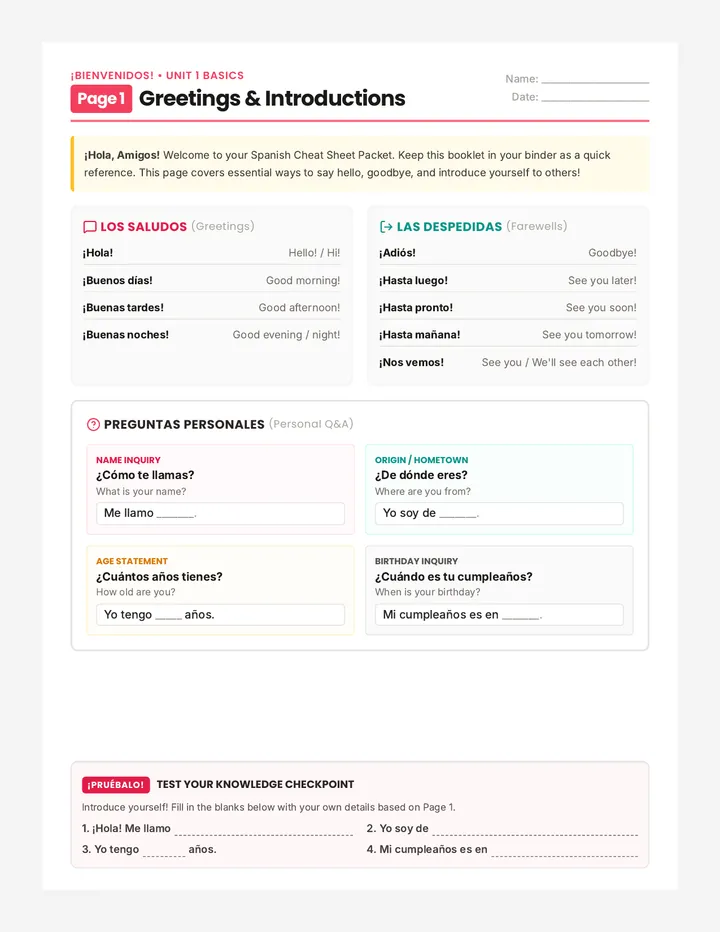
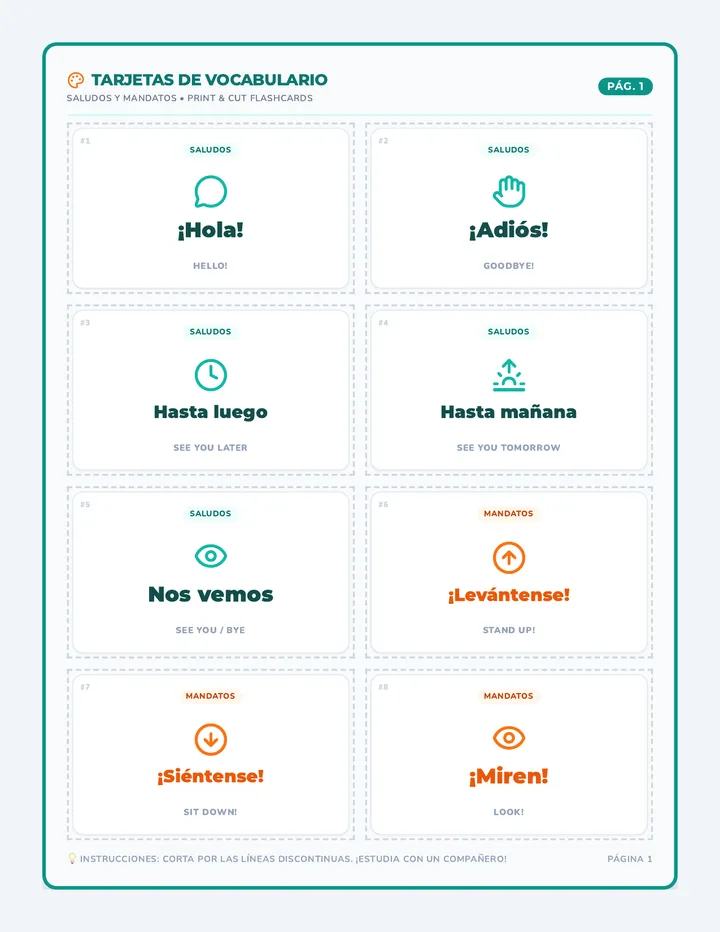
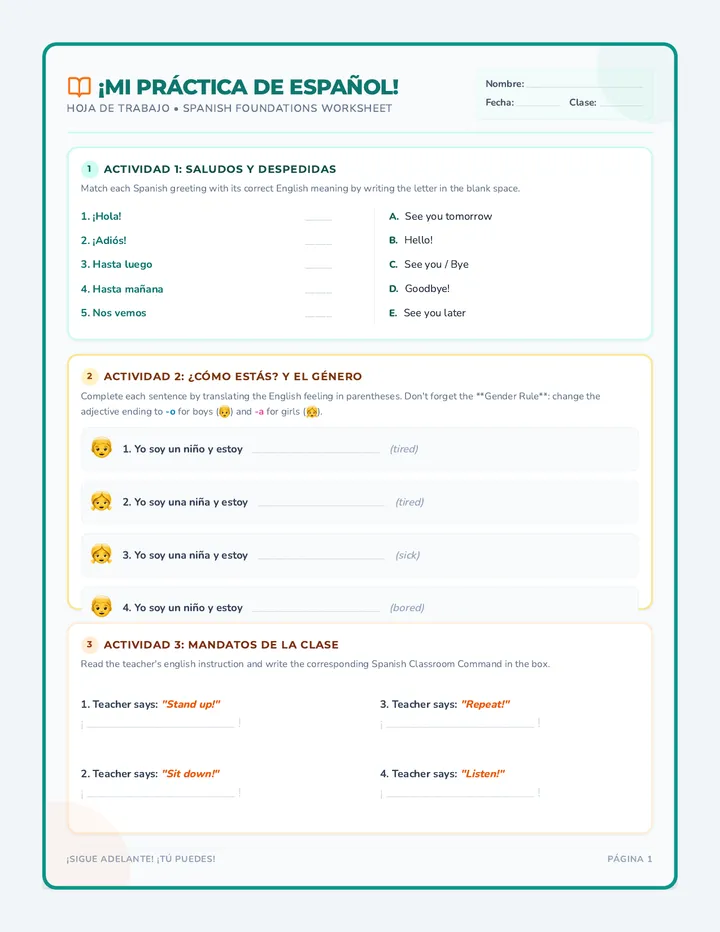
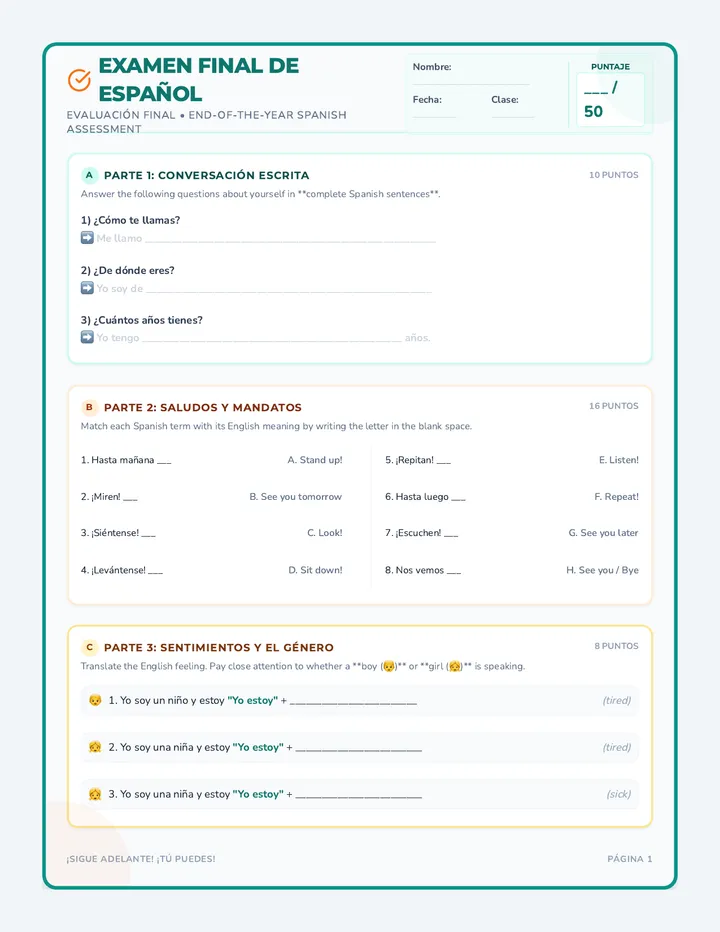
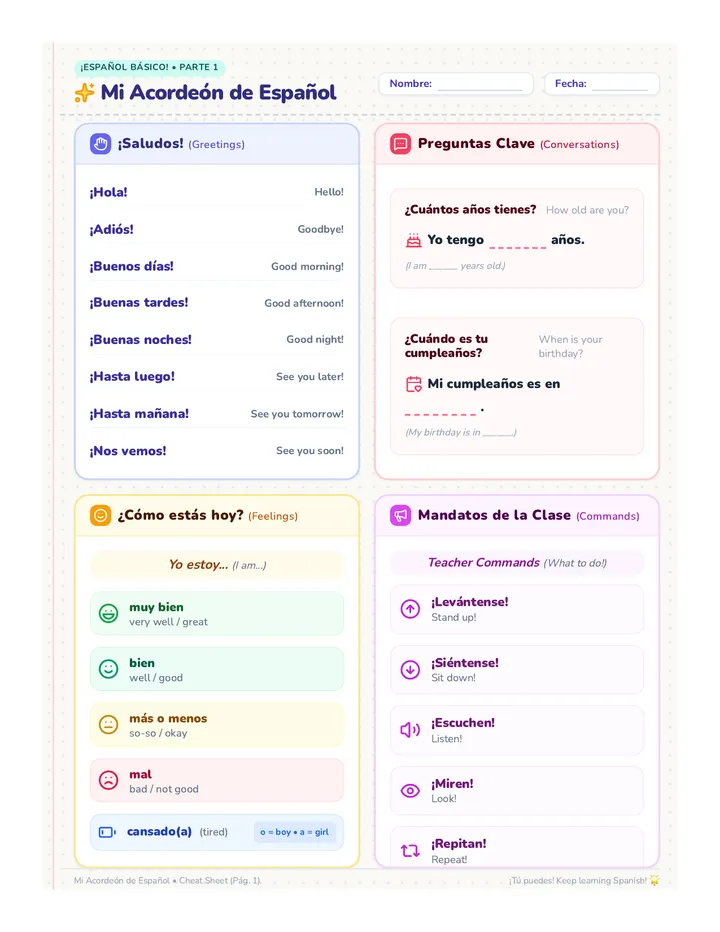
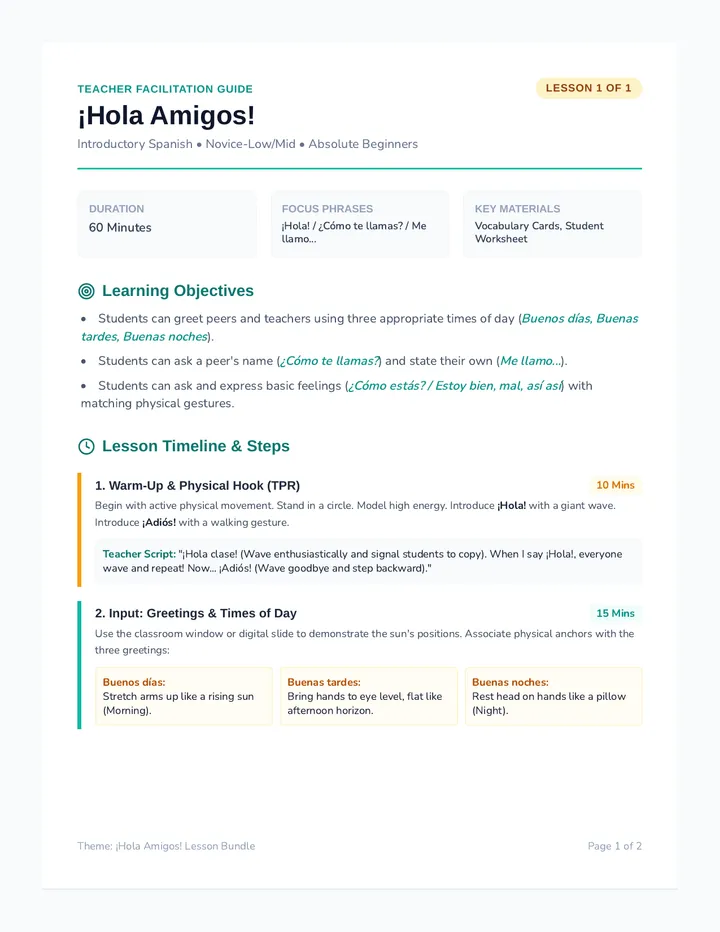
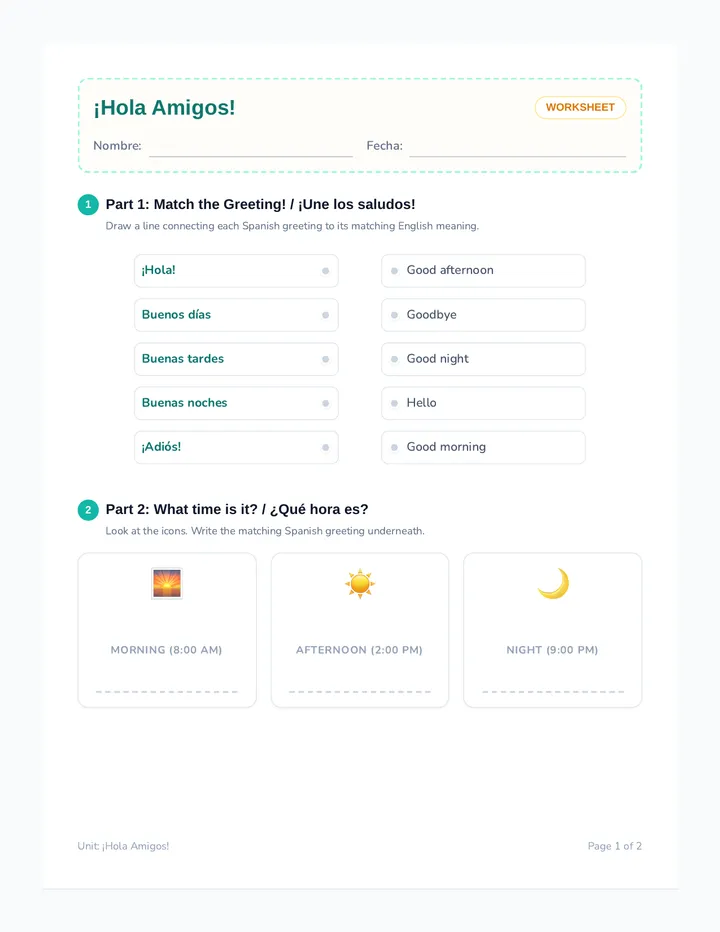
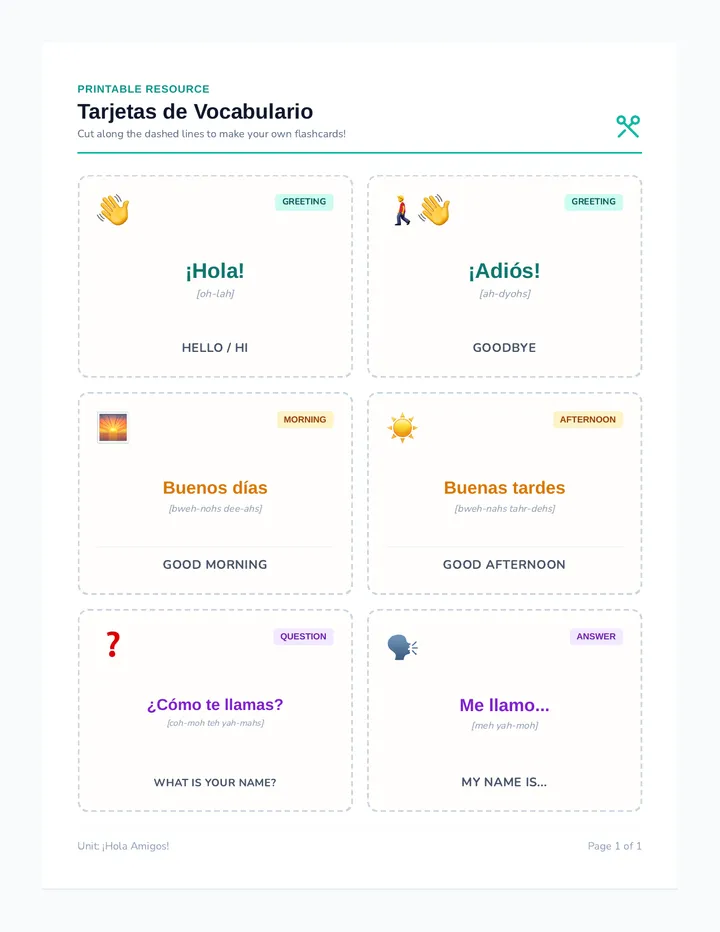
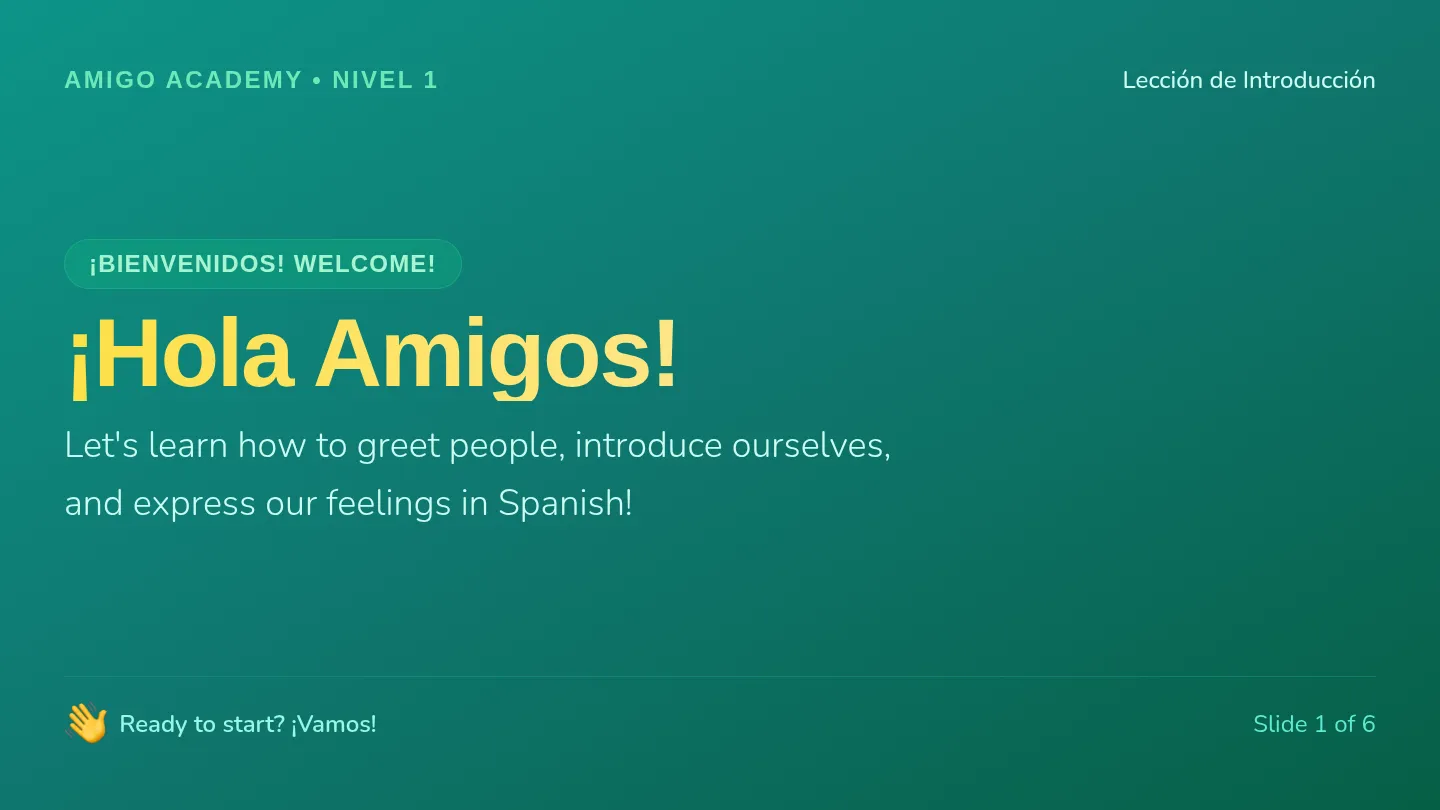
An introductory Spanish lesson for absolute beginners (Novice-Low/Mid) focusing on high-frequency greetings, self-introductions (¿Cómo te llamas? Me llamo...), and basic feelings expression through active physical response (TPR) and collaborative speaking activities.
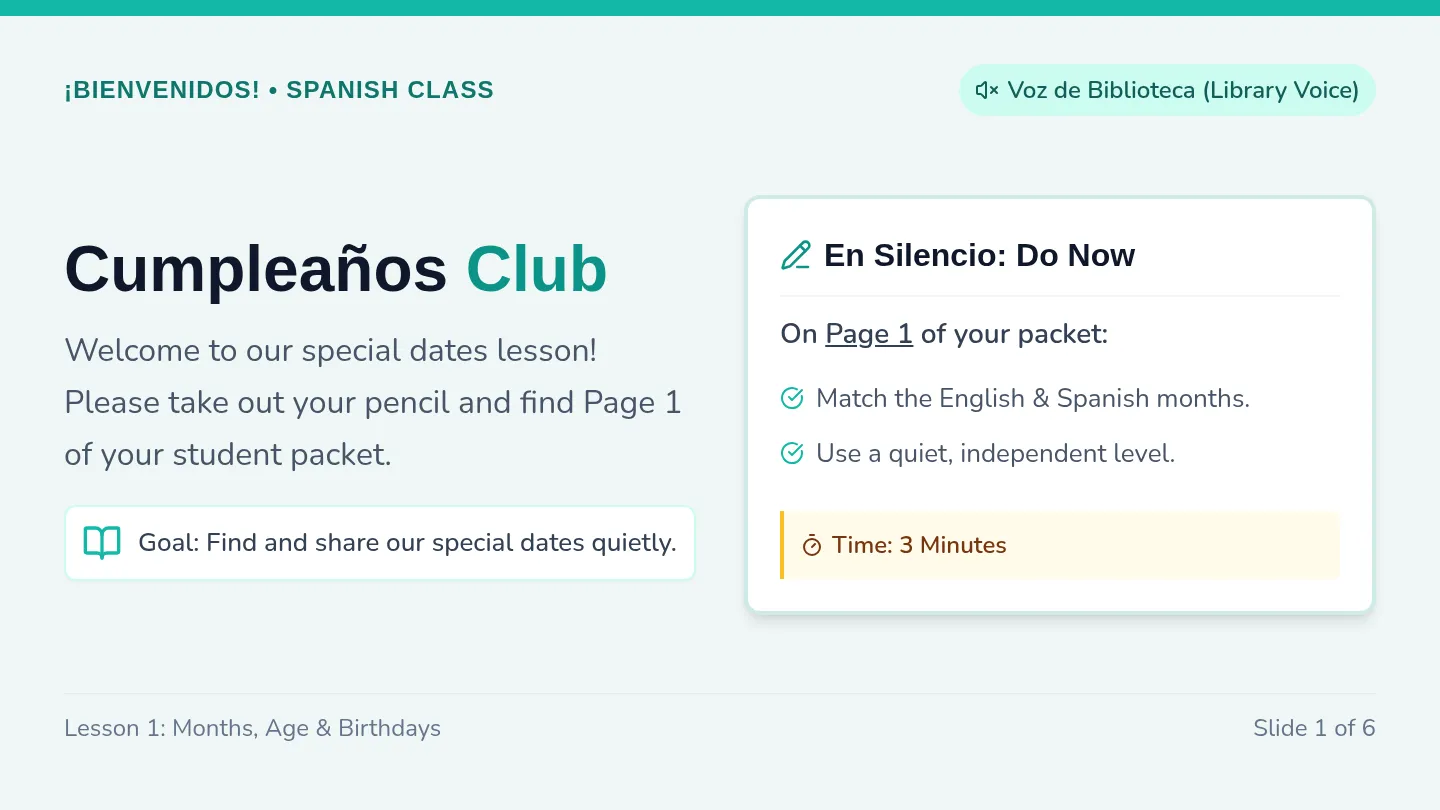
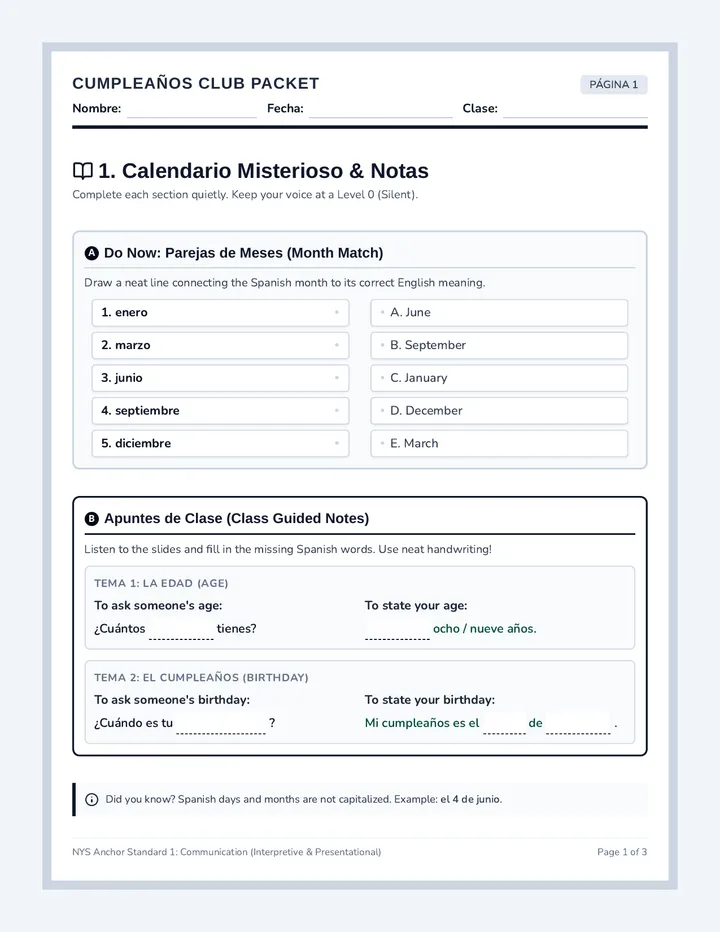
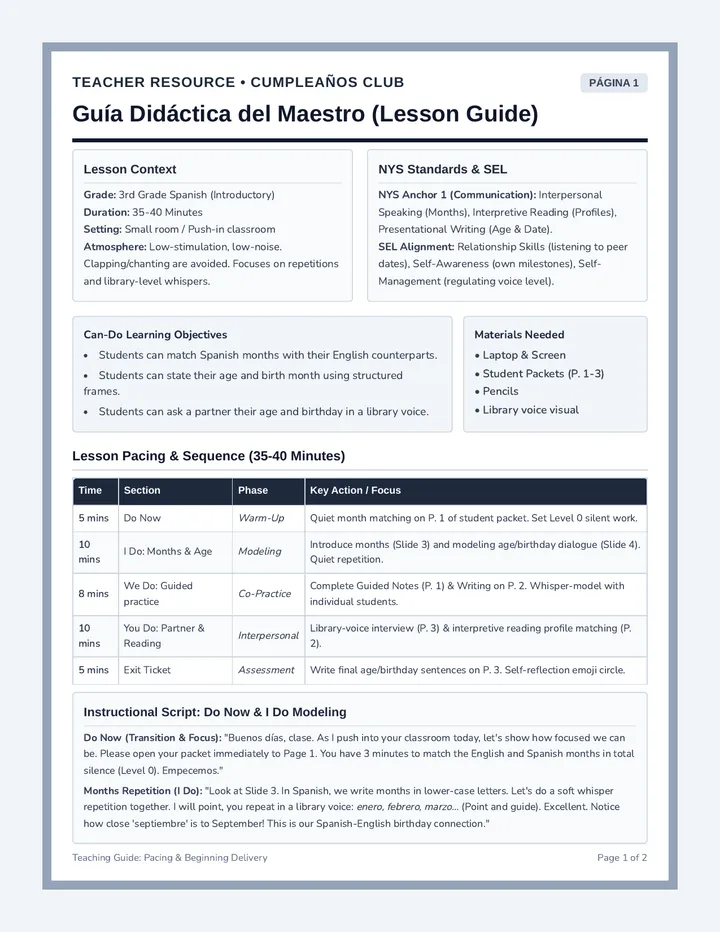
An introductory Spanish lesson for 3rd grade focused on months, age, and birthdays. It aligns with NYS World Language Standards and SEL, utilizing a structured, low-stimulation 'I Do, We Do, You Do' format that is perfect for small, push-in classrooms where loud noises are avoided.
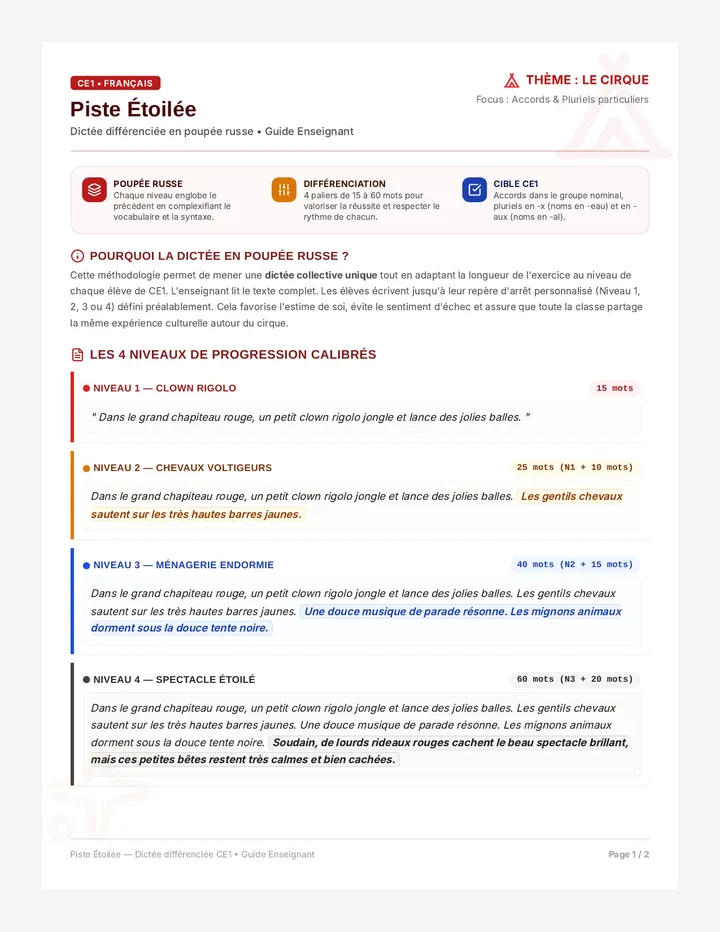
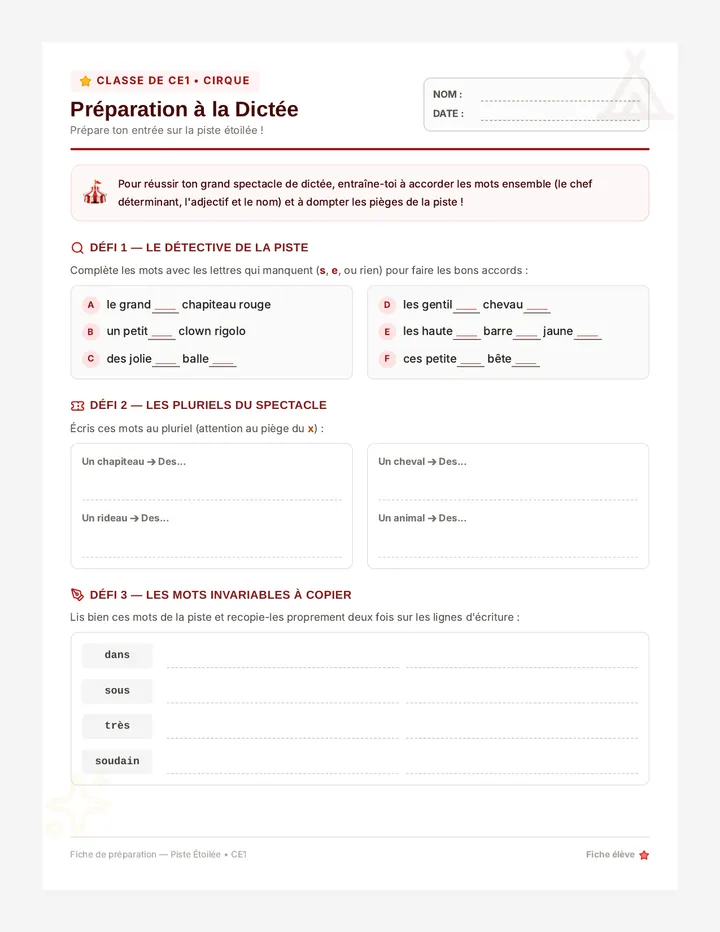
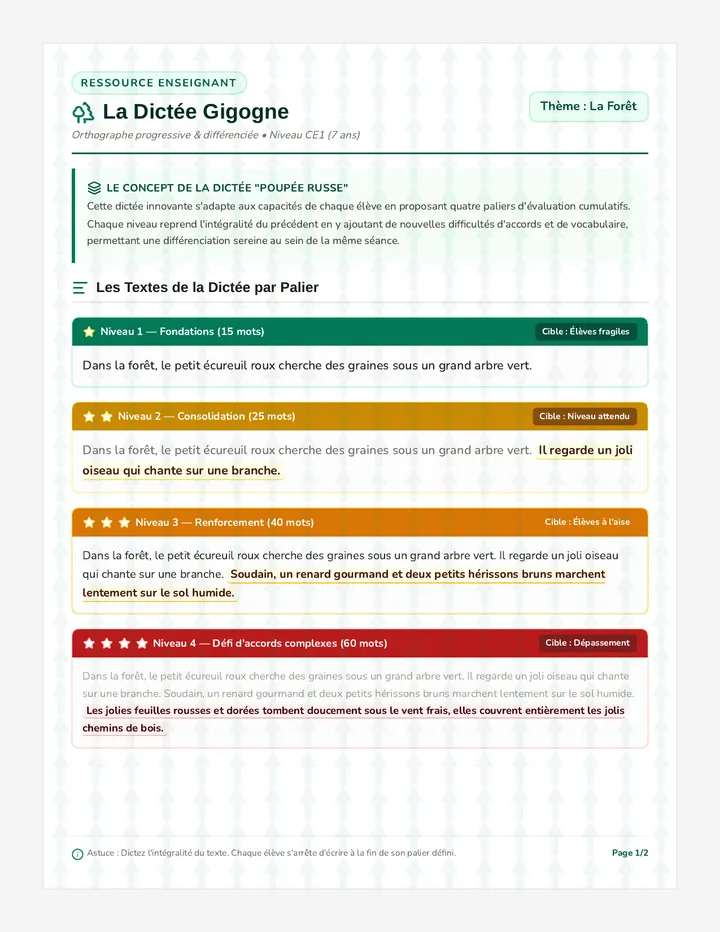
Une dictée différenciée en poupée russe sur le thème du cirque pour les élèves de CE1. Ce guide complet pour l'enseignant permet de travailler l'accord dans le groupe nominal à travers 4 niveaux de progression cumulatifs.
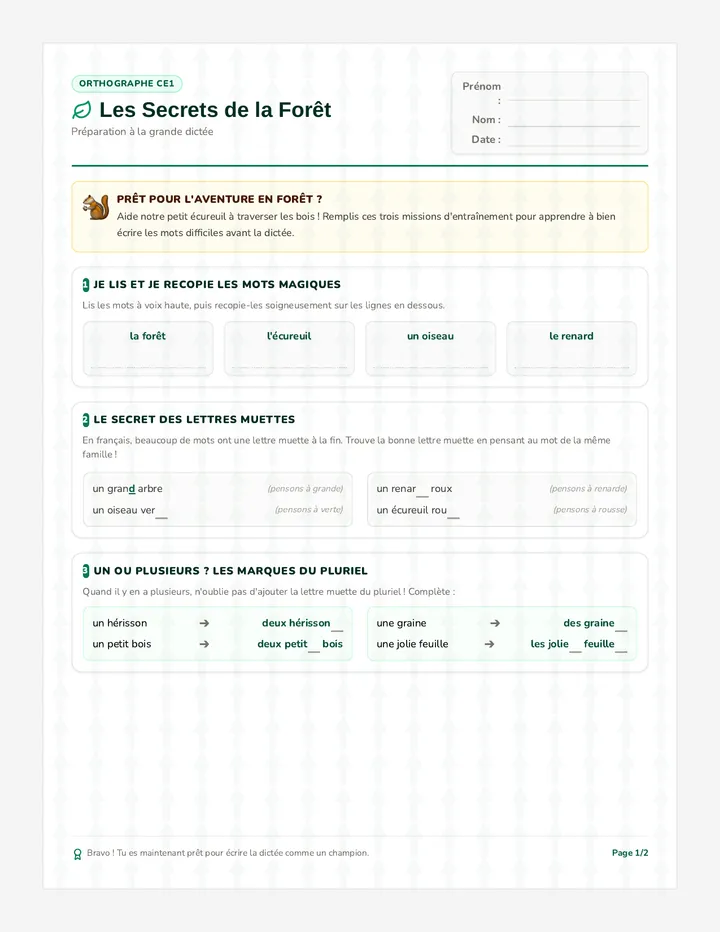
Séquence d'orthographe et de vocabulaire pour le CE1 autour de la faune et de la flore des bois, s'appuyant sur une dictée innovante à 4 niveaux de progression et une grille d'évaluation simplifiée.
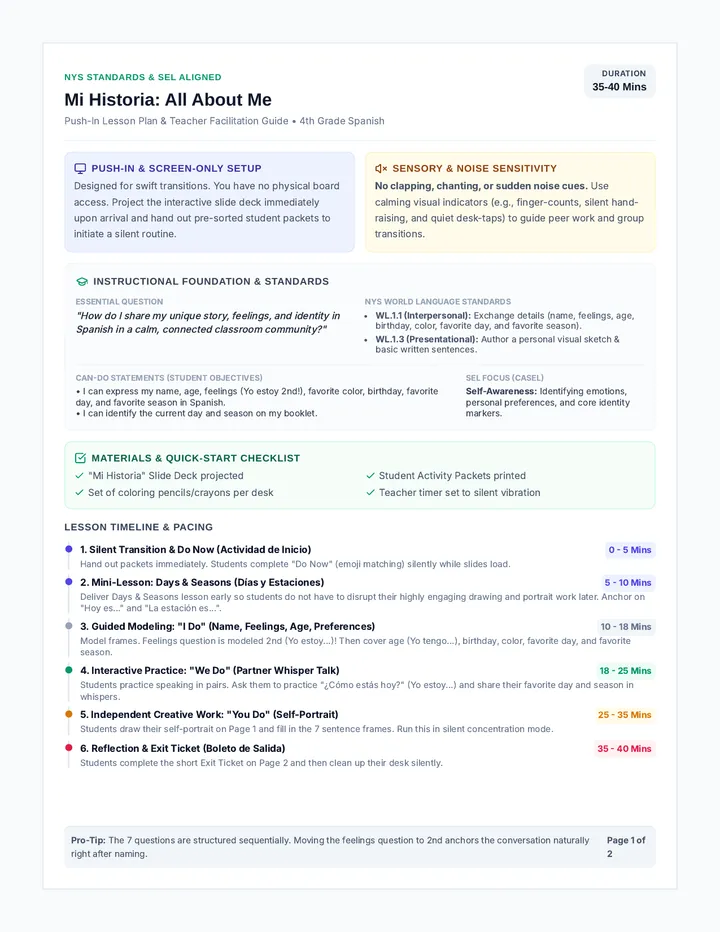
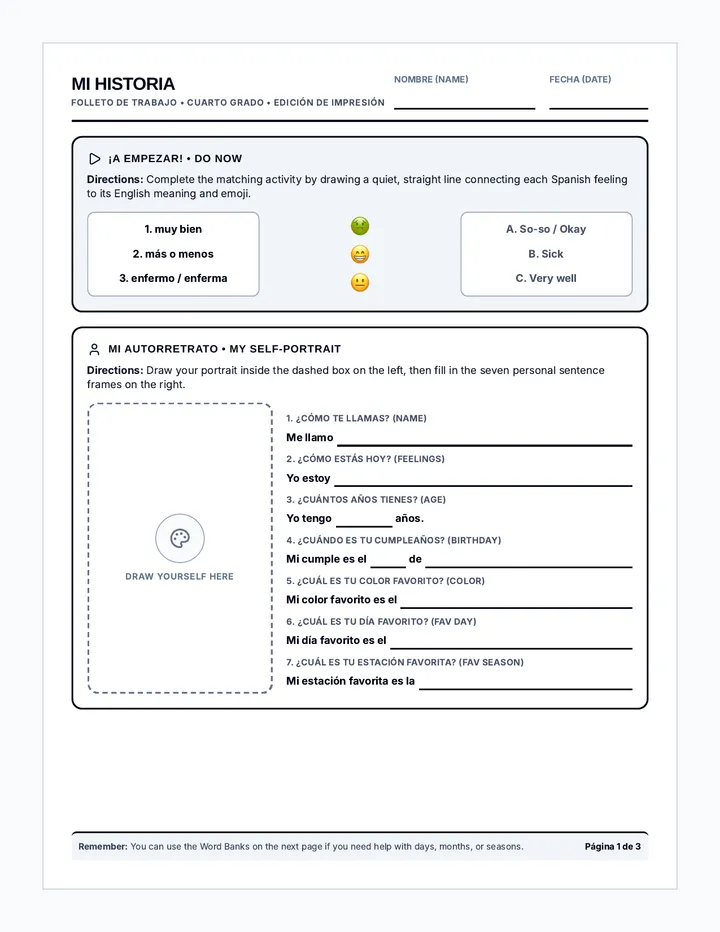
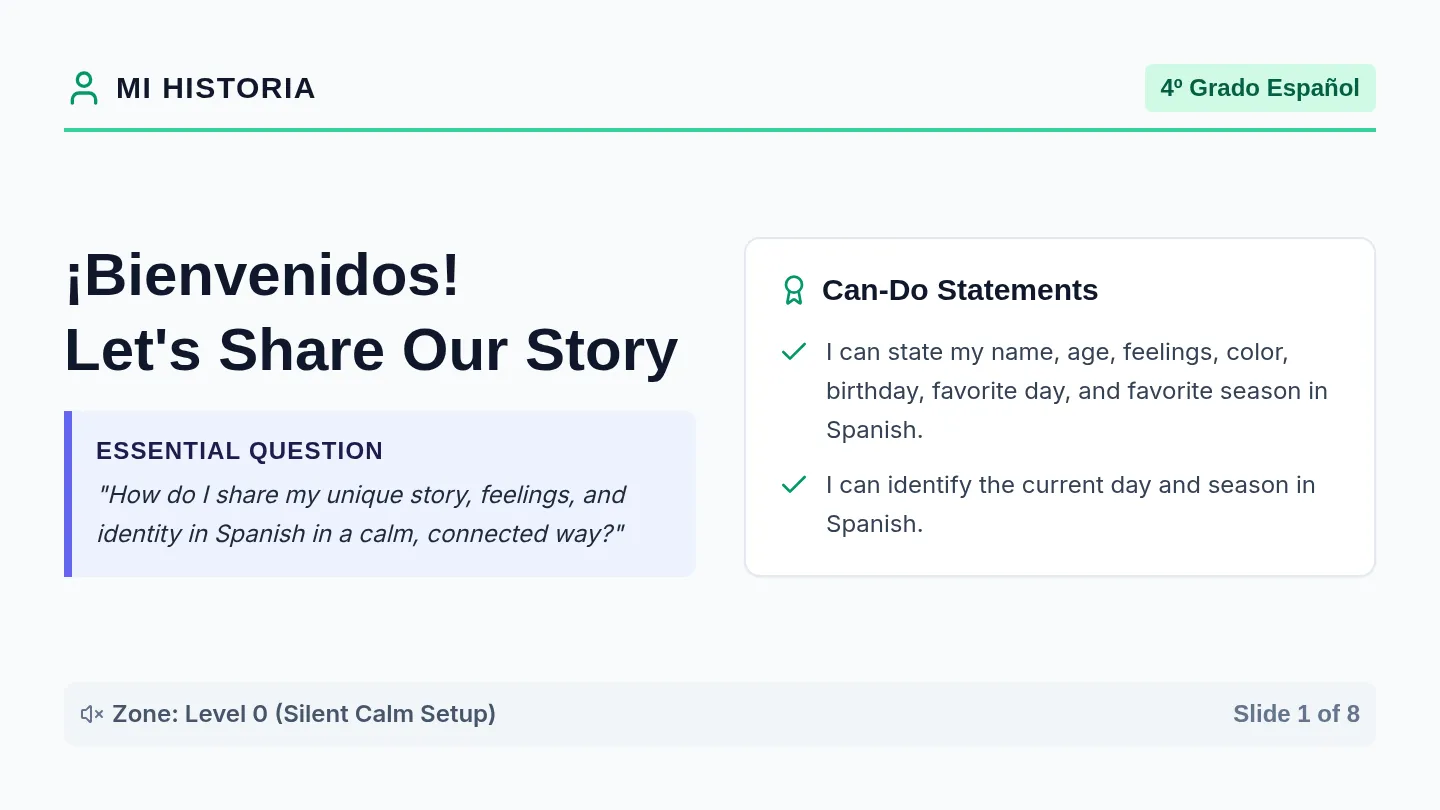
A 4th-grade Spanish lesson focusing on self-introduction, feelings, age, colors, and birthdays, featuring a mini-lesson on days and seasons. Tailored for push-in teaching in a screen-only, sensory-sensitive room using highly structured, low-noise visual guides and calm transitions.
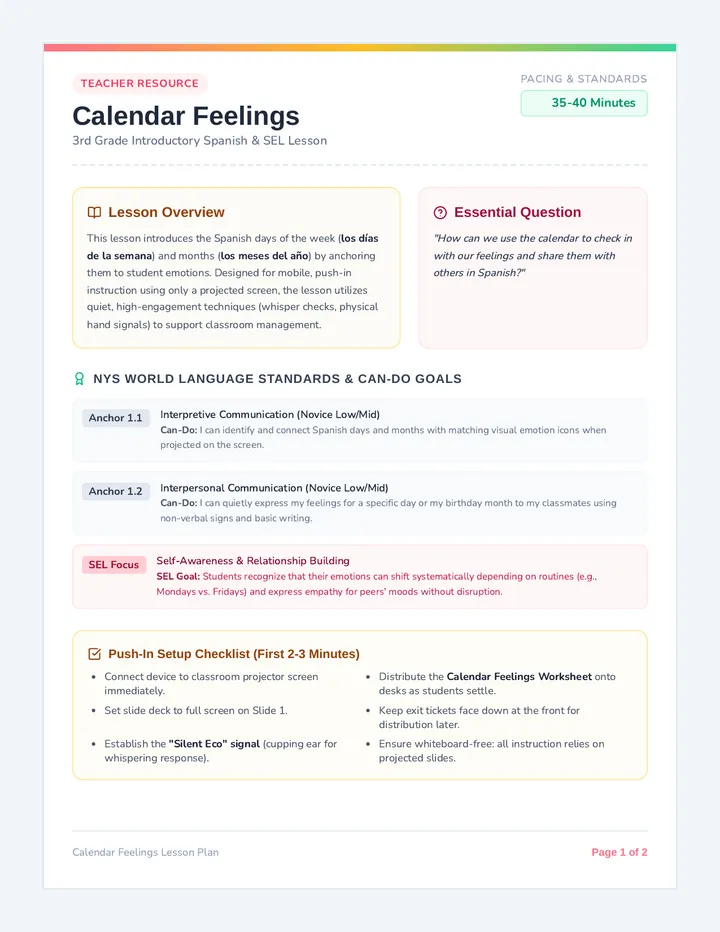
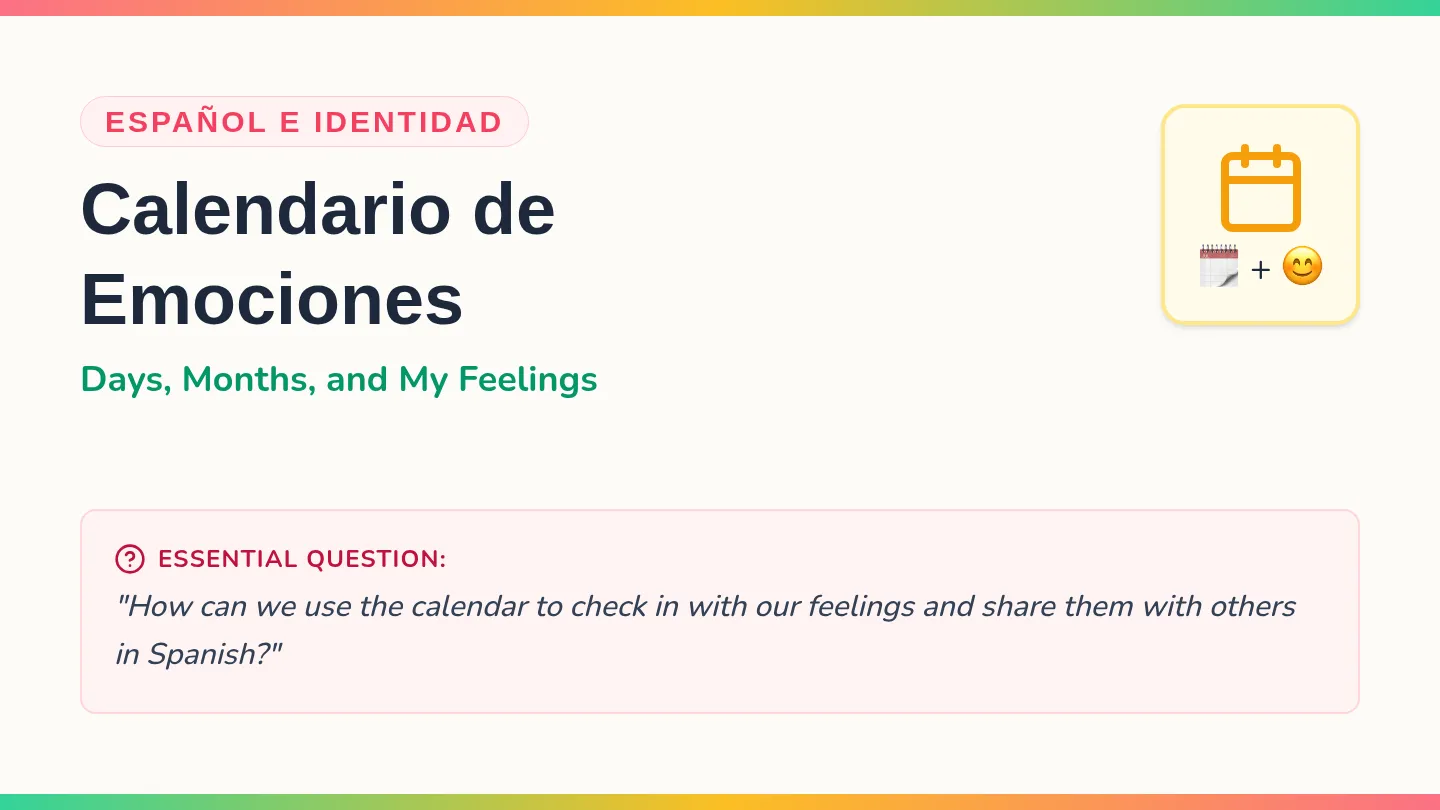
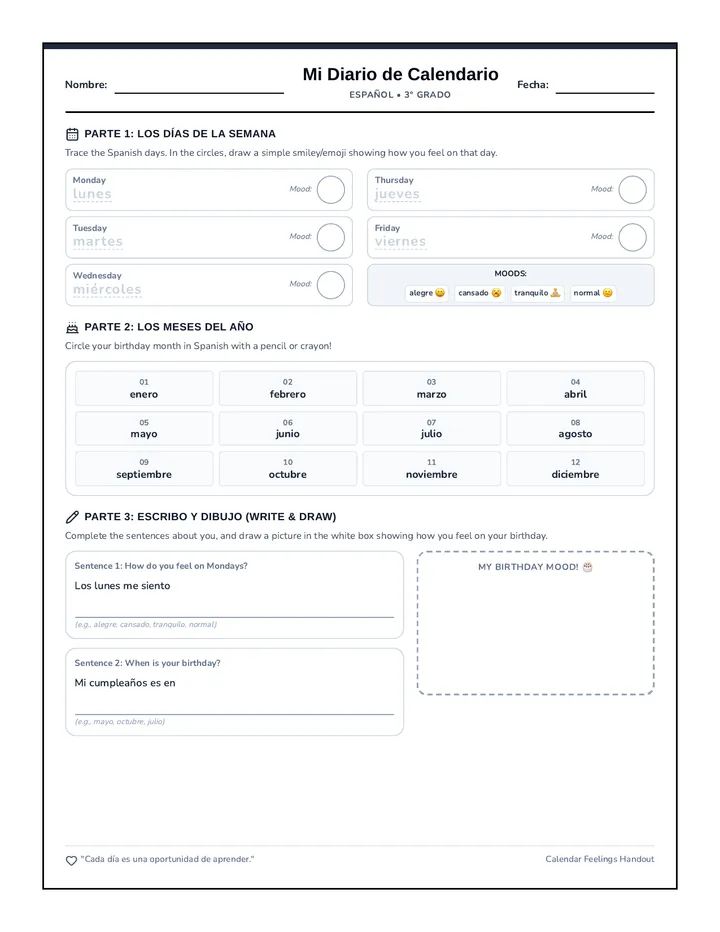
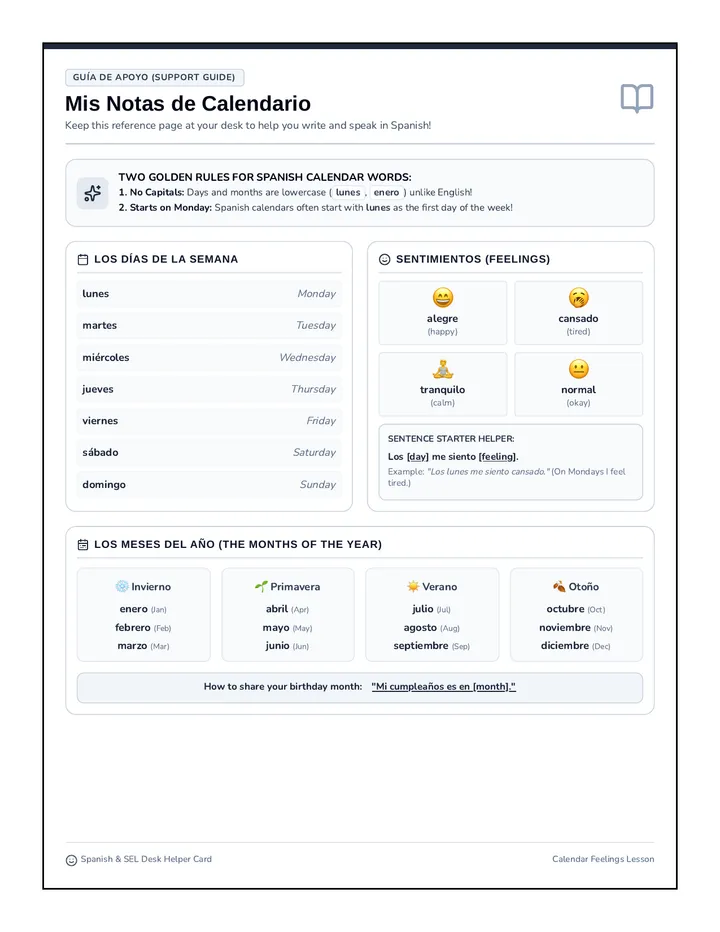
An introductory 35-40 minute Spanish lesson for 3rd grade teaching days of the week and months of the year with an SEL focus on expressing daily and monthly emotions. Designed for screen-projection with structured, quiet engagement.
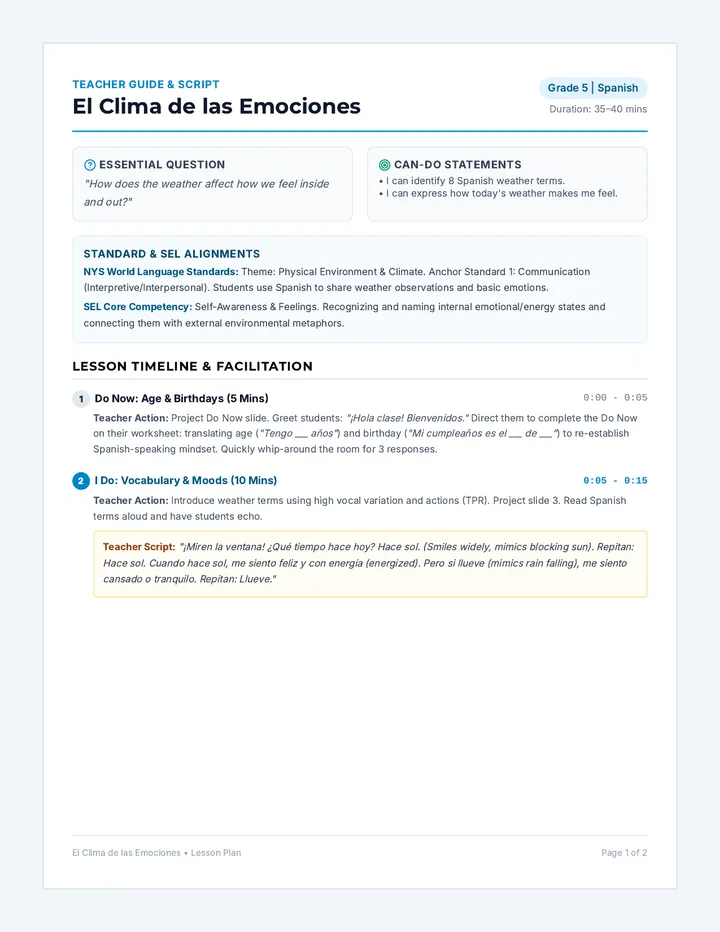
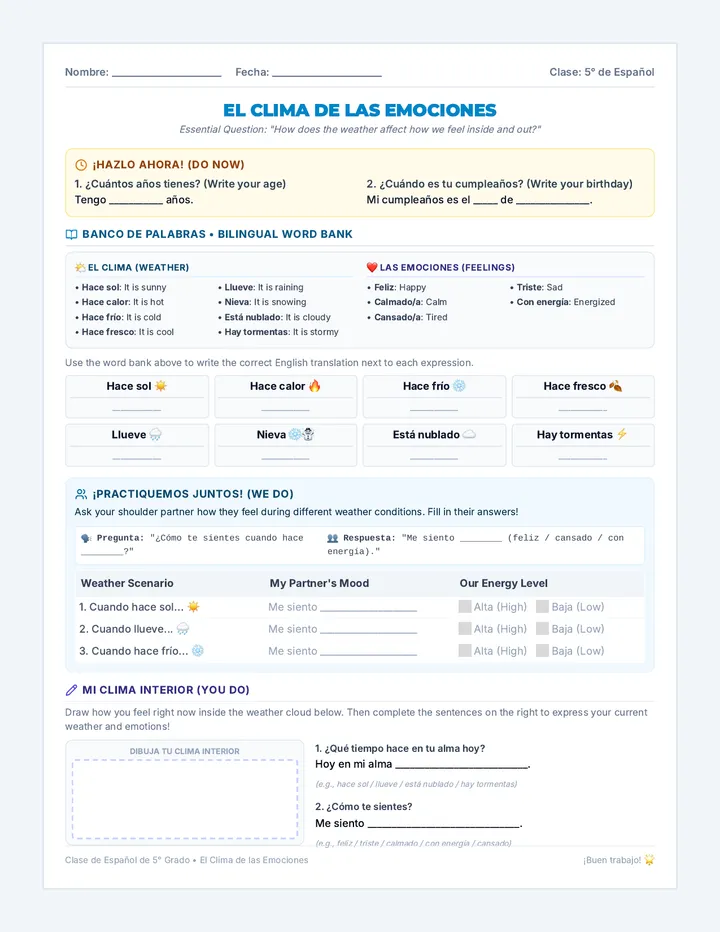
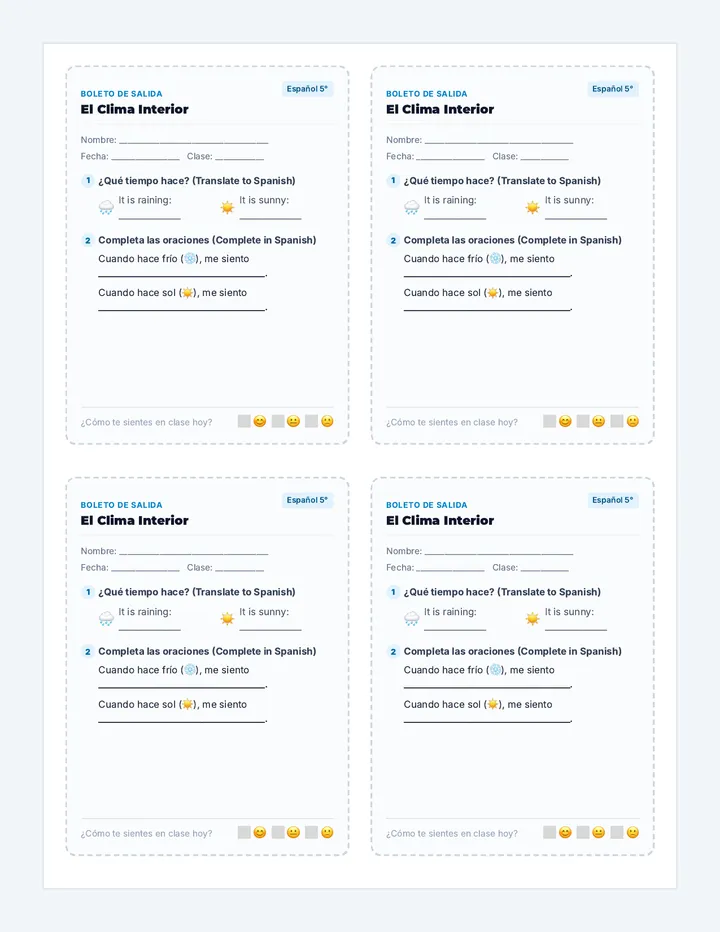
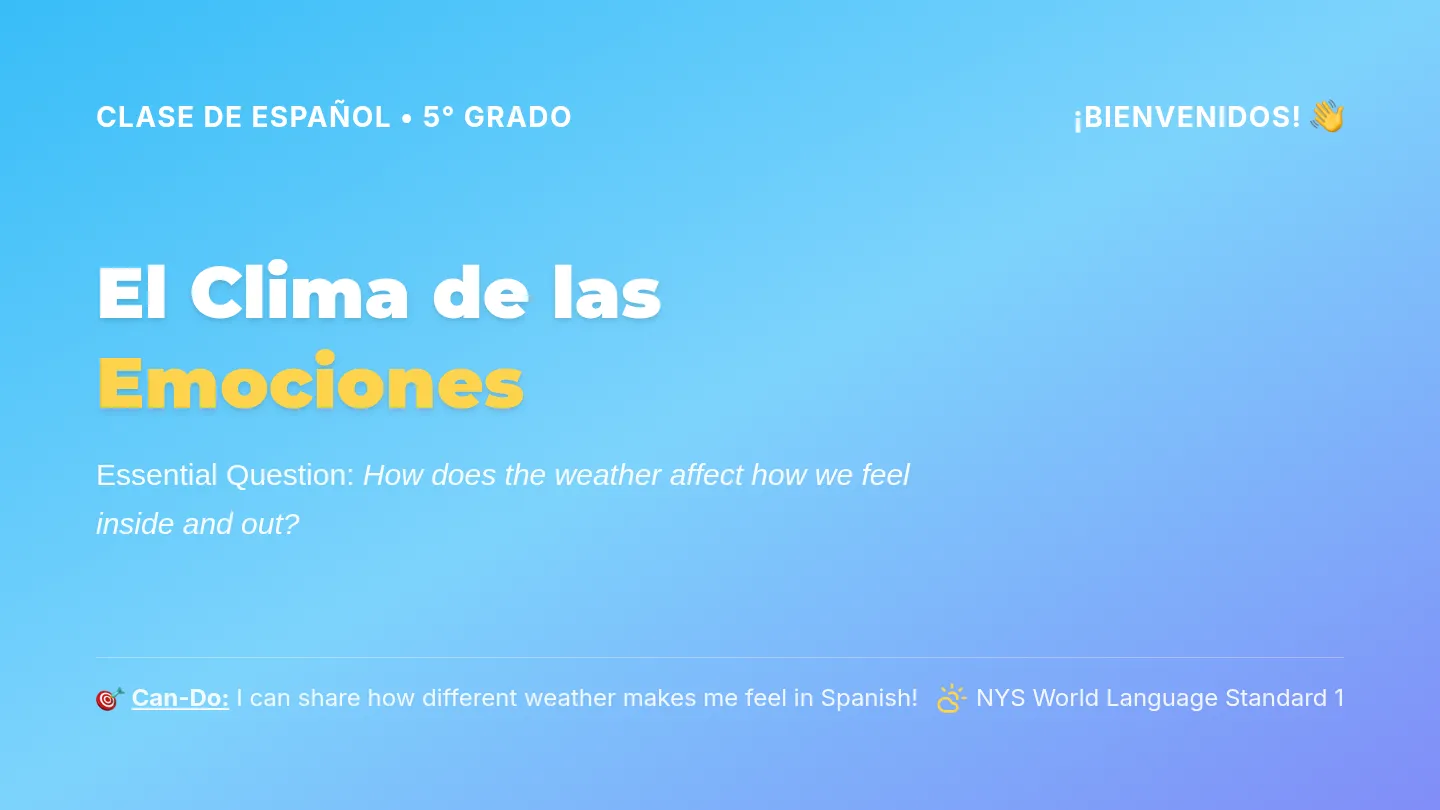
An introductory 5th-grade Spanish lesson exploring weather vocabulary connected with emotional self-awareness. Students practice expressing daily weather and how it affects their mood and energy using the 'I Do, We Do, You Do' model, designed for a 35-40 minute class in a small space.
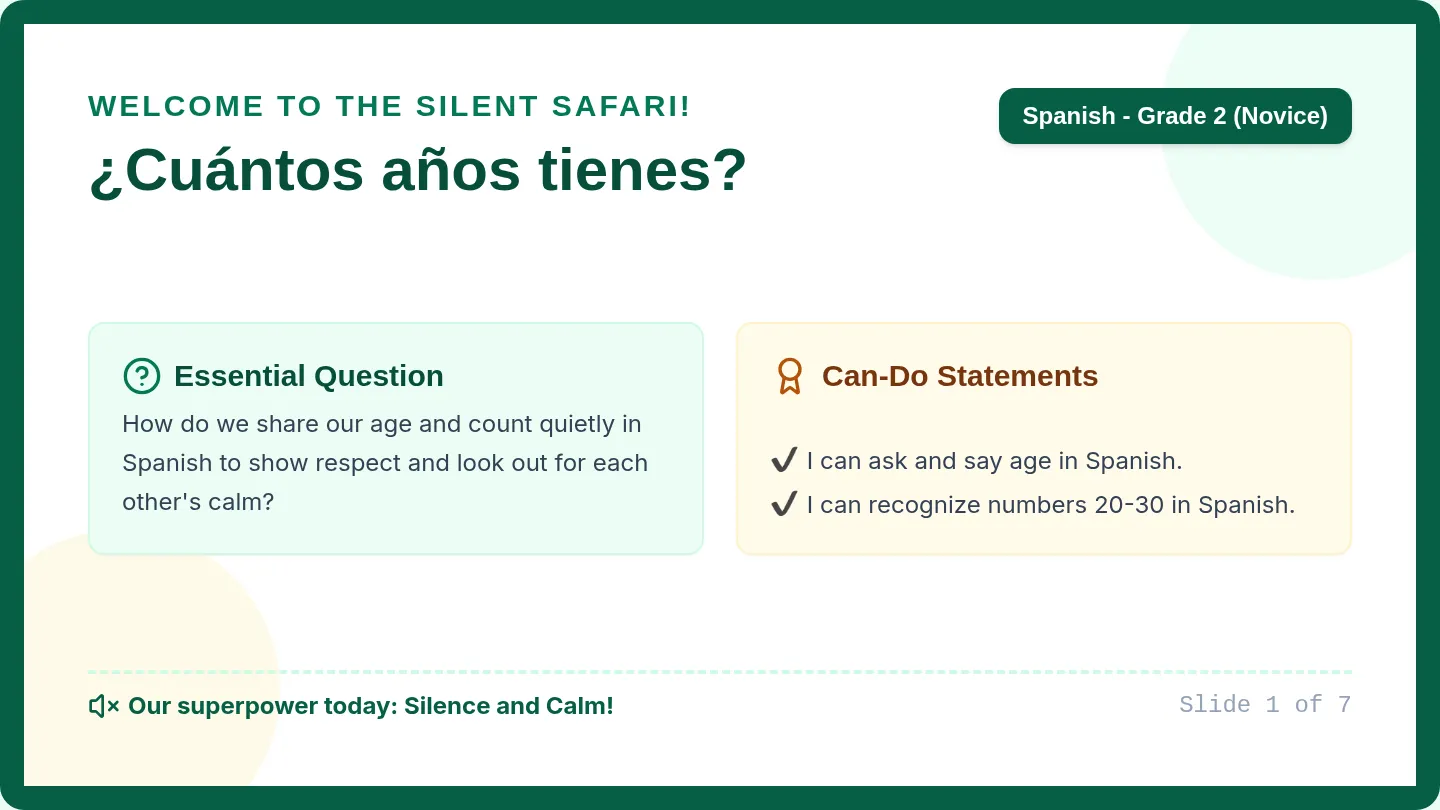
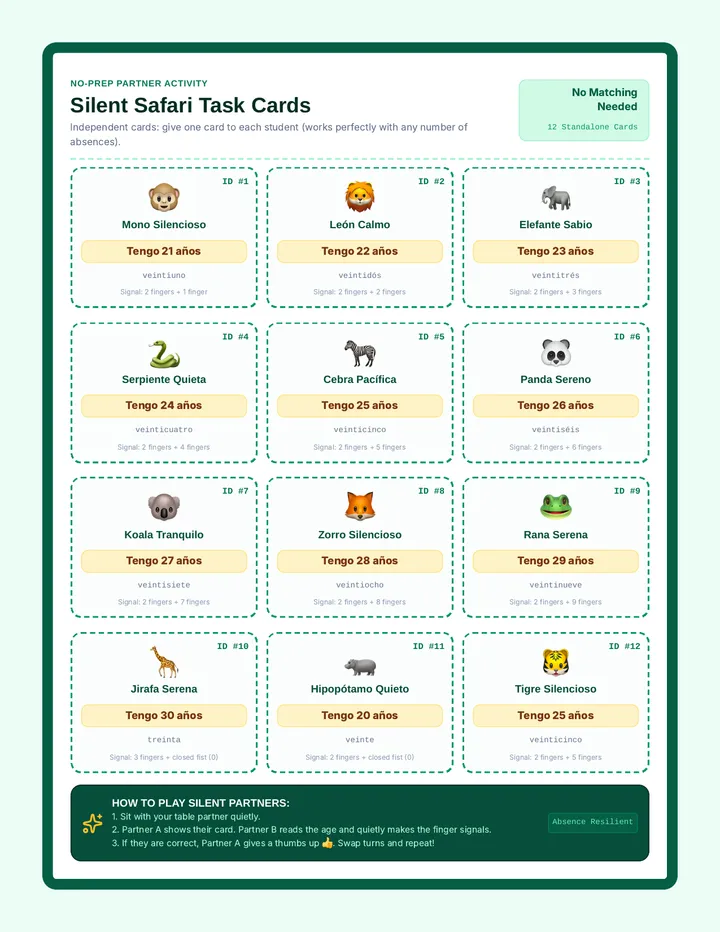
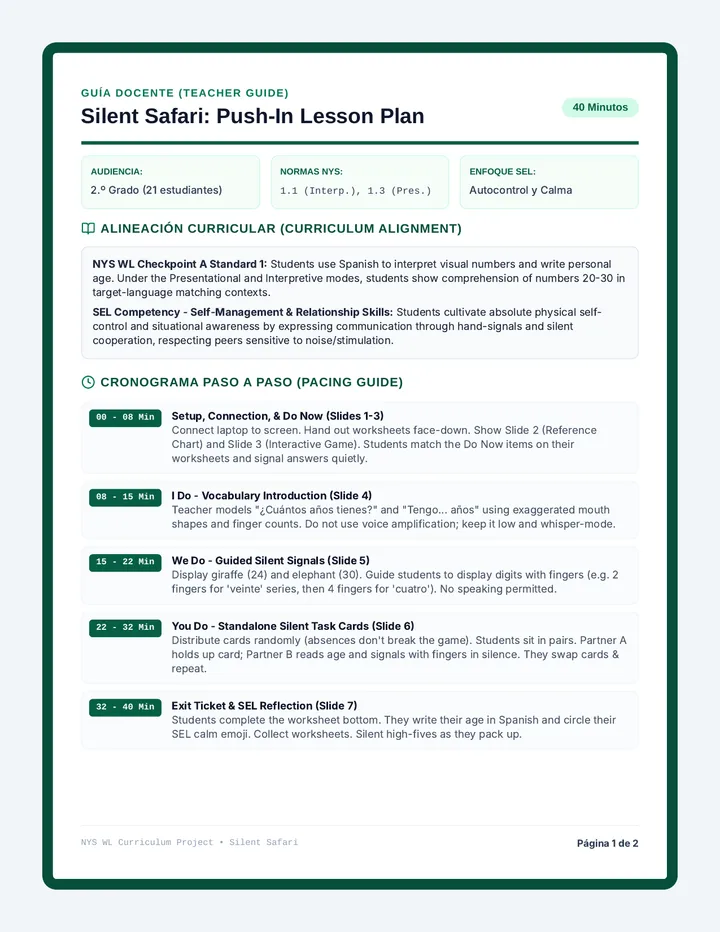
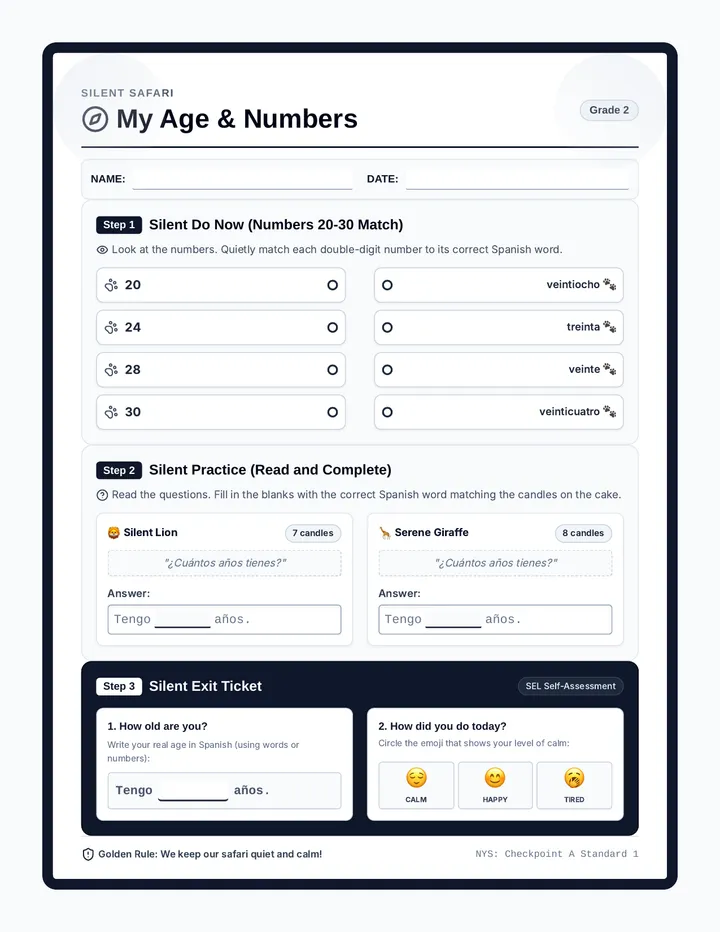
A calm, highly visual Spanish lesson for 2nd graders to learn and practice asking and stating age, plus numbers 20-30, using silent signals and partner matching to respect low-stimulation classroom needs. This lesson aligns with NYS World Language Standards and incorporates SEL elements through self-reflection and cooperative quiet sharing.
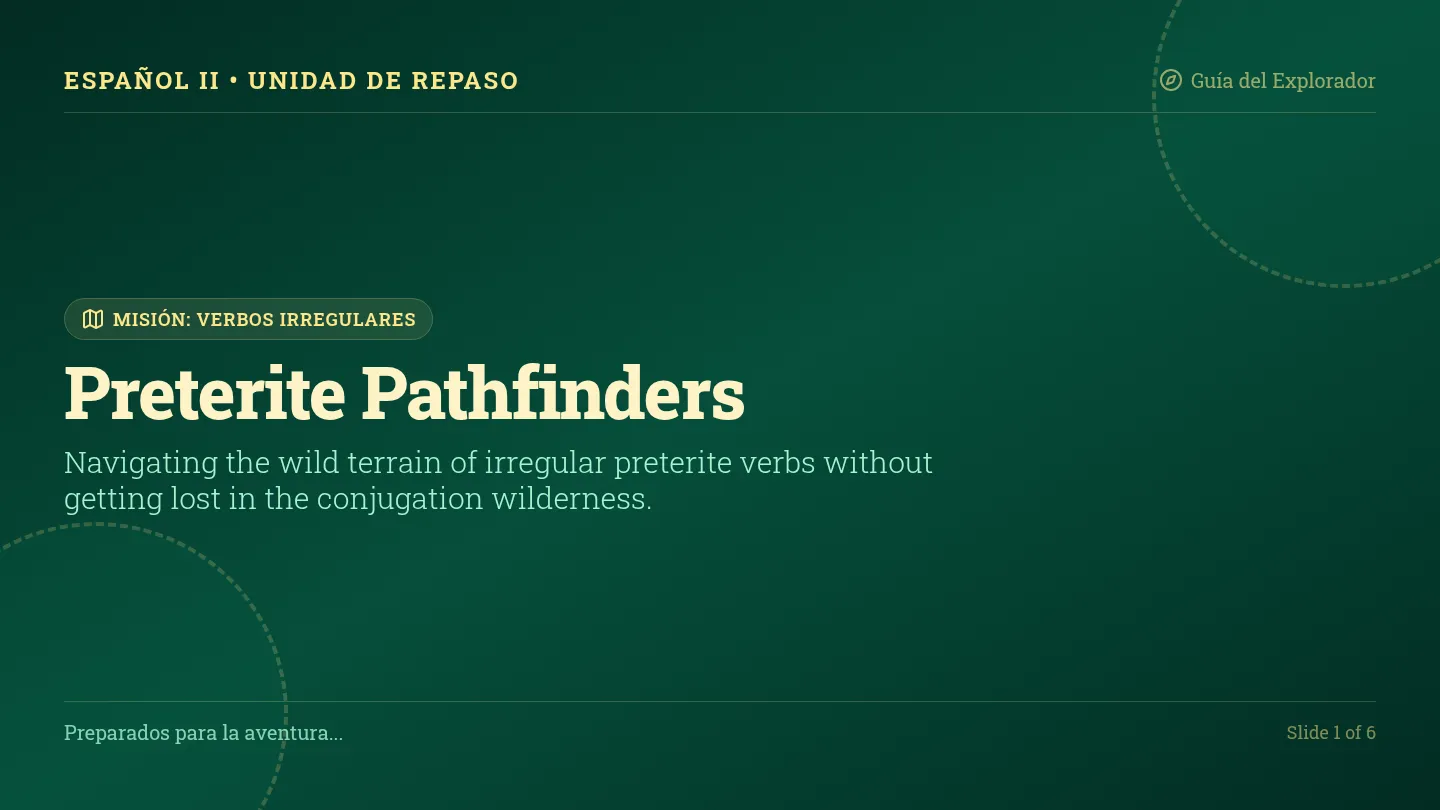
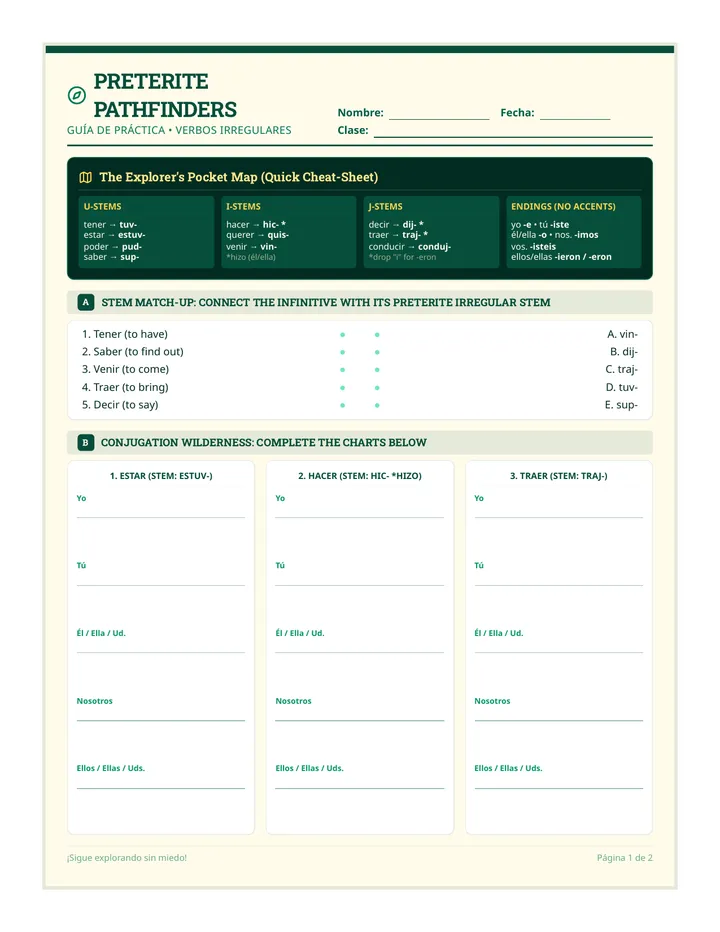
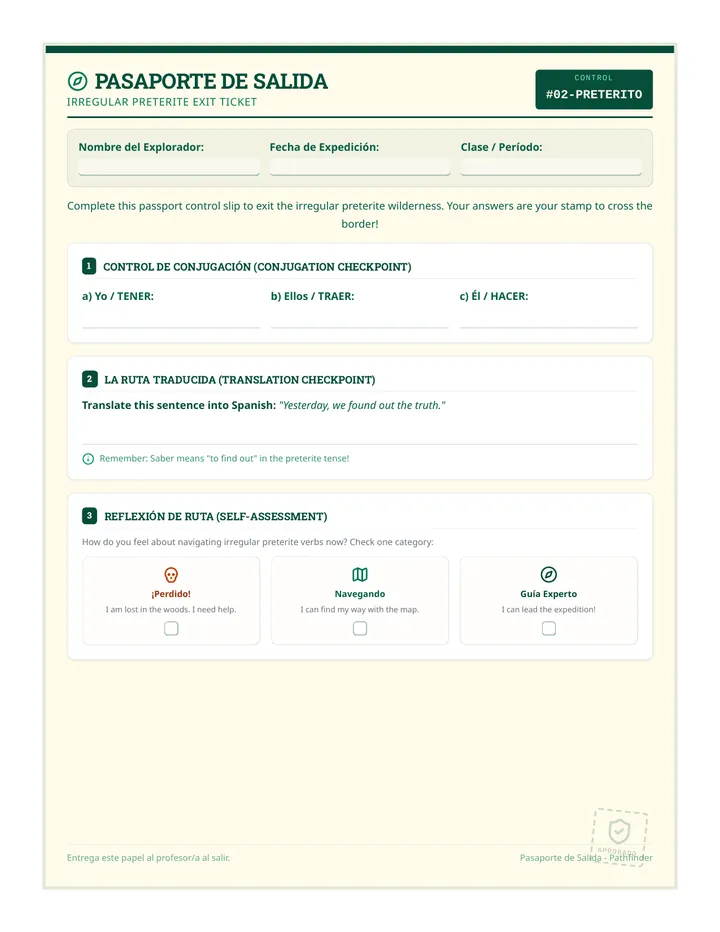
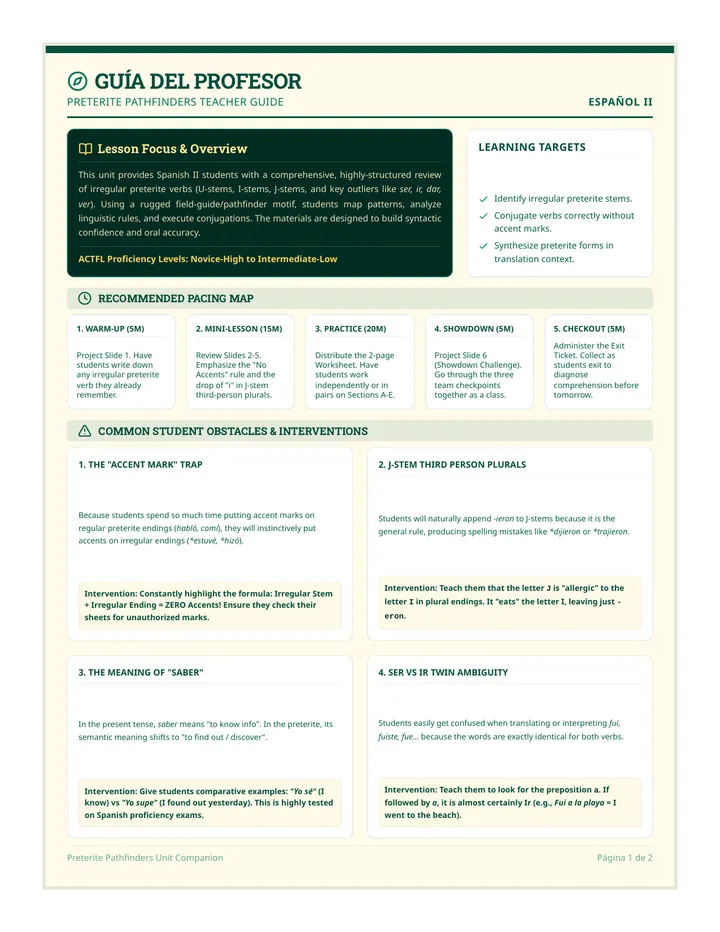
A comprehensive review and practice unit for second-year Spanish students focusing on mixed irregular preterite verbs. Includes instructional review slides, a structured guided practice worksheet, a quick exit ticket, and a teacher guide with answer keys.
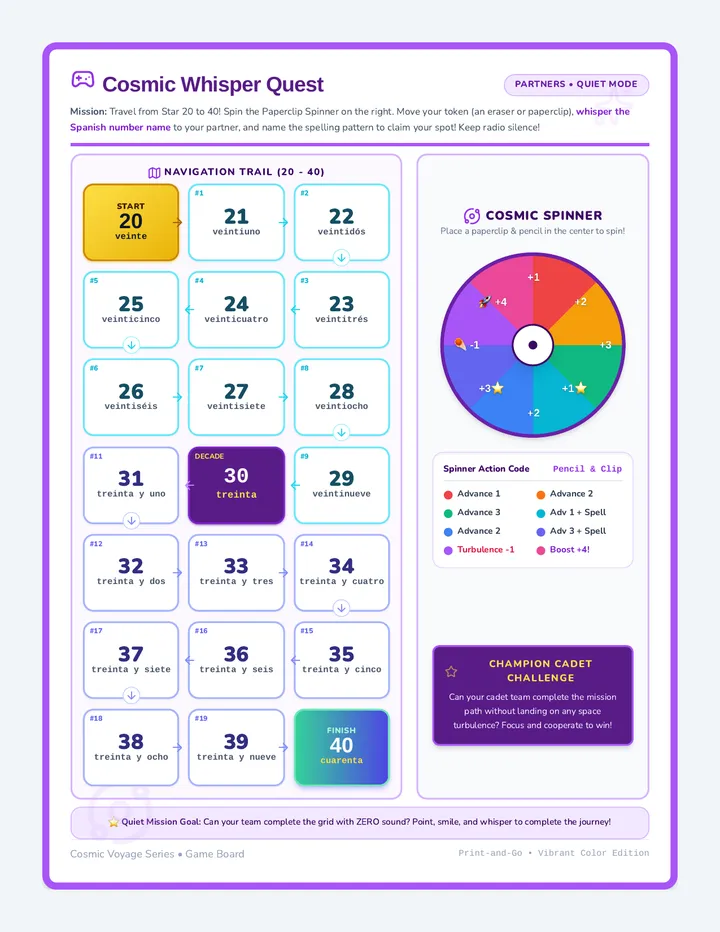
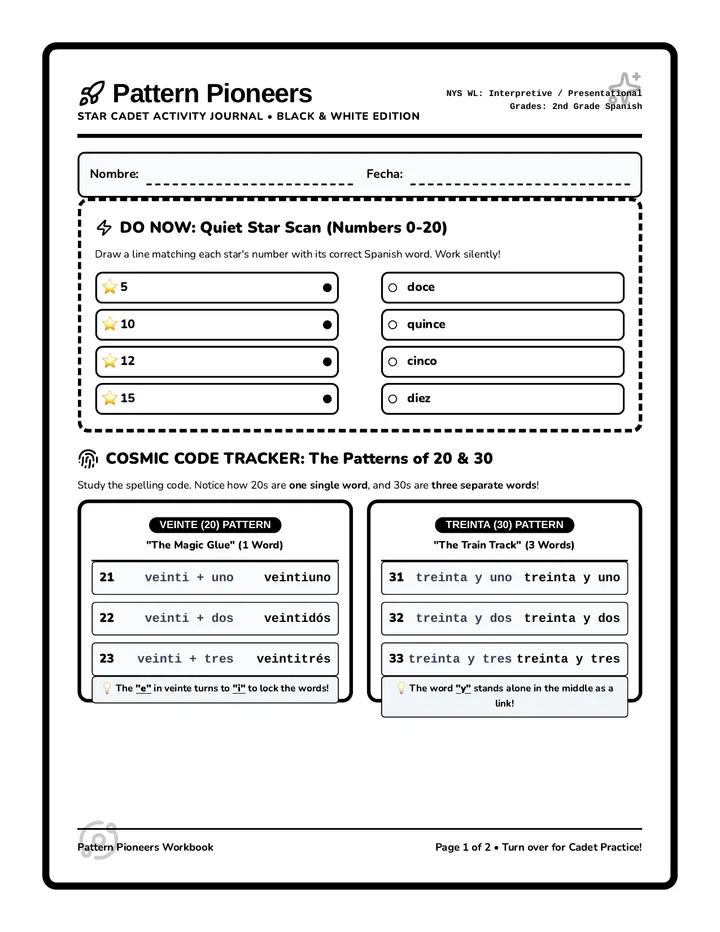
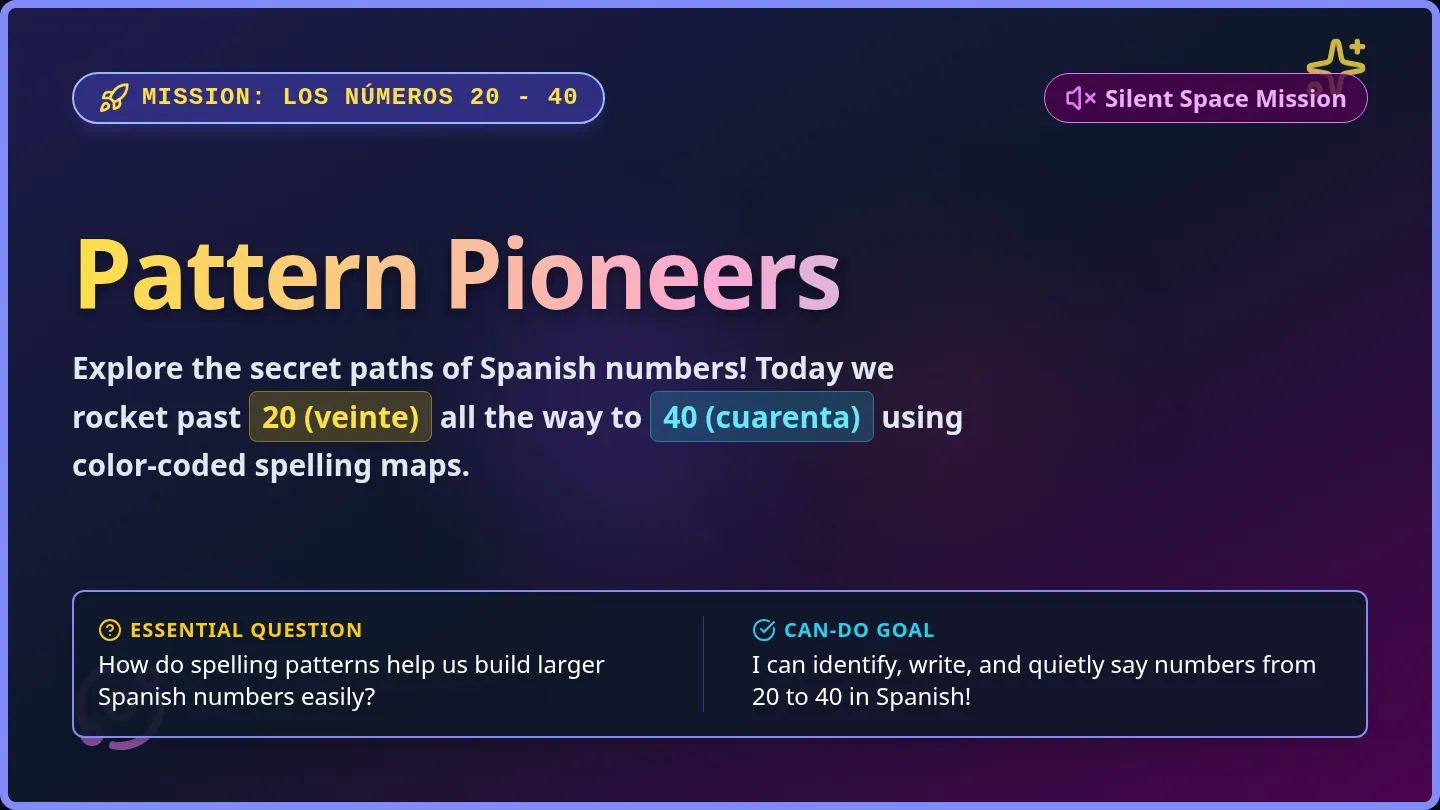
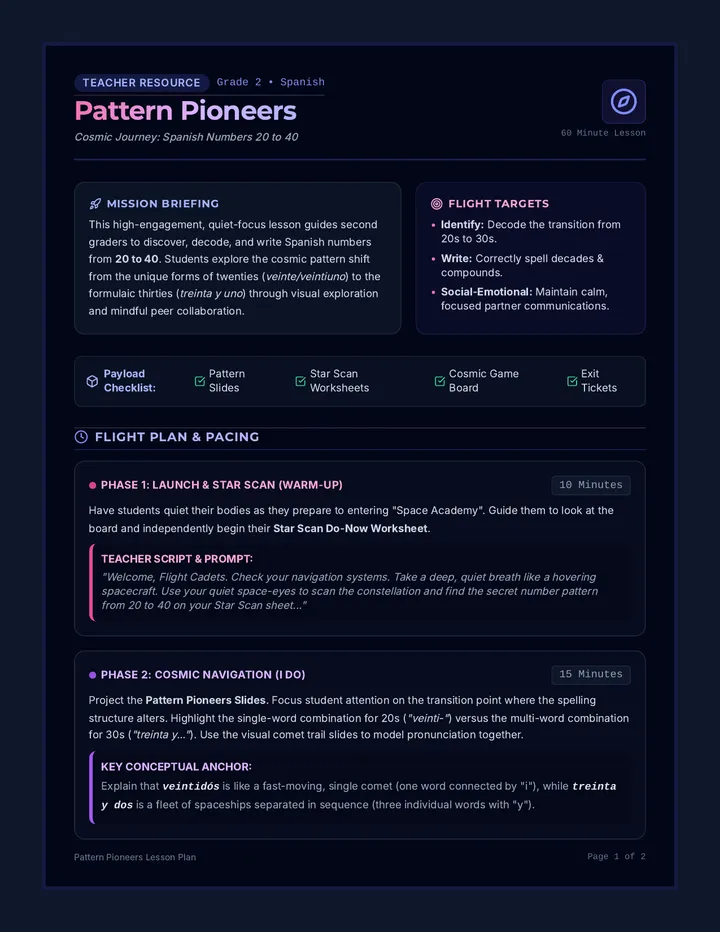
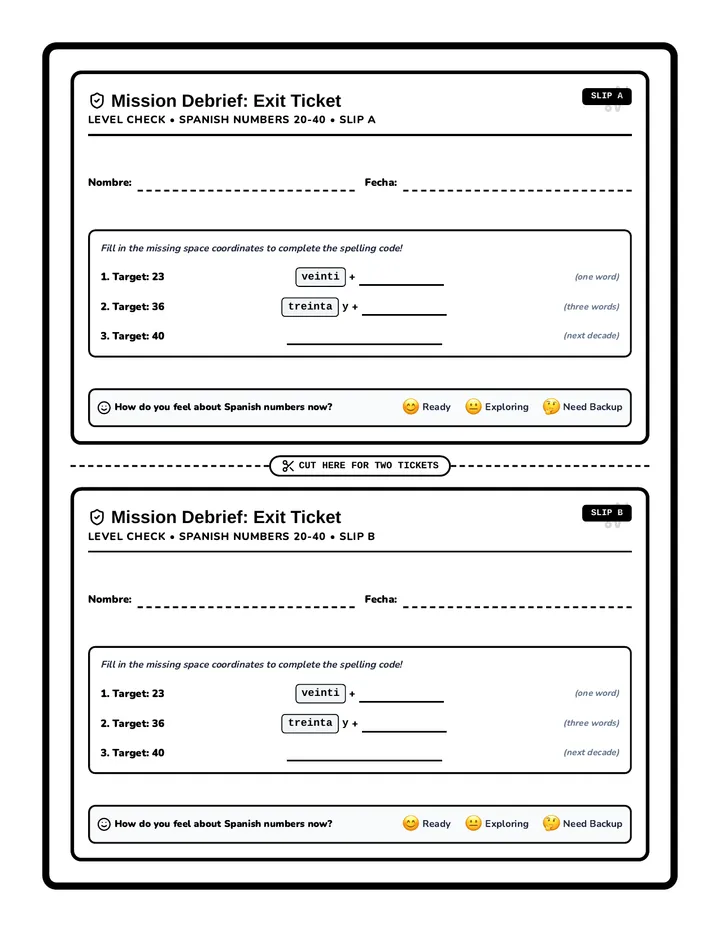
A Spanish numbers lesson for 2nd graders focusing on decades and patterns from 20 to 40. The lesson follows the I Do, We Do, You Do framework, integrates social-emotional learning, and uses quiet, high-engagement visual activities.
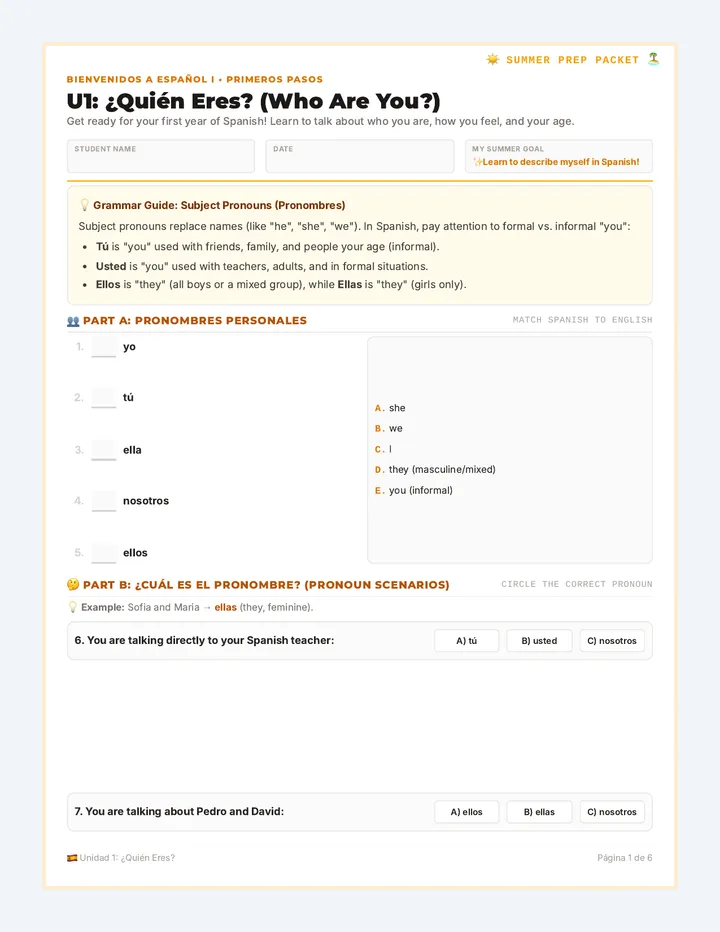
A foundational beginner Spanish lesson focused on personal descriptions, character traits, and feelings. Students learn how to express who they are, how they feel, their age, and where they live using pronouns, ser, estar, and tener.
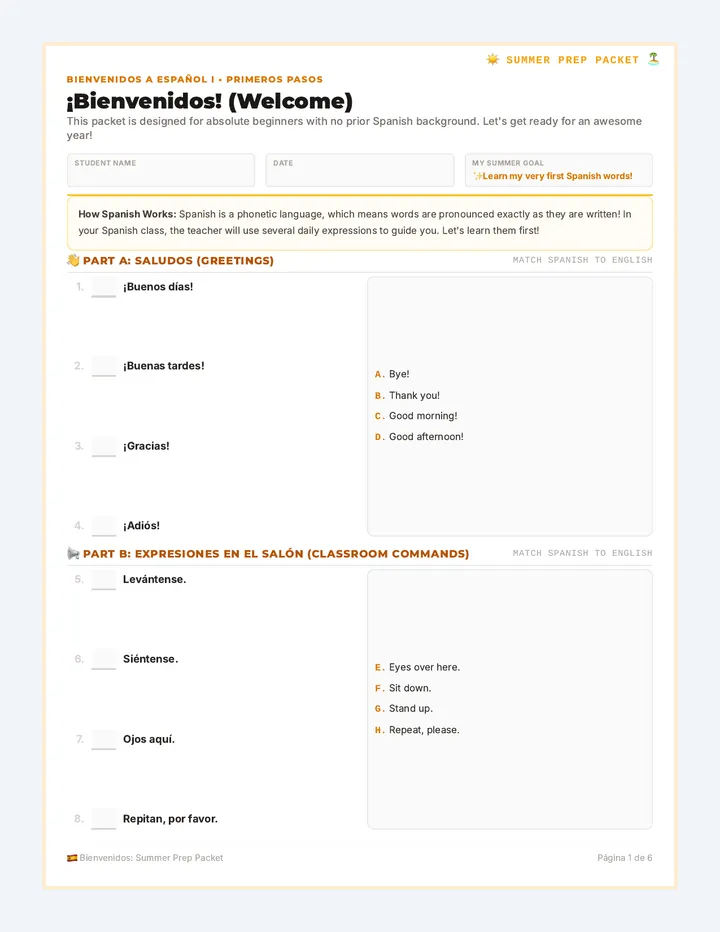
A preparatory summer lesson for complete beginner Spanish students with no prior background. Covers classroom expressions, essential classroom objects, the alphabet, Spanish-speaking geography, and basic numbers.
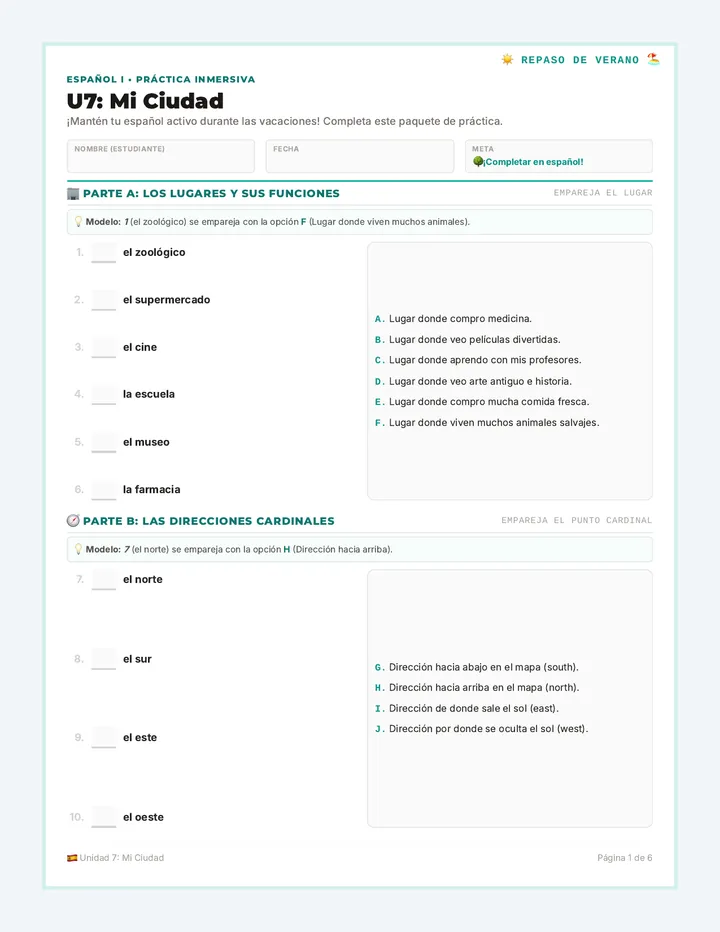
An immersive Spanish lesson centered on places in the city, transportation, and directional vocabulary. Students practice verb conjugations of "ir", prepositions, and simple sentence translations.
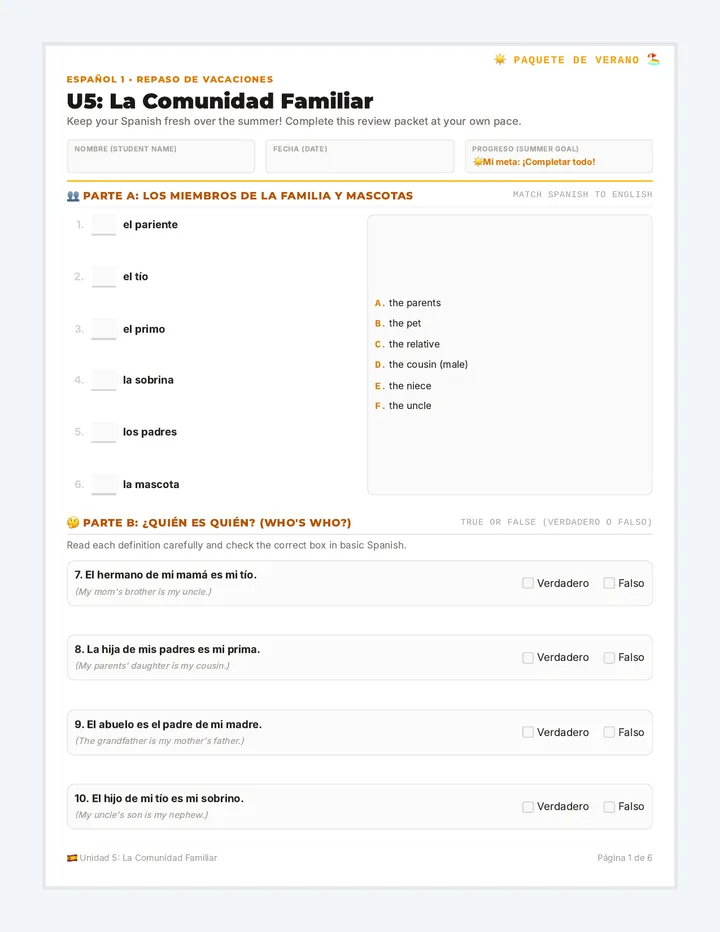
A Spanish lesson focused on family members, pets, household objects, rooms, and descriptions using pronombres and verbs like ser, estar, tener, and vivir.
A highly visual, beginner-friendly lesson for Grade 3 ELL students with zero English background. Covers family, colours, and favorite animals through oral point-and-say boards and visual tracing/matching worksheets.
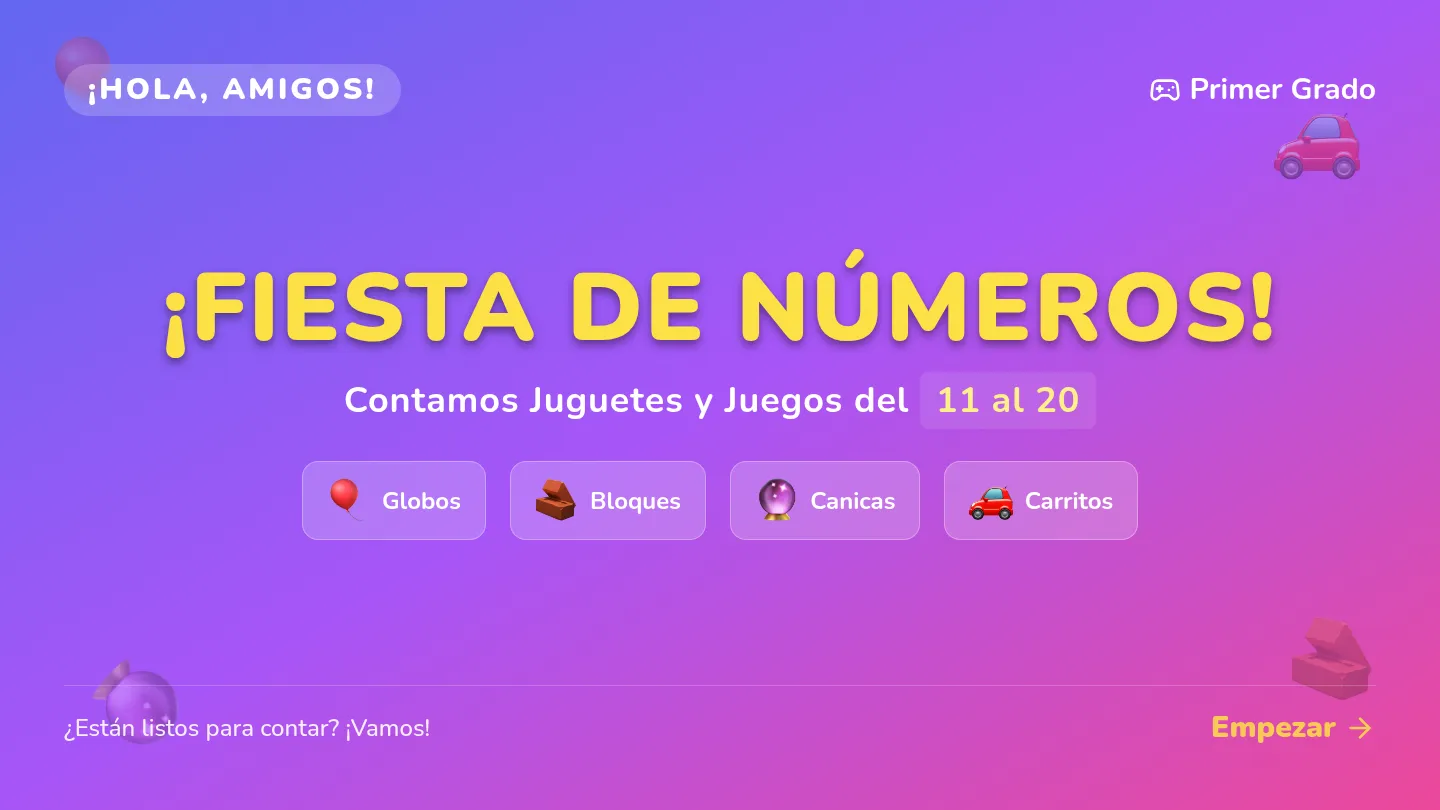
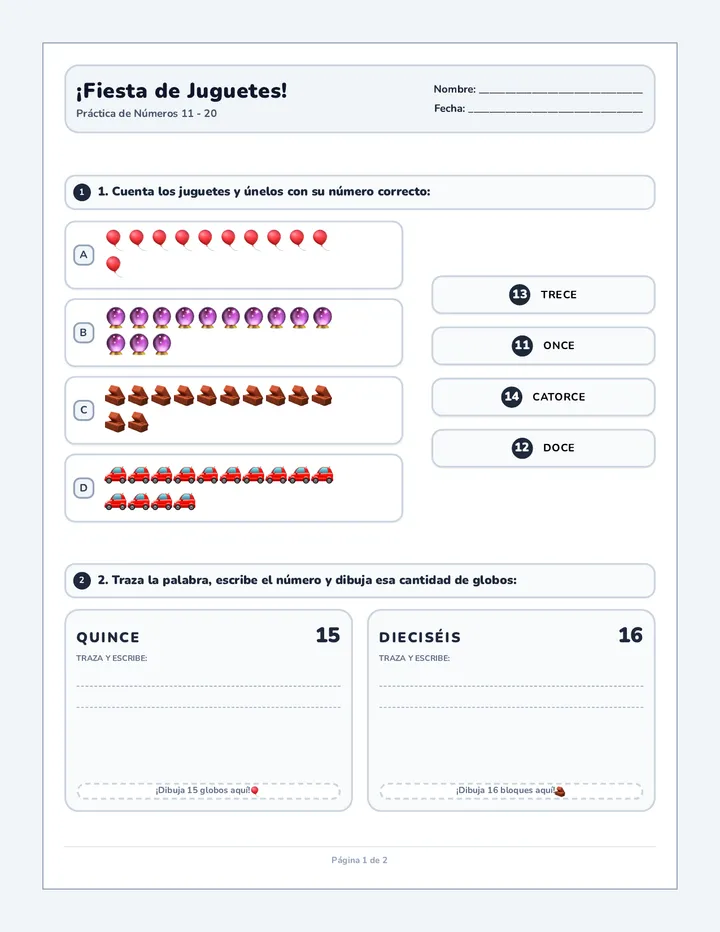
A playful Spanish lesson for 1st-grade students to learn numbers 11-20 using a colorful toys and games theme.
A playful and colorful introductory lesson on Spanish numbers 11 to 20 designed for young learners, highlighting key suffix and prefix spelling patterns.
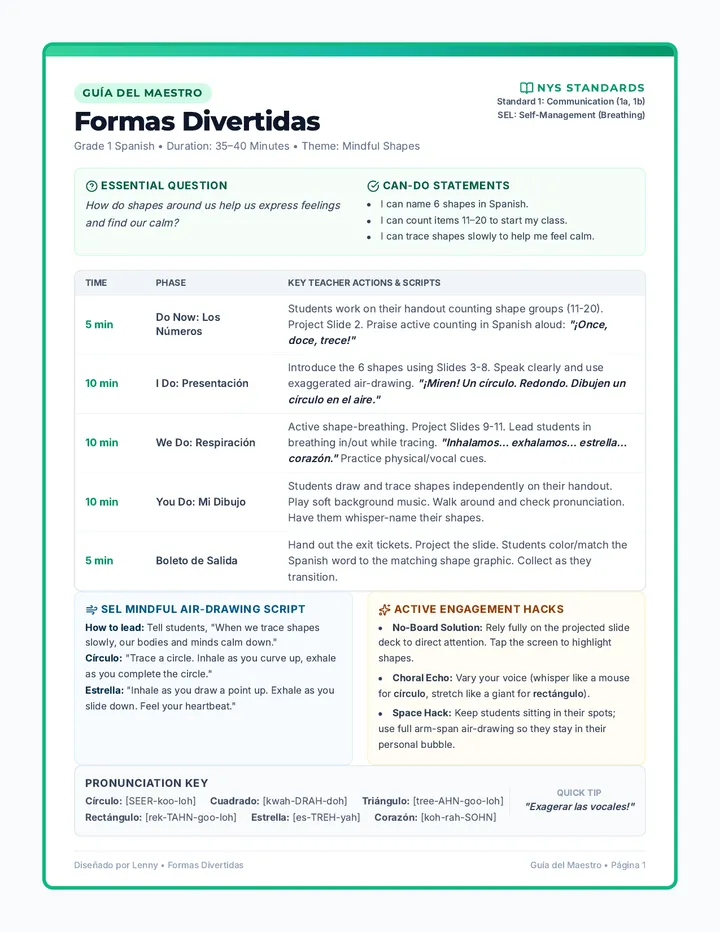
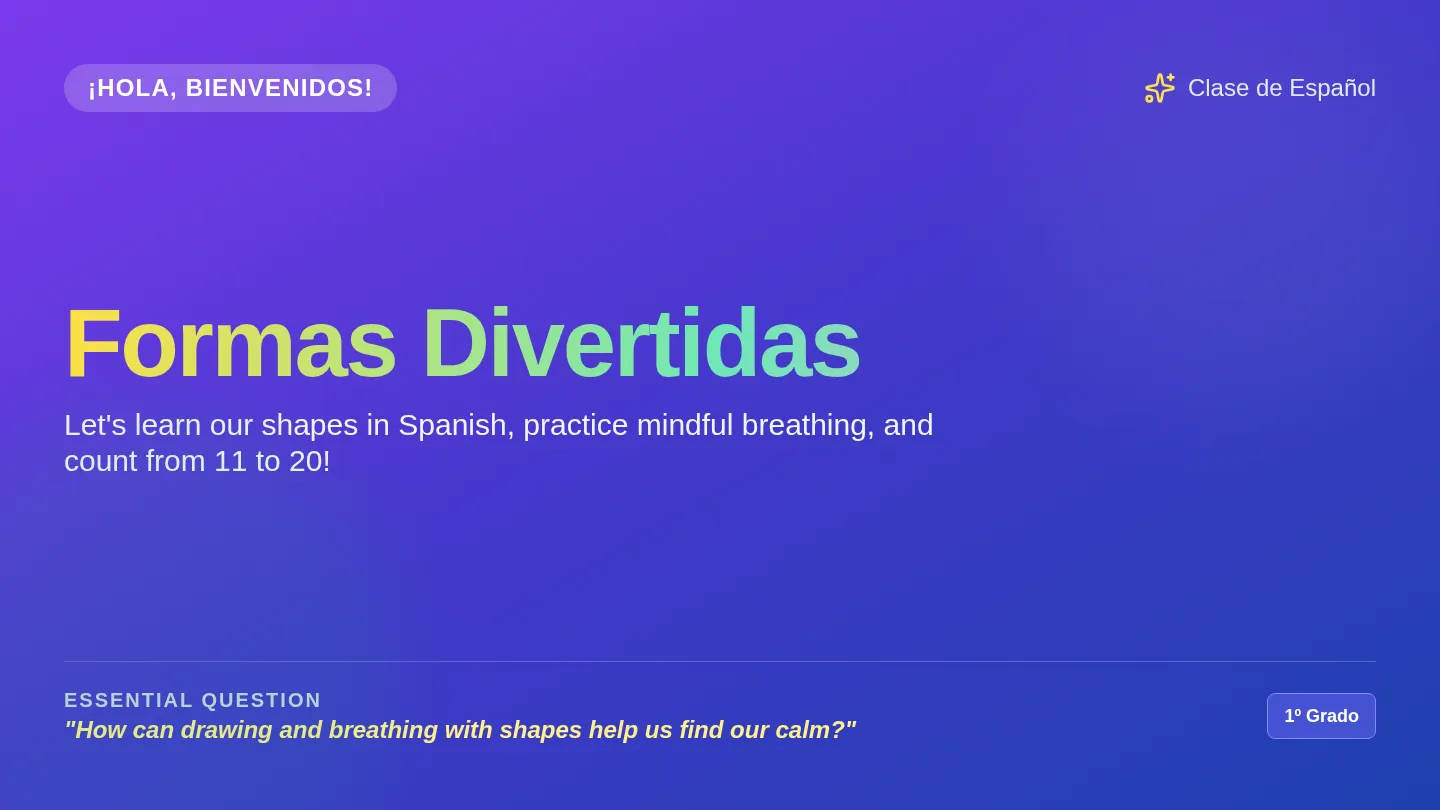
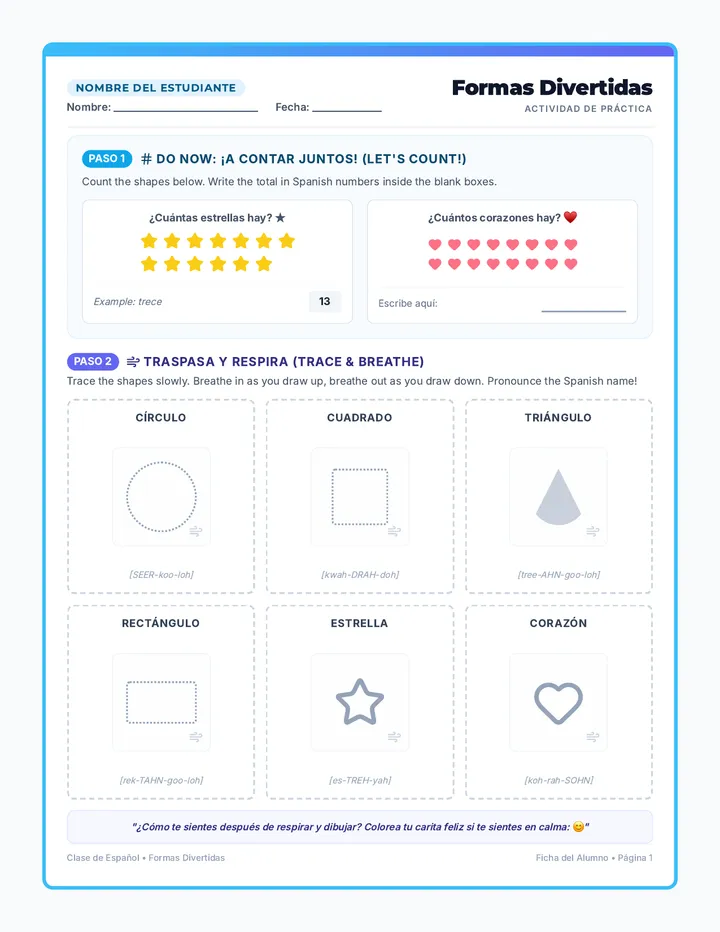
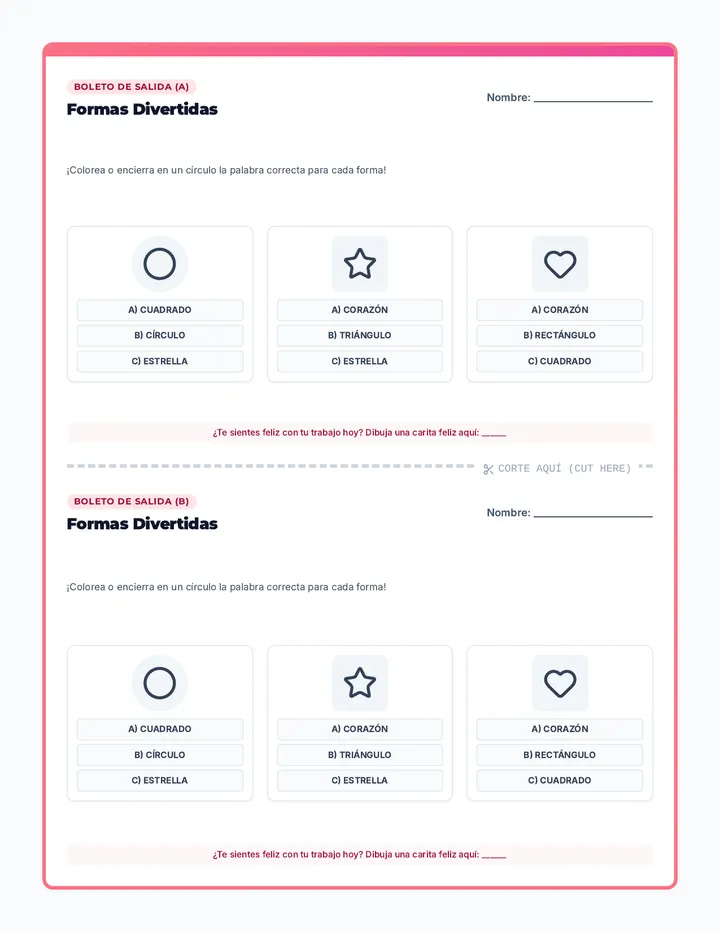
A 1st-grade introductory Spanish shapes lesson incorporating mindful breathing (SEL), counting 11-20, and active multi-sensory learning suited for small classrooms with a screen.
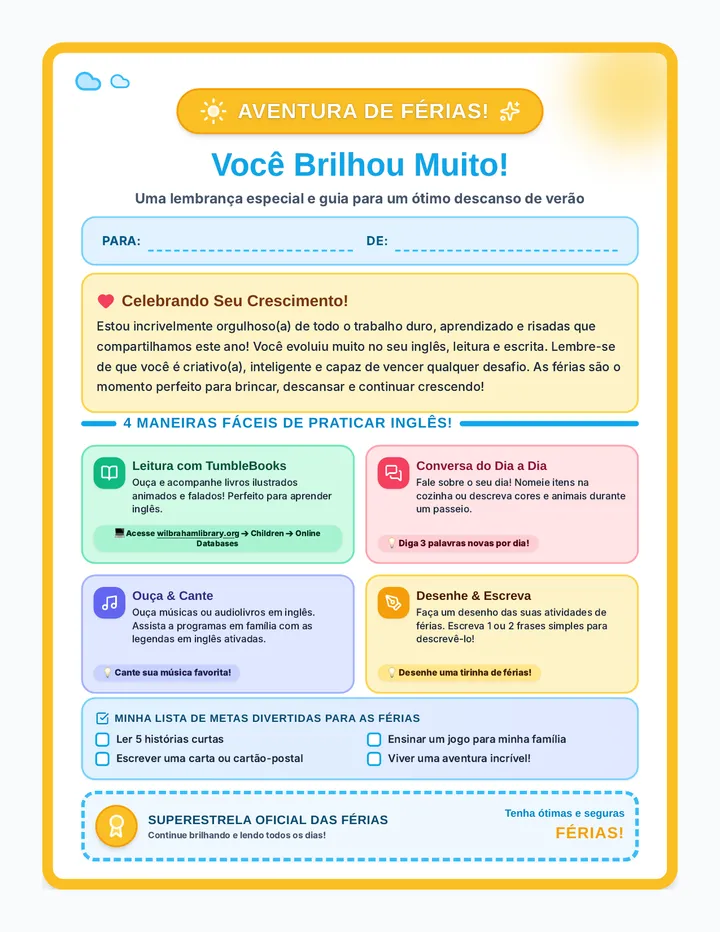
A lesson designed to celebrate student growth and guide families with actionable, low-stress English practice tips over the summer break.
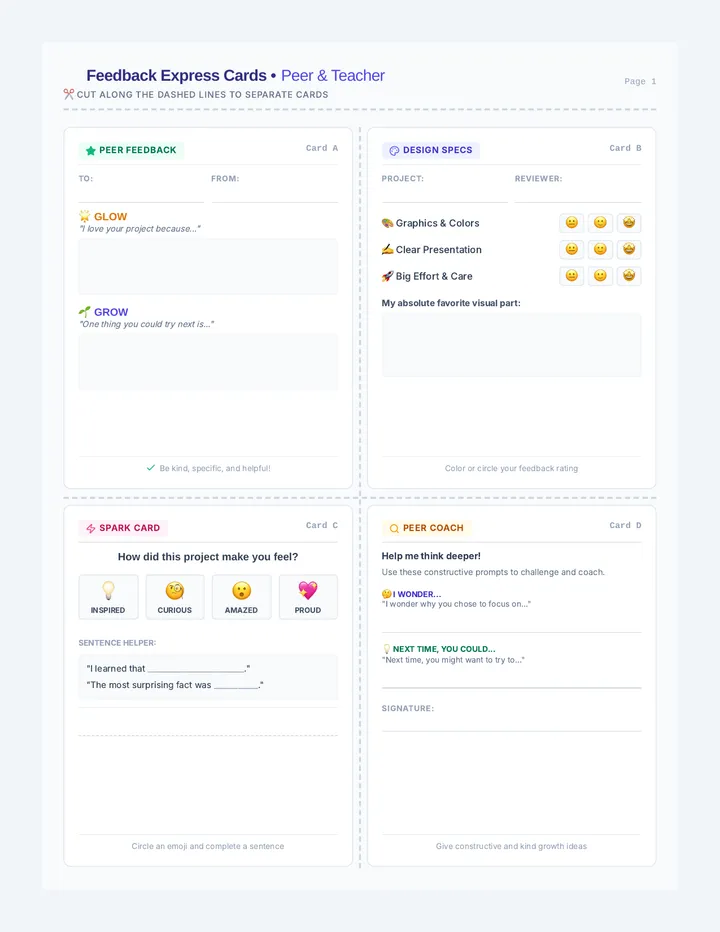
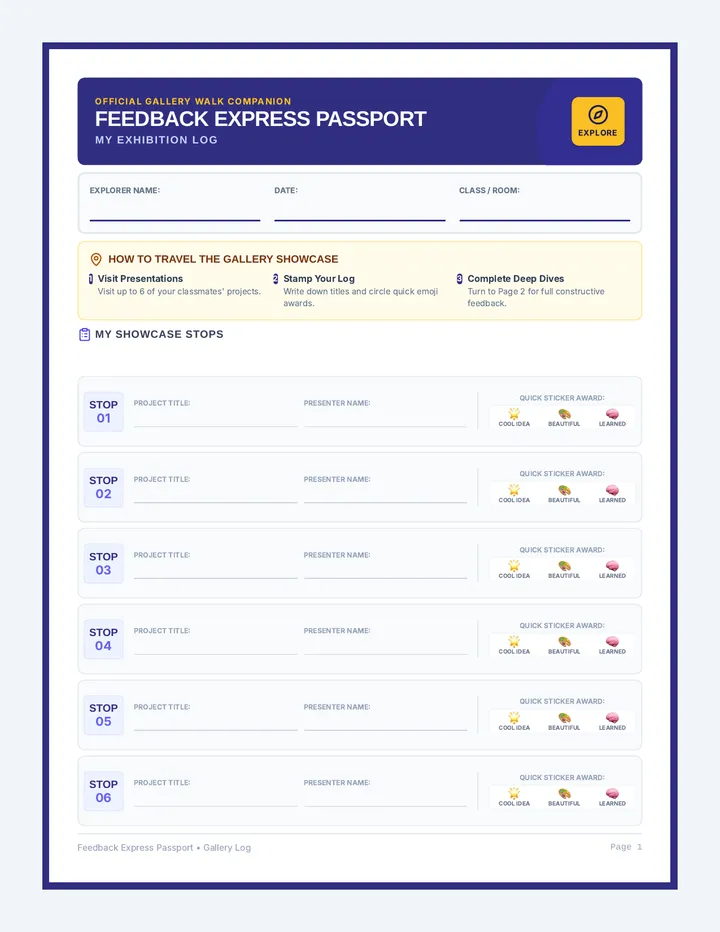
A visual feedback toolkit designed for elementary and middle school classrooms, families, and peers to provide meaningful project feedback. Includes emoji-rich rating systems, structured review guides, and sentence starter frames.
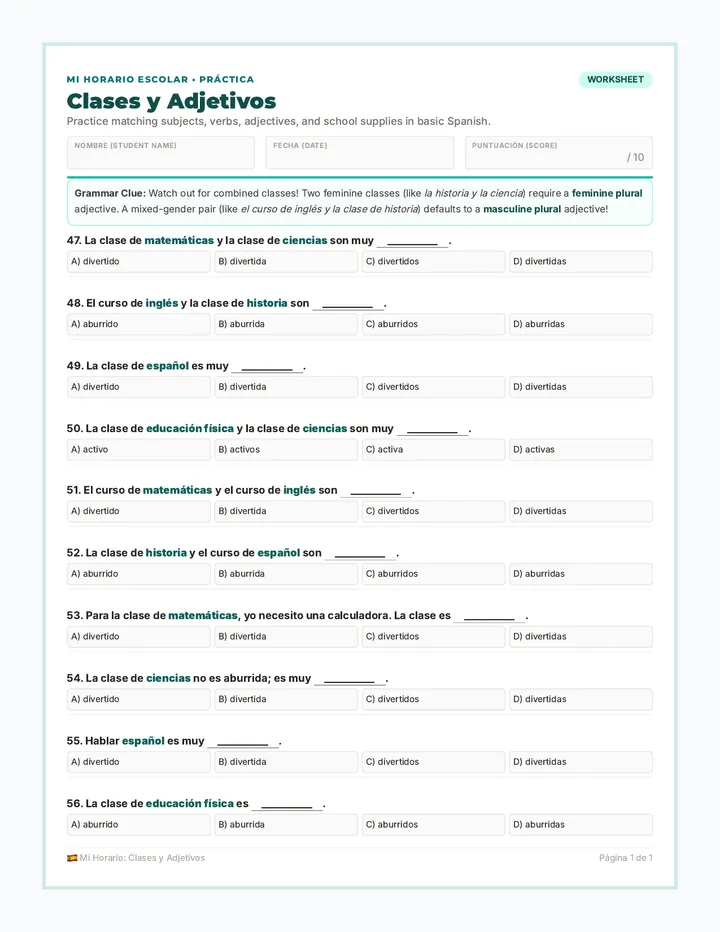
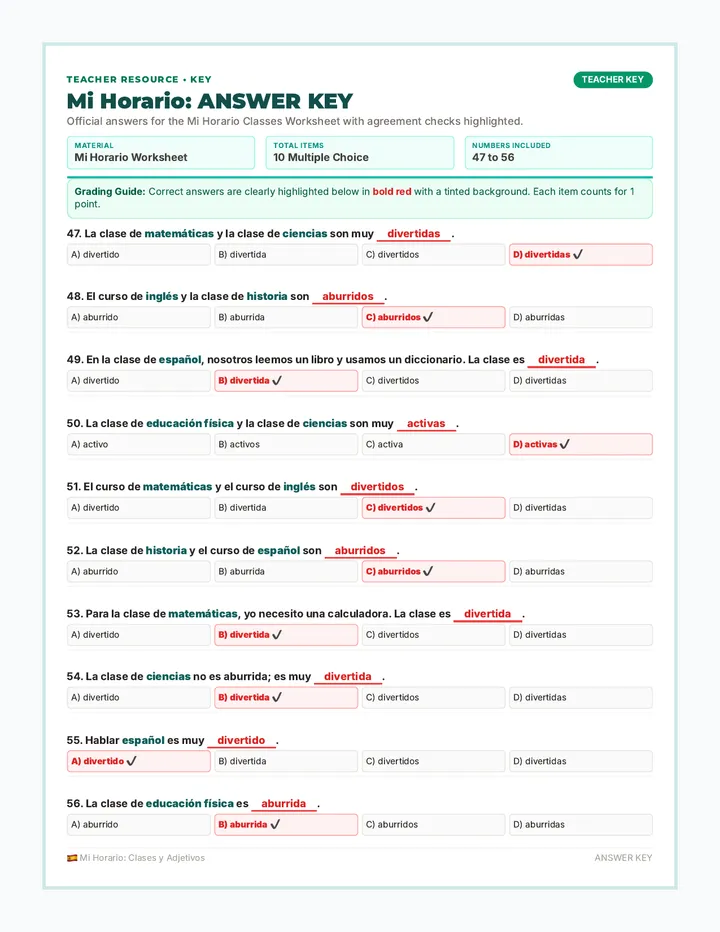
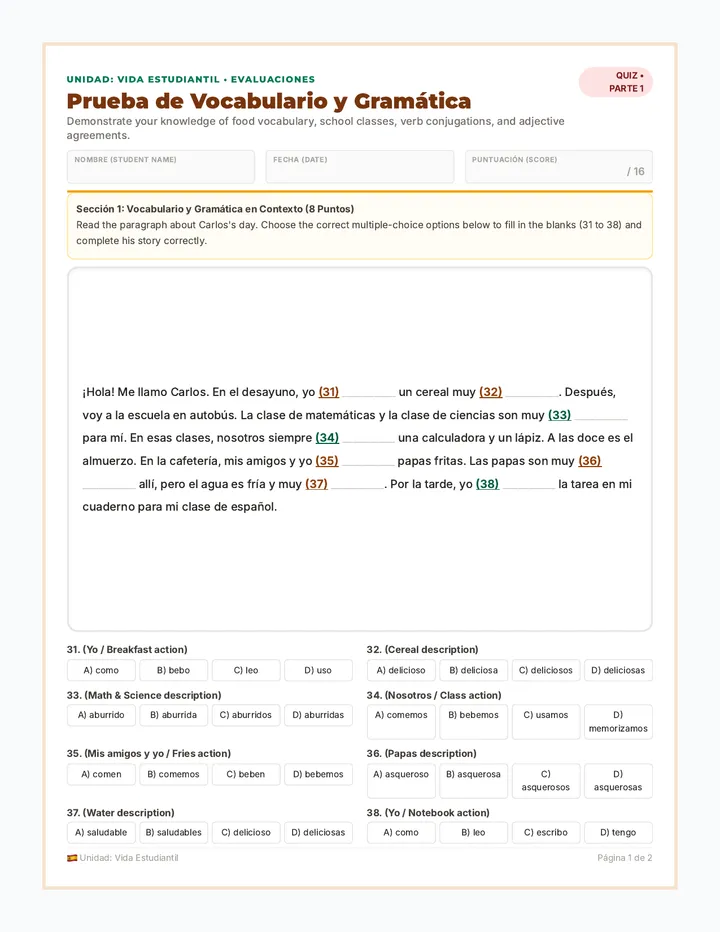
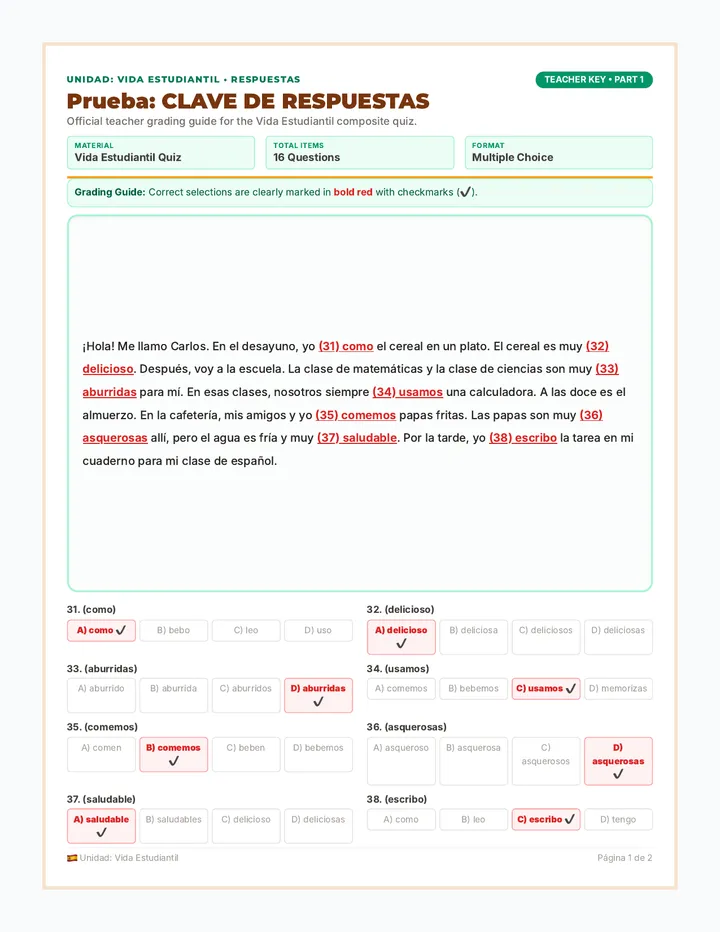
An engaging Spanish lesson covering school subjects (math, science, Spanish, English, history, physical education) and descriptive adjectives. Students practice describing courses, matching nouns with adjectives, and determining supply needs in basic Spanish.
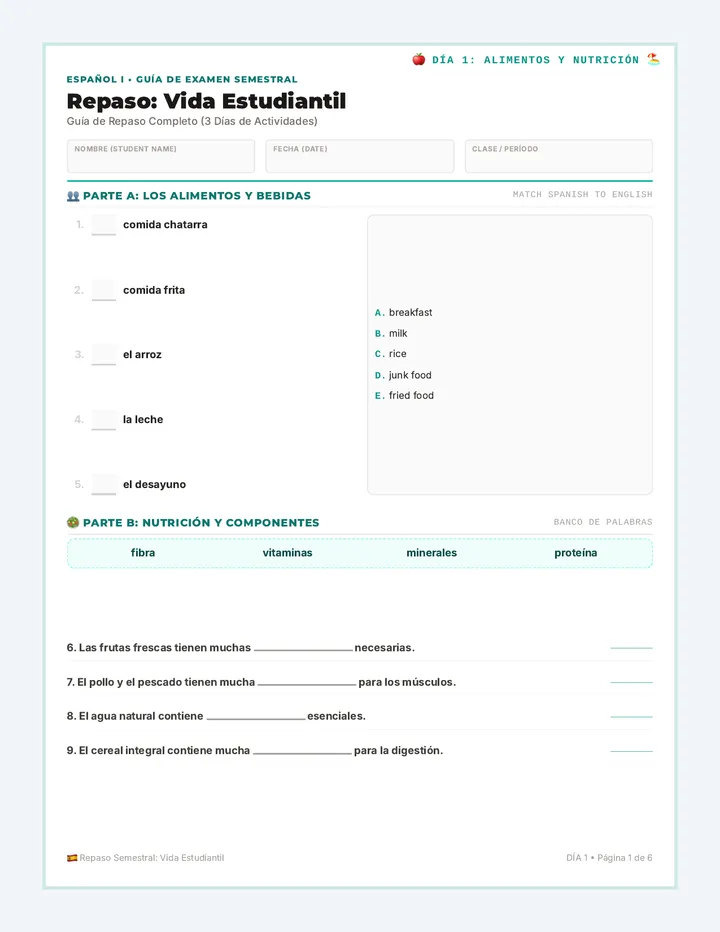
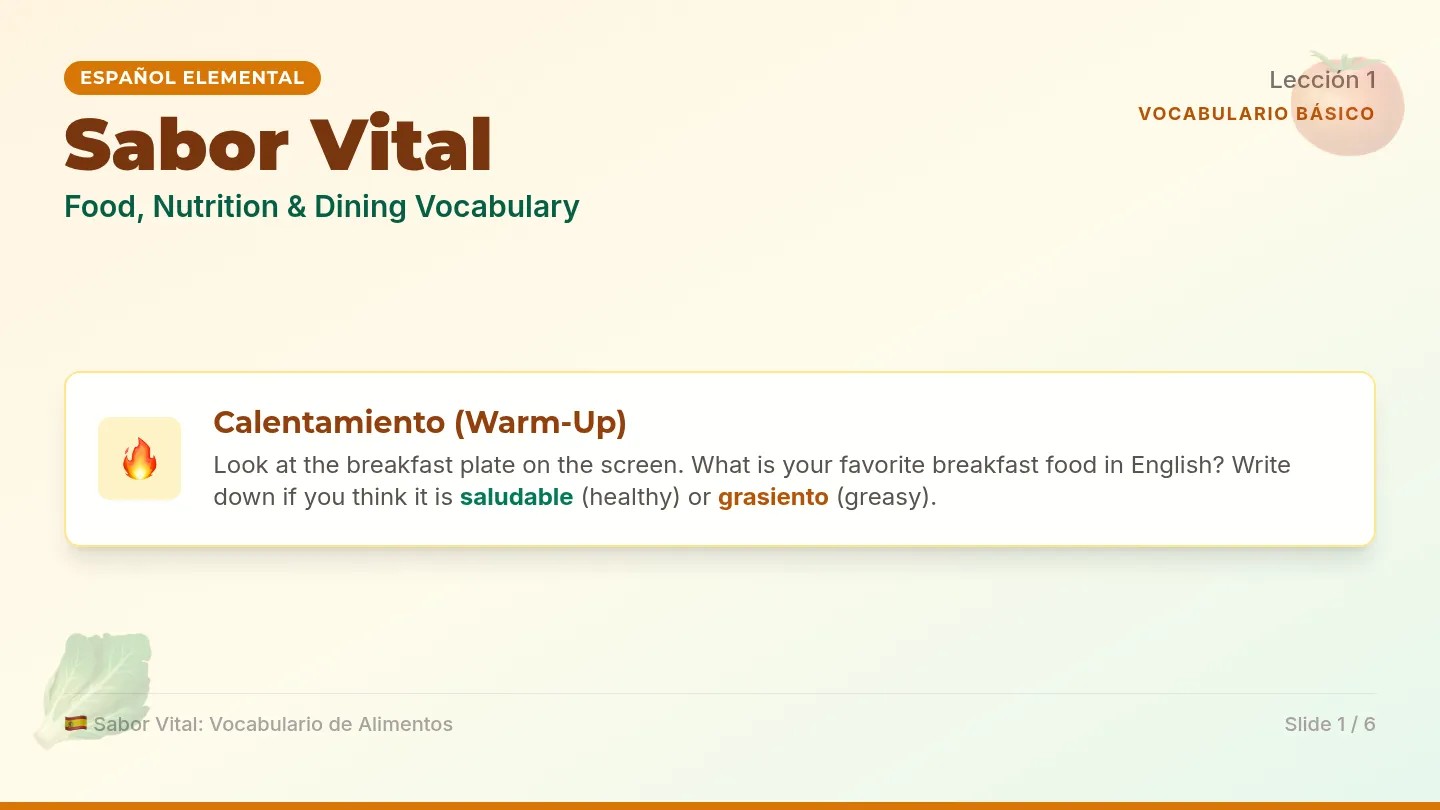
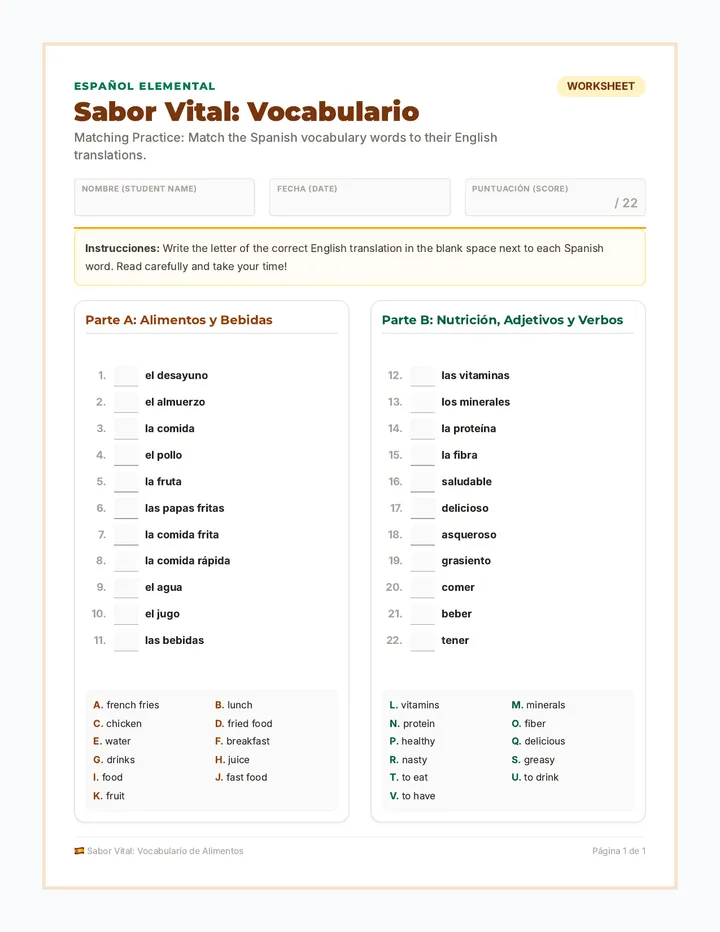
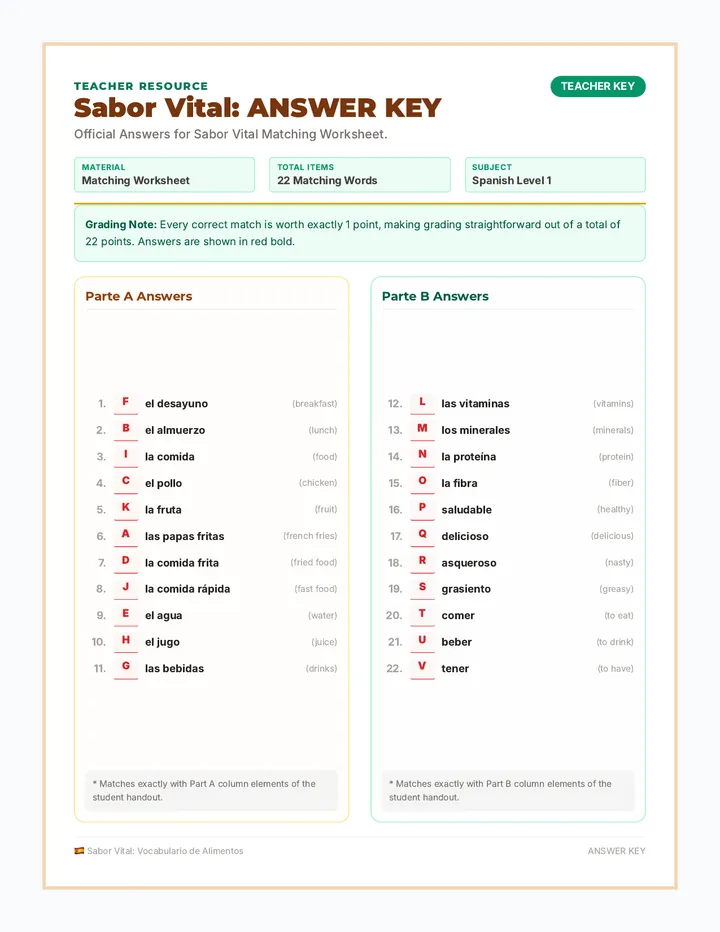
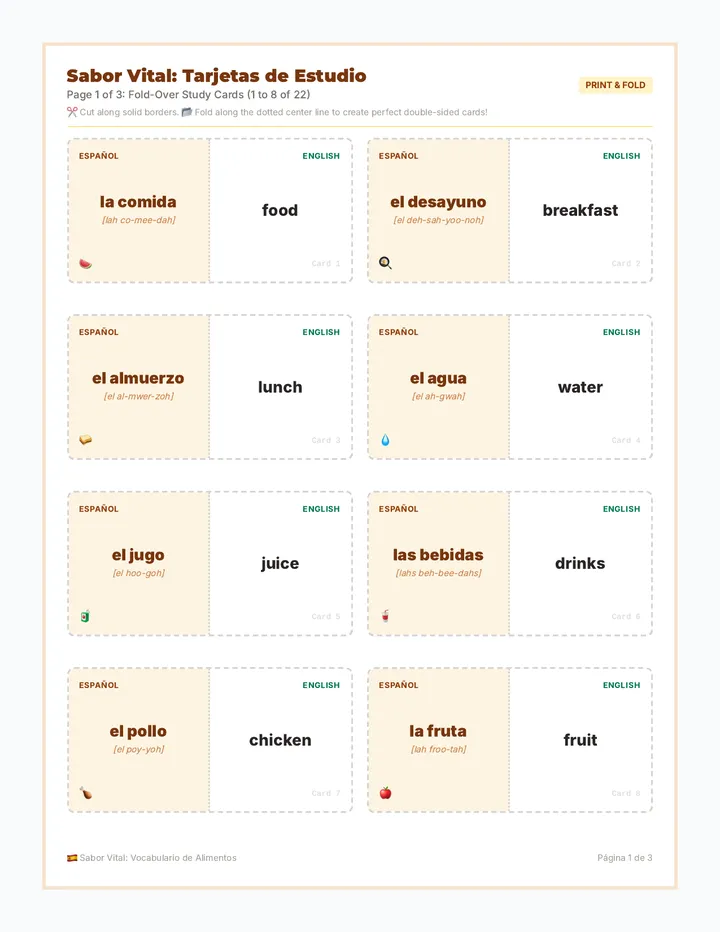
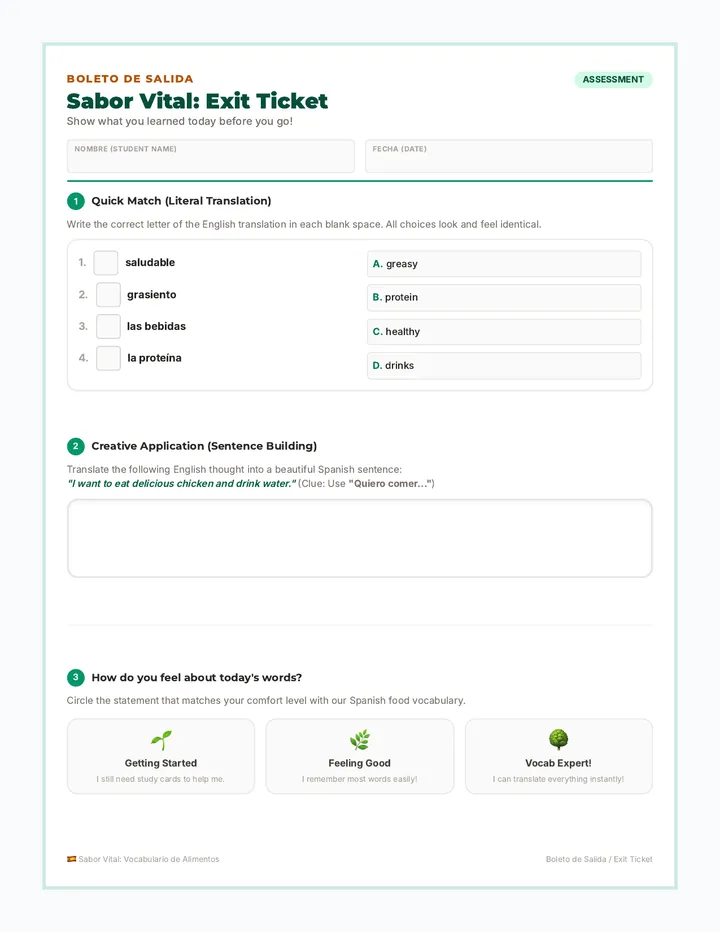
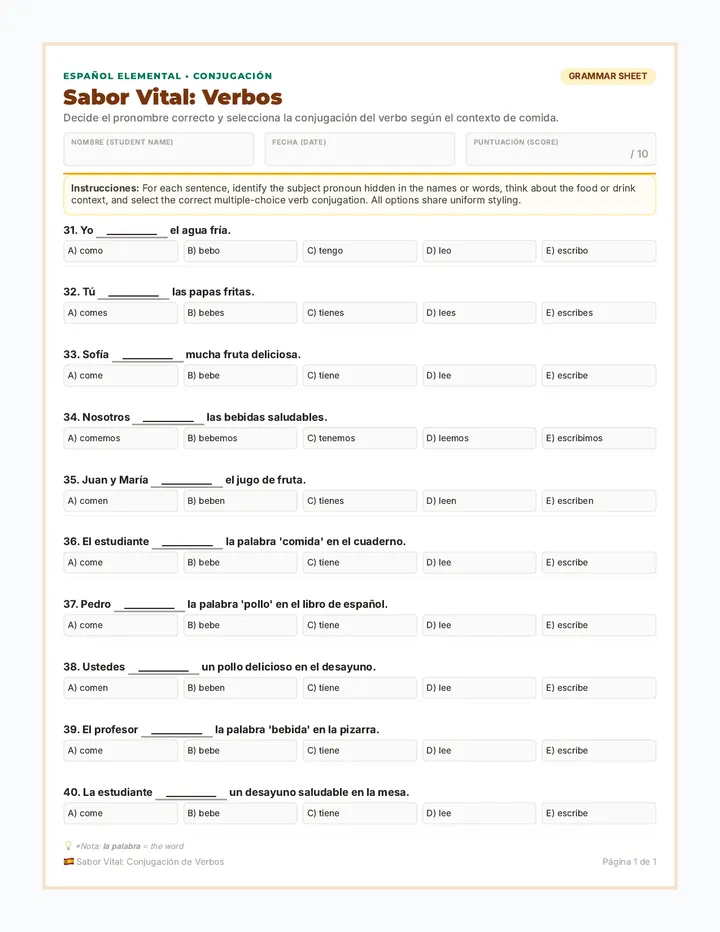
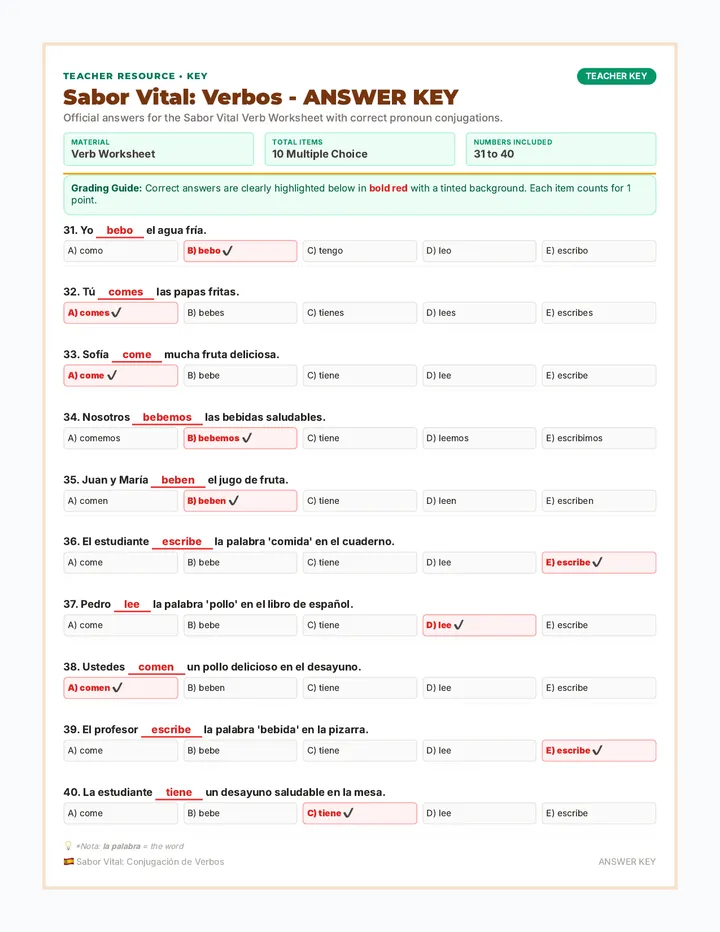
An introductory Spanish lesson centered on essential food, dining, and nutrition vocabulary. This lesson provides an immersive, interactive experience with visual slides, study flashcards, a structured matching worksheet, and a quick exit ticket.
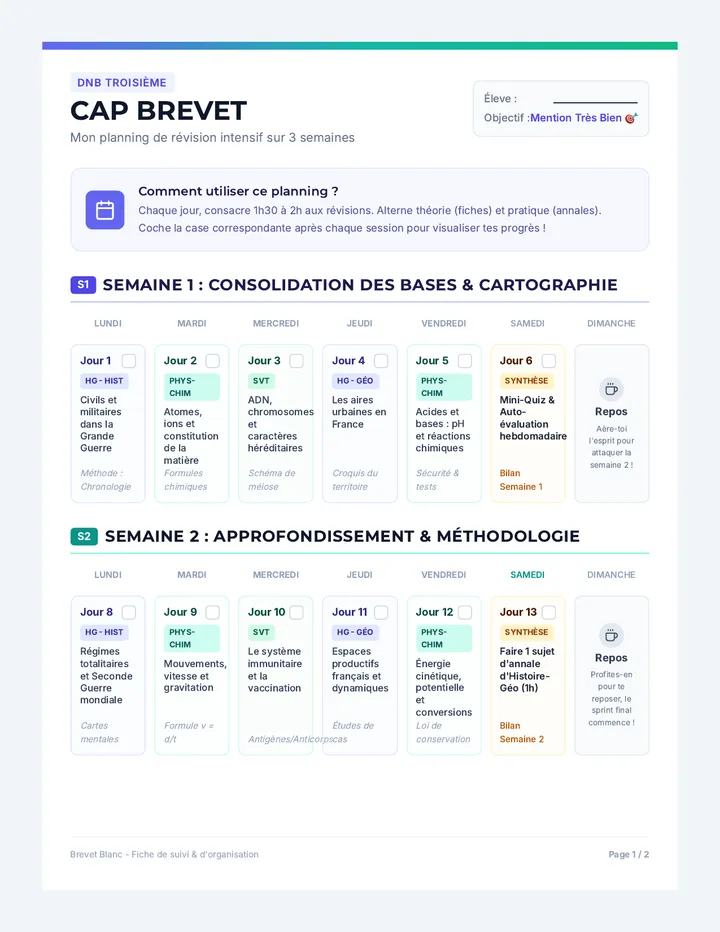
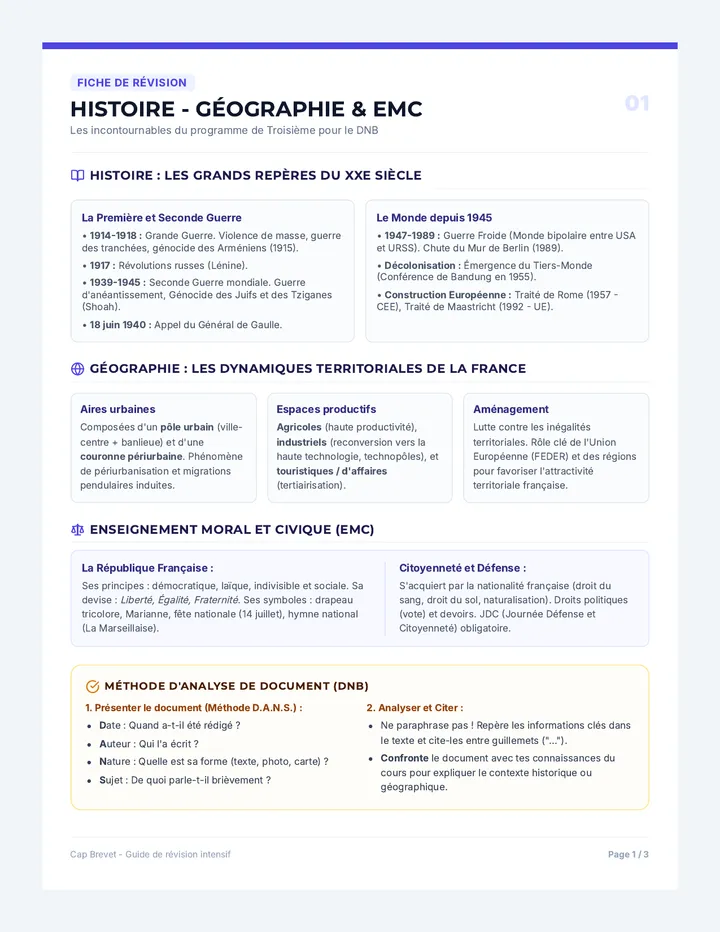
Un programme de révision intensif et structuré sur 3 semaines pour préparer sereinement les épreuves de SVT, Physique-Chimie et Histoire-Géographie du Diplôme National du Brevet.