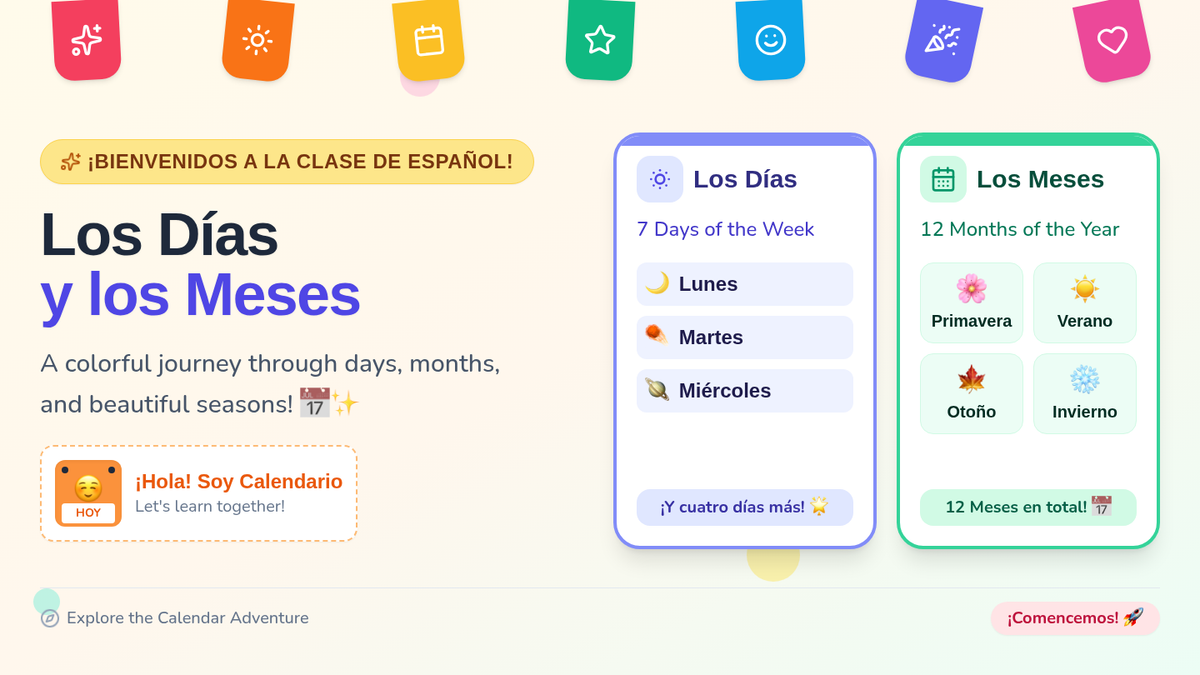
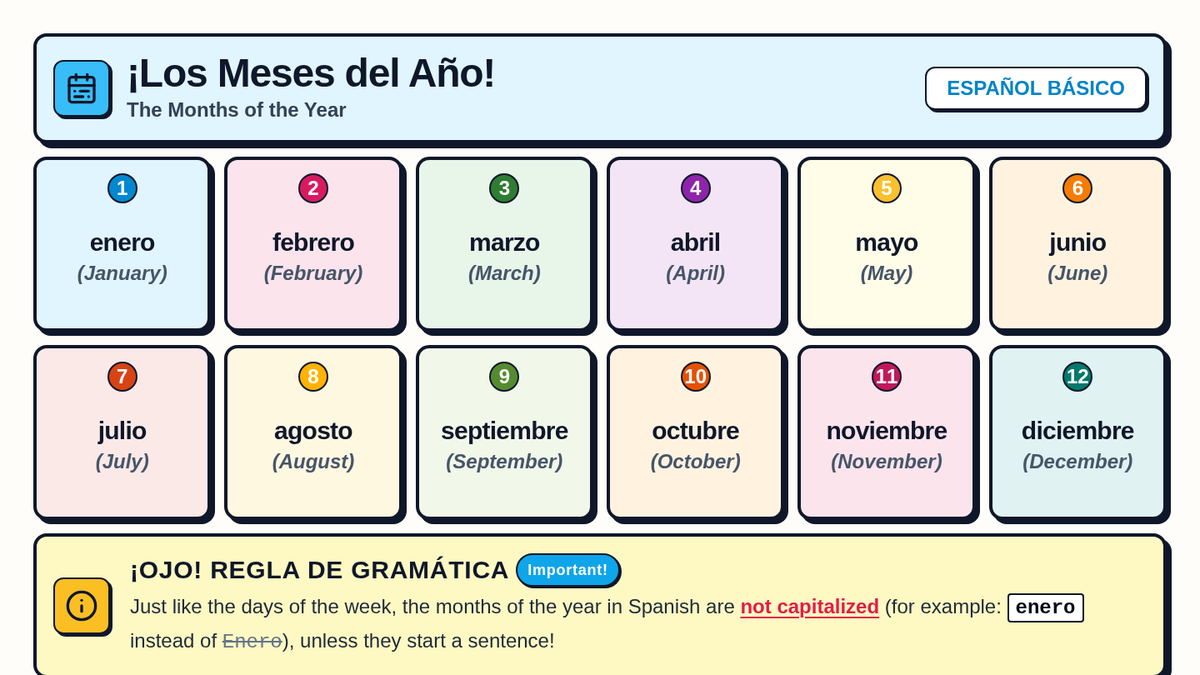
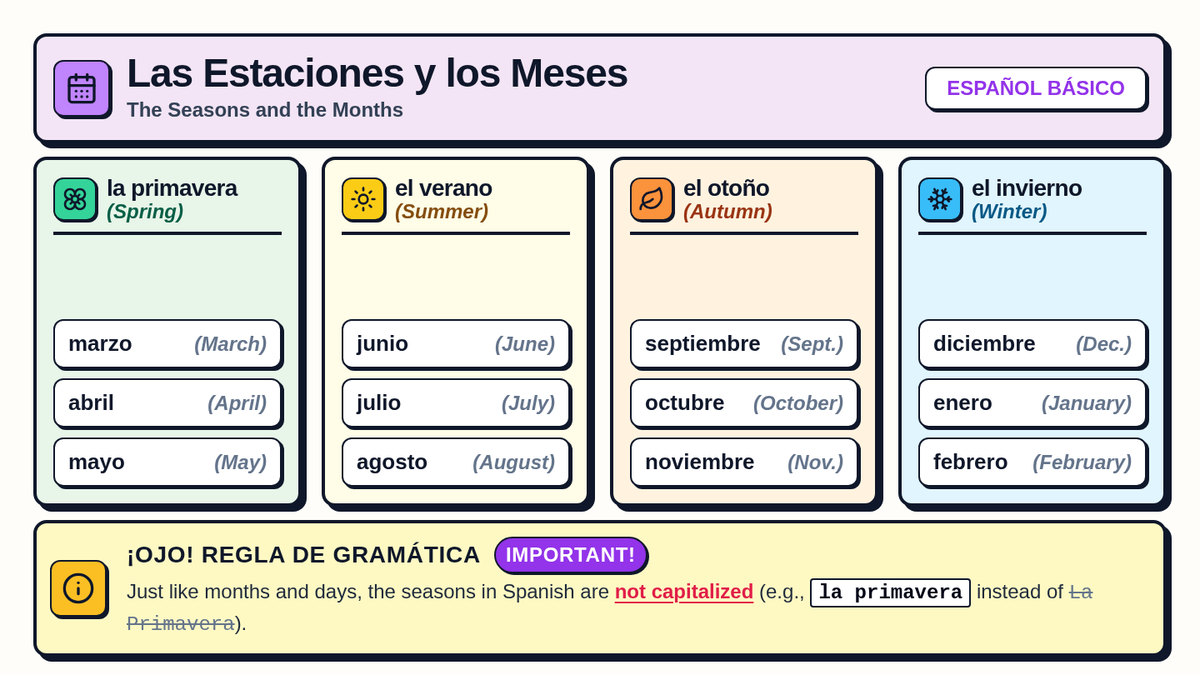
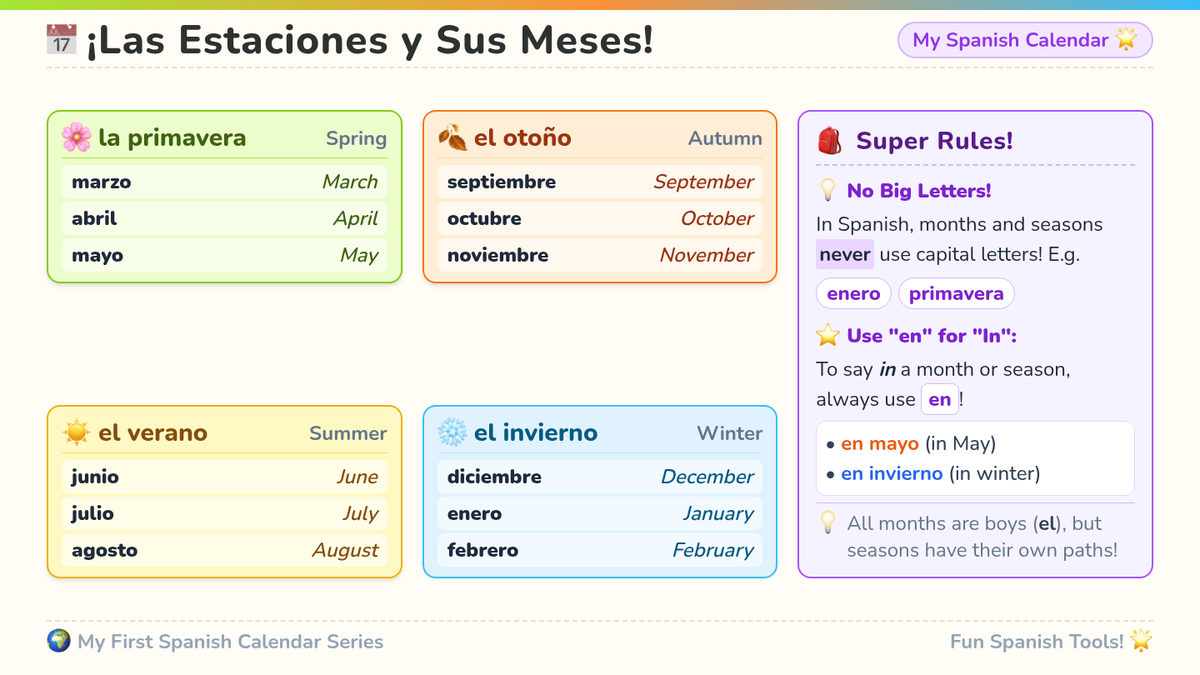
A beginner-friendly lesson introducing the four seasons and twelve months of the year in Spanish, emphasizing capitalization rules and basic vocabulary.
An academic lesson on Spanish months, seasons, and key capitalization rules, tailored specifically for older beginners and adult learners.
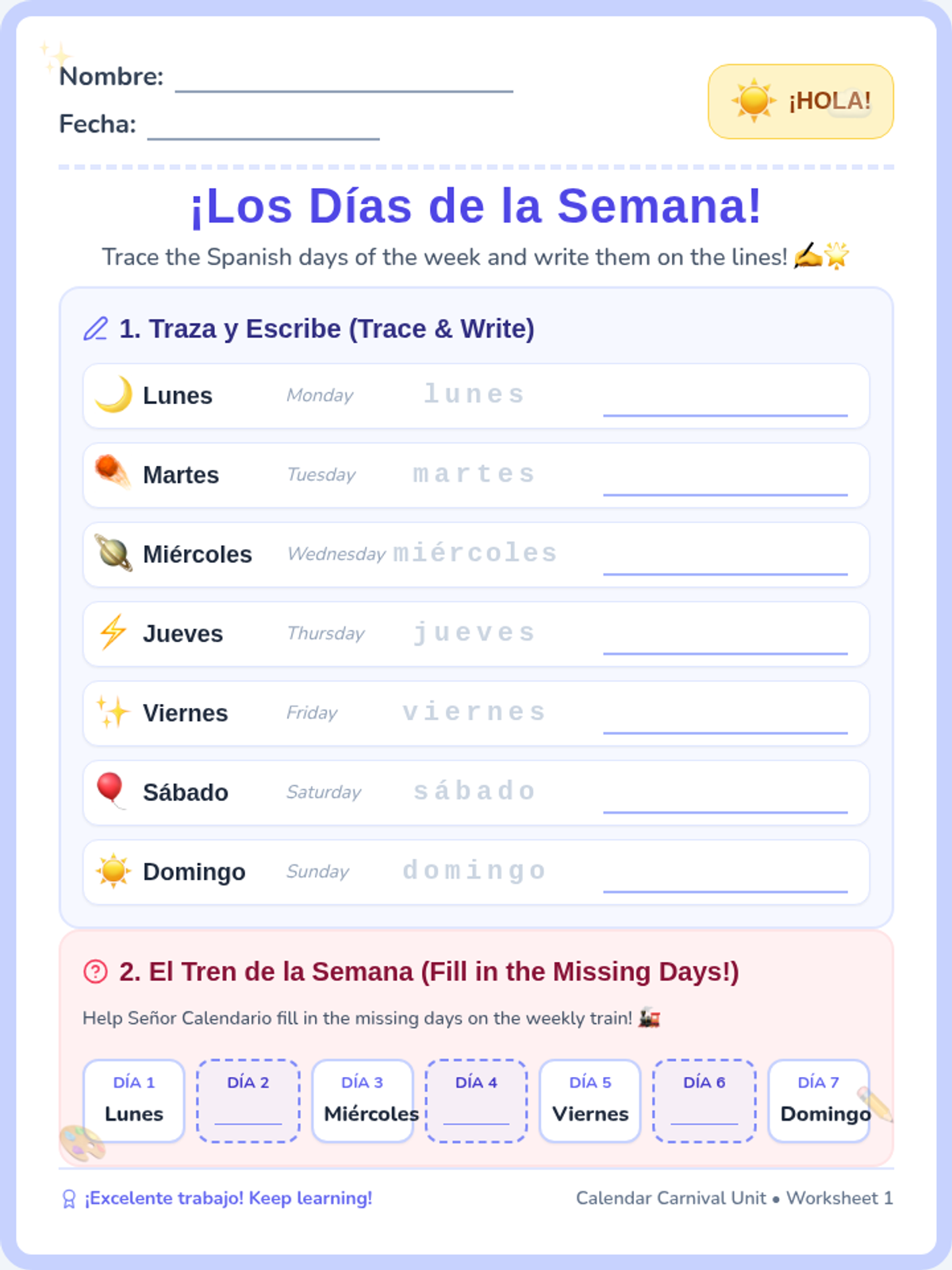
An engaging and vibrant introductory lesson to help young learners master the days of the week and months of the year in Spanish through high-impact, visual, and thematic play.
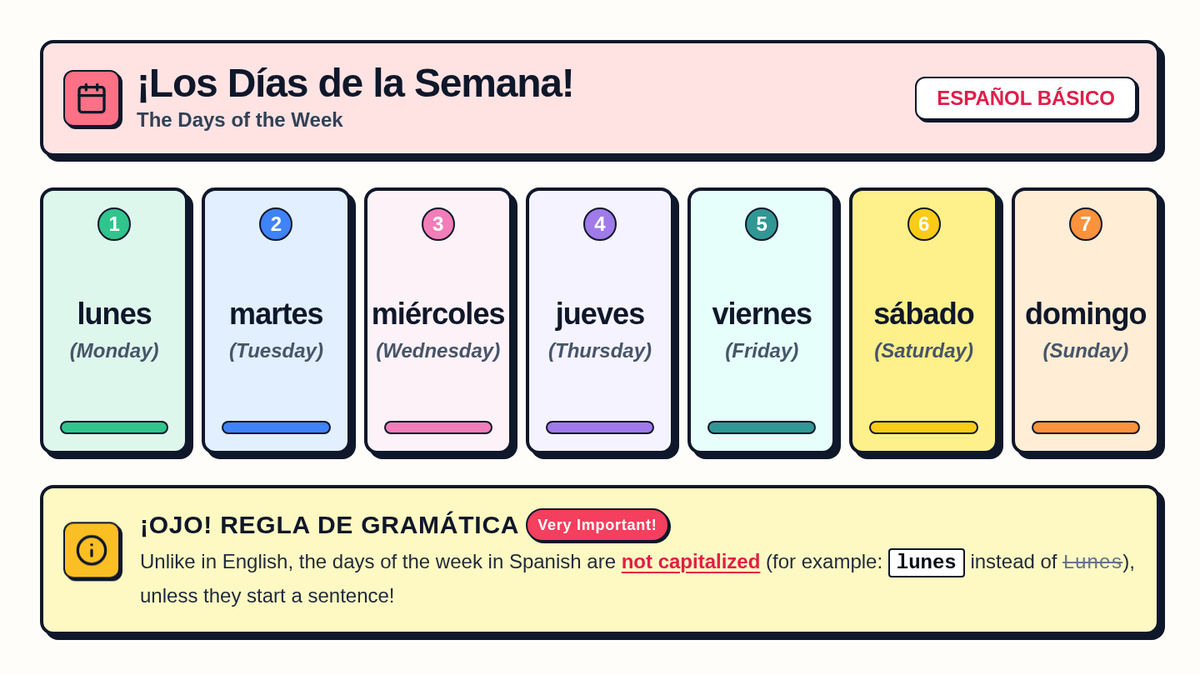
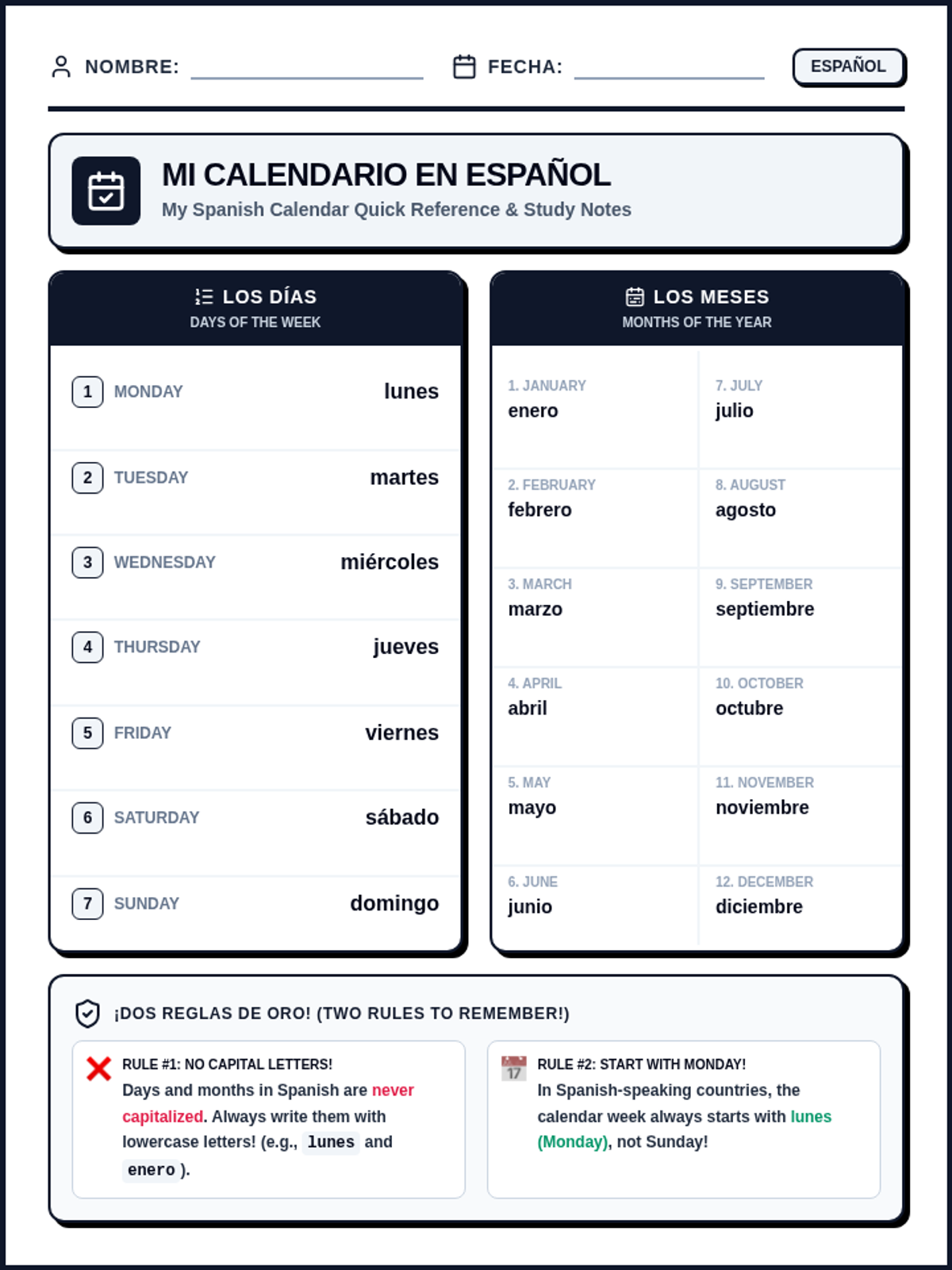
An introductory lesson on Spanish calendar vocabulary, teaching students the days of the week, correct pronunciation, and important capitalization rules.
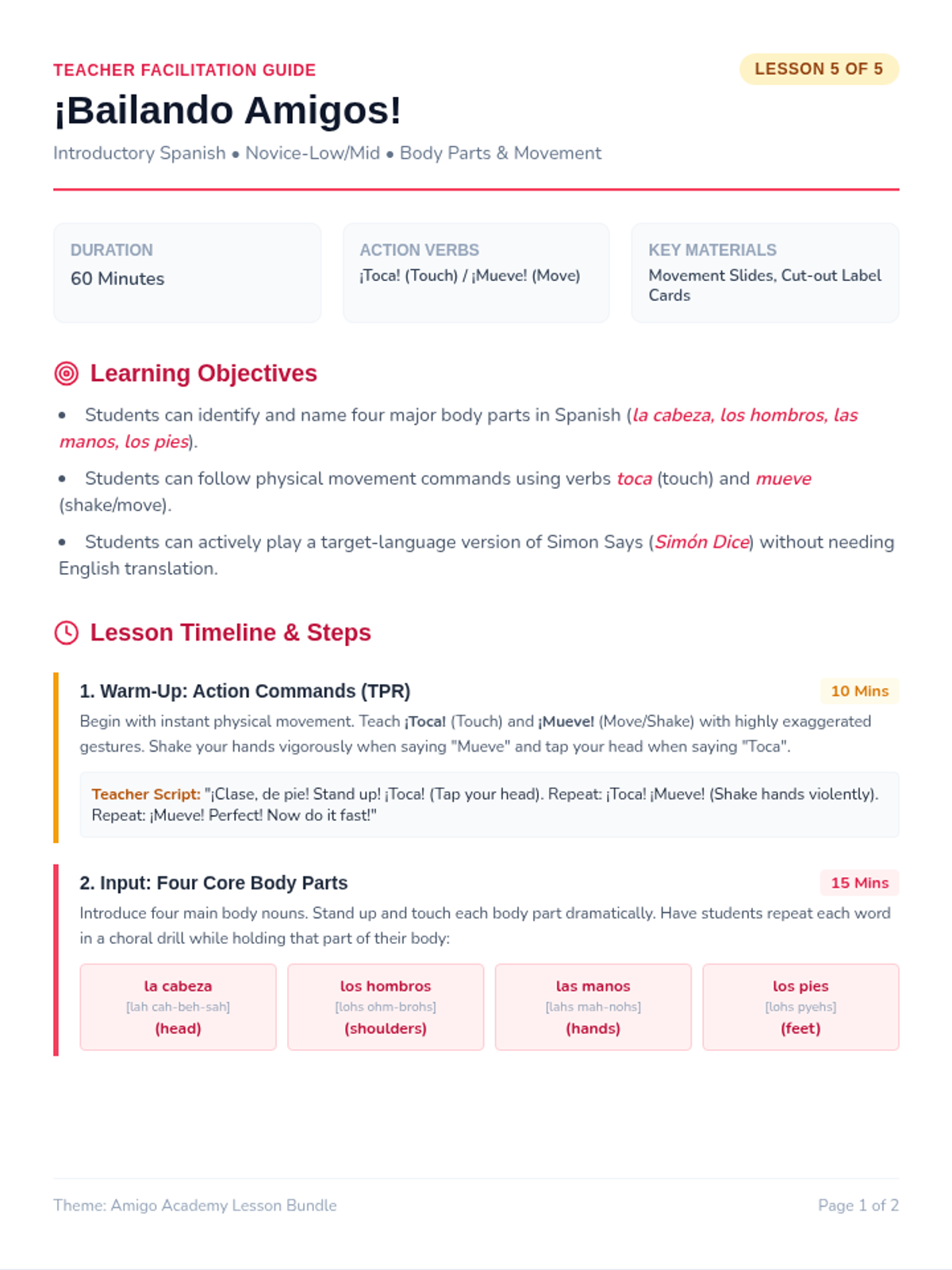
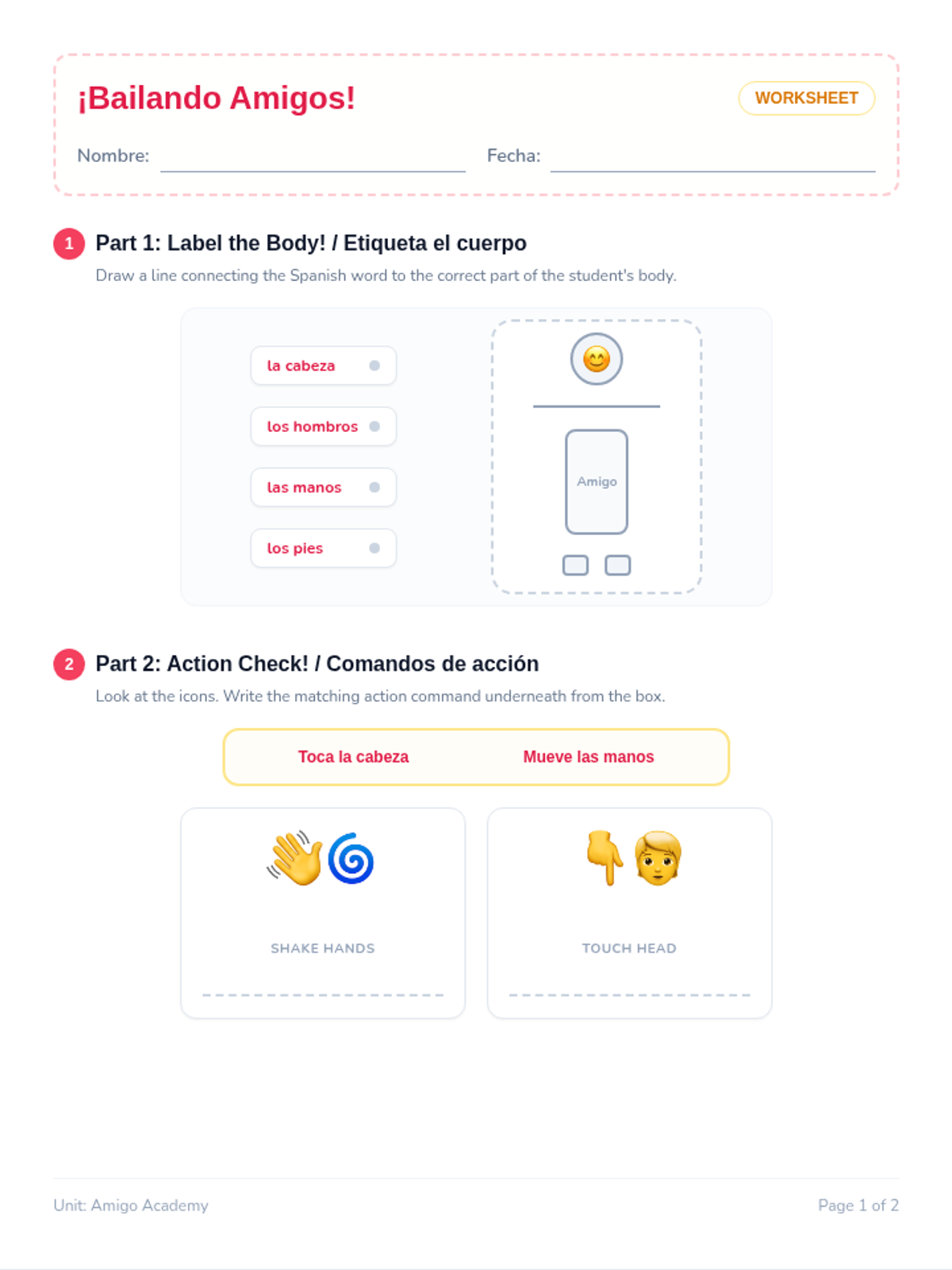
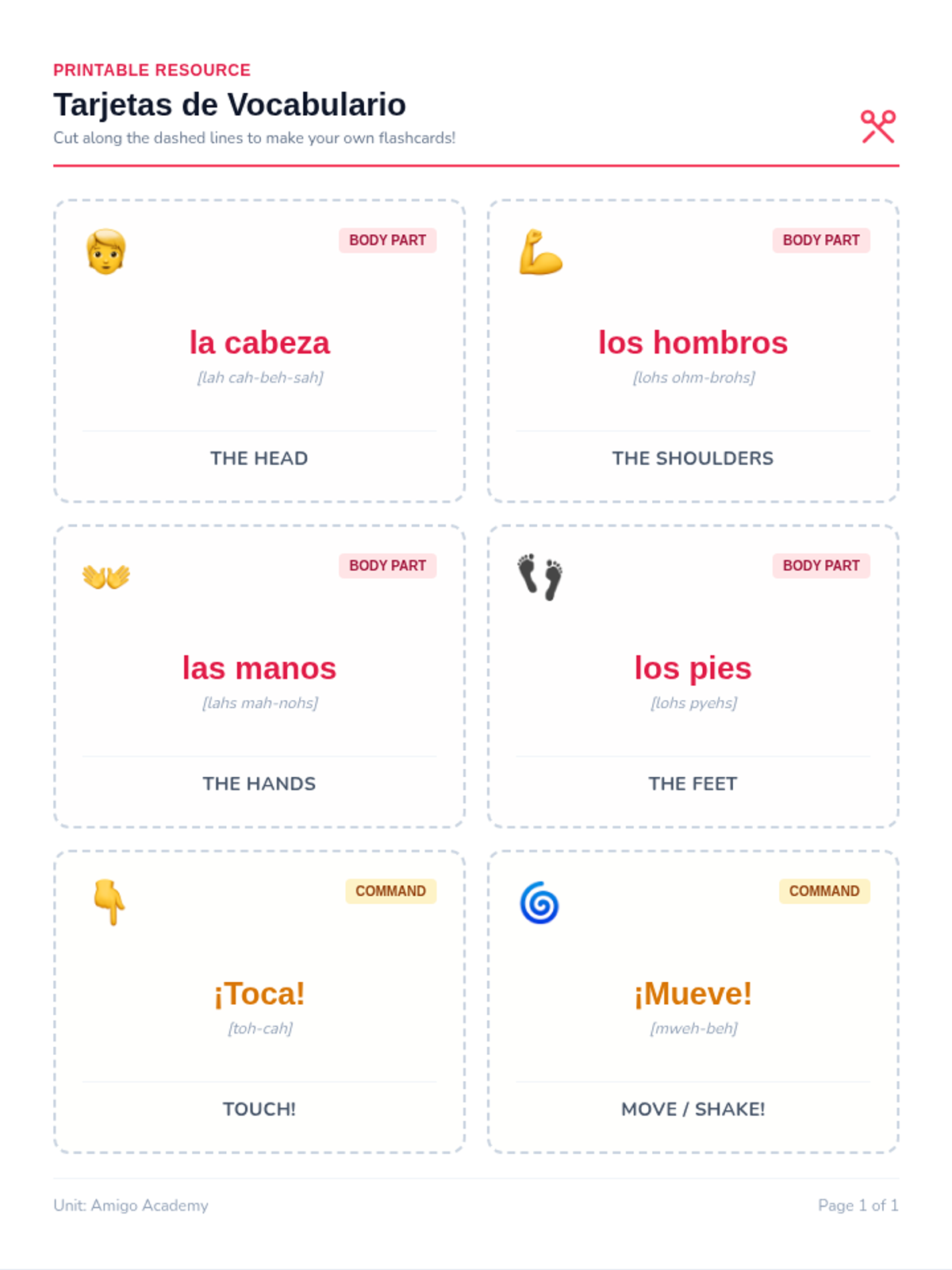
An active, movement-based beginner Spanish lesson teaching high-frequency body parts (cabeza, hombros, manos, pies) and physical action verbs (toca, mueve) through rhythmic dances and interactive 'Simón Dice' games.
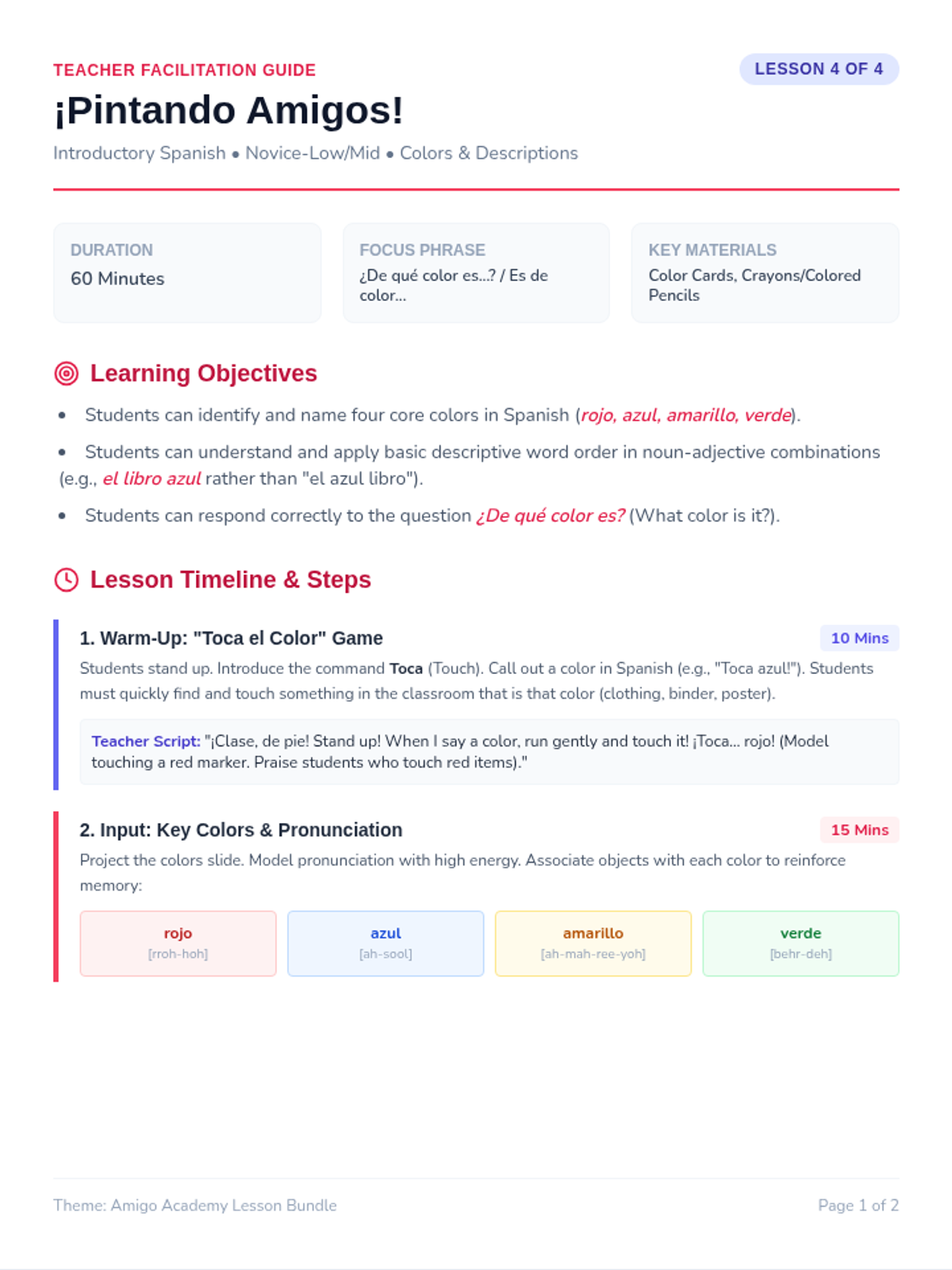
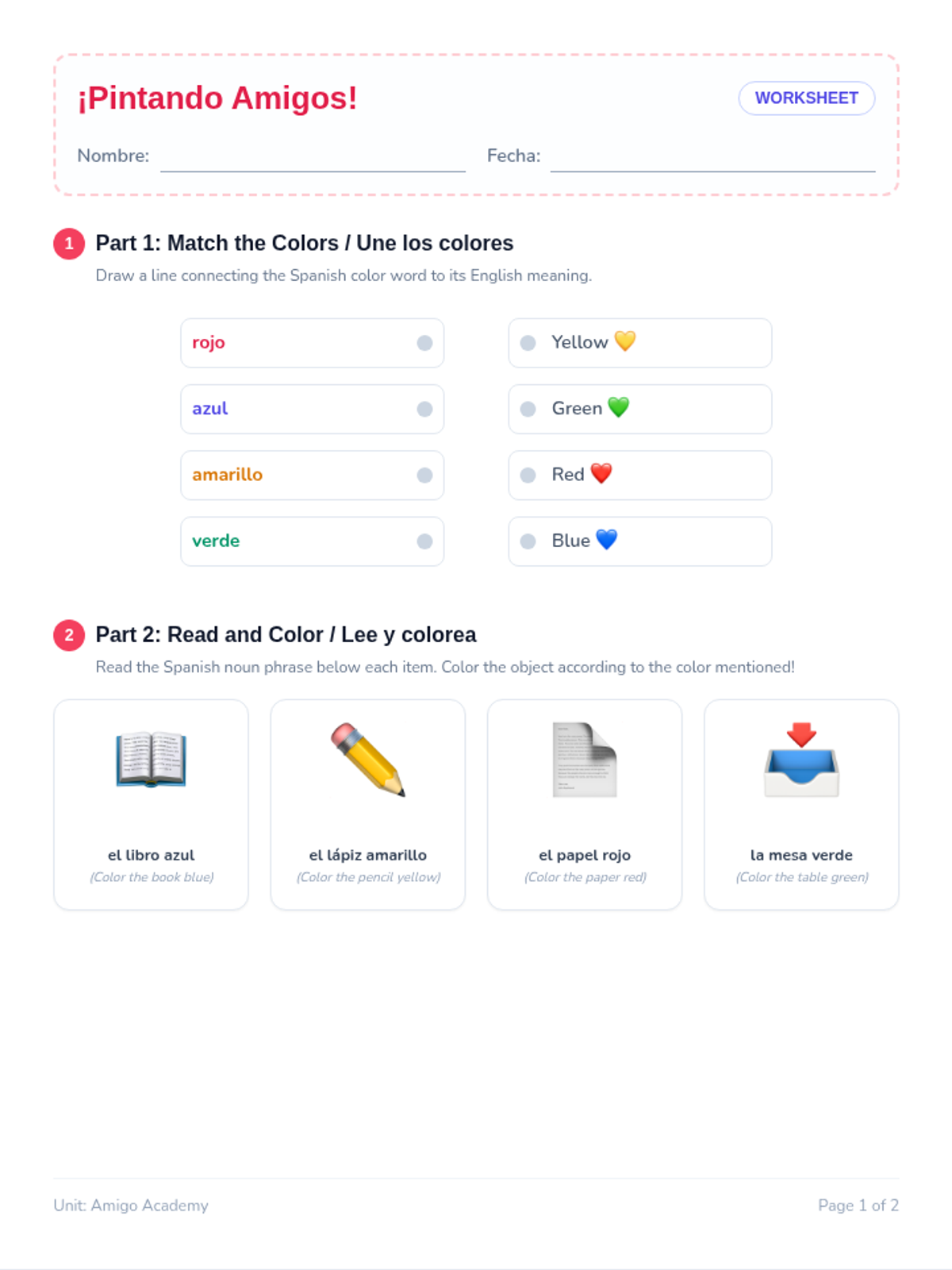
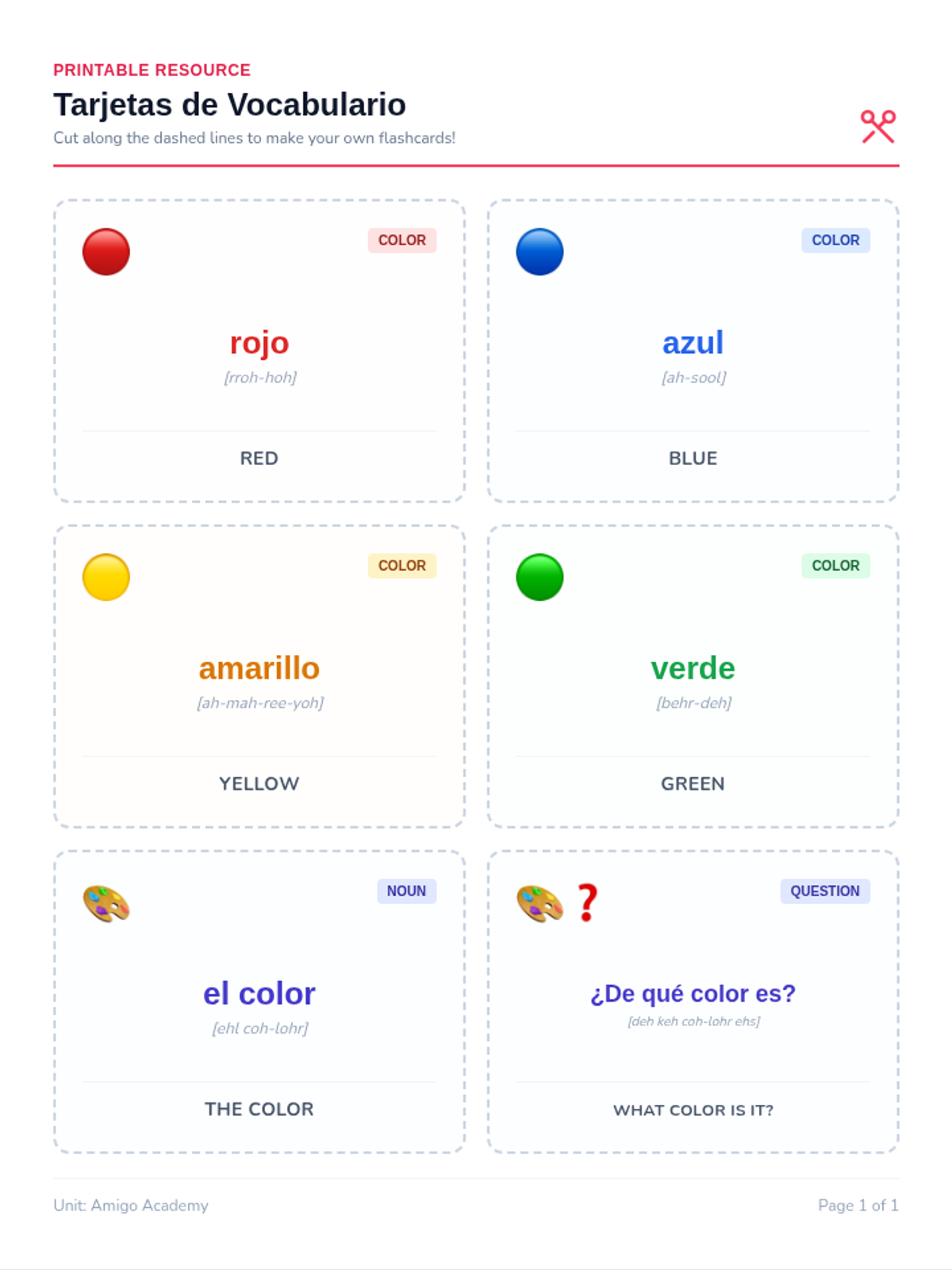
A vibrant beginner Spanish lesson teaching high-frequency colors (rojo, azul, amarillo, verde) and basic agreement/descriptive word order (e.g., 'el libro azul') through active color hunts and creative sorting activities.
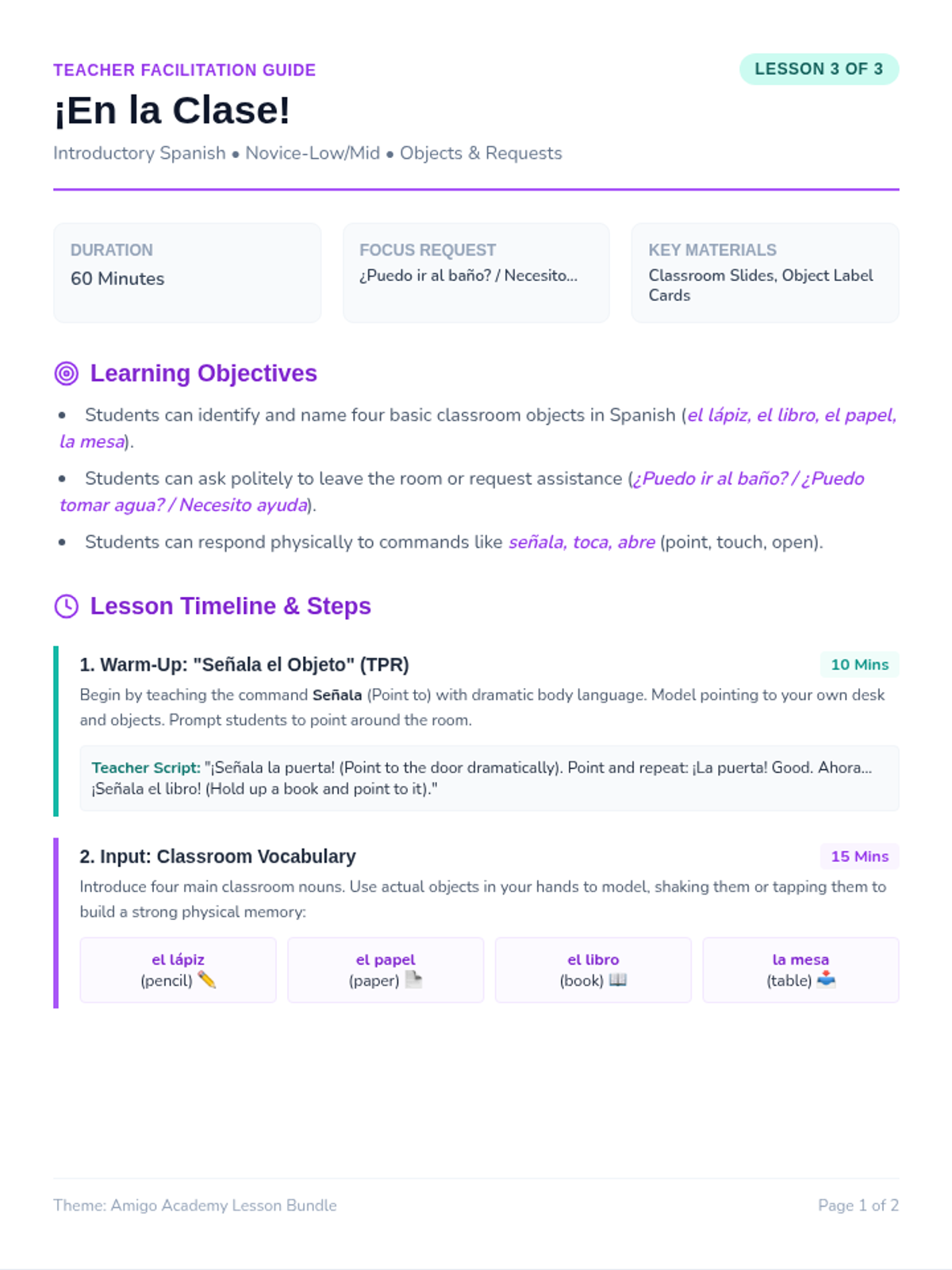
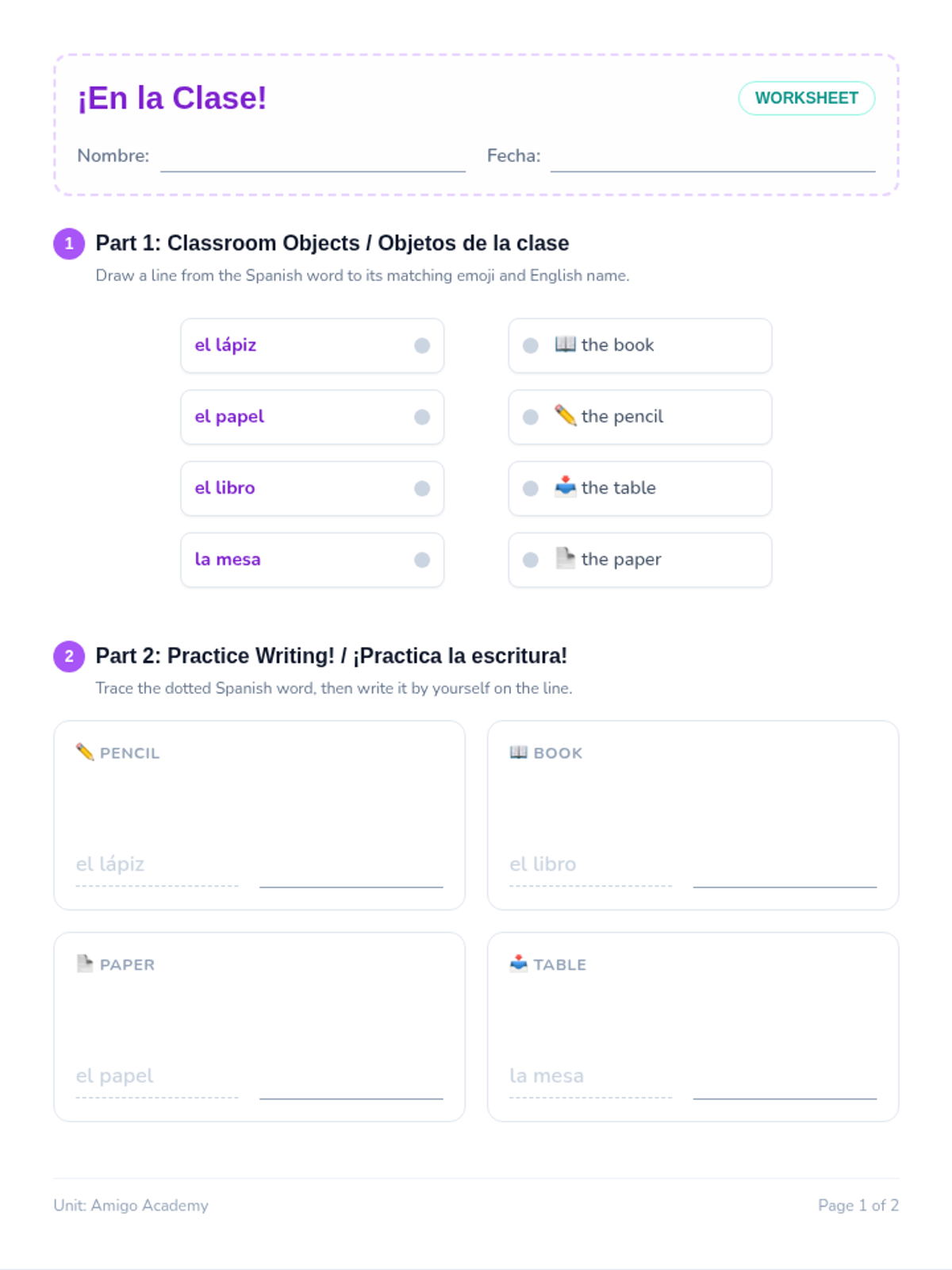
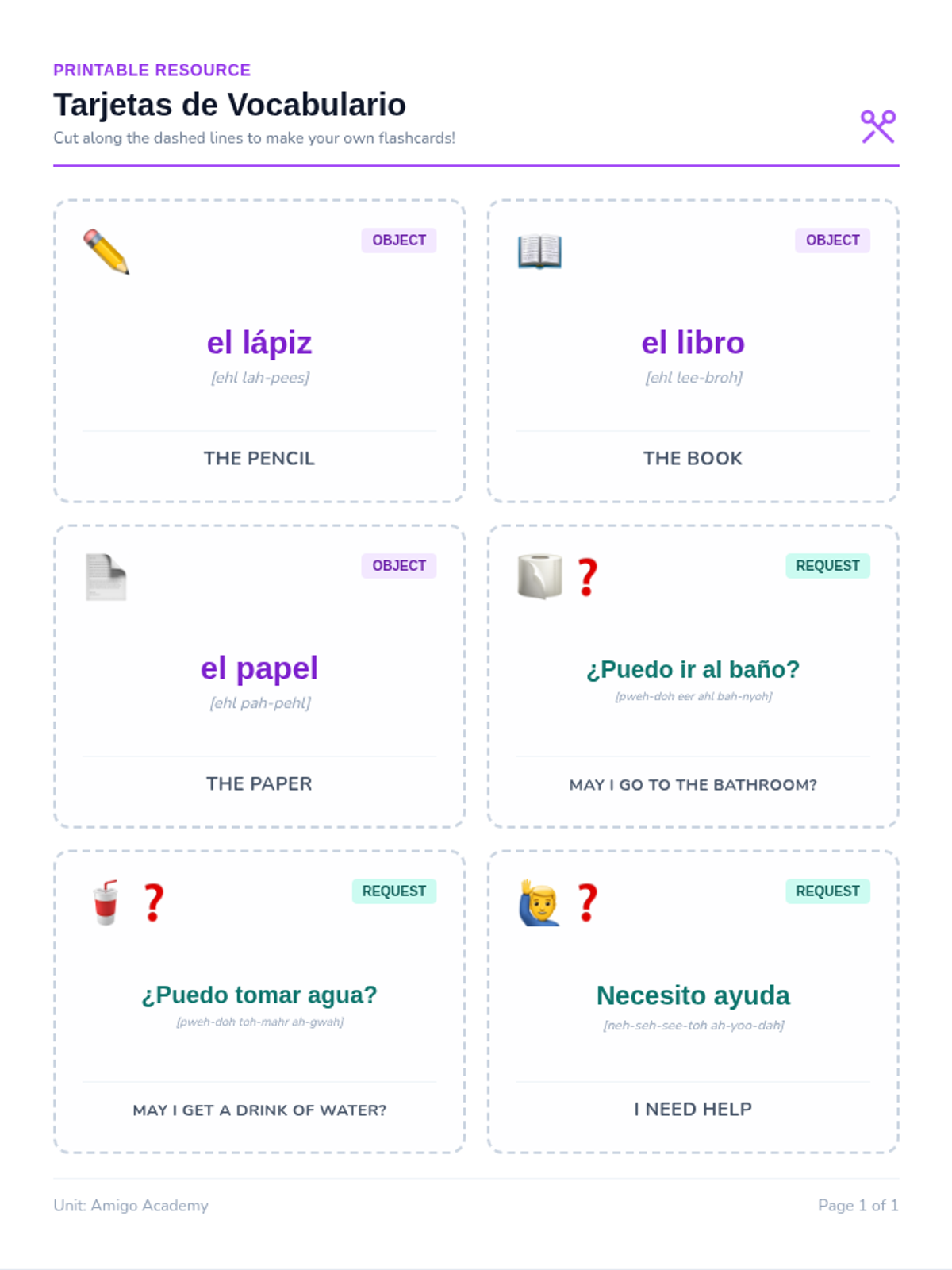
A beginner Spanish lesson teaching high-frequency classroom objects (lápiz, papel, libro) and essential classroom requests (¿Puedo ir al baño?, Necesito un lápiz) using physical pointing activities and visual matching cards.
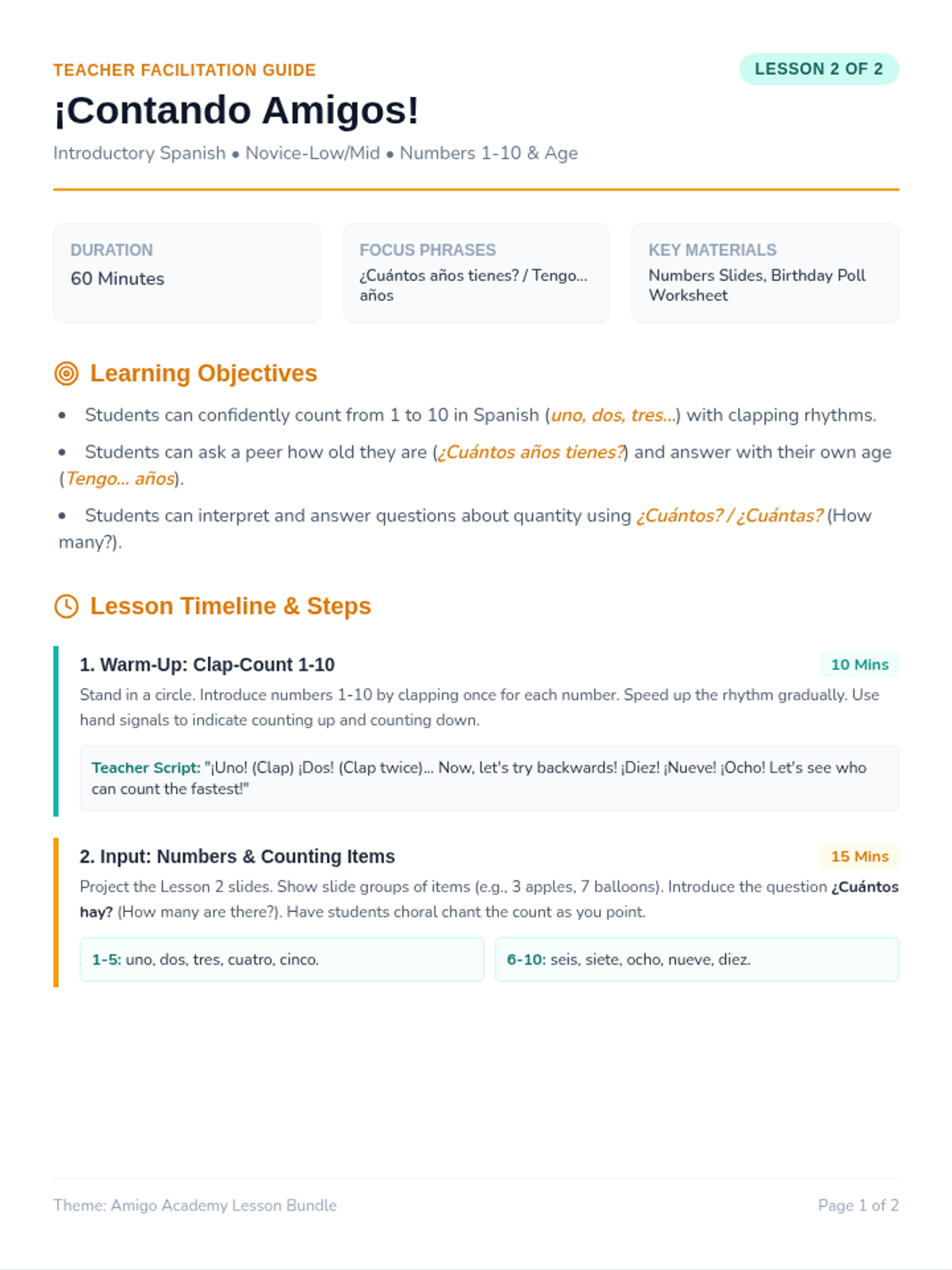
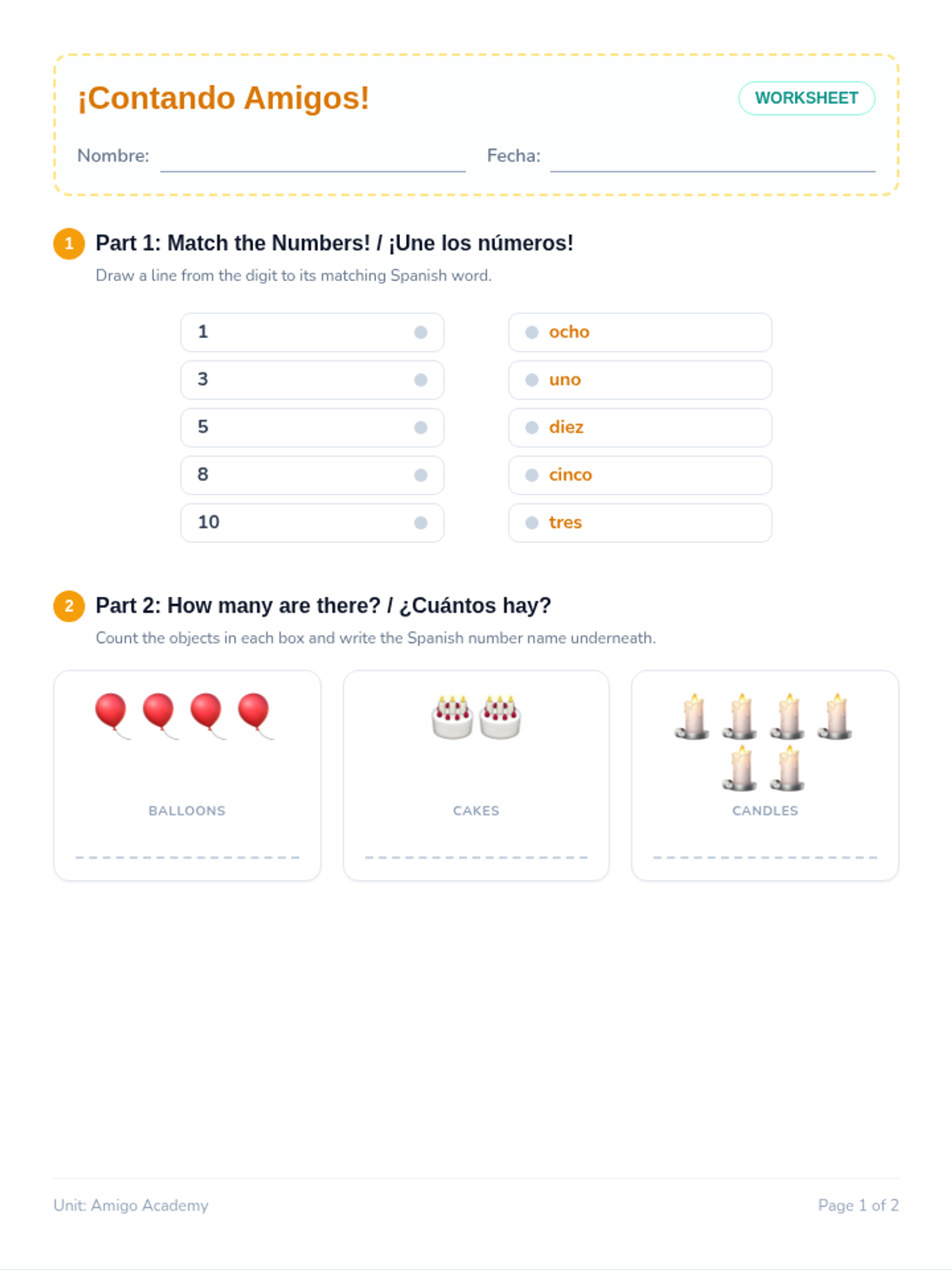
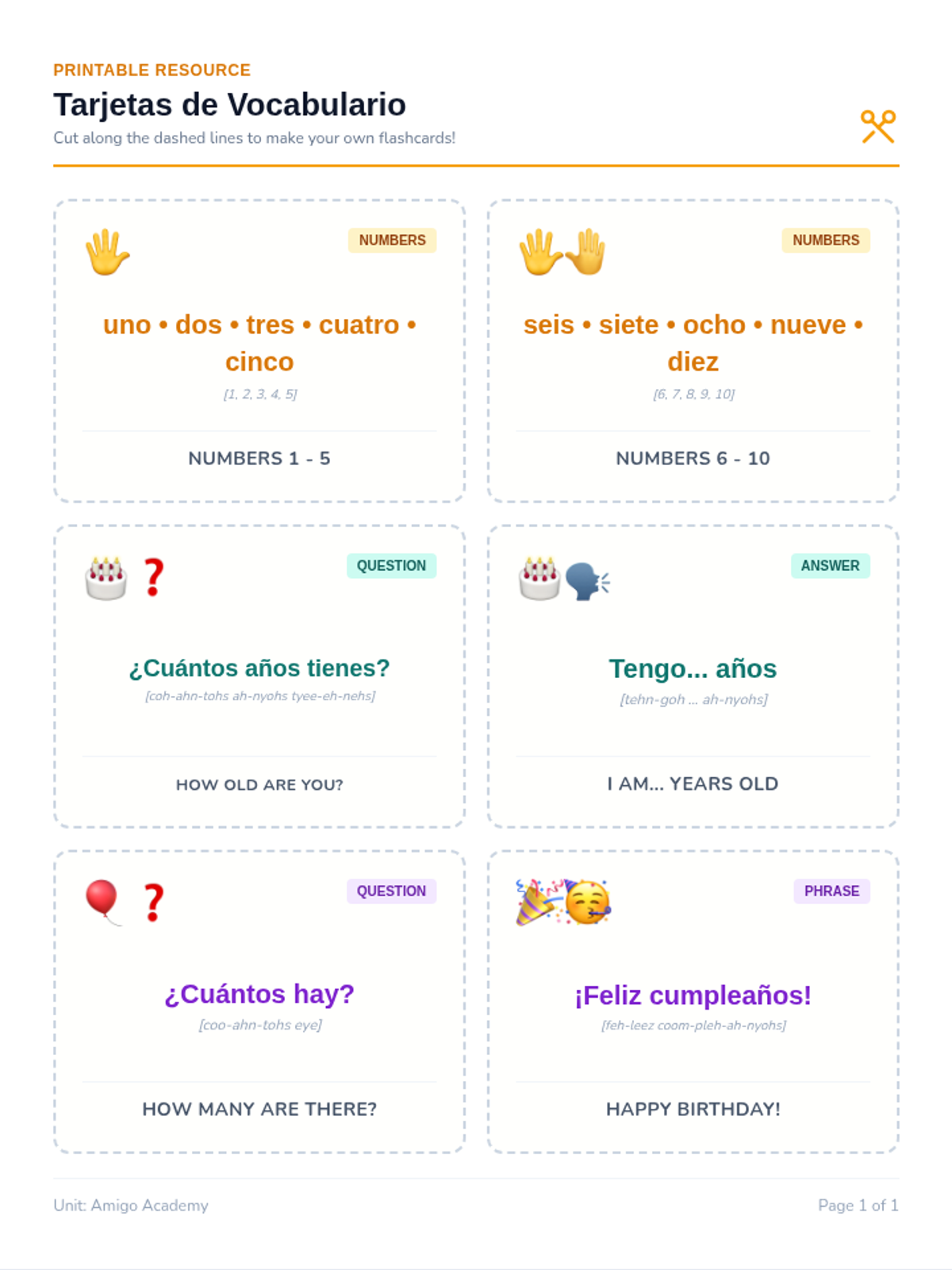
An engaging beginner Spanish lesson focusing on numbers 1-10, asking and answering age questions (¿Cuántos años tienes? Tengo... años), and conducting a classroom birthday/age poll.
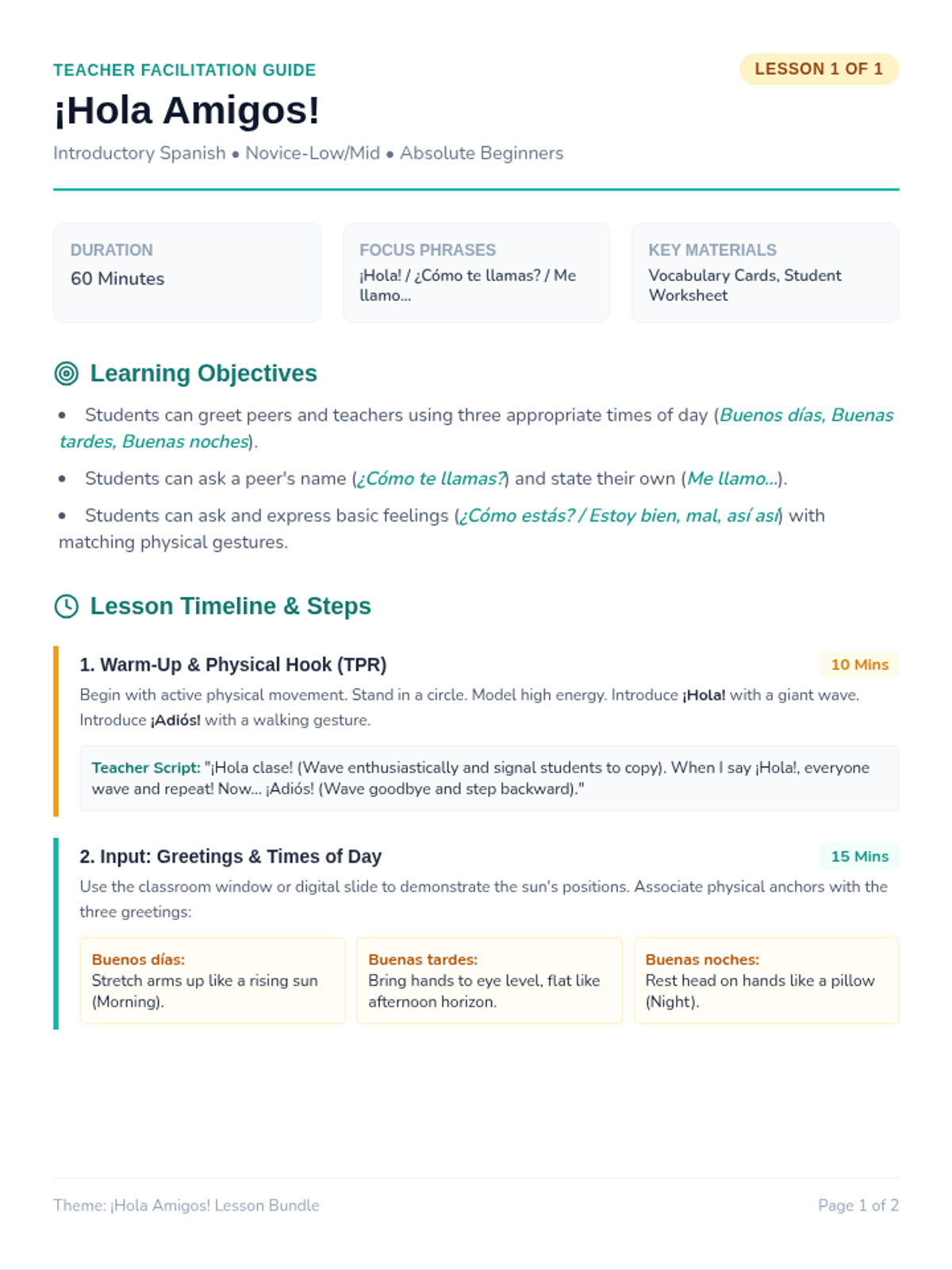
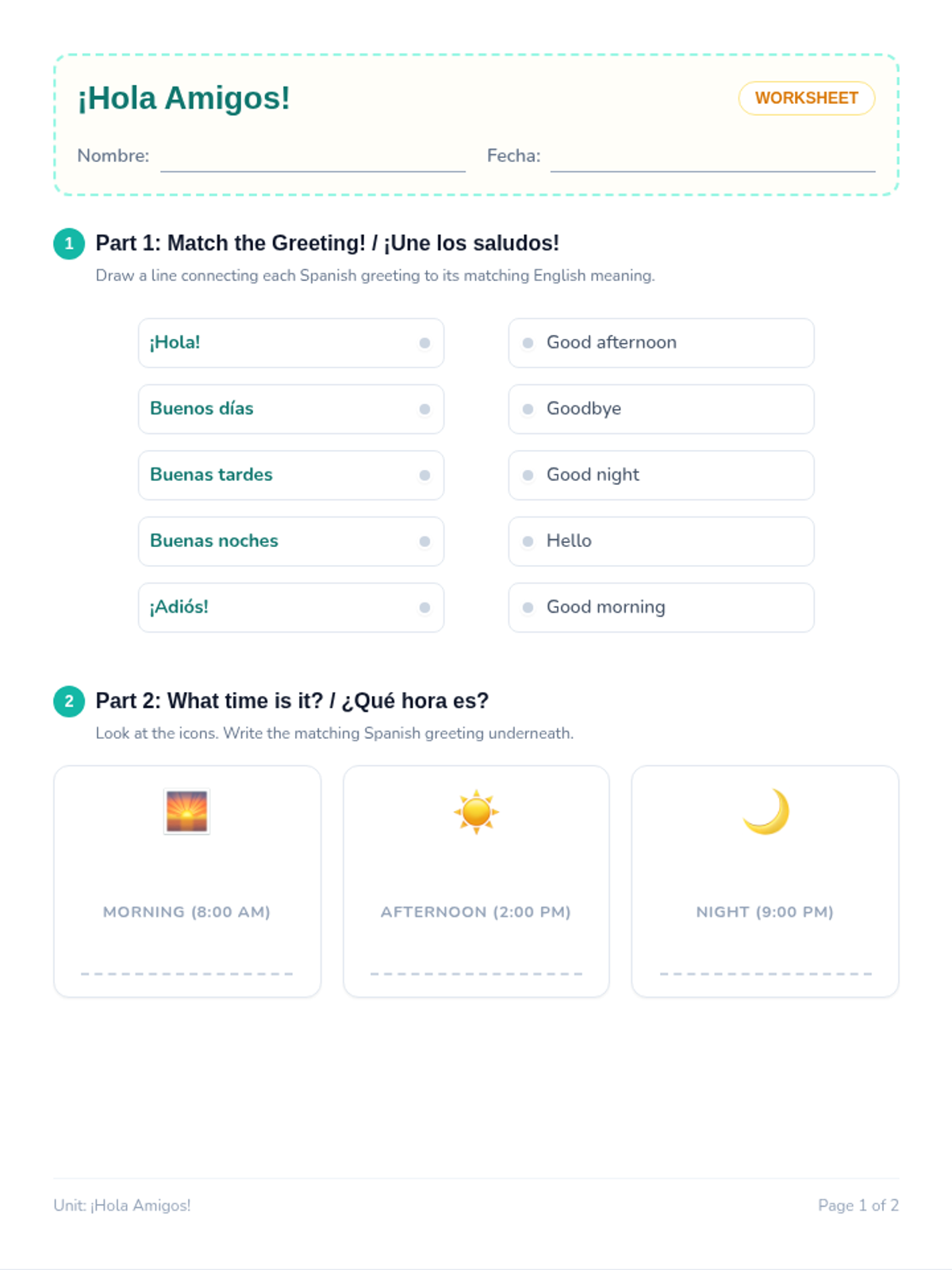
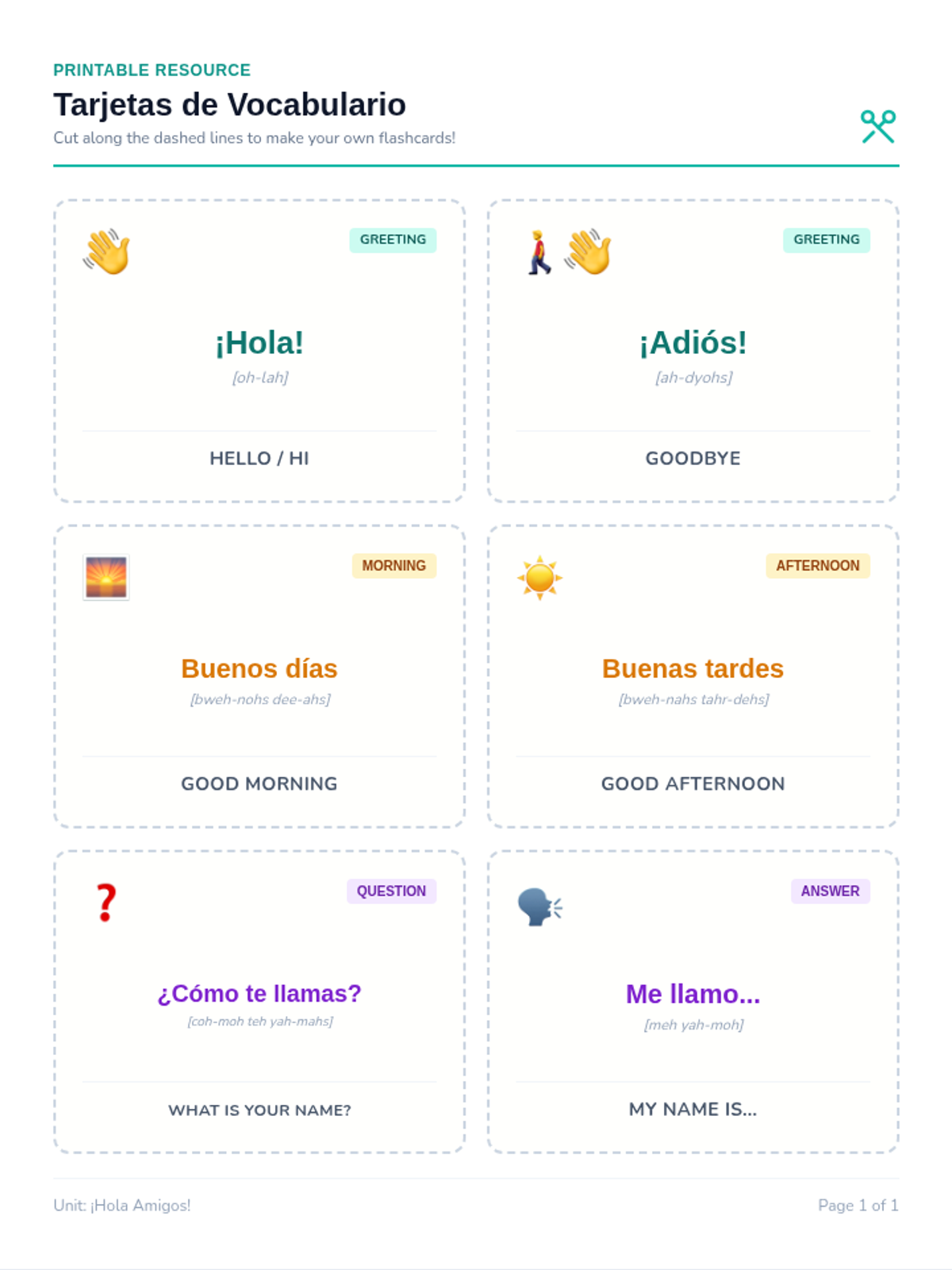
An introductory Spanish lesson for absolute beginners (Novice-Low/Mid) focusing on high-frequency greetings, self-introductions (¿Cómo te llamas? Me llamo...), and basic feelings expression through active physical response (TPR) and collaborative speaking activities.
Une dictée différenciée en poupée russe sur le thème du cirque pour les élèves de CE1. Ce guide complet pour l'enseignant permet de travailler l'accord dans le groupe nominal à travers 4 niveaux de progression cumulatifs.
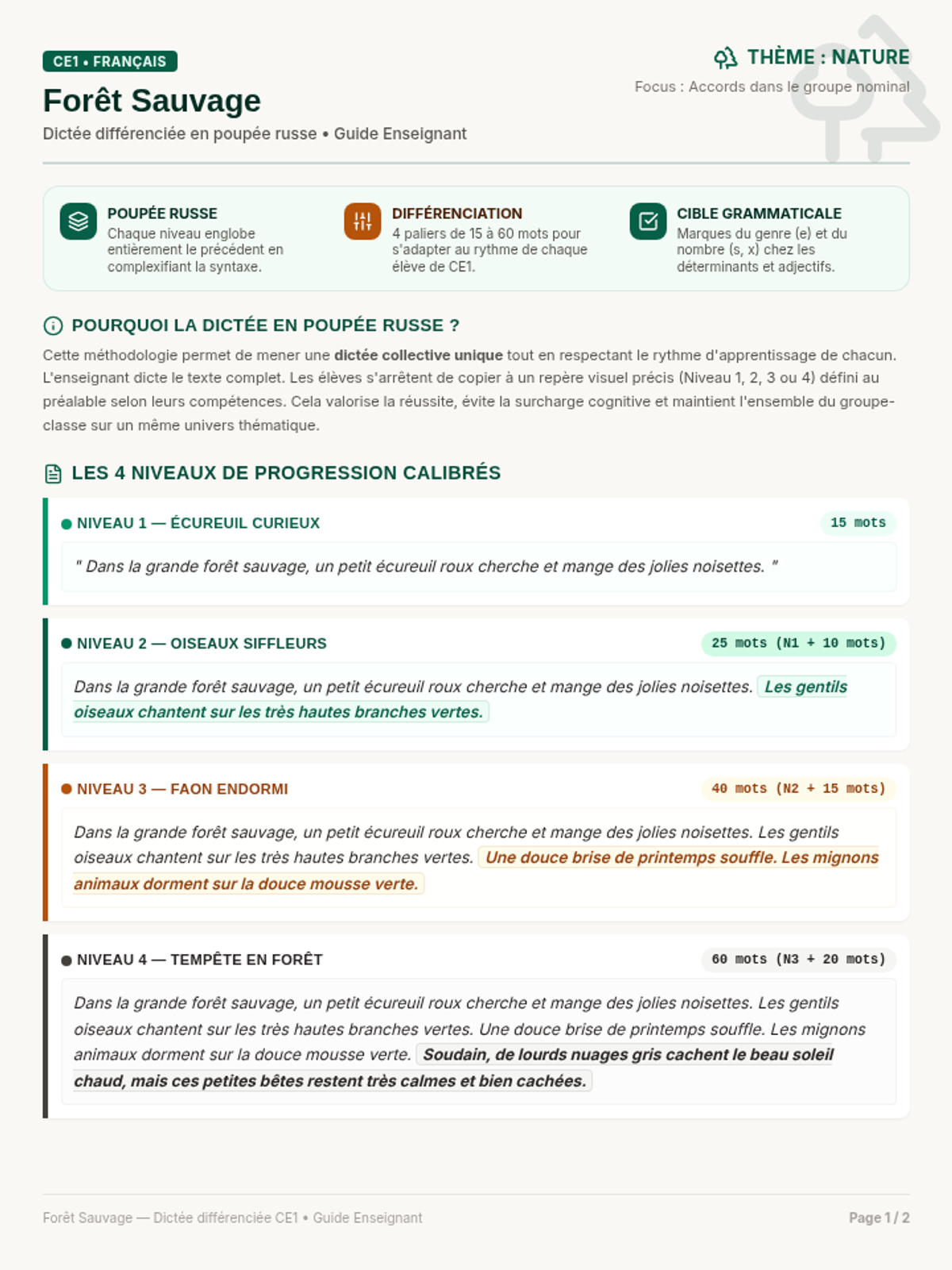
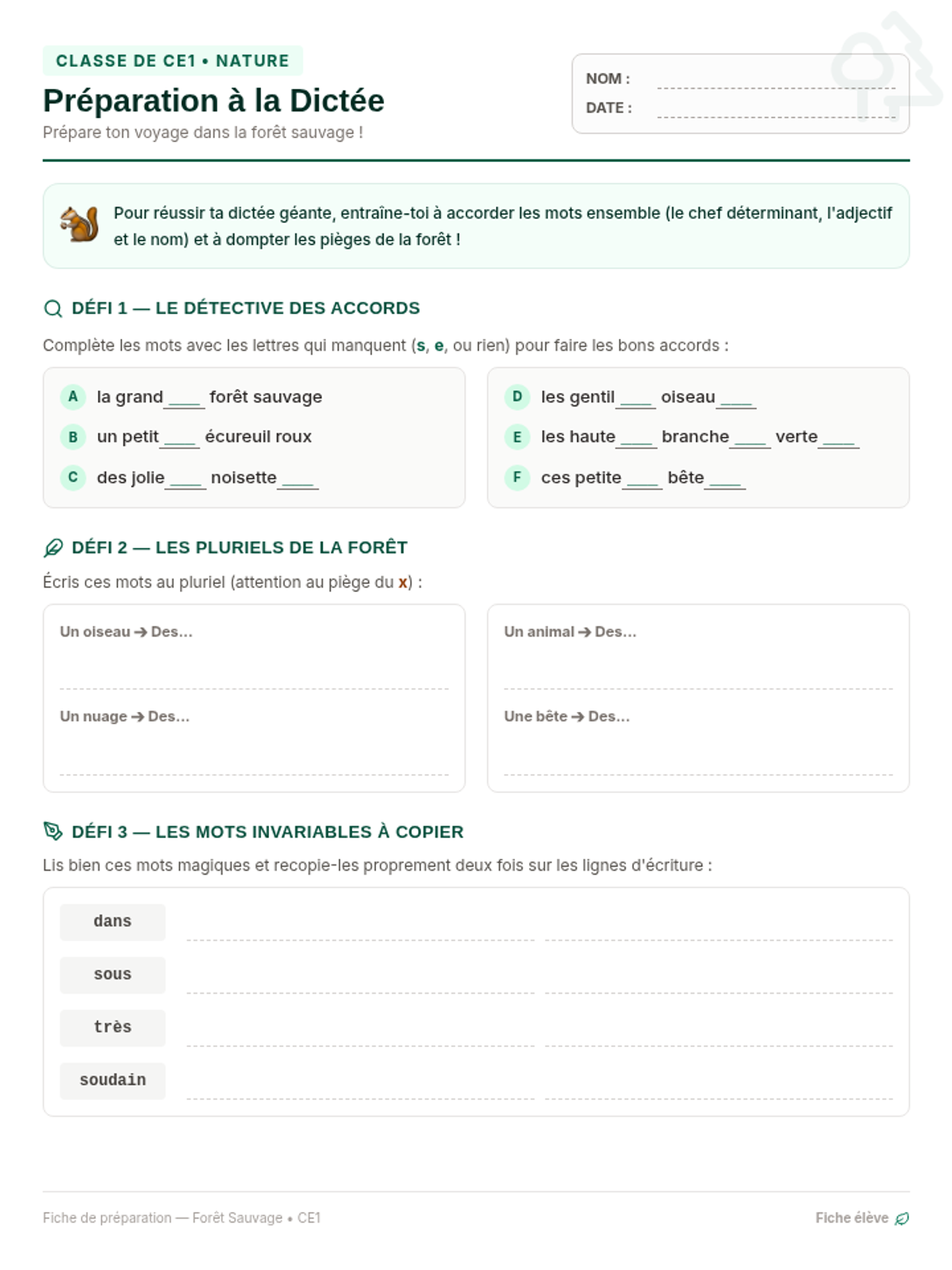
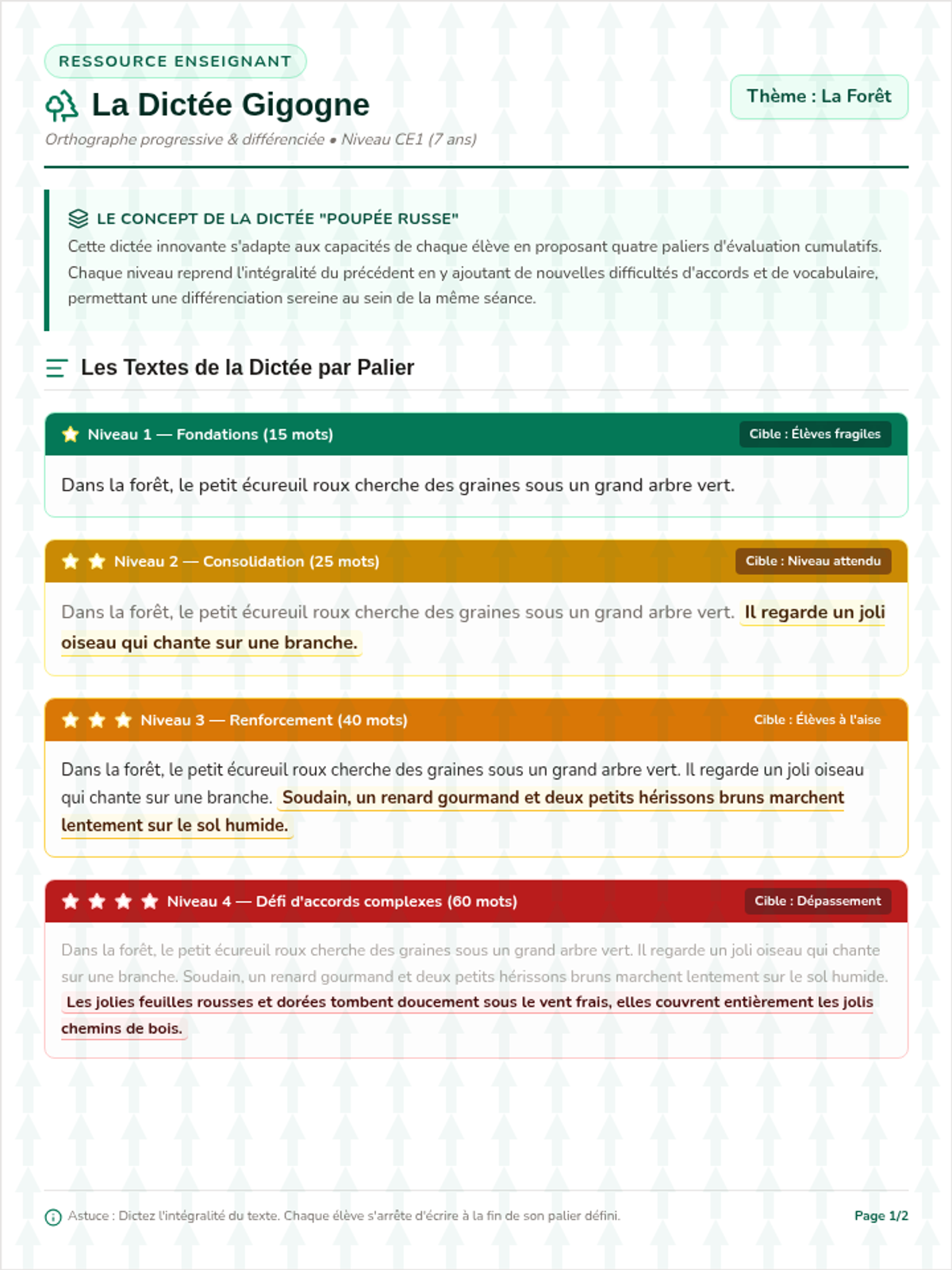
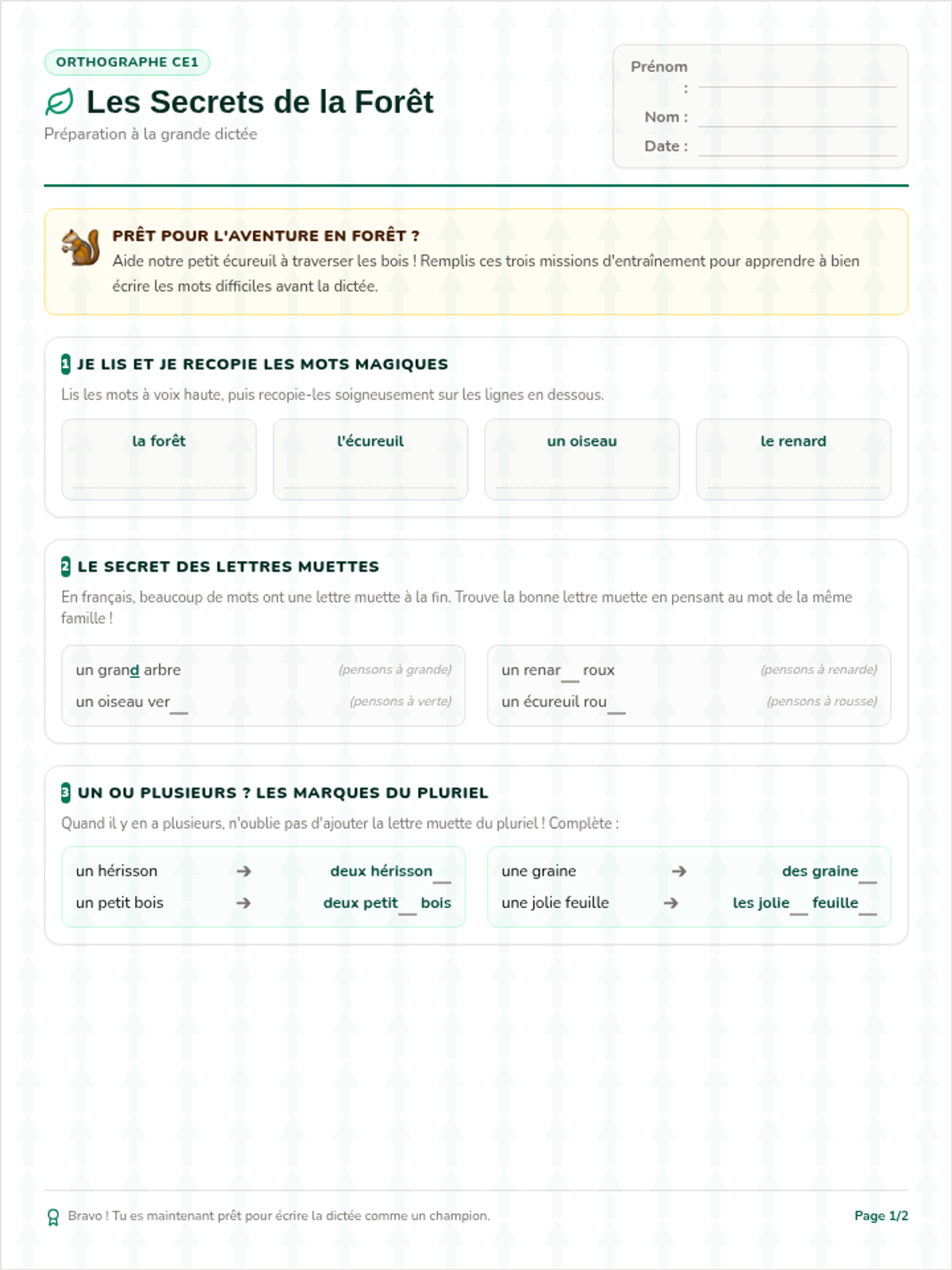
Séquence d'orthographe et de vocabulaire pour le CE1 autour de la faune et de la flore des bois, s'appuyant sur une dictée innovante à 4 niveaux de progression et une grille d'évaluation simplifiée.
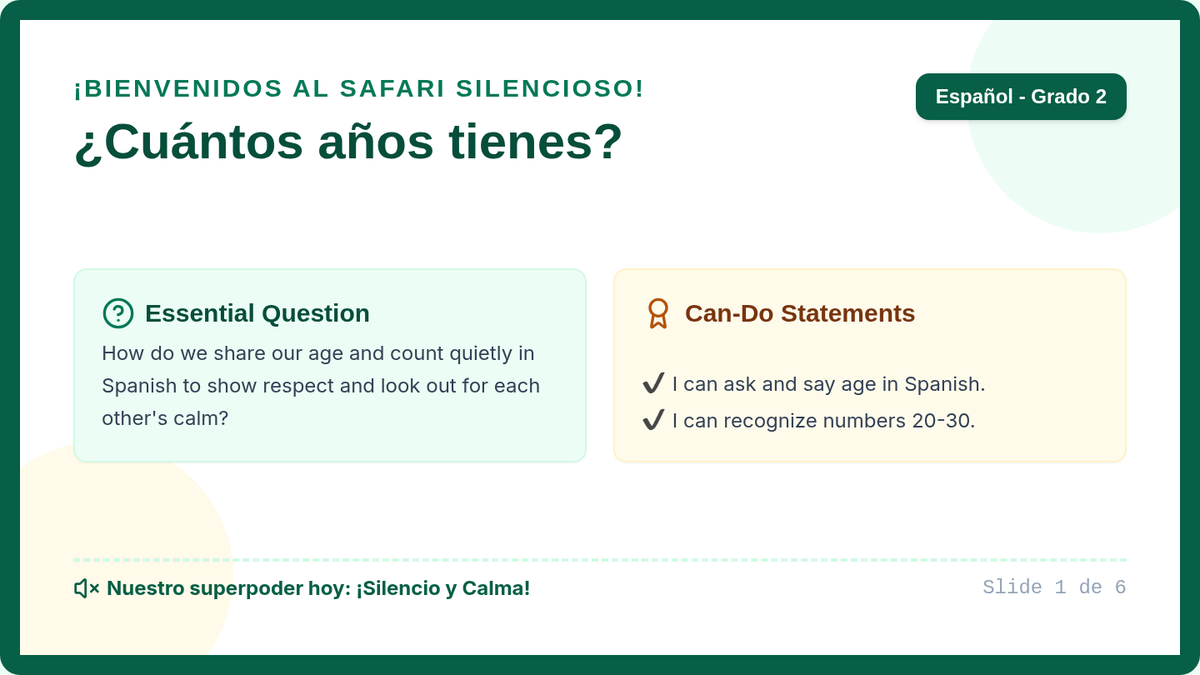
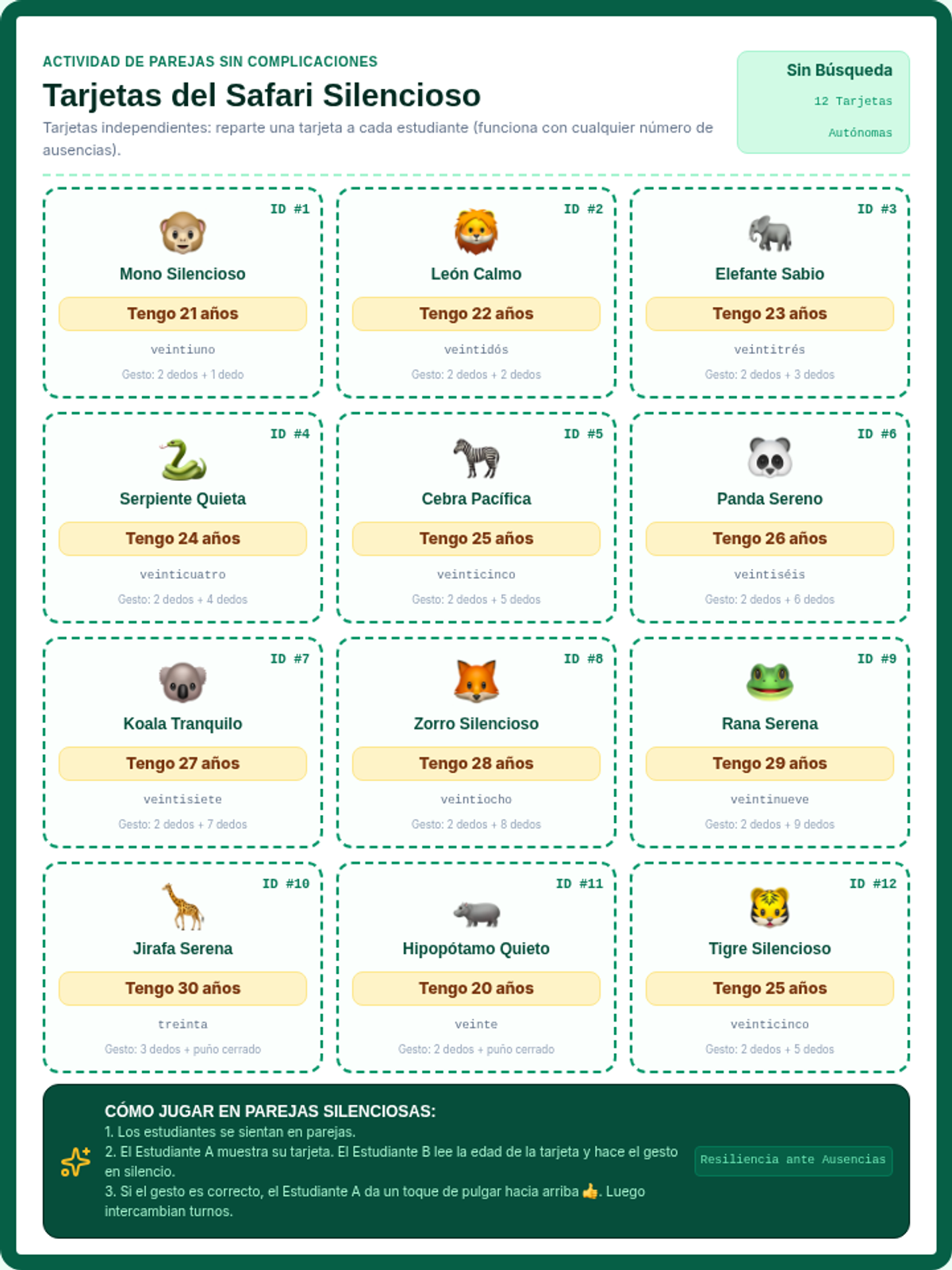
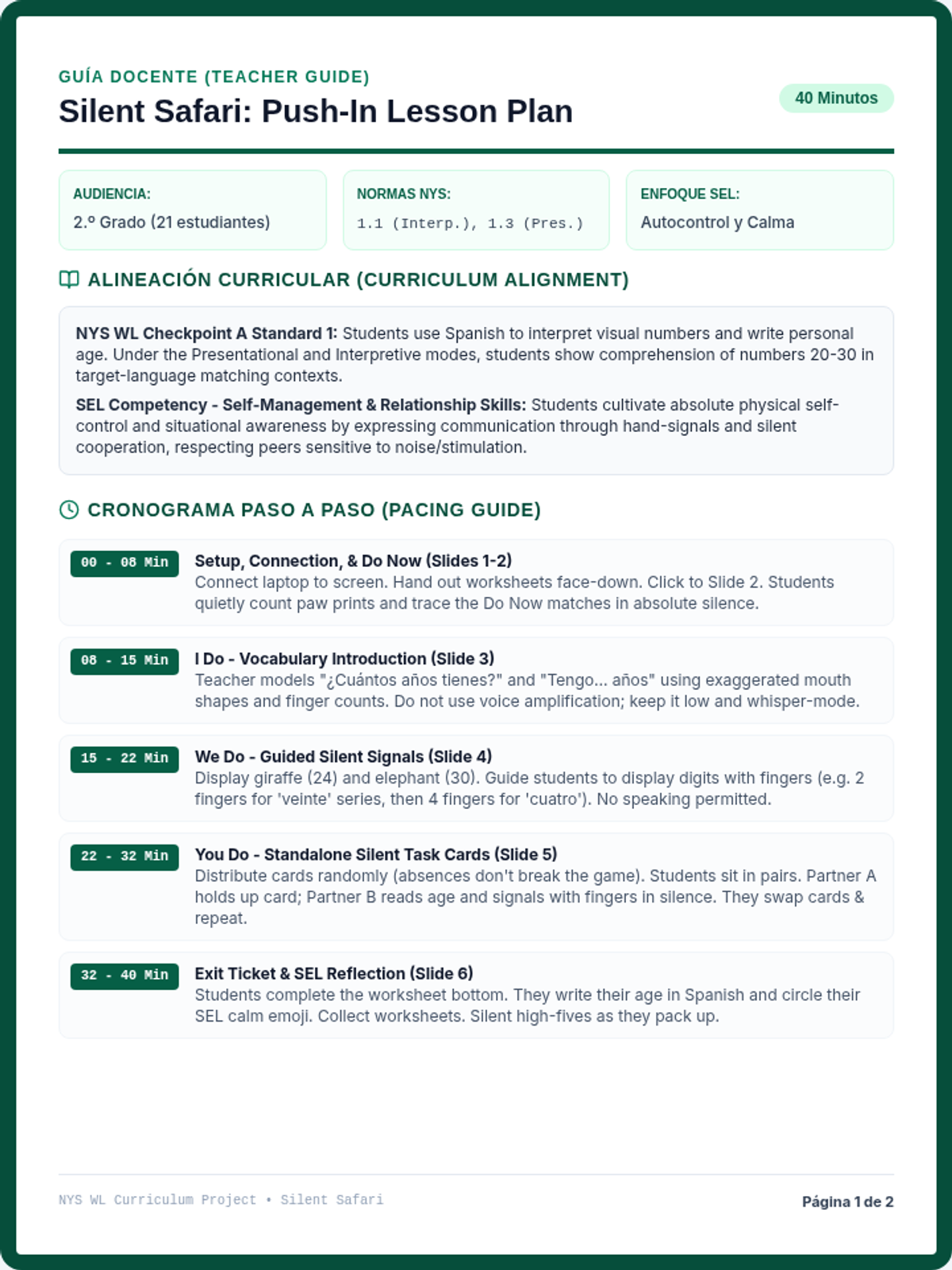
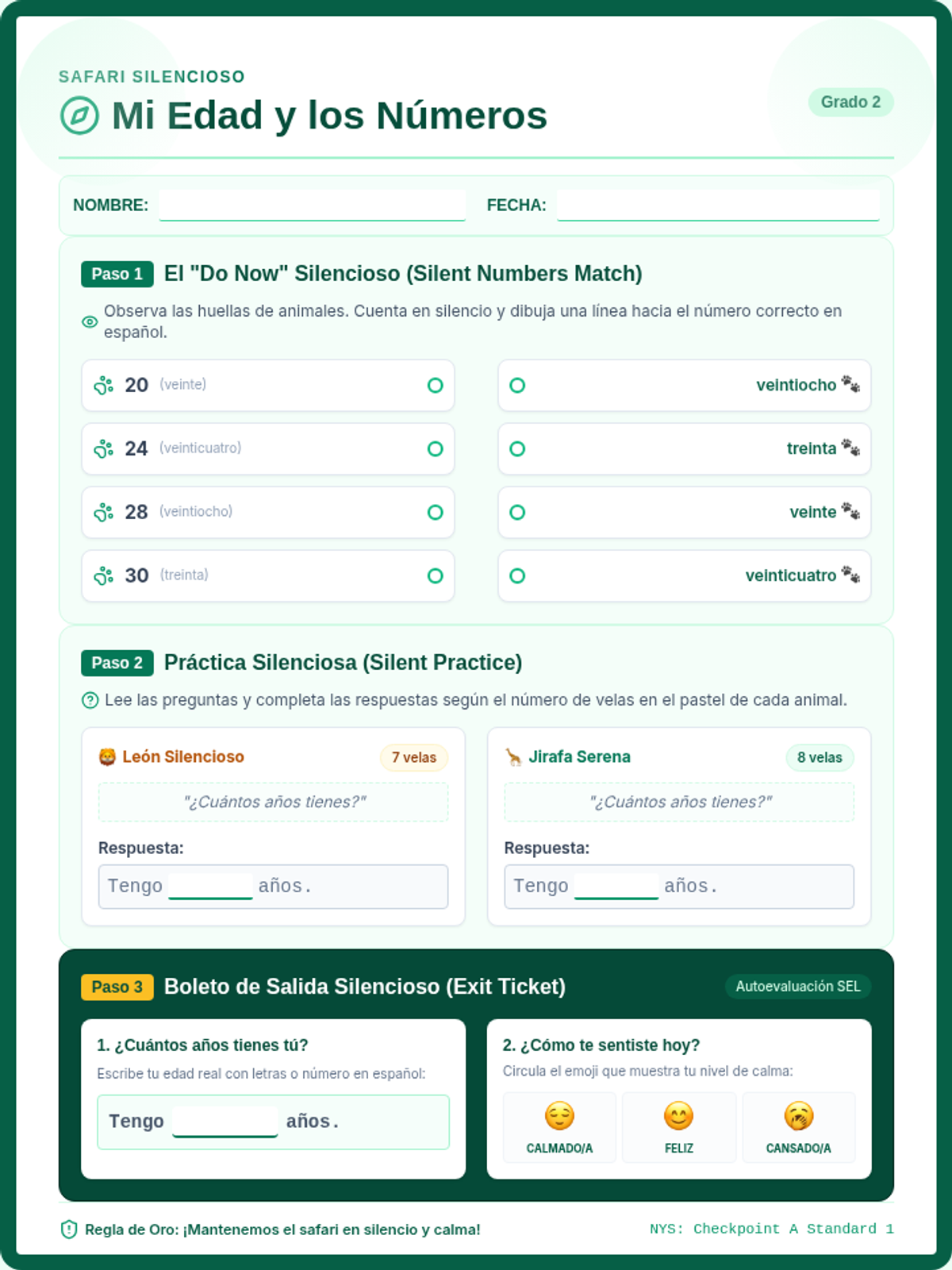
A calm, highly visual Spanish lesson for 2nd graders to learn and practice asking and stating age, plus numbers 20-30, using silent signals and partner matching to respect low-stimulation classroom needs. This lesson aligns with NYS World Language Standards and incorporates SEL elements through self-reflection and cooperative quiet sharing.
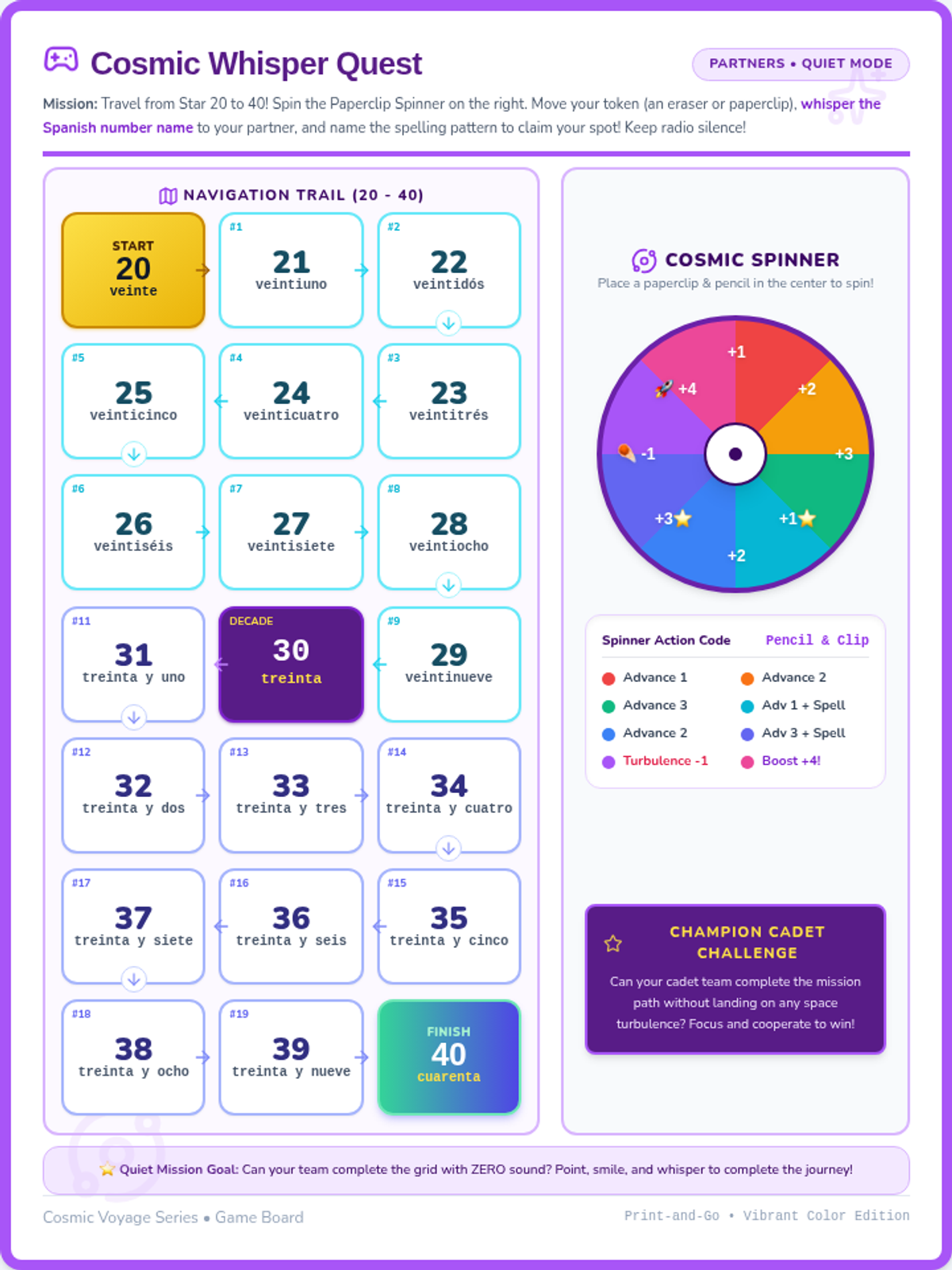
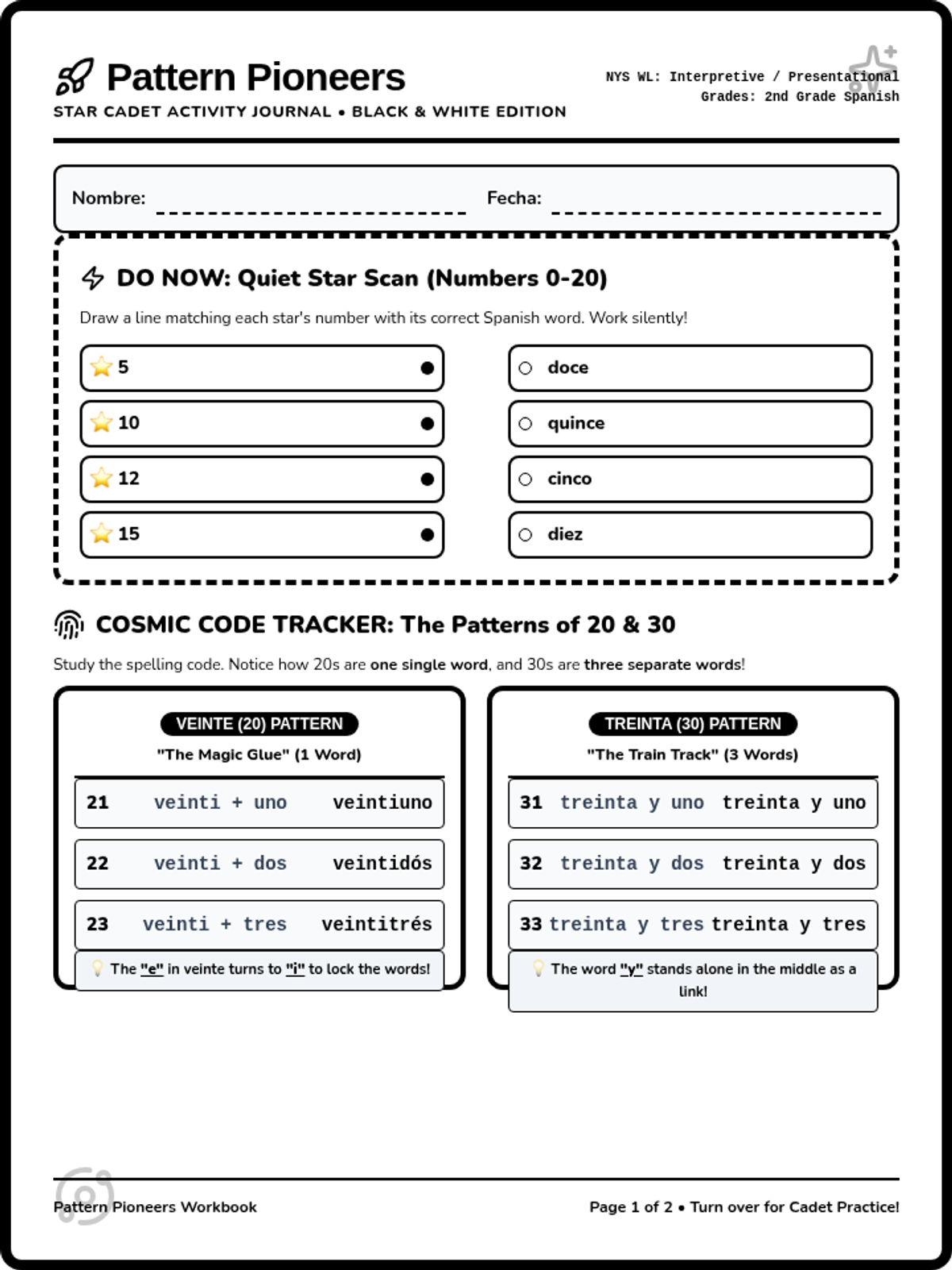
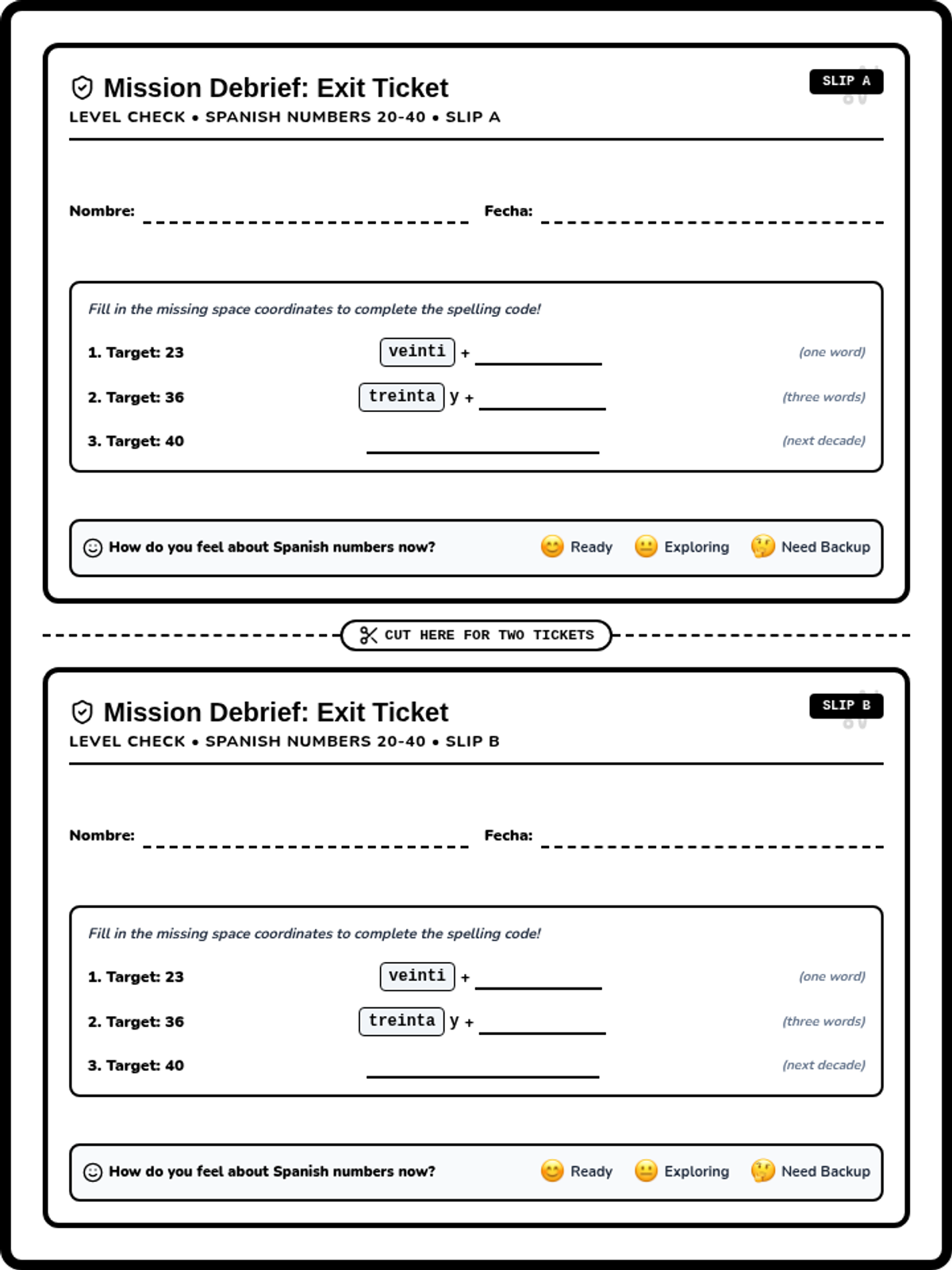
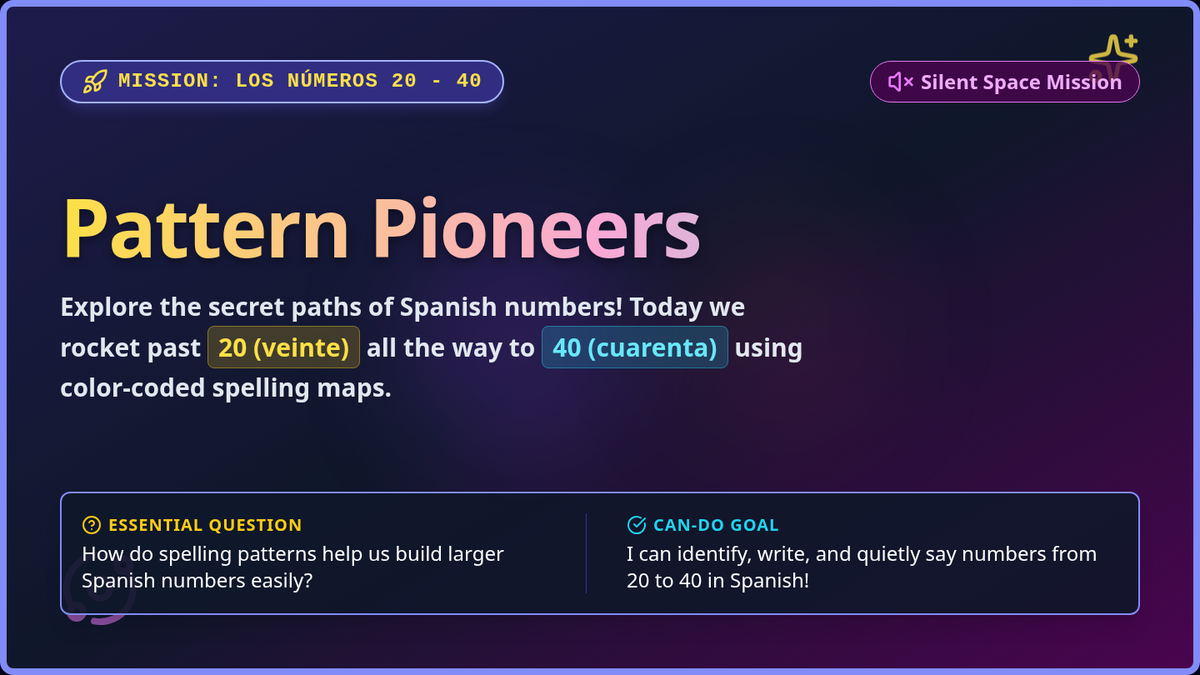
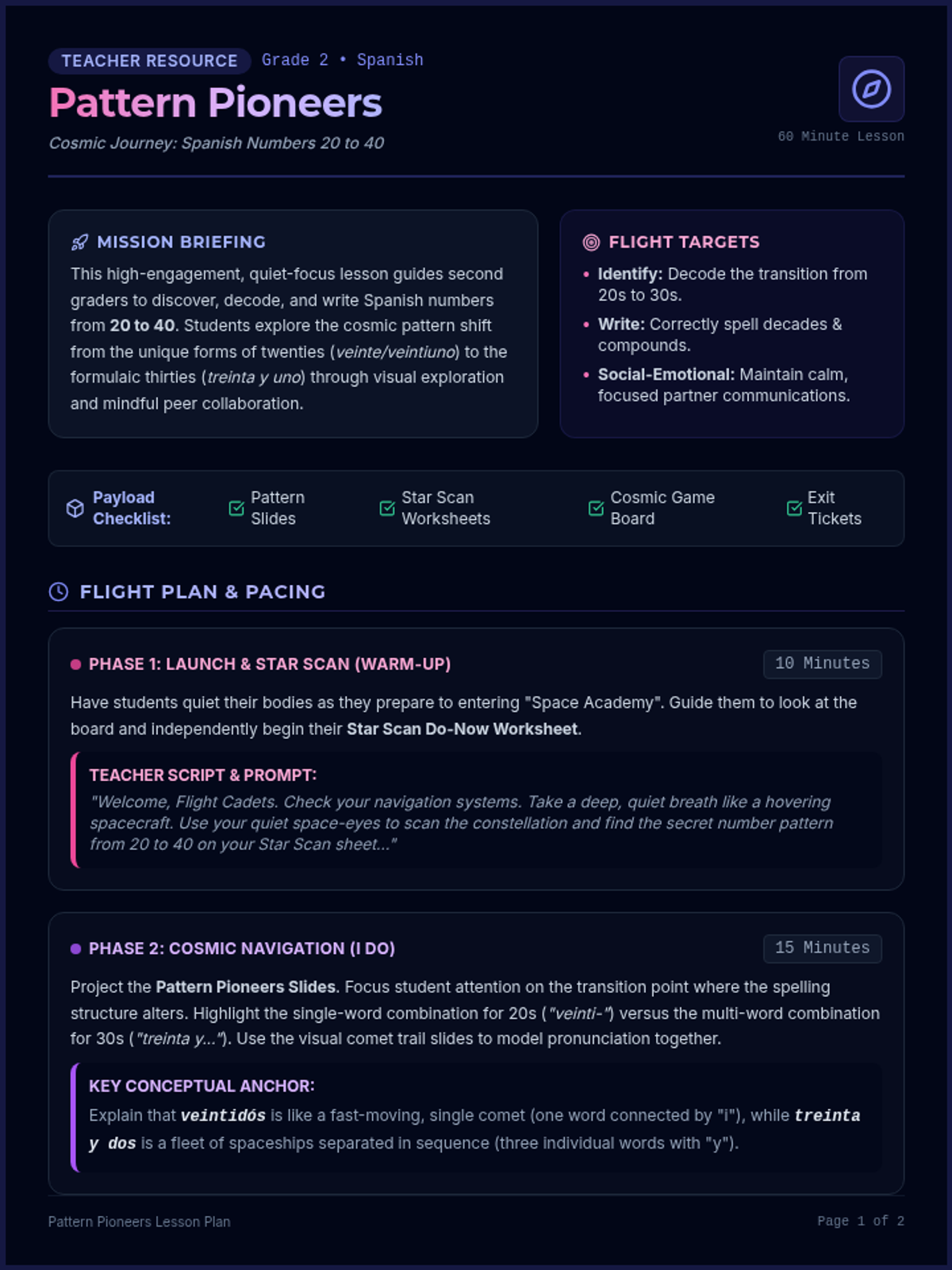
A Spanish numbers lesson for 2nd graders focusing on decades and patterns from 20 to 40. The lesson follows the I Do, We Do, You Do framework, integrates social-emotional learning, and uses quiet, high-engagement visual activities.