Students learn to distinguish between spoken words and the narrator's tag by color-coding dialogue in simple texts.
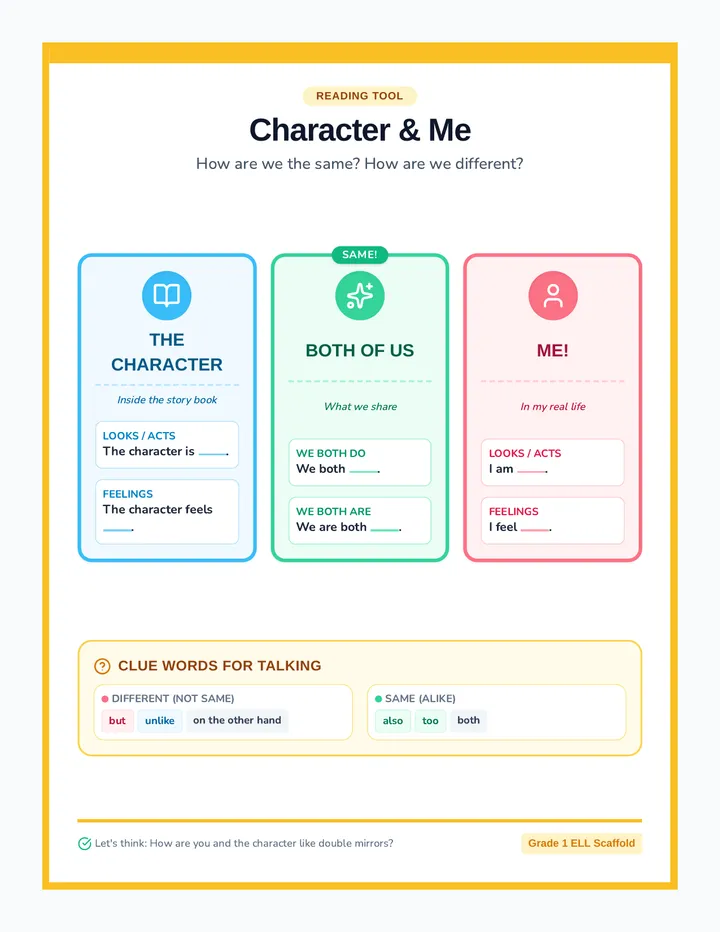
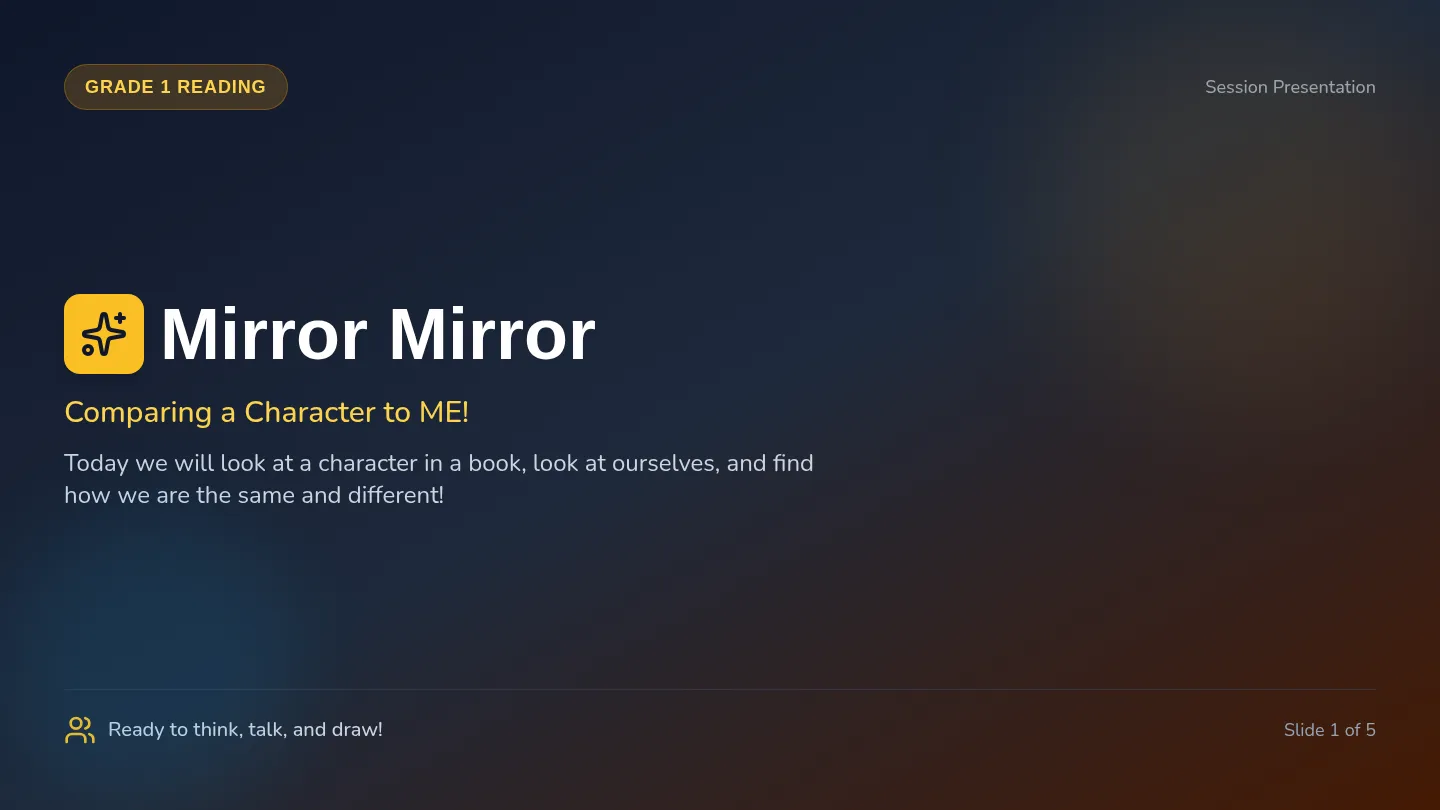
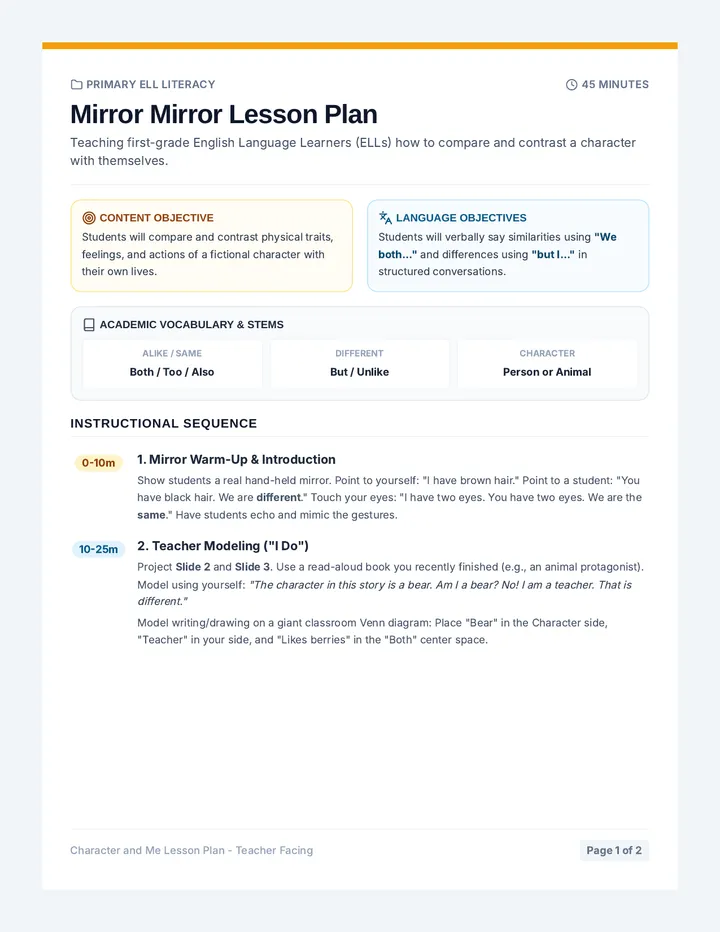
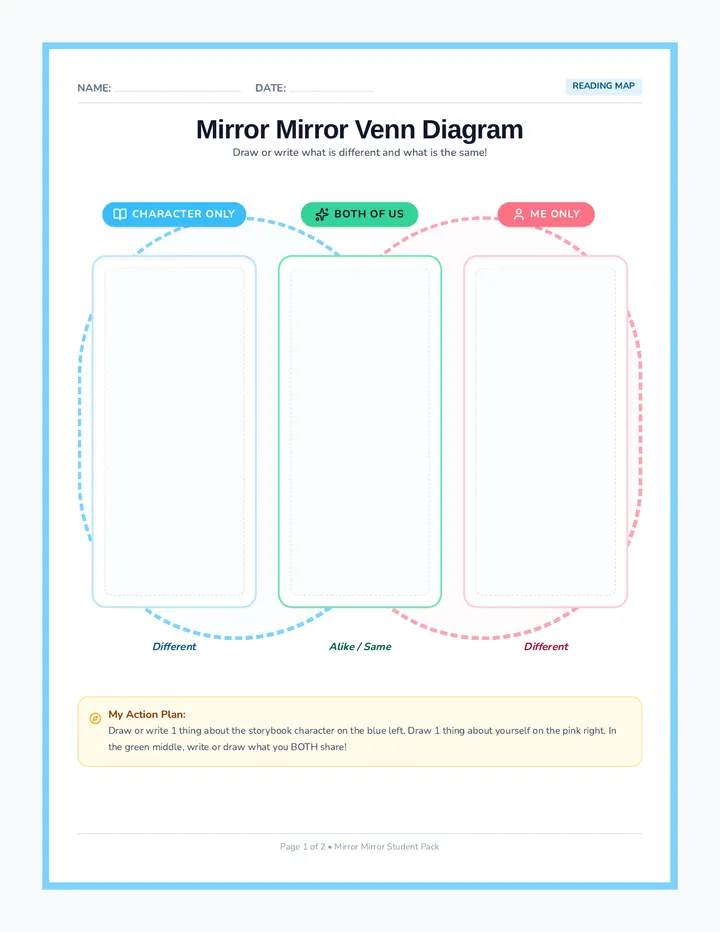
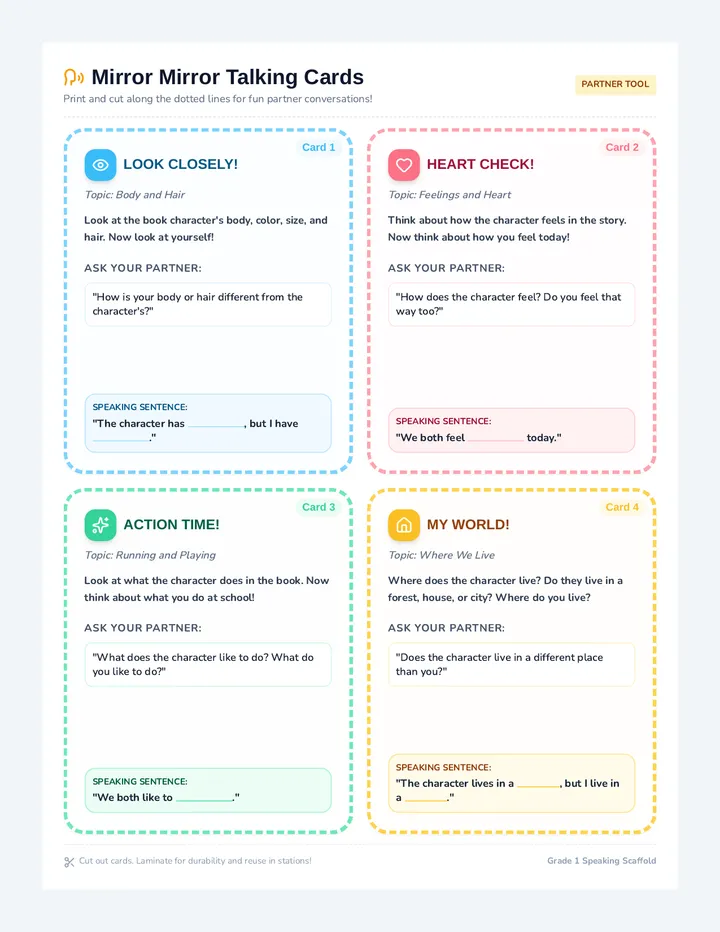
A scaffolded, visually-rich lesson designed for 1st-grade English Language Learners (ELLs) to learn how to compare and contrast a fictional character with themselves. The lesson integrates guided discussions, visual aids, structured speaking practice, and tiered graphic organizers to support oral and written language acquisition.
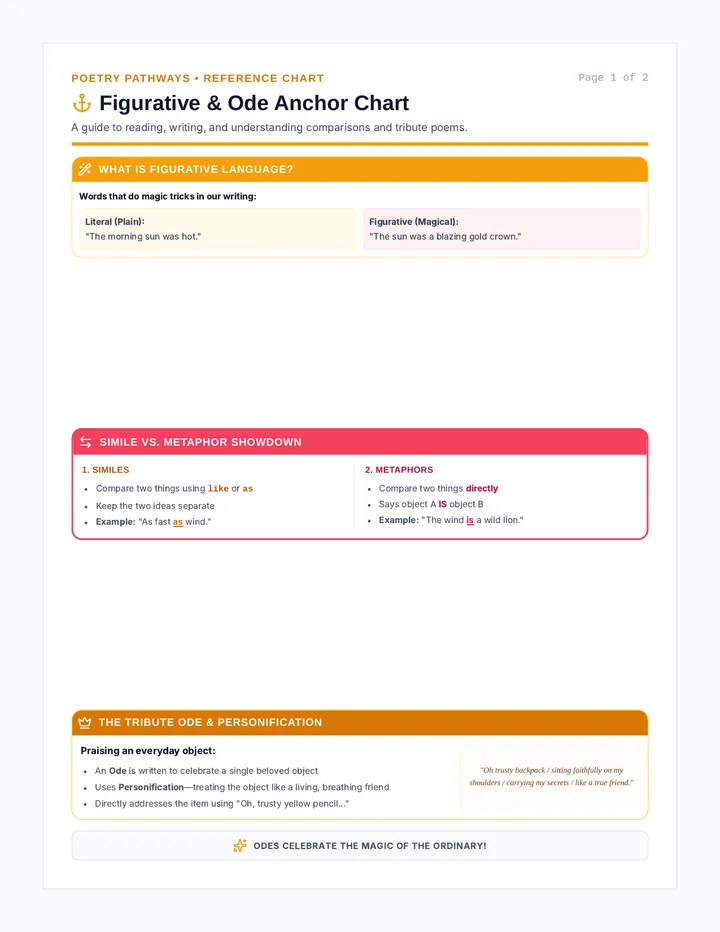
Focuses on using Metaphors and Similes to create powerful figurative imagery. Includes a final "My Poetry Masterpieces" portfolio cover and peer celebration review pages.
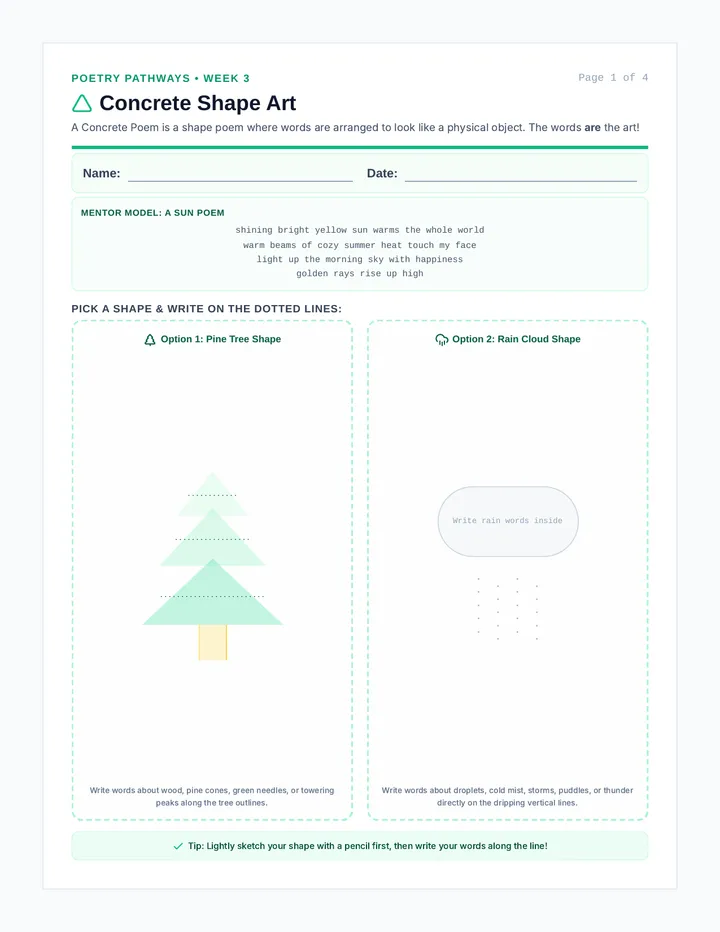
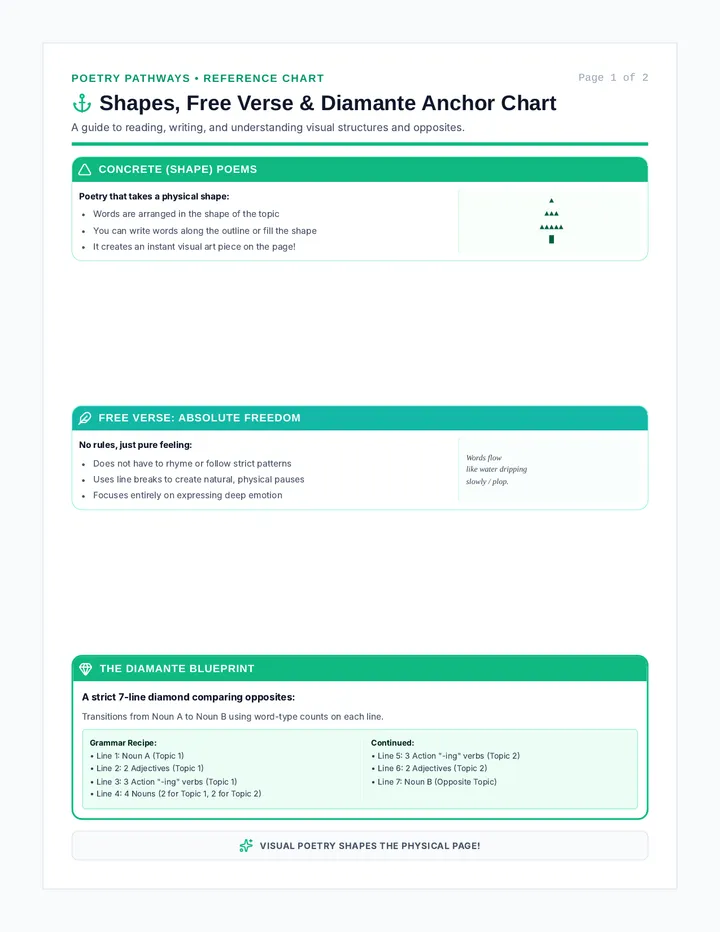
Focuses on shape, movement, and visual arrangement with Concrete (Shape) Poems and Free Verse. Provides scaffolded outline guides, word maps, and sensory feeling prompts.
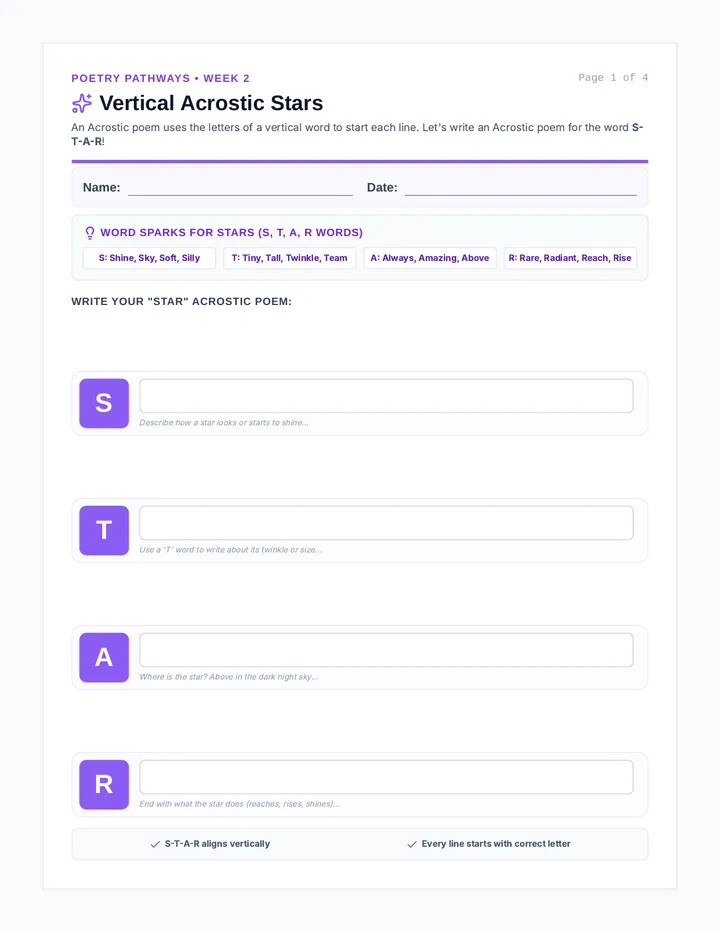
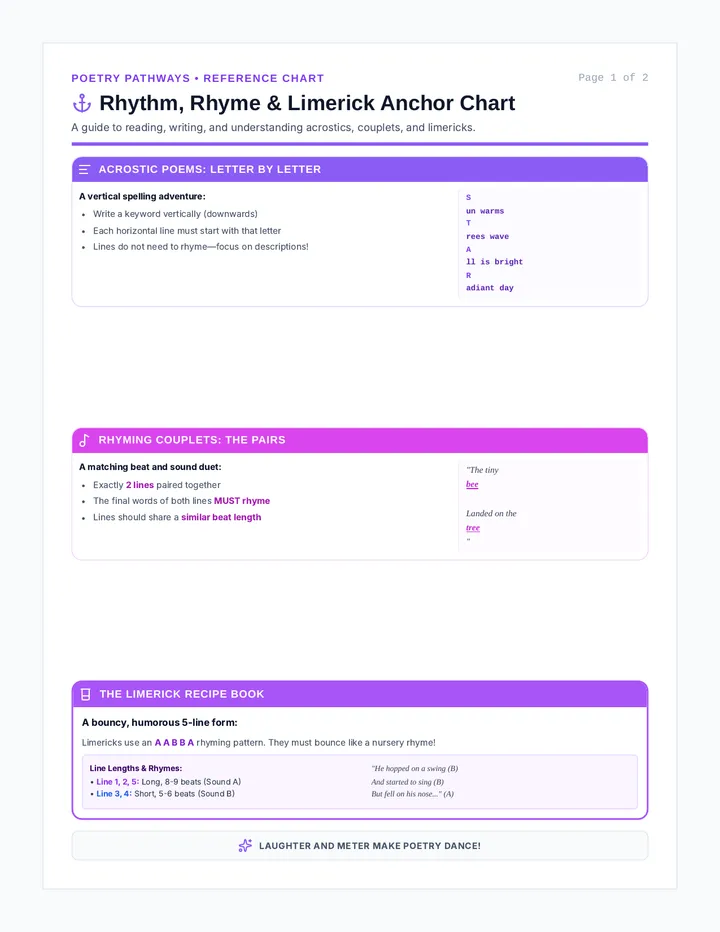
Focuses on structure, rhythm, and sound through Acrostic Poems and Rhyming Couplets. Offers step-by-step graphic templates, letter grids, rhyming dictionaries, and syllable beat counters.
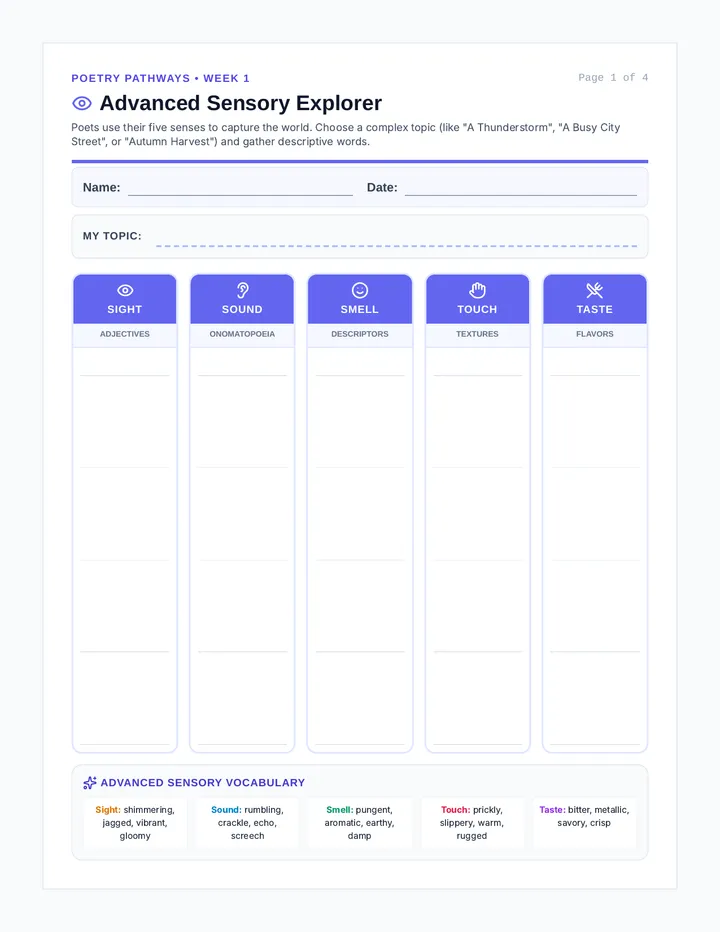
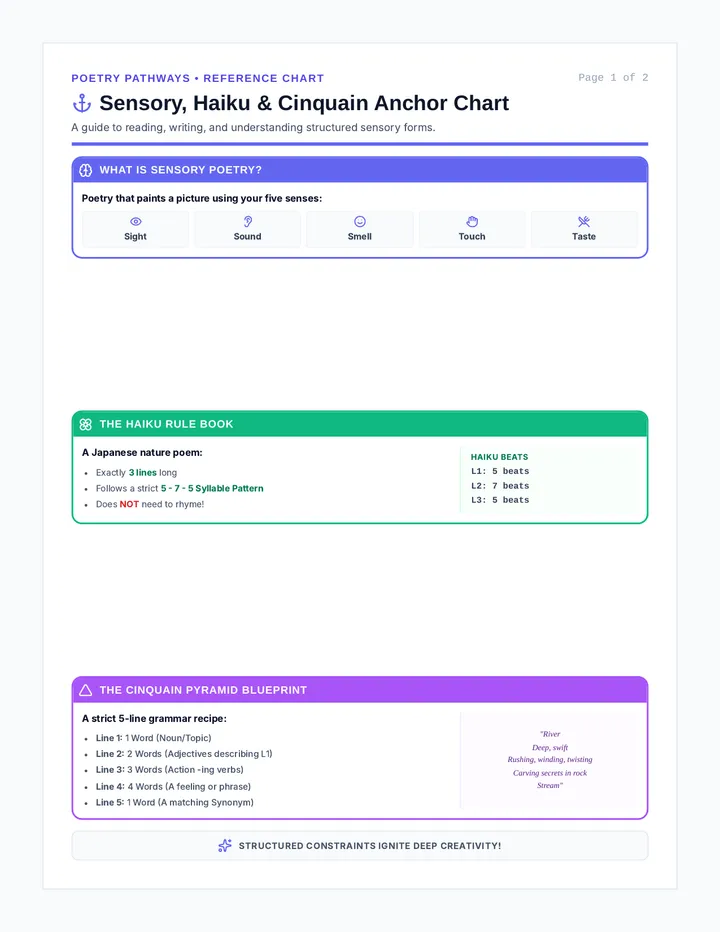
Focuses on Sensory and Color Poetry (Haiku and Color Poems). Students explore imagery using their five senses, utilizing highly visual sensory organizers, word banks, and syllable counters.
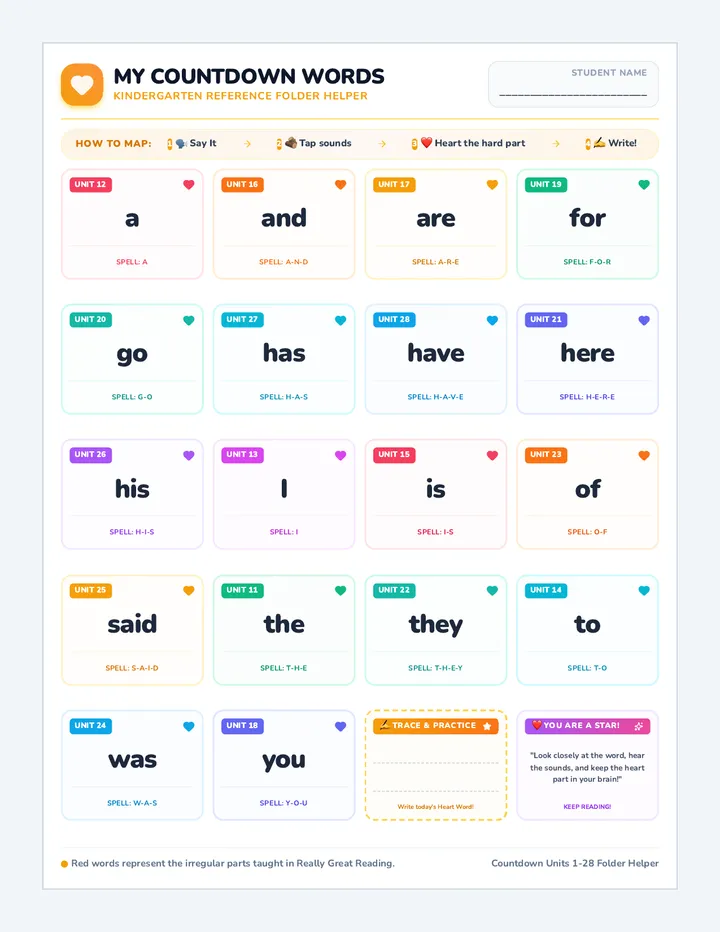
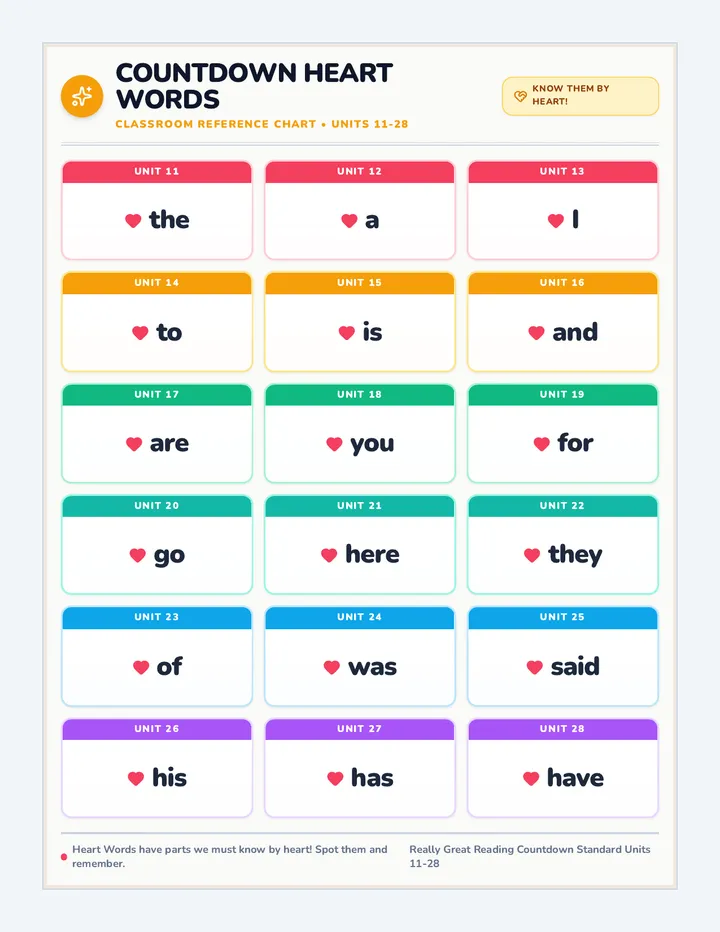
A complete pair of reference helpers for the kindergarten Countdown curriculum (Units 1-28), featuring a student folder reference helper and a colorful classroom anchor chart organized by unit.
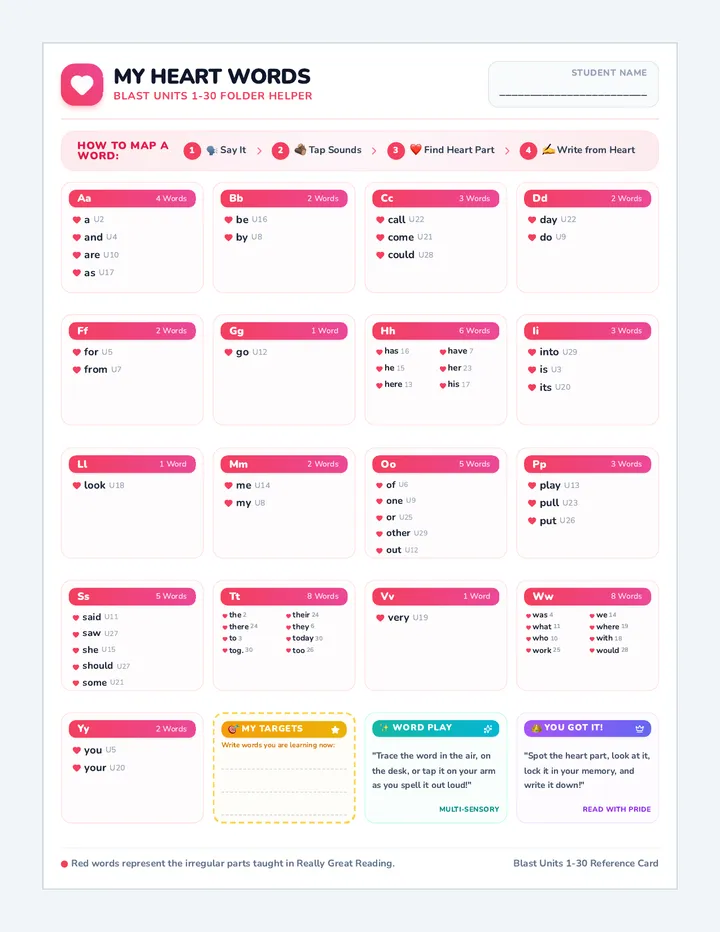
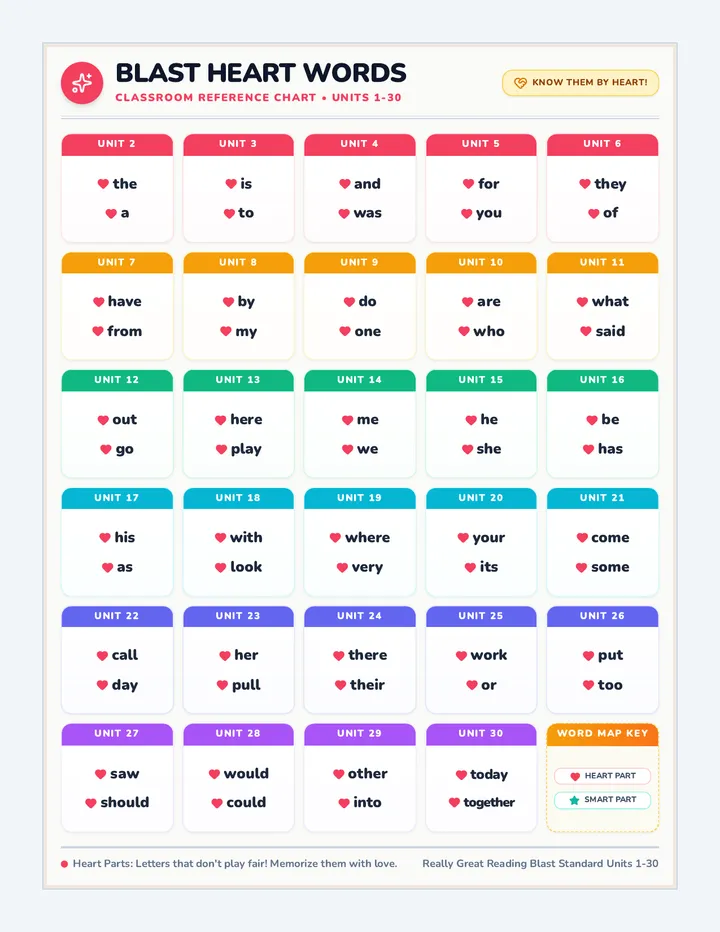
A comprehensive pair of reference materials featuring all Really Great Reading Blast Heart Words for Units 1-30. Includes a compact student folder reference helper and a colorful classroom anchor chart organized by unit.
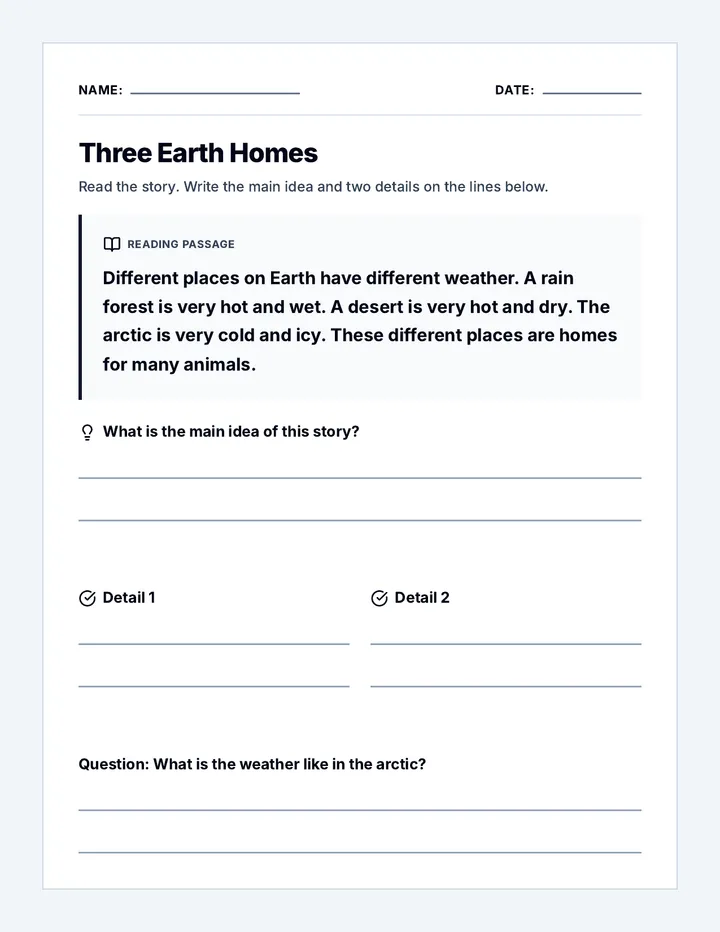
A lesson focused on identifying the main idea and supporting details in short texts, designed with structured supports for students.
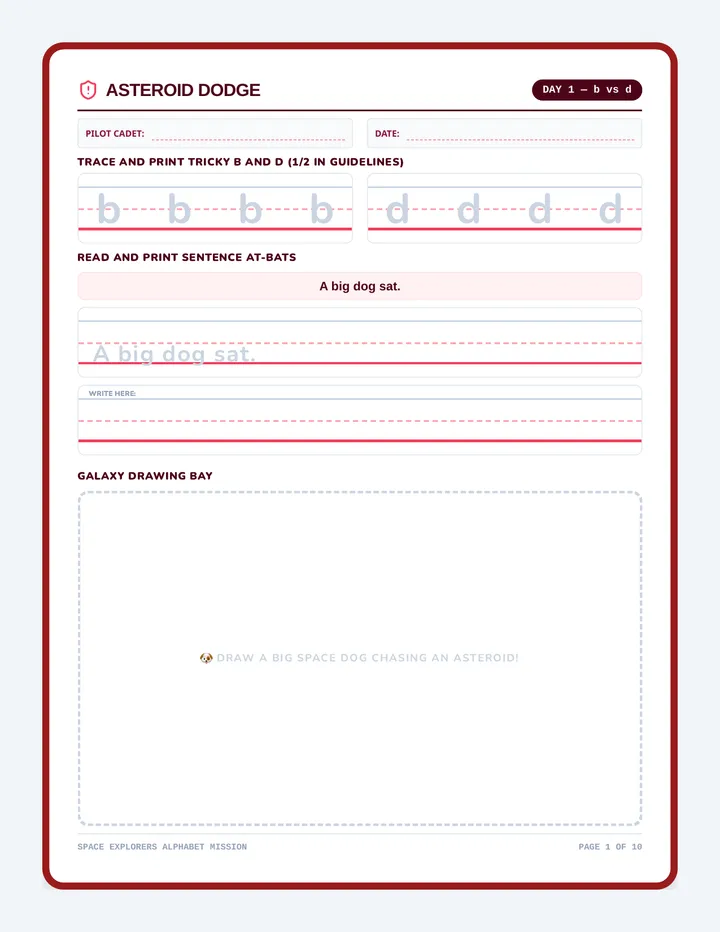
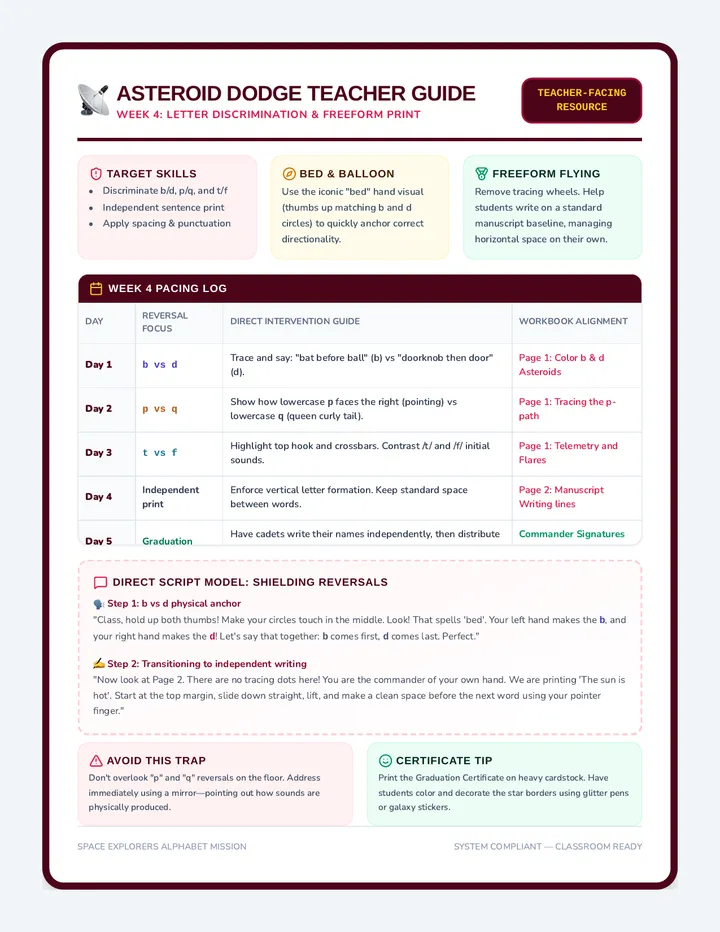
Week 4 targets commonly confused letters (b/d, p/q, t/f) through space-themed discrimination games, and transitions students to freeform independent handwriting.
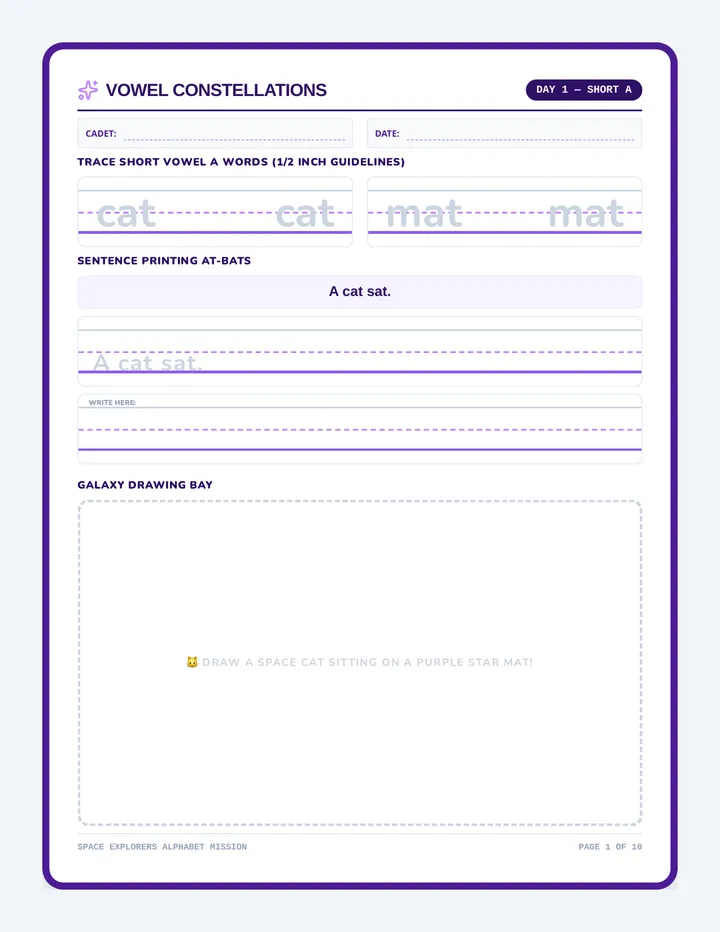
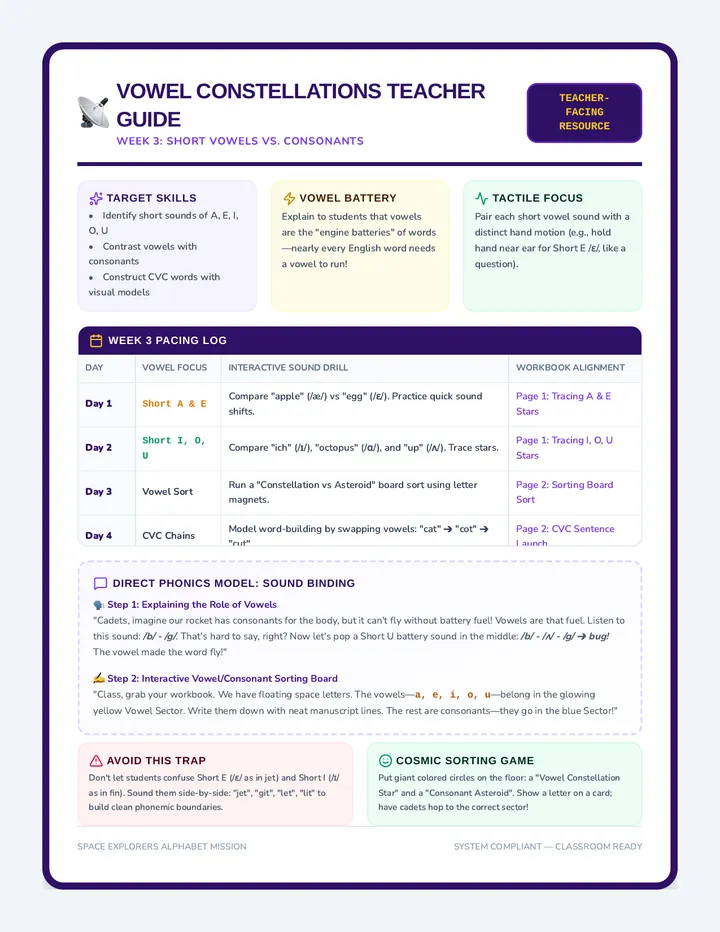
Week 3 explores the distinct roles of vowels and consonants, teaching short vowel sounds, star-themed sorting, and simple consonant-vowel-consonant (CVC) blending.
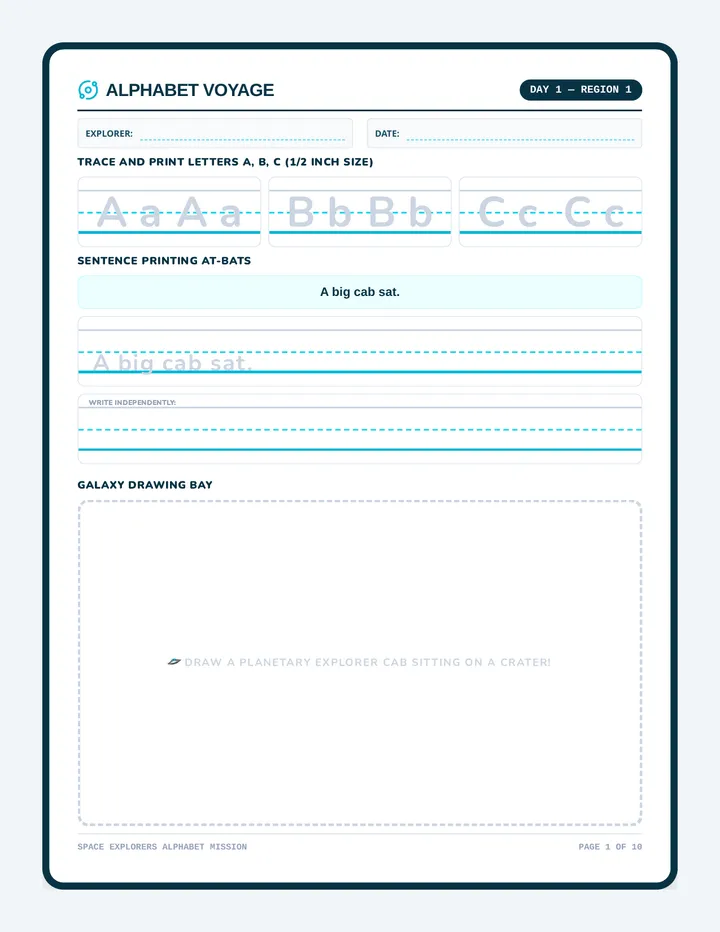
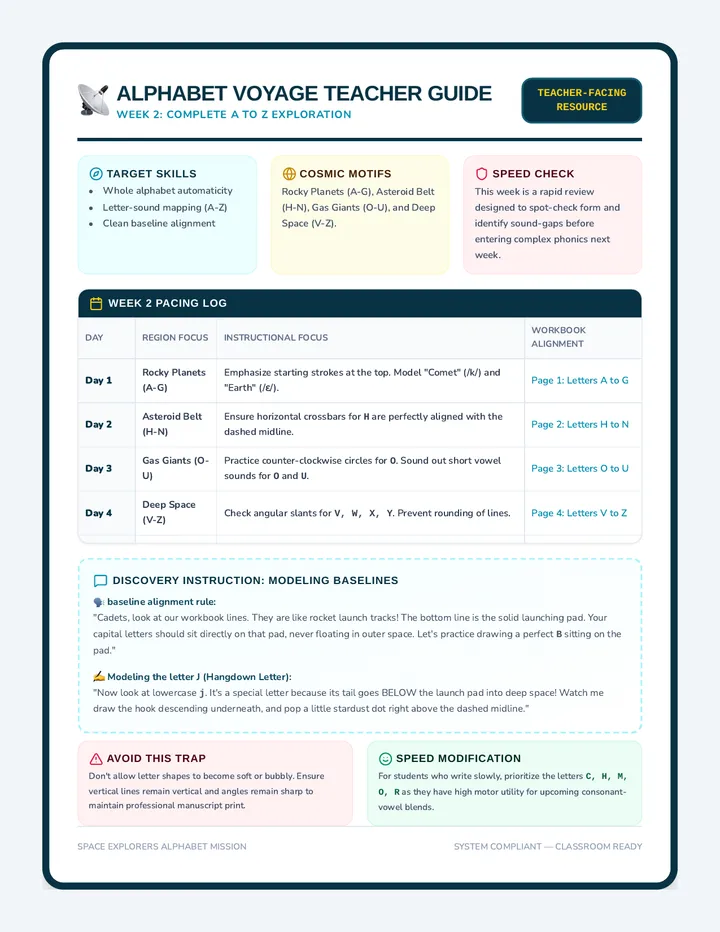
Week 2 covers a rapid, comprehensive overview of the entire alphabet (A to Z) with clean manuscript printing, letter-sound association, and simple visual representations.
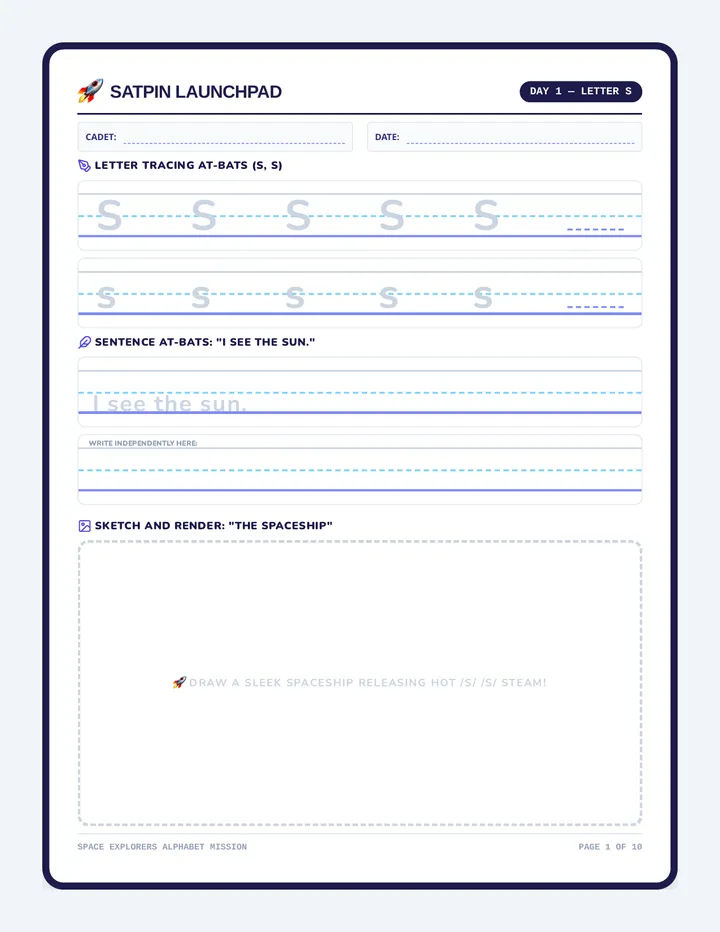
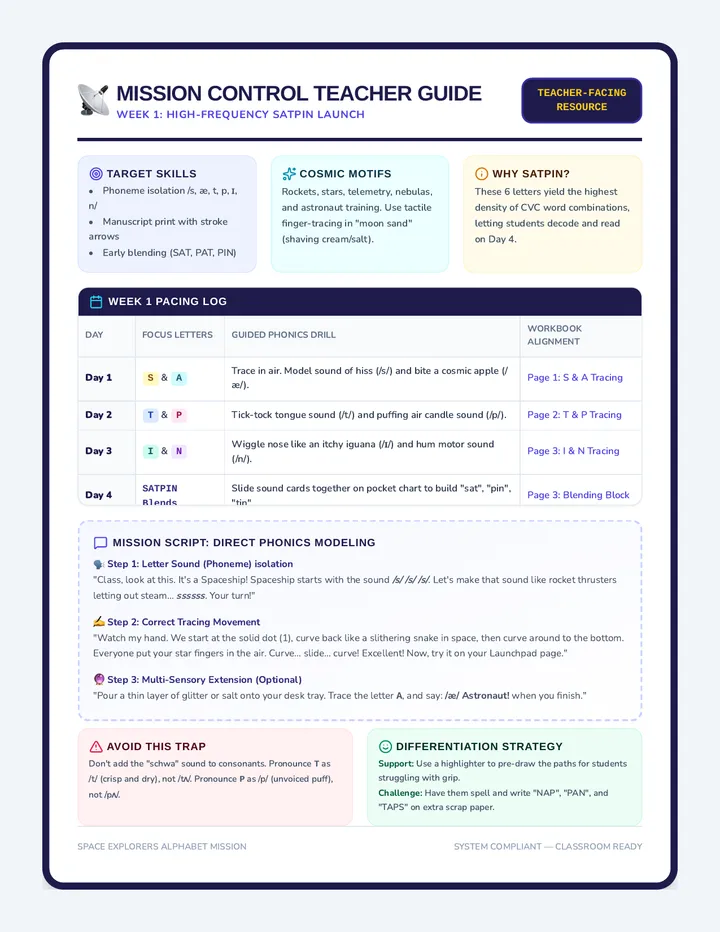
Week 1 focuses on high-frequency SATPIN letters (S, A, T, P, I, N) to quickly build and read simple words. Includes handwriting tracing with numbered stroke arrows and early phonics blends.
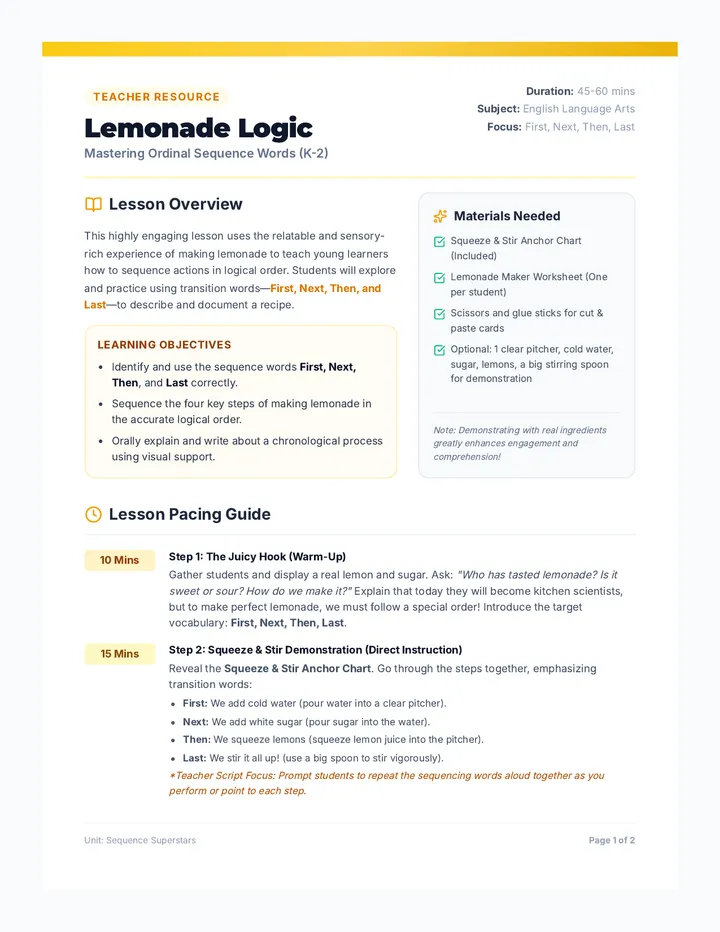
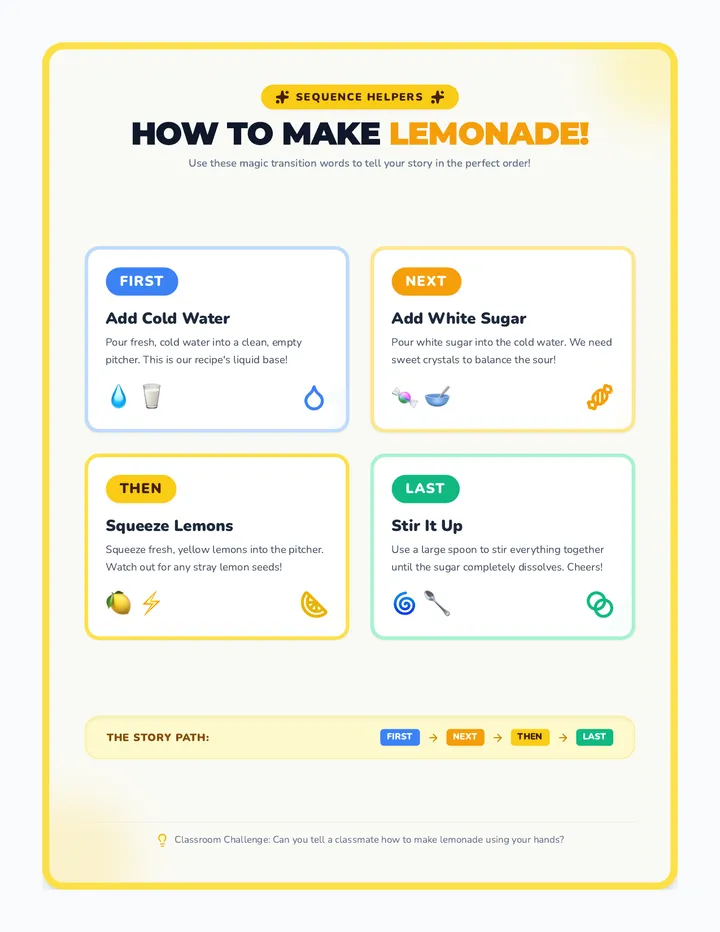
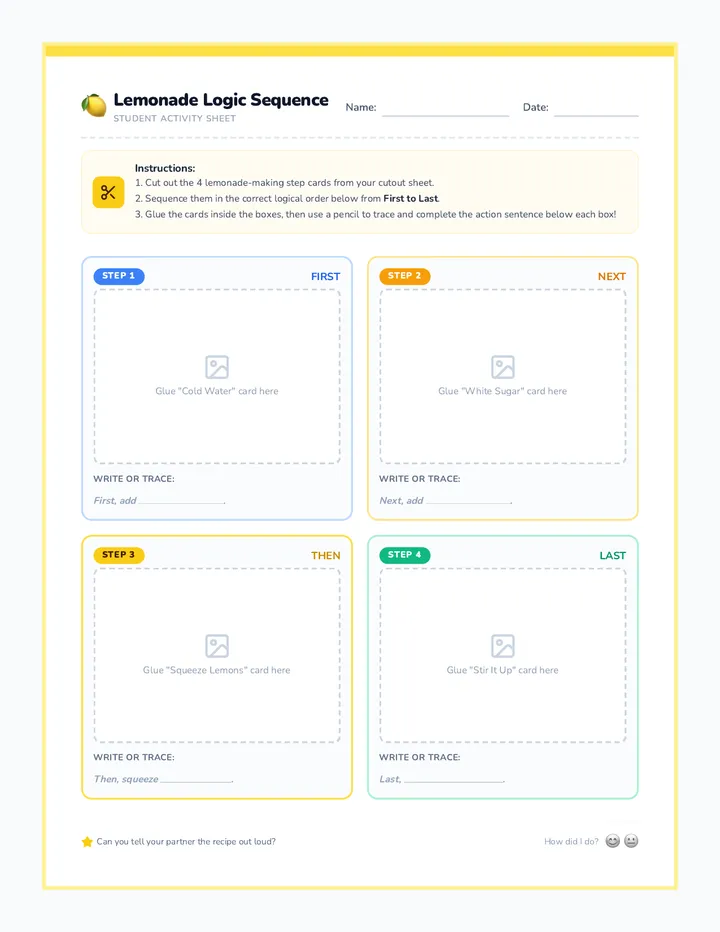
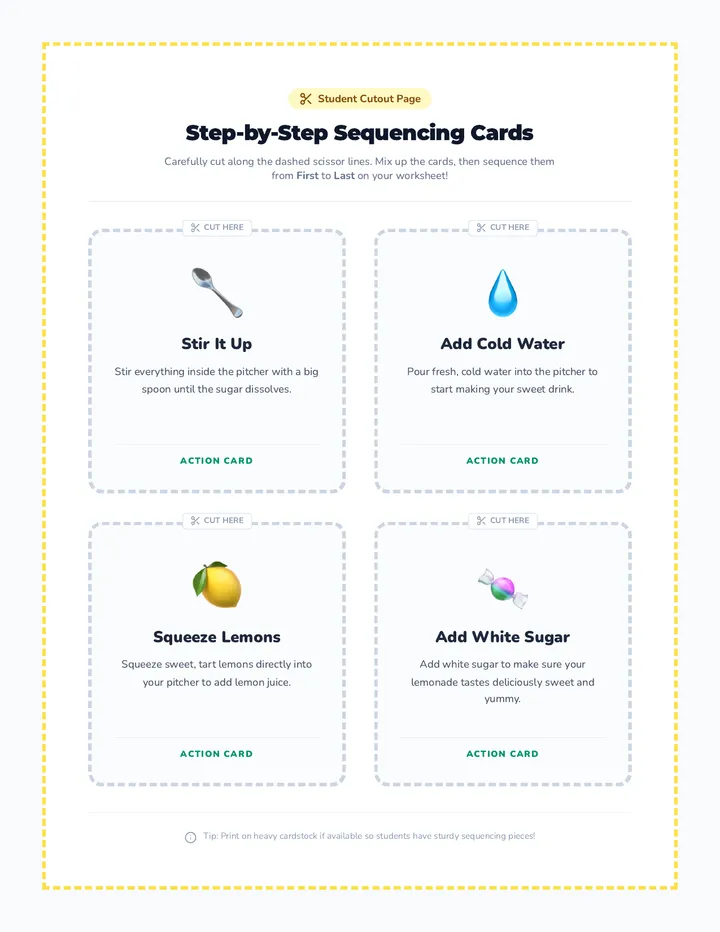
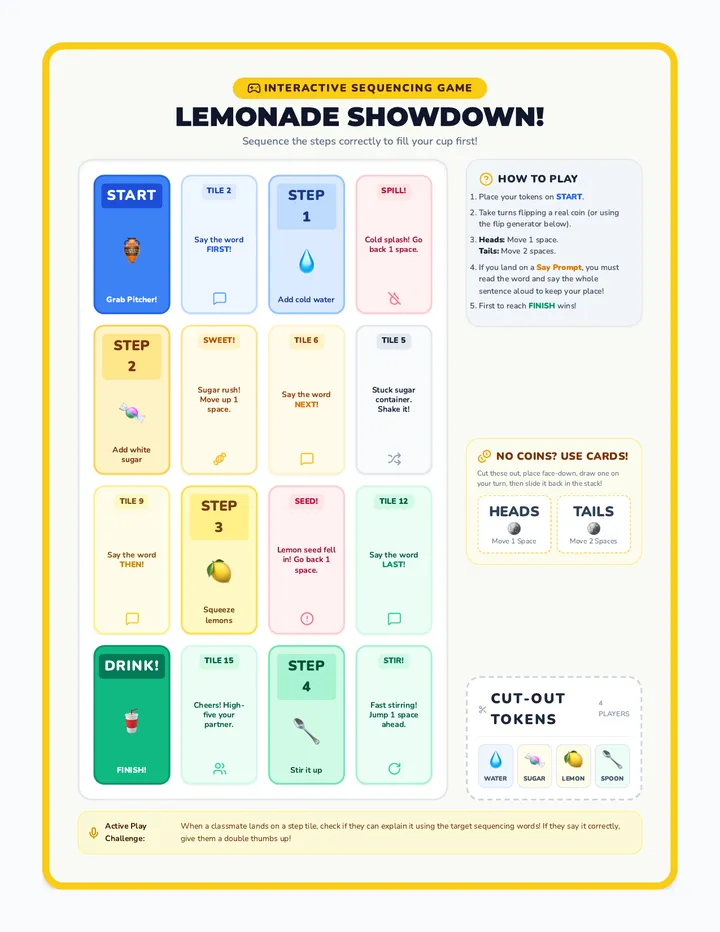
A hands-on, sequential learning experience where students master ordinal transition words (first, next, then, last) through the engaging process of making lemonade. This bundle includes a comprehensive teacher guide, a colorful anchor chart, and an interactive student worksheet.
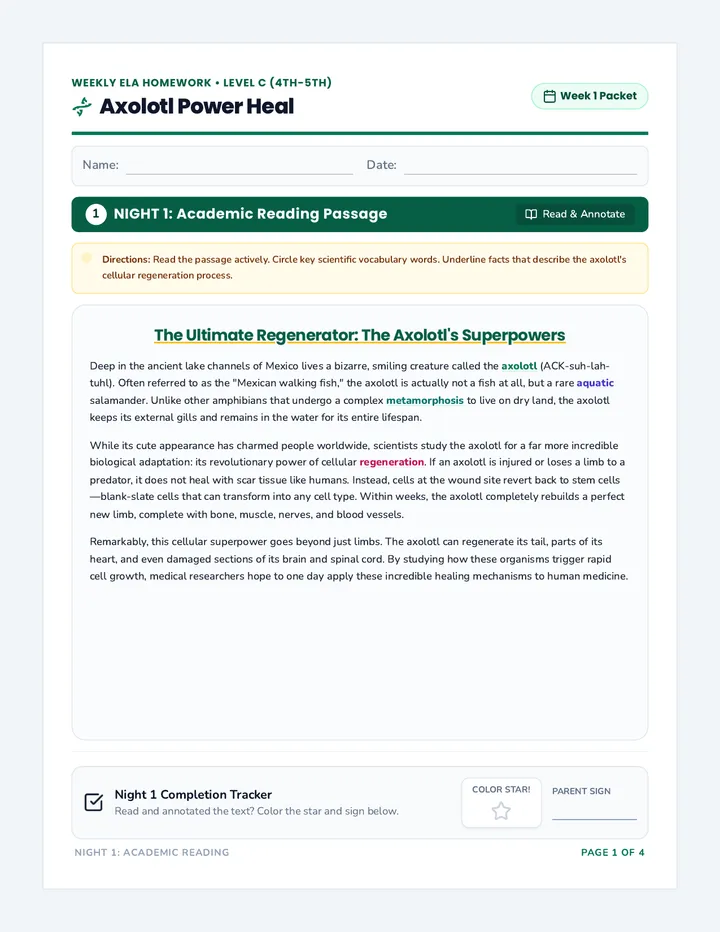
A 4th-5th grade weekly ELA homework packet focused on the axolotl and its incredible cellular regeneration abilities. Includes a challenging multi-paragraph informational text, root word/context-clue vocabulary work, a structural vs. behavioral adaptation sorting activity, and complex multiple-choice and short-answer questions with supportive sentence frames.
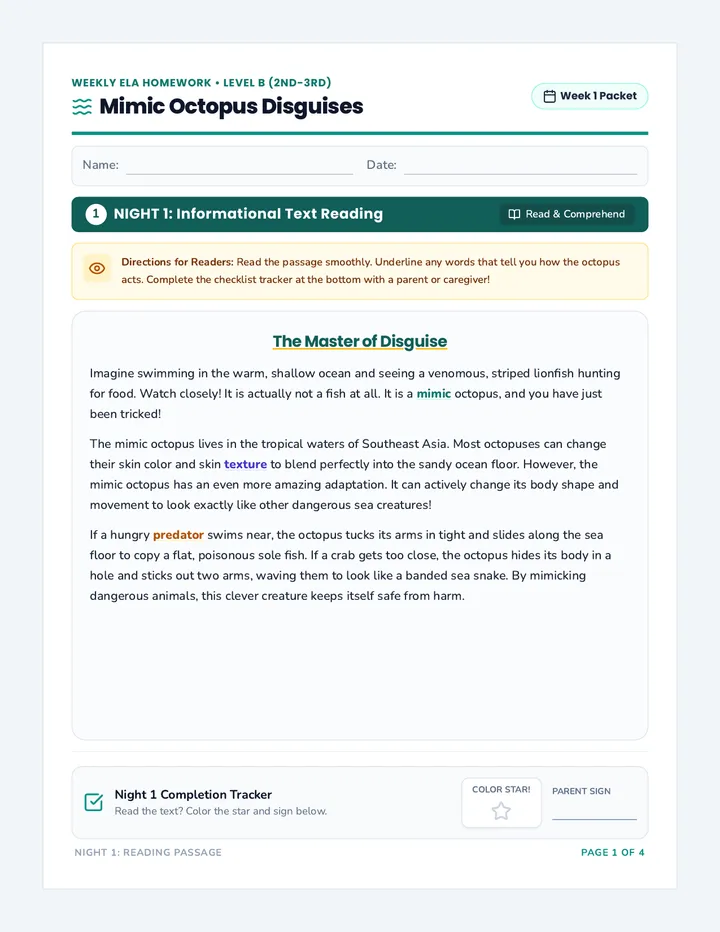
A 2nd-3rd grade weekly ELA homework packet centering on the mimic octopus, an animal that takes the form of other sea creatures to survive. Contains a multi-paragraph reading passage, context-clue vocabulary exercises, a visual disguise planning activity, and multiple-choice and short-answer comprehension questions with sentence-starter frames.
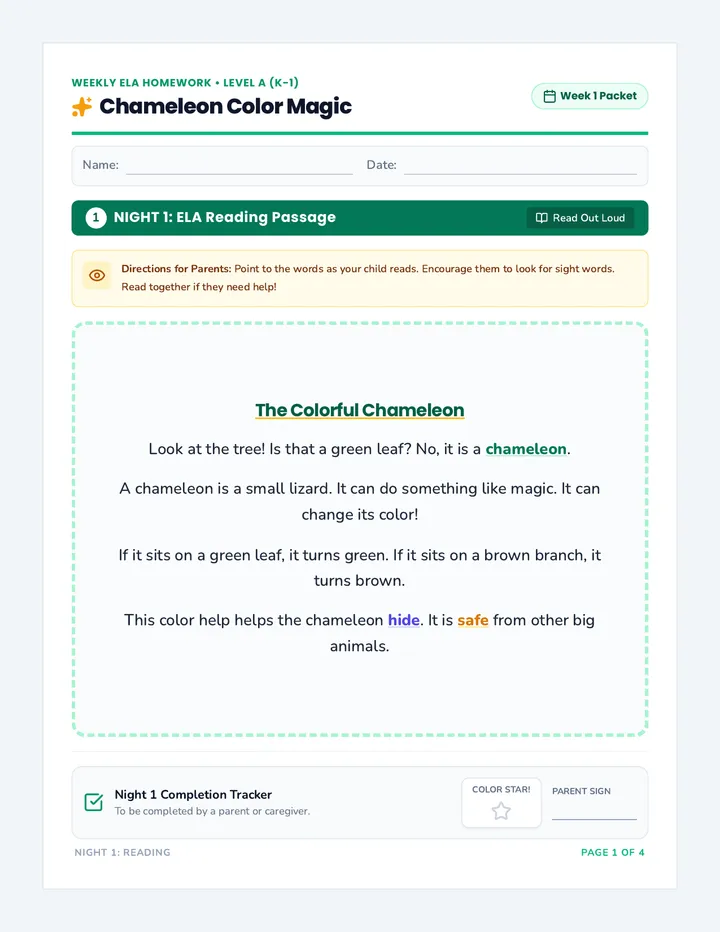
A K-1 weekly ELA homework packet featuring a short, high-interest reading passage about the chameleon's color-changing ability. Includes heavily supported vocabulary matching, visual drawing and labeling activities, simple comprehension questions with complete sentence starters, and an easy-to-use checklist tracker.
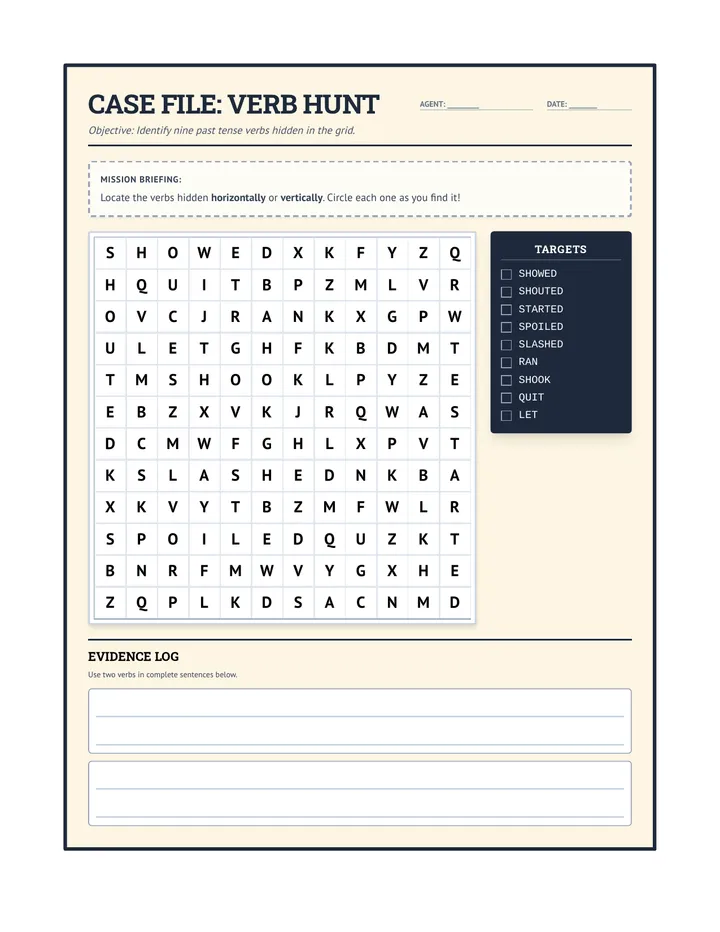
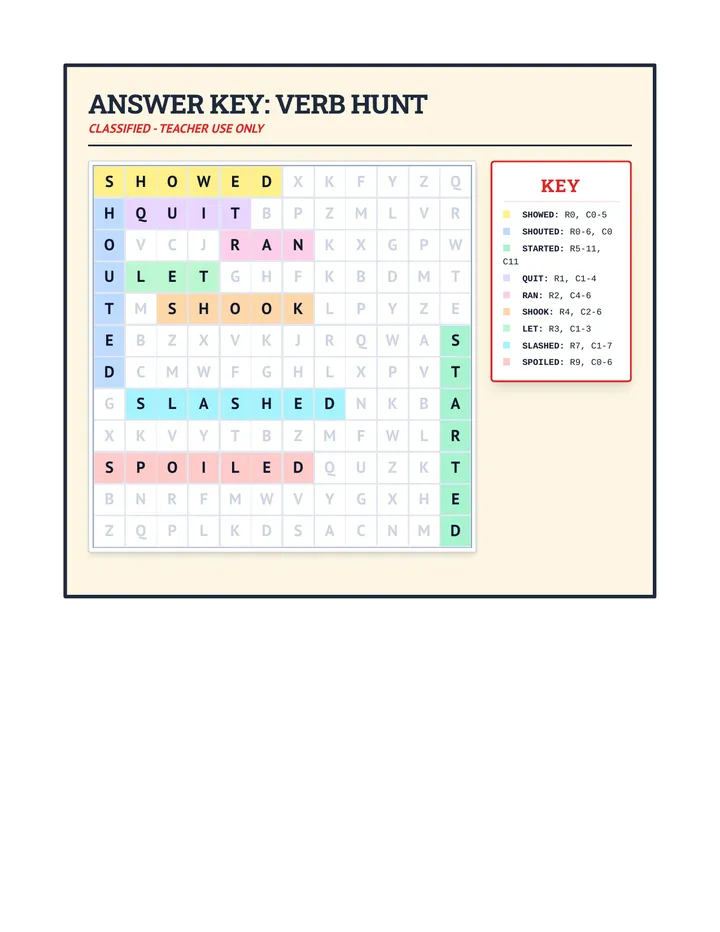
A lesson focused on identifying and using past tense verbs through a detective-themed word search and sentence construction activity.
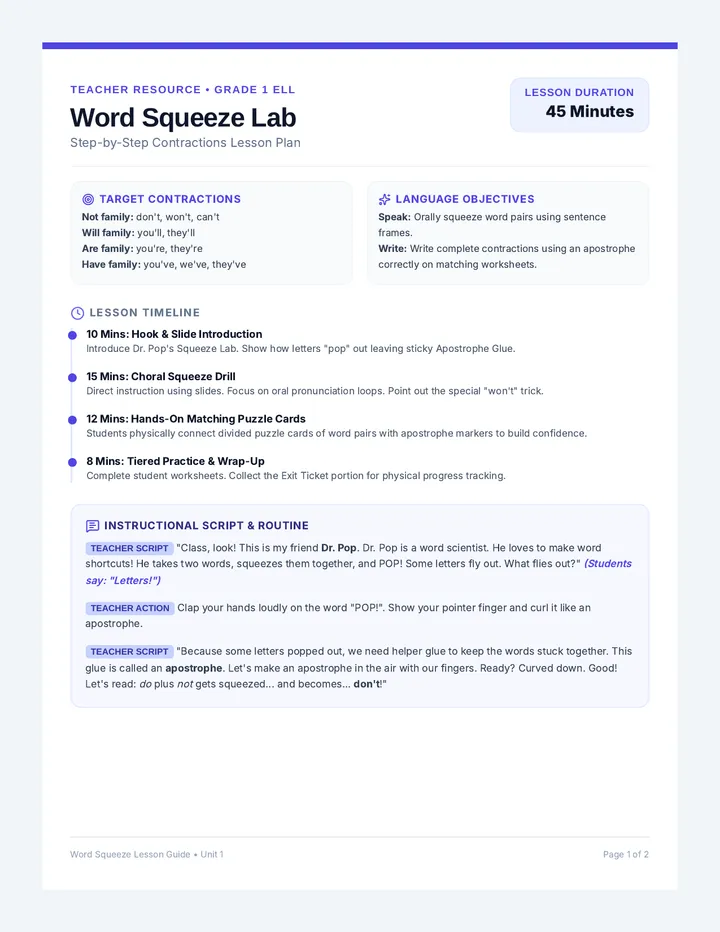
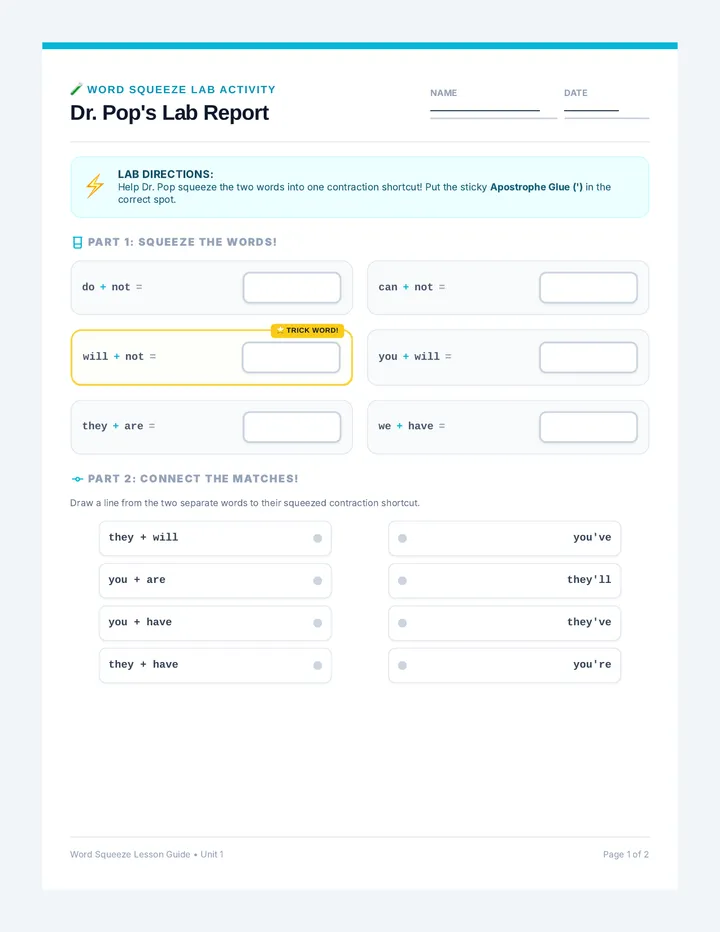
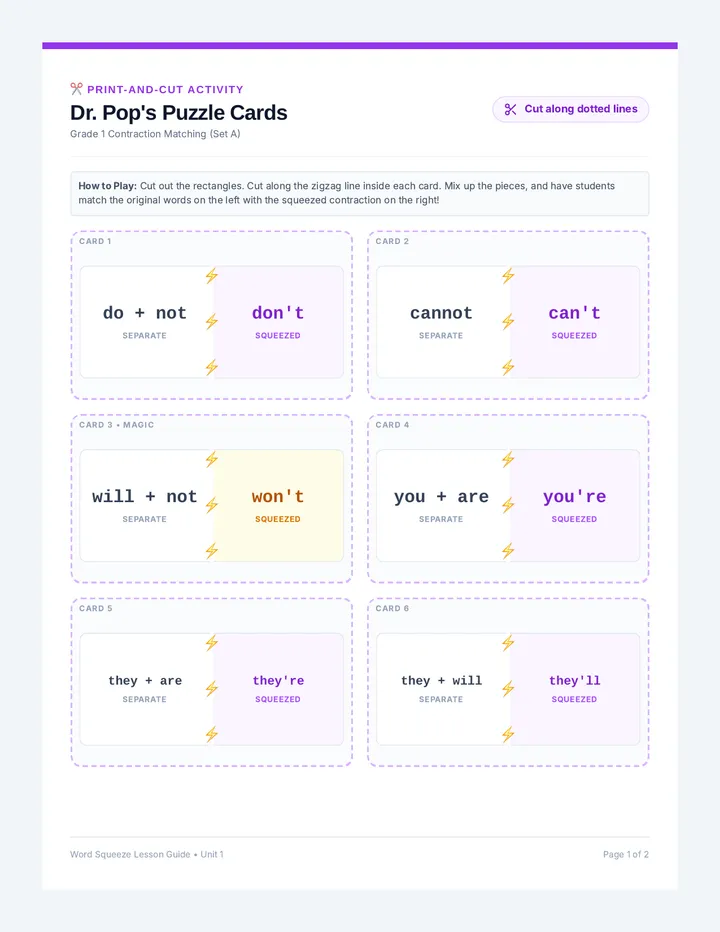
A comprehensive lesson designed for 1st grade English Language Learners to master 10 key contractions (don't, won't, you're, they're, they'll, you'll, can't, you've, we've, they've) through visual slides, oral speaking exercises, hands-on matching puzzles, and a tiered student worksheet.
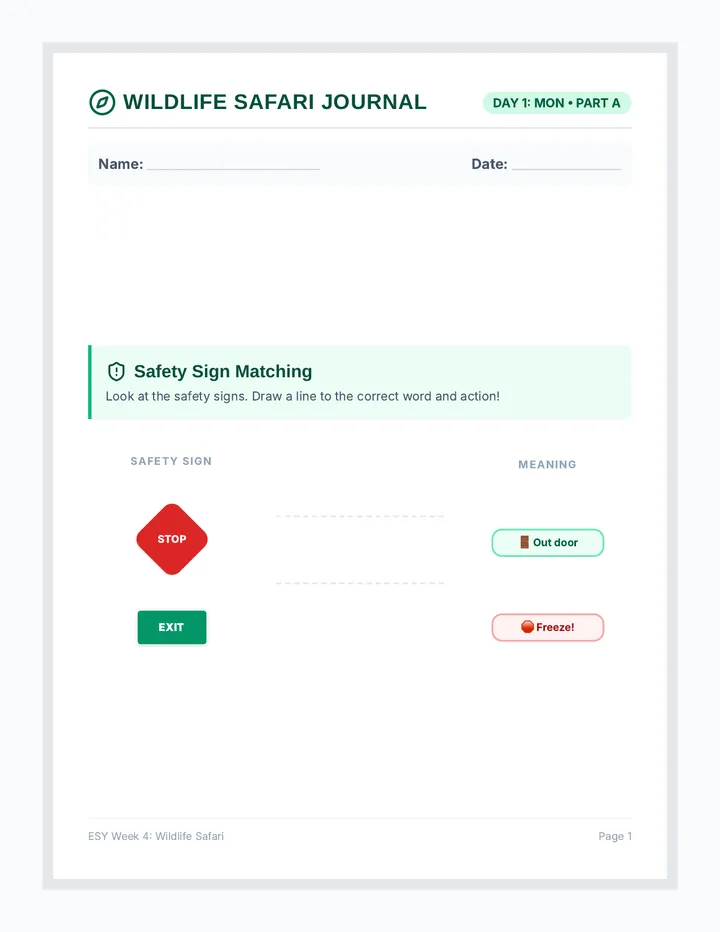
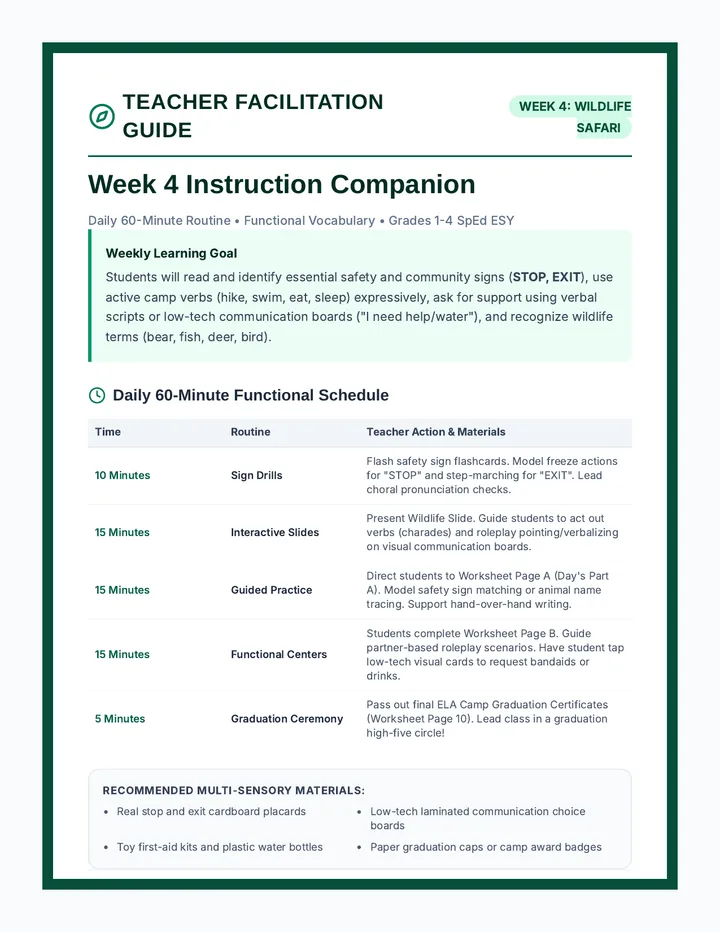
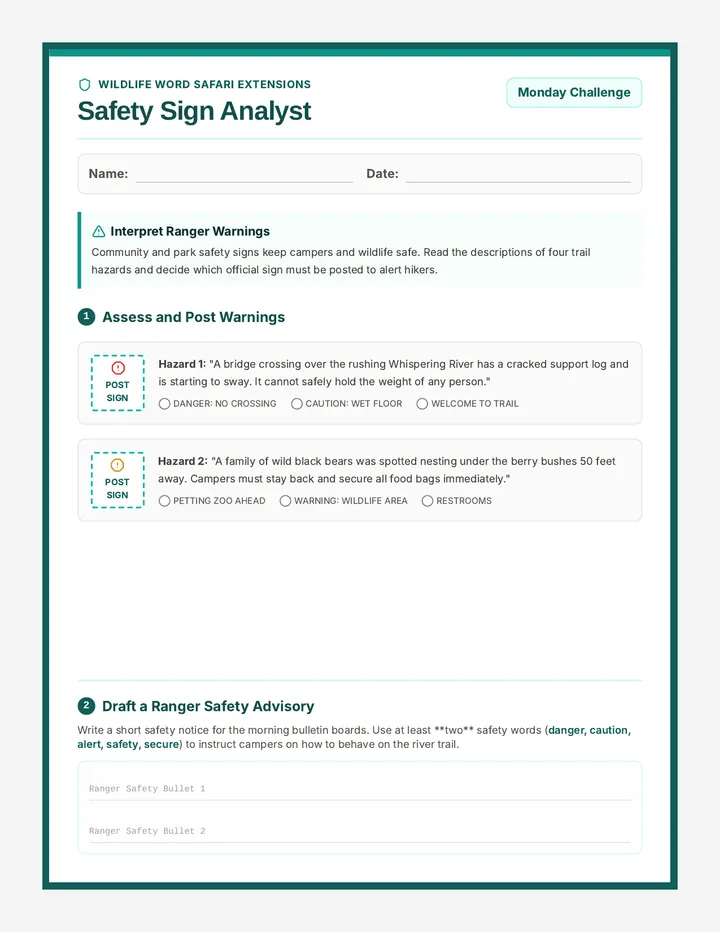
Week 4 of the ESY literacy program, focusing on functional vocabulary and expressive communication. Students learn safety signs, expressive words, and cooperative communication skills through camp-themed scenarios.
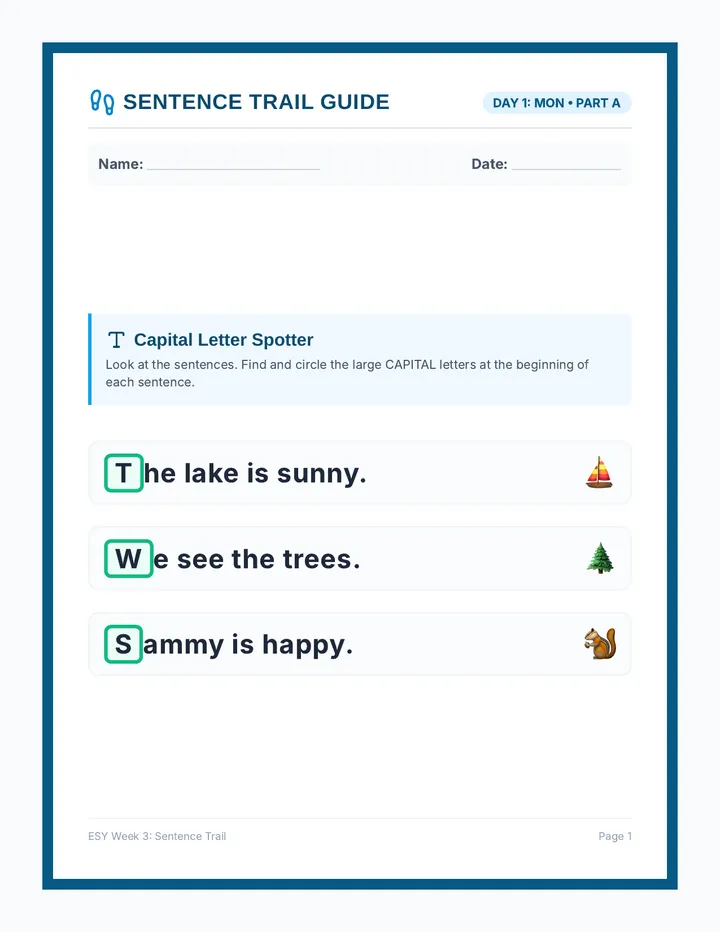
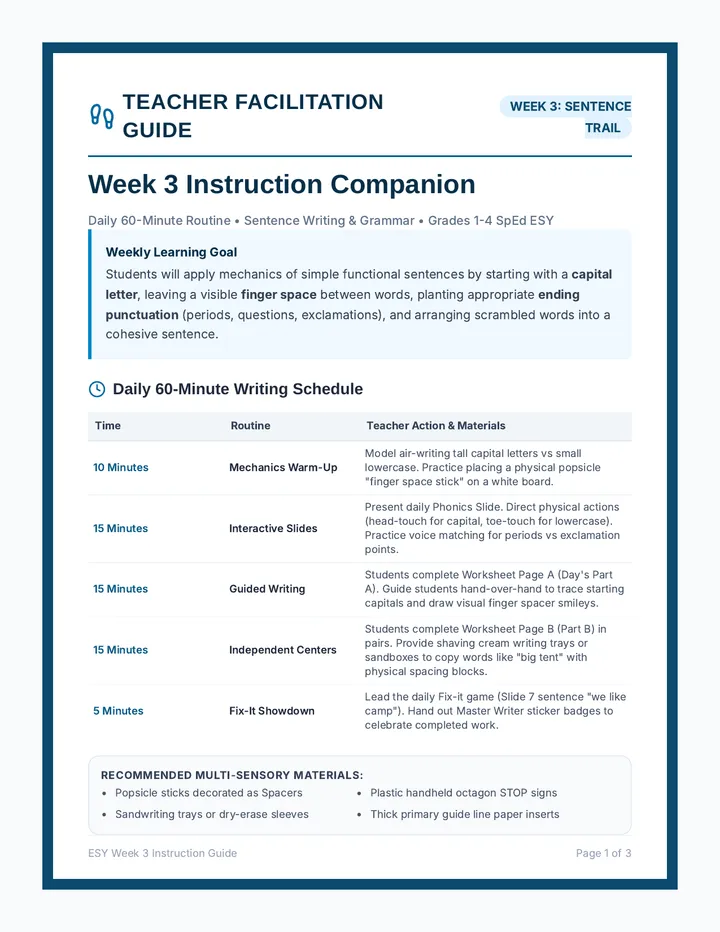
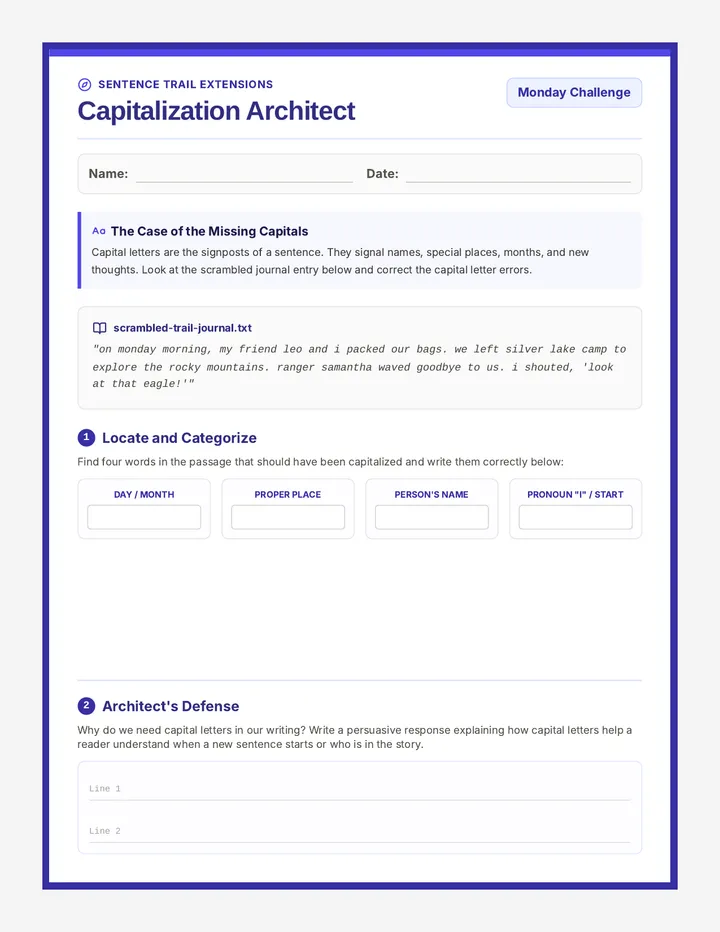
Week 3 of the ESY literacy program, focusing on sentence writing and grammar. Students practice high-frequency handwriting strokes, capitalization, punctuation, and constructing functional simple sentences.
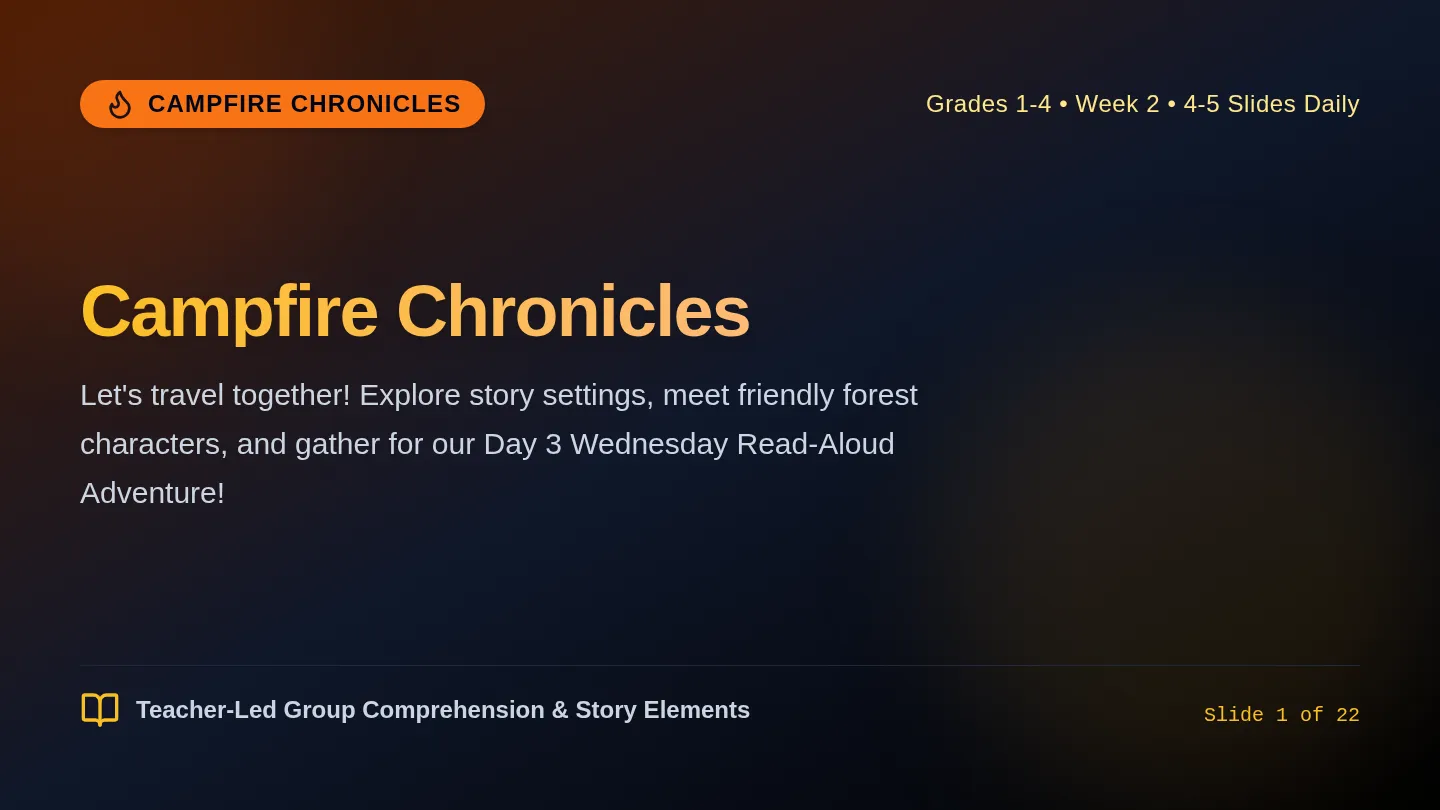
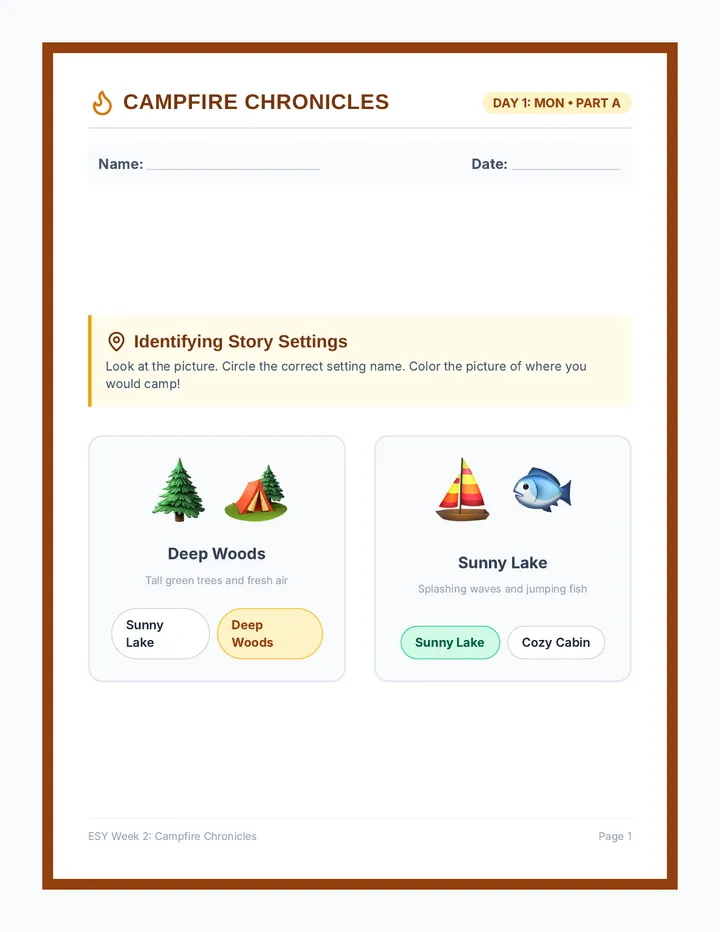
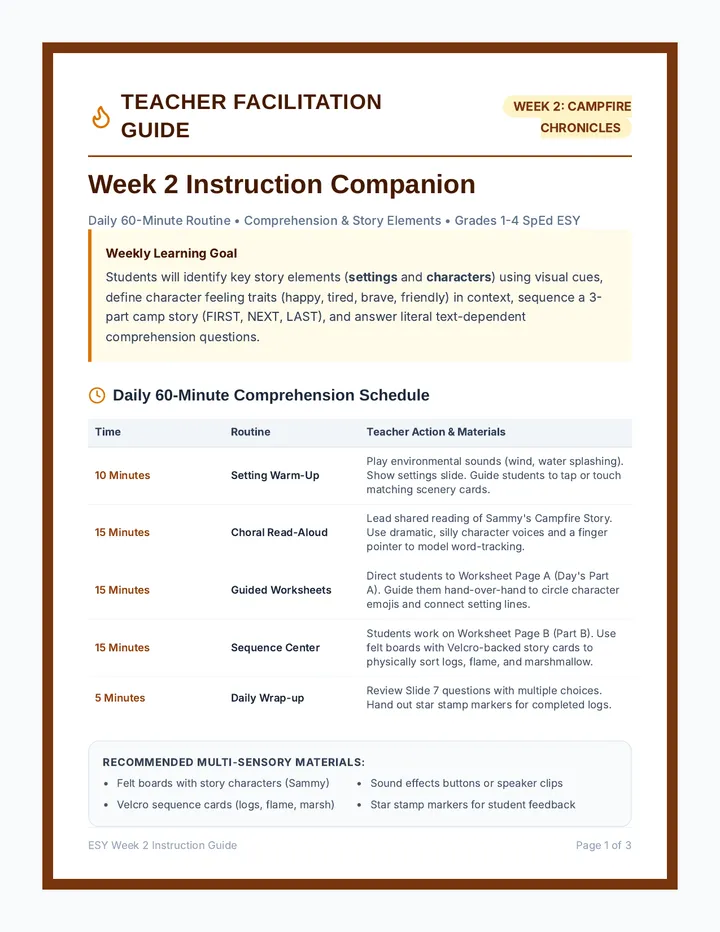
Week 2 of the ESY literacy program, focusing on comprehension and story elements. Students explore story characters, settings, sequencing events, and main ideas using visual reading tools and interactive stories.