Students audit anonymous writing samples for common homophone errors to understand how incorrect spelling affects reader comprehension.
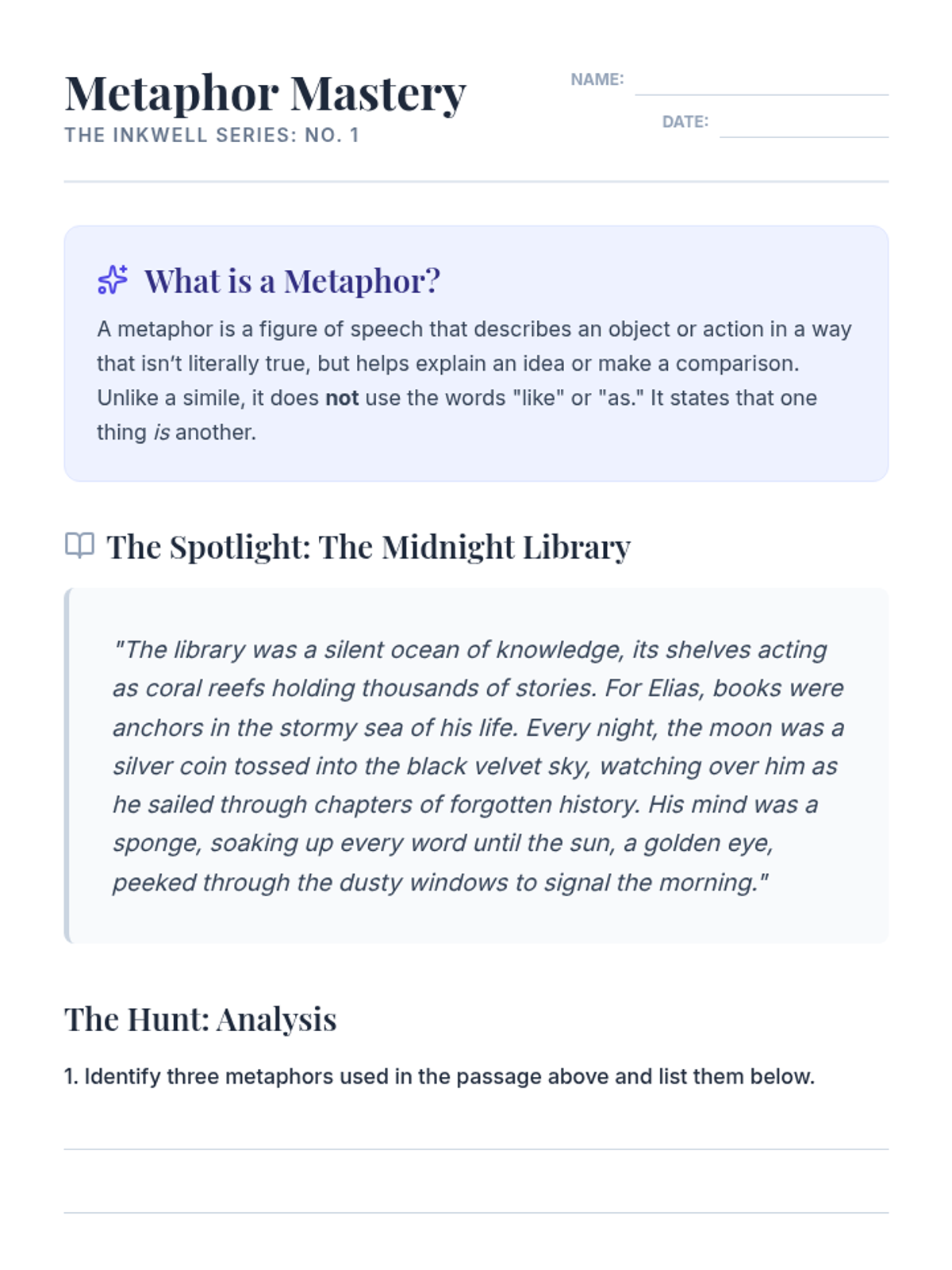
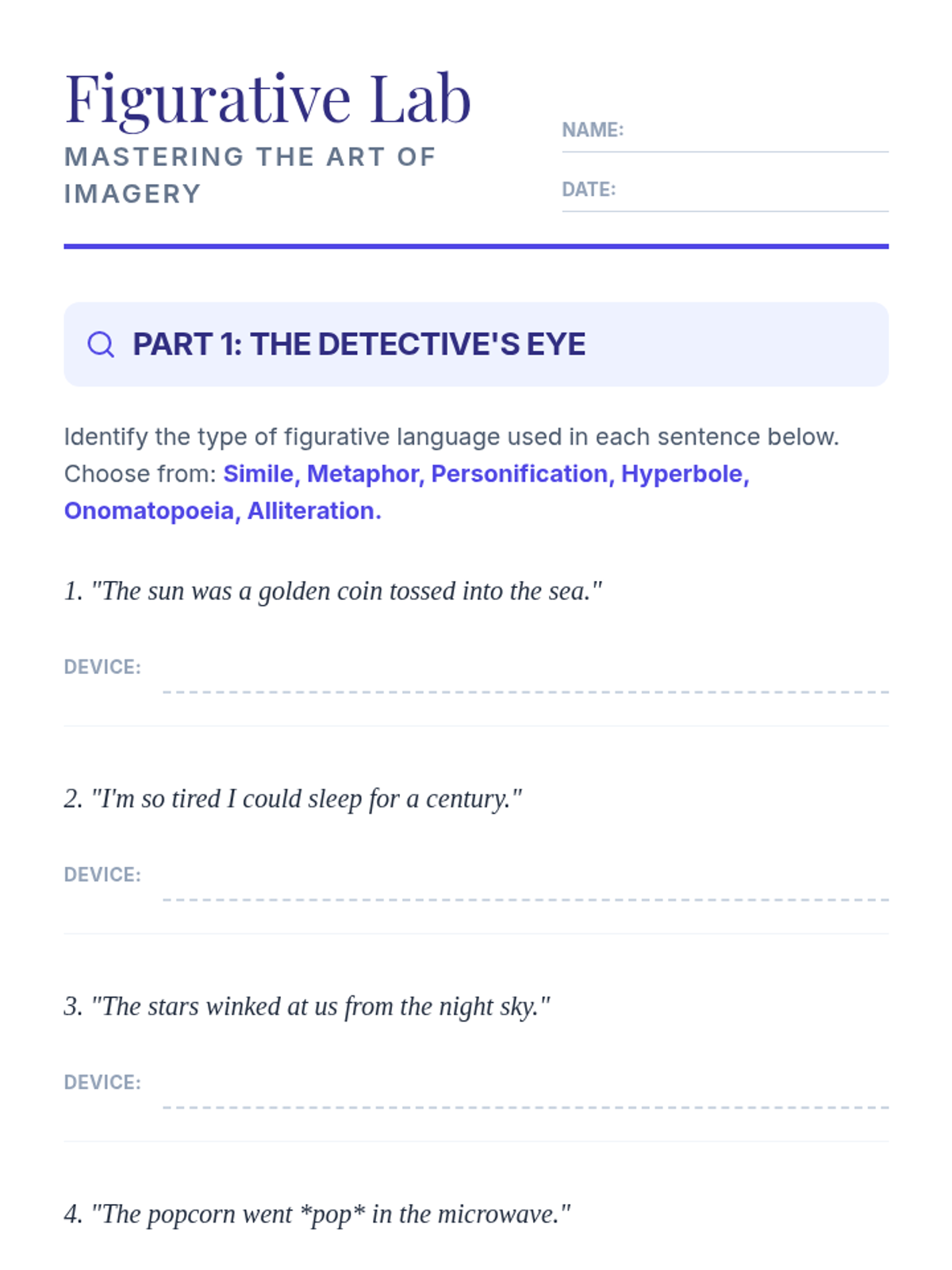
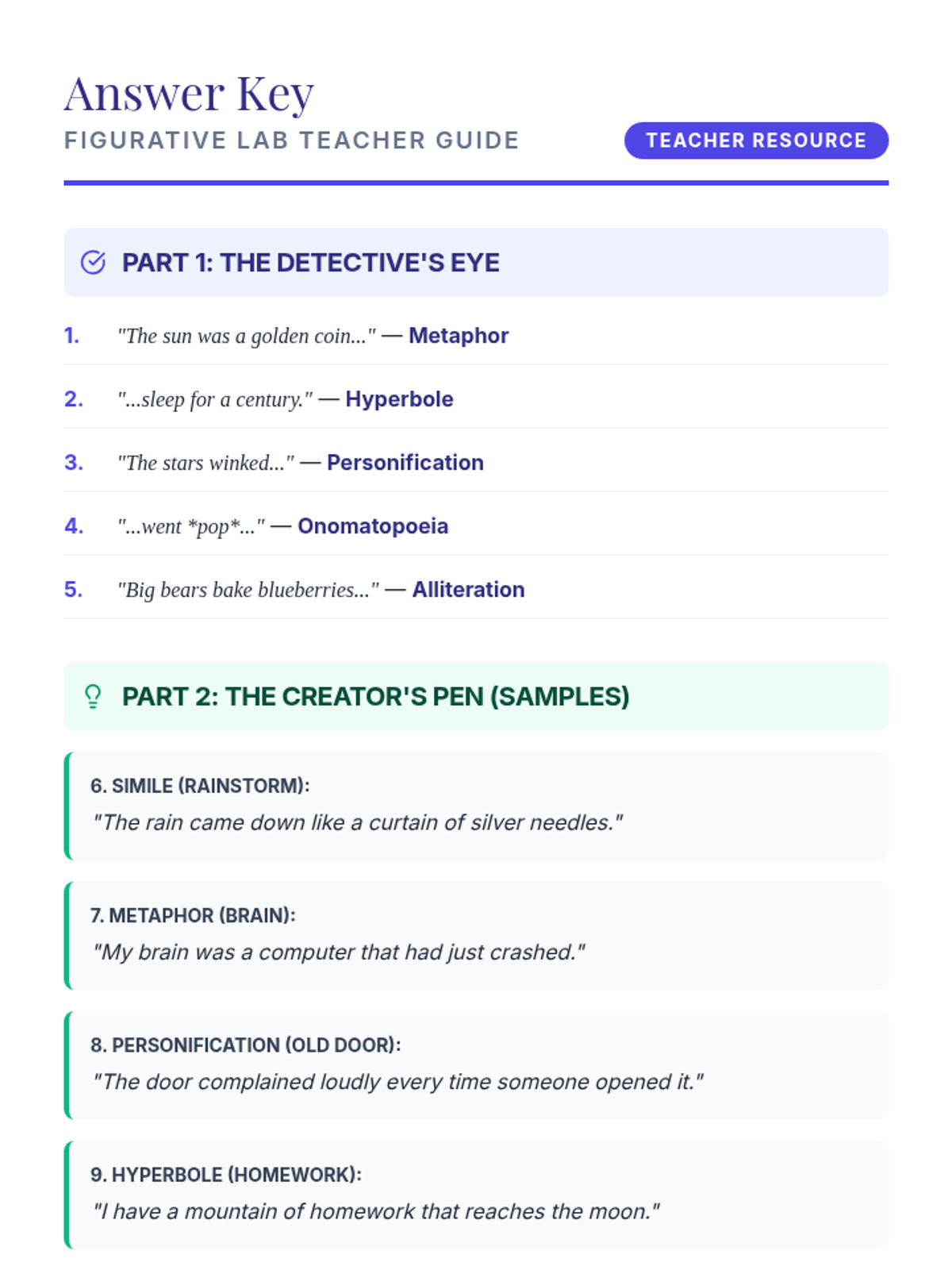
A comprehensive series of worksheets exploring nine essential literary devices through reading passages, identification tasks, and creative writing exercises.
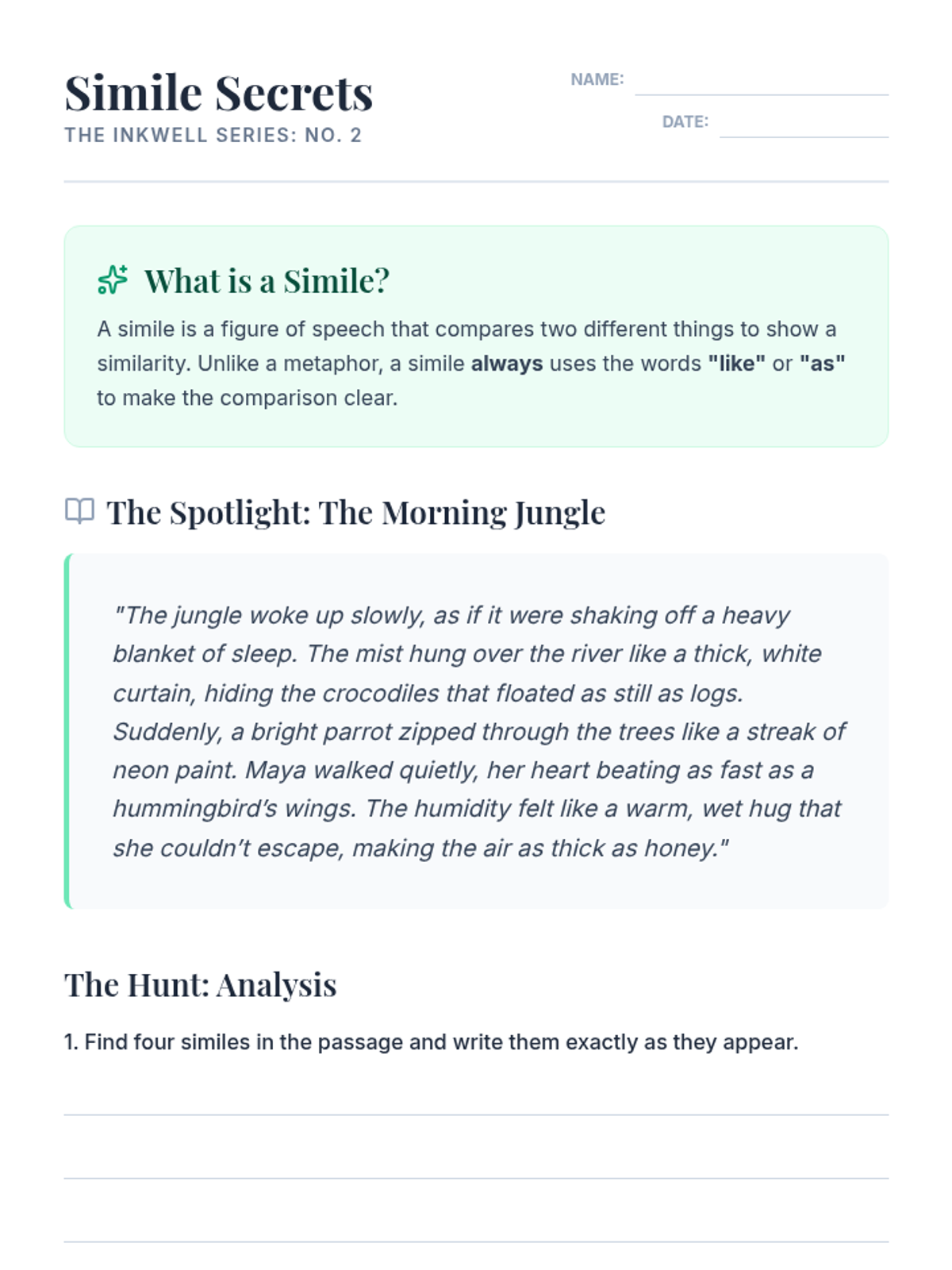
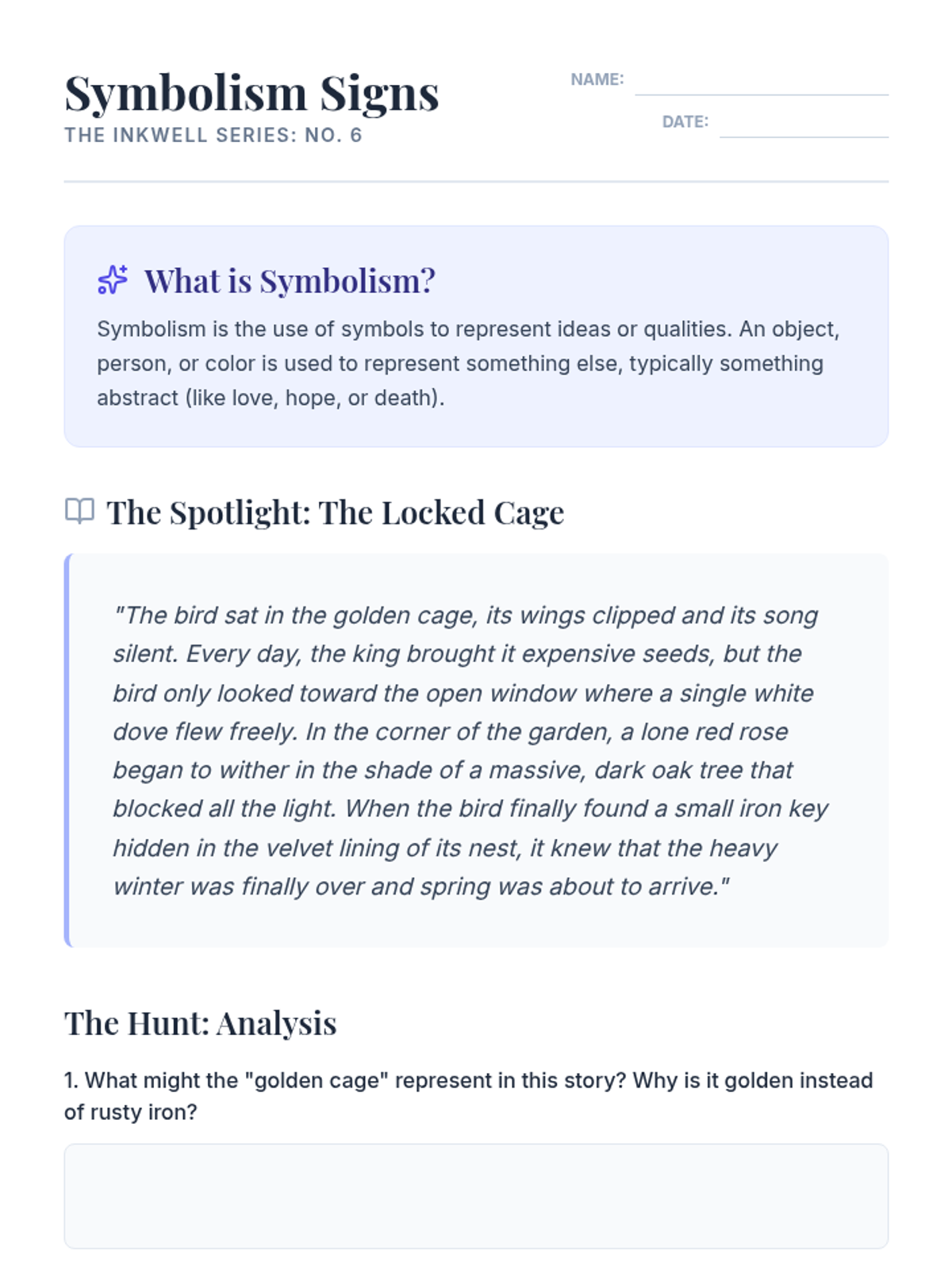
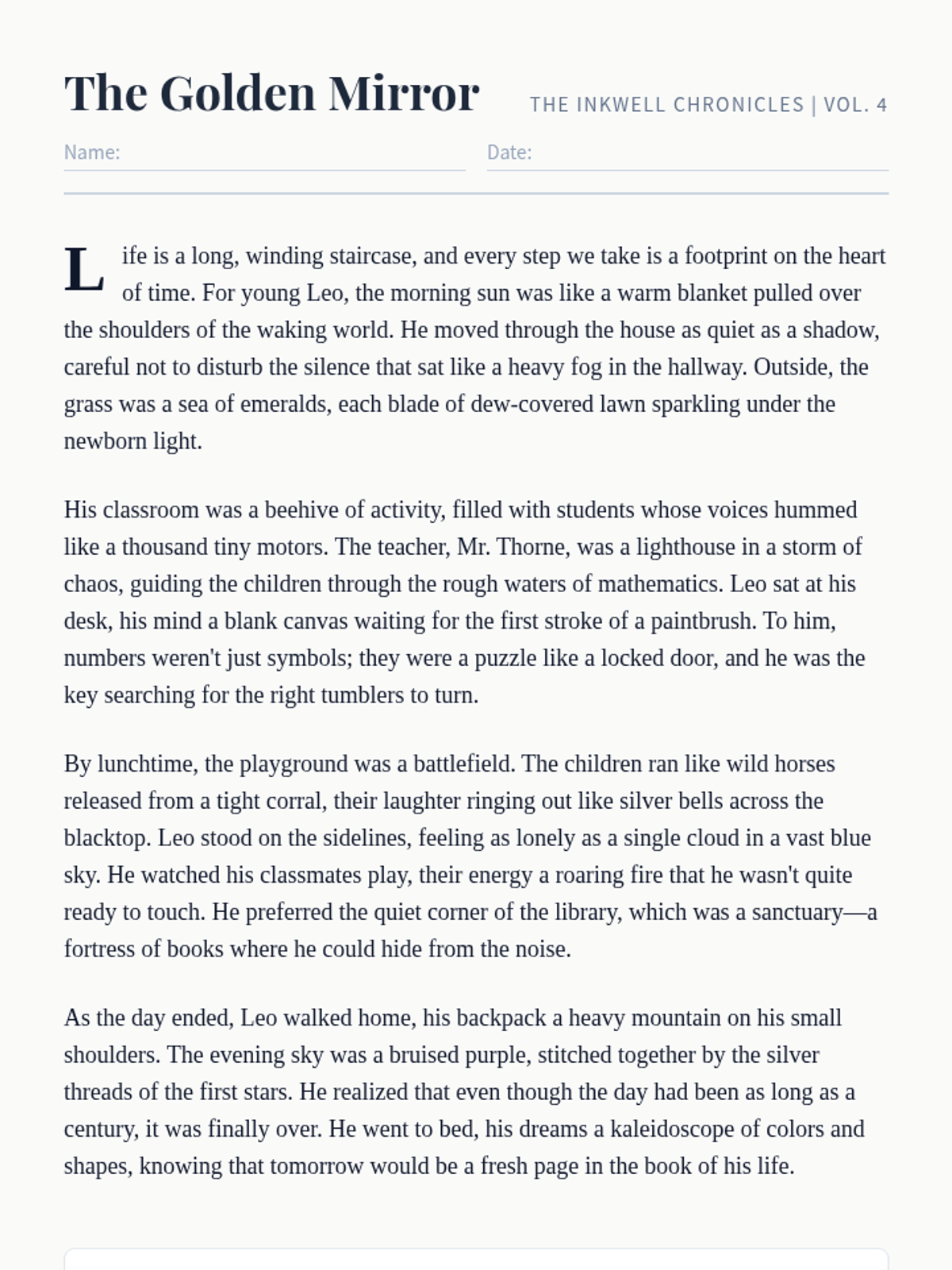
Analyze direct and indirect comparisons to understand how they deepen meaning in creative writing.
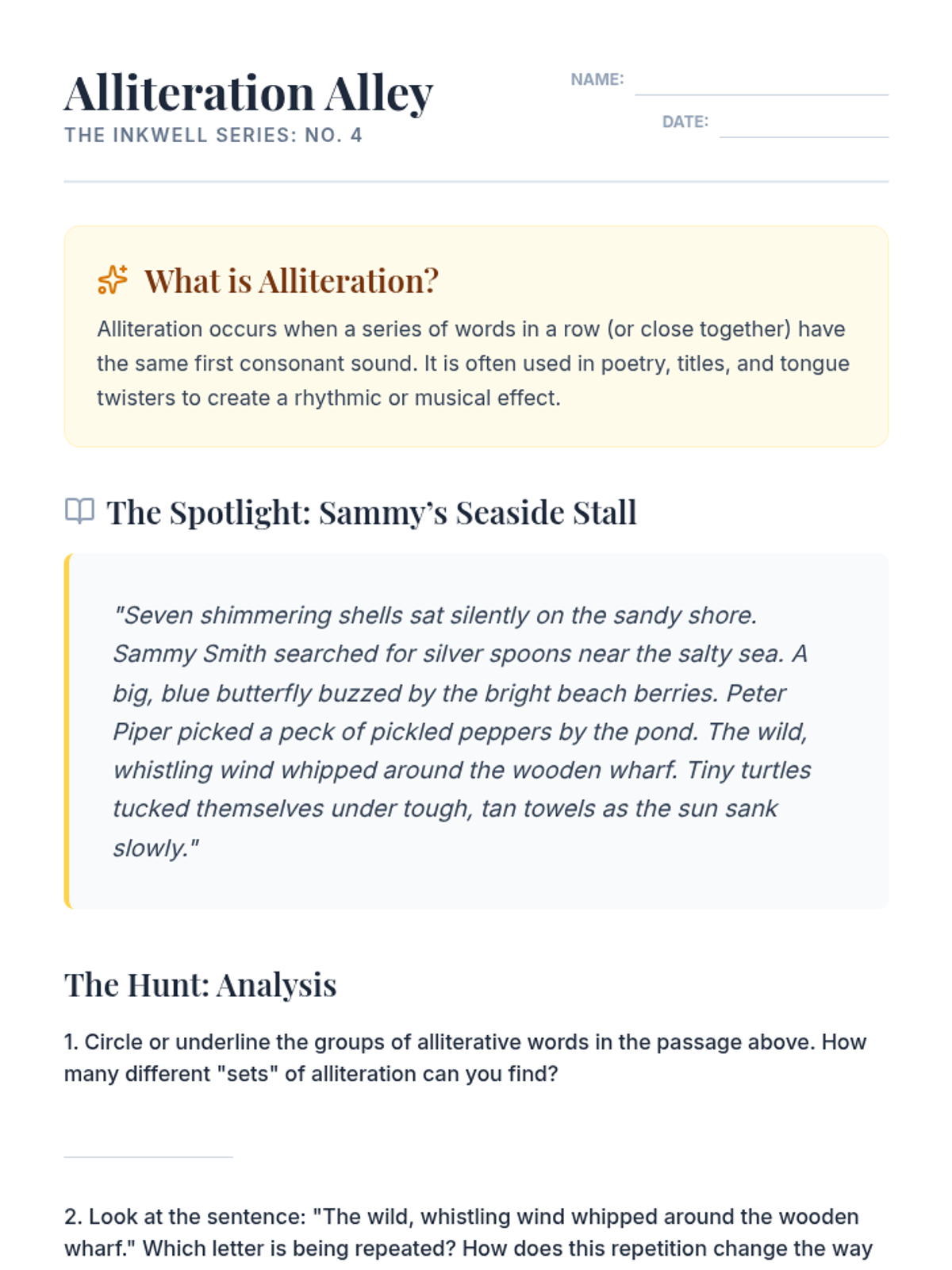
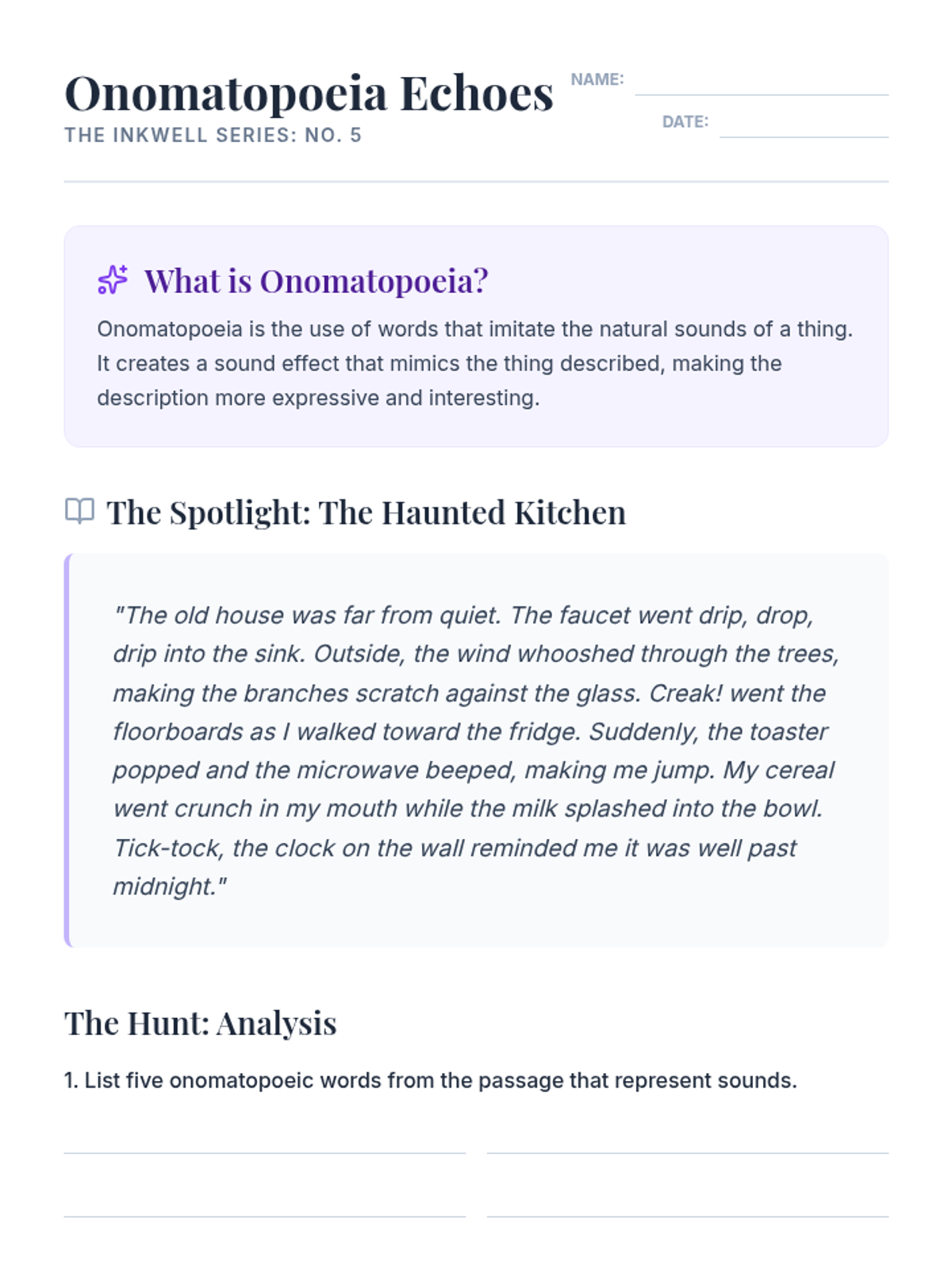
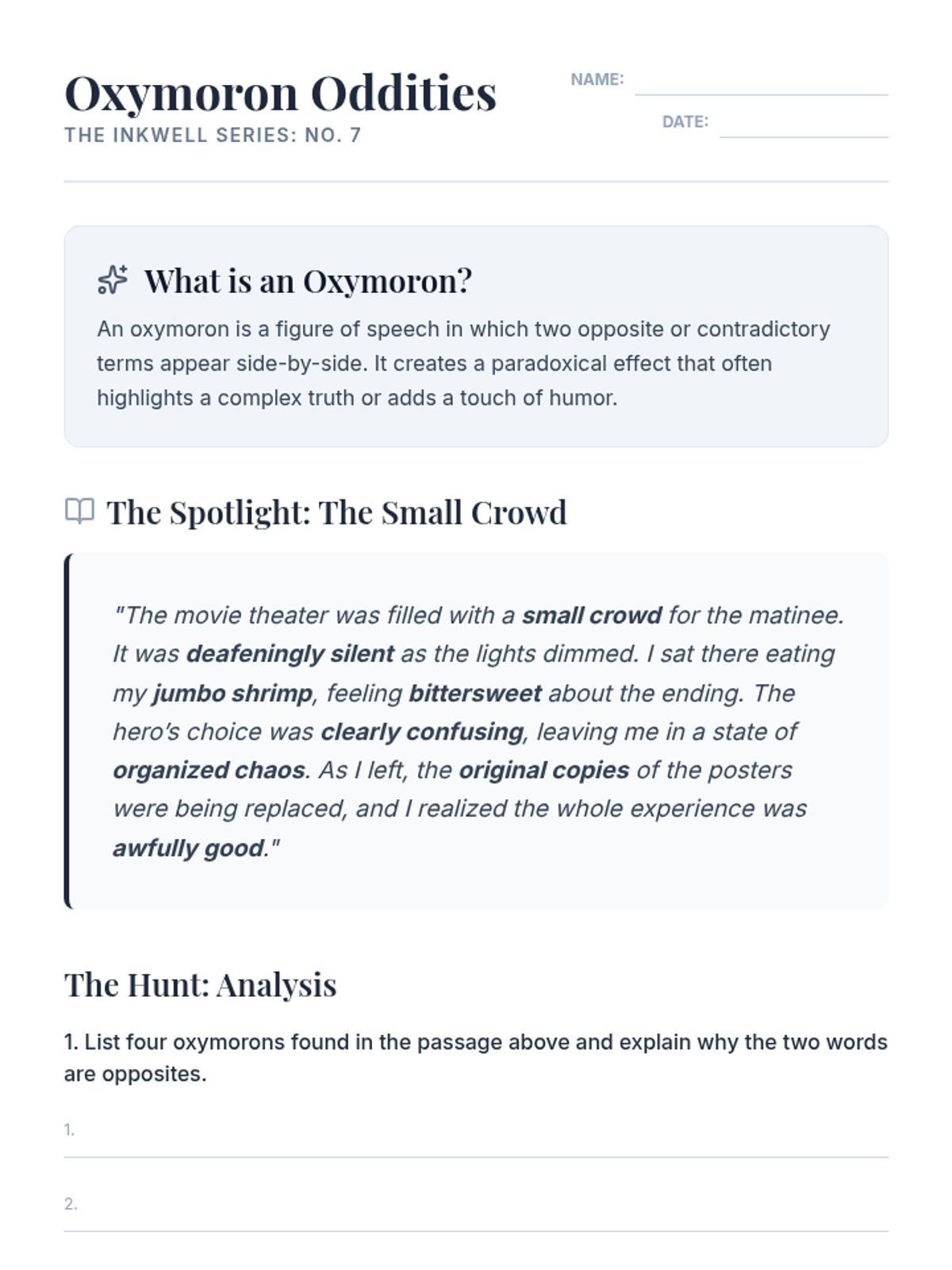
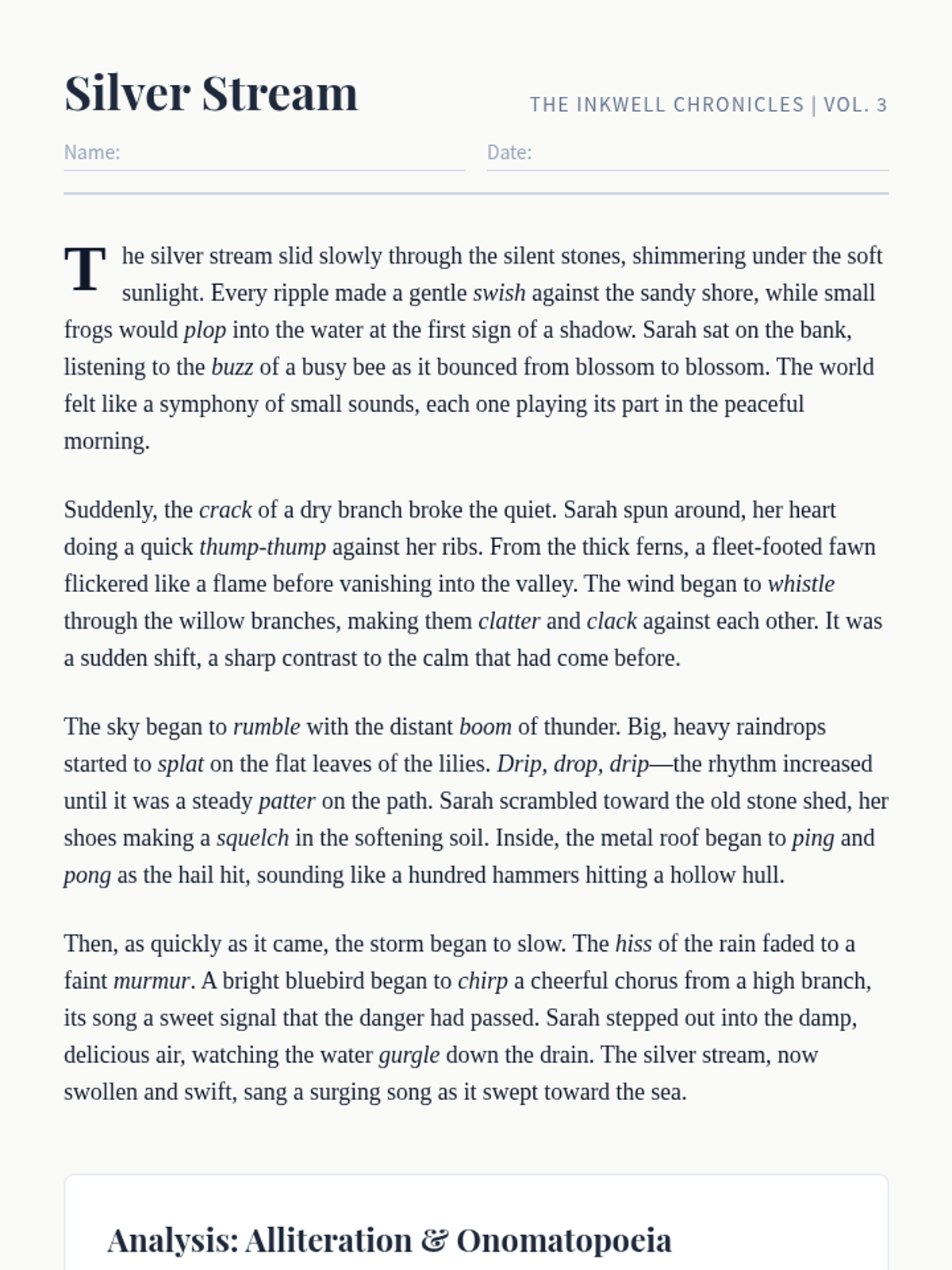
Focus on the sounds of language through alliteration and onomatopoeia in descriptive storytelling.
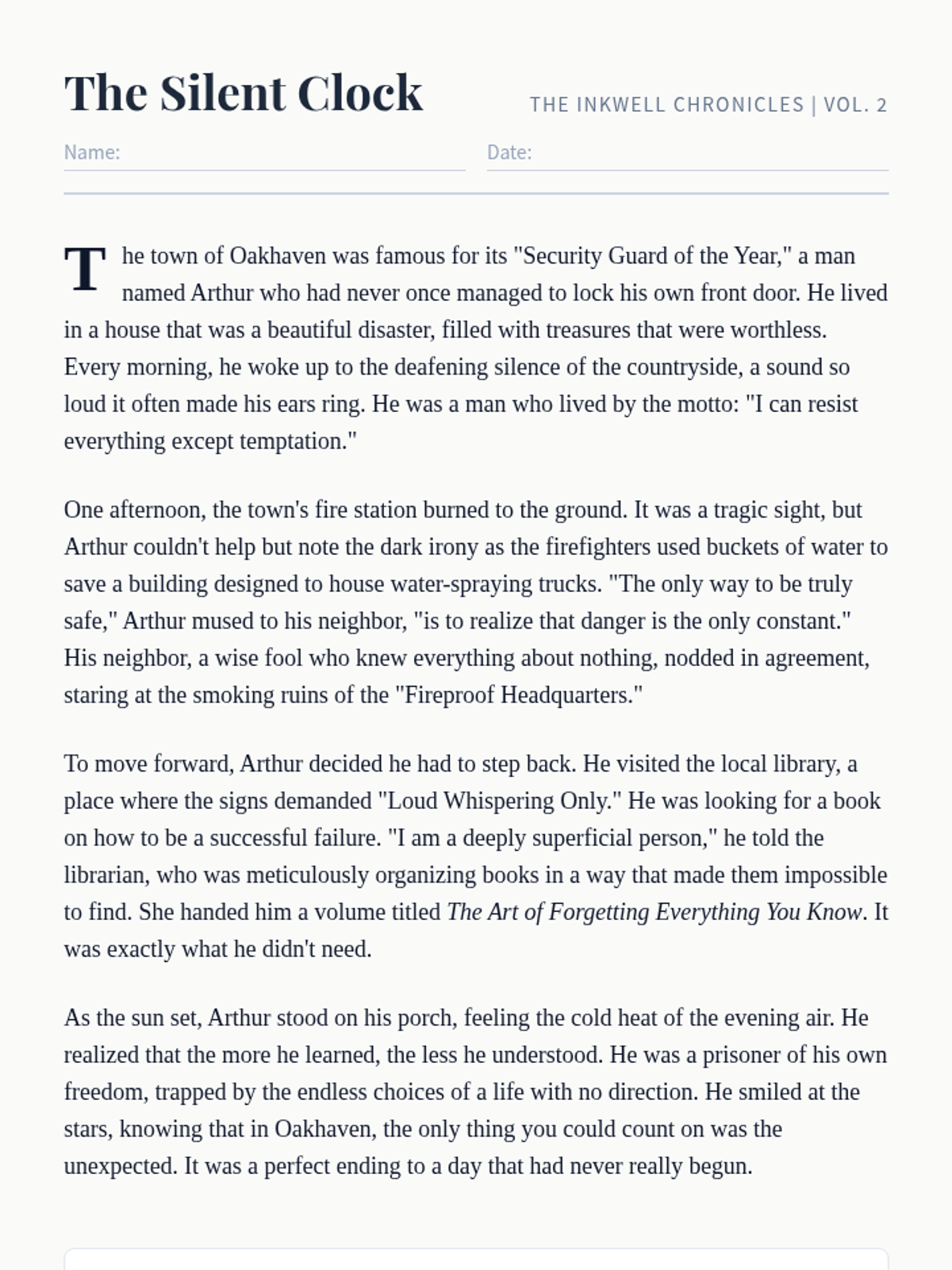
Delve into the world of contradictions and unexpected outcomes with passages featuring irony and paradox.
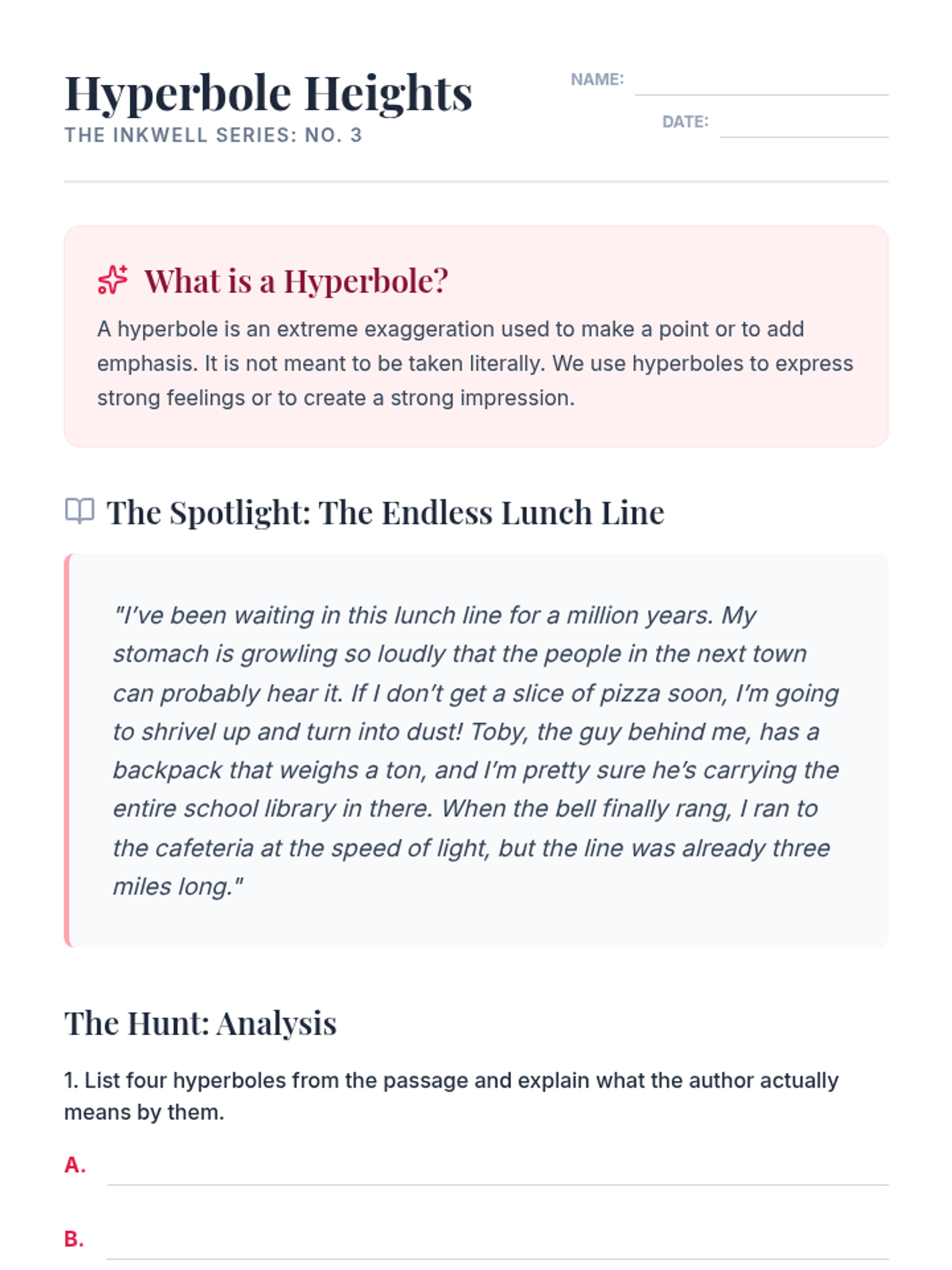
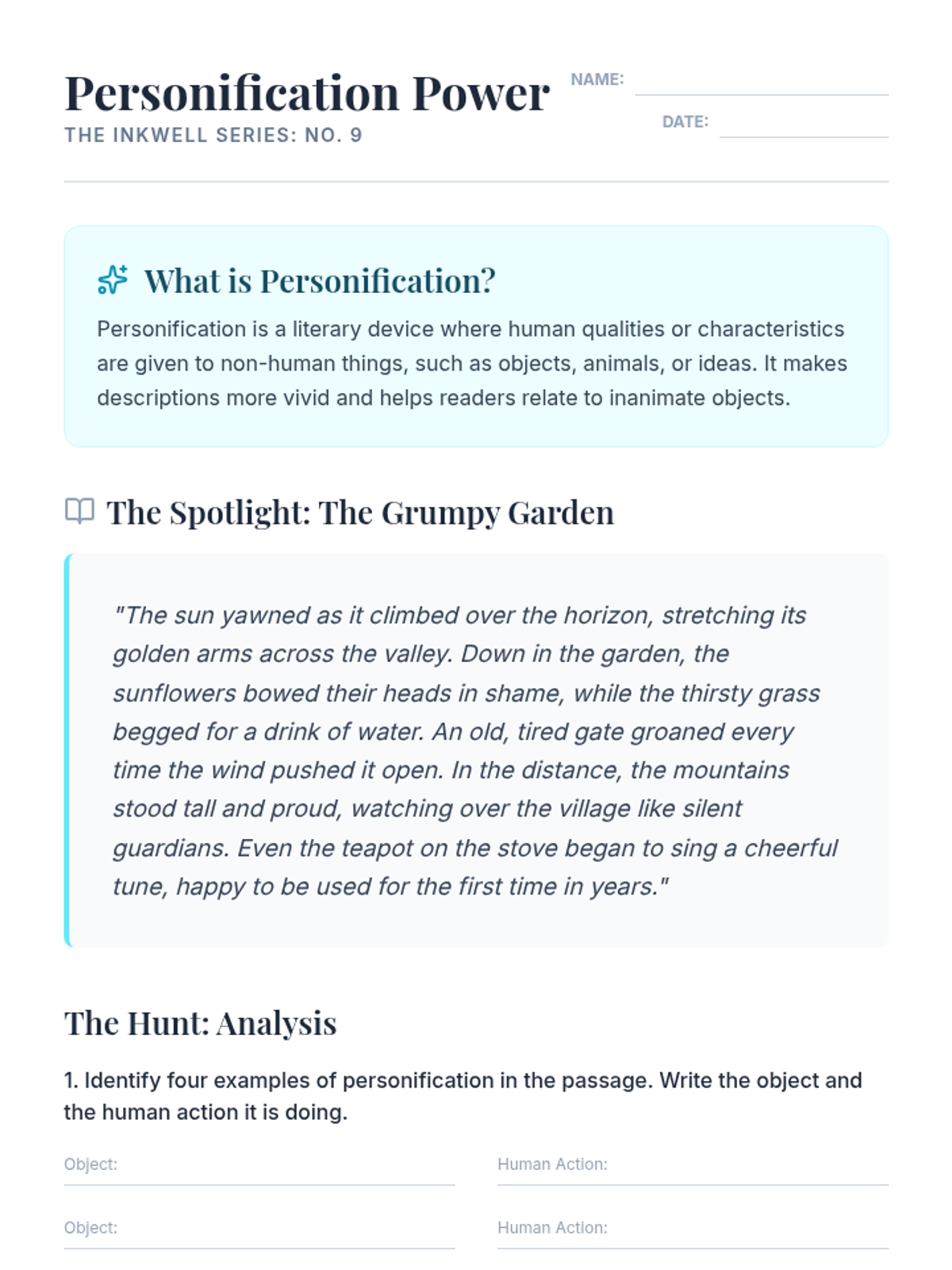
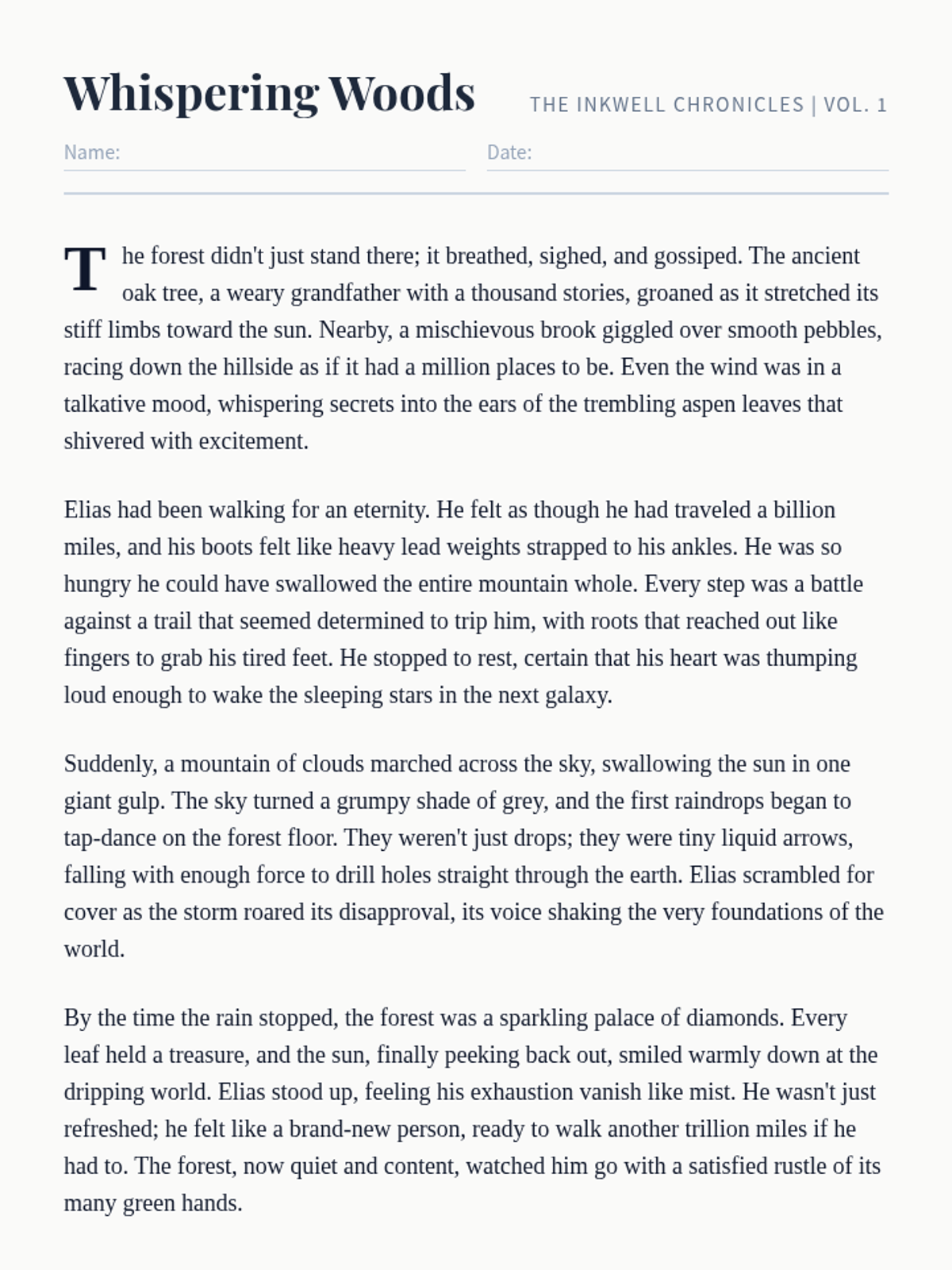
Explore how authors use exaggeration and human traits to bring stories to life through reading and analysis.
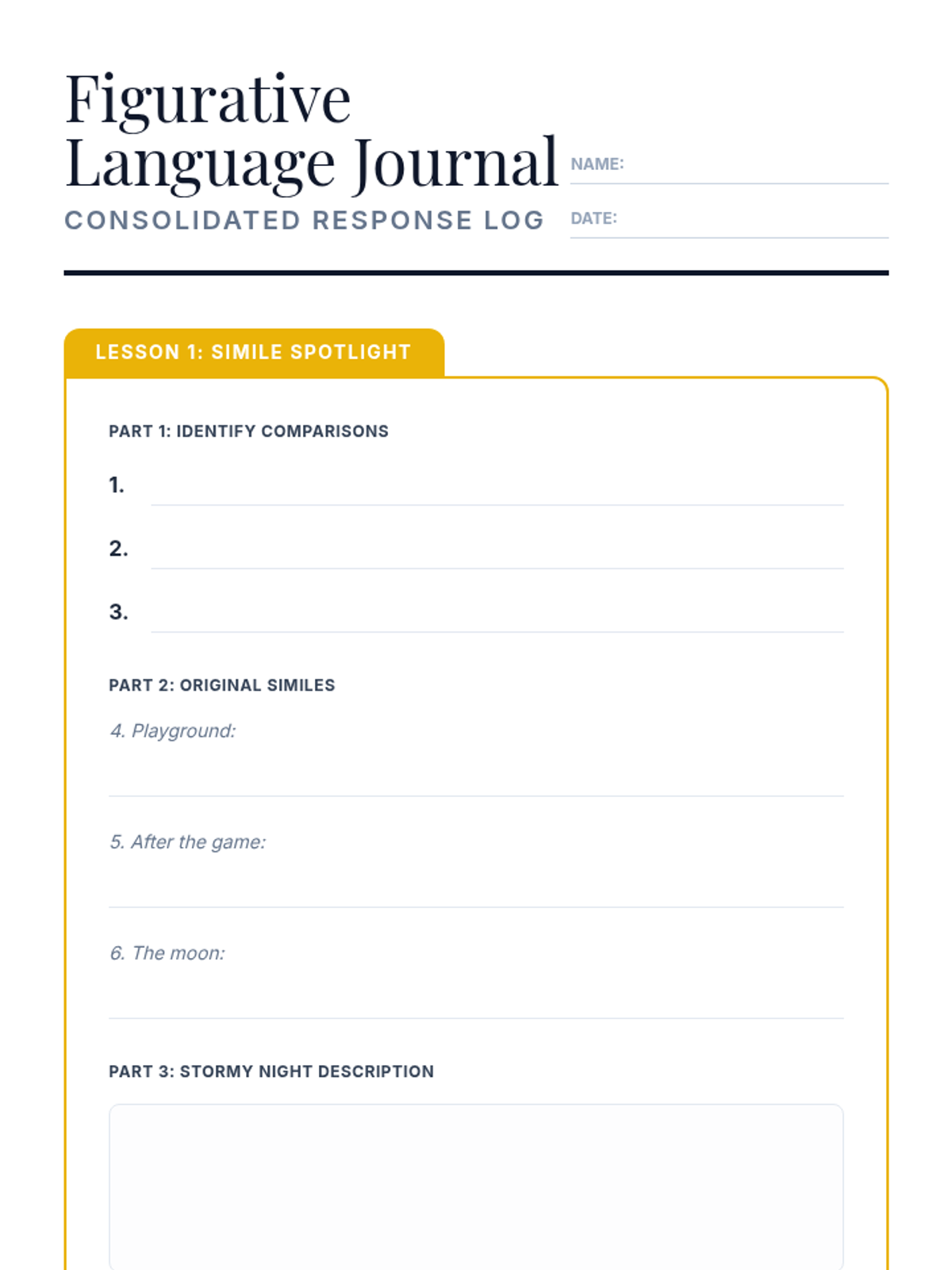
A comprehensive recording sheet for students to document their practice and creative work from all figurative language lessons in one central location.
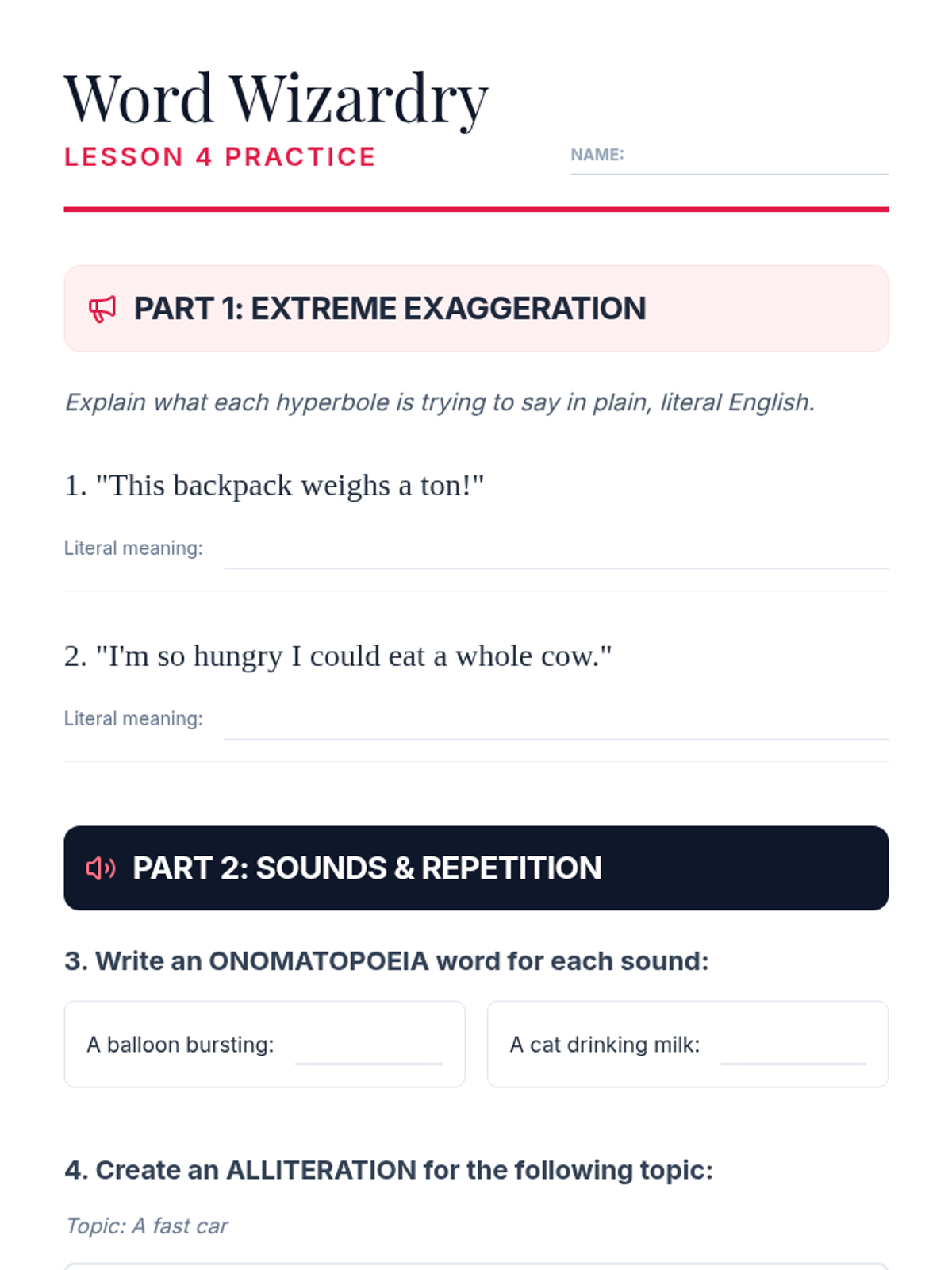
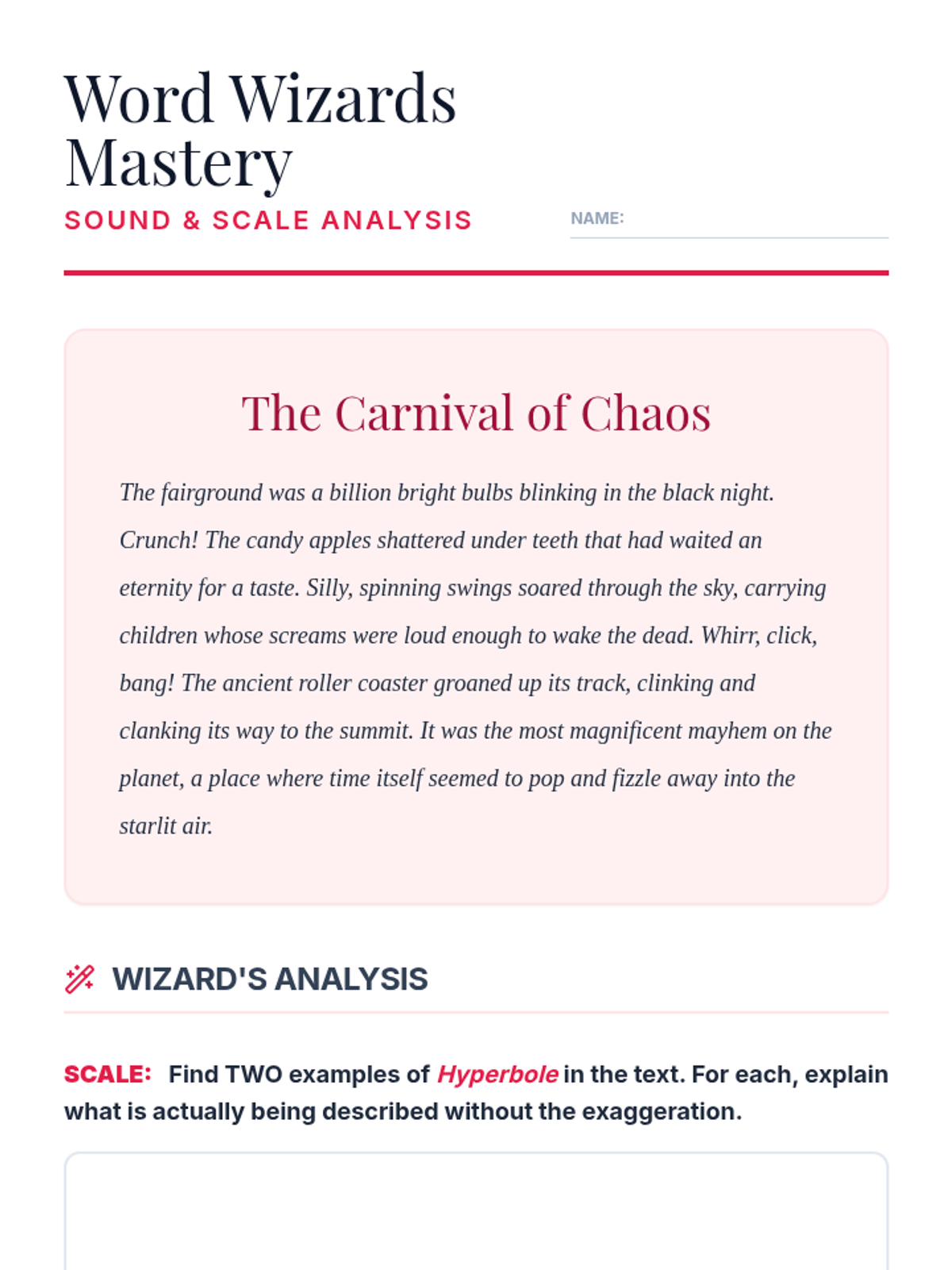
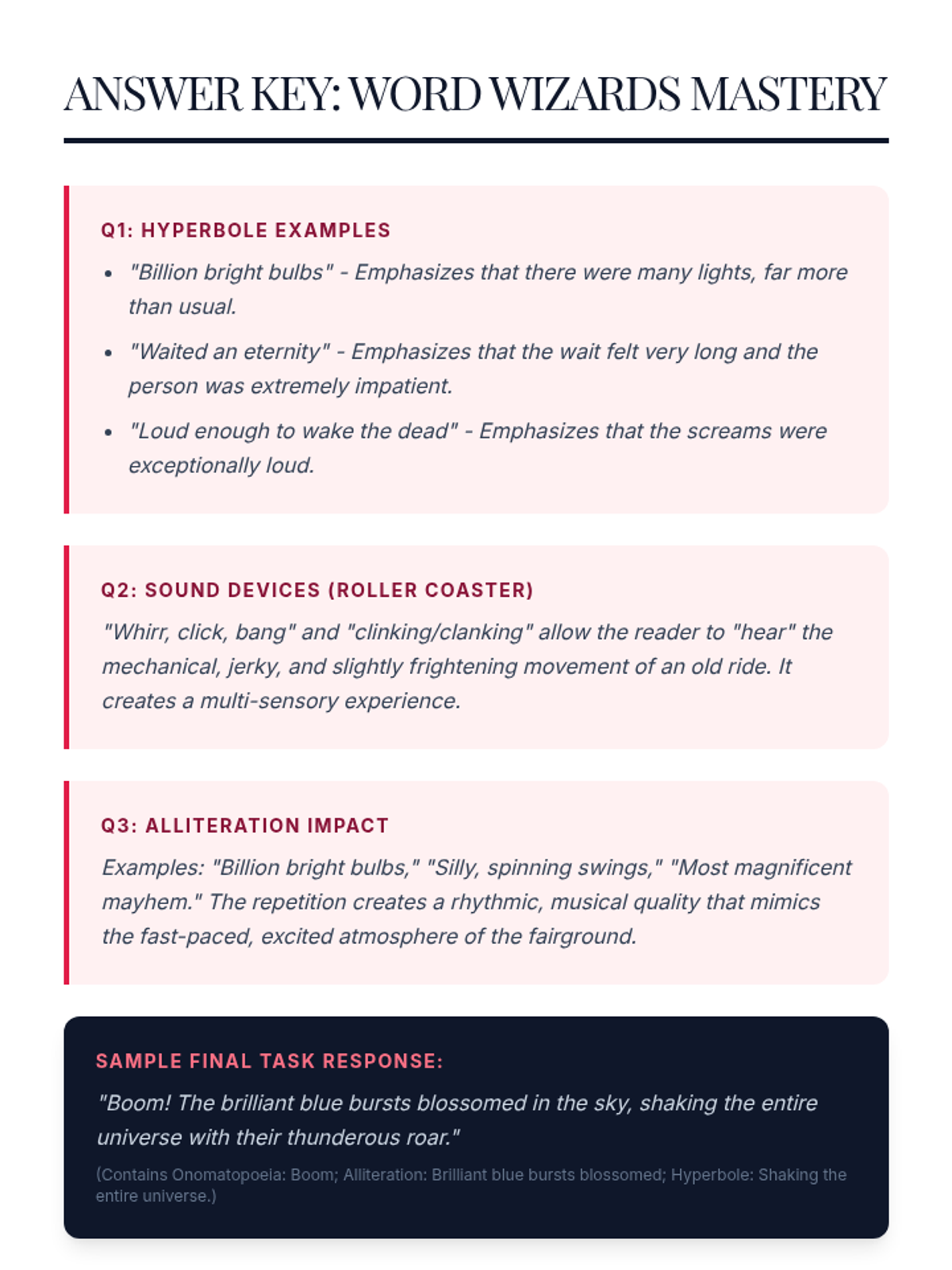
Focusing on hyperbole and sound devices like onomatopoeia and alliteration. Includes introductory slides and a practice worksheet.
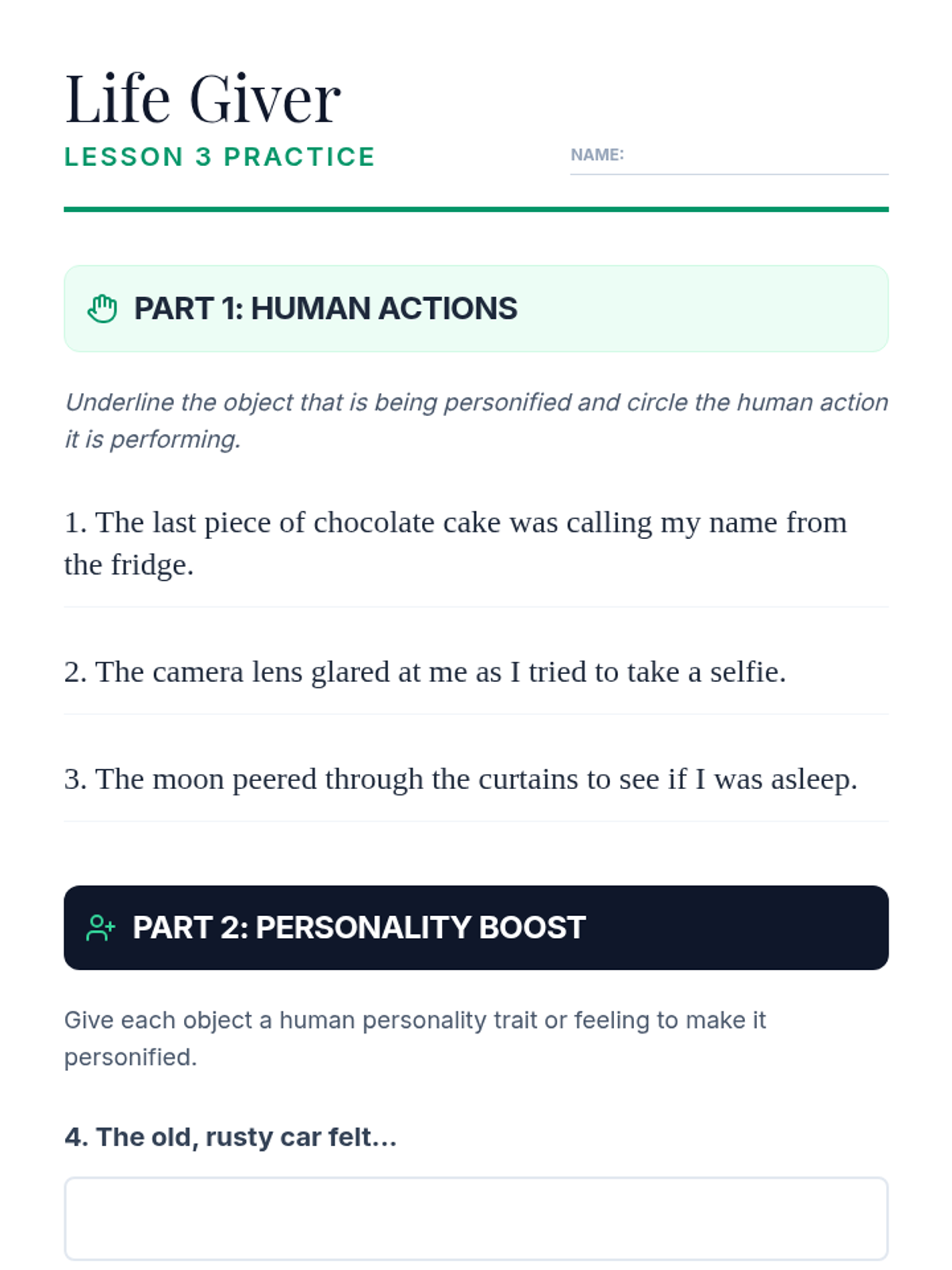
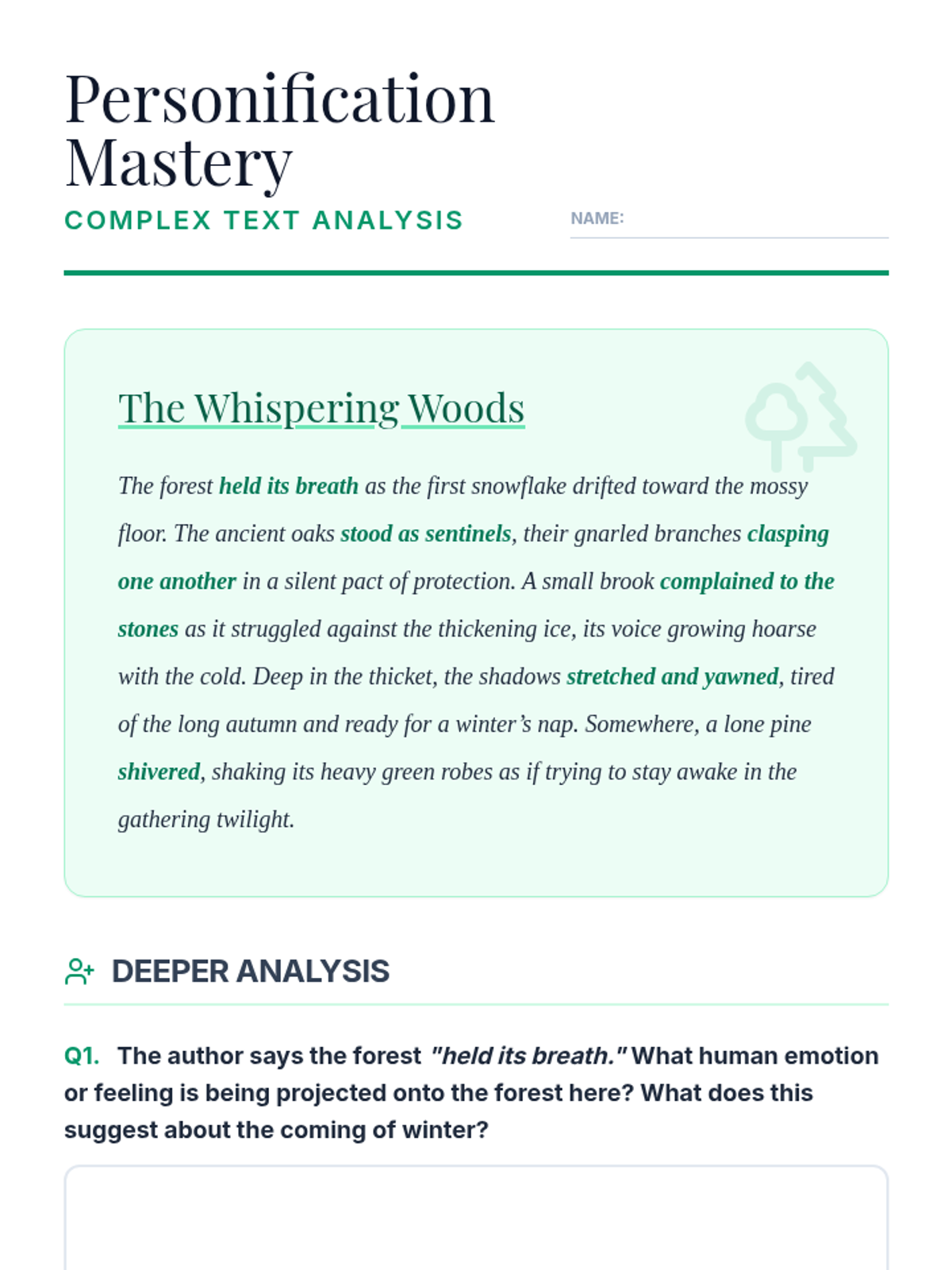
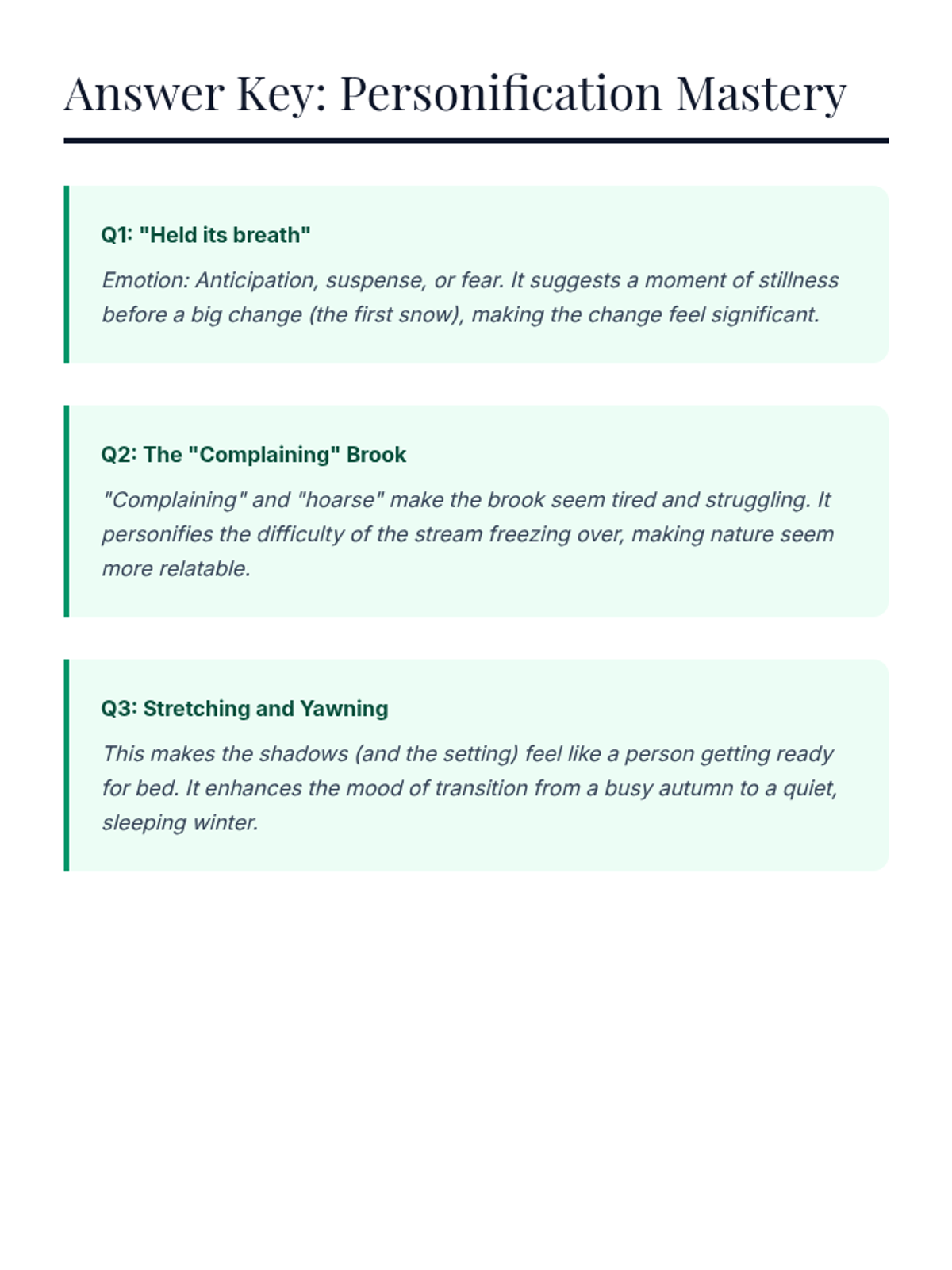
Focusing on personification: giving human traits to non-human things. Includes introductory slides and a practice worksheet.
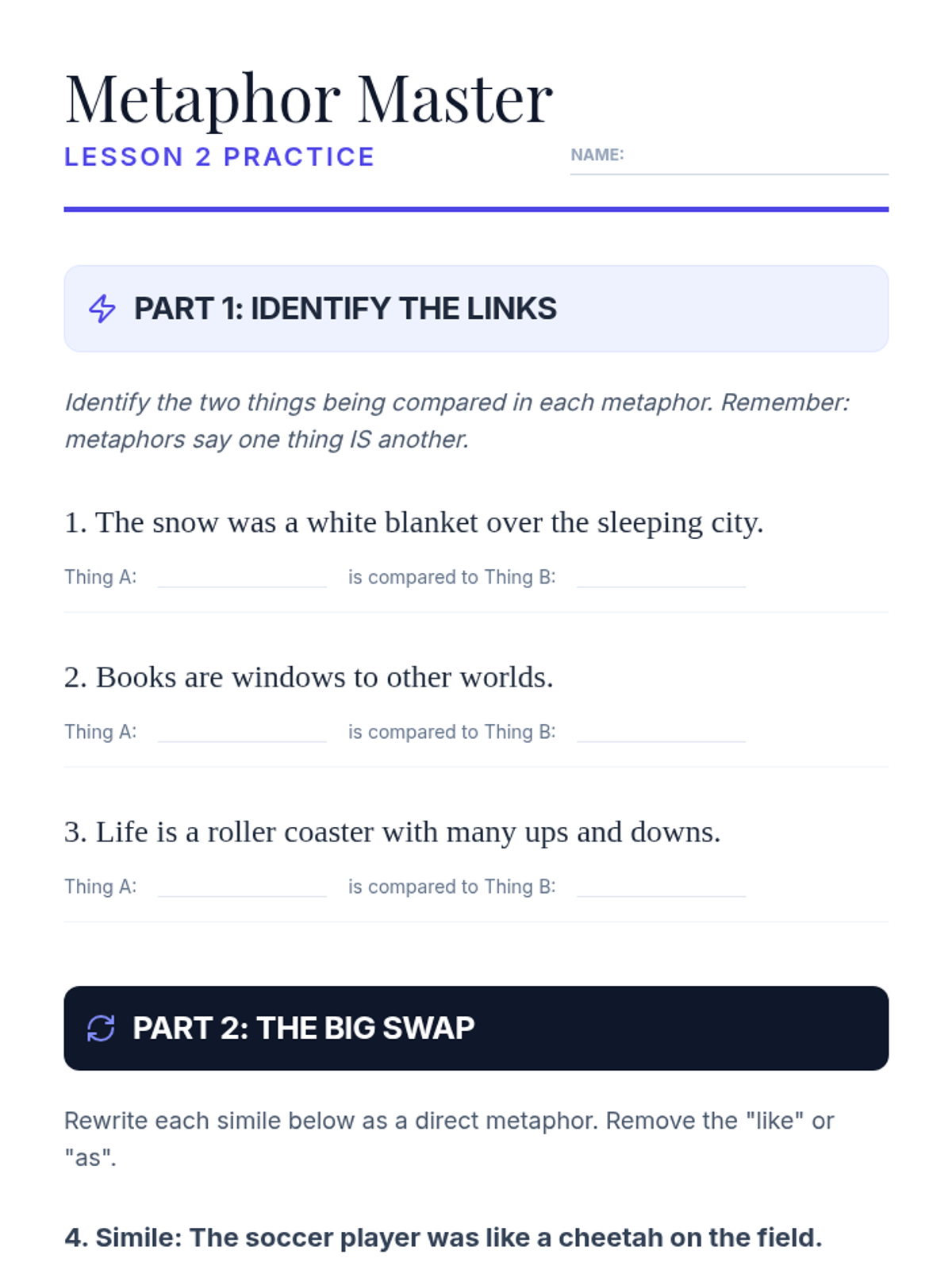
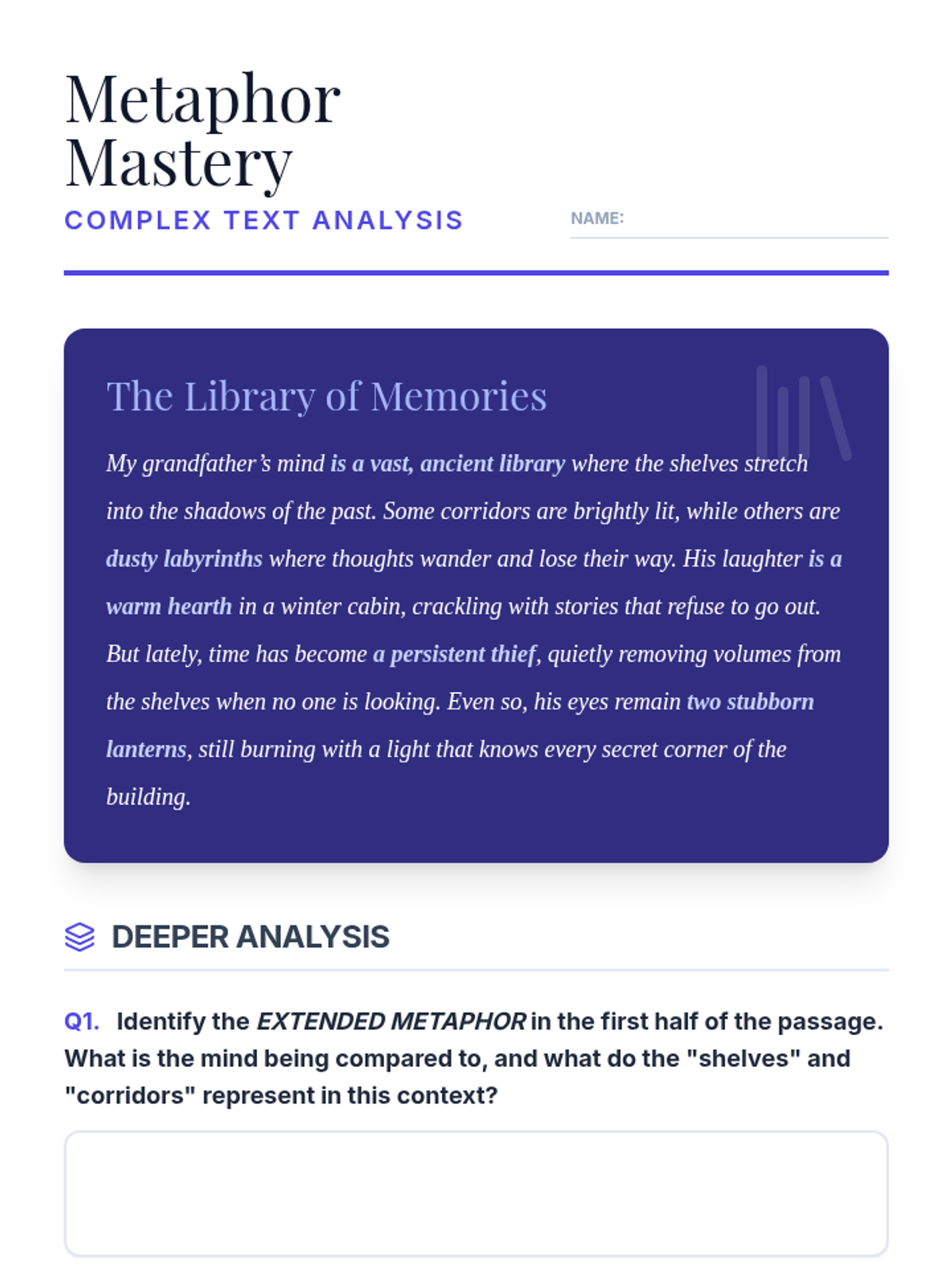
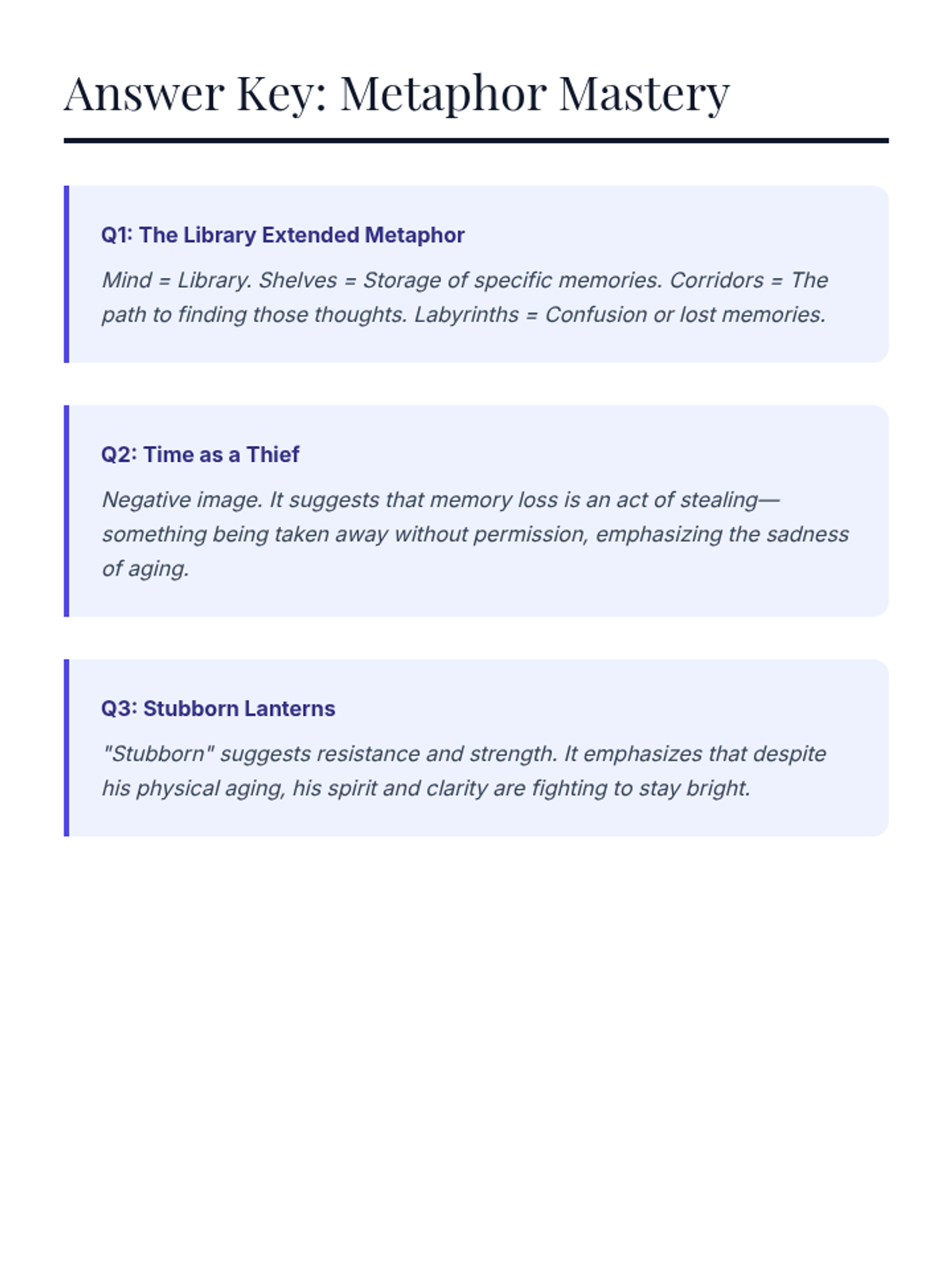
Focusing on metaphors: direct comparisons. Includes introductory slides and a practice worksheet.
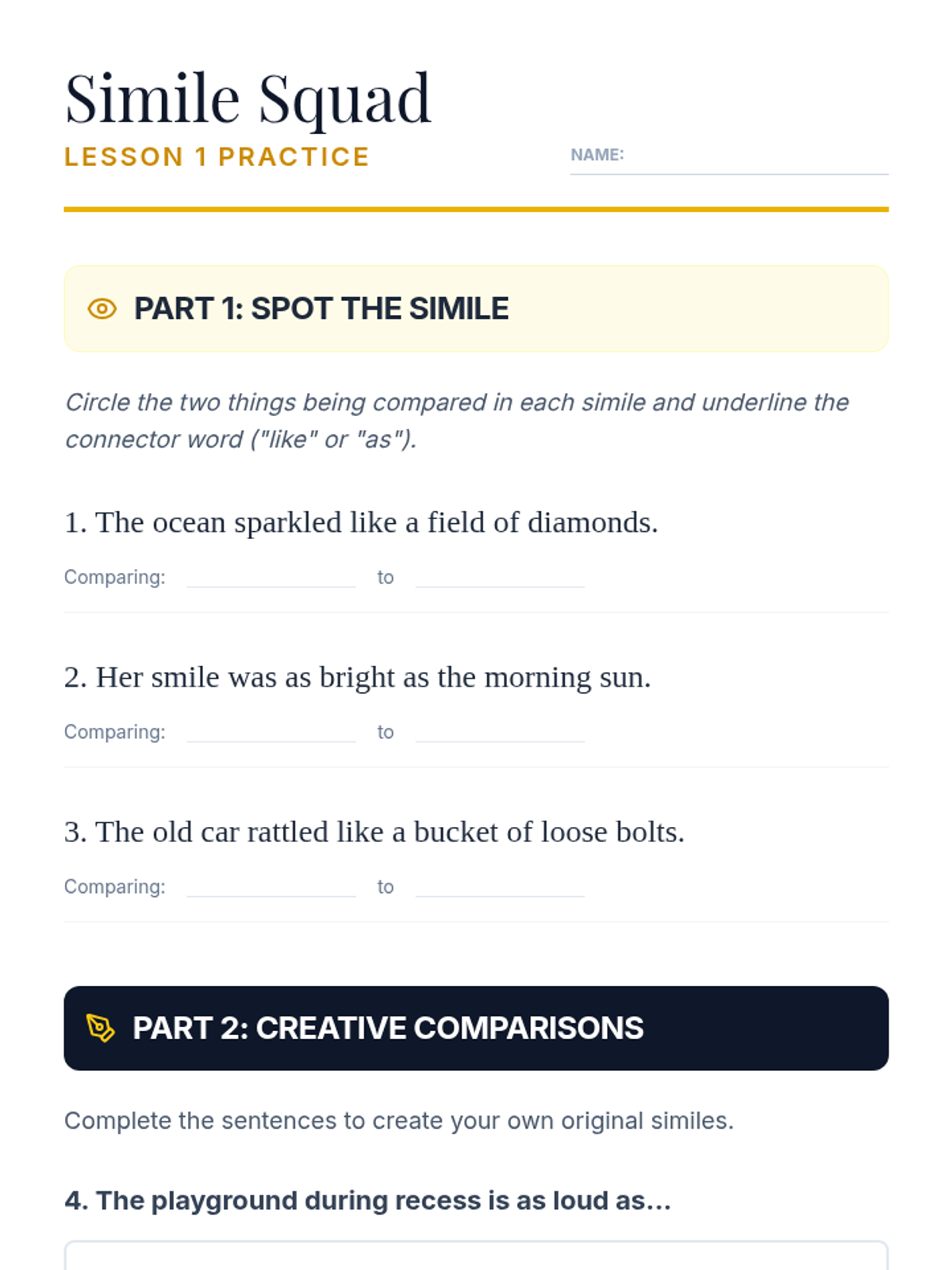
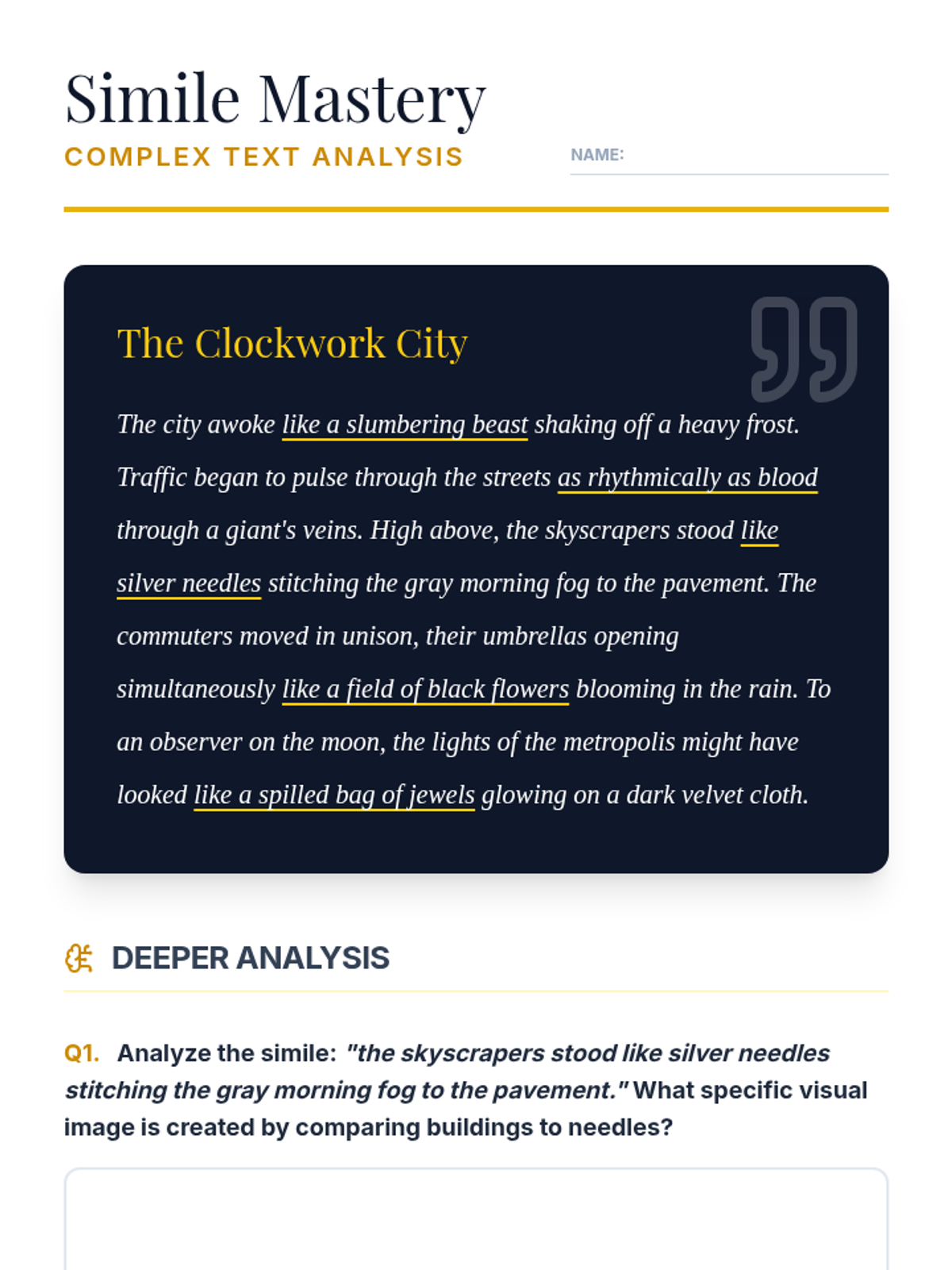
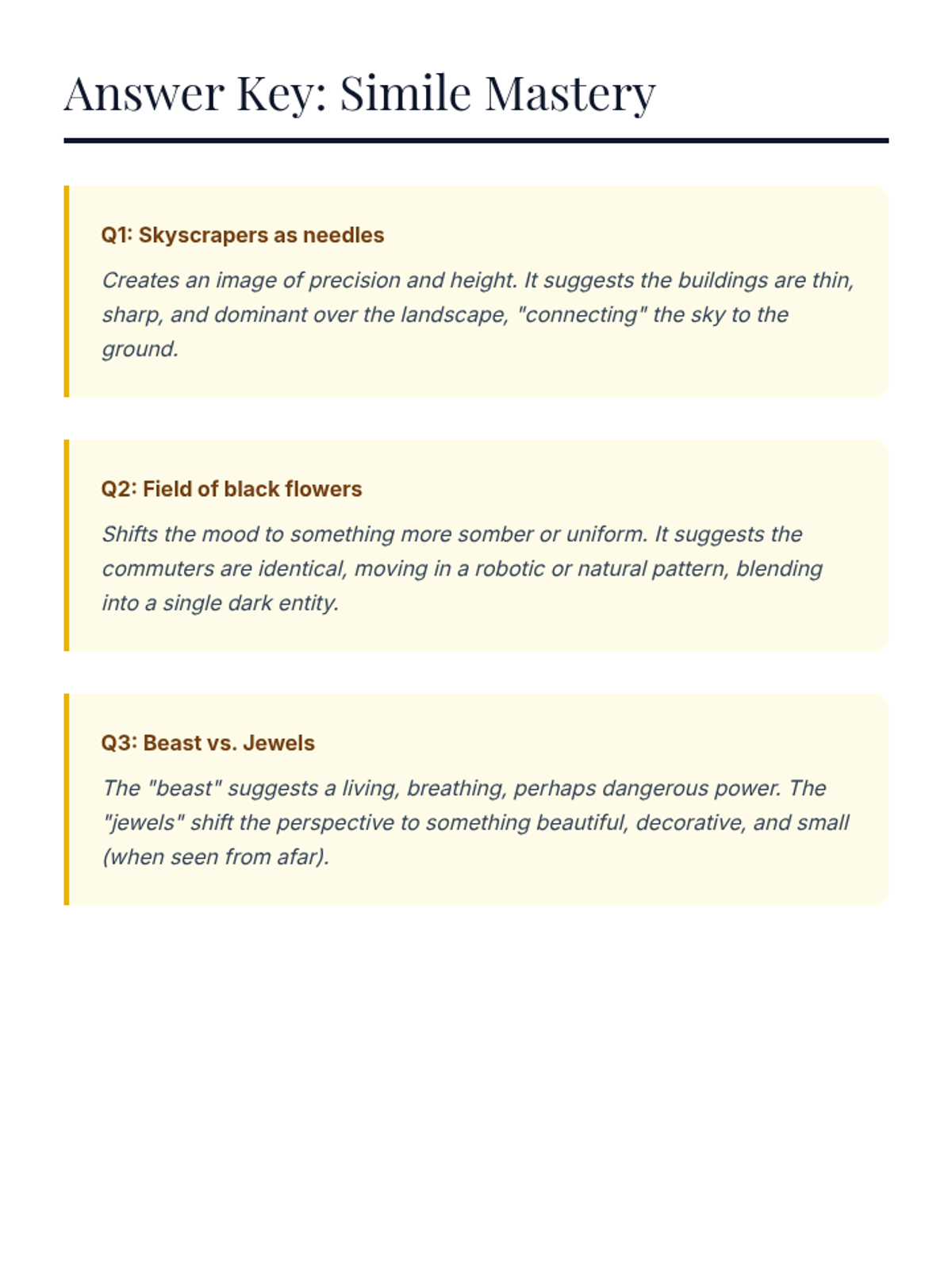
Focusing on similes: comparisons using 'like' or 'as'. Includes introductory slides and a practice worksheet.
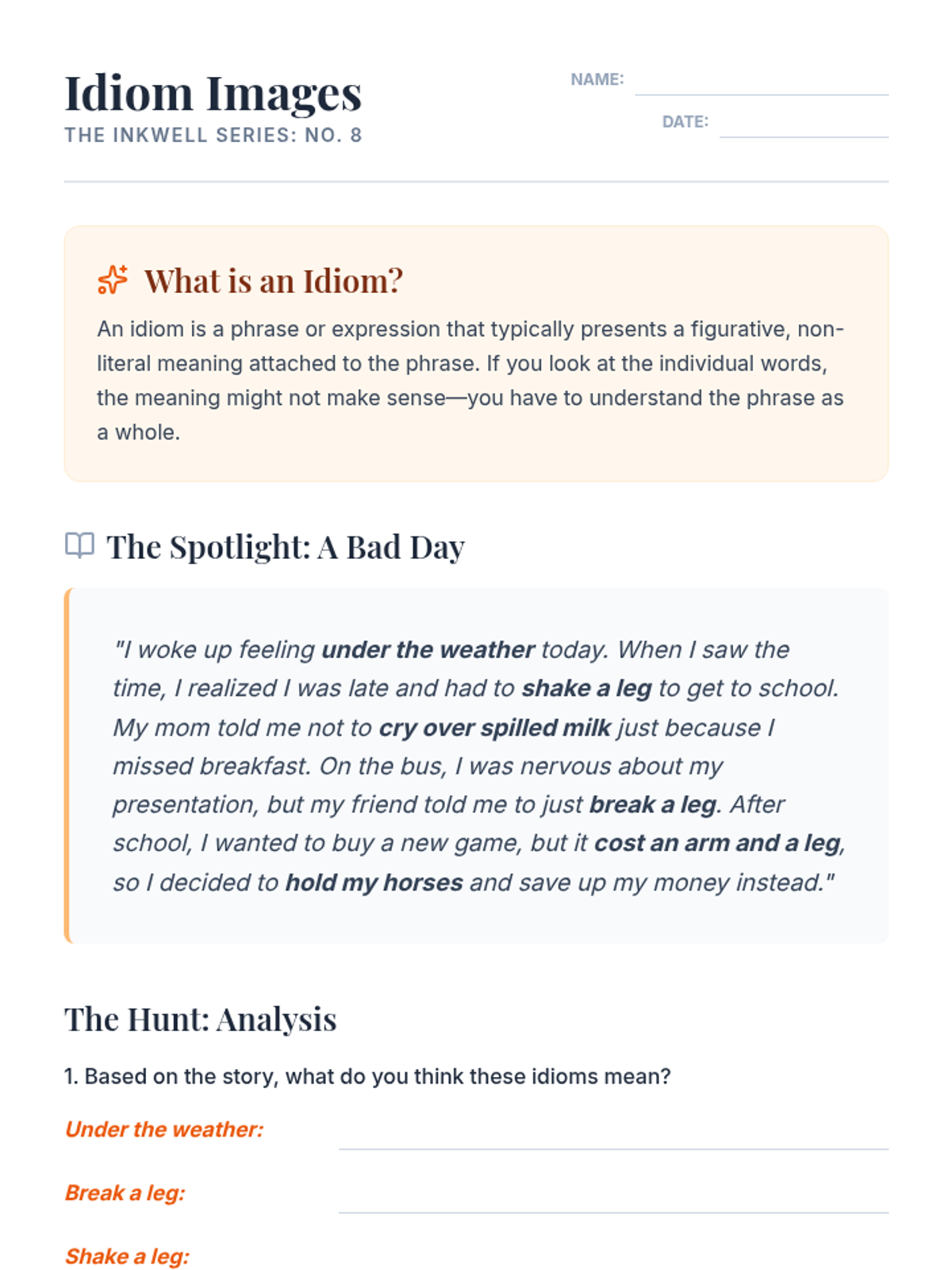
An introductory lesson covering the primary types of figurative language with integrated reading passages and creative writing exercises.
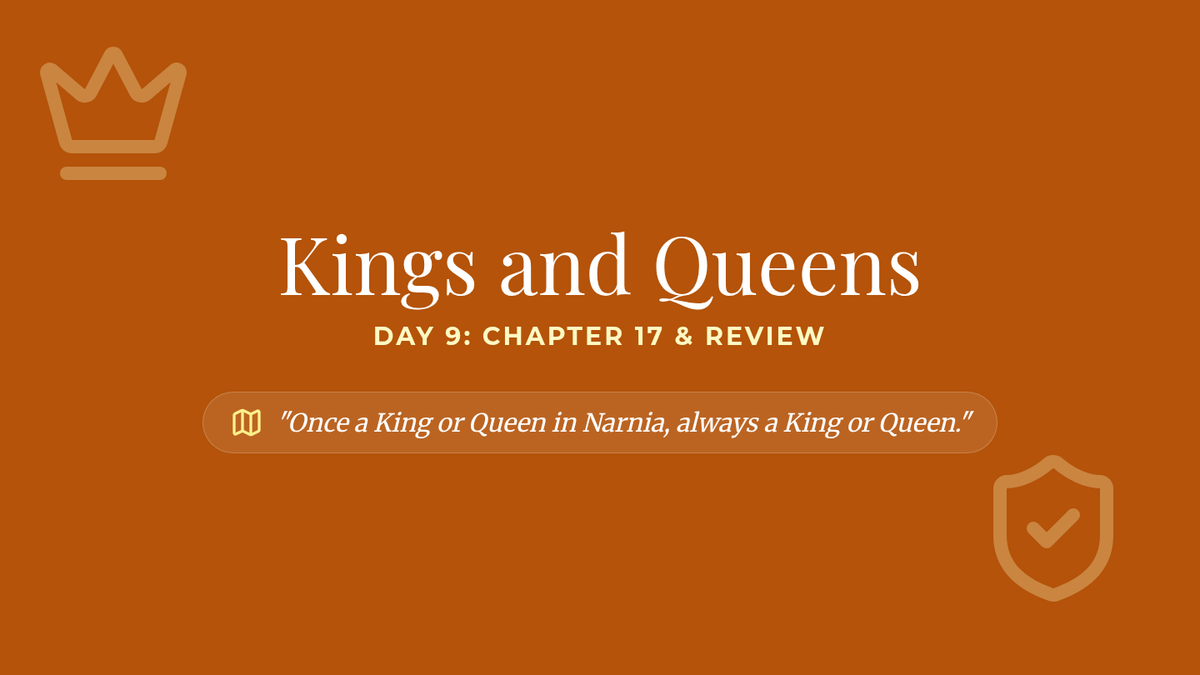
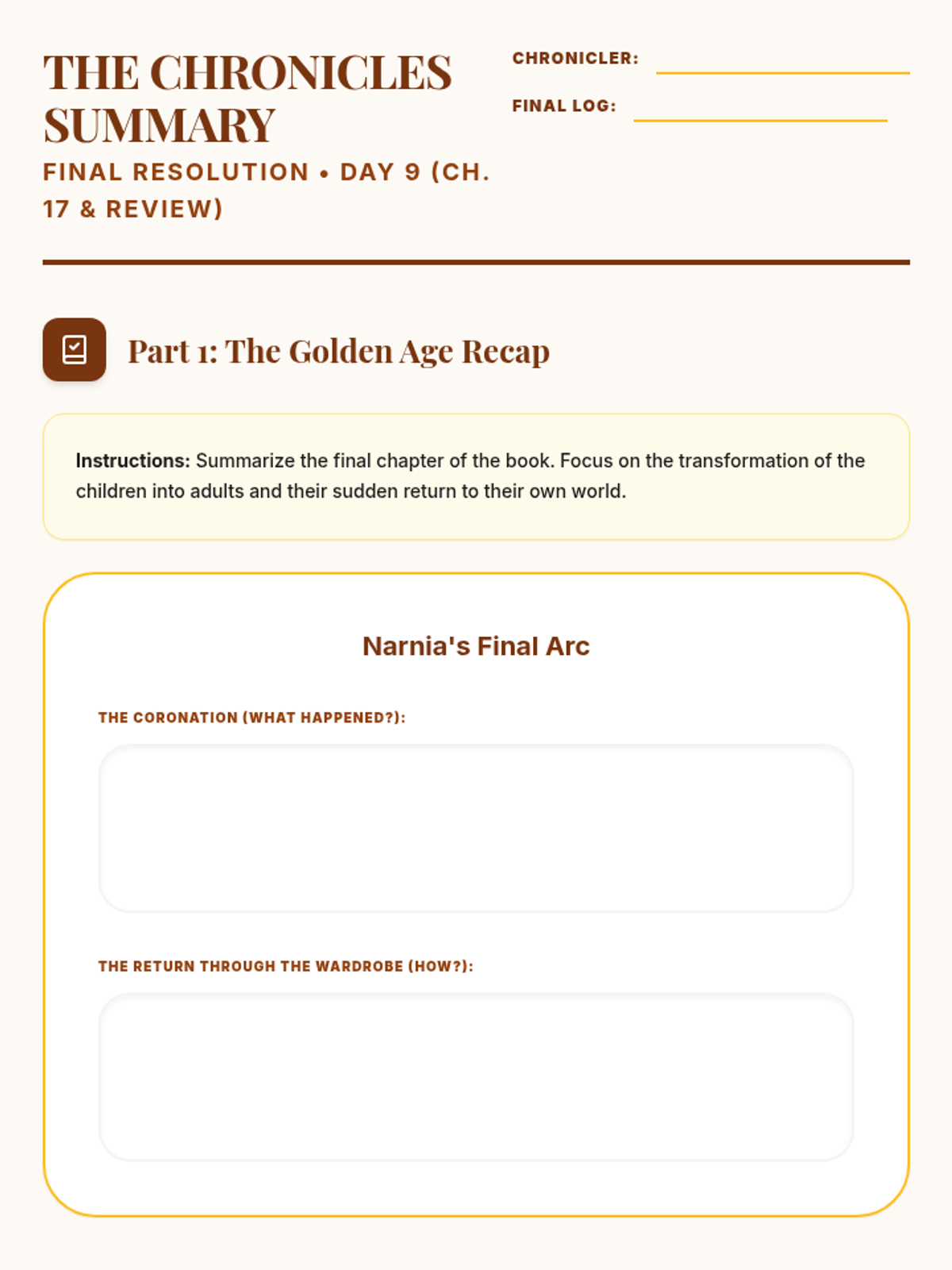
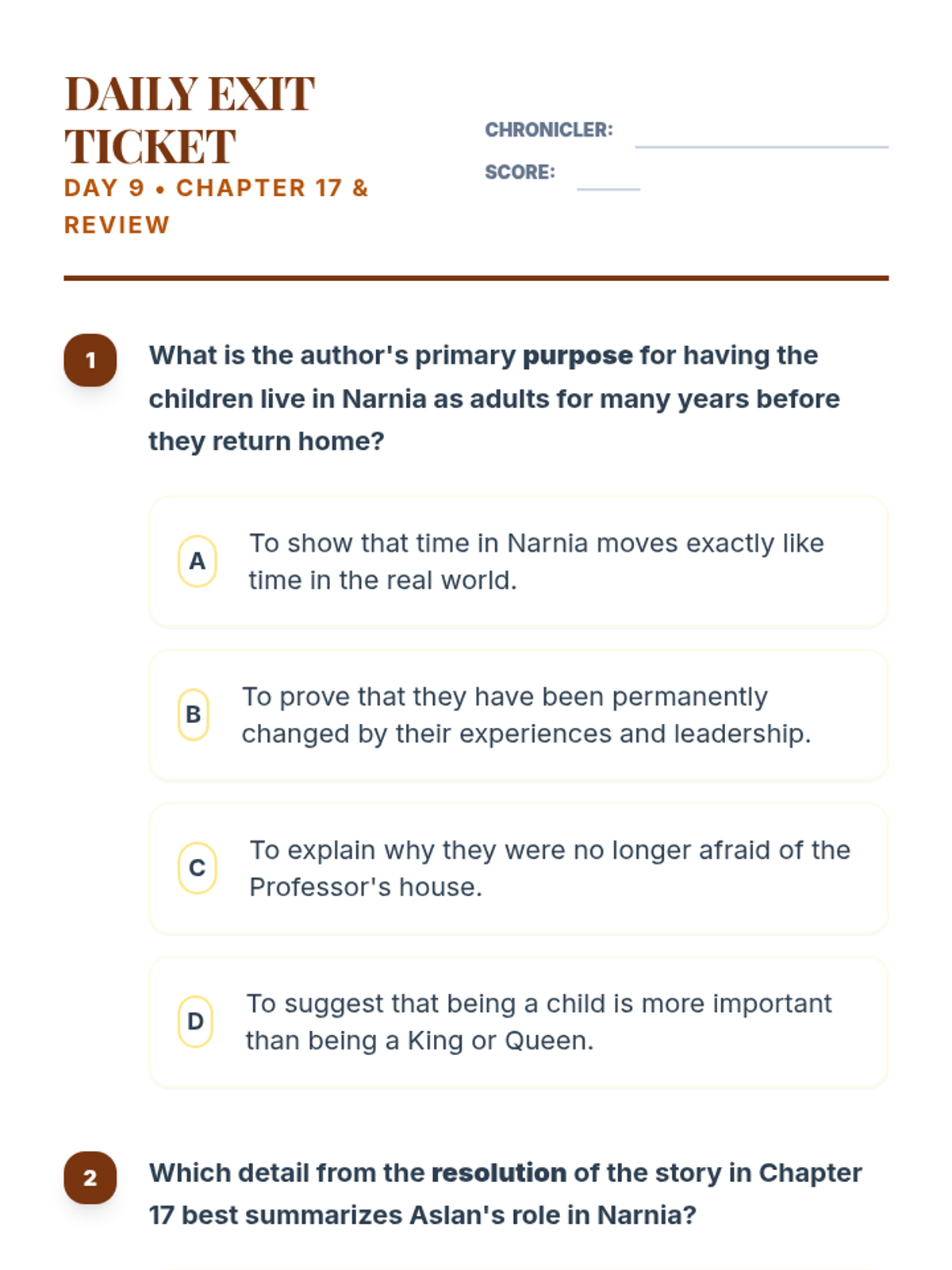
Day 9: Chapter 17 and Review. The Battle of Beruna, the coronation, and the return home, focusing on author's purpose and unit summary.
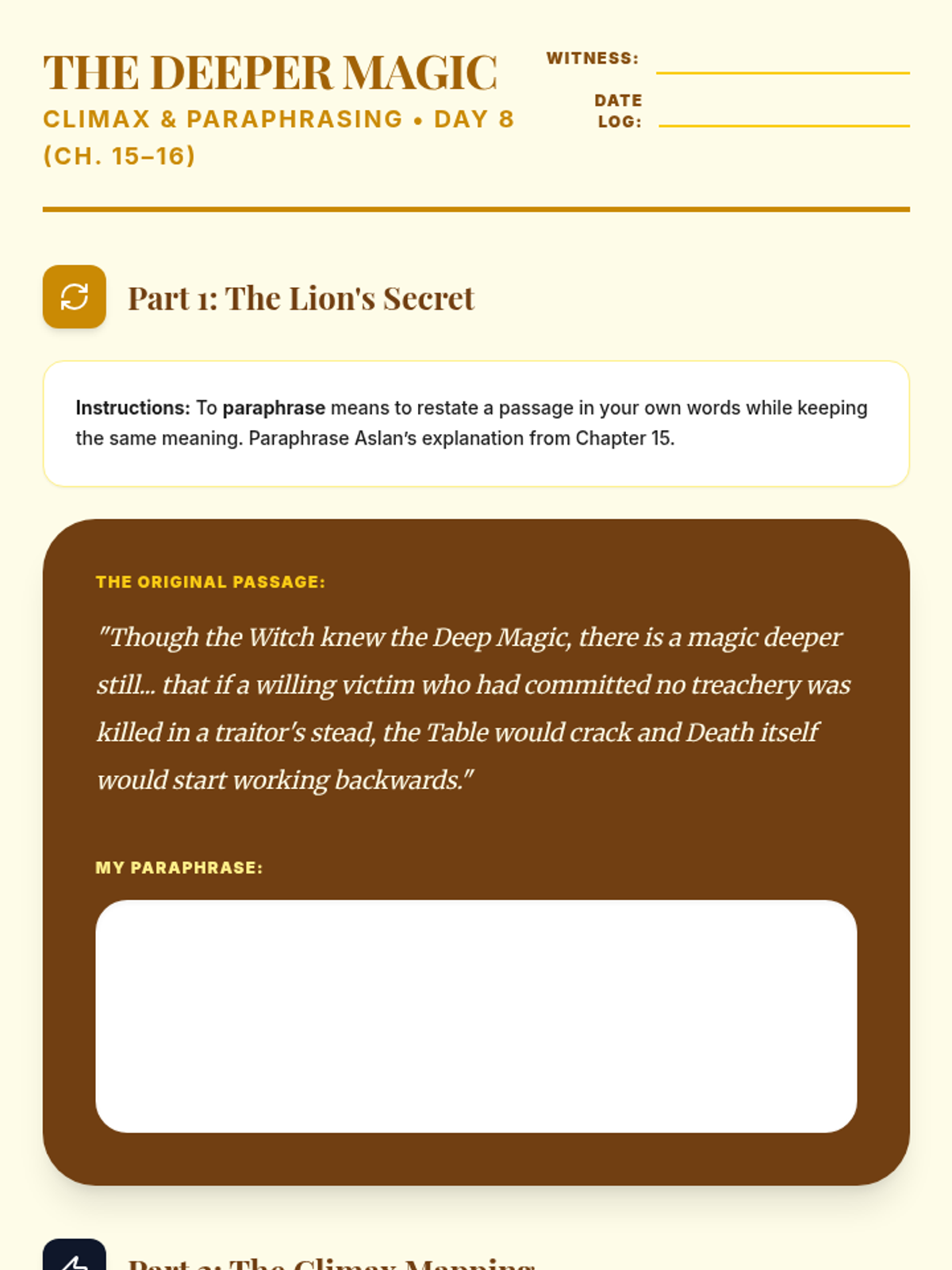
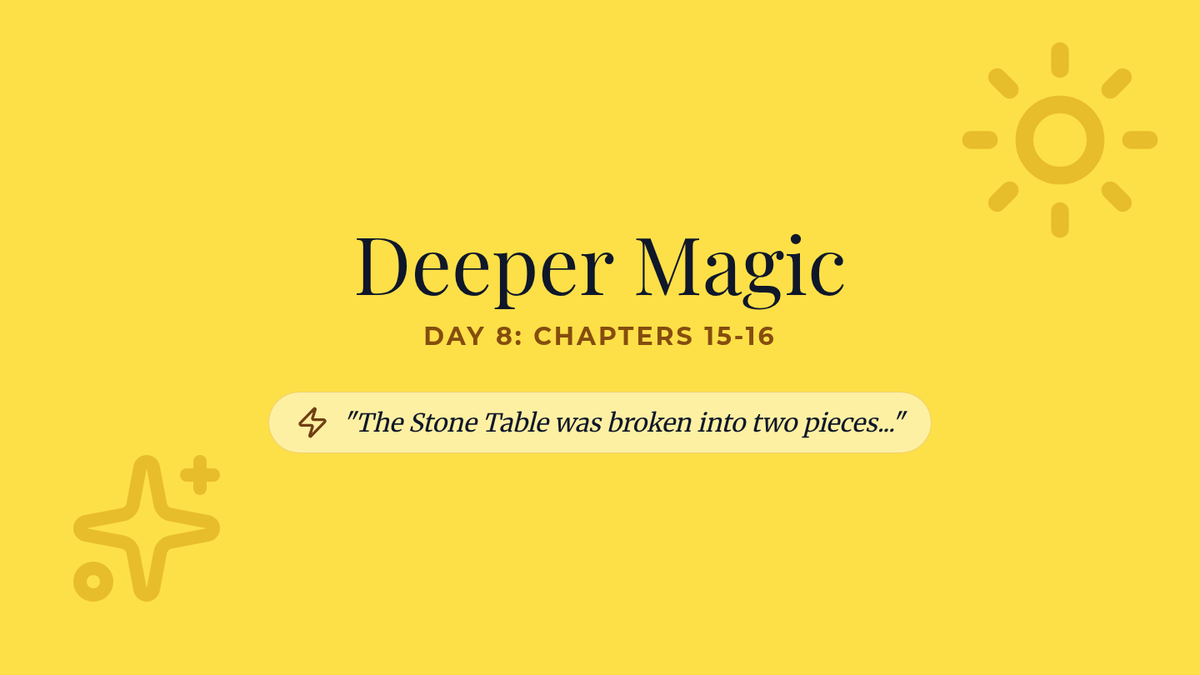
Day 8: Chapters 15-16. The resurrection of Aslan and the liberation of the statues, focusing on the climax of the plot and paraphrasing.
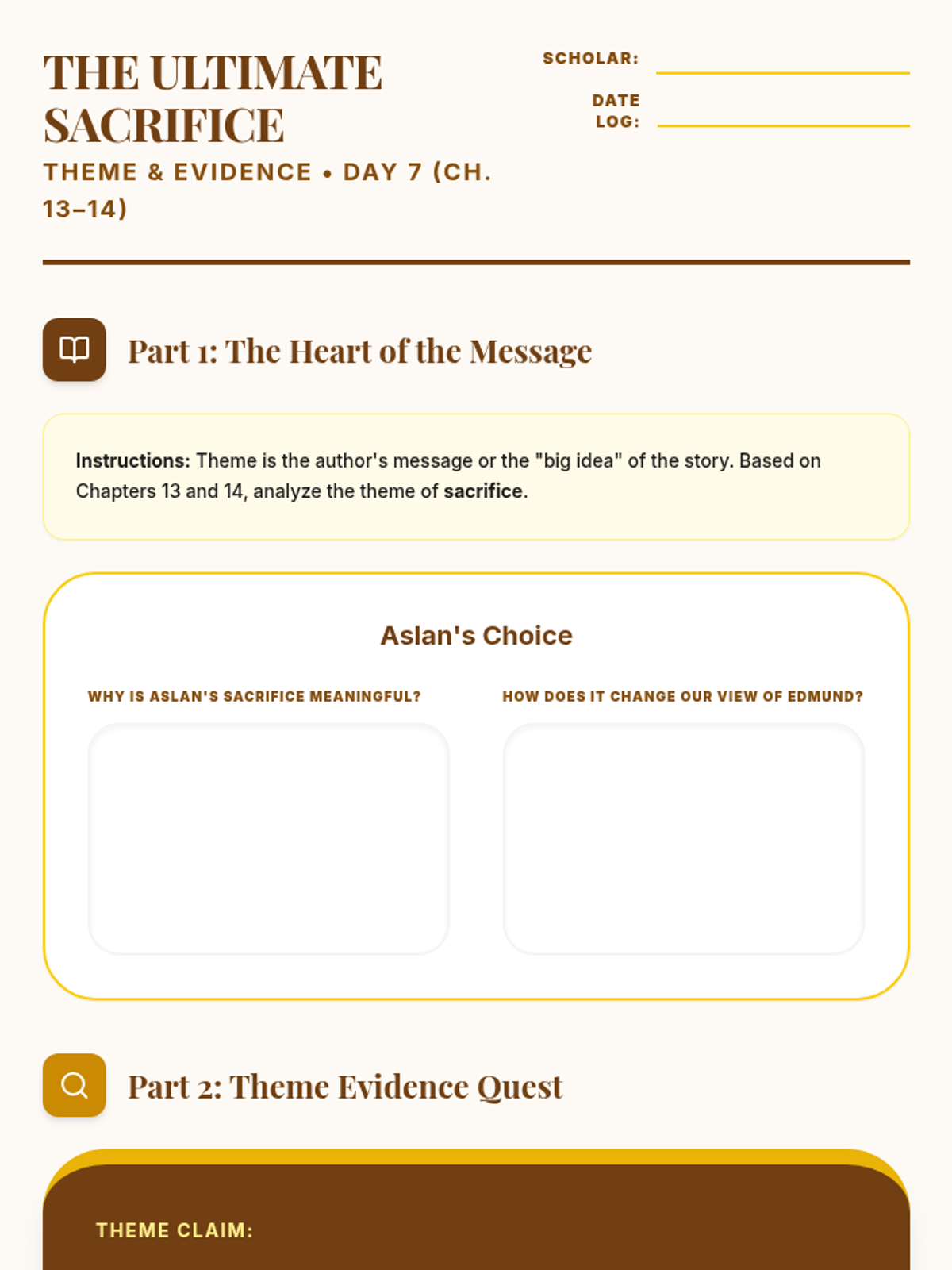
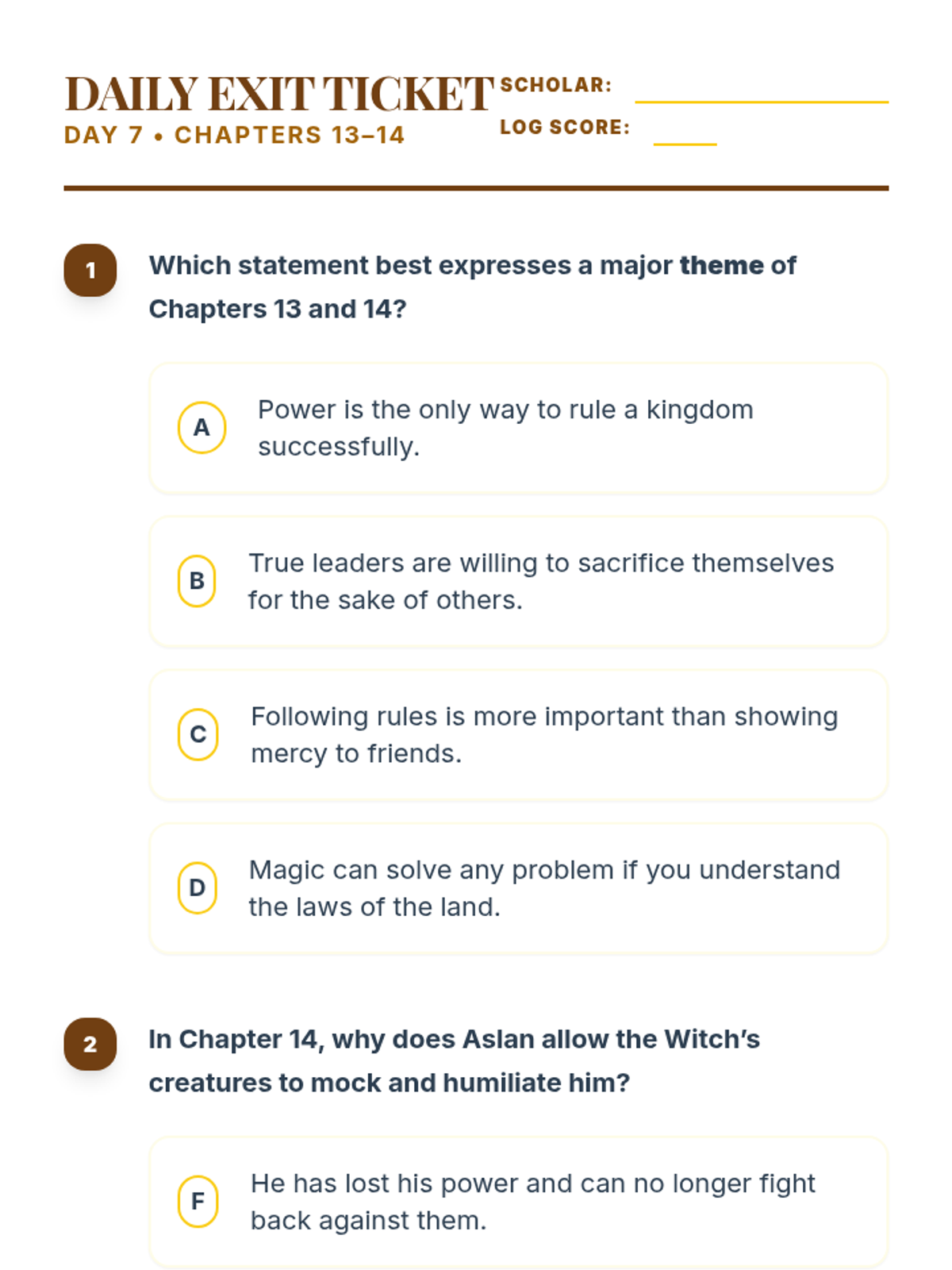
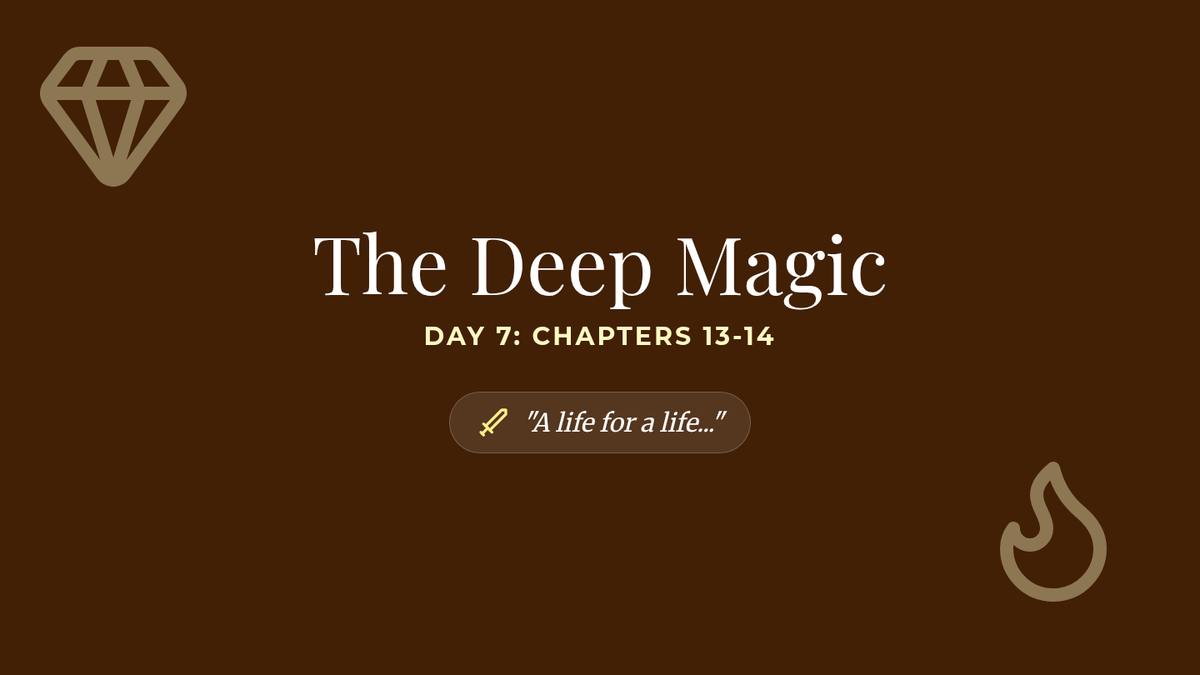
Day 7: Chapters 13-14. The Deep Magic and Aslan's sacrifice, focusing on theme and supporting claims with evidence.
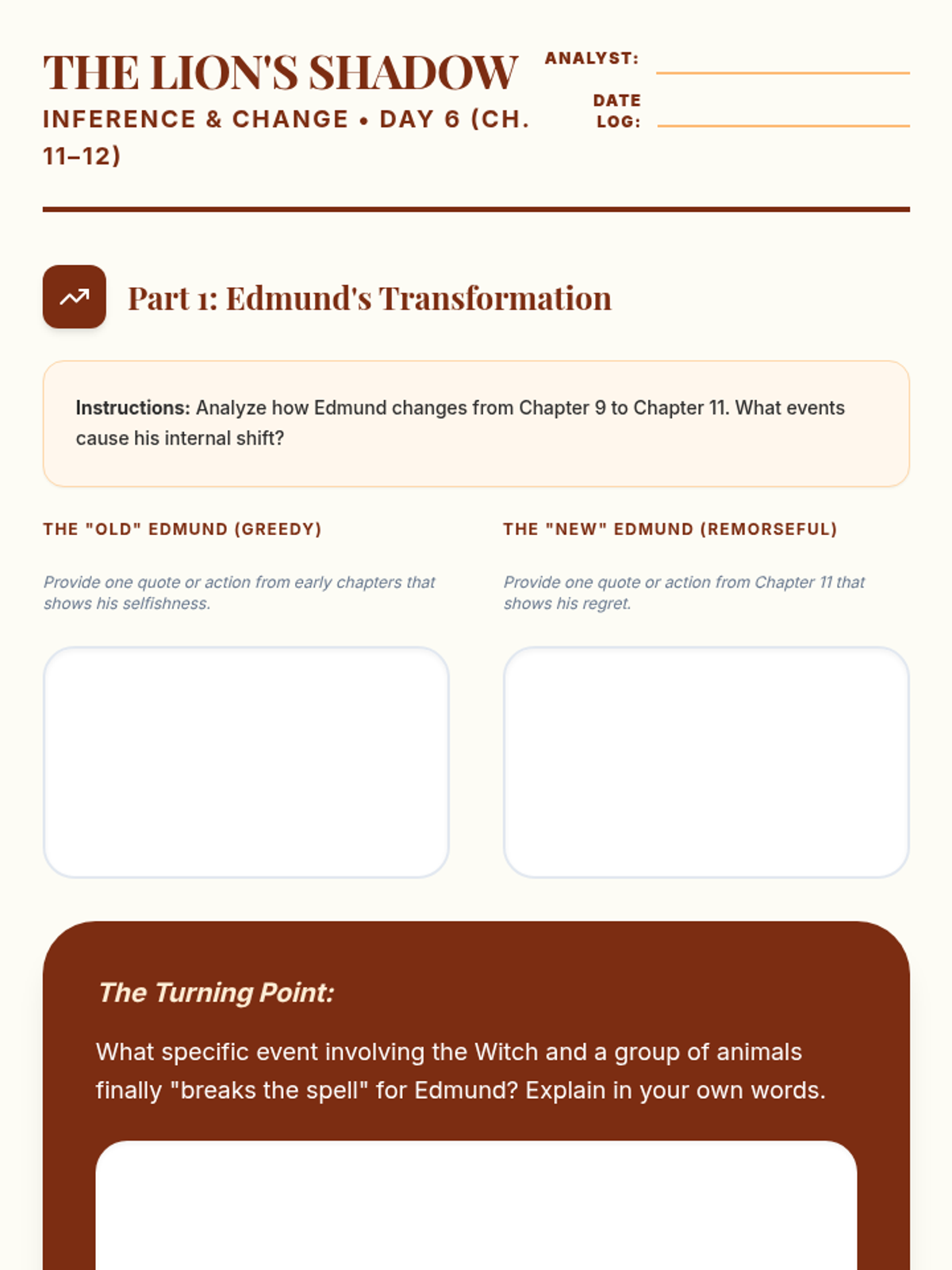
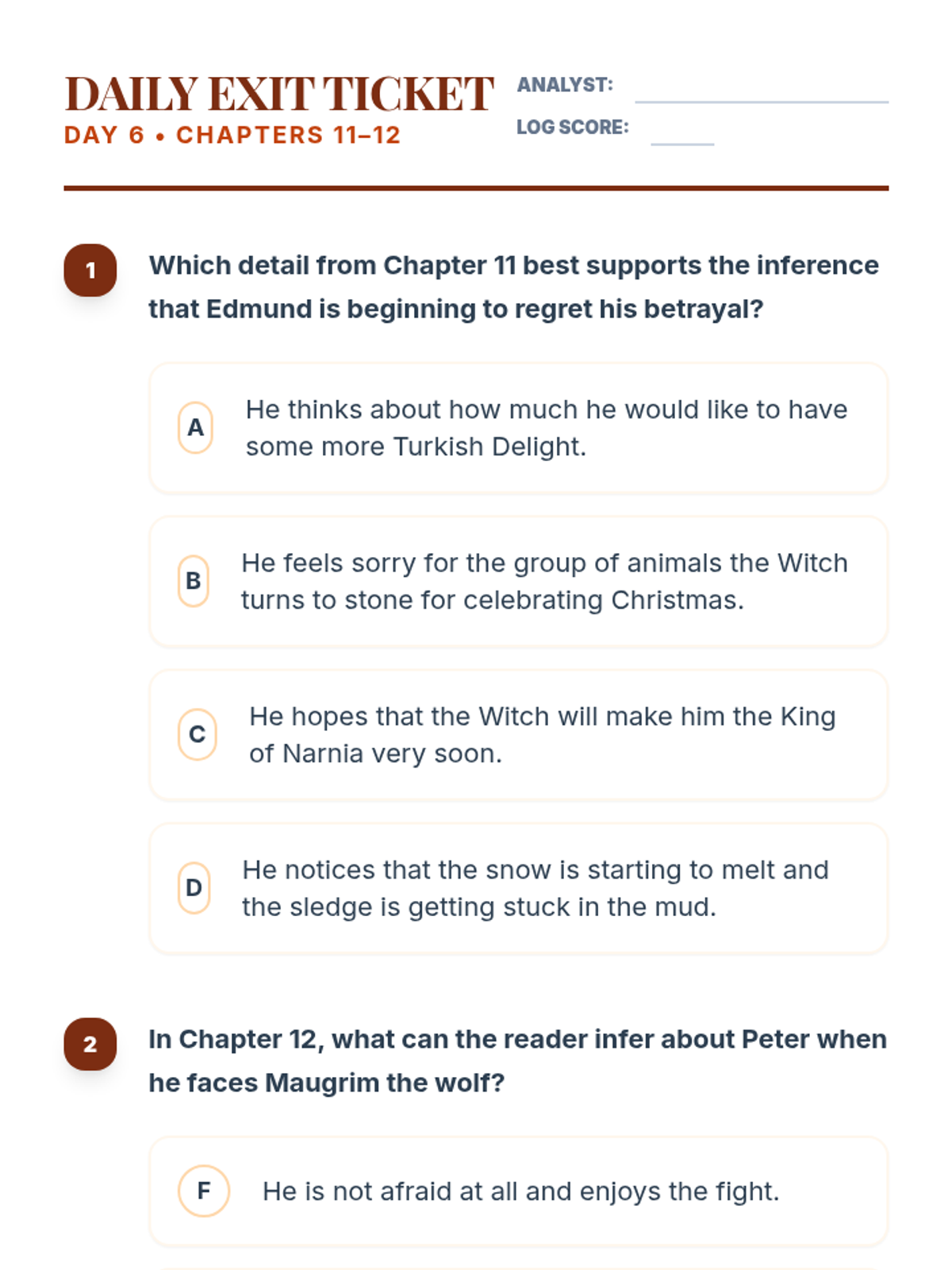
Day 6: Chapters 11-12. The melting of the snow and the first meeting with Aslan, focusing on character change and inference.
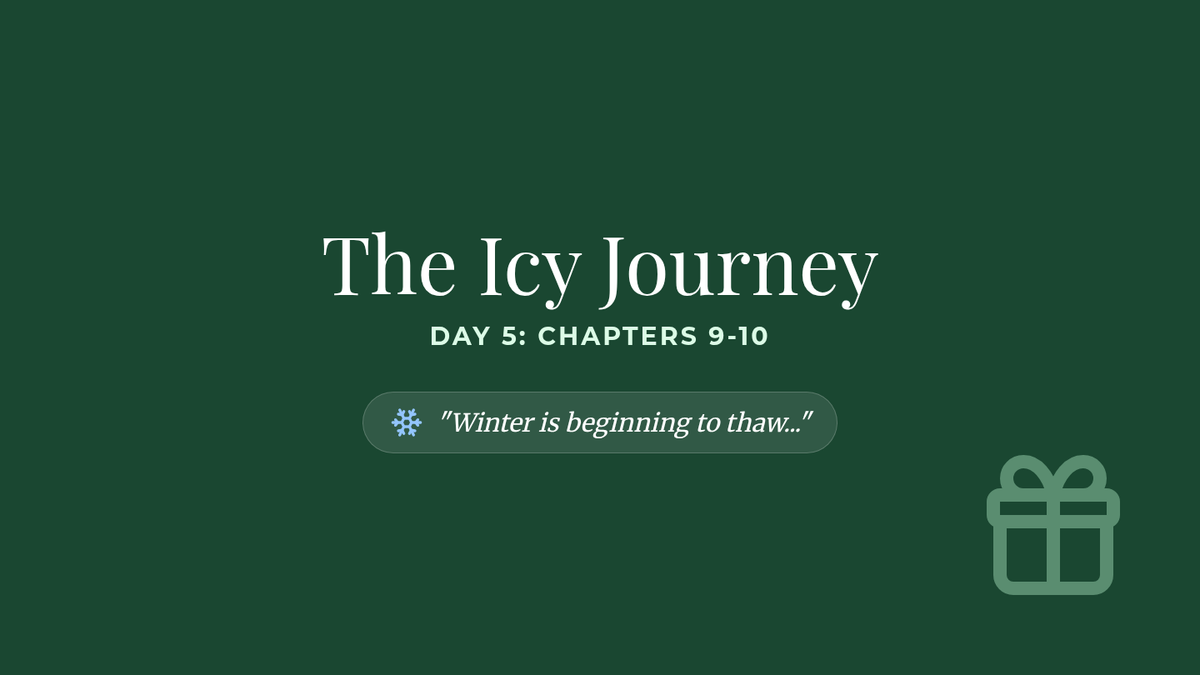
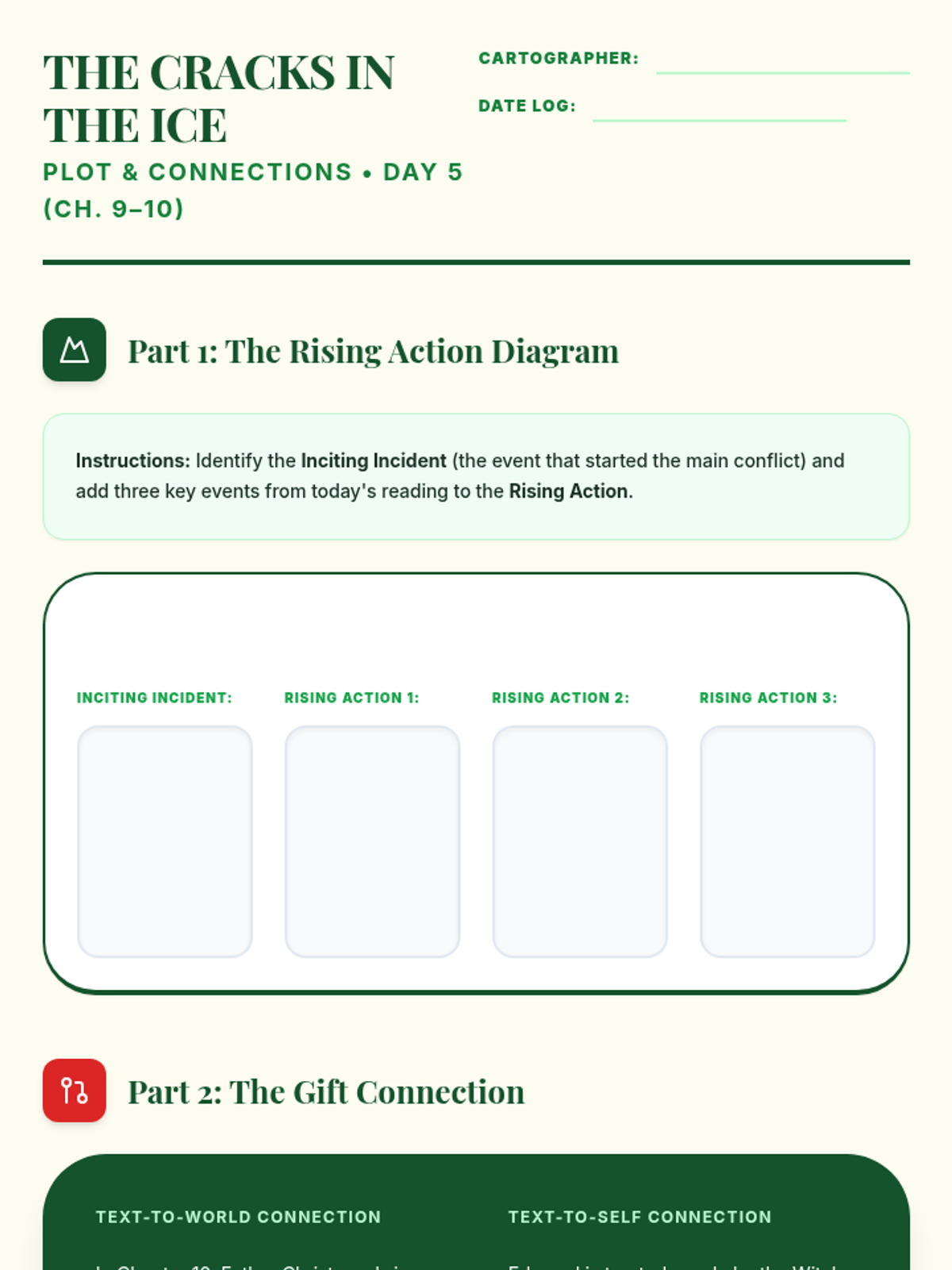
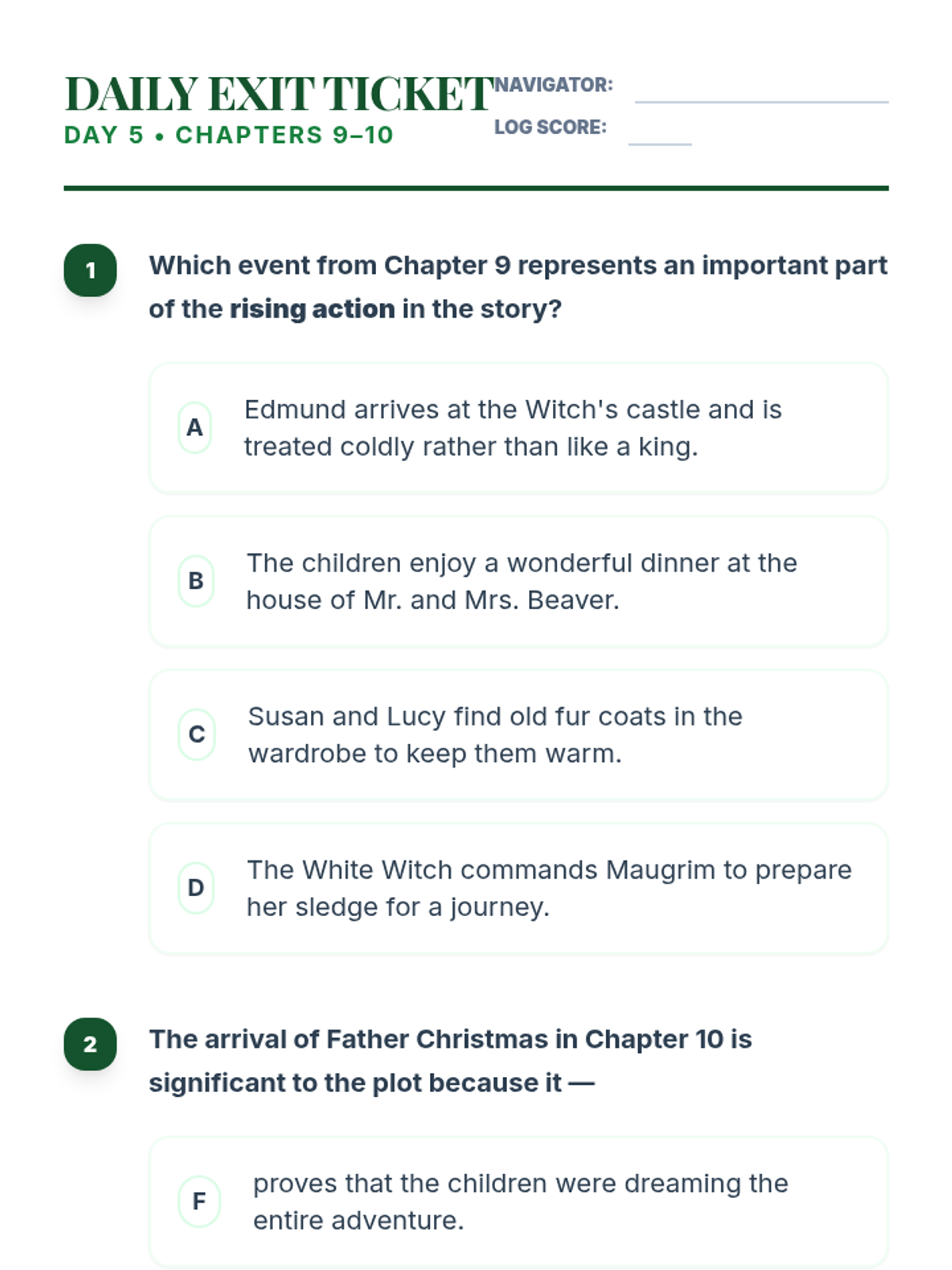
Day 5: Chapters 9-10. Edmund's journey to the Witch's castle and the arrival of Father Christmas, focusing on plot structure and making connections.
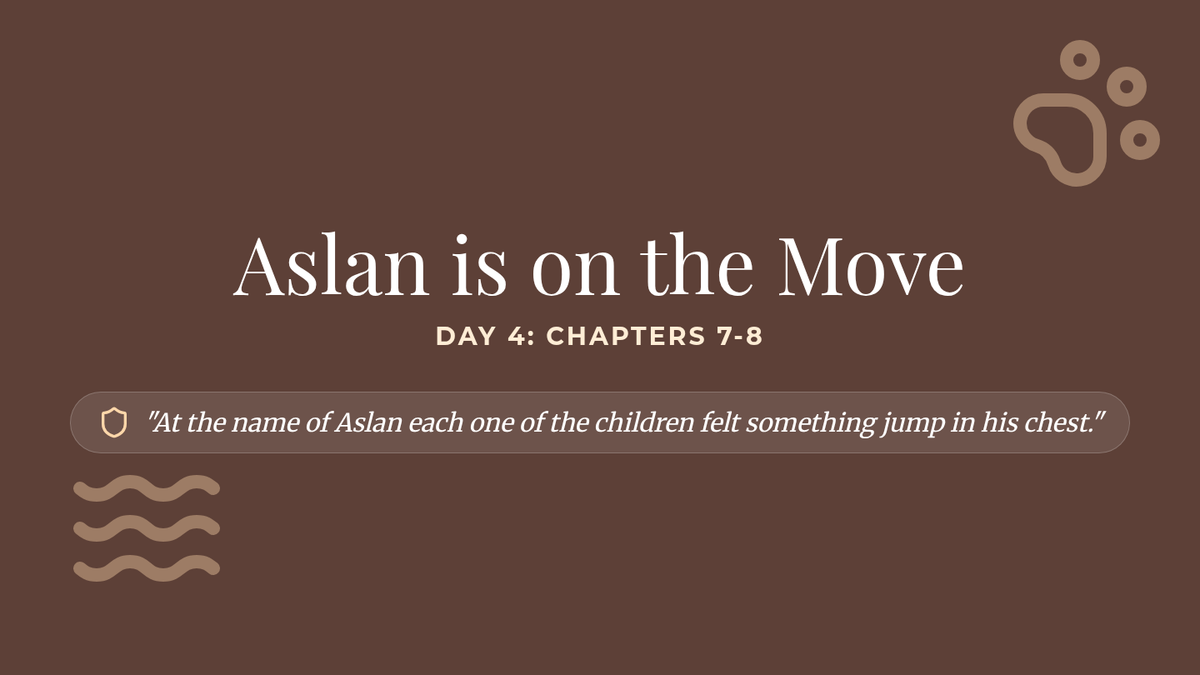
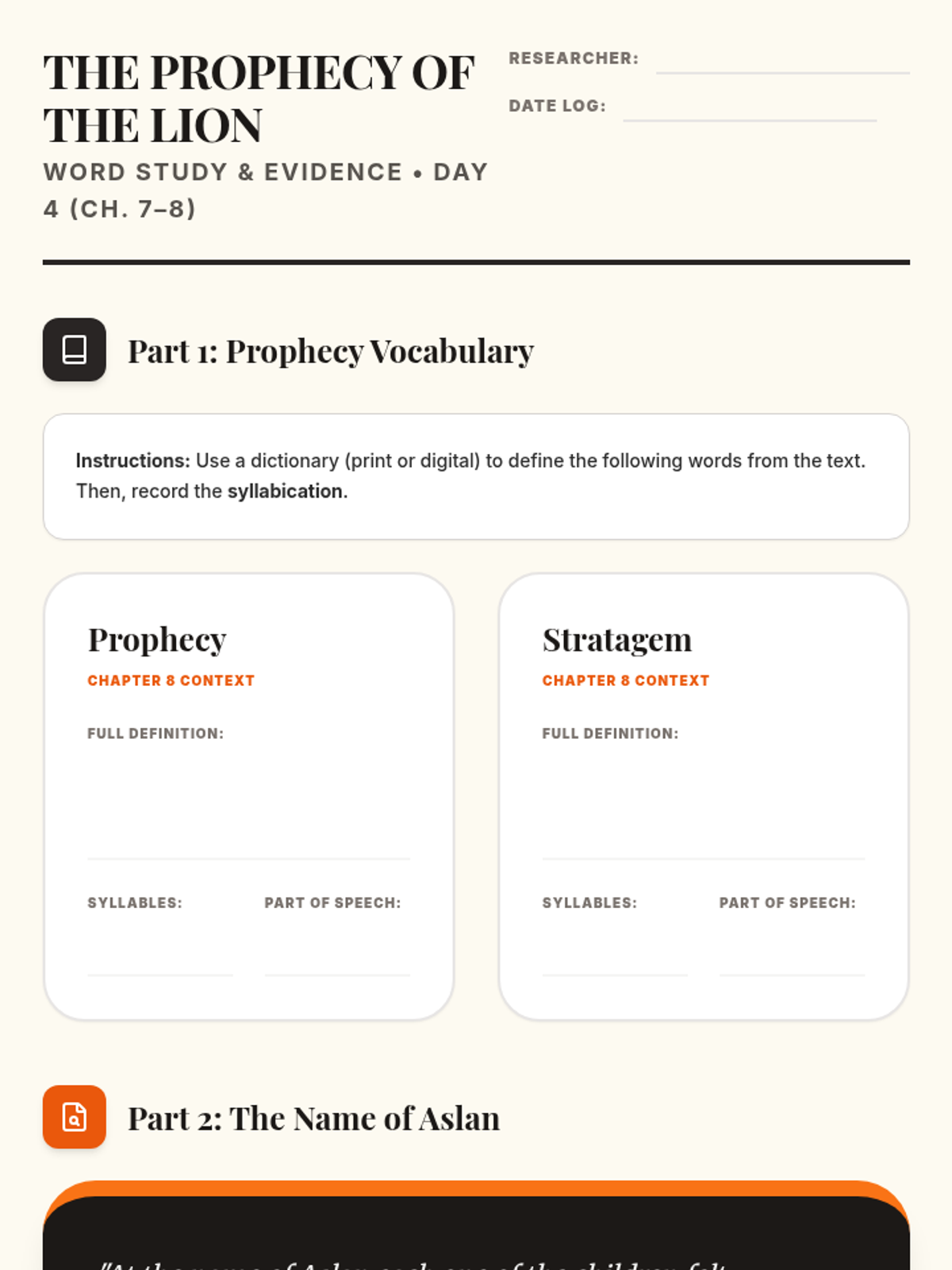
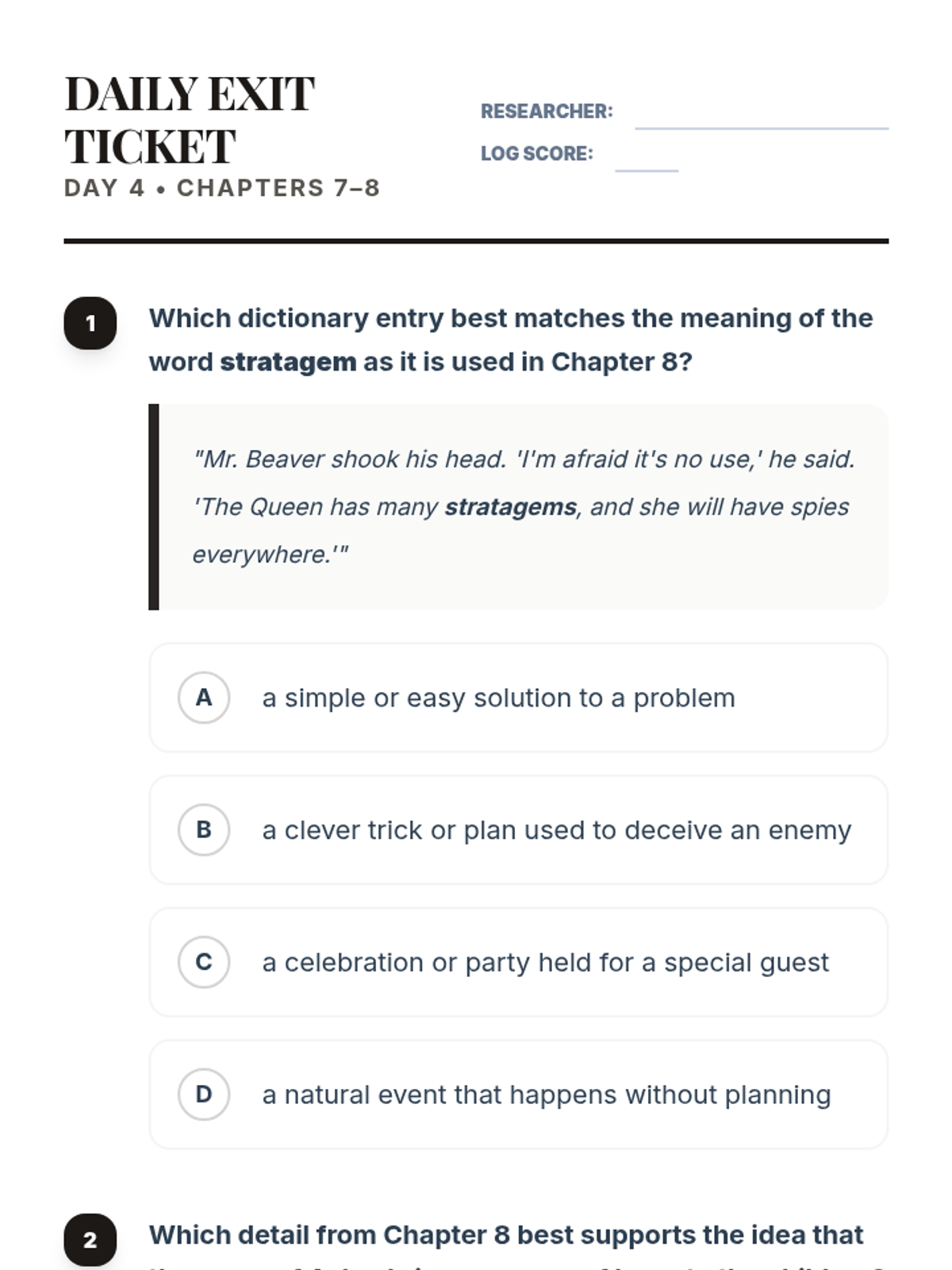
Day 4: Chapters 7-8. The children meet the Beavers and hear the prophecy of Aslan, focusing on word study and using text evidence.
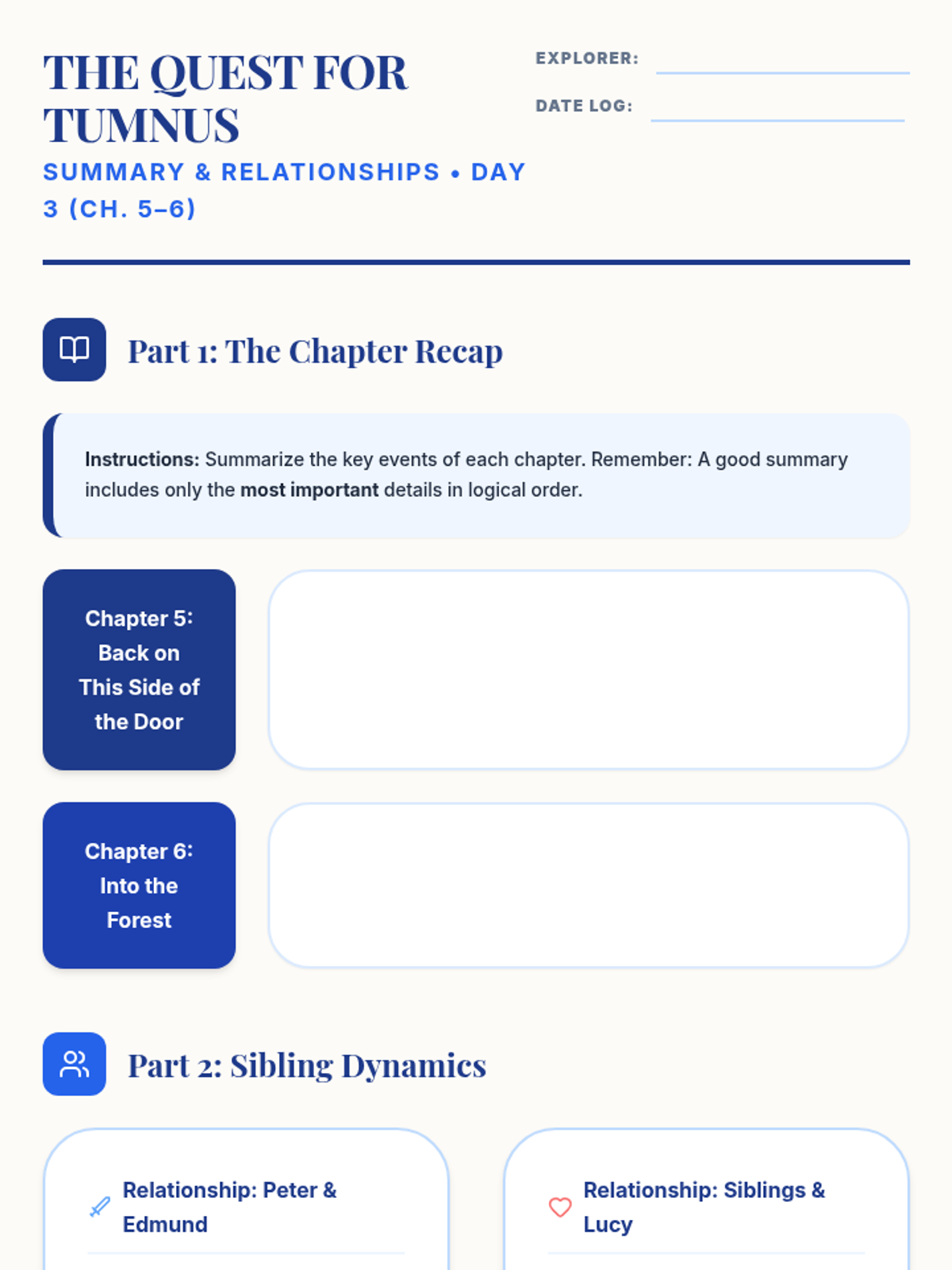
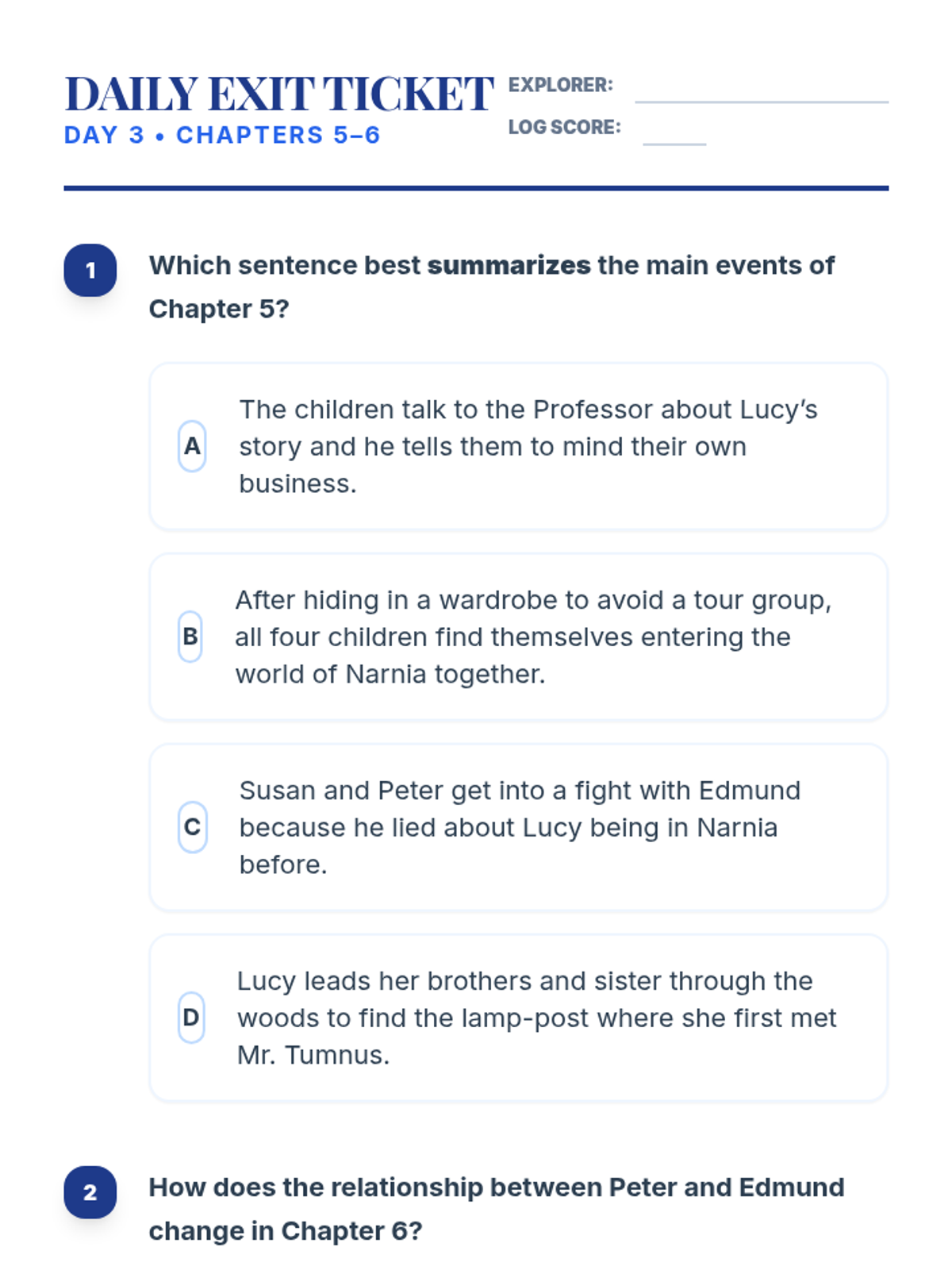
Day 3: Chapters 5-6. All four children enter Narnia and discover Mr. Tumnus's fate, focusing on summarizing and character relationships.
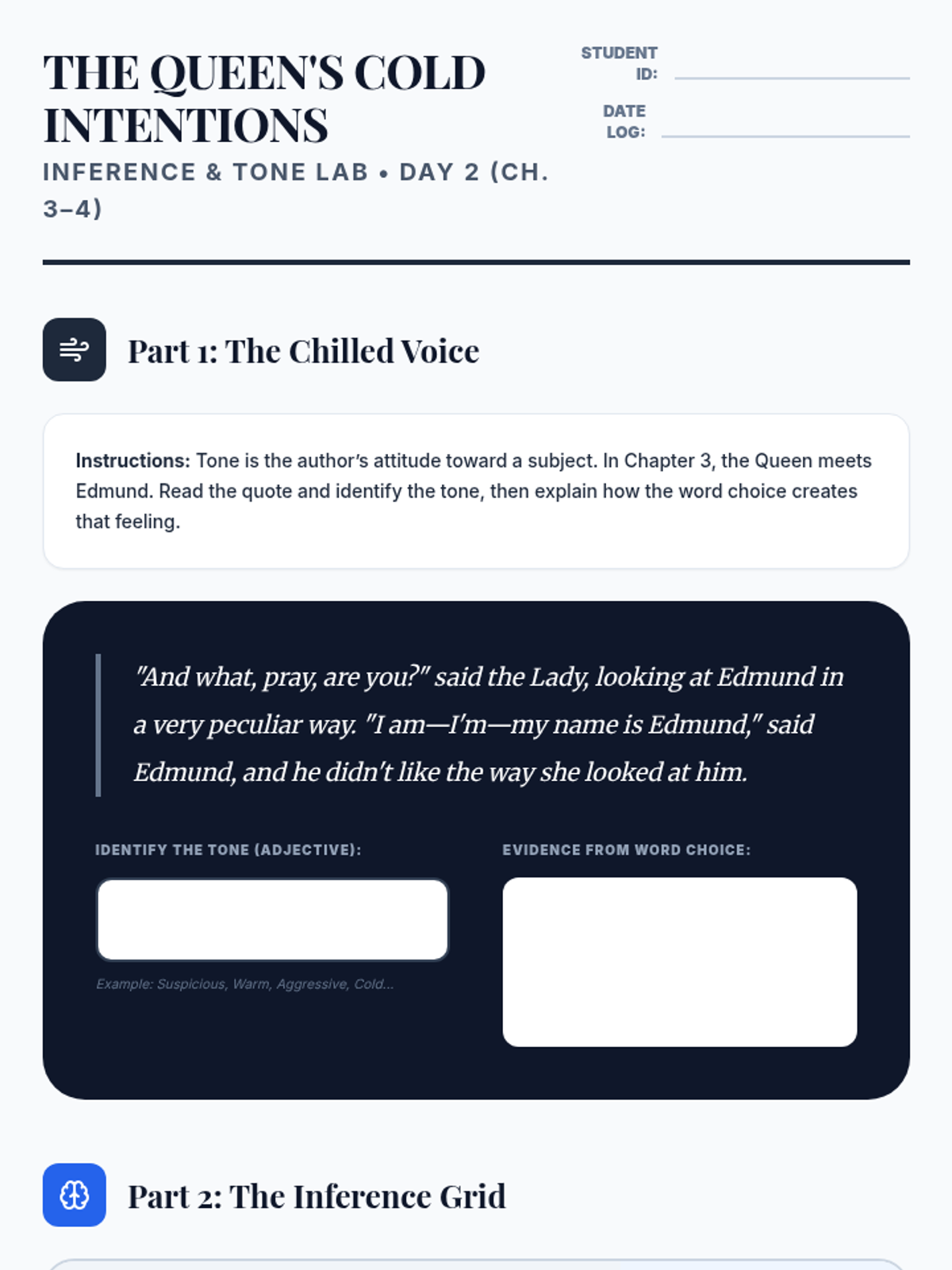
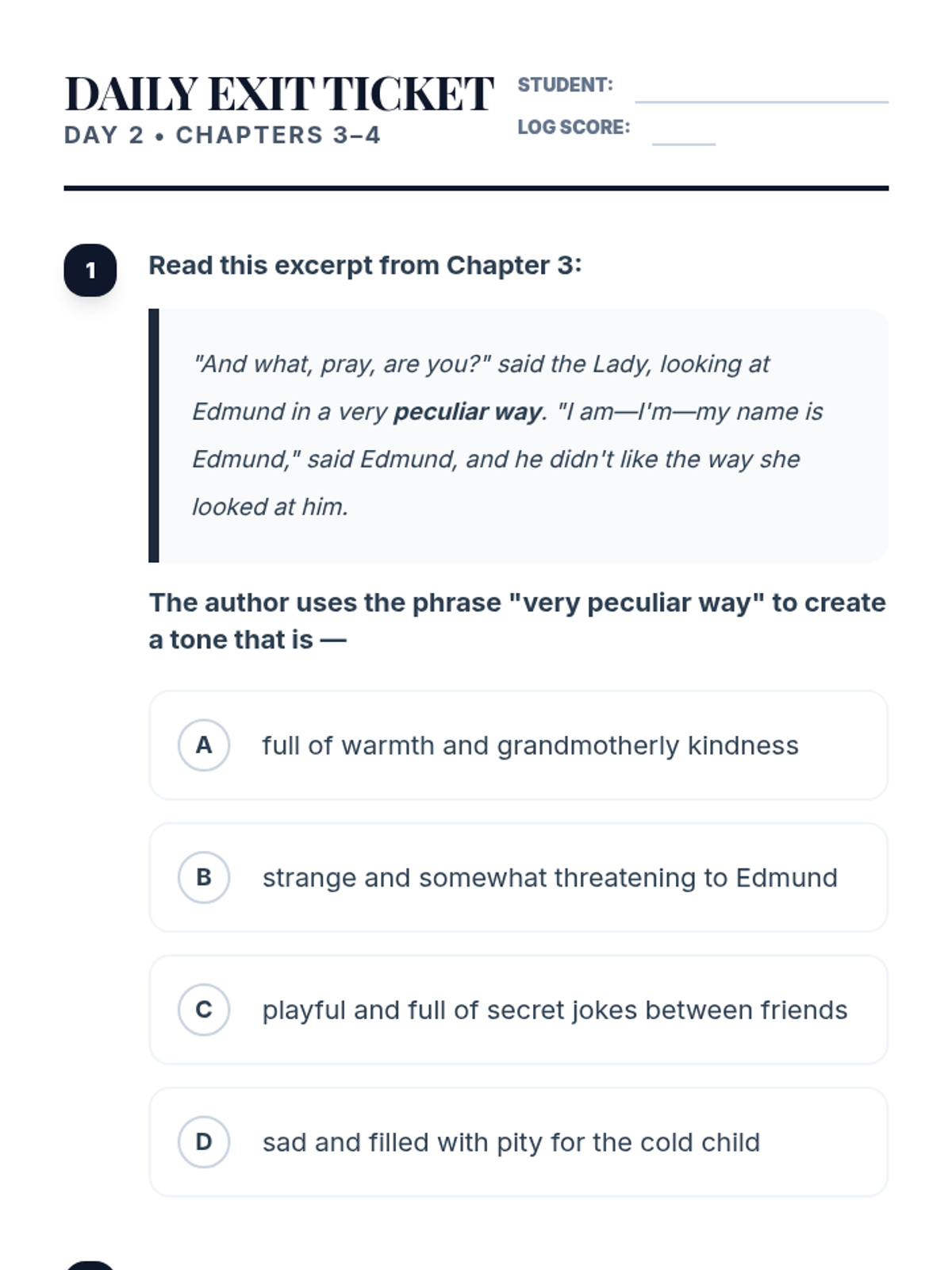
Day 2: Chapters 3-4. Edmund's entry into Narnia and his meeting with the White Witch, focusing on making inferences and identifying author's tone.
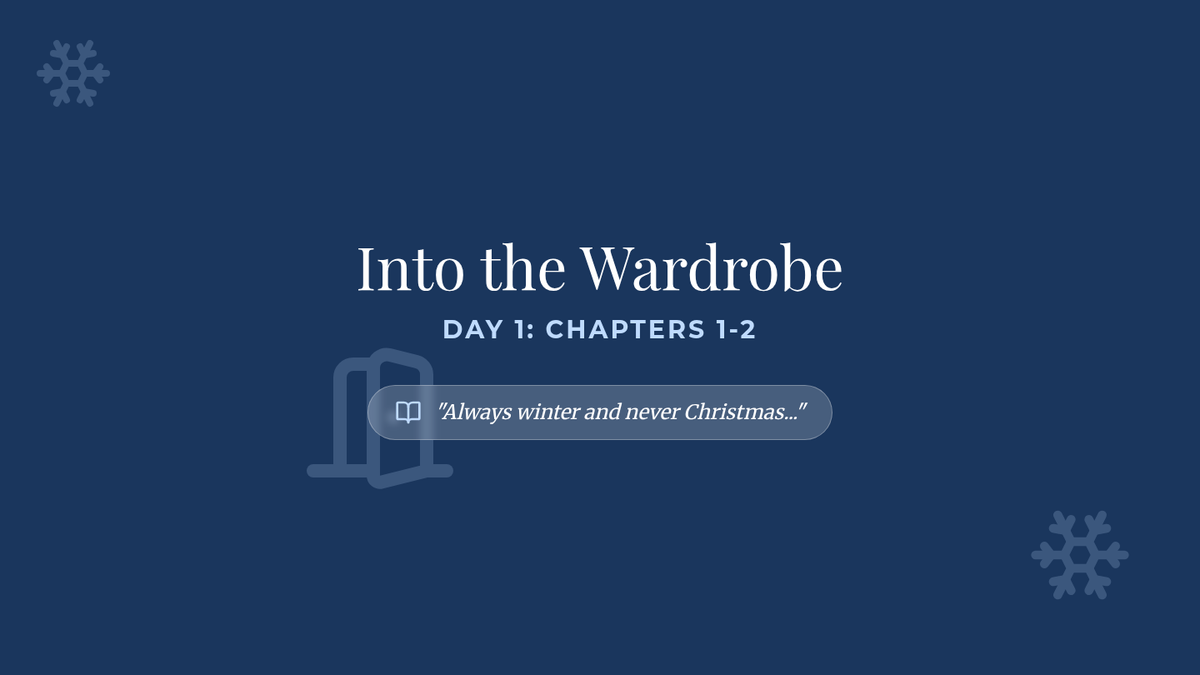
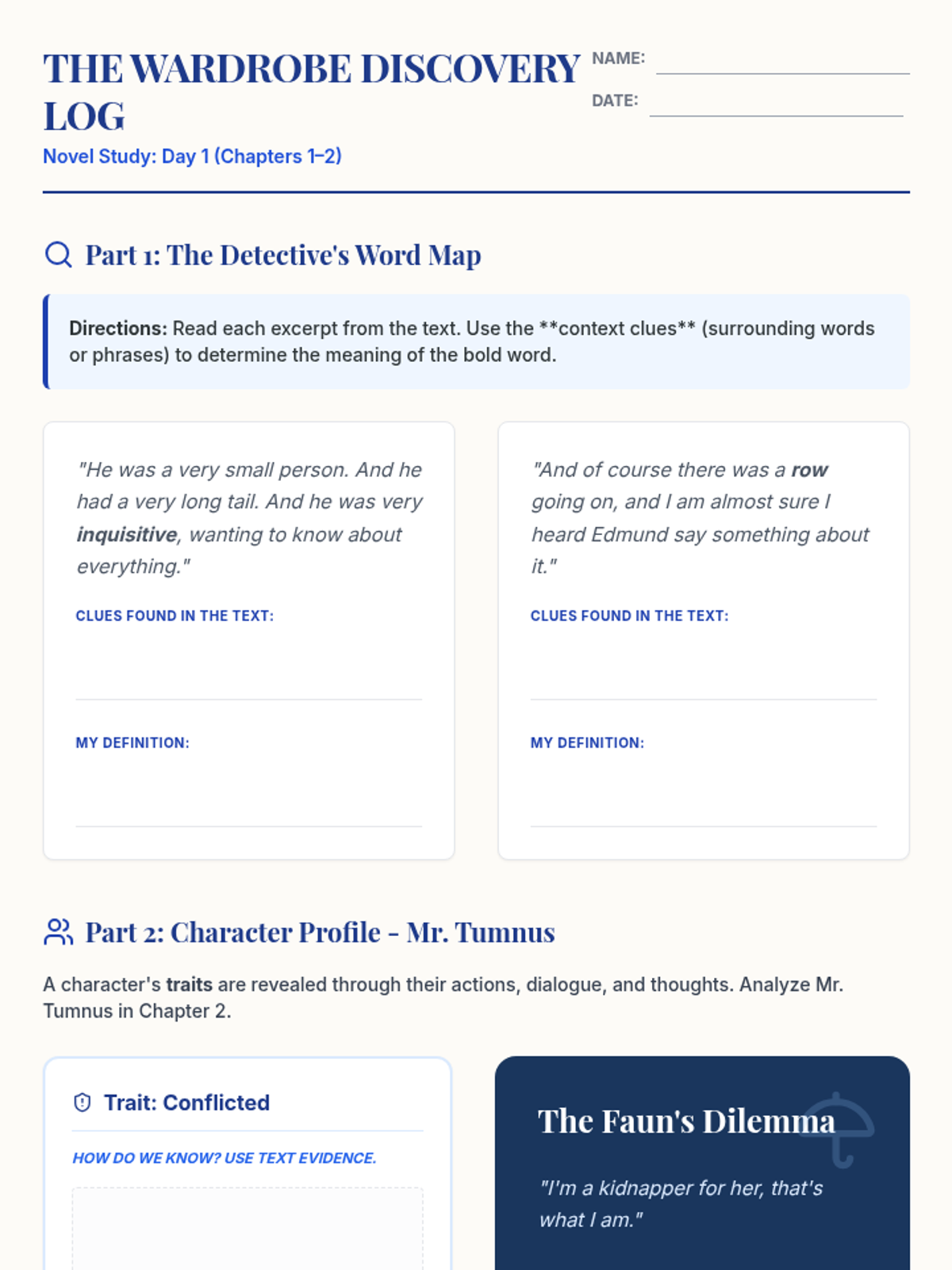
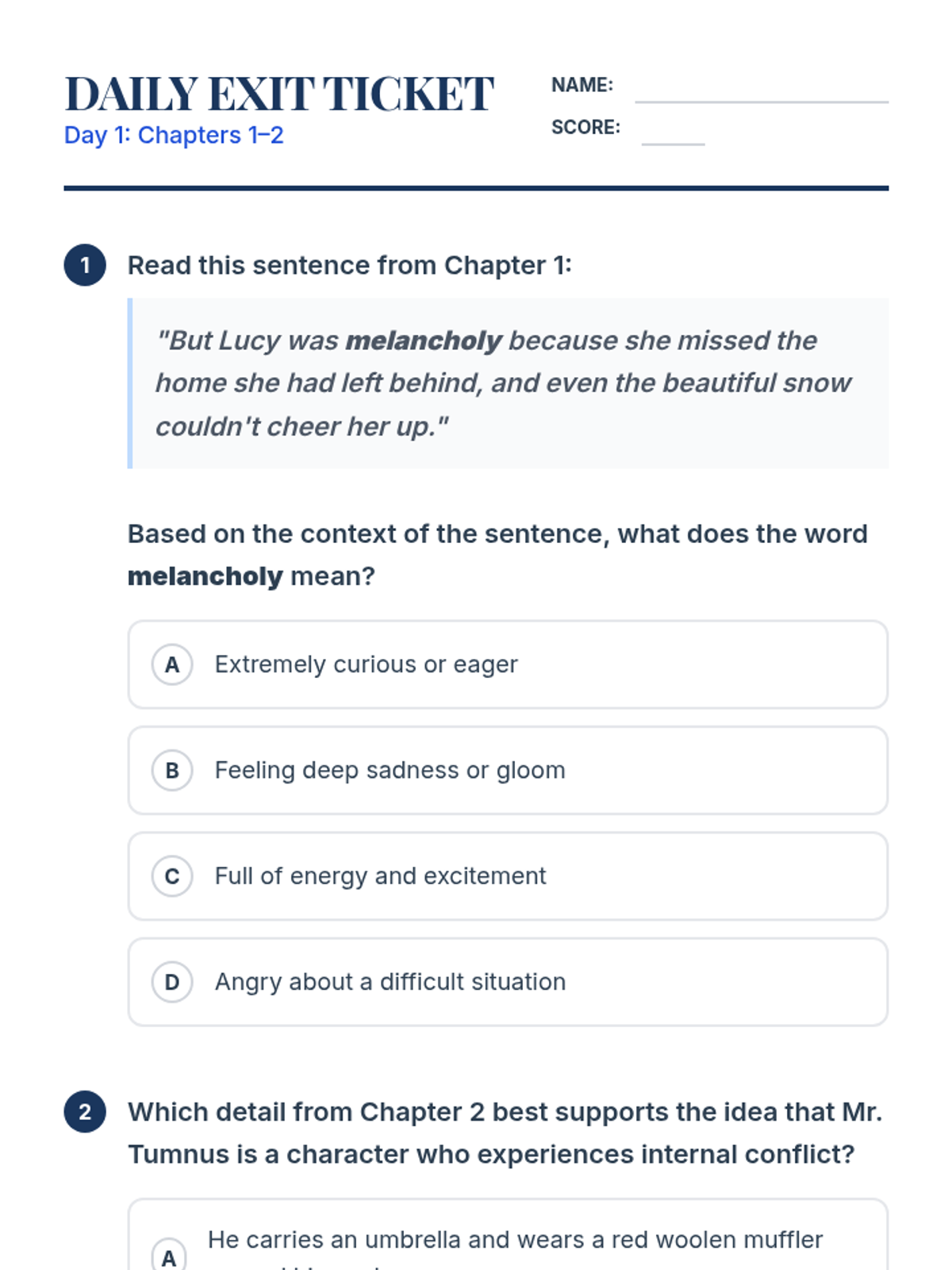
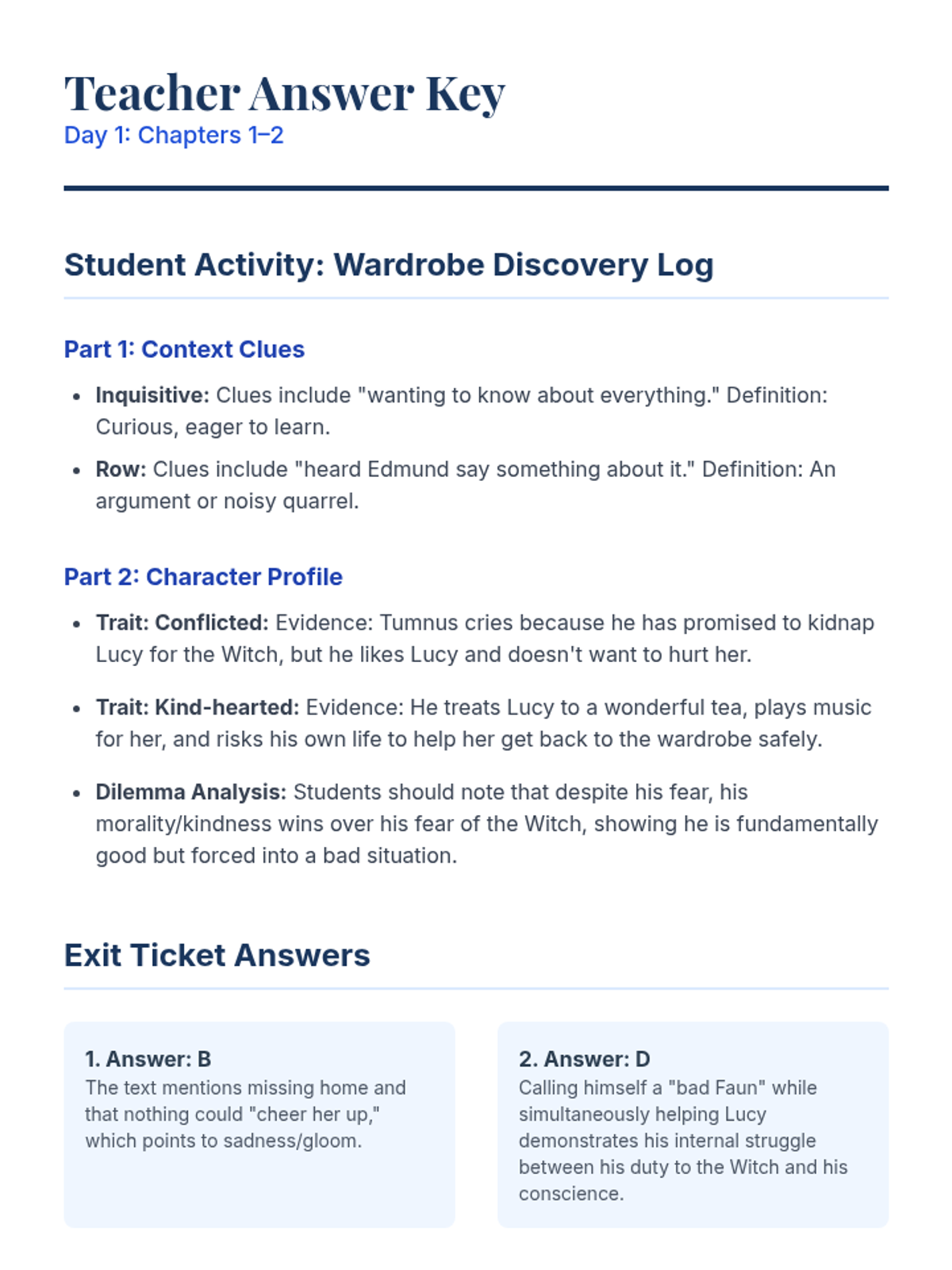
Day 1: Chapters 1-2. Exploring the arrival in Narnia and the first encounter with Mr. Tumnus, focusing on context clues and character traits.