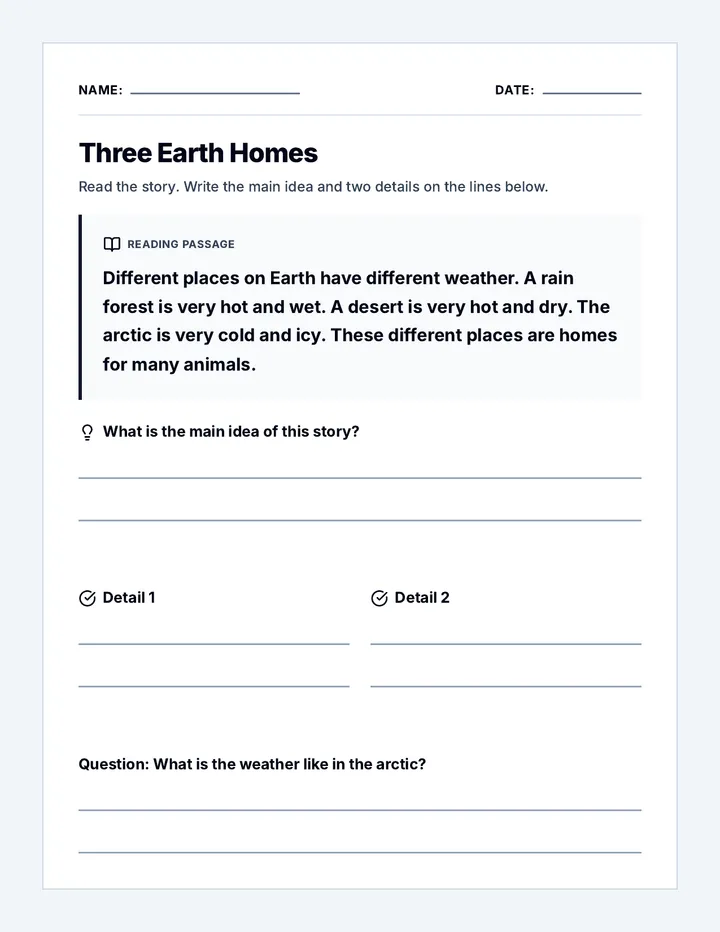
A detective-themed lesson teaching students how to identify the main idea and supporting details in informational texts. Students act as 'Idea Investigators' to solve cases by finding textual evidence.
A quick probe into subject, object, and possessive pronouns for second graders, featuring a visual warm-up and a focused assessment worksheet.
A collection of engaging puzzle activities based on the book "Hero Law Enforcement Dogs" by Jennifer Boothroyd, focusing on vocabulary and key facts about K9 units.
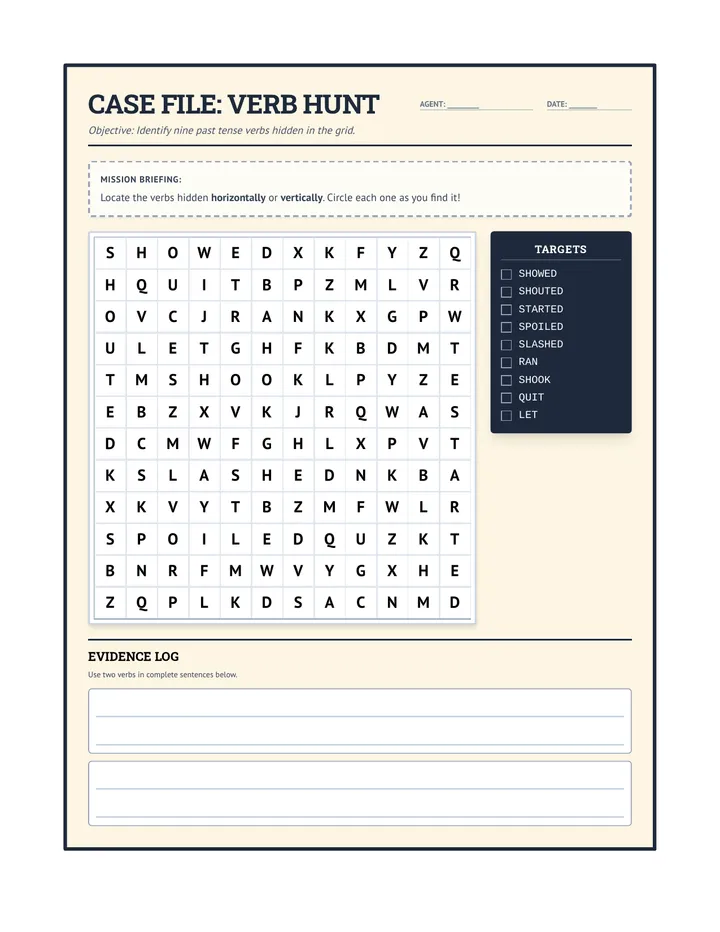
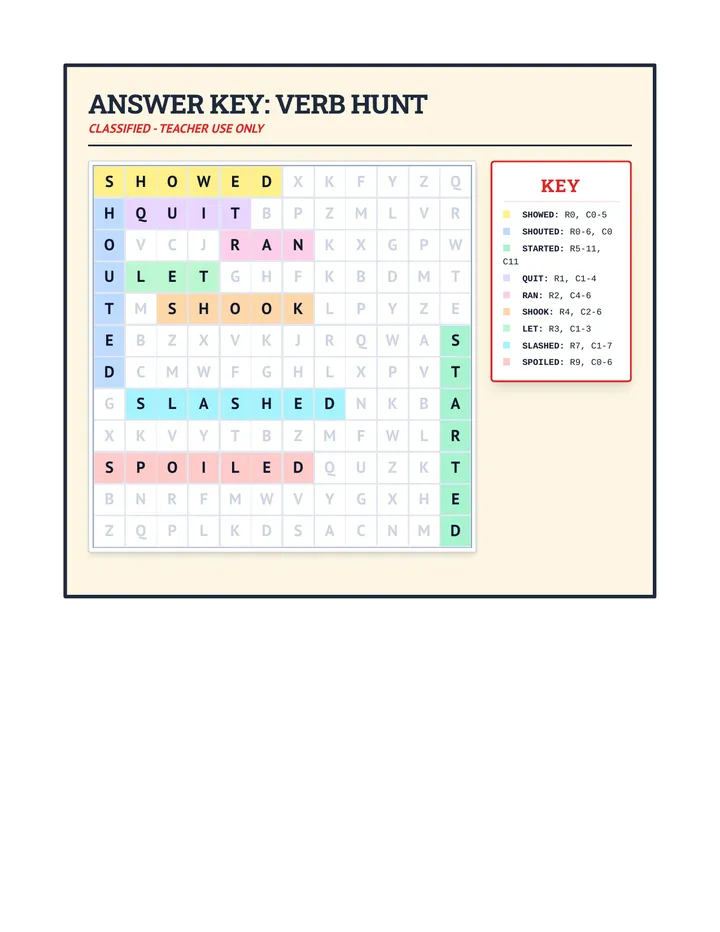
An introductory lesson on the '-ed' suffix, teaching students to identify base words and recognize the three different sounds (/t/, /d/, and /id/) that '-ed' can make.
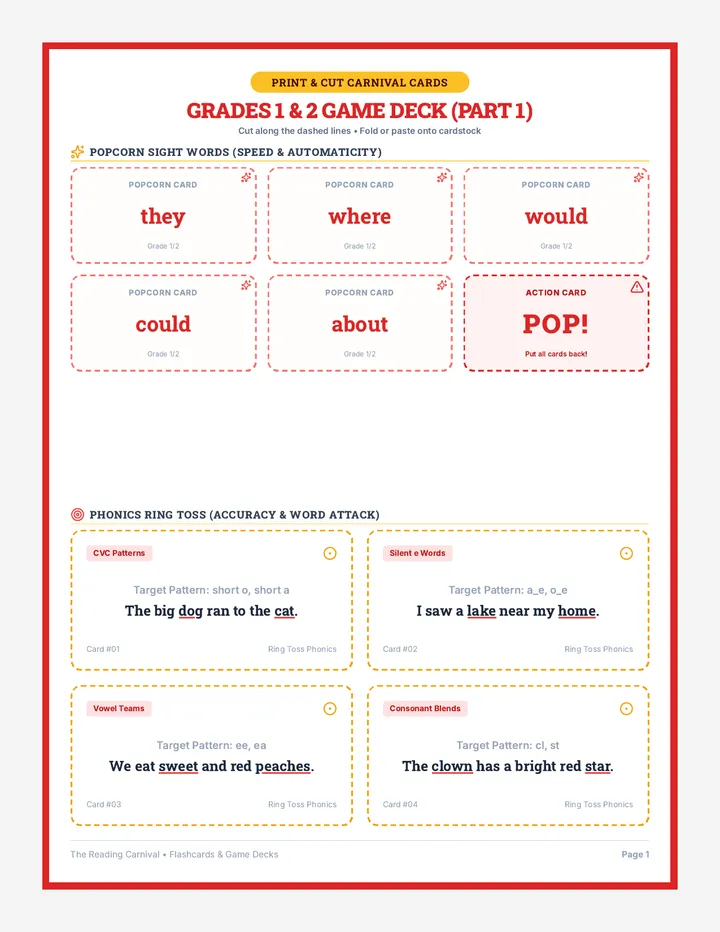
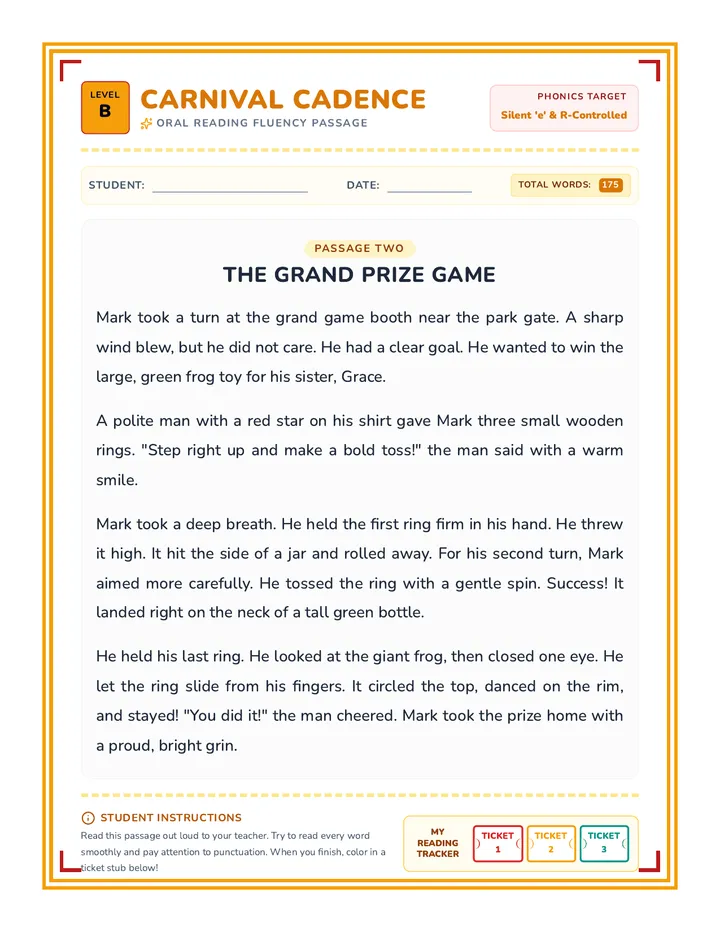
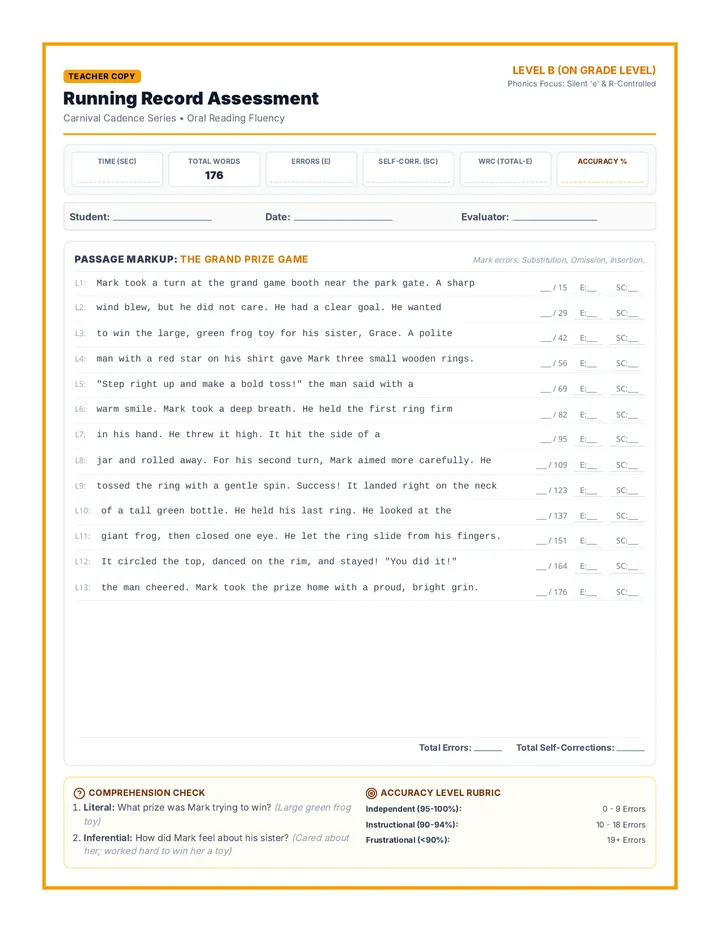
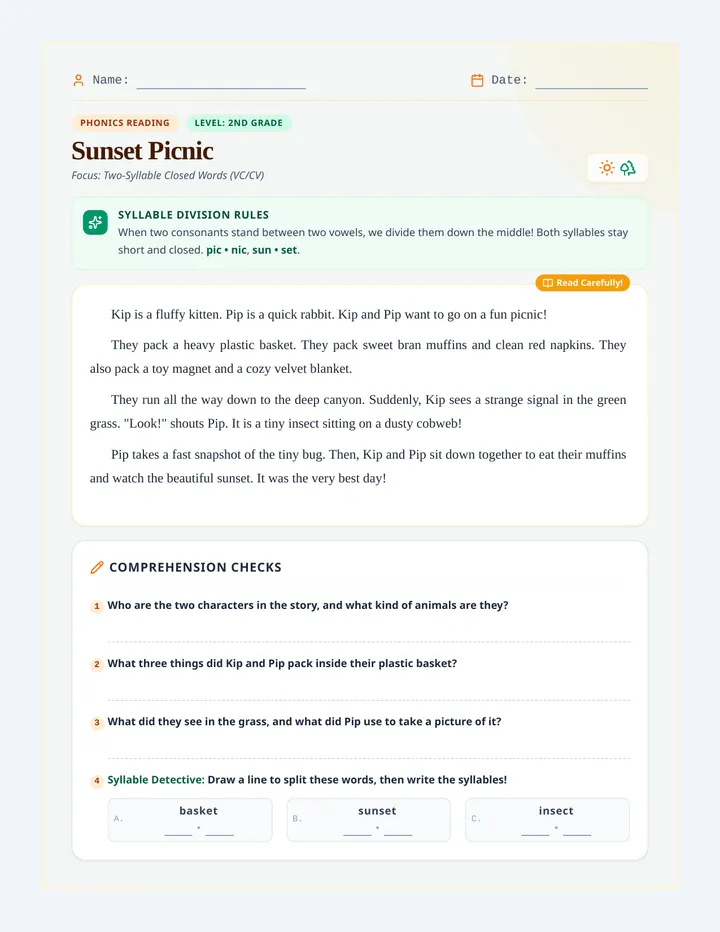
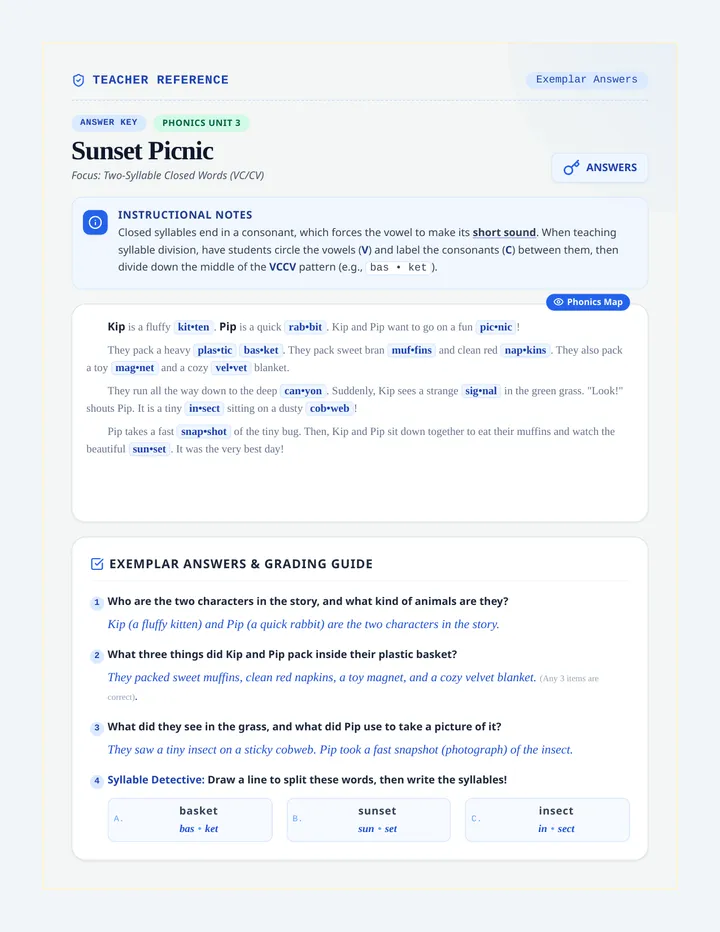
A targeted phonics and vocabulary lesson designed to help 3rd graders master CVC decoding, differentiate between short and long vowels (Silent E), and recognize common digraphs through visual support and active sorting.
A lesson focused on analyzing the classic fable 'The Tortoise and the Hare', with a specific emphasis on character traits, motivations, and the central moral.
In this lesson, students practice uppercase and lowercase letter formation and word accuracy using Zelda-themed vocabulary like 'Hero', 'Quest', and 'Shield'.
Focuses on the short 'e' vowel sound (/ɛ/ as in "egg"), introducing the "mid-smile" mouth position and comparing it with the short 'a' and 'i' sounds to refine auditory discrimination.
Focuses on the short 'u' vowel sound (/ʌ/ as in "up" or "umbrella"), introducing the "relaxed jaw" mouth position and continuous blending of short 'u' CVC words.
Explores the short 'o' vowel sound (/ɑː/ as in "octopus"), focusing on the 'open mouth' position and continuous blending of CVC words.
Introduces the short 'i' vowel sound (/ɪ/ as in "igloo"), building on previous blending skills with a focus on auditory discrimination and multi-sensory letter formation.
Focuses on the short 'a' vowel sound, phonemic awareness, and the 'continuous blending' technique to help students move from individual sounds to whole words.
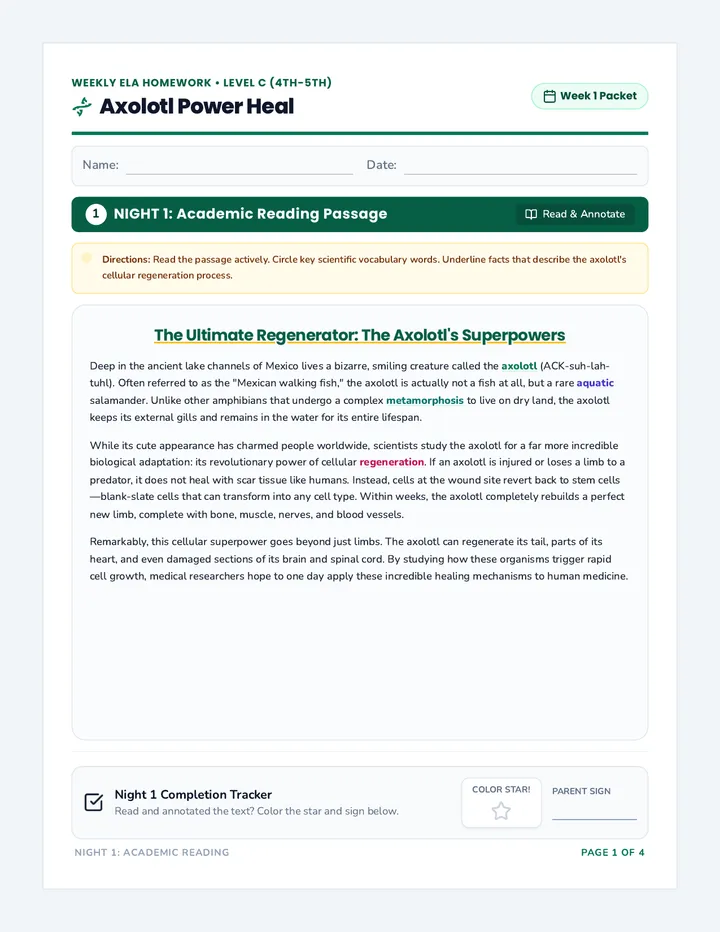
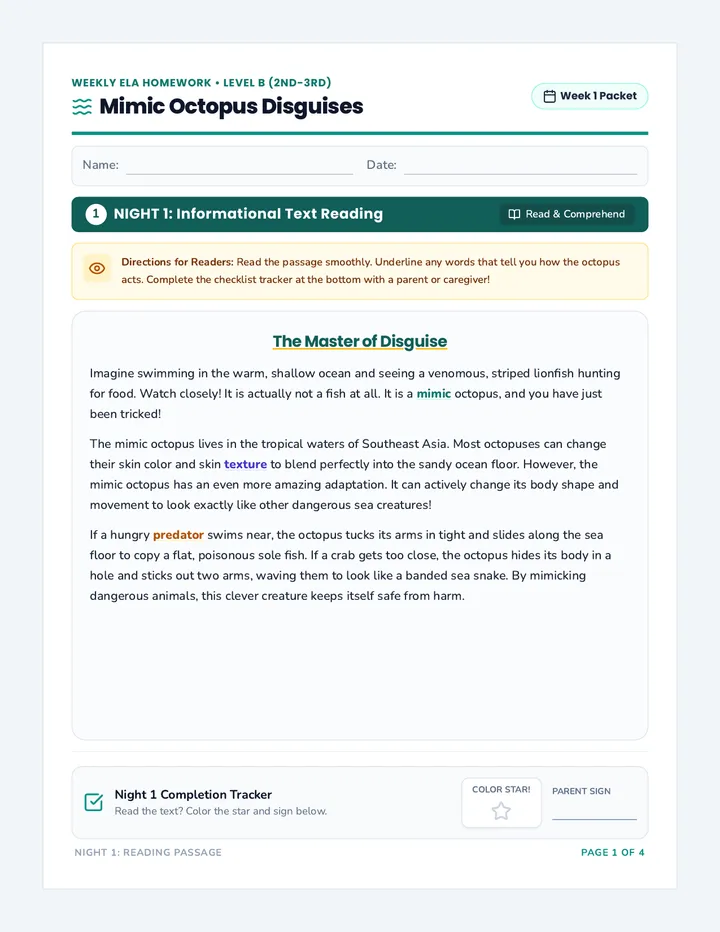
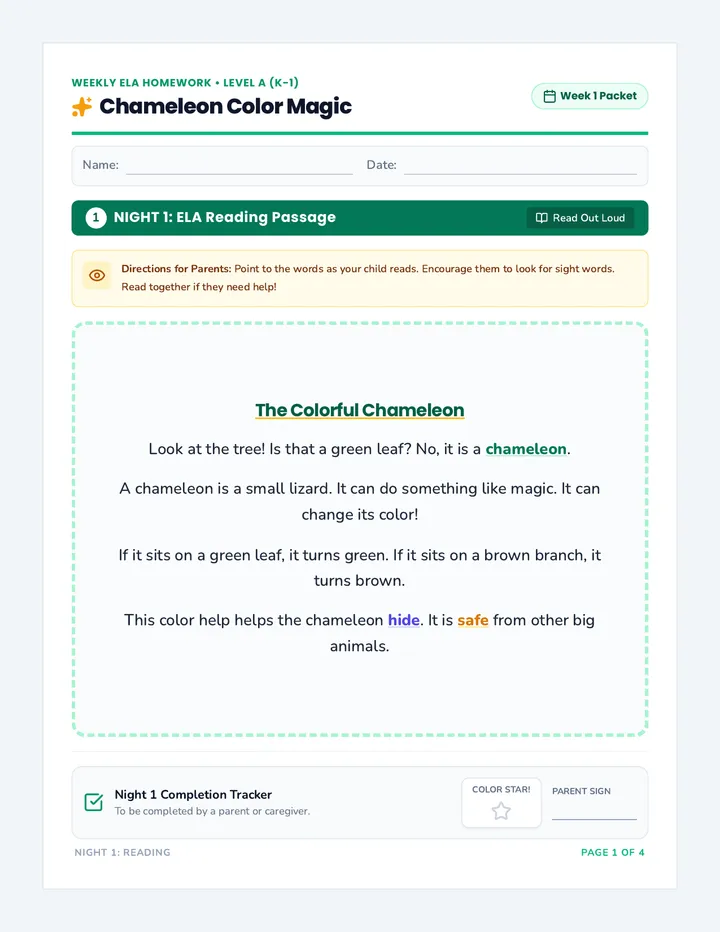
A Level 3 (4th Grade) track for the Nature Engineers series, featuring a complex reading passage and nightly homework assignments focusing on evidence-based analysis.
A Level 2 (2nd Grade) track for the Nature Engineers series, featuring a mid-level reading passage and nightly homework assignments focused on comprehension and process.
A Level 1 (Kindergarten) track for the Nature Engineers series, featuring a simple reading passage and nightly homework assignments for a 4-night week.
A persuasive writing lesson focused on the ecological importance of North American opossums, with a specific emphasis on developing varied sentence structures and correct grammar.
A collection of resources to help students master informative writing about animals and descriptive writing about their favorite places, featuring brainstorming tools and checklists.
Una lección interactiva de 30 minutos diseñada para repasar conceptos gramaticales clave como el sujeto, predicado, verbos y adjetivos, además de practicar la comprensión lectora y el tiempo futuro.
A lesson focused on identifying nouns (people, places, things) and adjectives (specifically color words) in sentences, designed for second-grade students.
A lesson focused on developing active listening skills and the ability to identify key details during a read-aloud session. Students will learn 'Whole Body Listening' and detective-style strategies to capture specific information.
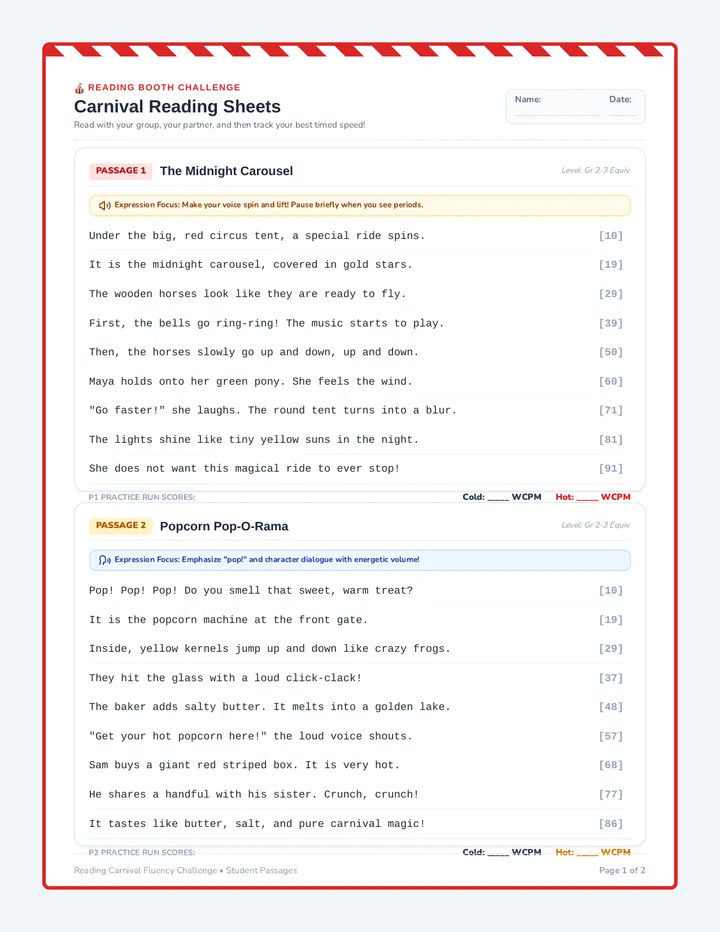
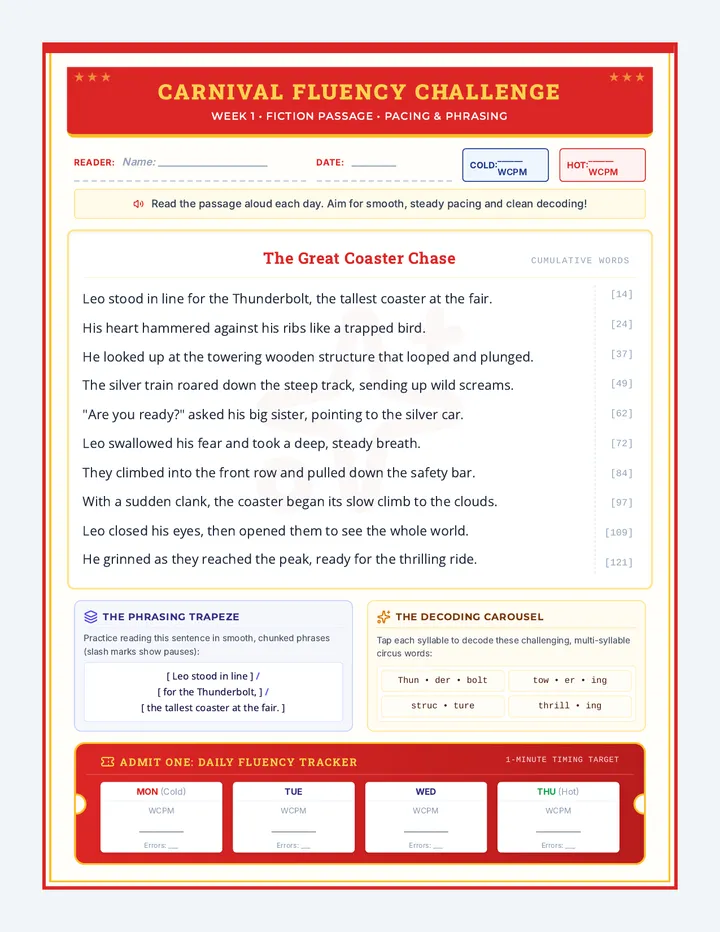
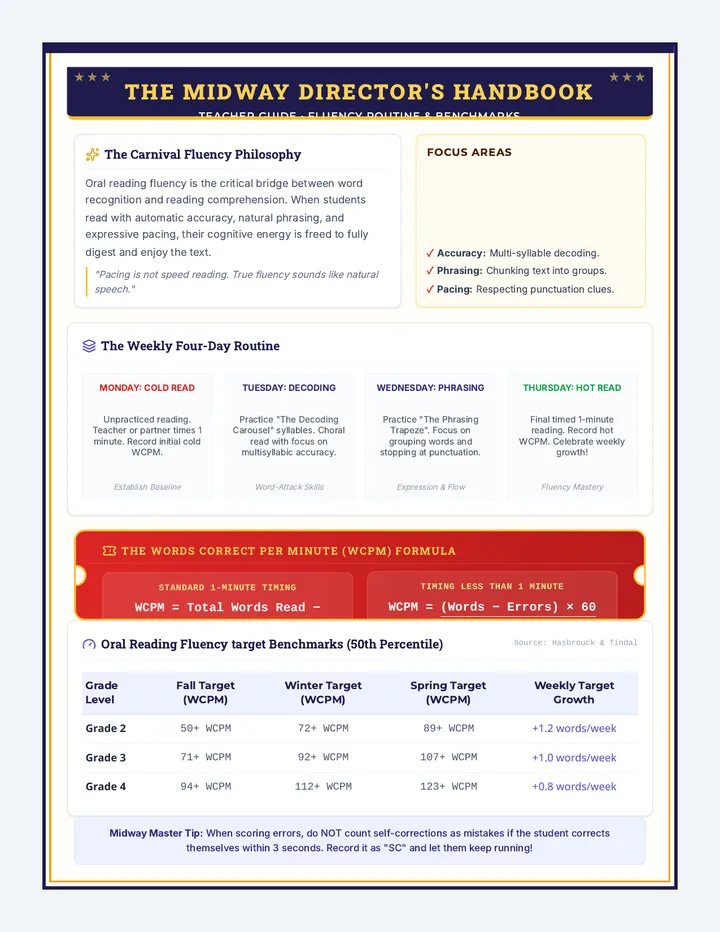
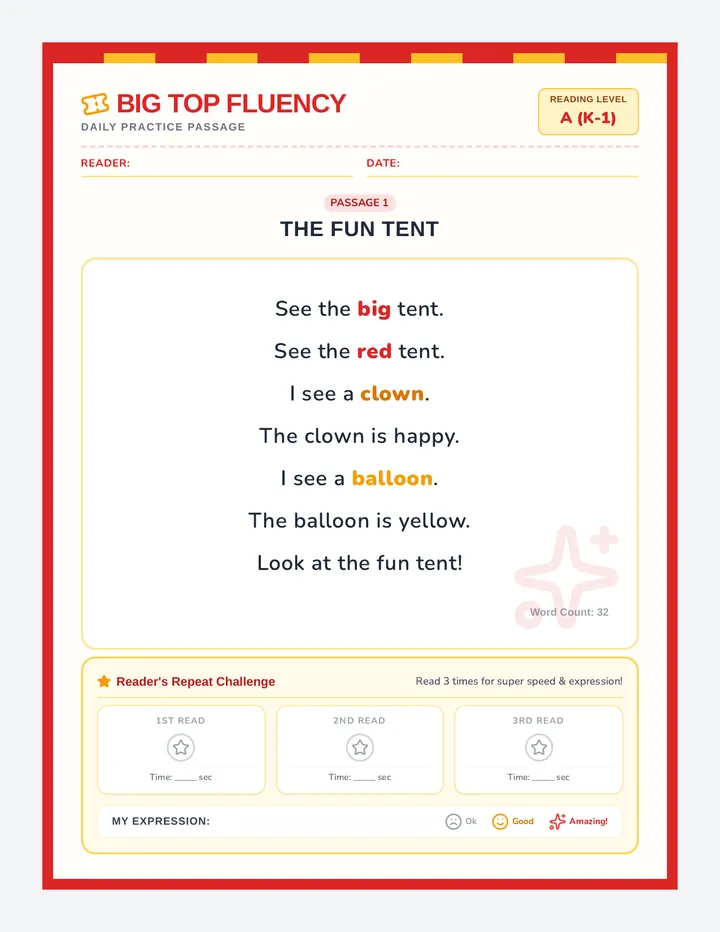
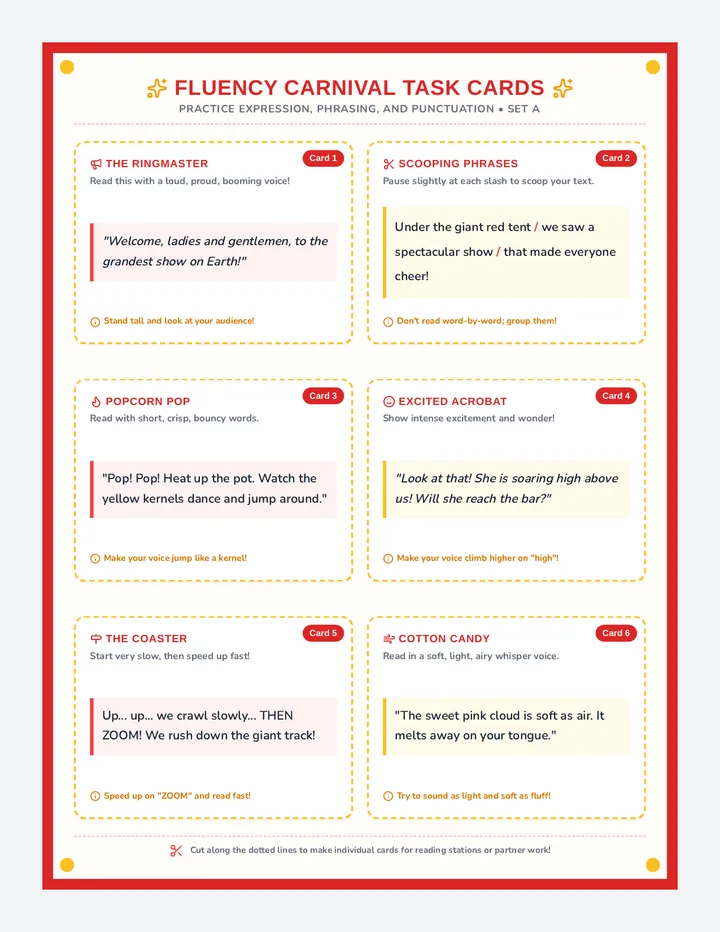
A lesson focused on improving reading fluency and automaticity with CCVC and CVCC words using rapid naming charts and flashcards.
A hands-on review of subjects and predicates using a construction-themed approach to building sentences. Includes a cut-and-paste sort, a matching game, and unscramble cards.
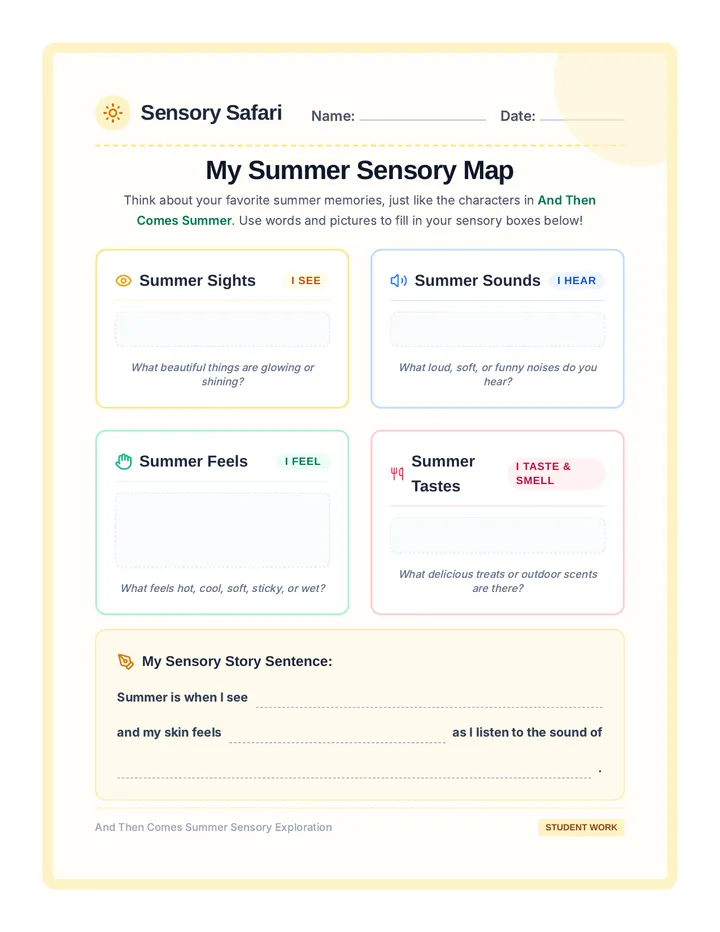
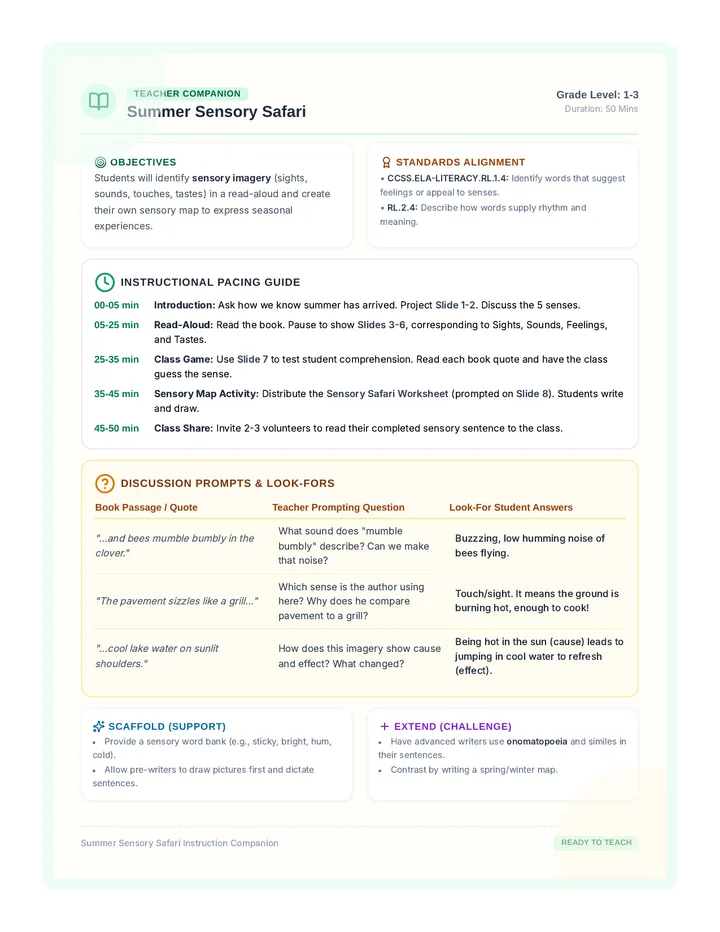
In this lesson, students become 'Main Idea Detectives' to investigate the relationship between a central topic and the specific details that support it through hands-on sorting and writing activities.
A detective-themed lesson focusing on active reading strategies like predicting, questioning, visualizing, and summarizing to 'crack the case' of complex texts.