An 11th-grade reading fluency assessment featuring a complex informational text about the Great Migration, designed to measure accuracy, rate, and prosody.
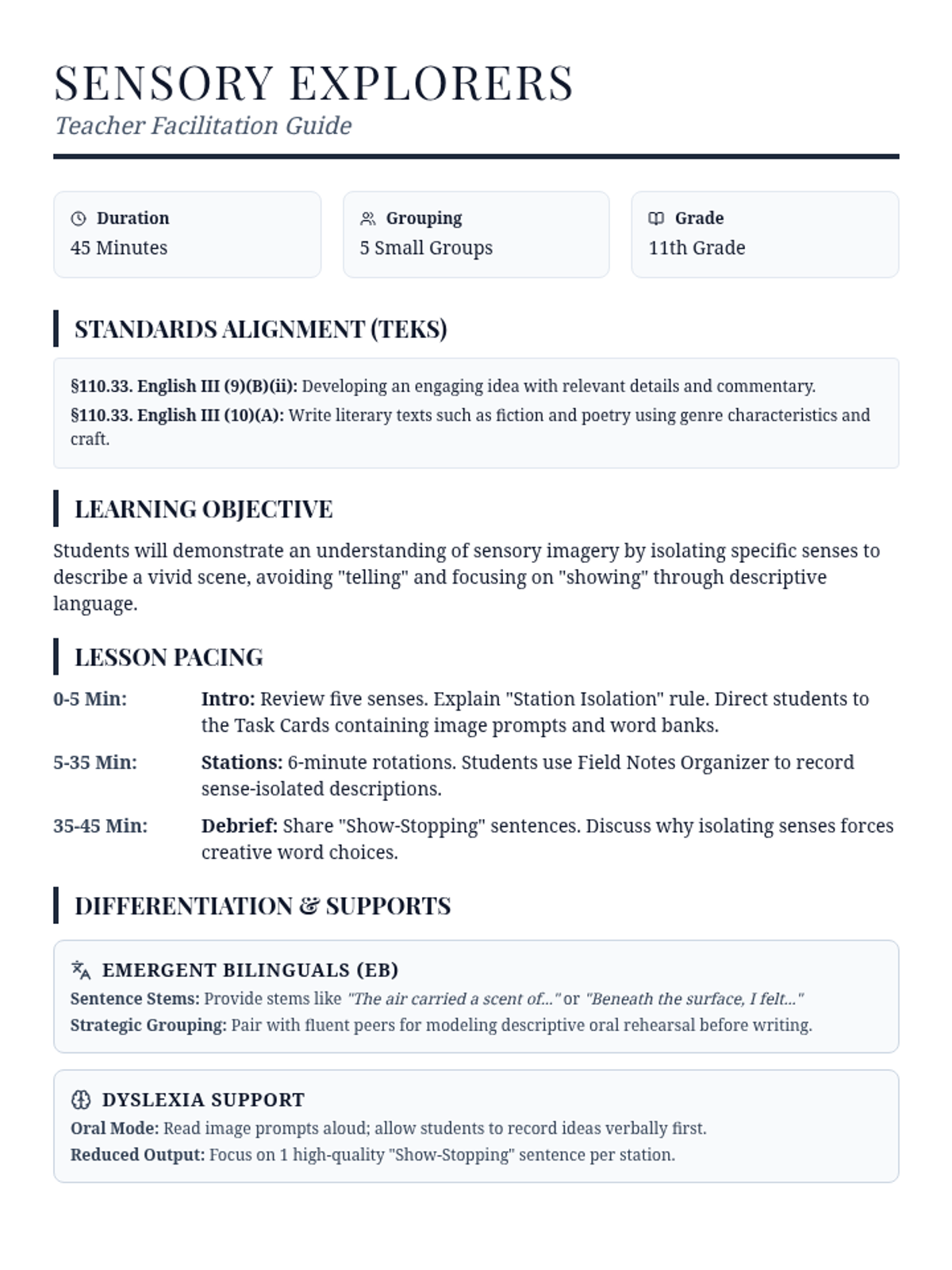
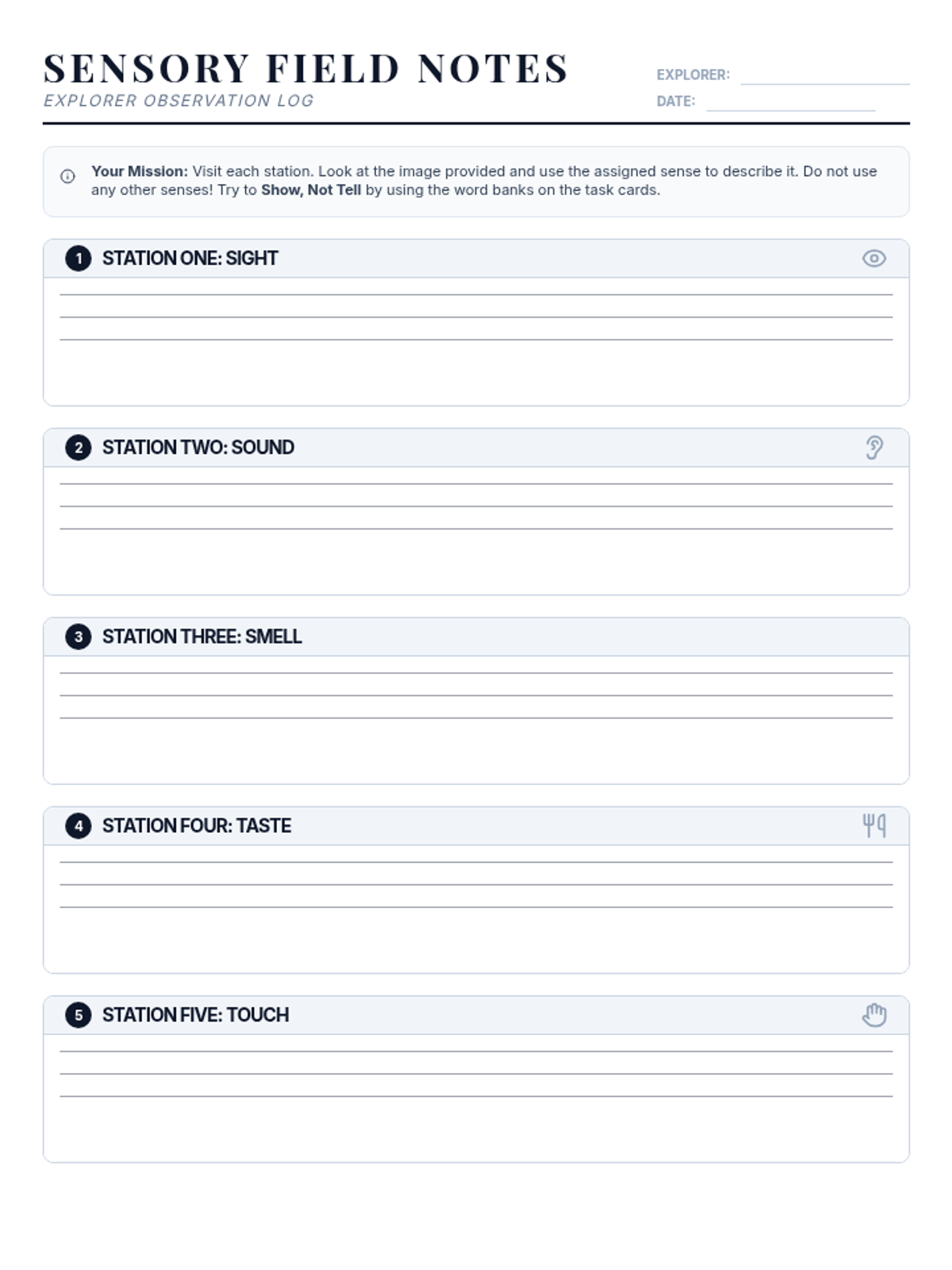
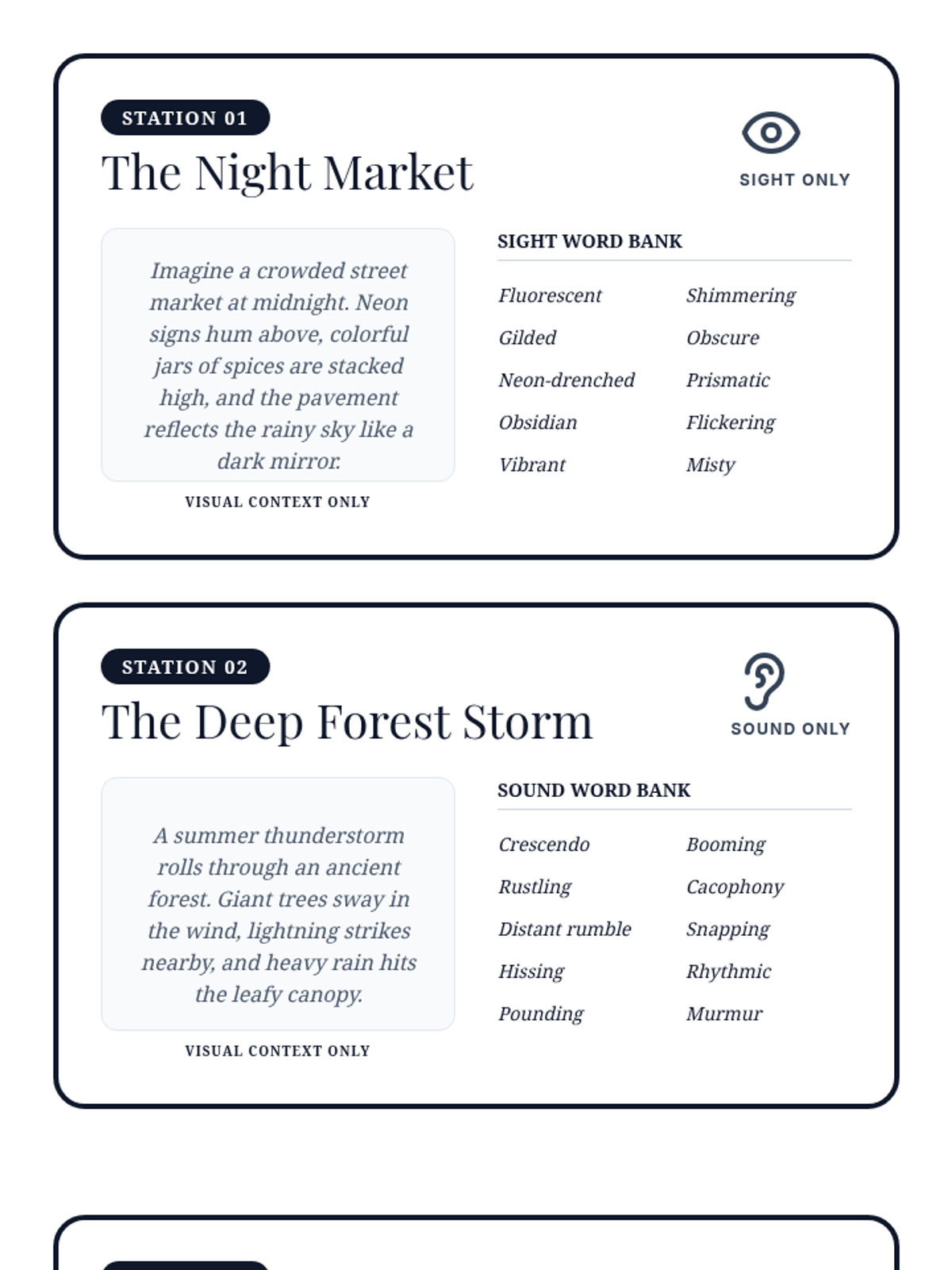
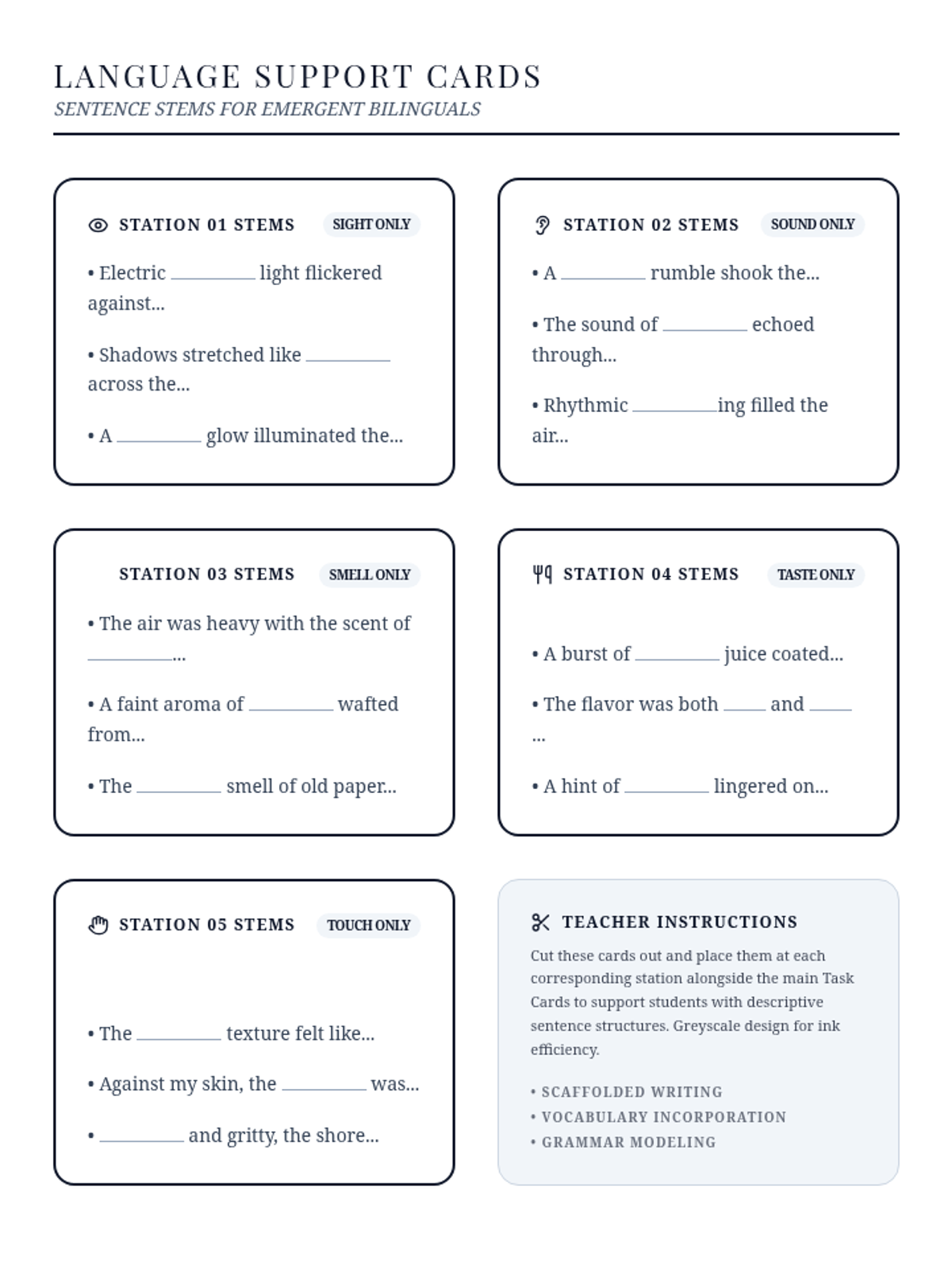
A 45-minute interactive station-based lesson where students explore sensory imagery by describing unique environments through a single lens of perception.
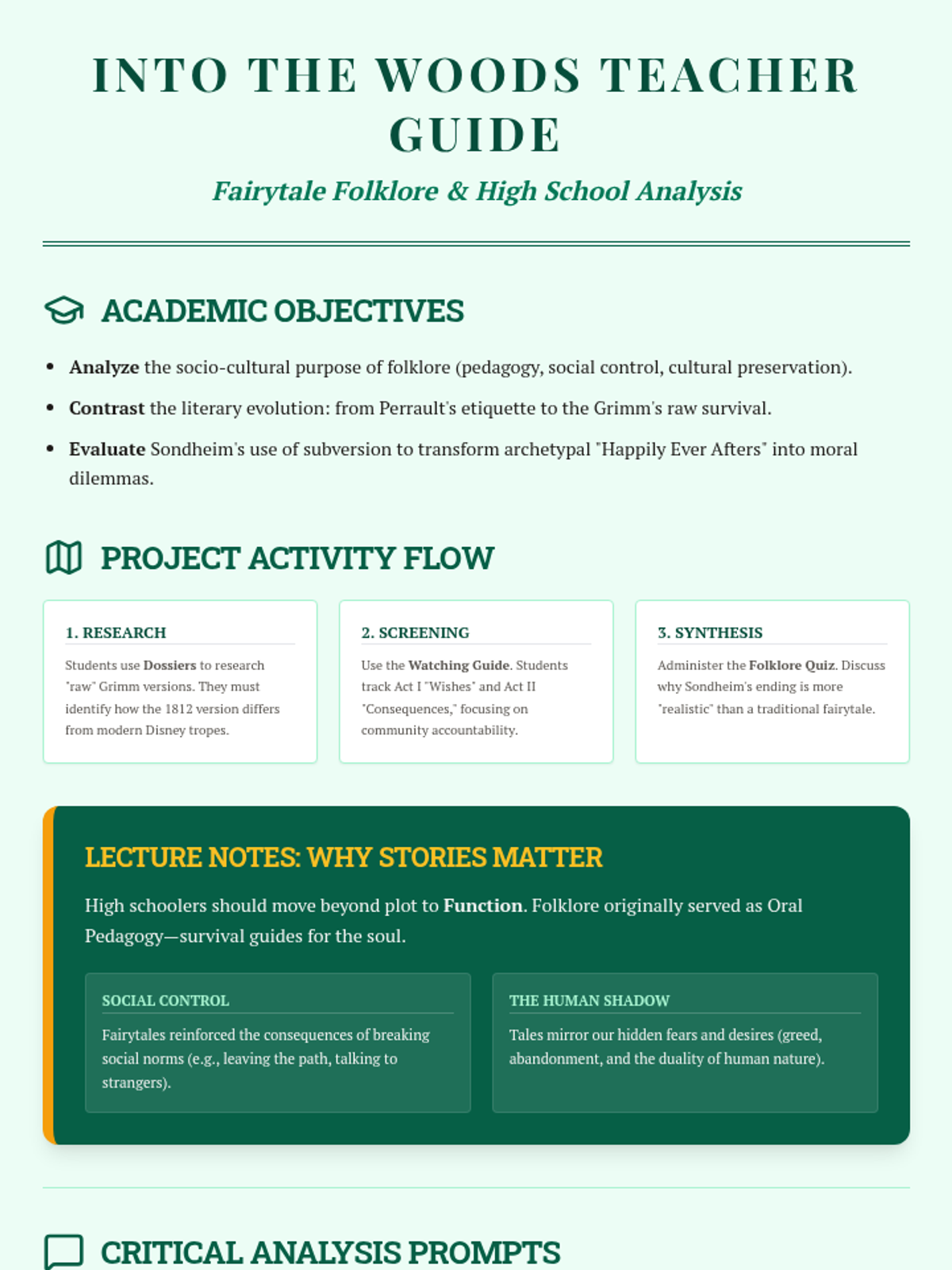
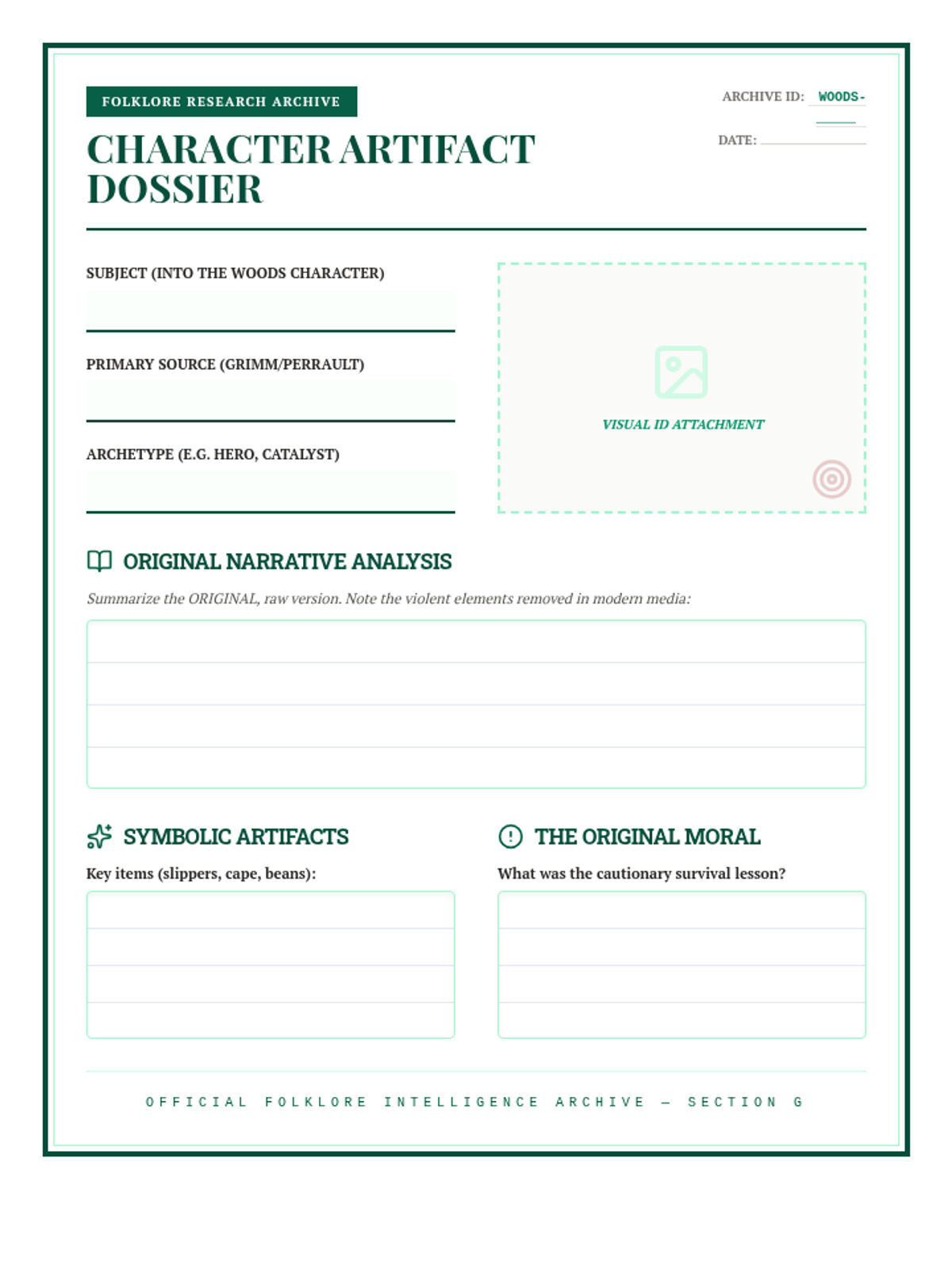
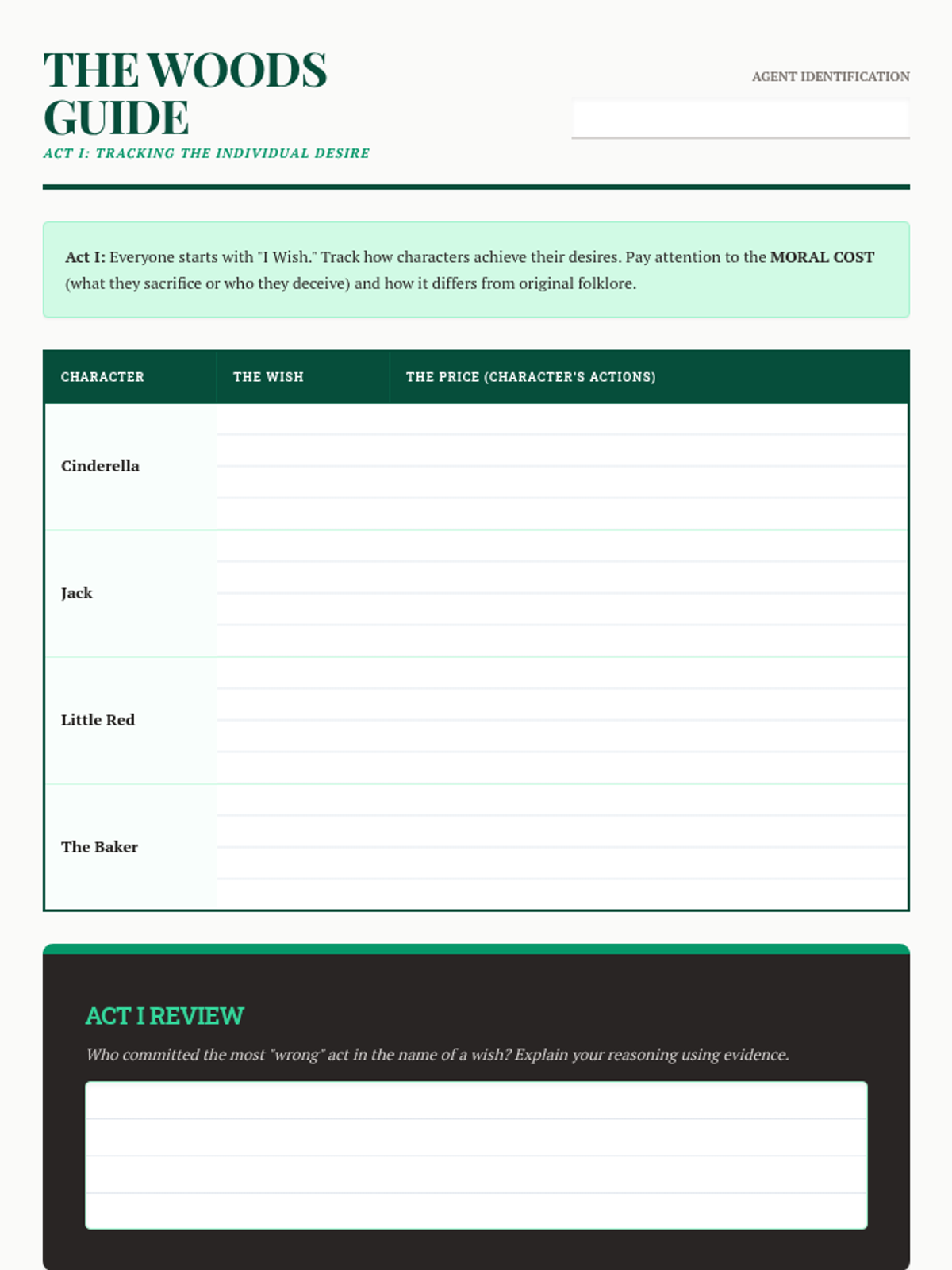
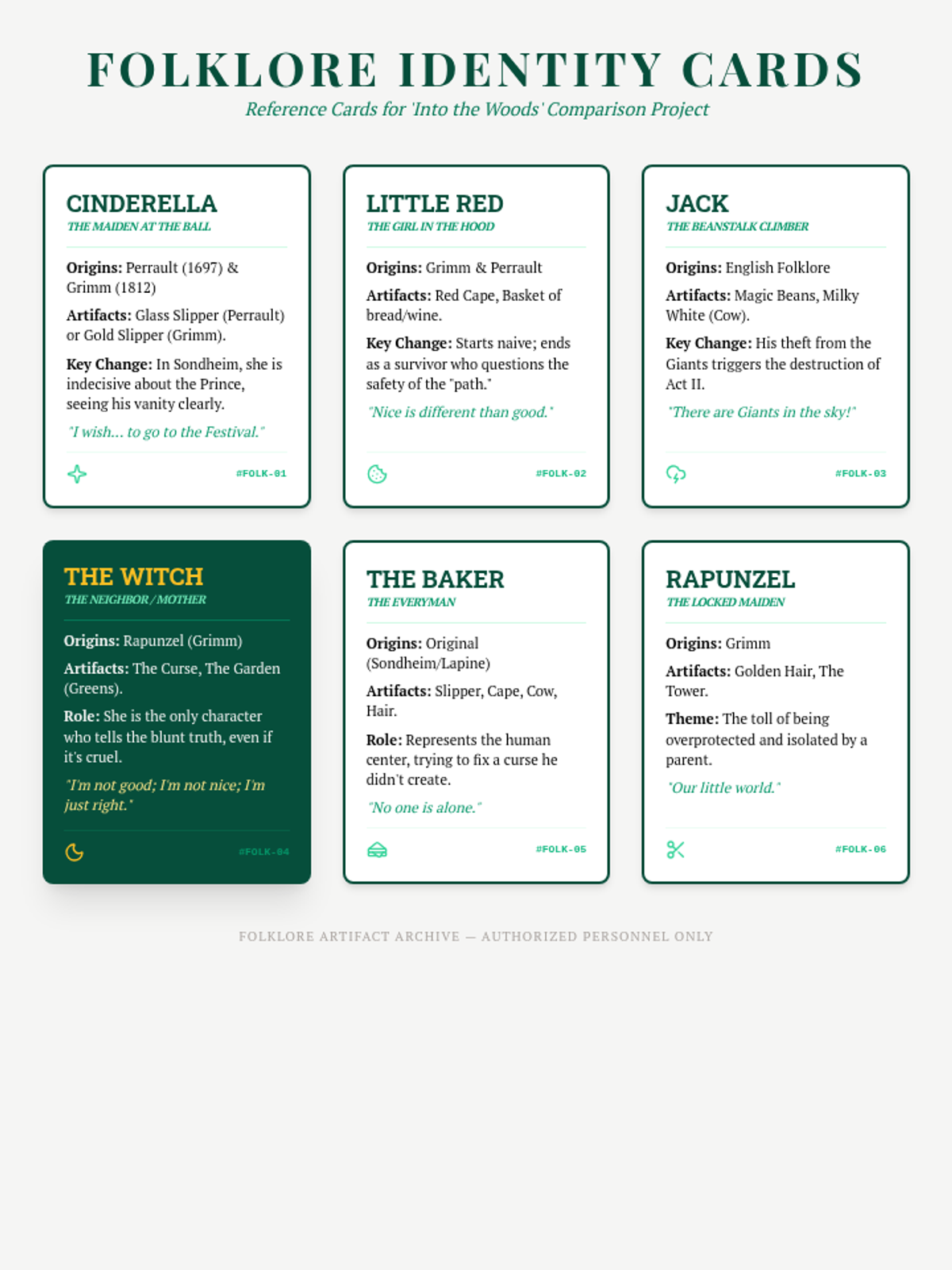
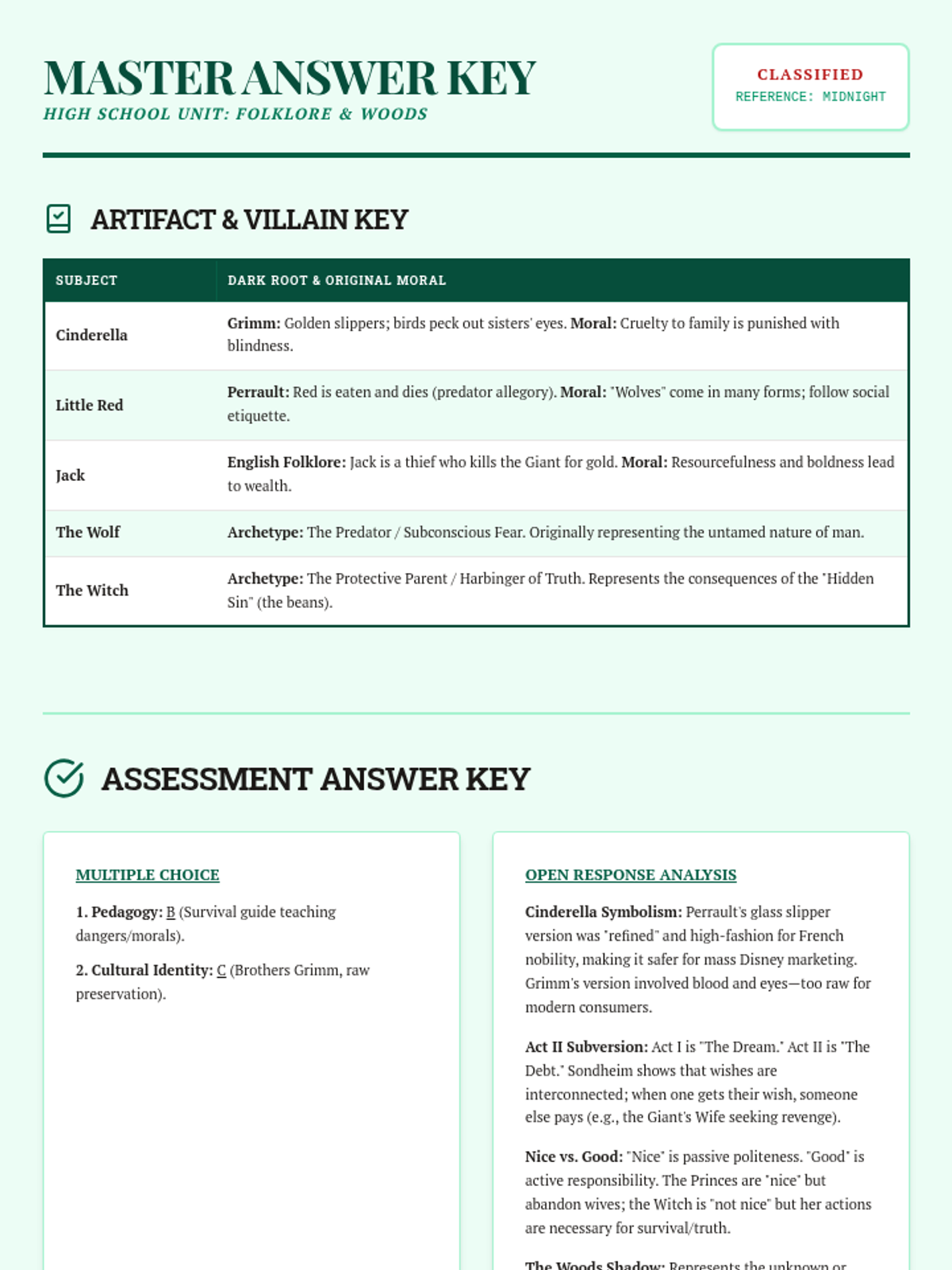
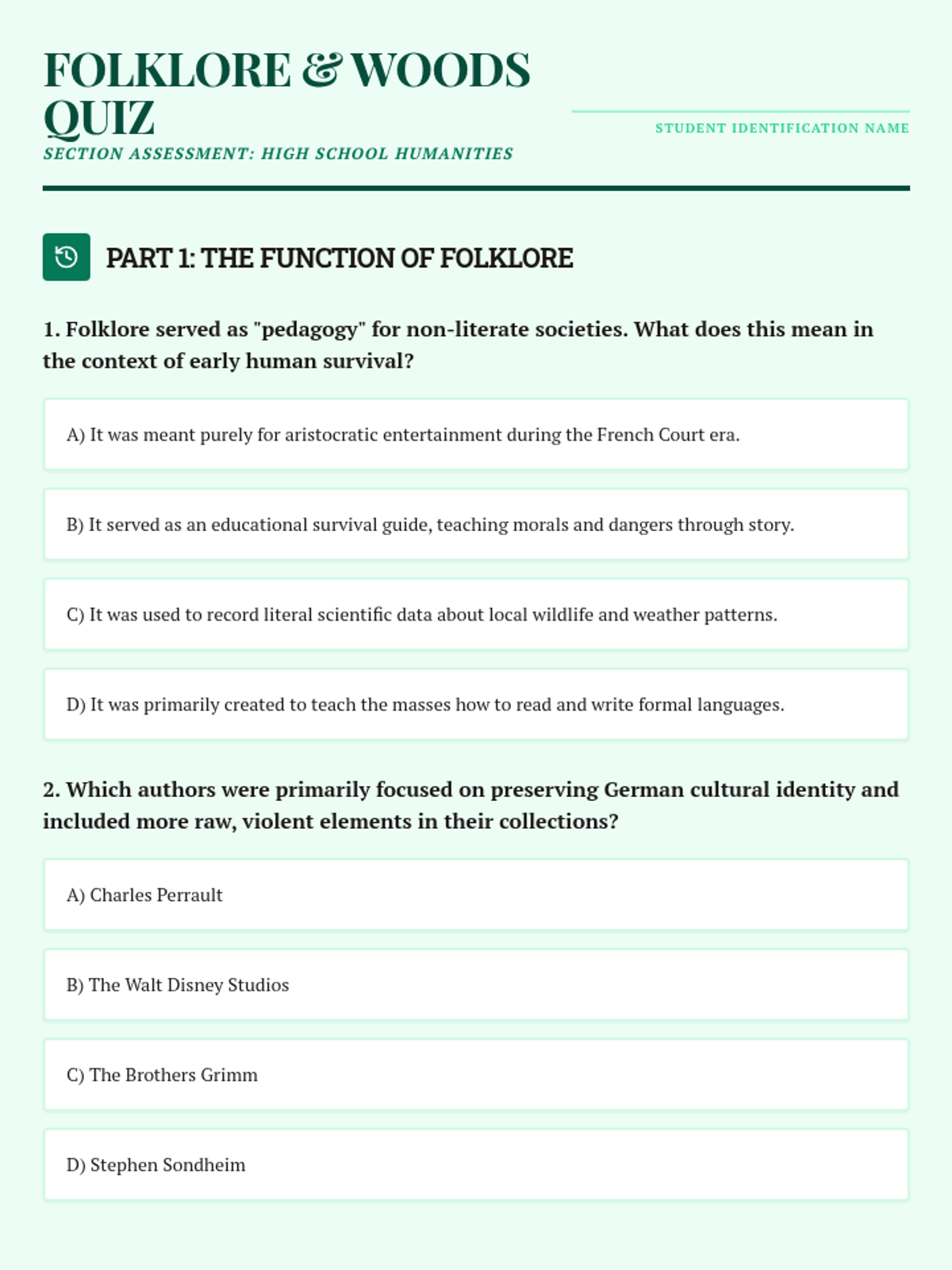
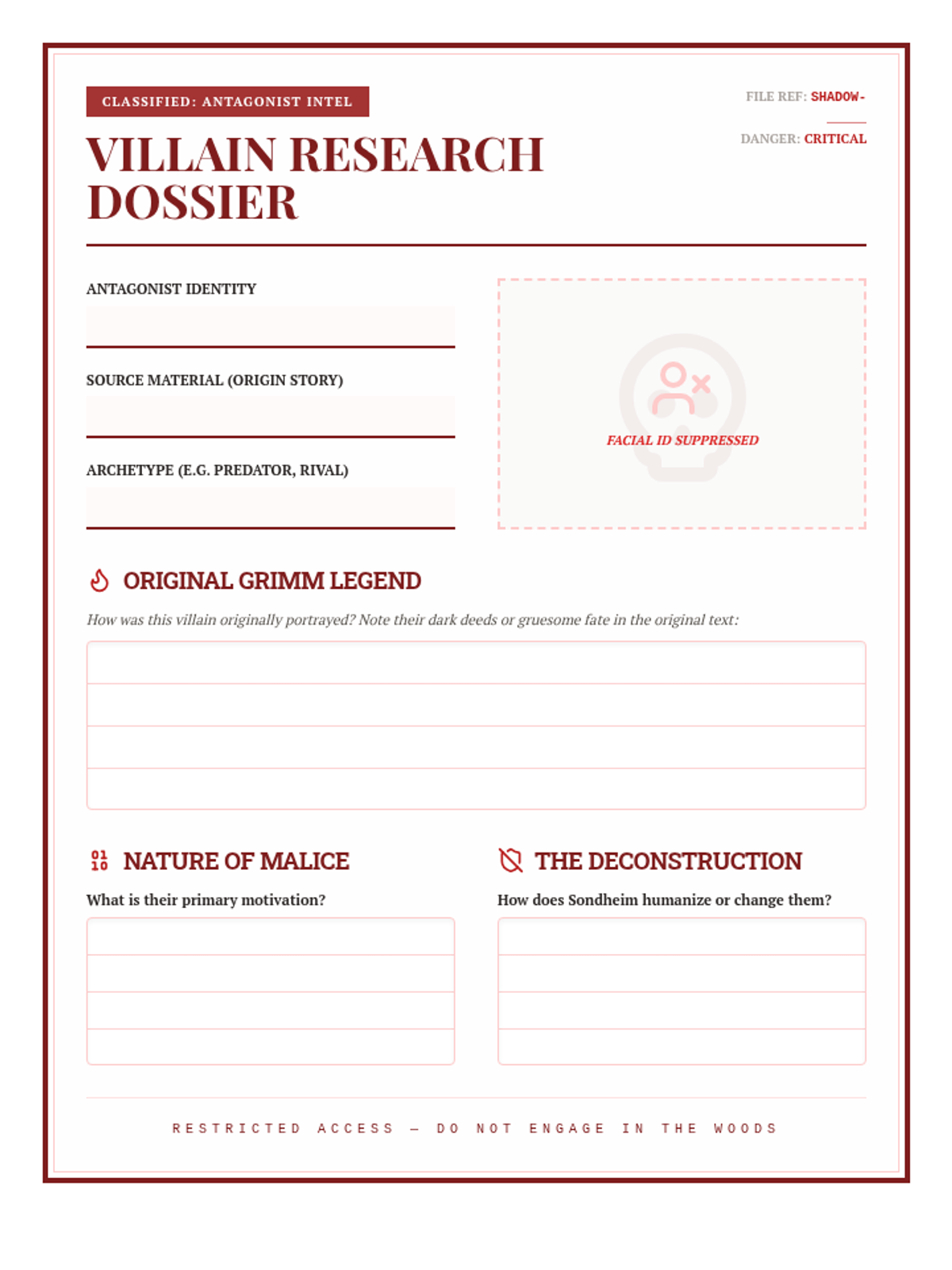
A fairytale folklore project that explores the original dark roots of classic tales and analyzes their subversion and intersection in Stephen Sondheim's 'Into the Woods'.
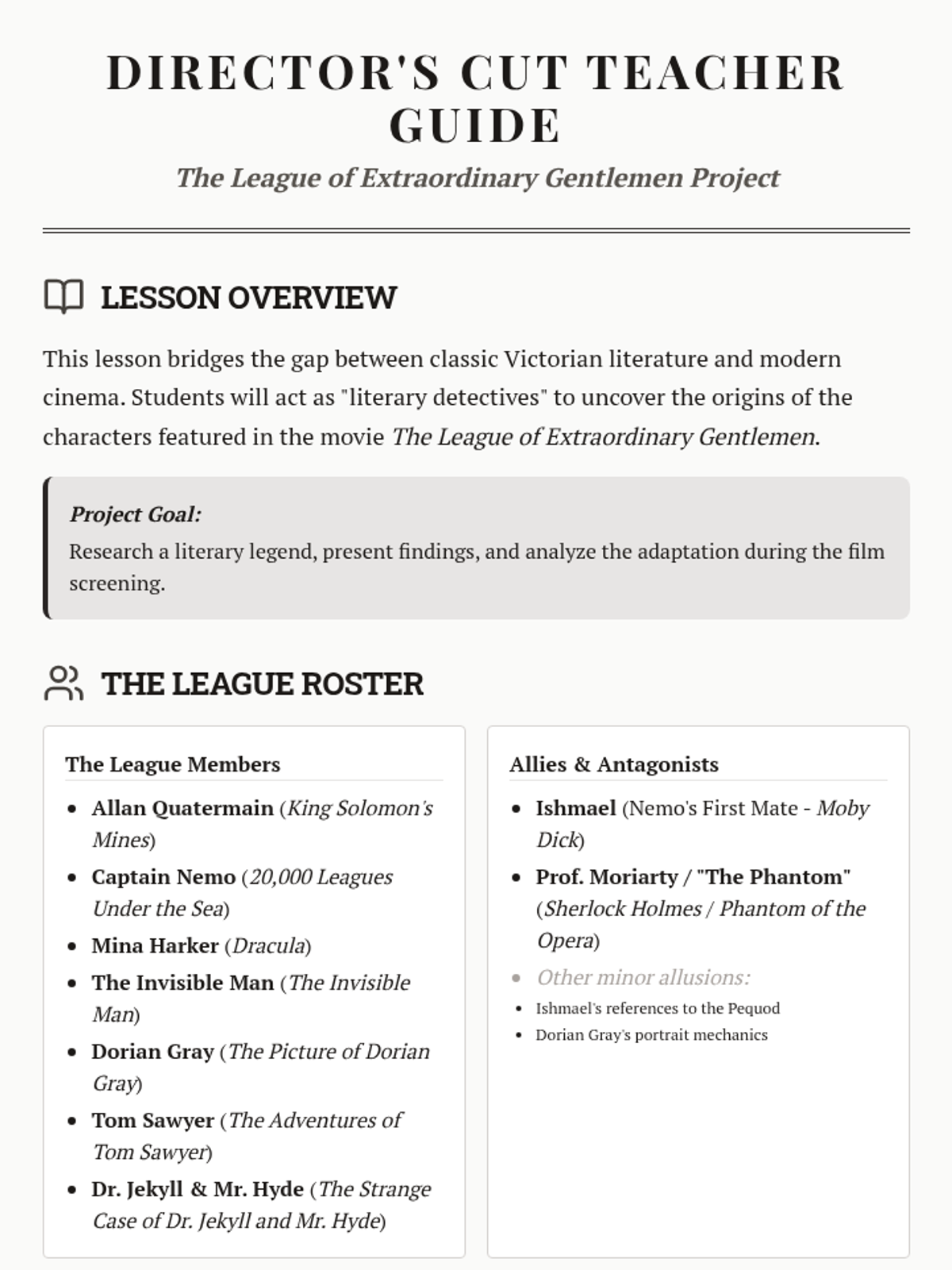
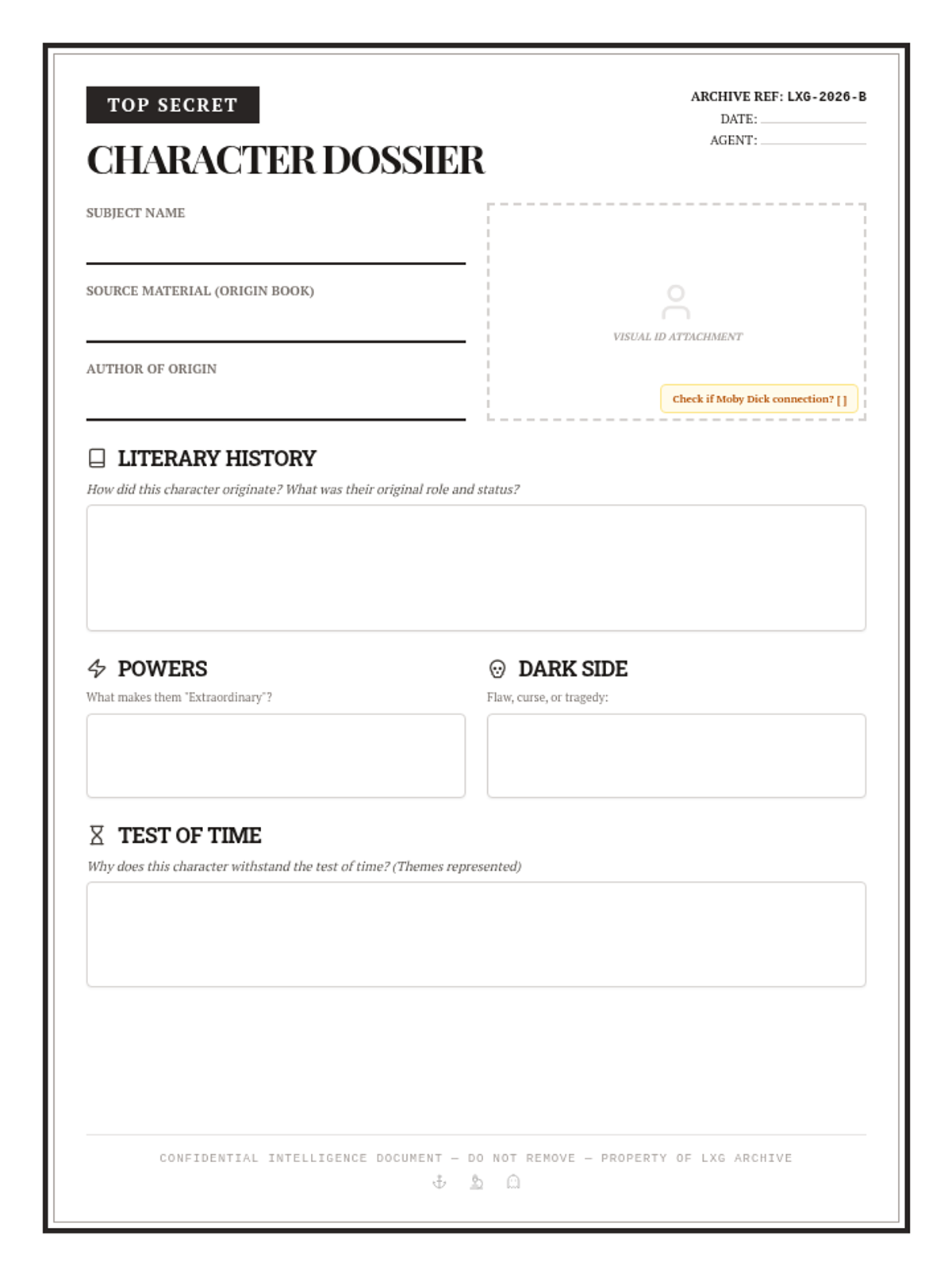
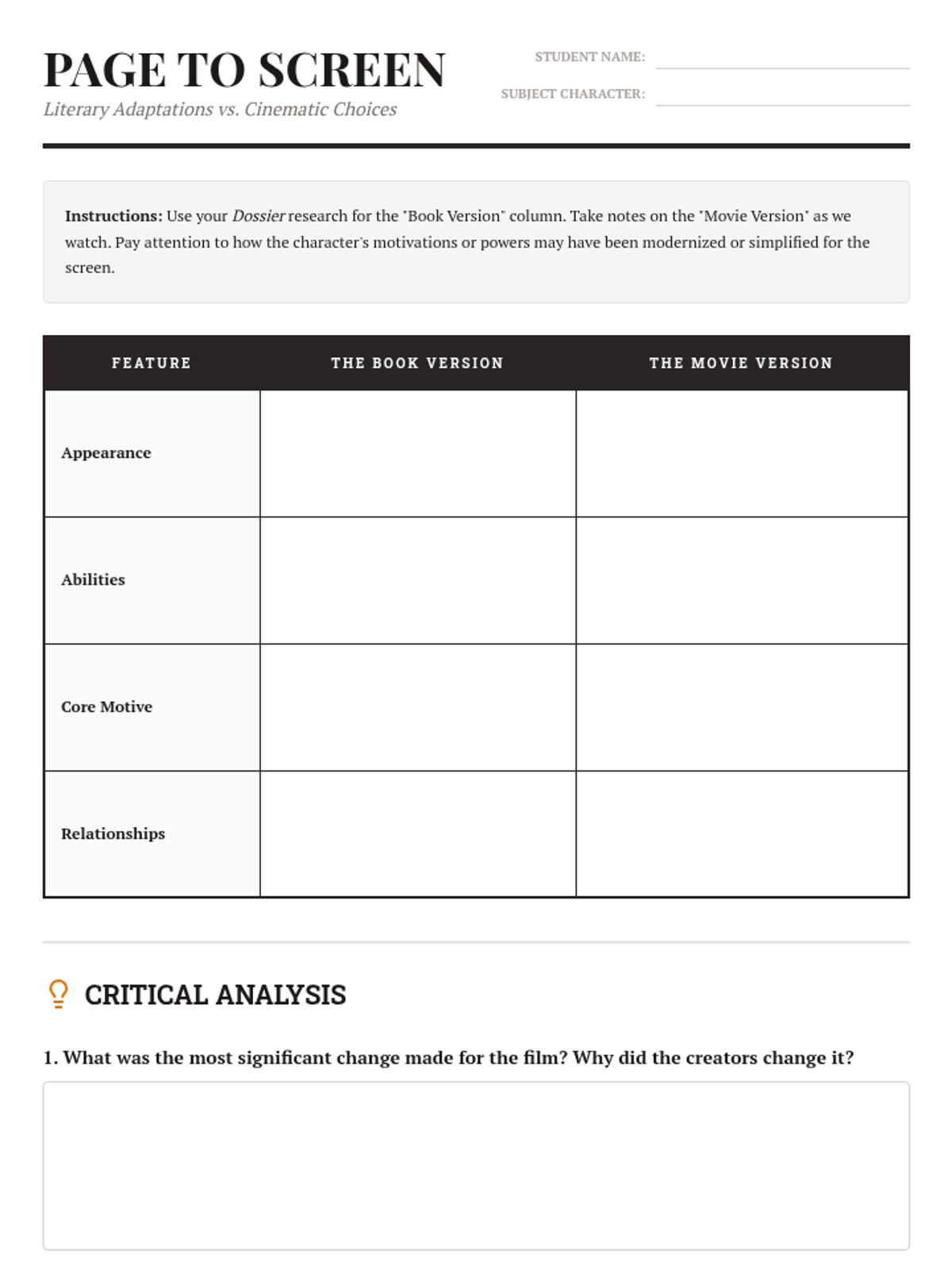
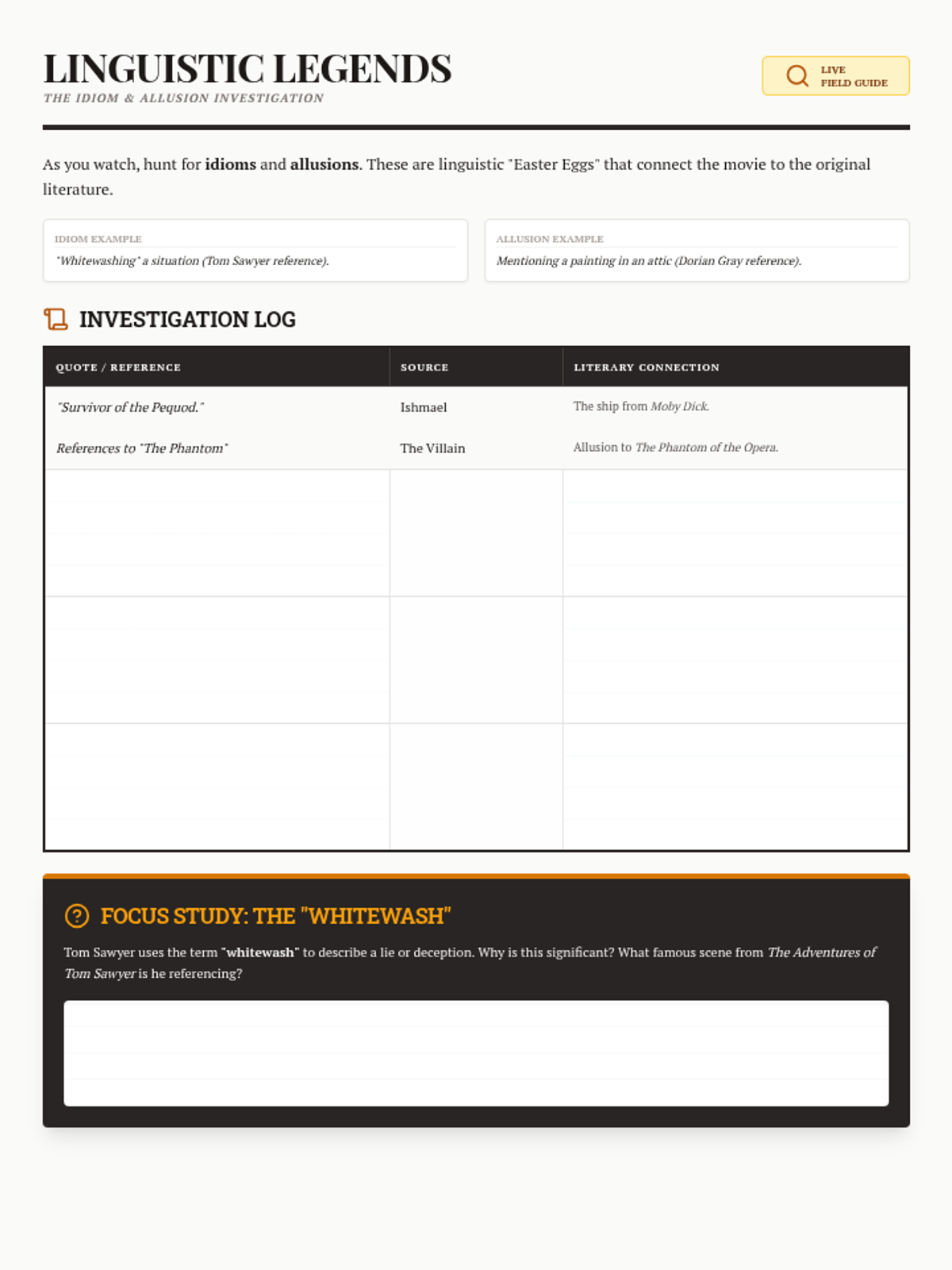
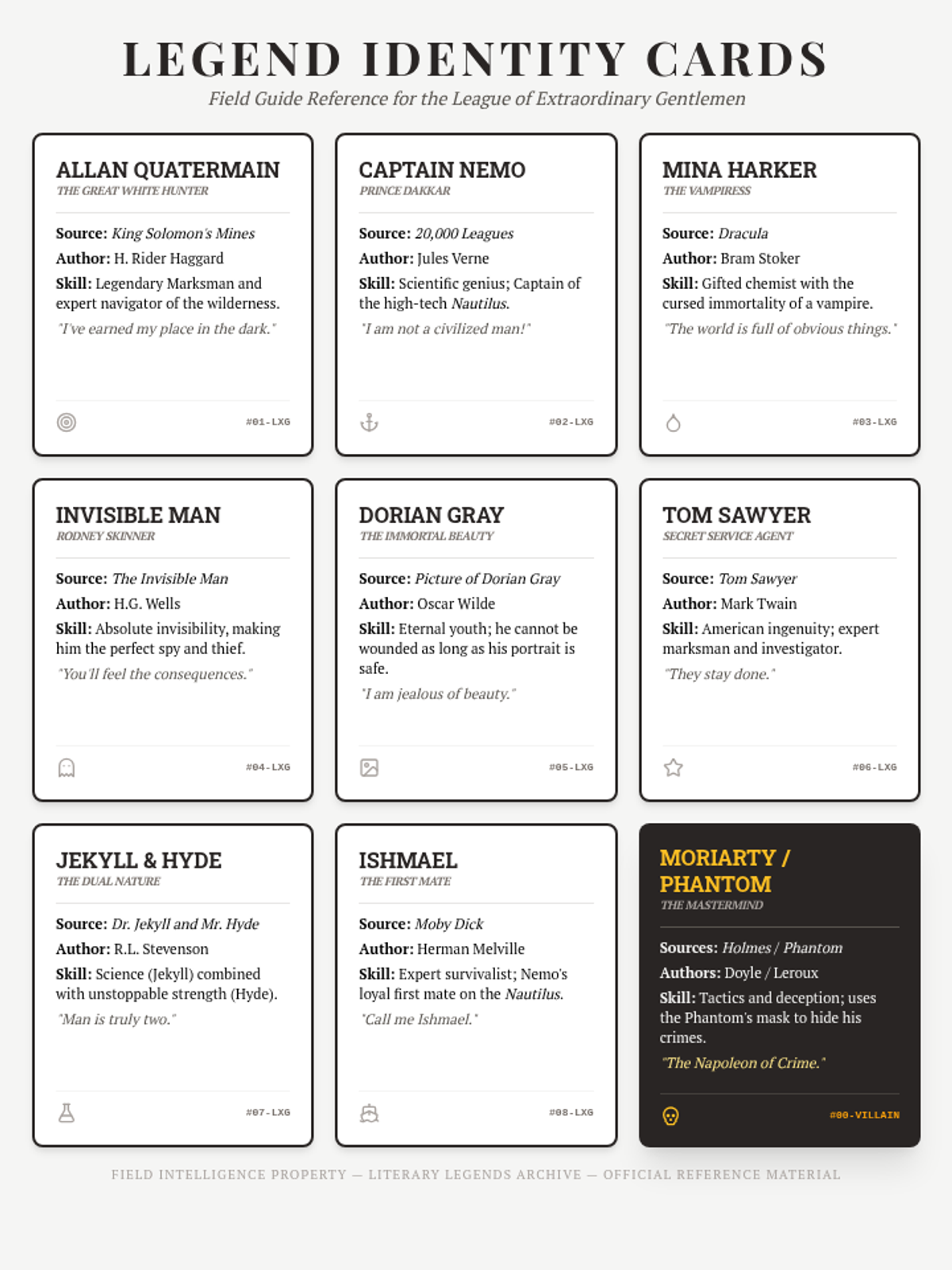
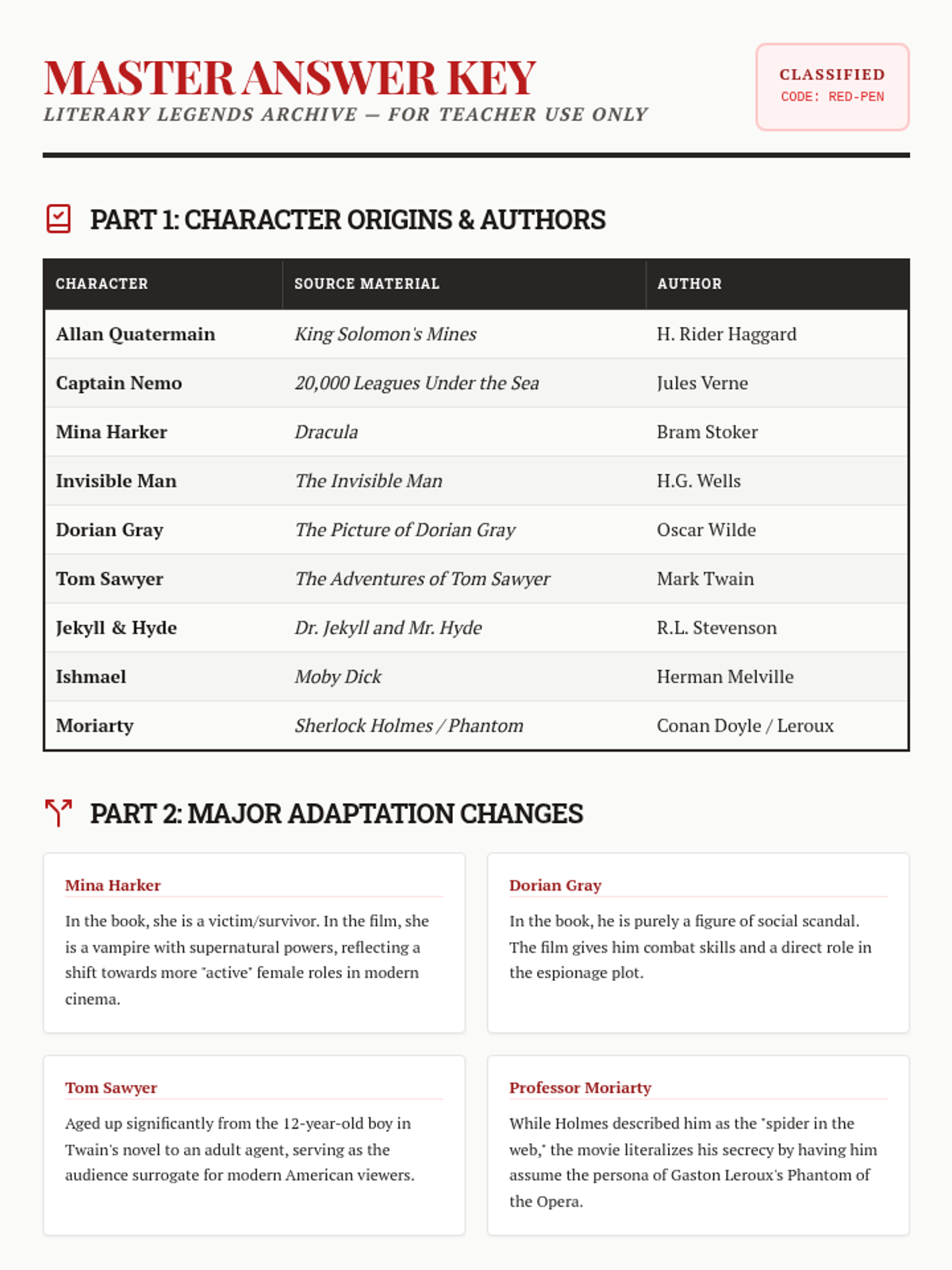
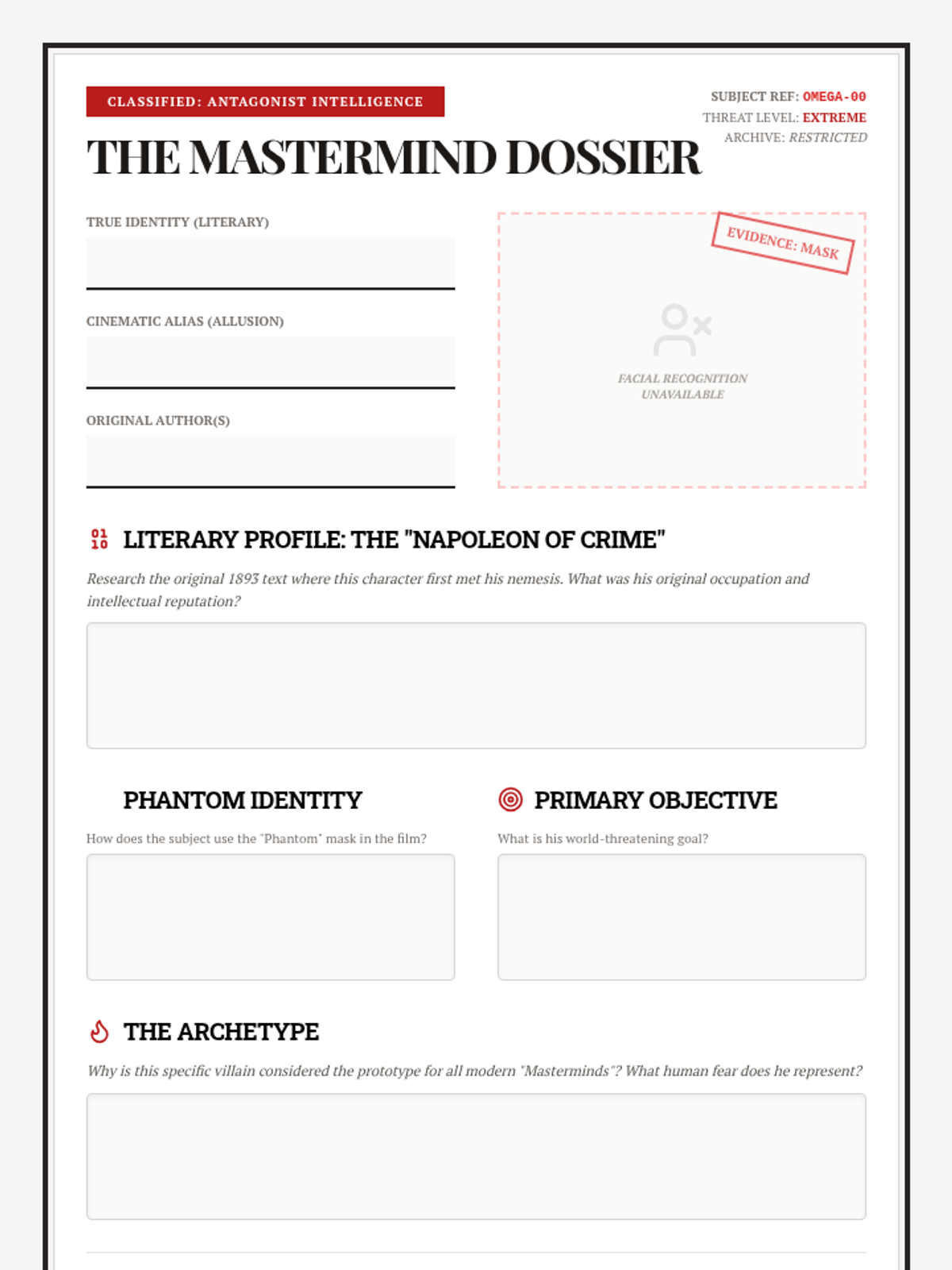
A comprehensive project-based lesson where students research the classic literary origins of the characters in 'The League of Extraordinary Gentlemen' before watching the film to compare adaptations and explore literary idioms.
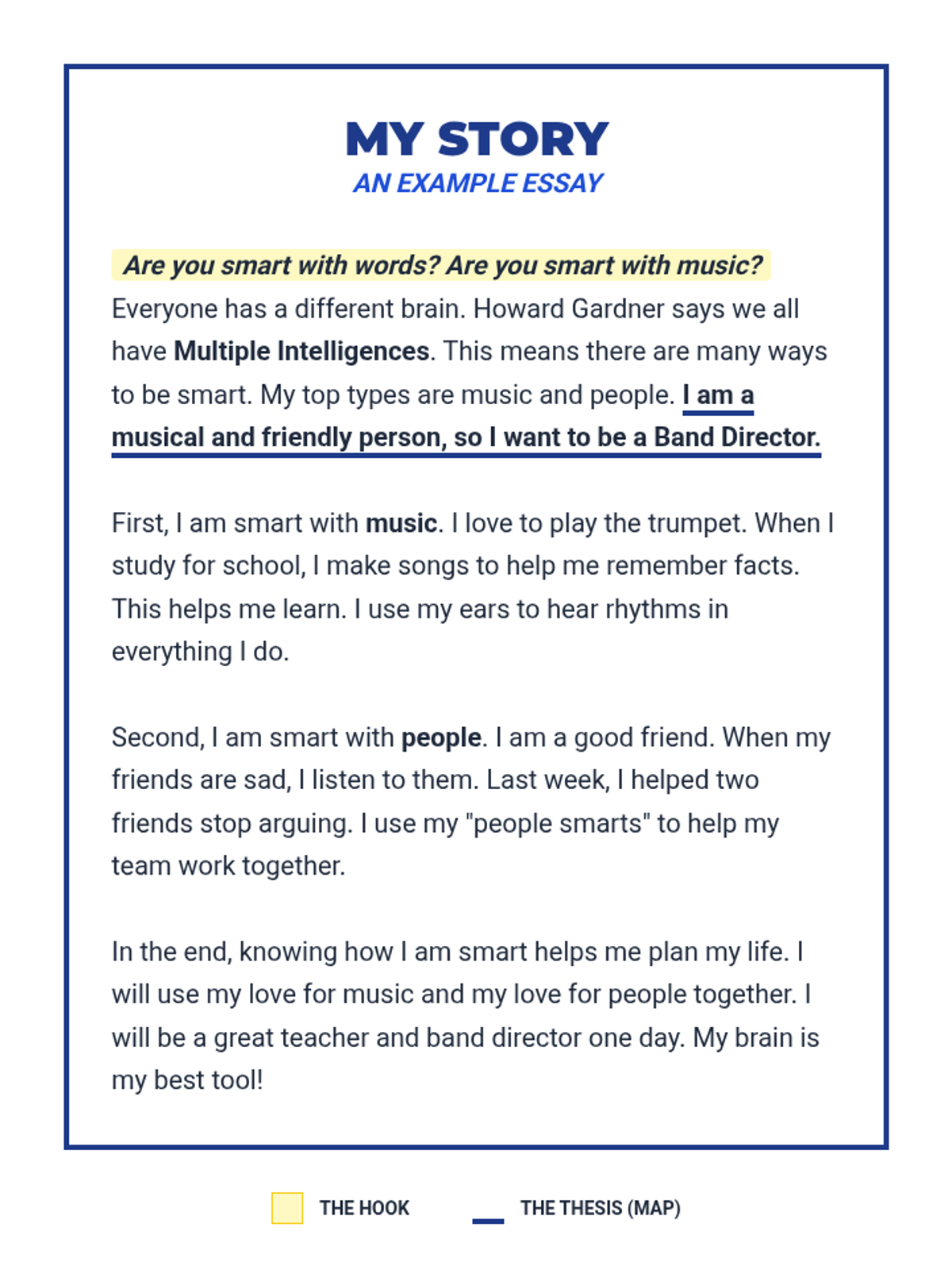
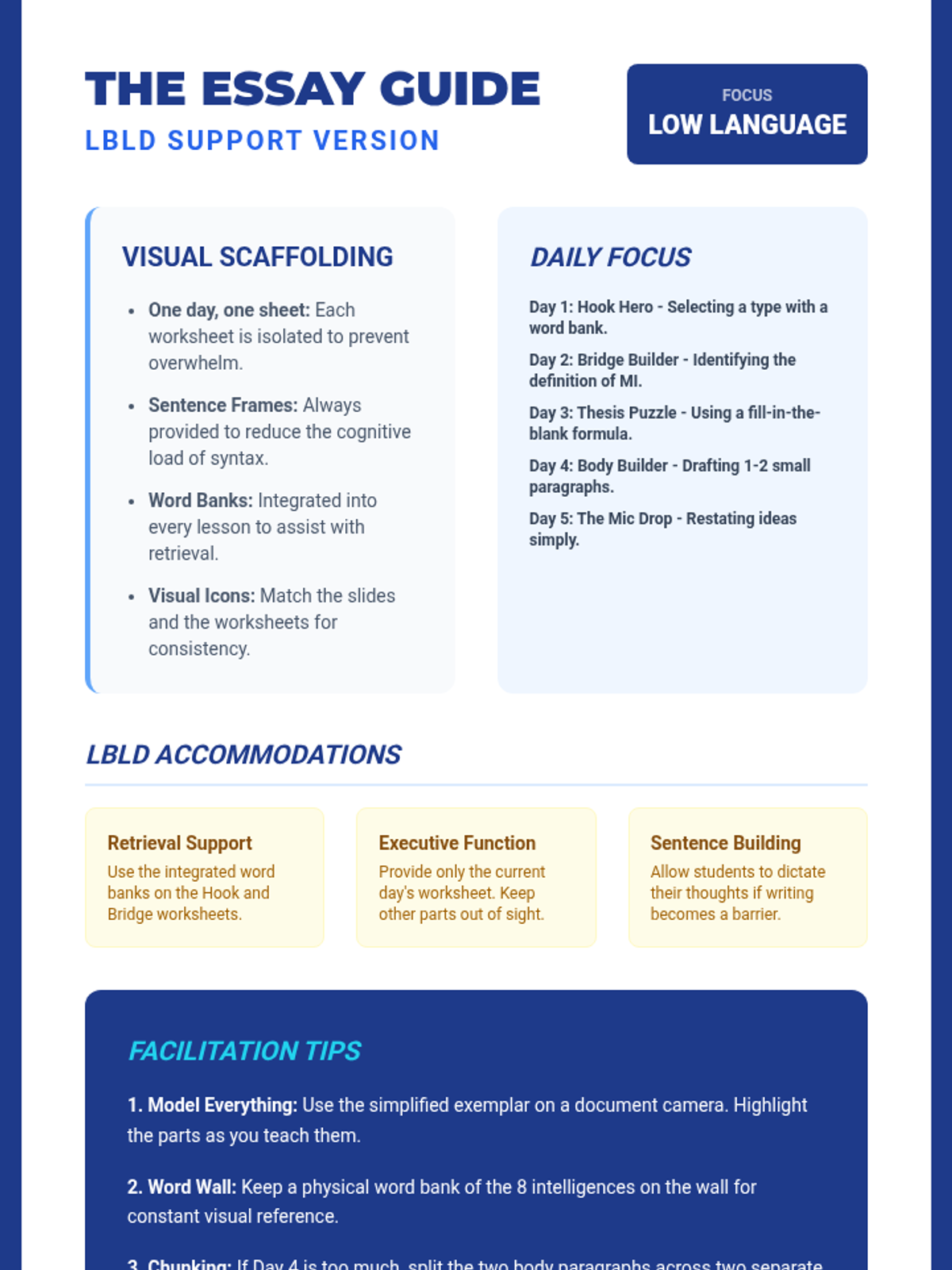
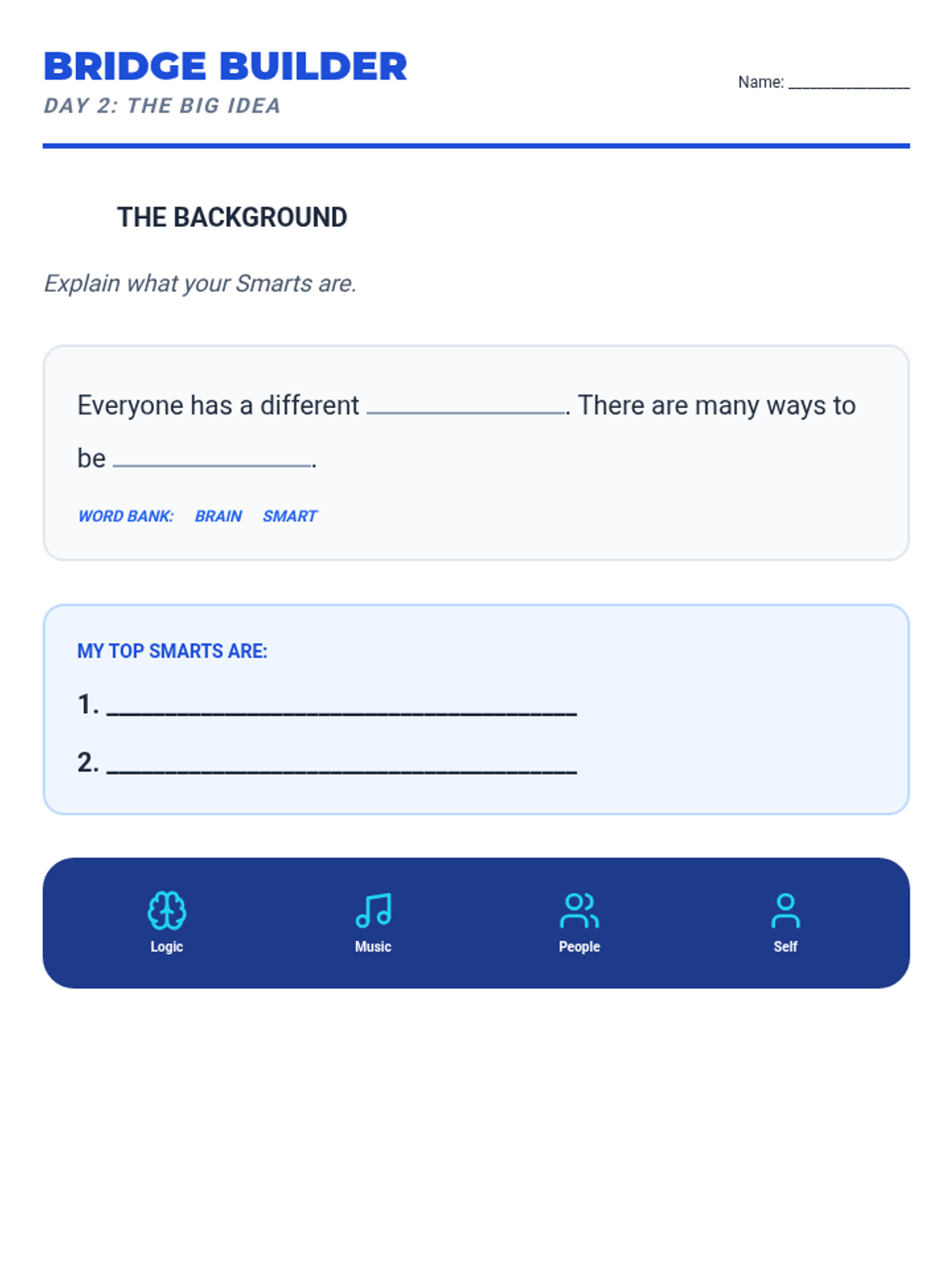
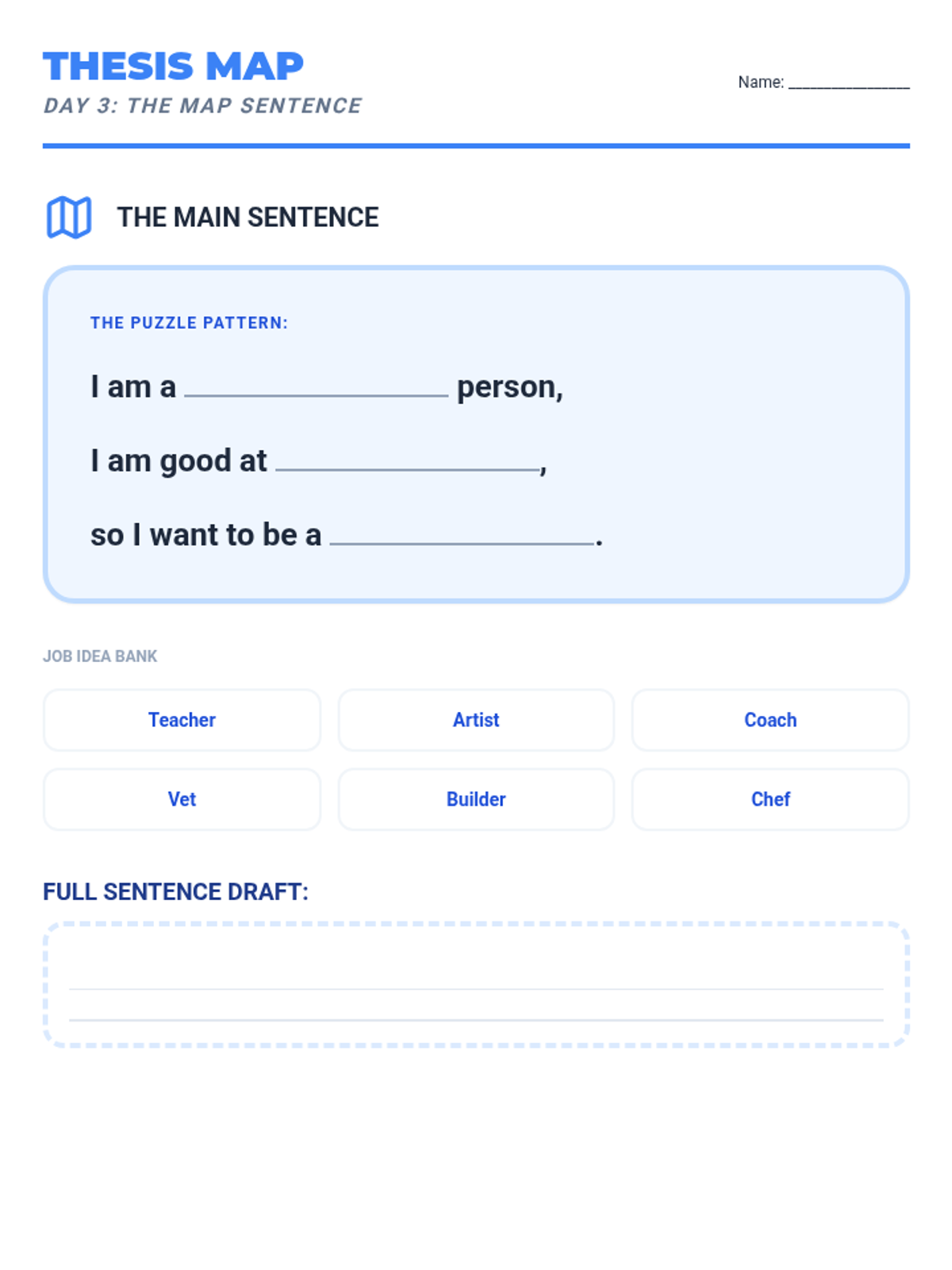
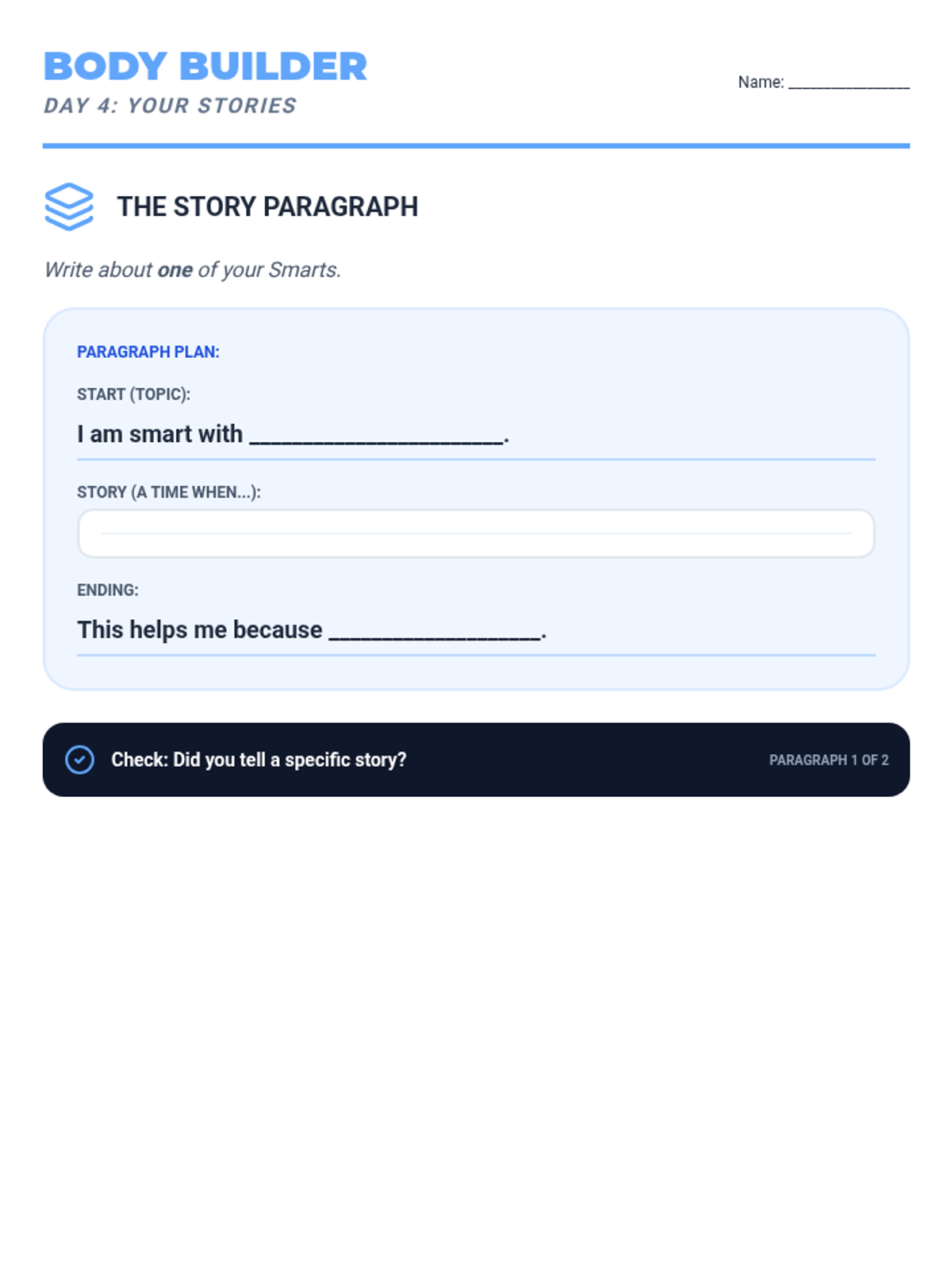
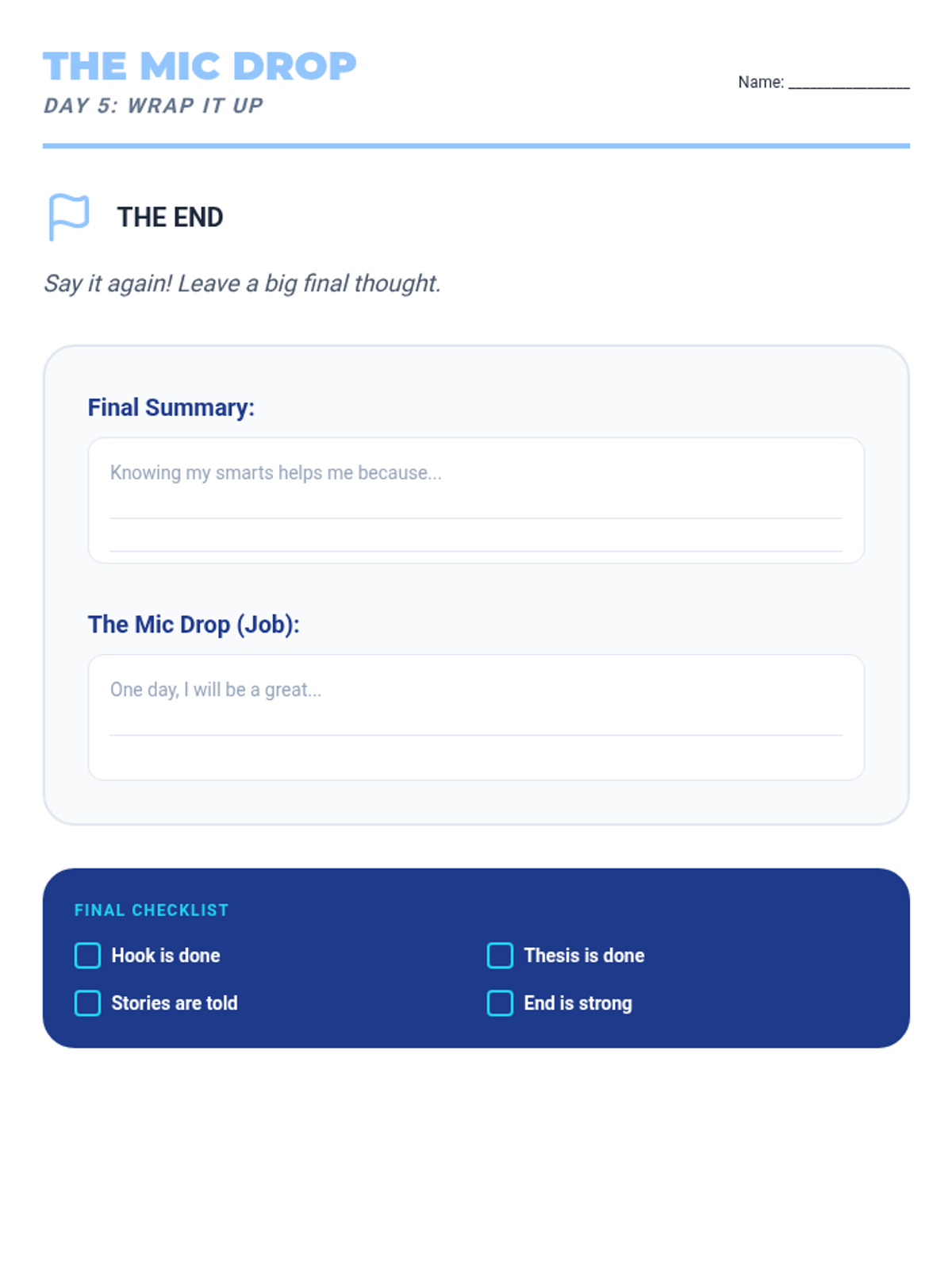
A comprehensive 5-day lesson guiding students through the process of writing a personal essay about their multiple intelligences, skills, and future career paths.
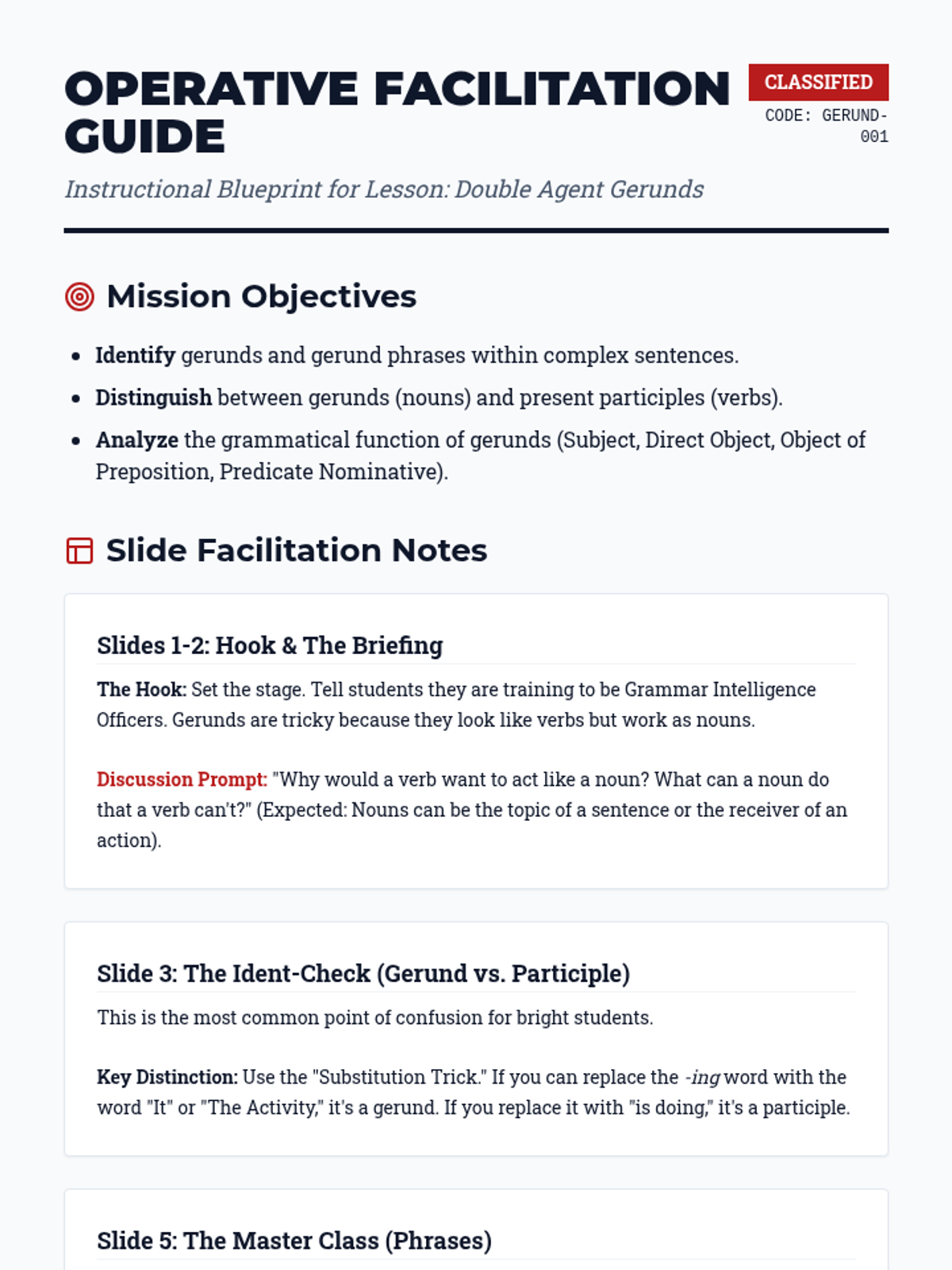
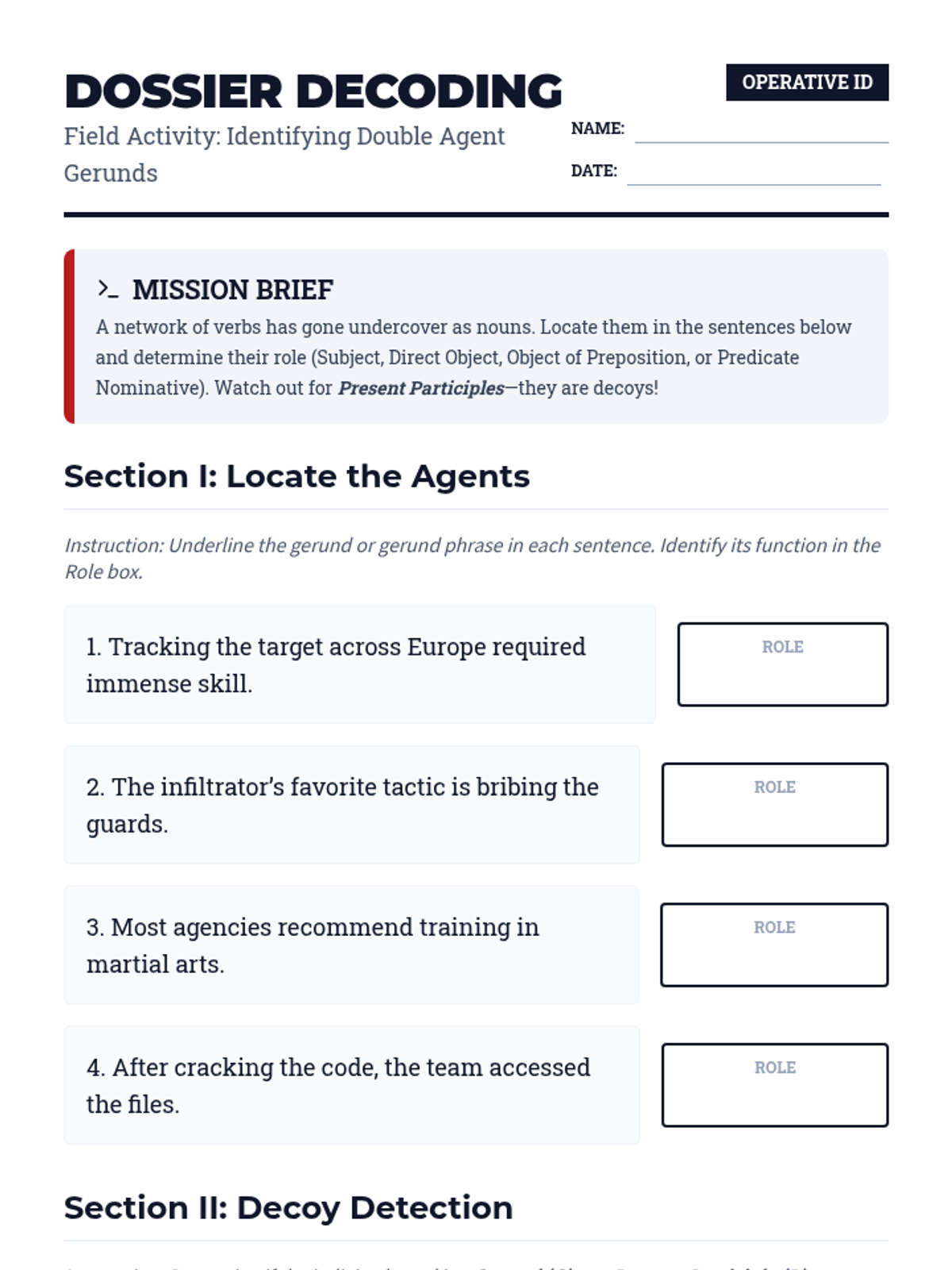
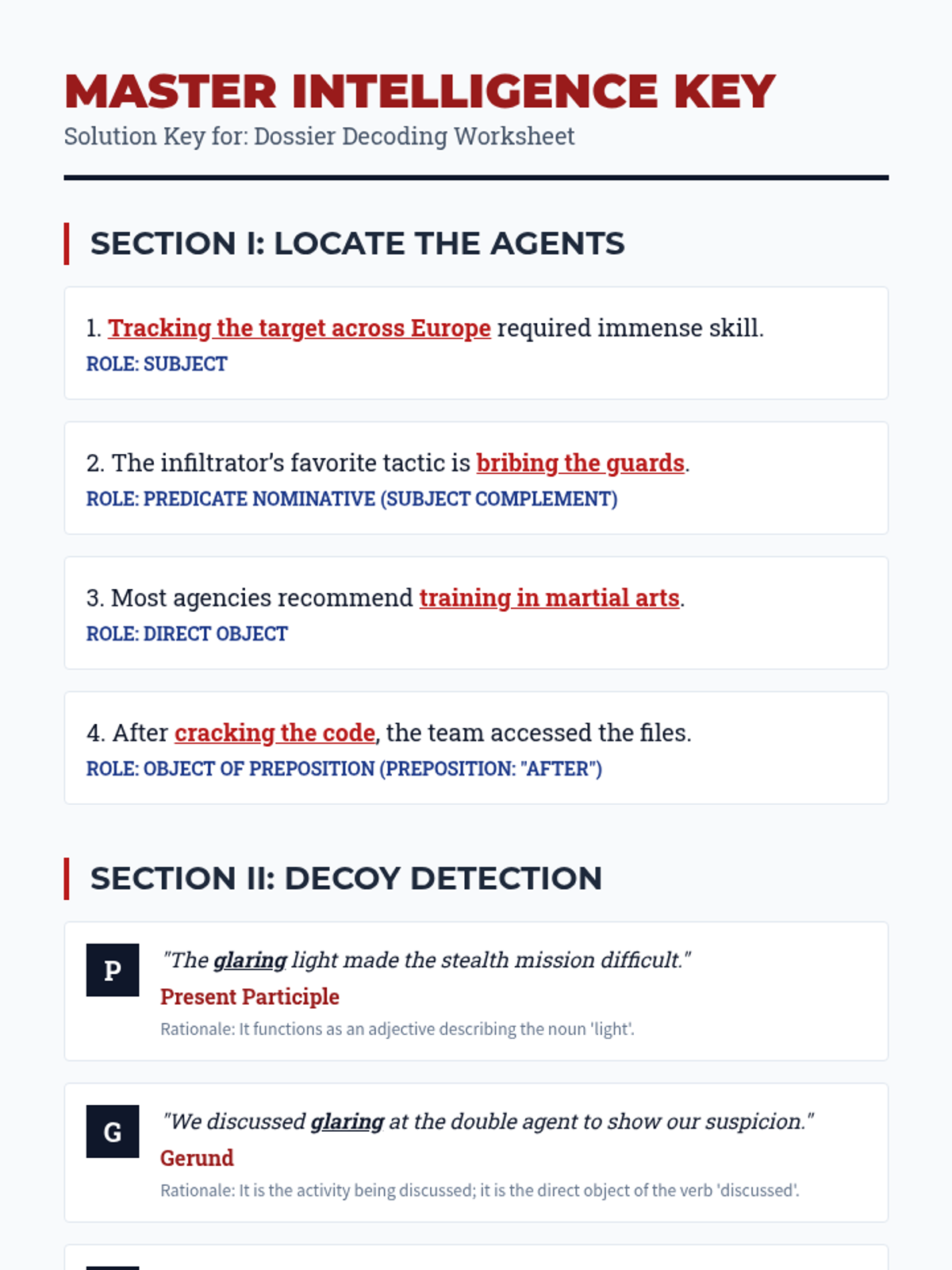
A high-energy, detective-themed lesson exploring how gerunds function as nouns while maintaining their verb-like properties. Designed for advanced students to master identification and usage in various sentence roles.
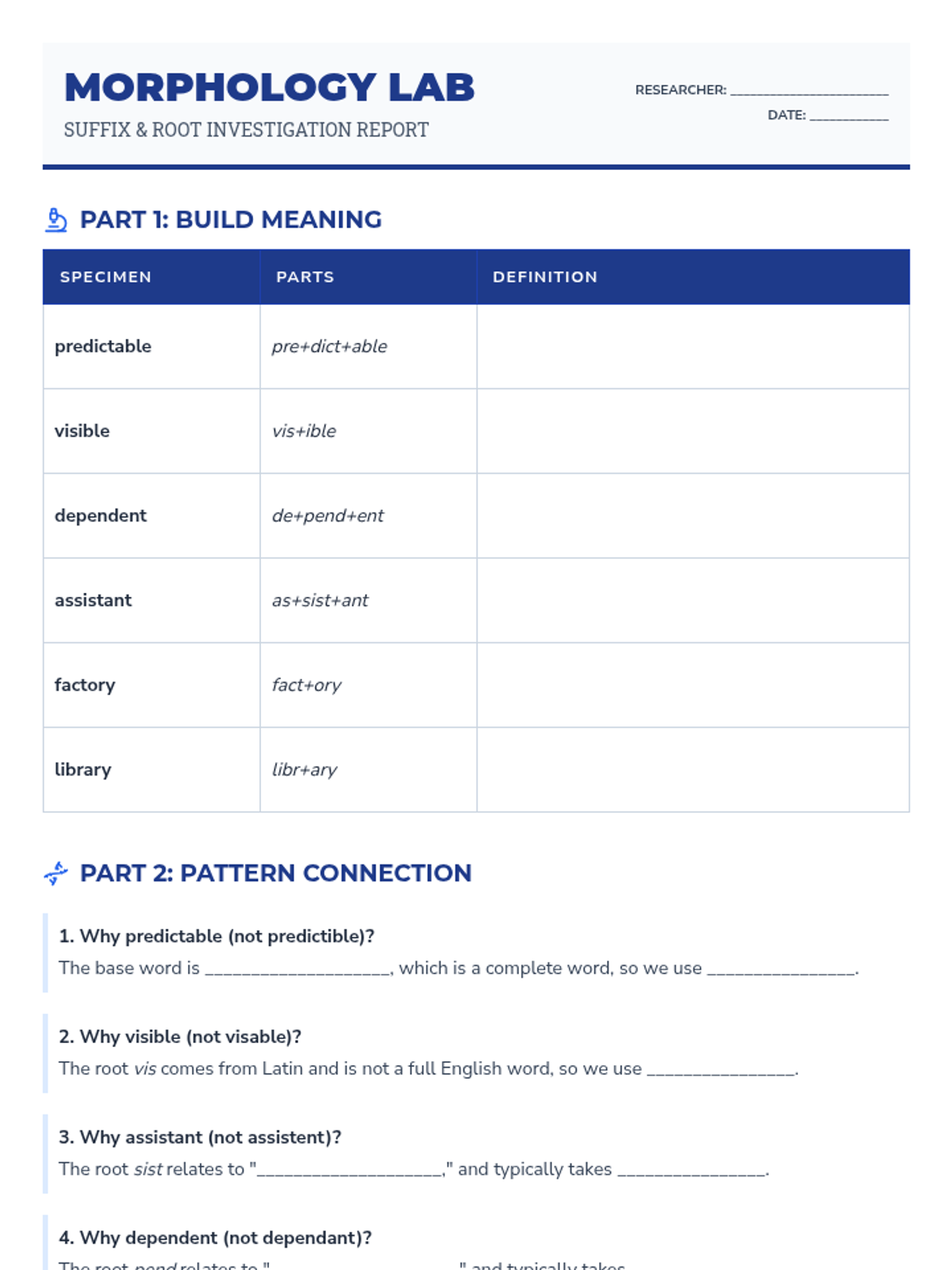
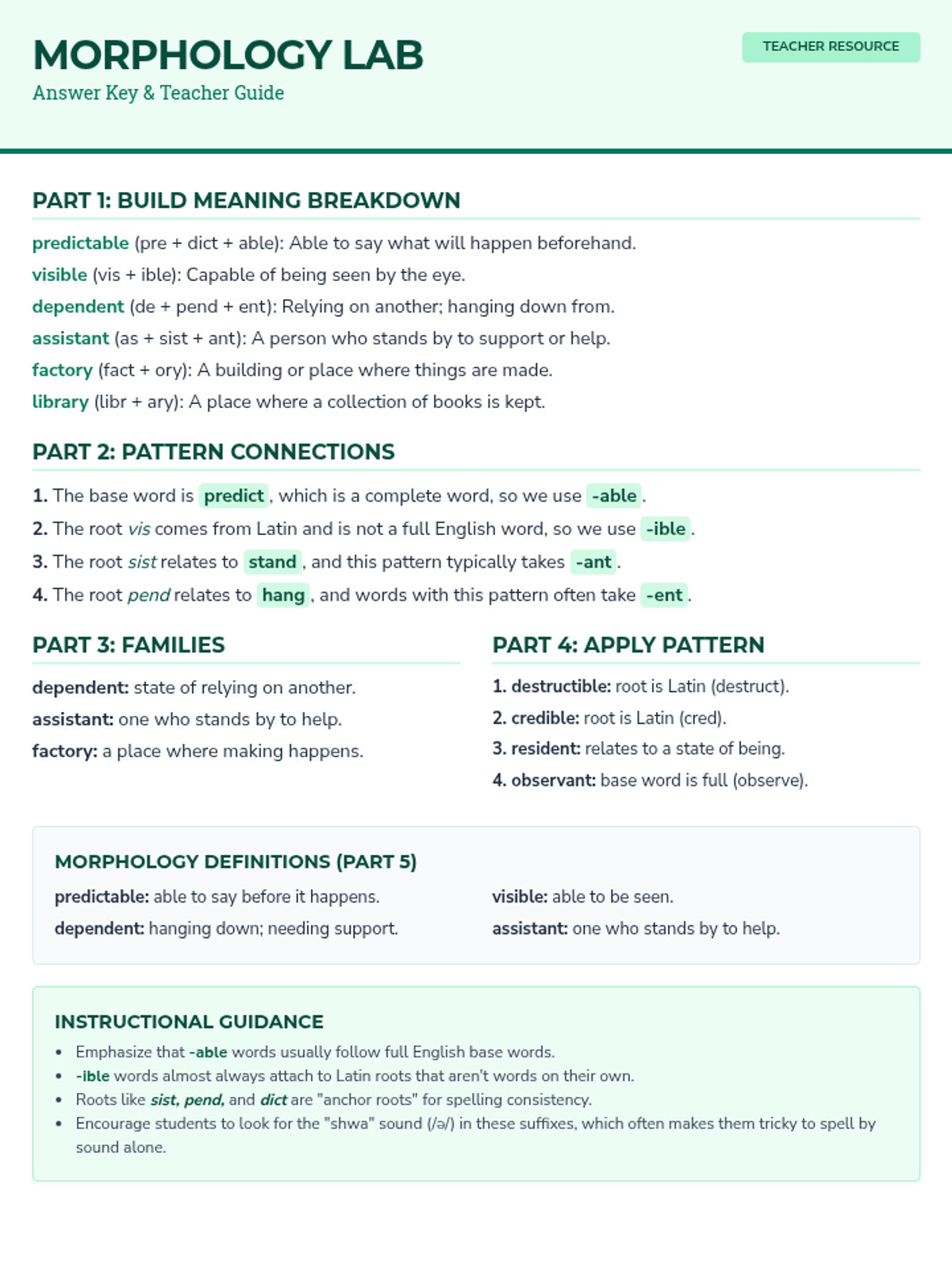
A deep dive into morphology and common word endings (-able, -ible, -ary, -ery, -ory, -ant, -ent), focusing on how Latin roots and base words determine spelling patterns.
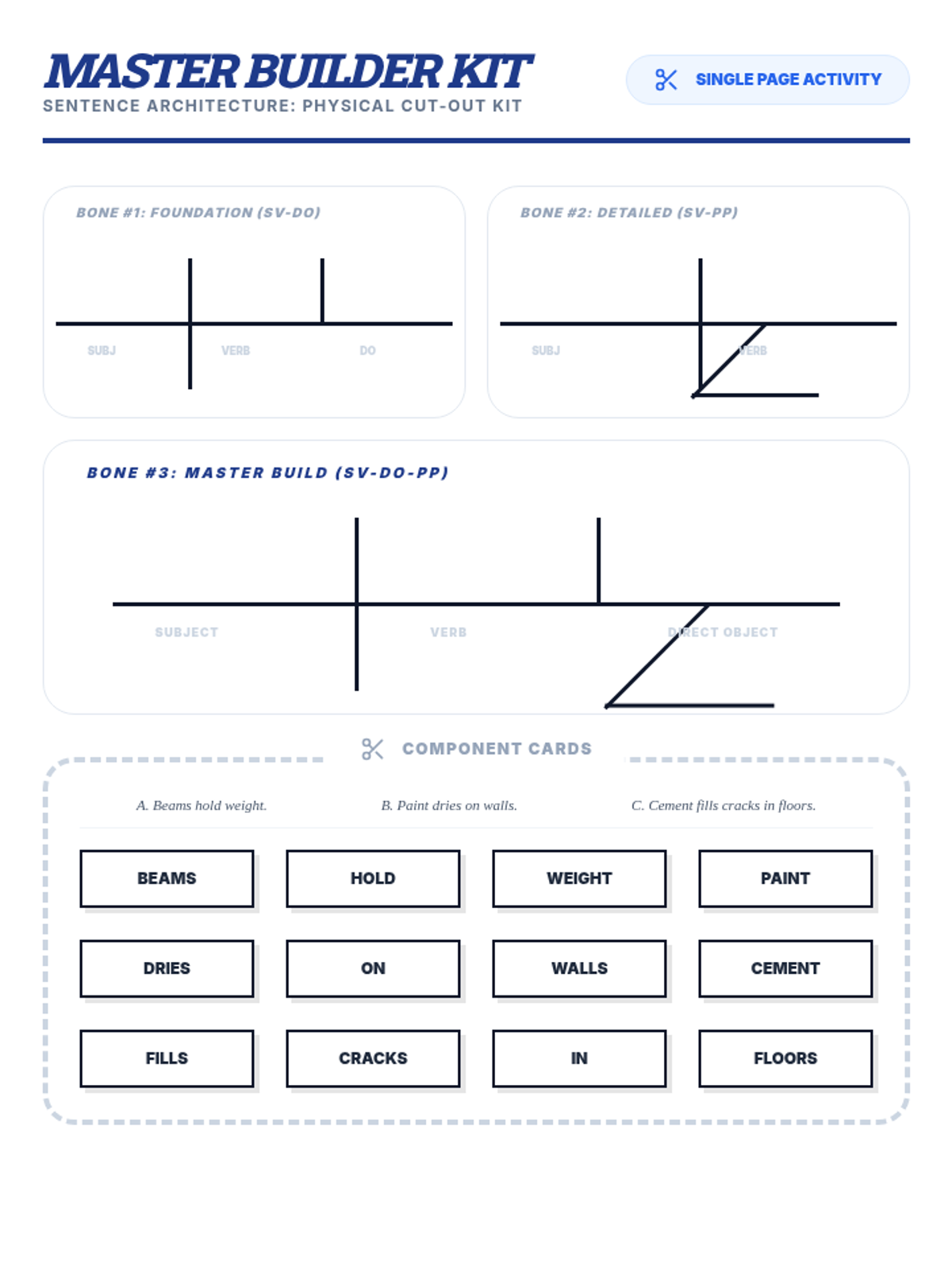
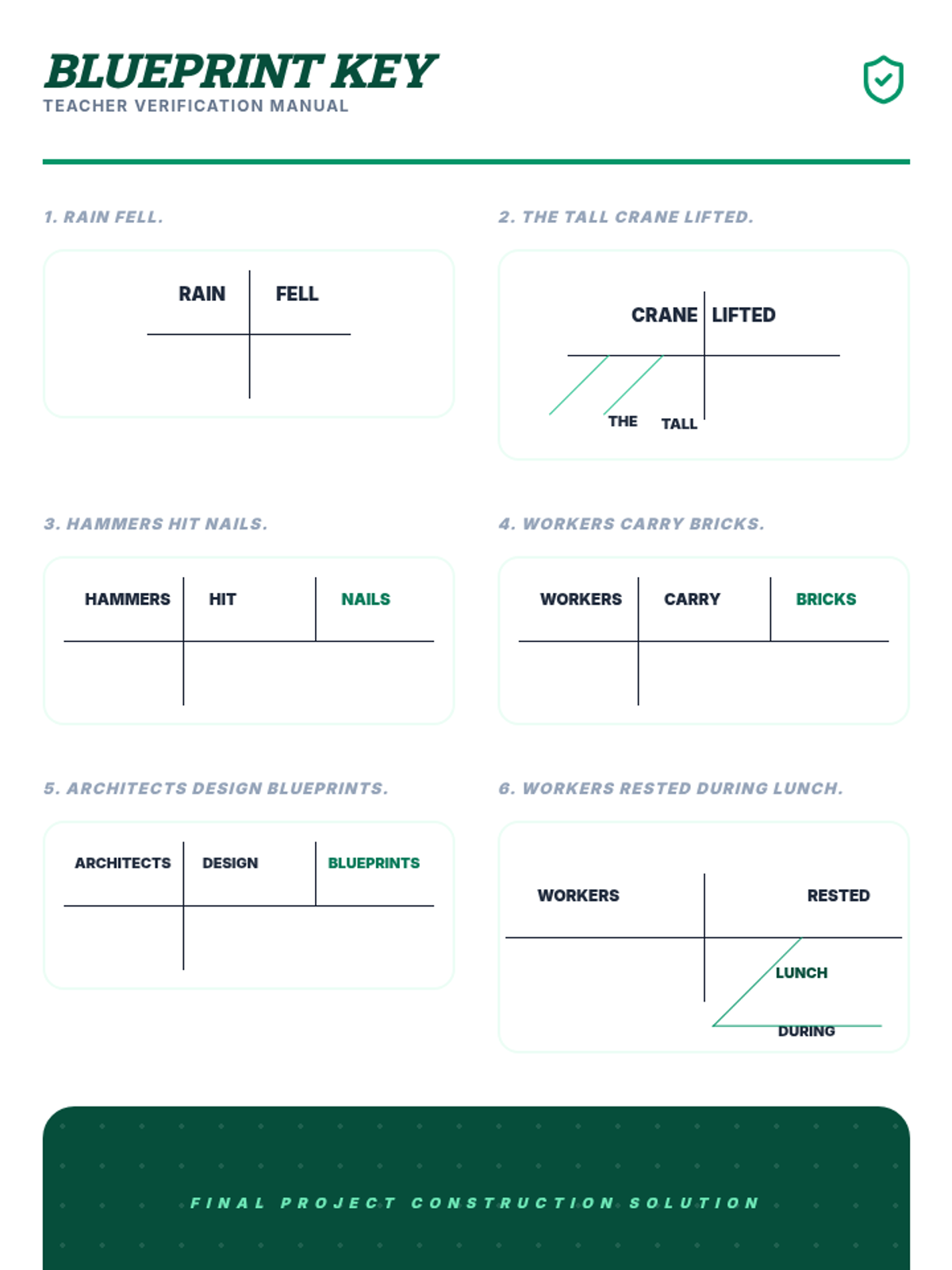
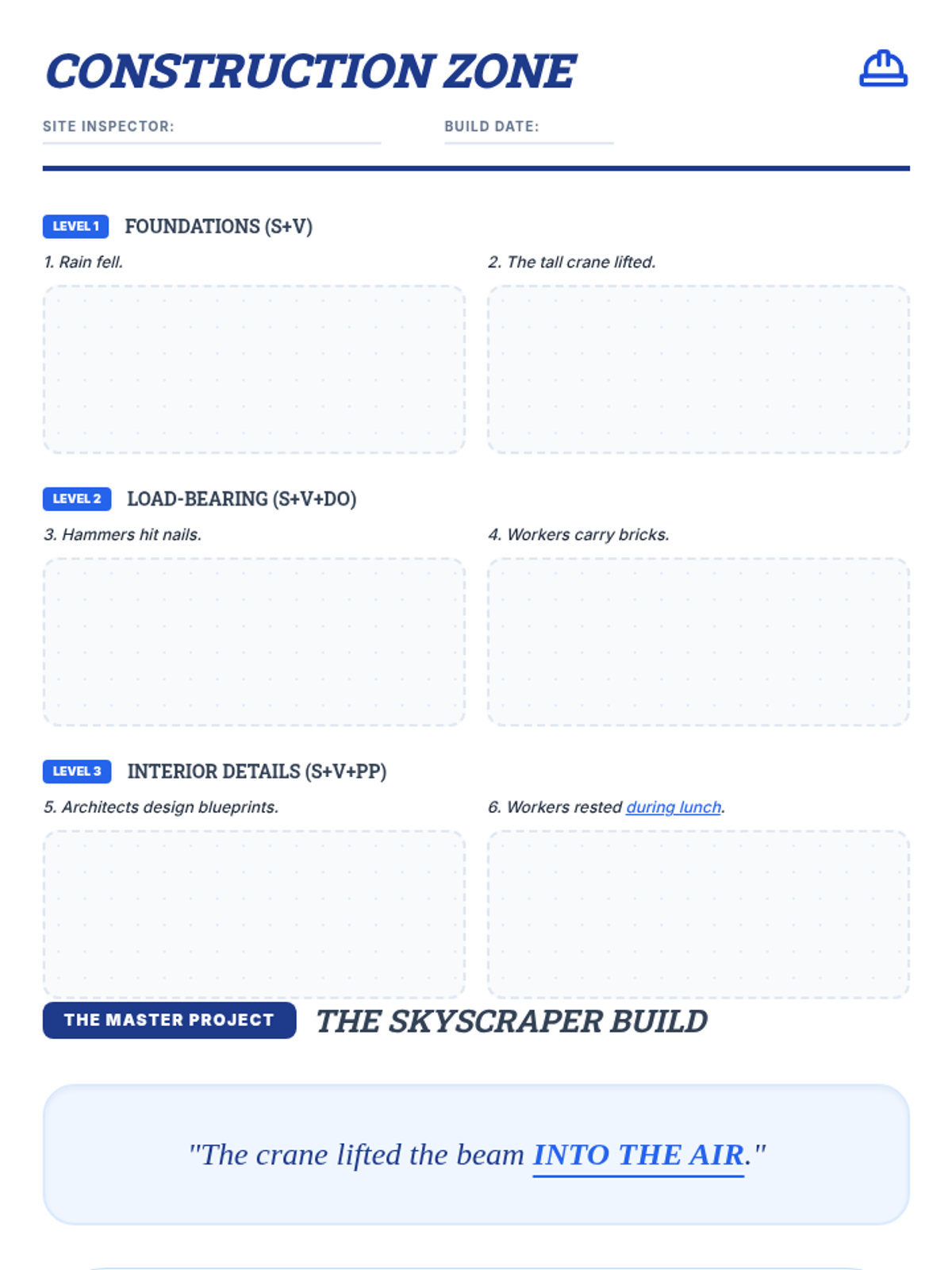
A comprehensive introduction to Reed-Kellogg sentence diagramming, covering subjects, verbs, direct objects, and prepositional phrases through a structural engineering lens.
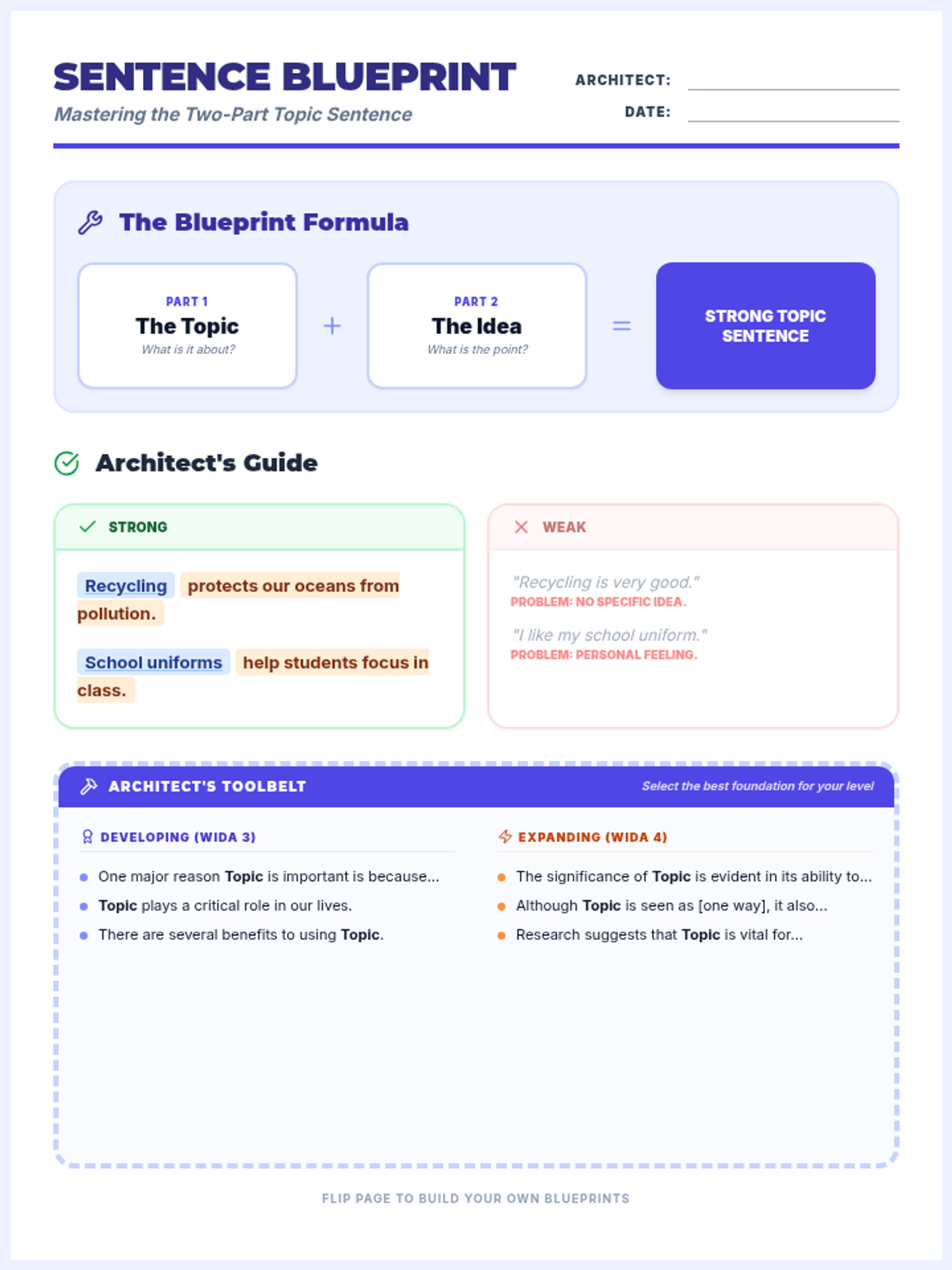
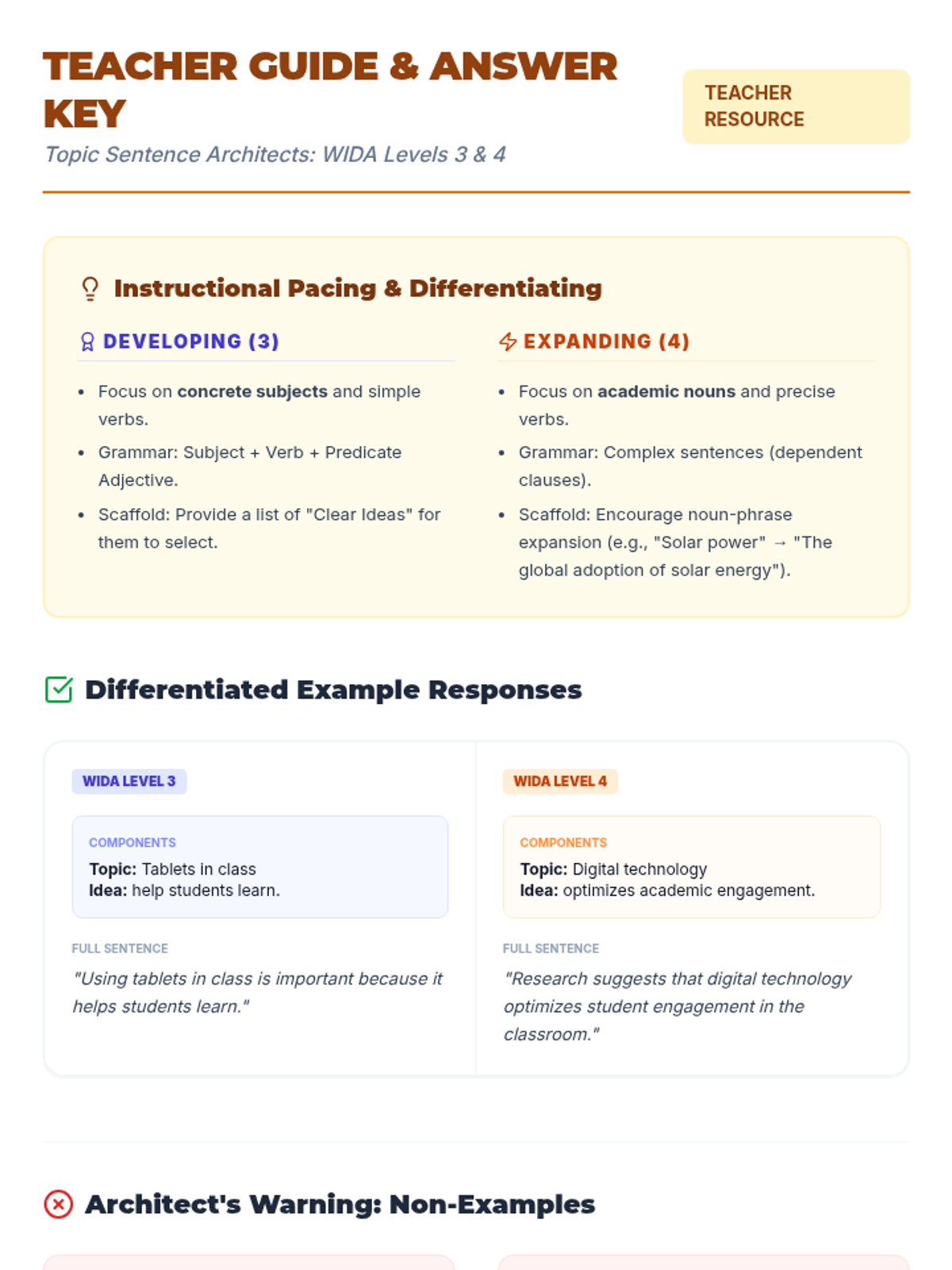
A lesson focused on teaching WIDA level 3 students how to construct strong topic sentences using a two-part formula: the topic and the clear idea. Students will use graphic organizers and sentence starters to build academic paragraph foundations.
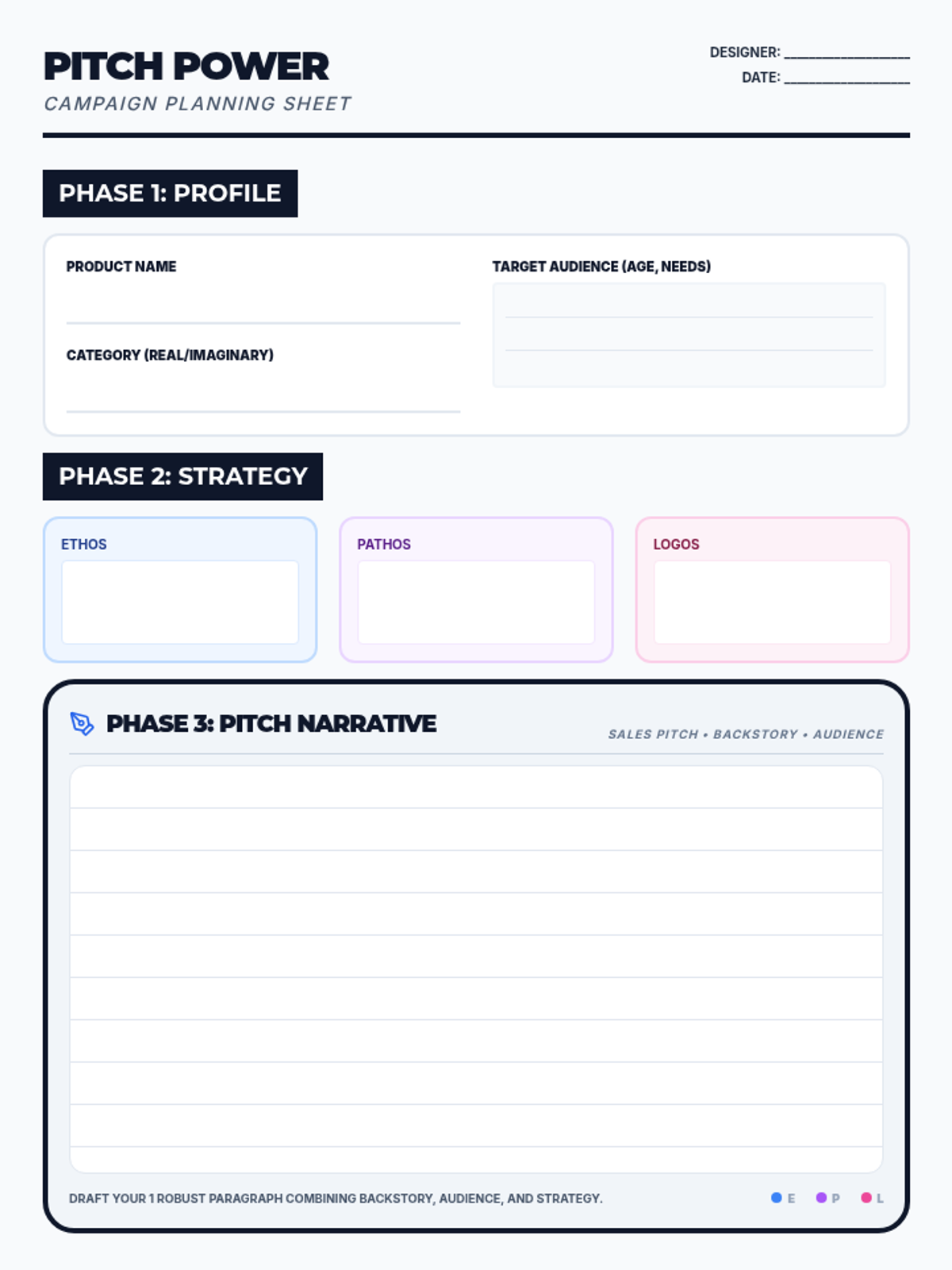
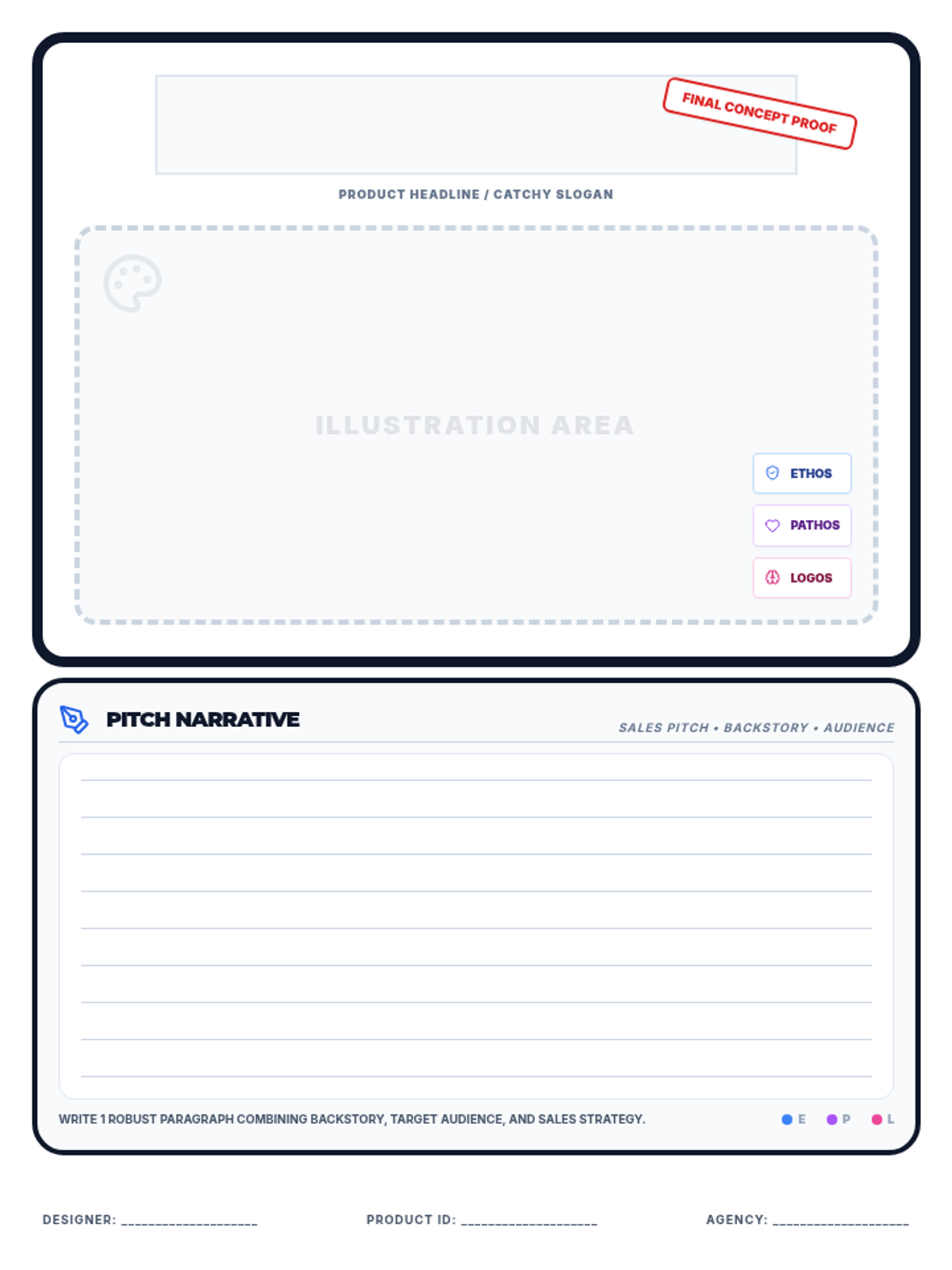
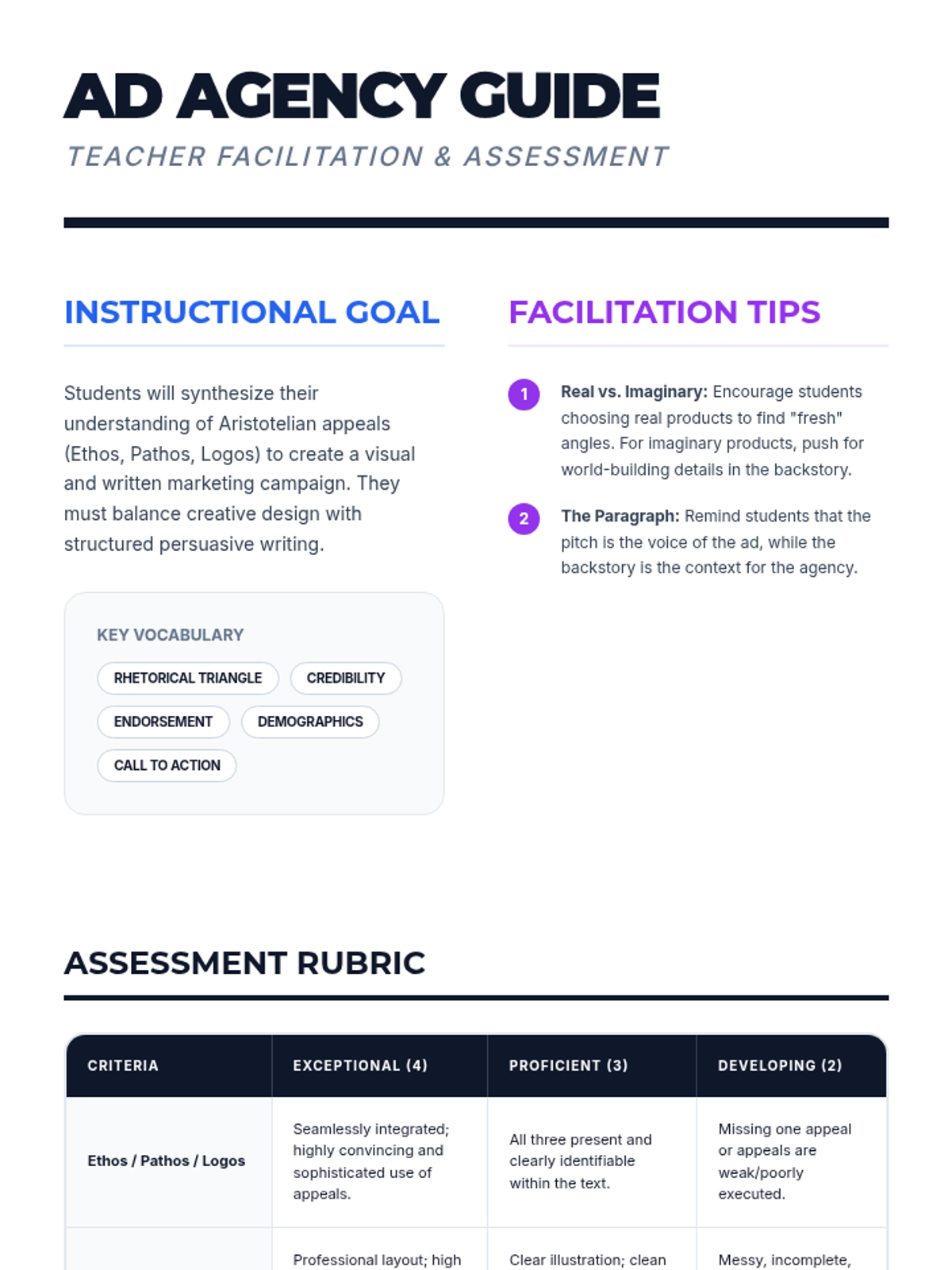
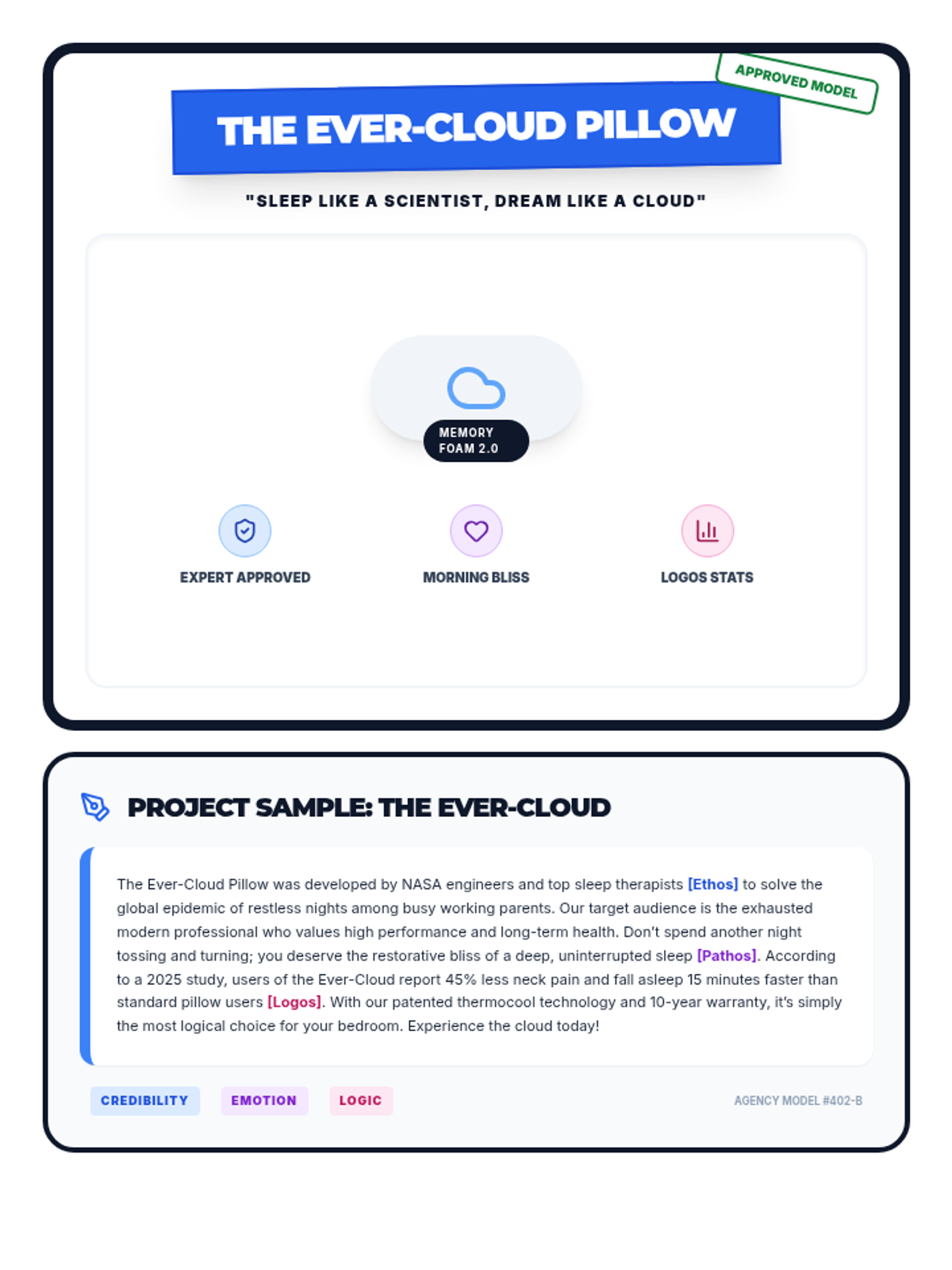
Students dive into the world of marketing to master the rhetorical triangle: ethos, pathos, and logos. They will design a professional product poster and write a compelling pitch that combines product backstory with targeted sales tactics.
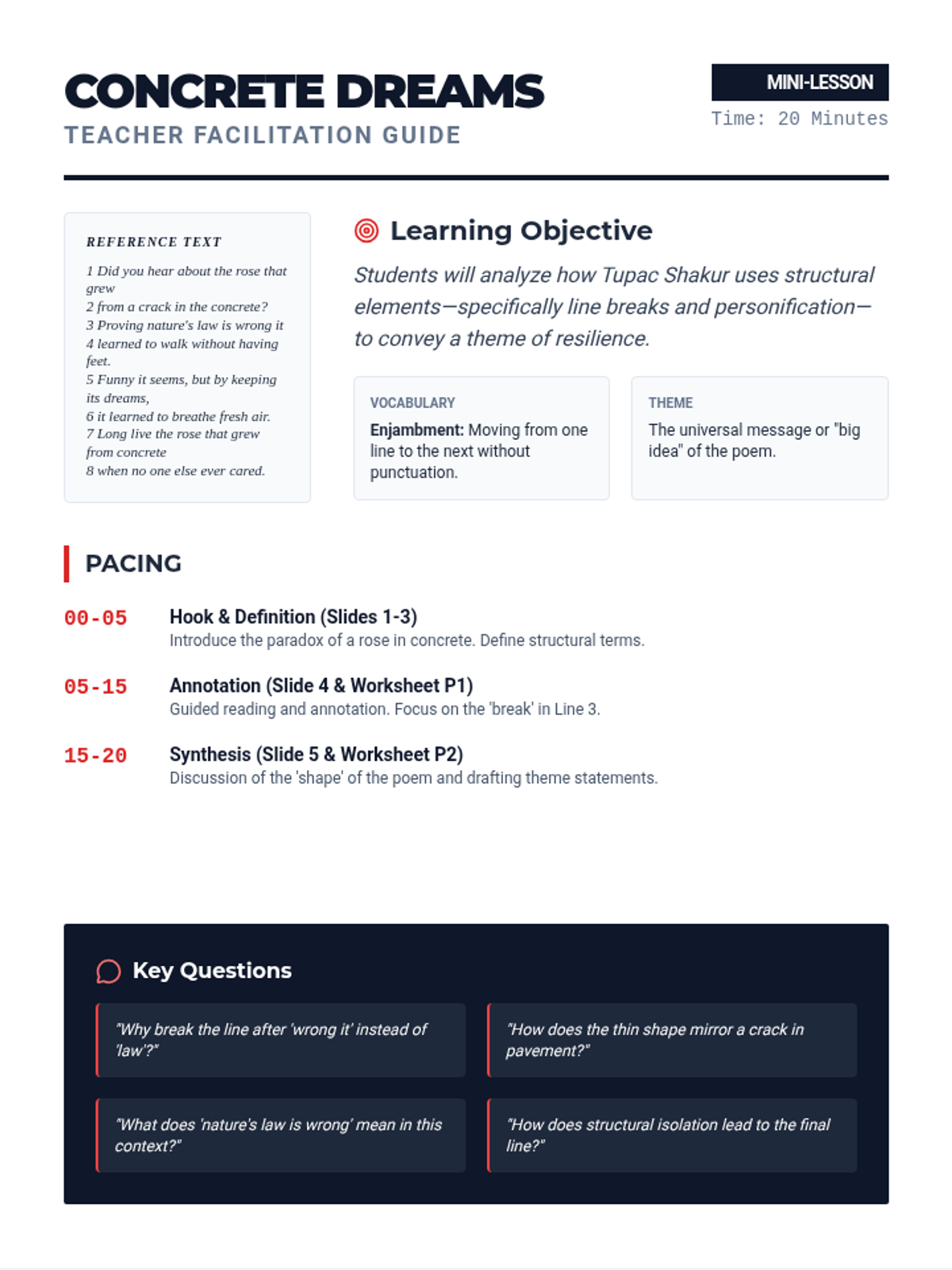
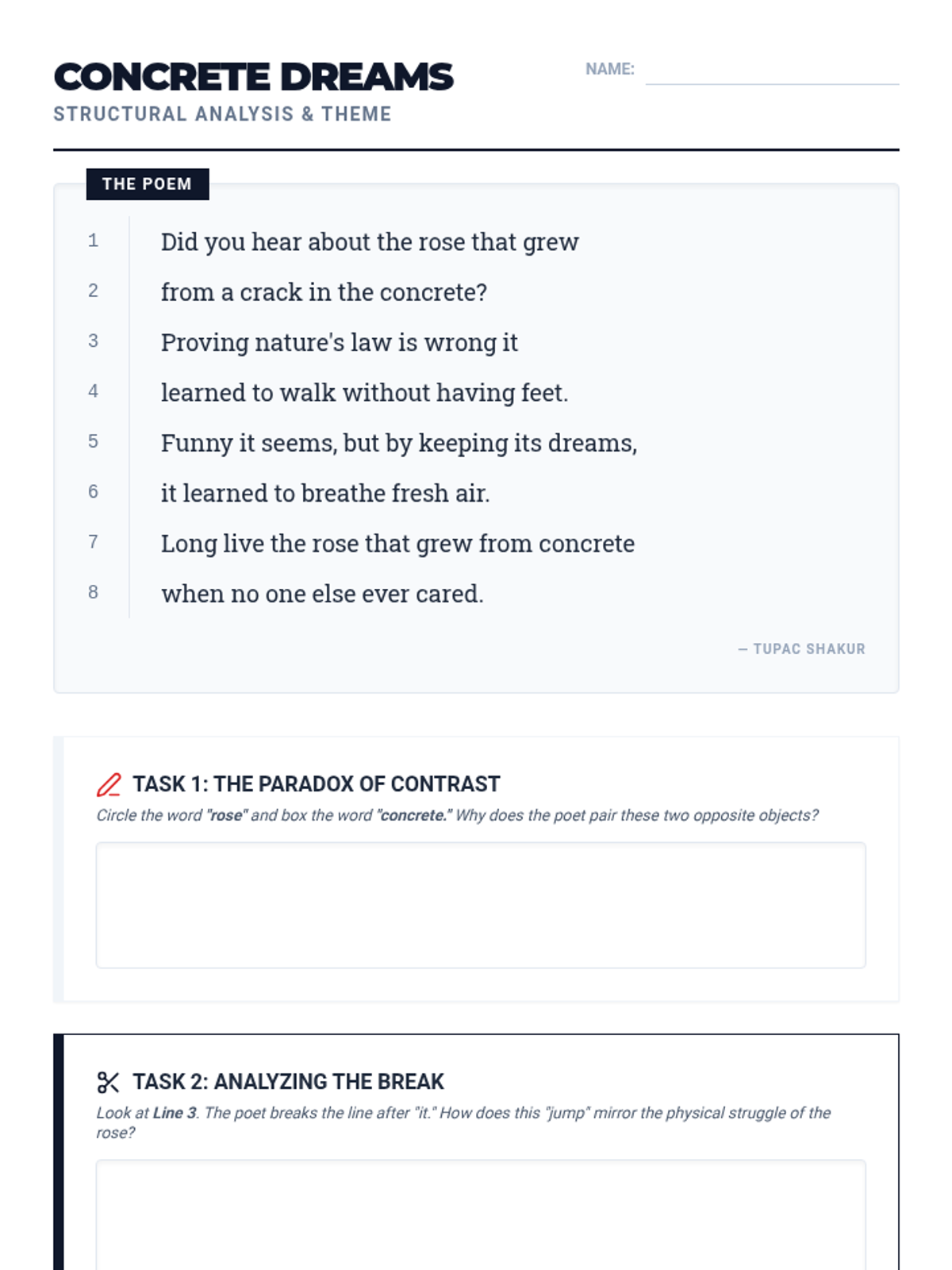
A 20-minute mini-lesson focusing on how the structural choices in Tupac Shakur's poem 'The Rose That Grew from Concrete' reveal its core theme of resilience.
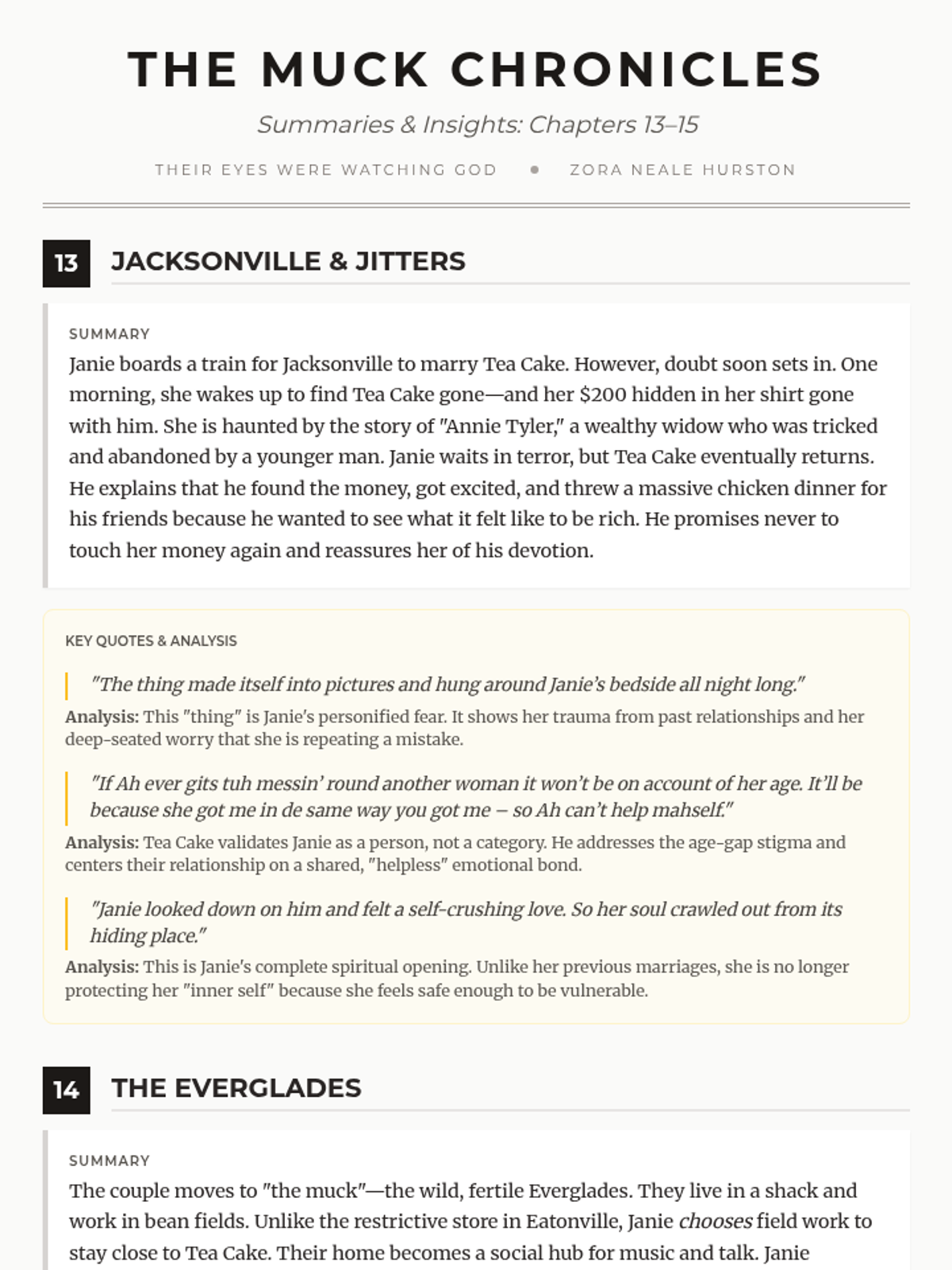
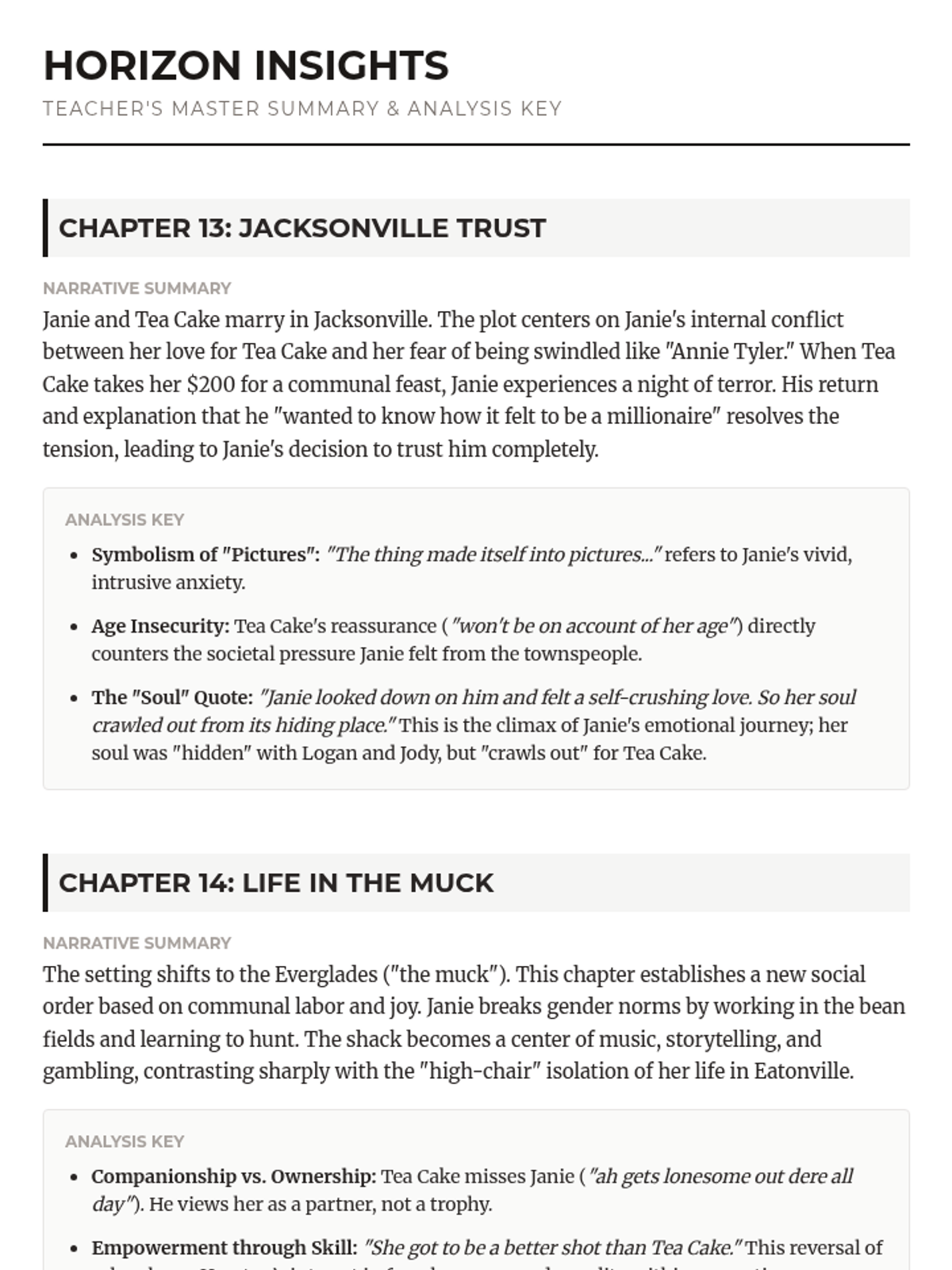
An exploration of Chapters 13-15 of Zora Neale Hurston's 'Their Eyes Were Watching God,' focusing on Janie's transition to the Everglades and her deepening relationship with Tea Cake.
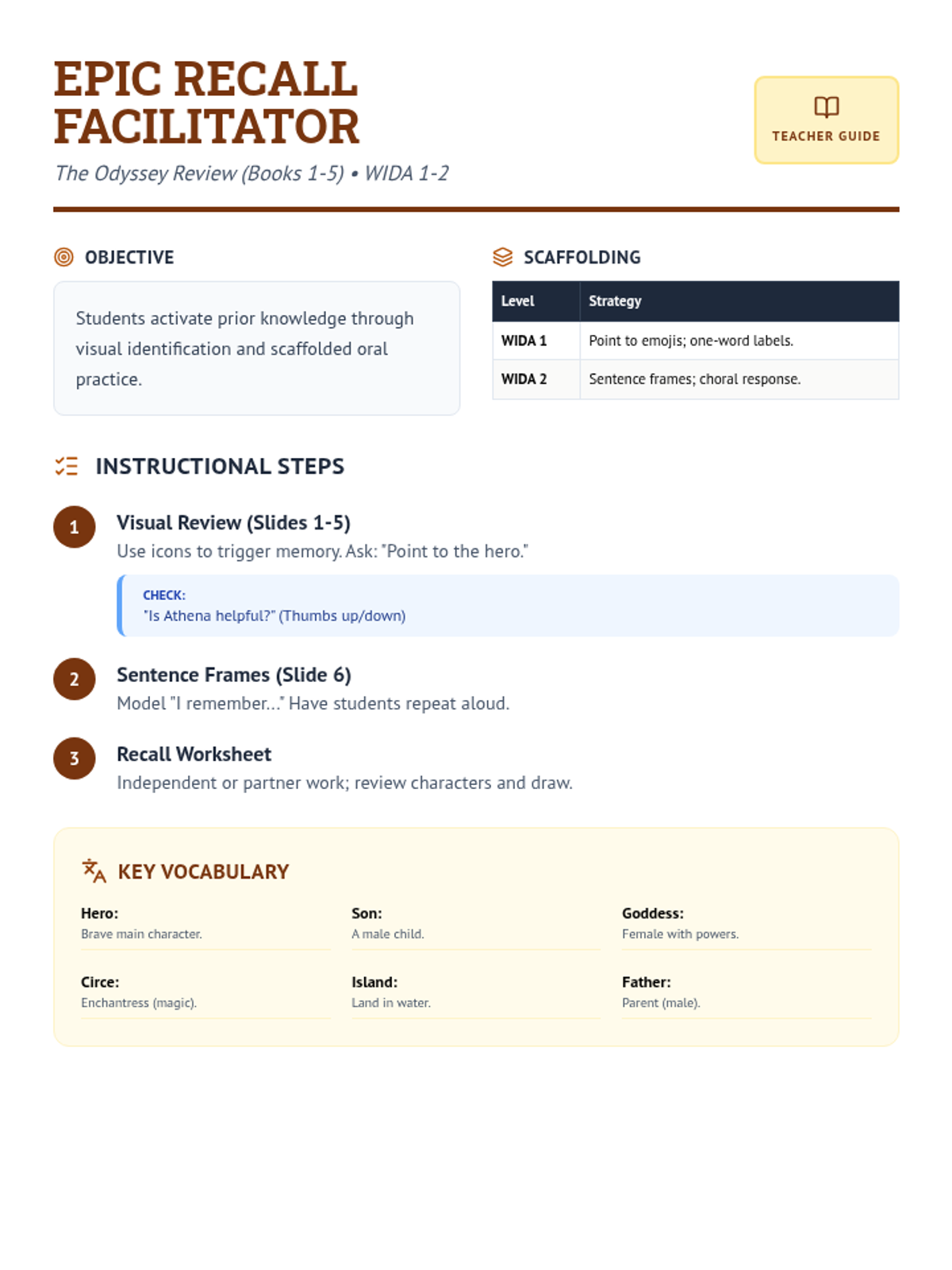
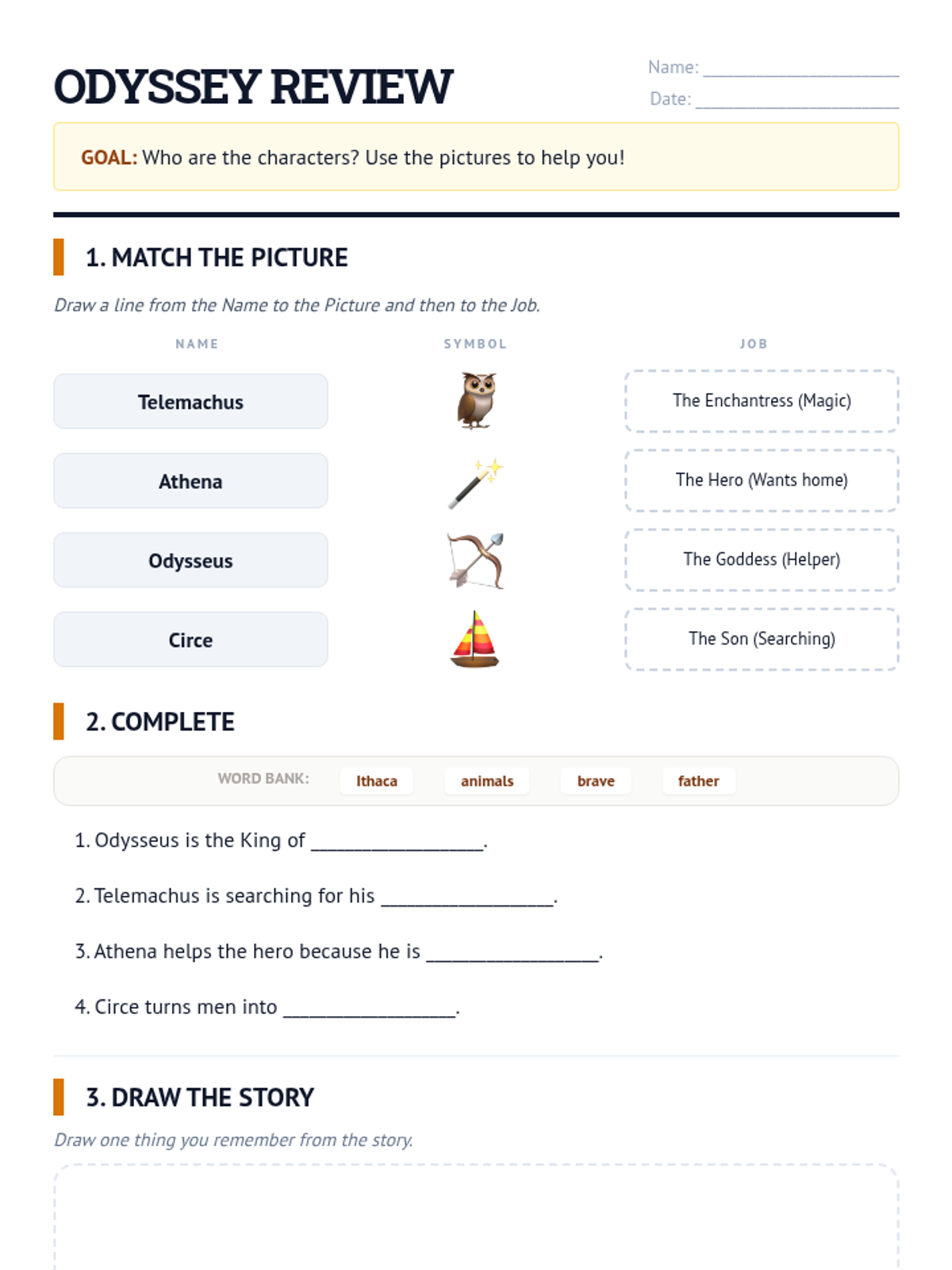
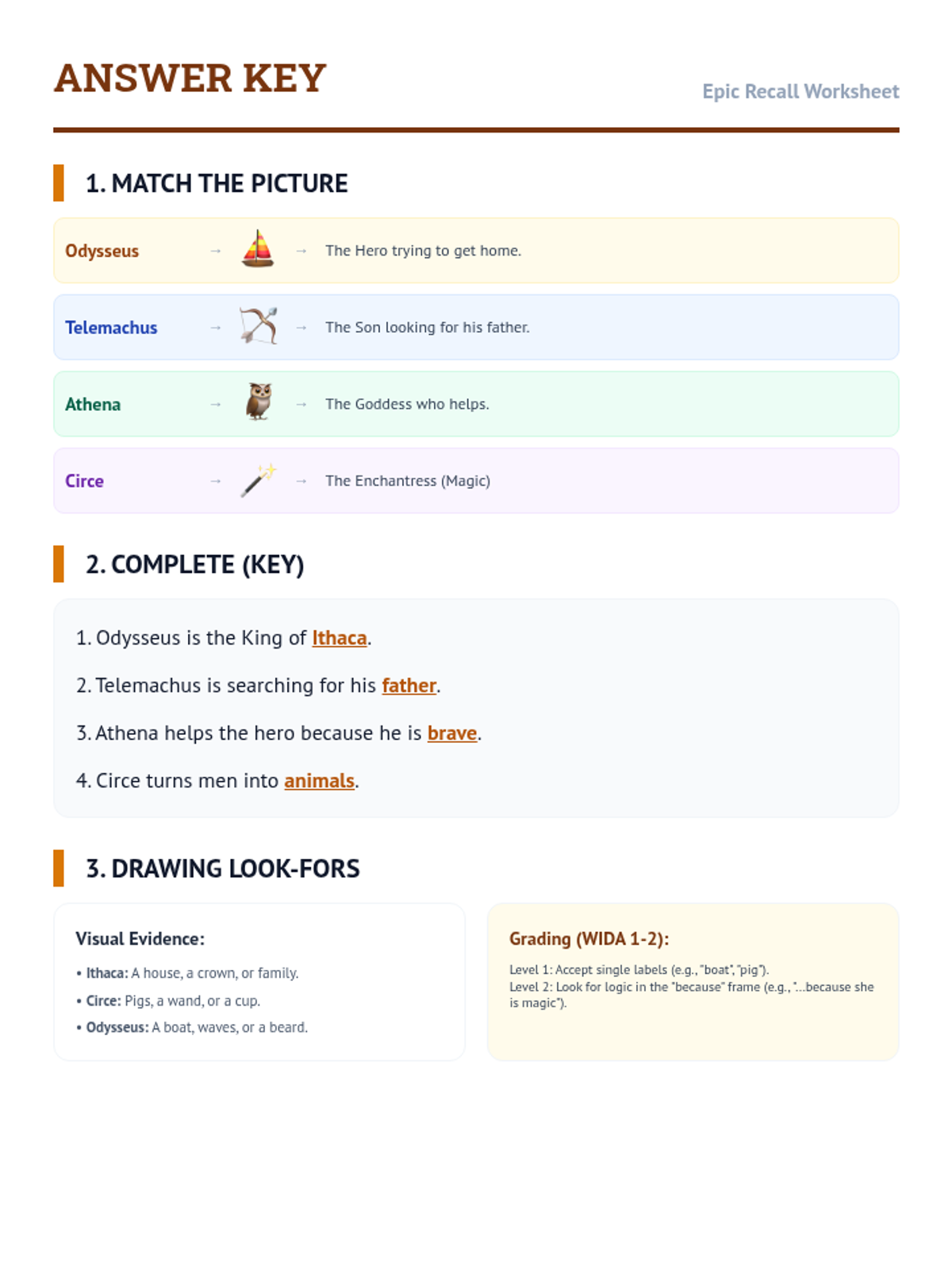
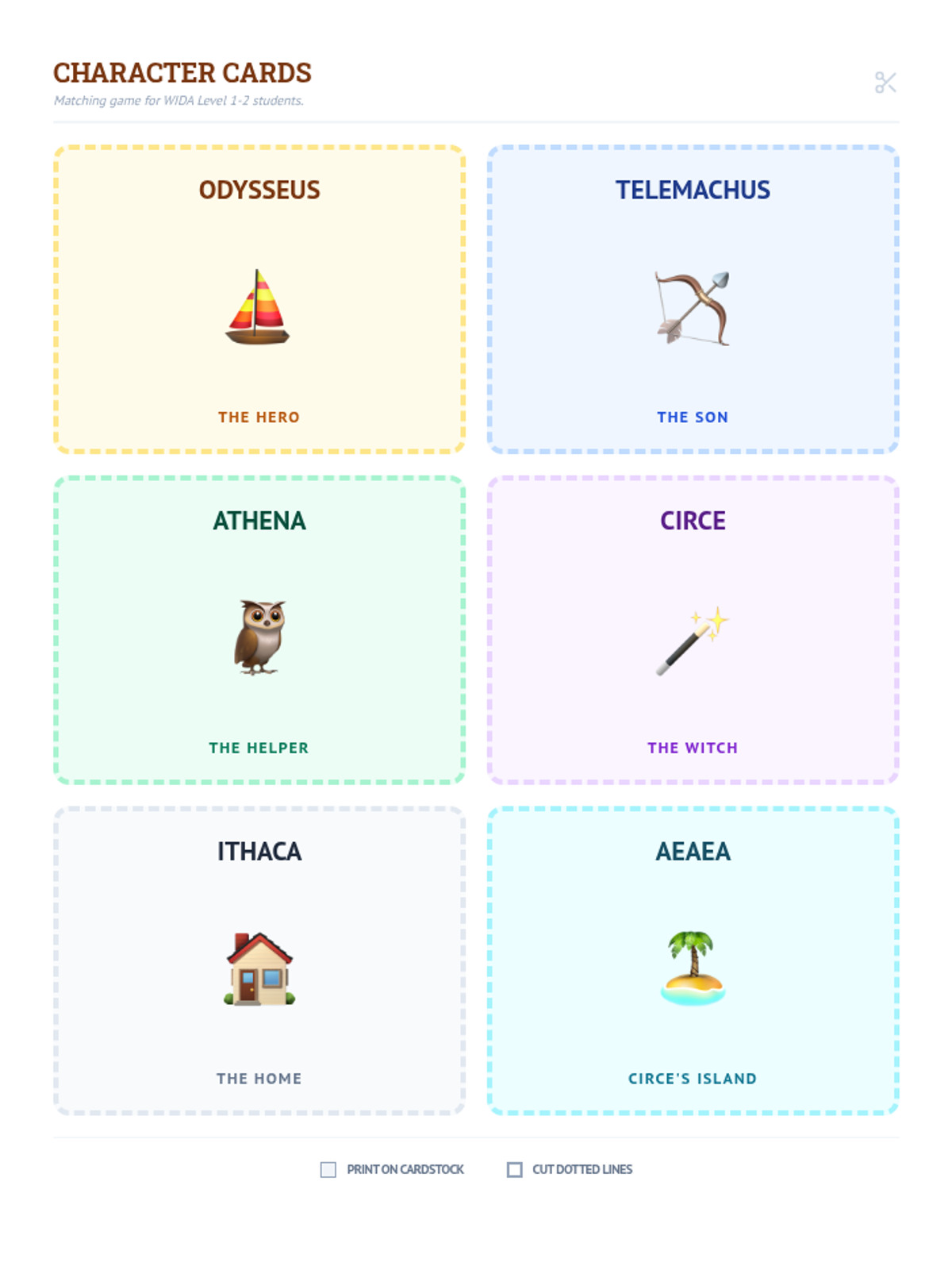
A review lesson for ELL students focused on recalling key characters and events from Books 1-5 of The Odyssey after a school break.
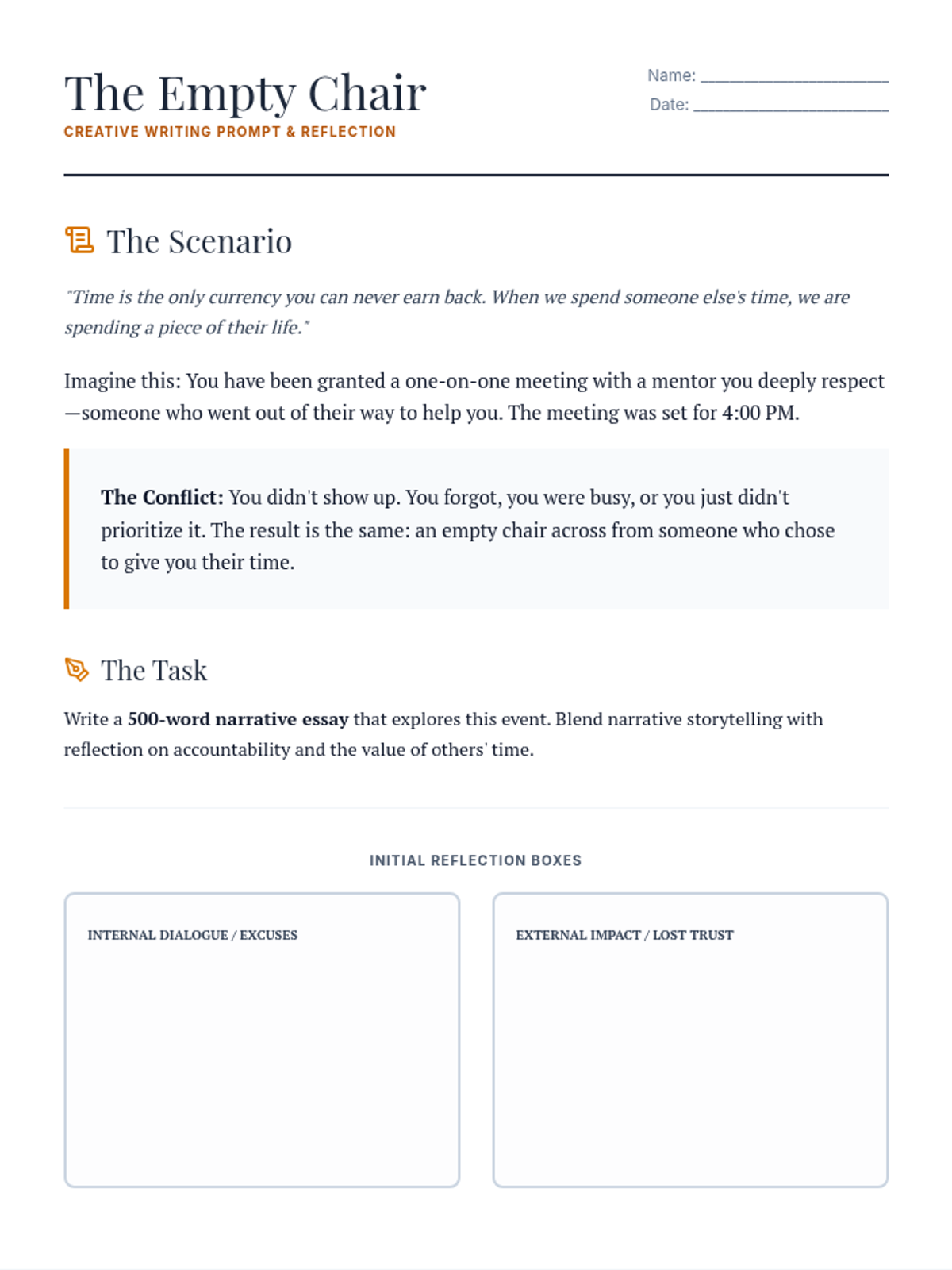
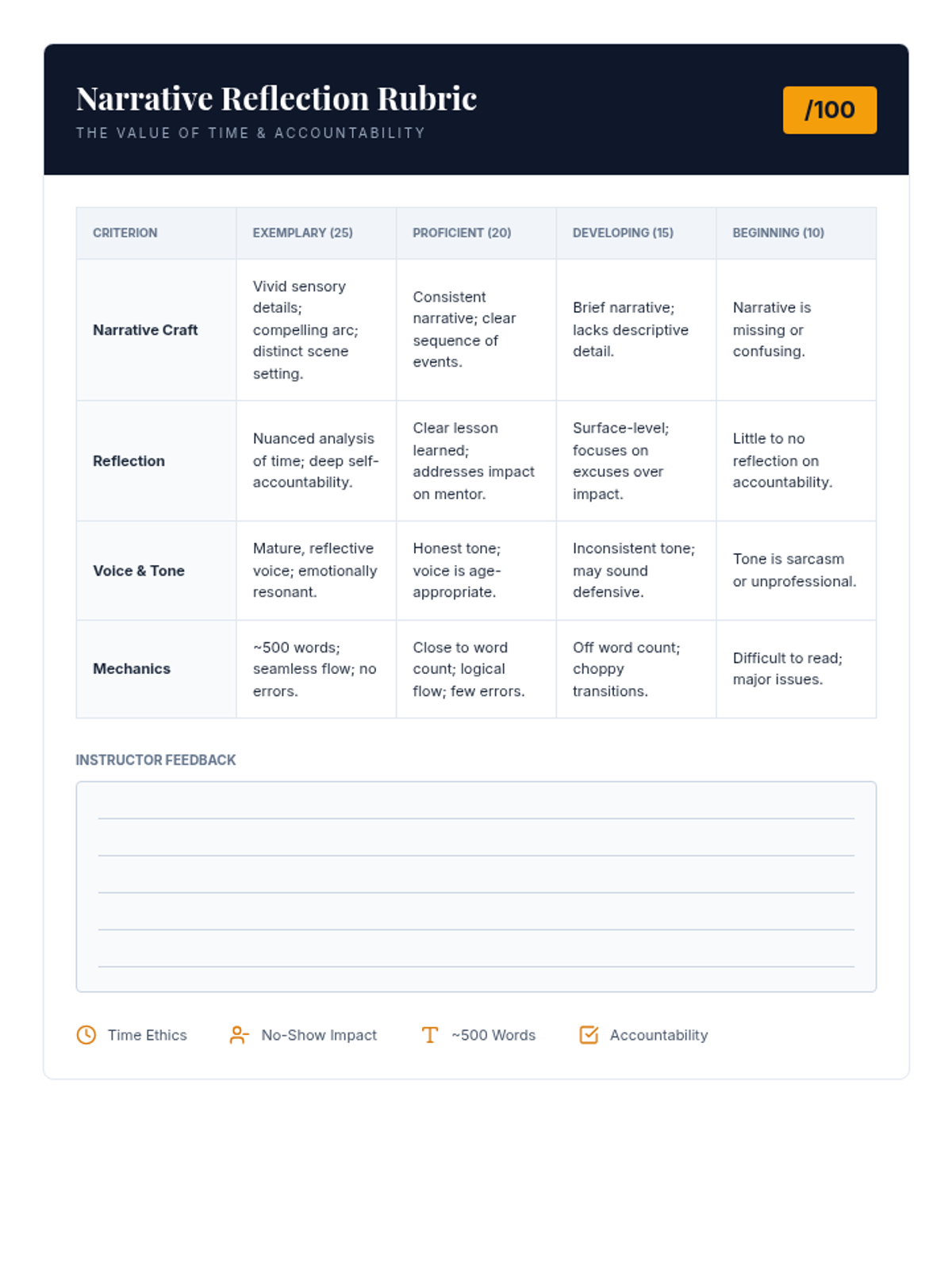
A creative writing lesson focused on the ethics of time, accountability, and interpersonal respect through a narrative reflection on a missed opportunity.

A final look at John Proctor's ultimate choice, the resolution of the play, and a comprehensive assessment of themes and motifs.
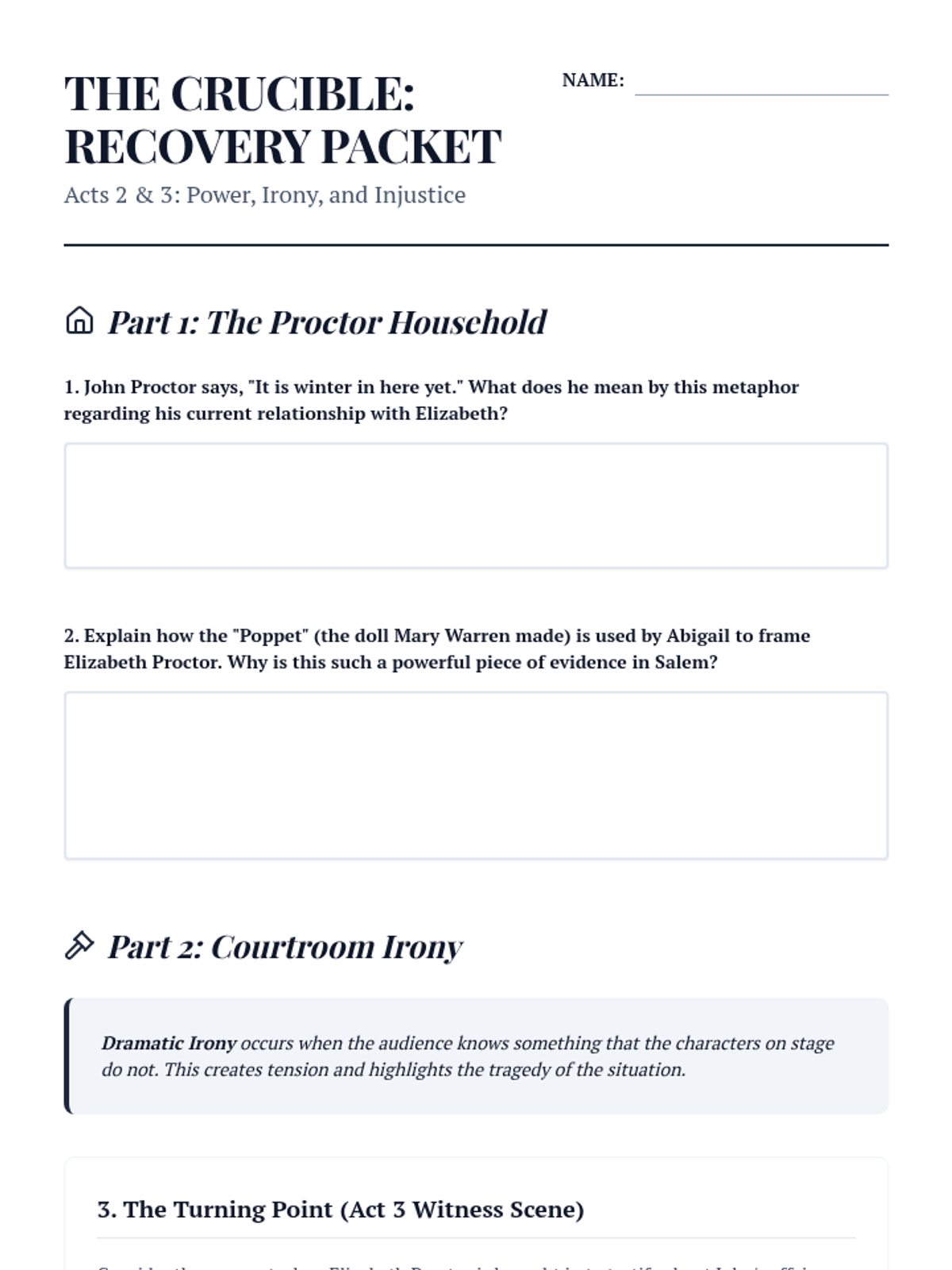
An exploration of the rising tensions in the Proctor household and the escalation of the witch trials in the Salem court.
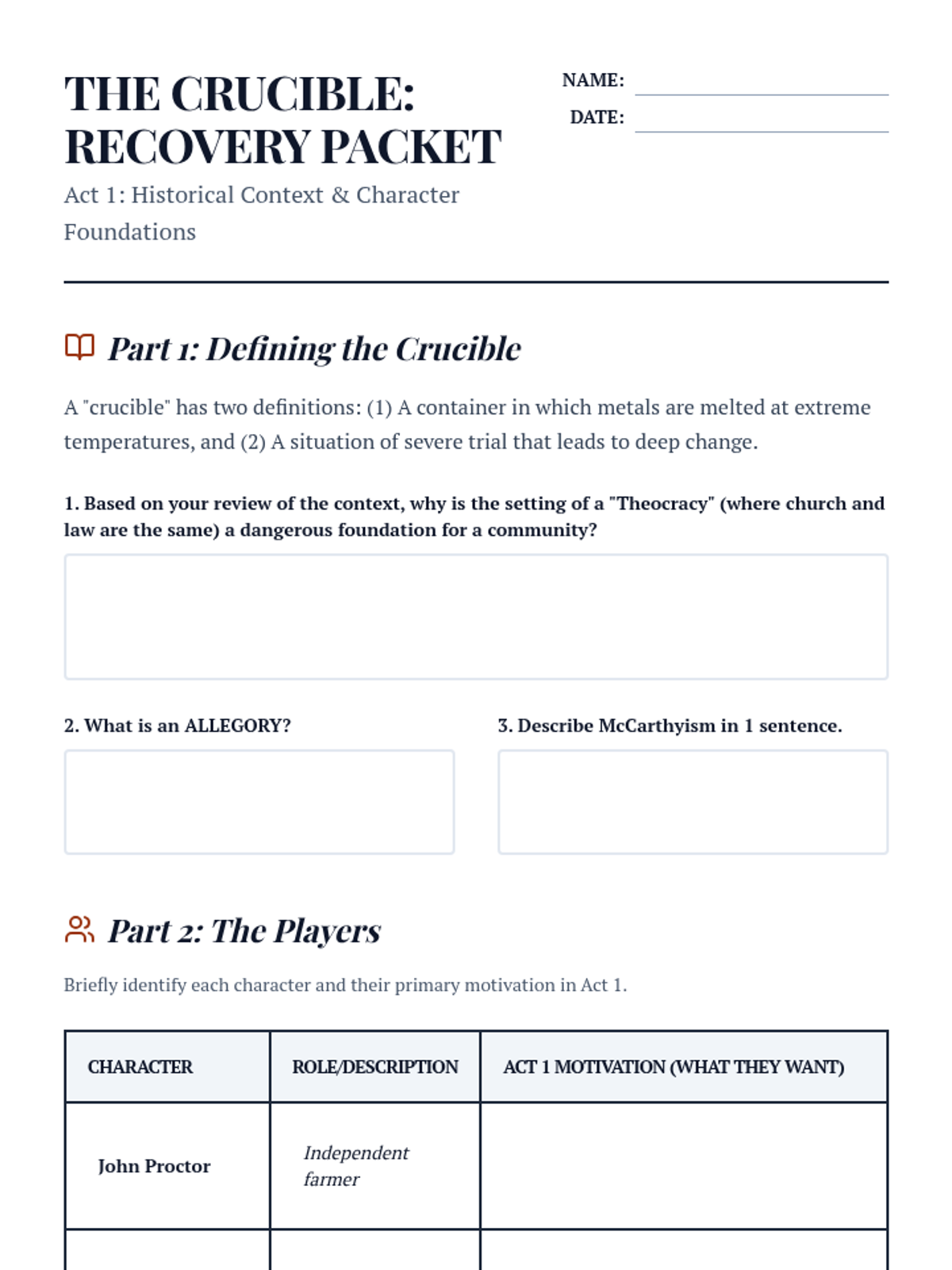
An introduction to Puritan Salem, the historical context of McCarthyism, and the initial outbreak of hysteria in Act 1.
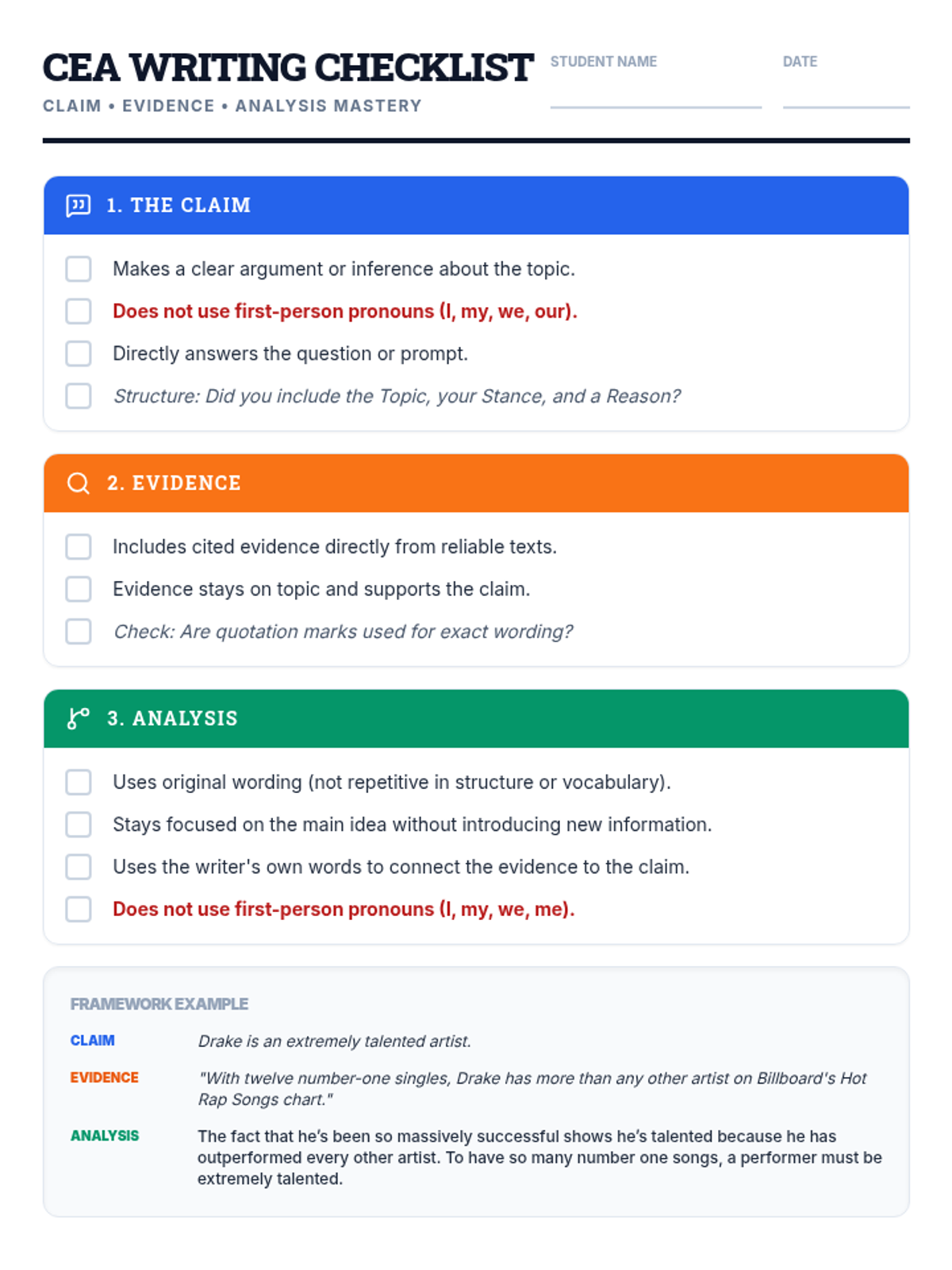
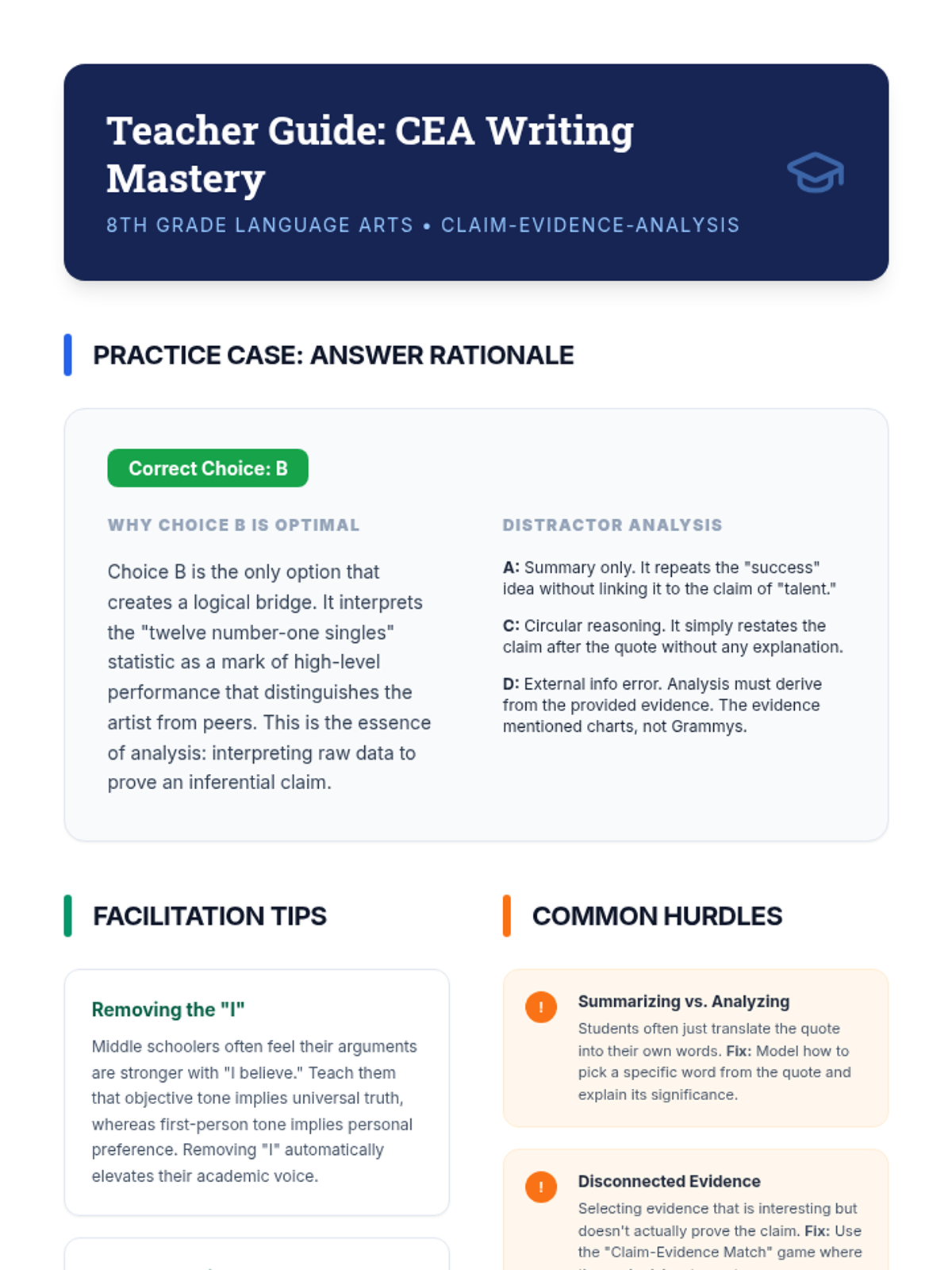
This lesson introduces 8th-grade students to the Claim-Evidence-Analysis (CEA) writing framework, focusing on how to construct objective arguments and effectively connect evidence to claims.
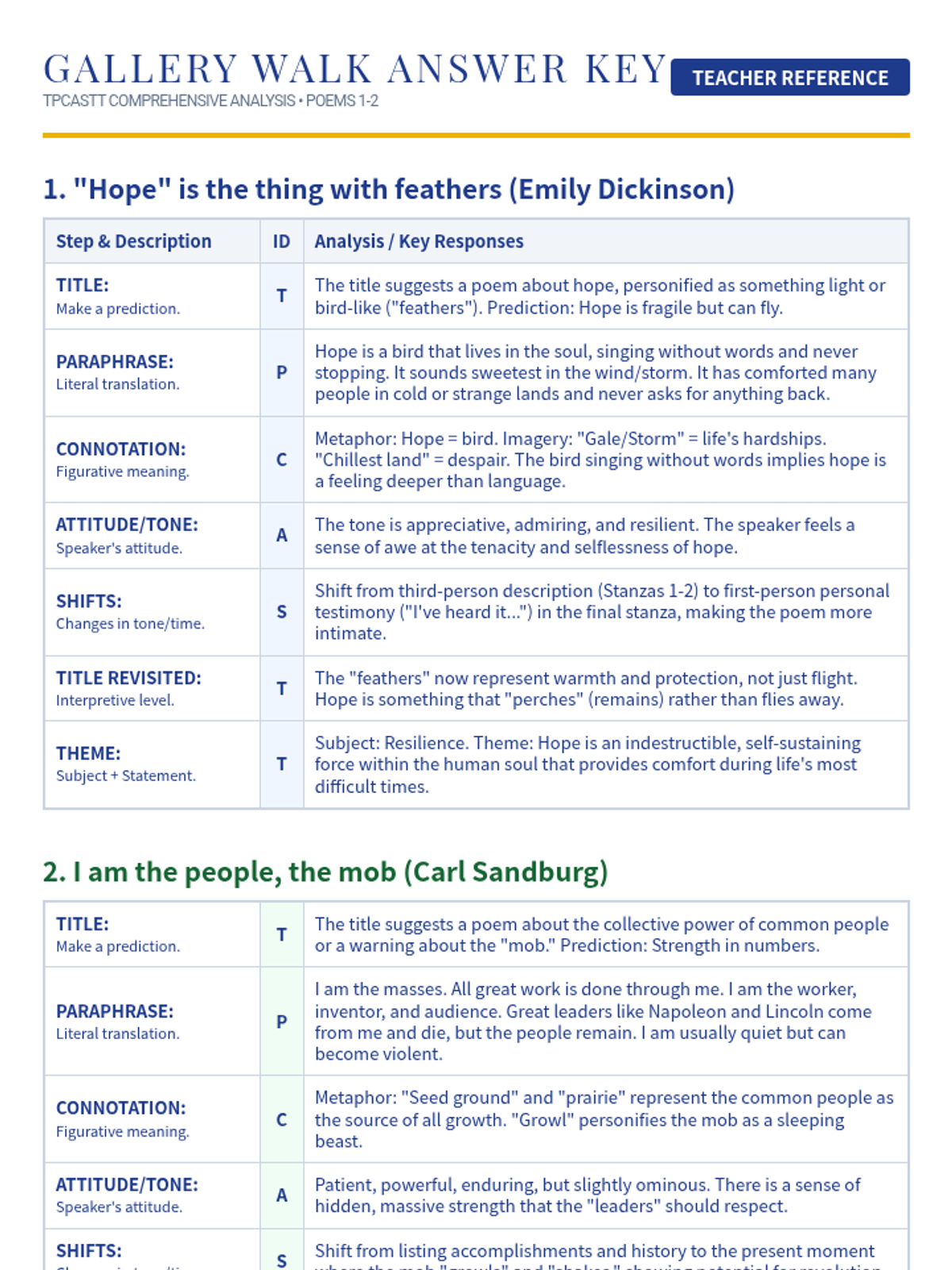
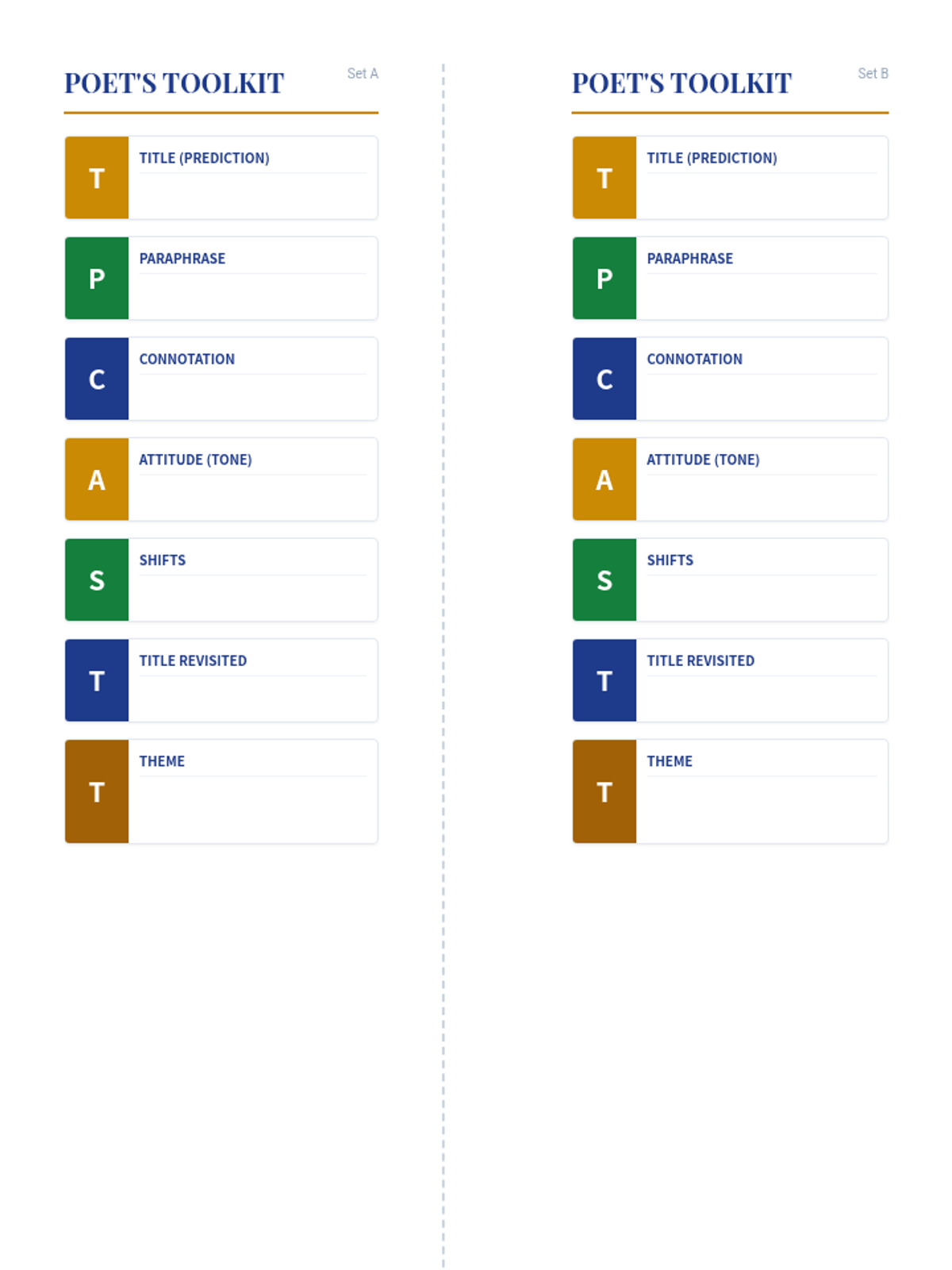
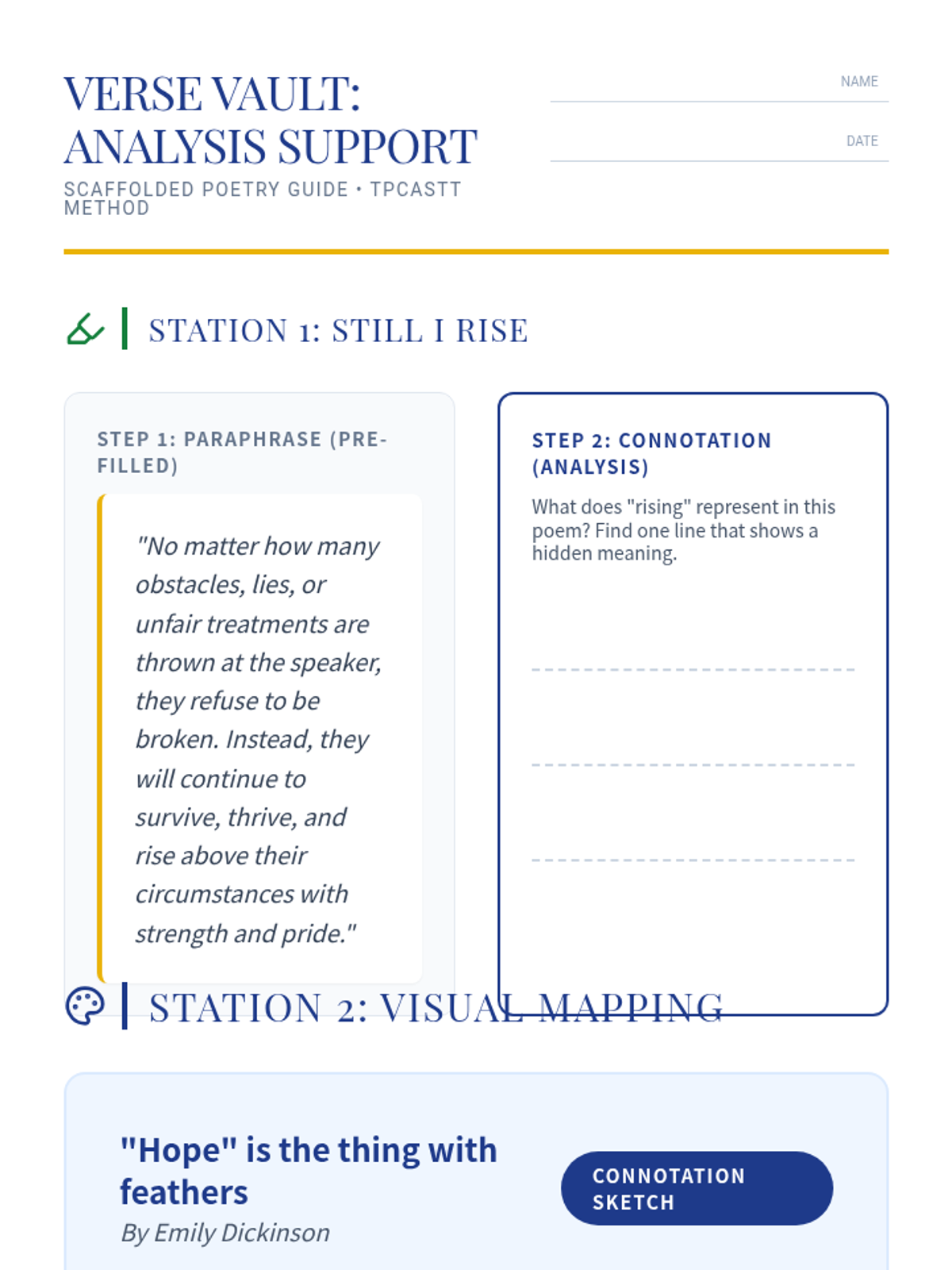
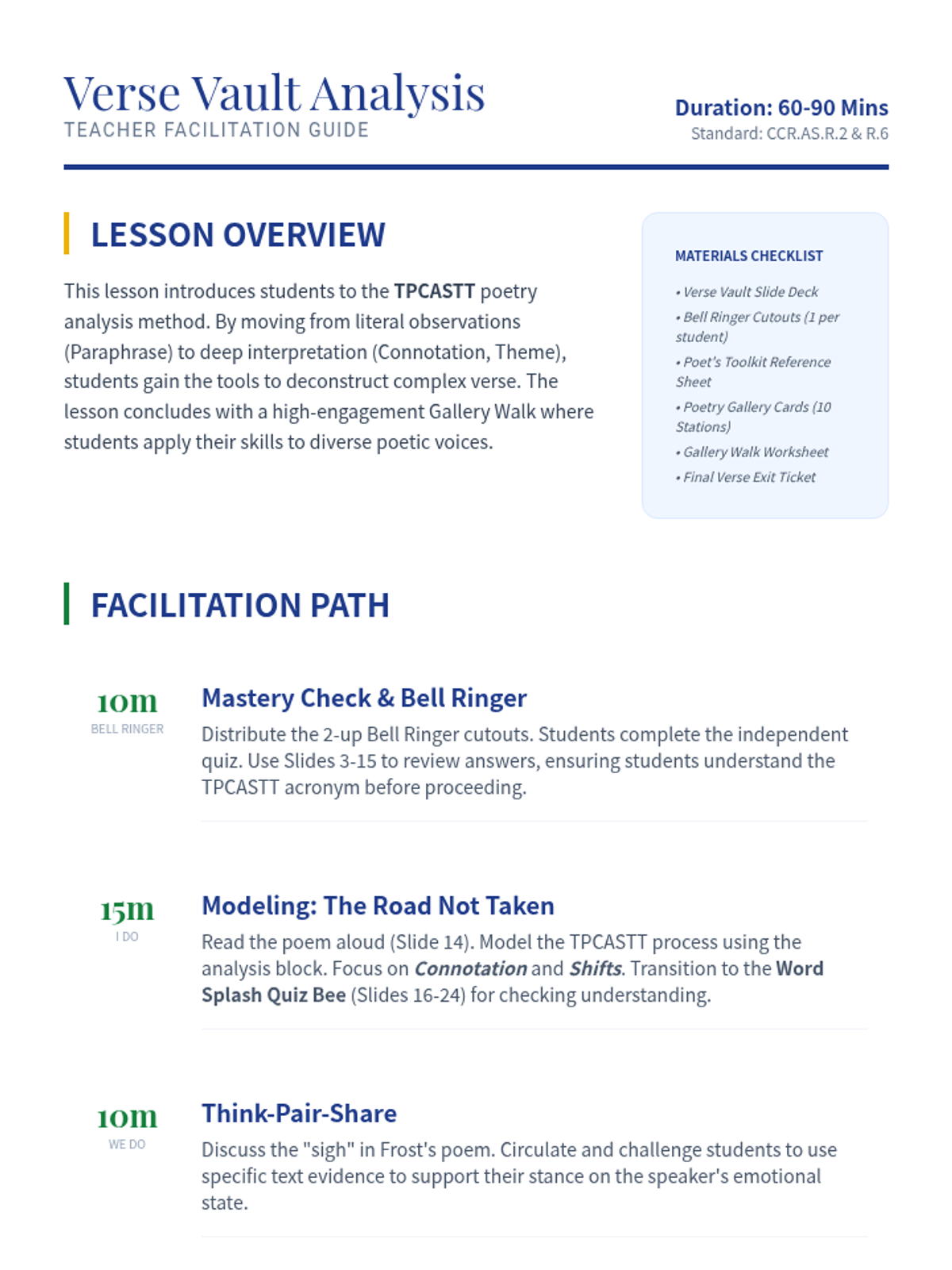
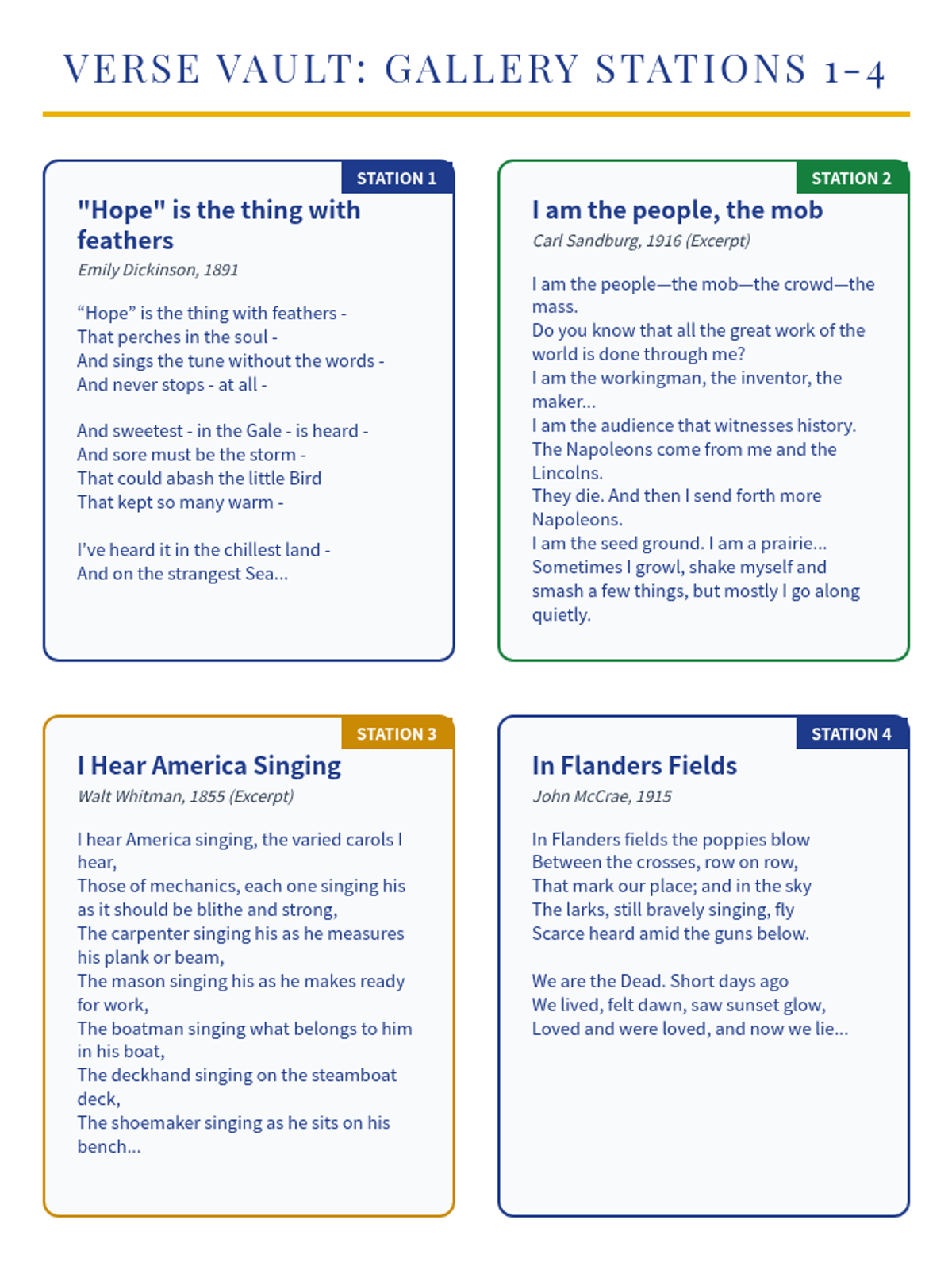
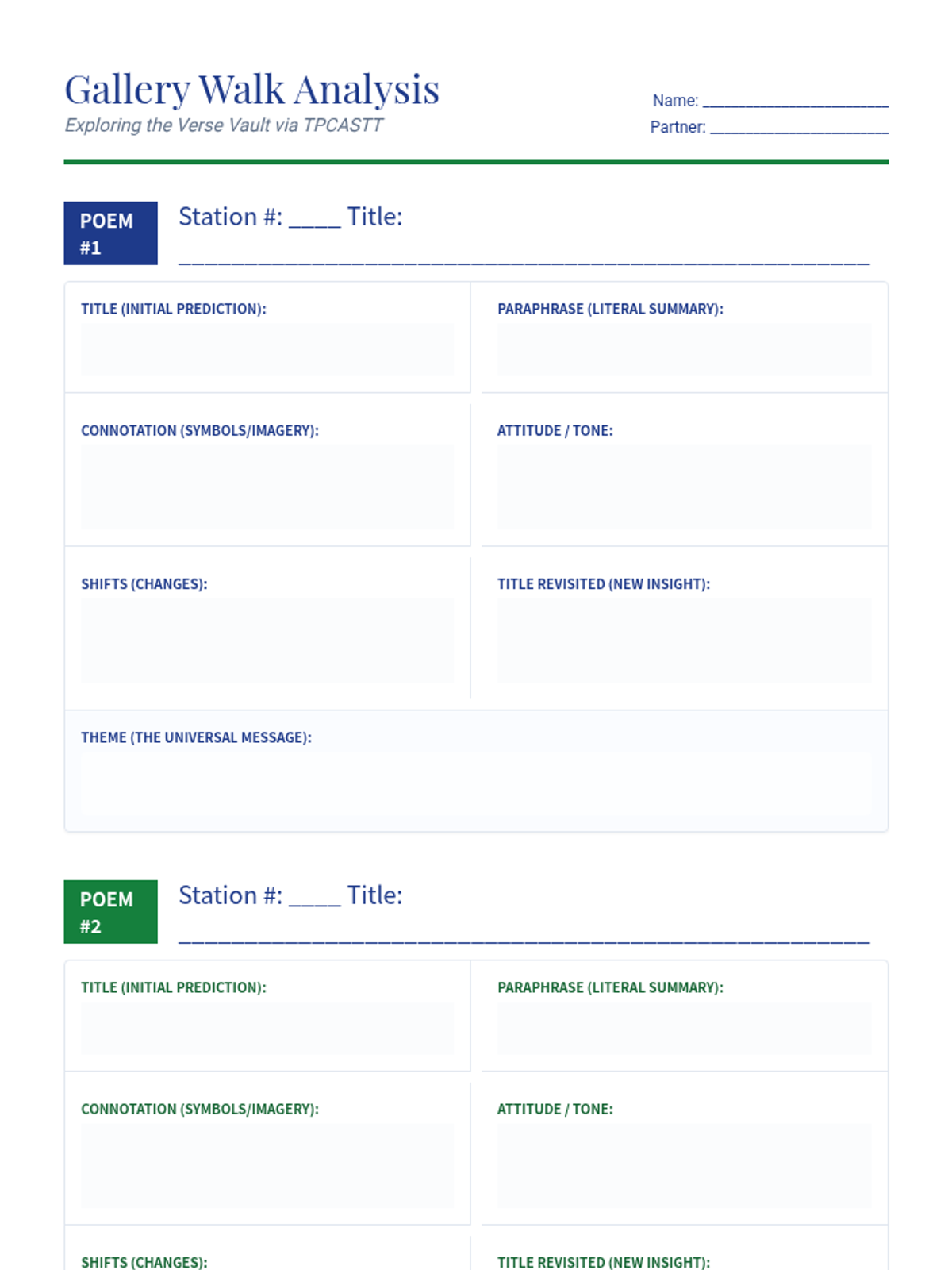
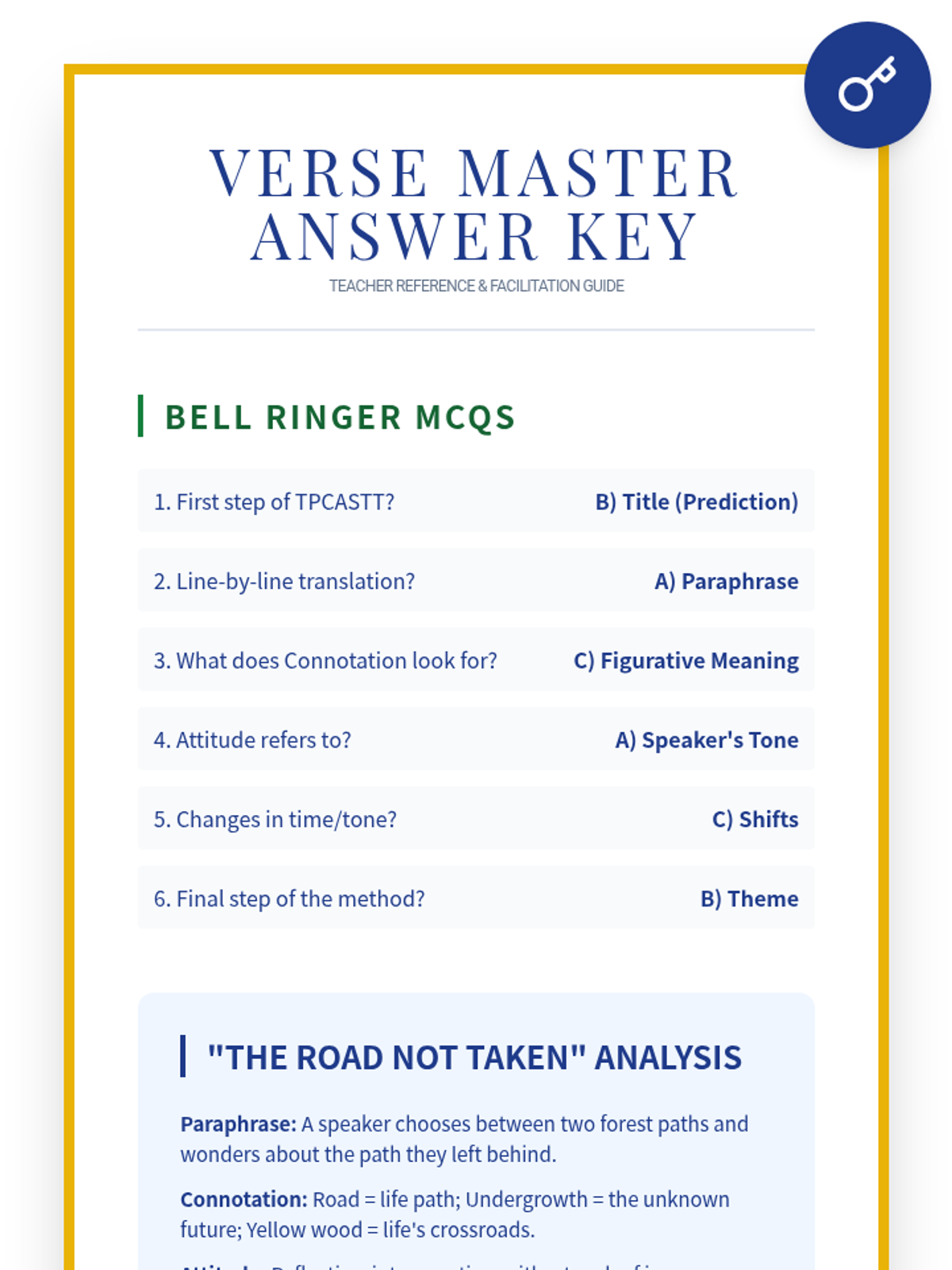
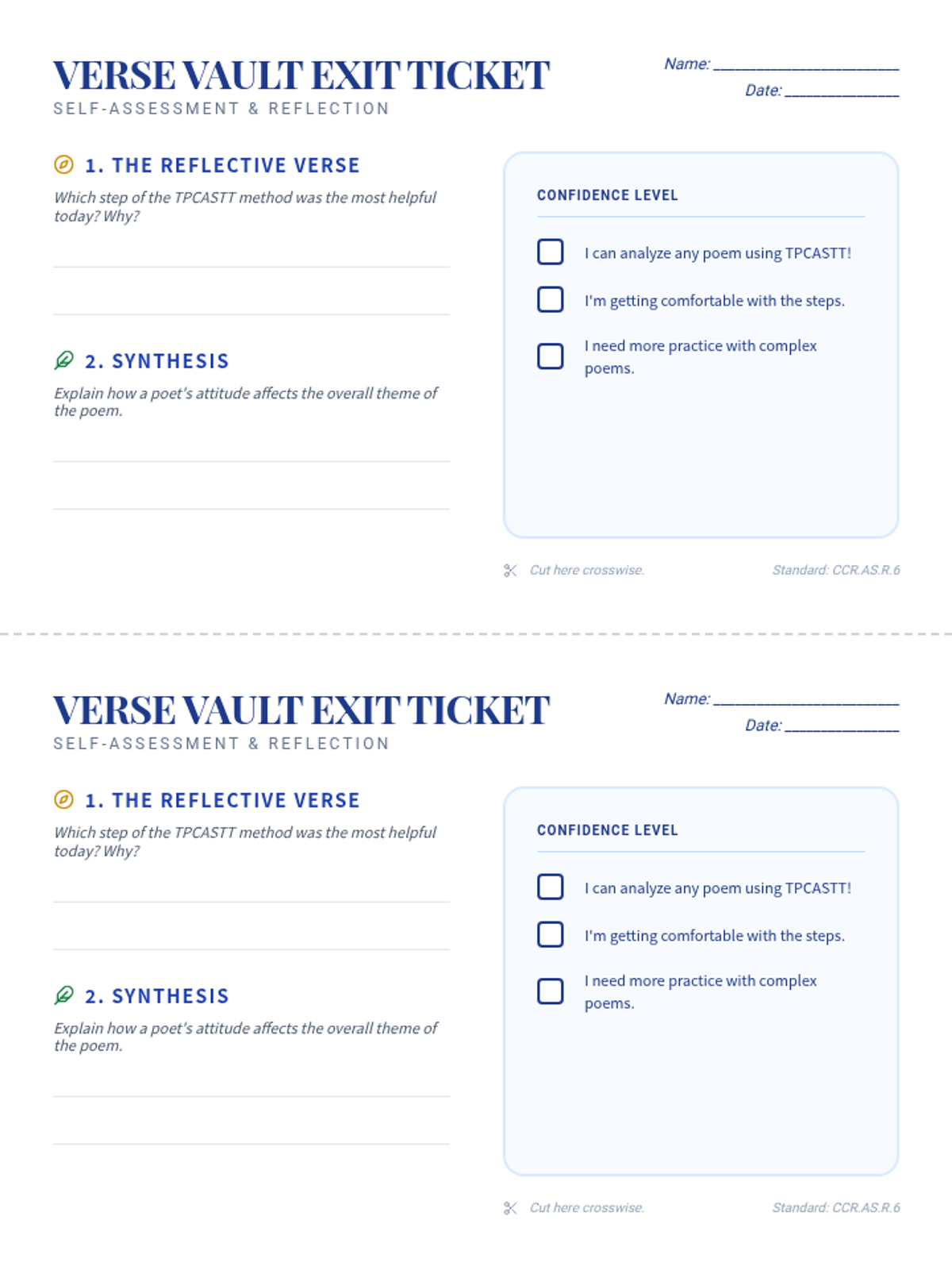
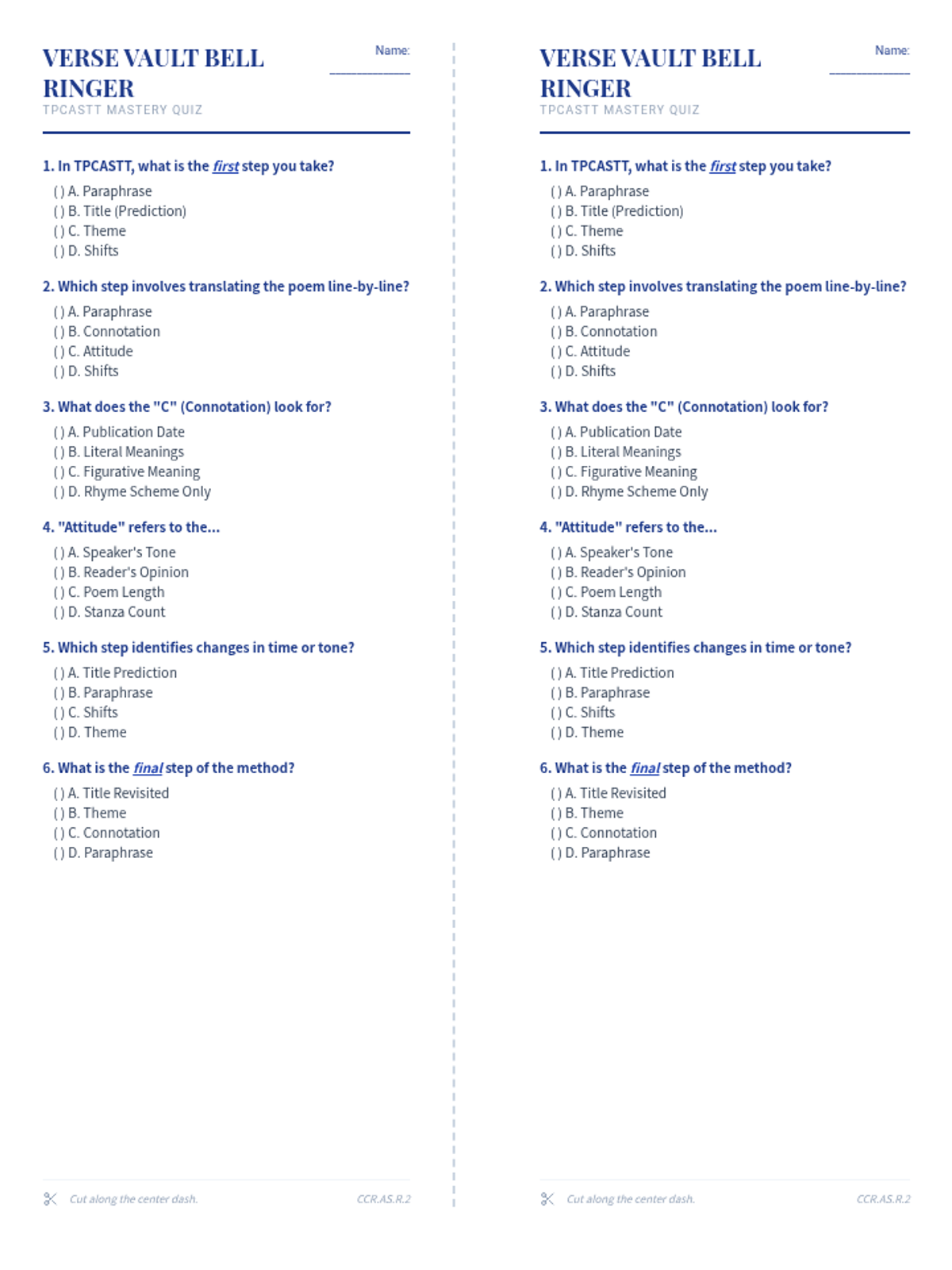
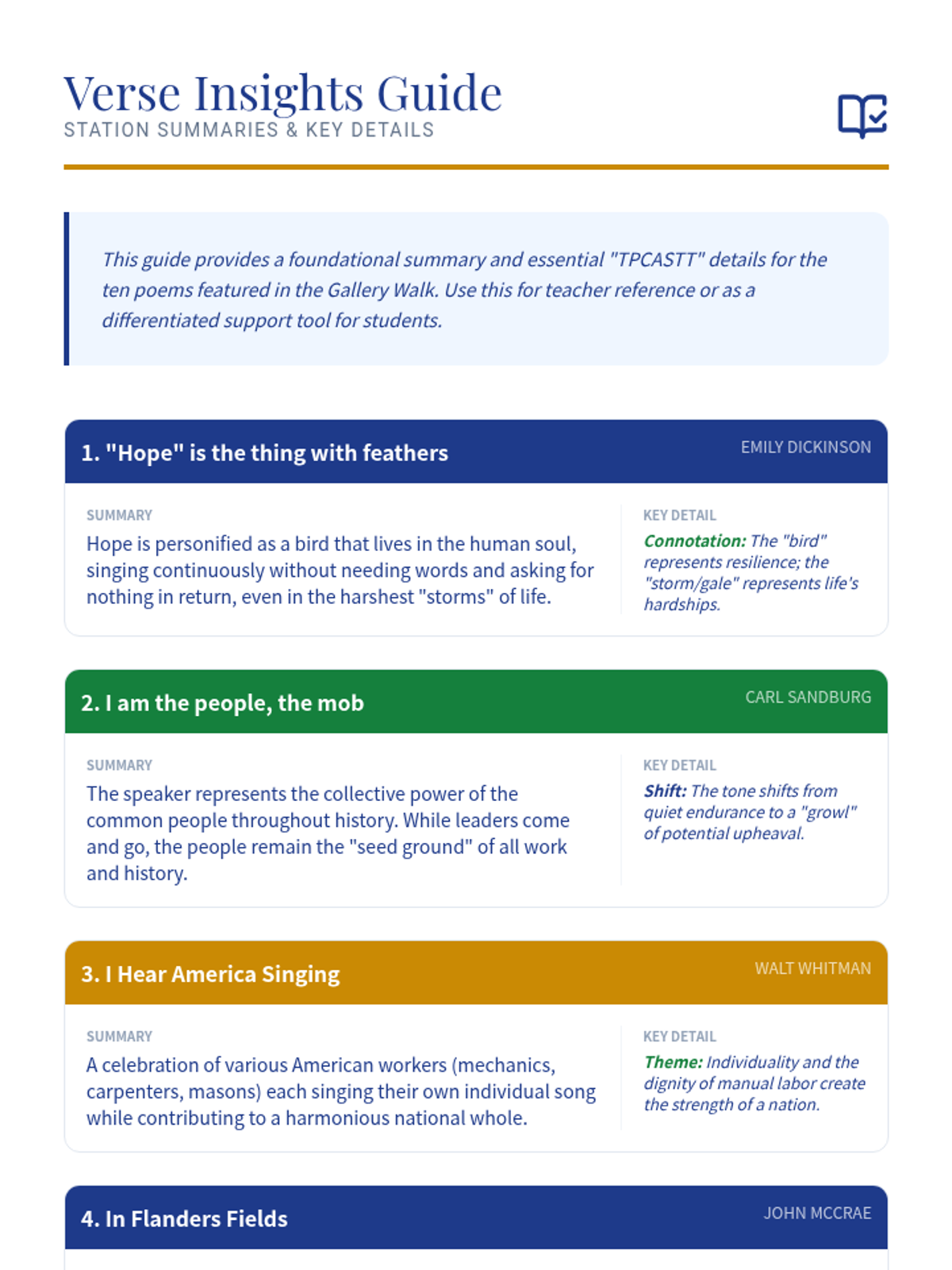
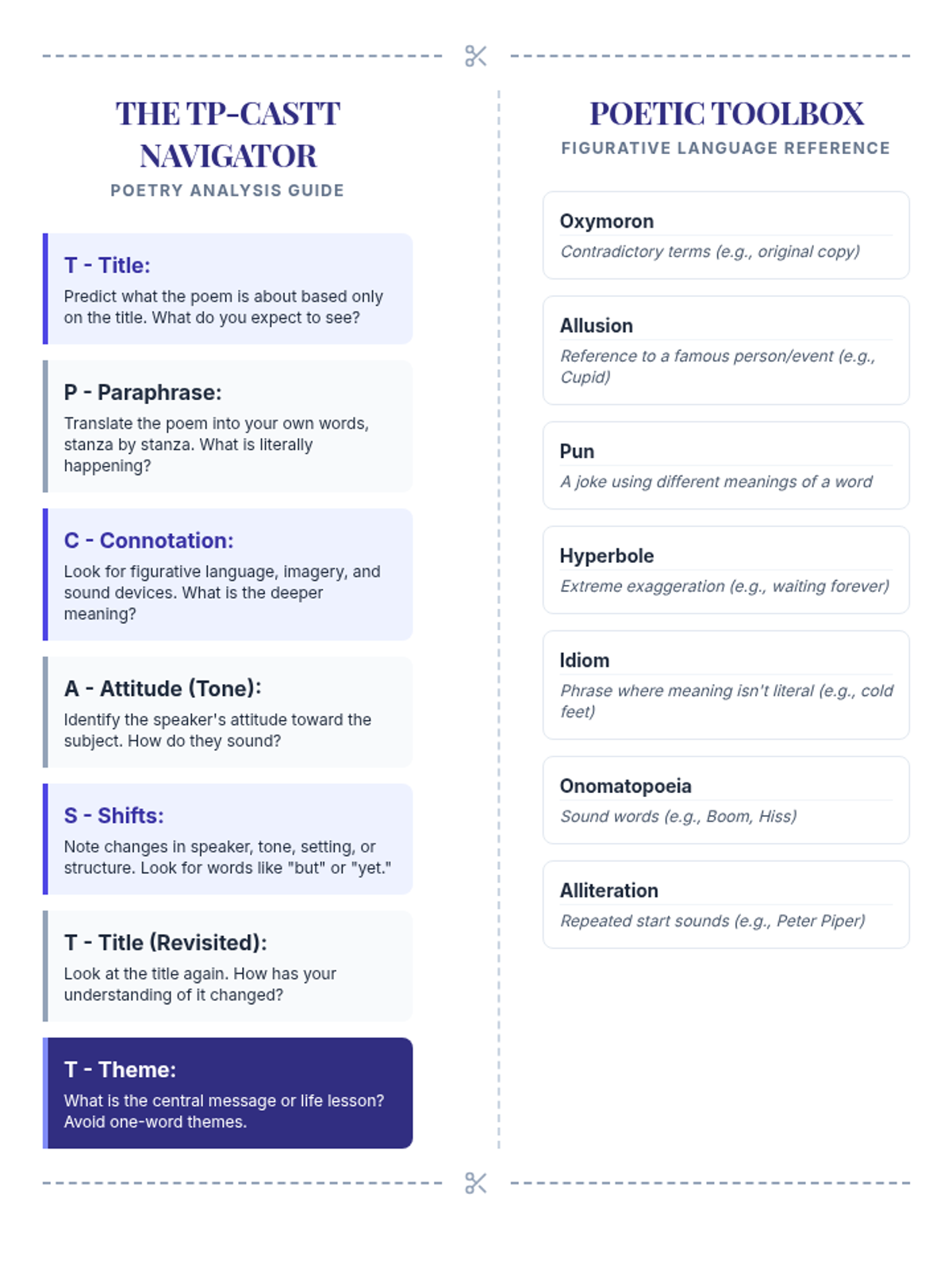
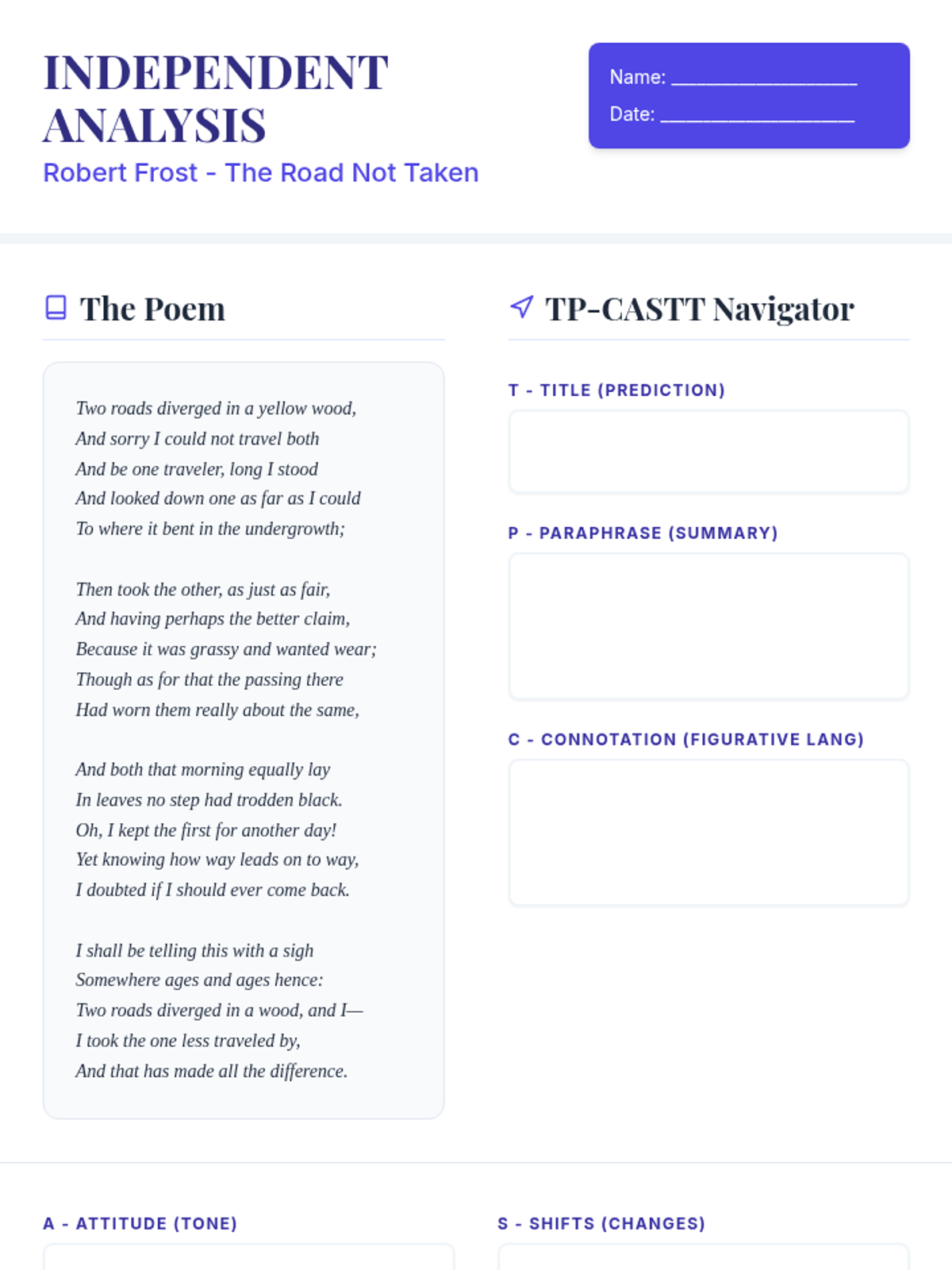
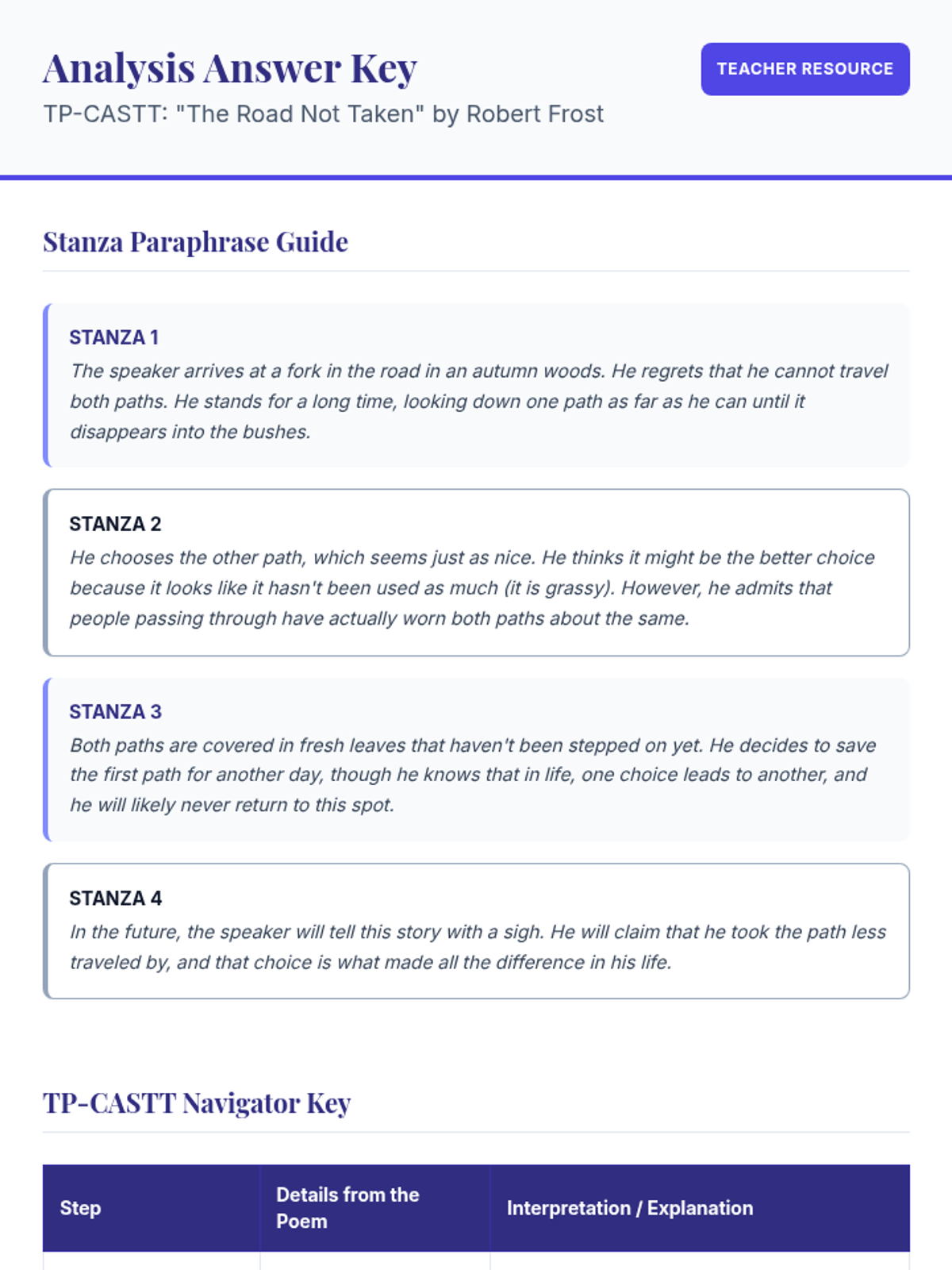
A comprehensive lesson on analyzing poetry using the TPCASTT method, featuring a deep dive into Robert Frost's 'The Road Not Taken' and a gallery walk of diverse poems.
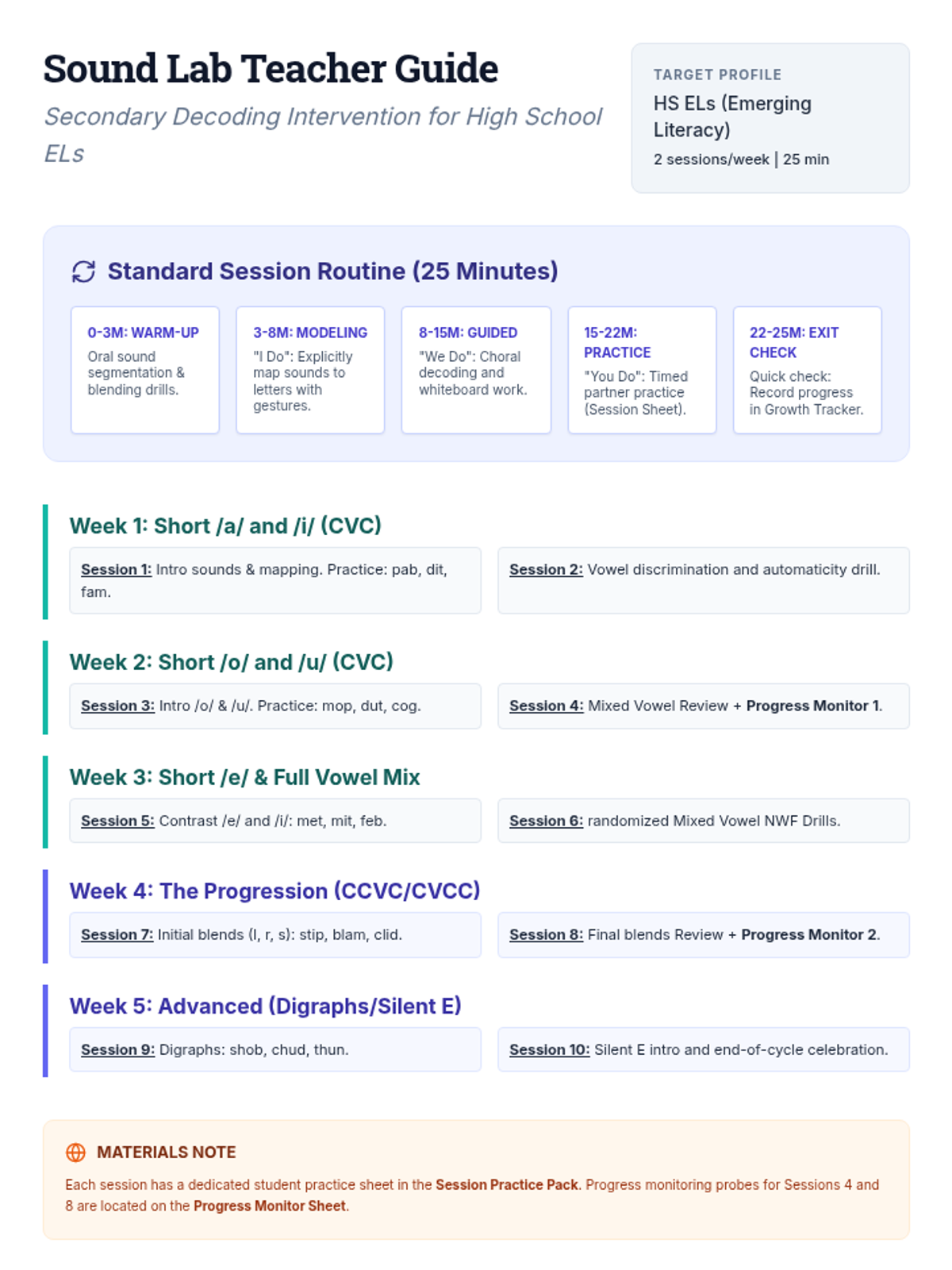
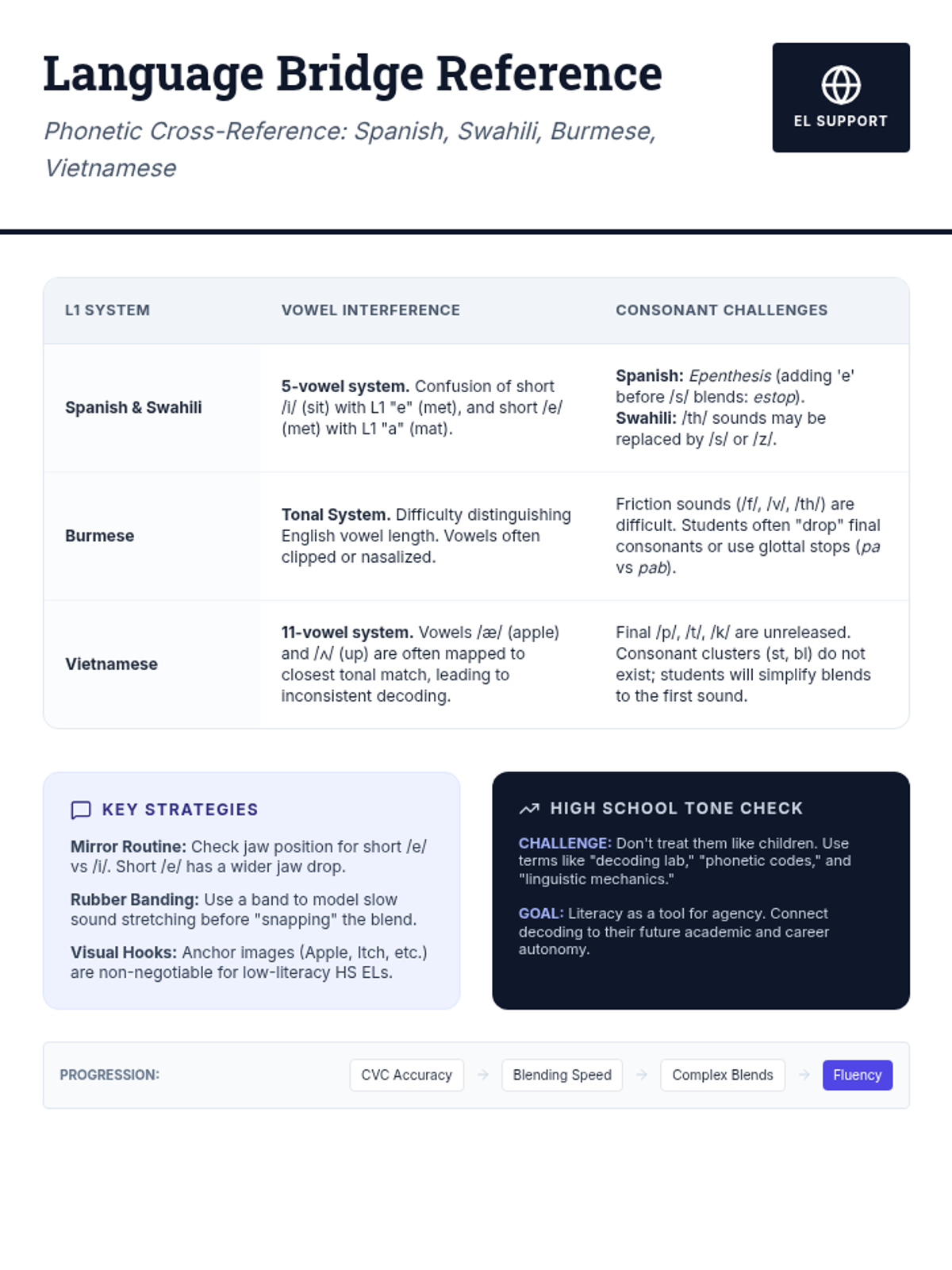
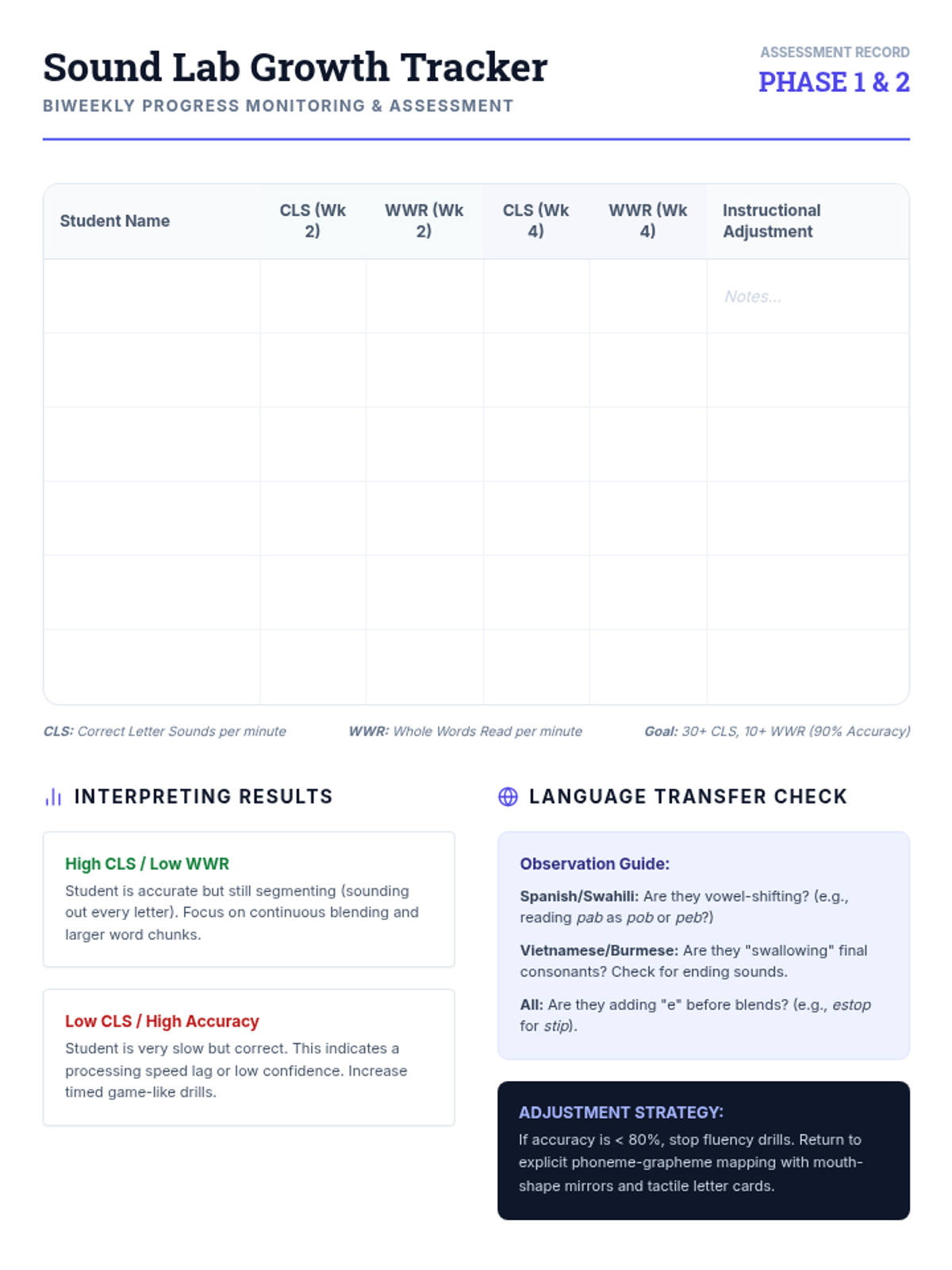
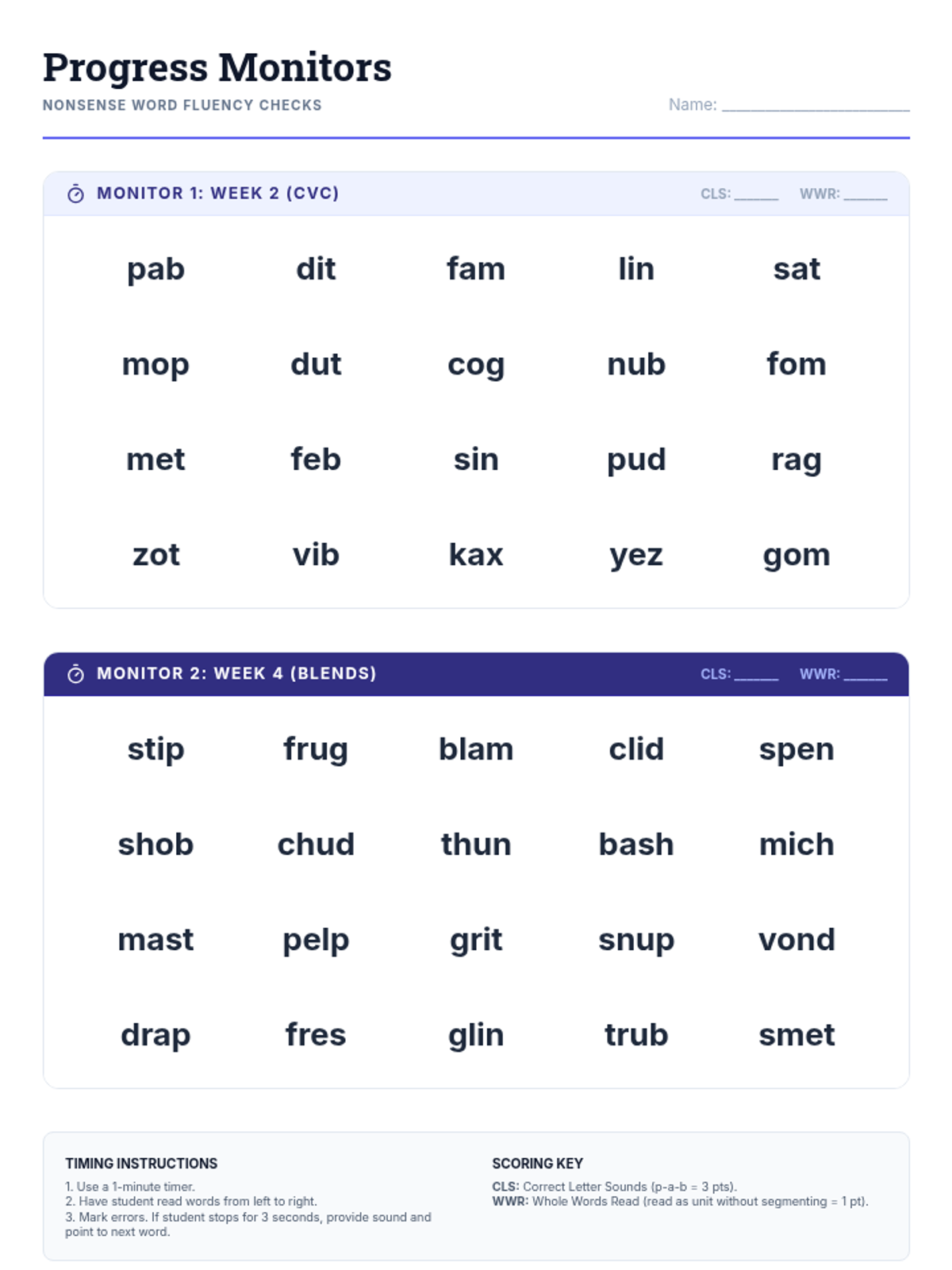
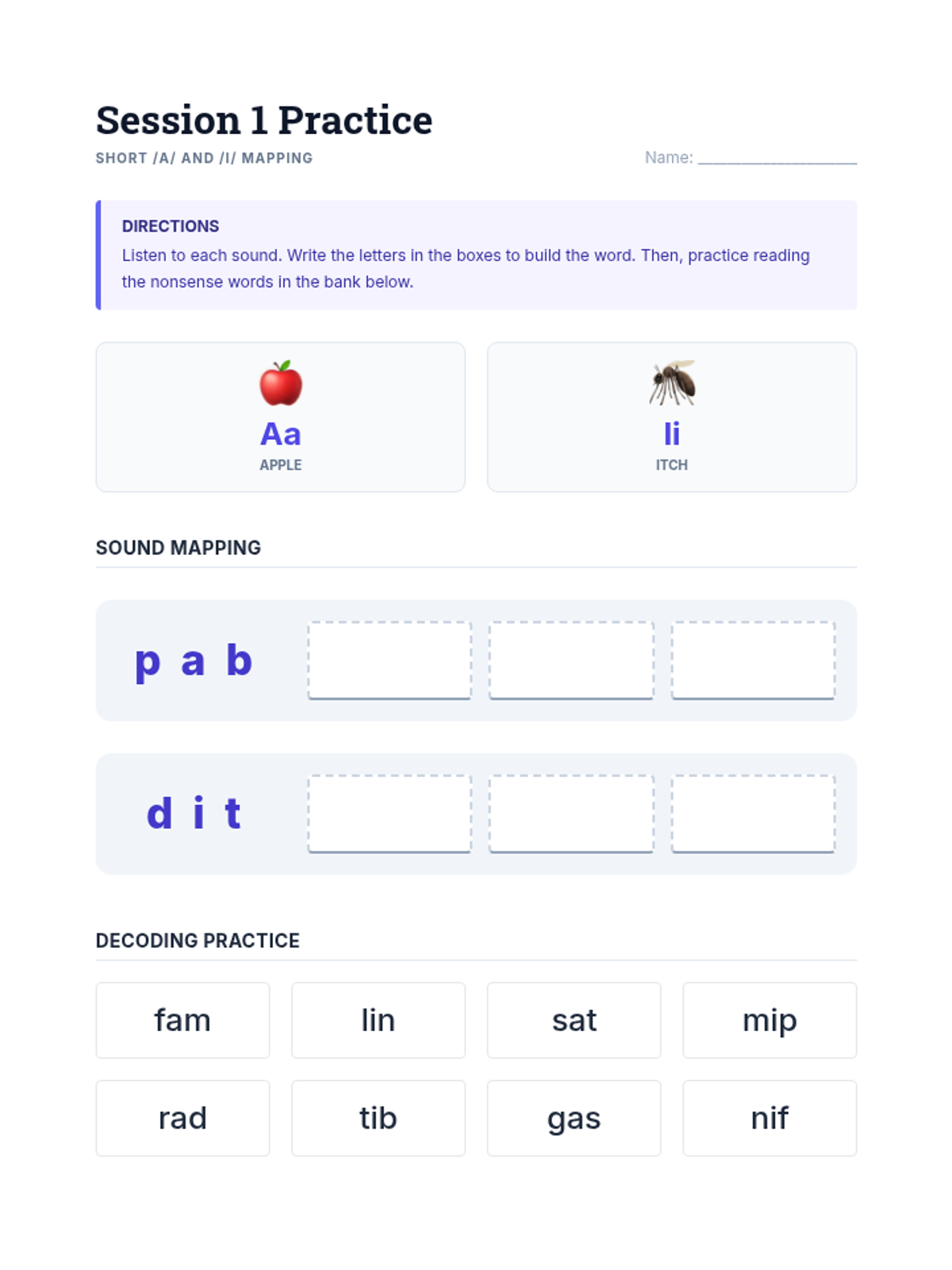
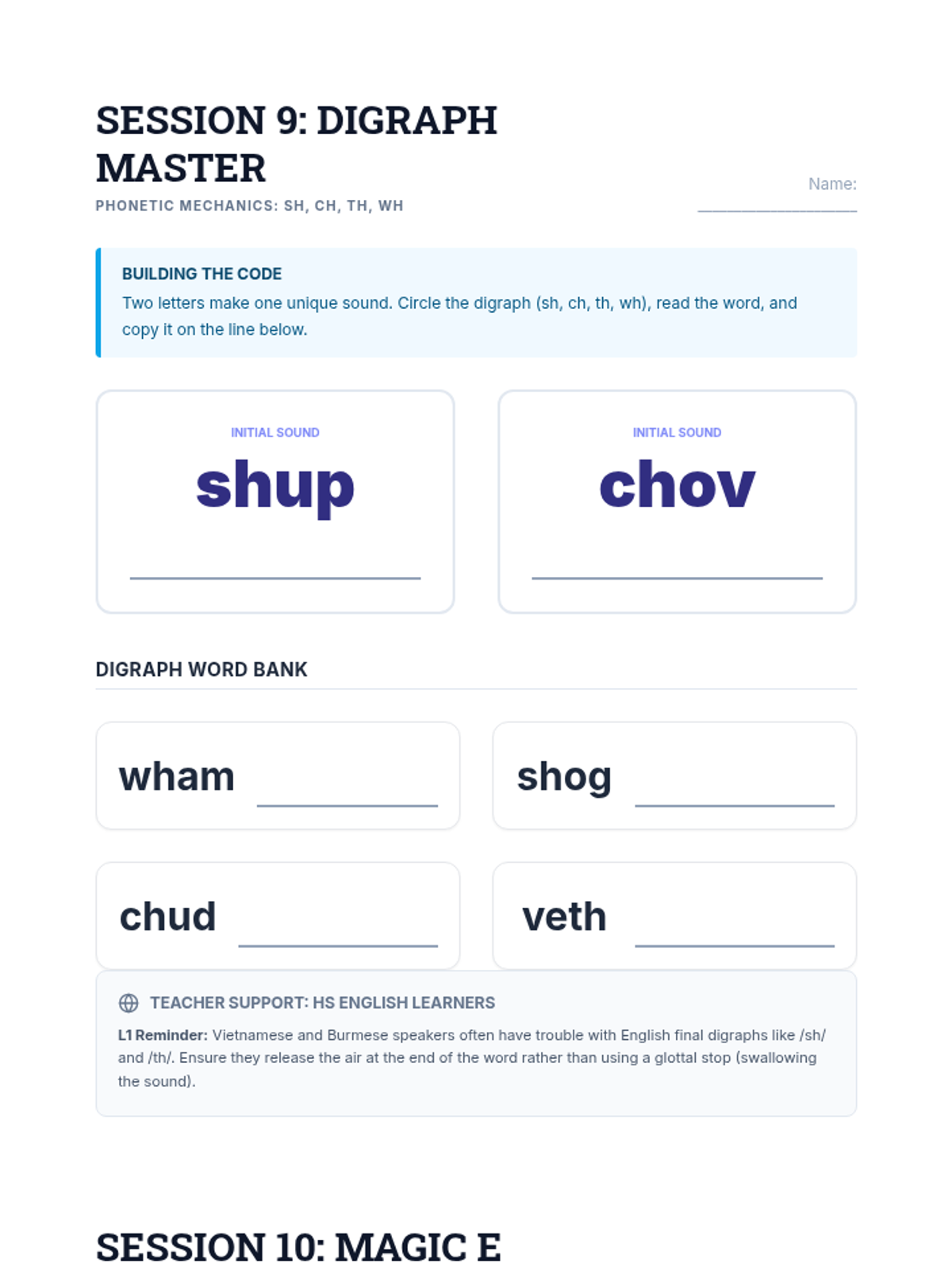
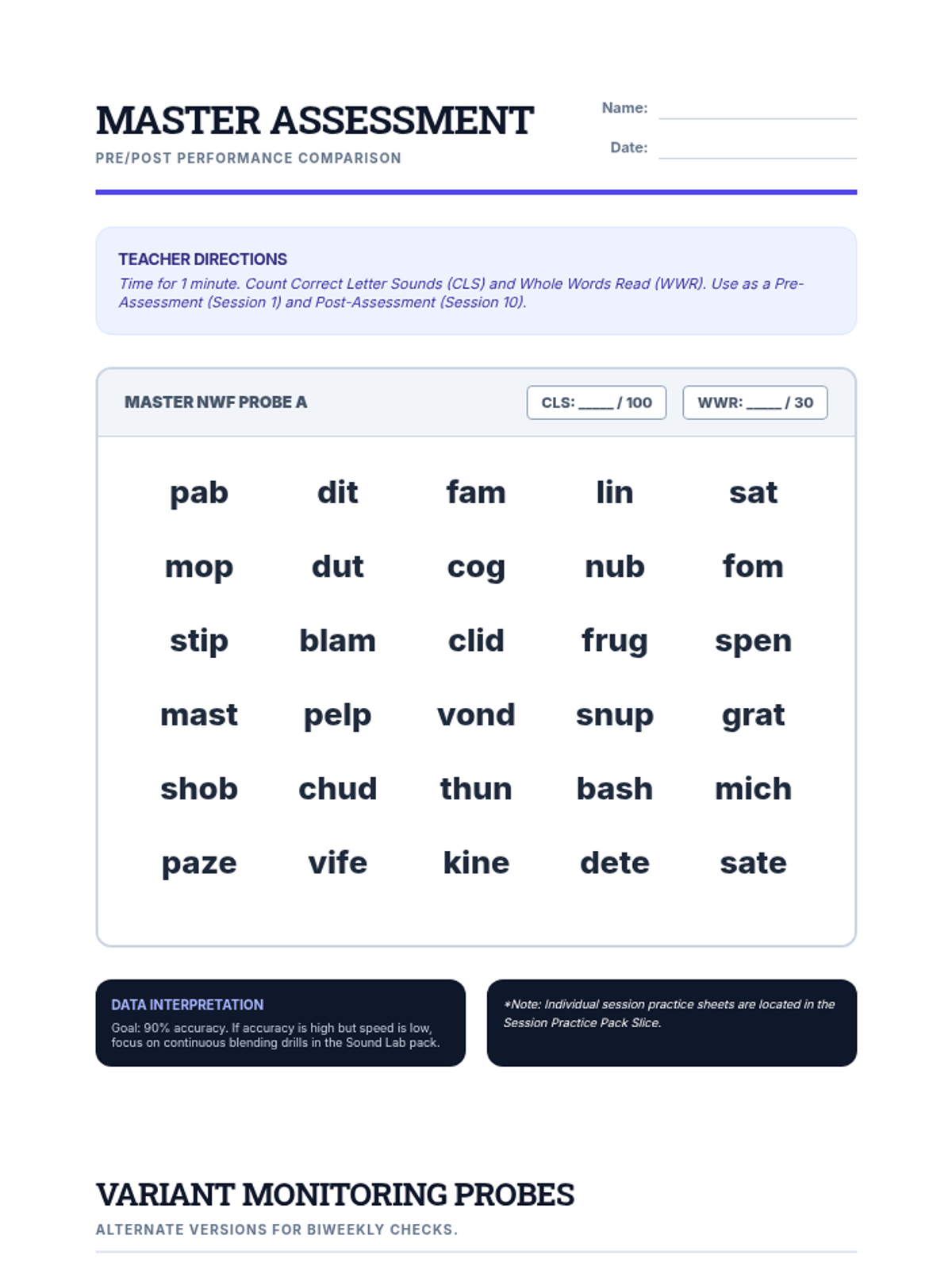
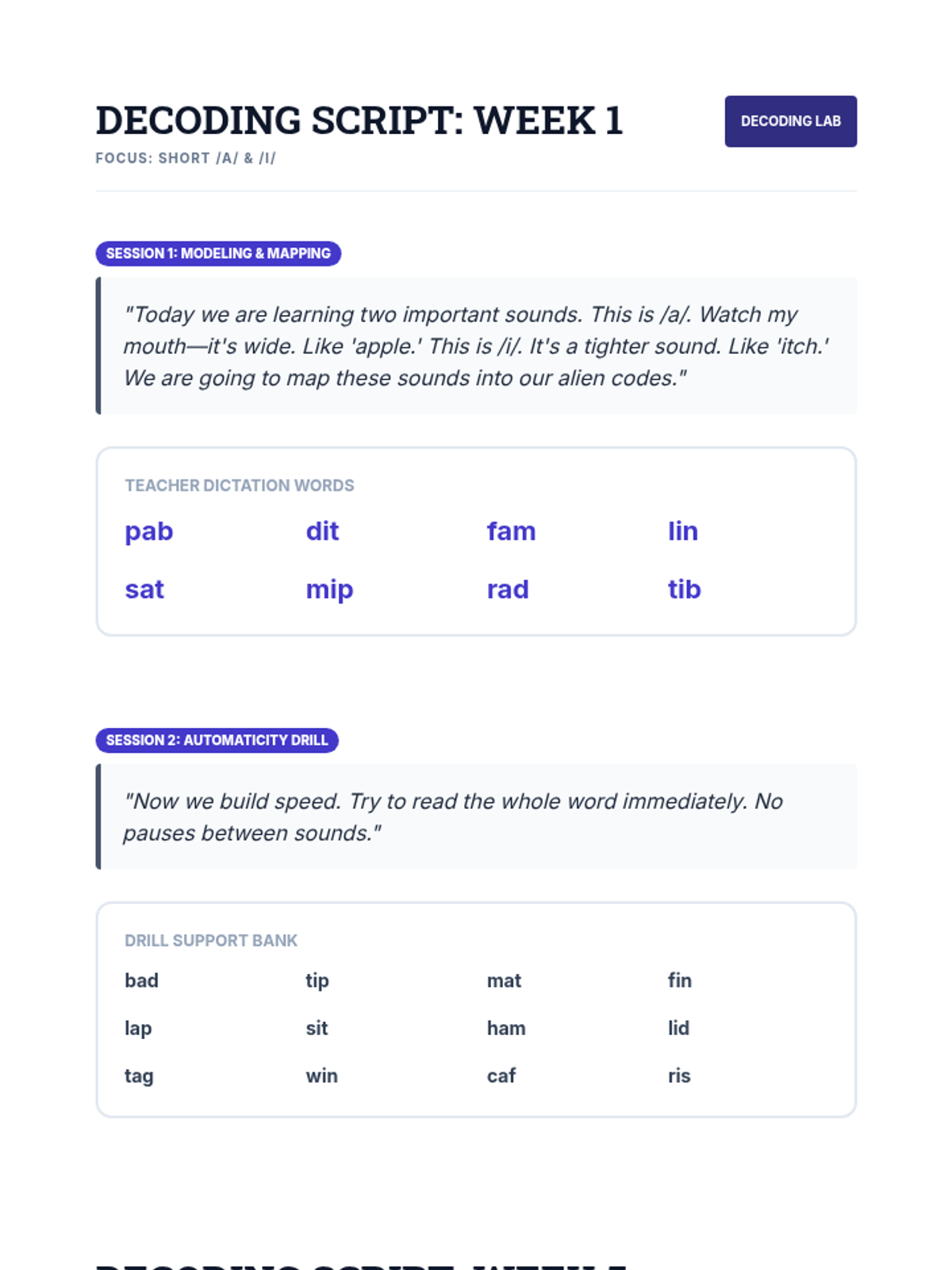
A comprehensive 5-week intervention for high school English Learners focusing on decoding through nonsense word fluency, specifically designed for students with limited or interrupted formal education.
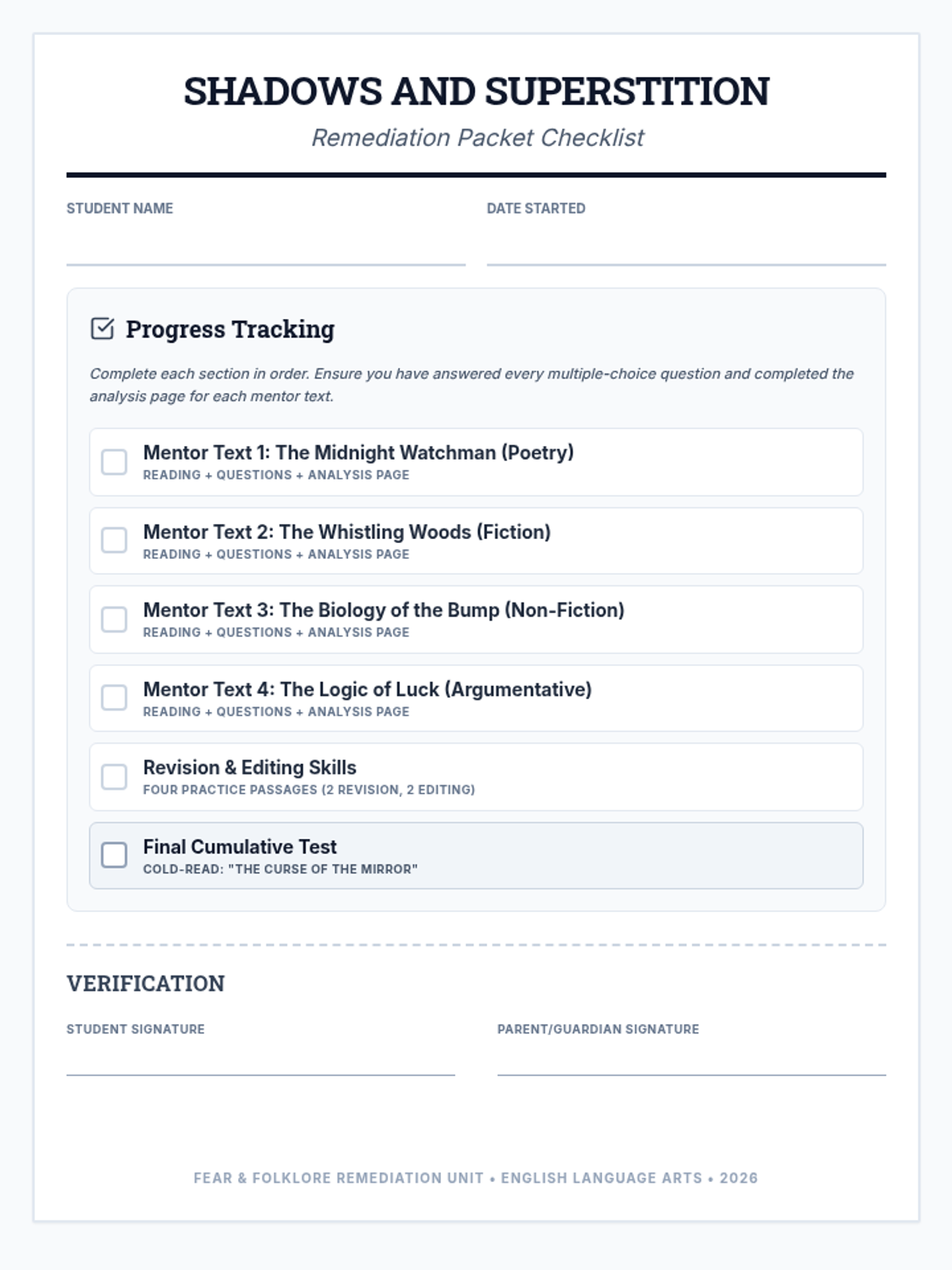
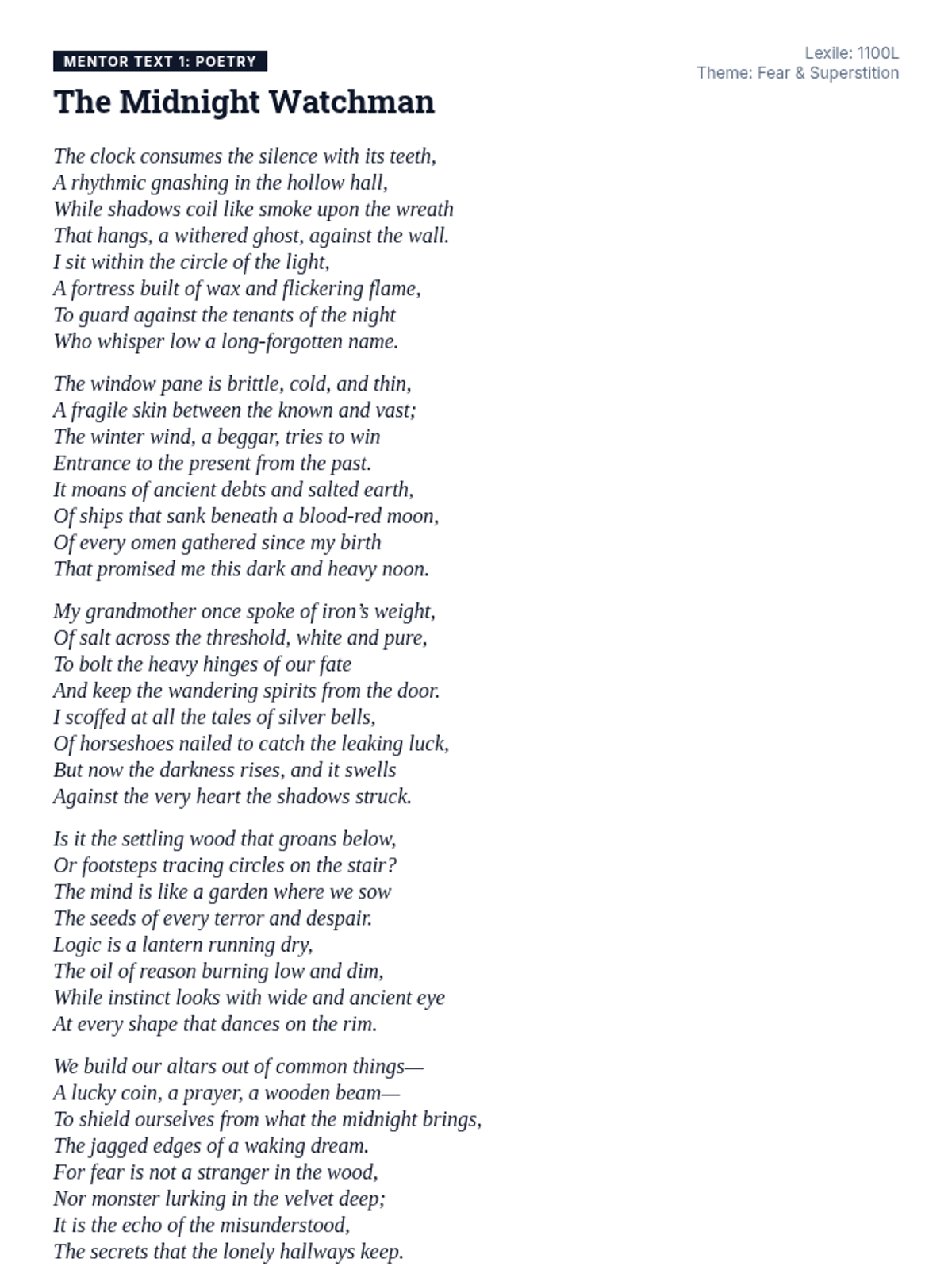
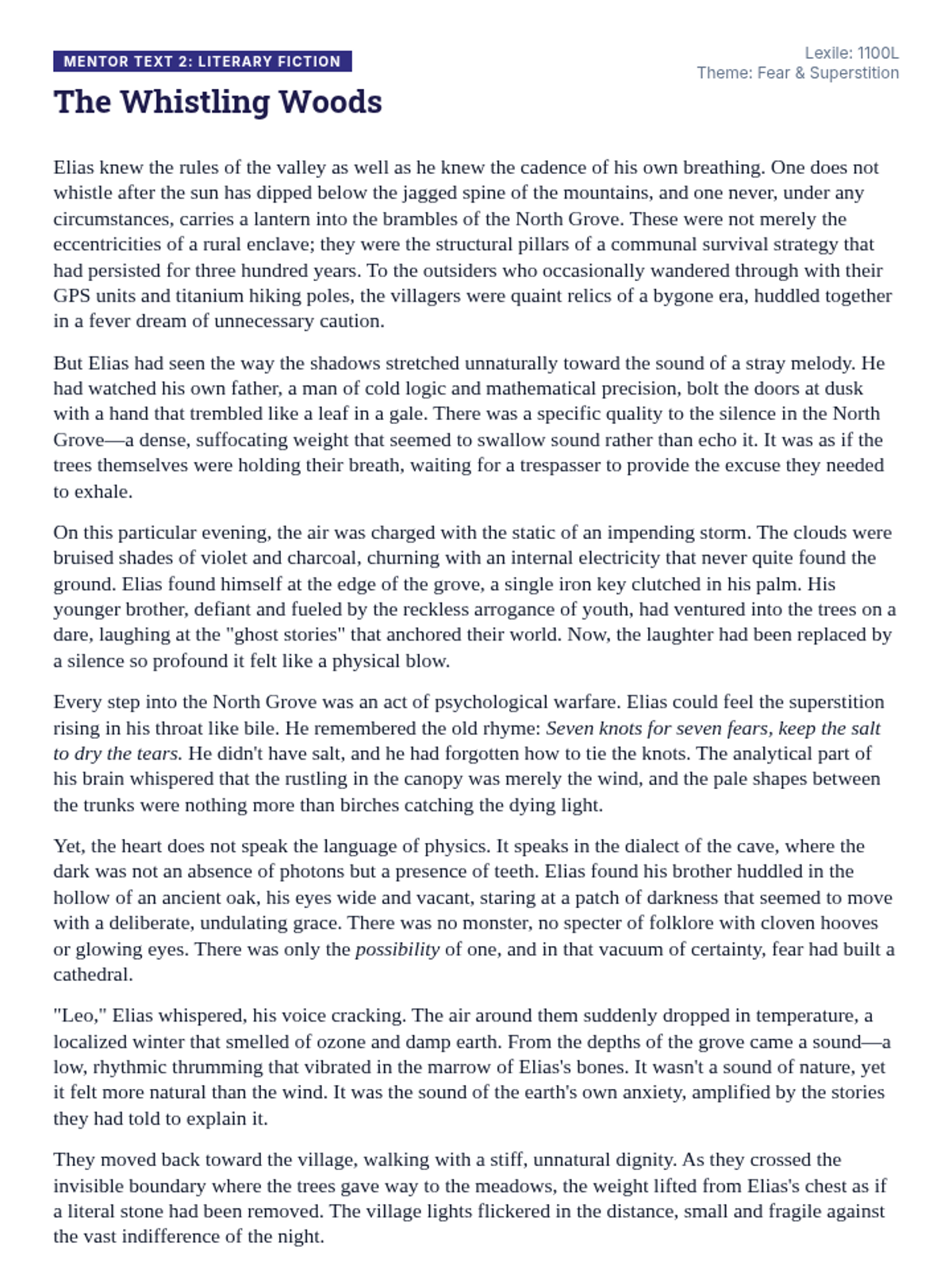
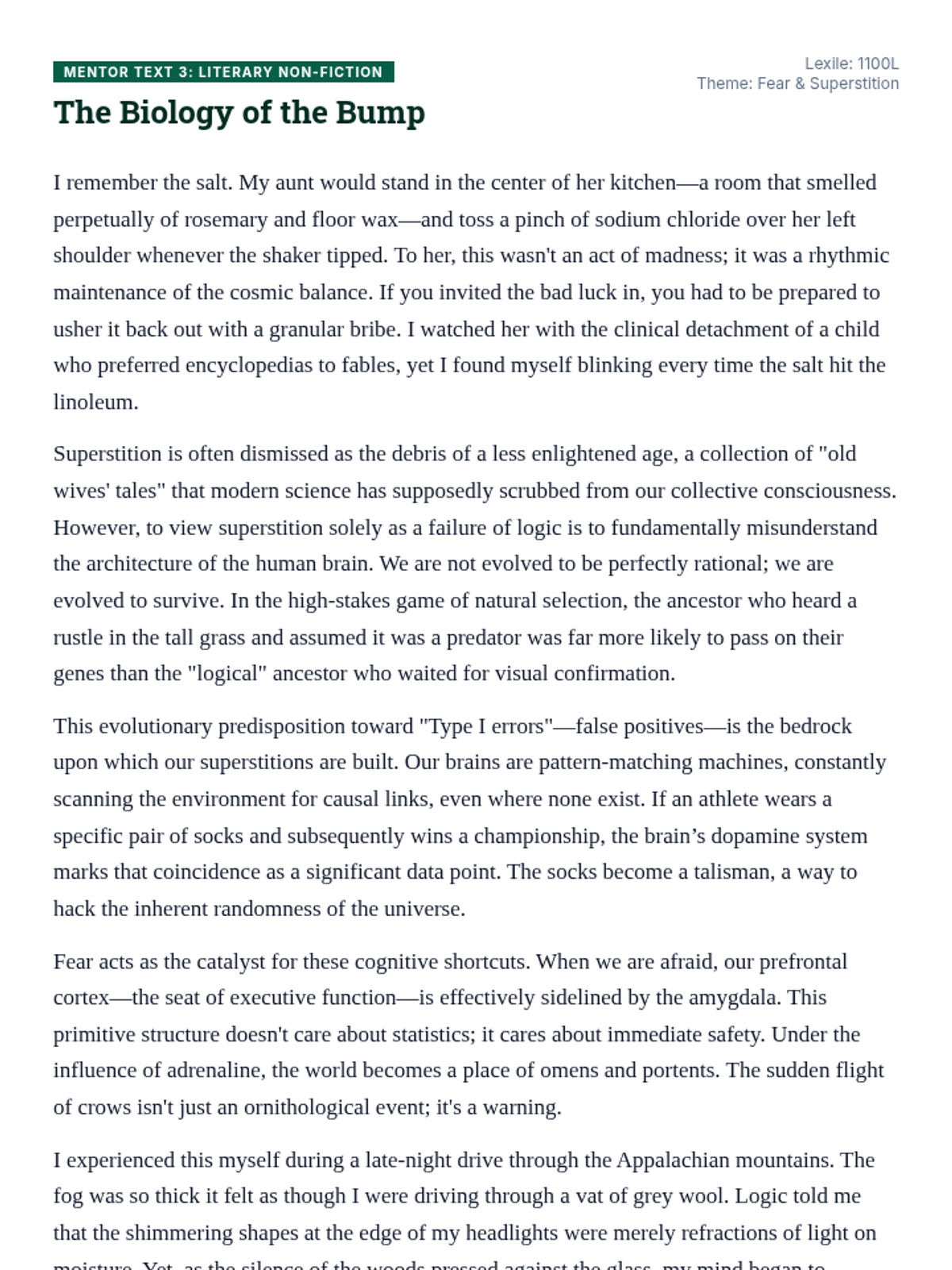
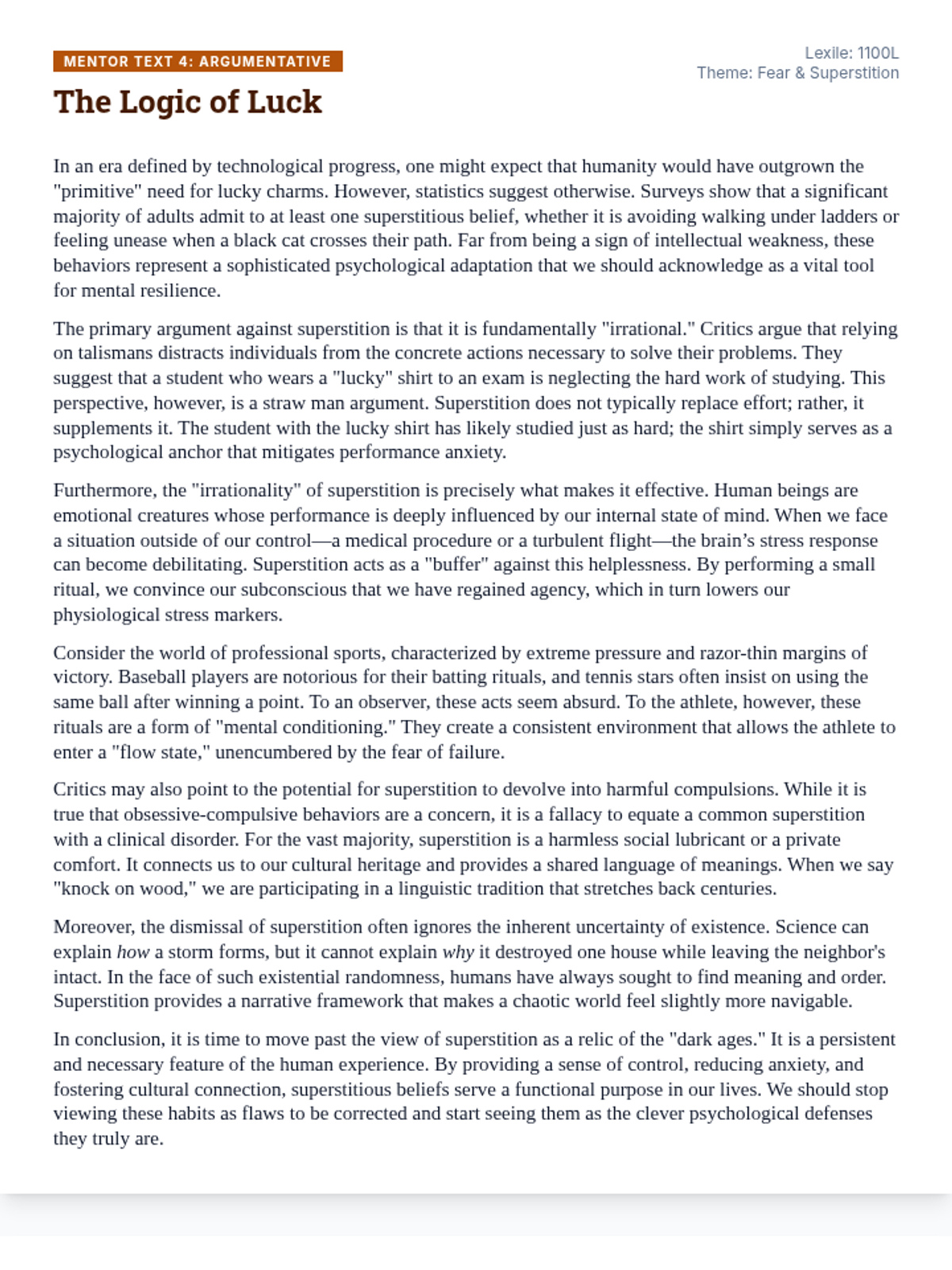
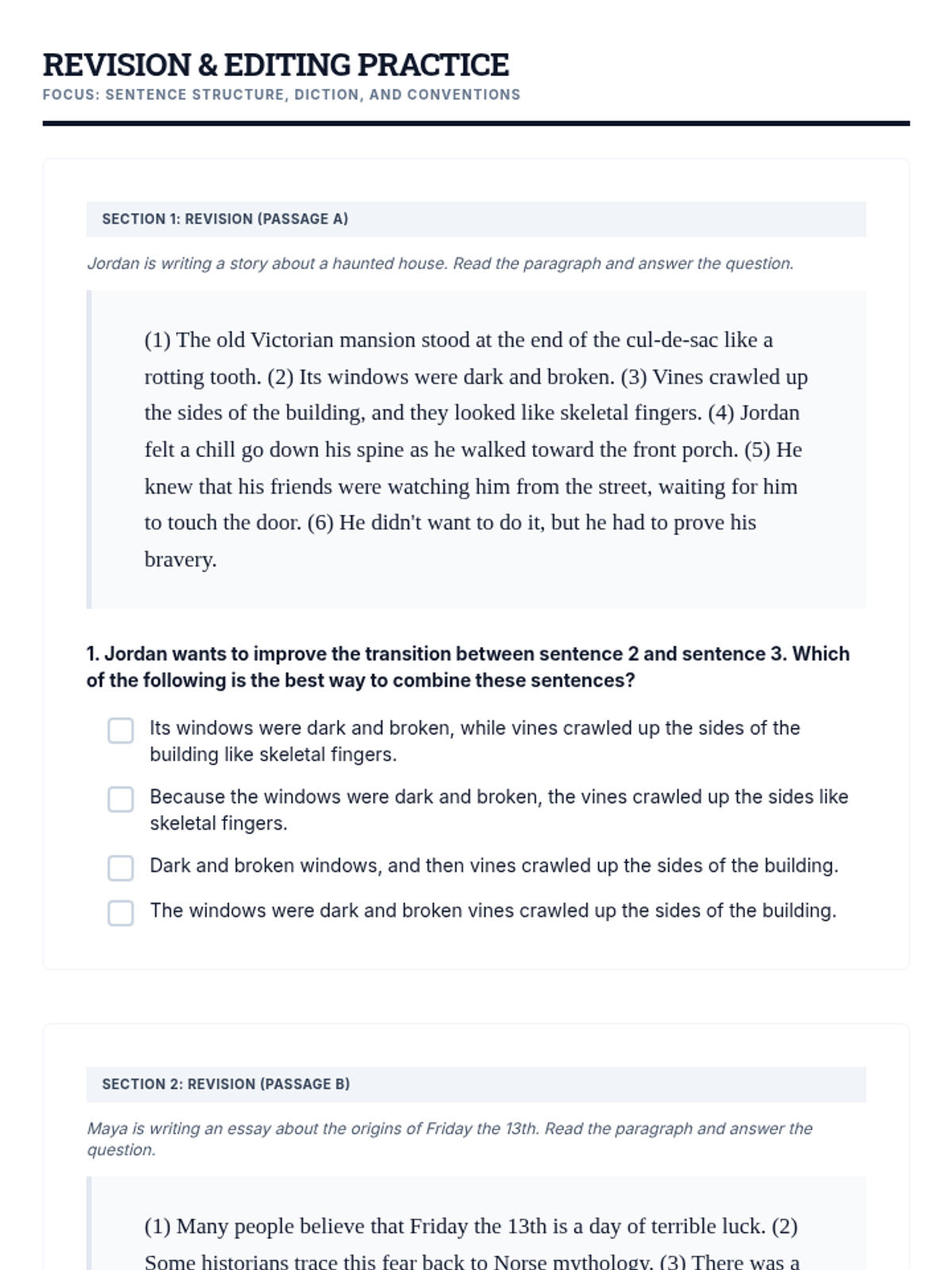
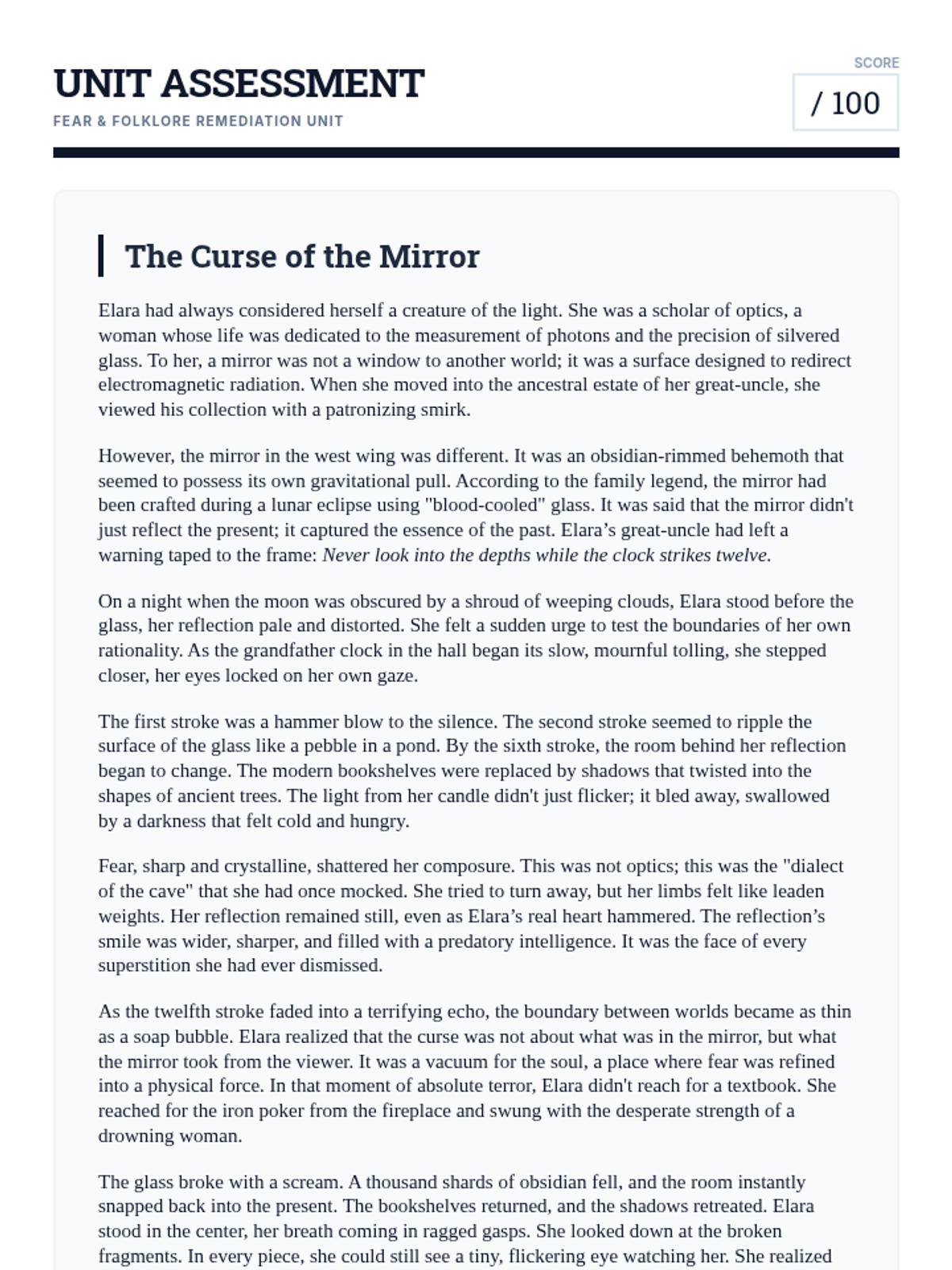
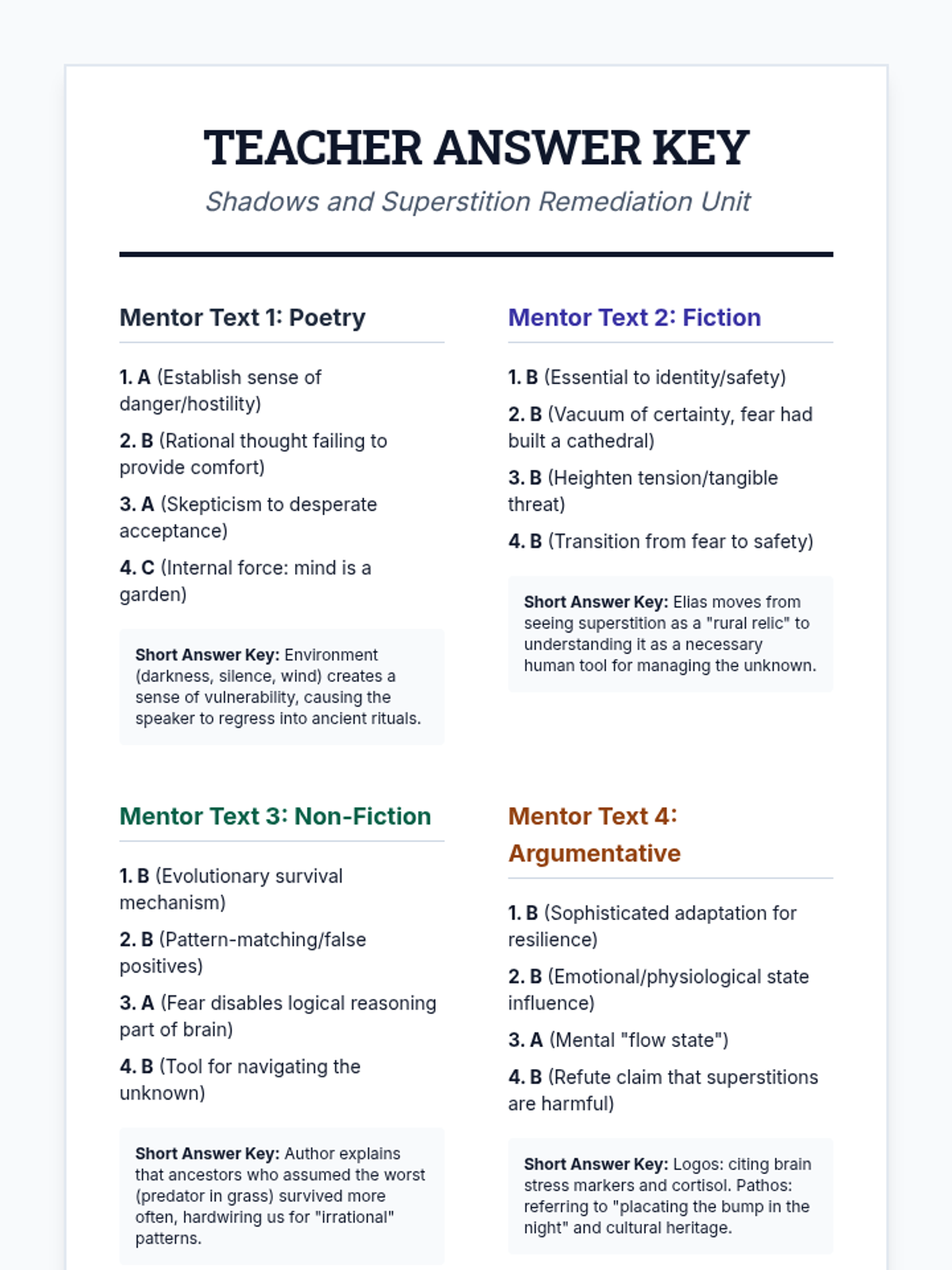
This lesson provides intensive remediation on core literacy skills using high-interest texts centered on fear and superstition. It includes mentor texts in four genres, revision and editing practice, and a final cold-read assessment.
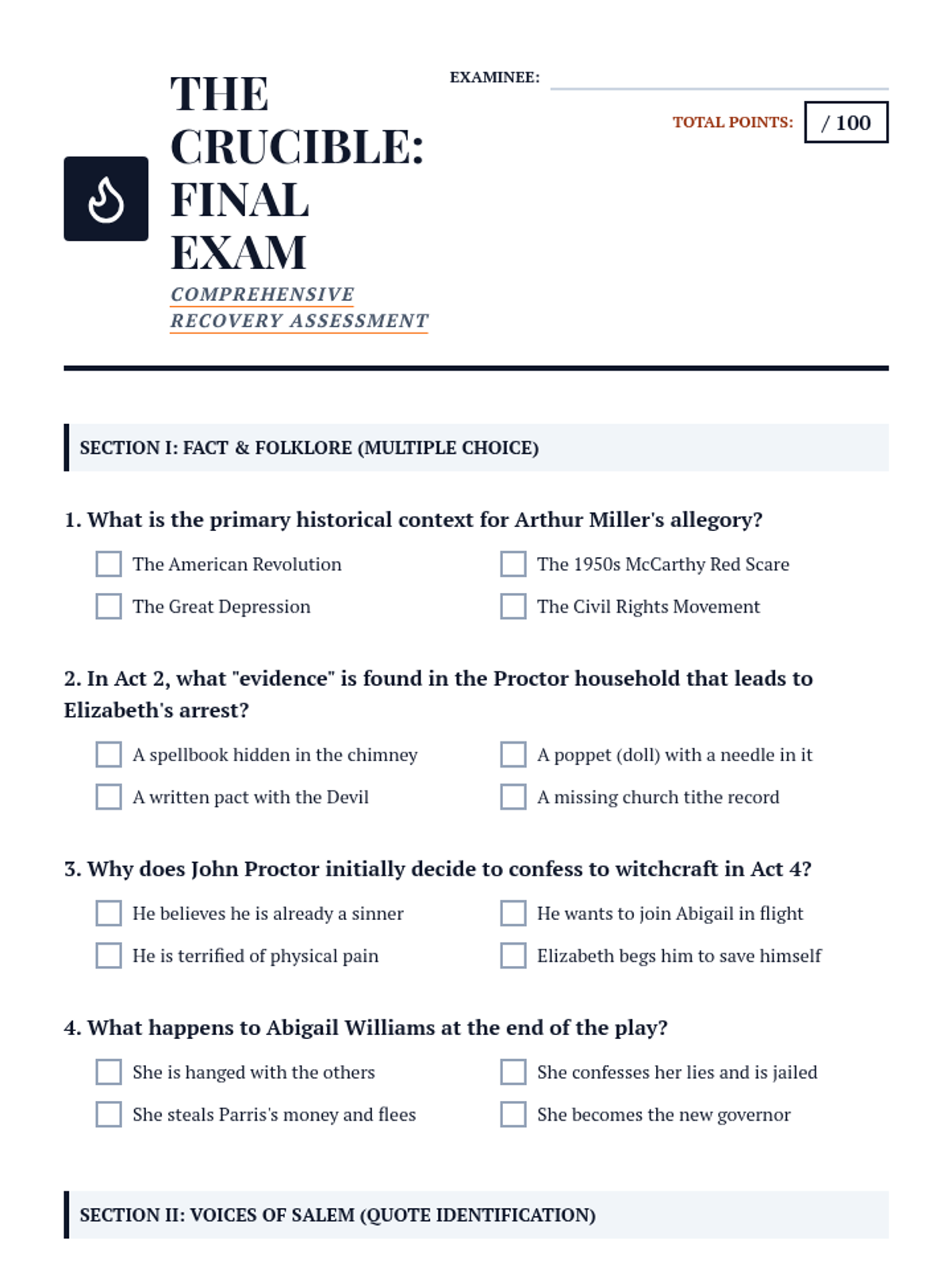
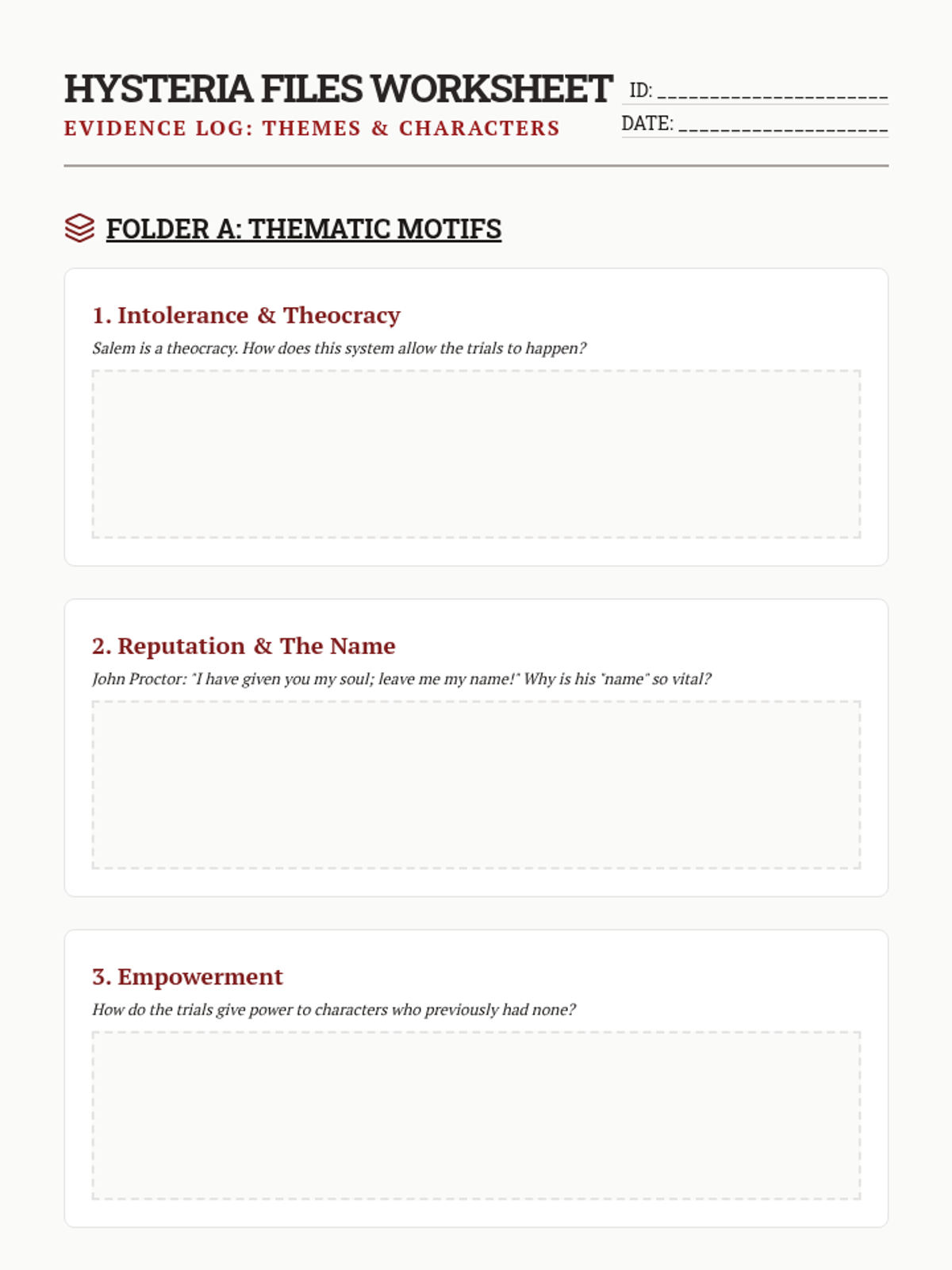
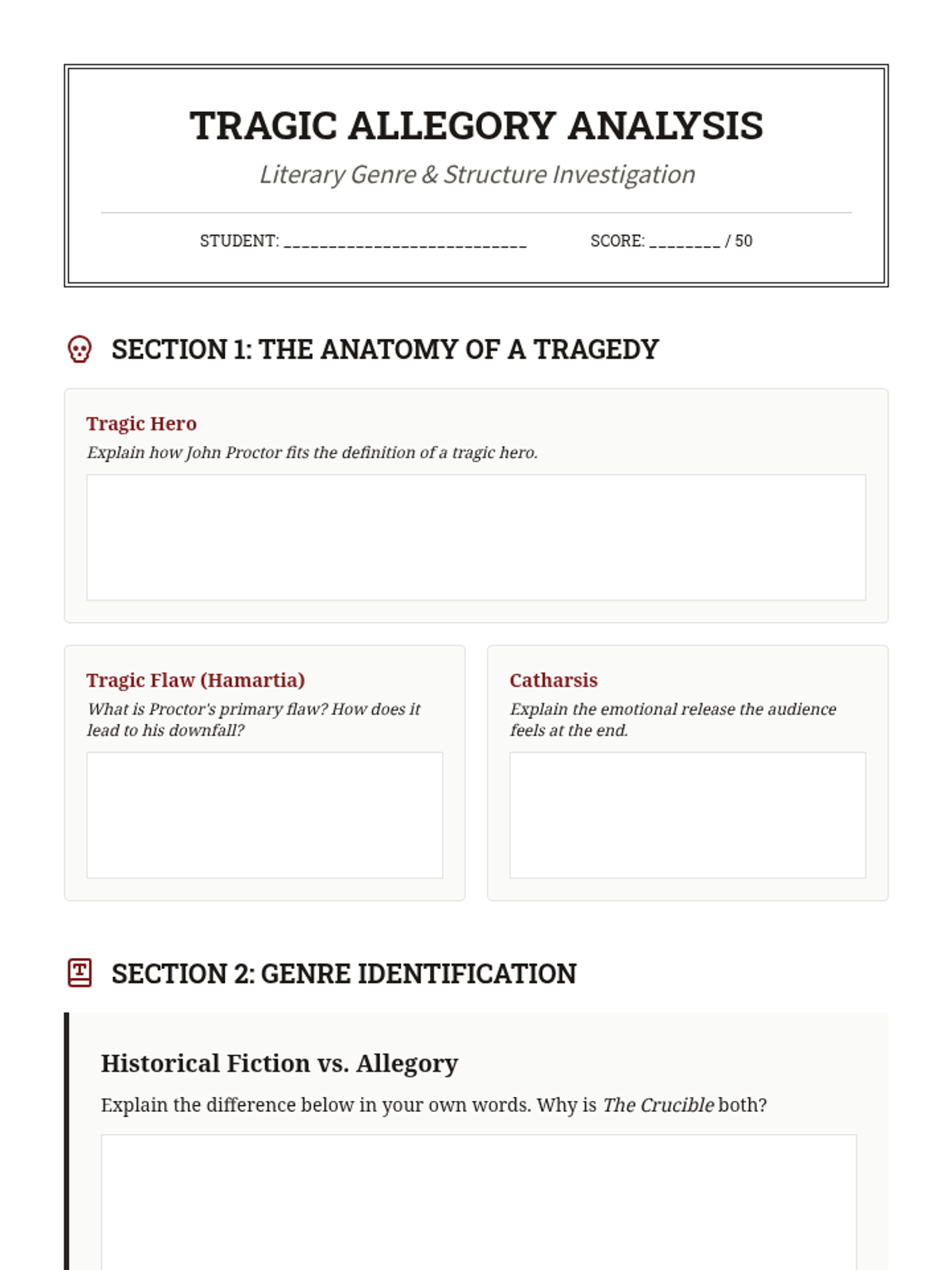
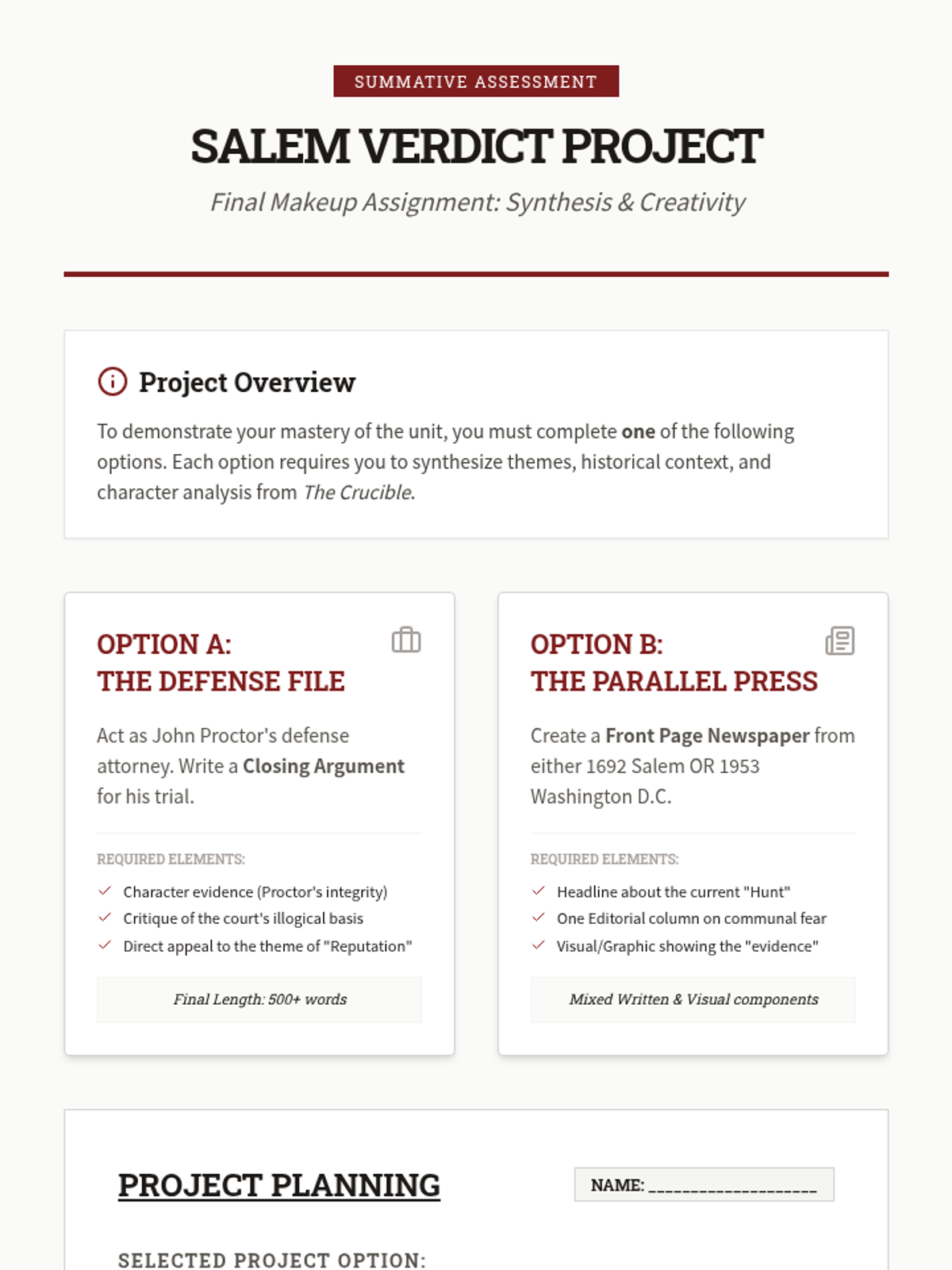
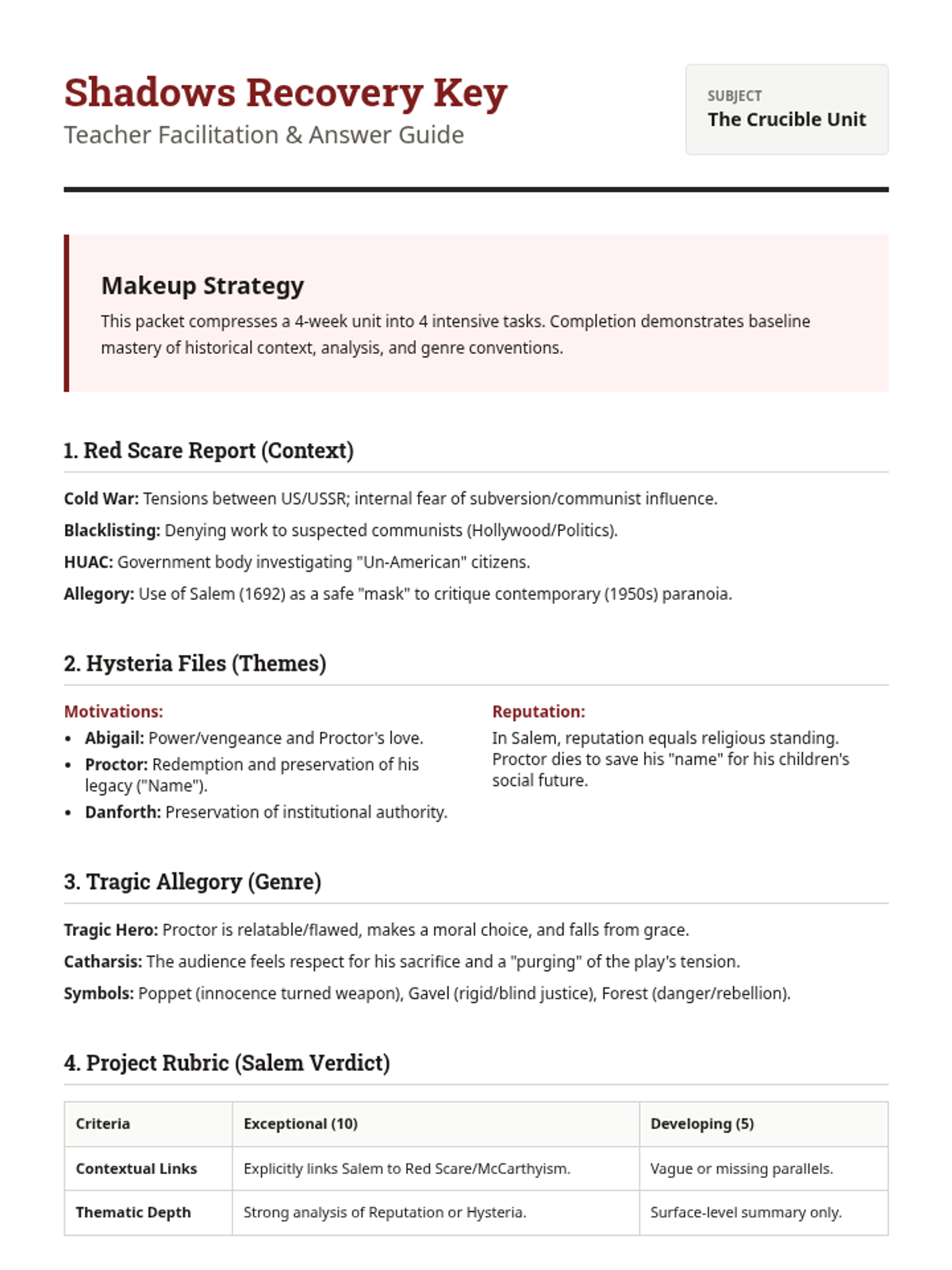
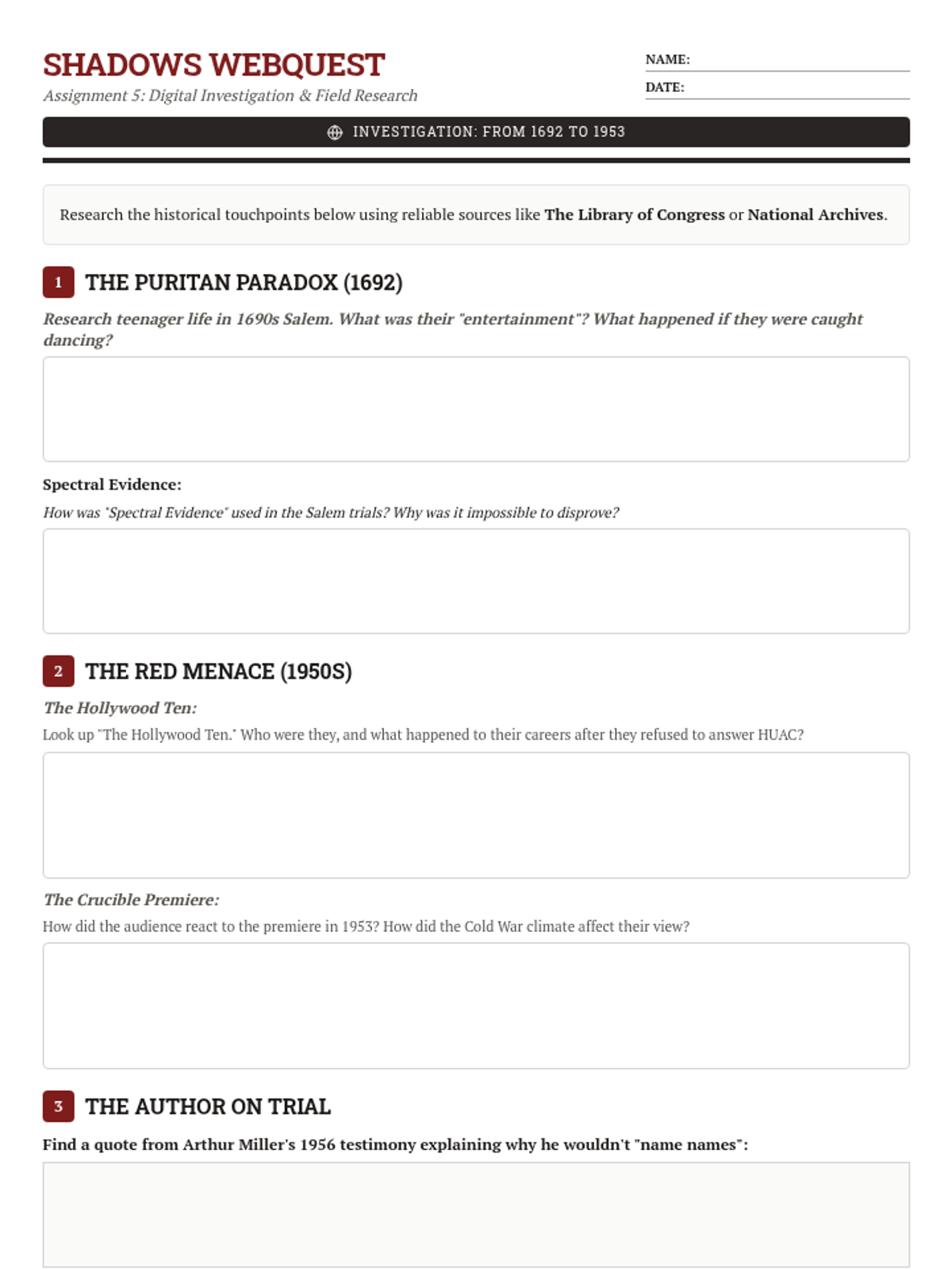
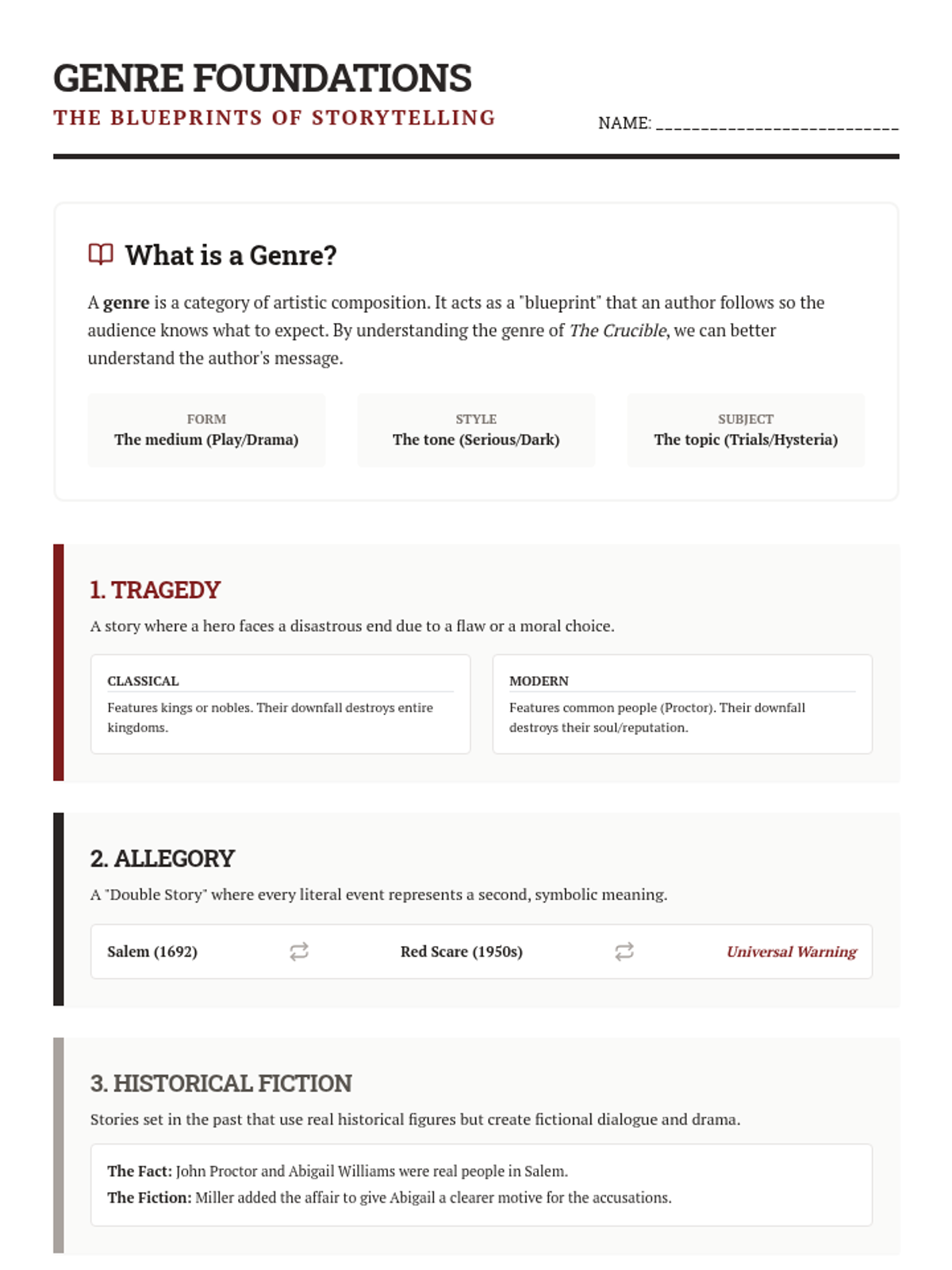
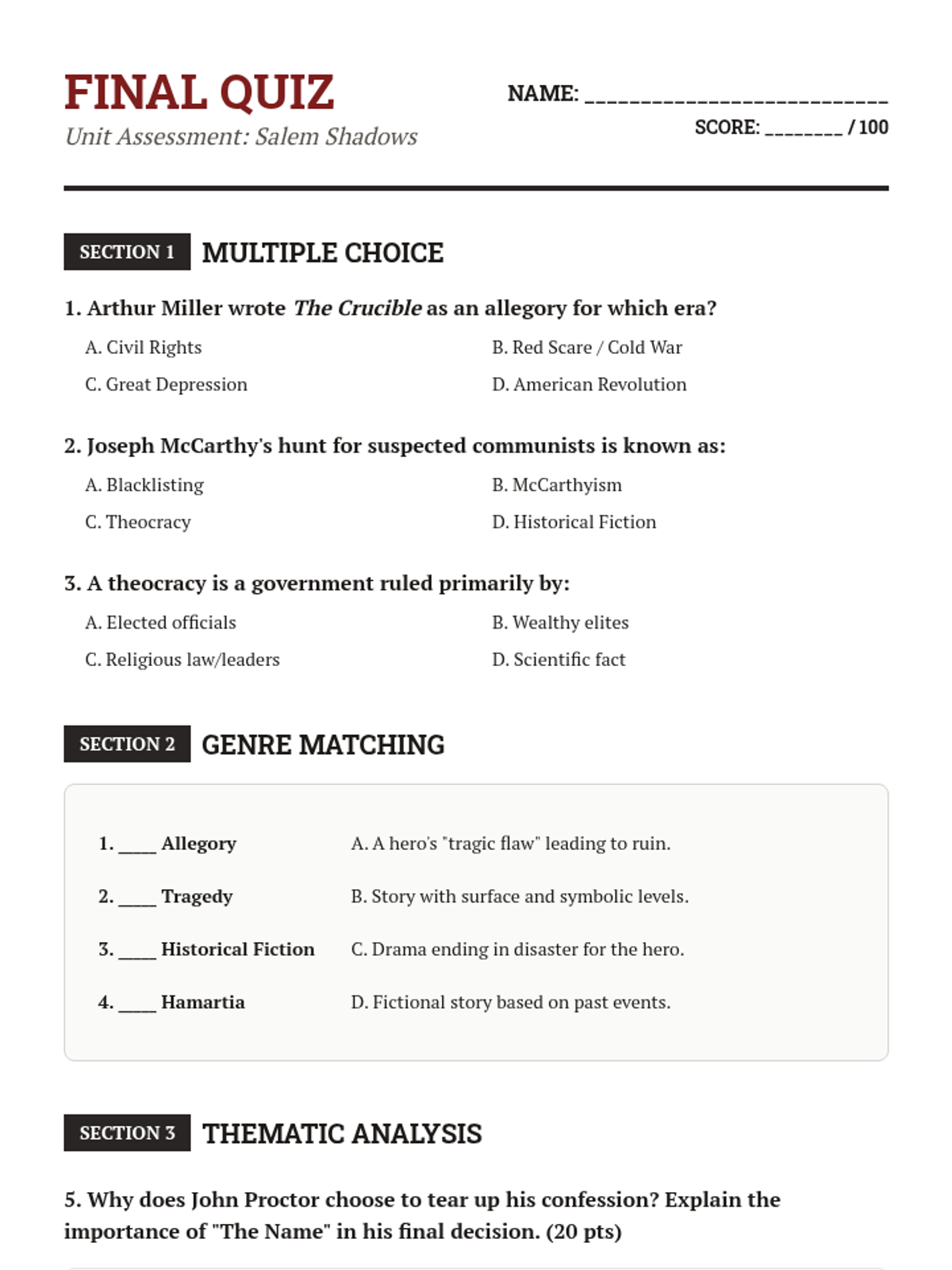
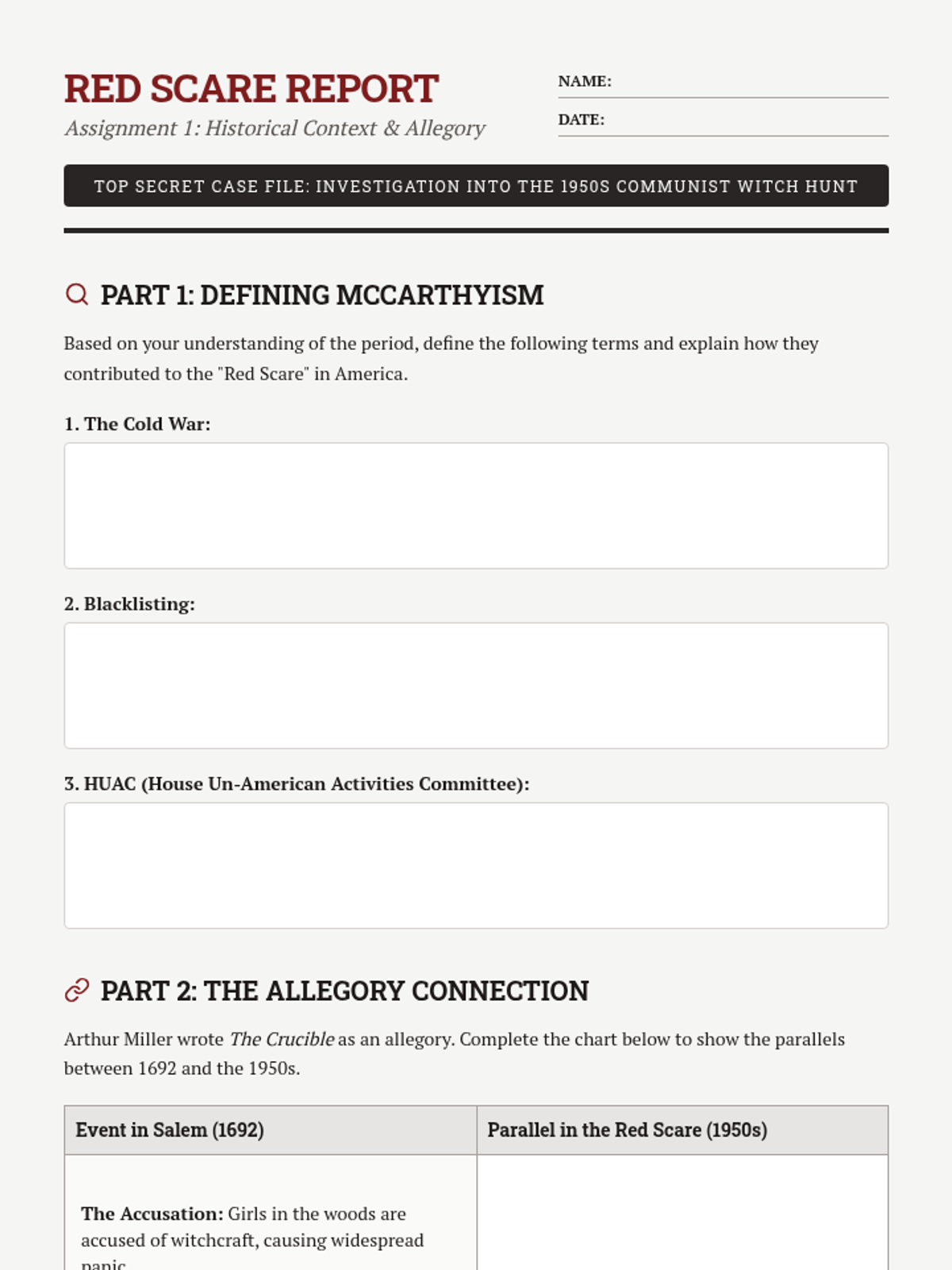
A comprehensive makeup packet for students to recover credit for a unit on The Crucible. It explores the historical context of McCarthyism, the play's themes of hysteria and reputation, and its classification as a tragic allegory.

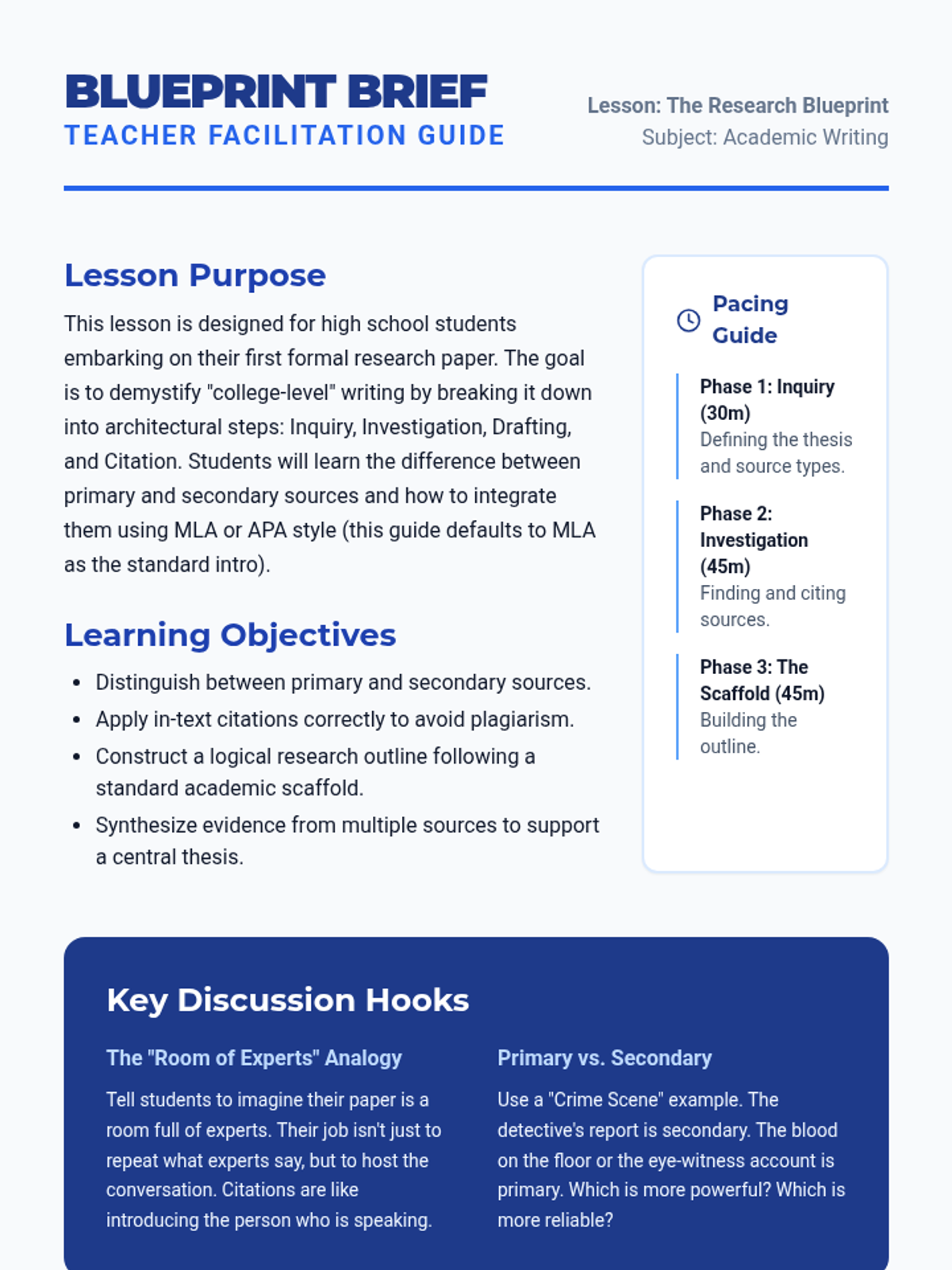
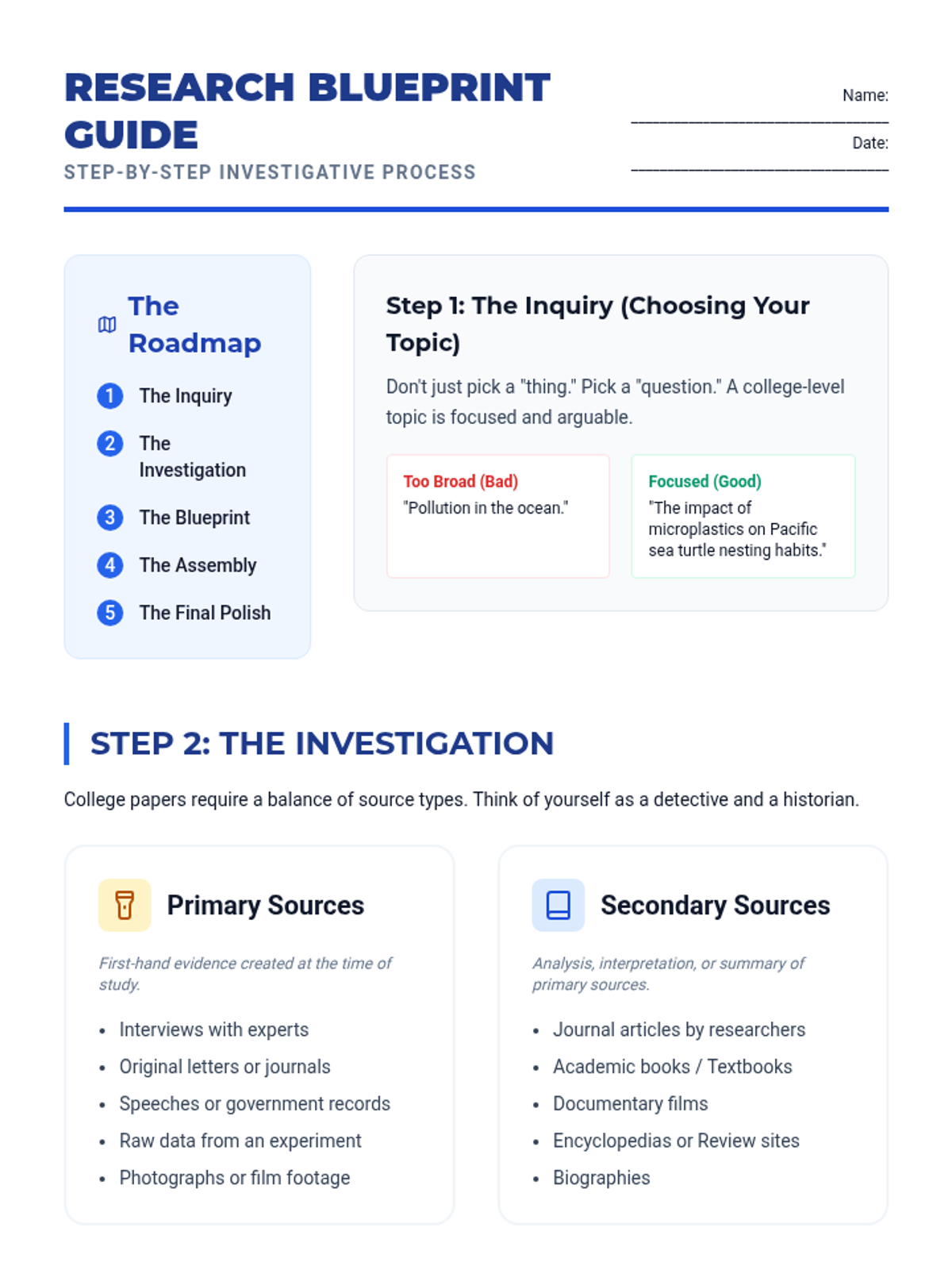
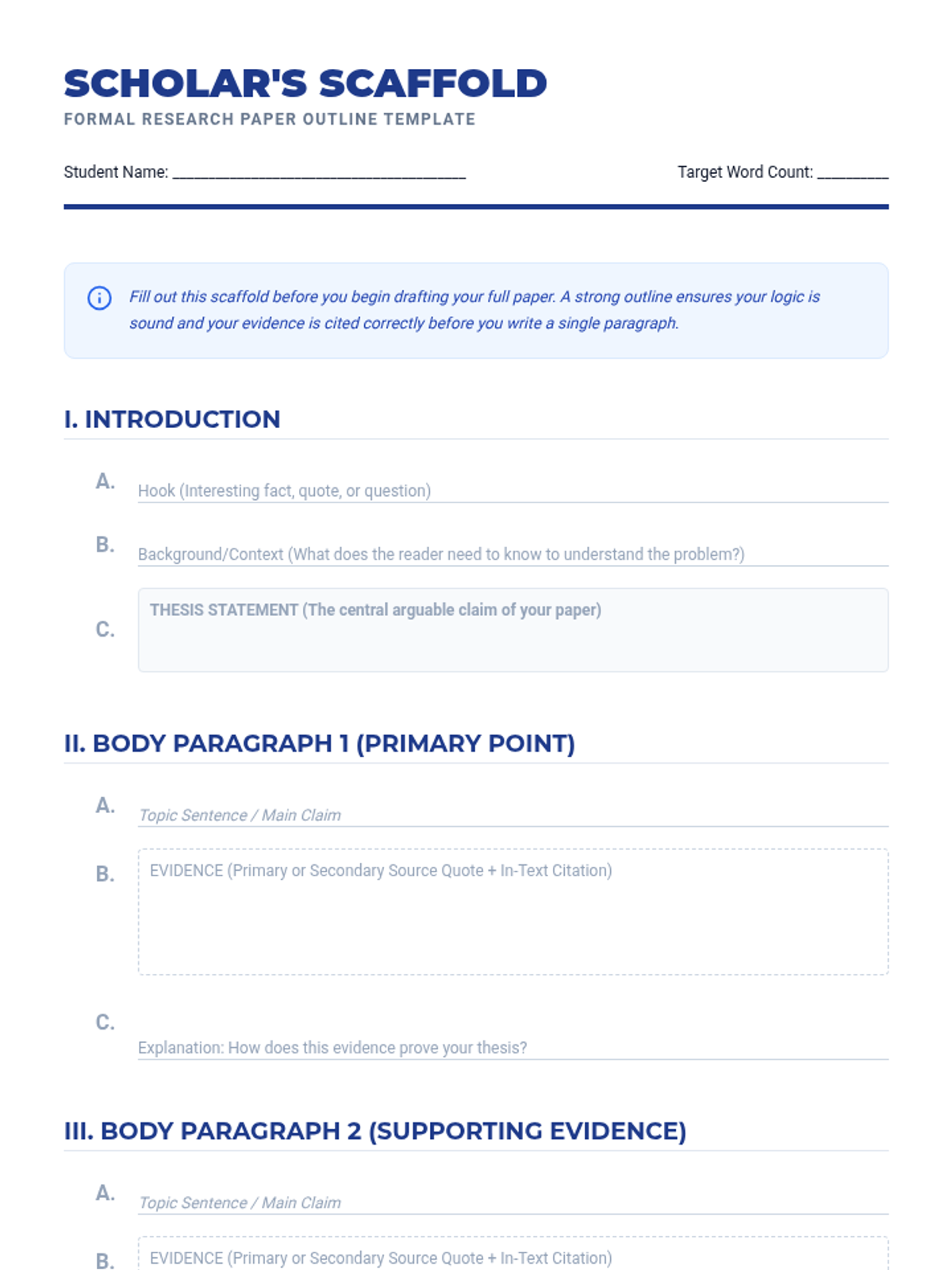
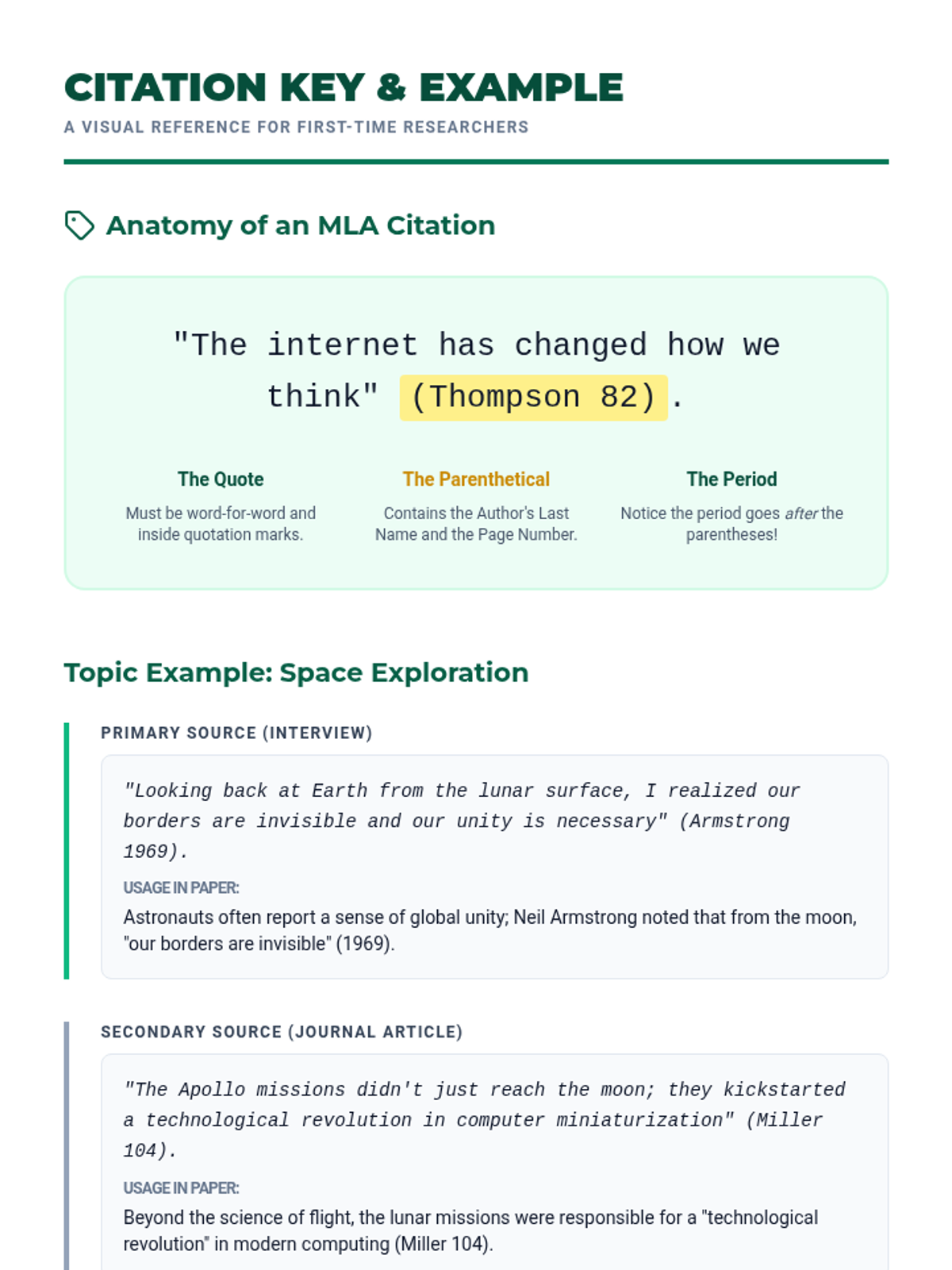
A foundational lesson designed to guide high school students through the complex process of writing their first academic research paper. It covers source evaluation, citation mechanics, and structural outlining with a focus on transitioning toward college-level standards.
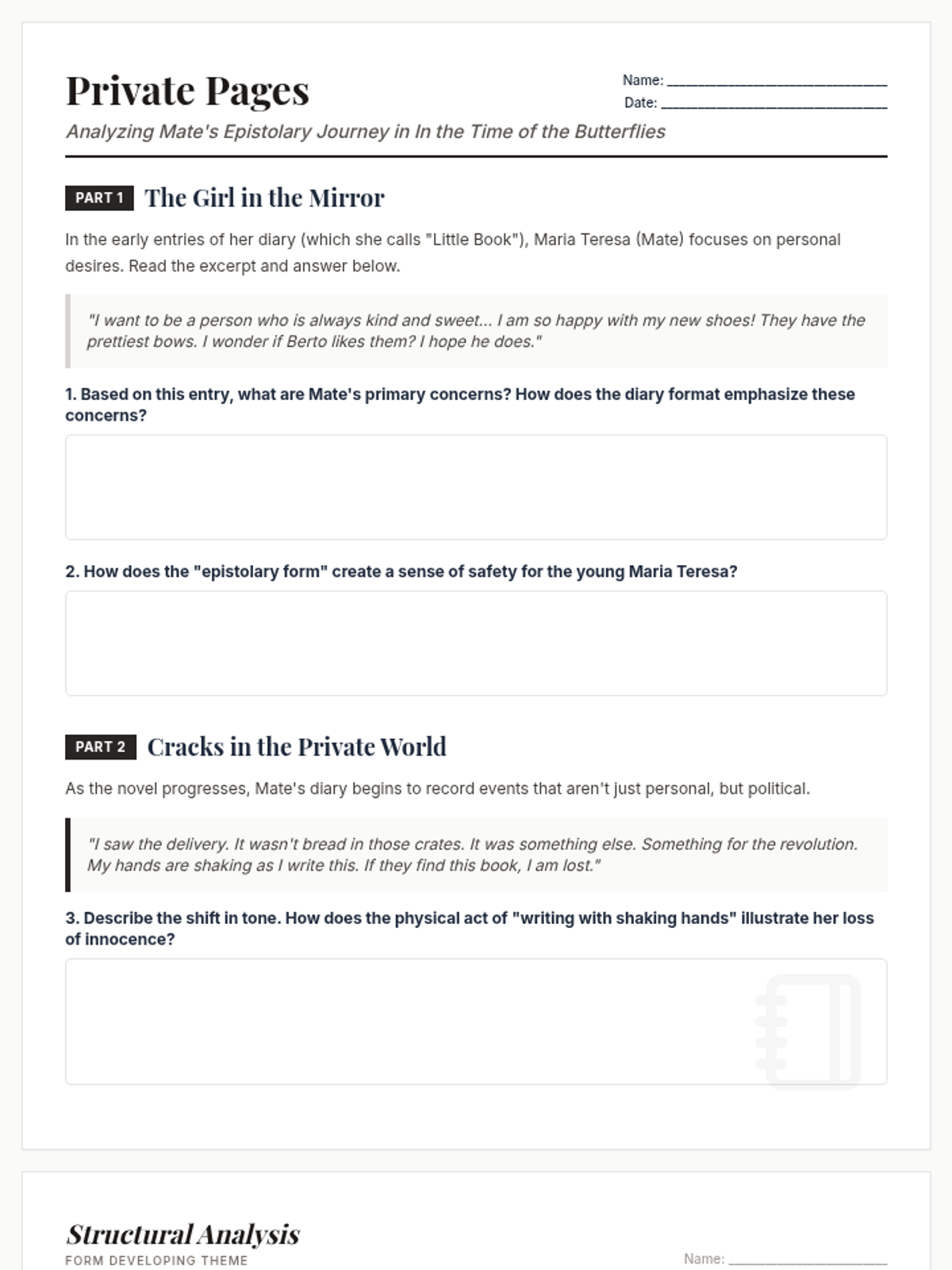
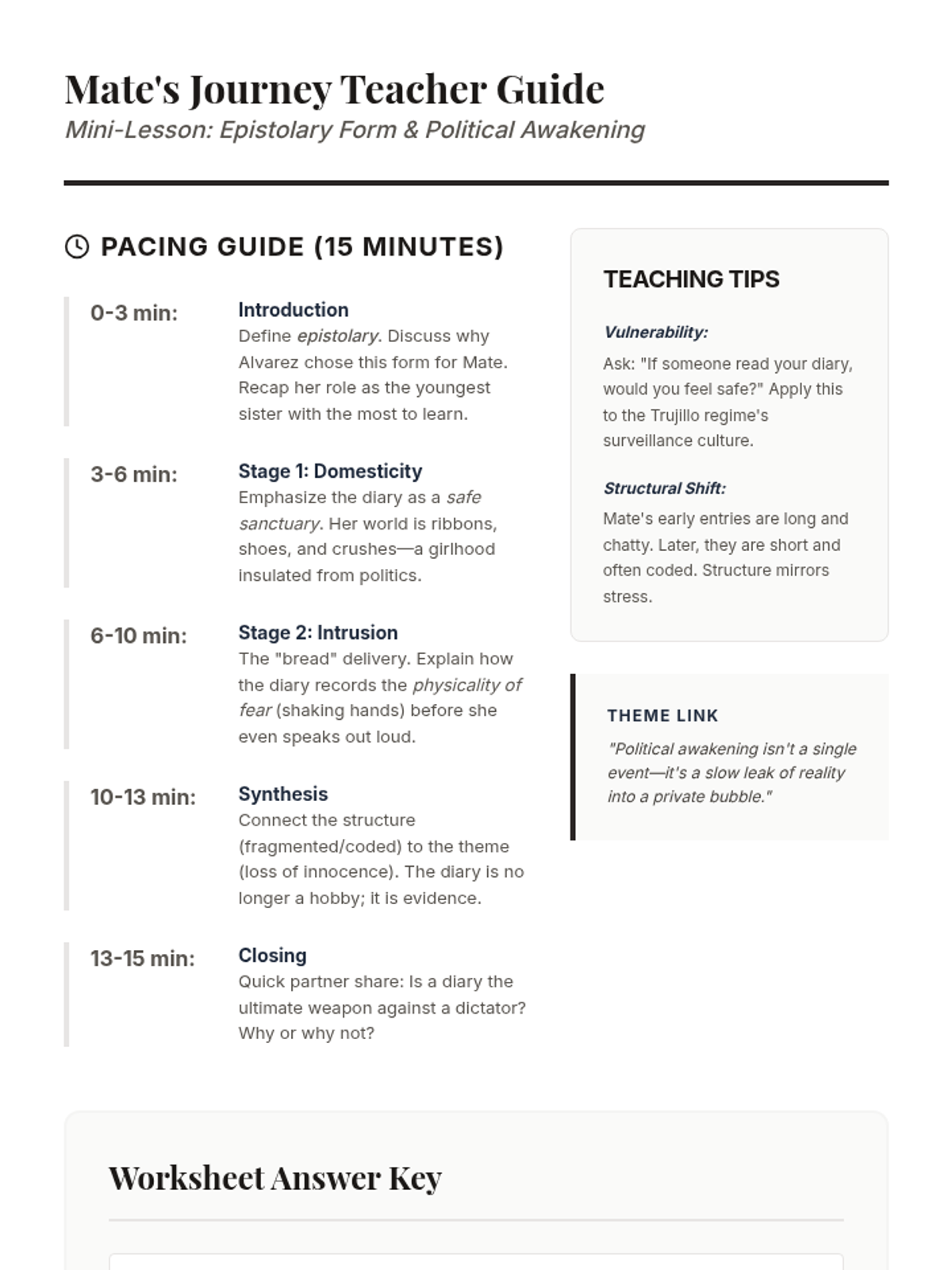
A 15-minute mini-lesson exploring how Maria Teresa's epistolary narration in 'In the Time of the Butterflies' charts her journey from innocence to political awakening. Students analyze the structural shift in her diary entries to see how the private form supports thematic development.
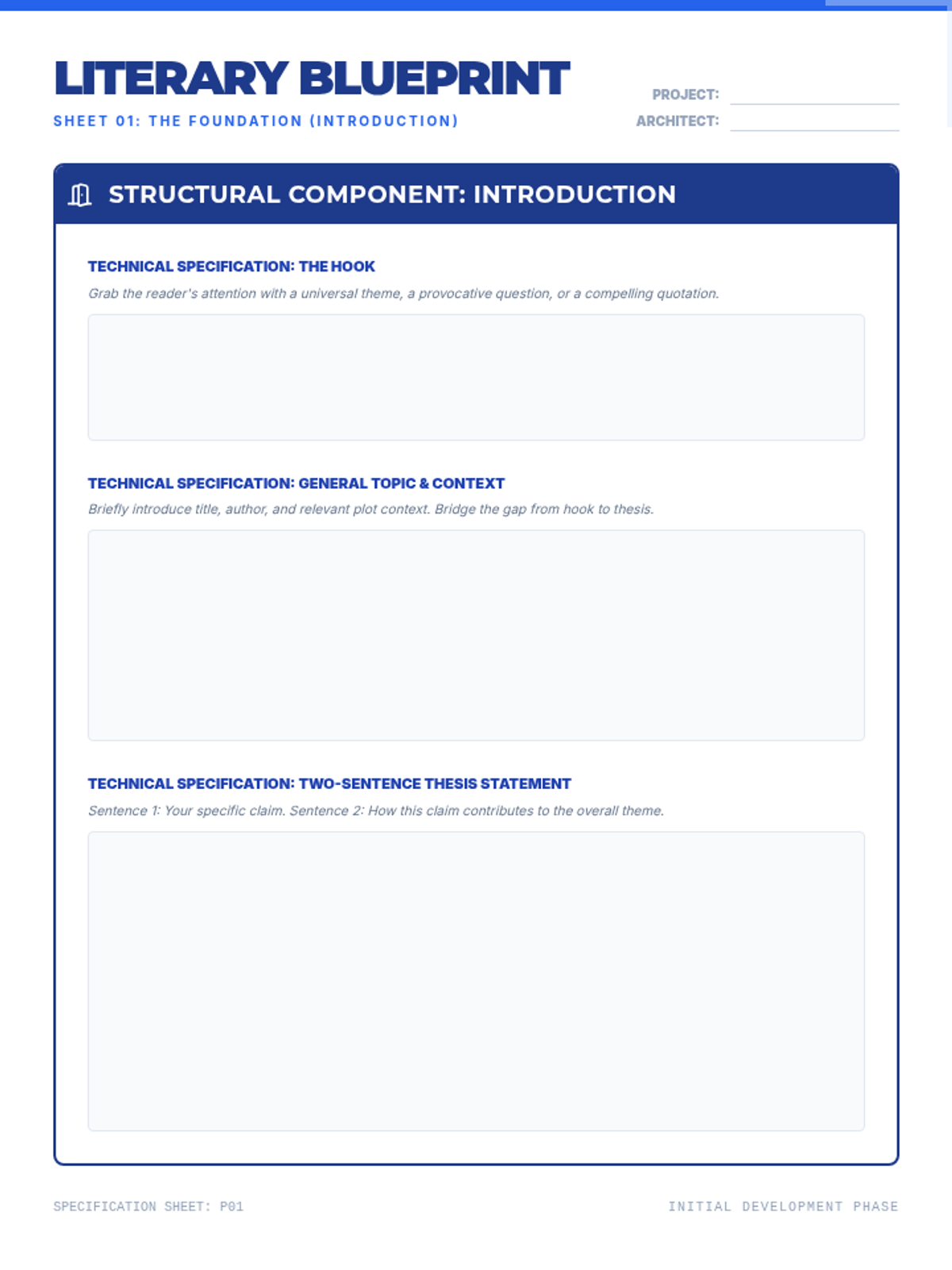
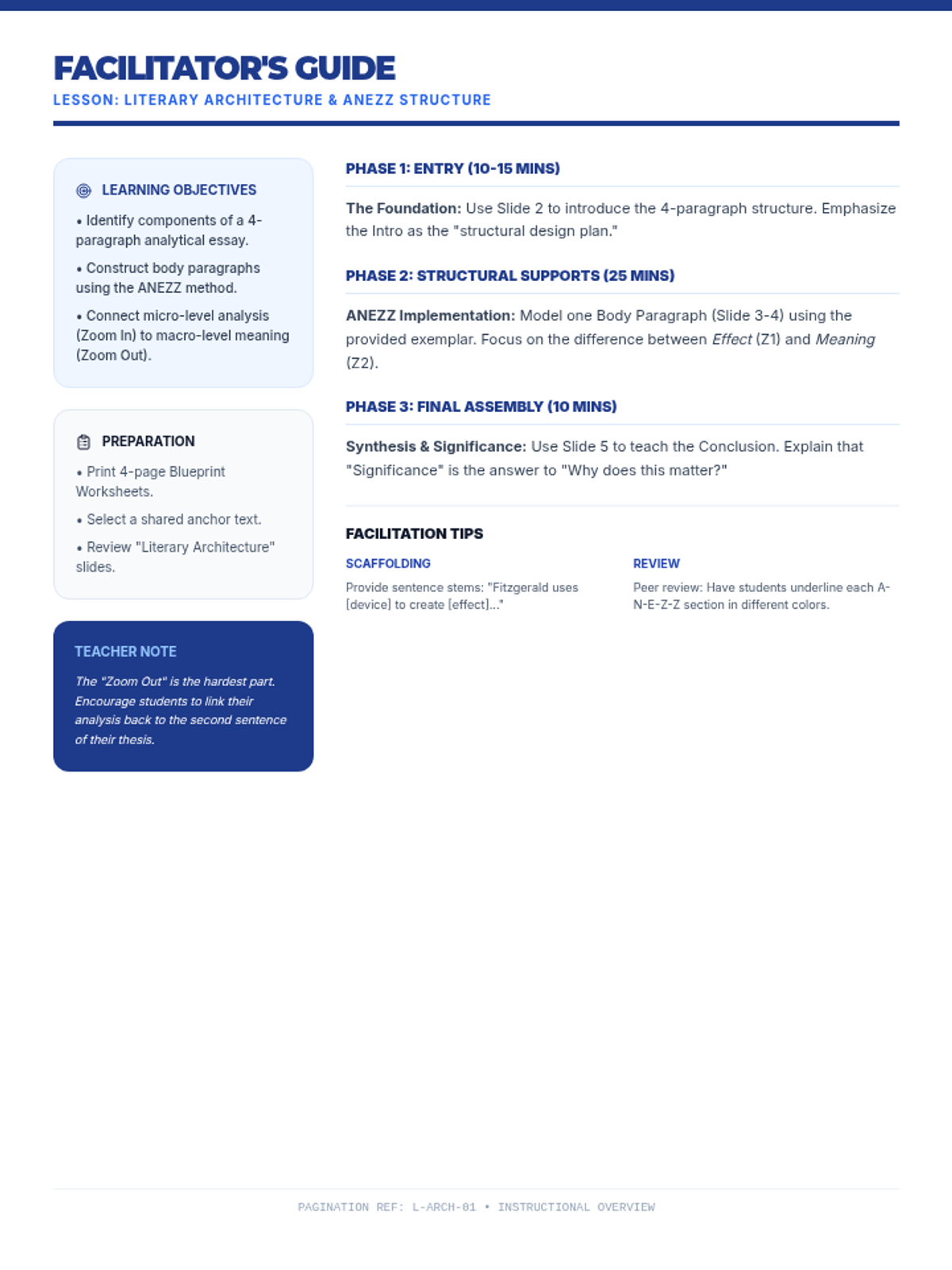
A comprehensive lesson focused on teaching students how to structure a 4-paragraph literary analysis essay using the ANEZZ body paragraph format. It includes a guiding presentation, a teacher's facilitator guide, and a detailed structural worksheet.
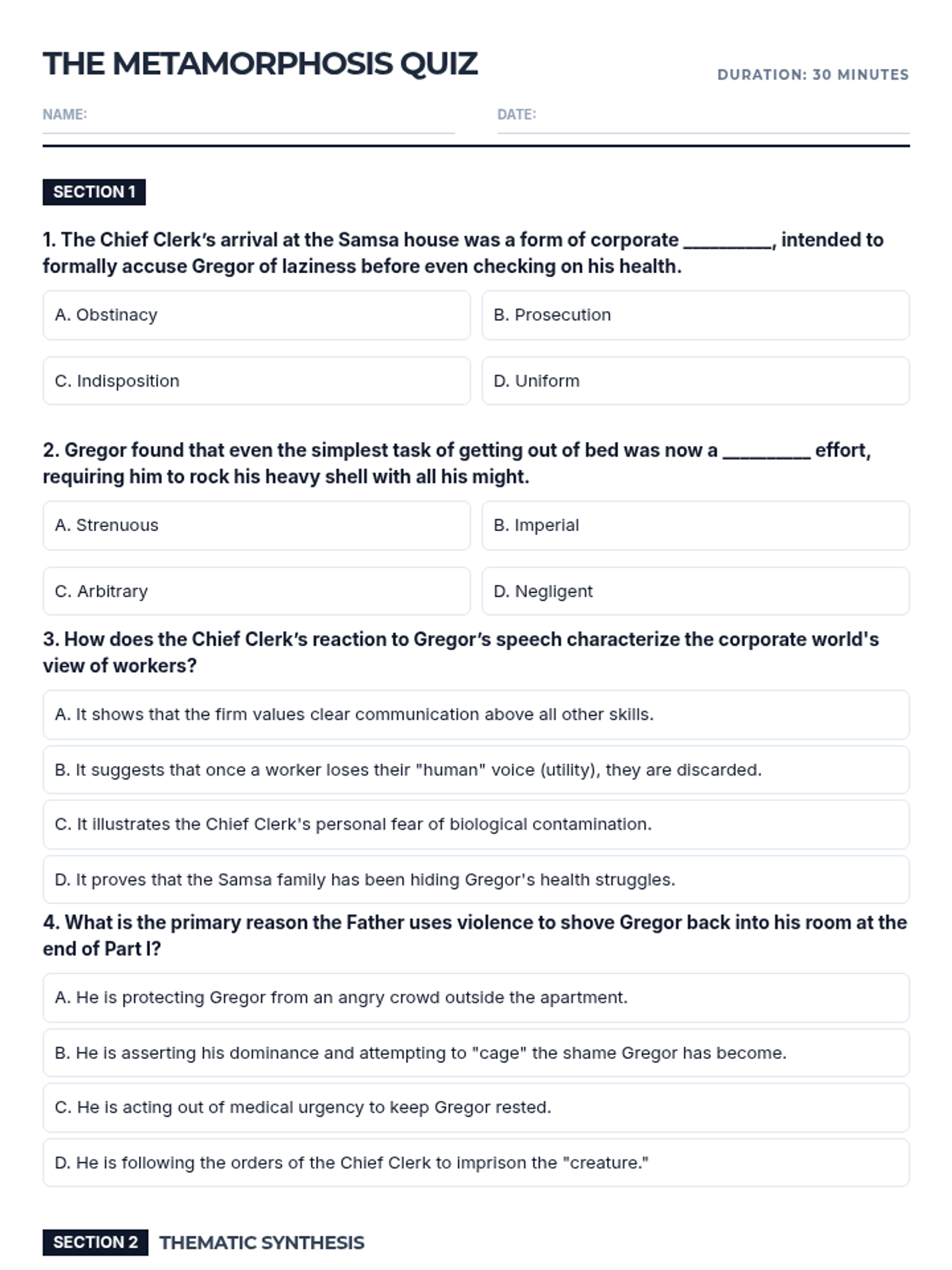
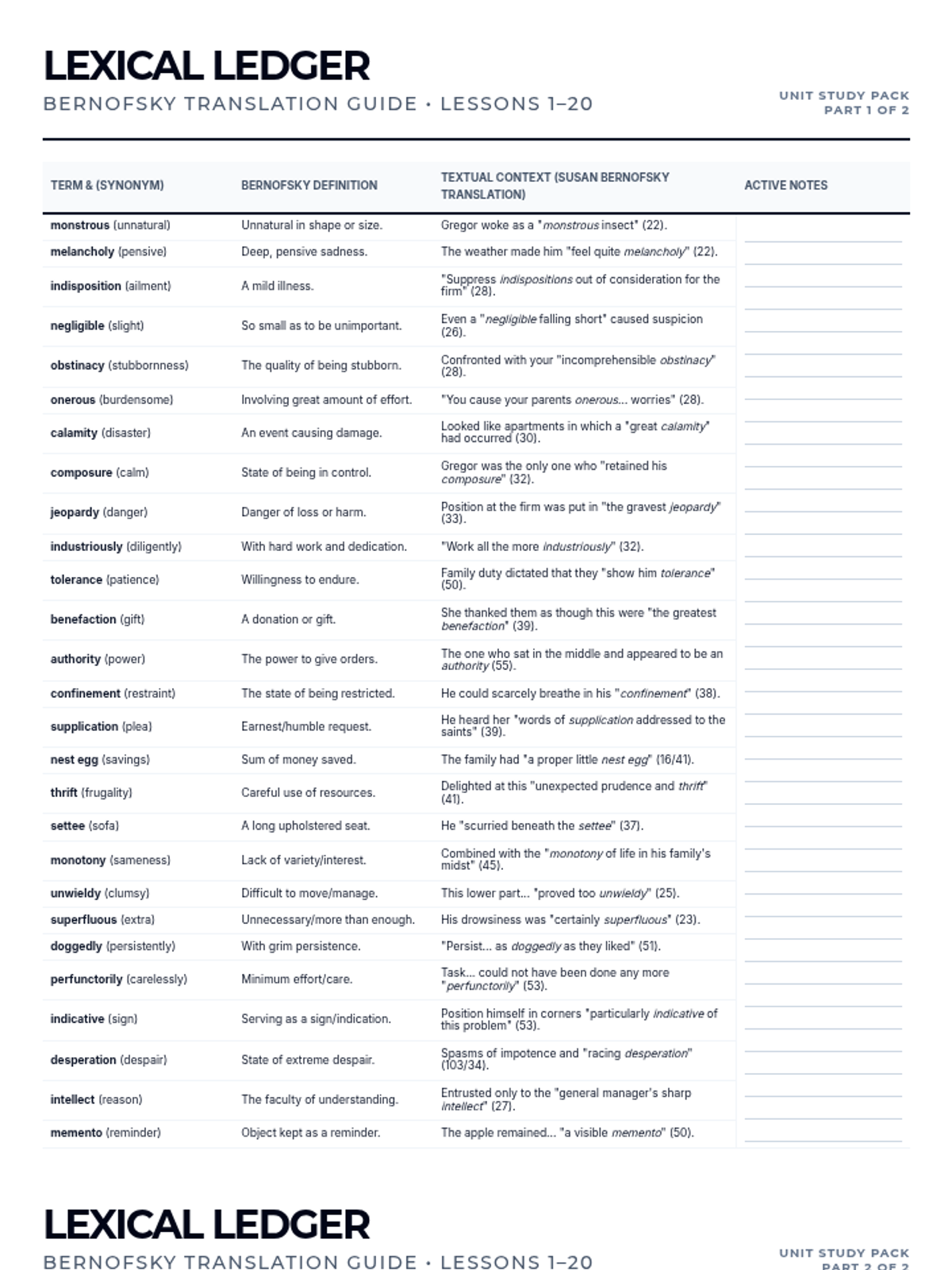
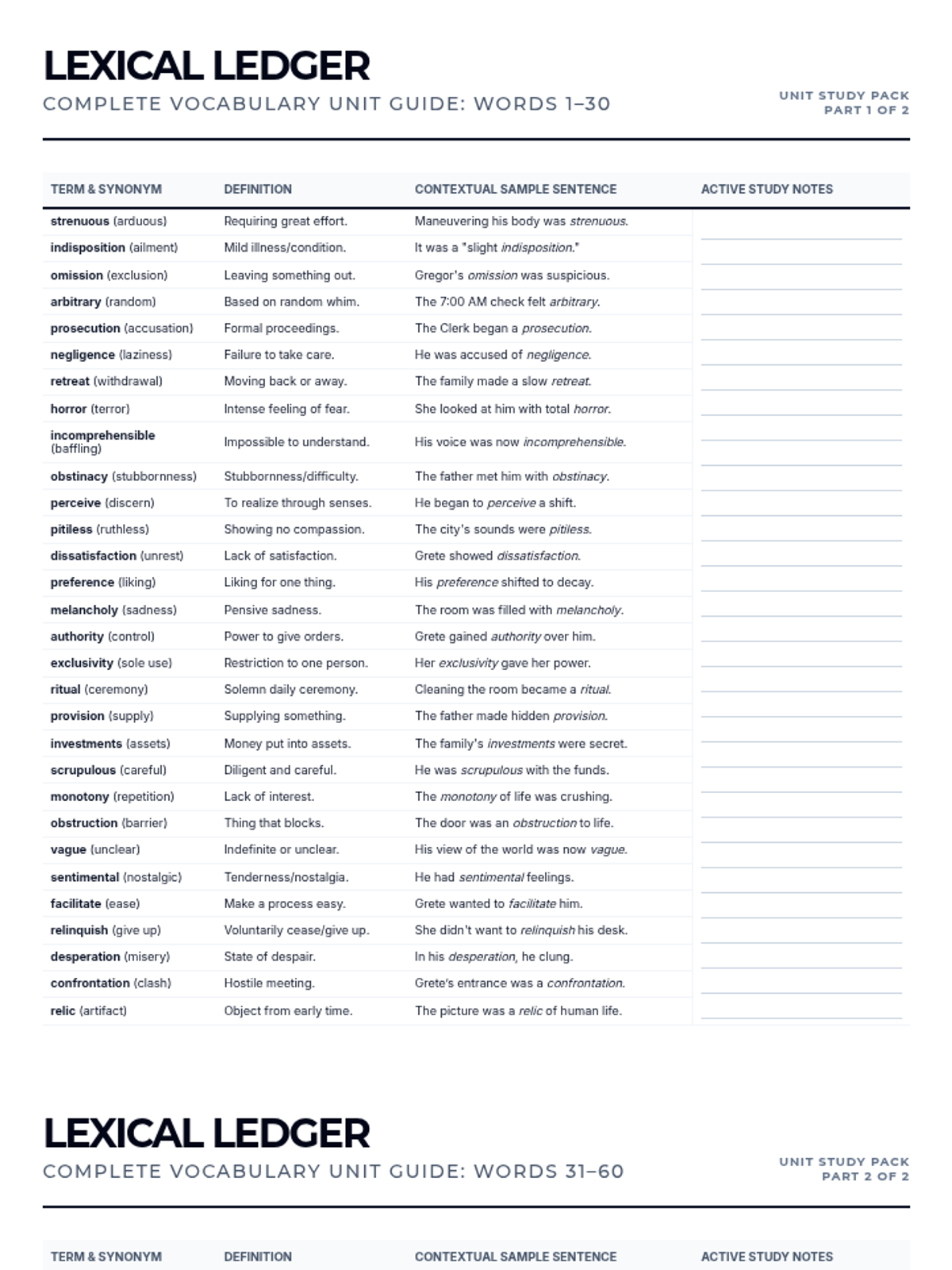
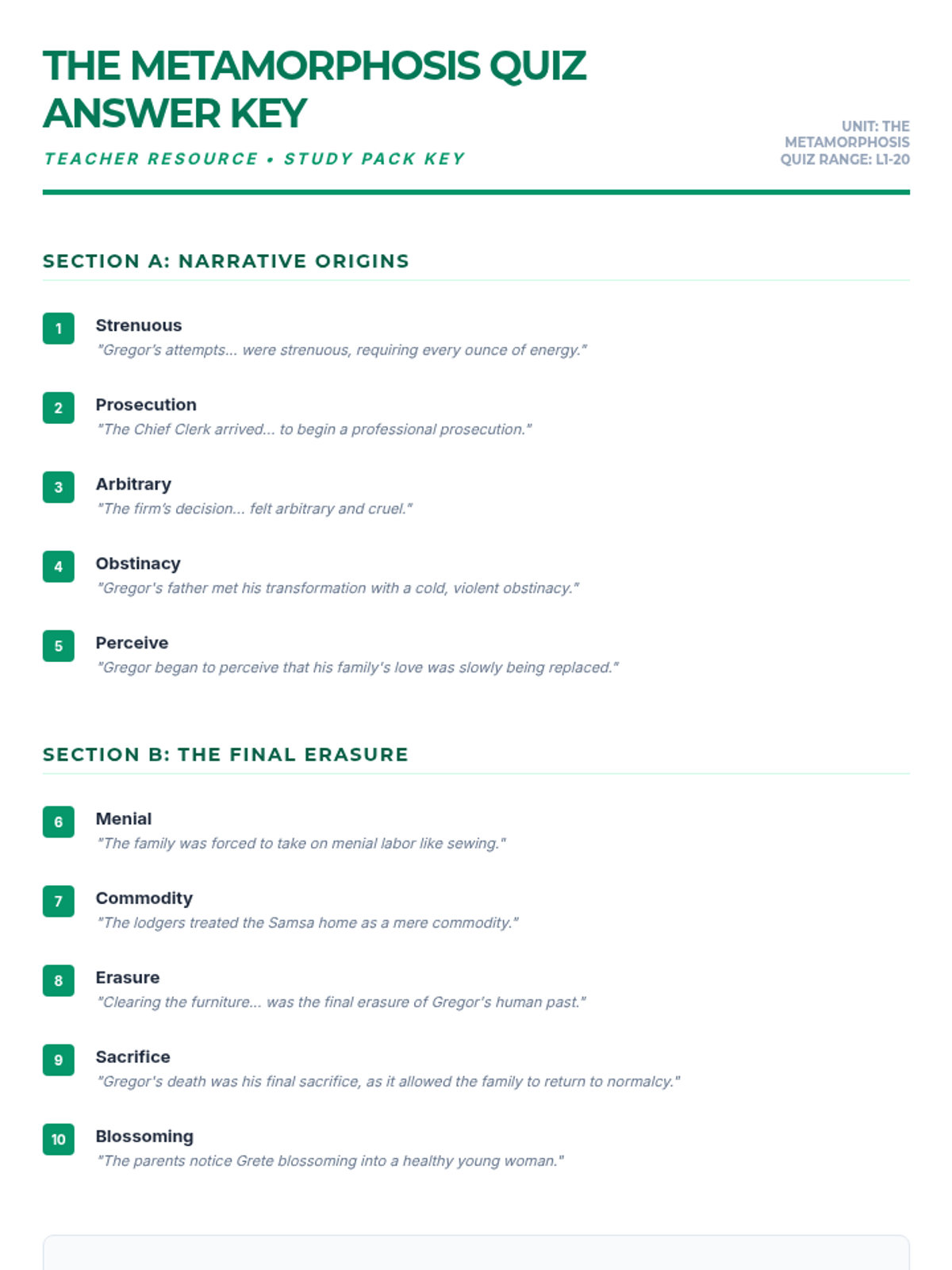
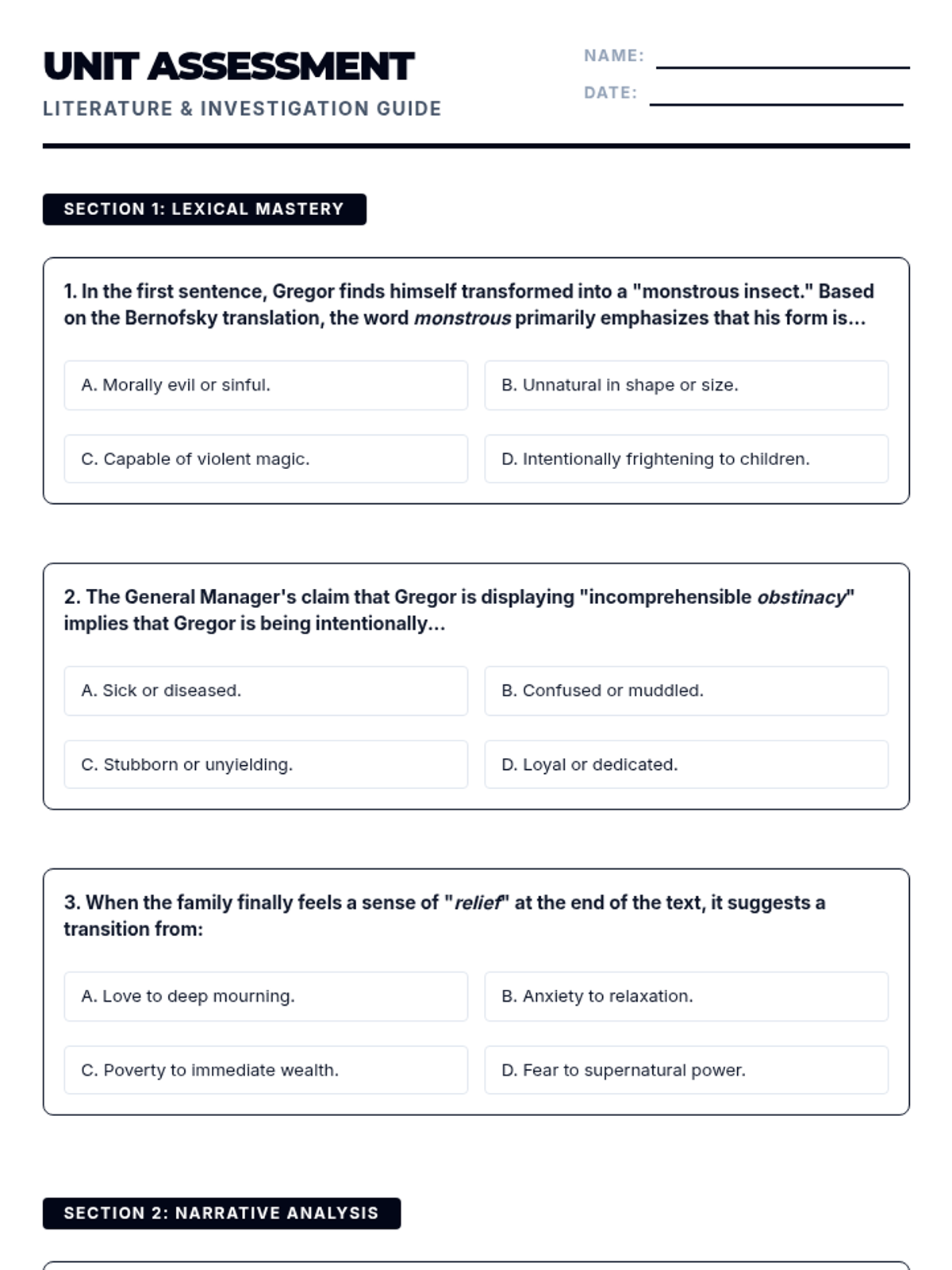
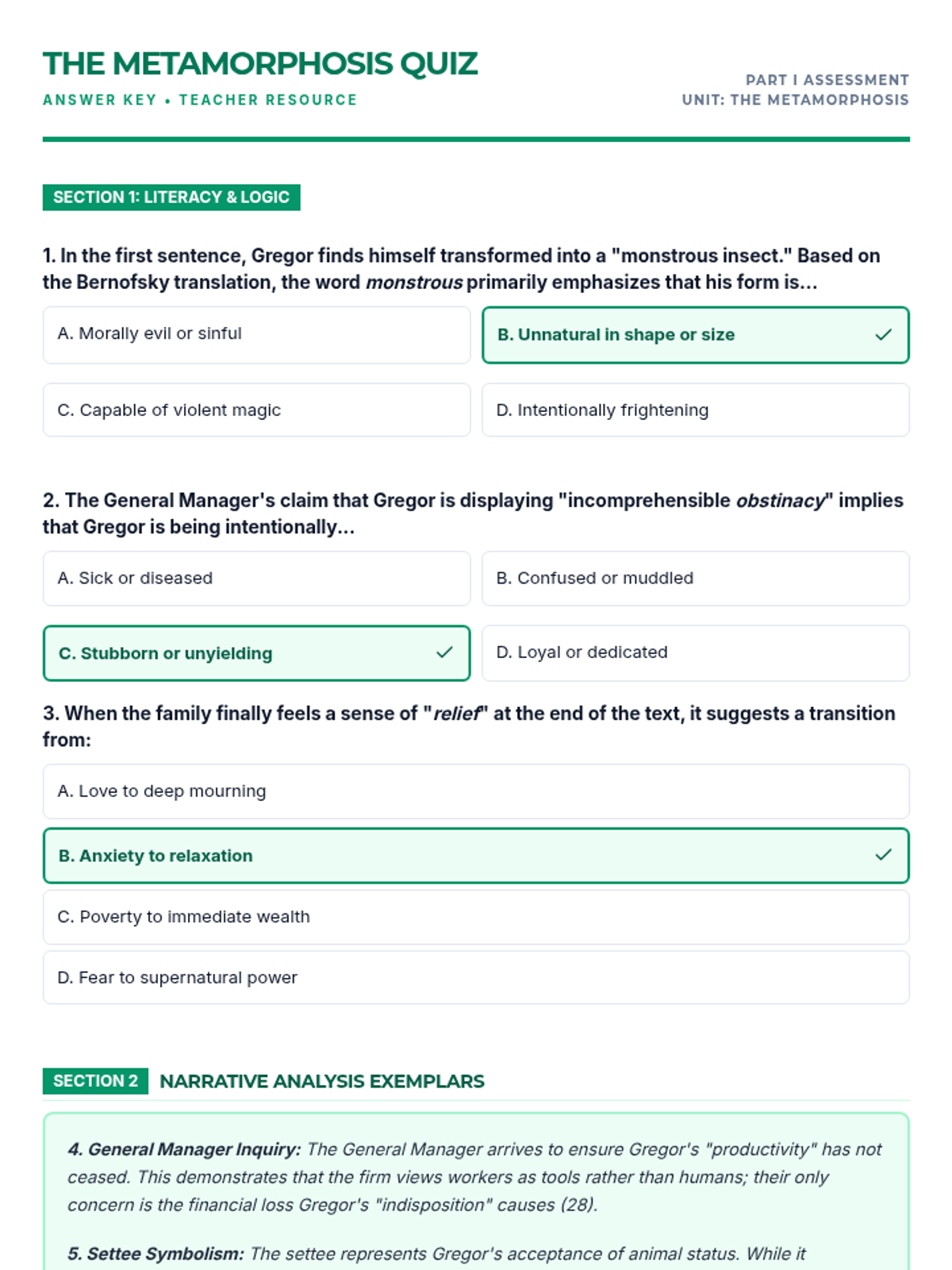
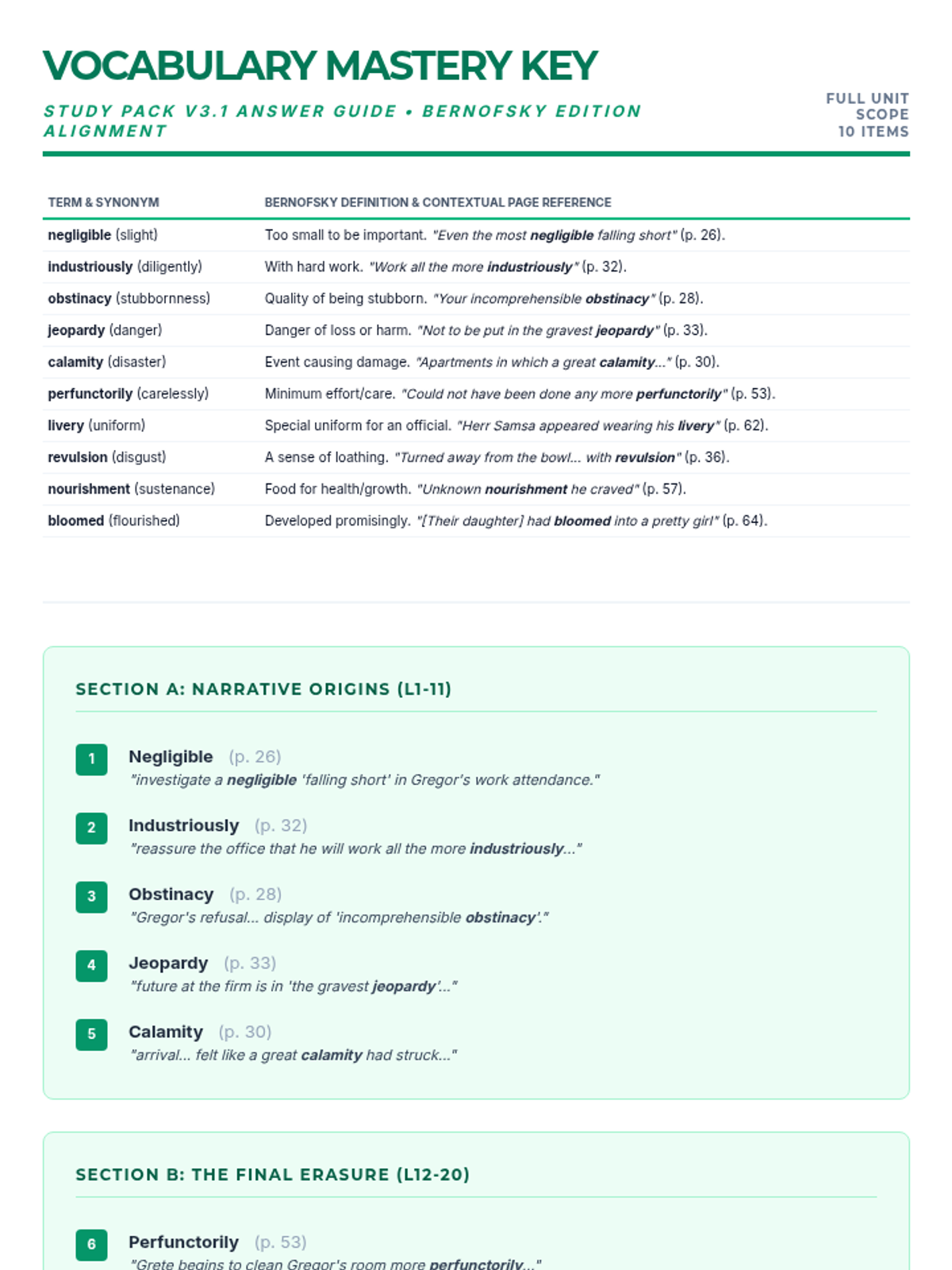
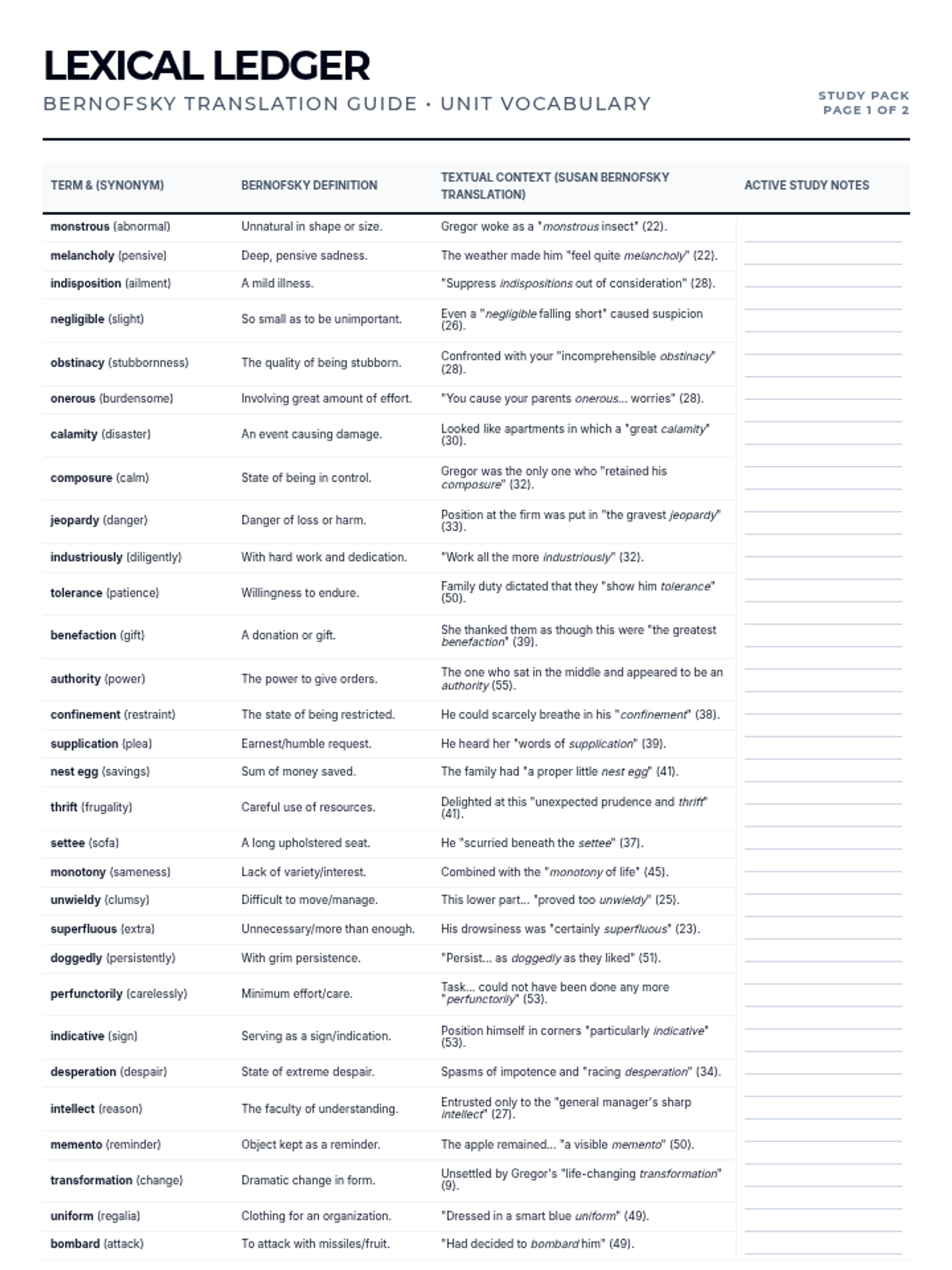
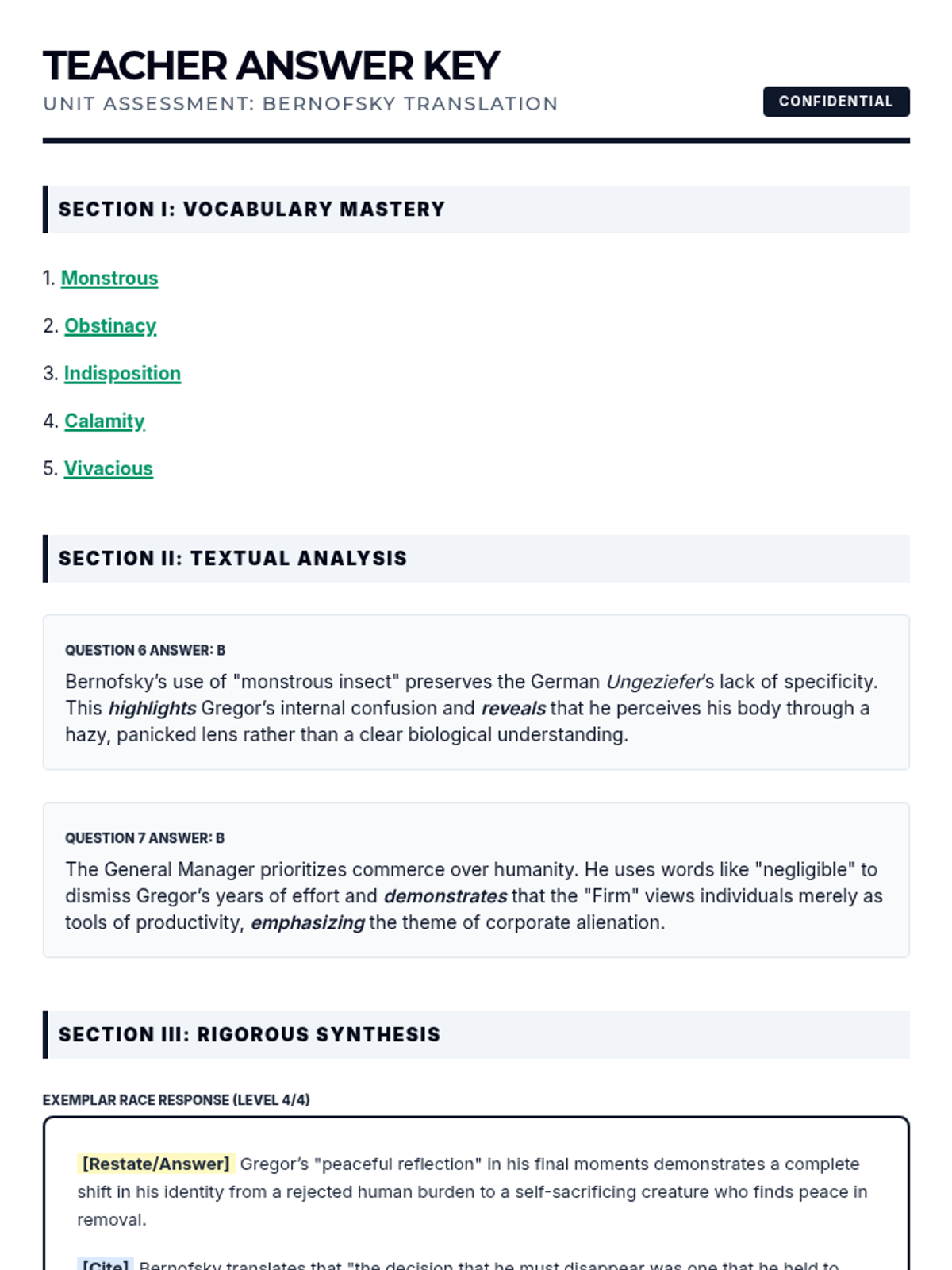
A summative assessment for the first third of the novel. Evaluates student mastery of vocabulary from Lessons 1-11, character motivation, and the central theme of corporate alienation through a mix of multiple choice, short answer, and a rigorous RACE response.
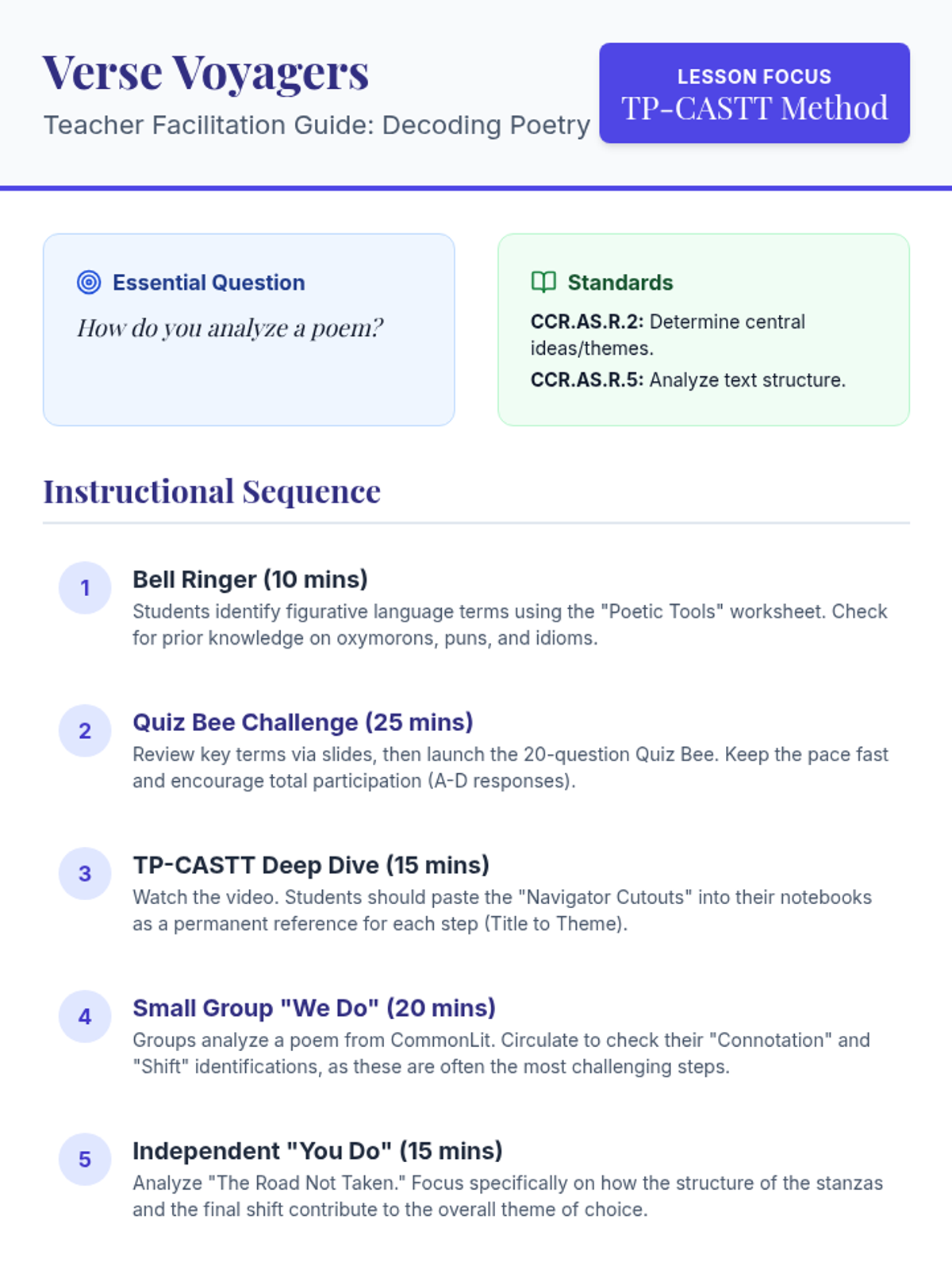
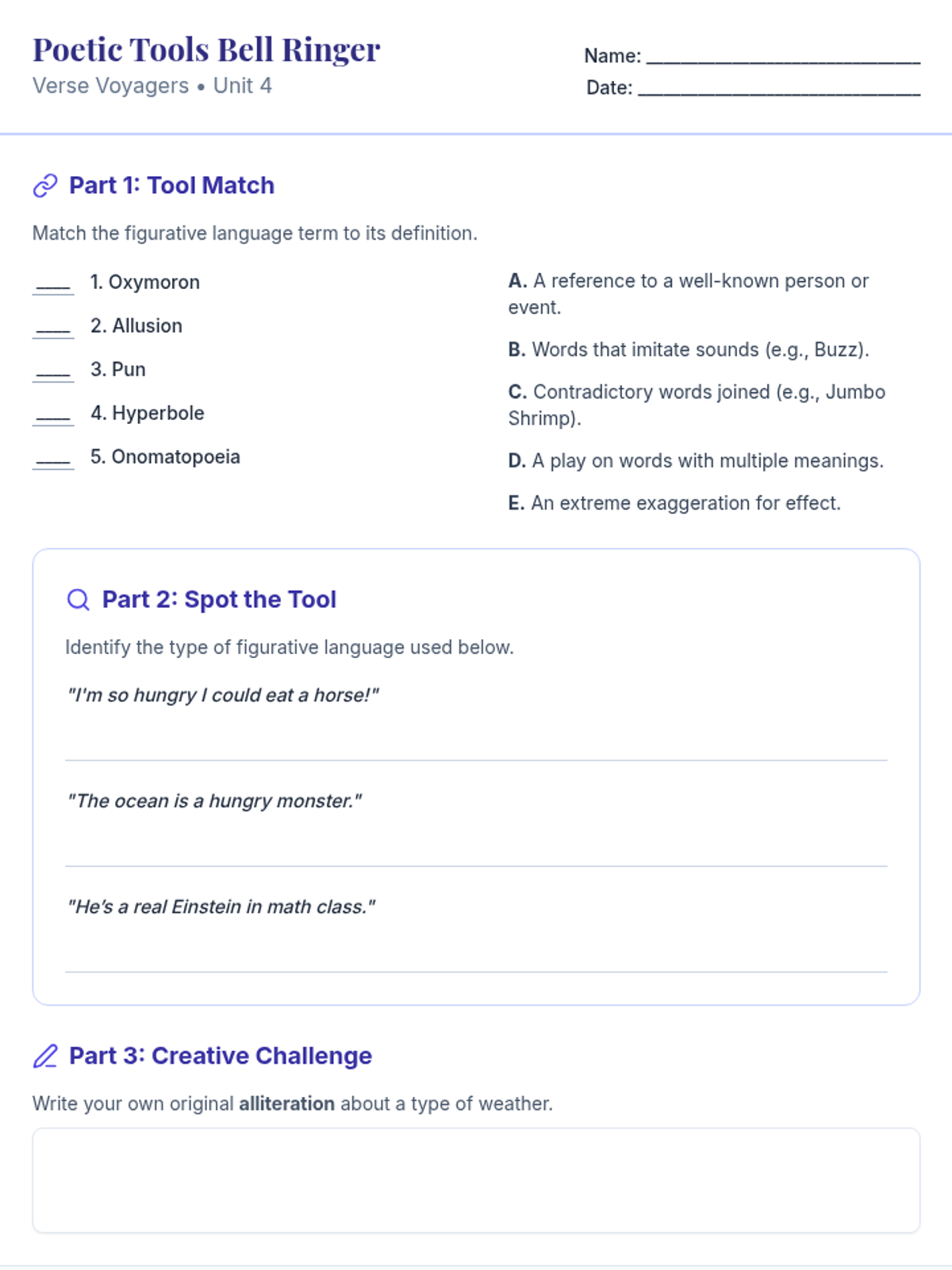
A comprehensive poetry analysis lesson focusing on the TP-CASTT method and figurative language, featuring a gamified 'Quiz Bee' and deep analysis of 'The Road Not Taken'.
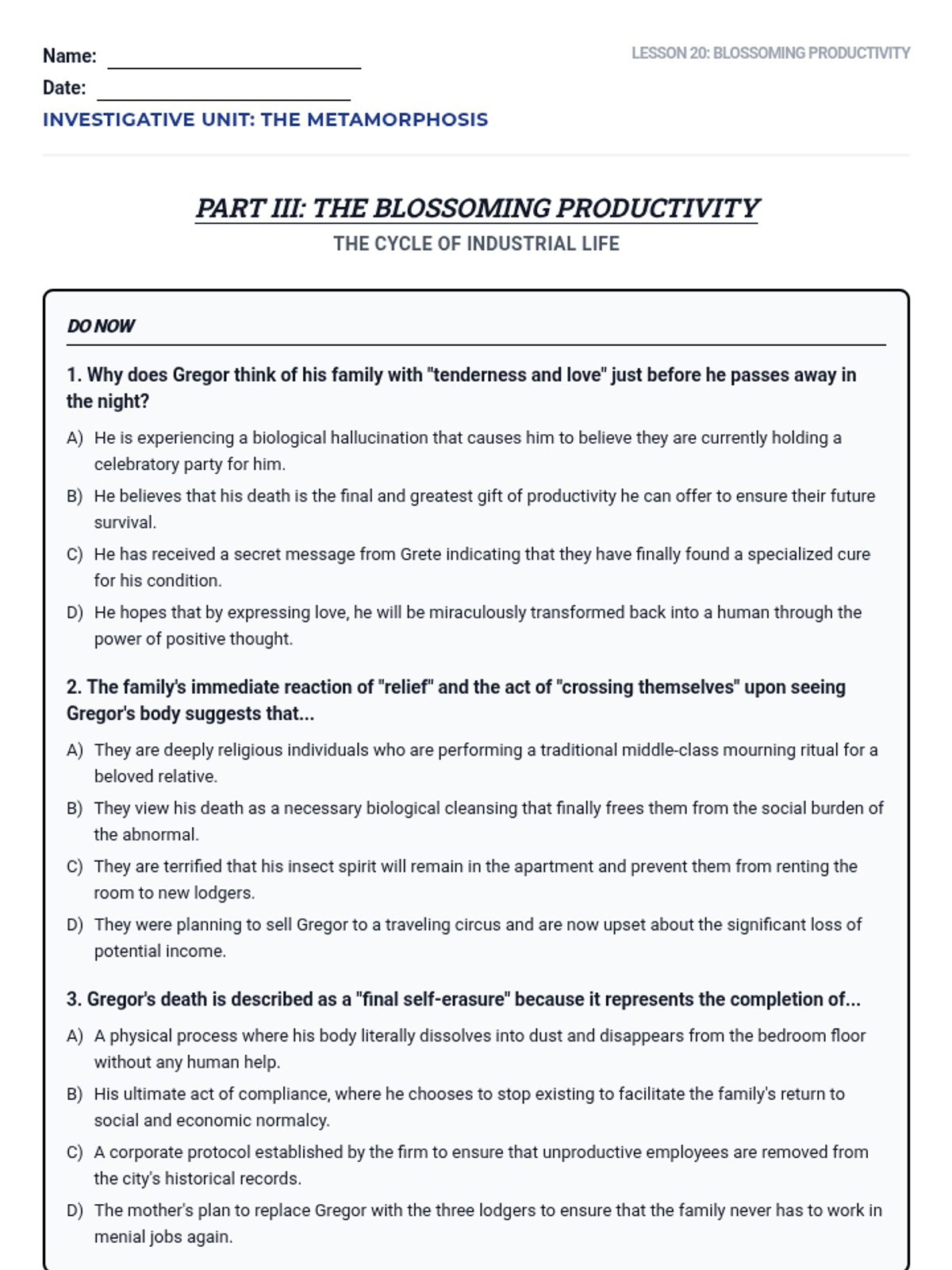
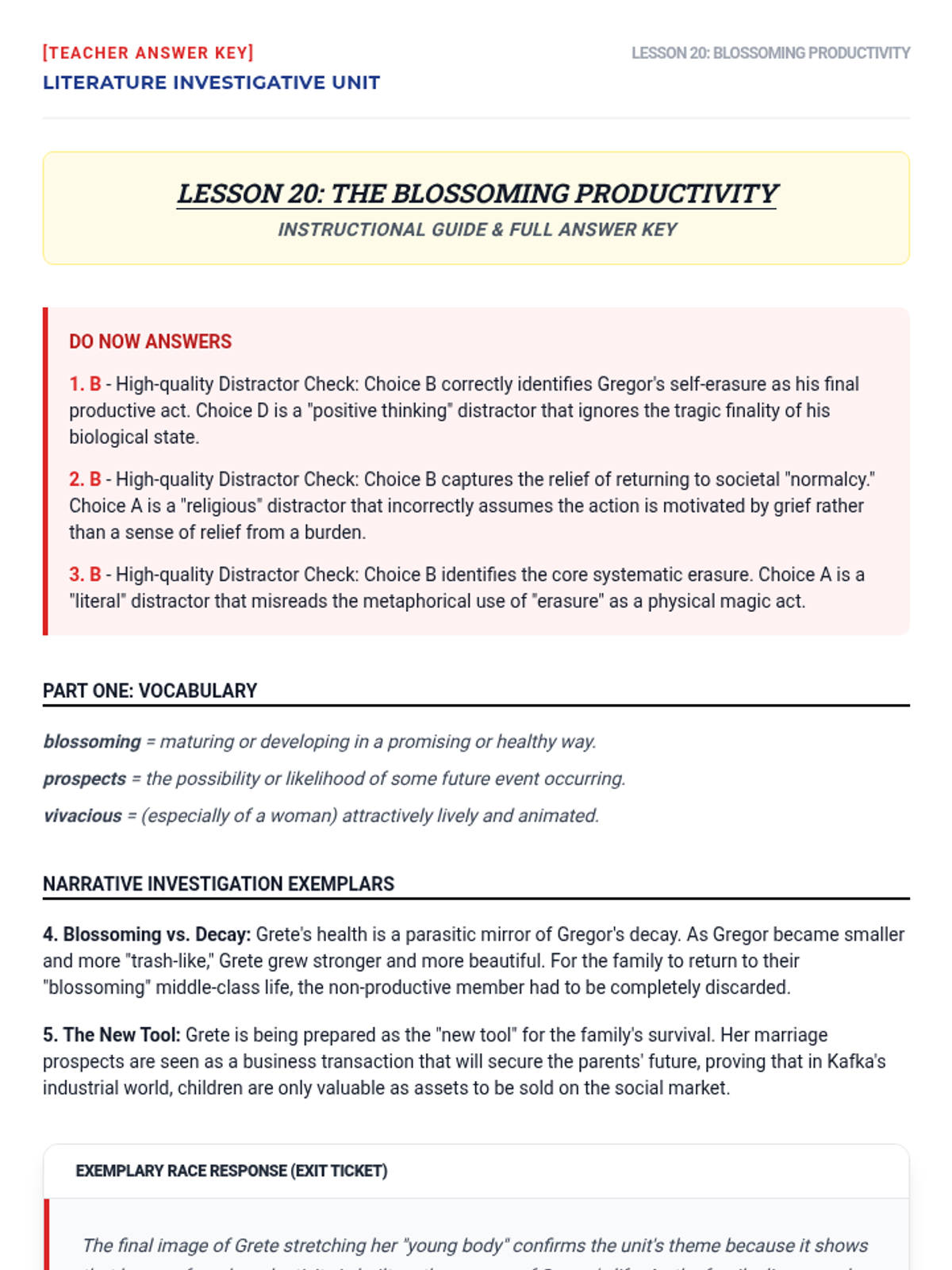
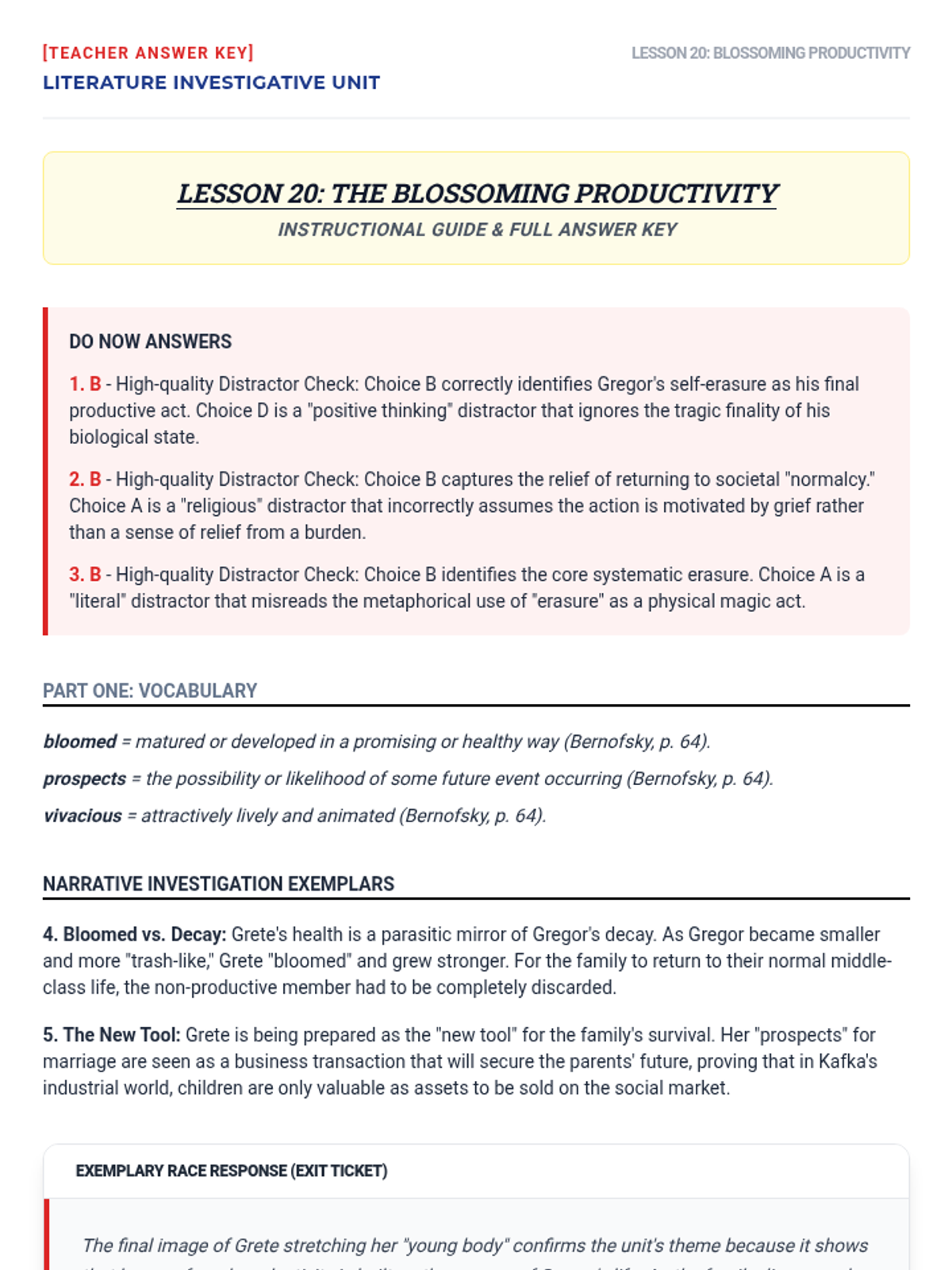
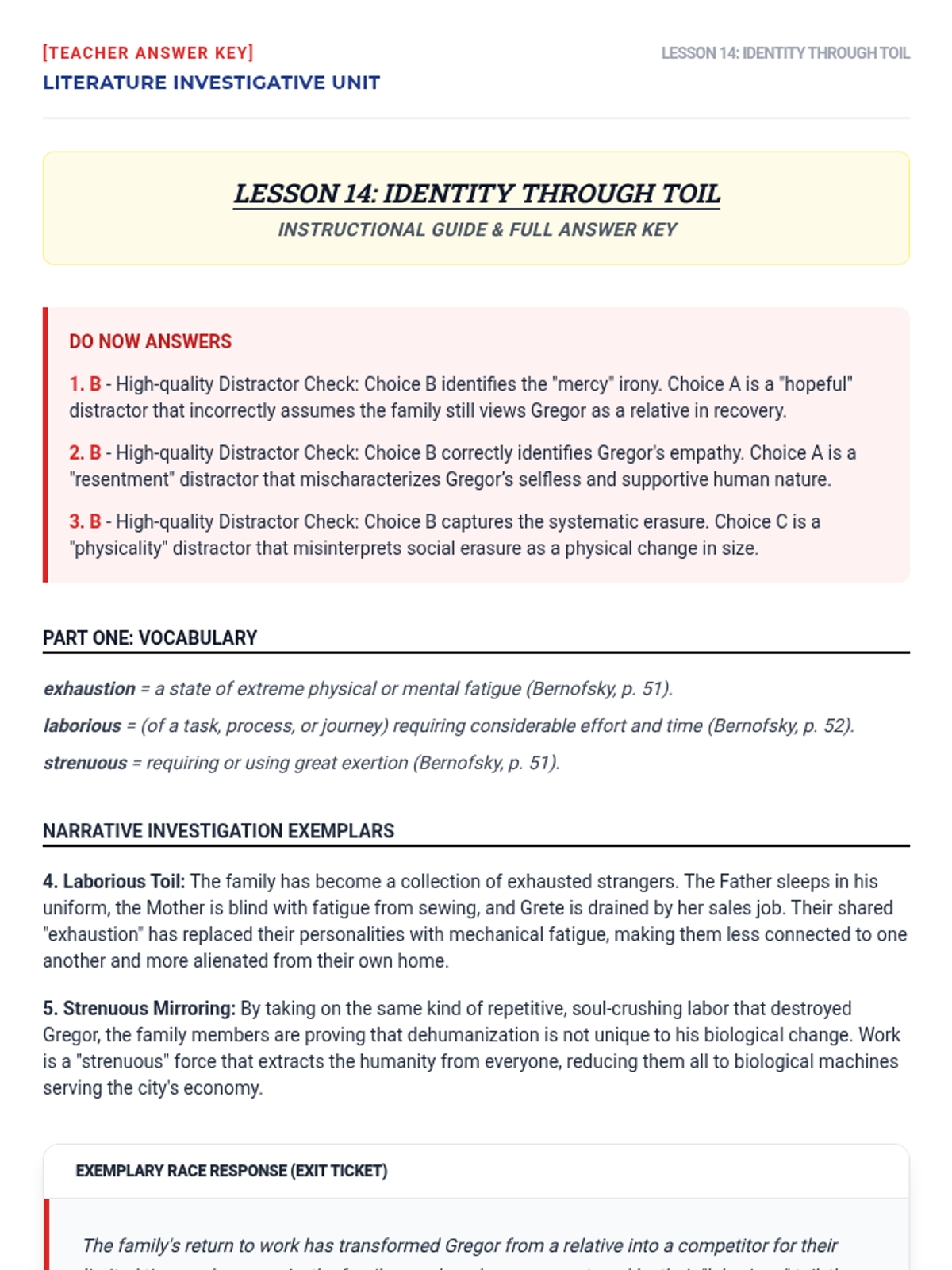
The family's recovery and the transition to a new source of productivity (Grete). Synthesis of the unit's themes.
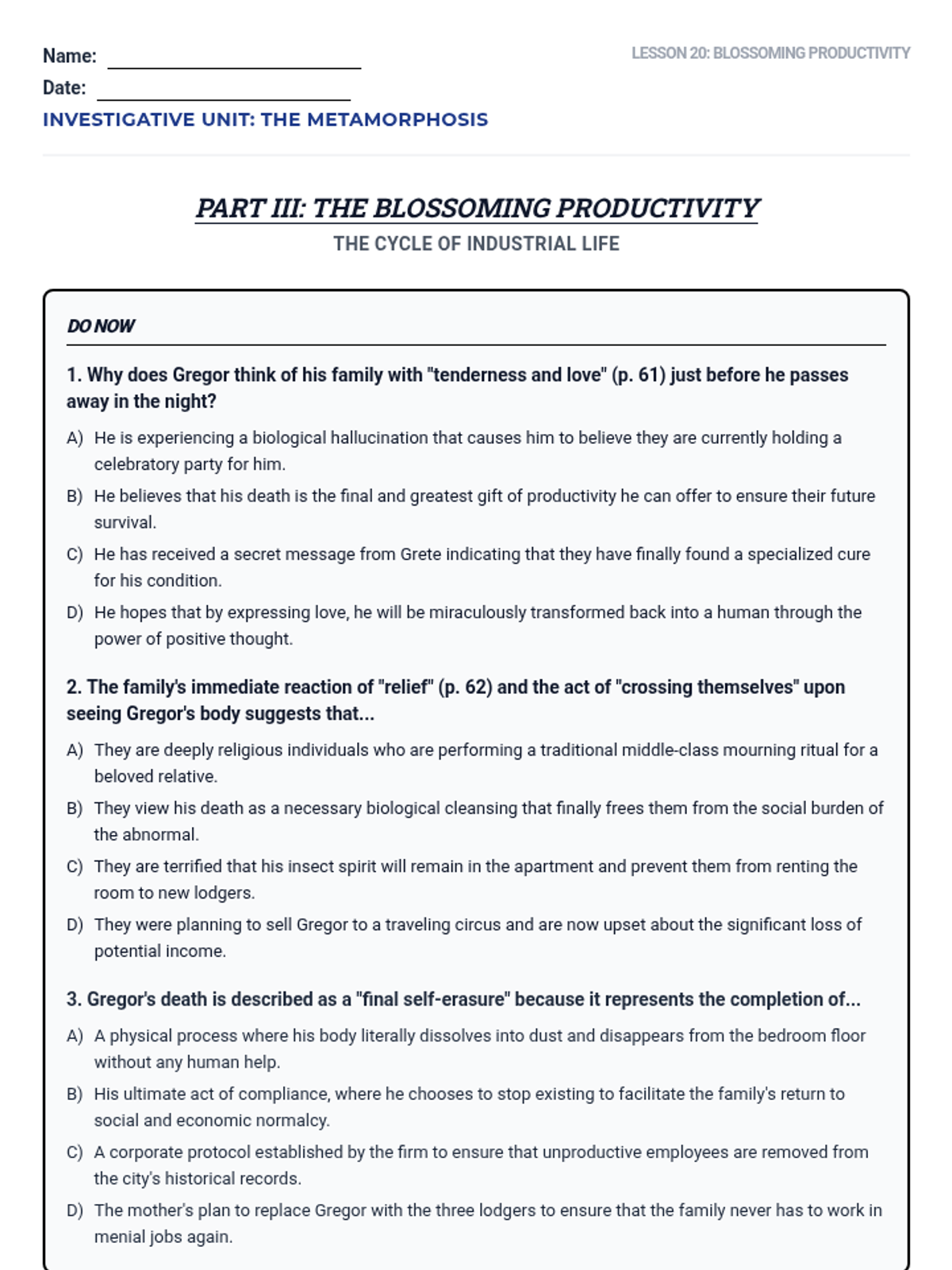
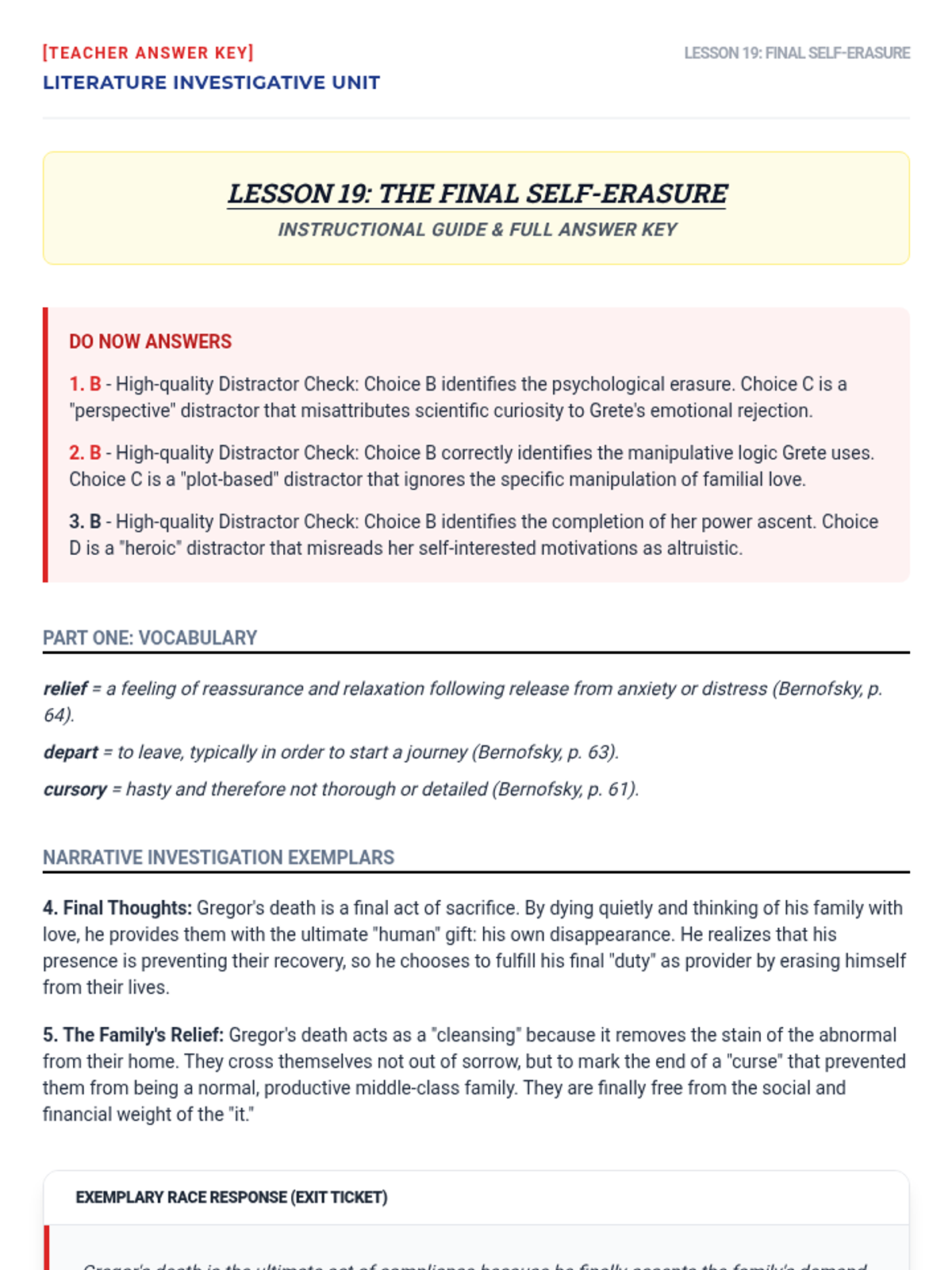
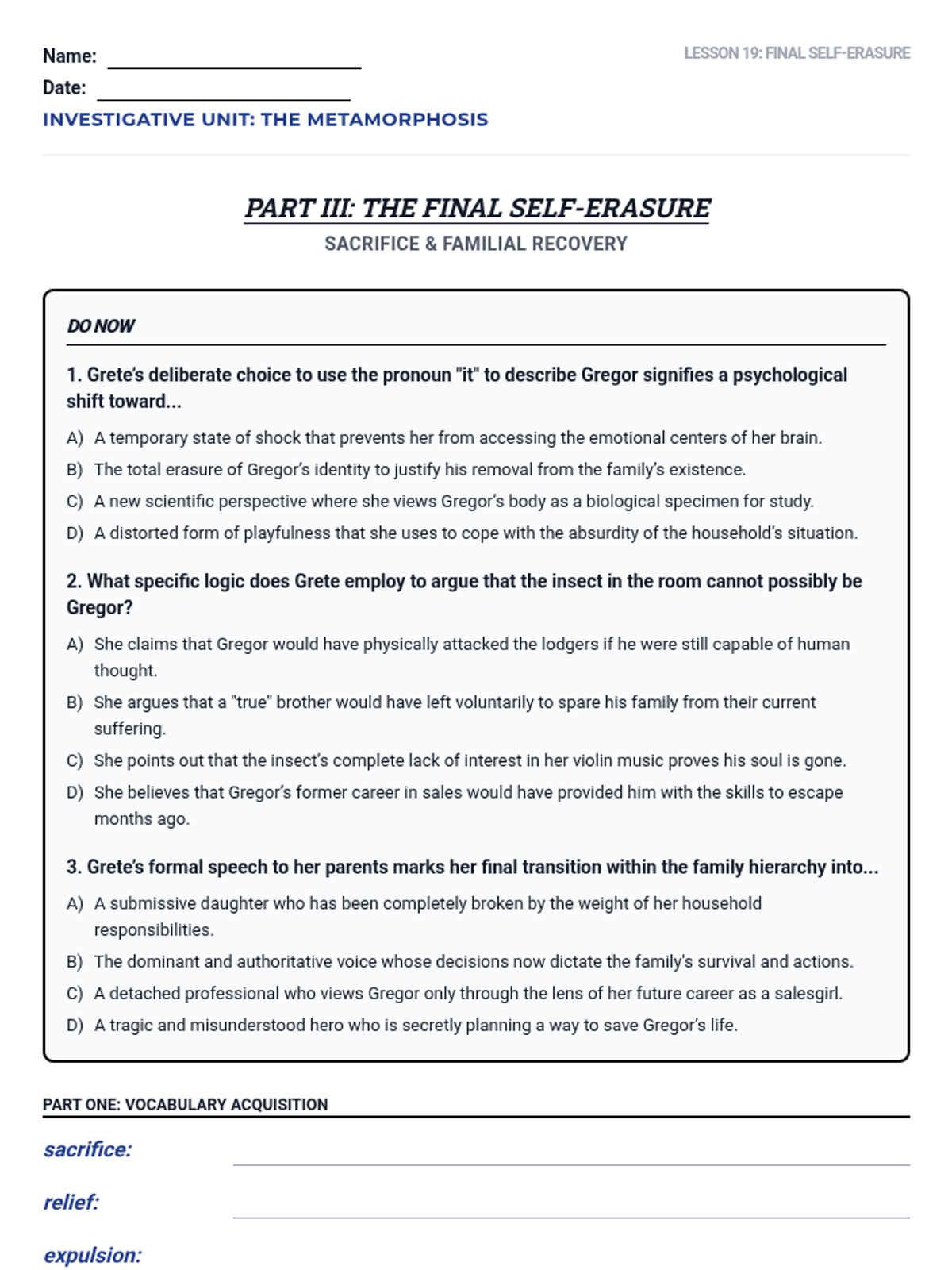
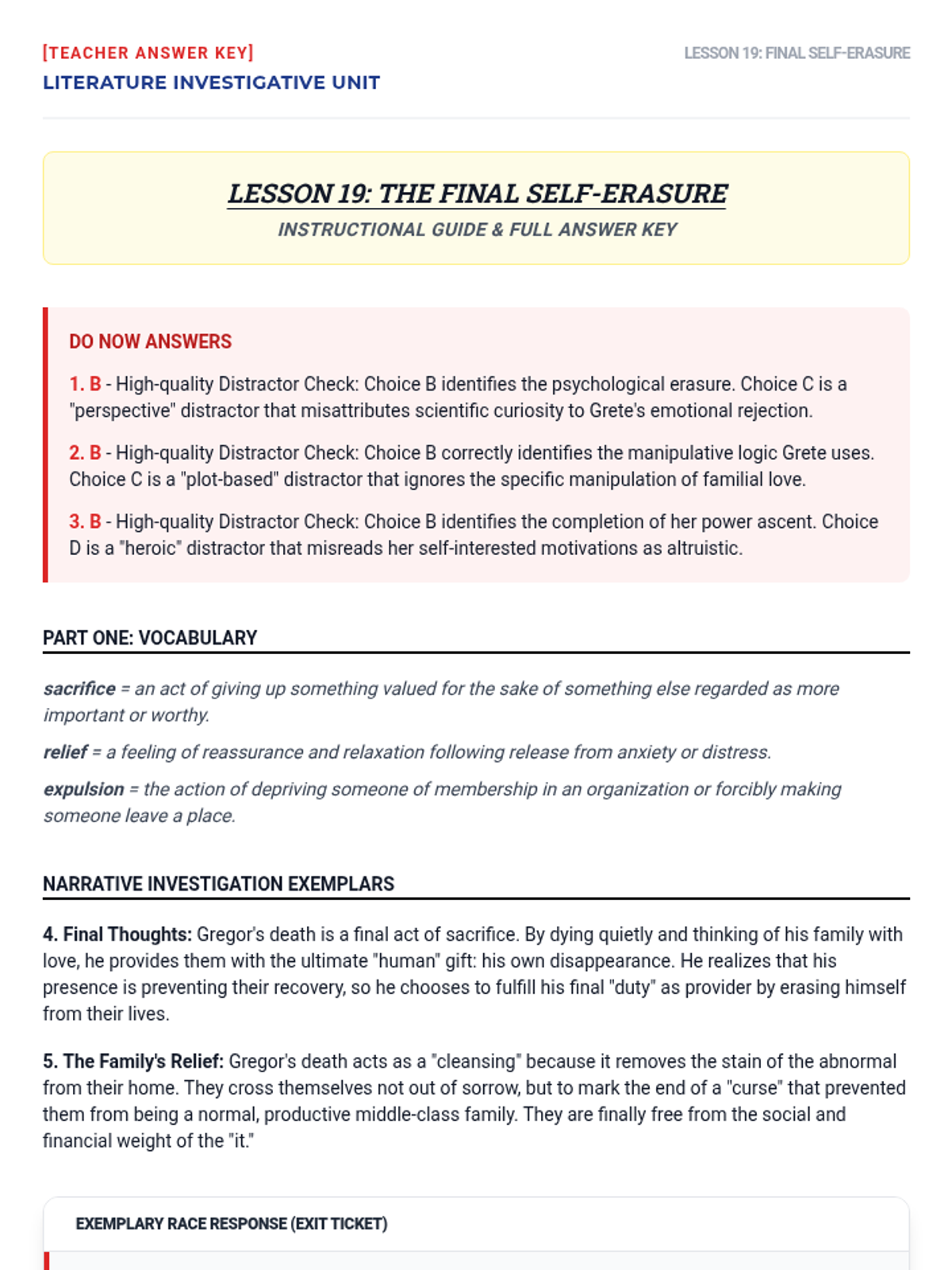
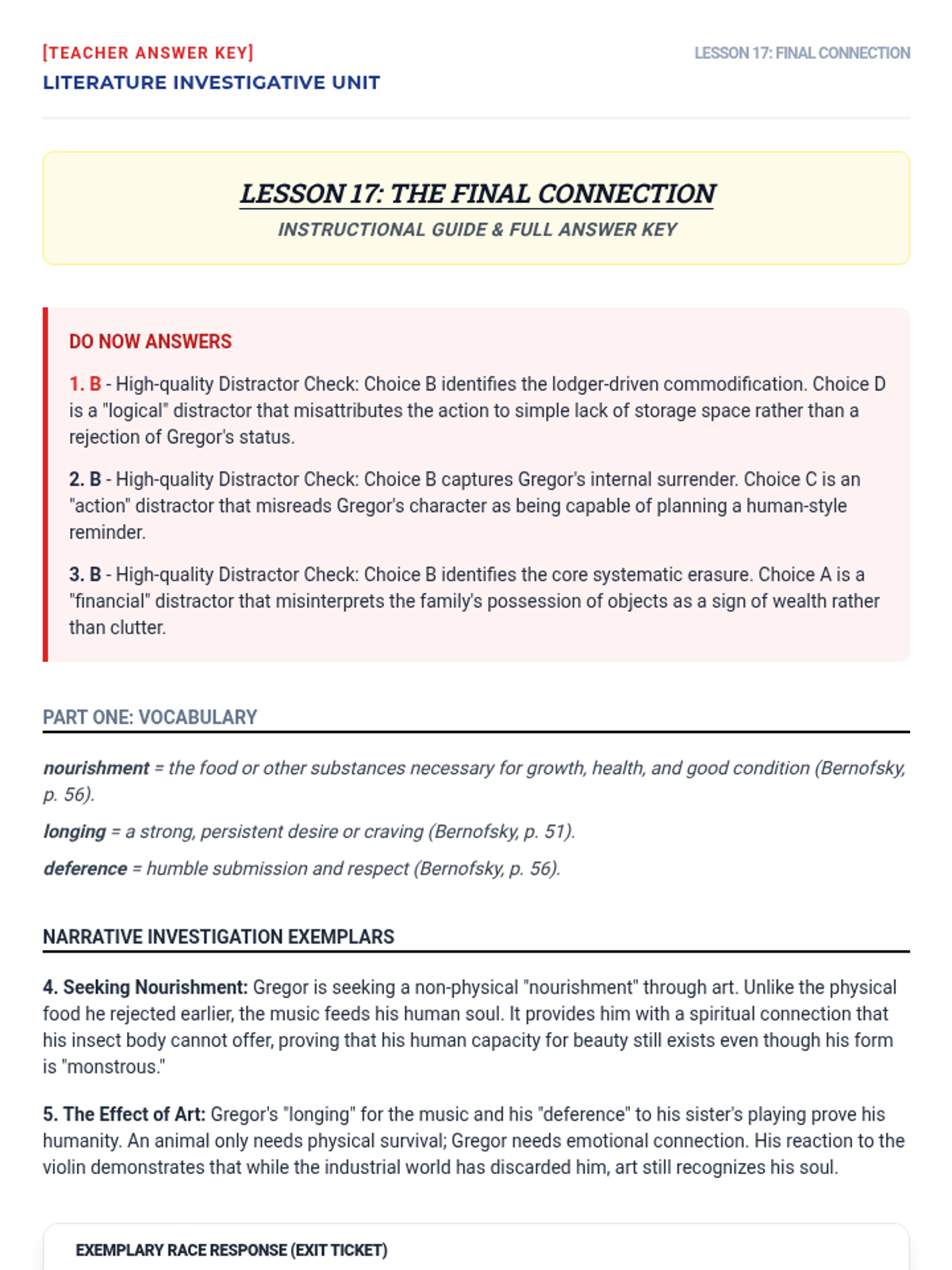
Gregor's death and self-sacrifice. Analysis of the relief of the family and the 'cleansing' of the home.
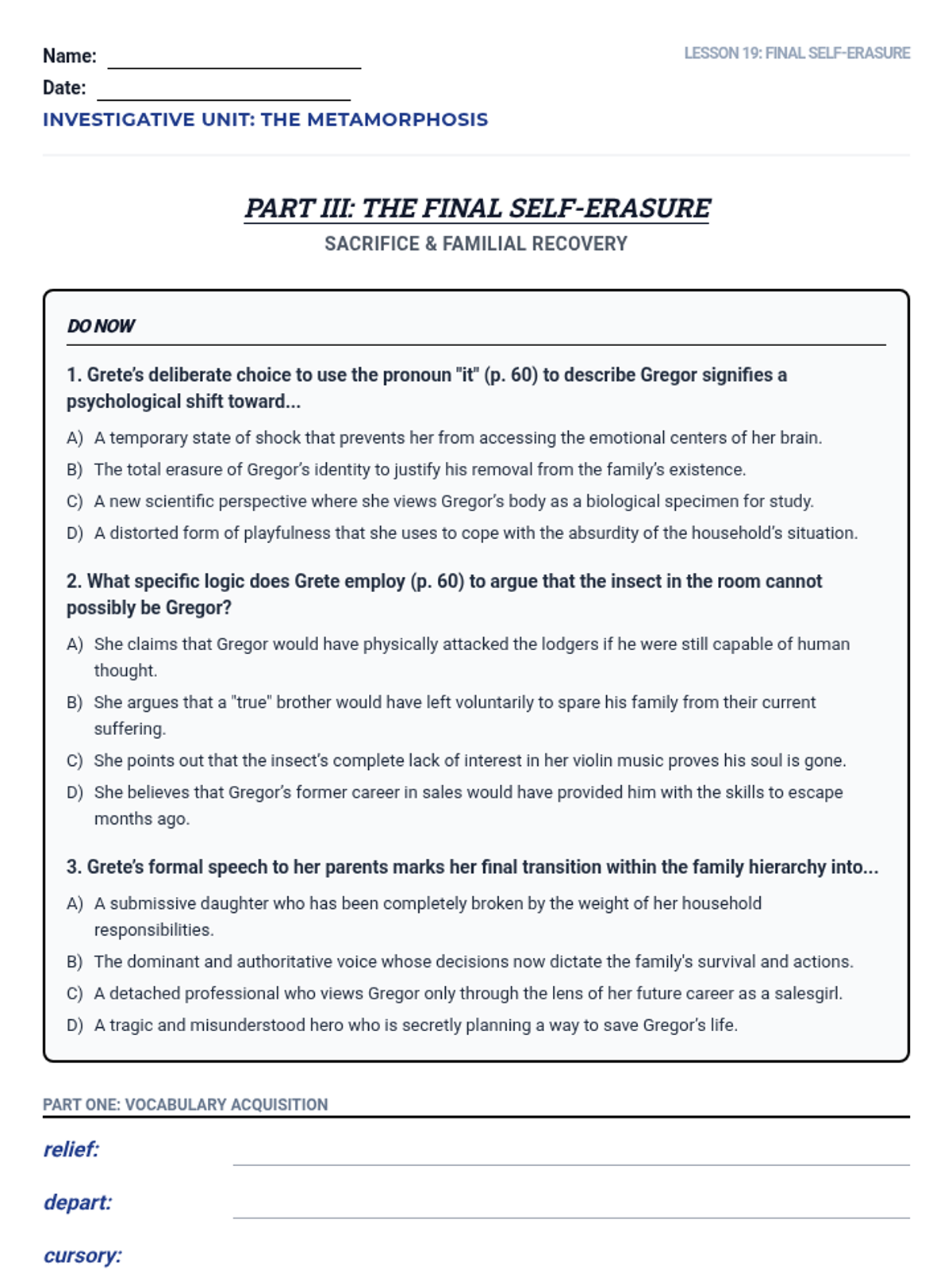
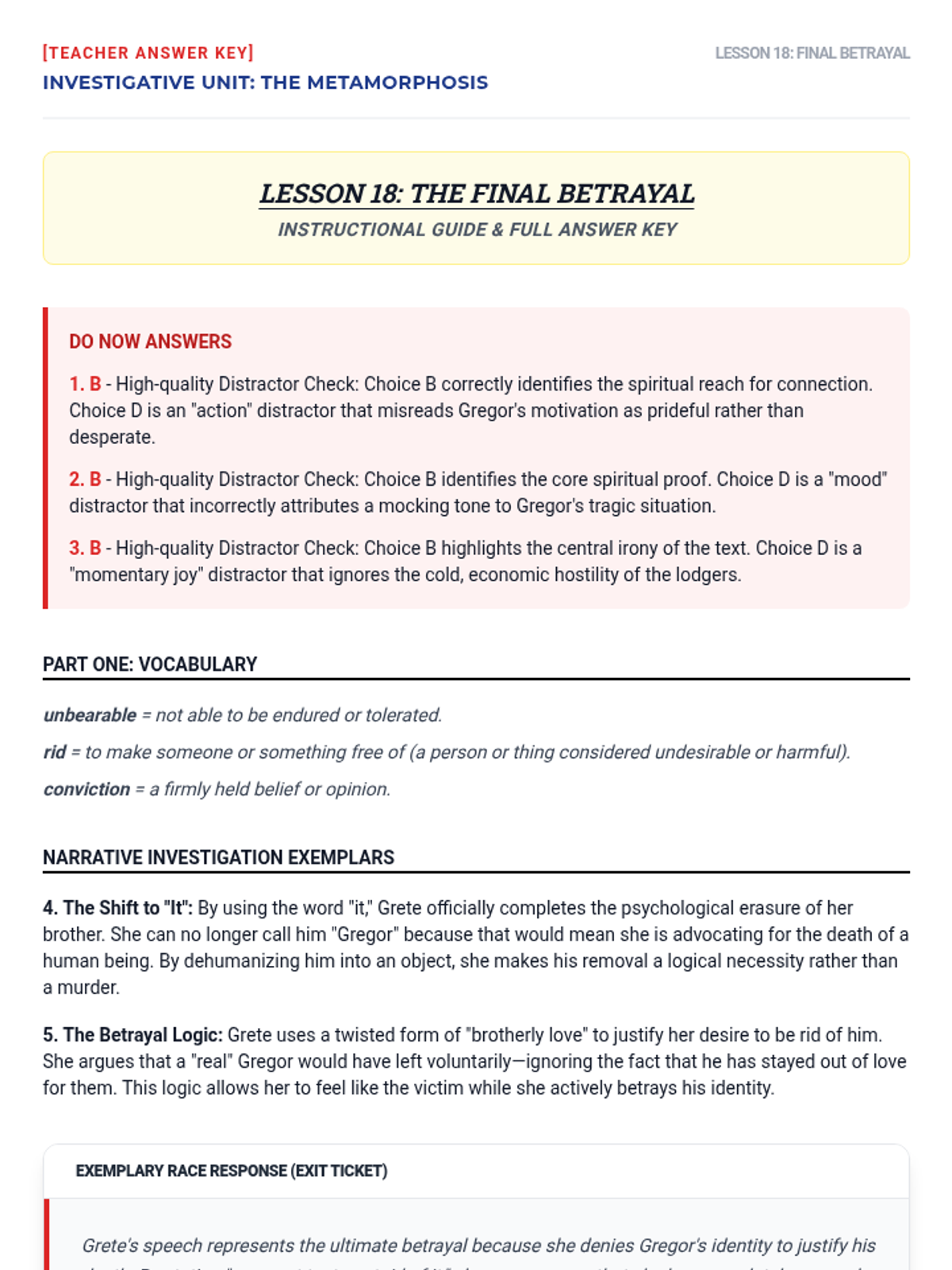
Grete's formal rejection of Gregor's identity. Analysis of the shift from sibling love to the necessity of his removal.
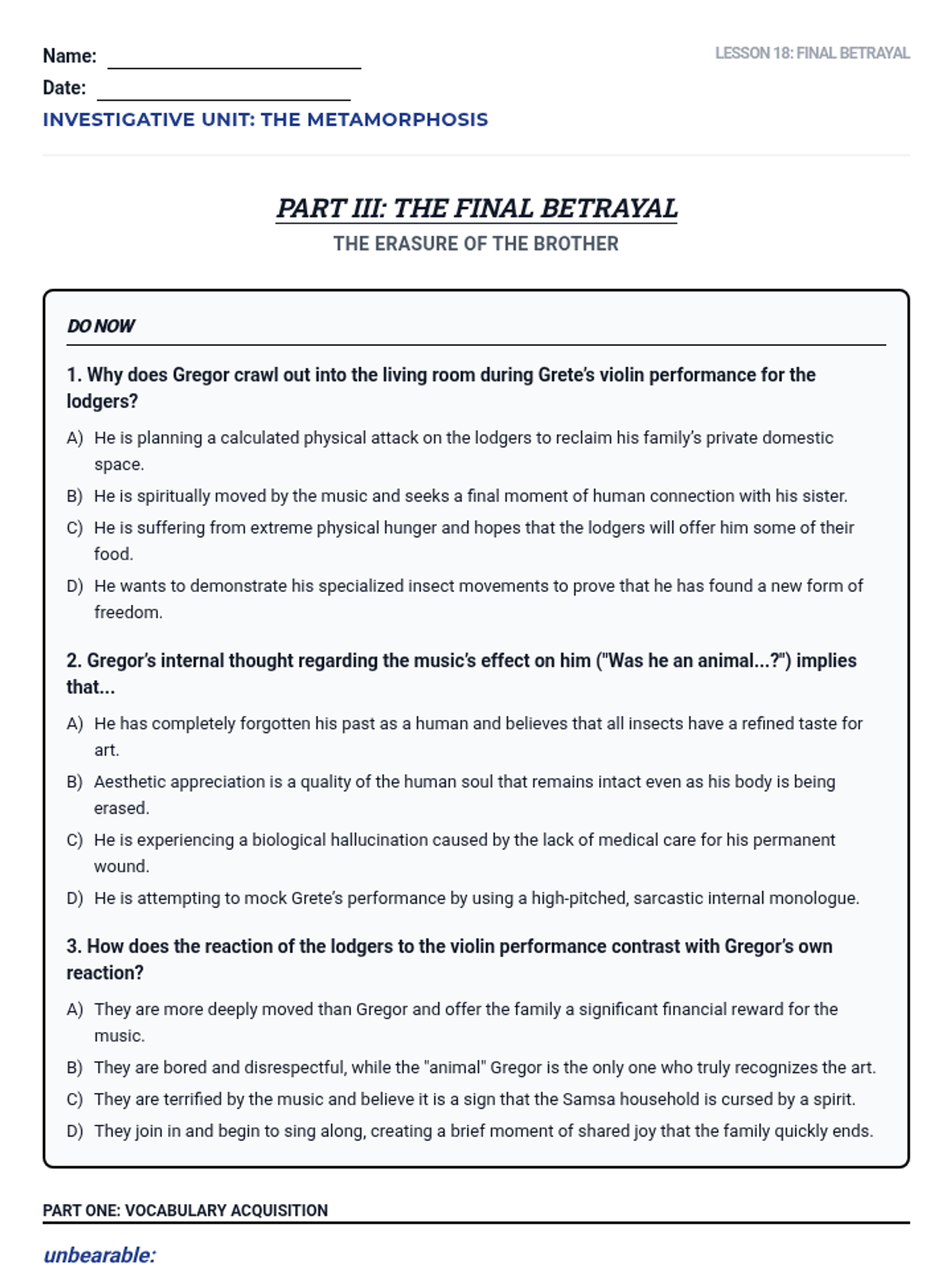
Gregor's reaction to Grete's violin performance. Themes of art, human connection, and the final reach for his human spirit.
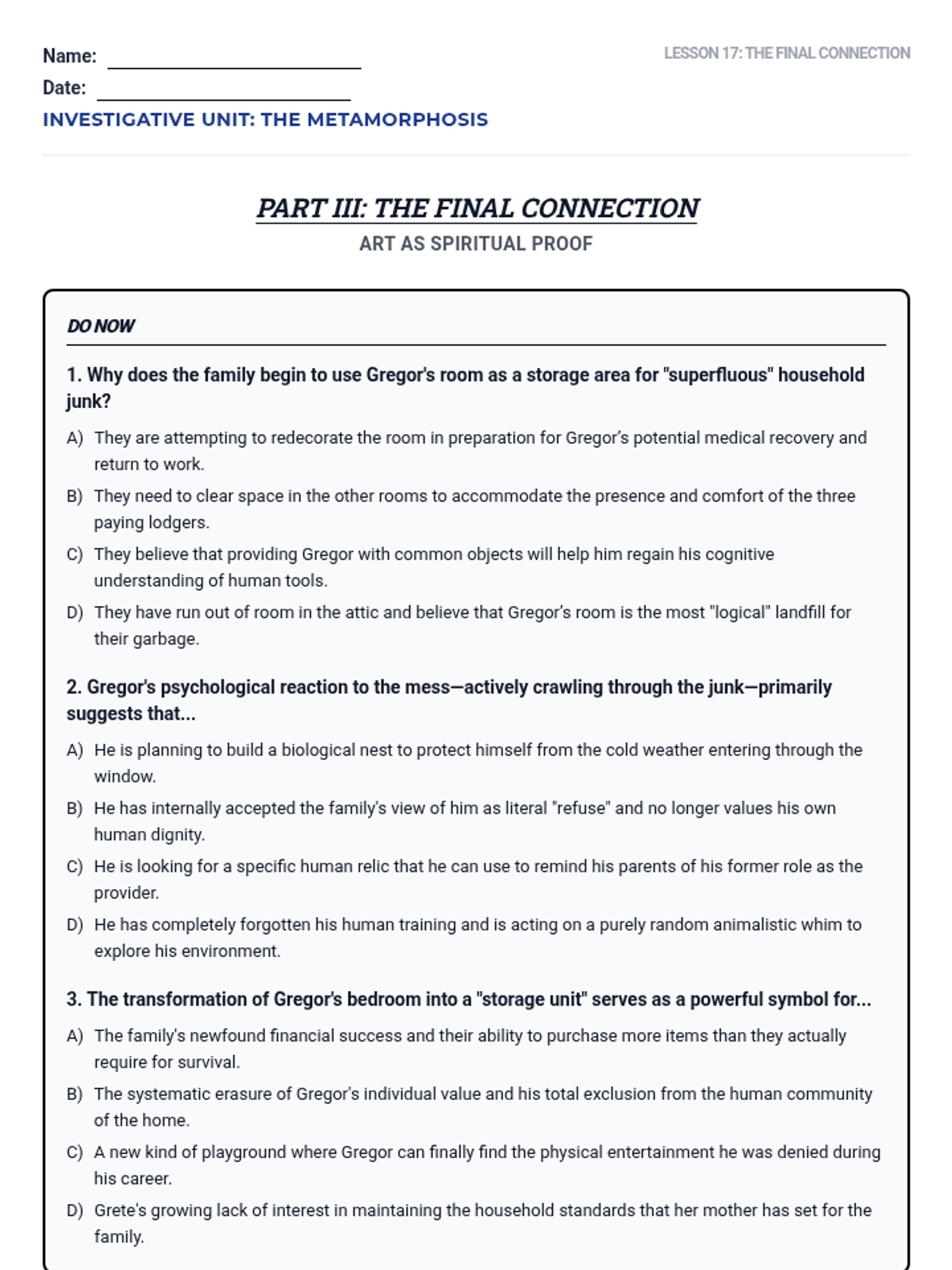
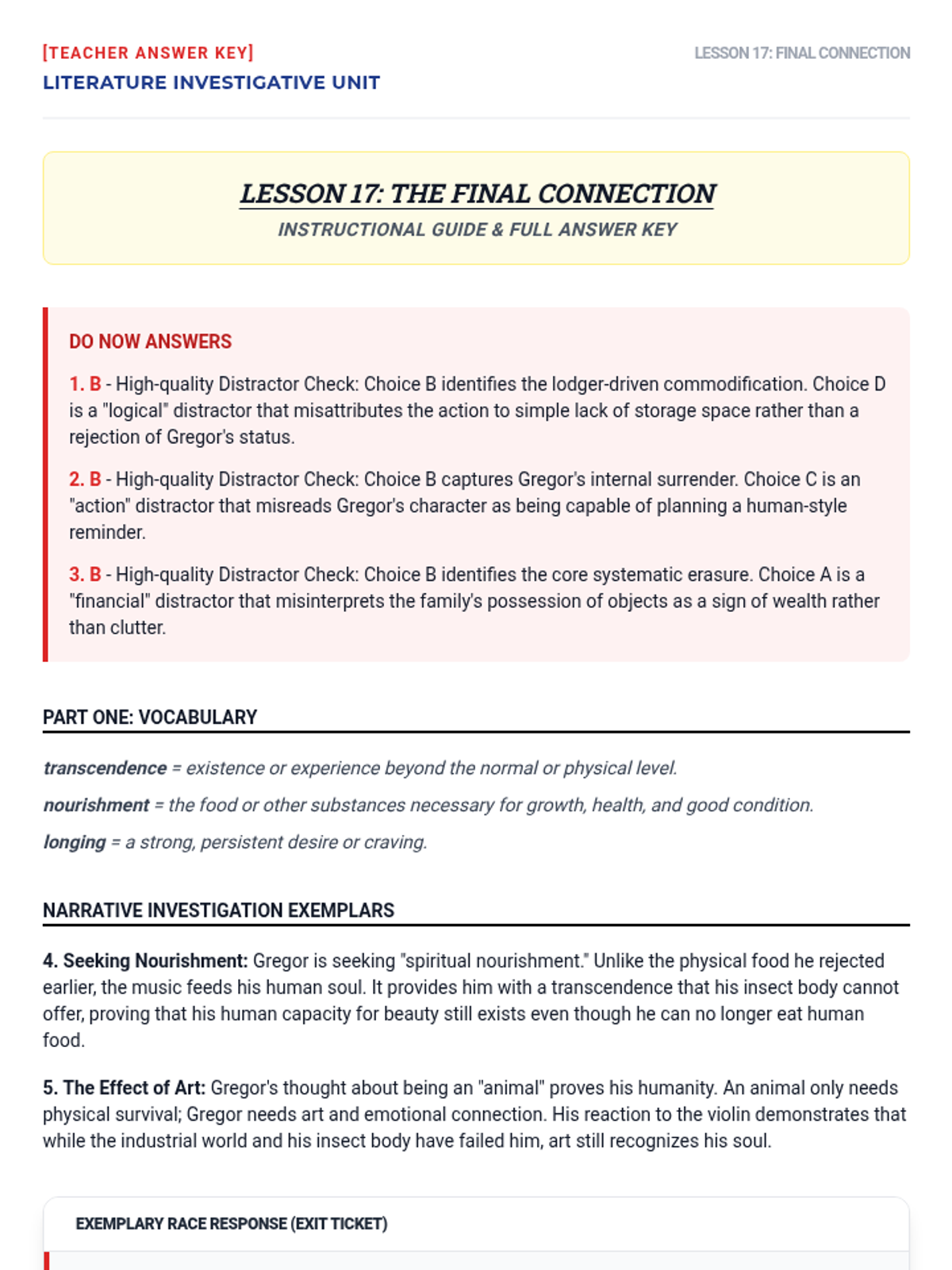
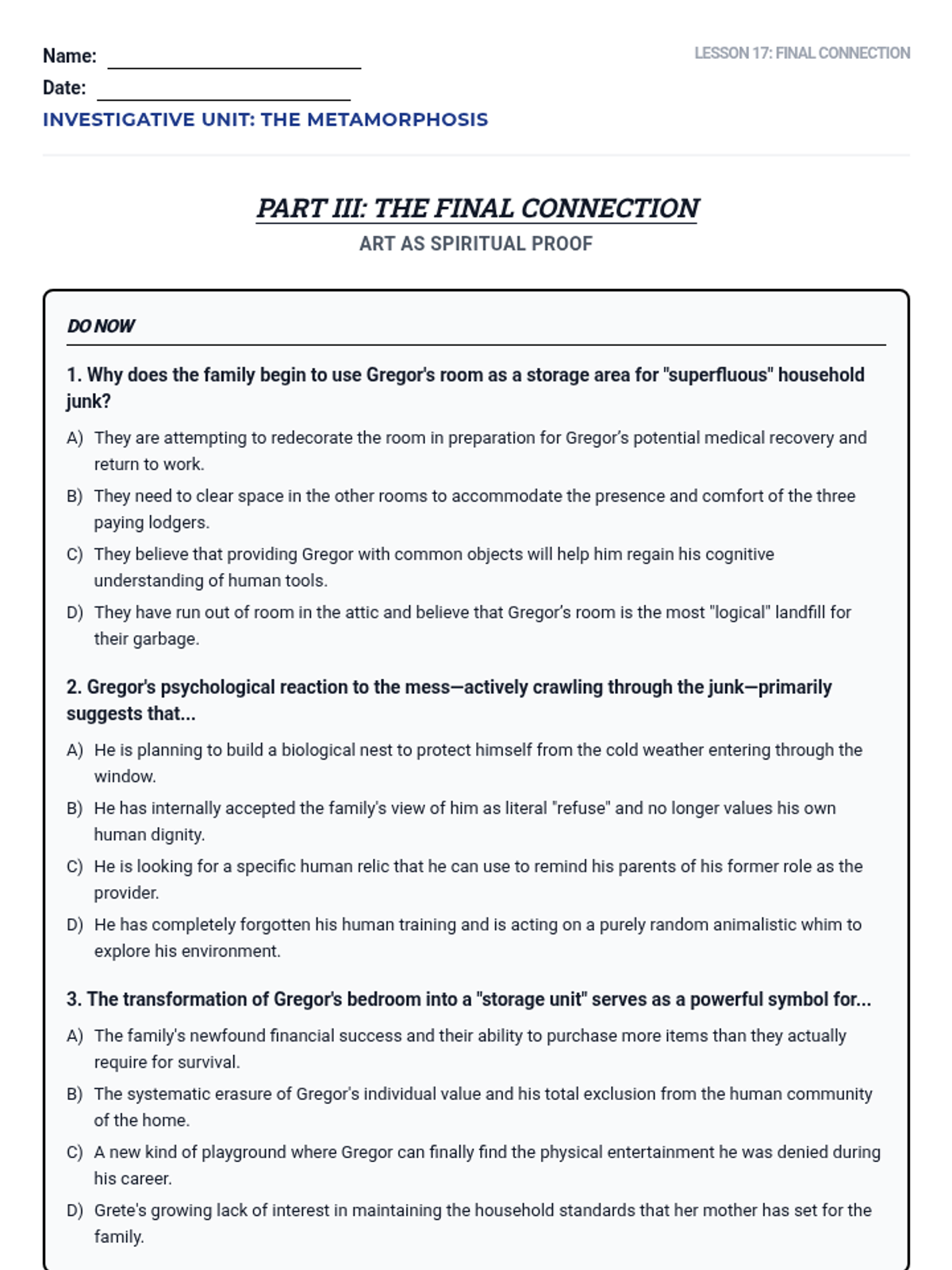
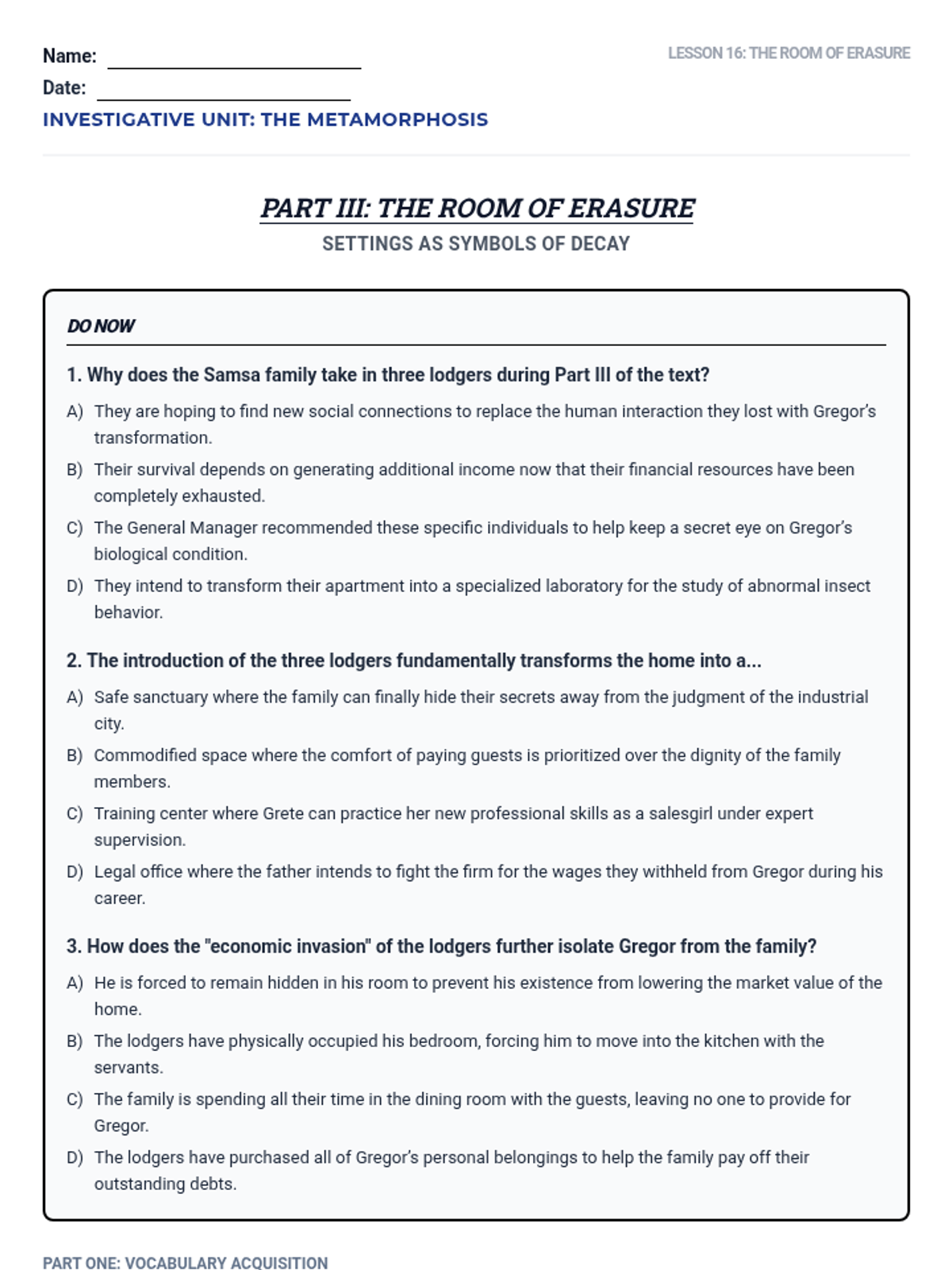
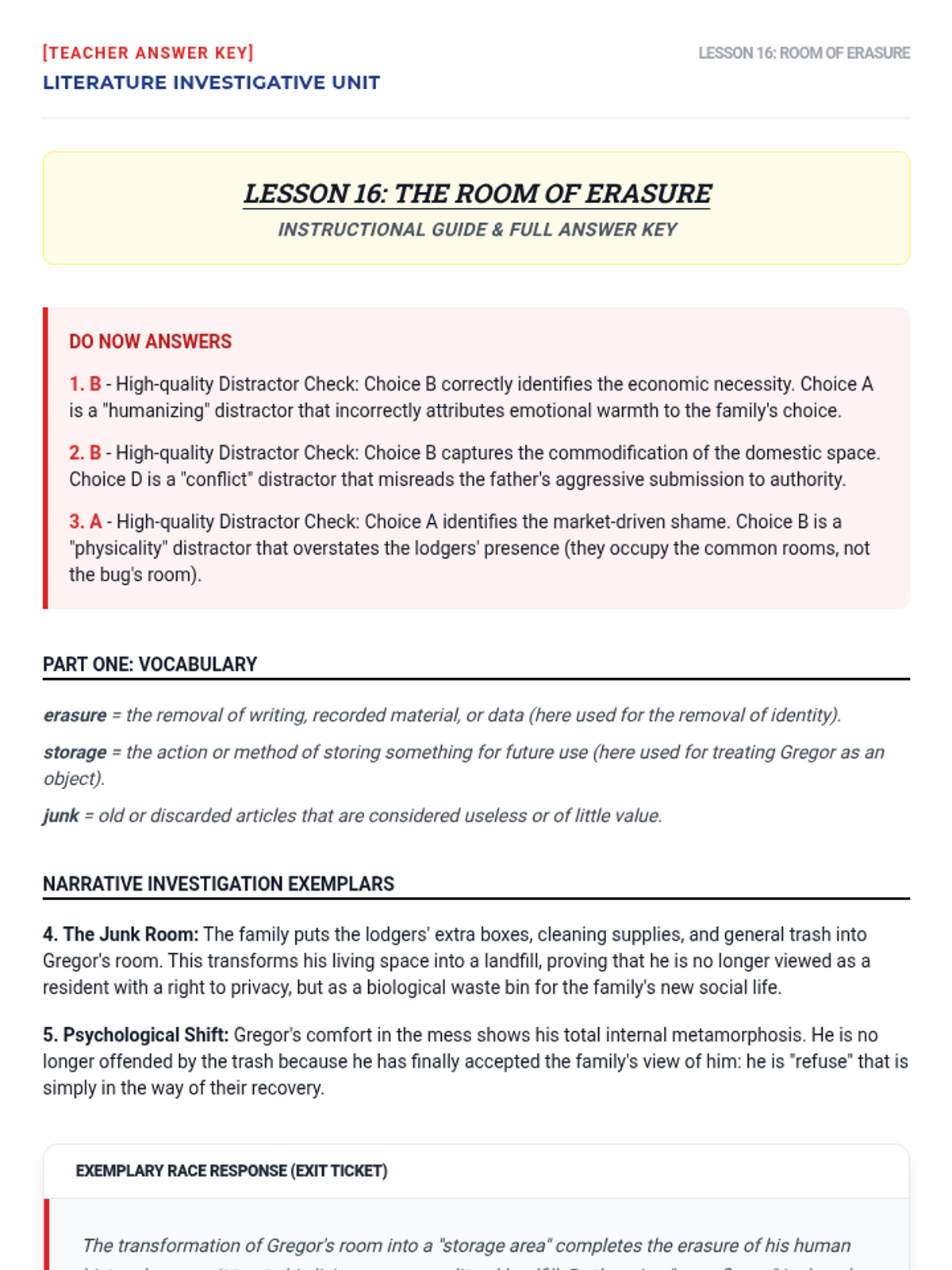
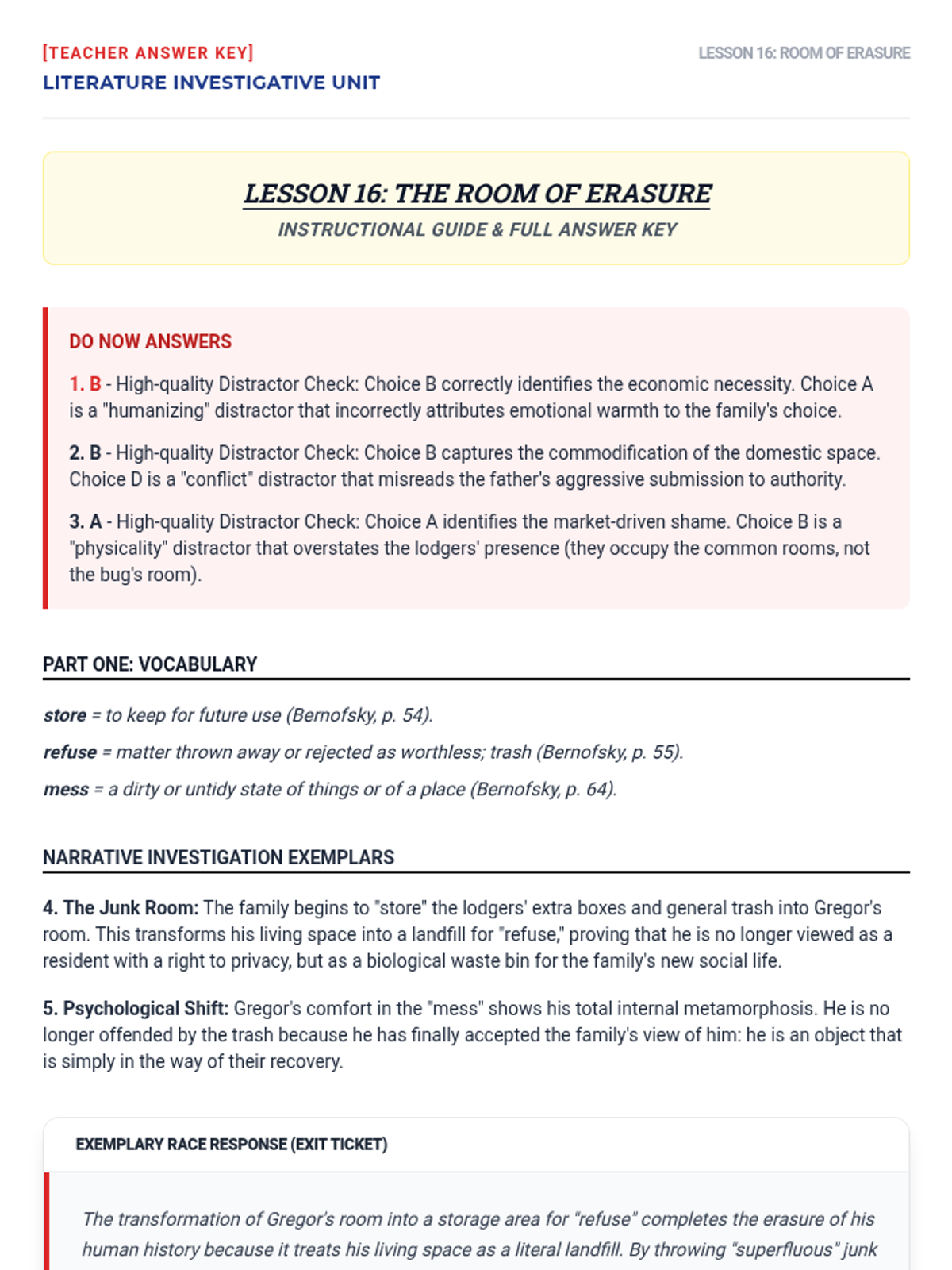
Gregor's room becomes a storage area for trash. Analysis of the complete erasure of his human space and history.
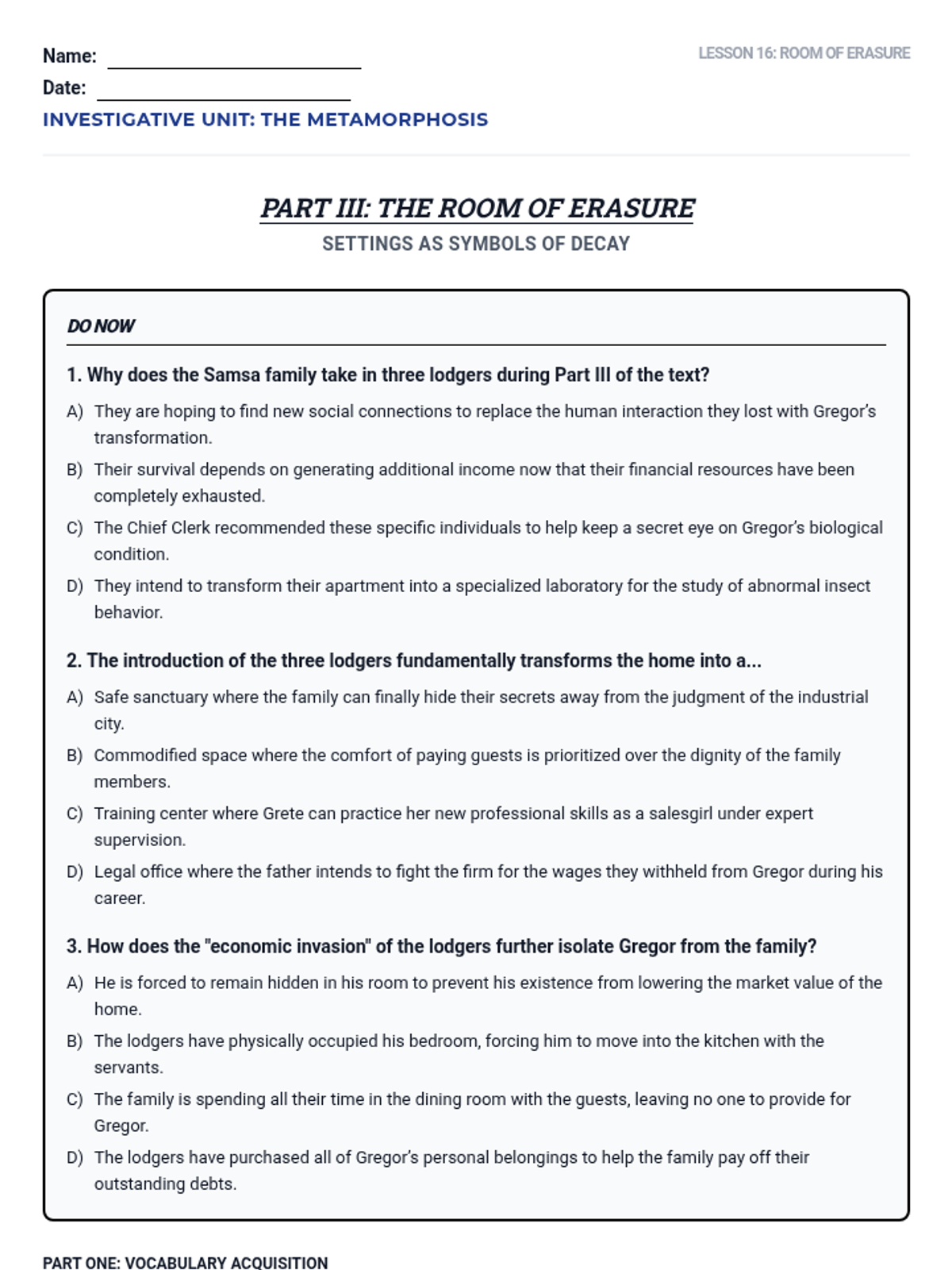
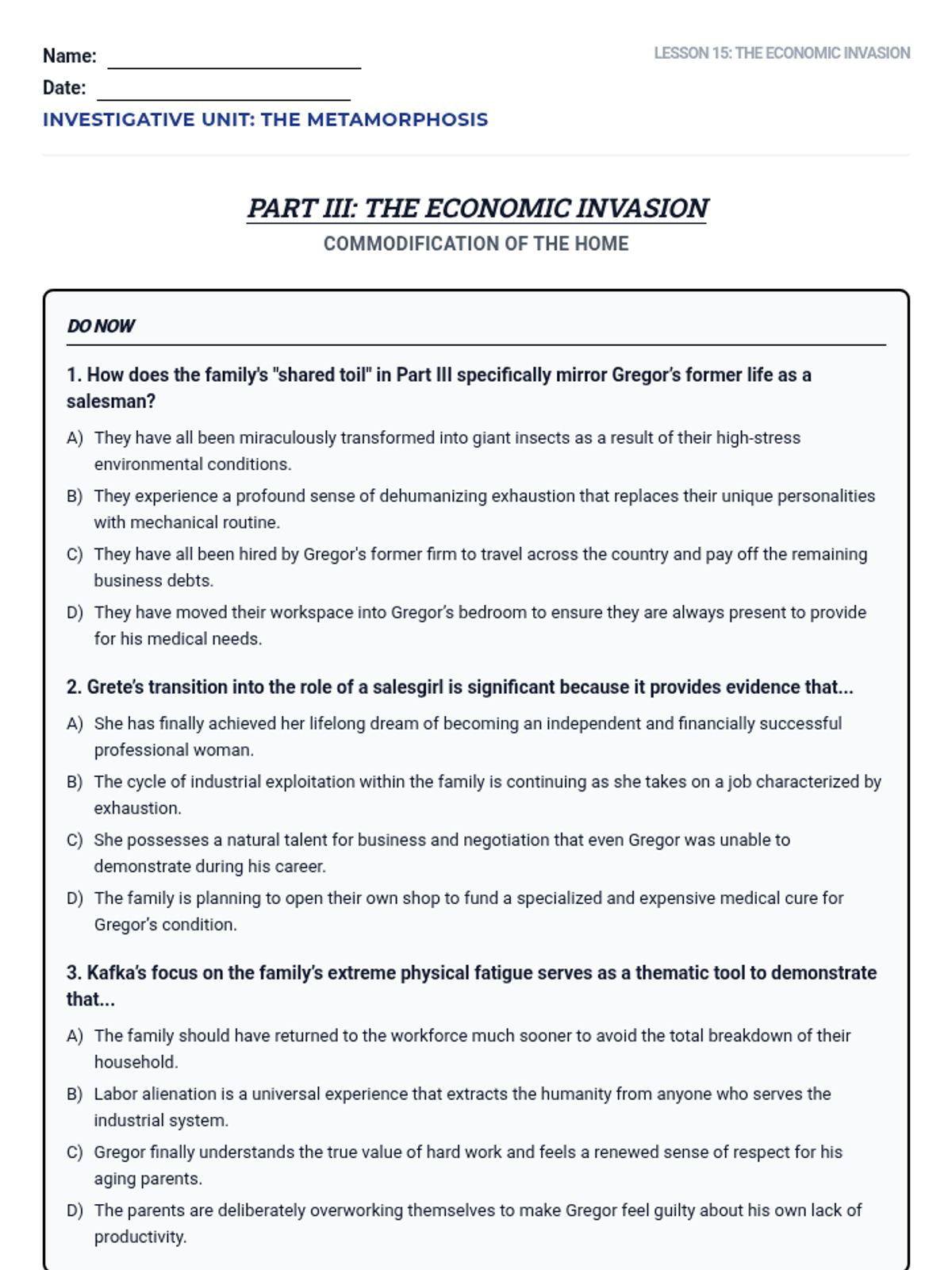
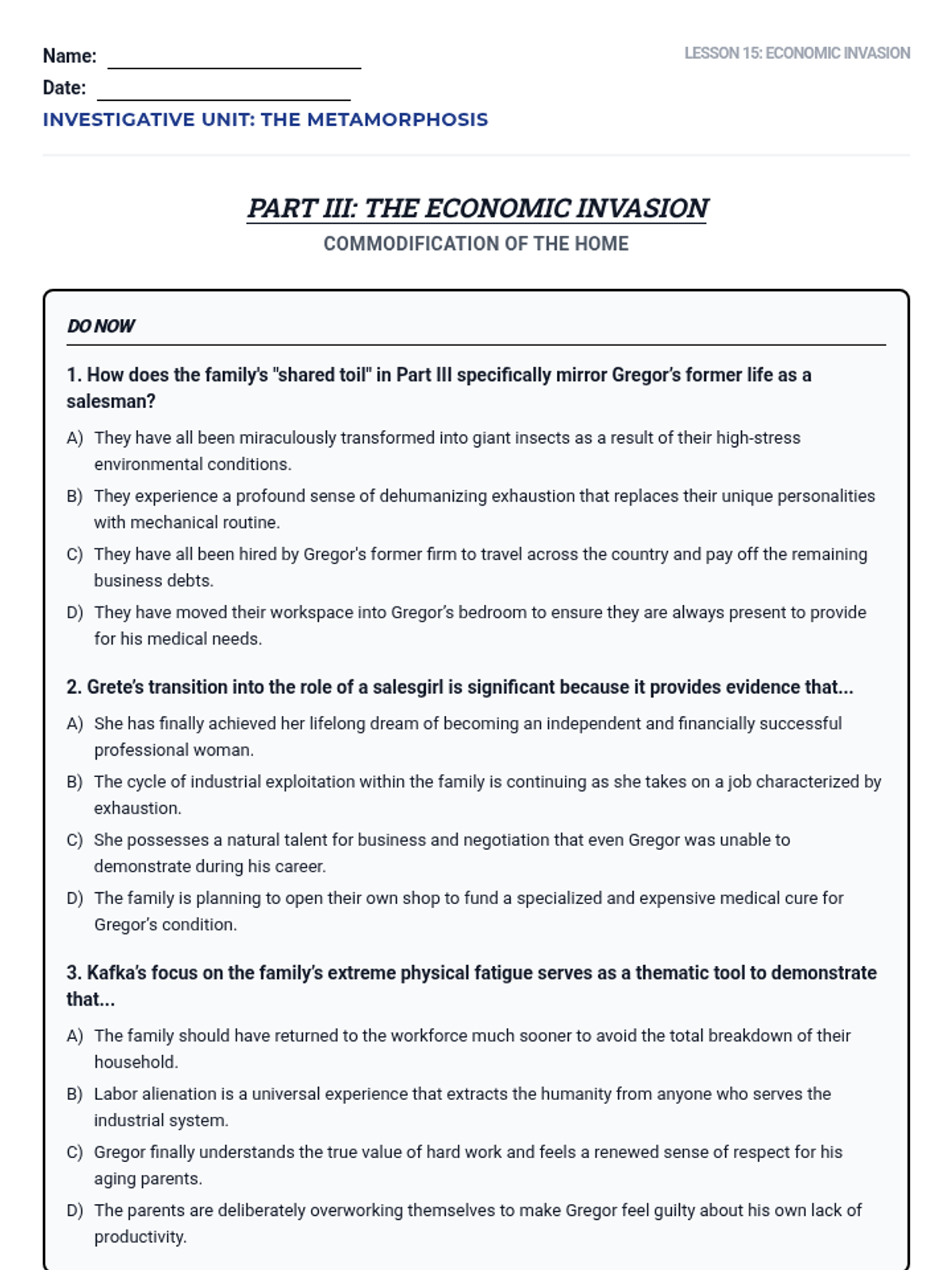
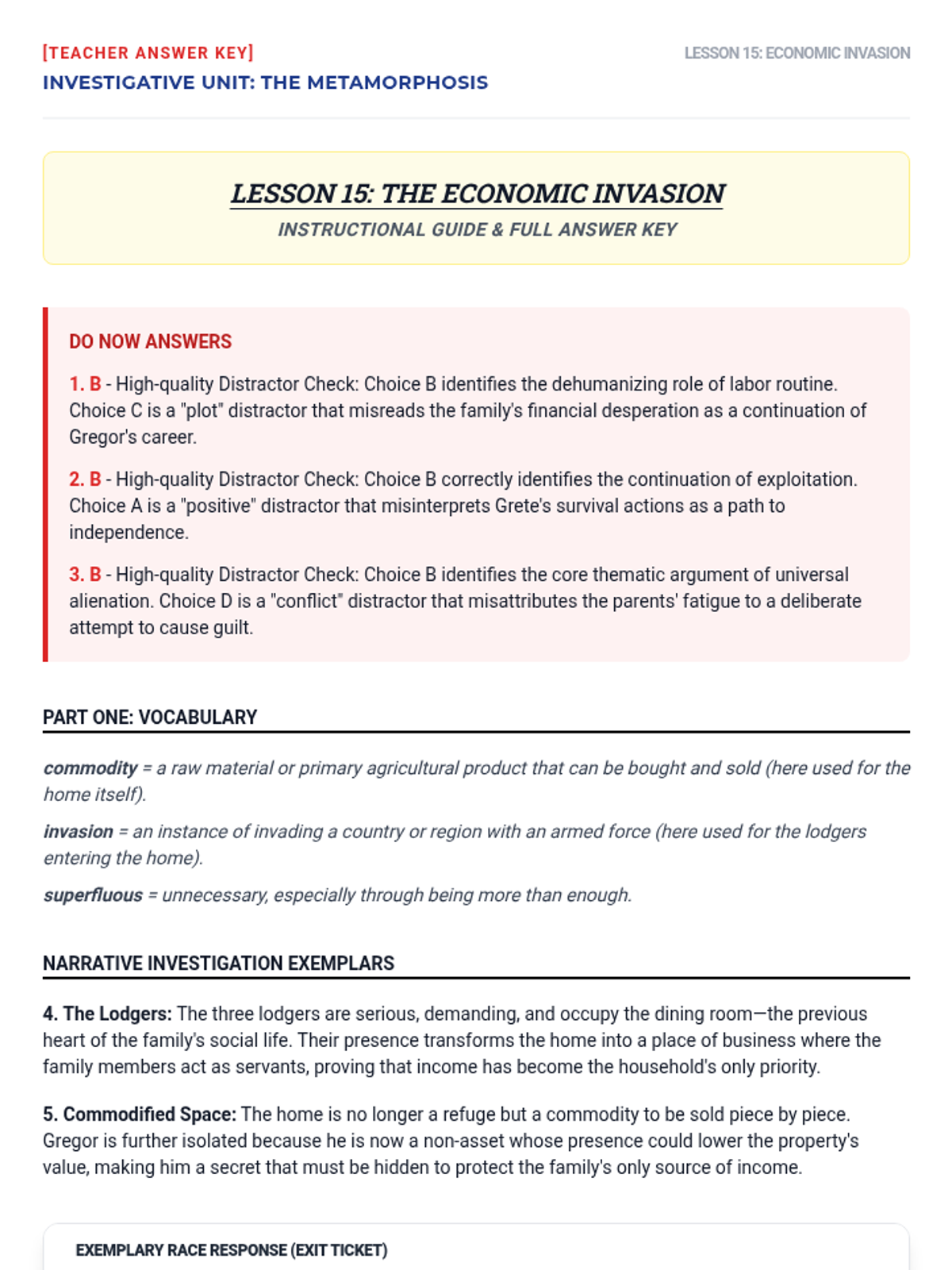
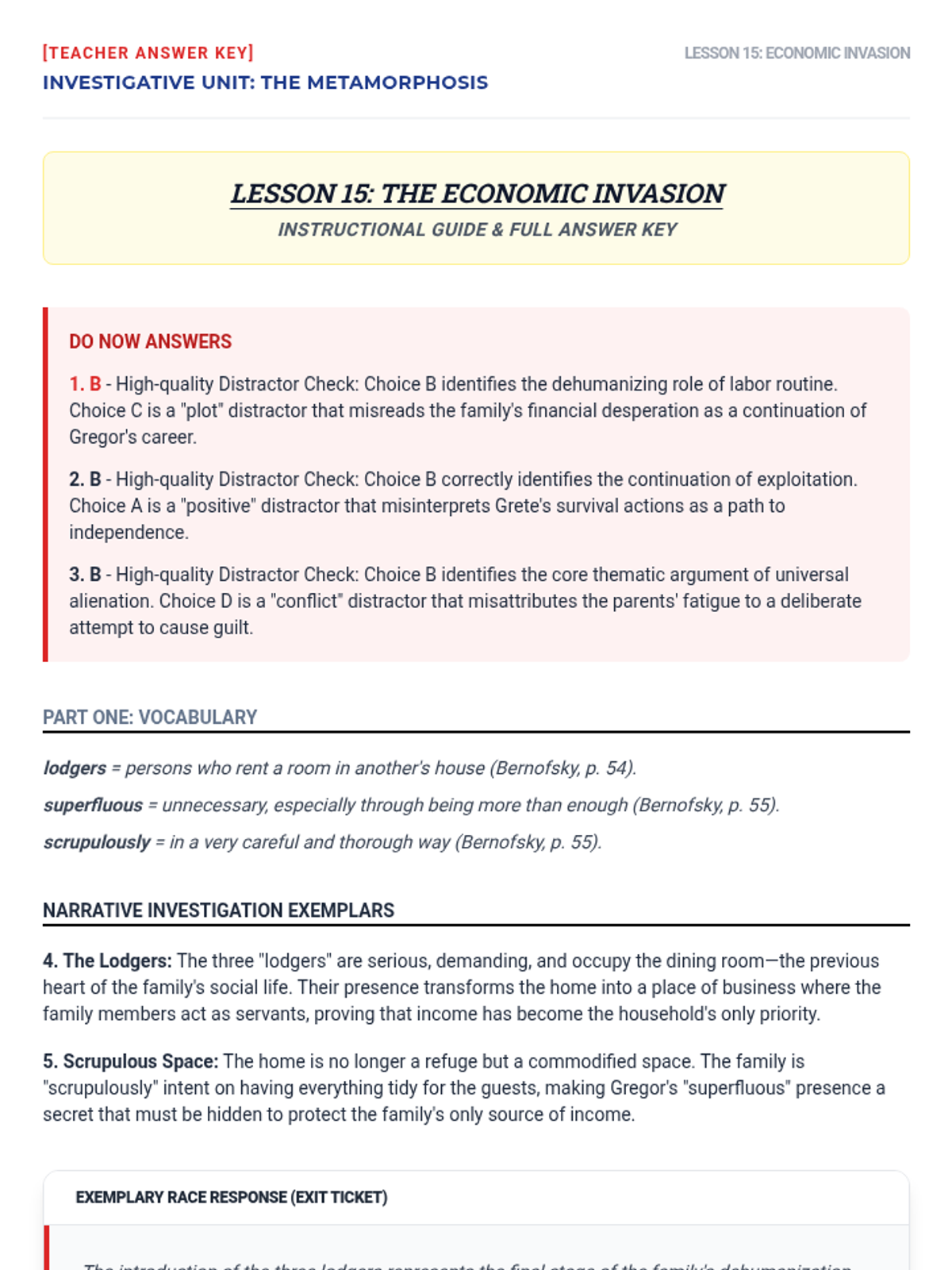
The introduction of the three lodgers. Analysis of the home as a commodified space and Gregor's further displacement.
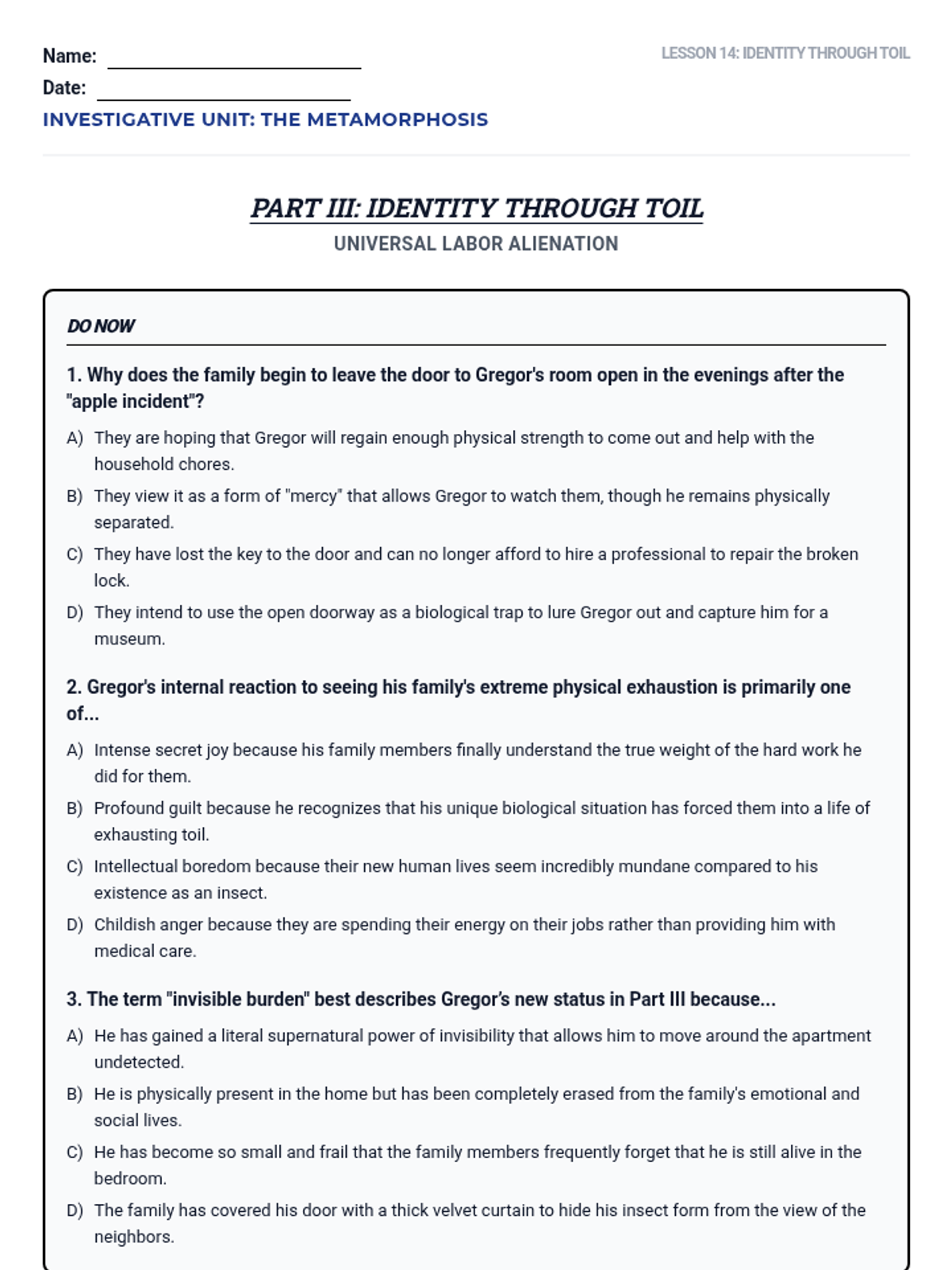
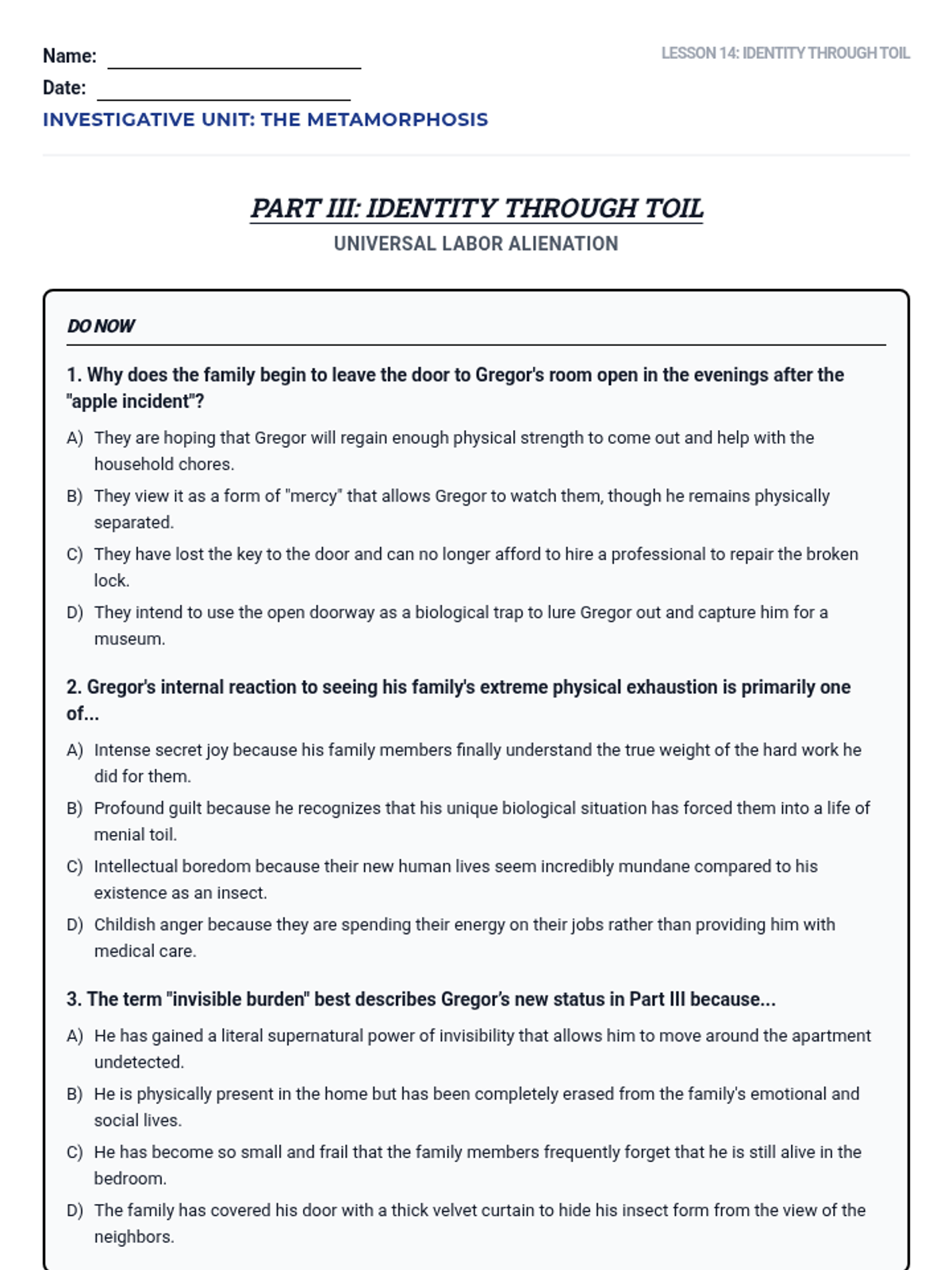
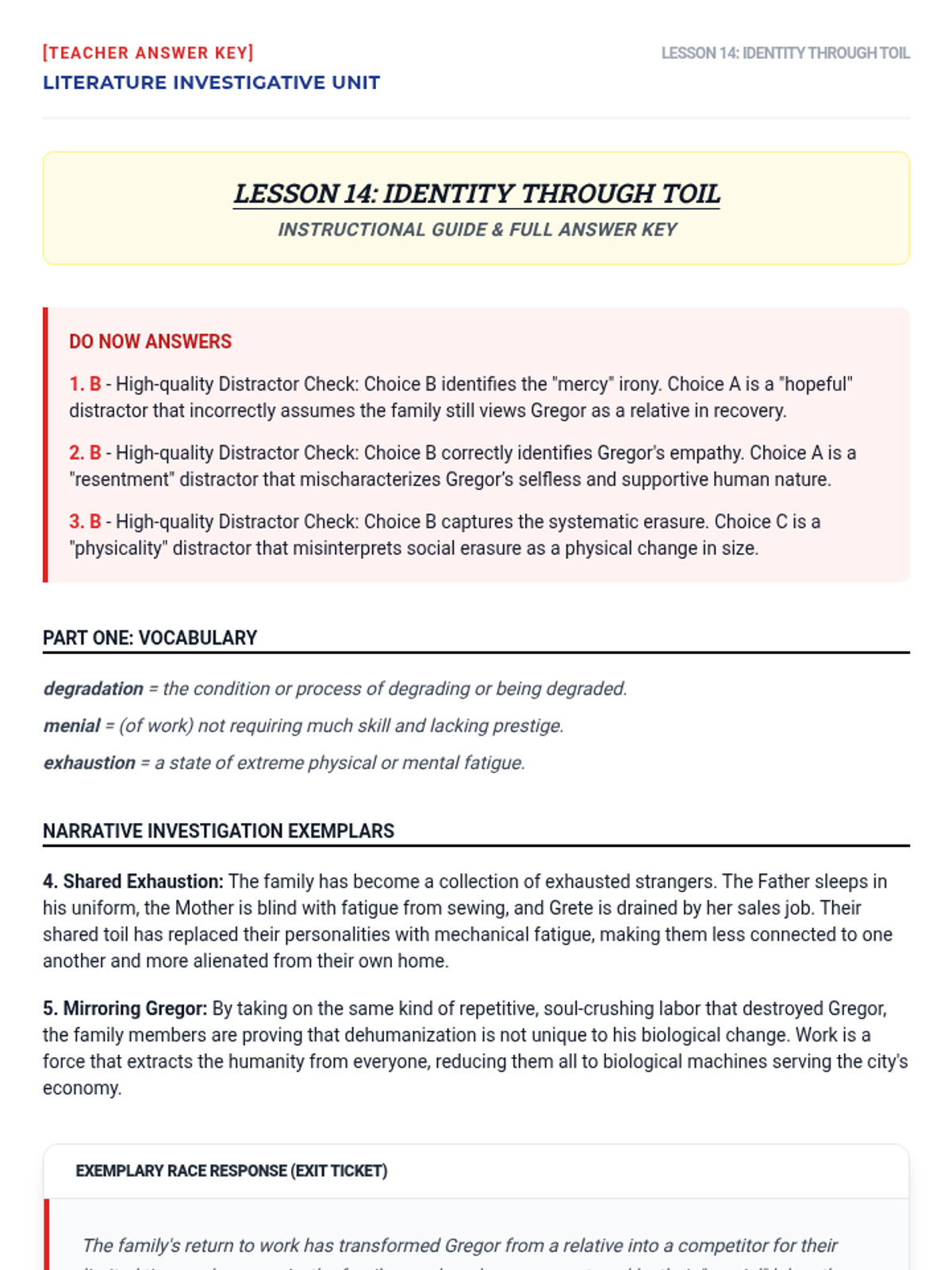
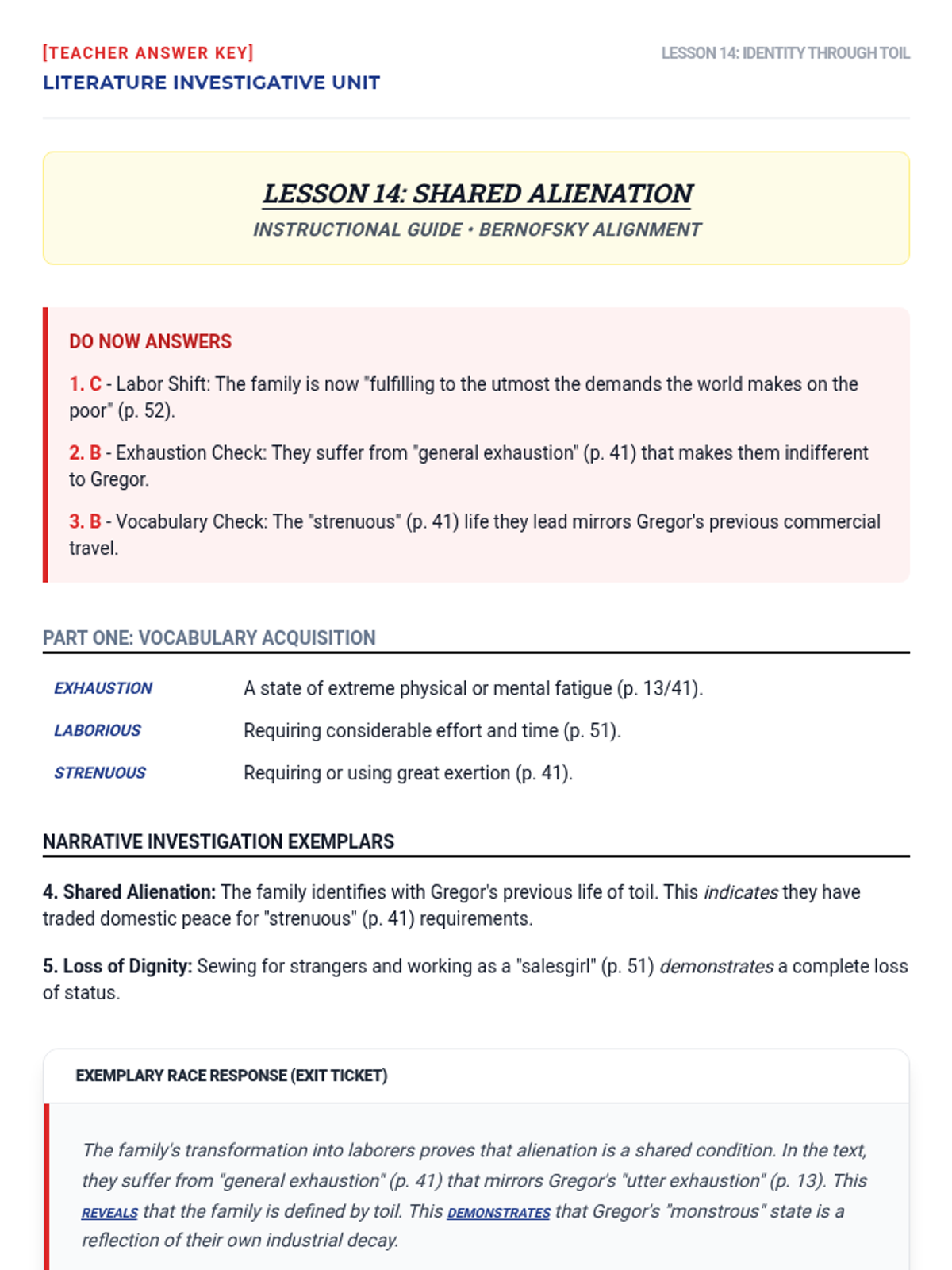
Analysis of the family taking on menial labor. Themes of exhaustion, loss of dignity, and the shared alienation of the working class.
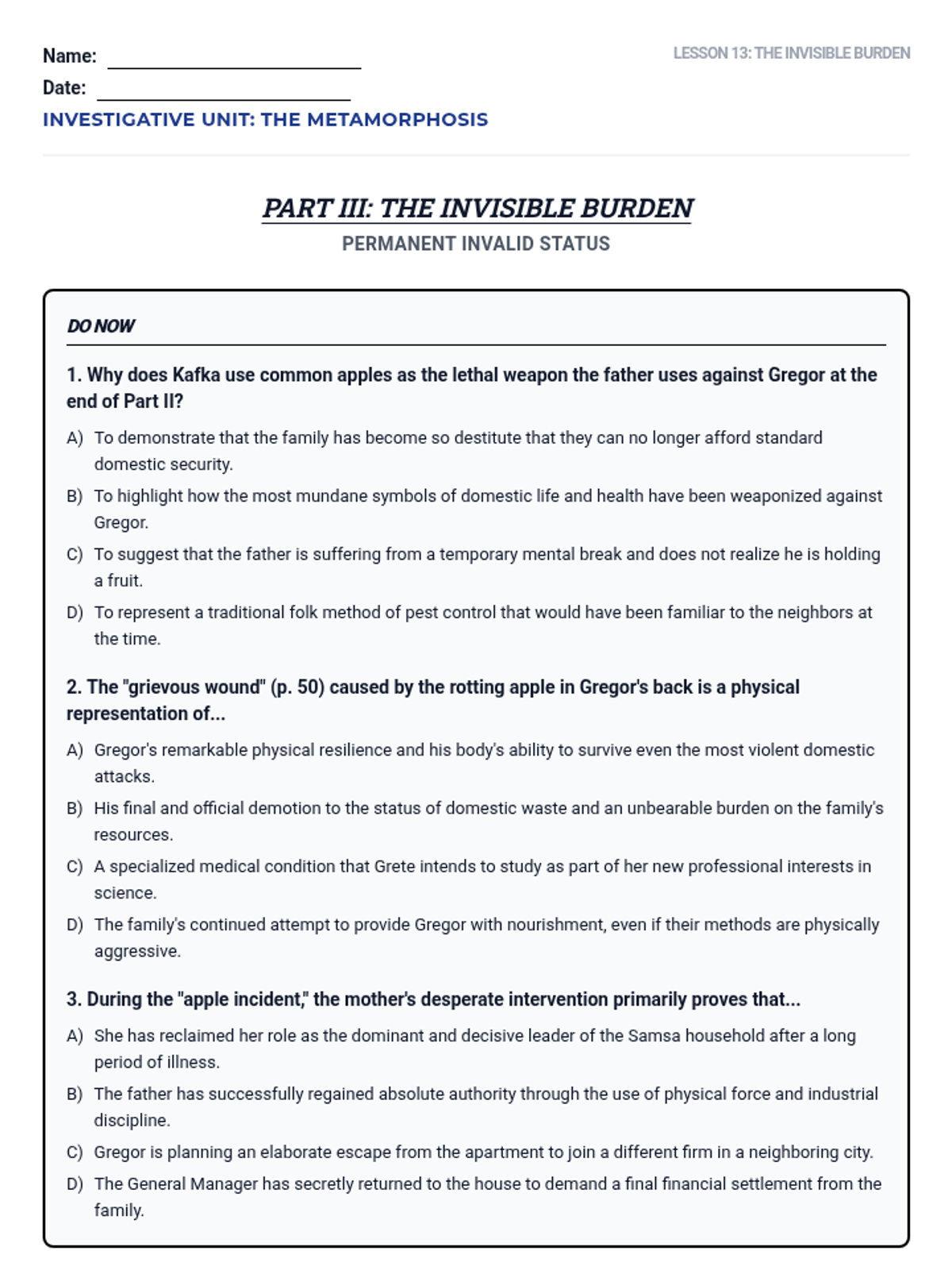
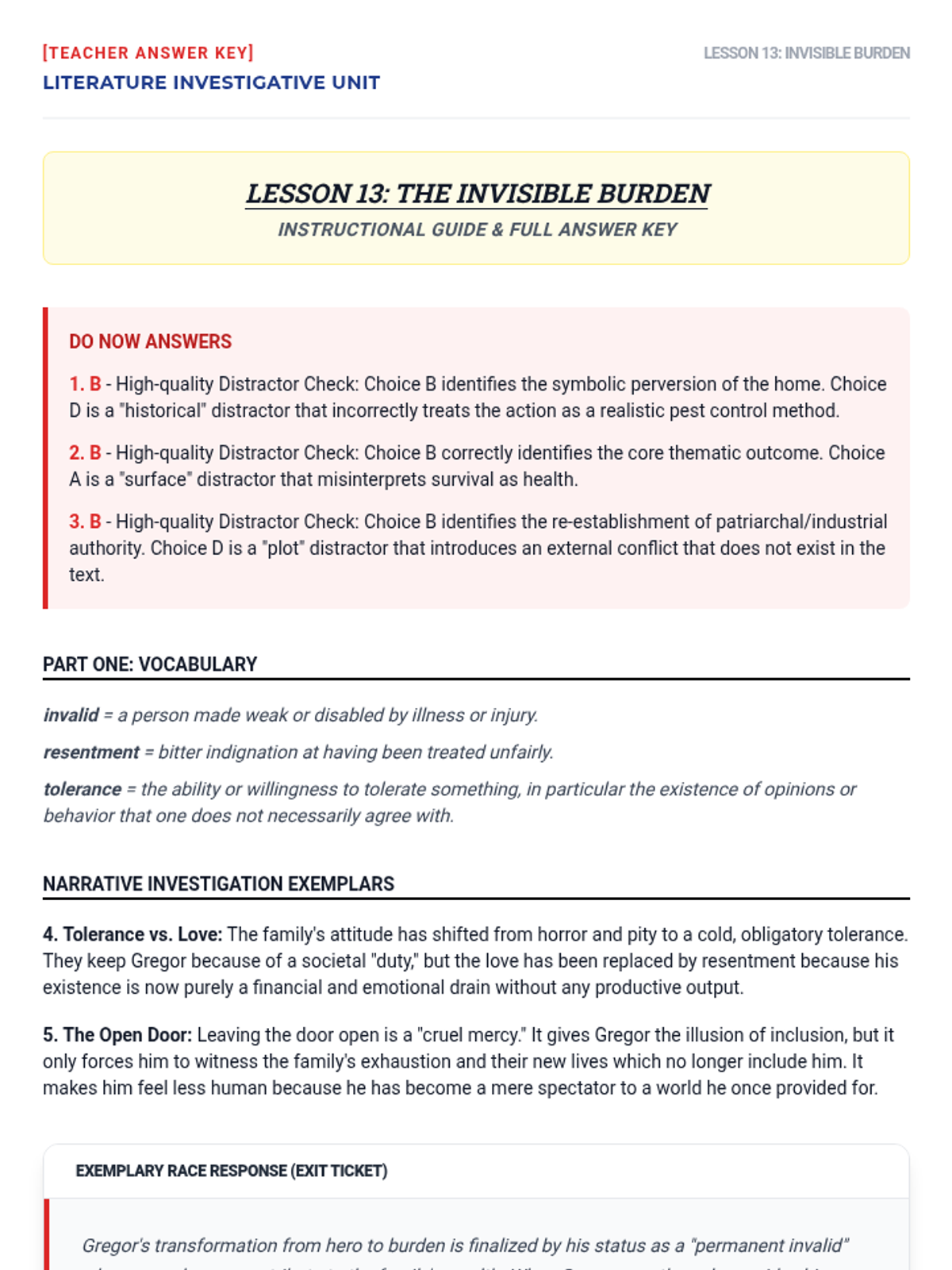
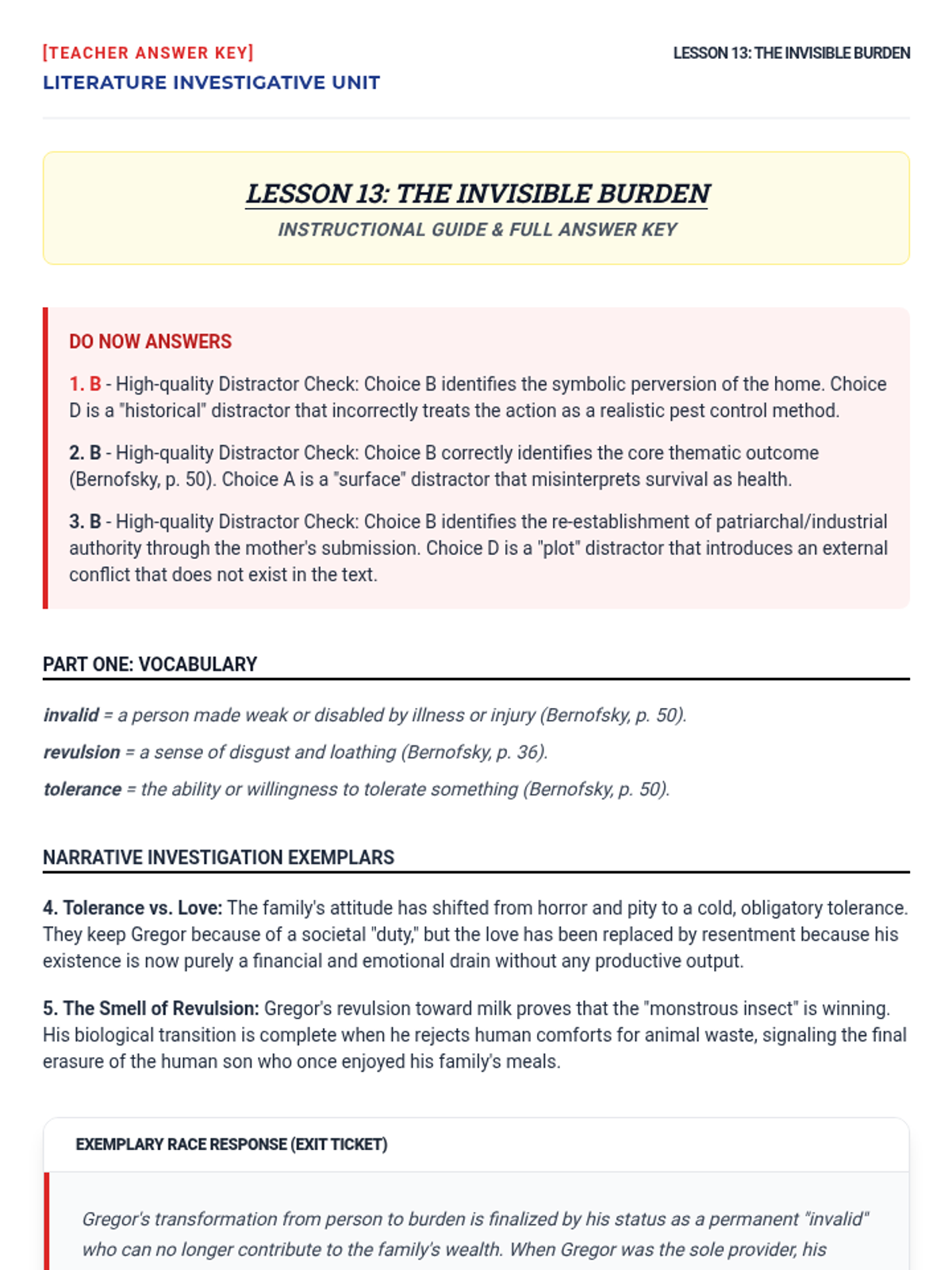
Gregor as a permanent invalid. Analysis of the family's growing resentment and the physical reminder of his non-productive status.
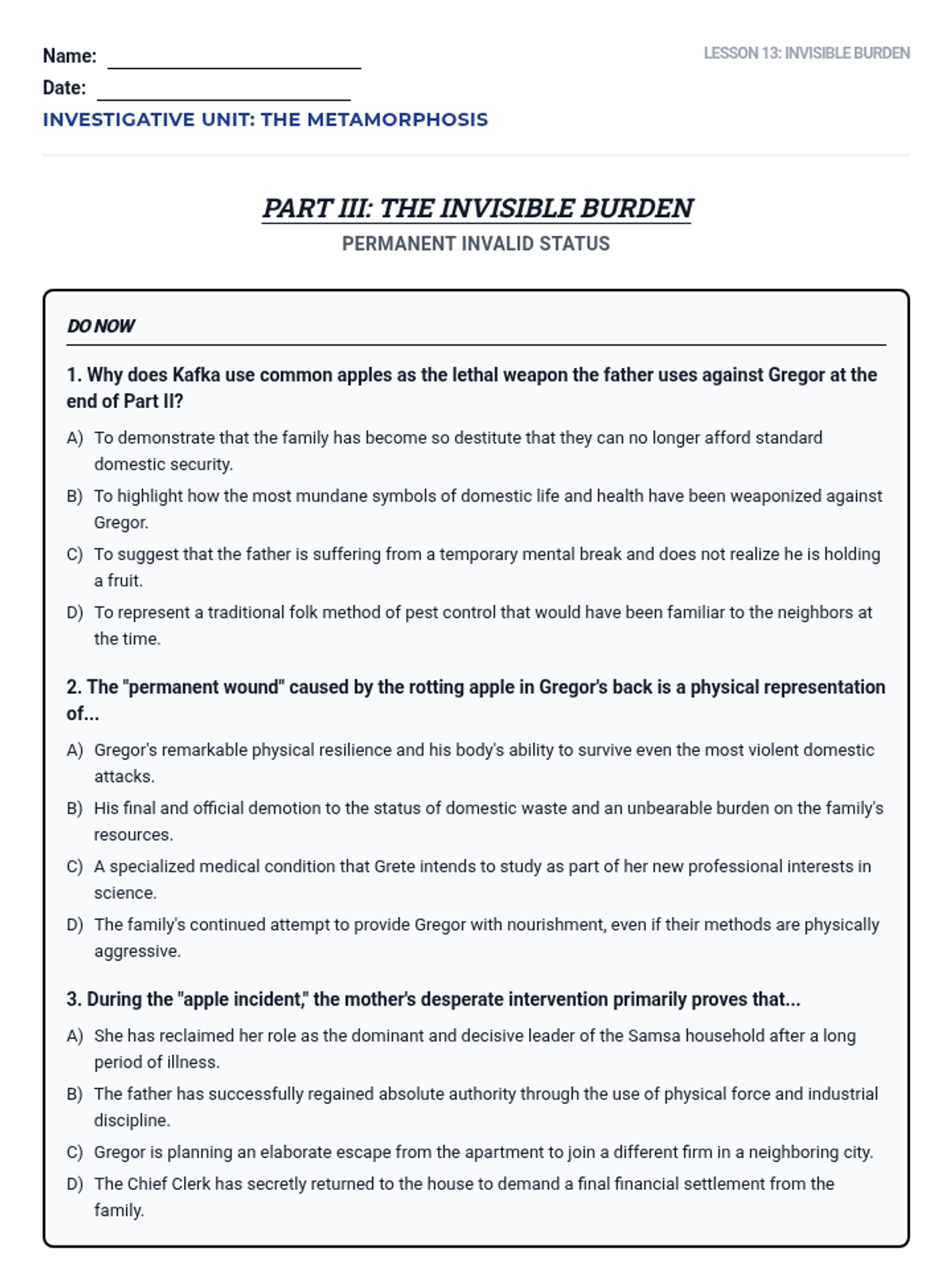
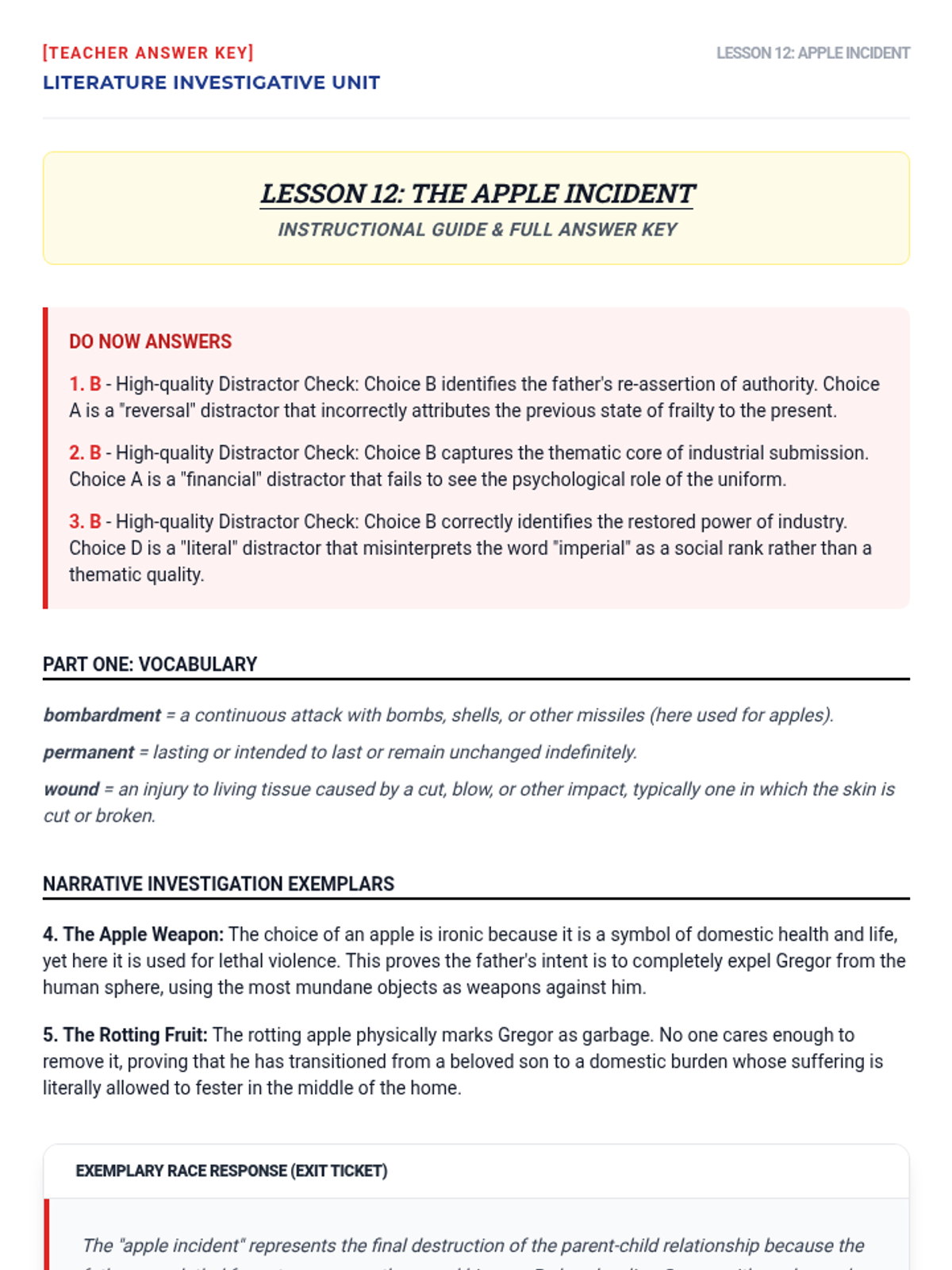
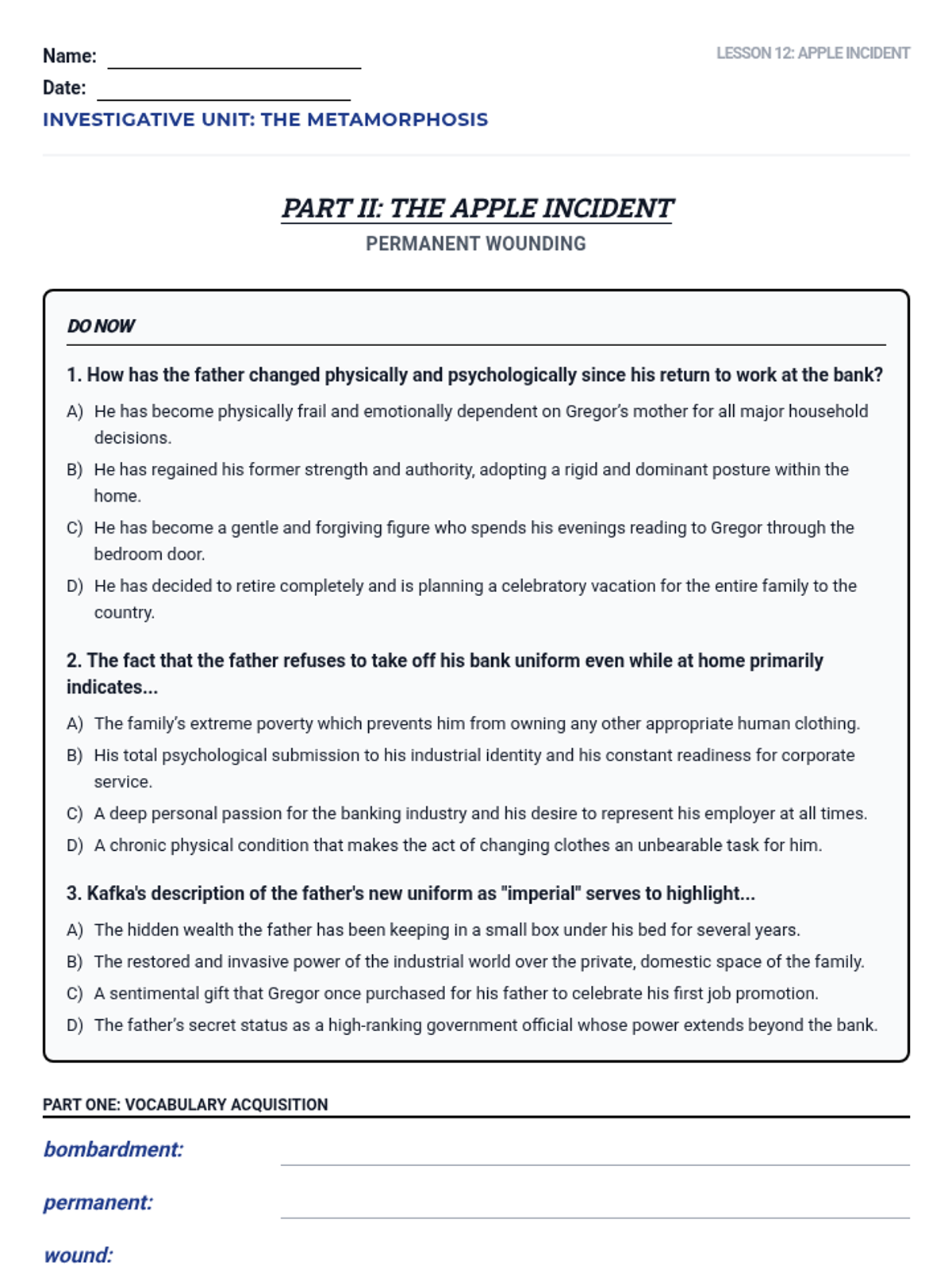
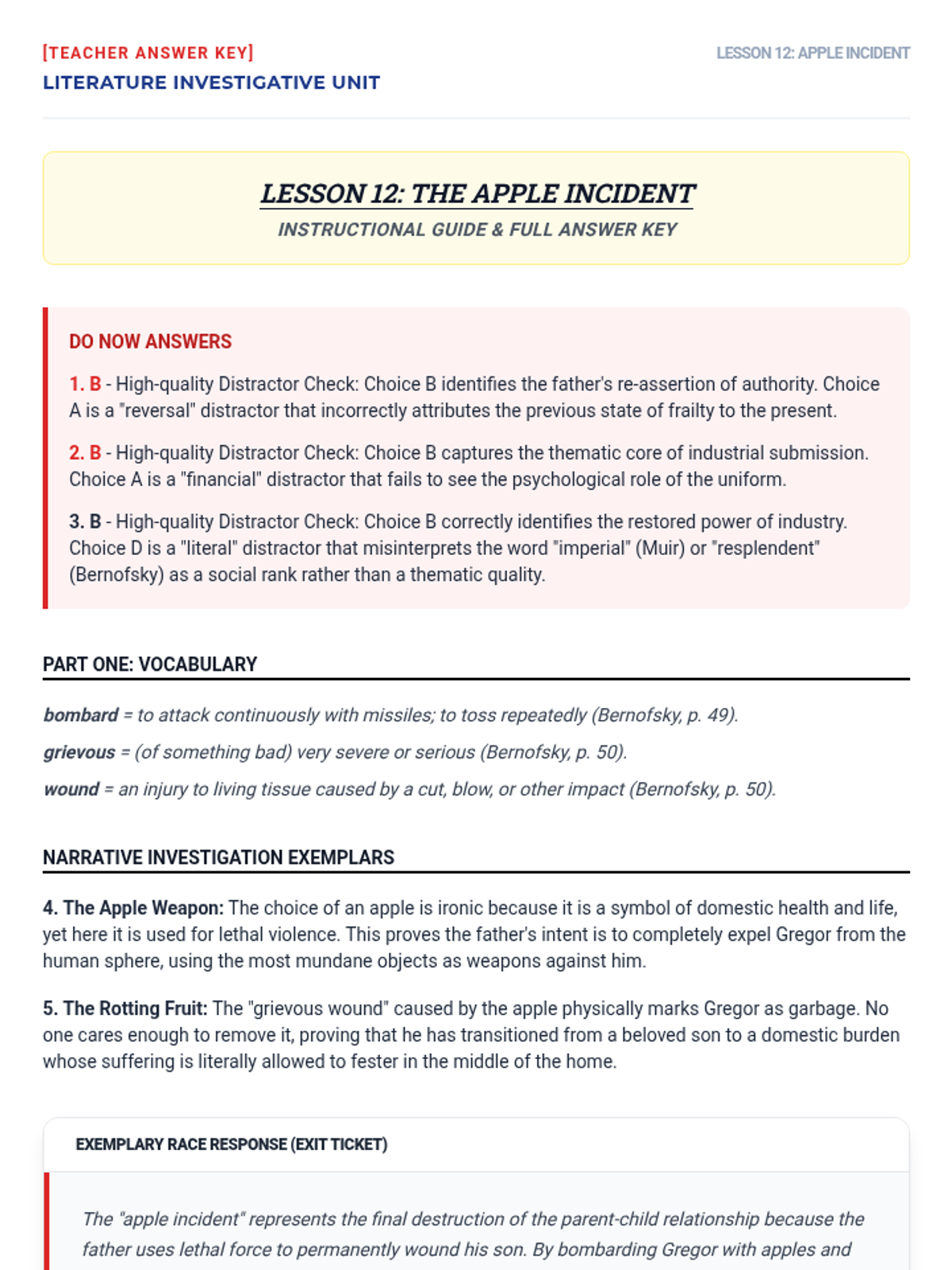
The father's violent attack with apples. Analysis of the apple as a symbol of permanent wounding and the transition from son to 'burden'.
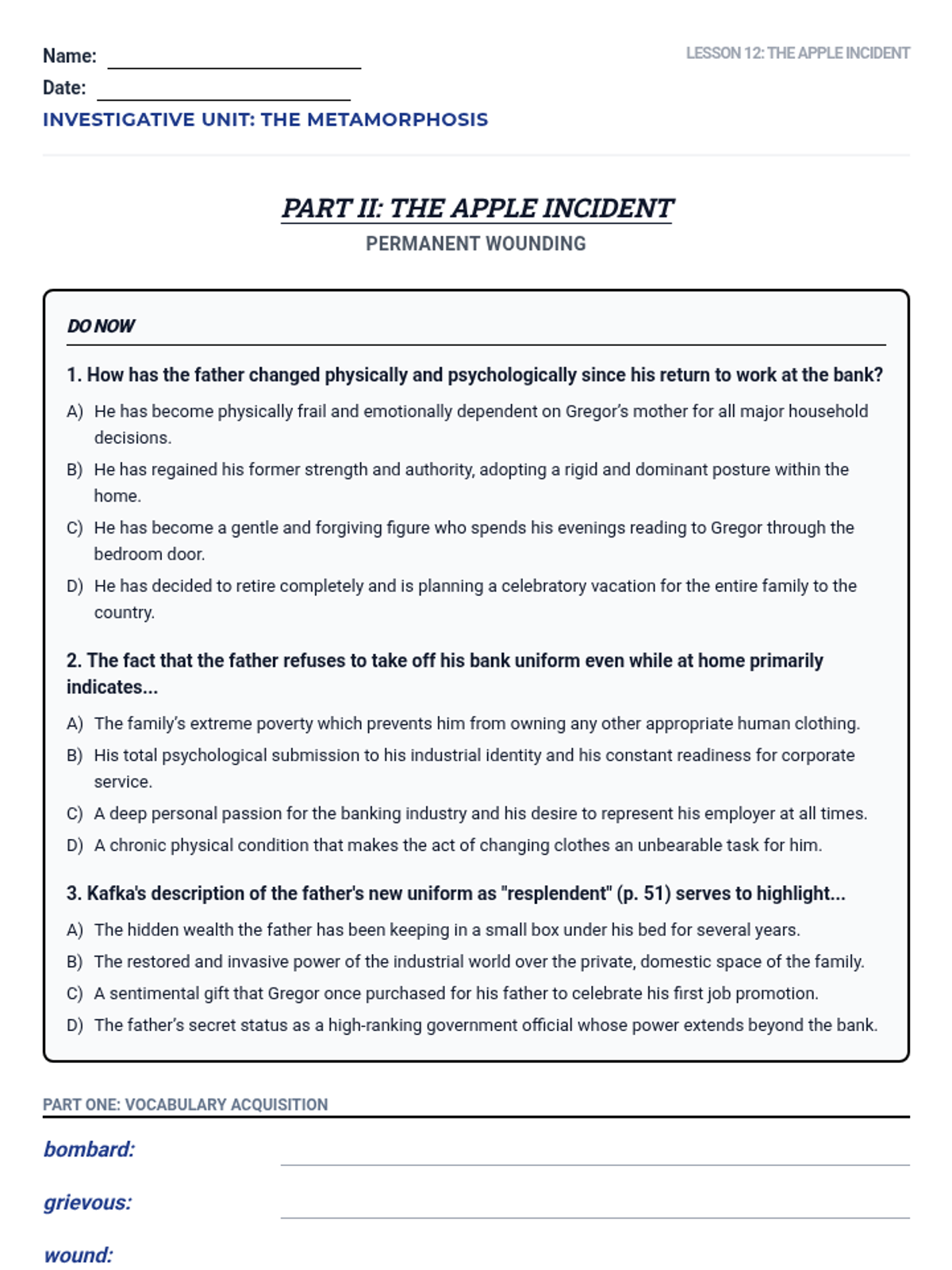
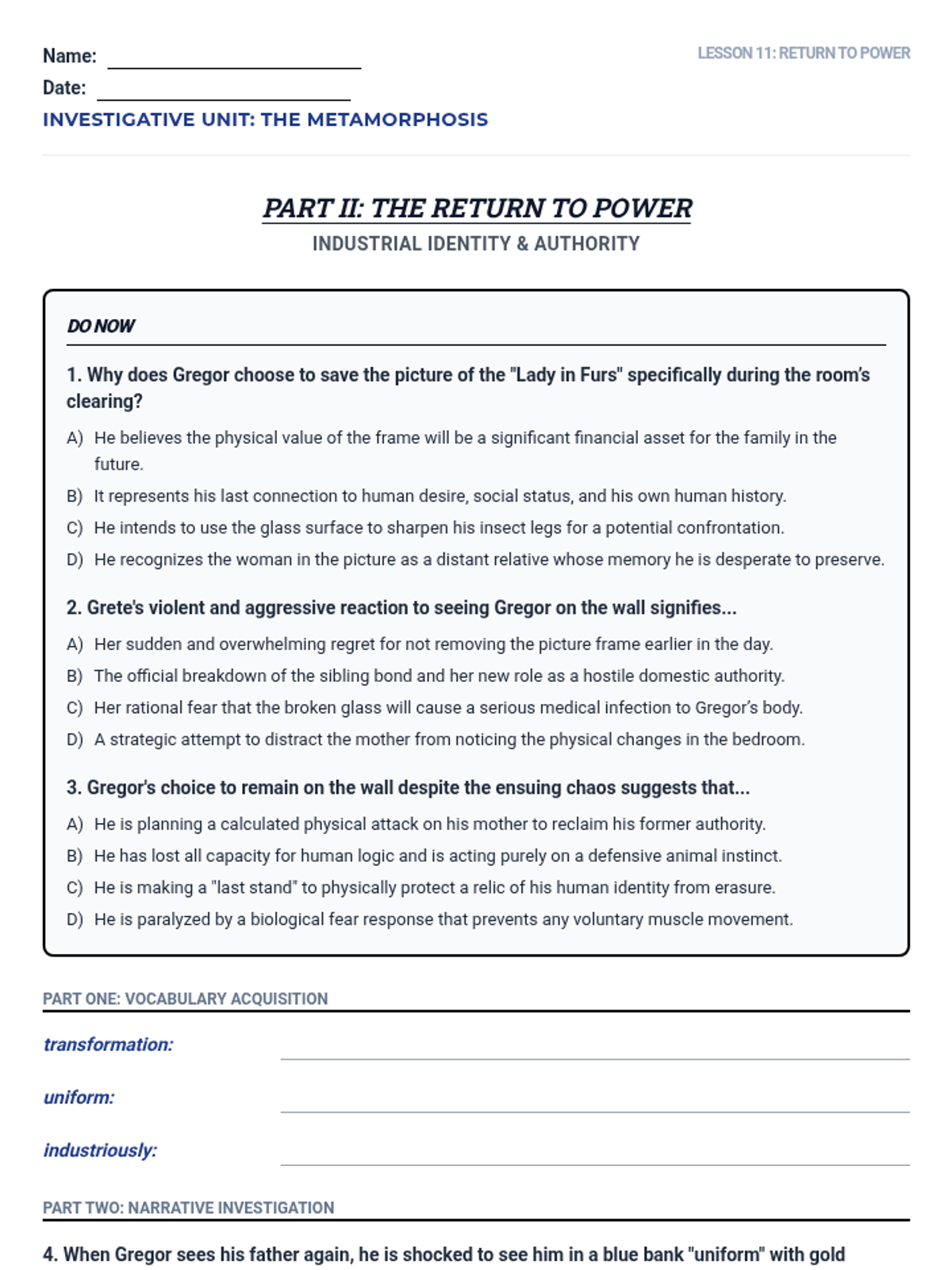
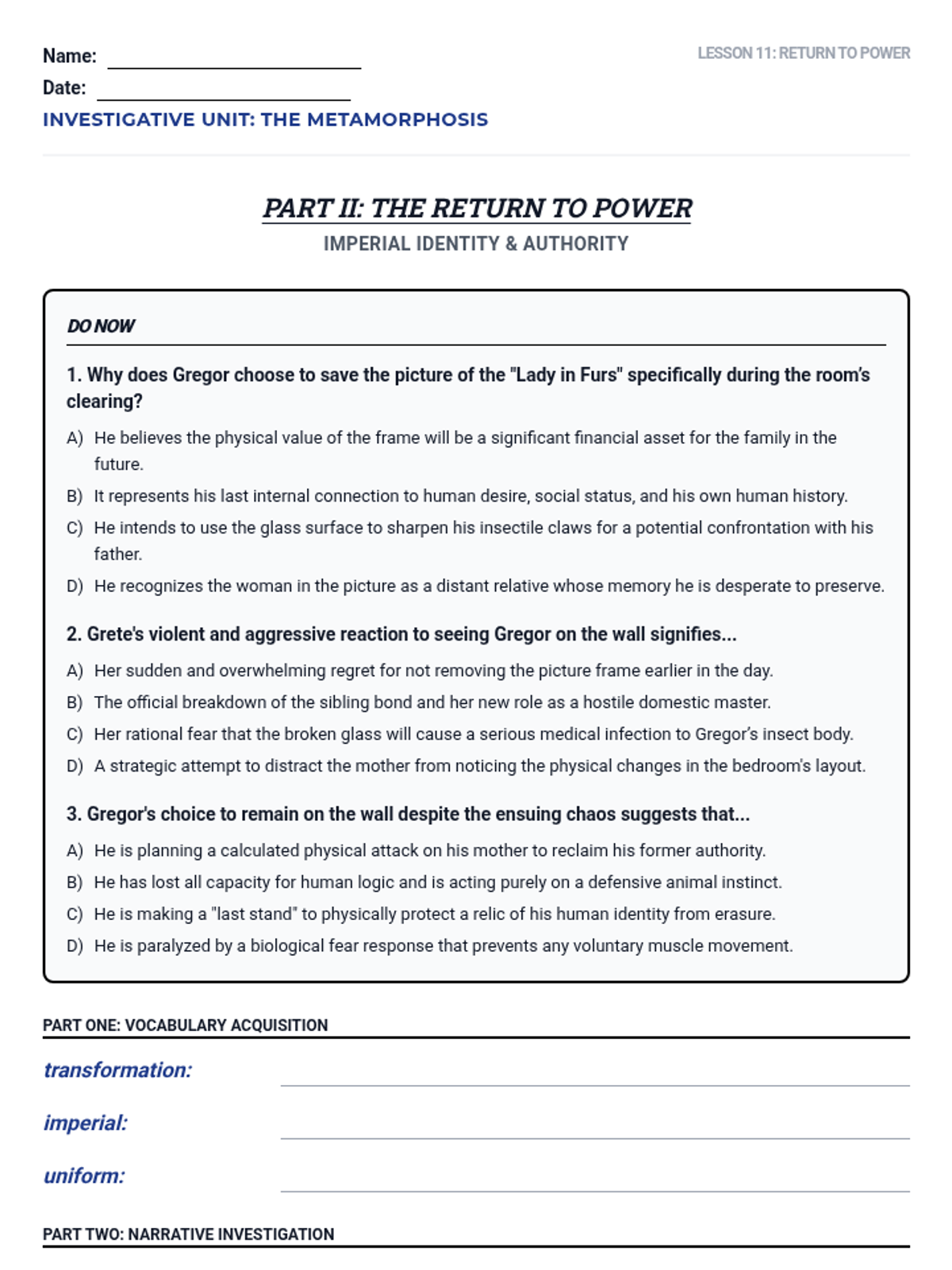
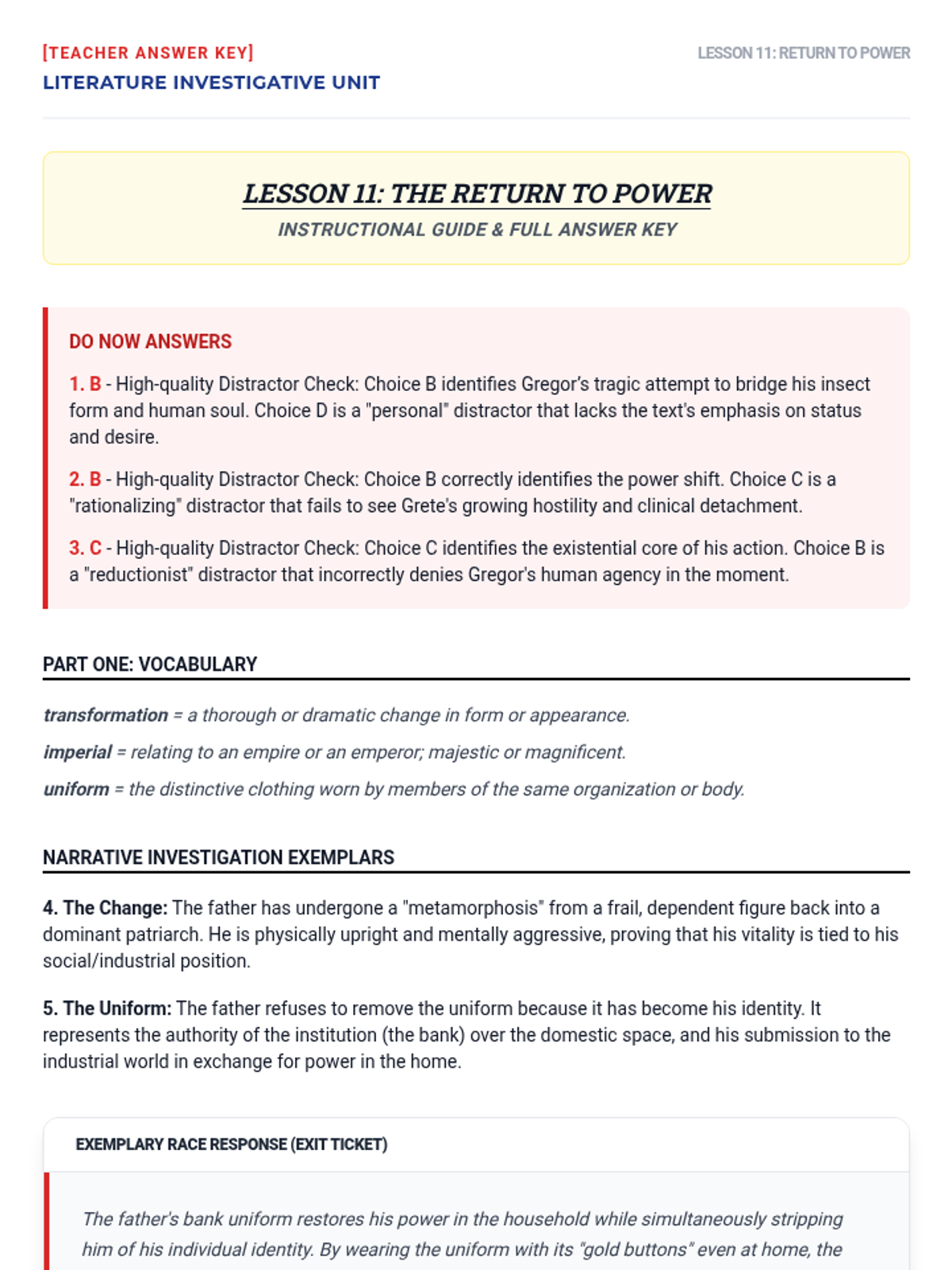
Analysis of the father's return to work and his transformation through the bank uniform. Themes of restored authority and industrial identity.
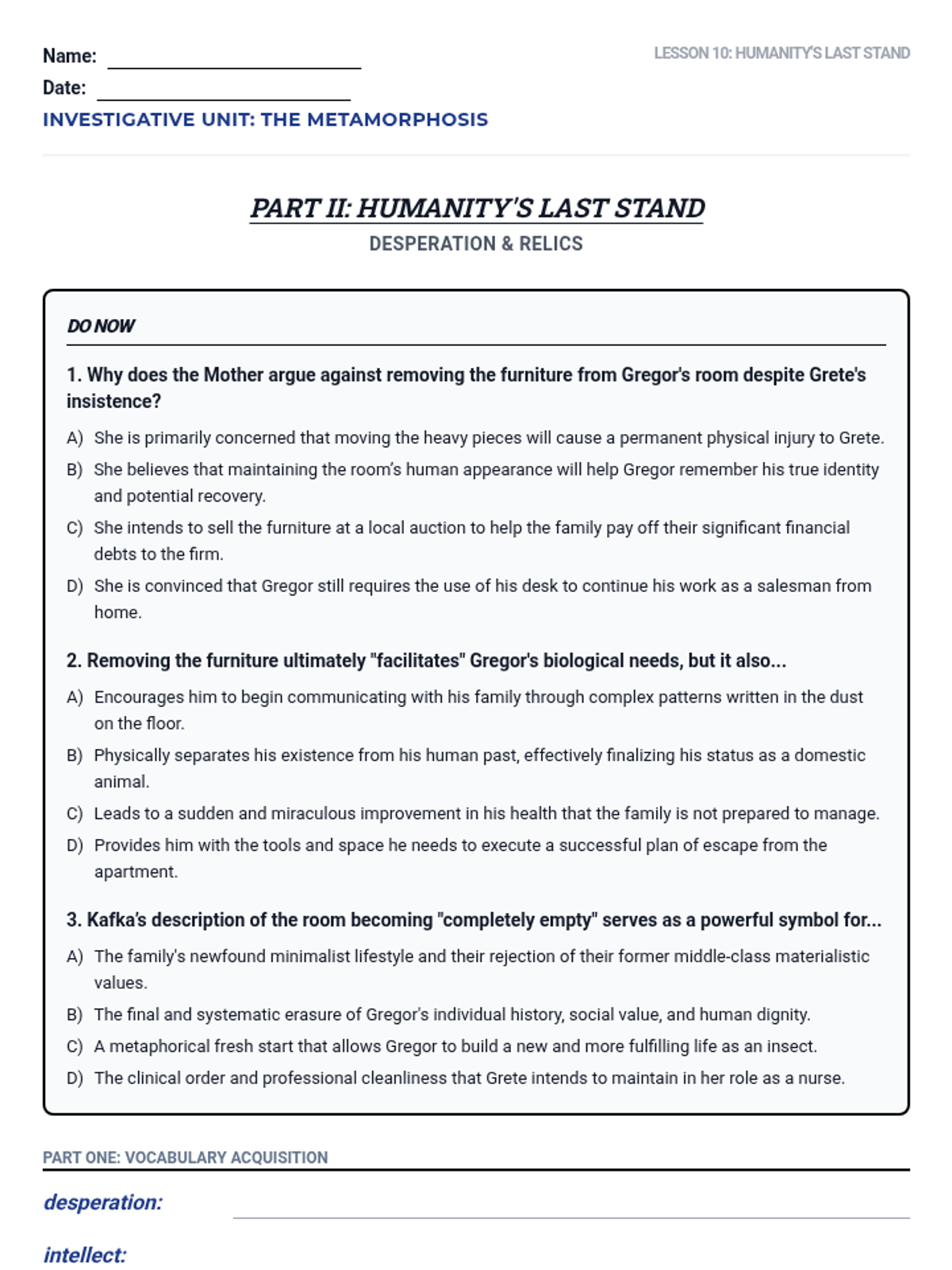
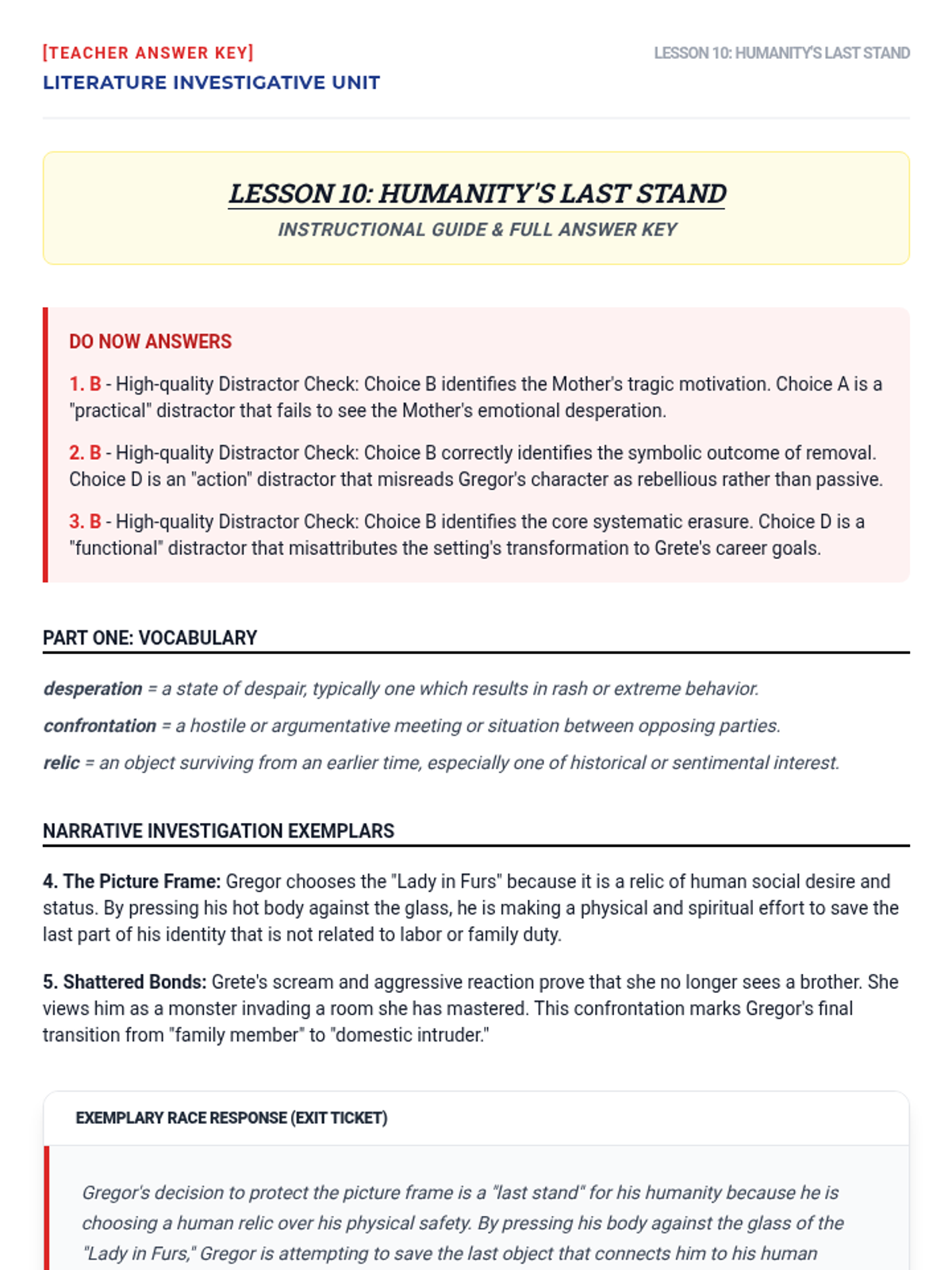
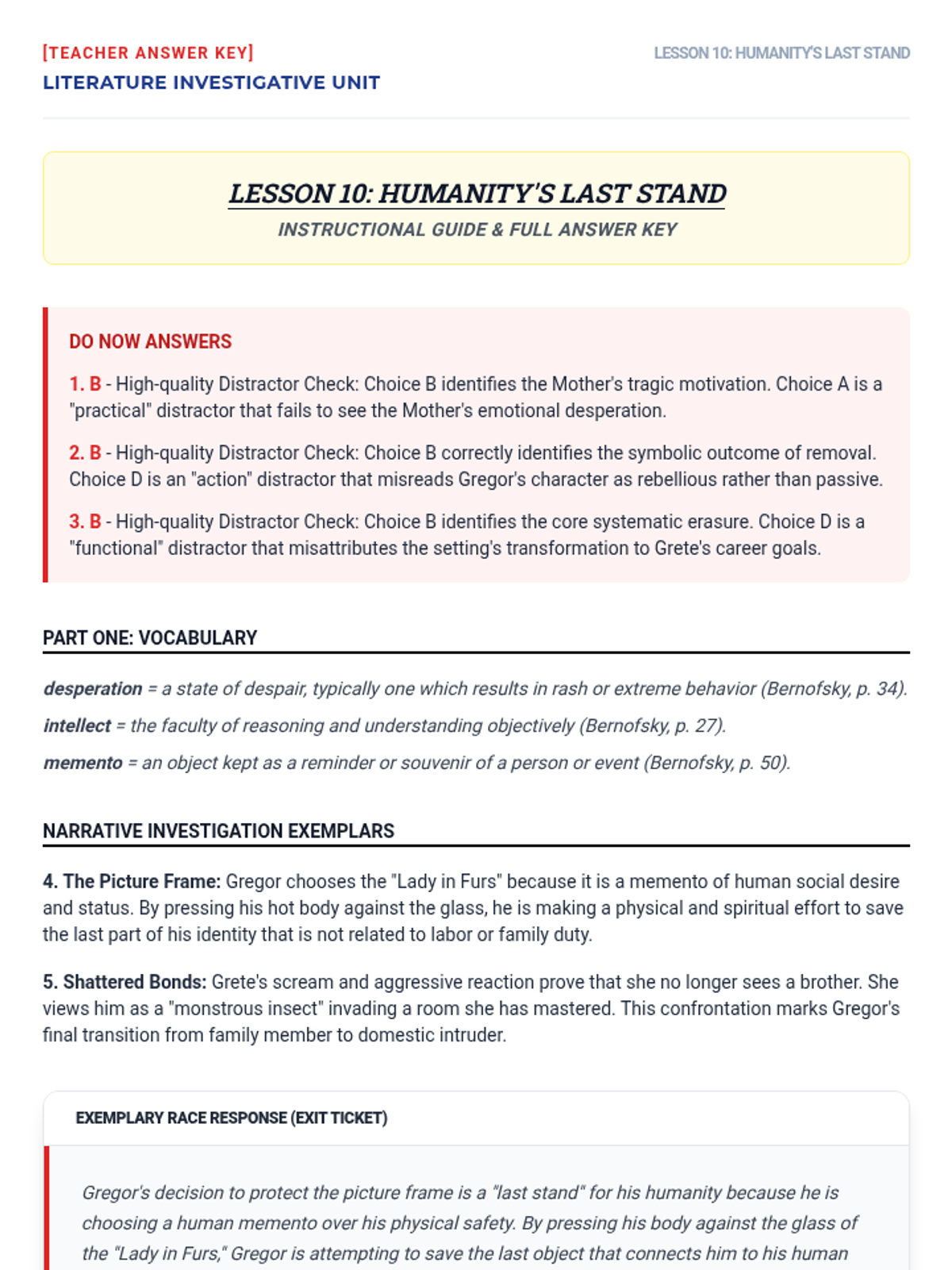
Gregor's desperate attempt to save his human identity by protecting the picture frame. Focus on the direct confrontation with Grete.
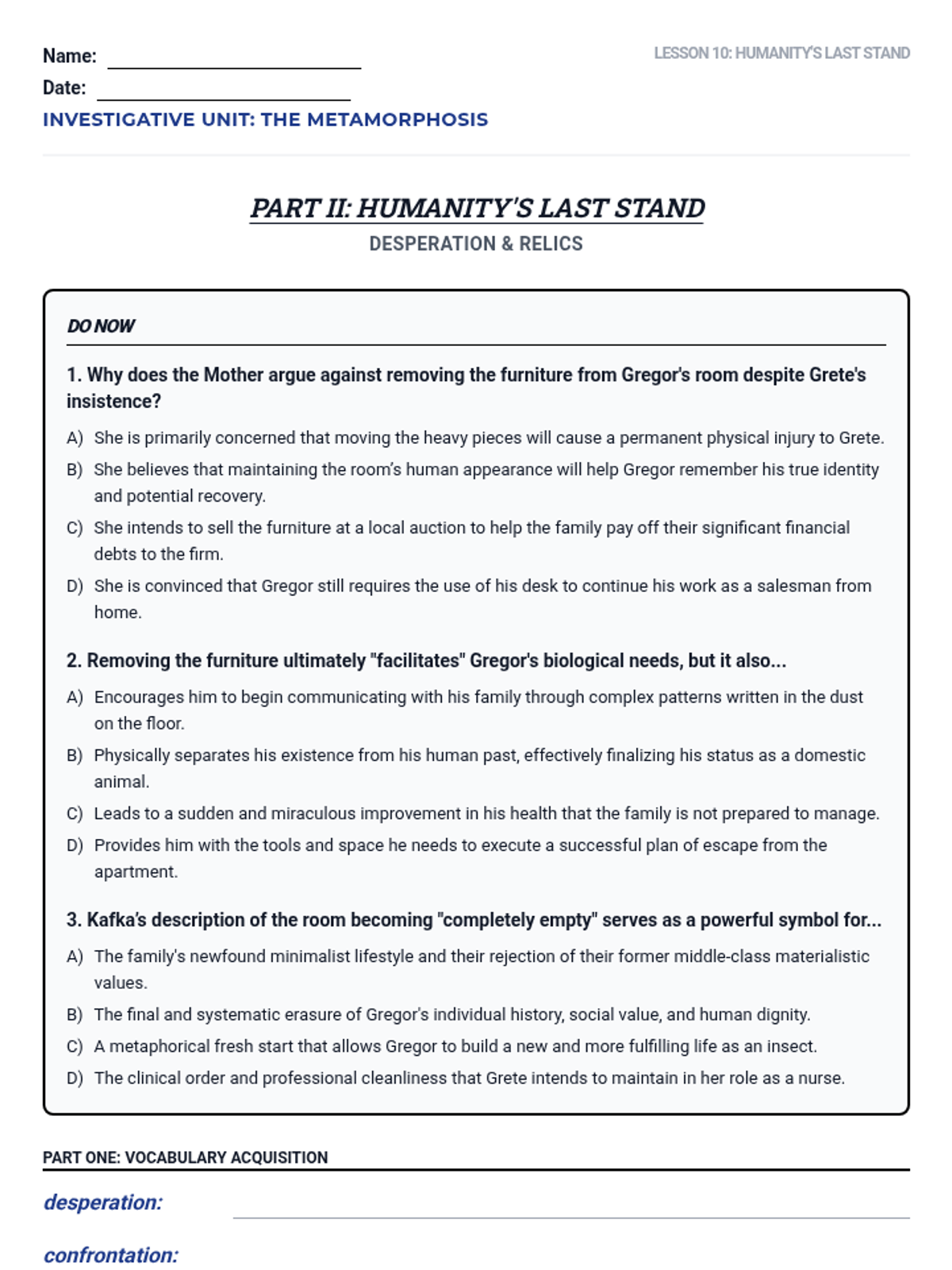
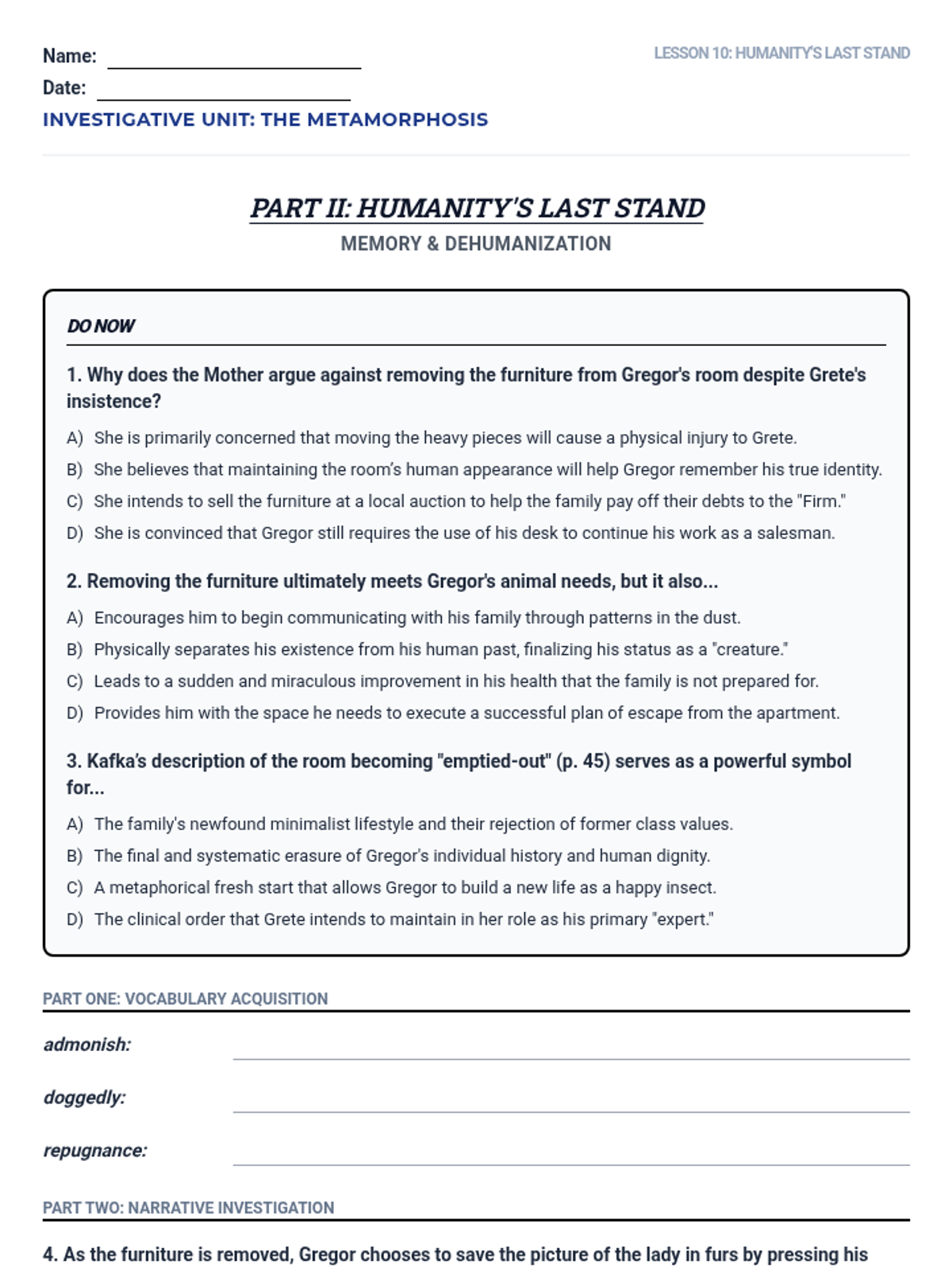
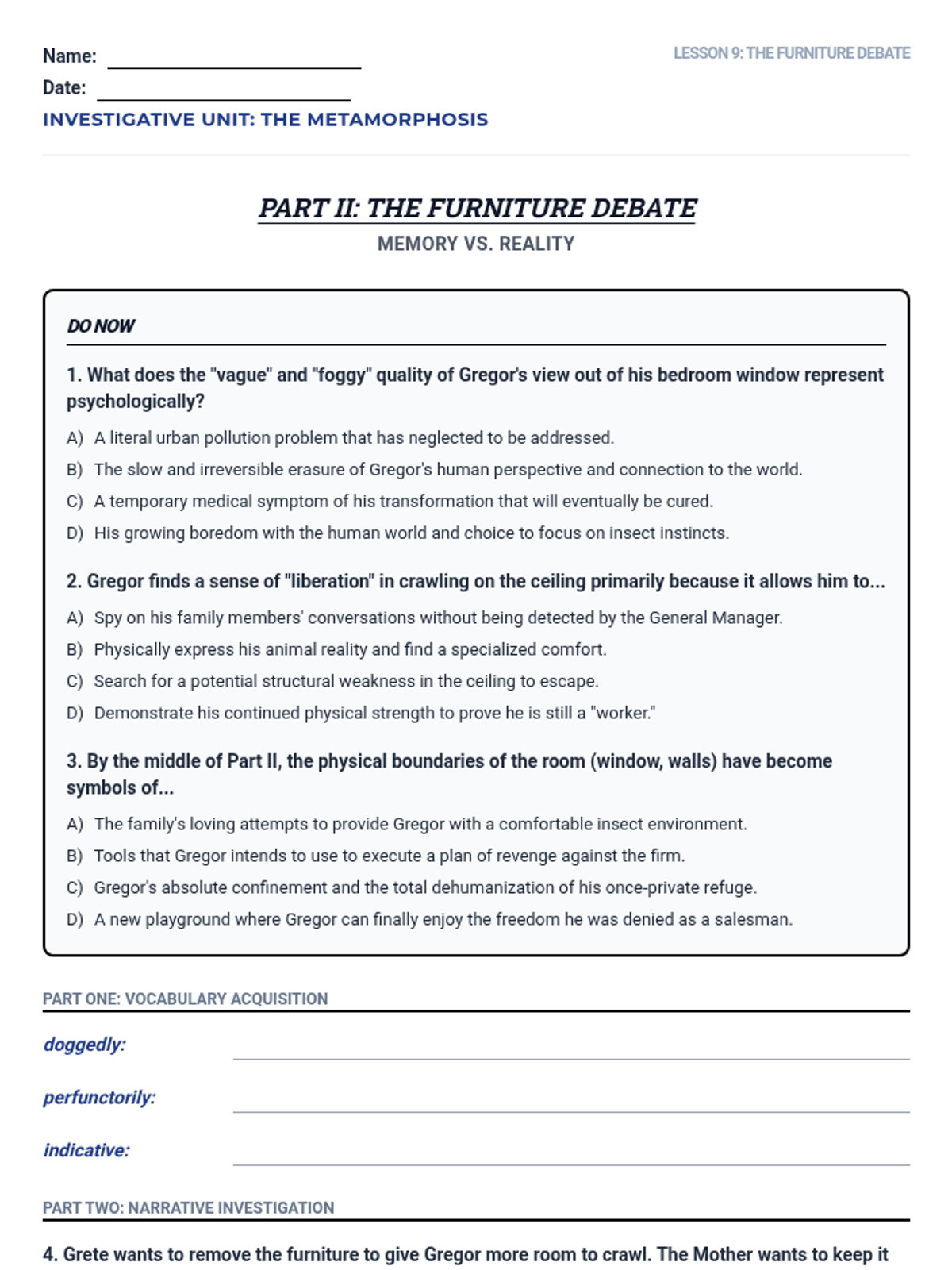
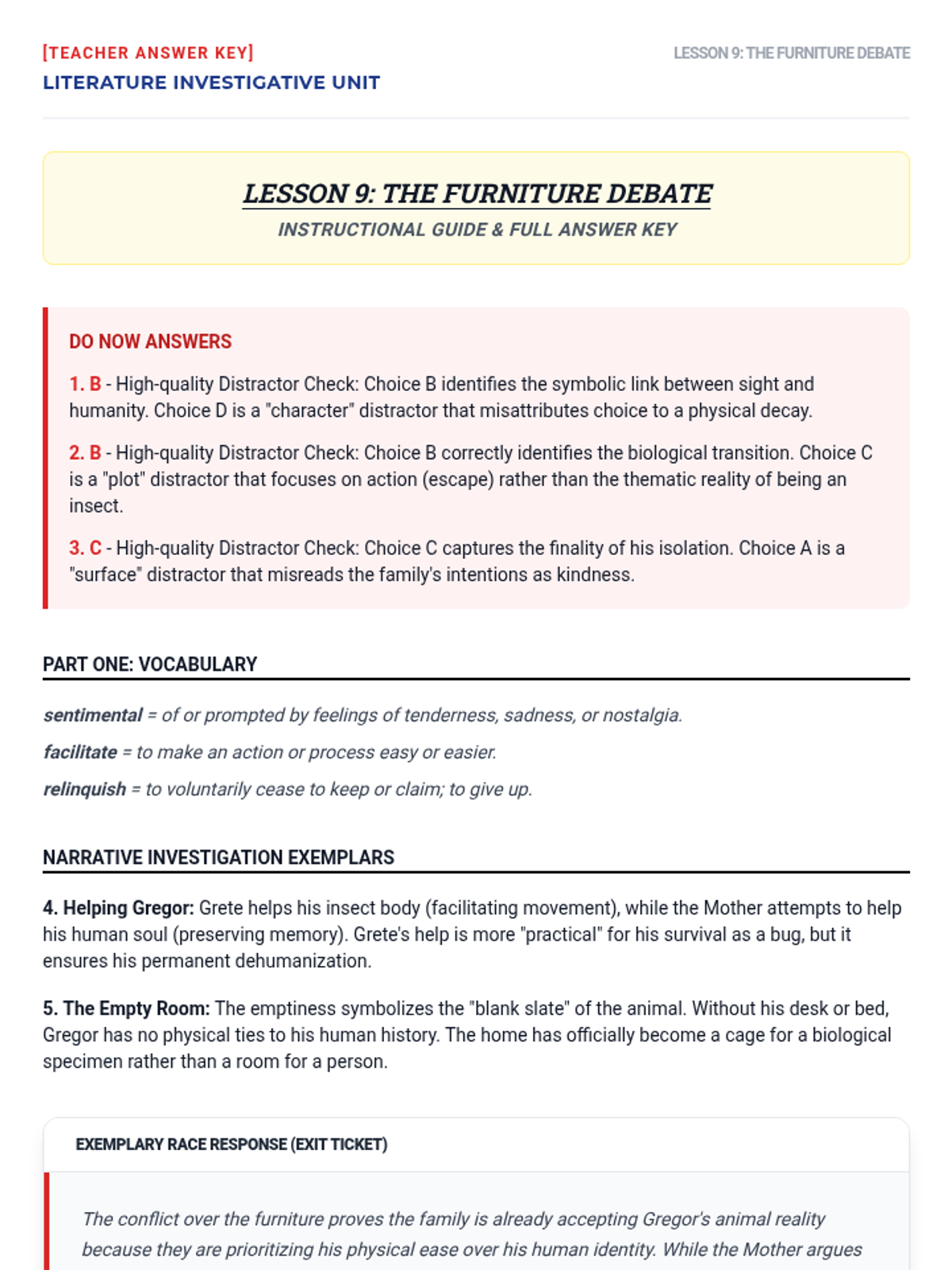
The conflict between Grete and the Mother over removing Gregor's furniture. Themes of preserving human memory vs. accepting animal reality.
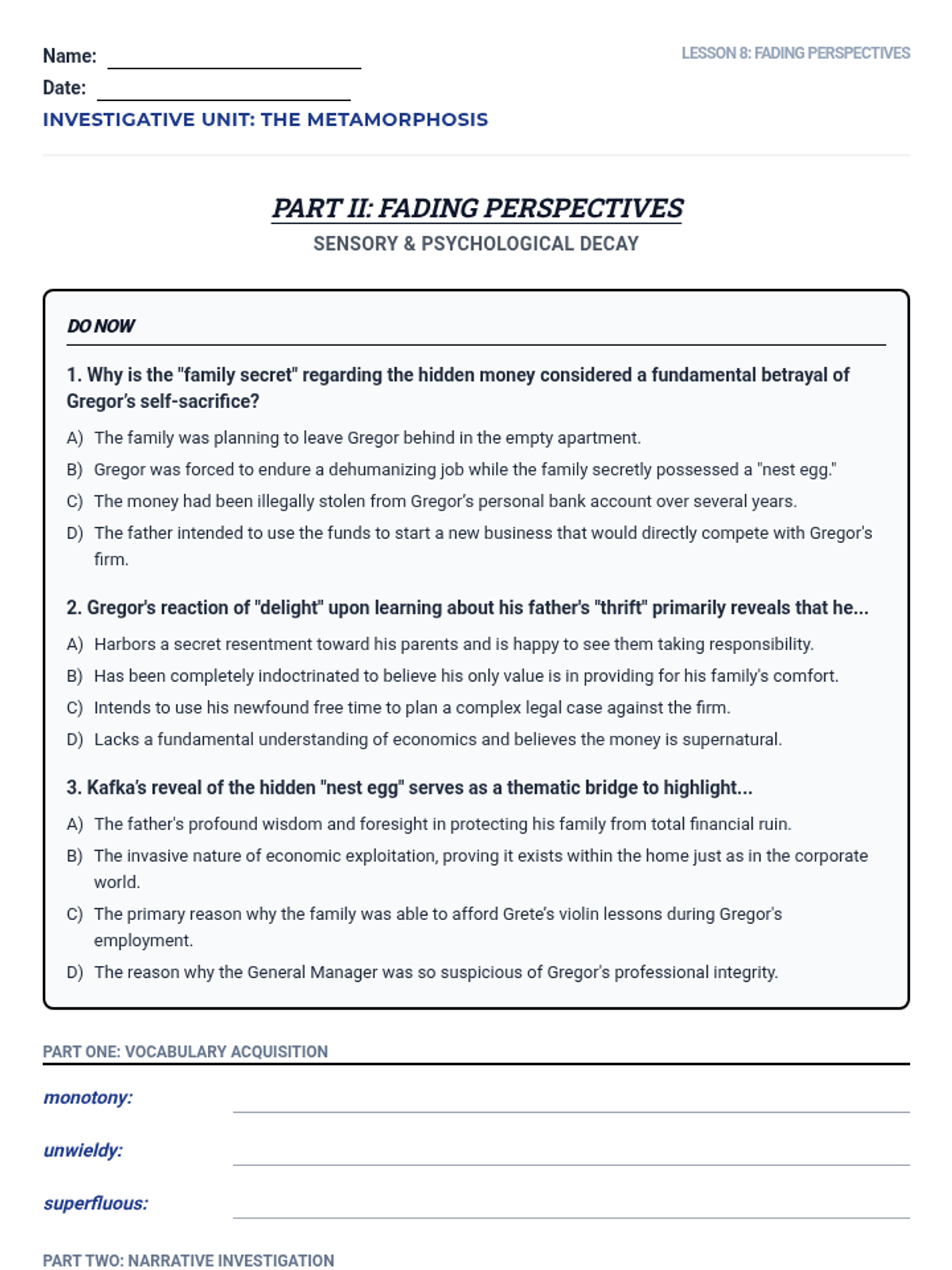
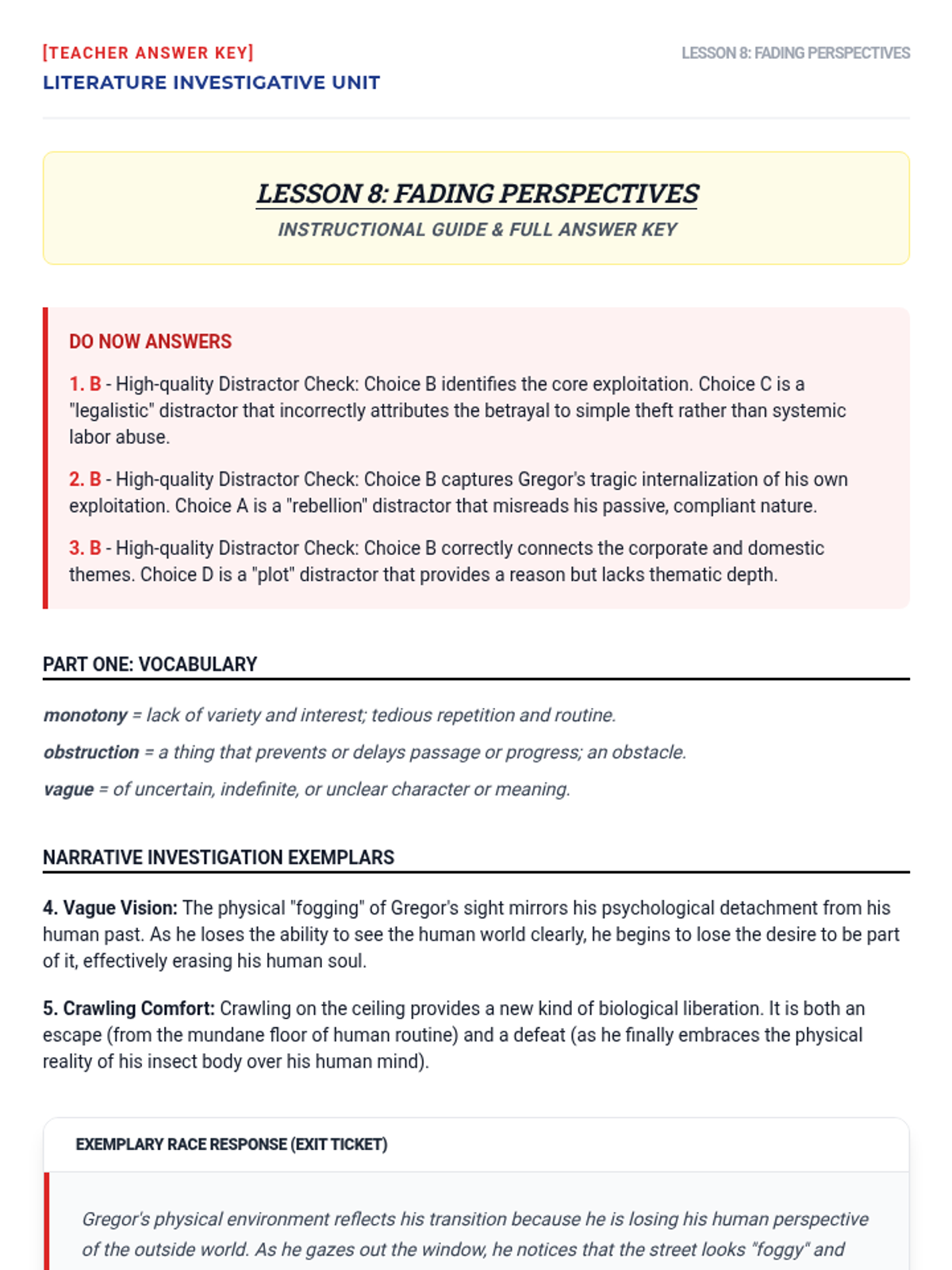
Students analyze Gregor's fading perception of the human world through his window view and his growing physical comfort in animalistic behaviors.
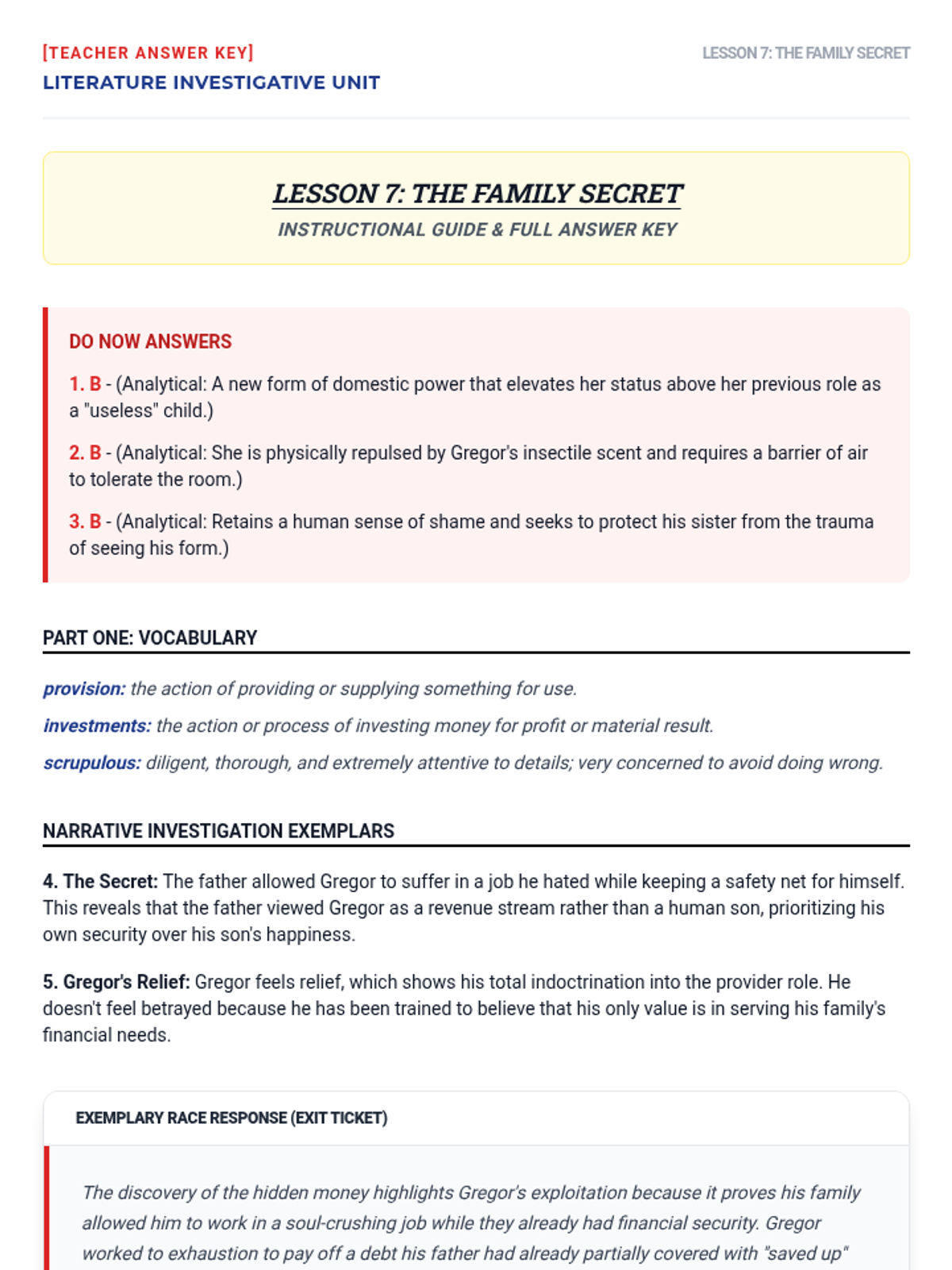
Analysis of the father's hidden financial assets and the betrayal of Gregor's role as the sole provider. Themes of economic exploitation.
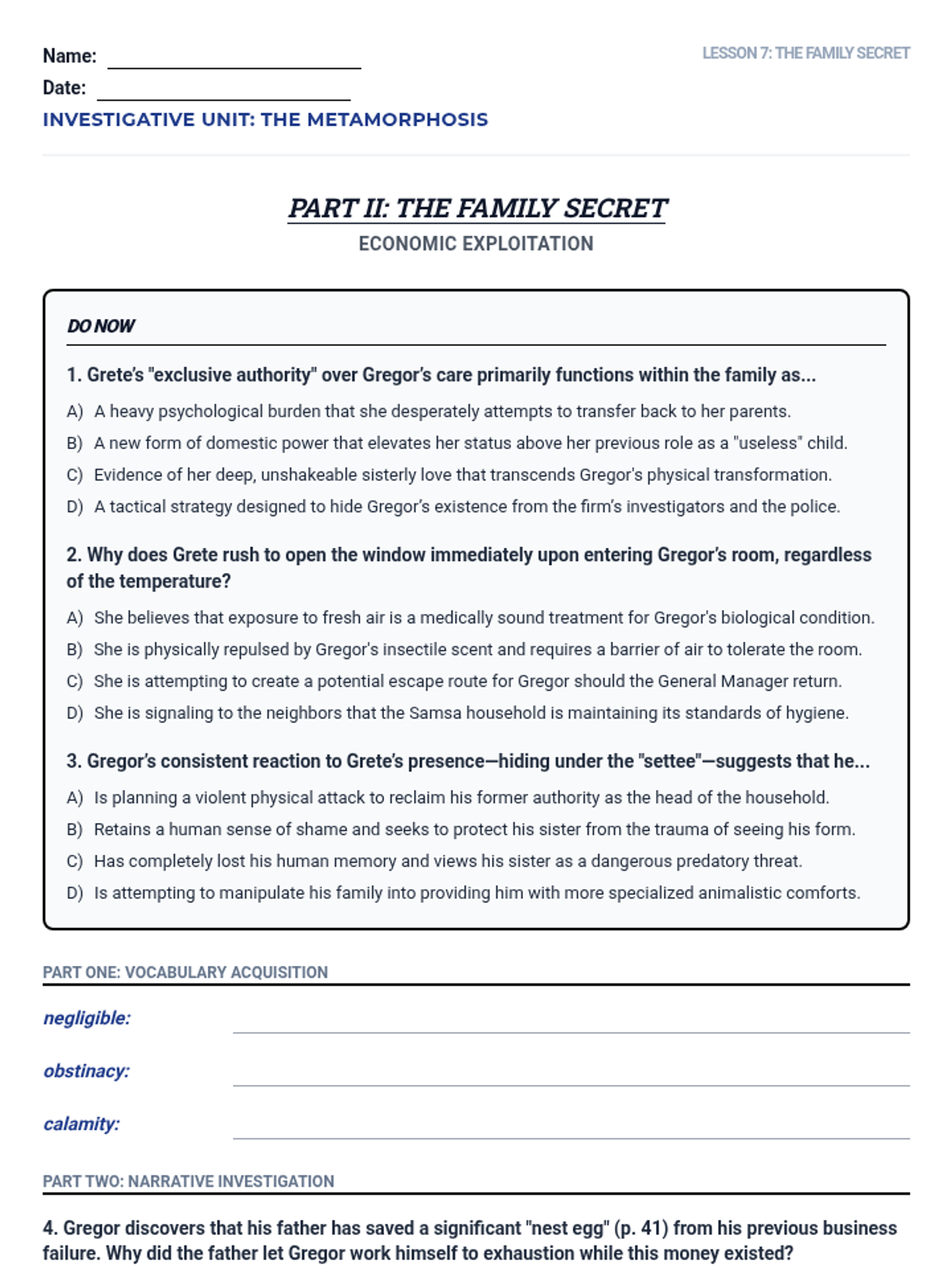
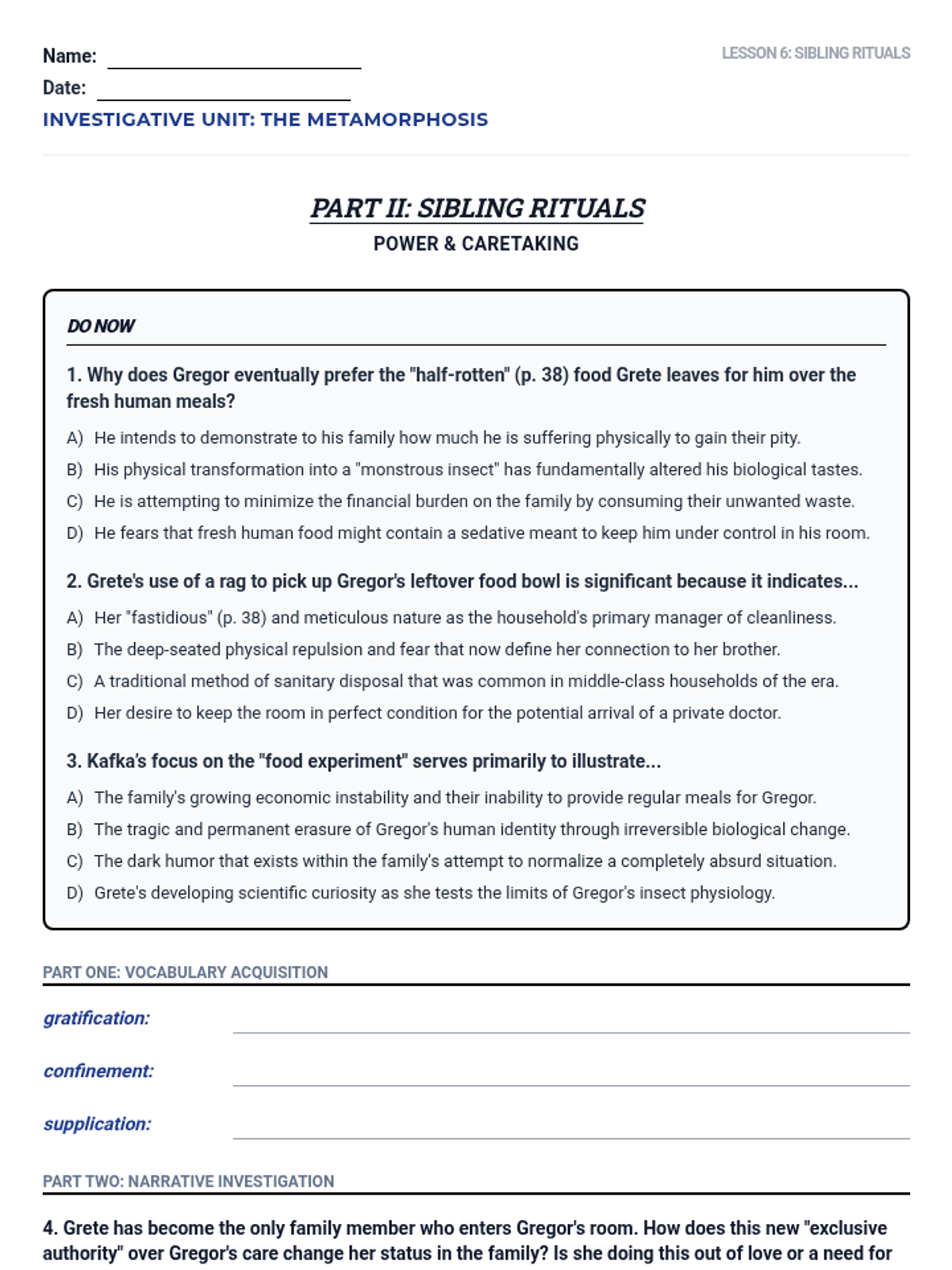
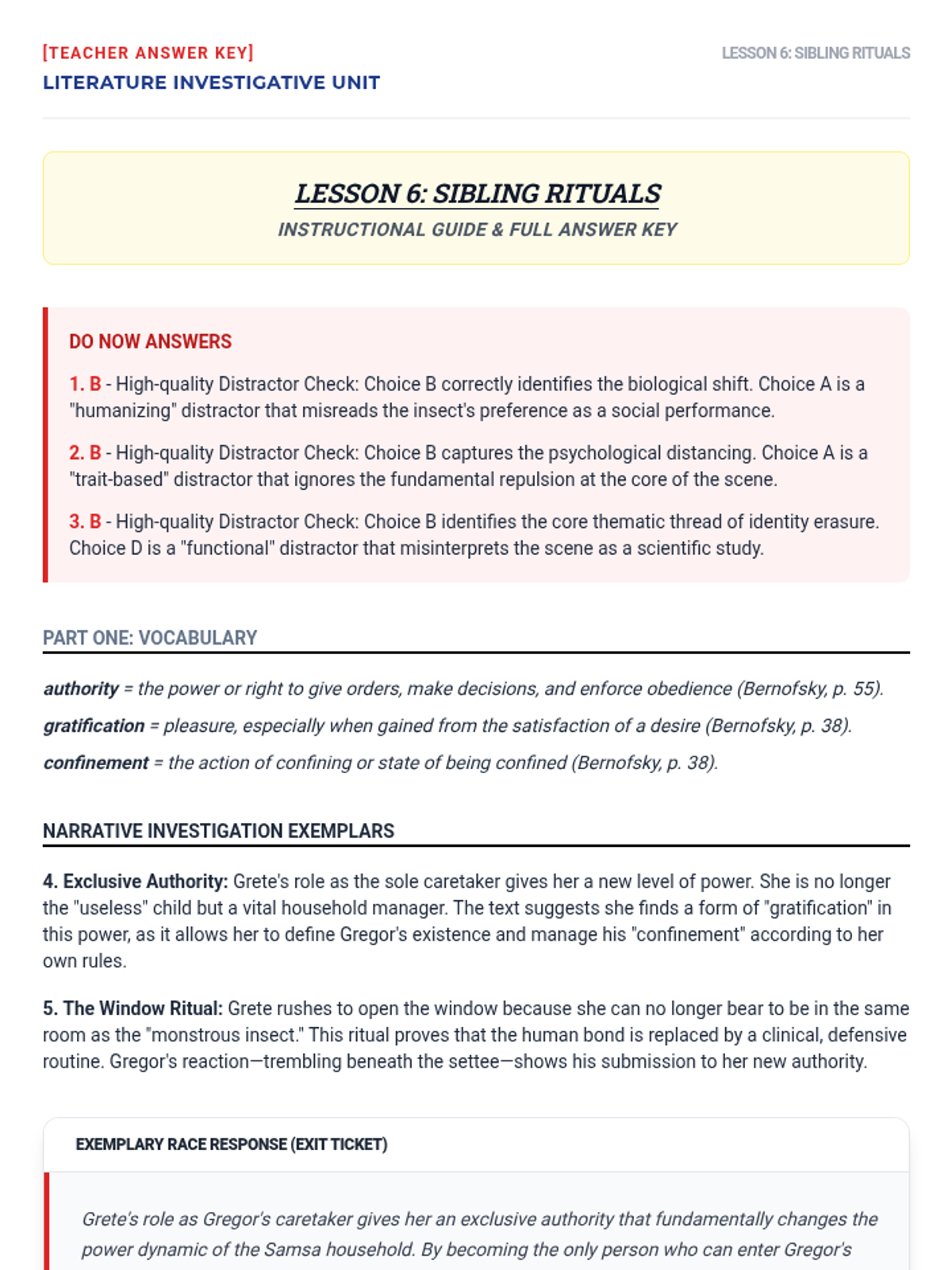
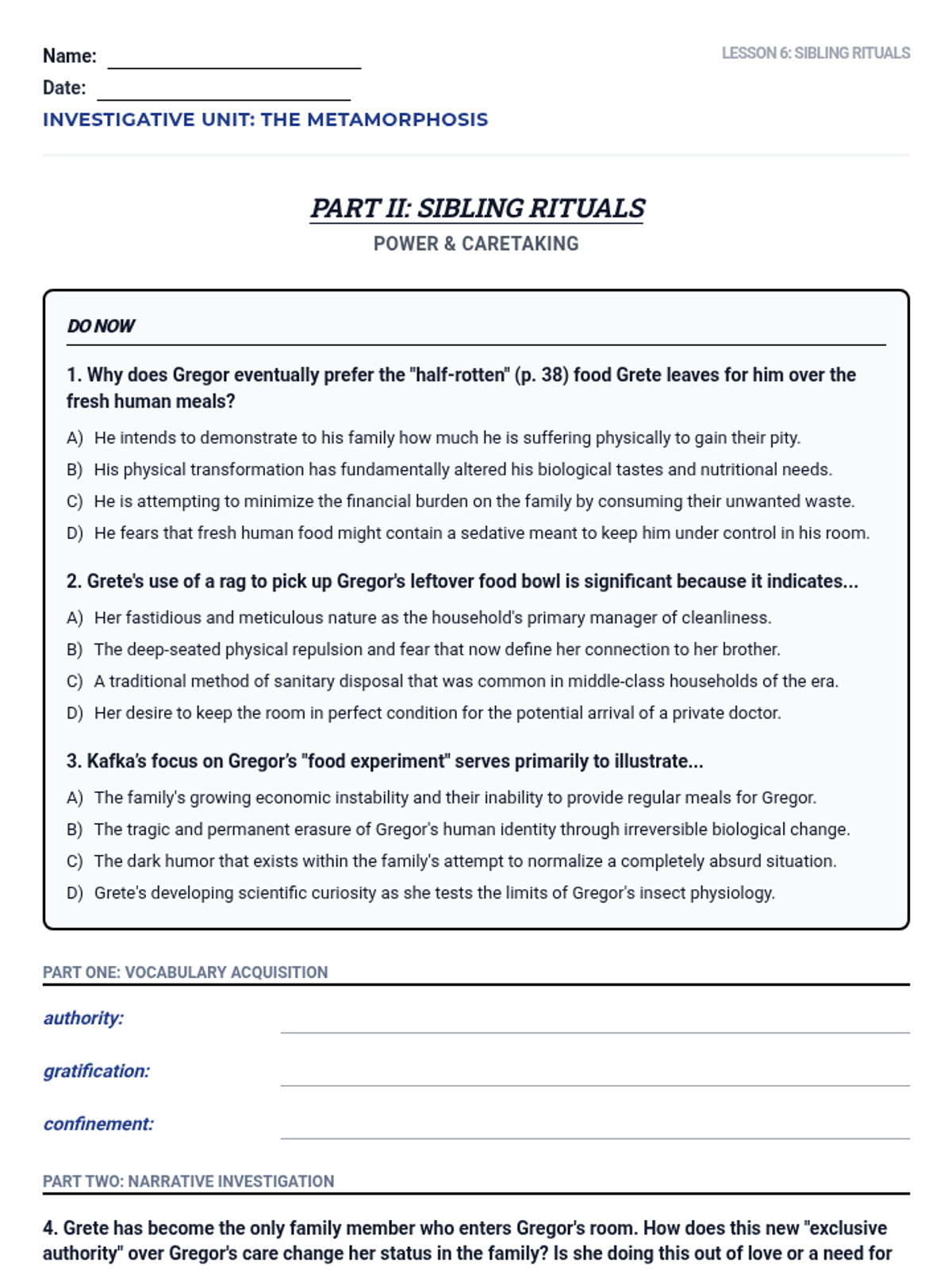
Students examine the changing power dynamic between Gregor and Grete, focusing on her new ritualistic authority as his sole caretaker.
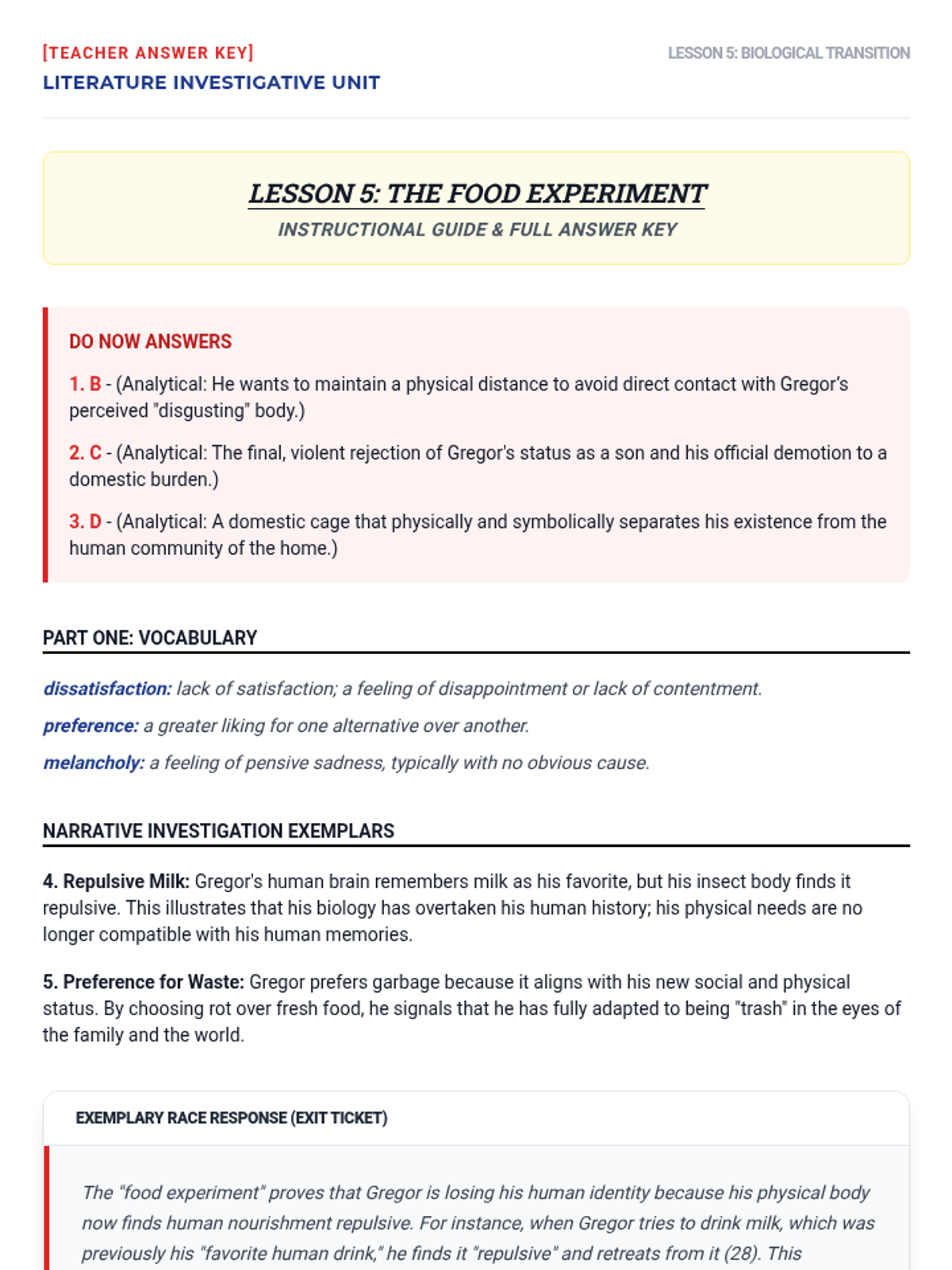
Part II begins with Gregor's physical transition, focusing on his change in taste and the shift from human food to animal waste as a symbol of dehumanization.
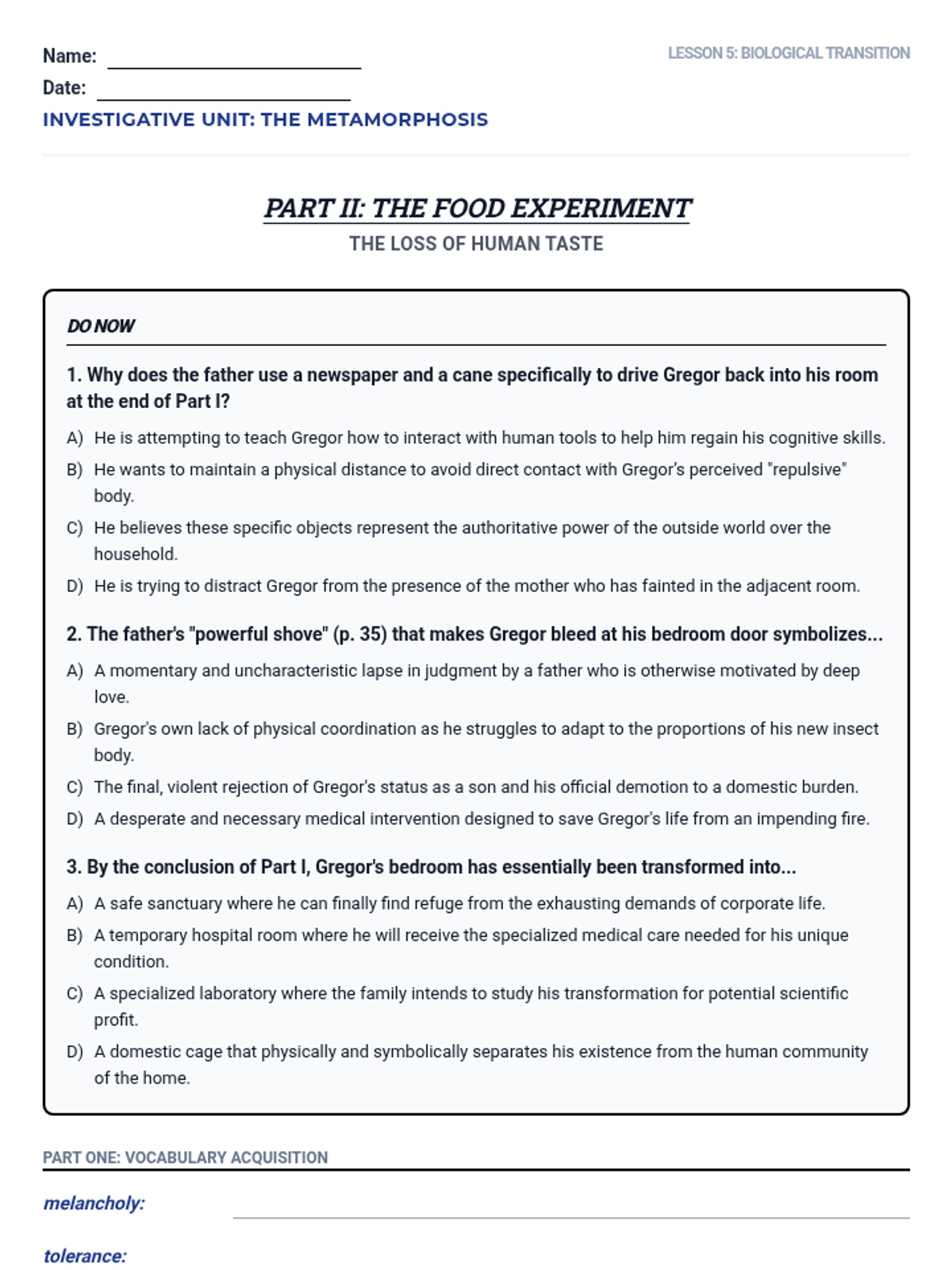
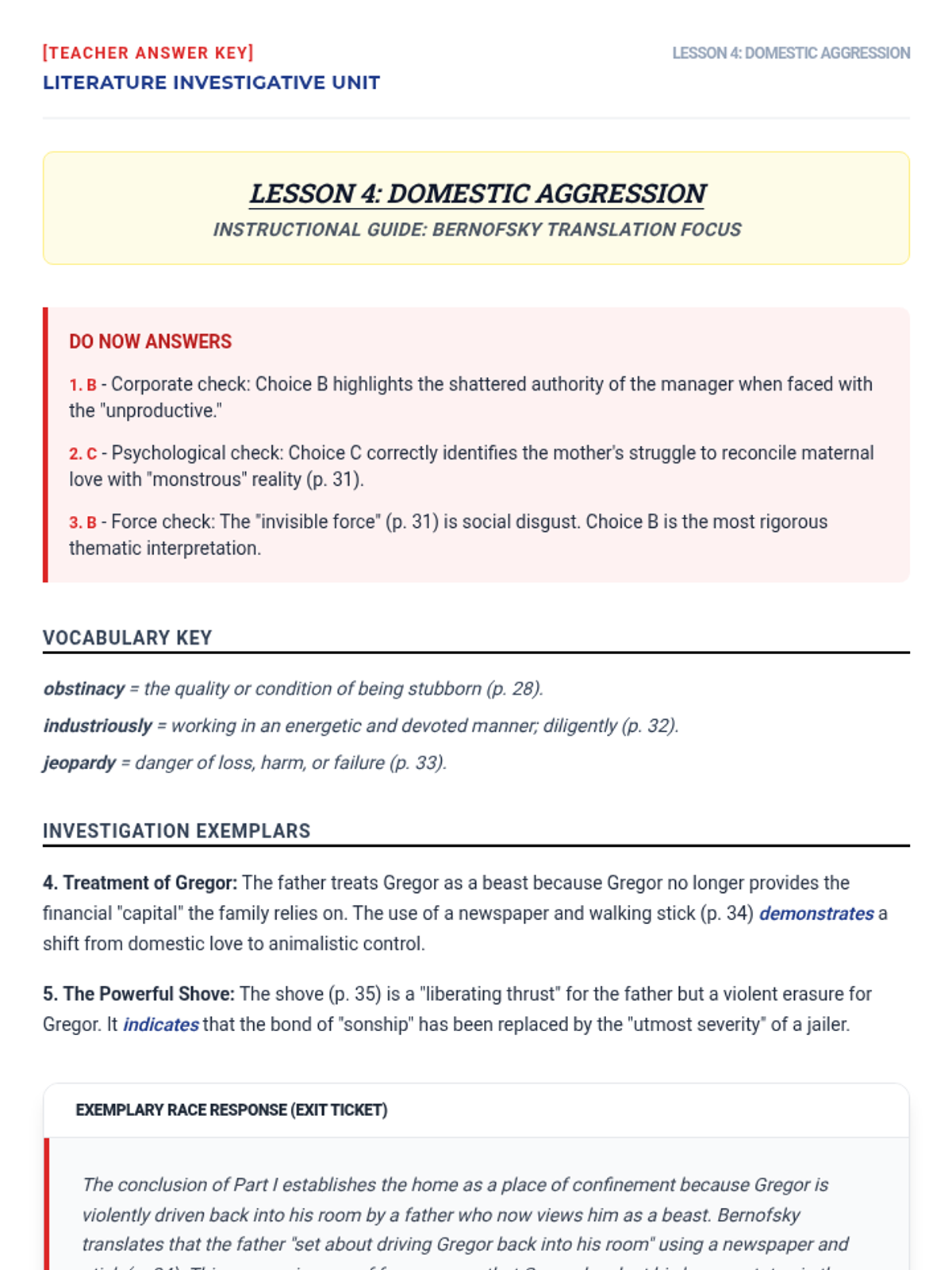
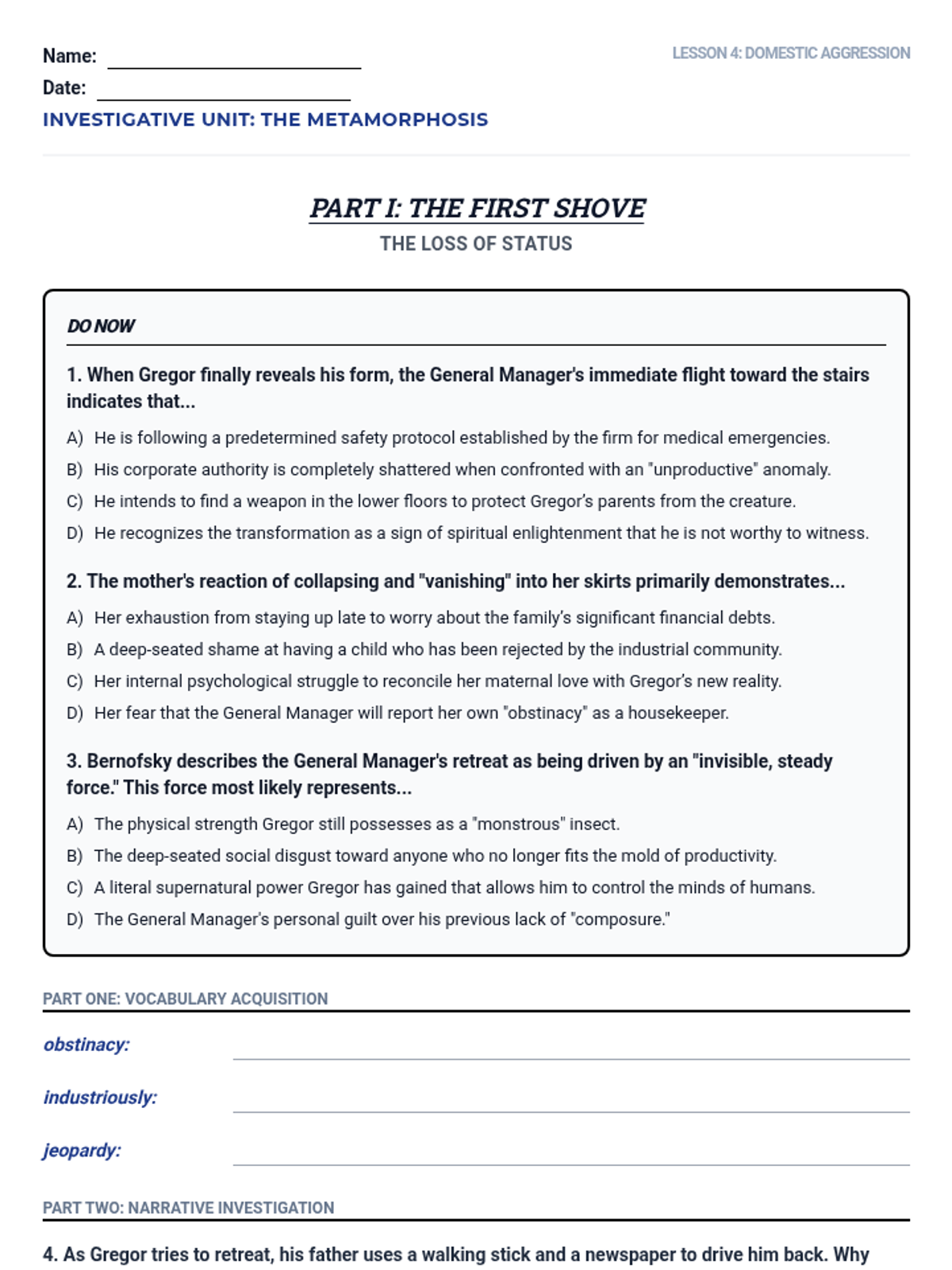
Students analyze the violent conclusion to Part I, focusing on the father's use of force to cage Gregor. Themes of domestic aggression and the loss of familial status.
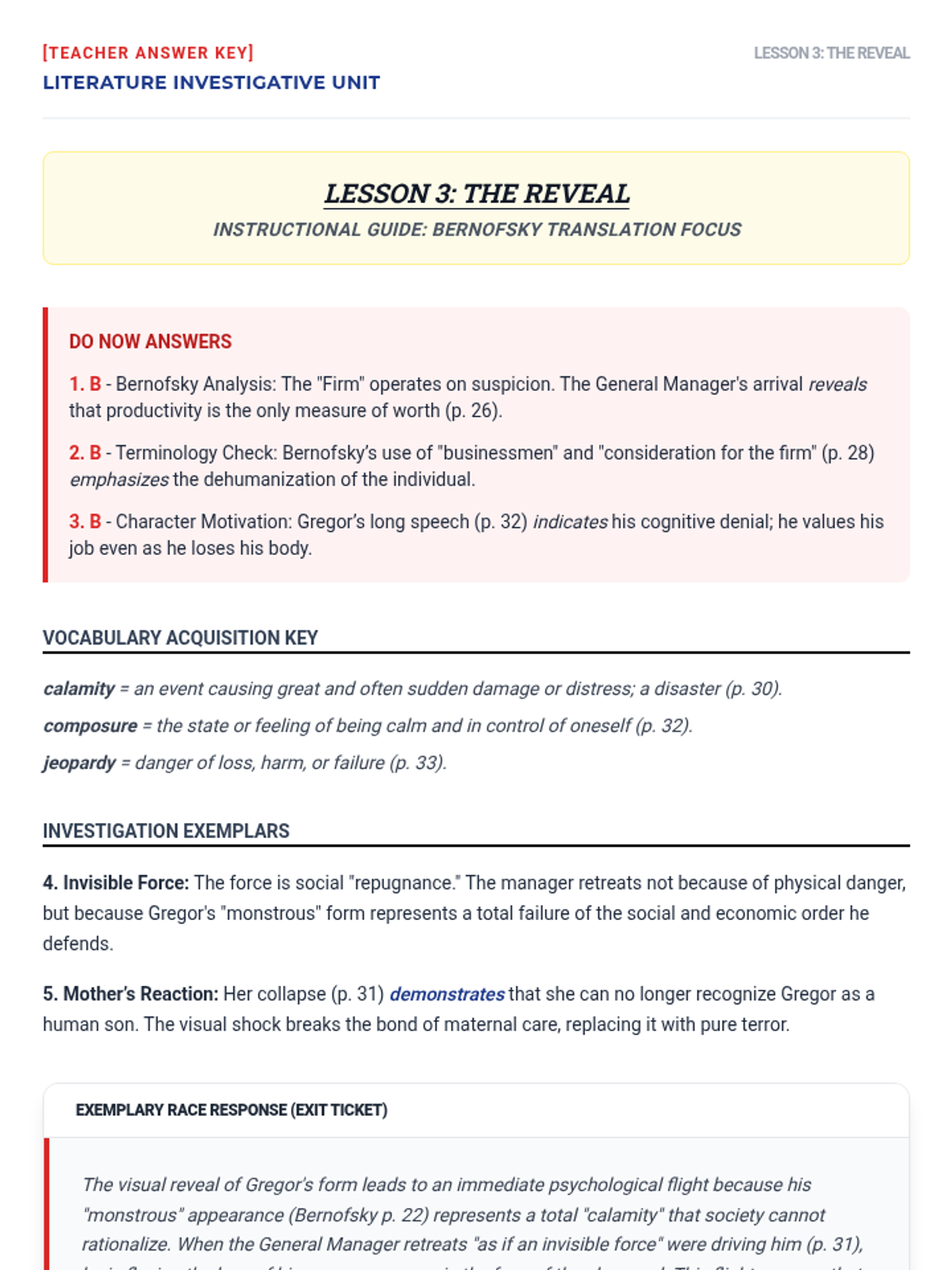
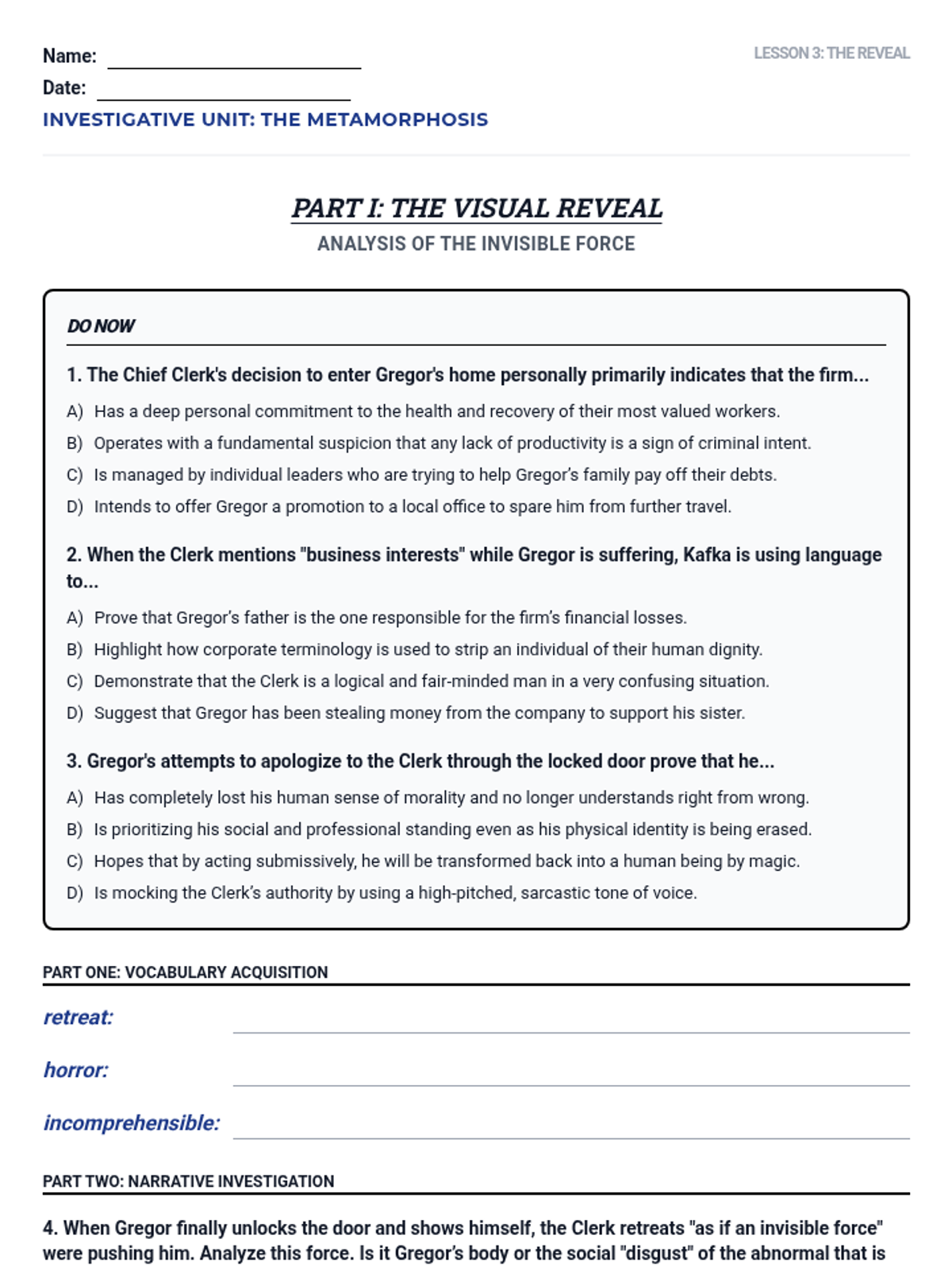
Students analyze the visual reveal of Gregor's form and the immediate physical and psychological retreat of the Chief Clerk and family. Focus on the 'Invisible Force' of alienation.
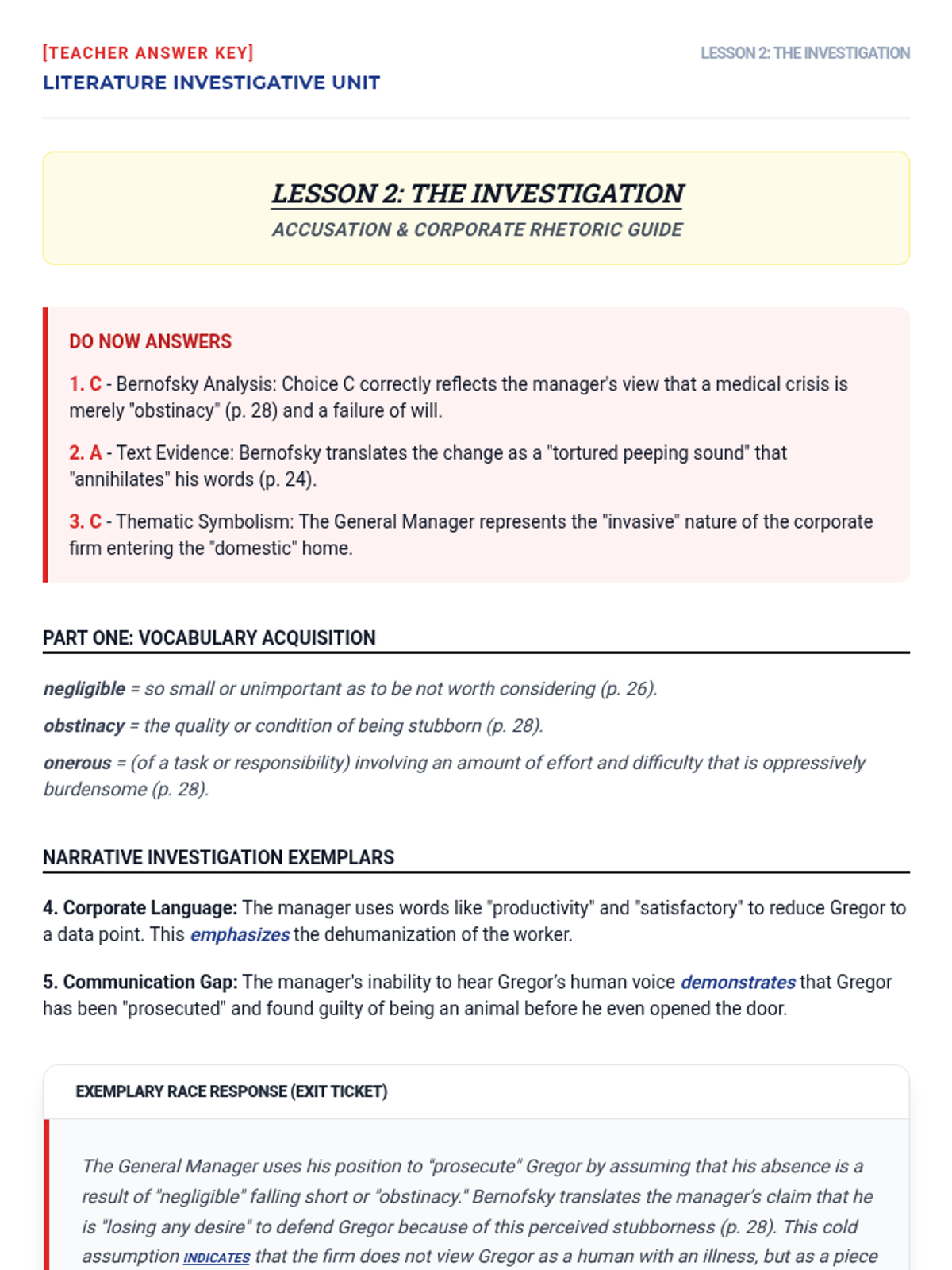
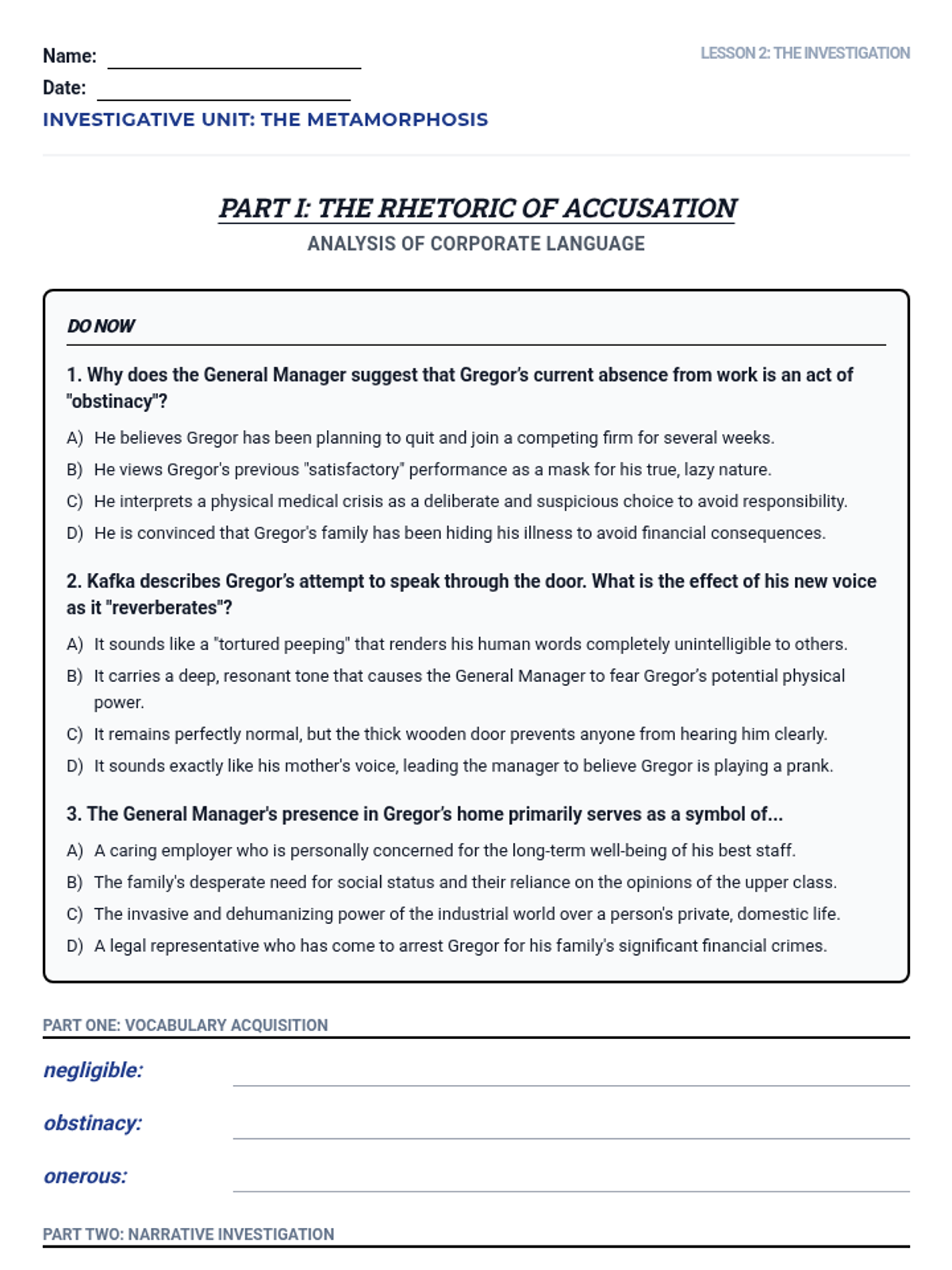
Students analyze the Chief Clerk's dialogue and how he uses corporate language to minimize Gregor's humanity and maximize his perceived 'laziness'.
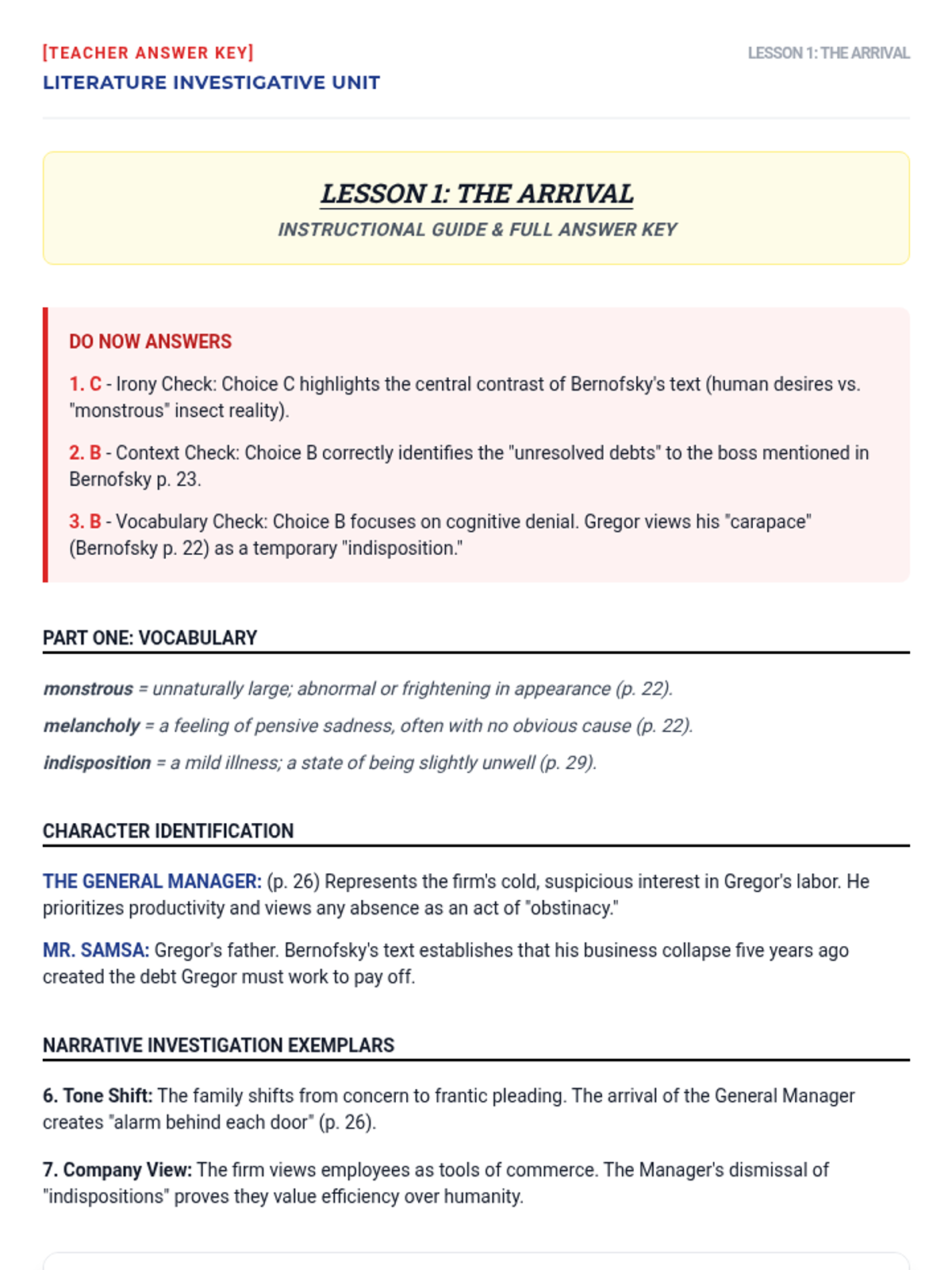
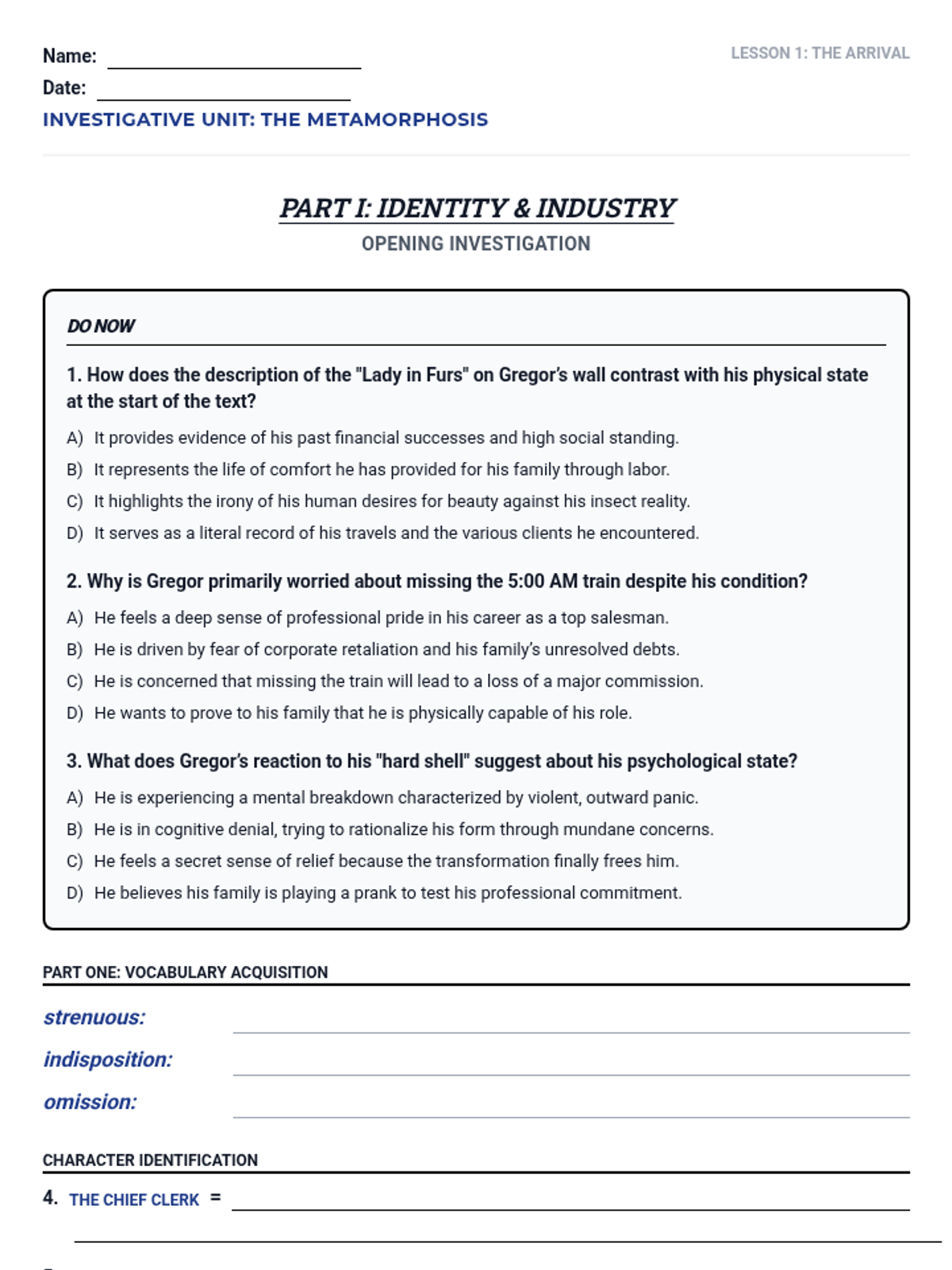
Students analyze the arrival of the Chief Clerk and the immediate shift from familial concern to corporate suspicion. Focus on the theme of 'The Firm' as a dehumanizing force.
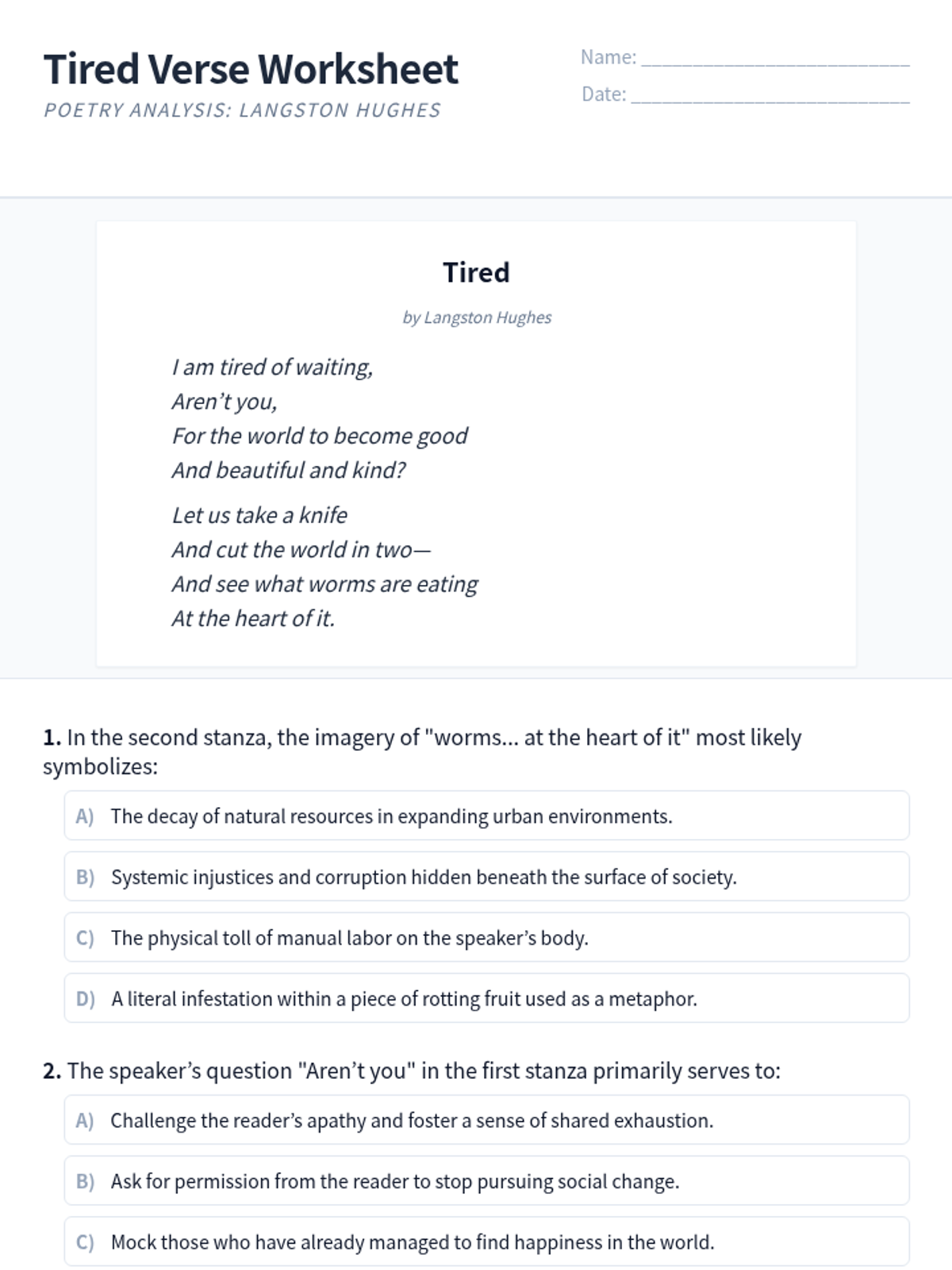
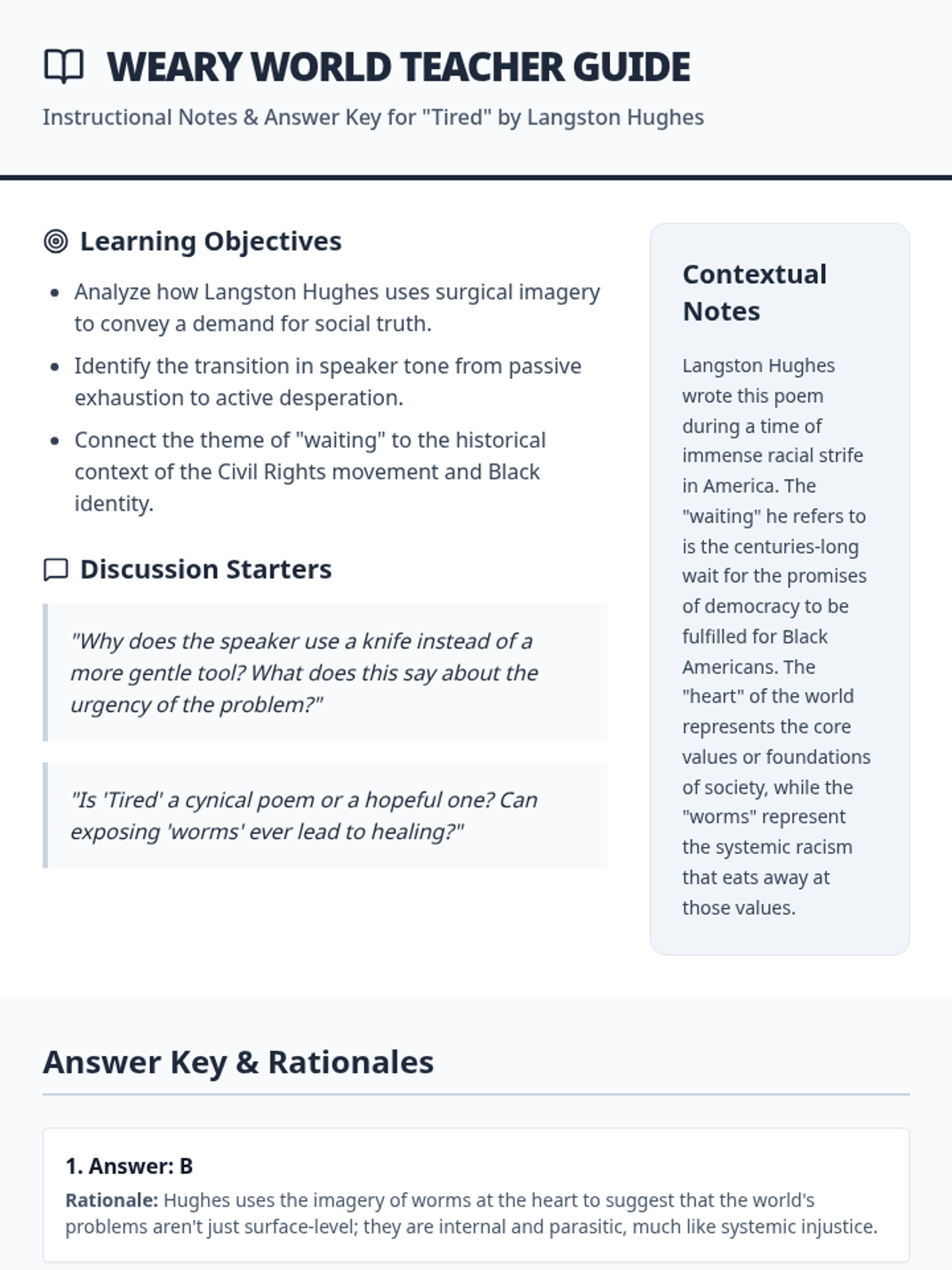
A focused analysis of Langston Hughes' poem 'Tired,' exploring the interplay between imagery and the themes of hope, hardship, and social identity. Students will dissect the speaker's exhaustion and the radical imagery used to describe societal change.
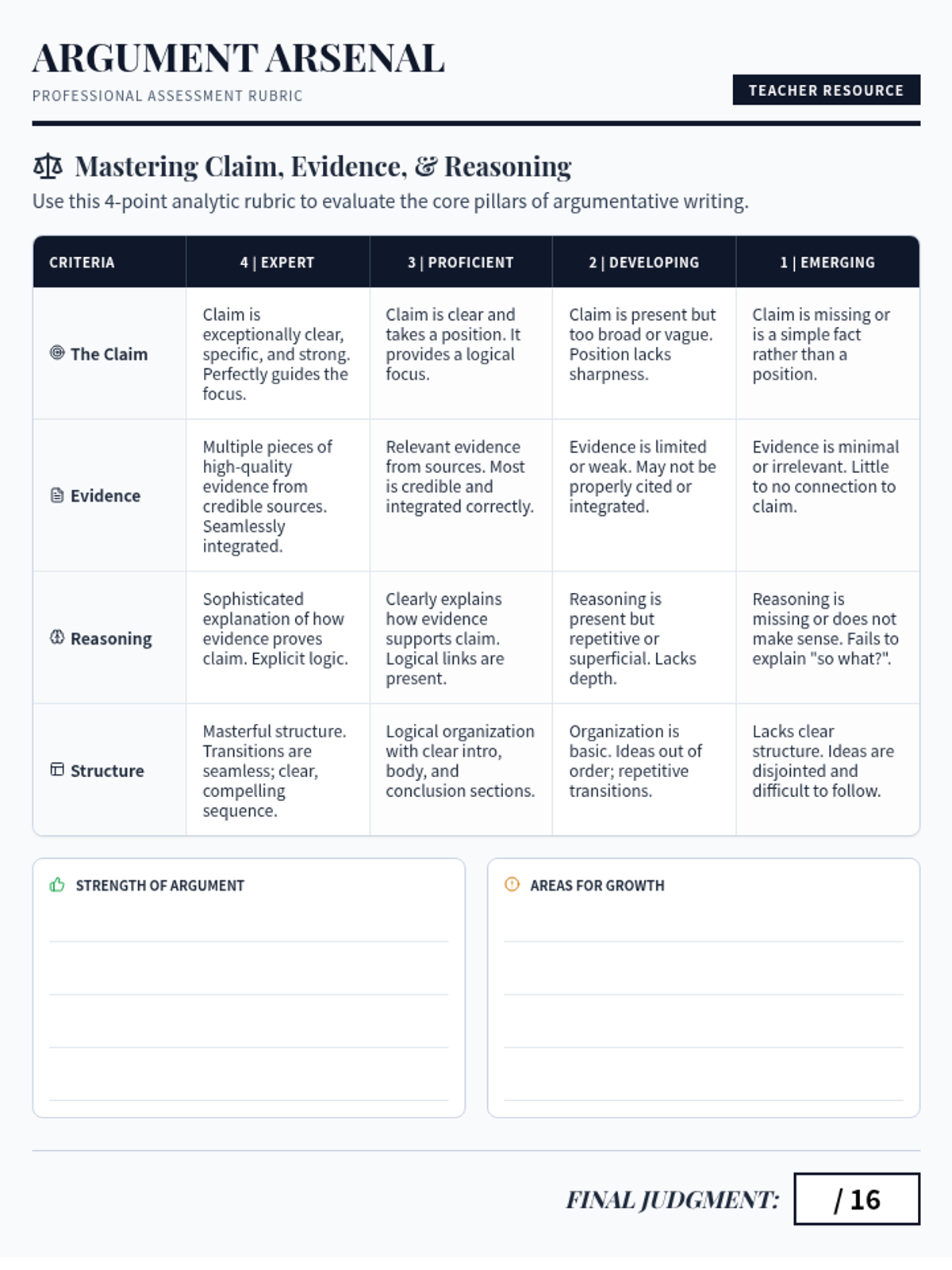
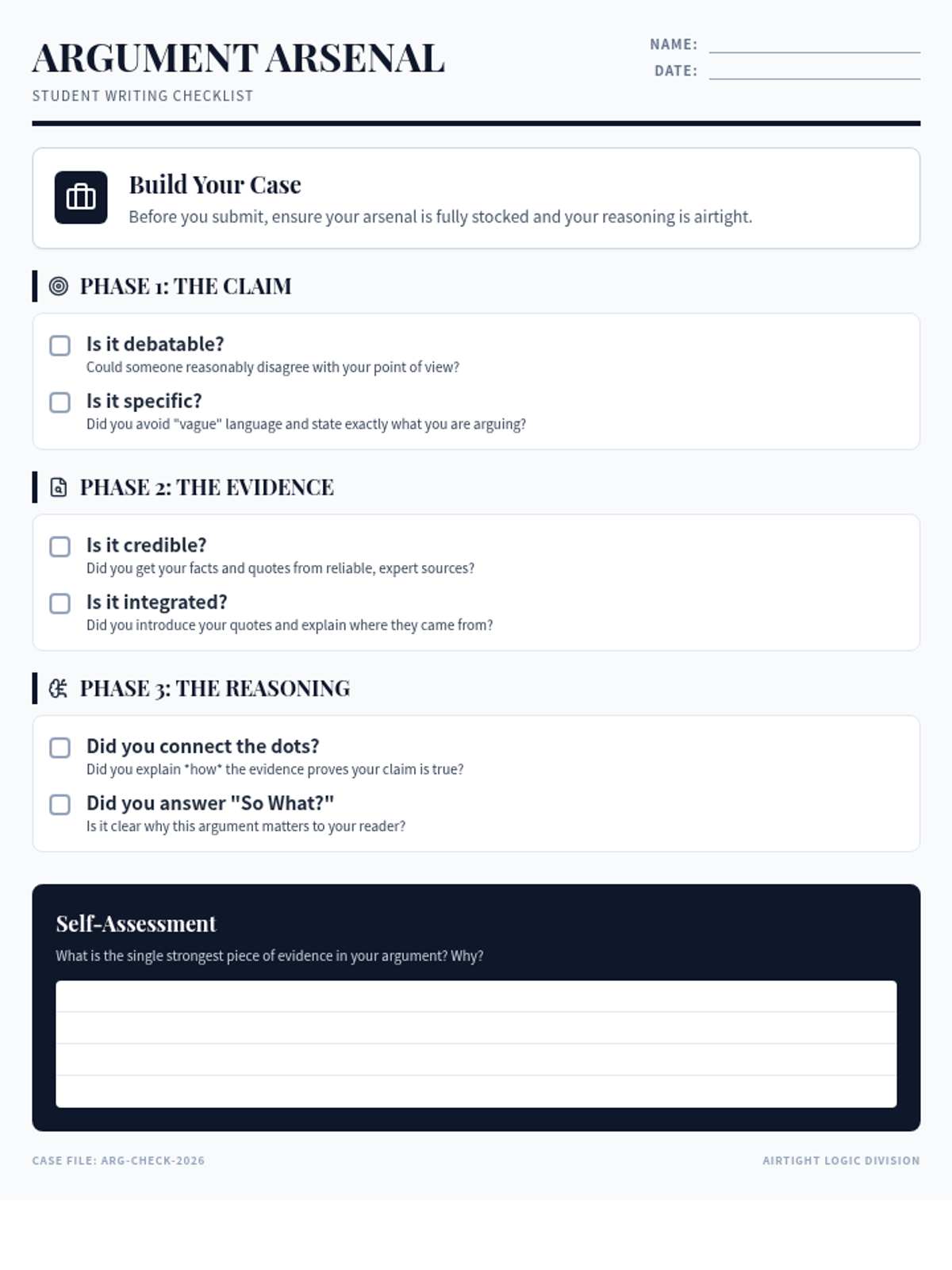
A focused lesson providing tools for evaluating and refining argumentative writing, specifically targeting claim clarity, evidence quality, and logical reasoning.