Ce cours explore la demande hicksienne (ou demande compensée), le problème de minimisation de la dépense et la relation entre utilité et budget pour les étudiants en Licence 1 Économie-Gestion.
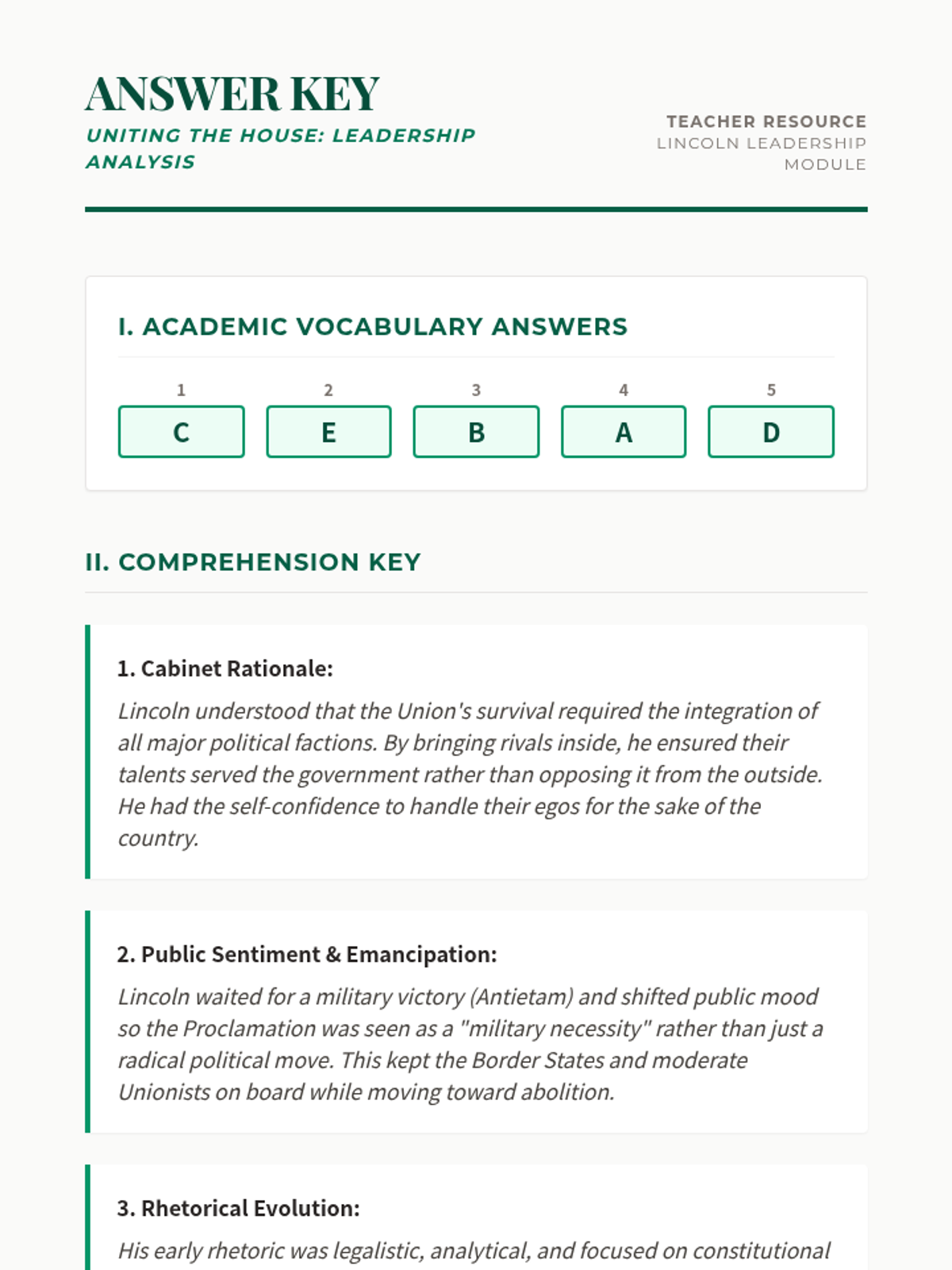
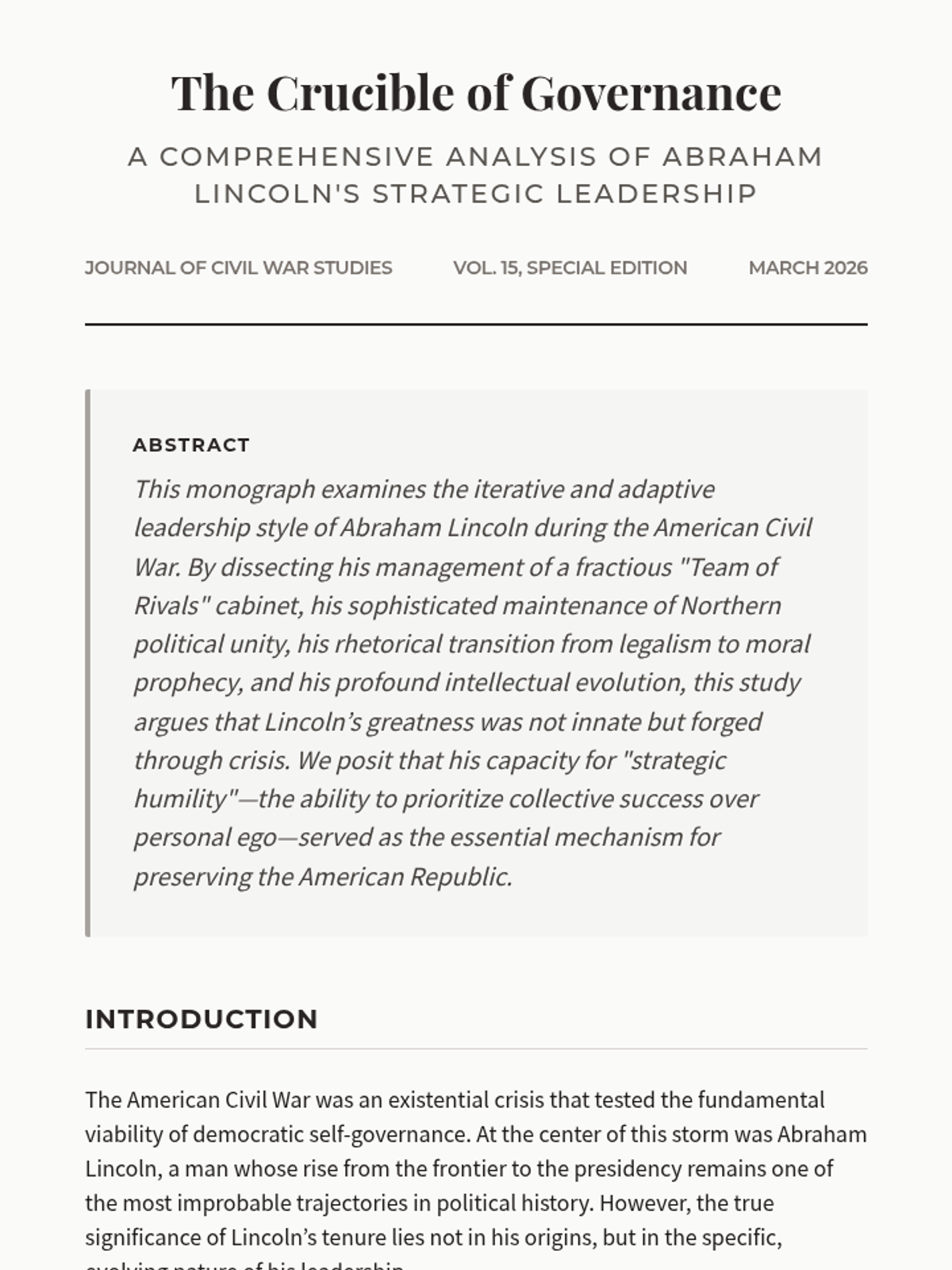
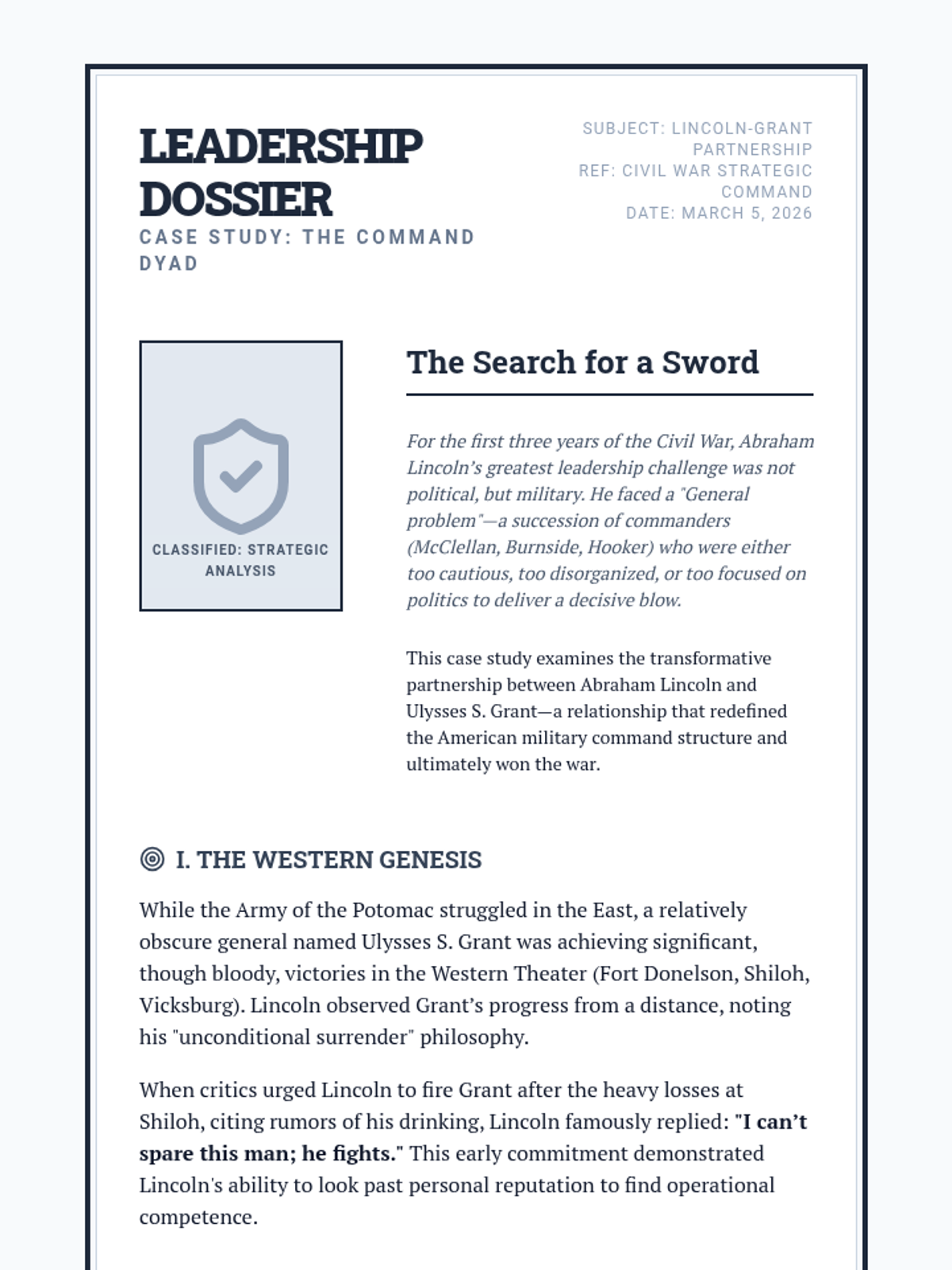
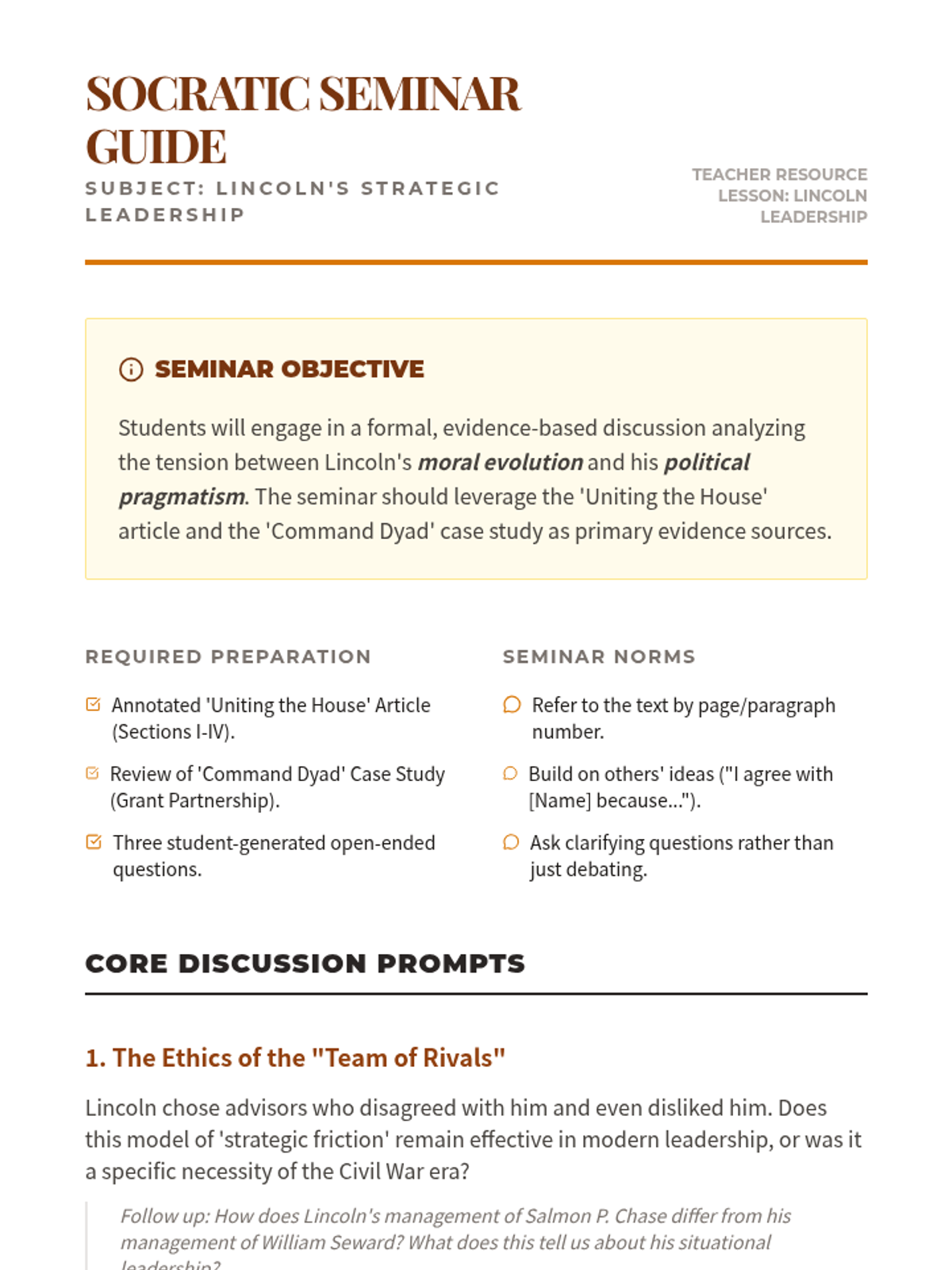
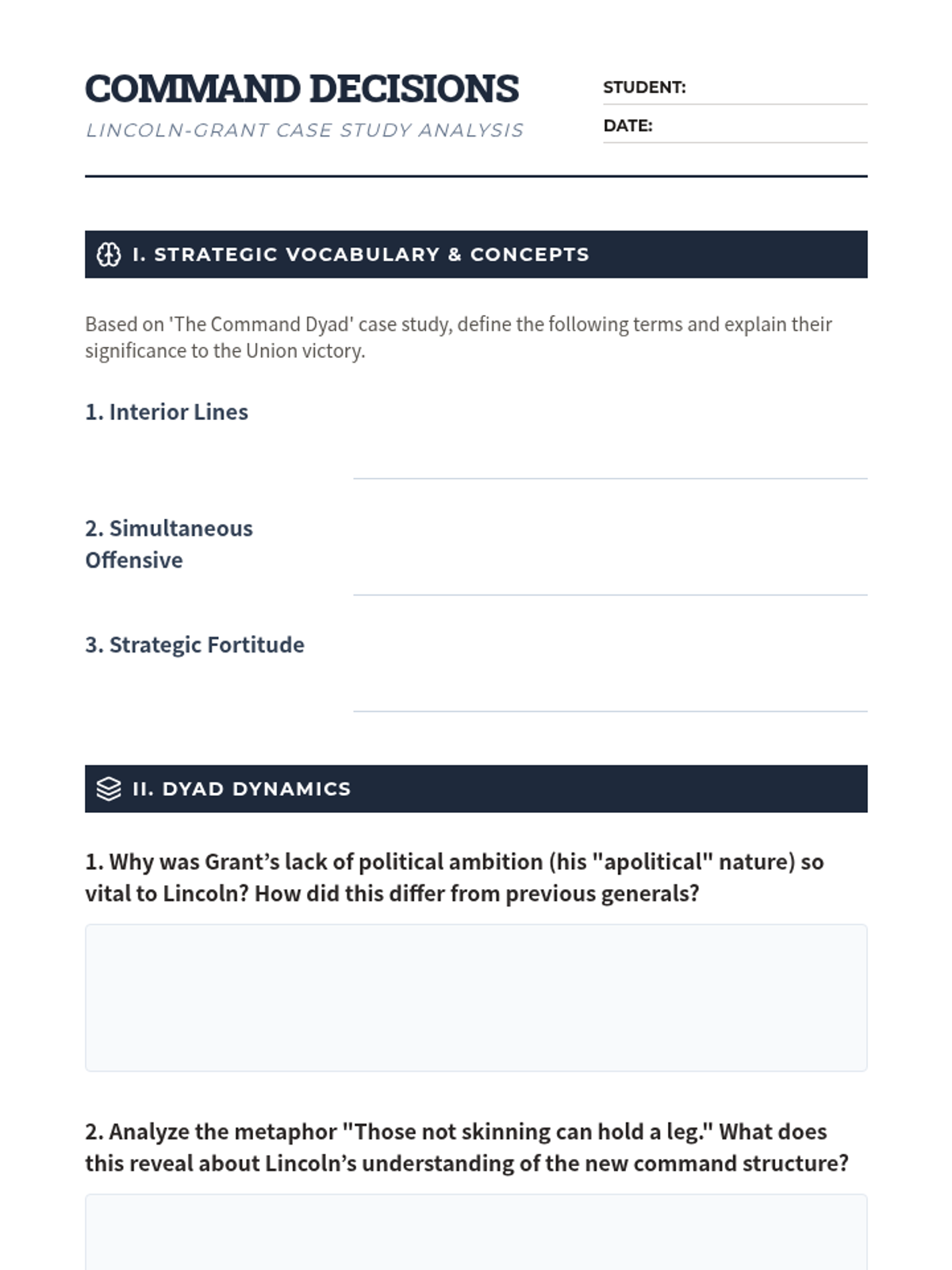
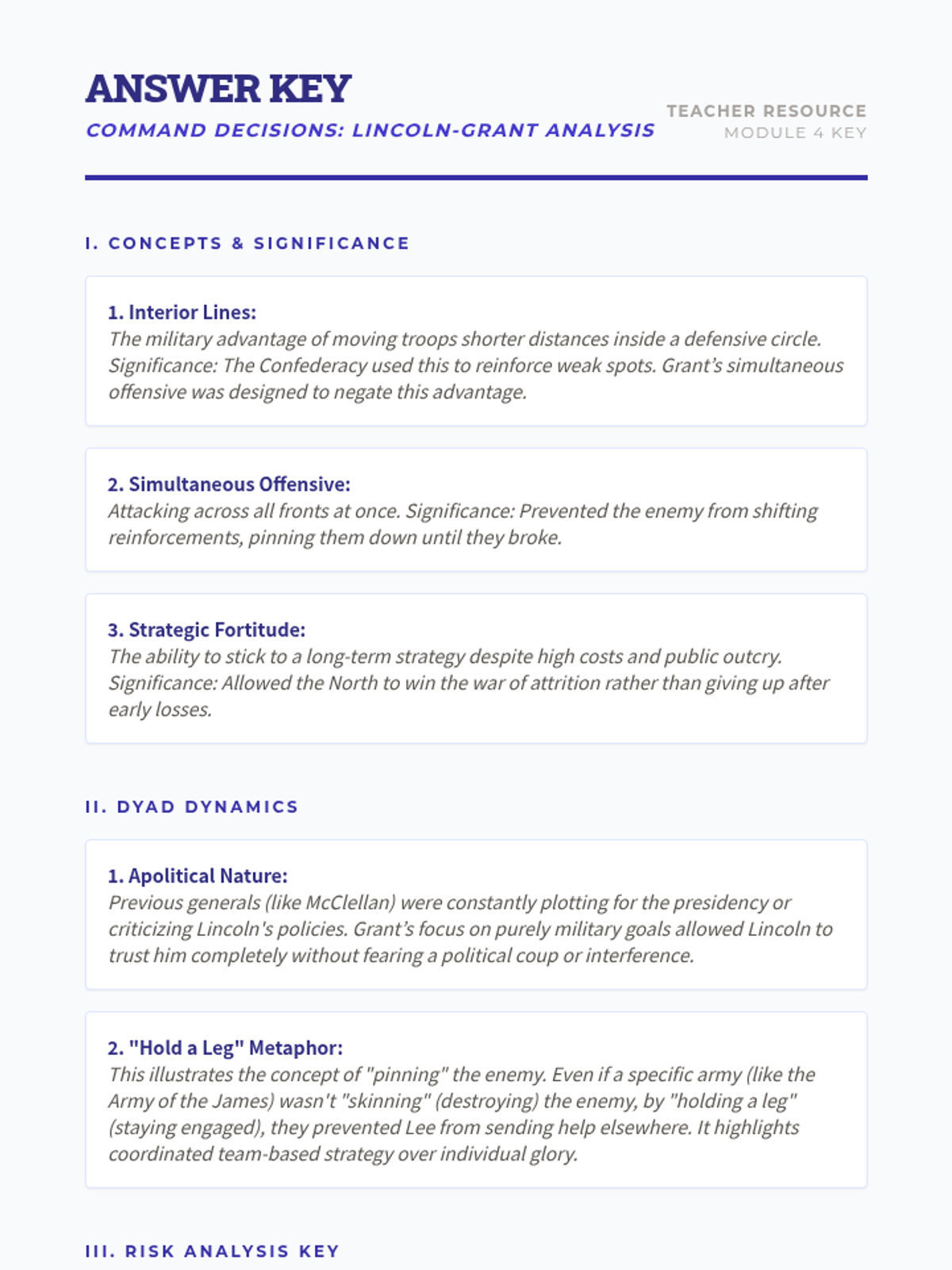
A deep dive into Abraham Lincoln's transformative leadership, focusing on his cabinet management, rhetorical brilliance, and strategic evolution during the American Civil War.
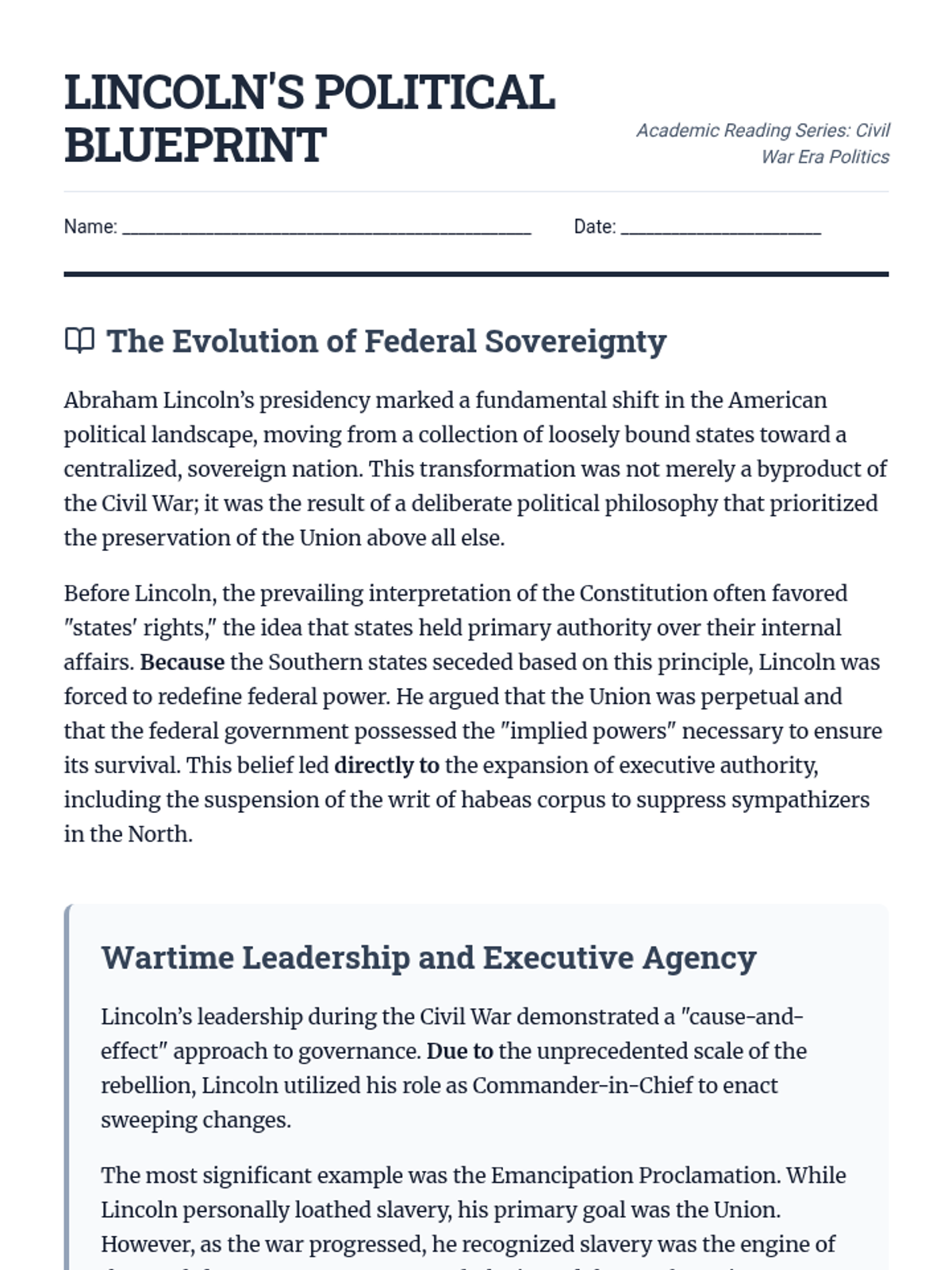
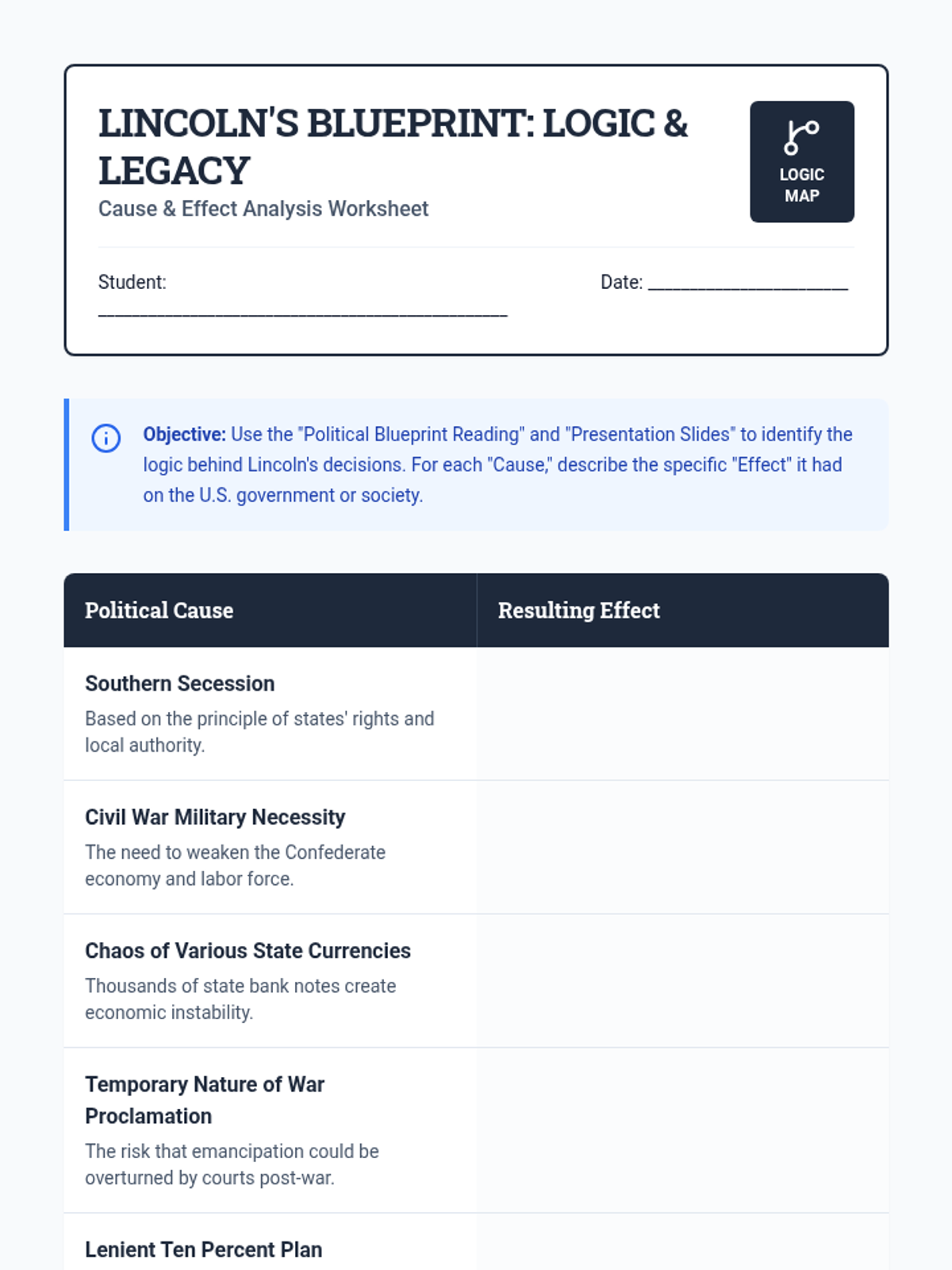
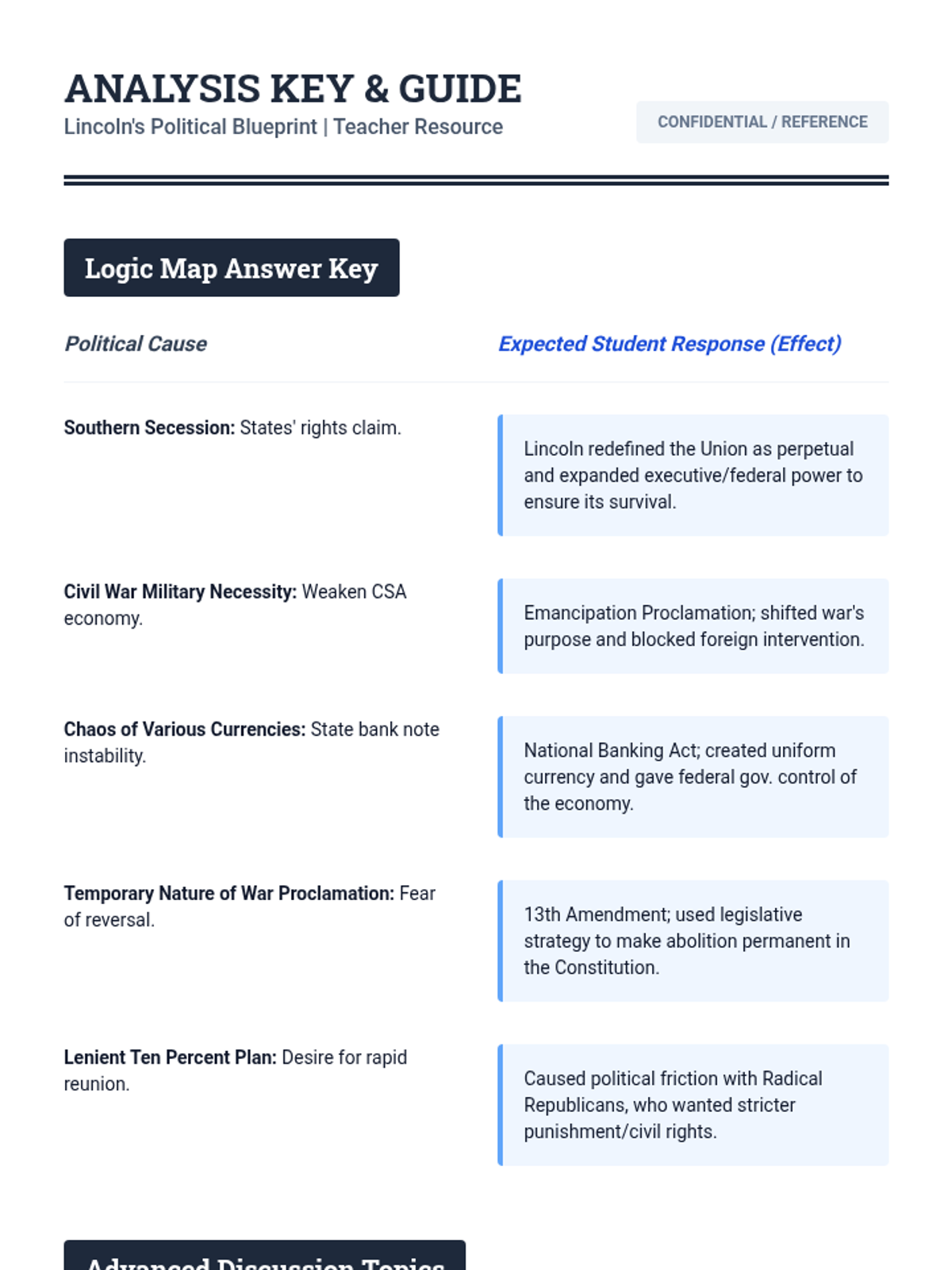
An in-depth exploration of Abraham Lincoln's political philosophy, focusing on the expansion of federal power, wartime leadership, and his economic vision for a modernized America. Students analyze cause-and-effect relationships within 19th-century American governance.
A comprehensive pacing guide and activity resource designed to cover the remaining 11th Grade US History TEKS before the STAAR test on April 16th. This lesson provides a day-by-day calendar for A/B block schedules and high-engagement activities for each remaining historical era.
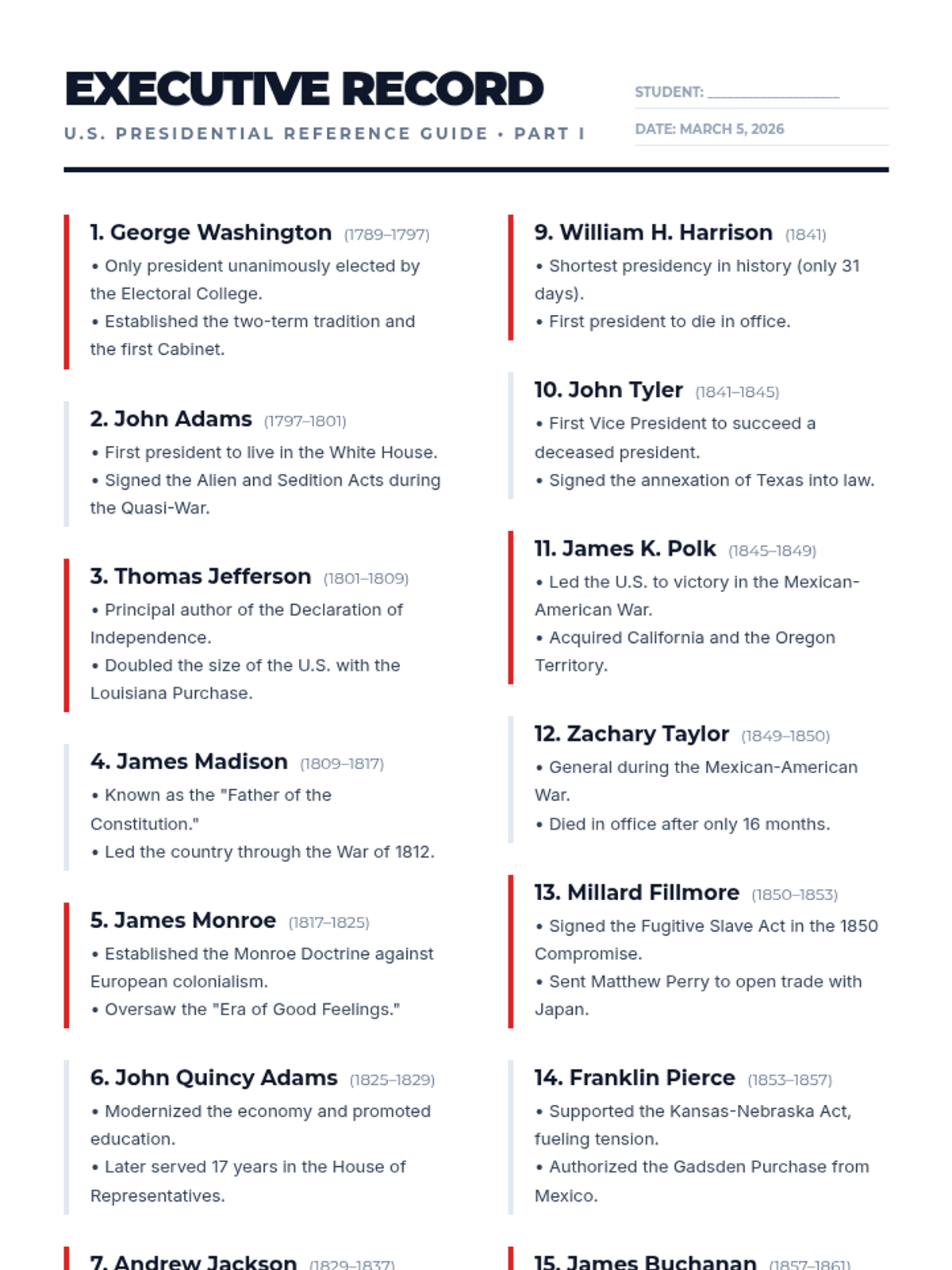
A comprehensive reference guide and study resource covering all United States Presidents, focusing on key historical facts and terms of office.
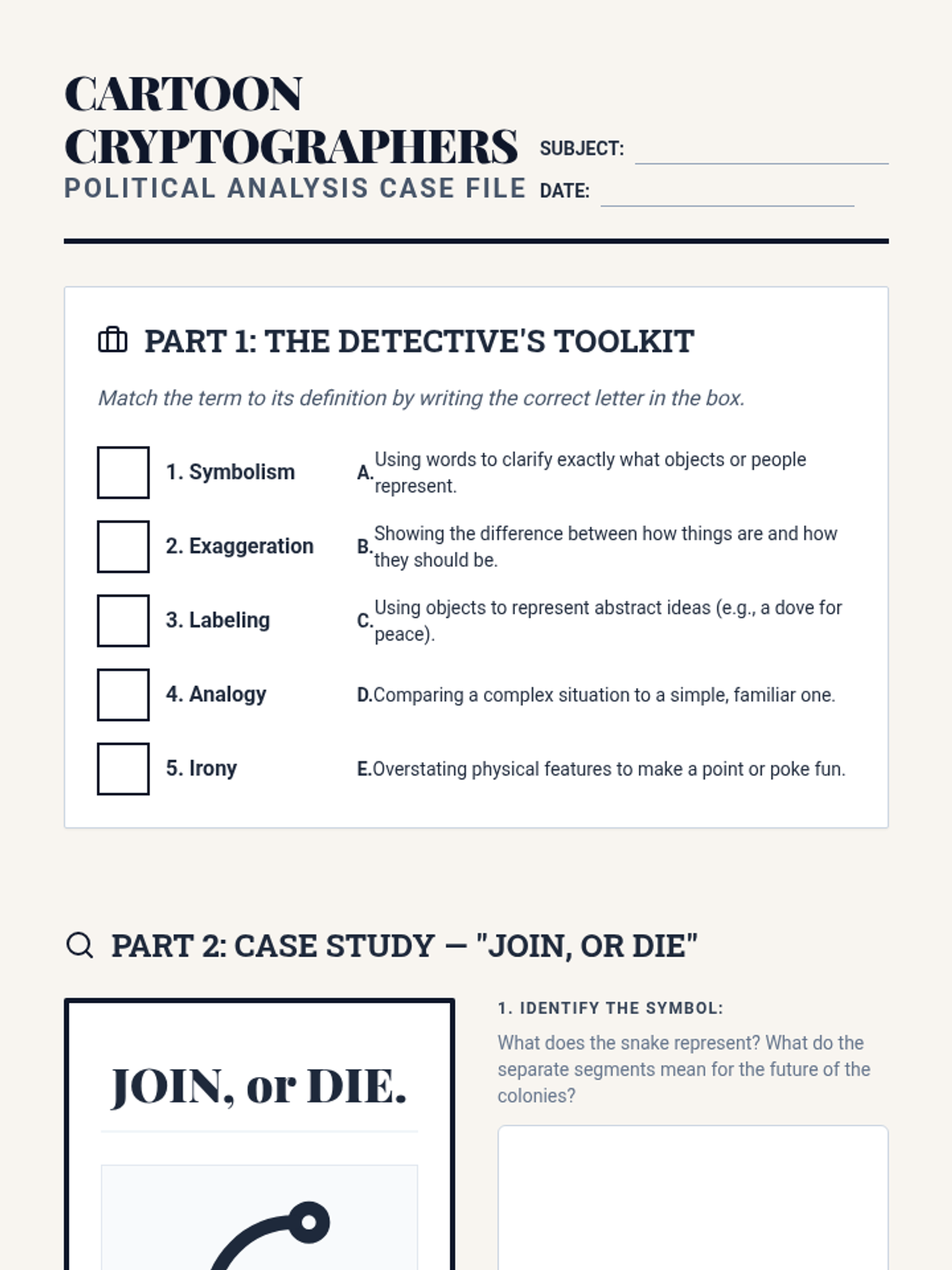
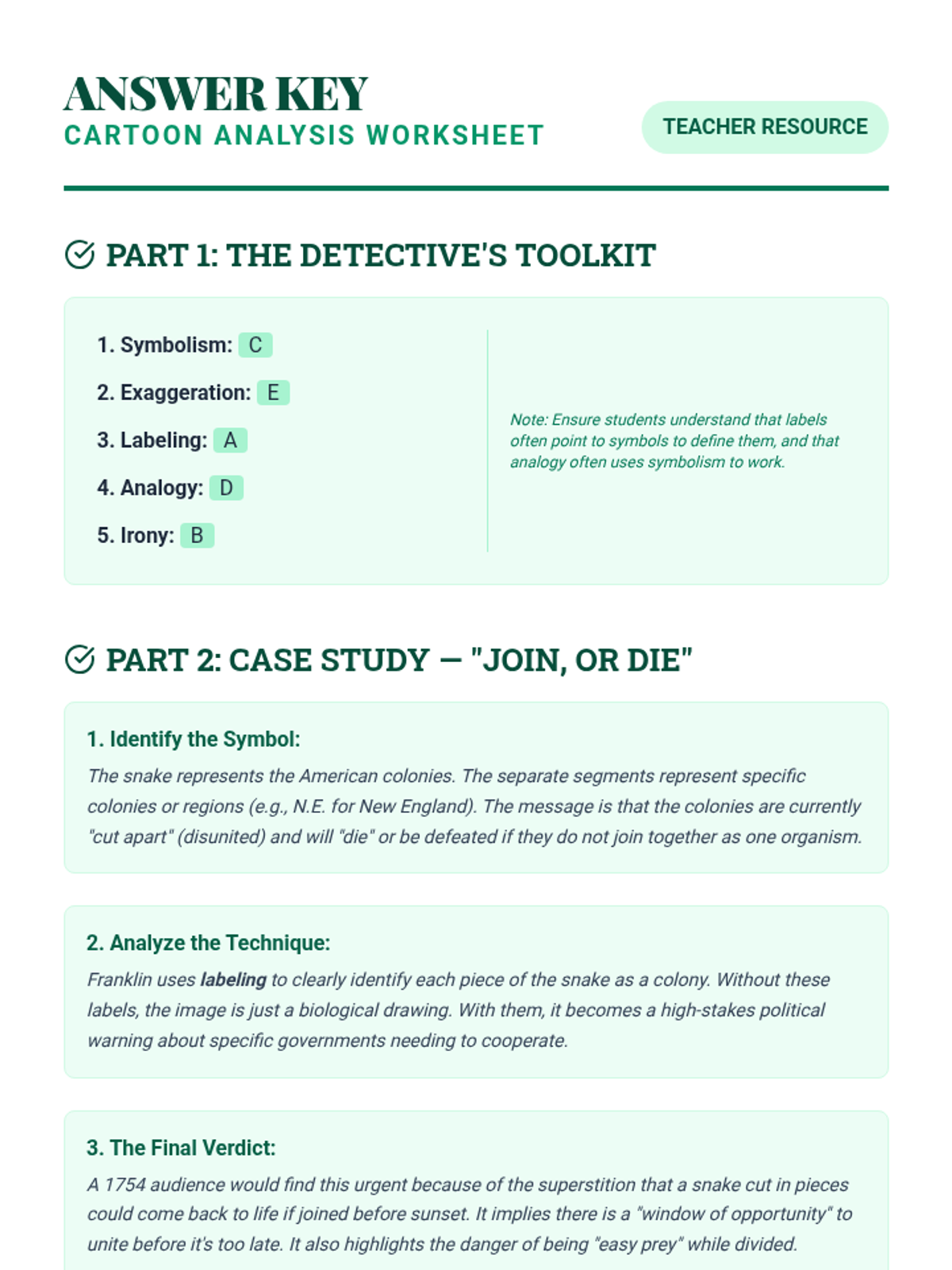
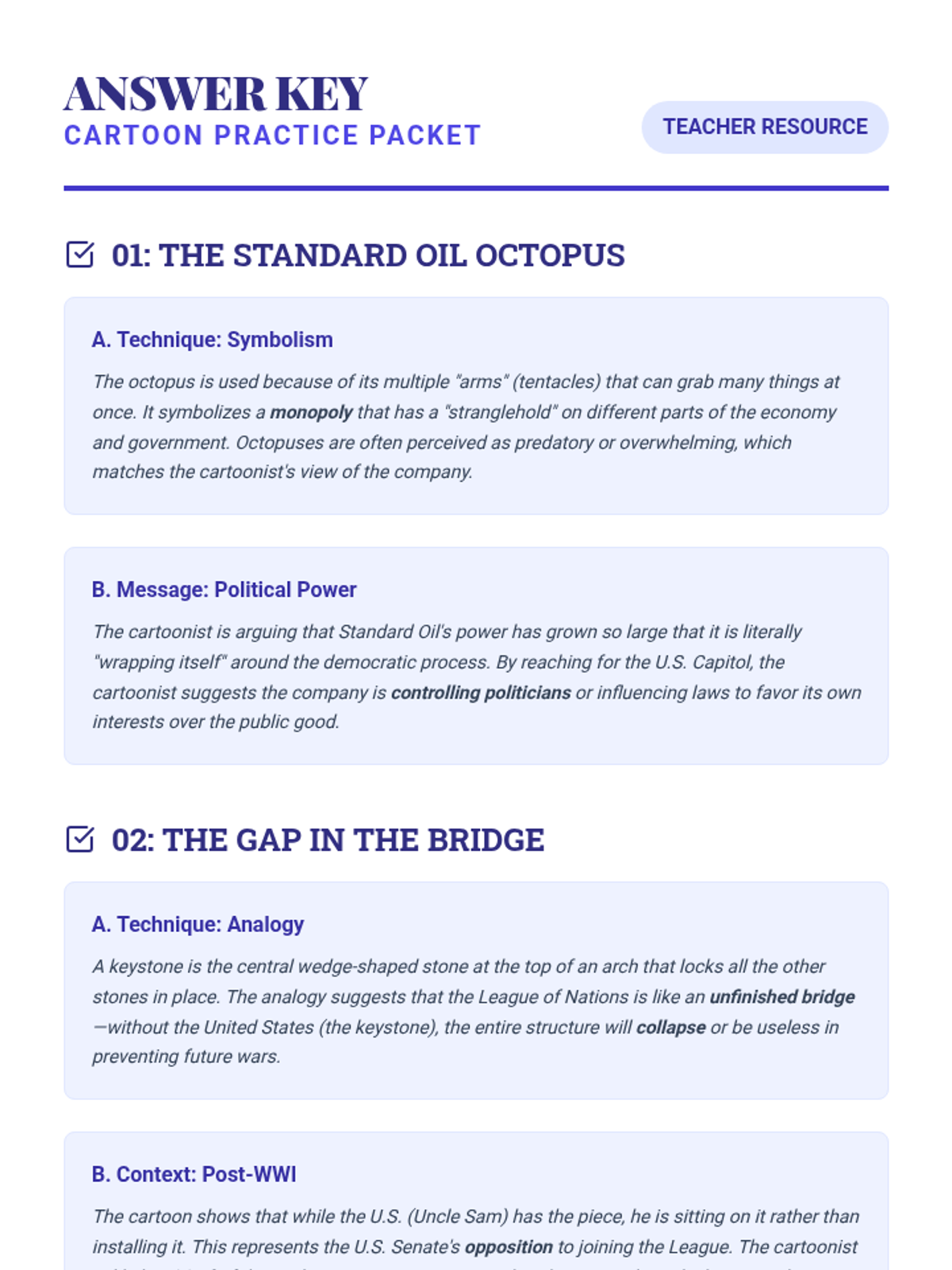
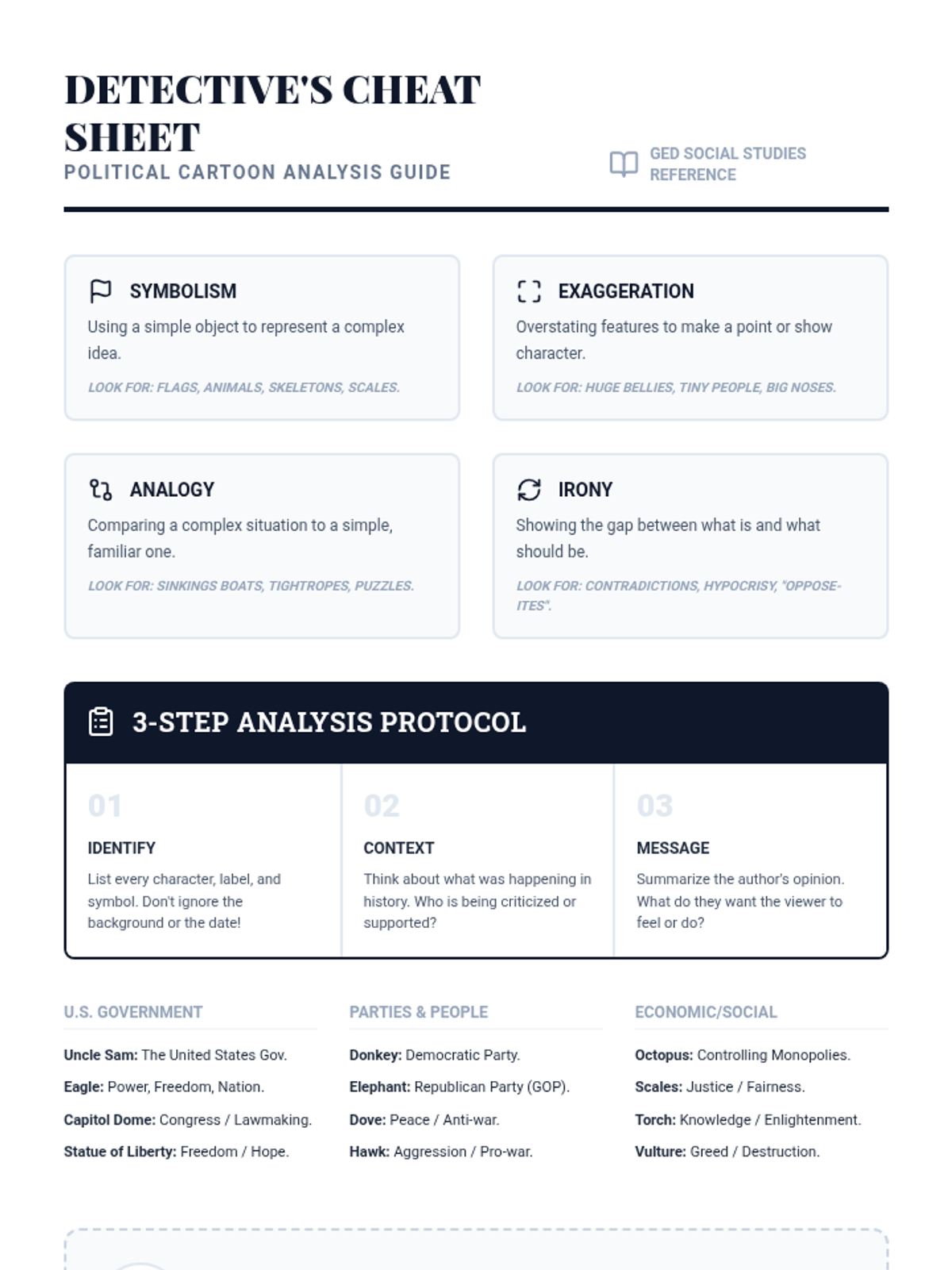
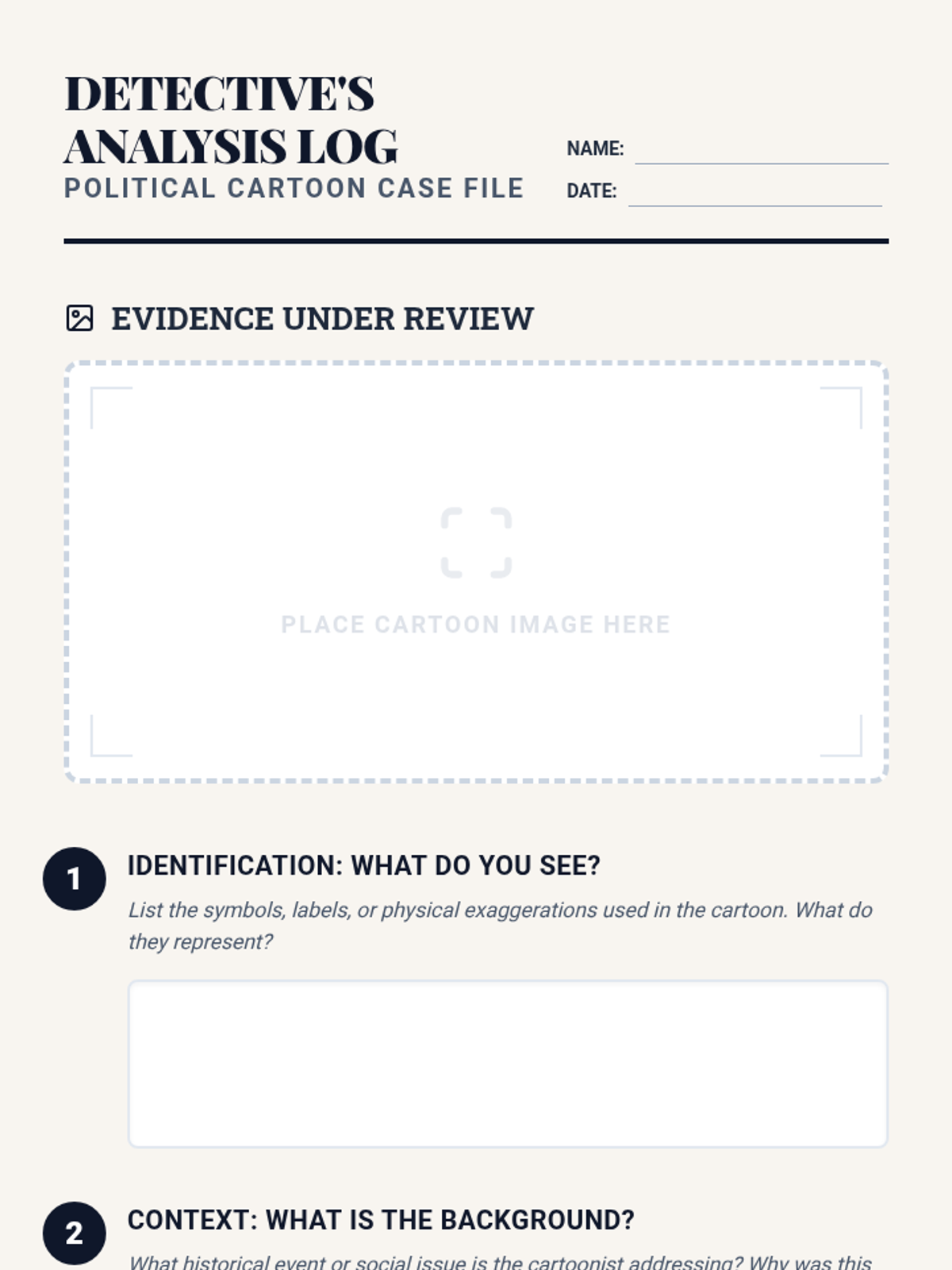
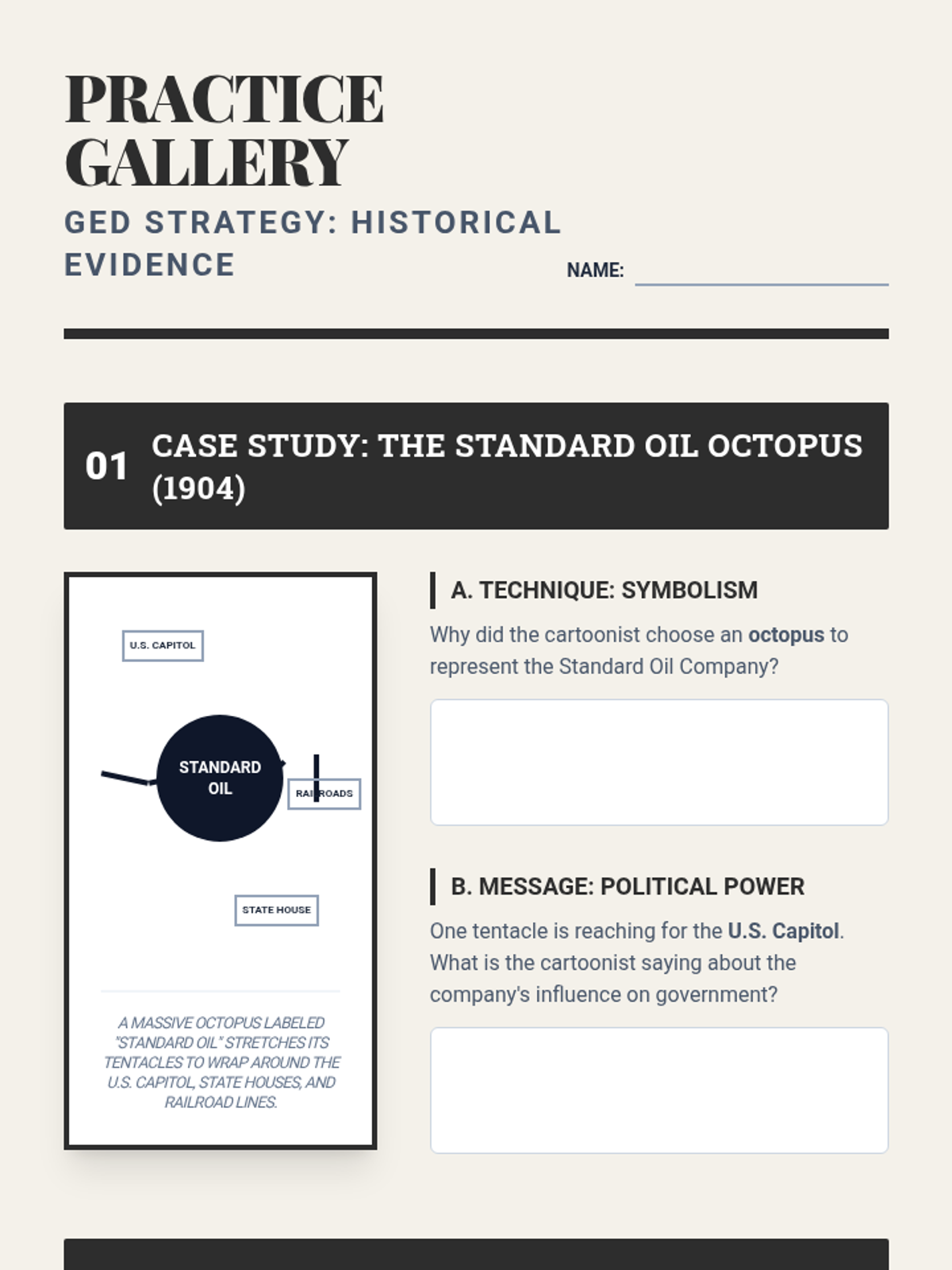
A comprehensive lesson designed to help GED students master the art of deconstructing political cartoons by identifying persuasive techniques and analyzing historical impact.
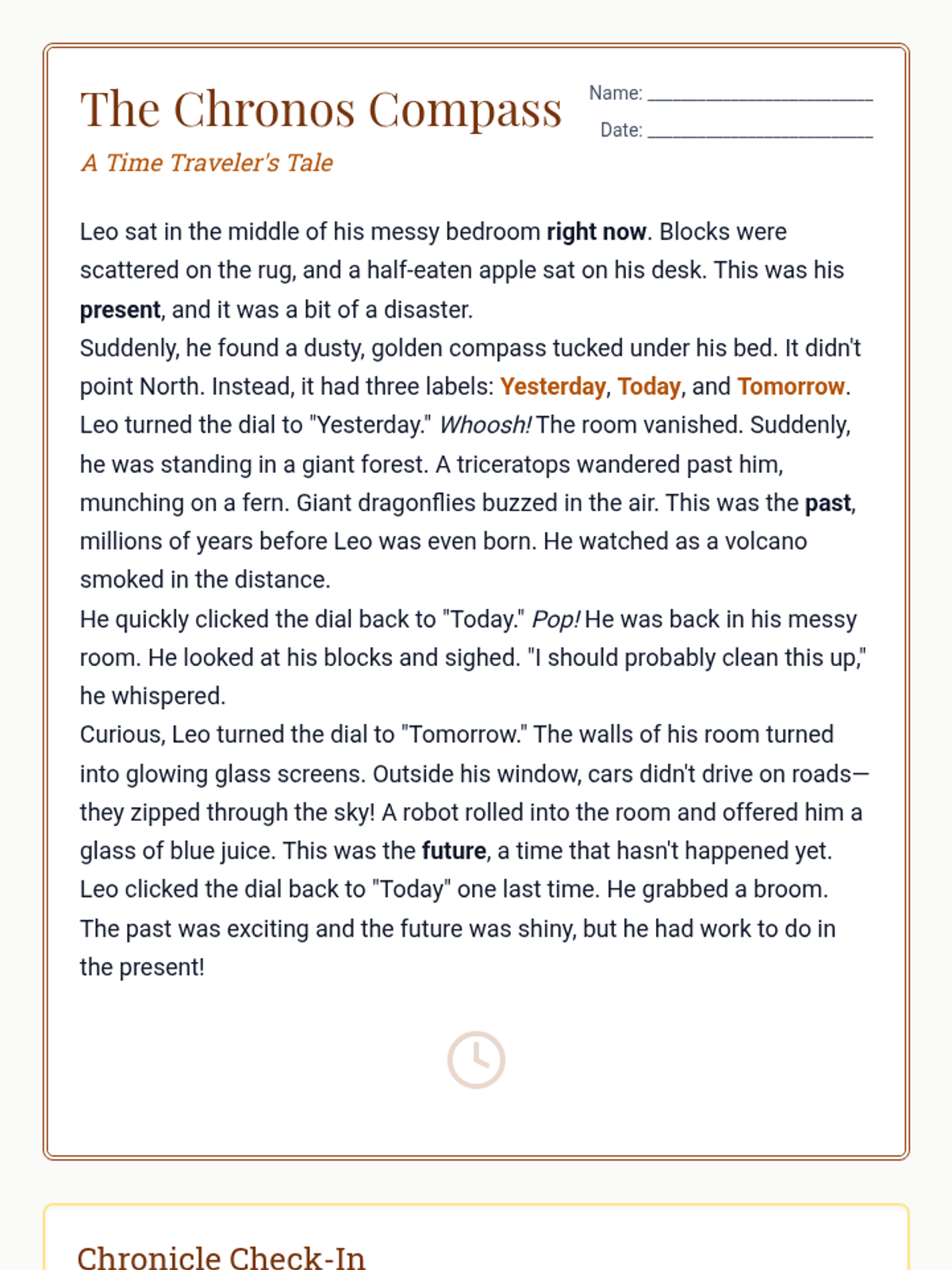
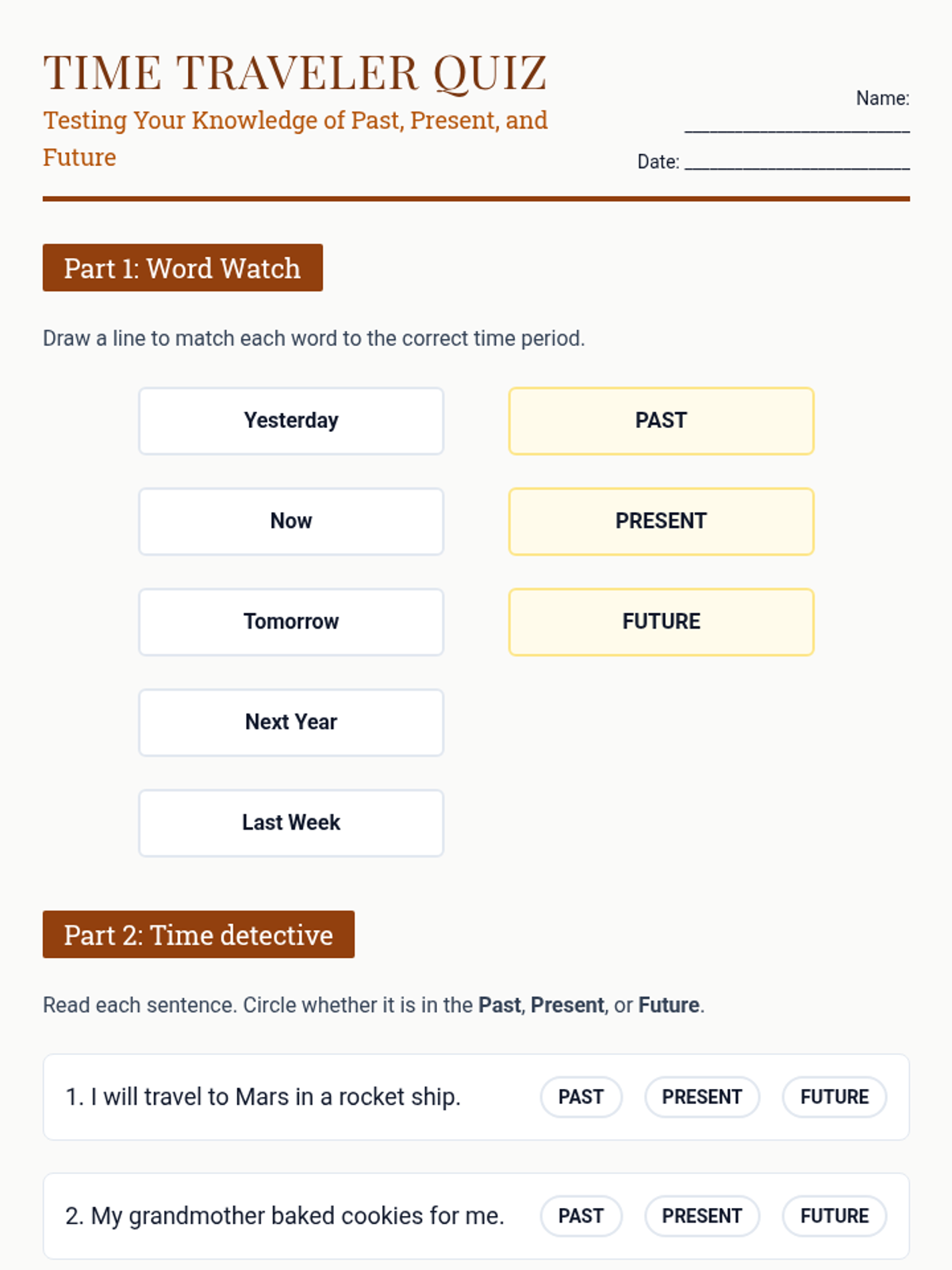
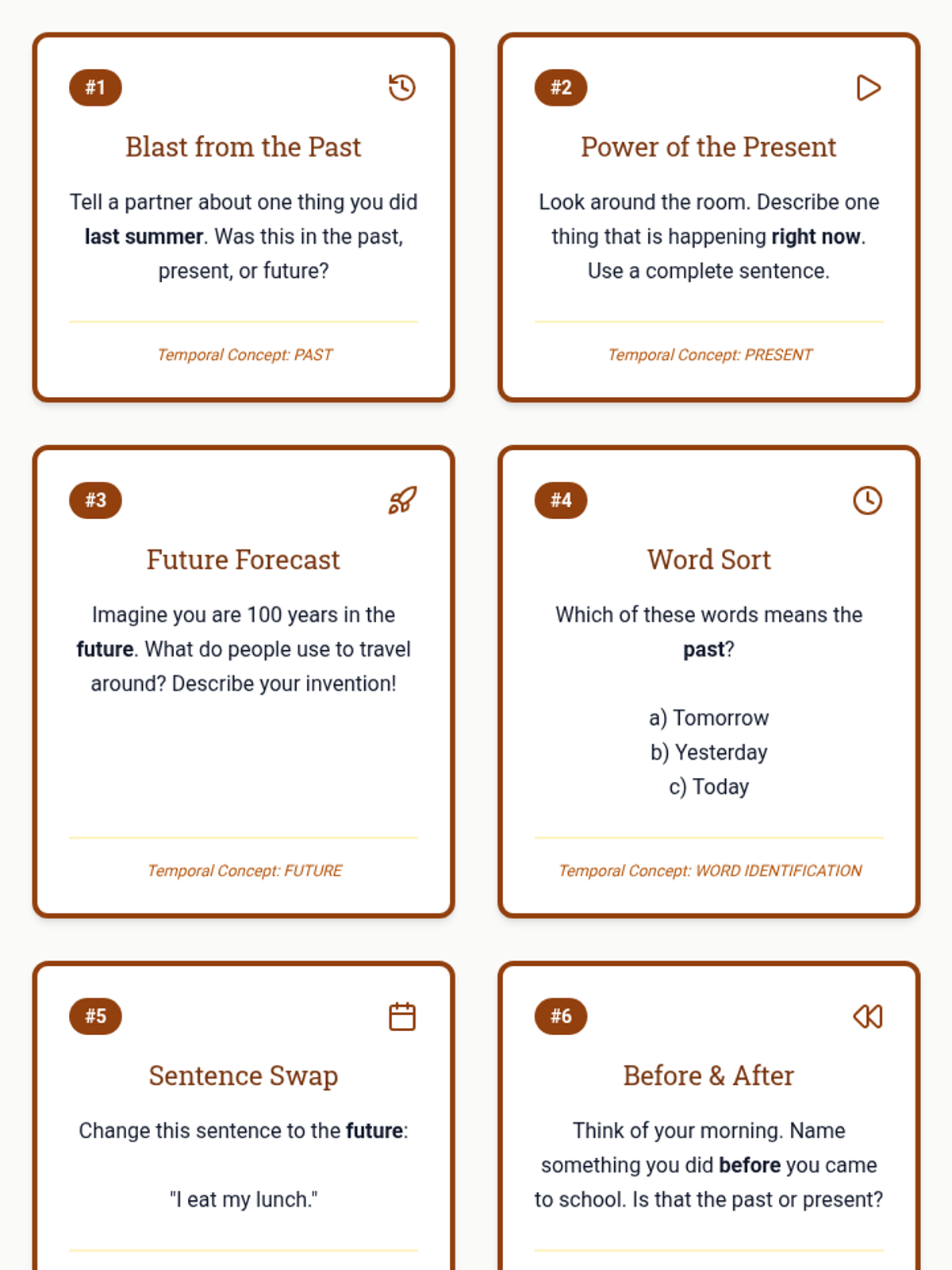
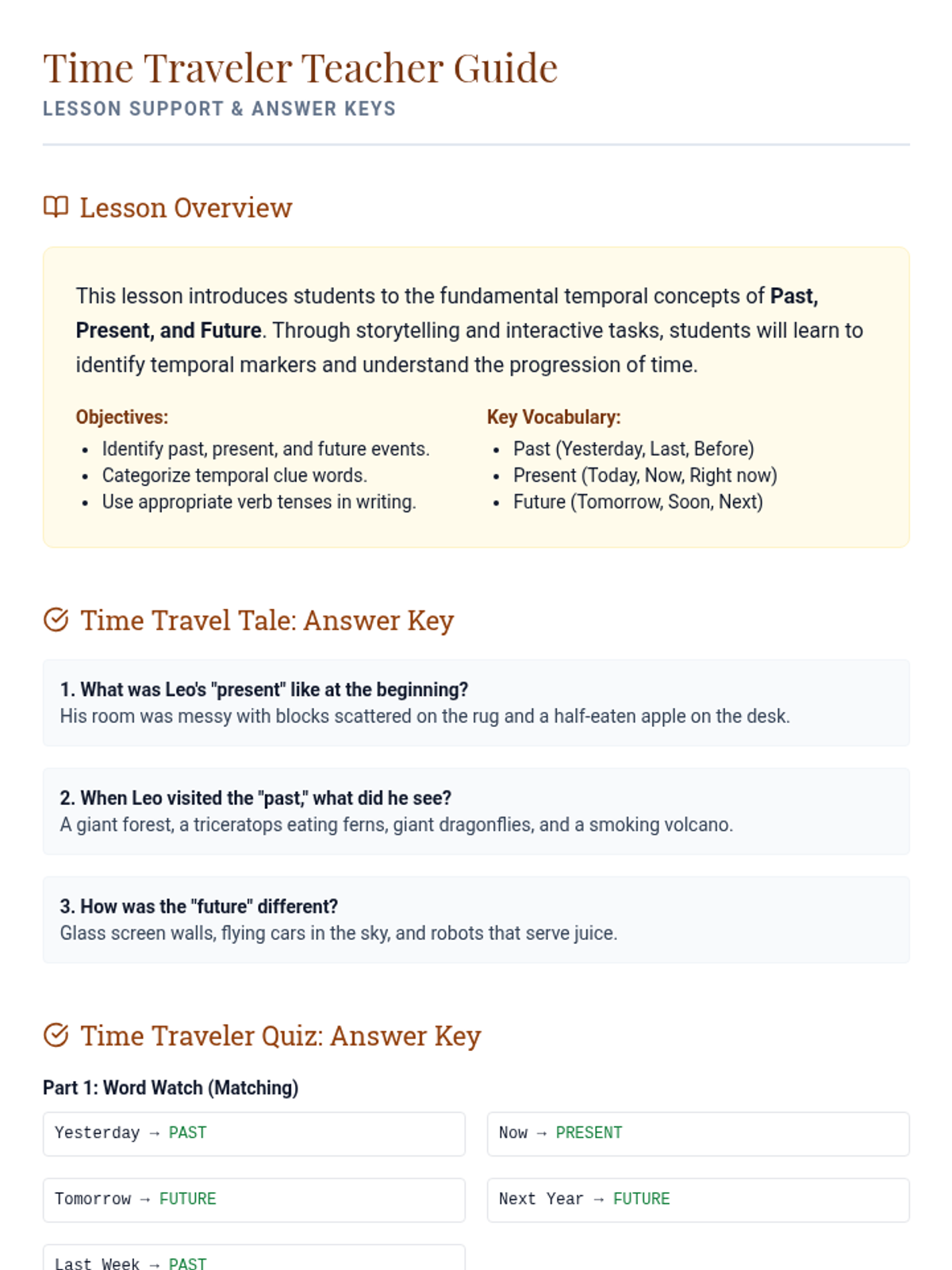
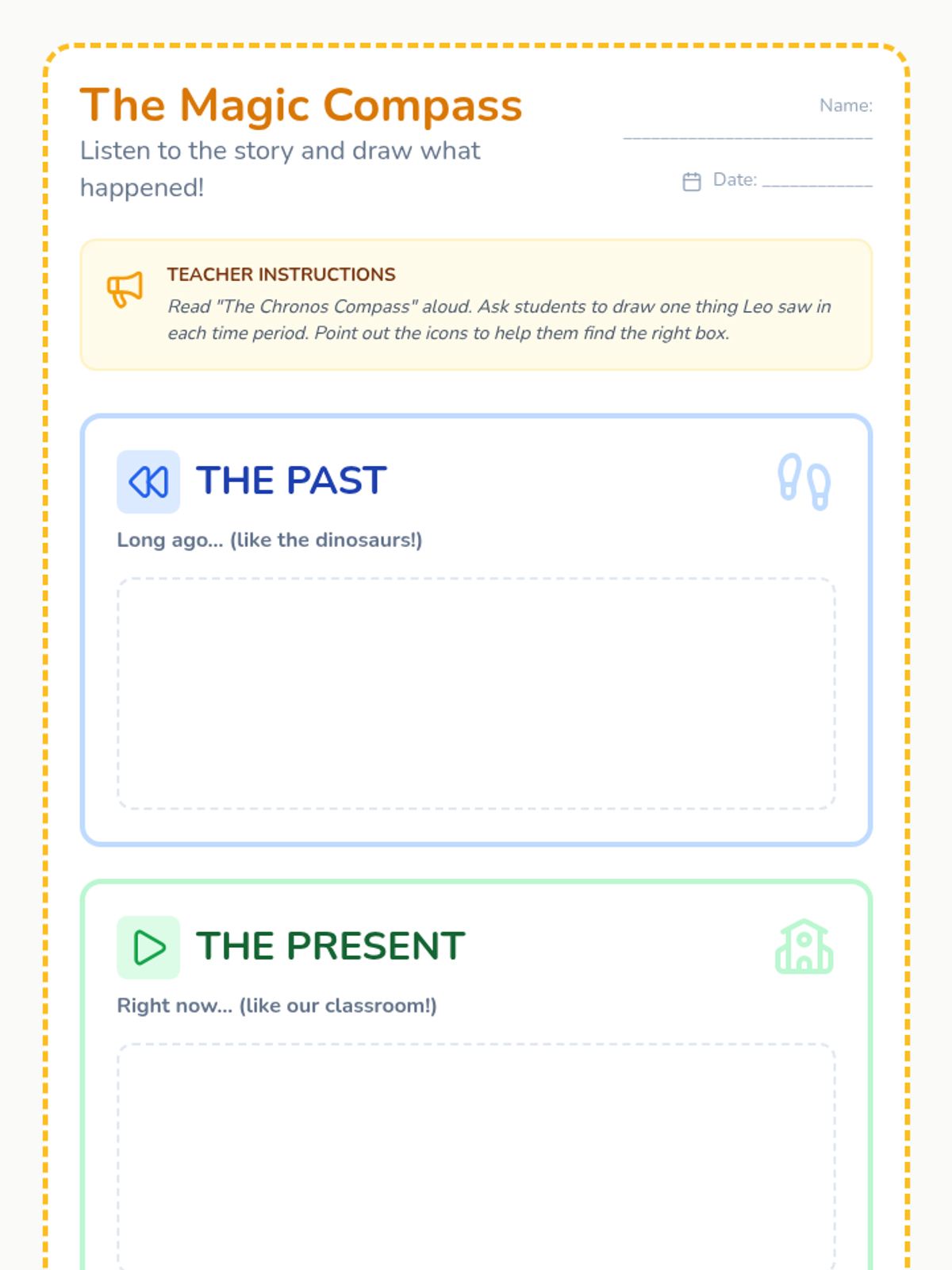
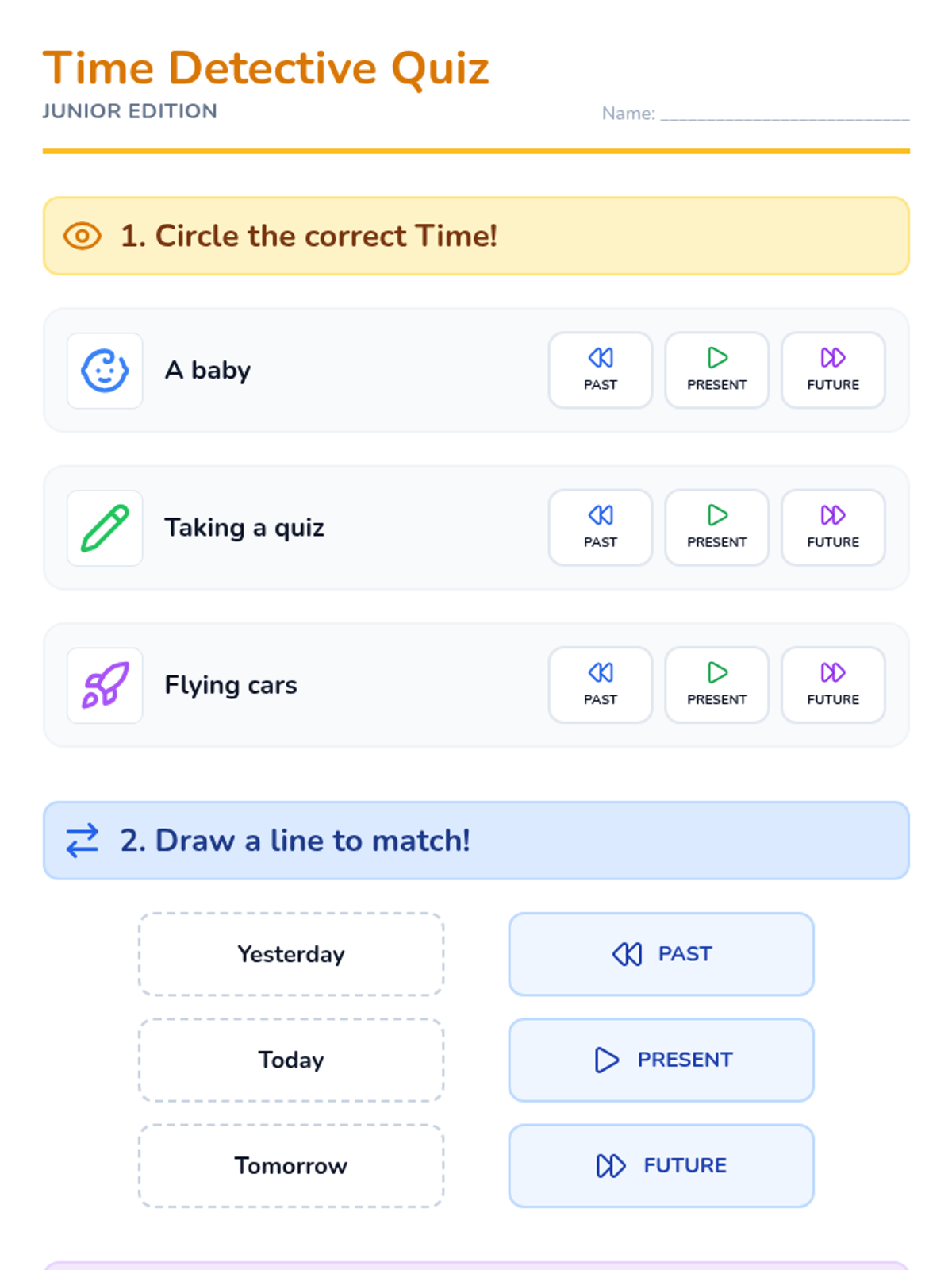
A foundational lesson exploring the concepts of past, present, and future through storytelling, identification exercises, and active task-based learning. Students will learn to distinguish between different time periods and the verb tenses associated with them.
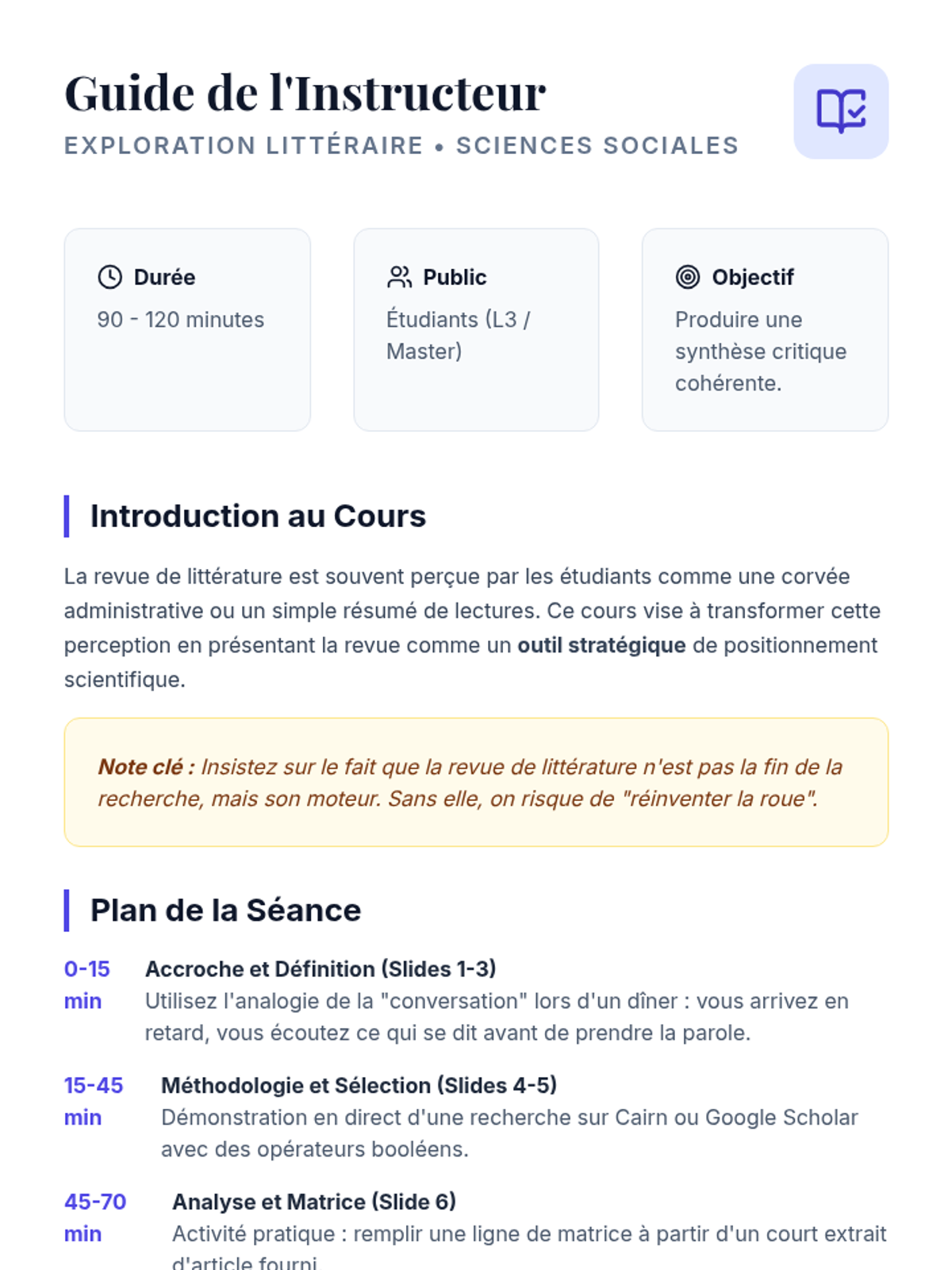
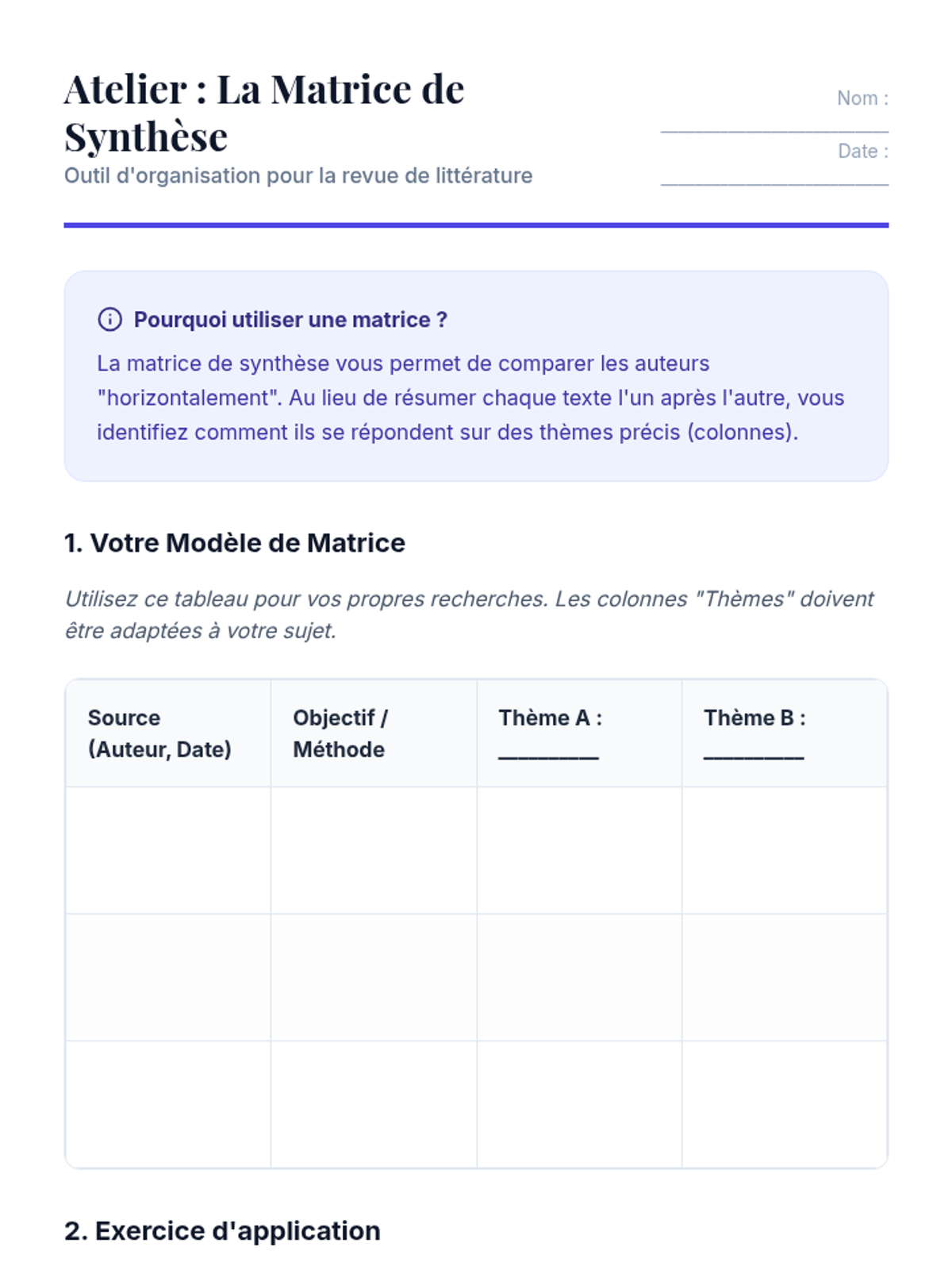
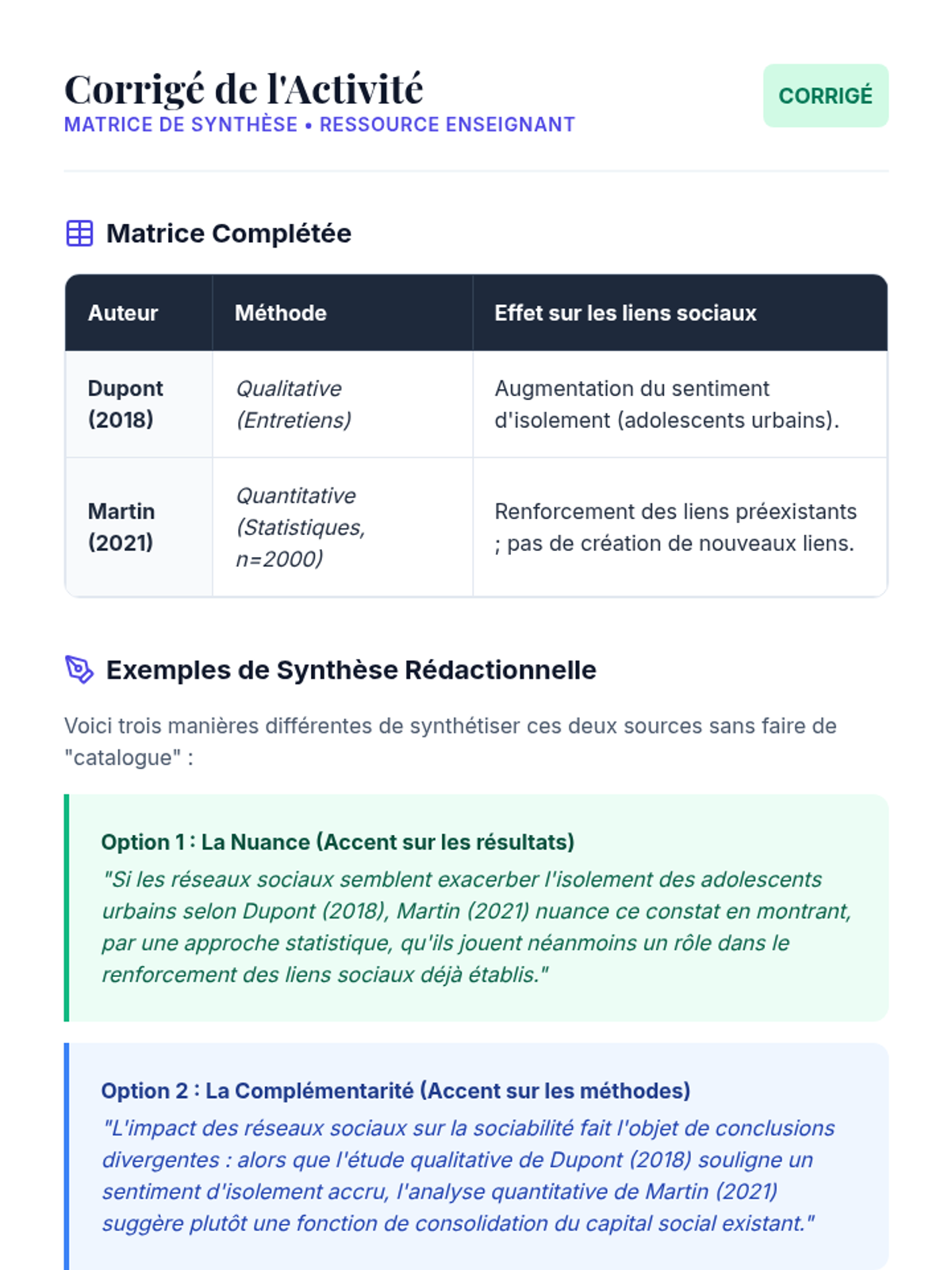
Un cours complet sur la méthodologie de la revue de littérature en sciences sociales, de la recherche documentaire à la rédaction finale.
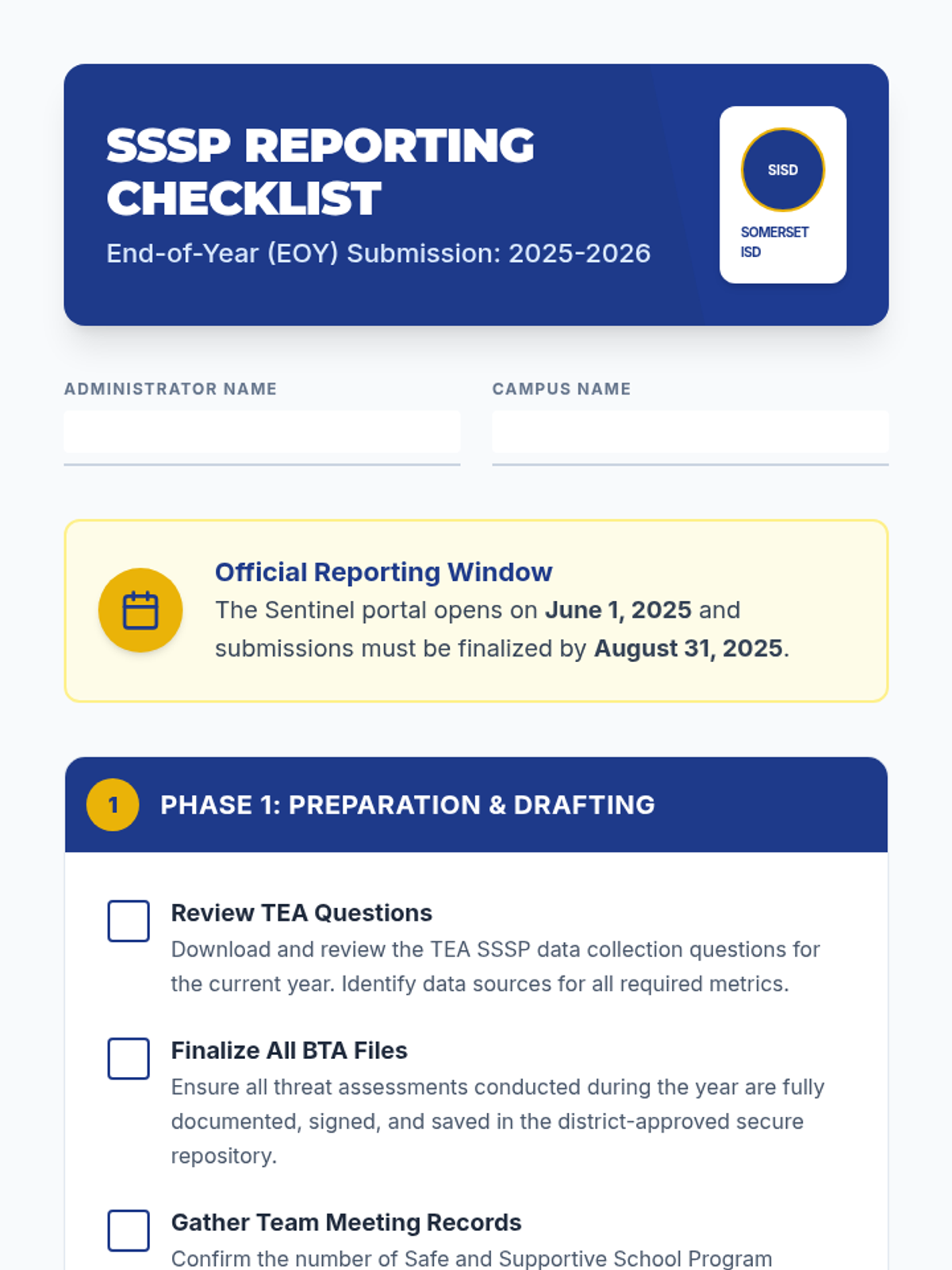
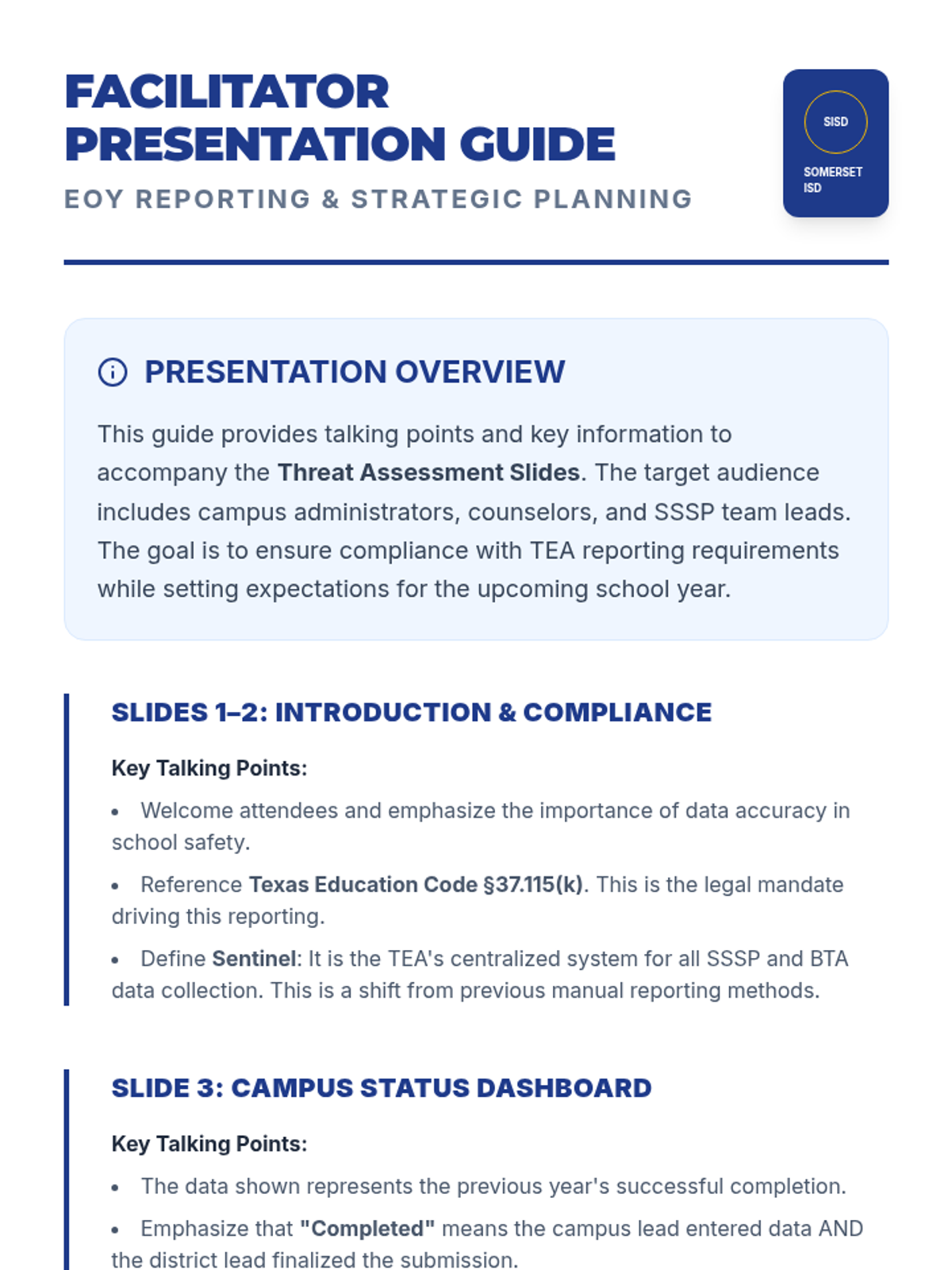
A professional presentation and administrative guide for school leaders regarding the end-of-year Behavioral Threat Assessment (BTA) and Safe and Supportive School Program (SSSP) reporting processes and future planning.
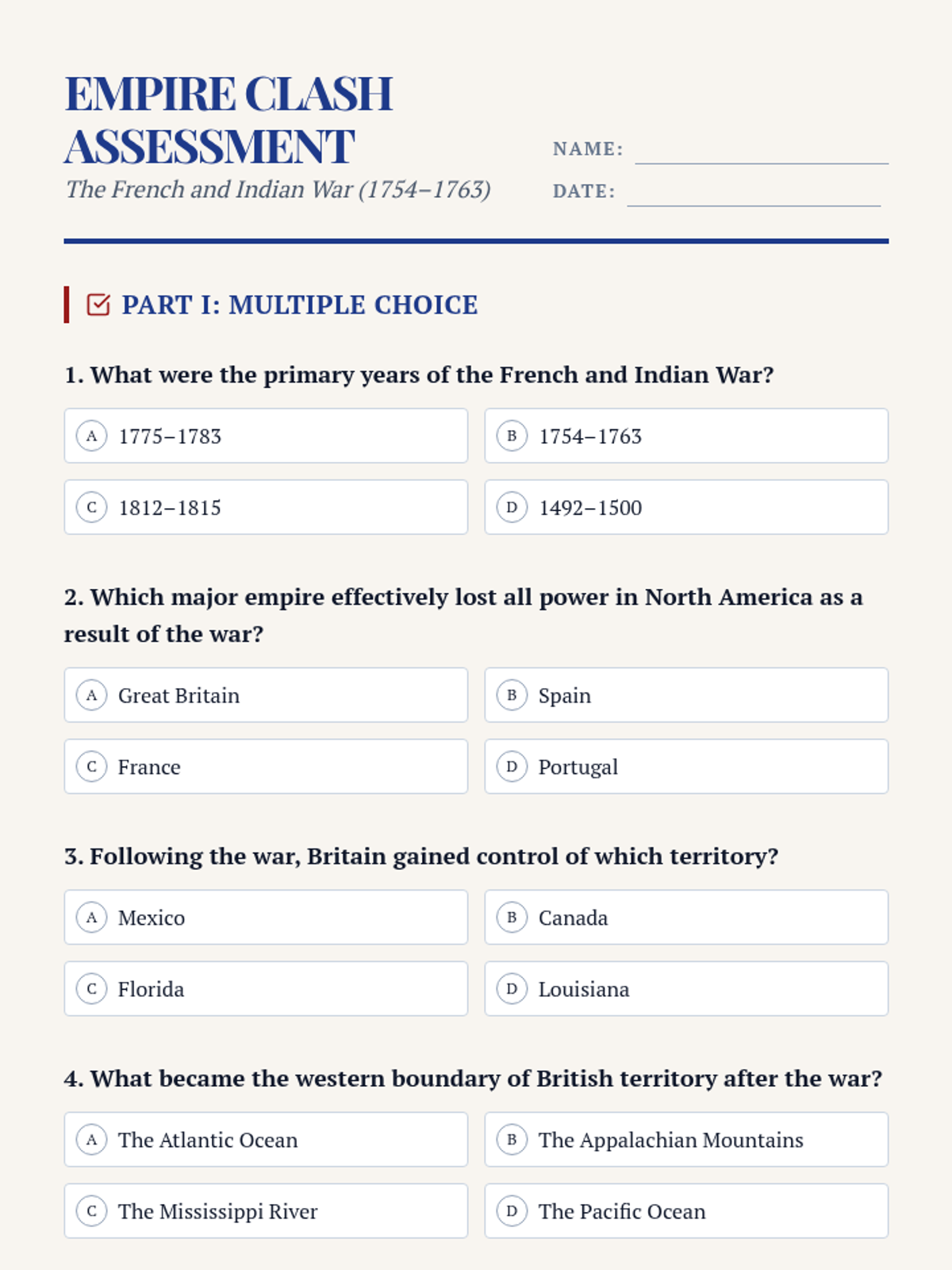
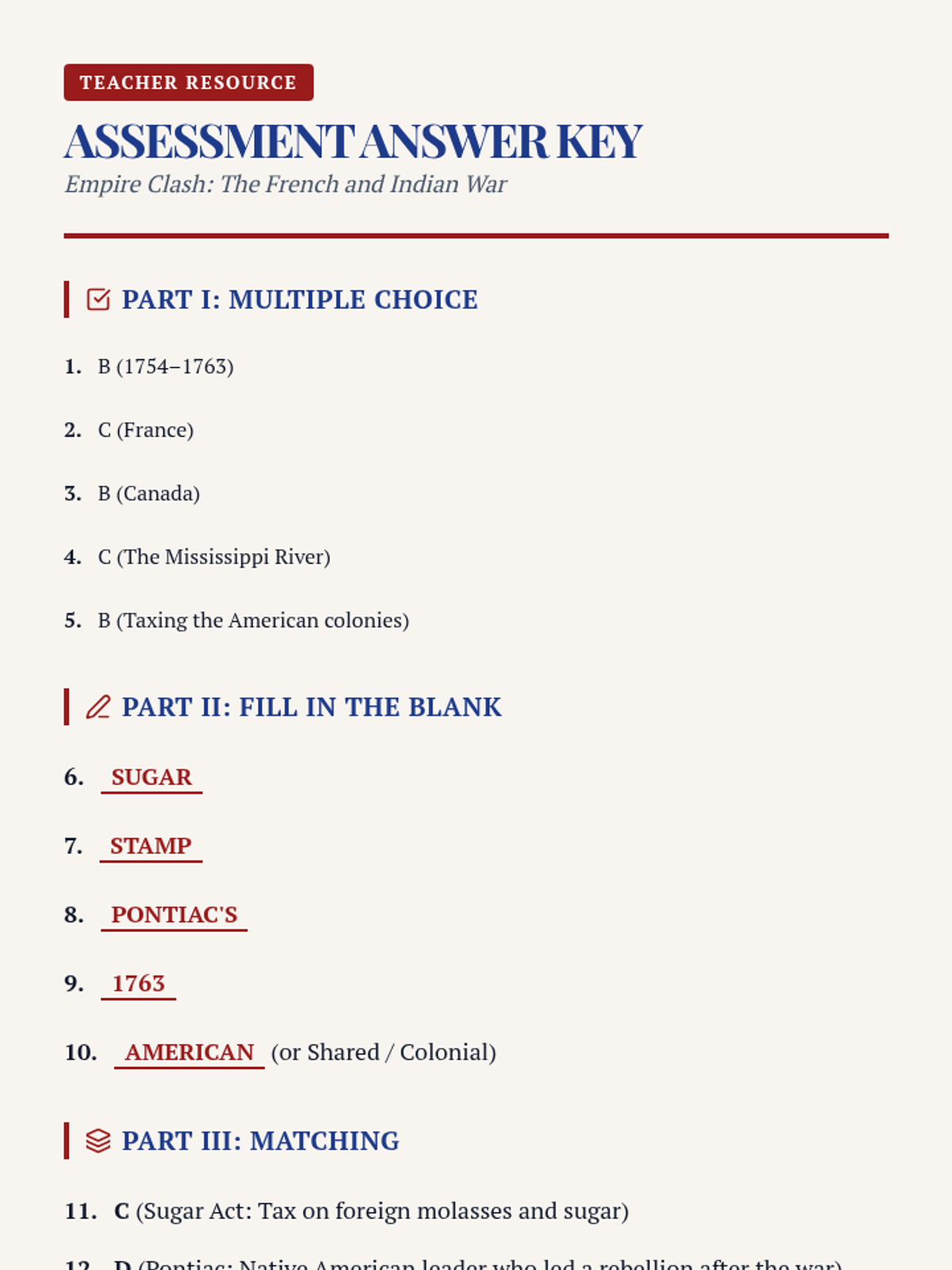
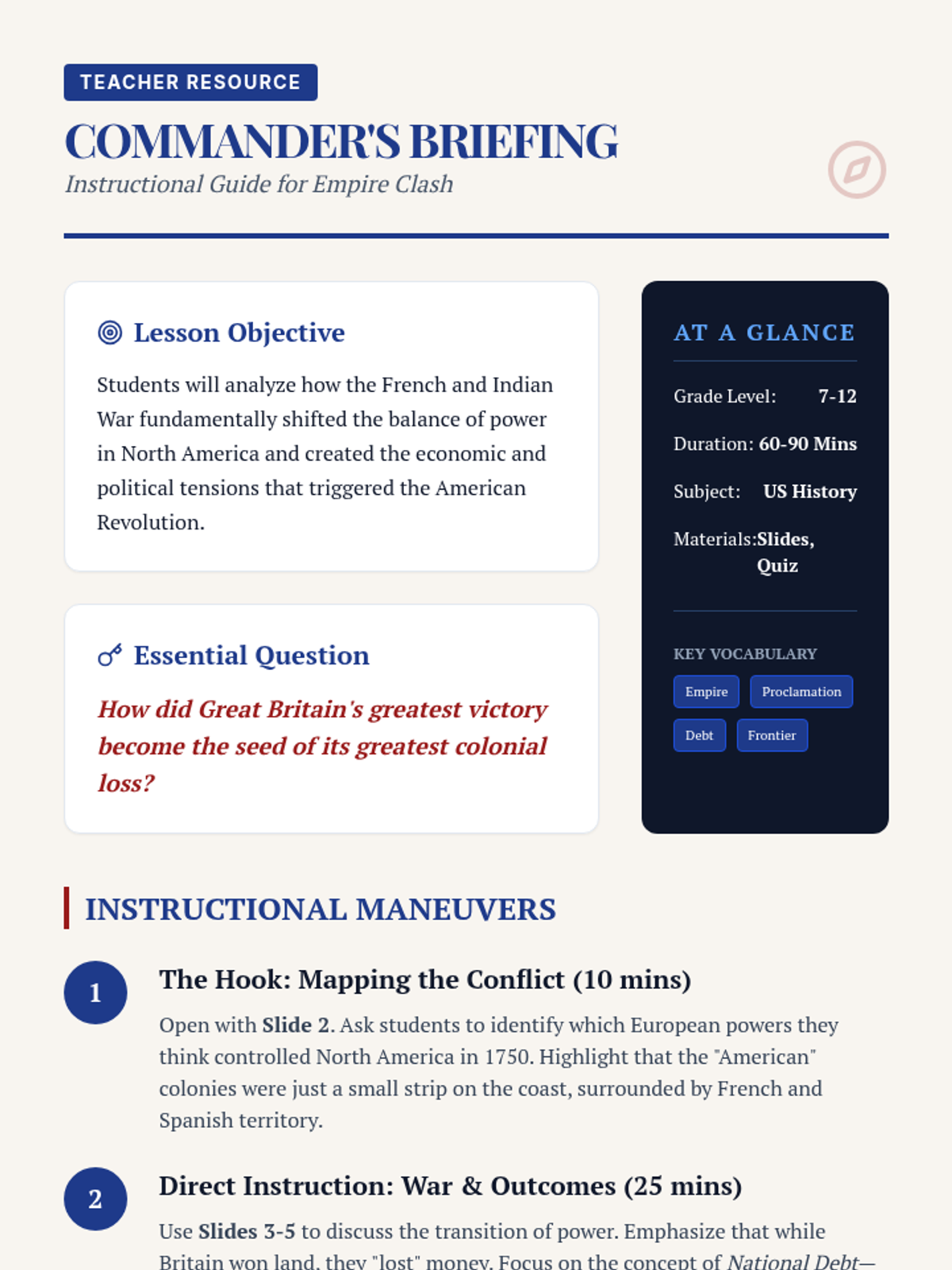
A comprehensive look at the French and Indian War, exploring its causes, the shift in global power, and how it set the stage for the American Revolution through debt, taxes, and colonial unity.
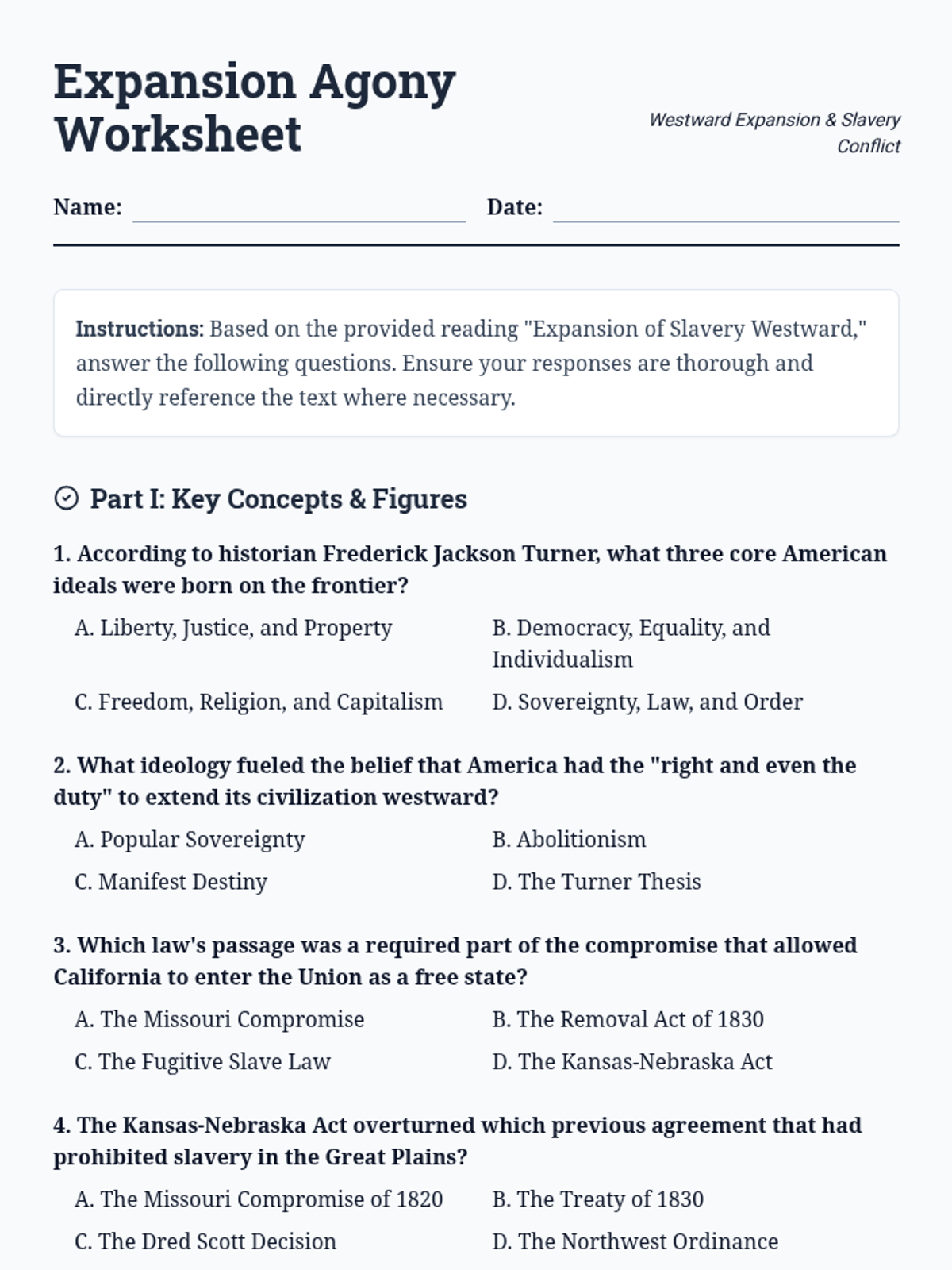
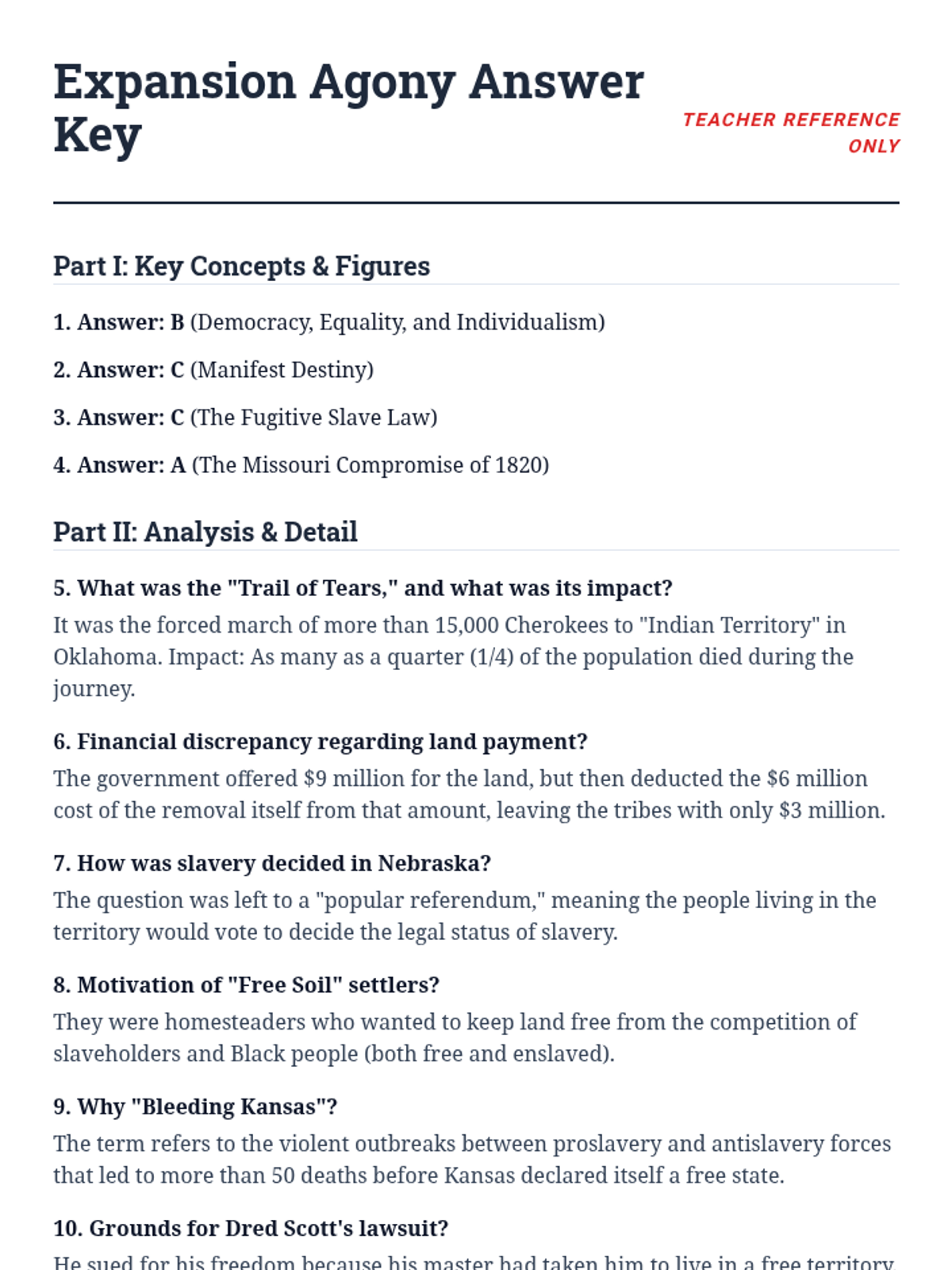
A comprehensive lesson exploring the tension between westward expansion and the spread of slavery, focusing on Indian removal, the Kansas-Nebraska Act, and the Dred Scott decision.
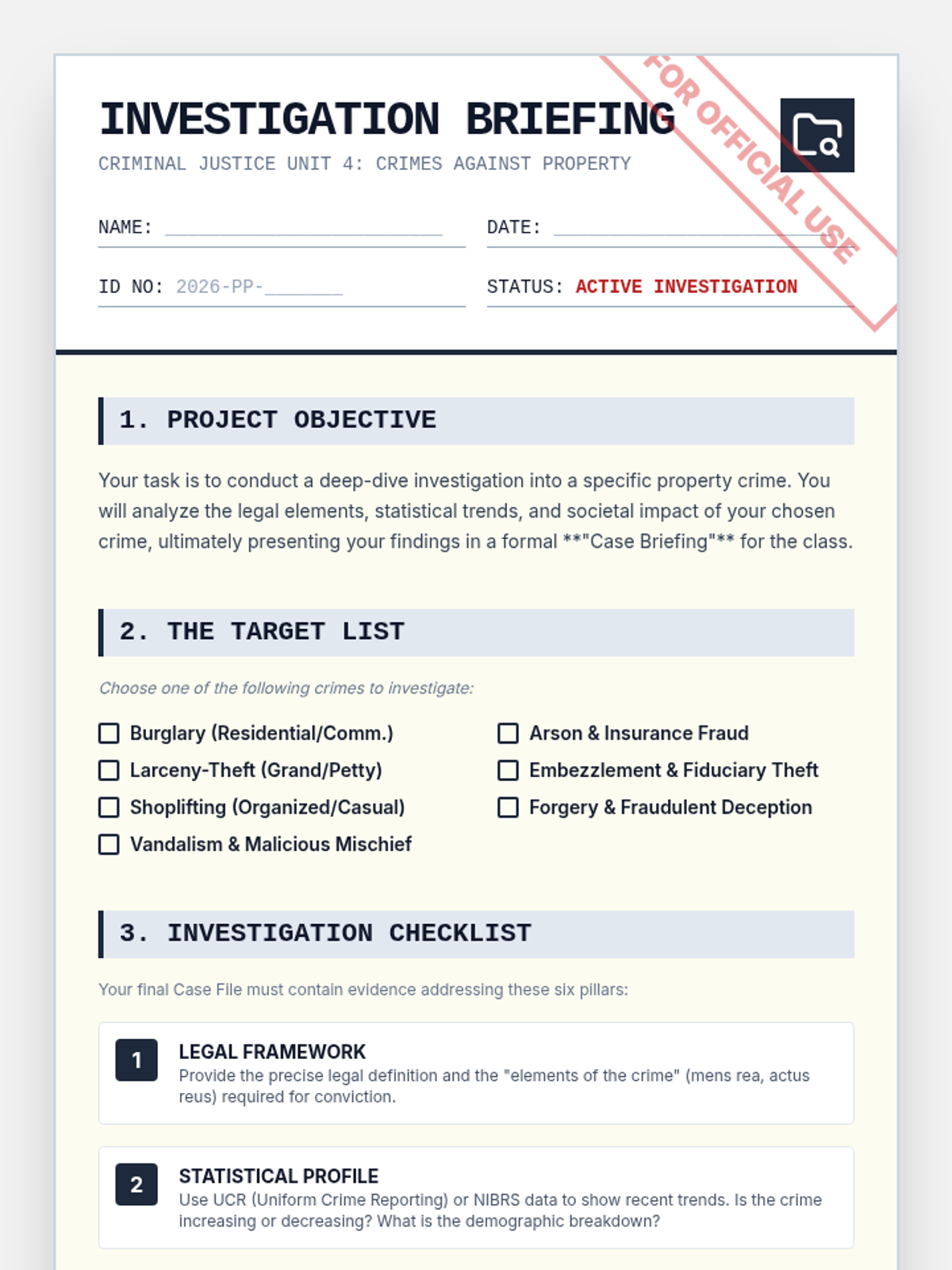
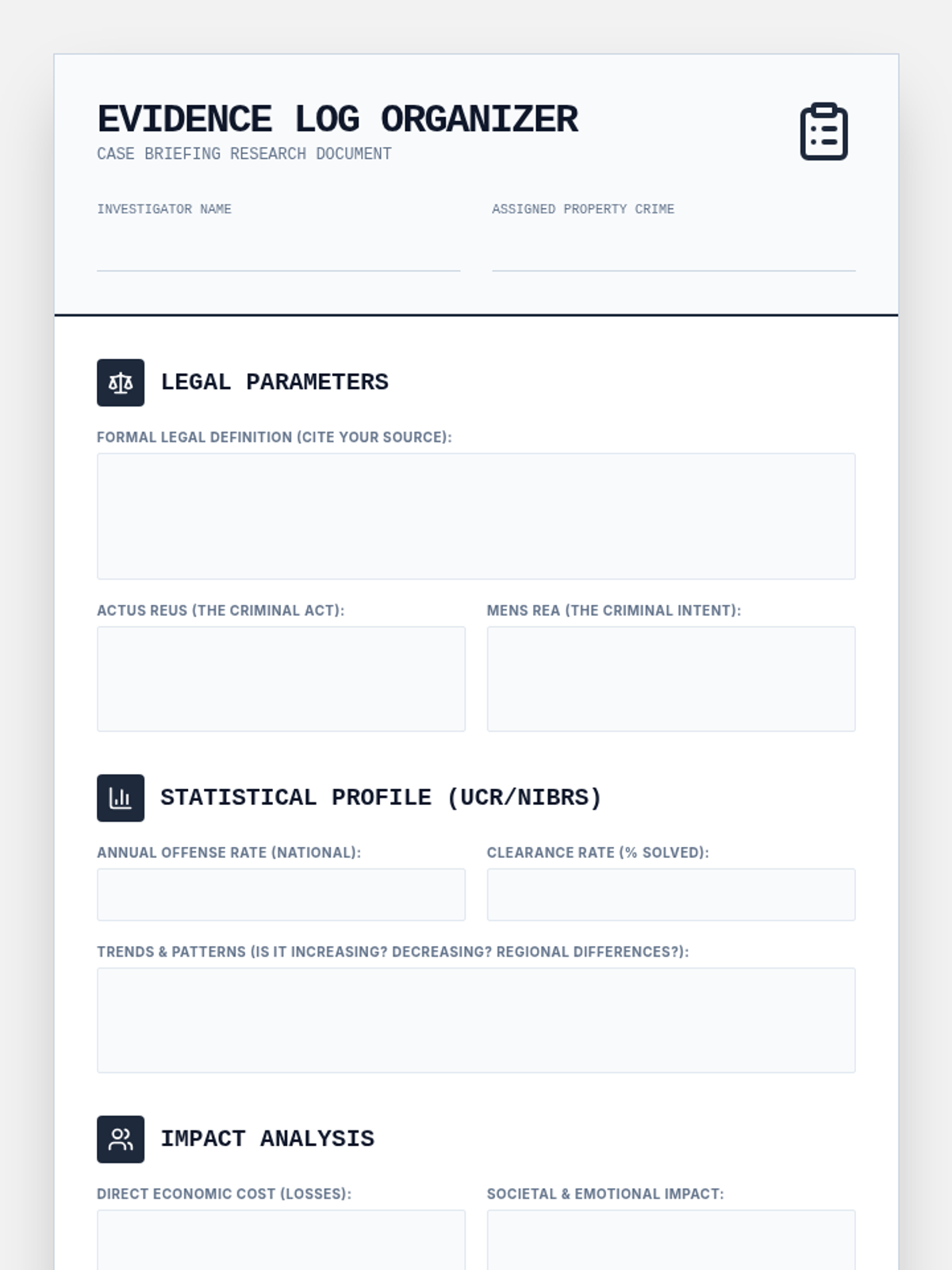
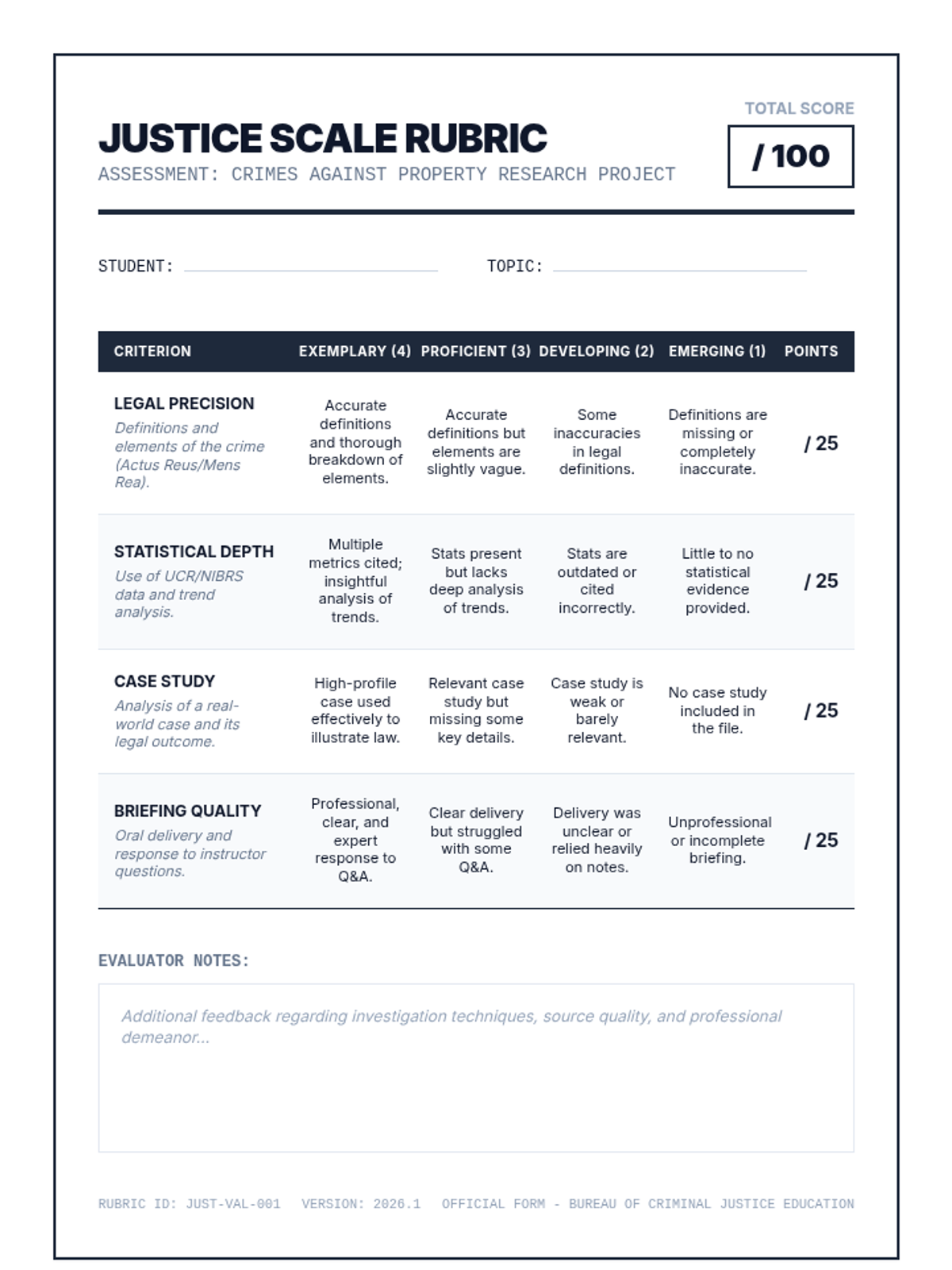
In this lesson, students step into the shoes of investigators to research and present on specific property crimes, exploring legal definitions, real-world impacts, and prevention methods.
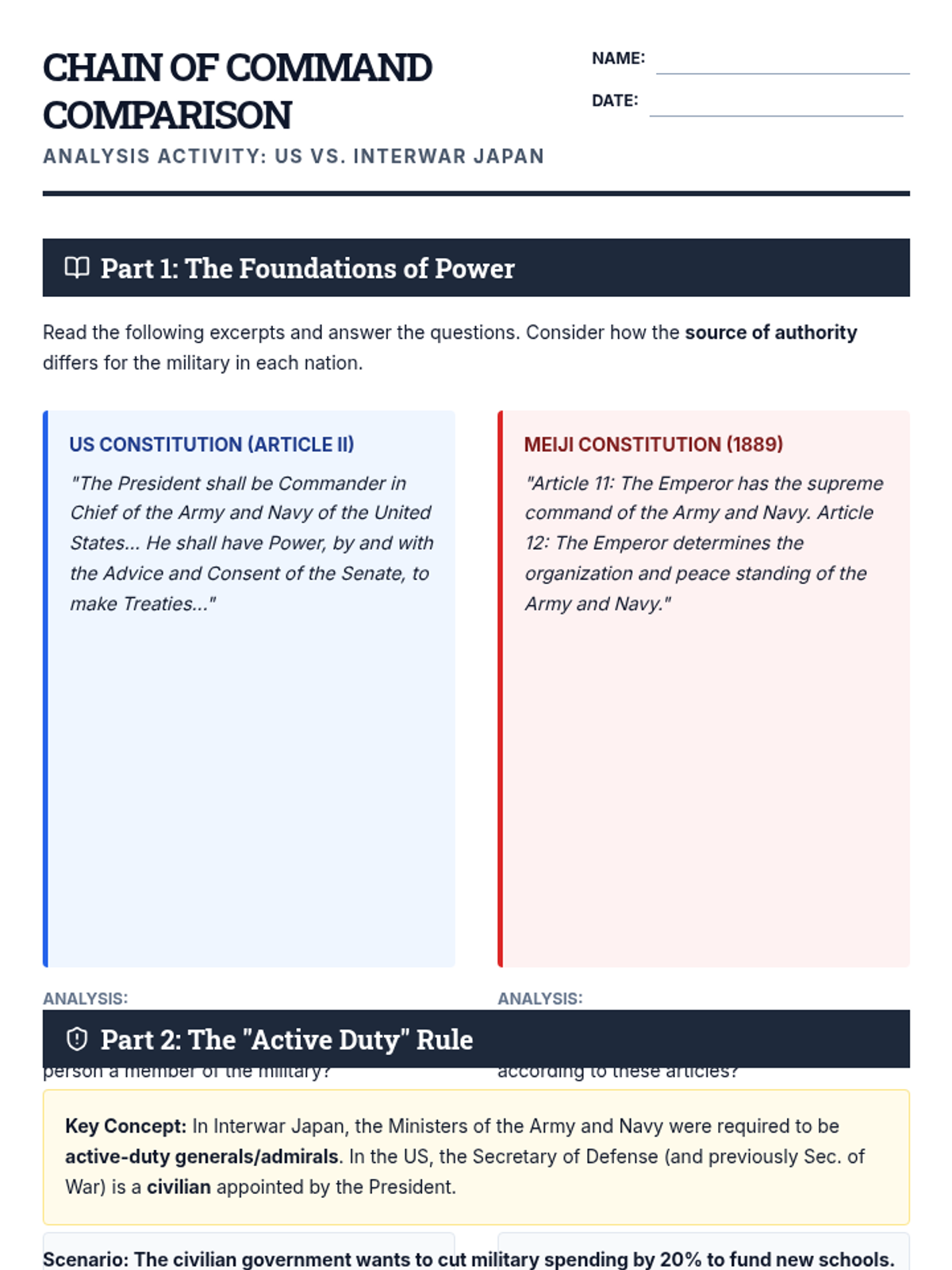
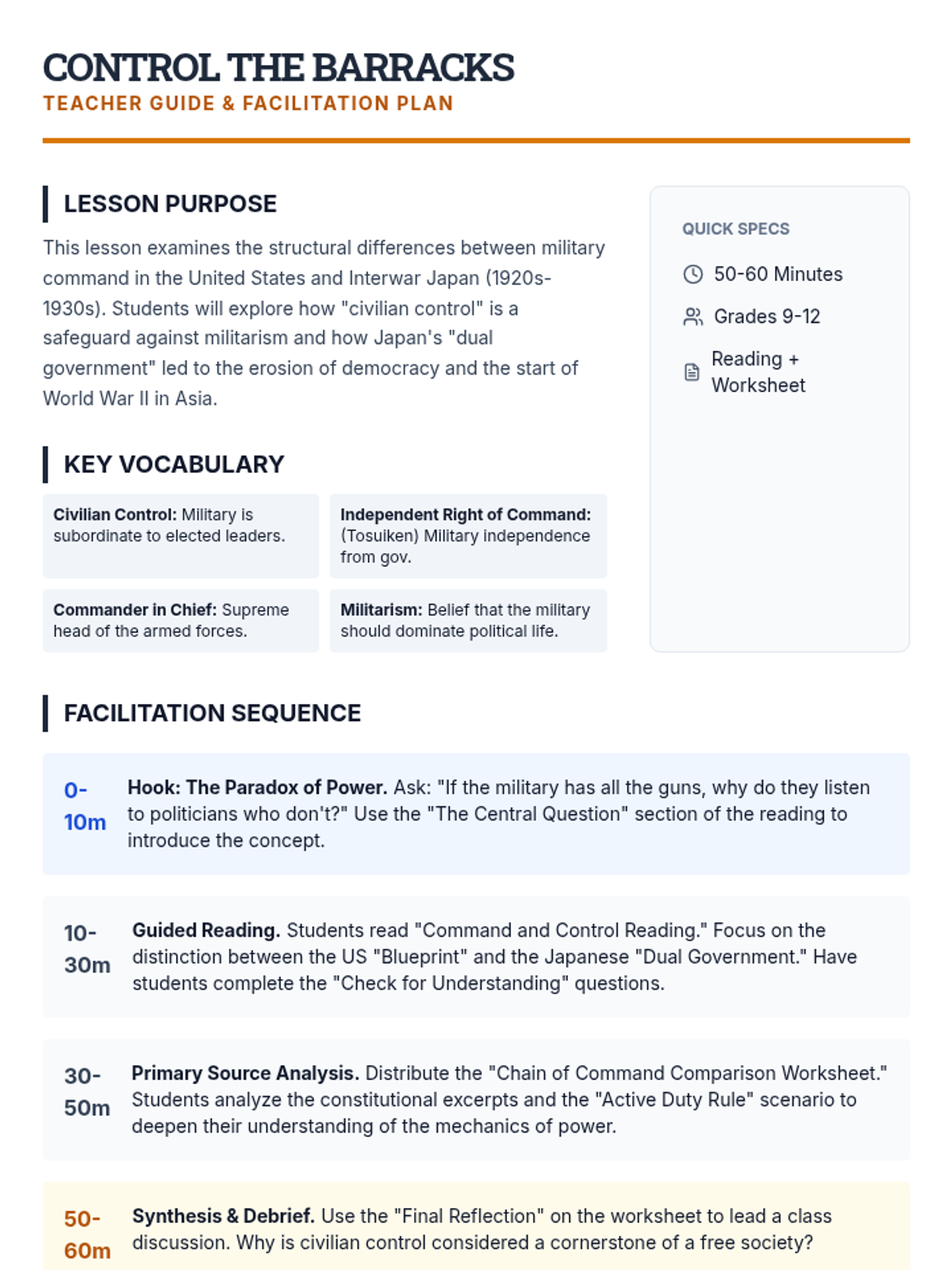
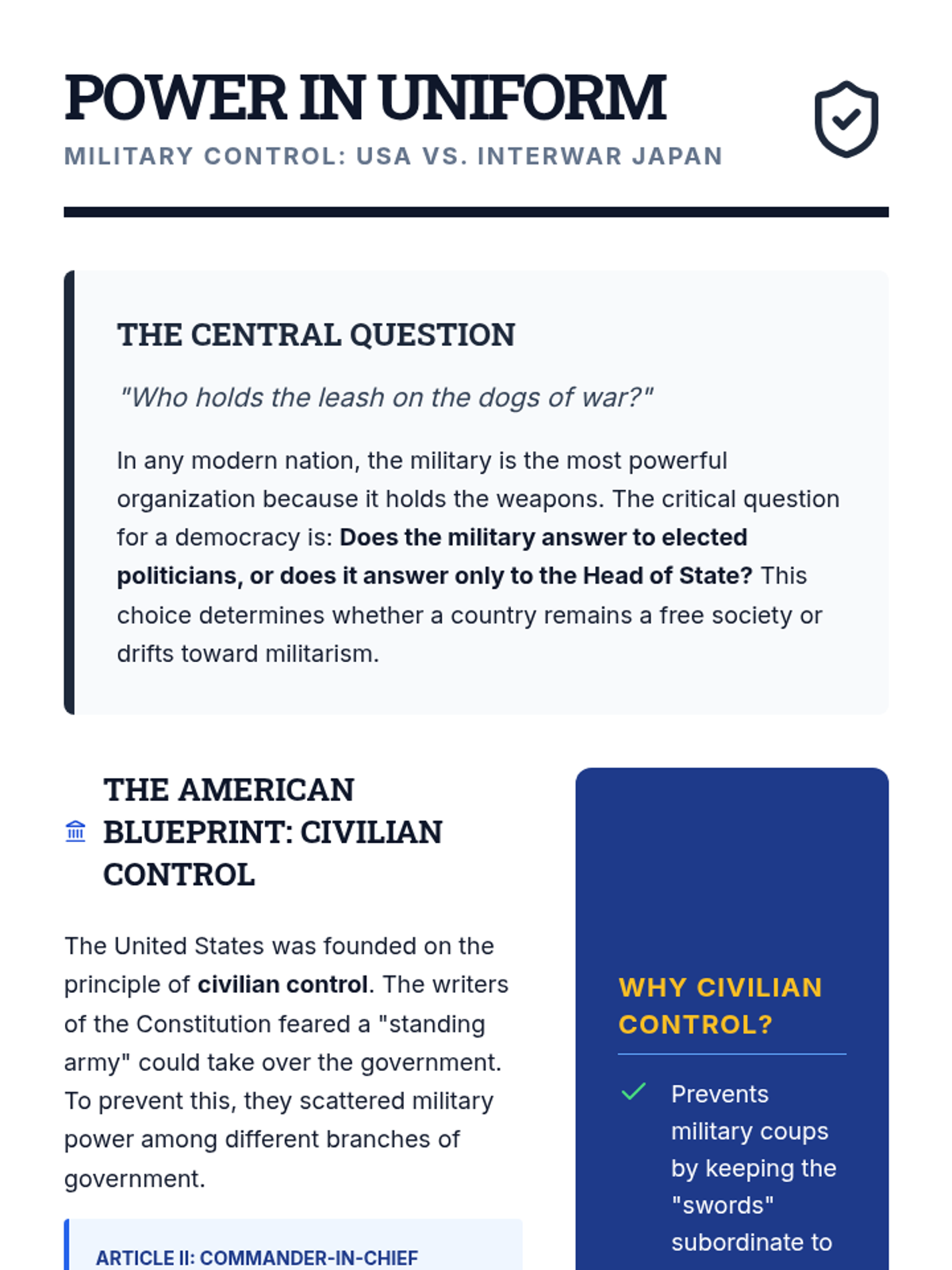
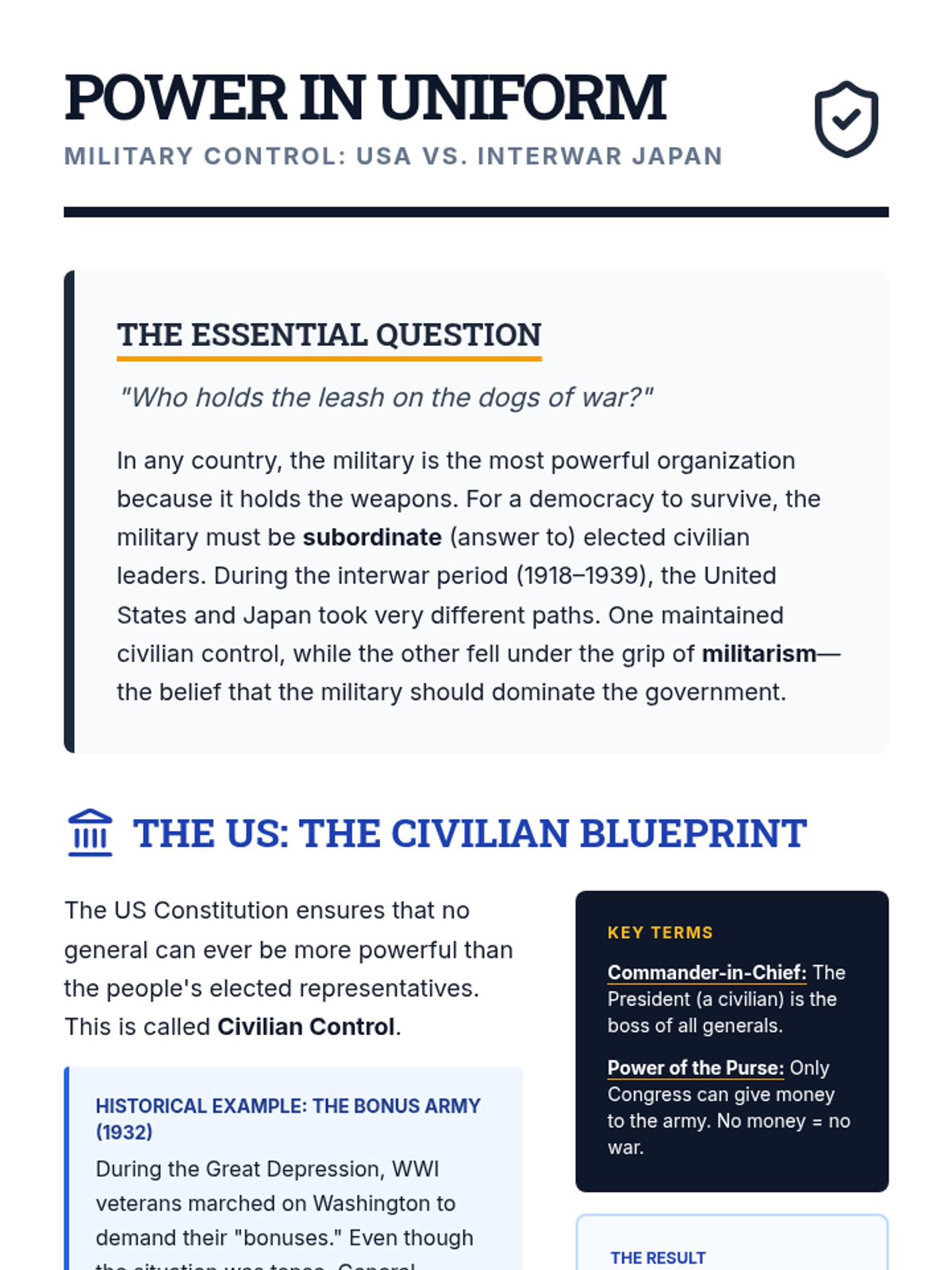
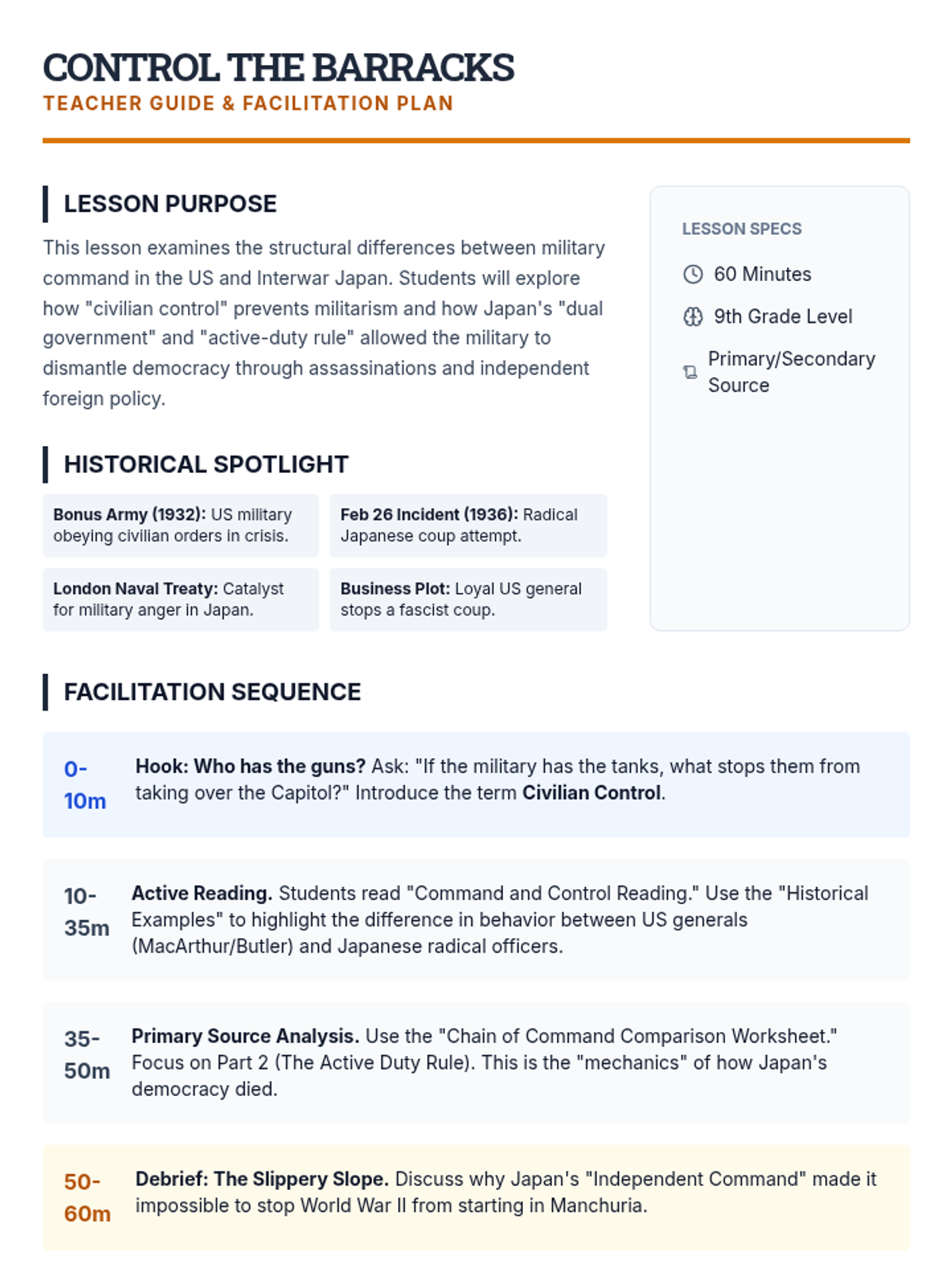
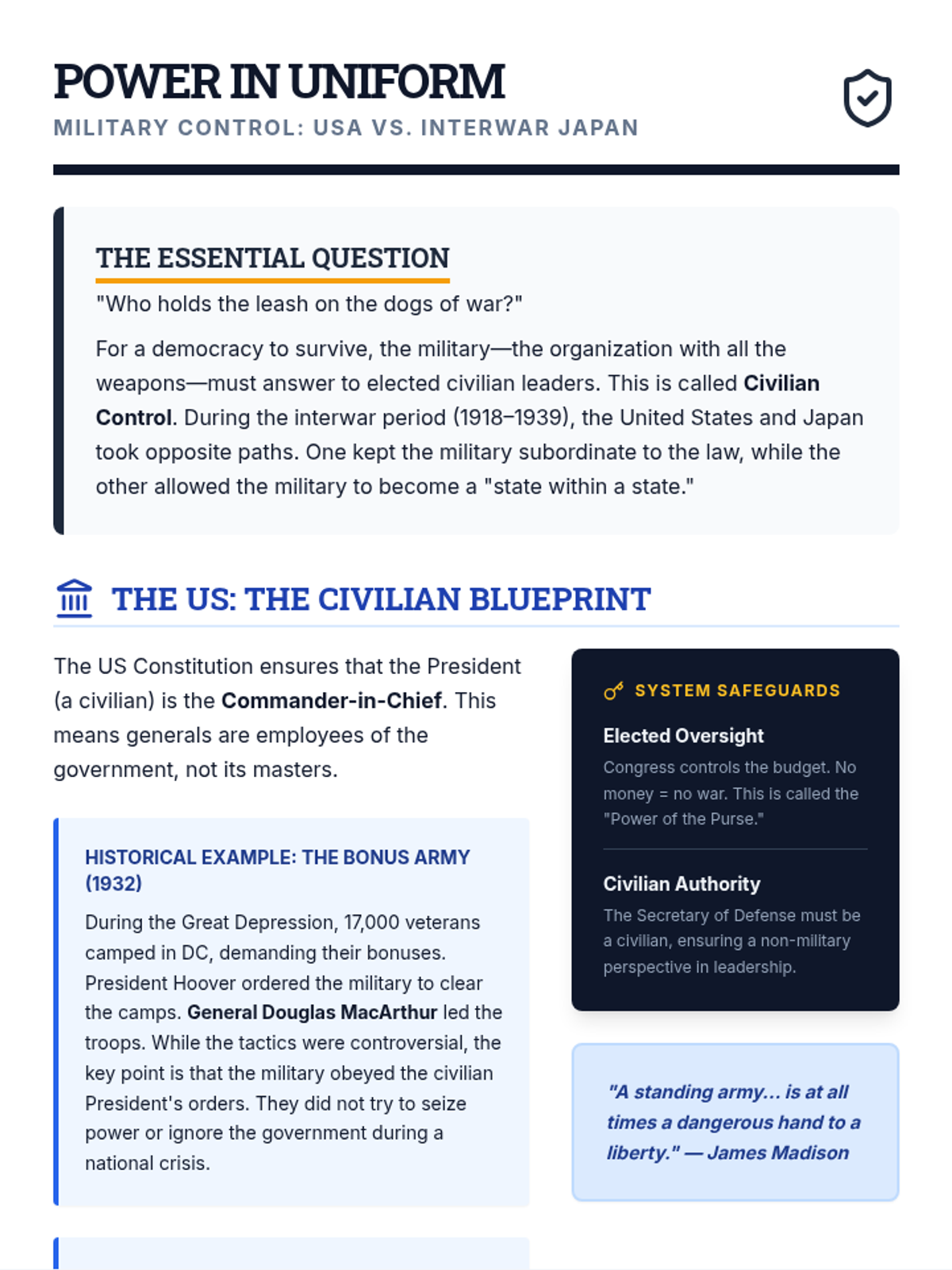
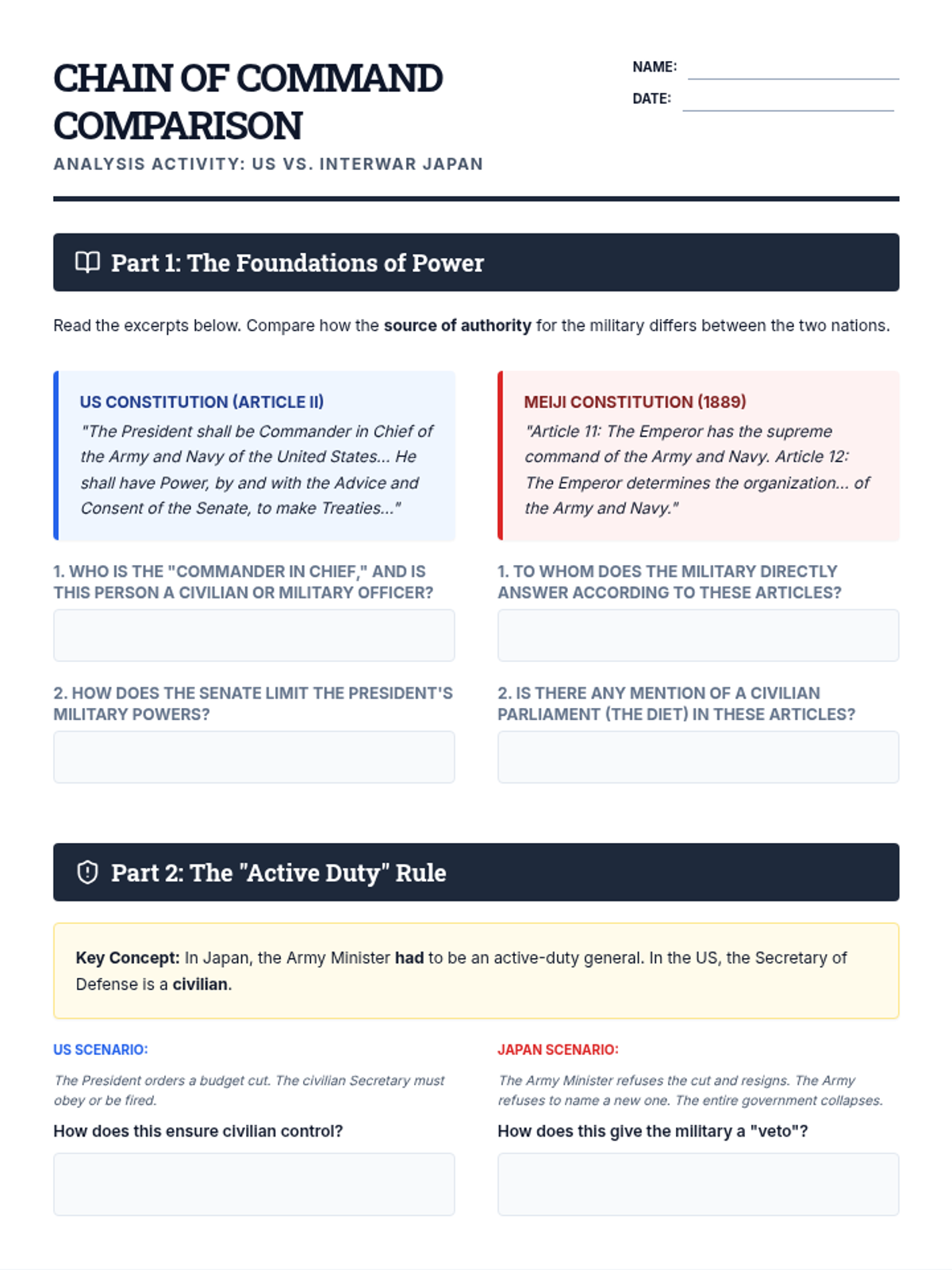
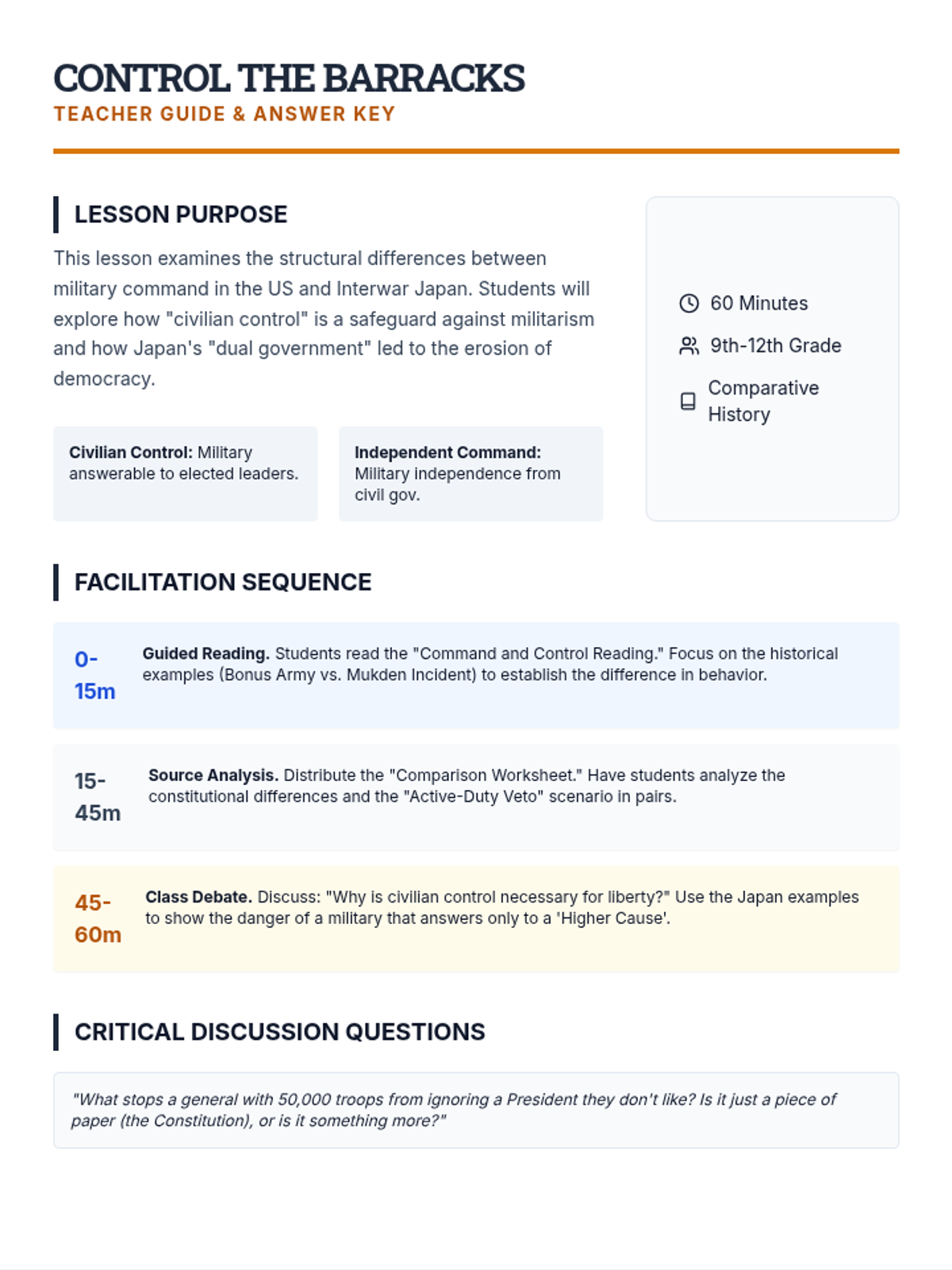
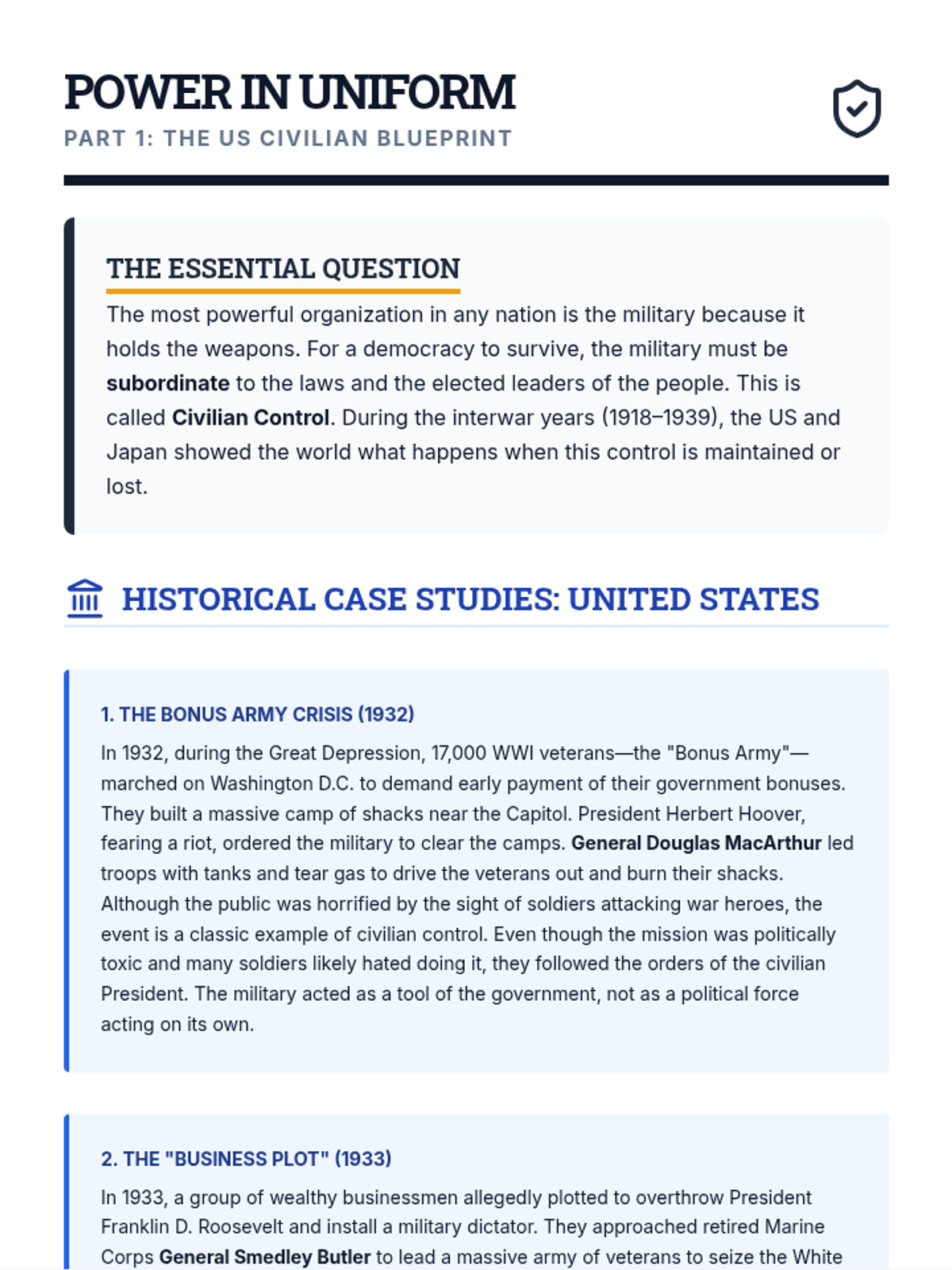
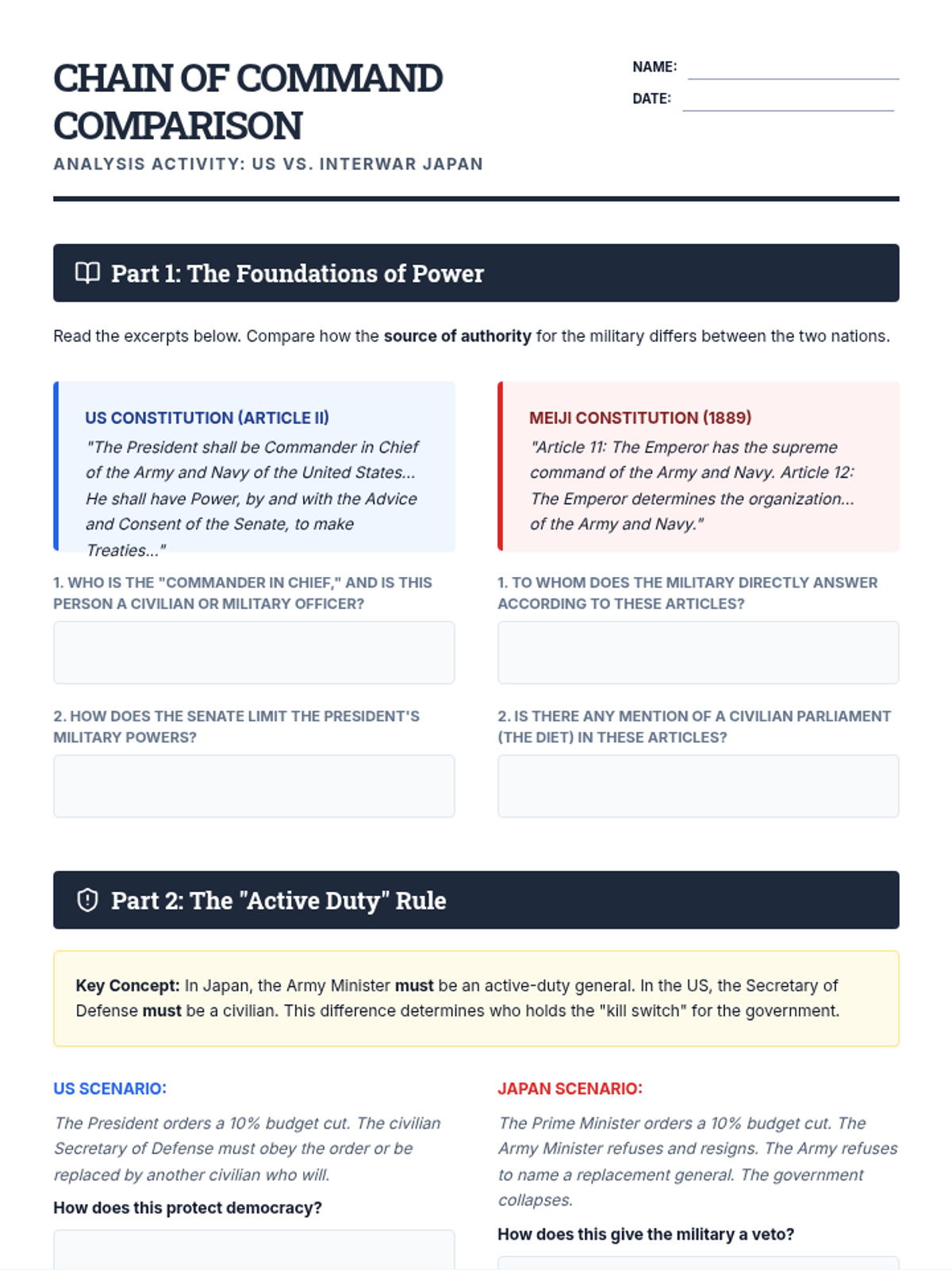
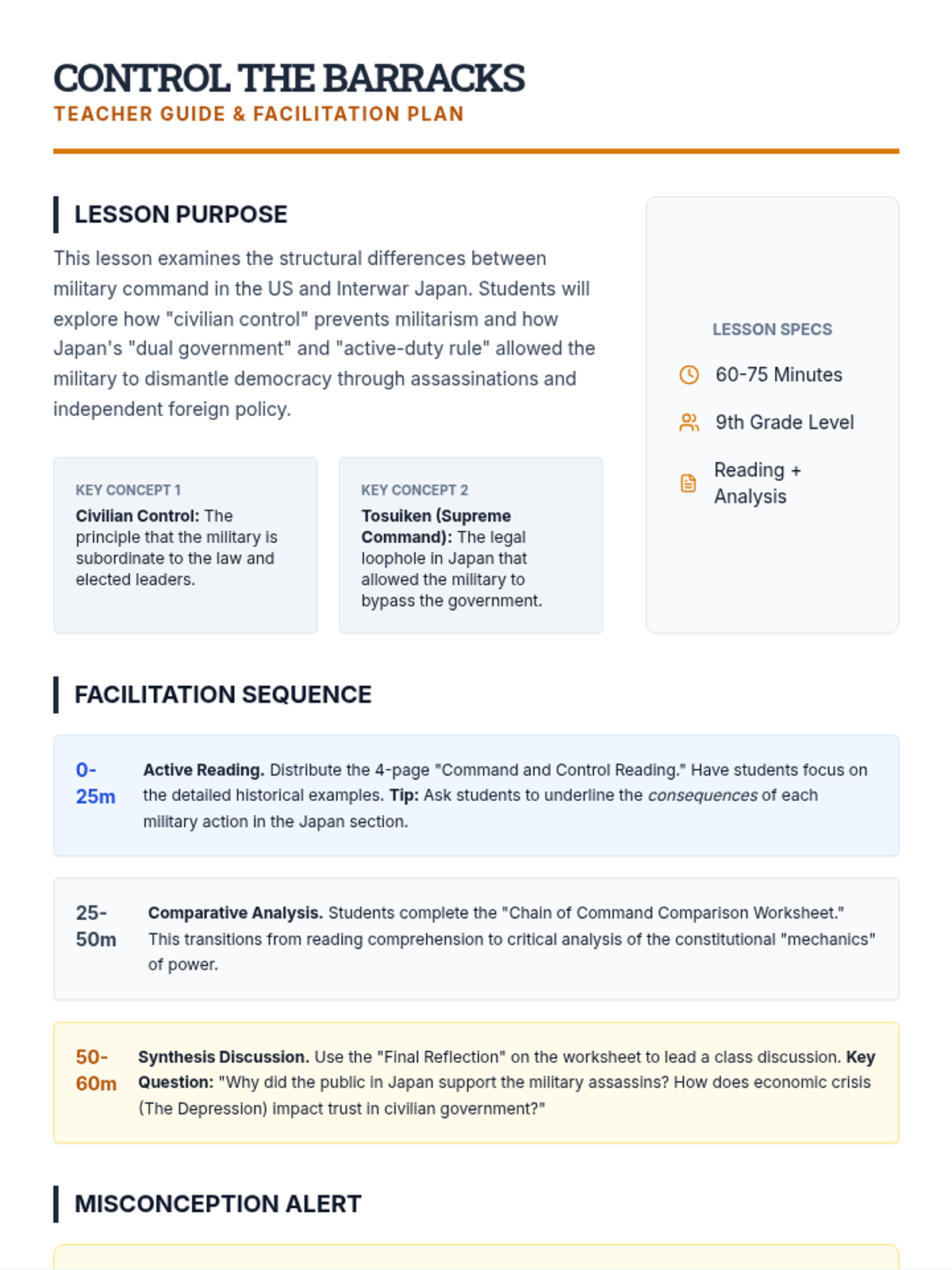
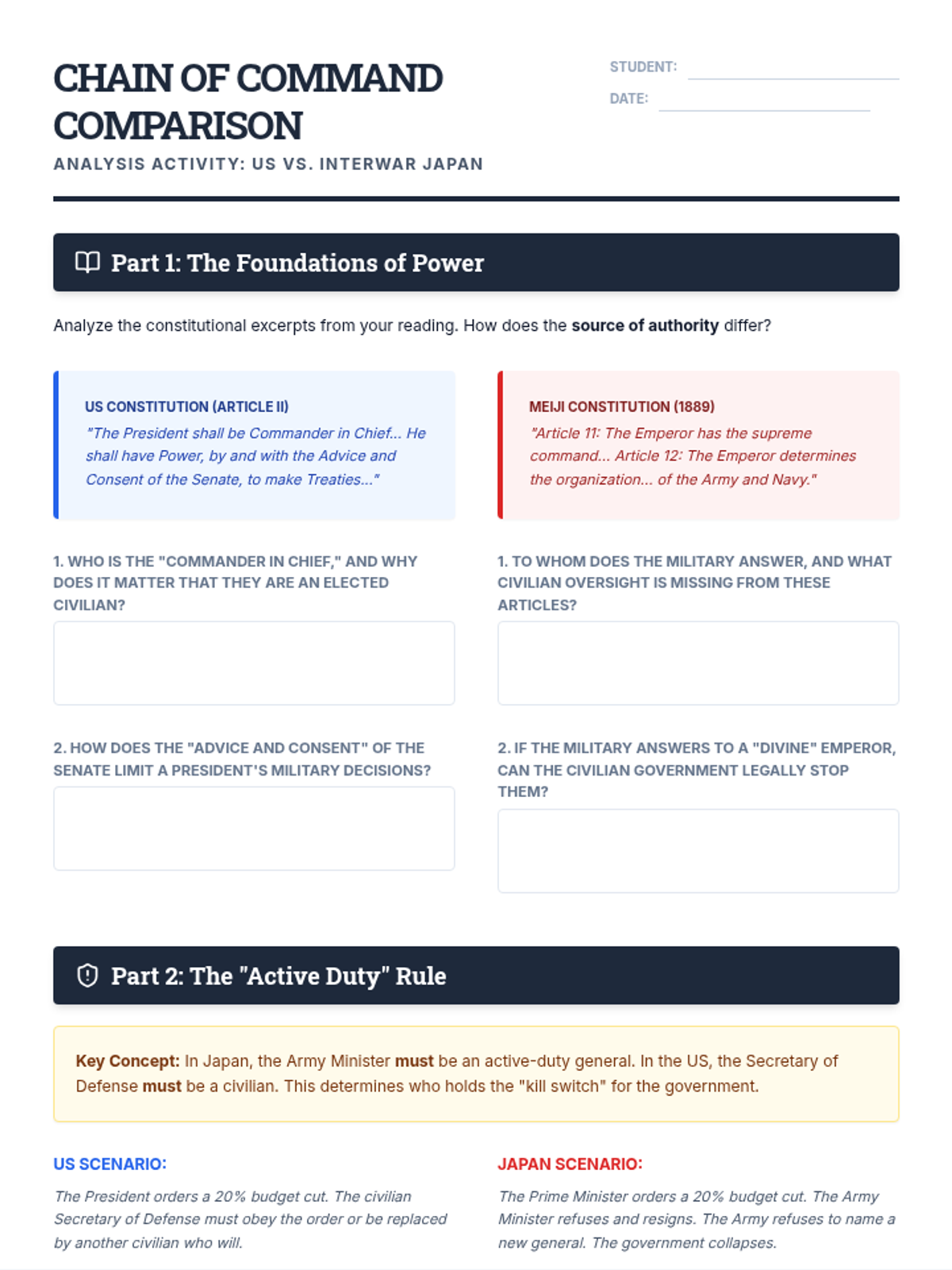
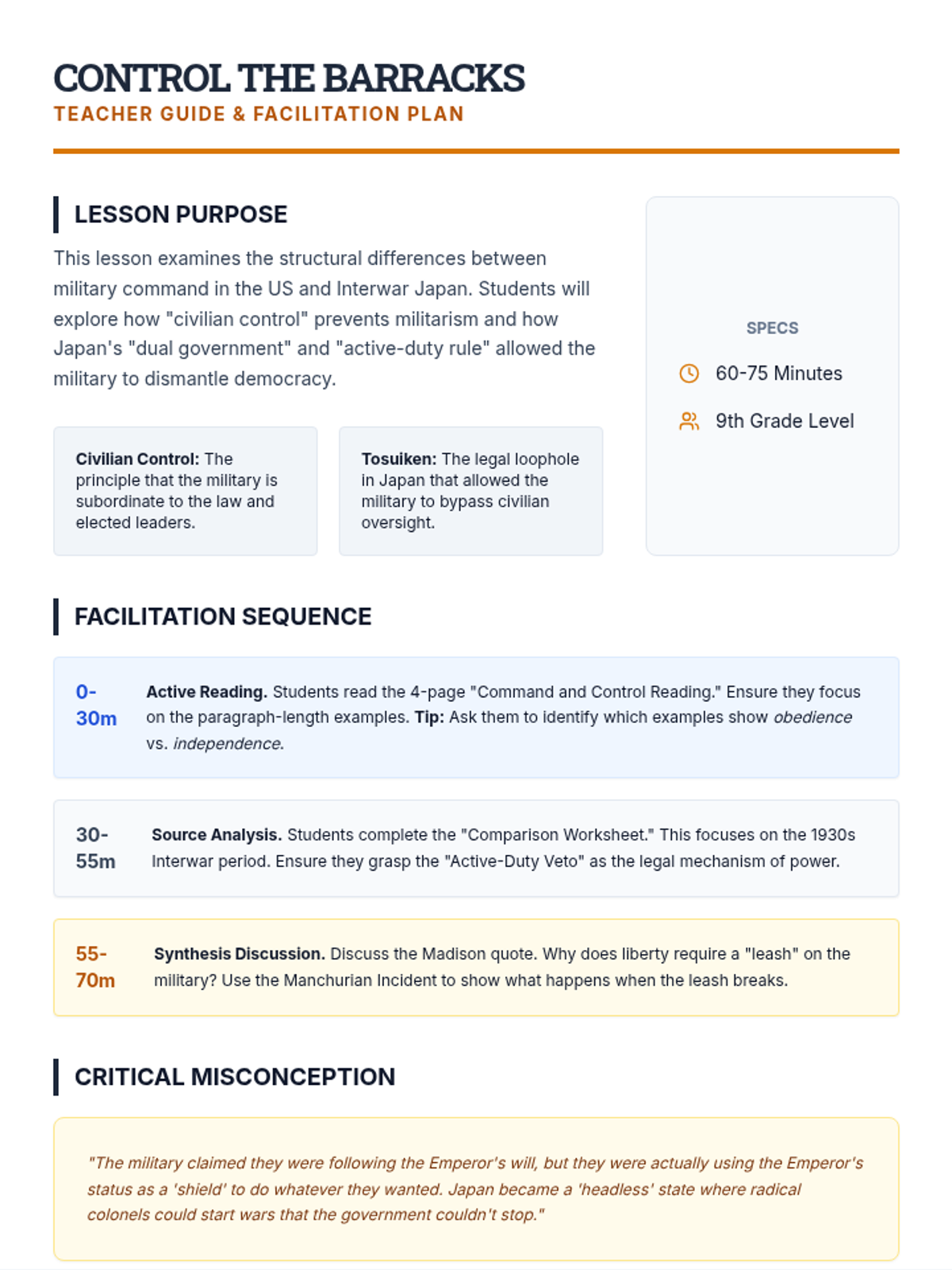
A comparative study of military governance structures, examining the US principle of civilian control versus the autonomous power of the military in Interwar Japan. Students will analyze constitutional frameworks and the consequences of military independence.
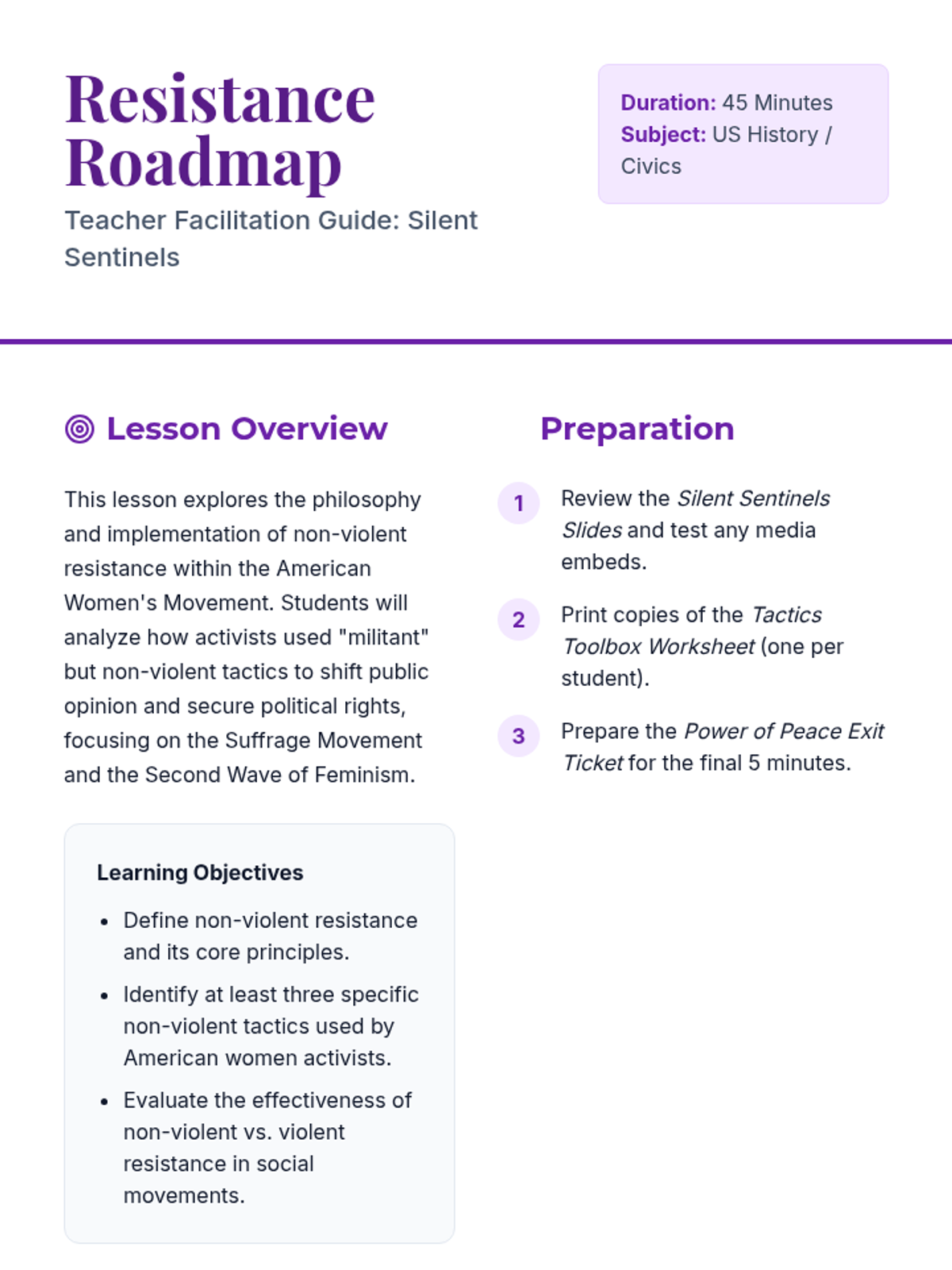
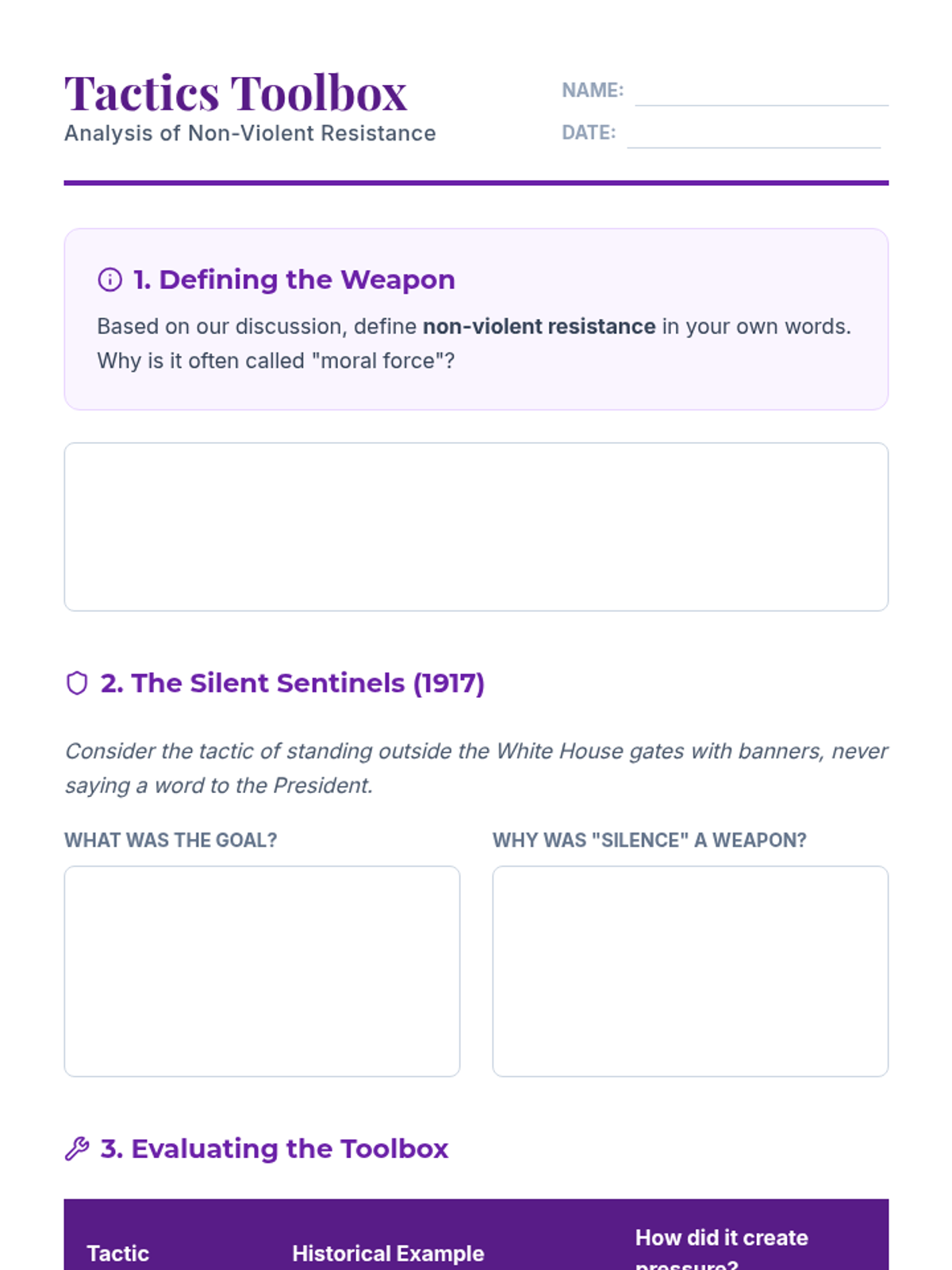
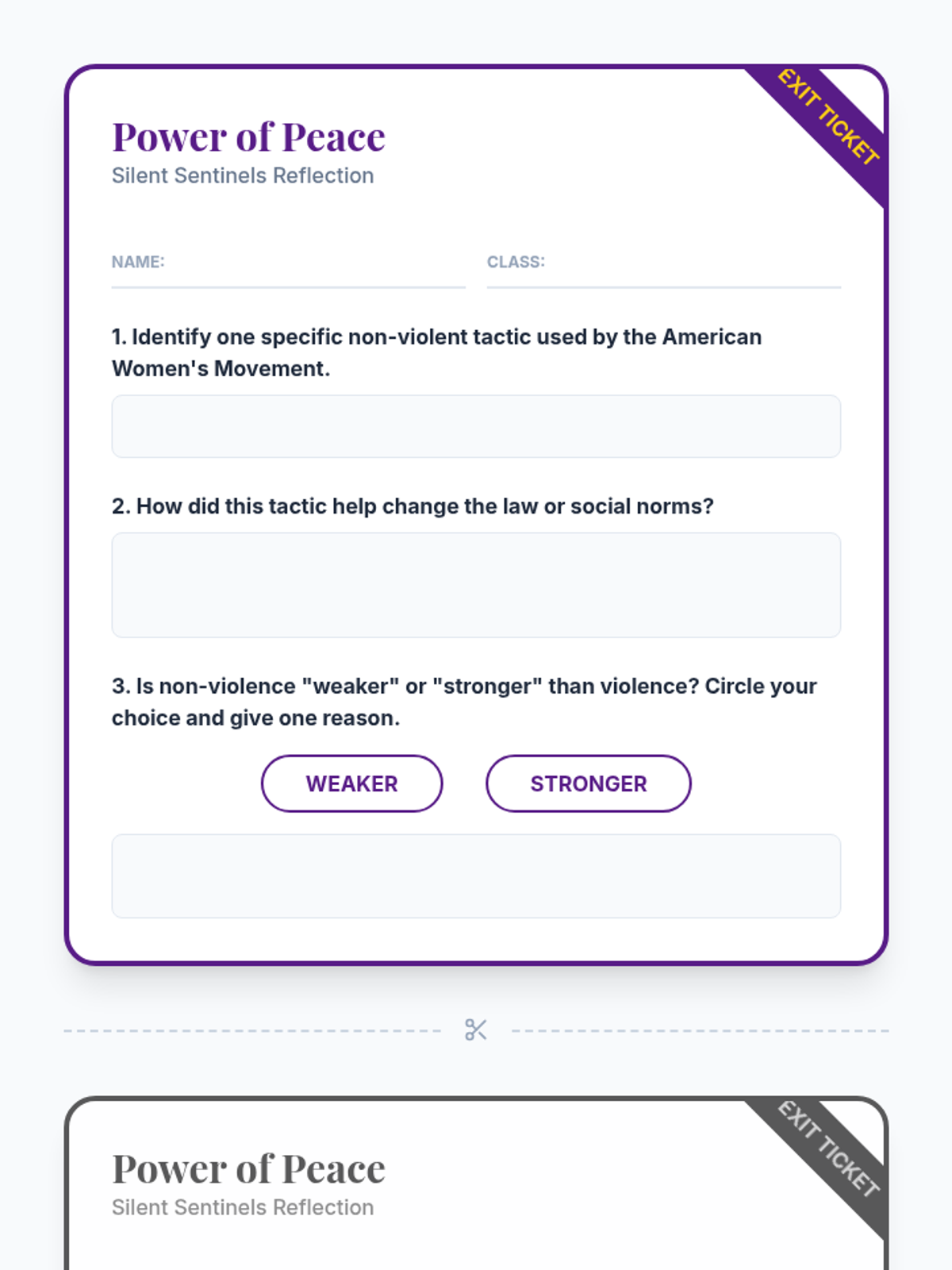
An exploration of non-violent resistance strategies used during the American Women's Movement, focusing on the tactics that transformed social and political landscapes.
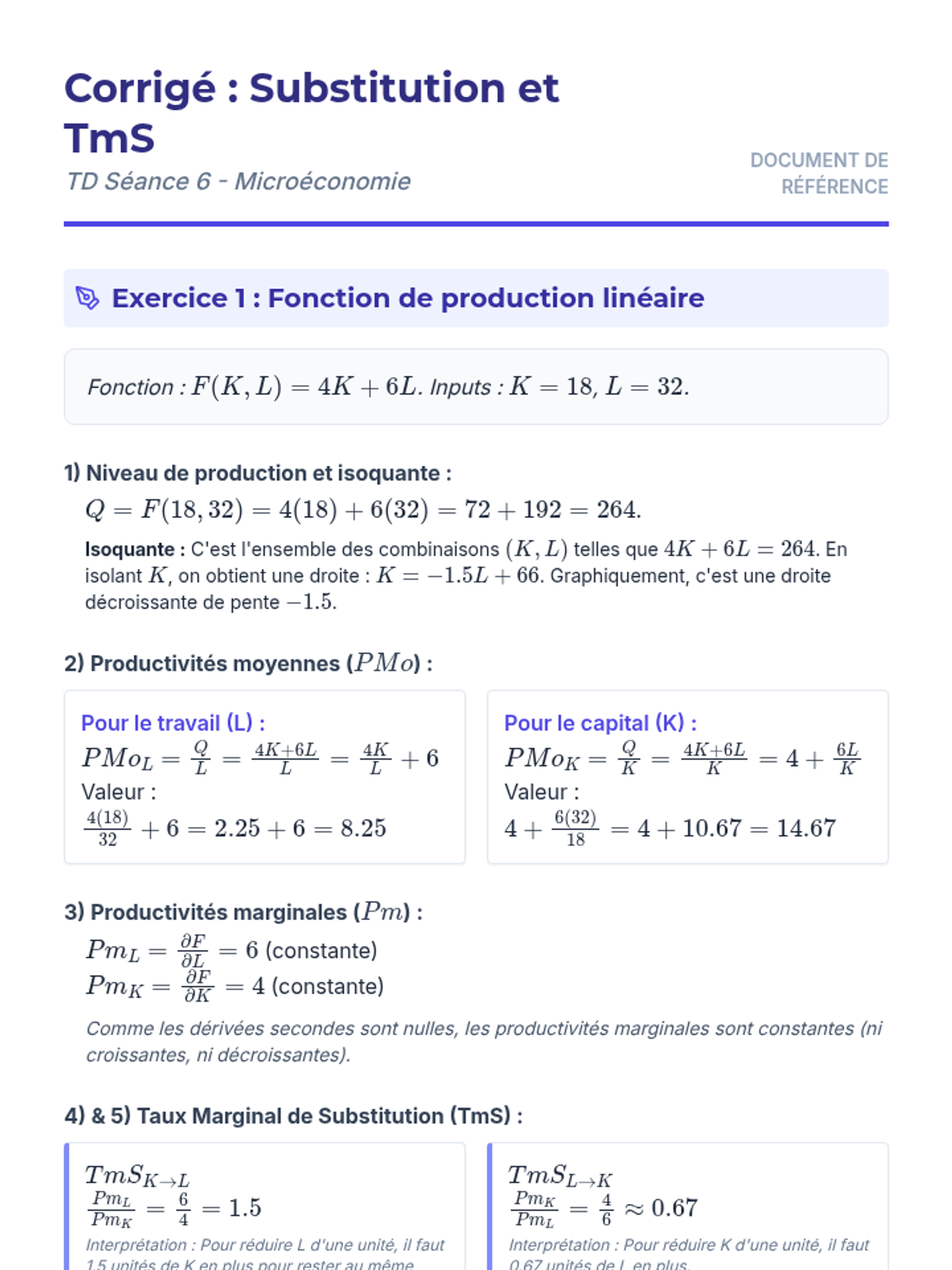
Cette leçon explore les concepts fondamentaux de la production en microéconomie, notamment la substitution des facteurs et le Taux Marginal de Substitution (TmS). Elle comprend des exercices résolus détaillant les calculs de productivité et d'équilibre du producteur.
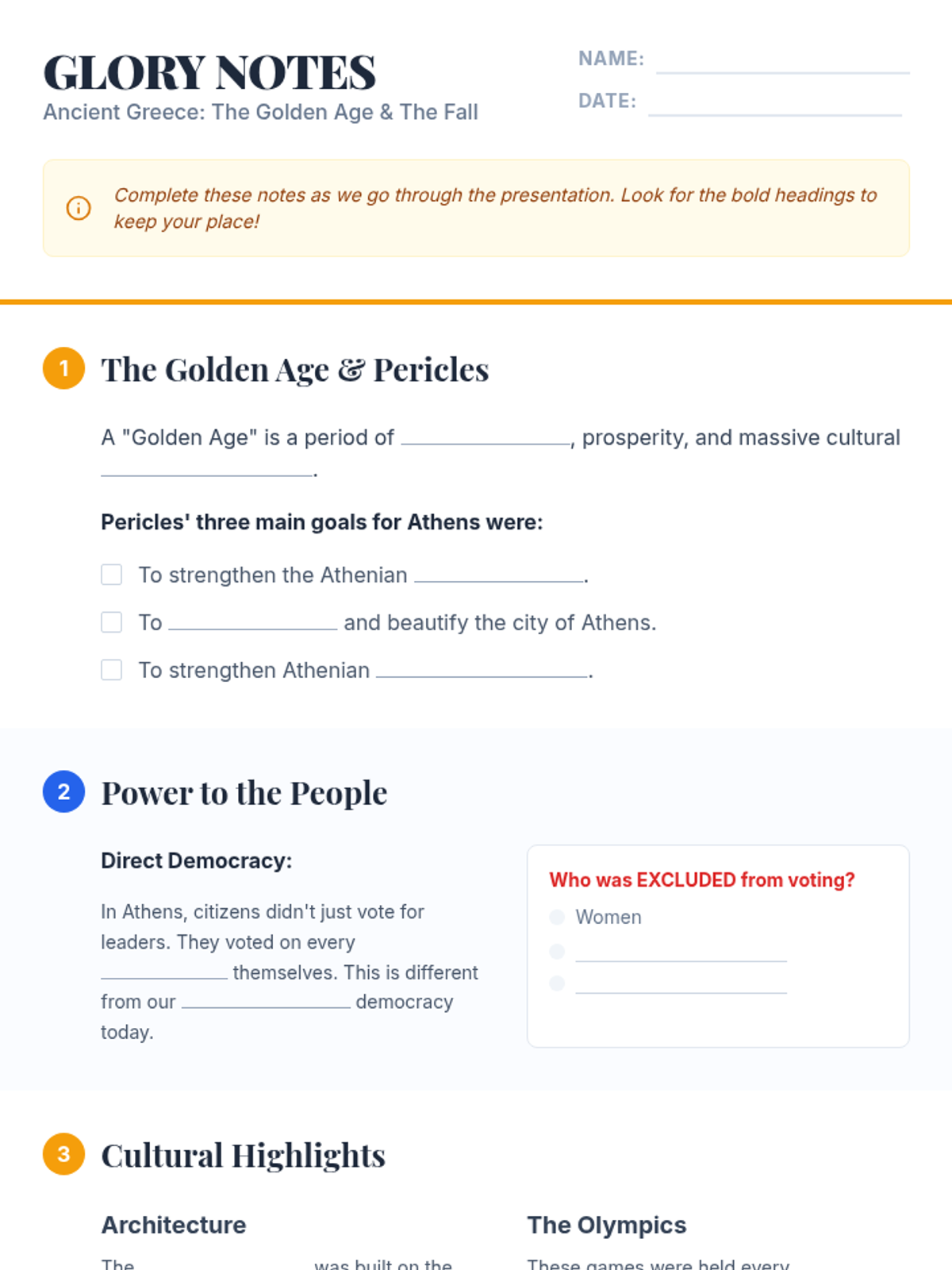
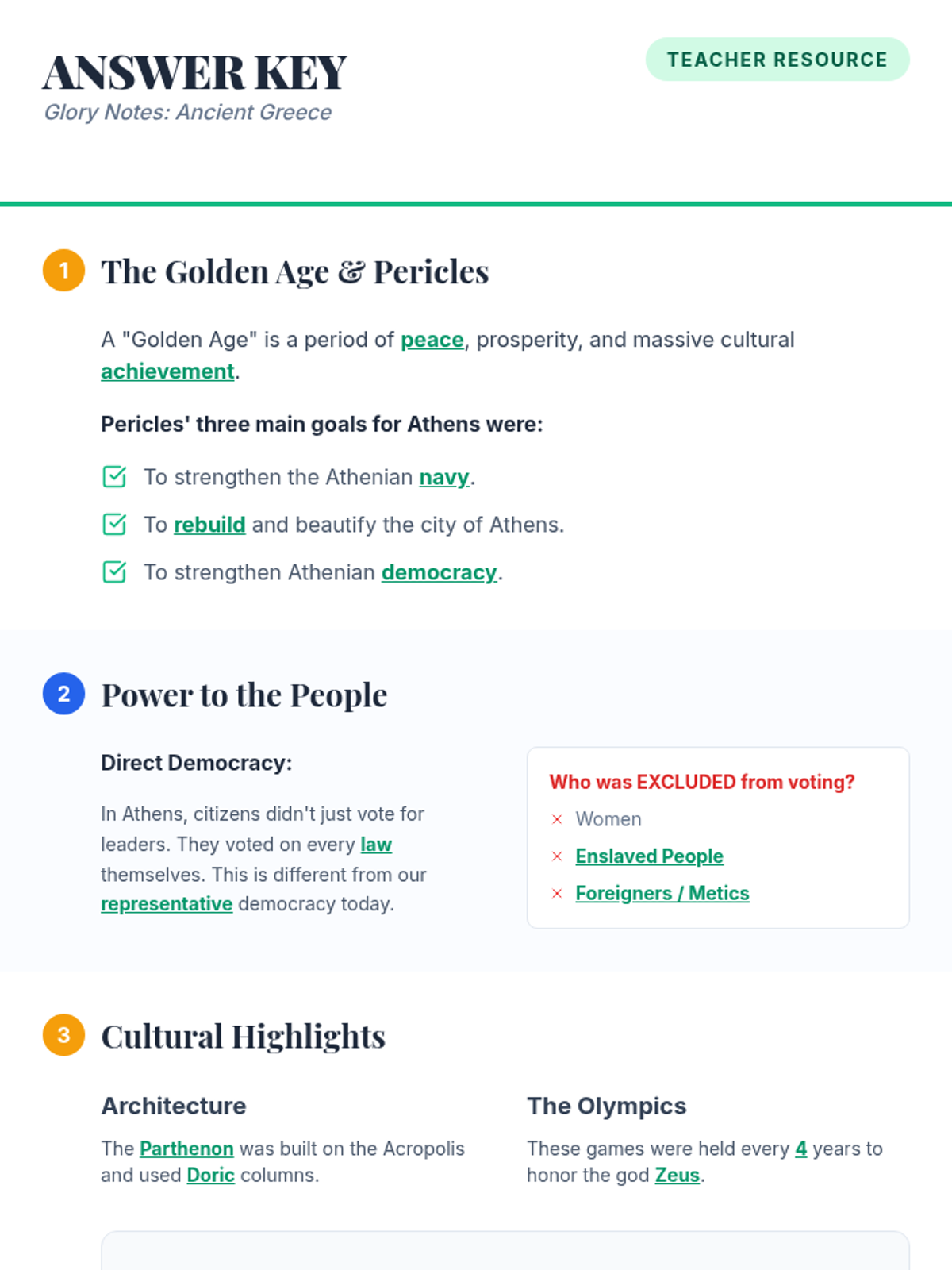
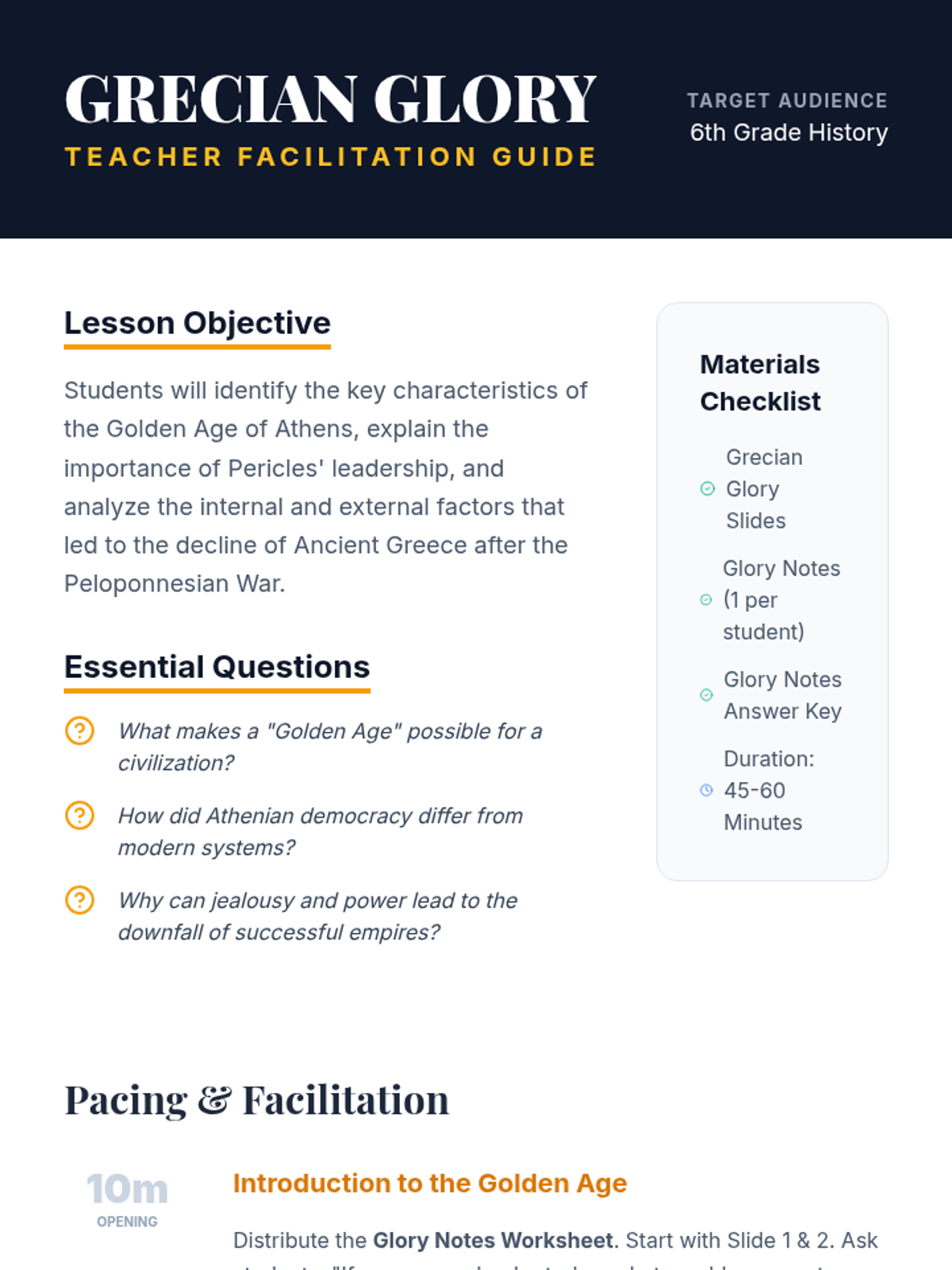
A deep dive into the peak of Athenian culture under Pericles and the eventual decline following the Peloponnesian War. Students explore democracy, architecture, and the cost of conflict.
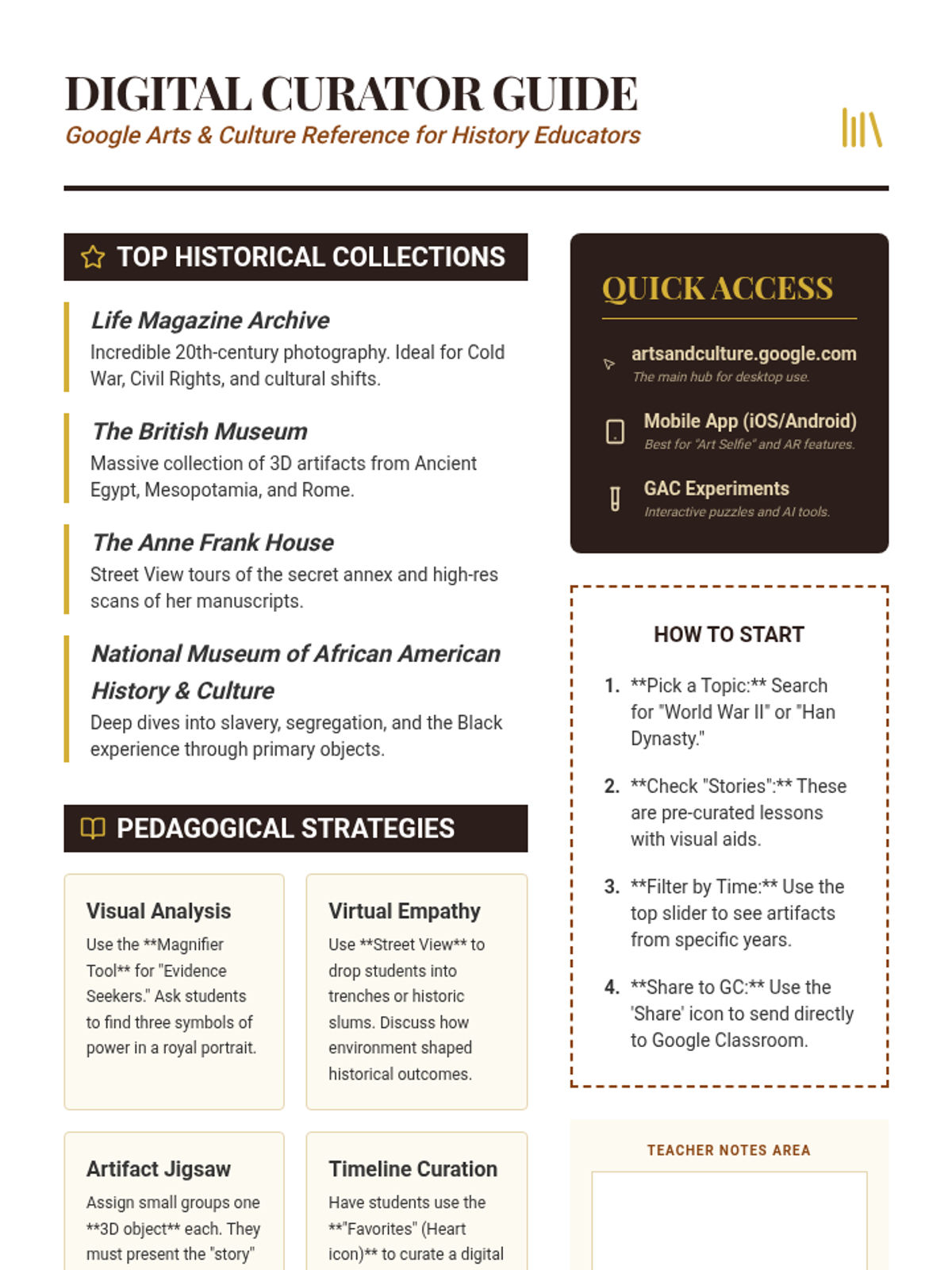
A quick-fire guide for history educators on leveraging Google Arts & Culture's digital archives and virtual tours to enhance classroom engagement.
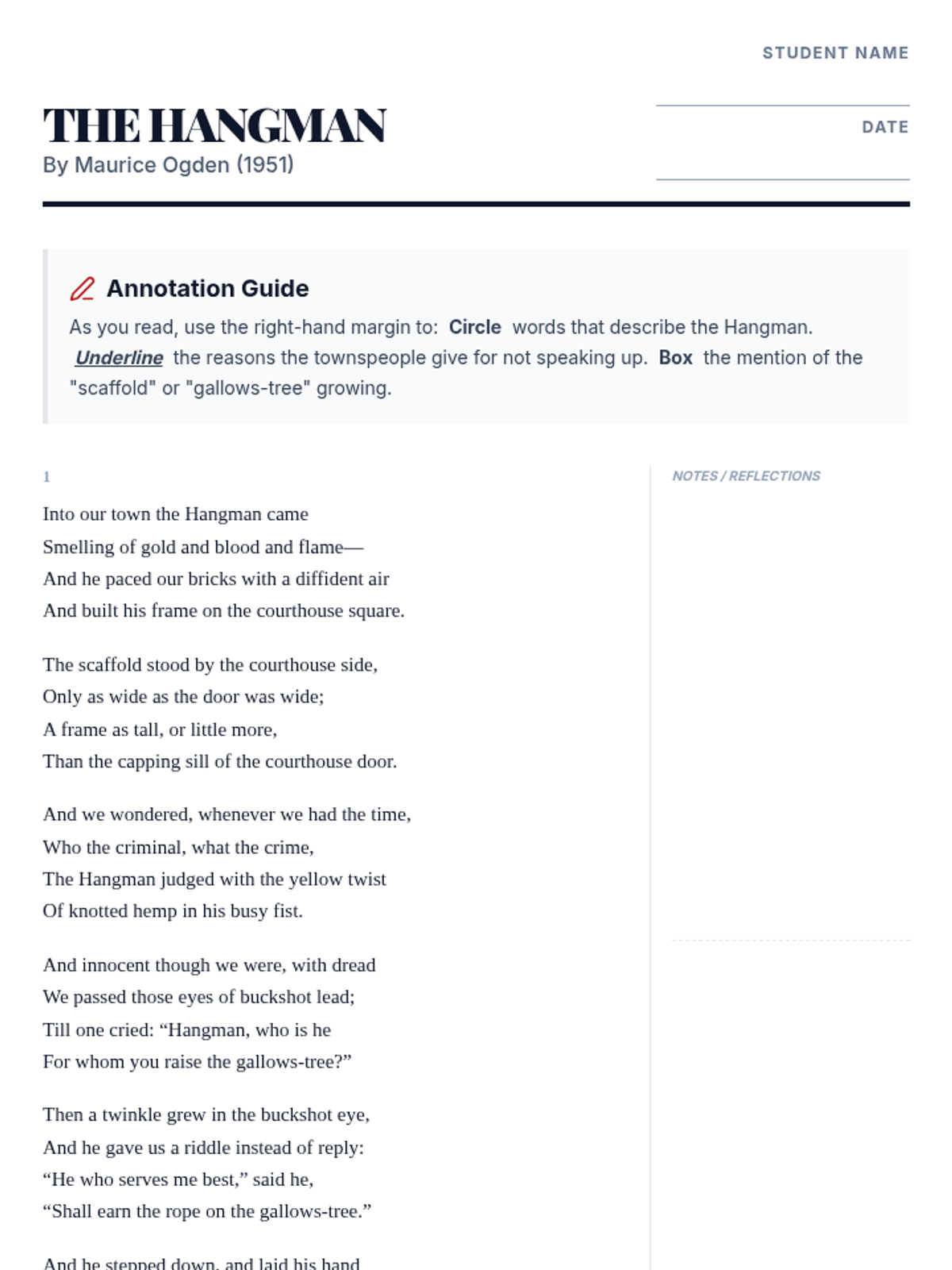
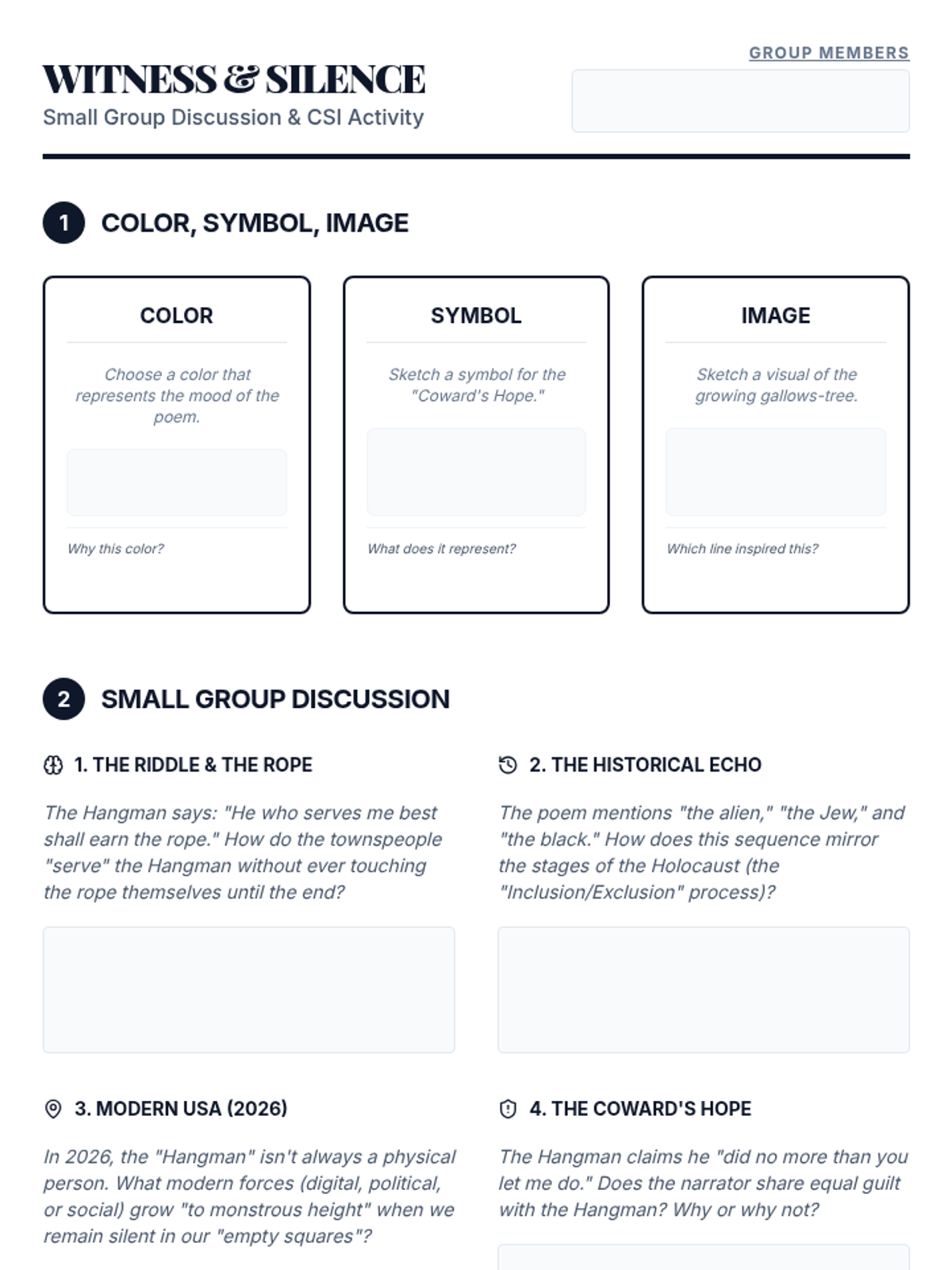
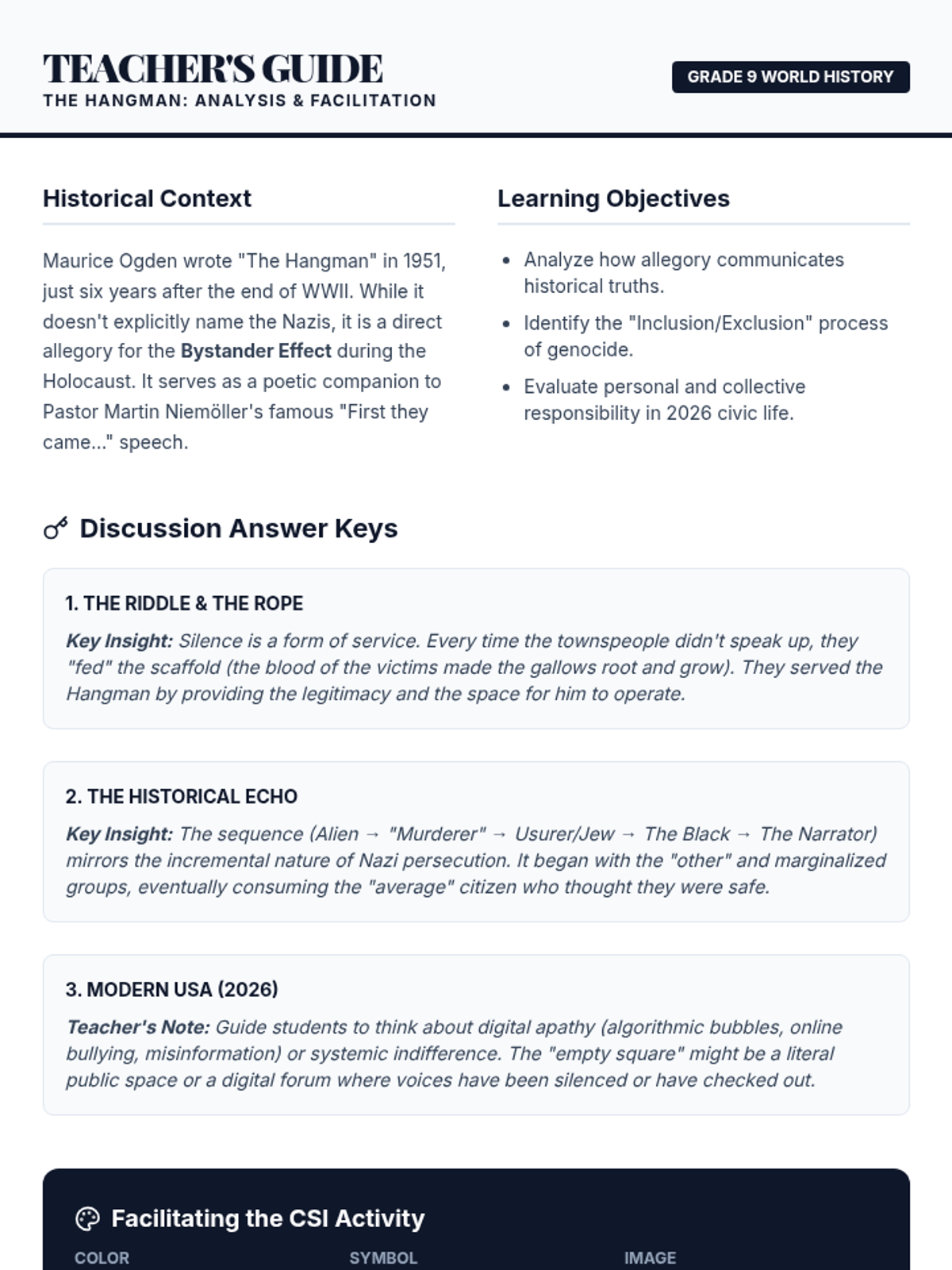
A deep dive into Maurice Ogden's 'The Hangman,' exploring the themes of bystander apathy, personal responsibility, and the historical parallels to the Holocaust, with a final bridge to modern civic duty in 2026.
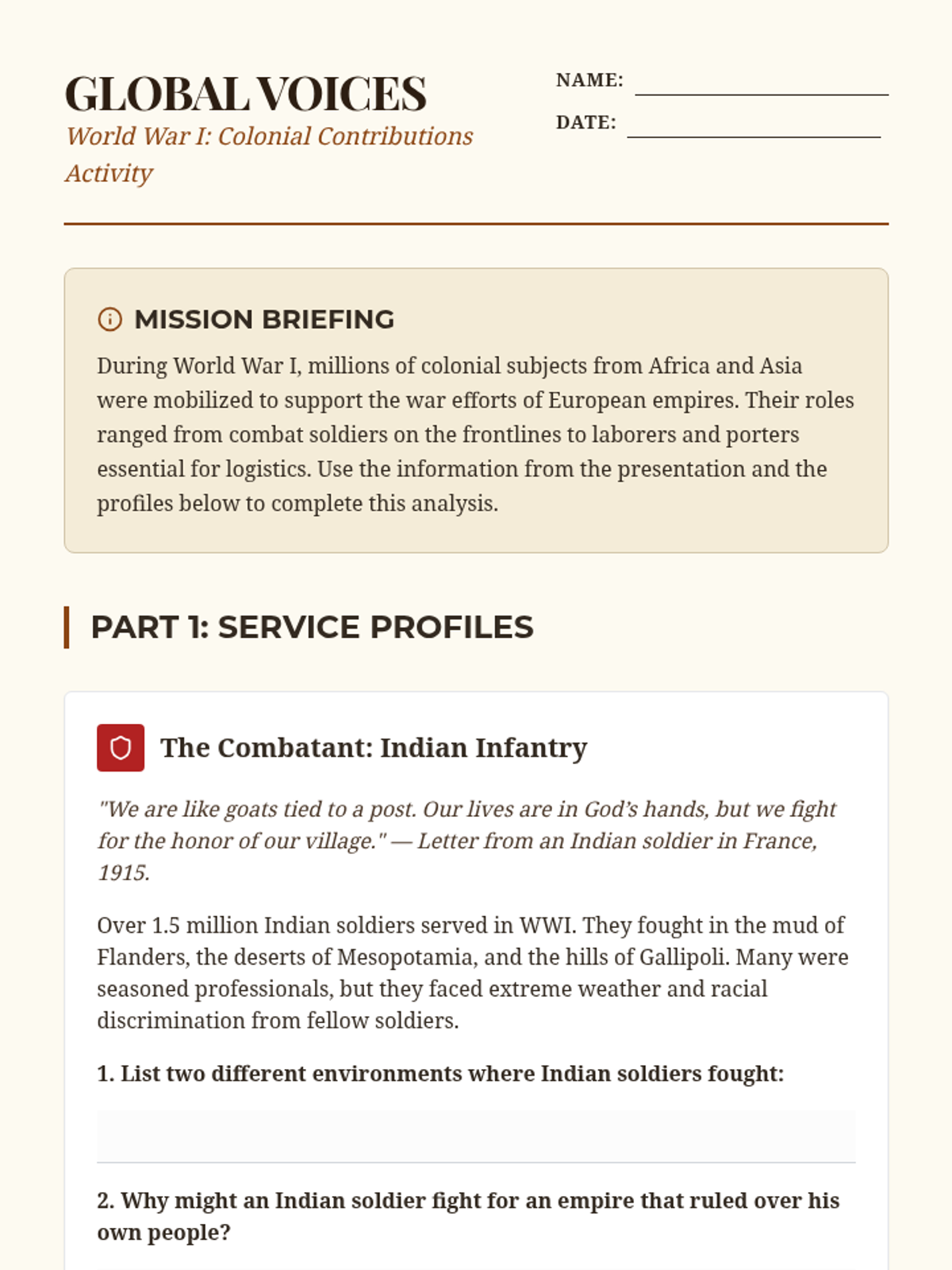
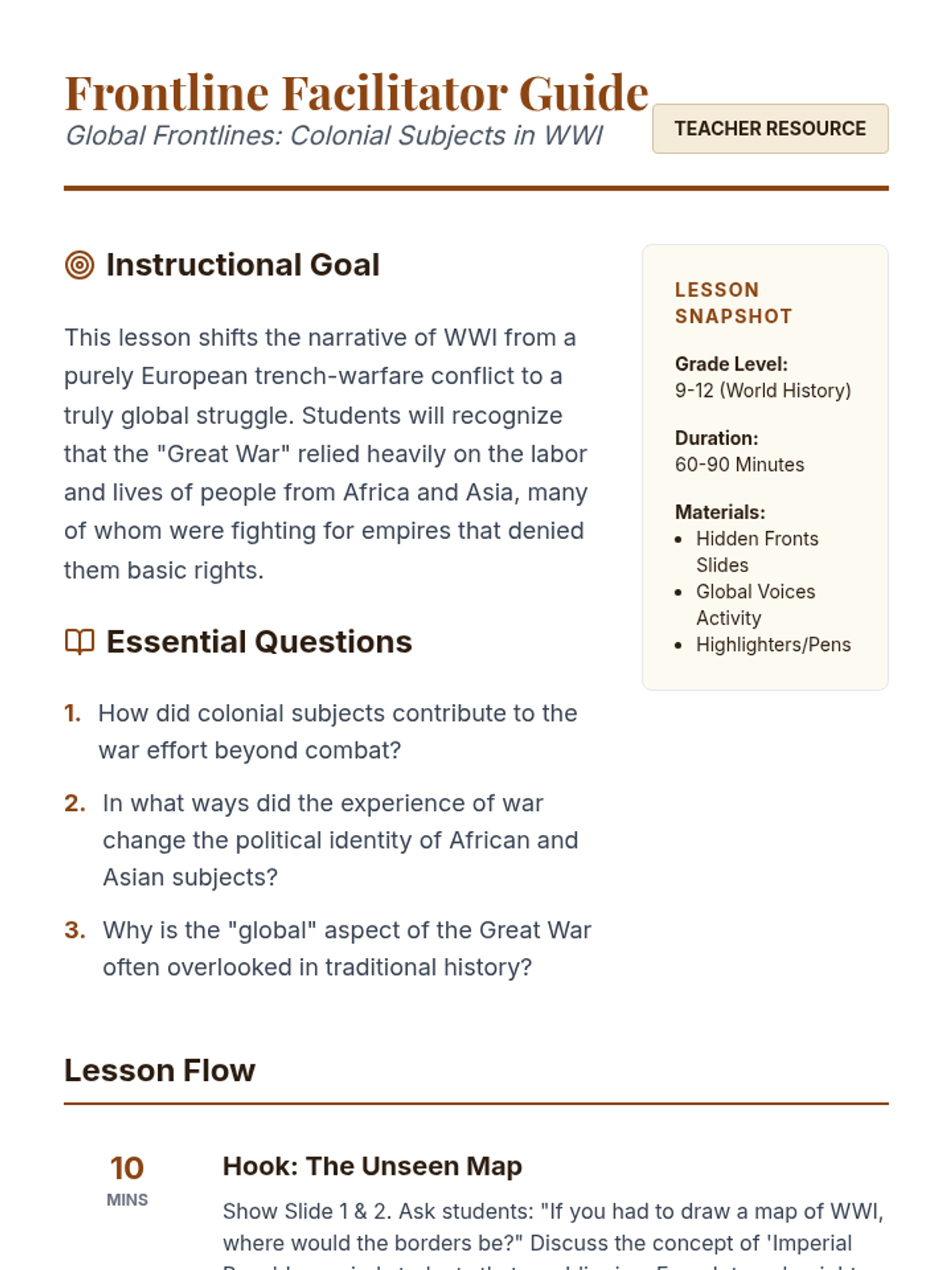
This lesson explores the often-overlooked contributions of colonial subjects from Africa and Asia during World War I, highlighting their roles as soldiers and laborers on the global stage.
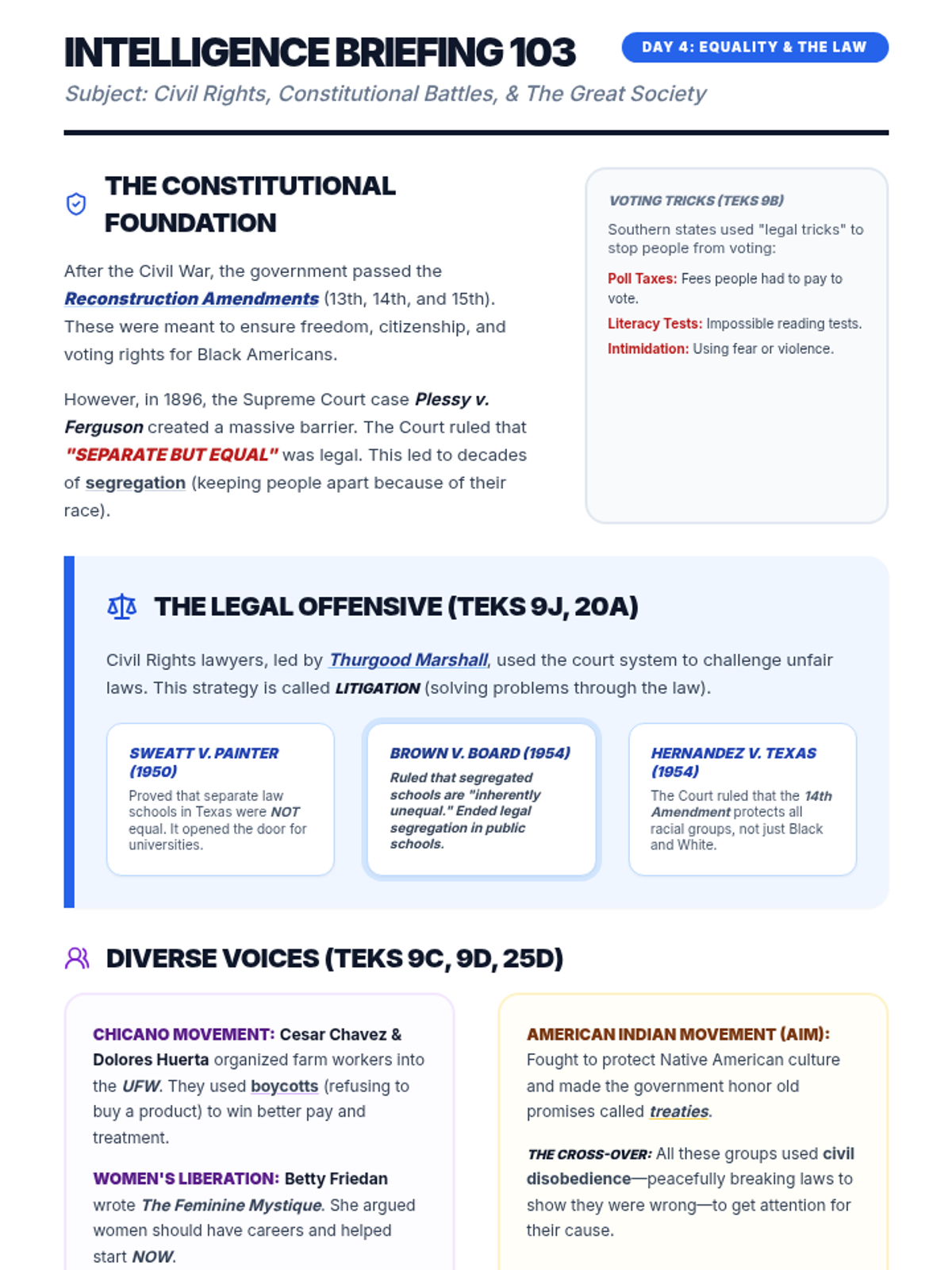
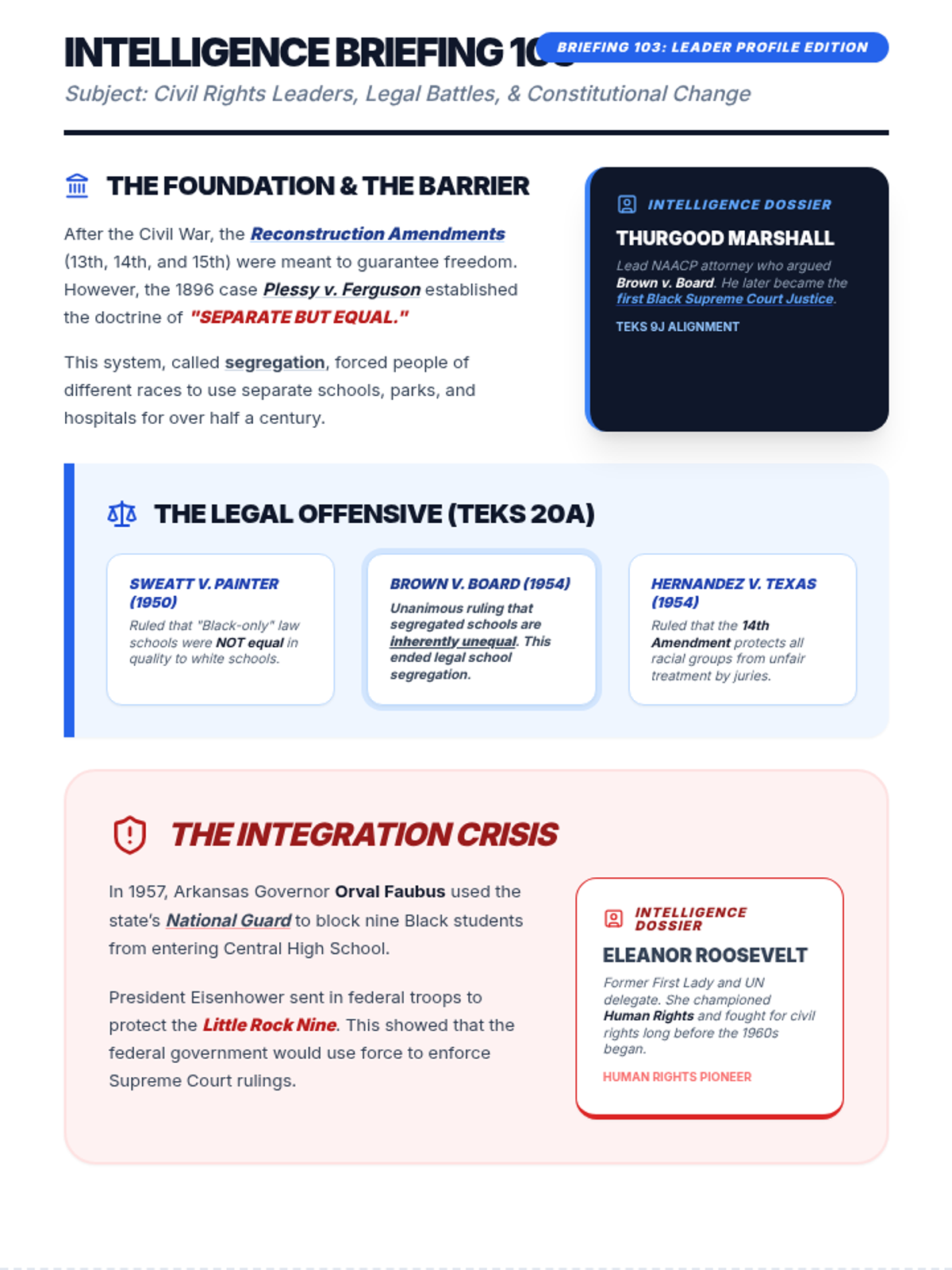
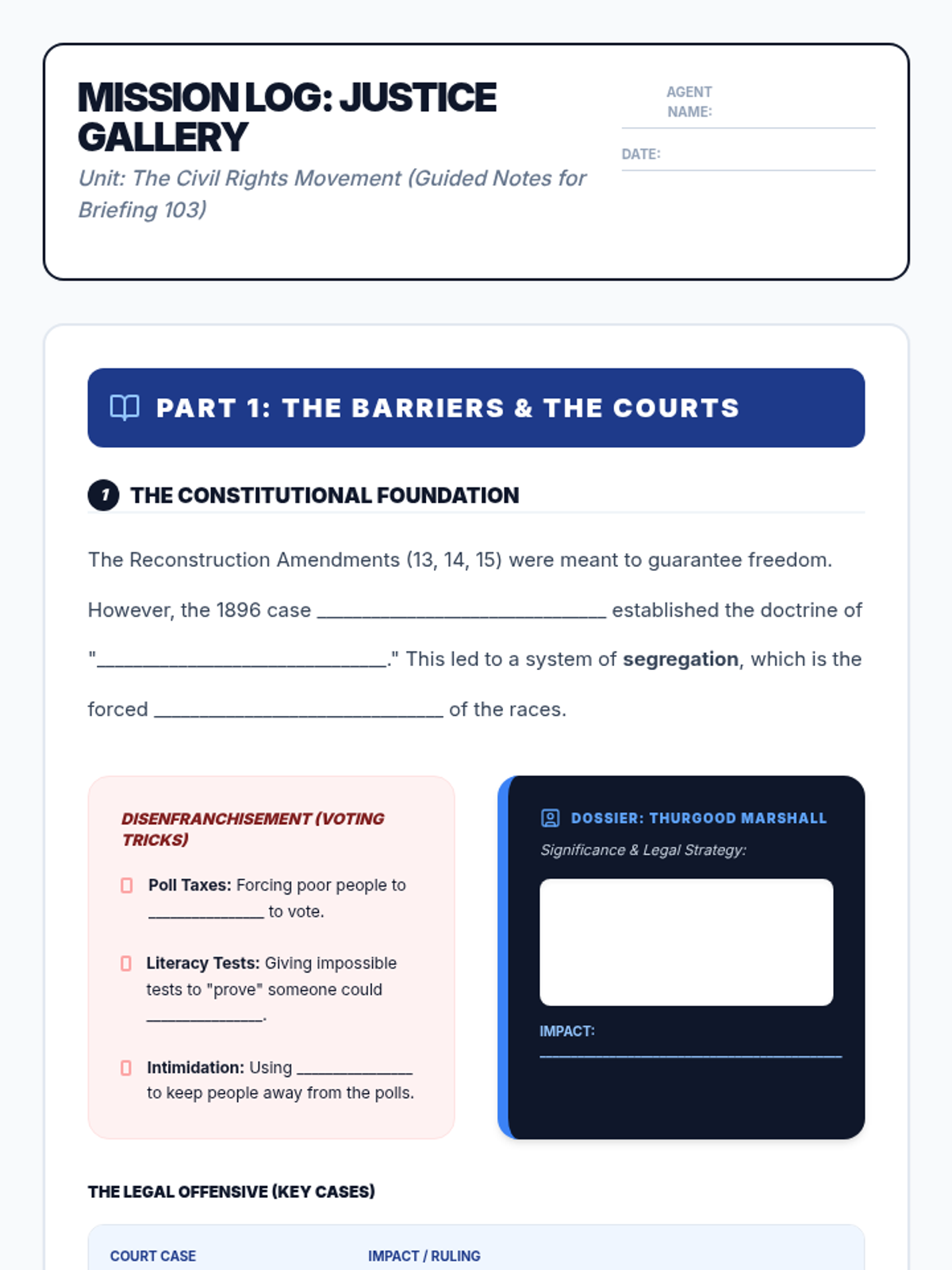
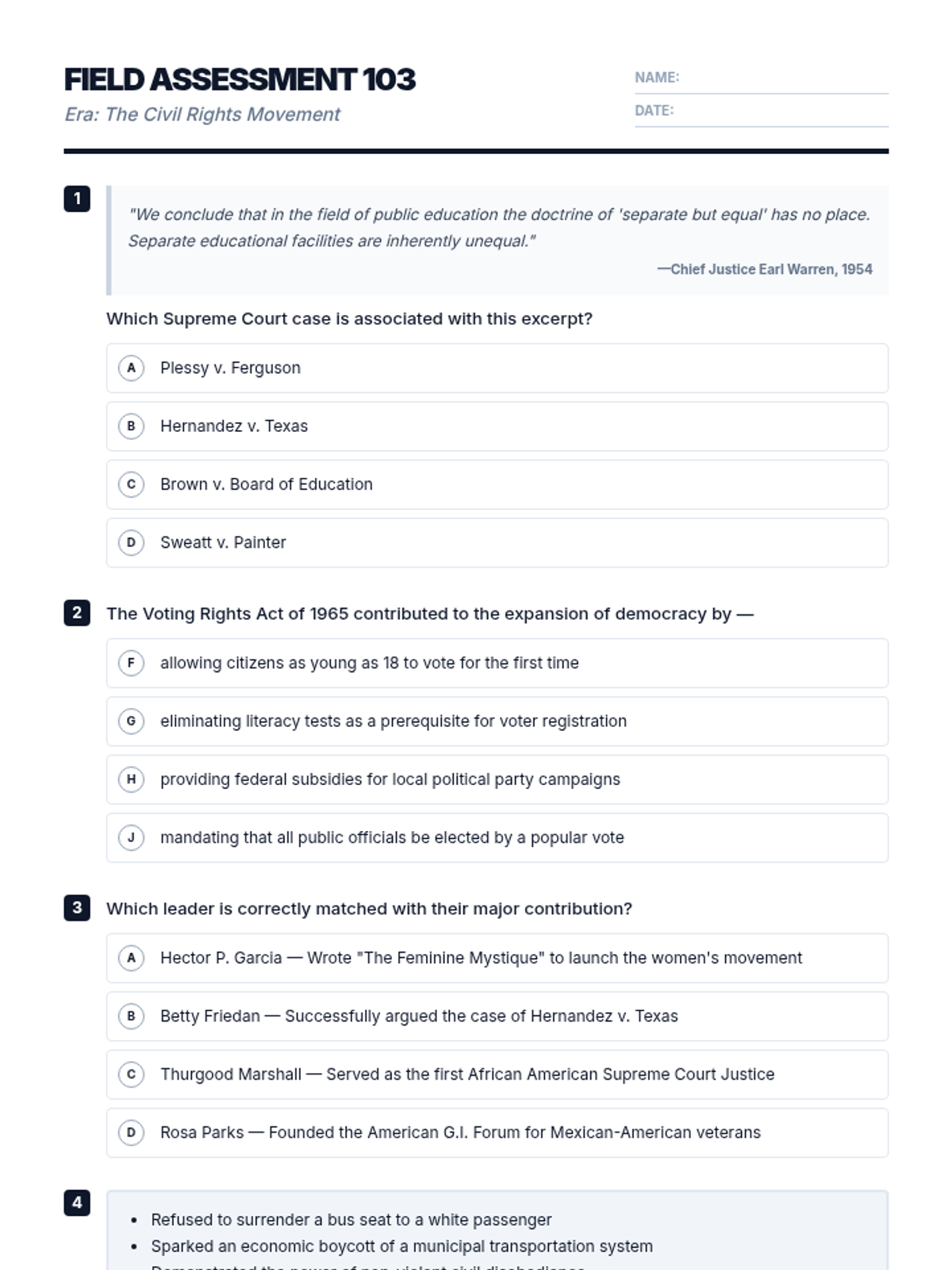
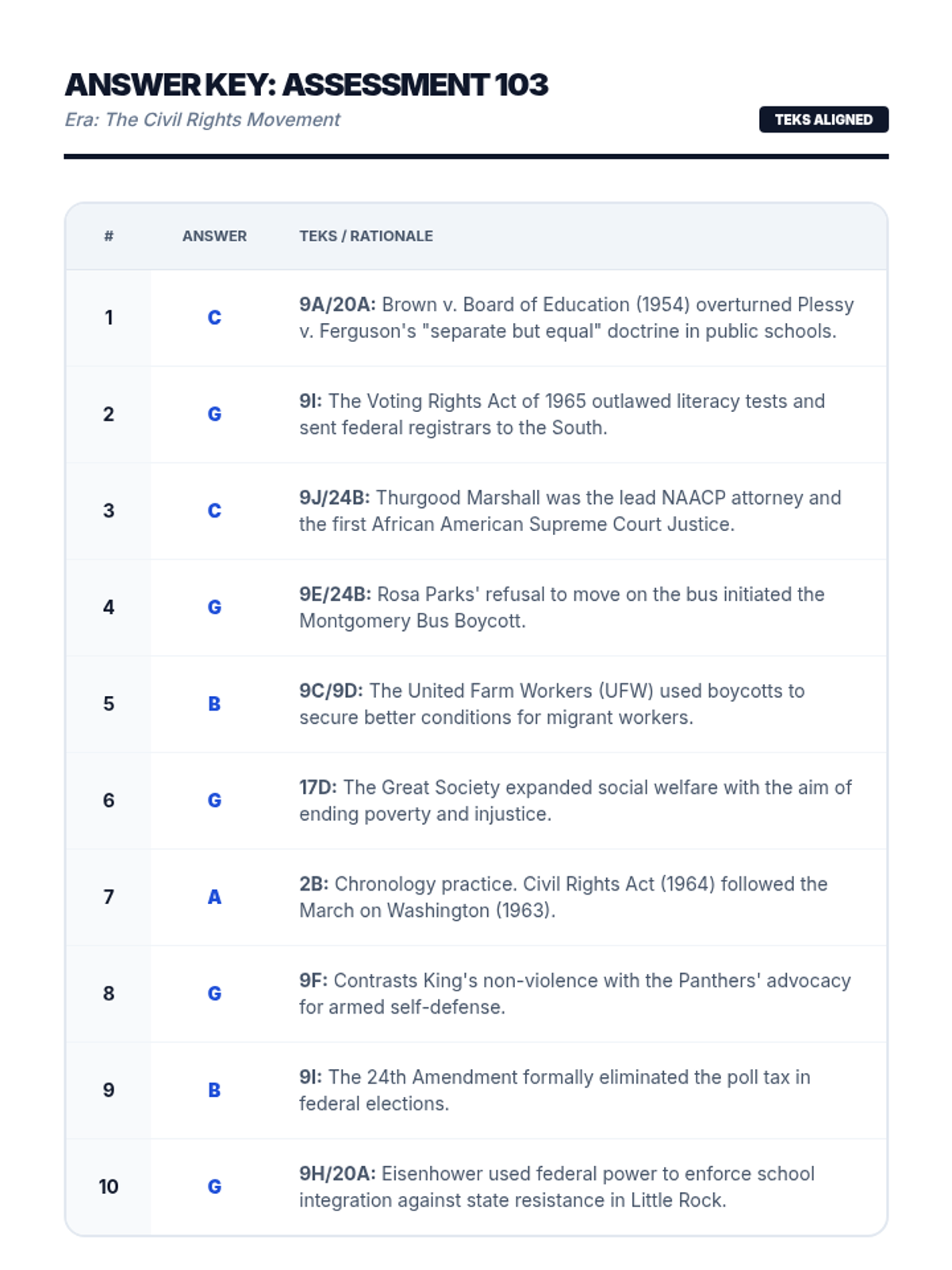
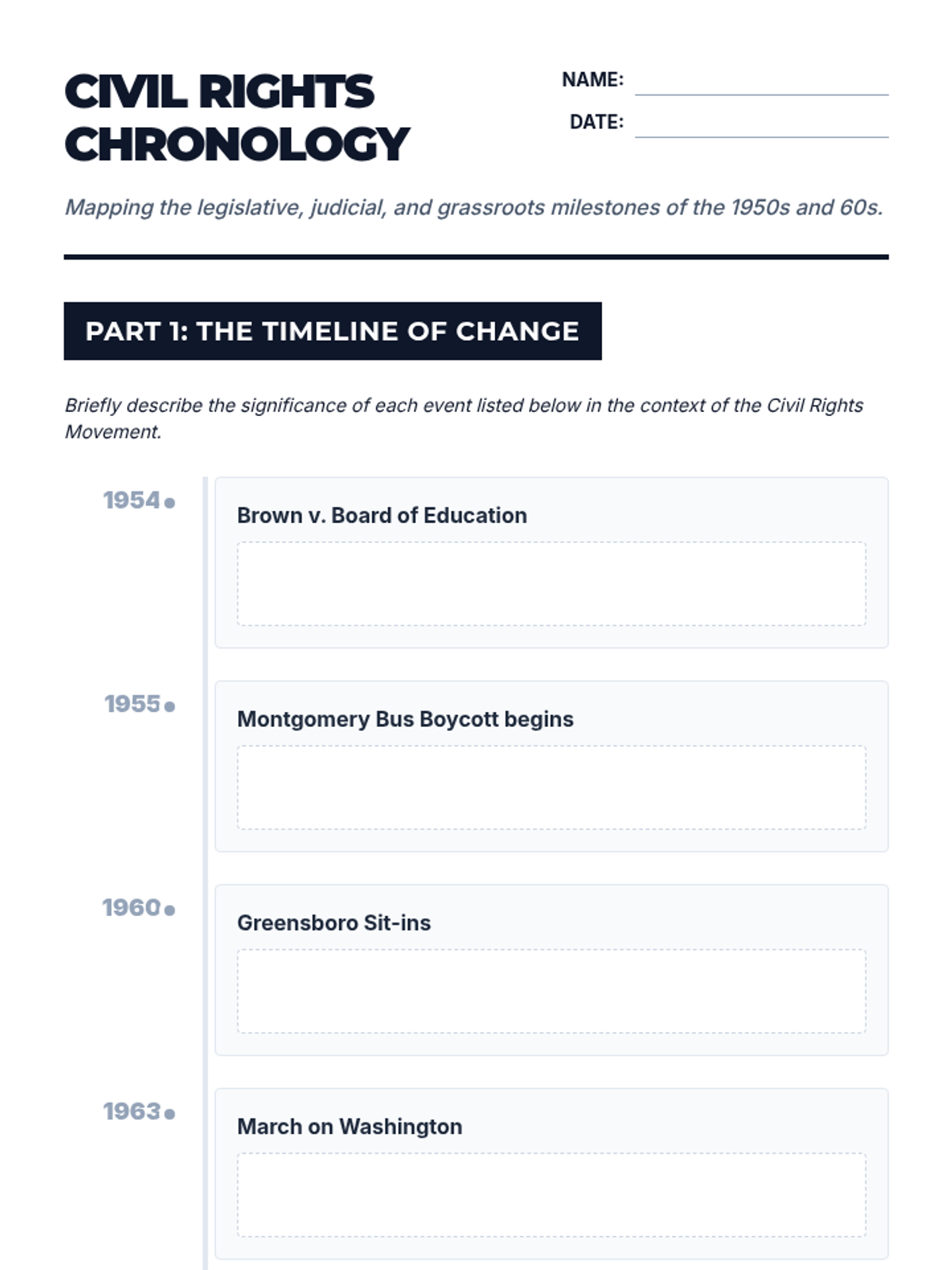
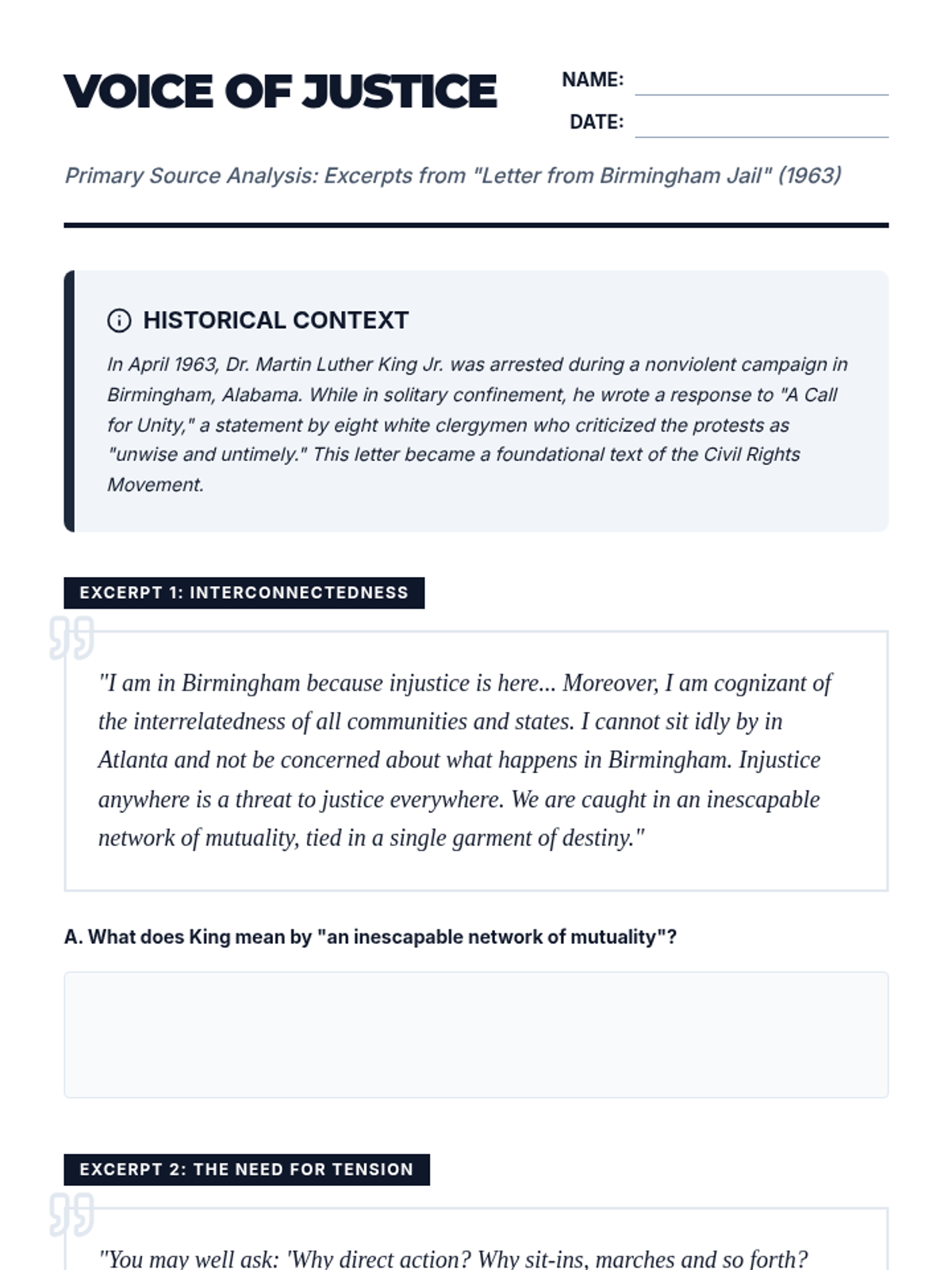
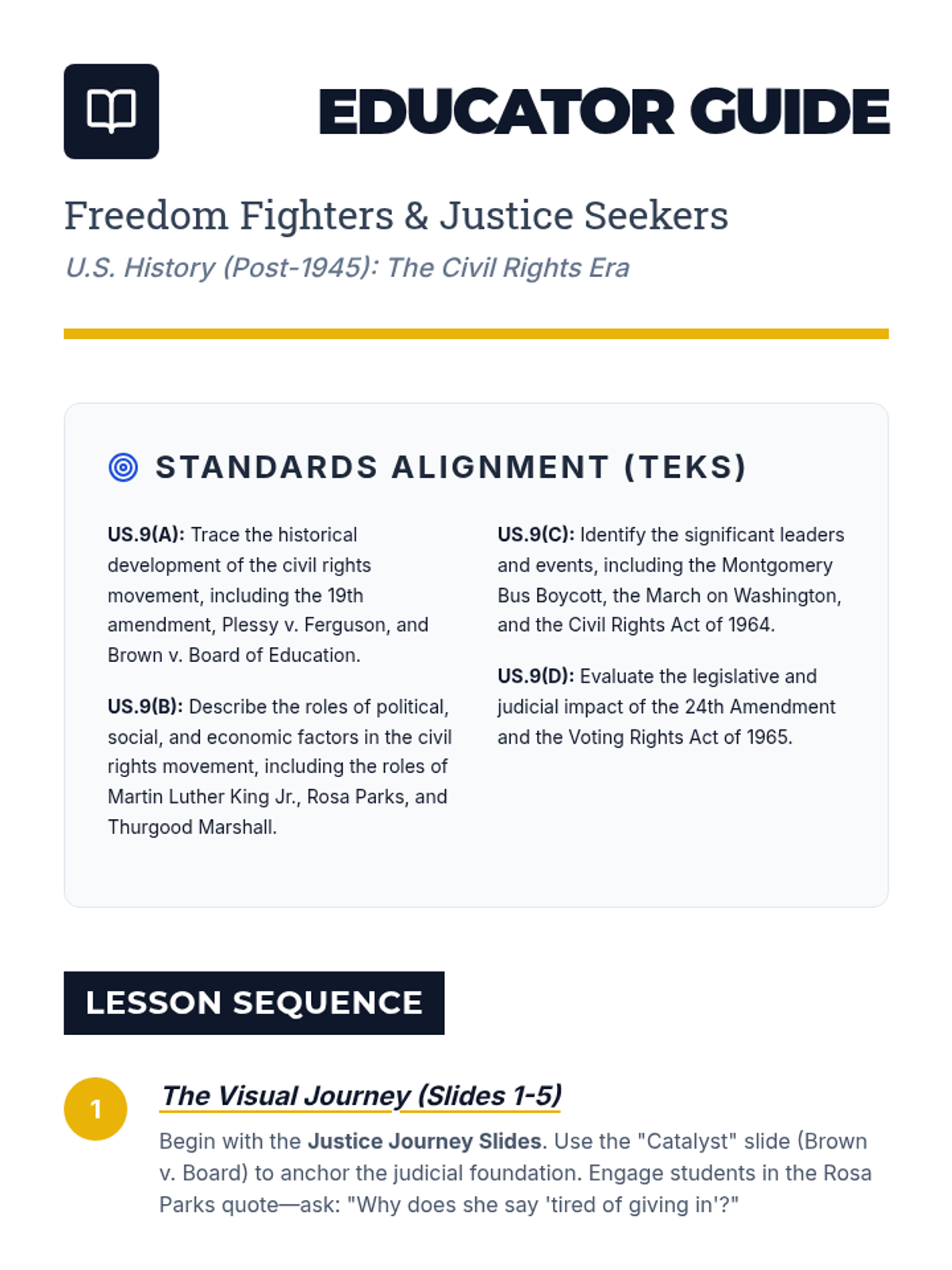
A comprehensive high school U.S. History lesson covering the Civil Rights Movement (1950s-1960s). It focuses on key events, figures, and strategies through primary source analysis, a timeline activity, and guided discussion, aligned with TEKS standards.
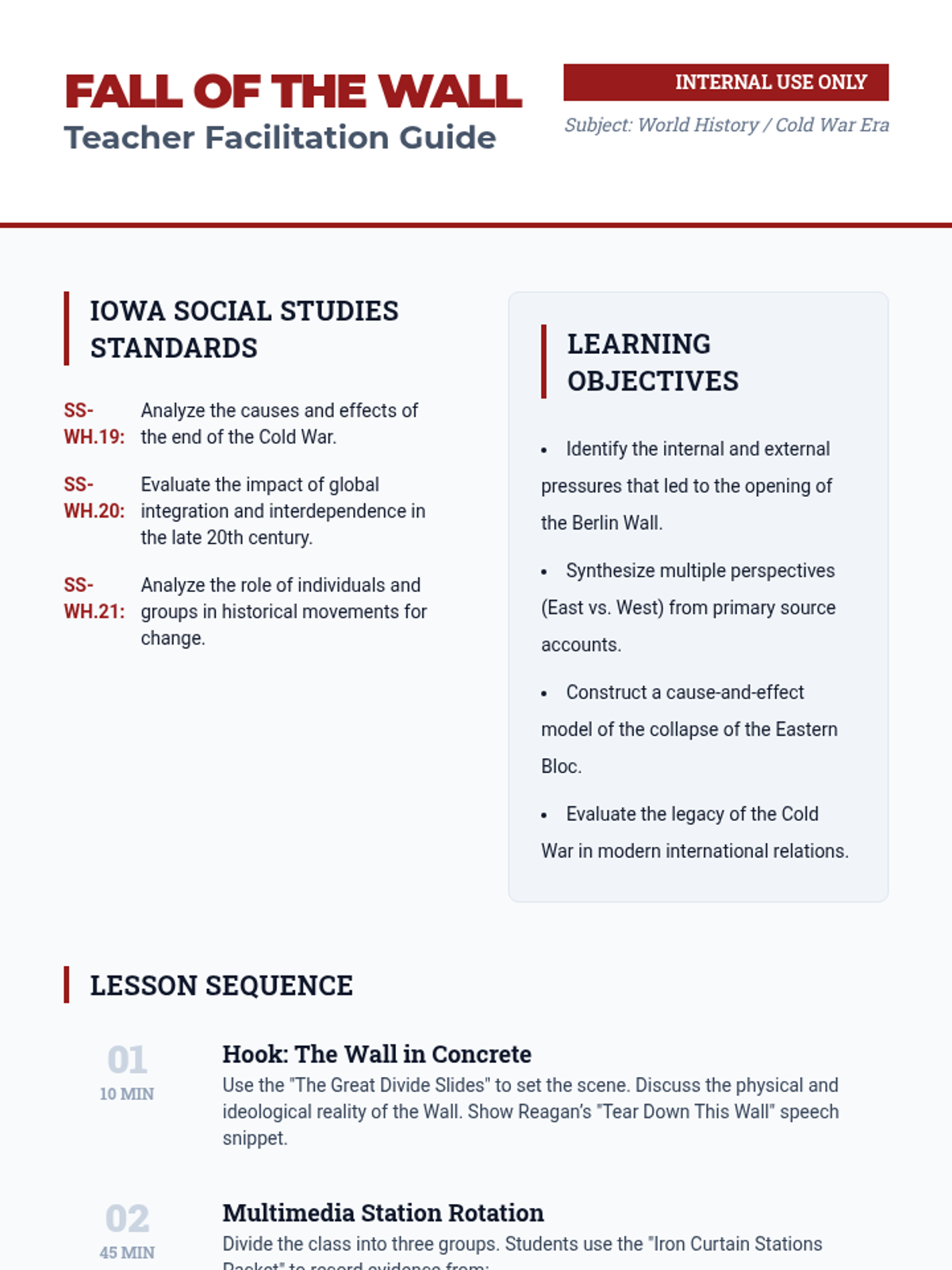
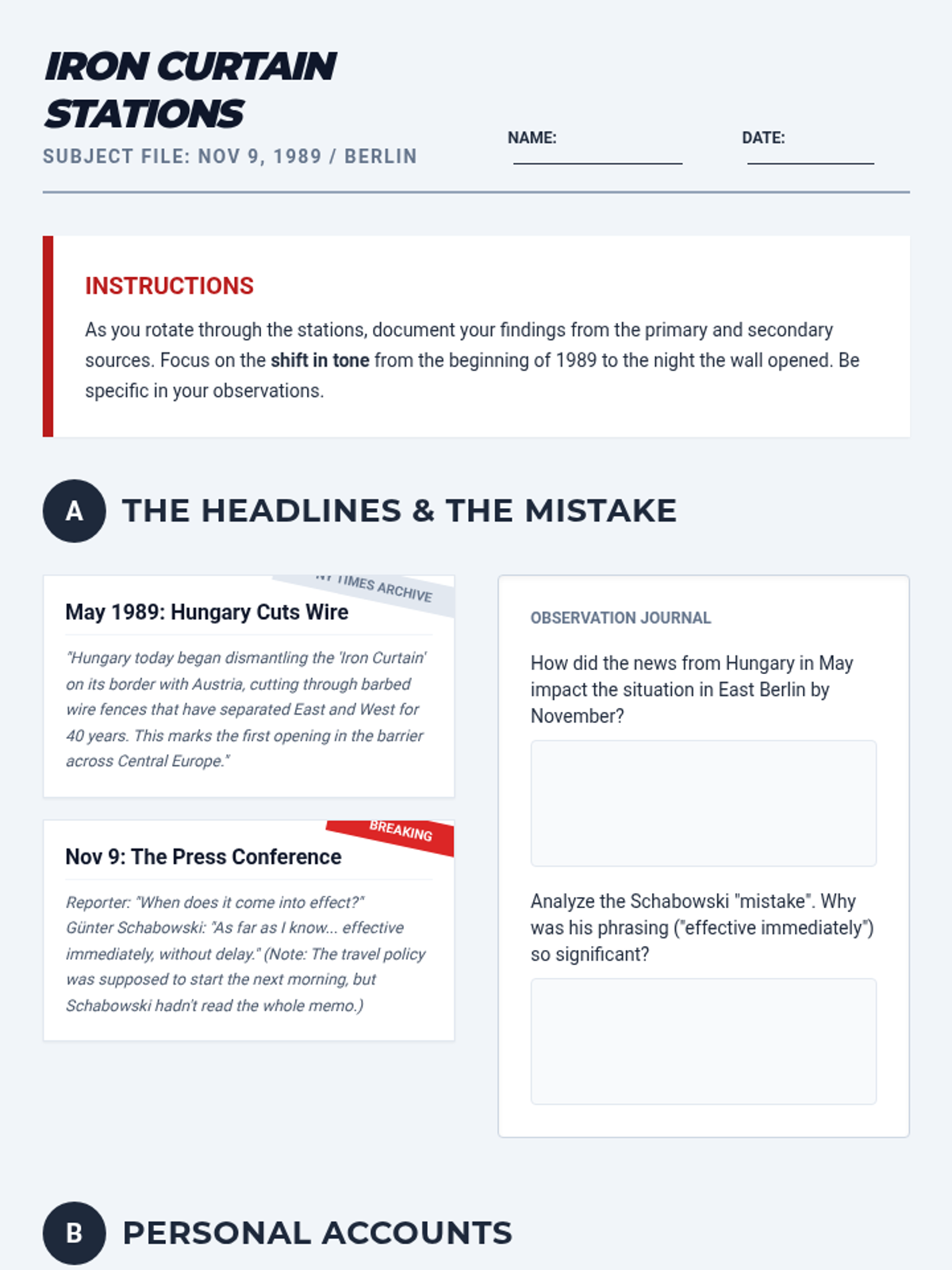
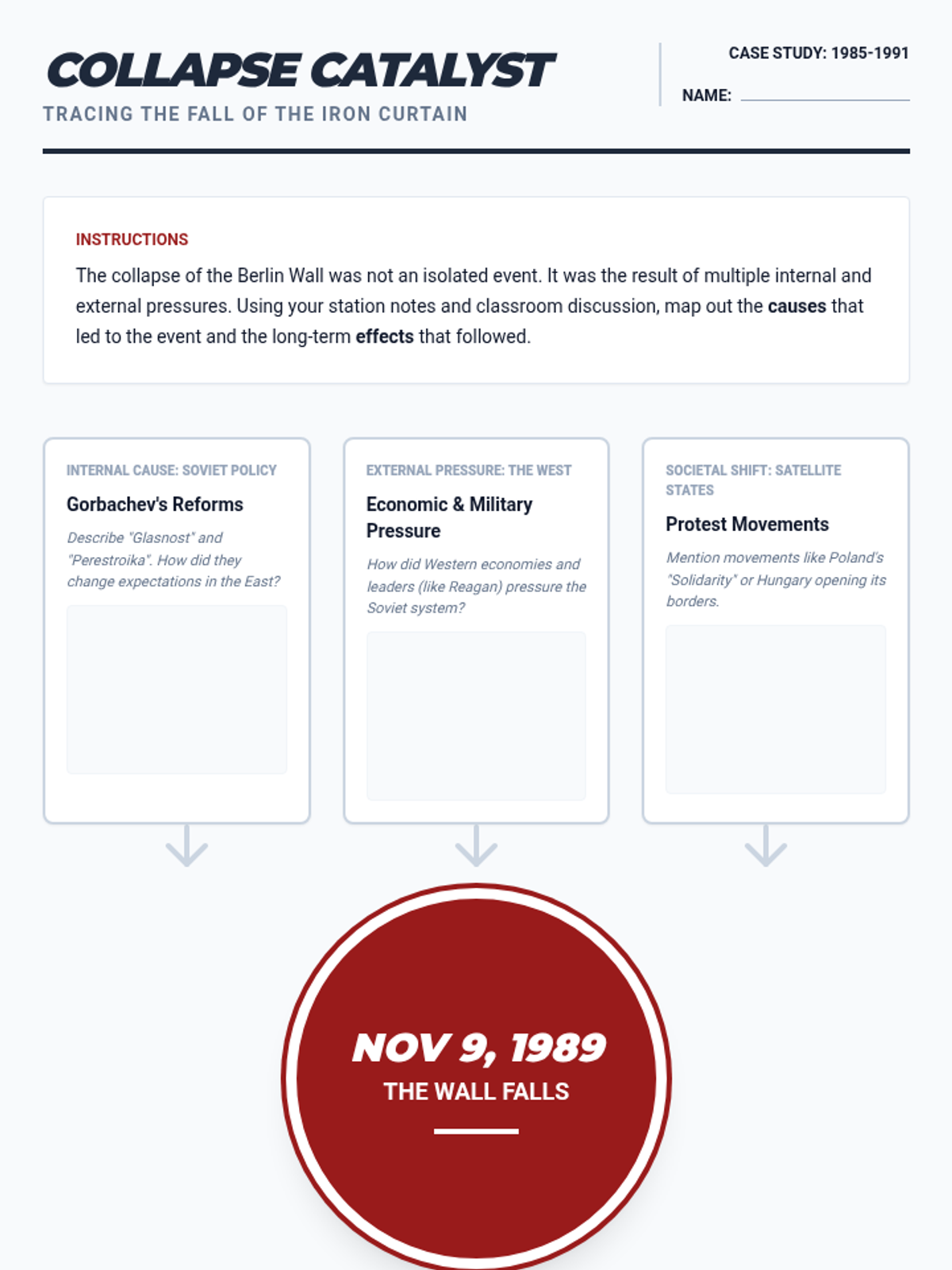
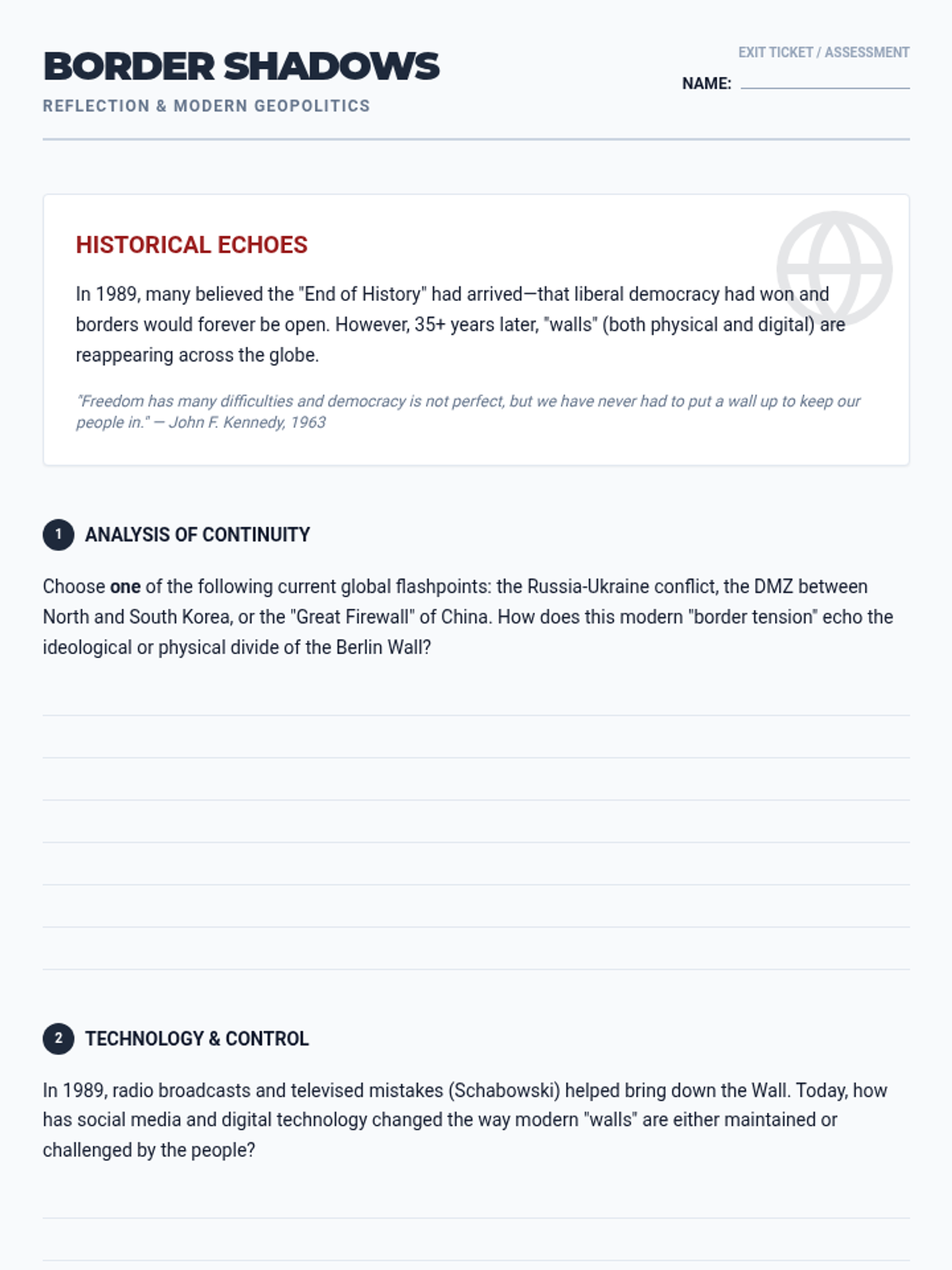
A comprehensive lesson on the fall of the Berlin Wall and the end of the Cold War, featuring multimedia station rotations, cause-and-effect analysis, and contemporary geopolitical reflections. aligned to Iowa Social Studies Standards.
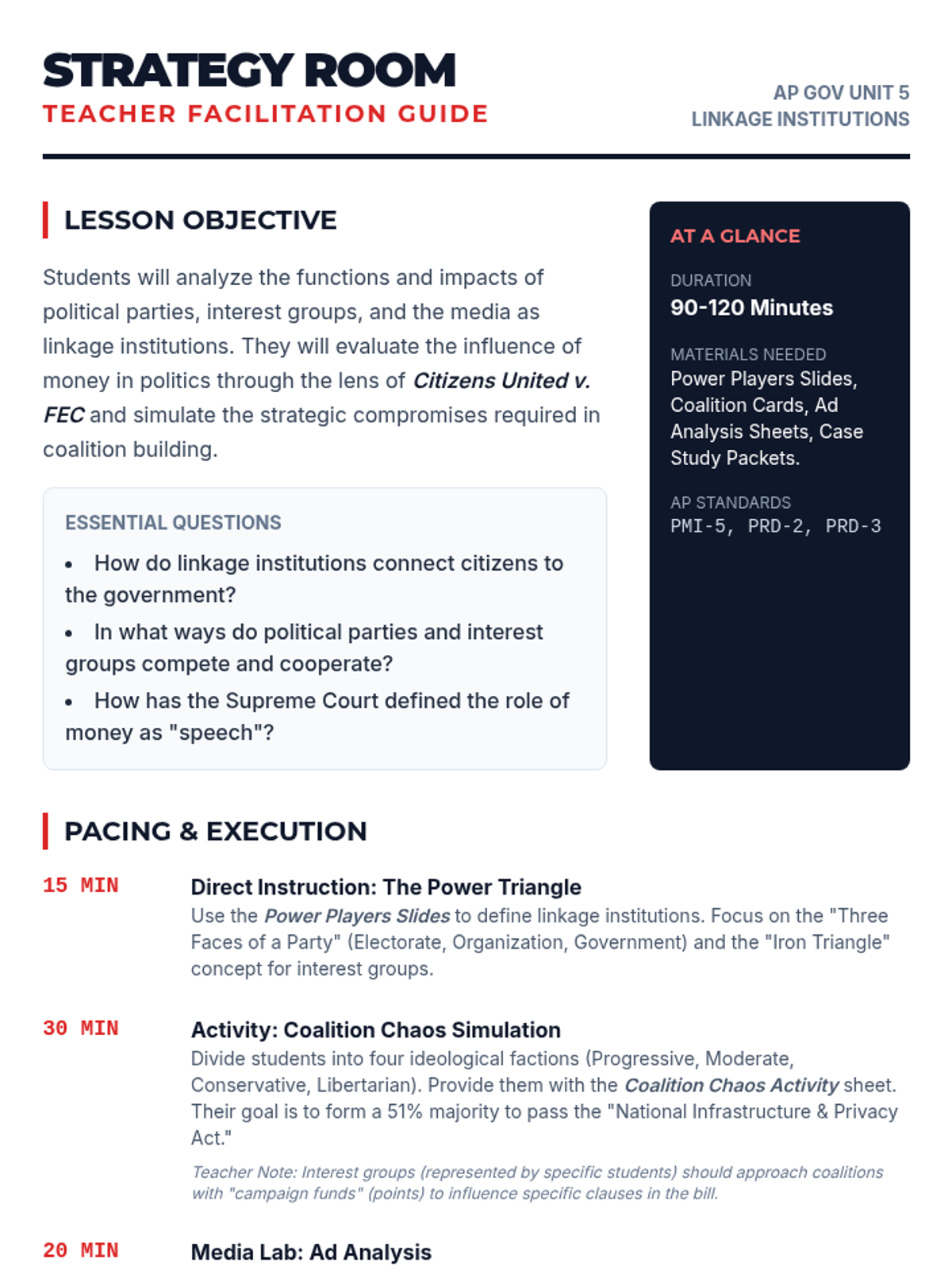
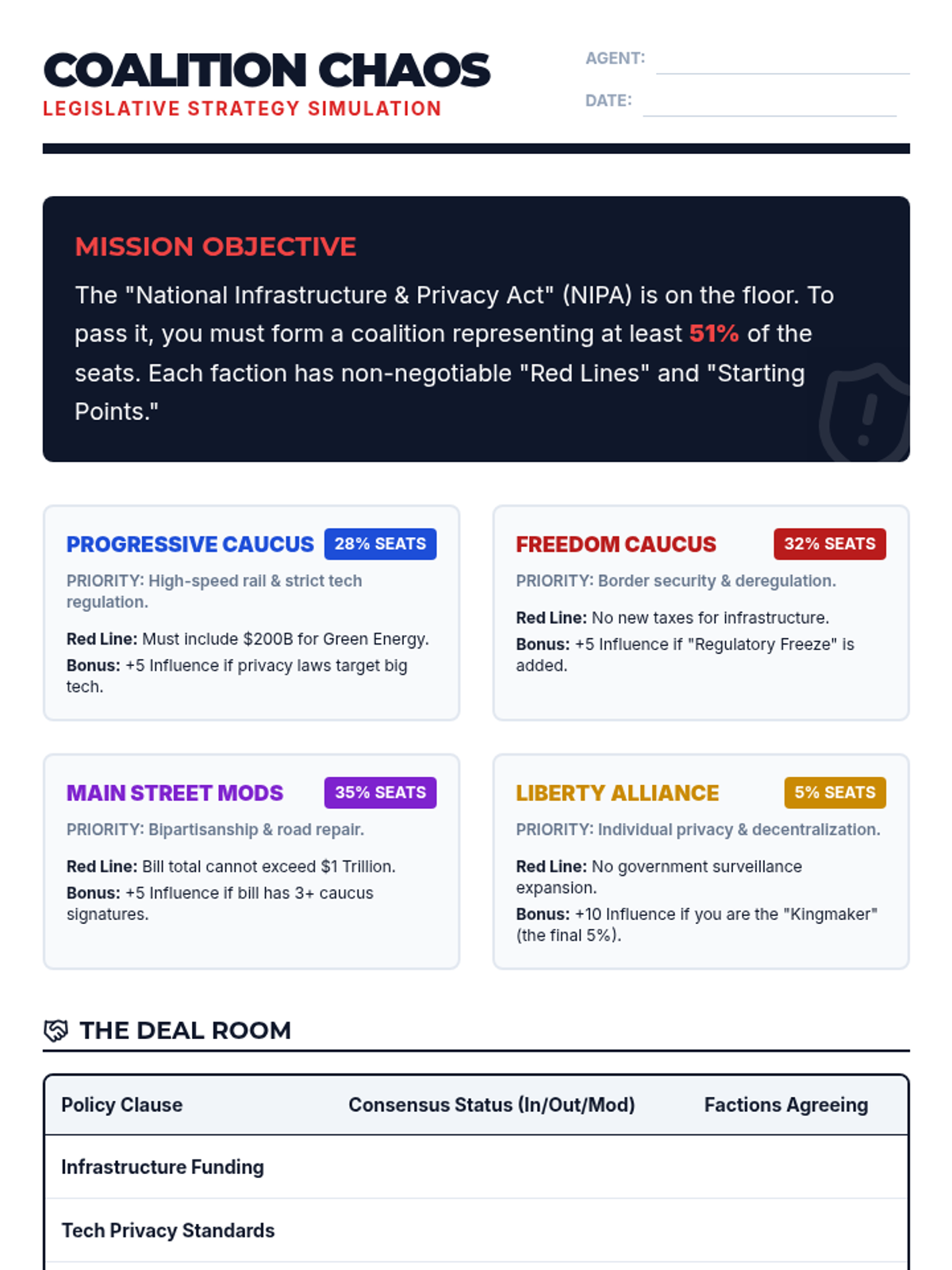
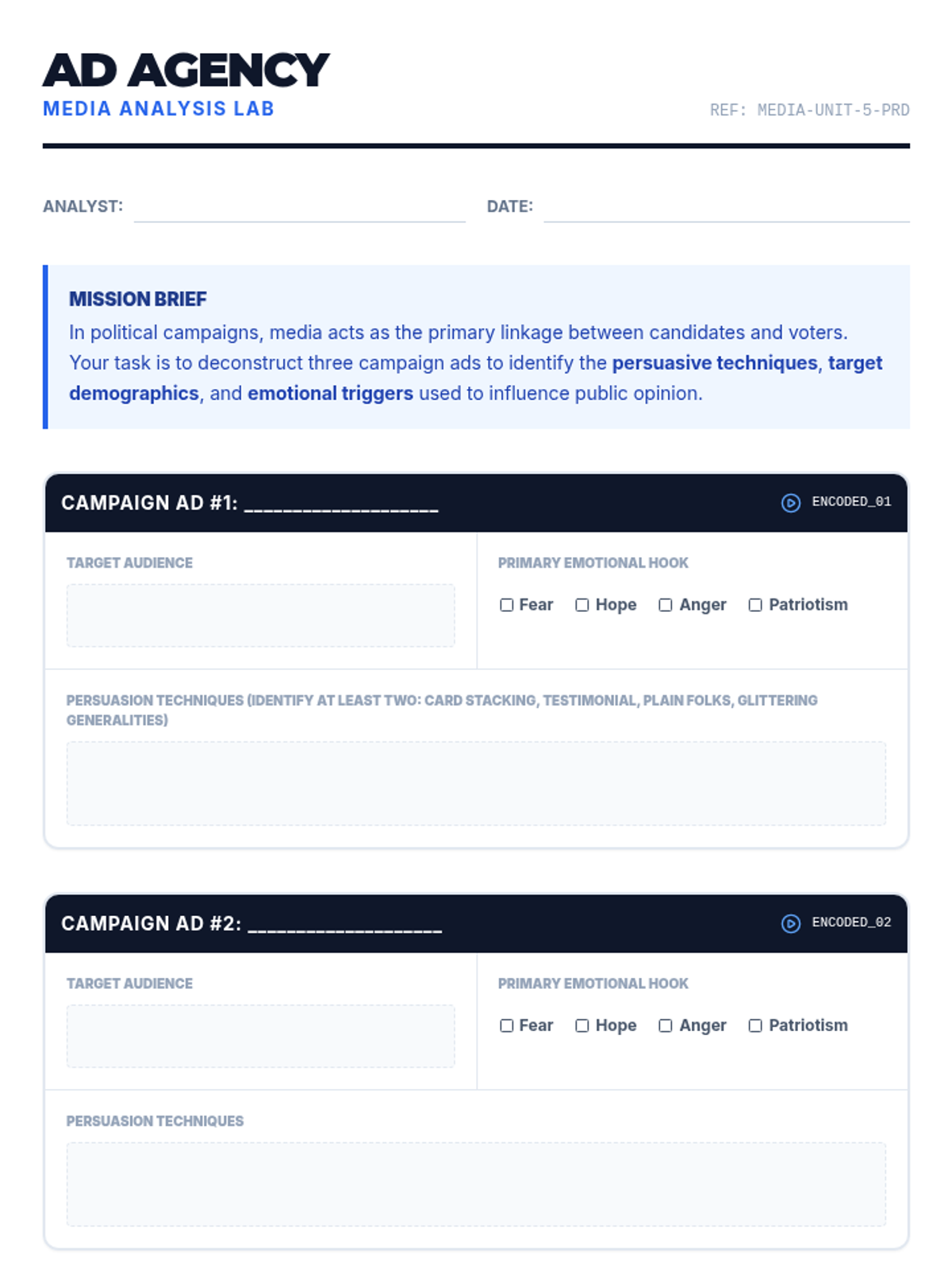
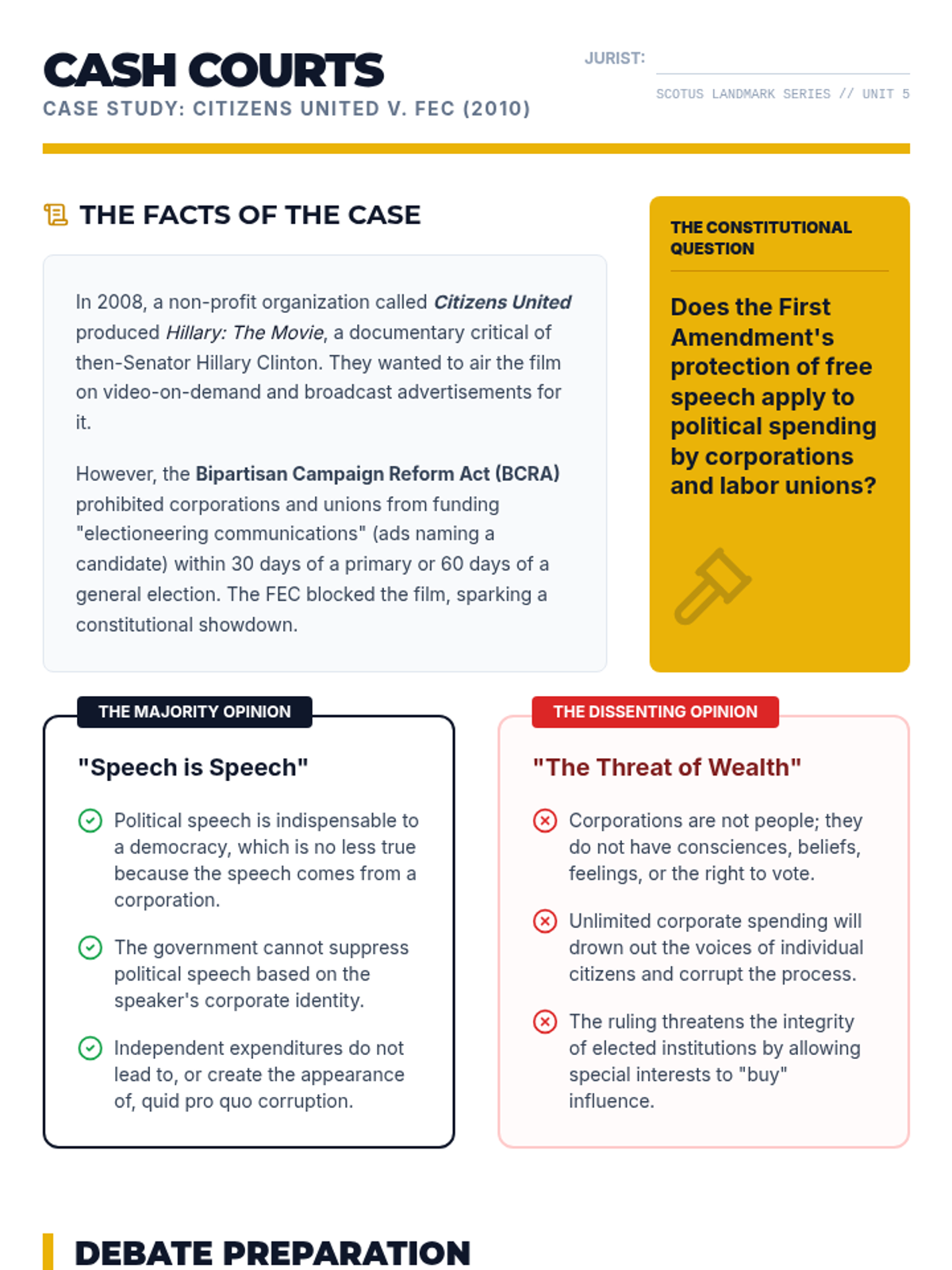
An intensive AP Government lesson exploring the three primary linkage institutions: political parties, interest groups, and the media. Students will simulate coalition building, analyze the persuasive power of campaign media, and debate the constitutional implications of *Citizens United v. FEC*.
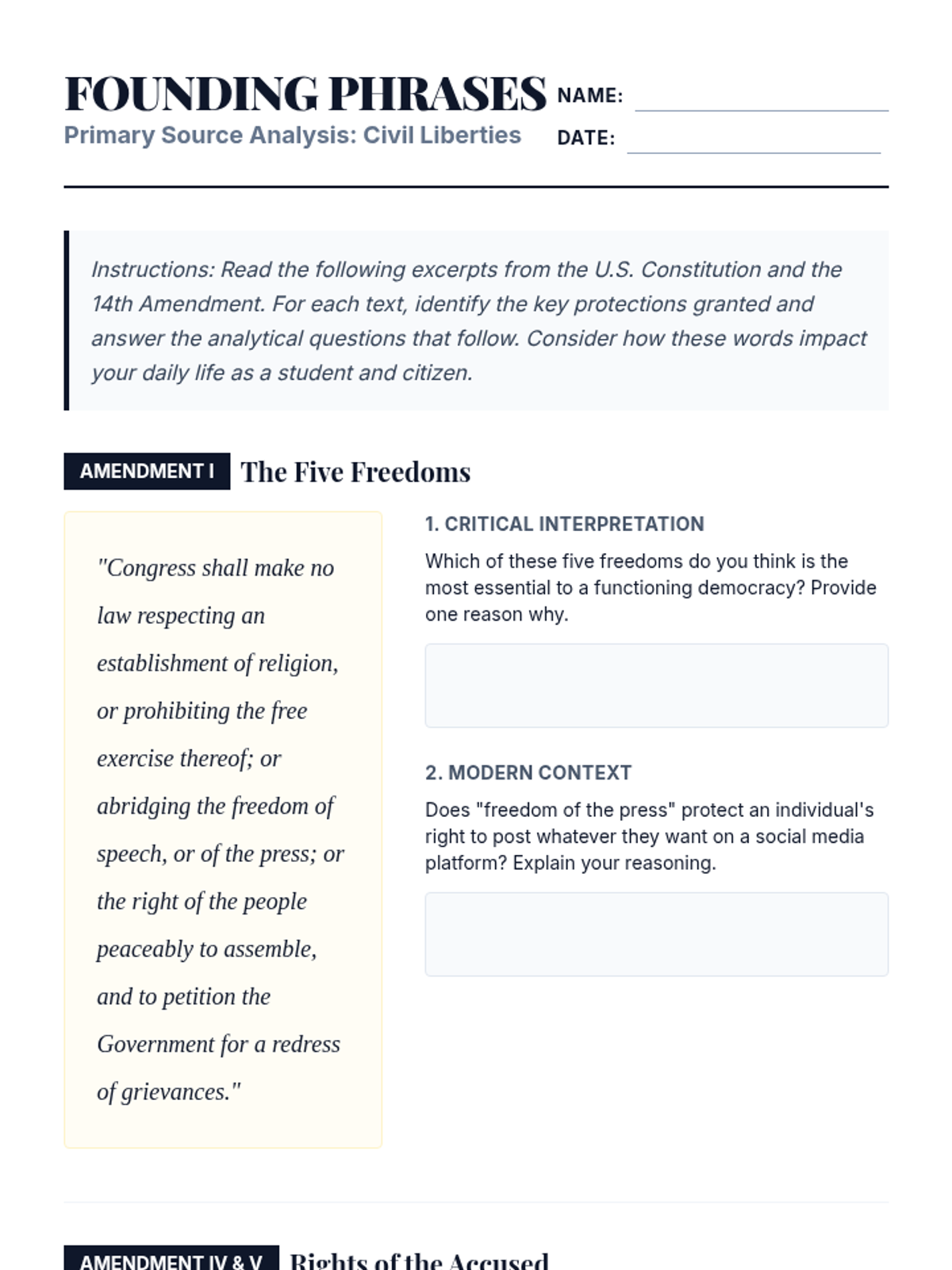
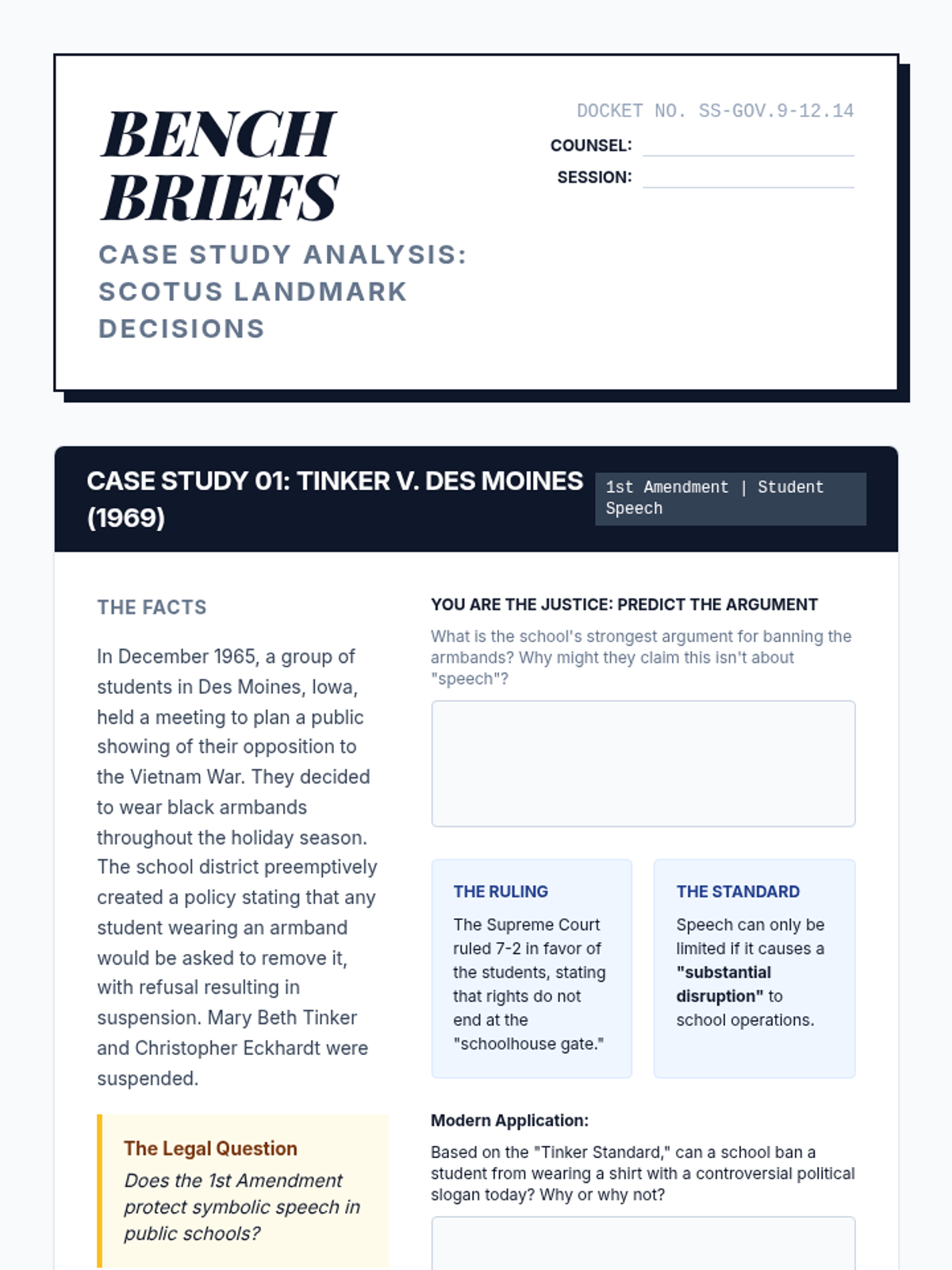
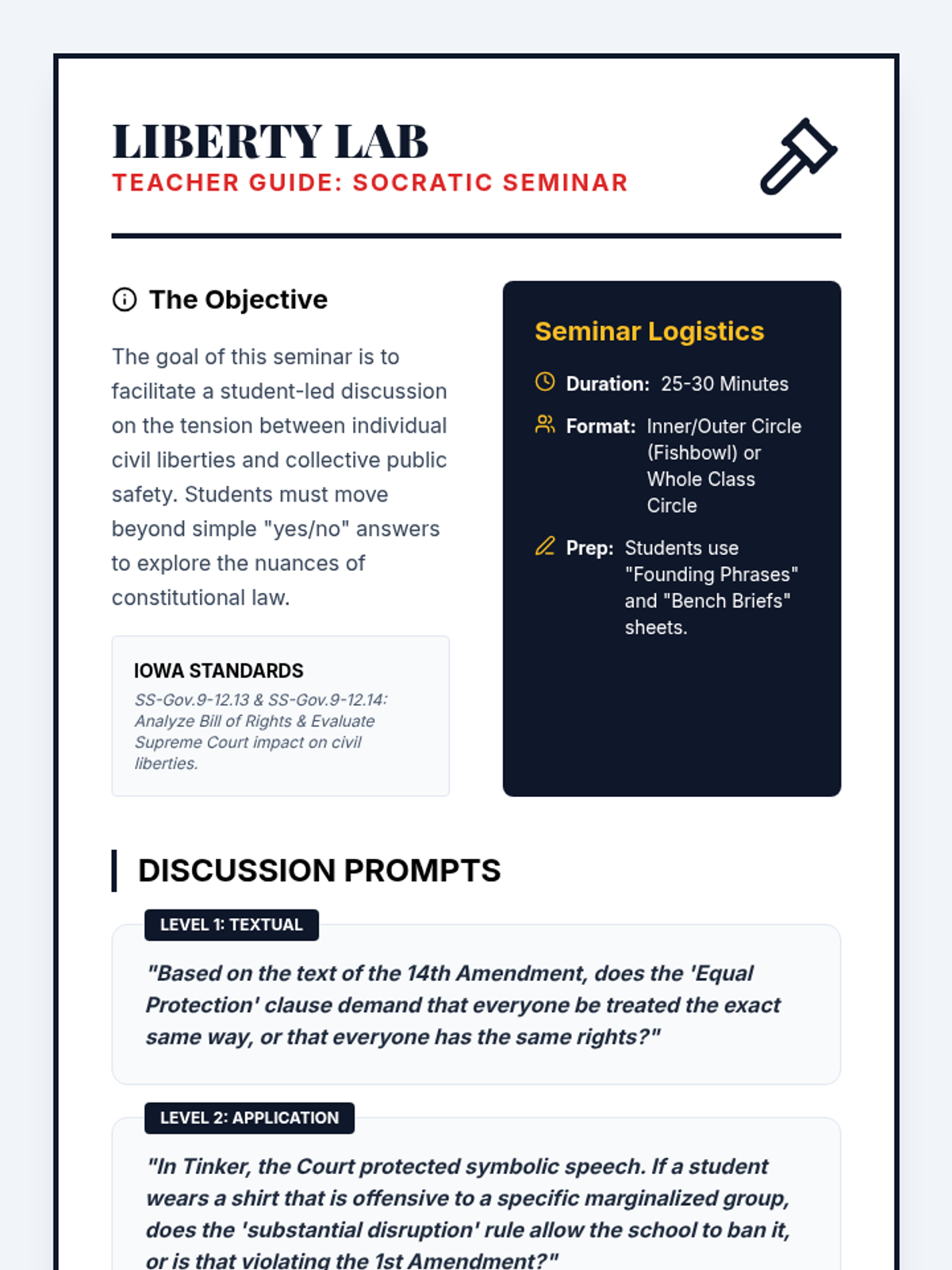
A high school U.S. Government lesson focusing on the Bill of Rights, the 14th Amendment, and the tension between individual civil liberties and public safety. Includes primary source analysis, landmark Supreme Court case studies, and a structured Socratic seminar.
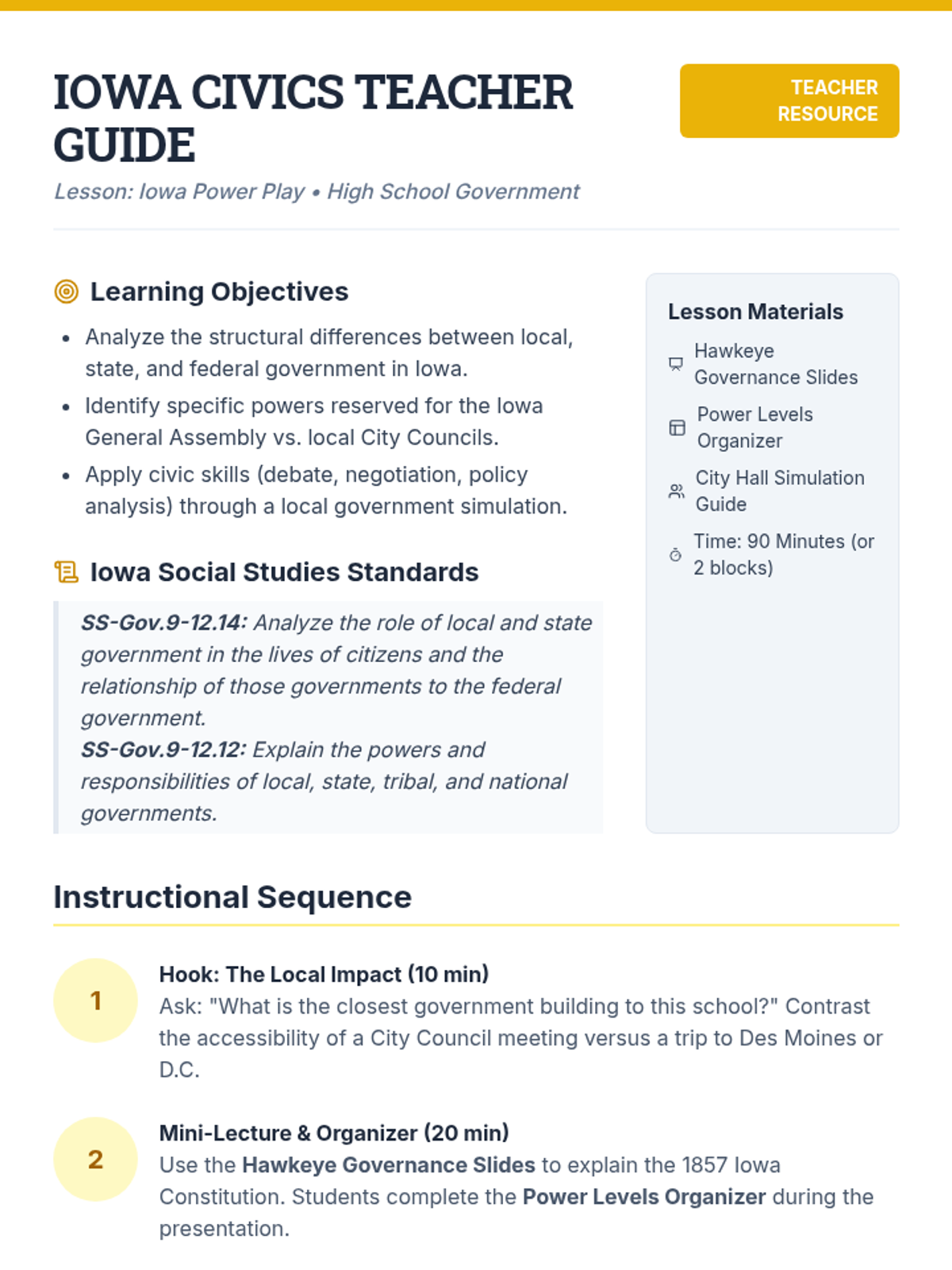
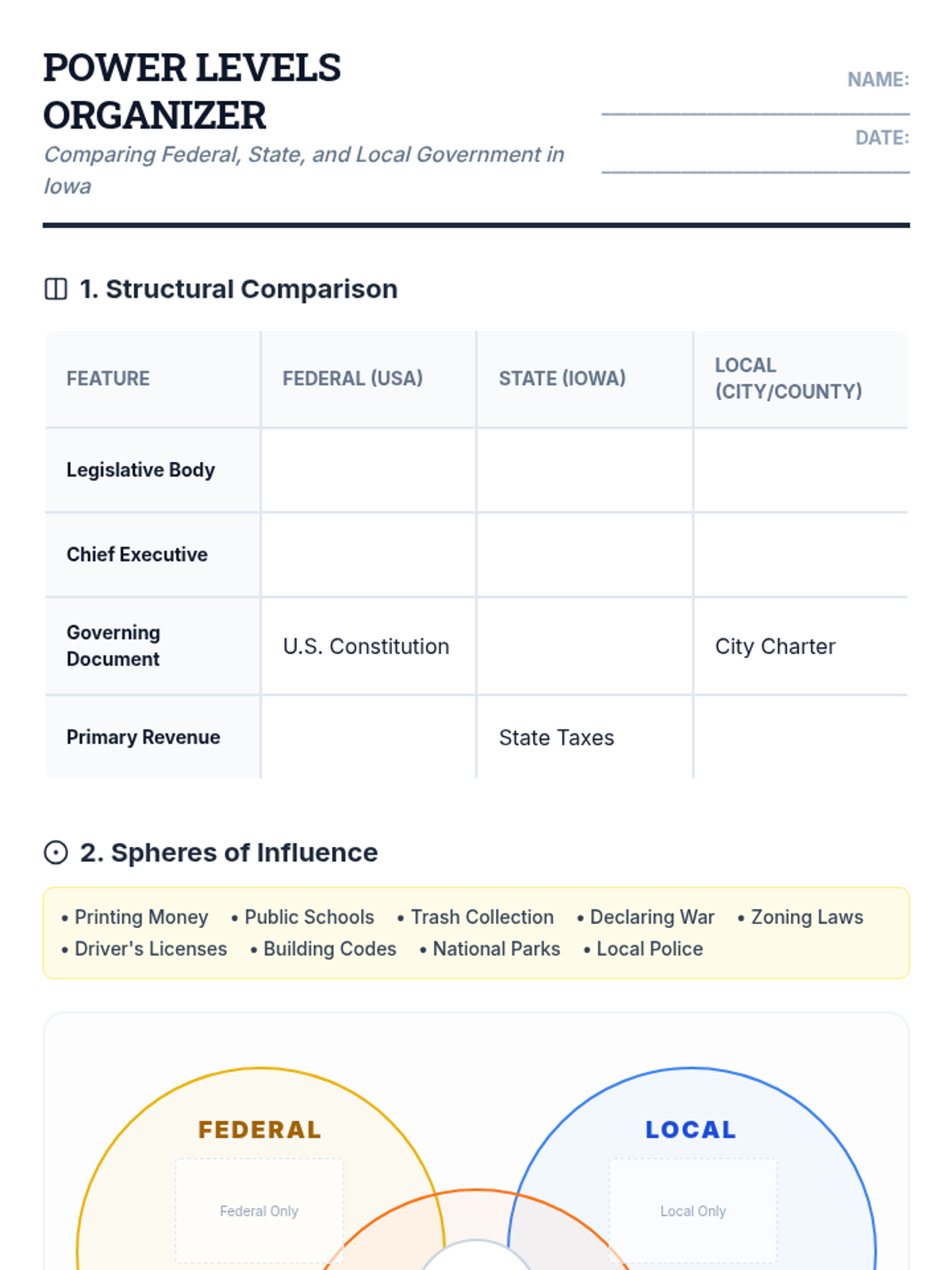
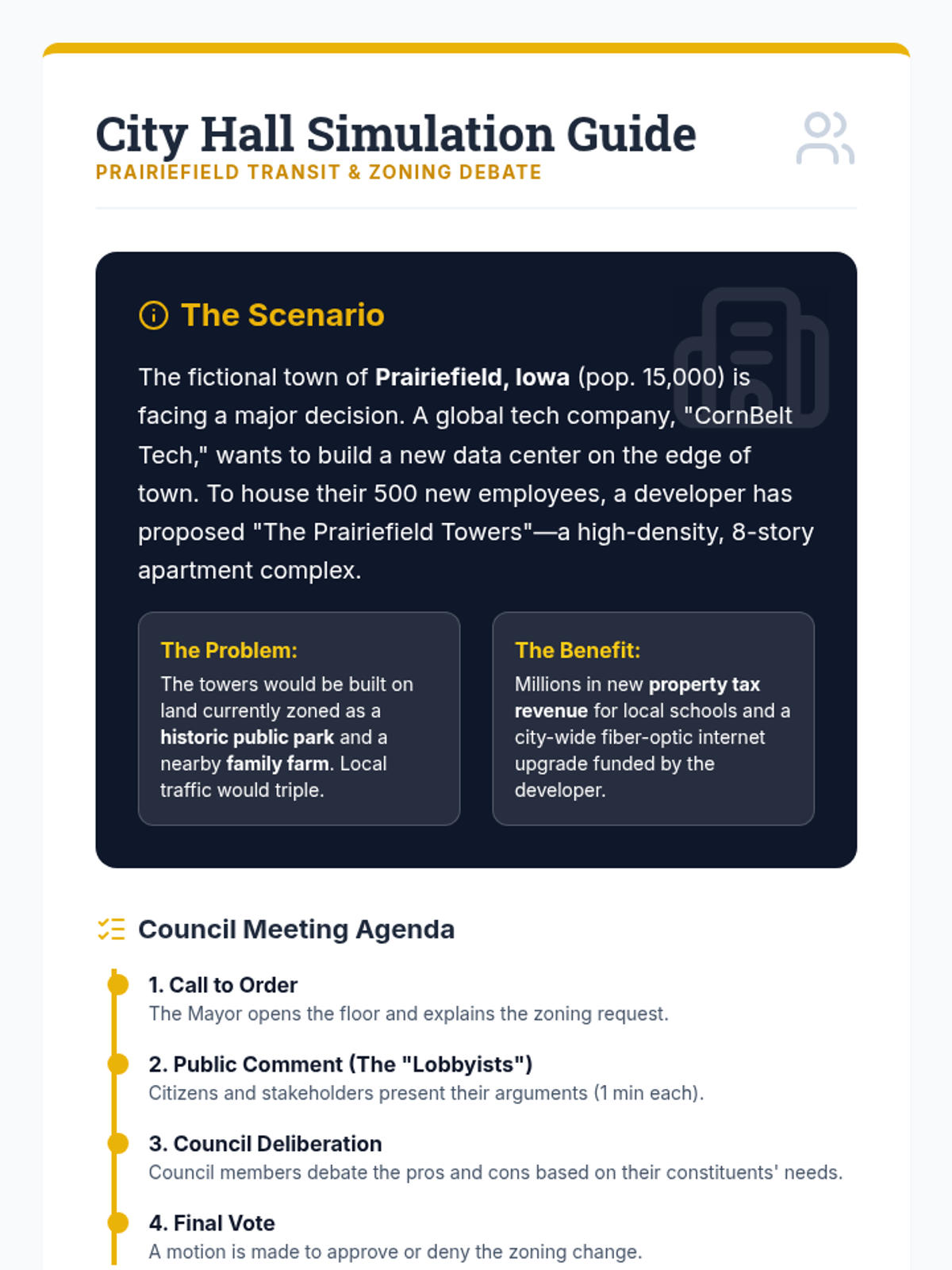
A high school civics lesson exploring the structure and function of Iowa's state and local governments, featuring a city council simulation and a comparative graphic organizer.
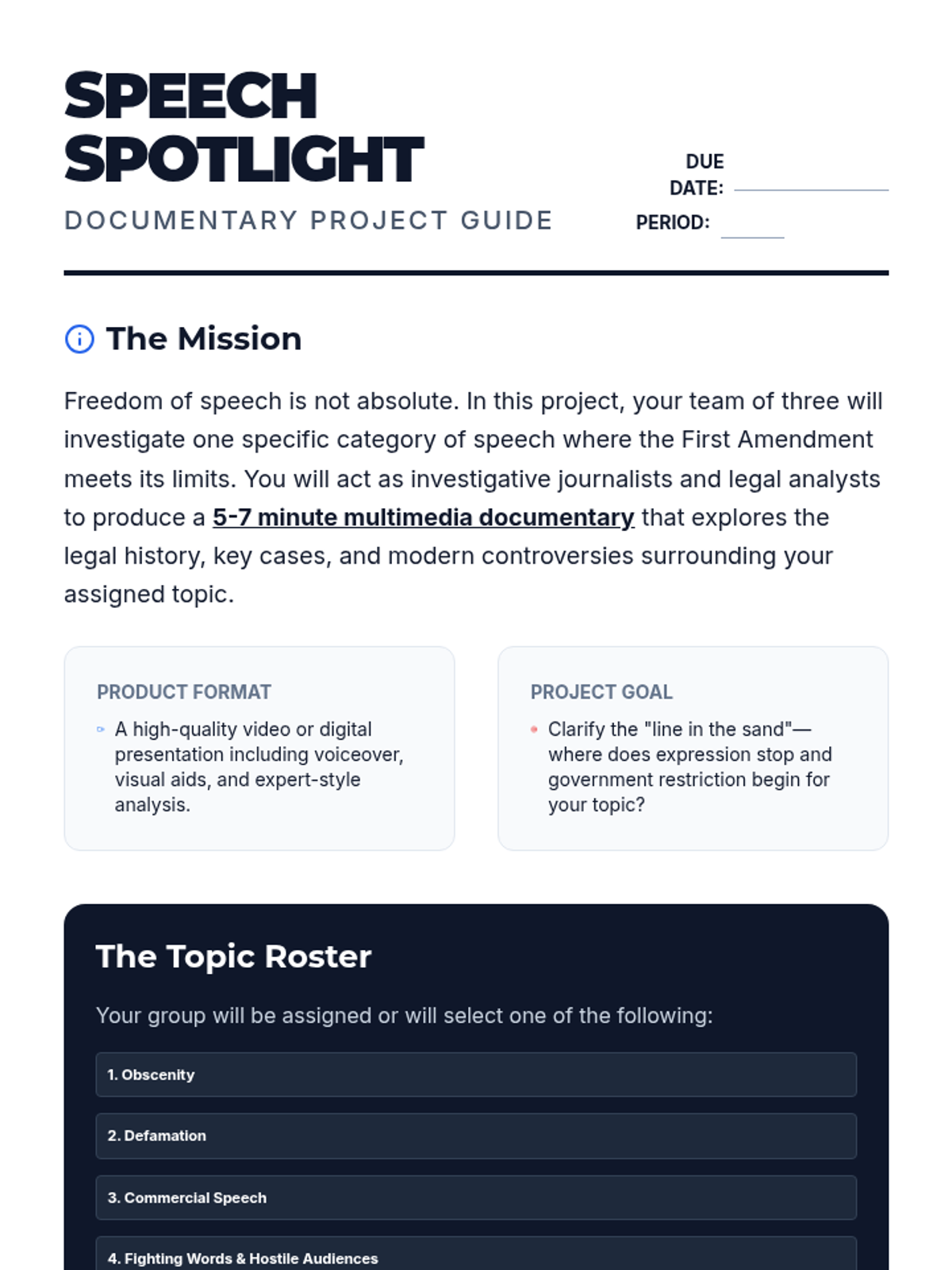
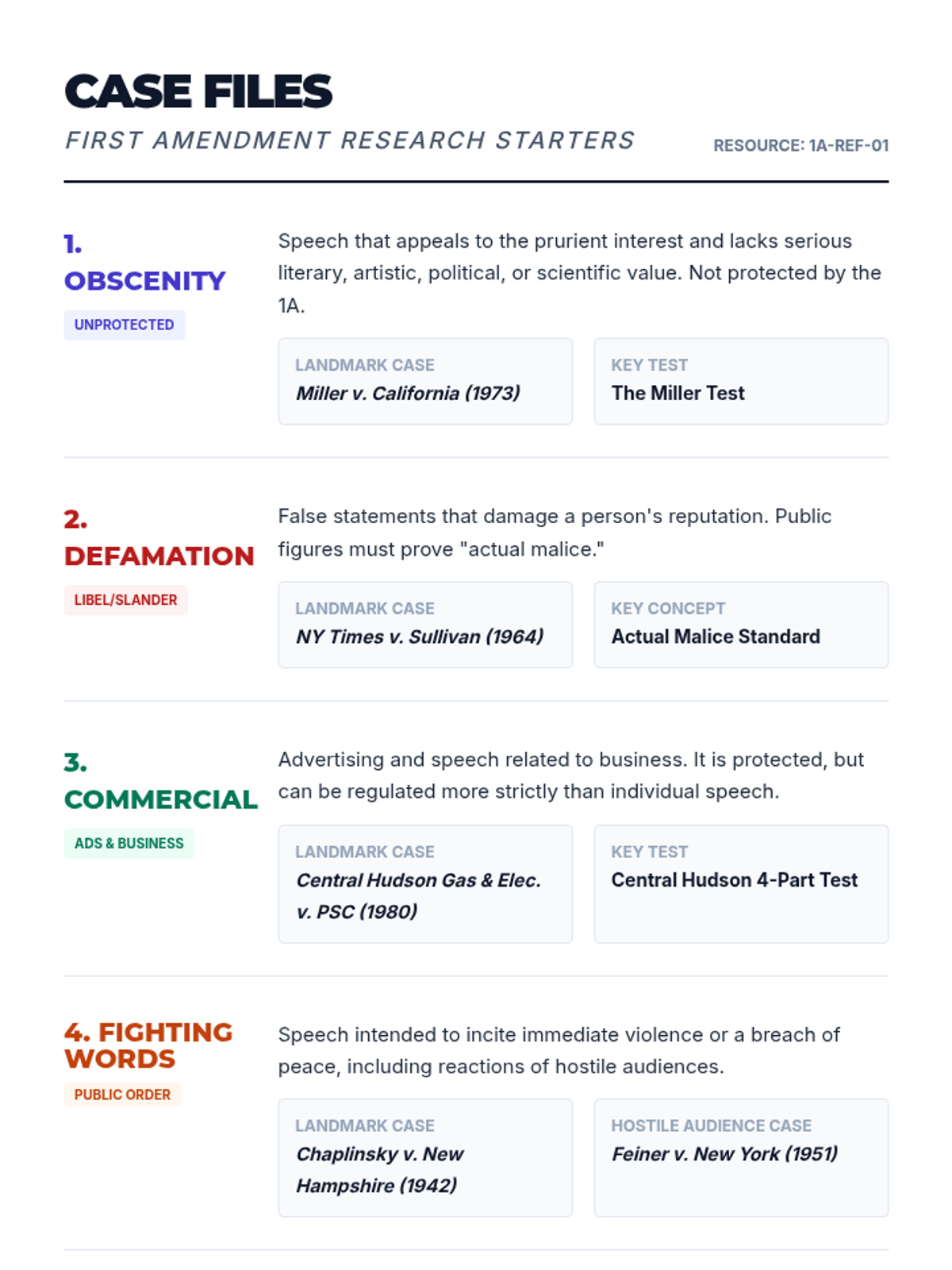
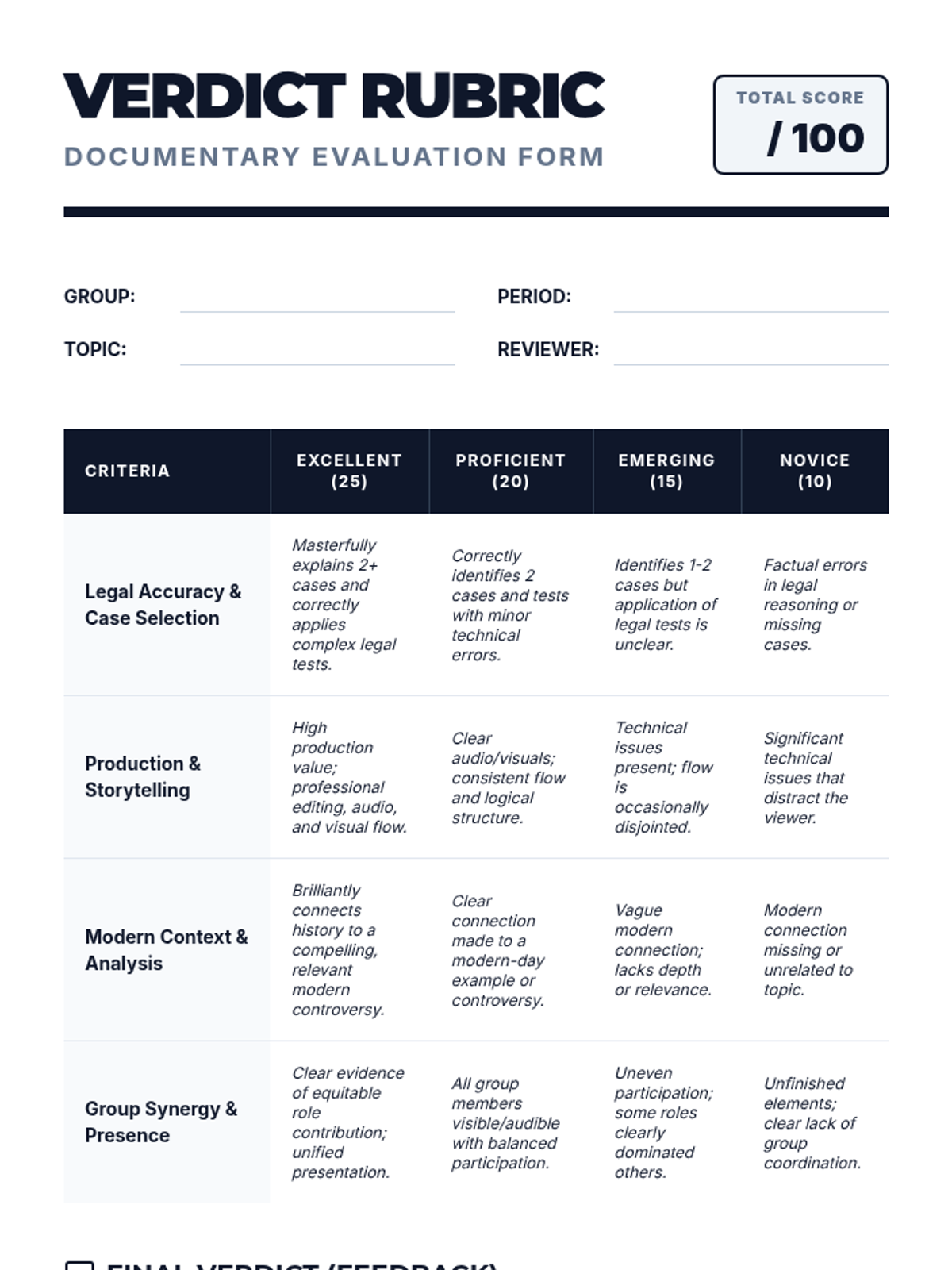
A collaborative project where students investigate the legal boundaries of the First Amendment, focusing on seven specific categories of restricted speech and producing a multimedia documentary.
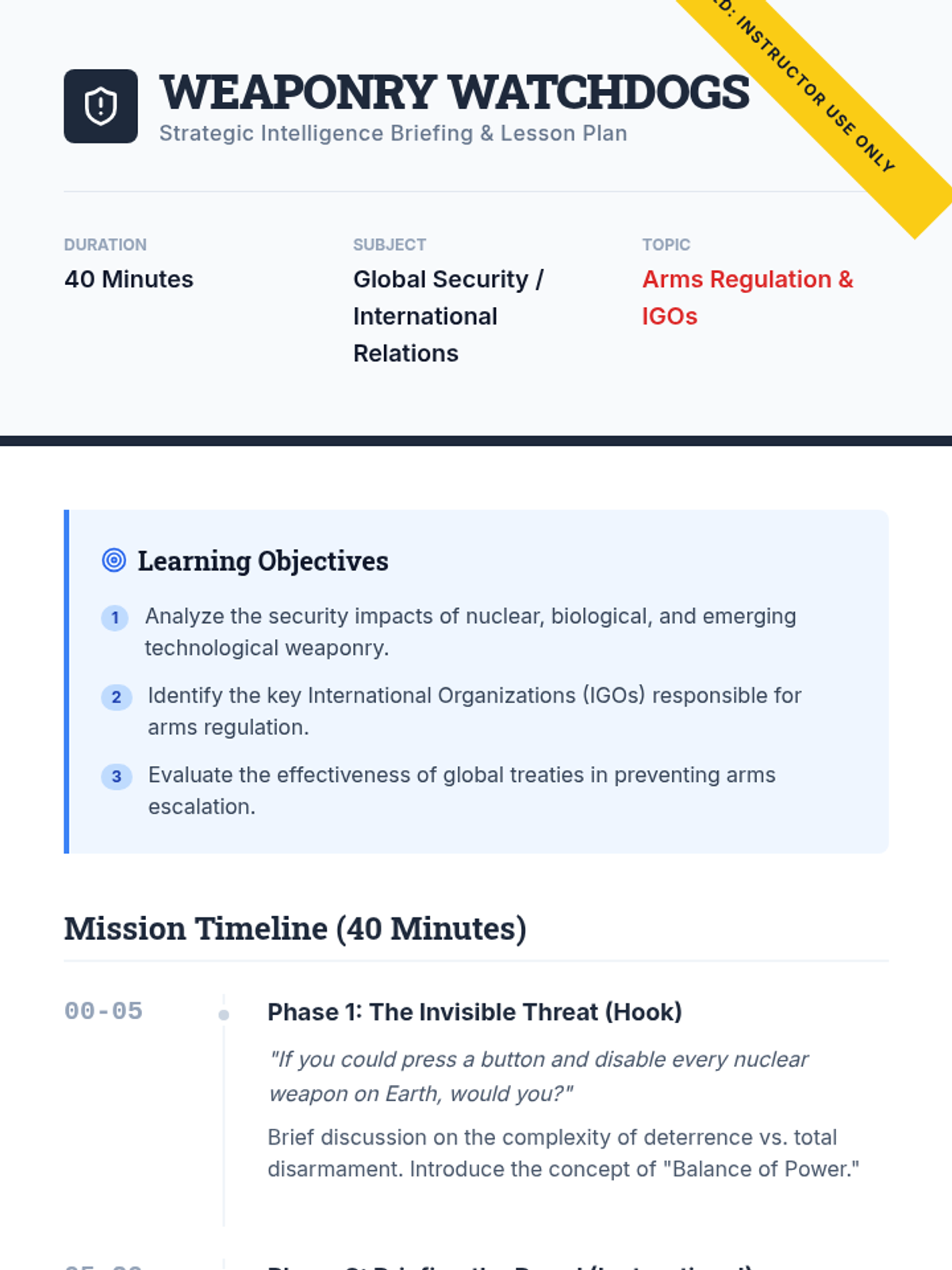
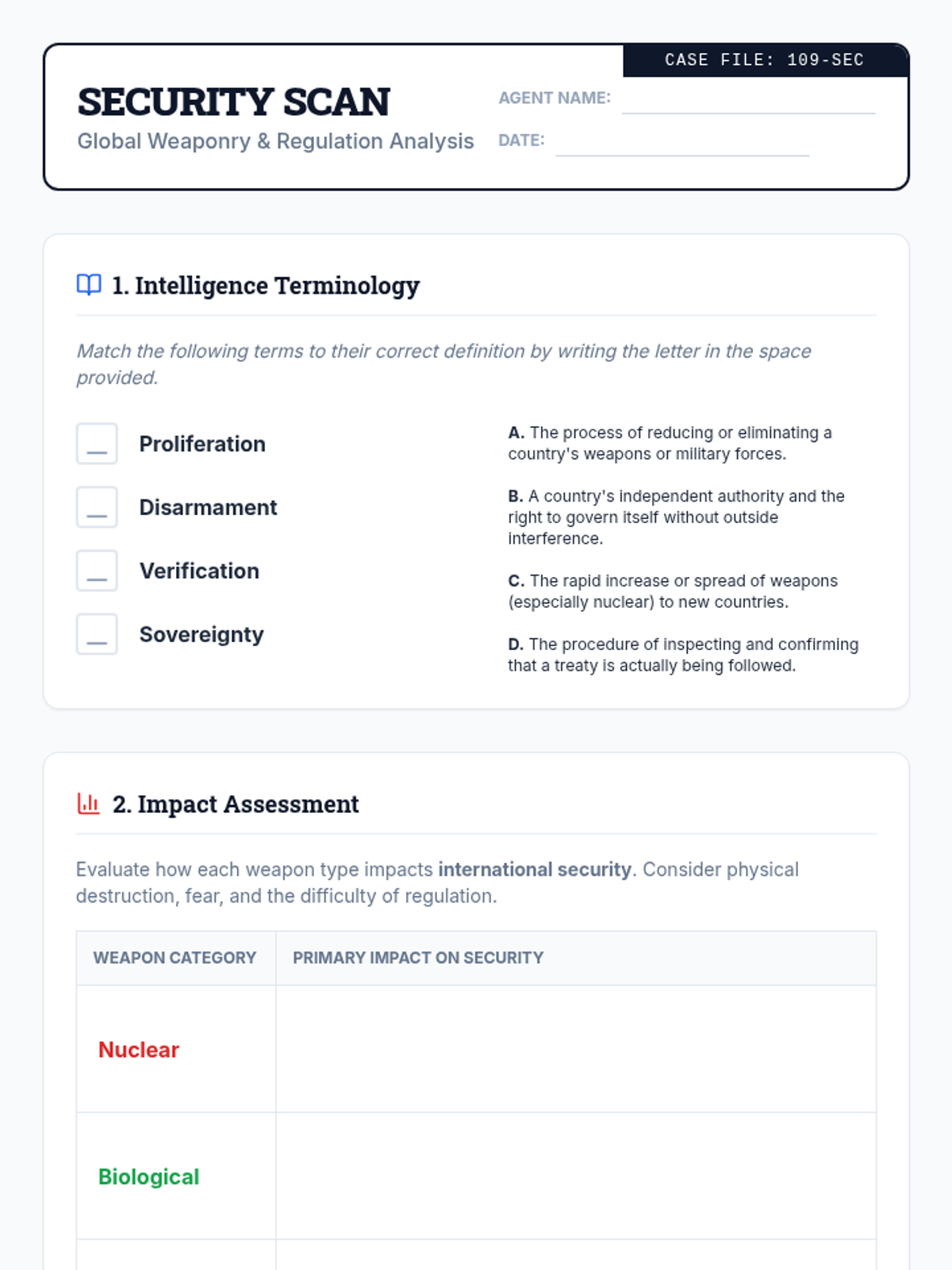
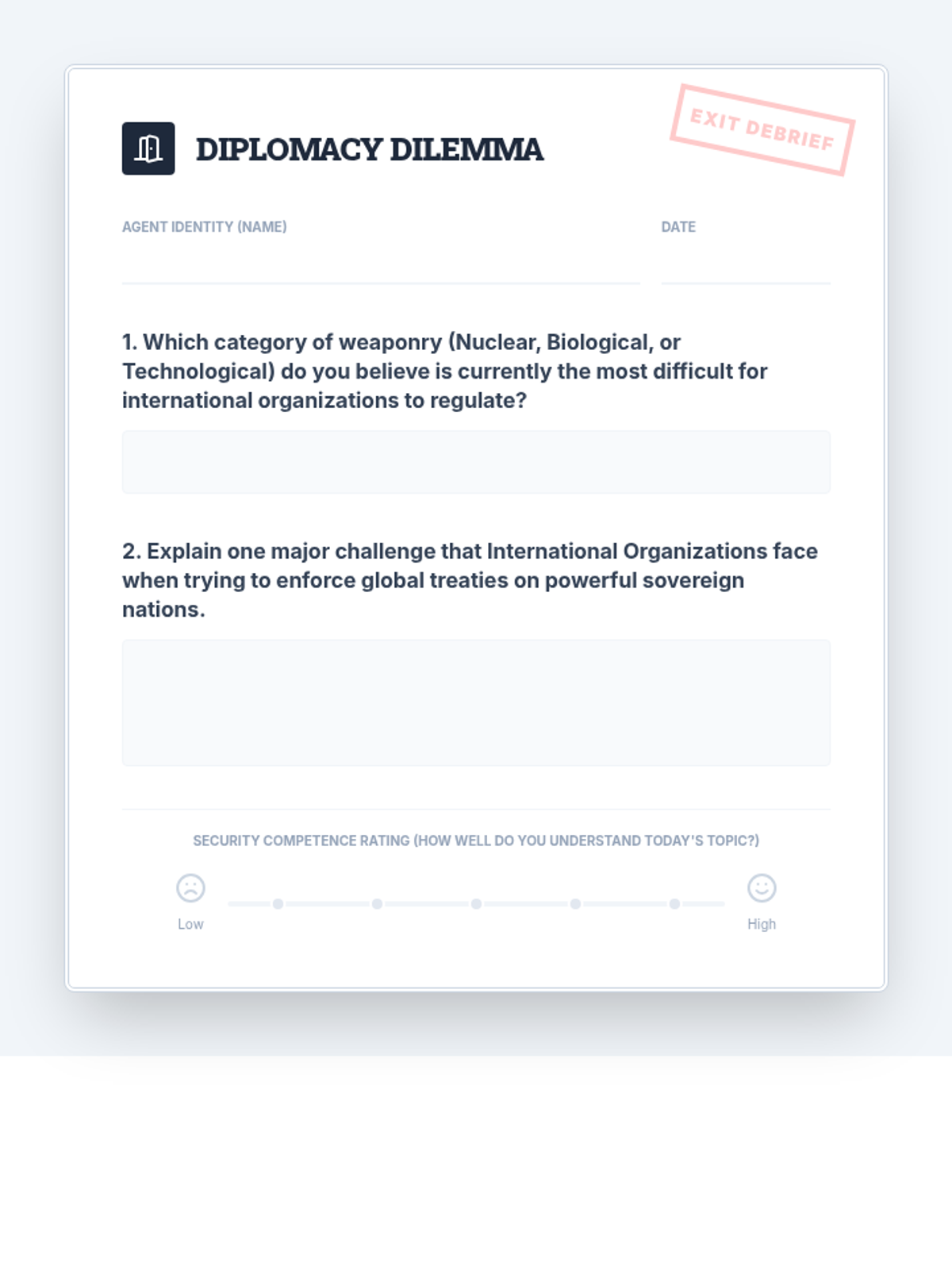
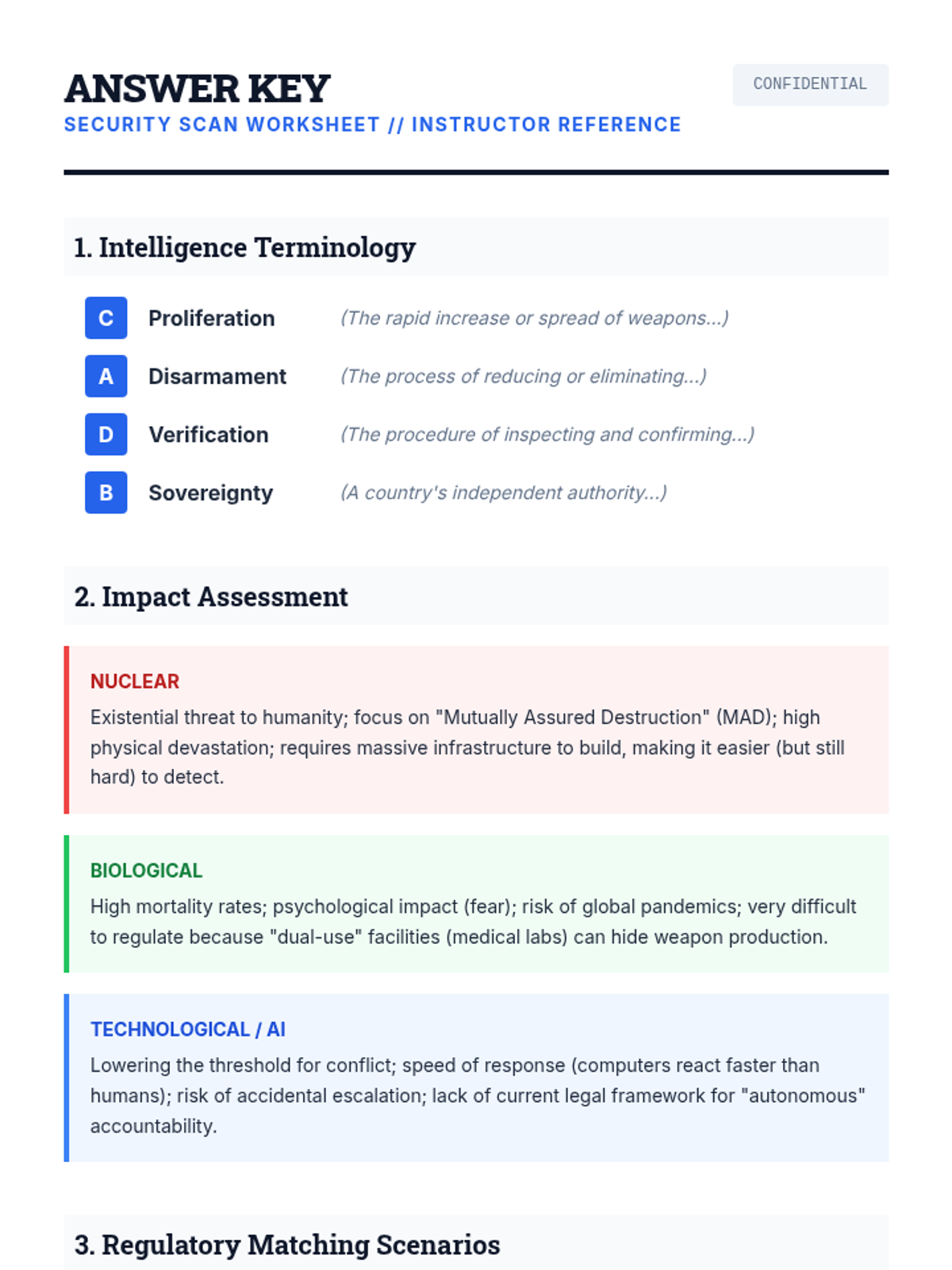
A 40-minute exploration of how international organizations regulate technological, biological, and nuclear weapons to maintain global security. Students analyze the impact of modern weaponry and evaluate the effectiveness of global treaties.
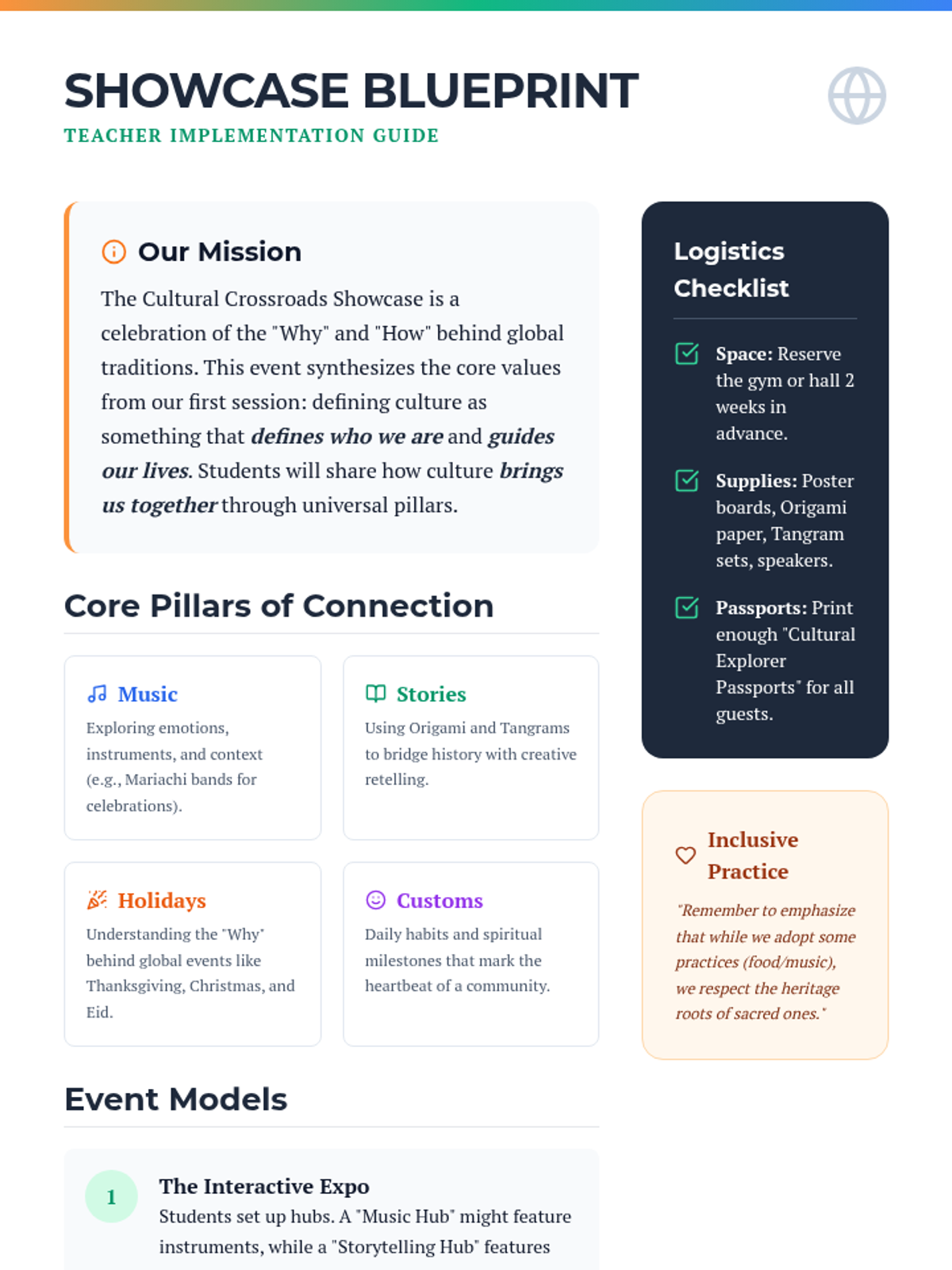
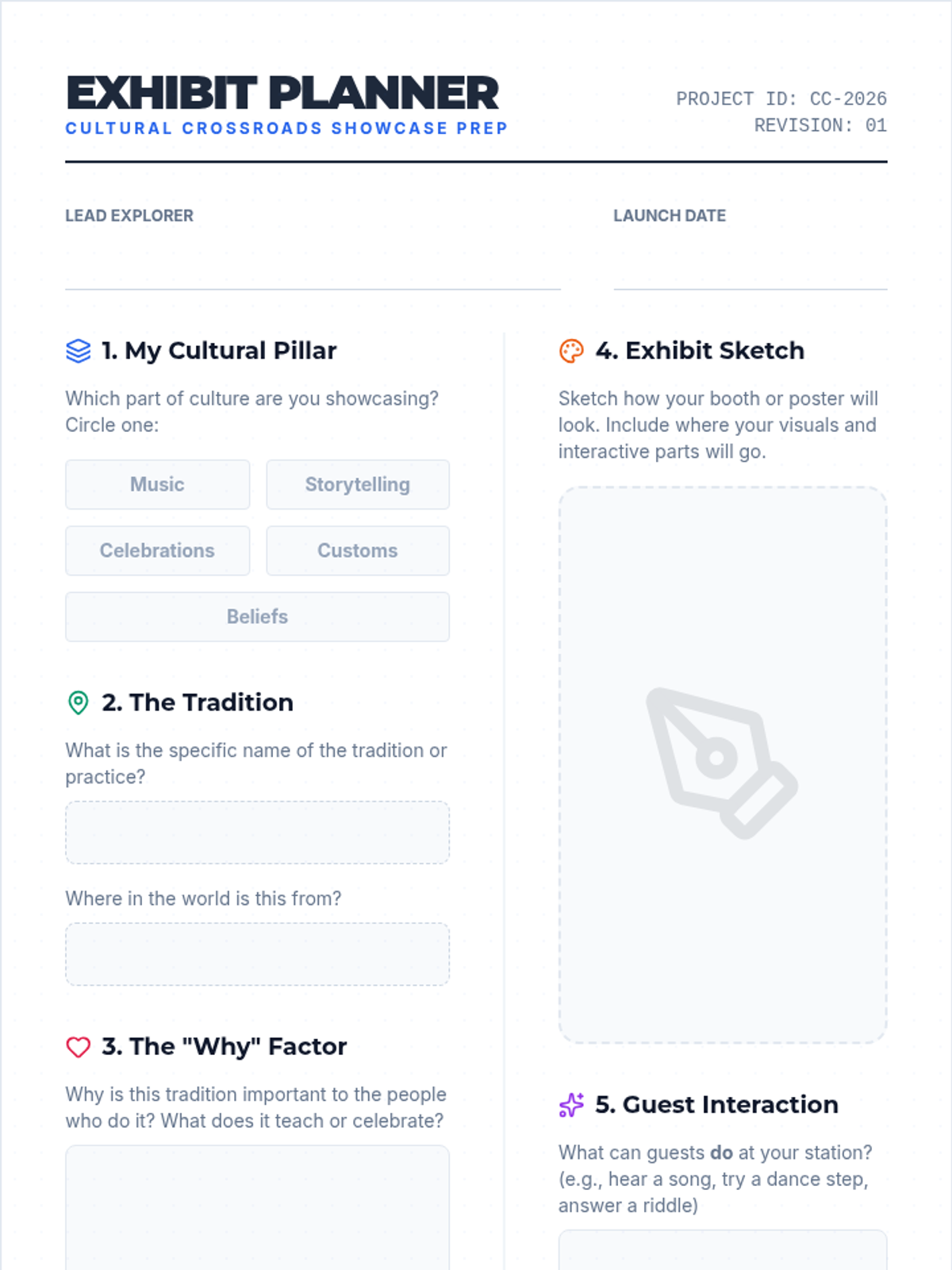
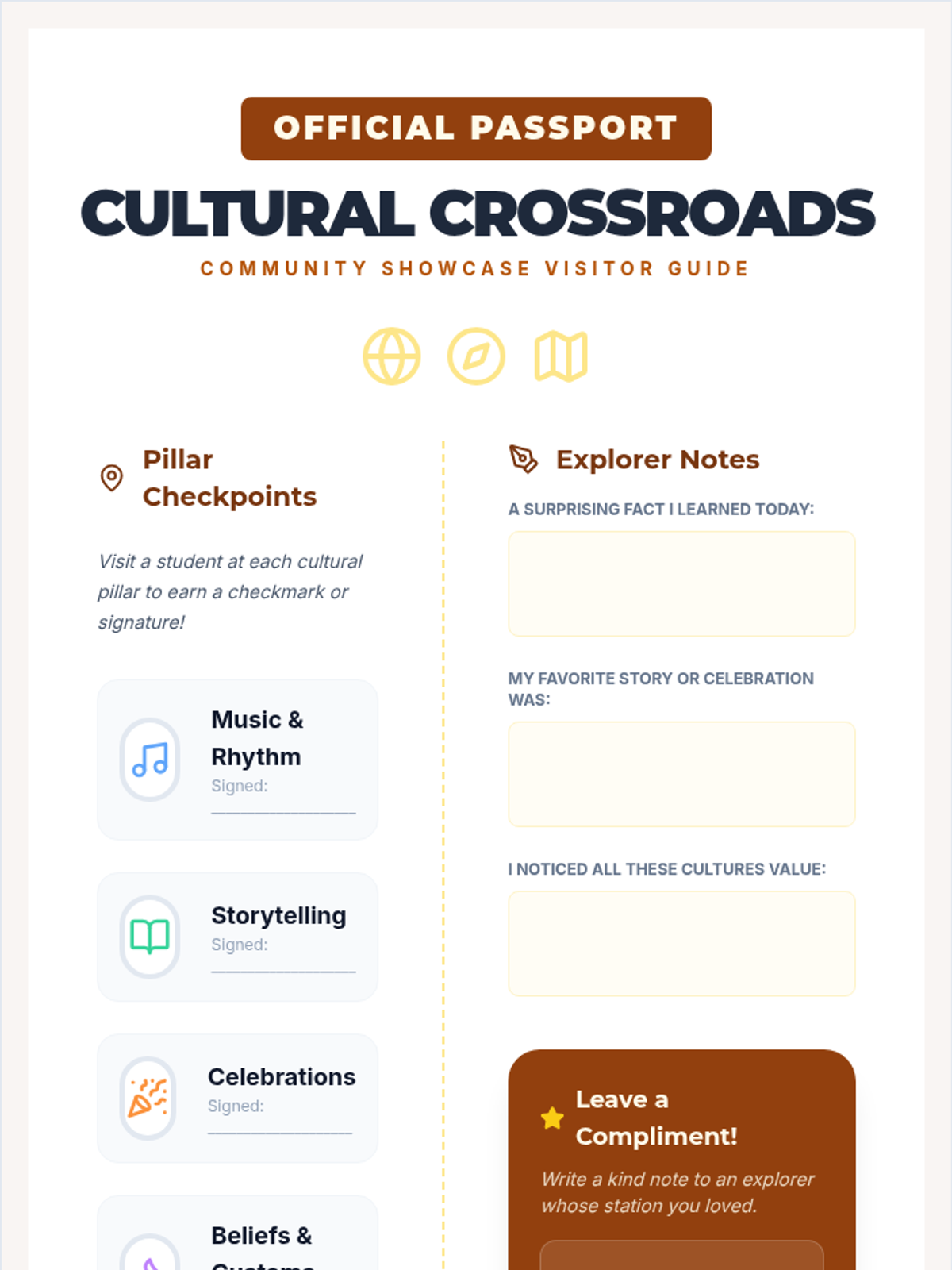
A culminating unit for the Cultural Connections after-school club where students prepare and host a showcase for the community. The lesson focuses on synthesizing their understanding of cultural pillars like music, storytelling, and traditions through interactive presentations.
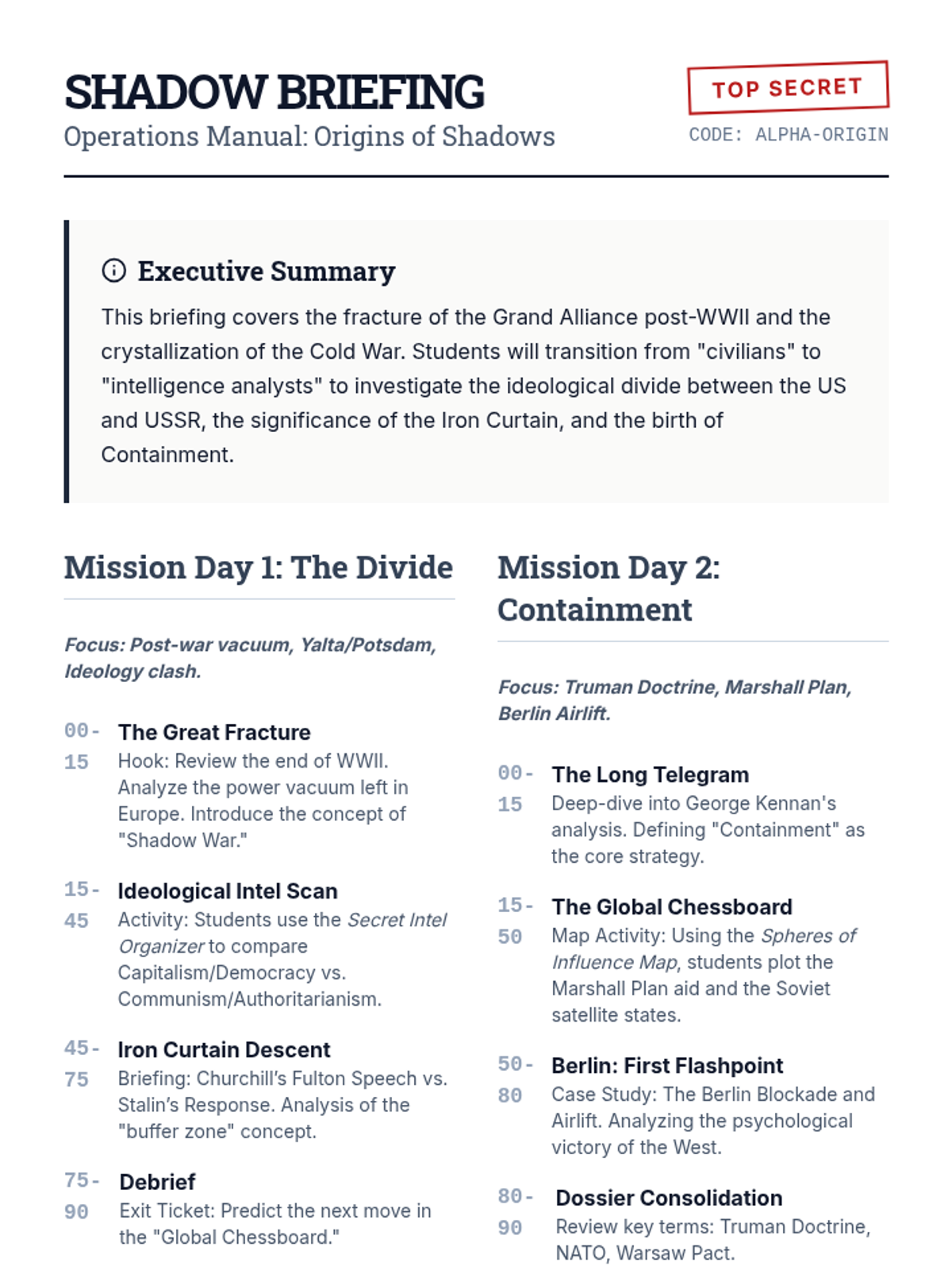
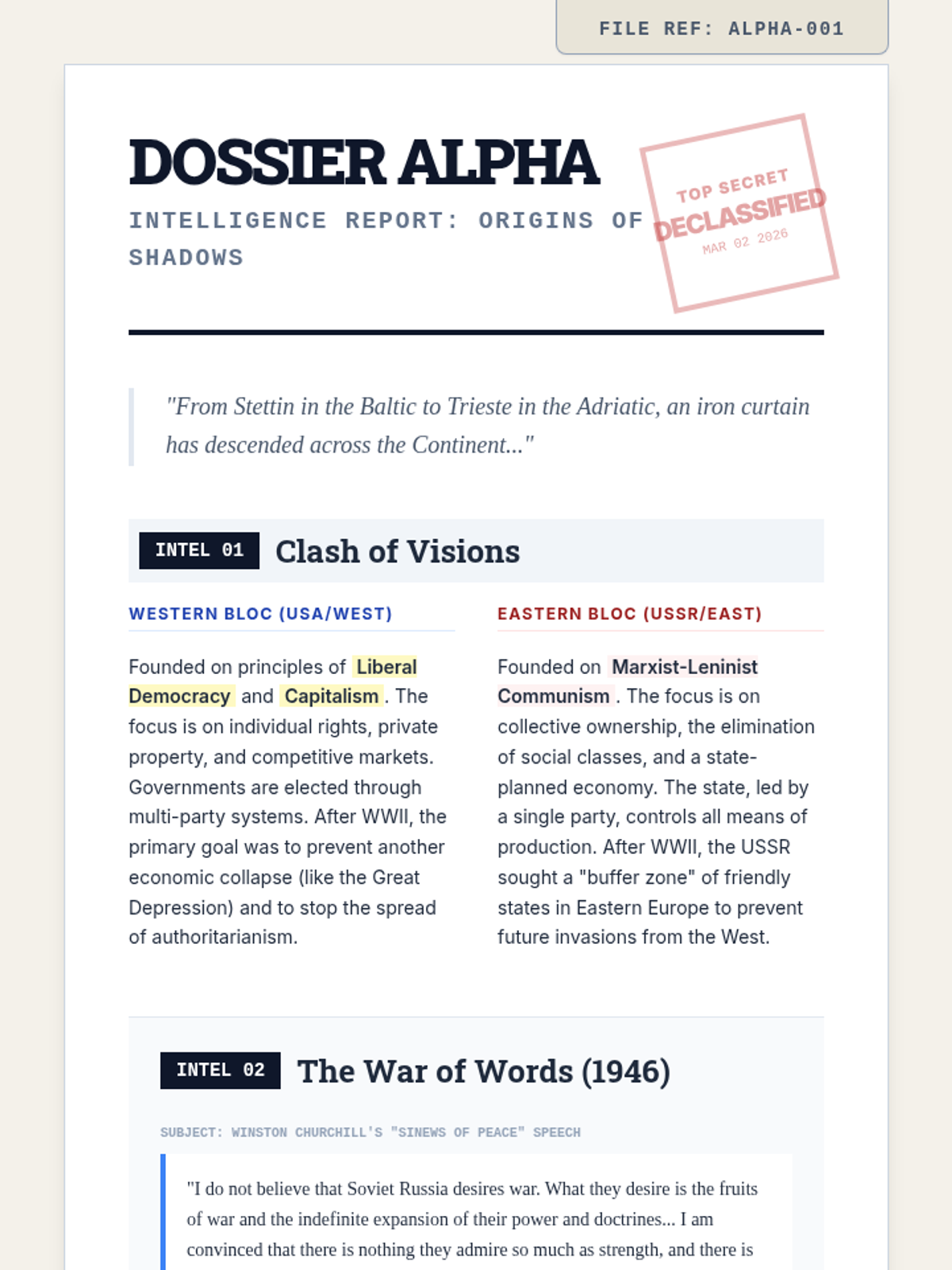
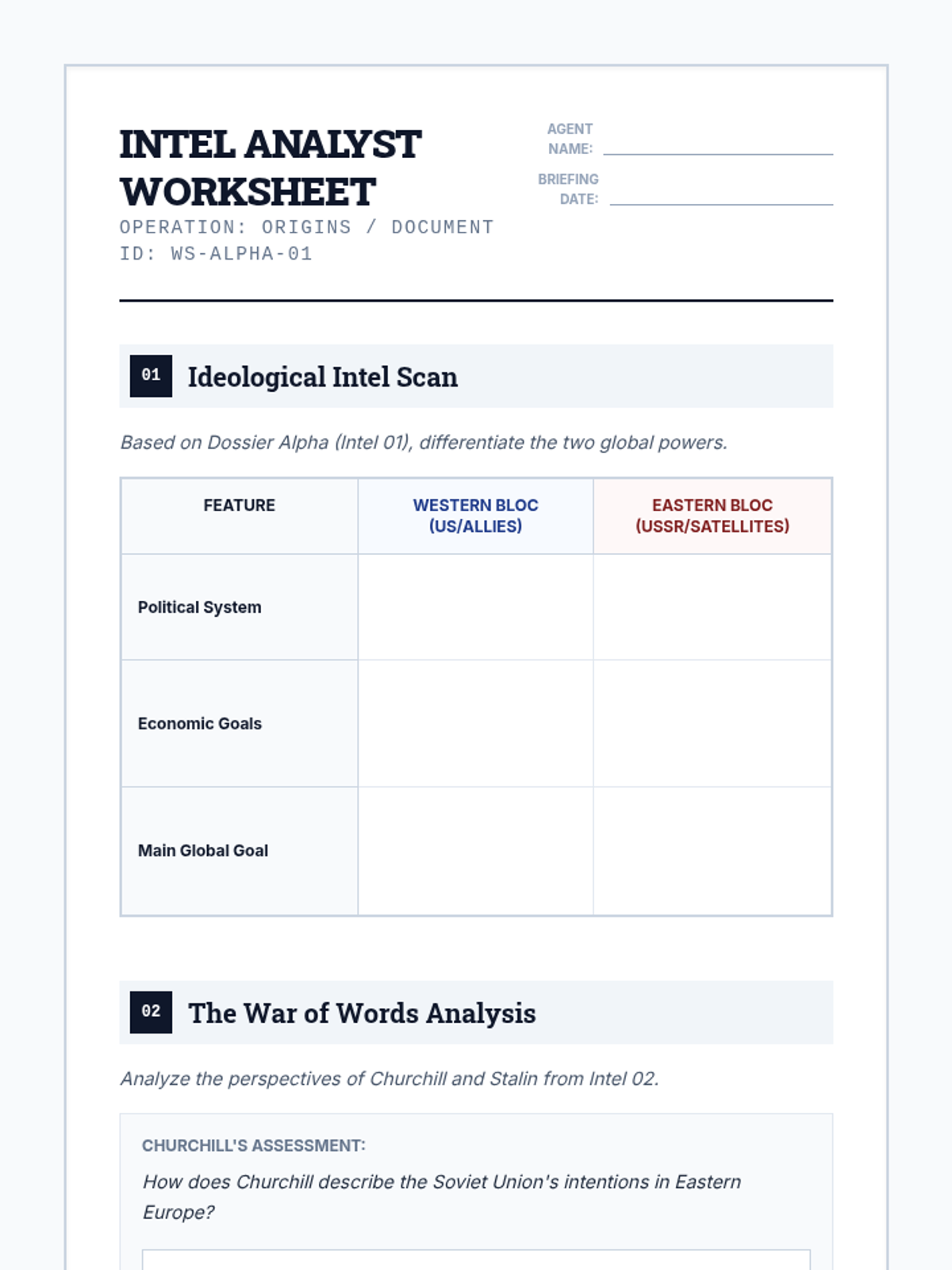
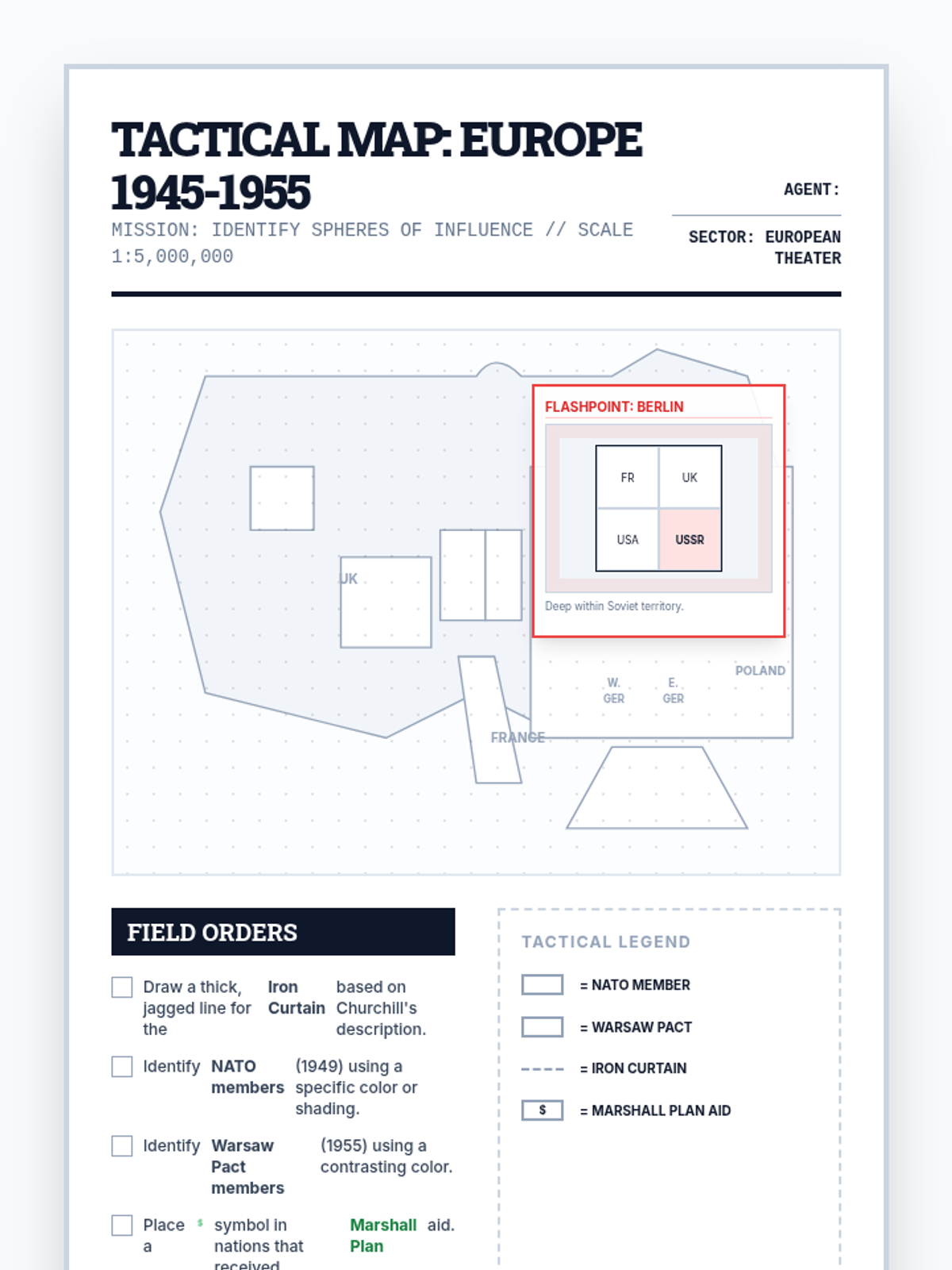
The first installment of the Shadow War unit, focusing on the ideological split post-WWII, the Iron Curtain, and the birth of containment. This lesson covers two 90-minute blocks.
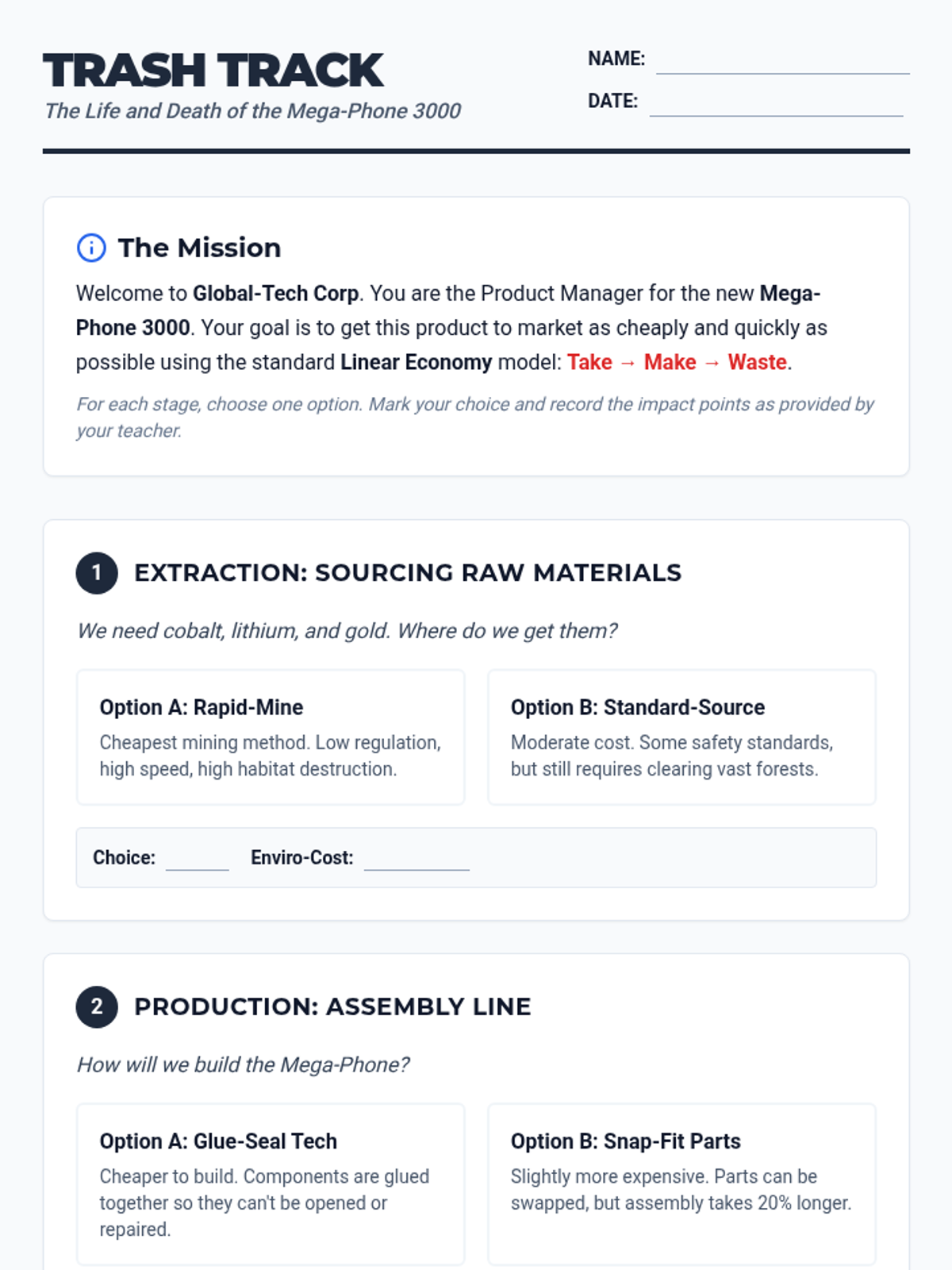
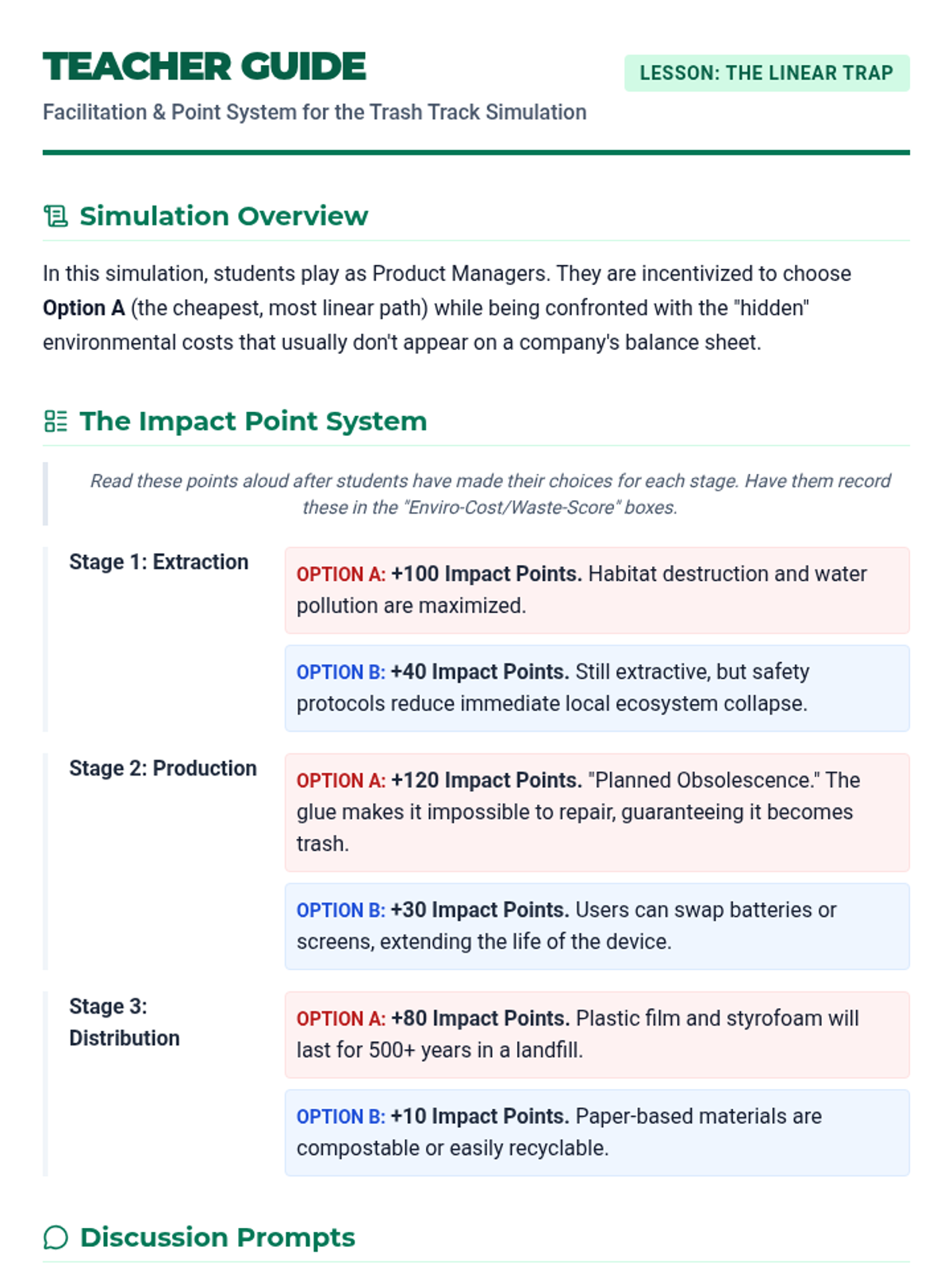
In this simulation-based lesson, students follow the life cycle of a consumer product through a linear economy, making choices that highlight the 'take-make-waste' model. They then analyze the environmental consequences and brainstorm circular alternatives to reduce waste and resource depletion.
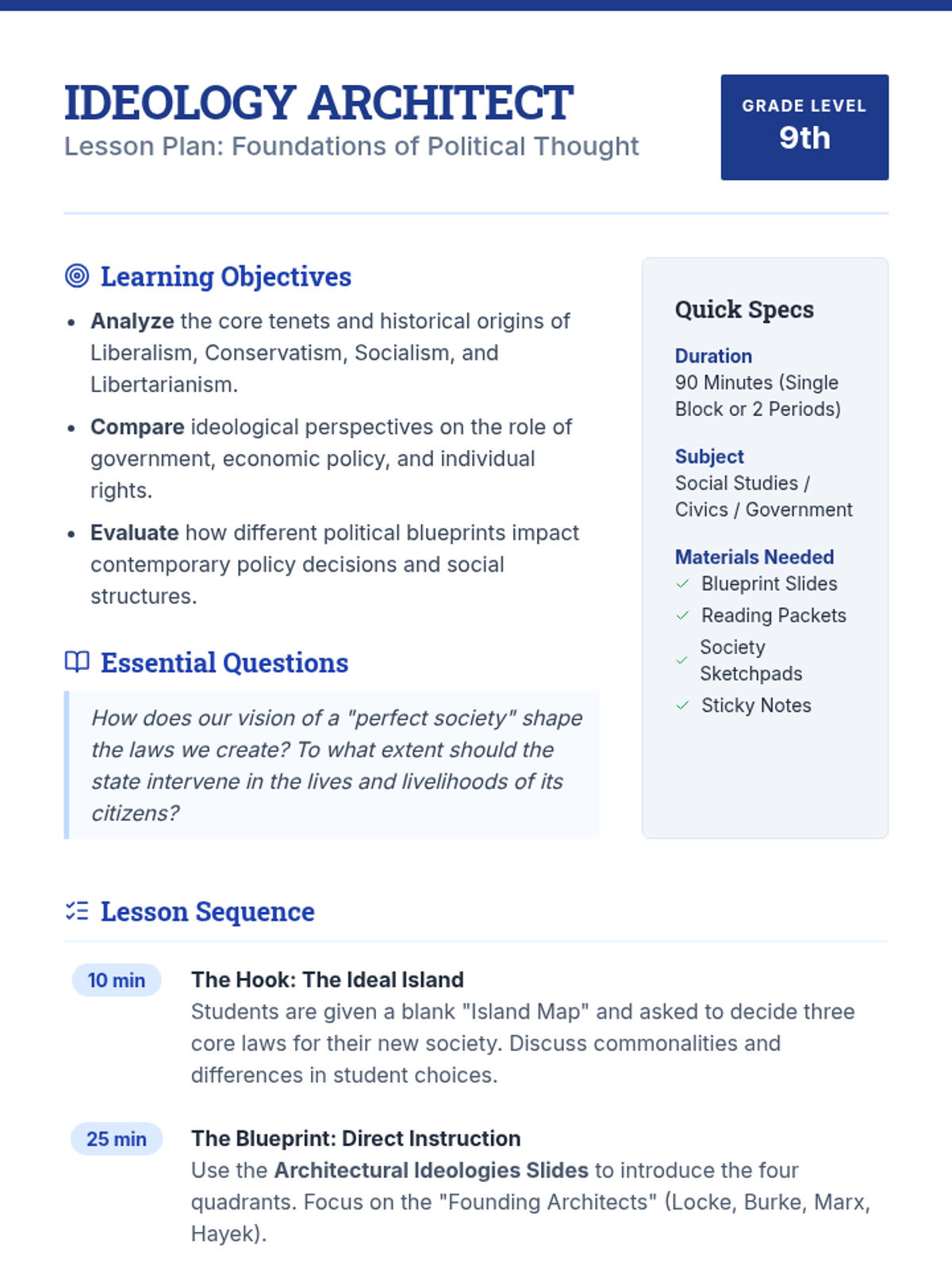
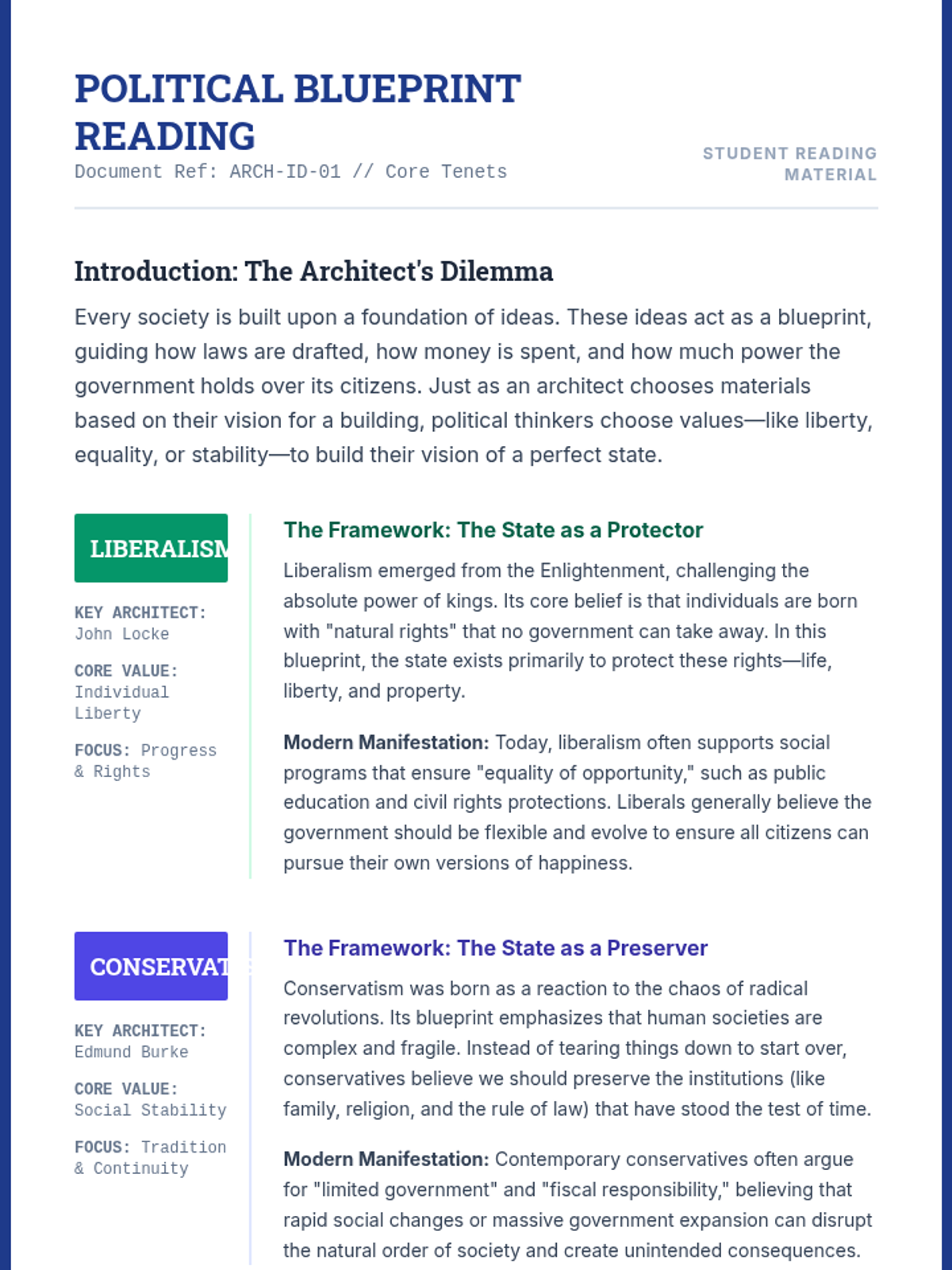
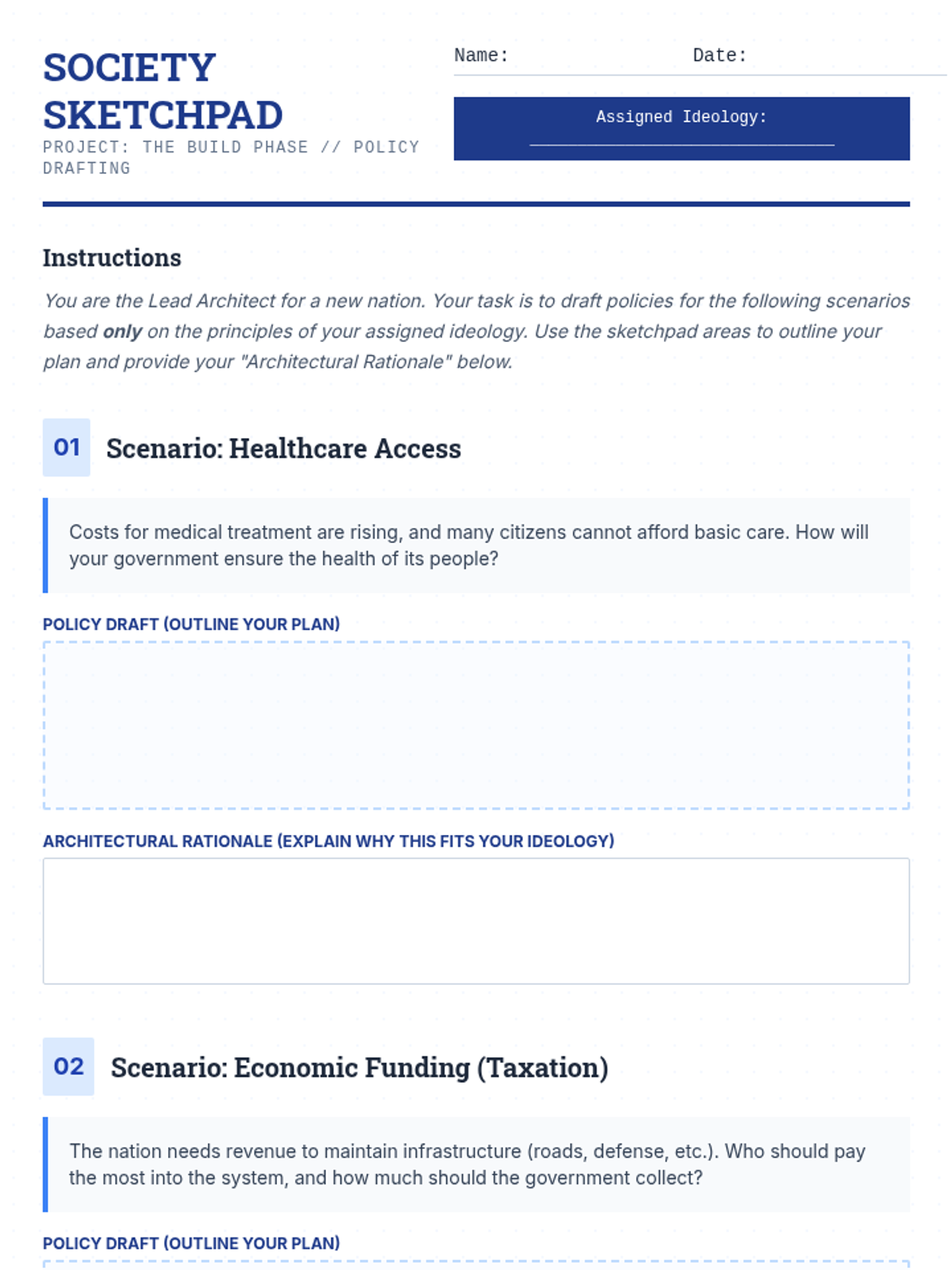
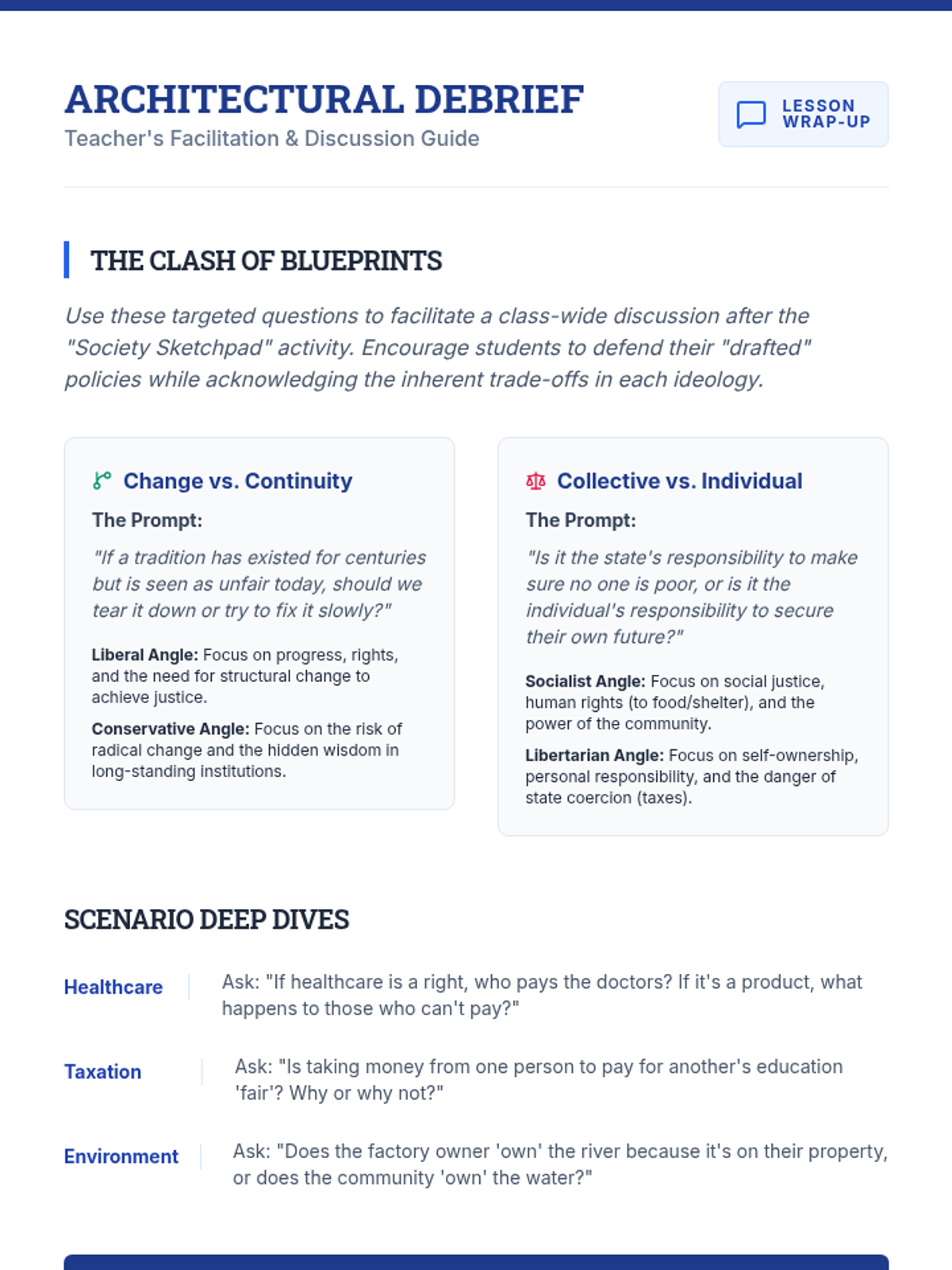
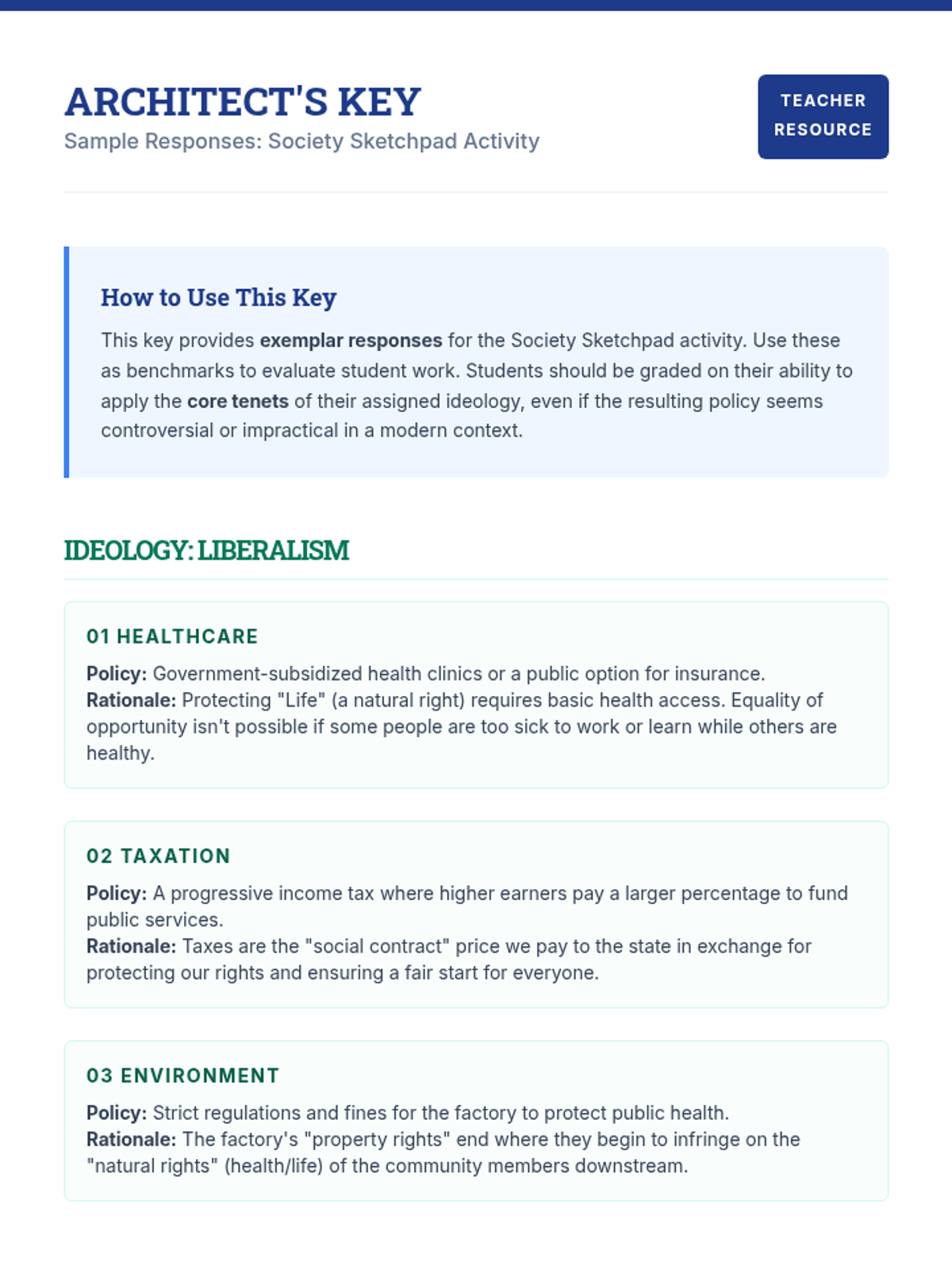
A comprehensive exploration of political ideologies where students analyze core tenets of liberalism, conservatism, socialism, and libertarianism through a blueprint-themed lens.