A 30-minute introductory lesson for 3rd-grade students focusing on letter formation, posture, and spacing through a superhero-themed 'Handwriting Academy' approach.
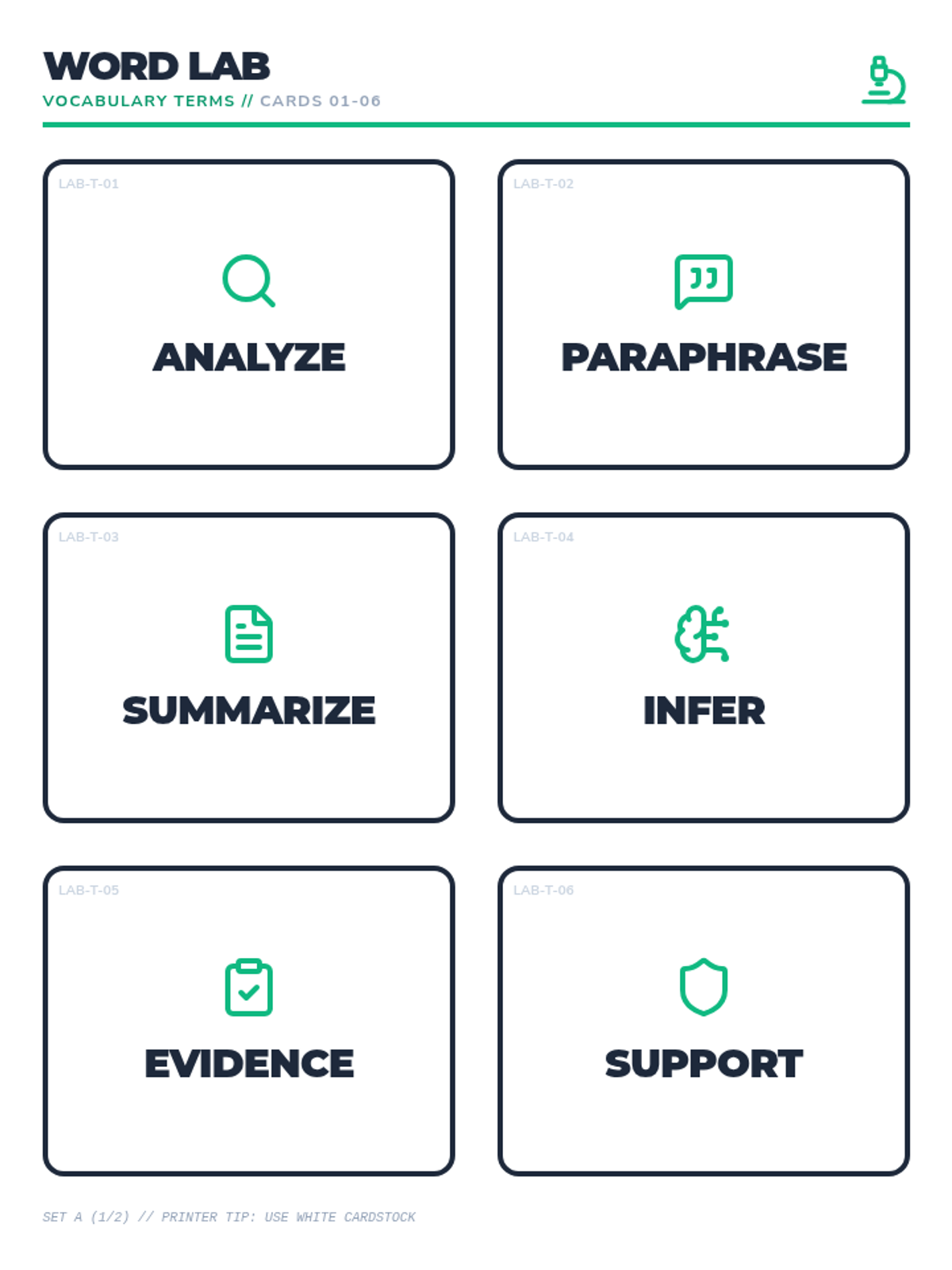
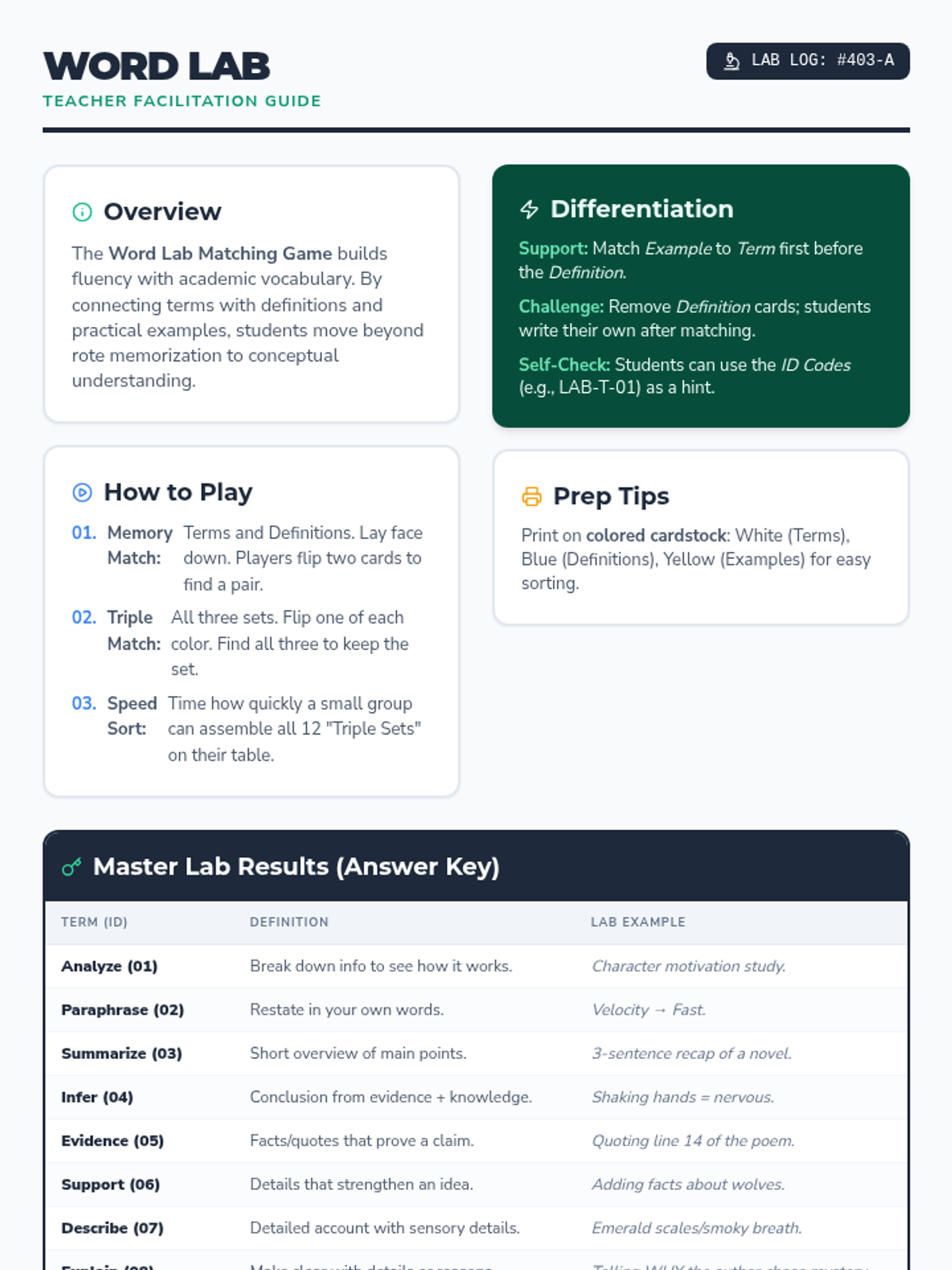
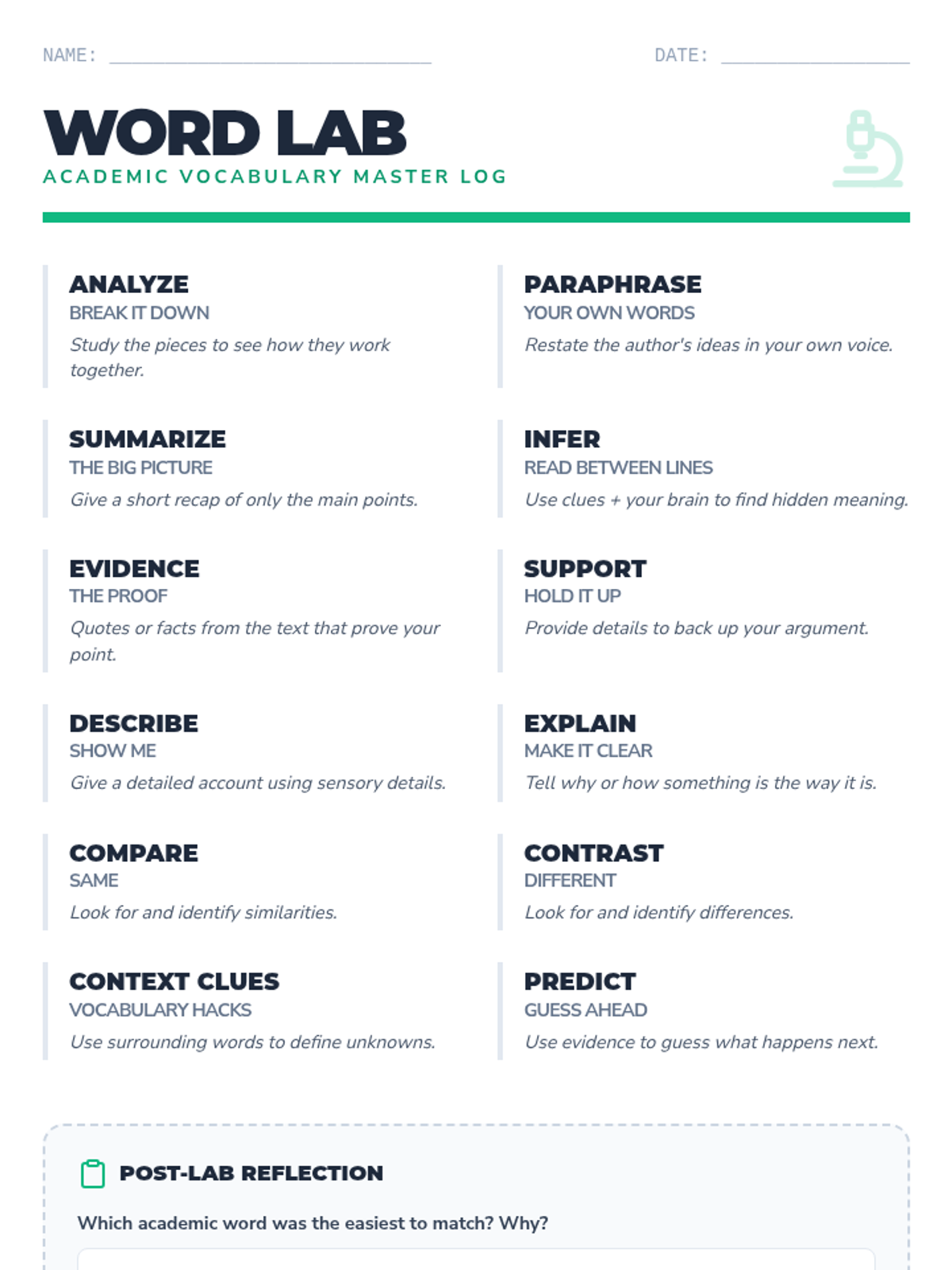
A lesson focused on mastering academic vocabulary used in reading comprehension questions. Students will learn to distinguish between common analytical verbs and concepts through a hands-on matching game and reference guides.
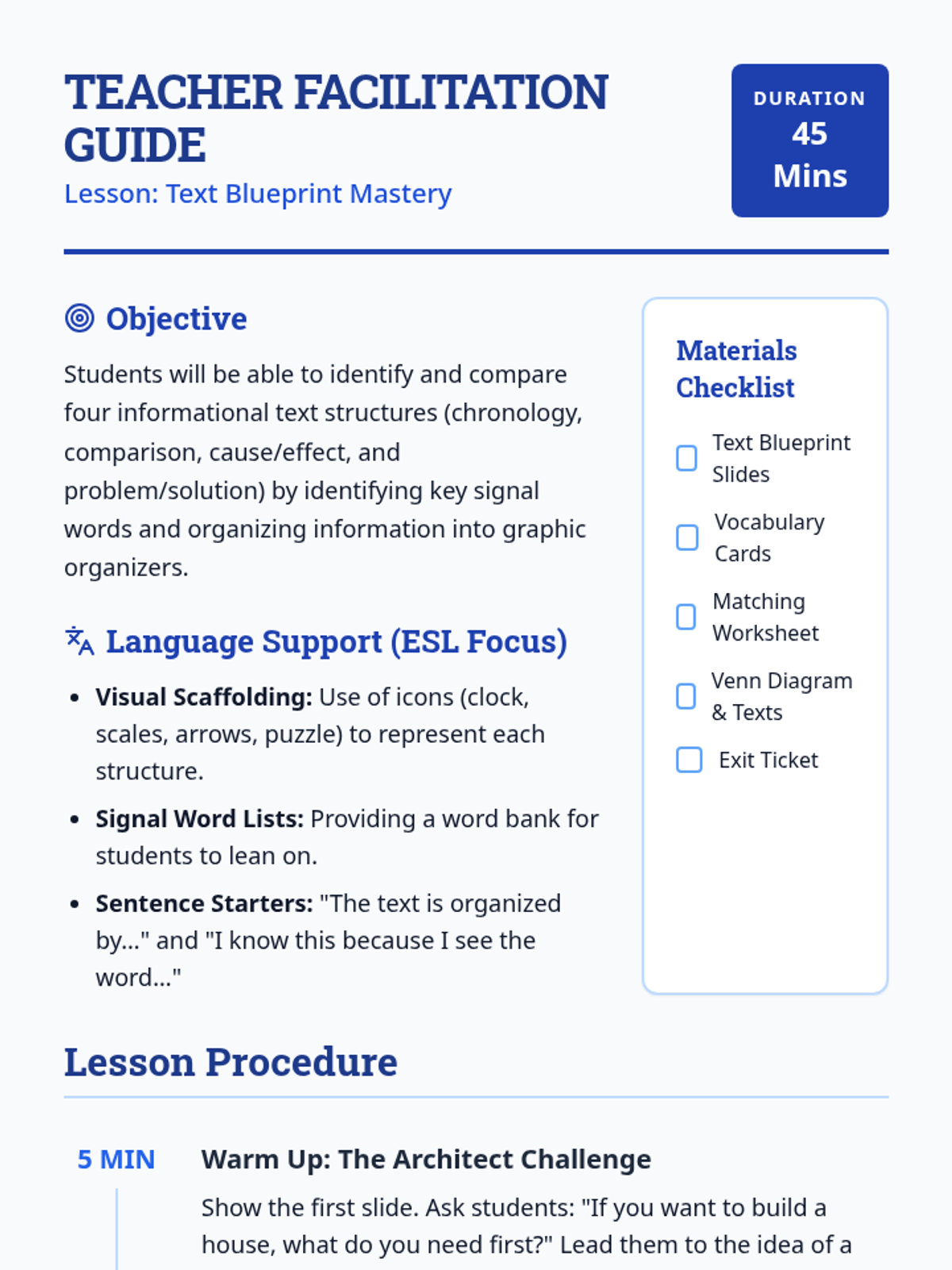
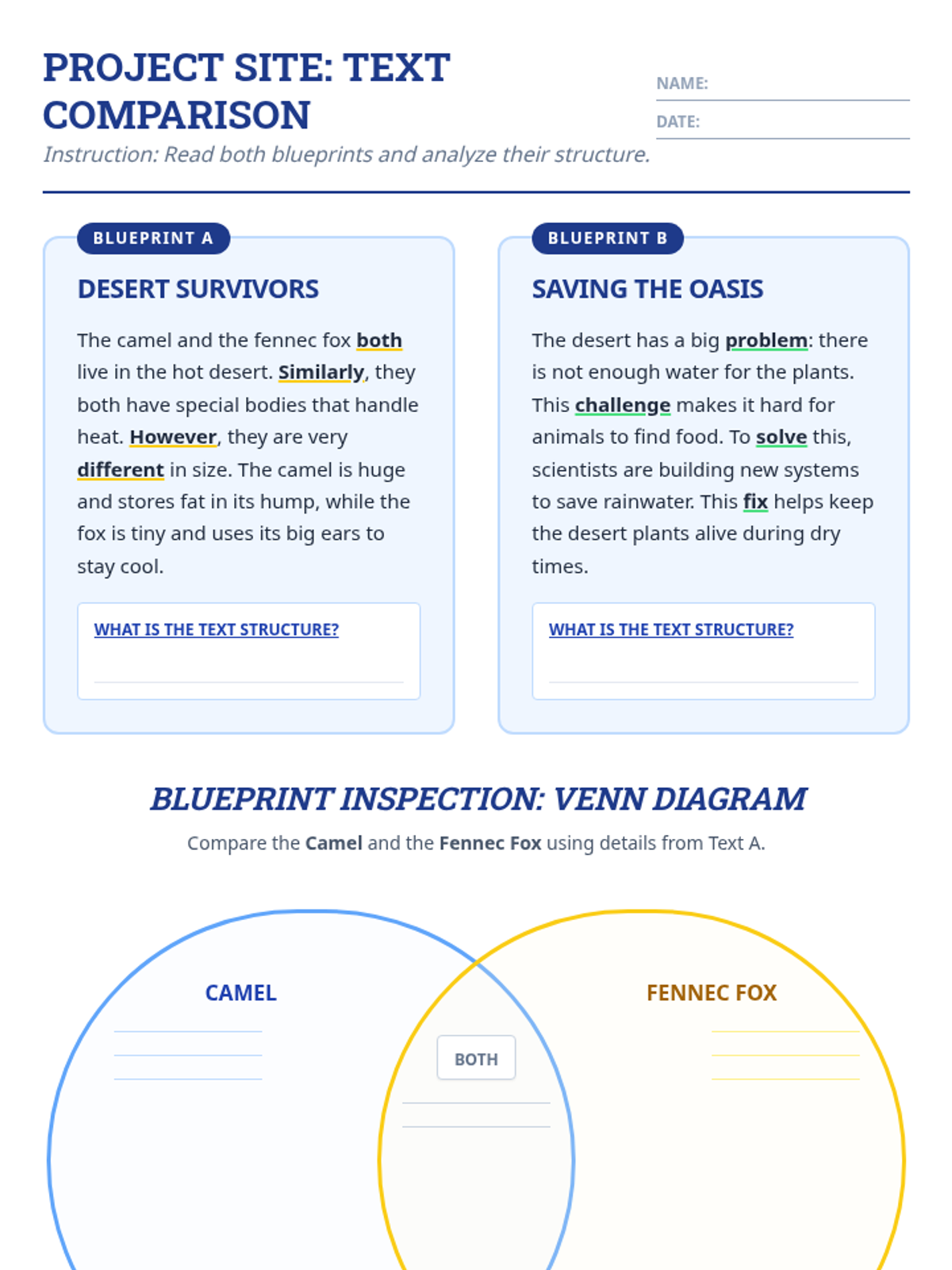
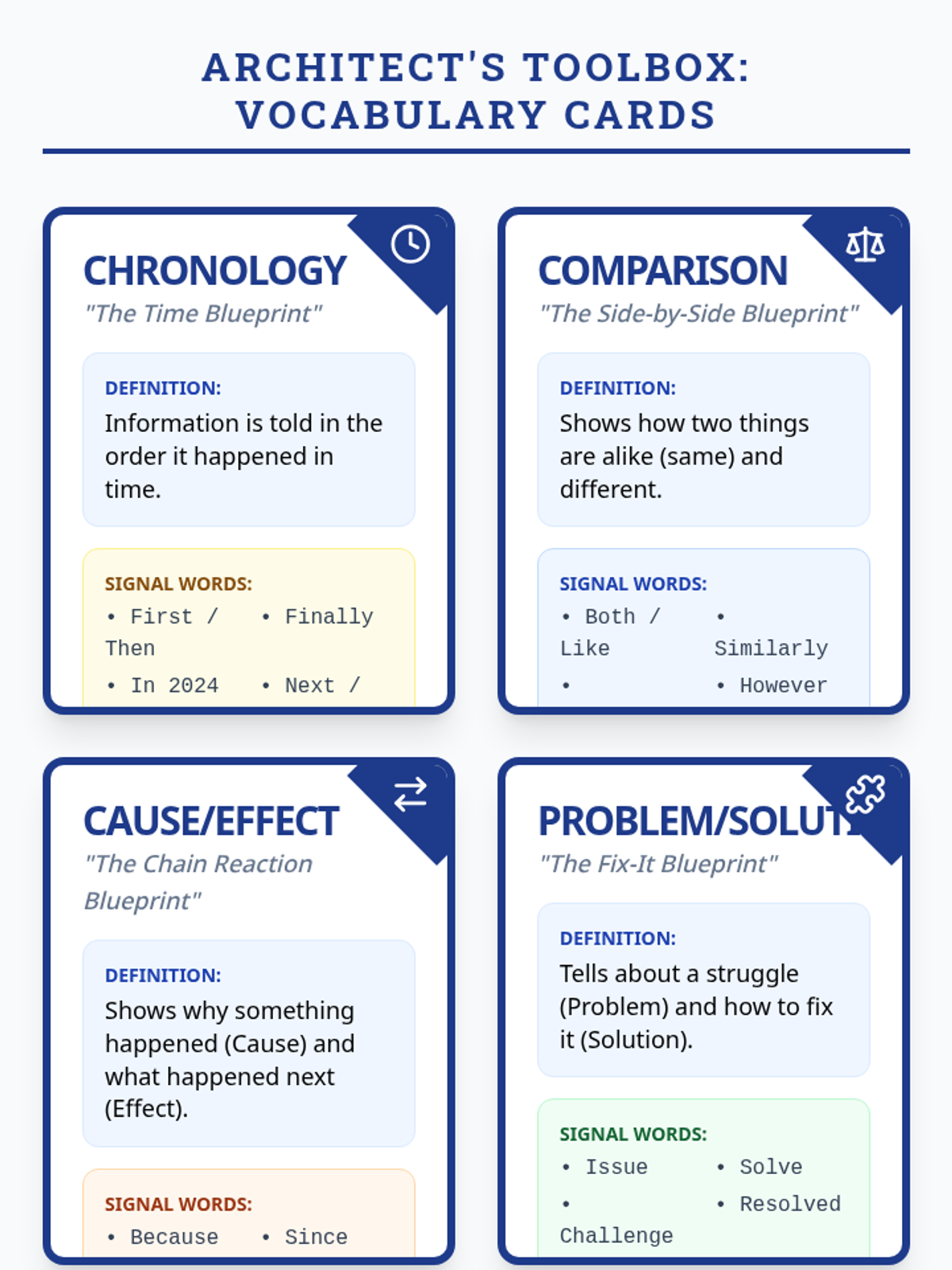
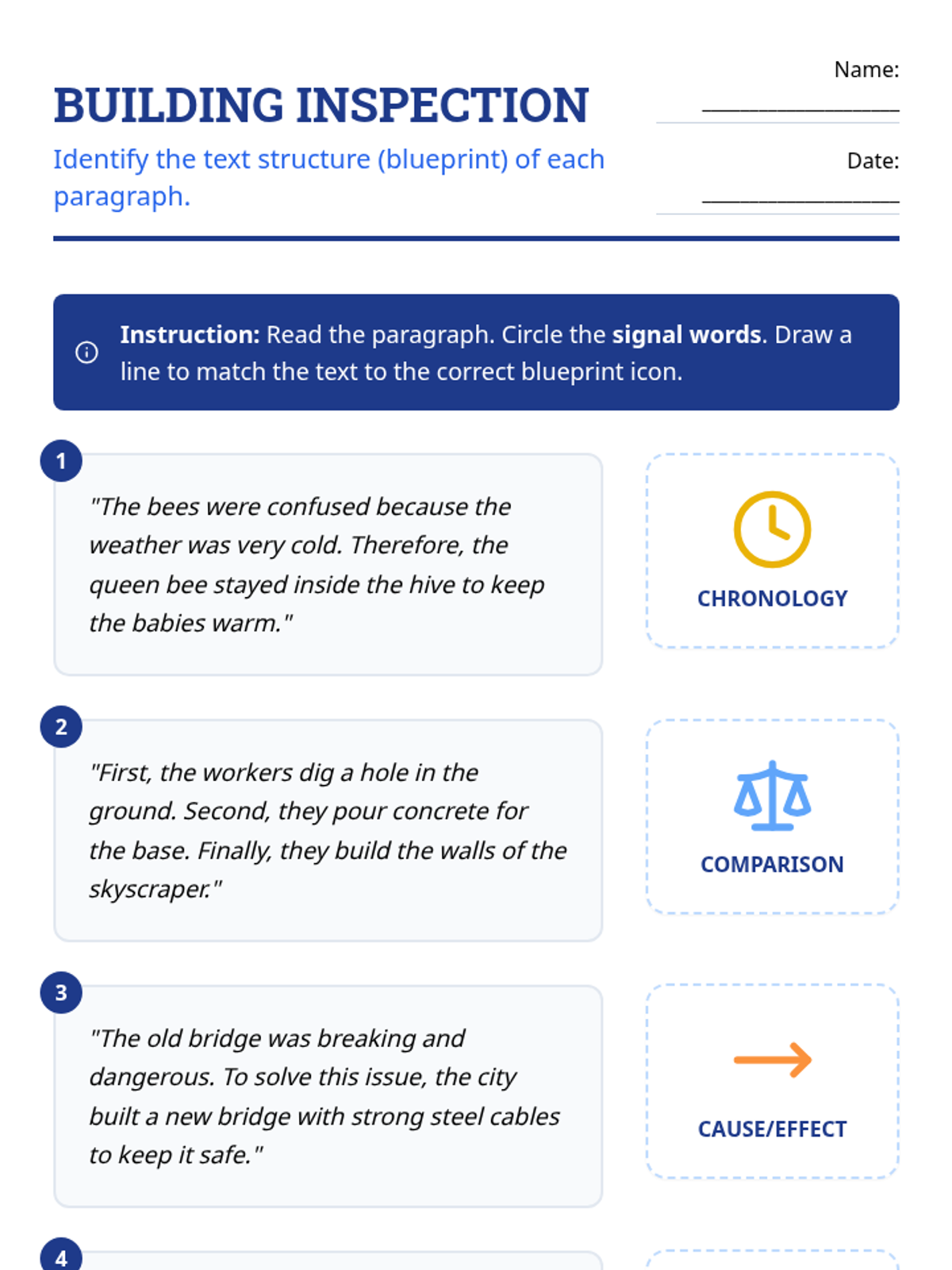
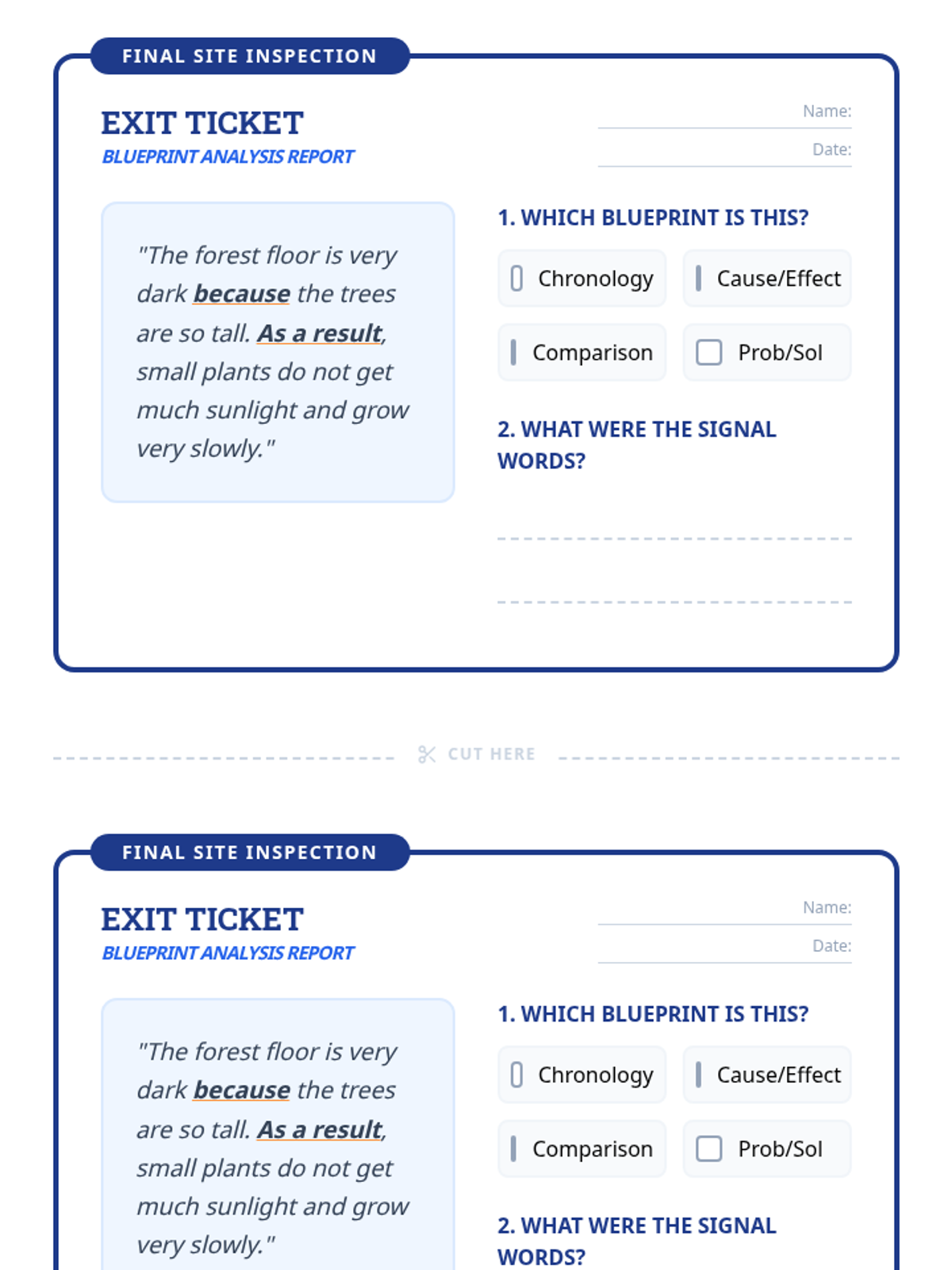
Students will identify and compare four major text structures: chronology, comparison, cause/effect, and problem/solution. Through an architectural 'blueprint' theme, ESL students will learn signal words and structural patterns to improve reading comprehension.
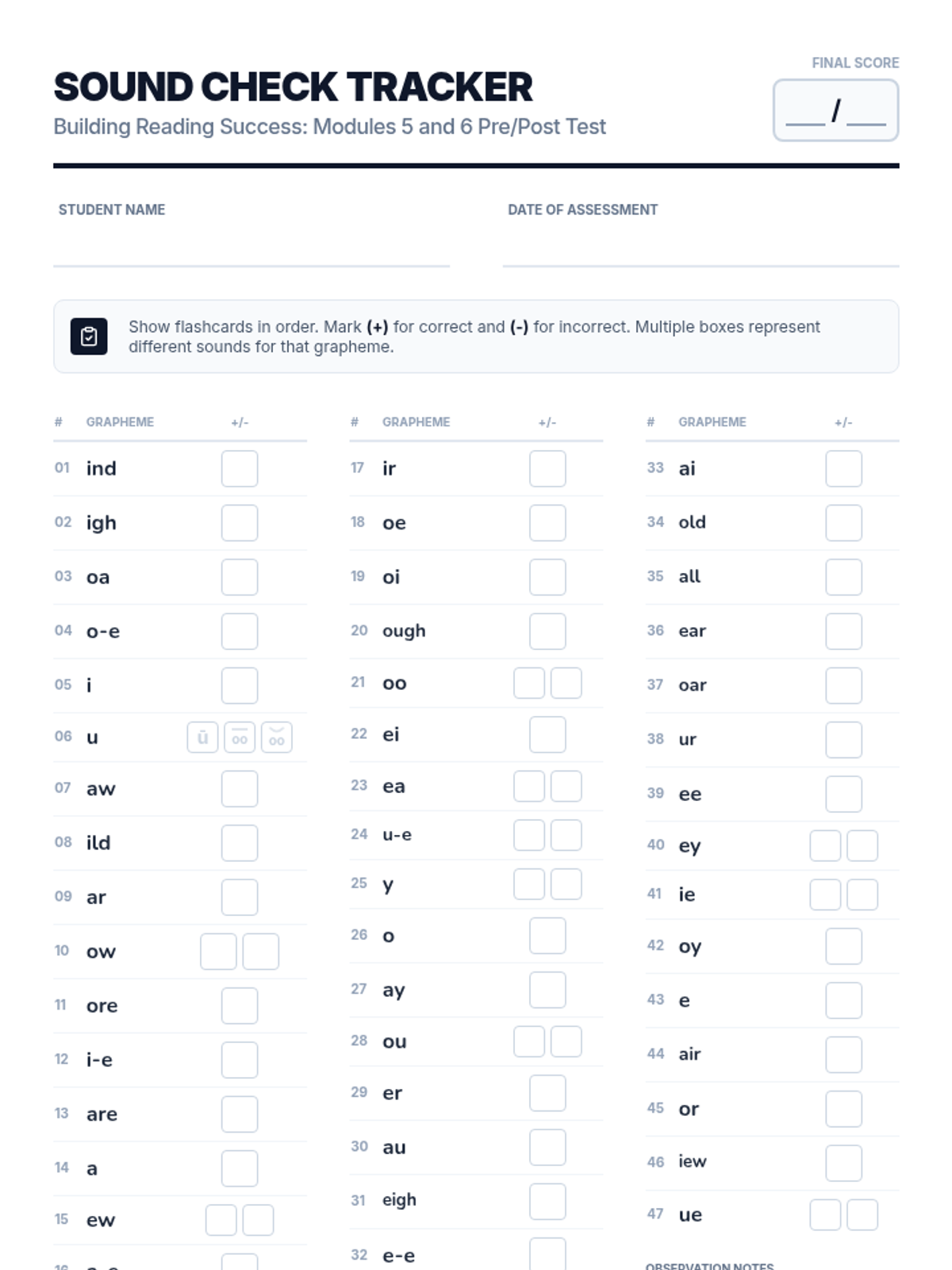
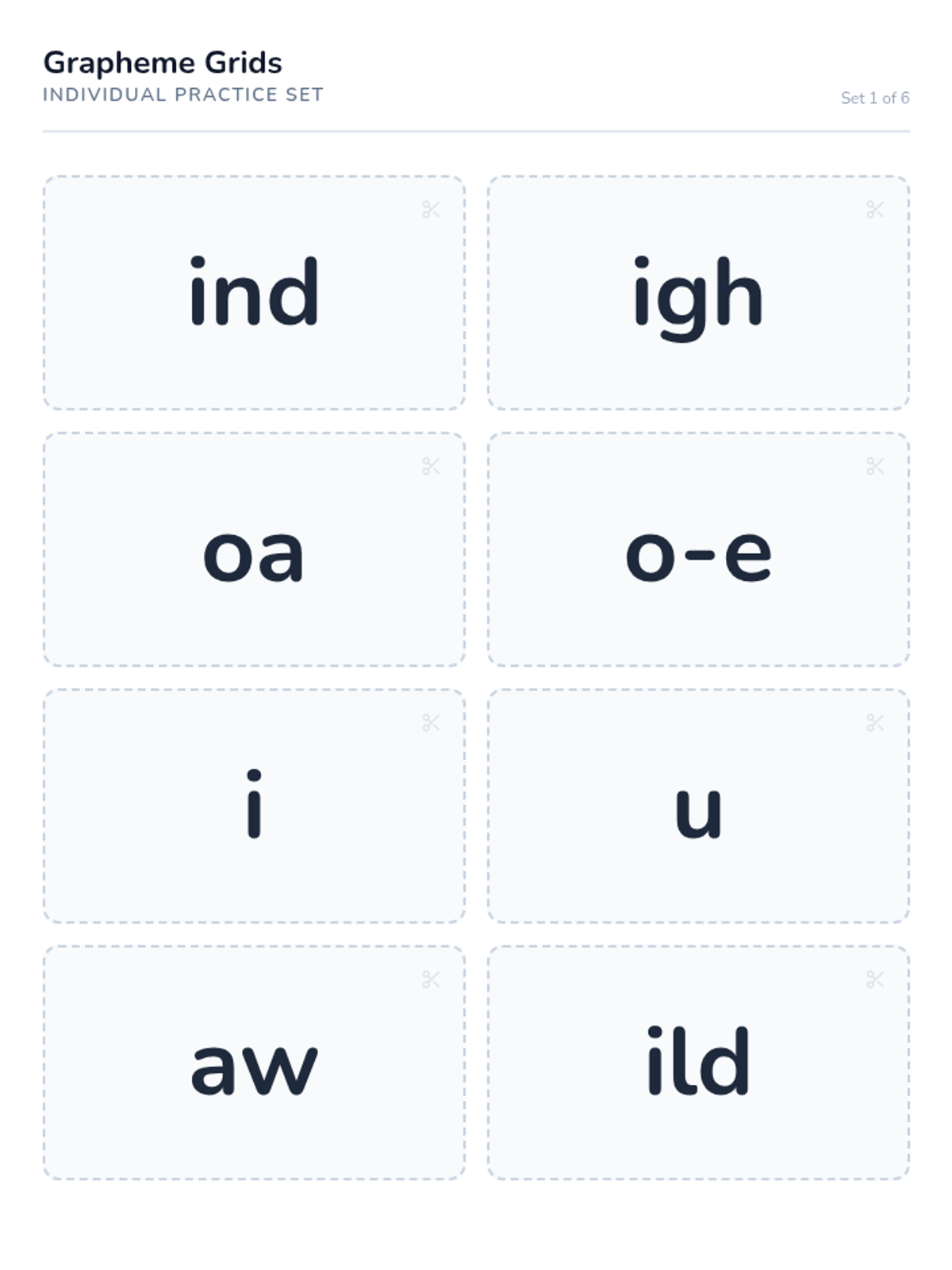
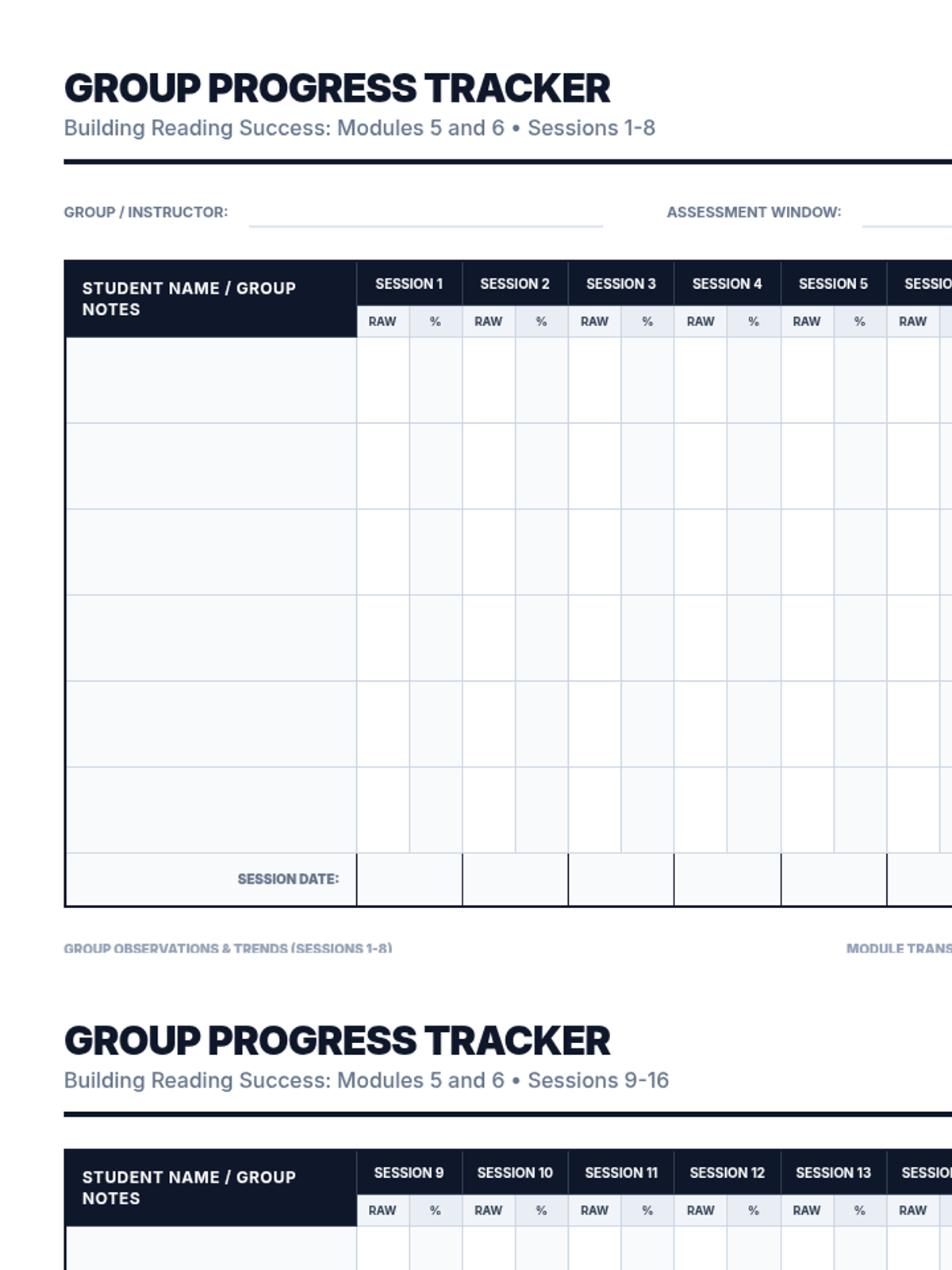
A set of materials for assessing and practicing 47 key graphemes, including high-visibility flashcards and a comprehensive teacher tracking sheet.
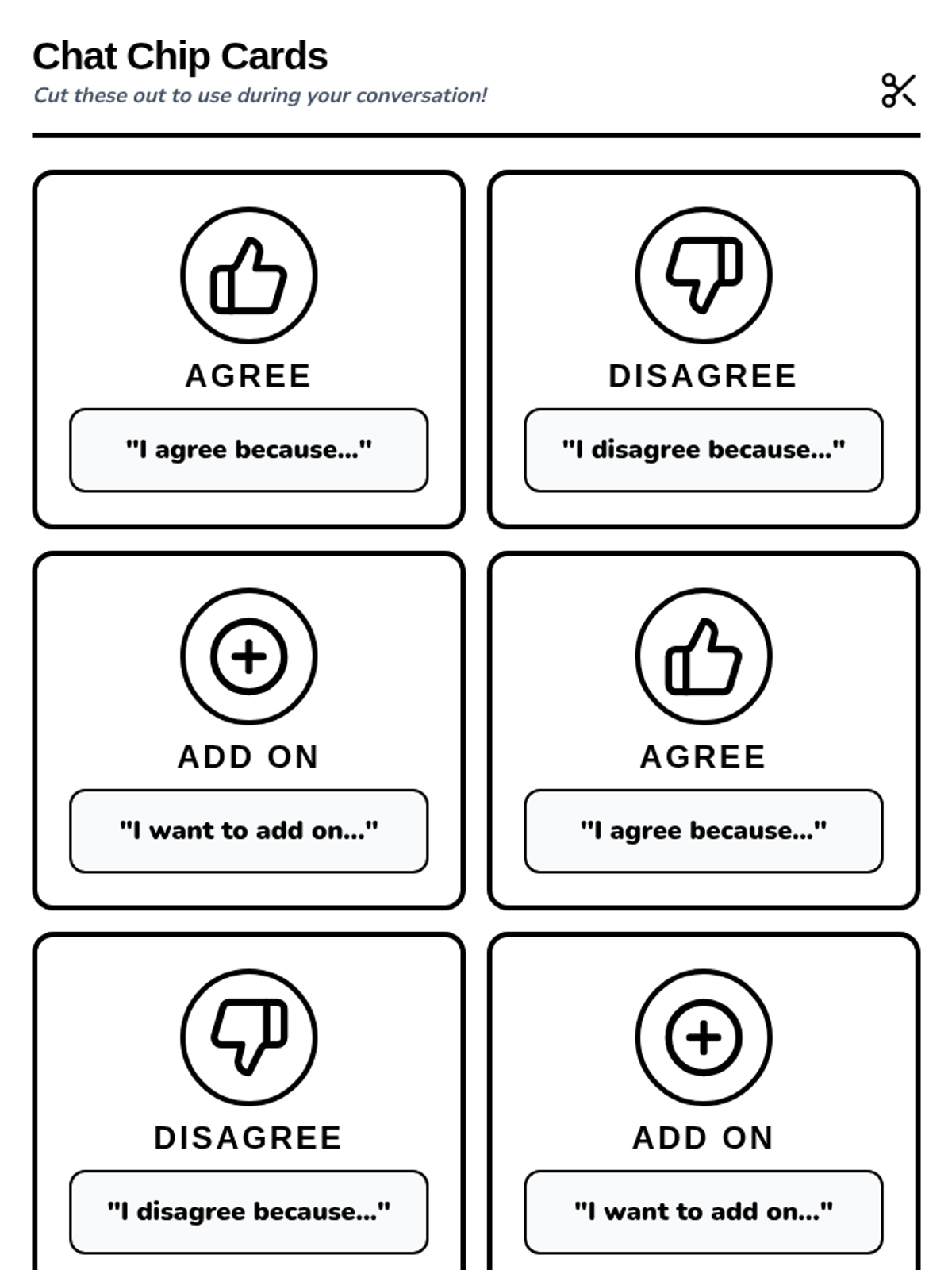
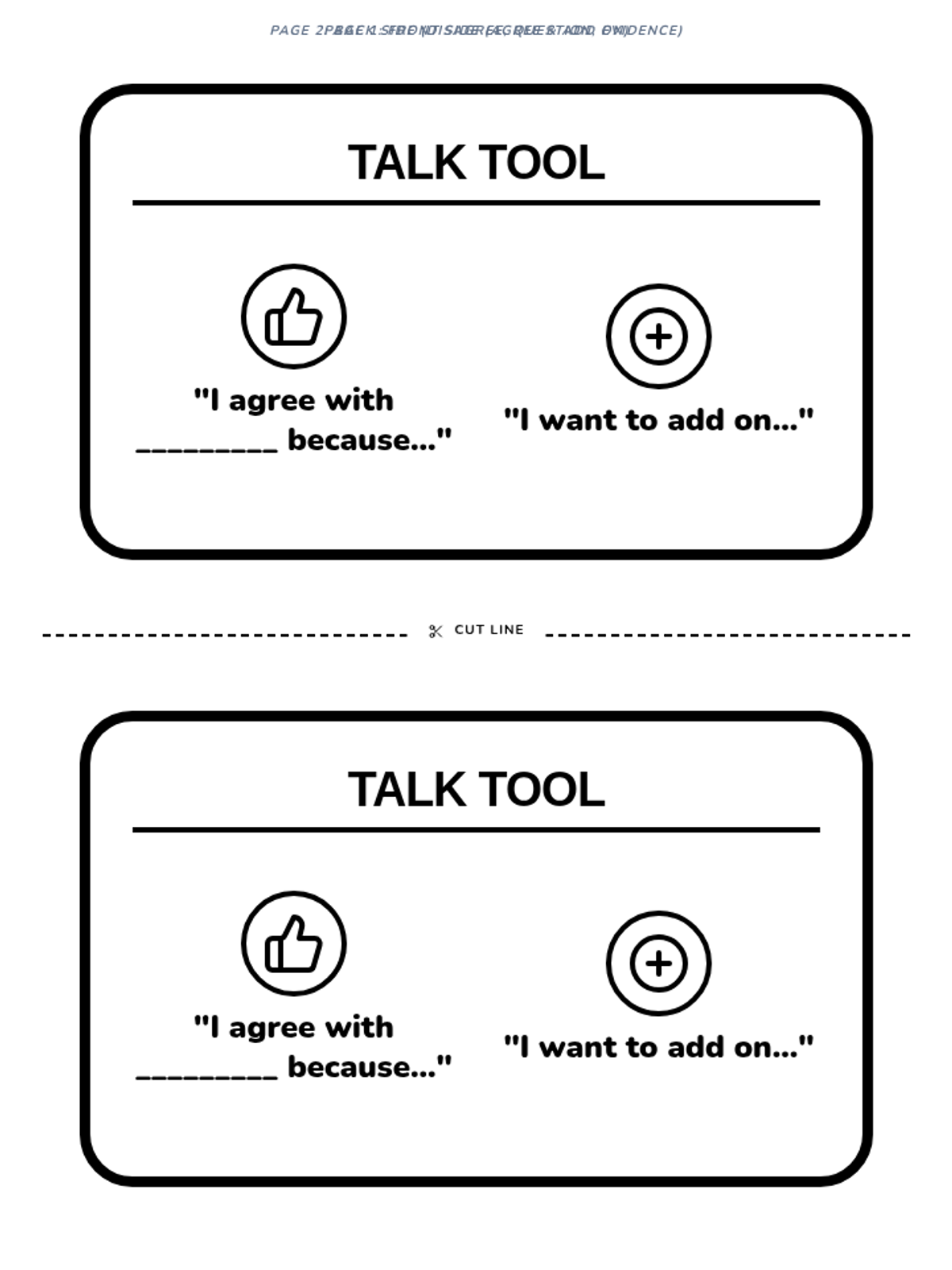
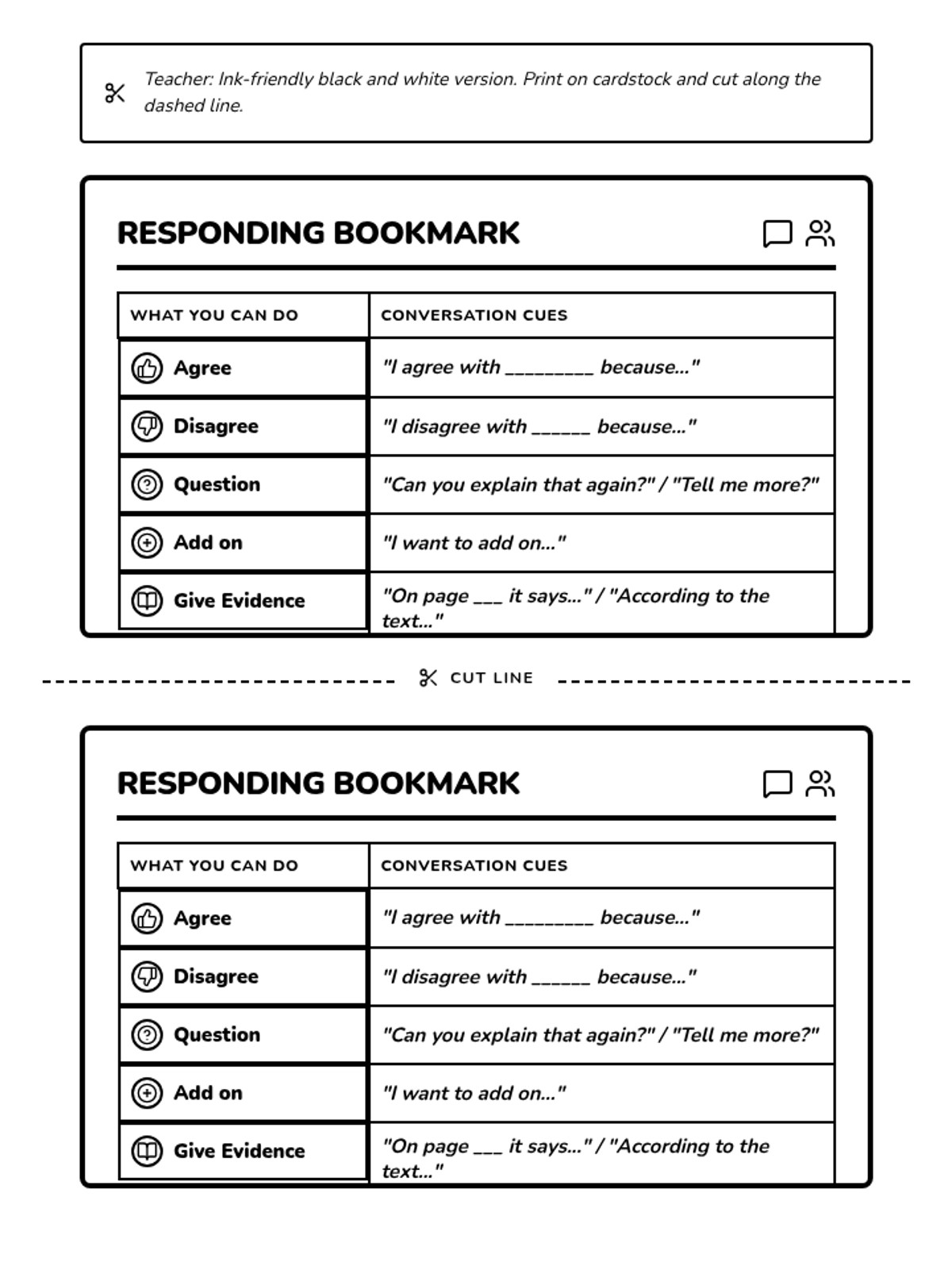
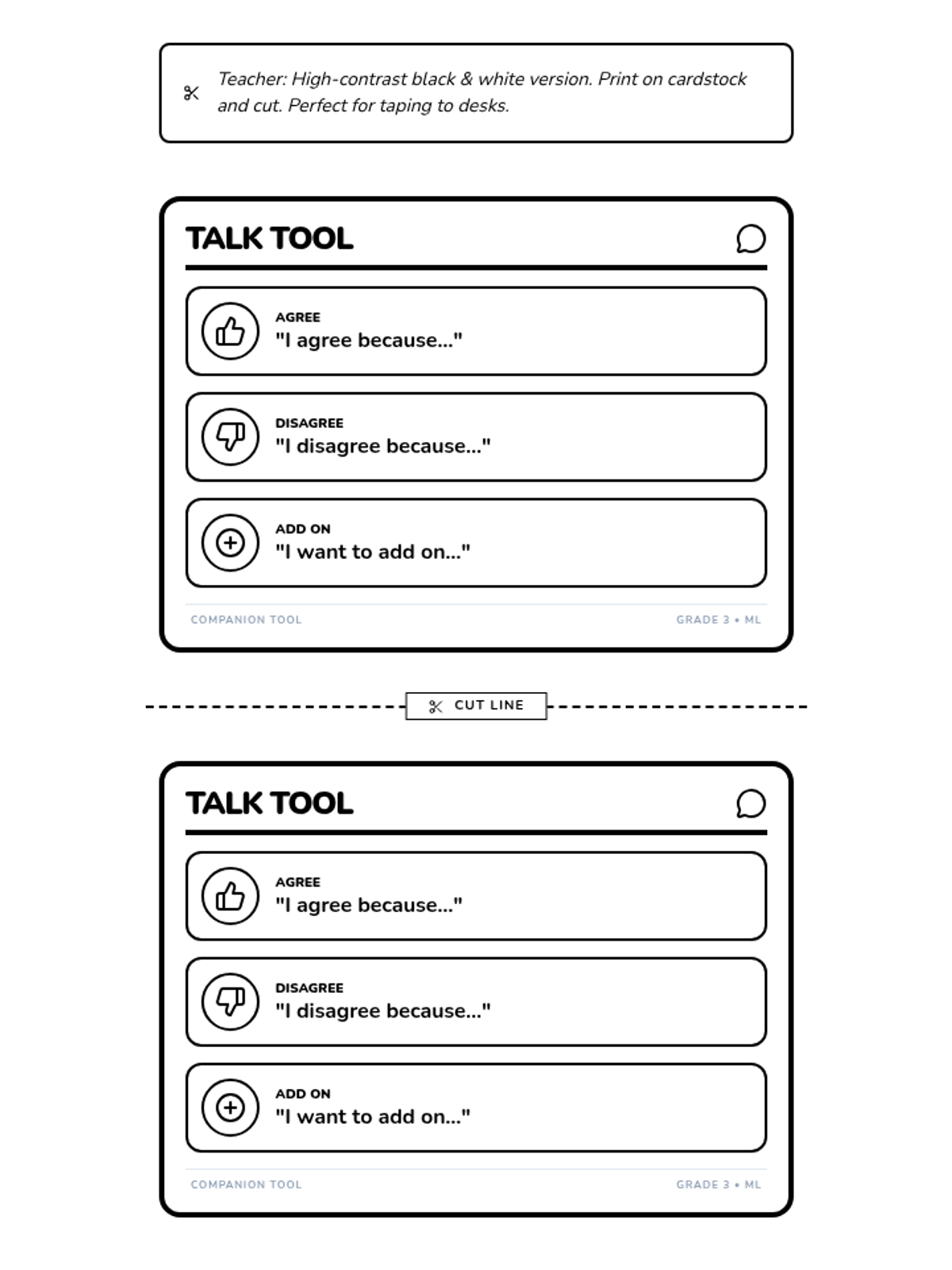
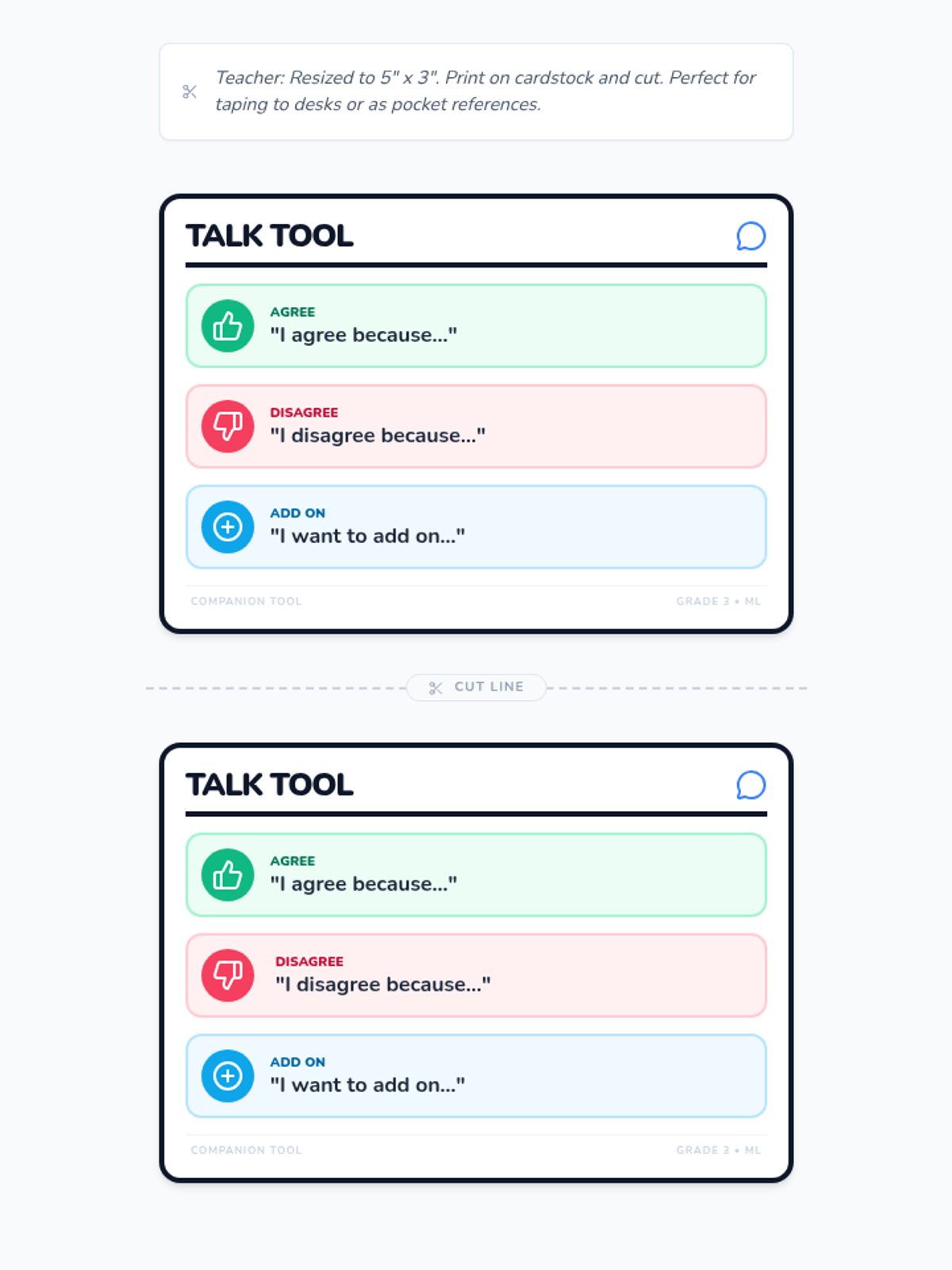
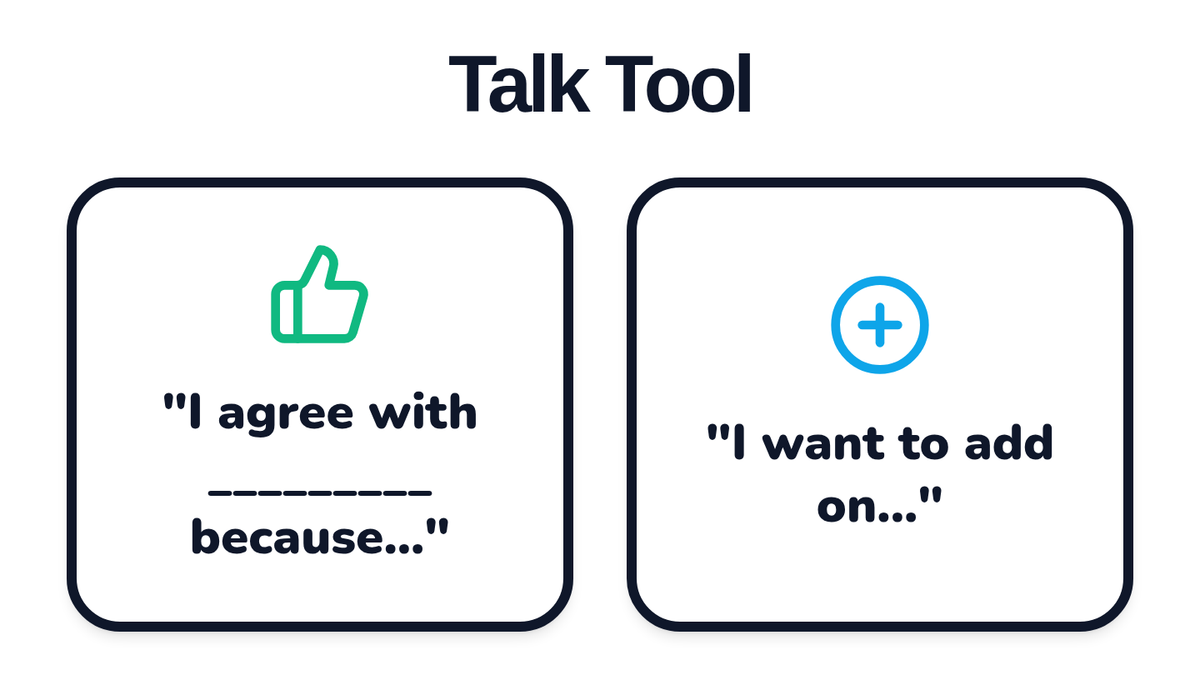
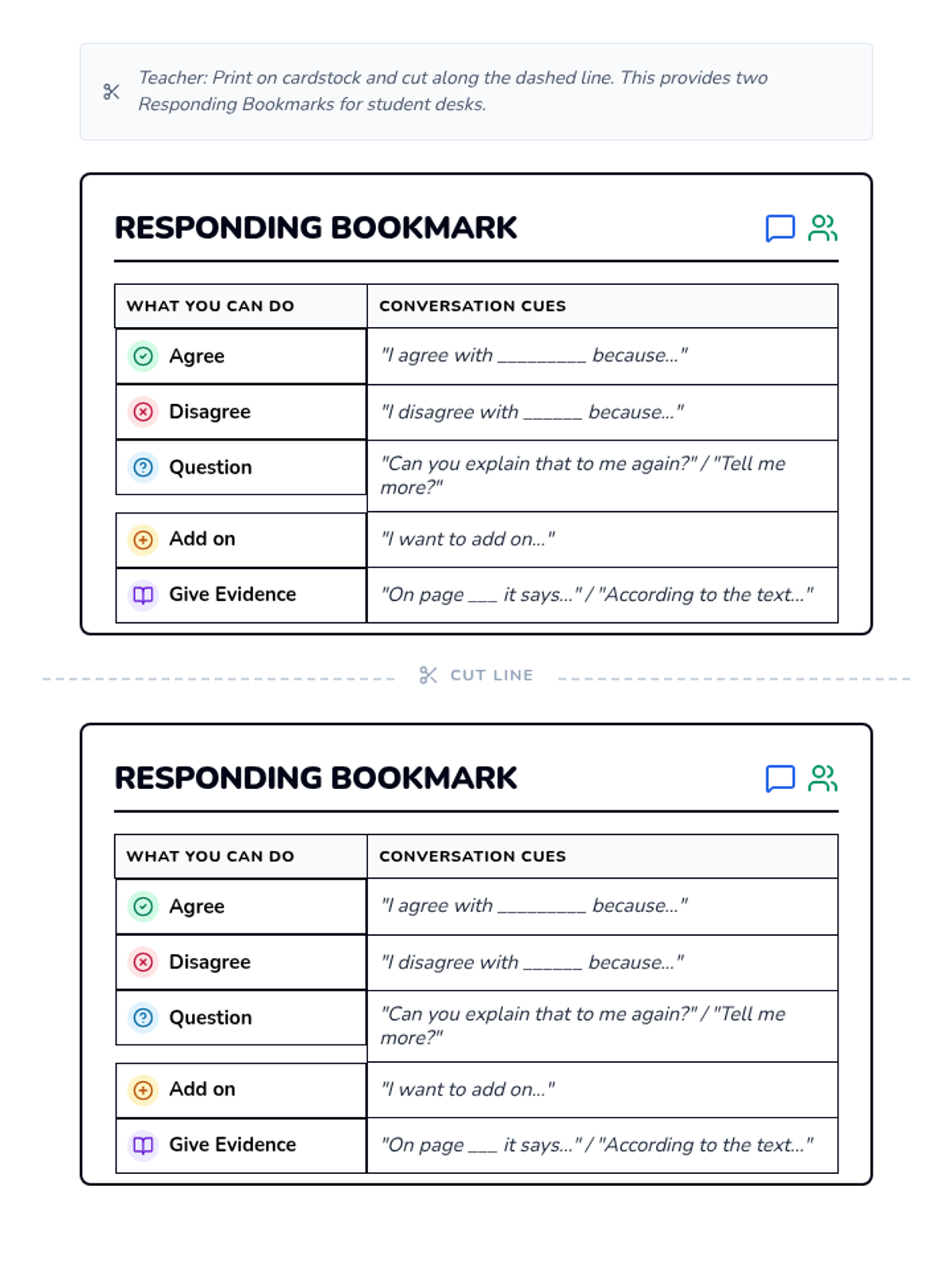
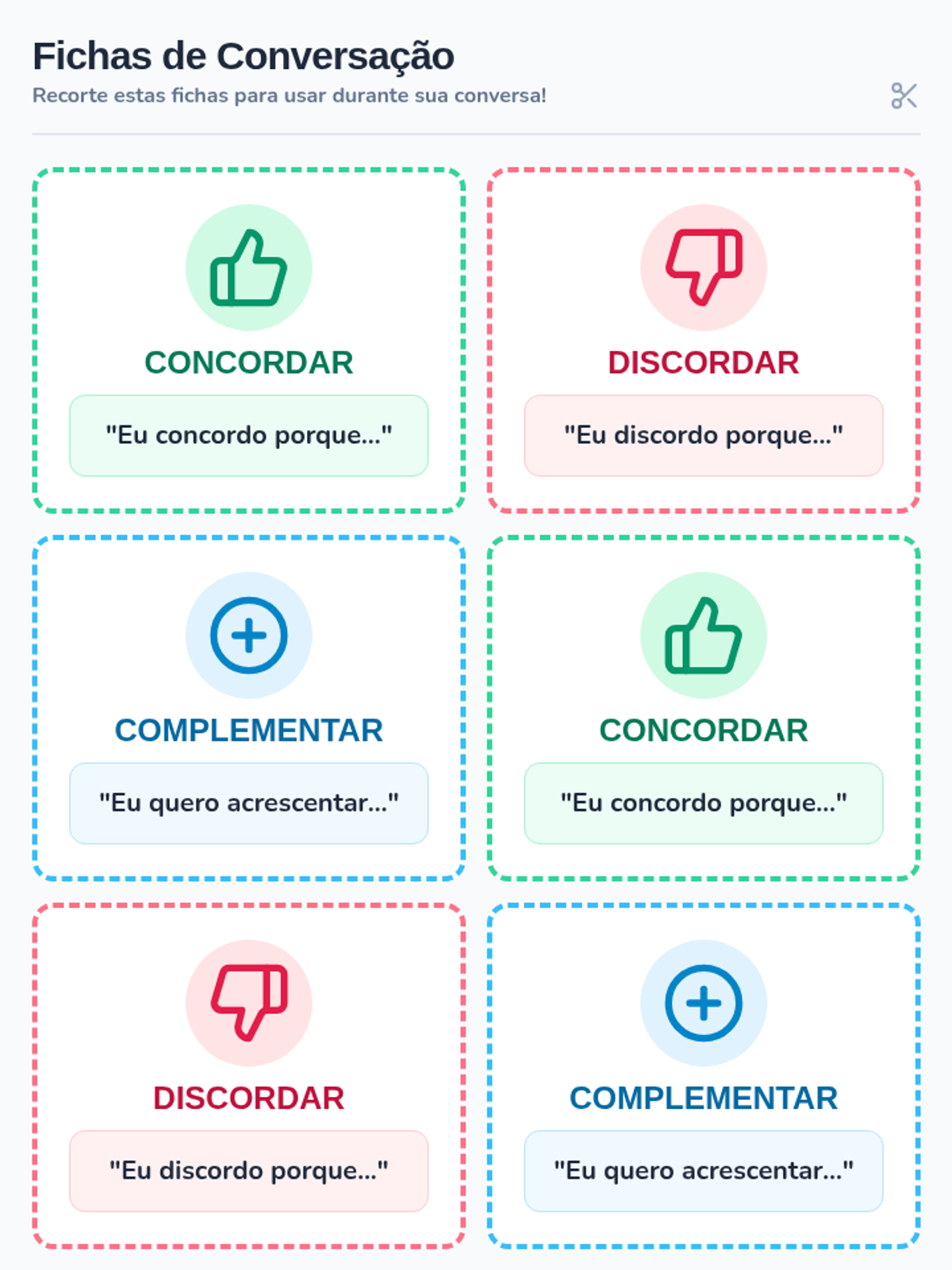
A set of visual supports designed to help 3rd-grade students engage in meaningful academic conversations during EL Education Module 3 lessons. Includes a desktop conversation mat and a set of cue cards with specific sentence stems for peer interaction.
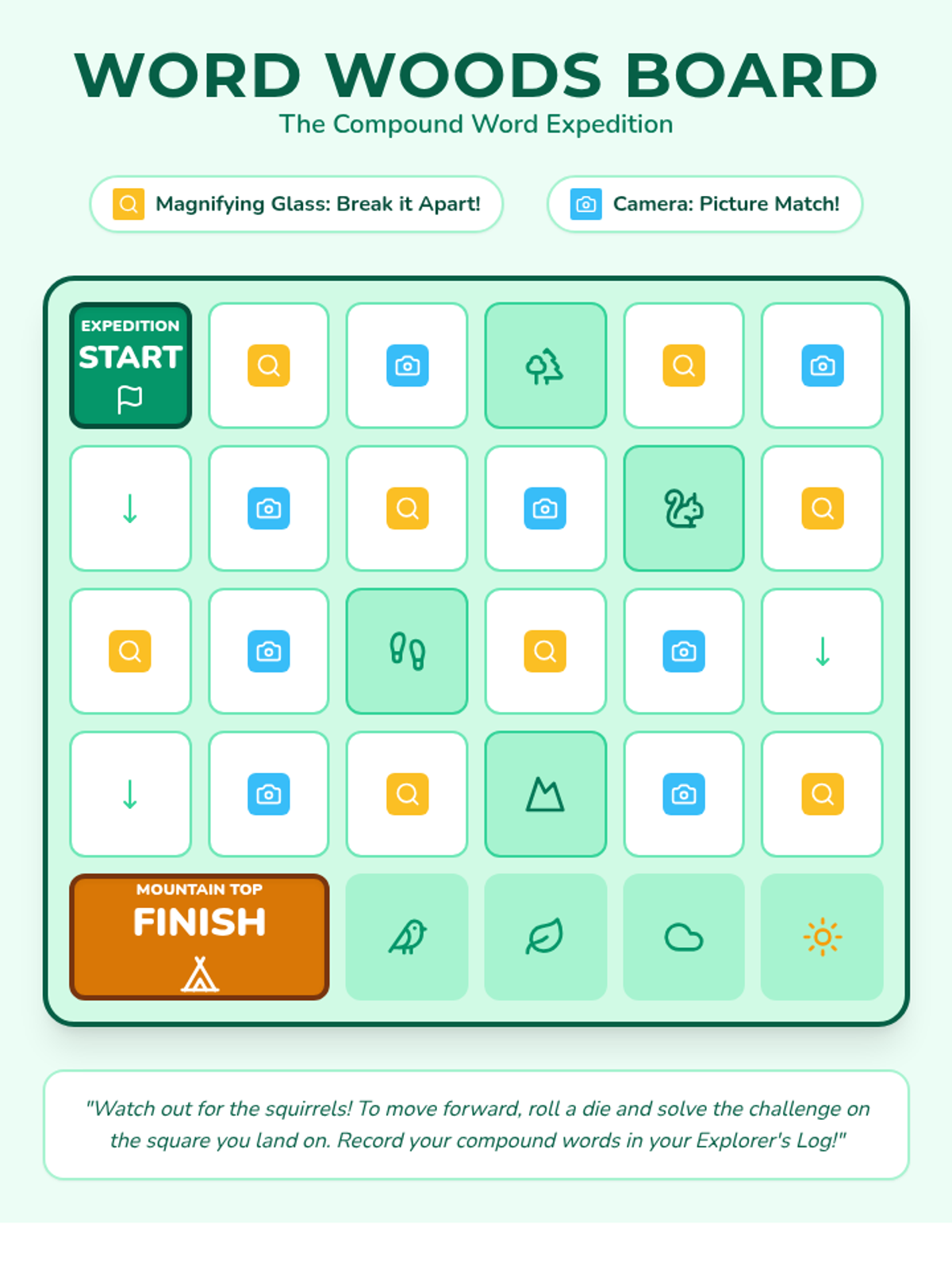
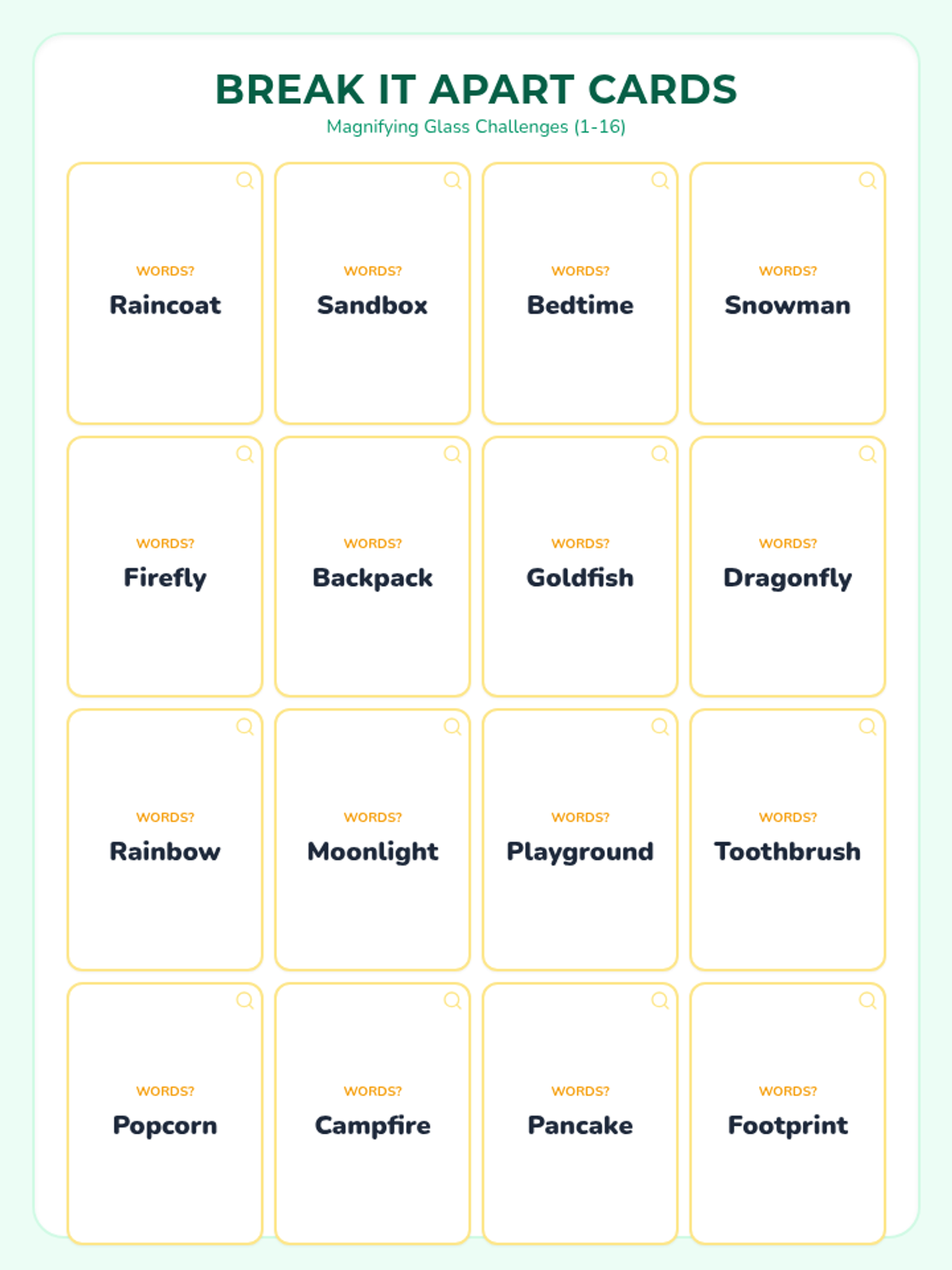
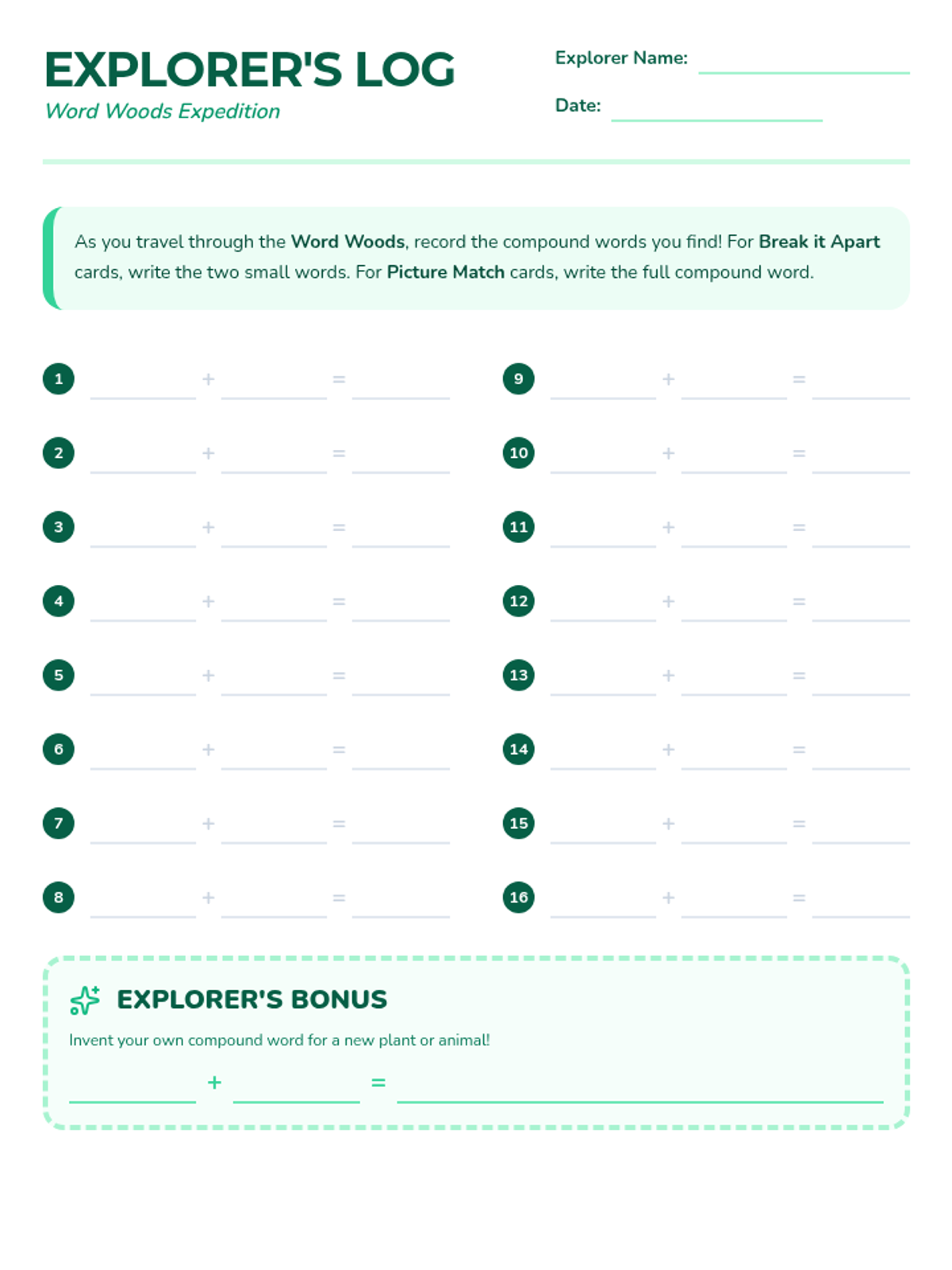
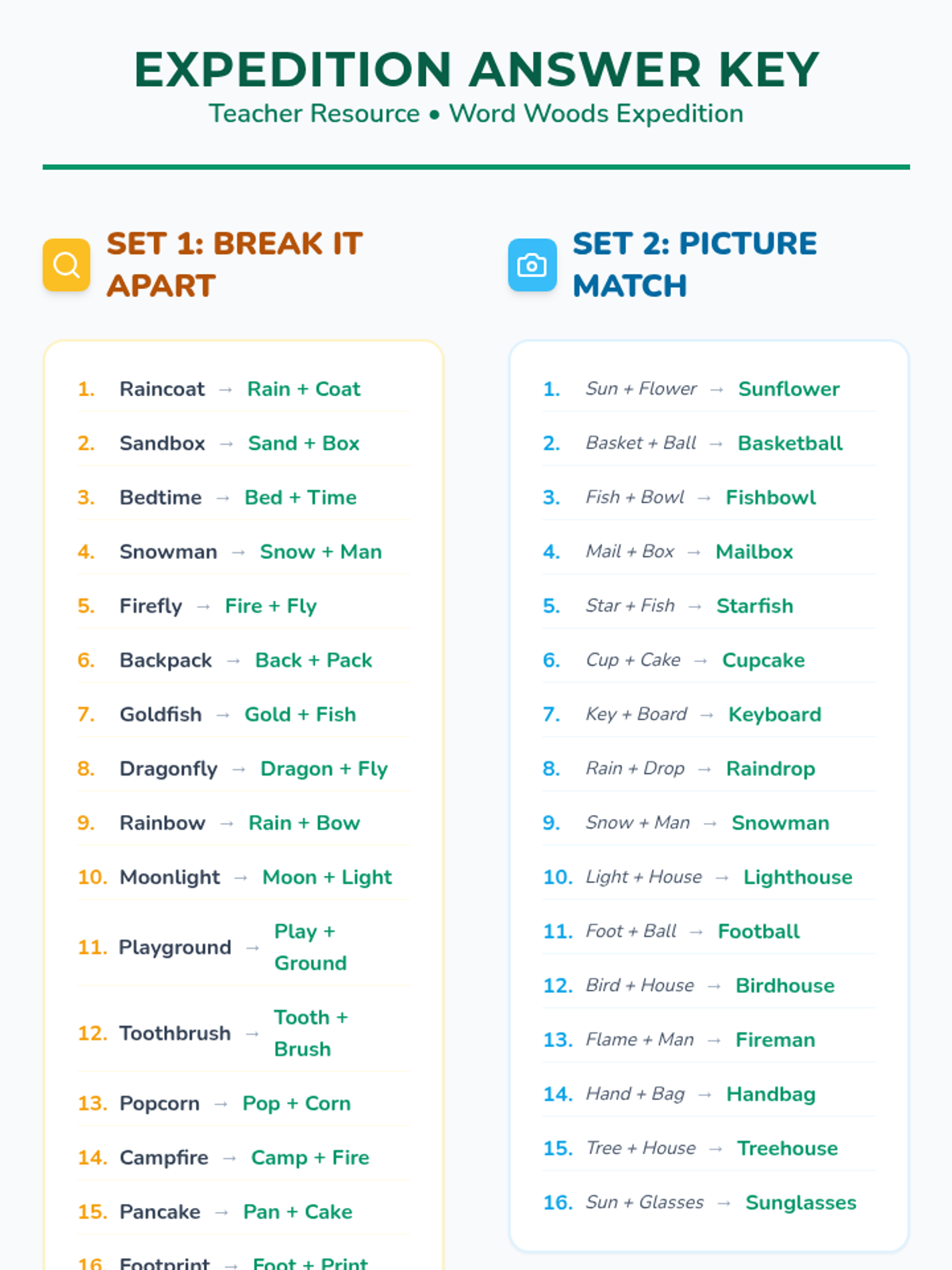
A hands-on board game experience where students explore the forest of compound words, practicing how to decompose words and match visual parts to create new ones.
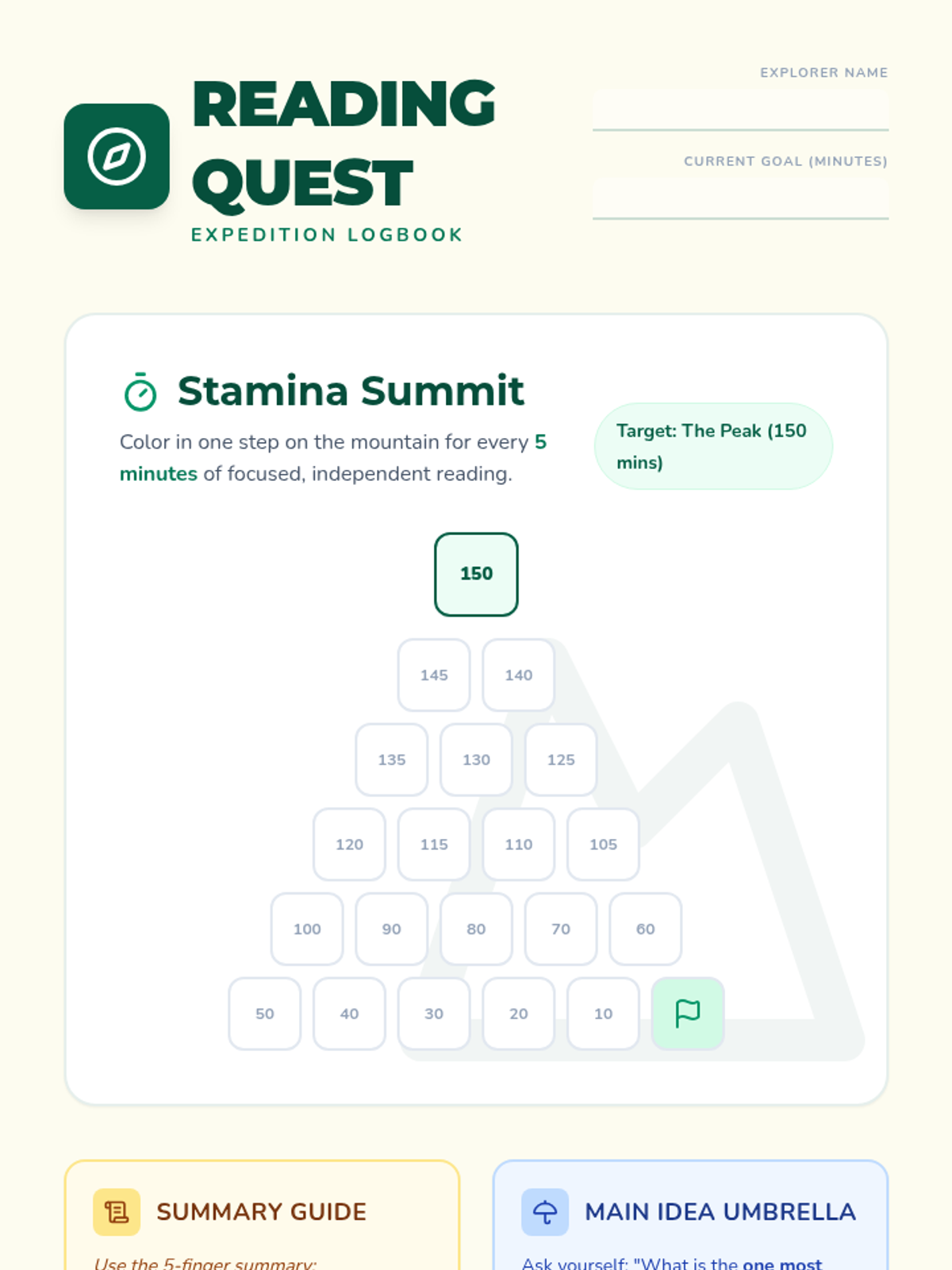
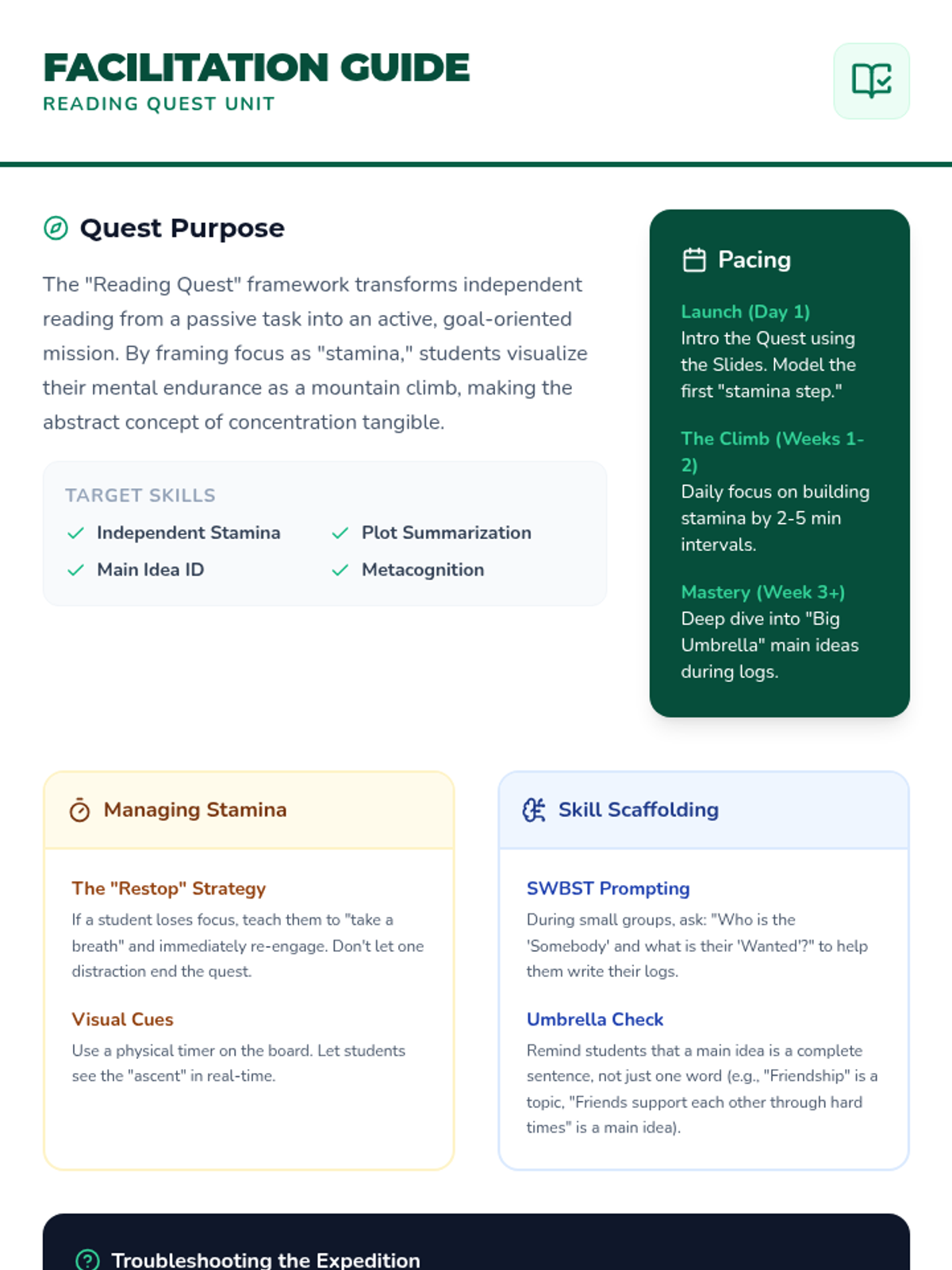
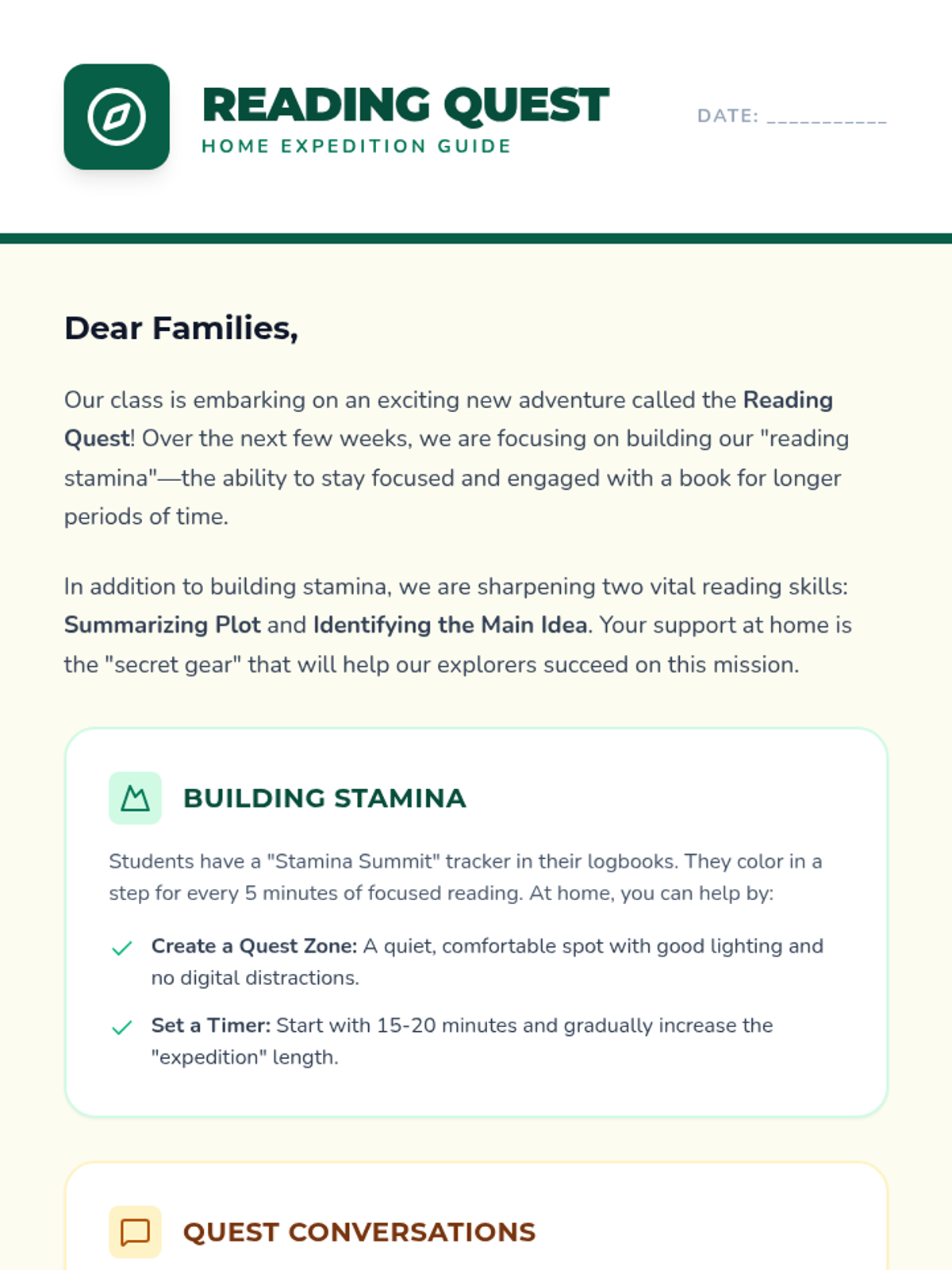
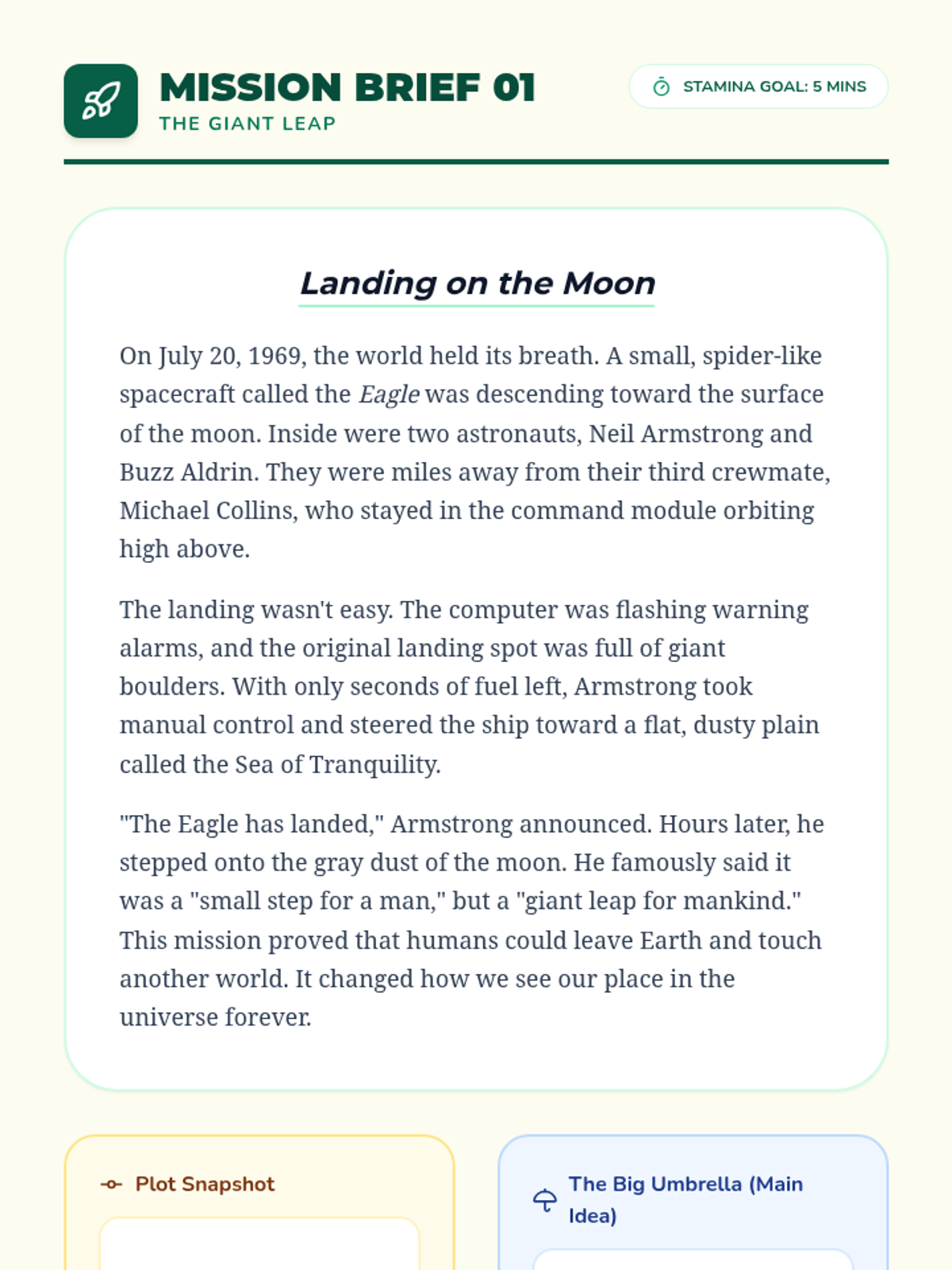
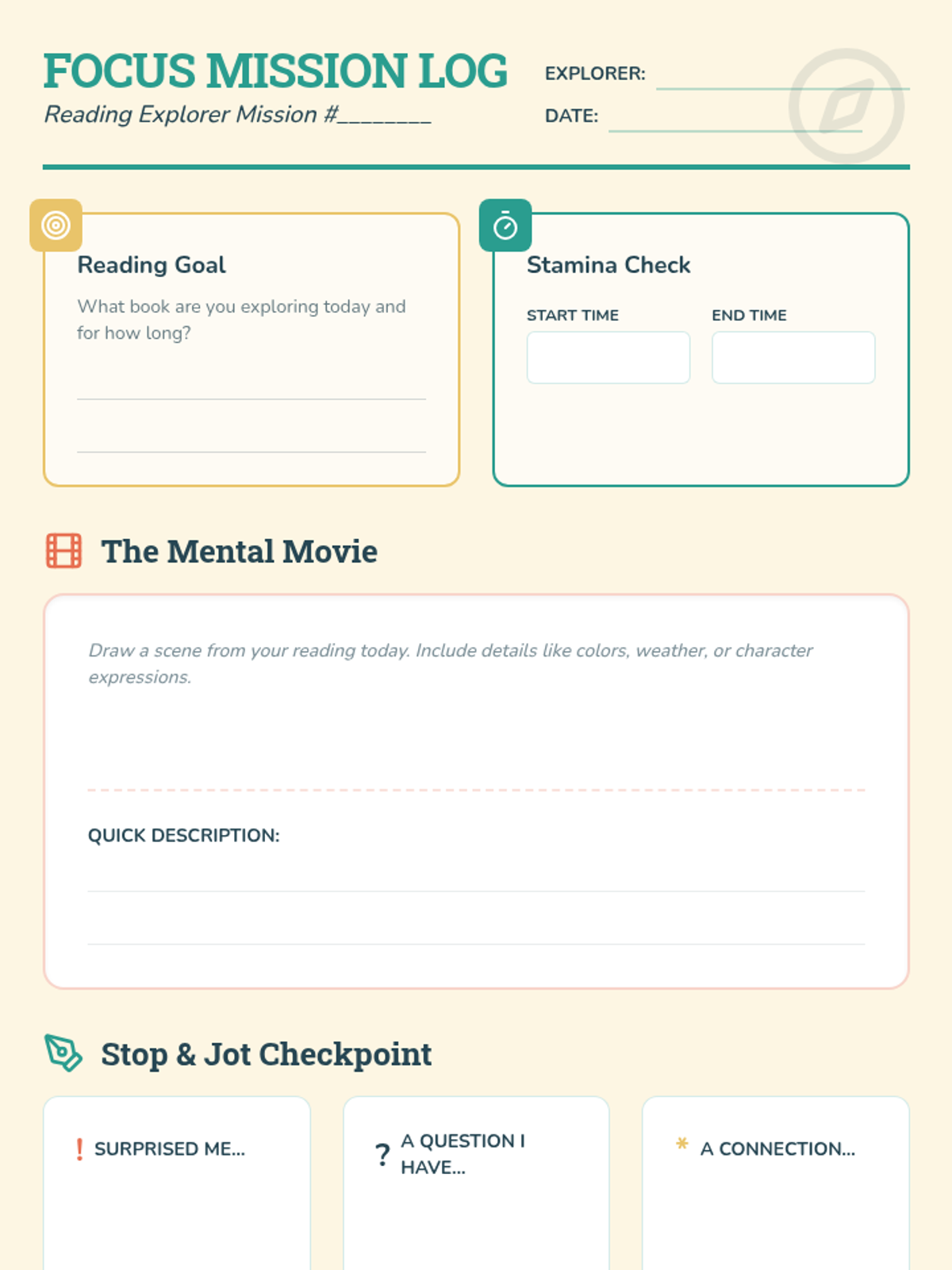
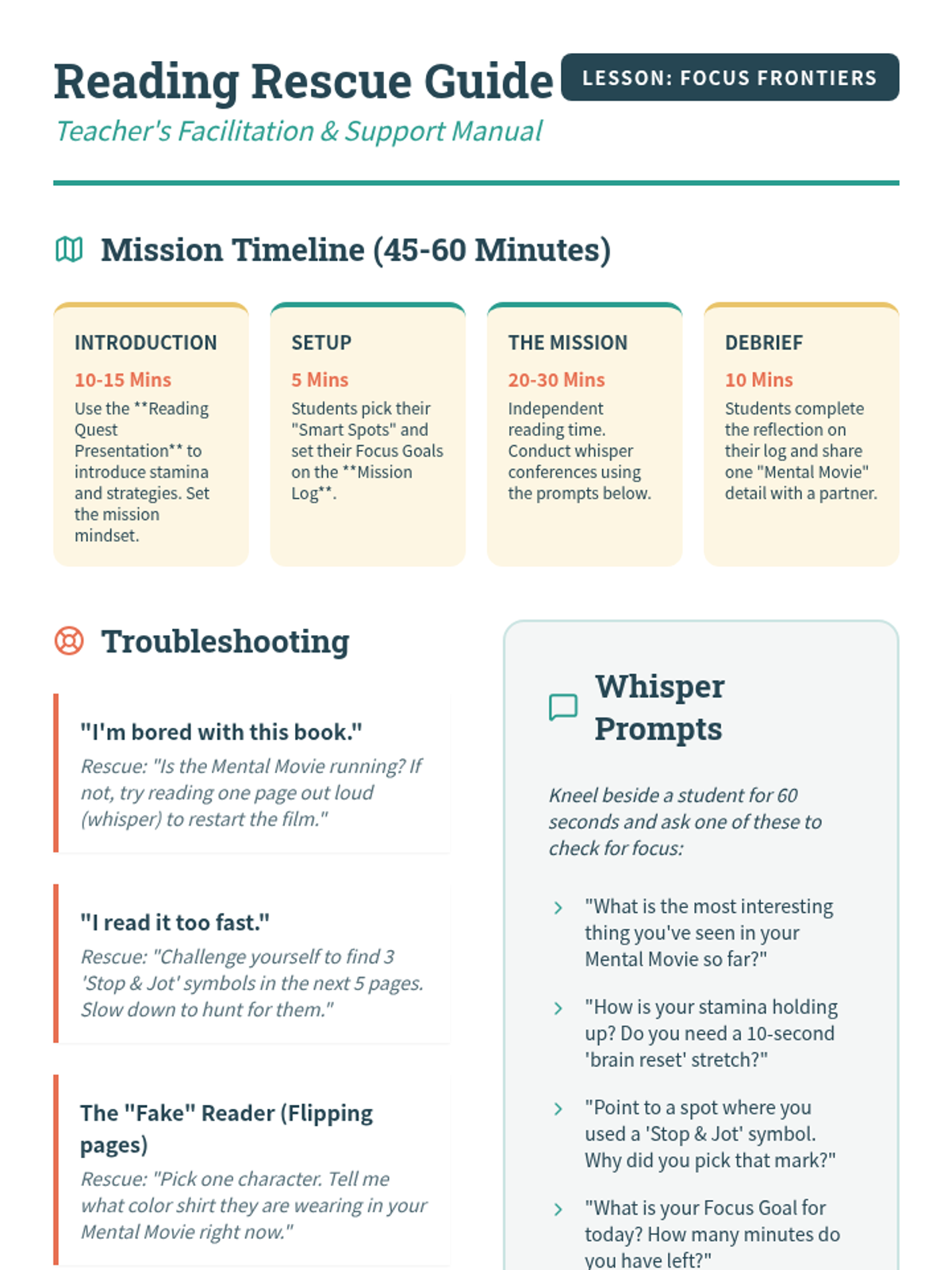
A comprehensive reading unit focused on building independent reading stamina while reinforcing plot summarization and main idea identification. This lesson provides students with a 'quest' framework to make focused reading more engaging.
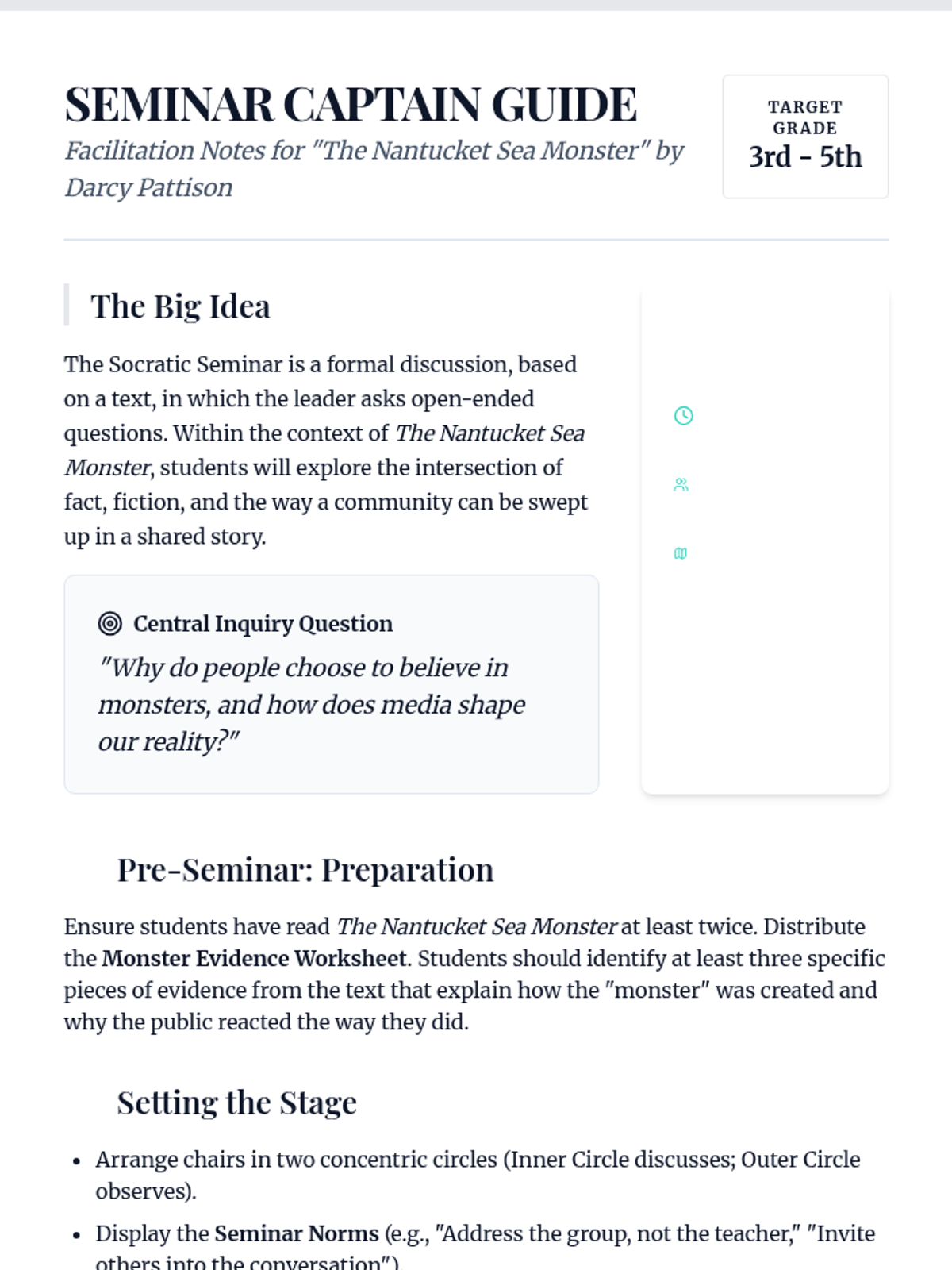
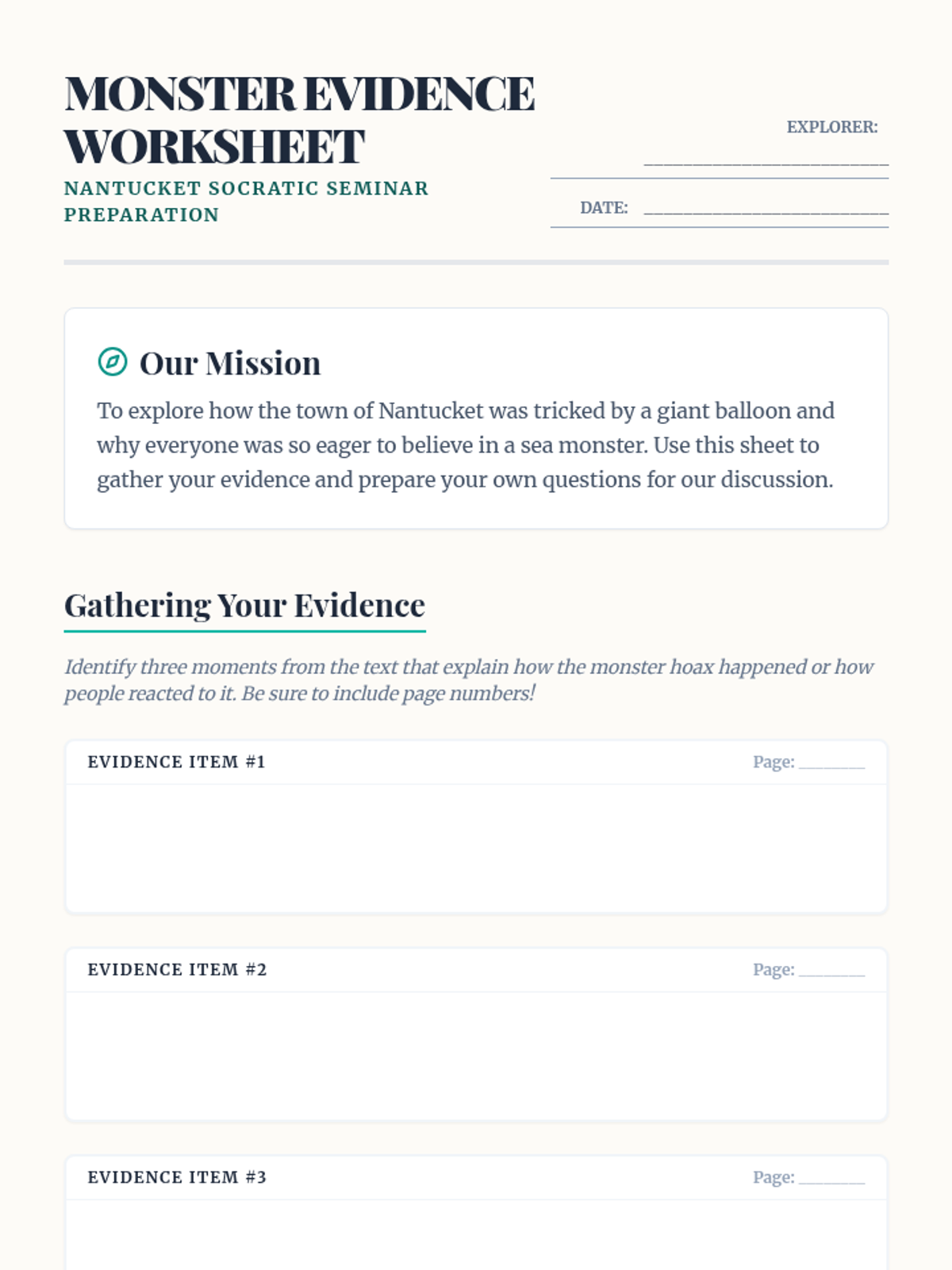
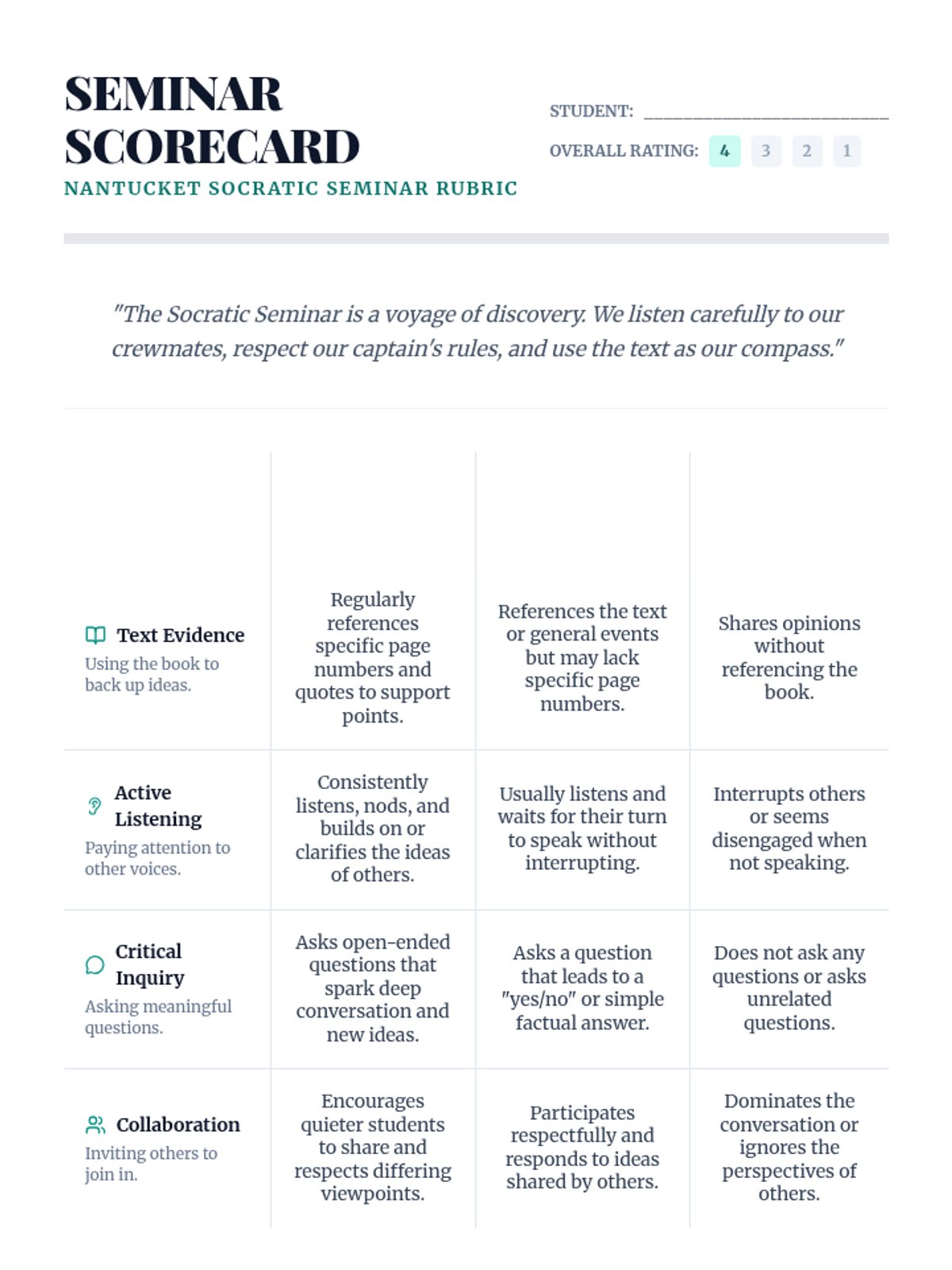
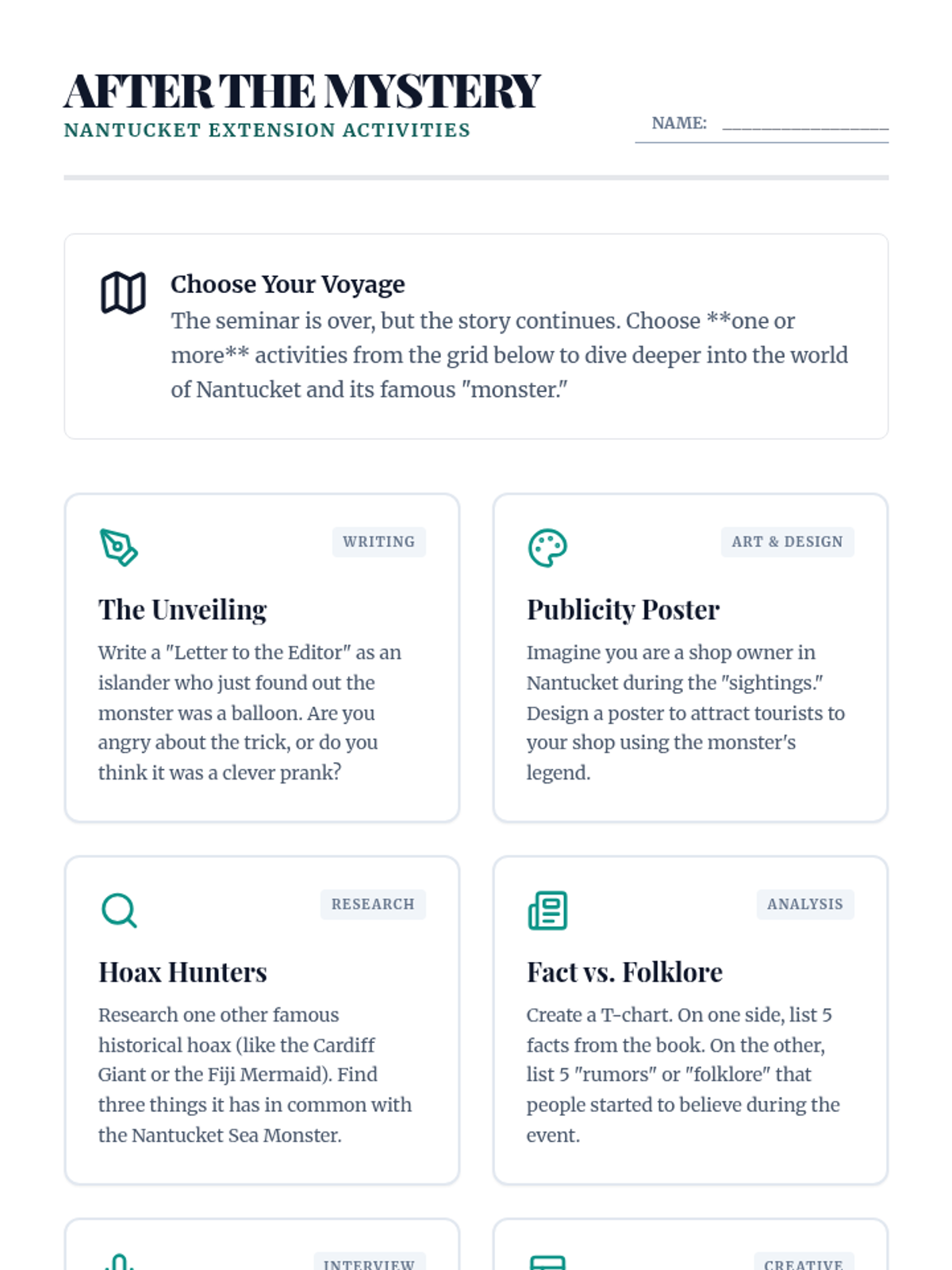
A comprehensive Socratic Seminar lesson for 'The Nantucket Sea Monster' by Darcy Pattison. Students explore themes of media influence, public perception, and the nature of truth through collaborative discussion.
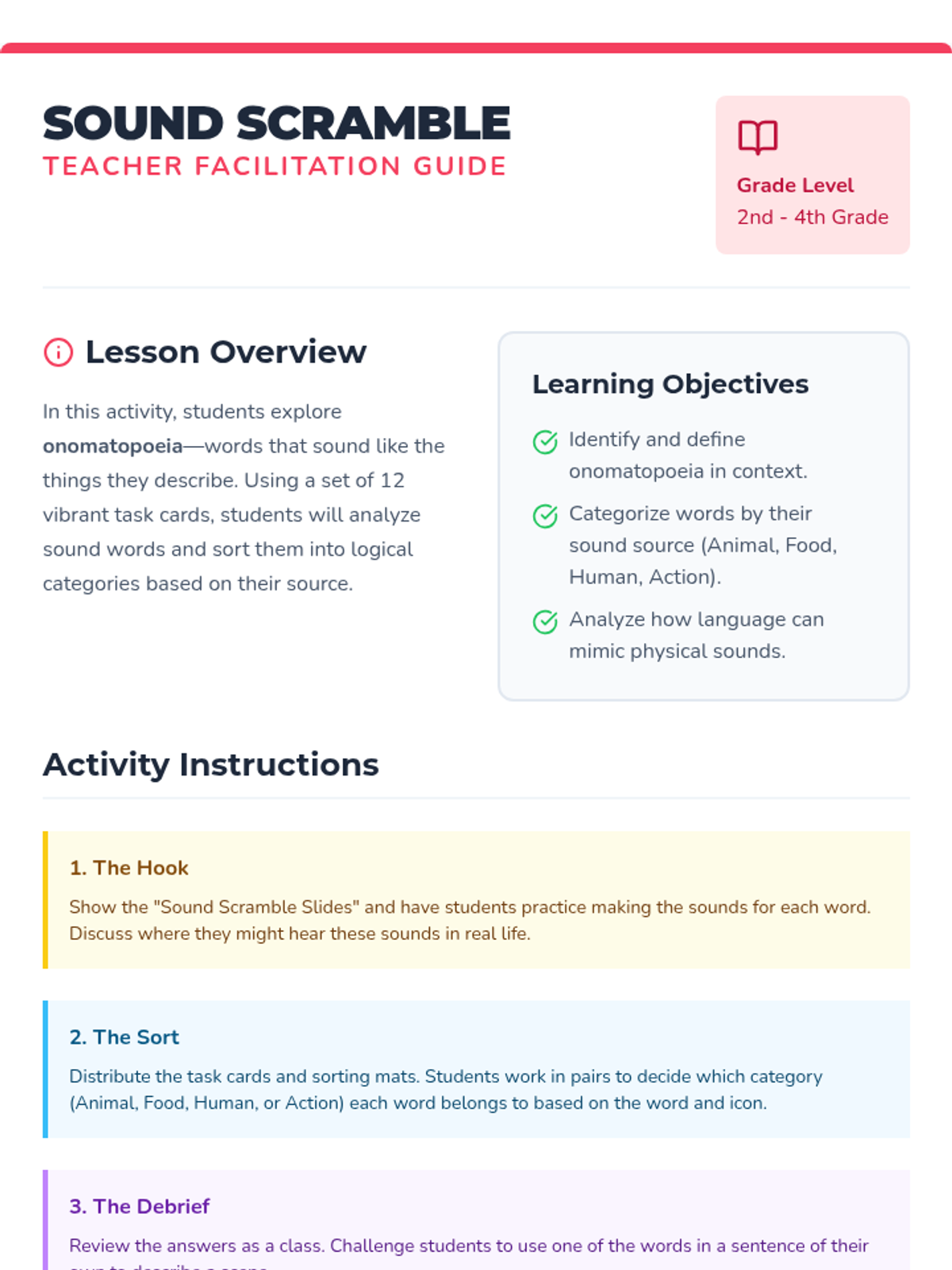
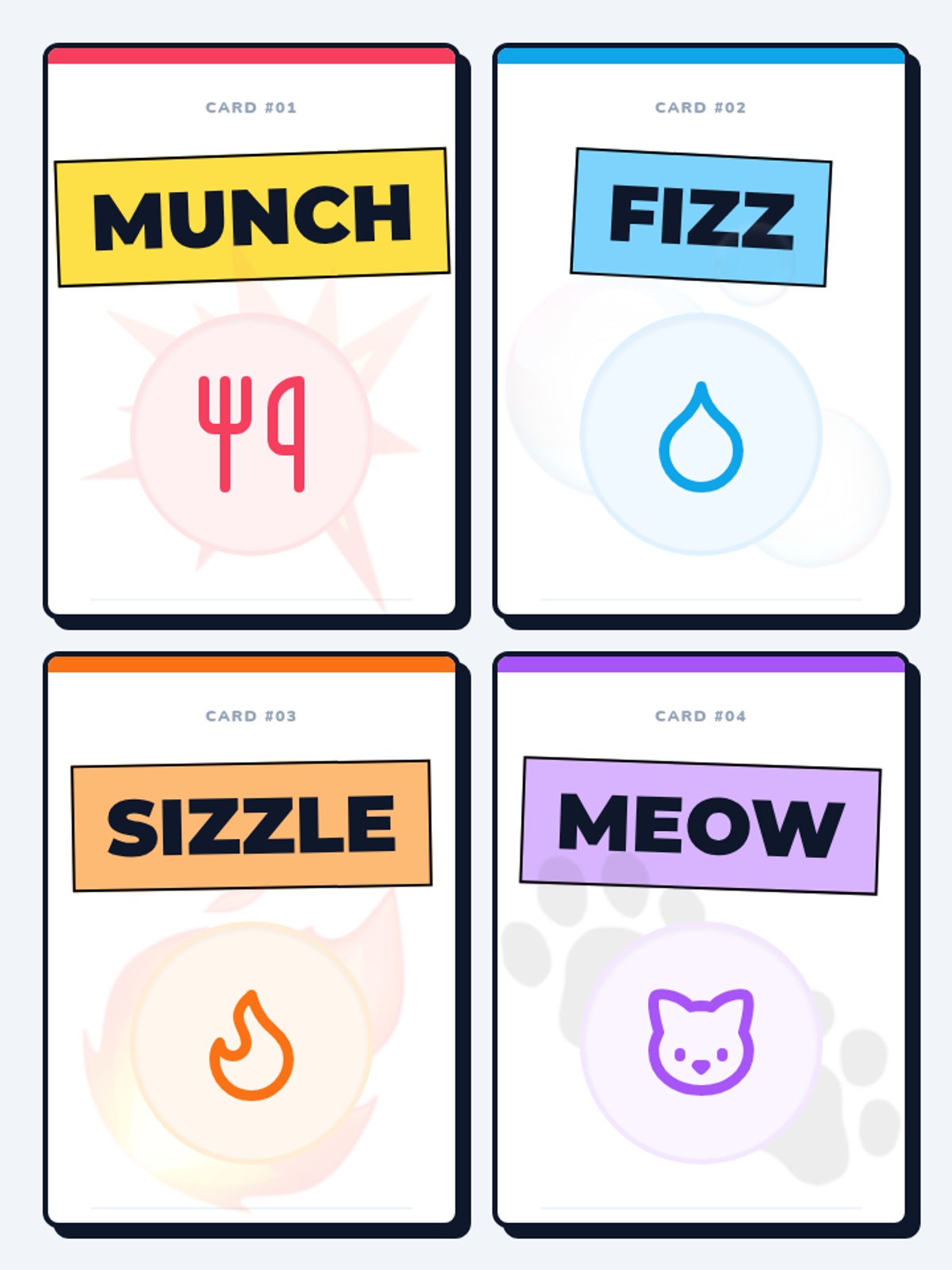
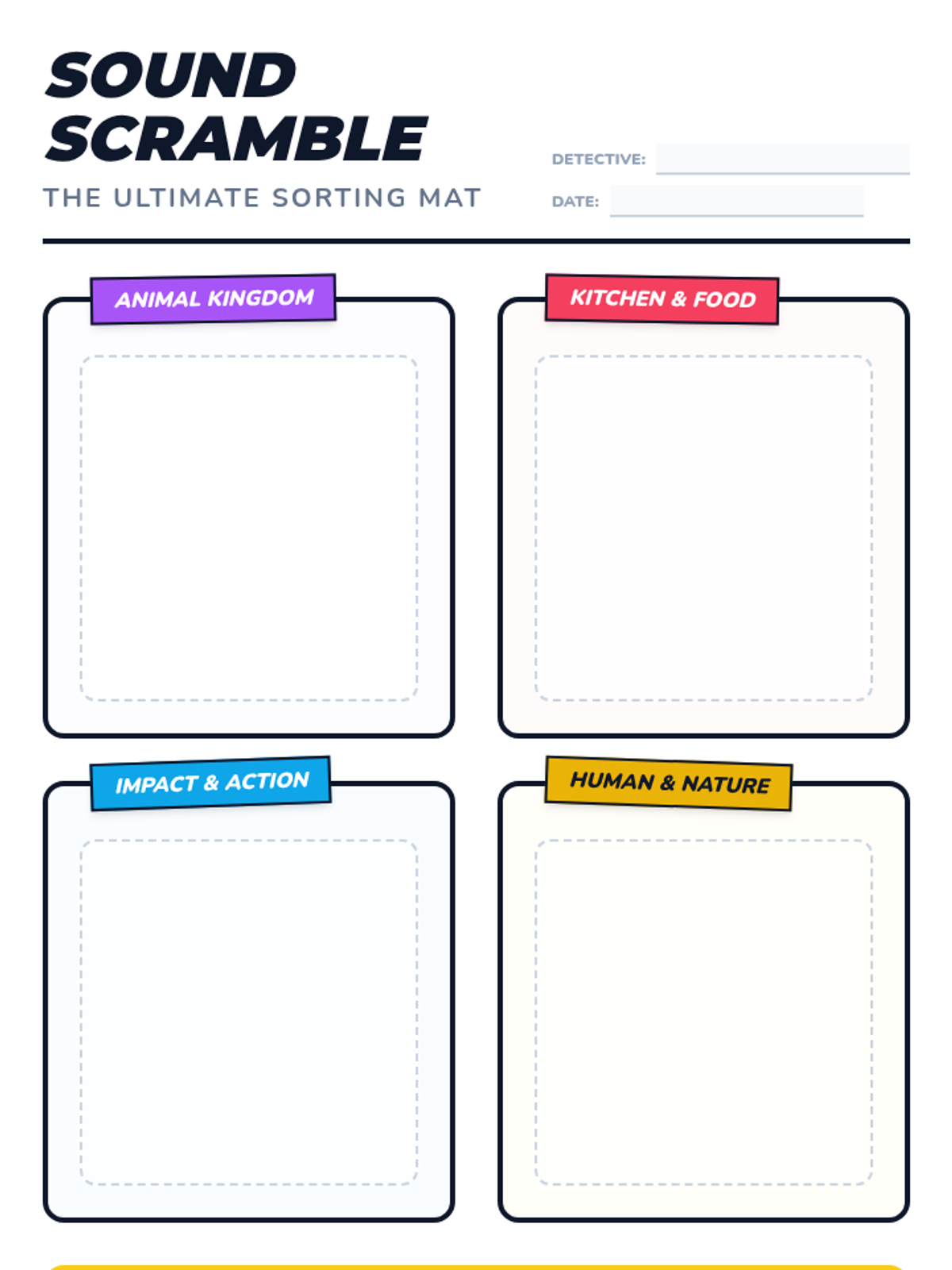
A high-energy introduction to onomatopoeia where students categorize sound-effect words using comic-book styled task cards. Students will explore how language can mimic sounds from animals, nature, and the kitchen.
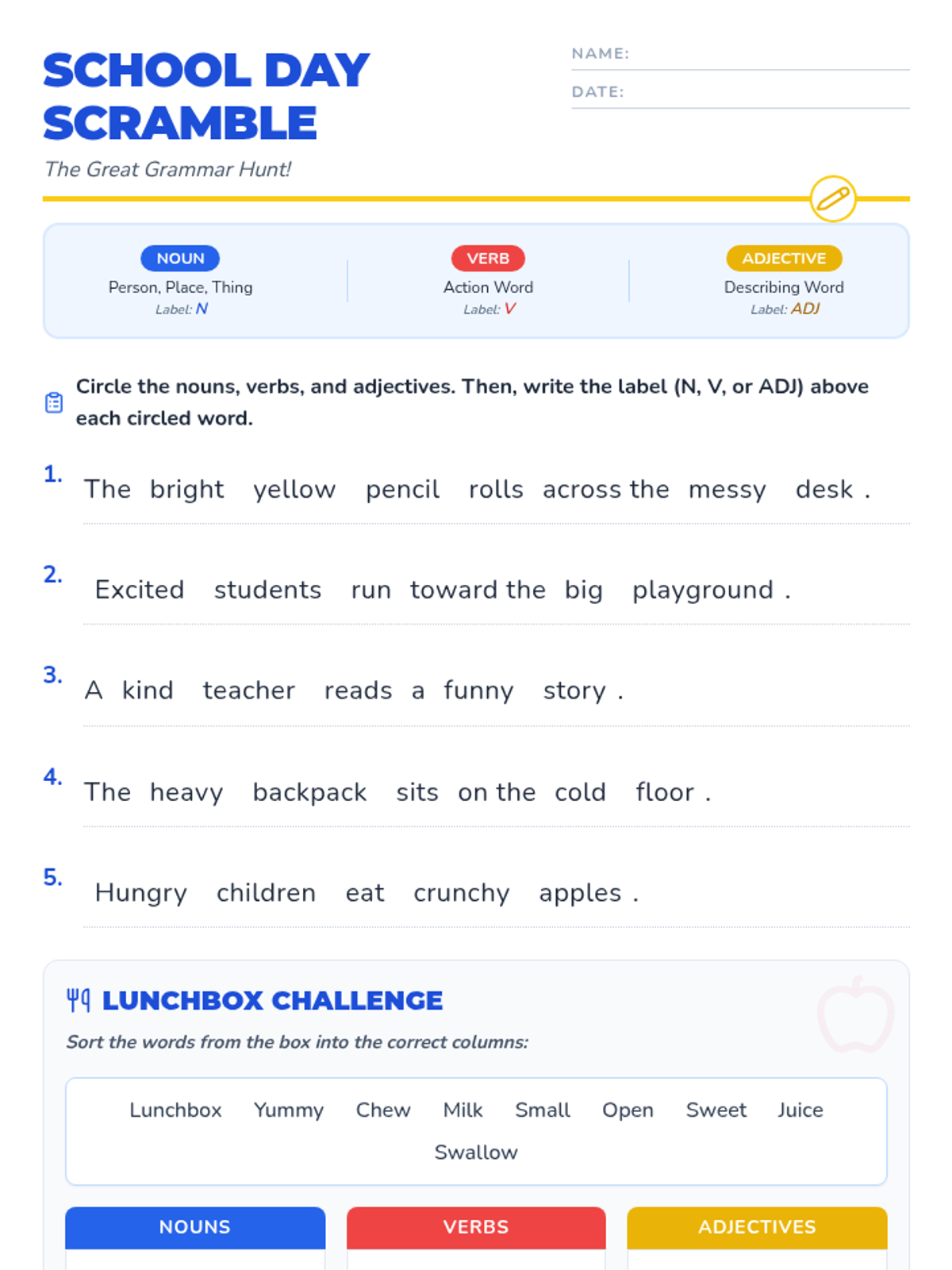
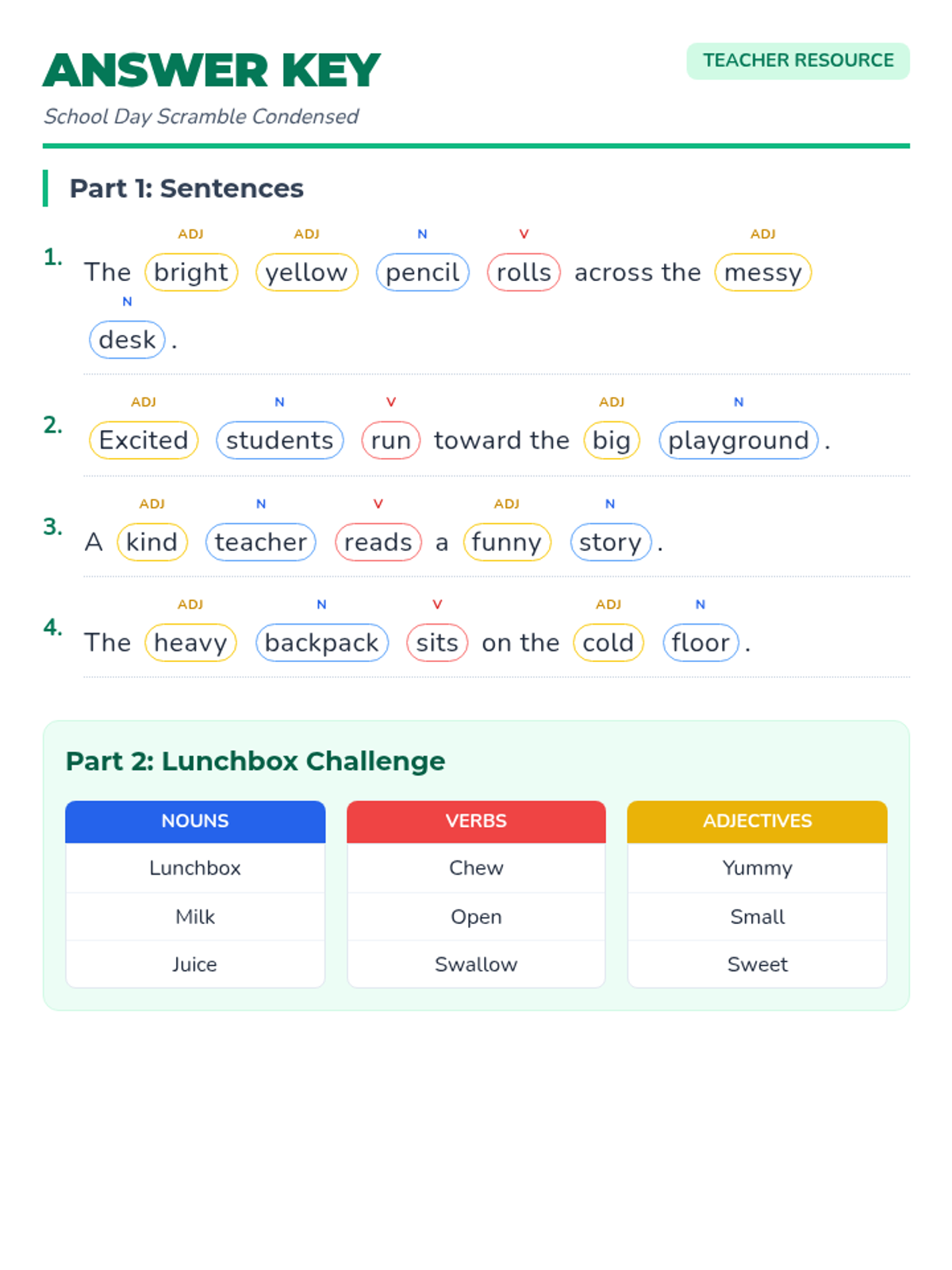
A foundational grammar lesson where students identify and categorize nouns, verbs, and adjectives through the lens of a typical school day.
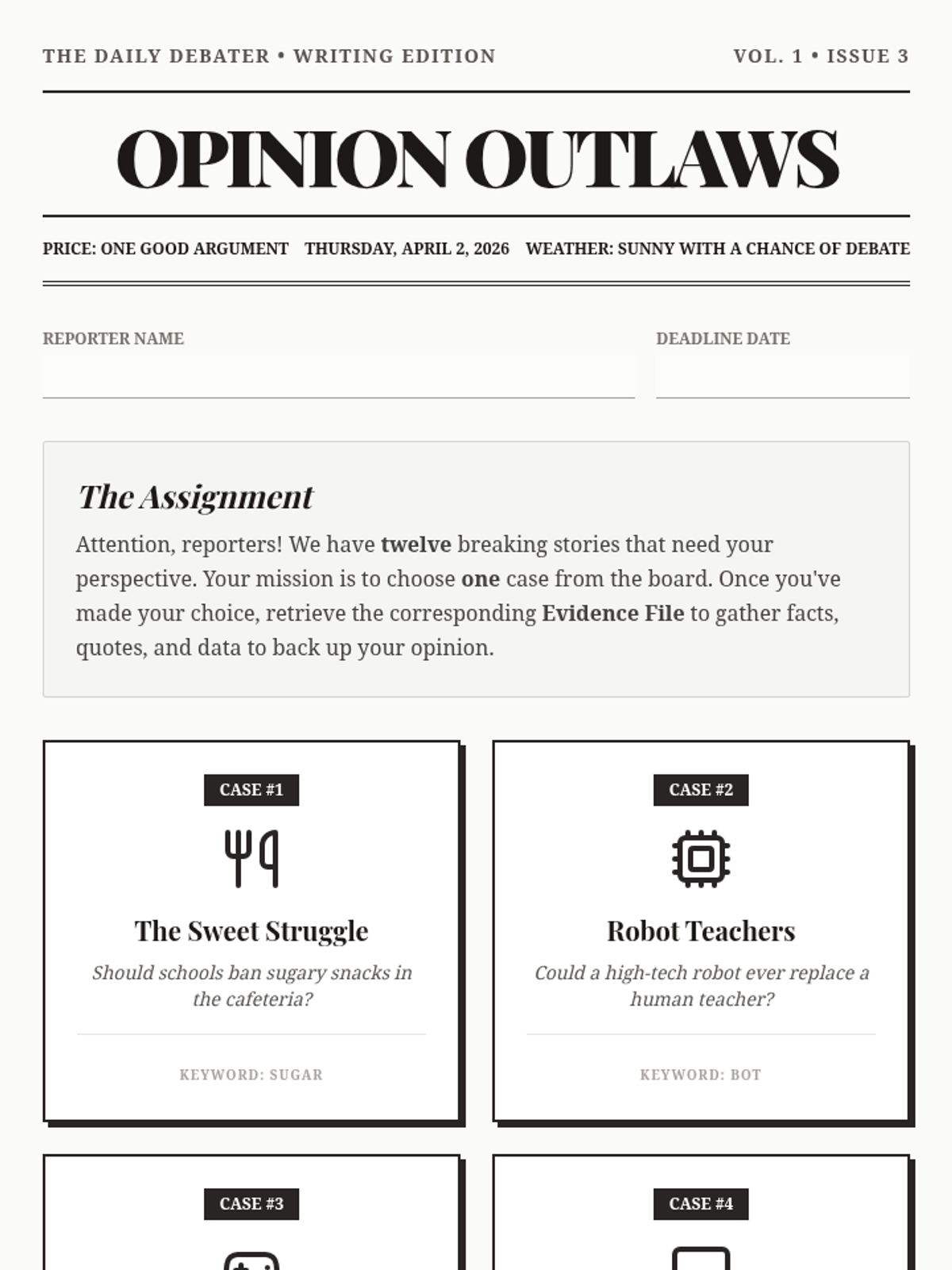
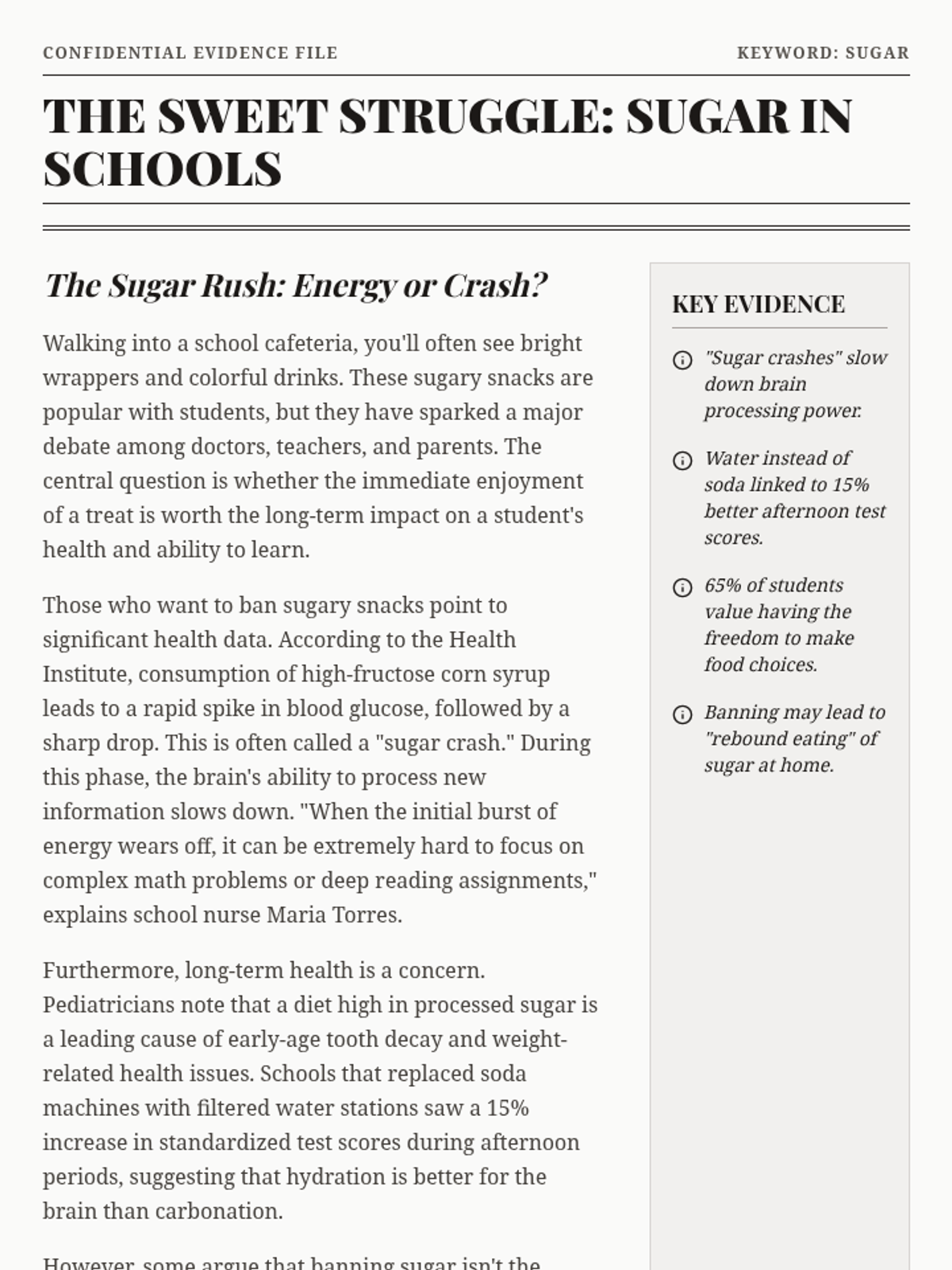
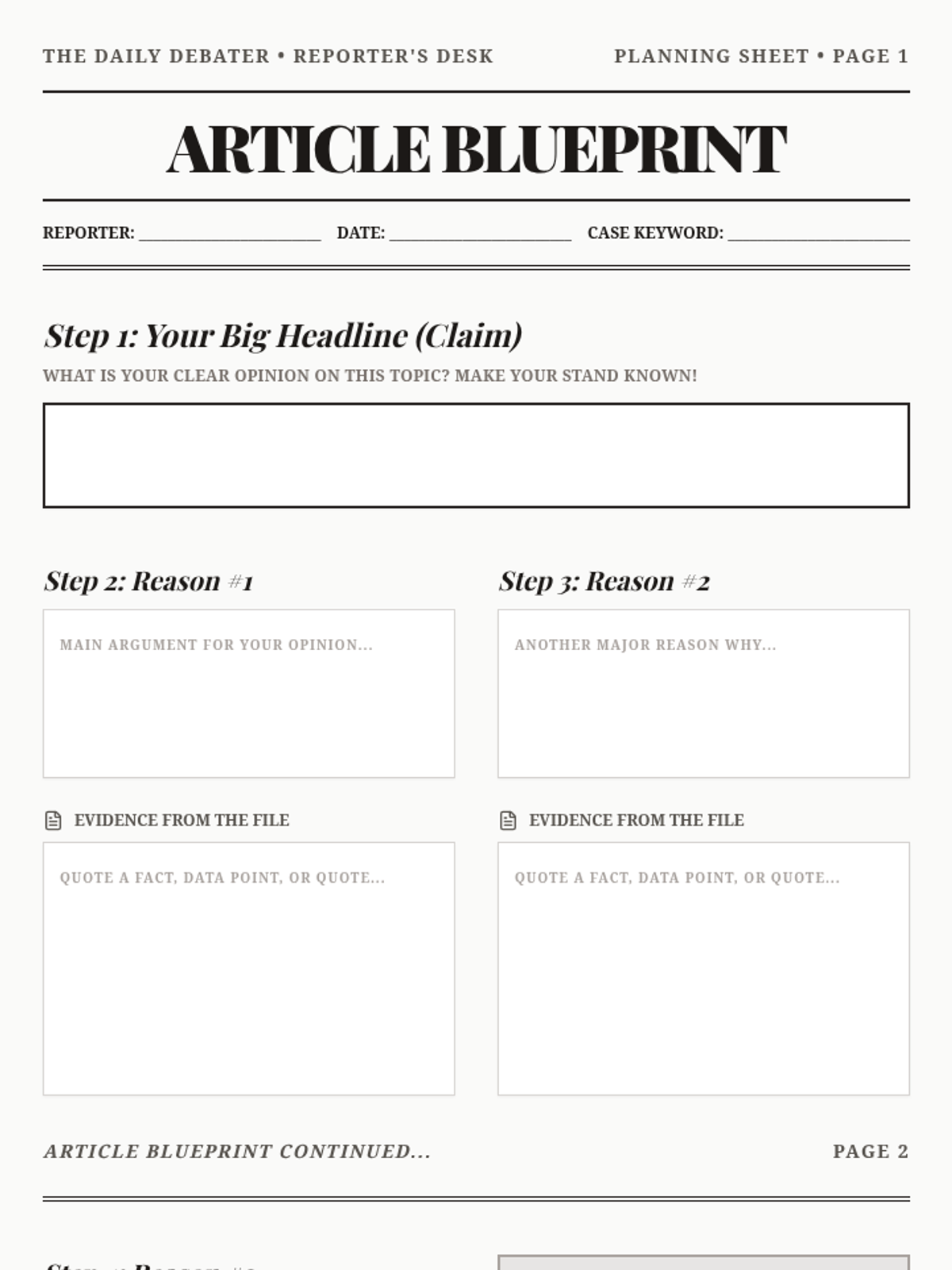
A choice-based writing lesson where students select an opinion prompt and use provided short articles to gather evidence for their persuasive pieces.
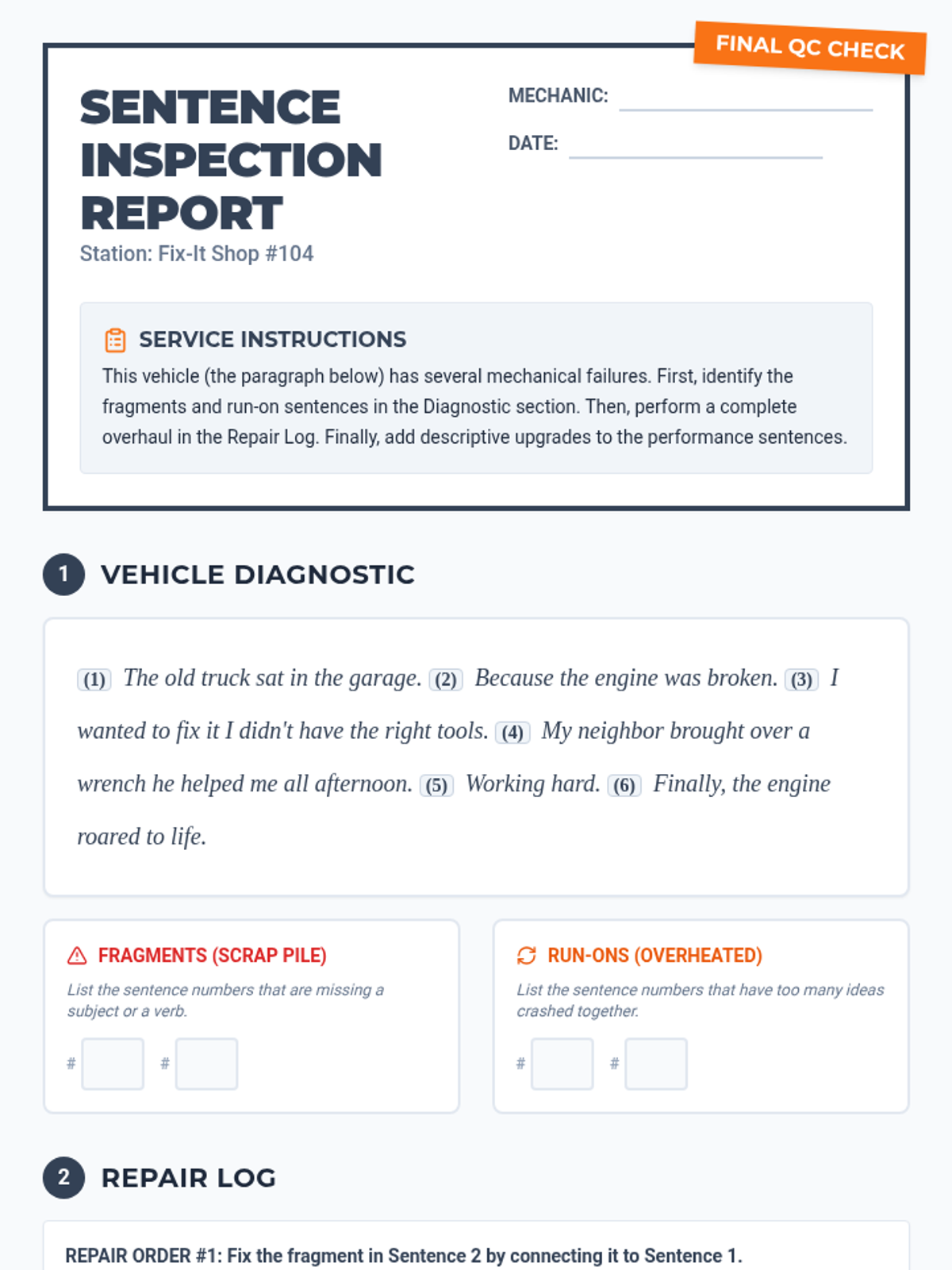
A grammar lesson focusing on identifying complete sentences and repairing run-on sentences using a 'Fix-It Shop' theme. Includes high-support visuals and oral practice frames for ESL students.
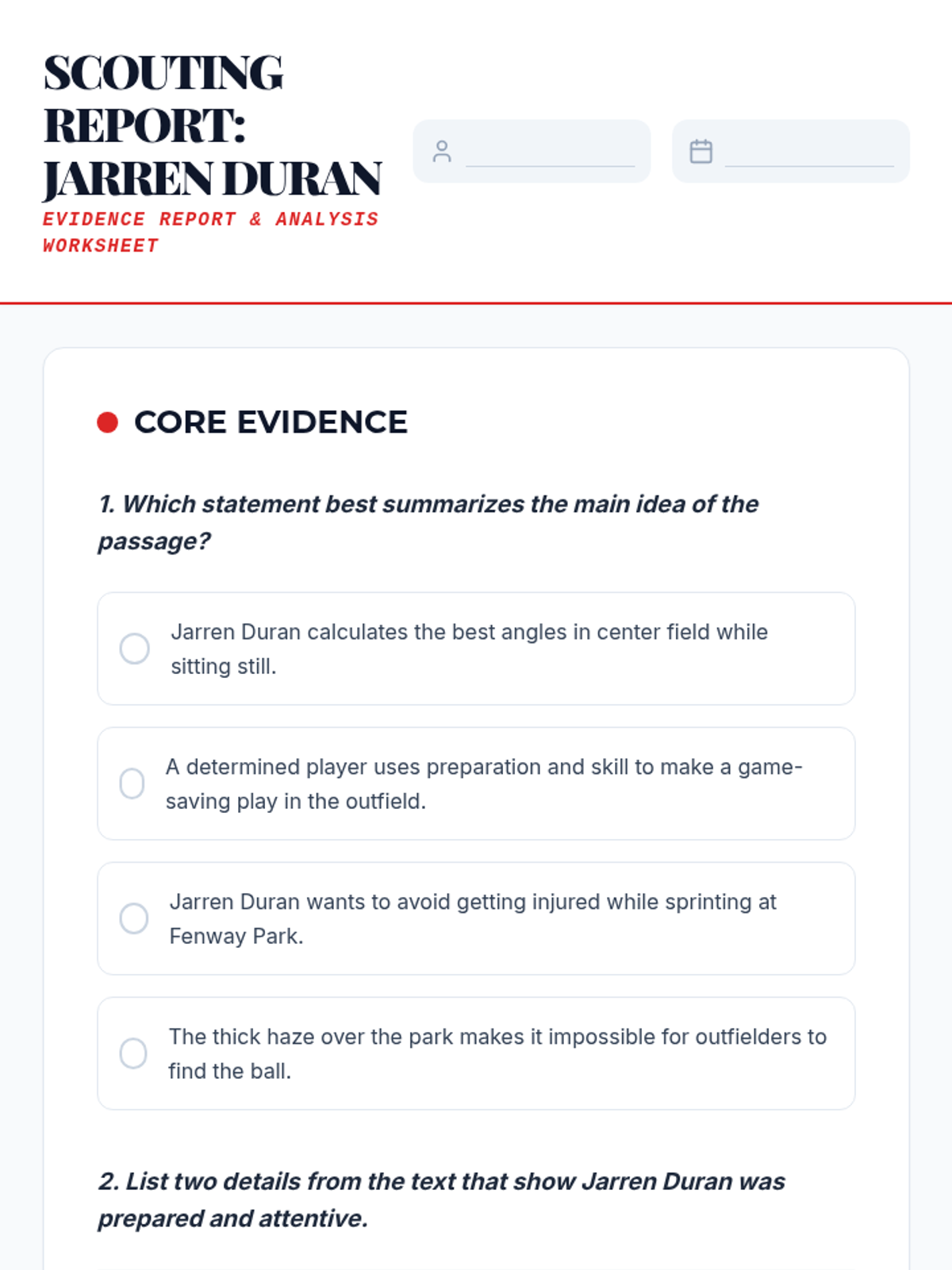
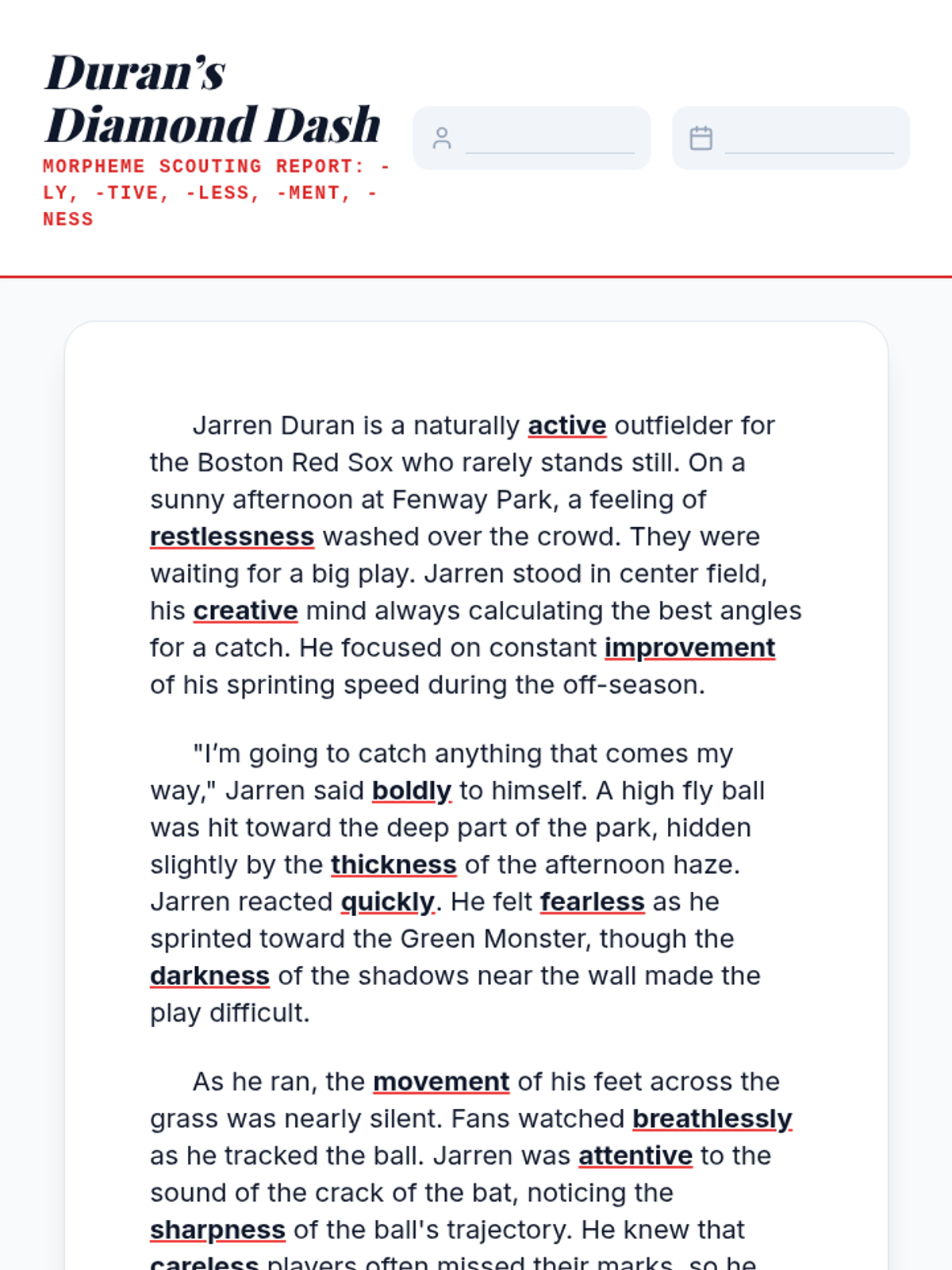
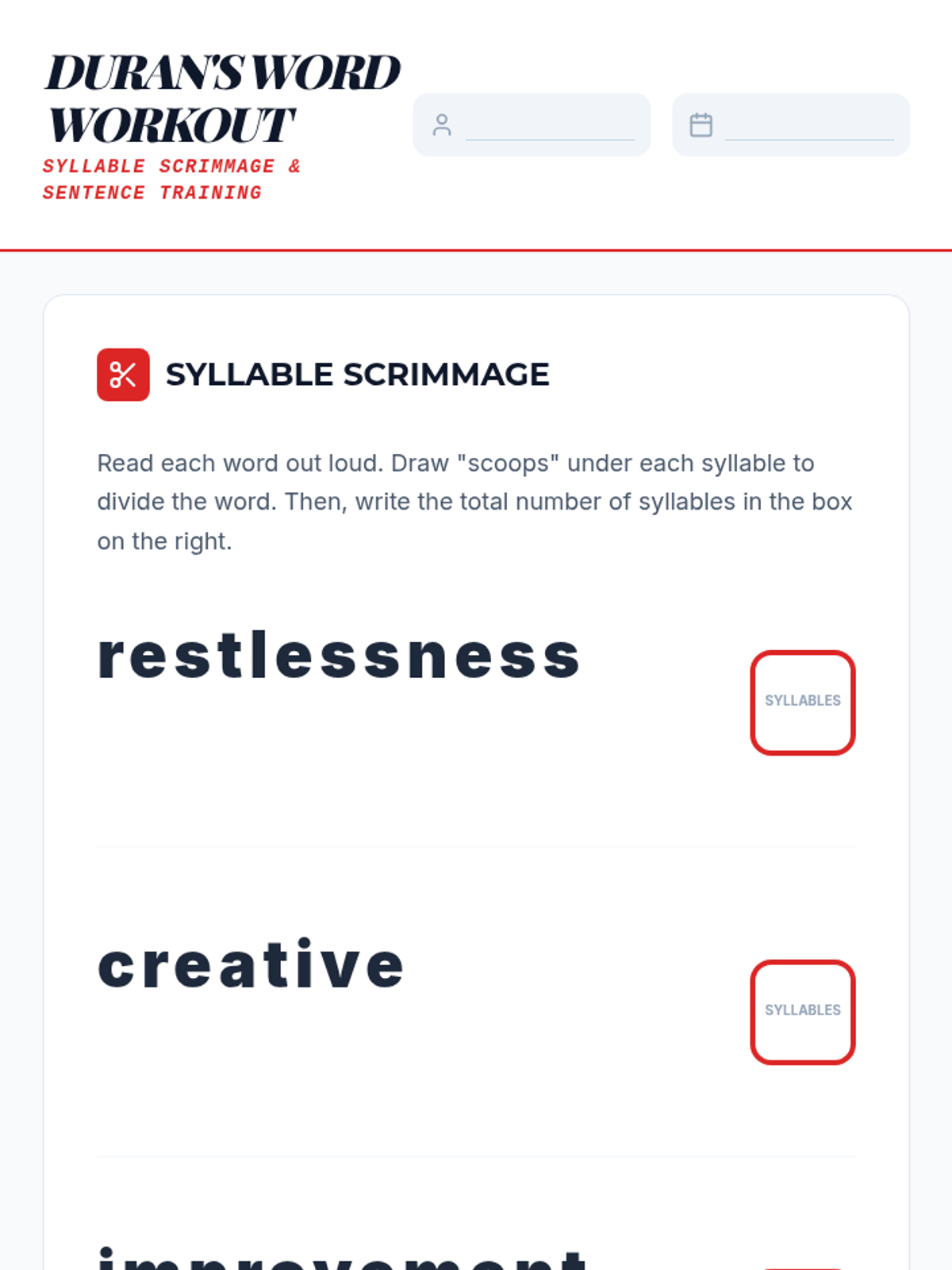
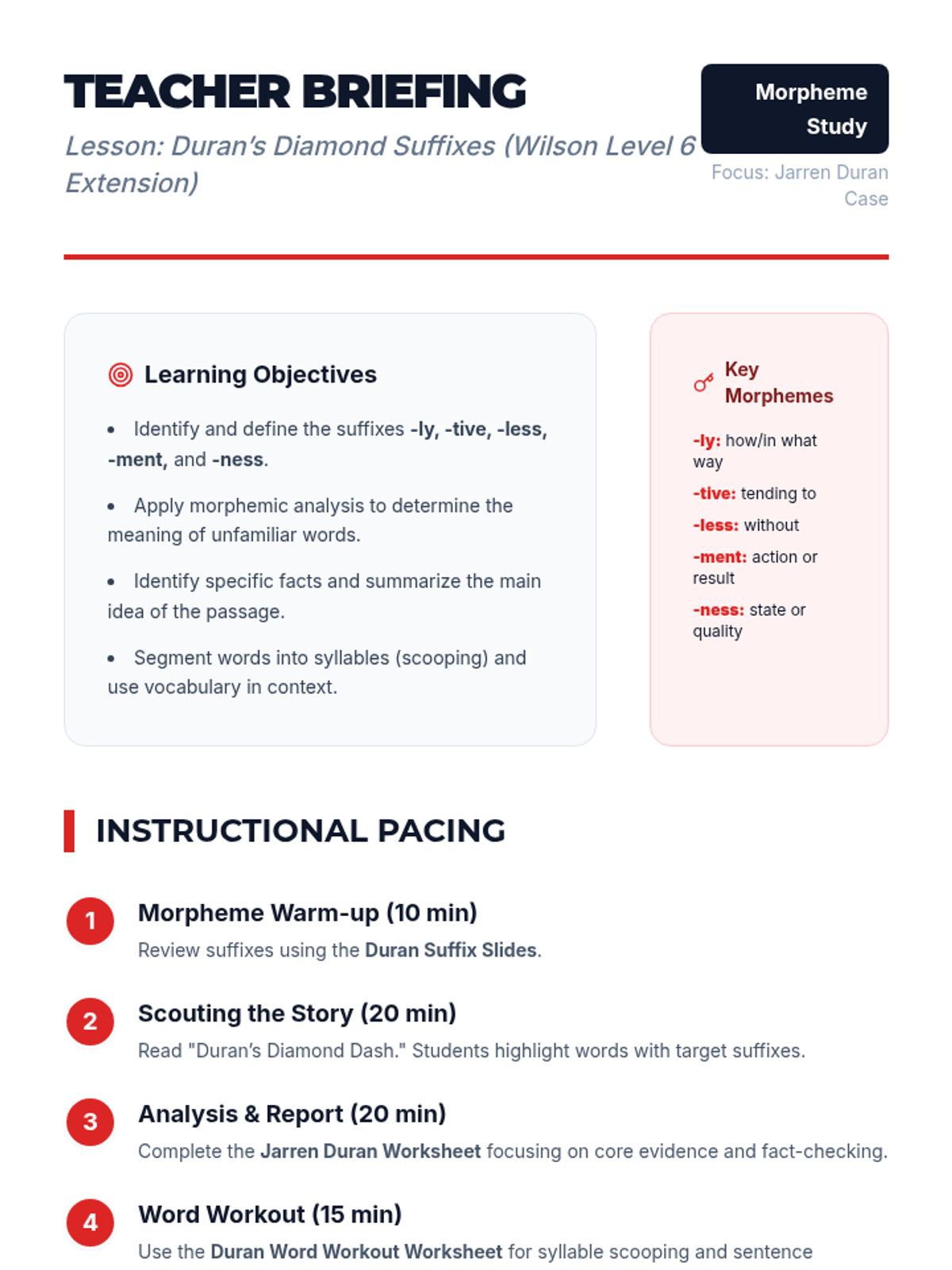
A structured literacy lesson focusing on the suffixes -ly, -tive, -less, -ment, and -ness, featuring a reading passage about Red Sox star Jarren Duran and comprehension exercises.
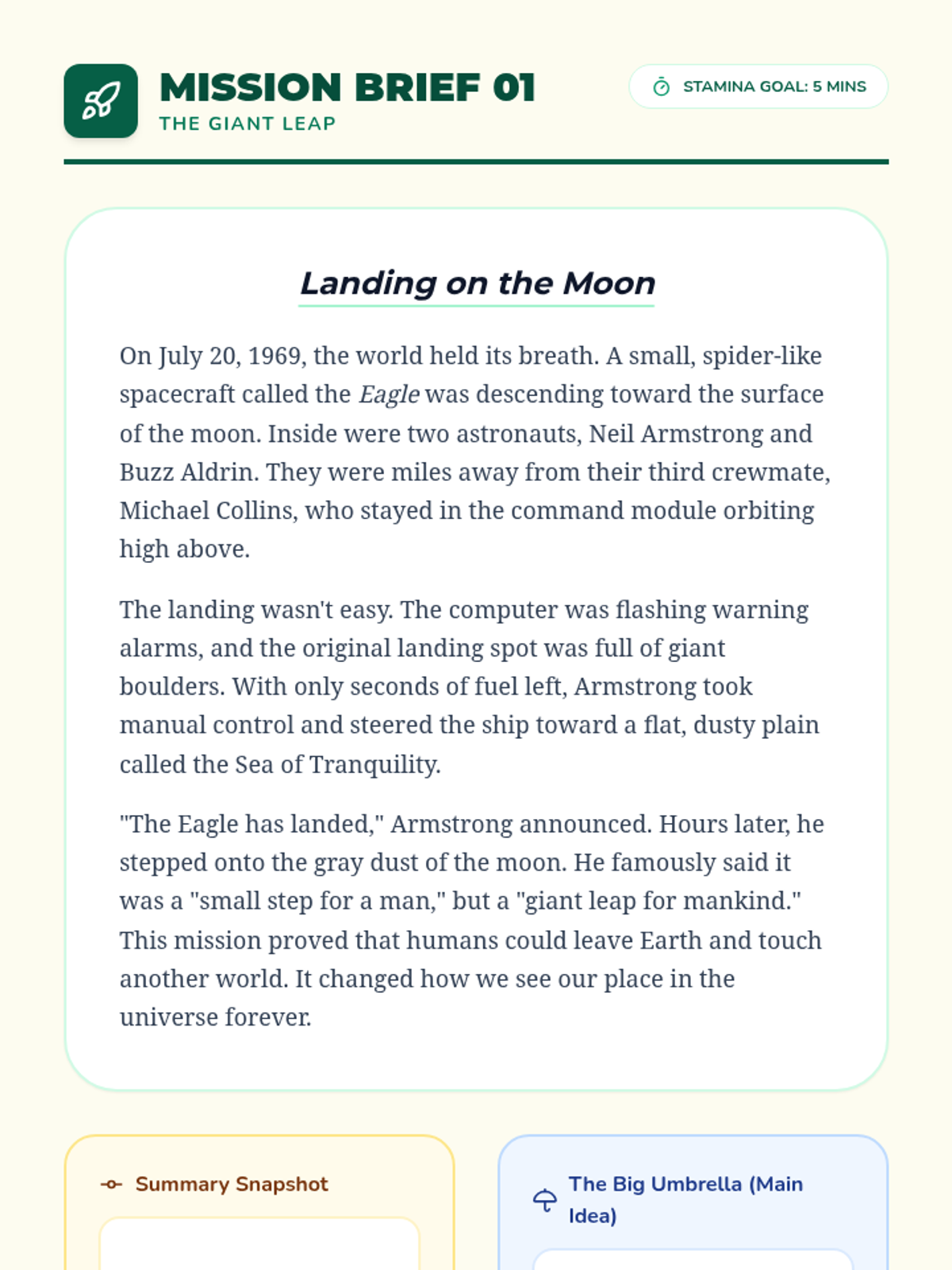
This lesson introduces students to active reading strategies and stamina-building techniques to improve focus and comprehension during independent reading. It uses an 'explorer' theme to frame reading as a mission of discovery.
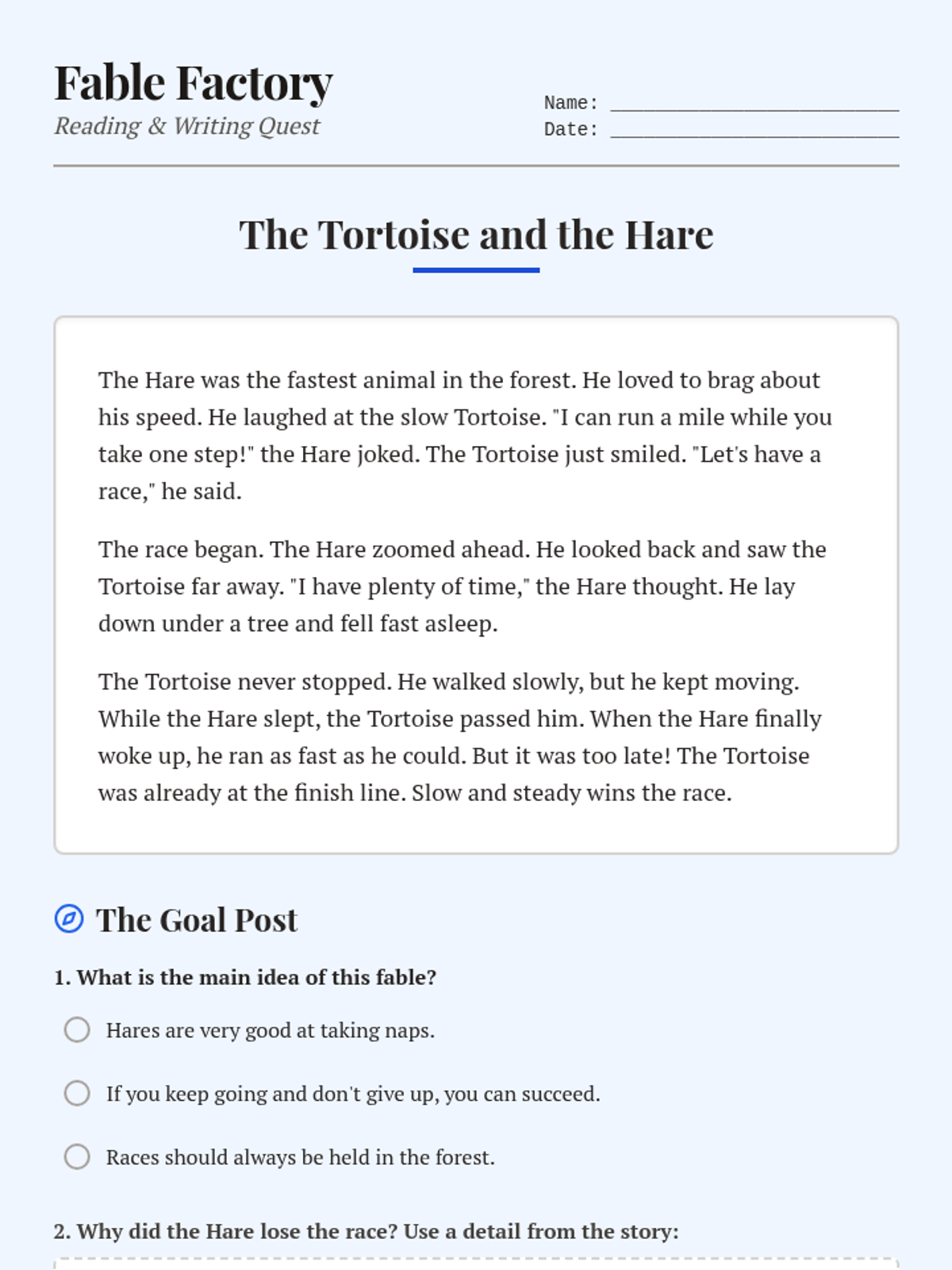
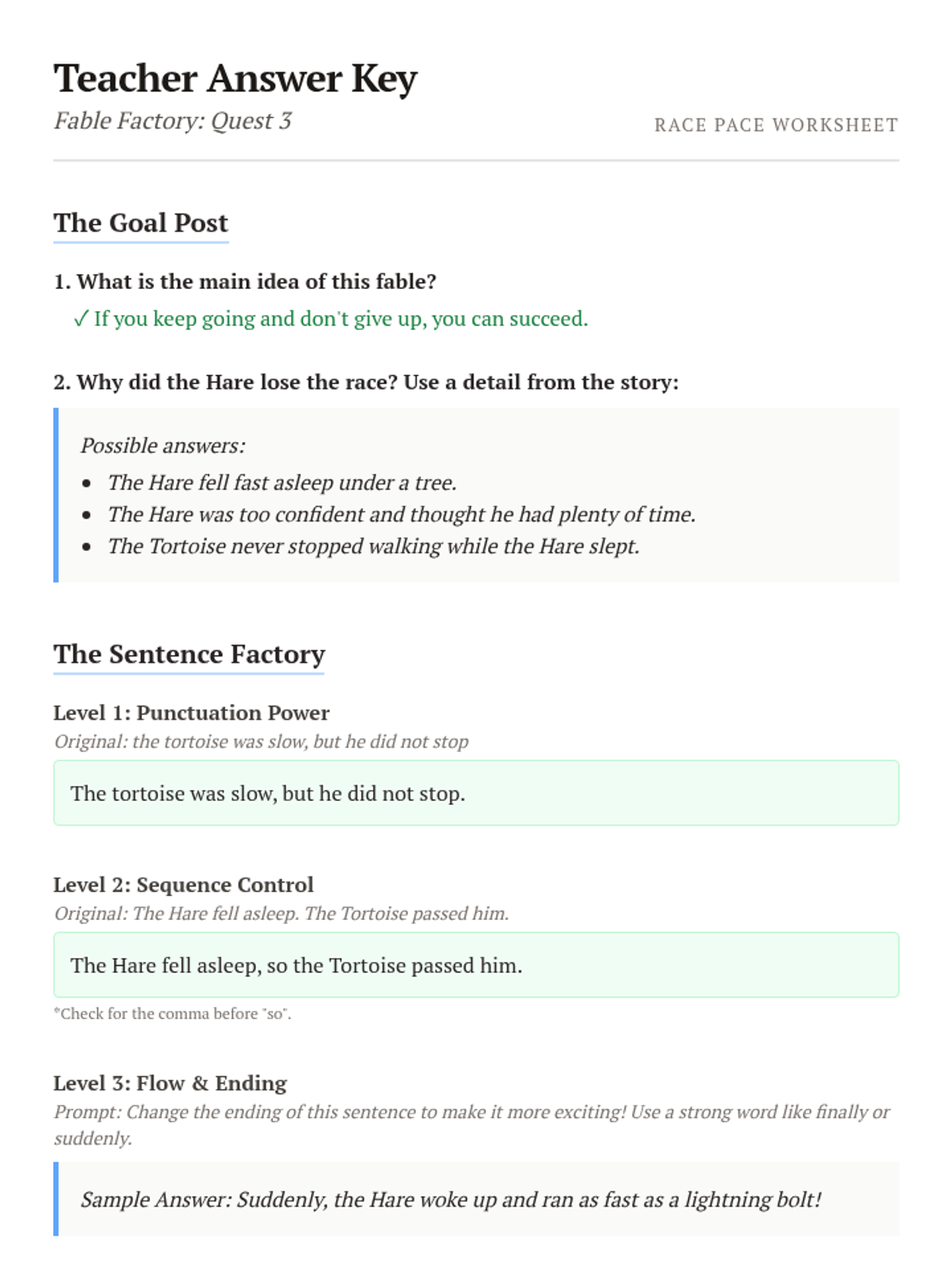
Focusing on sequence and main idea in The Tortoise and the Hare, while refining sentence endings and punctuation for better flow.
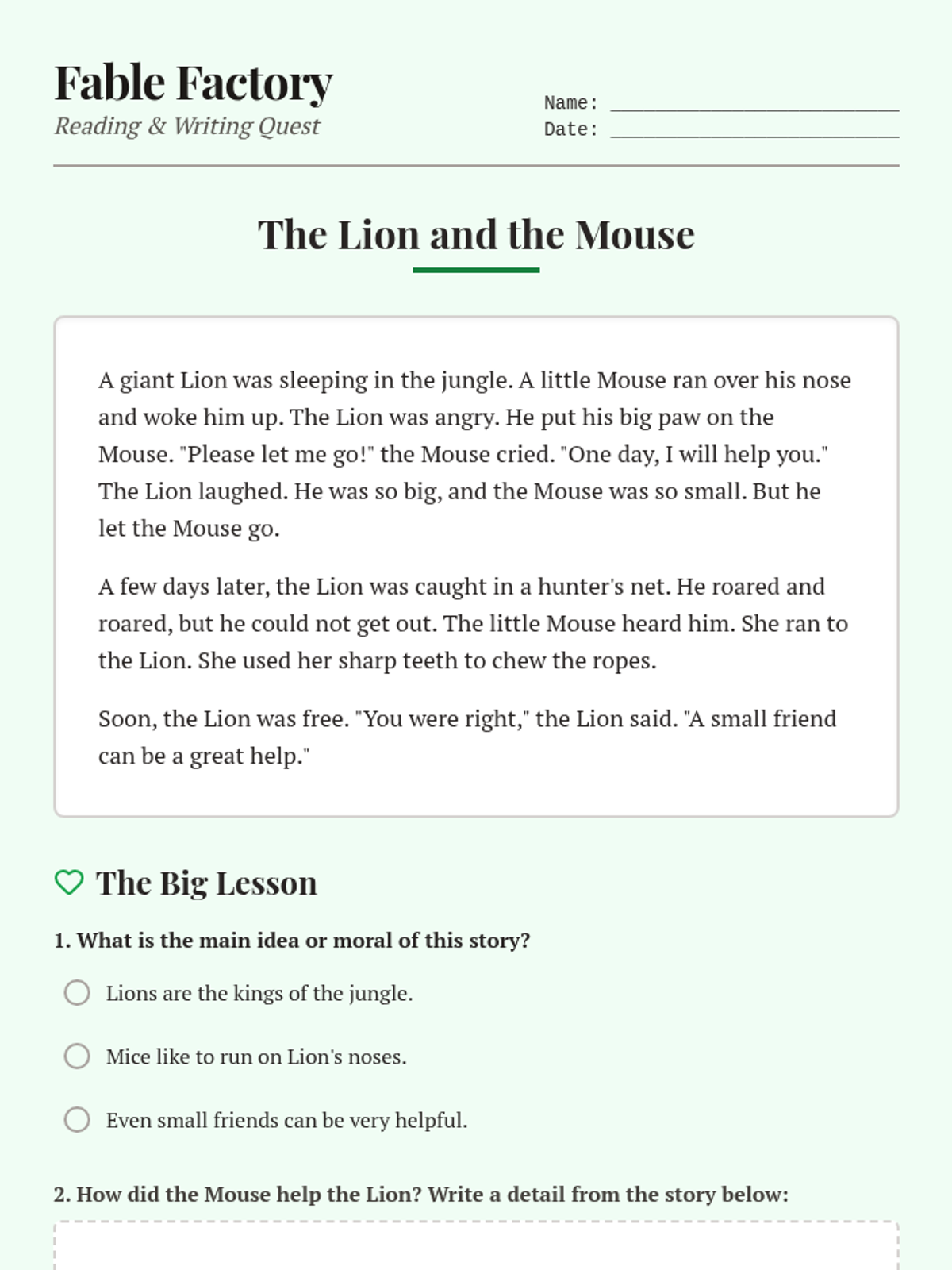
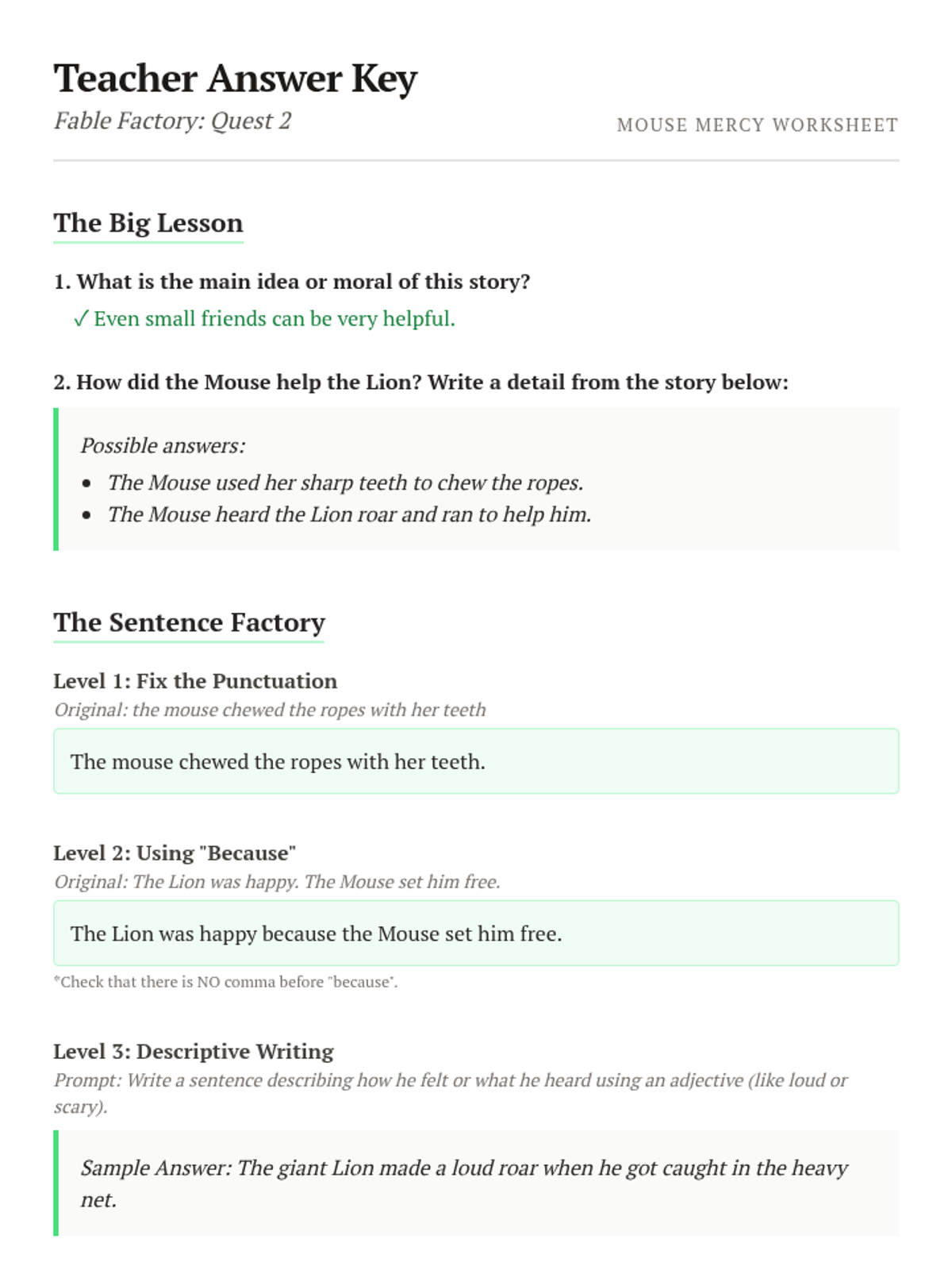
Exploring how small details lead to big results in the story of The Lion and the Mouse, focusing on identifying the moral and building complex sentences.
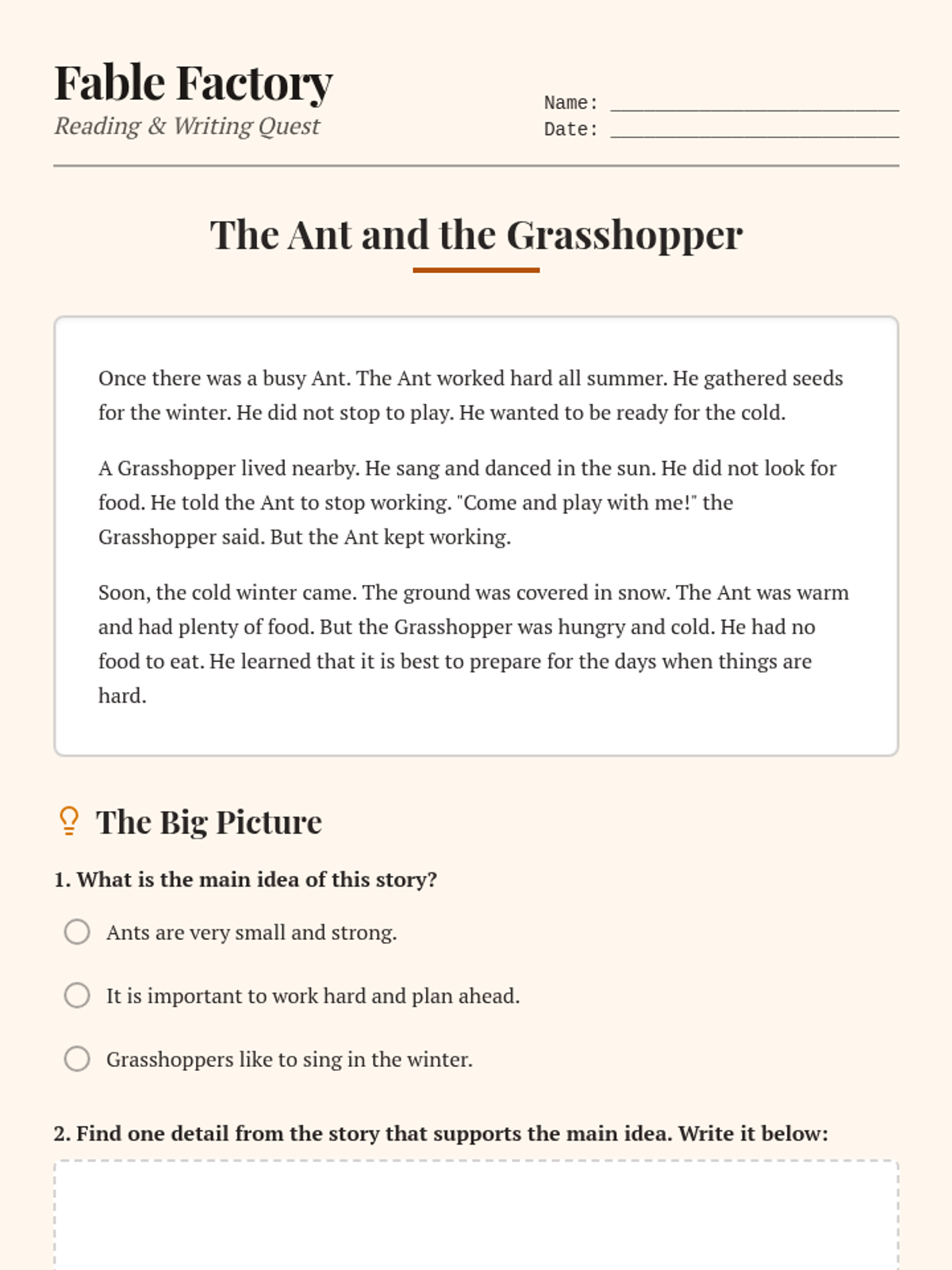
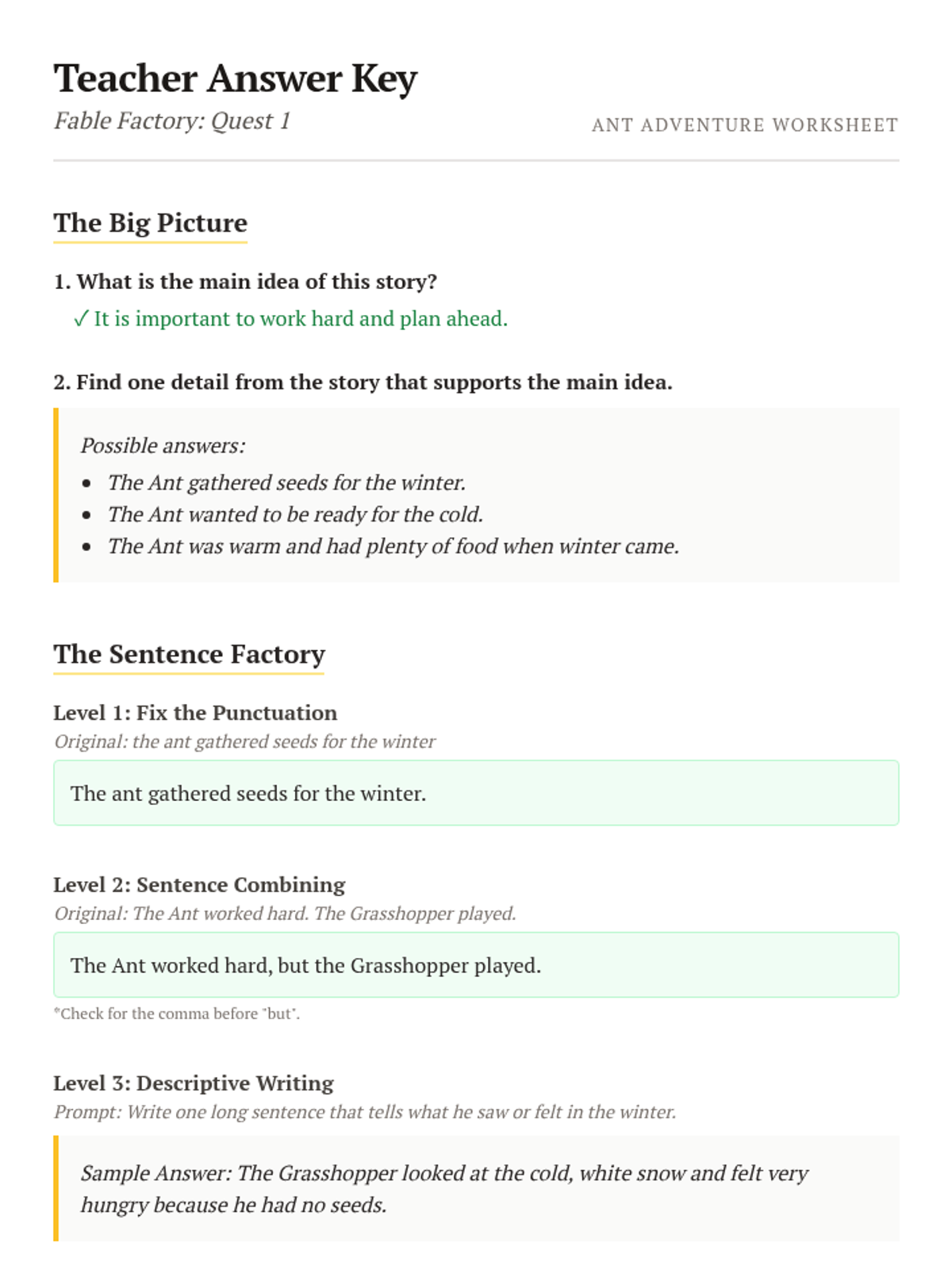
Identifying the main idea and supporting details through the fable of The Ant and the Grasshopper, while practicing simple and compound sentence structures.
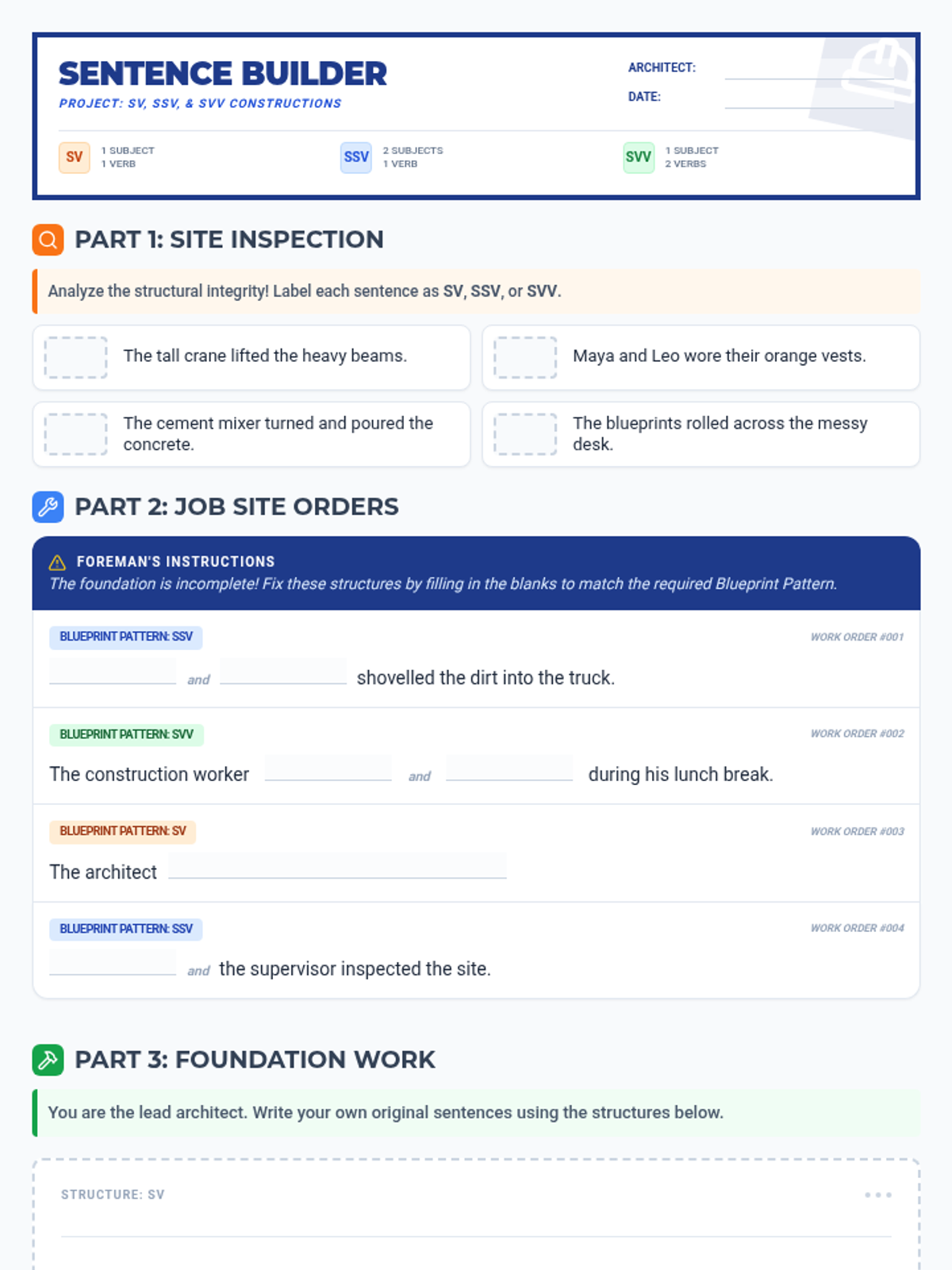
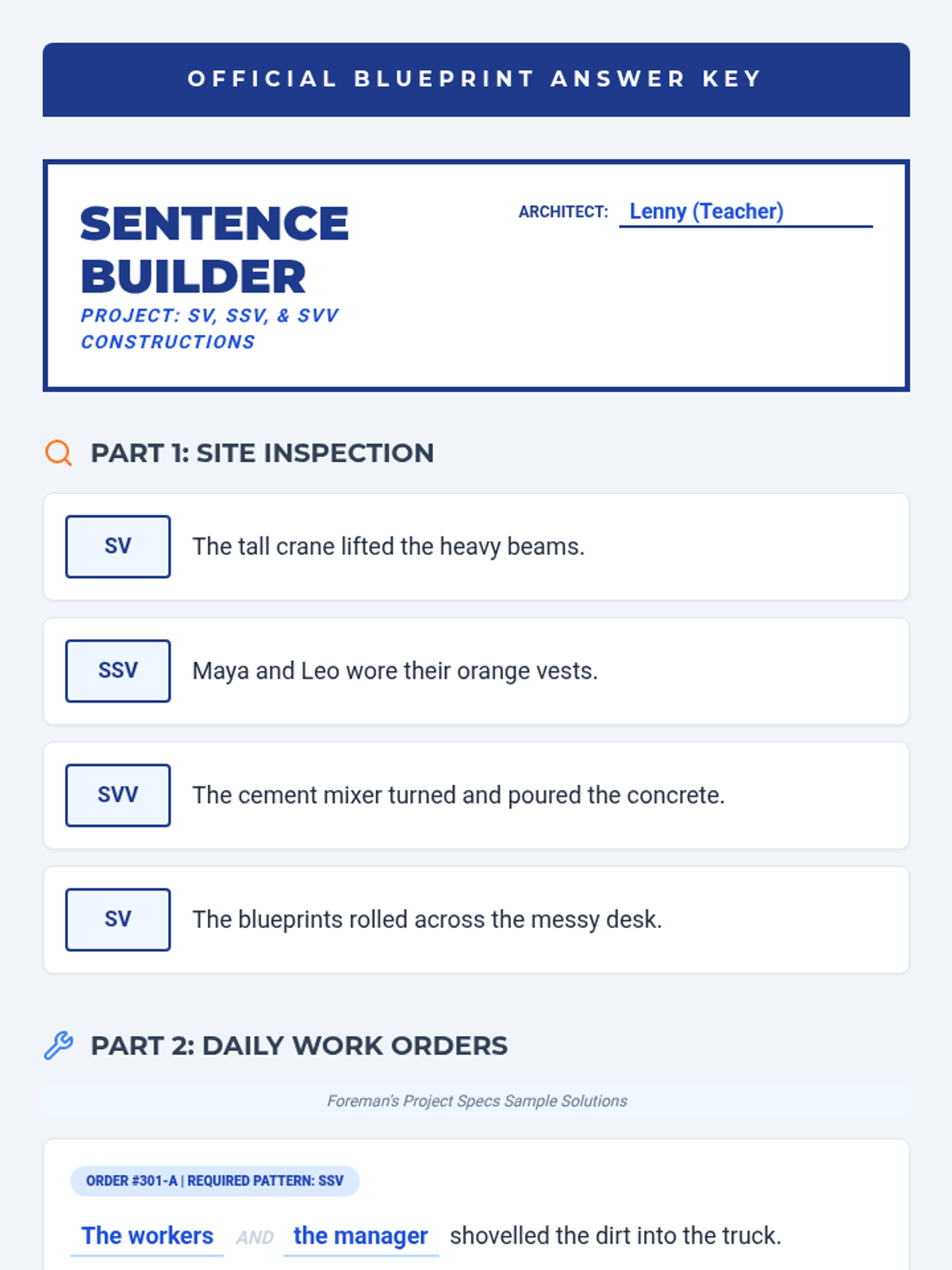
A lesson focused on mastering SV, SSV, and SVV sentence patterns through structured practice and construction-themed activities.
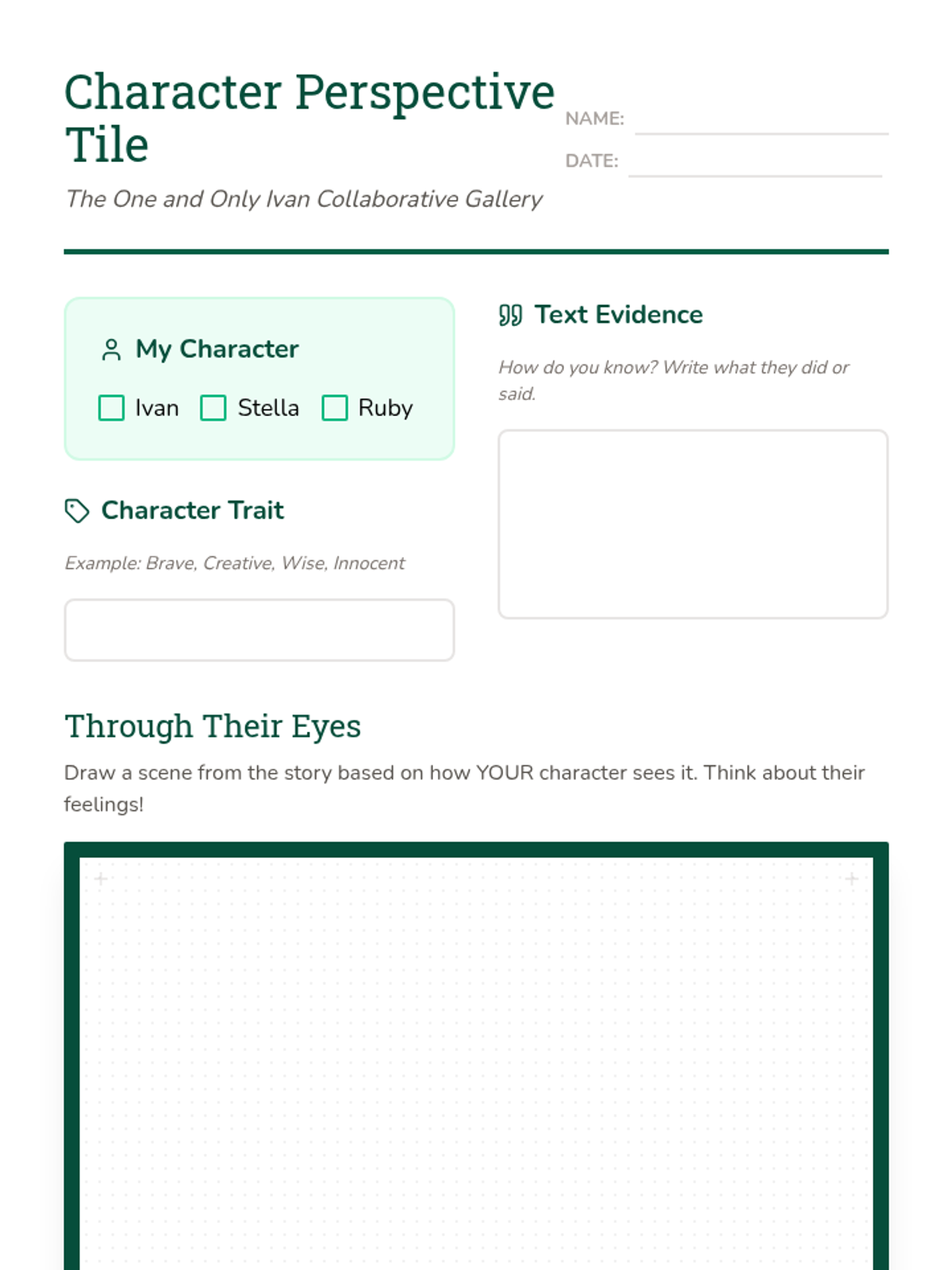
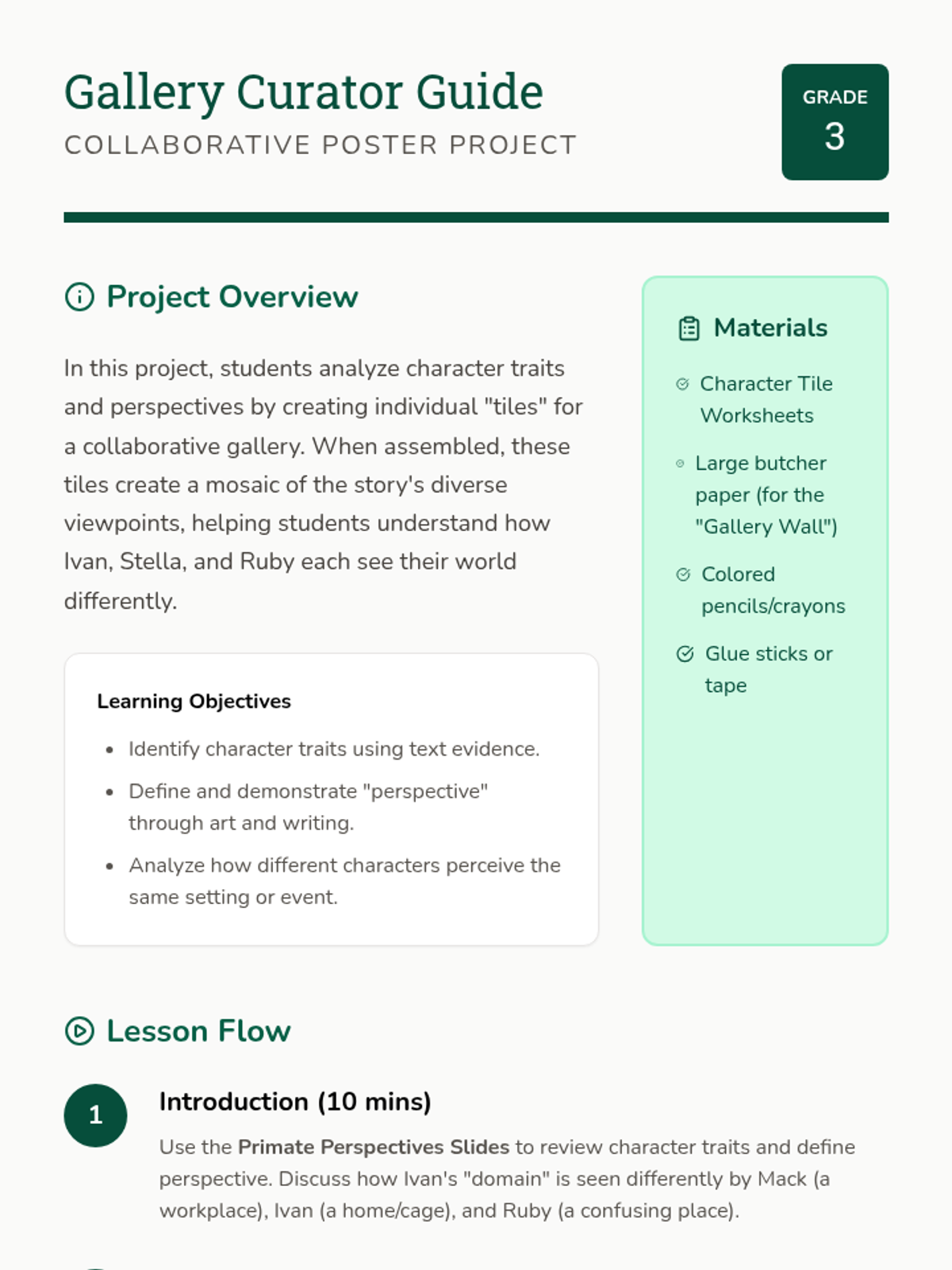
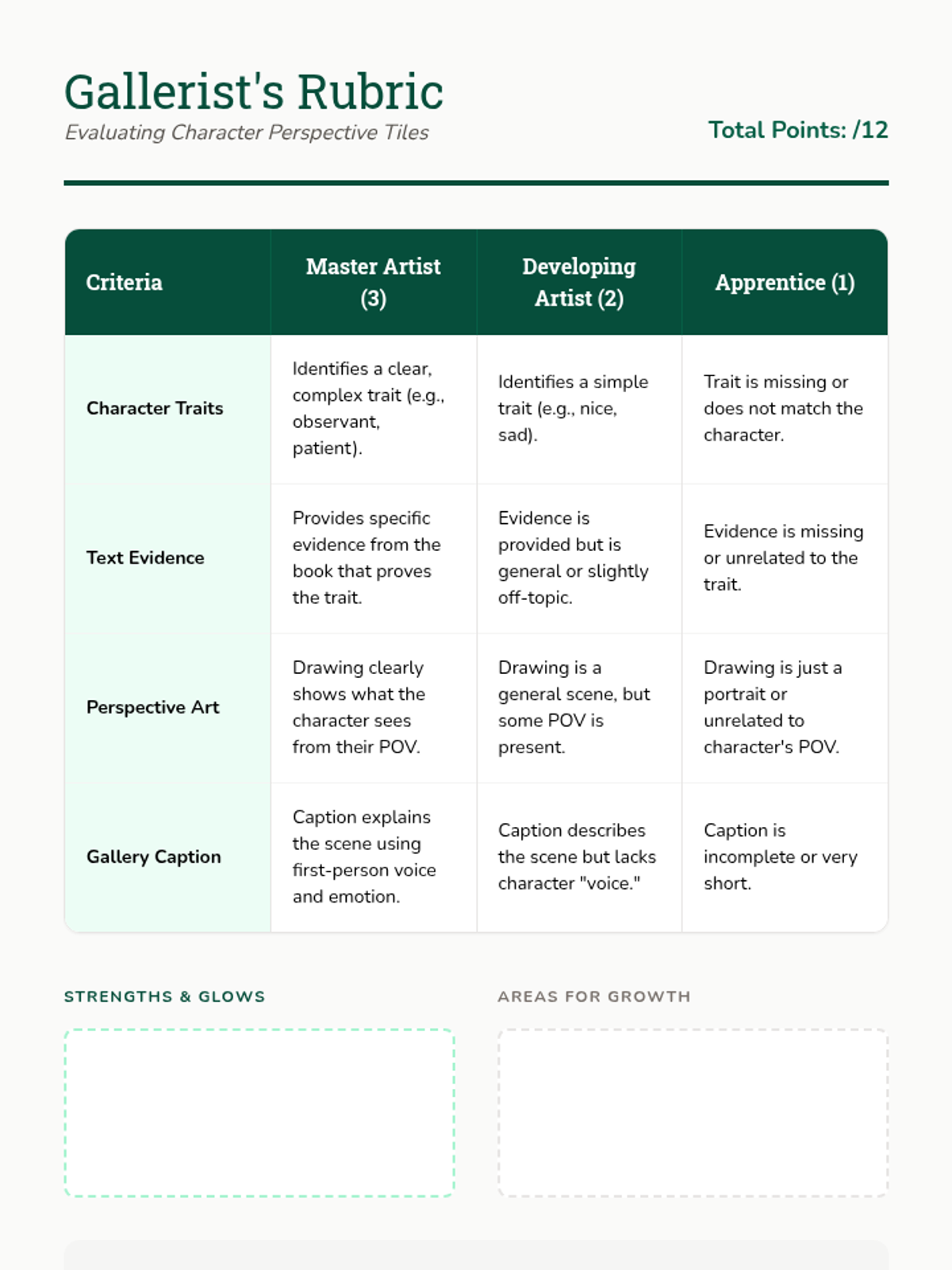
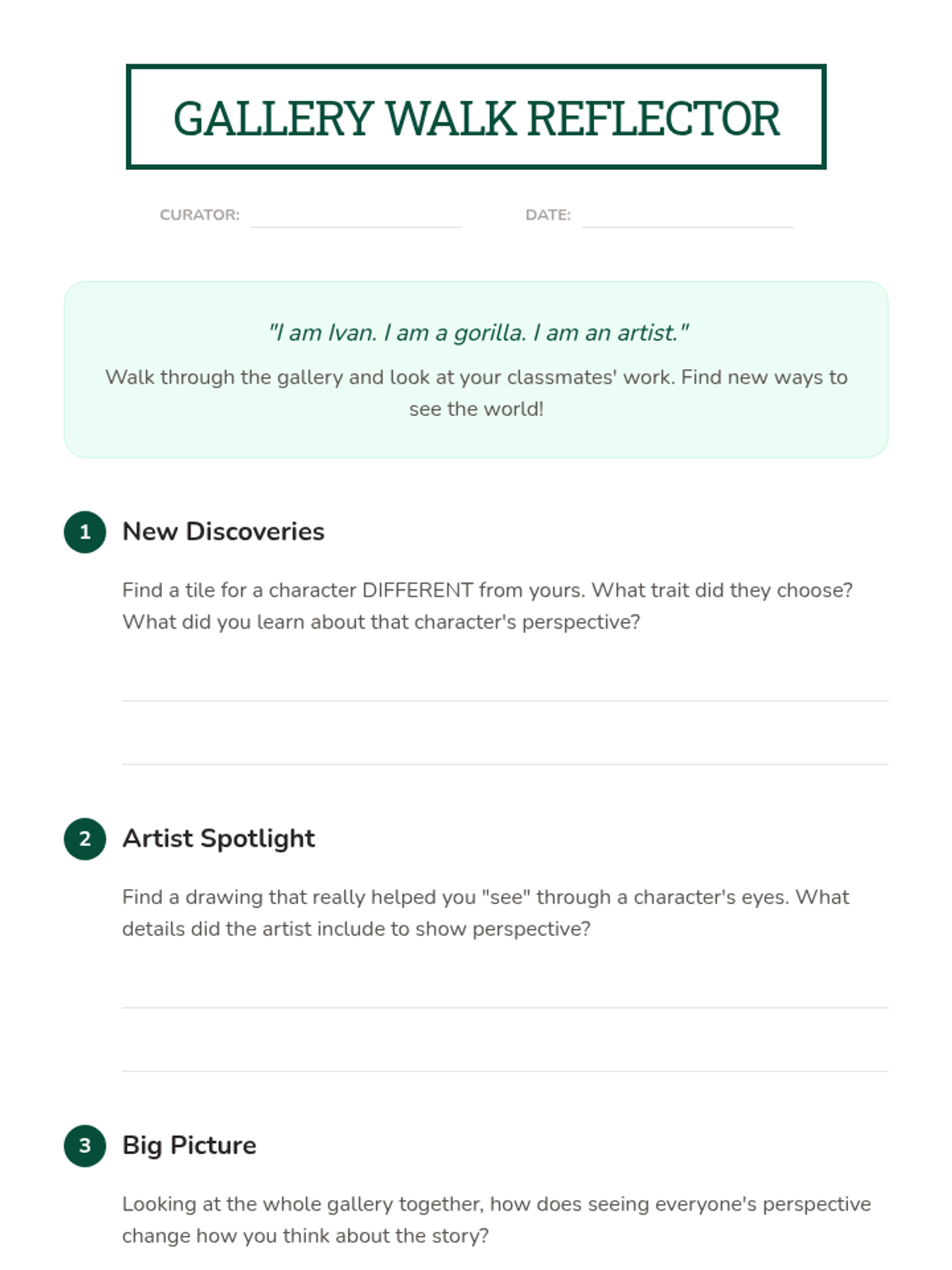
Students explore character traits and perspectives in 'The One and Only Ivan' through a collaborative art and writing project. They analyze Ivan, Stella, and Ruby to understand how their different outlooks shape the story.
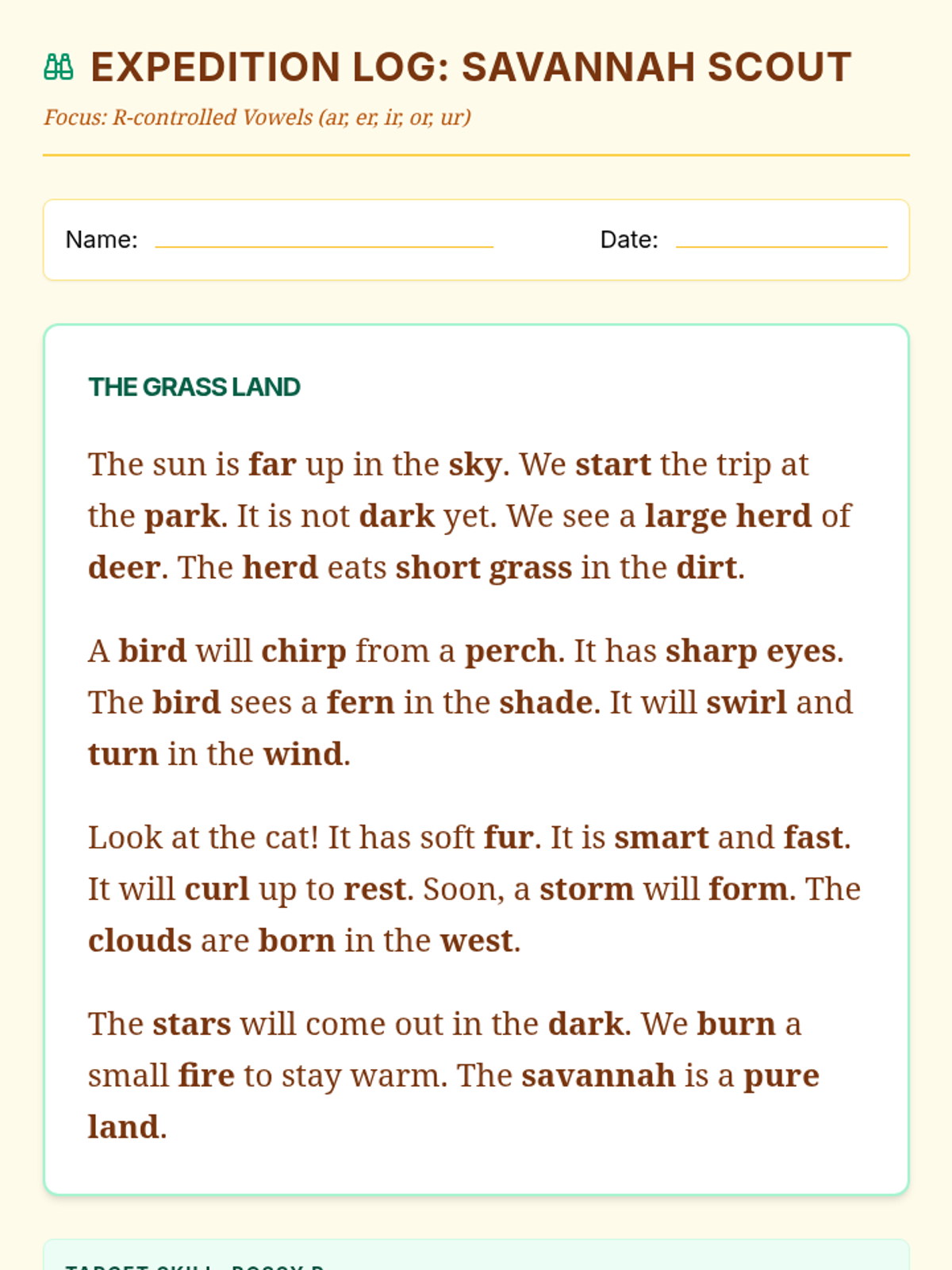
Students visit the savannah to practice decoding r-controlled vowels (ar, er, ir, or, ur) in the context of grassland wildlife.
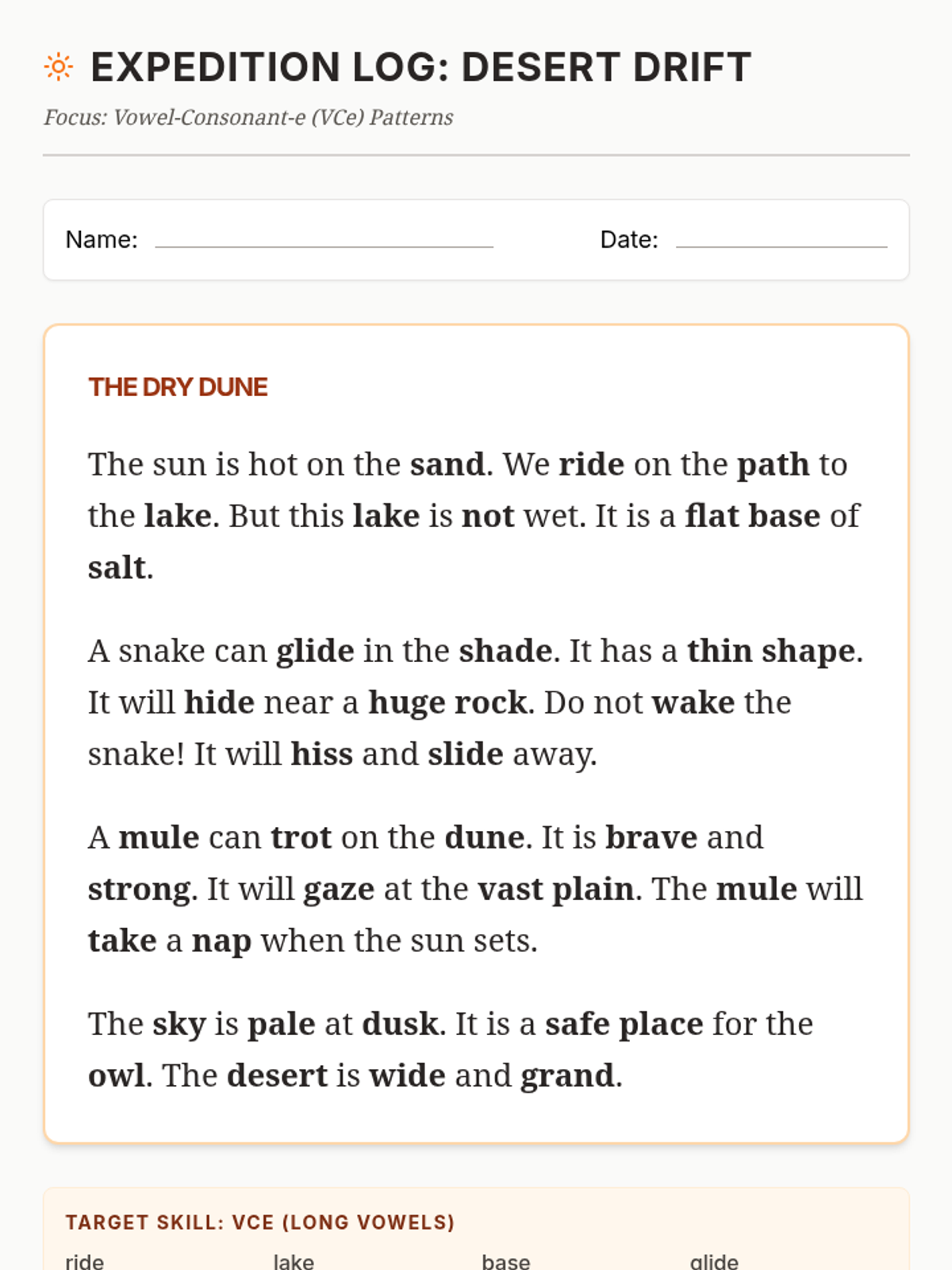
Students journey through the desert, focusing on Vowel-Consonant-e (VCe) patterns within habitat-themed texts.
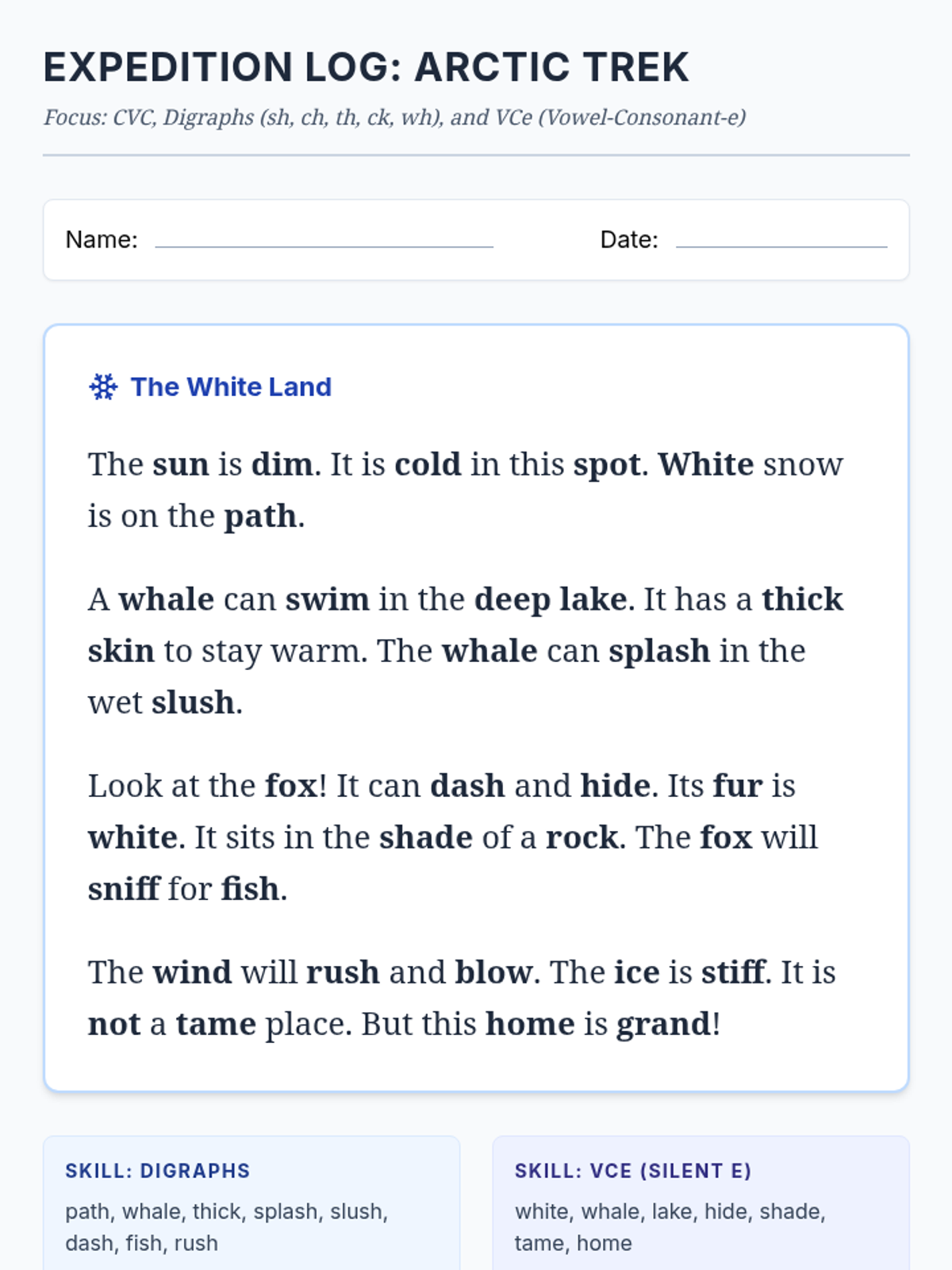
Students explore the Arctic habitat while practicing CVC words and common digraphs in a decodable format.
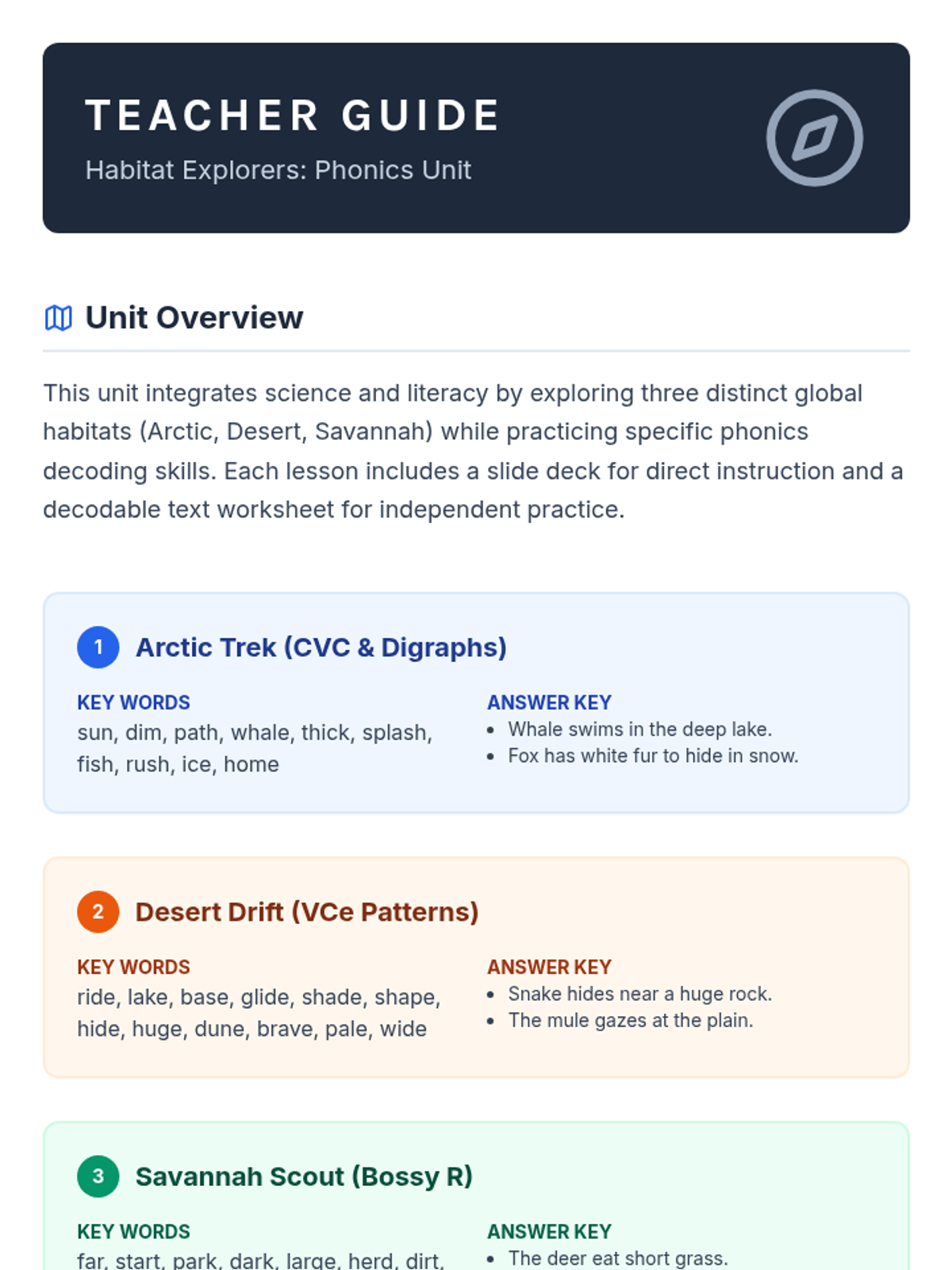
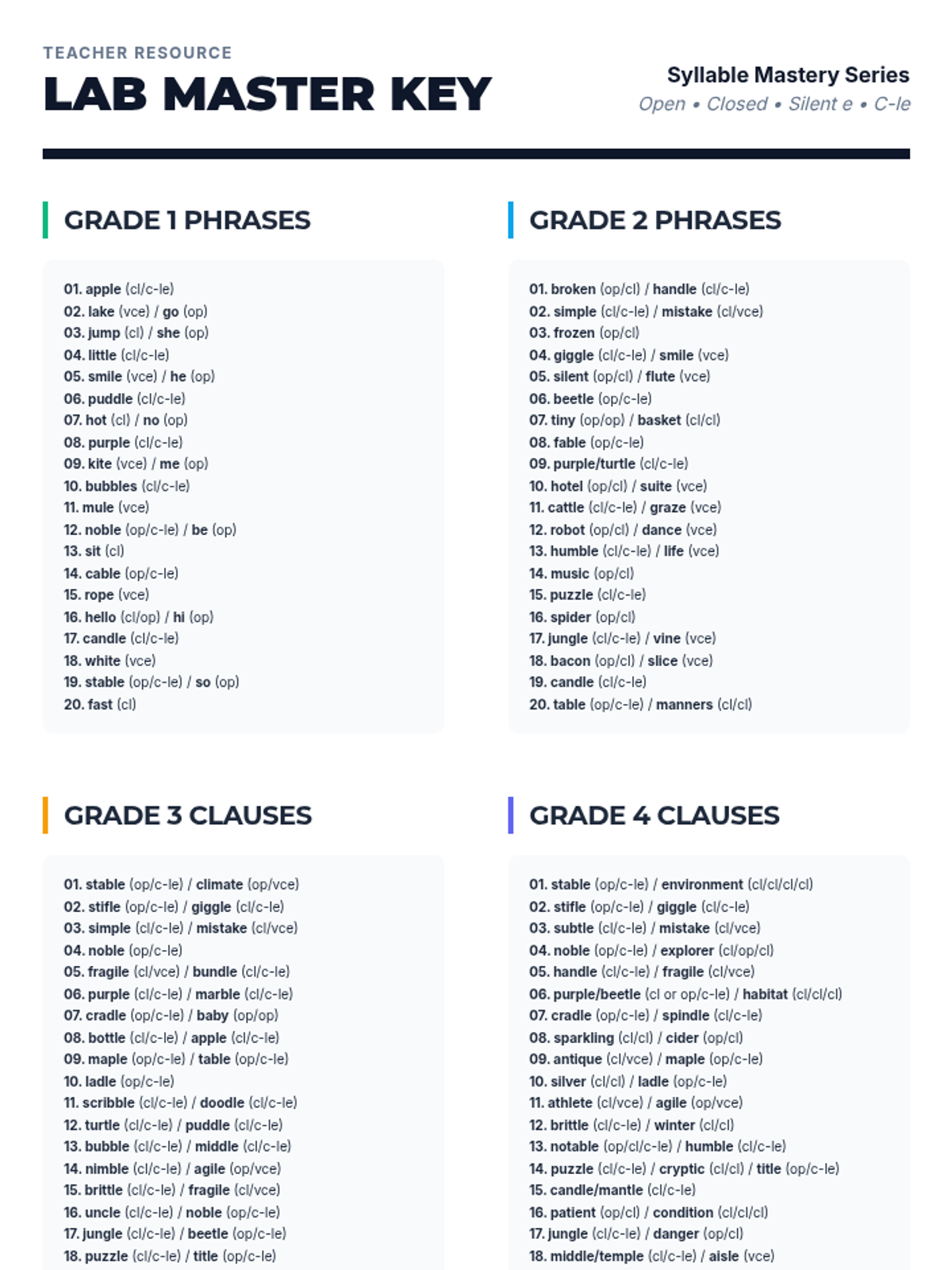
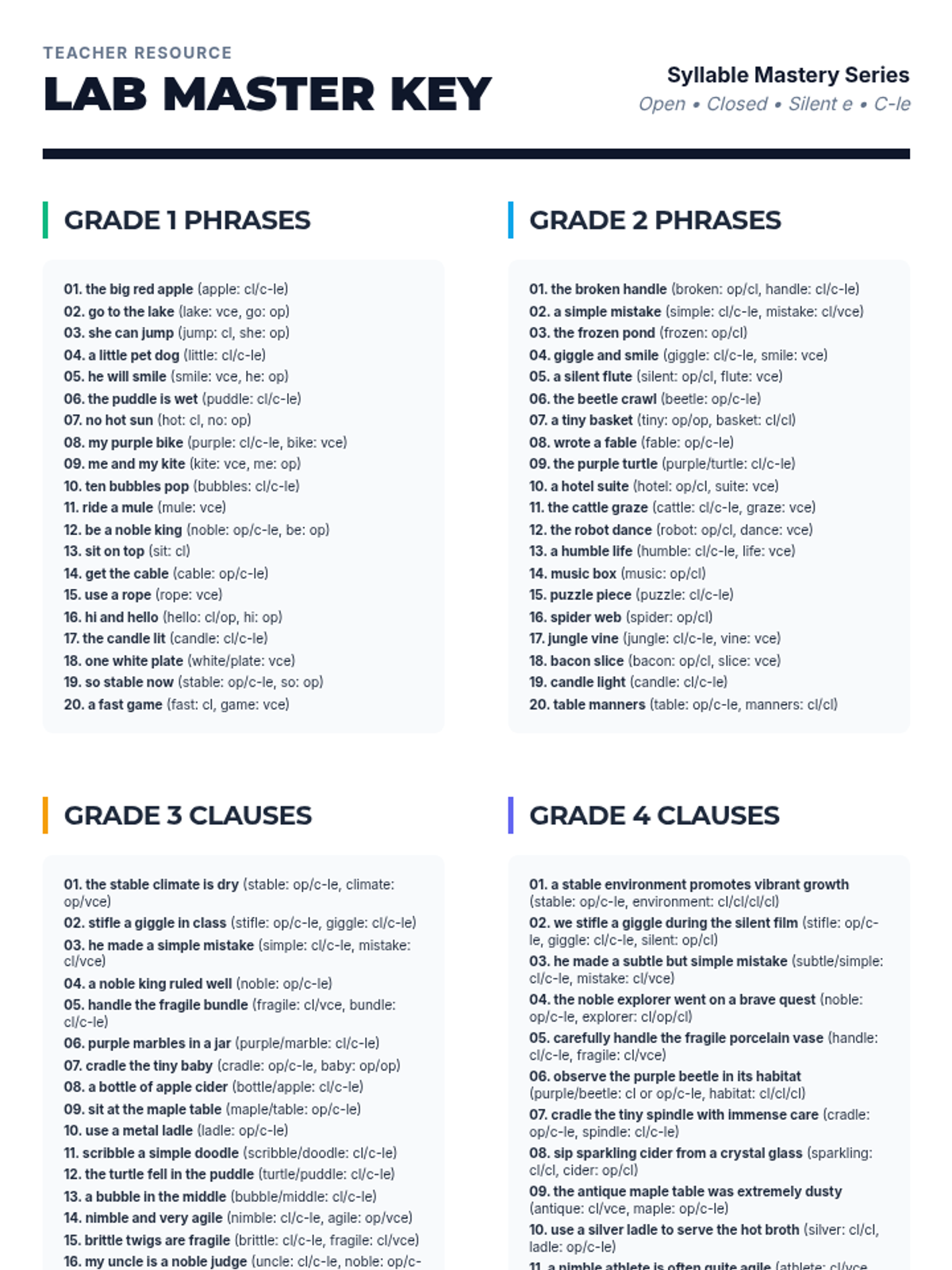
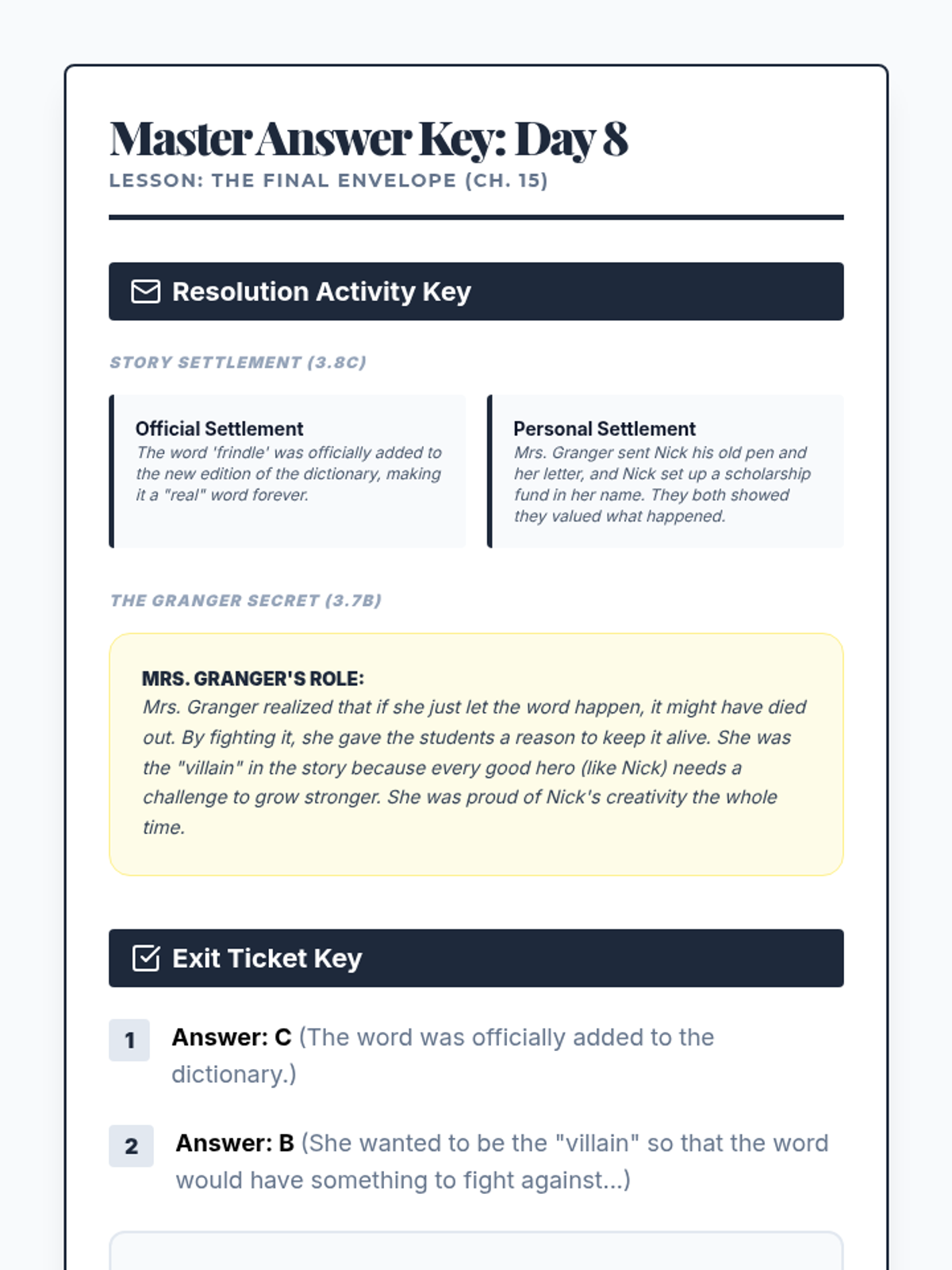
Teacher-facing resources including answer keys and instructional guides for the Syllable Mastery Series.
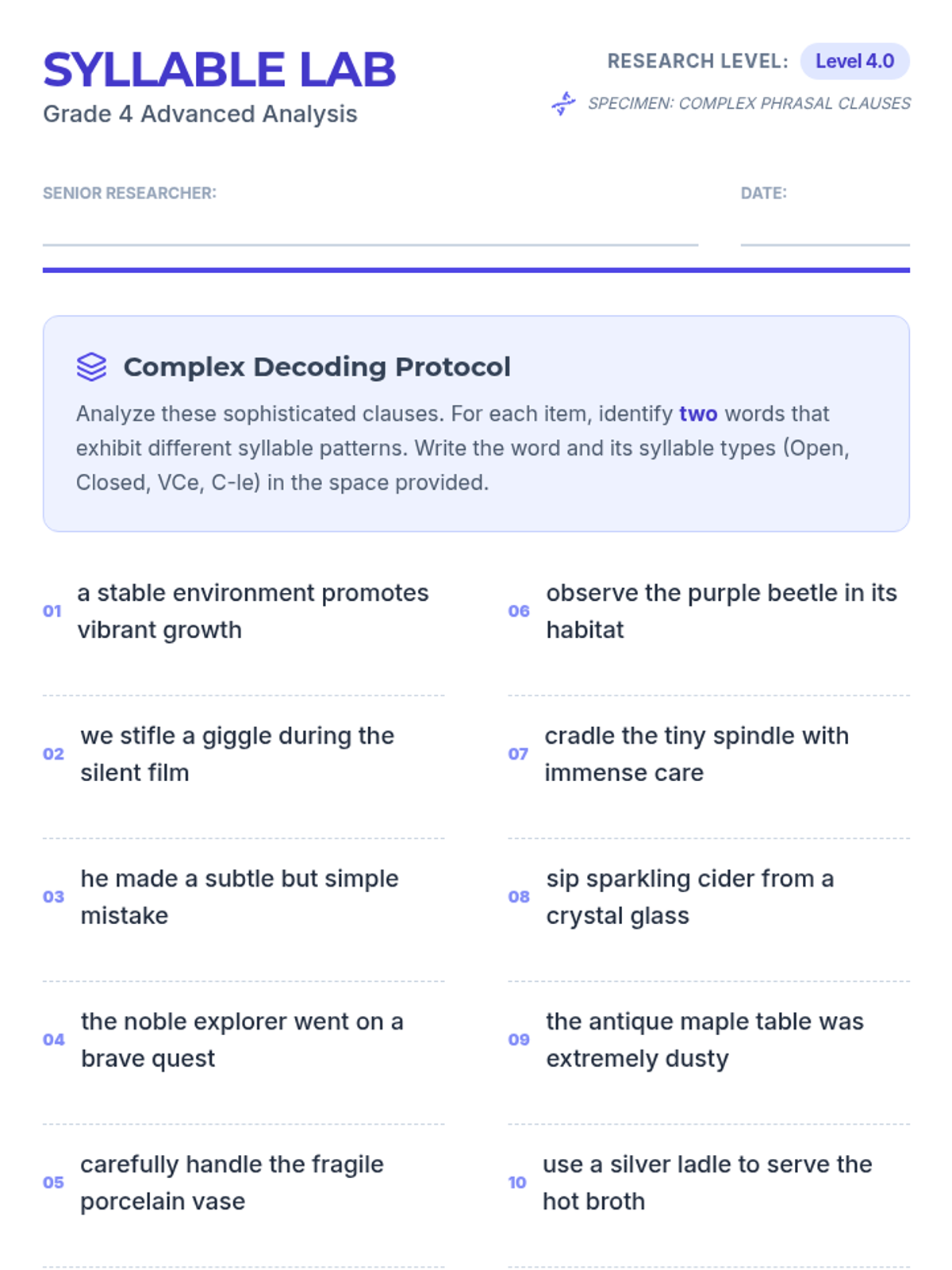
Advanced fourth grade clauses and phrases challenging students with sophisticated vocabulary using the four target syllable types.
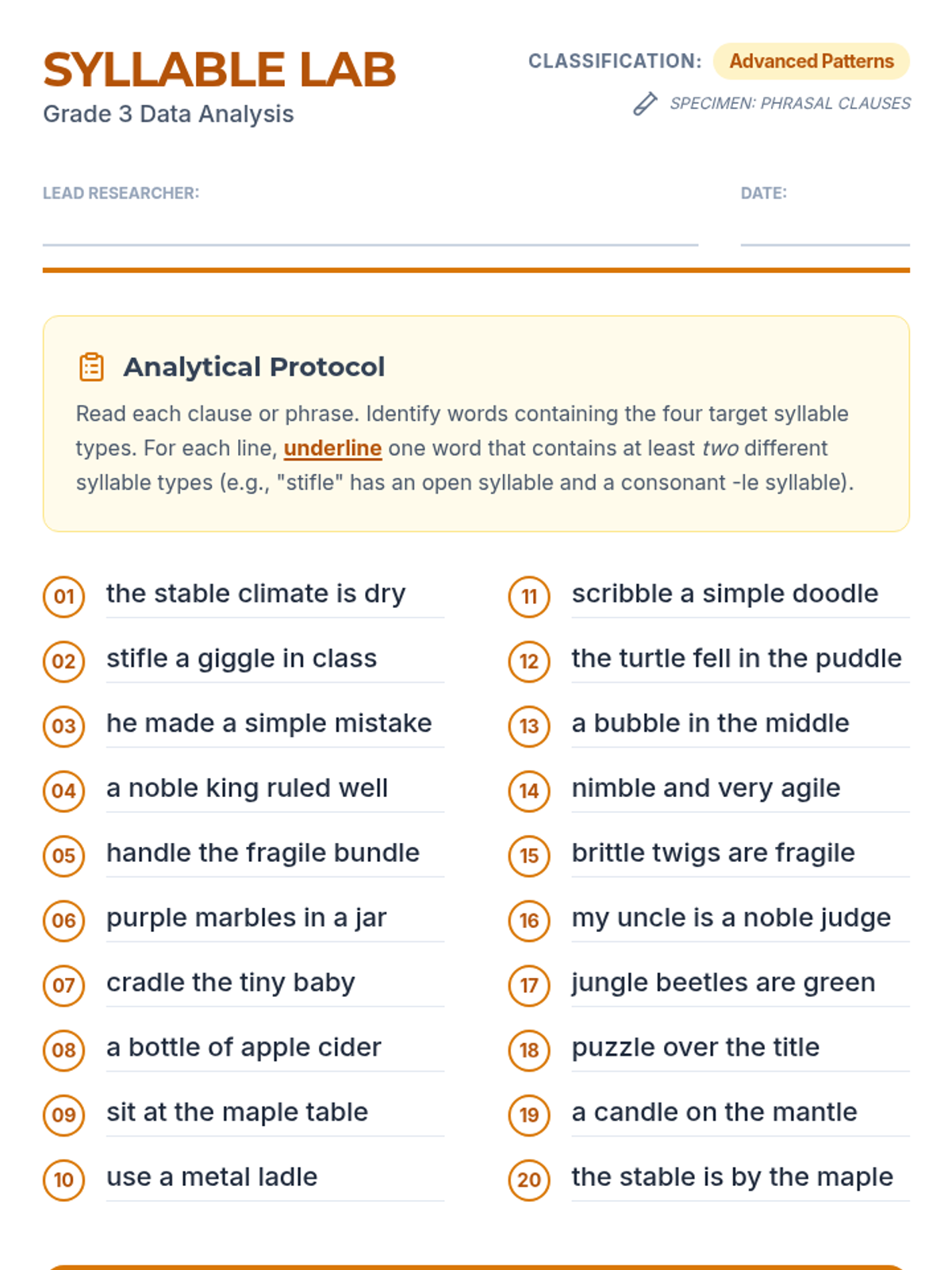
Third grade level clauses and phrases incorporating multi-syllabic words and various syllable types.
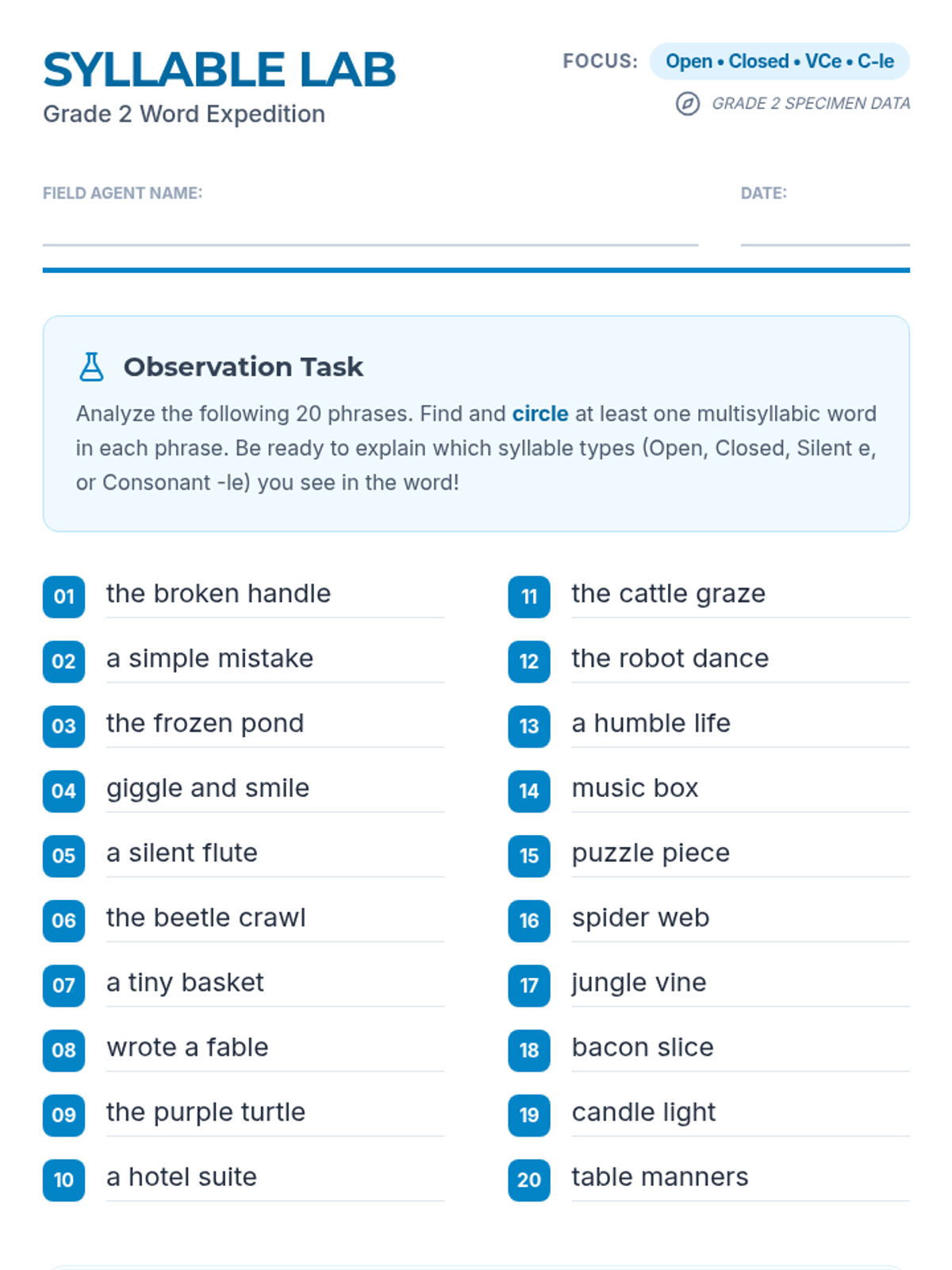
Syllable practice for second grade students with increasingly complex phrases containing the four target syllable types.
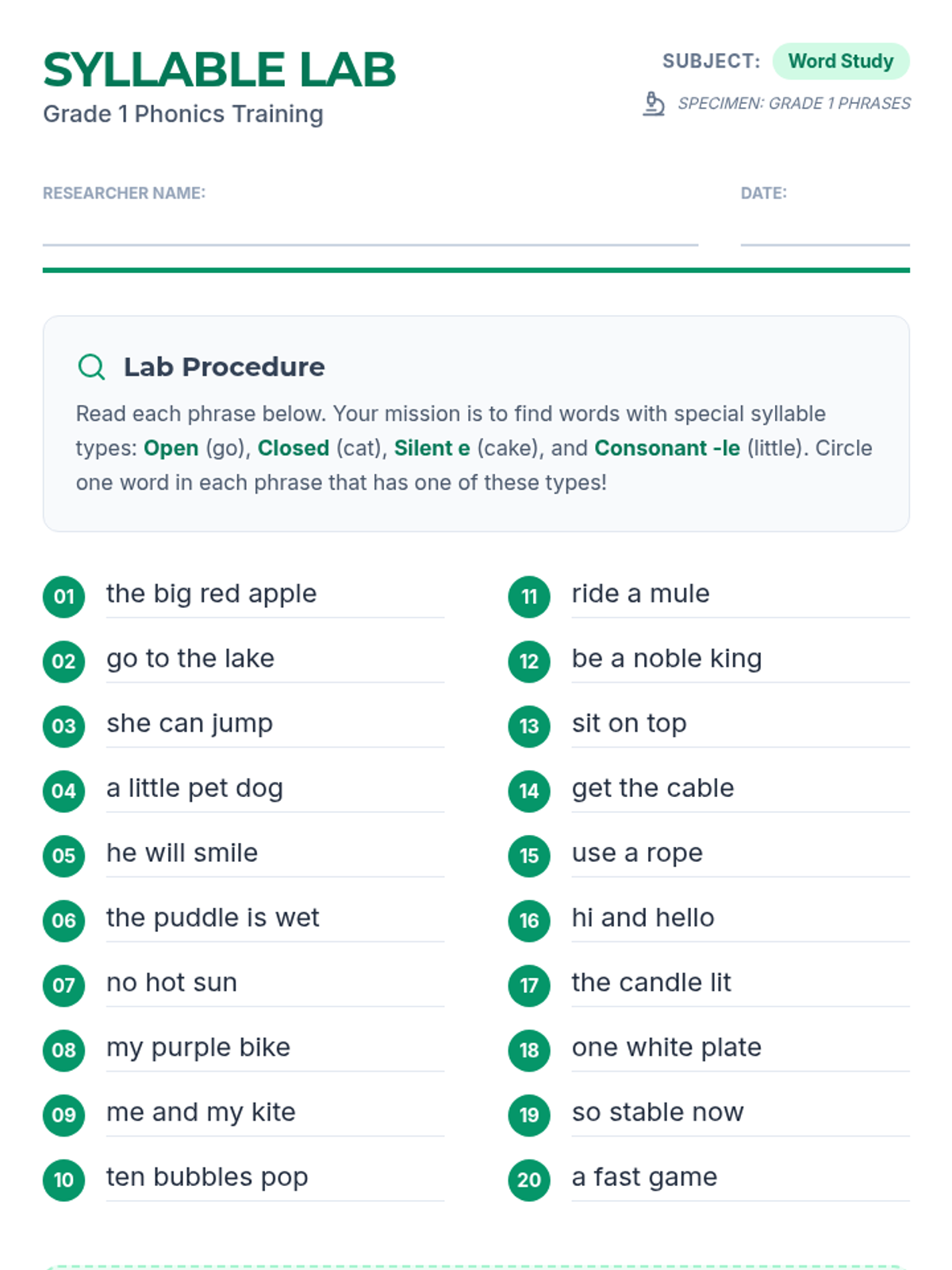
Syllable practice for first grade students focusing on simple phrases with open, closed, silent e, and consonant -le patterns.
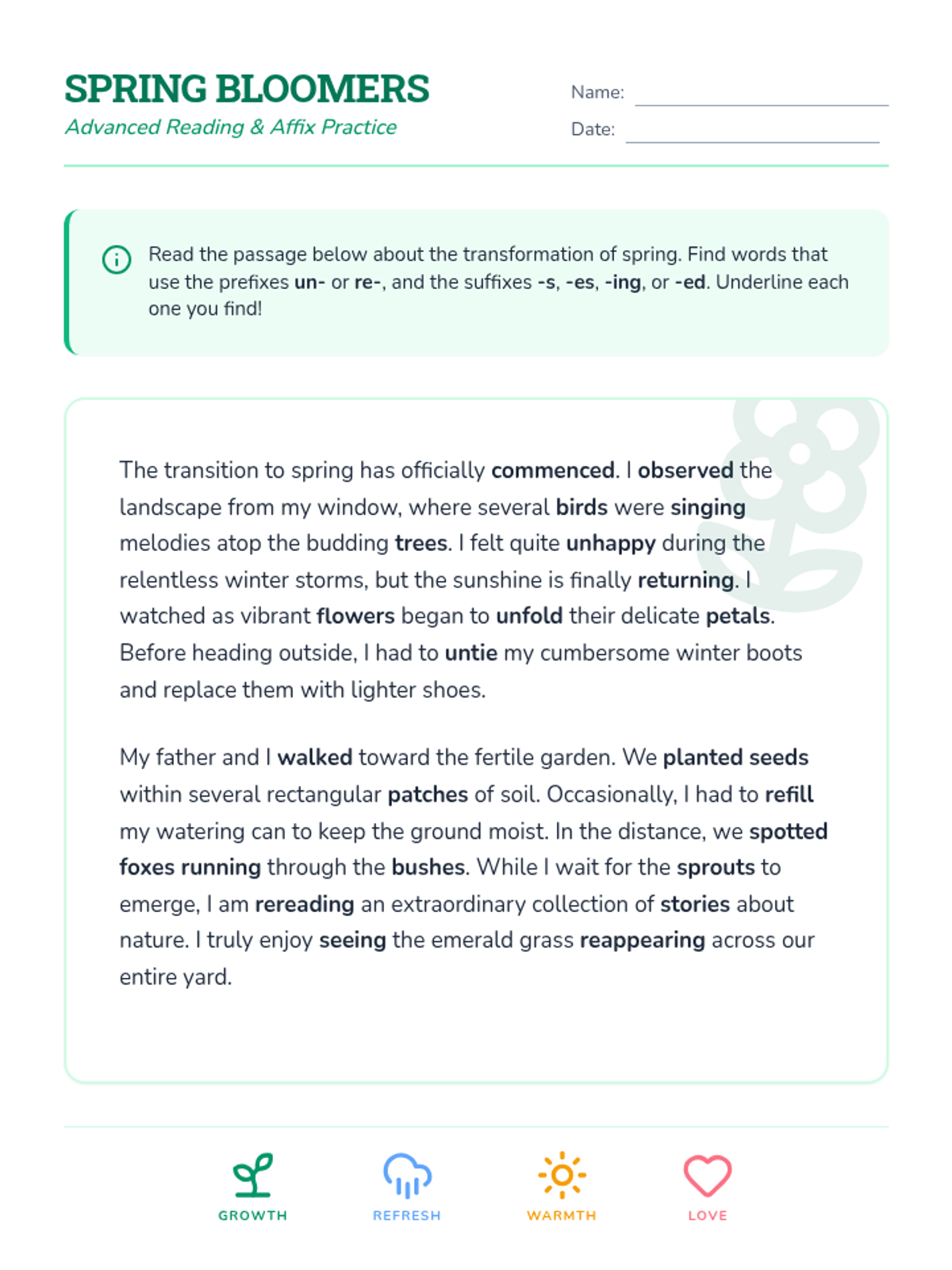
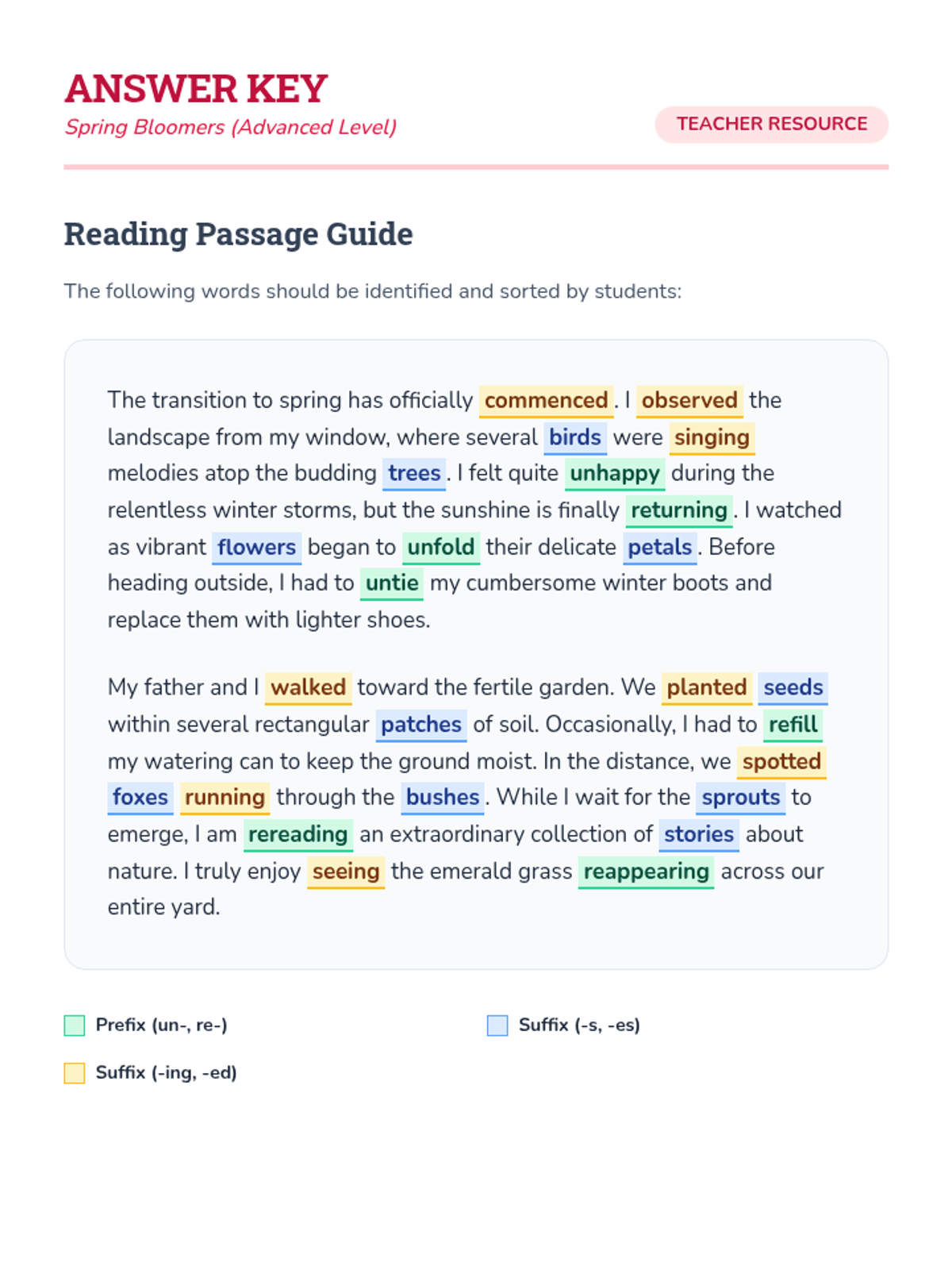
A lesson focused on identifying and using common affixes (un-, re-, -es, -s, -ing, -ed) within a spring-themed reading passage and companion activities.
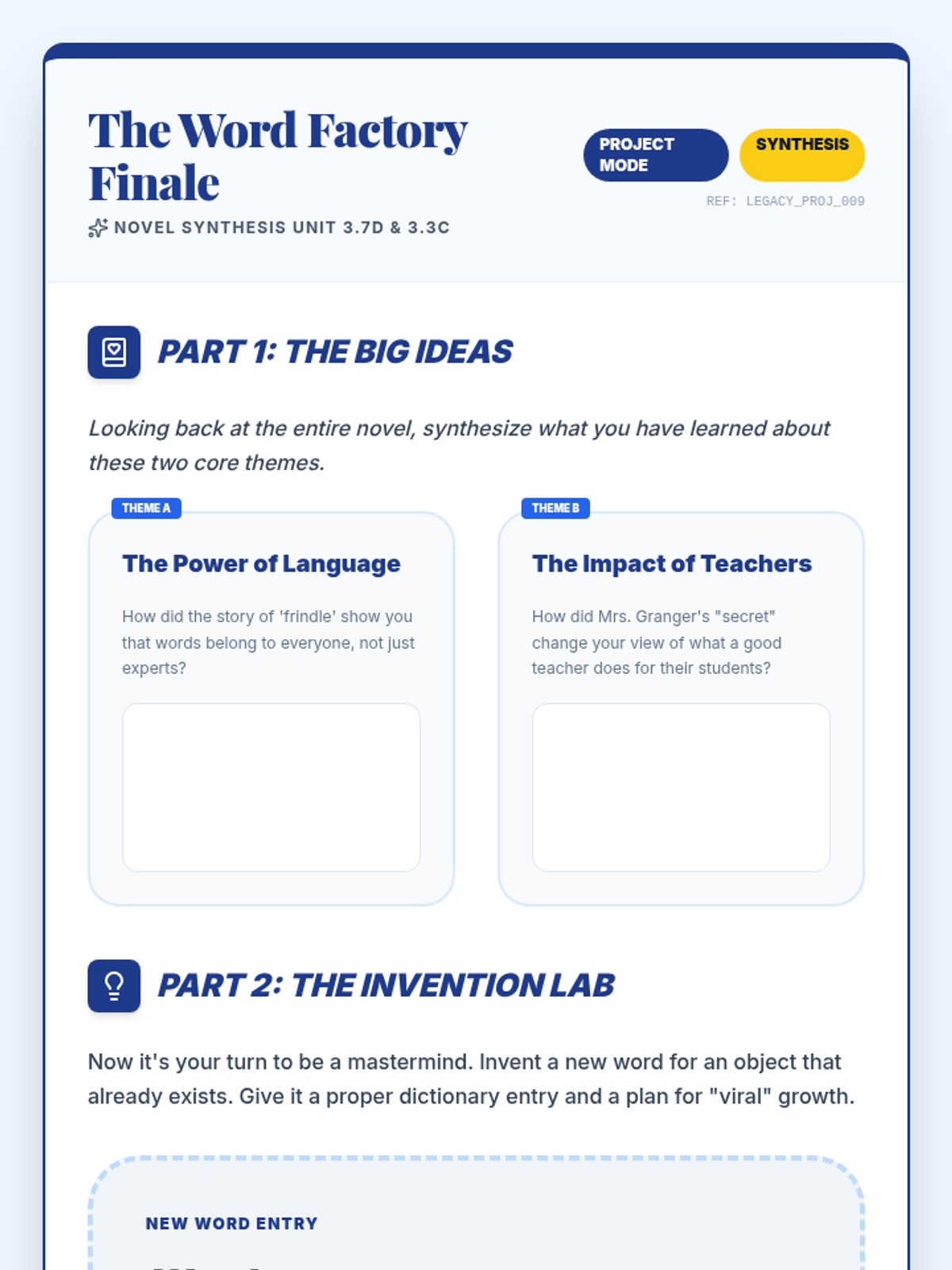
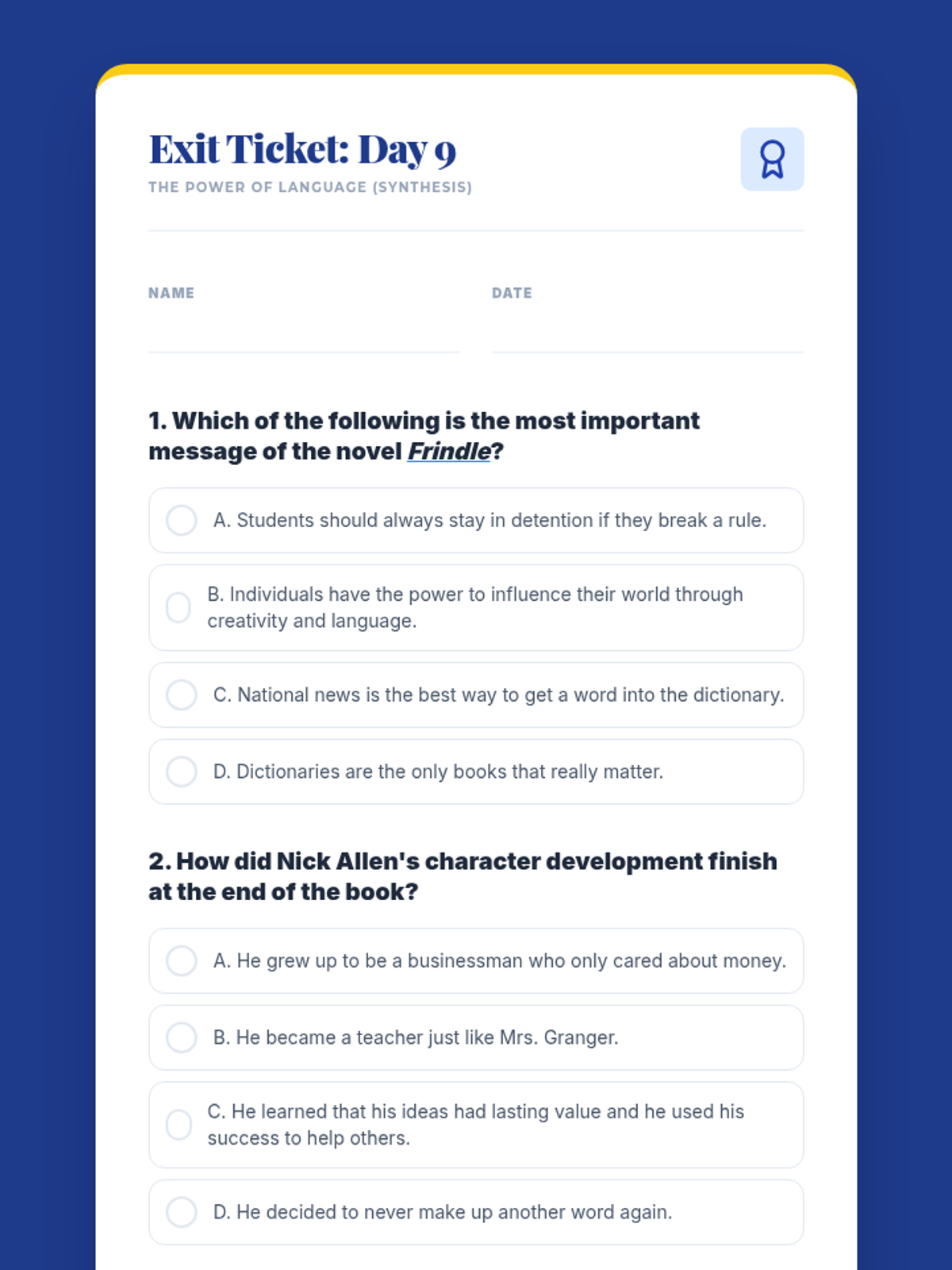
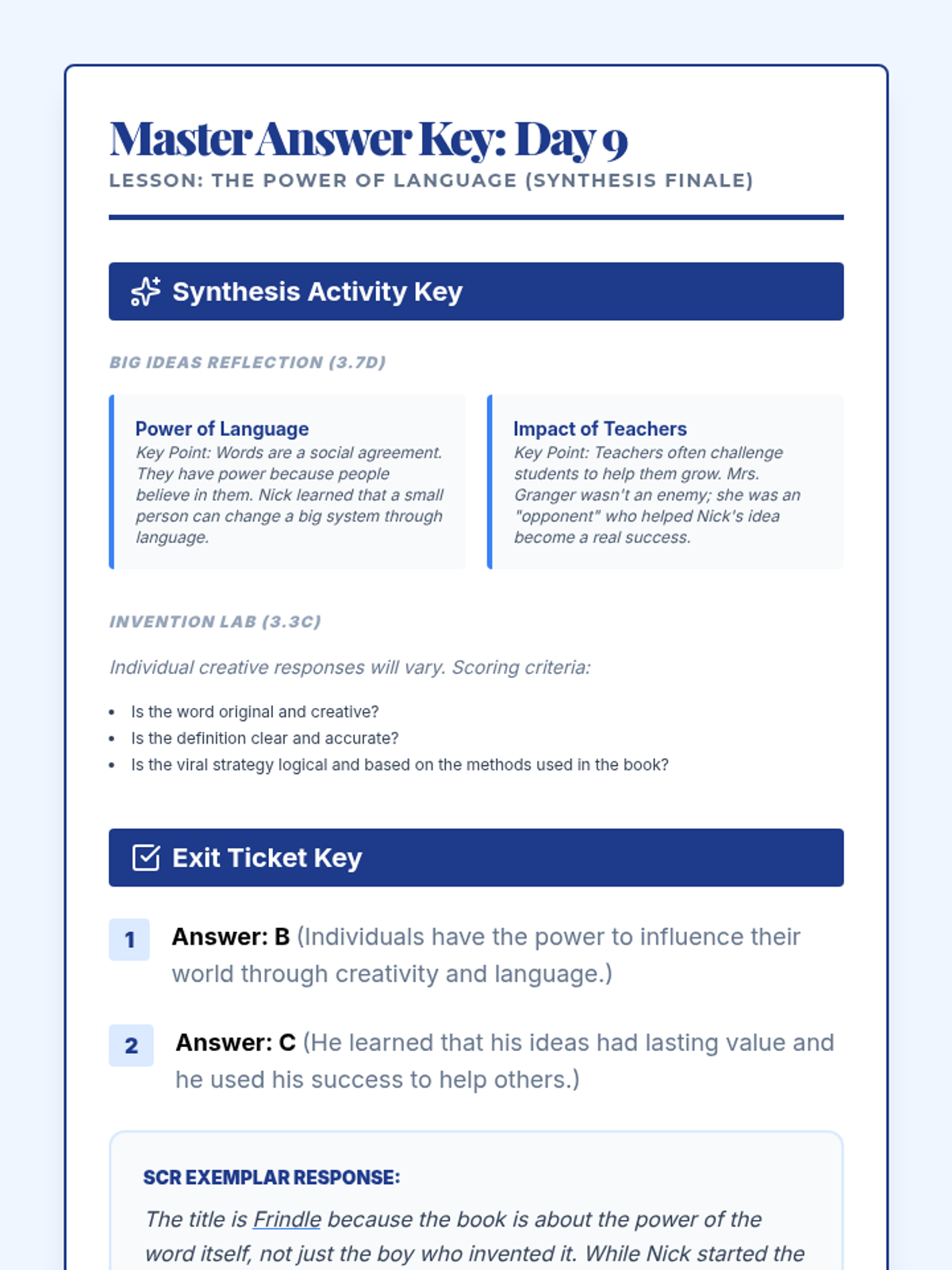
Students complete a final synthesis project, creating their own words and reflecting on the literary elements explored throughout the entire novel.
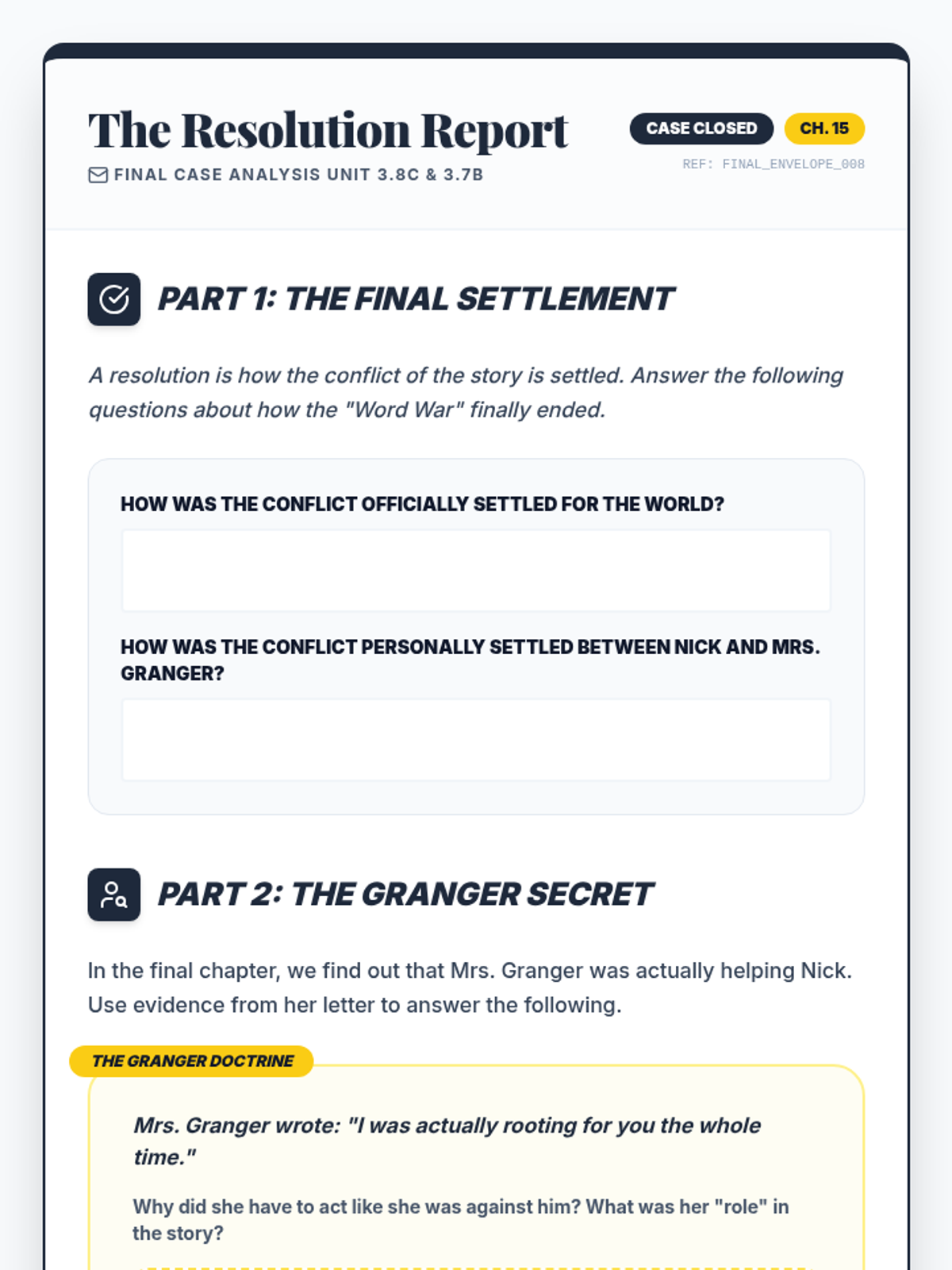
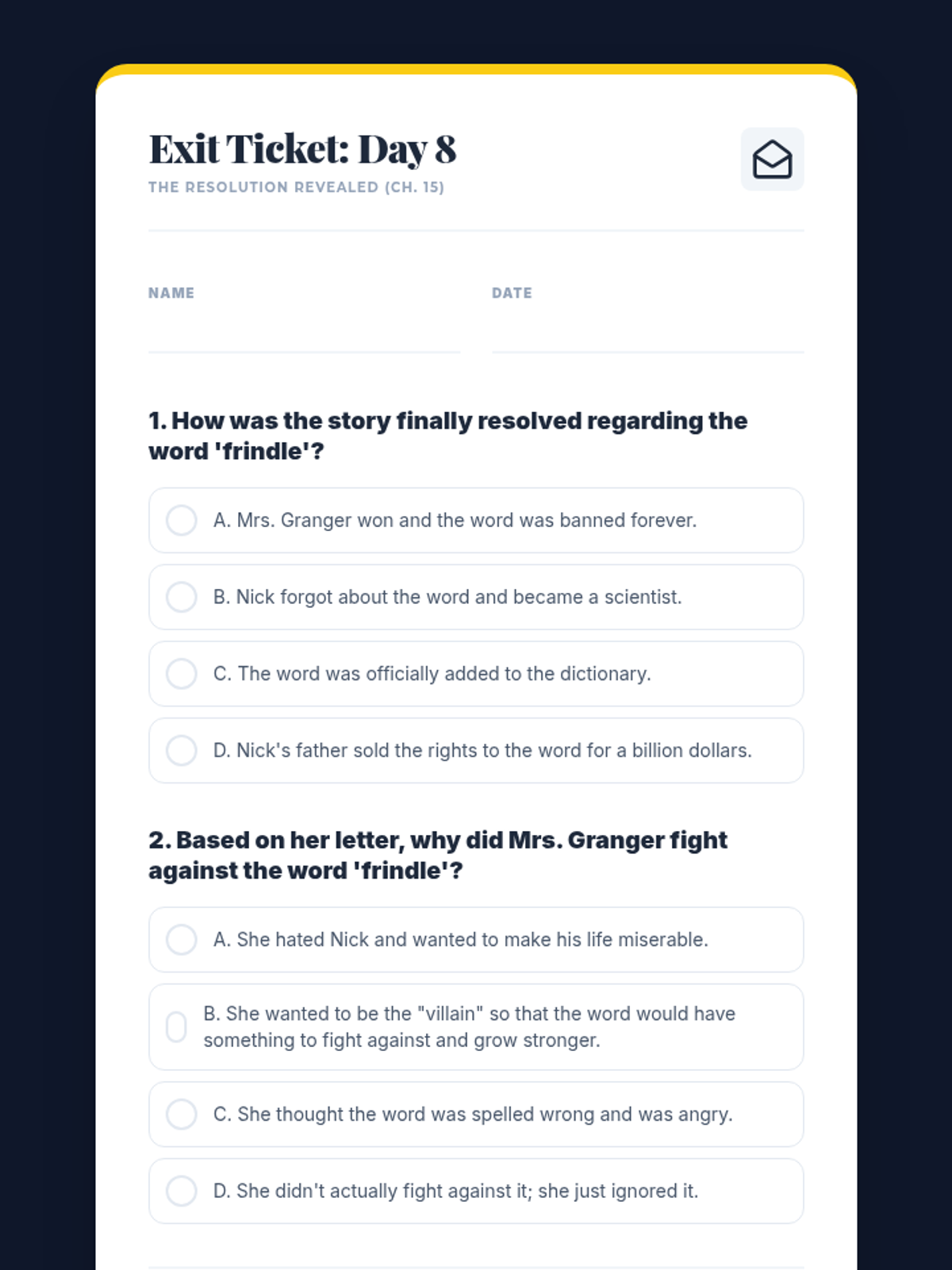
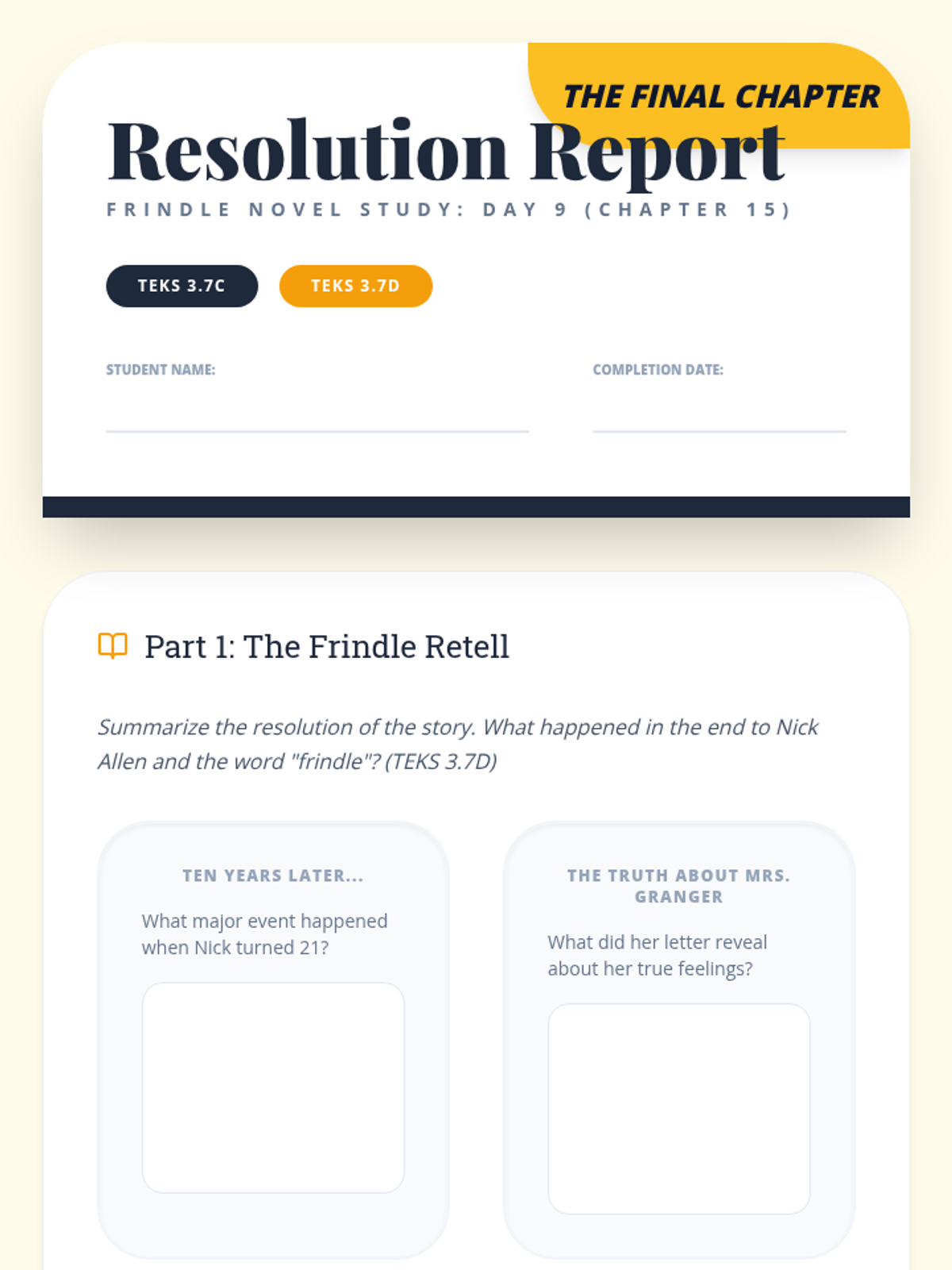
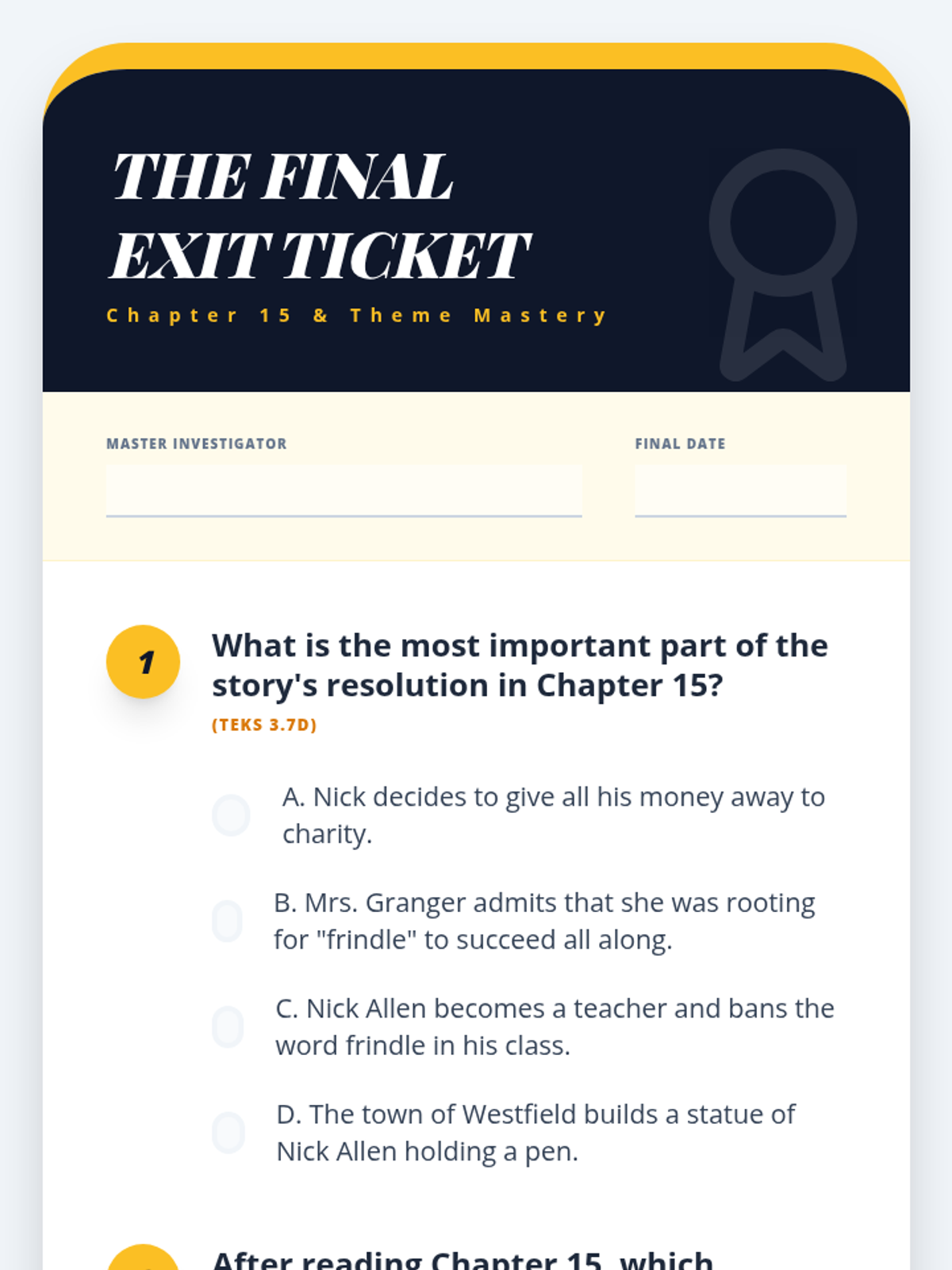
Students read the final chapter, analyzing the resolution of the story and synthesizing the overall themes of the novel.
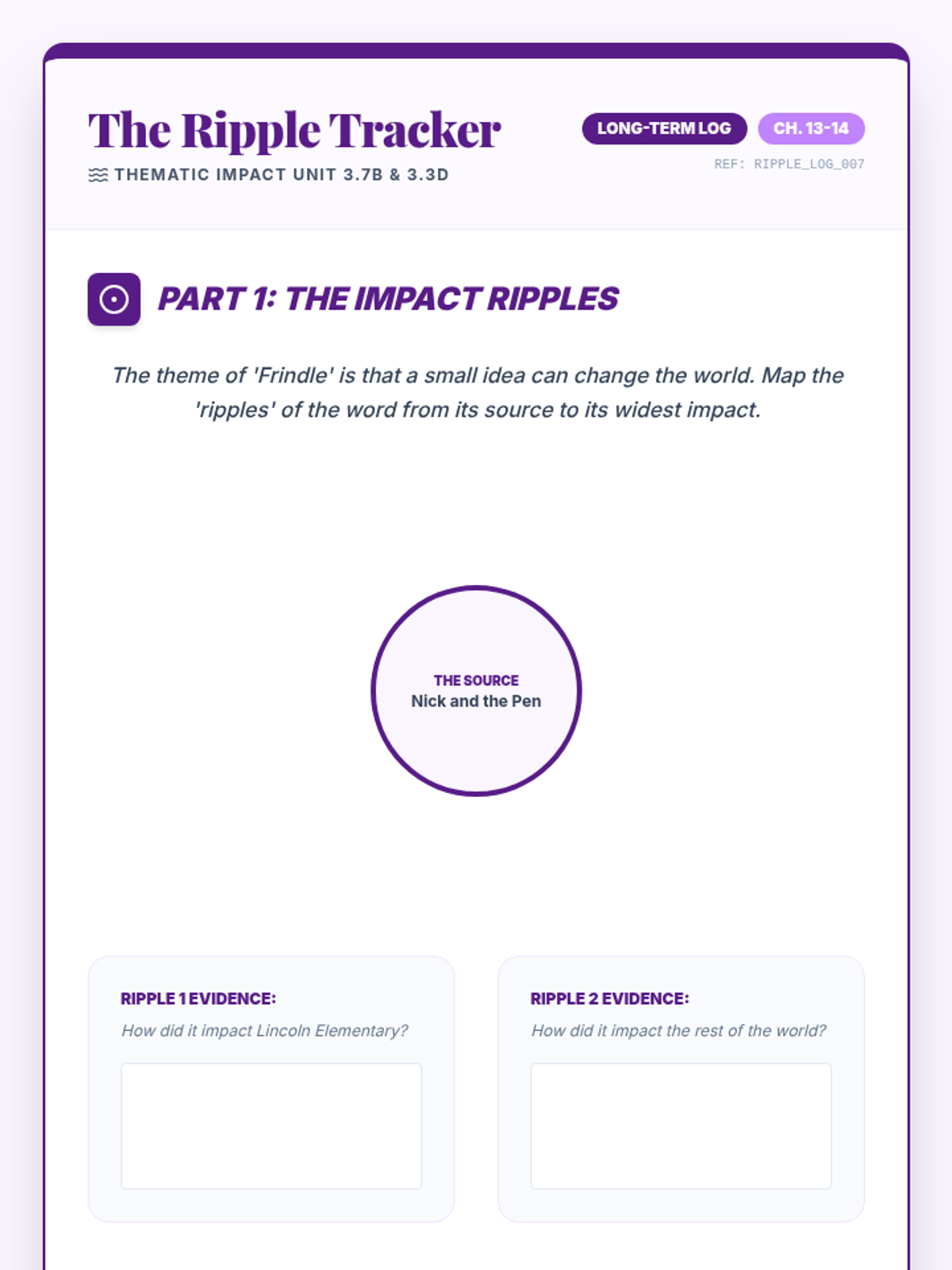
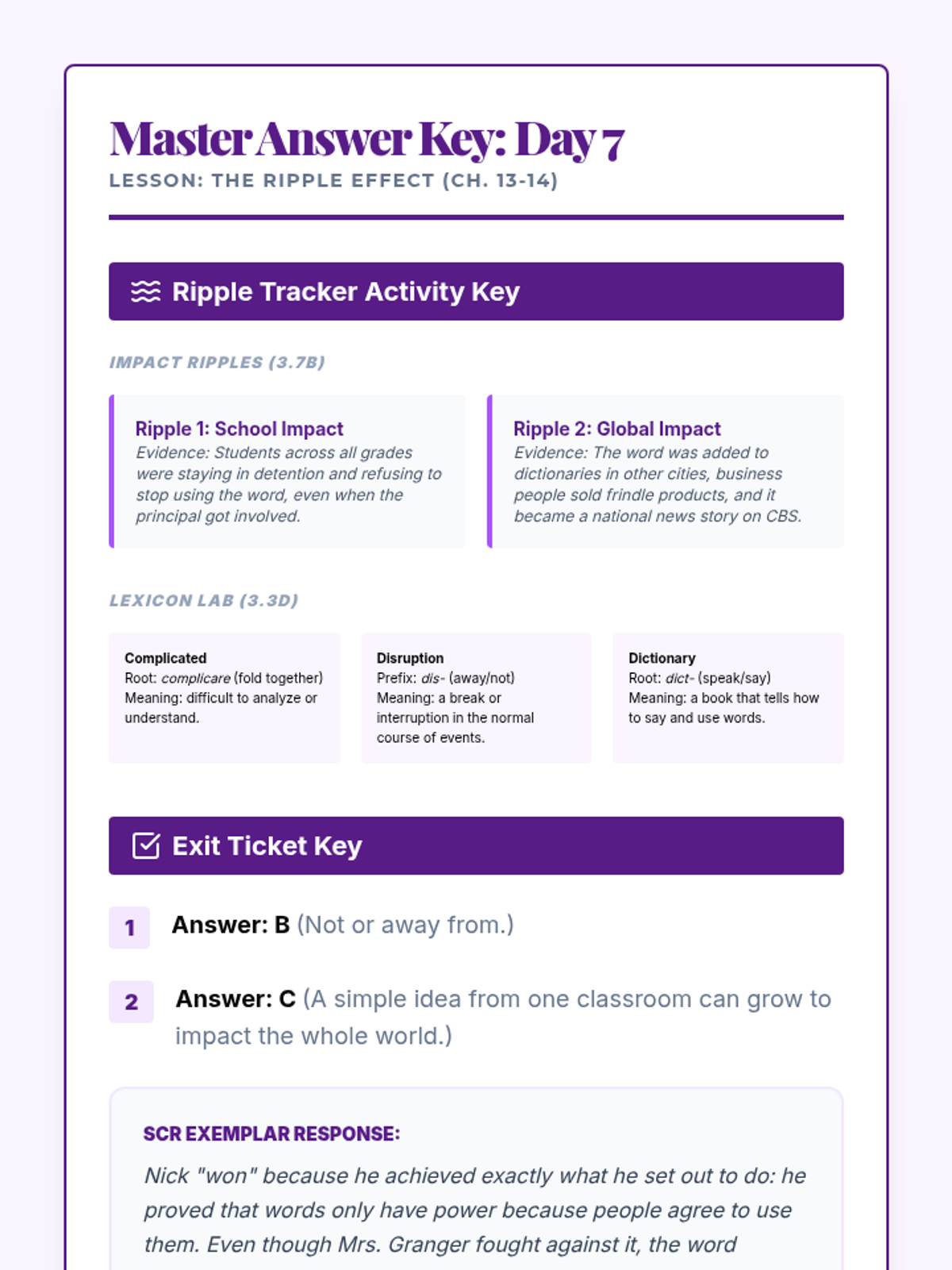
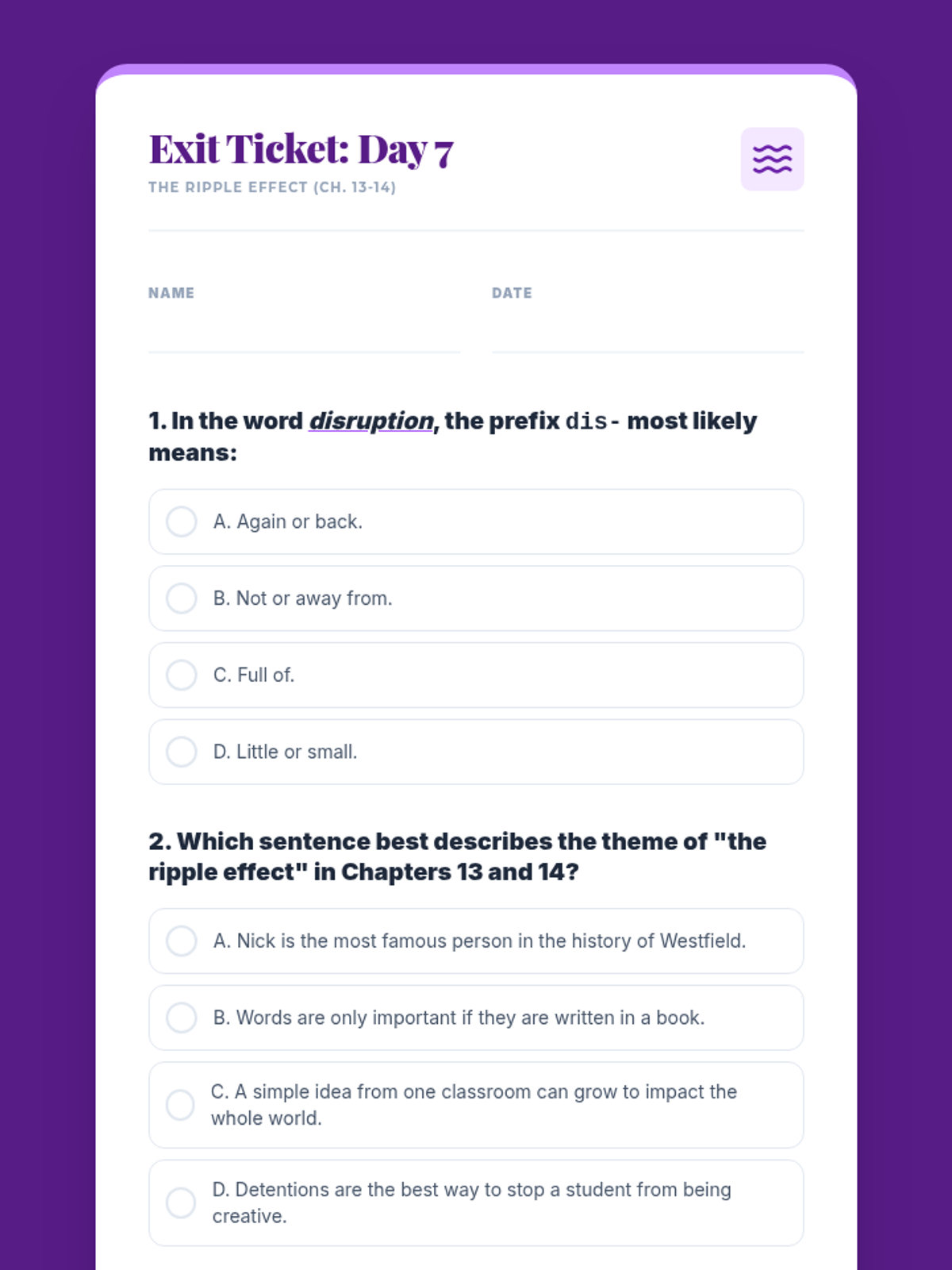
Students investigate the lasting effects of the frindle movement and practice analyzing complex word meanings through the lens of the story.
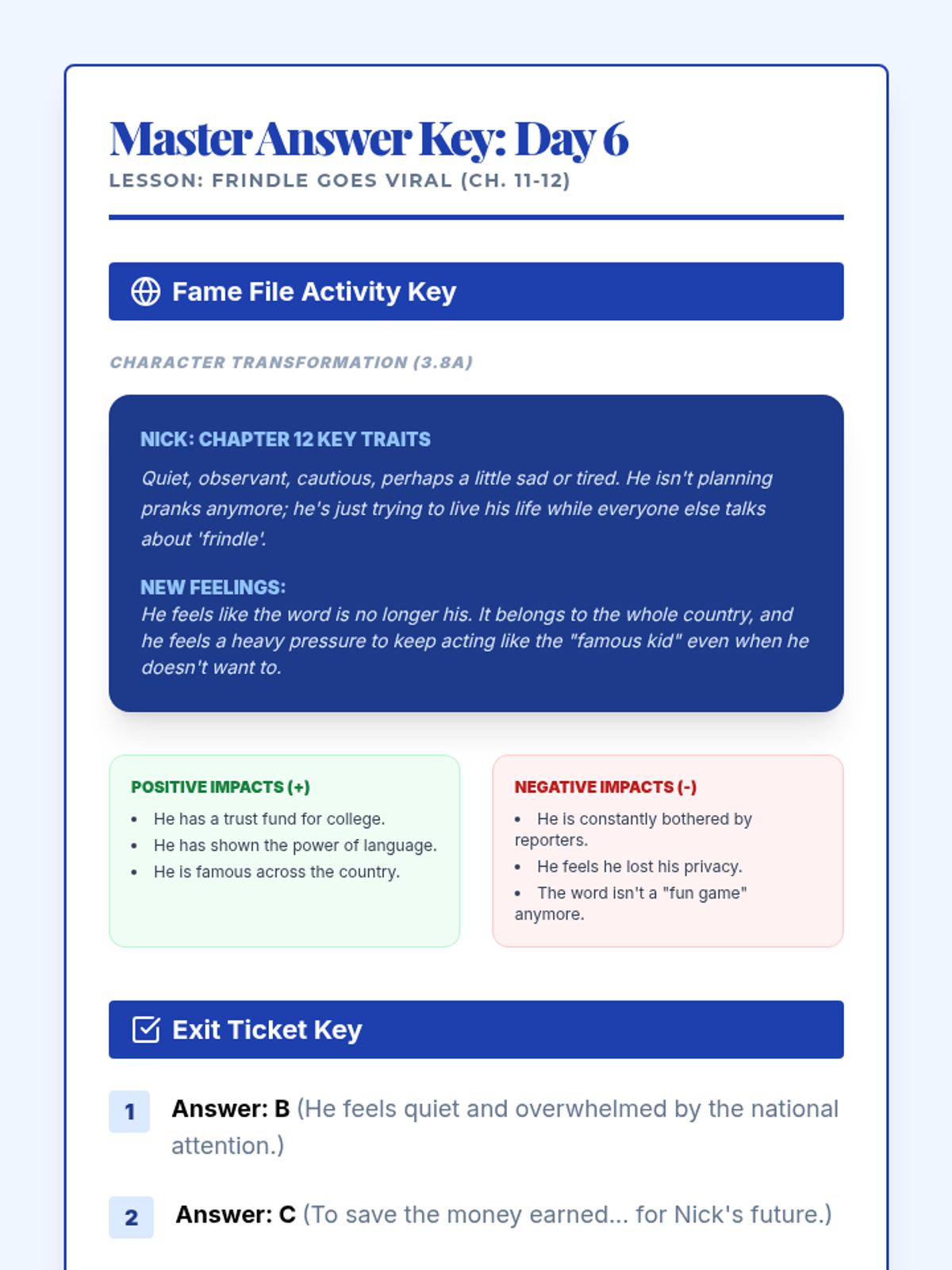
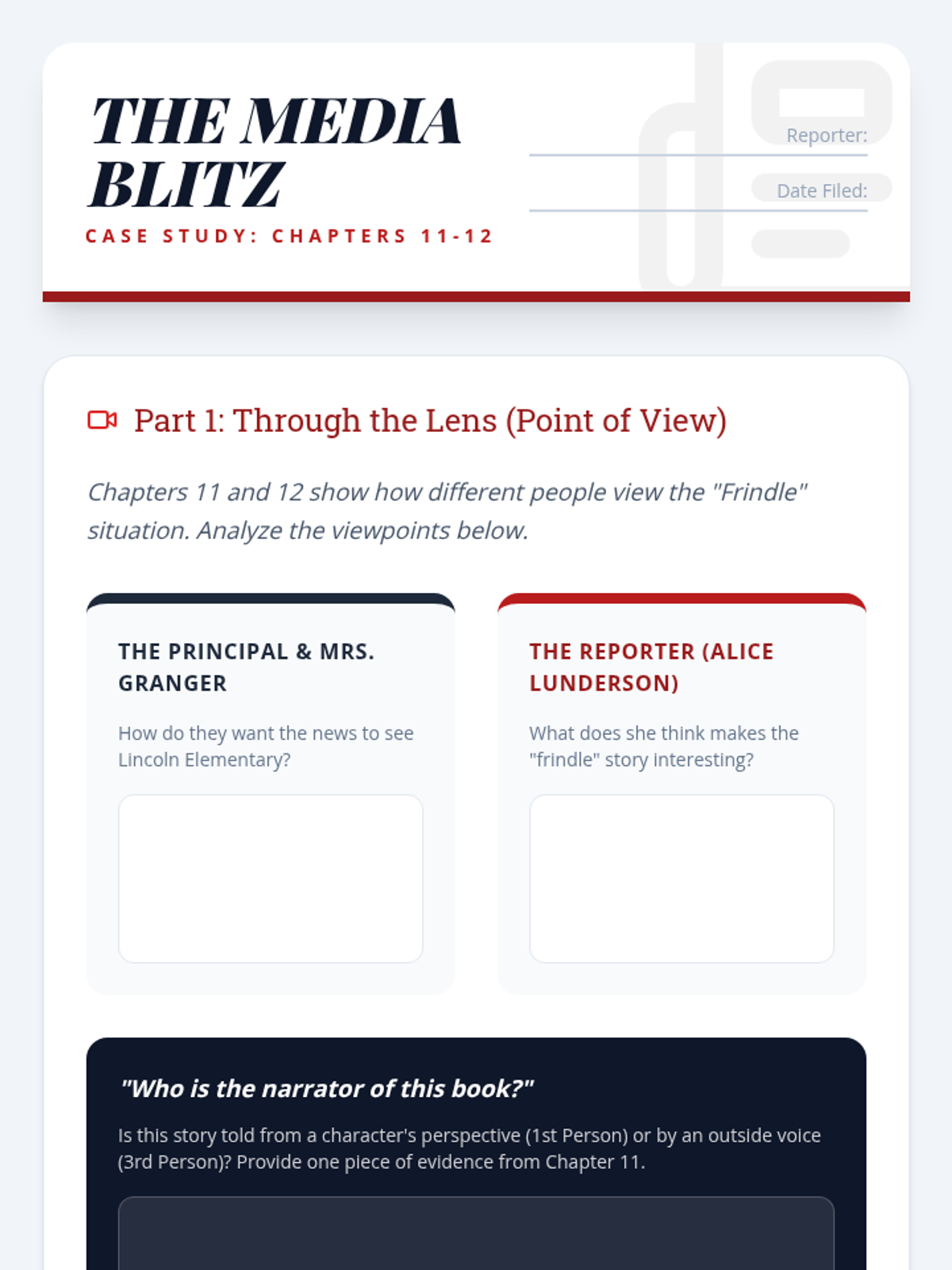
Students evaluate how the story spreads to the national media and how this external pressure impacts Nick's character development.
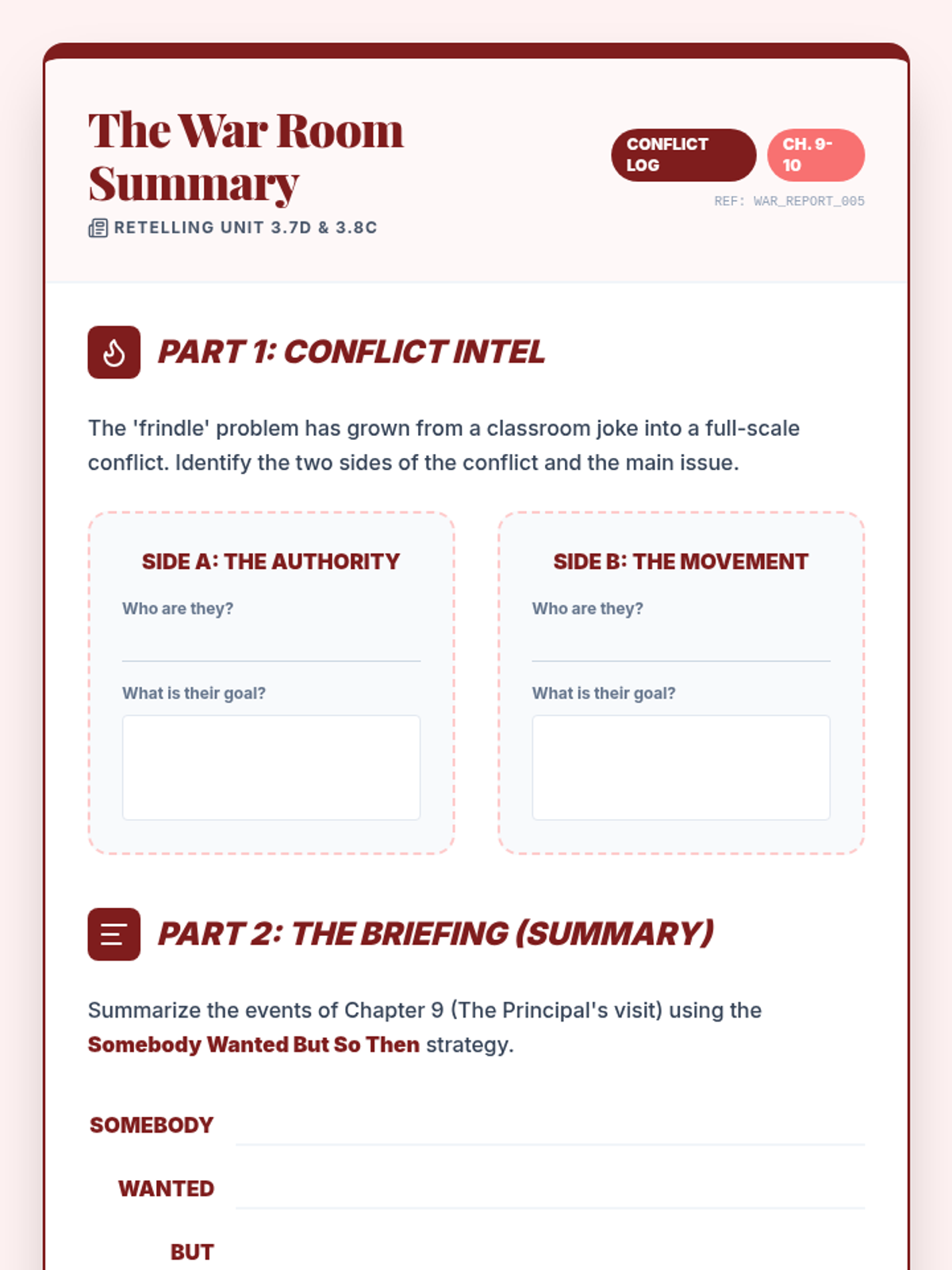
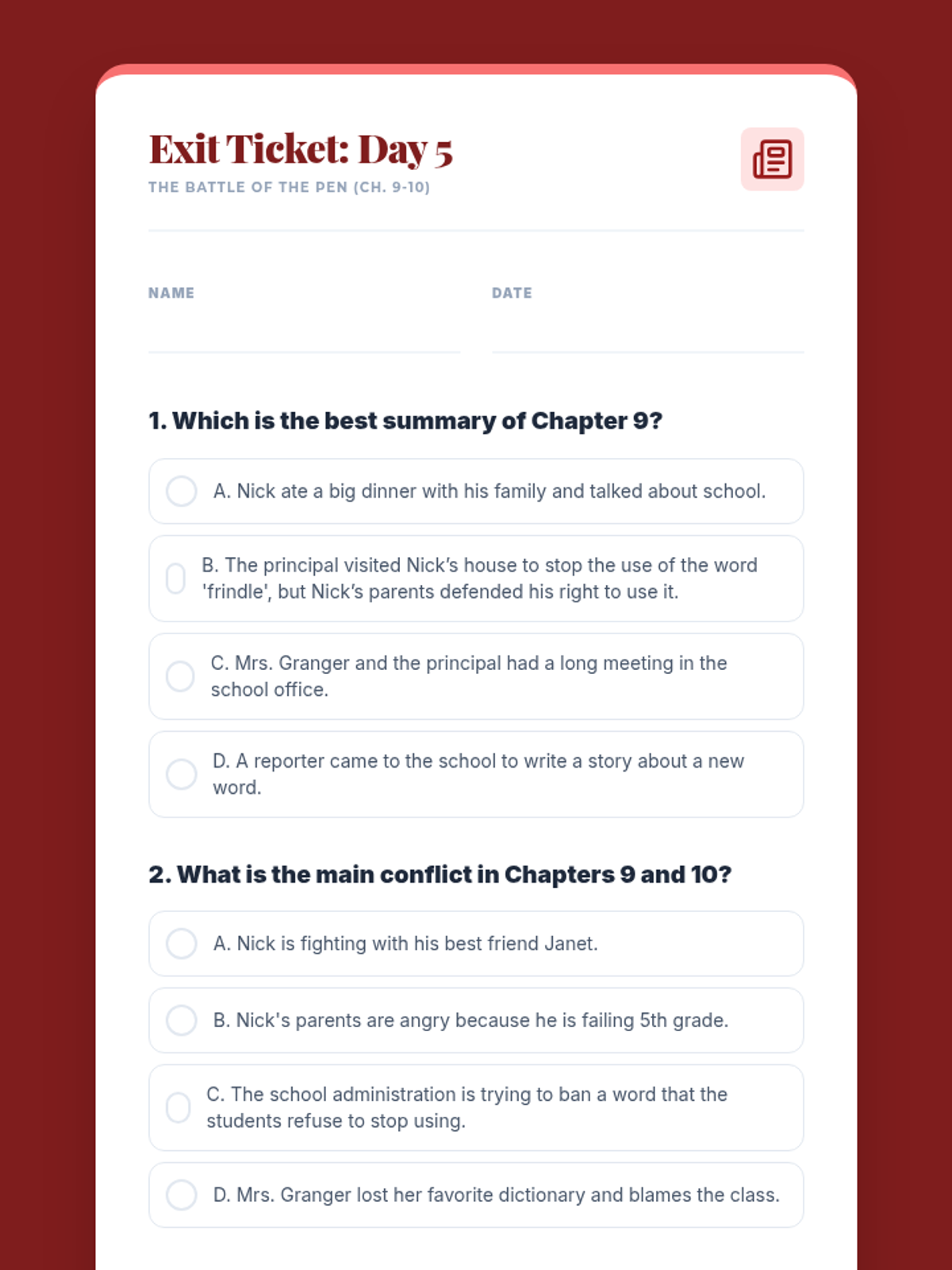
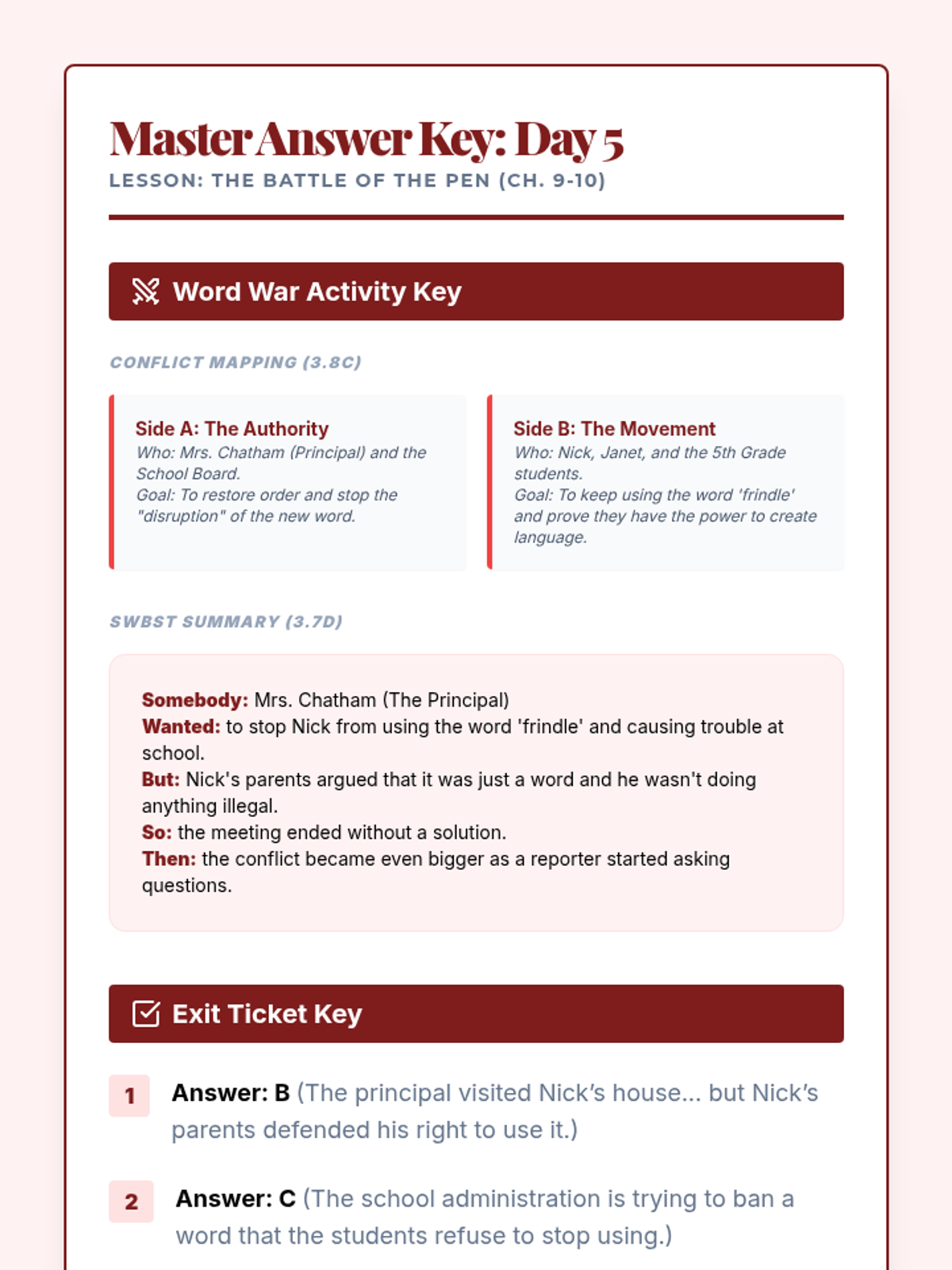
Students analyze the growing conflict between Nick and Mrs. Granger and practice summarizing the key events of the 'Word War'.
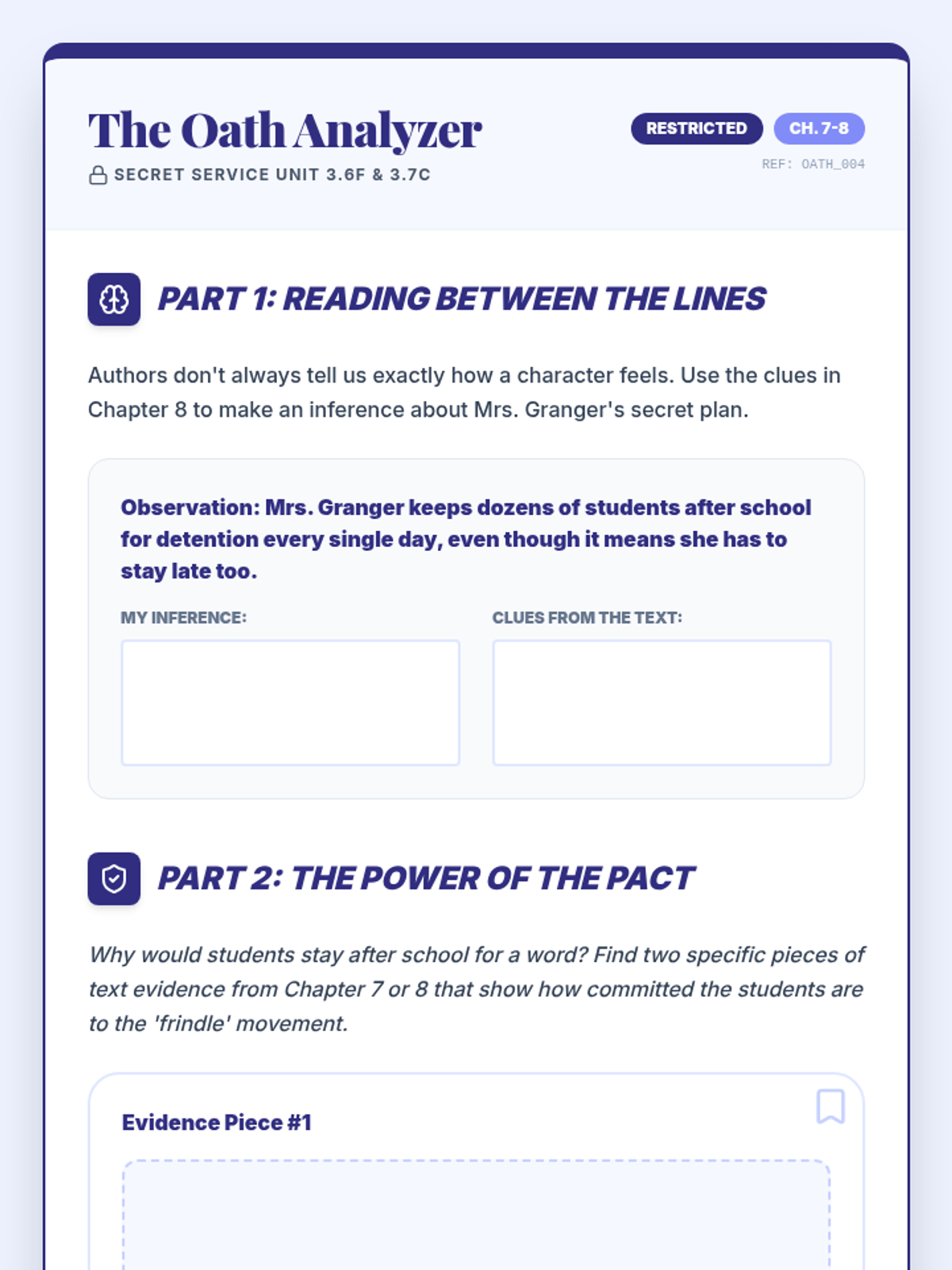
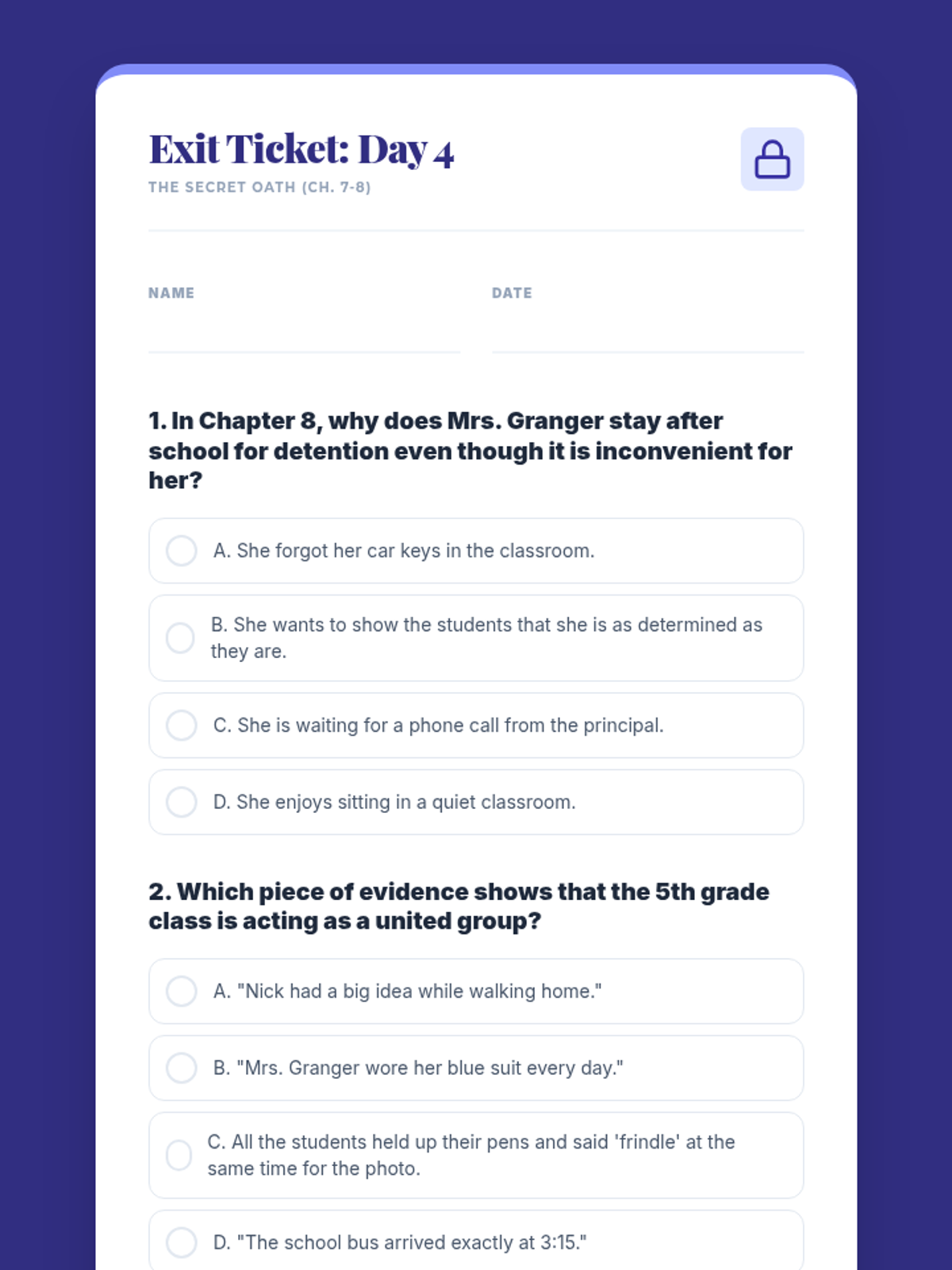
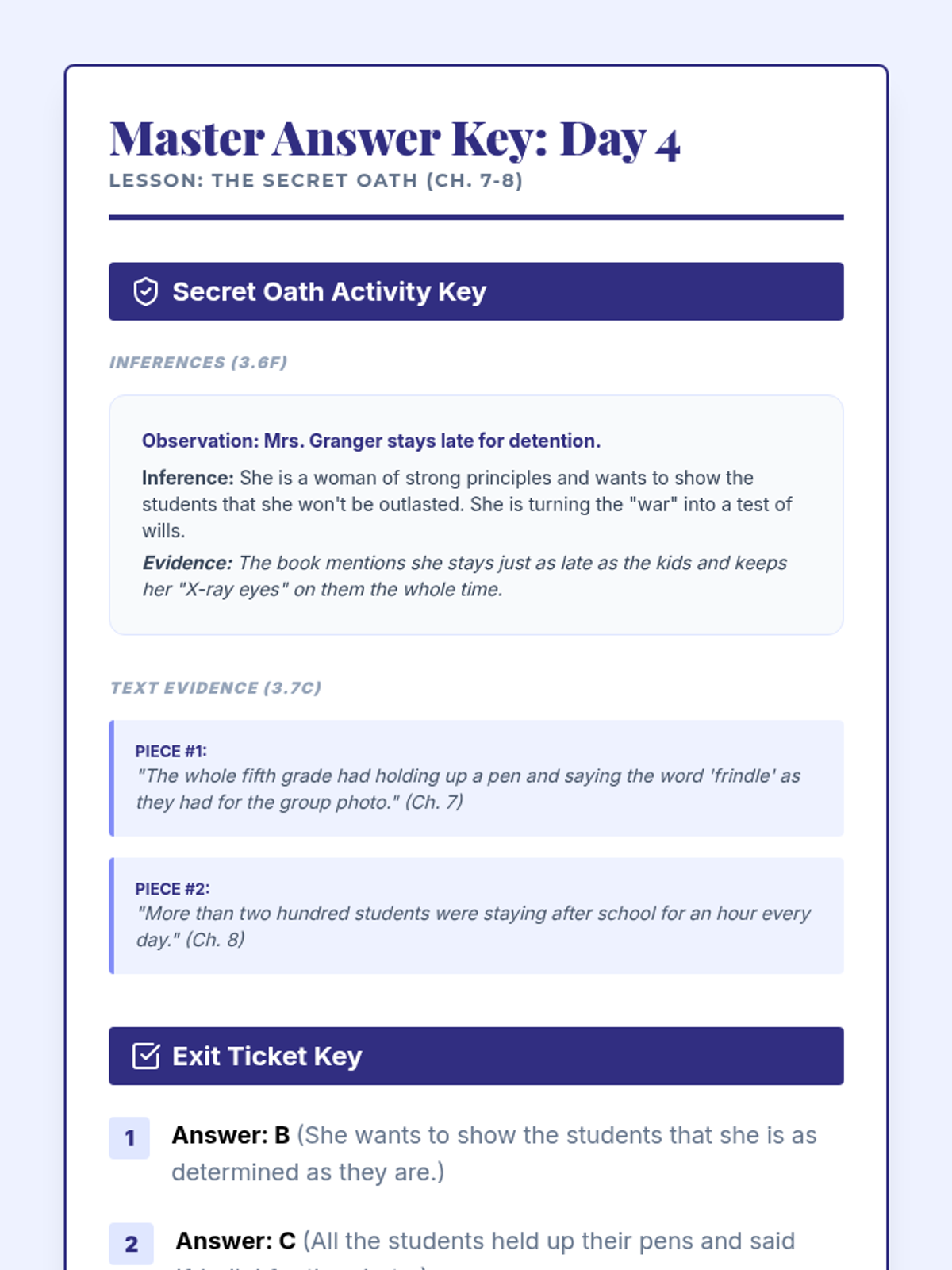
Students explore the concept of the 'Frindle Oath' and practice making deep inferences about characters' secret intentions using text evidence.
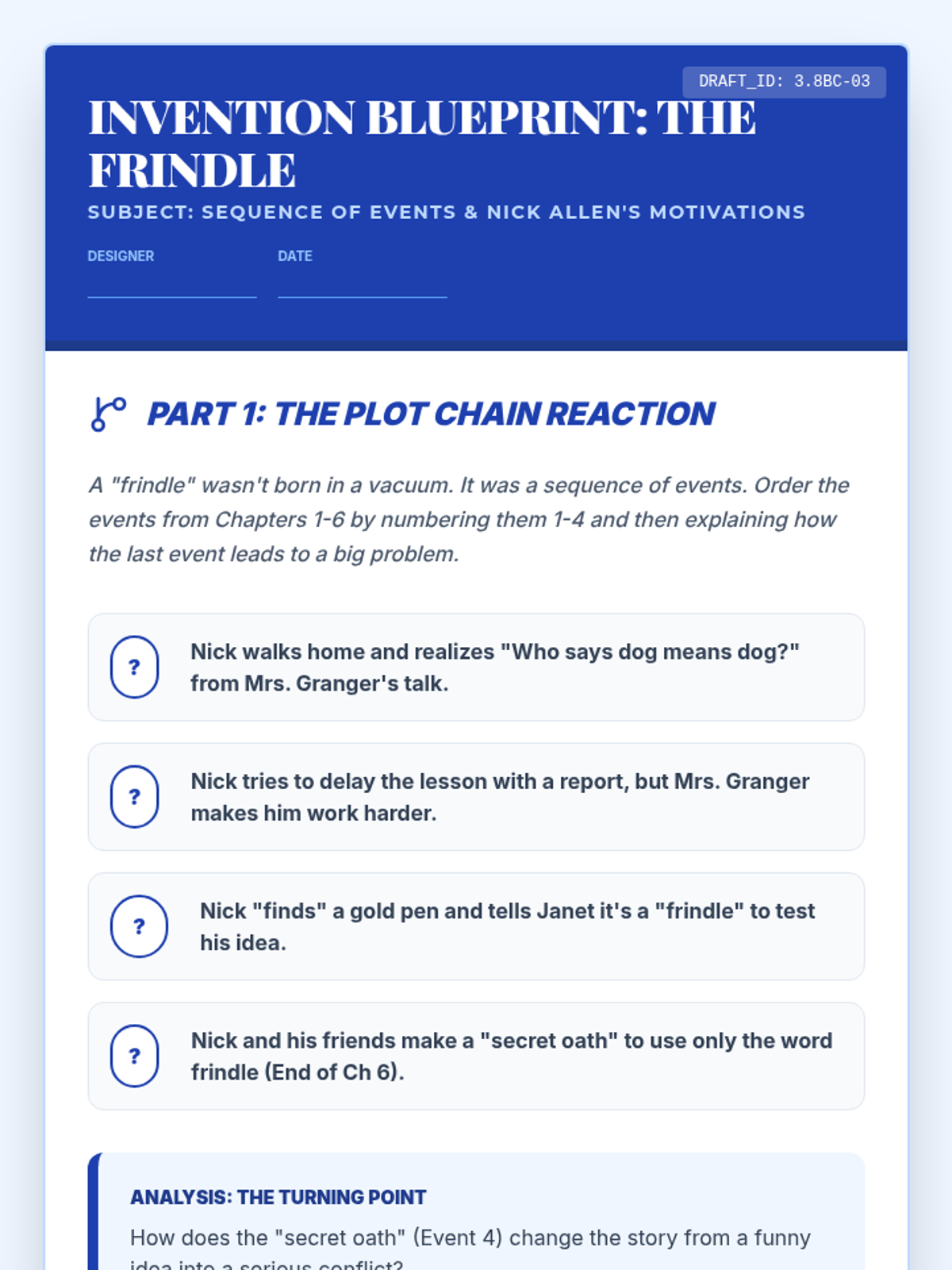
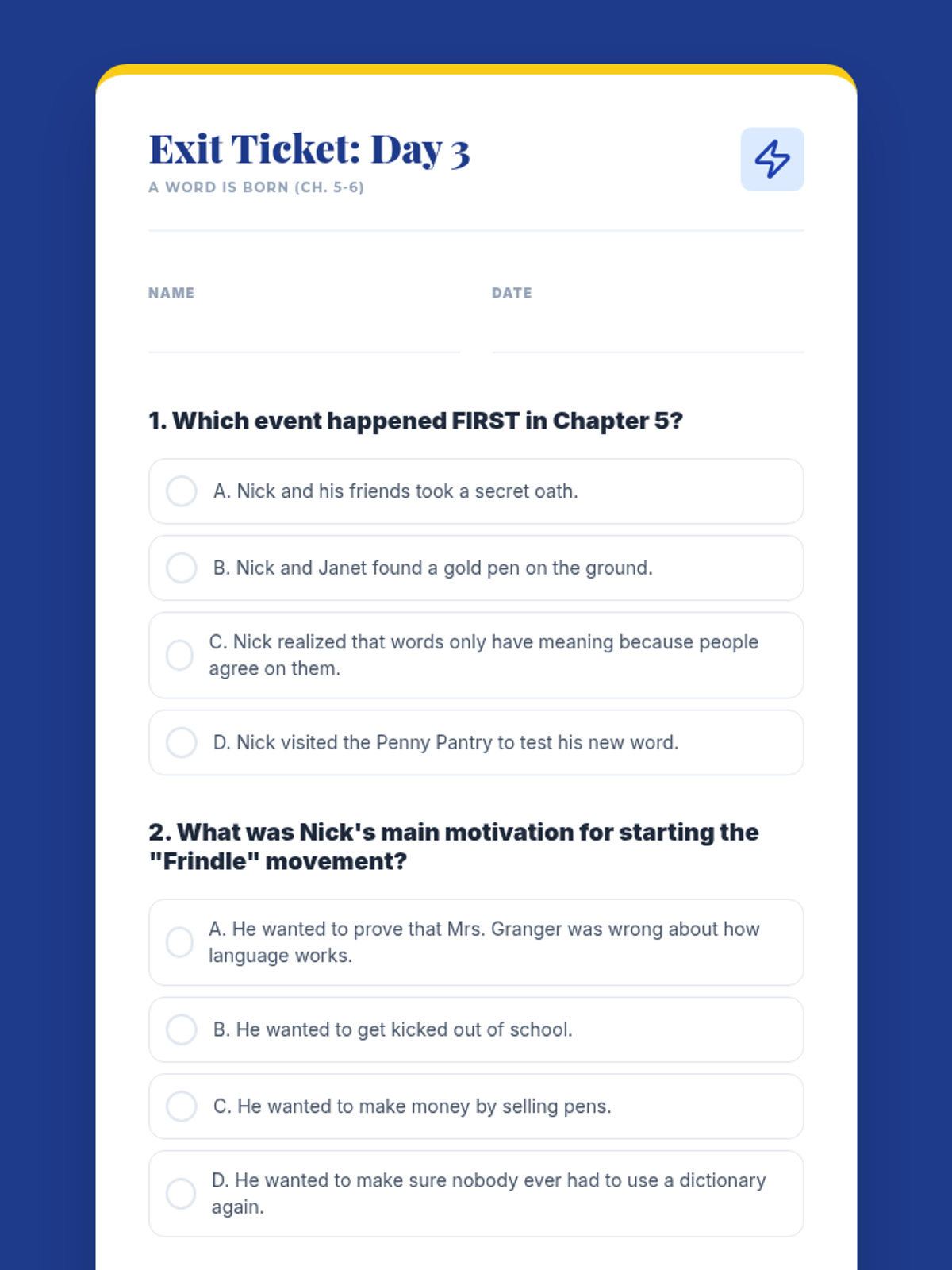
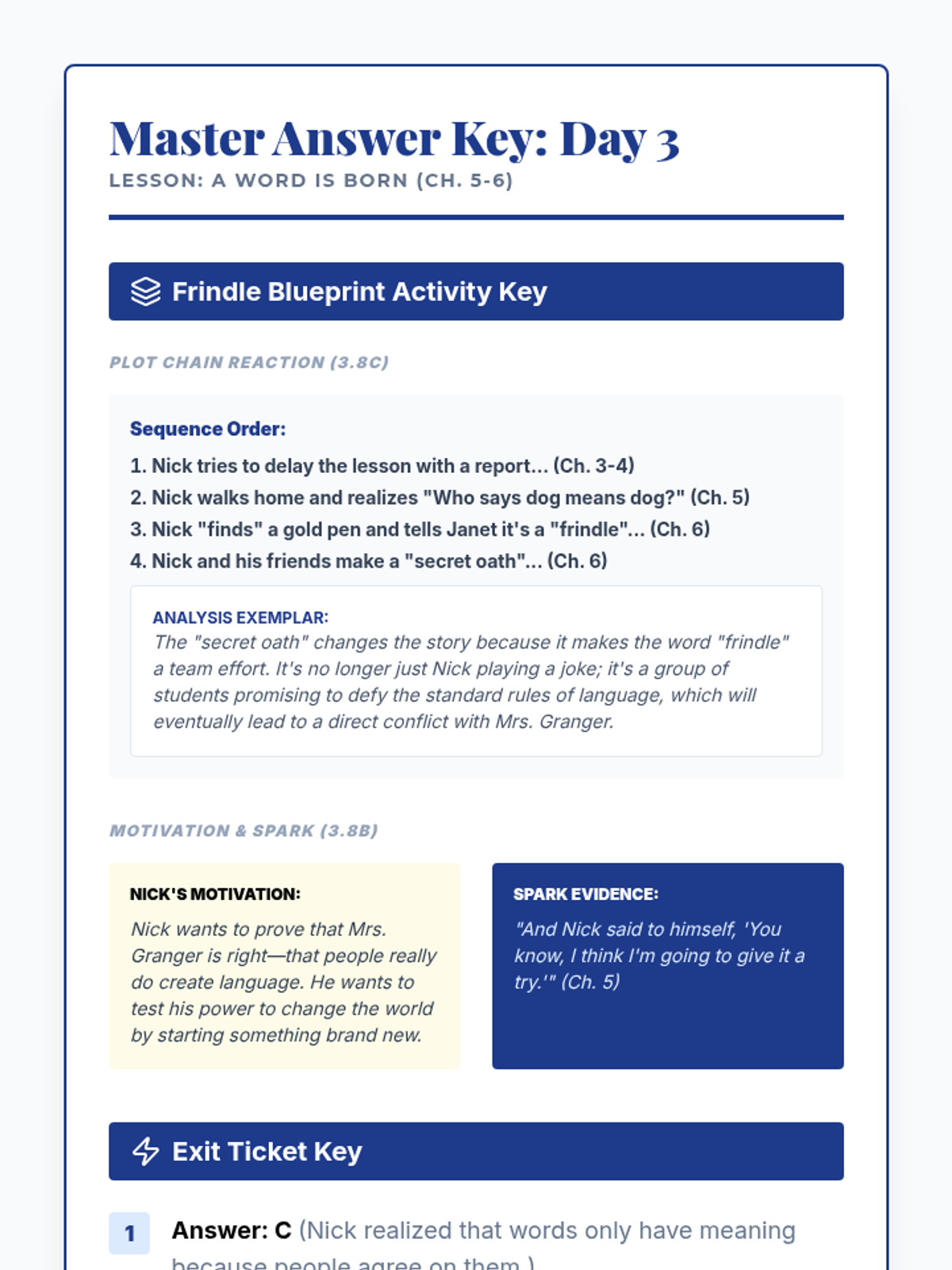
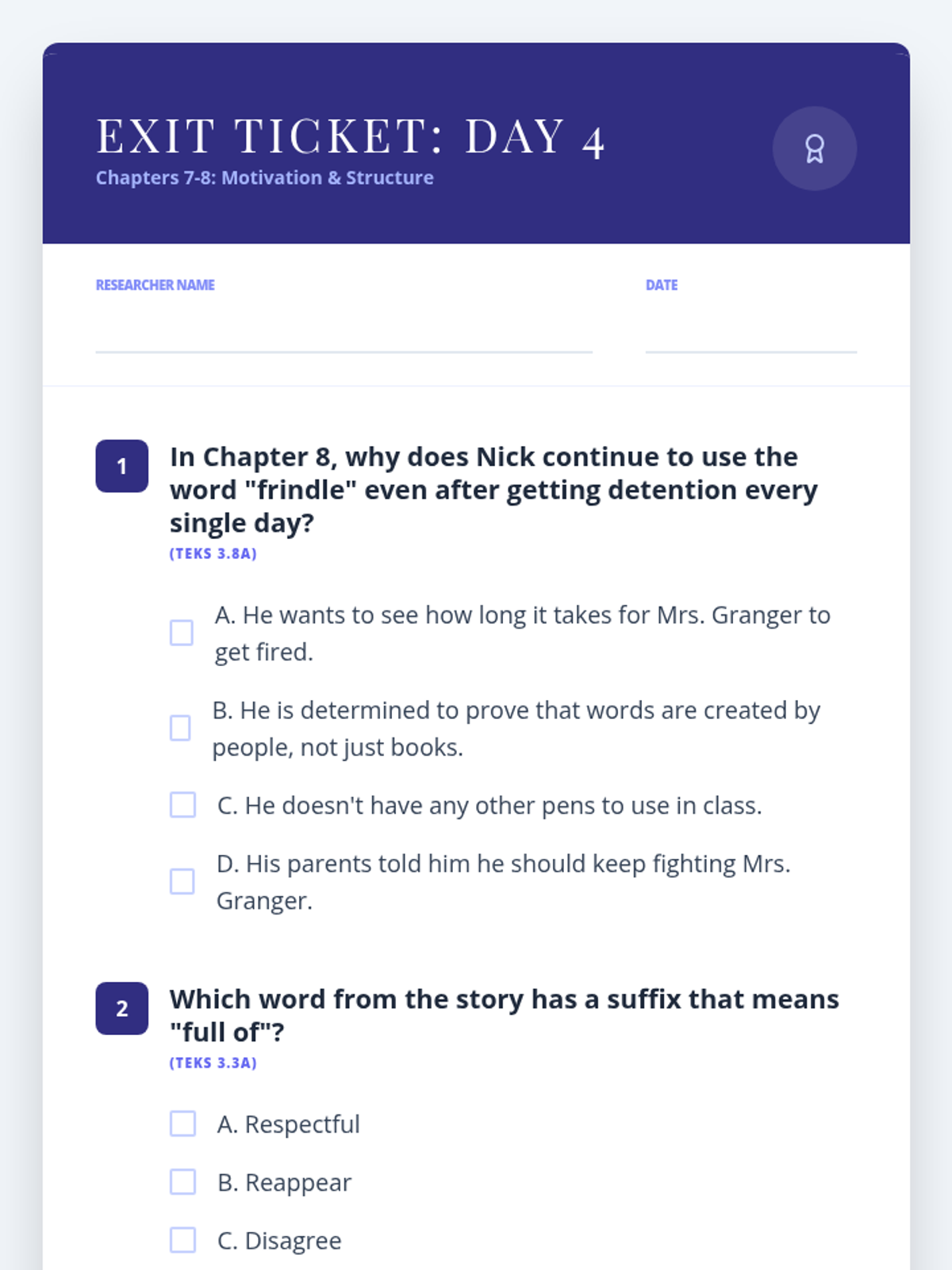
Students witness the birth of the word 'frindle' and analyze the sequence of events leading to this major plot point and Nick's internal motivations.
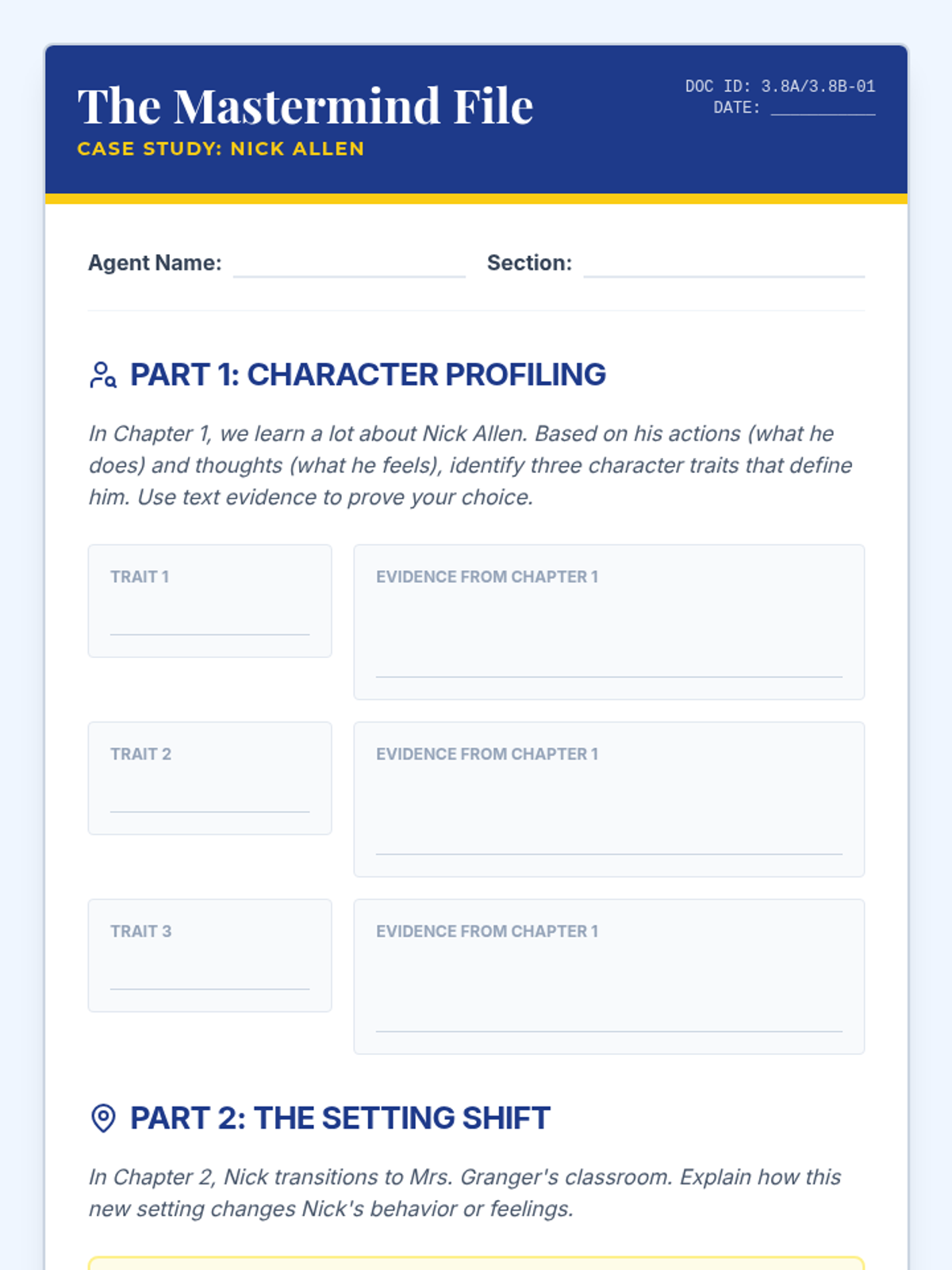
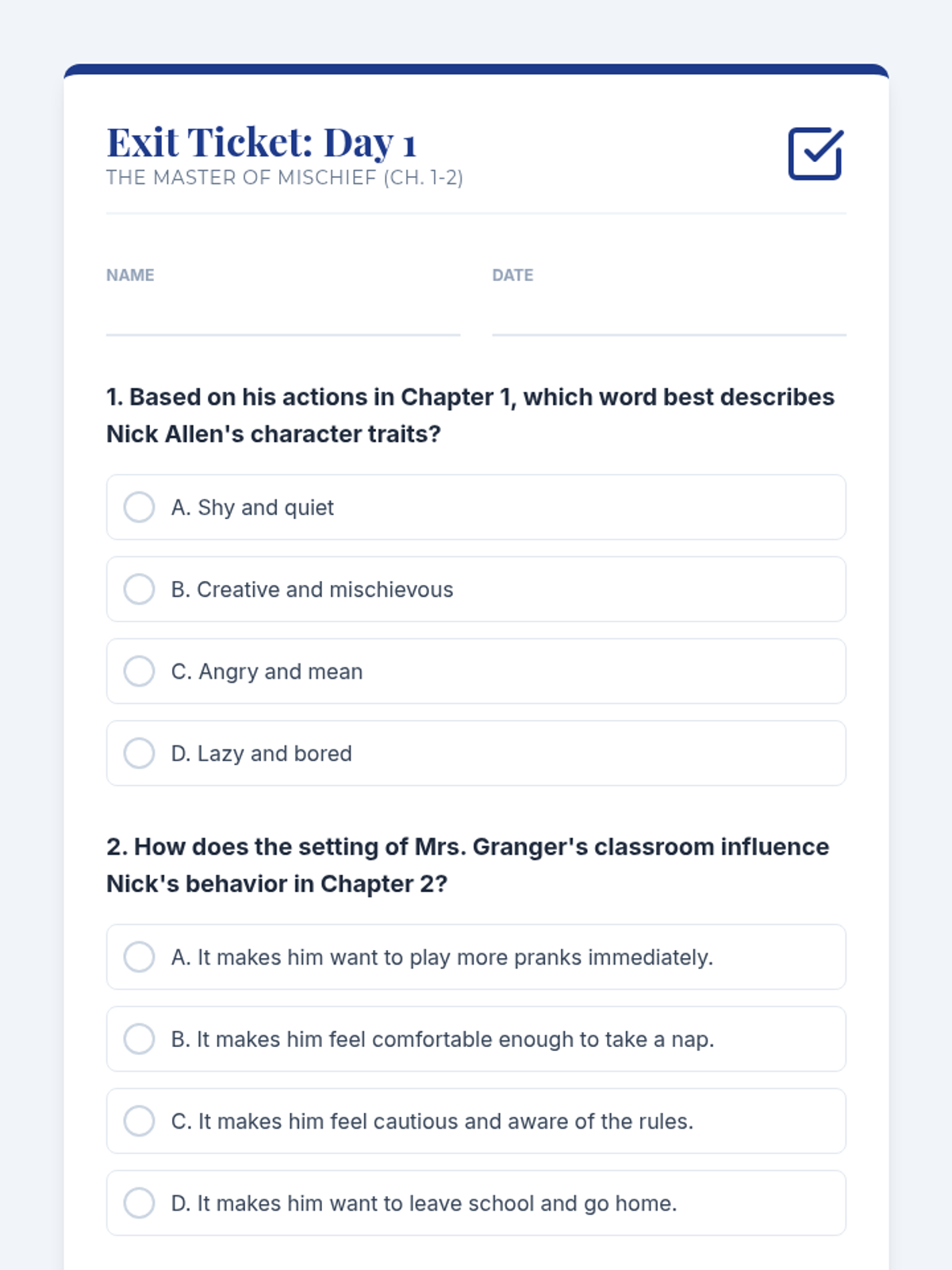
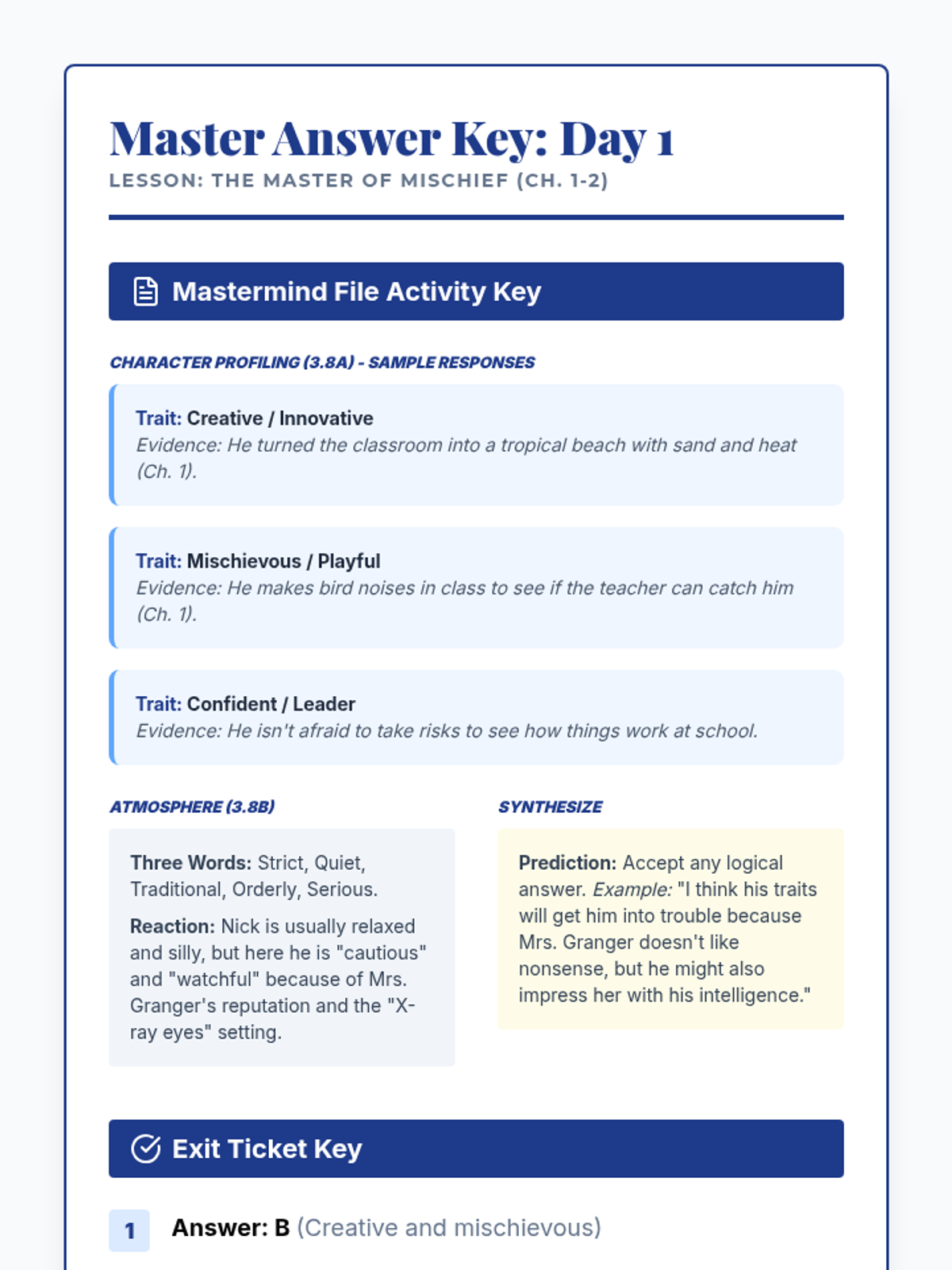
Students are introduced to Nick Allen, the protagonist of Frindle, and the setting of Lincoln Elementary. They focus on identifying character traits and how the setting influences the character's behavior.
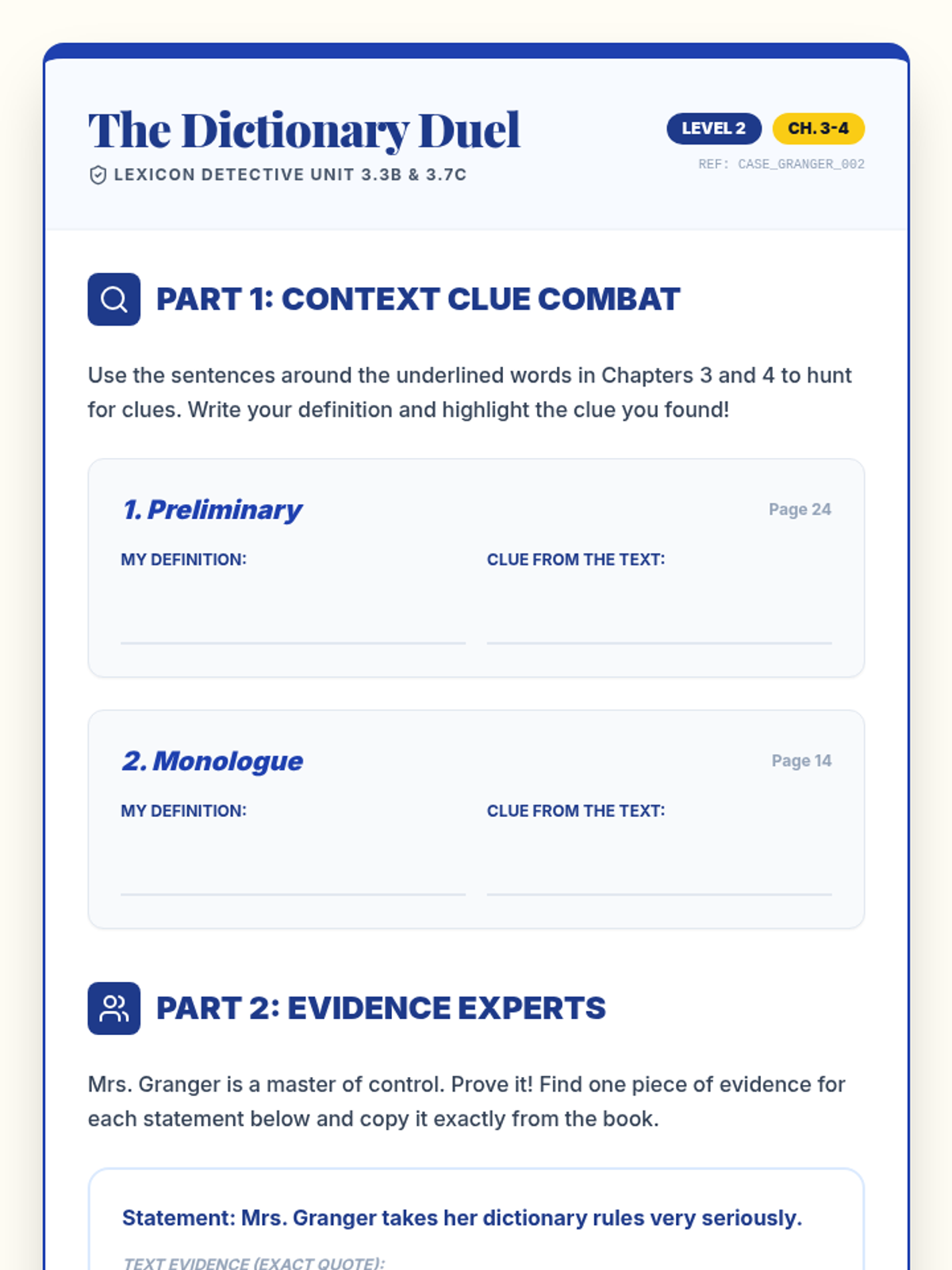
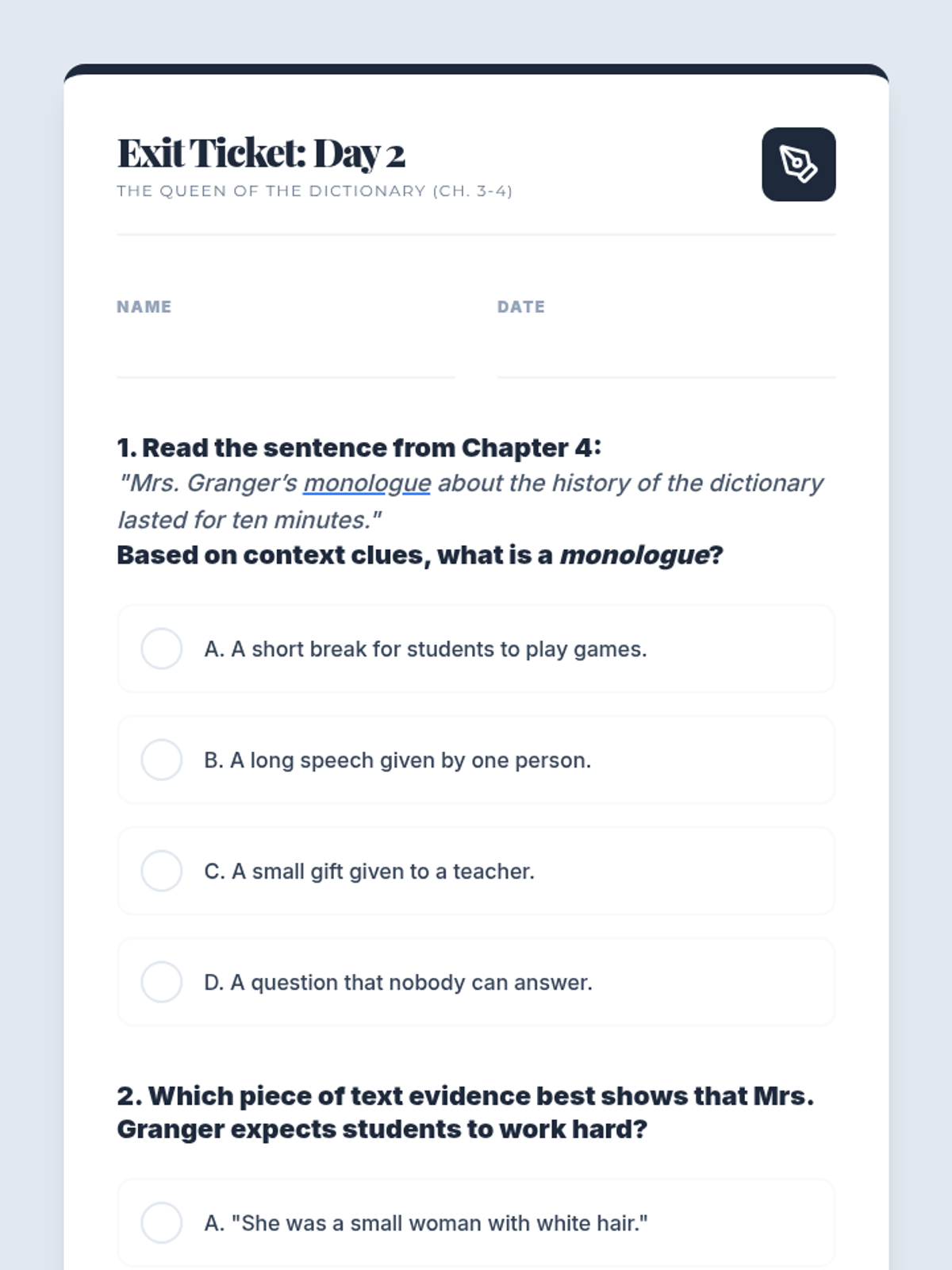
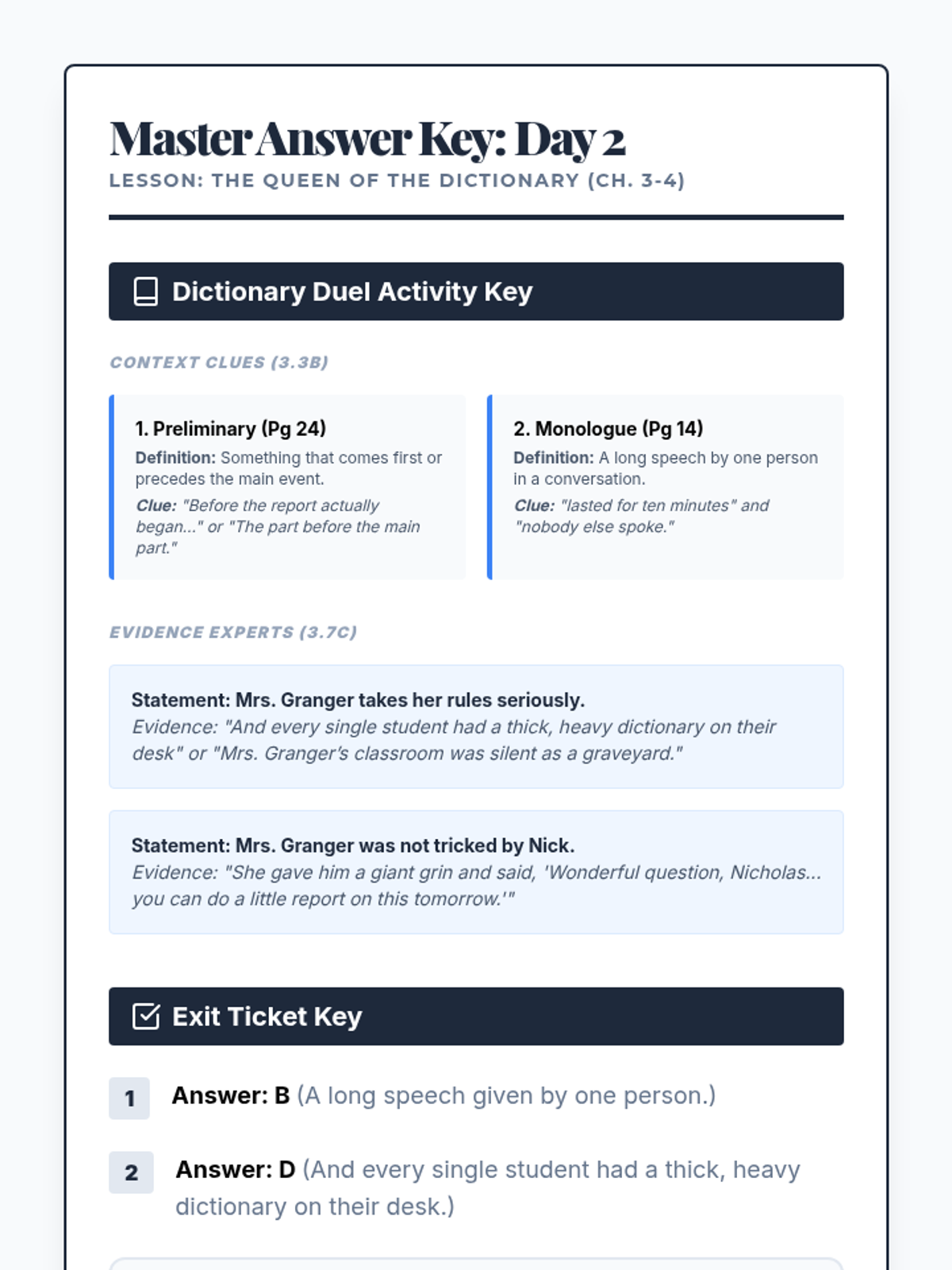
Students analyze Mrs. Granger's character and her obsession with the dictionary. They explore how context clues help determine the meaning of unknown words within the chapters.
The final resolution and the lasting impact of the word 'frindle,' focusing on theme (3.7C) and retelling the story (3.7D).
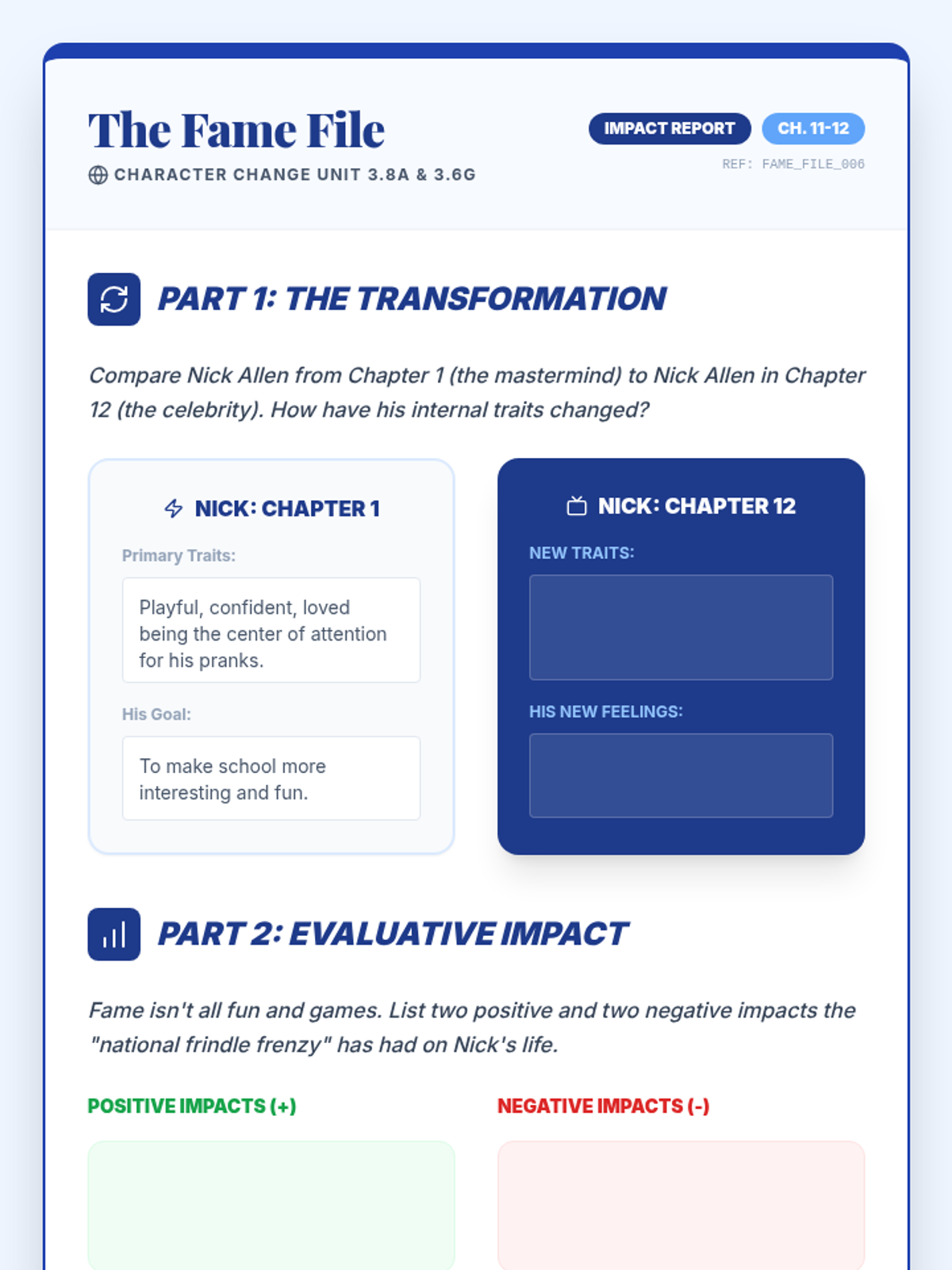
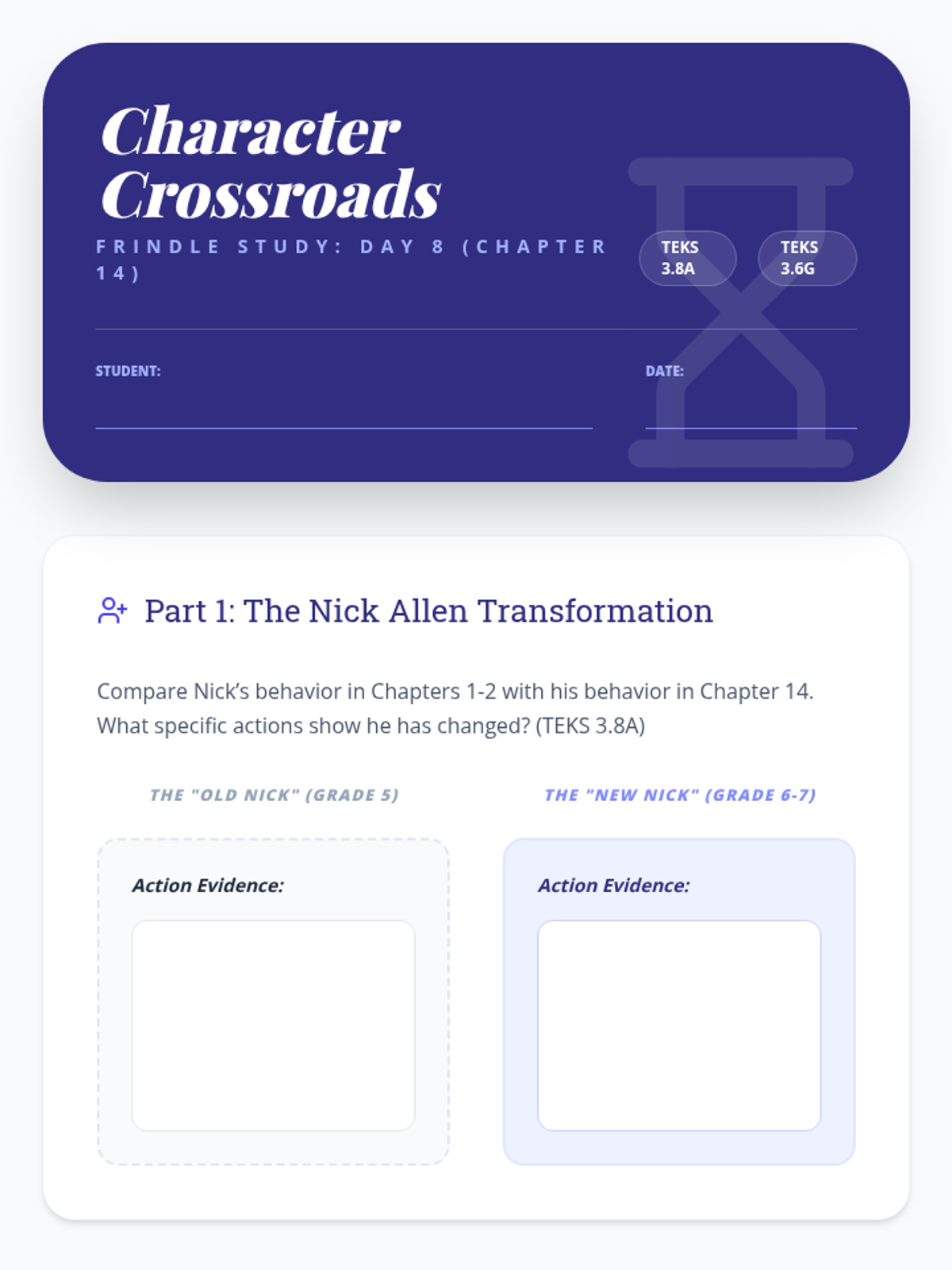
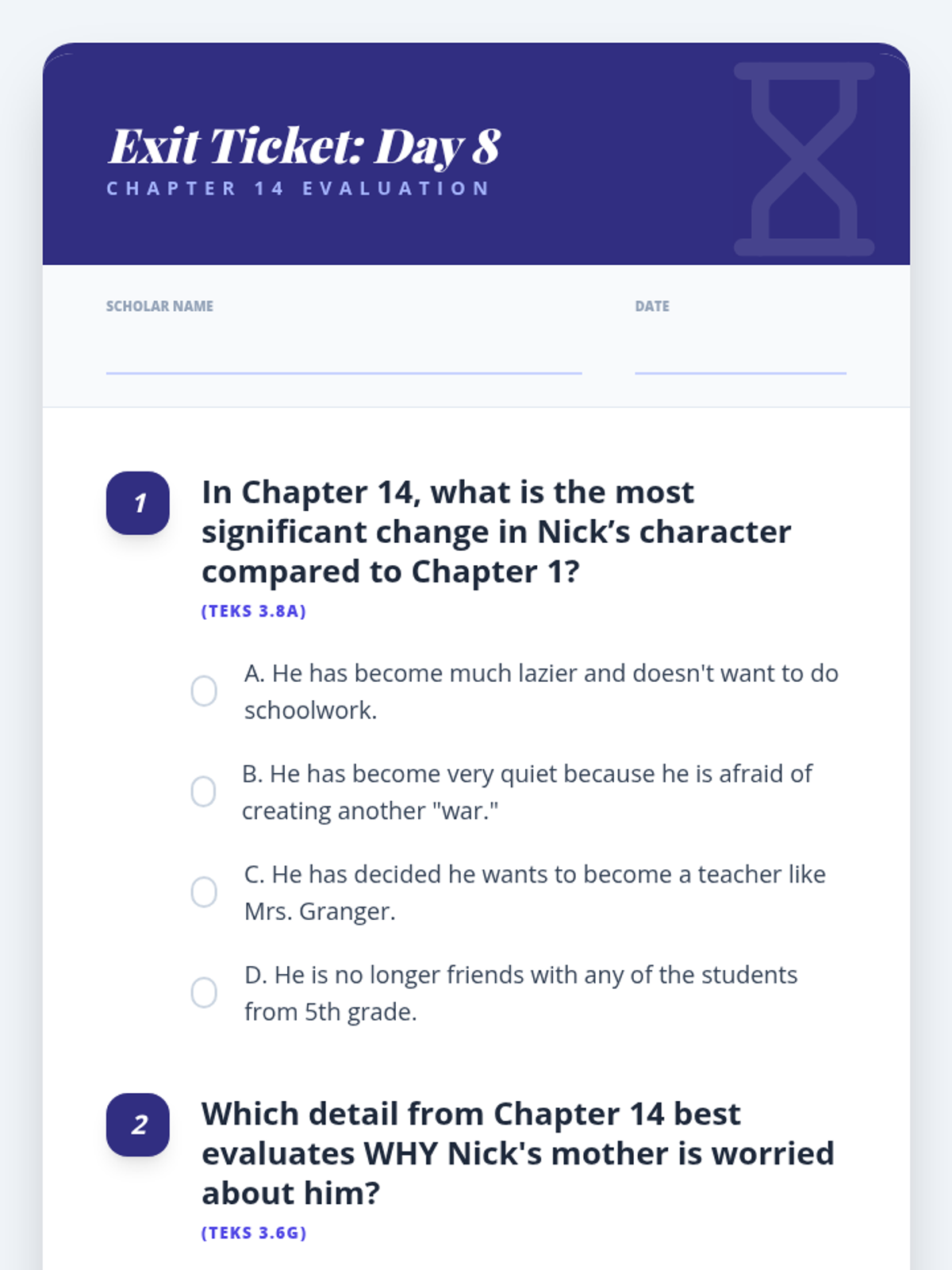
Analyzing how the characters and situation have evolved, focusing on character change (3.8A) and evaluating details (3.6G).
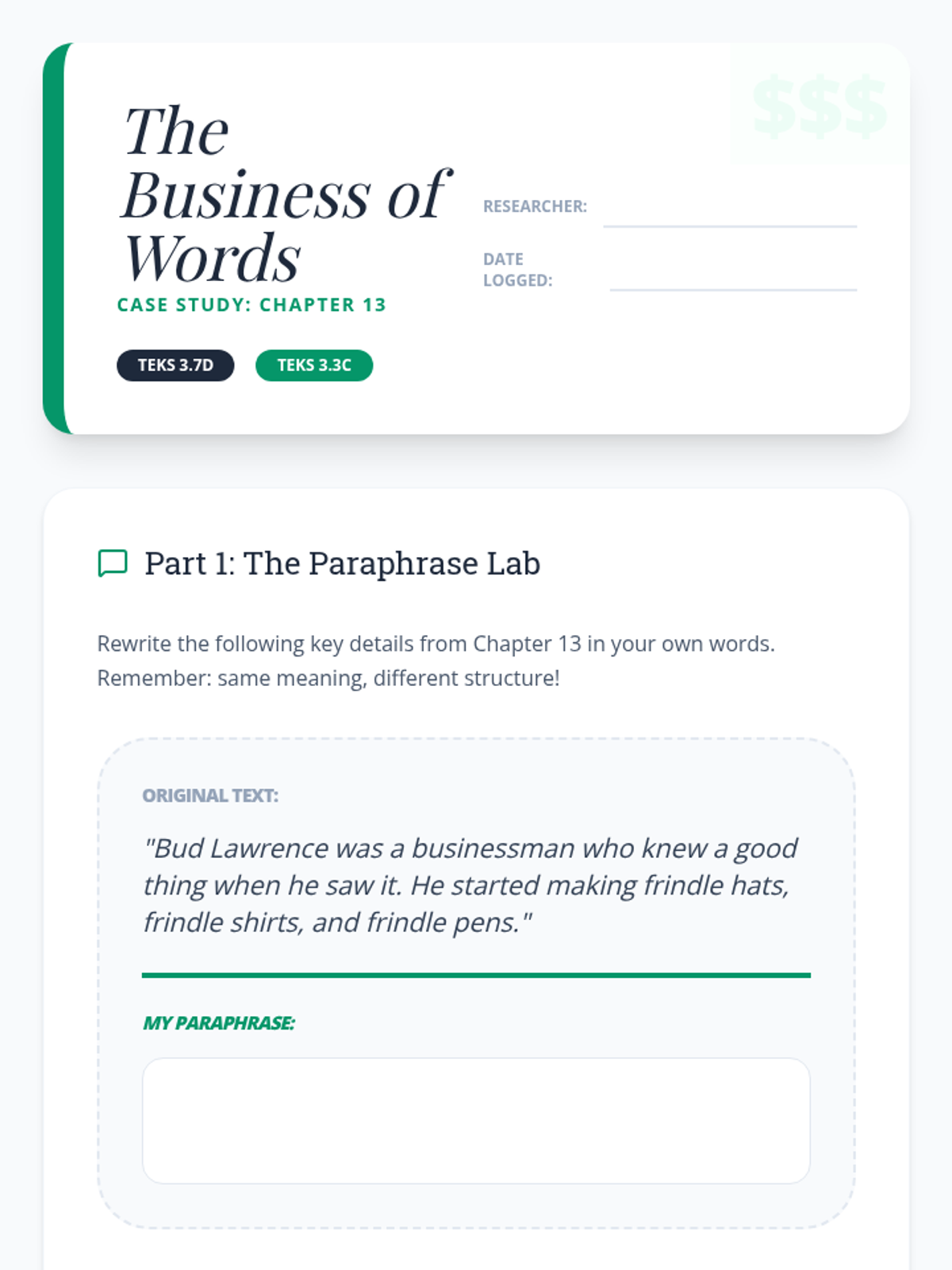
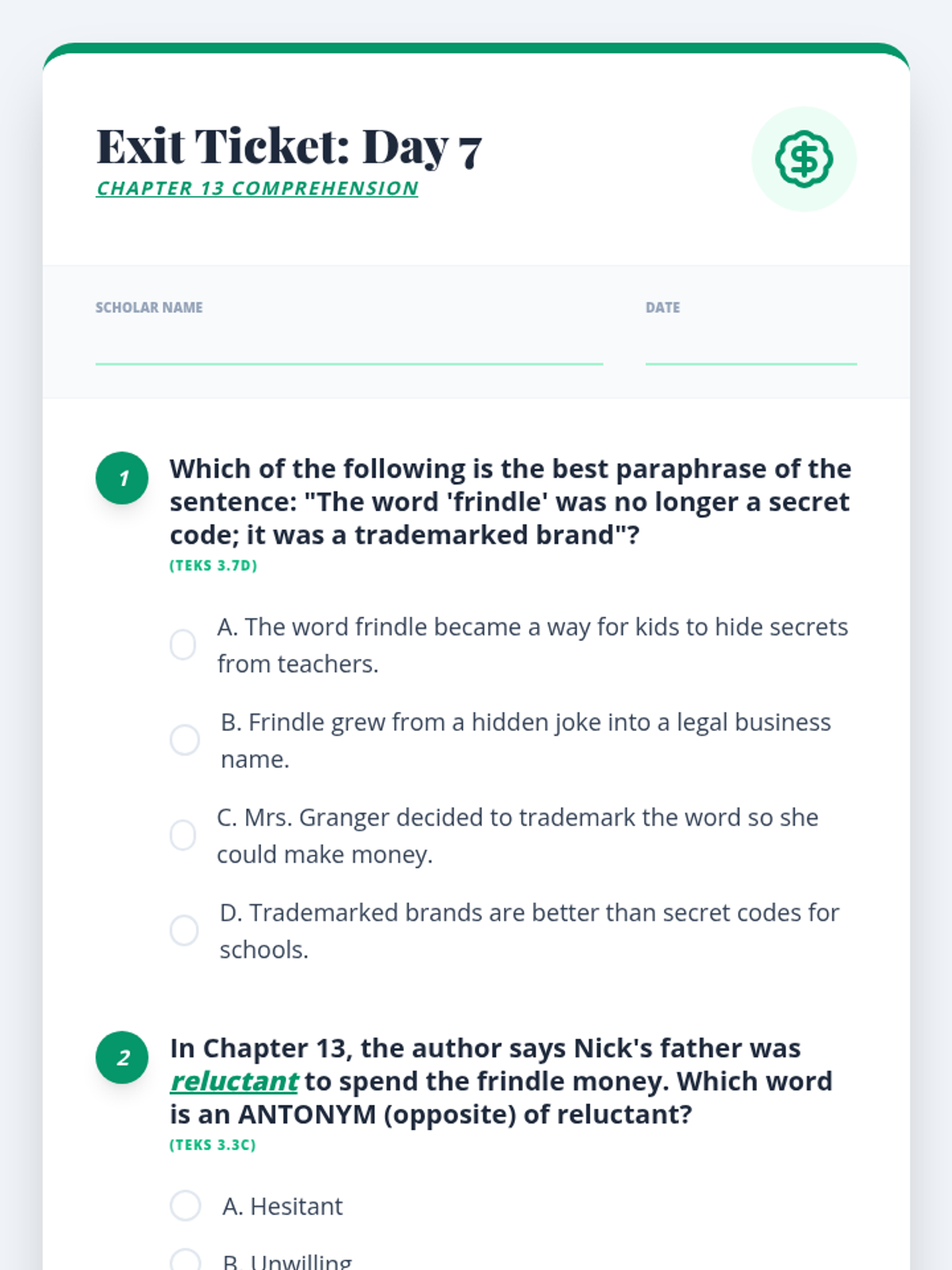
The impact of Nick's invention on his life and town, focusing on paraphrasing (3.7D) and using synonyms/antonyms (3.3C).
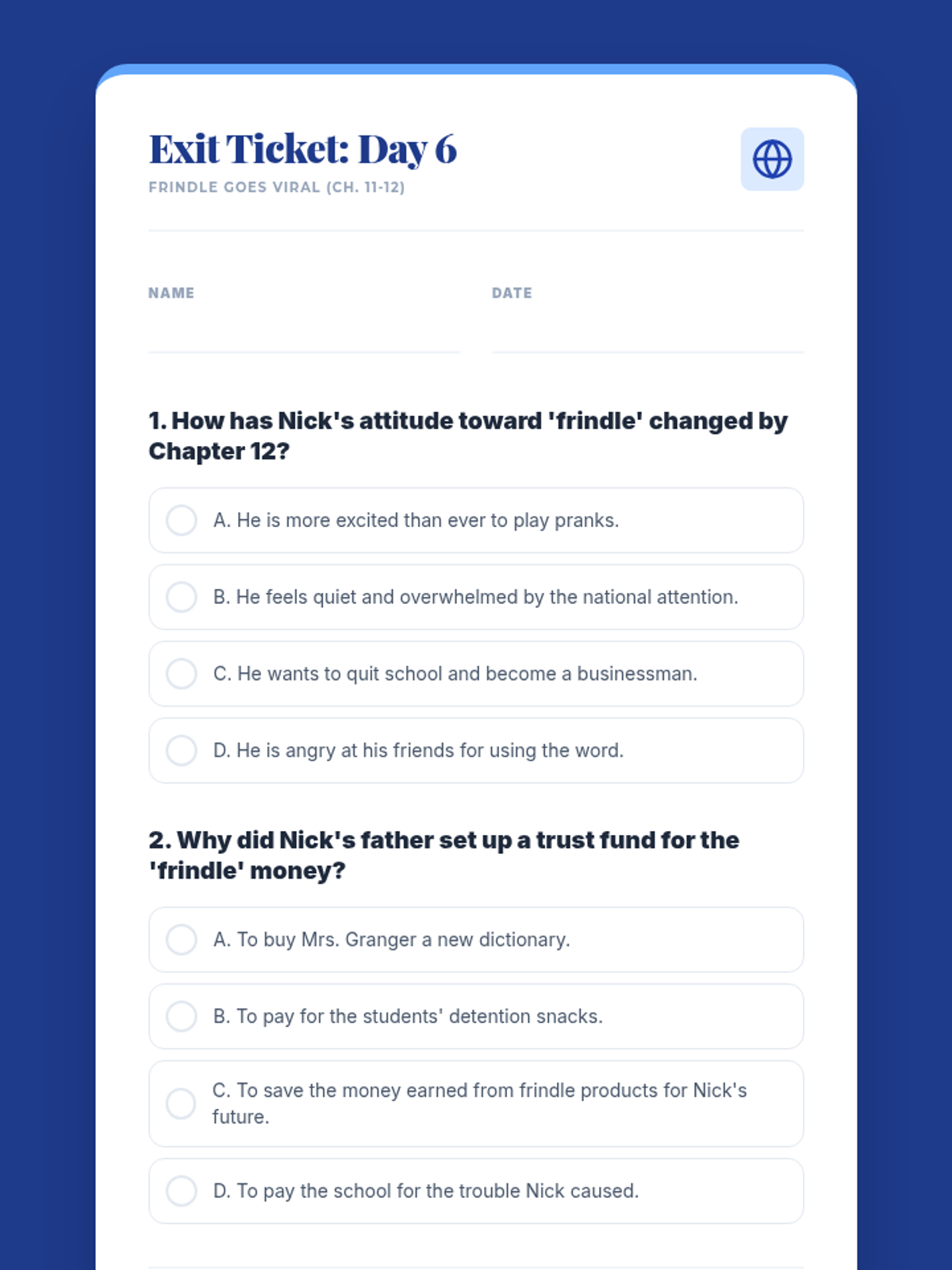
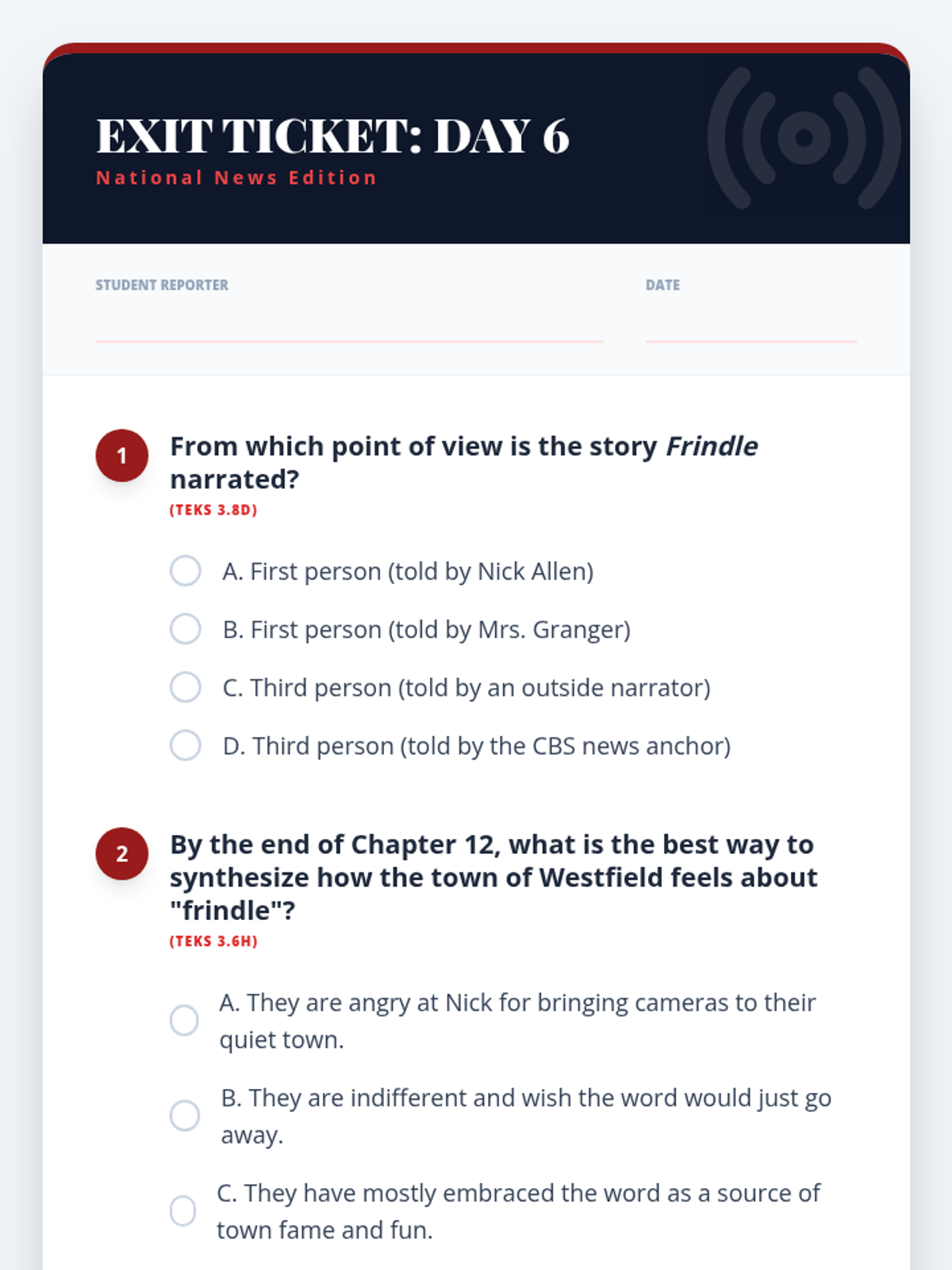
The story goes national, focusing on synthesizing information (3.6H) and identifying point of view (3.8D).
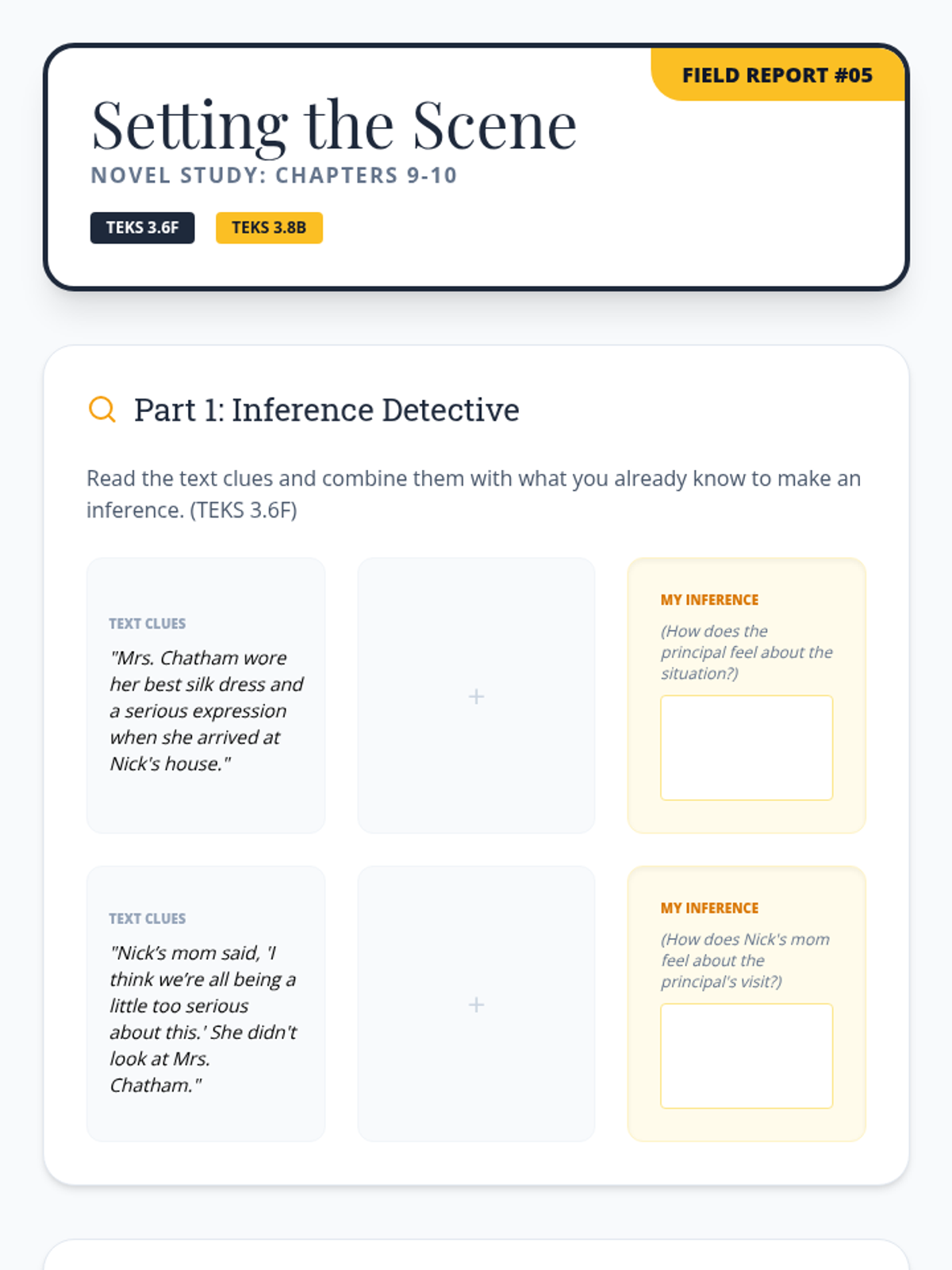
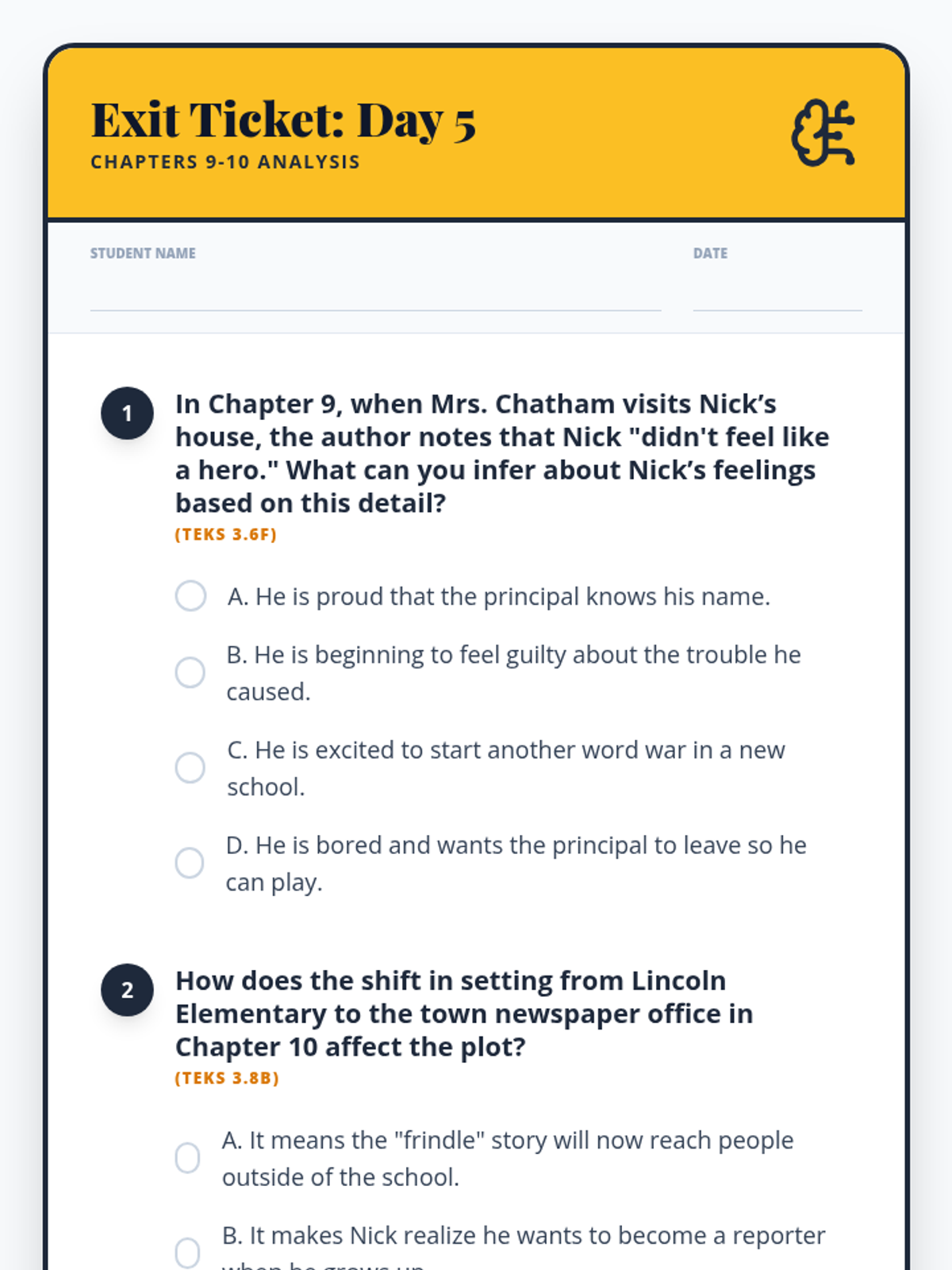
The frindle movement spreads through the school, focusing on making inferences (3.6F) and the impact of setting (3.8B).
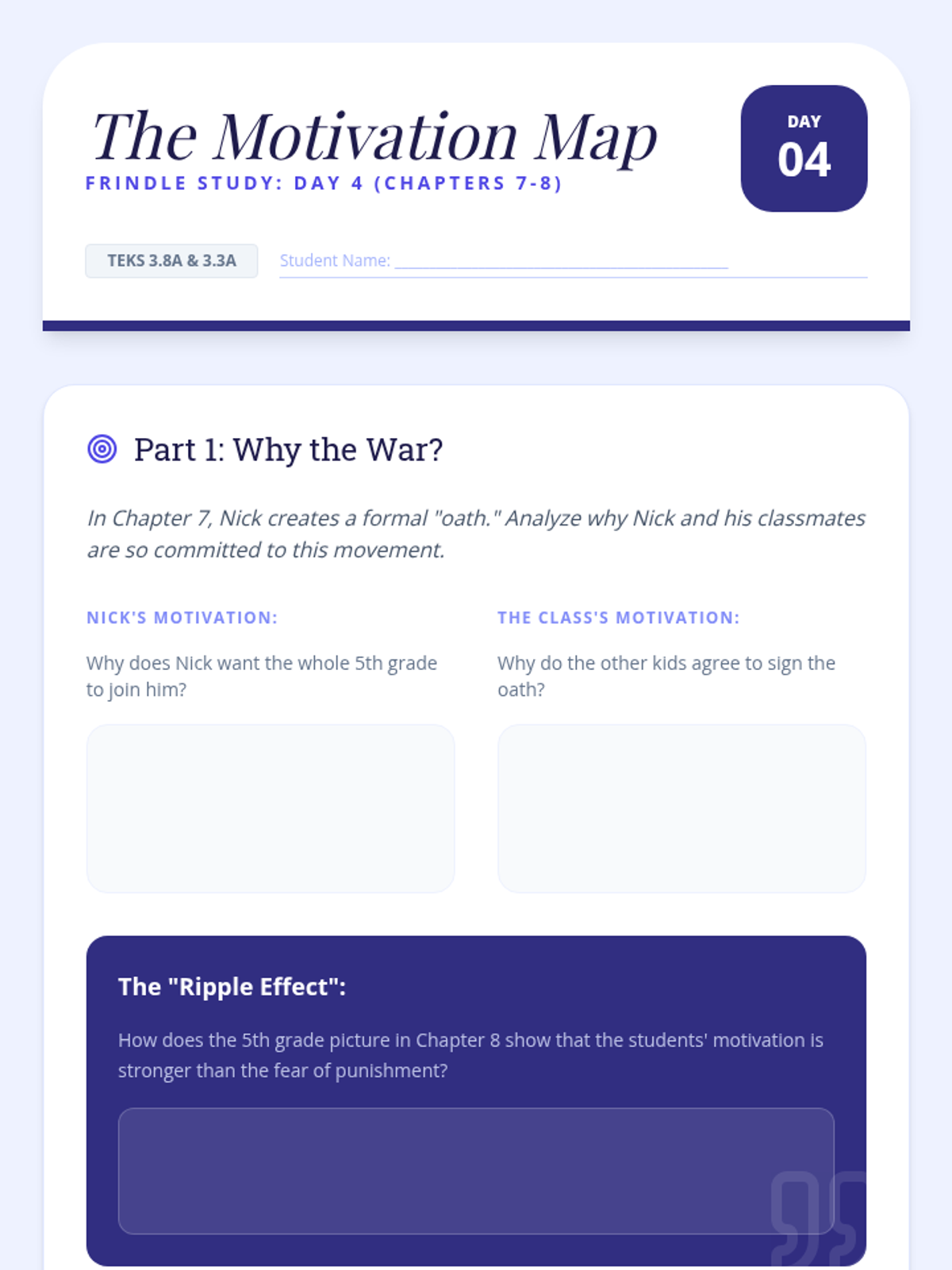
The word 'frindle' is born, focusing on character motivation (3.8A) and understanding word parts (3.3A).