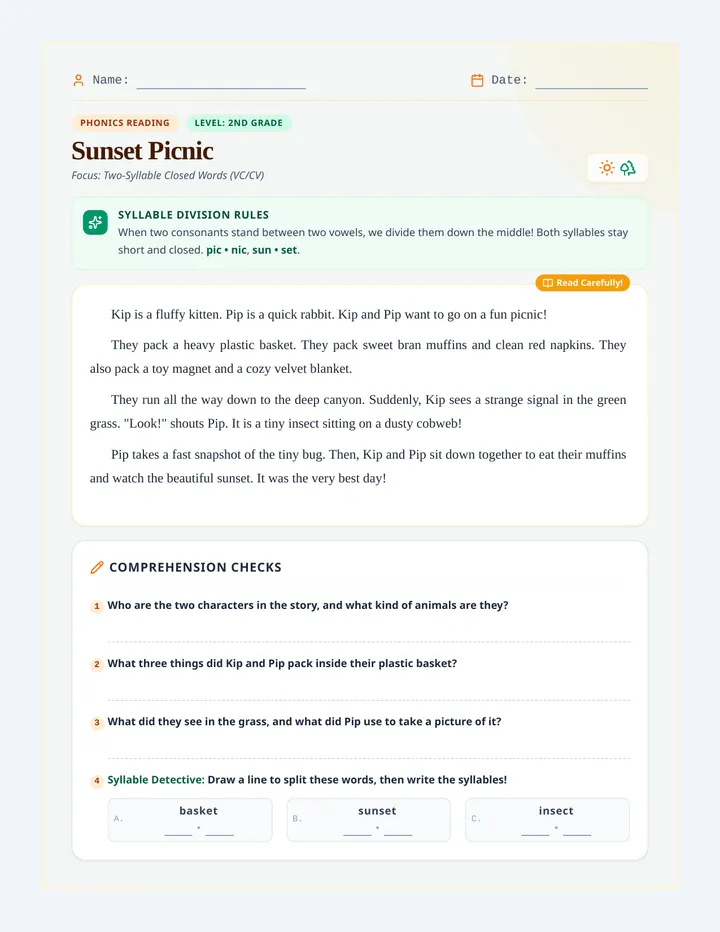
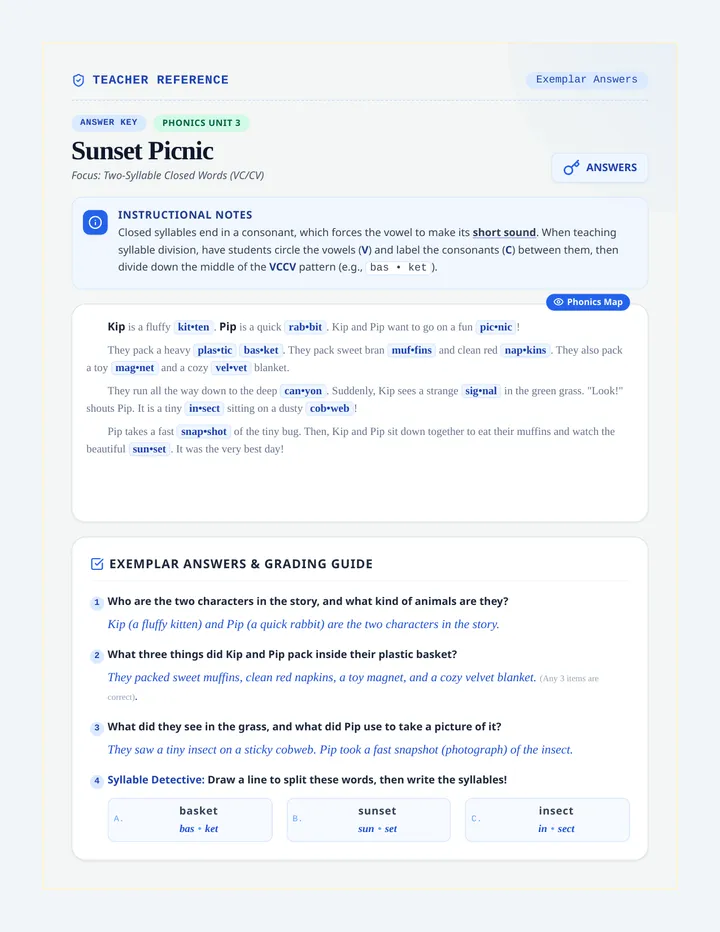
Syllable practice for first grade students focusing on simple phrases with open, closed, silent e, and consonant -le patterns.
A comprehensive end-of-year assessment for Grade 4 ESL students, covering morphology, vocabulary, grammar, reading, writing, speaking, and listening.
A lesson focused on mastering academic vocabulary used in reading comprehension questions. Students will learn to distinguish between common analytical verbs and concepts through a hands-on matching game and reference guides.
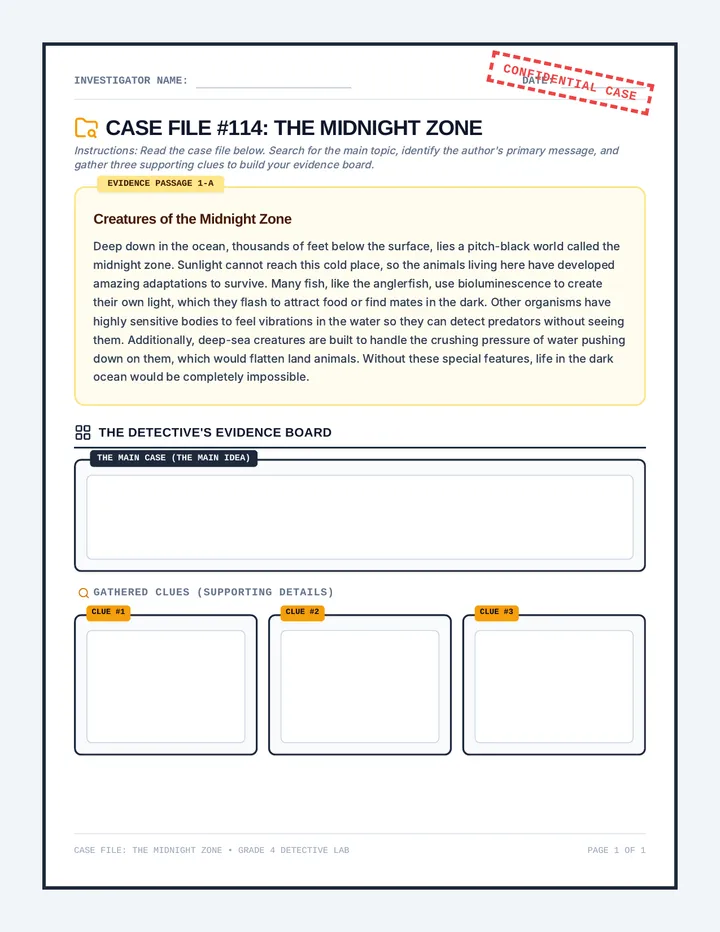
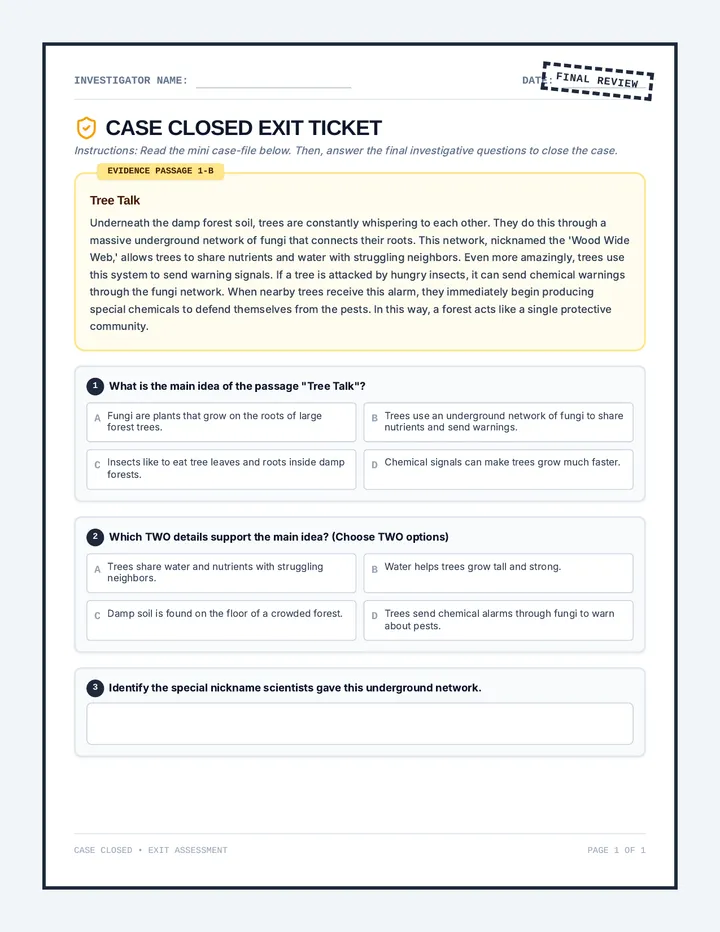
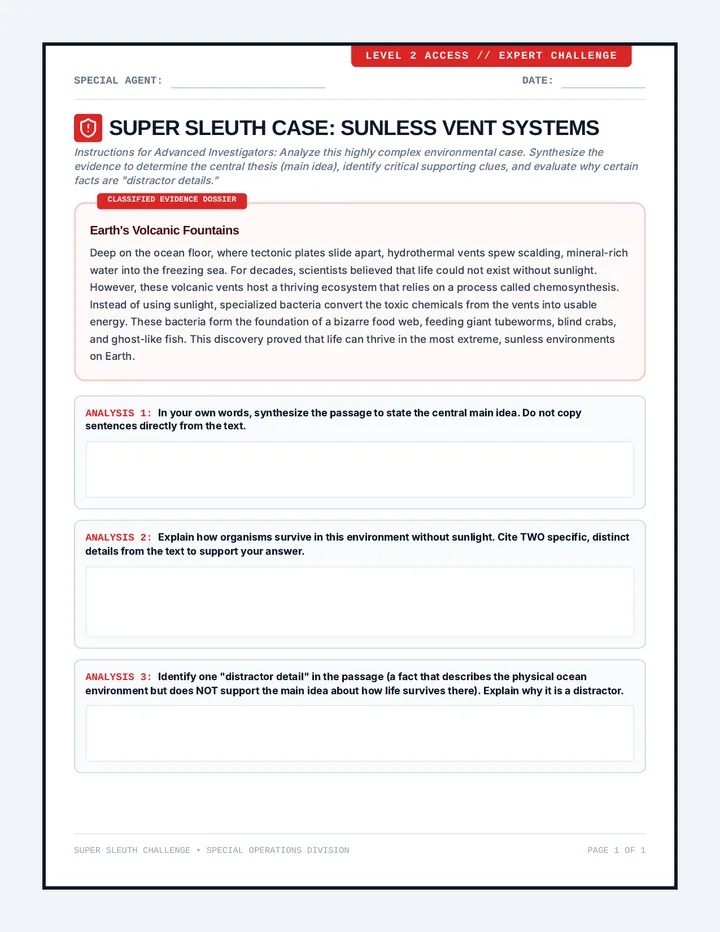
A 45-minute ESL lesson for 4th graders focused on using the R.A.P. (Read, Ask, Paraphrase) strategy to understand animal adaptations. Students will learn to identify main ideas and details while practicing their summarizing skills with informational texts about unique animal survival traits.
A 45-minute grade 5 ESL lesson focused on researching extreme weather using multiple sources. Students investigate tornadoes, hurricanes, or blizzards to build knowledge through structured investigation.
A 45-minute Grade 4 ESL lesson focused on interpreting information from digital news articles. Students learn to navigate digital news features, identify key facts, and answer investigation questions using text evidence.
A 45-minute ESL lesson for 4th graders focused on using transitional words and phrases to sequence events, themed around building bridges between ideas.
A 45-minute writing lesson for Grade 4 ESL students (Level 3) focused on establishing characters and settings to orient the reader. Students will use sentence frames and visual maps to craft the beginning of a narrative.
A 45-minute Grade 4 ESL lesson focused on CCSS W.4.3.B, teaching students to use dialogue, sensory details, and 'show, don't tell' actions to bring characters and scenes to life.
A Grade 4 ESL lesson focused on point of view using 'The True Story of the 3 Little Pigs'. Students compare the narrator's perspective to understand how it shapes the 'facts' of a story.
A 45-minute lesson where students become newsroom investigators, learning to distinguish between objective hard news reporting and subjective opinion pieces through hands-on analysis and writing practice.
A 45-minute lesson for Grade 4 ESL students (Developing/Expanding) focused on identifying, comparing, and contrasting first-person and third-person points of view using a detective-themed 'case file' approach.
A 45-minute ESL lesson for 4th graders focused on identifying and describing cause-and-effect relationships in a scientific text about plant growth. Students use visual organizers, signal words, and sentence frames to master the concept.
A 45-minute ESL lesson for 5th graders to analyze how point of view influences the description of events using the classic fable of The Three Little Pigs versus the Wolf's perspective.
An engaging 45-minute ESL lesson for Grade 4 students focused on chronological order and sequencing through the exciting lens of a space mission. Students will use transition words, sequencing cards, and a scaffolded graphic organizer to master the order of events.
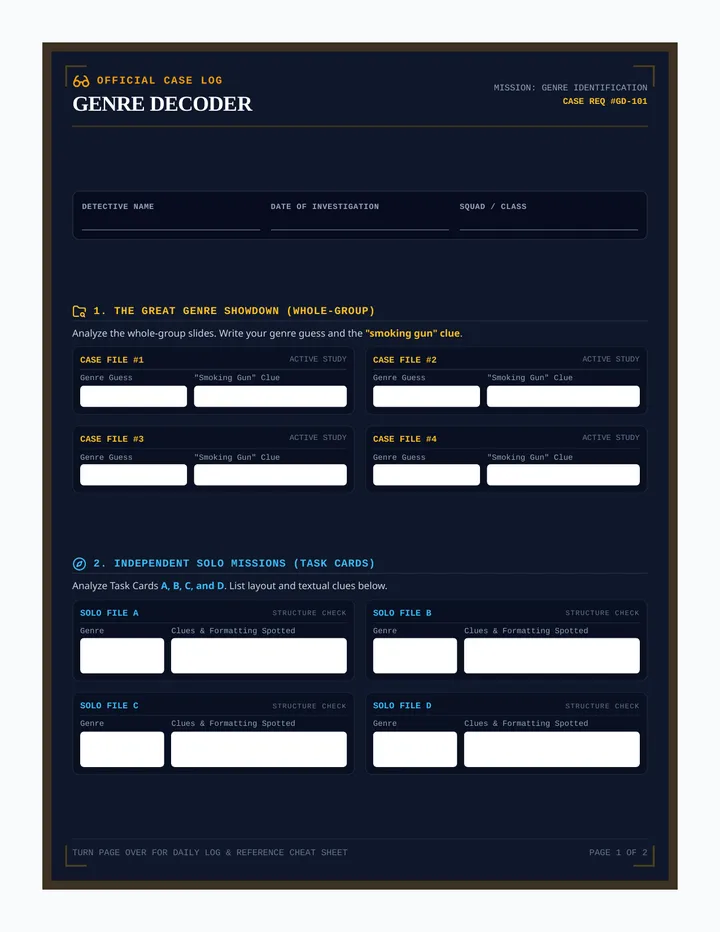
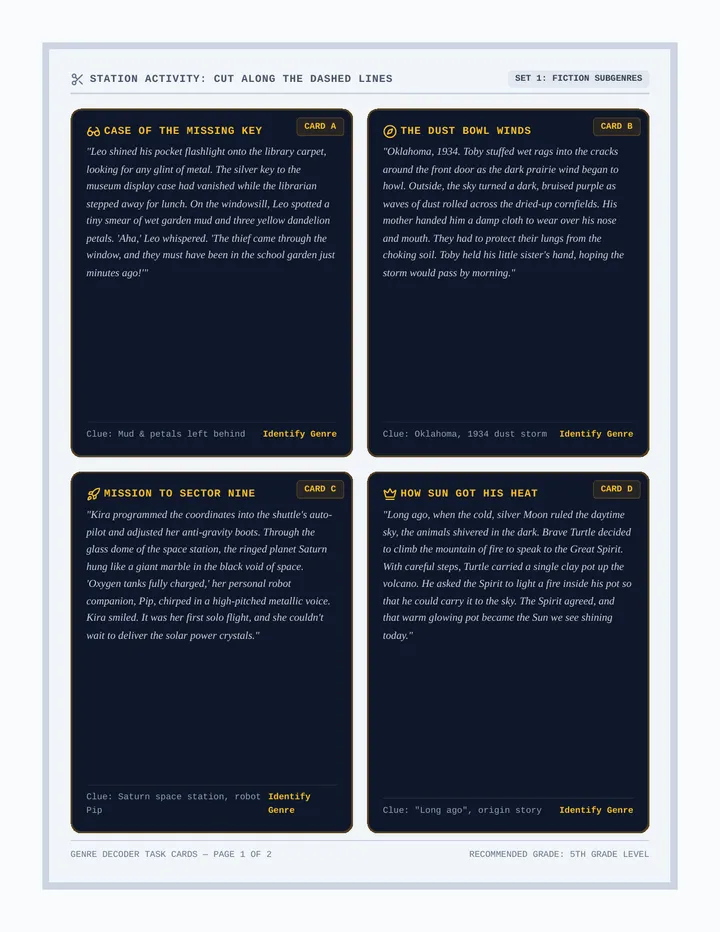
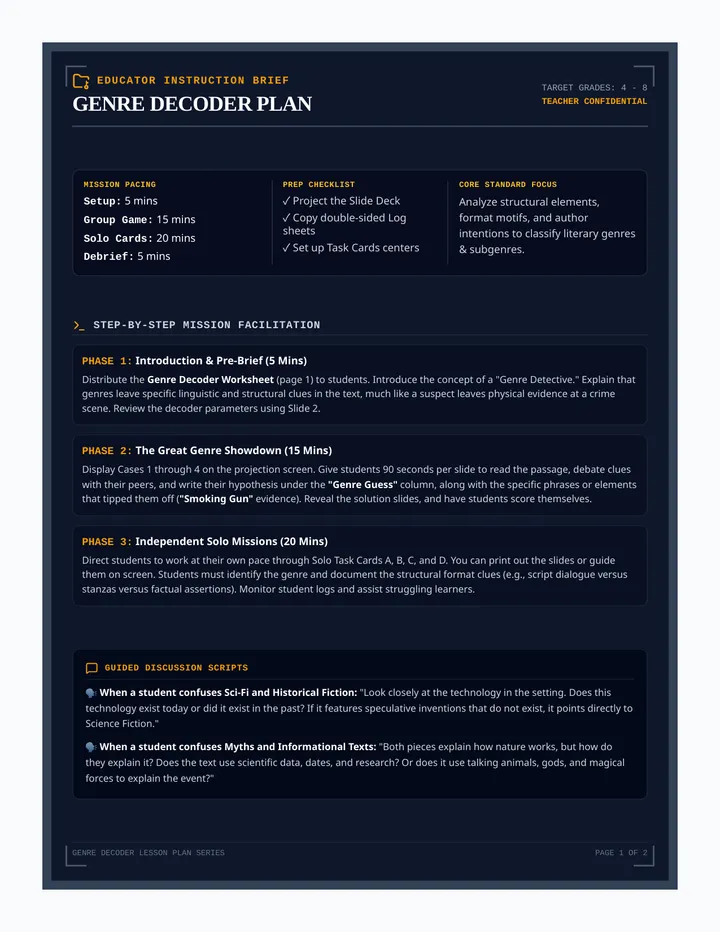
A 45-minute ESL lesson for grade 4 focused on identifying and comparing the structural elements of prose, poetry, and drama. Students act as genre detectives to find clues like stanzas, stage directions, and chapters.
Students will identify and compare four major text structures: chronology, comparison, cause/effect, and problem/solution. Through an architectural 'blueprint' theme, ESL students will learn signal words and structural patterns to improve reading comprehension.
Students will learn to summarize narrative texts using the 'Somebody Wanted But So Then' (SWBST) framework. This lesson is designed for Grade 4 ESL students at the developing/intermediate level, focusing on identifying key plot elements and synthesizing them into a concise summary.
A 45-minute ESL lesson for Grade 4 (Developing/Expanding) focused on paraphrasing a speaker's points about simple inventions. Students learn to restate key information in their own words using the 'Replace and Rearrange' strategy.
A 45-minute ESL lesson for Grade 4 students to identify a speaker's perspective and evidence concerning natural disasters, comparing different points of view.
In this 45-minute ESL lesson, 4th-grade students will learn to analyze comic strips and storyboards to create oral summaries. They will use sequencing vocabulary and sentence frames to translate visual actions into clear, paraphrased narratives, meeting standard SL.4.2.
A 45-minute ESL lesson for 4th graders focused on using synonyms to 'make over' sentences while keeping their original meaning. Students will practice with basic adjectives and verbs to expand their vocabulary and improve writing variety.
A 45-minute ESL lesson for 4th graders focused on mastering the homophones to/too/two and their/there/they're through a fun 'Word Detective' mystery theme.
A 45-minute Grade 4 ESL lesson focusing on the future progressive tense (will be + verb-ing) using a 'Time Traveler Training' theme. Includes a comprehensive lesson plan, instructional slides, anchor chart, differentiated worksheets, and exit tickets.
A 45-minute Grade 4 ESL lesson focused on identifying and using synonyms and antonyms. Designed for Level 2 (Emerging) learners, the lesson uses a 'Word Detective' theme with heavy visual support and sentence frames.
A 45-minute ESL lesson for Grade 5 students focused on the future perfect tense through the lens of space exploration and interstellar travel. Students will learn to form and use the future perfect to describe completed actions in the future.
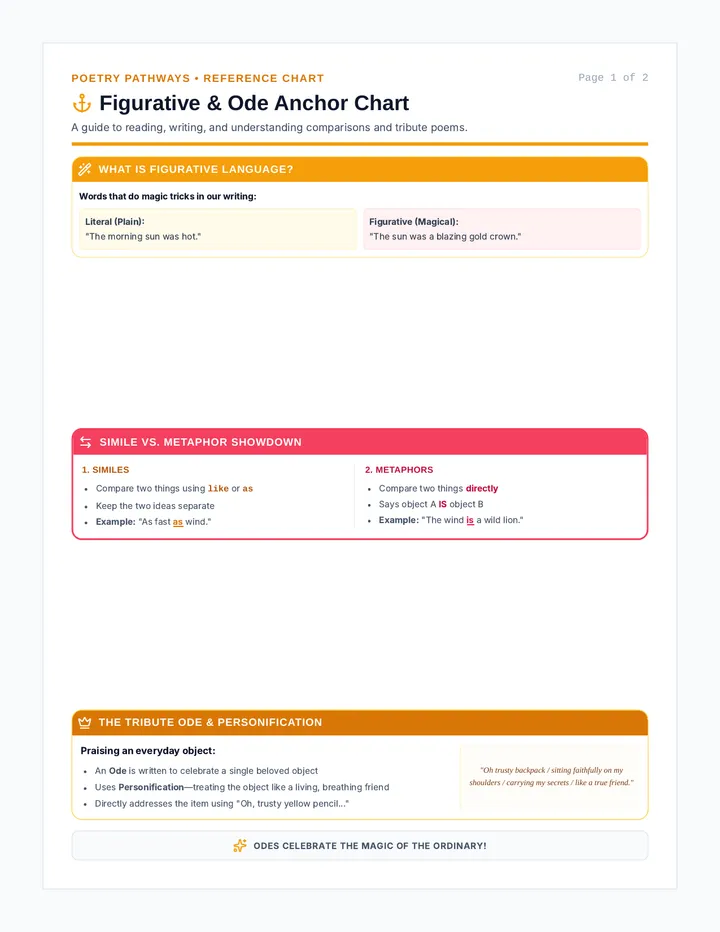
A 45-minute introductory lesson for Grade 4 ESL students on similes and metaphors, focusing on visual associations and simple sentence structures.
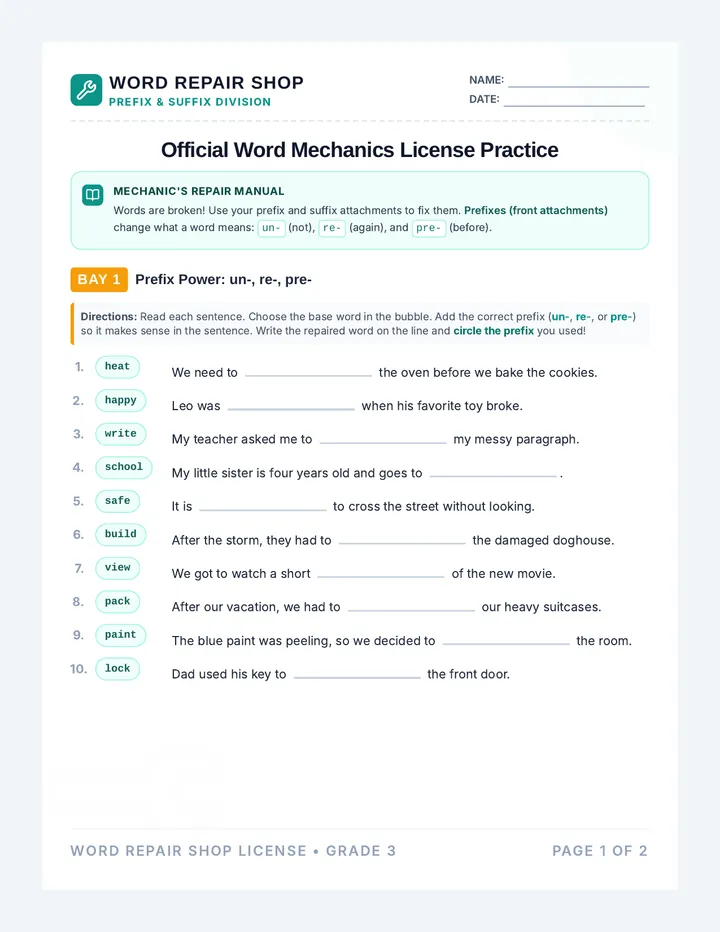
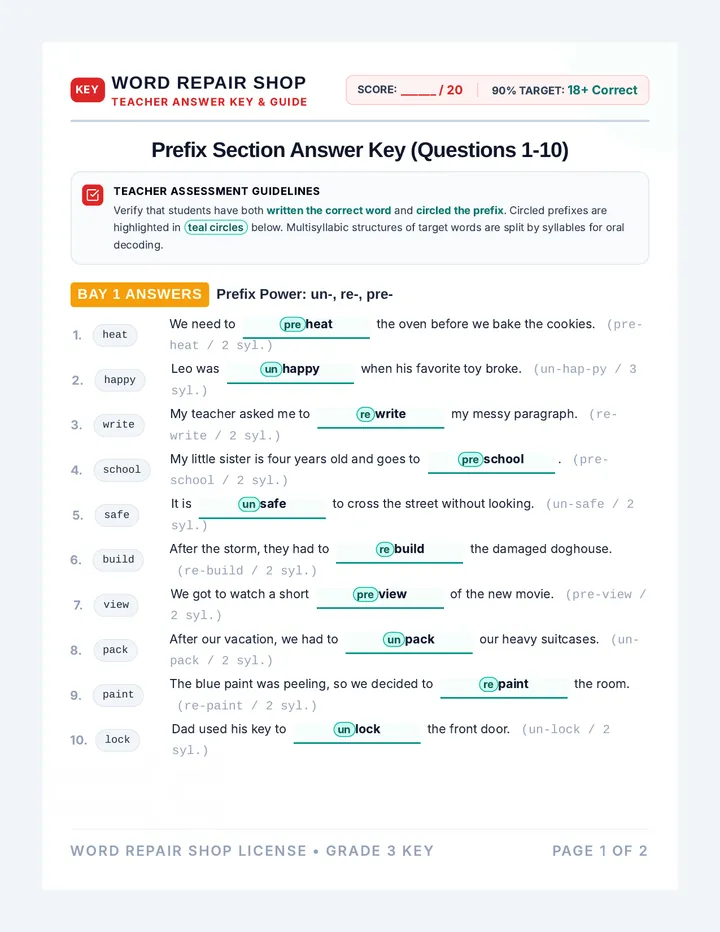
A 45-minute Grade 4 ESL lesson focused on decoding unfamiliar words using morphology (un-, re-, dis-, -ful, -less, -able) and context clues. Students act as word scientists to break down and build words within sentences.
A 45-minute ESL lesson for 5th grade focusing on decoding word meanings using common prefixes, suffixes, and Greek/Latin roots. Students act as 'Word Scientists' in a lab to disassemble and rebuild complex vocabulary.
A 45-minute ESL lesson for 4th graders to decode and build words using the roots tele, photo, graph, and aud. students will act as 'Word Scientists' in a laboratory-themed environment.
A comprehensive review of Oregon's 6th-grade ELA standards for Reading Literature and Informational Text, designed to prepare students for the OSAS assessment using a Pacific Northwest field guide theme.
A deep dive into the classic fairy tale of Rapunzel, focusing on character motivations, plot structure, and reading comprehension for 4th-grade students.
A focused lesson on decoding and blending words with the -tch trigraph, using a kitchen-themed approach to engage students in fluency drills.
A collection of comprehension resources for the book 'Mallory vs. Max', focusing on character development and plot events for second-grade readers.
A set of materials for assessing and practicing 47 key graphemes, including high-visibility flashcards and a comprehensive teacher tracking sheet.
A set of visual supports designed to help 3rd-grade students engage in meaningful academic conversations during EL Education Module 3 lessons. Includes a desktop conversation mat and a set of cue cards with specific sentence stems for peer interaction.
Students will learn to evolve their thinking about characters and themes in fiction by identifying new evidence that challenges or deepens their initial theories. This lesson focuses on the cognitive flexibility required to move from surface-level observations to nuanced interpretations.
A reading comprehension lesson focusing on identifying and decoding common initial consonant blends through a garden-themed story.
A handwriting practice lesson focused on spring-themed sentences, designed to help 1st and 2nd grade students improve their letter formation and sentence structure while celebrating the season.
A hands-on board game experience where students explore the forest of compound words, practicing how to decompose words and match visual parts to create new ones.