A comprehensive lesson on the environmental impact of waste and the practical application of the 4 R's (Reduce, Reuse, Recycle, Rethink) to promote sustainable living.
Una lección introductoria a la programación de videojuegos usando MakeCode Arcade, cubriendo lógica de bucles, coordenadas y eventos para estudiantes de 6to grado.
A high-stakes collaborative escape room where student teams navigate five distinct rooms of a mysterious manor, solving interconnected puzzles to solve a murder.
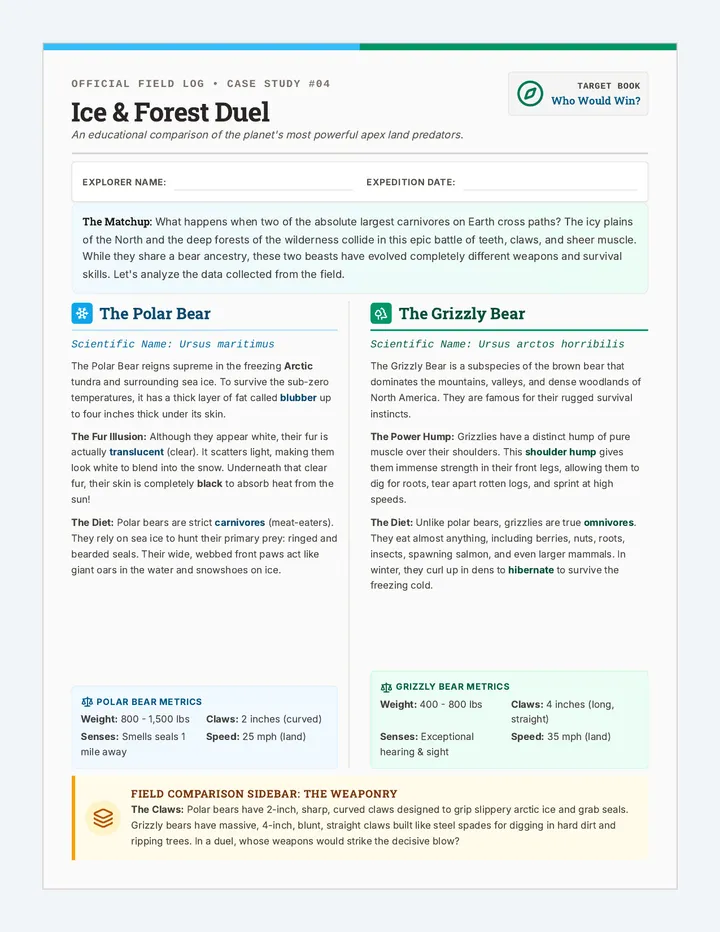
A set of printable note cards for students to research and illustrate different animals, focusing on habitat, diet, size, and interesting facts.
5th Grade students optimize their designs for efficiency, calculating load-to-weight ratios and managing material constraints. Focus on TEKS 5.11(A) and 5.13(A).
4th Grade students design structures to resist external forces like wind and gravity, applying their understanding of structural integrity. Focus on TEKS 4.11(A) and 4.13(B).
3rd Grade students investigate the strength of triangles and vertical stability to build the tallest tower possible. Focus on TEKS 3.11(A) and 3.13(B).
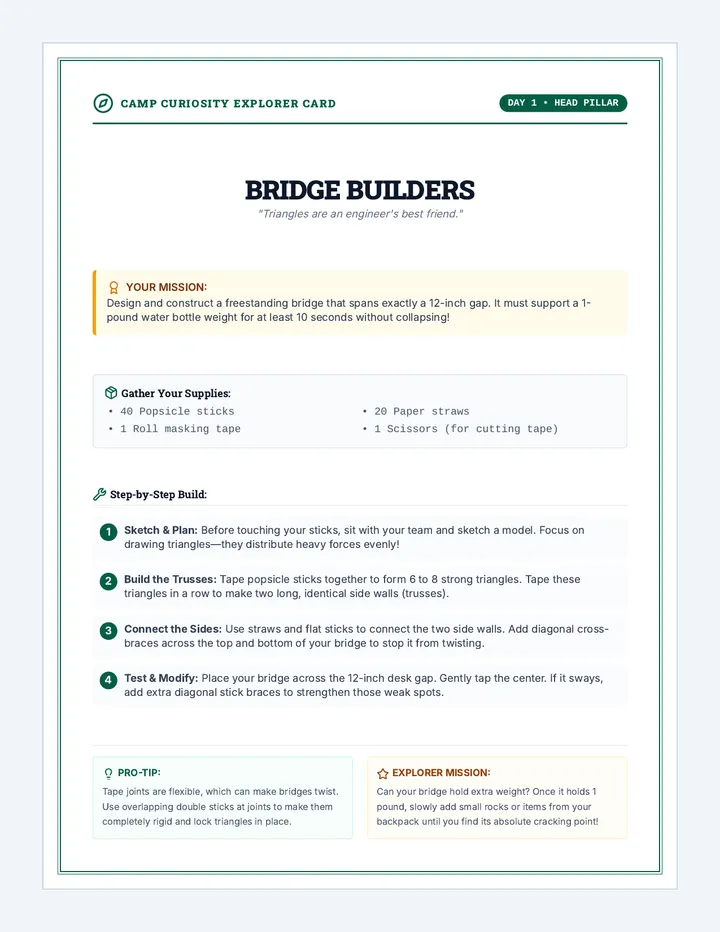
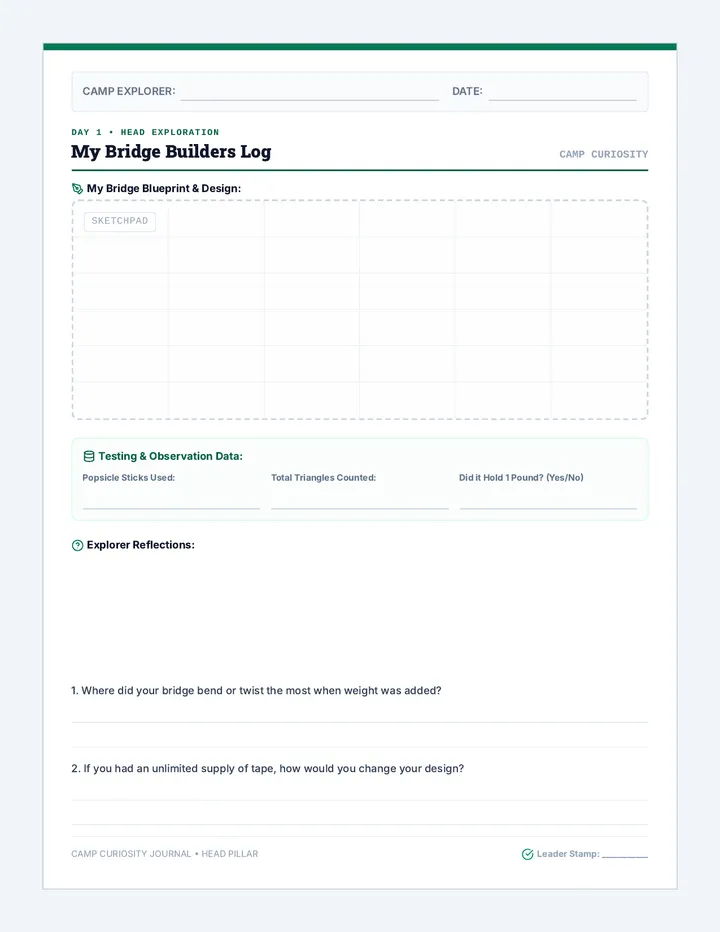
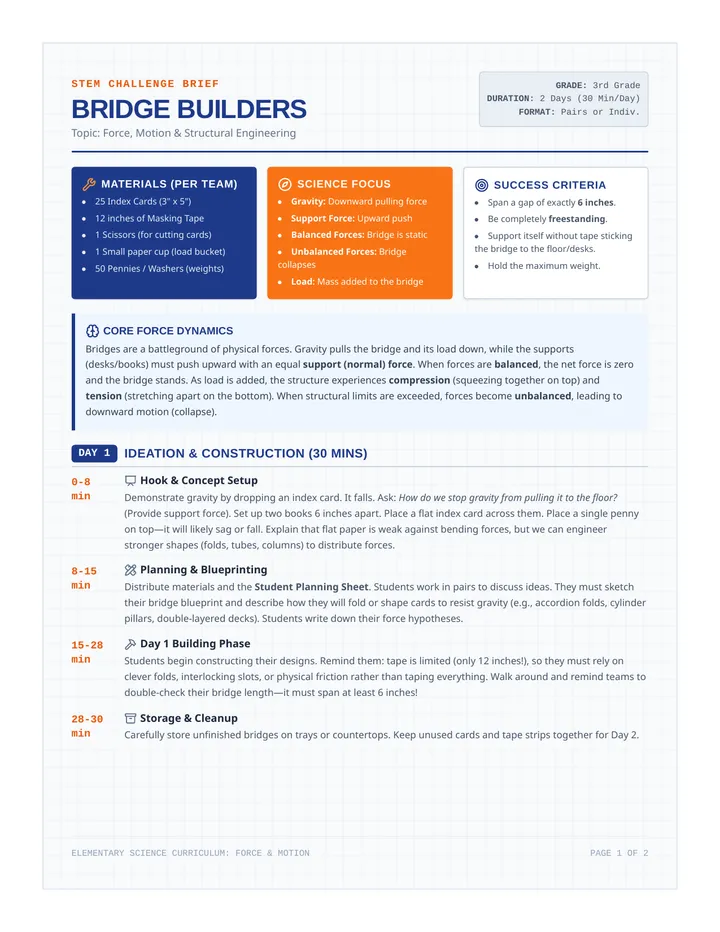
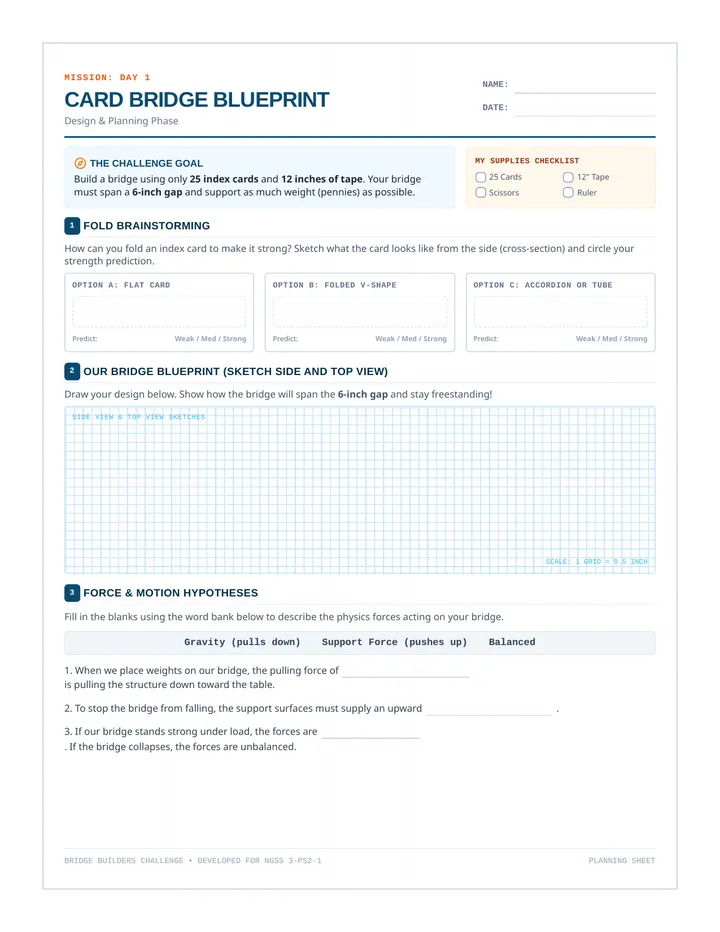
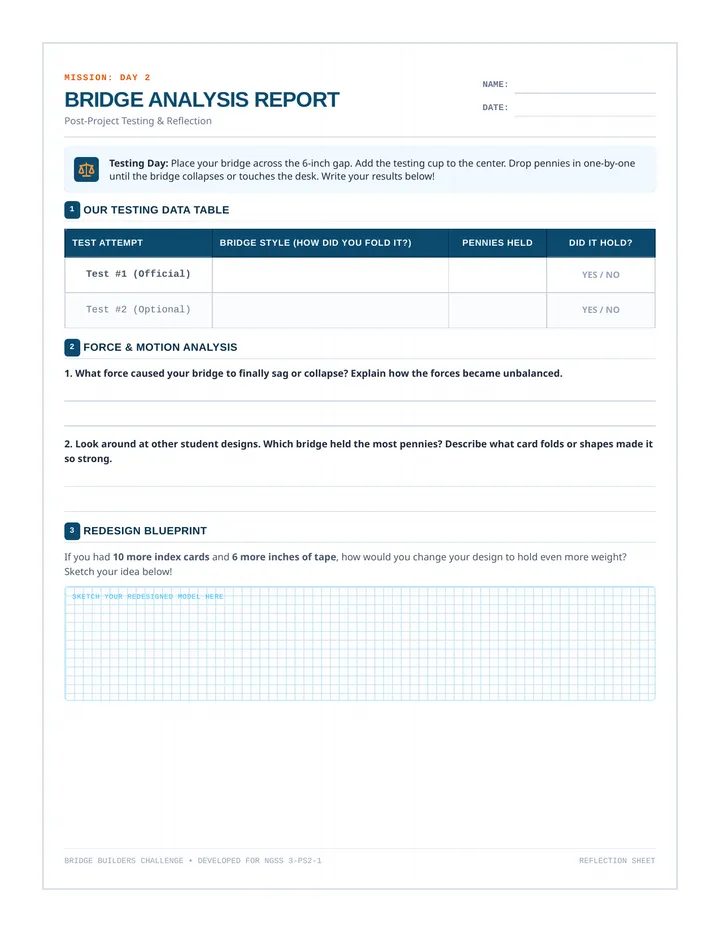
2nd Grade students apply knowledge of shapes to design a bridge that spans a gap, exploring concepts of pushes, pulls, and load distribution. Focus on TEKS 2.11(B) and 2.13(A).
1st Grade students explore how changing the shape of a material (paper) affects its physical properties and ability to support weight. Focus on TEKS 1.6(A) and 1.11(B).
Students carry out a formal investigation comparing large and small samples of pure substances to prove which properties stay the same and which change, fulfilling standard PS.6.1.3.
A focus on intensive properties that remain constant regardless of sample size, including density, melting point, boiling point, and solubility. Students use doodle notes to visualize these 'identity' traits.
An introduction to matter and properties that change based on the amount of a substance, specifically mass, weight, and volume. Students explore how these measurements vary with sample size.
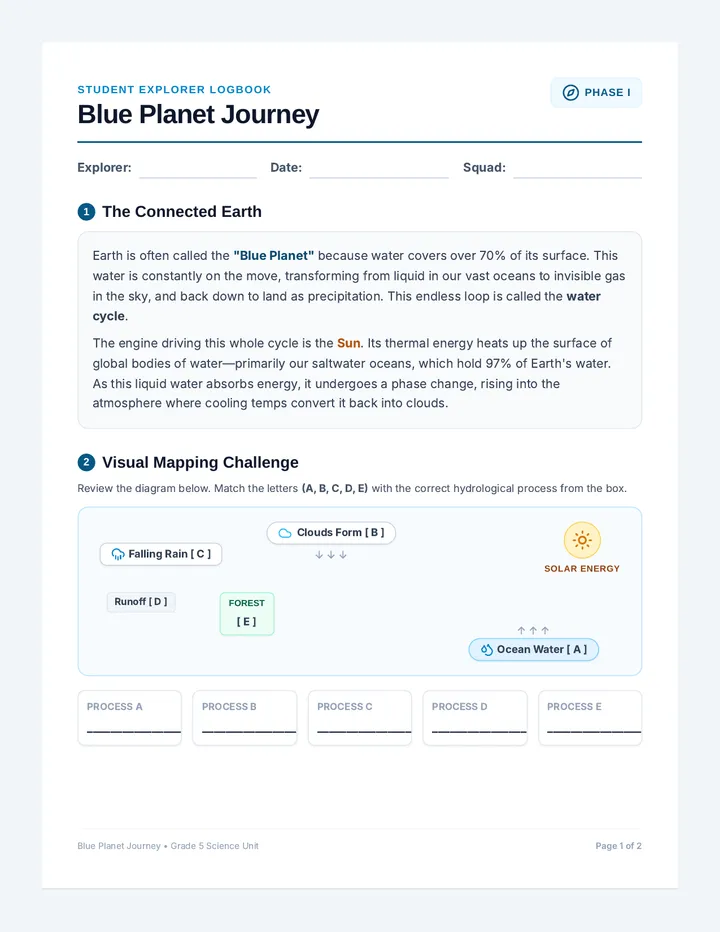
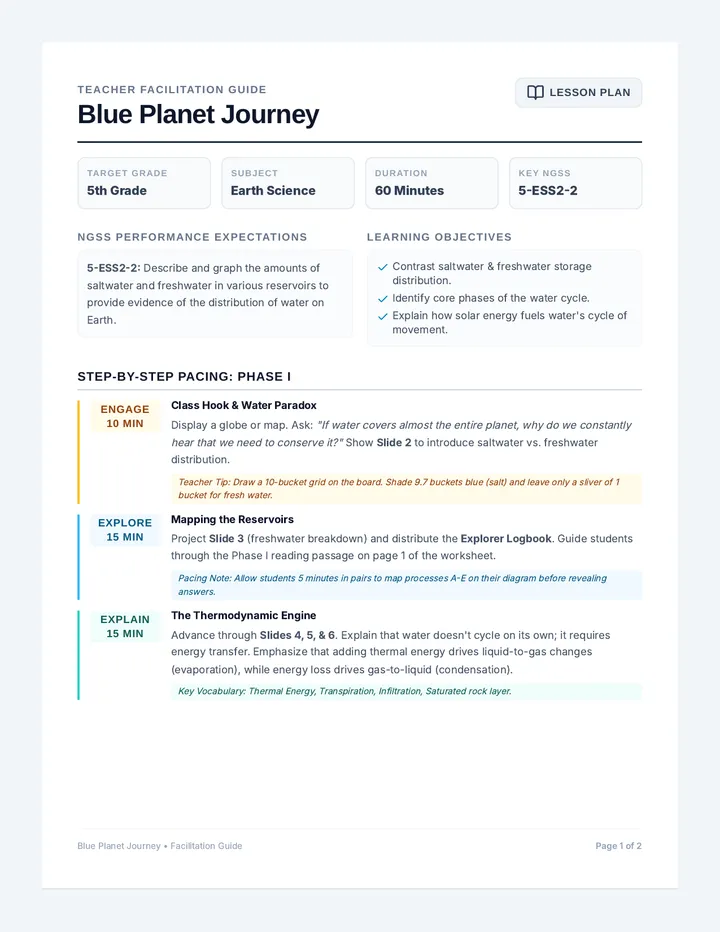
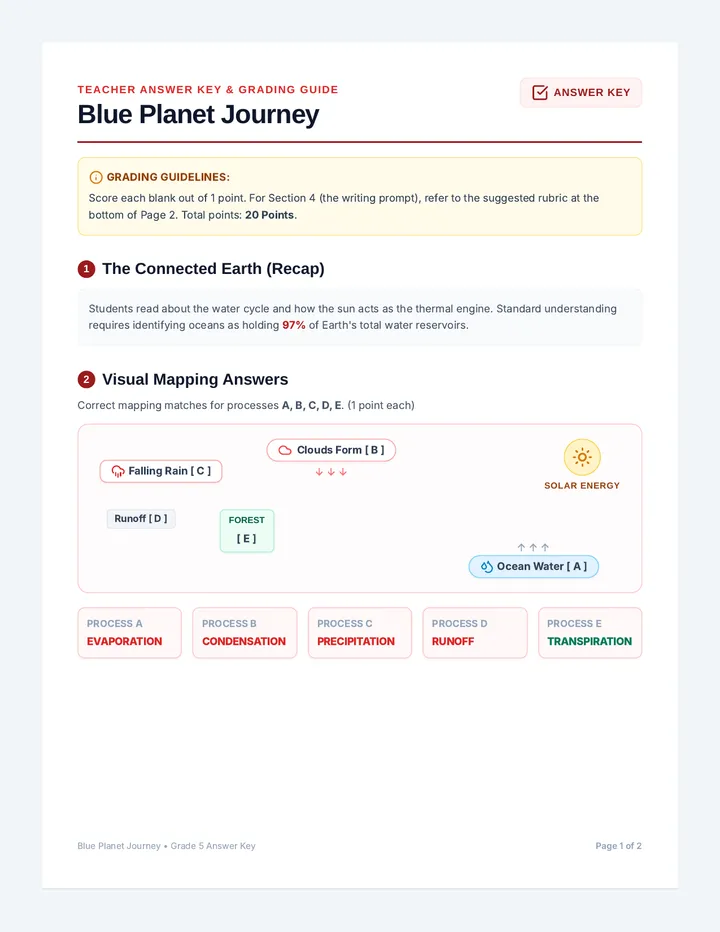
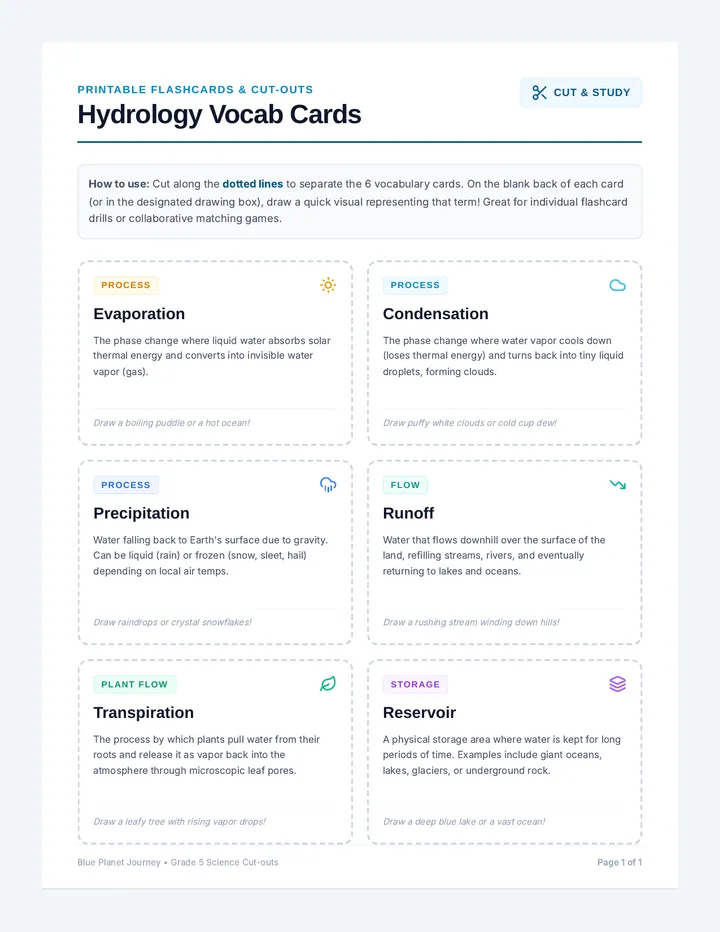
A comprehensive review of the water cycle for 5th-grade students, focusing on the roles of the sun, evaporation, condensation, precipitation, and collection within Earth's systems.
Advanced reading on photosynthesis and plant biology for 4th grade students.
A more detailed exploration of plant parts and their functions for 2nd grade students.
Foundational reading and activities about how a seed grows into a plant, designed for Kindergarten learners.
A comprehensive introduction to the pH scale, covering the characteristics of acids and bases, the logarithmic nature of the scale, and real-world applications across three differentiated levels (5th, 7th, and 9th grade).
A comprehensive makeup assessment covering Earth science topics including the water cycle, sedimentary rock formation, fossil fuels, natural resources, weather and climate, and the behavior of light.
An out-of-this-world assessment covering 4th and 5th grade science standards including life cycles, energy forms, and Earth systems.
Teams present their protection plans for the Nashoba Brook release site to a Zoo New England representative and community members. They refine their advocacy through peer critique, ensuring a safe future for their fostered turtles.
Students investigate specific human impacts on their local watershed, conducting research and 'Invisible Impact' experiments using Zoo New England partnership data to see how microscopic changes in the hydrosphere affect turtle physiology.
Students map the Nashoba Brook Watershed specifically in Acton, MA. They trace how invisible particles travel from local roads and schools to the turtle release site, linking Earth's spheres through the lens of conservation.
The project begins with a 'Driving Question' about the safety of Nashoba Brook in Acton. Students connect their foster turtles' habitat to the larger watershed and identify what they 'Need to Know' for a successful release.
A comprehensive assessment focused on the principles of waste management, specifically the 4 R's (Reduce, Reuse, Recycle, Refuse) and essential environmental vocabulary.
A four-day series of 30-minute activities exploring spring weather and nature through two outdoor adventures and two indoor crafts.
A hands-on exploration of plant anatomy, featuring a board game and matching activities to identify roots, stems, leaves, and flowers.
A foundational lesson on Photoshop clipping masks, covering the 'layer sandwich' concept and the technical steps to clip images into shapes.
A comprehensive introduction to the pH scale, its presence in everyday substances, and its critical role in environmental health. Students will engage in a hands-on lab to test household liquids and discuss real-world impacts like ocean acidification. Updated with purple indicator lab.
An extension lesson for a water filtration lab focusing on the chemical properties of water and the real-world impact of pollution on local ecosystems.