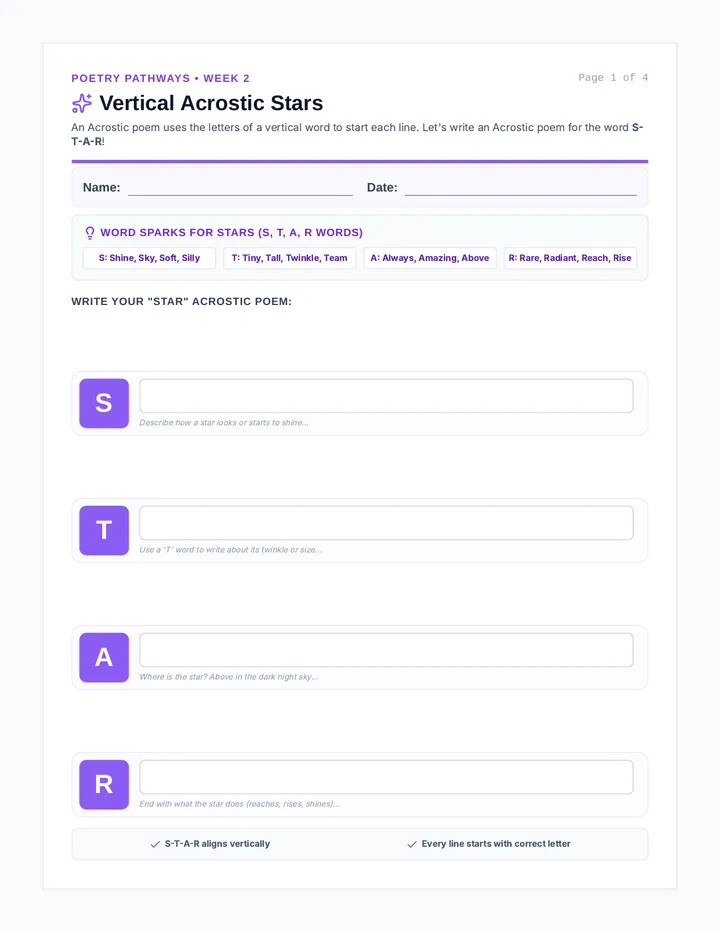
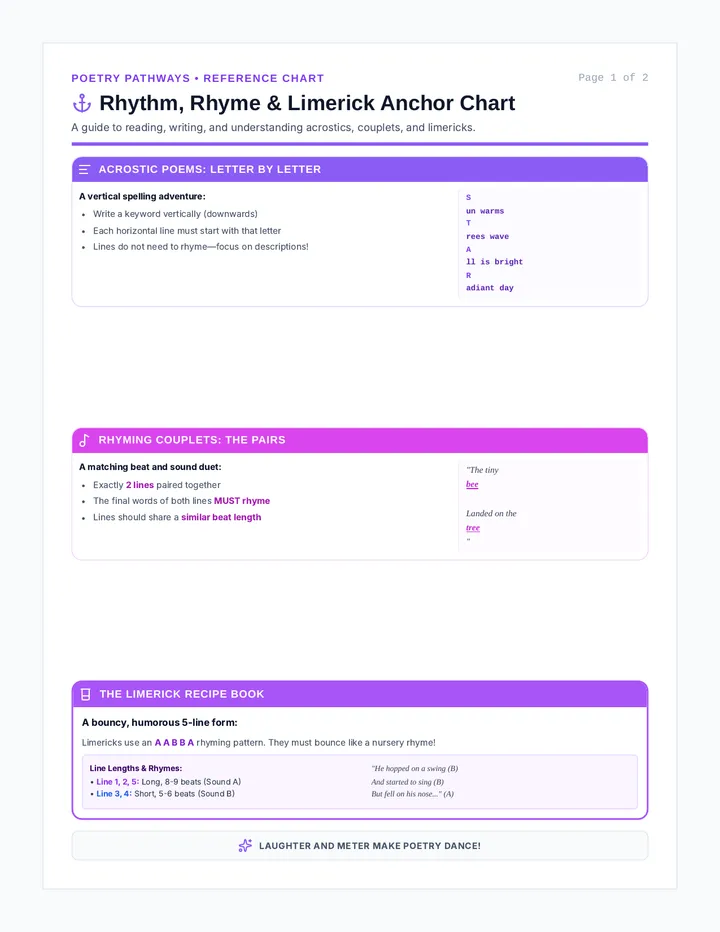
A middle-school lesson where students explore and express gratitude through brainstorming and composing original poetry, culminating in a class sharing session to build community.
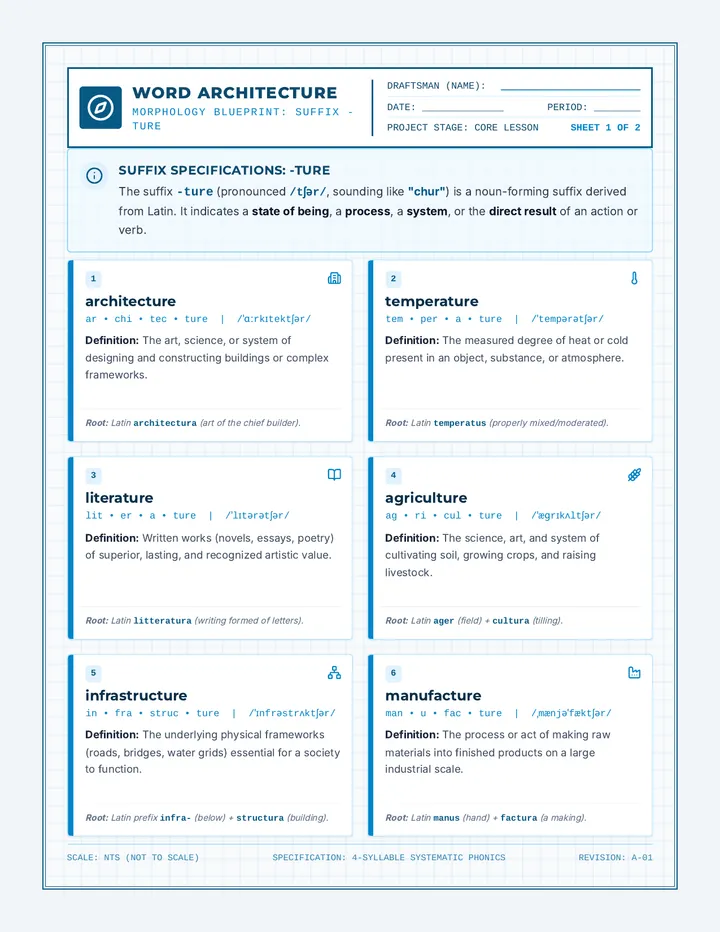
A comprehensive lesson on analyzing poetry using the TPCASTT method, featuring a deep dive into Robert Frost's 'The Road Not Taken' and a gallery walk of diverse poems.
A comprehensive lesson on demonstrative pronouns and adjectives (this, that, these, those) themed around a museum gallery. Students learn to distinguish between near and far, singular and plural, and the difference between demonstrative pronouns and adjectives.
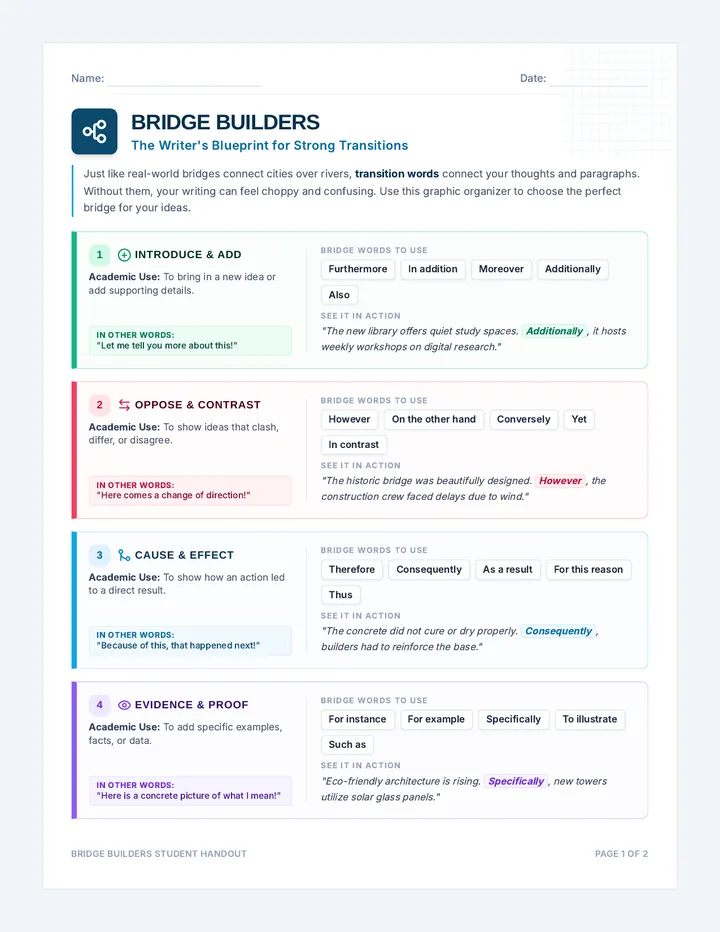
A lesson on identifying and using common transition words to create cohesion in writing. Students will categorize transitions by purpose (Addition, Contrast, Cause/Effect, Time) and use them to link ideas.
A comprehensive lesson on identifying and using main verbs and primary auxiliary verbs (be, do, have) in sentences. Includes a structured lesson plan, a practice handout, and a detailed answer key with monitoring tools.
A lesson exploring the encounter between Odysseus and Polyphemus, focusing on character traits and cleverness through differentiated readings and assessments.
A lesson focusing on identifying and analyzing the five stages of plot structure using the novel Al Capone Does My Shirts as a primary example. Students explore the arc of Moose Flanagan's journey on Alcatraz.
A collection of versatile graphic organizers designed to help students analyze fiction and nonfiction picture books. Each organizer focuses on a specific reading skill, providing a structured framework for student response.
A focused practice session for 6th-grade students to sharpen their listening comprehension skills using SBAC-aligned question stems and an engaging mystery about underwater sounds.
In this lesson, students will enhance simple social scenario sentences by applying descriptive adjectives, expressive adverbs, and coordinating conjunctions (FANBOYS) to create more engaging and complex narrative structures.
A deep dive into the classic Greek myth of Theseus and the Minotaur, focusing on characterization, plot structure, and the complex nature of heroism.
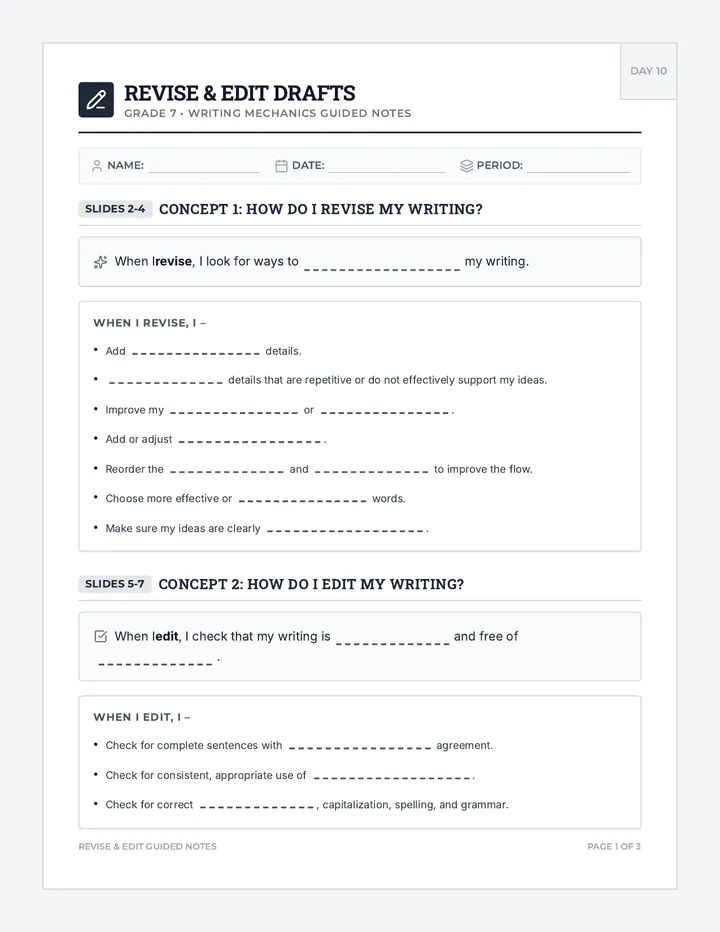
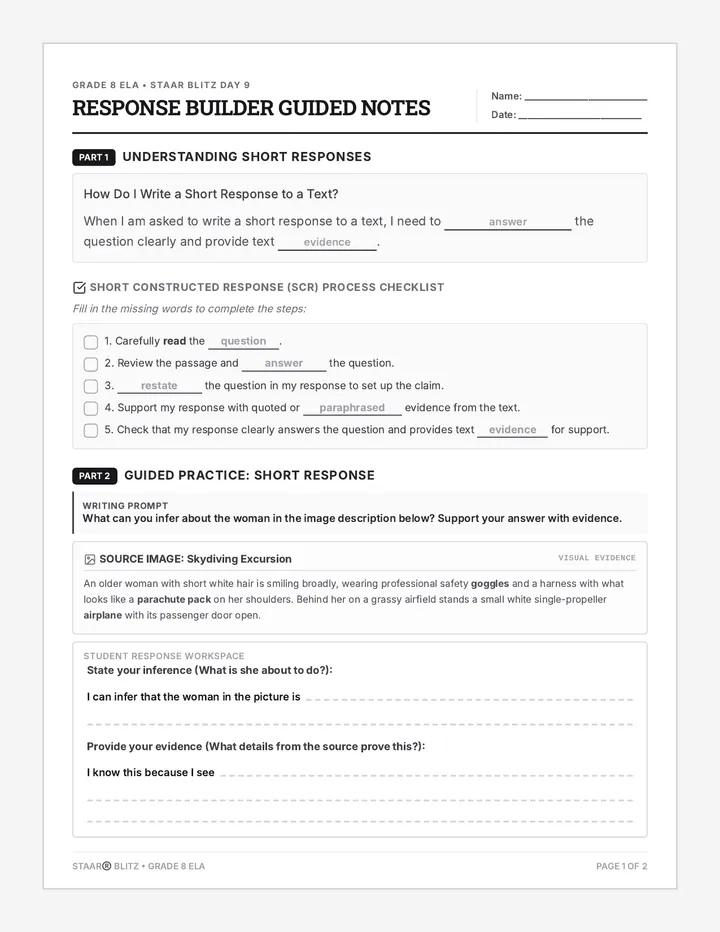
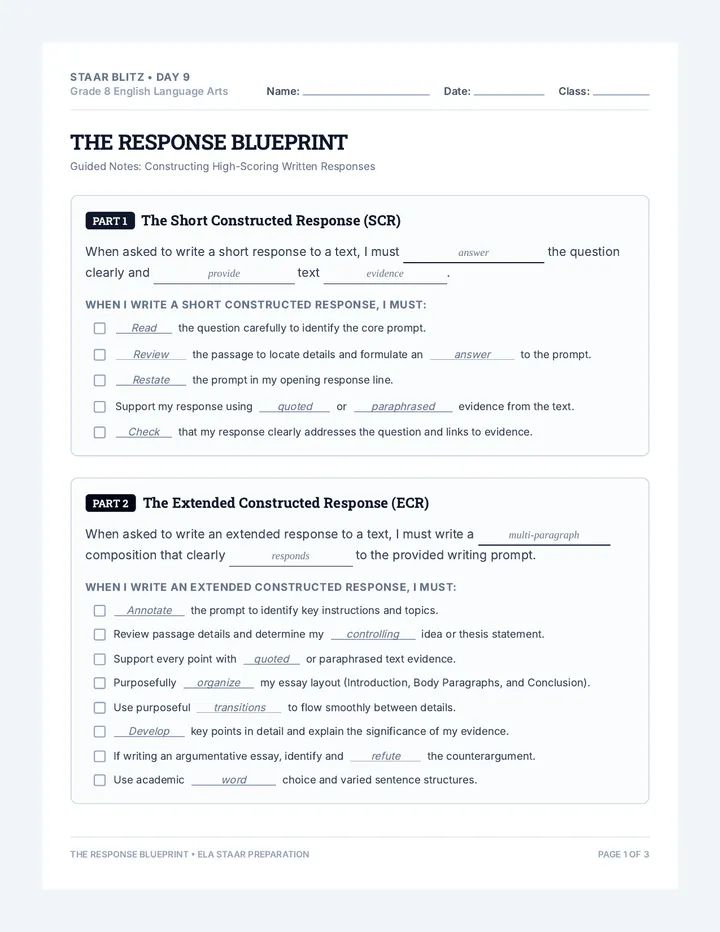
A comprehensive lesson focused on teaching students how to structure a 4-paragraph literary analysis essay using the ANEZZ body paragraph format. It includes a guiding presentation, a teacher's facilitator guide, and a detailed structural worksheet.
Refining the persuasive piece through peer review and assessment using the secret agent field manual rubric.
Drafting the final mission report (persuasive essay) using the evidence and structure gathered in previous sessions.
Students use a master blueprint graphic organizer to structure their persuasive arguments and address counter-intelligence (counter-arguments).
Students gather 'intelligence' by identifying facts and evidence to support their claims about school uniforms or cell phones.
Introduction to persuasive writing techniques, identifying claims, and crafting hooks using the Opinion Ops secret agent theme.
A summative assessment for the first third of the novel. Evaluates student mastery of vocabulary from Lessons 1-11, character motivation, and the central theme of corporate alienation through a mix of multiple choice, short answer, and a rigorous RACE response.
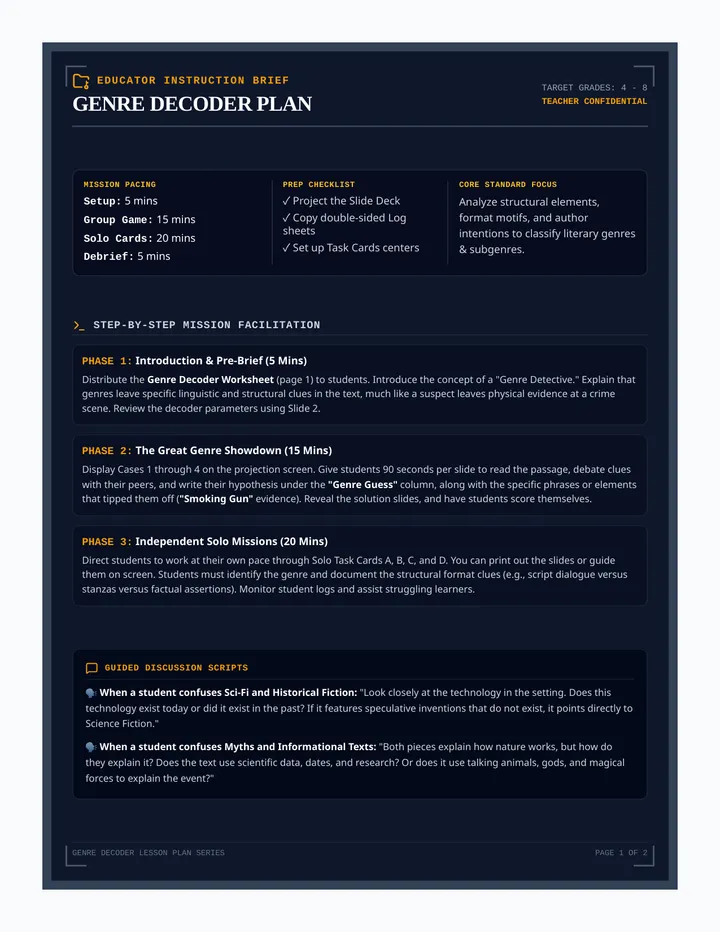
A comprehensive poetry analysis lesson focusing on the TP-CASTT method and figurative language, featuring a gamified 'Quiz Bee' and deep analysis of 'The Road Not Taken'.
The family's recovery and the transition to a new source of productivity (Grete). Synthesis of the unit's themes.
Gregor's death and self-sacrifice. Analysis of the relief of the family and the 'cleansing' of the home.
Grete's formal rejection of Gregor's identity. Analysis of the shift from sibling love to the necessity of his removal.
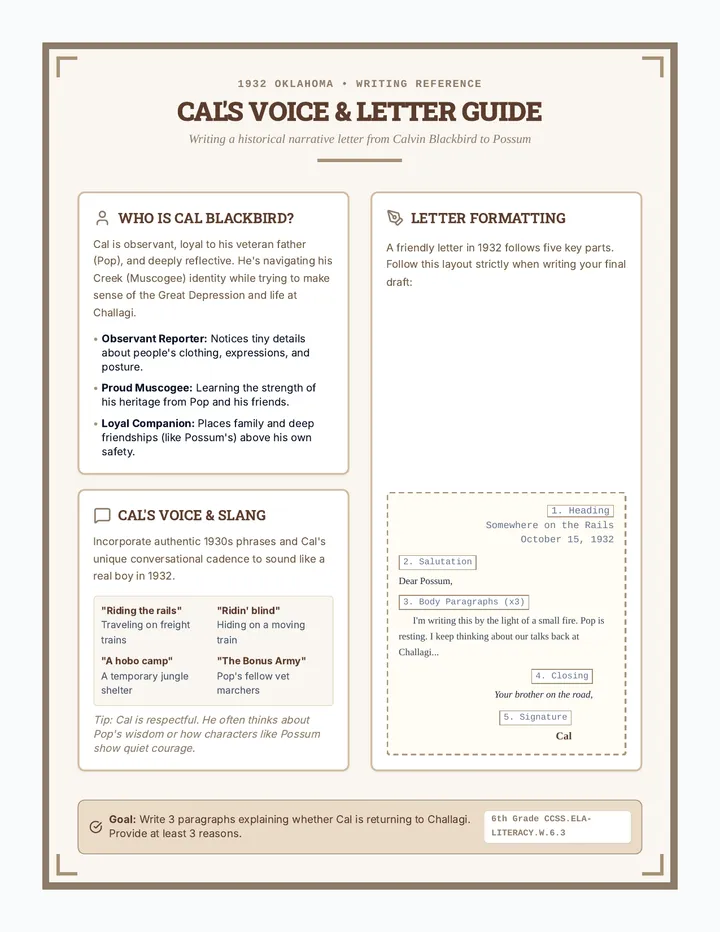
Gregor's reaction to Grete's violin performance. Themes of art, human connection, and the final reach for his human spirit.
Gregor's room becomes a storage area for trash. Analysis of the complete erasure of his human space and history.