A grammar review lesson for 3rd grade students where they act as detectives to identify and categorize nouns, verbs, adjectives, and adverbs within a mystery-themed context.
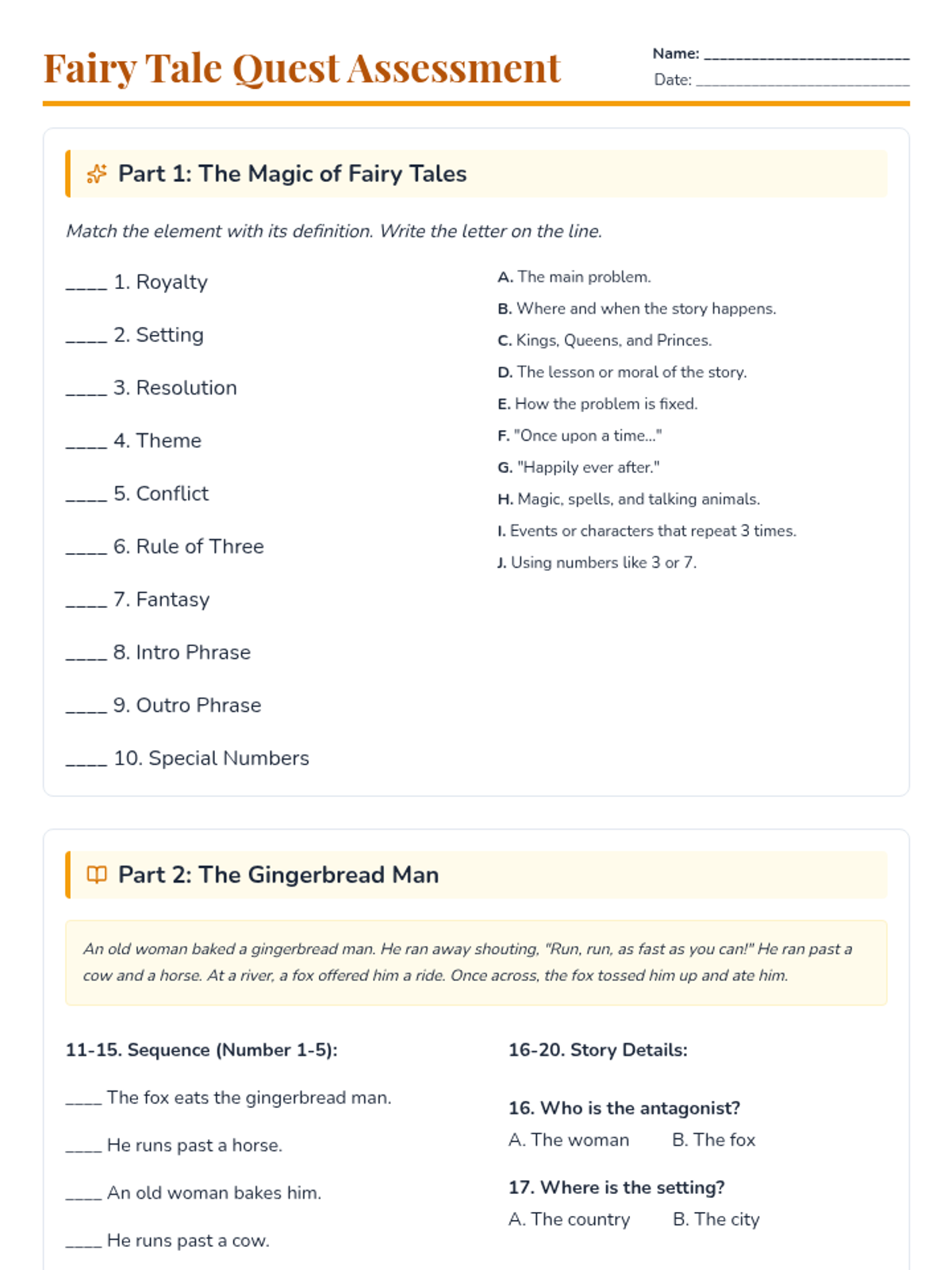
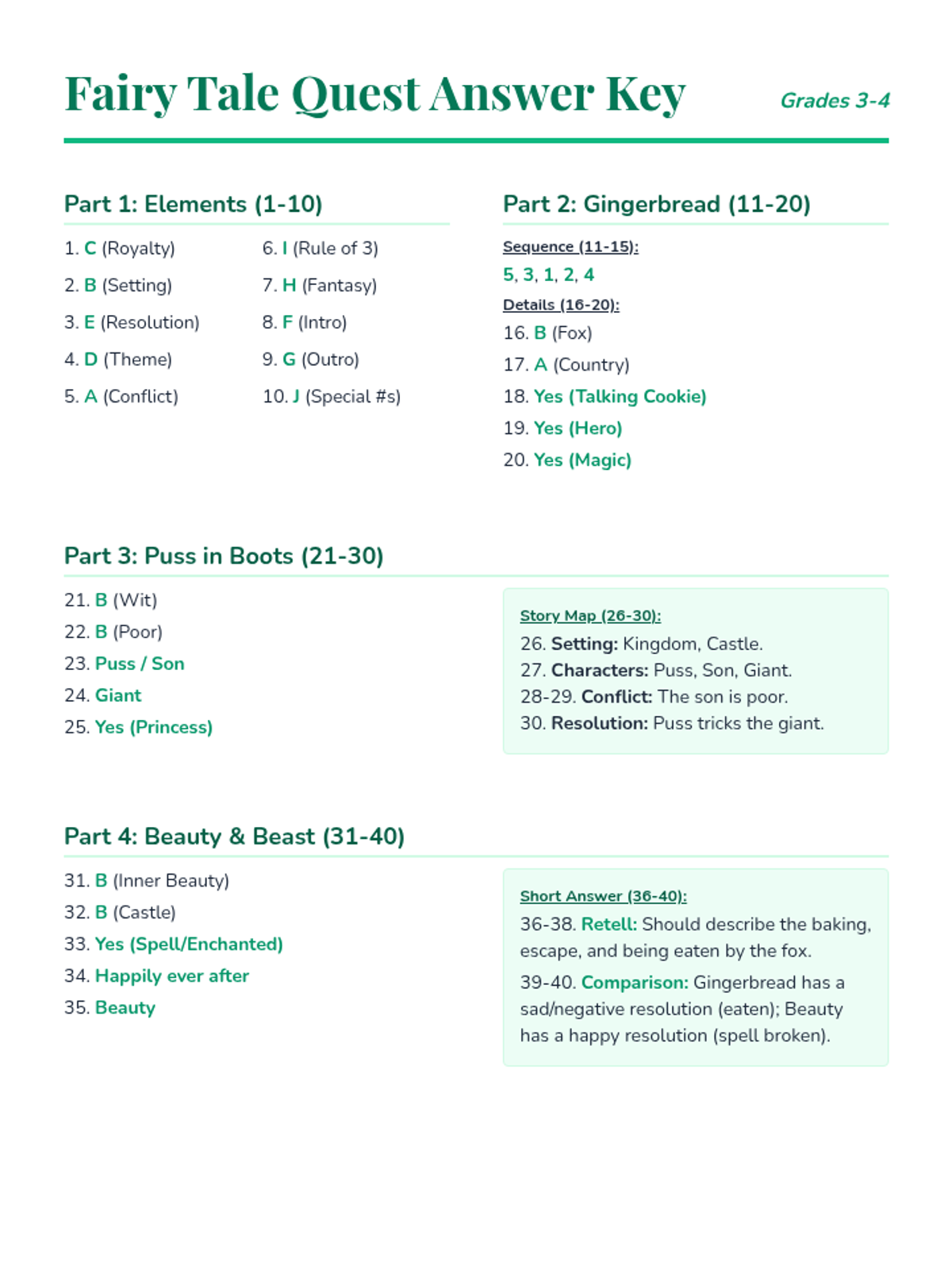
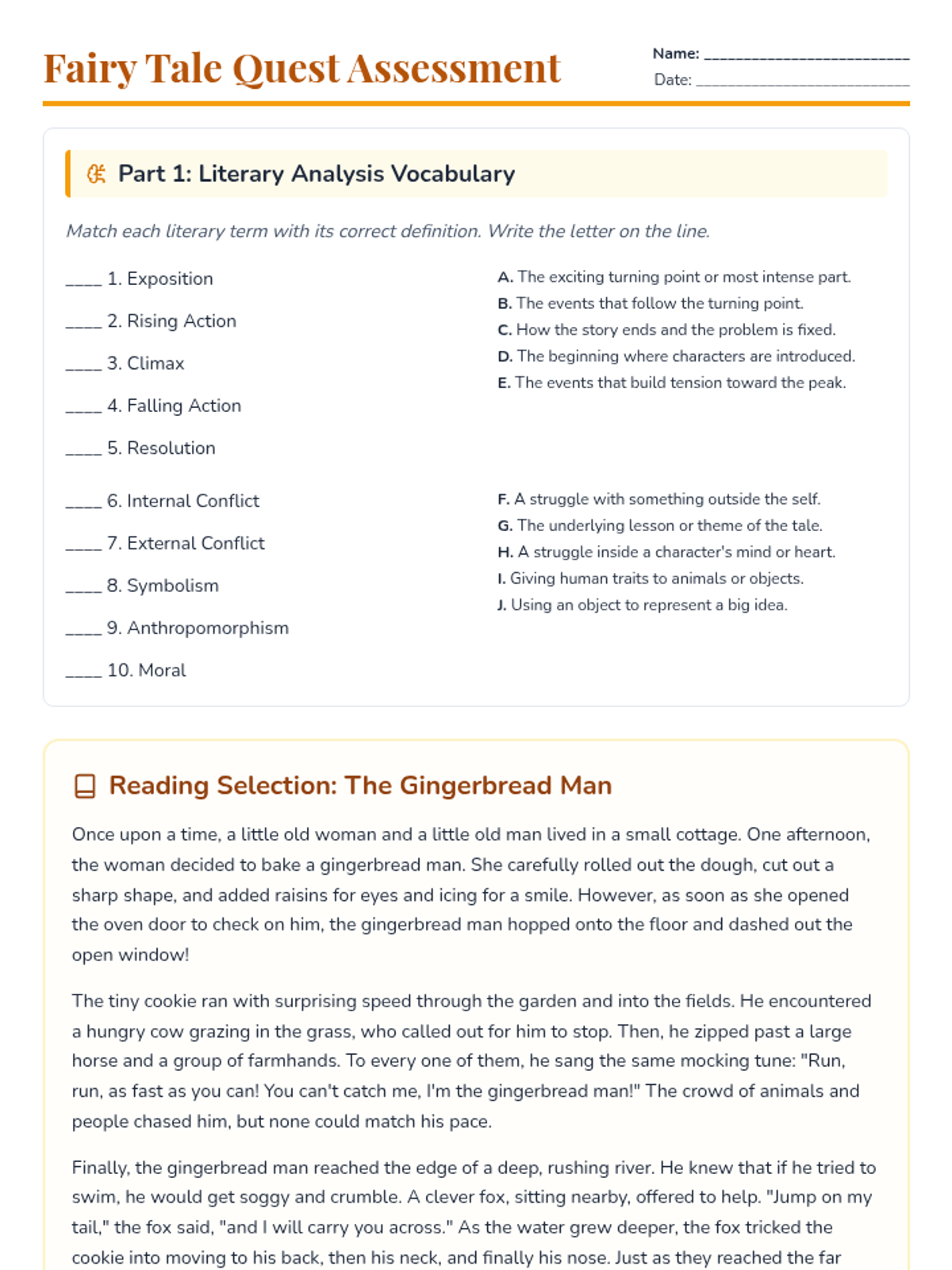
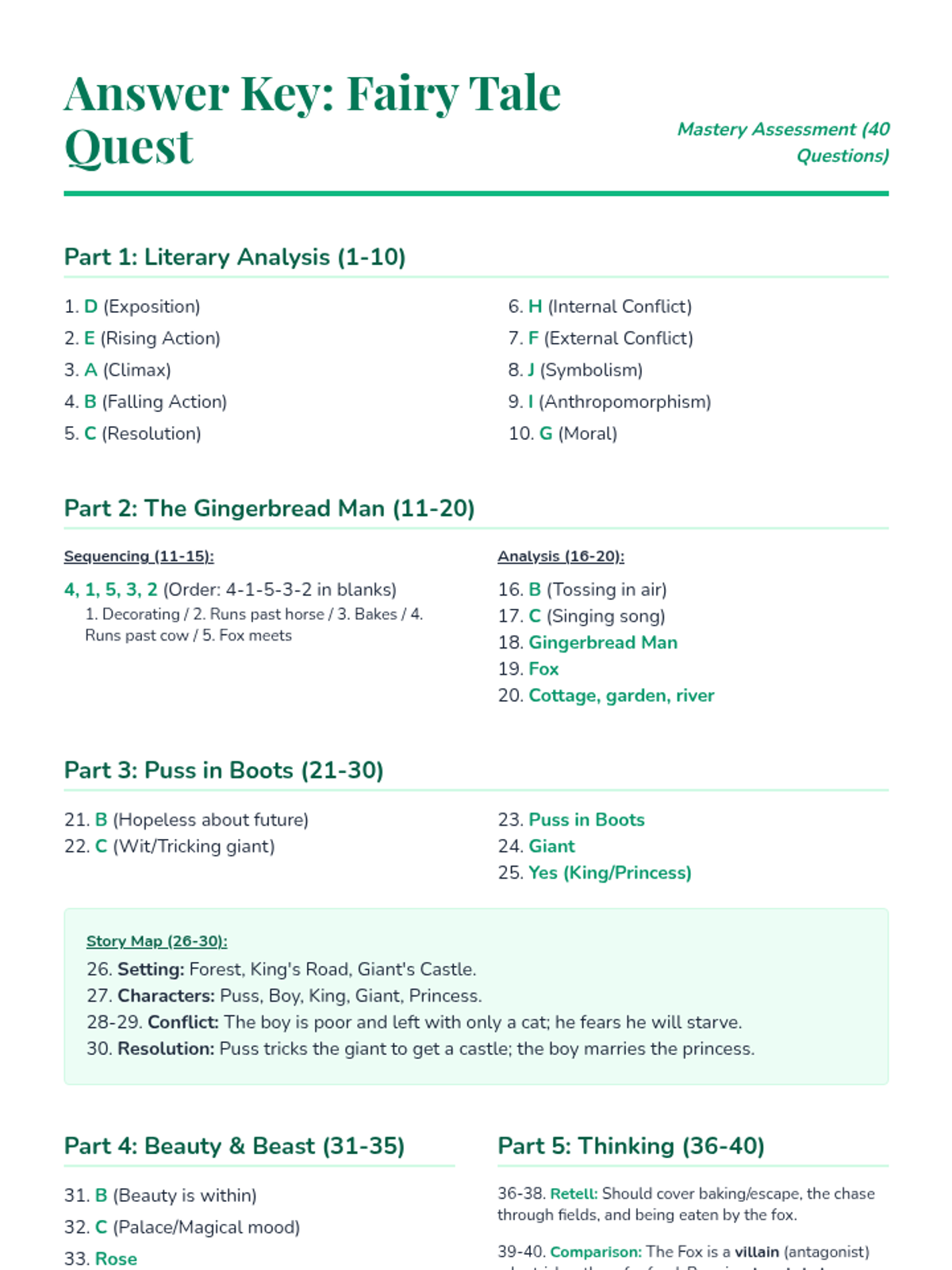
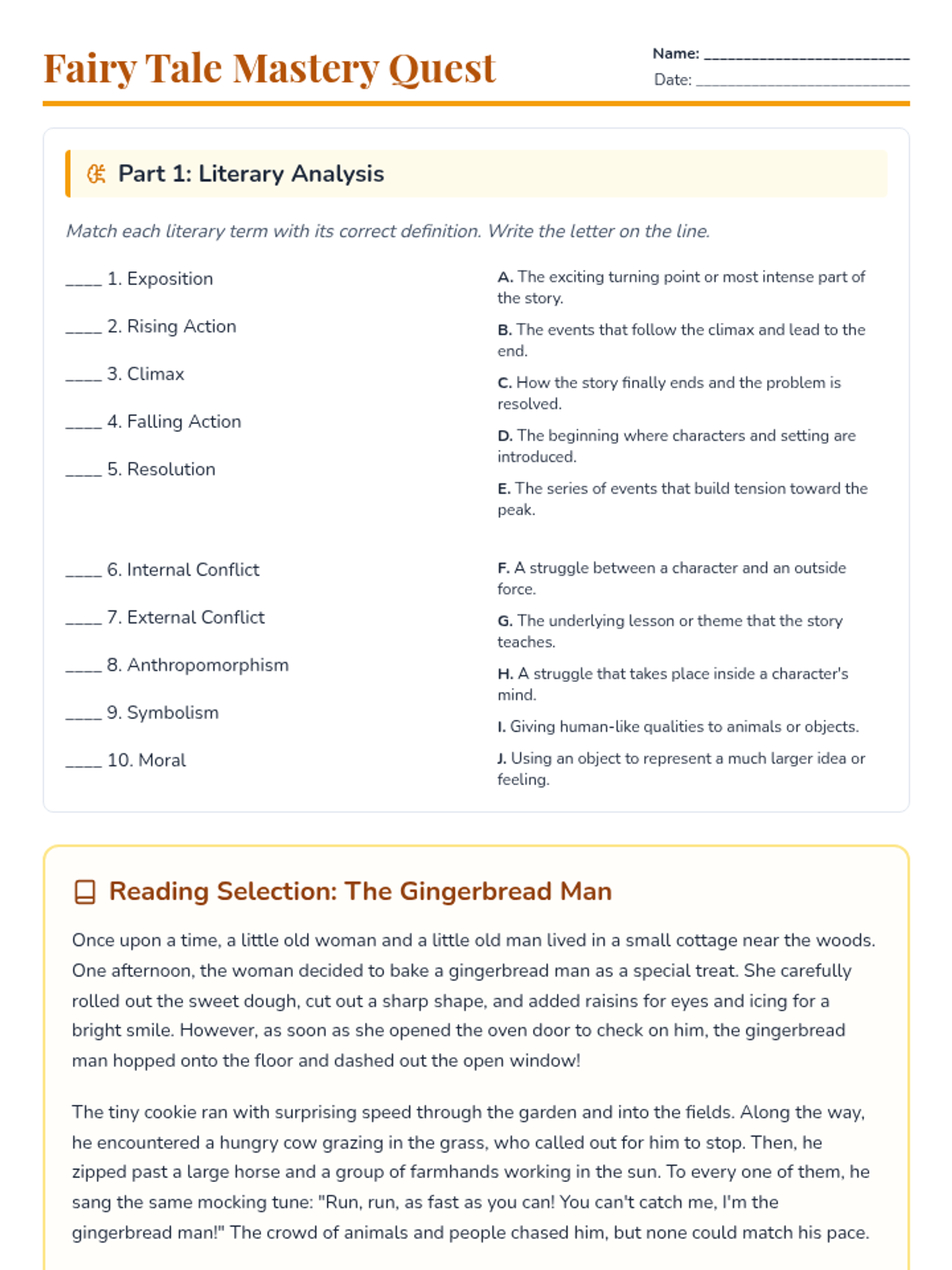
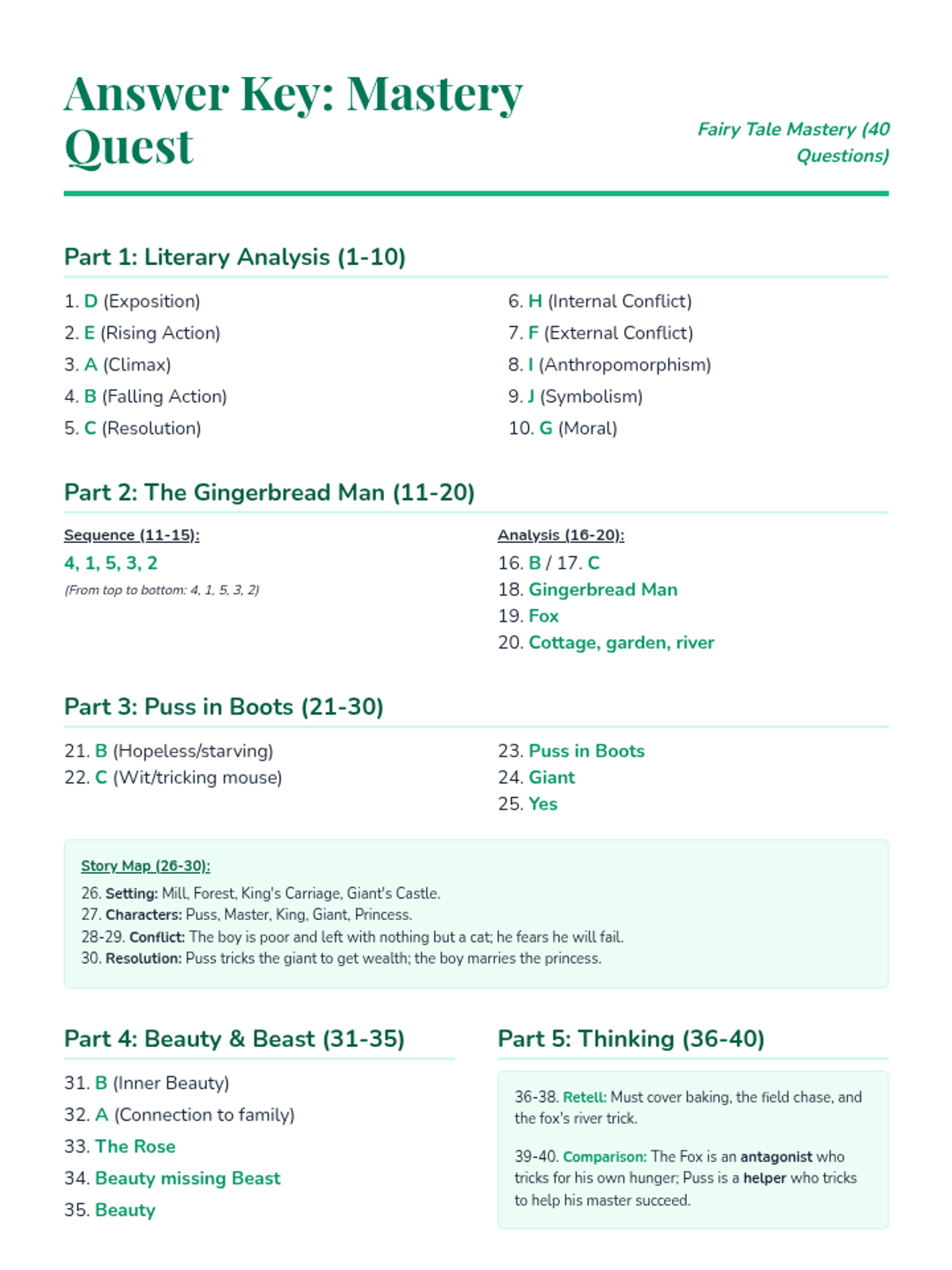
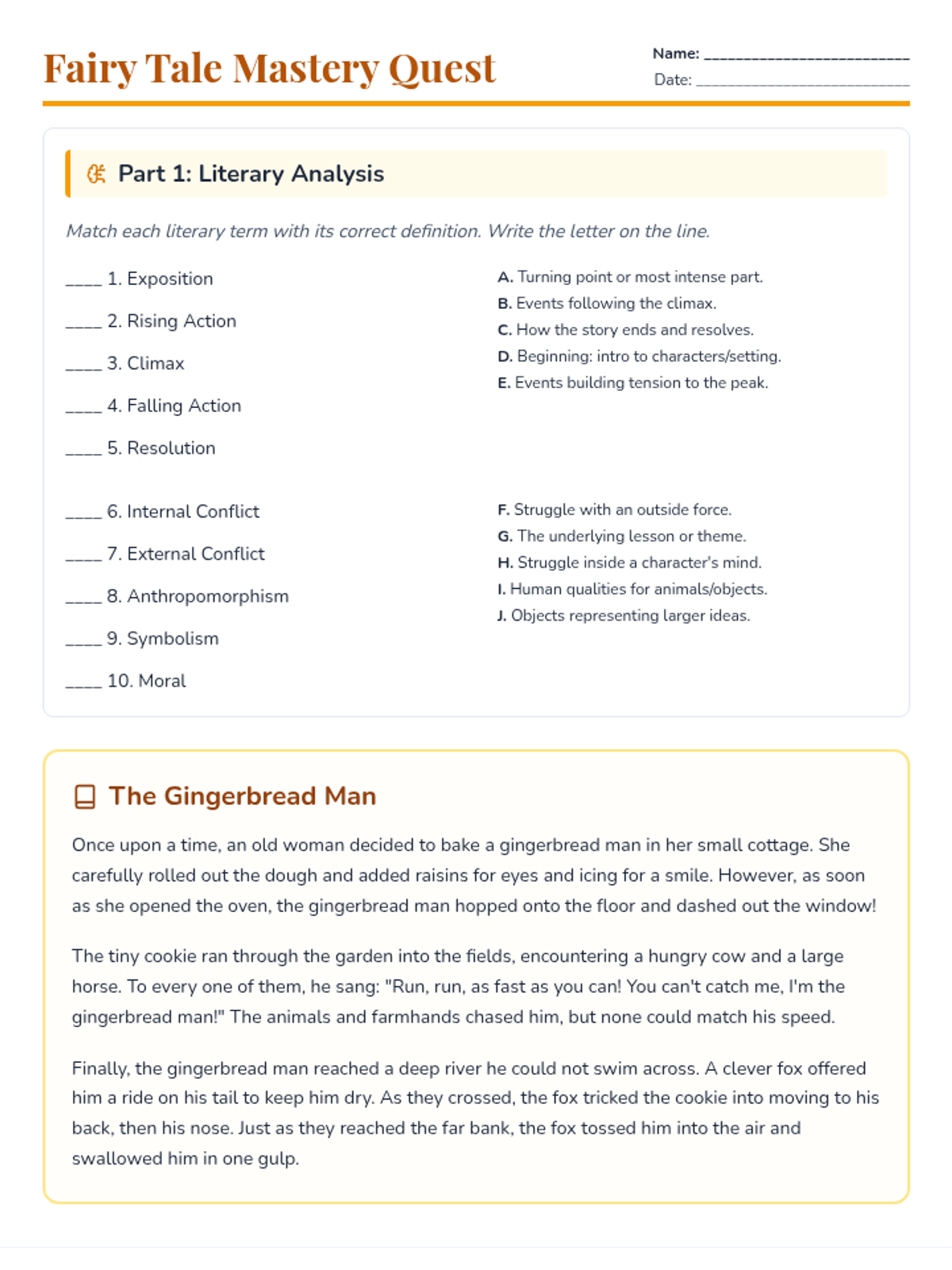
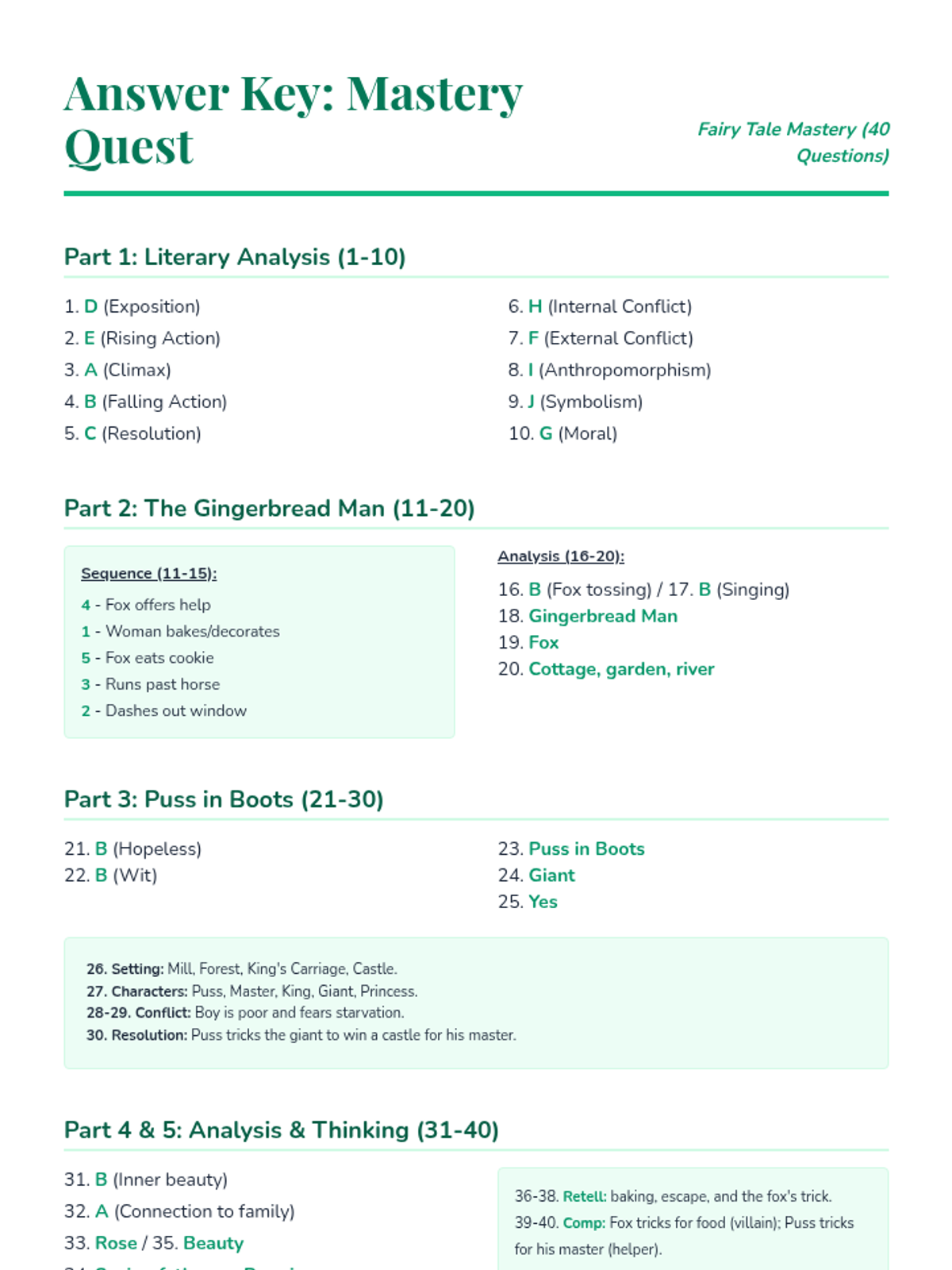
A comprehensive unit assessment for 3rd-4th grade students covering fairy tale elements, sequencing, and literary analysis using classic stories like The Gingerbread Man, Puss in Boots, and Beauty and the Beast.
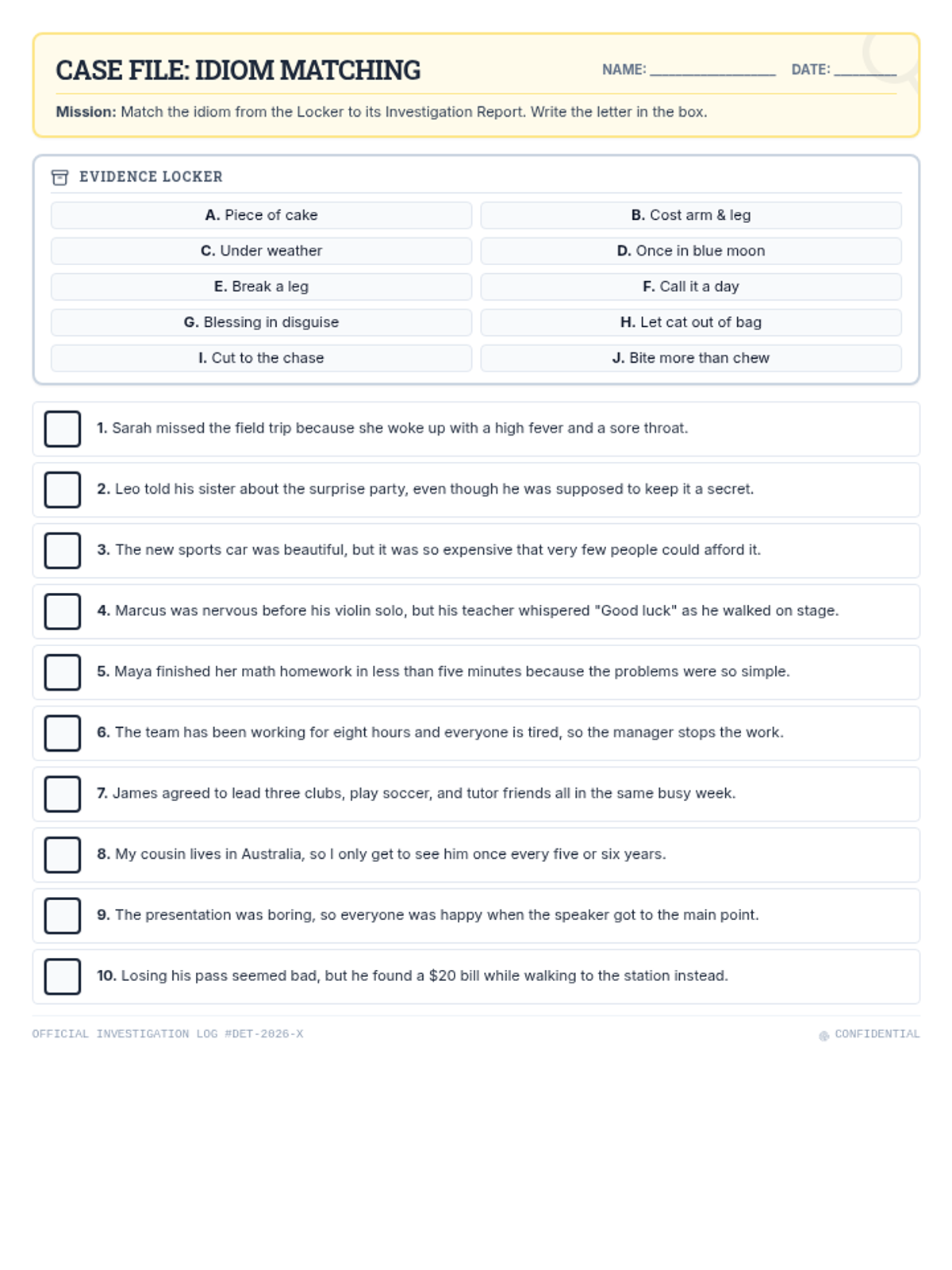
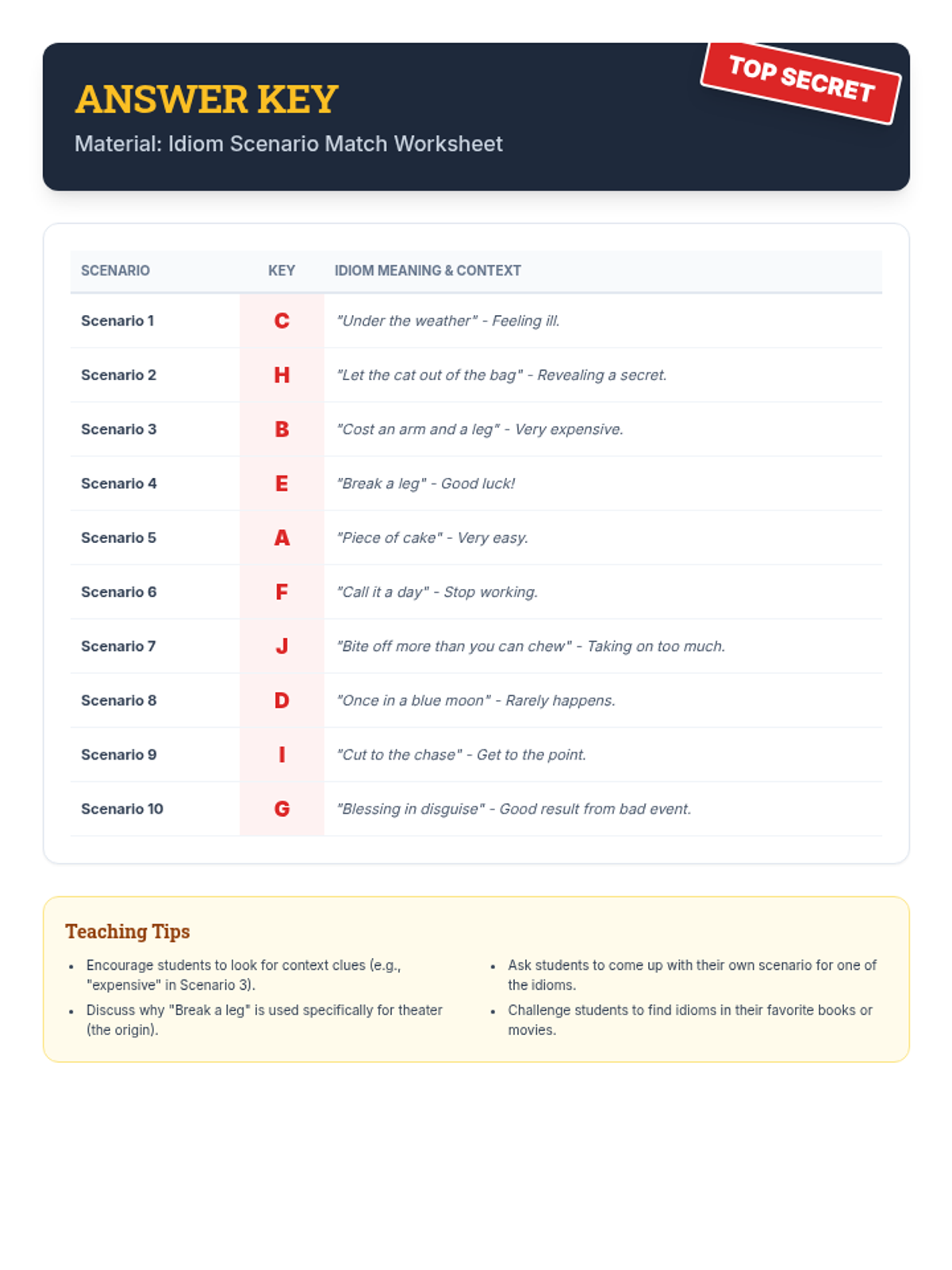
A lesson introducing common idioms and practicing their use in real-world scenarios through a detective-themed investigation.
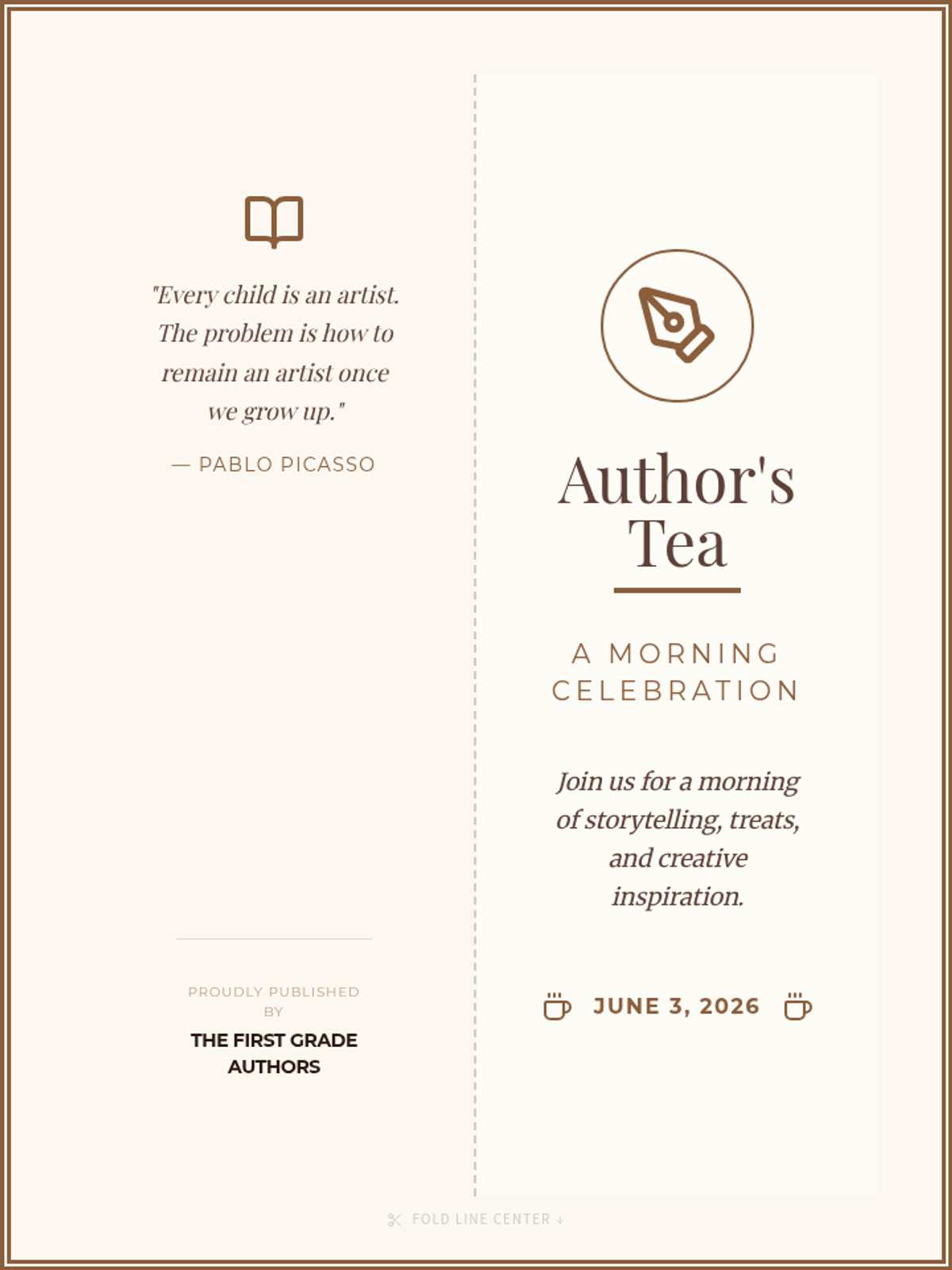
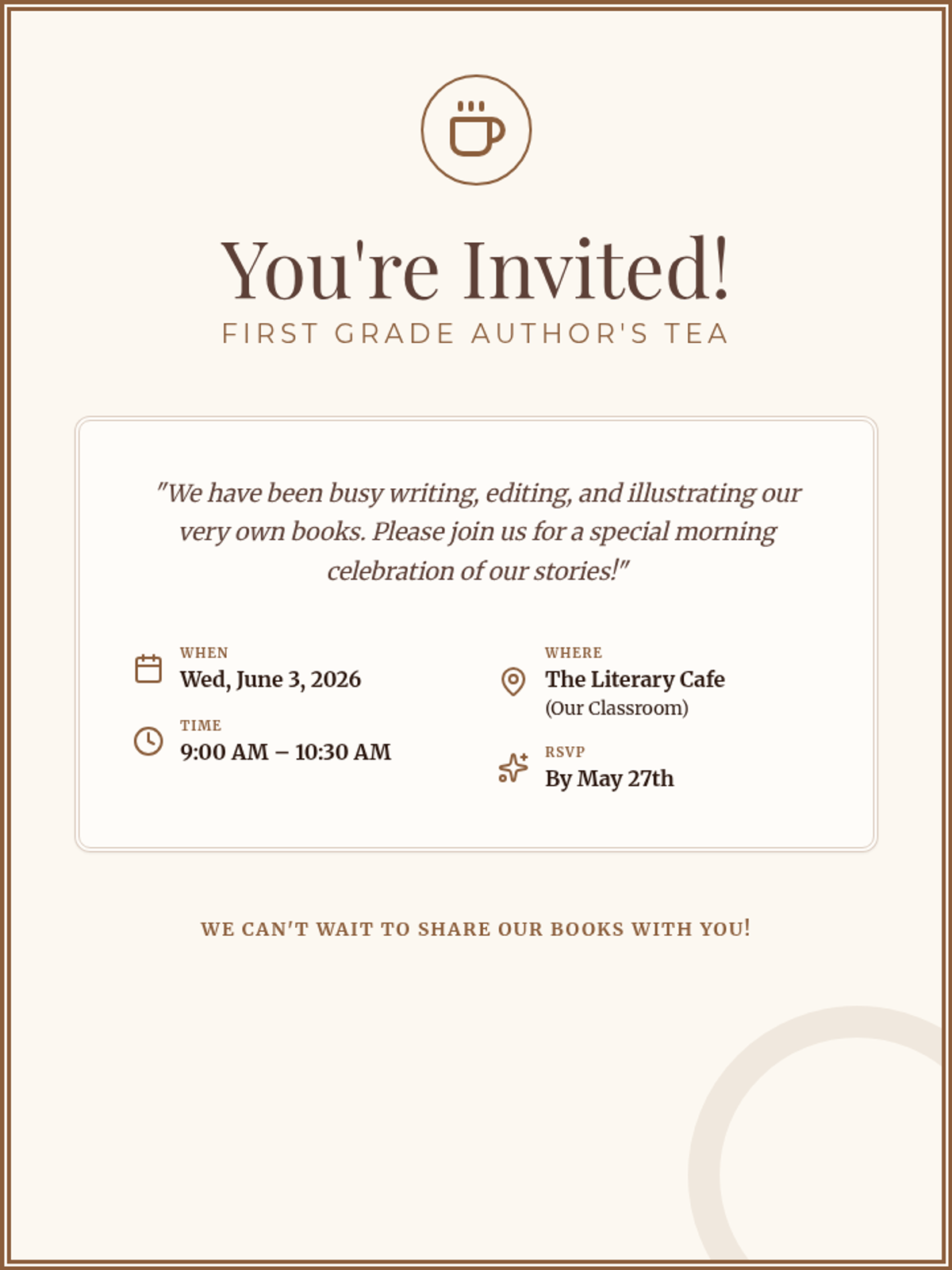
A celebration of student writing and creativity, featuring an invitation for parents and a set of classroom decorations to transform the space into a 'Literary Cafe'.
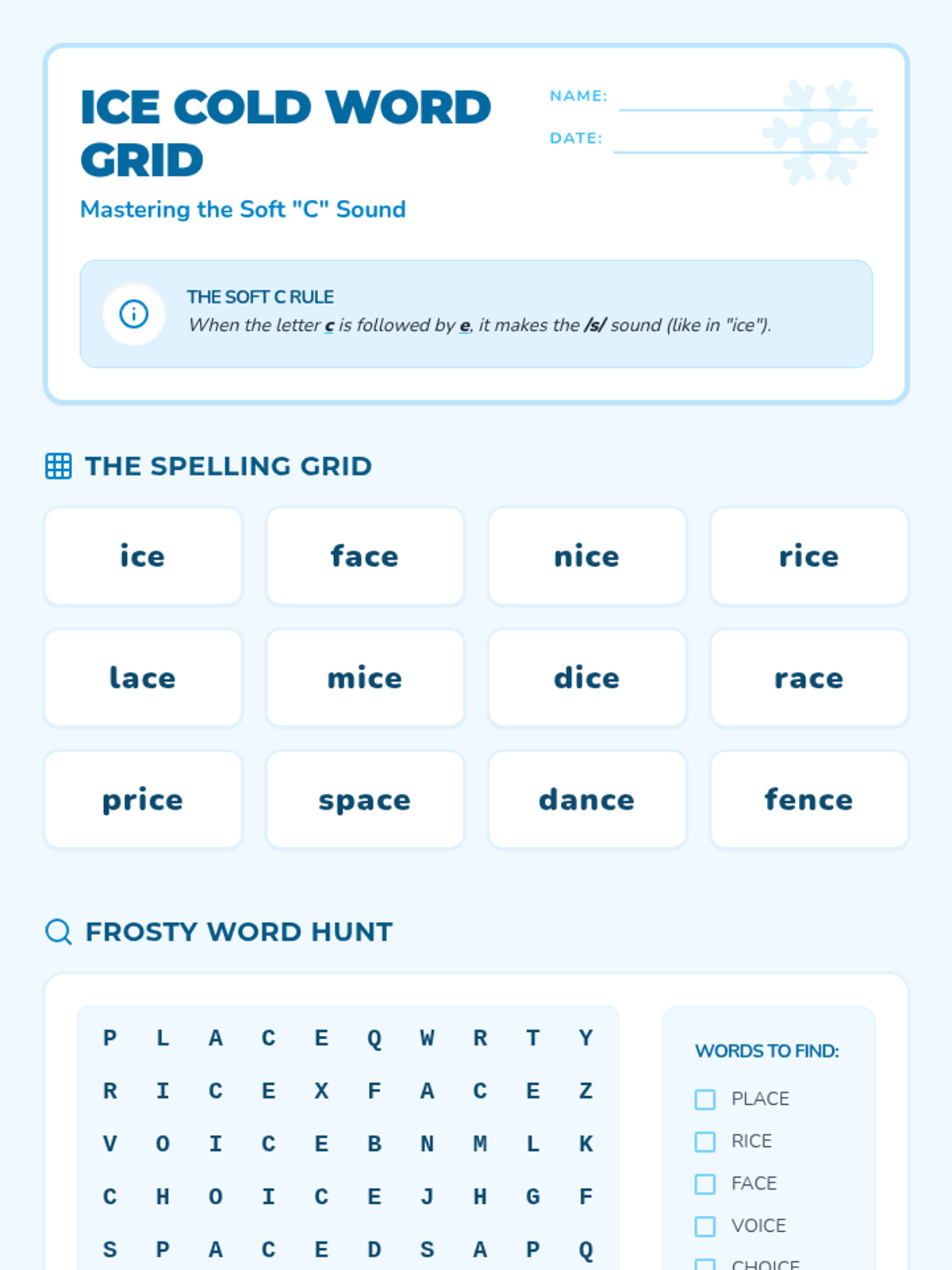
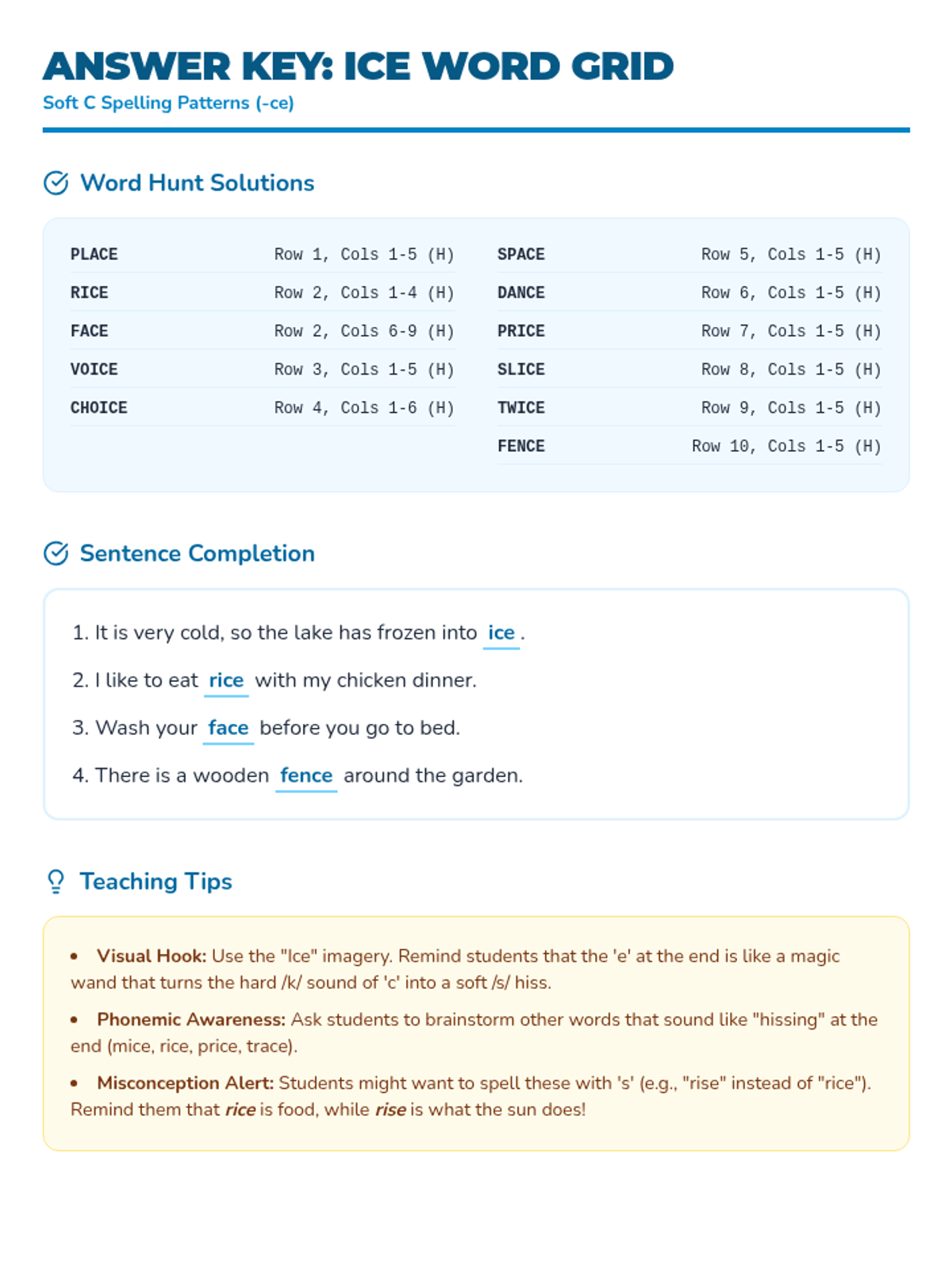
A focused lesson on words ending in -ce, emphasizing the soft 'c' sound through visual grids, interactive slides, and practice activities.
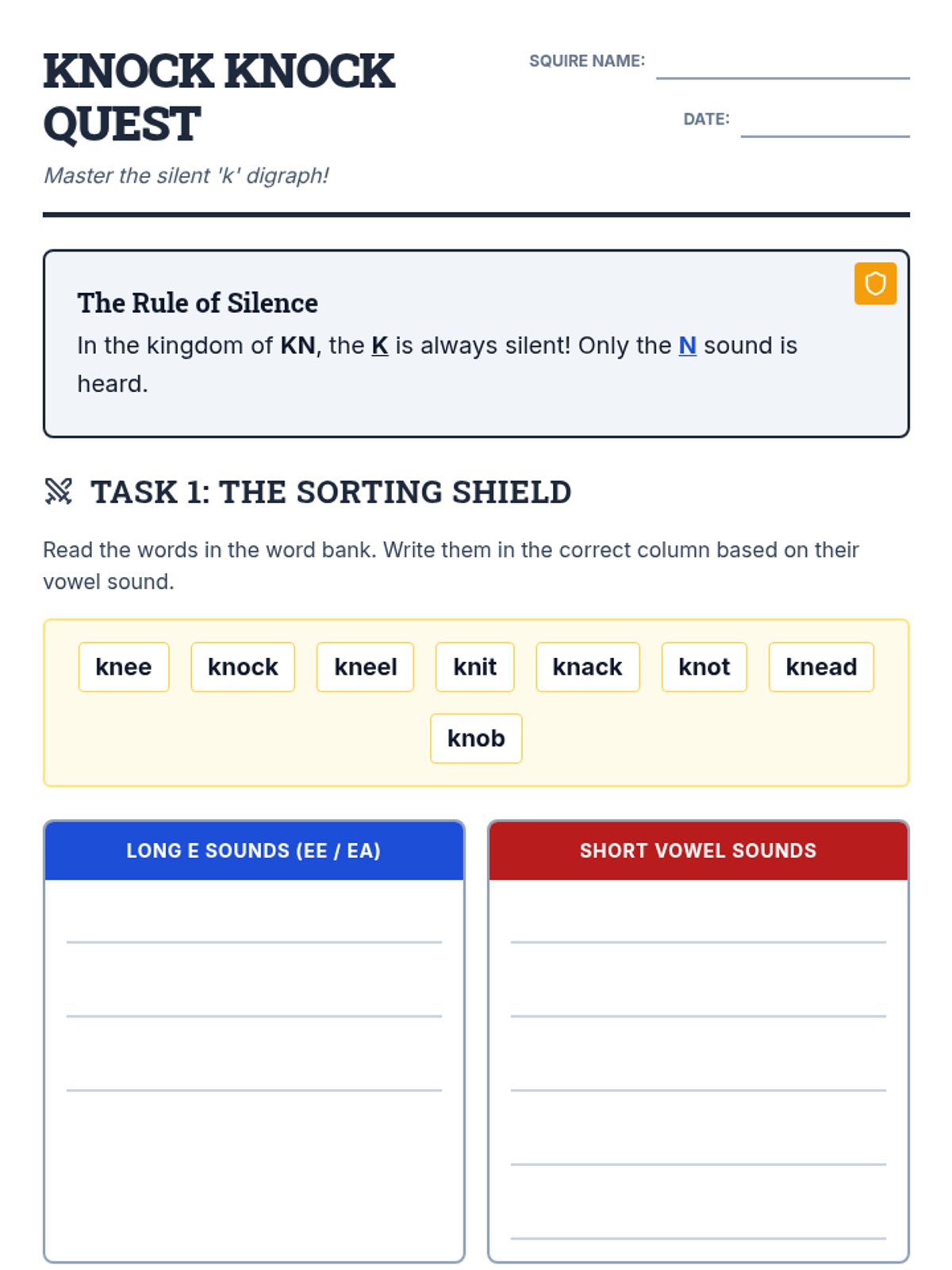
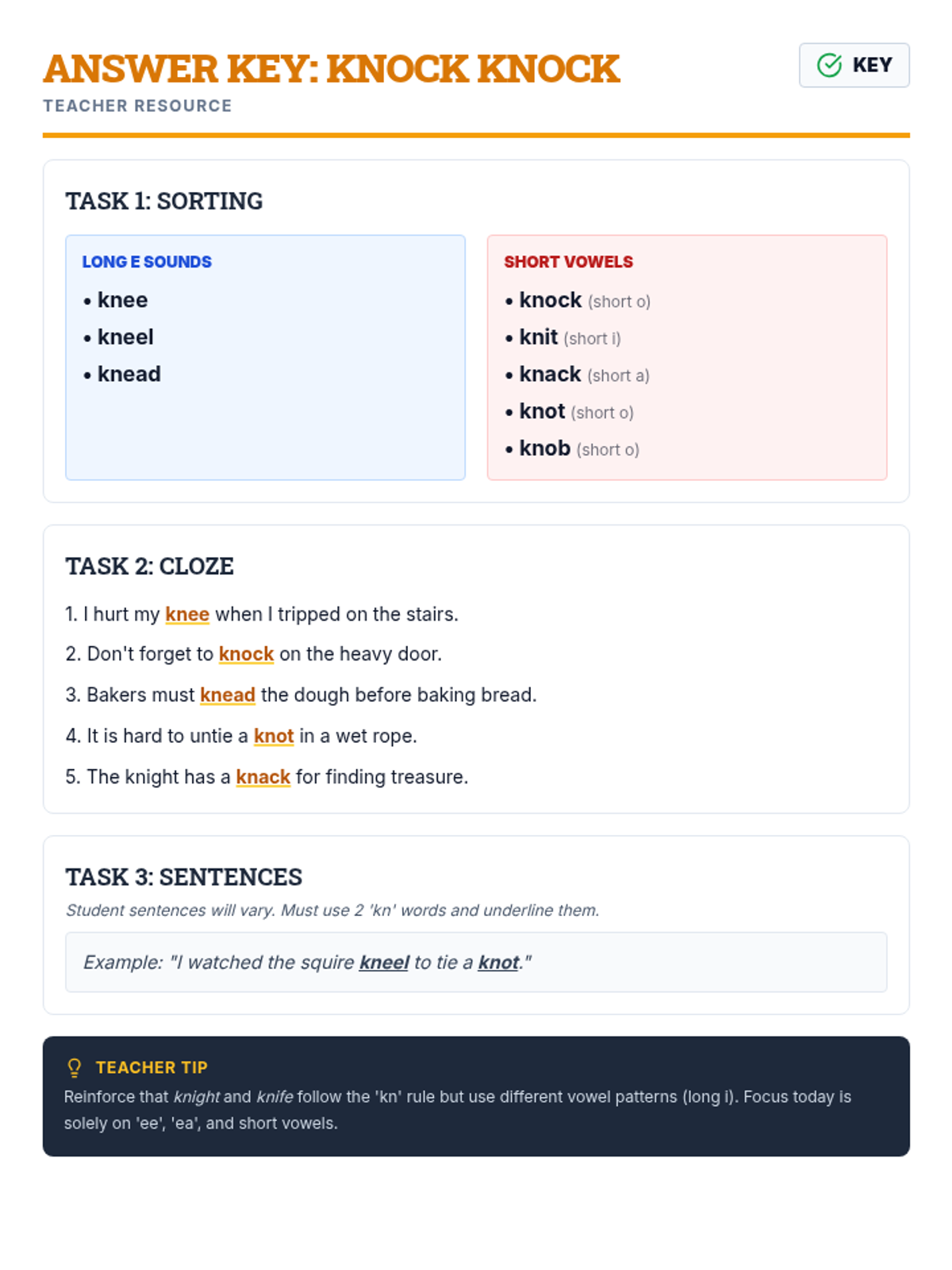
A phonics lesson exploring the silent 'k' digraph (kn), focusing on words with 'ee', short vowels, and long 'e' sounds. Includes a medieval-themed slide deck and a practice worksheet.
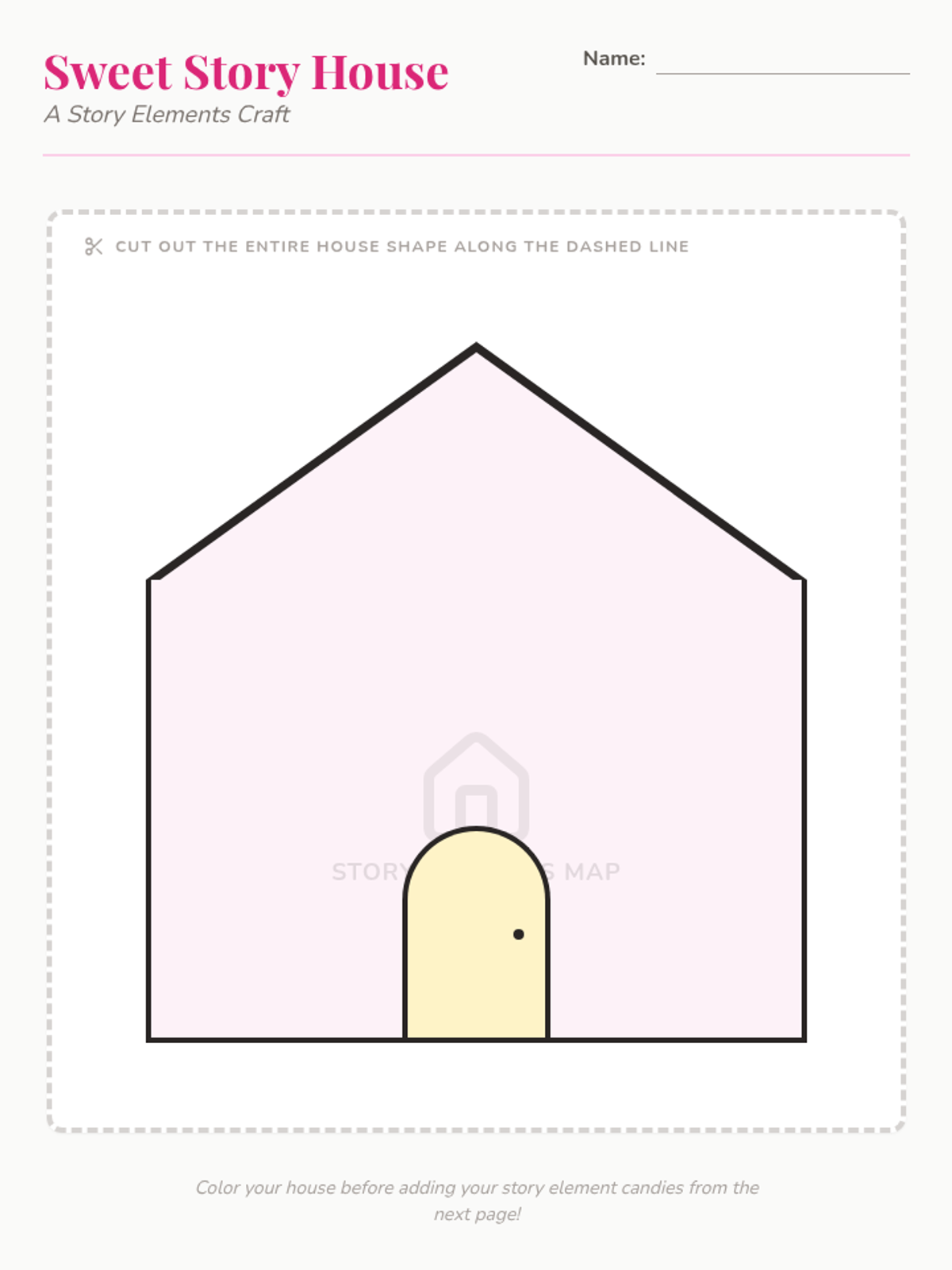
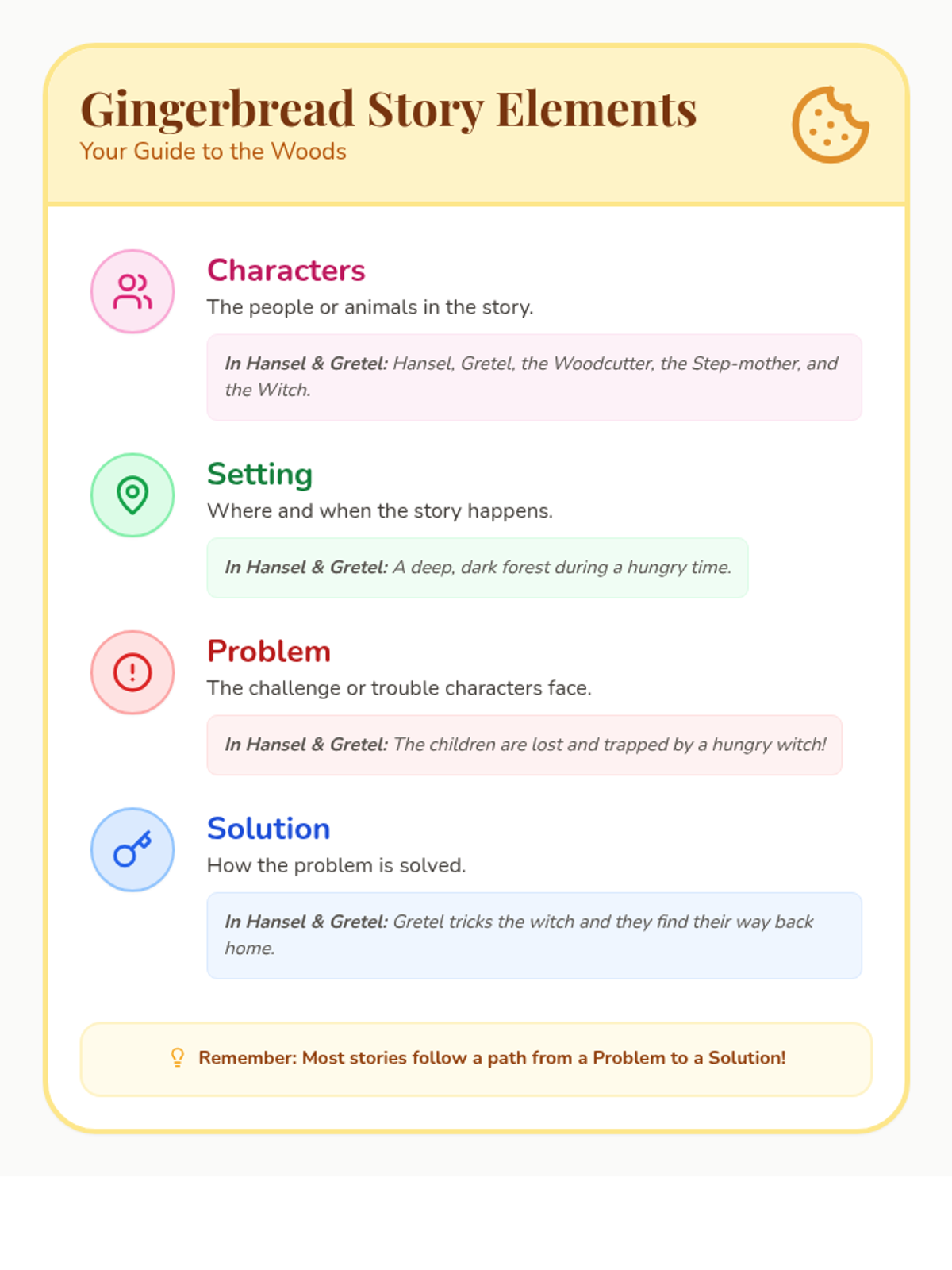
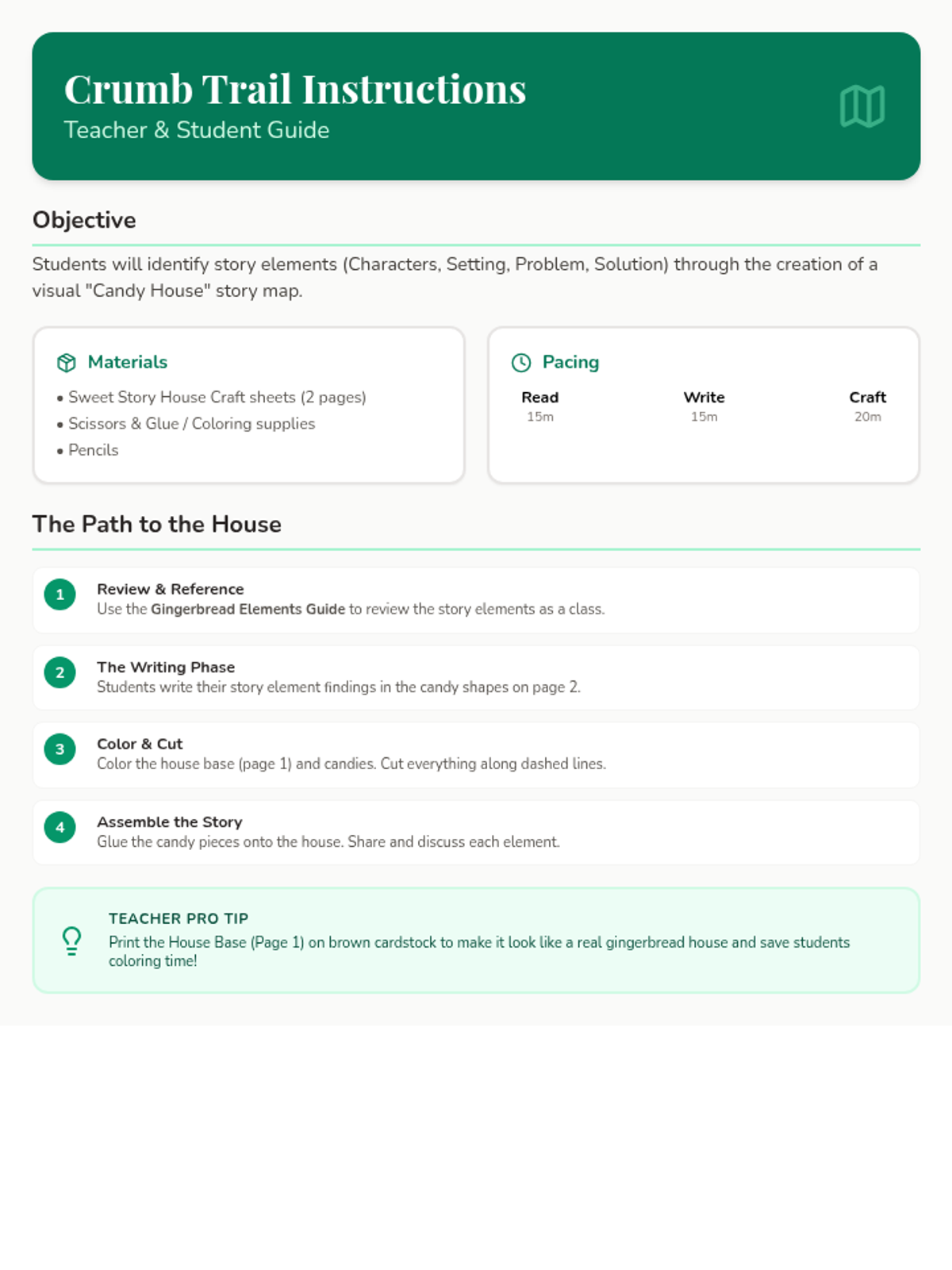
A hands-on ELA lesson where students explore story elements (Characters, Setting, Problem, Solution) through the lens of Hansel and Gretel by building a 'Candy House' story map.
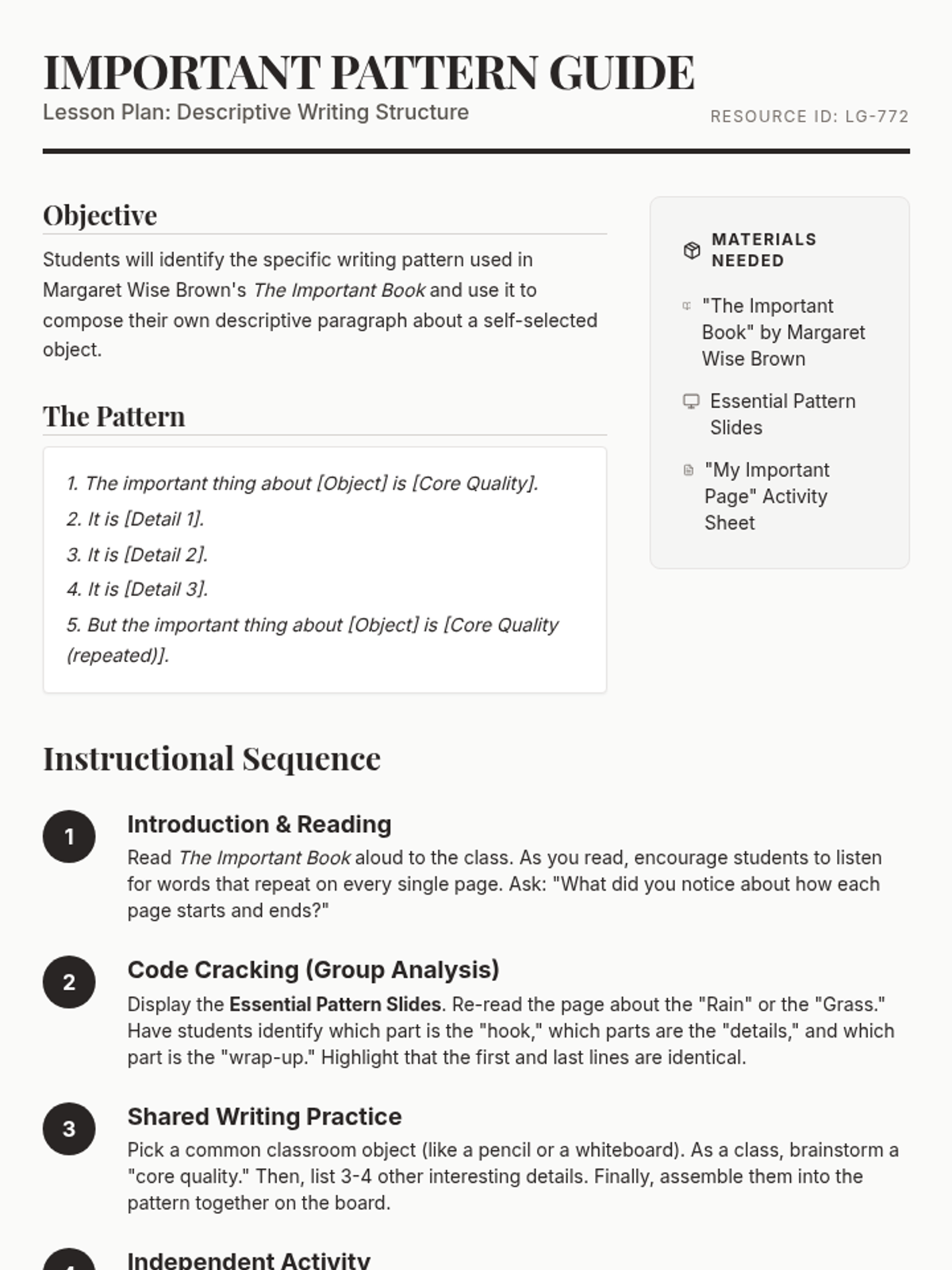
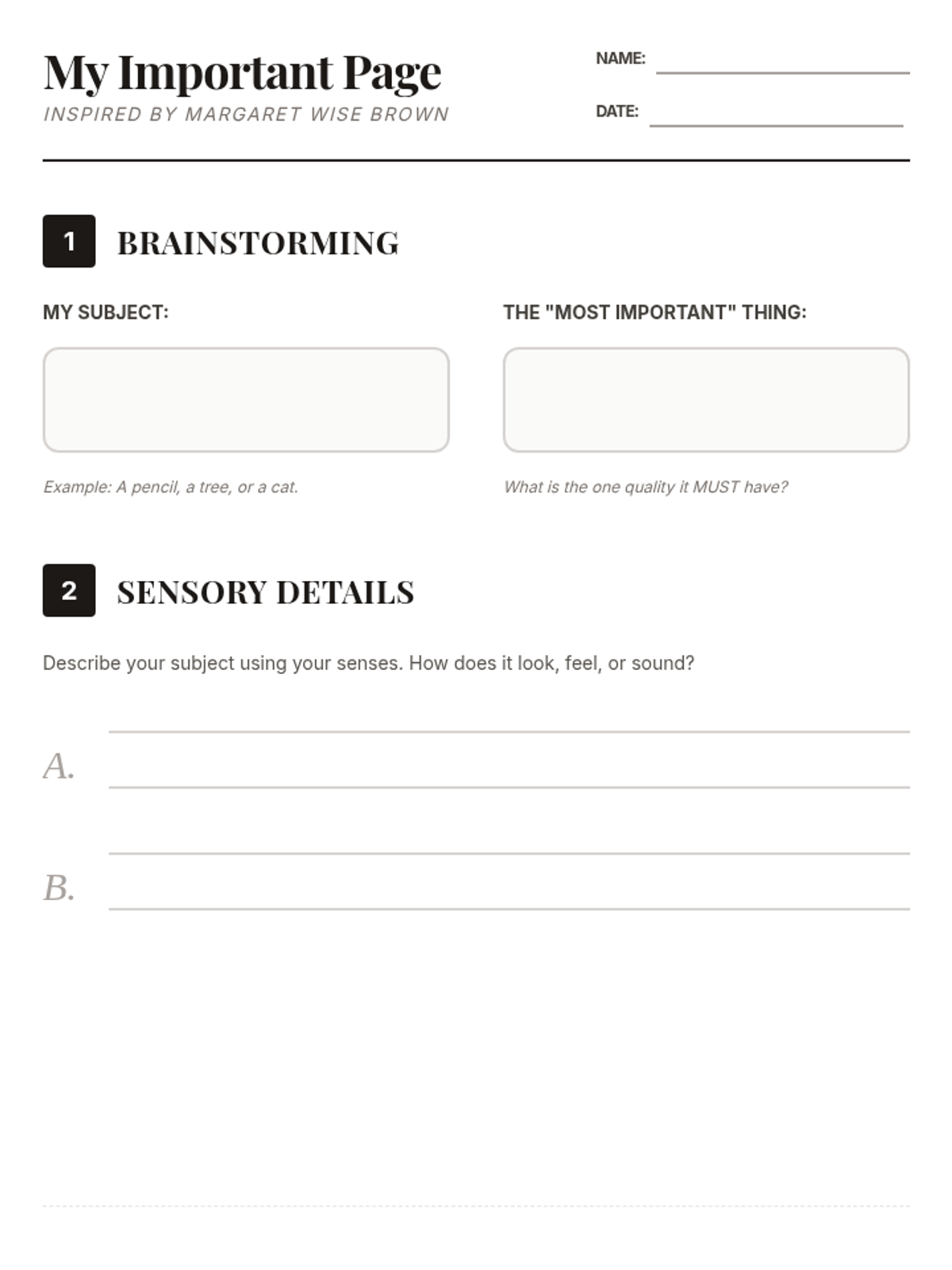
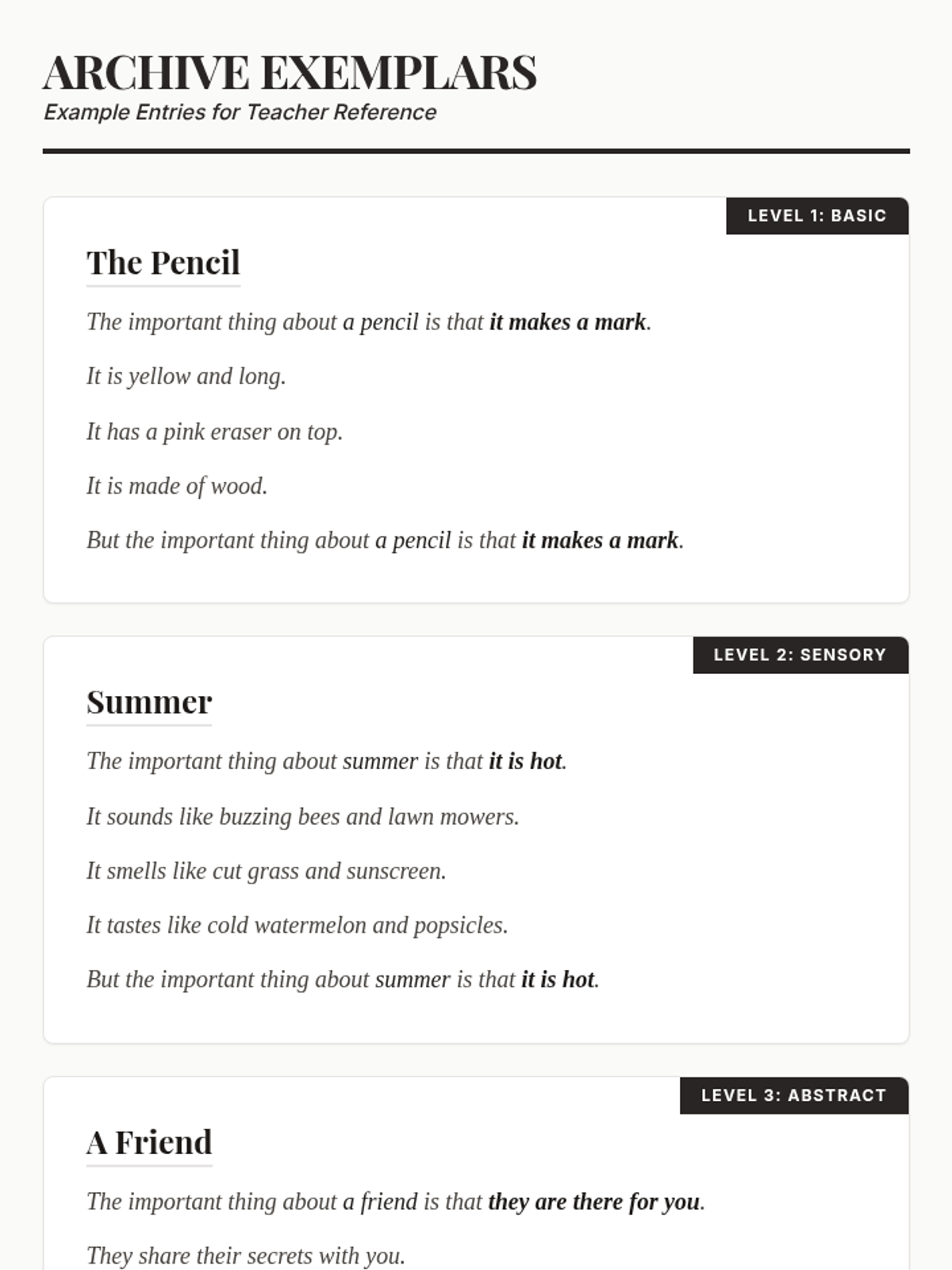
A creative writing lesson based on Margaret Wise Brown's 'The Important Book' that teaches students to use a specific descriptive structure. Students will analyze the book's repetitive pattern and apply it to their own writing.
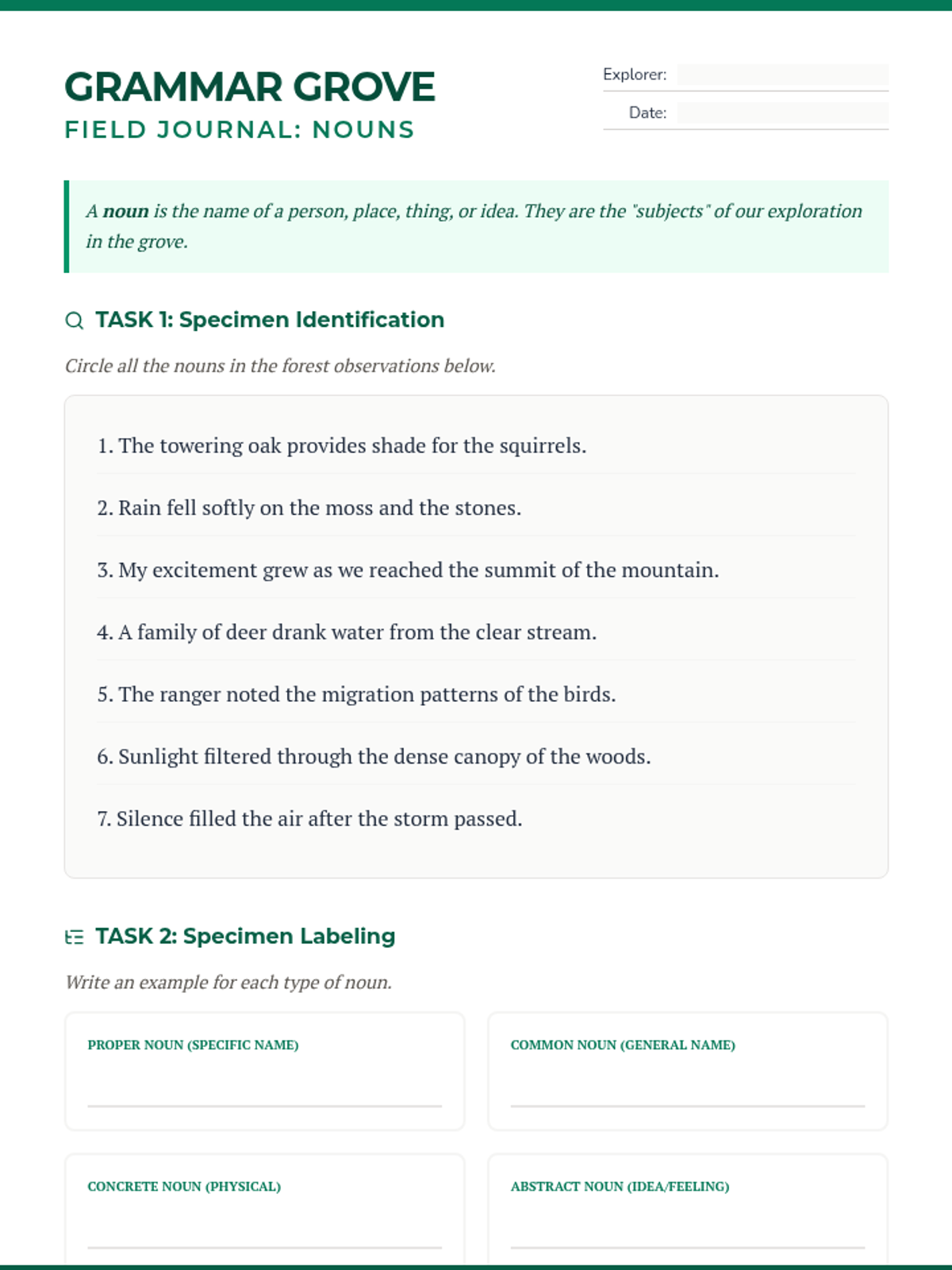
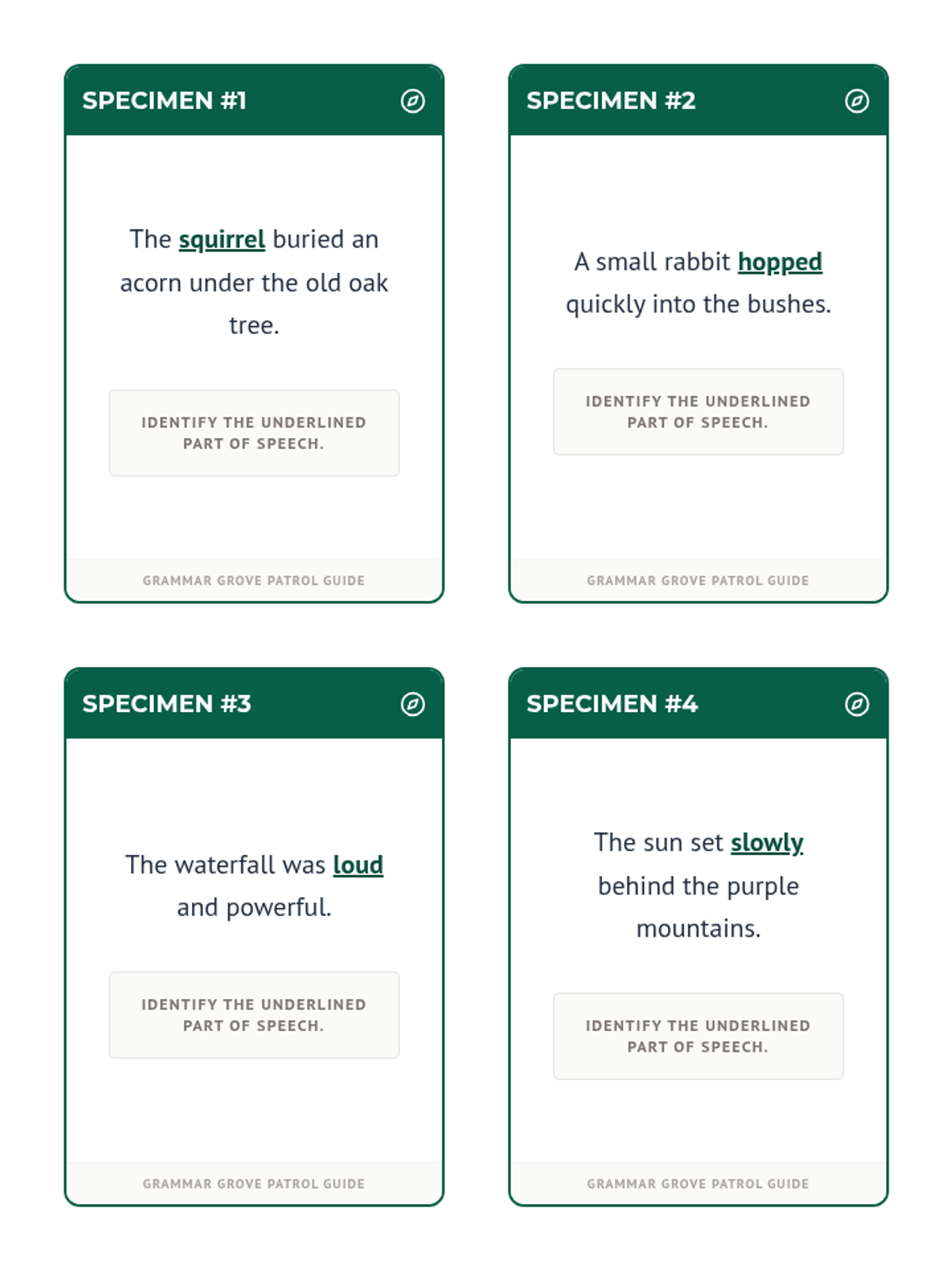
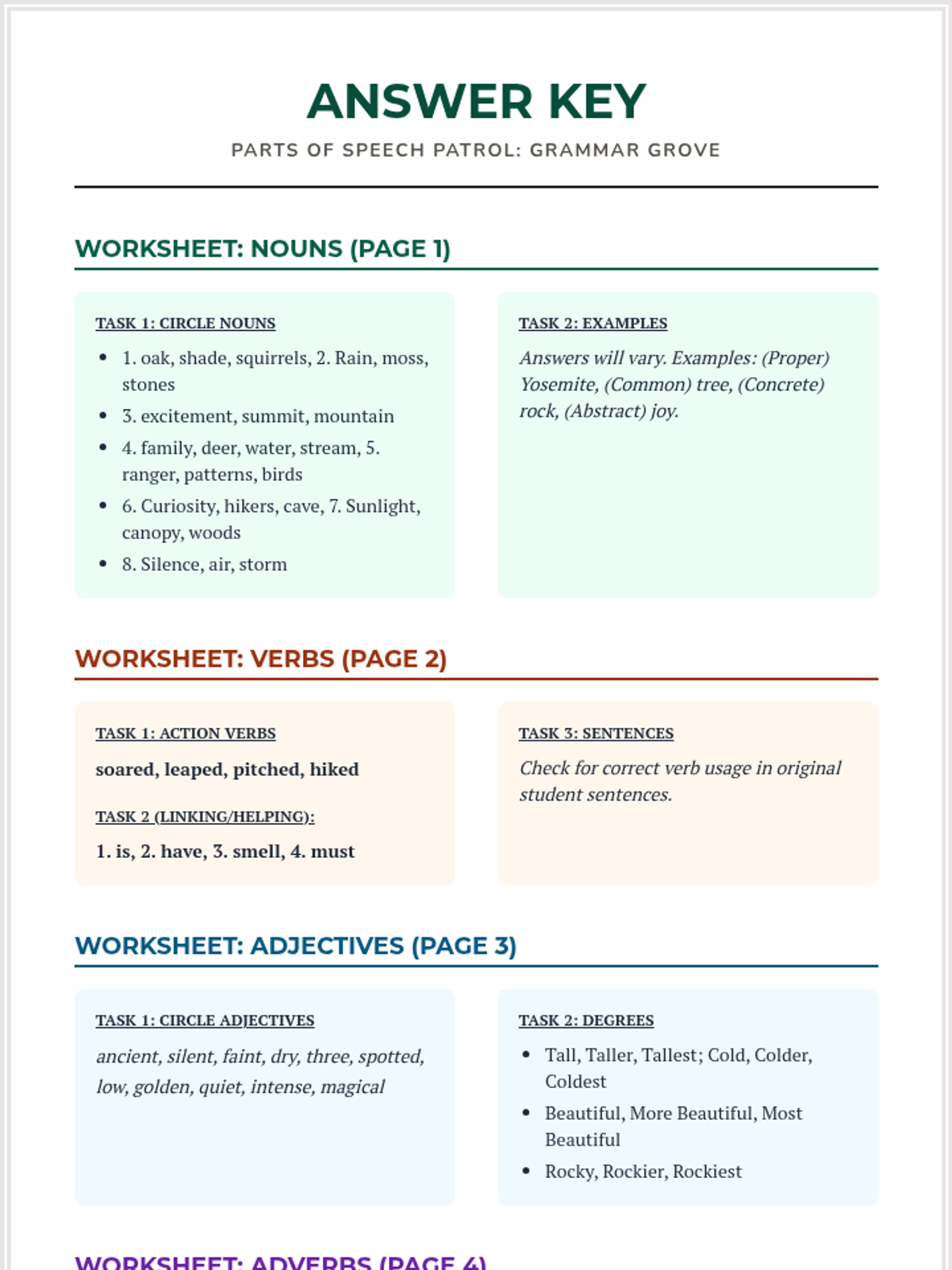
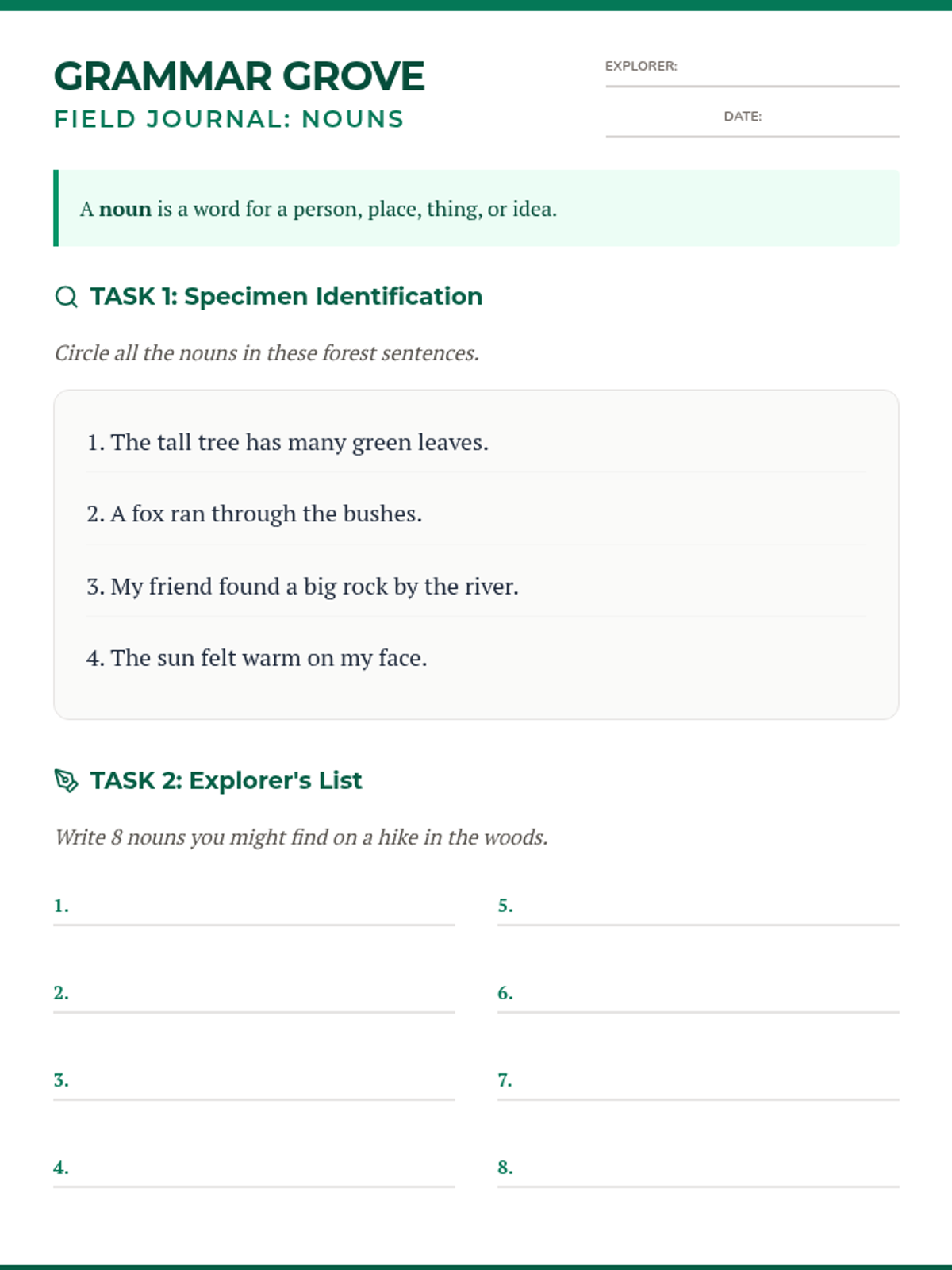
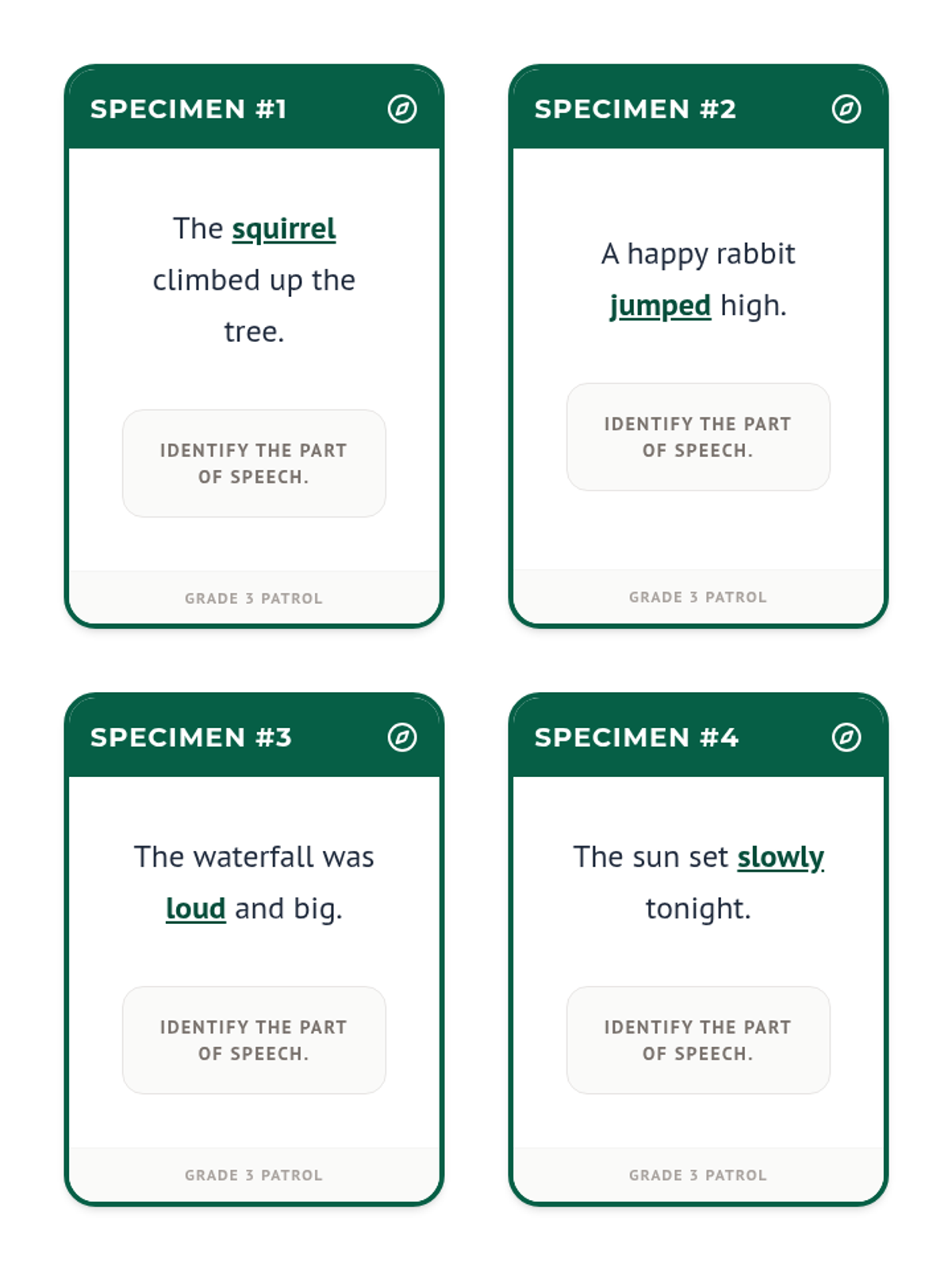
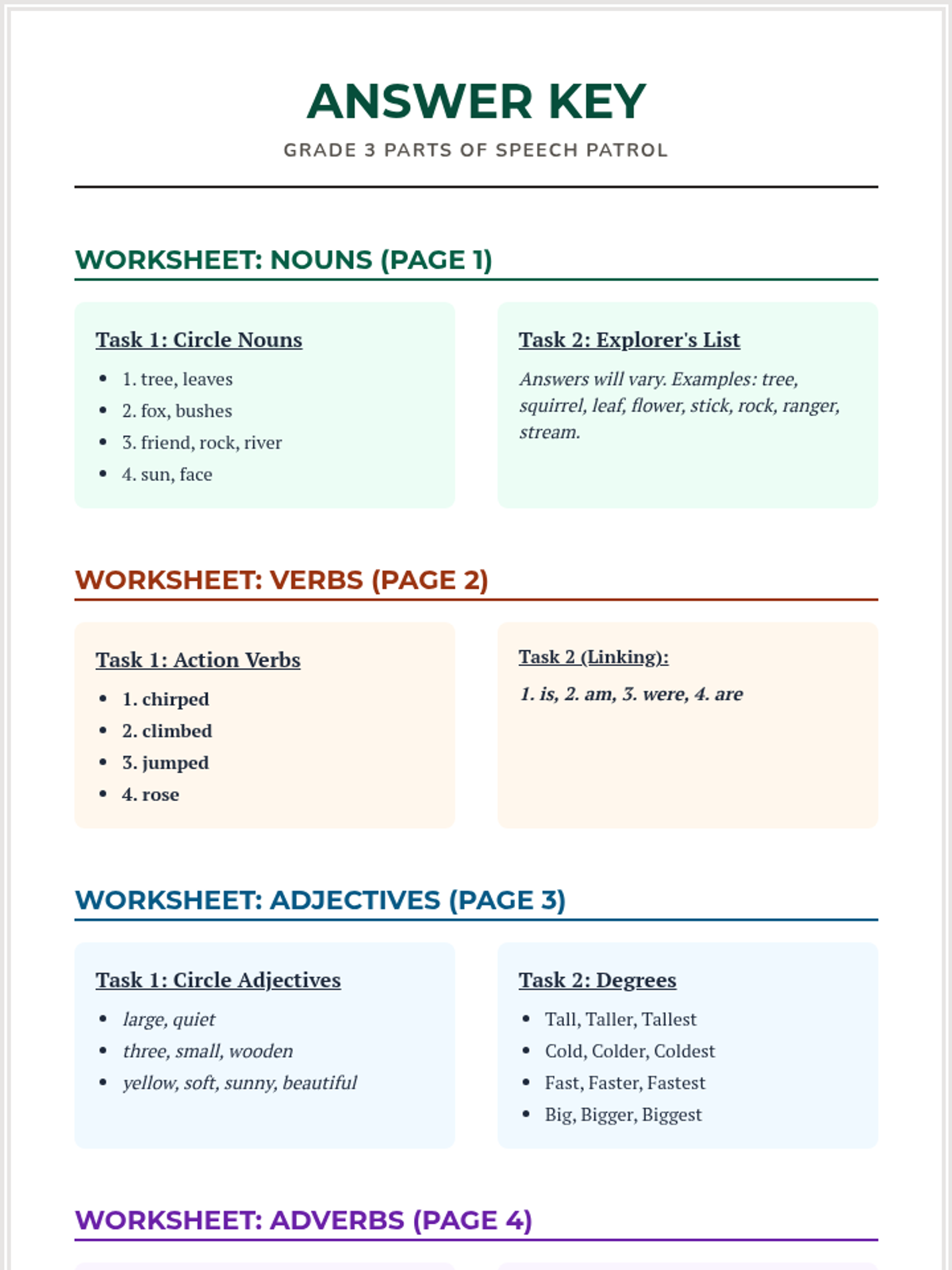
A comprehensive review of nouns, verbs, adjectives, and adverbs using a field guide theme to help students identify and master these four essential parts of speech.
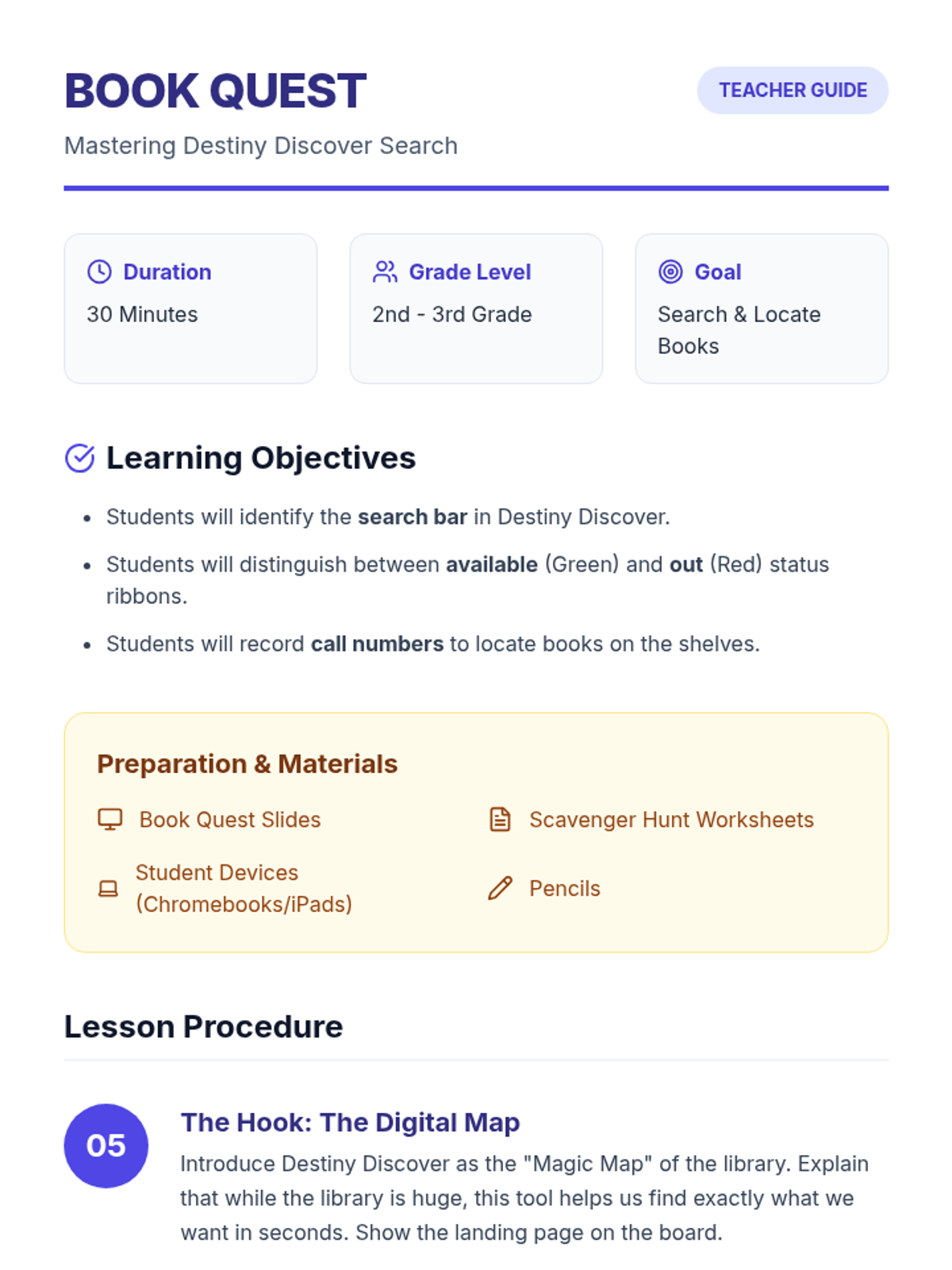
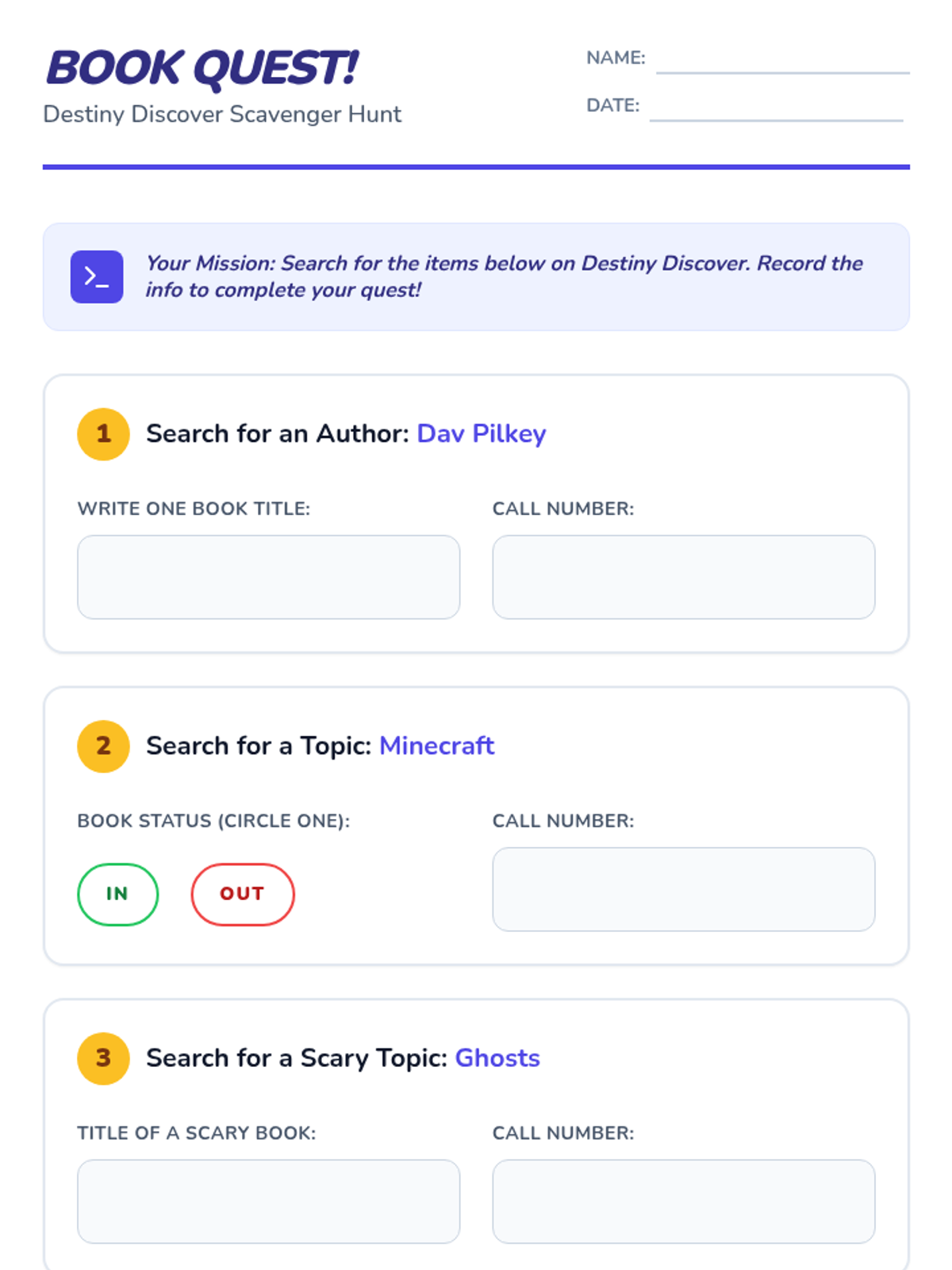
A 30-minute introductory lesson for 2nd and 3rd graders on navigating Destiny Discover to search for library books. Students will learn how to use keywords, check book availability, and locate call numbers.
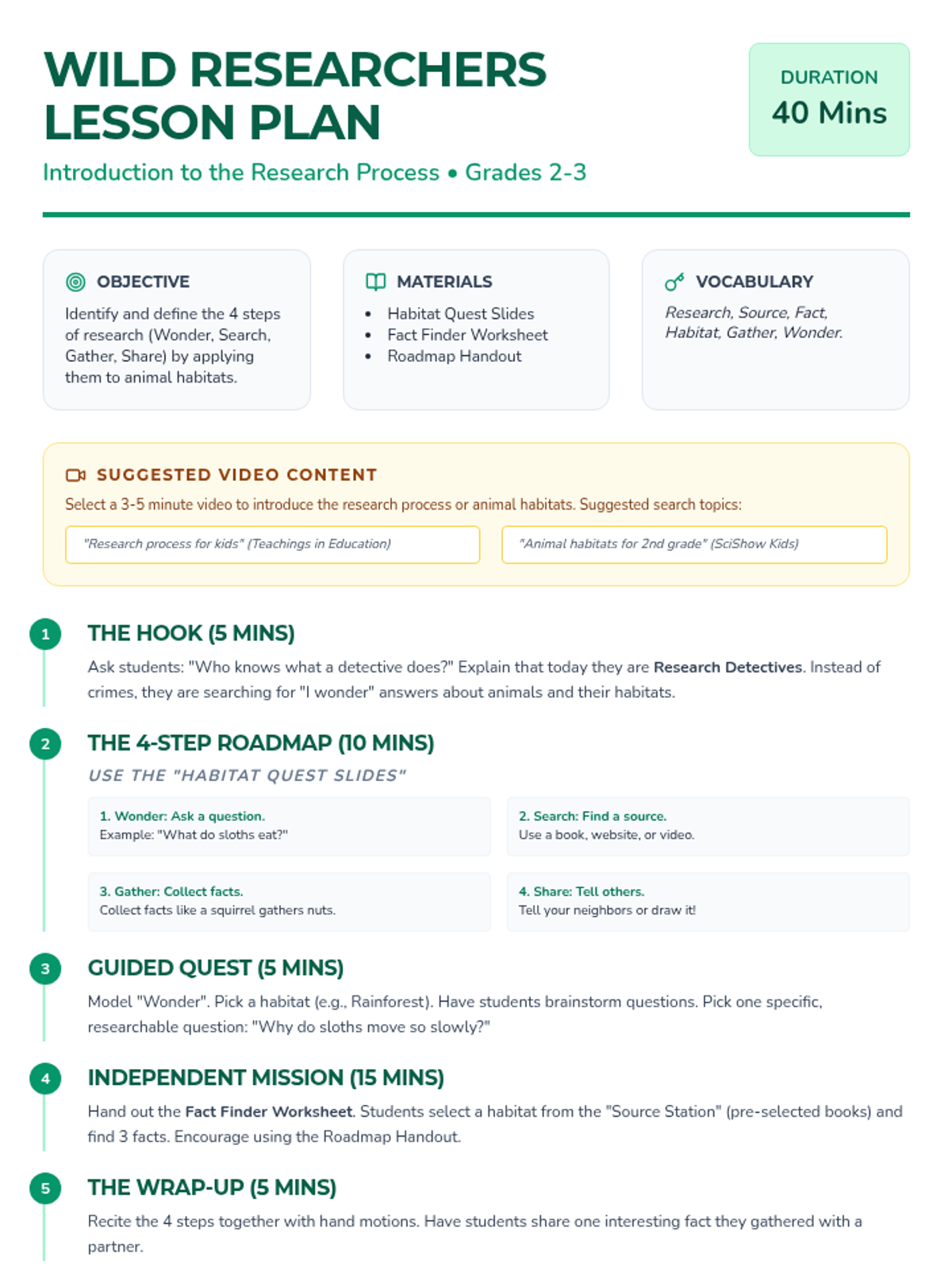
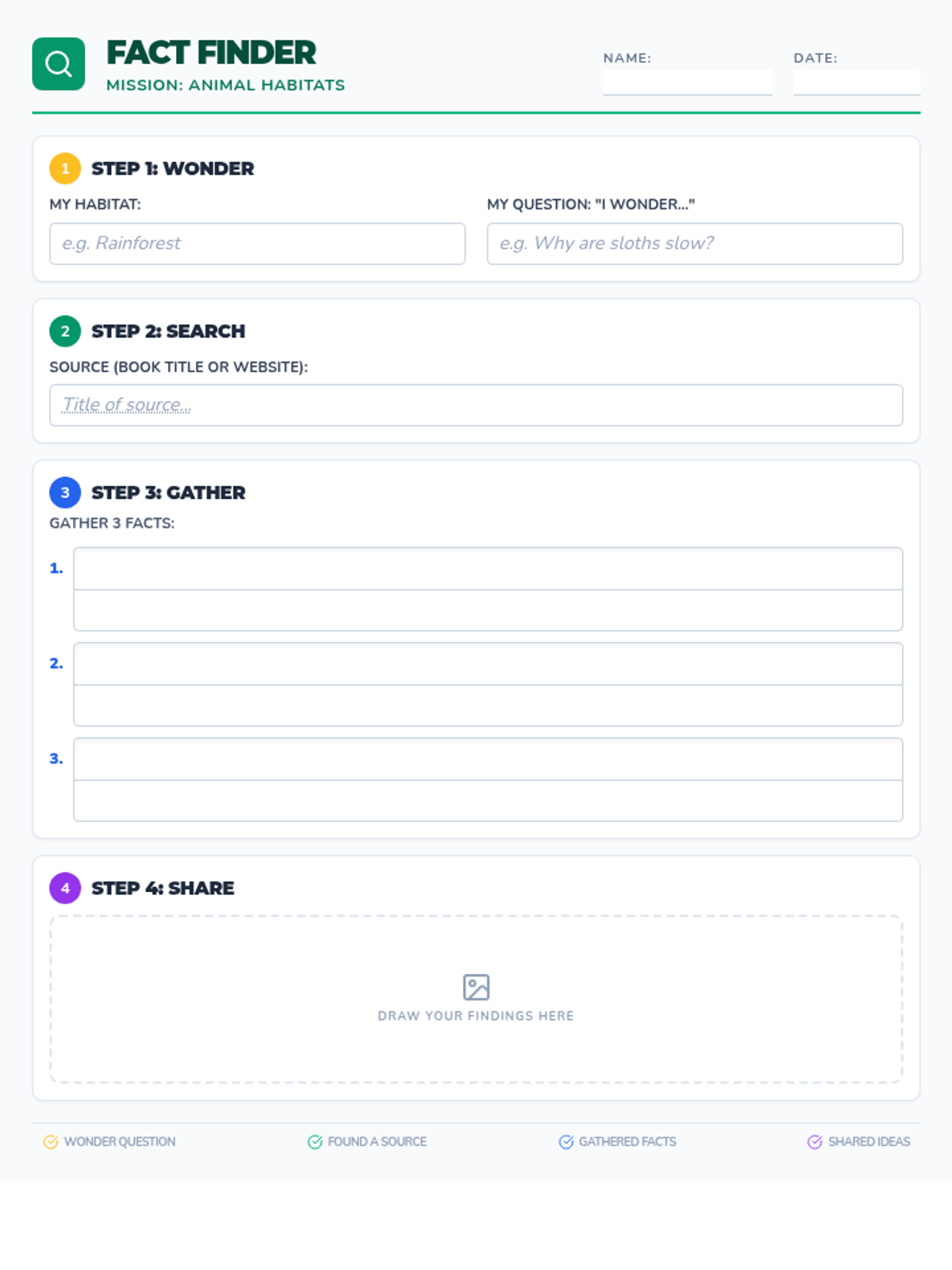
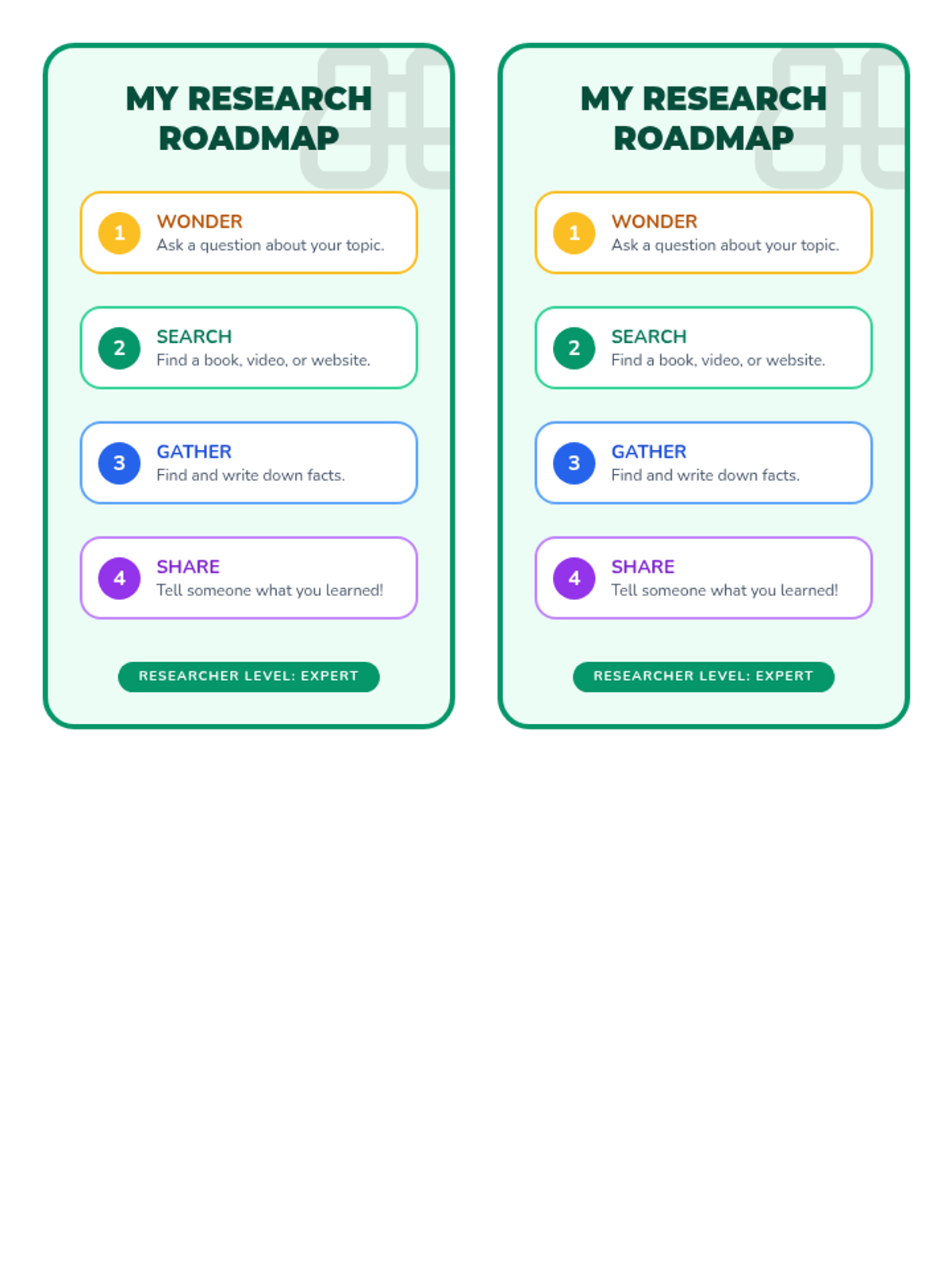
An introductory lesson on the research process for 2nd and 3rd graders, using animal habitats as the central theme. Students learn the four key steps of research: Wonder, Search, Gather, and Share.
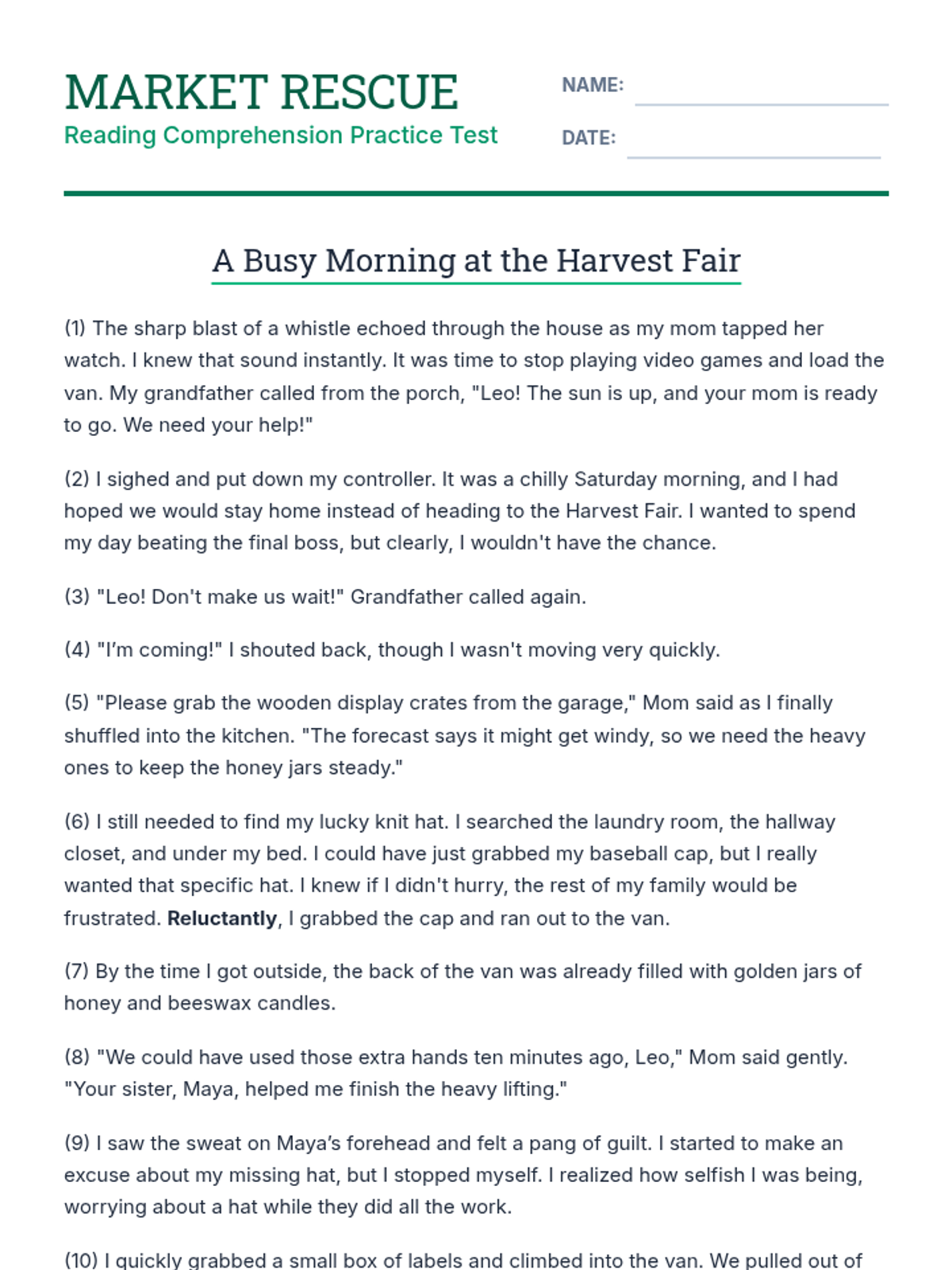
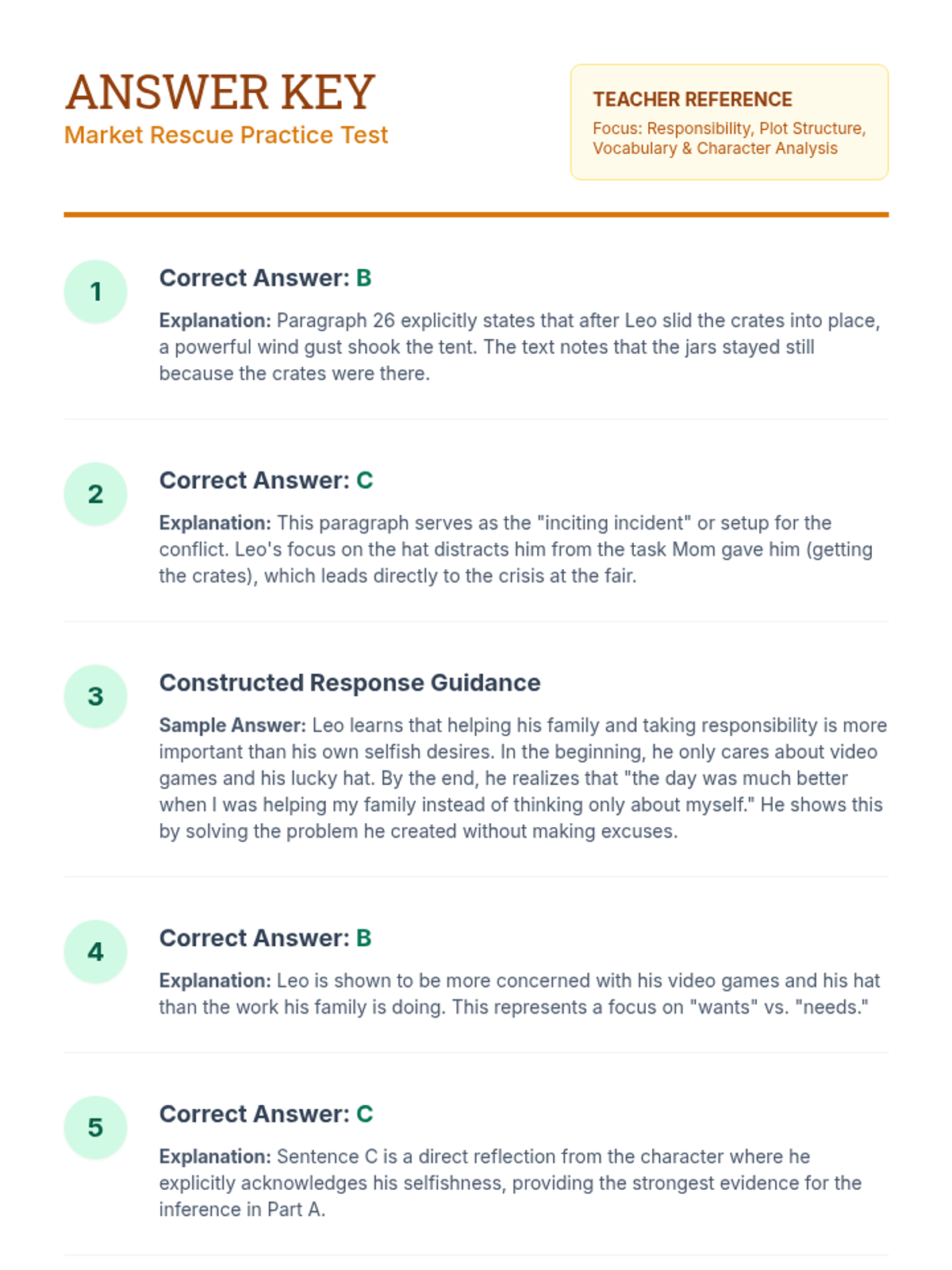
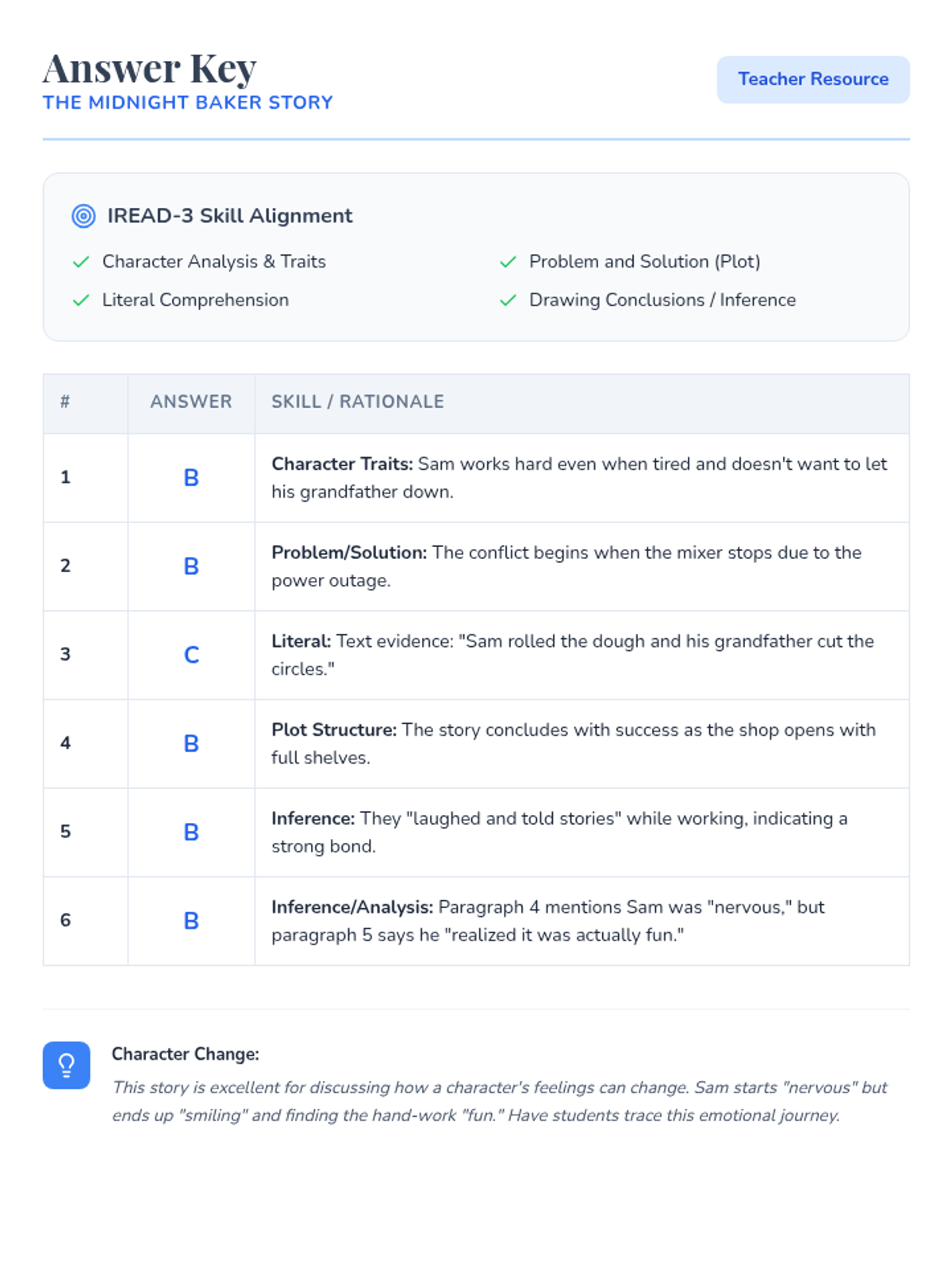
A comprehensive practice assessment designed to prepare students for reading comprehension tests. It features a new passage mirroring the themes of responsibility and problem-solving, along with targeted questions on character traits, plot, and vocabulary.
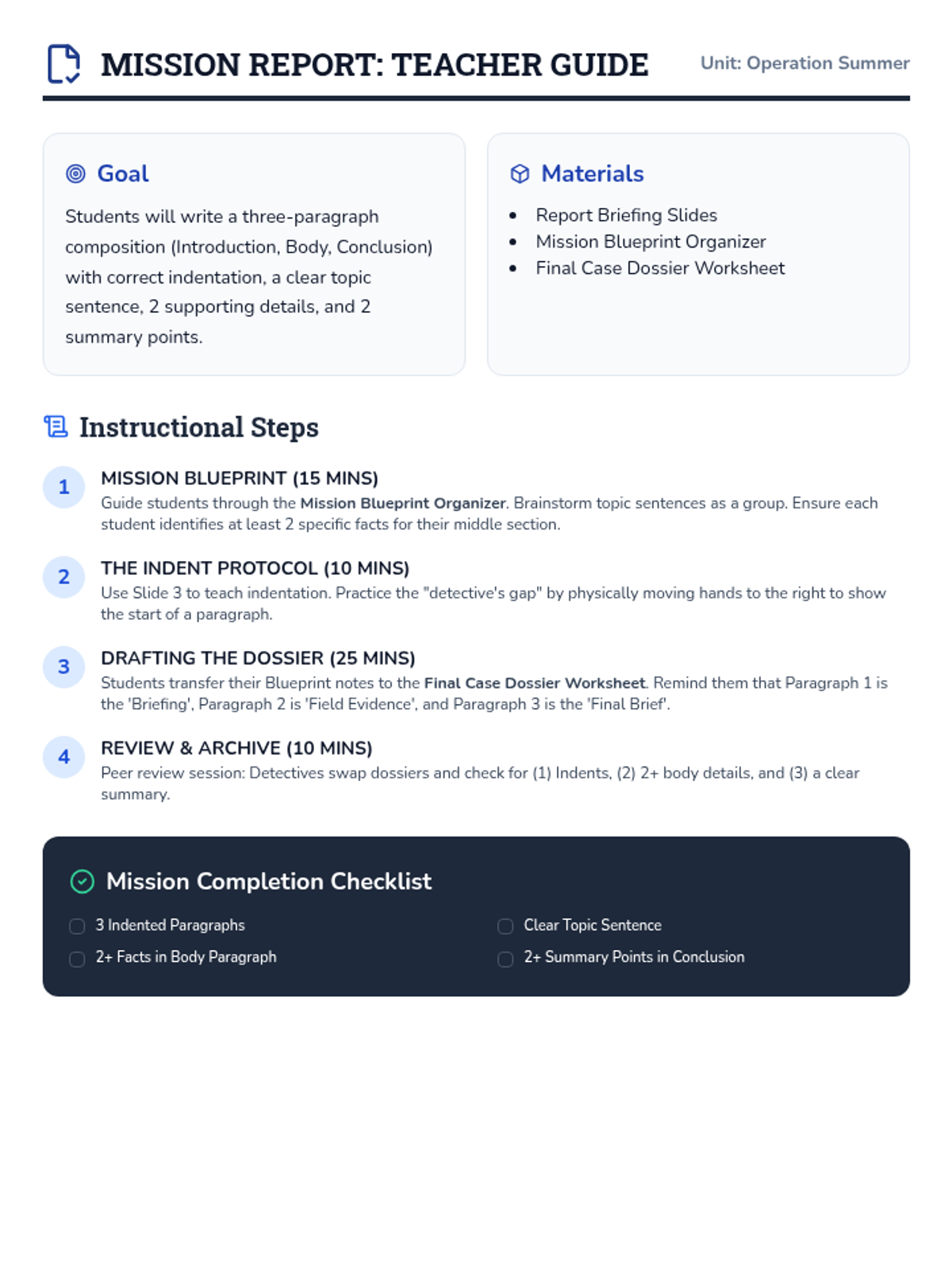
Students expand their detective skills from simple sentences to a full three-paragraph composition. They will use a graphic organizer to plan their report and then write a formal dossier including an introduction, supporting details, and a conclusion.
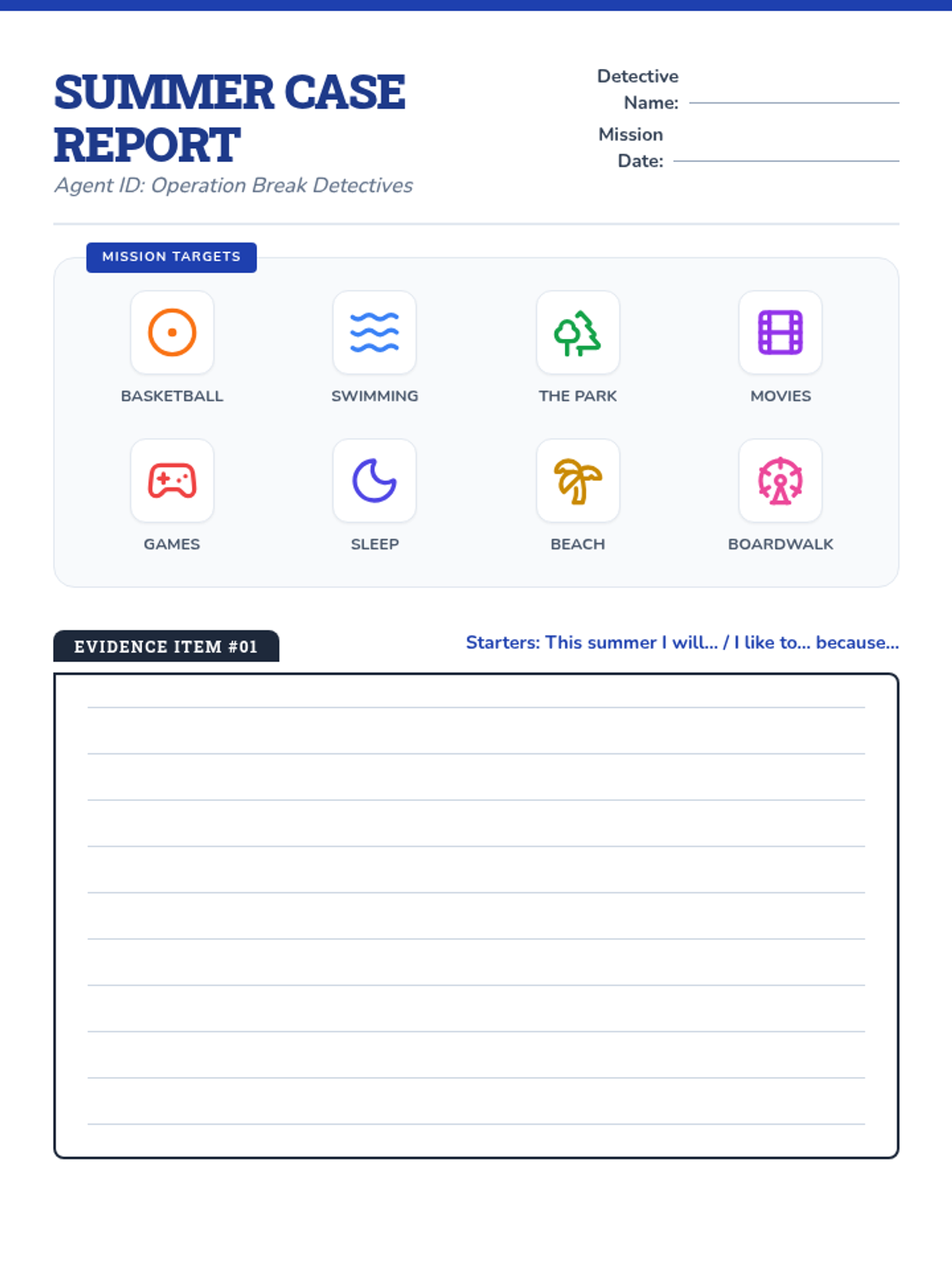
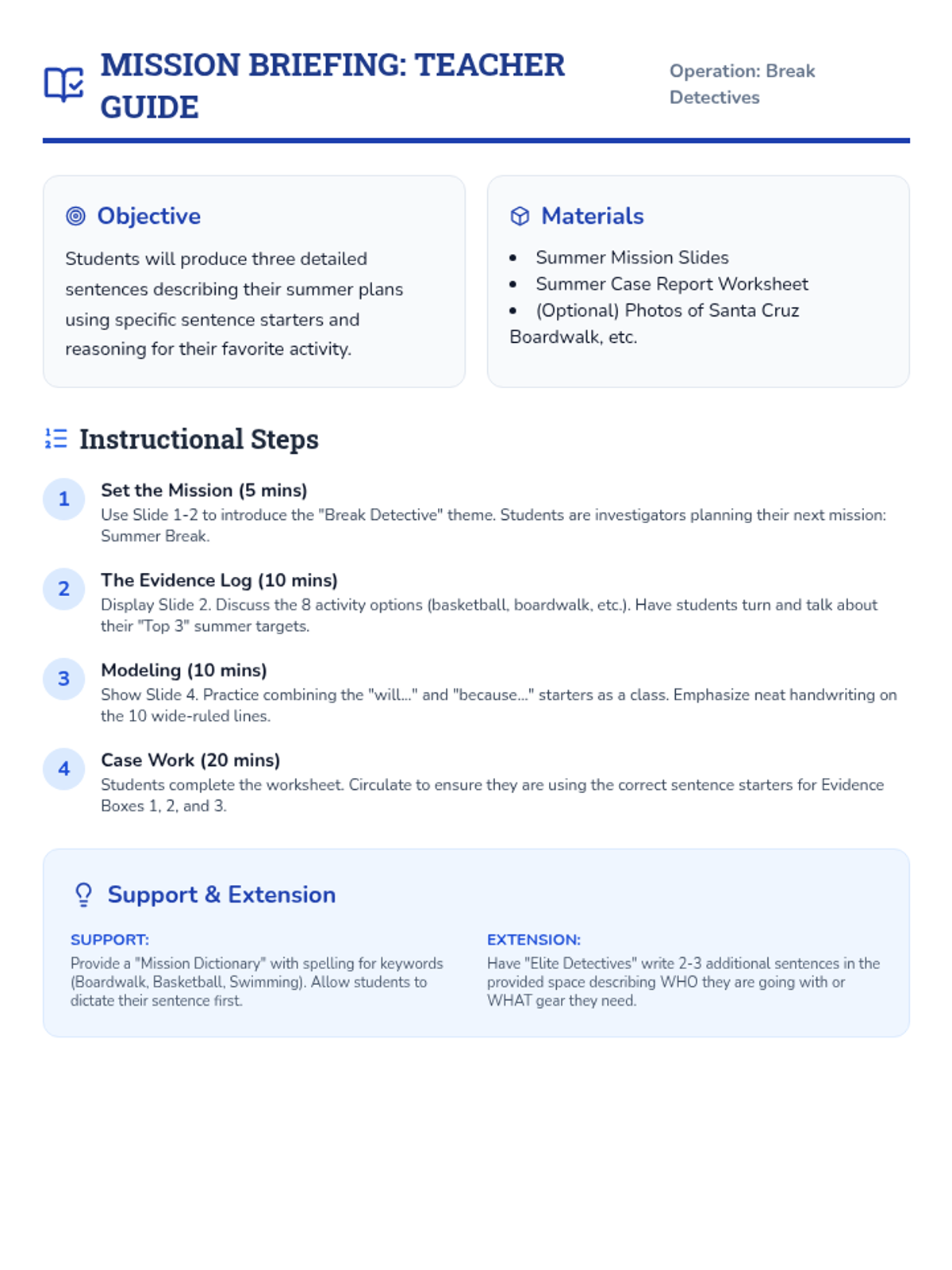
Students act as 'Break Detectives' to investigate and plan their upcoming summer activities. They will practice descriptive writing using specific sentence starters to detail three different summer goals.
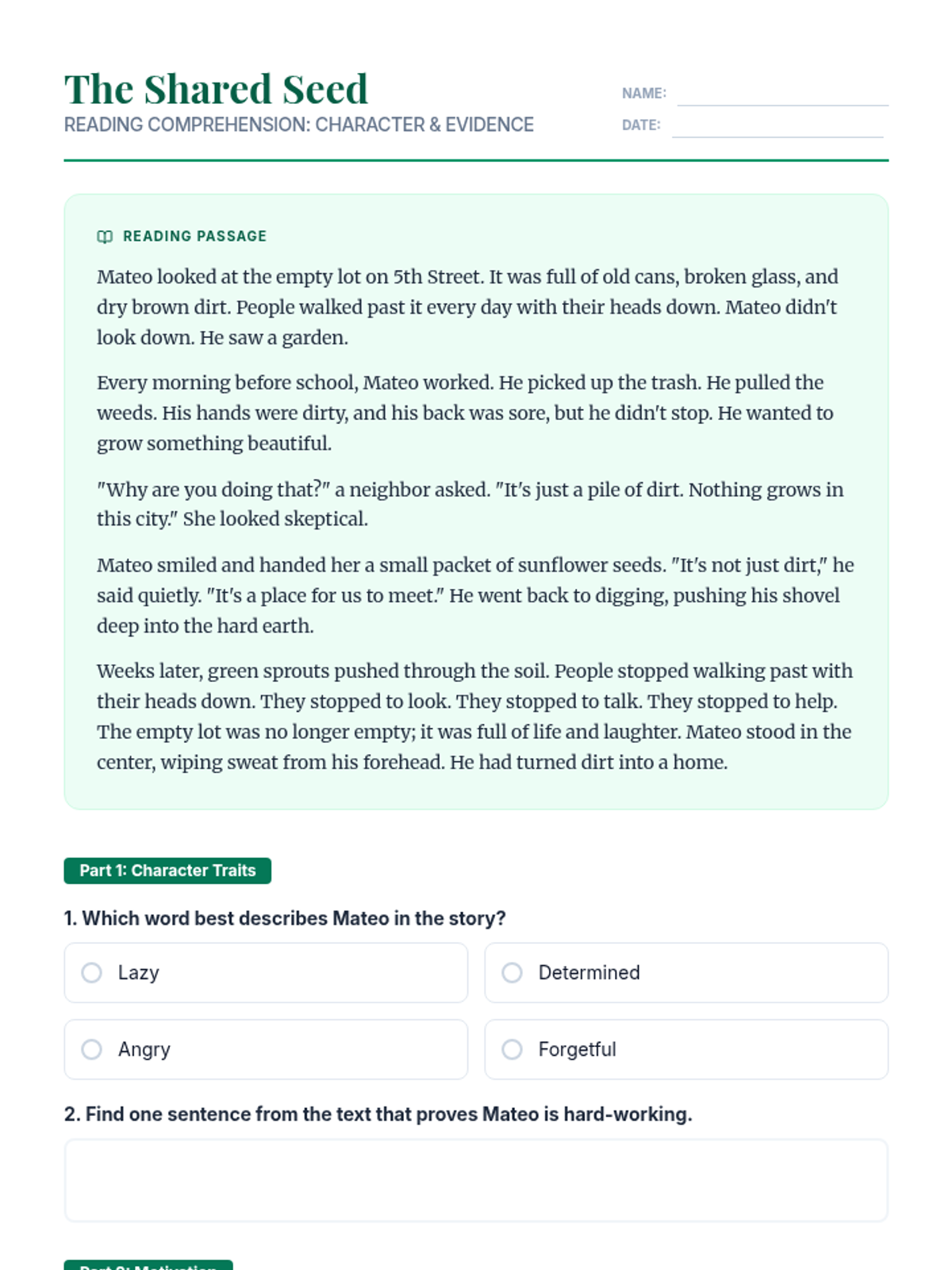
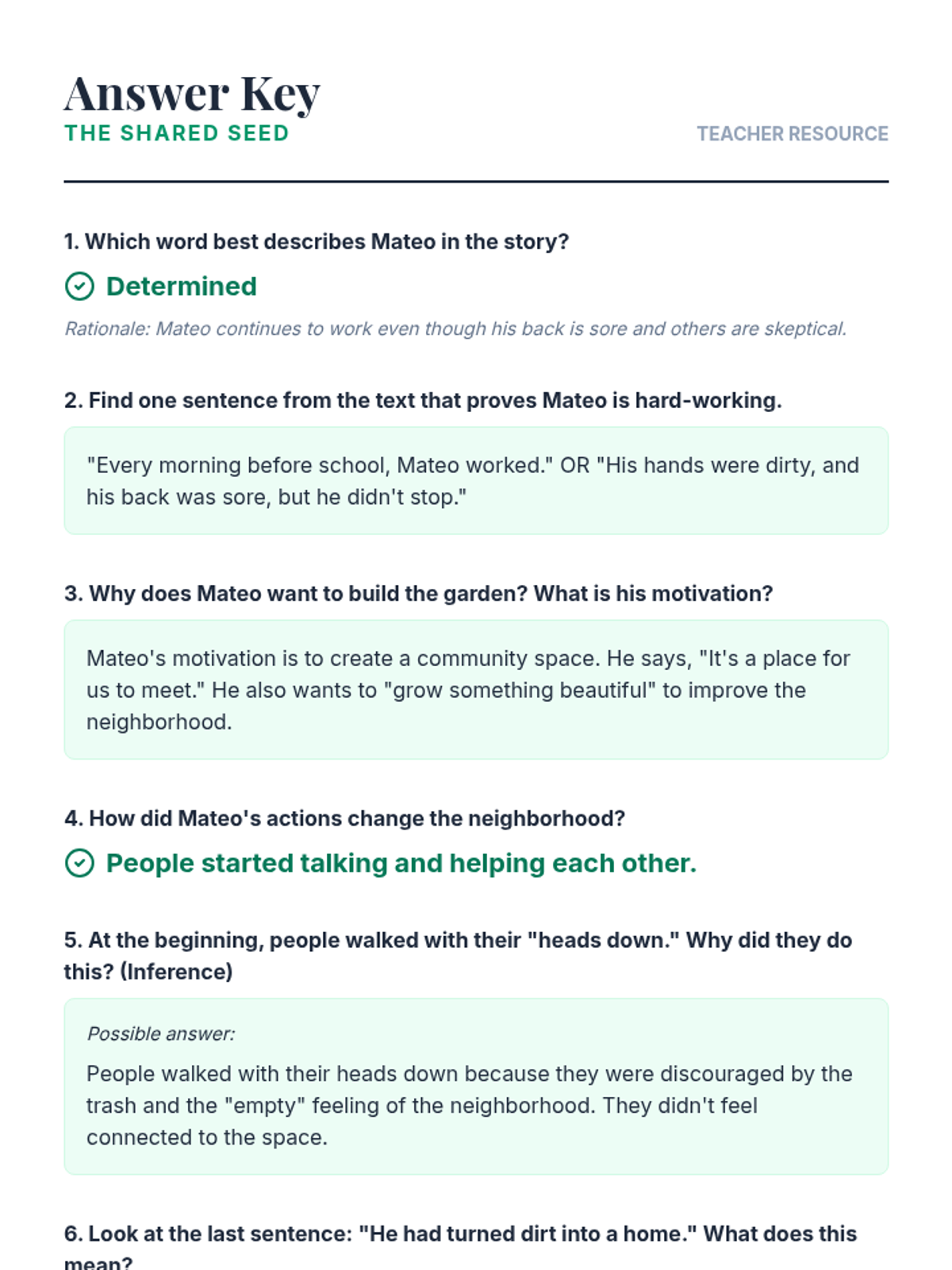
A reading comprehension lesson for ELL students focusing on character traits, motivation, and using text evidence through a story about a community garden.
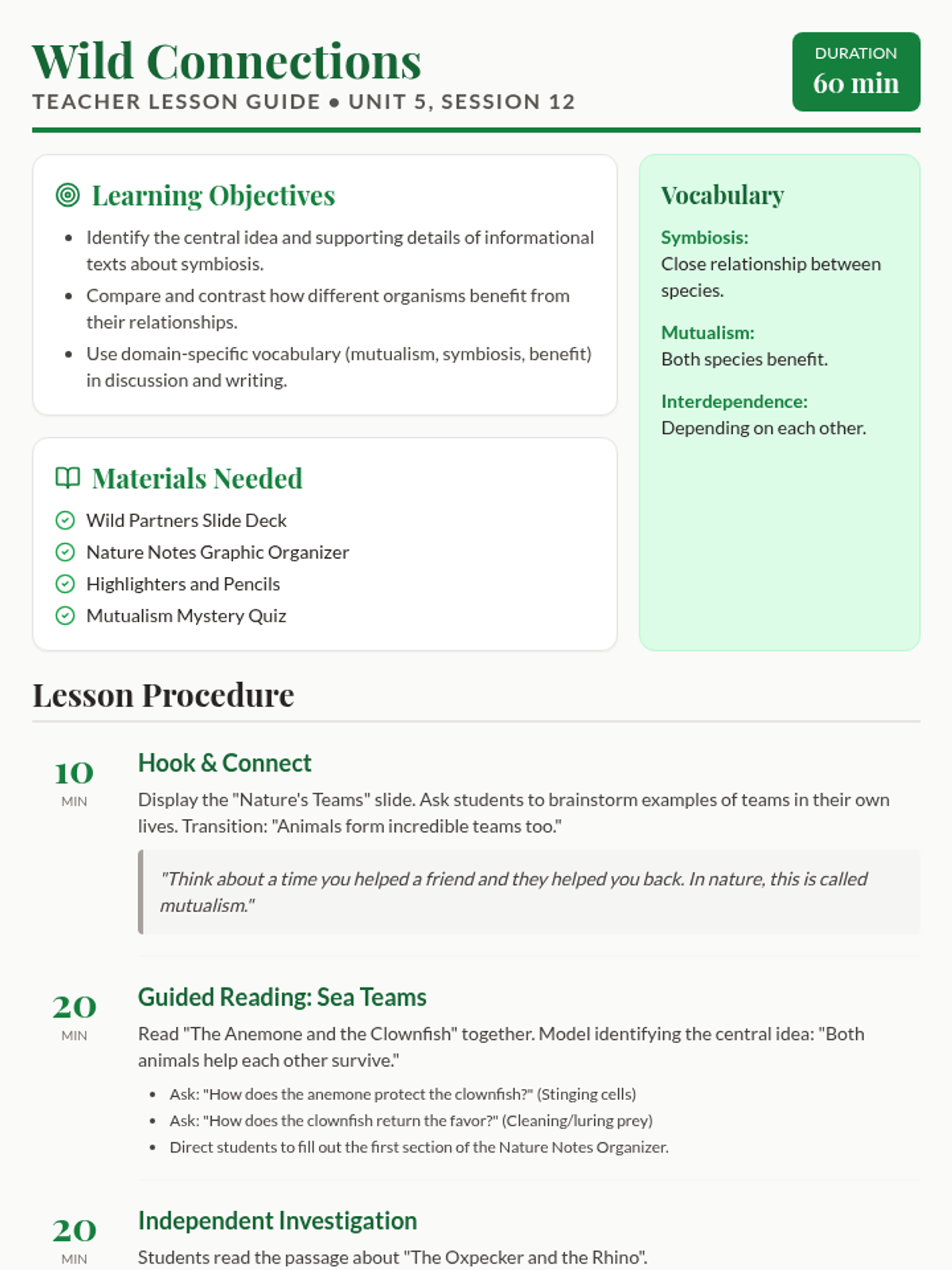
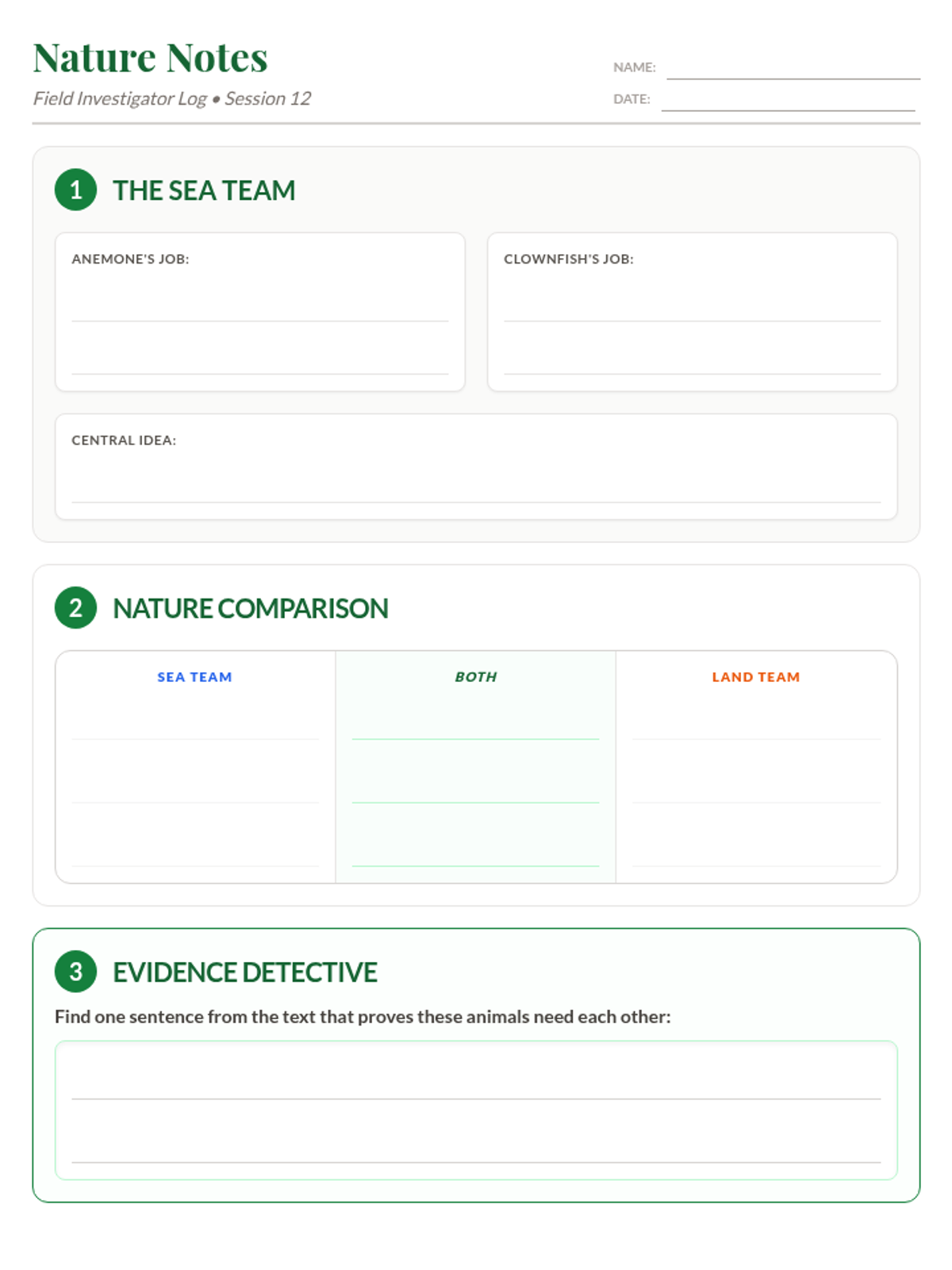
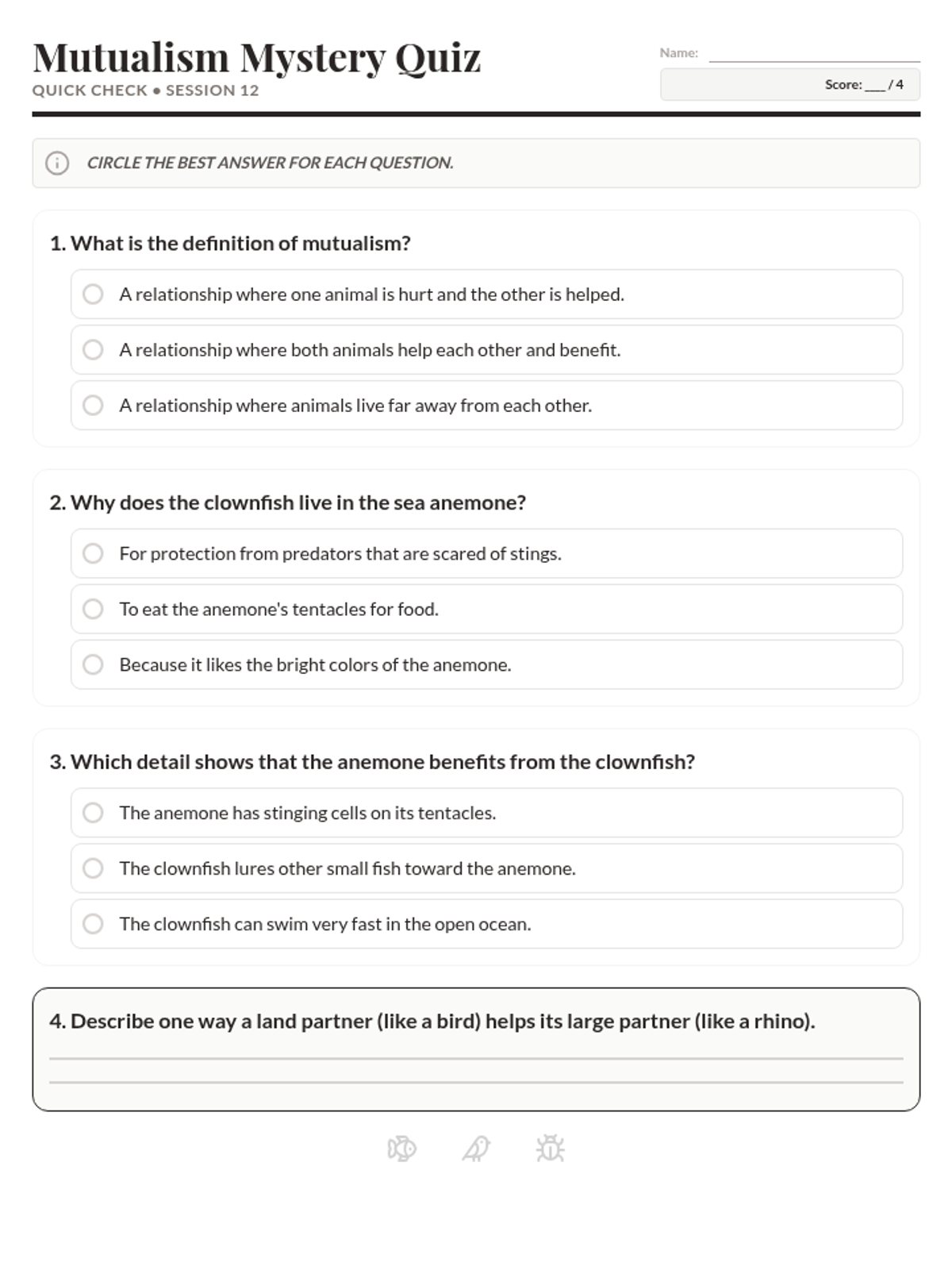
In this session, students compare and contrast different symbiotic relationships using text evidence from multiple informational sources.
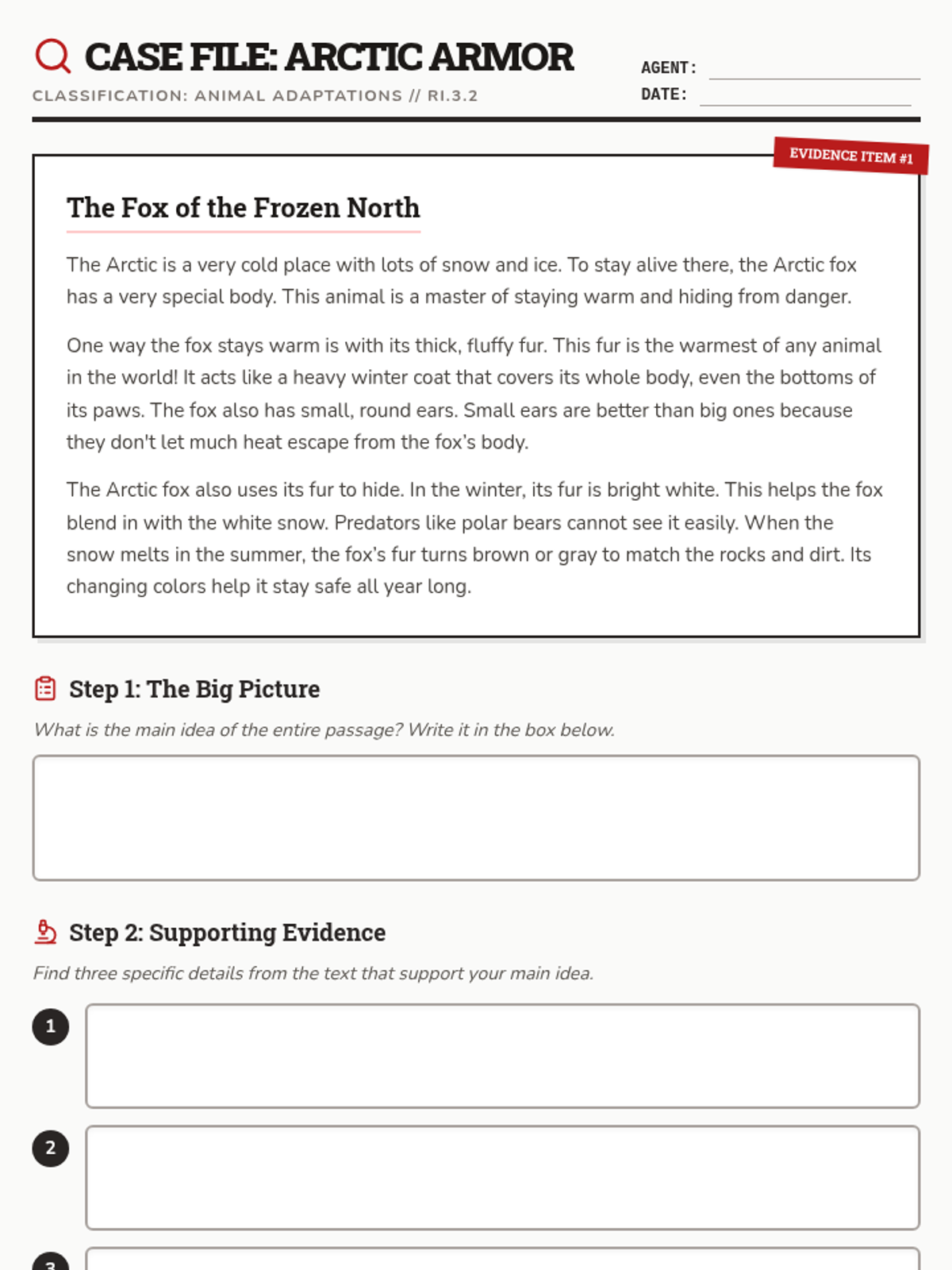
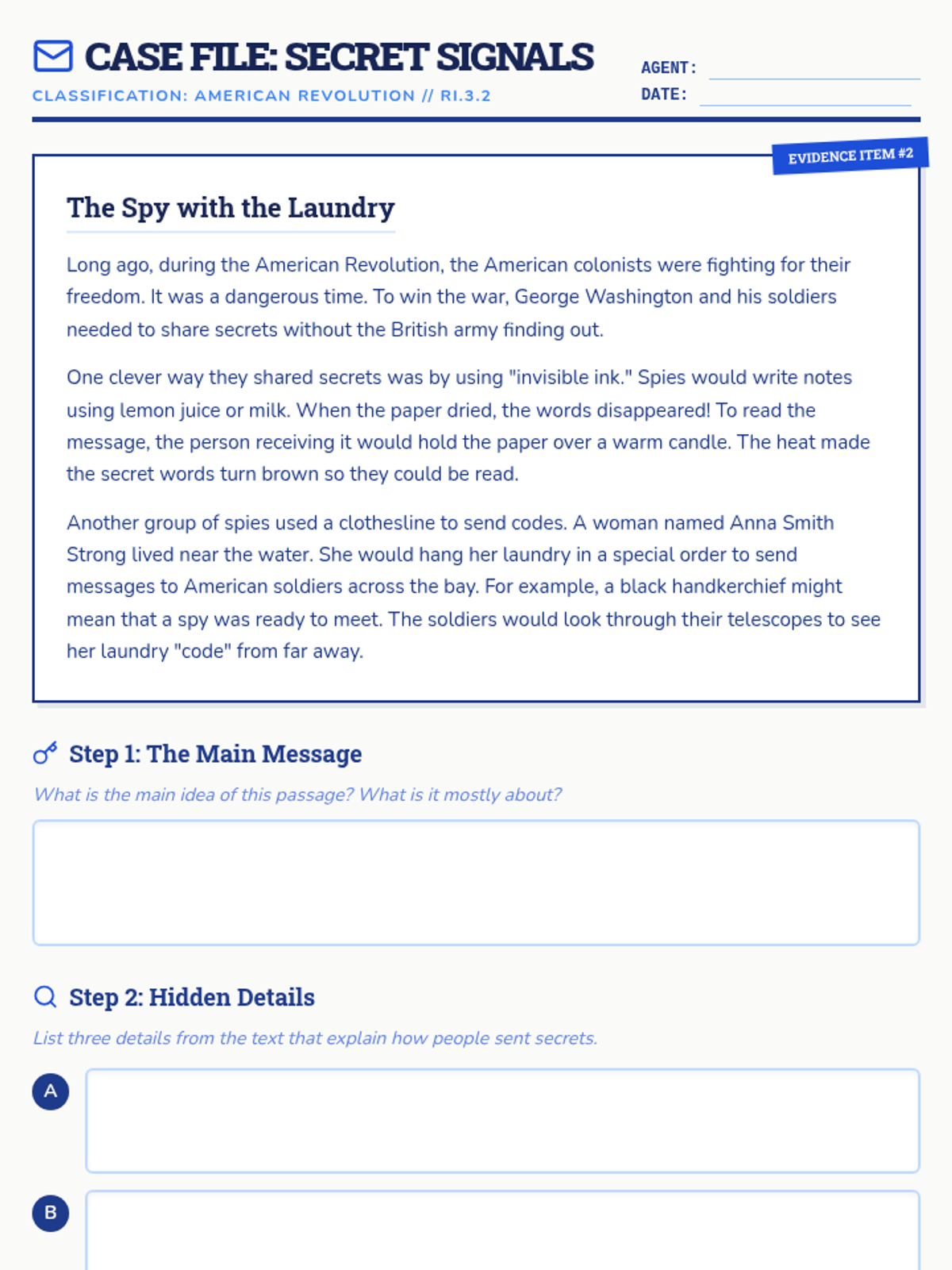
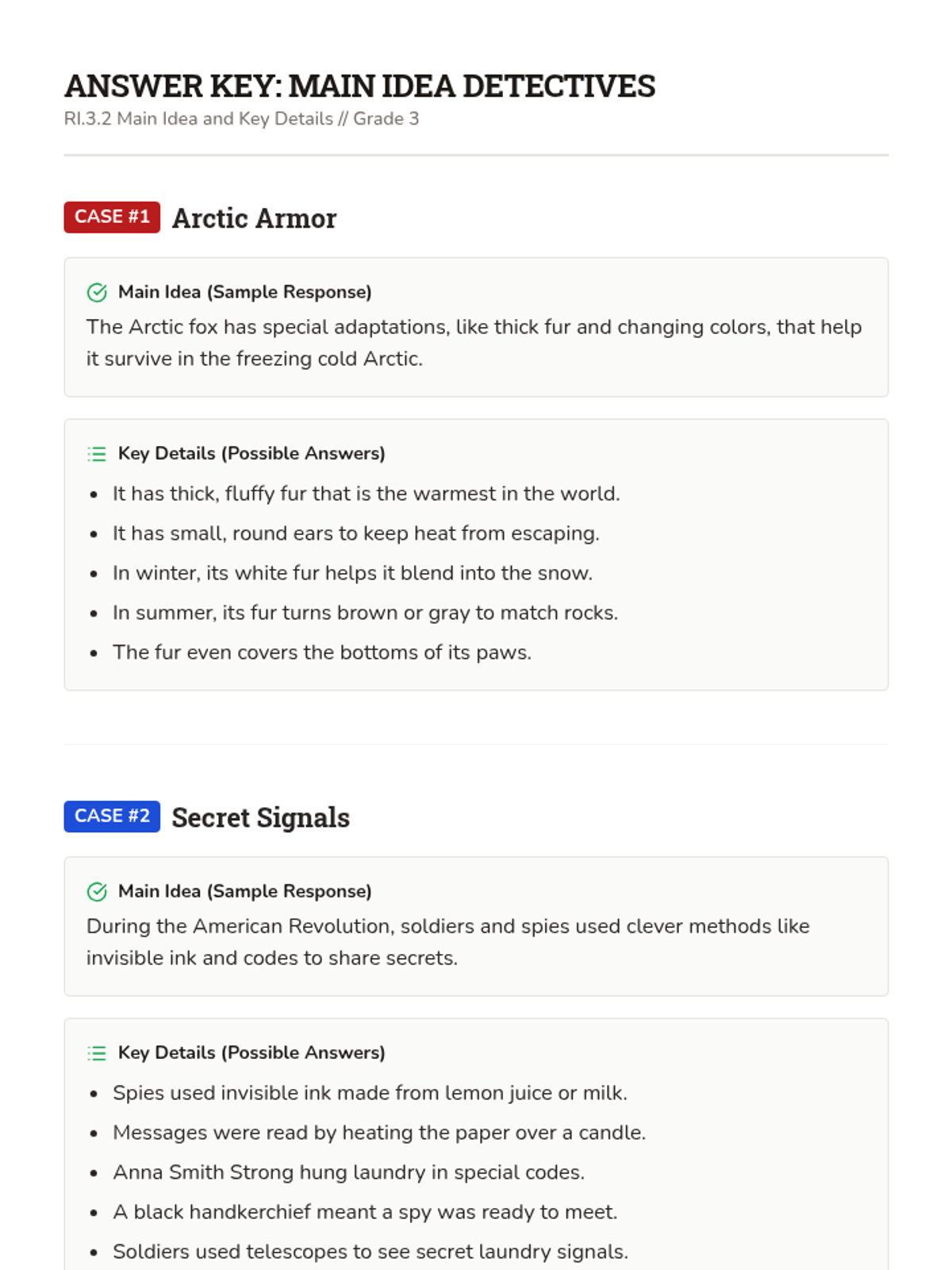
This lesson focuses on identifying the main idea and key details in informational texts (RI.3.2). Students will analyze two distinct passages—one on animal adaptations and one on the American Revolution—using a detective-themed 'evidence gathering' approach.
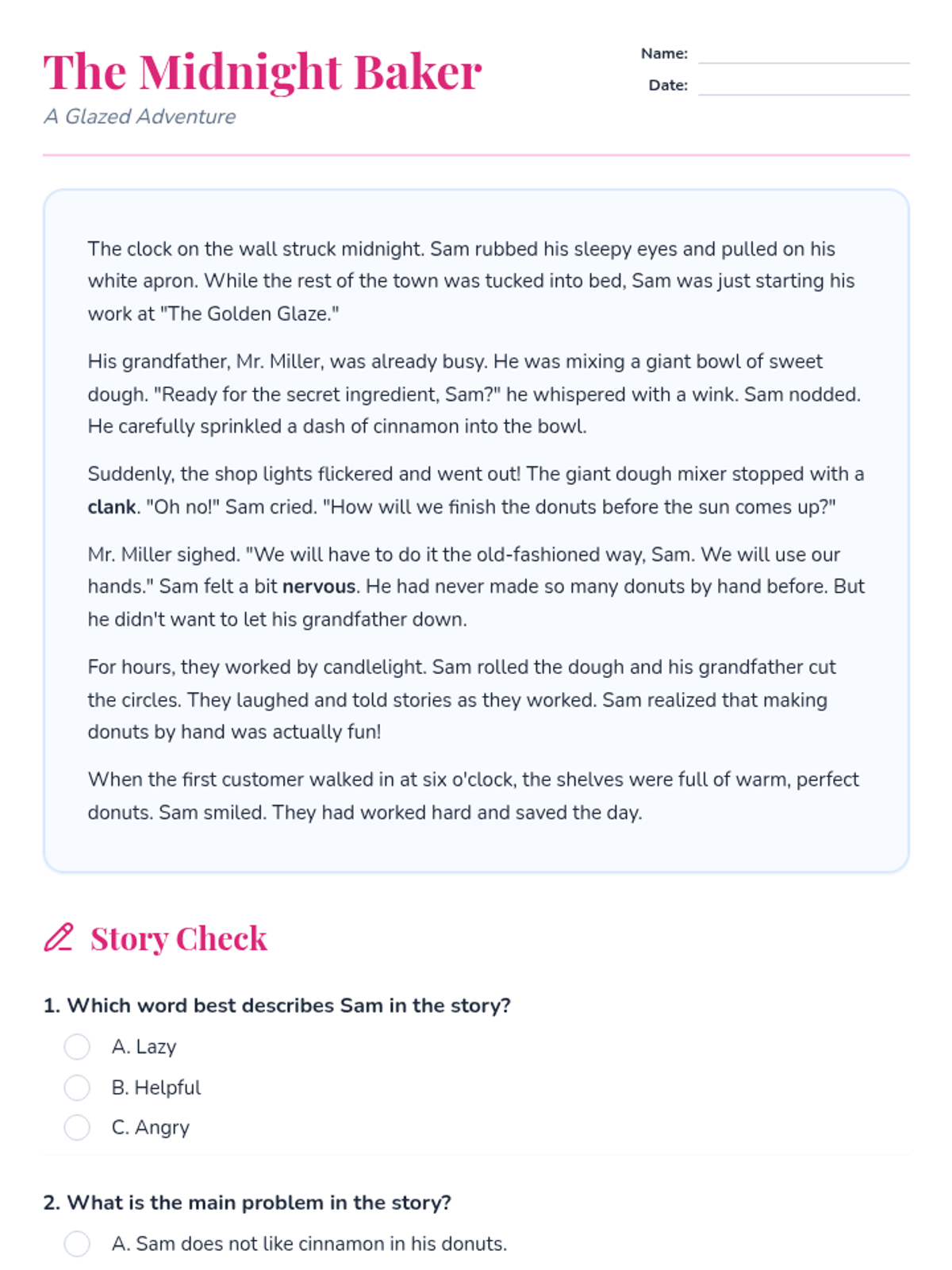
A lesson focusing on fictional text analysis through a story about a young baker's apprentice. Students will practice identifying character traits, plot structure, and using context clues.
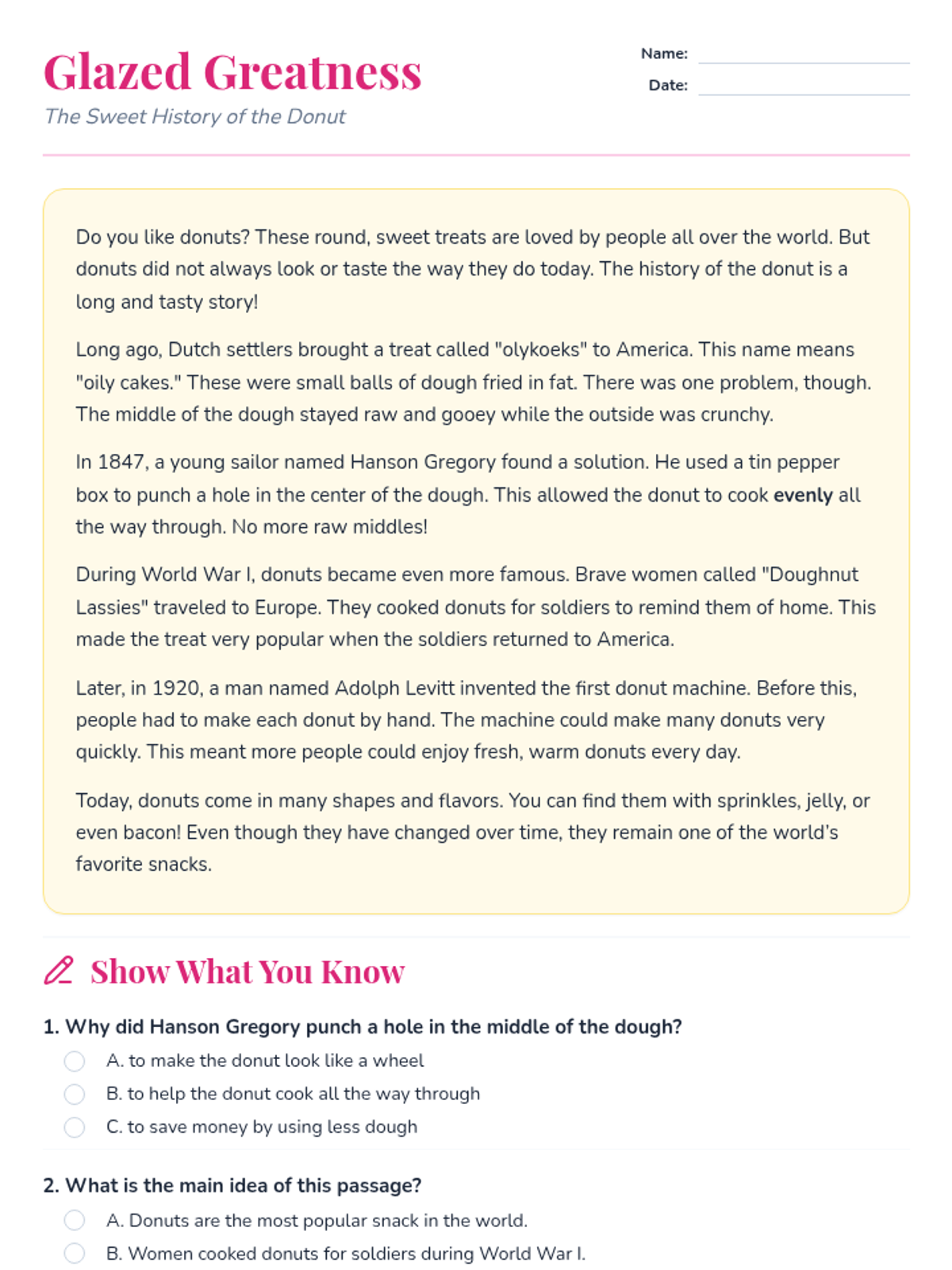
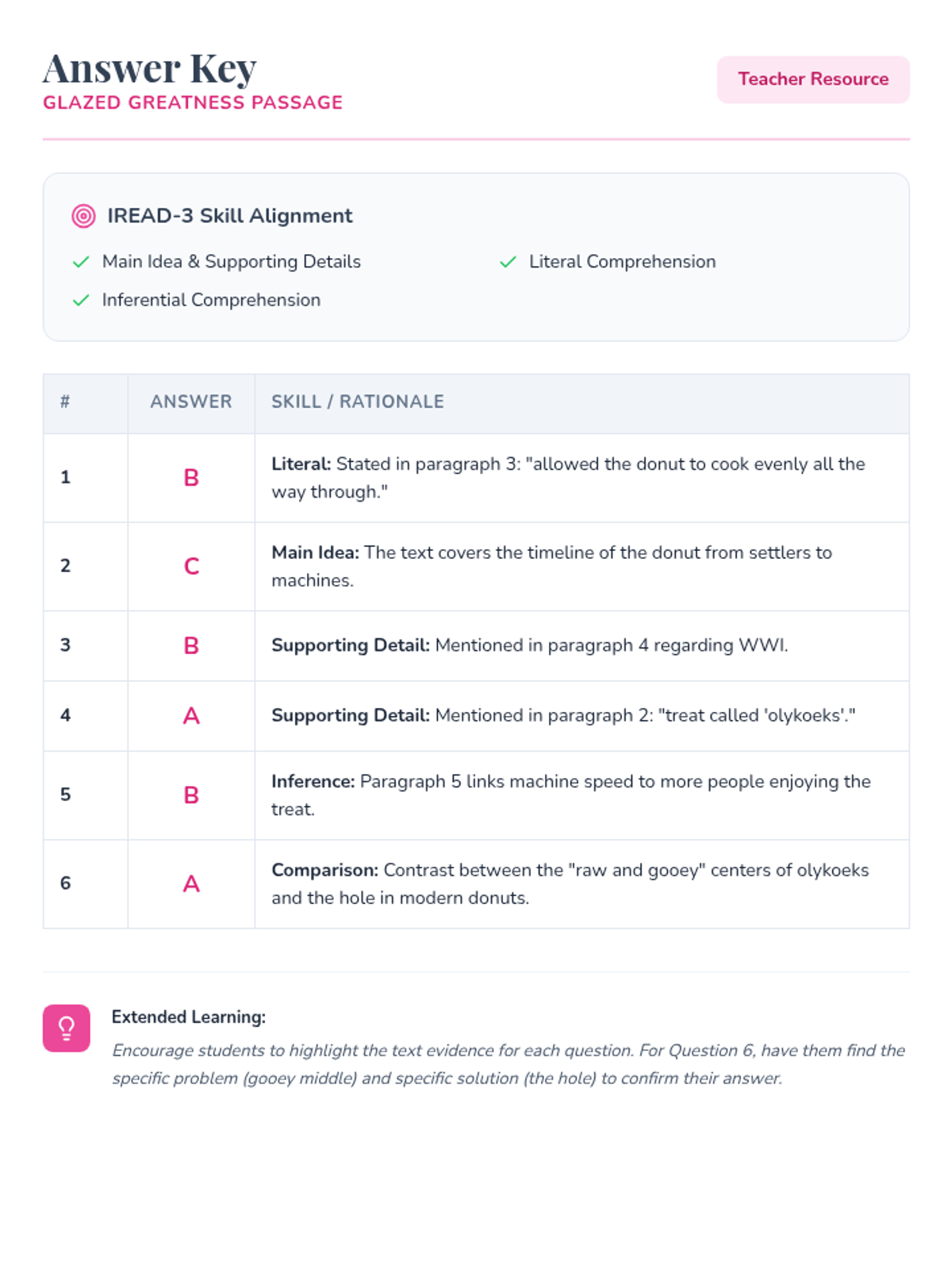
A lesson exploring the history of donuts through a reading passage and comprehension questions modeled after the Indiana IREAD-3 assessment. Students will practice identifying main ideas, using context clues, and making inferences.
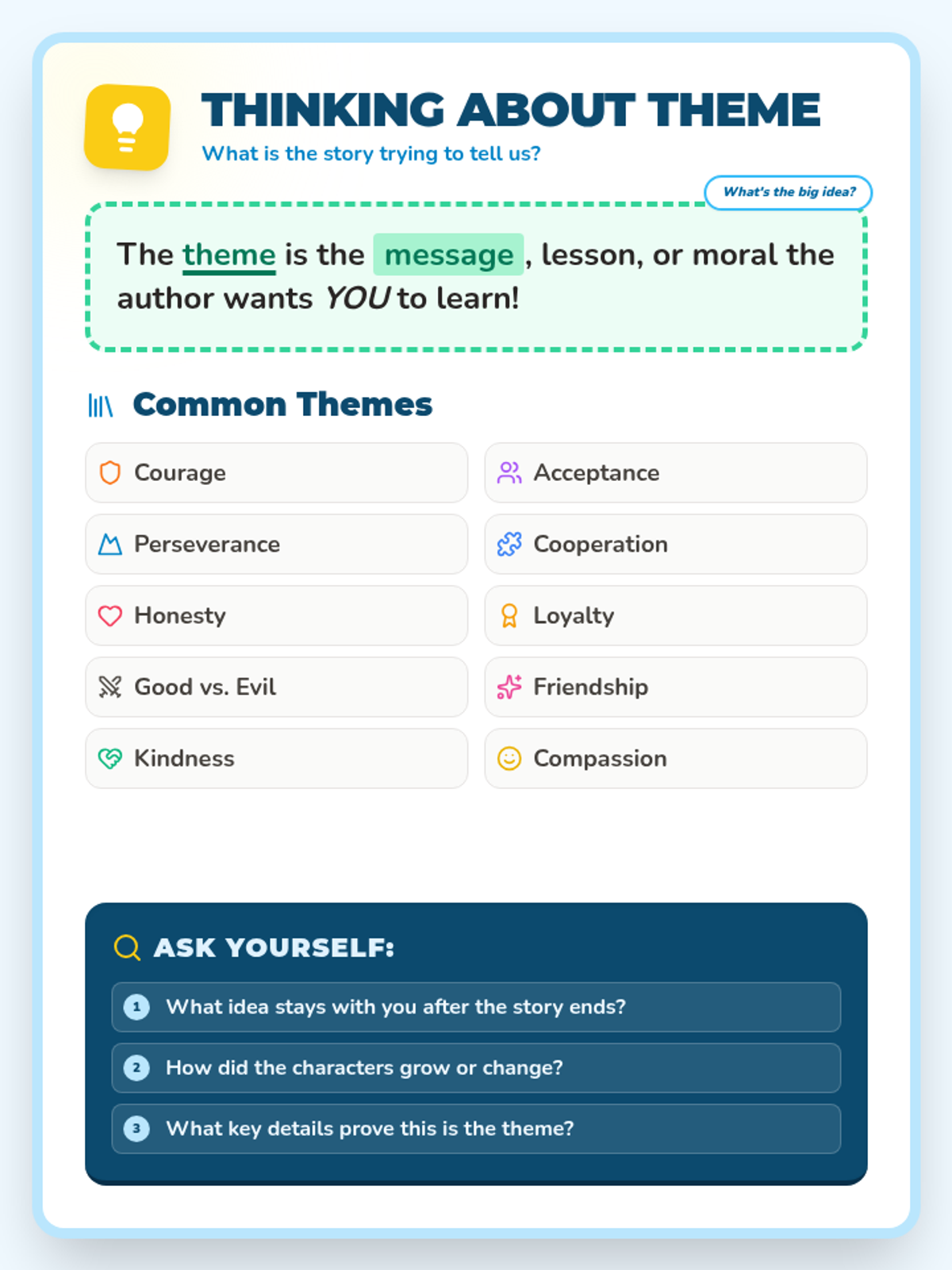
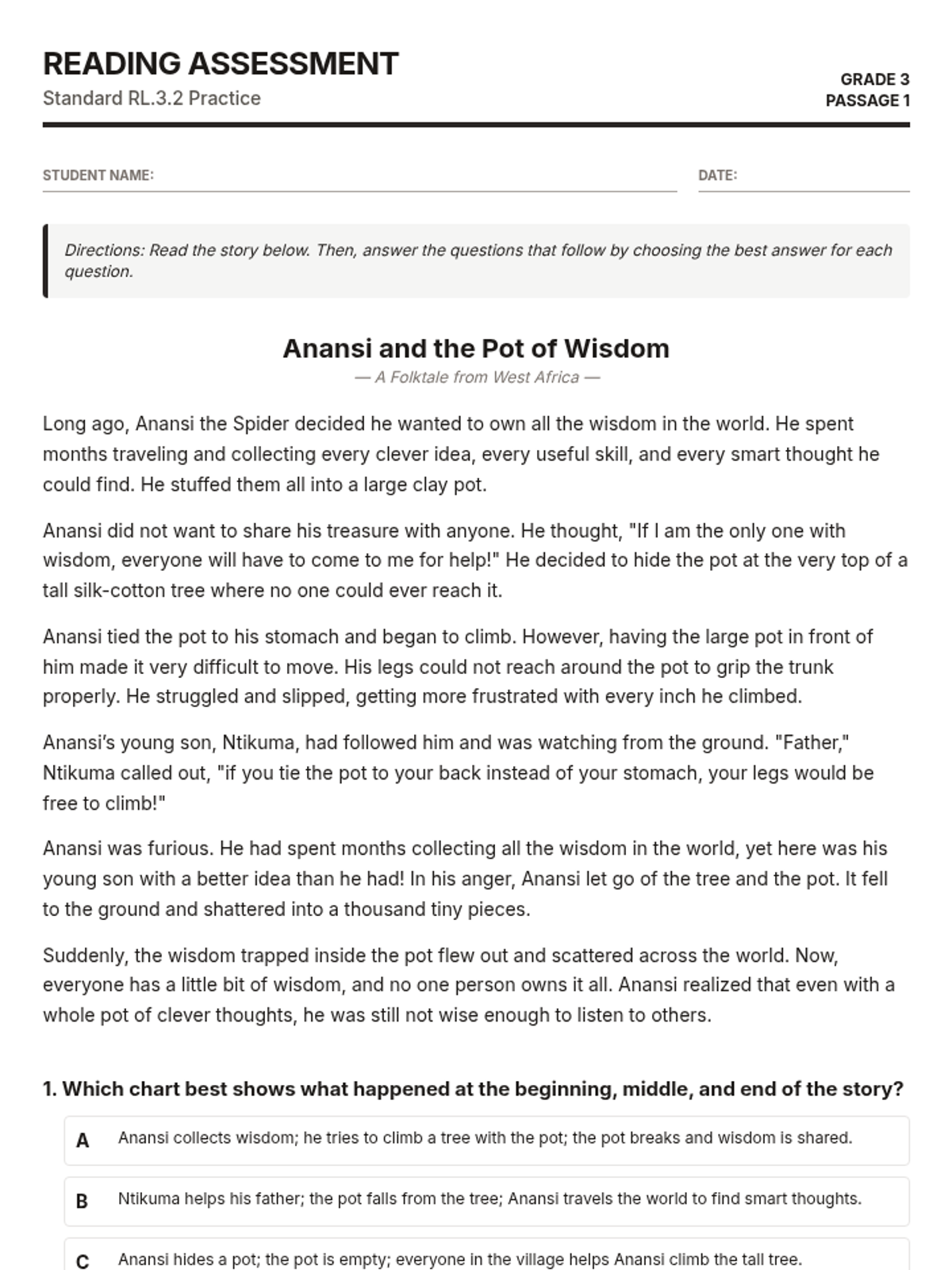
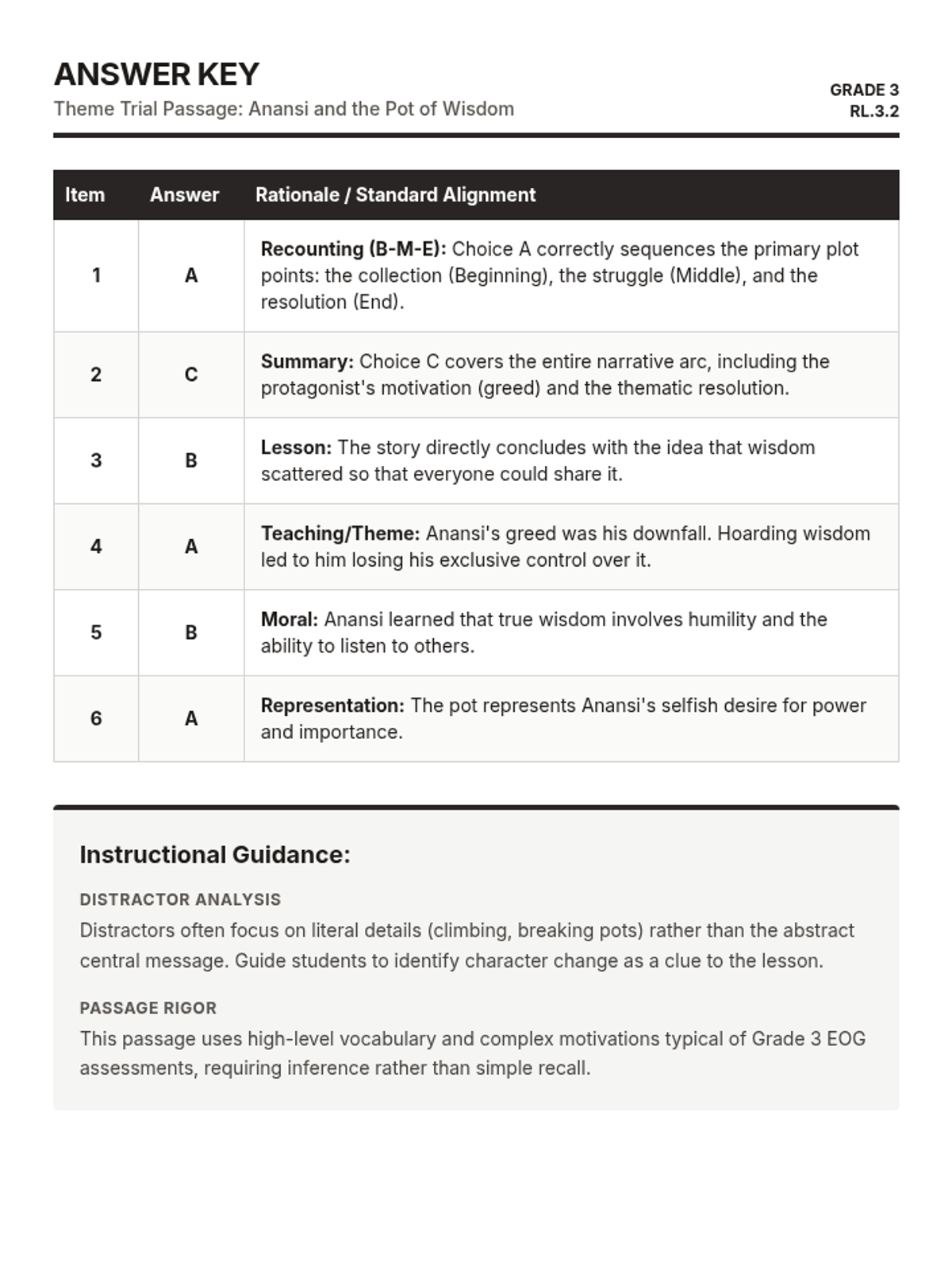
Students will learn to recount diverse stories and identify their central messages, lessons, or morals using fables, folktales, and myths. This lesson provides a visual reference and a guided practice sheet for mapping out story details.
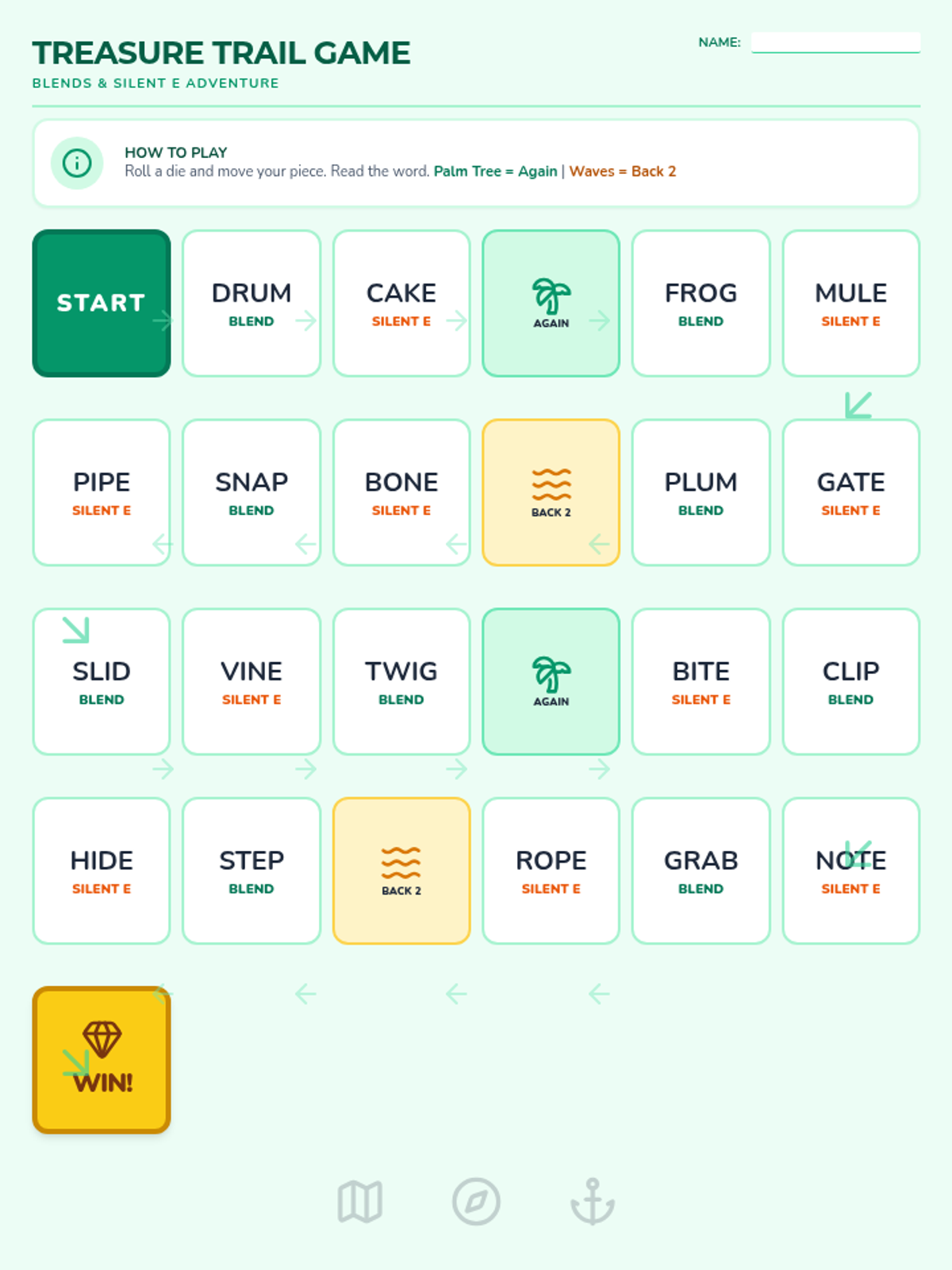
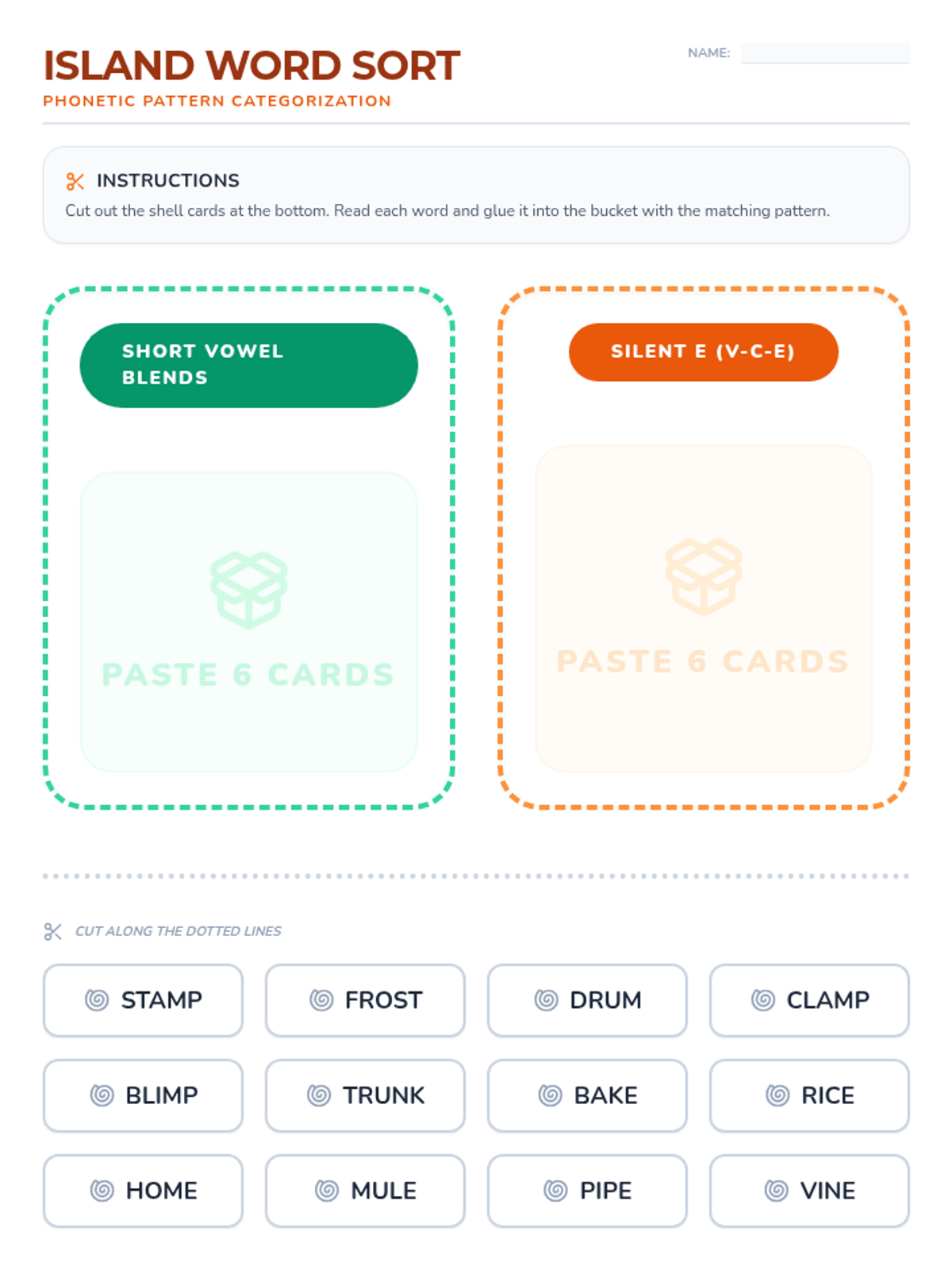
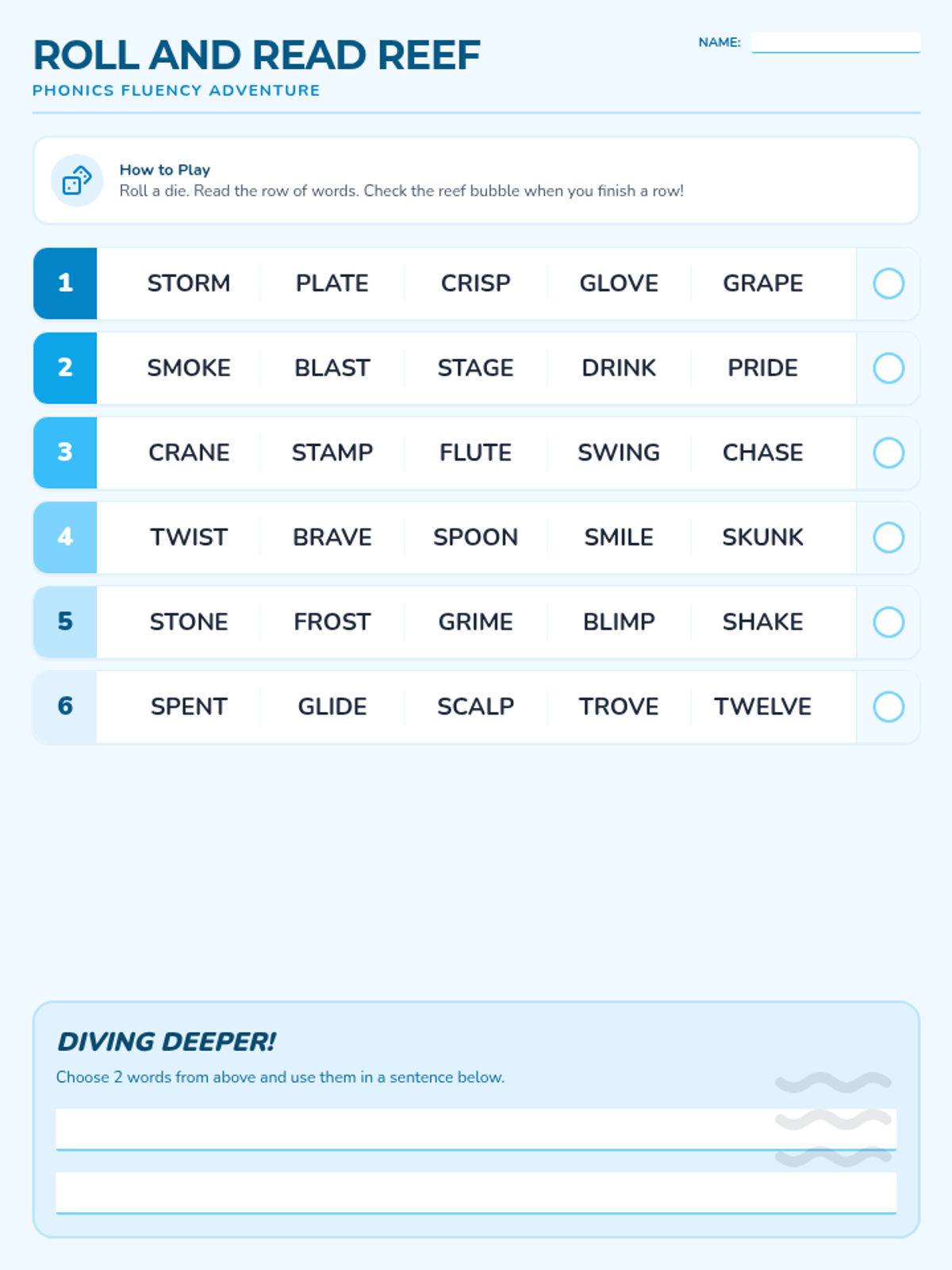
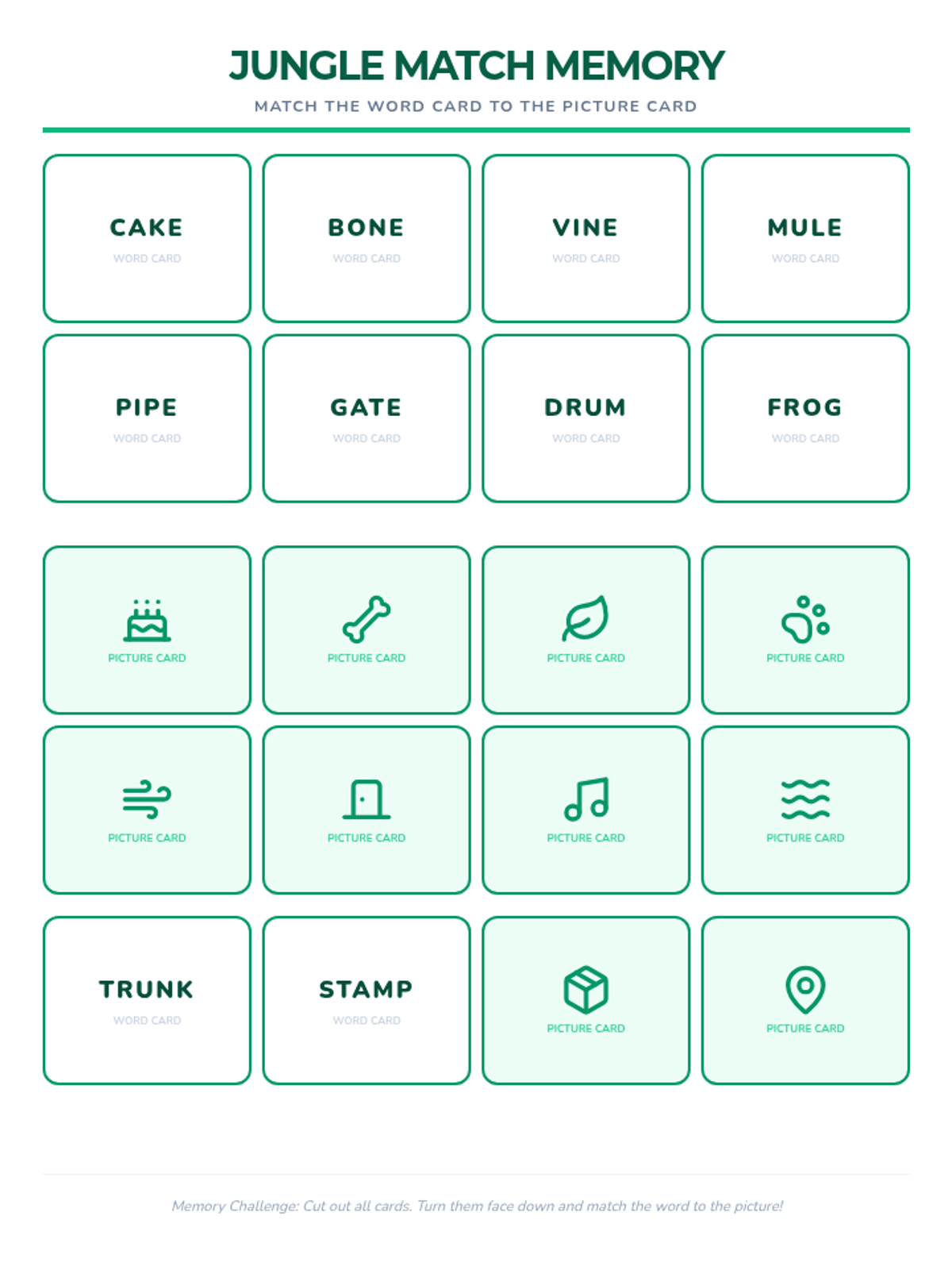
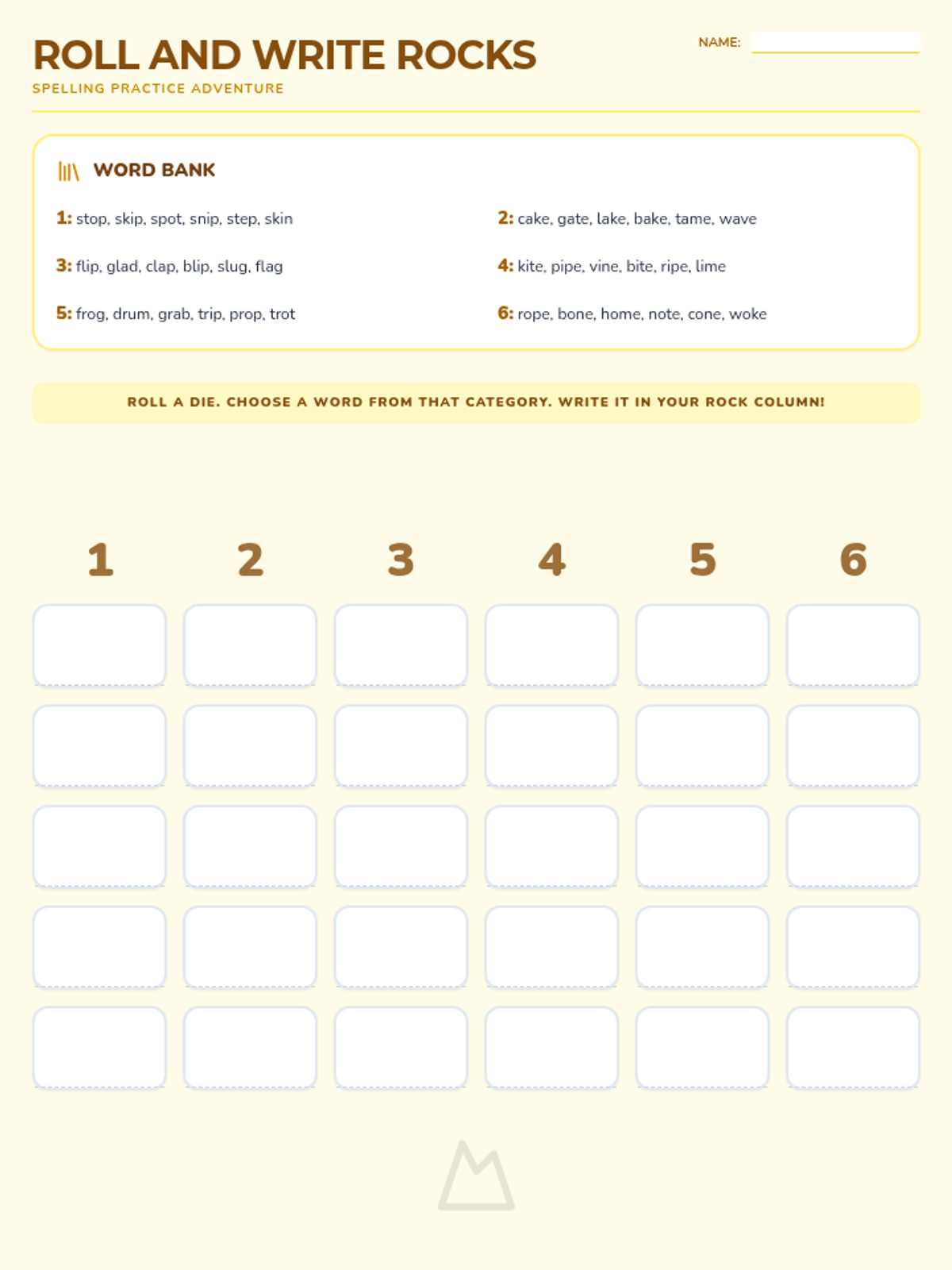
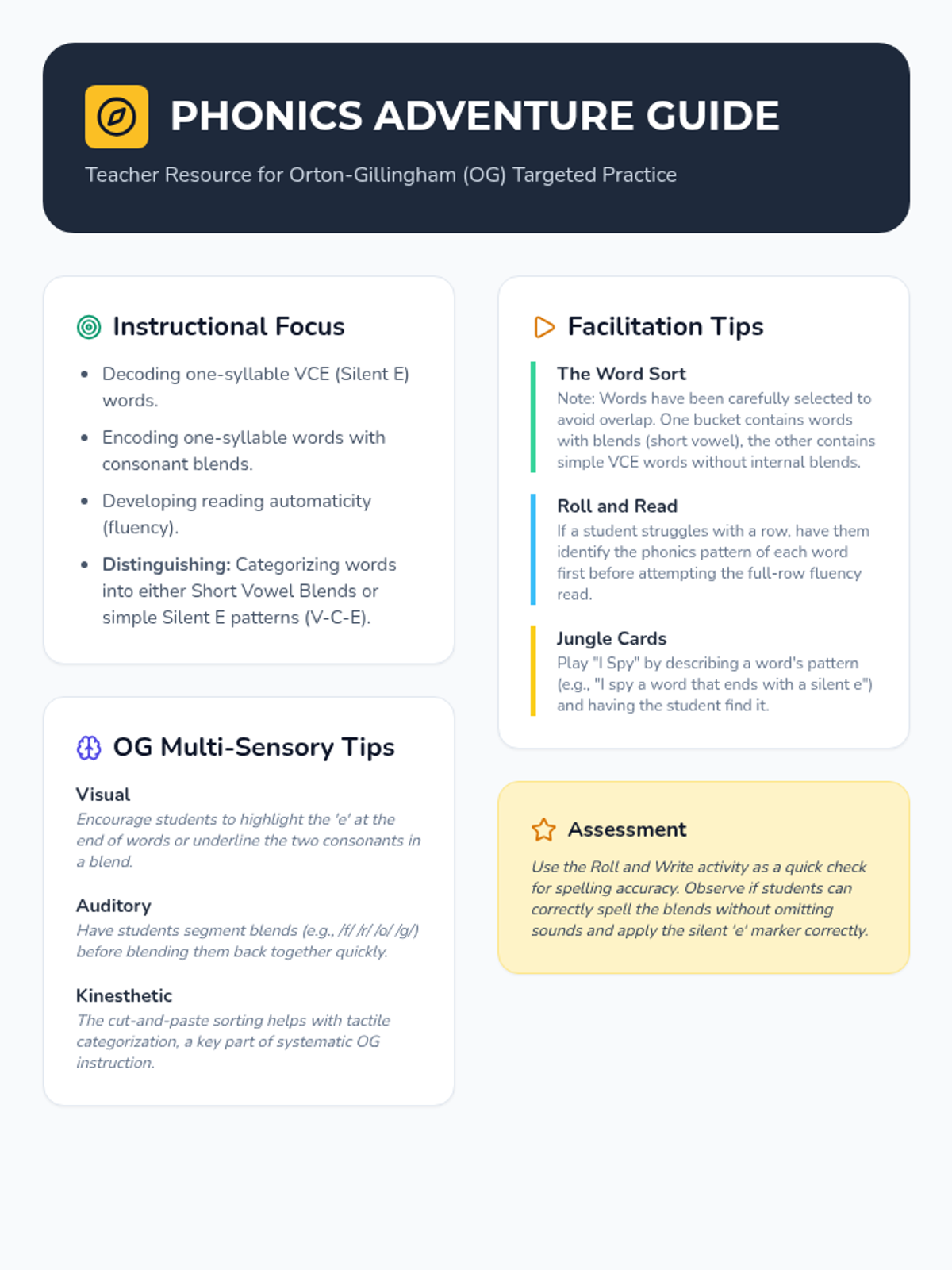
A multi-sensory practice lesson focusing on one-syllable words with consonant blends and the silent 'e' (VCE) pattern through interactive games and hands-on activities.
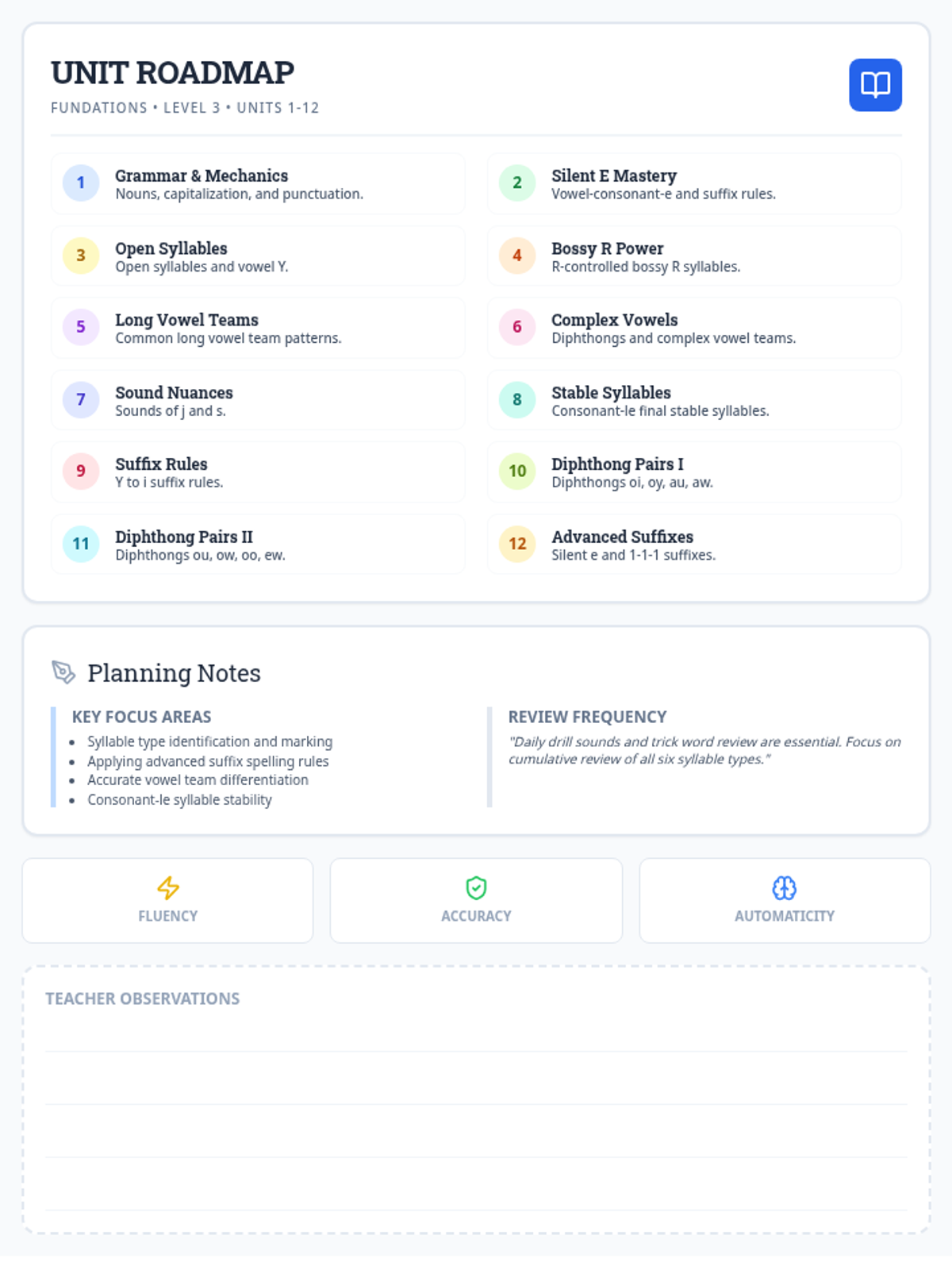
A comprehensive quick-reference guide and overview for the first twelve units of Fundations Level 3, designed for teacher planning and student tracking.
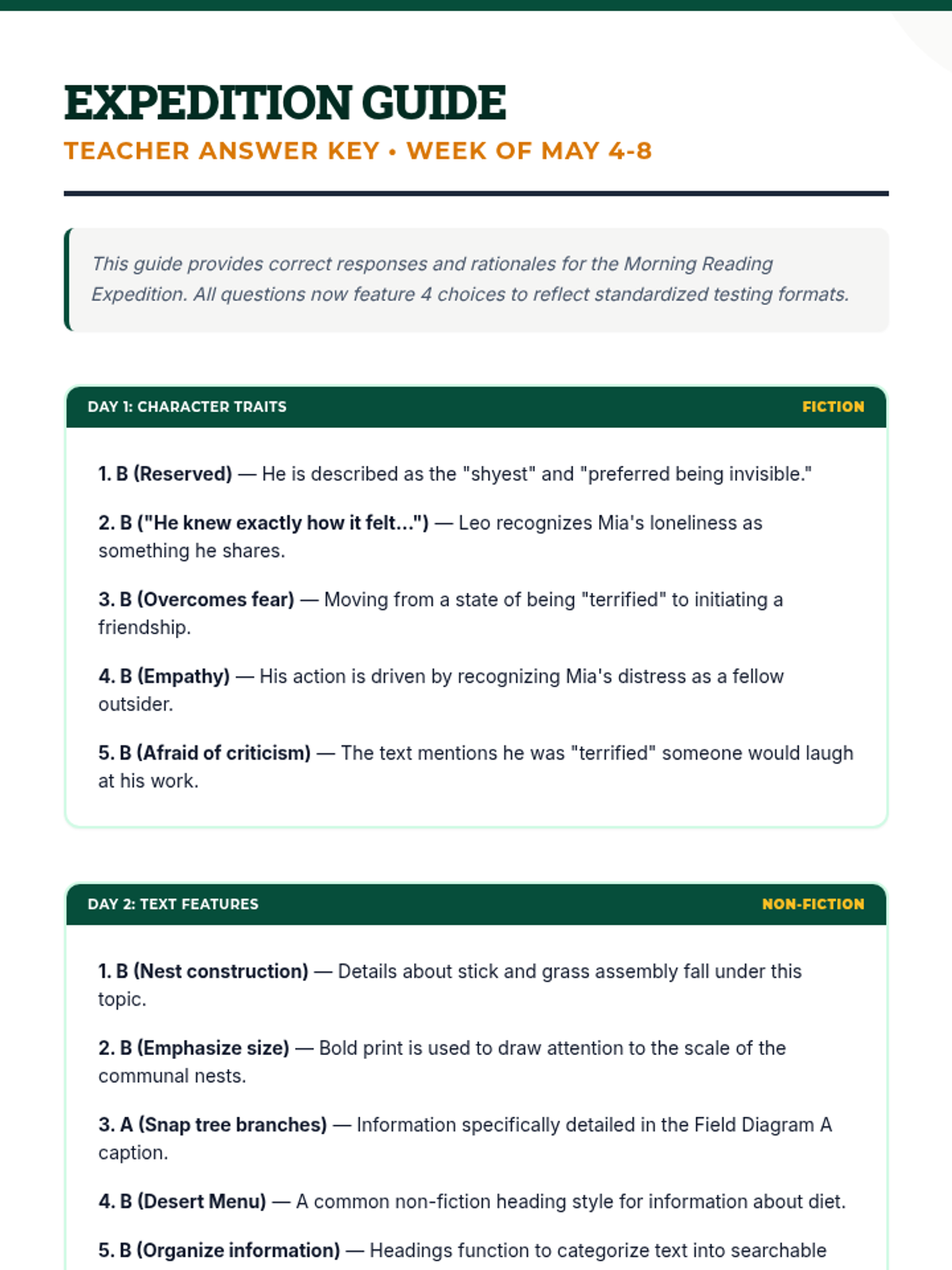
A 5-day morning work packet for 3rd-grade students focused on key reading comprehension skills: character traits, text features, main idea, inference, and context clues. Each day features a high-rigor short passage and five multiple-choice questions modeled after standardized testing formats.
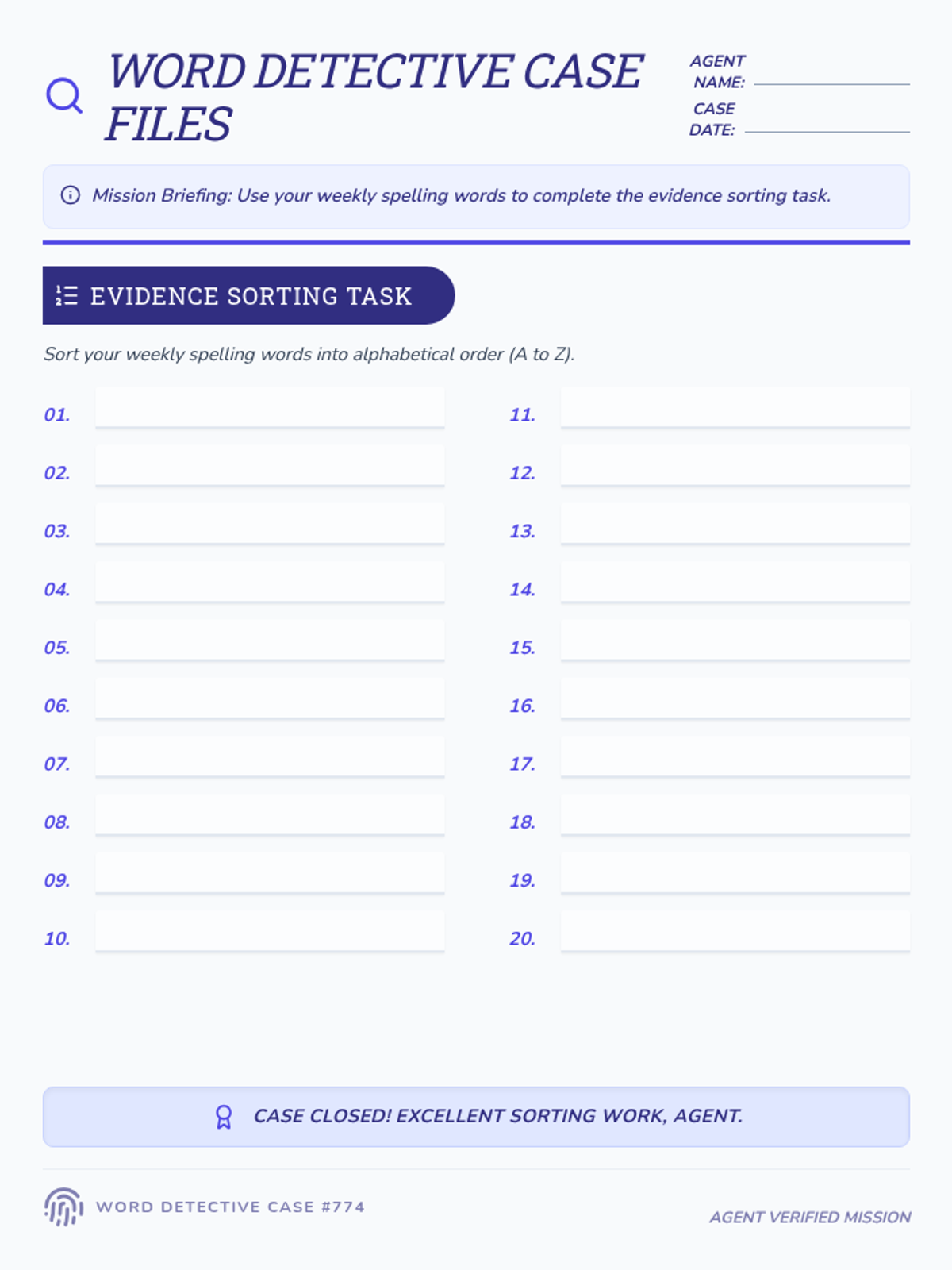
A practice session for students to master their weekly spelling list through organization and sentence construction.
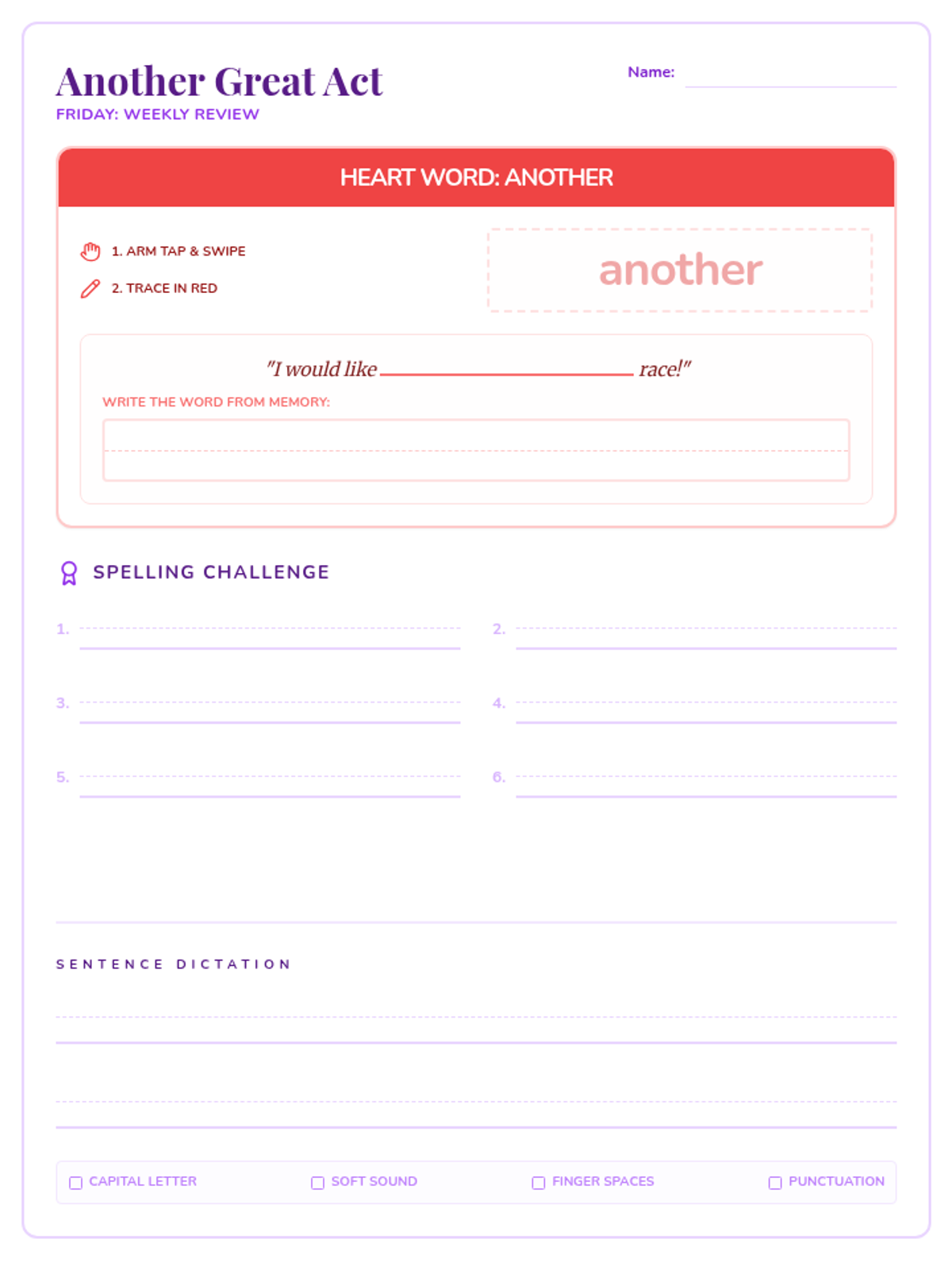
Cumulative review of soft c and g, with a focus on the heart word 'another' through kinesthetic and tactile practice.
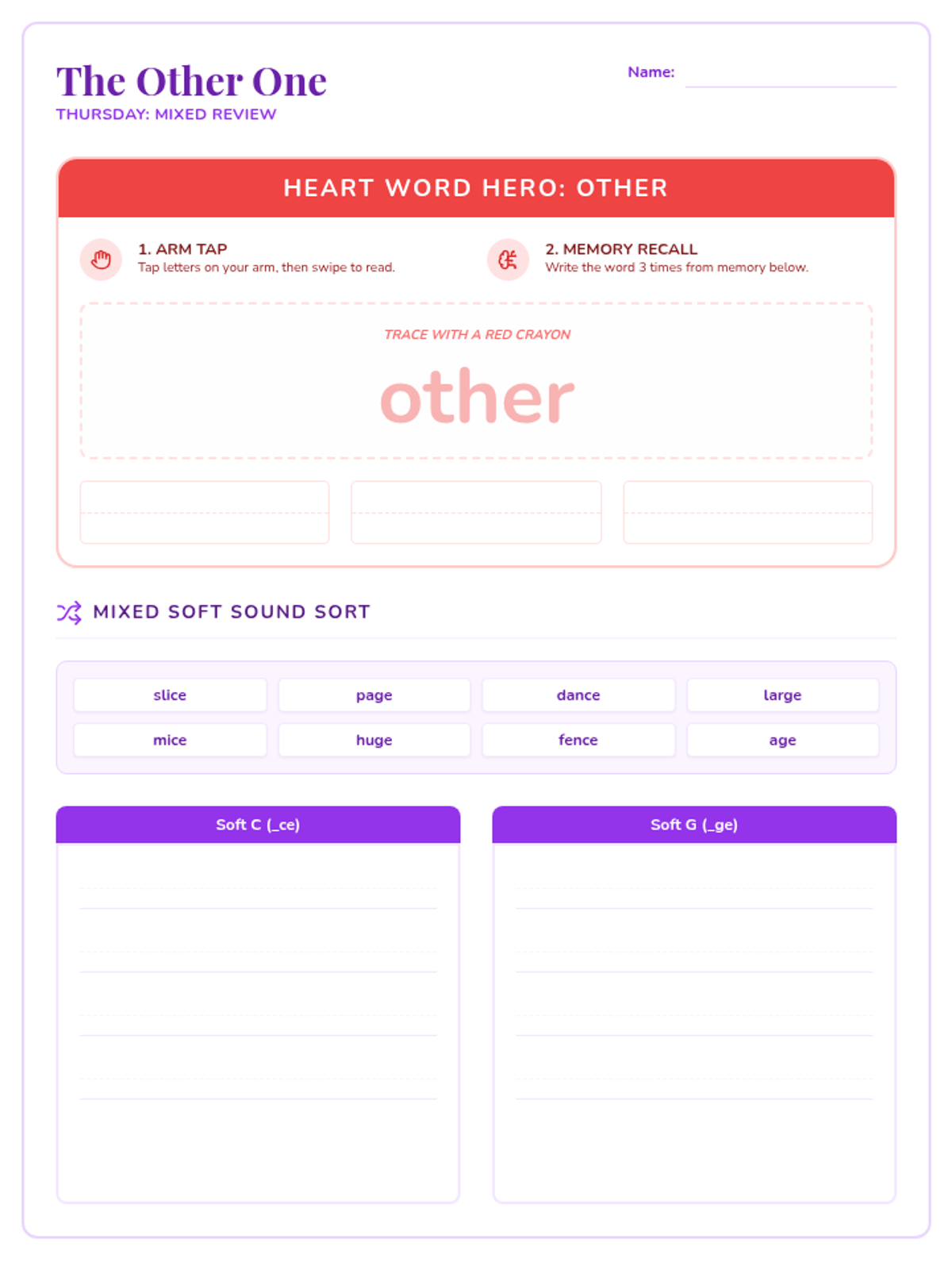
Review of soft c and g mixed together, with a deep dive into the heart word 'other' using multisensory steps.
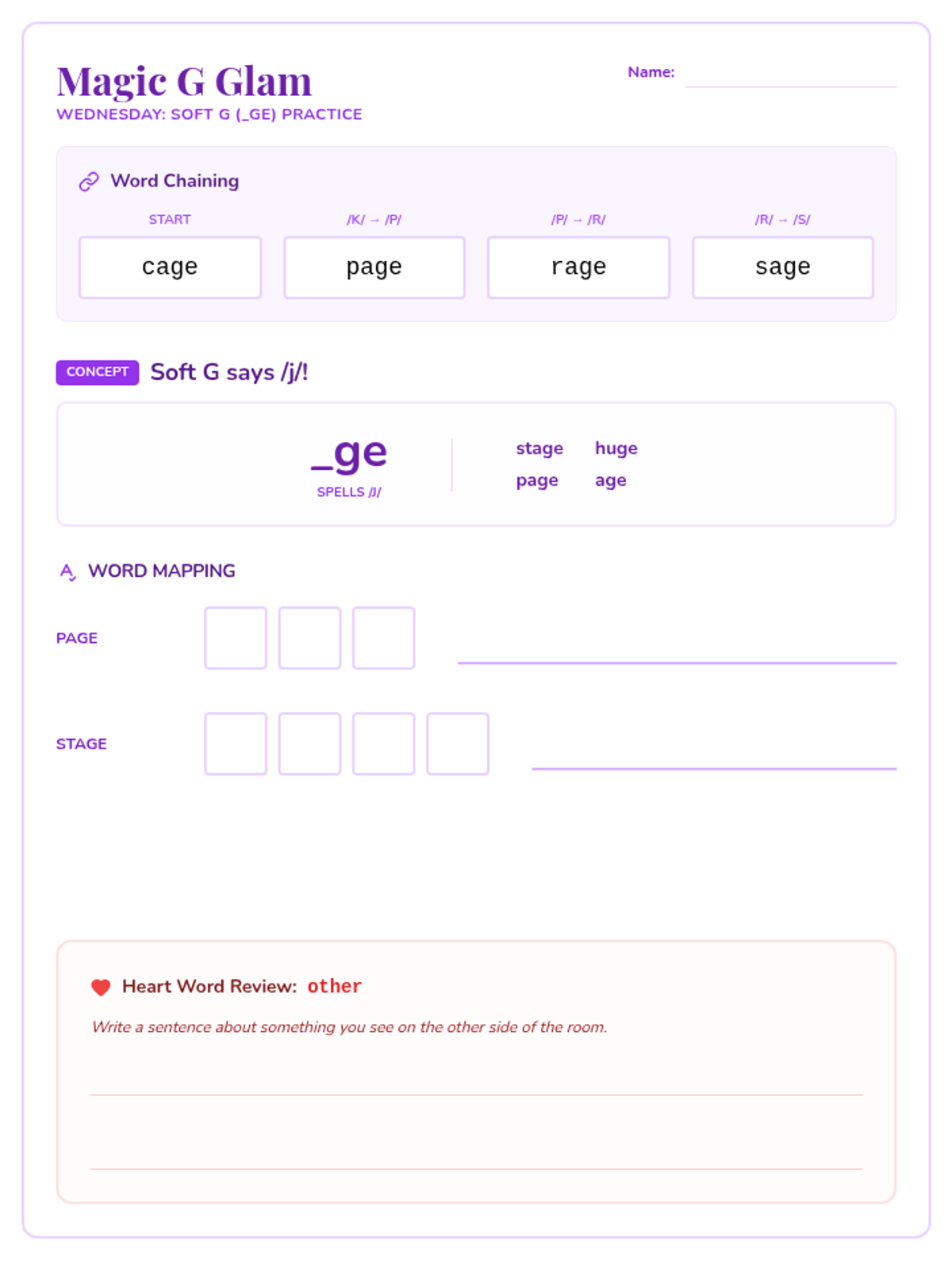
Introduction to soft g spelling with _ge in VCE words, featuring word chaining and spelling application.
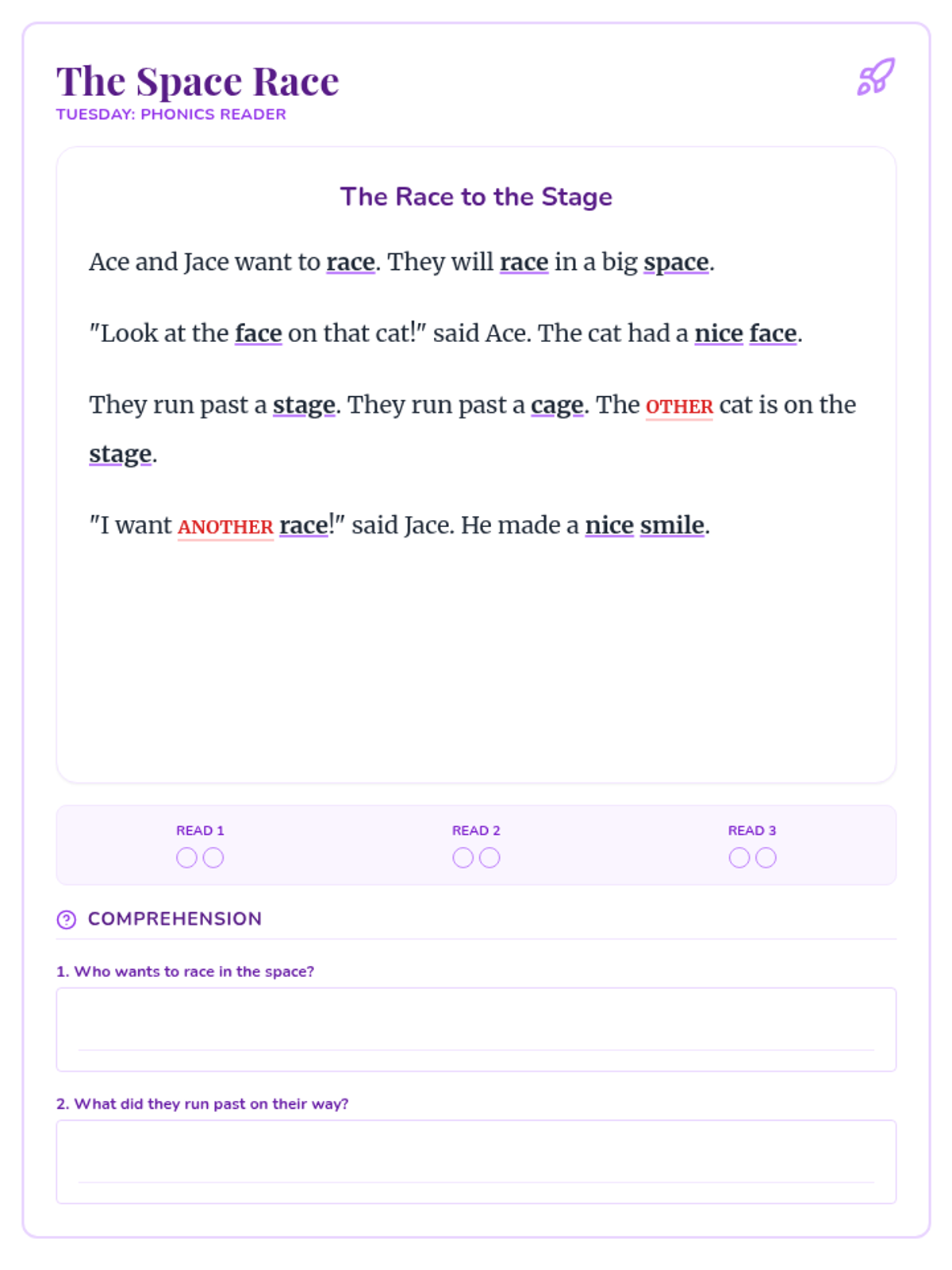
Focus on reading fluency with a decodable reader featuring soft c words and review of long vowel VCE patterns.
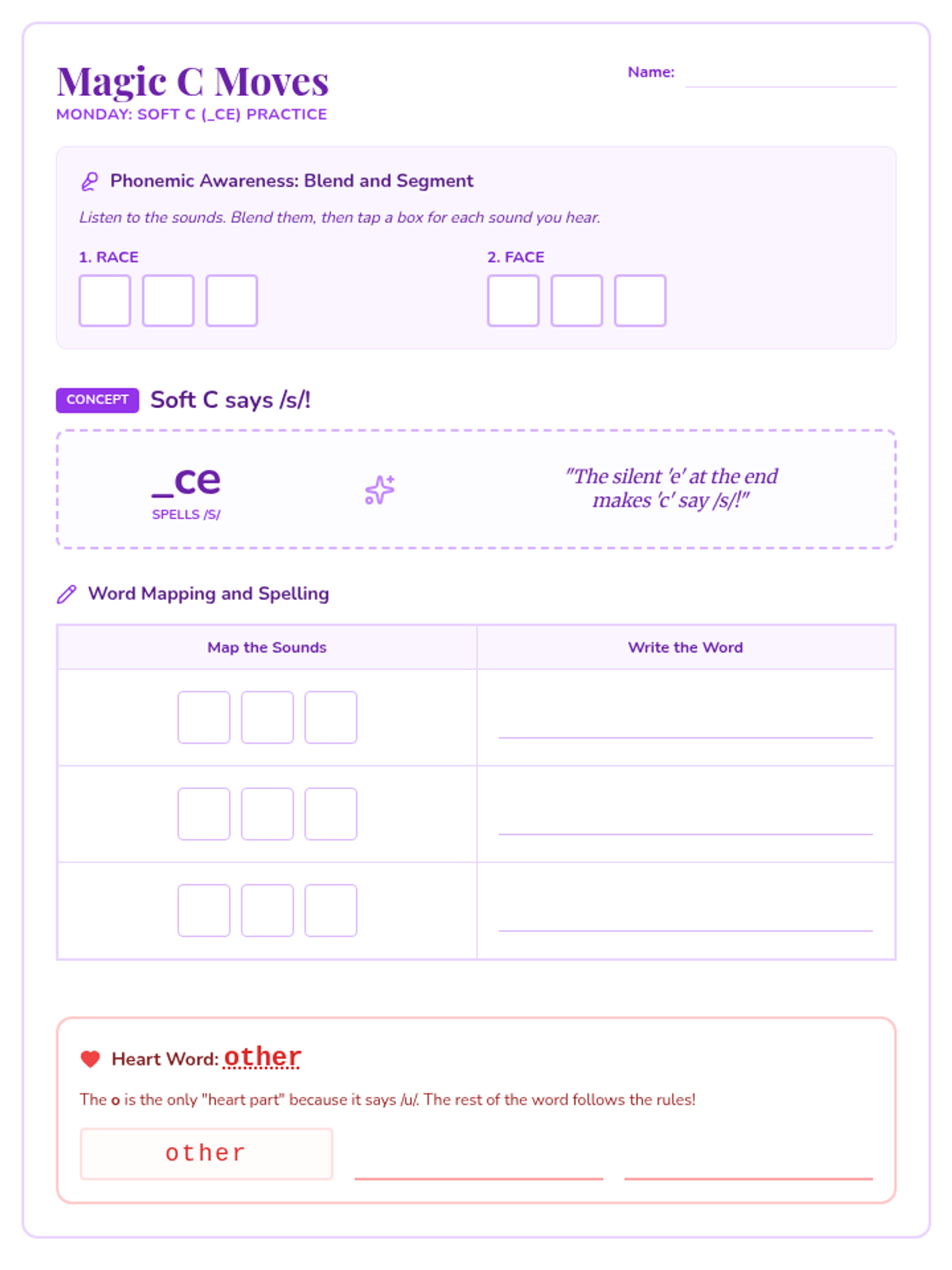
Introduction to soft c spelling with _ce in VCE words, including word mapping and spelling application.
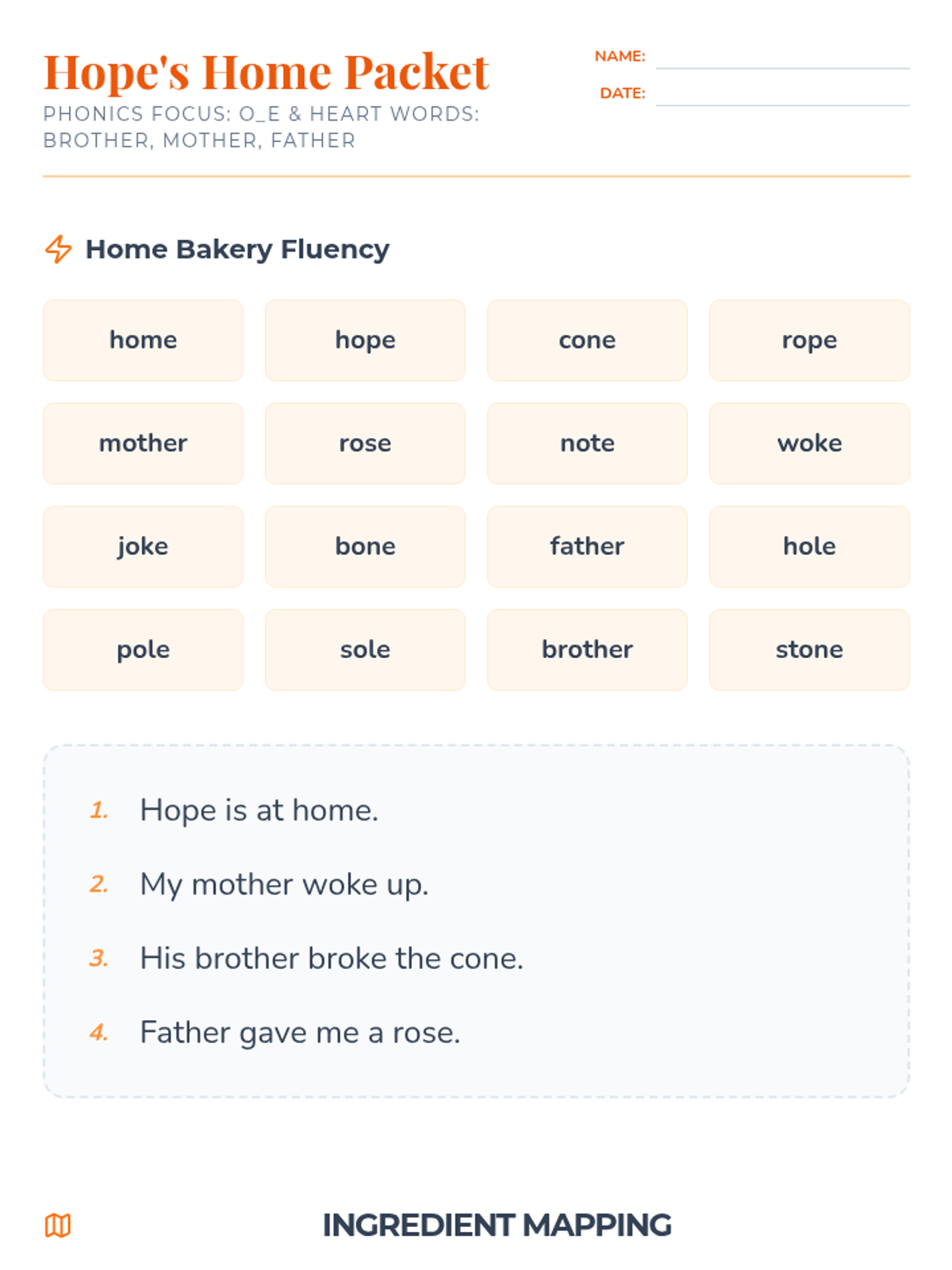
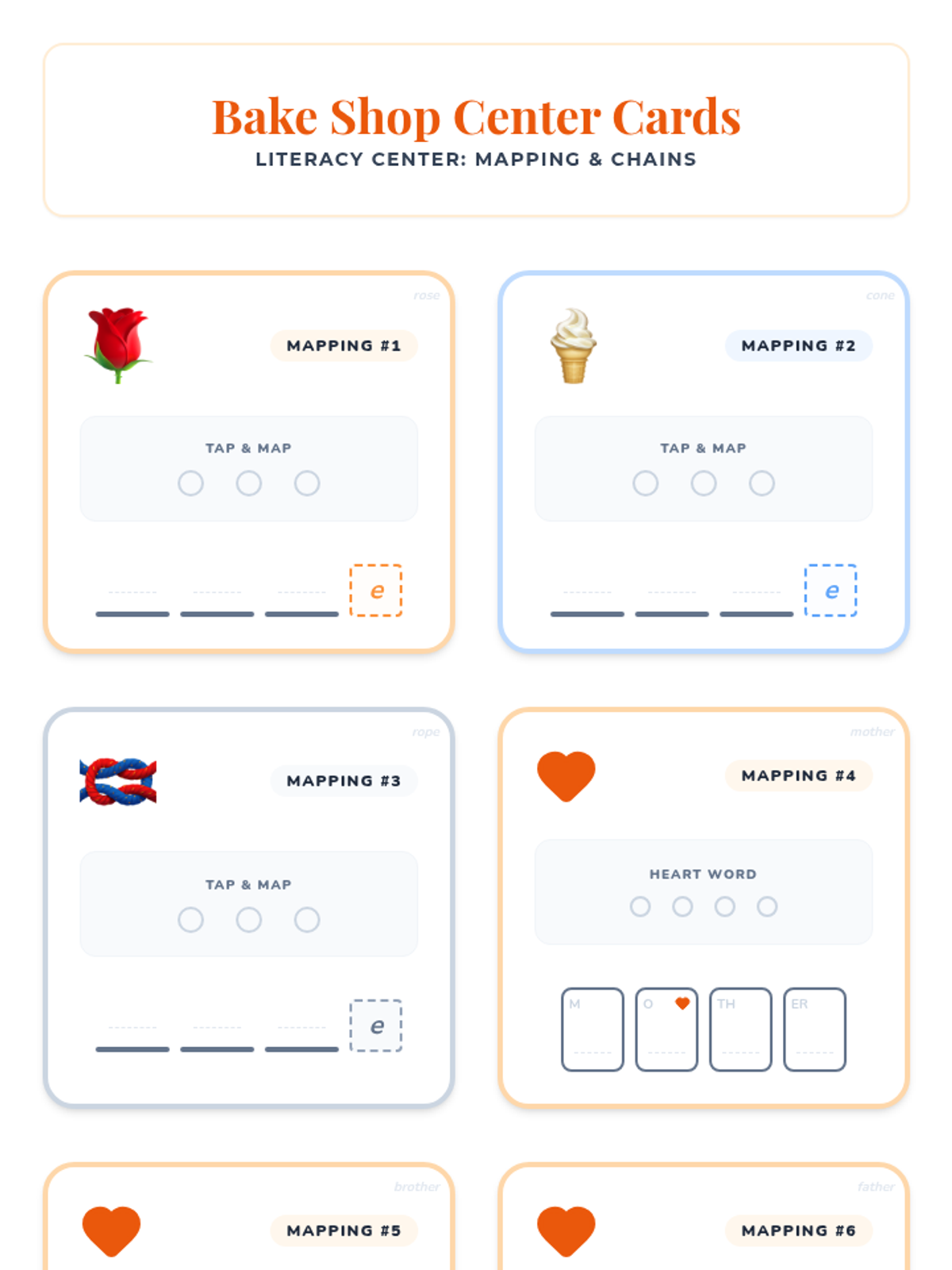
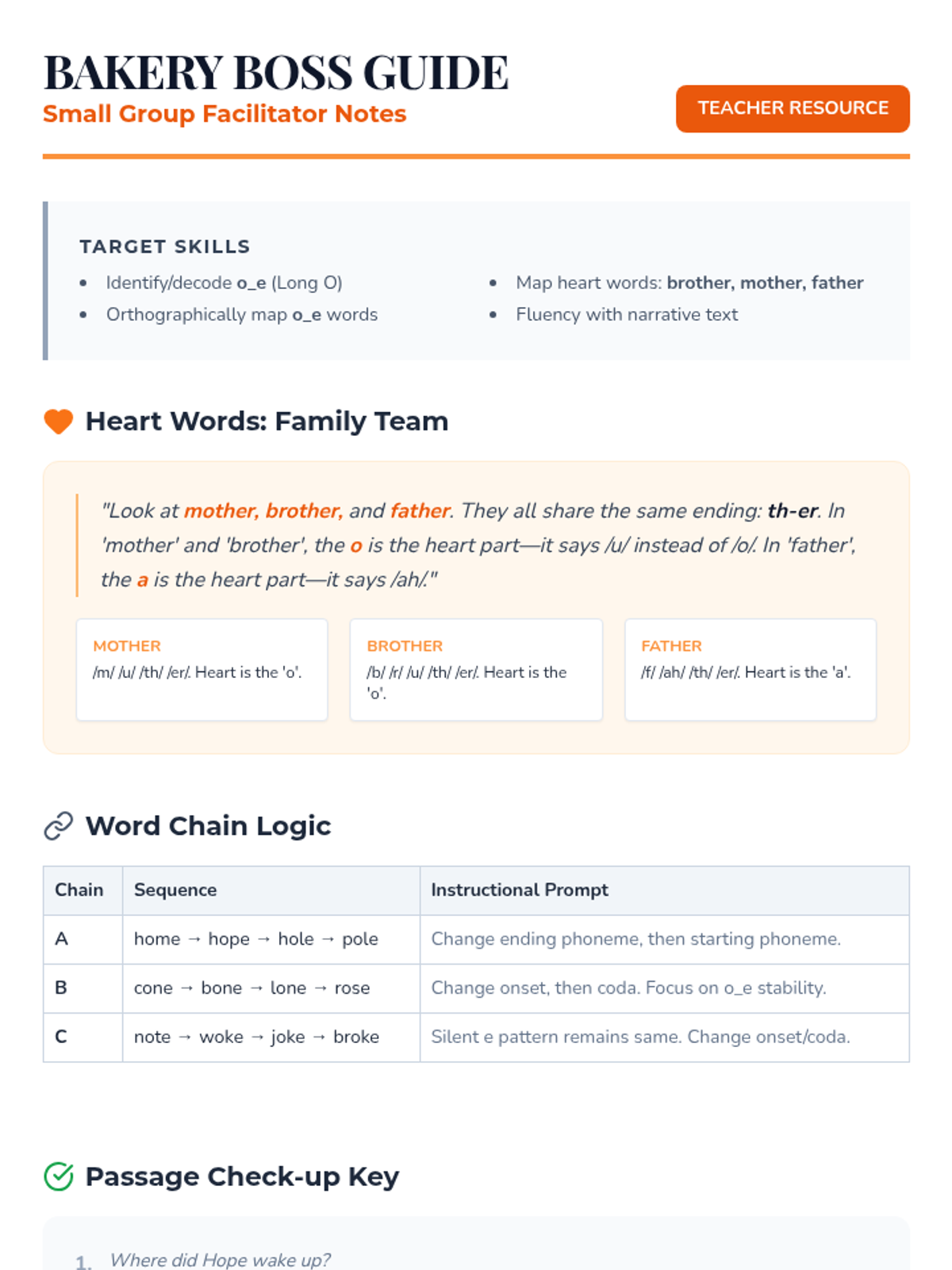
Students will master the o_e pattern and the heart words 'brother', 'mother', and 'father' using a home-bakery themed narrative, word mapping exercises, and word chain activities.
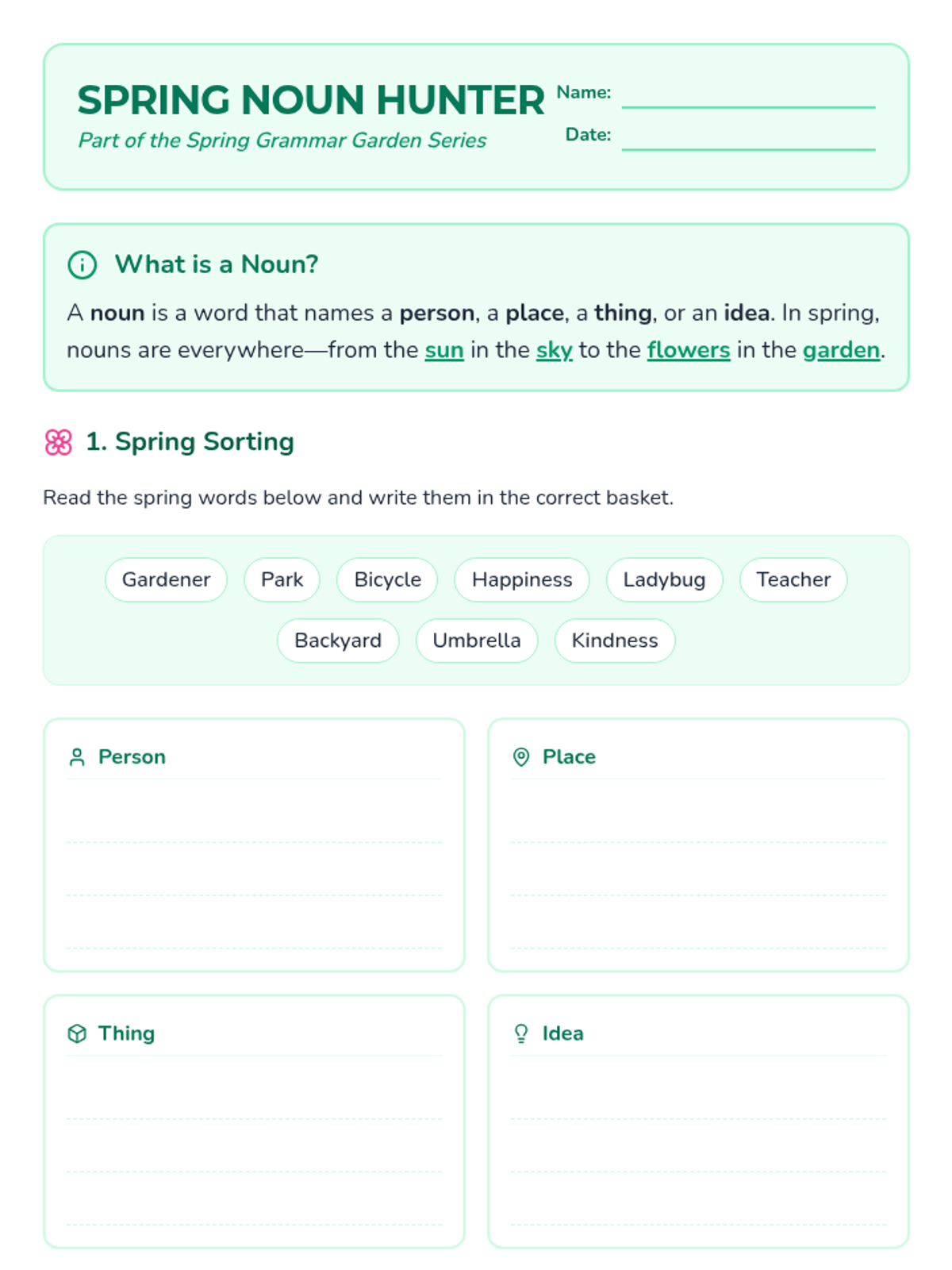
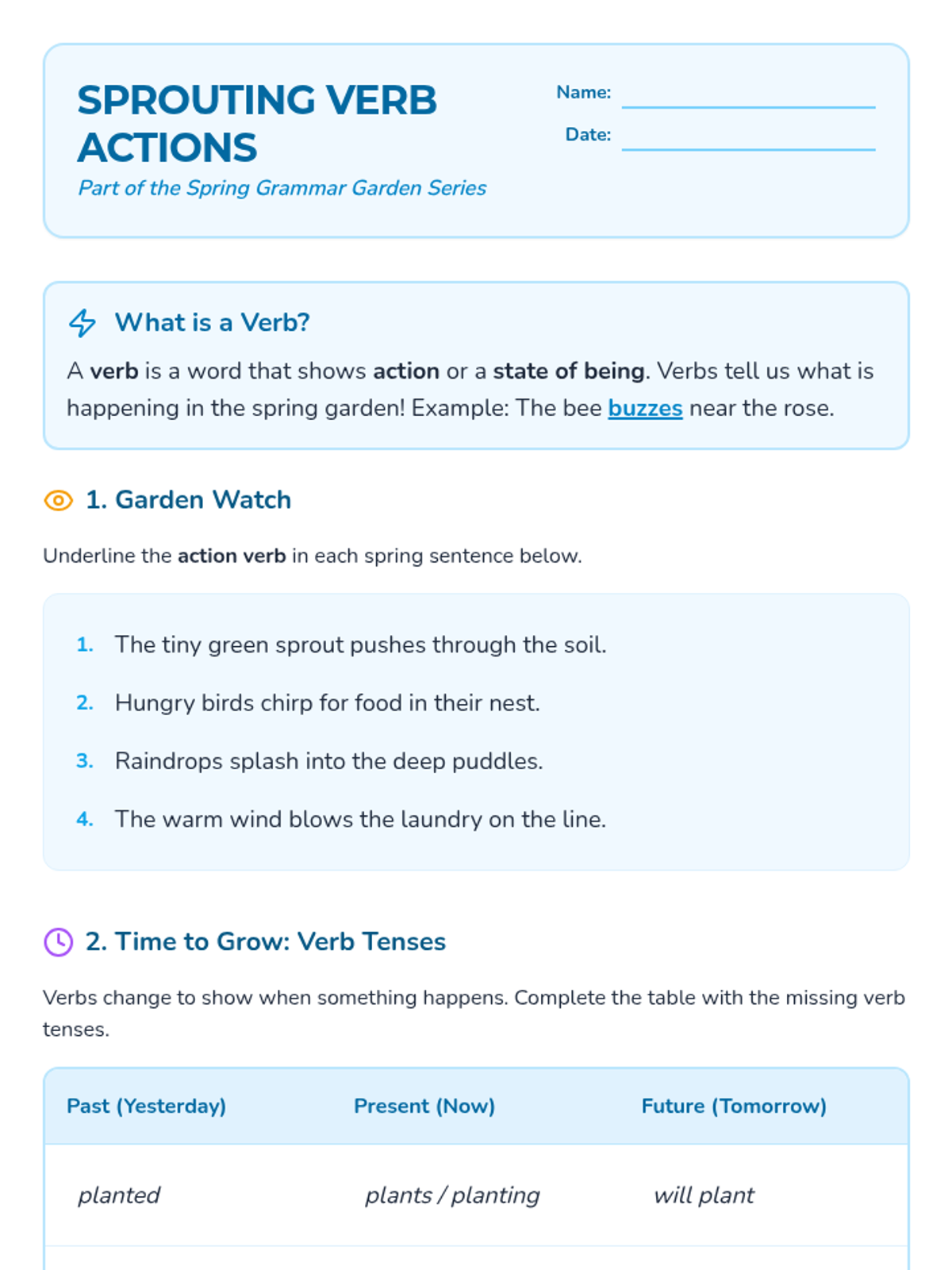
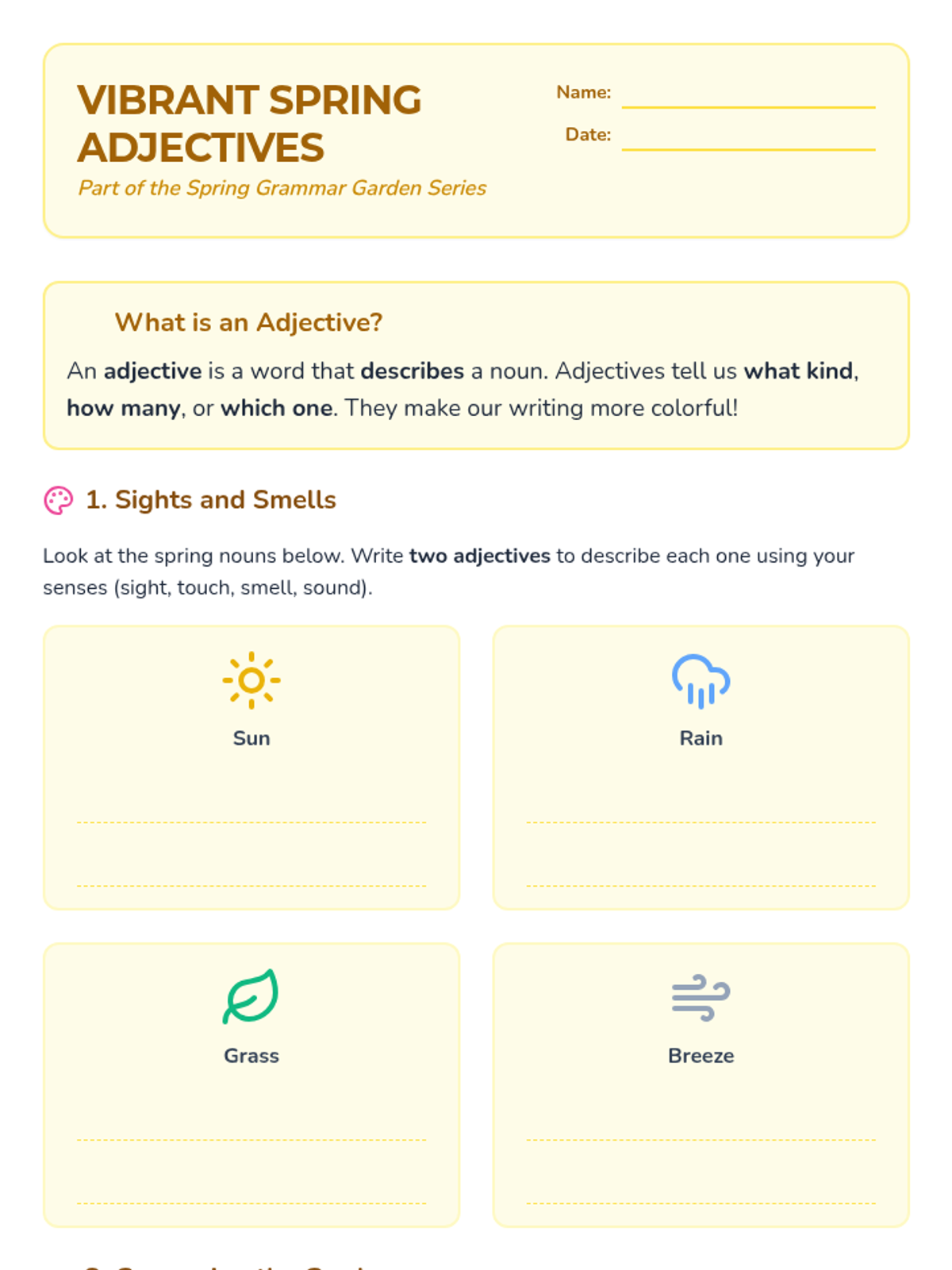
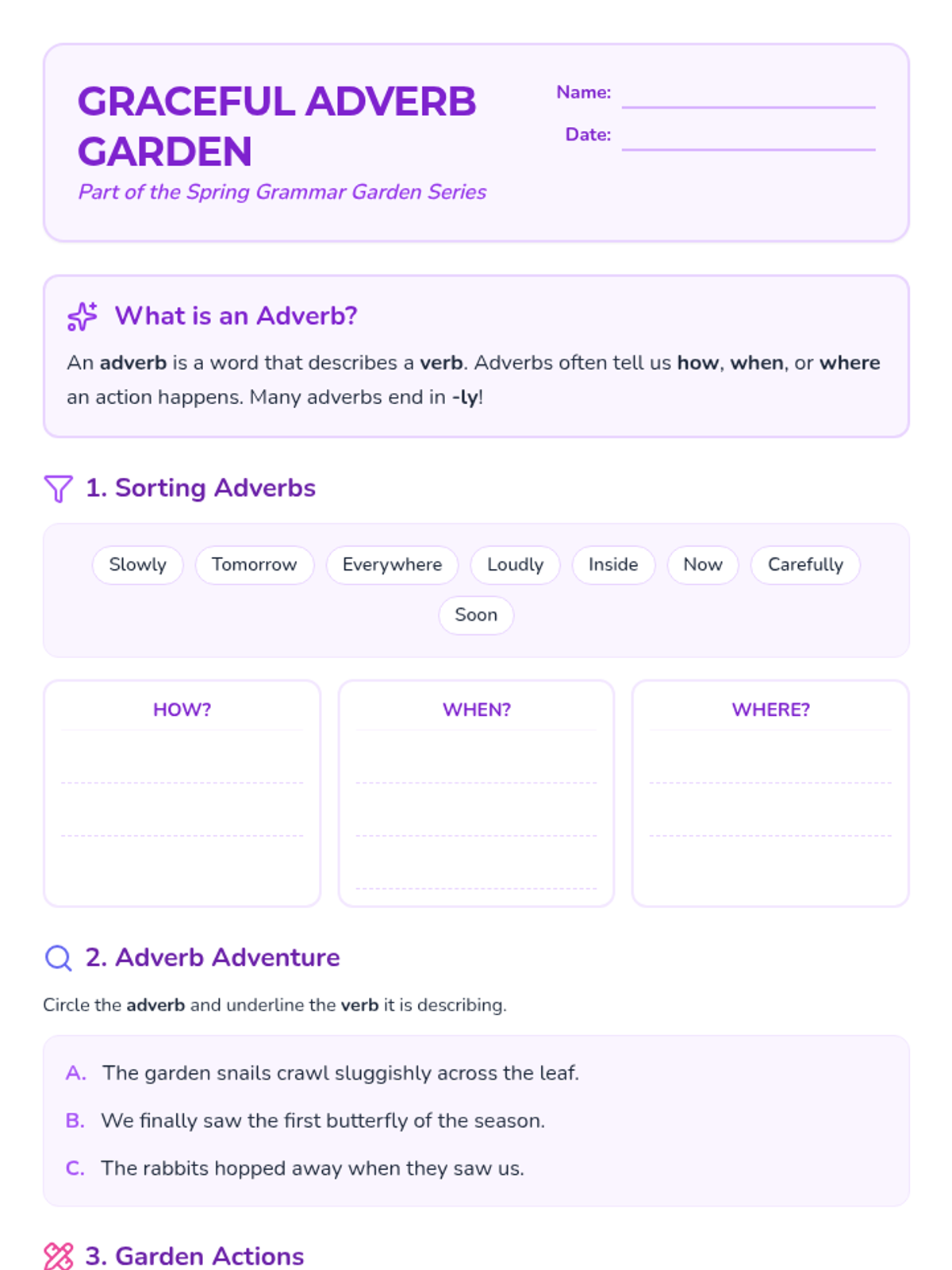
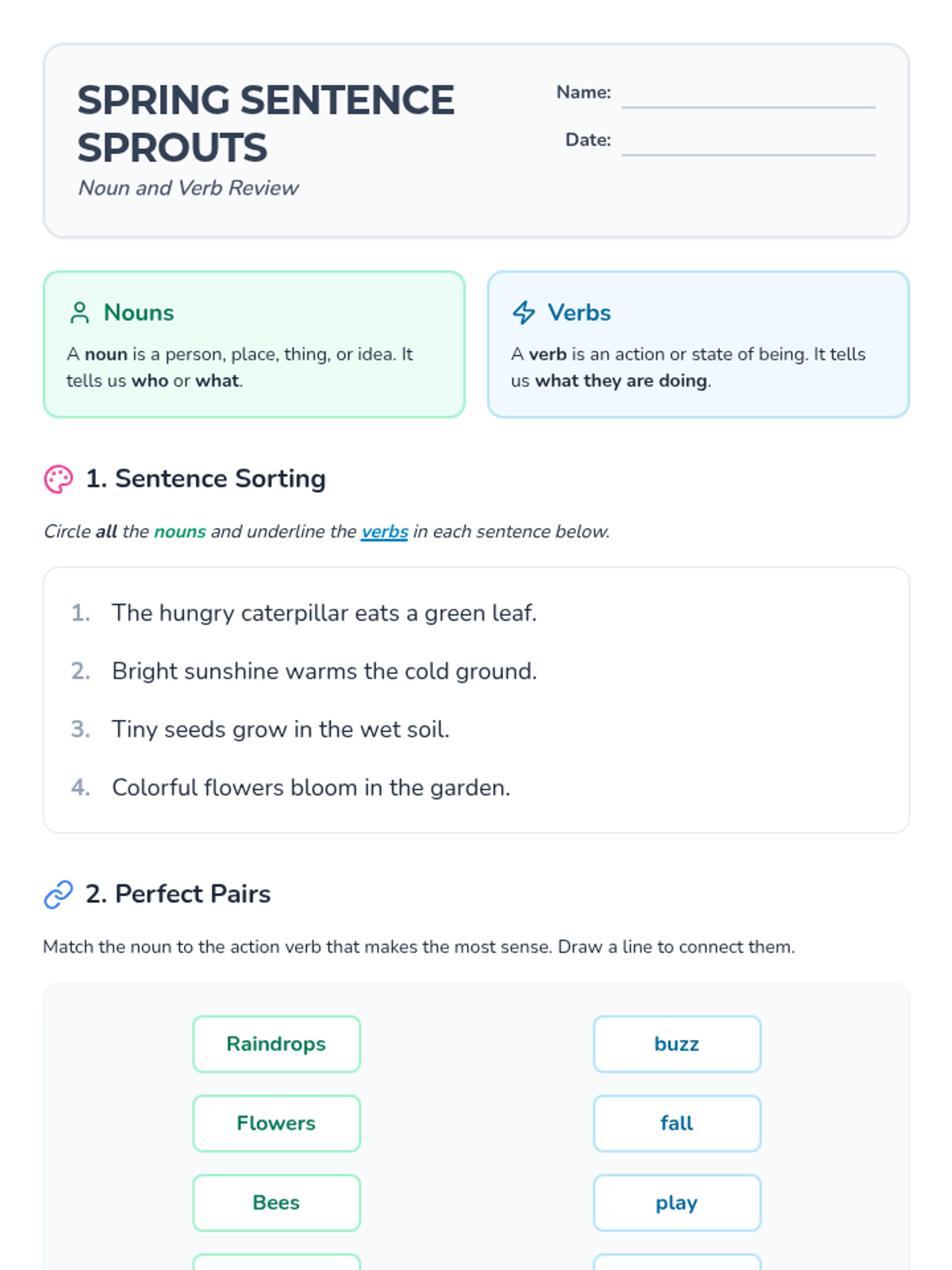
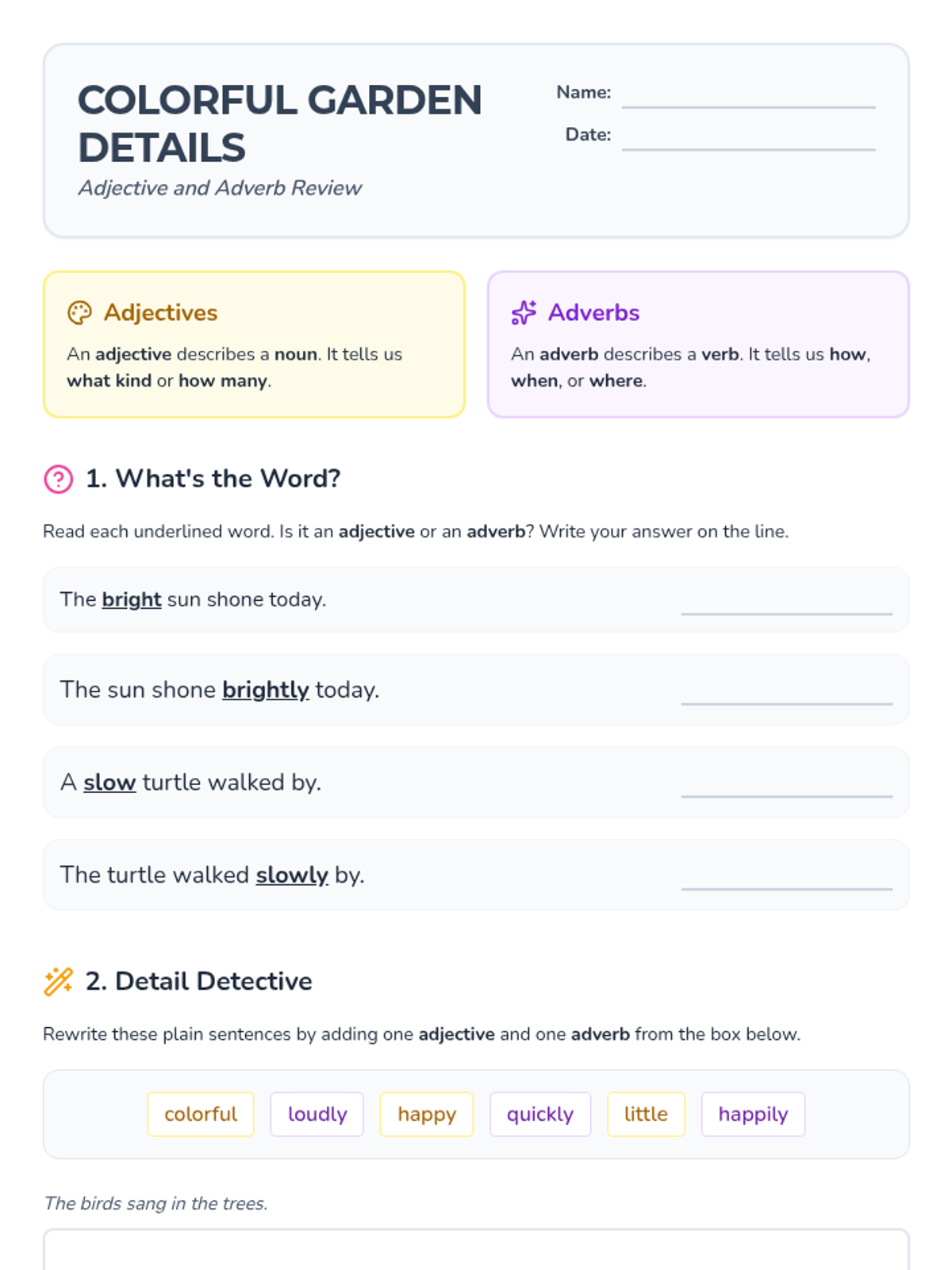
A collection of four Spring-themed grammar worksheets for 3rd grade students, covering nouns, verbs, adjectives, and adverbs with engaging nature-inspired activities.
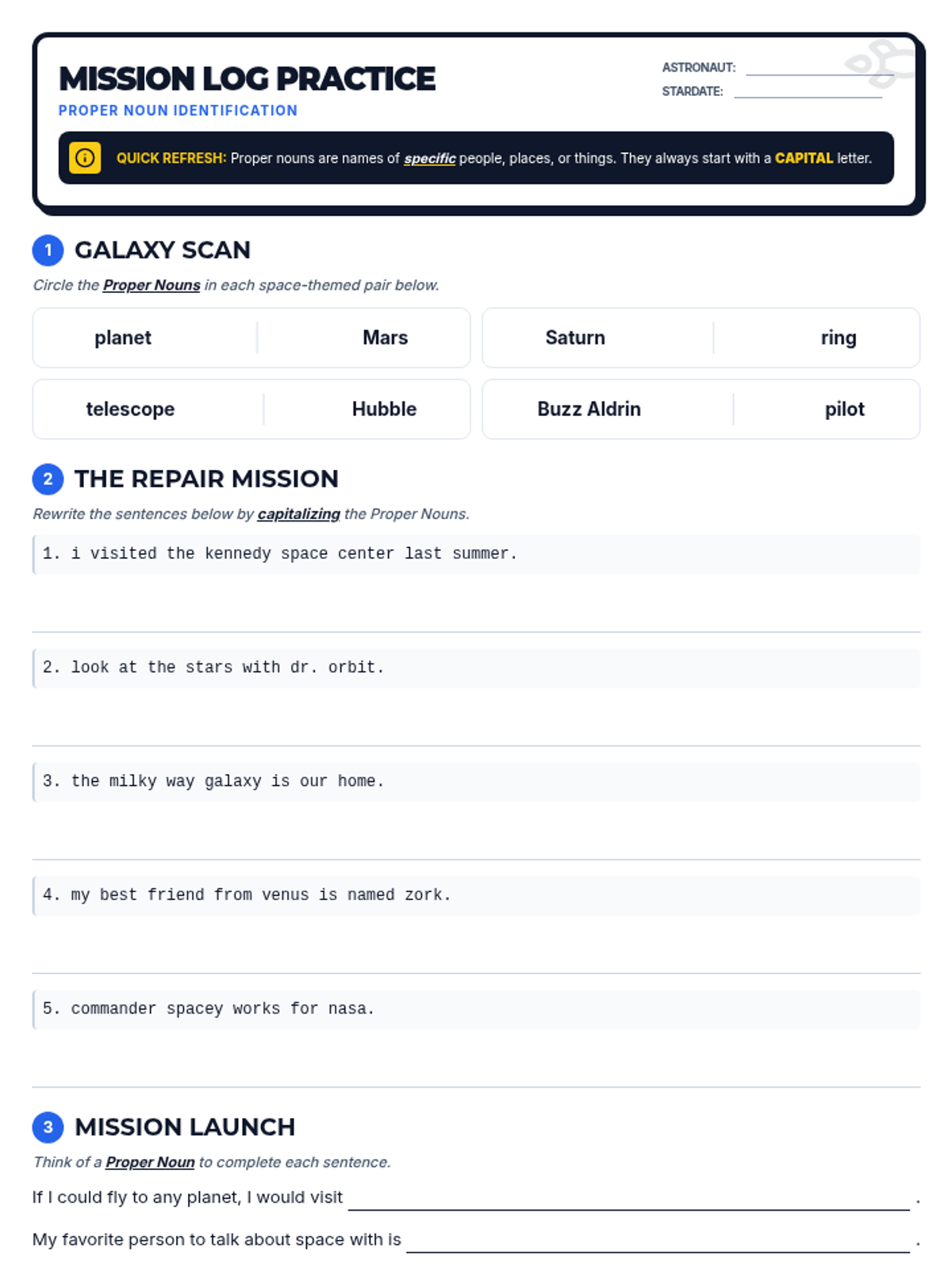
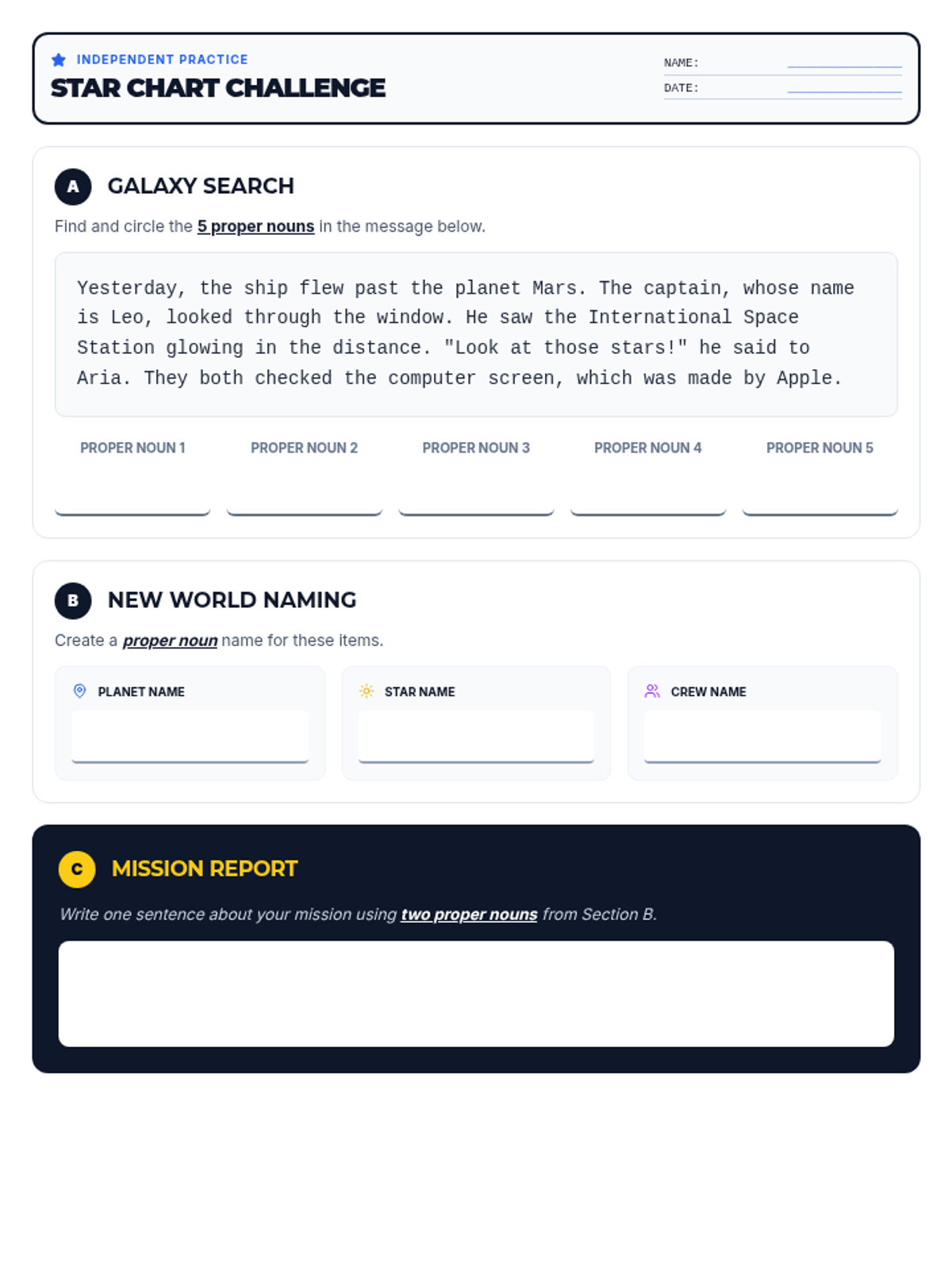
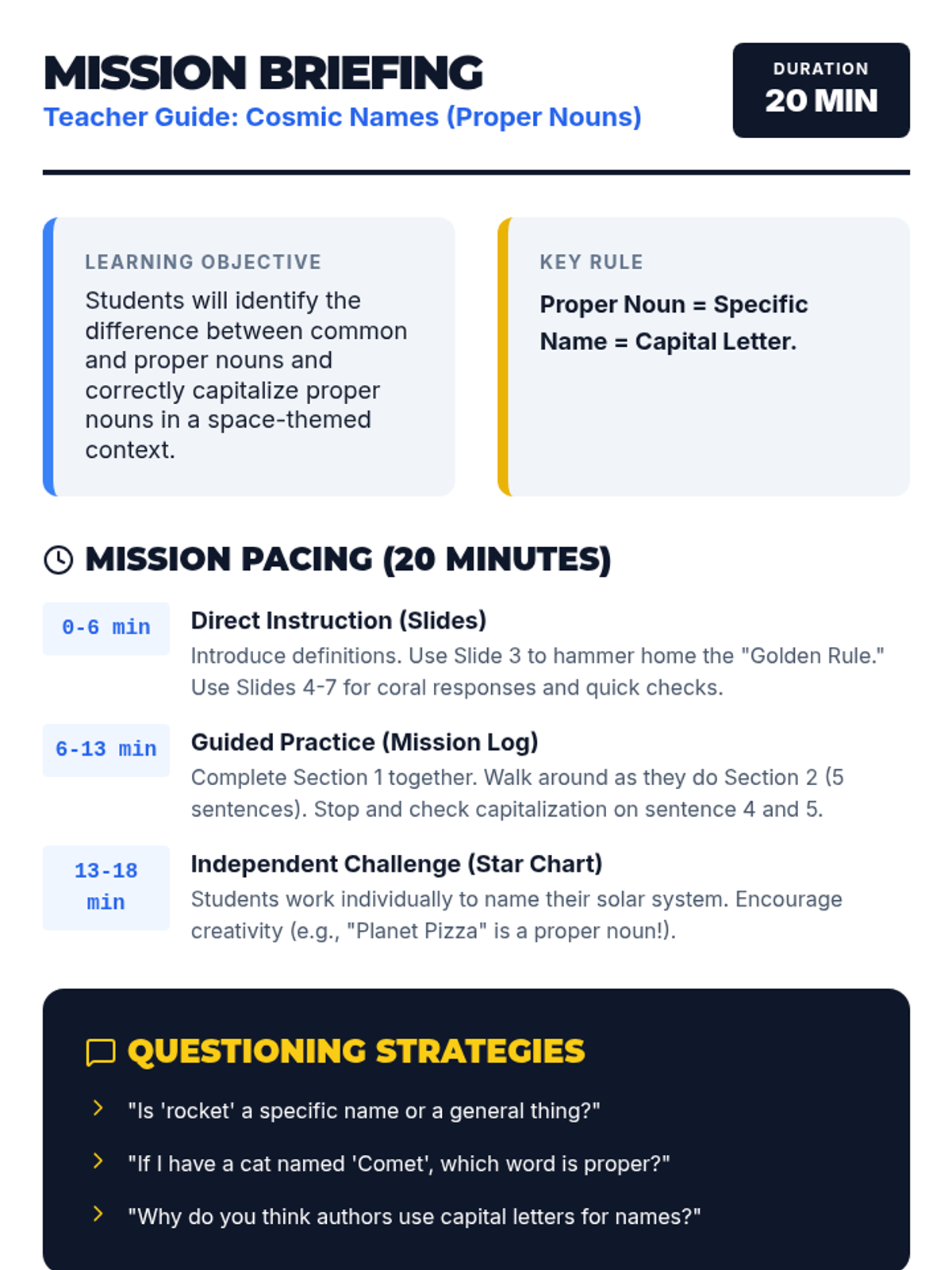
A fast-paced, space-themed introduction to proper nouns. Students learn to distinguish between general celestial objects and their specific names through a series of cosmic challenges.