A comprehensive baseline assessment for incoming Grade 1 students to evaluate their starting points in addition, subtraction, place value, and number patterns.
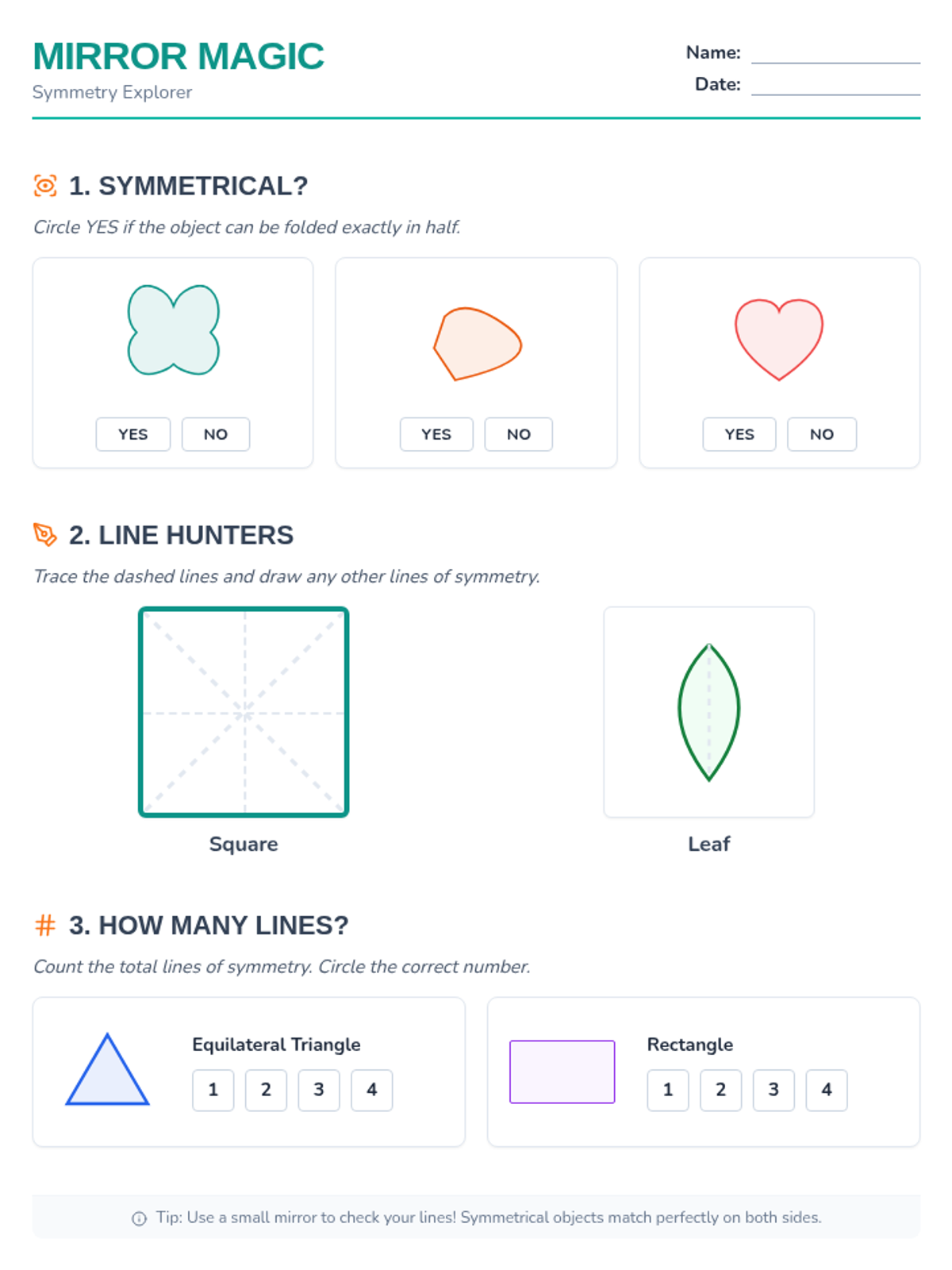
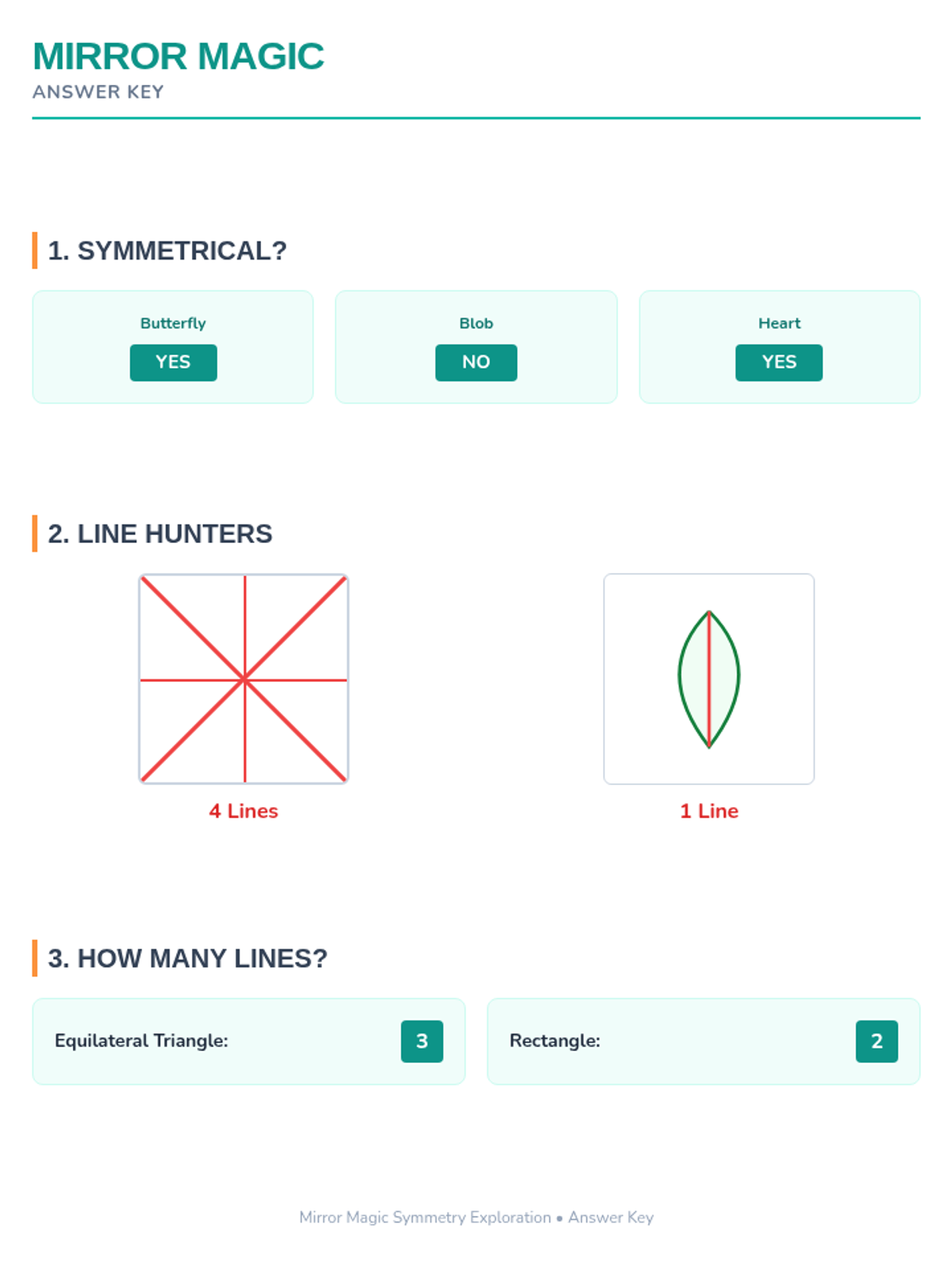
A lesson introducing symmetry through common objects and geometric shapes, using 'mirror magic' as a metaphor for reflective symmetry.
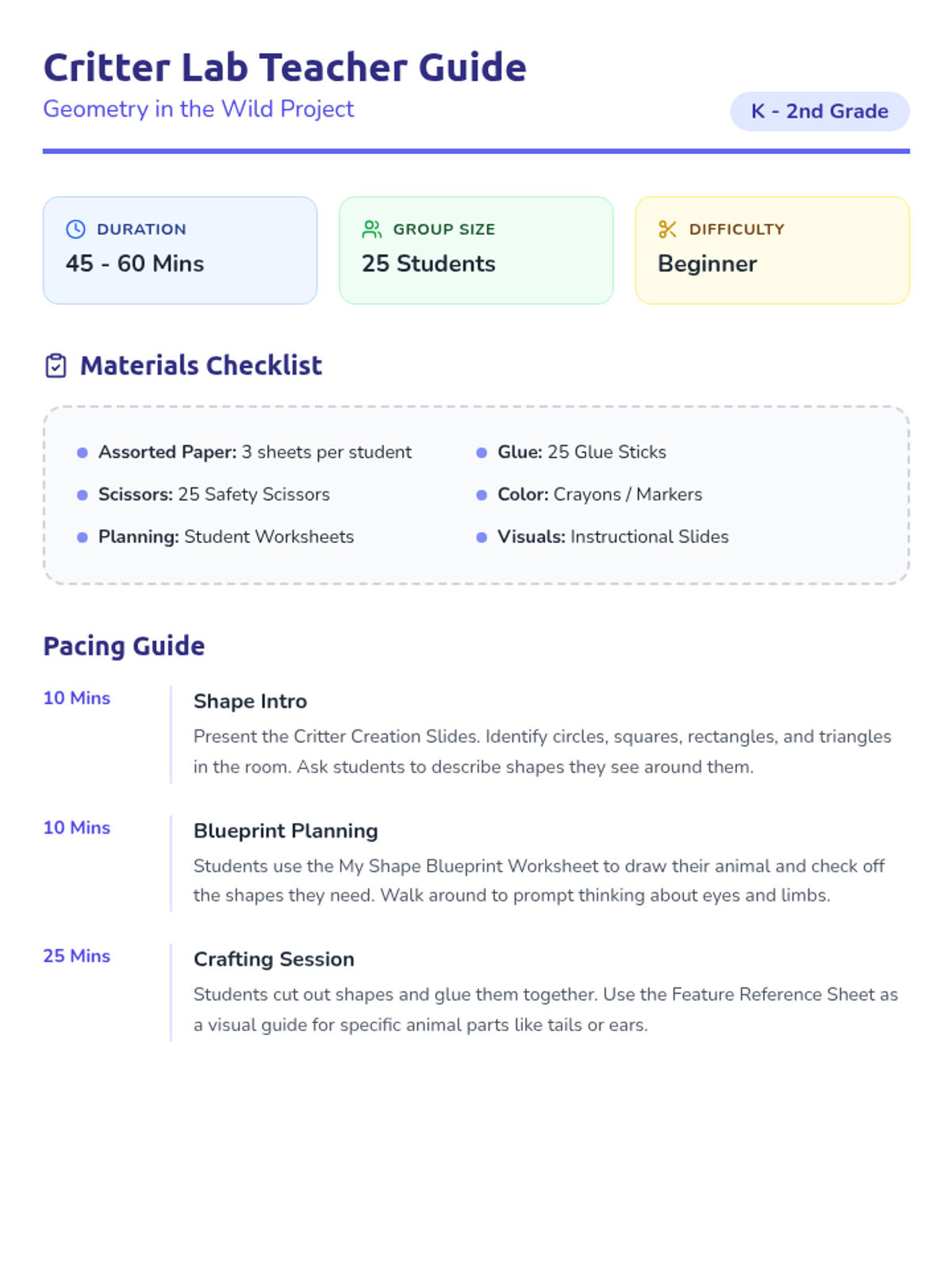
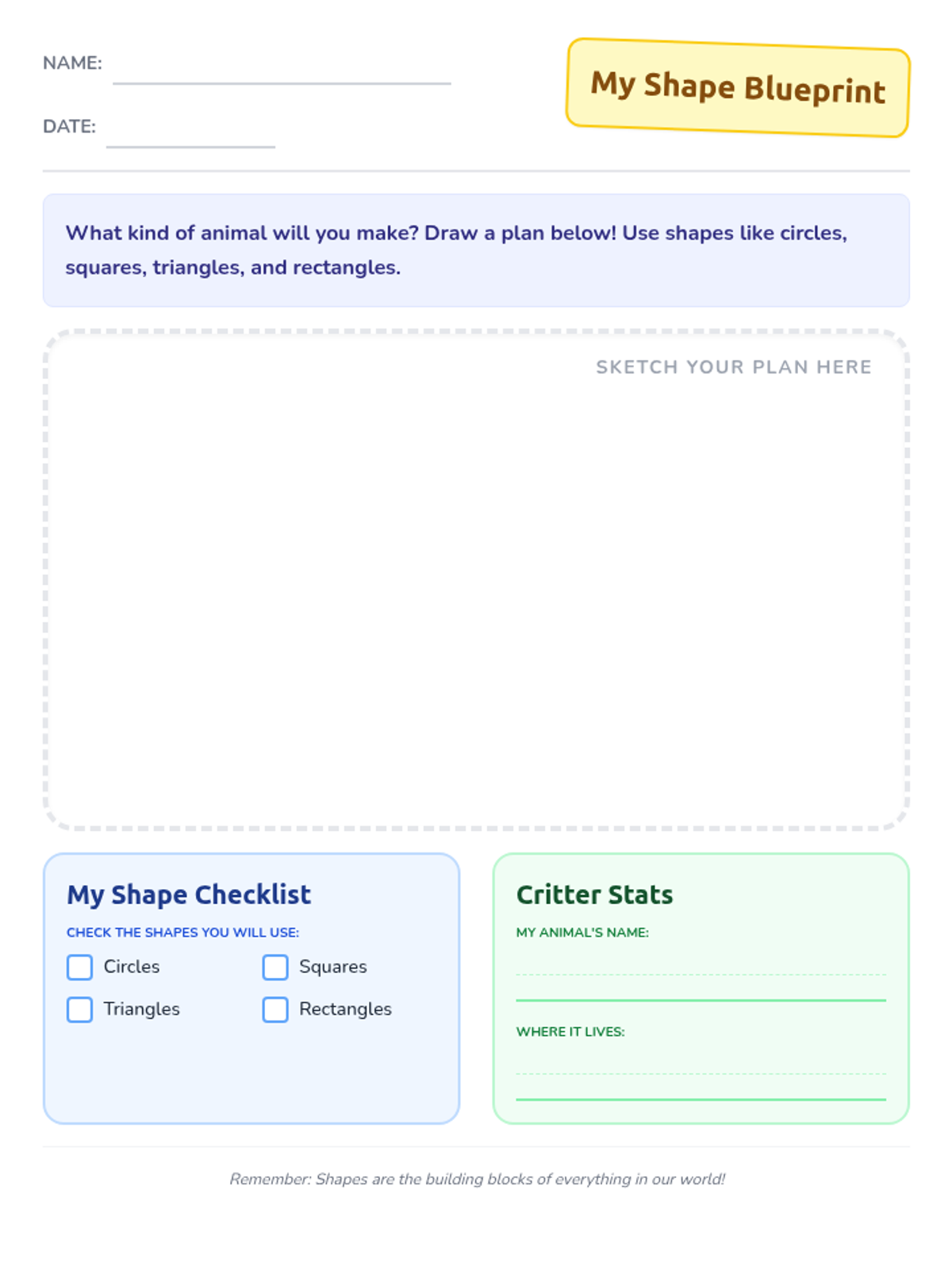
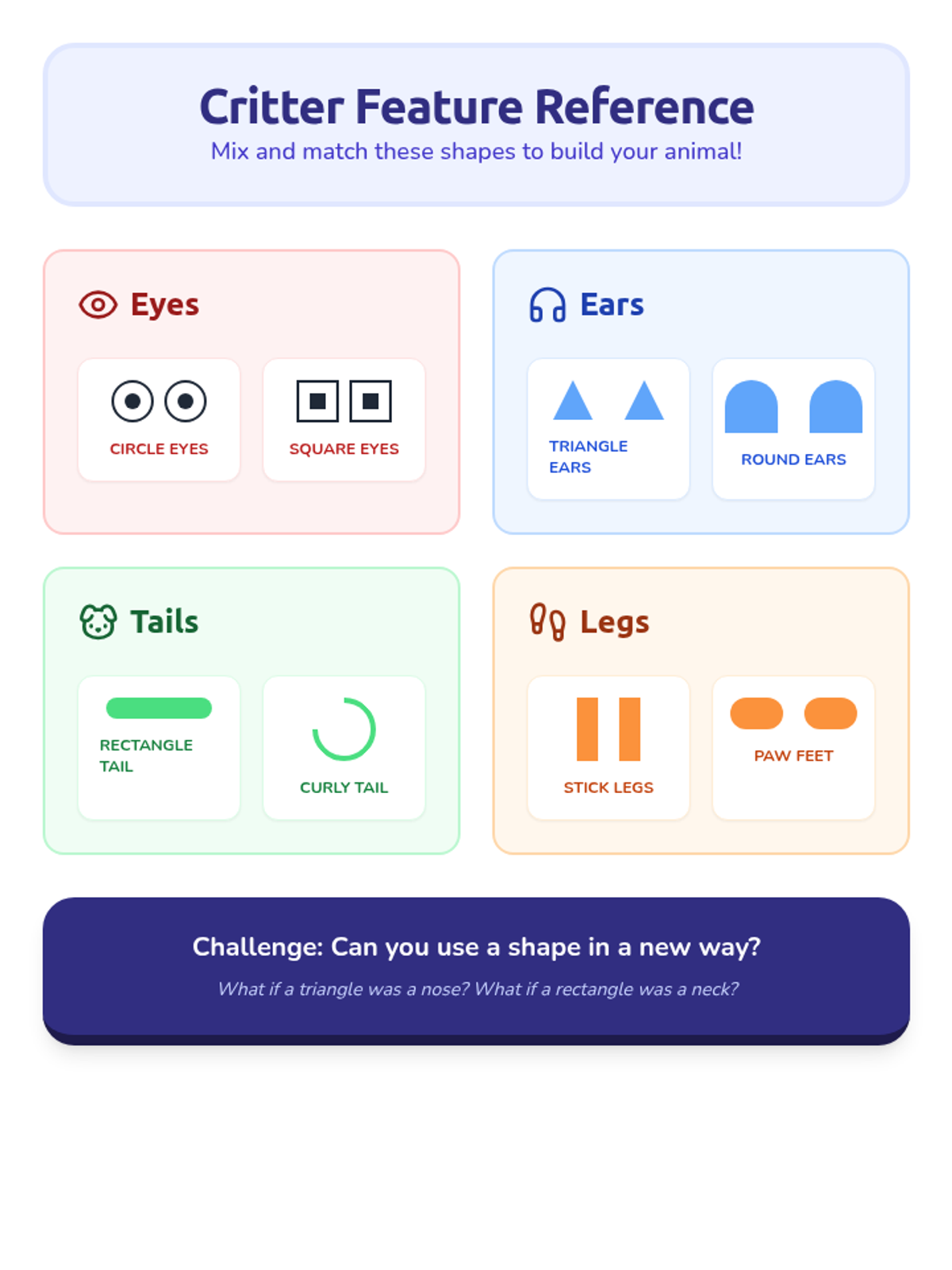
Students learn to identify basic geometric shapes and combine them to create a unique paper animal, practicing scissor skills and spatial reasoning.
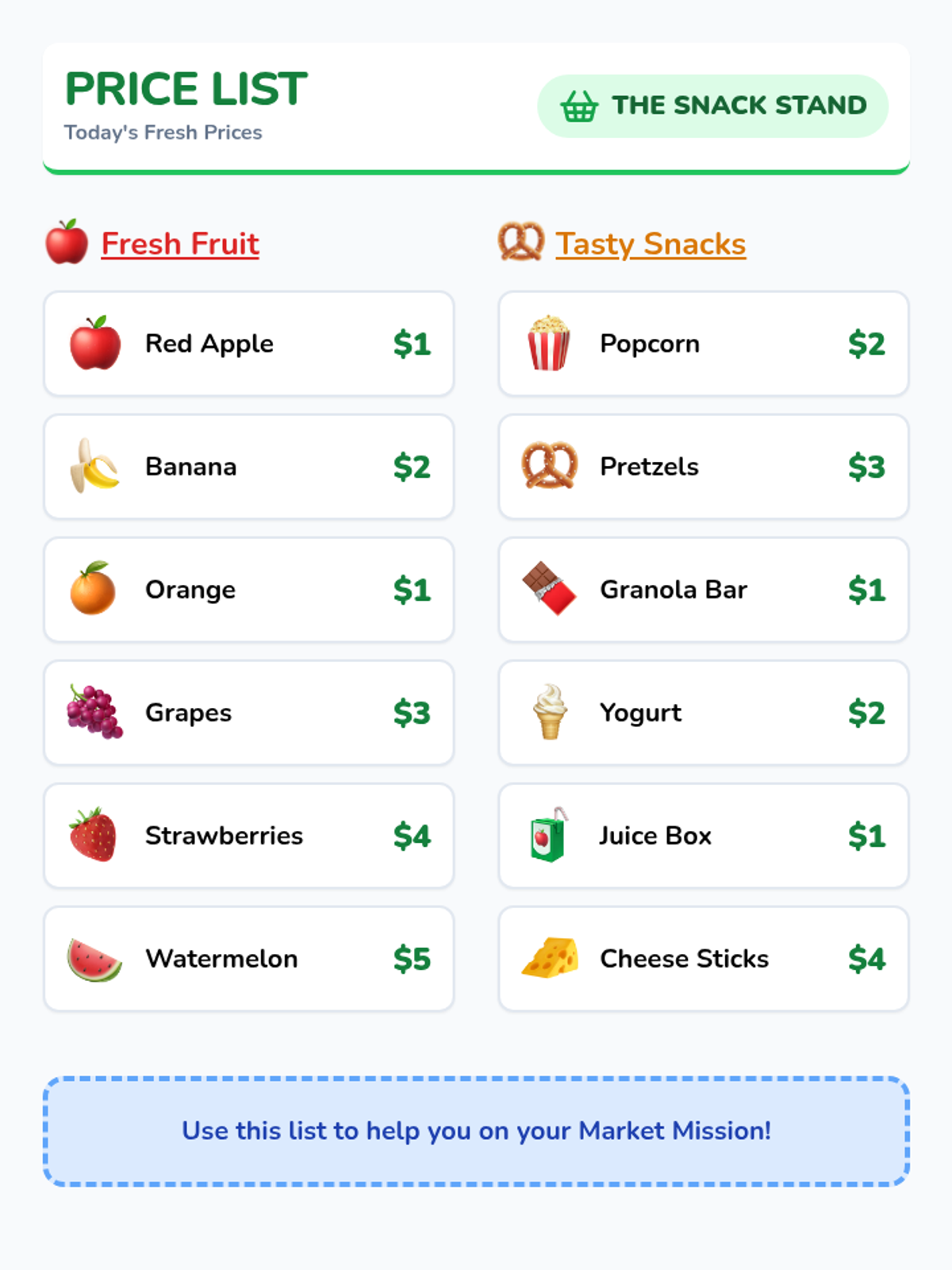
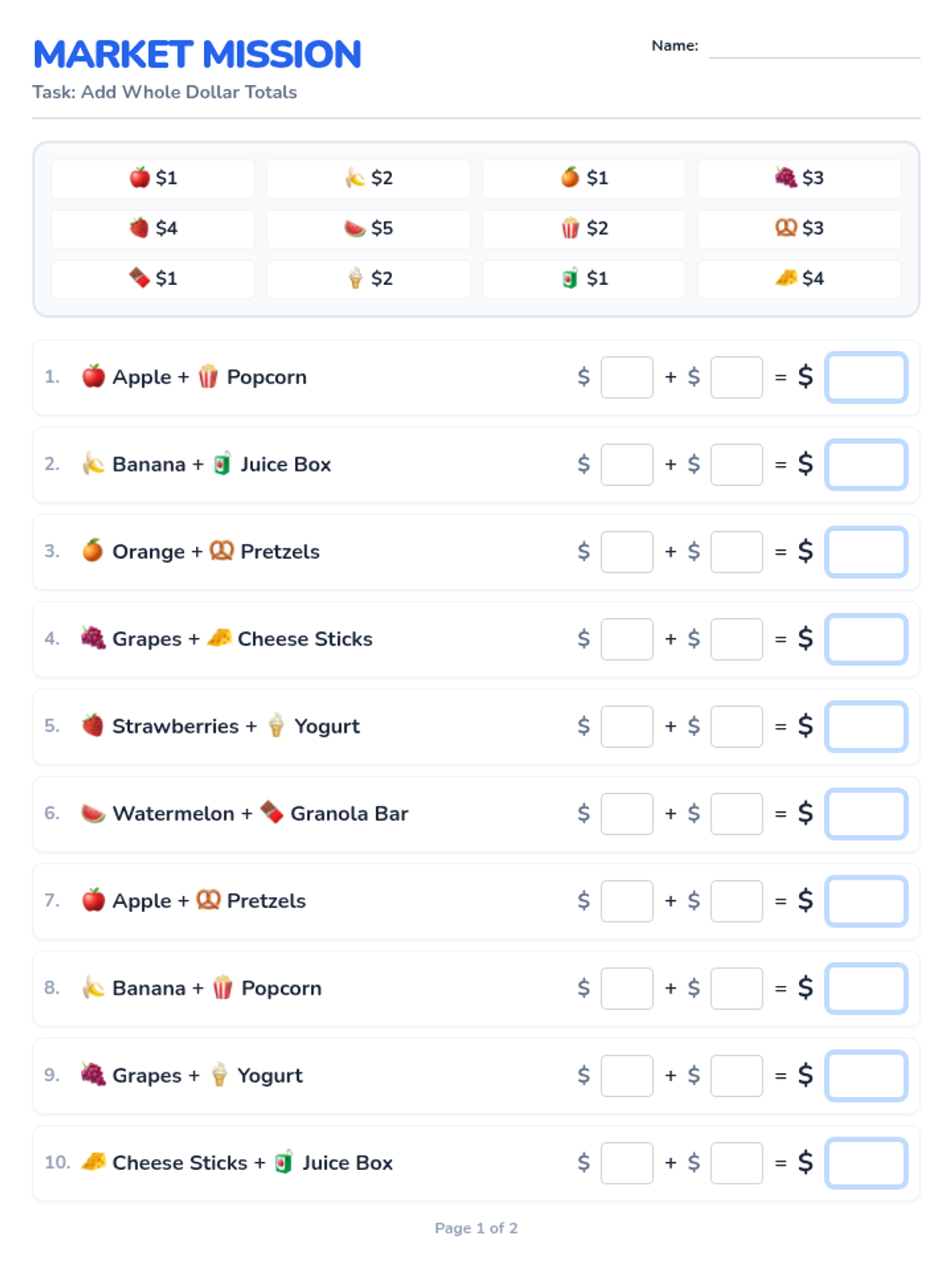
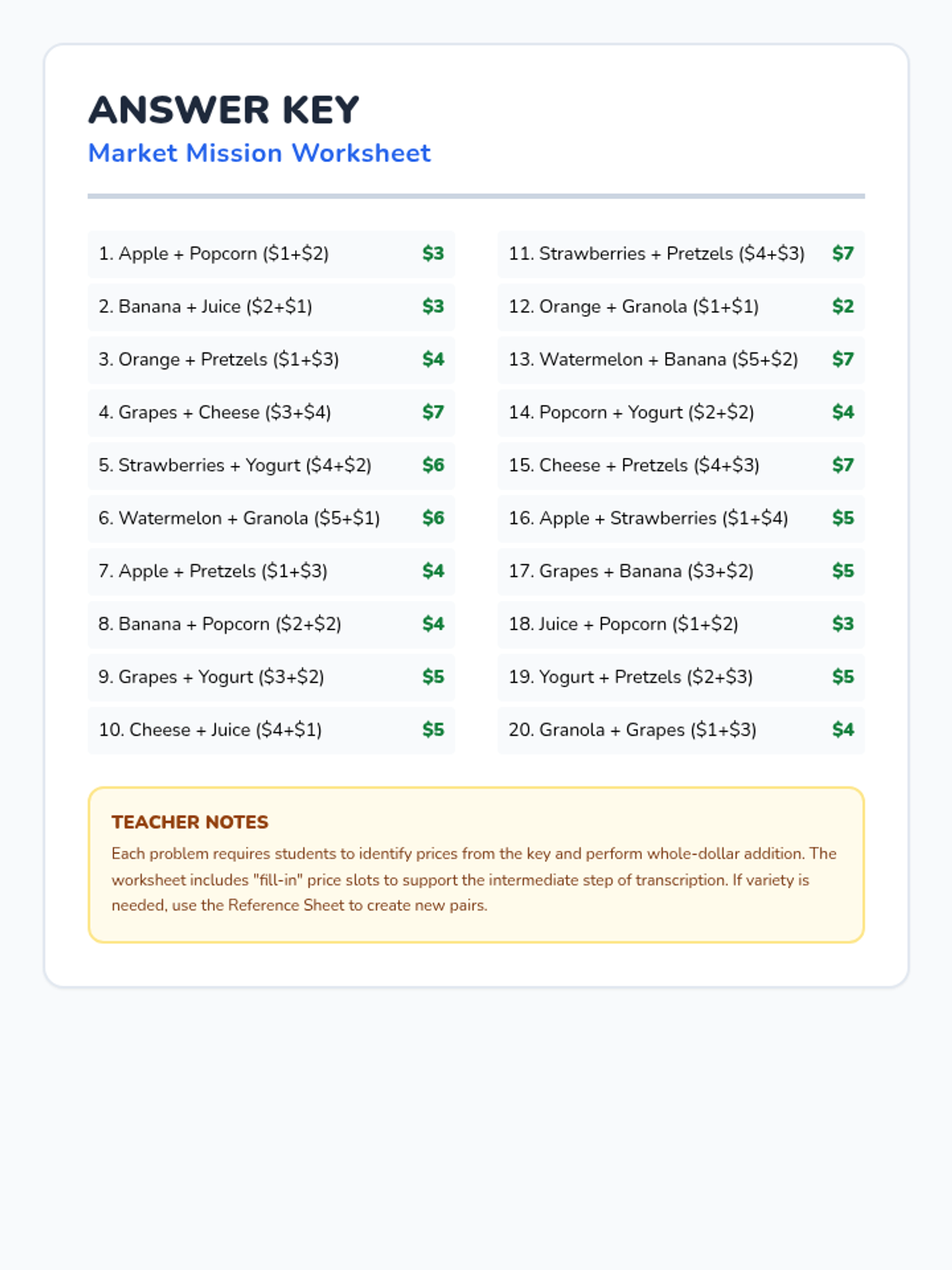
A functional math lesson for students to practice adding whole dollar amounts through a simulated grocery shopping experience focused on healthy fruits and snacks.
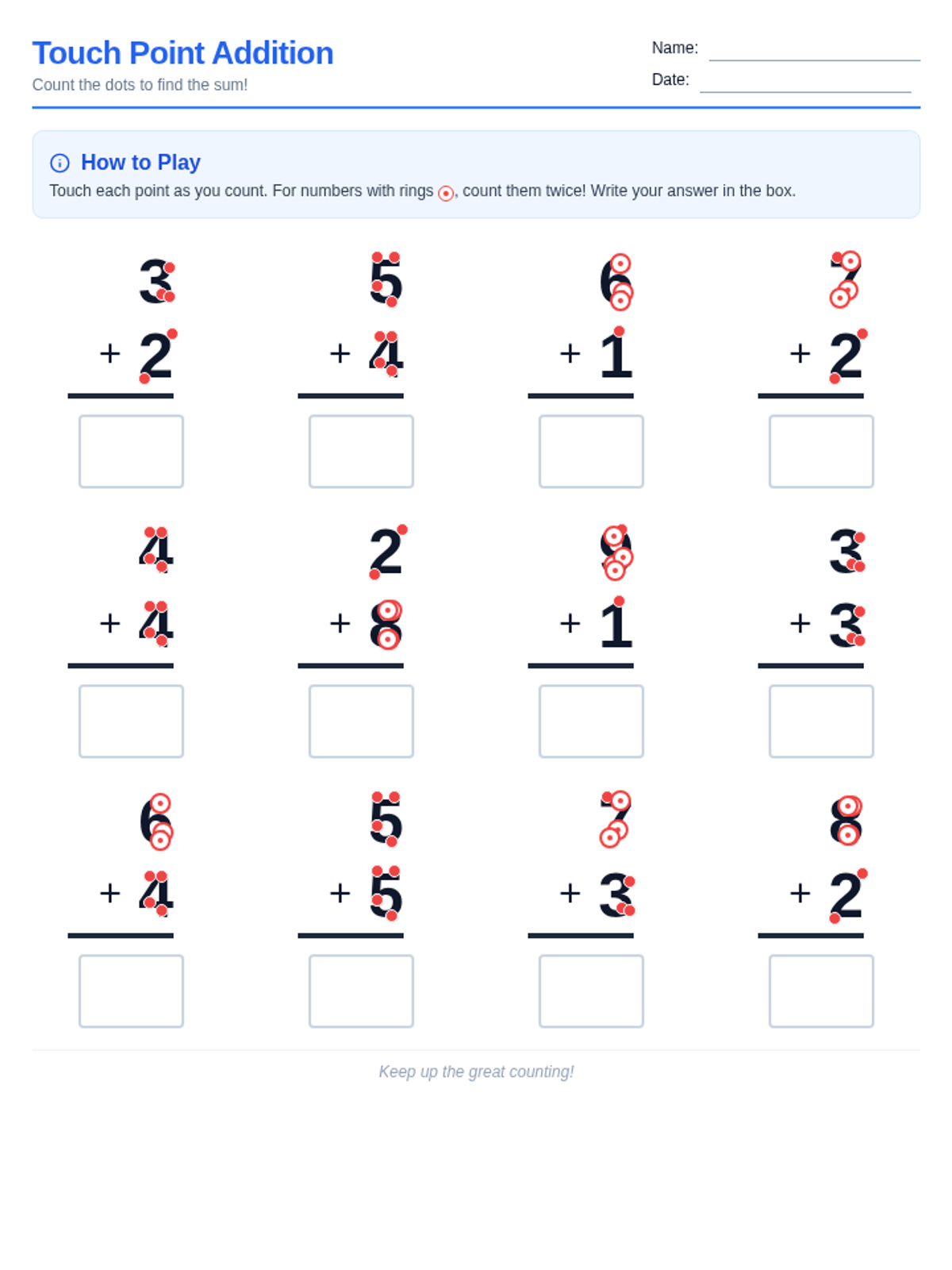
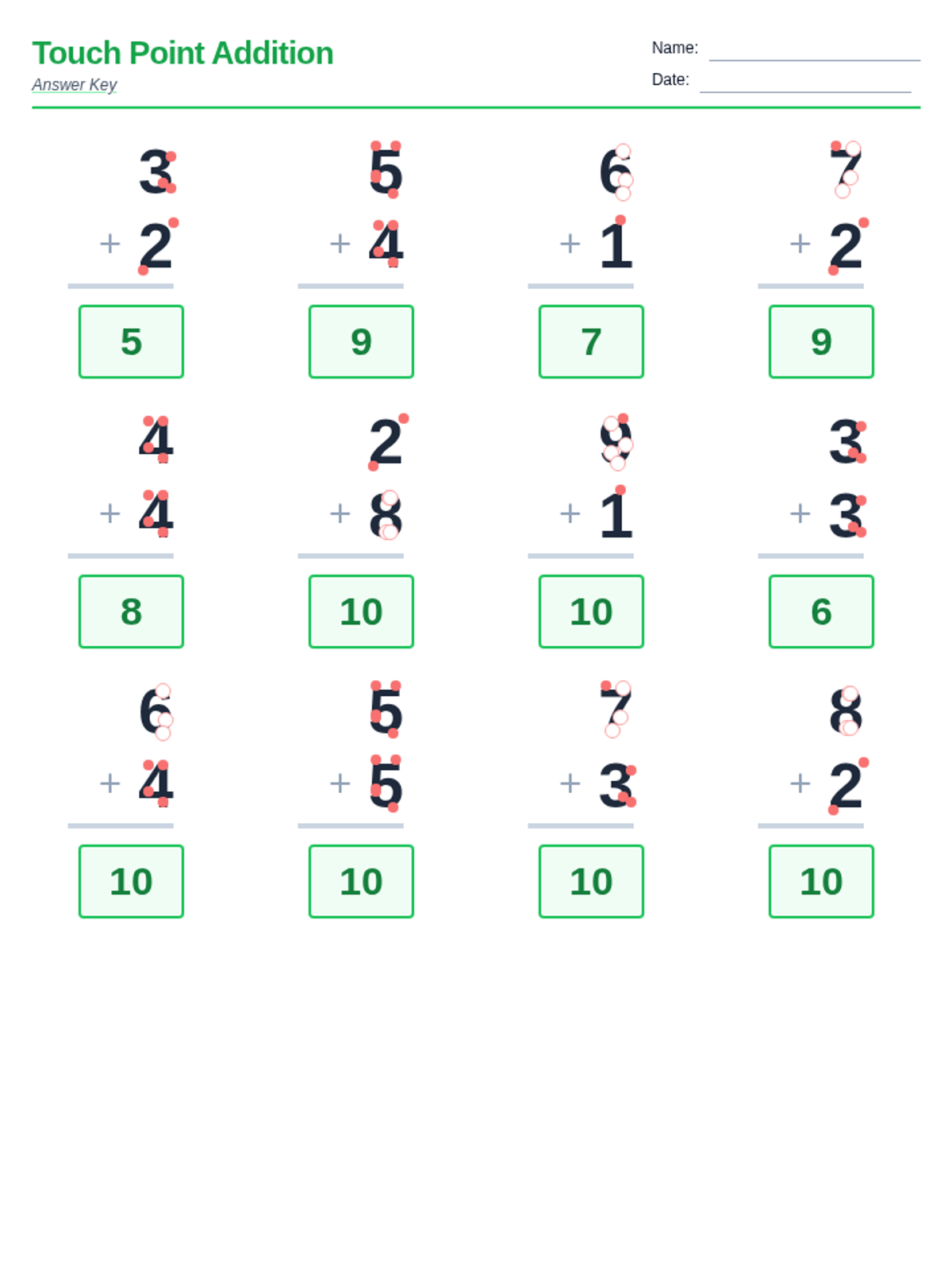
A foundational lesson on using touch points to master single-digit addition with sums up to 10. Students learn the specific placement of touch points on numbers 1-9 and practice vertical addition.
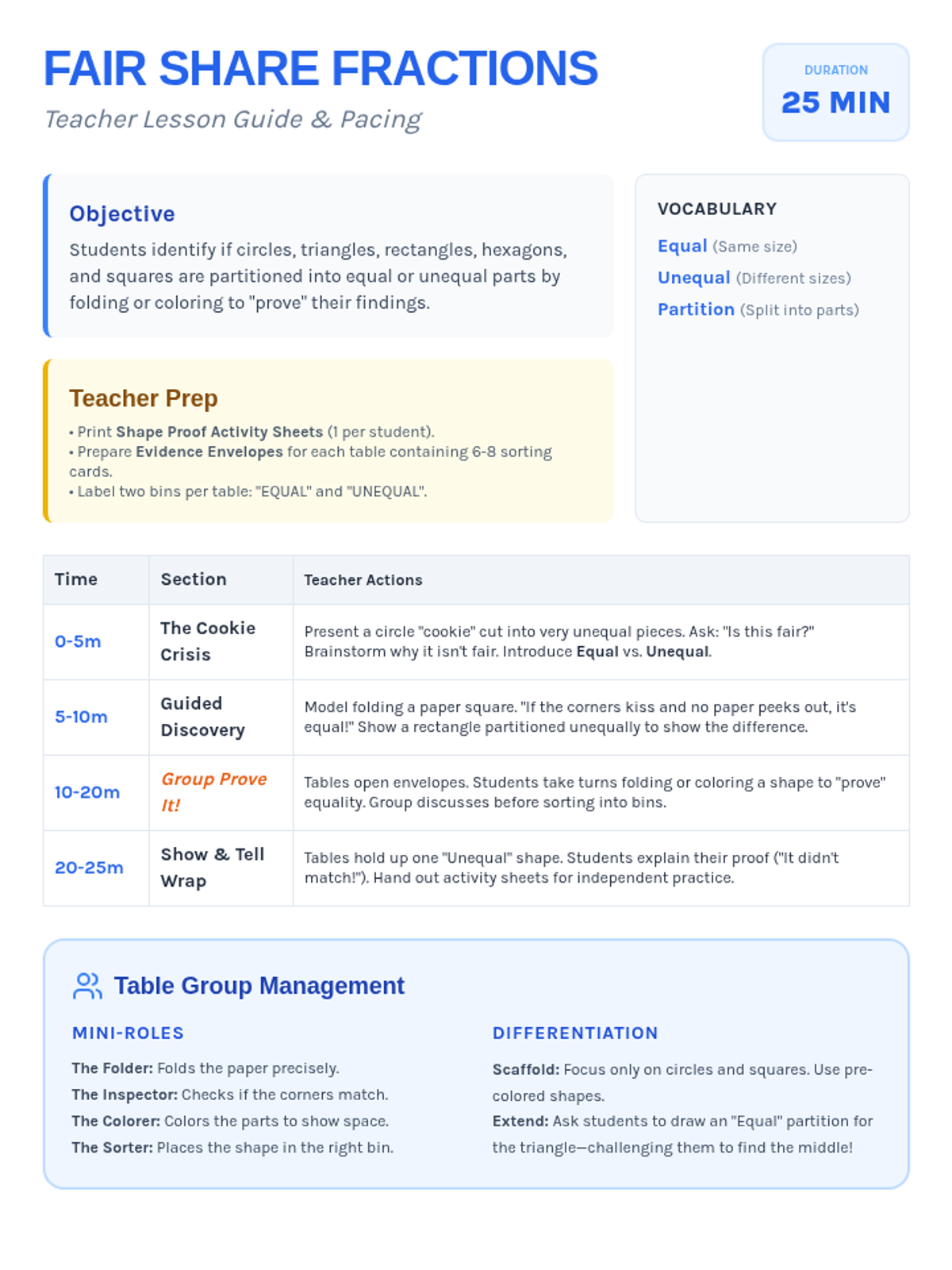
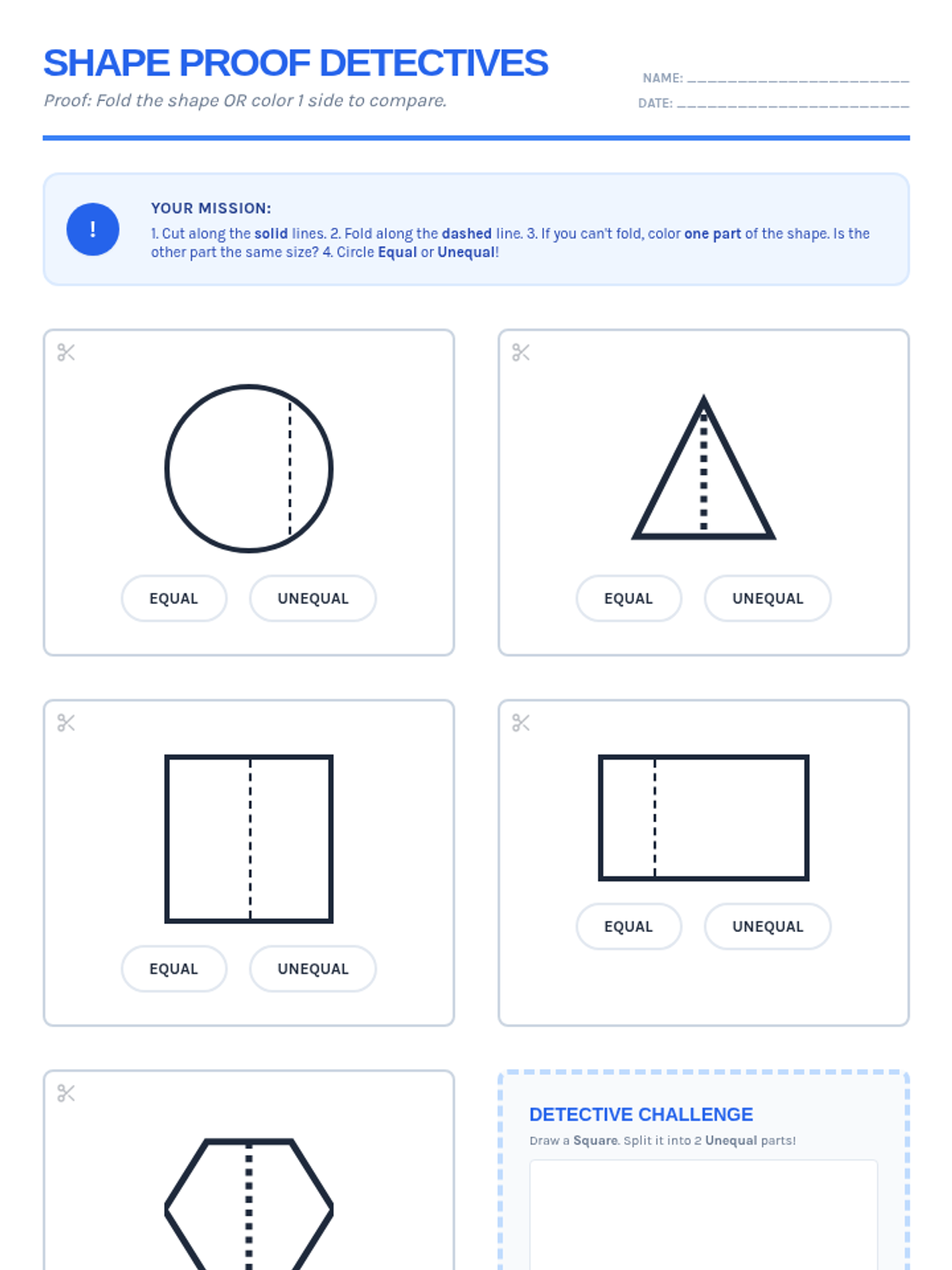
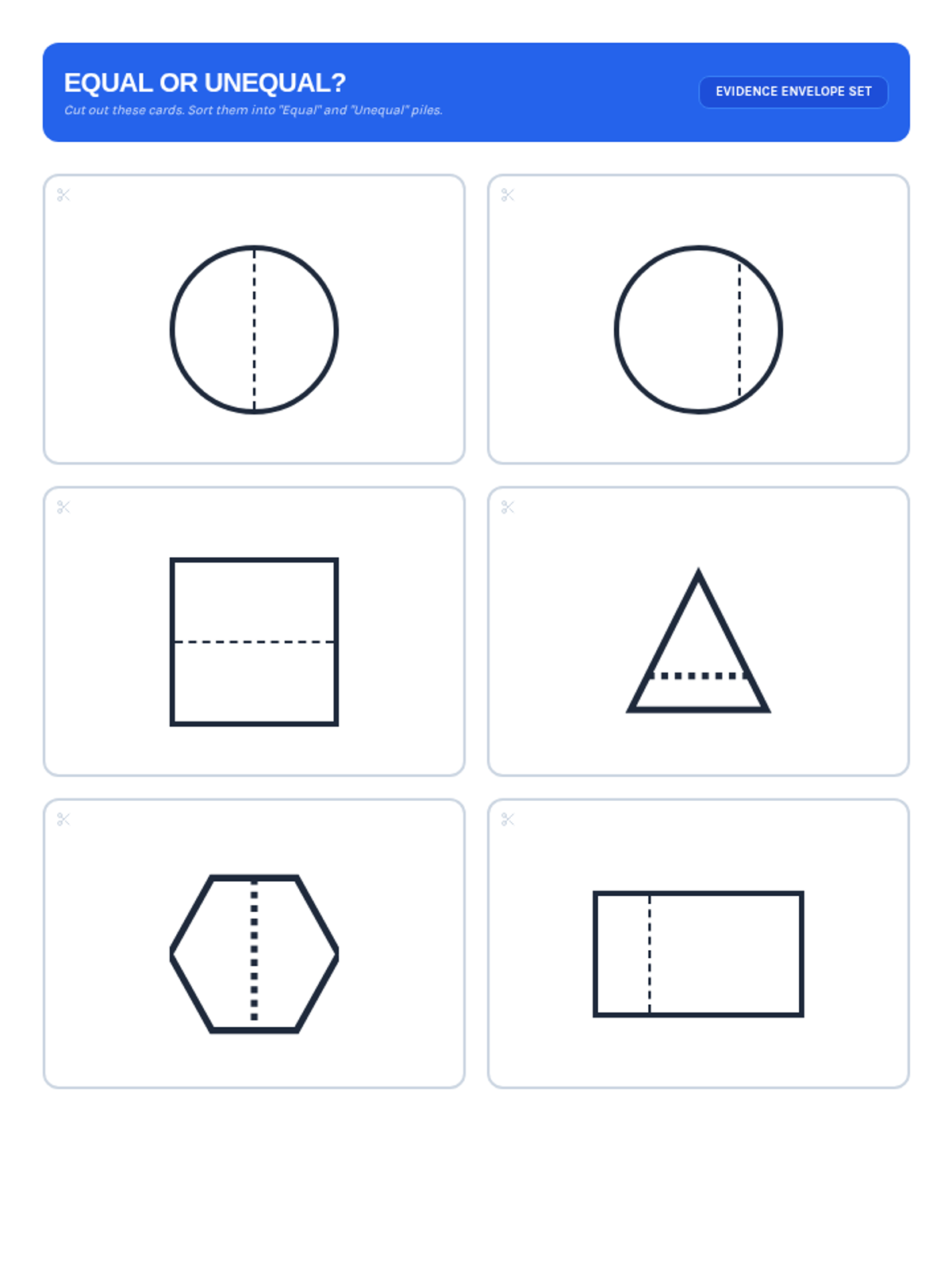
A high-energy, 25-minute introduction to fractions where first graders use folding and coloring to prove if shapes are partitioned into equal or unequal parts.
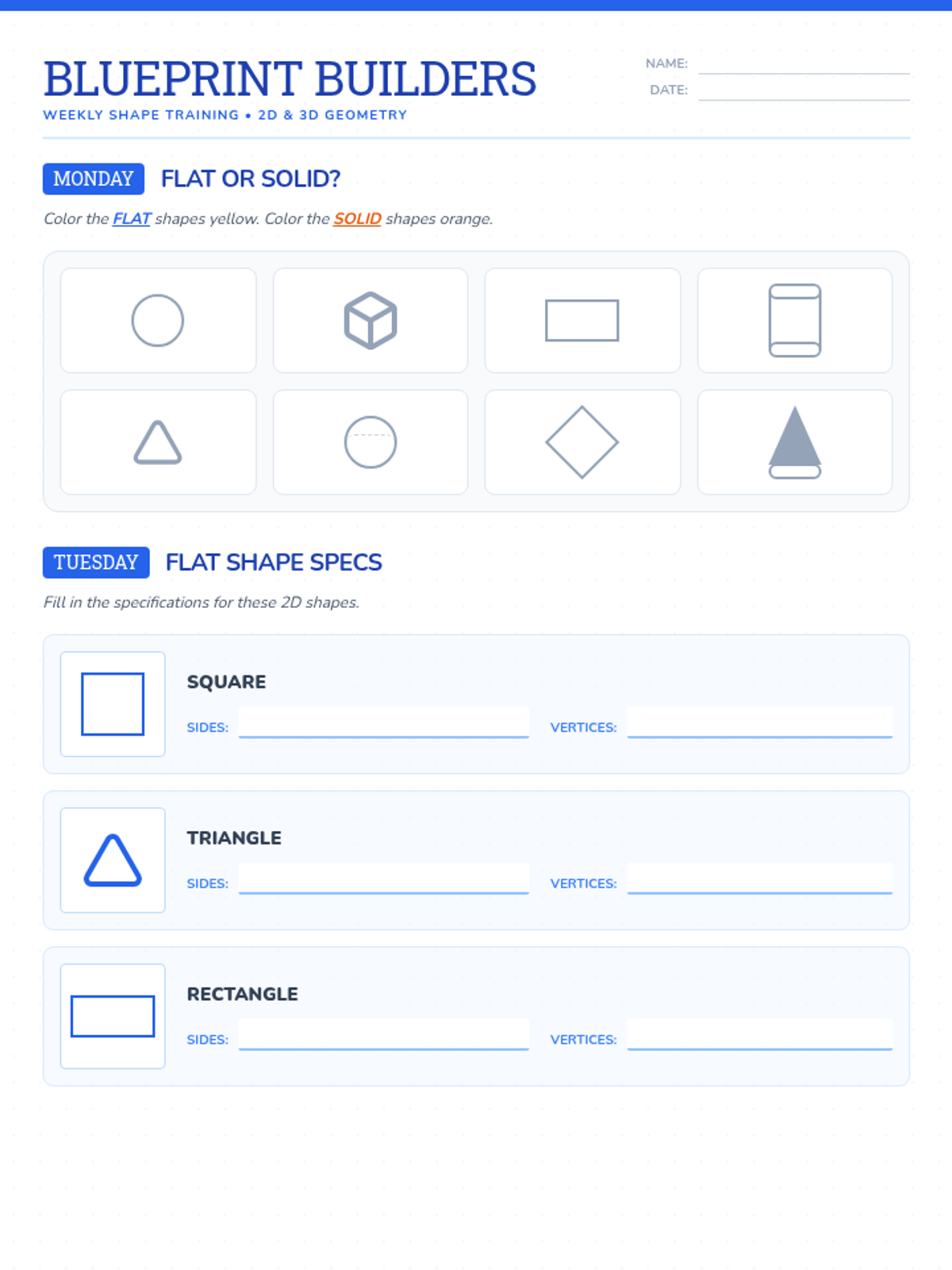
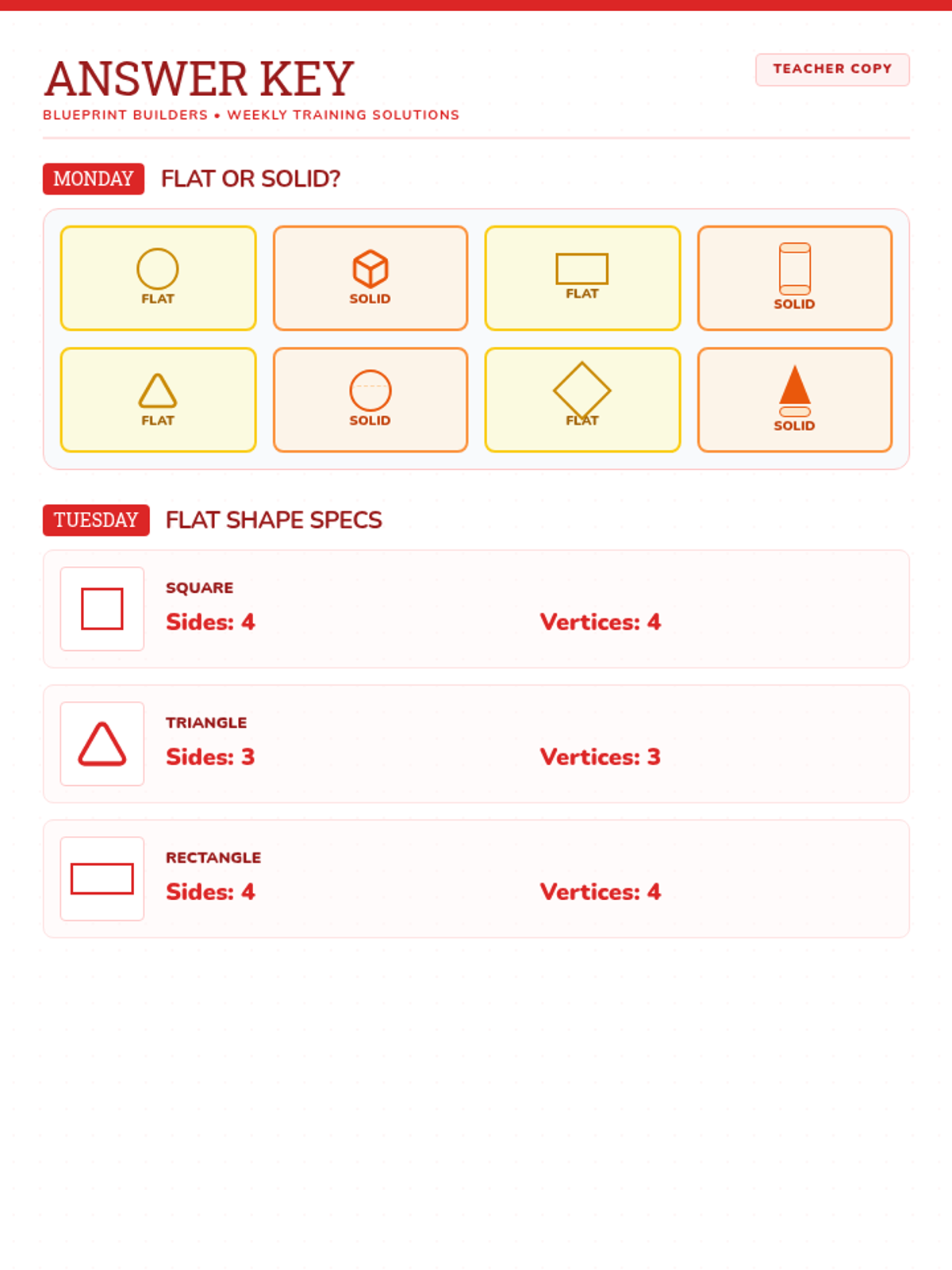
A comprehensive weekly homework set focused on identifying and differentiating between 2D (flat) and 3D (solid) shapes through daily practice activities.
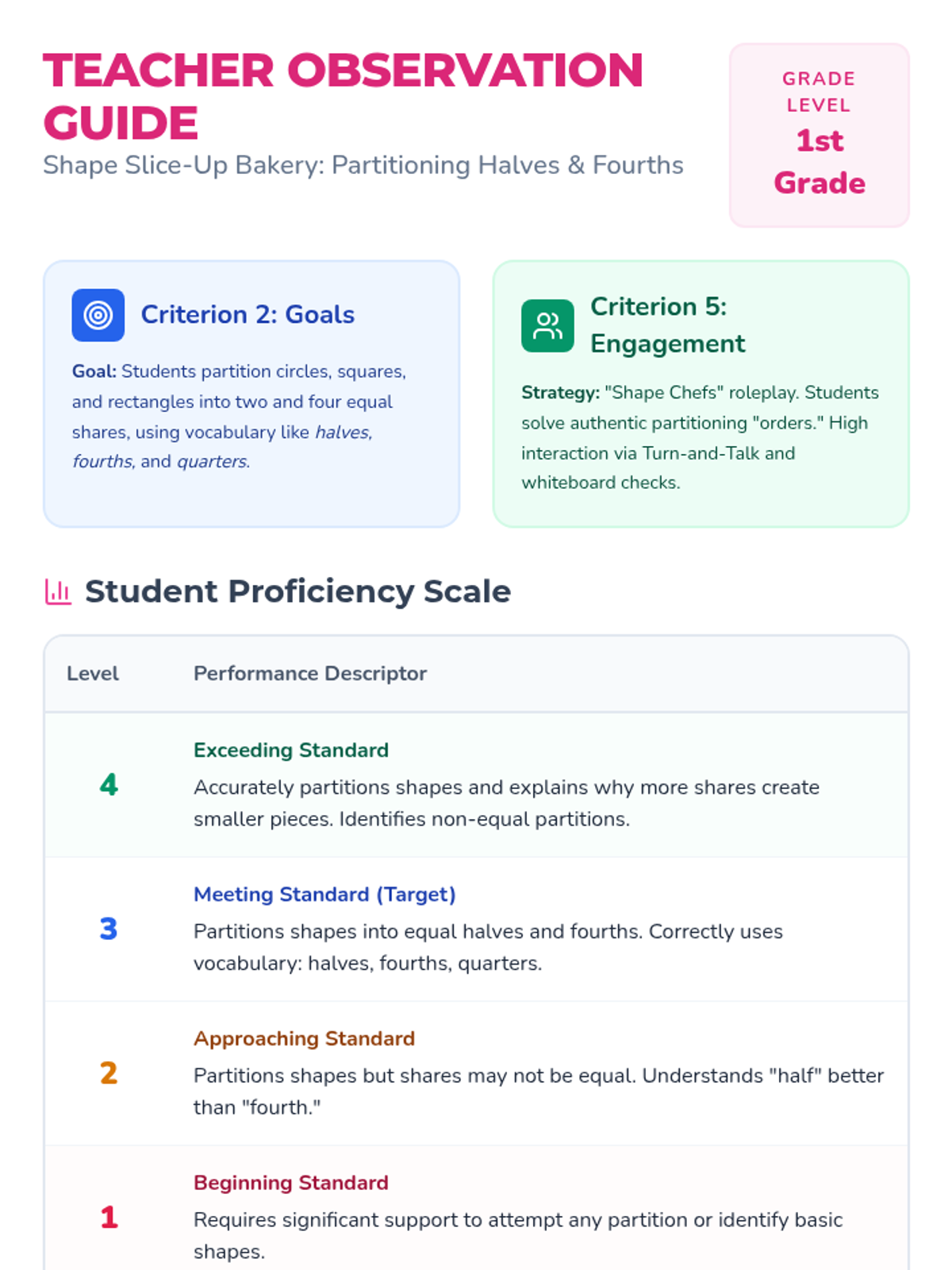
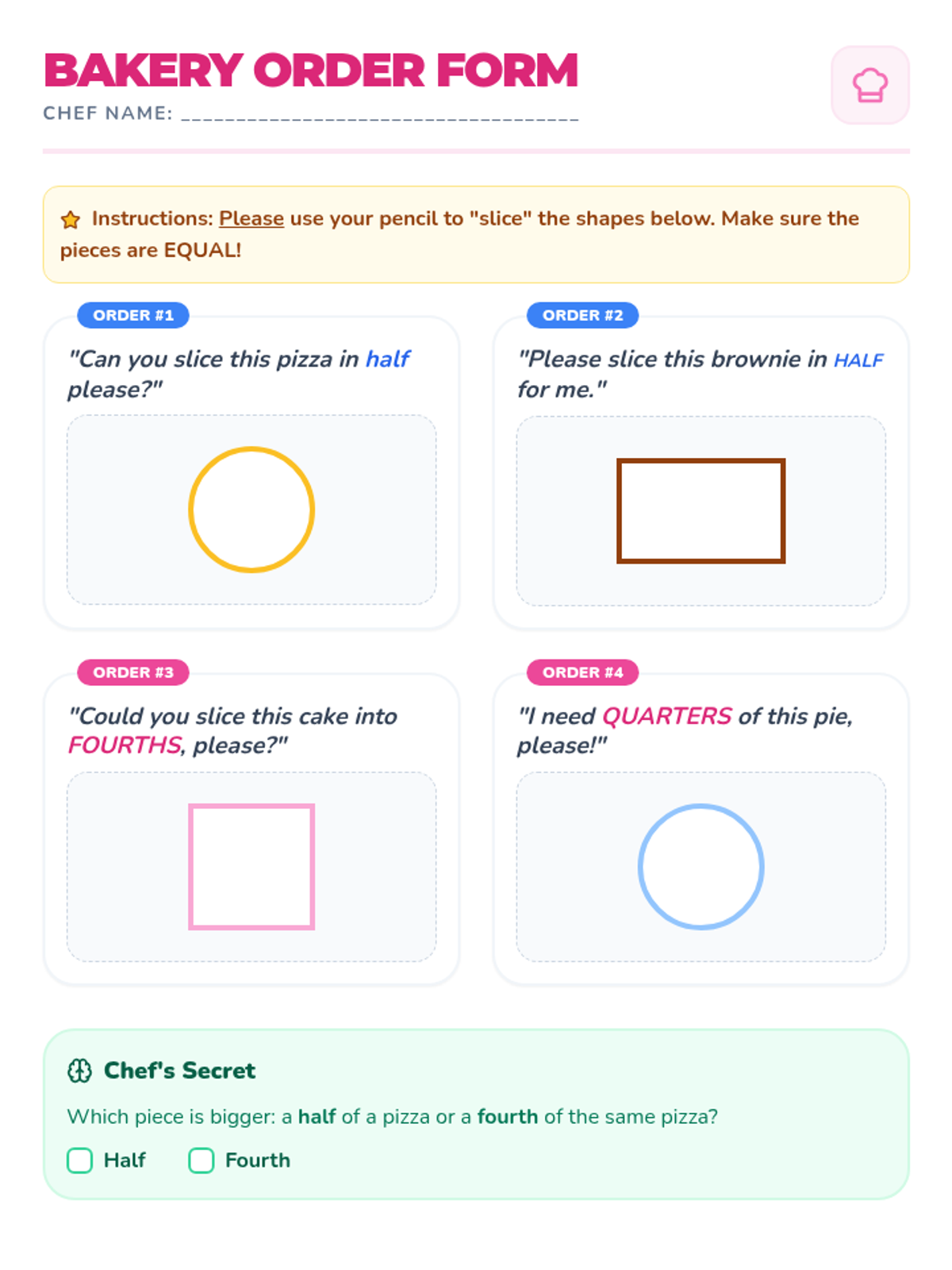
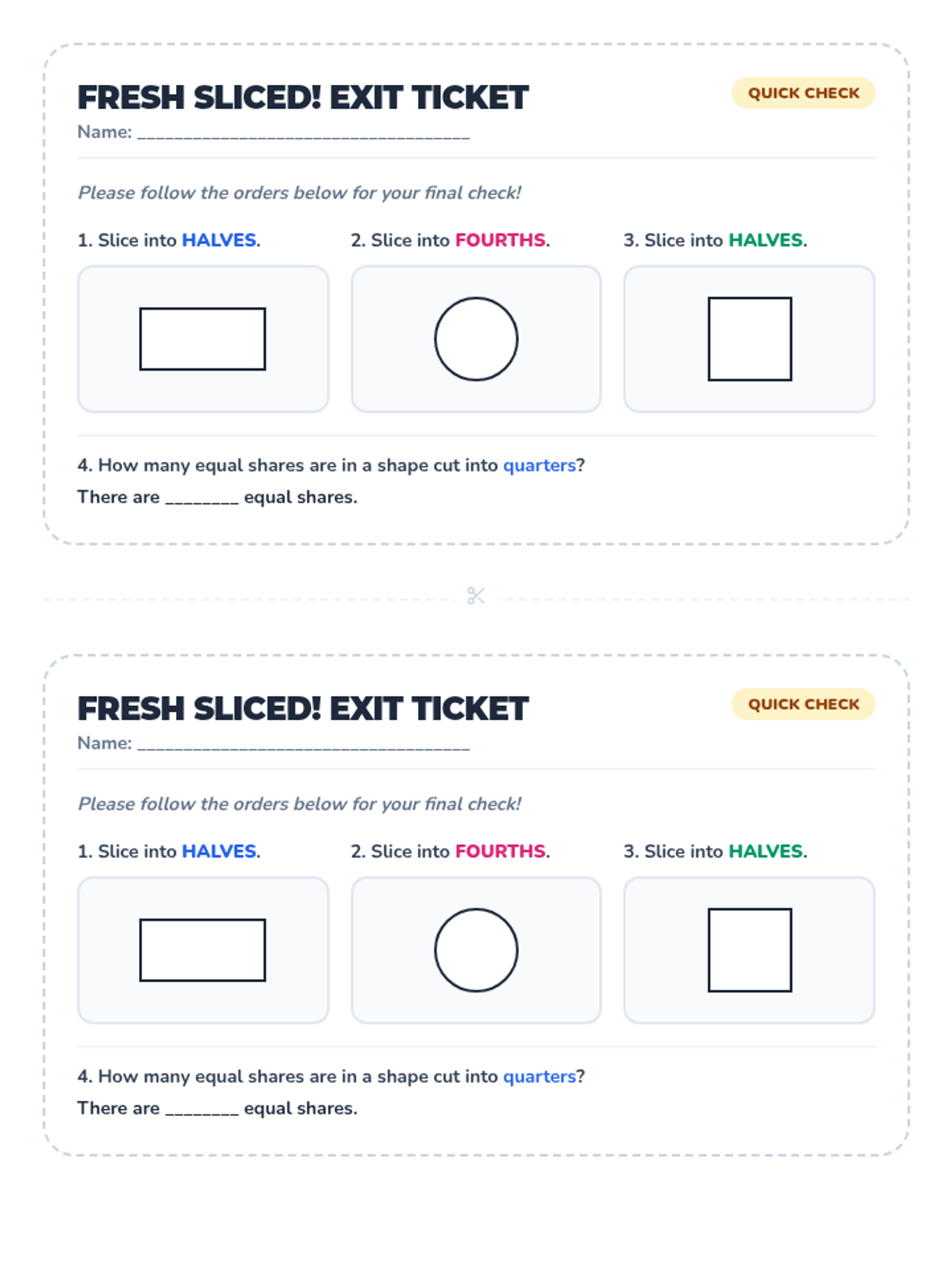
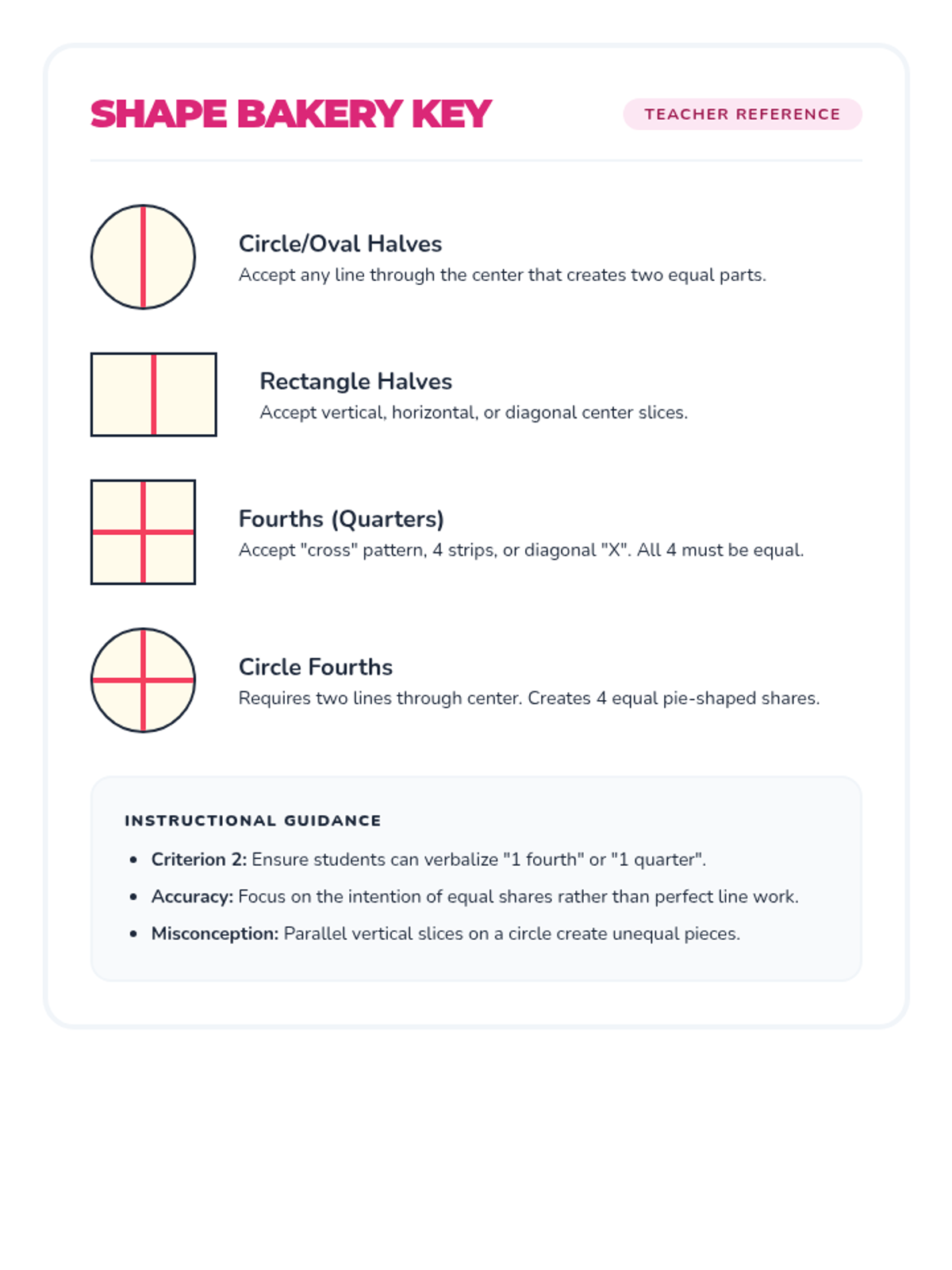
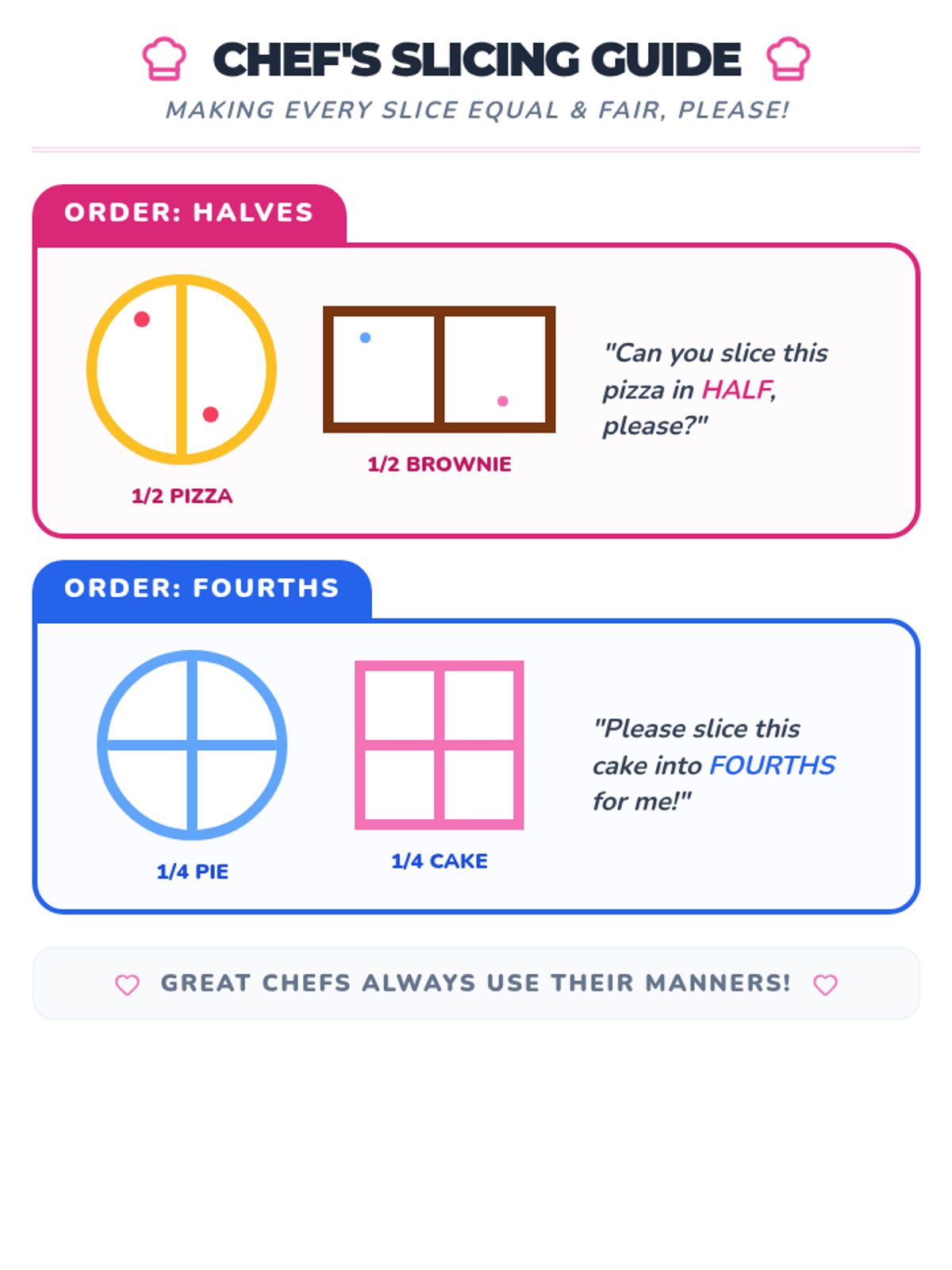
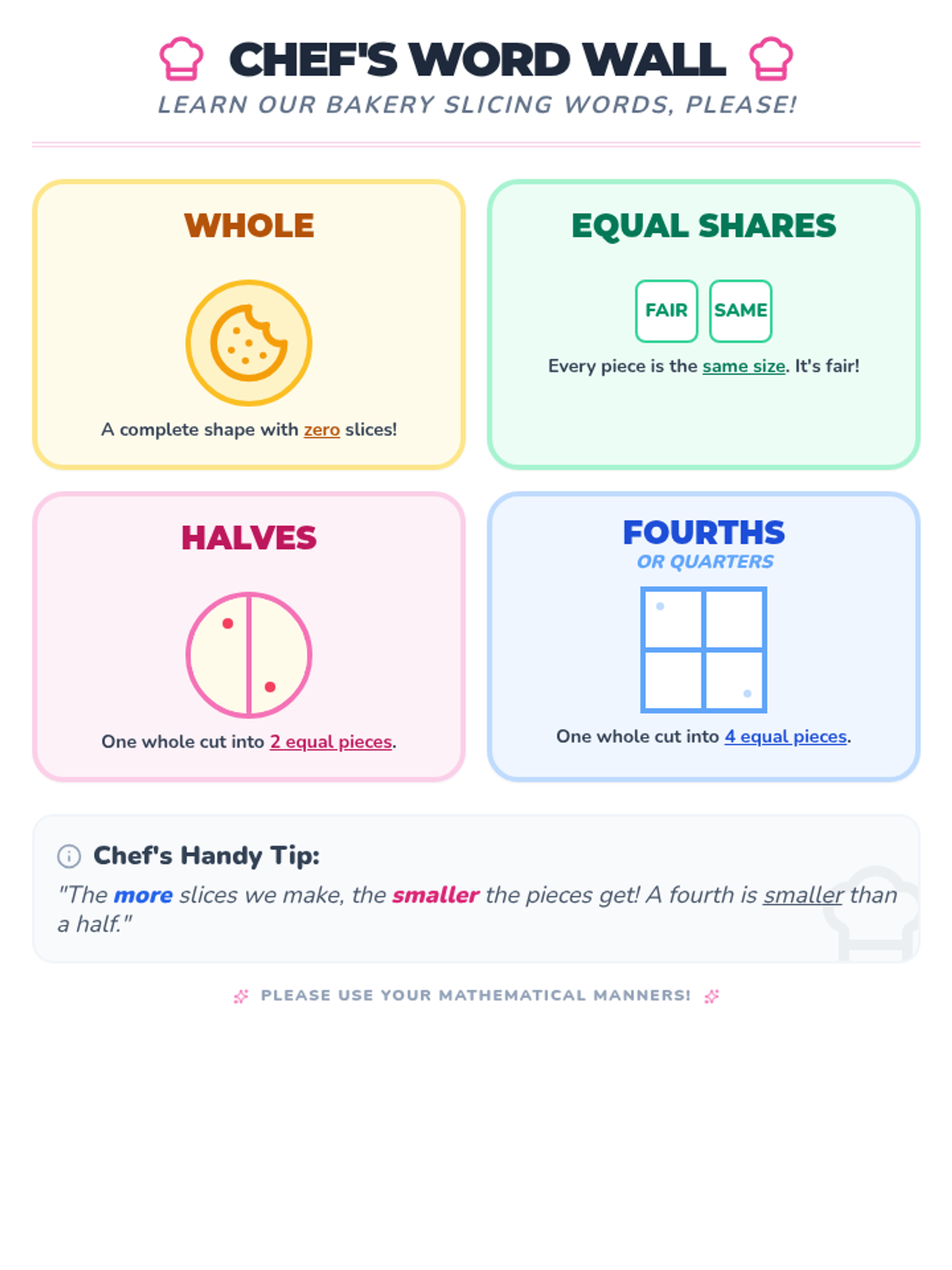
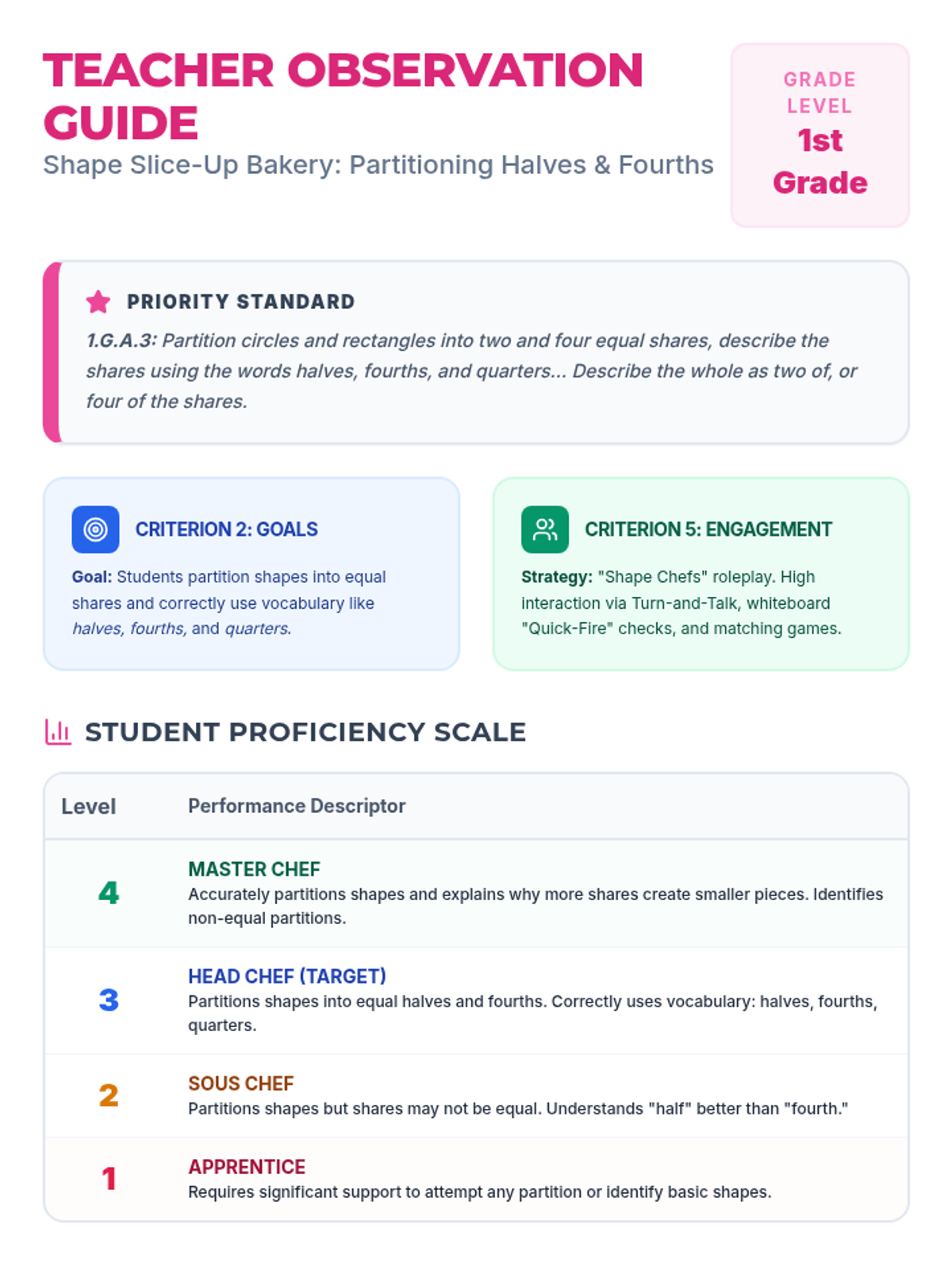
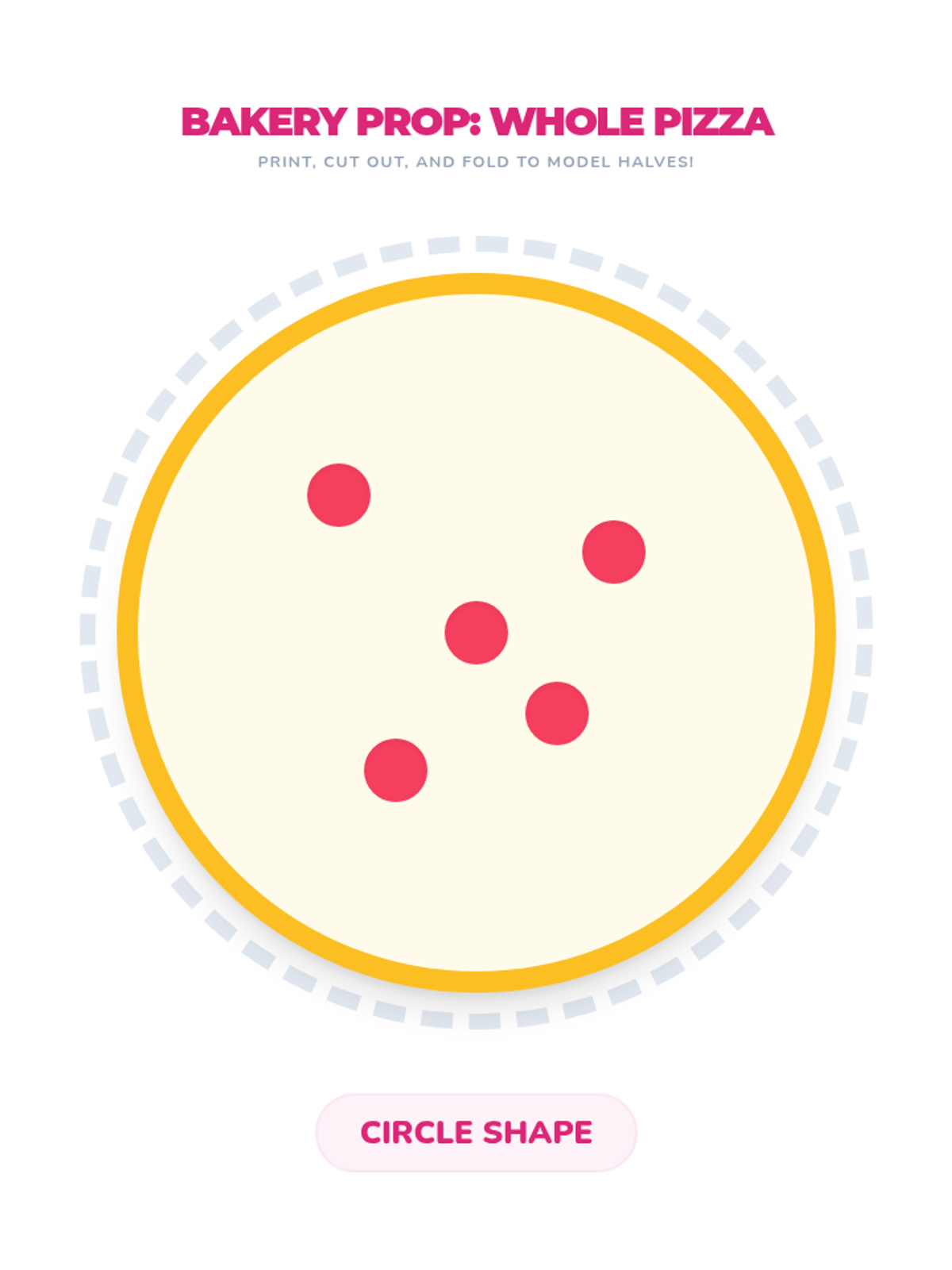
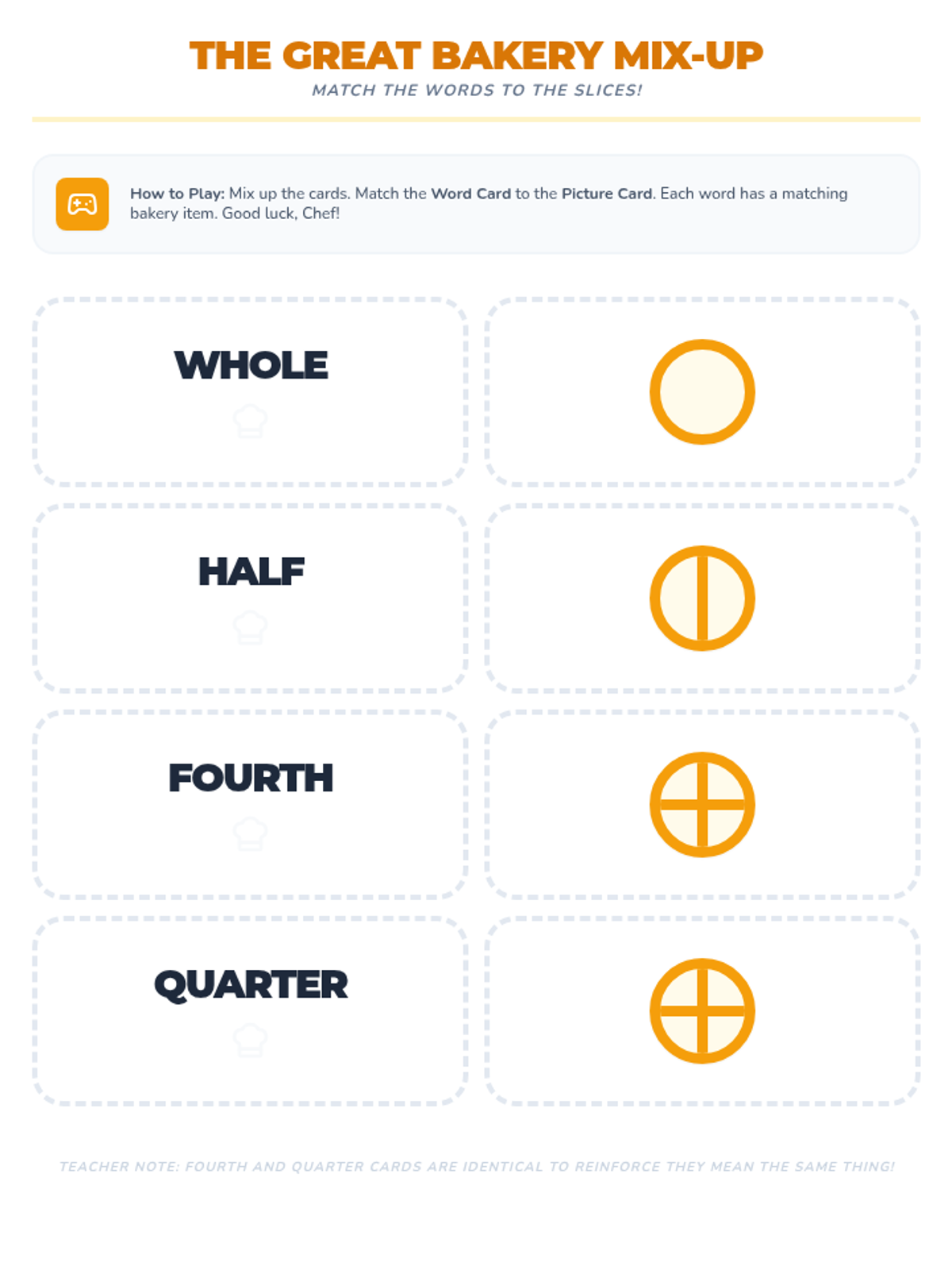
A comprehensive 1st-grade lesson on partitioning squares, circles, and rectangles into equal shares of halves and fourths, designed for an observation with a focus on clear learning targets and student engagement.
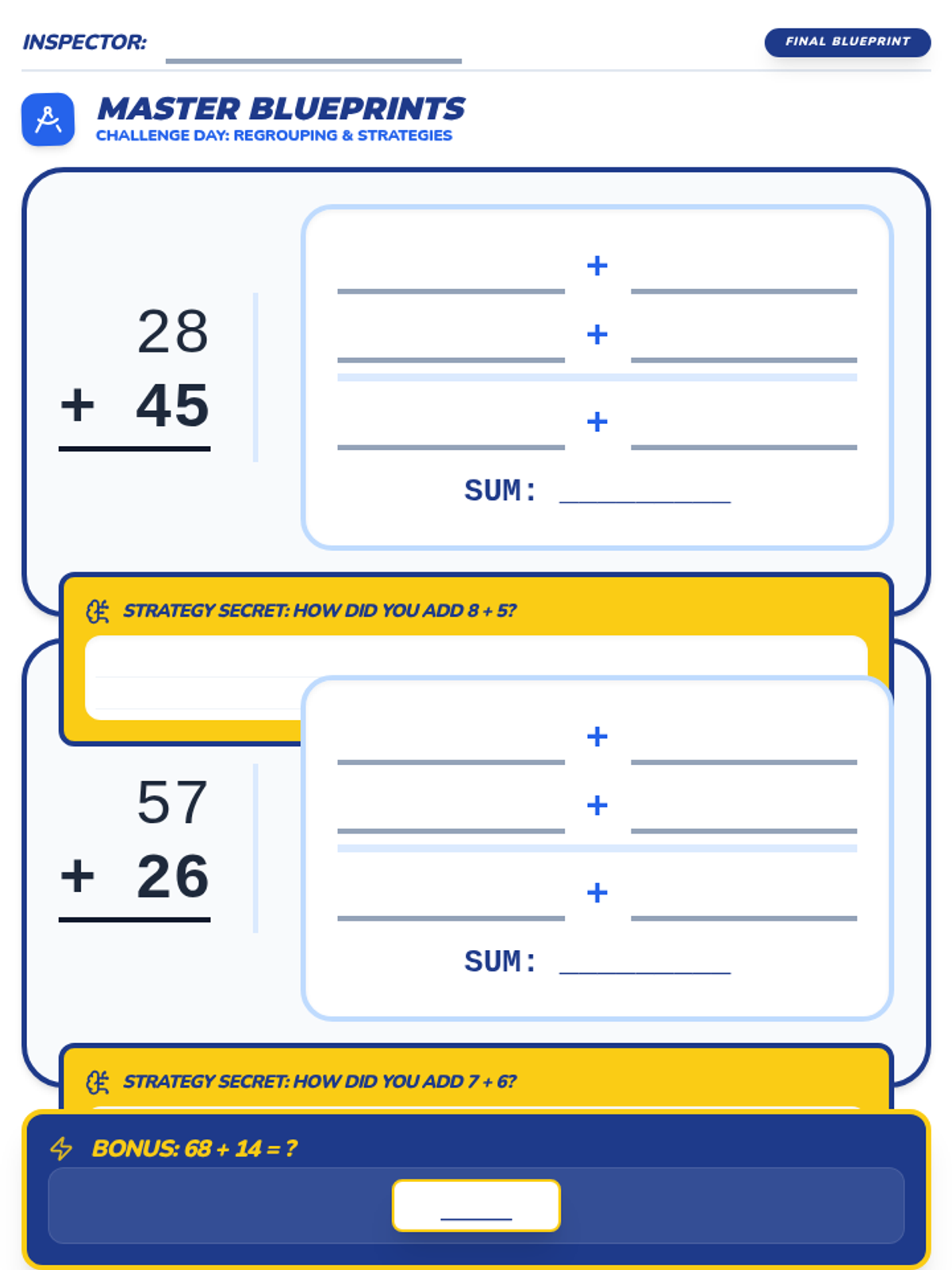
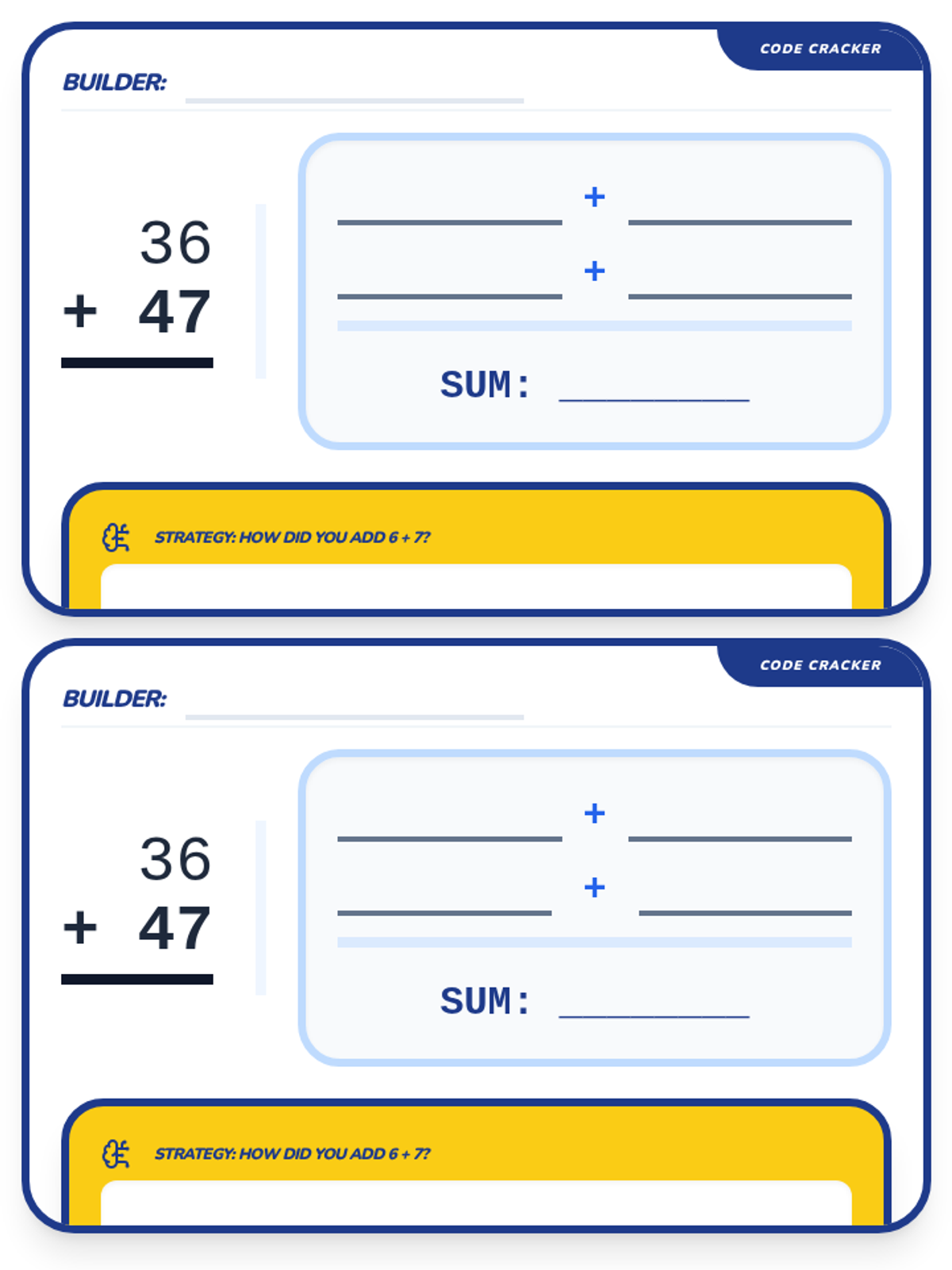
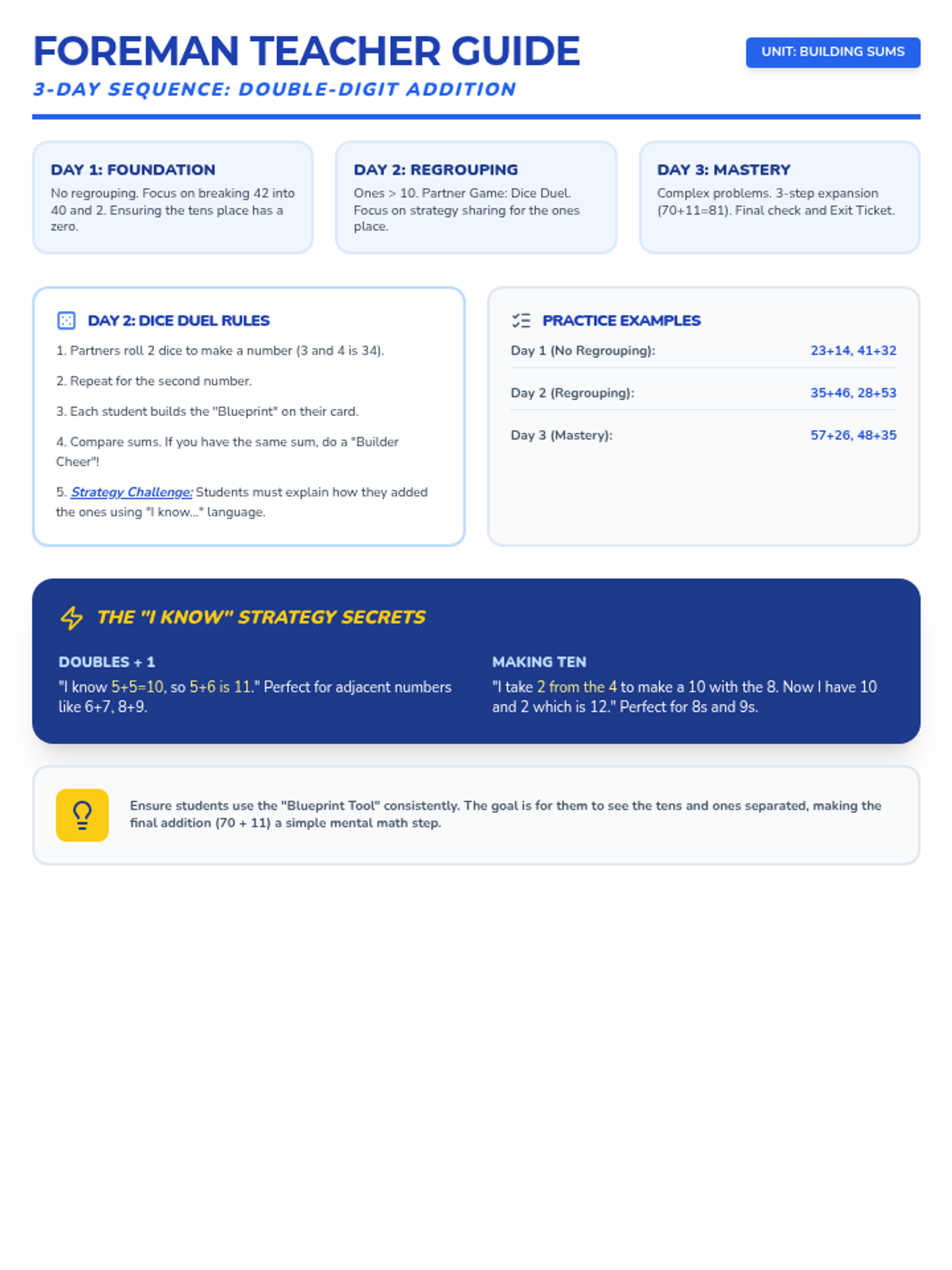
Students master two-digit addition with regrouping and explain their mental math strategies before completing an exit ticket.
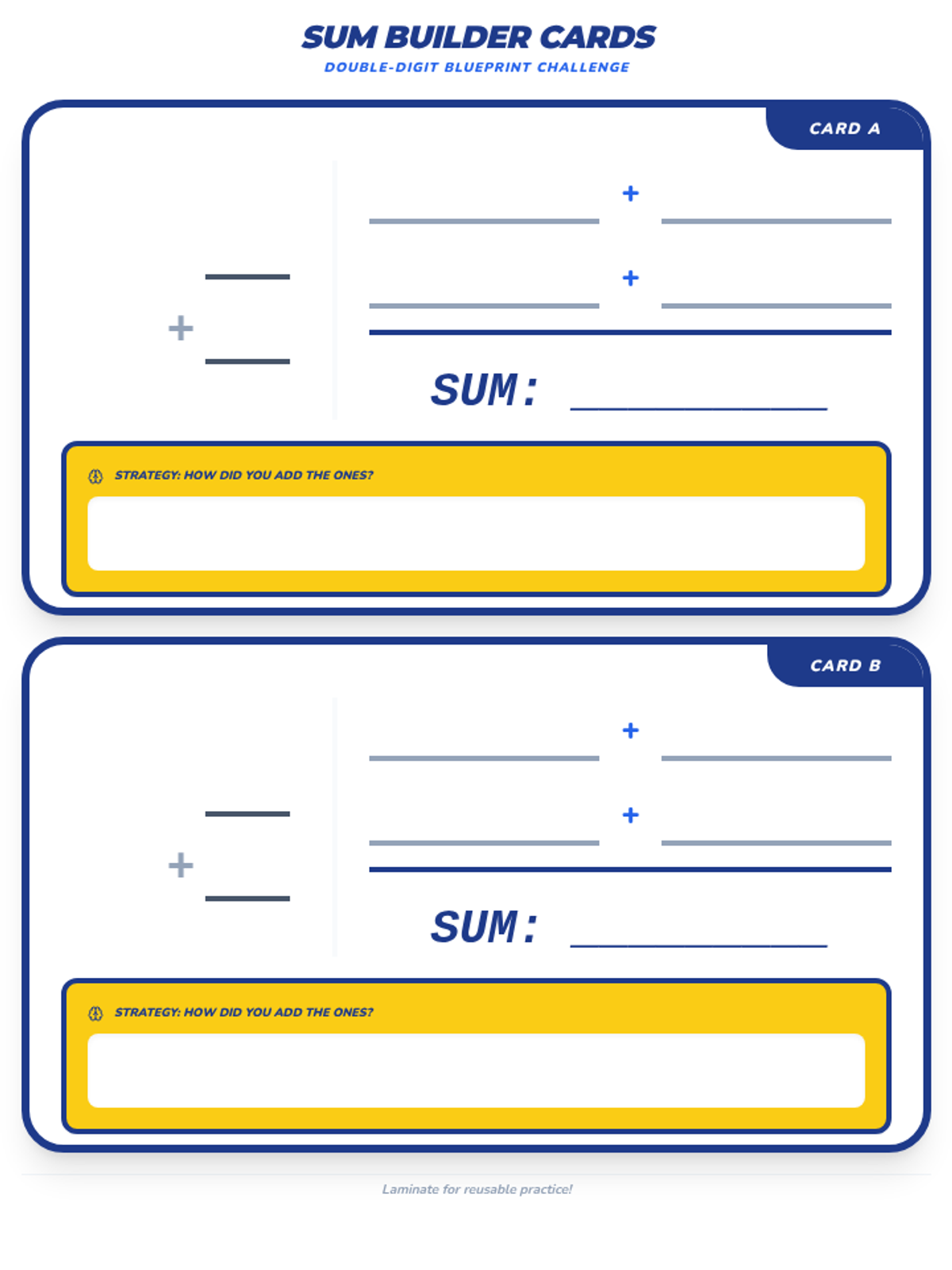
Students explore regrouping in two-digit addition using expanded form and participate in a collaborative math game.
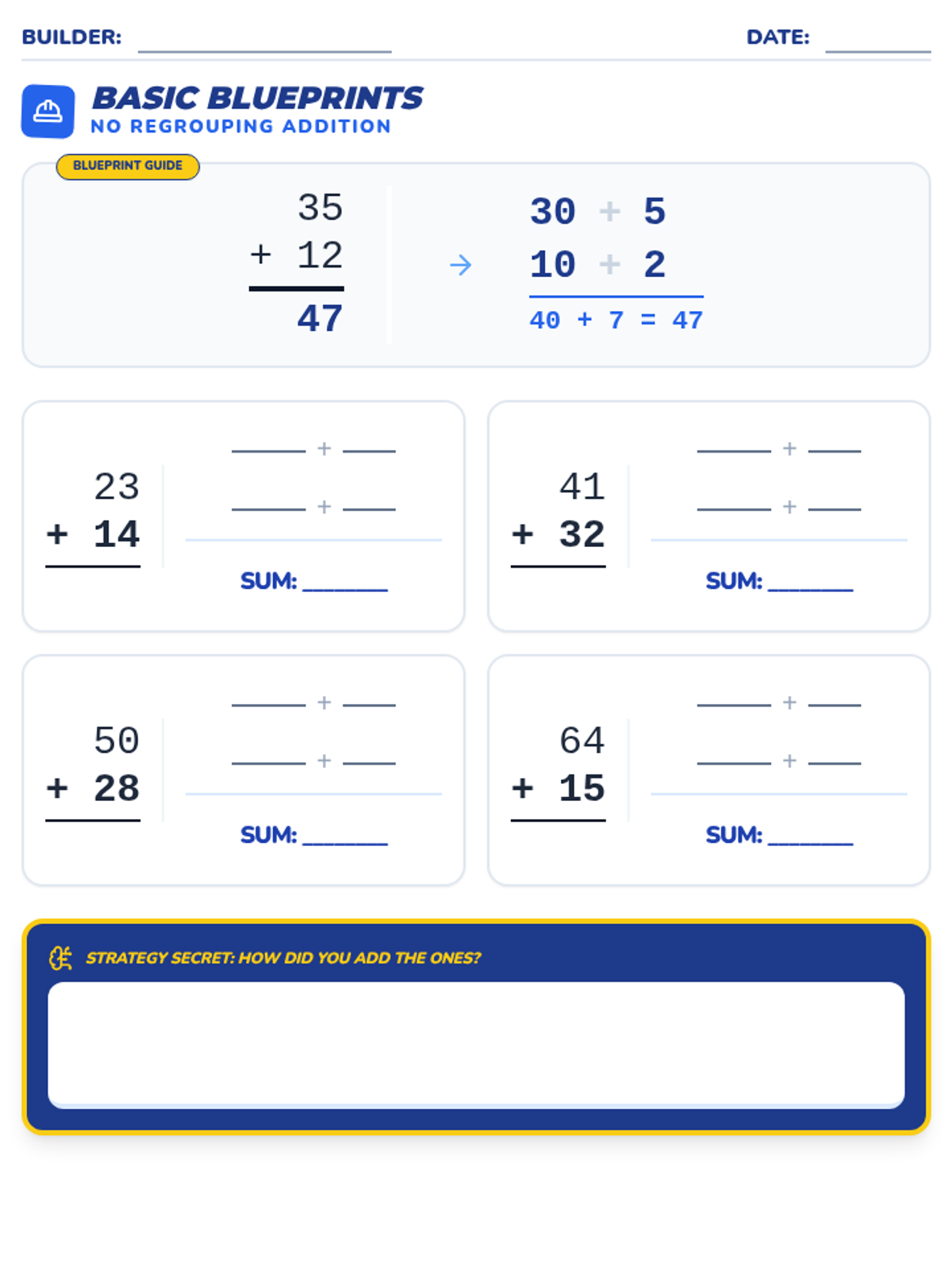
Students learn to add two-digit numbers without regrouping by breaking them into tens and ones using the expanded form method.
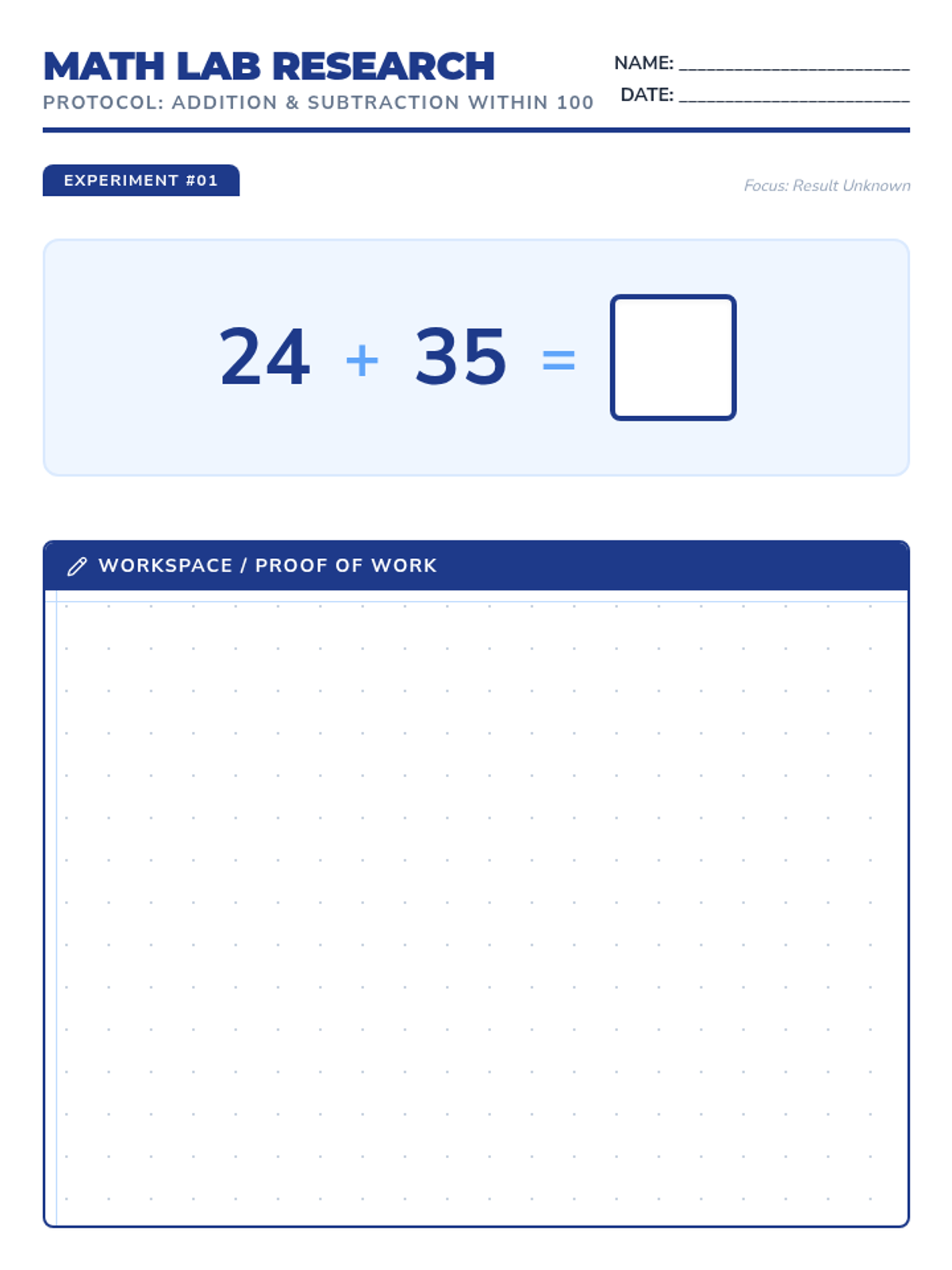
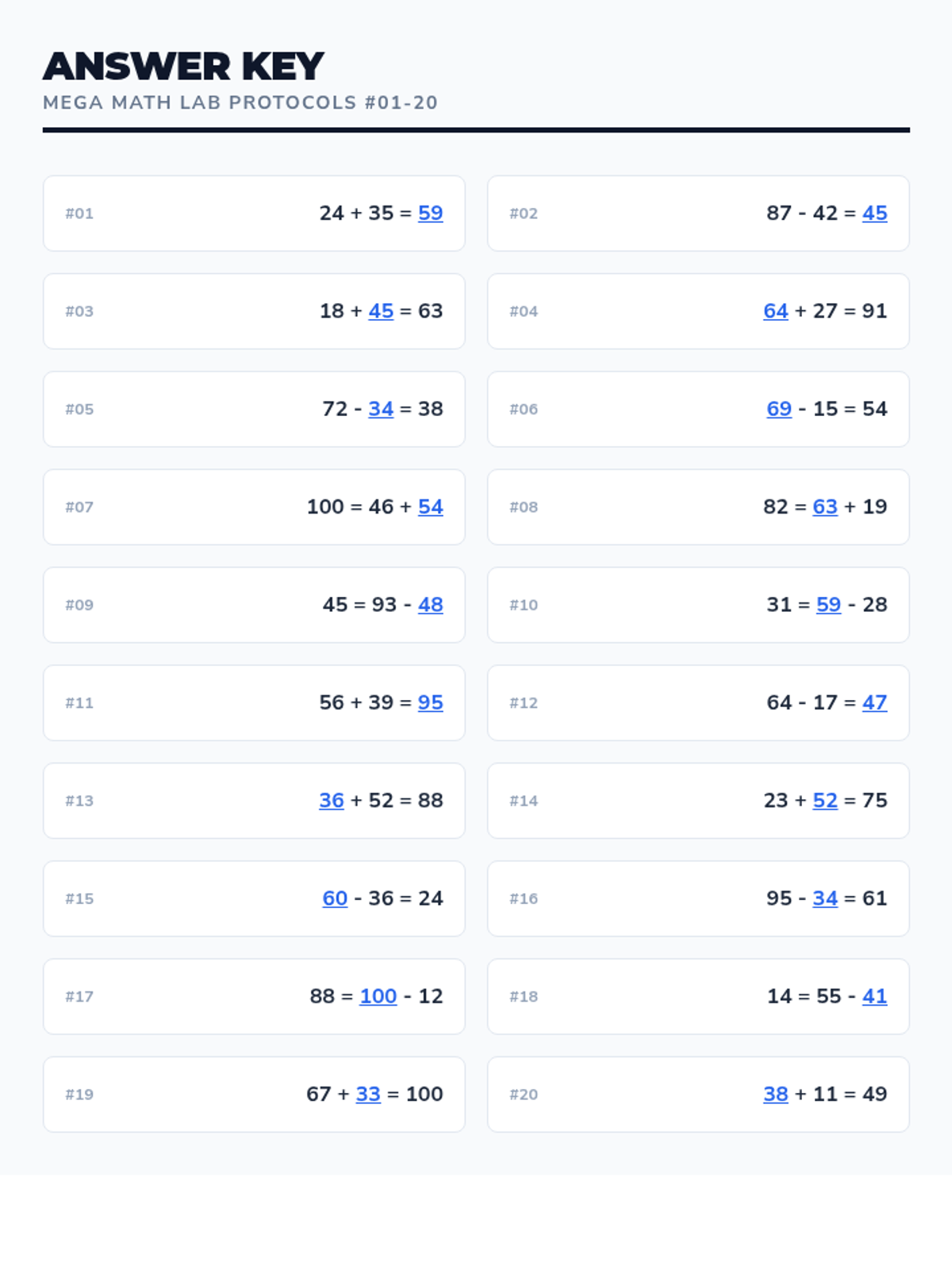
A set of 20 high-impact math problems focusing on addition and subtraction within 100, featuring a unique one-problem-per-page layout to maximize student workspace for drawing, calculating, and explaining.
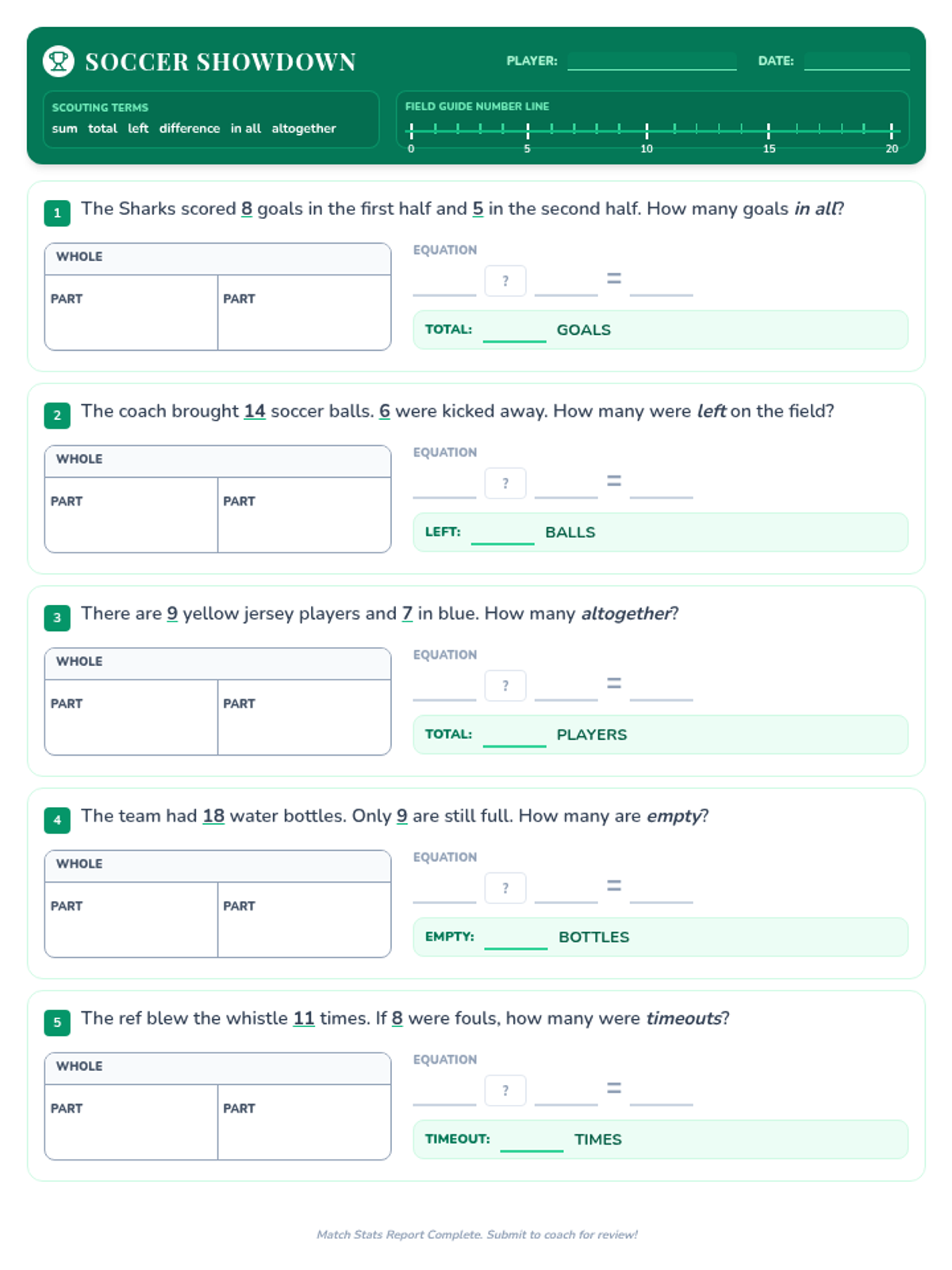
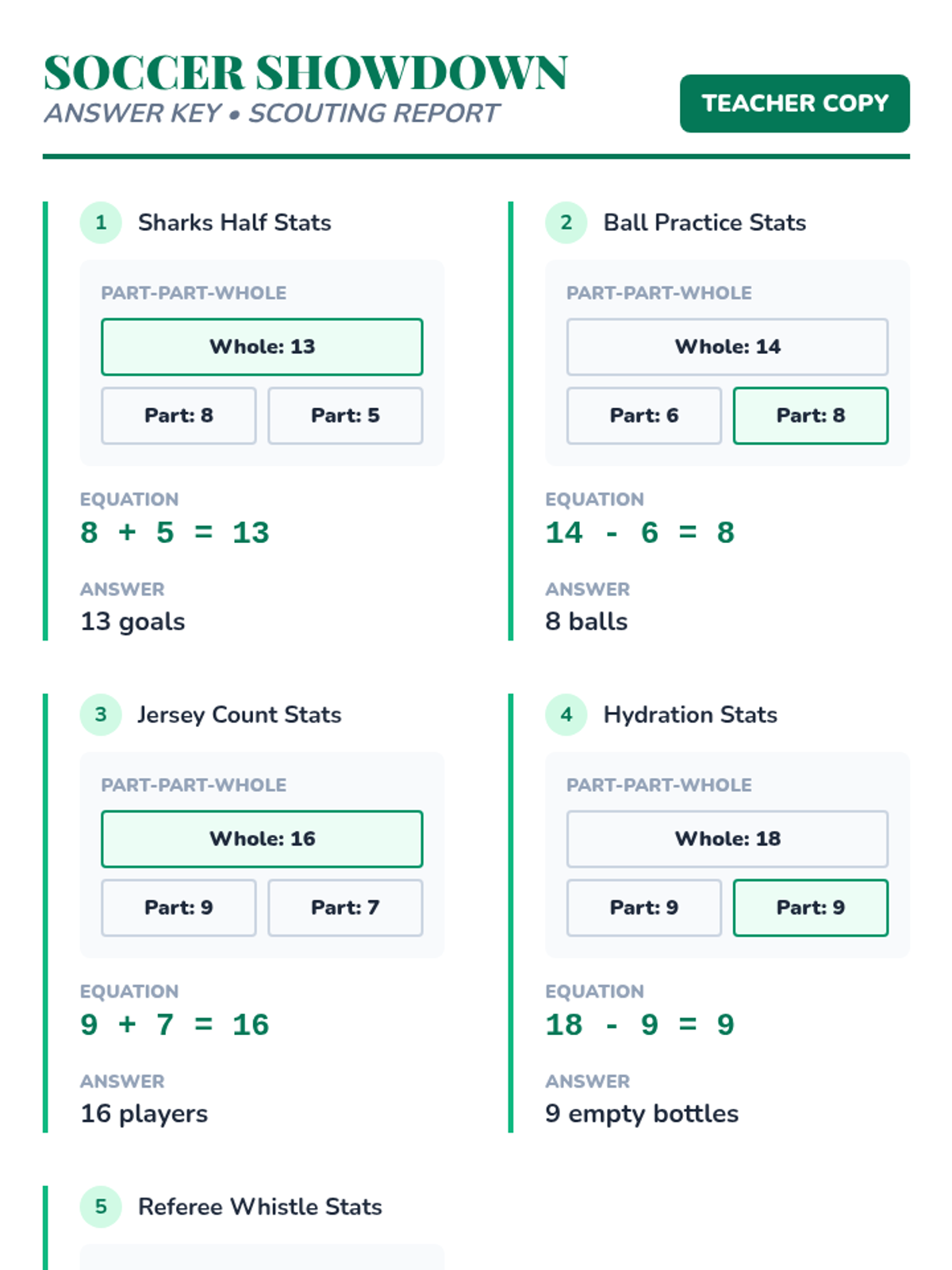
A high-energy lesson on solving addition and subtraction word problems within 20 using the Part-Part-Whole model. Students analyze game scenarios to identify relationships between goals, players, and equipment on the soccer pitch.
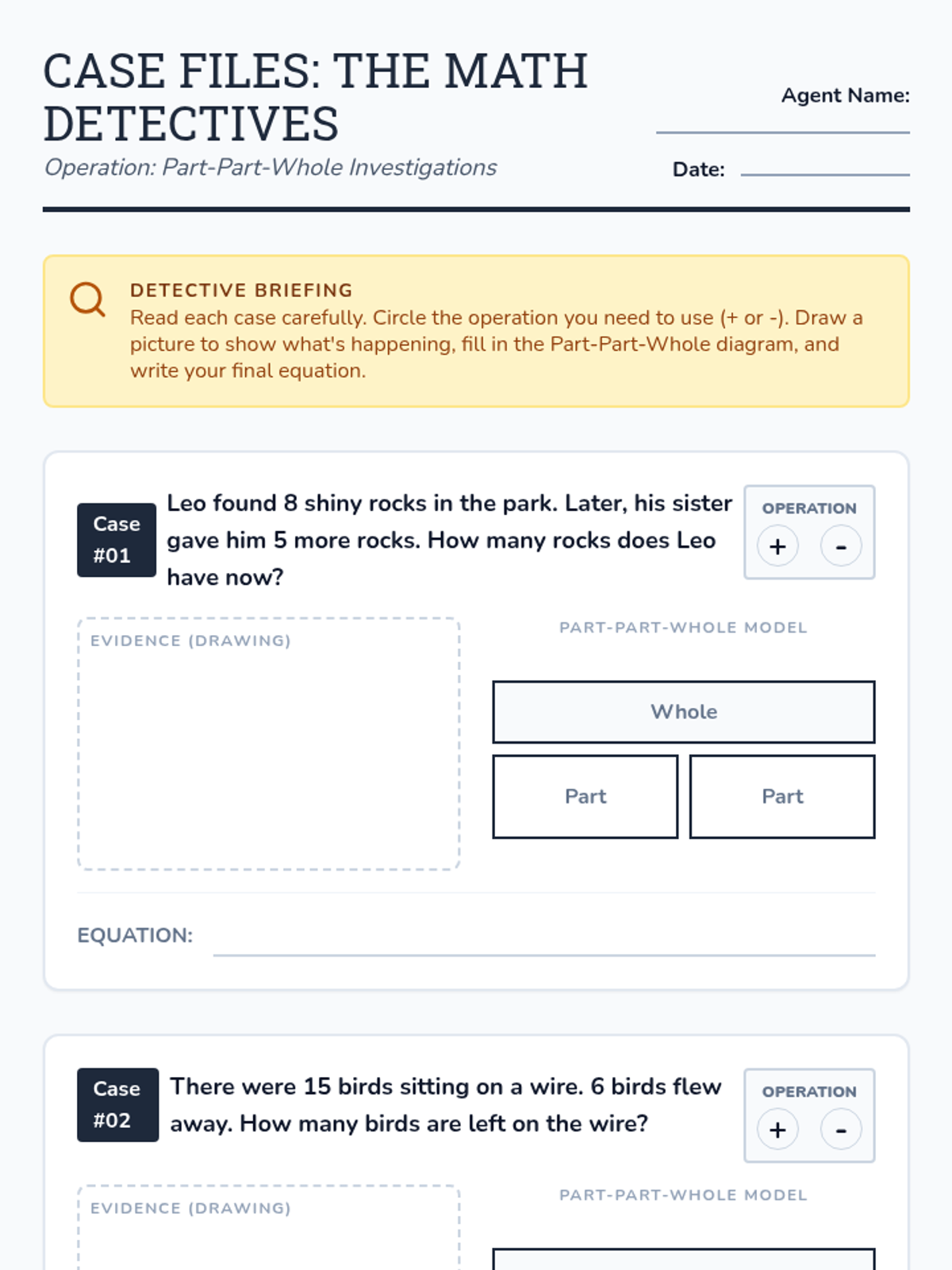
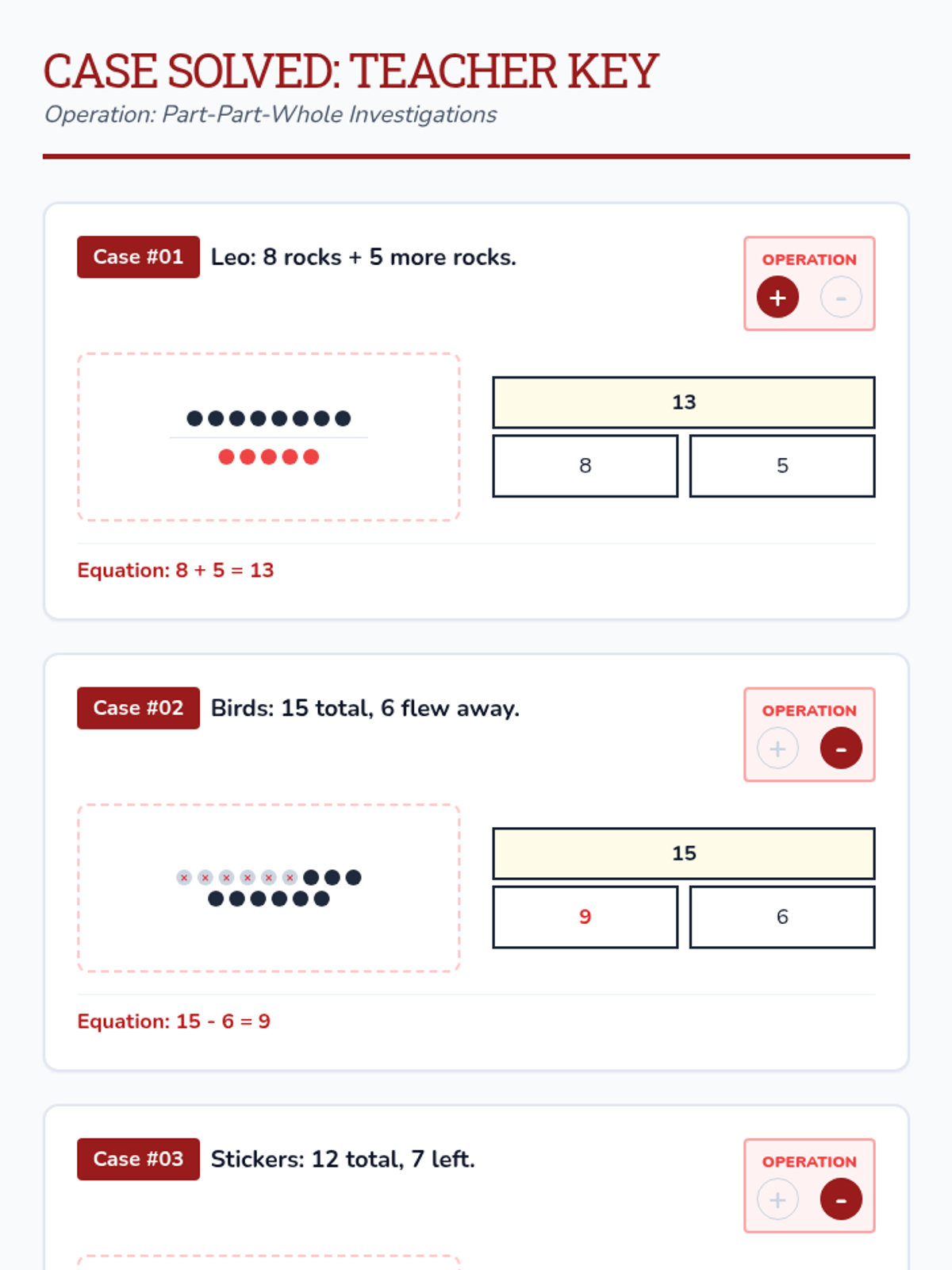
A math lesson where students become detectives to solve word problems within 20 by identifying operations and using part-part-whole diagrams to visualize the logic.