A gamified review lesson where students complete 'trials' to demonstrate their mastery of literary genres and devices, inspired by the quest to defeat the Shadow of Monotony.
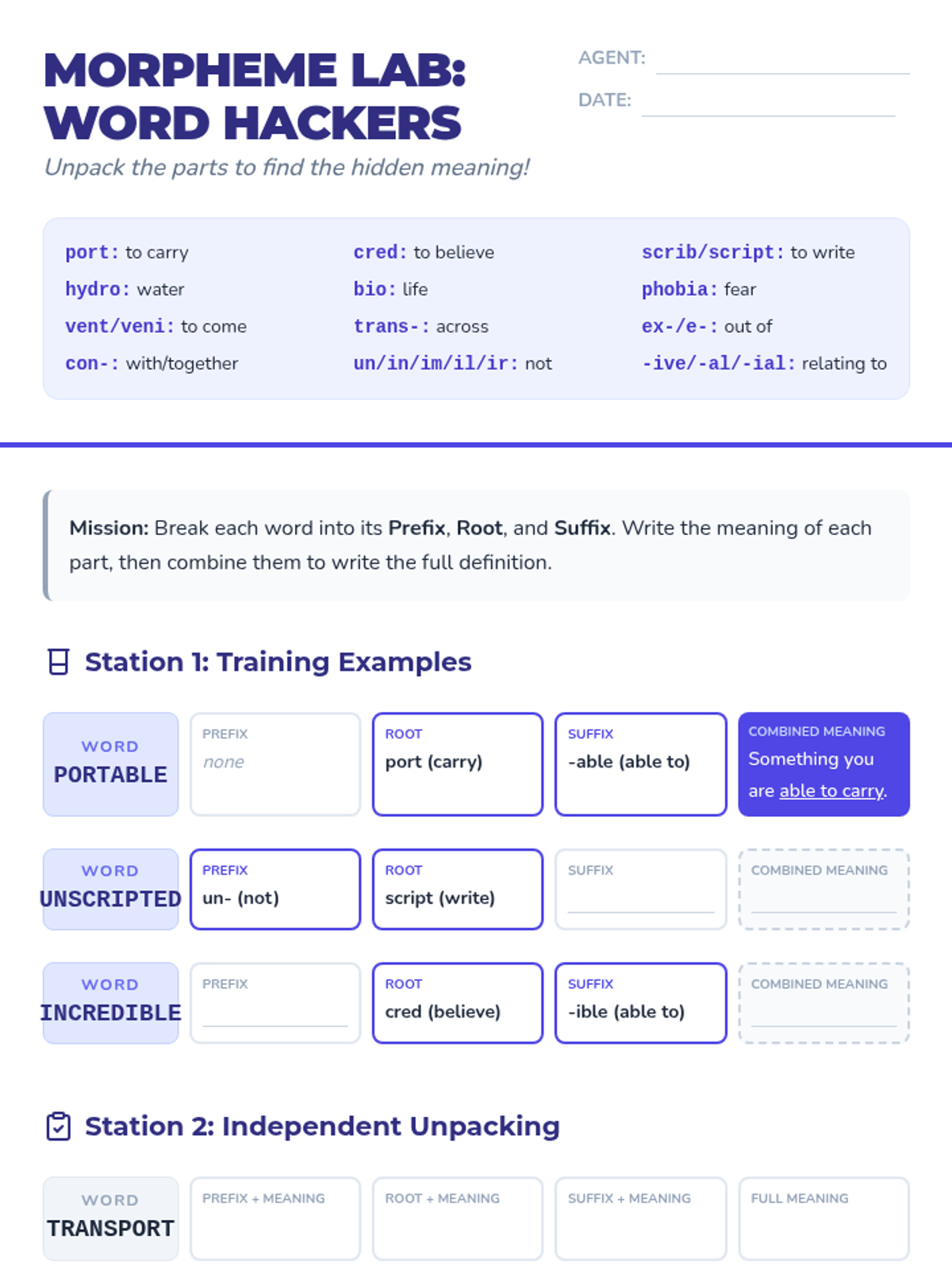
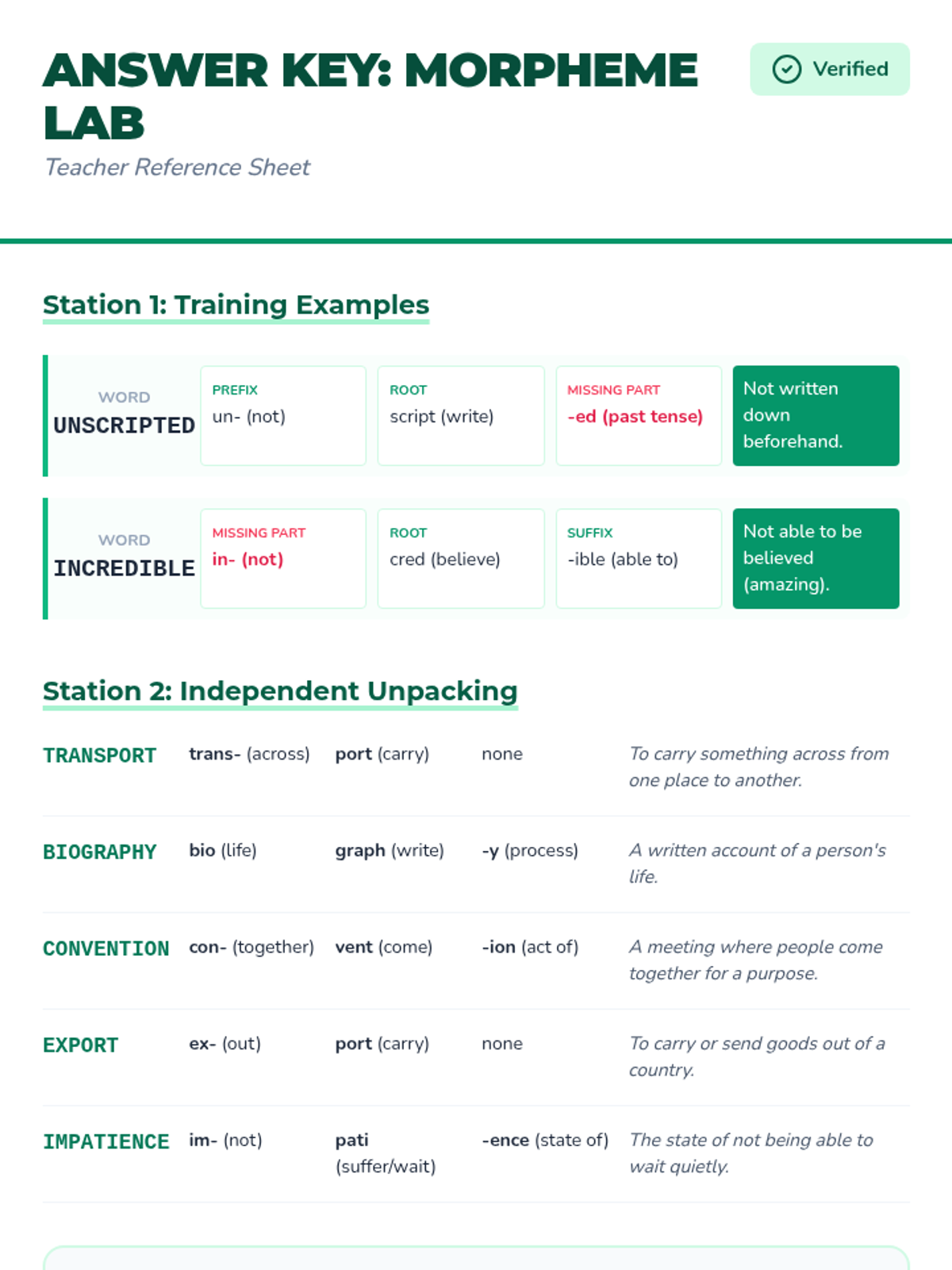
A 30-minute introductory lesson where students learn to decode complex words using a list of 24 common morphemes.
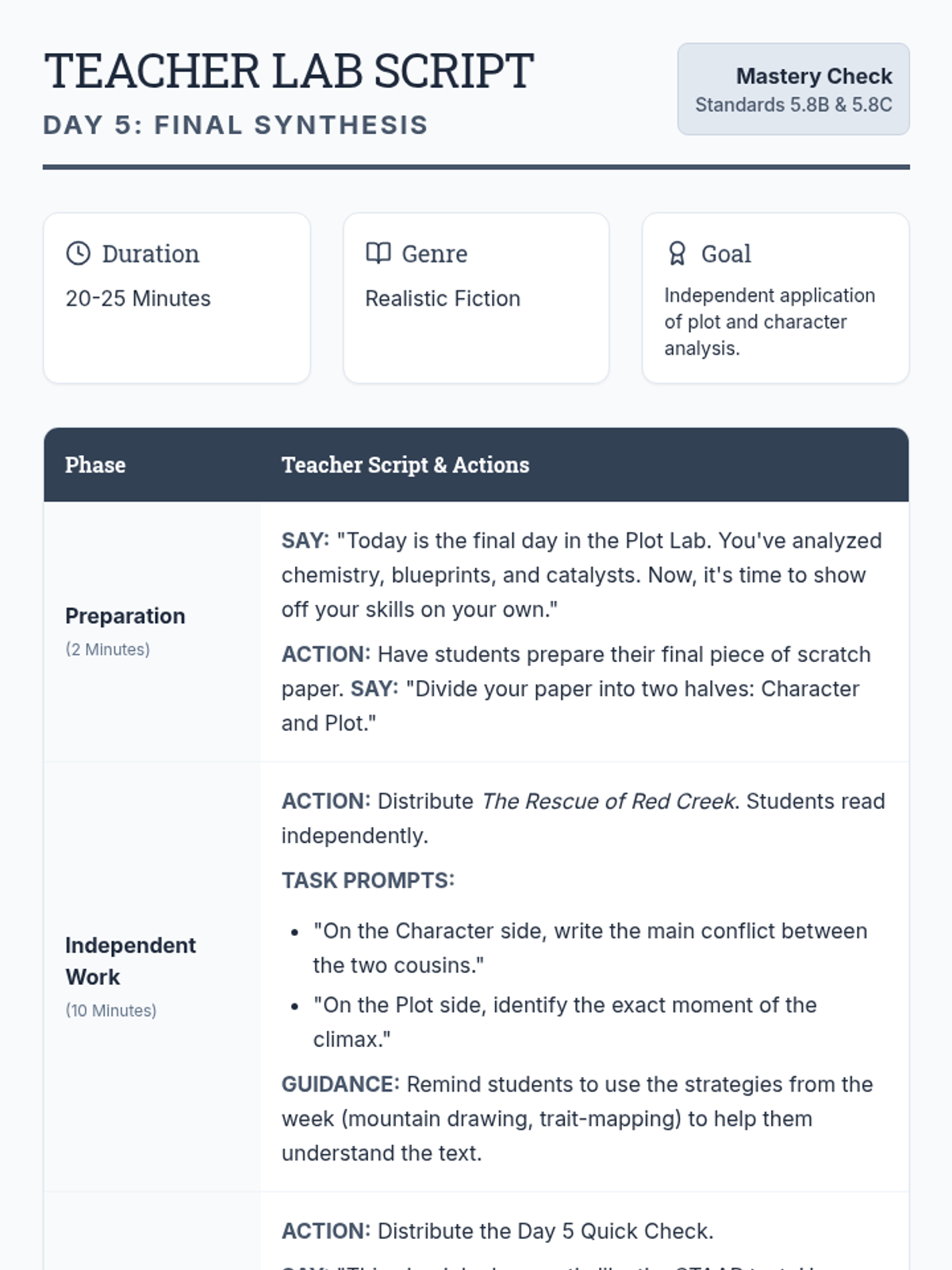
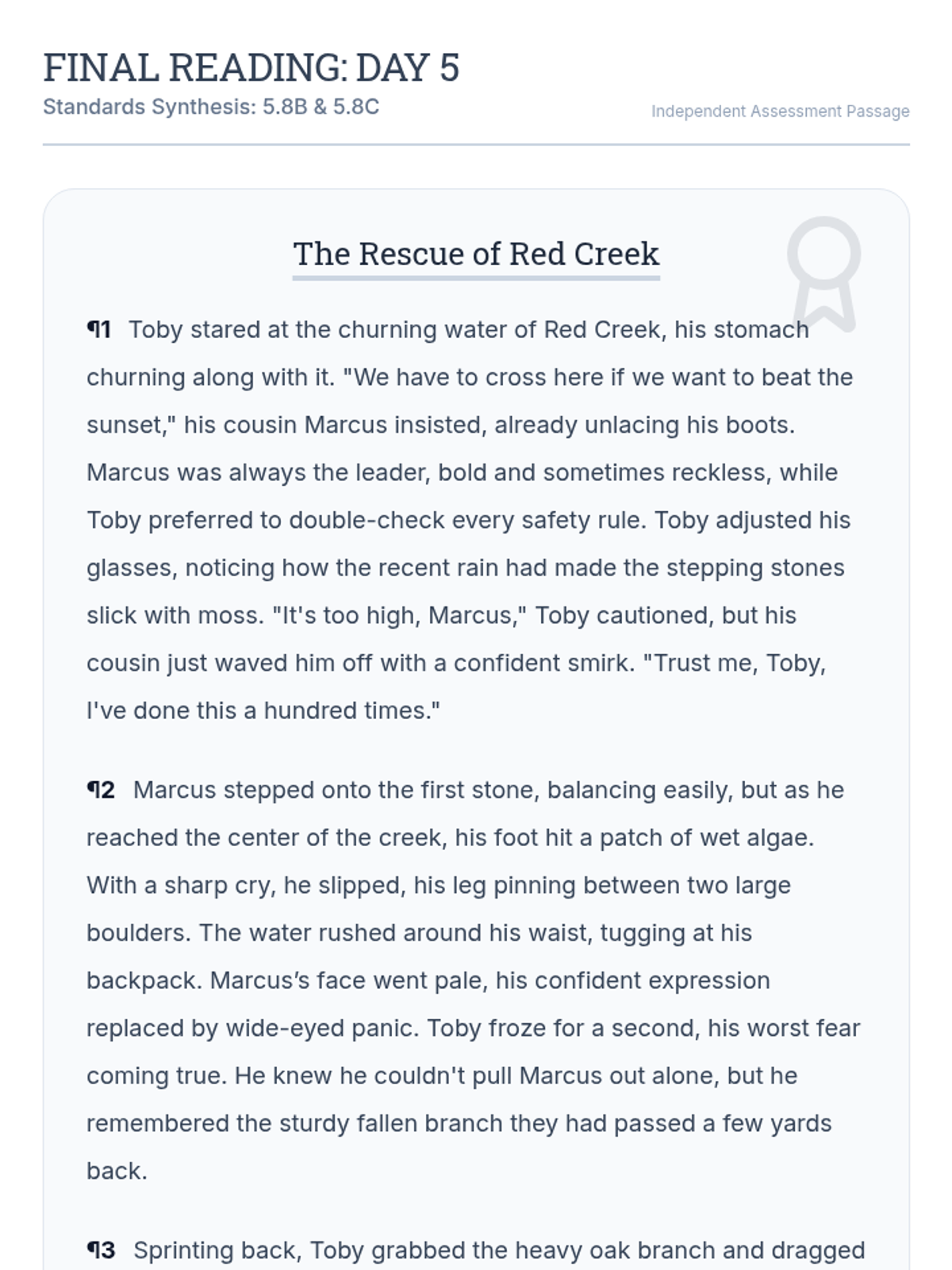
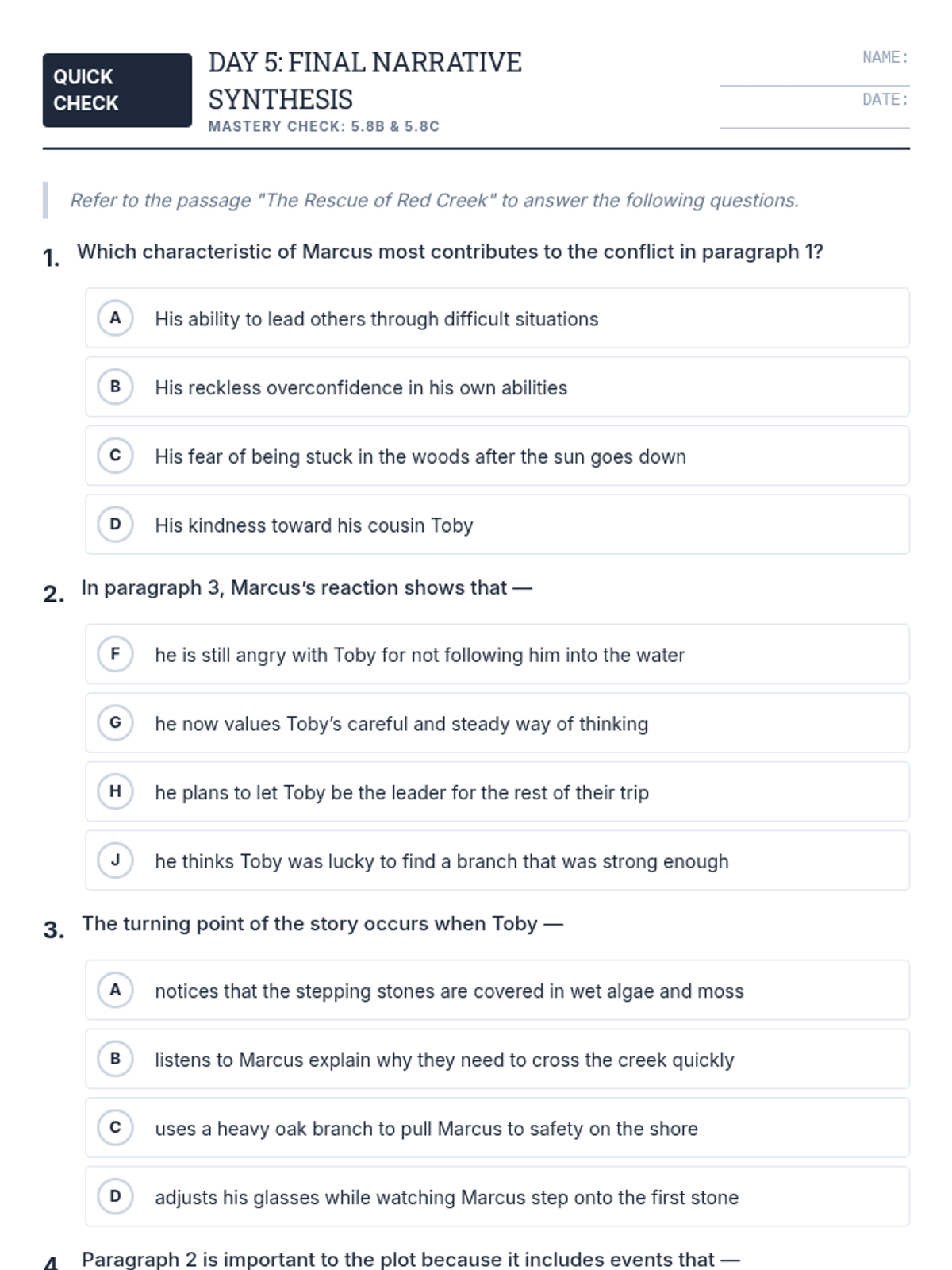
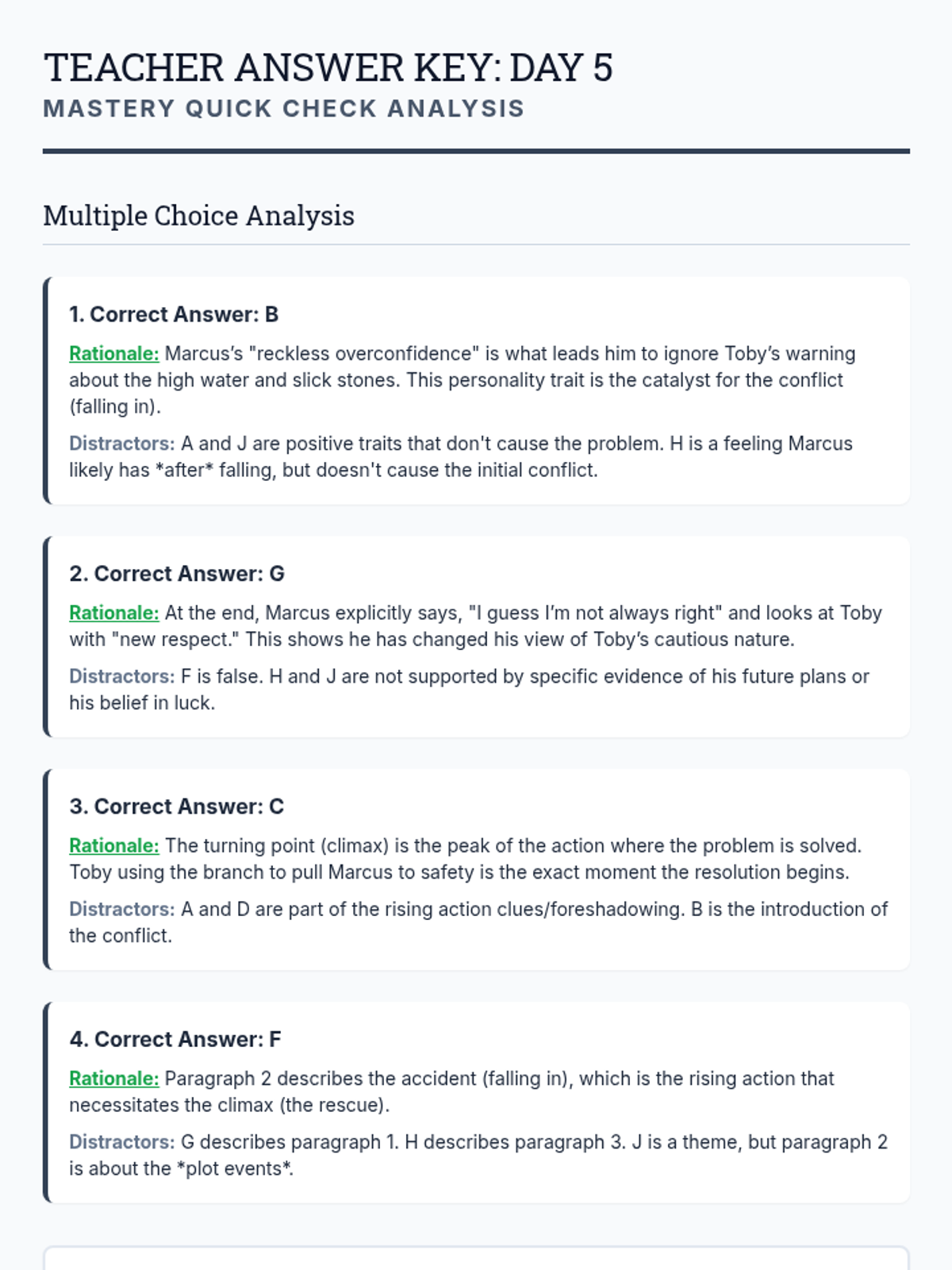
Day 5 serves as a final comprehensive quick check. Students read a new passage independently and apply their analysis of character relationships and plot structure to demonstrate mastery of standards 5.8B and 5.8C.
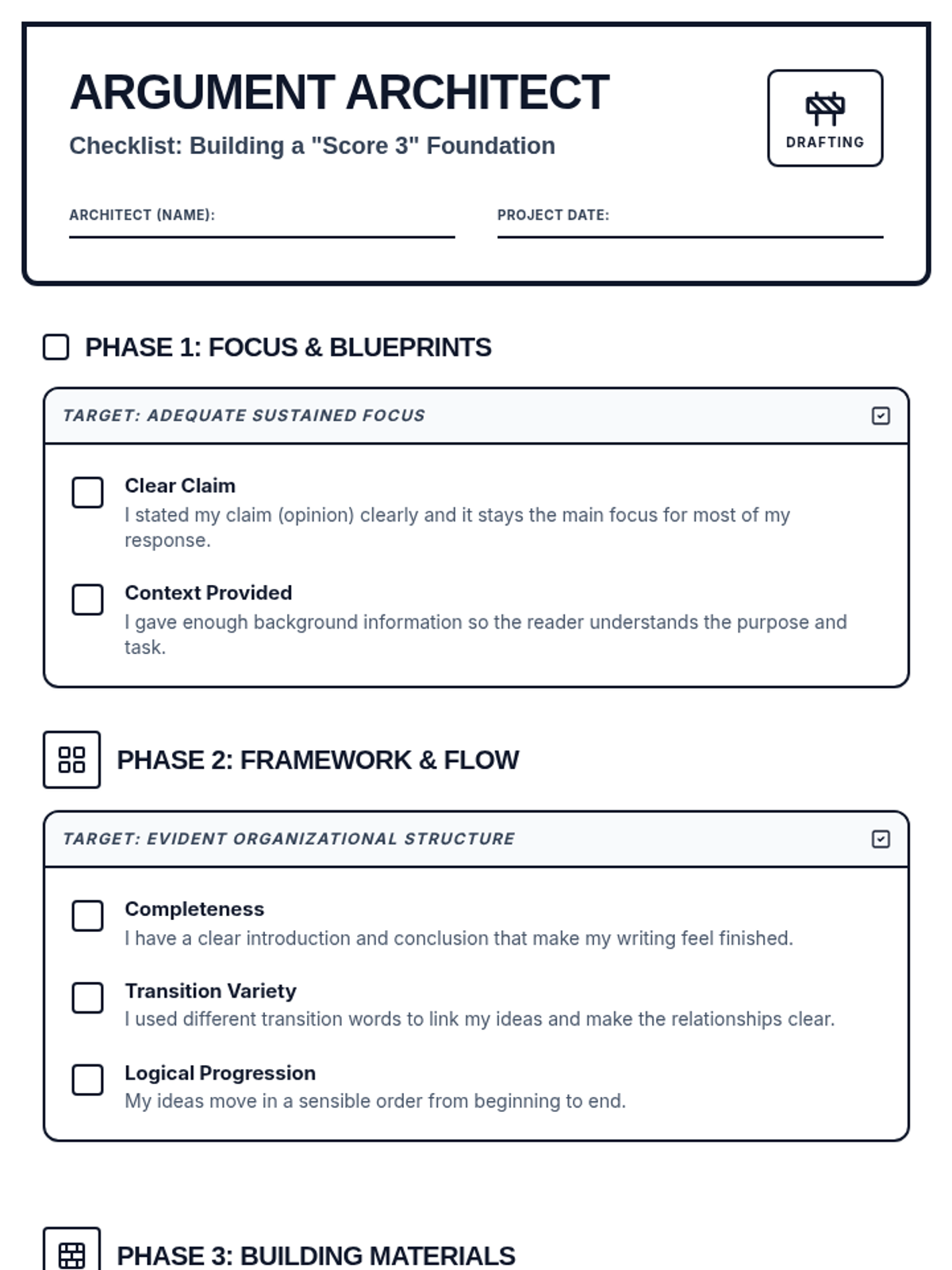
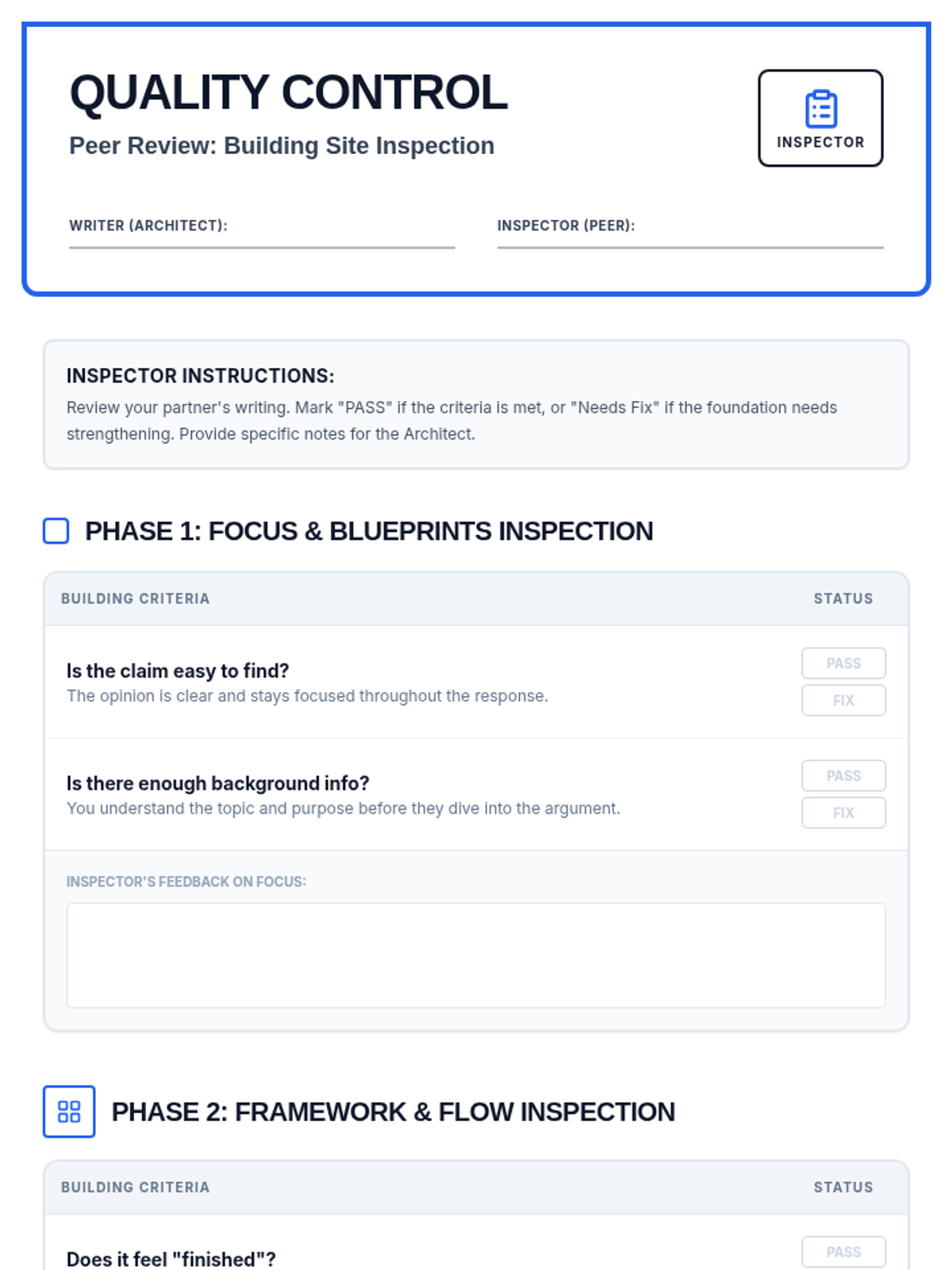
A lesson focused on helping students master the criteria for successful argumentative writing using a student-friendly checklist based on state-aligned rubrics.
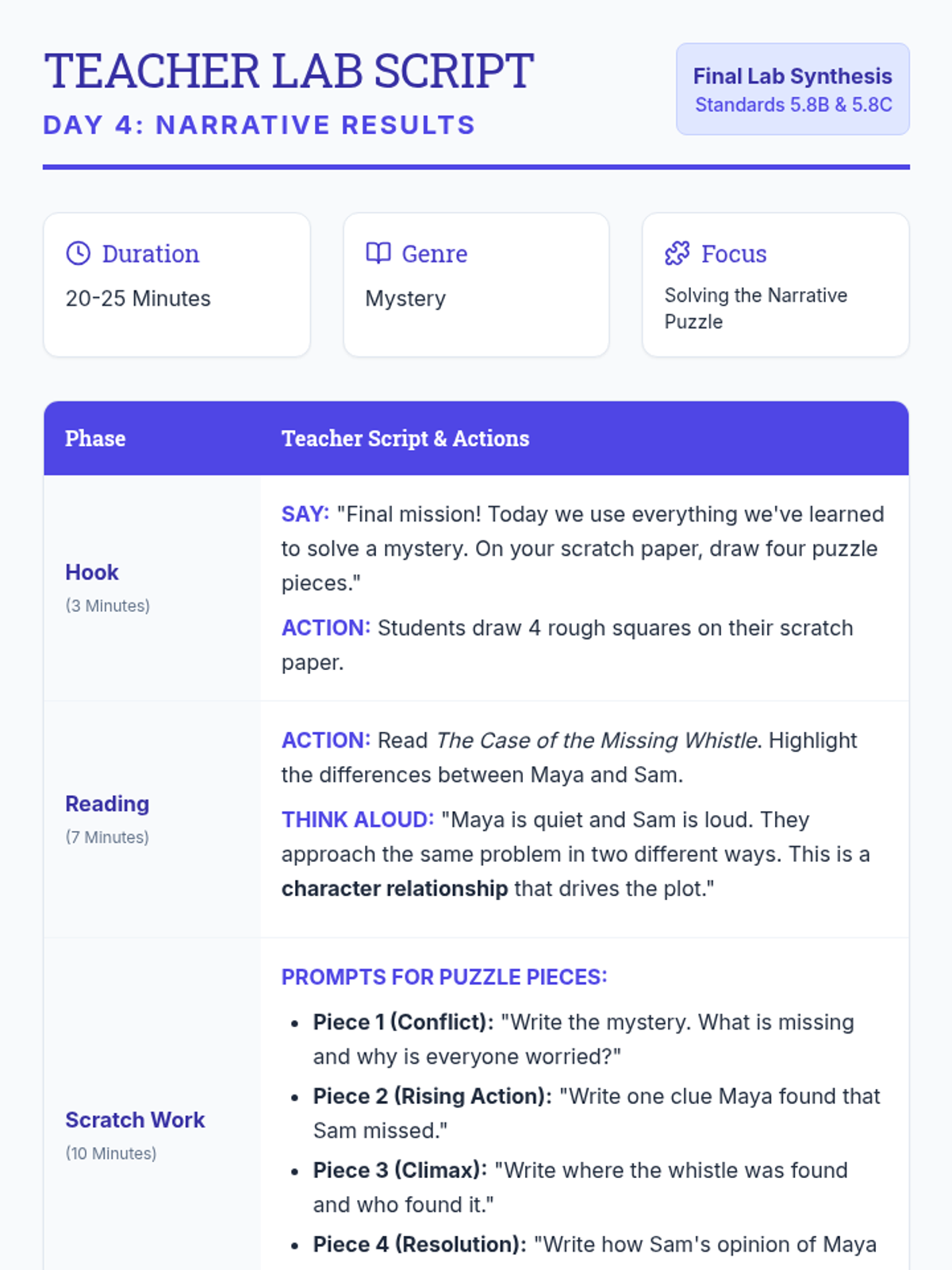
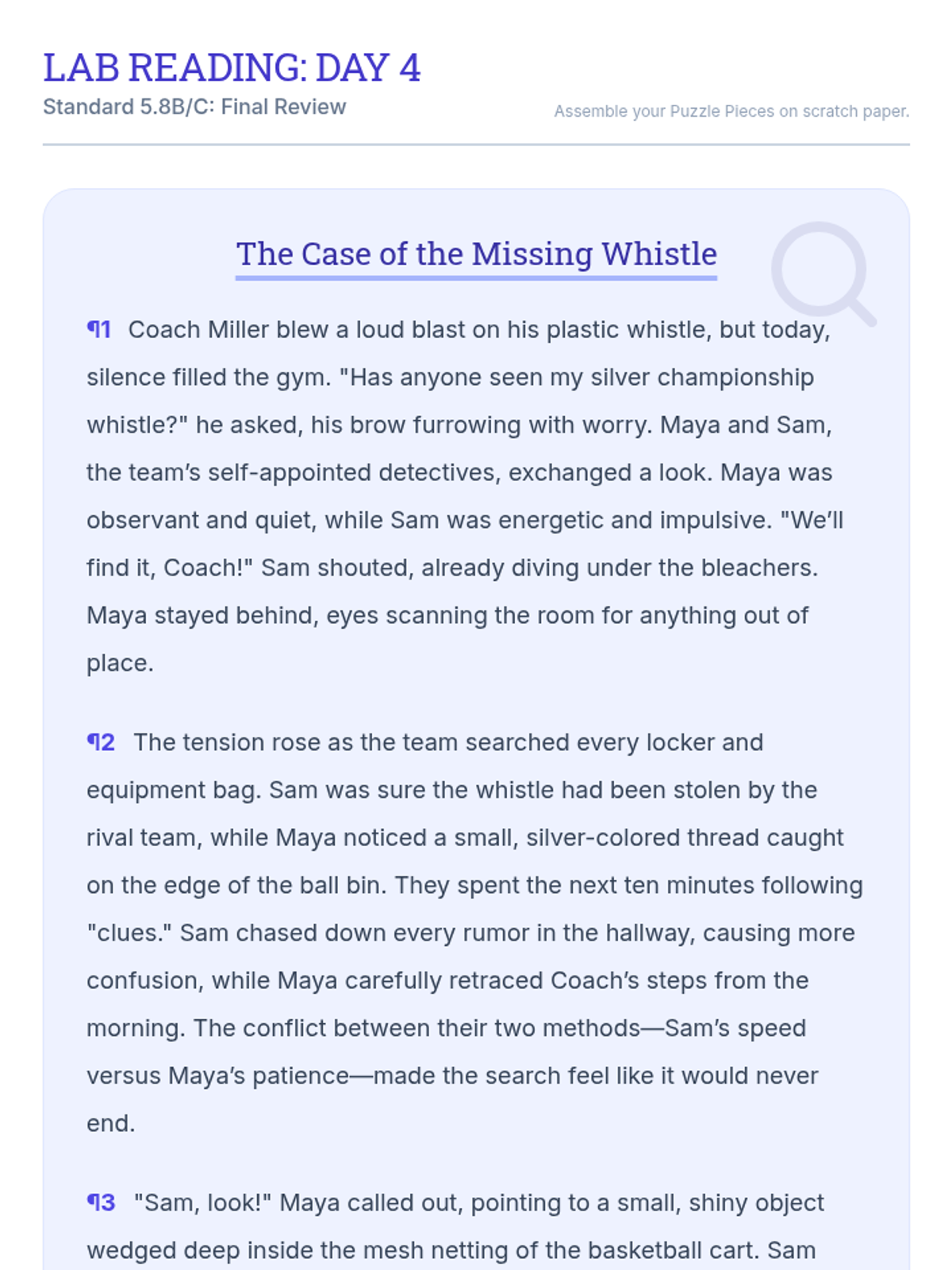
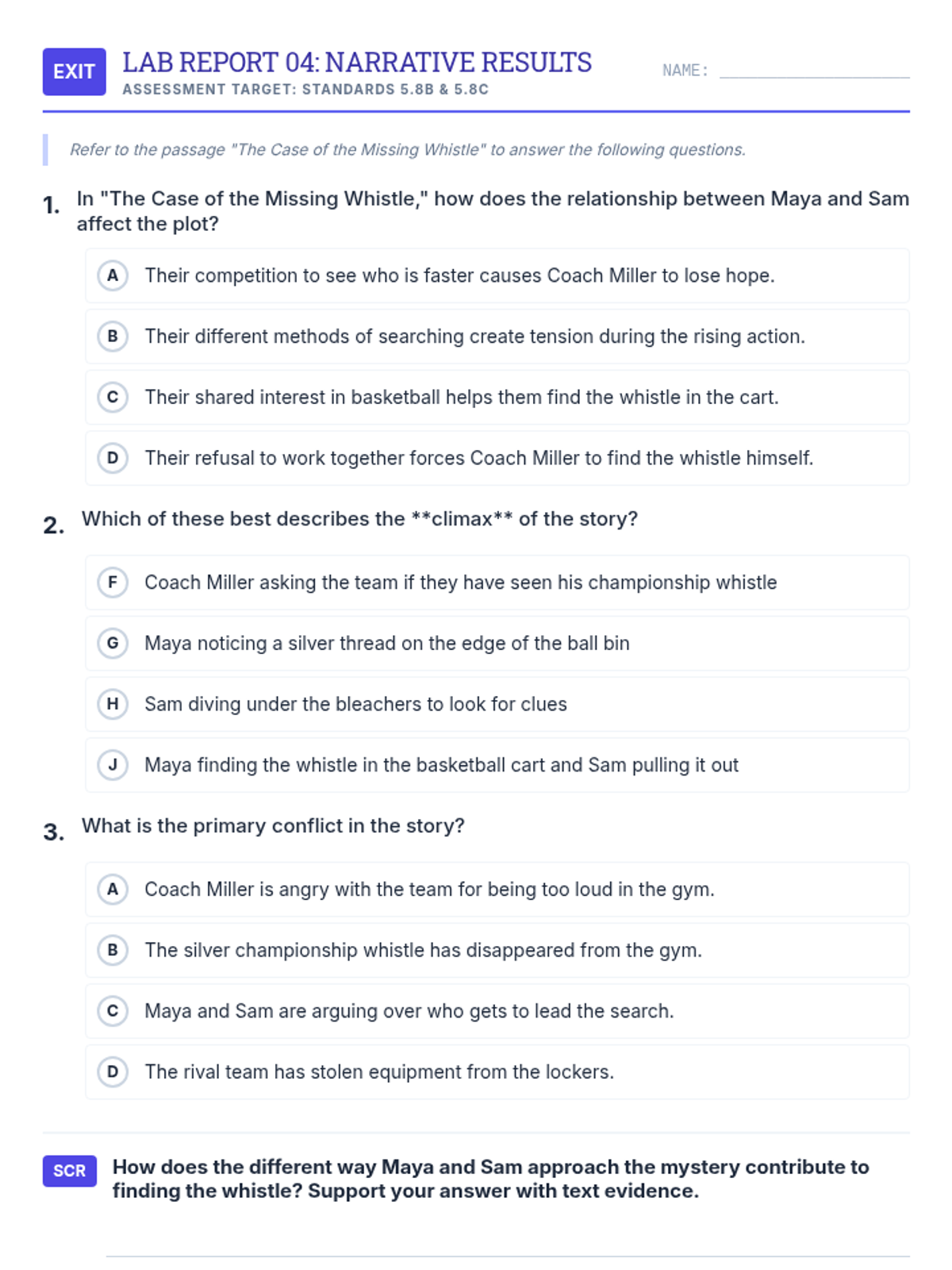
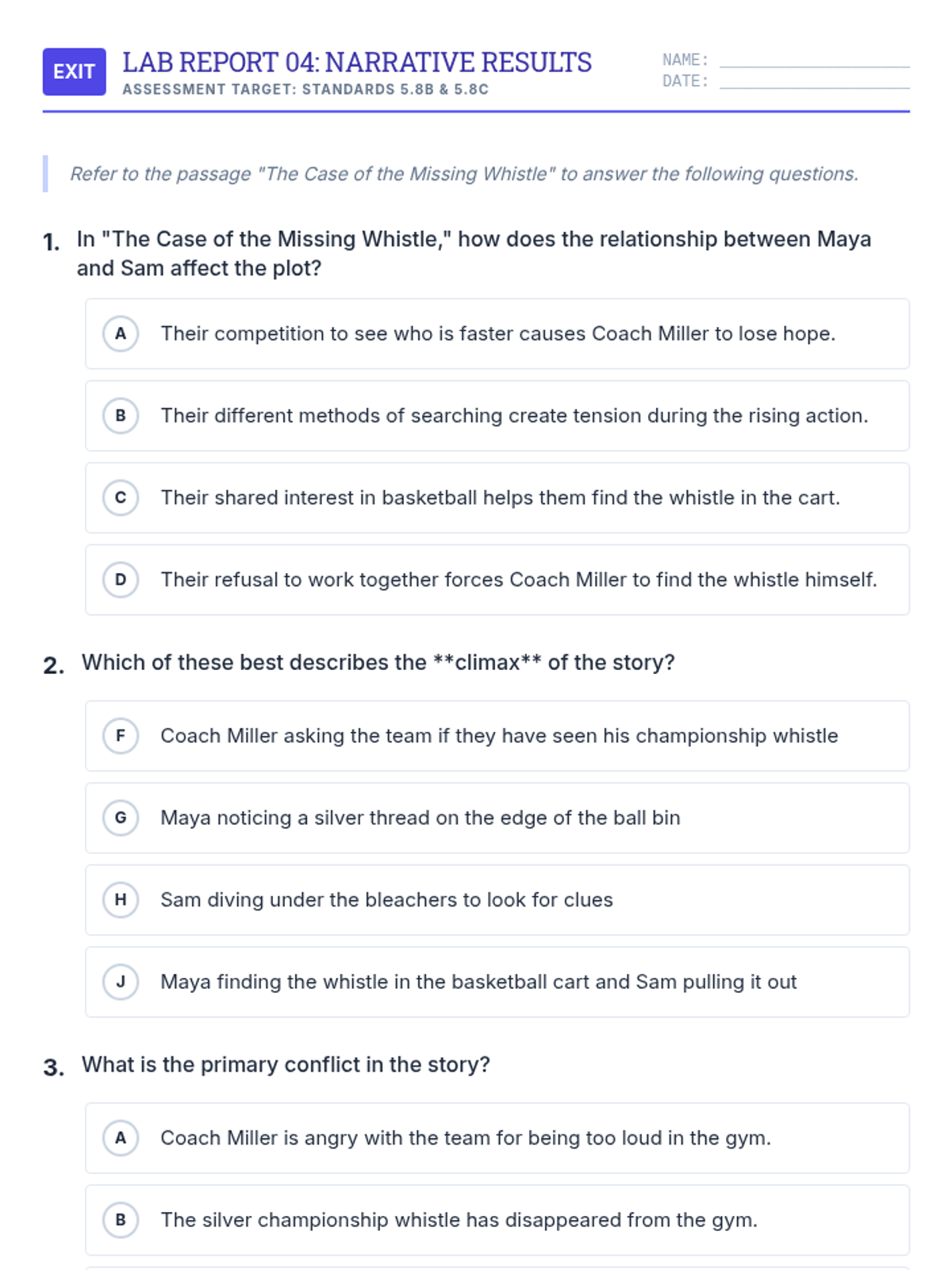
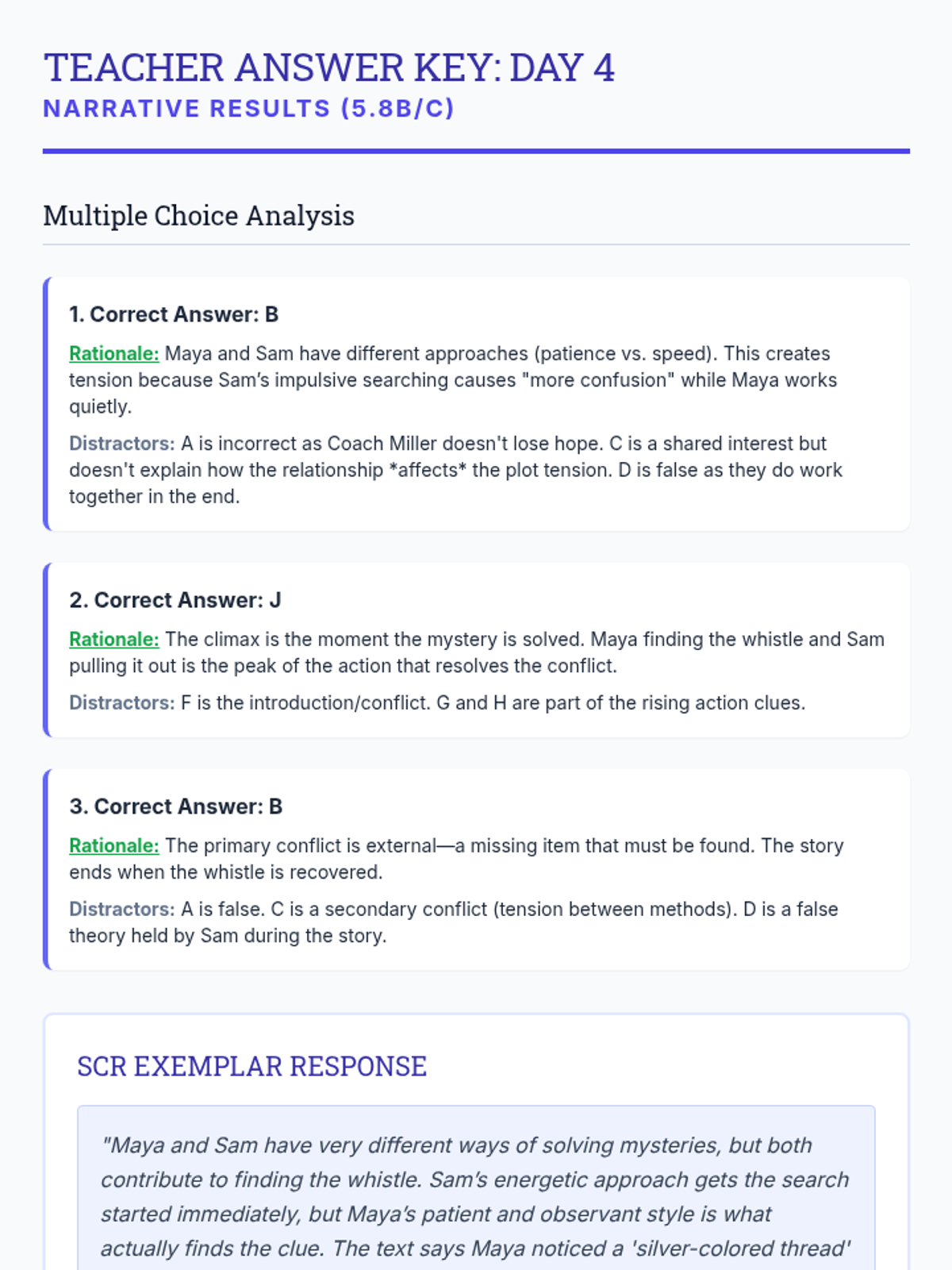
Day 4 serves as a synthesis day using a mystery genre. Students apply their knowledge of character conflict and plot resolution to solve a 'narrative puzzle' and complete a comprehensive assessment.
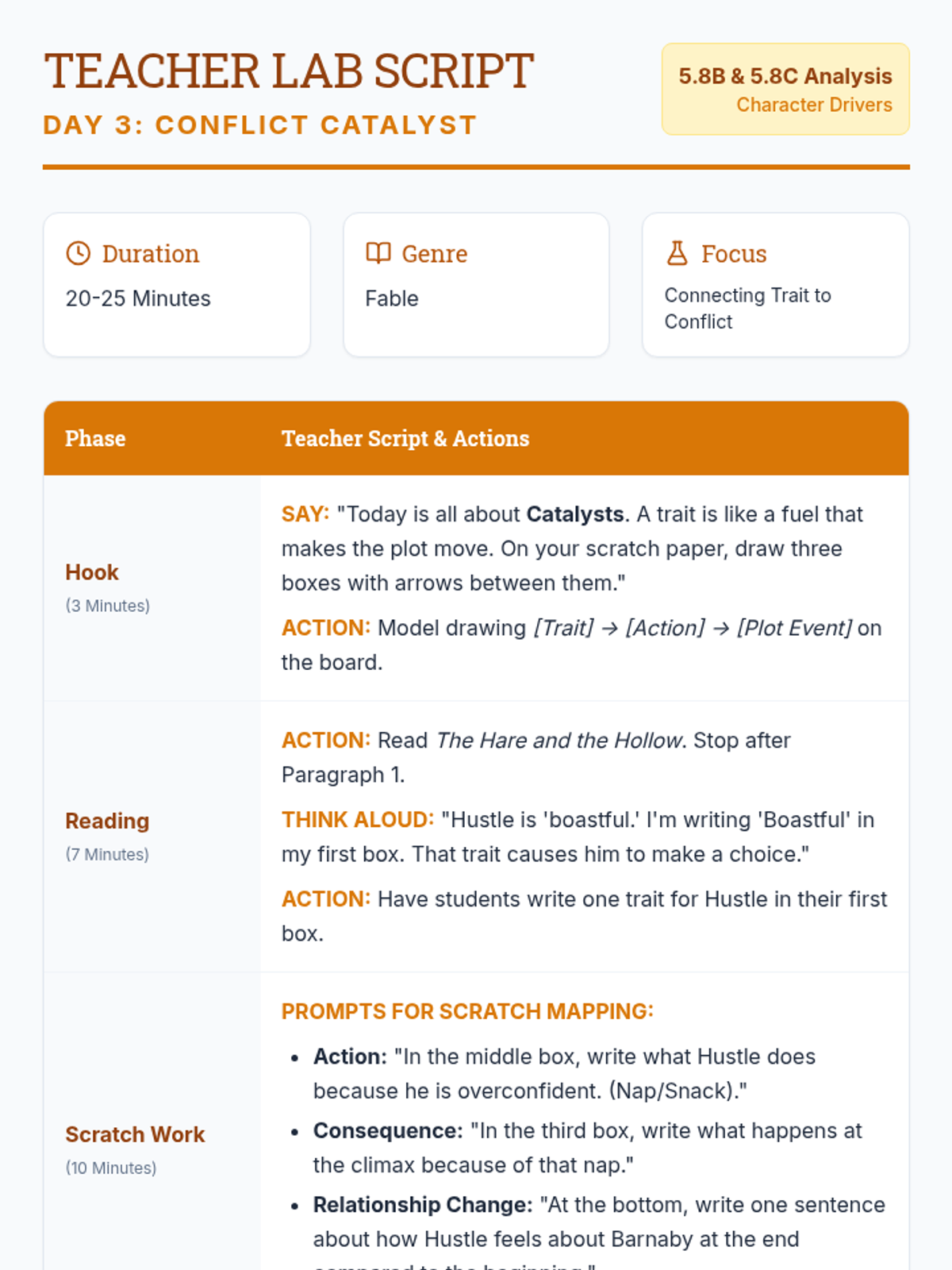
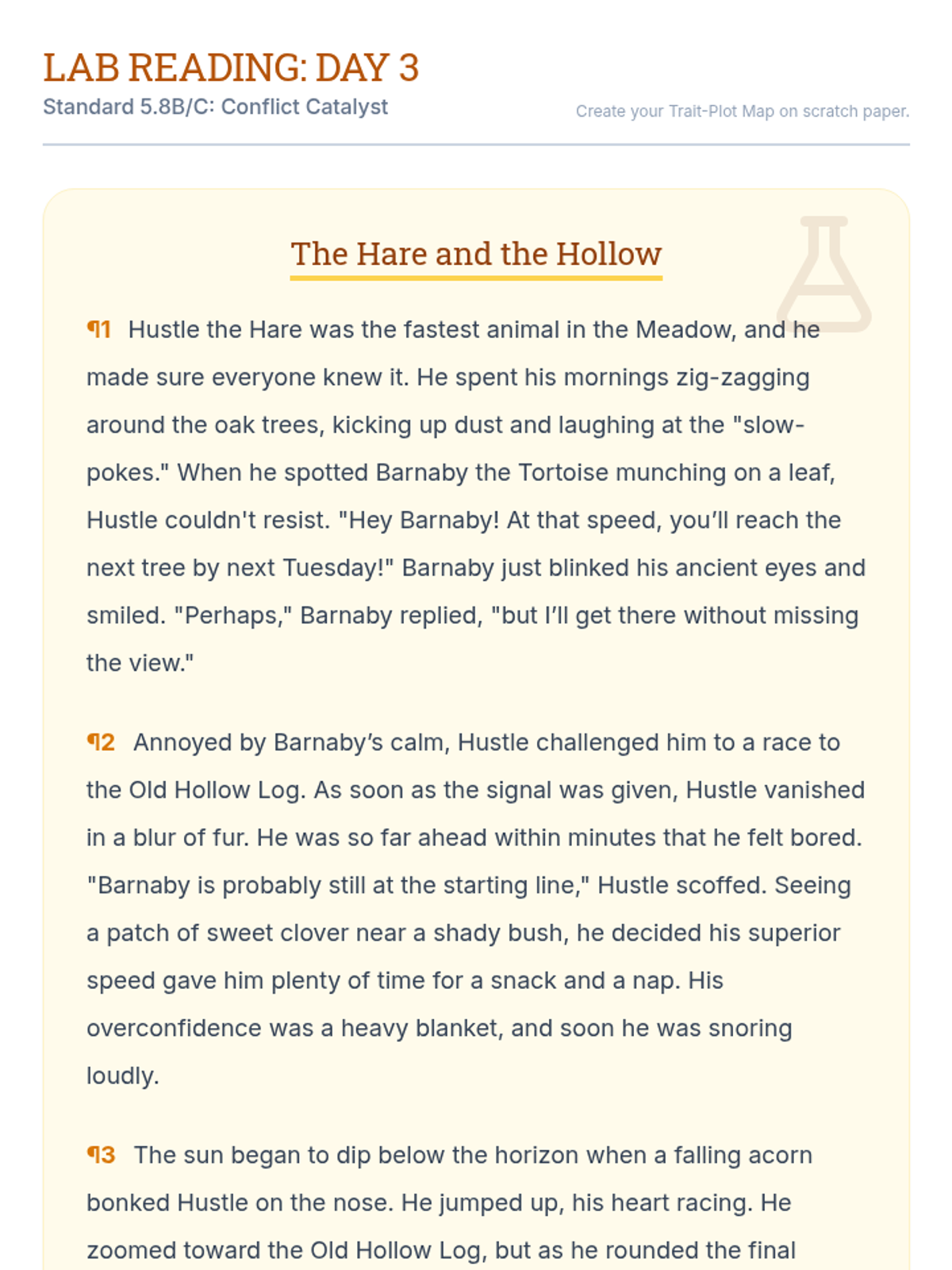
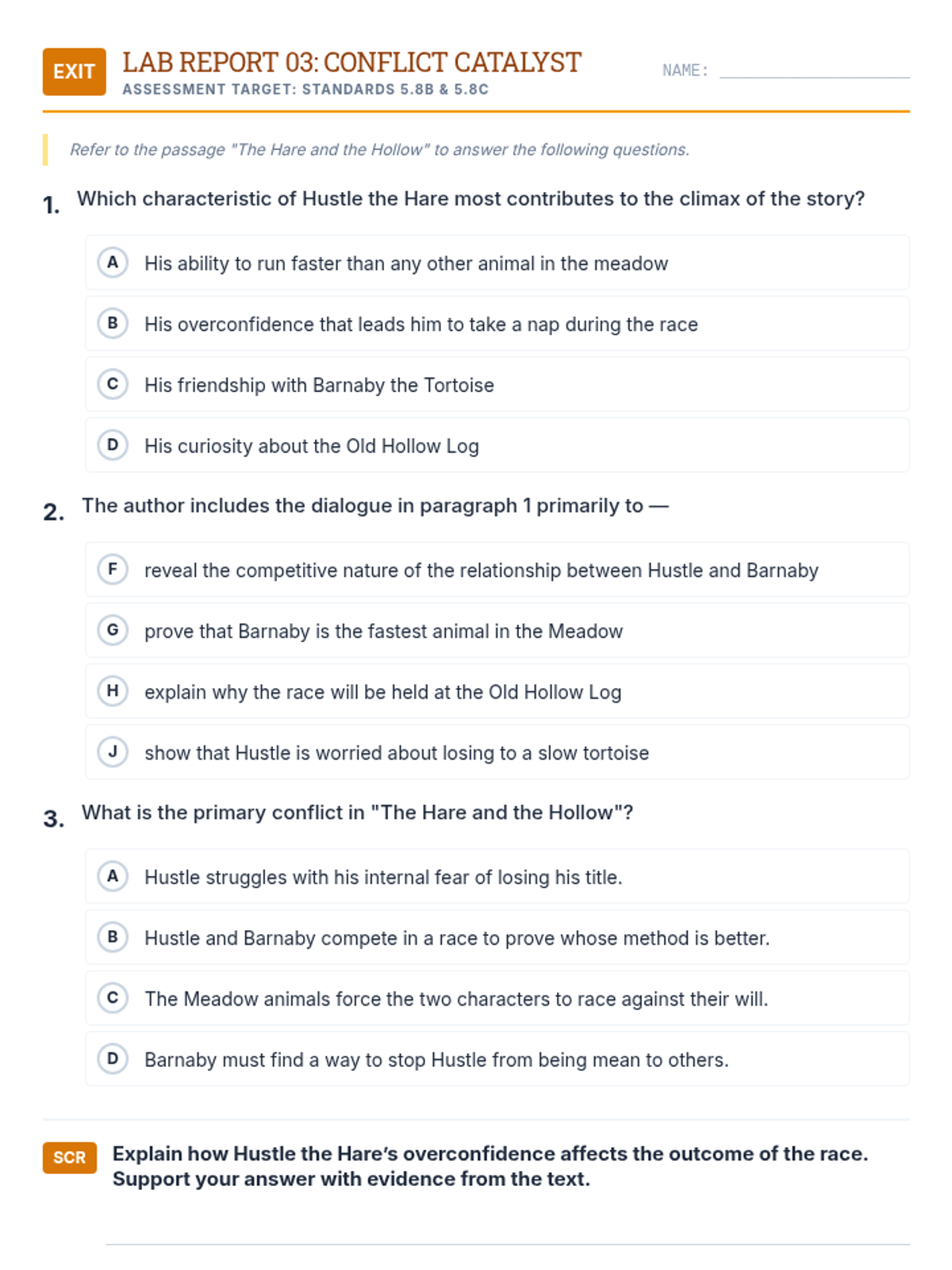
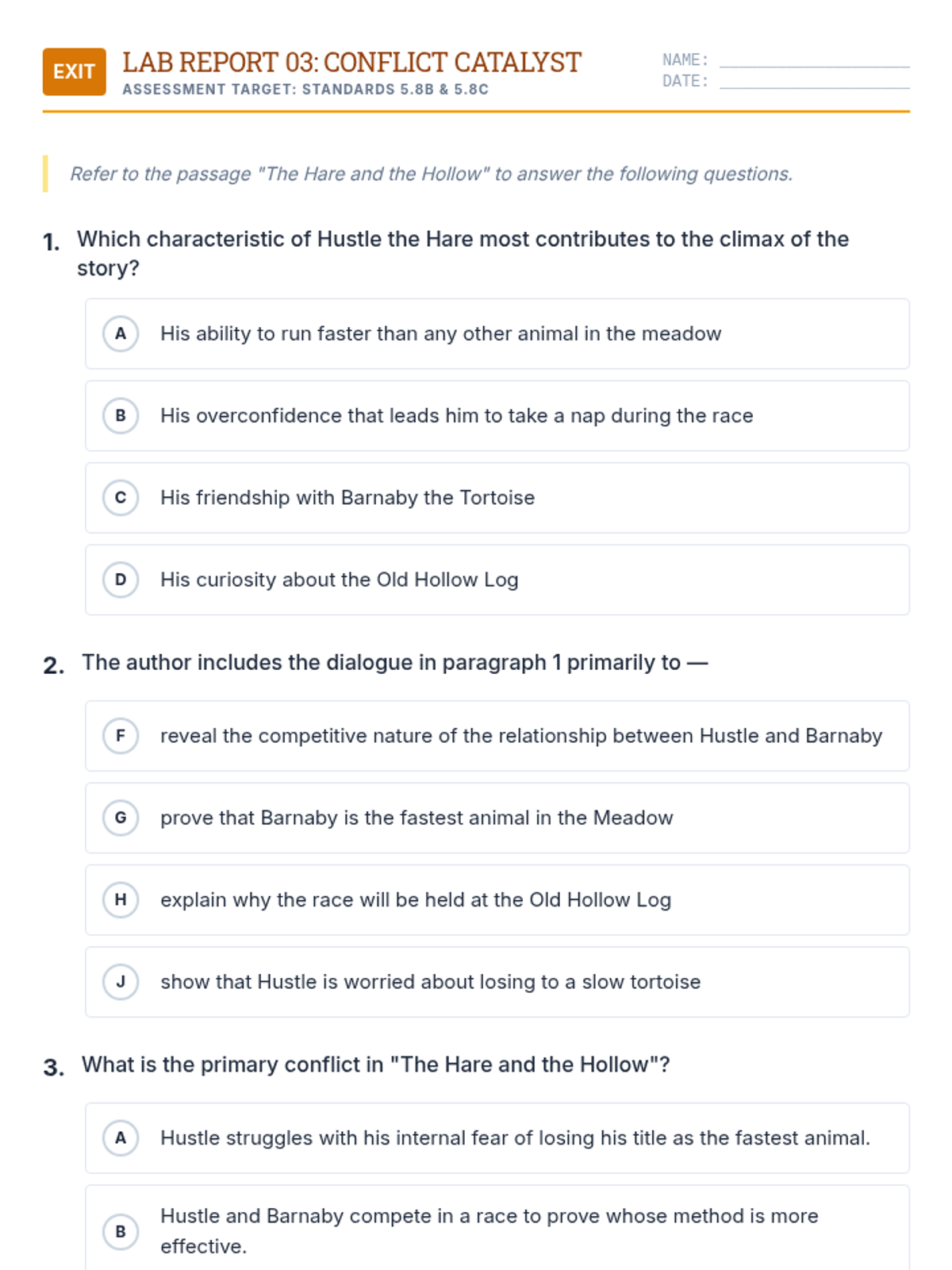
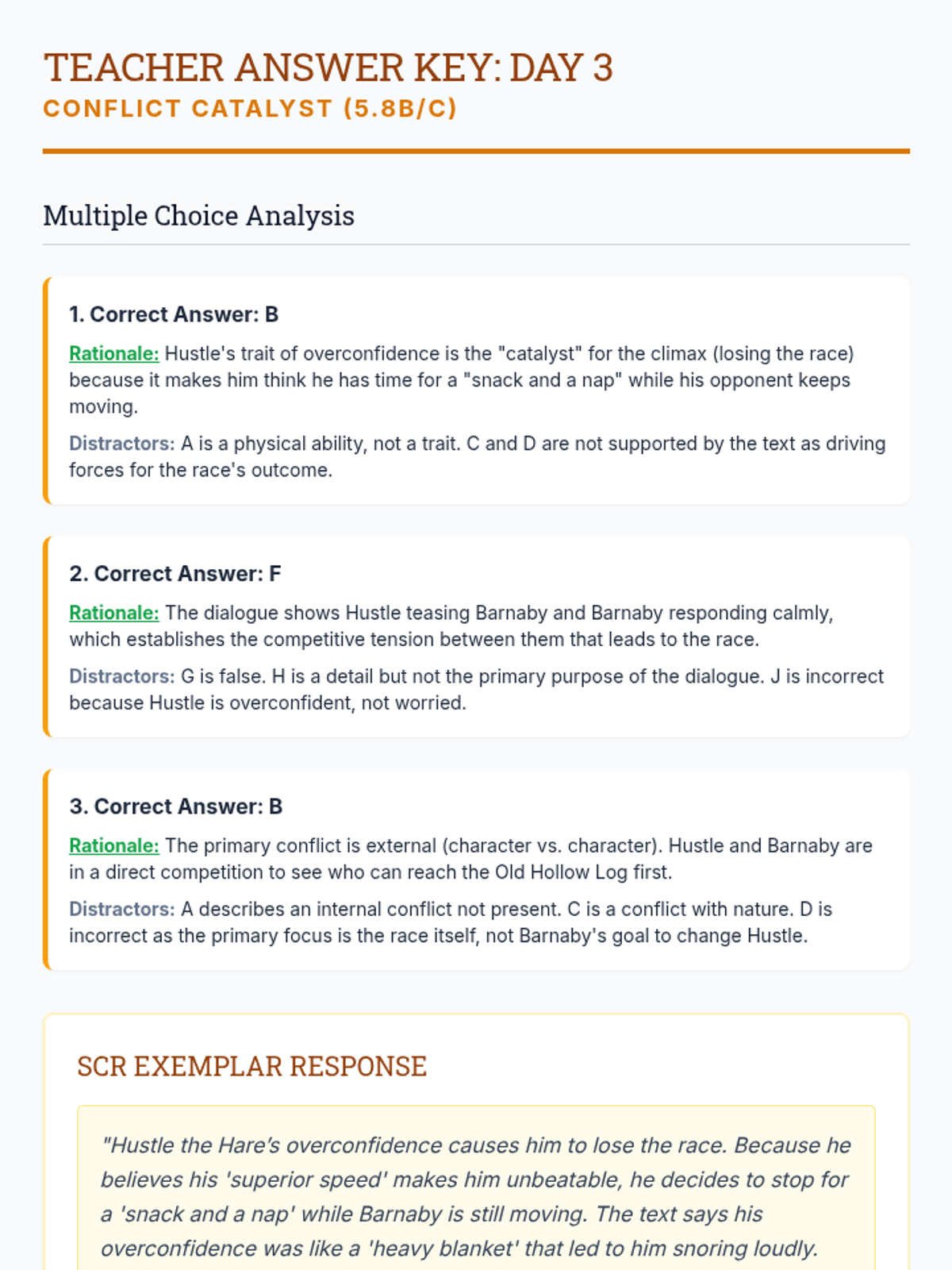
Day 3 integrates both character and plot (5.8B/C) using traditional literature (a fable). Students examine how a character's traits and choices create the conflict and lead to the climax.
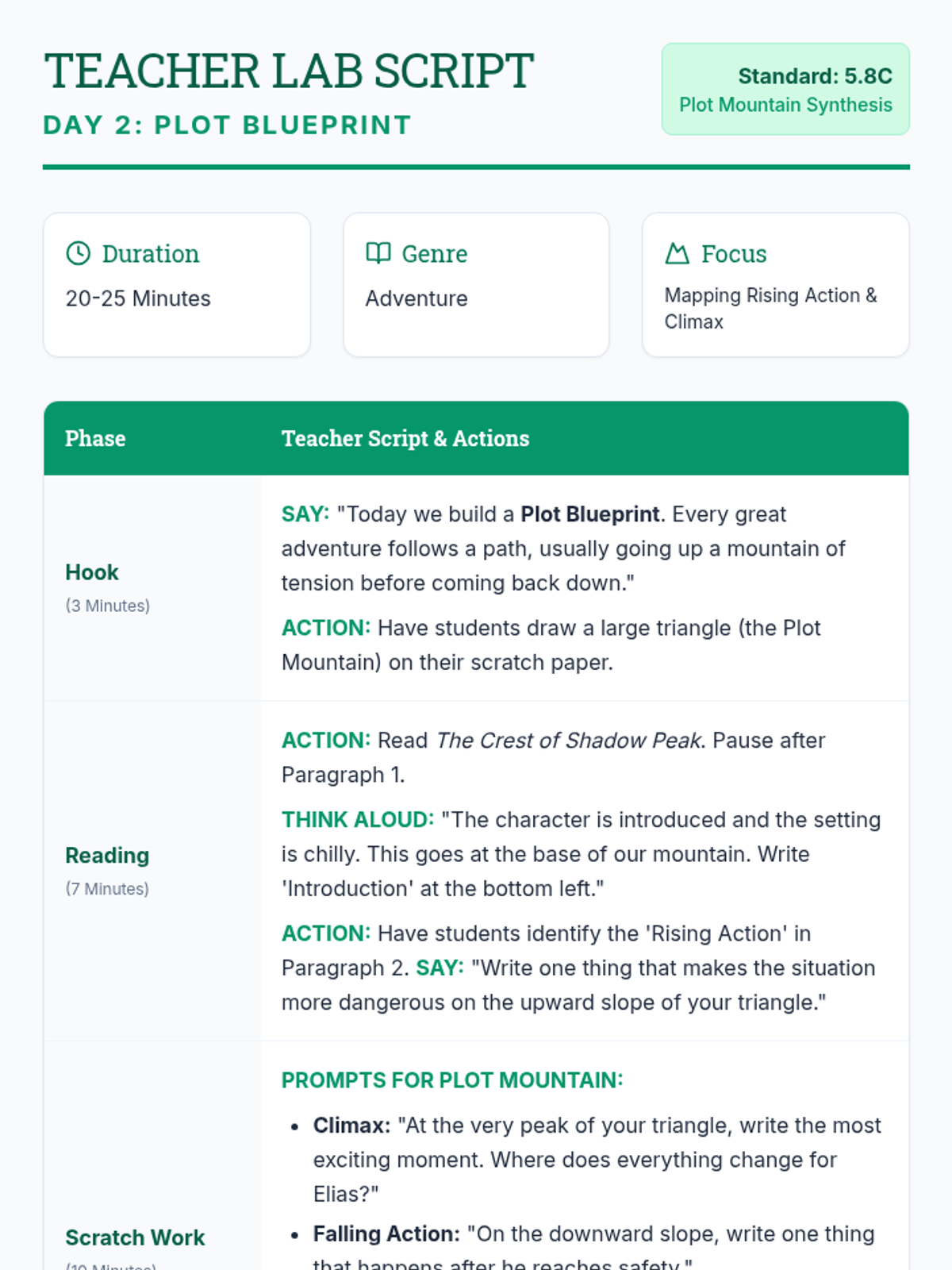
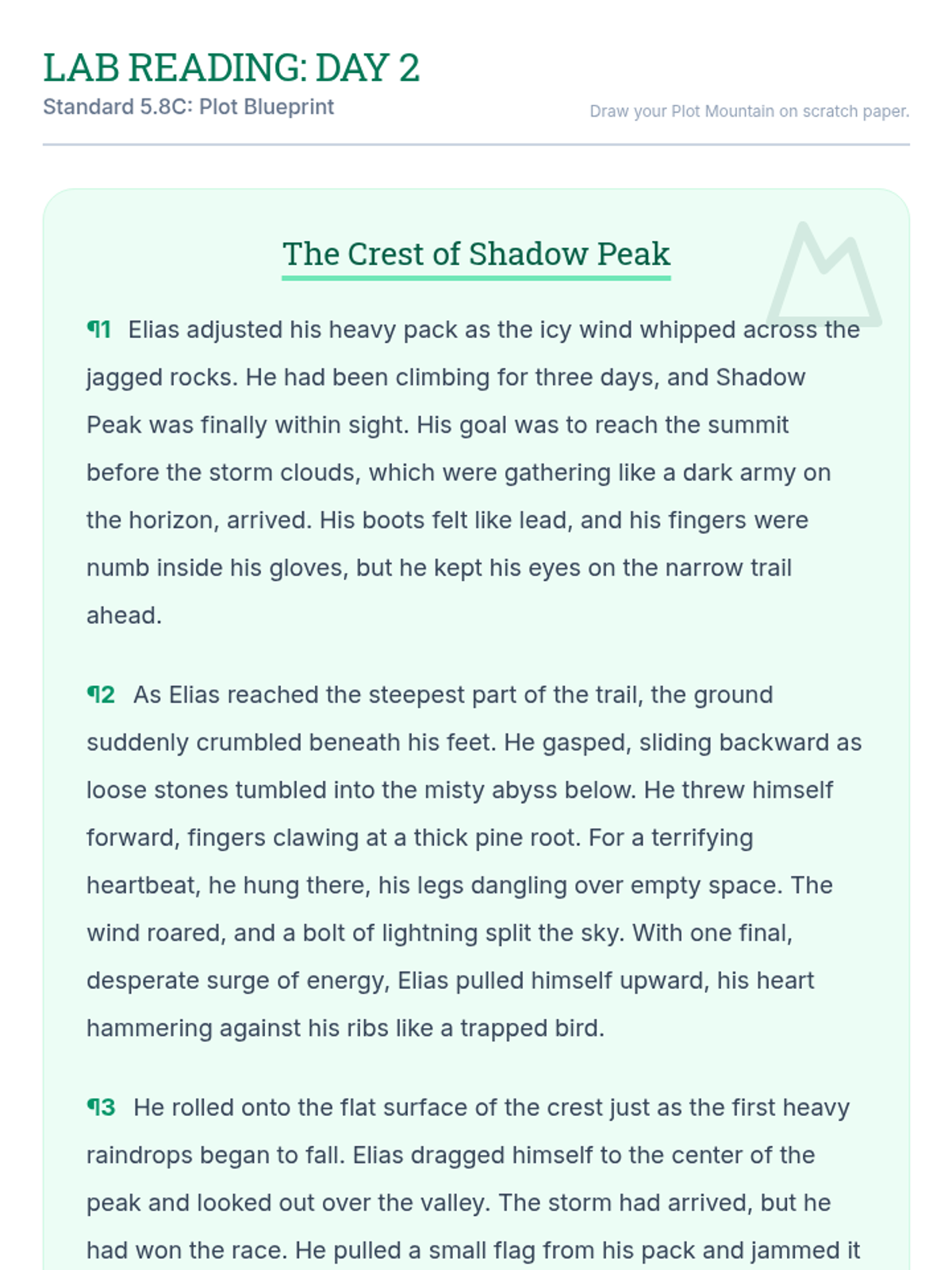
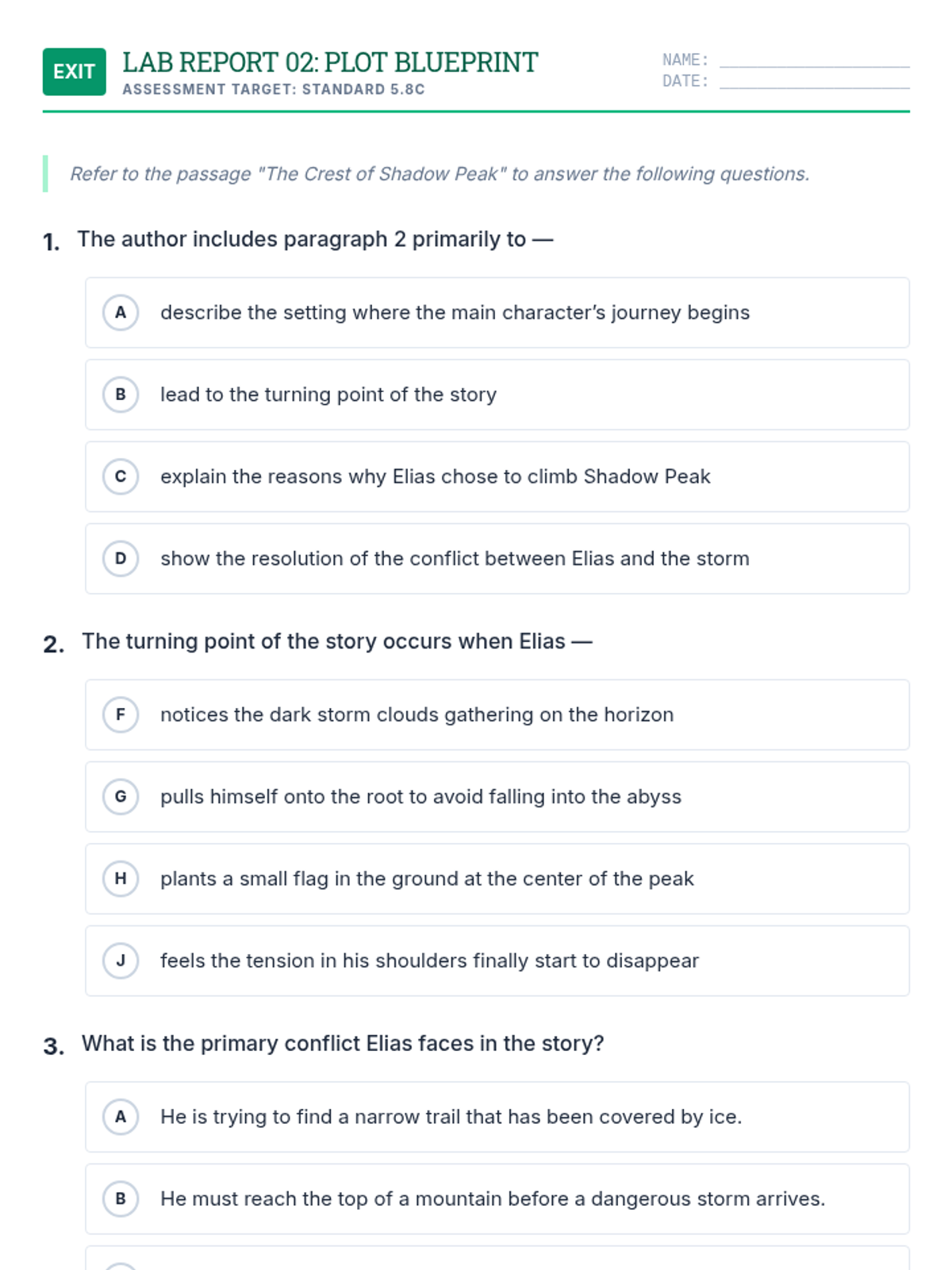
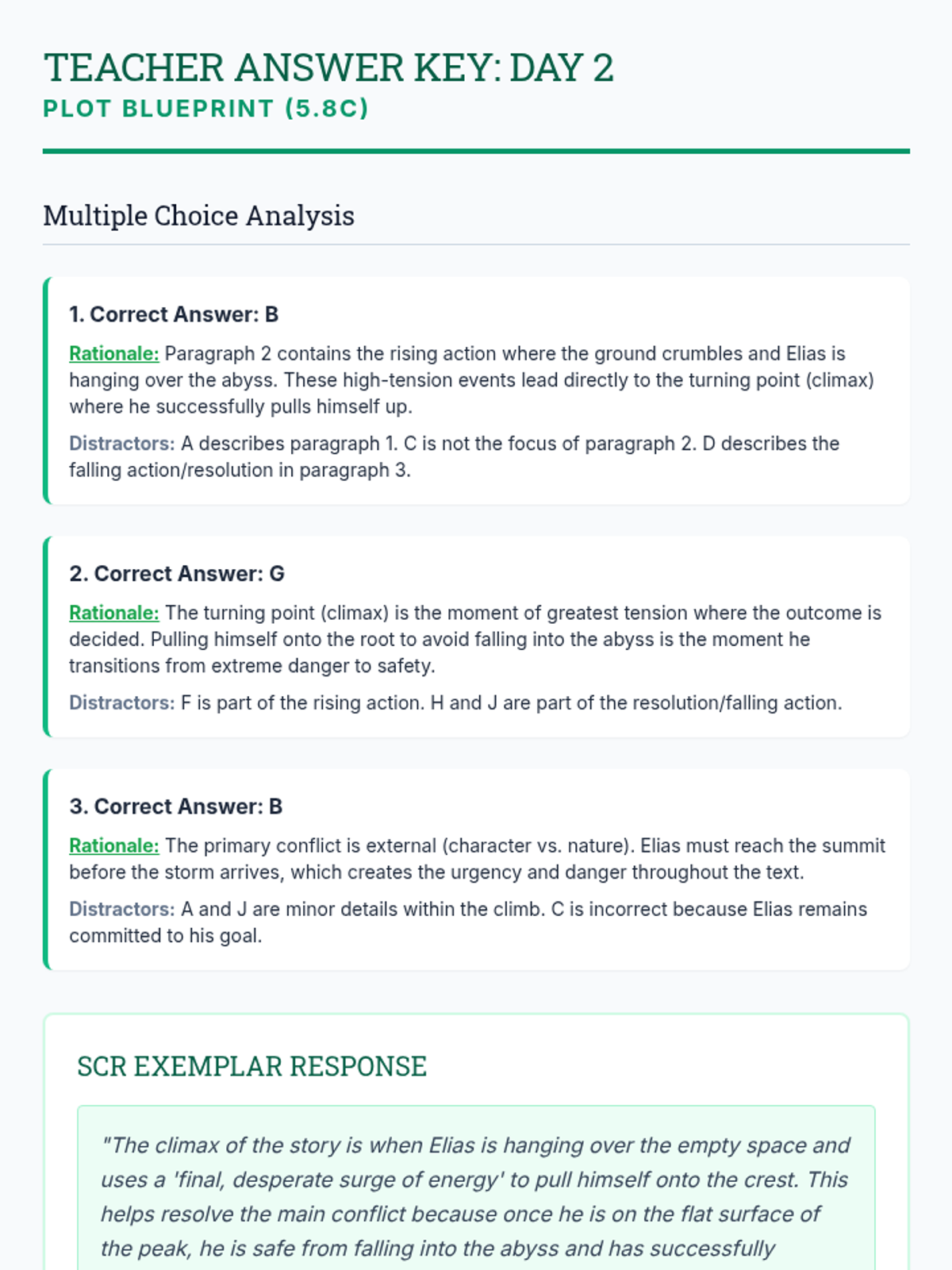
Day 2 focuses on plot elements (5.8C), specifically identifying the rising action, climax, and resolution in an adventure-themed text. Students map the 'Plot Peak' to understand story structure.
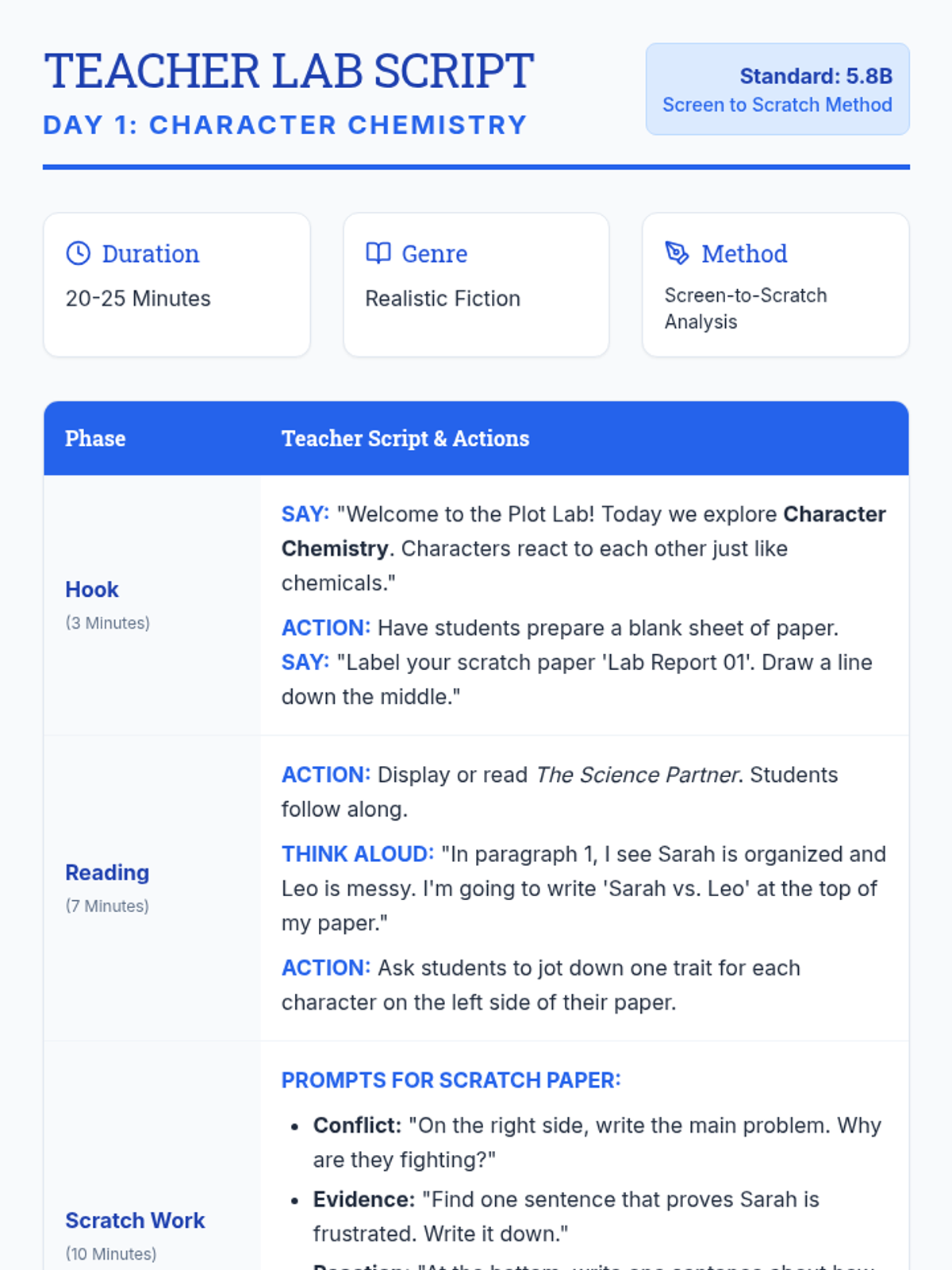
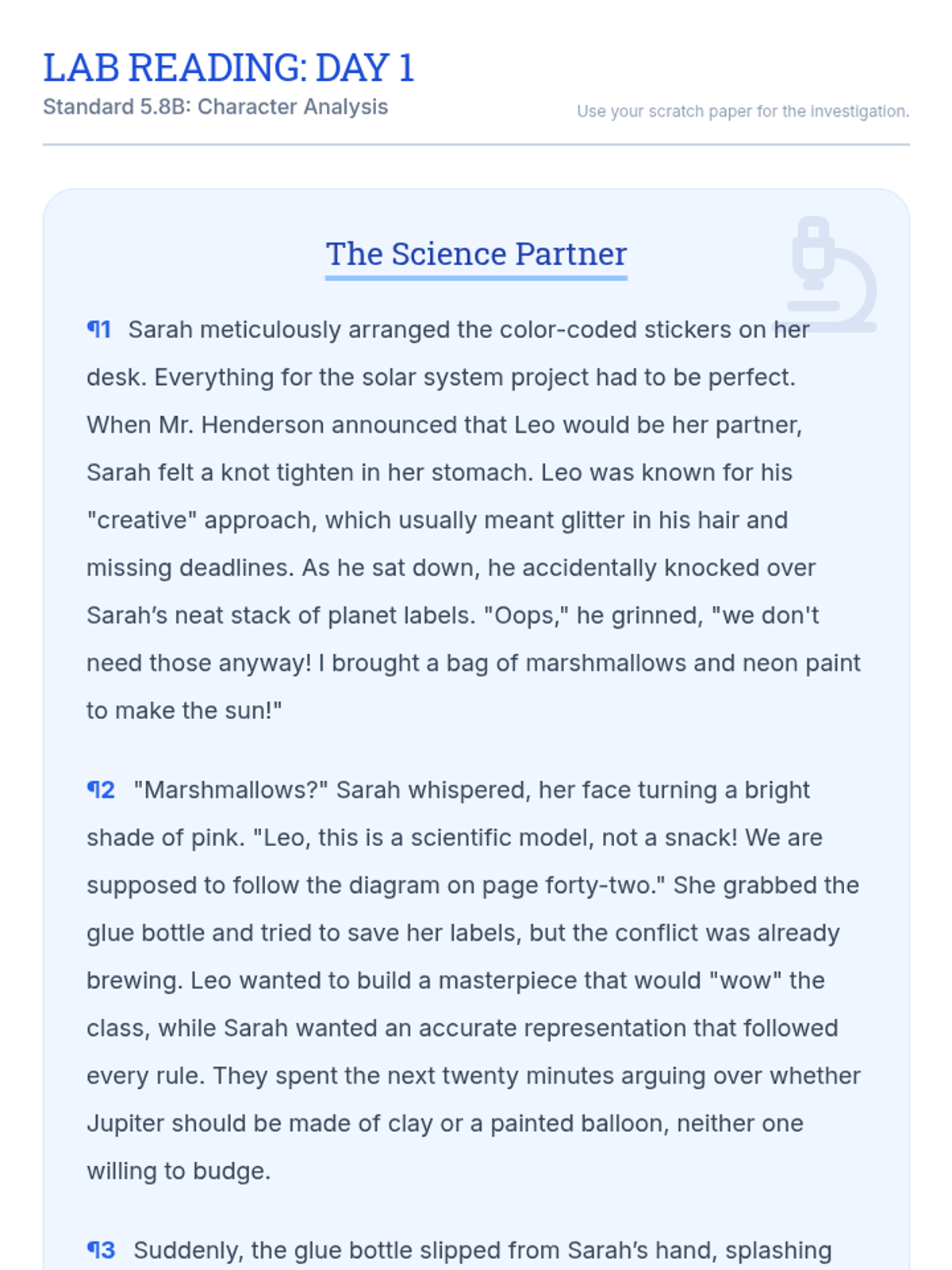
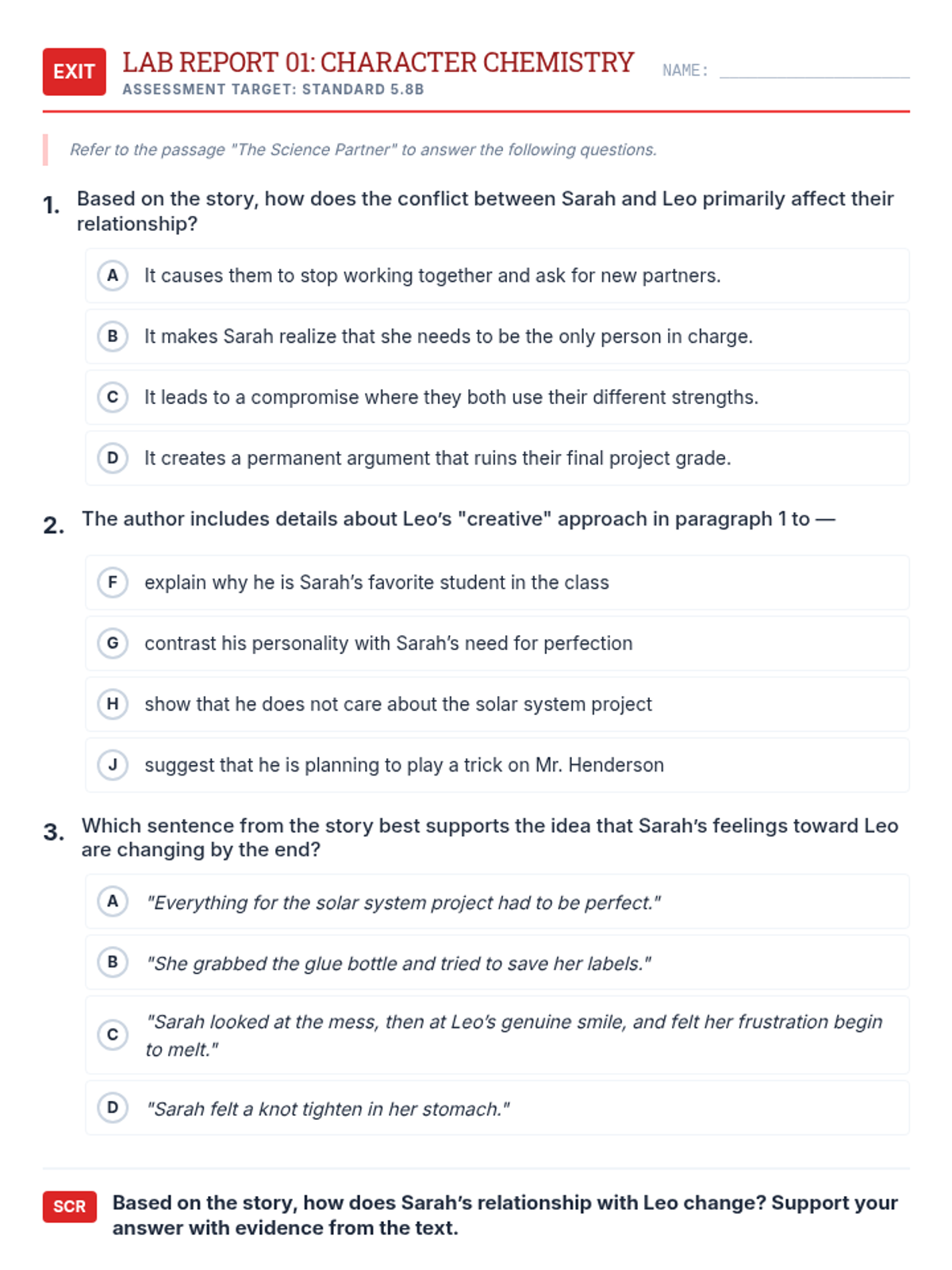
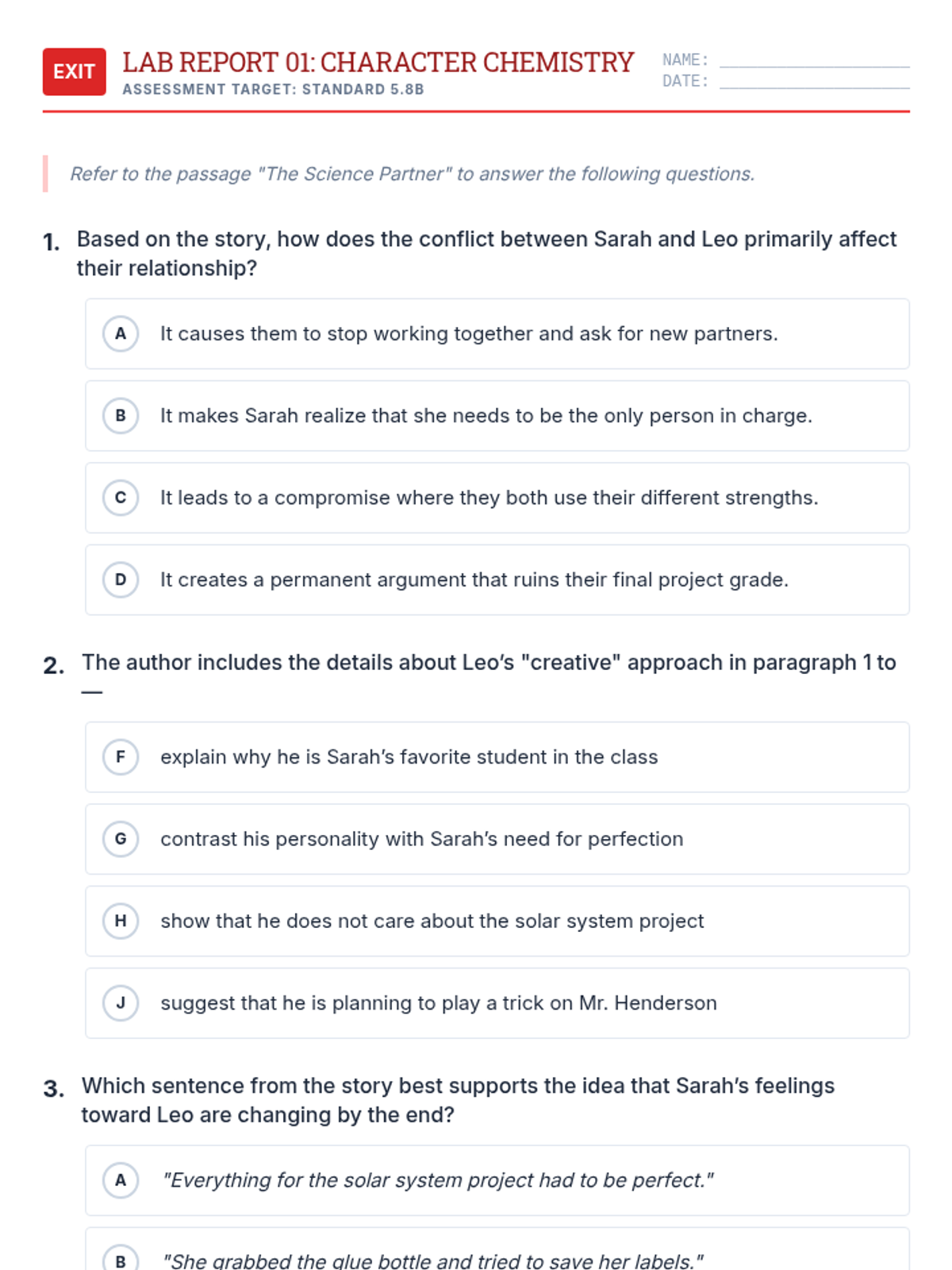
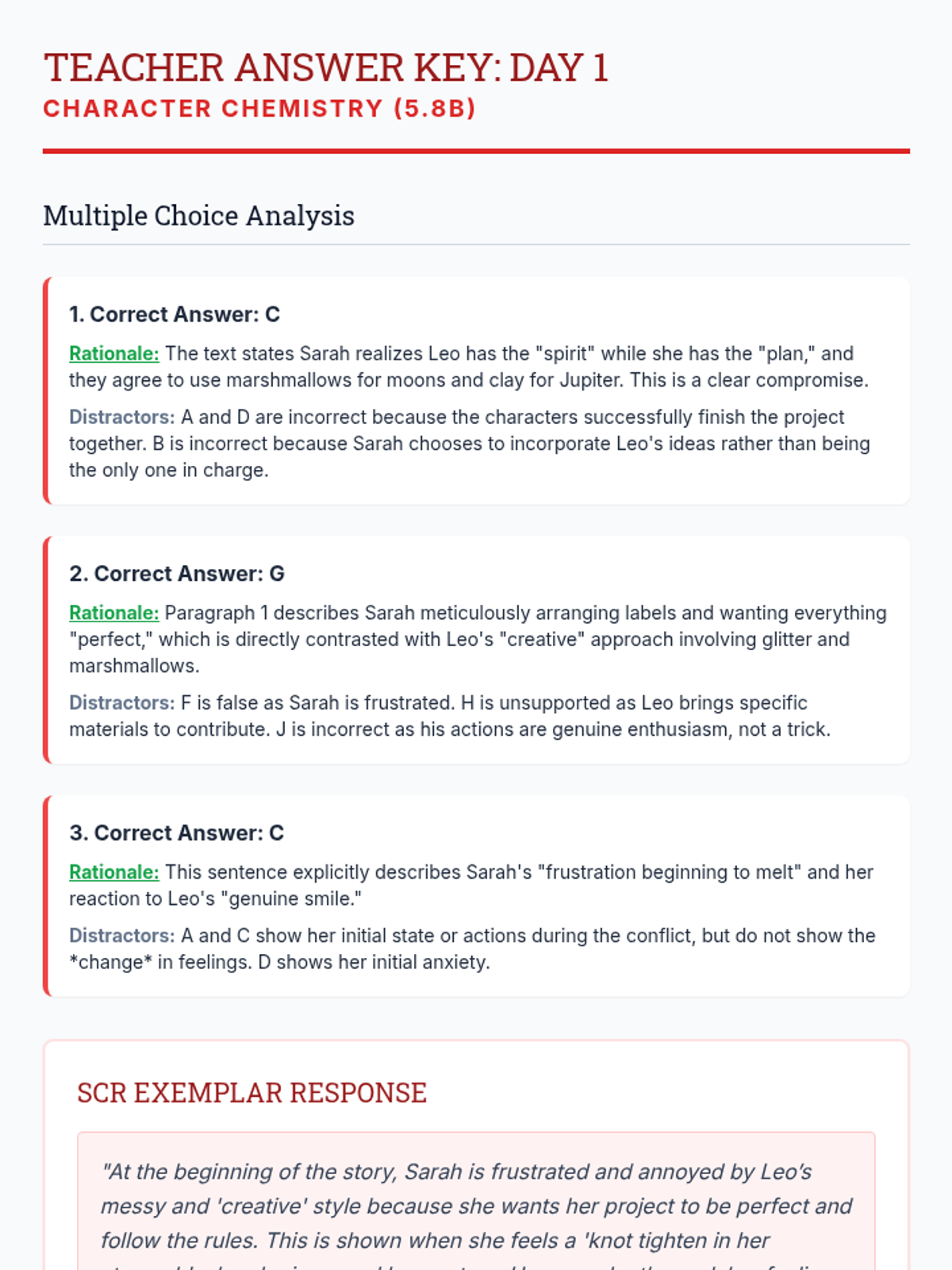
Day 1 focuses on analyzing character relationships and conflicts (5.8B) within a realistic fiction text. Students investigate how characters interact and the specific conflicts that drive their actions.
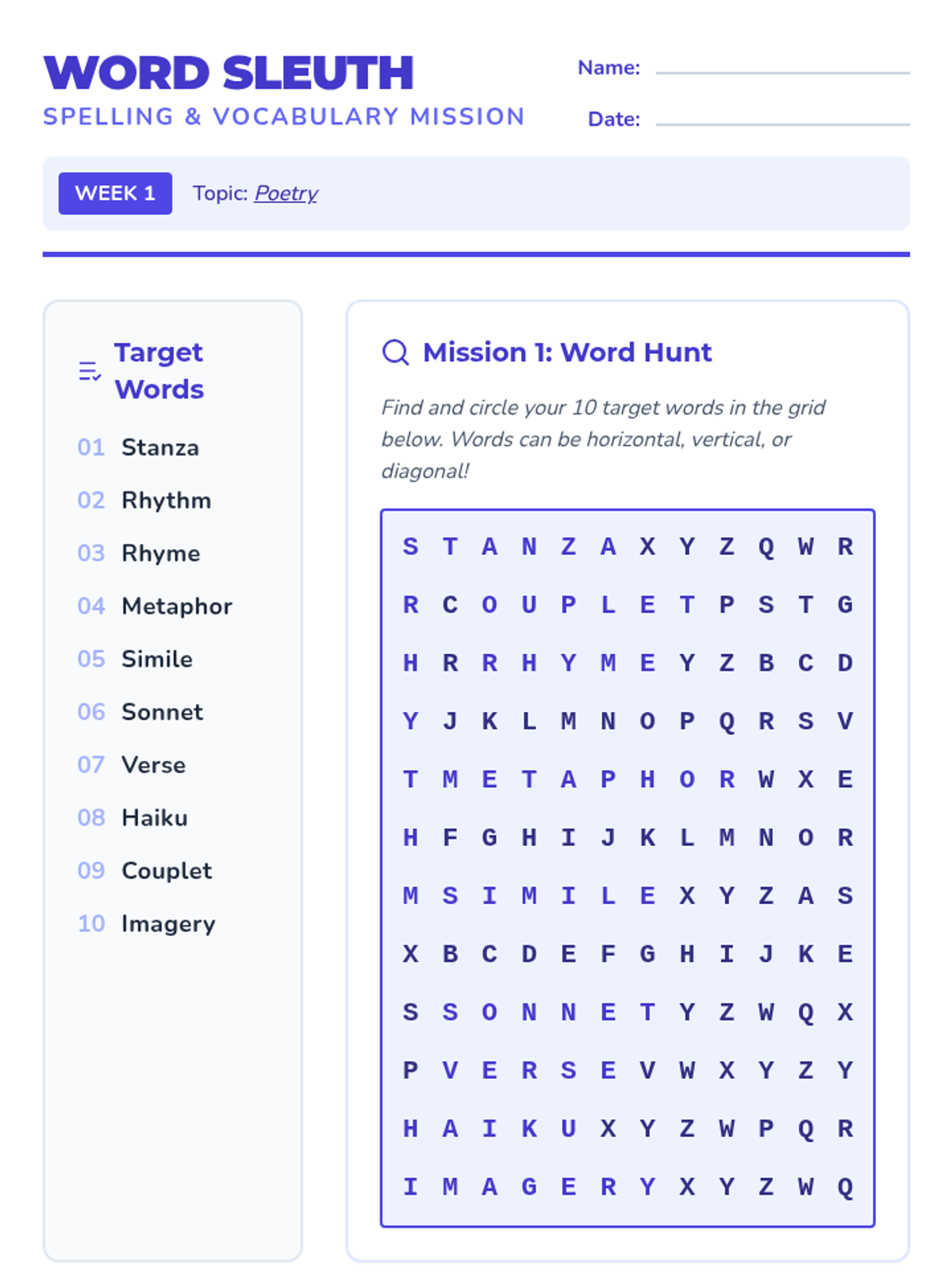
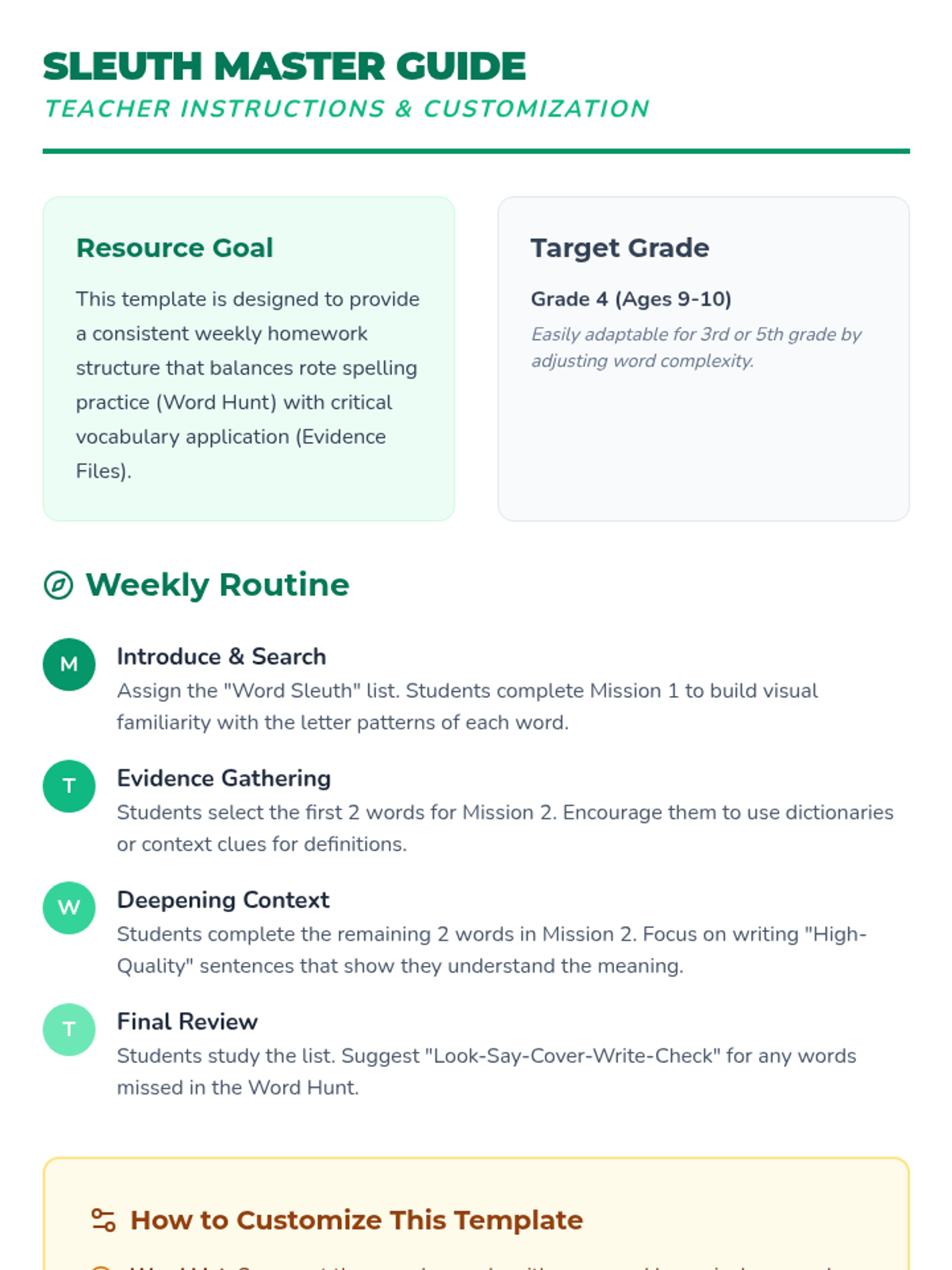
A weekly homework routine featuring a word search challenge and deep-dive vocabulary exercises for 10 target spelling words.
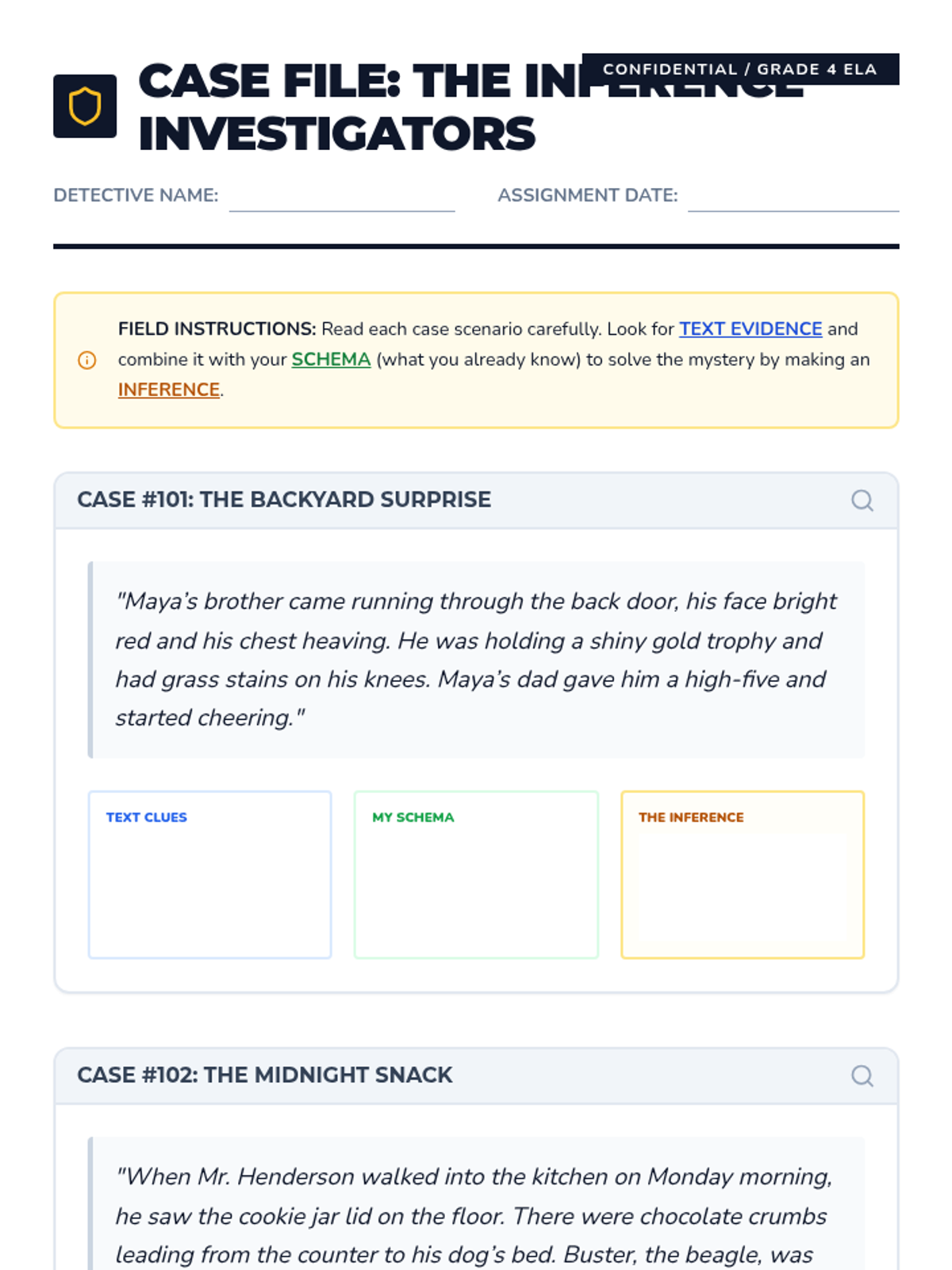
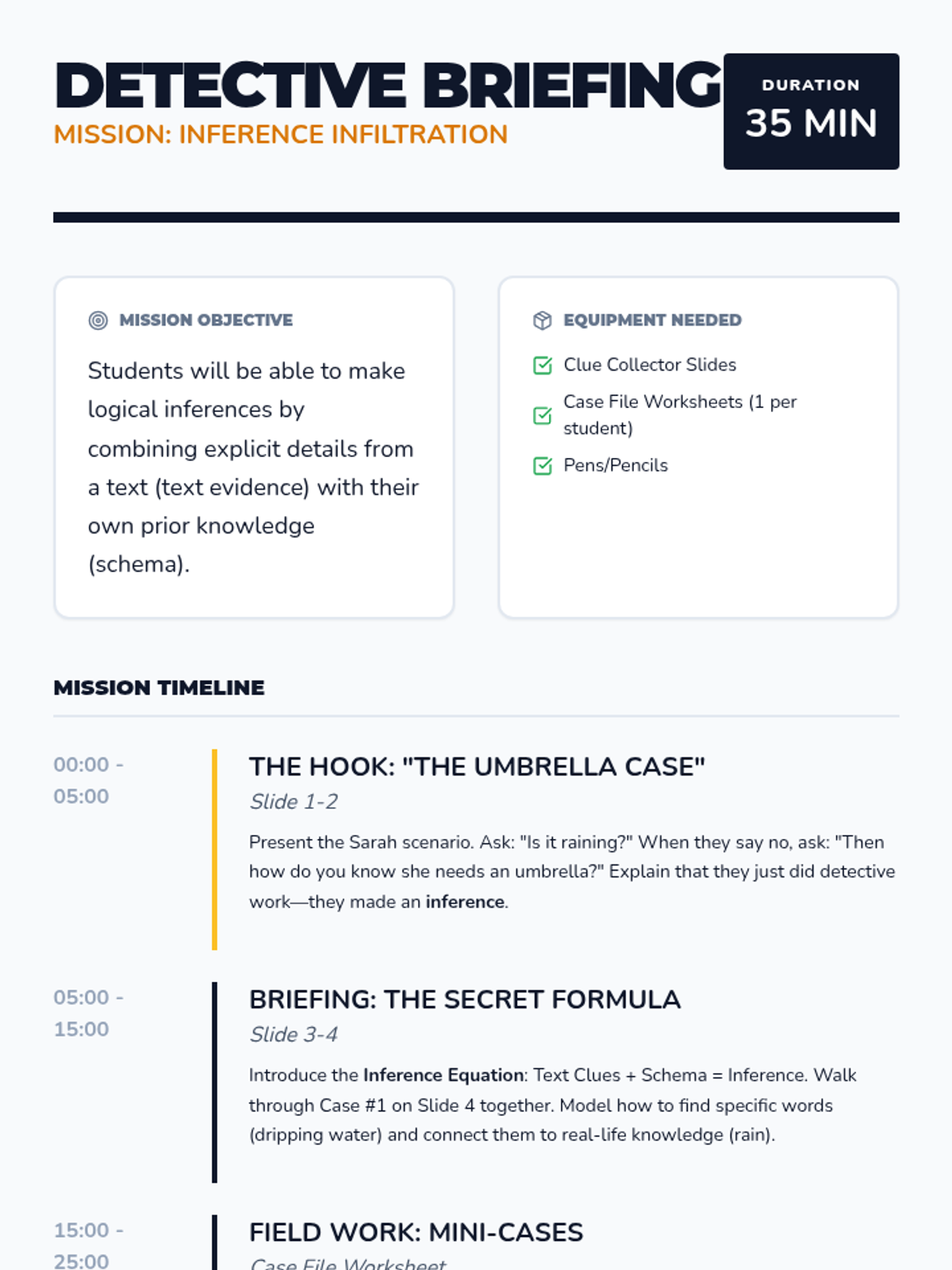
A high-energy, 35-minute introduction to making inferences. Students act as detectives, combining text evidence with their own background knowledge to solve mini-mysteries.
Focusing on CCSS W.4.3.e, students write a satisfying conclusion and reflect on their narrative writing journey through an exit ticket.