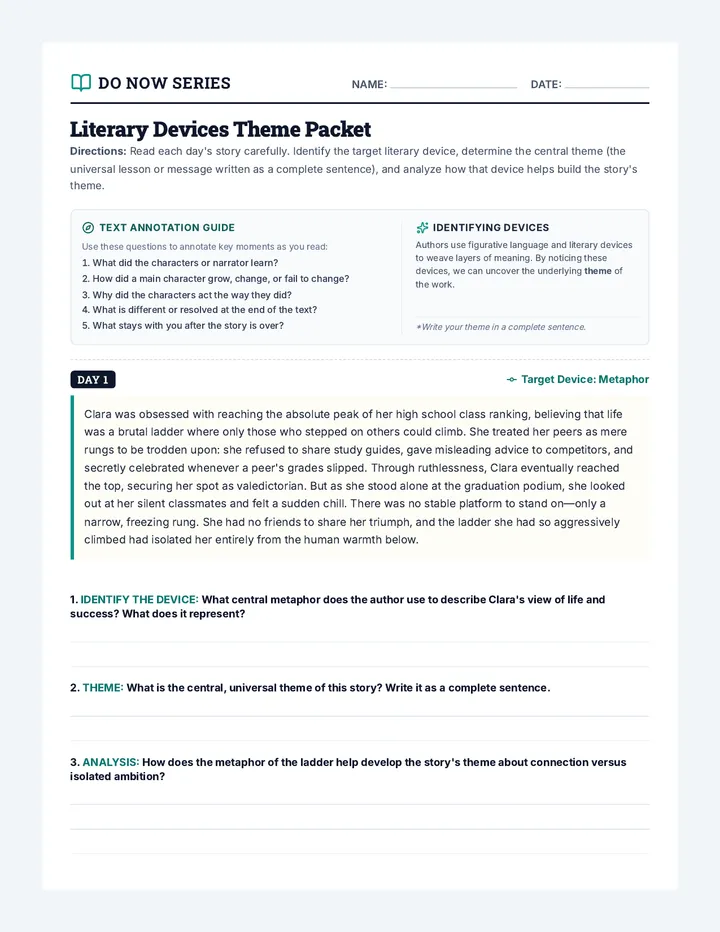
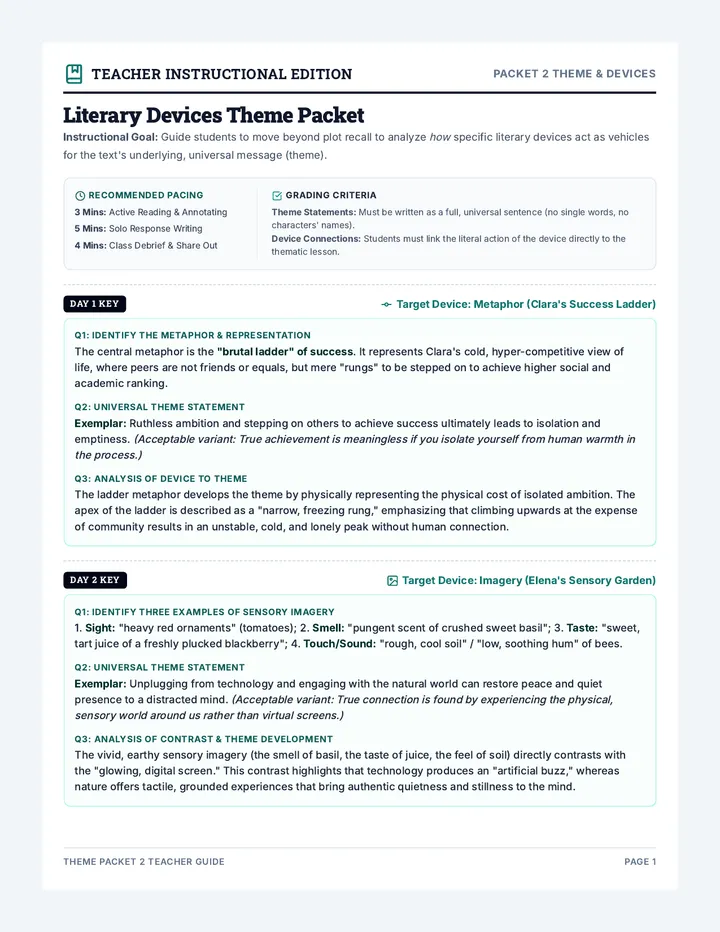
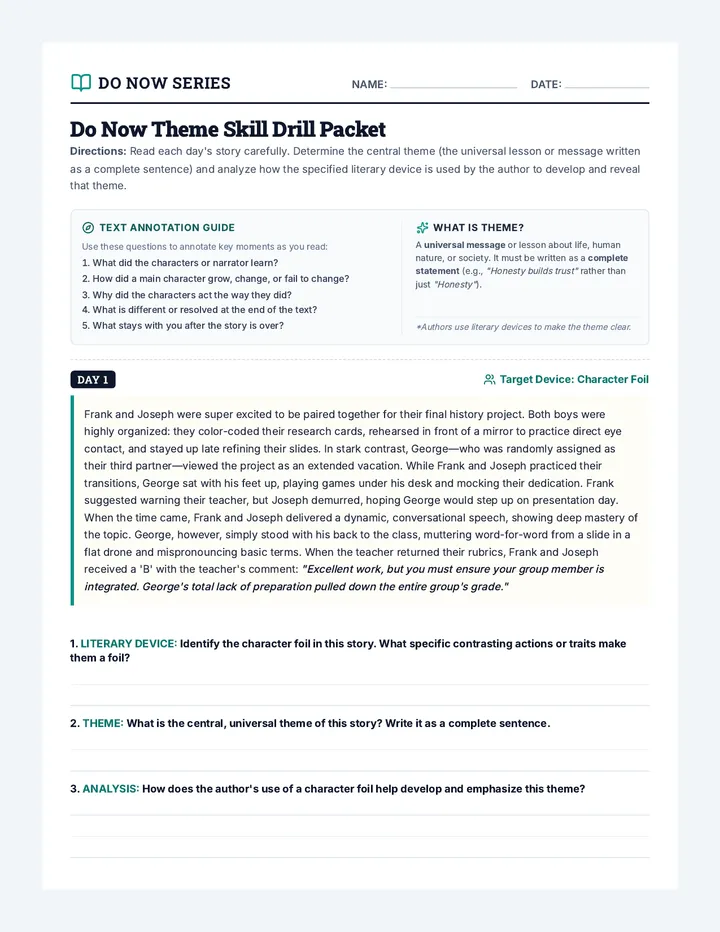
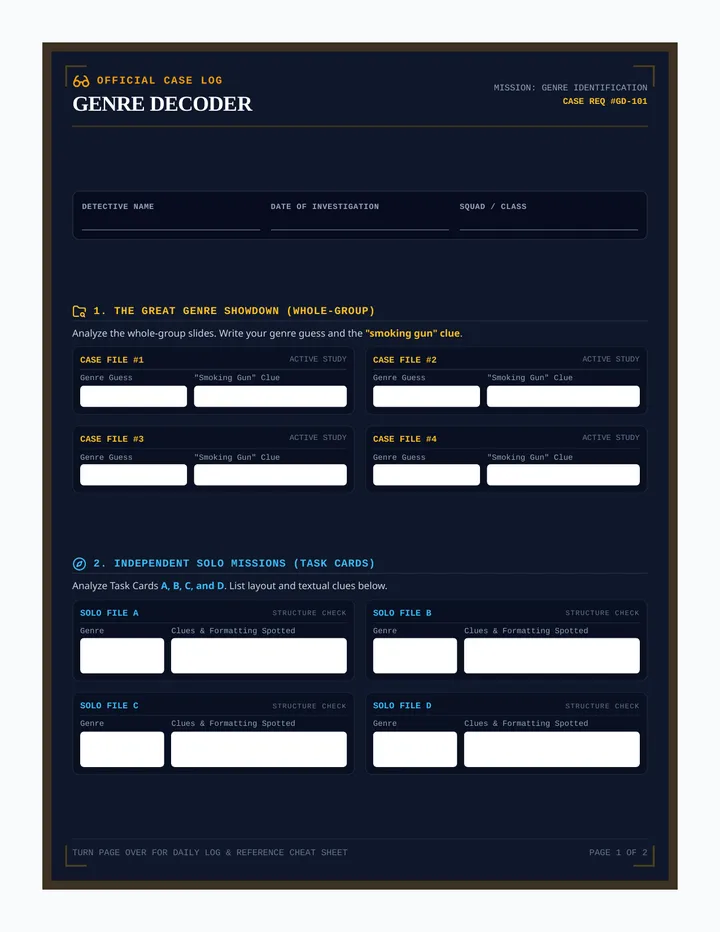
Citrus Siege Quiz
A 15-question multiple-choice comprehension check for the first part of the November section (Nov 1-20) of the novel Tangerine.
Citrus Siege Answer Key
An answer key and teacher guide for the Citrus Siege Quiz, focusing on the early November section (Nov 1-20) of the novel Tangerine.
Fields and Fame Quiz
A 15-question multiple-choice comprehension check for the November entries of Tangerine, focusing on Mr. Donnelly's house, the Cruz grove, and Betty Bright's past.
Fields and Fame Answer Key
An updated answer key and teacher guide for the Fields and Fame Quiz, ensuring all rationales and question numbers are perfectly aligned.
Fields and Fame Answer Key
An updated answer key and teacher guide for the Fields and Fame Quiz, ensuring all rationales and question numbers are perfectly aligned with the new confession question.
Fields and Fame Answer Key
The finalized answer key for the Fields and Fame Quiz, ensuring all question numbers and rationales are perfectly aligned with the latest version of the quiz.
Fields and Fame Answer Key
The finalized answer key for the Fields and Fame Quiz, ensuring all question numbers and rationales are perfectly aligned with the latest version of the quiz.
Fields and Fame Answer Key
The finalized answer key for the Fields and Fame Quiz, ensuring all question numbers and rationales are perfectly aligned with the latest version of the quiz.
November Analysis Short Responses
Two short-response questions focusing on Standard RL.7.3, requiring students to analyze how setting and plot elements interact with character development in Tangerine's November entries.