A lesson focused on representing the addition of whole numbers and fractions on a number line using a friendly frog-jumping theme.
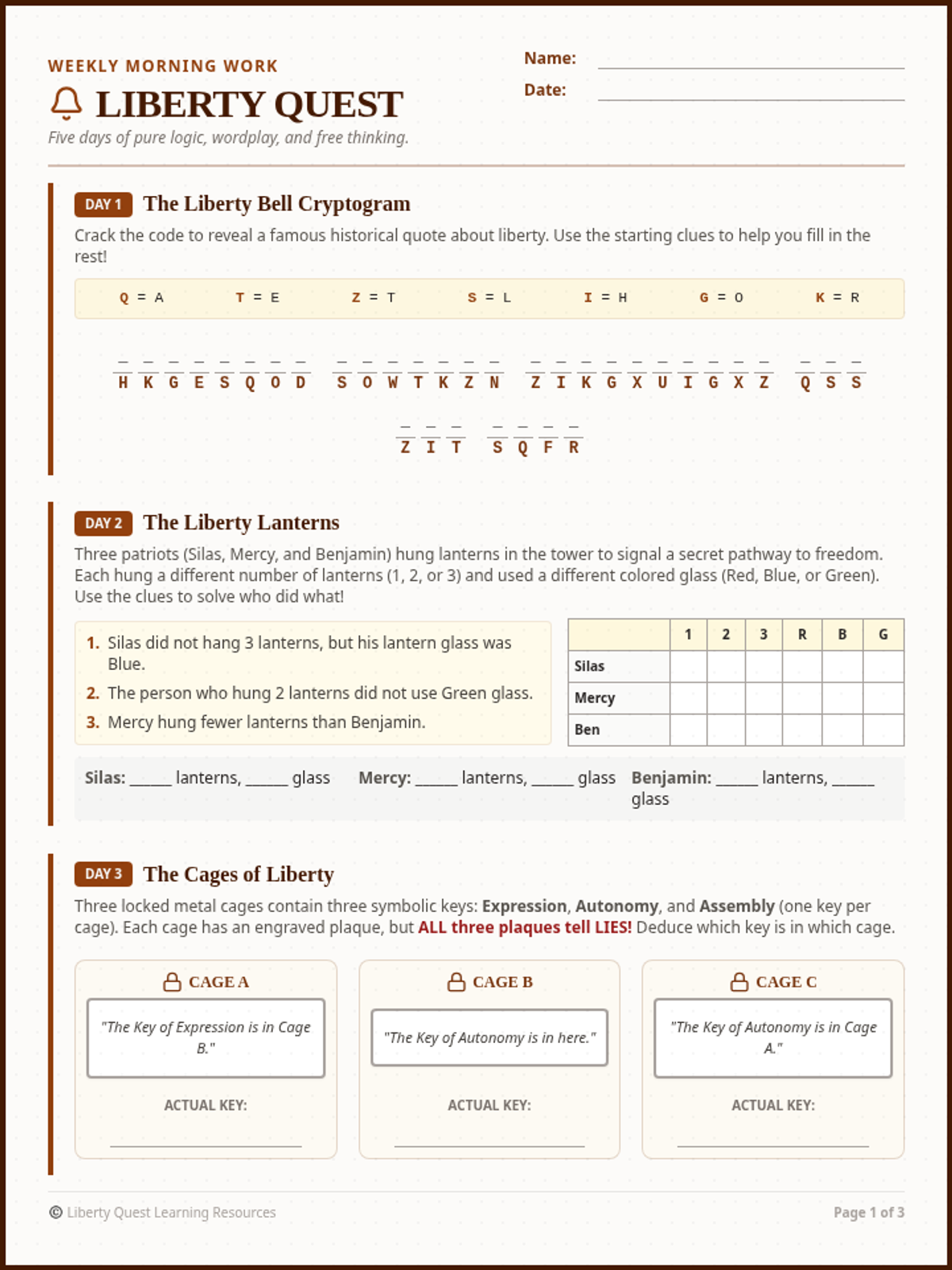
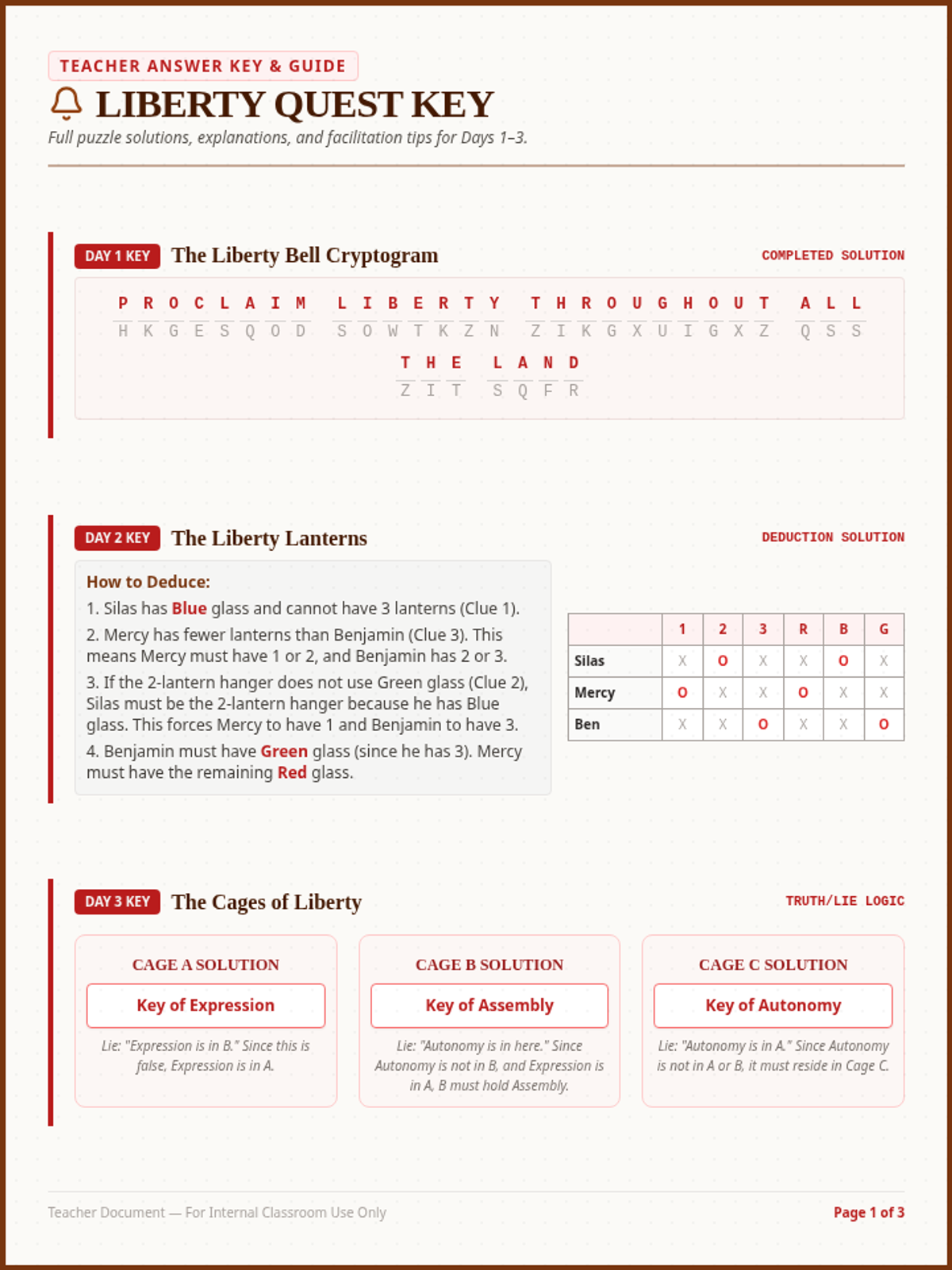
A 5-day daily warm-up packet based on logic puzzles and wordplay themed around liberty and freedom. Focuses on critical thinking and non-numerical deduction.
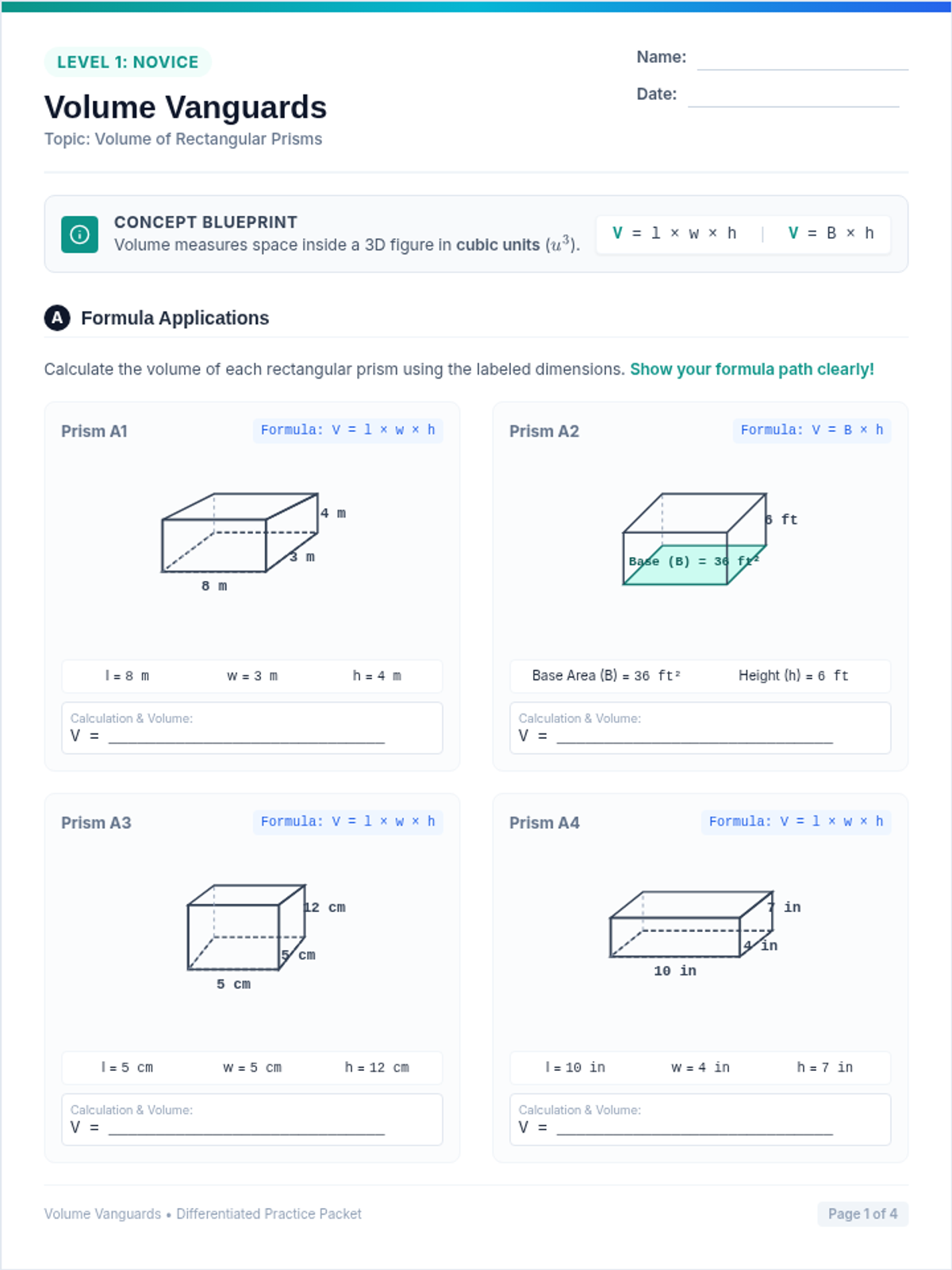
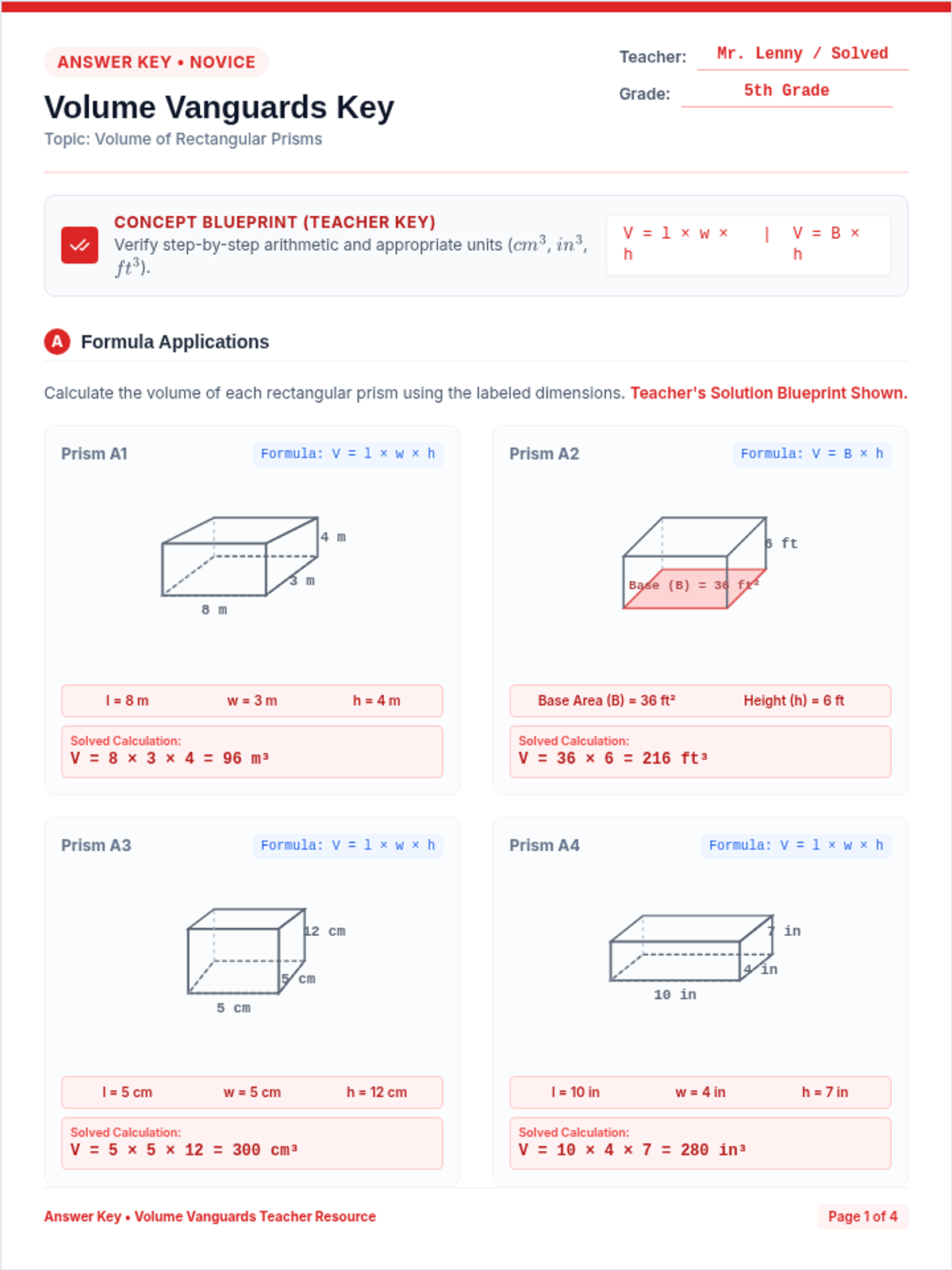
A comprehensive 5th-grade lesson on calculating the volume of rectangular prisms and composite/irregular 3D shapes. Students progress from counting unit cubes to applying formulas and decomposing irregular figures to find additive volume.
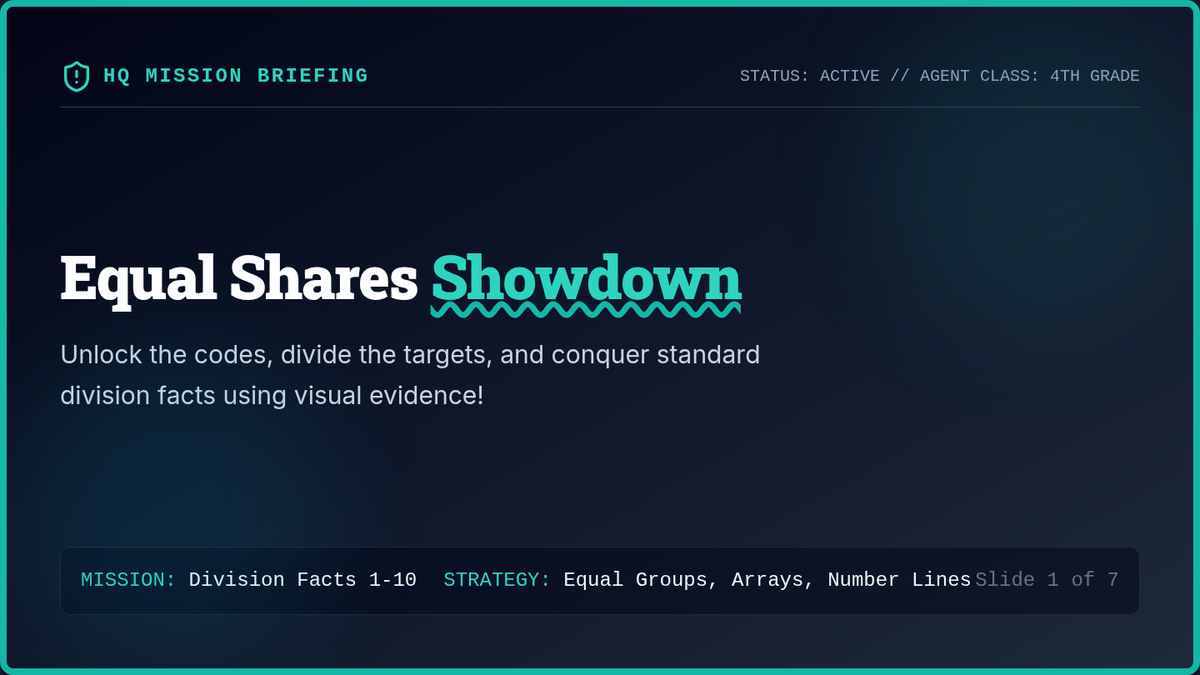
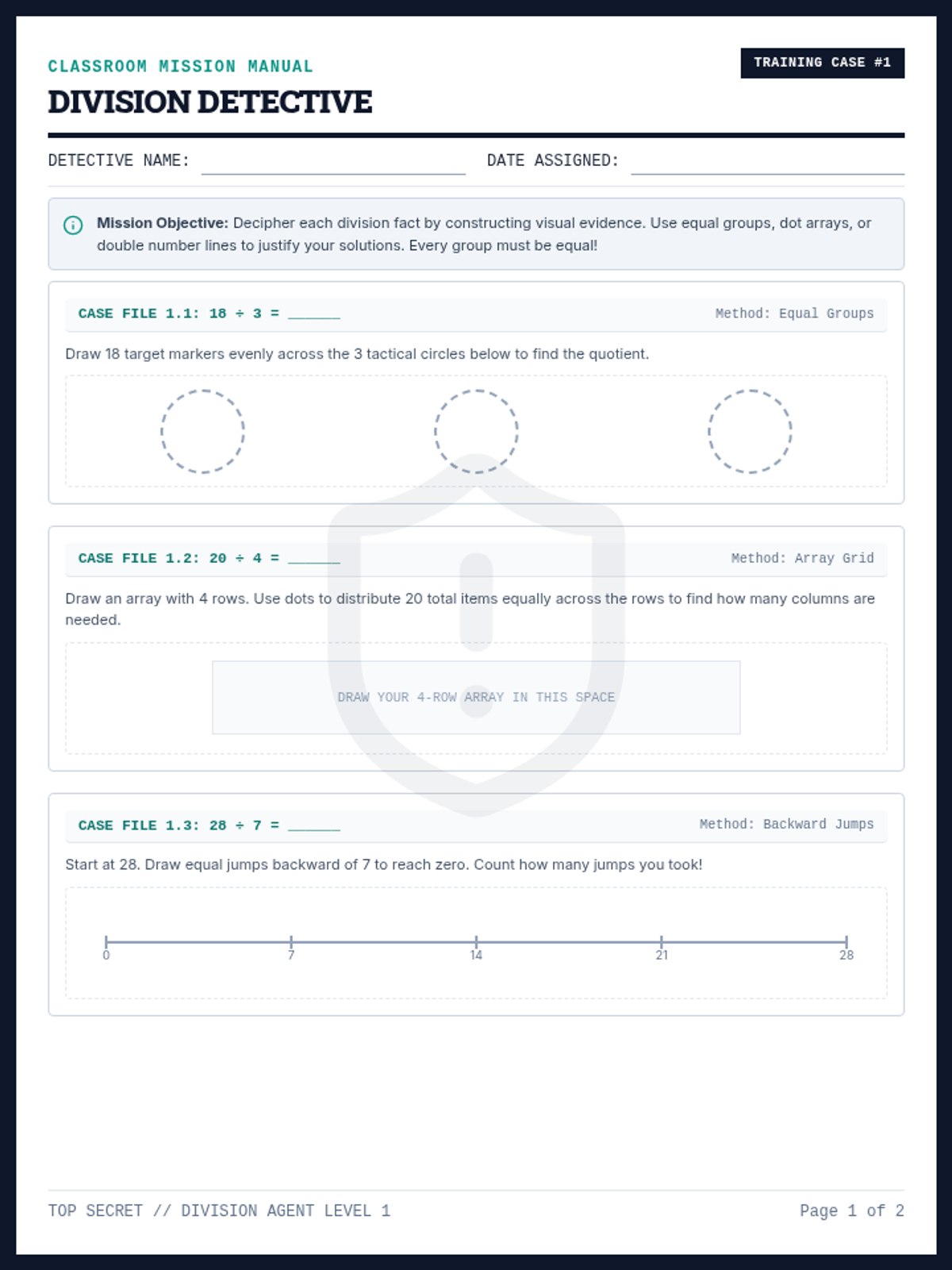
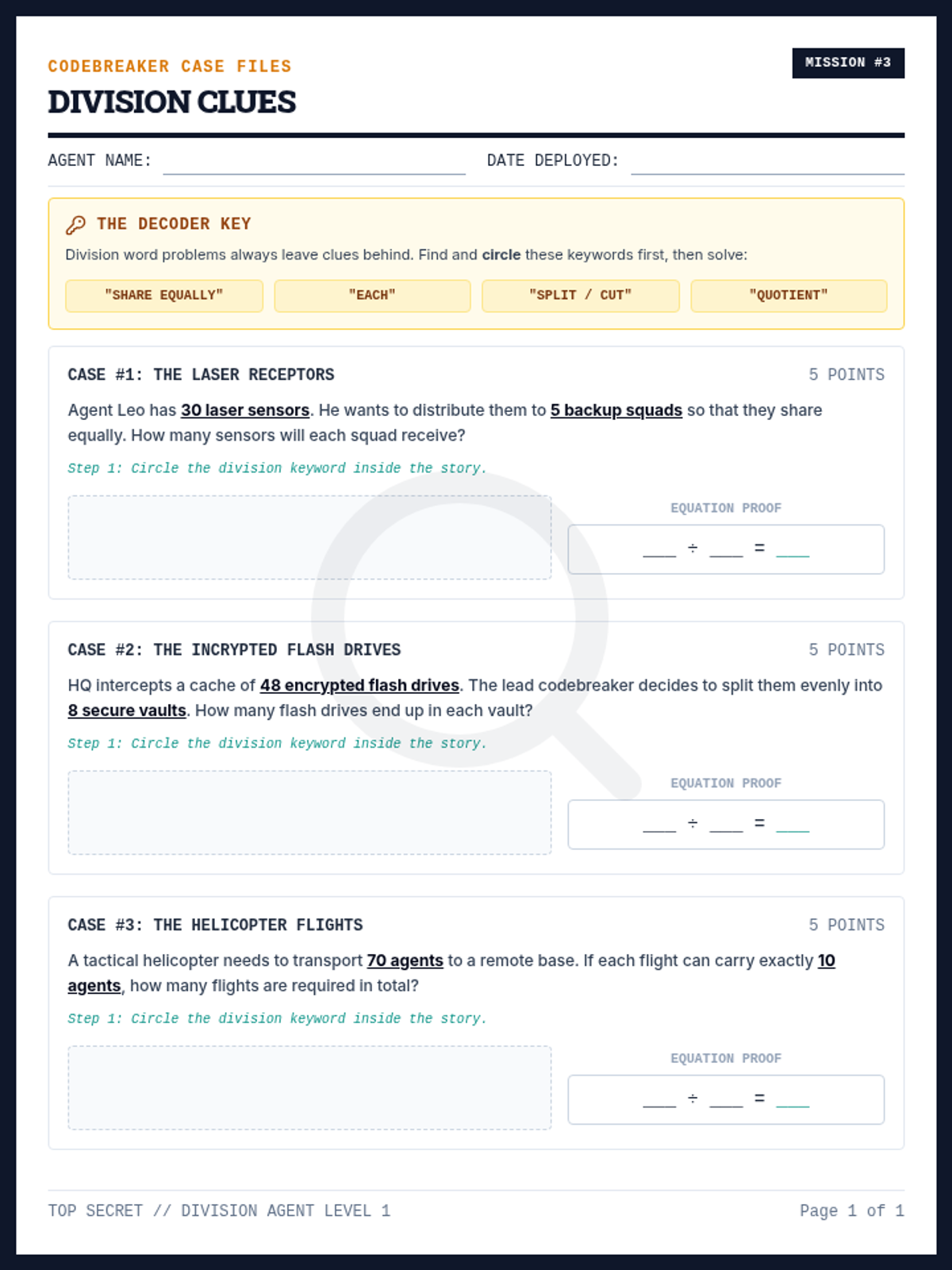
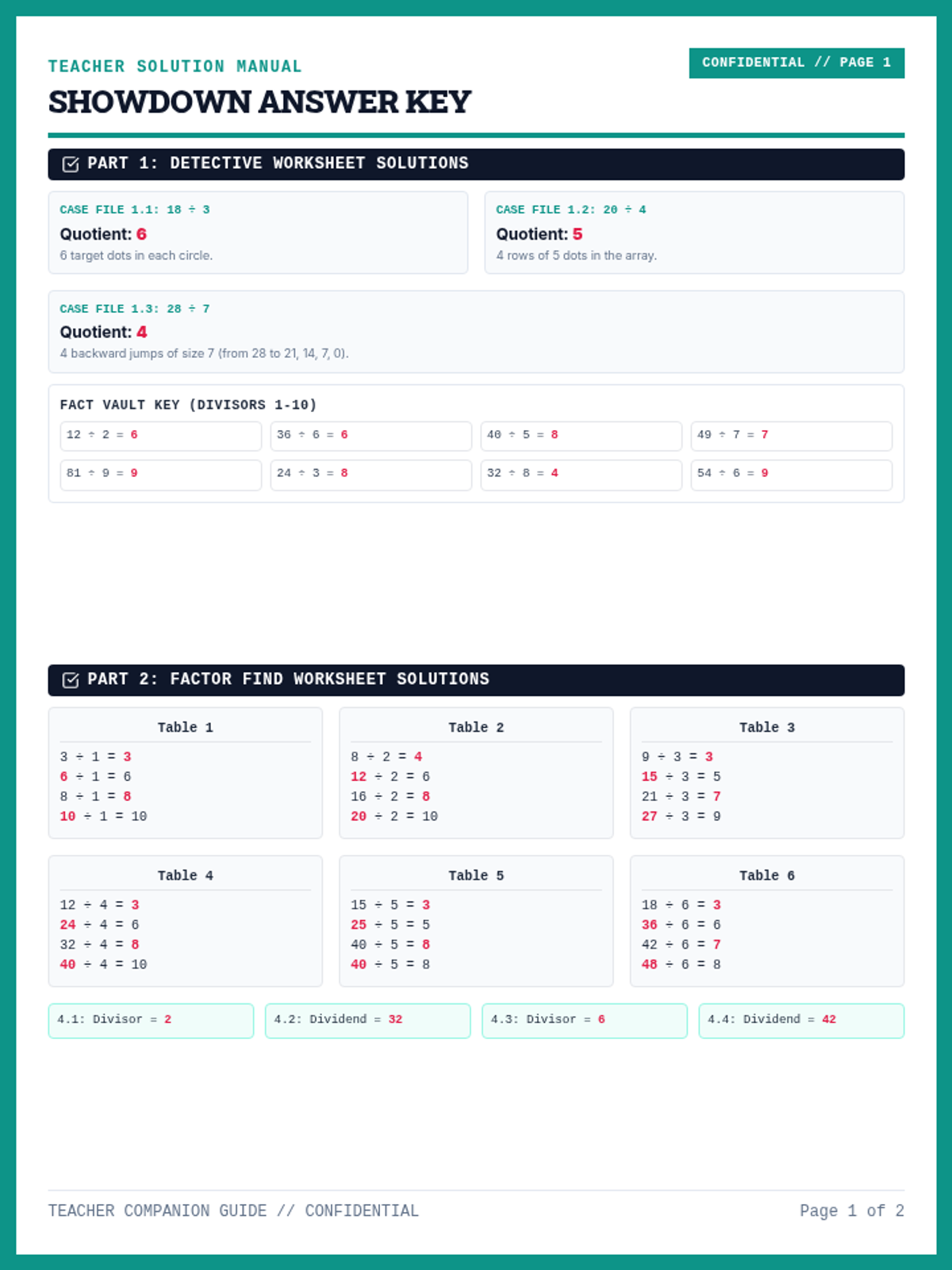
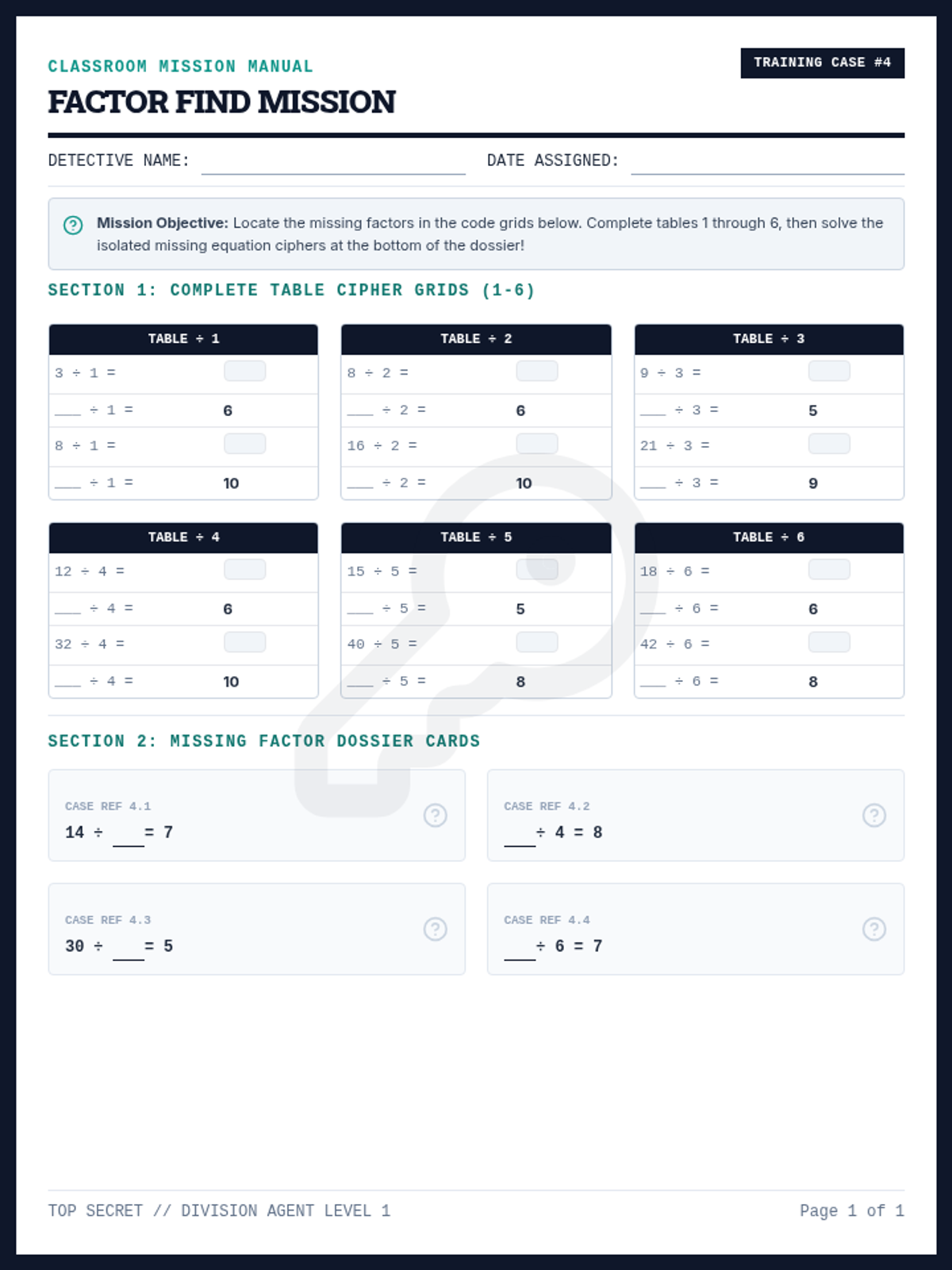
A 4th-grade math lesson focused on mastering division facts (divisors 1-10) using visual models (equal groups, arrays, and number lines) and deciphering word problems using division keywords. Includes interactive-style presentation slides, a practice worksheet, a division word problems challenge sheet, and a complete teacher answer key.
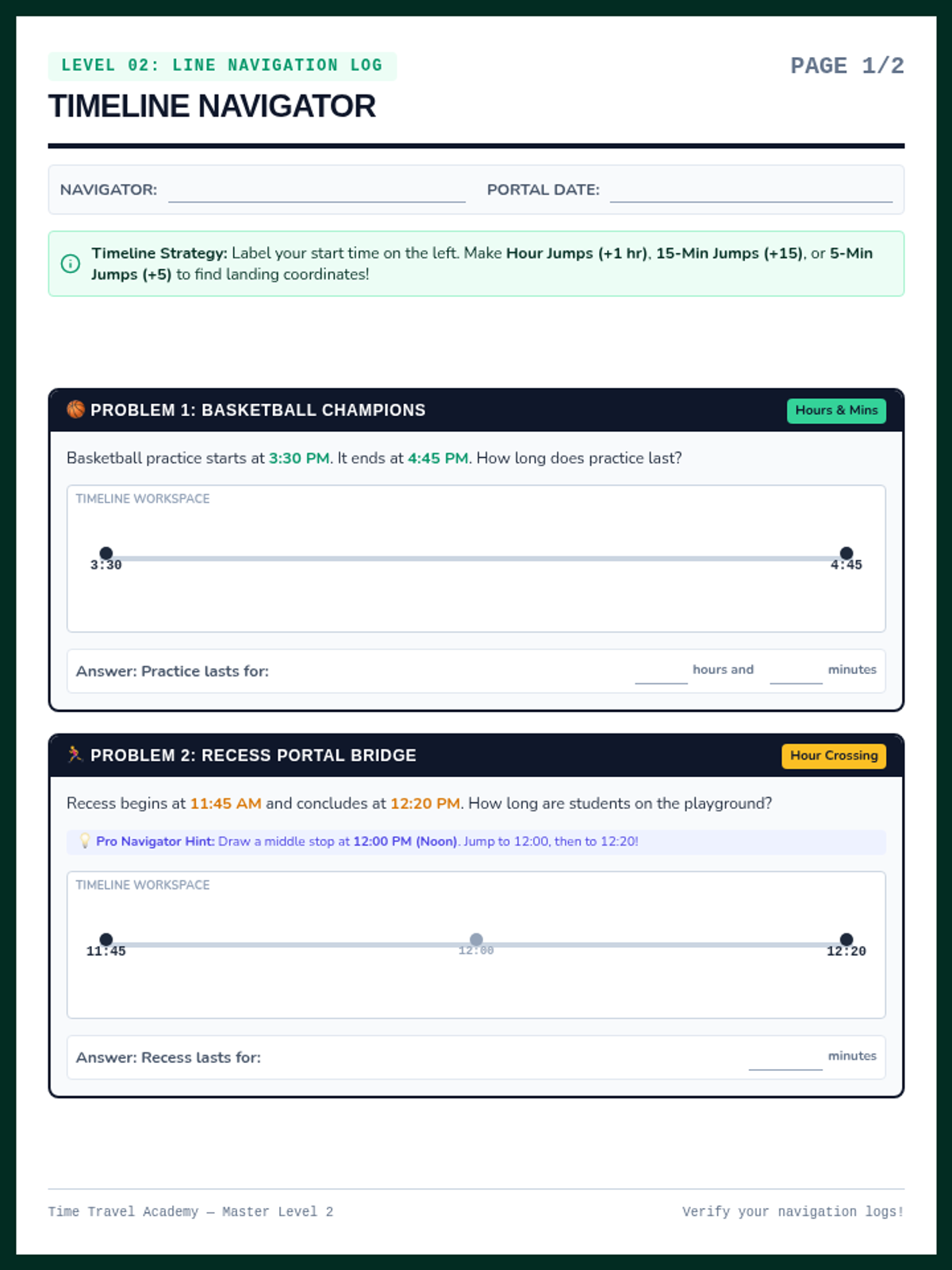
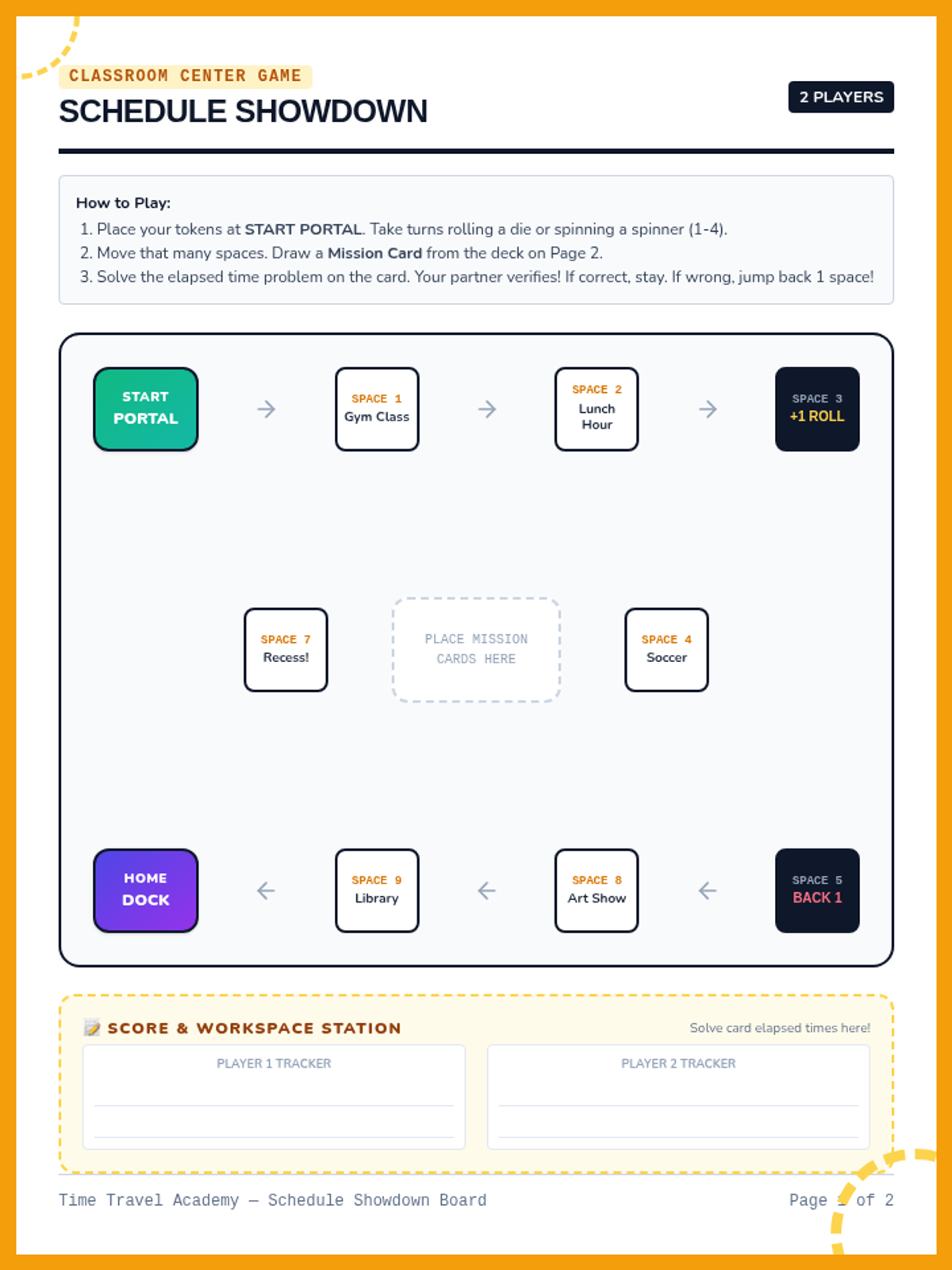
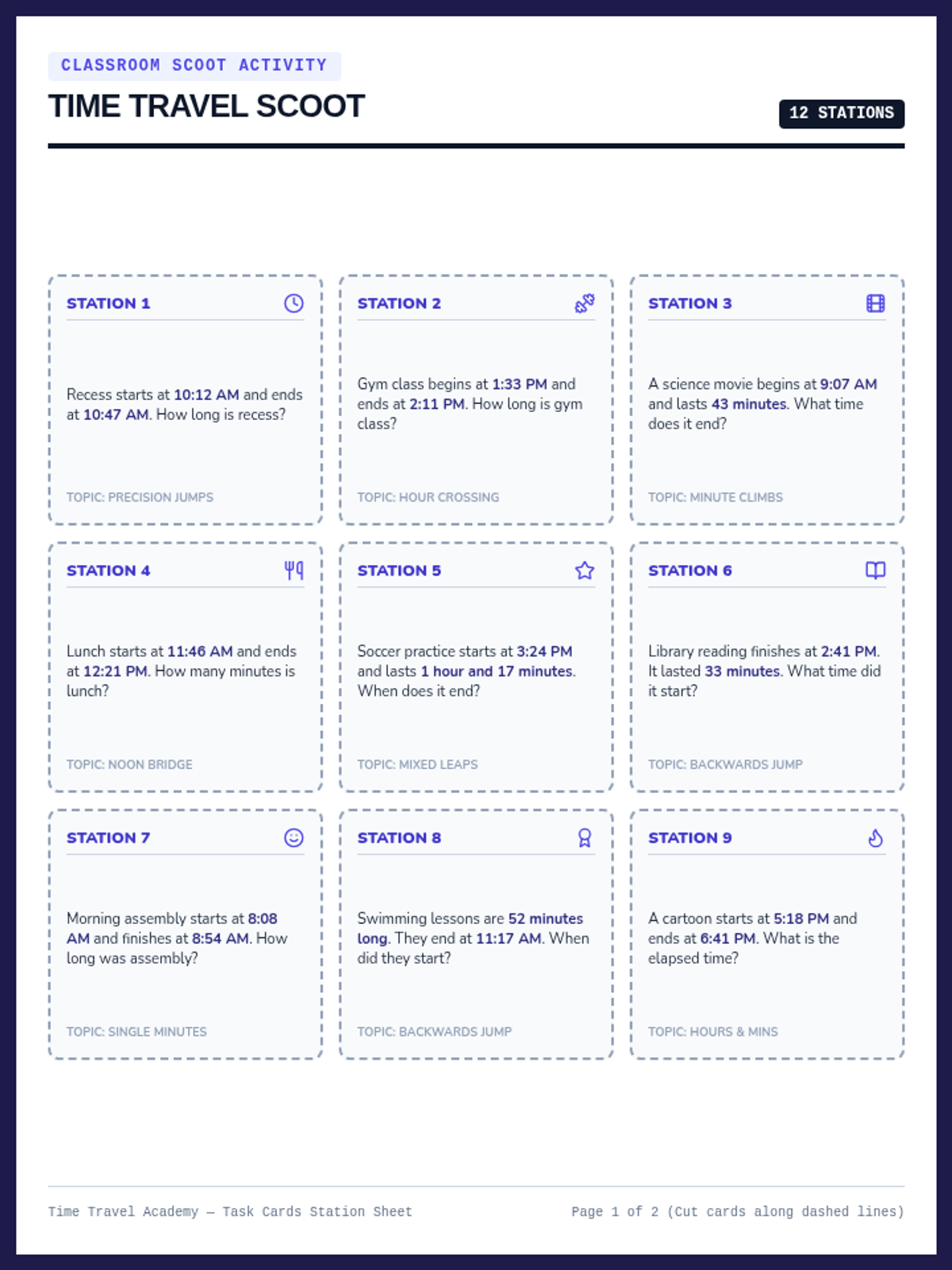
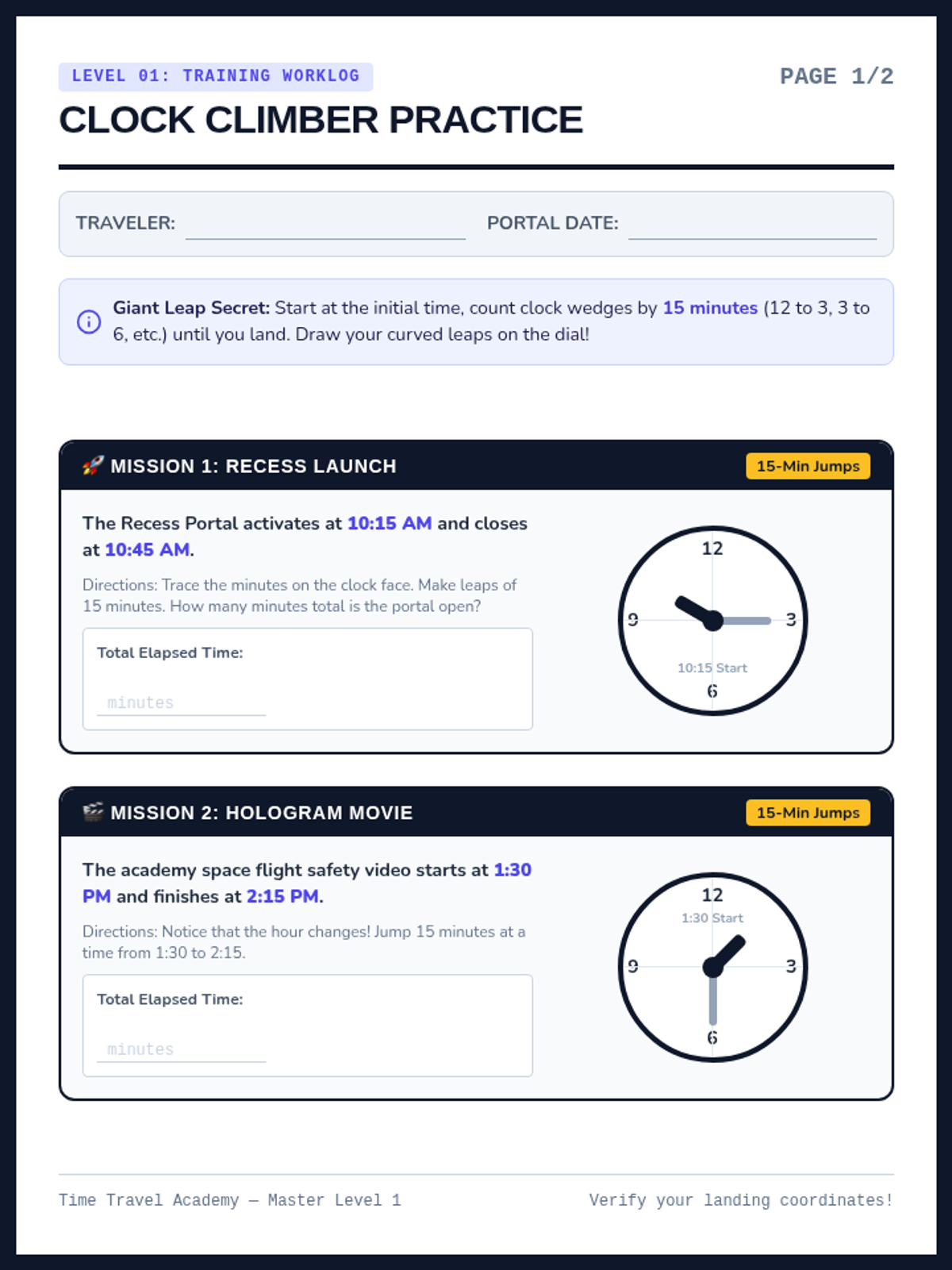
Students transition to open number lines to solve real-world scheduling problems, modeling 'jumps' of hours, 15-minute, and 5-minute intervals for sports, recess, and movies.
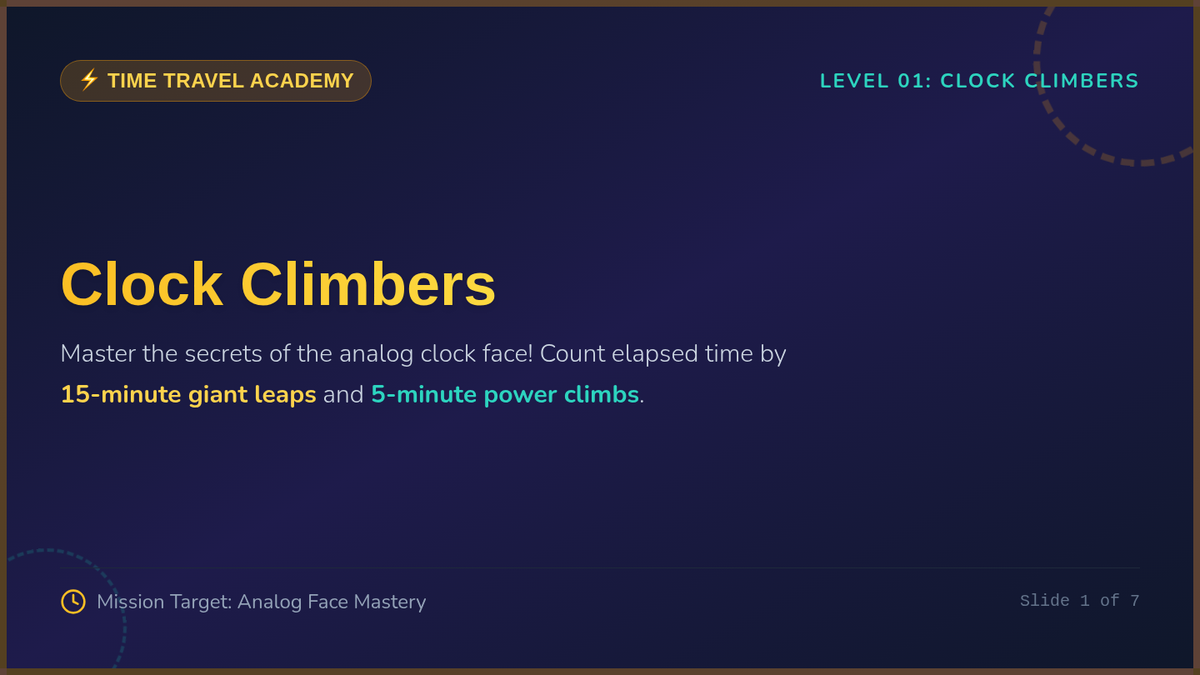
Students learn to count elapsed time on analog clock dials in intervals of 5 and 15 minutes, visualising the movement of the minute hand to solve duration problems.
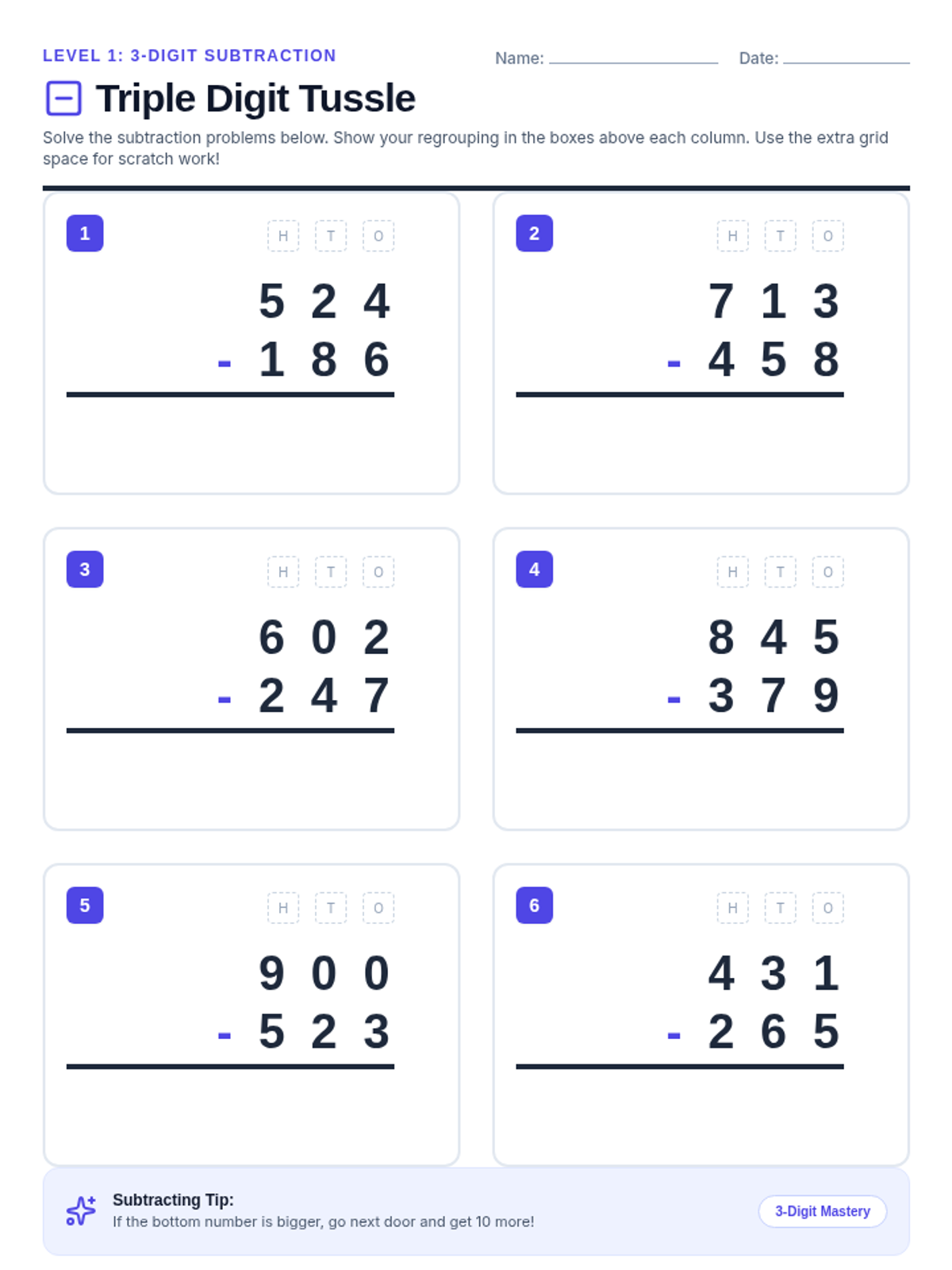
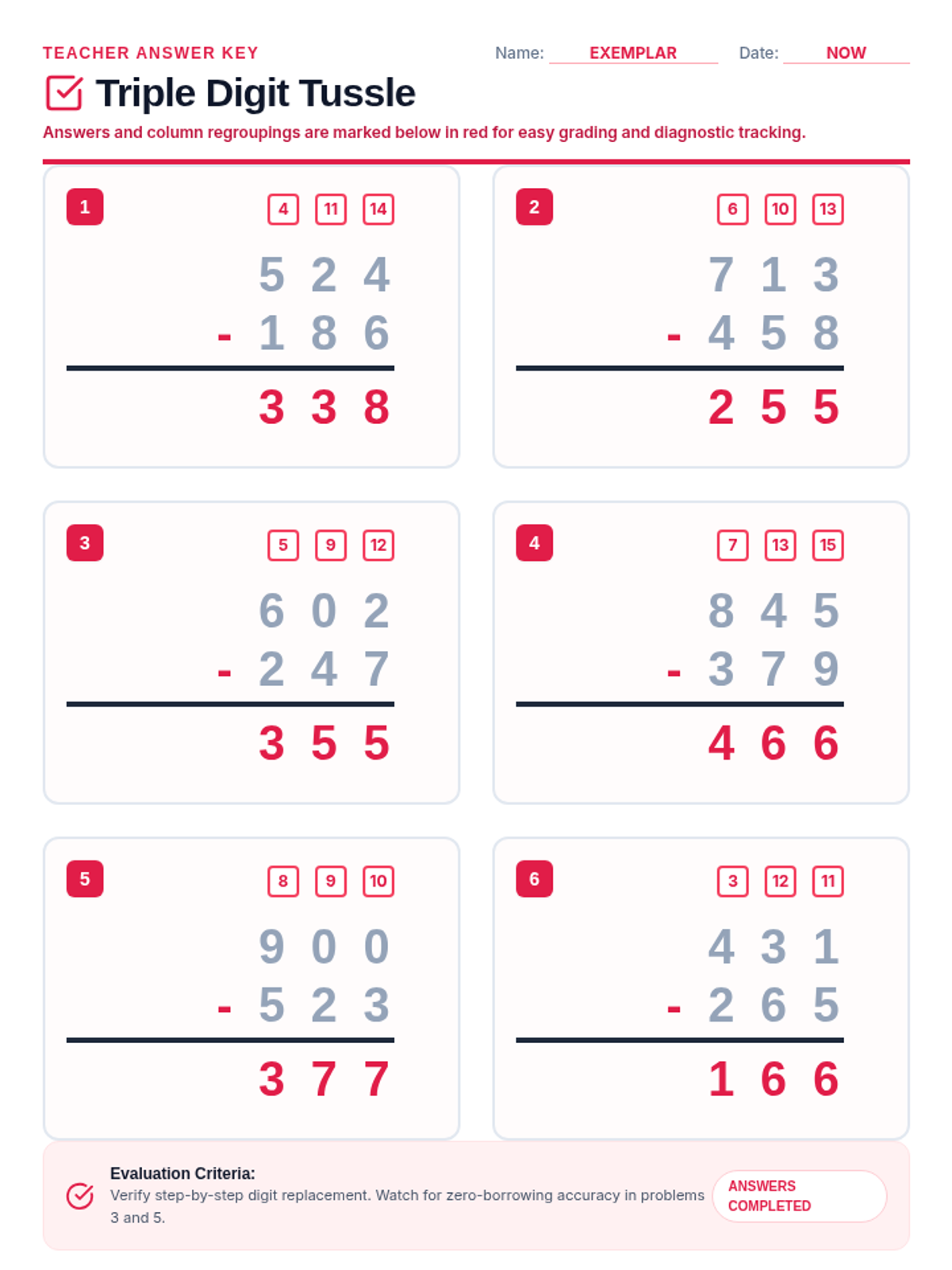
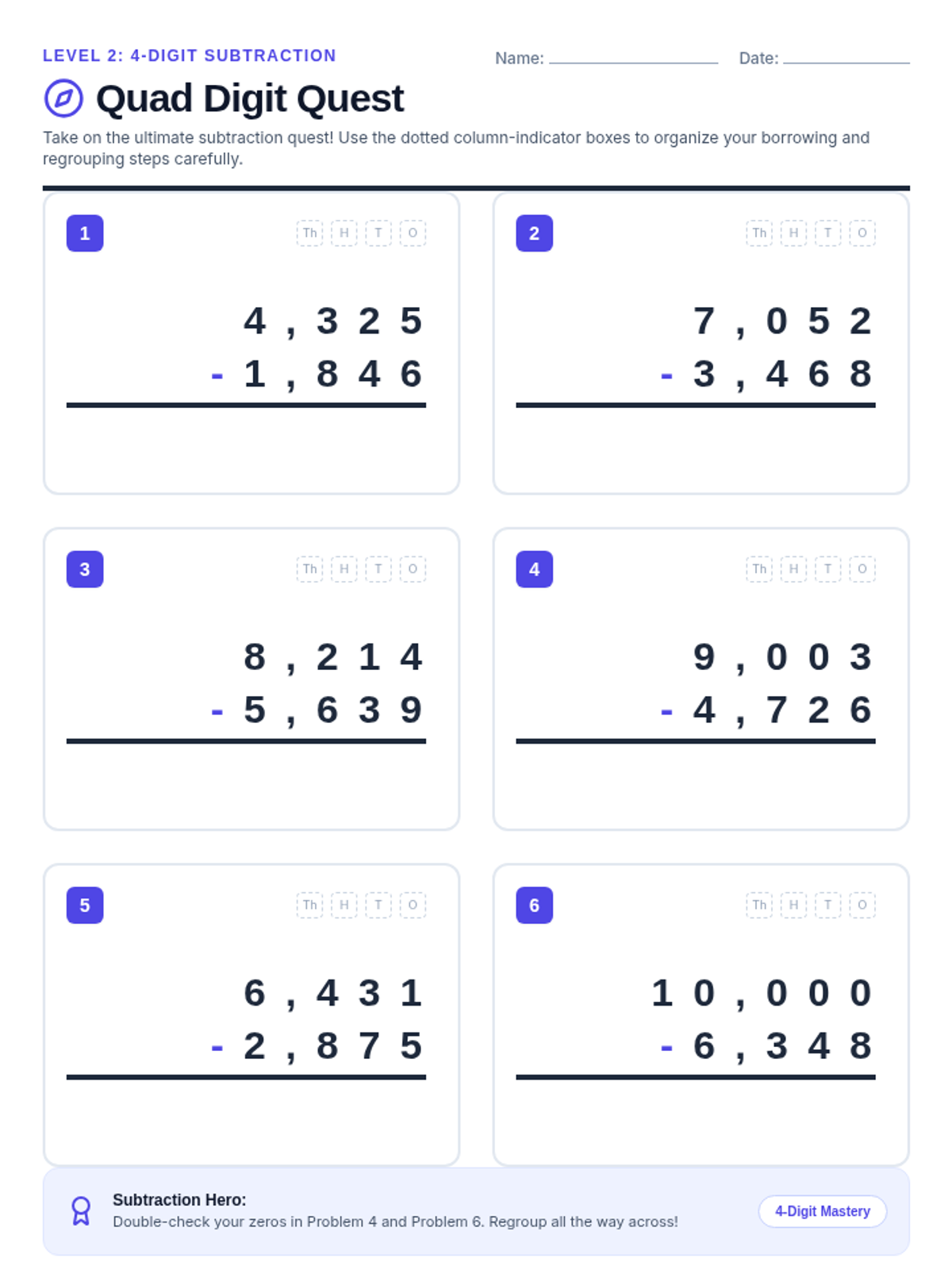
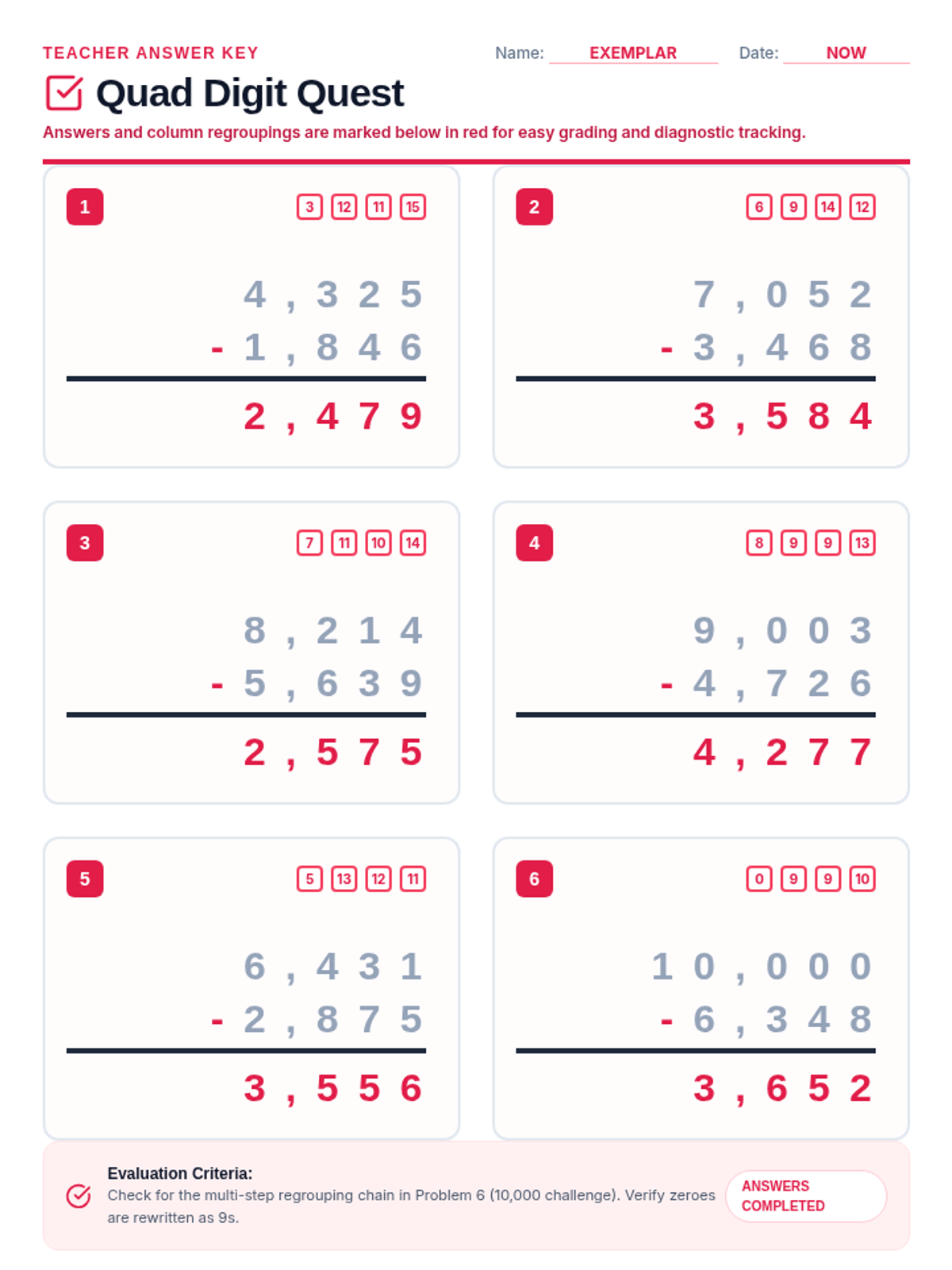
A structured math progression package targeting multi-digit subtraction with borrowing. Includes student worksheets and matching teacher answer keys with large, uncluttered fonts and extensive workspace for independent practice.
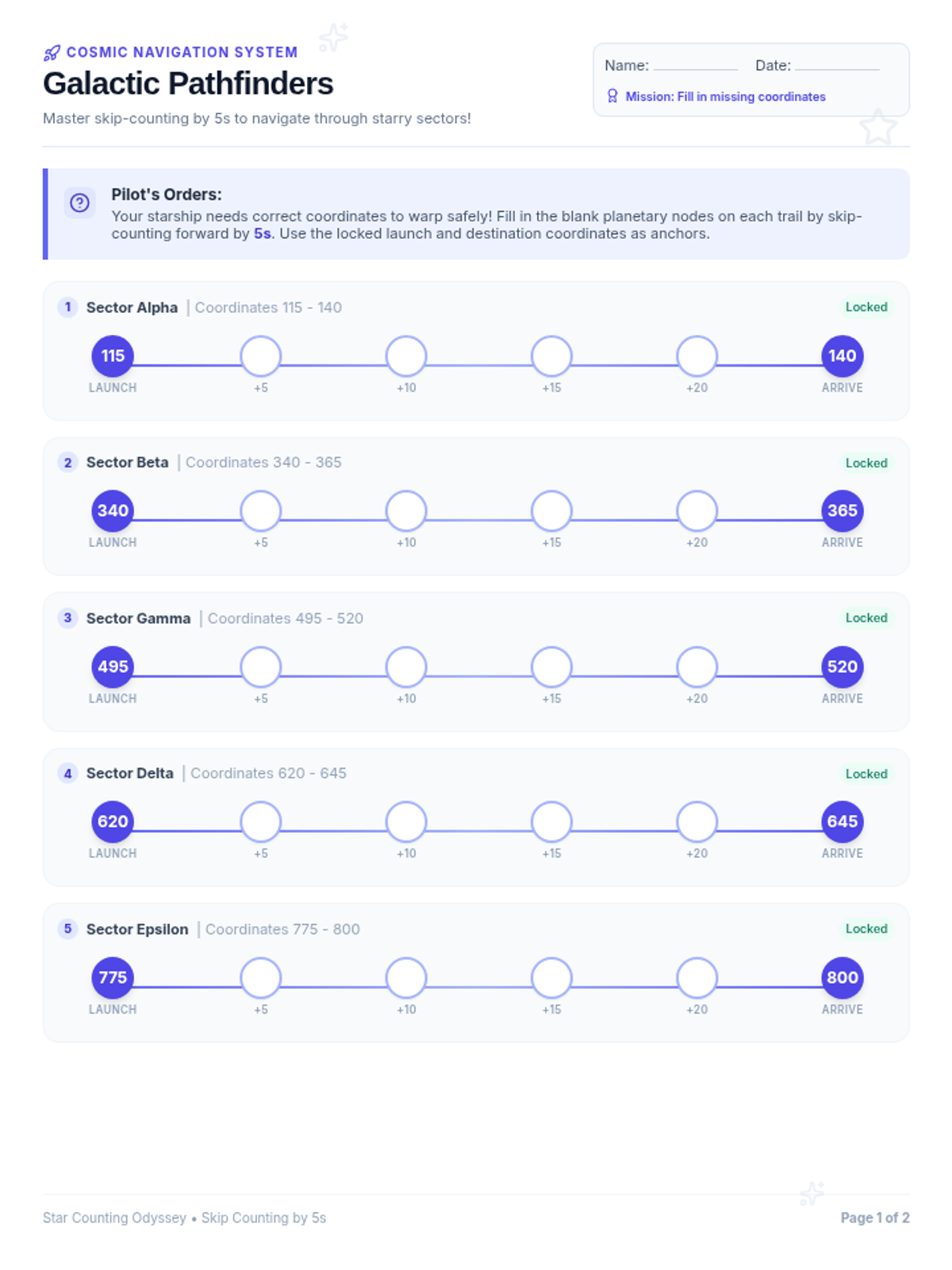
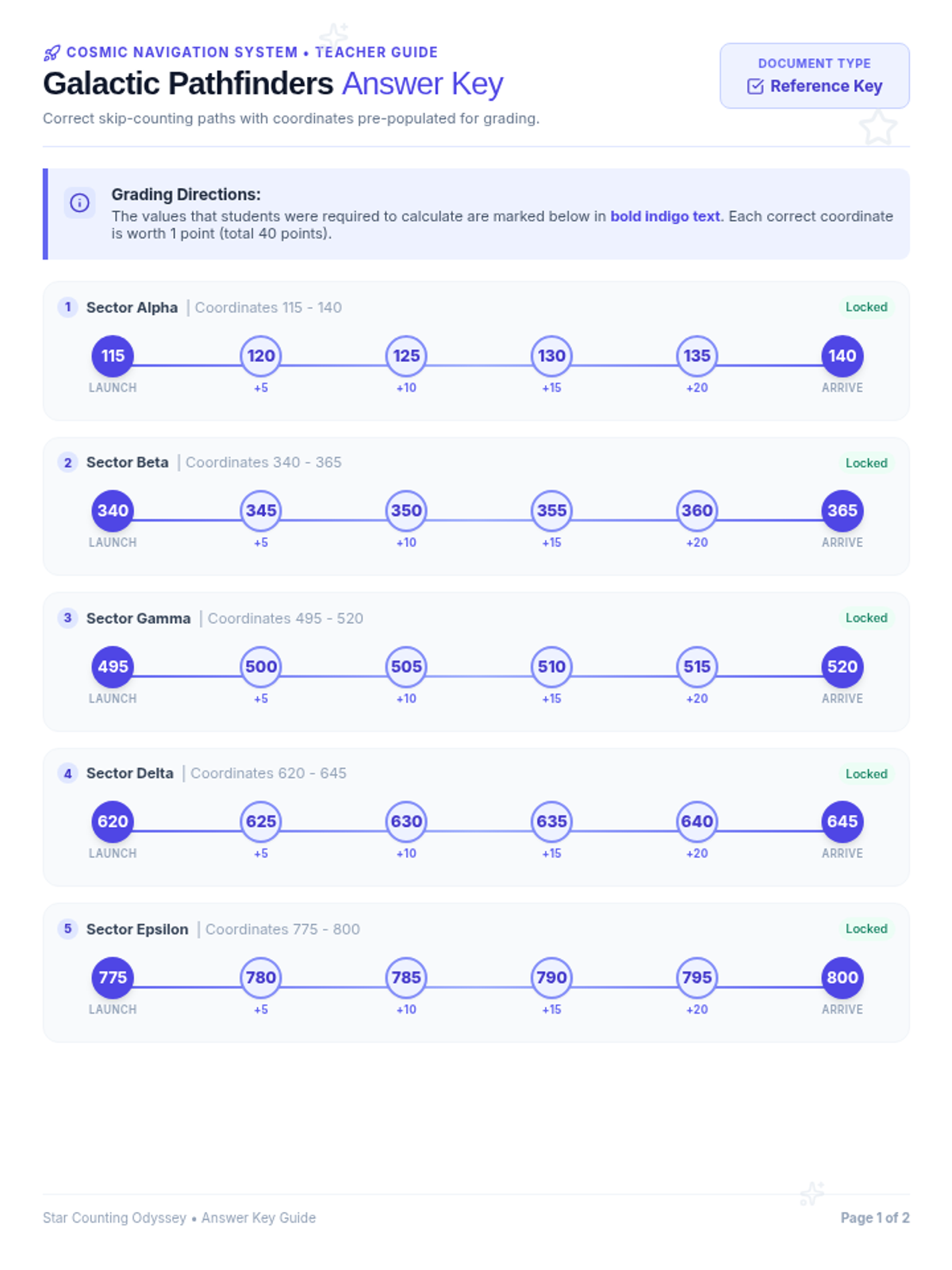
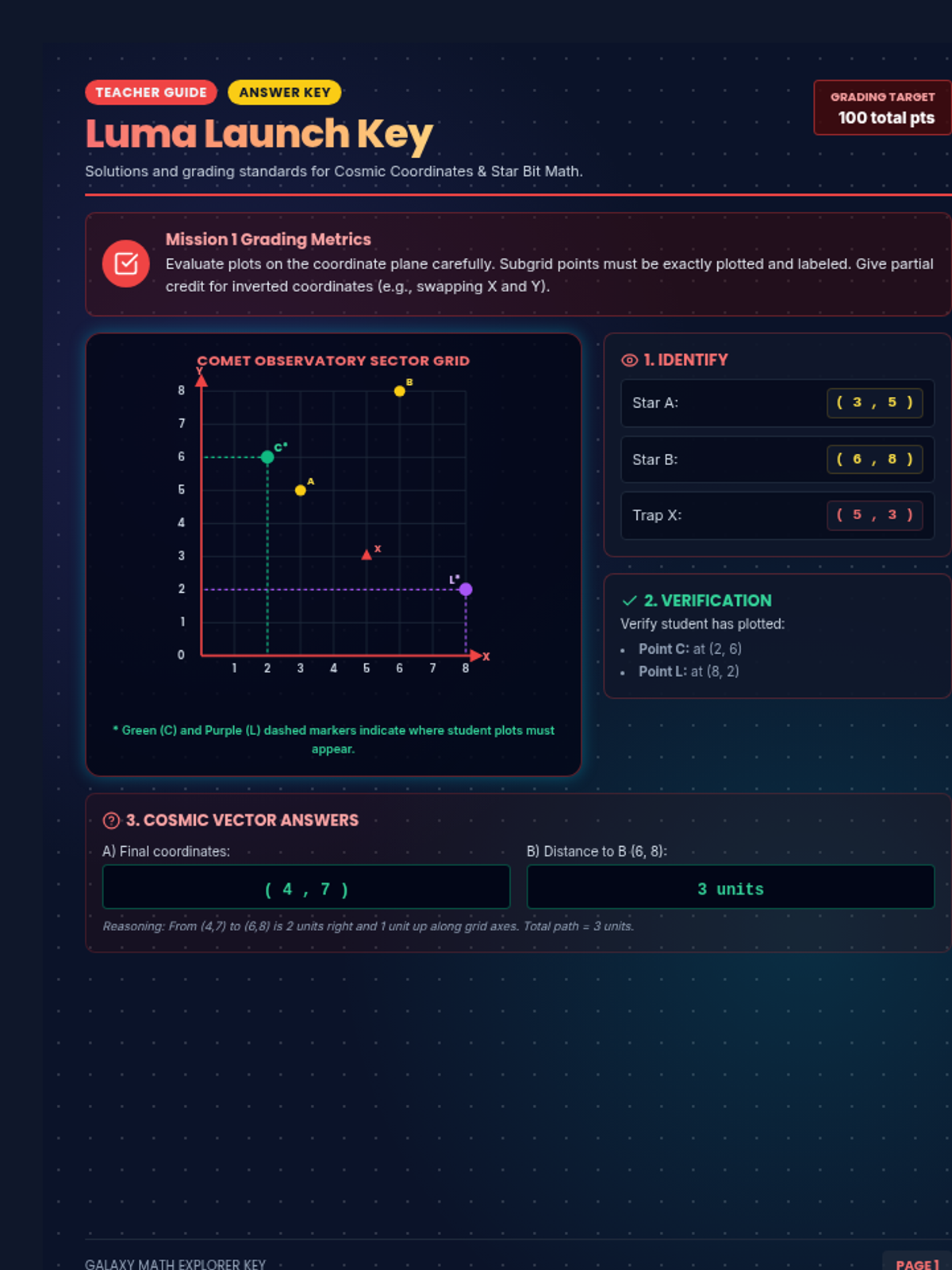
A space-themed skip counting lesson where students master counting by 5s to 1000. Using visual cosmic pathways (number lines), students apply moderate-support scaffolding to guide their spaceship through starry quadrants.
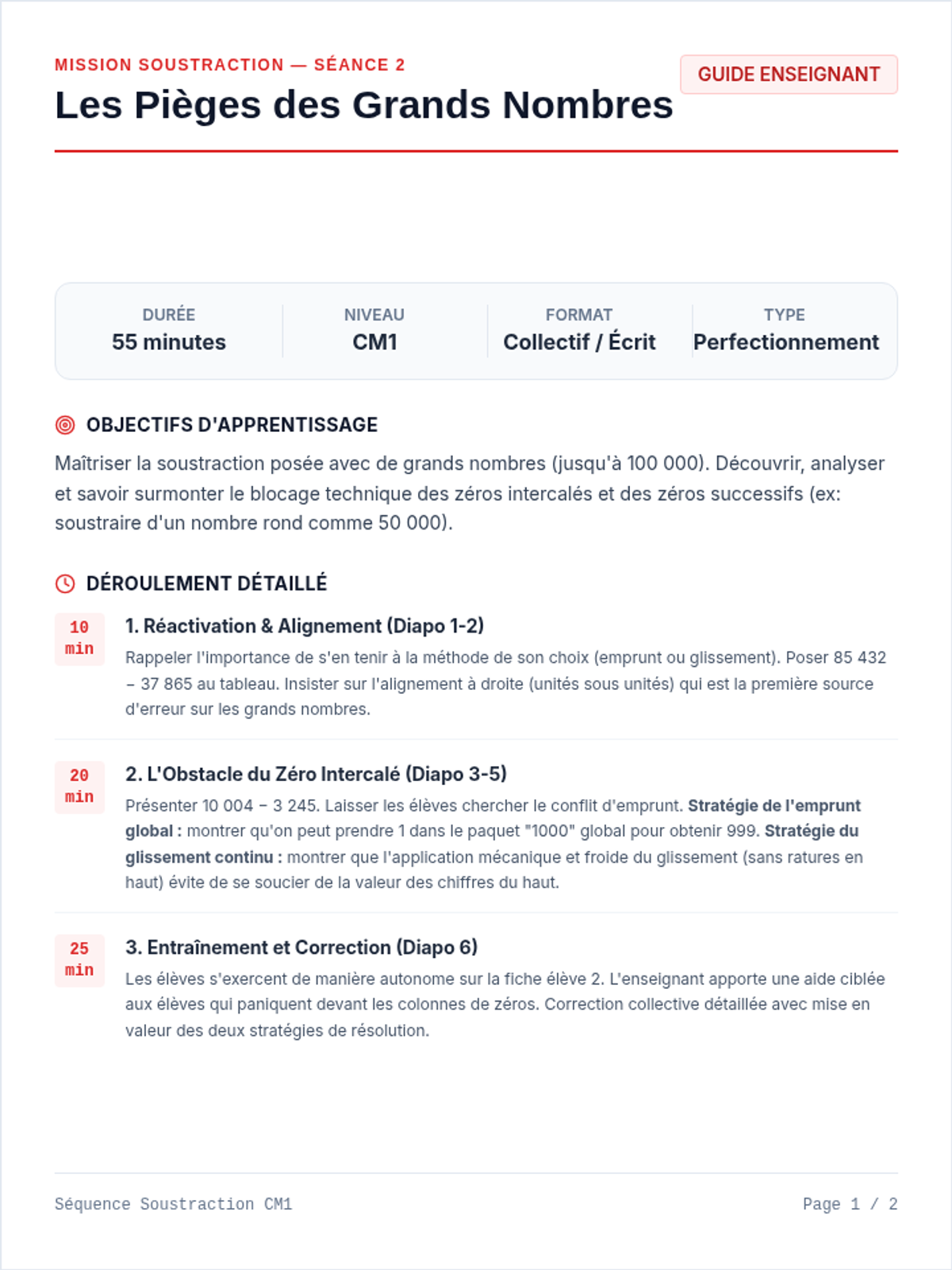
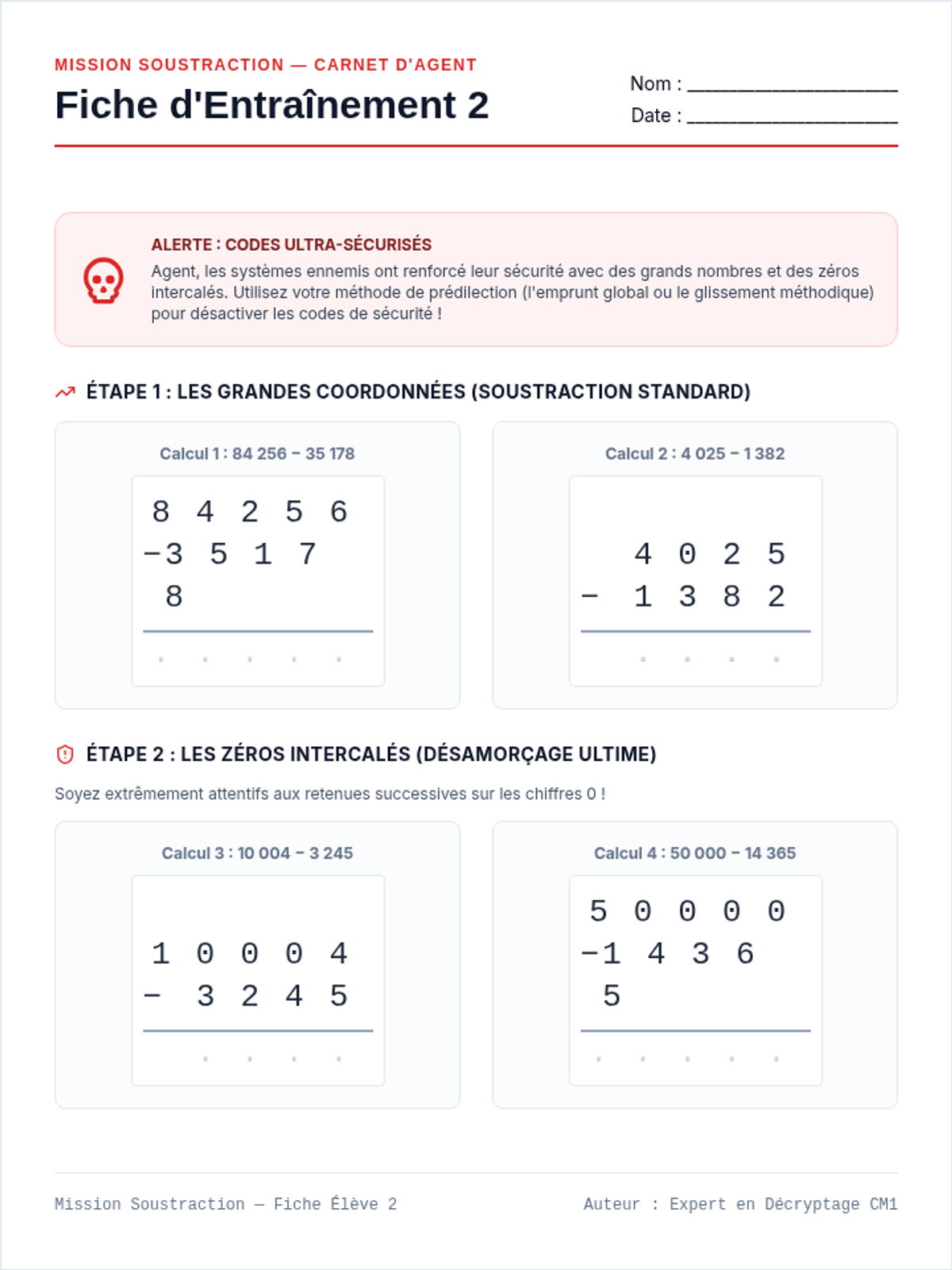
Cette seconde séance confronte les élèves aux soustractions complexes avec de grands nombres (jusqu'à 100 000) et se concentre sur le redoutable piège des zéros intercalés (ex: 10 004 - 3 245).
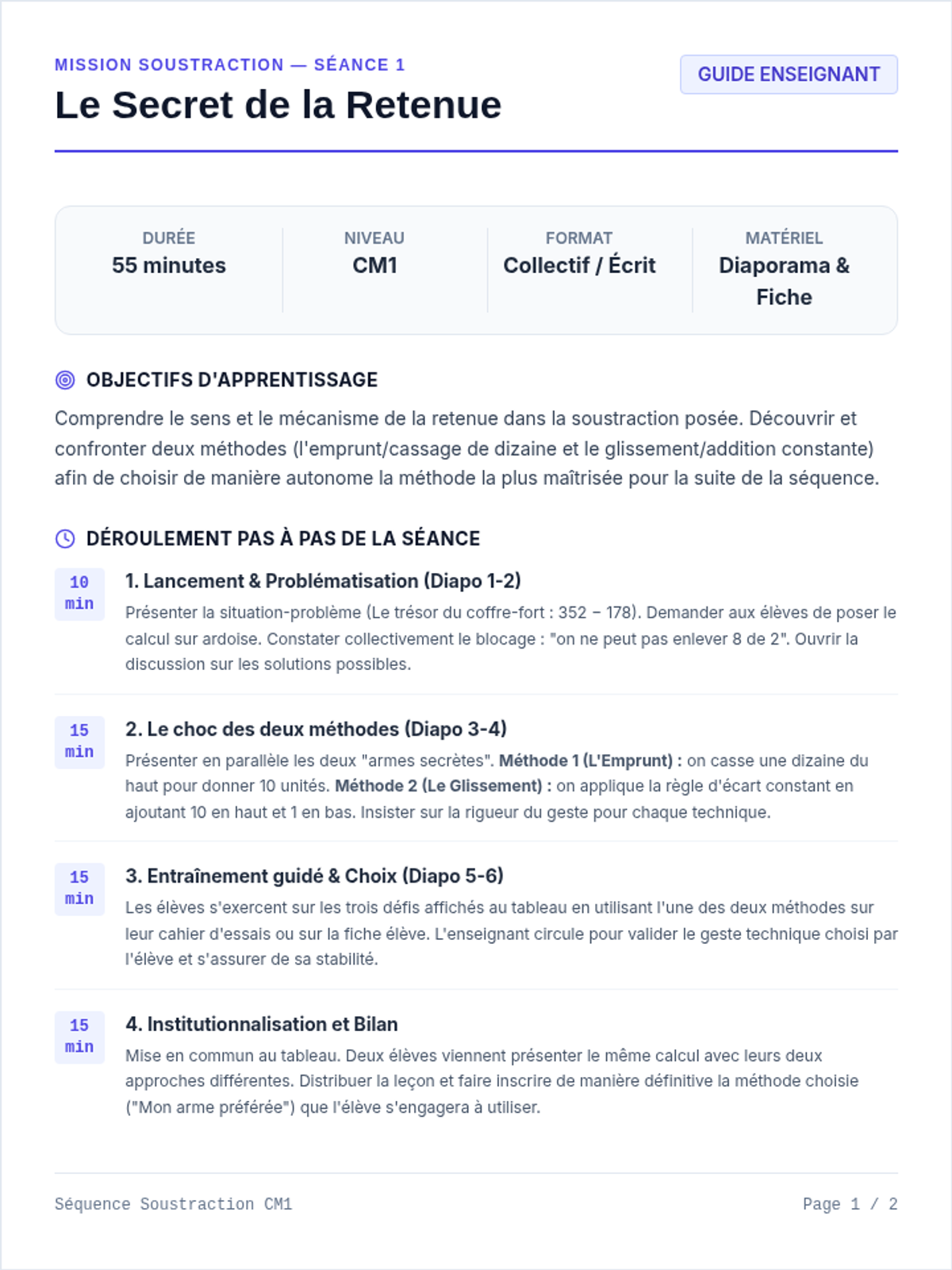
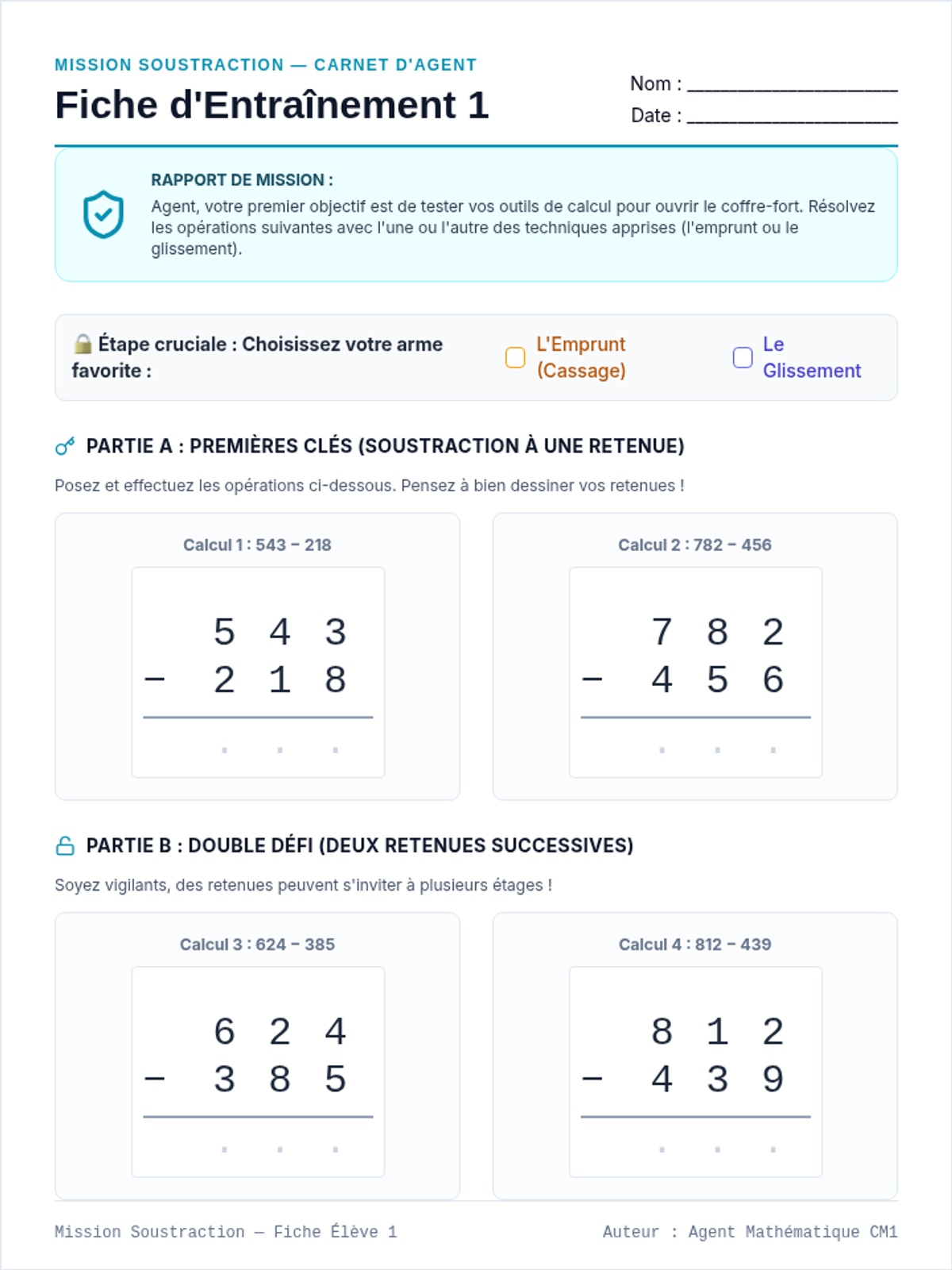
Cette première séance permet d'élucider le mécanisme de la retenue dans la soustraction posée. Les élèves comparent les deux techniques (emprunt/cassage de la dizaine vs. glissement/addition constante) pour choisir celle qu'ils maîtrisent le mieux.
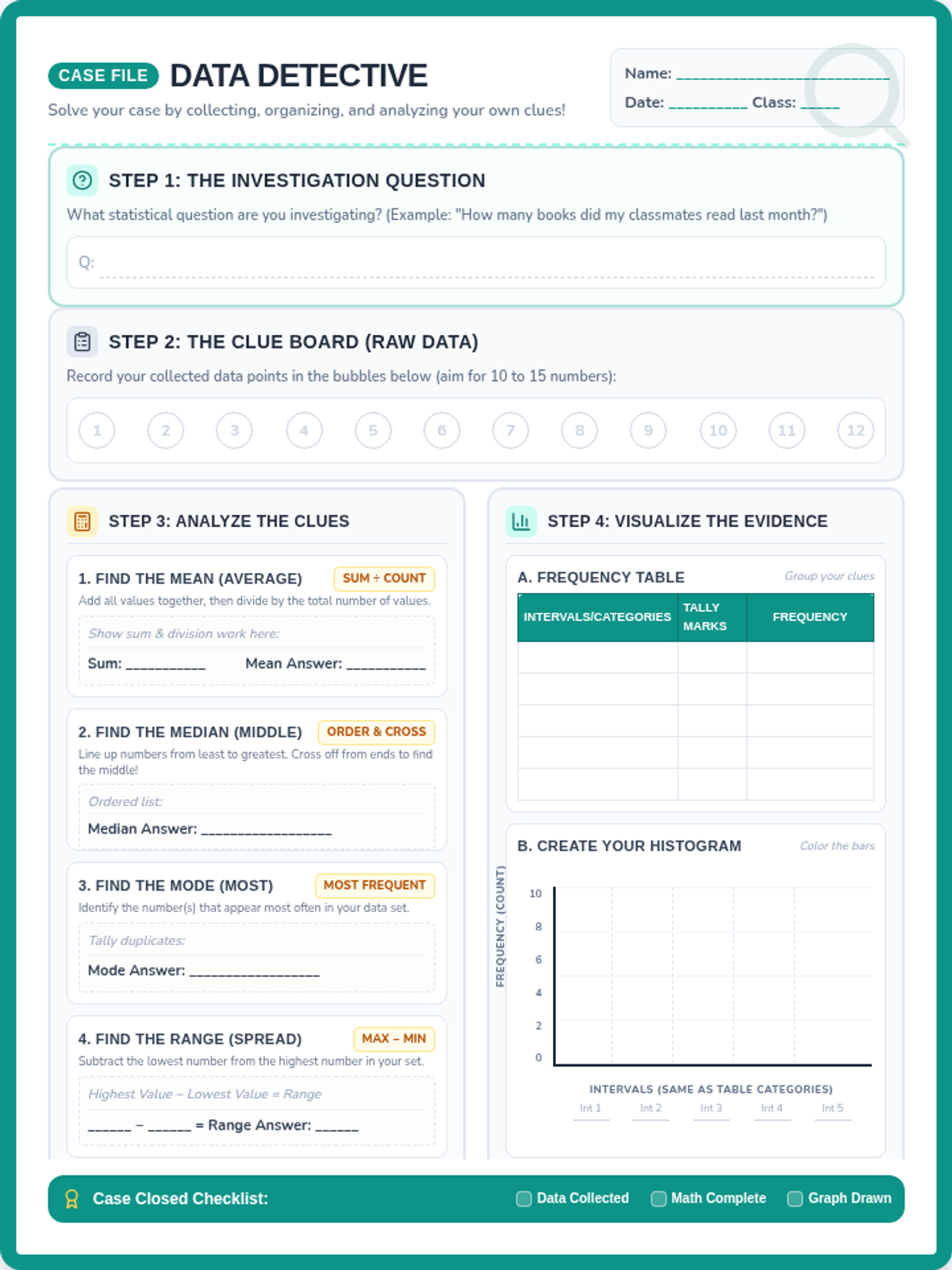
A lesson where students act as data detectives, collecting their own survey data, organizing it in a frequency table and histogram, and analyzing it using central tendency measures (mean, median, mode, and range).
A hands-on, collaborative math project where students work in teams to design and budget for an ultimate classroom picnic, practicing multi-digit addition, subtraction, and critical decision-making.
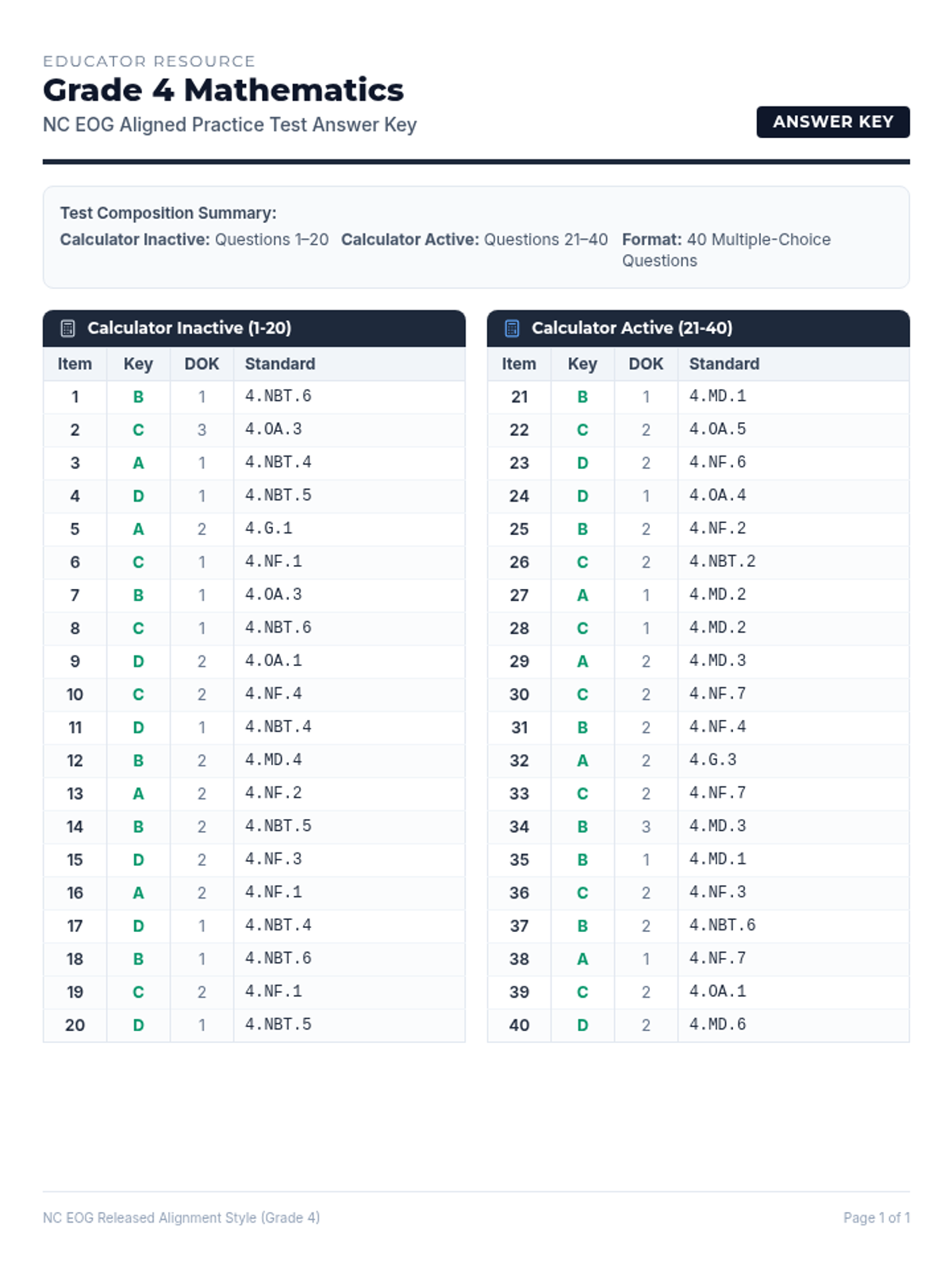
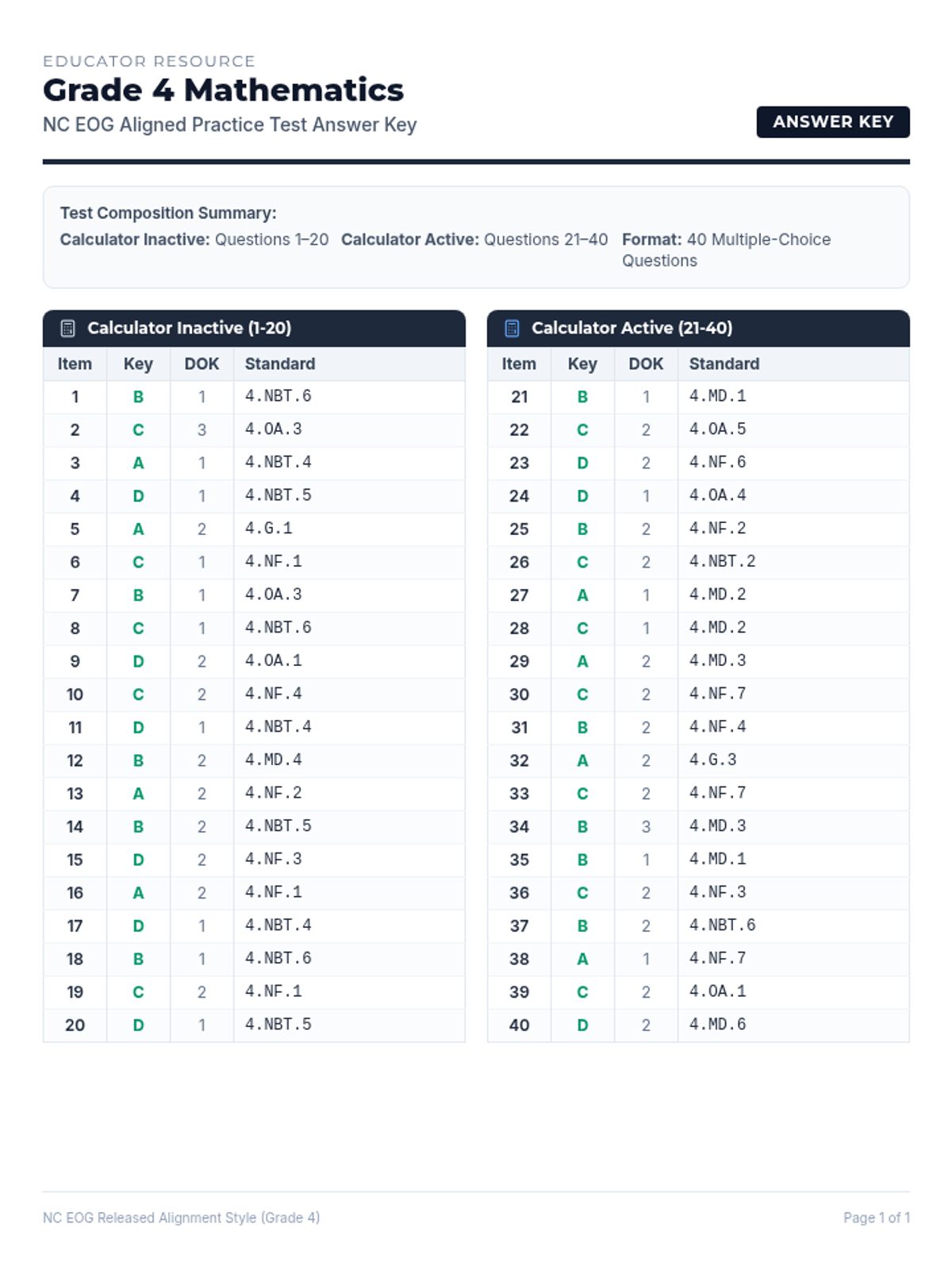
A comprehensive Grade 4 mathematics assessment modeled after the NC End-of-Grade released form, divided into Calculator Inactive and Calculator Active parts.
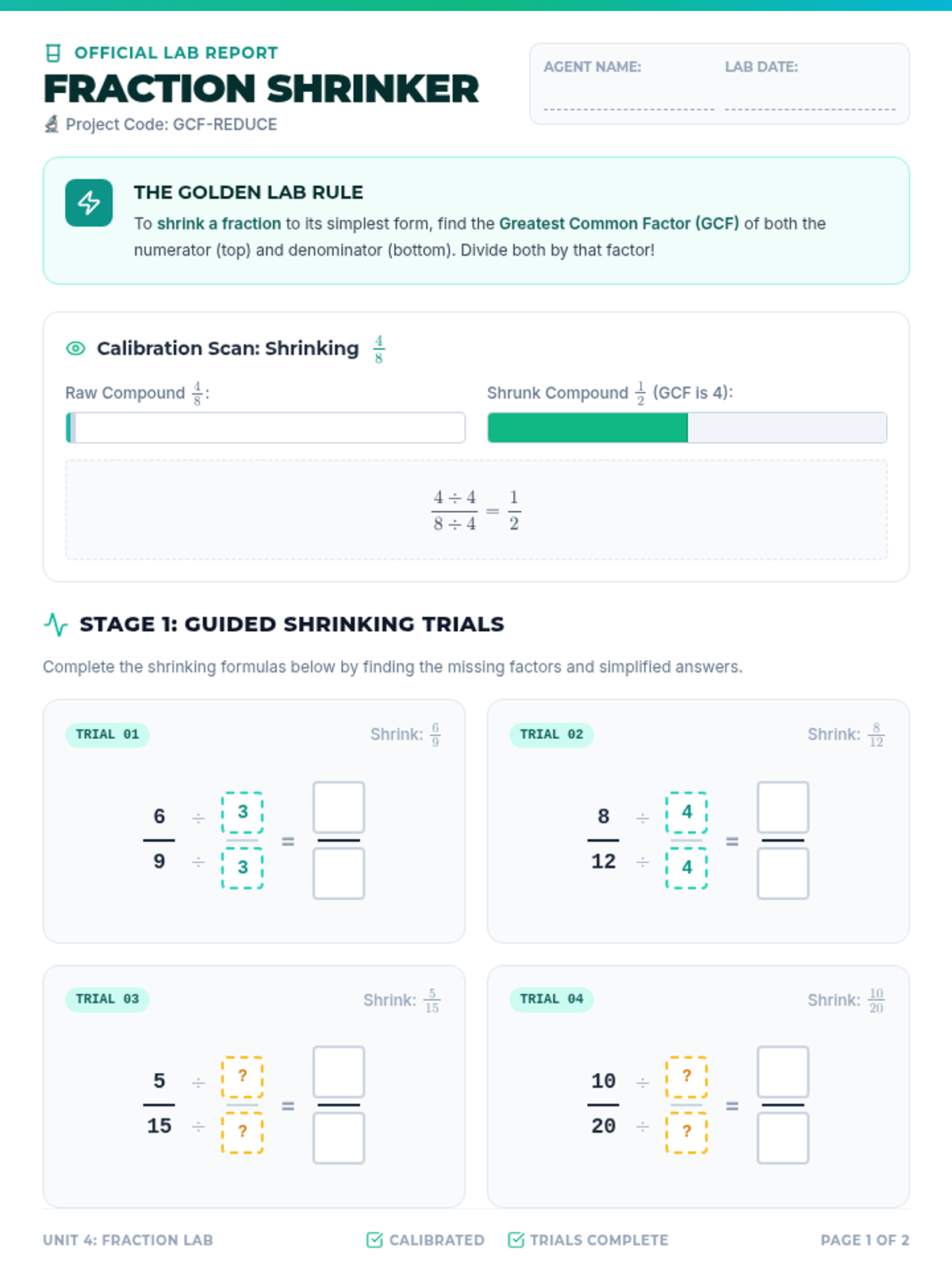
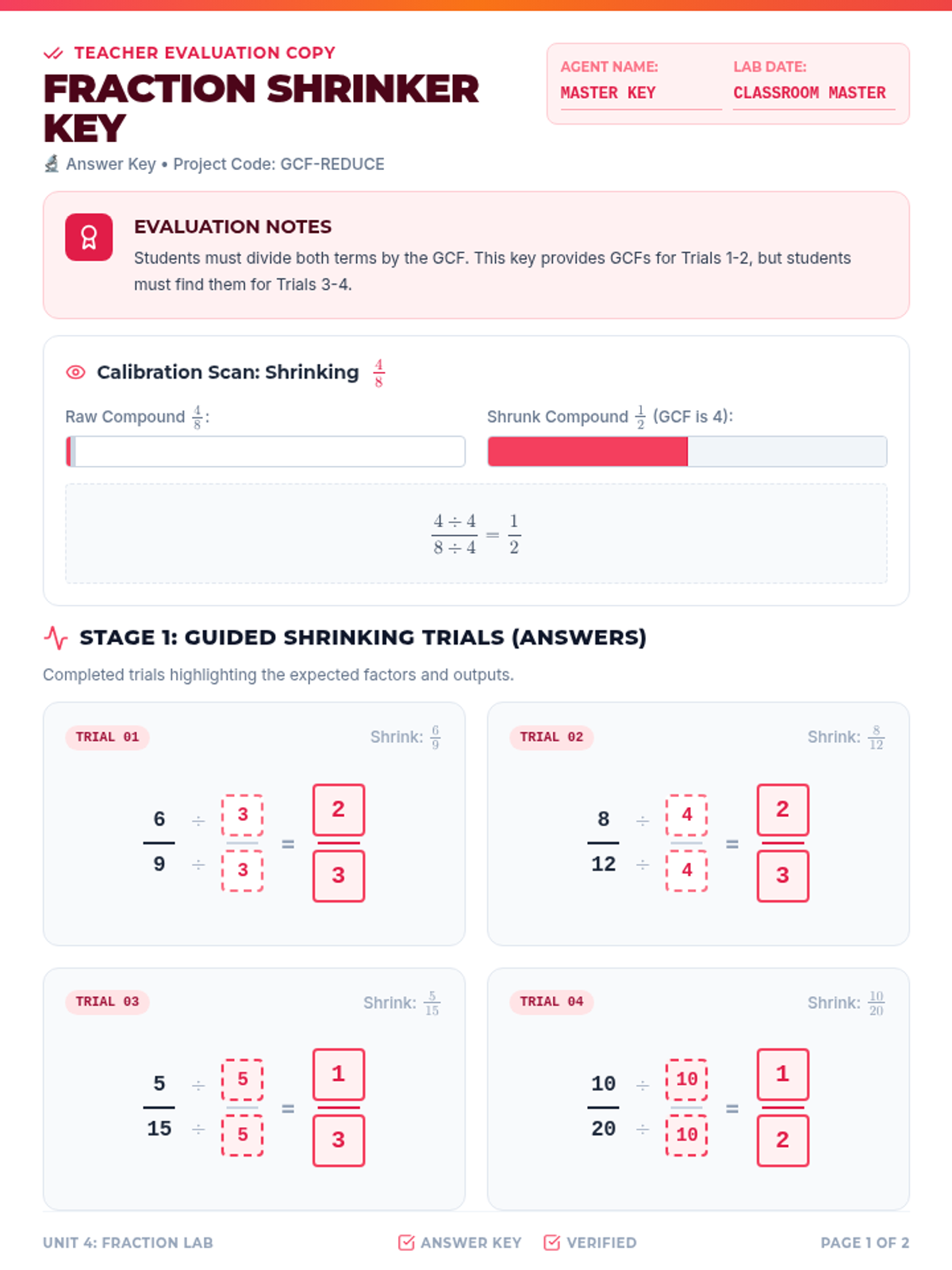
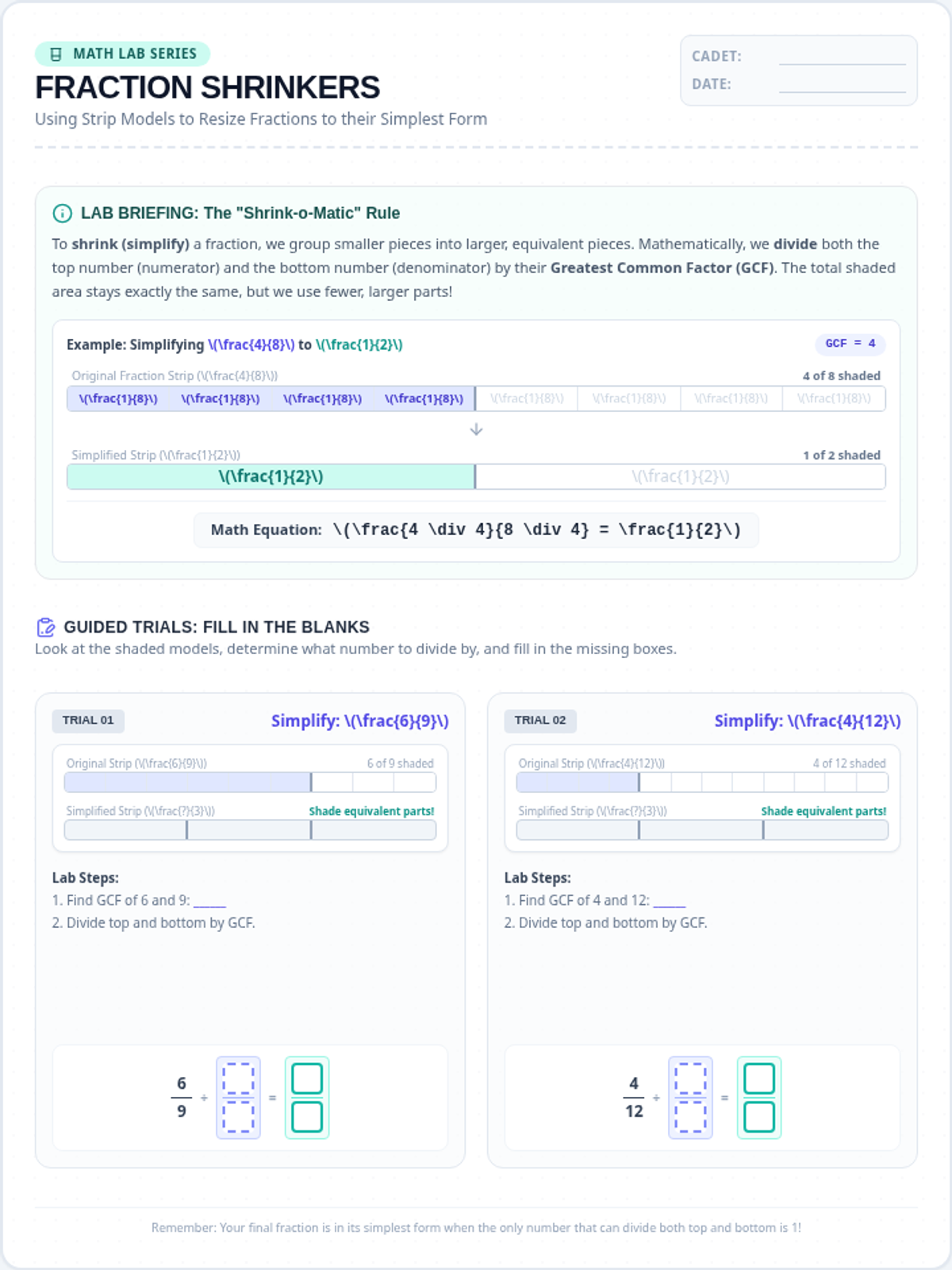
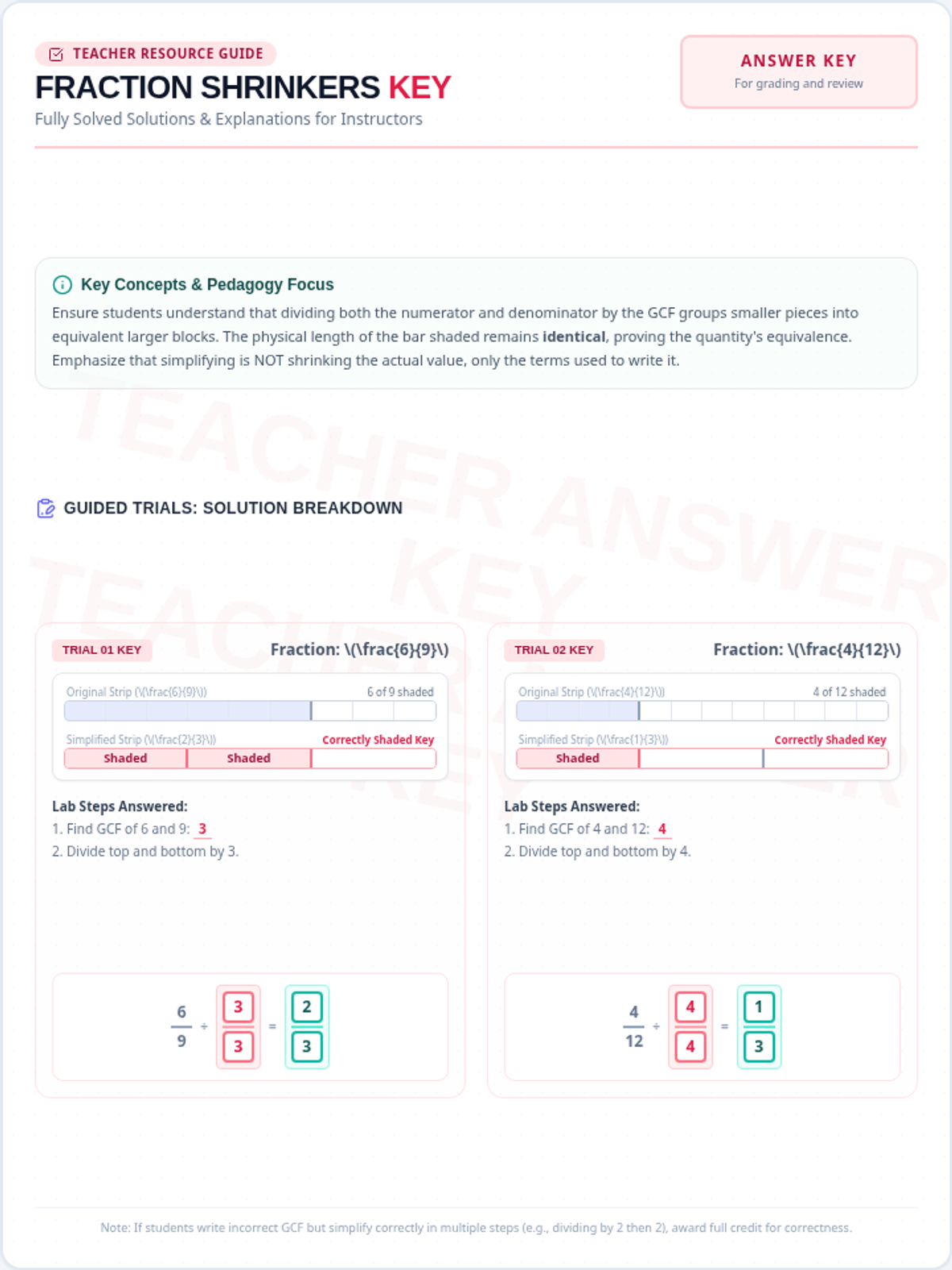
A focused lesson on simplifying fractions using visual models, greatest common factors, and guided practice. Students learn to 'shrink' fractions to their simplest form using a lab-themed framework.
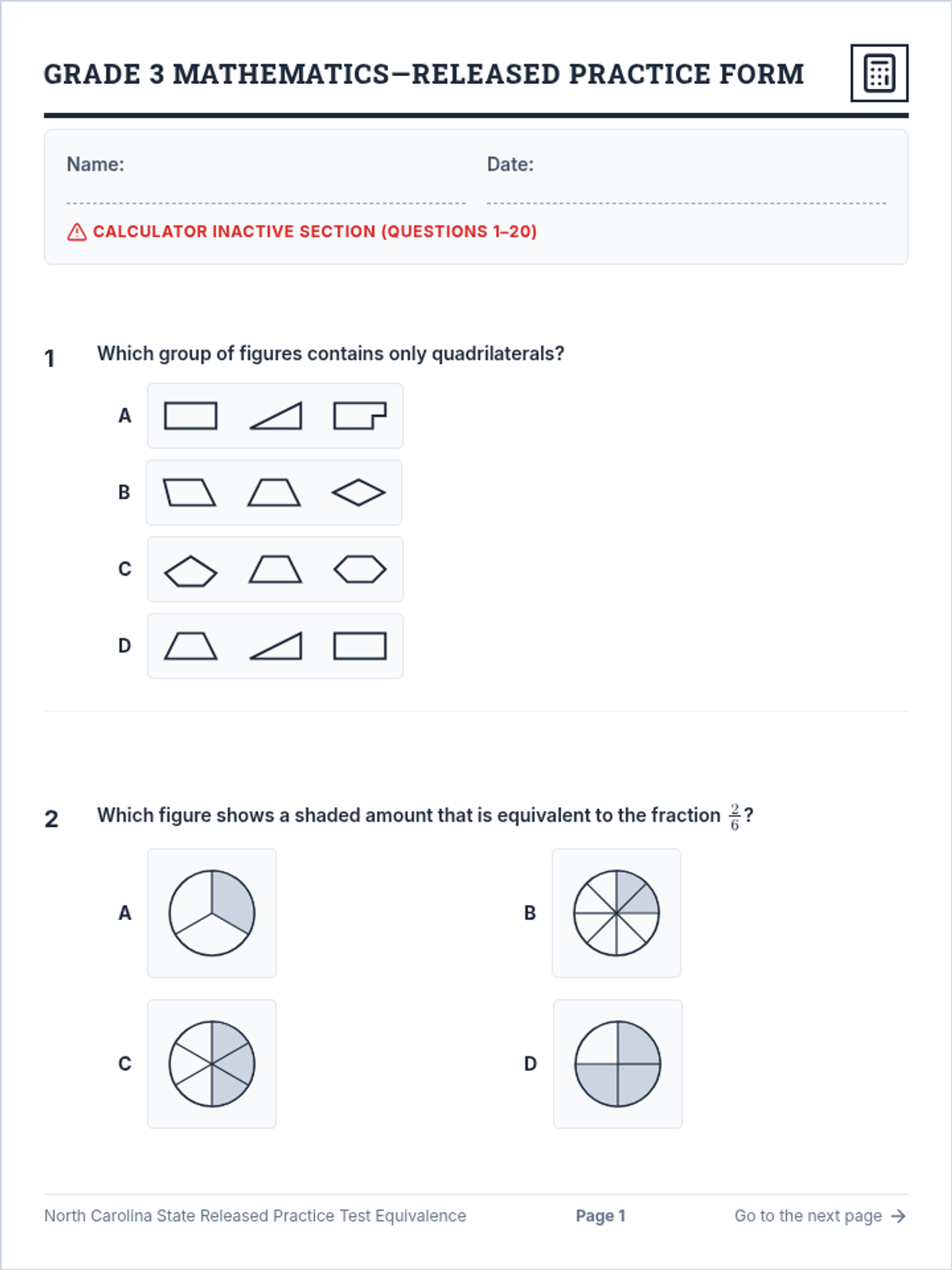
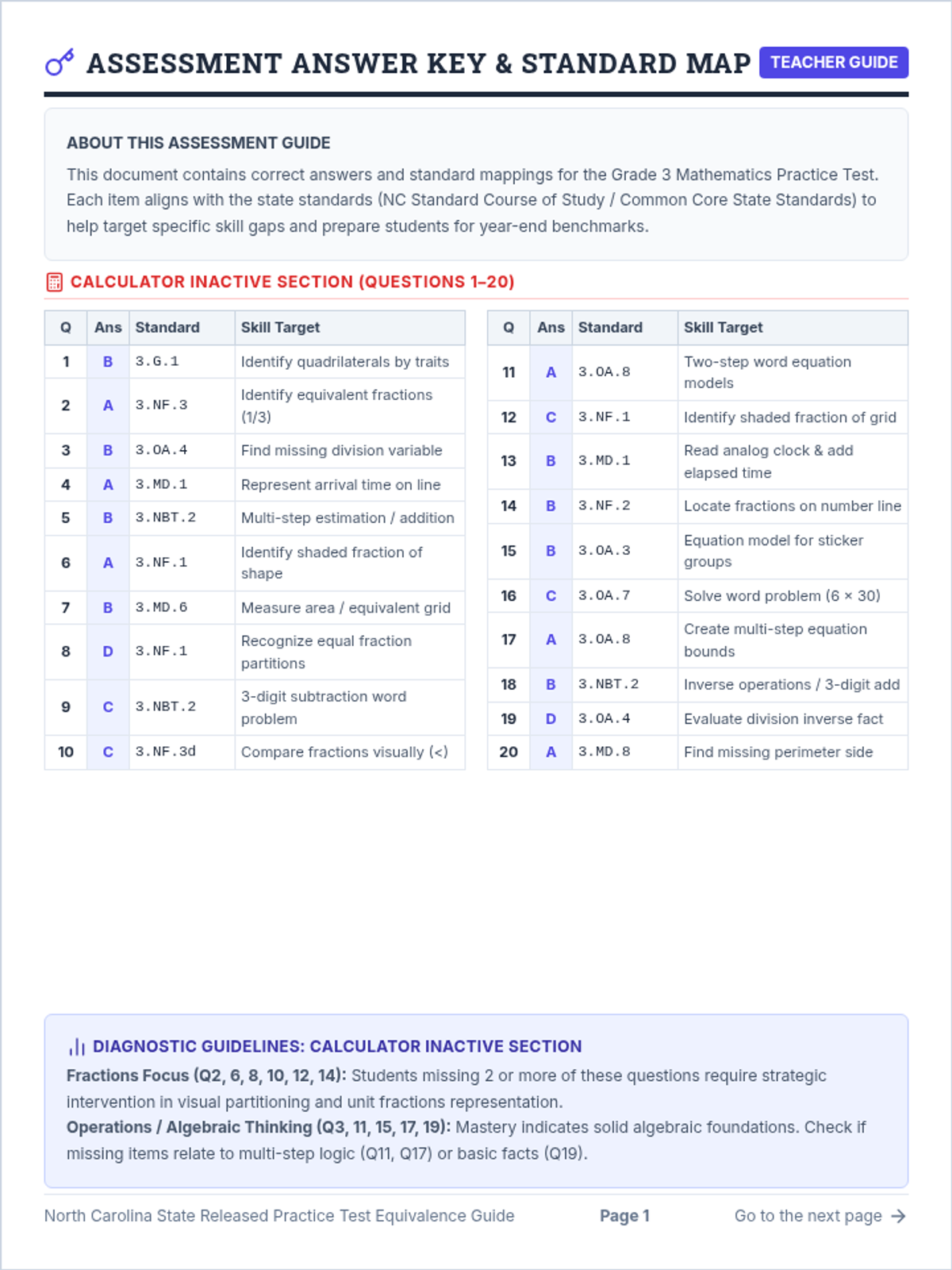
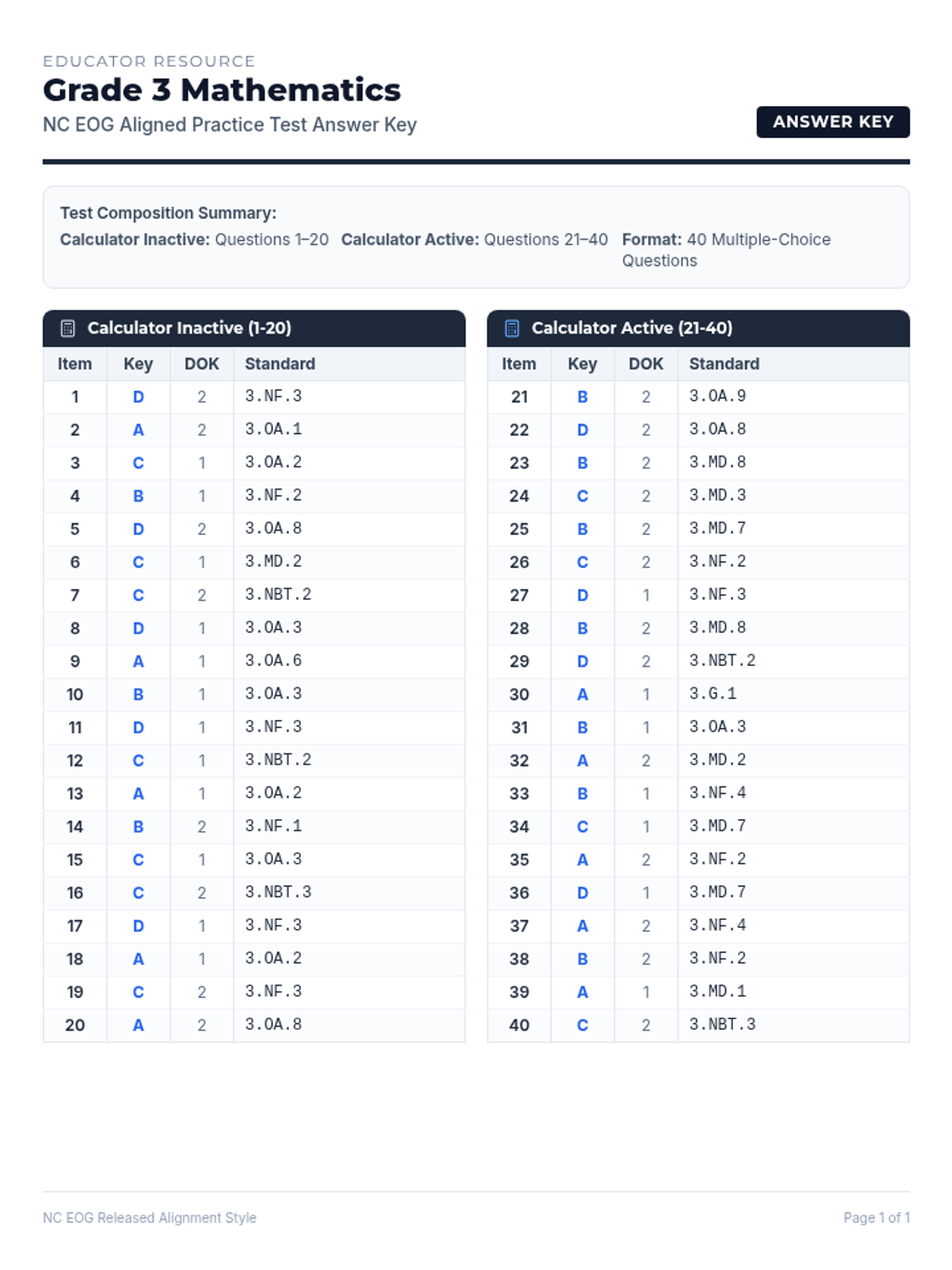
A comprehensive Grade 3 mathematics assessment modeled after the NC End-of-Grade released form, divided into Calculator Inactive and Calculator Active parts.
A comprehensive 3rd-grade mathematics practice exam modeled after the released state test, complete with exactly 40 standard-aligned questions divided into calculator-inactive and calculator-active sections, and an accompanying answer key and standards map.
A comprehensive lesson introducing fraction simplification using visual fraction strip models as key scaffolding, complete with guided worksheets, error analysis, and a teacher answer key.
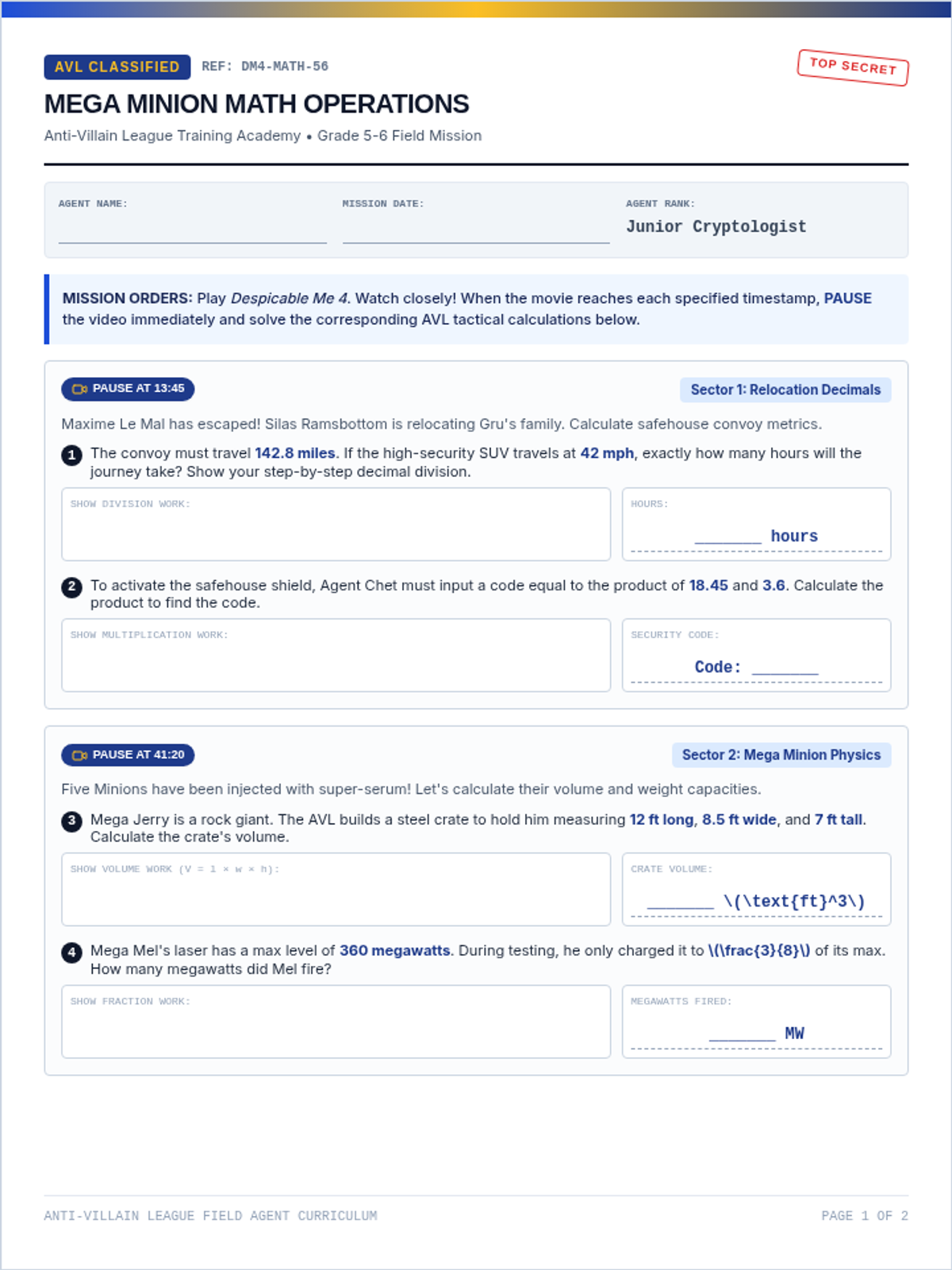
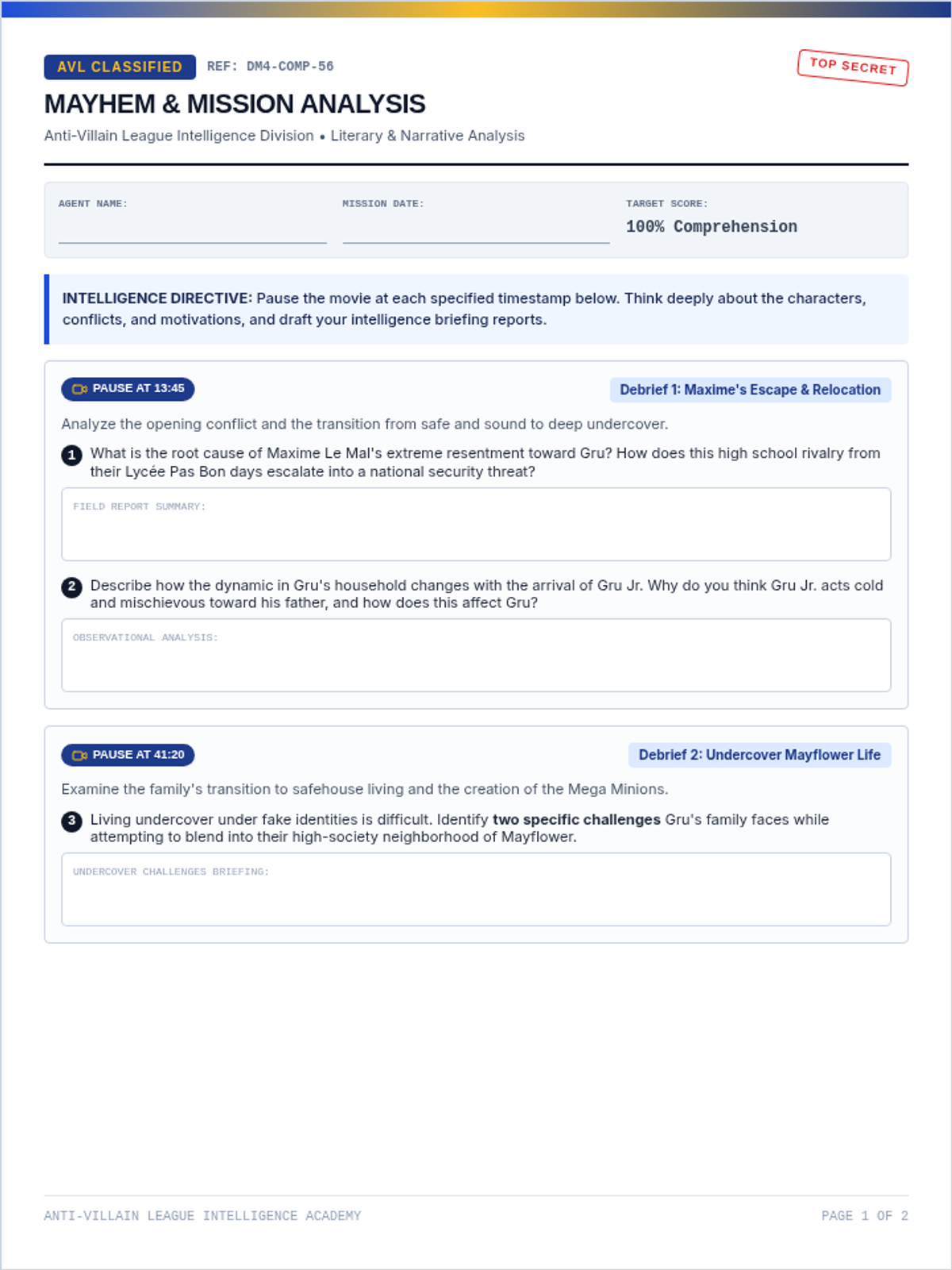
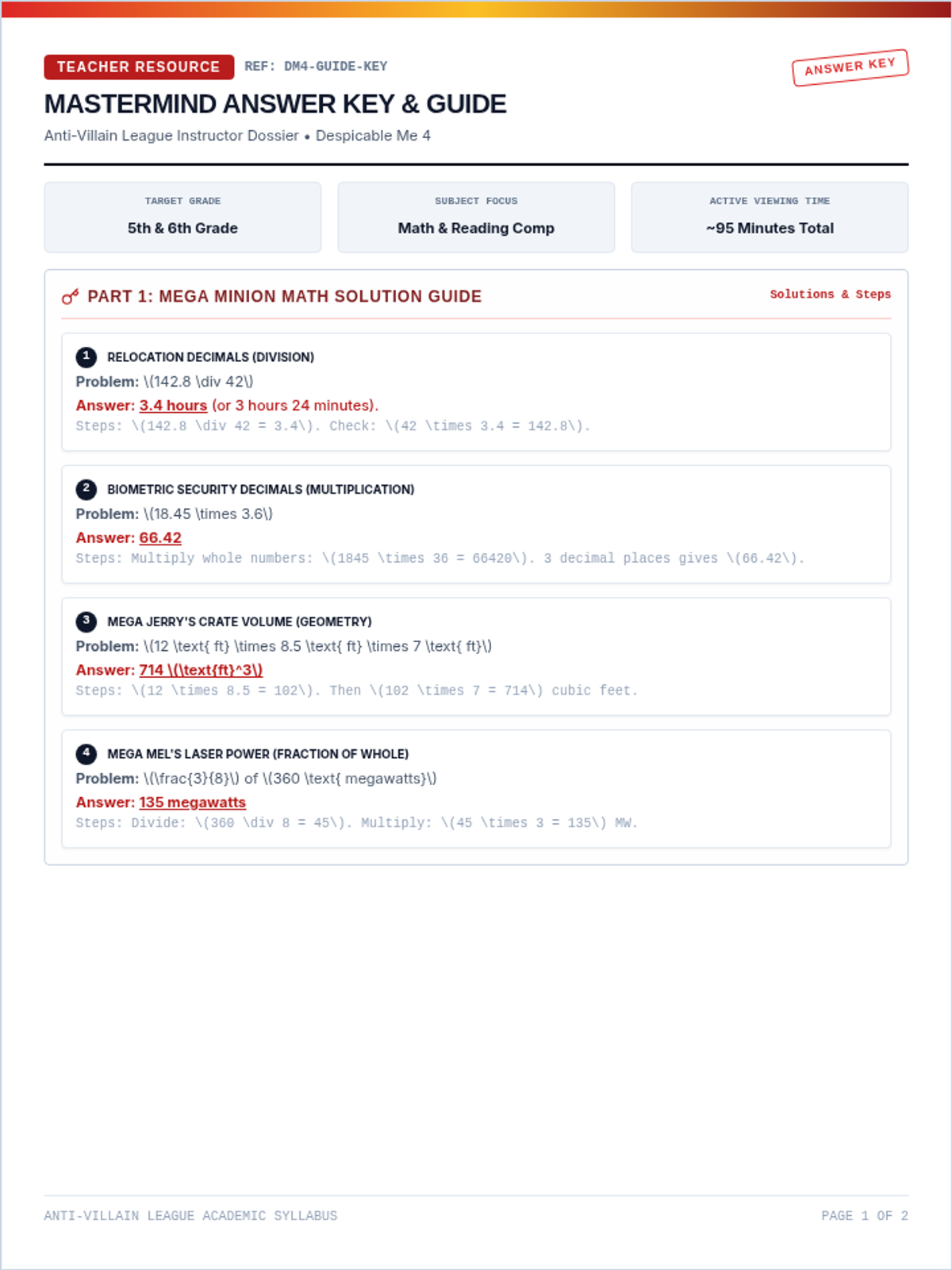
A movie companion lesson set for Despicable Me 4, targeting 5th and 6th-grade students. It features highly engaging math and reading comprehension worksheets organized around specific movie pause timestamps, plus a teacher answer key and guide.
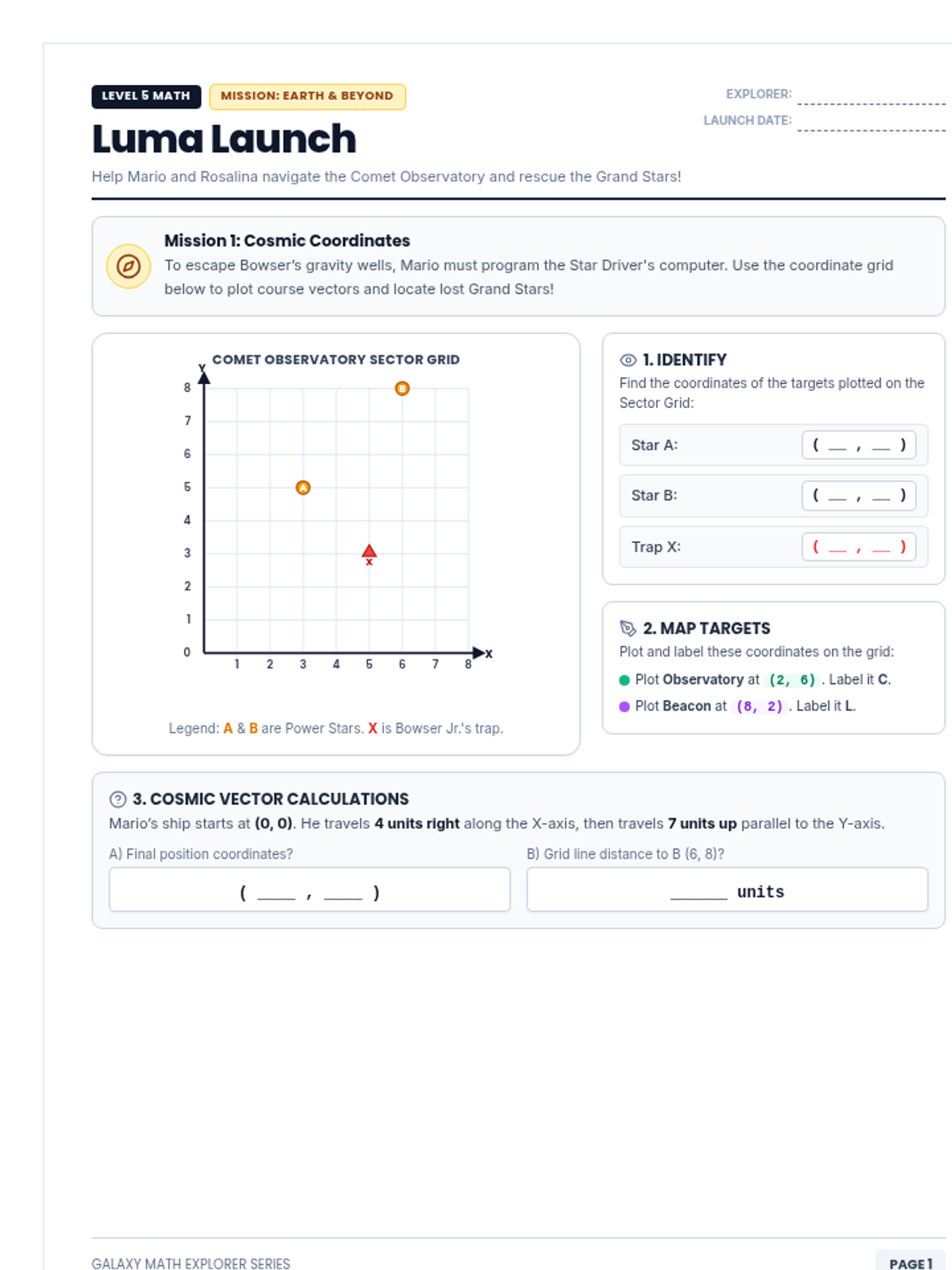
An out-of-this-world 5th-grade math adventure packet and answer key inspired by Mario Galaxy, focusing on coordinate graphing, decimal operations, fraction addition, and volume calculations.