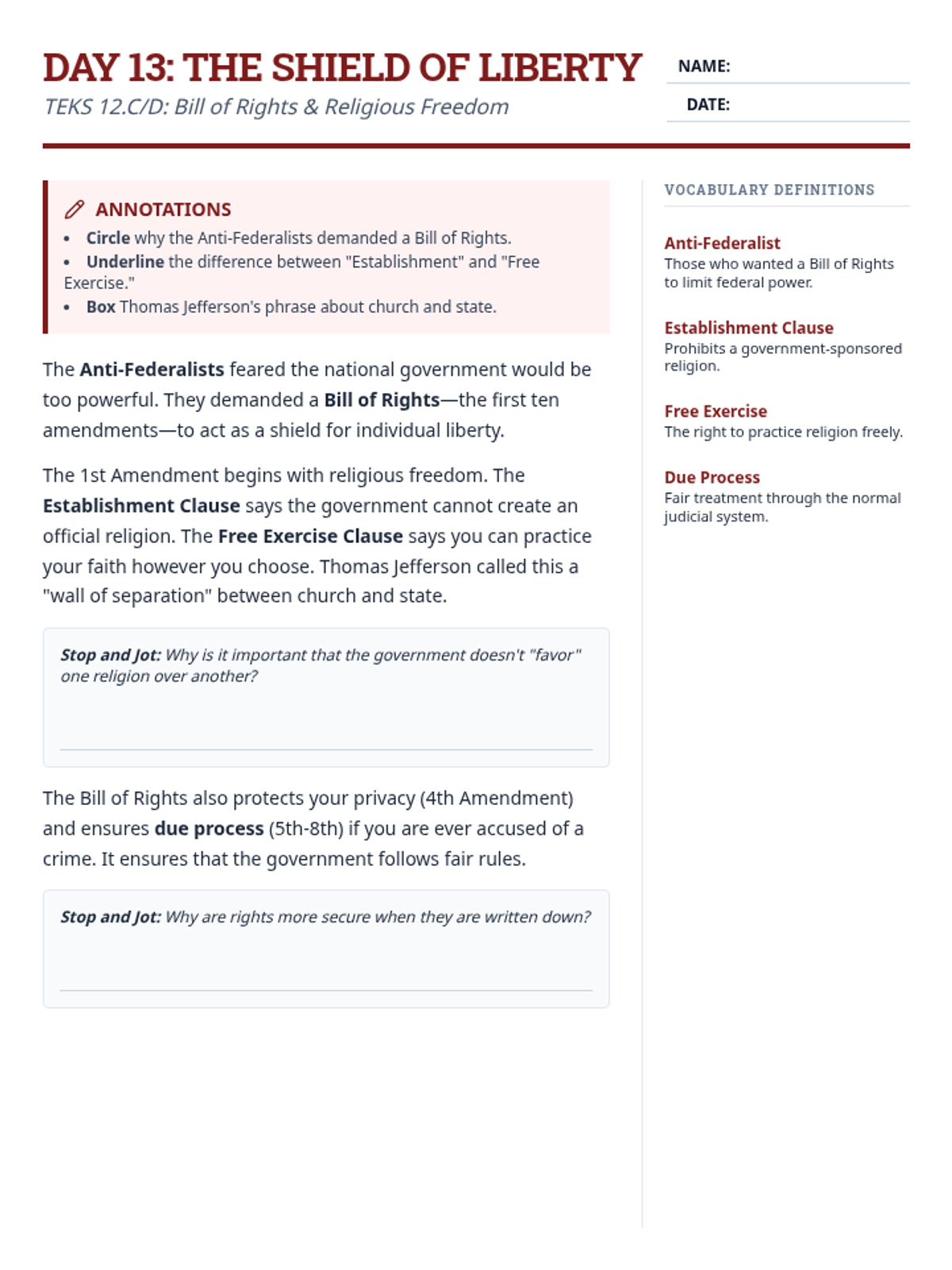
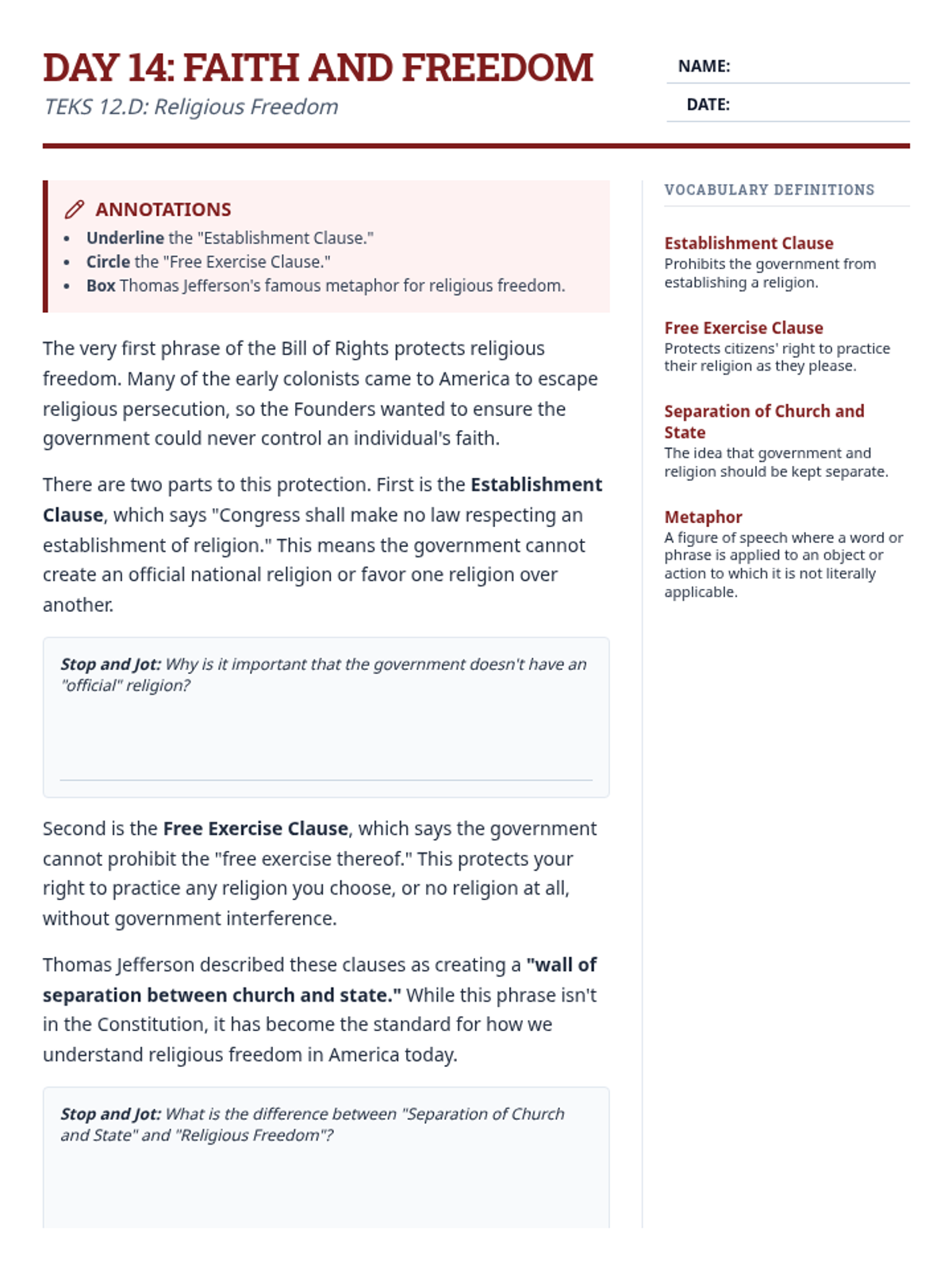
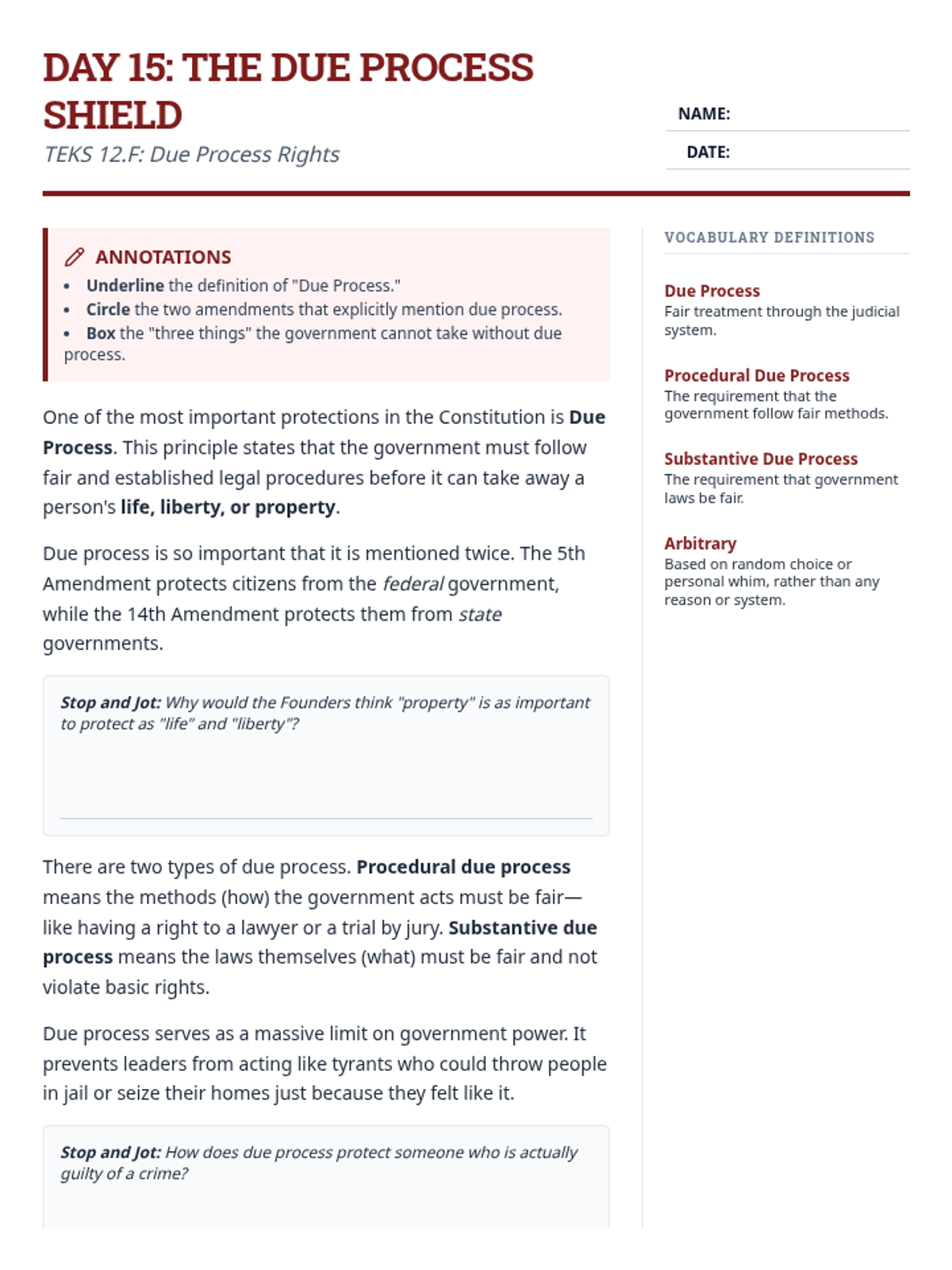
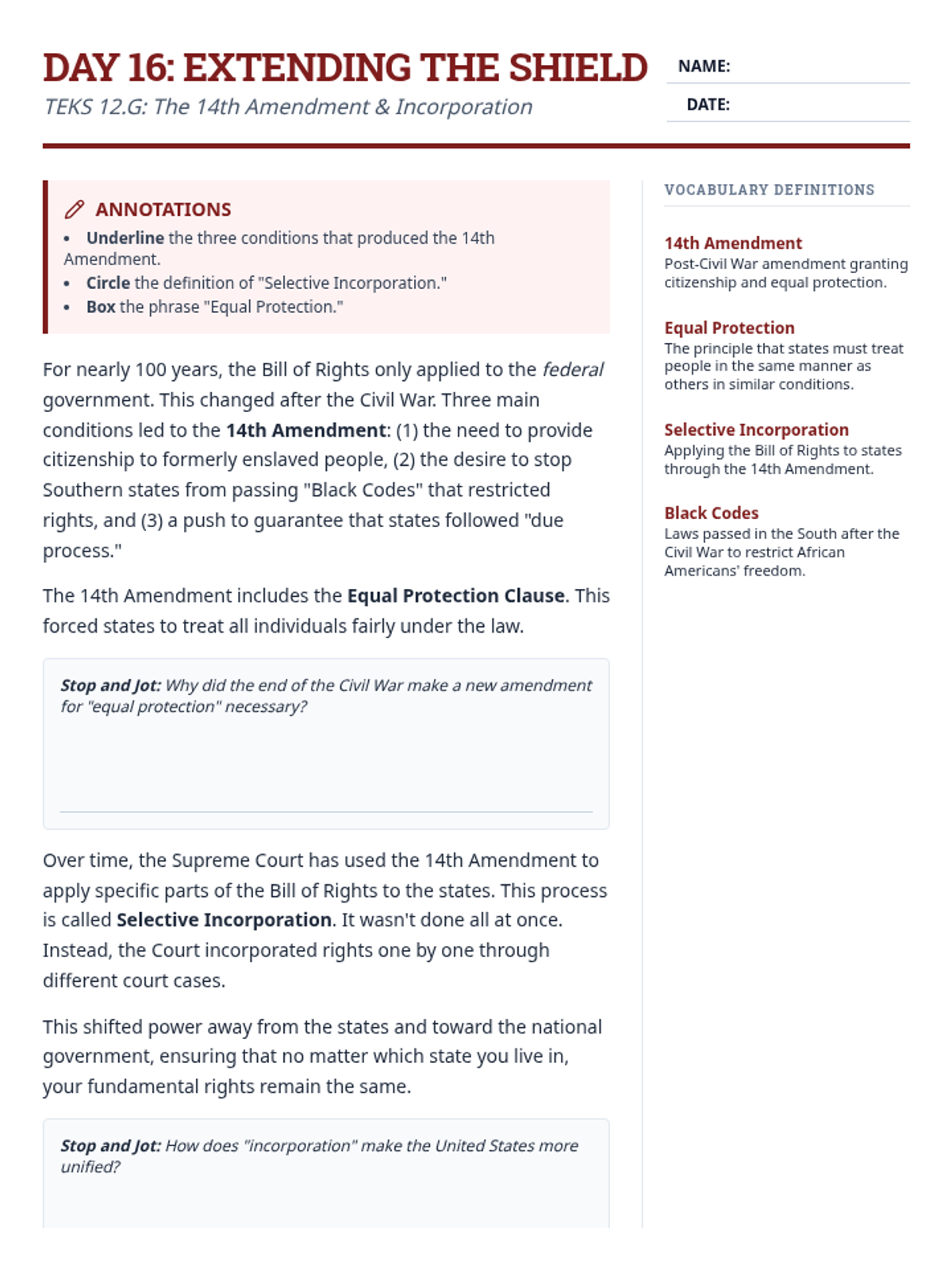
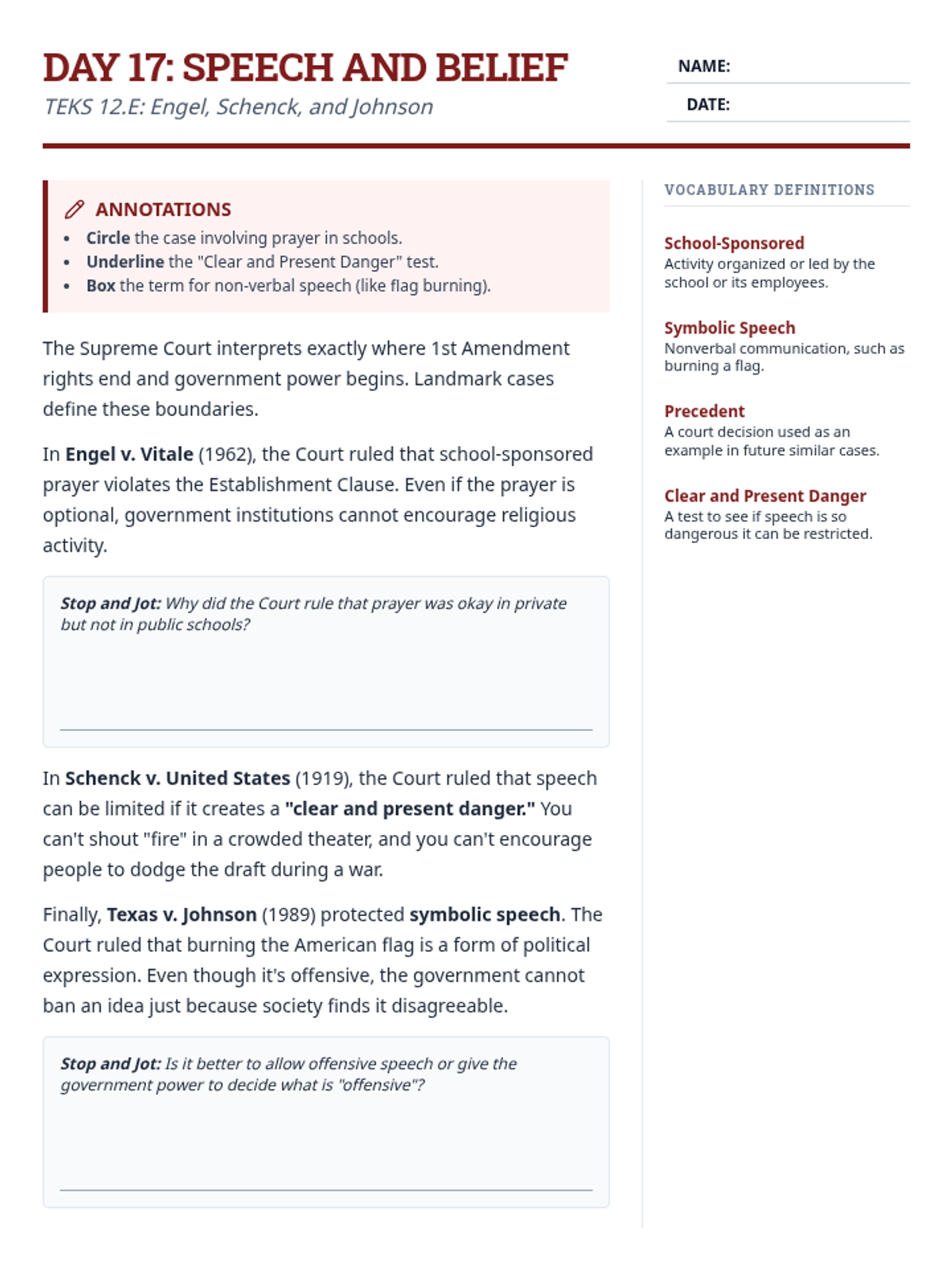
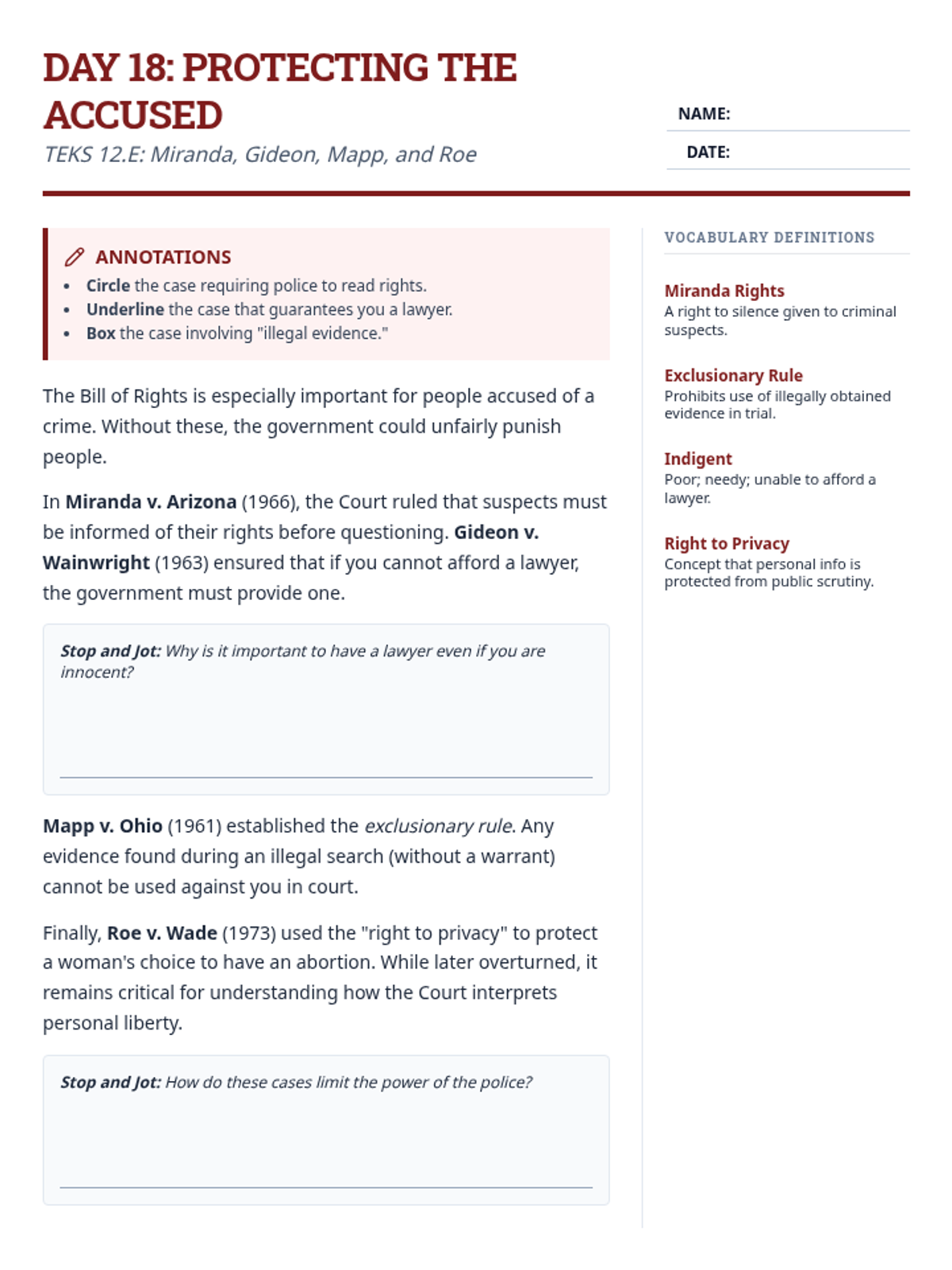
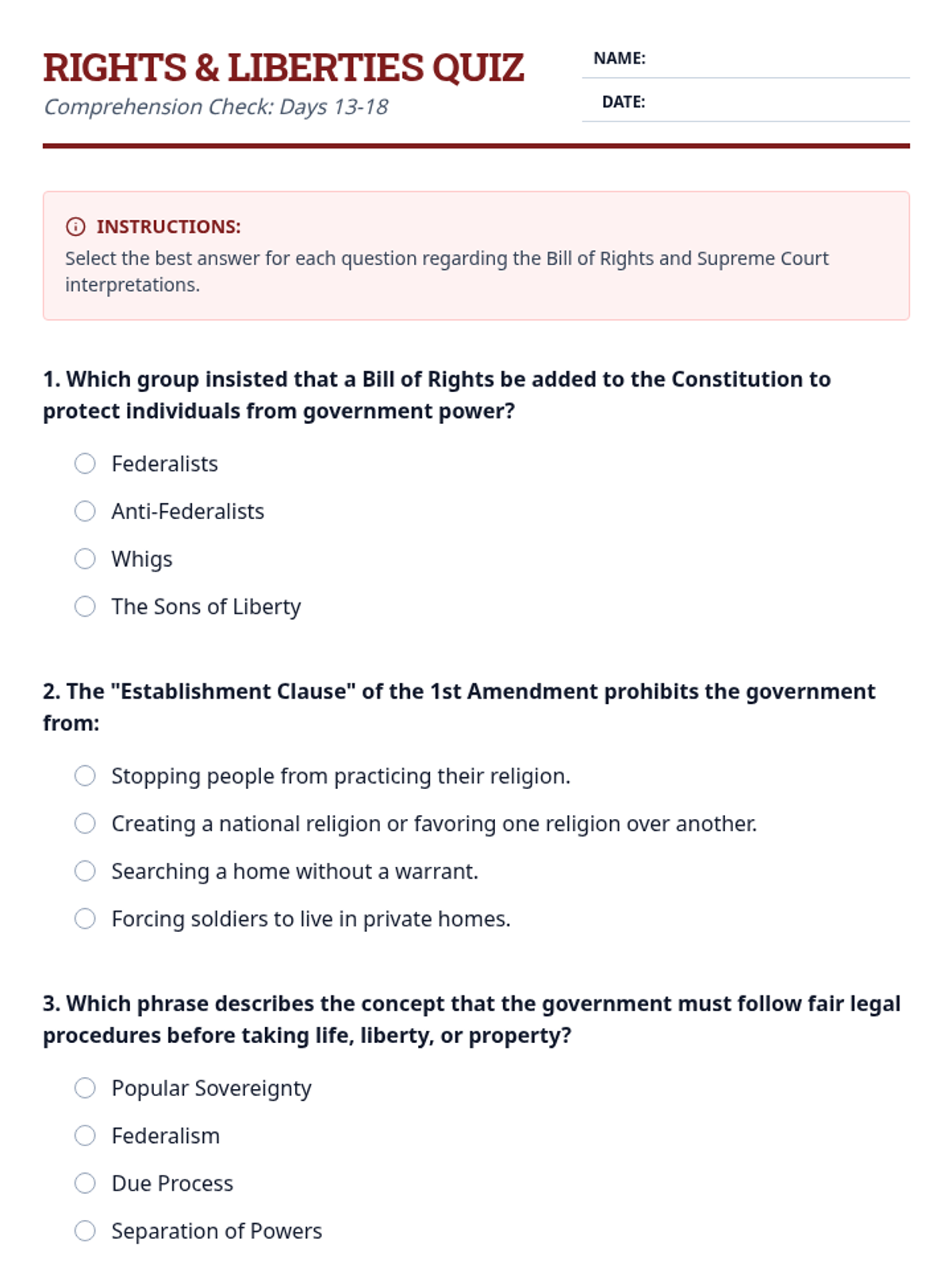
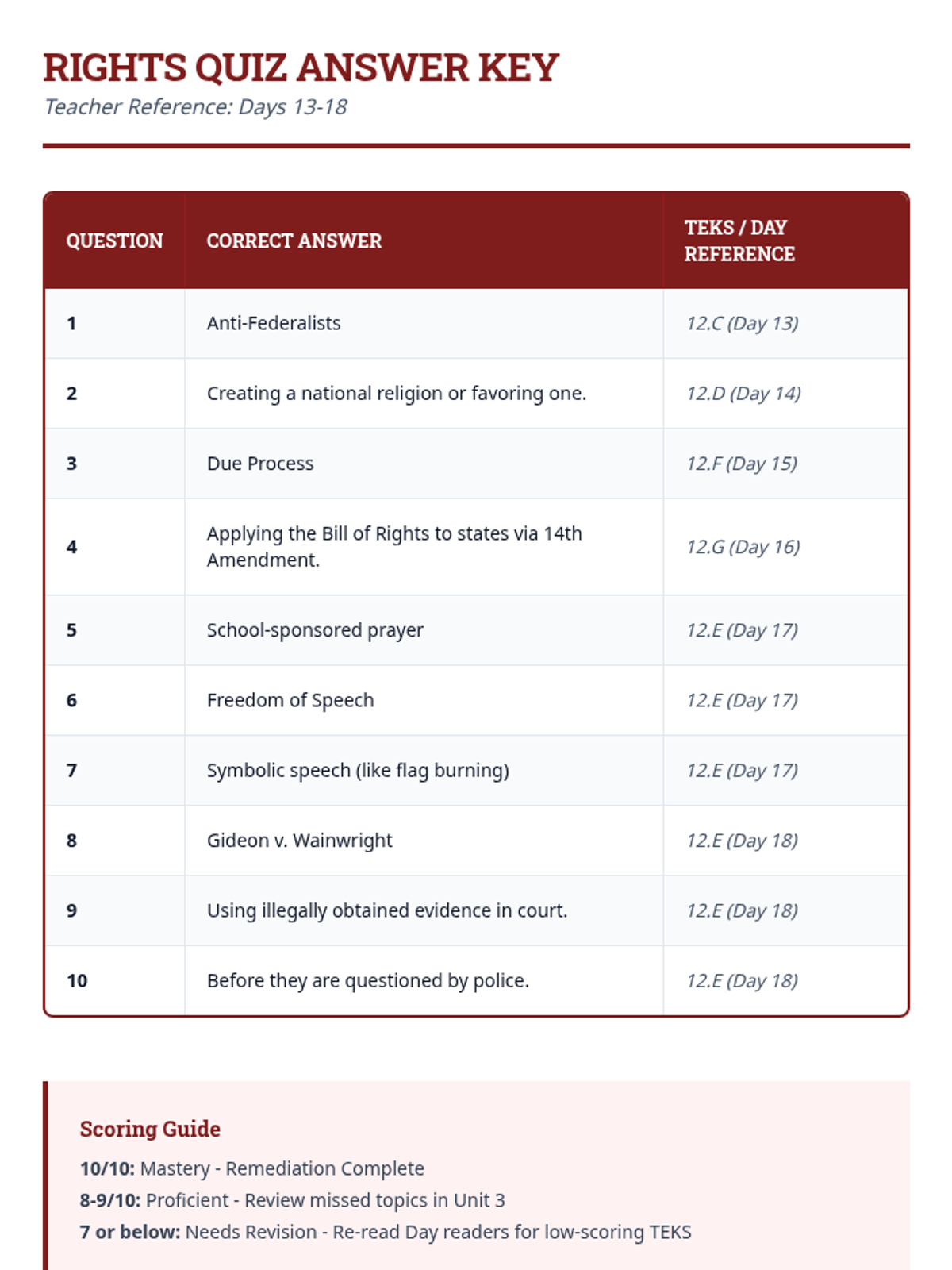
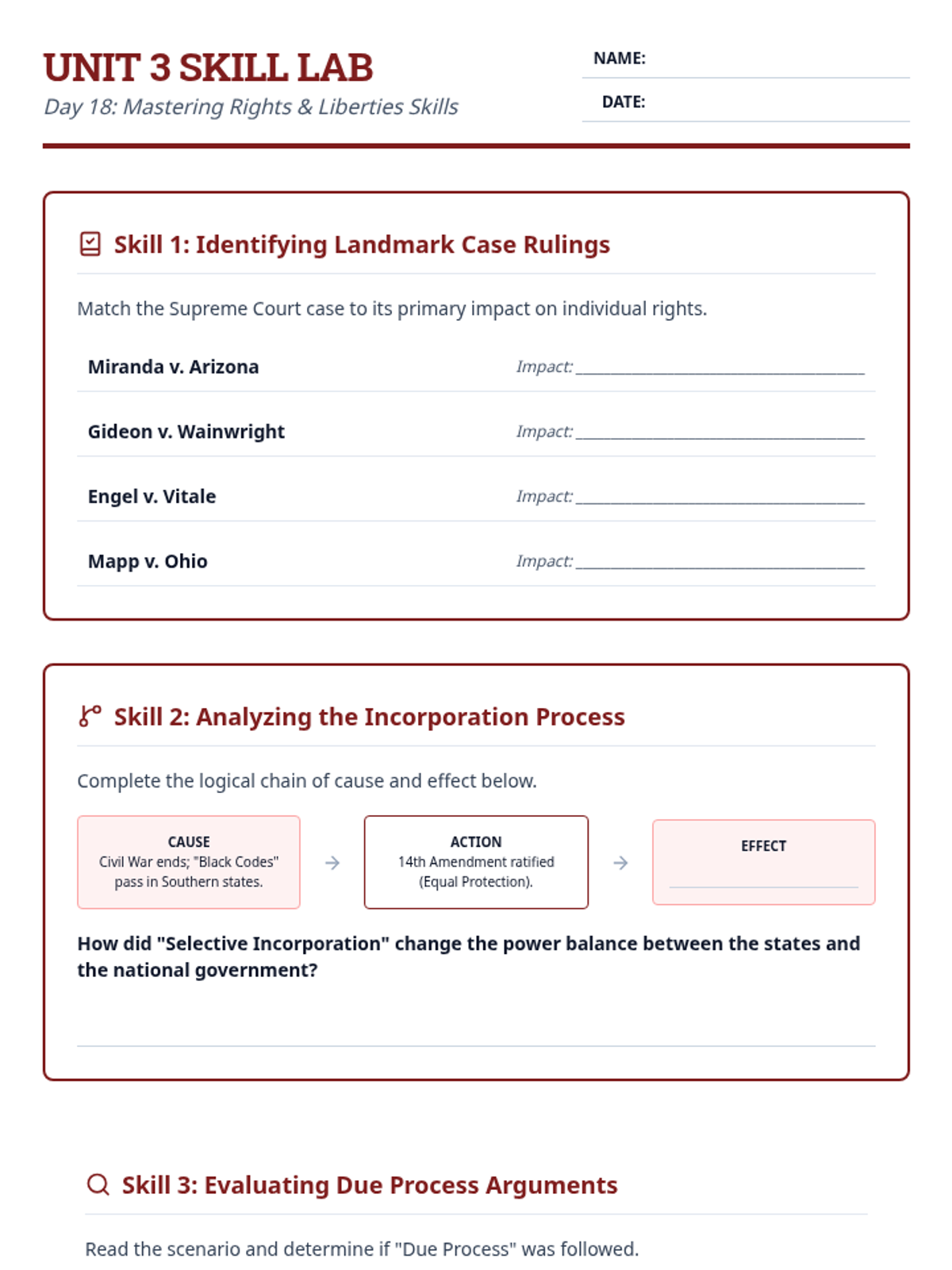
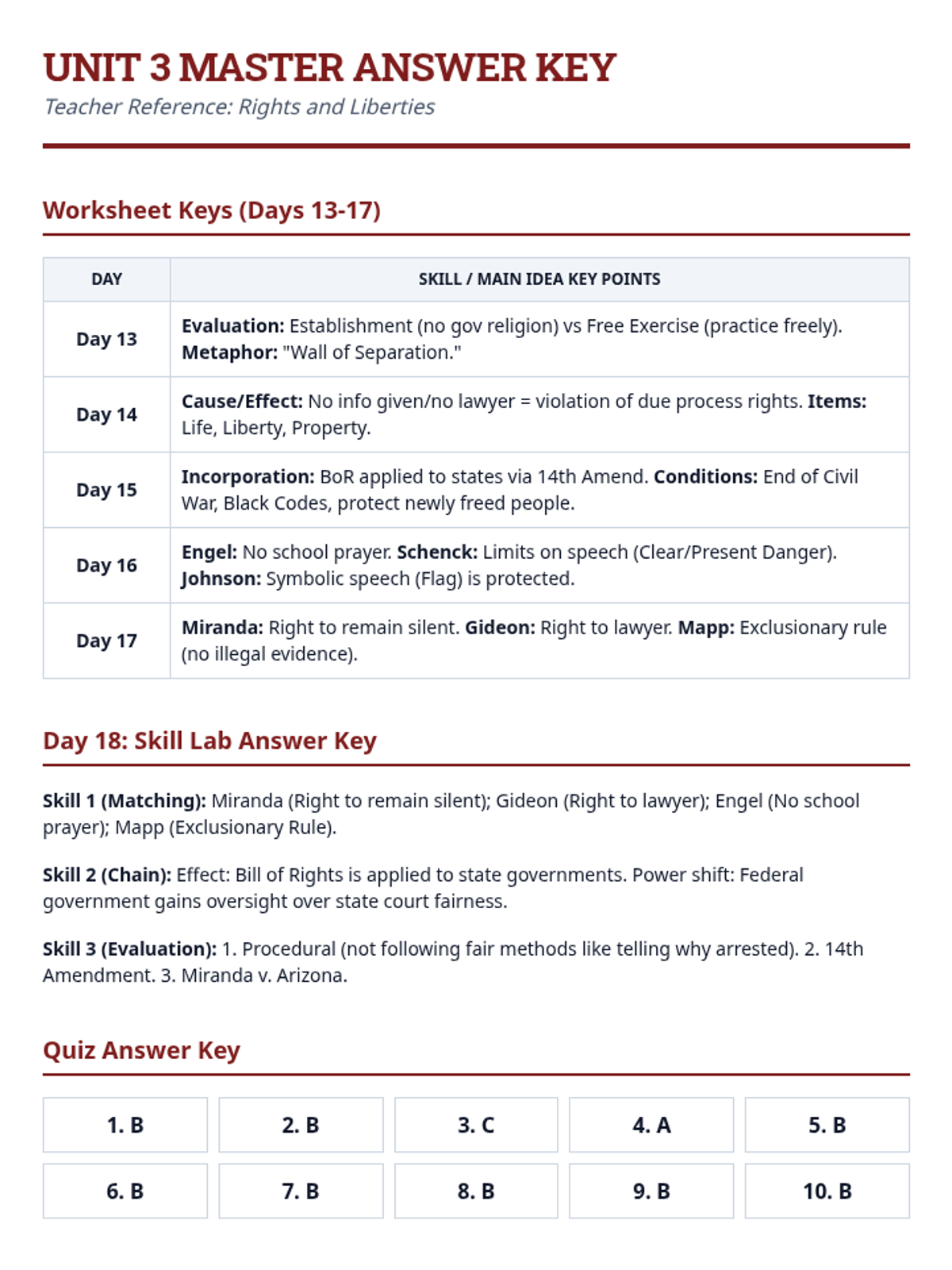
A high-school level social studies lesson designed specifically for WIDA Level 2 English Language Learners, focusing on the Bill of Rights through simplified language, visual supports, and interactive scenarios.
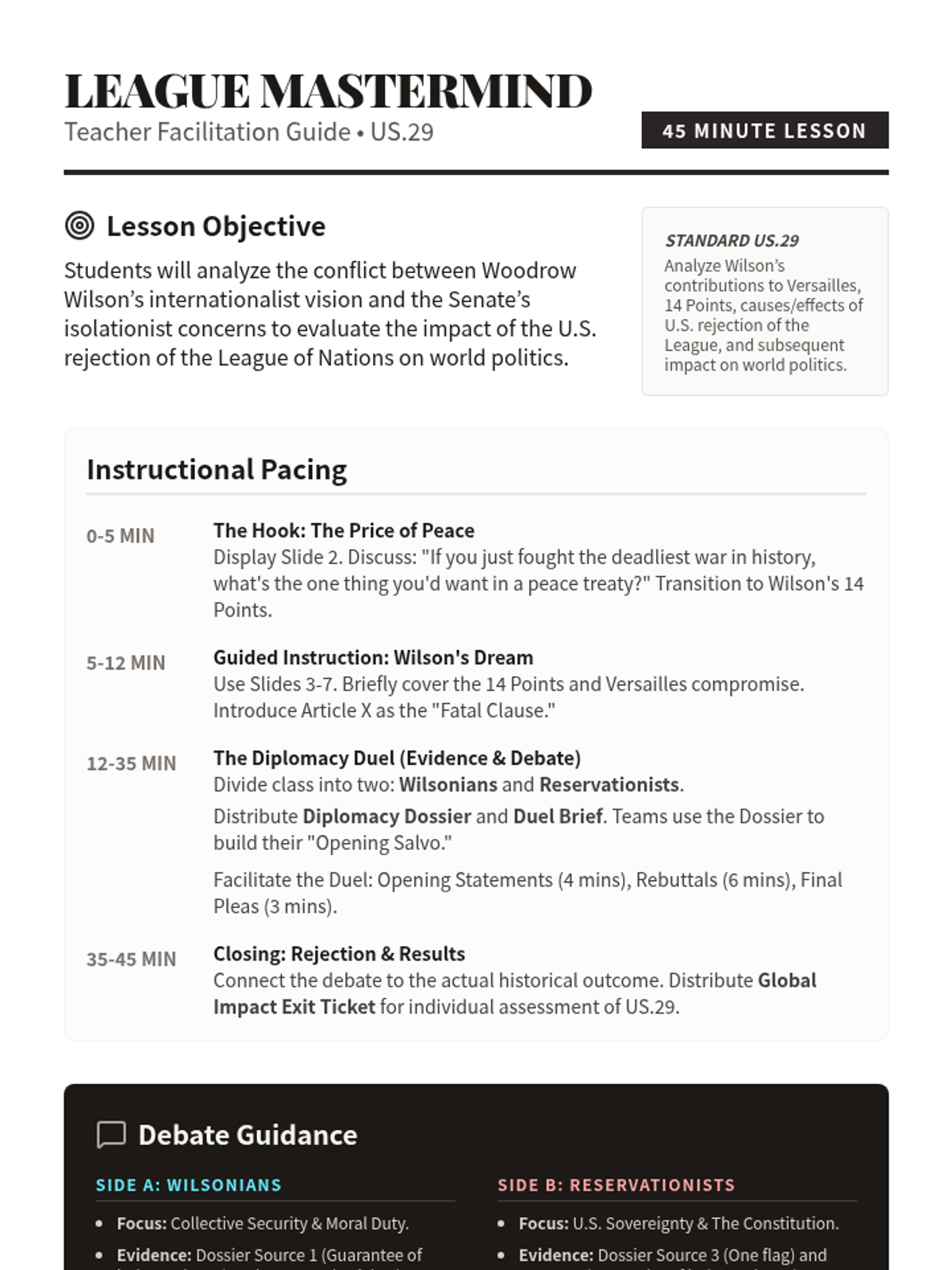
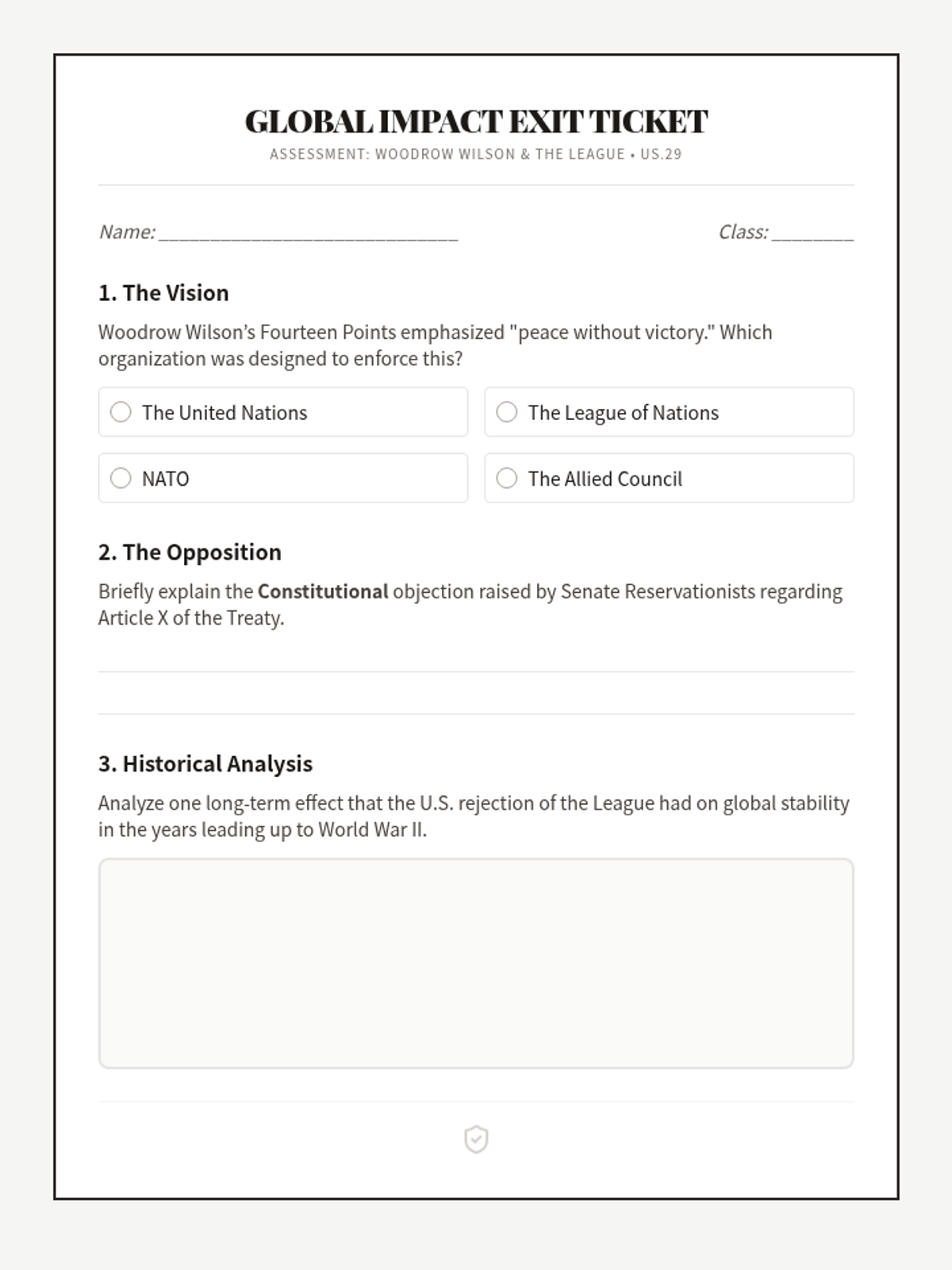
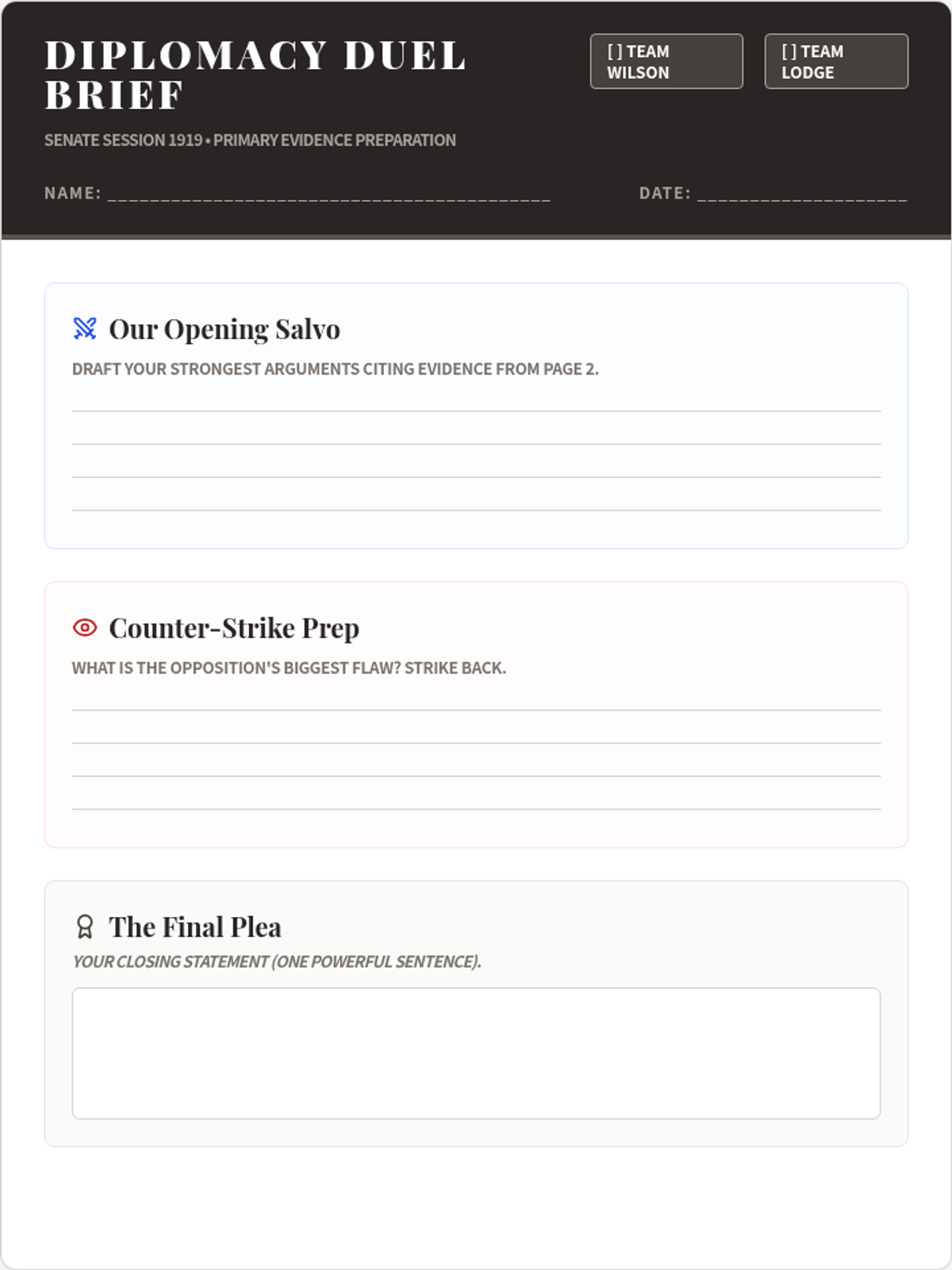
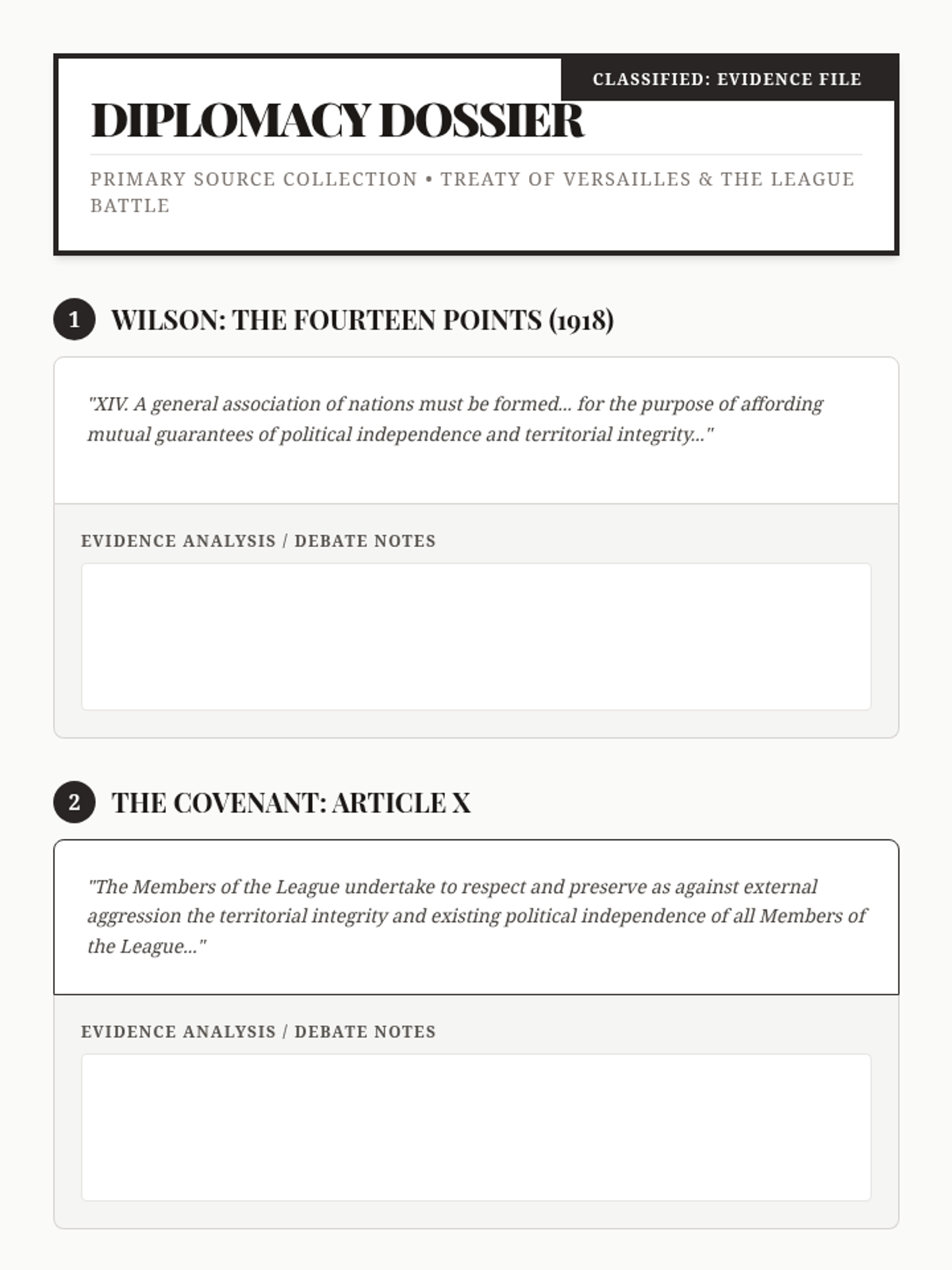
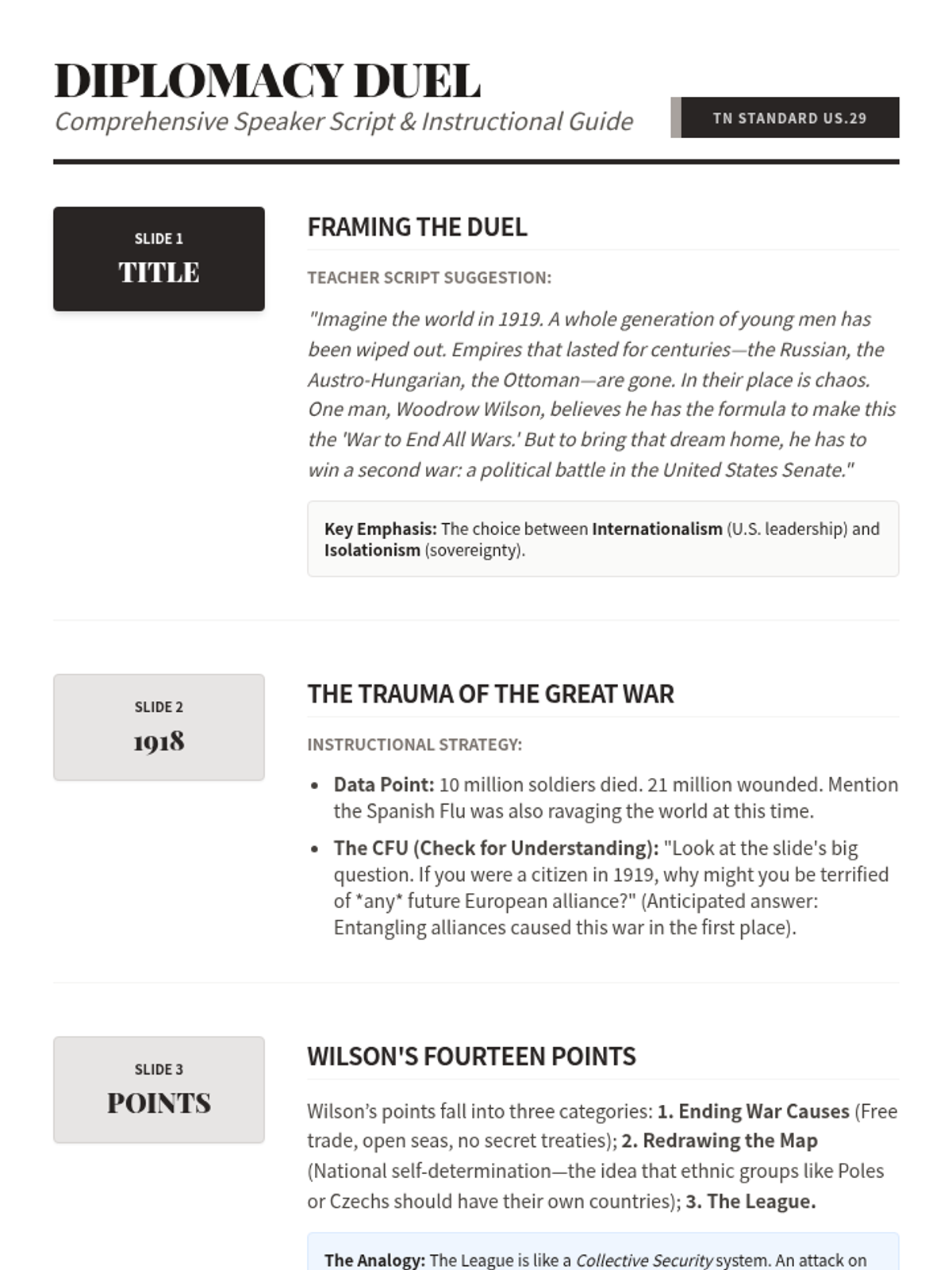
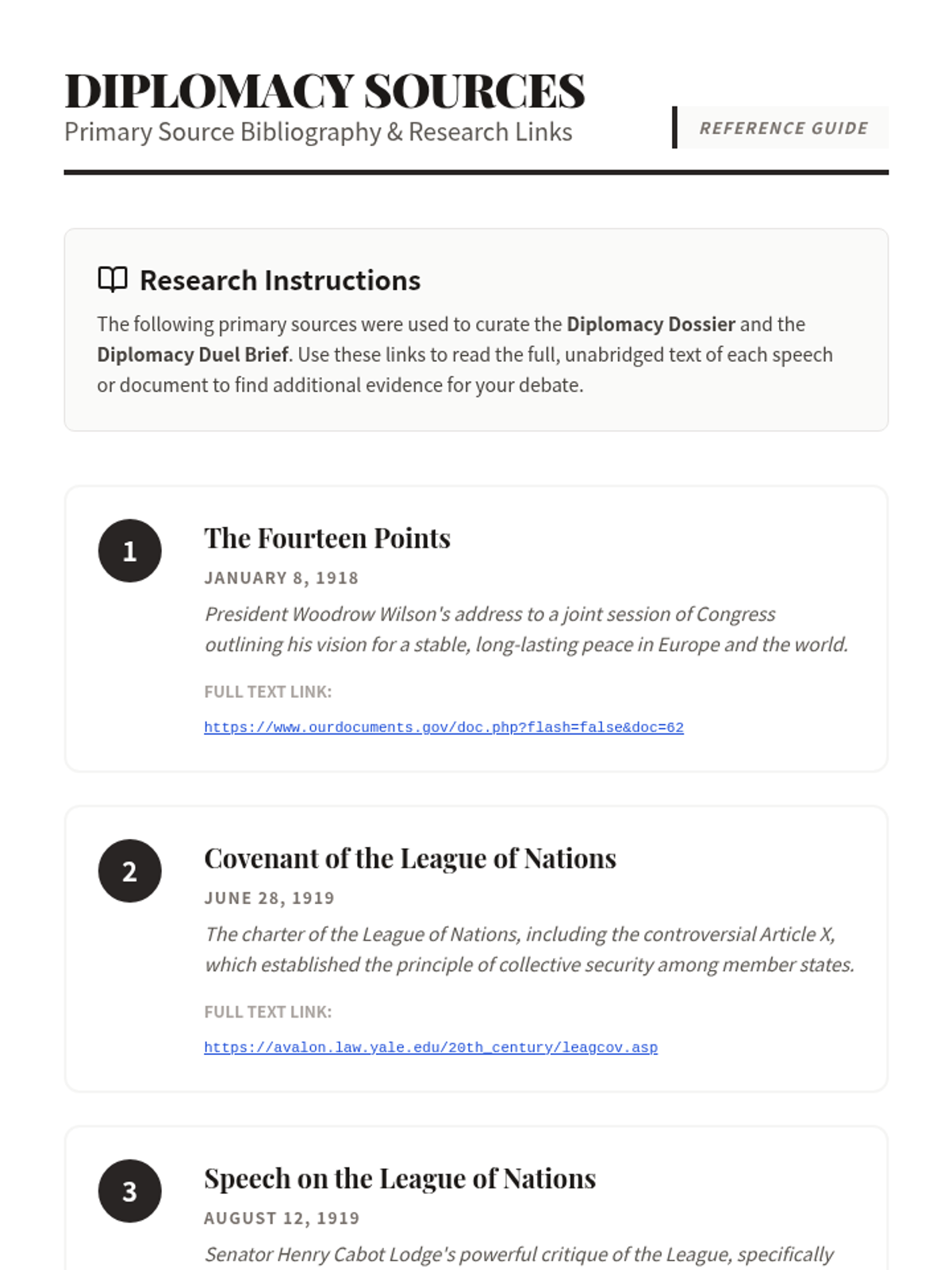
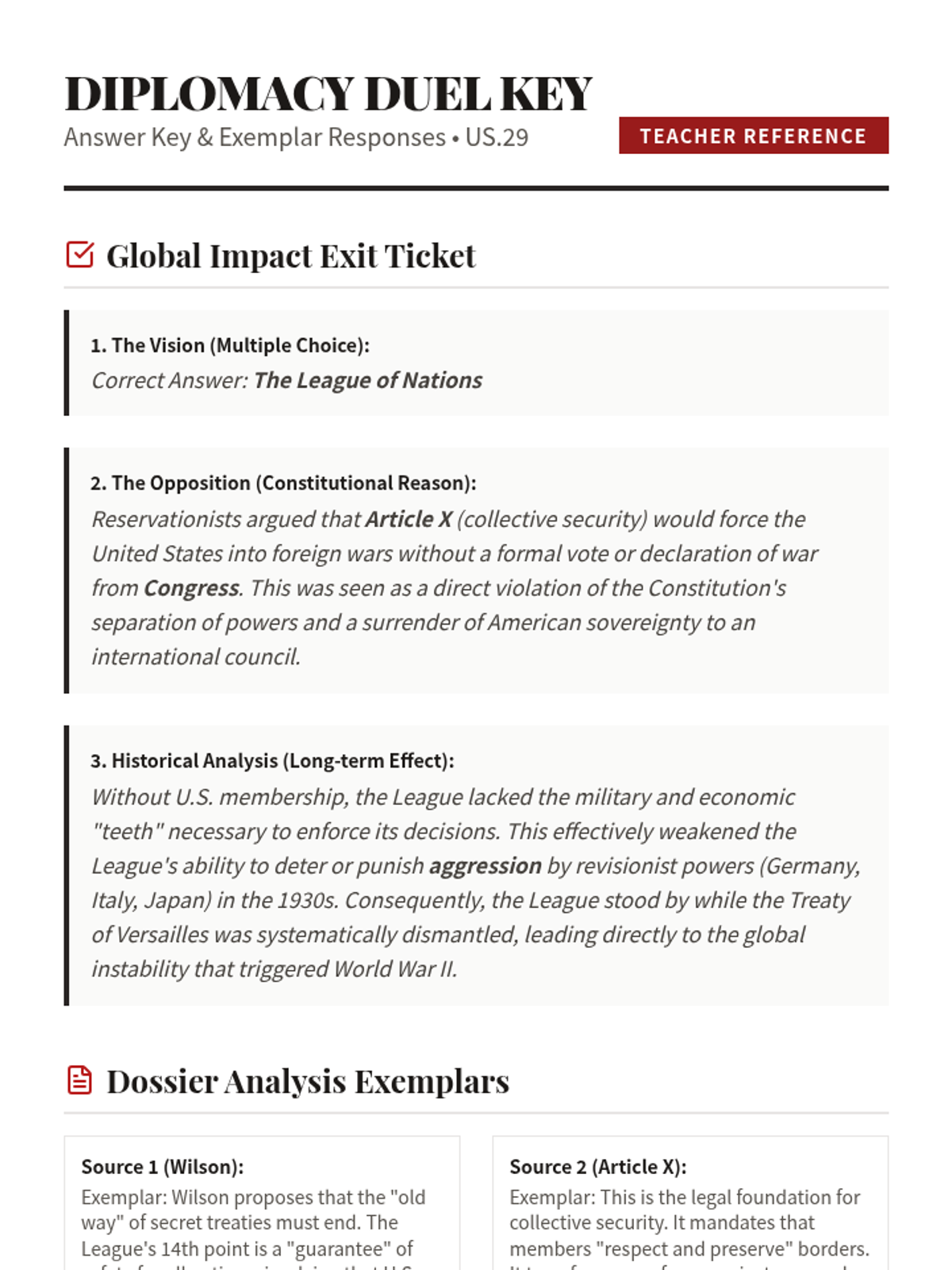
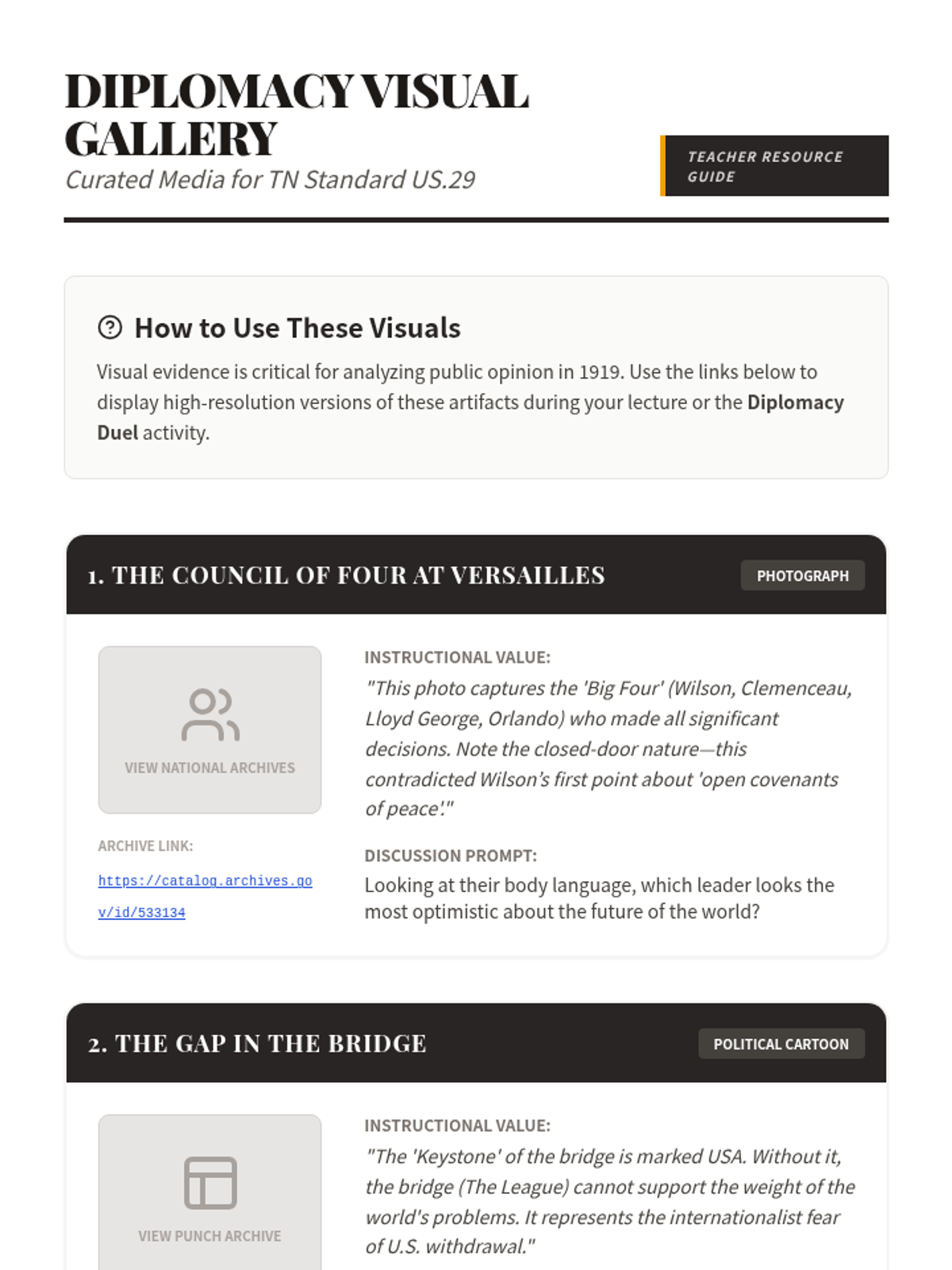
A high school history lesson exploring Woodrow Wilson's Fourteen Points, the Treaty of Versailles, and the intense U.S. Senate debate over joining the League of Nations. Students analyze primary sources and engage in a structured debate regarding American sovereignty and internationalism.
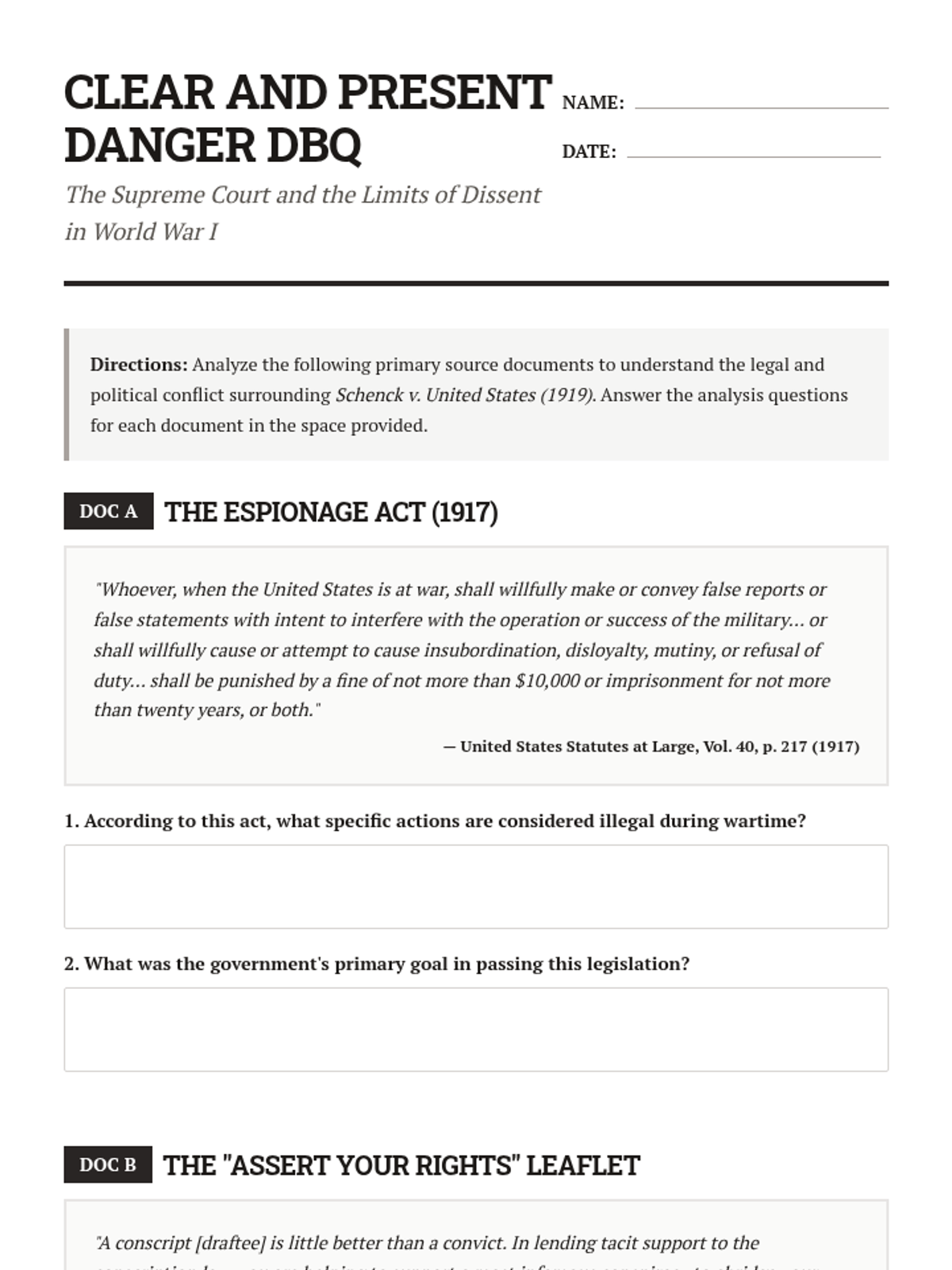
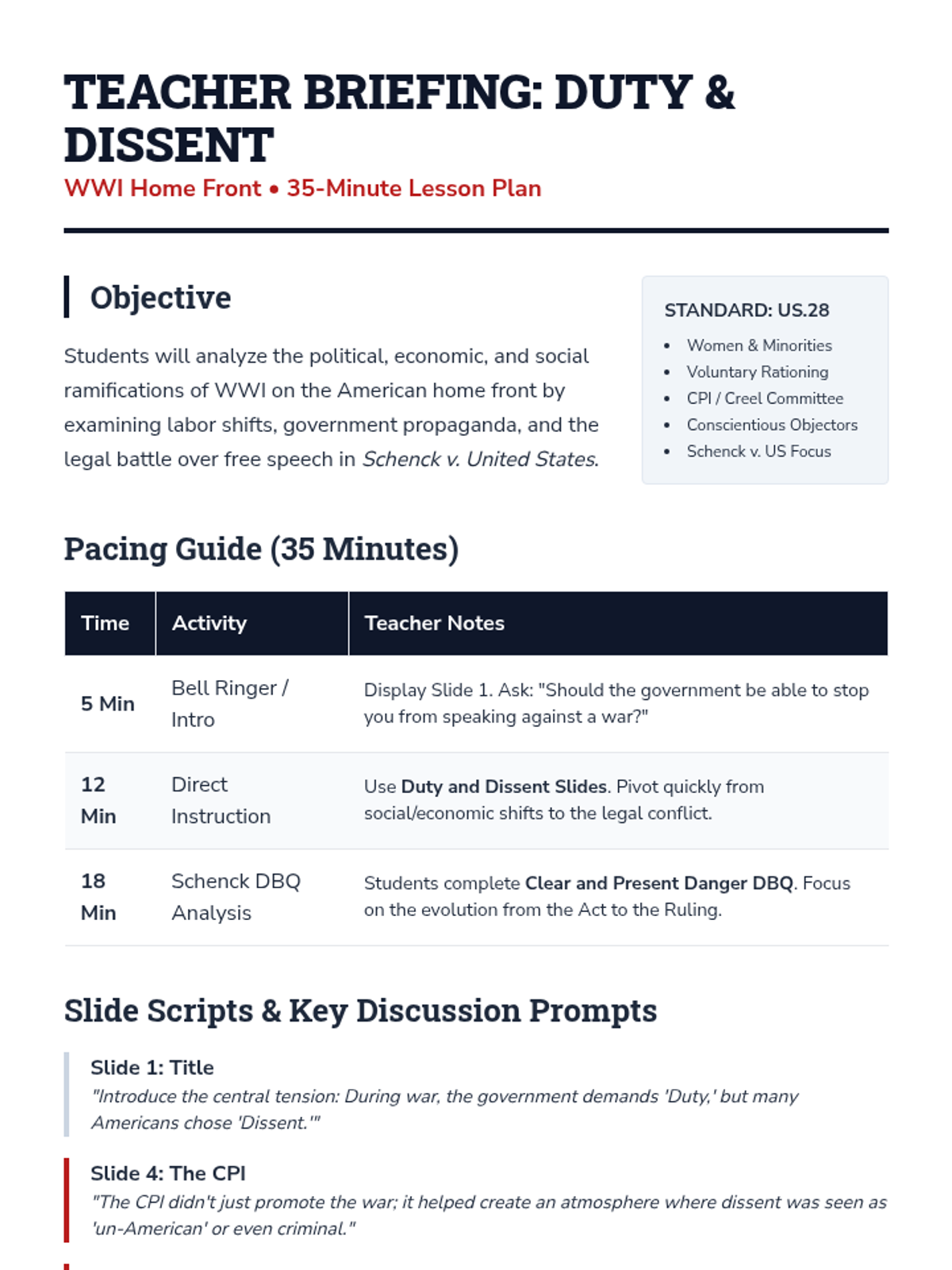
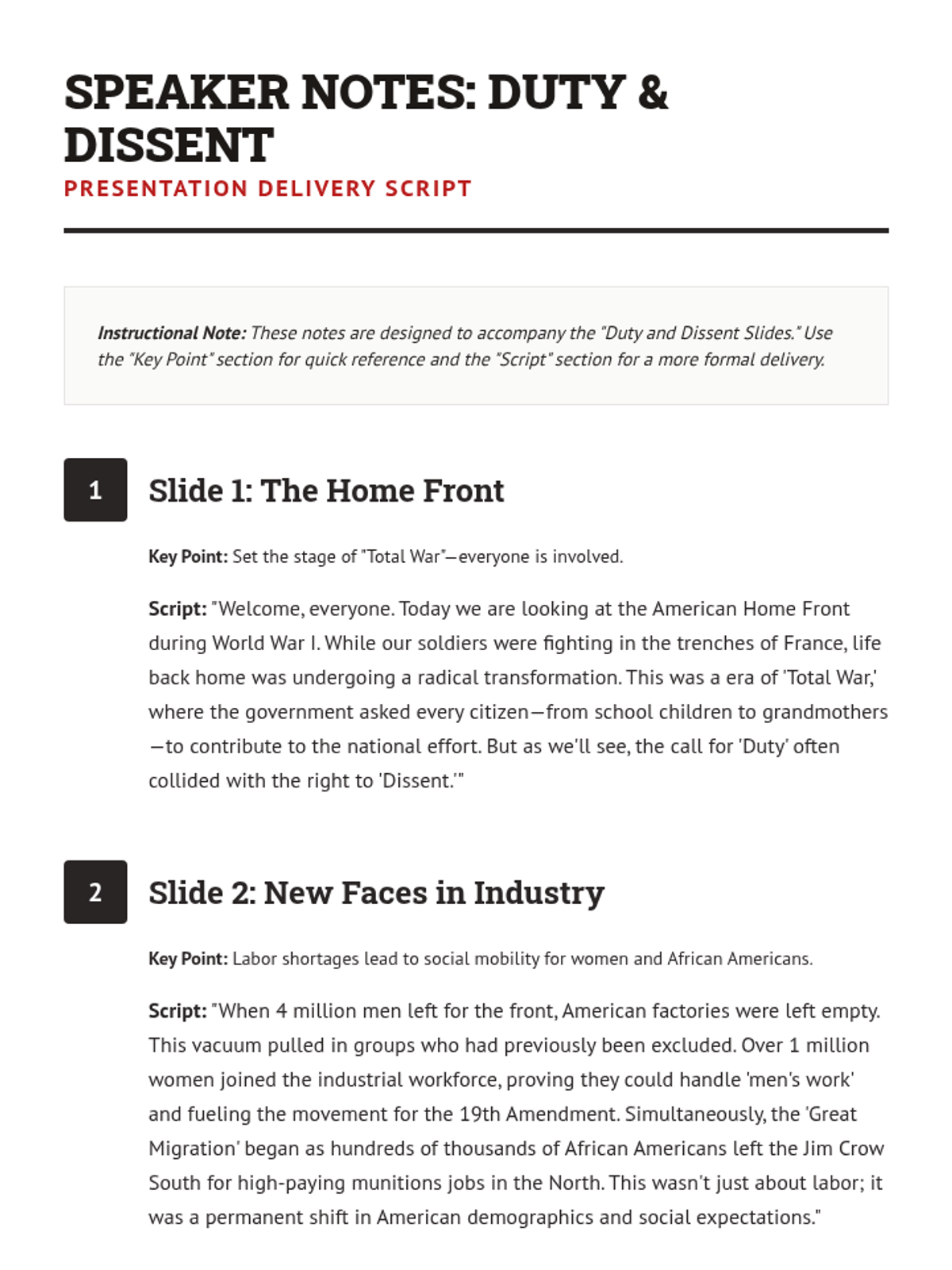
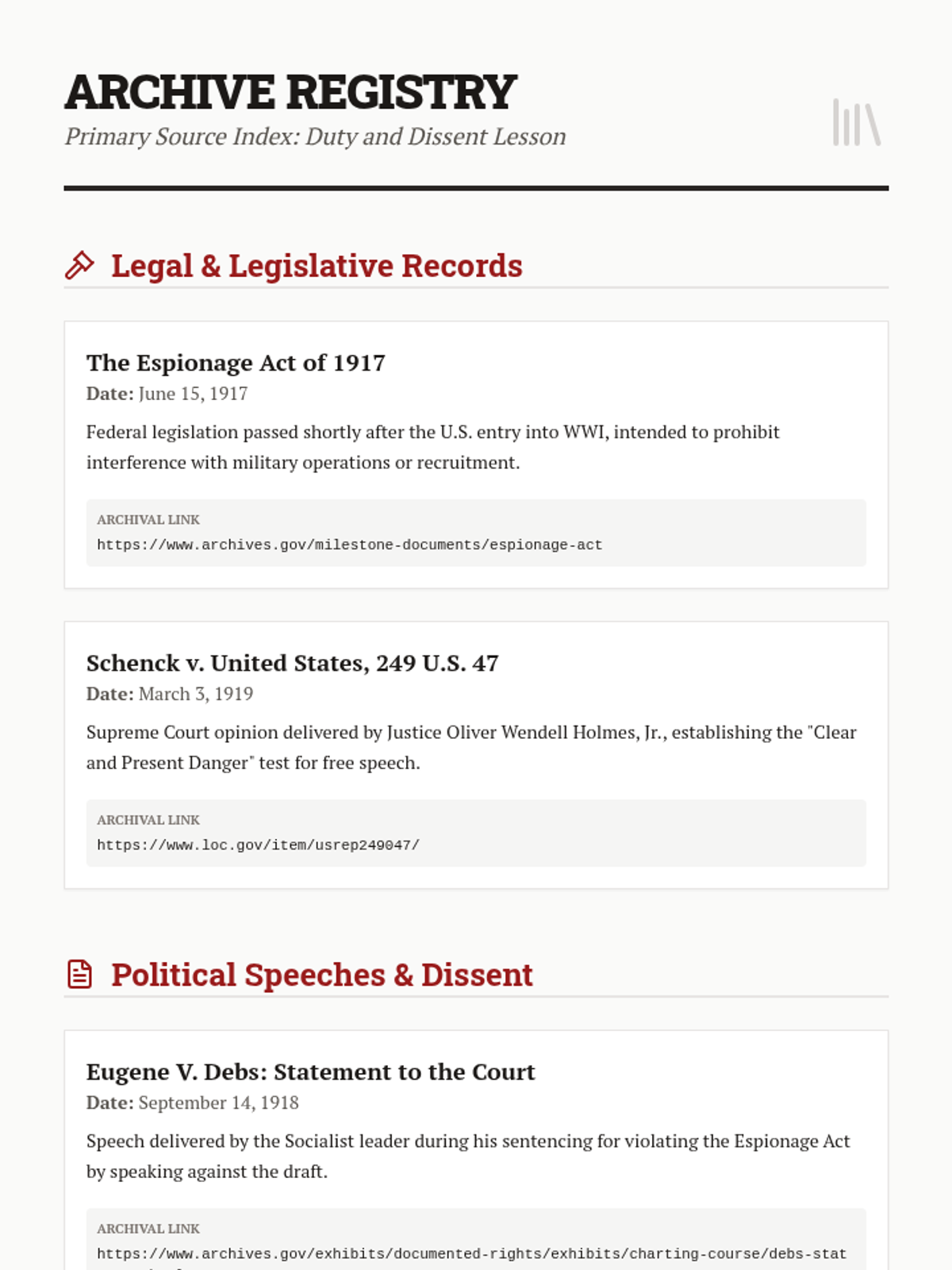
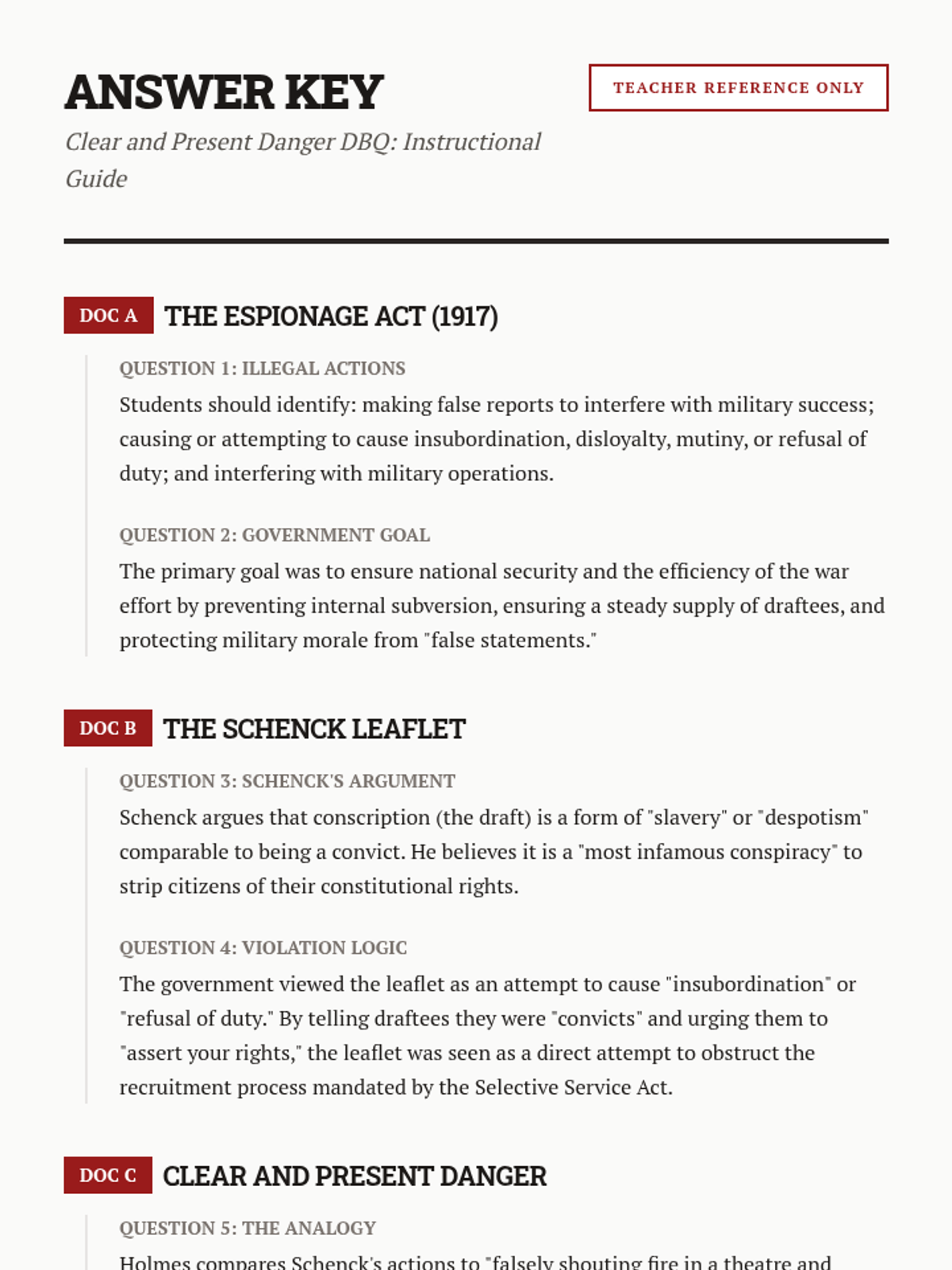
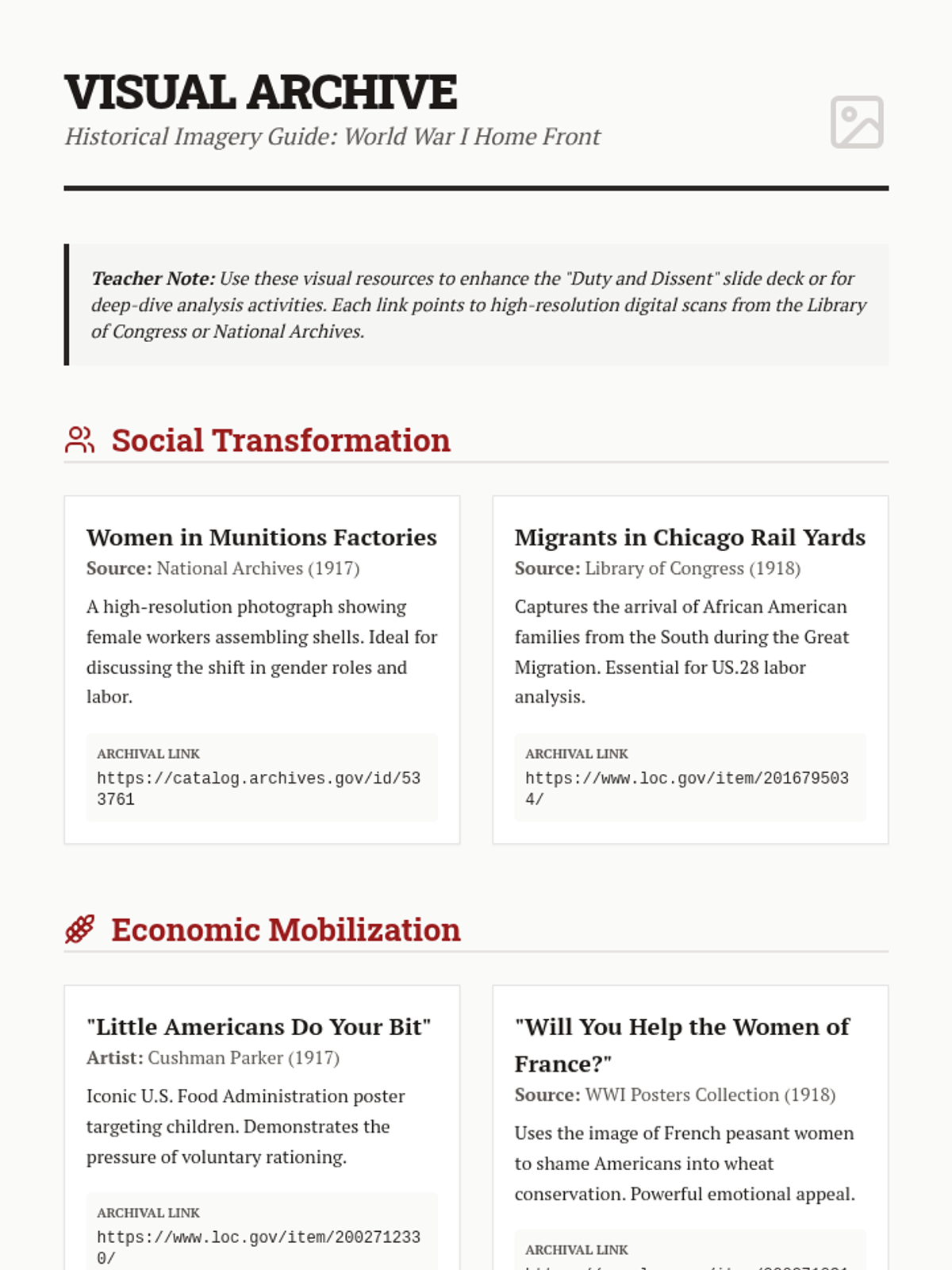
A 35-minute exploration of the American home front during World War I, covering social shifts, government propaganda, and legal challenges to civil liberties. Students analyze the roles of women and minorities, rationing efforts, and the tension between national security and free speech.
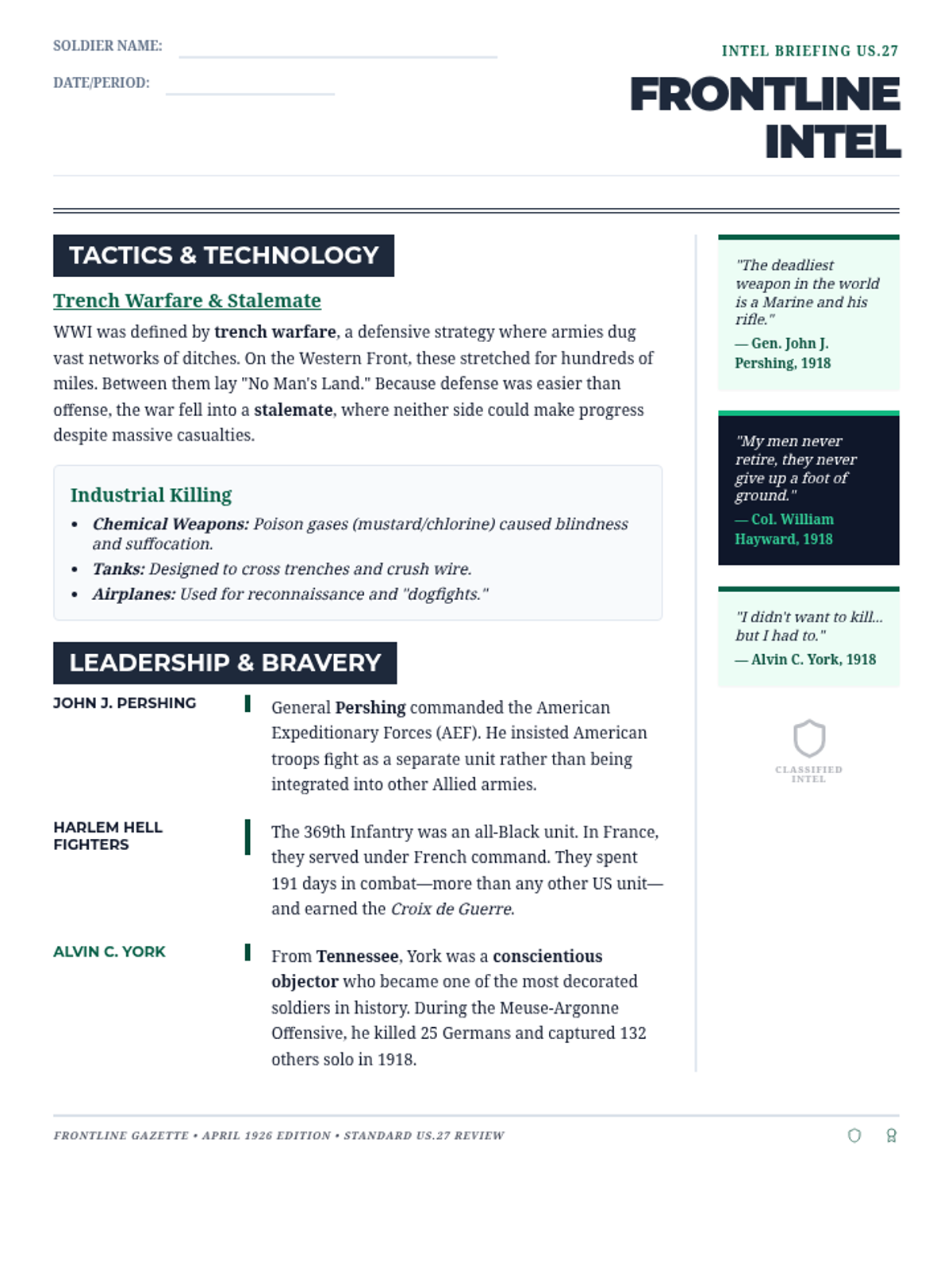
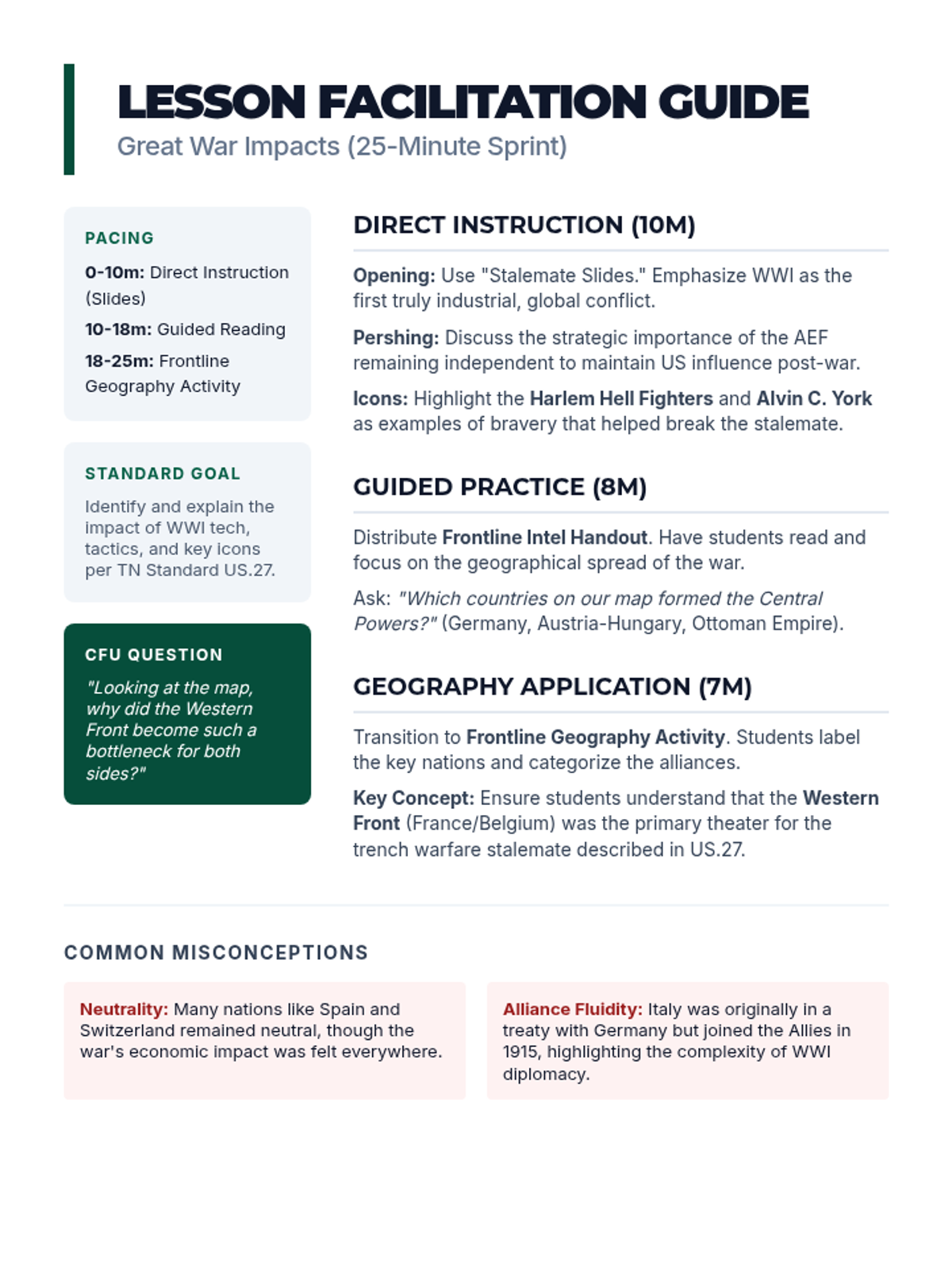
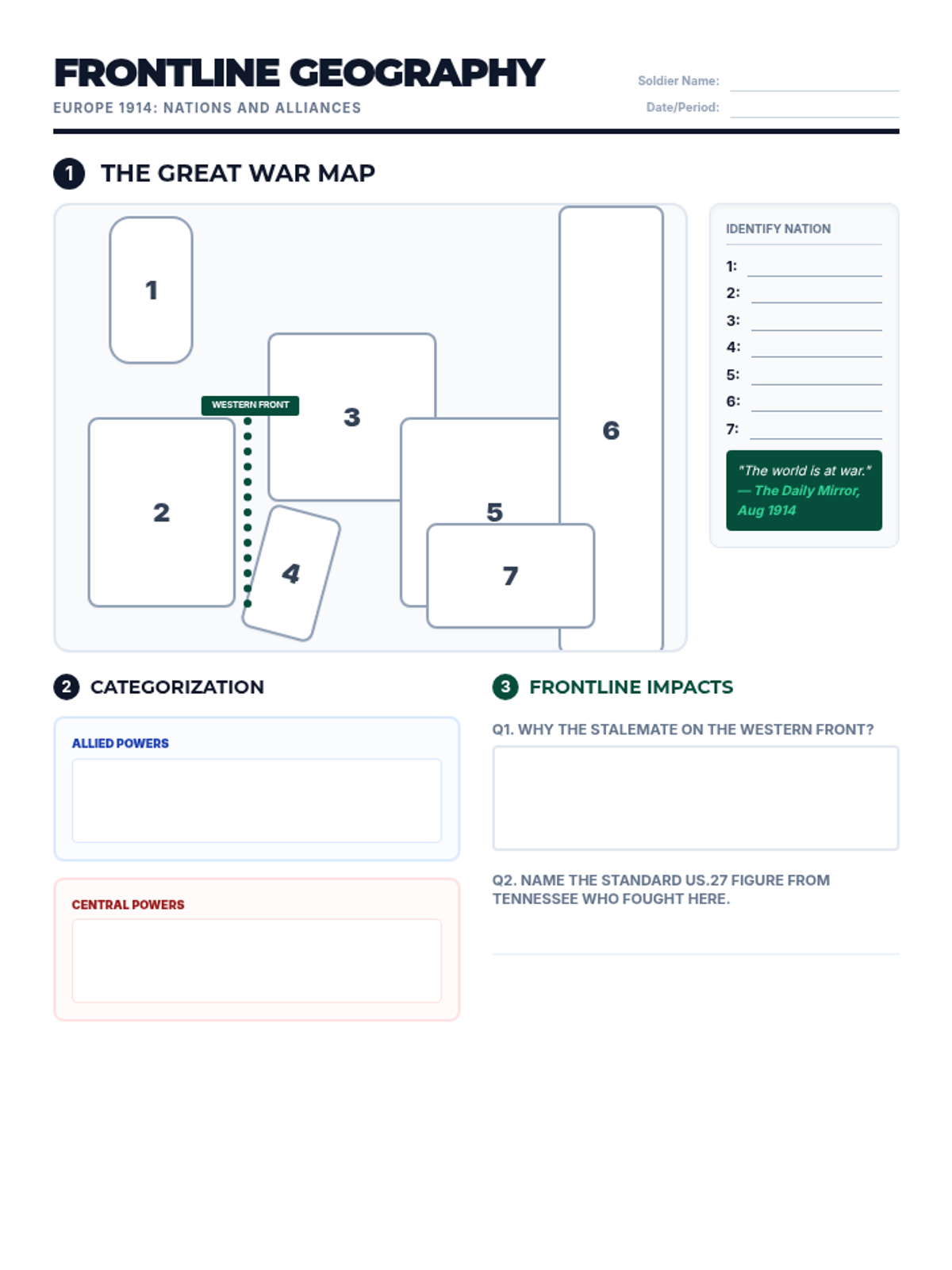
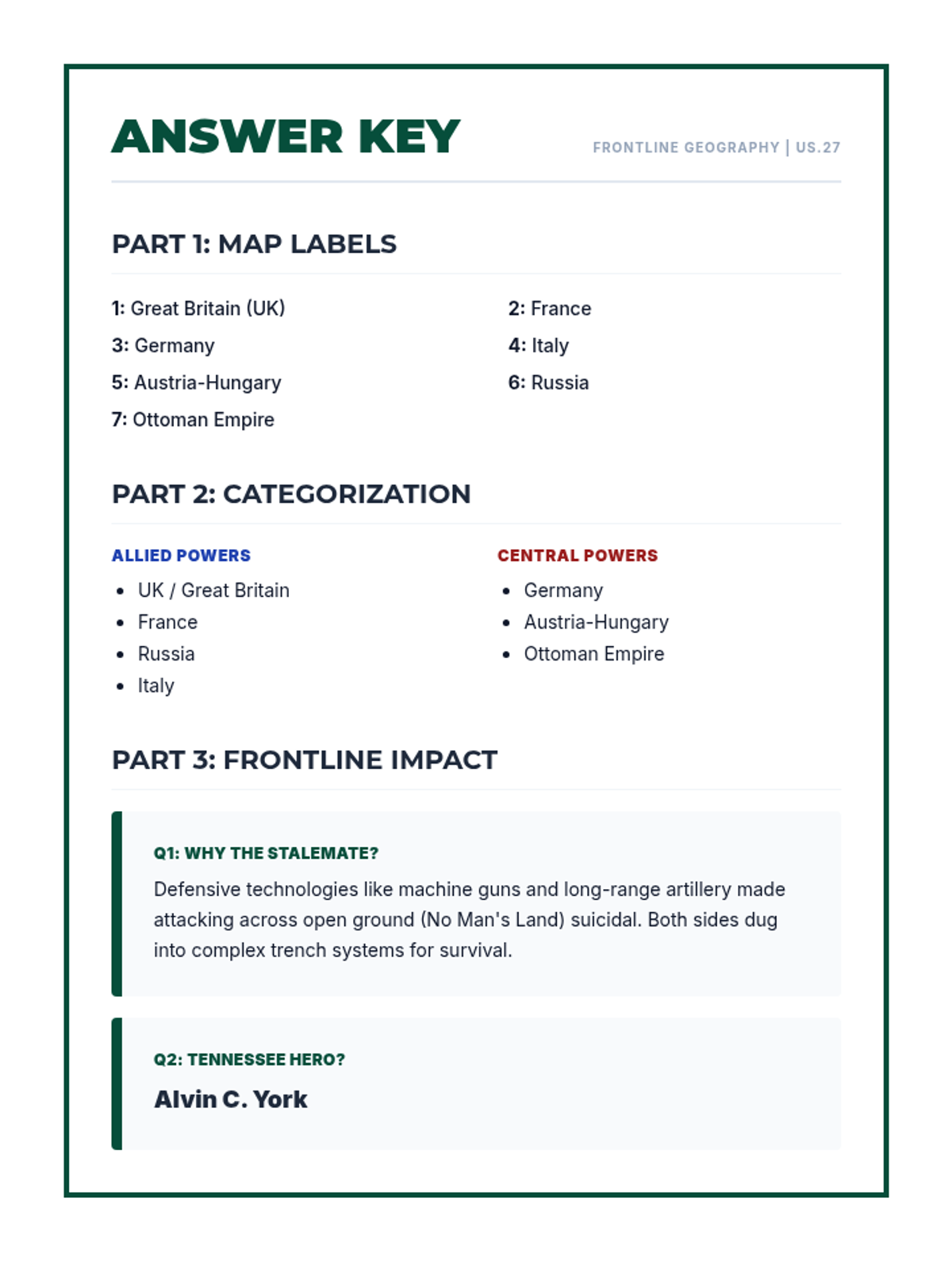
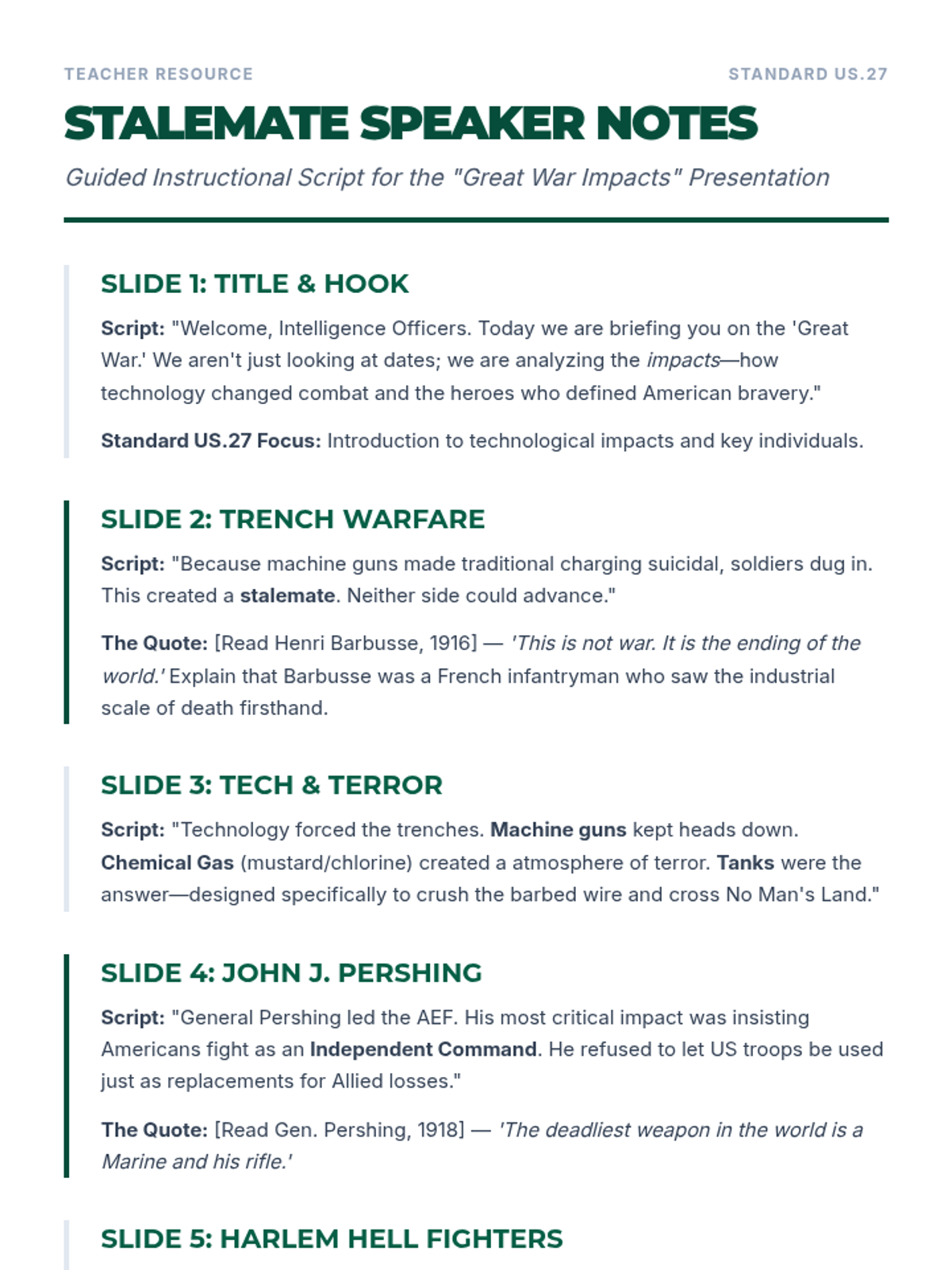
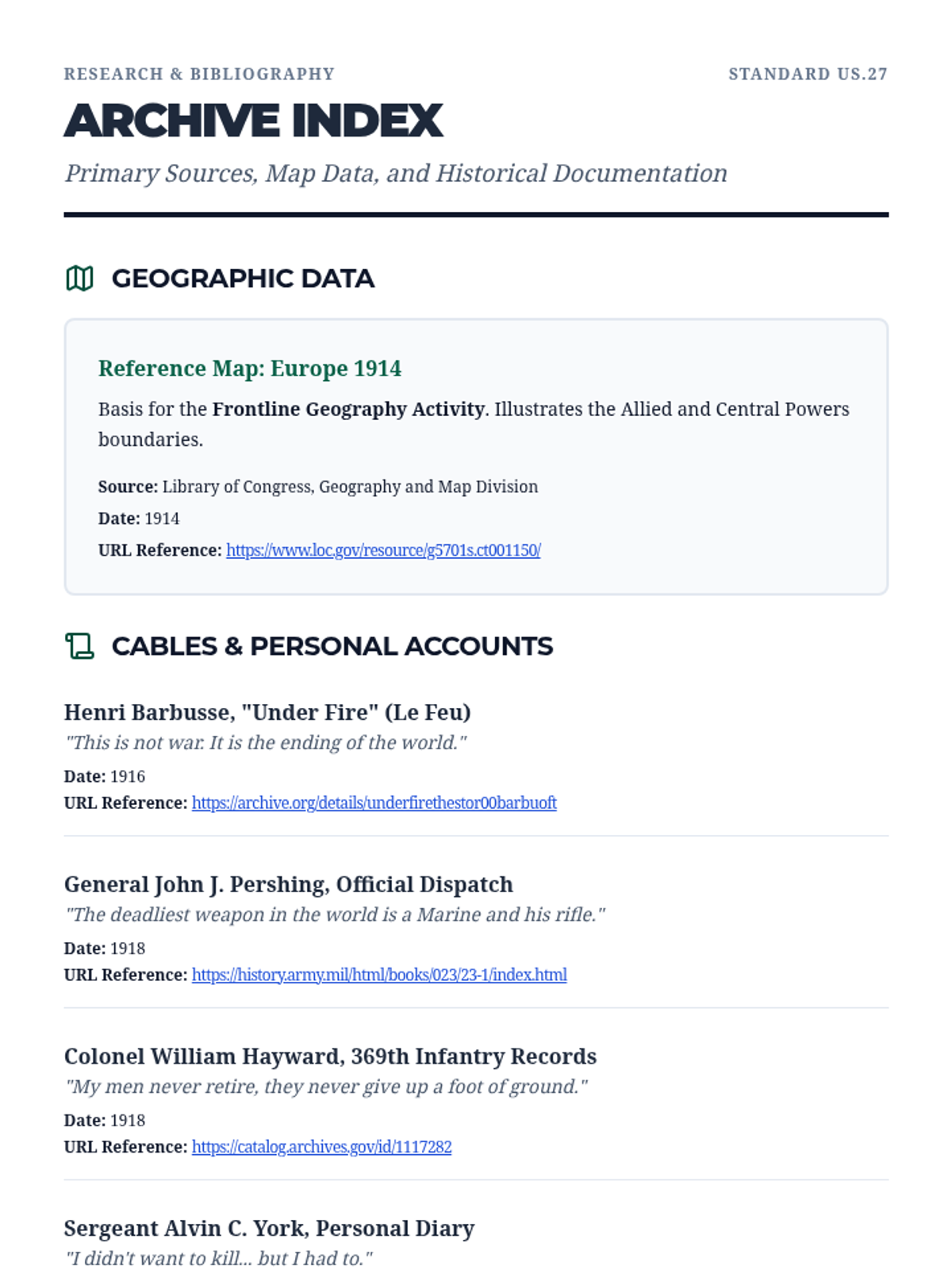
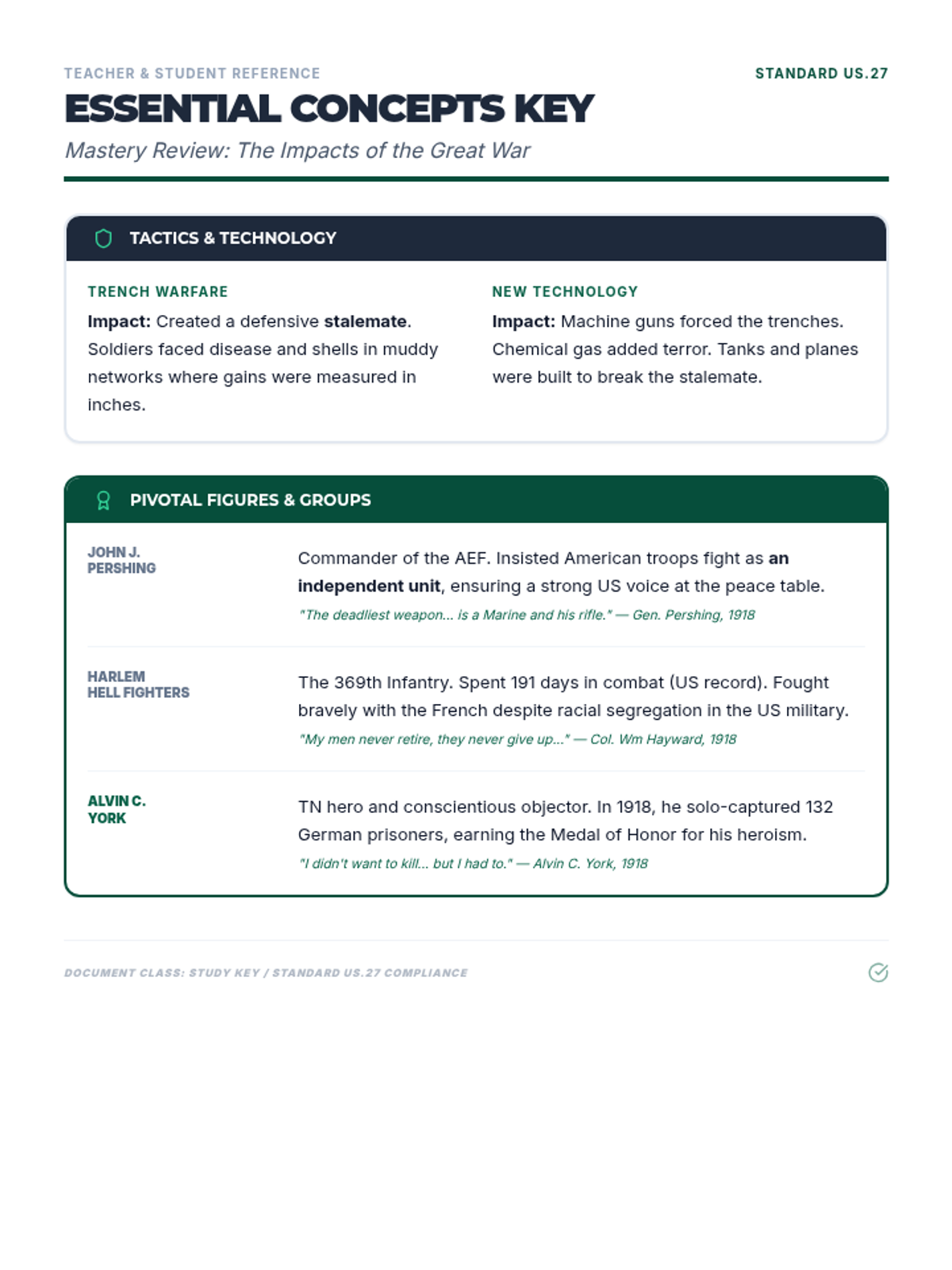
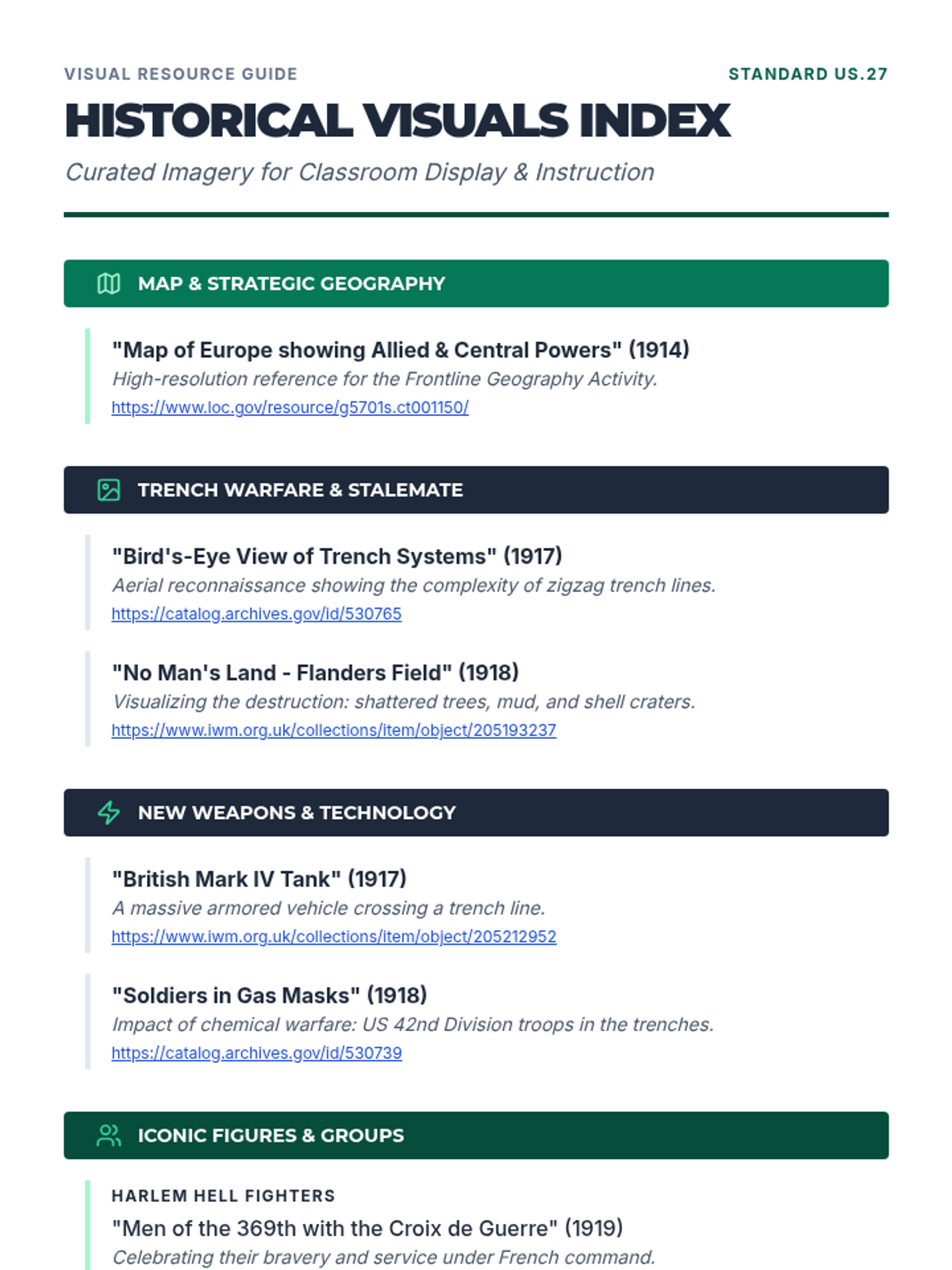
A 25-minute overview of World War I's defining characteristics and figures, covering trench warfare, technological innovations, and key military groups and individuals like the Harlem Hell Fighters and Alvin C. York.
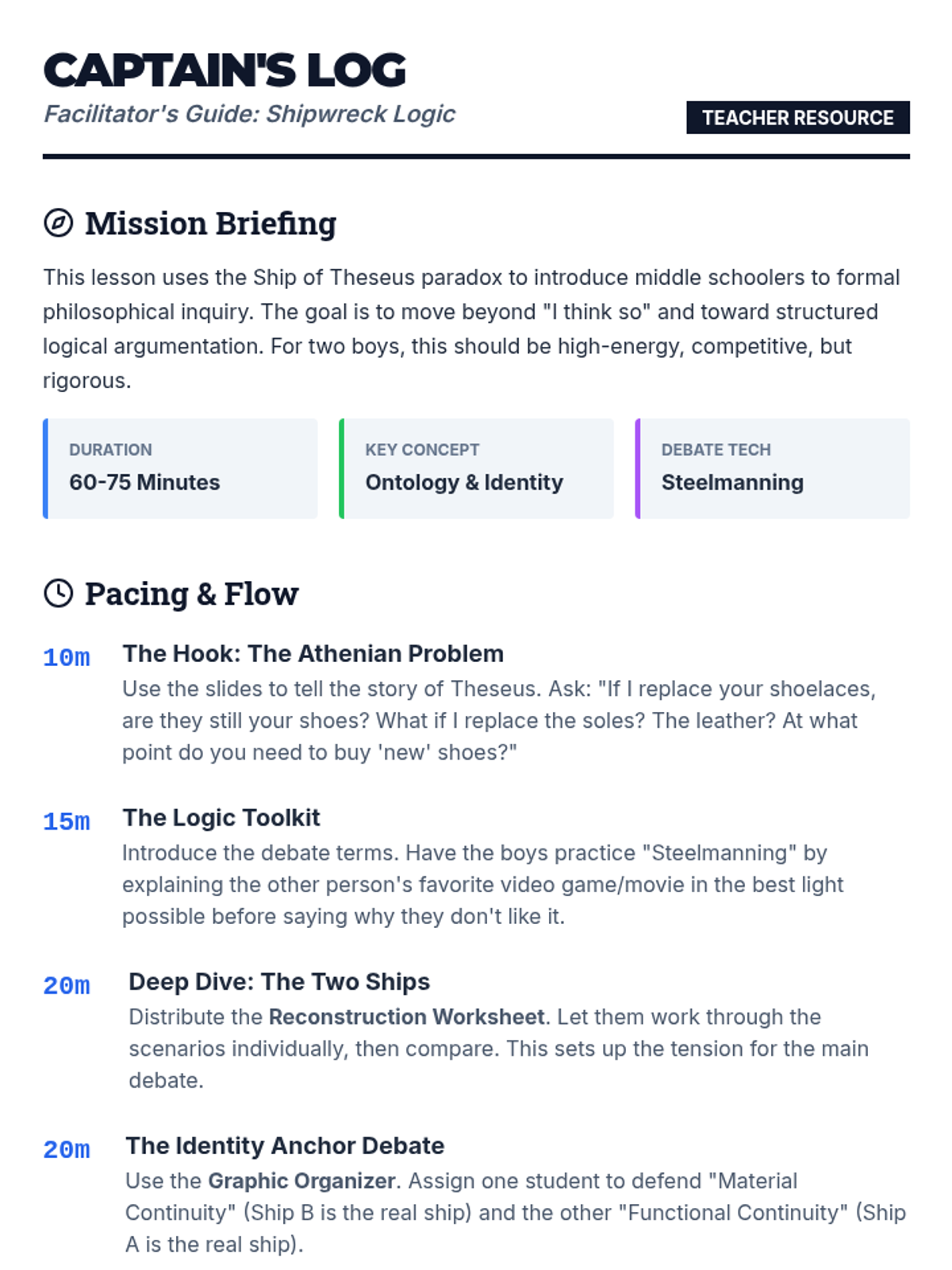
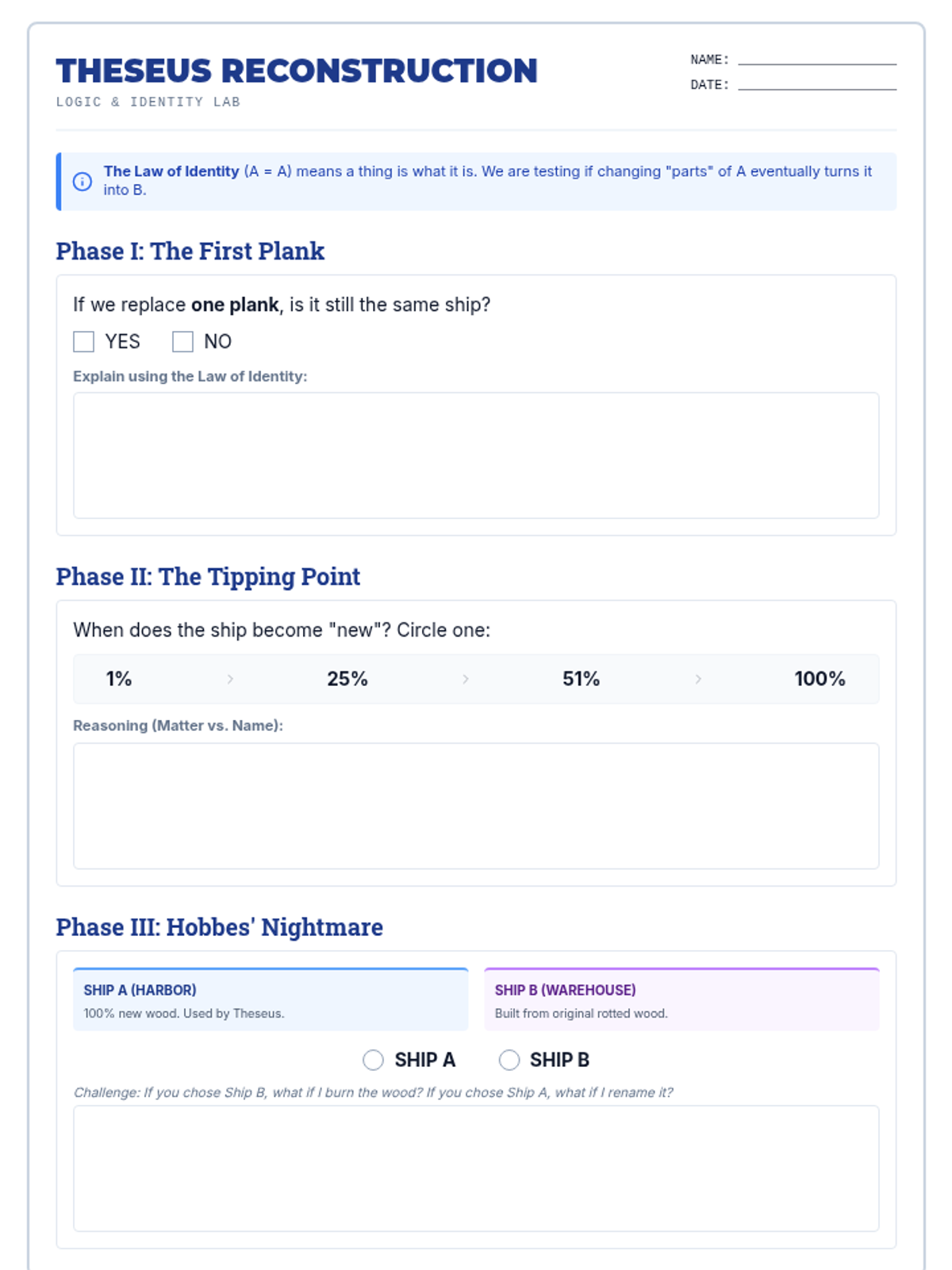
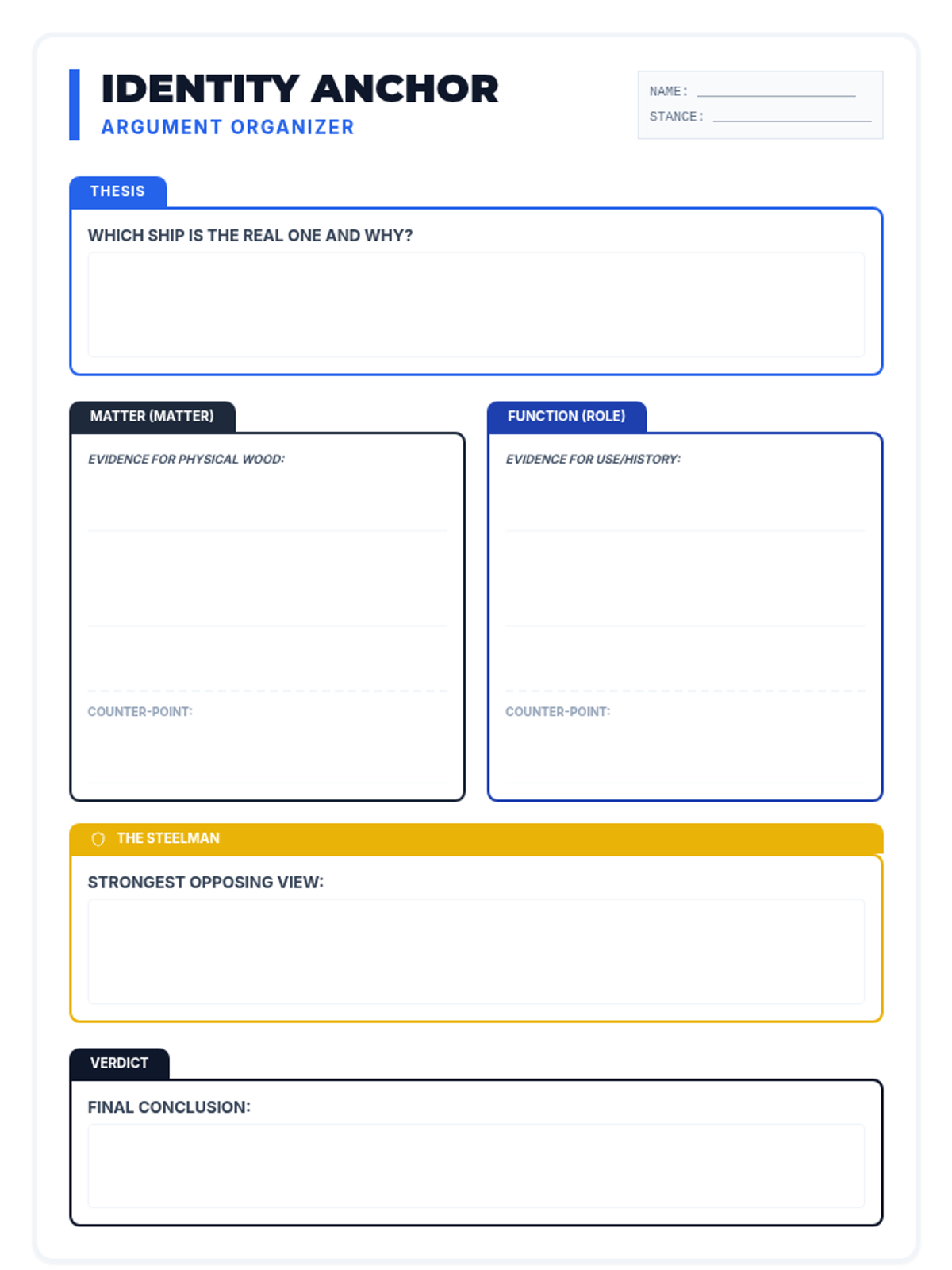
A philosophical exploration of identity and logic centered on the Ship of Theseus paradox. Students analyze historical context, learn formal debate techniques, and grapple with the nature of change and continuity.
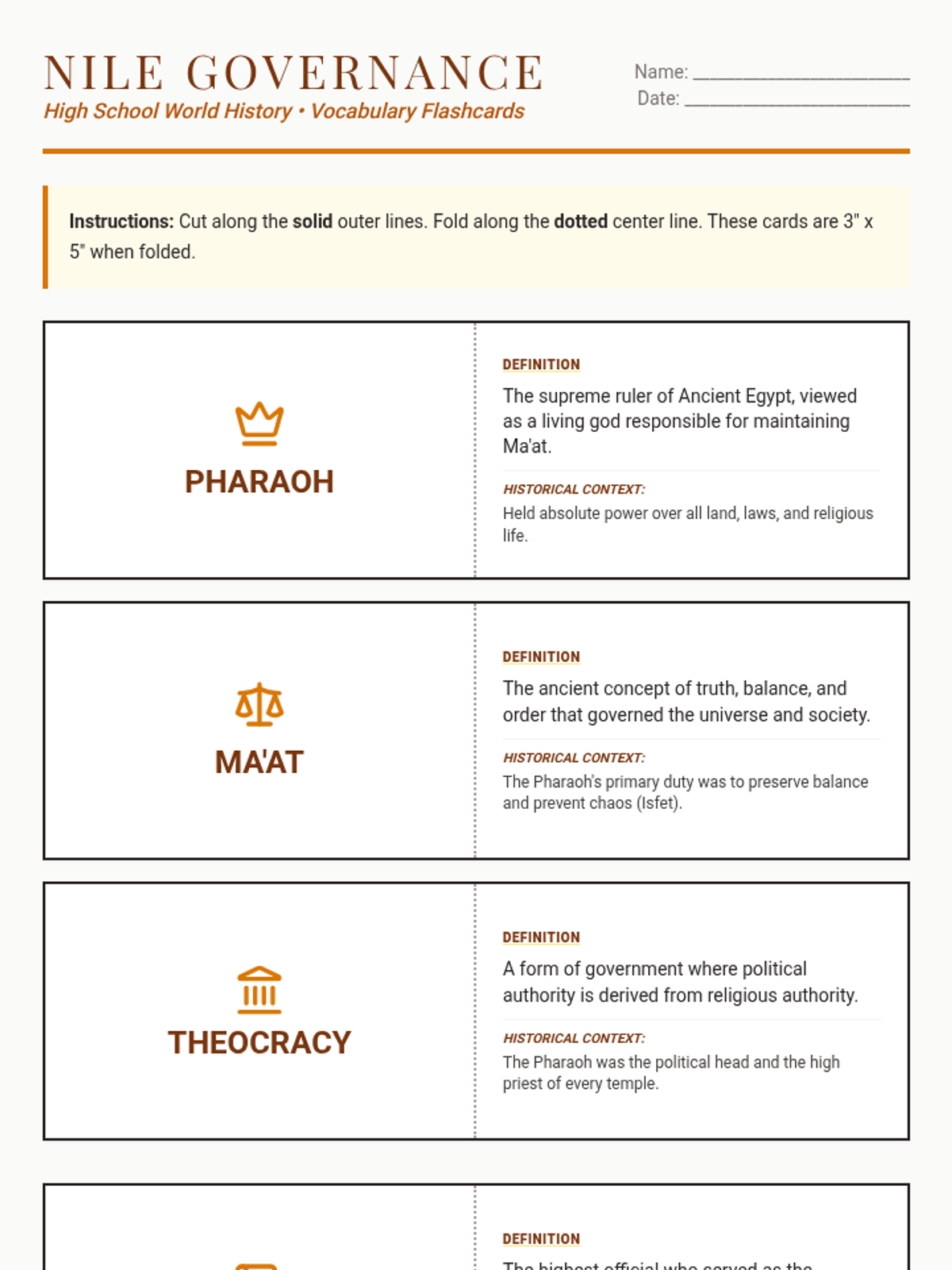
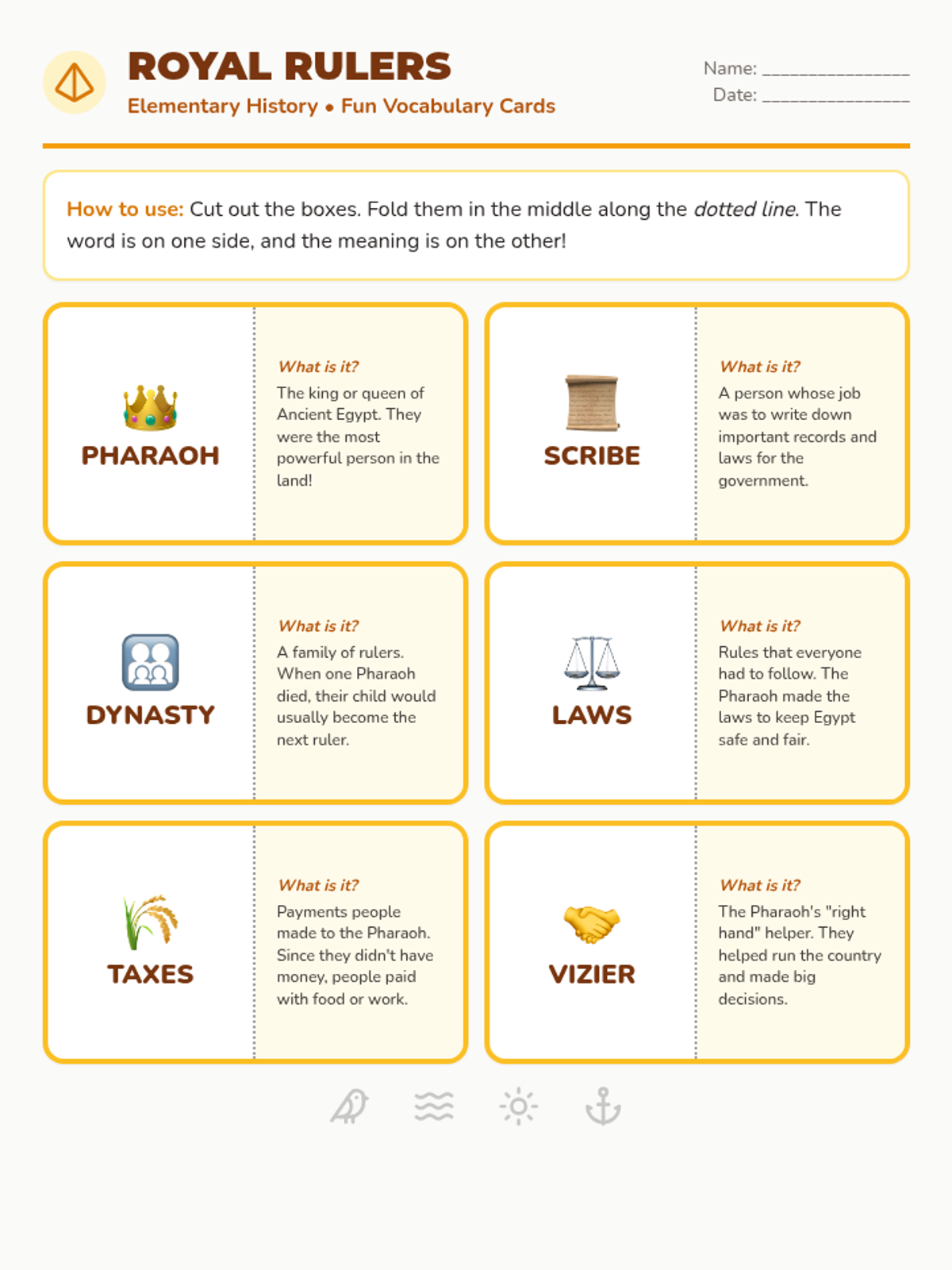
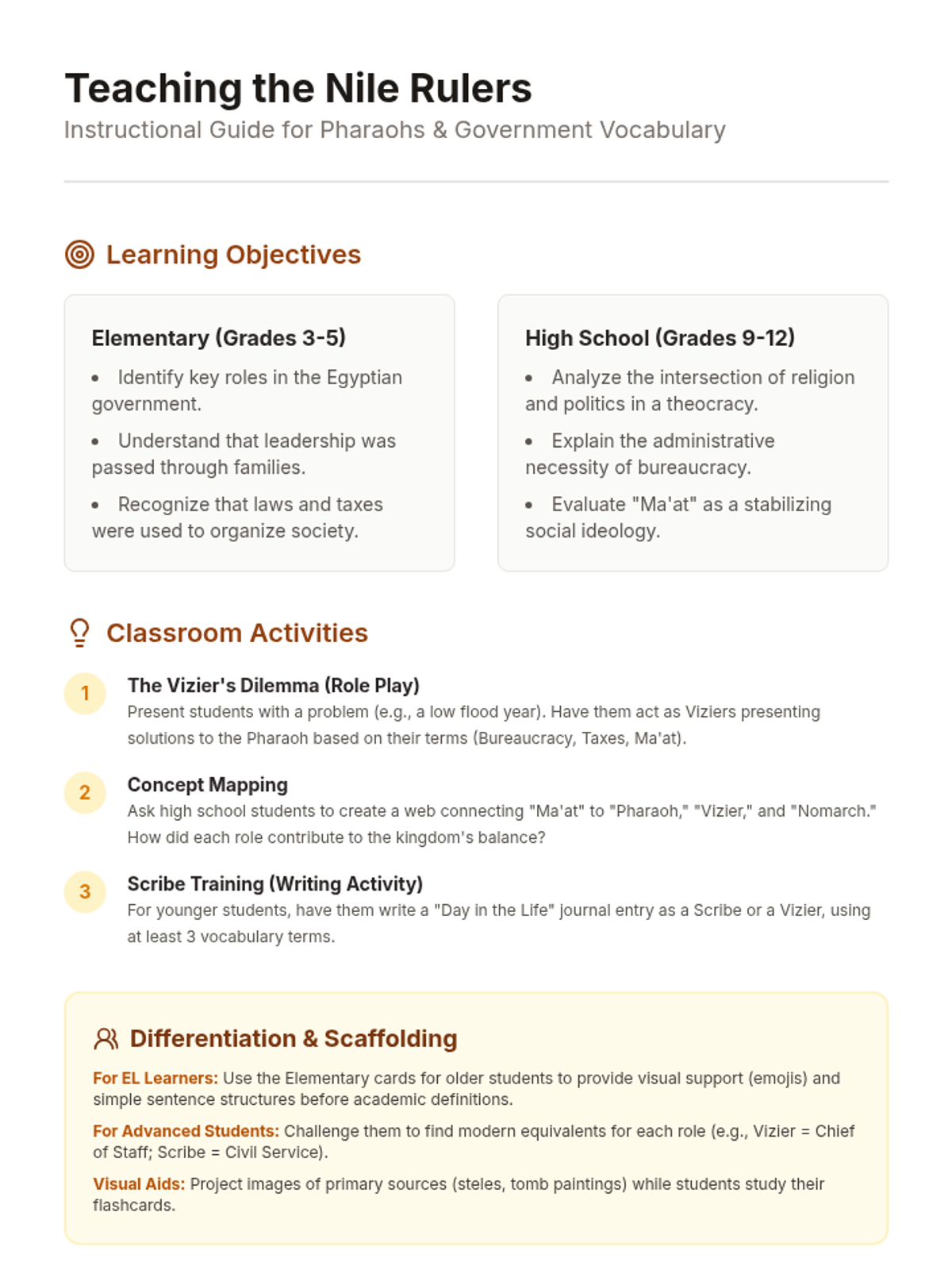
A collection of vocabulary resources focused on the structure of government and the role of the Pharaoh in Ancient Egypt, tailored for both elementary and high school levels.
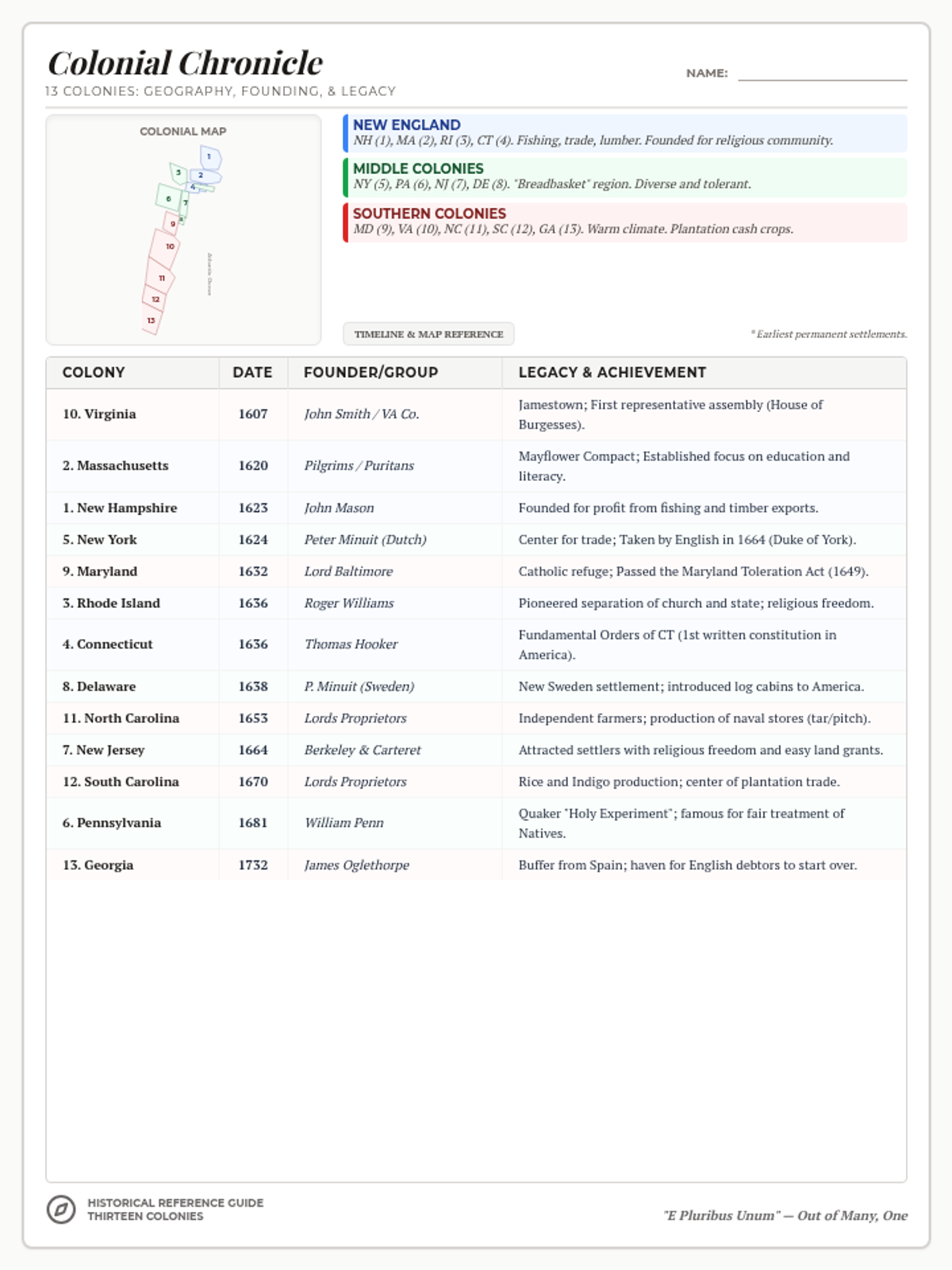
A comprehensive look at the founding, geography, and development of the thirteen original American colonies.
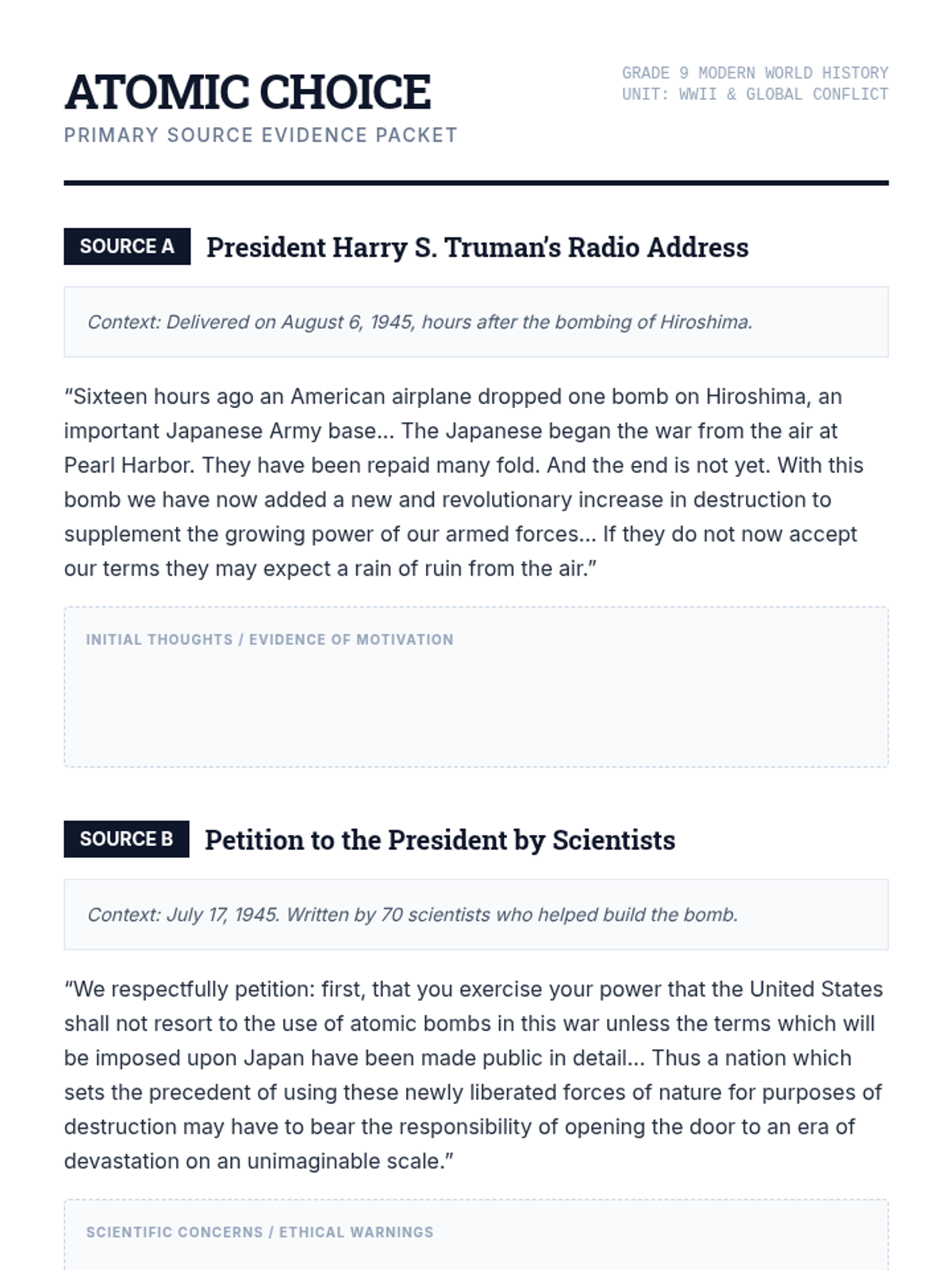
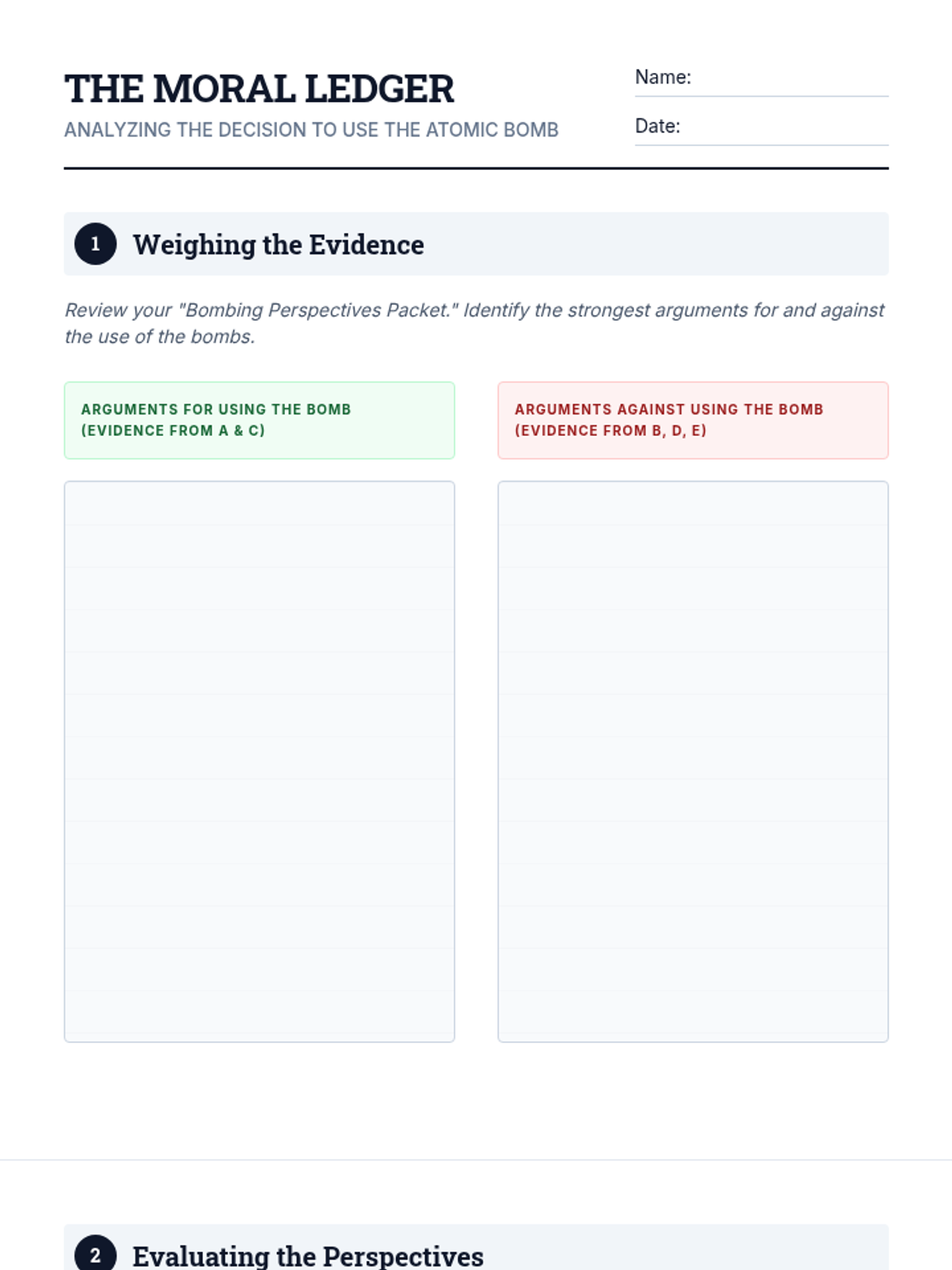
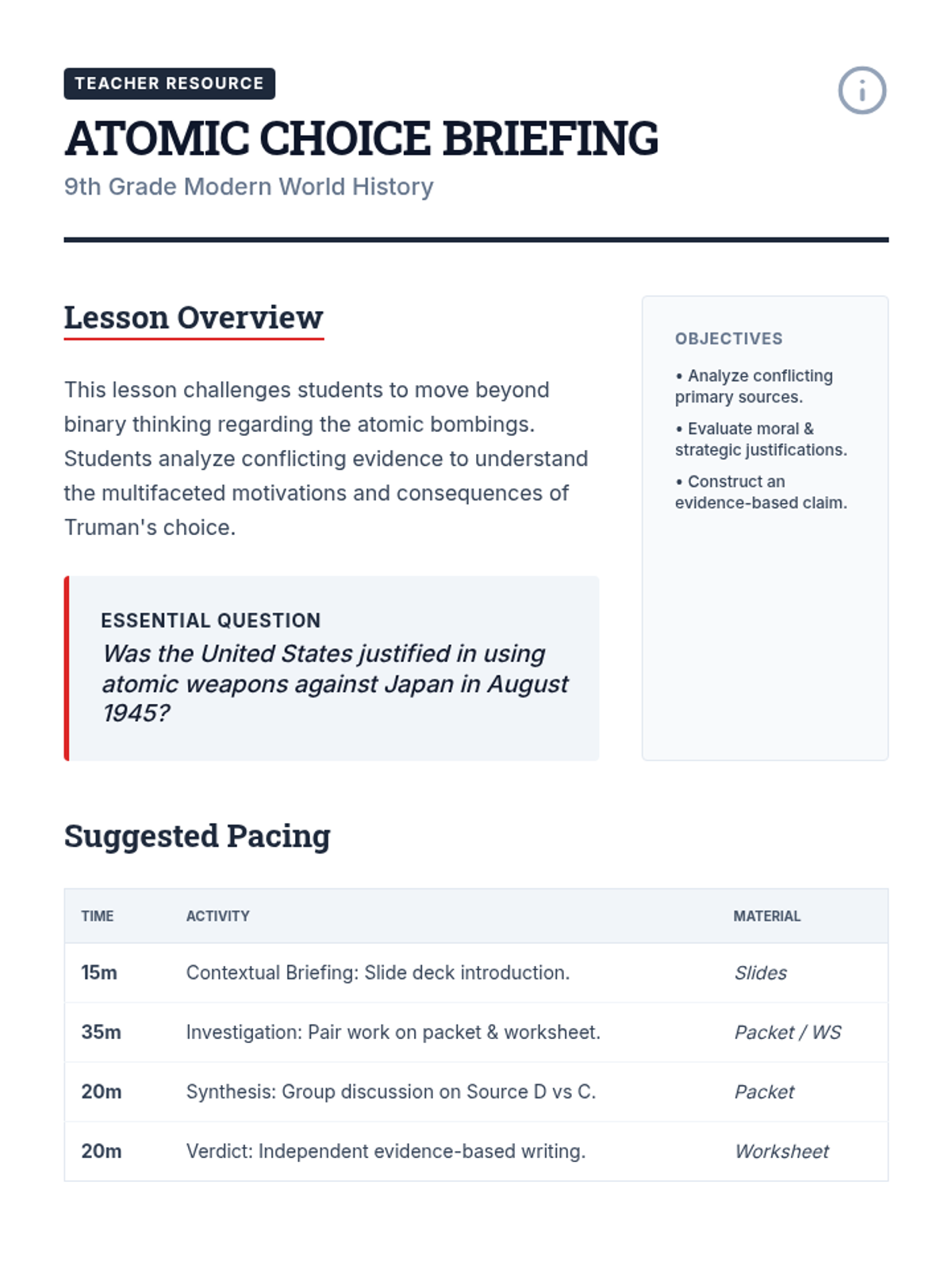
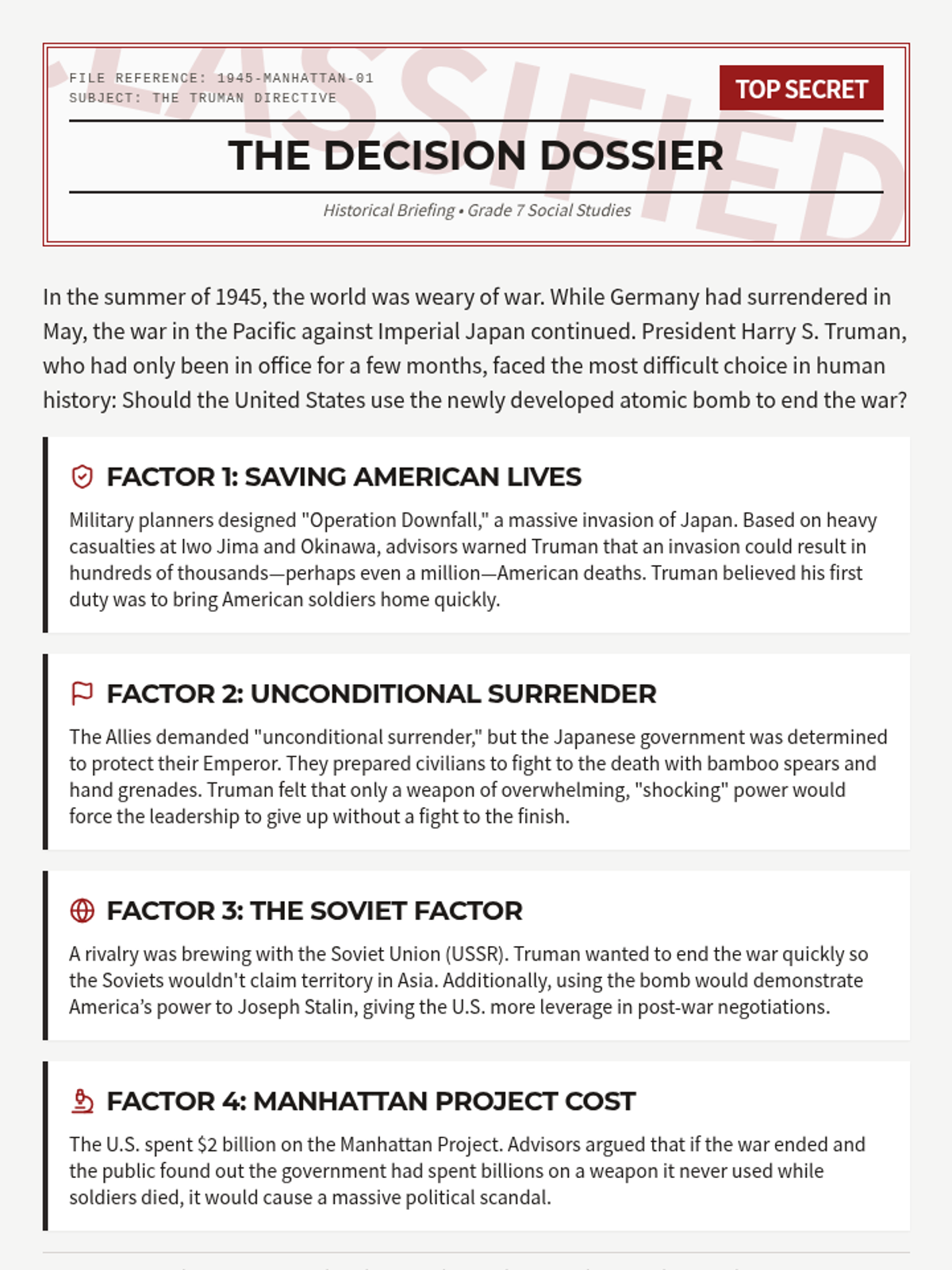
A comprehensive lesson exploring the complex decision-making, human impact, and ethical debates surrounding the use of atomic bombs on Hiroshima and Nagasaki in 1945.
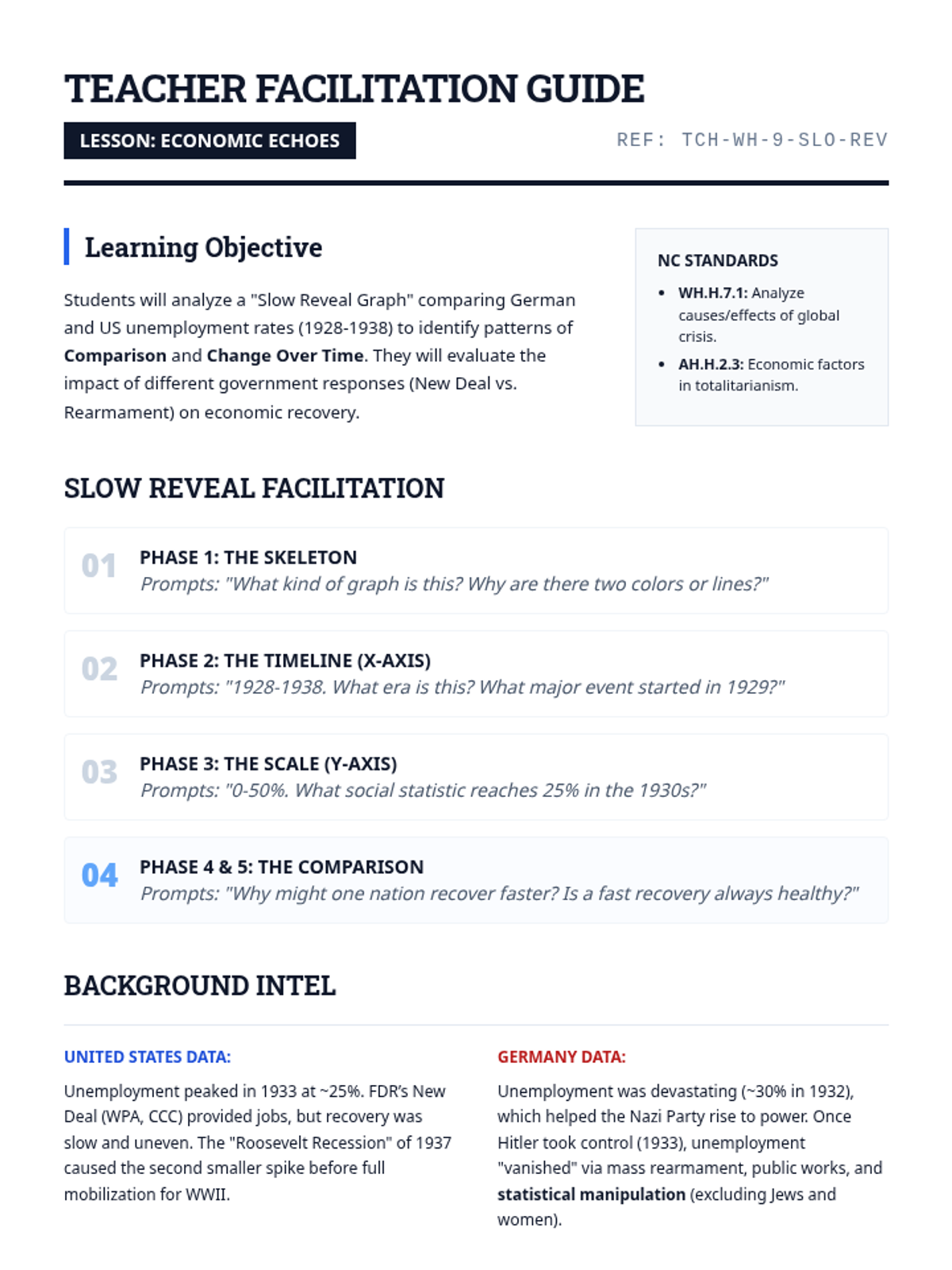
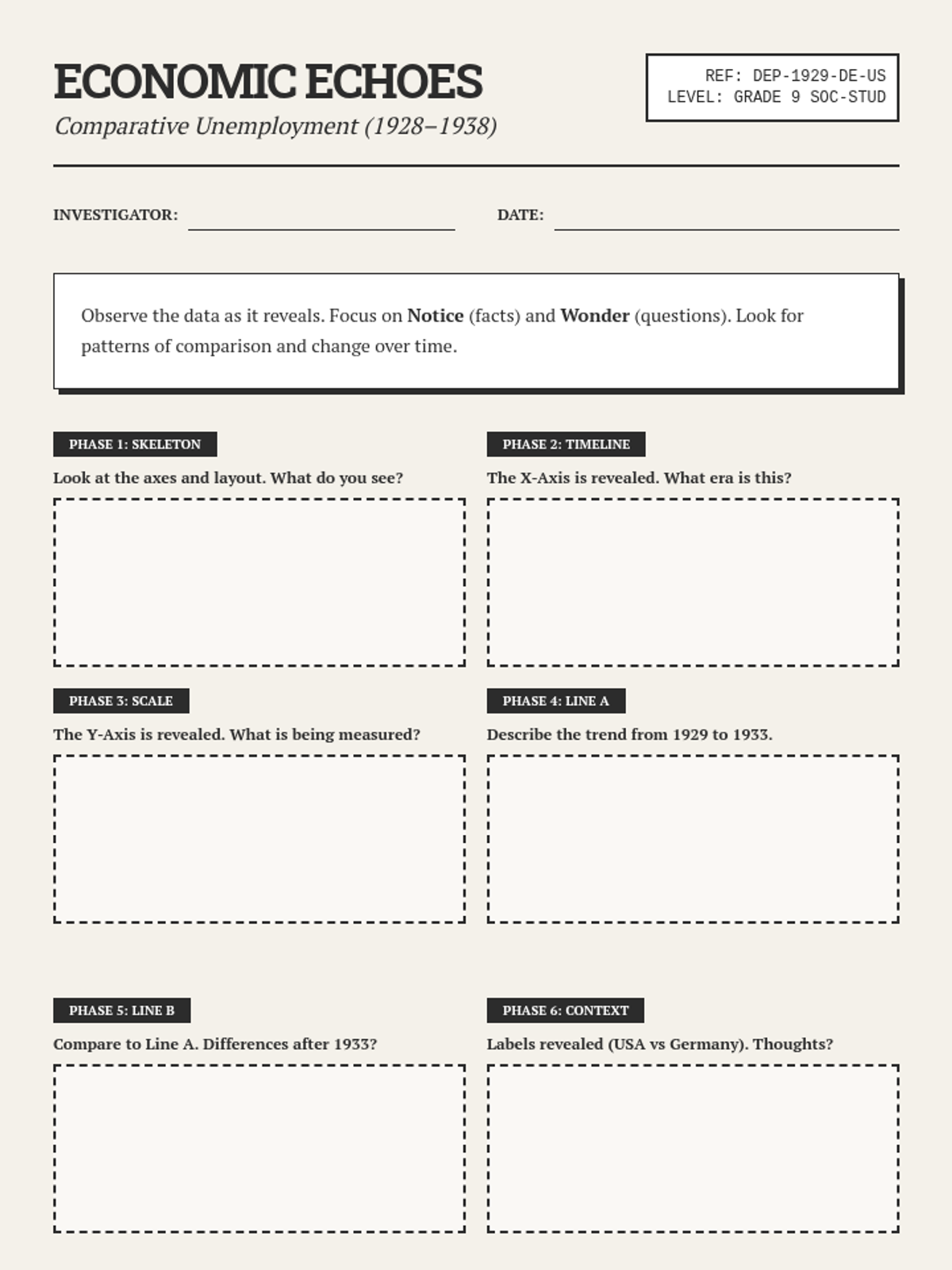
A deep dive into the economic data of the Great Depression, comparing the US and German experiences through a slow-reveal graph technique to build analytical skills.
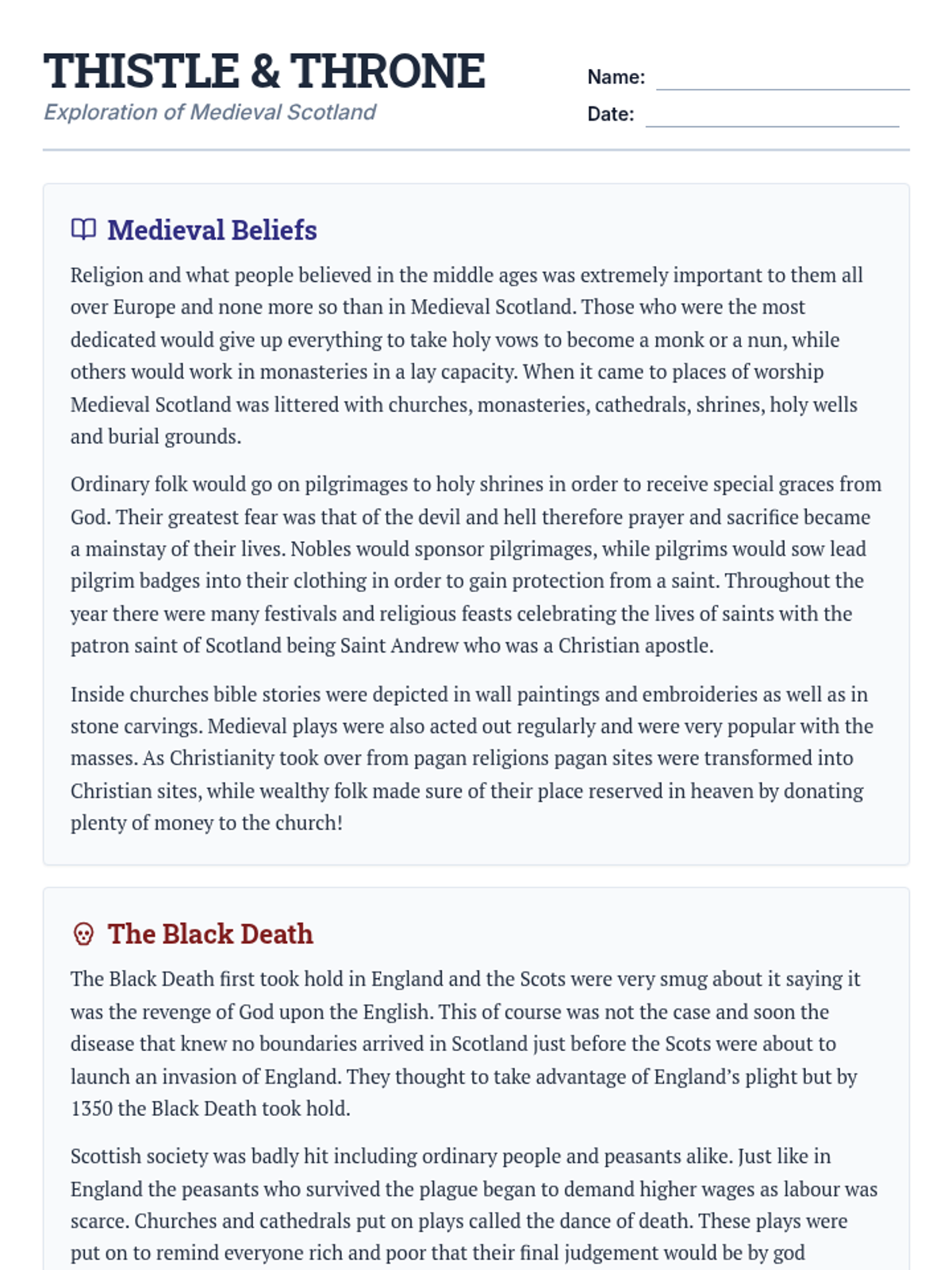
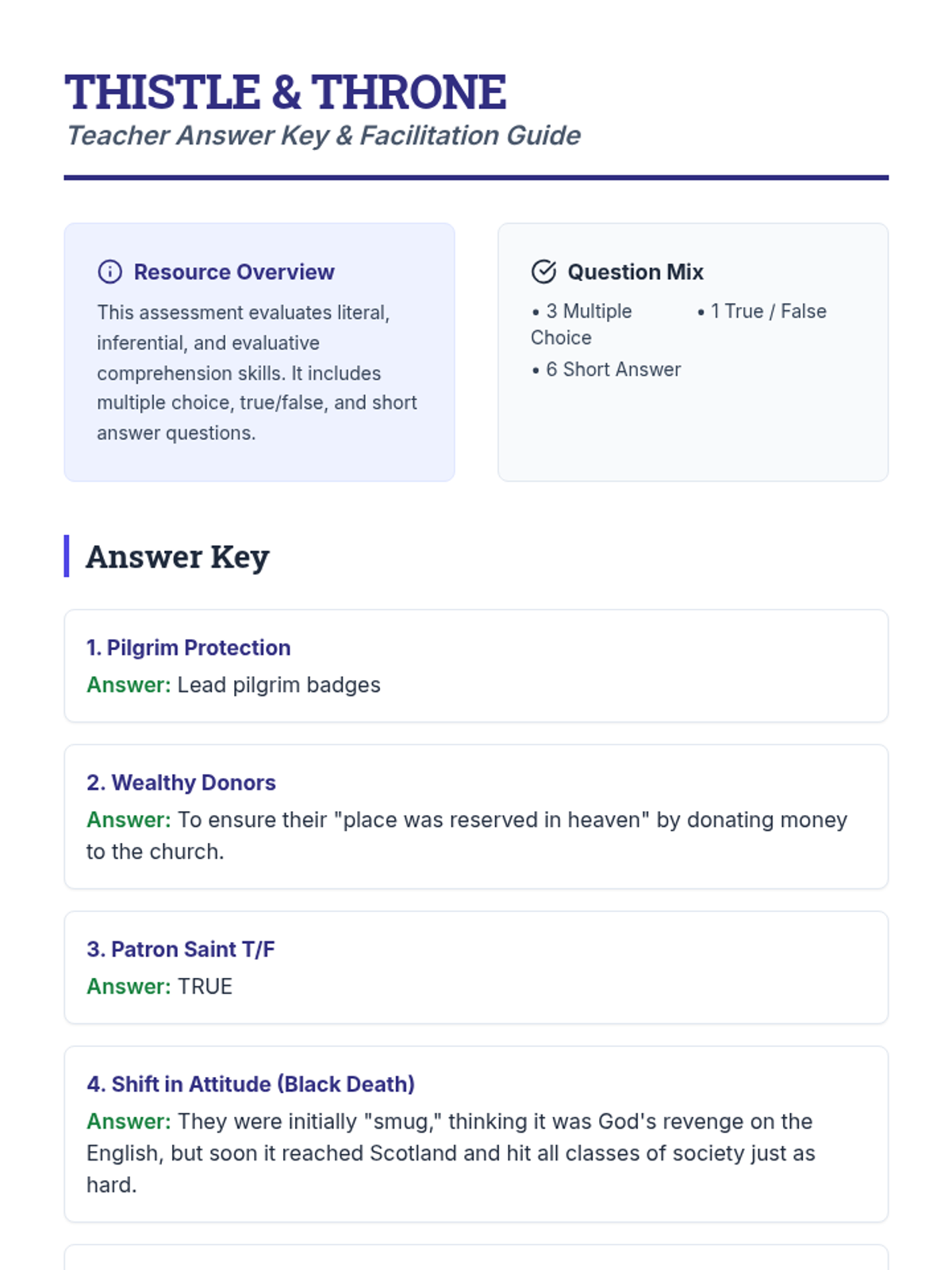
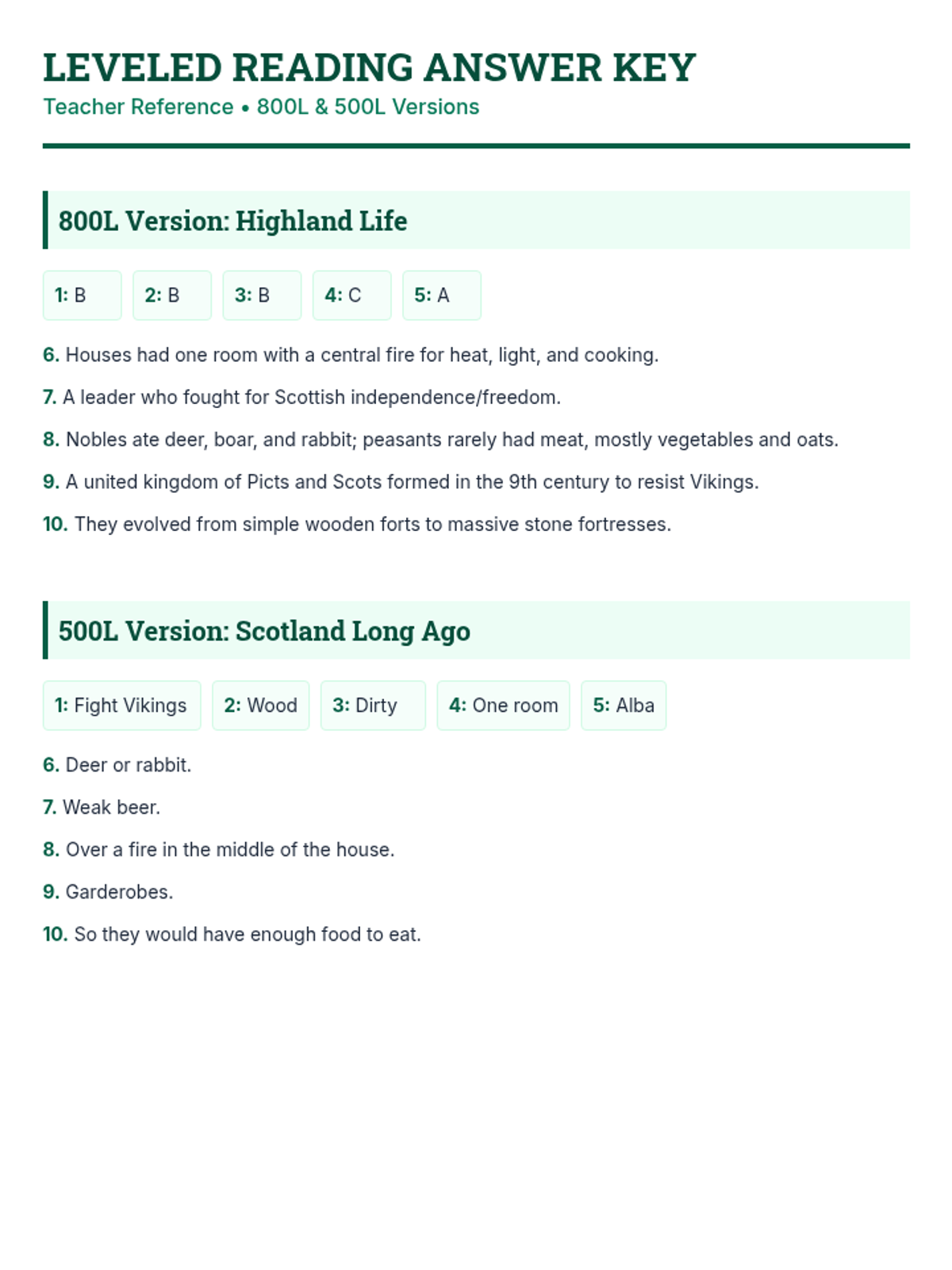
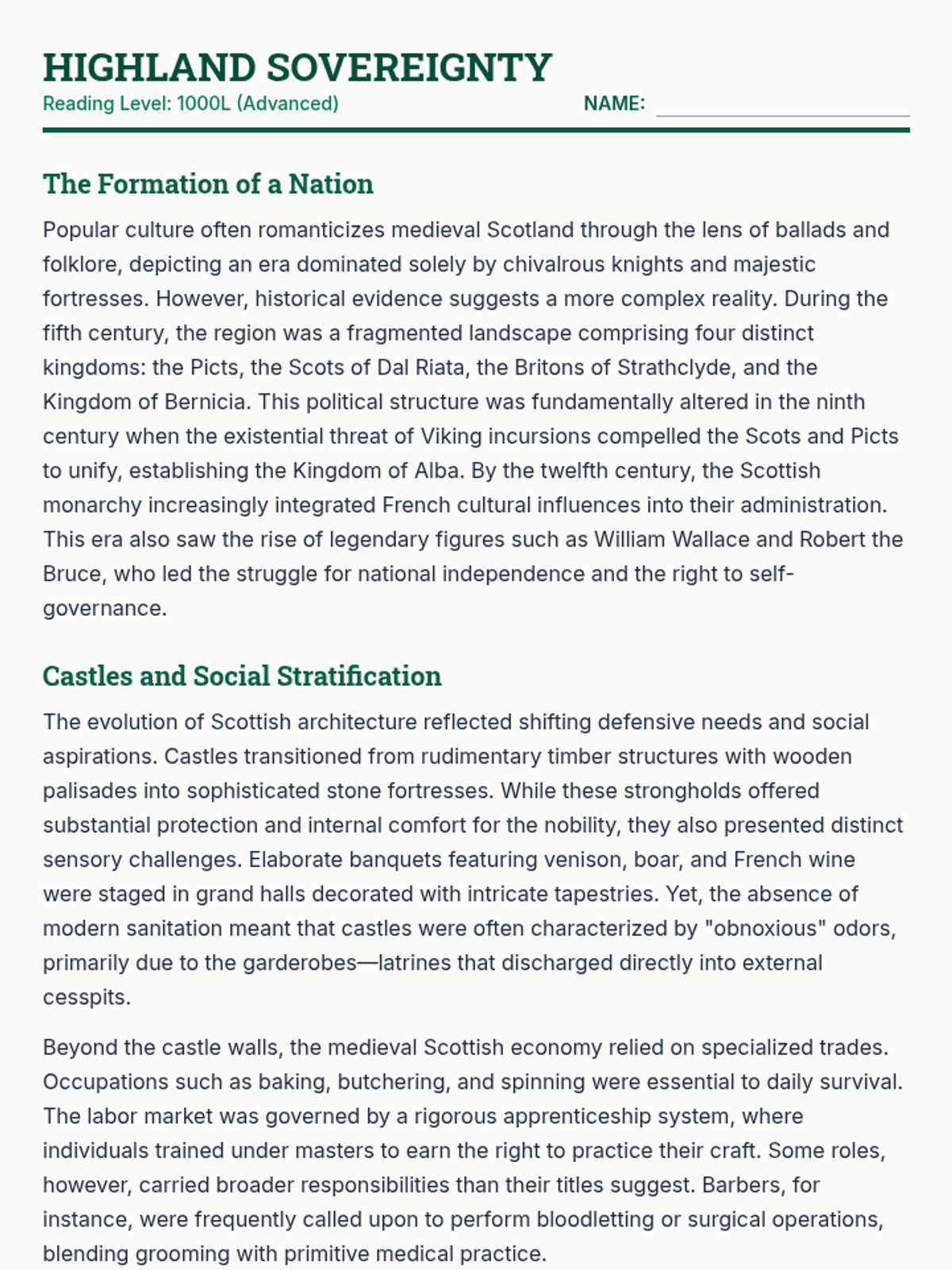
A comprehensive look at medieval Scottish life, covering religious devotion, the impact of the Black Death, the lawless Border Reivers, and the dangerous lives of monarchs.
An interactive exploration of fiscal policy, focusing on the federal budget, debt dynamics, and the specific application of expansionary and contractionary tools to manage the economy.
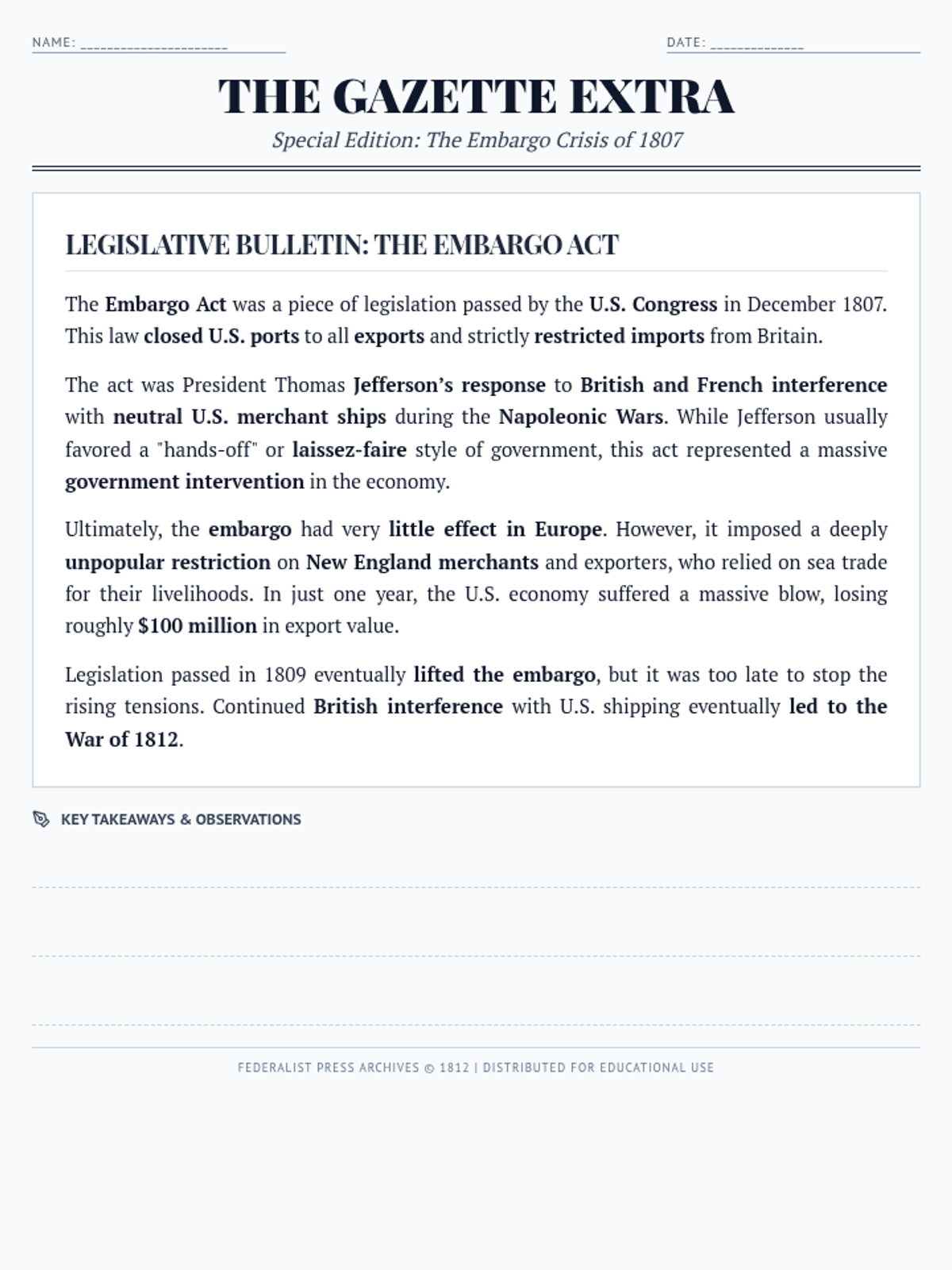
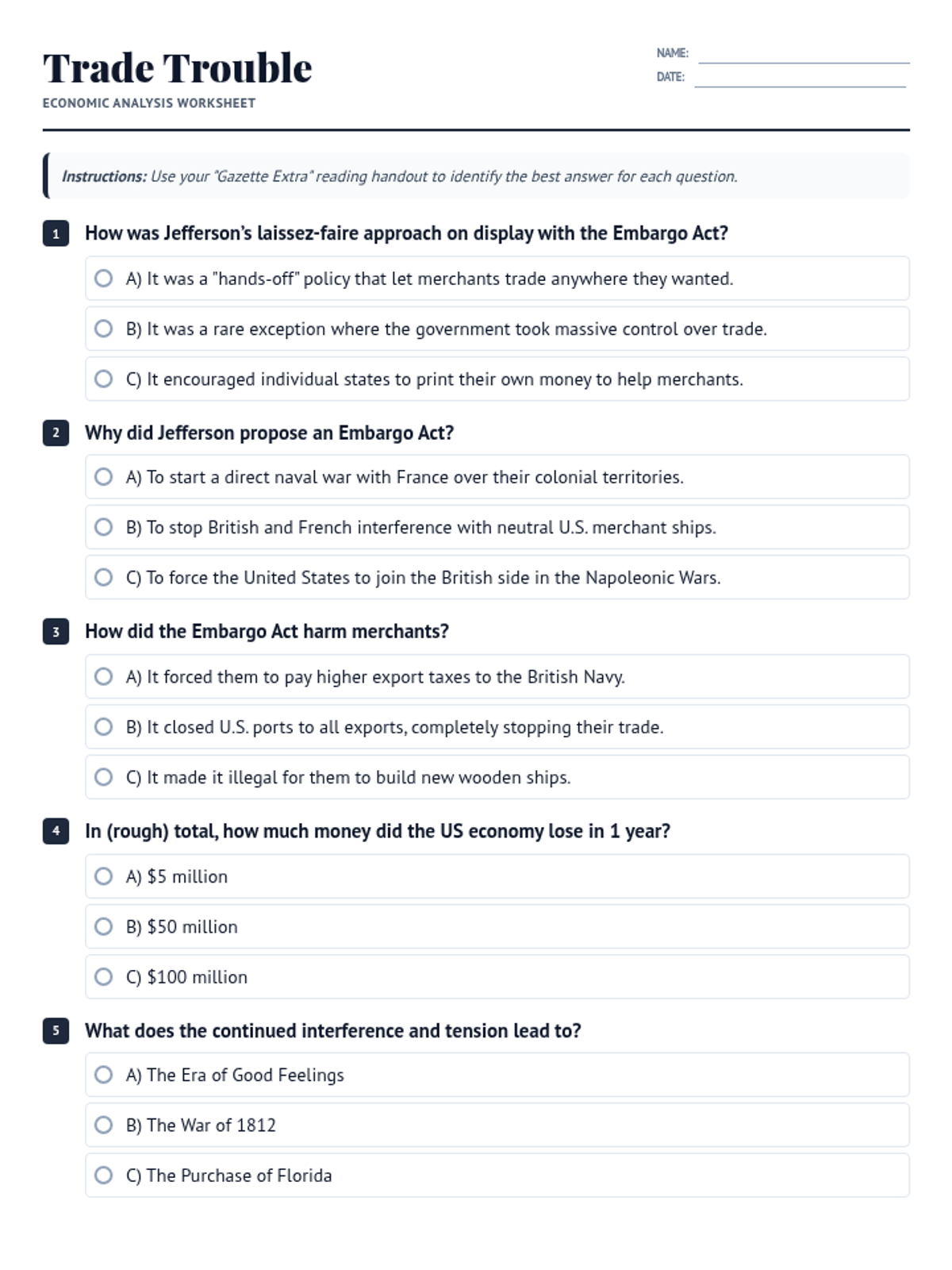
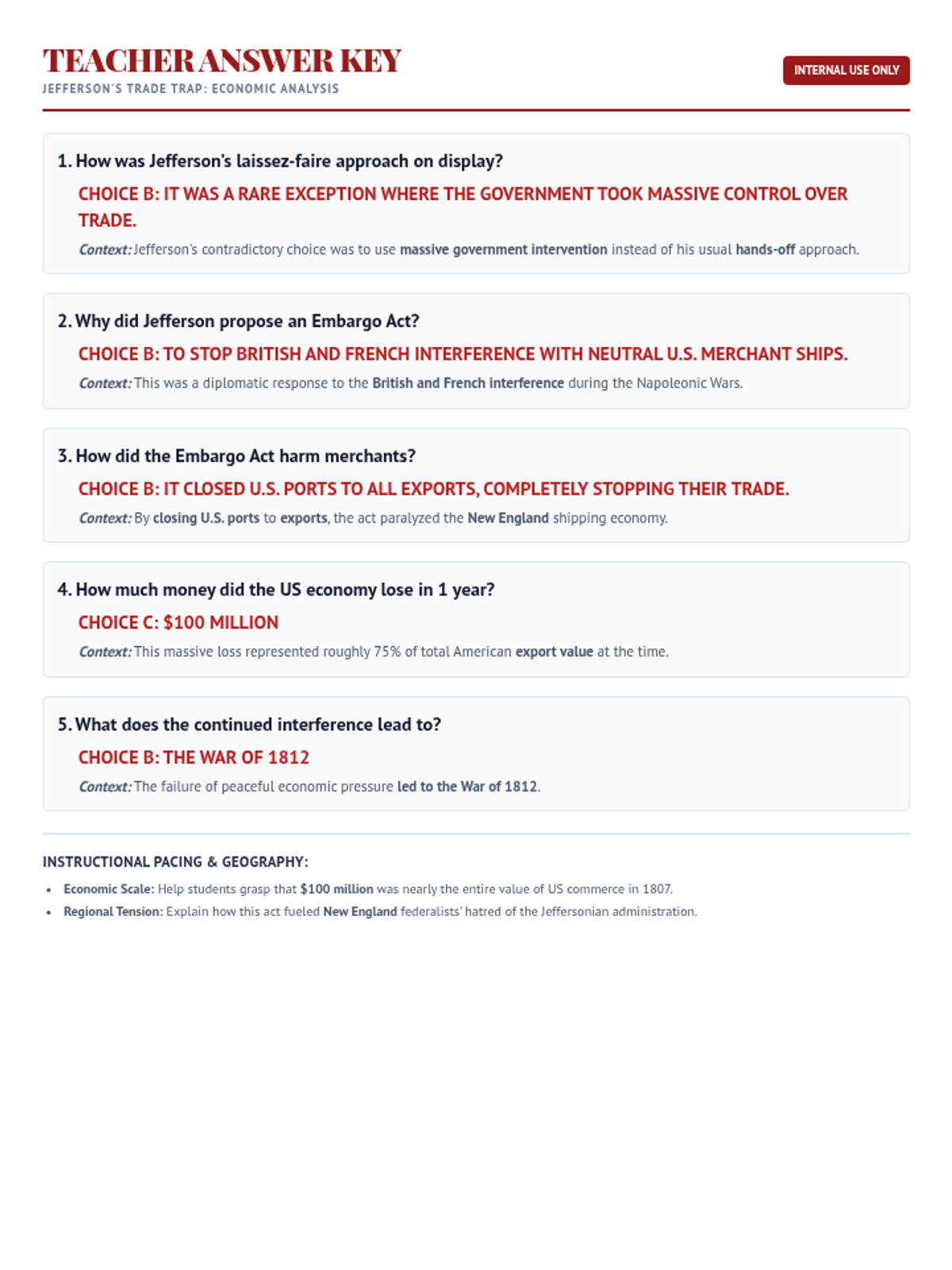
A focused look at Thomas Jefferson's Embargo Act of 1807, exploring its causes, the economic fallout for New England merchants, and its role in leading to the War of 1812.
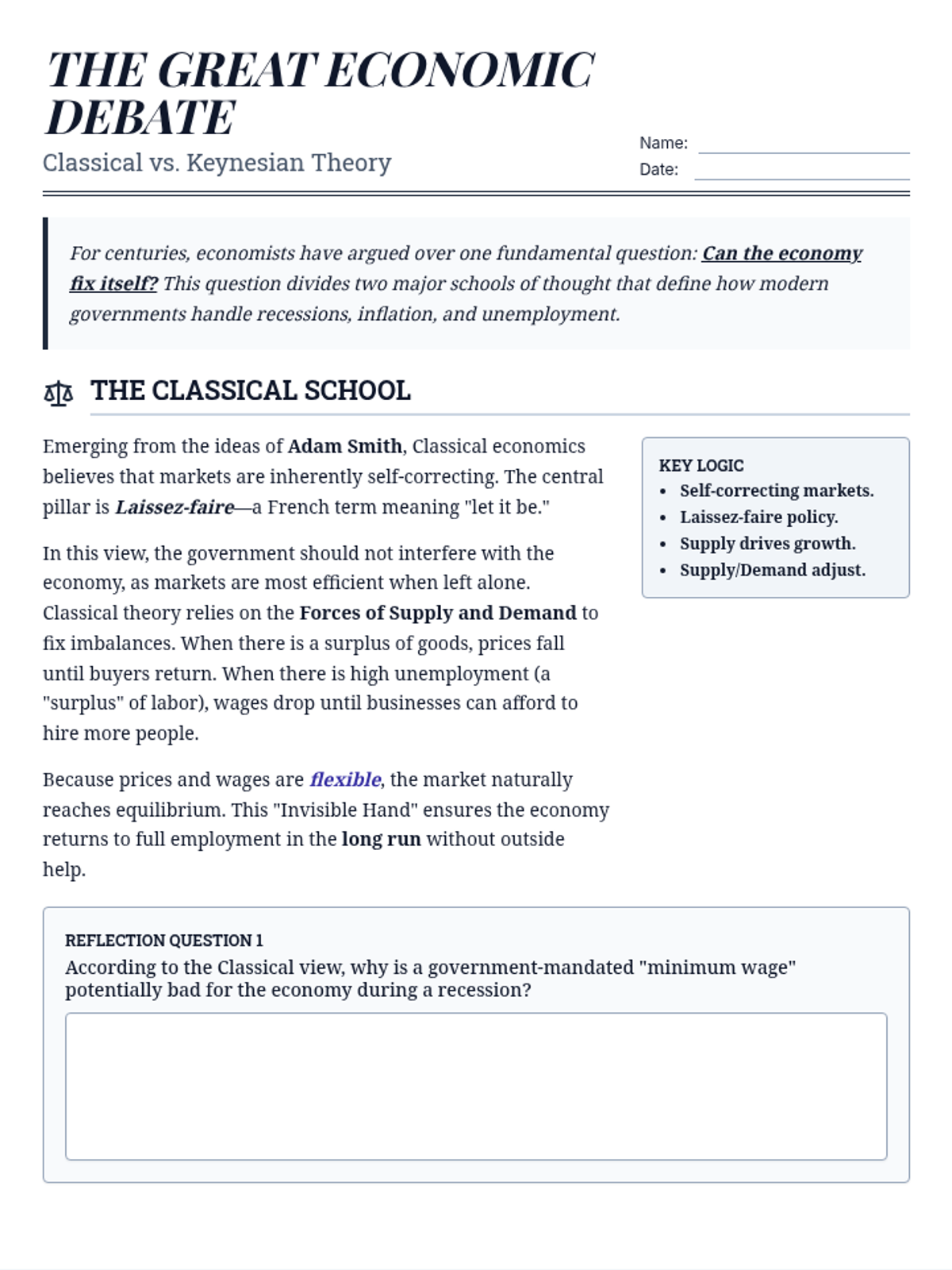
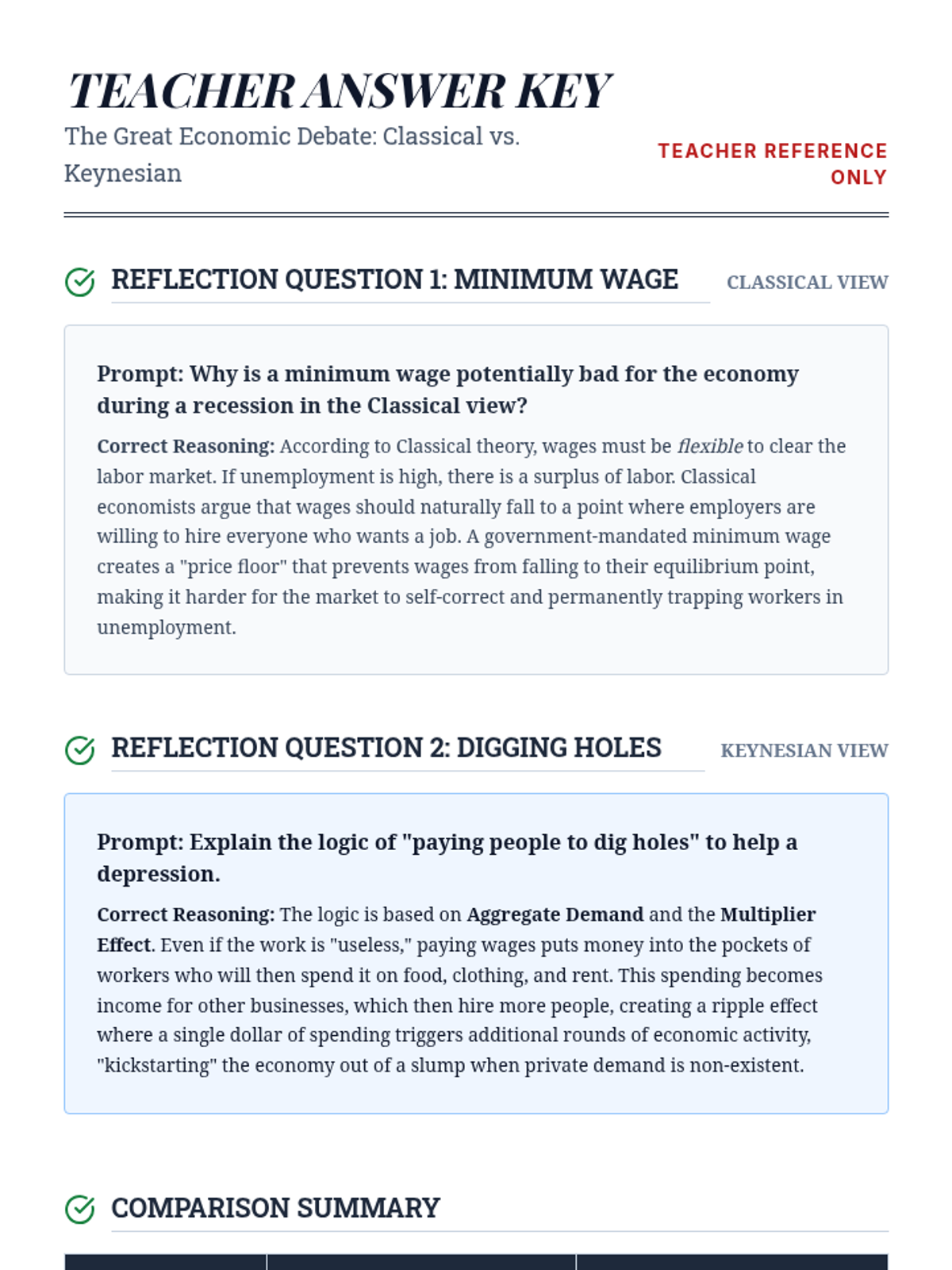
A 30-35 minute independent exploration of the fundamental differences between Classical and Keynesian economic theories, focusing on their origins, core beliefs about market self-correction, and the role of government intervention.
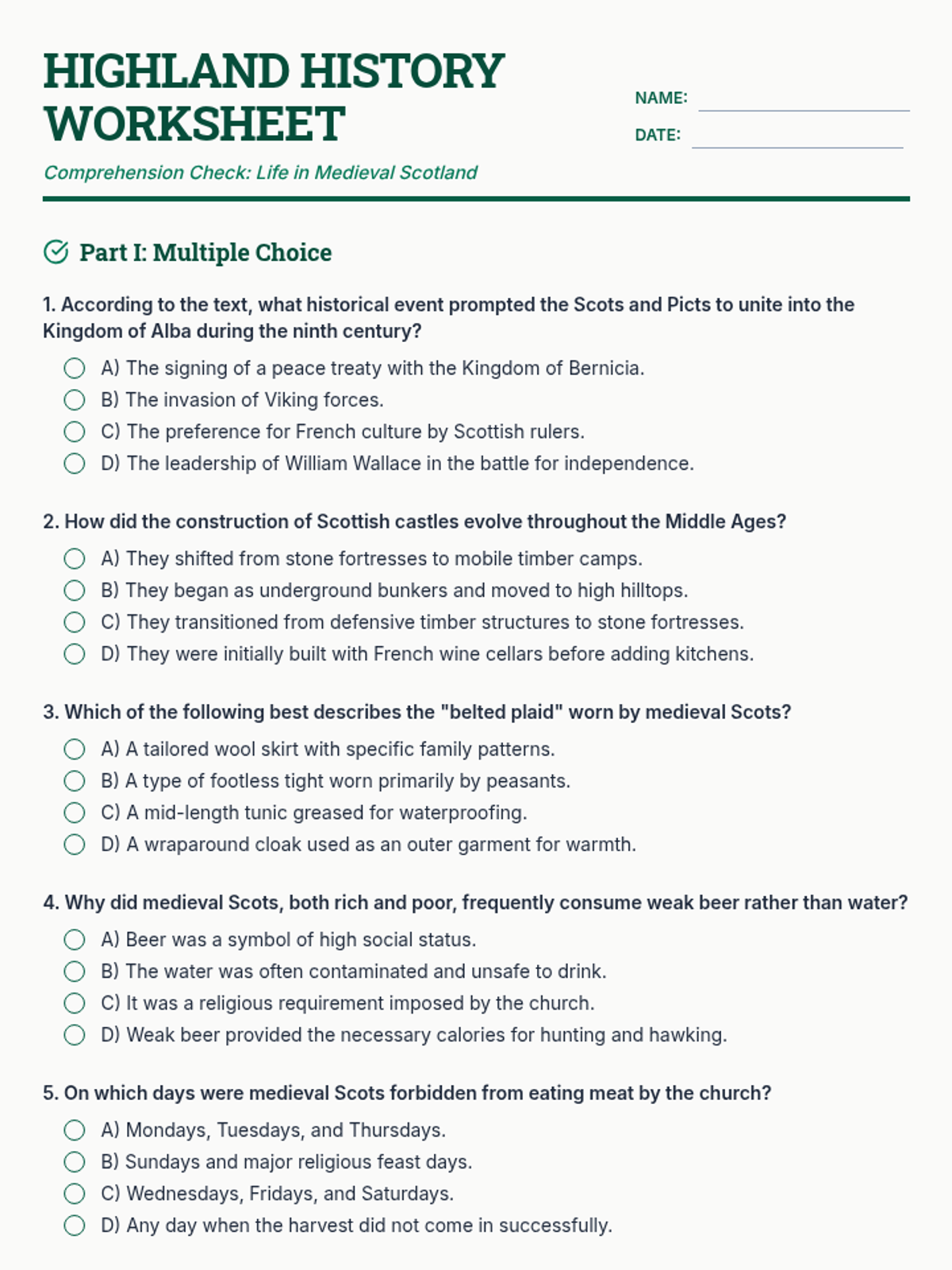
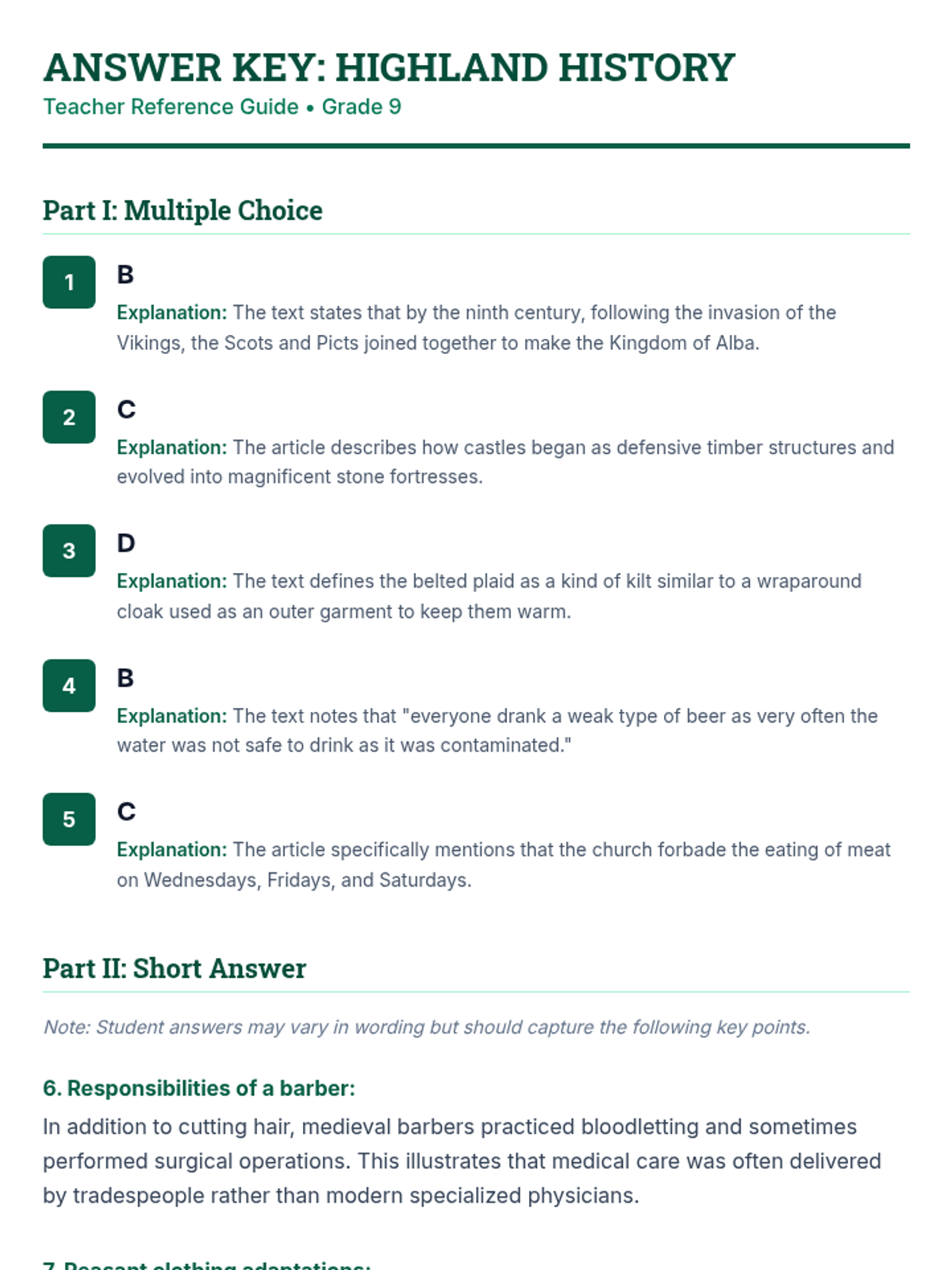
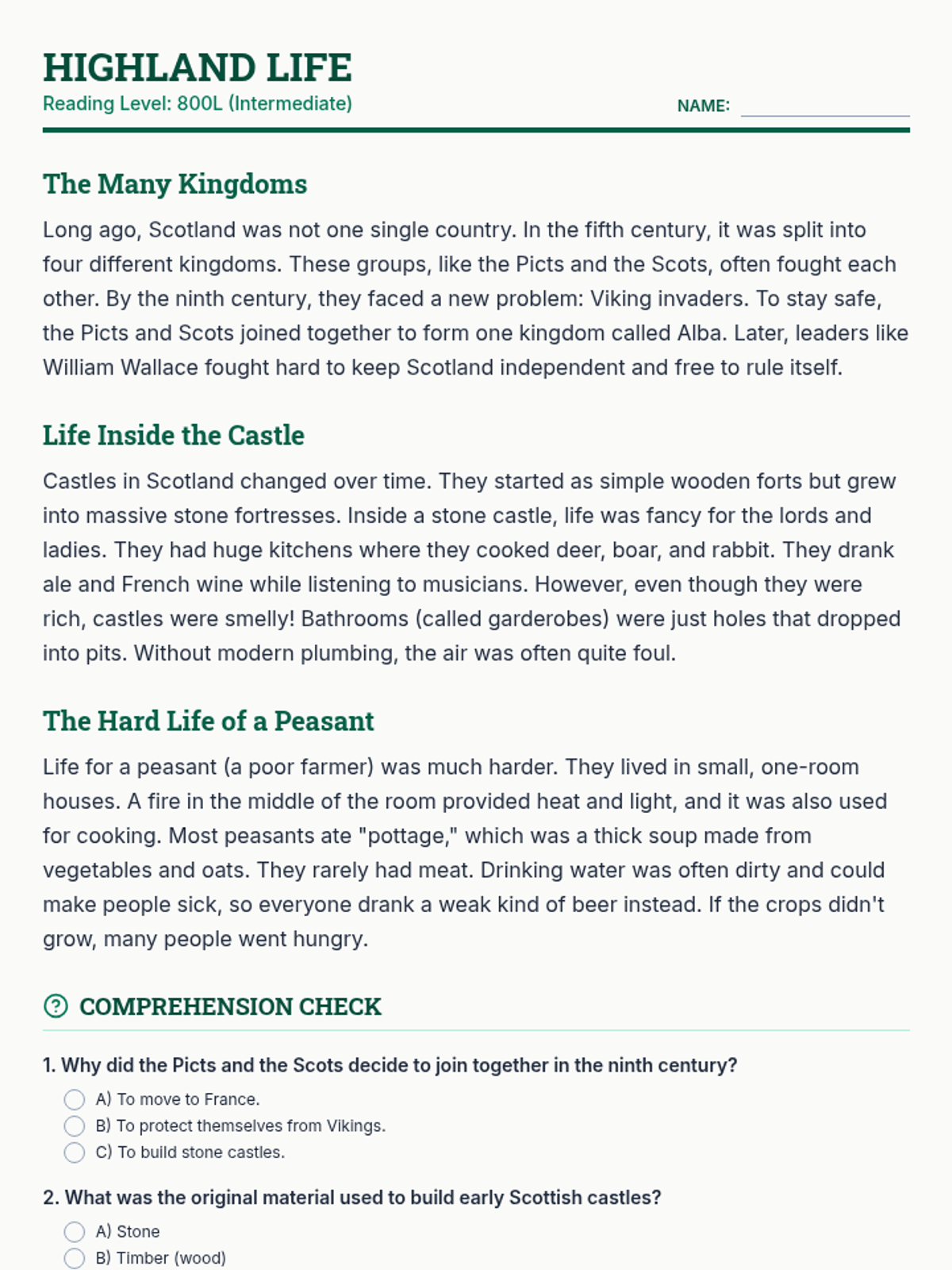
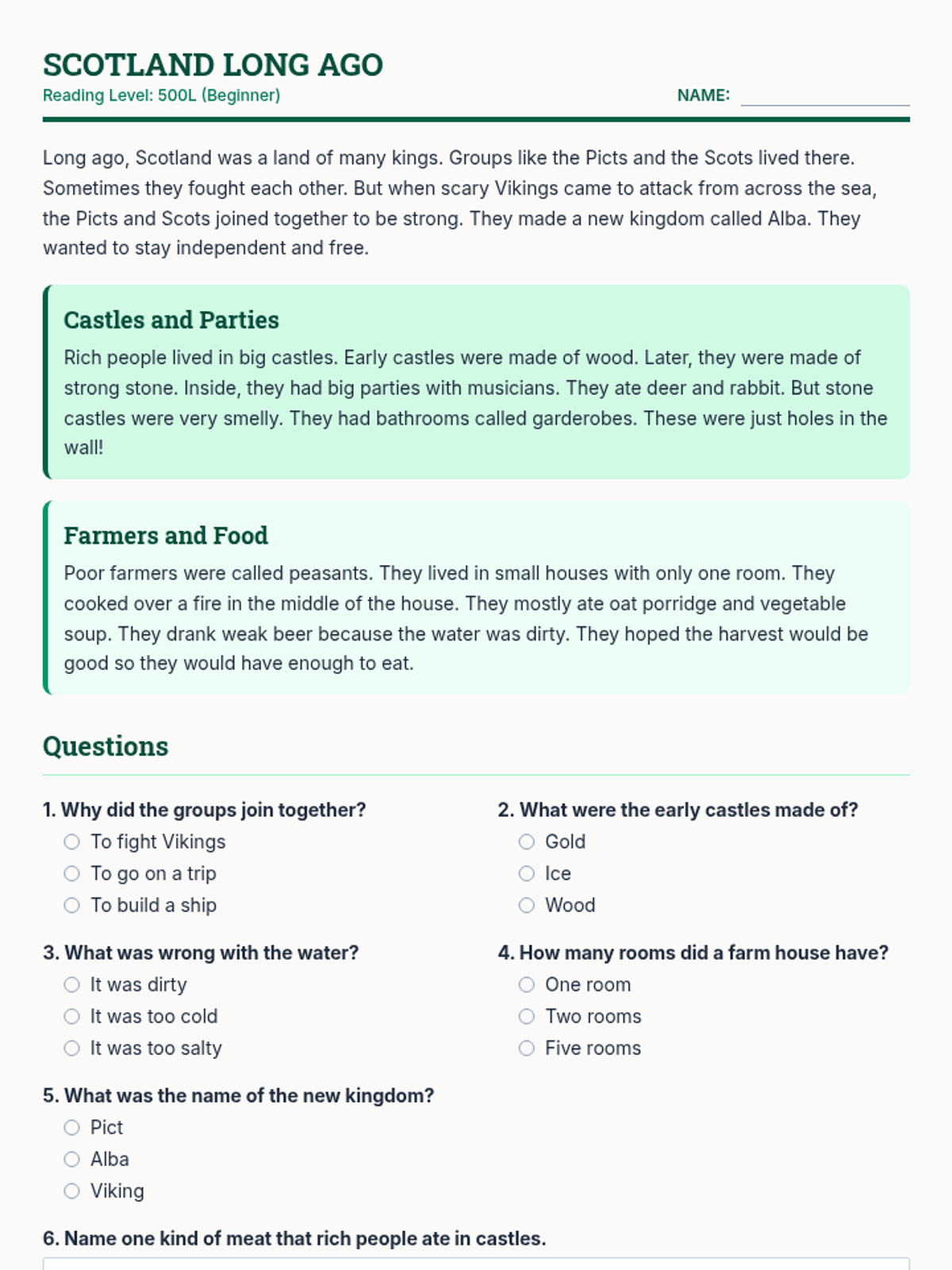
A lesson exploring the realities of life in medieval Scotland, from castle luxury to peasant survival, based on historical accounts of clothing, food, and social structure.
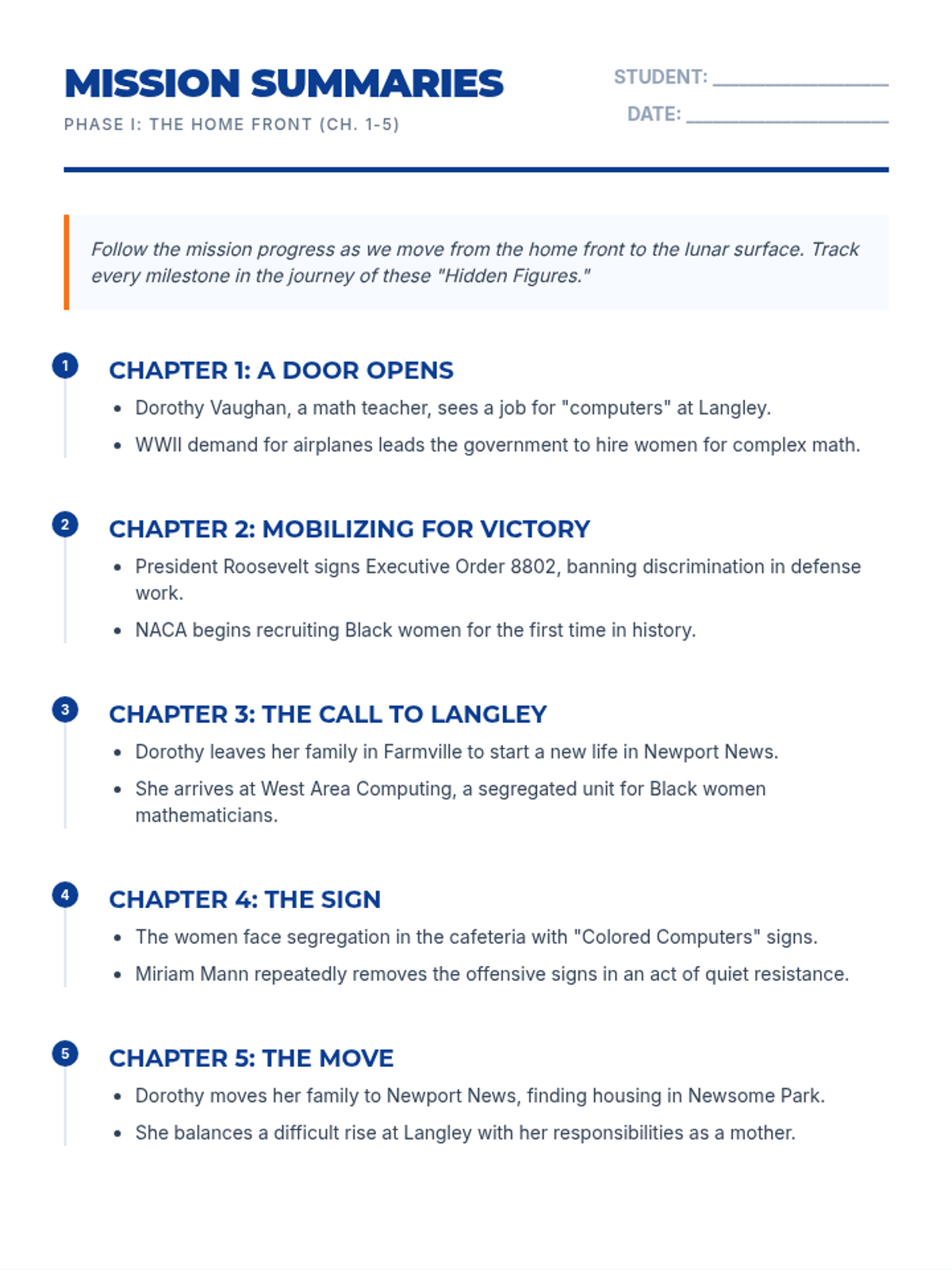
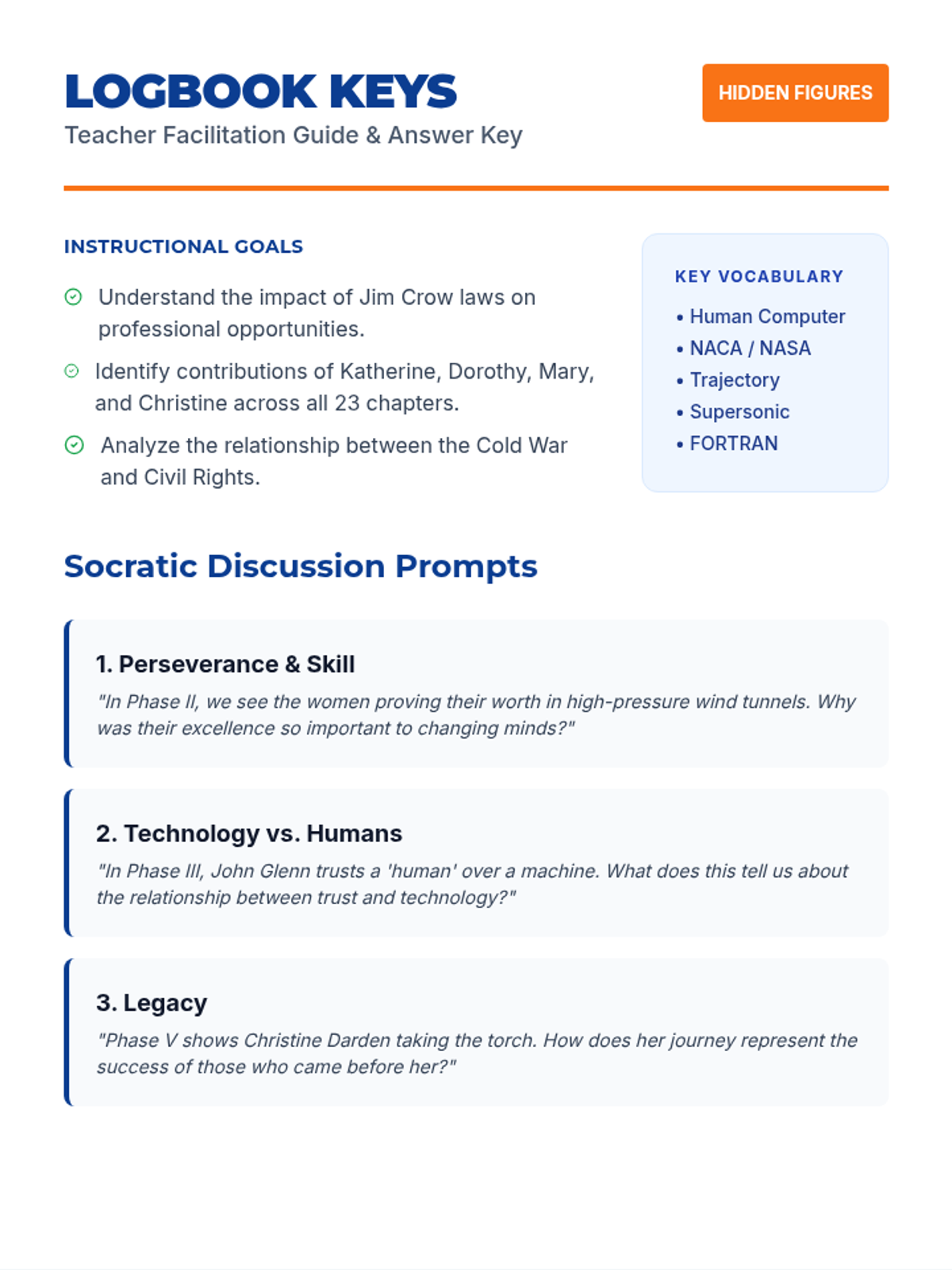
A comprehensive chapter-by-chapter summary and exploration of the book 'Hidden Figures', focusing on the lives and contributions of Katherine Johnson, Dorothy Vaughan, Mary Jackson, and Christine Darden during the Space Race.
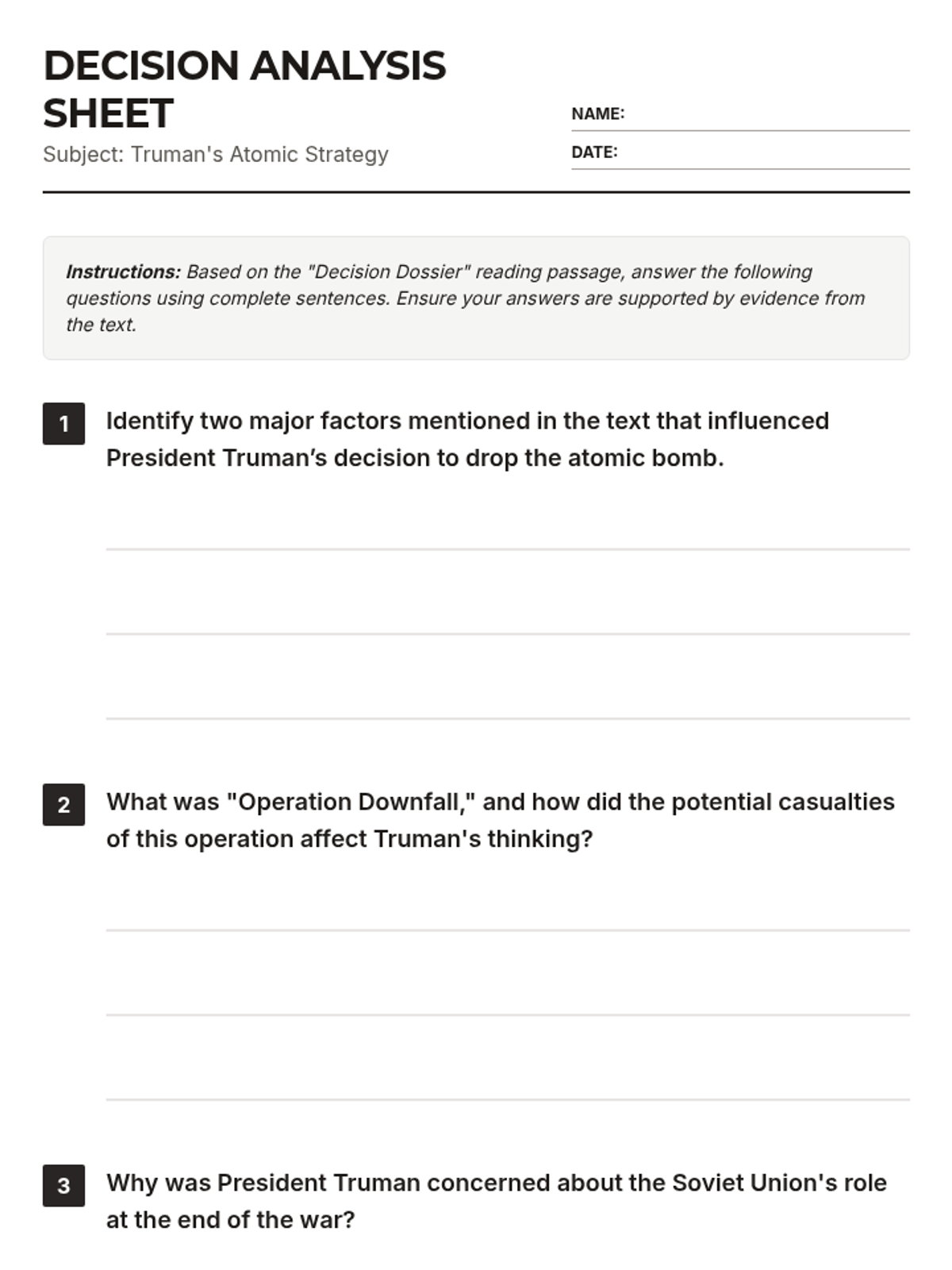
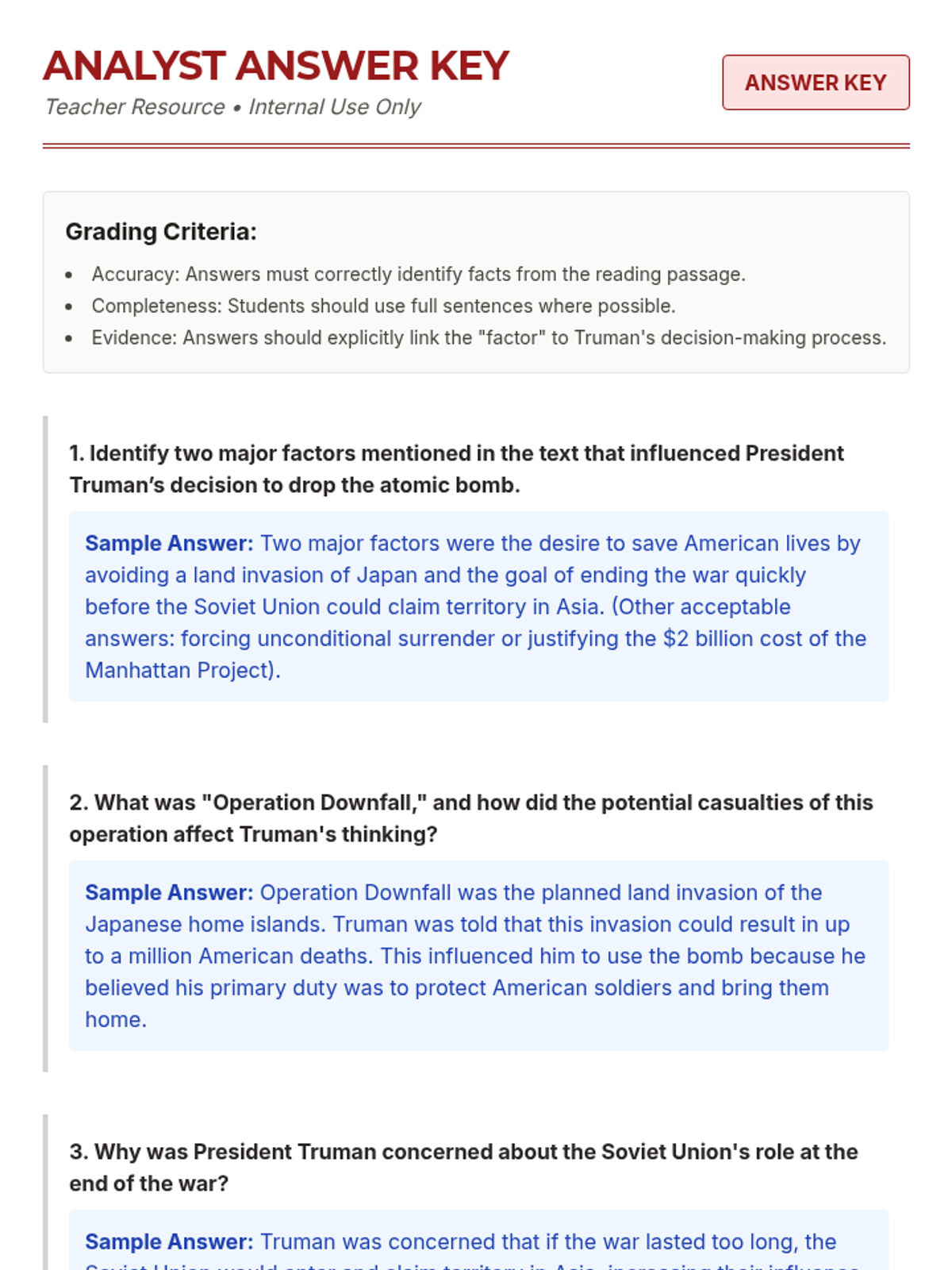
A focused study on the complex factors and historical context surrounding President Harry S. Truman's decision to use atomic weapons at the end of World War II.
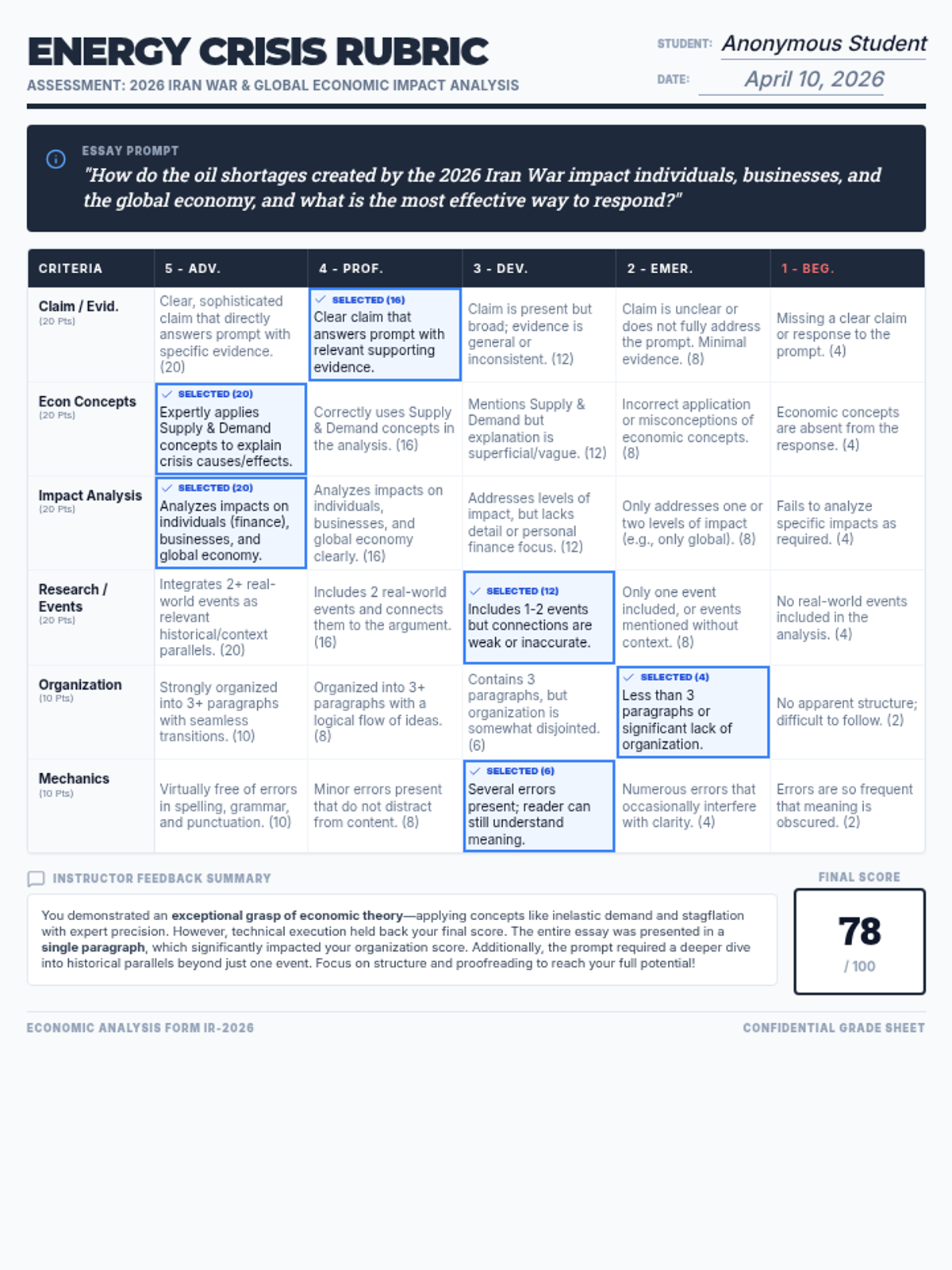
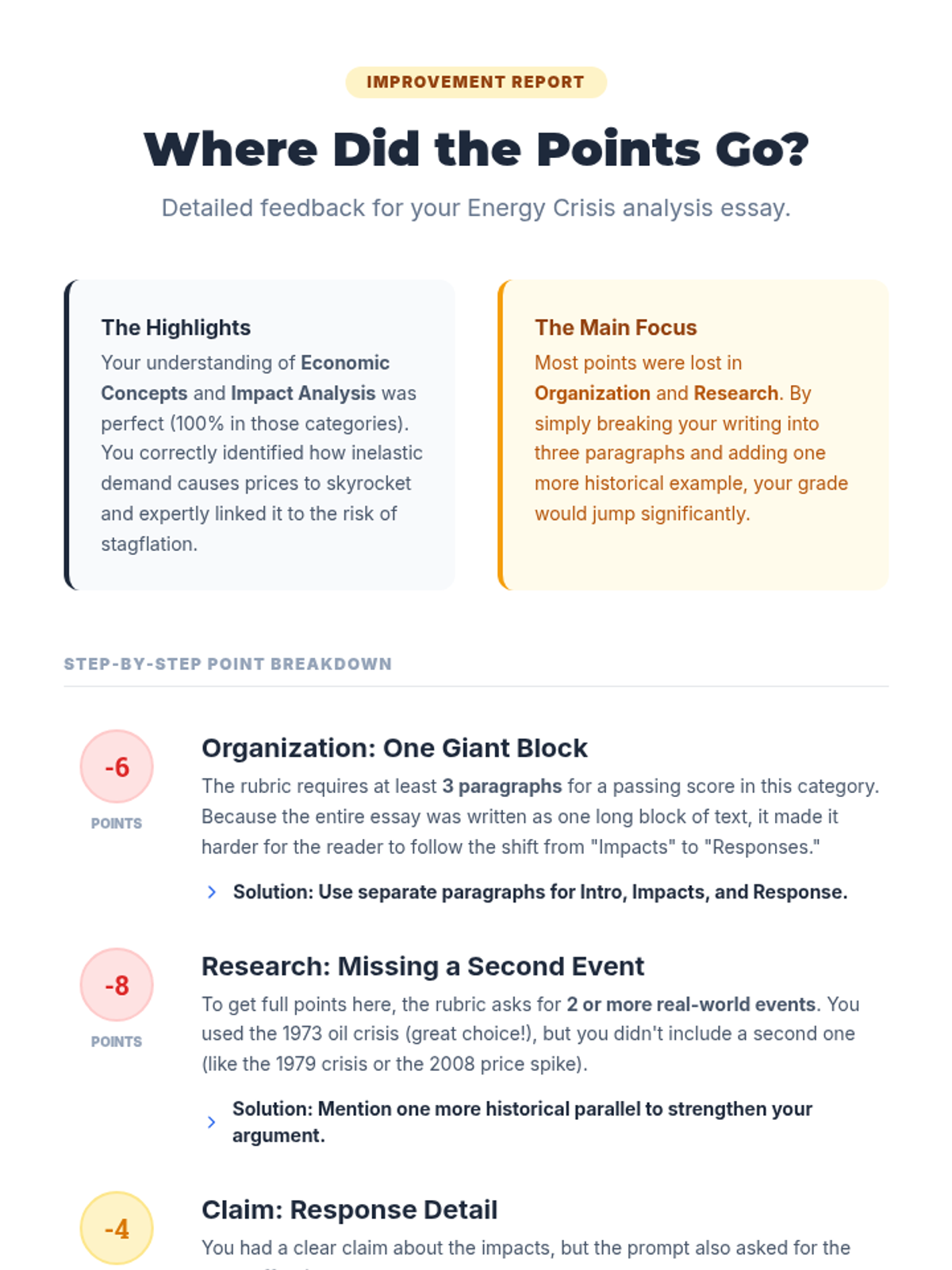
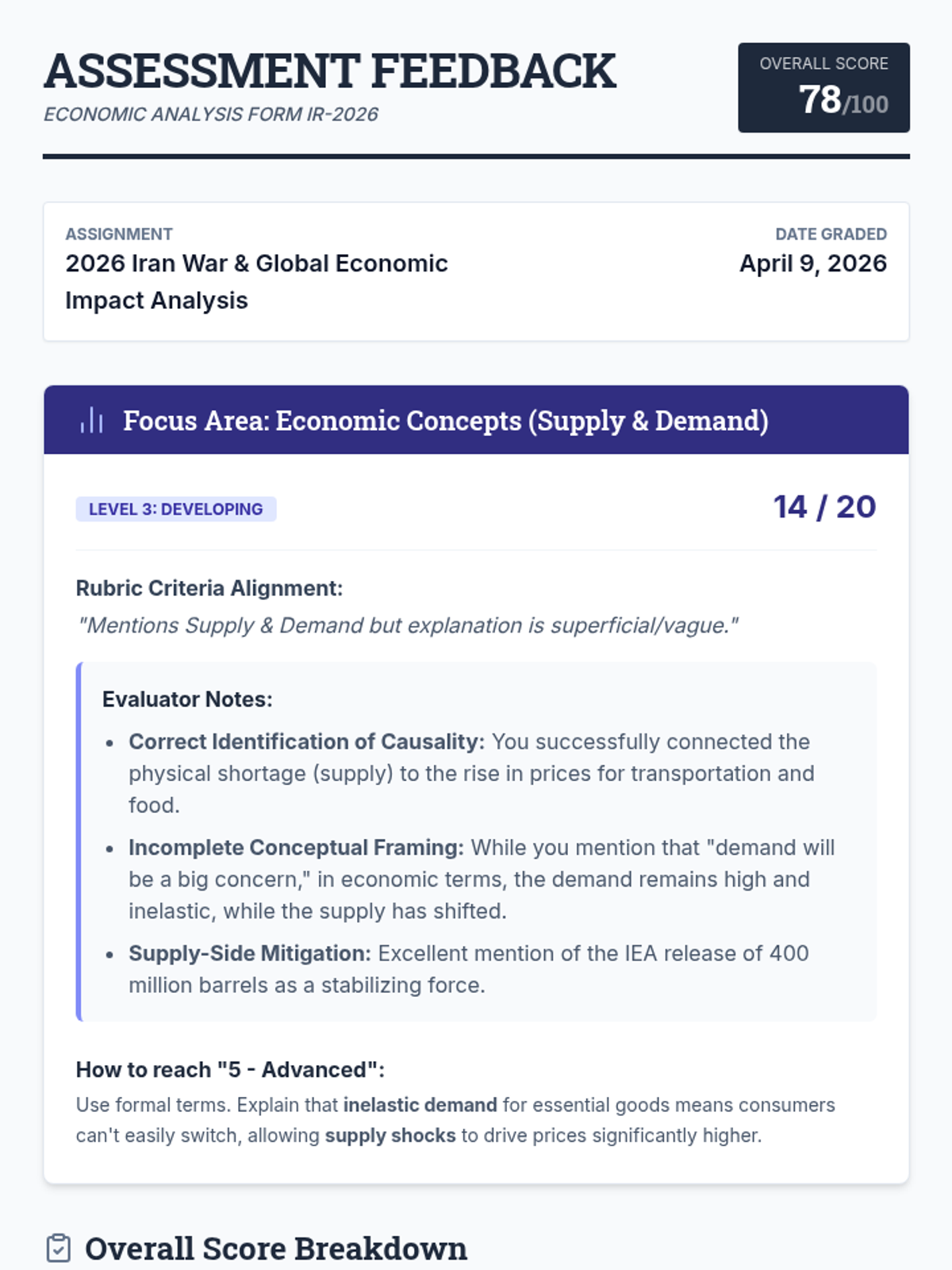
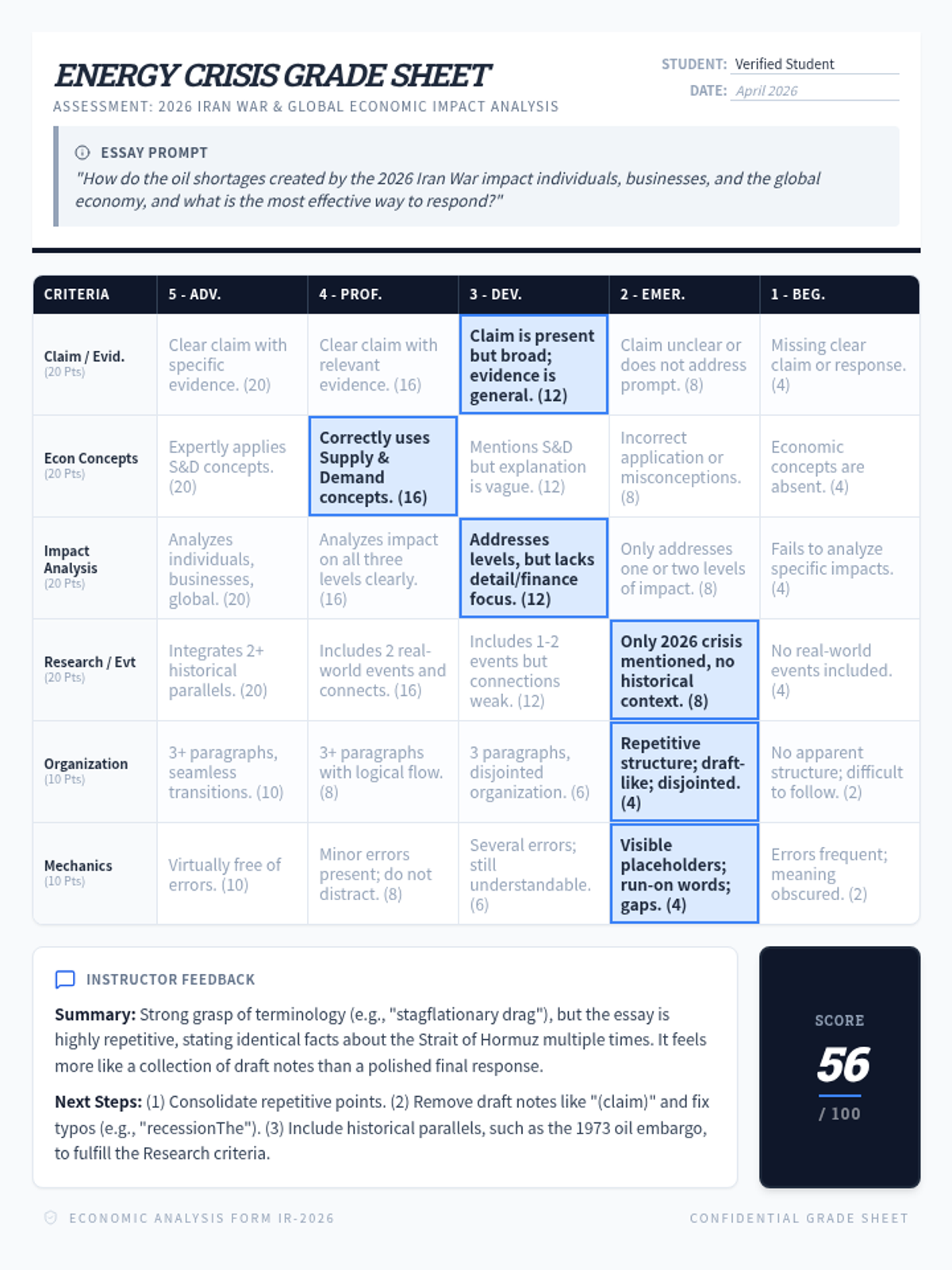
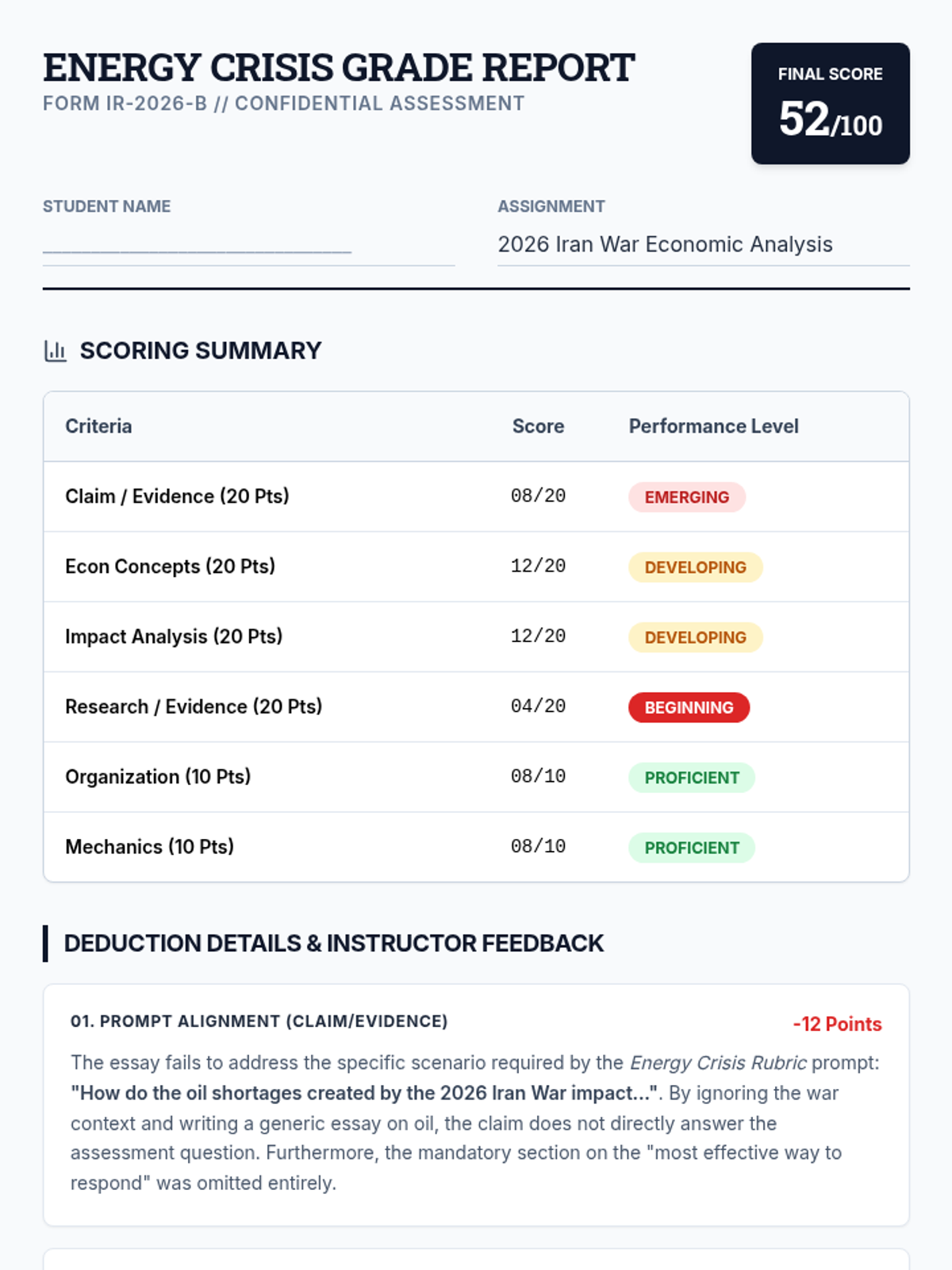
A formal assessment and feedback set for the 2026 Energy Crisis economic analysis essay, including a scored rubric and clear, actionable feedback for the student.
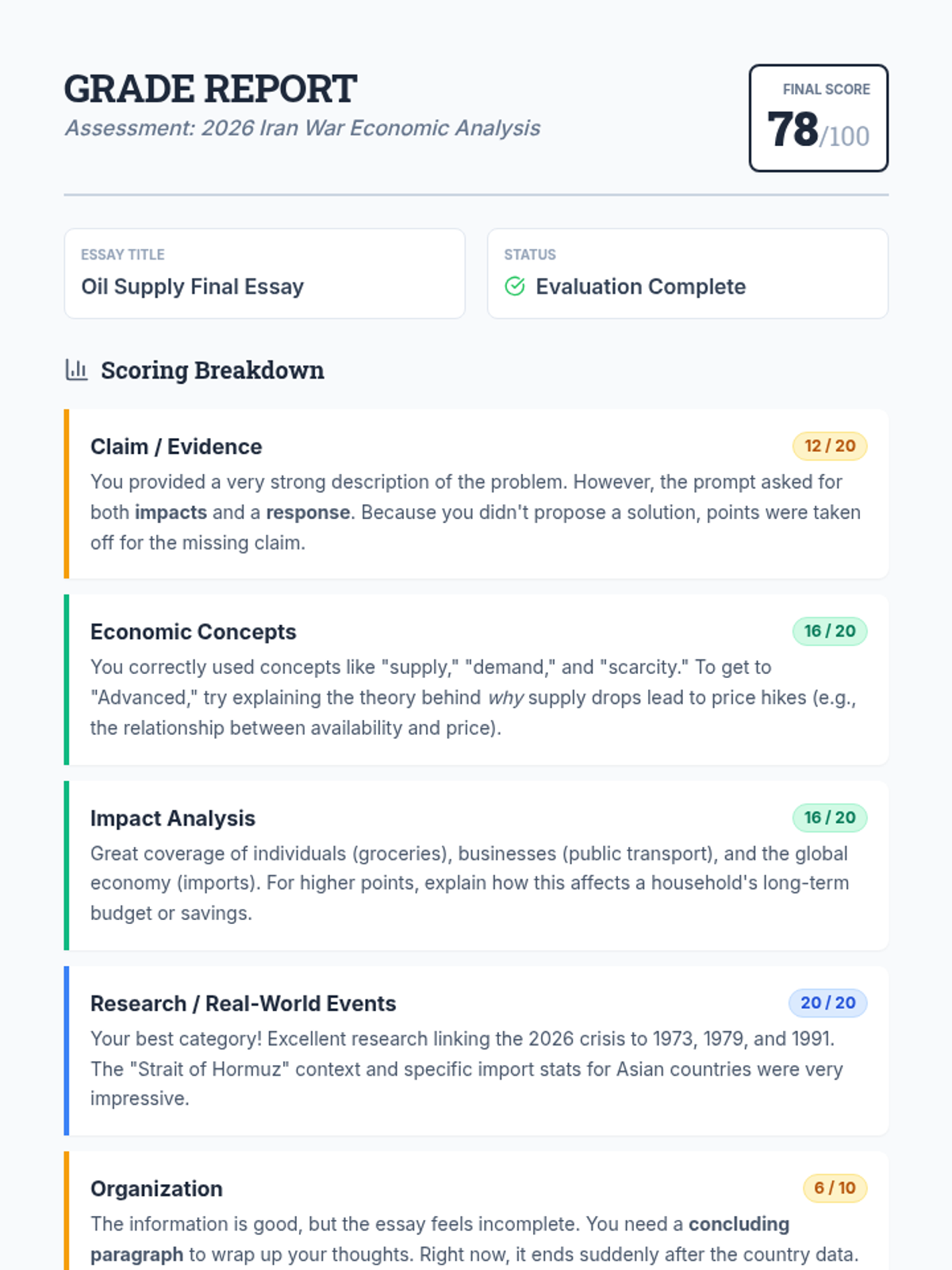
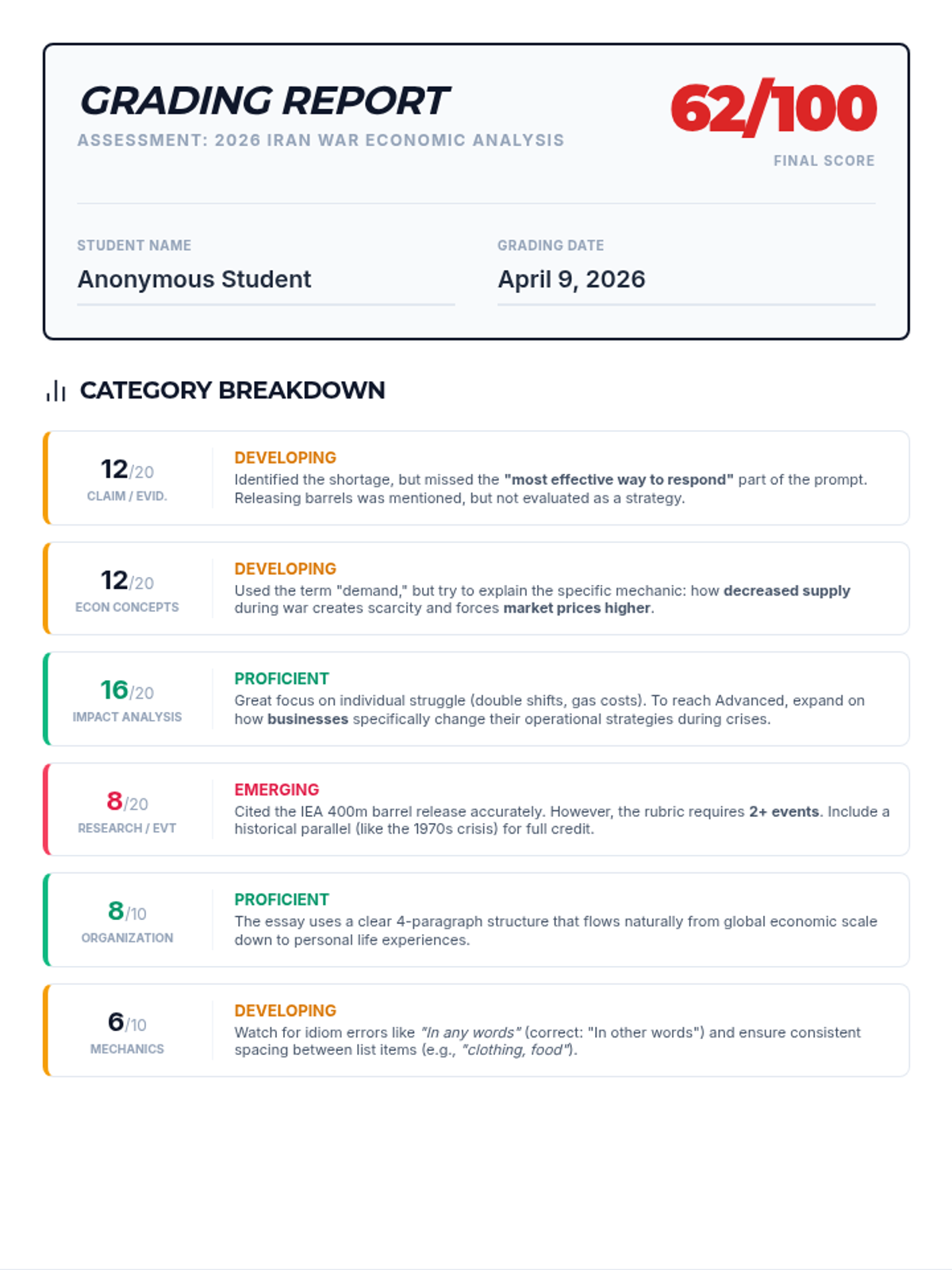
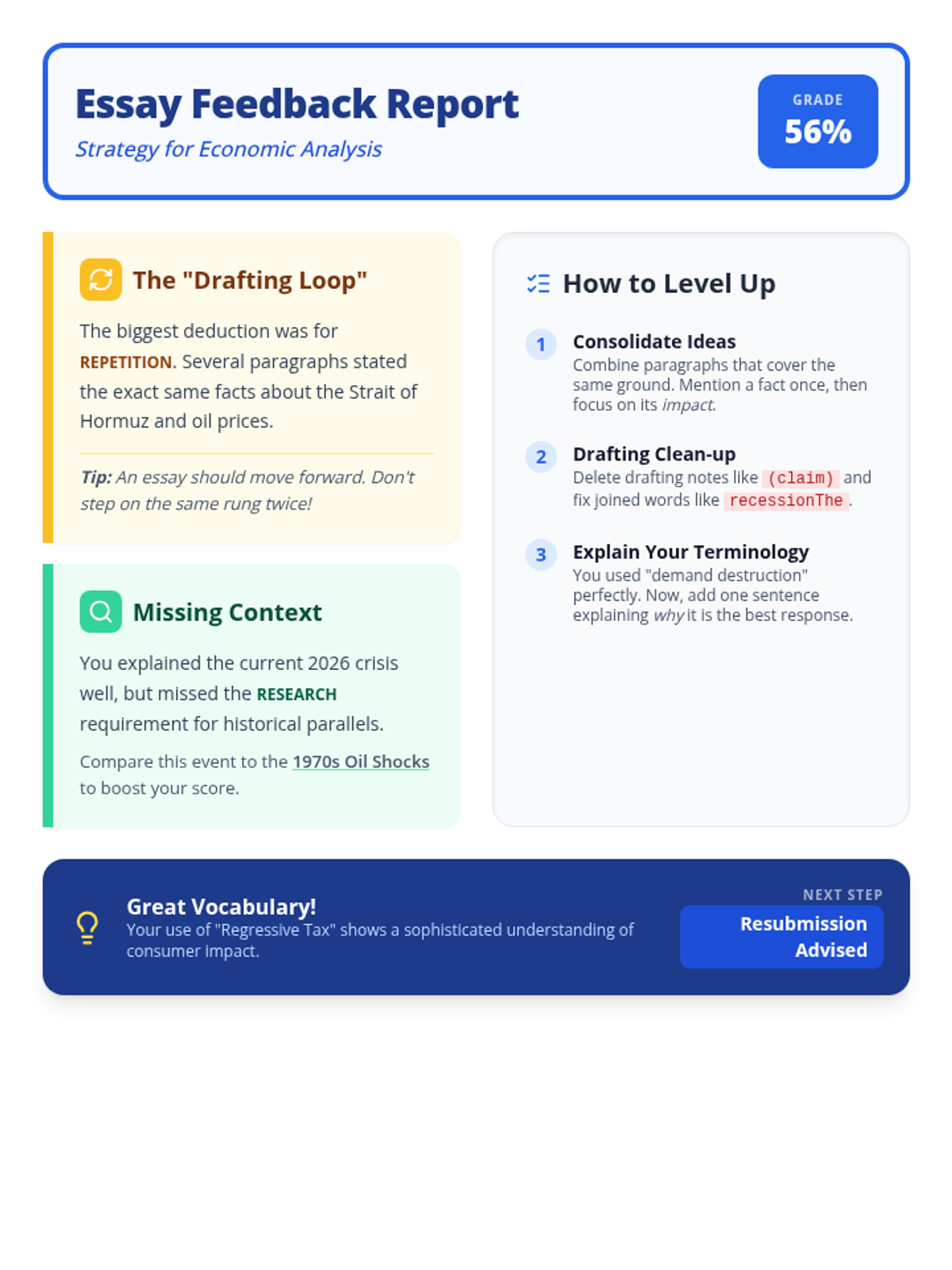
A grading report and feedback sheet based on the Energy Crisis Rubric, providing clear, actionable insights for a student essay on the 2026 Iran War oil shortages.
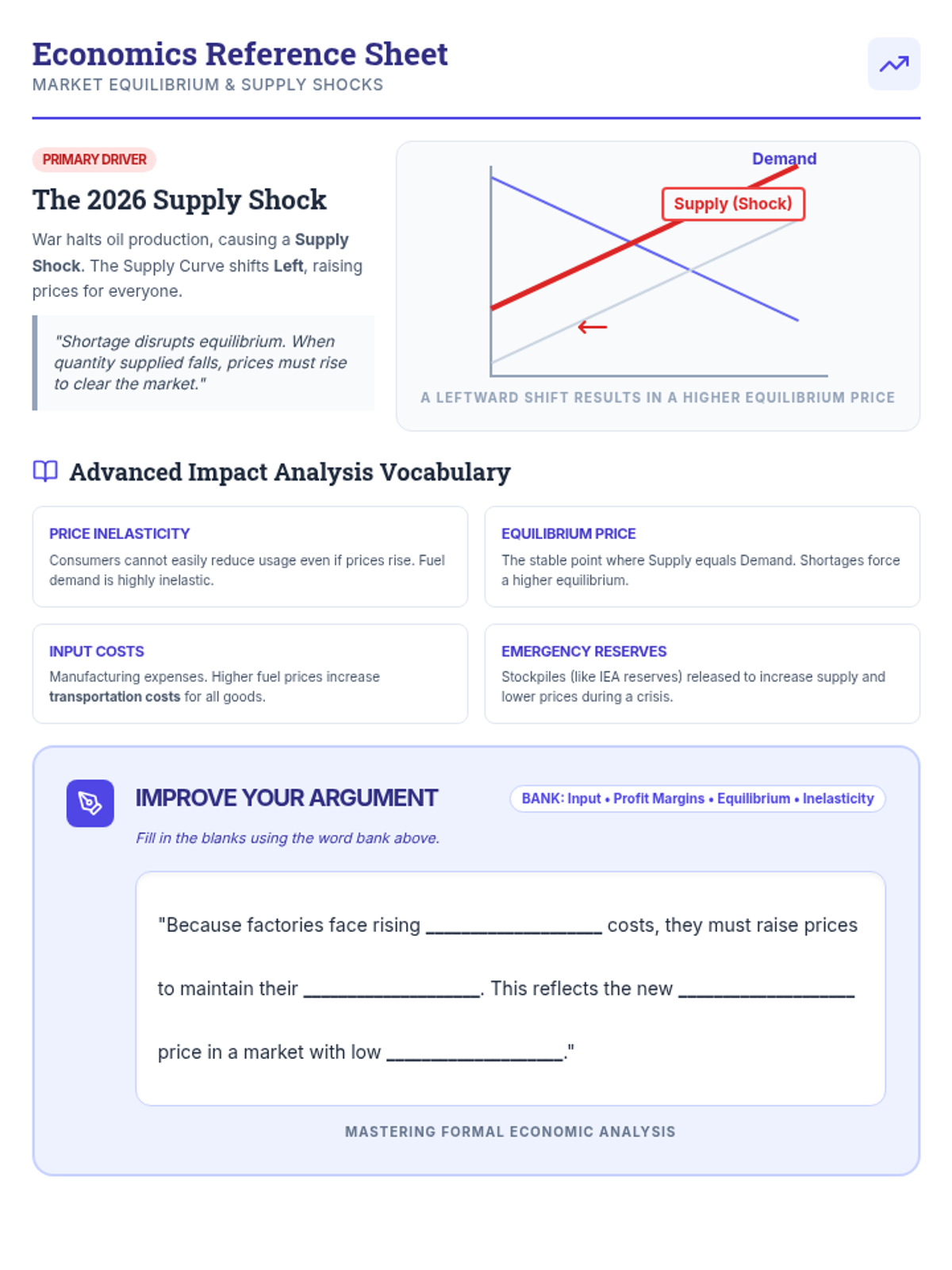
A lesson focused on analyzing the economic impacts of energy crises, specifically the 2026 Iran War scenario, and providing feedback on student performance.
A lesson focused on evaluating student analysis of the 2026 global energy crisis, with a specific emphasis on applying supply and demand economic principles to real-world shortages.
A lesson focused on analyzing the economic consequences of global conflicts, specifically the 2026 energy crisis, featuring a graded assessment and feedback for students.
A graded feedback report for a student essay on the 2026 energy crisis, providing detailed point deductions and constructive criticism based on the provided rubric.
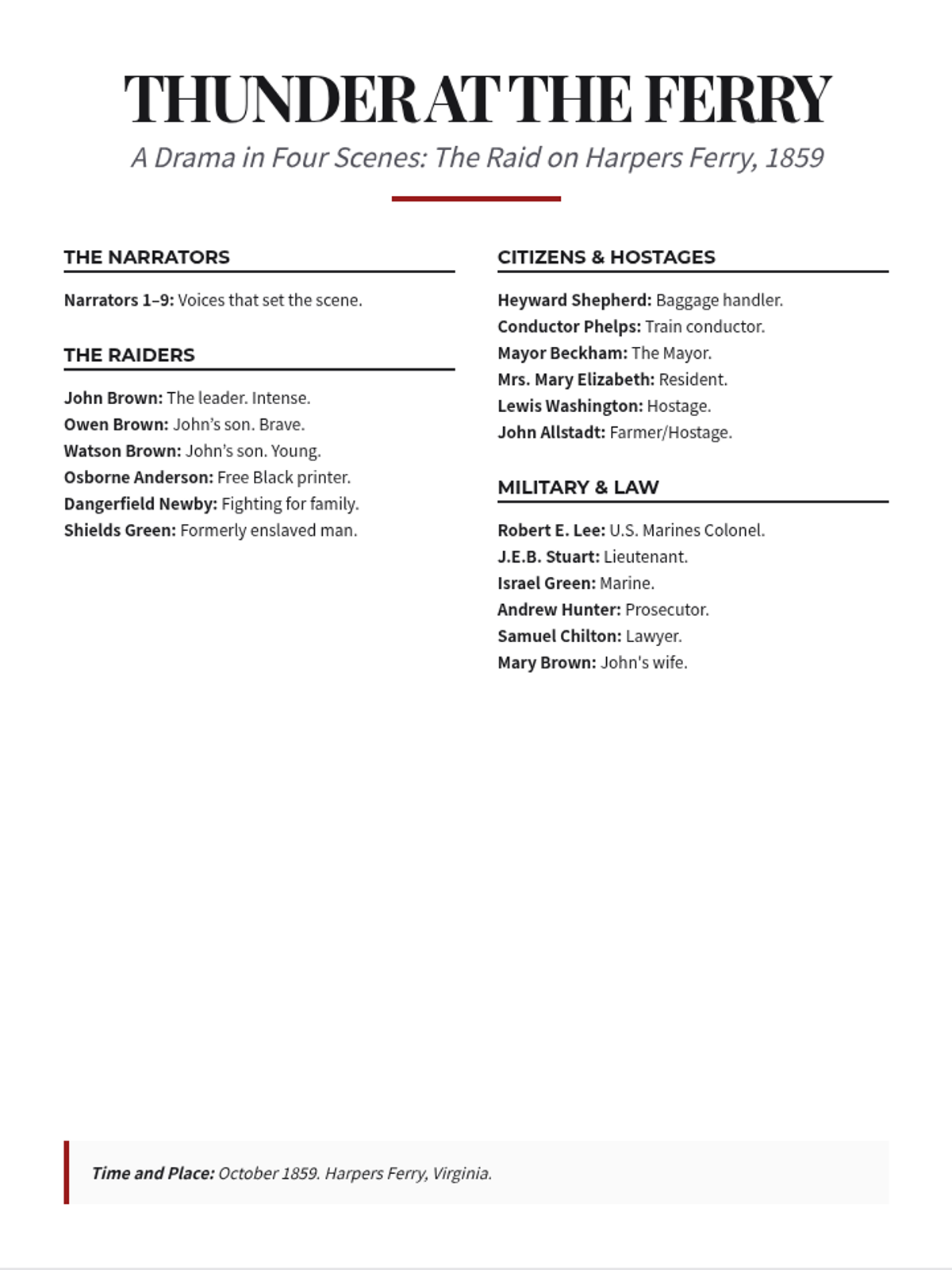
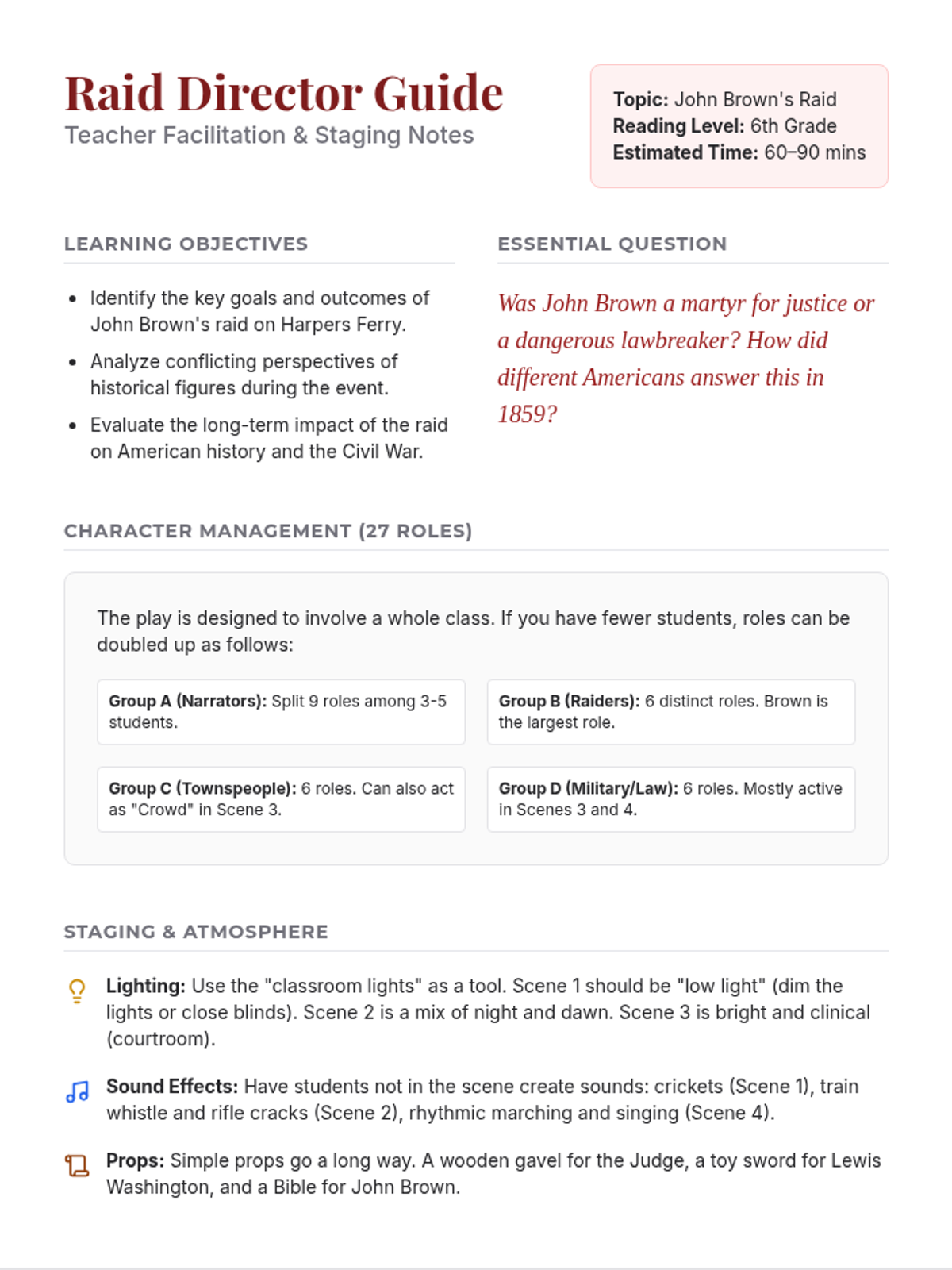
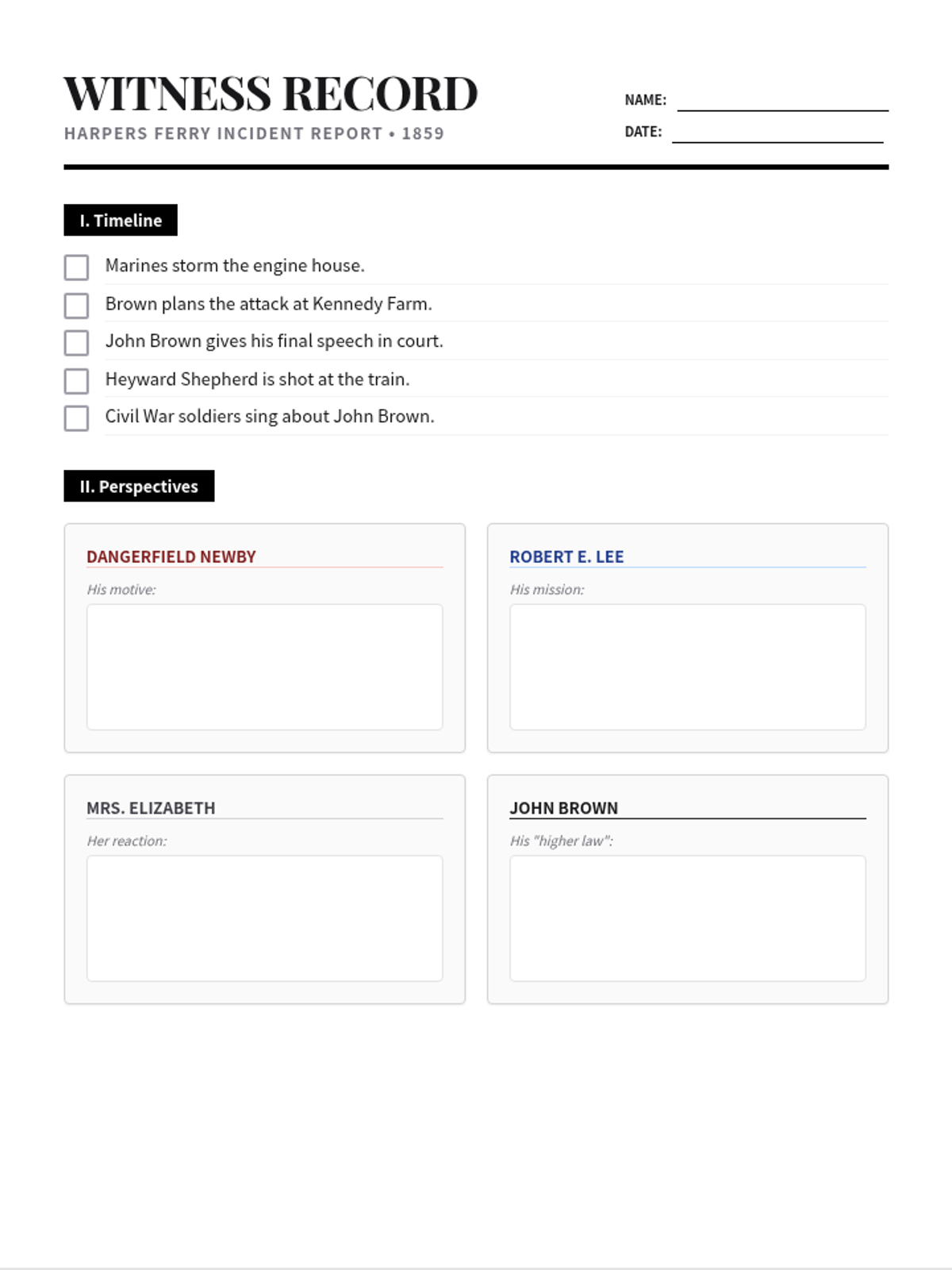
A dramatic exploration of John Brown's 1859 raid on Harpers Ferry, focusing on the conflicting perspectives of the raiders, the military, and the local community through a 4-scene classroom play.
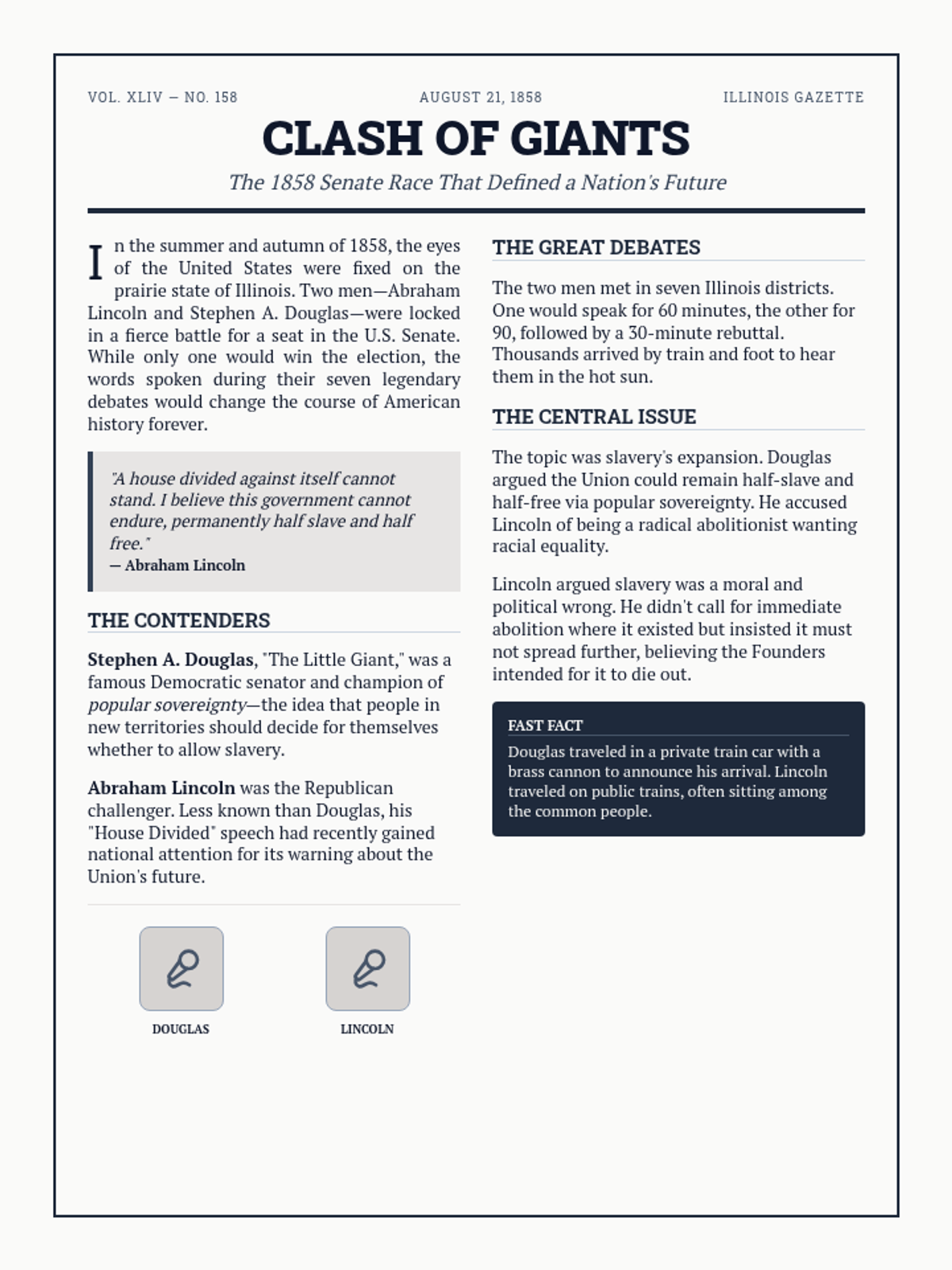
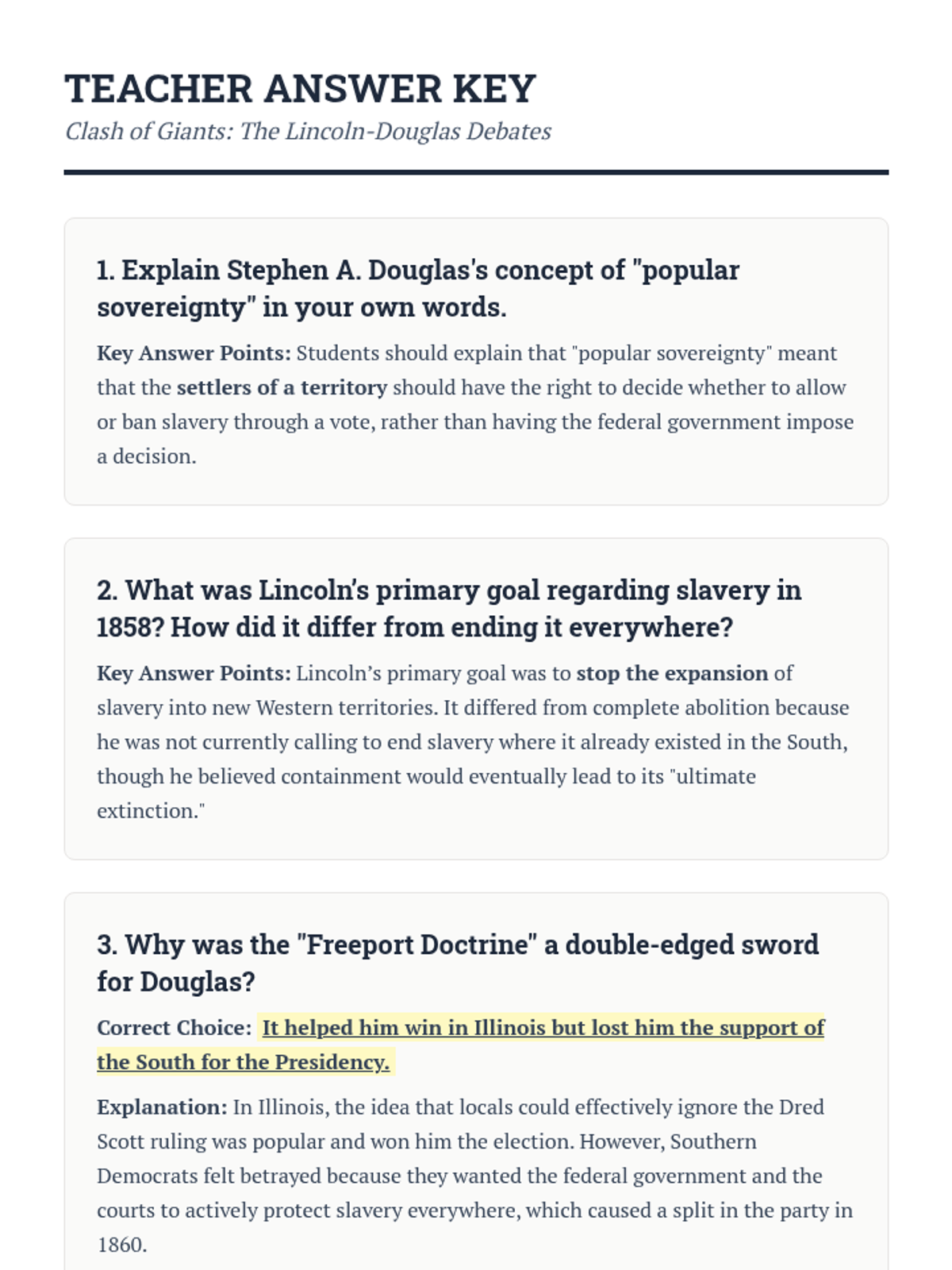
A comprehensive lesson on the 1858 Illinois Senate race, exploring the historical significance of the Lincoln-Douglas debates, the expansion of slavery, and the rise of Abraham Lincoln.
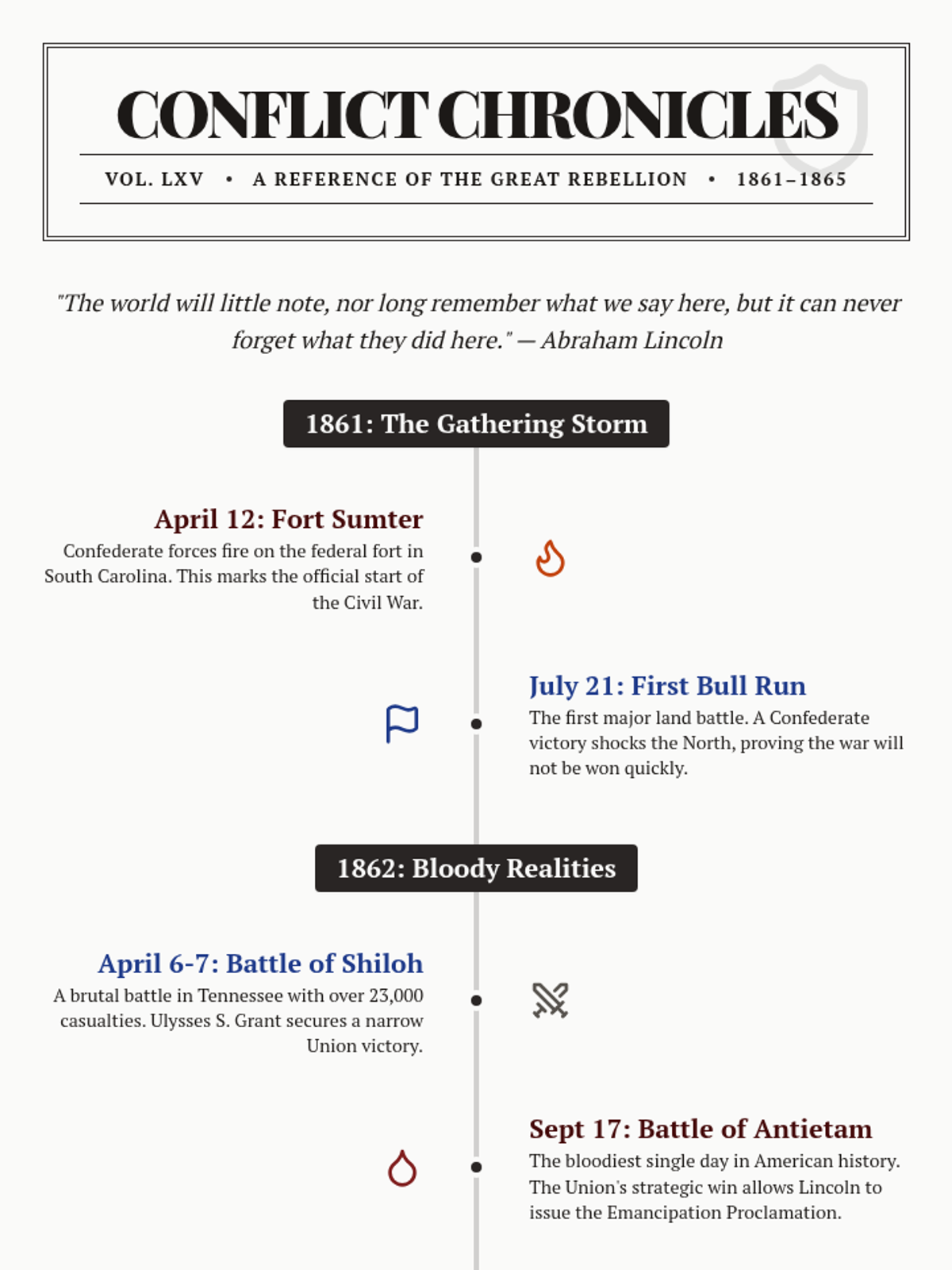
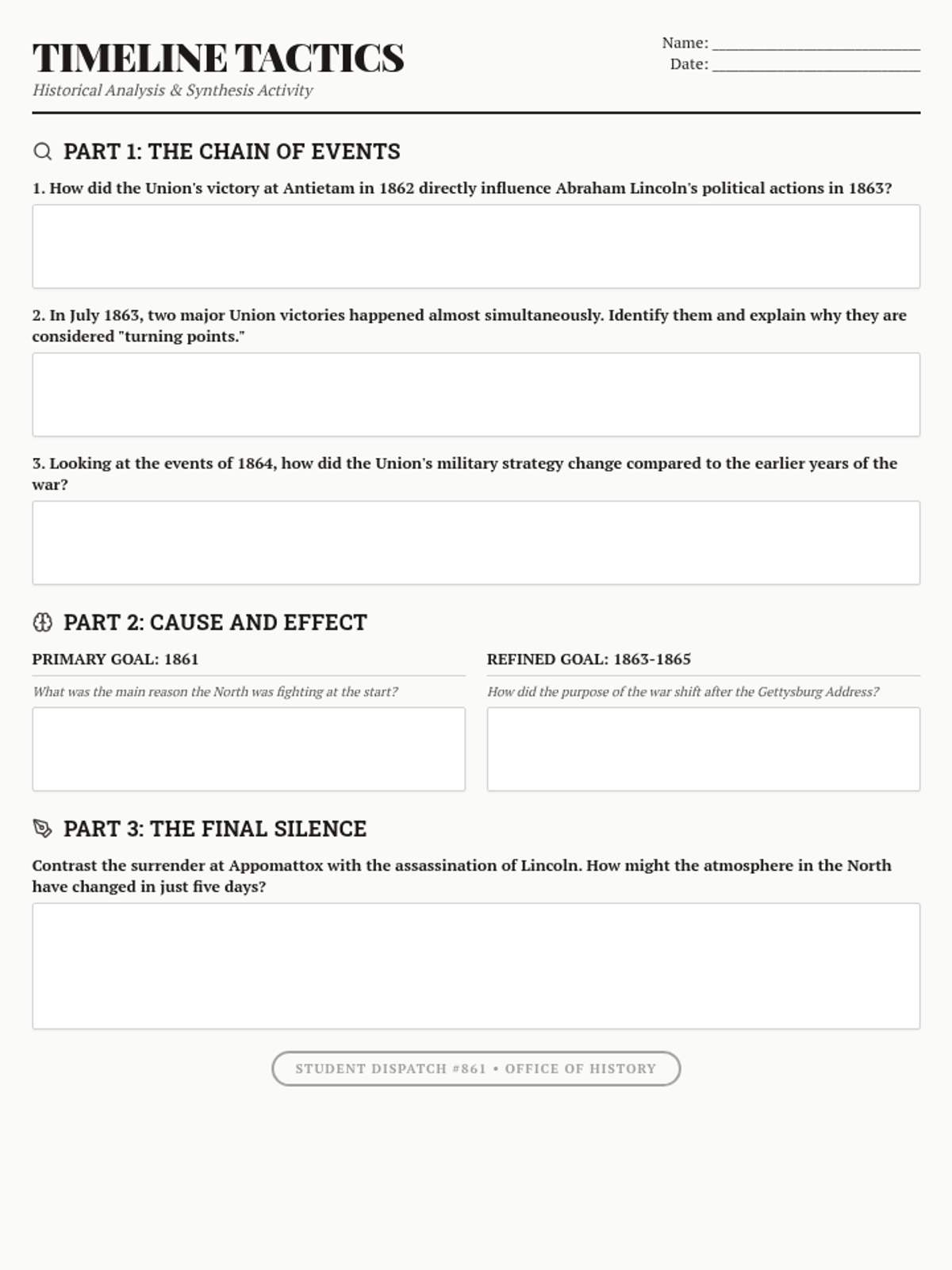
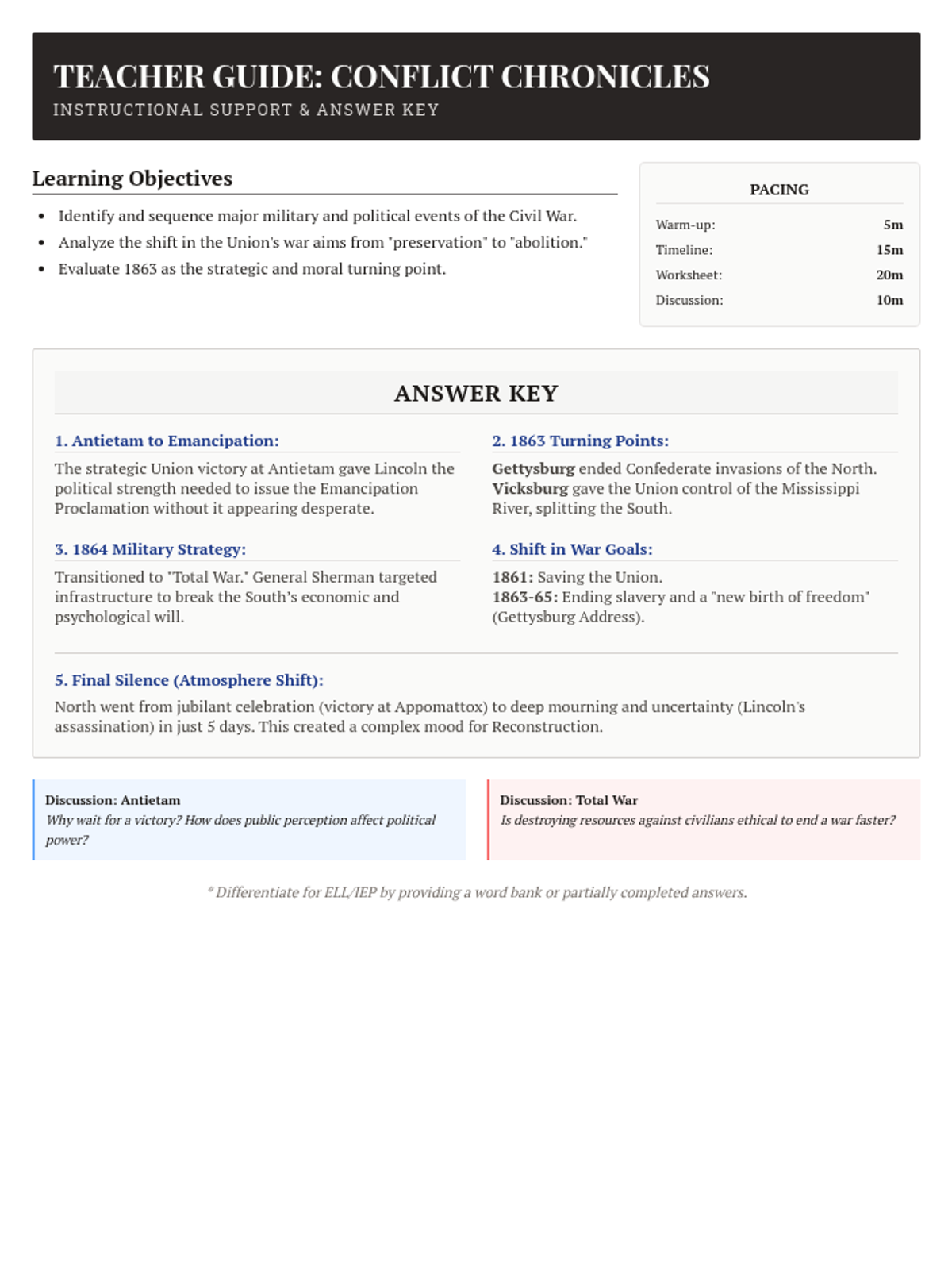
A comprehensive overview of the American Civil War's major events from 1861 to 1865, focusing on key battles, political shifts, and the war's ultimate conclusion.
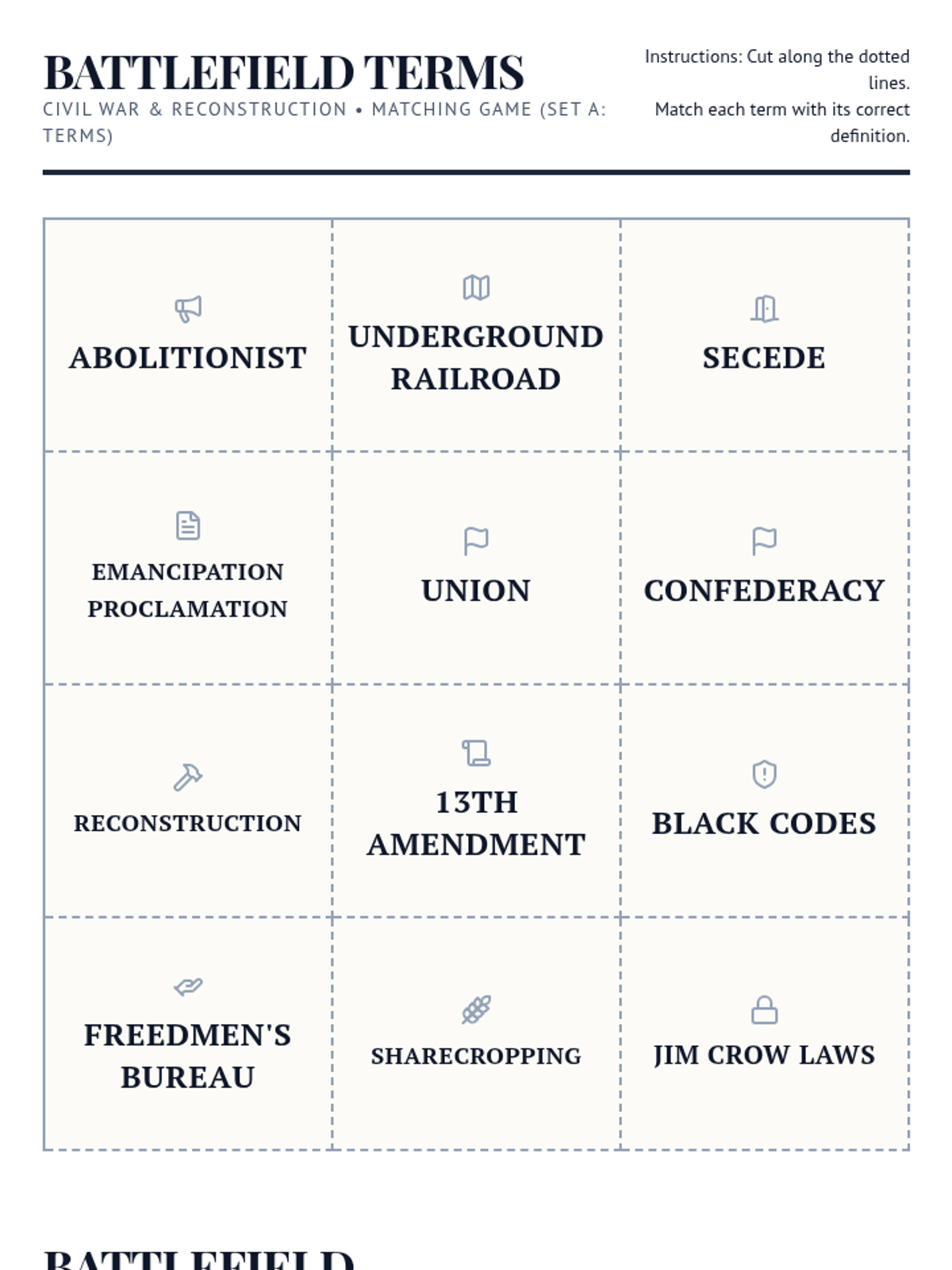
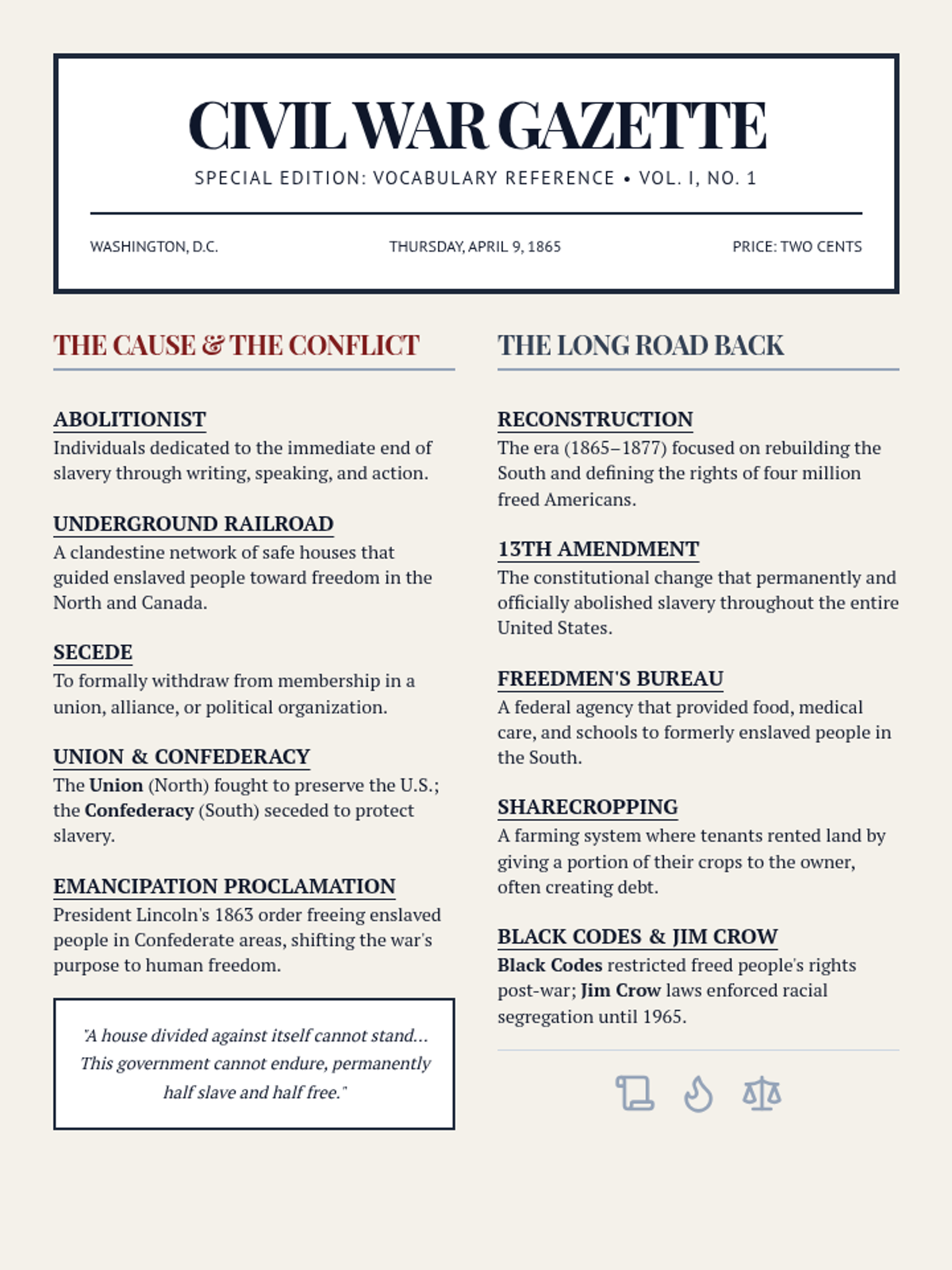
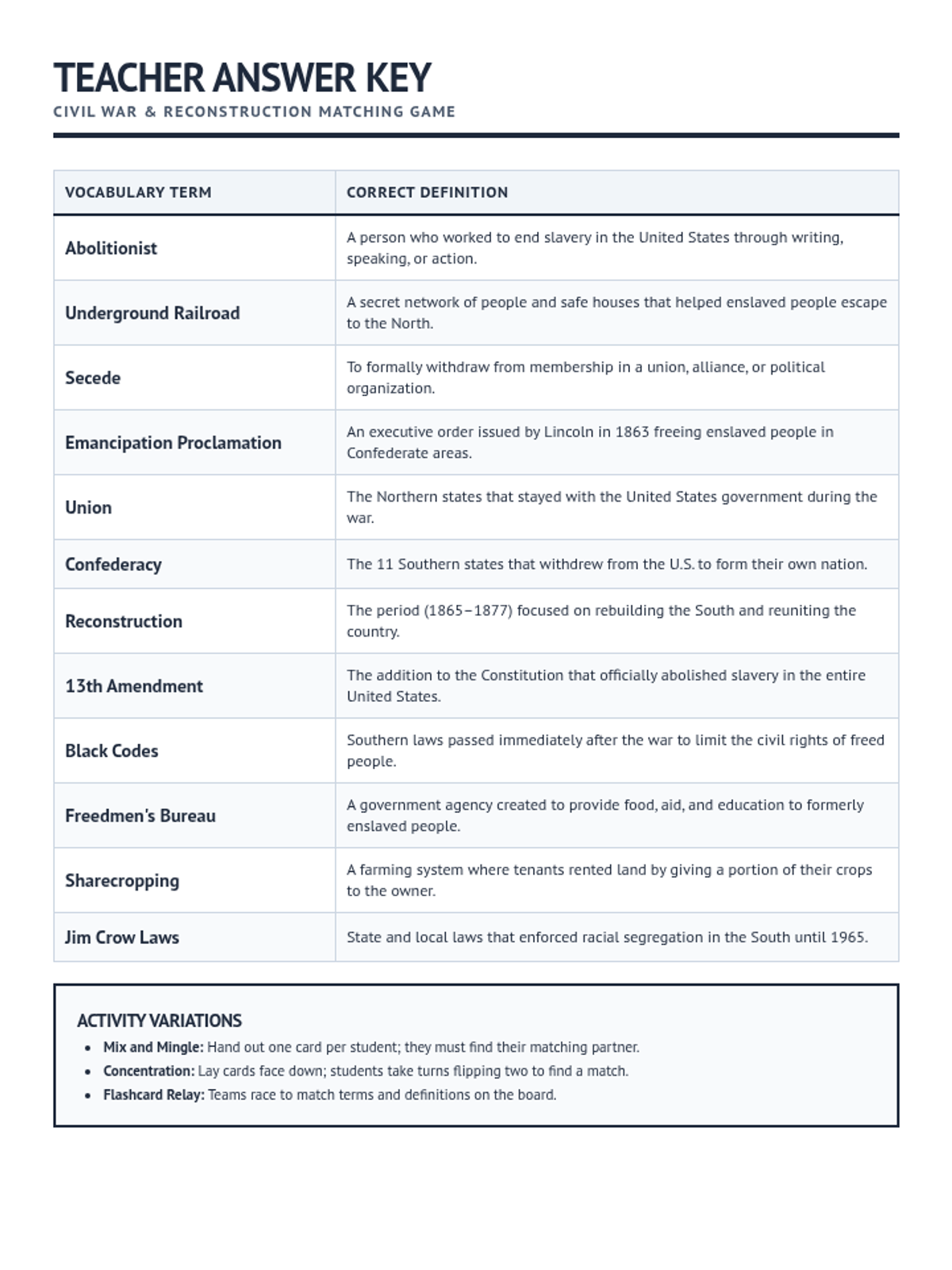
A comprehensive vocabulary lesson covering the essential terminology of the American Civil War, from the causes of slavery and abolitionism to the complexities of Reconstruction.
Examines individual rights, religious freedom, landmark Supreme Court cases, and the impact of the 14th Amendment on state government.