A comprehensive lesson exploring Martin Niemöller's poem through the lens of historical context, personal responsibility, and the consequences of silence during the Holocaust.
This lesson explores the landmark California Supreme Court case Serrano v. Priest (1971), which challenged the constitutionality of using local property taxes to fund public schools. Students will analyze the legal arguments for educational equity and the long-term impact on school finance in California.
A social studies PBL project for middle schoolers. Students act as historical investigators, using primary and secondary sources to piece together a narrative around a 'mystery' event or figure from the past.
A science-focused PBL project for elementary students. Students research an animal and design a functional 3D habitat model that meets all the animal's survival needs, demonstrating their understanding of ecosystems.
An elementary project where students apply addition, subtraction, and simple multiplication to create and run a classroom marketplace, focusing on financial literacy and operational math.
An early childhood project where students grow their literacy skills by 'planting' a story garden, focusing on letter recognition, sequencing, and narrative creation.
A hands-on exploration of sustainable urban design using grid-based planning. Students learn about walkability, green spaces, and efficient transit while designing their own eco-friendly neighborhood.
A lesson focused on understanding the purpose, traditions, and personal practices of the Lenten season.
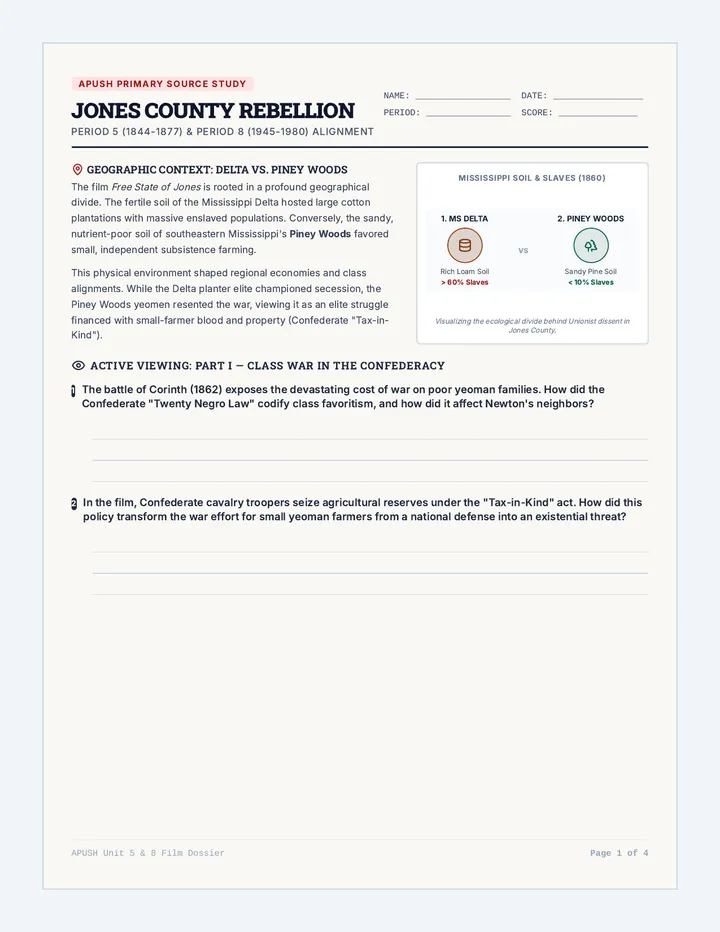
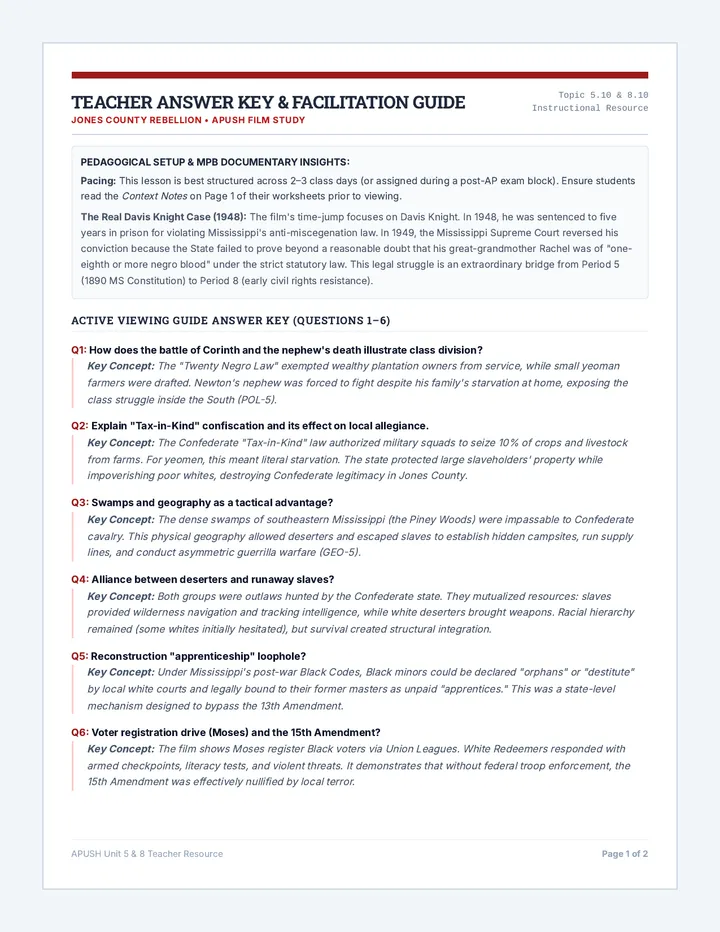
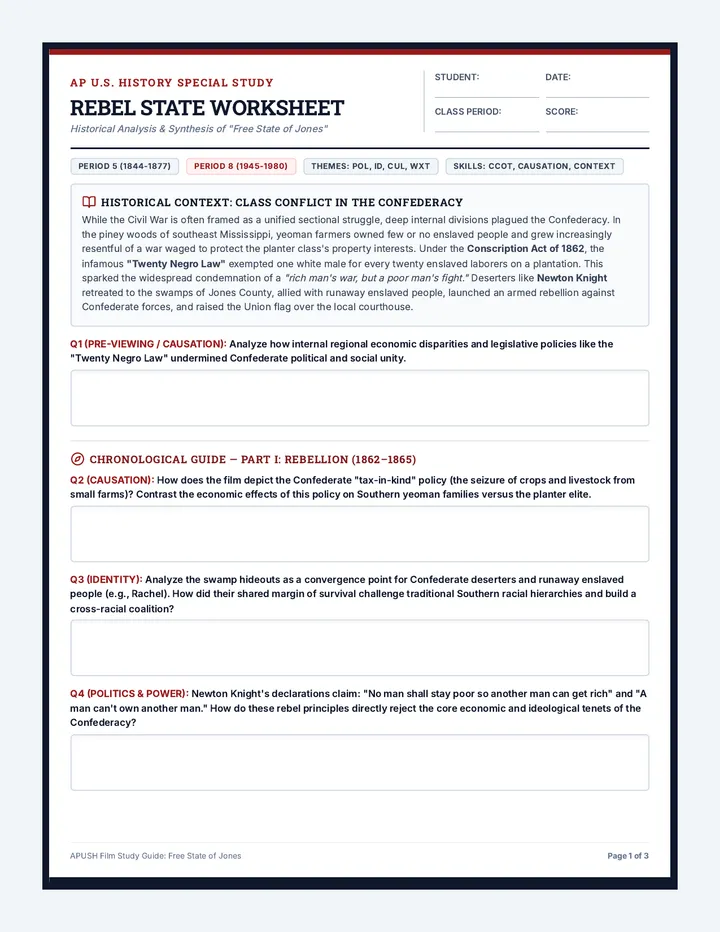
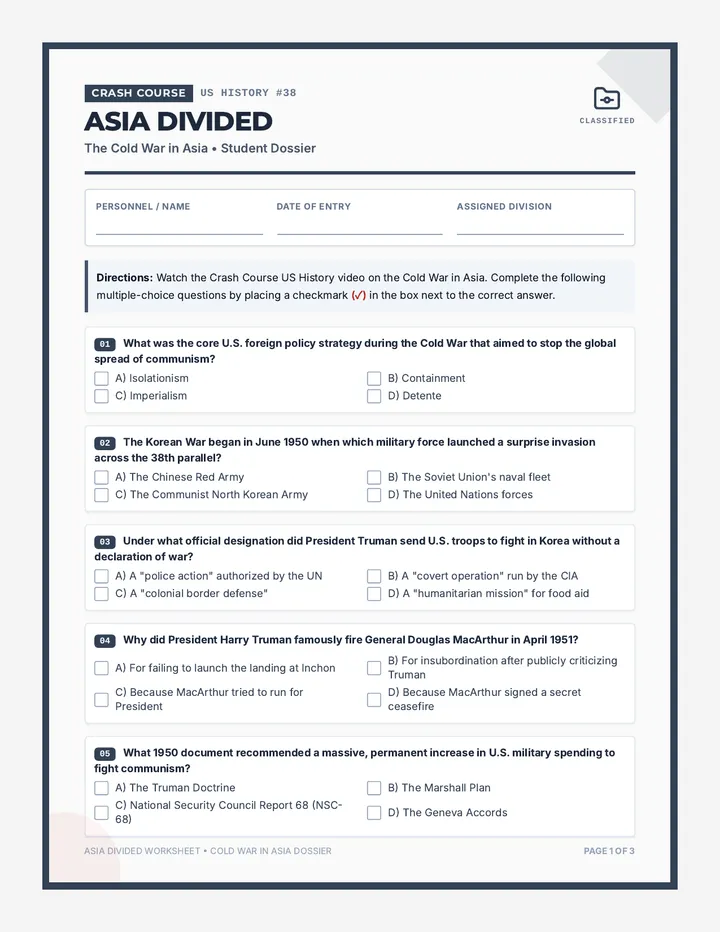
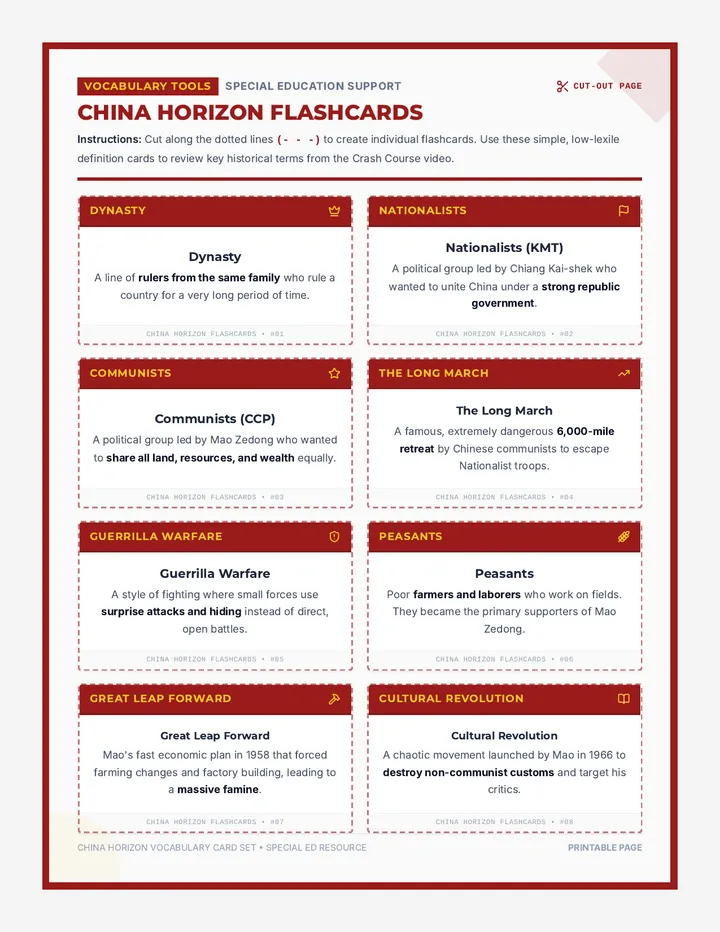
A comprehensive remediation packet for 11th grade US History students covering the Great Depression and World War II, designed at a 9th-grade reading level to support struggling learners.
A high school senior level exploration of Afro-Latino figures who shaped American history, focusing on intersectionality, cultural impact, and the preservation of Black history. Students will analyze how these individuals navigated multiple identities to influence American social and cultural landscapes.
A quick review lesson on the landmark Supreme Court case Tinker v. Des Moines, focusing on student free speech rights and the 'material and substantial disruption' test.
A comprehensive 50-minute packet exploring Africa's diverse climate zones, geographic regions, and rich cultural tapestry through readings, map work, and analysis.
A foundational World Geography lesson covering physical processes, human-environment interaction, regional classification, and global economic and cultural systems. Designed to align with multiple TEKS standards for a 45-minute introductory or review session.
Explore the lives and legacies of early African American leaders and abolitionists through an interactive scavenger hunt. Students will rotate through stations to gather information about key historical figures.
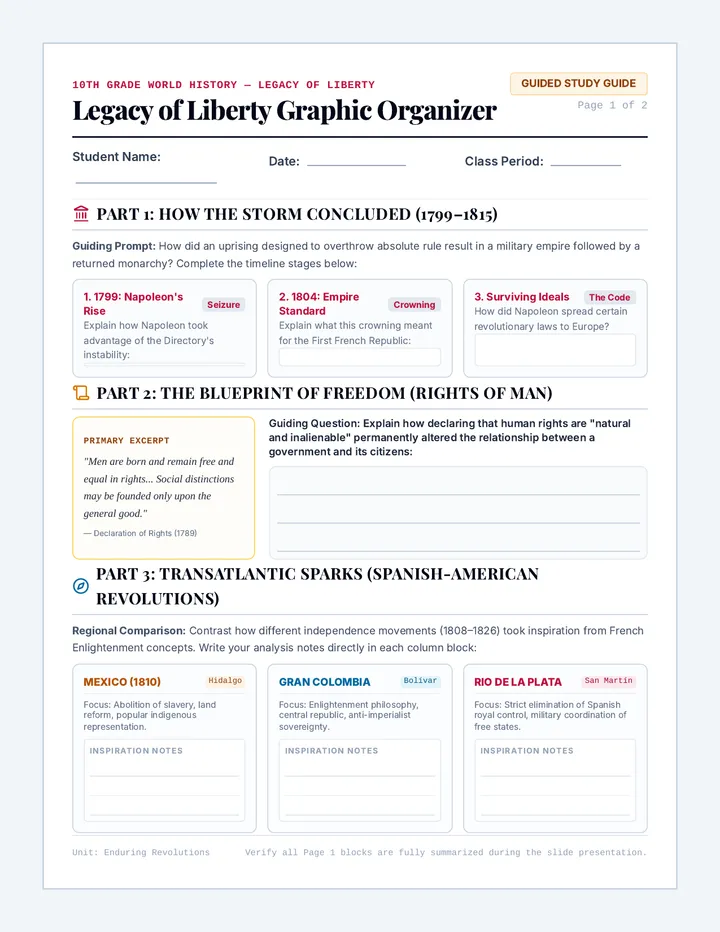
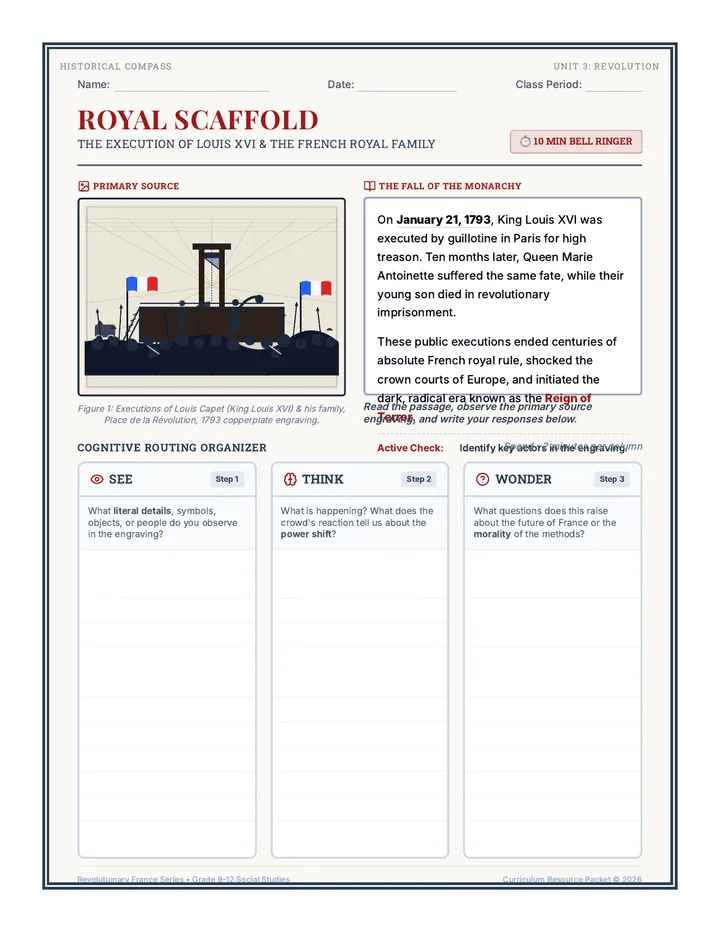
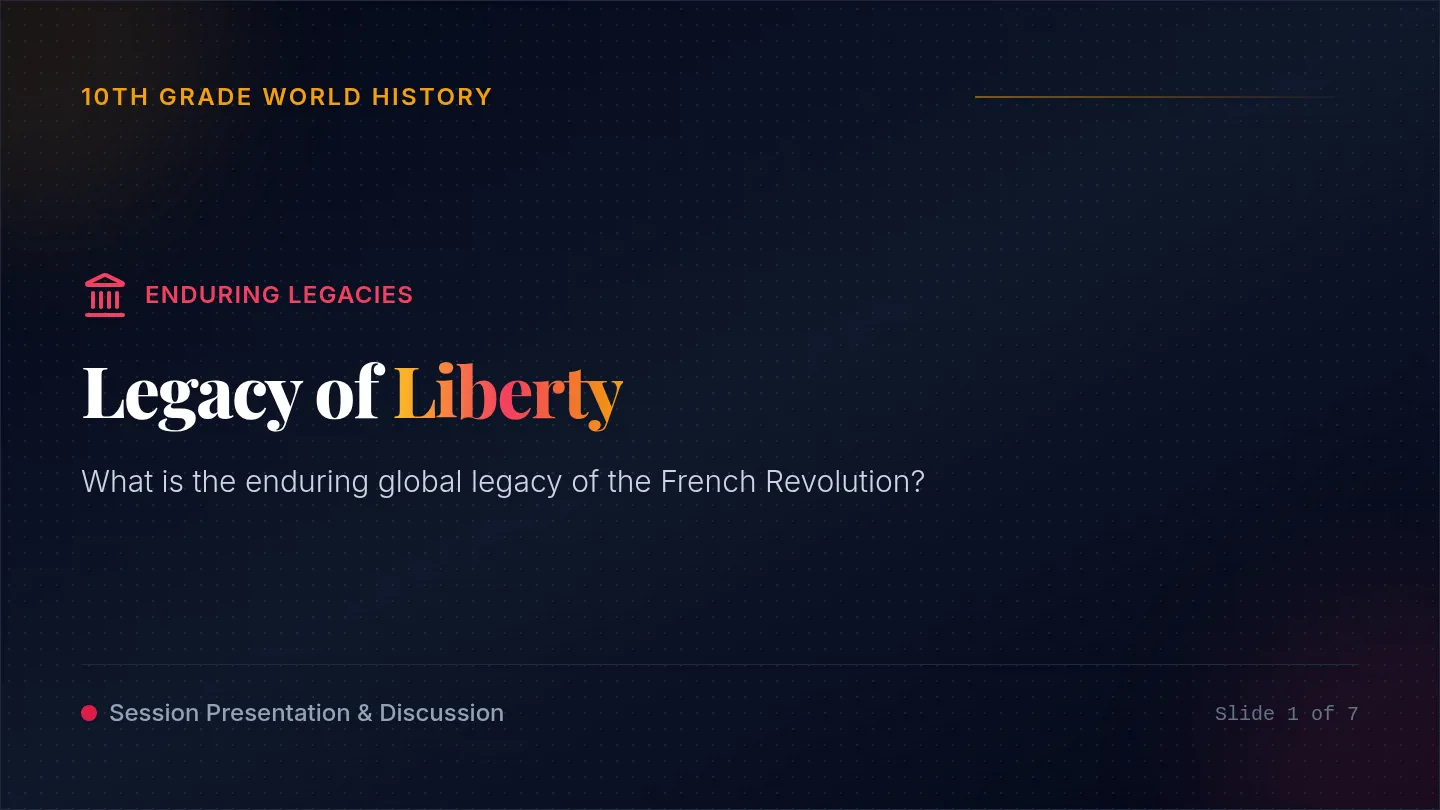
A comprehensive 45-minute lesson on the French Revolution, covering the causes (Three Estates), major events (Bastille, Reign of Terror), and the rise of Napoleon, aligned with 9th Grade World History TEKS.
Journey to the last frontier to explore the vast glaciers, towering peaks, and diverse wildlife of Alaska's eight magnificent national parks.
Explore the diverse ecosystems of the Pacific Coast, from the giant redwoods of California to the volcanic peaks of Hawaii and the lush rainforests of Washington.
Journey through the vast deserts and dramatic canyons of the American Southwest, exploring the unique geology and resilient life of the arid lands.
Explore the rugged peaks and deep canyons of the Mountain West, featuring the iconic landscapes of Colorado, Wyoming, Montana, and Utah's "Mighty Five."
Explore the national parks of the American heartland, including the Great Lakes region and the vast northern plains.
Exploration of the national parks located along the Atlantic coast and the Appalachian Mountains, including Acadia, Shenandoah, and the Everglades.
This lesson helps high school students distinguish between deep-seated core values and the specific policy positions that grow from them. Students will analyze neutral case studies to identify underlying values like freedom, security, and equality, practicing perspective-taking and civil discourse.