Students learn the fundamental protocols of crime scene investigation, including securing the scene, evidence collection techniques, and maintaining the chain of custody.
An introductory lesson on catastrophic natural events and the vocabulary used to describe them, focusing on geological and meteorological disasters.
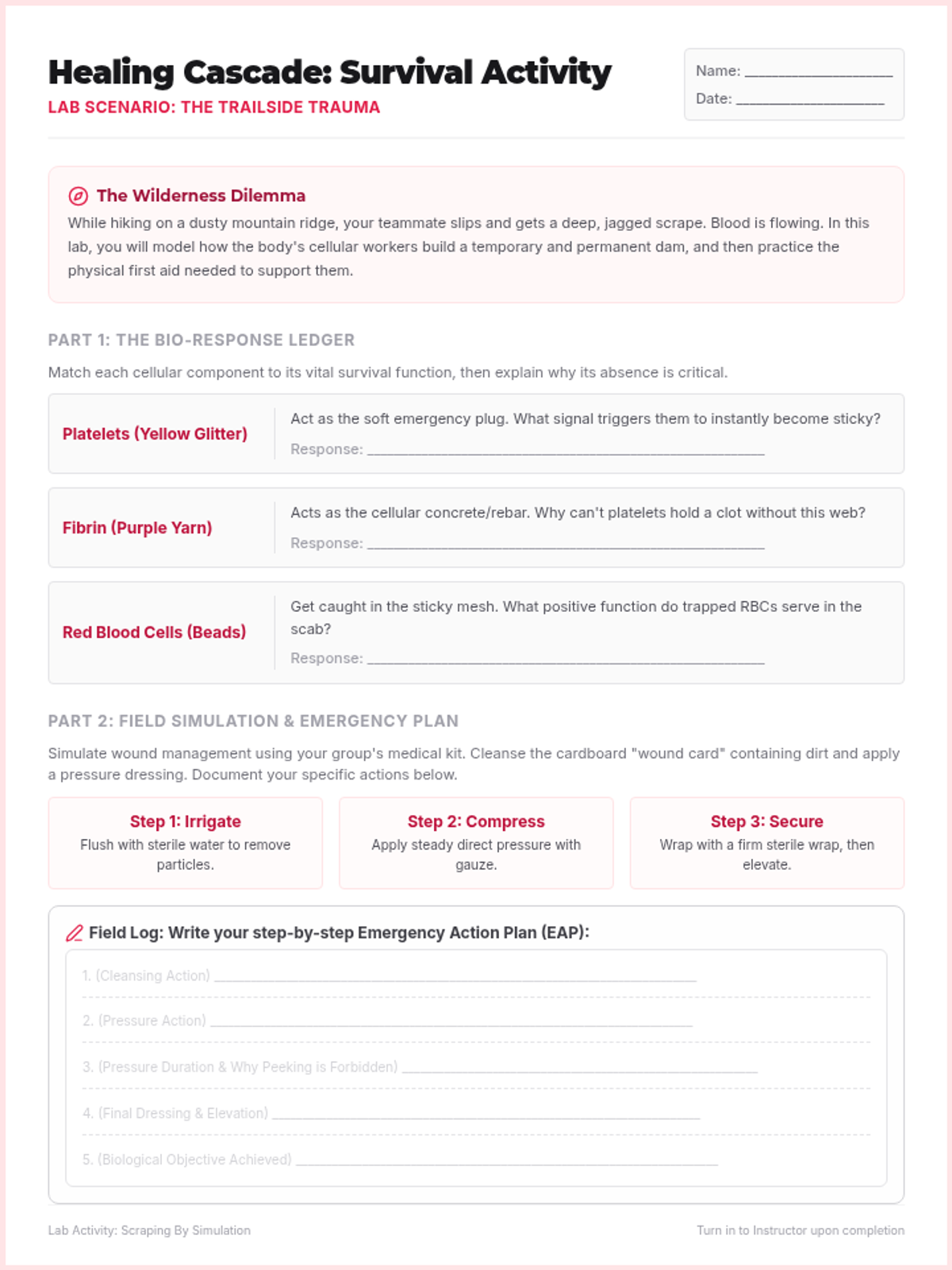
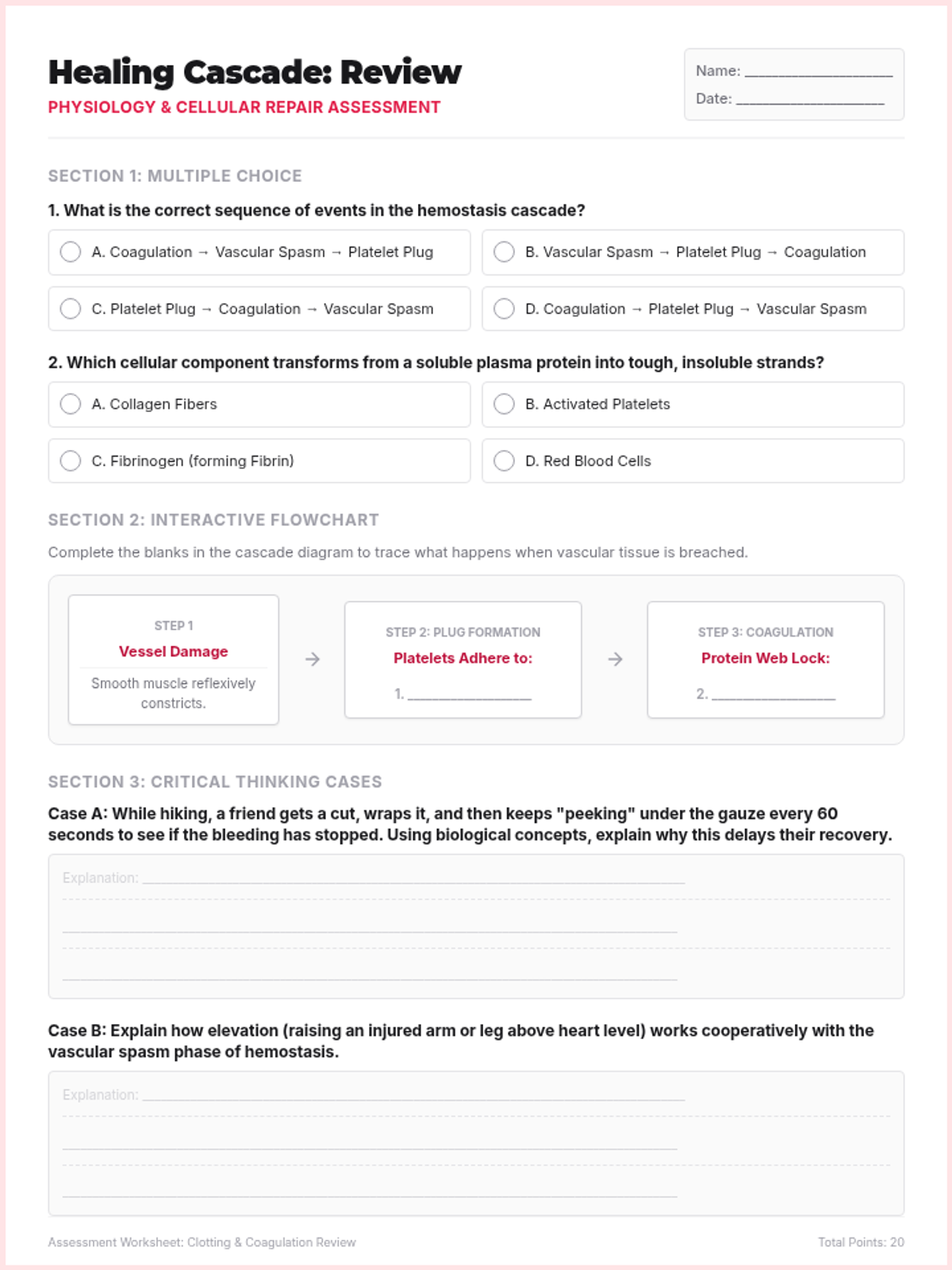
A 75-minute deep dive into the cardiovascular system, covering the composition of blood, the structure of vessels, and the mechanics of the heart.
Una lección introductoria a la programación de videojuegos usando MakeCode Arcade, cubriendo lógica de bucles, coordenadas y eventos para estudiantes de 6to grado.
A high-stakes collaborative escape room where student teams navigate five distinct rooms of a mysterious manor, solving interconnected puzzles to solve a murder.
Students carry out a formal investigation comparing large and small samples of pure substances to prove which properties stay the same and which change, fulfilling standard PS.6.1.3.
A focus on intensive properties that remain constant regardless of sample size, including density, melting point, boiling point, and solubility. Students use doodle notes to visualize these 'identity' traits.
An introduction to matter and properties that change based on the amount of a substance, specifically mass, weight, and volume. Students explore how these measurements vary with sample size.
A comprehensive introduction to the pH scale, covering the characteristics of acids and bases, the logarithmic nature of the scale, and real-world applications across three differentiated levels (5th, 7th, and 9th grade).
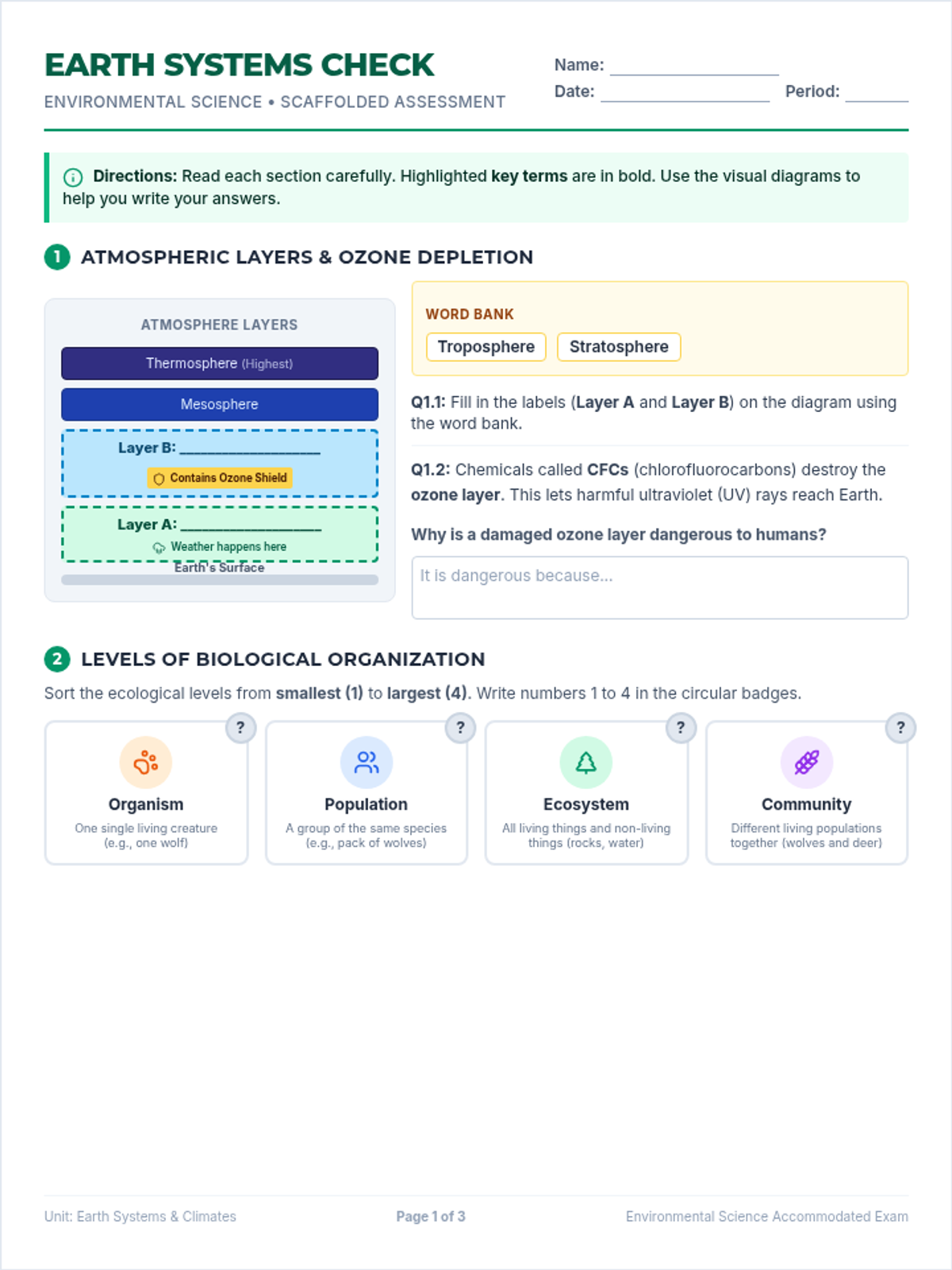
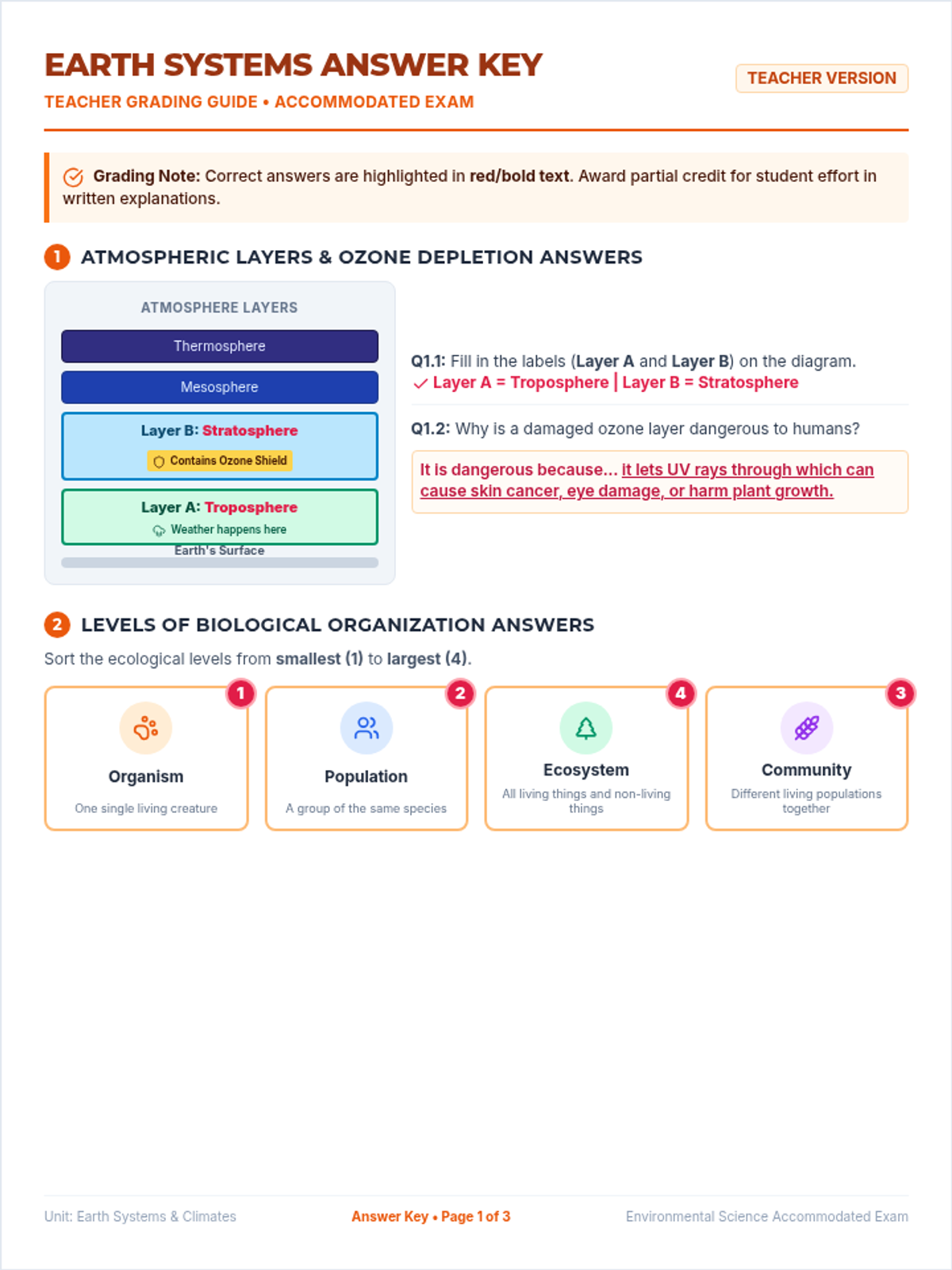
A comprehensive makeup assessment covering Earth science topics including the water cycle, sedimentary rock formation, fossil fuels, natural resources, weather and climate, and the behavior of light.
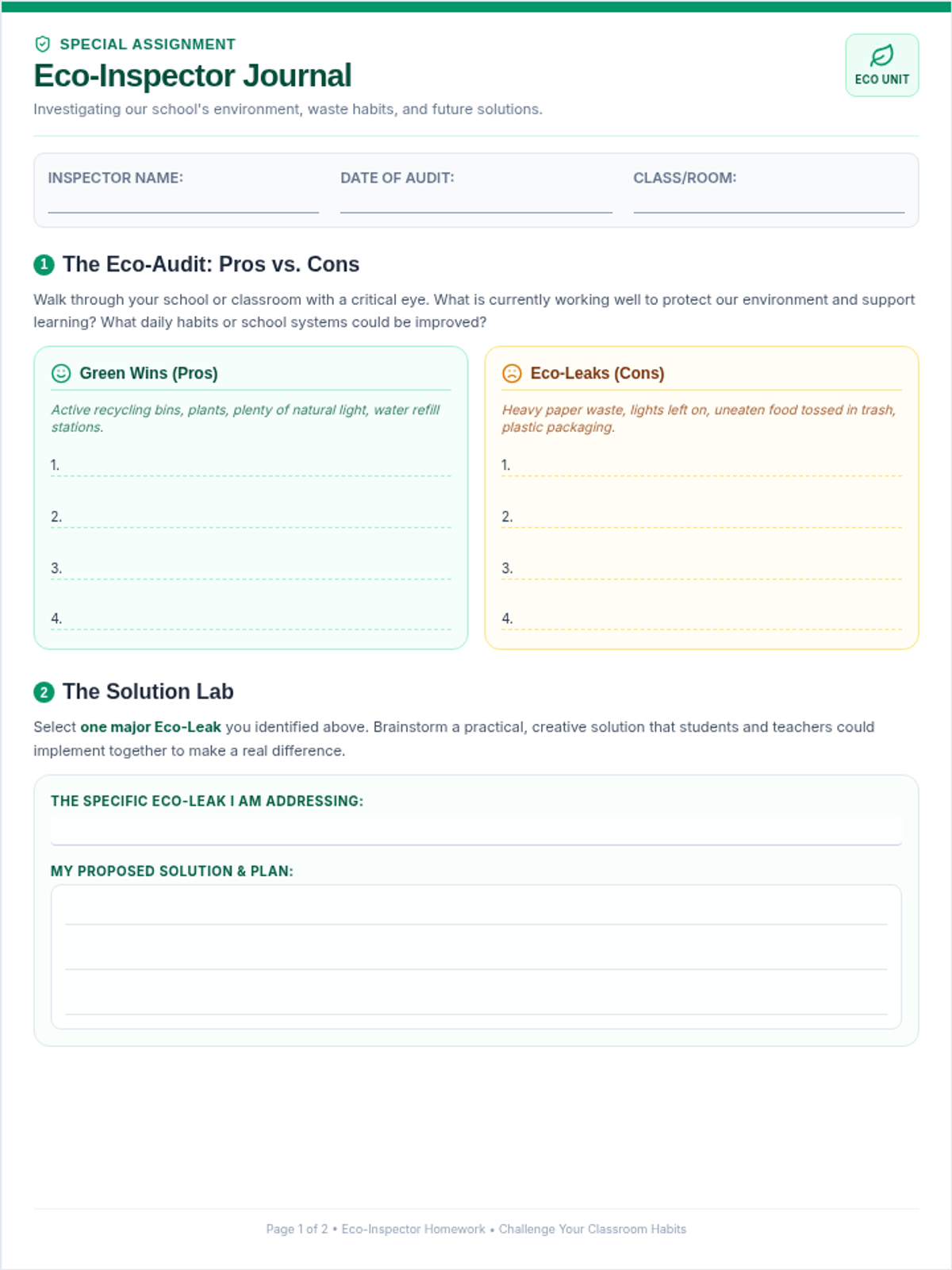
A comprehensive assessment focused on the principles of waste management, specifically the 4 R's (Reduce, Reuse, Recycle, Refuse) and essential environmental vocabulary.
A four-day series of 30-minute activities exploring spring weather and nature through two outdoor adventures and two indoor crafts.
A foundational lesson on Photoshop clipping masks, covering the 'layer sandwich' concept and the technical steps to clip images into shapes.
A comprehensive introduction to the pH scale, its presence in everyday substances, and its critical role in environmental health. Students will engage in a hands-on lab to test household liquids and discuss real-world impacts like ocean acidification. Updated with purple indicator lab.
An extension lesson for a water filtration lab focusing on the chemical properties of water and the real-world impact of pollution on local ecosystems.
A comprehensive lesson for 6th-grade students exploring the three methods of thermal energy transfer: conduction, convection, and radiation. Students will learn to identify these processes in everyday scenarios through visual diagrams and interactive examples.
An introductory lesson for 1st and 2nd graders focusing on block-based coding for Sphero and Marty on a 12-square grid. Students will learn how to sequence commands to move their robot from a start square to a target square.
An advanced introductory lesson for 3rd to 5th graders focusing on block-based logic, loops, and precise grid navigation. Students will use block coding to program Marty and Sphero to complete complex paths on a 12-square mat.
A project-based lesson where students create a poster advocating for sunscreen use in Australia, focusing on the biological and environmental factors that increase skin cancer risk in the region.
Essential documents and procedures for substitute teachers to ensure a seamless transition and productive classroom environment.
Focuses on long-term curriculum implementation strategies, data-driven scaling, and creating sustainable systems that align district goals with classroom reality.
Focuses on moving from curriculum on paper to instructional practice through high-quality coaching cycles and teacher support frameworks.
Focuses on the methodology of curriculum auditing, evaluating alignment to standards, and identifying gaps in instructional materials across a district landscape.
Students present their evolution maps and prototypes in a class showcase and reflect on the project.
Students design and prototype the future version of their technology, considering ethics and sustainability.