In this engineering challenge, students transform their pinwheels into turbines. They design a system to lift a small weight, demonstrating that wind energy can perform useful work.
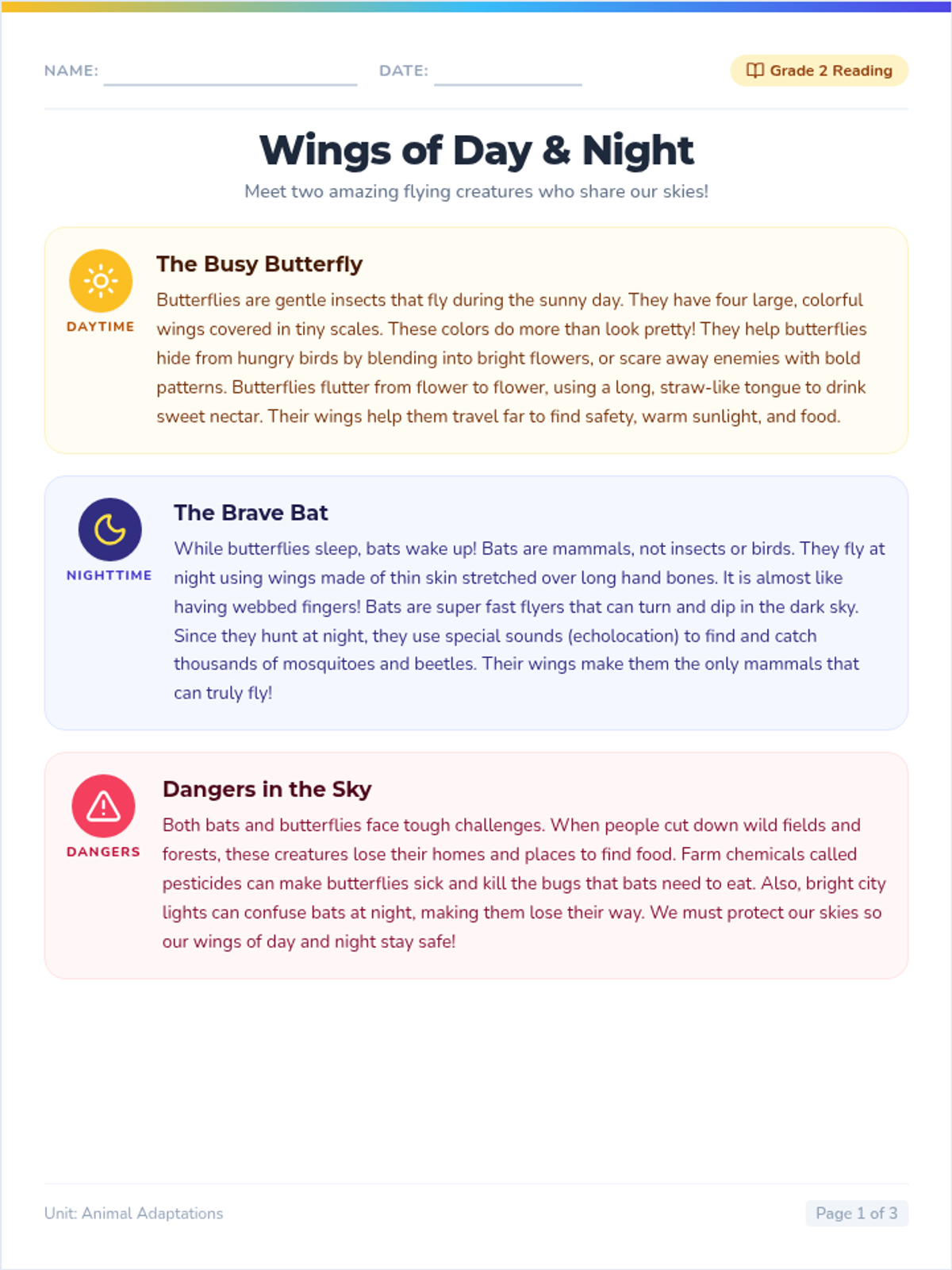
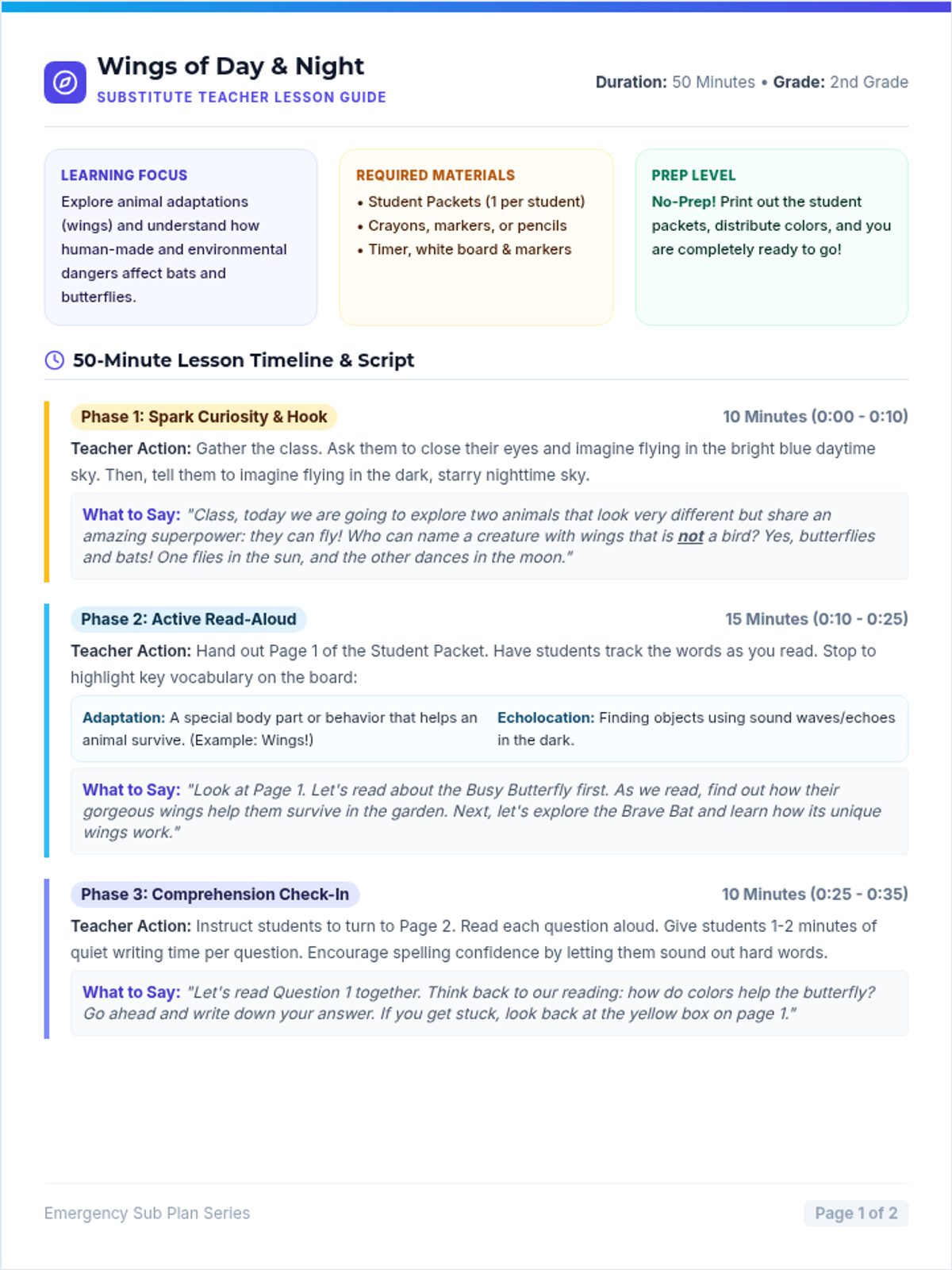
A 50-minute emergency sub plan for second graders exploring butterflies and bats. Students investigate how wings help these creatures survive, the unique dangers they face, and create a dual-habitat drawing of day and night.
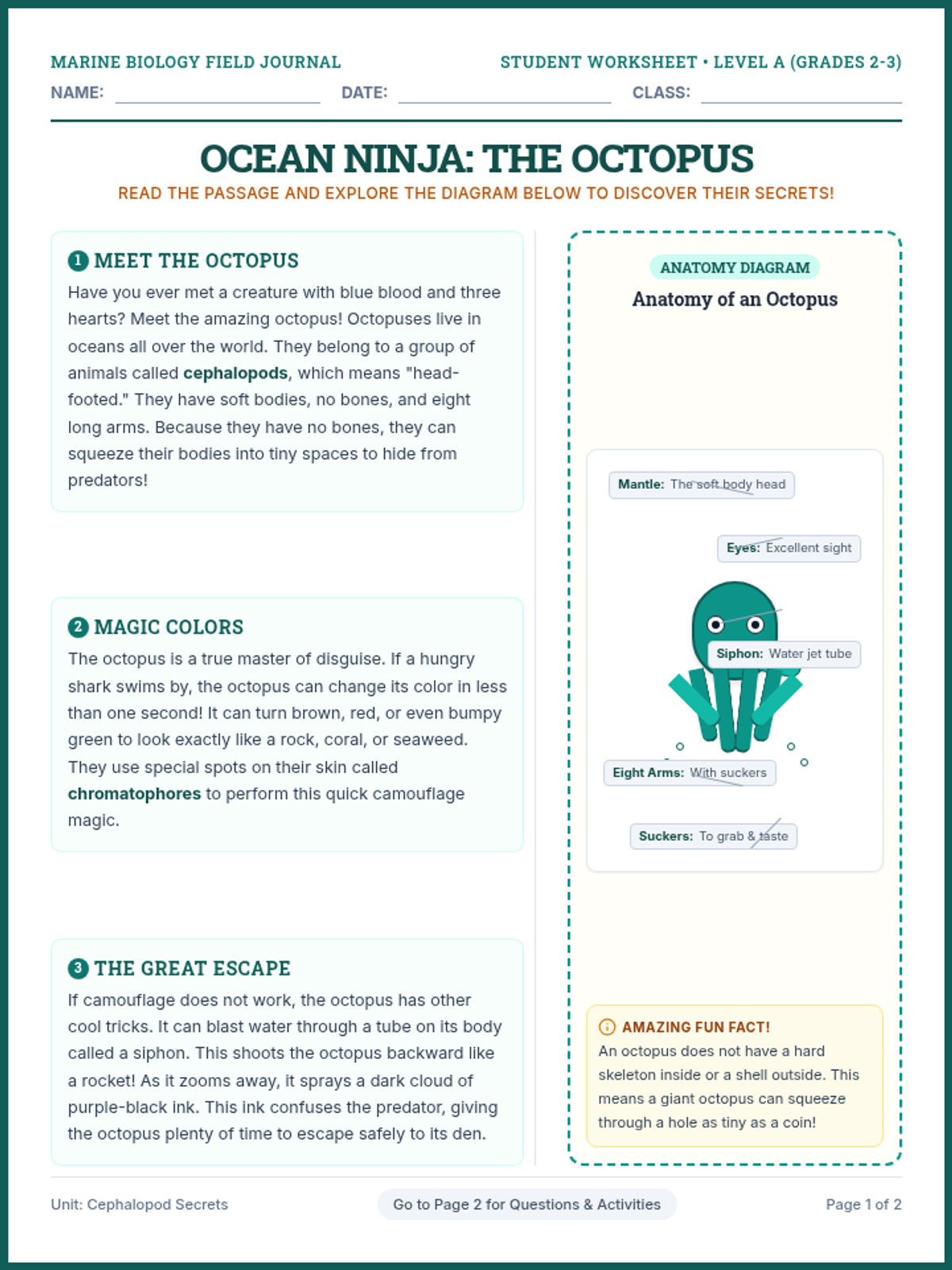
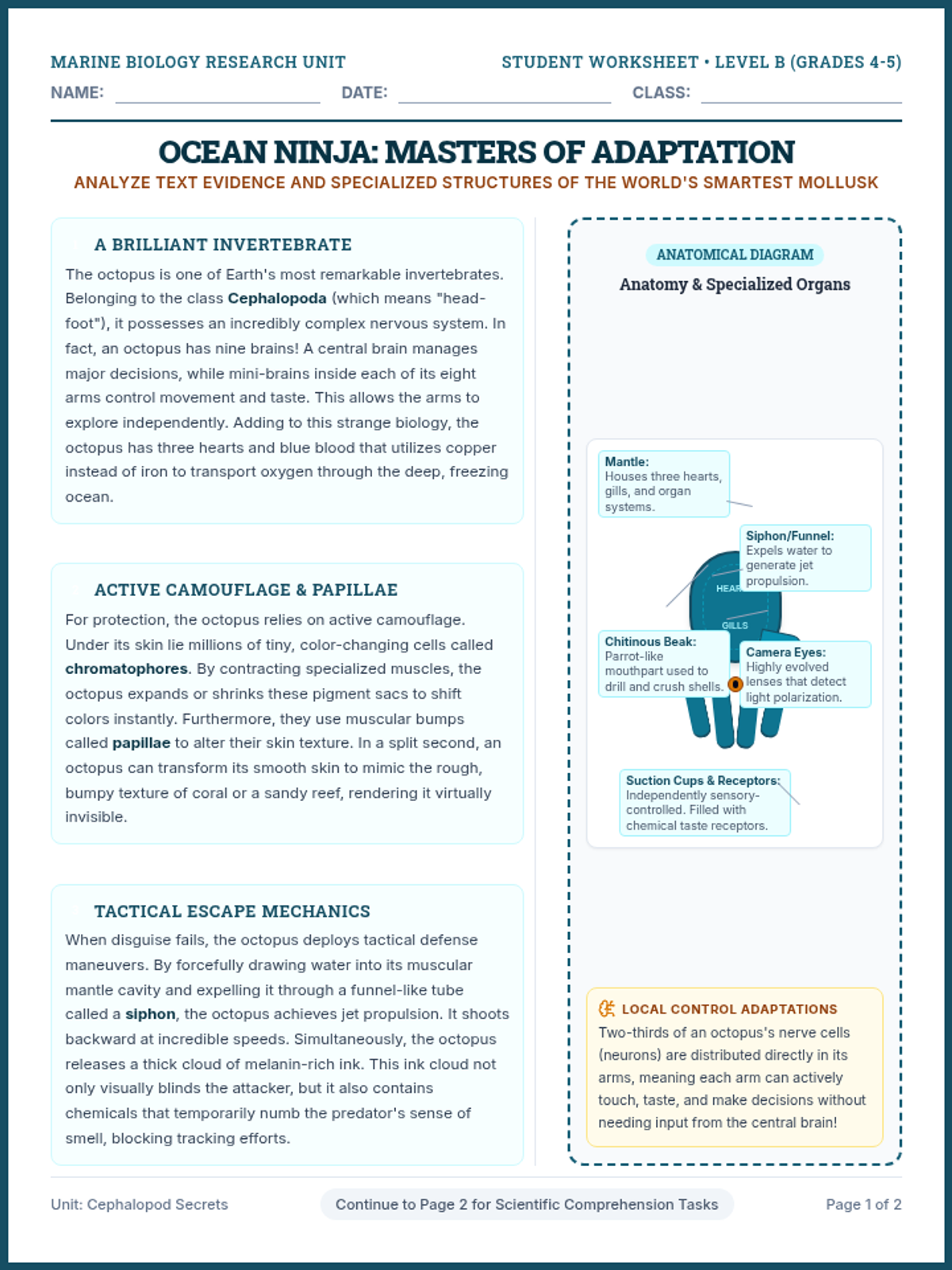
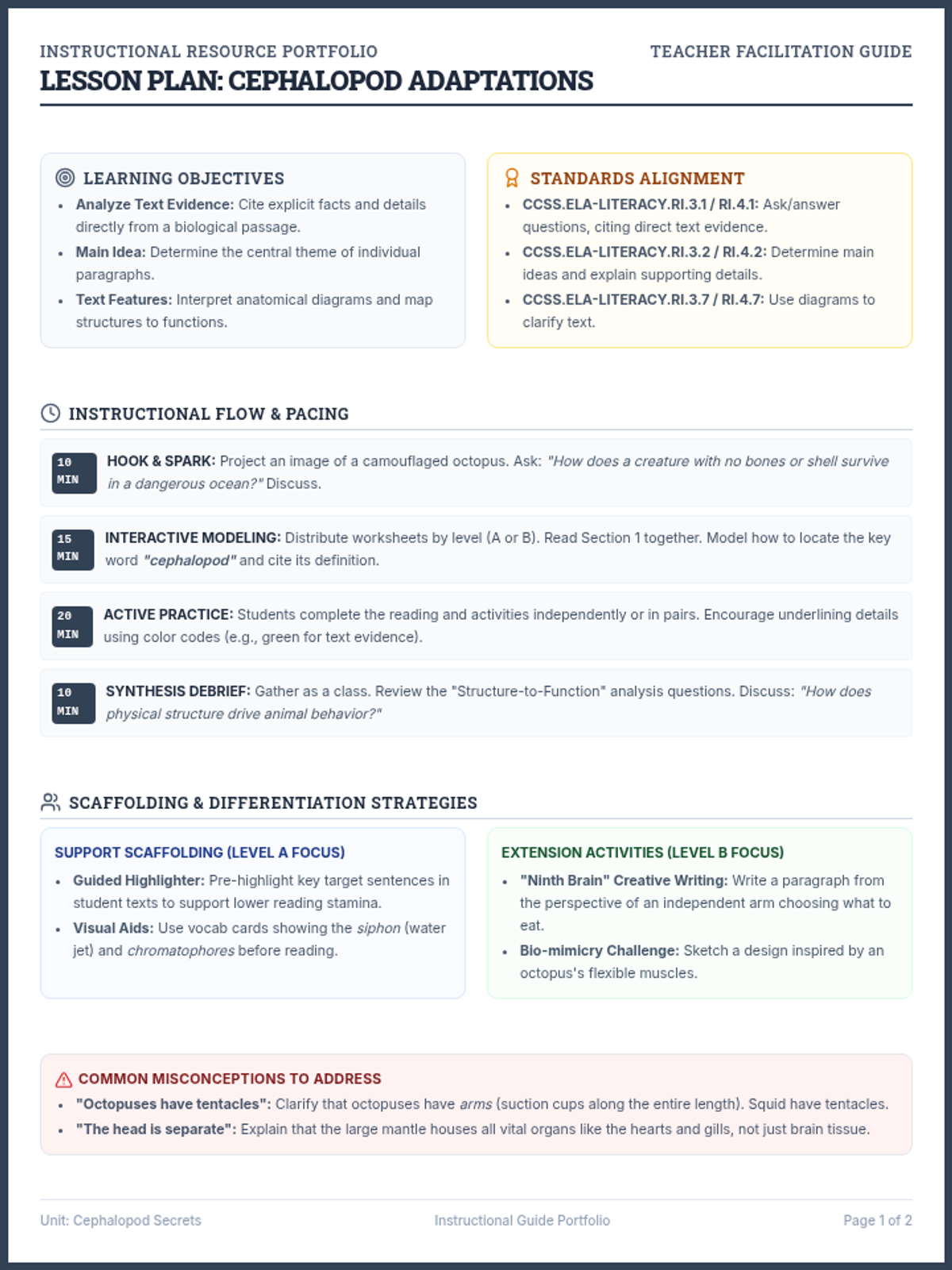
A differentiated reading comprehension unit focusing on the fascinating adaptations, anatomy, and intelligence of octopuses. Students read level-adjusted passages, analyze text-feature diagrams, and practice finding direct text evidence and summarizing main ideas.
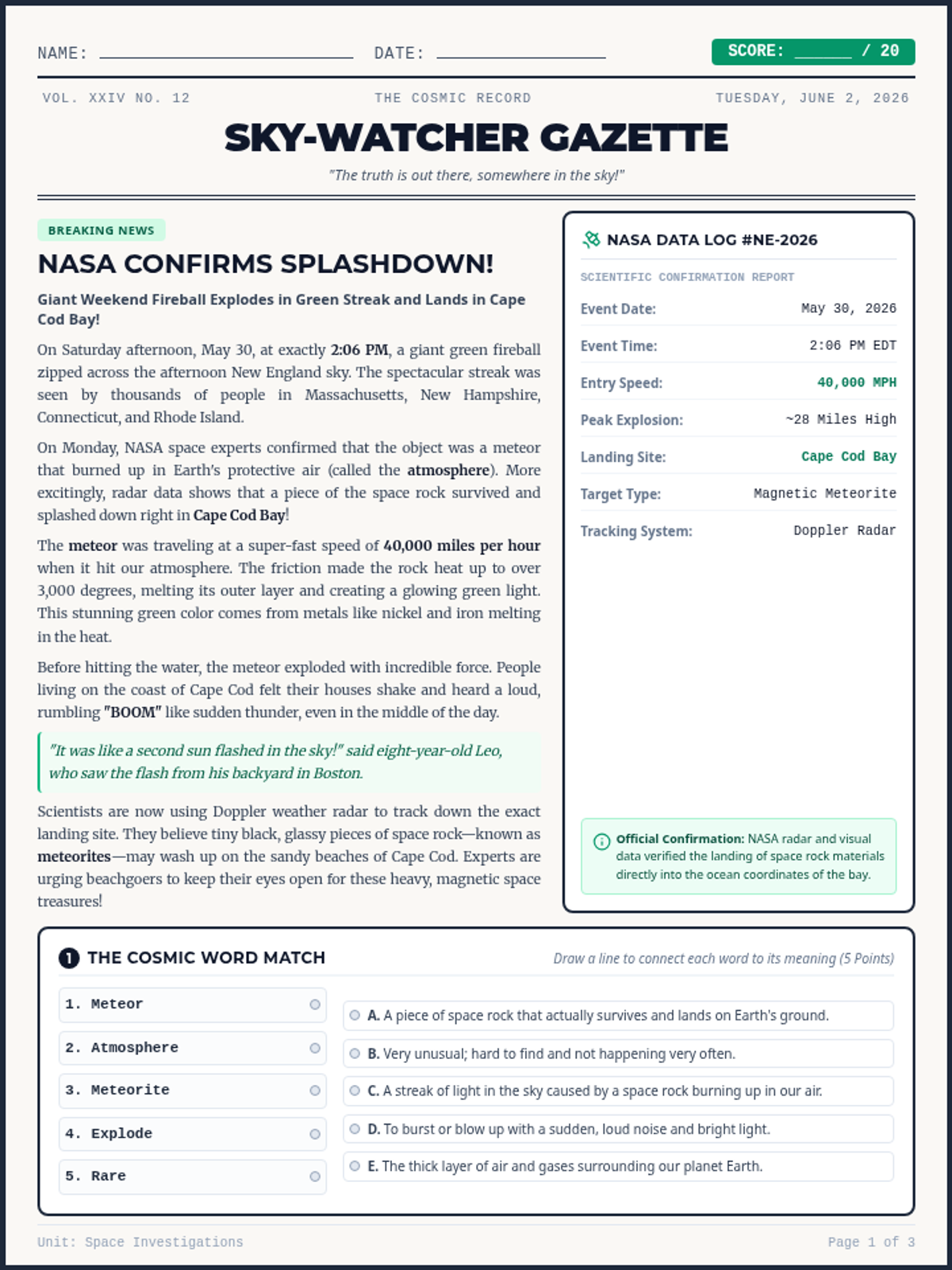
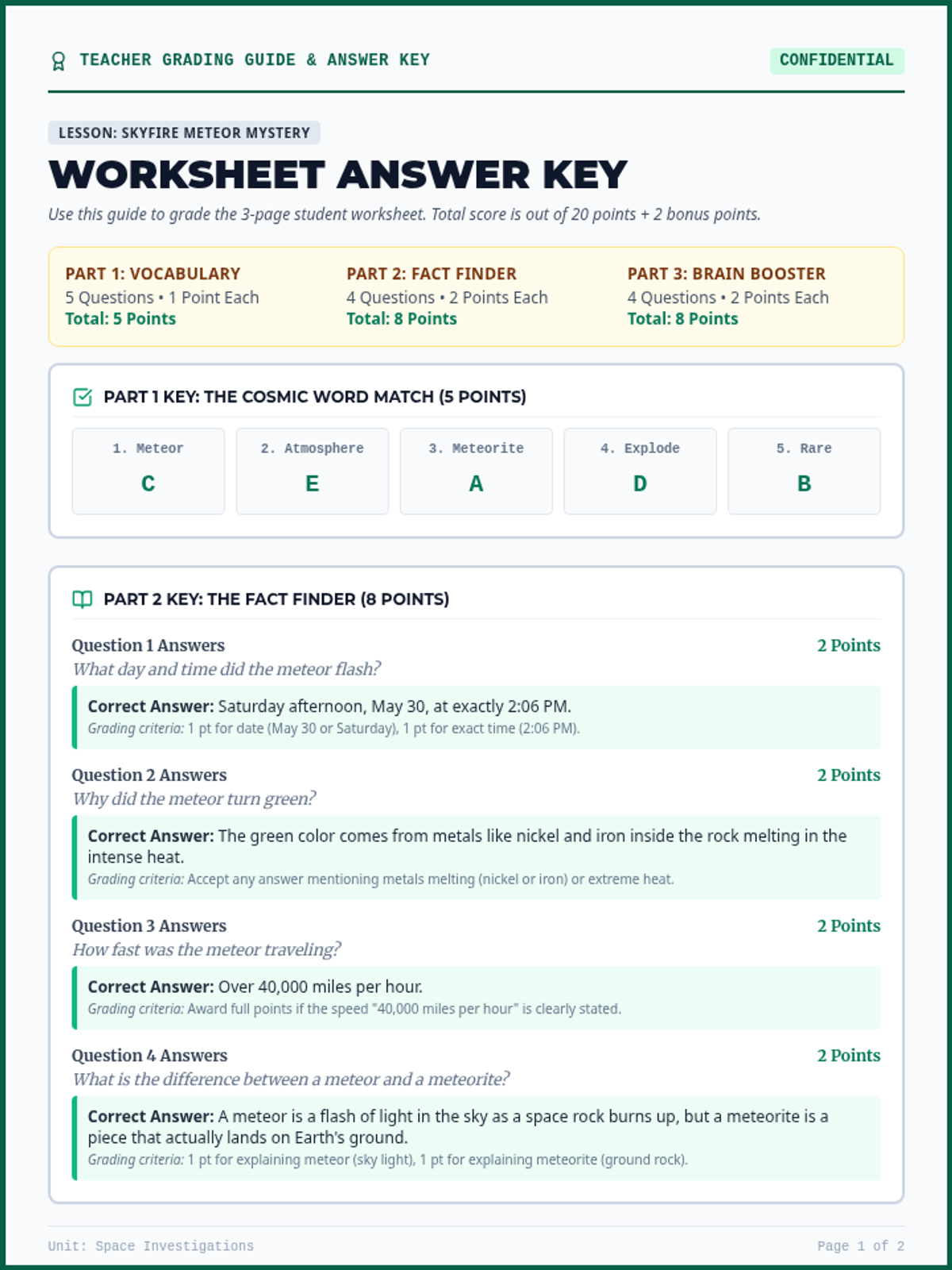
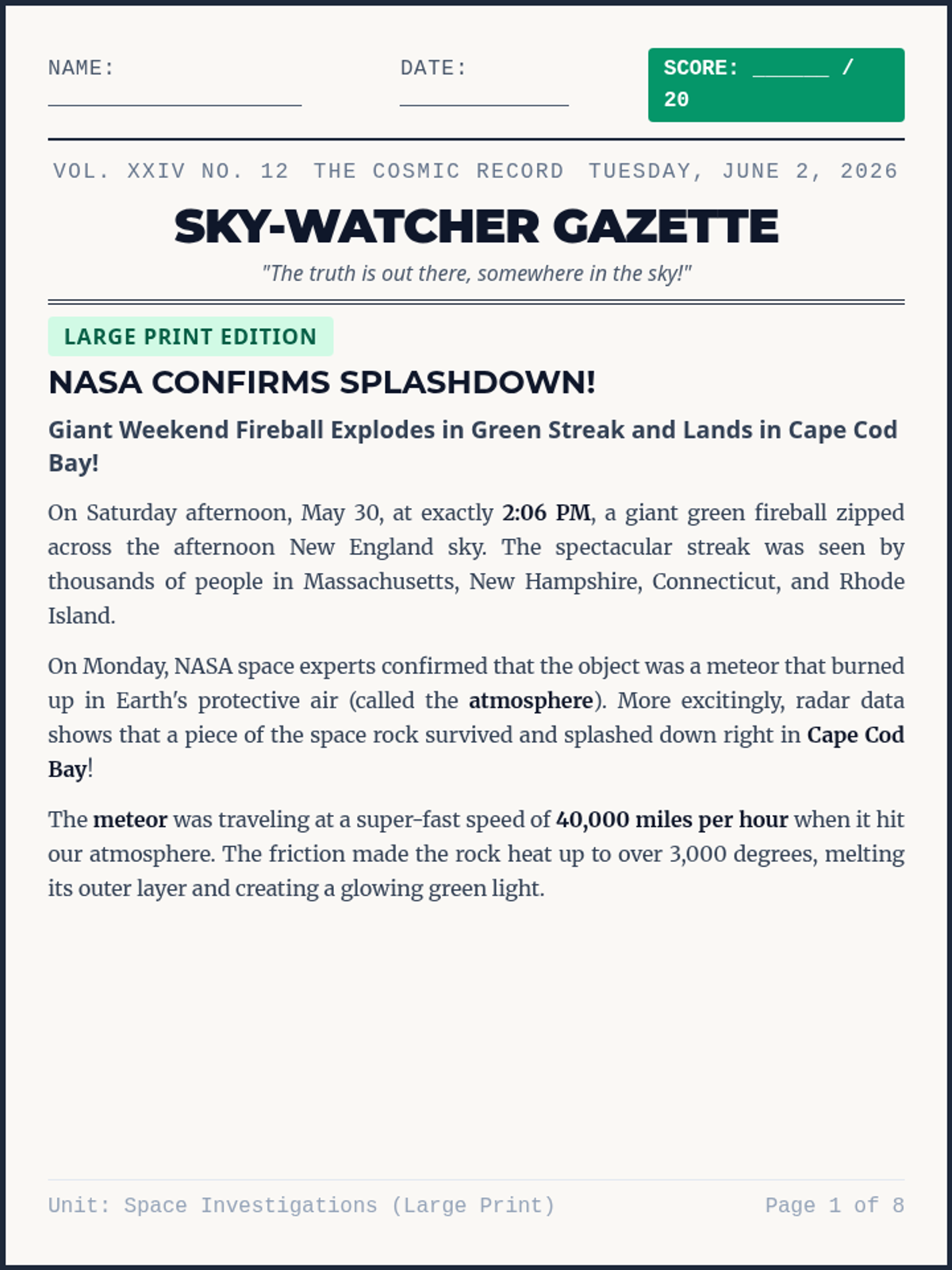
A reading comprehension lesson for 2nd and 3rd-grade students based on the spectacular meteor explosion over New England. Features engaging news-style reading, vocabulary challenges, comprehension questions, and a creative activity.
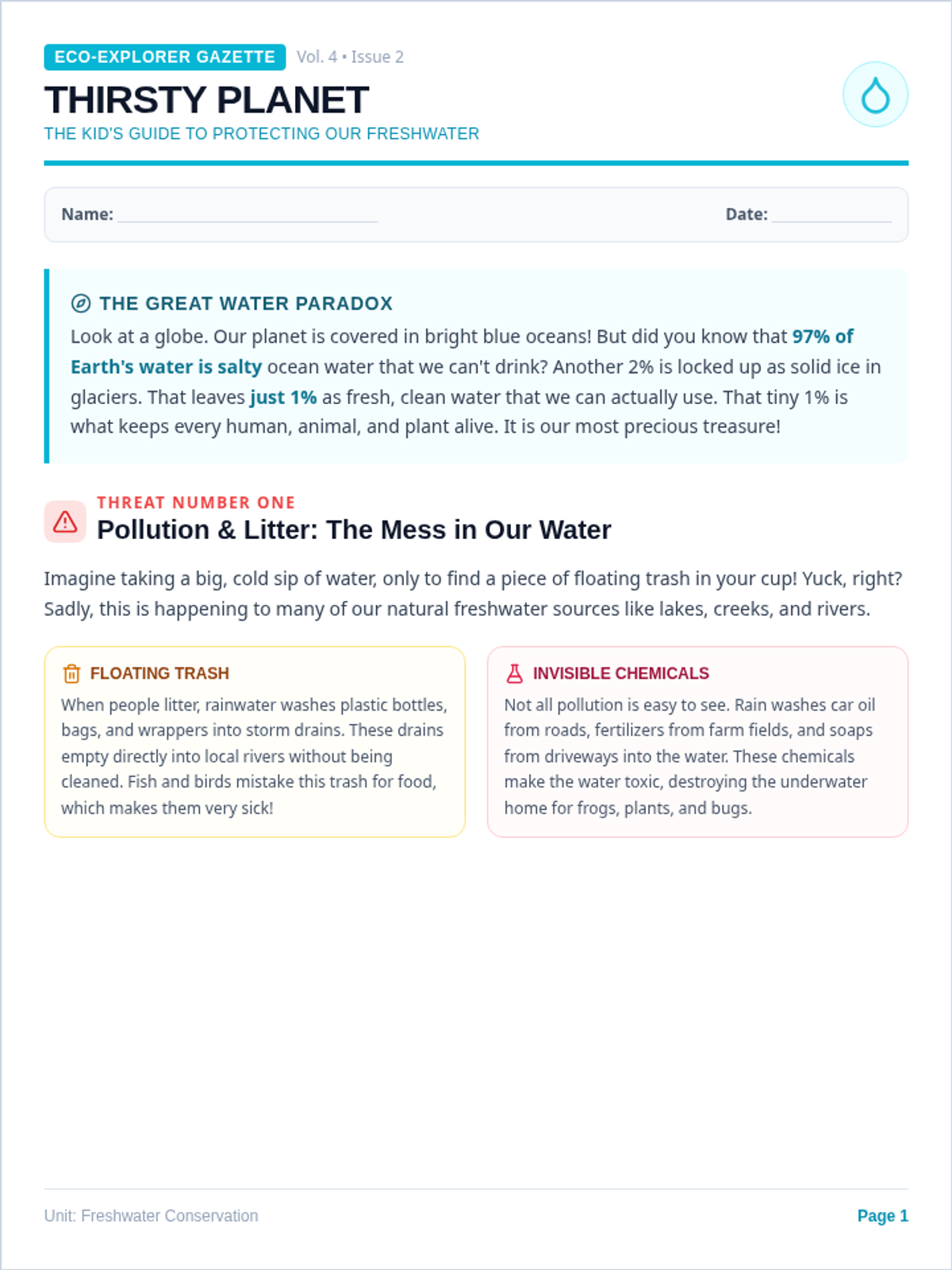
A lesson focused on understanding the primary threats to our freshwater supply, featuring an engaging, student-friendly explorer article on pollution, home water waste, droughts, and growing demand.
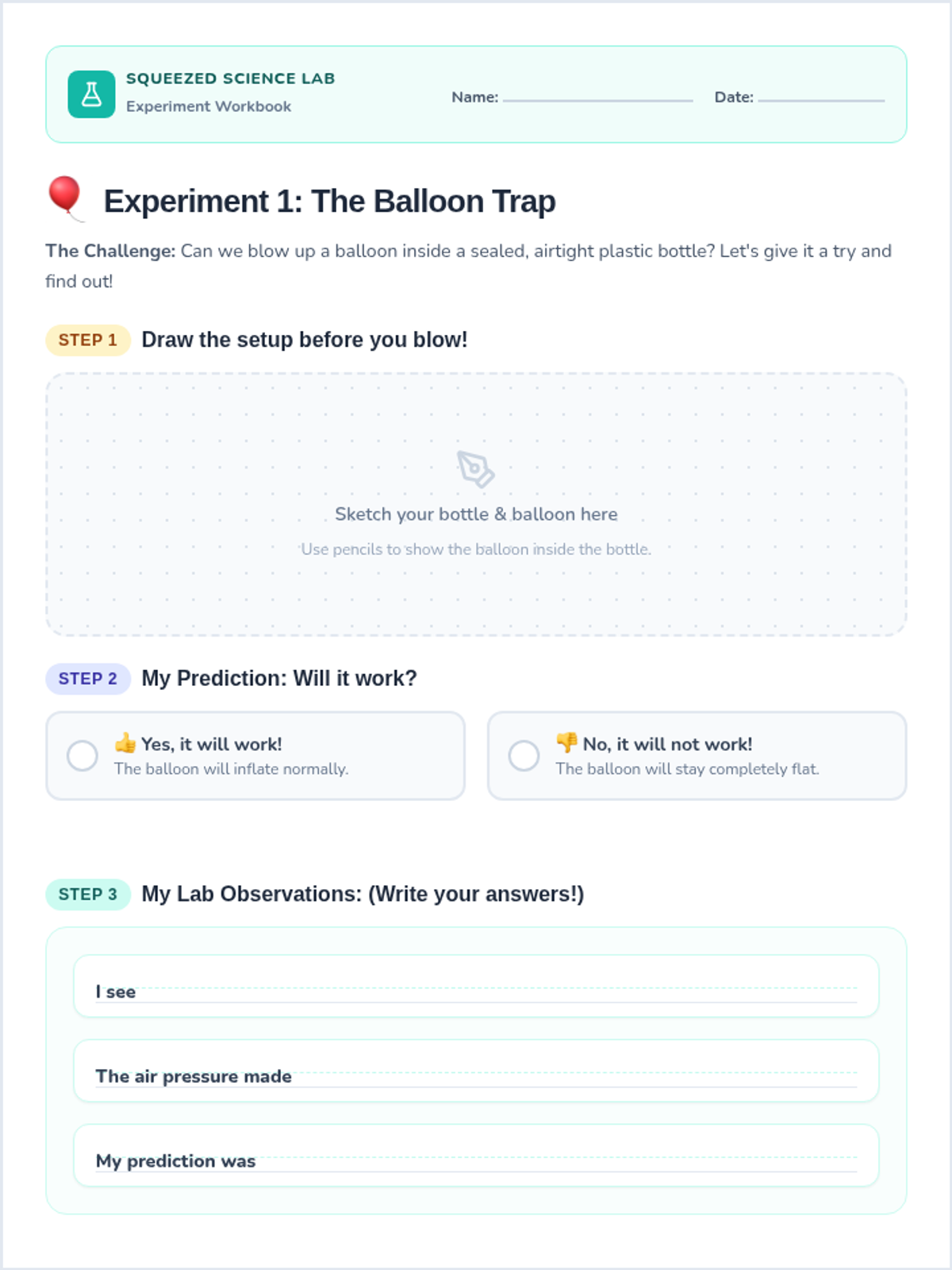
An early elementary science lesson about air pressure featuring three hands-on experiments: Balloon in a Bottle, Egg in a Bottle, and the Water Glass Trick. Students make predictions and record observations using a highly visual cut-and-paste workbook.
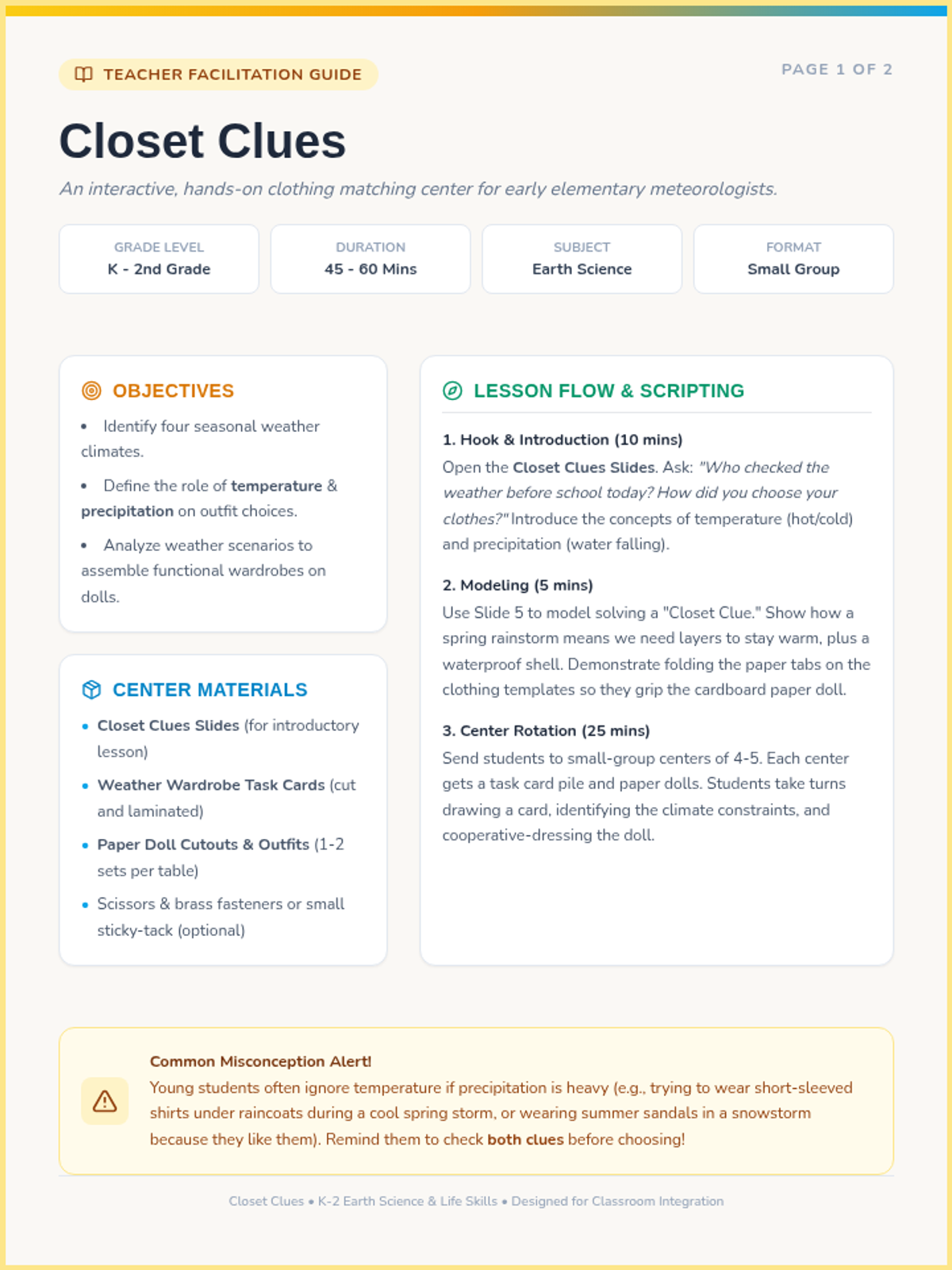
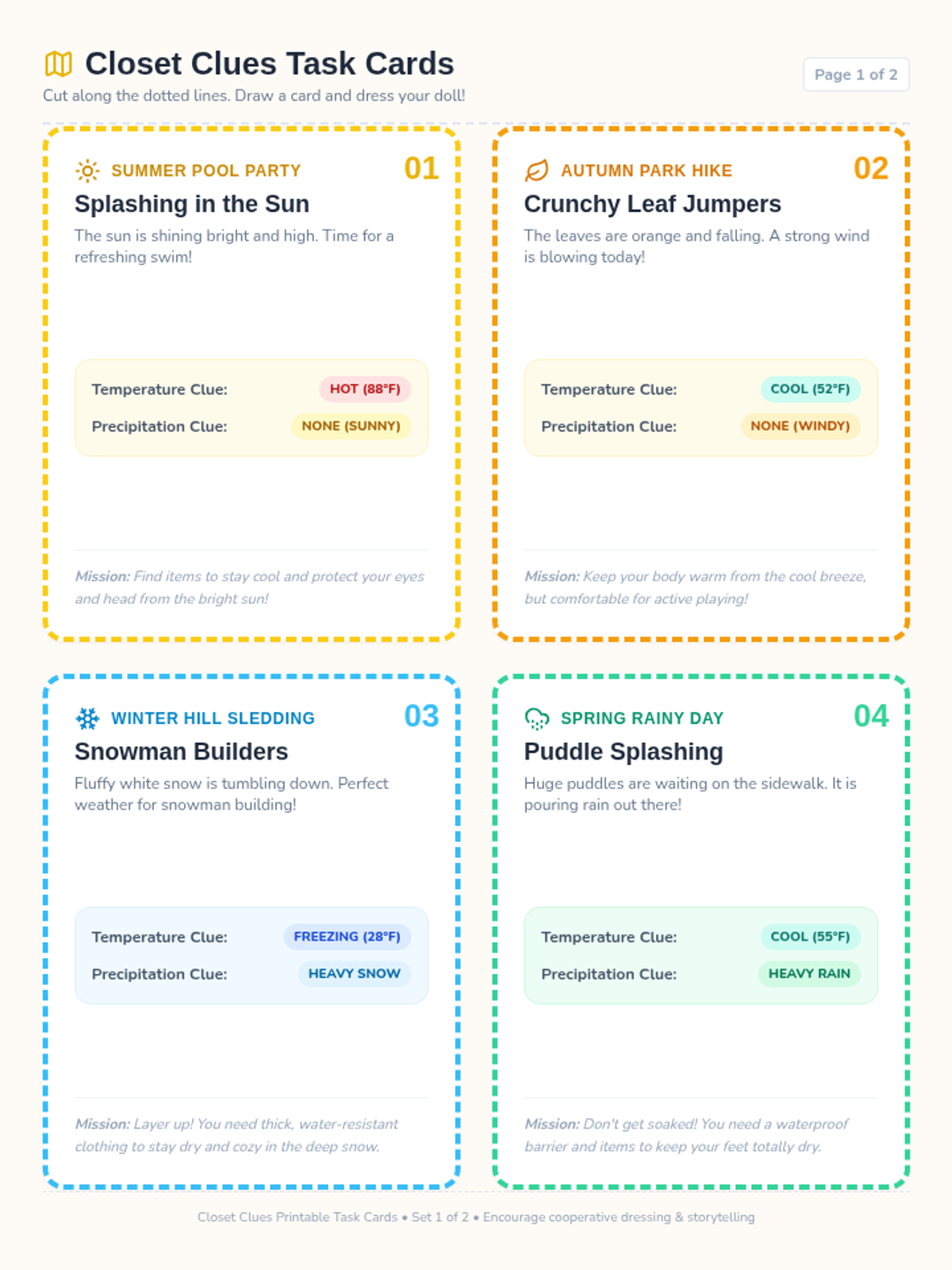
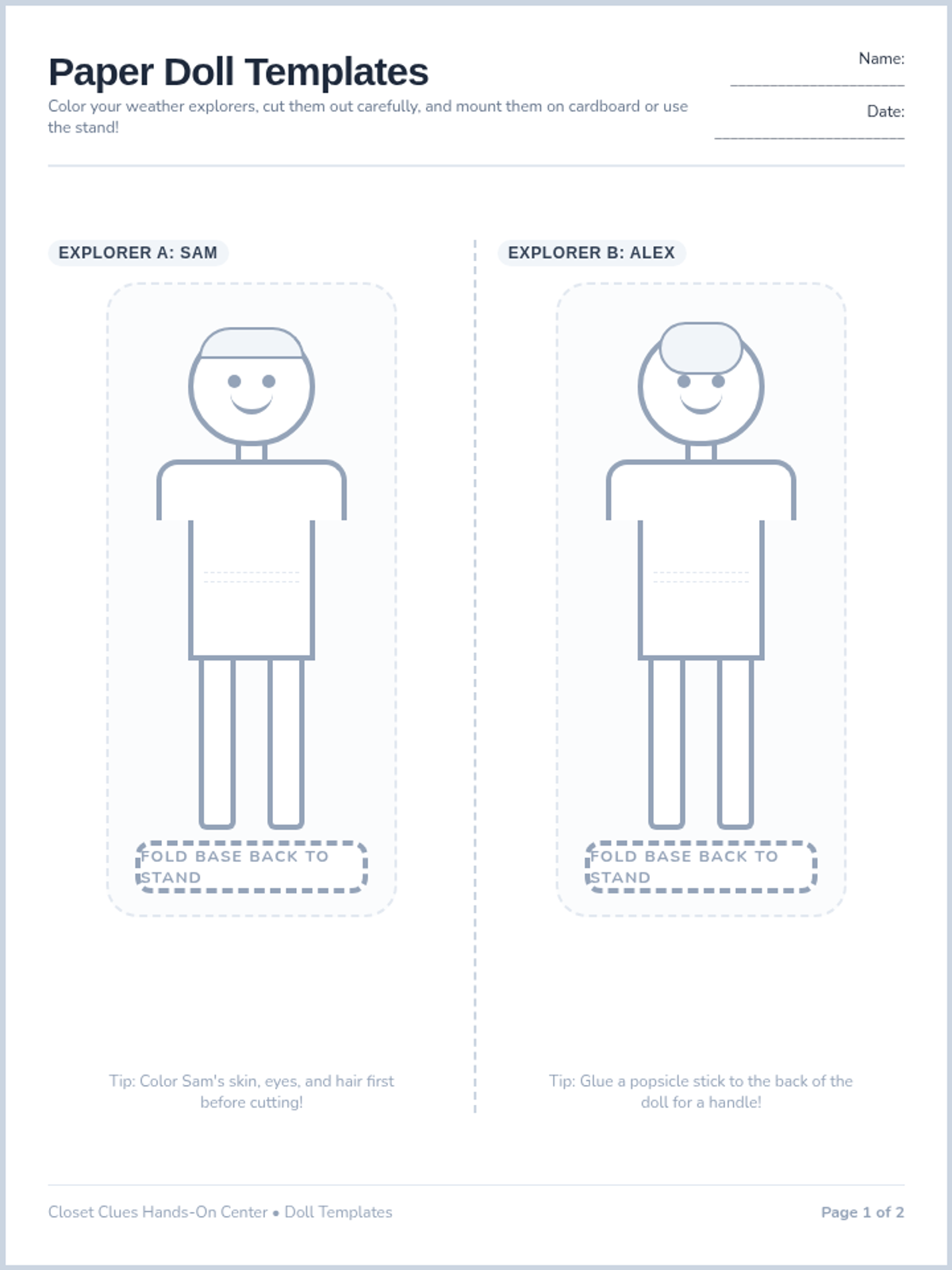
A hands-on, interactive lesson where students explore how to select appropriate clothing based on seasonal weather conditions, temperature, and precipitation. Using task cards and paper-doll cutouts, students practice matching wardrobes to real-world weather scenarios.
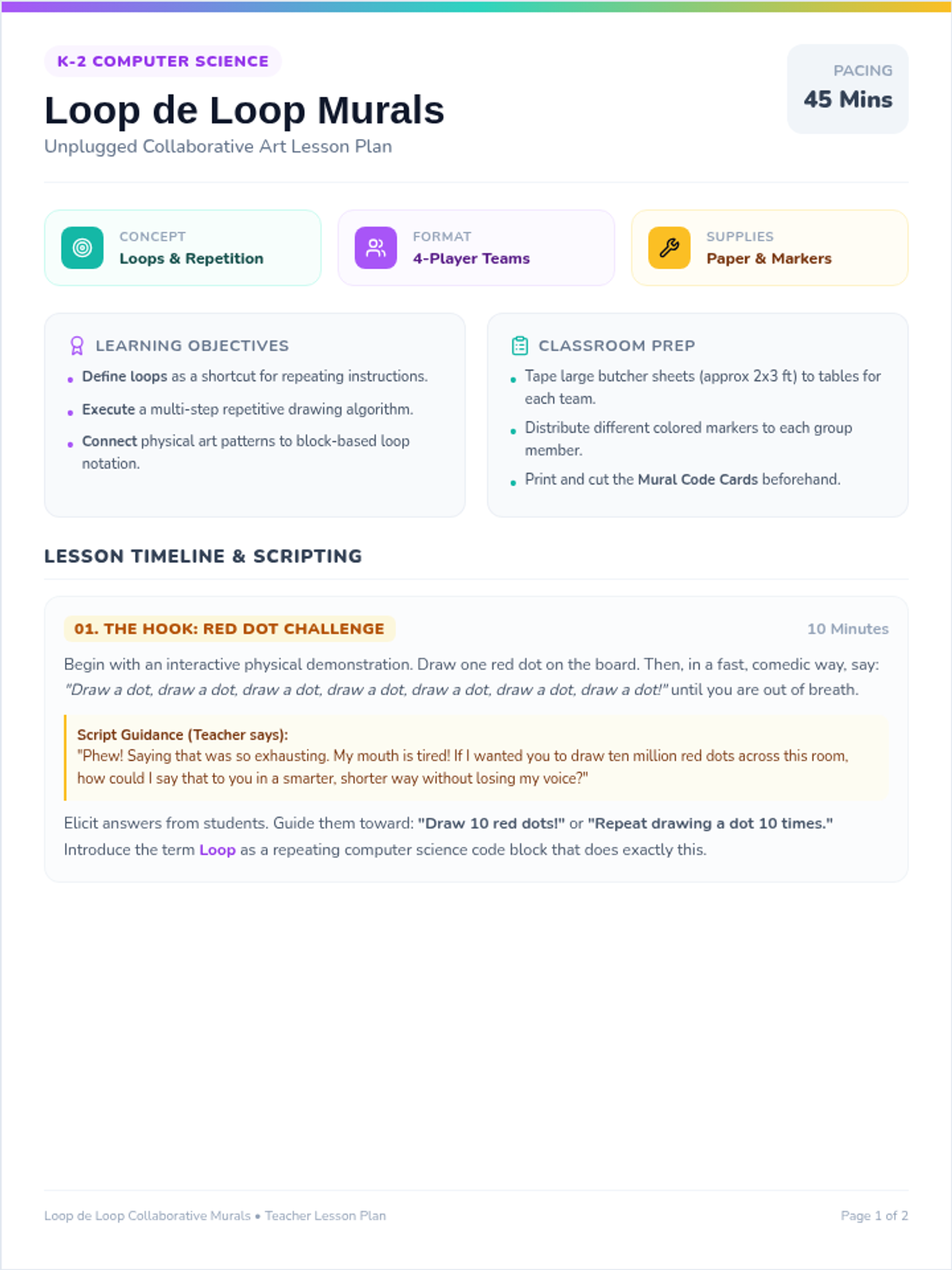
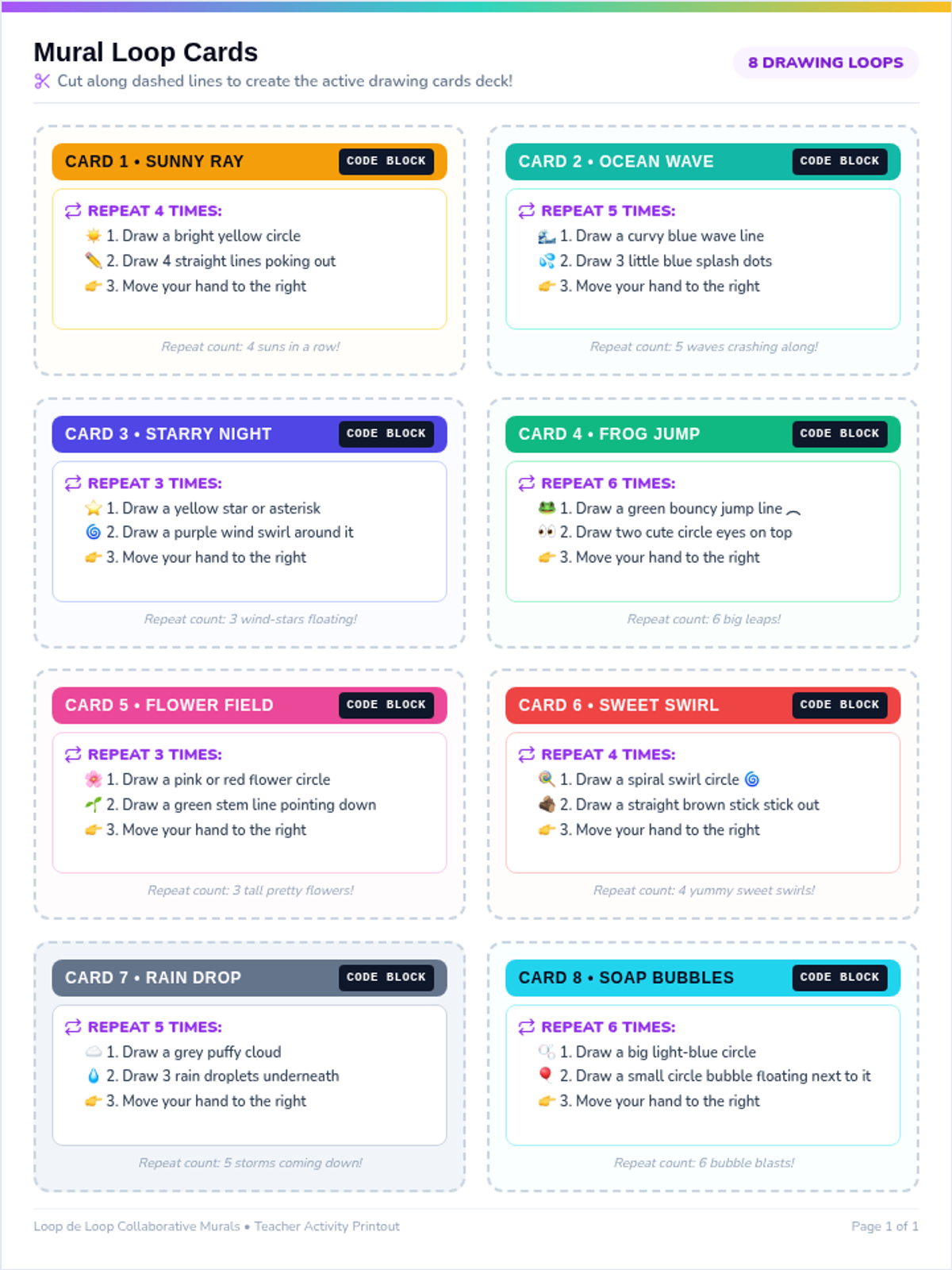
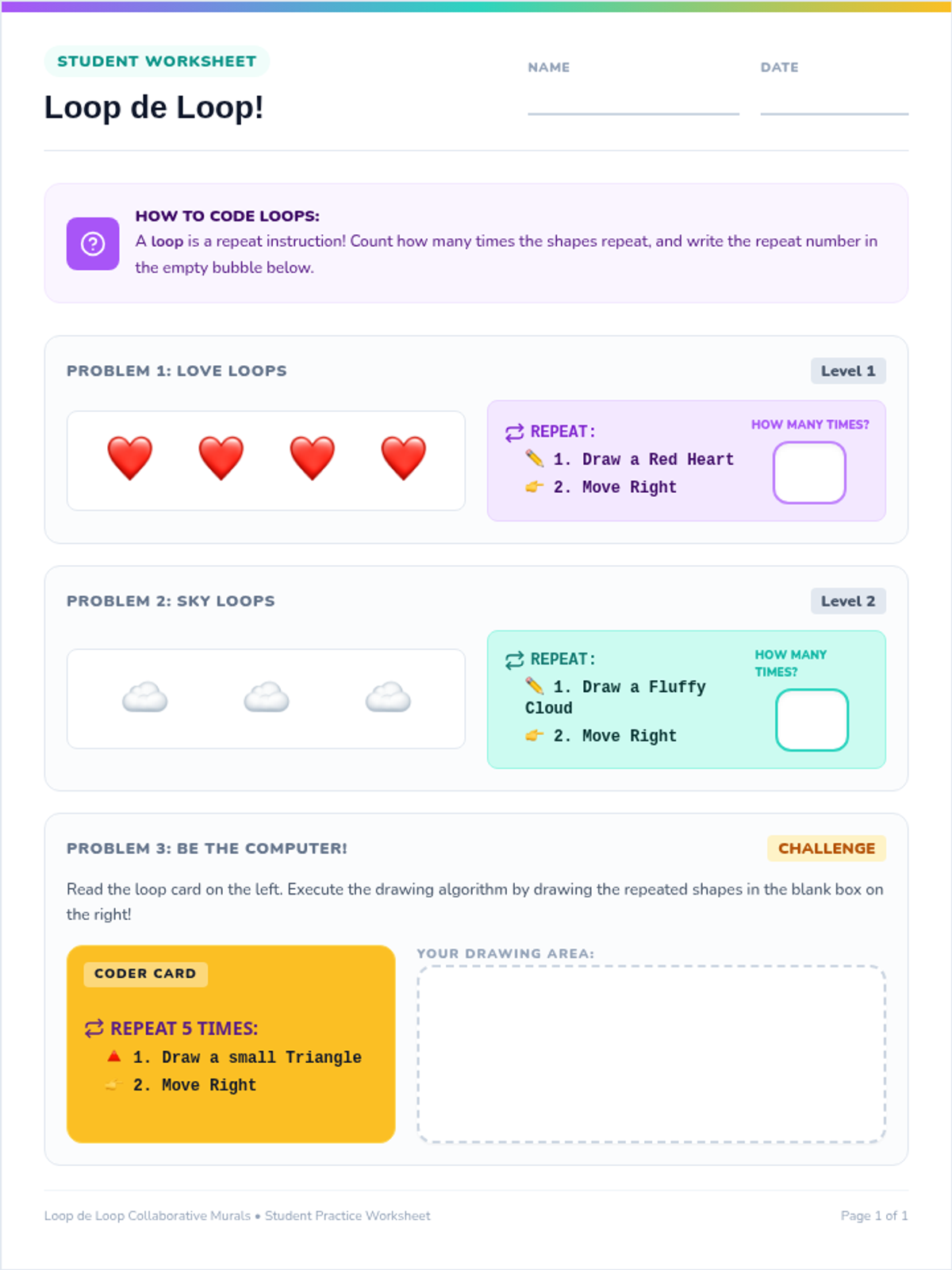
An active, hands-on unplugged computer science lesson for K-2 students. Students learn the concept of loops (repetition) by creating collaborative art masterpieces using simple drawing algorithms.
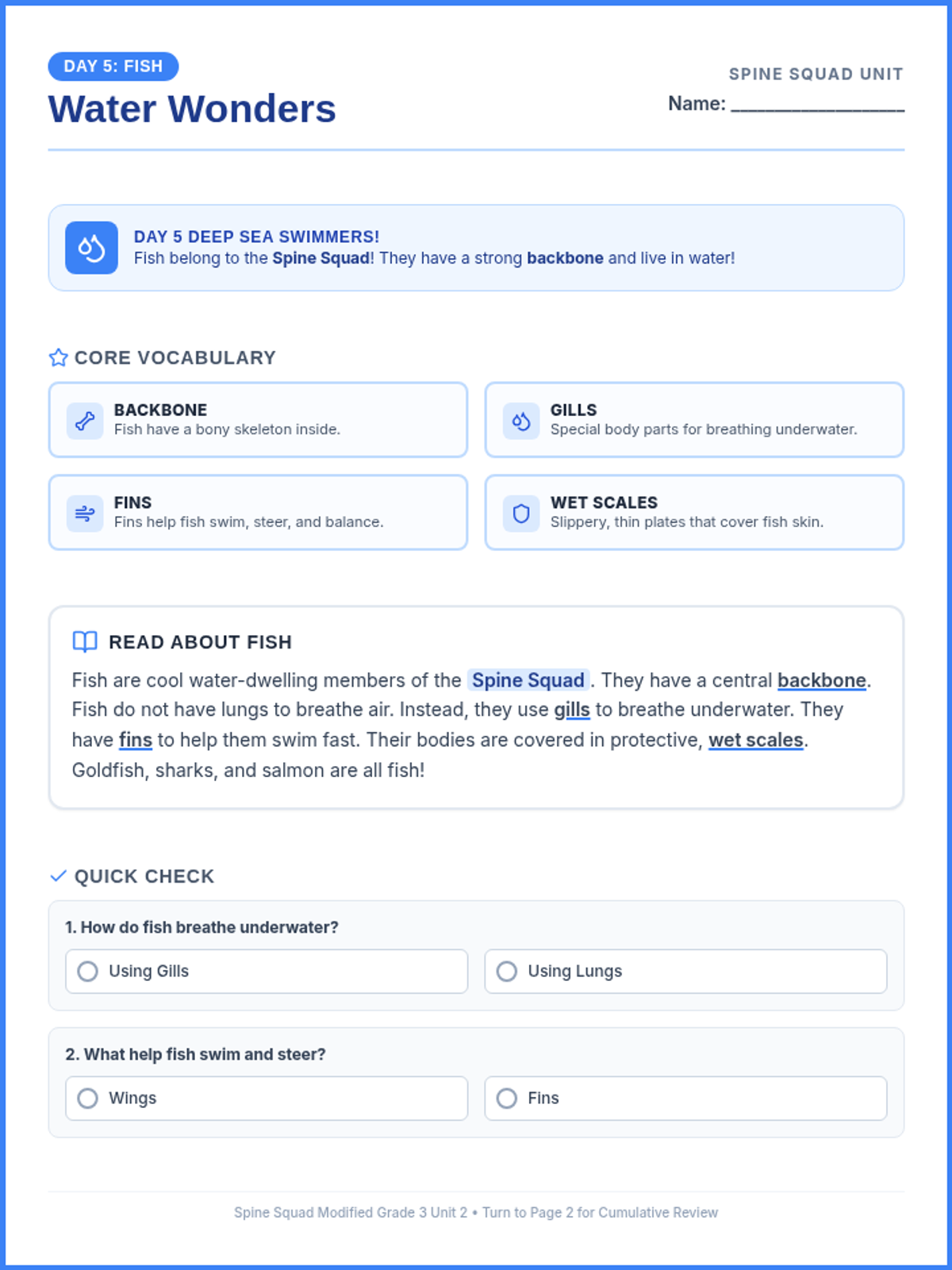
In this fifth and final lesson of the Spine Squad unit, students explore fish, focusing on gills, fins, scales, and underwater survival, with a final cumulative review of the five vertebrate groups.
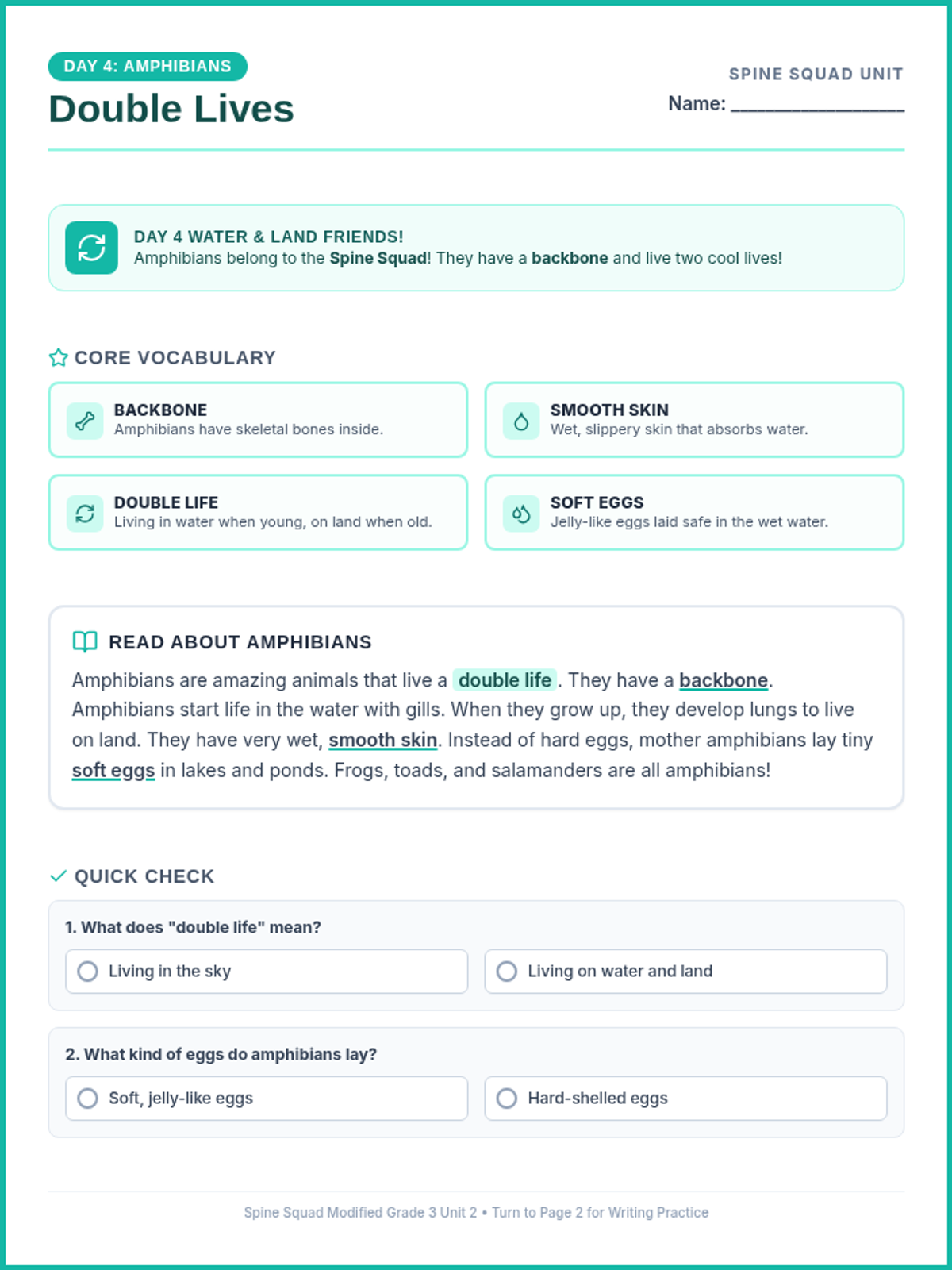
In this fourth lesson of the Spine Squad unit, students study amphibians, understanding how they live on water and land, lay soft eggs, and have smooth, wet skin, with scaffolded reading and tracing.
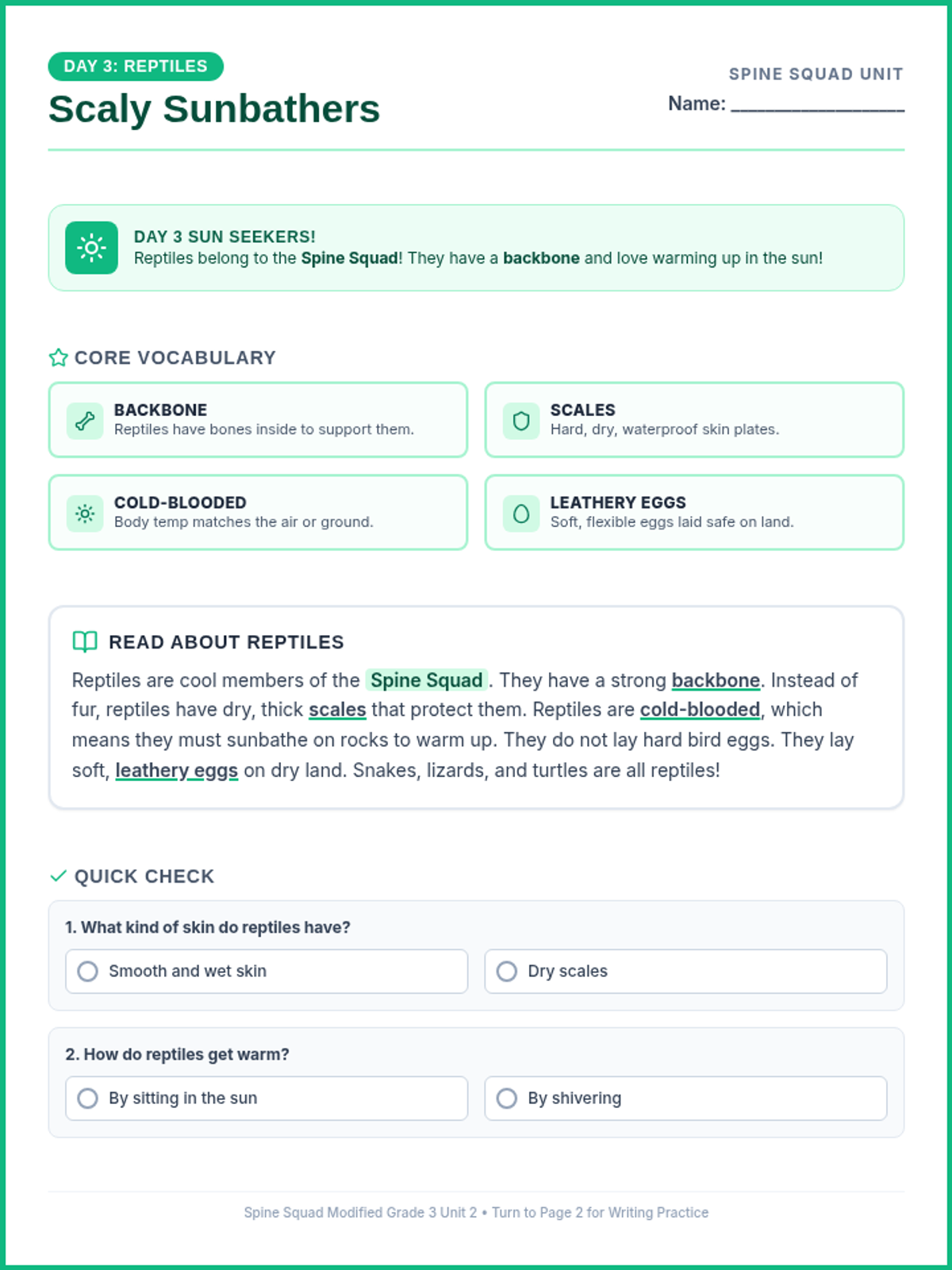
In this third lesson of the Spine Squad unit, students identify reptiles, exploring characteristics such as scales, cold-blooded regulation, and laying leathery eggs on land, supported by guided tracing.
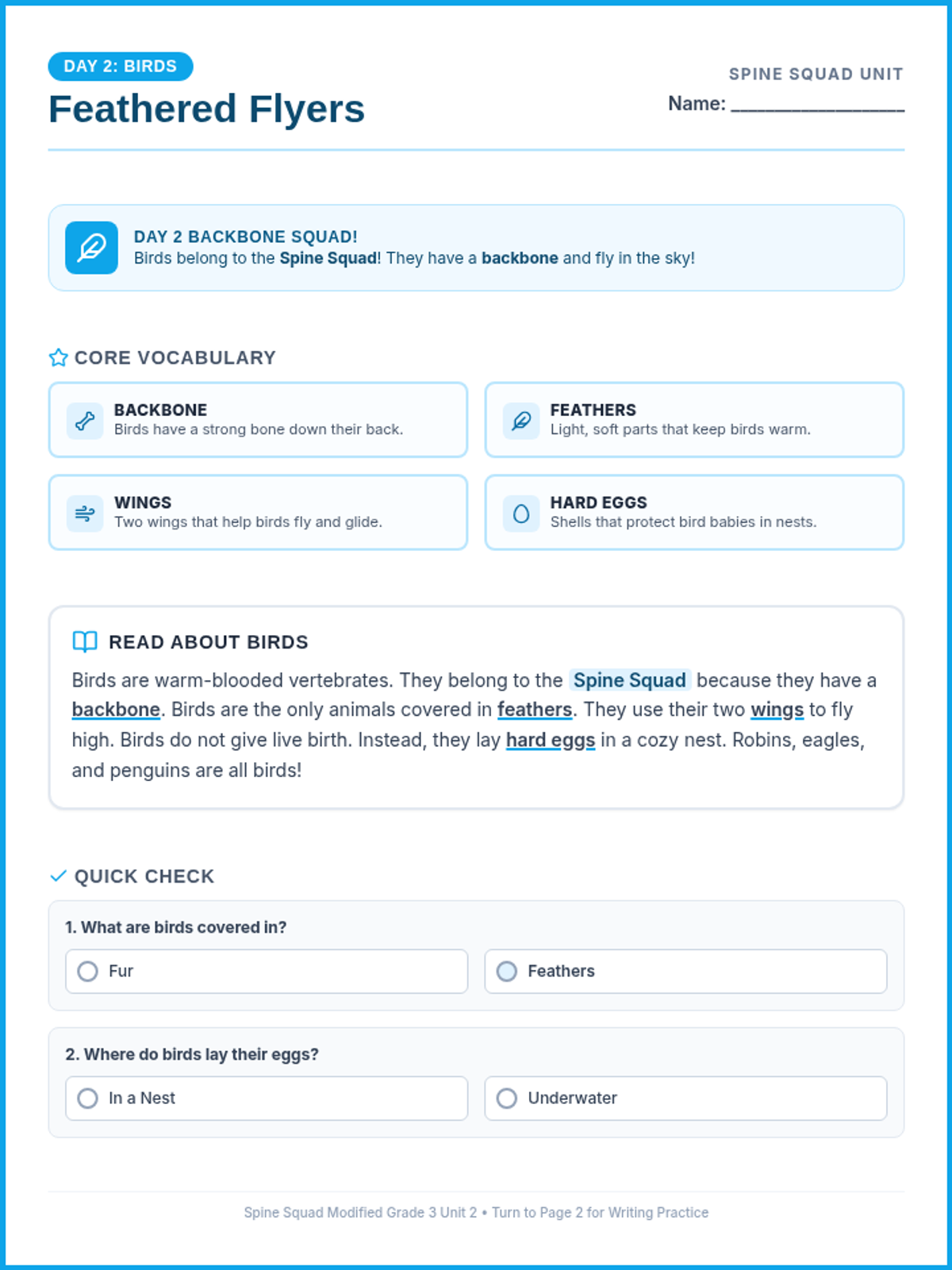
In this second lesson of the Spine Squad unit, students examine the key characteristics of birds, including feathers, wings, and laying hard-shelled eggs, using scaffolded comprehension prompts and tracing.
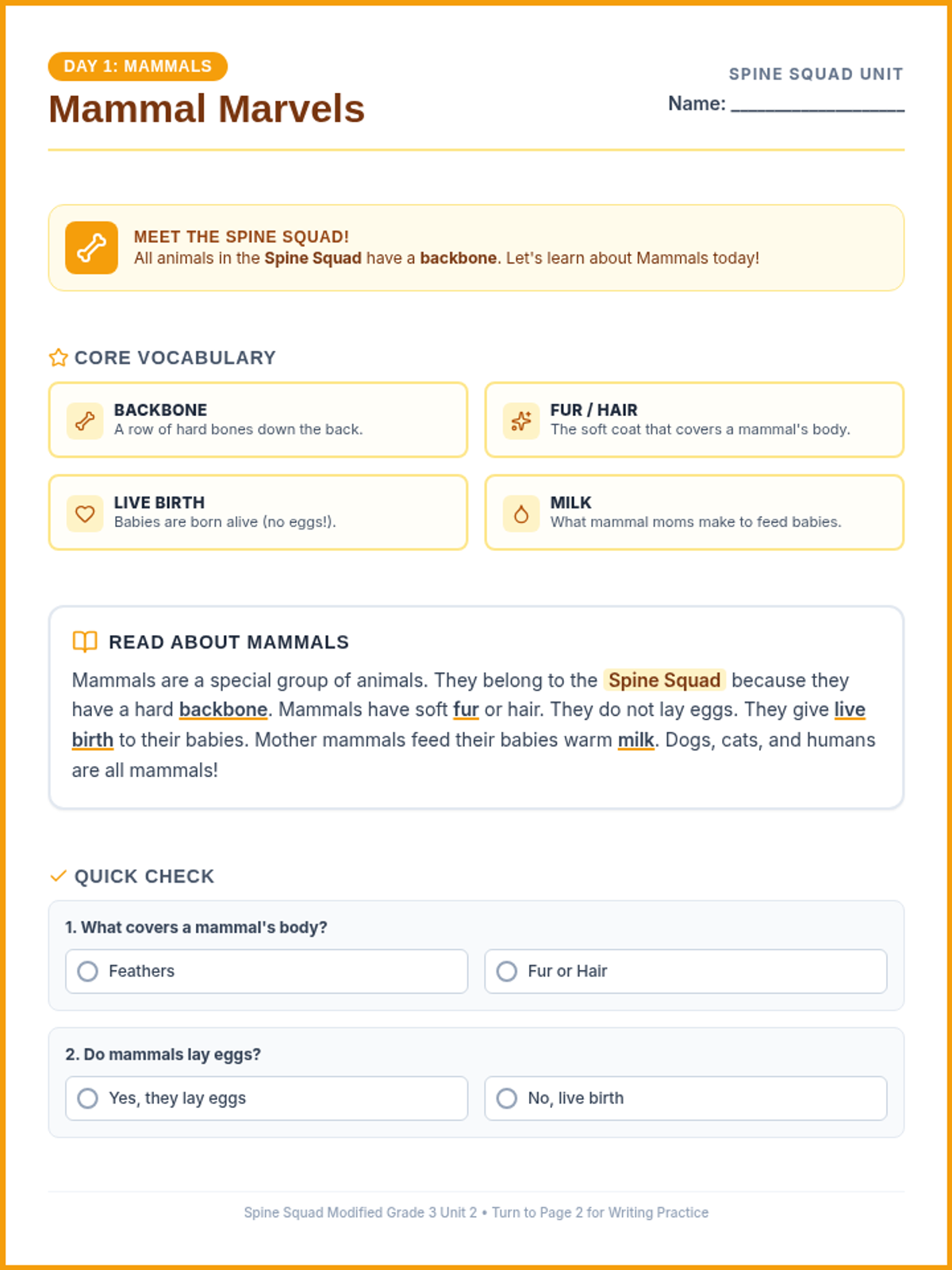
In this first lesson of the Spine Squad unit, students explore the unique traits of mammals, focusing on fur/hair, live birth, and milk production with heavy visual support and tracing activities.
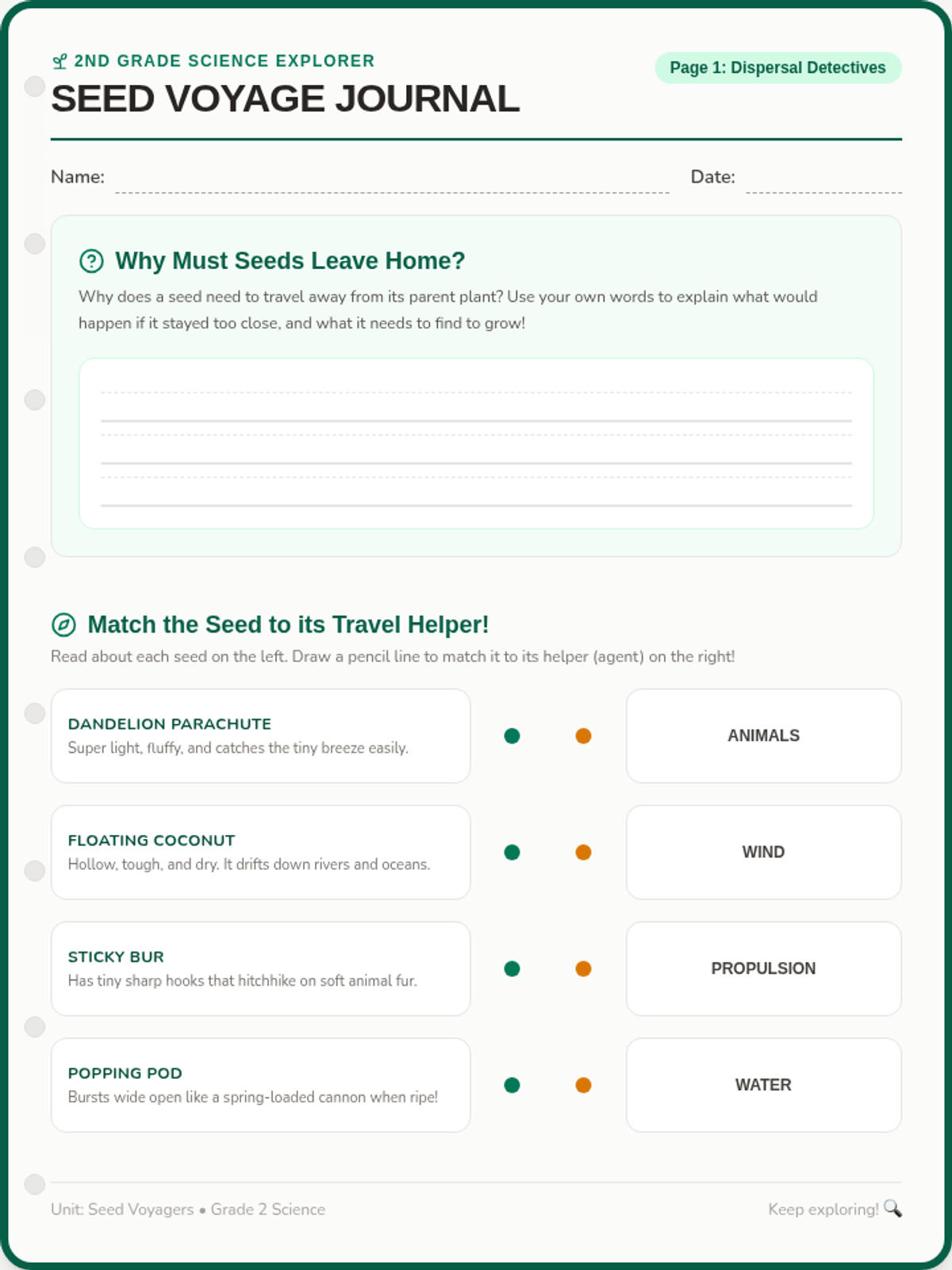
A hands-on science lesson designed for second-grade students to explore seed dispersal methods. Students learn about wind, water, animals, gravity, and propulsion through visual modeling, discussion, and a structured field journal.
An interactive, visually rich lesson preparing Florida students for severe storms and hurricanes. Covers emergency kit building, weather alerts, home action plans, and sensory coping strategies to reduce storm anxiety.
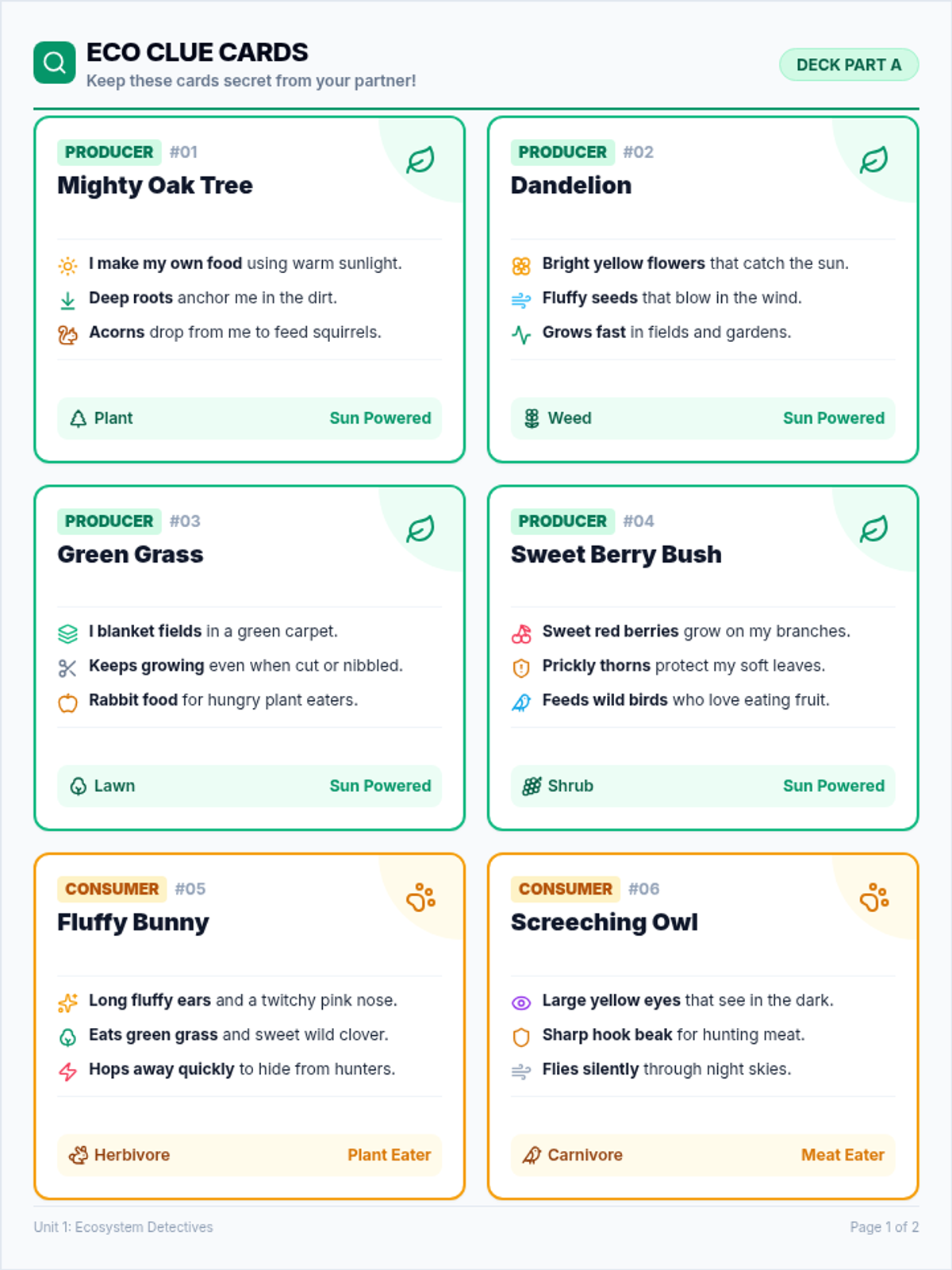
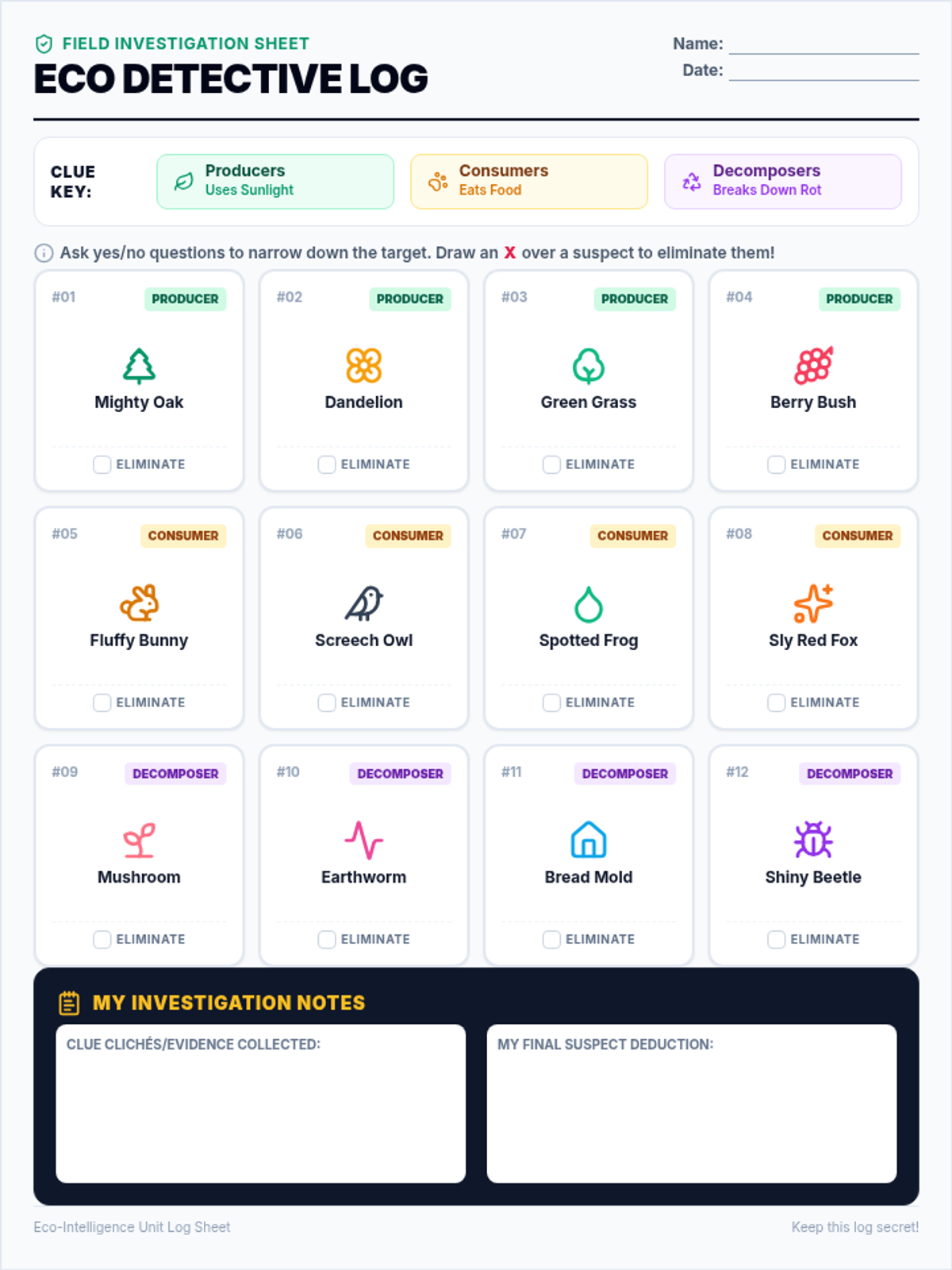
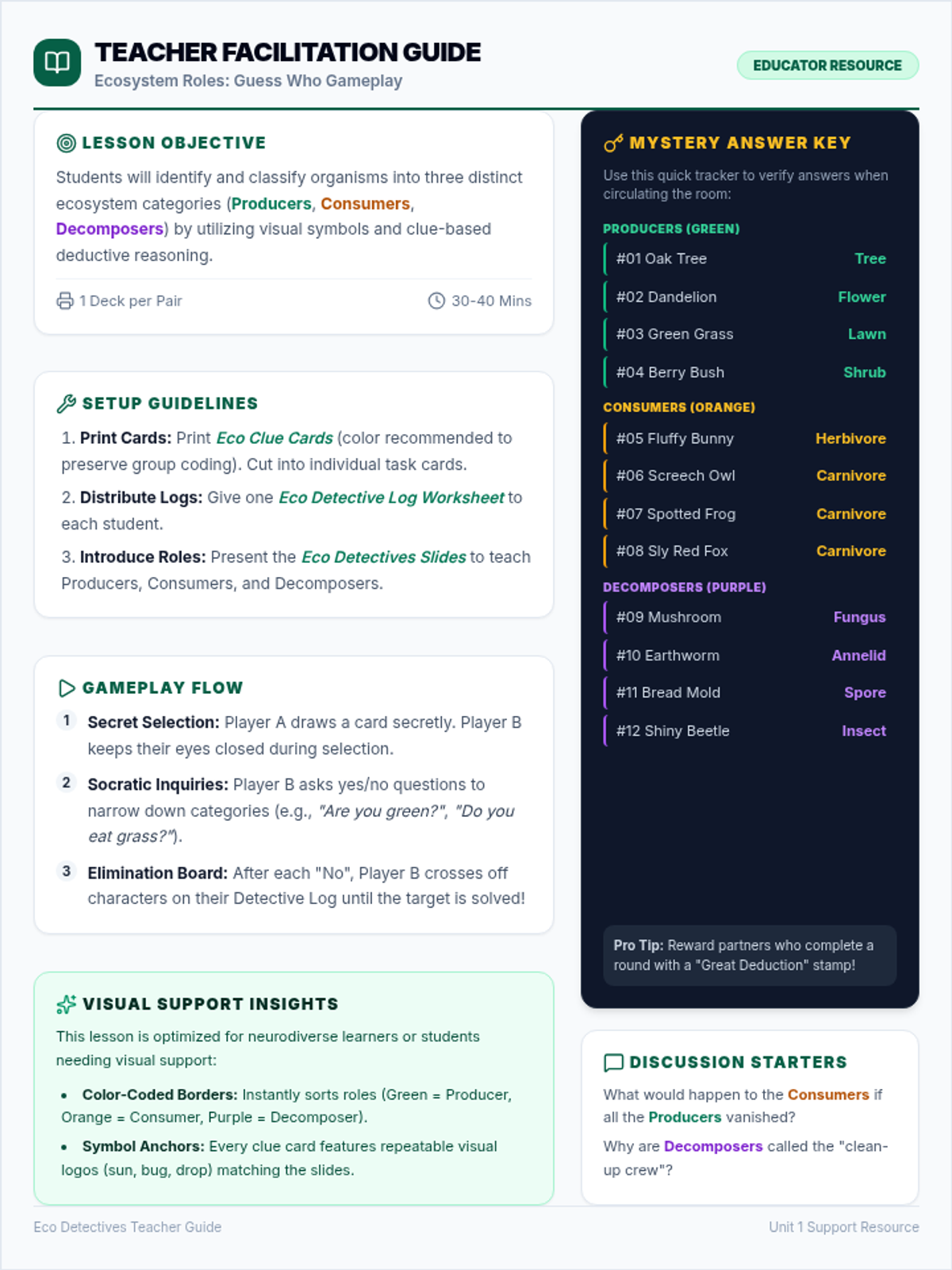
An interactive, visual-heavy lesson where students investigate ecosystem roles (producers, consumers, and decomposers) through an engaging 'Guess Who' style game. Includes visual-support clue cards, a detective tracking sheet, and a comprehensive teacher guide.
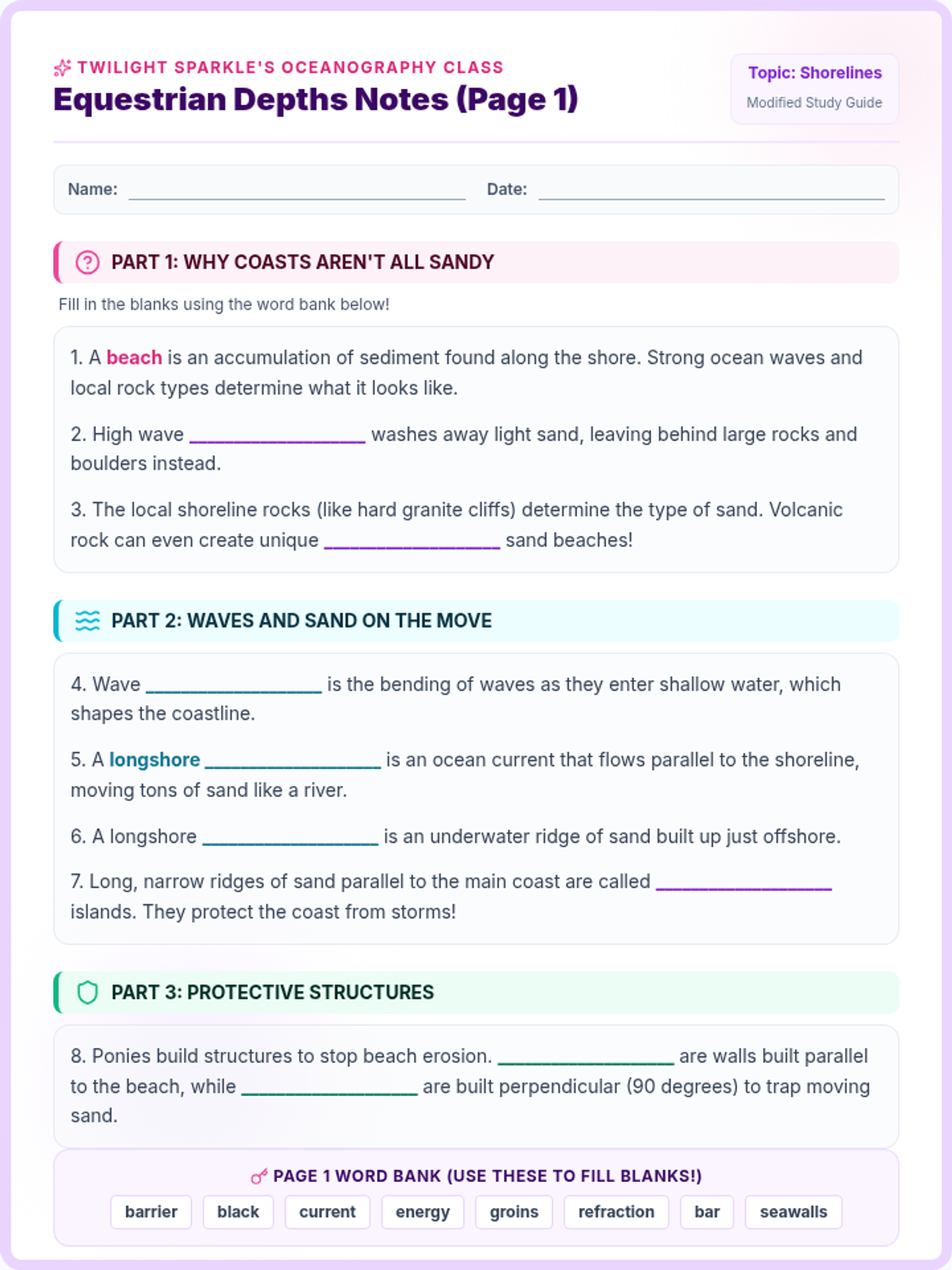
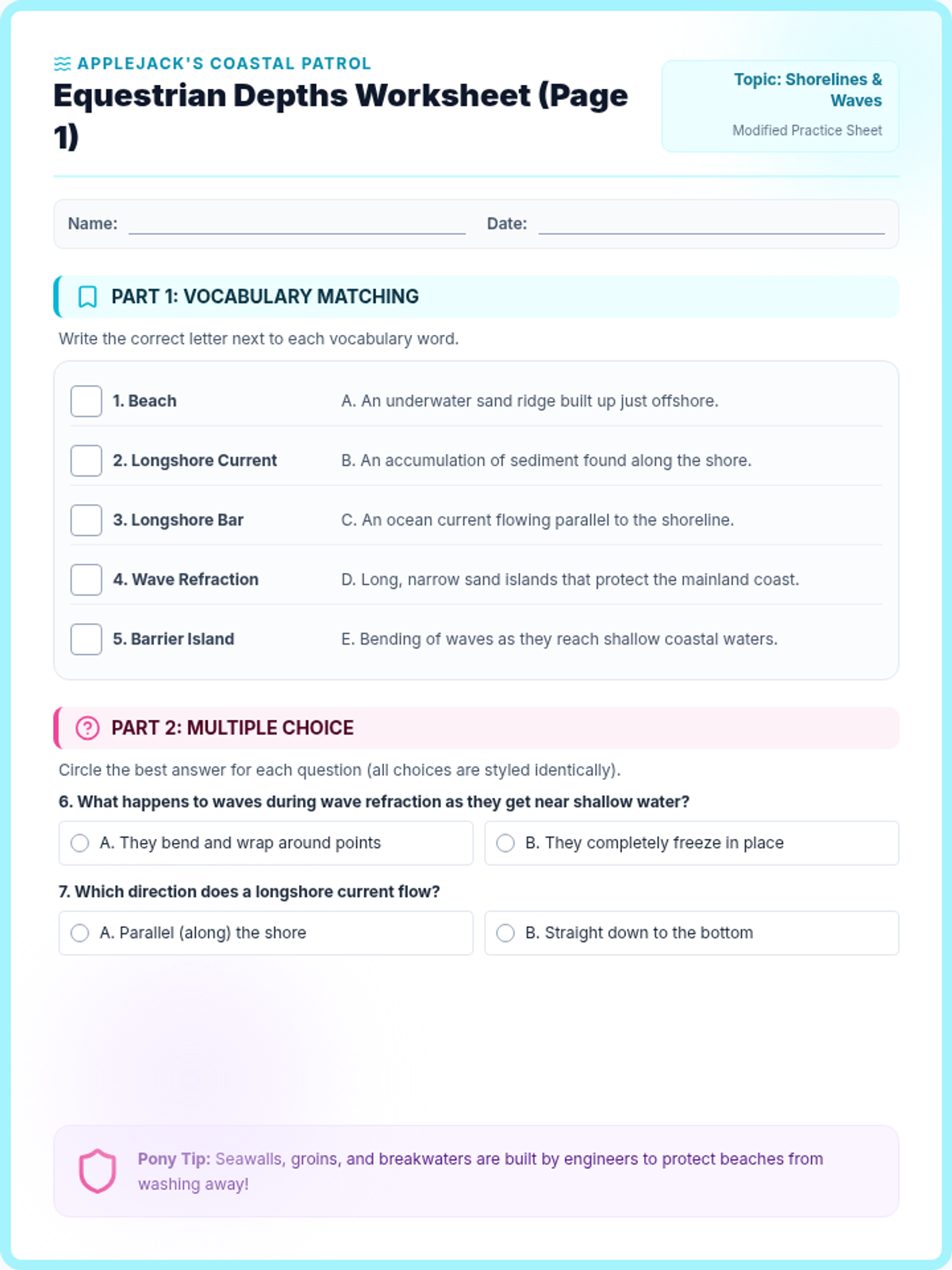
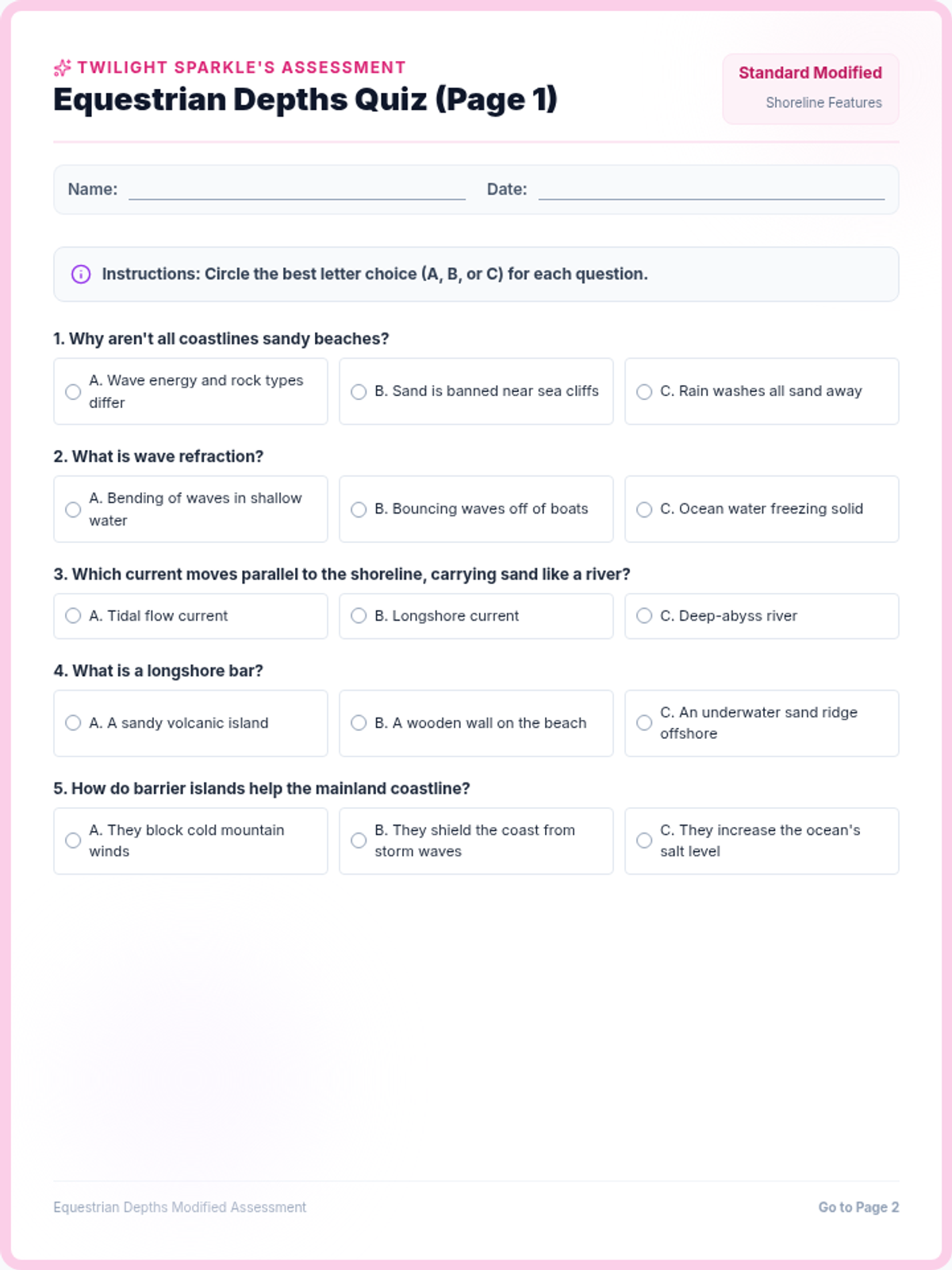
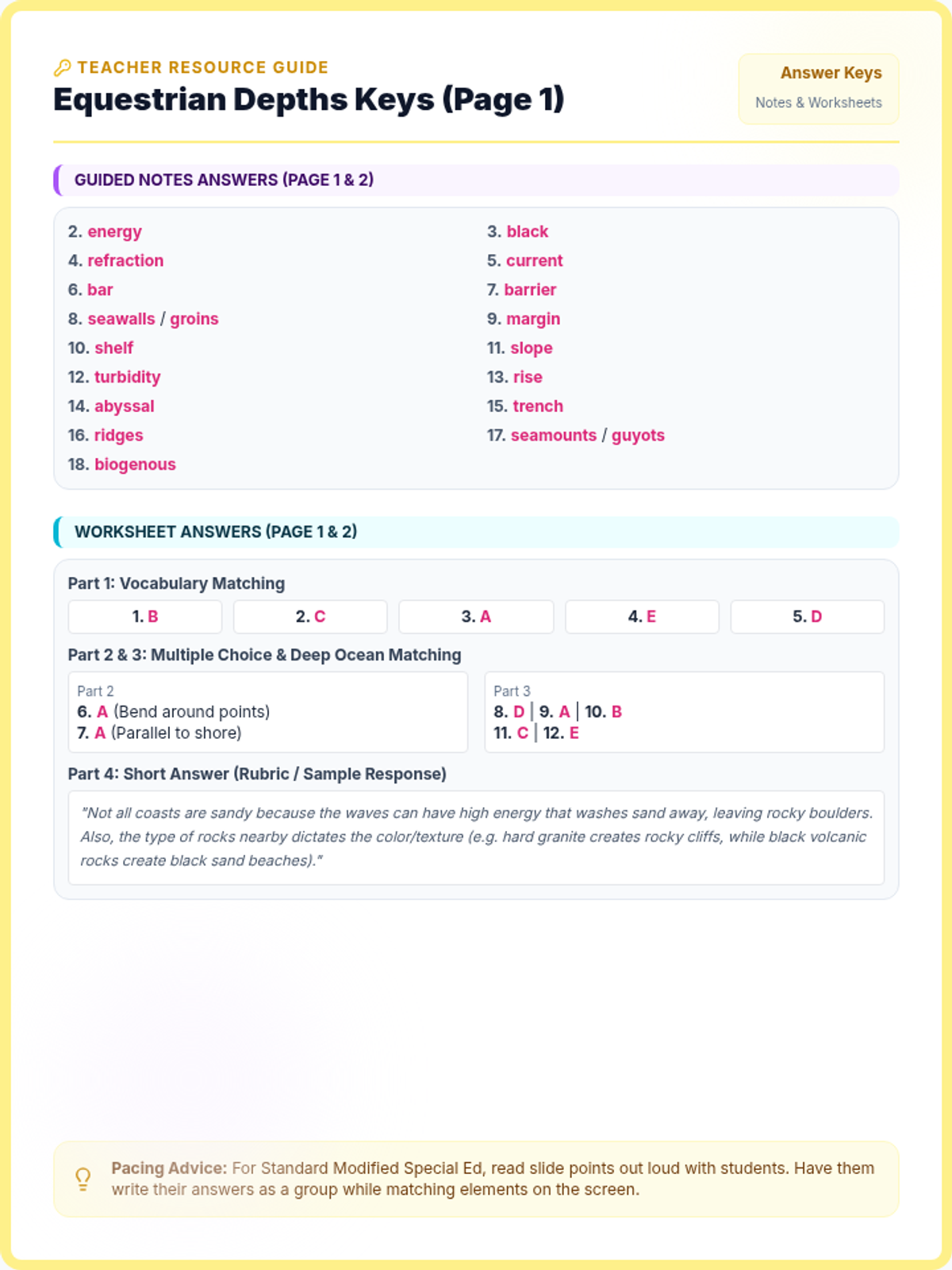
A lesson on oceanography covering shorelines, coastal features, and the deep seafloor, adapted with a friendly My Little Pony decorative theme and chunked, accessible text for Standard Modified Special Education students.
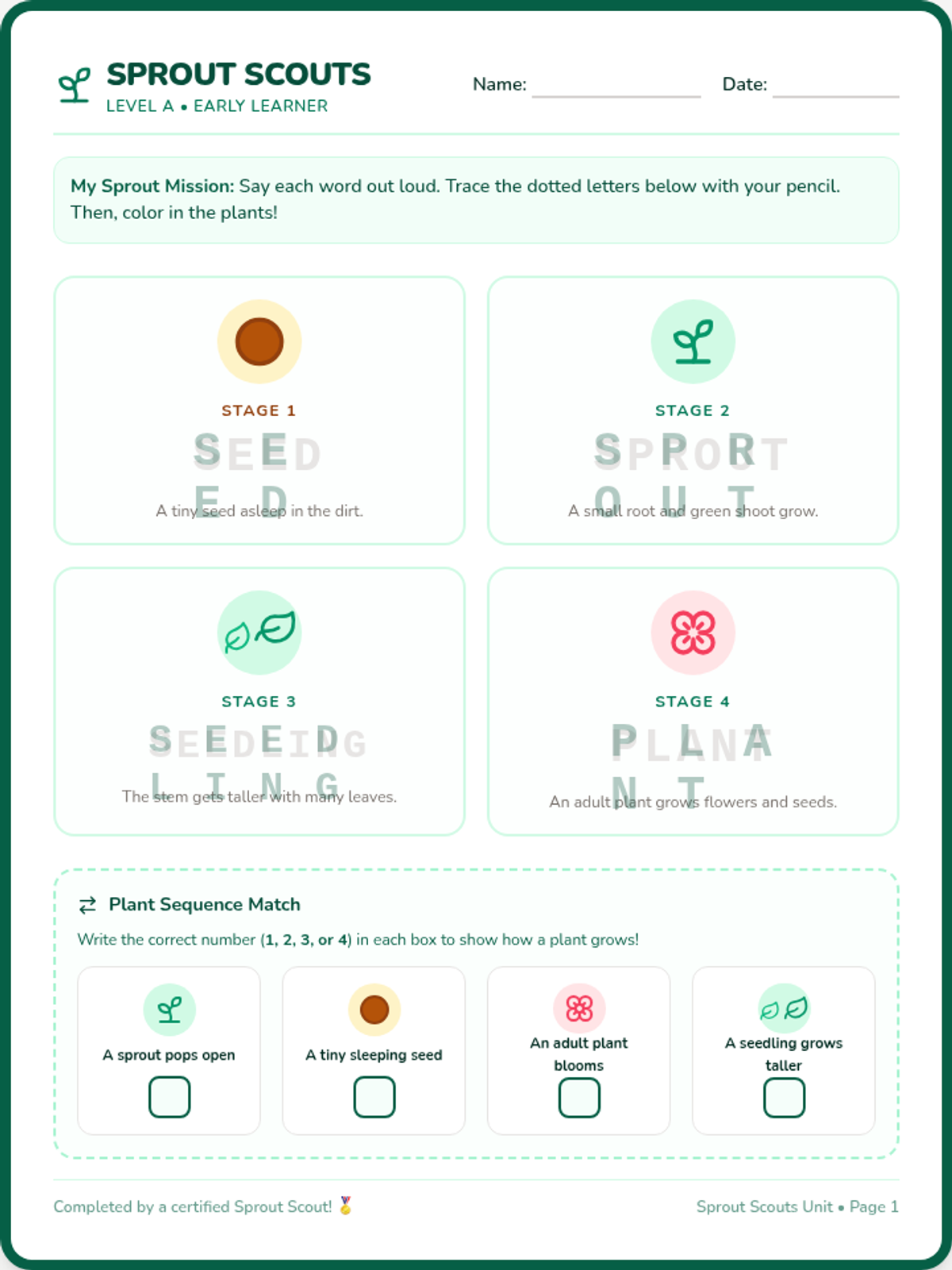
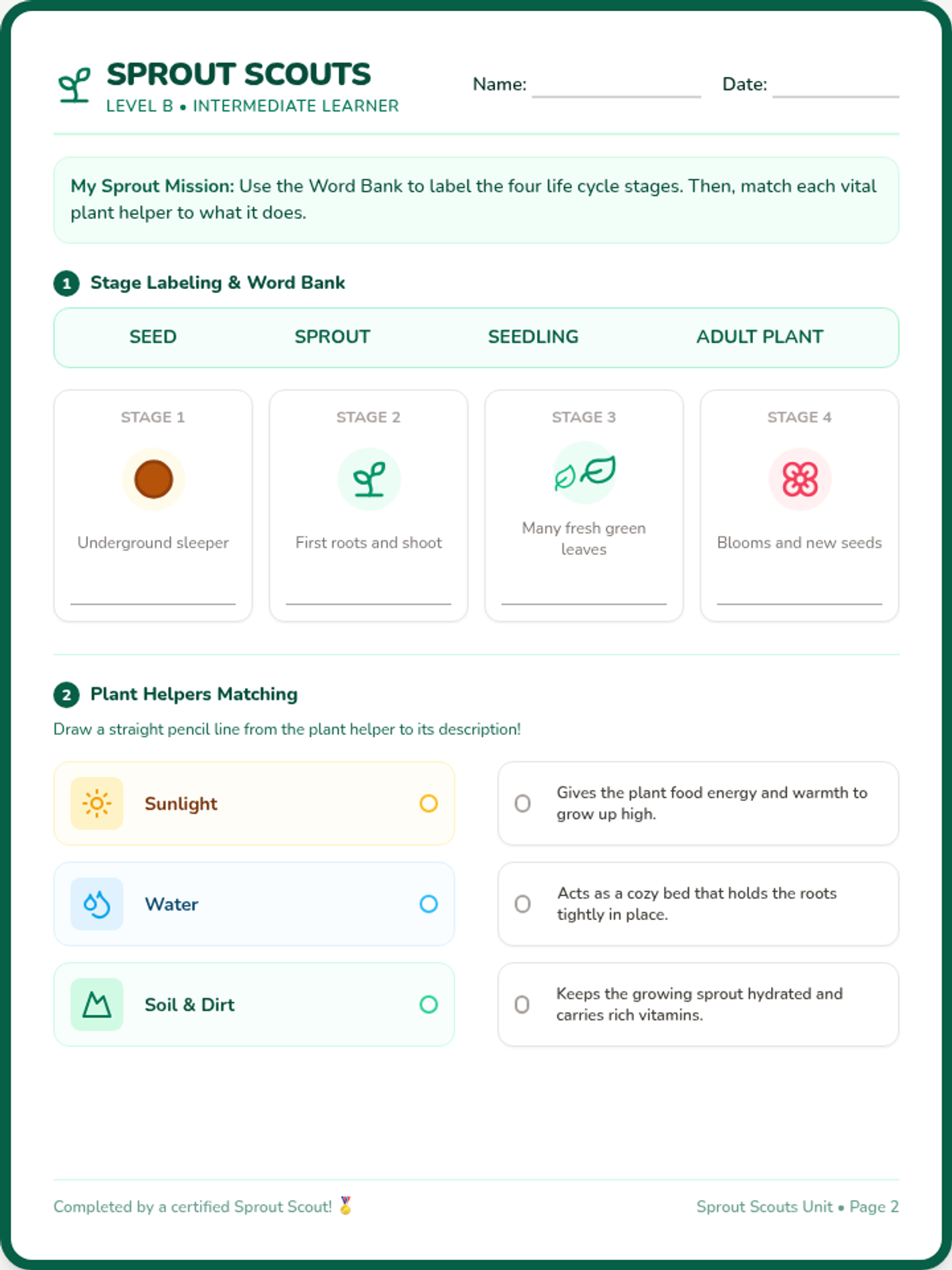
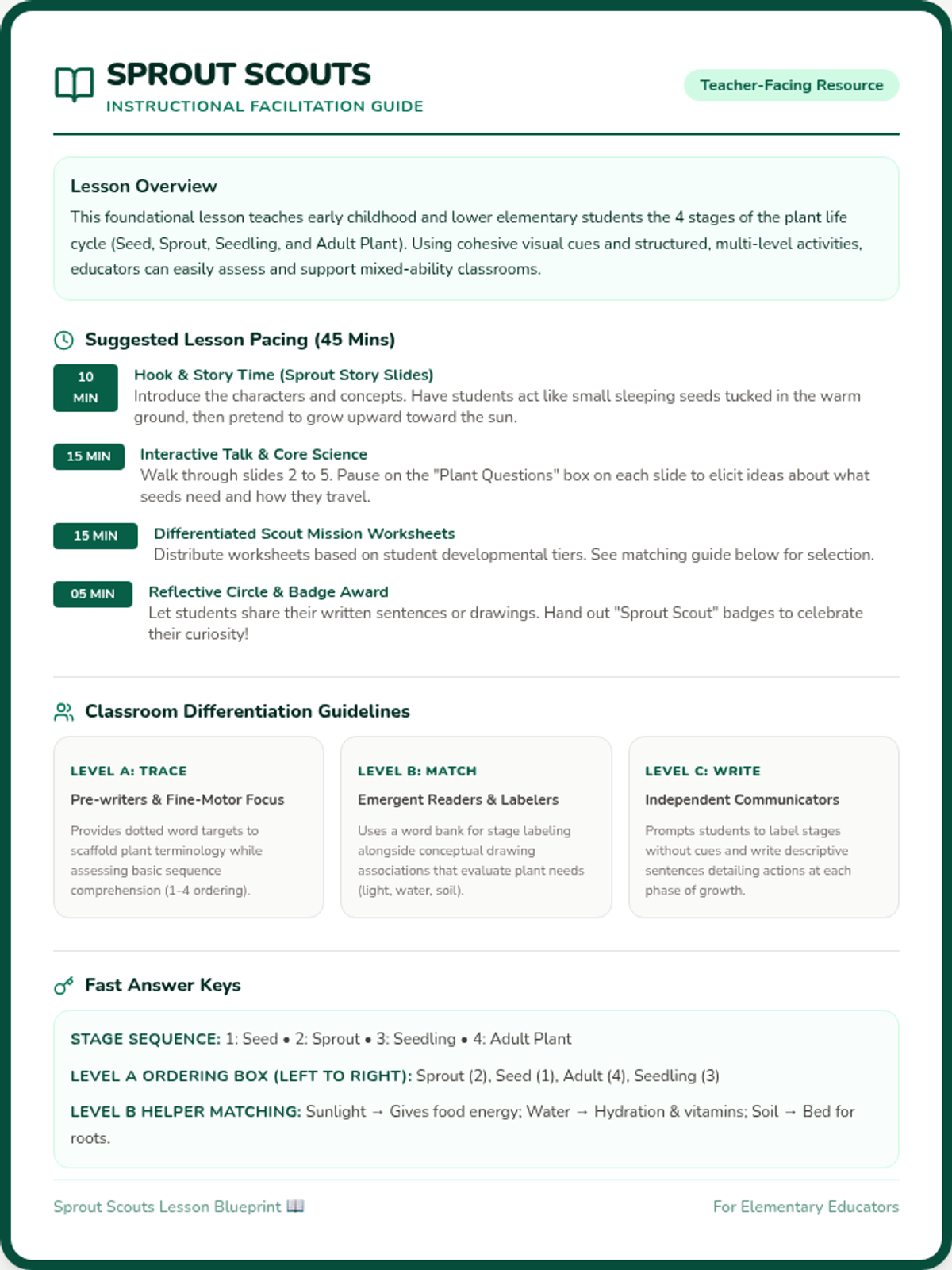
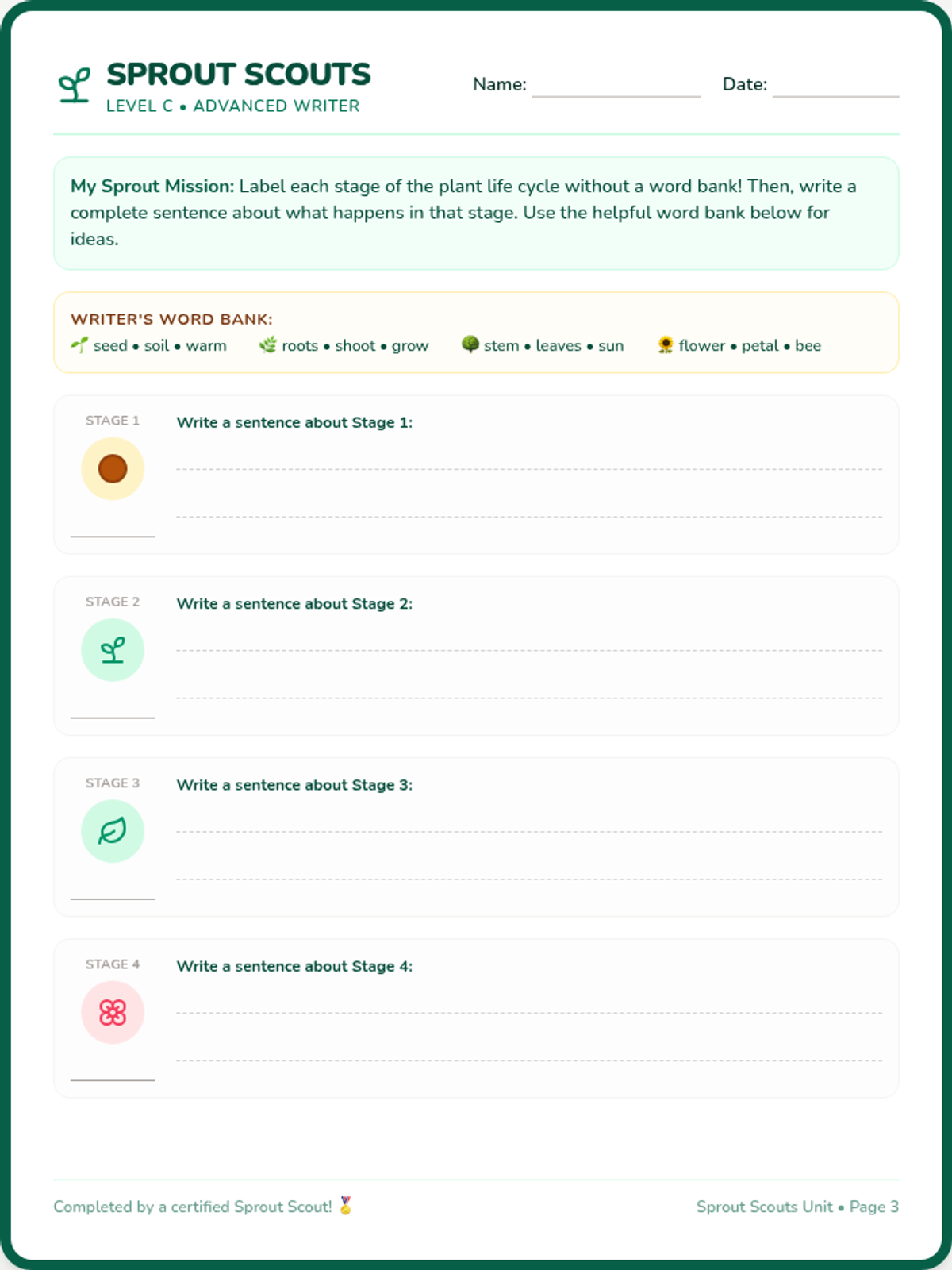
A foundational biology lesson exploring the simple life cycle of a plant from seed to sprout to adult. Includes interactive slides, a comprehensive teacher guide, and three tiers of differentiated worksheets to support early writers, matchers, and independent sentence-builders.
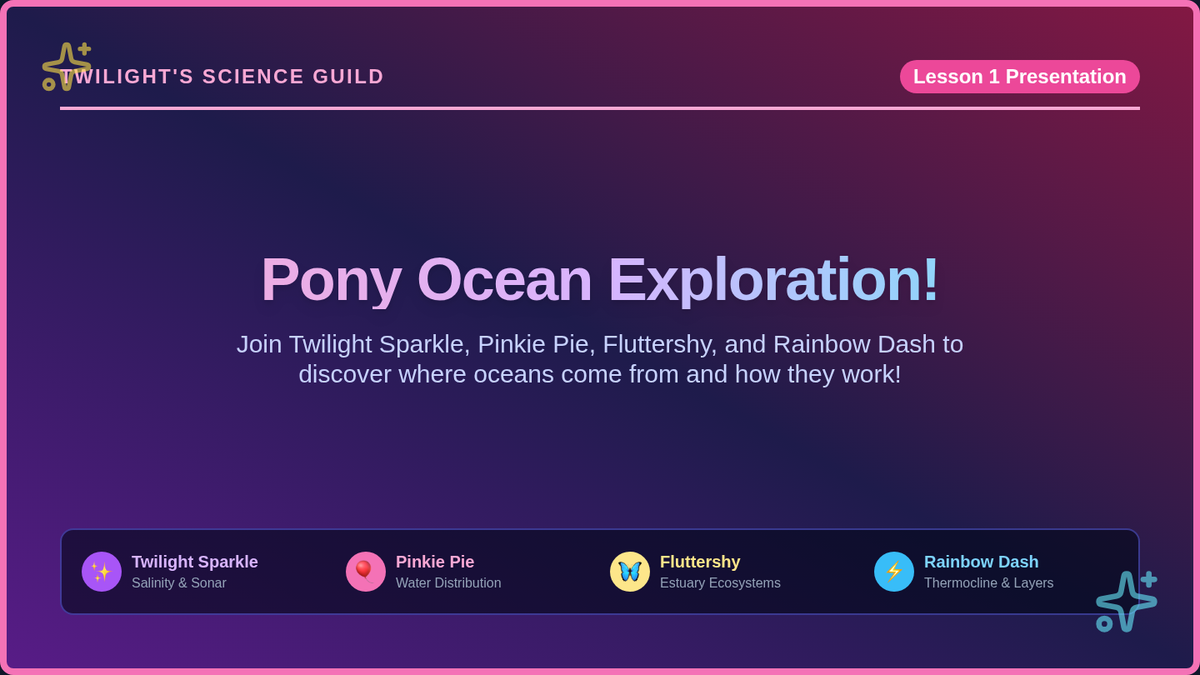
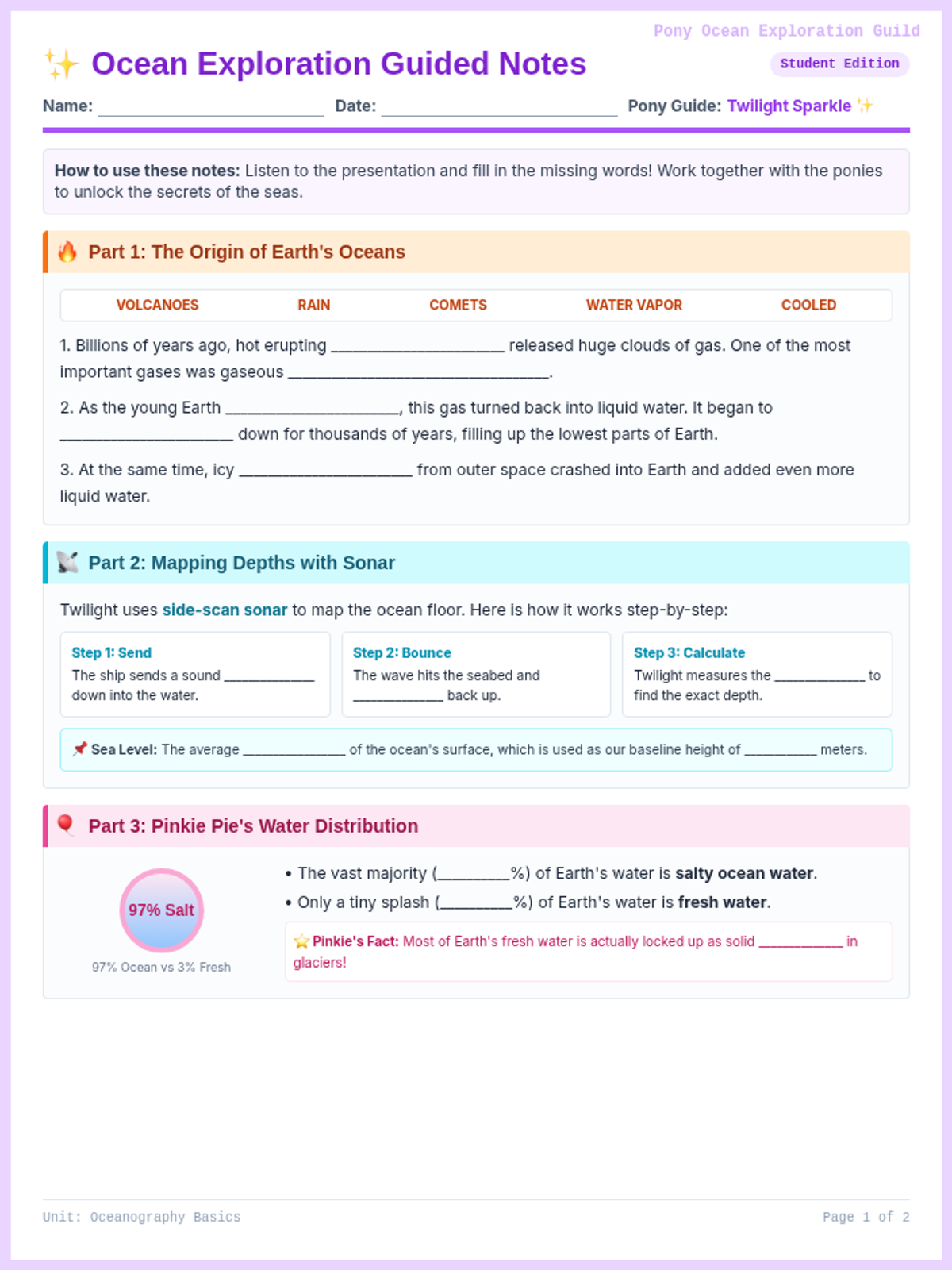
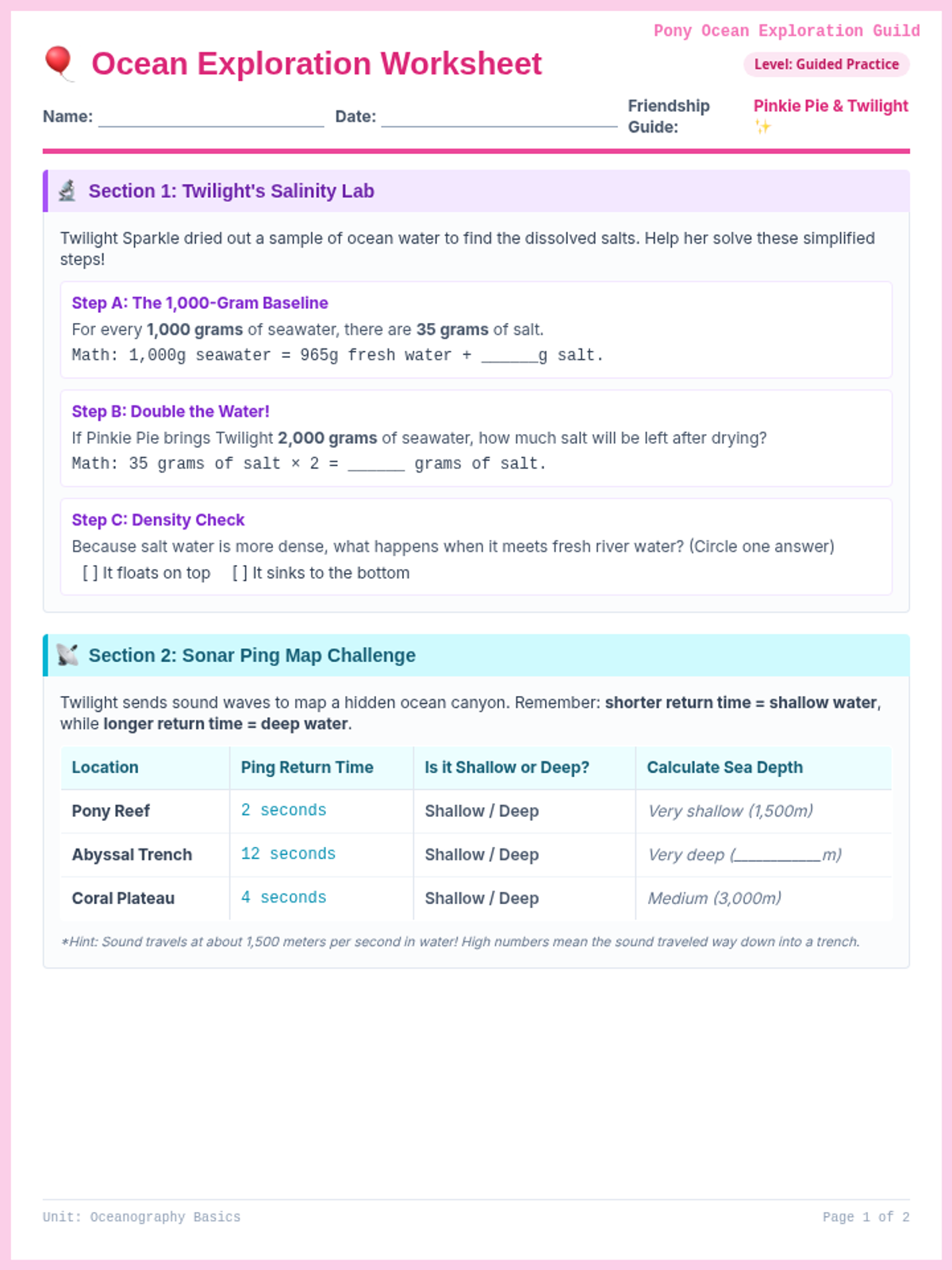
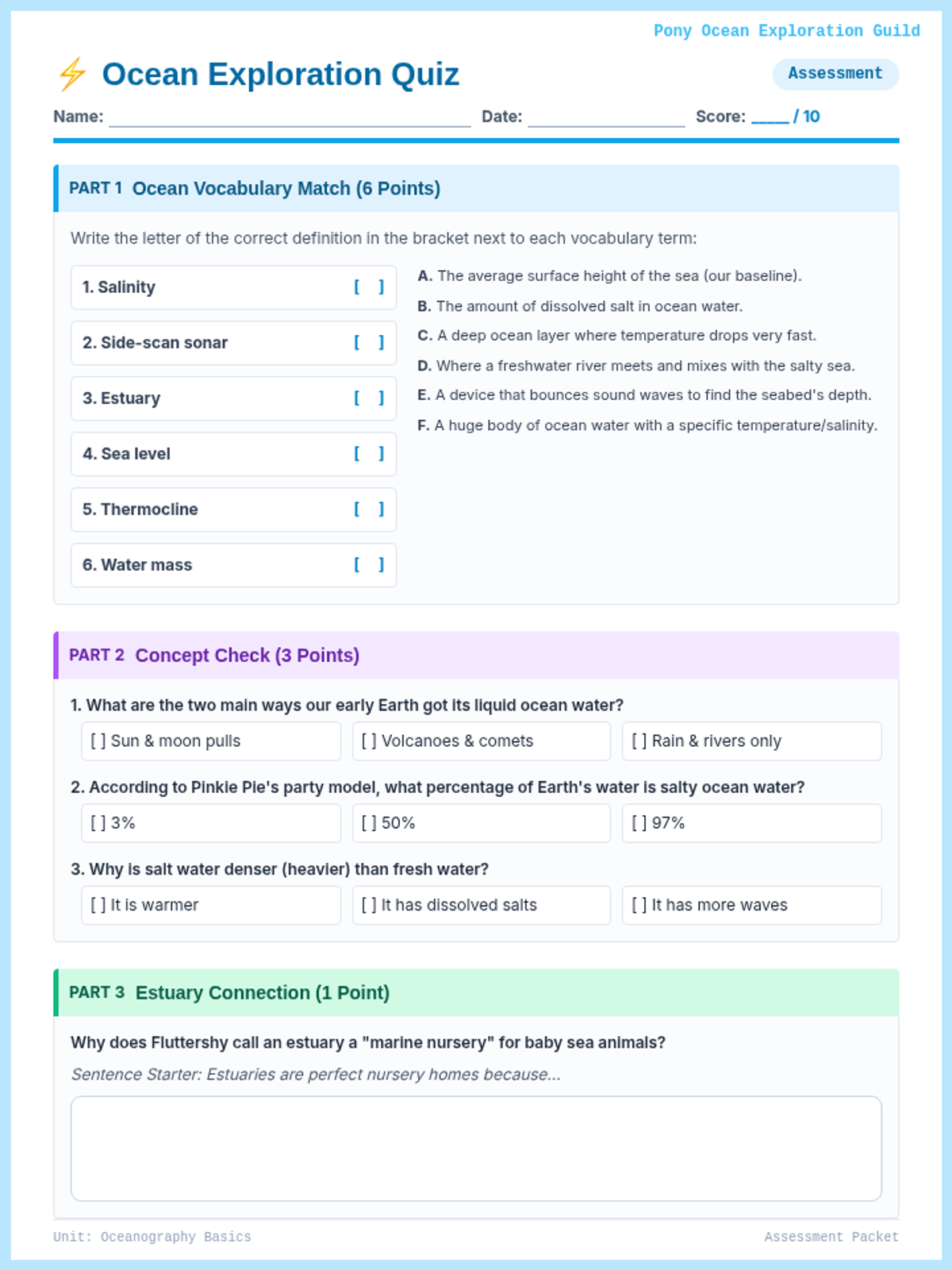
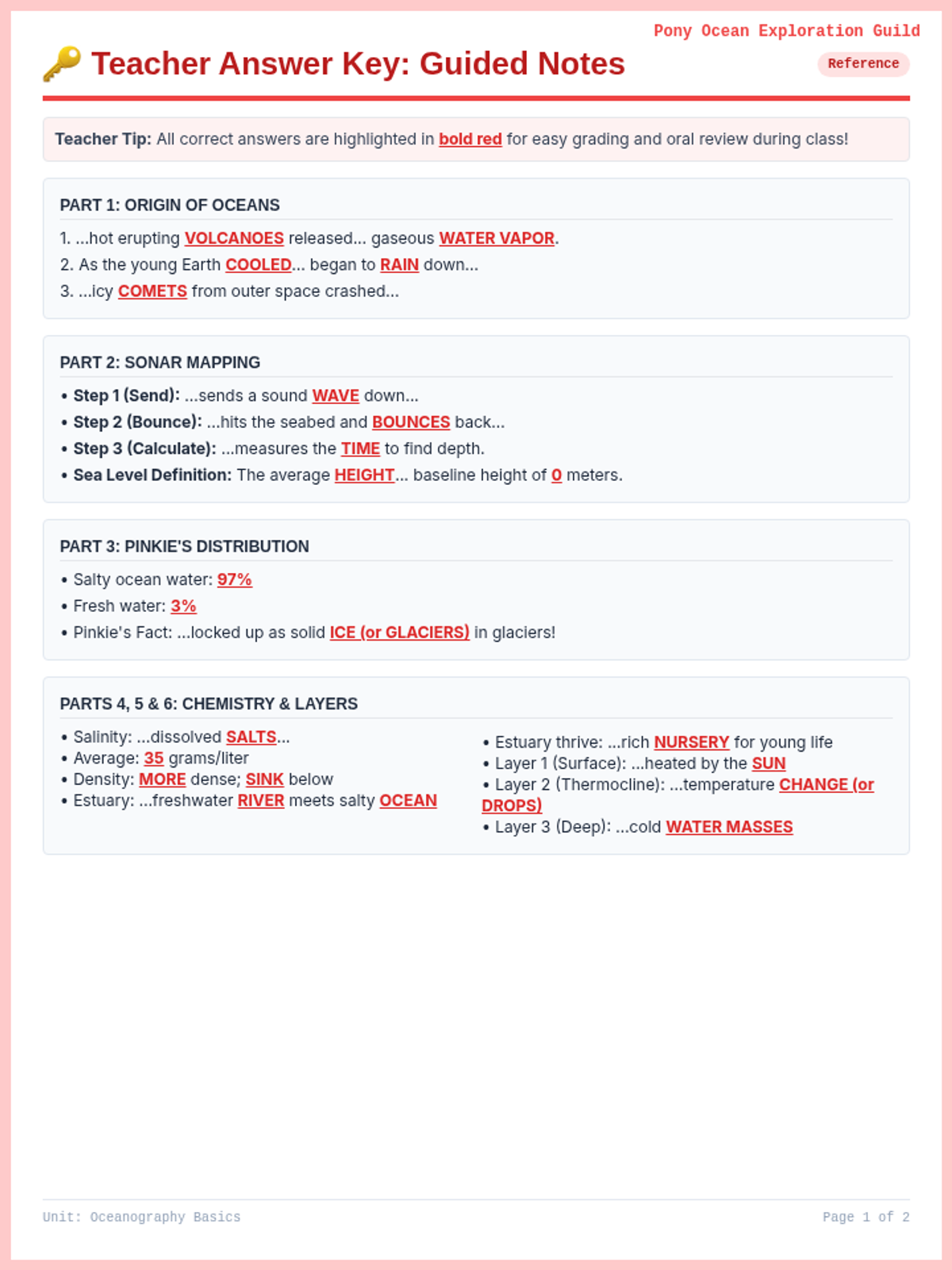
Join Twilight Sparkle, Pinkie Pie, Fluttershy, and Rainbow Dash as they explore the origin, composition, and structure of Earth's oceans. This lesson is highly visual, simplified, and carefully structured with guided practice, word banks, and sentence starters.
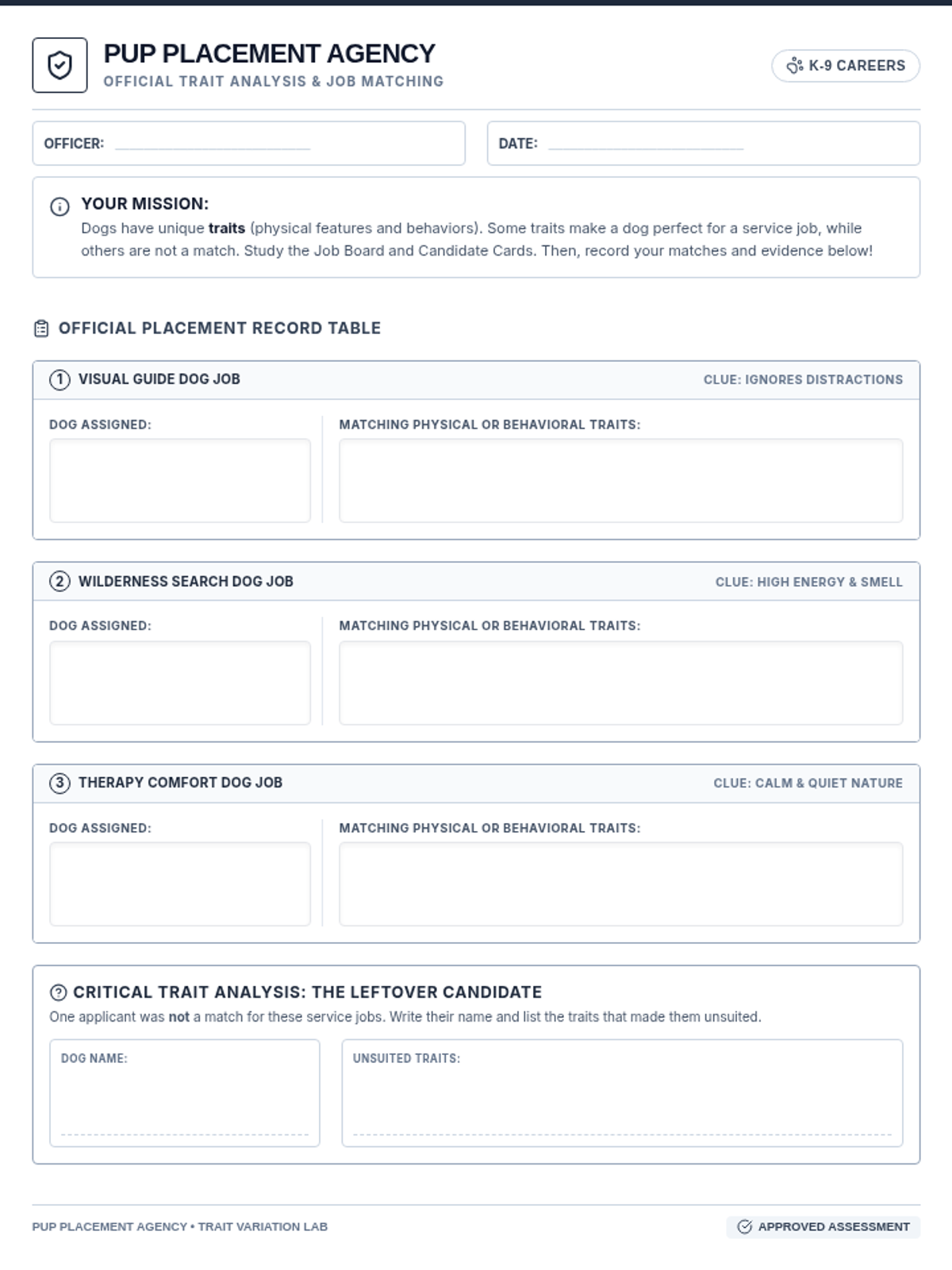
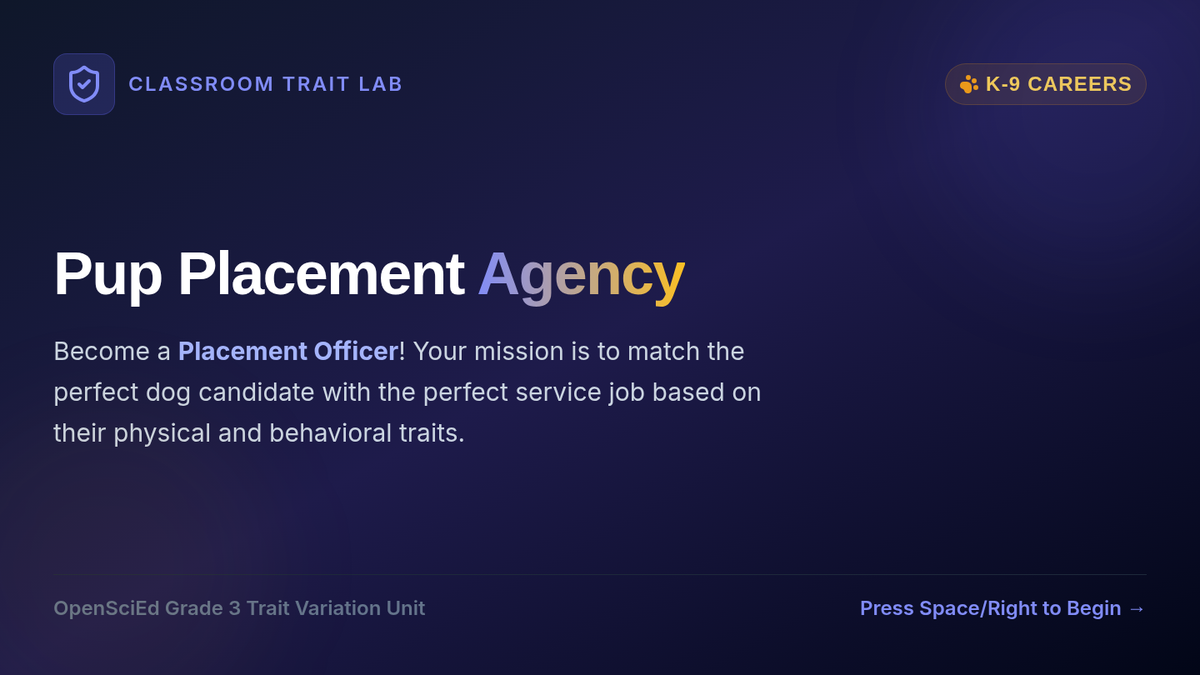
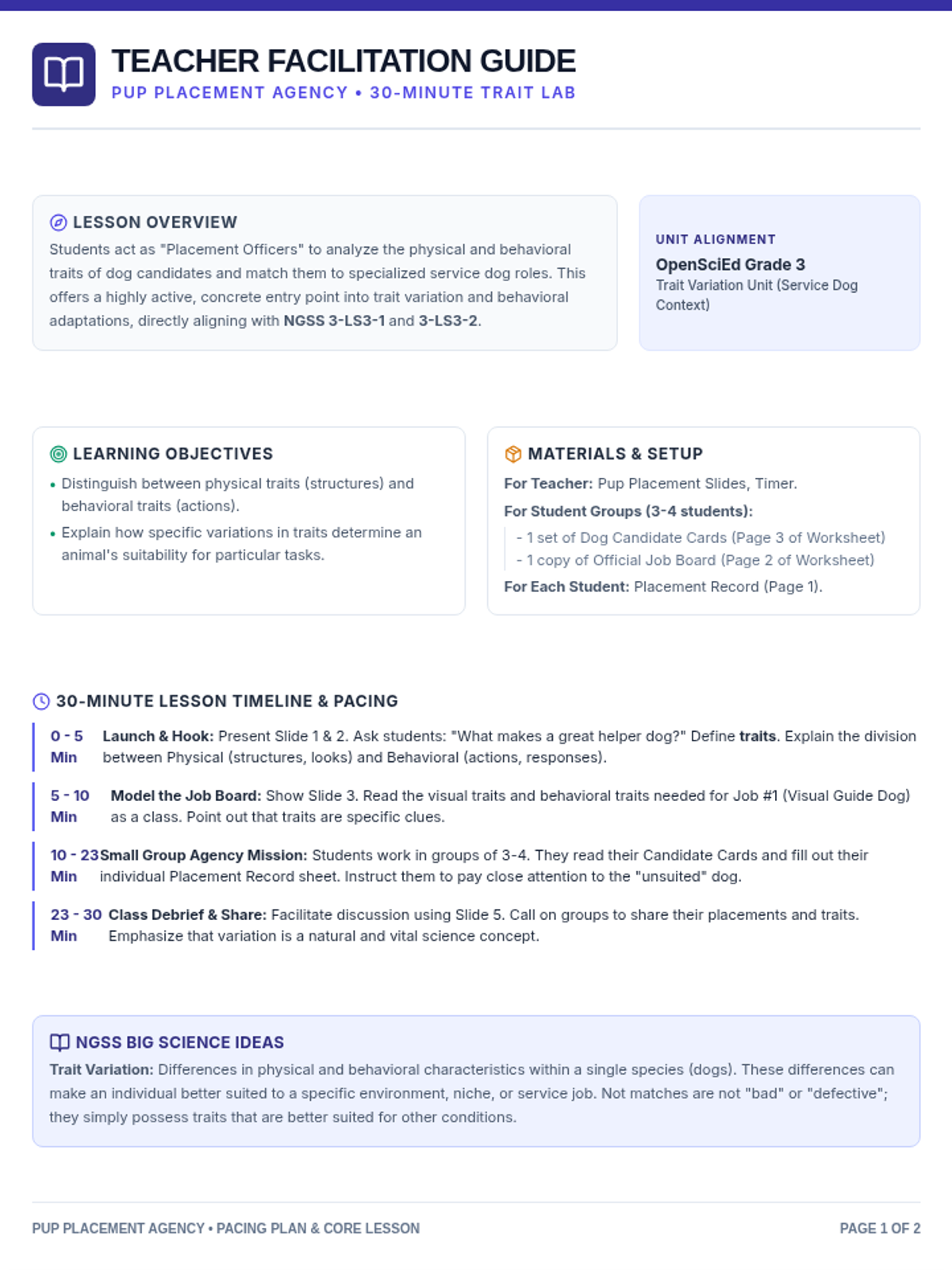
A highly differentiated 30-minute lesson where students act as 'Placement Officers' for the Pup Placement Agency. They analyze physical and behavioral traits of dog candidates and match them with appropriate service dog jobs, aligning with the OpenSciEd Grade 3 Trait Variation unit.
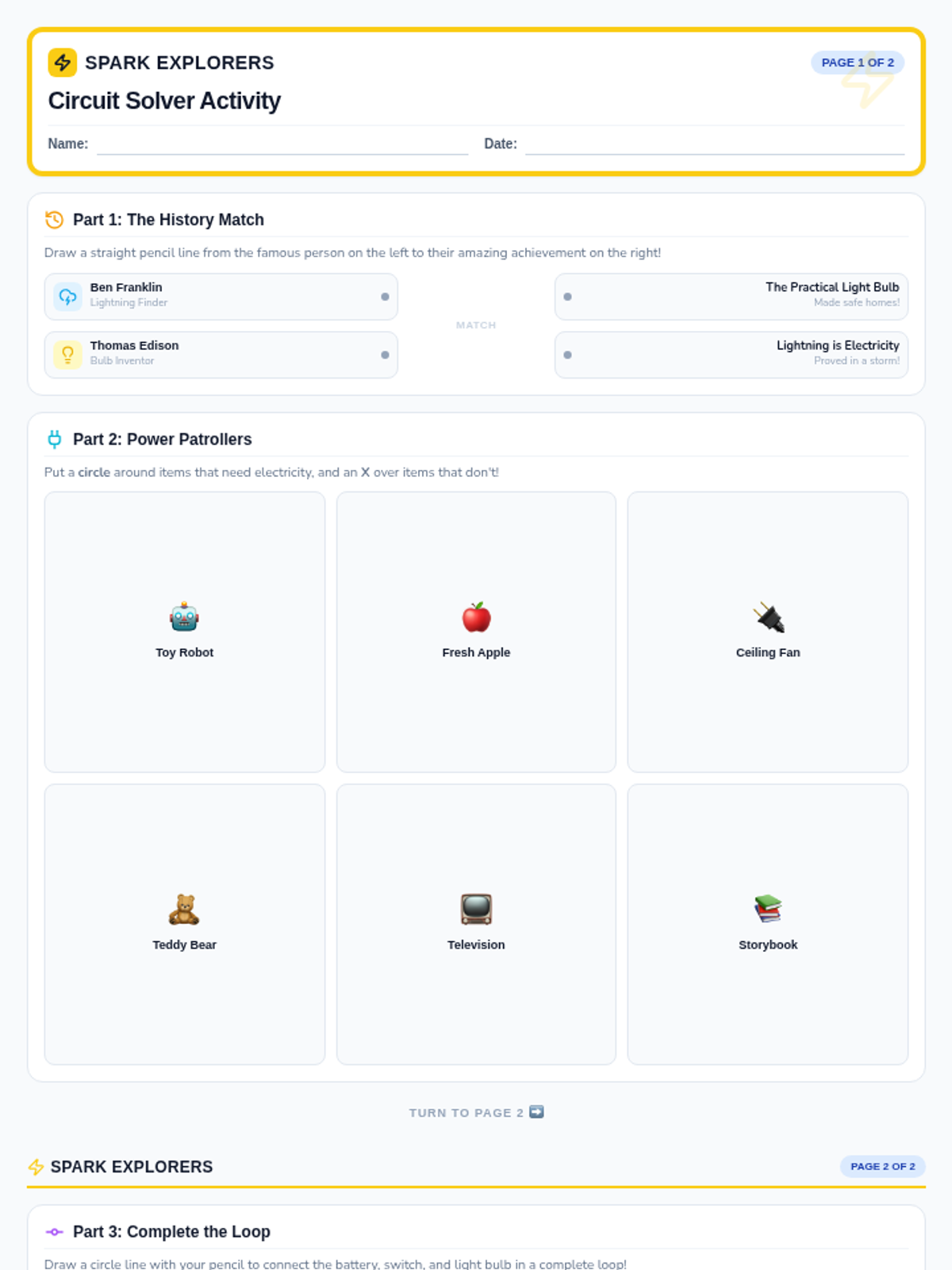
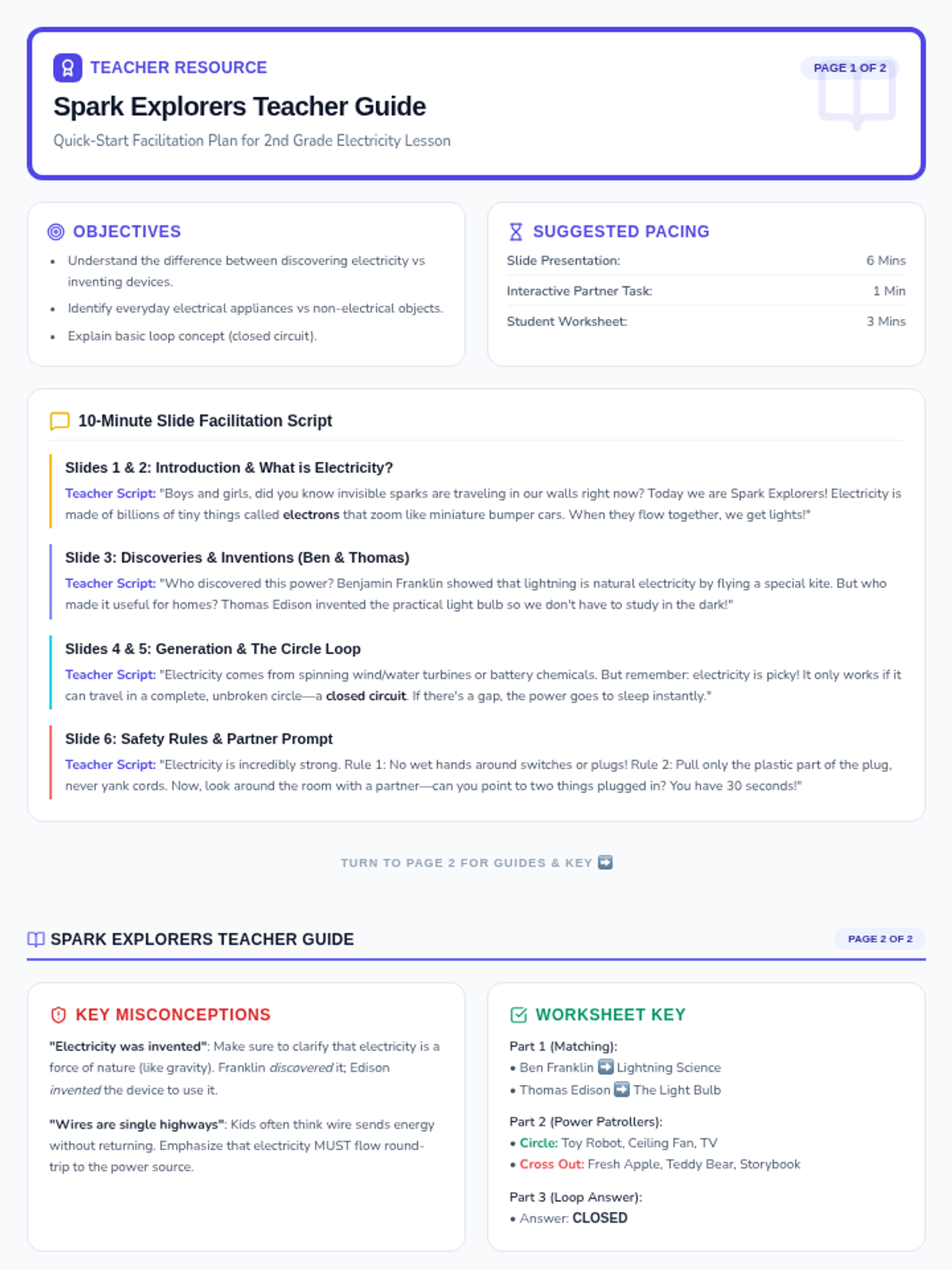
An engaging, kid-friendly lesson introducing 2nd graders to the wonders of electricity, exploring its discovery, how it works through simple circuits, and how it is generated safely.
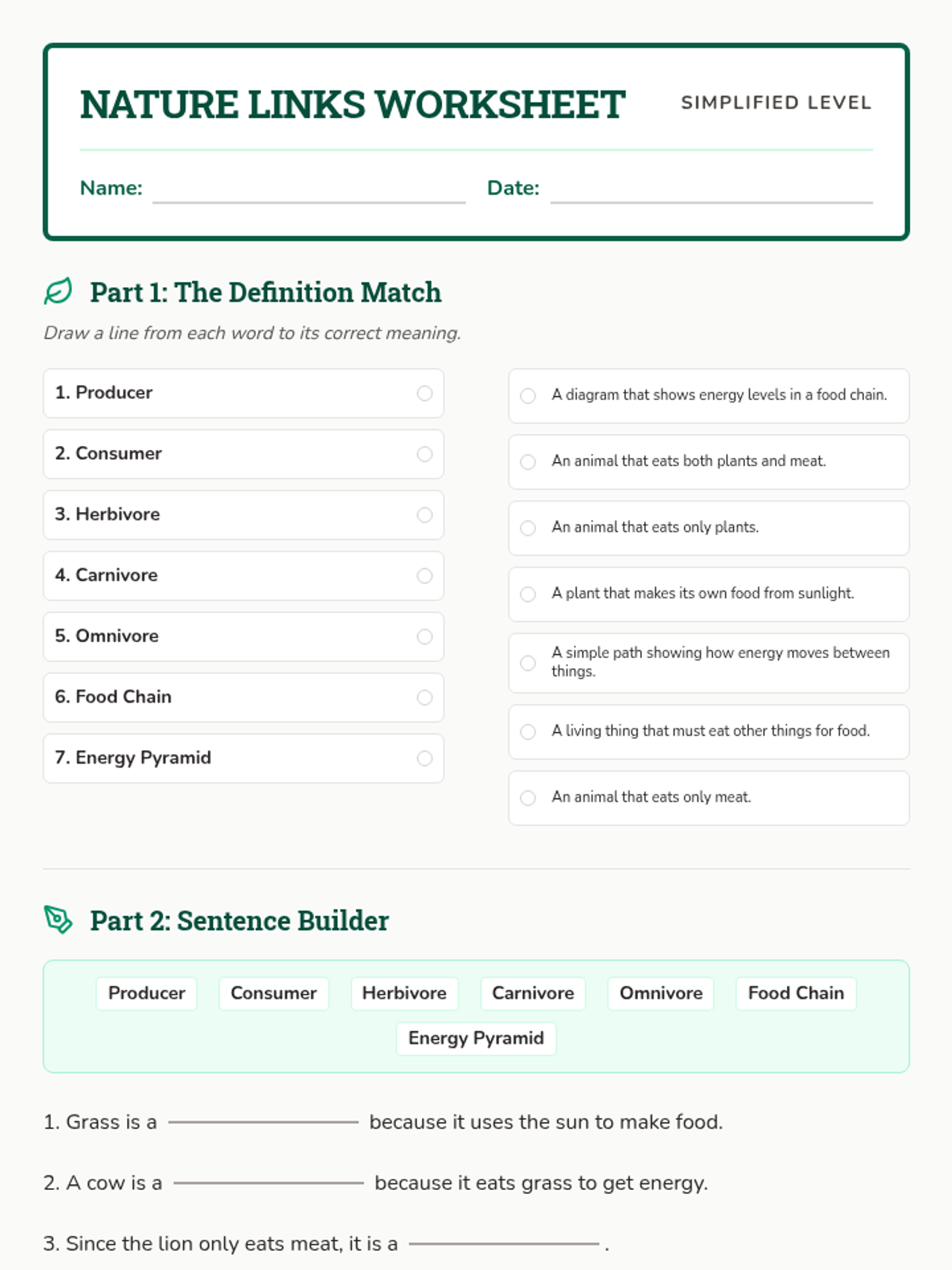
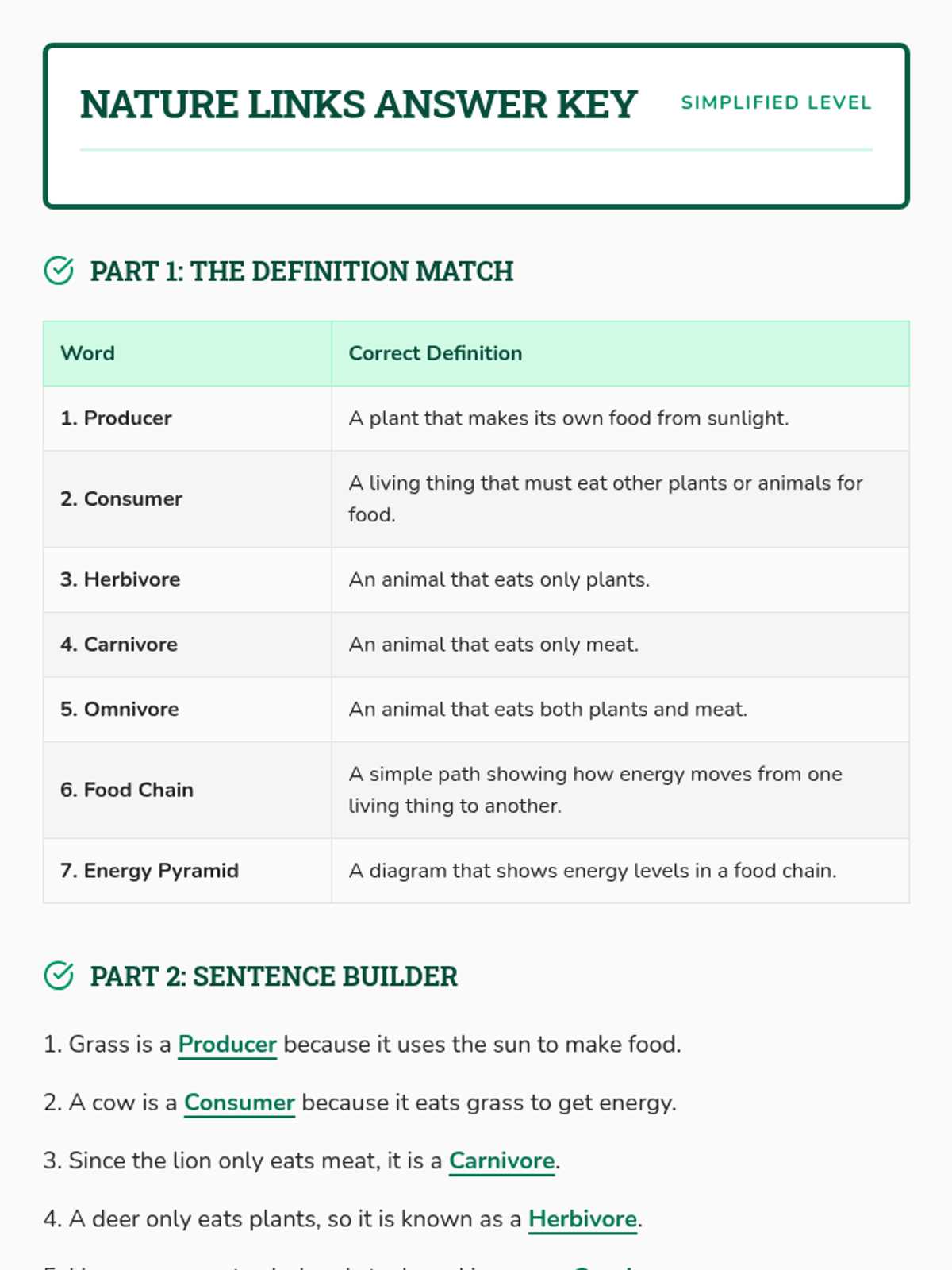
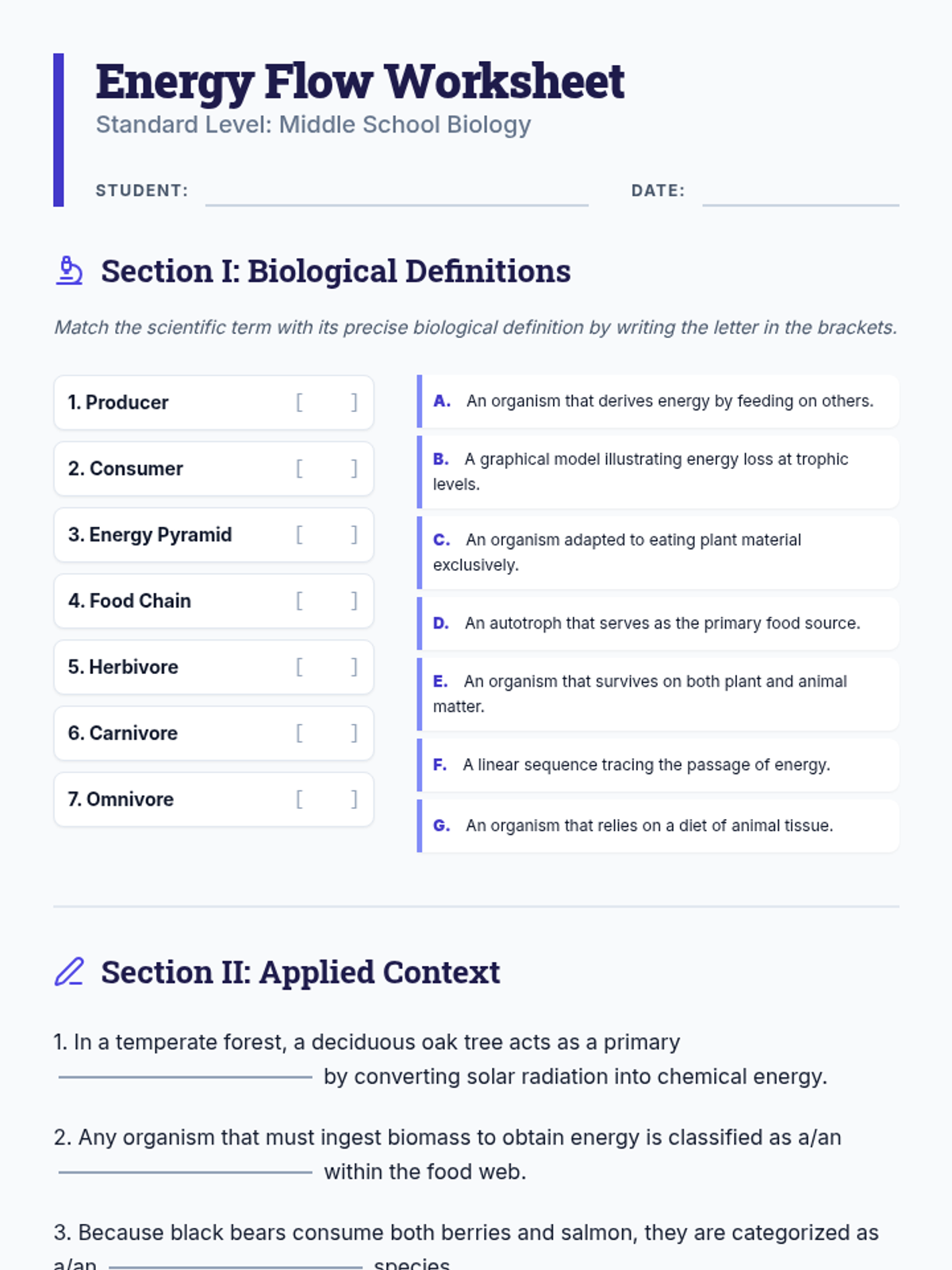
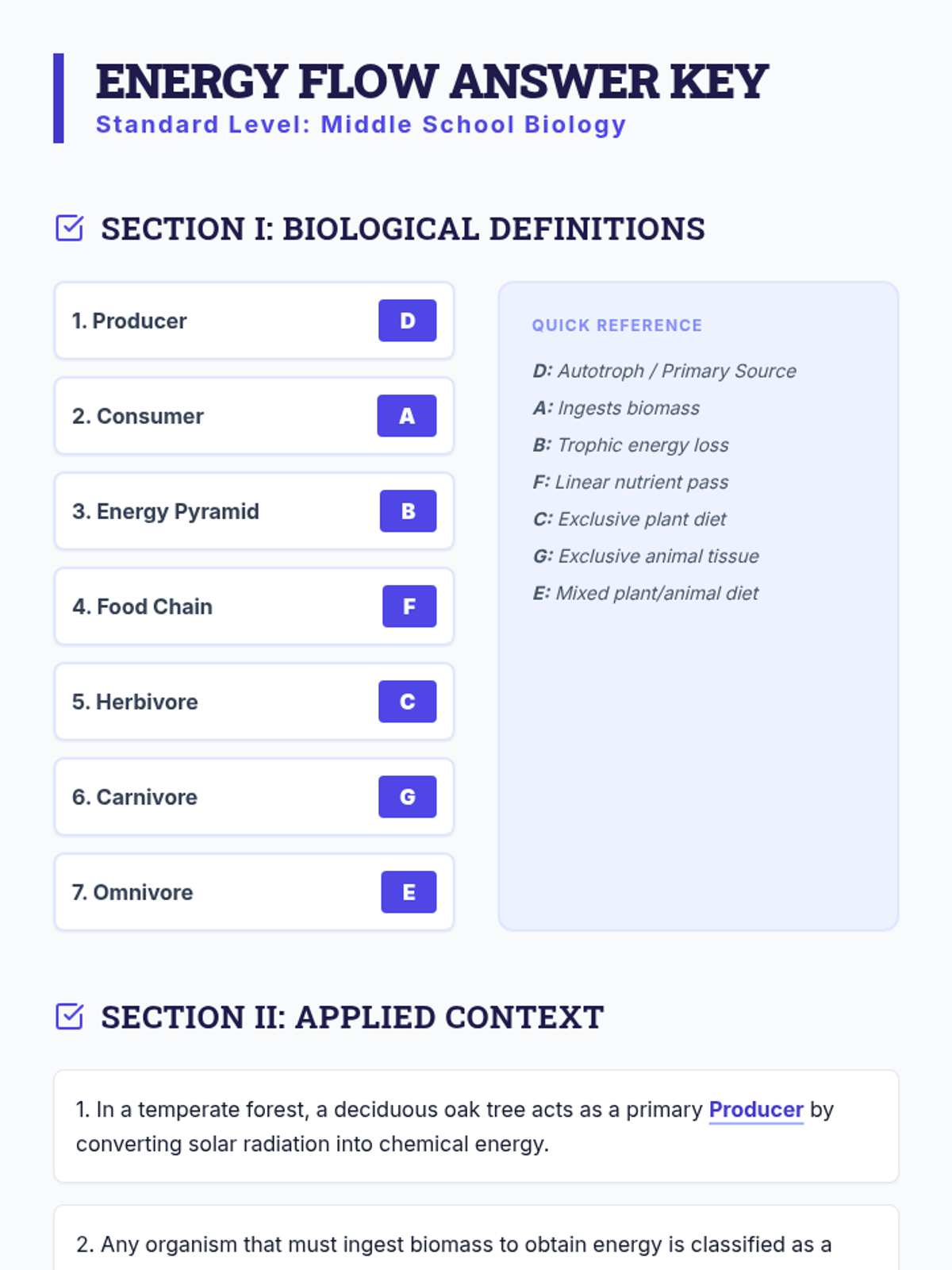
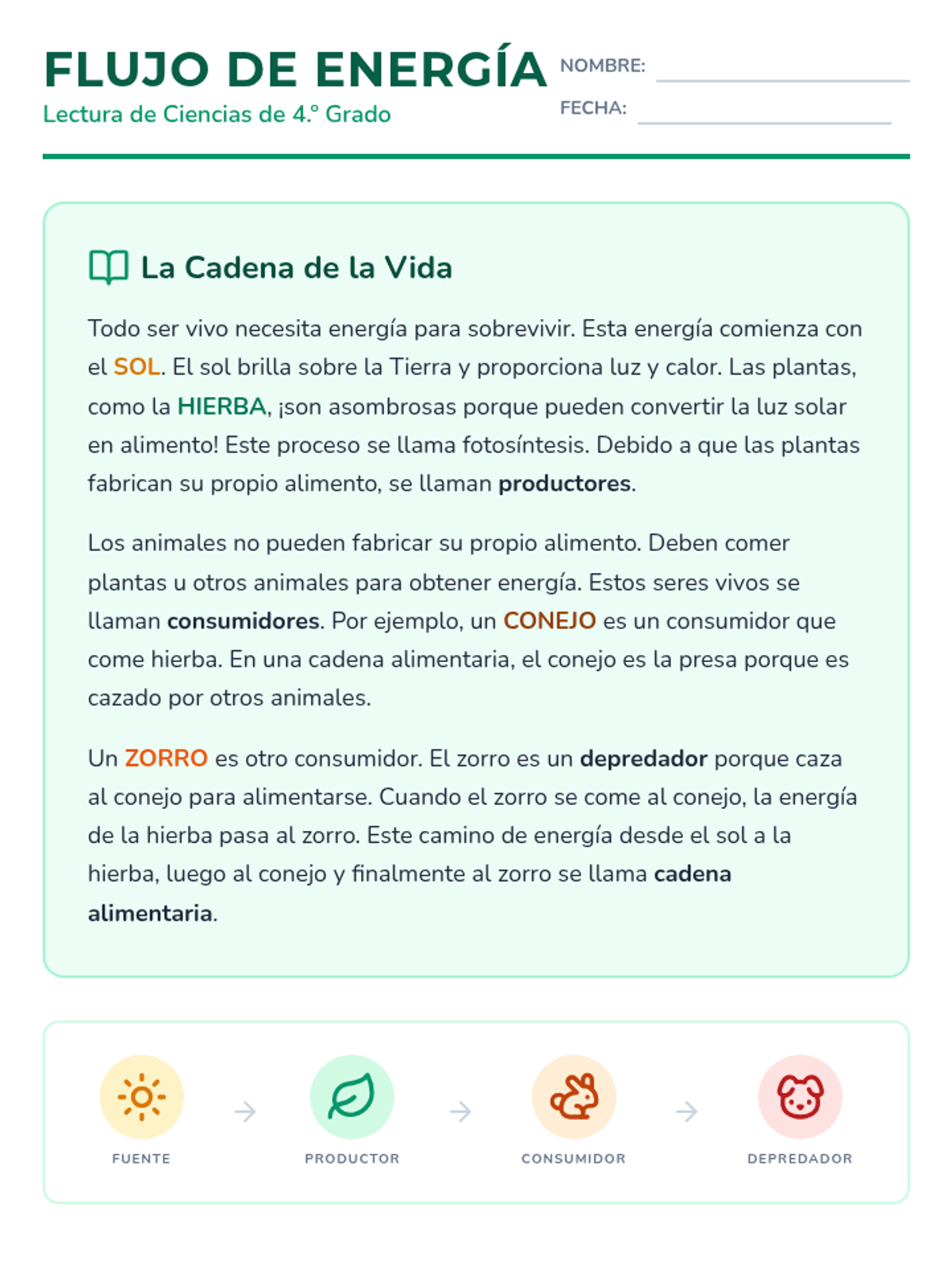
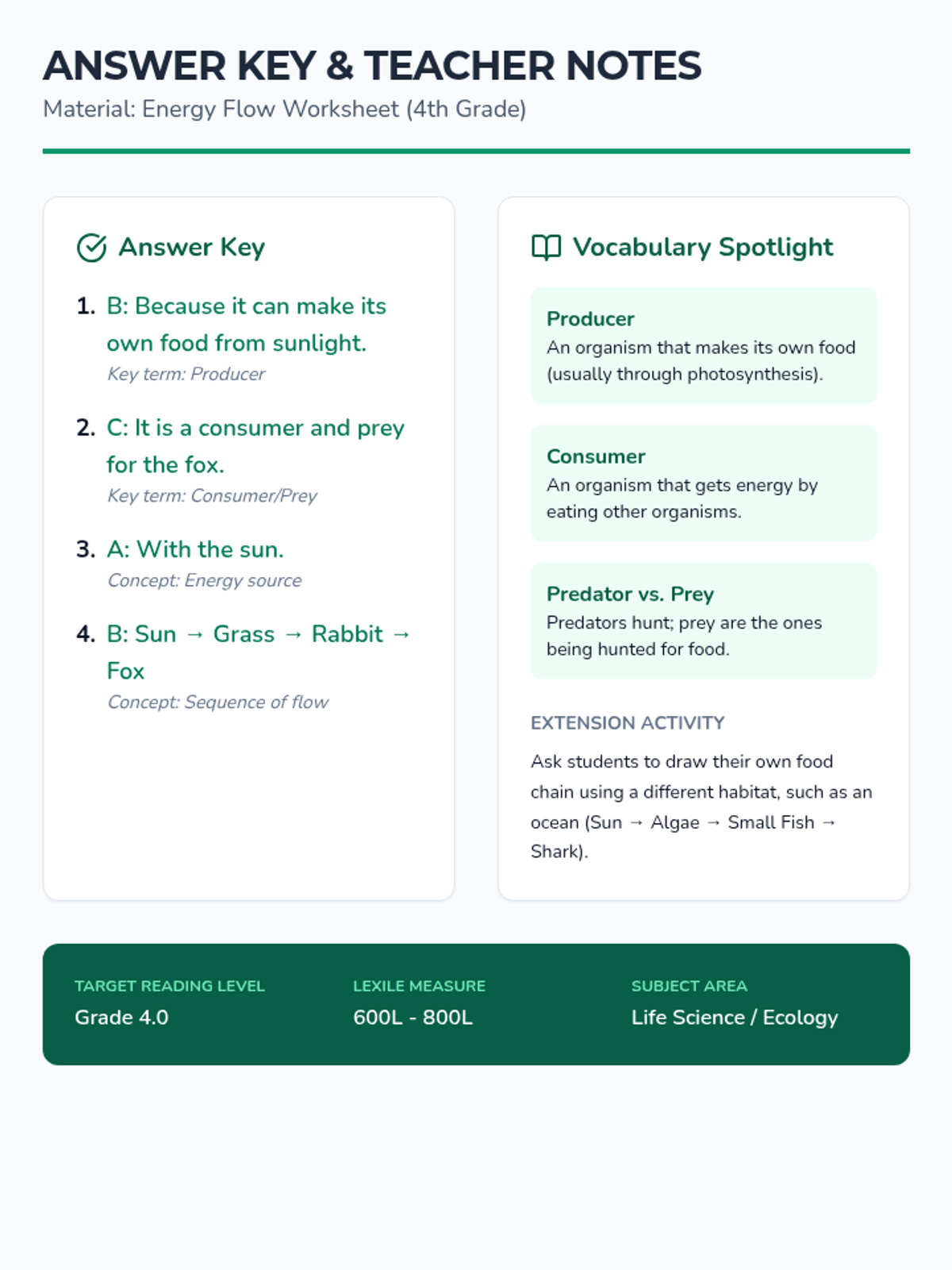
A lesson focusing on ecosystem vocabulary including producers, consumers, and energy flow through food chains and pyramids. Includes tiered materials for elementary and middle school levels.
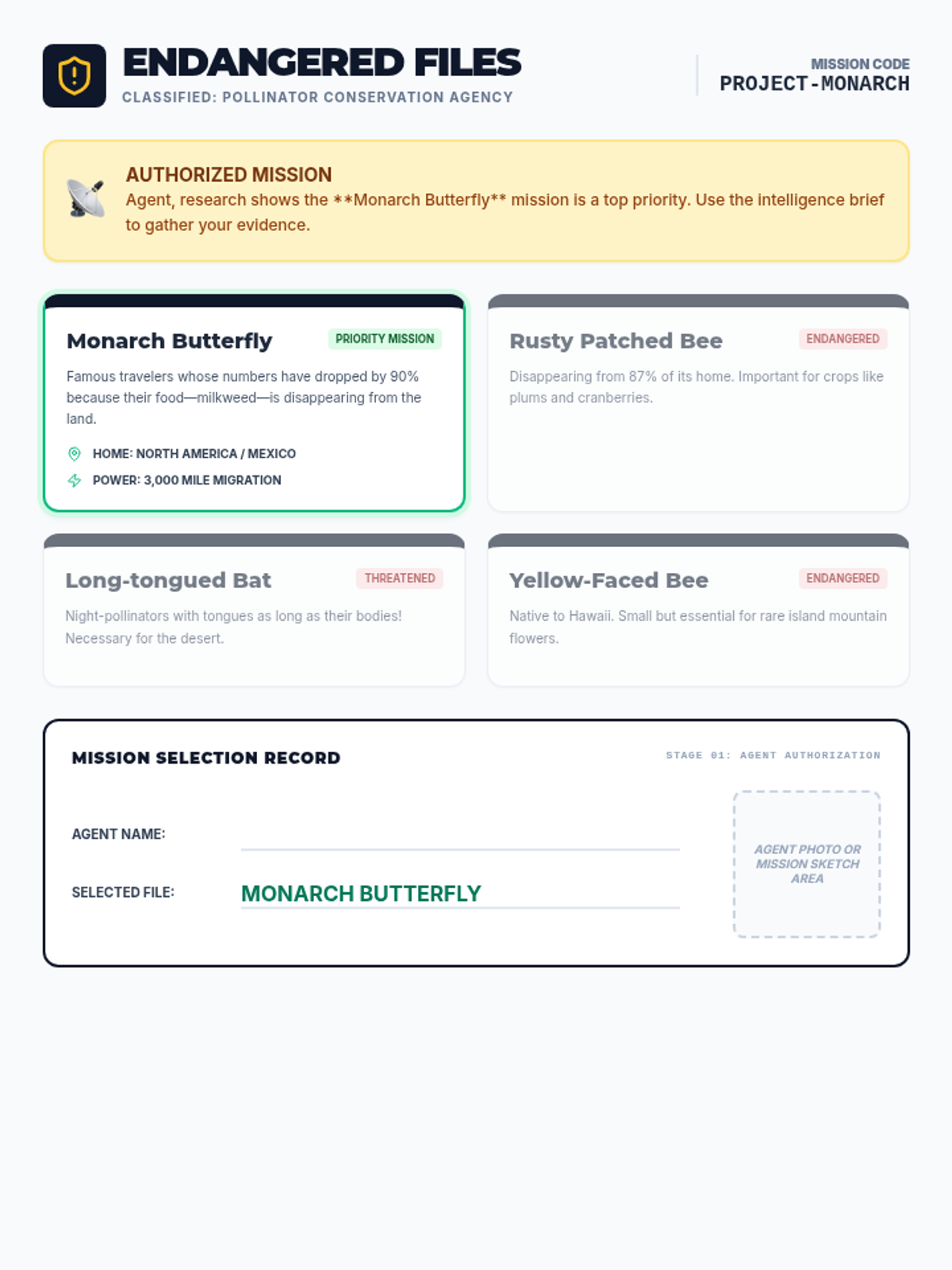
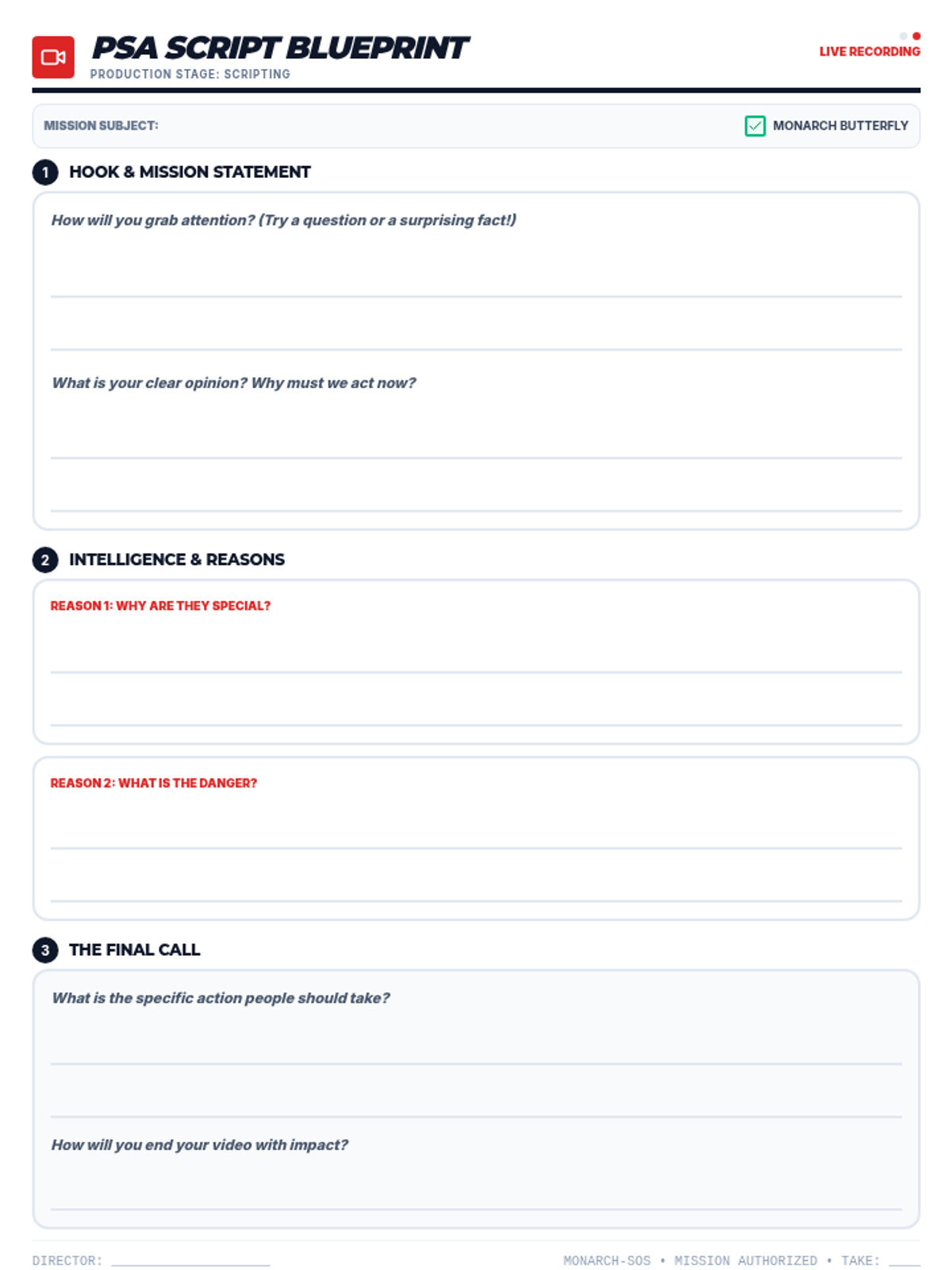
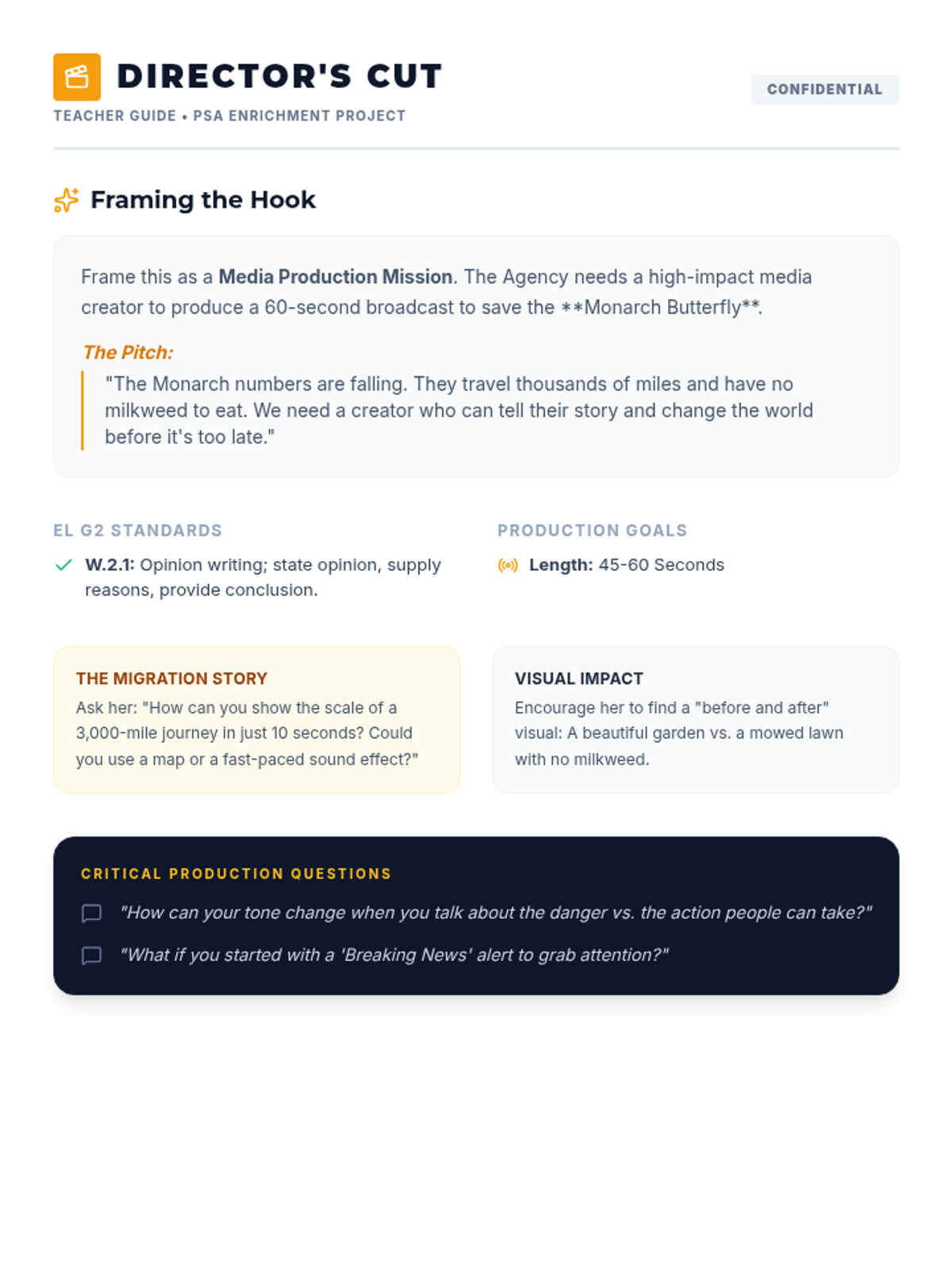
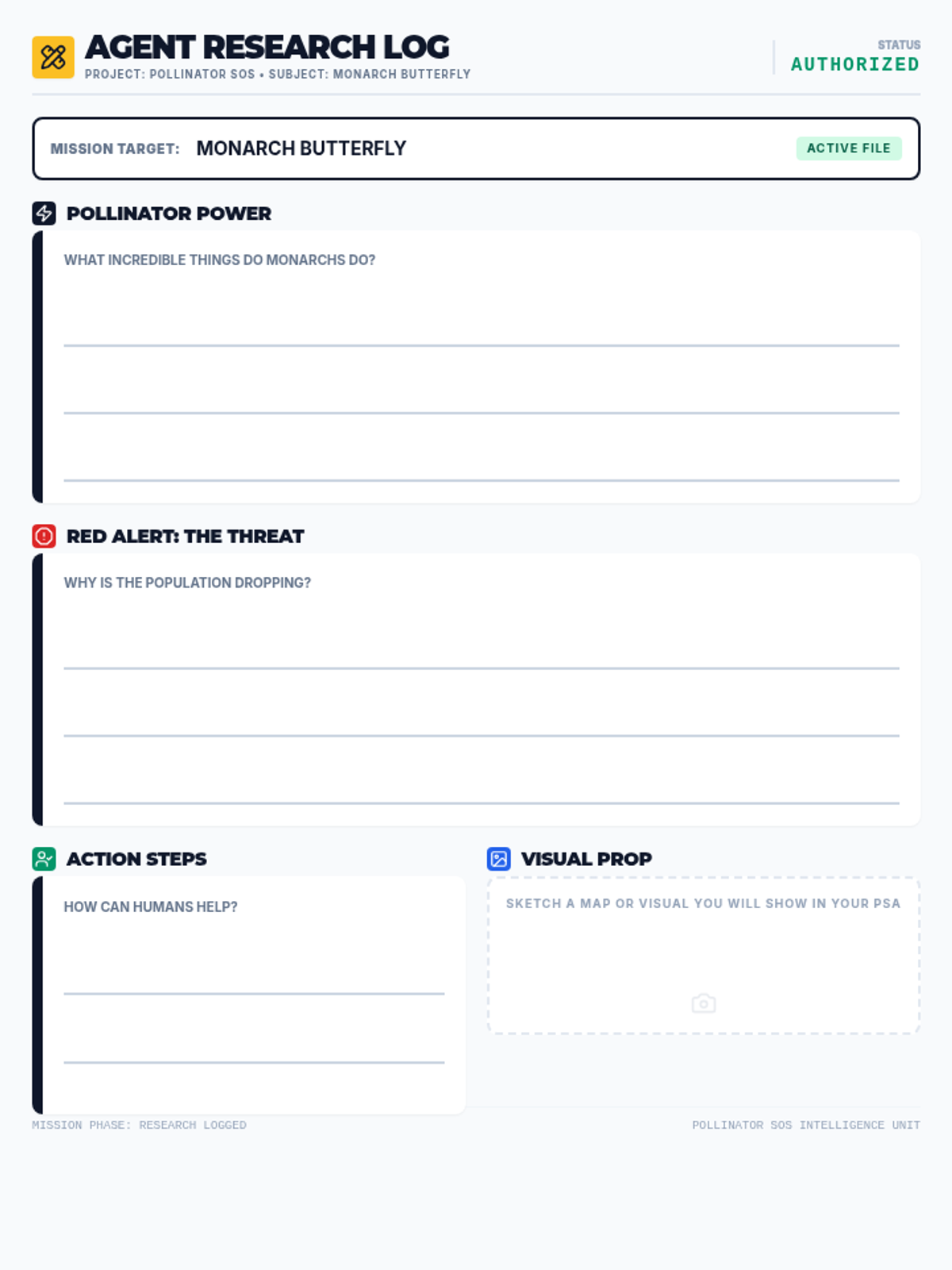
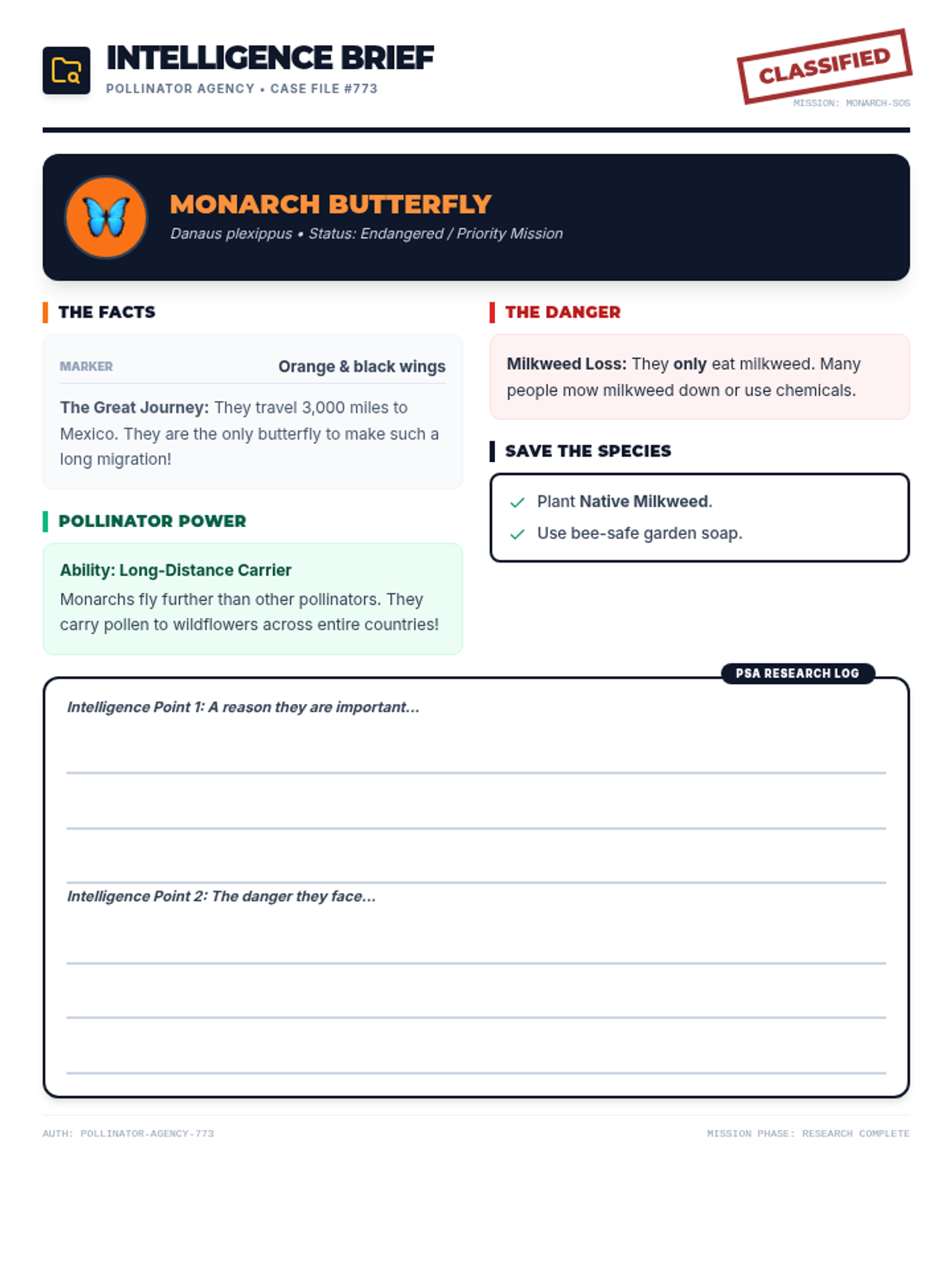
An enriching alternative to the Unit 2 opinion writing piece. Students act as conservation agents, creating a Public Service Announcement (PSA) to advocate for the protection of an endangered pollinator.
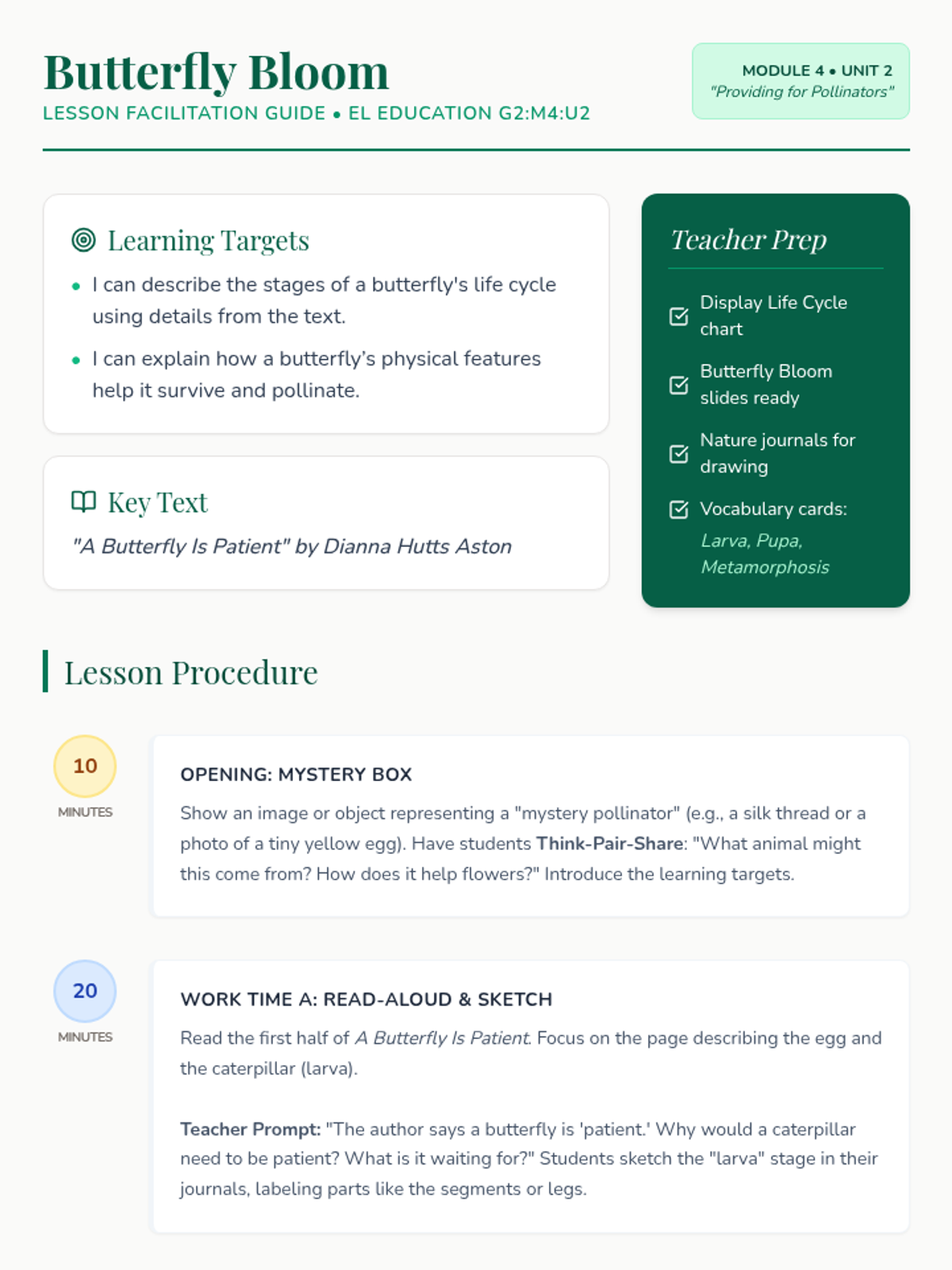
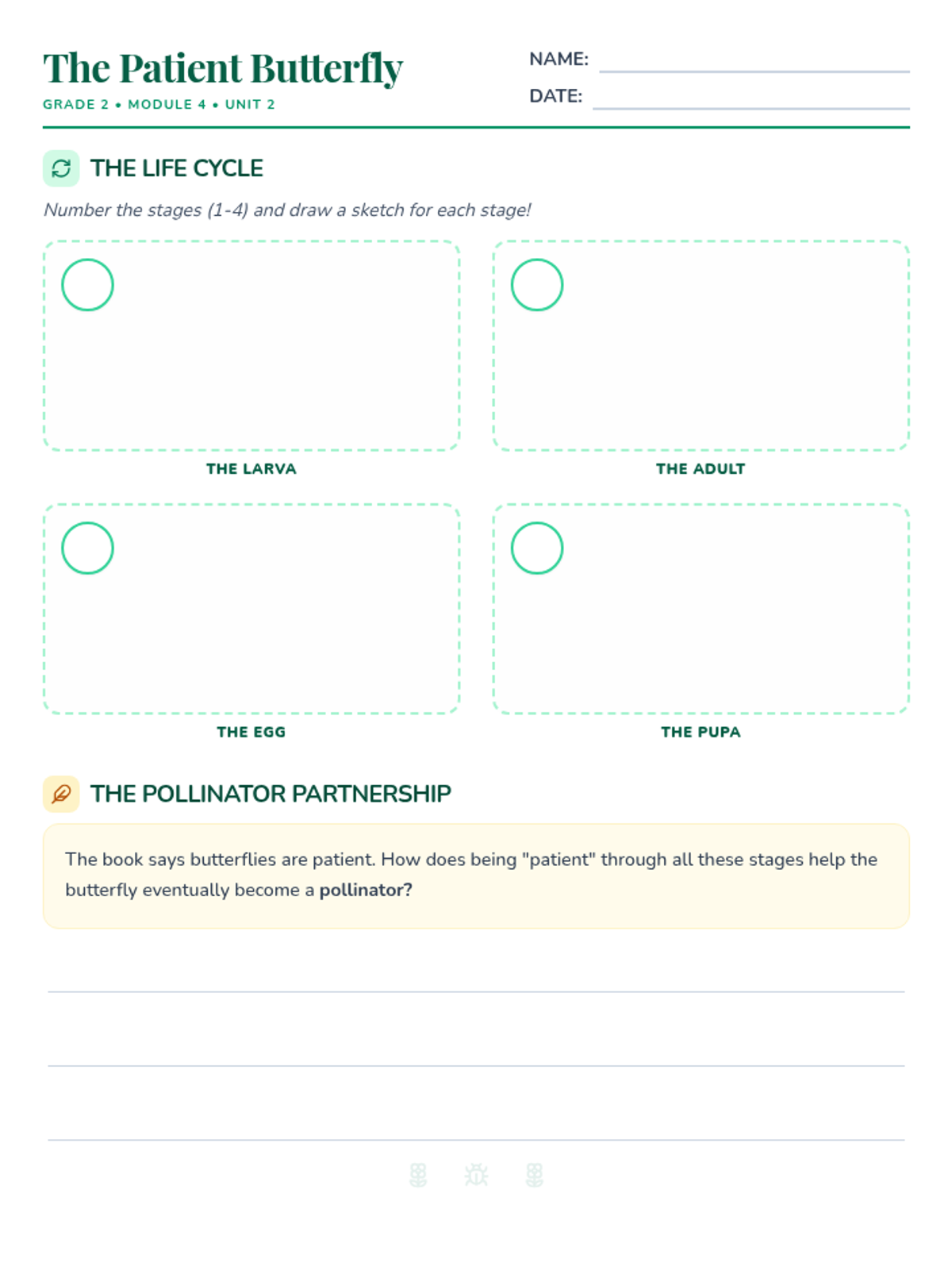
Focuses on the transformation and physical characteristics of butterflies based on the text 'A Butterfly Is Patient.' Students explore the life cycle stages and start to connect these stages to the butterfly's role as a pollinator.
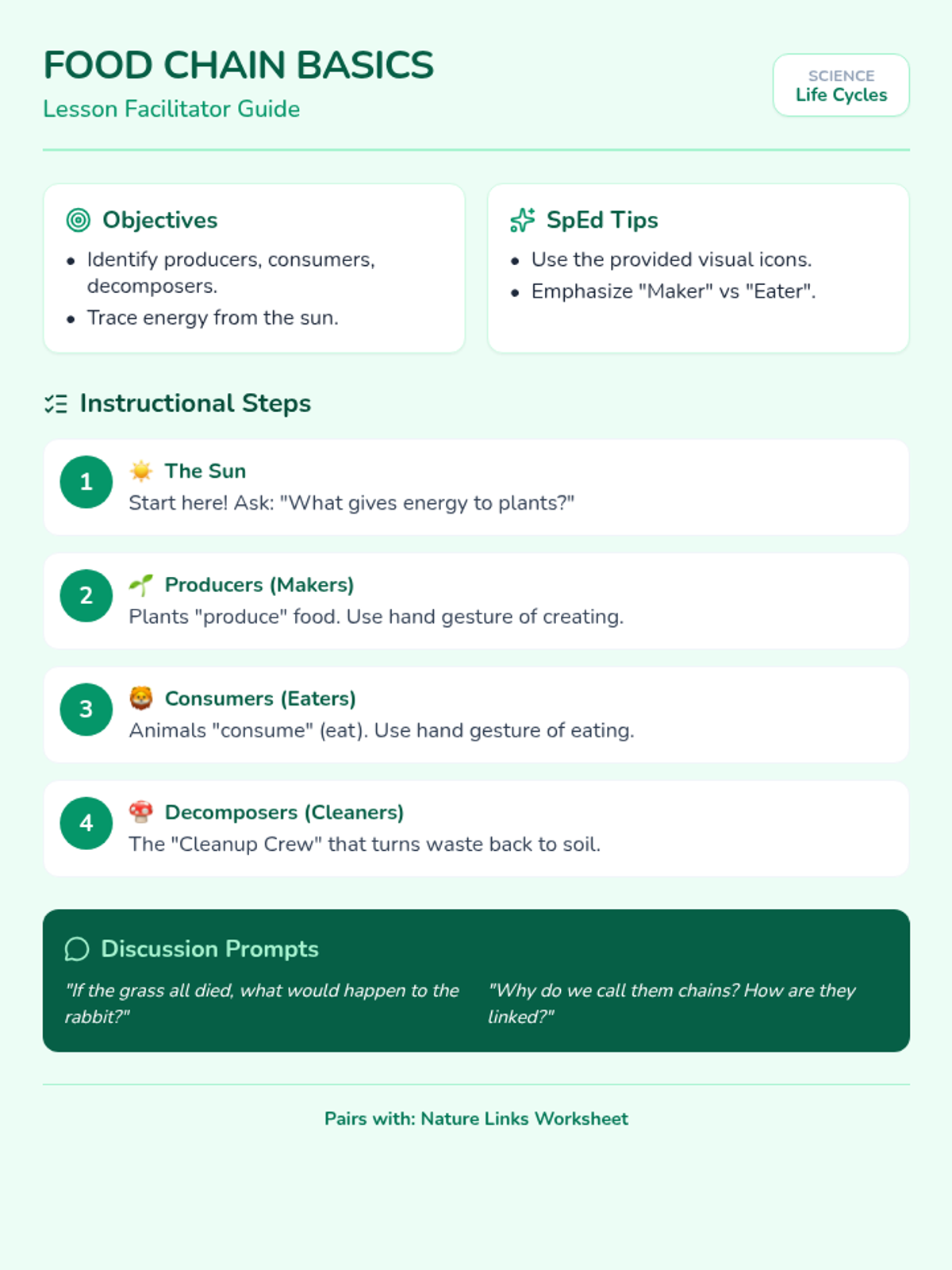
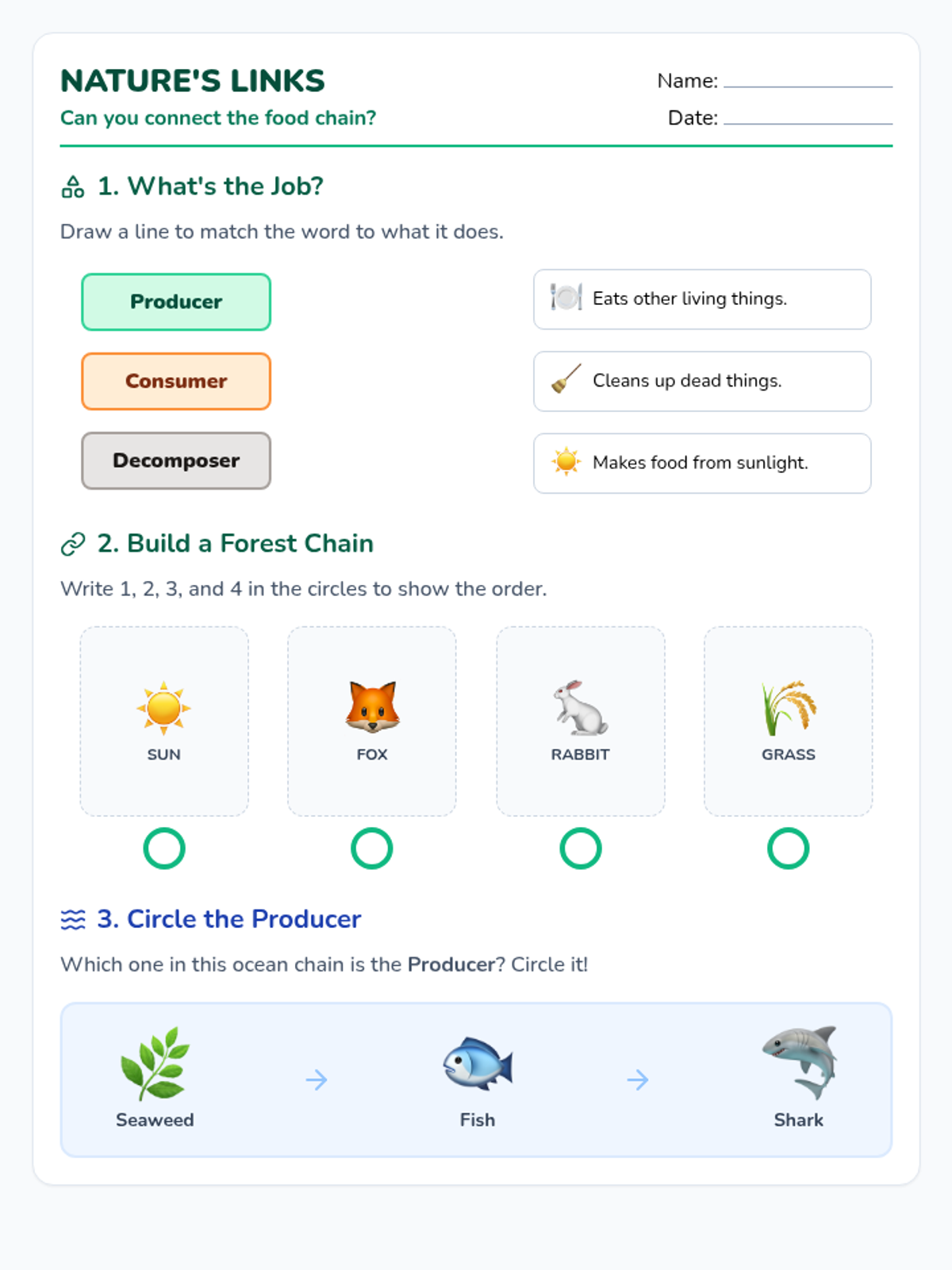
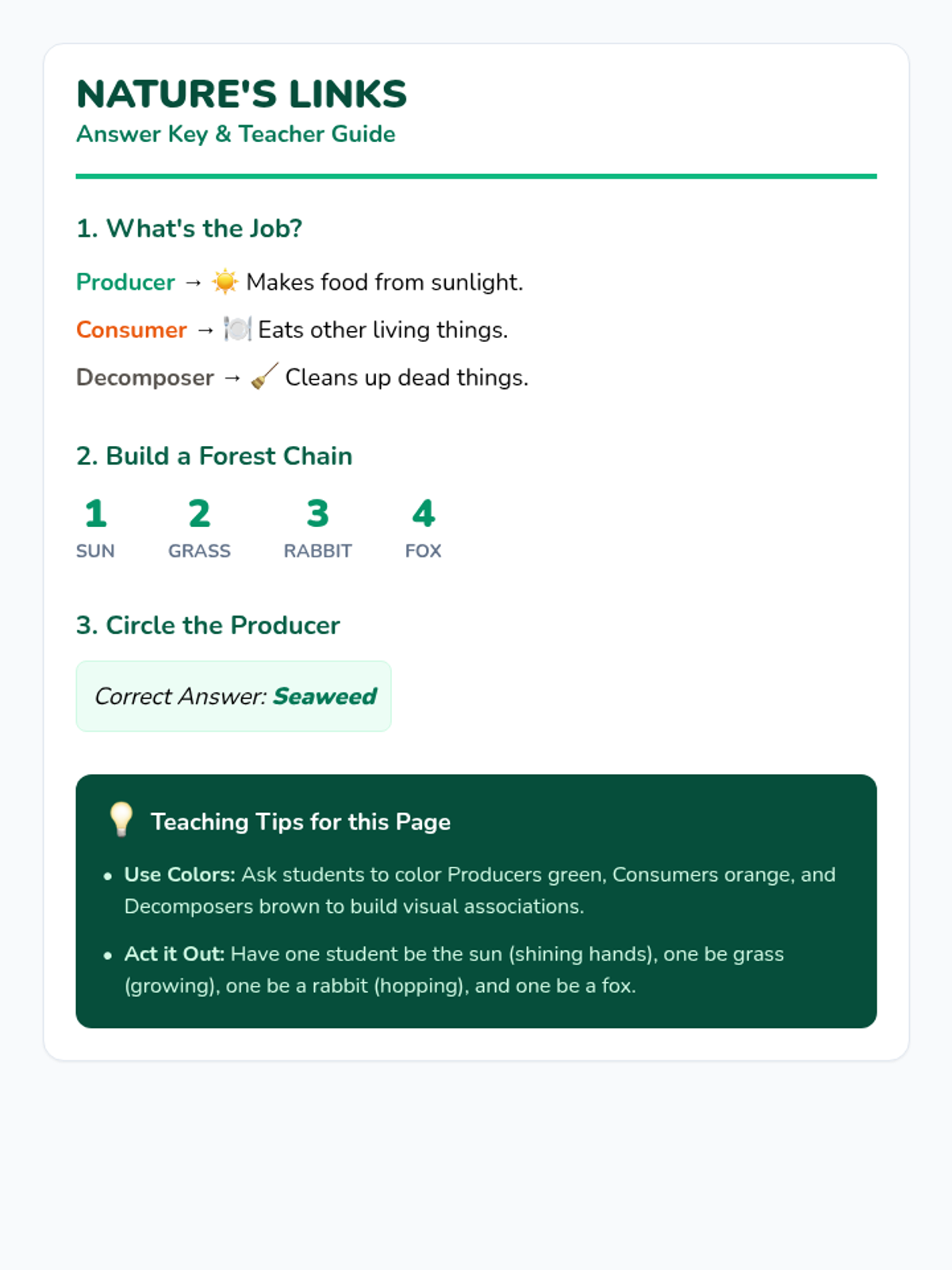
A foundational lesson on food chains across various ecosystems, specifically designed for special education students. Includes visual-heavy instruction on producers, consumers, and decomposers.
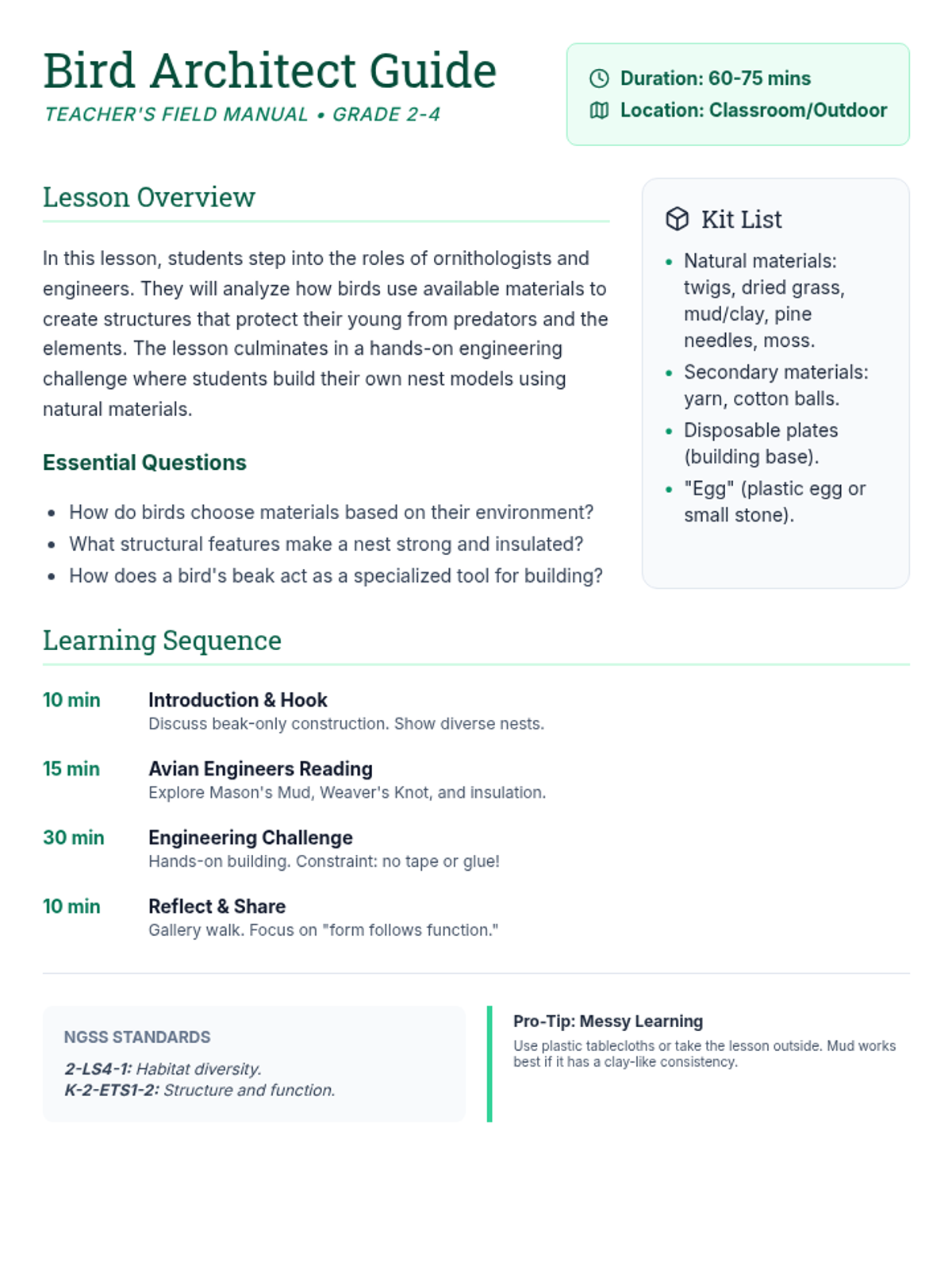
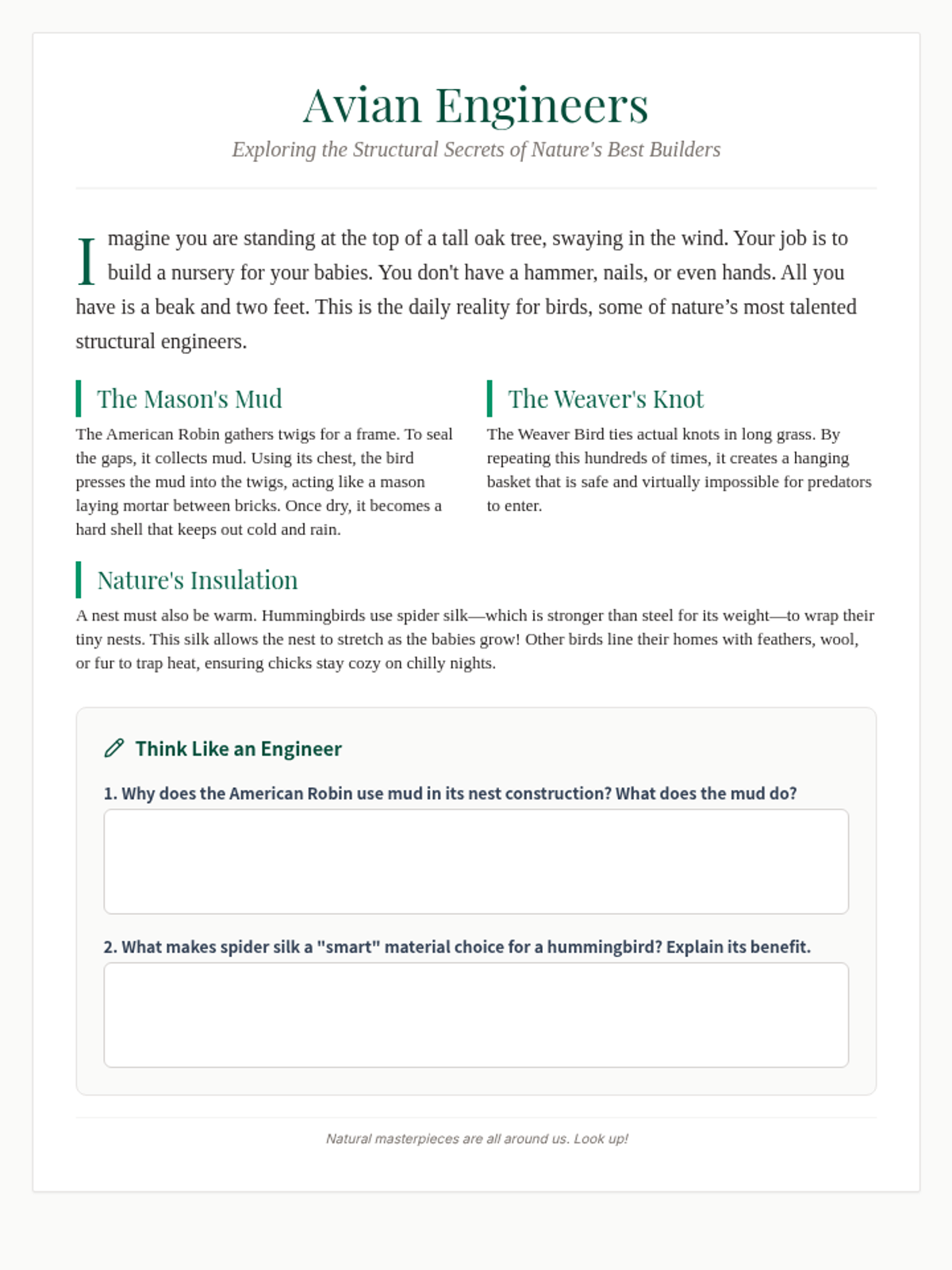
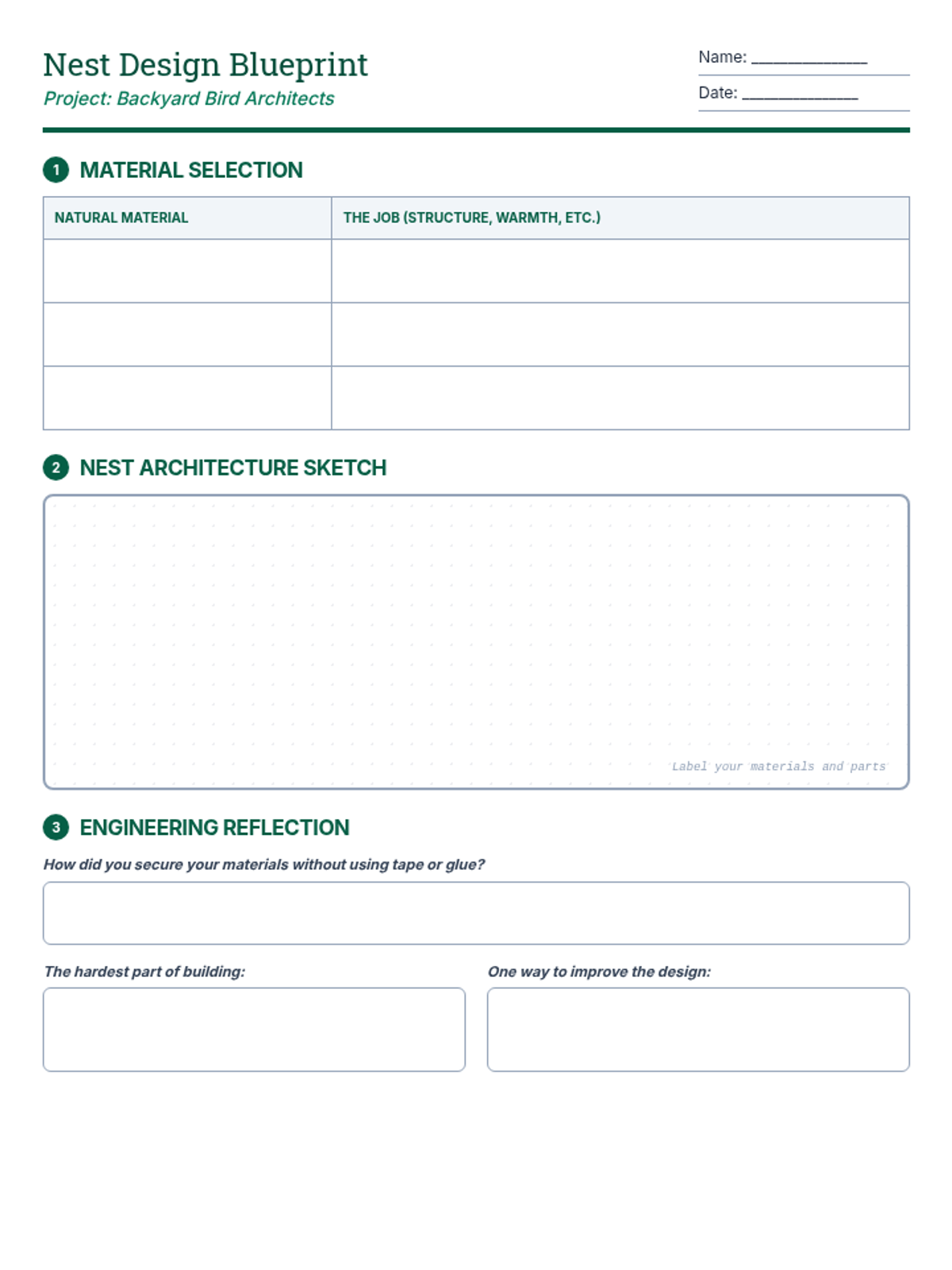
Students explore the engineering wonders of bird nests, observing local bird behavior and designing their own nest models using natural materials to understand animal adaptations and structural design.
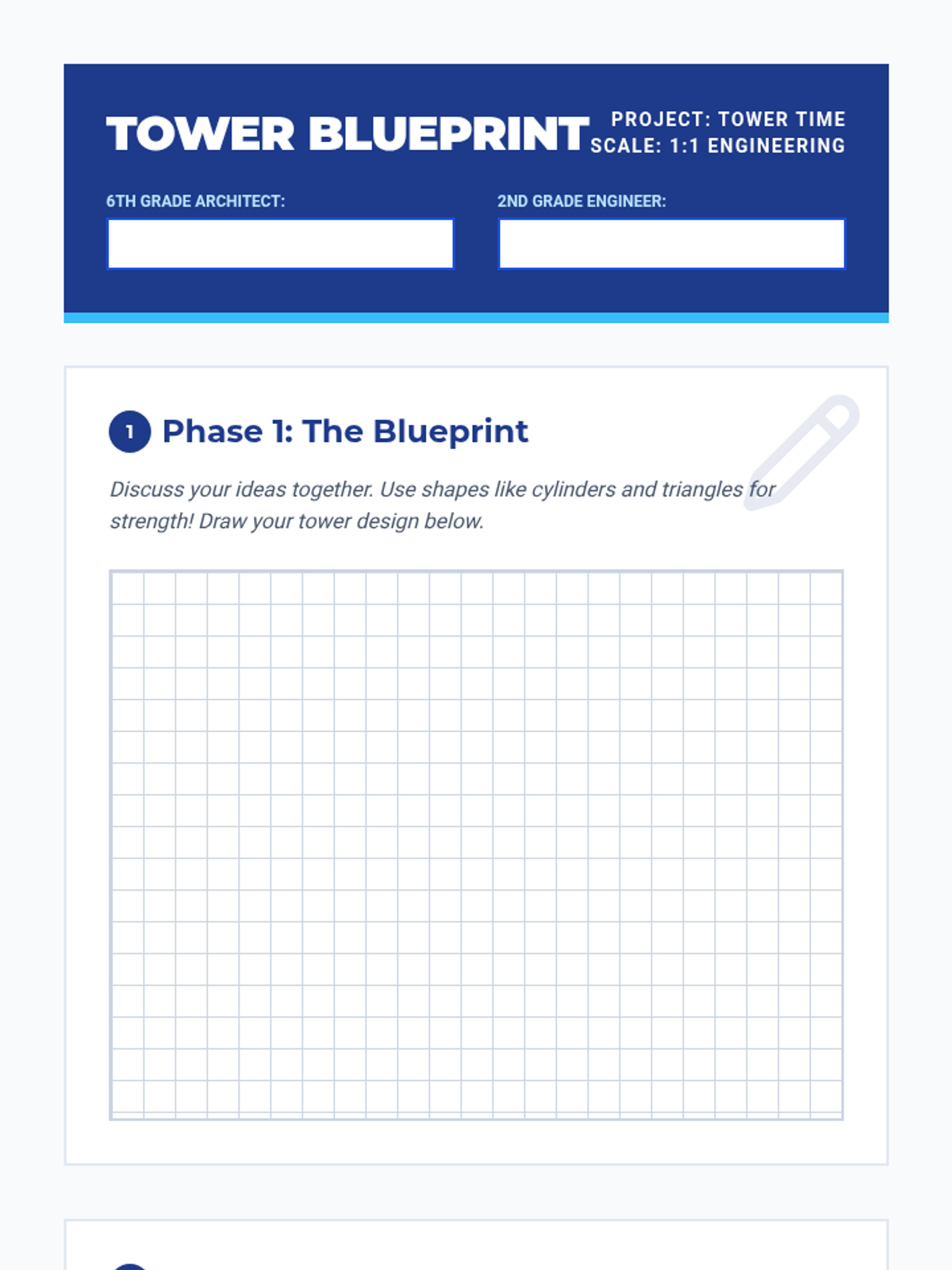
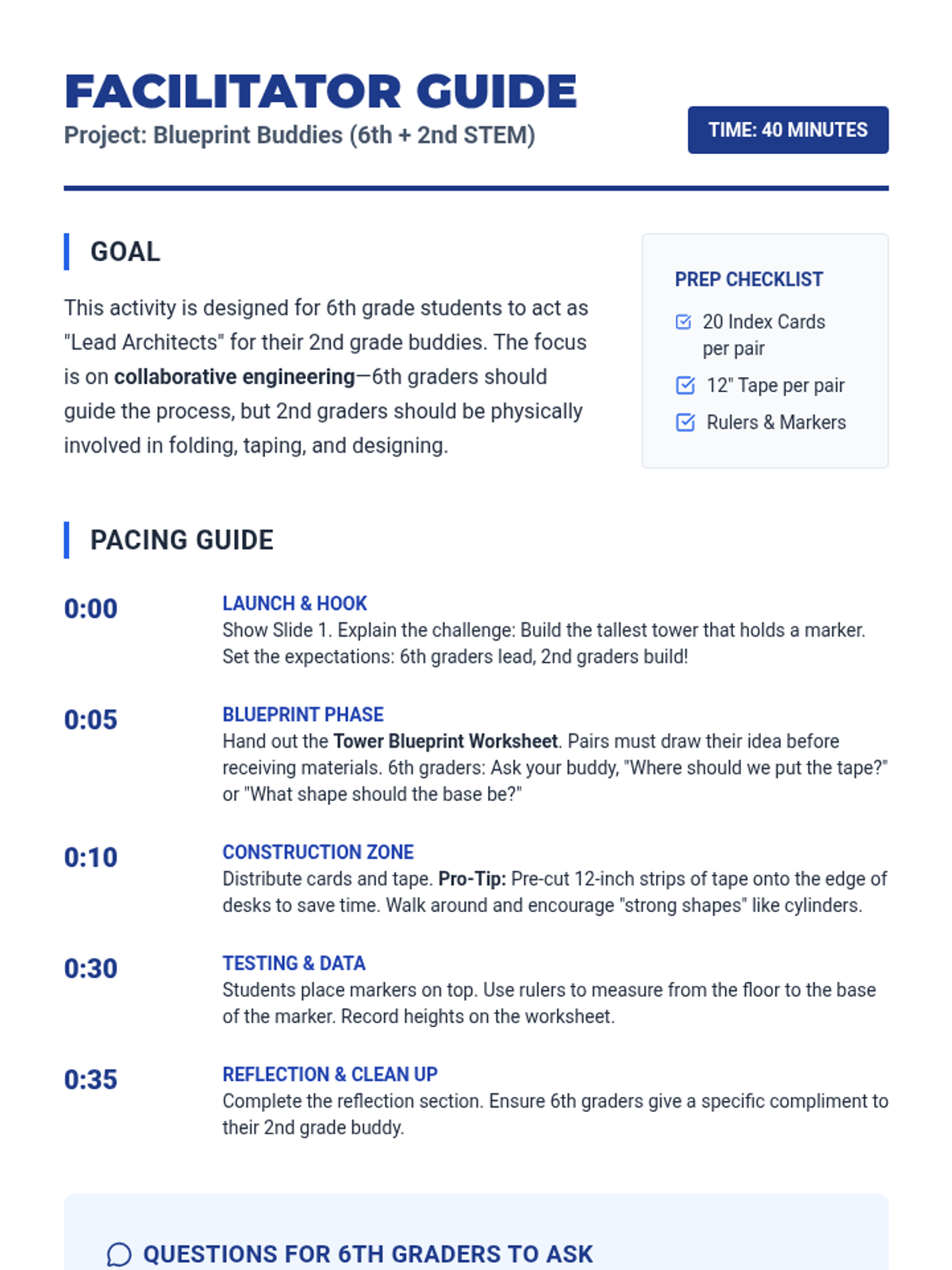
A collaborative STEM challenge where 6th grade mentors guide 2nd grade buddies to design and build the tallest possible tower using only index cards and tape. This lesson focuses on teamwork, engineering design principles, and measurement skills within a 40-minute window.
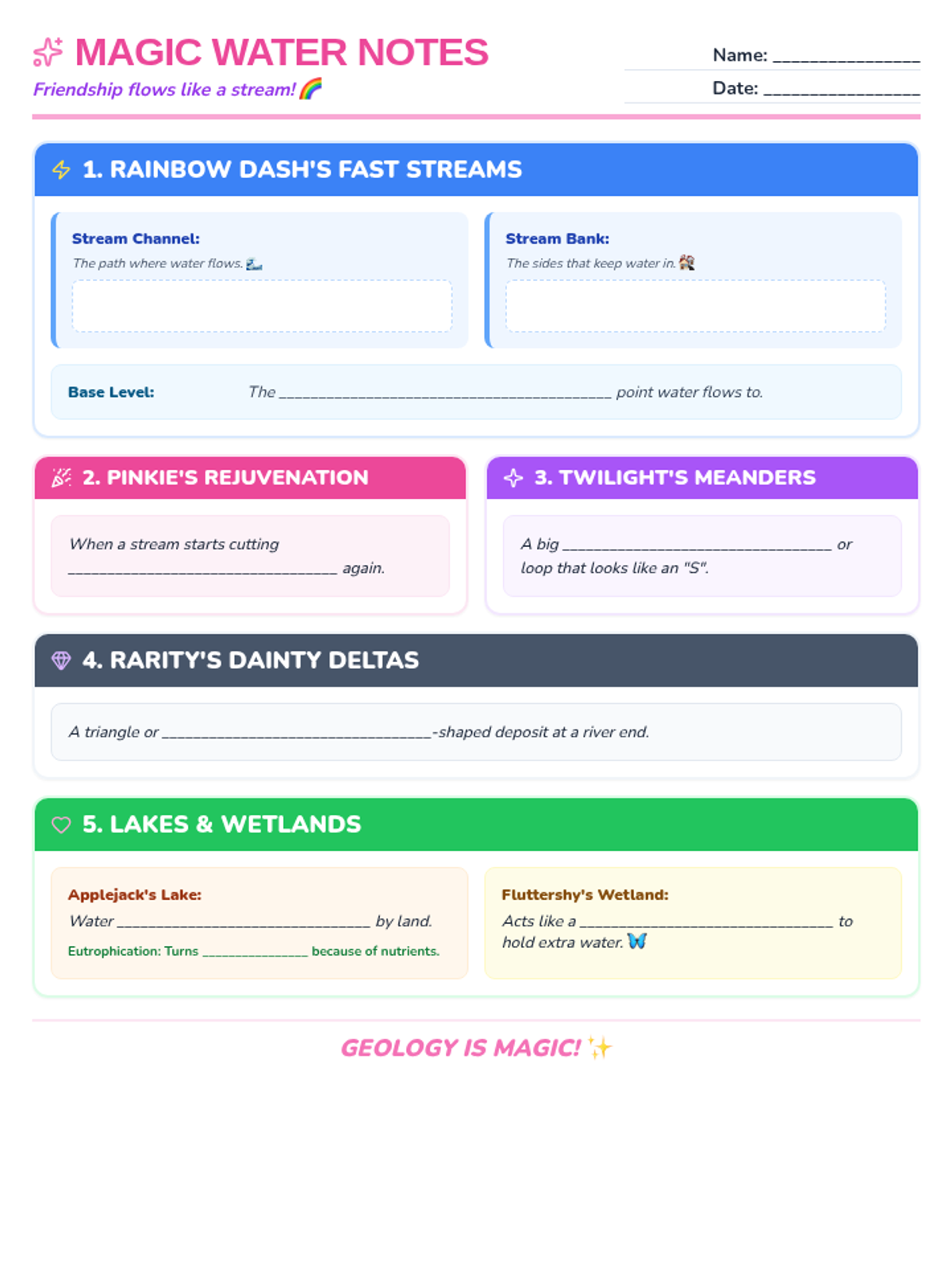
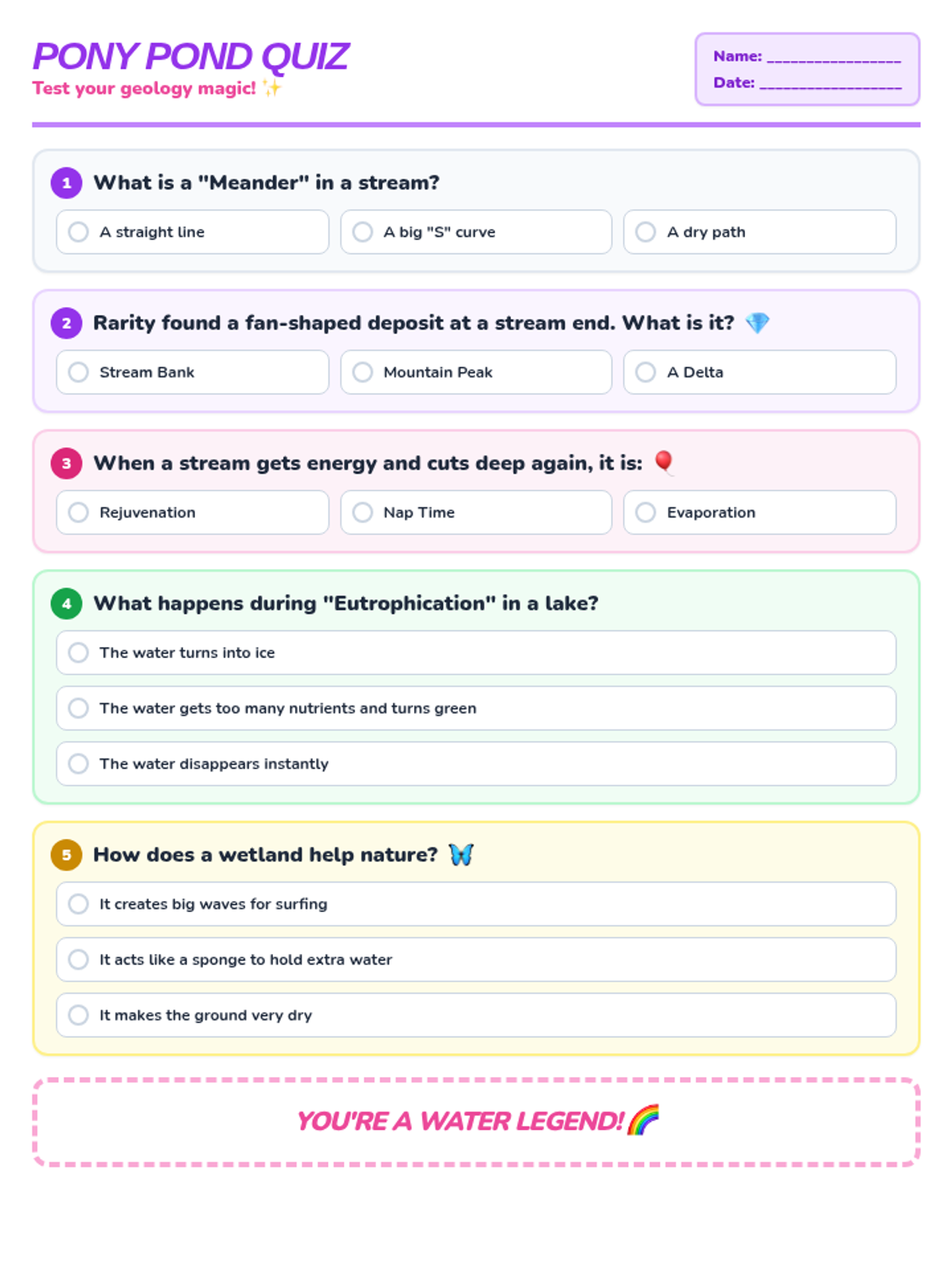
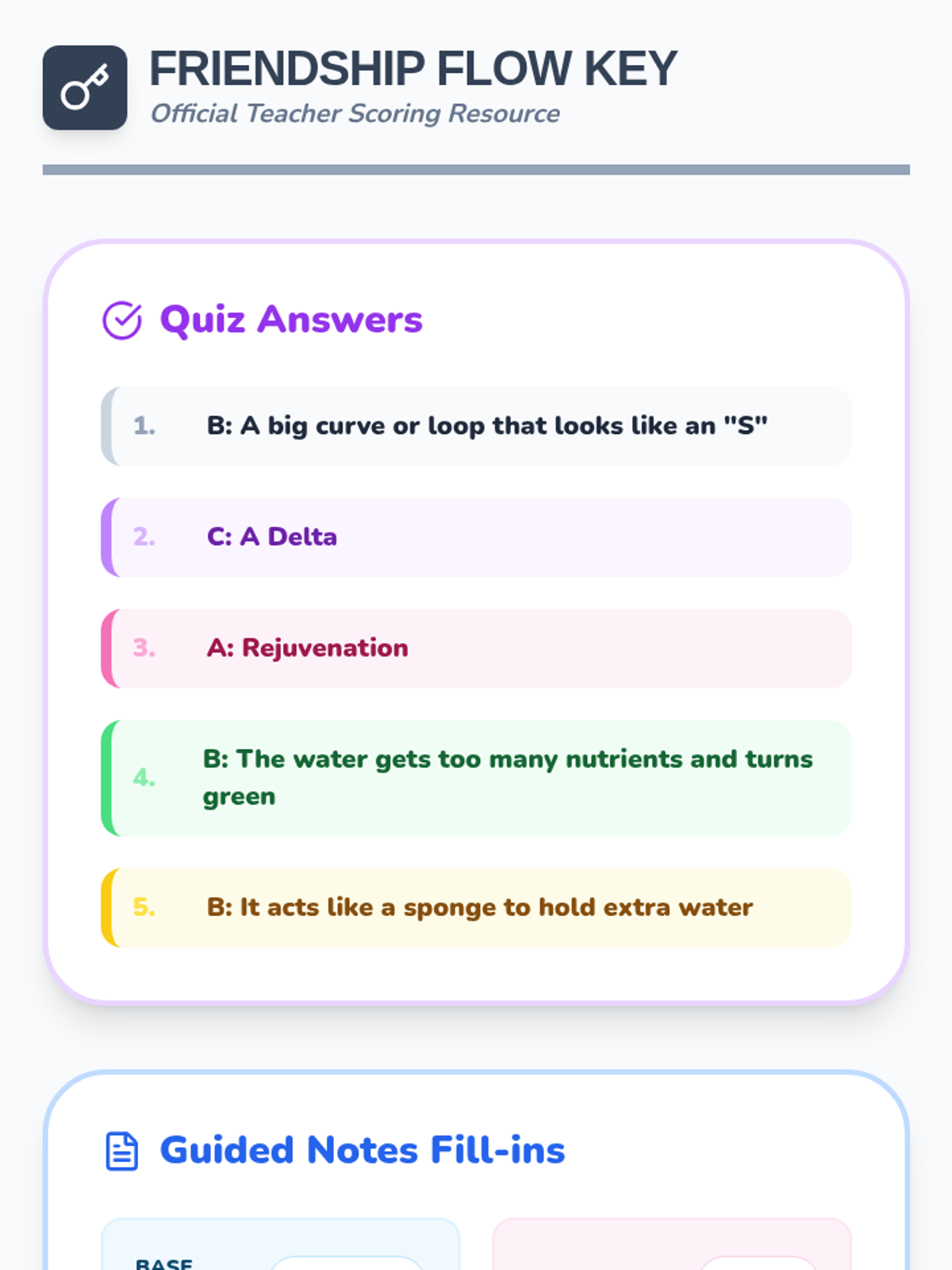
A lesson on surface water interactions with land, featuring My Little Pony characters to explain streams, lakes, and wetlands. Students learn key geological terms through simple bullet points and visual support.
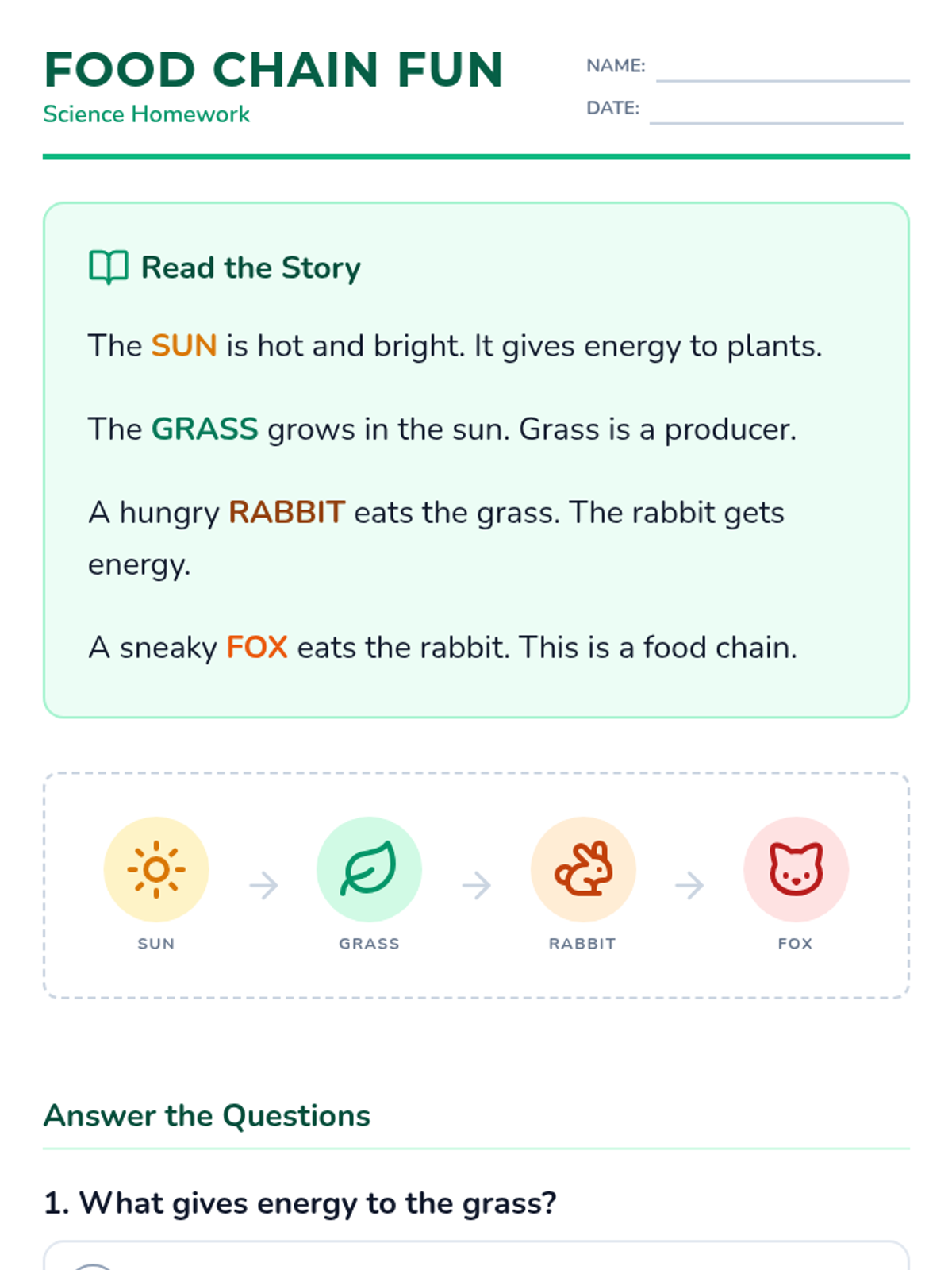
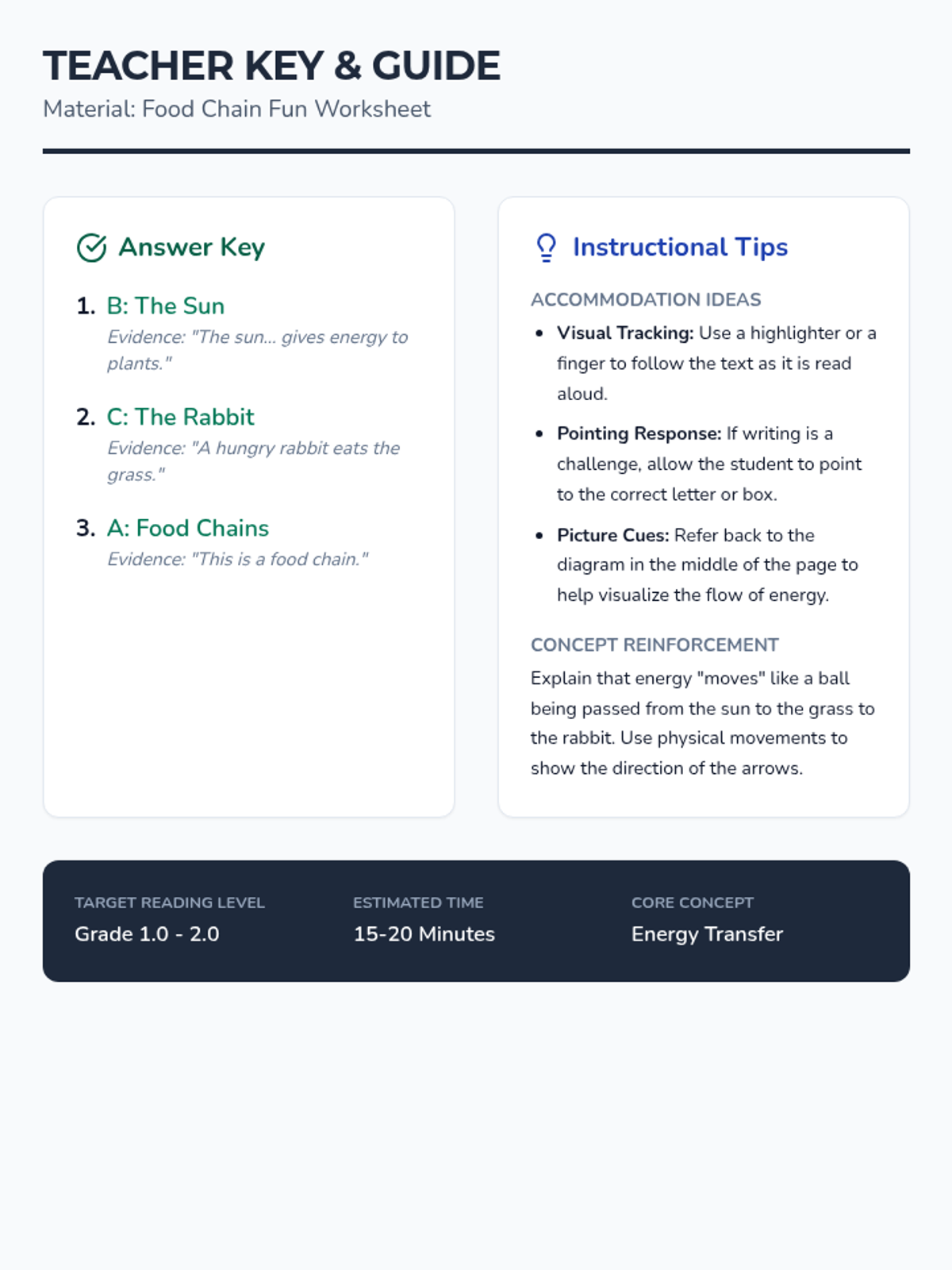
A simplified science lesson on food chains designed for 8th-grade students with severe disabilities, focusing on basic energy flow from sun to predator.
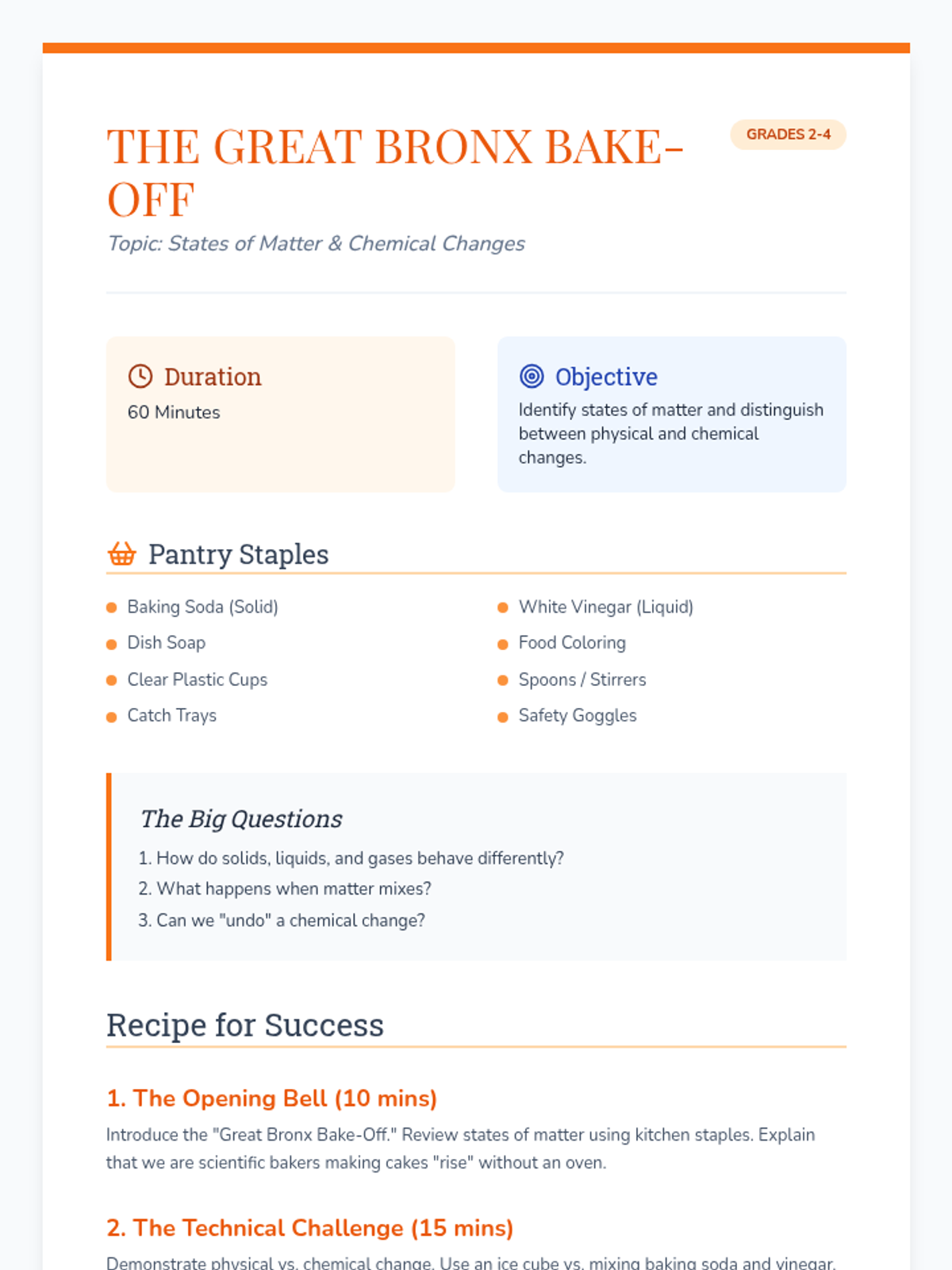
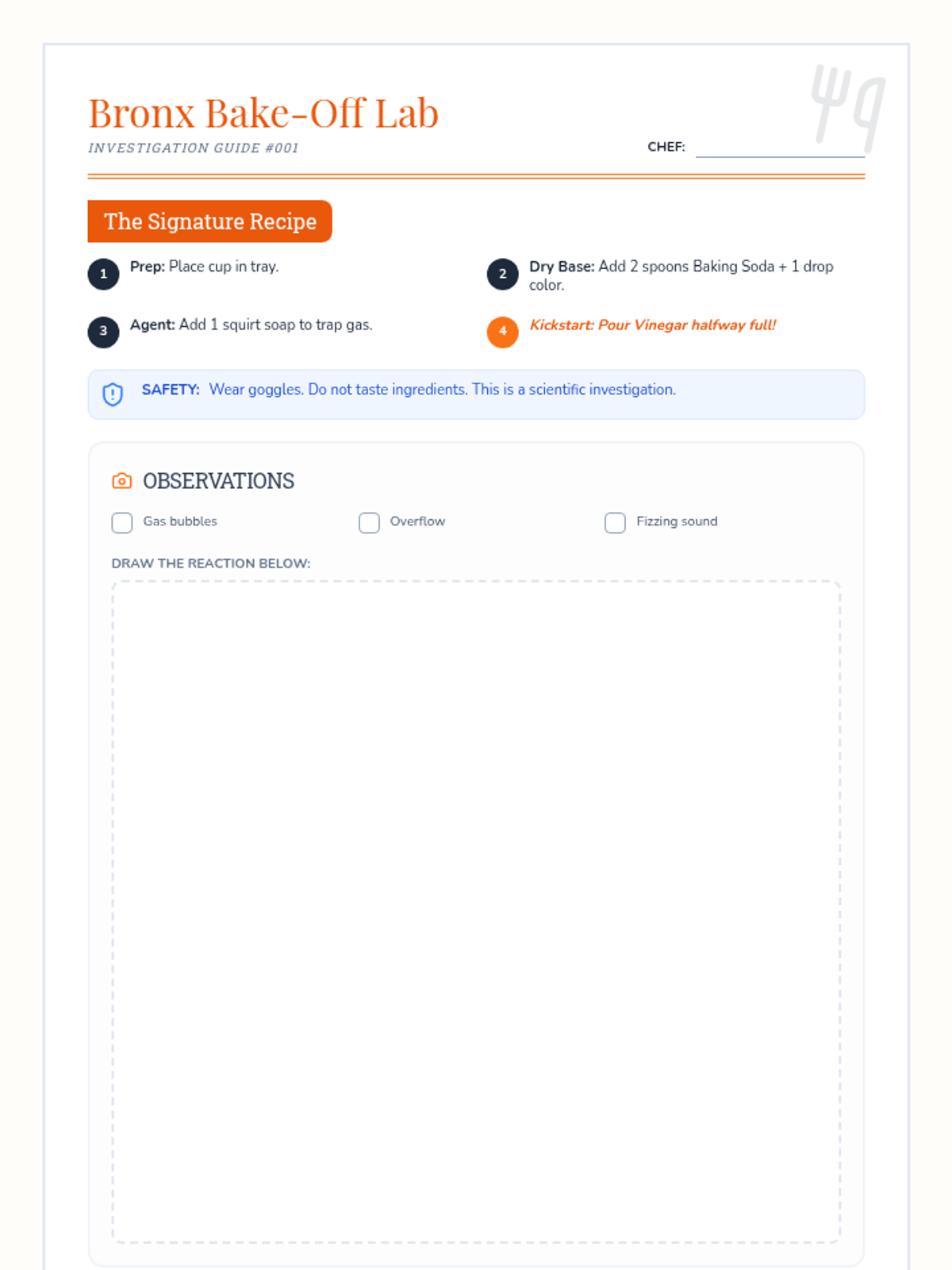
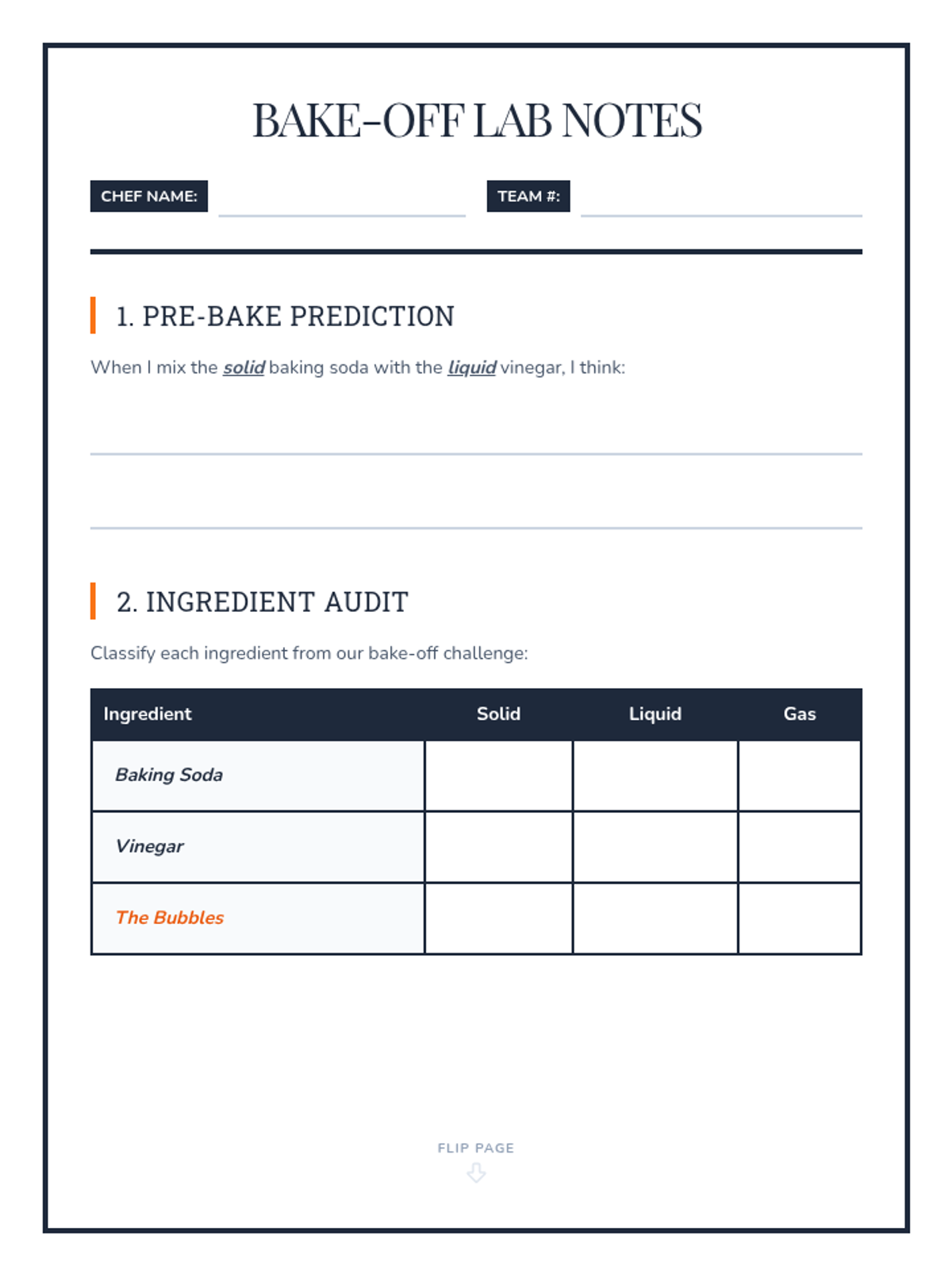
In this kitchen science inquiry, students investigate the three states of matter and observe chemical reactions by creating 'fizzing cakes' using baking soda and vinegar. They explore reversible and irreversible changes while competing in a simulated Bronx-style bake-off challenge.
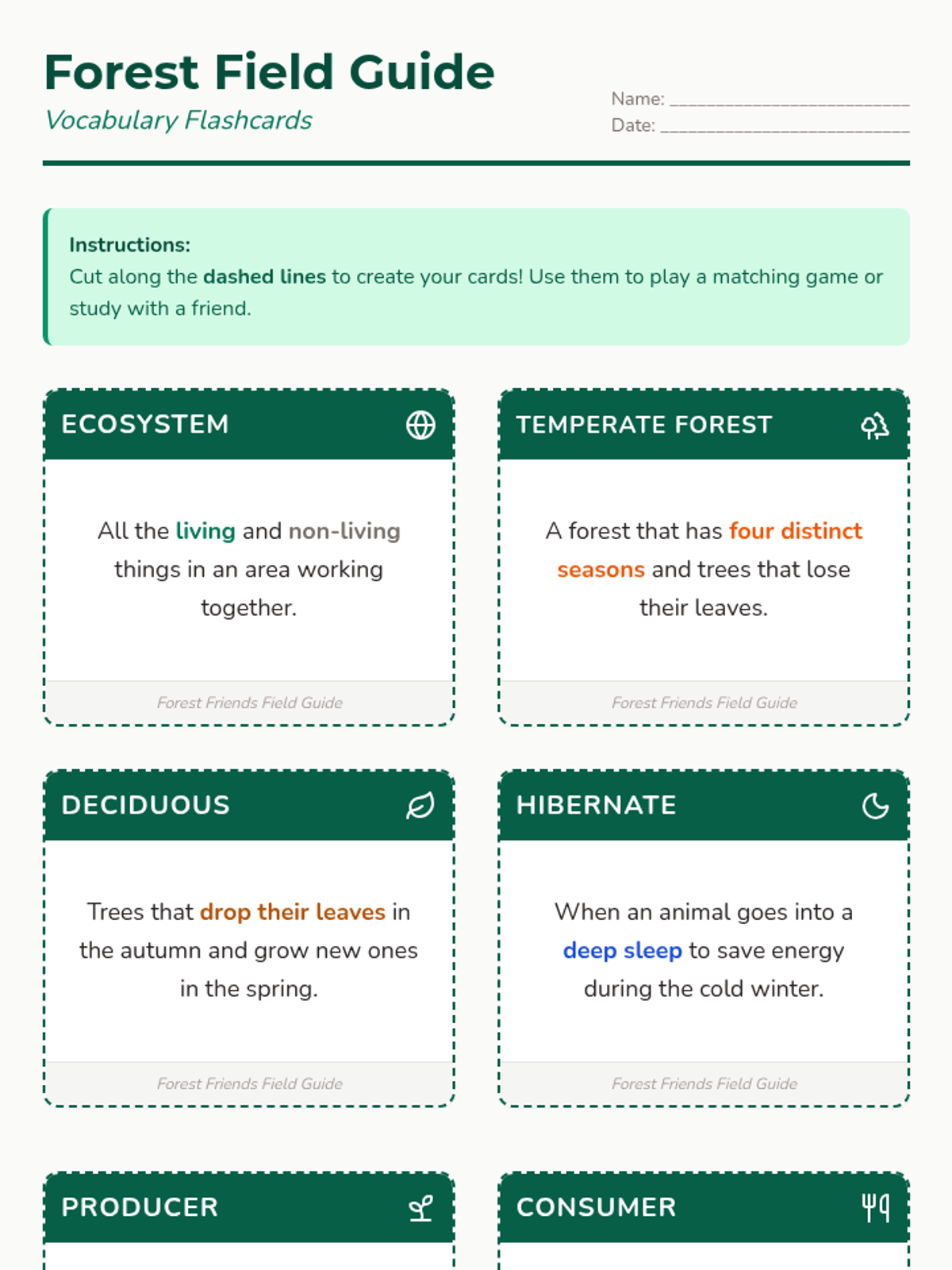
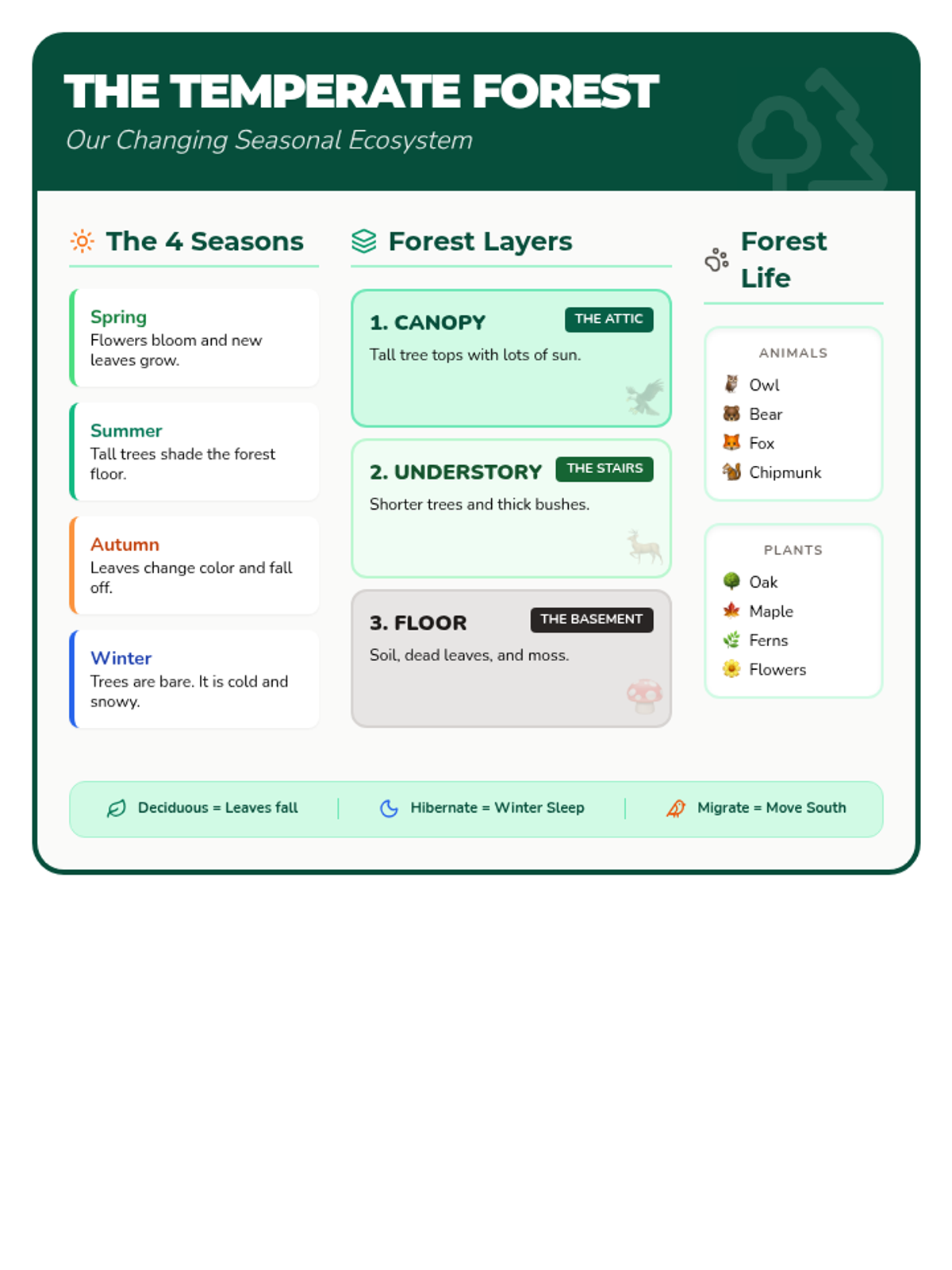
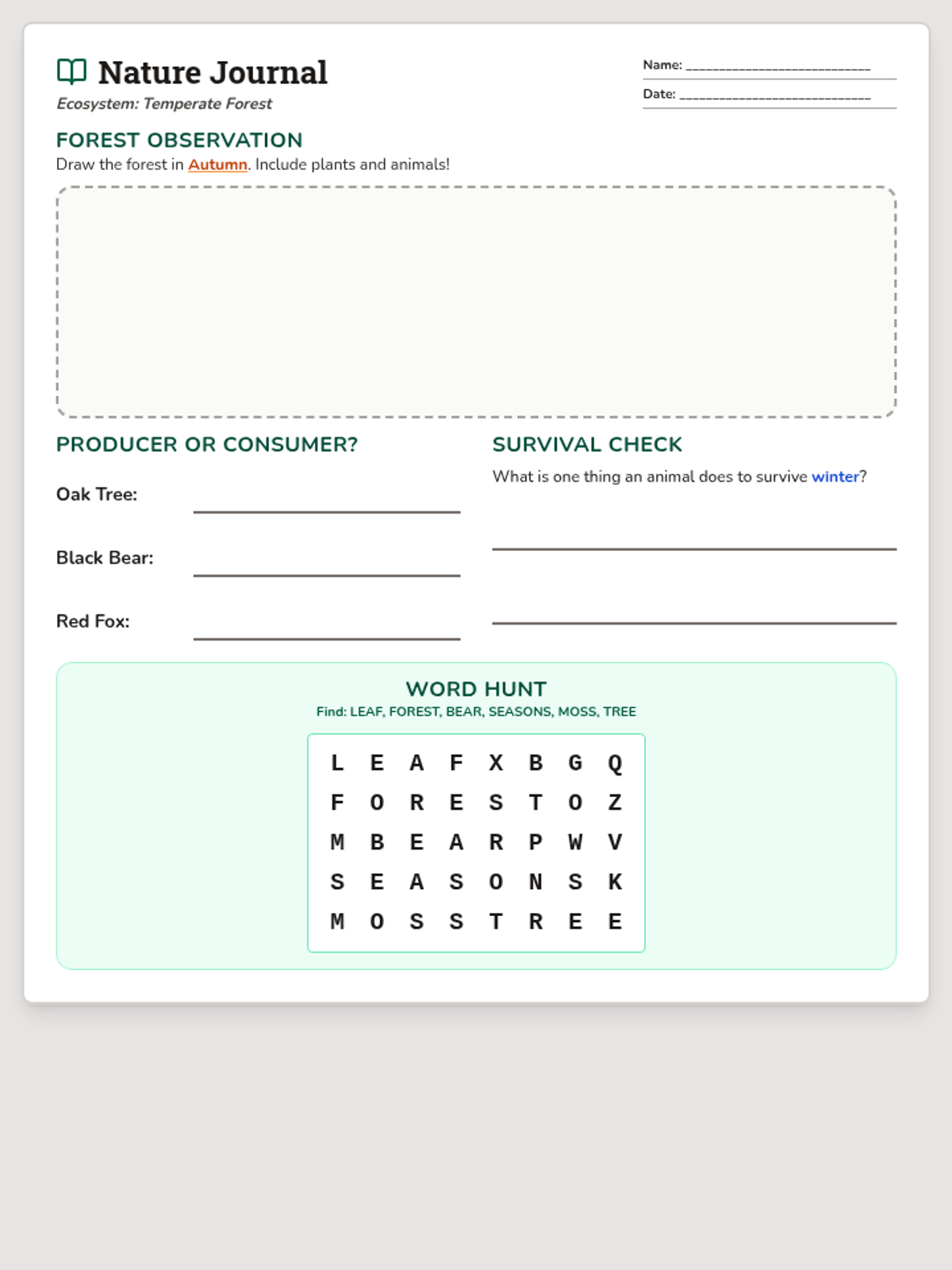
An introduction to the temperate forest ecosystem for 2nd graders, focusing on seasonal changes, plant life, and animal adaptations. Students will build foundational science vocabulary through visual aids and hands-on observation prompts.
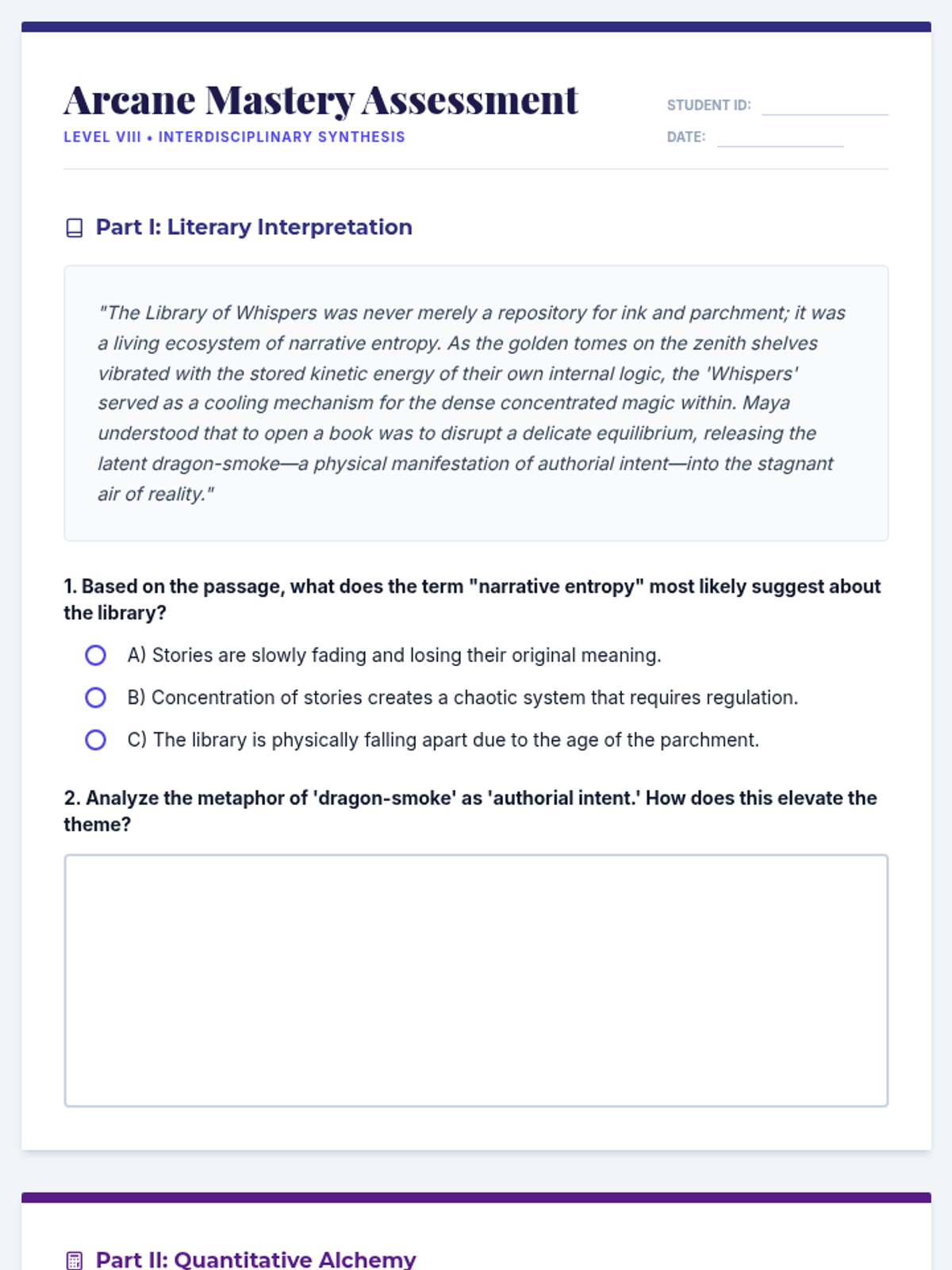
Advanced academic challenges for 8th-grade students, synthesizing reading, math, and science within a complex fantasy framework.
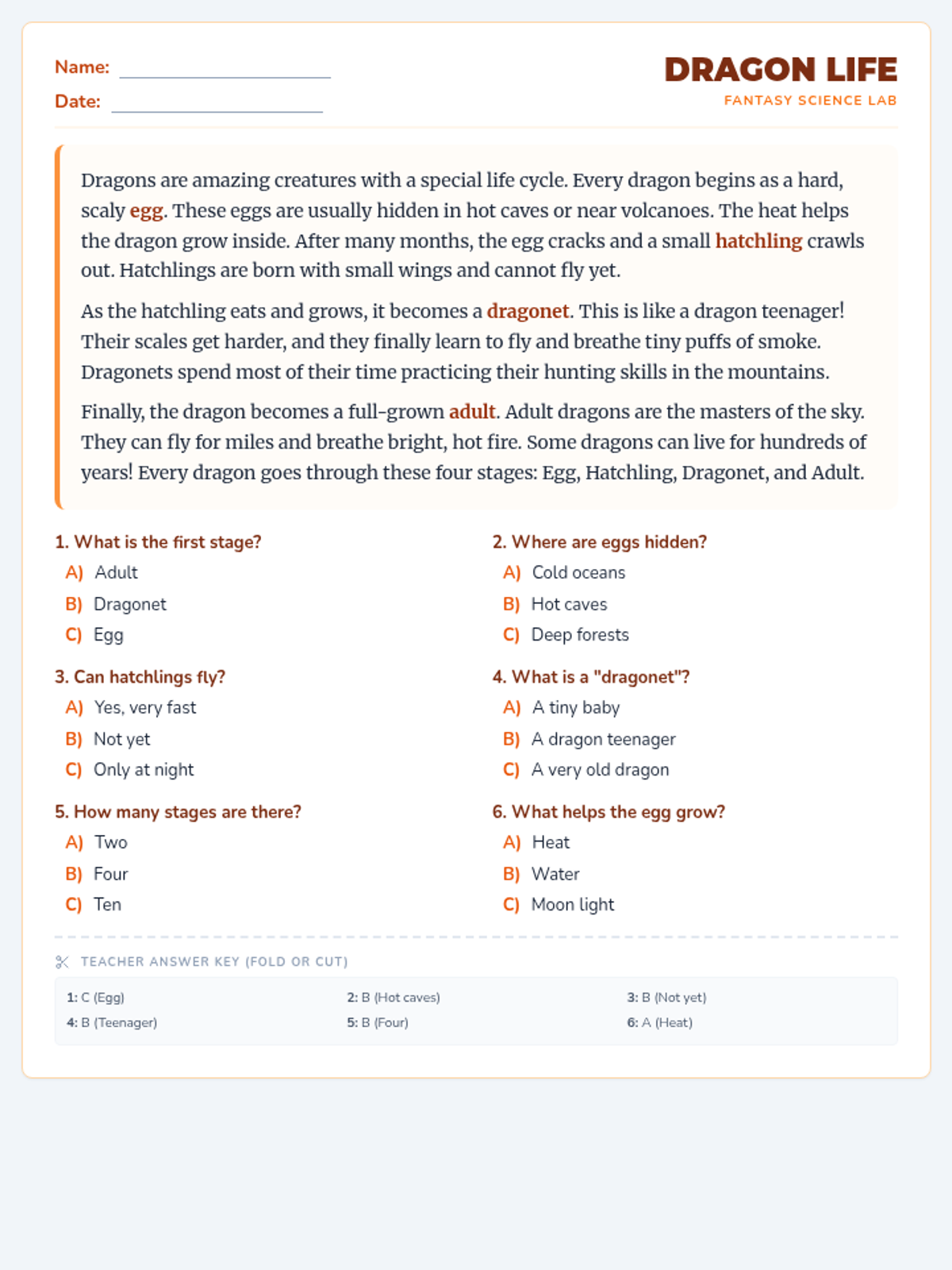
Science exploration through a fantasy lens, covering life cycles, habitats, and simple physical science for 2nd graders.
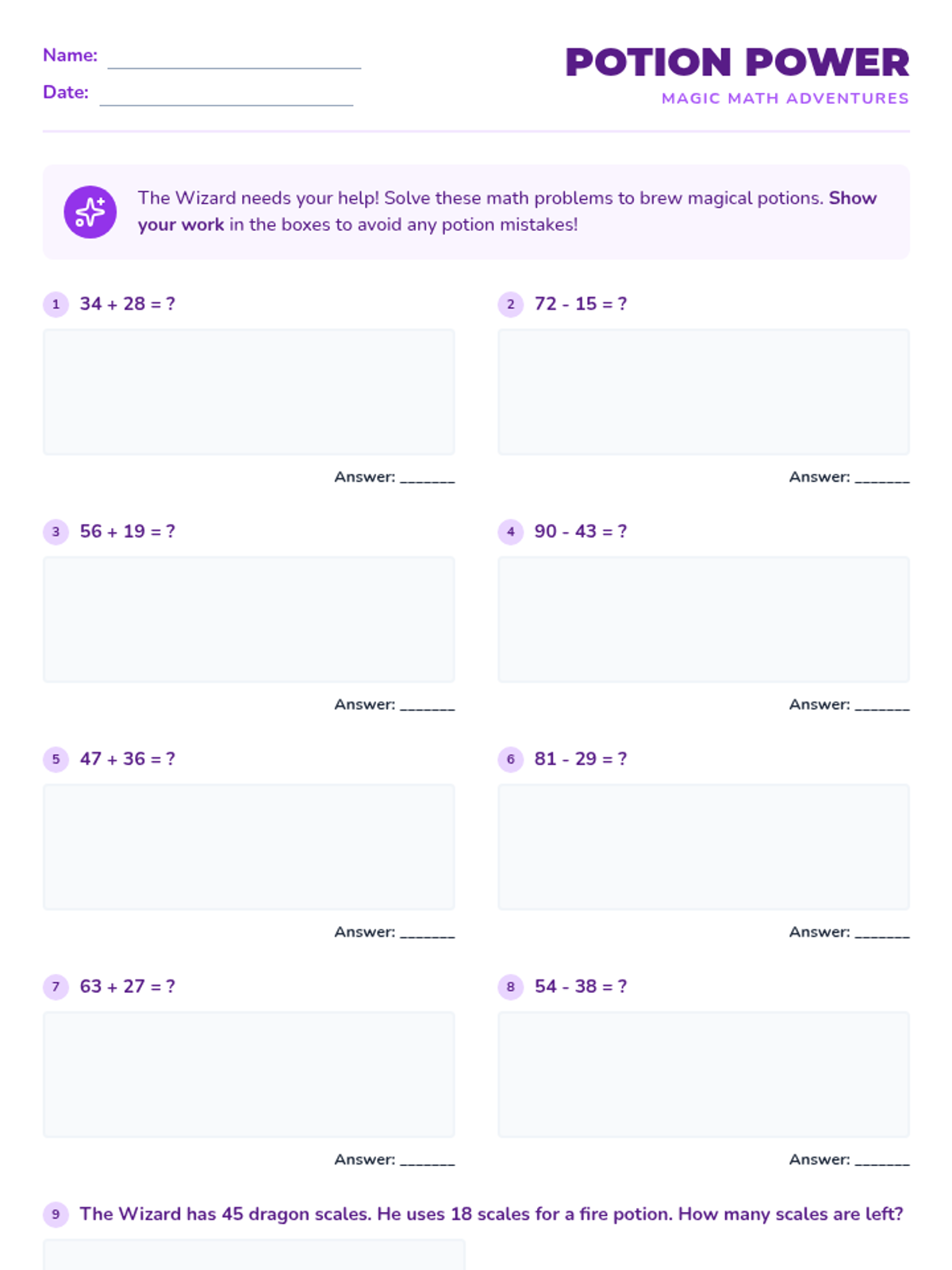
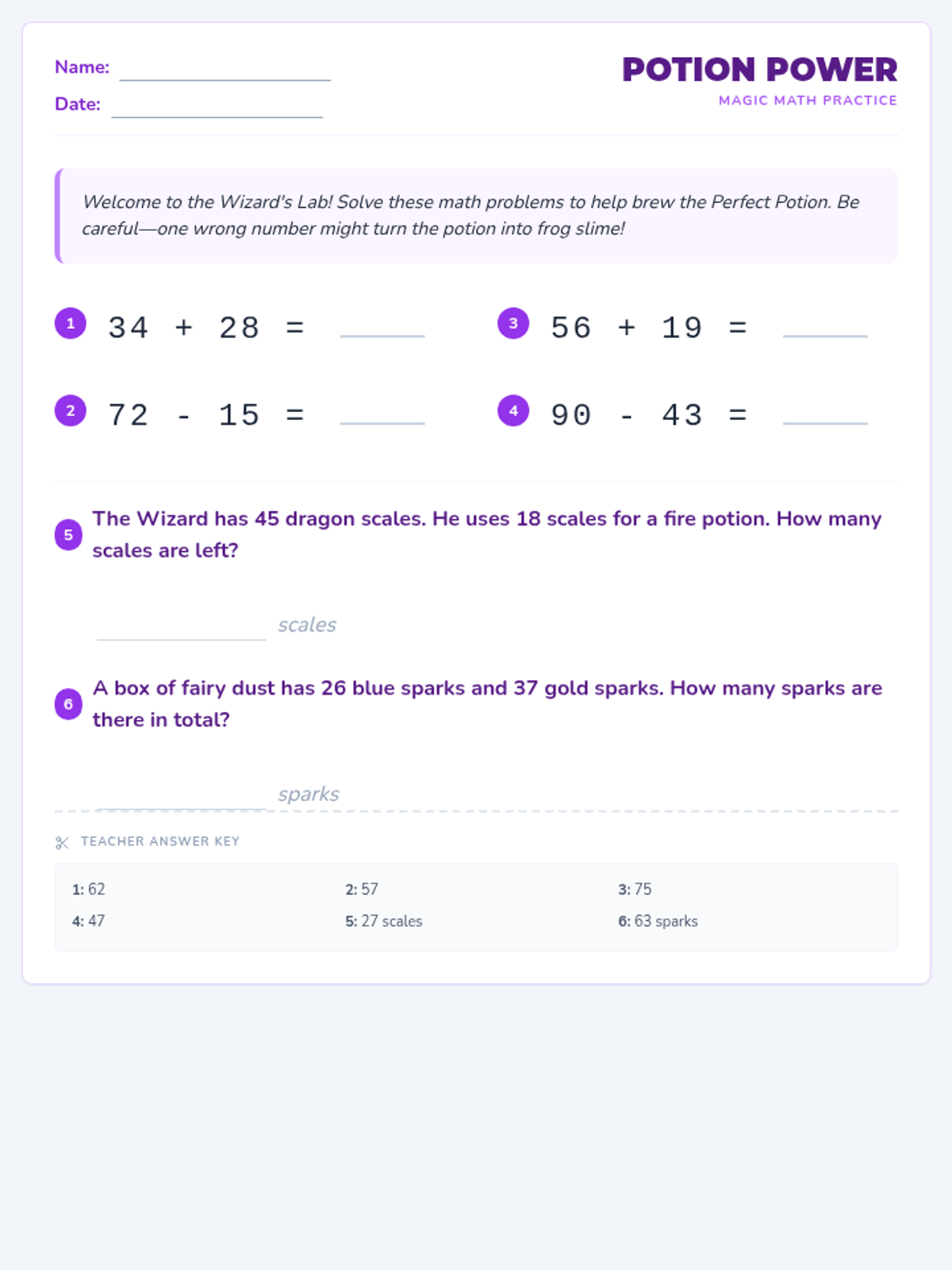
Fantasy-themed math practice for 2nd graders, focusing on addition, subtraction, and word problems in a magical setting.
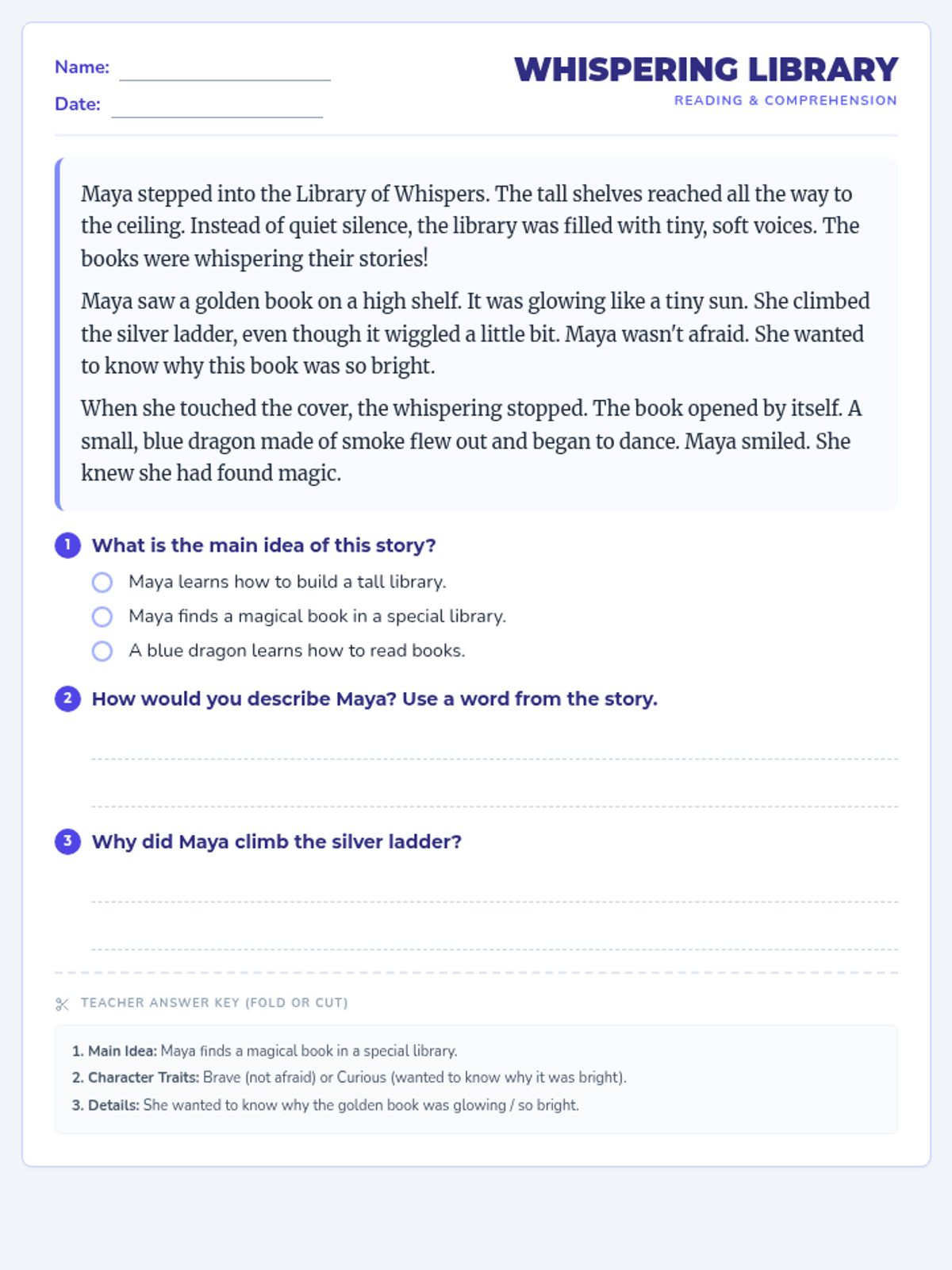
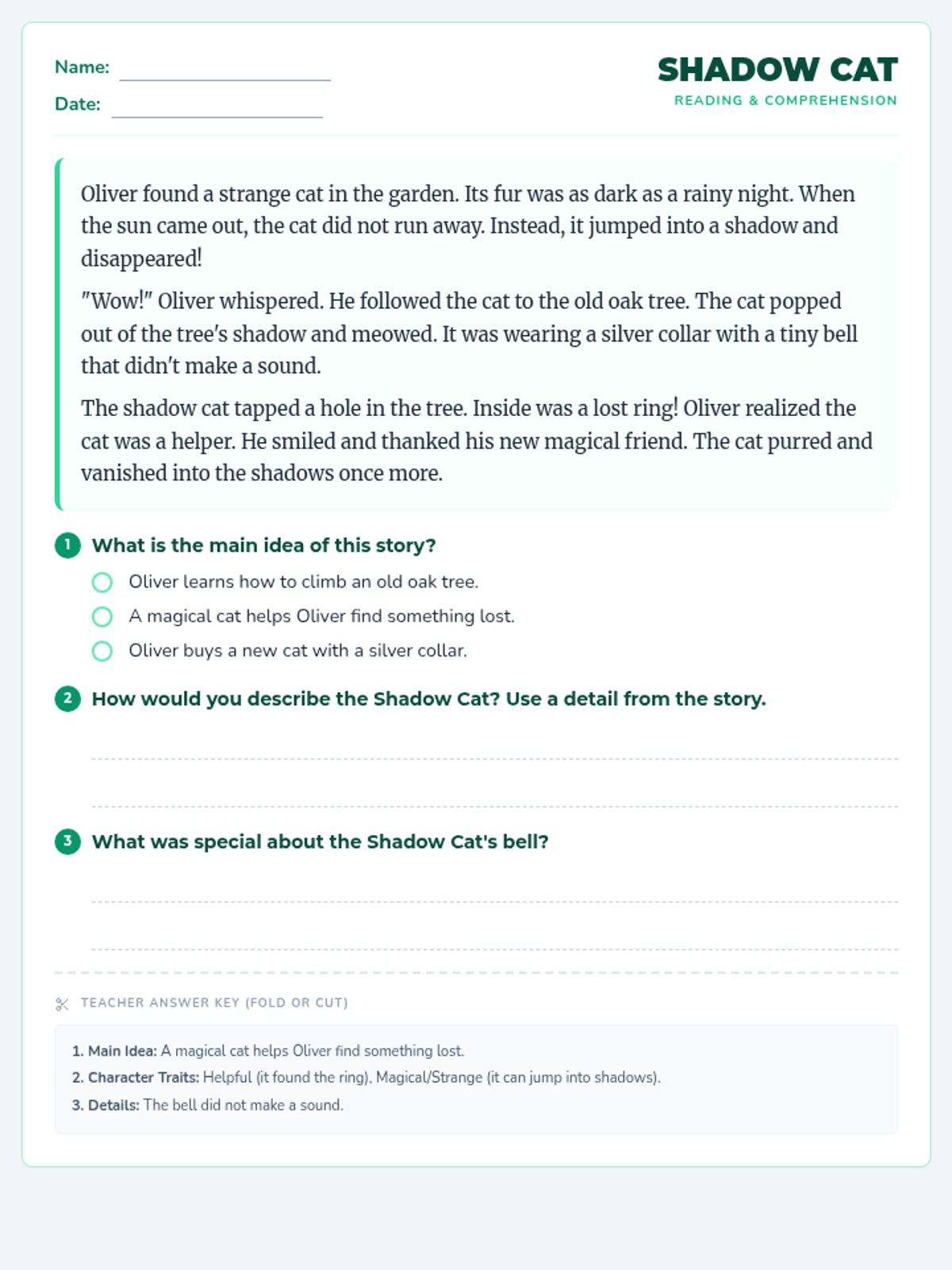
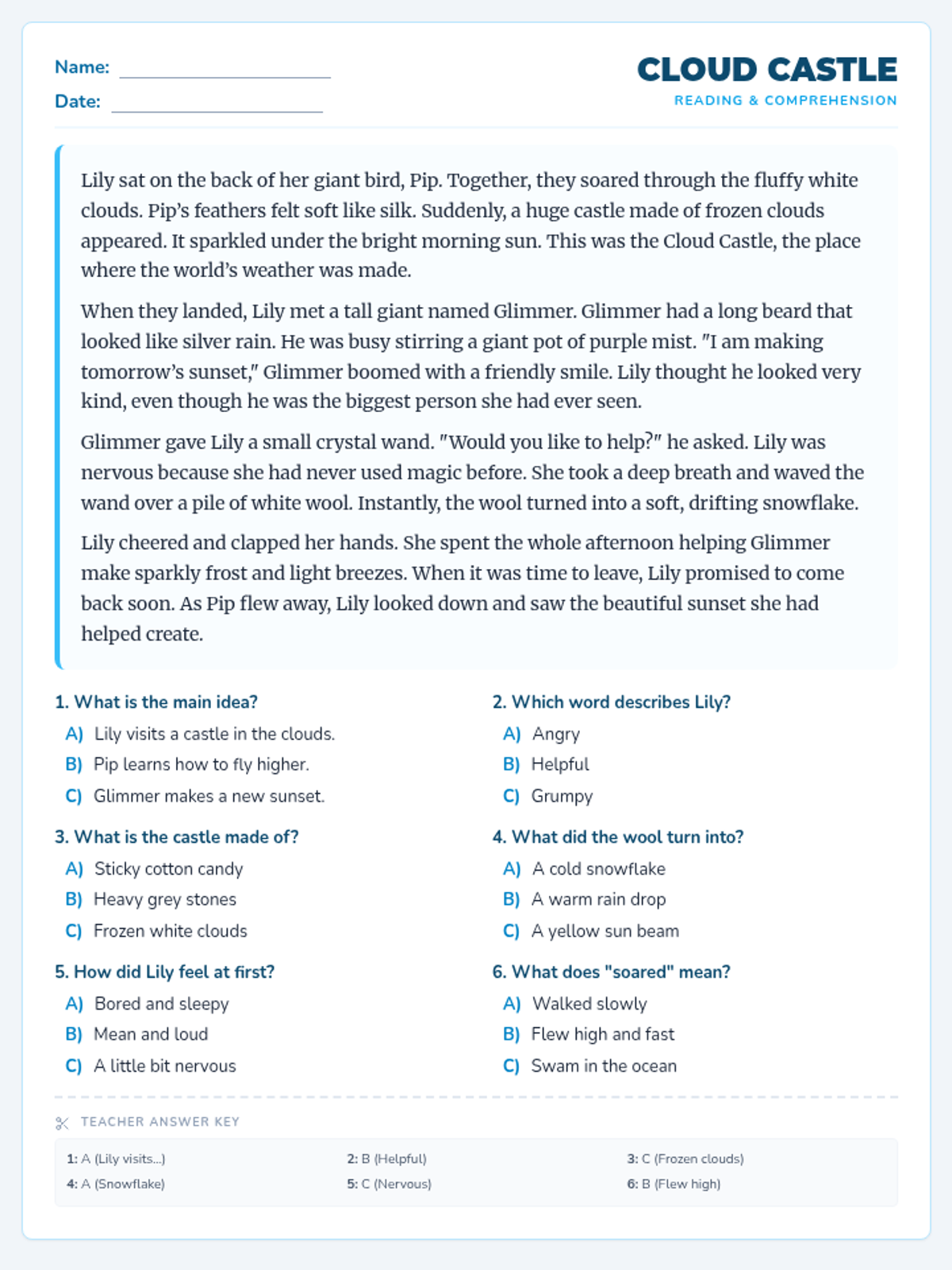
A collection of magical fantasy reading prompts designed for 2nd grade students to practice reading comprehension, main idea identification, and character trait analysis.
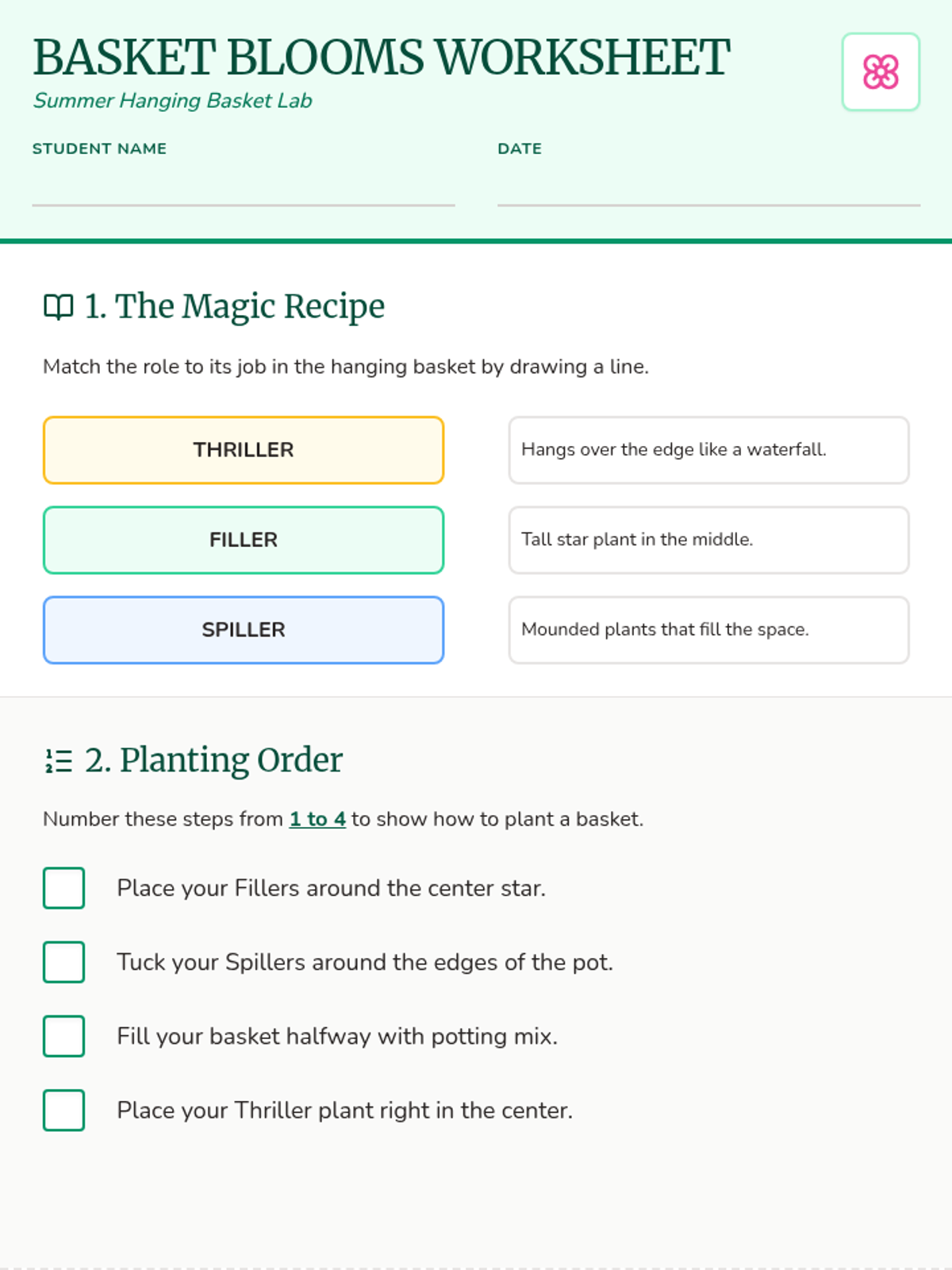
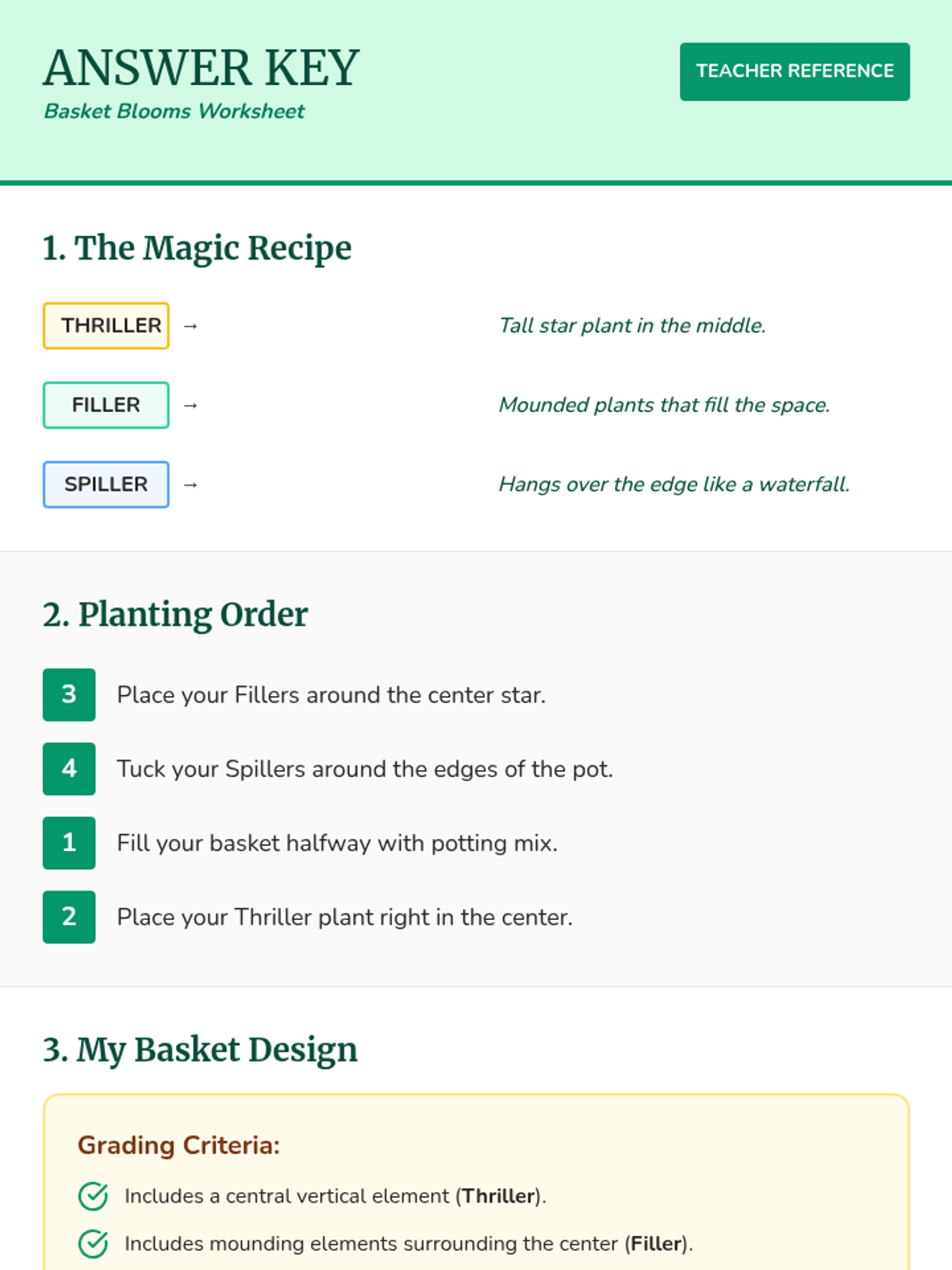
A hands-on lesson for elementary students on how to select plants and assemble a beautiful, healthy summer hanging basket using the 'Thriller, Filler, Spiller' method.
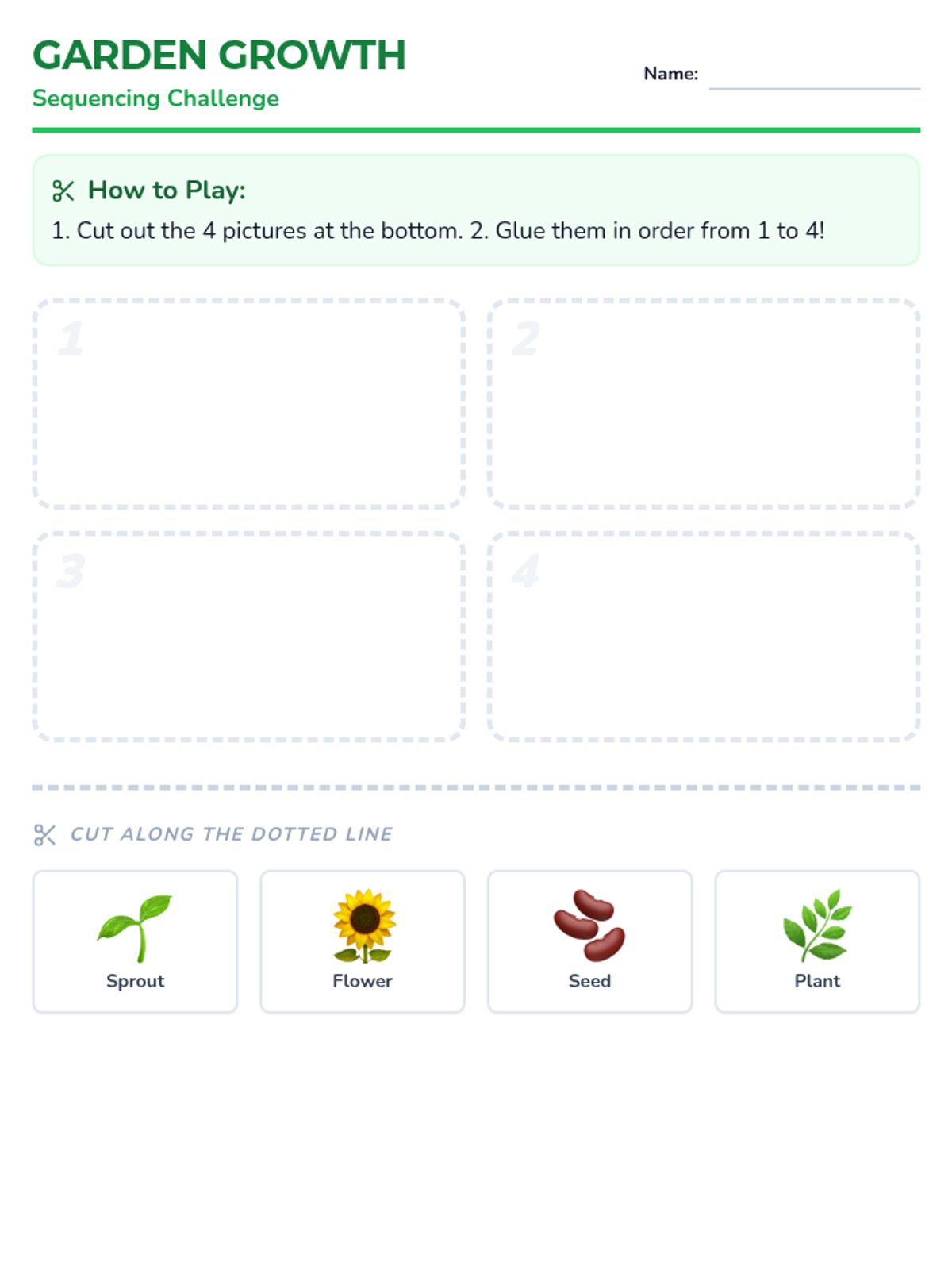
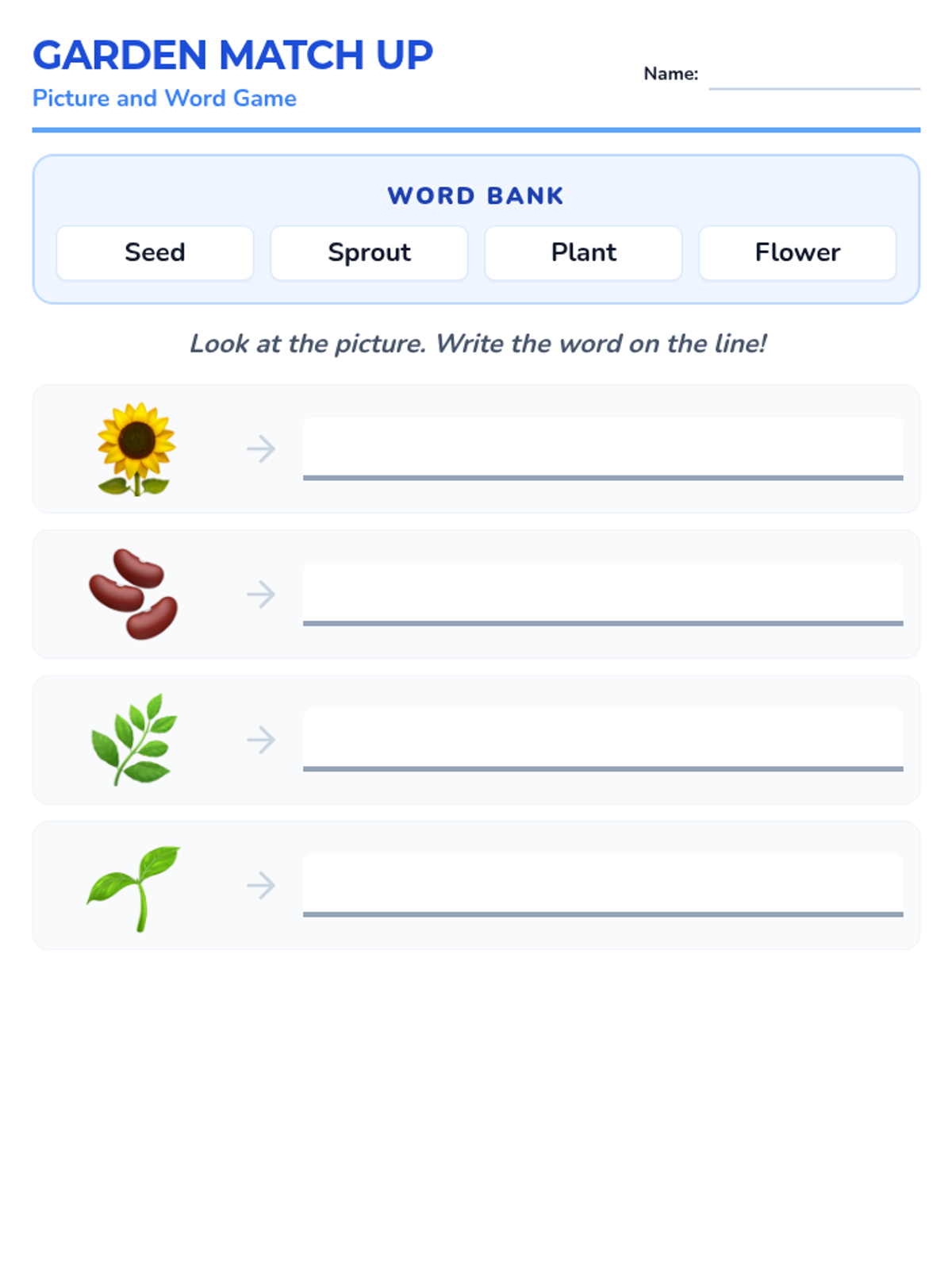
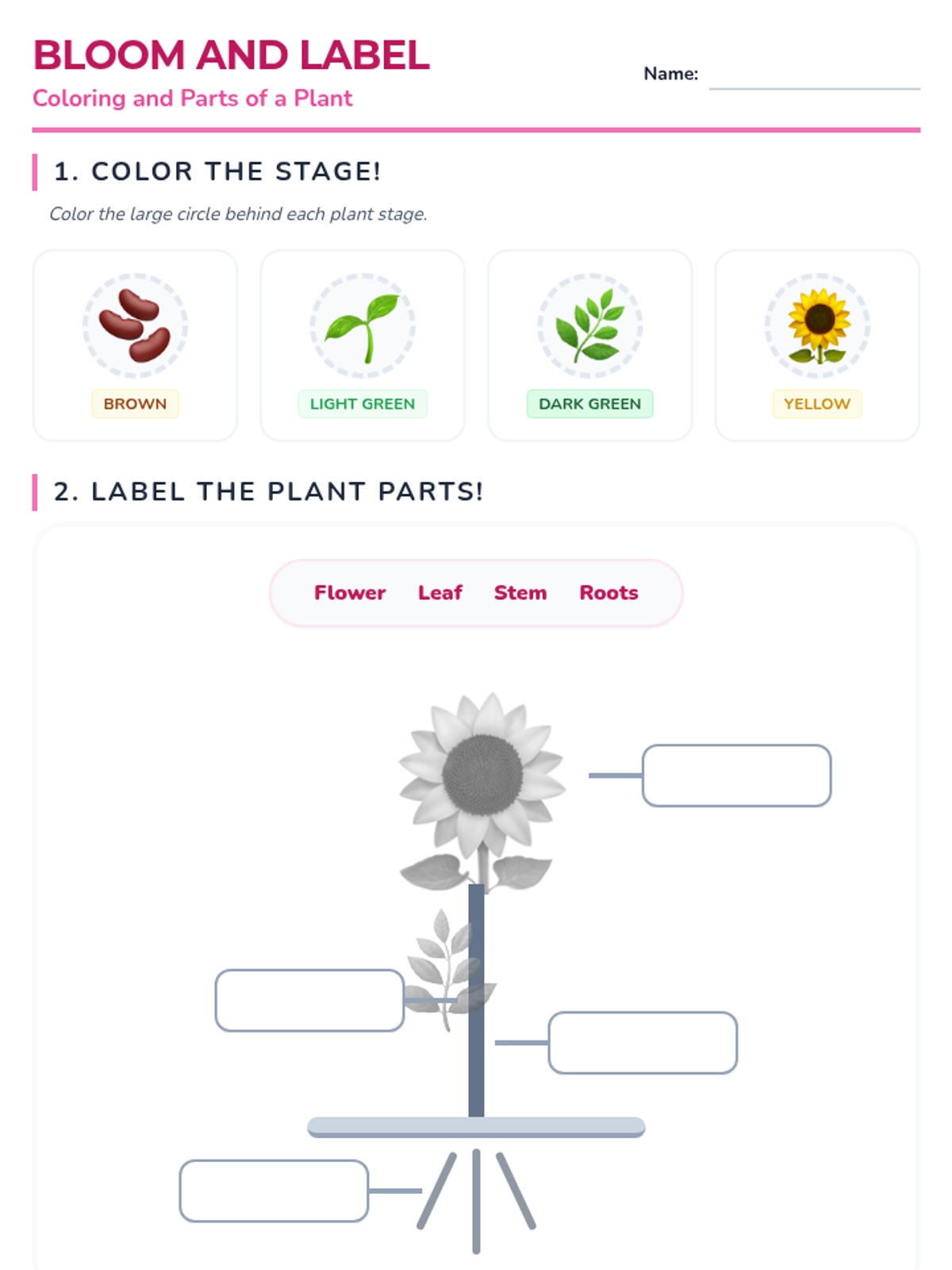
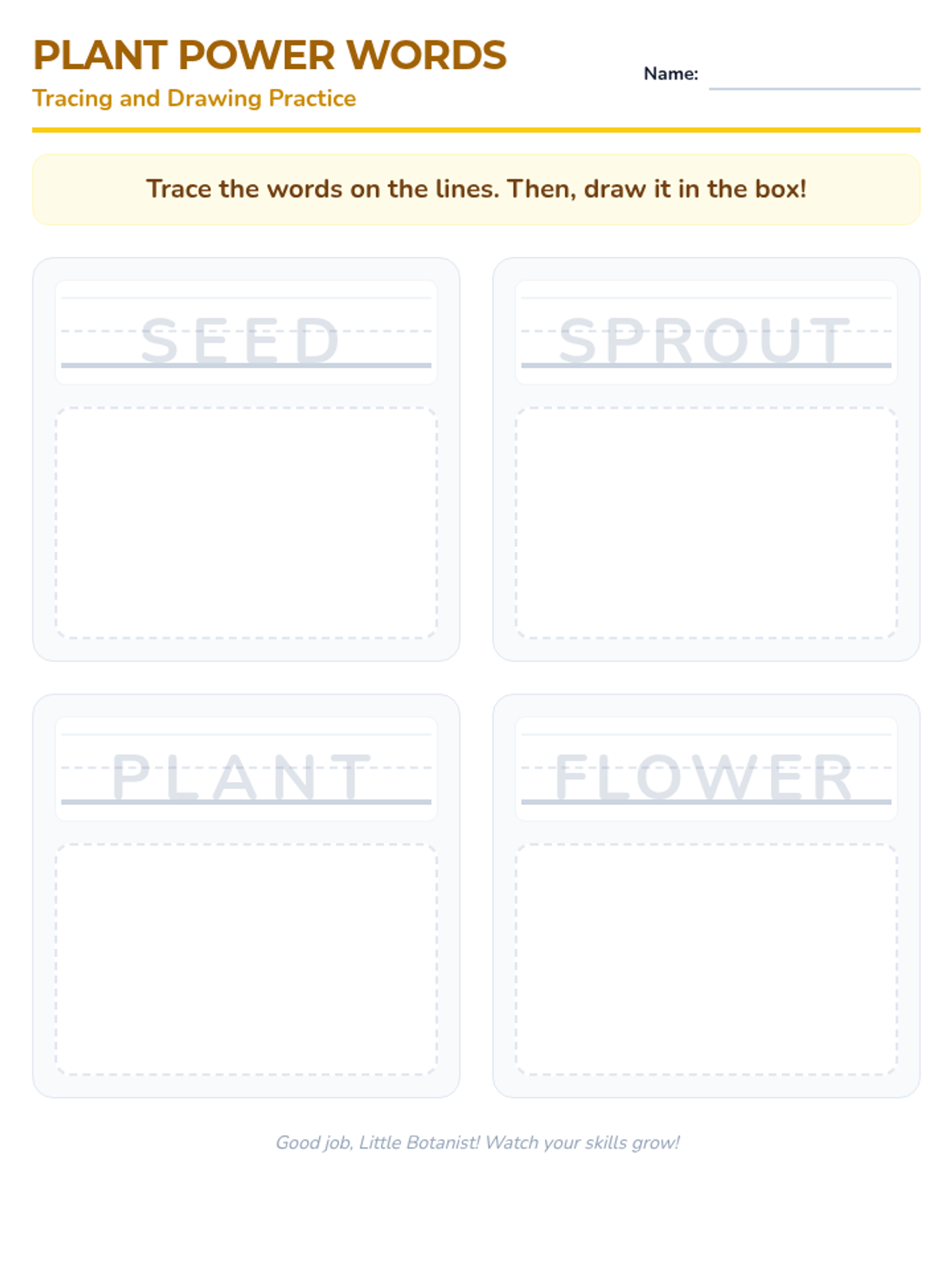
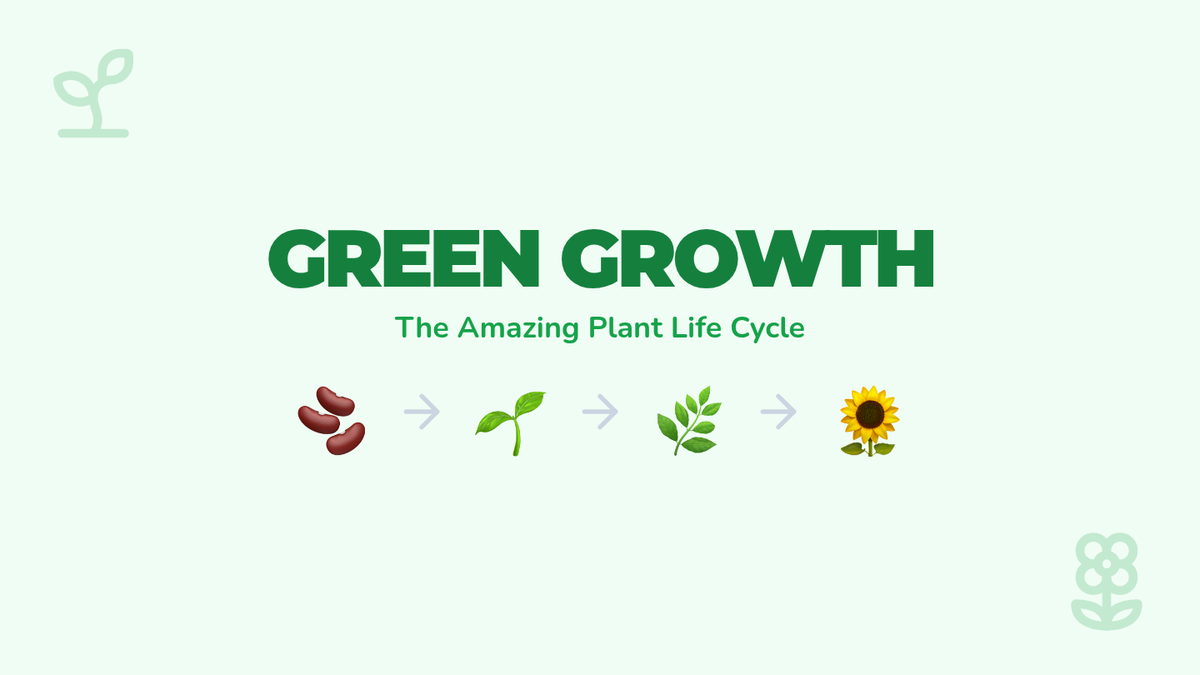
A simplified introduction to the plant life cycle for young learners, focusing on key stages: seed, sprout, plant, and flower. These materials use large fonts, clear visuals, and interactive activities modified for a 1st-2nd grade level.
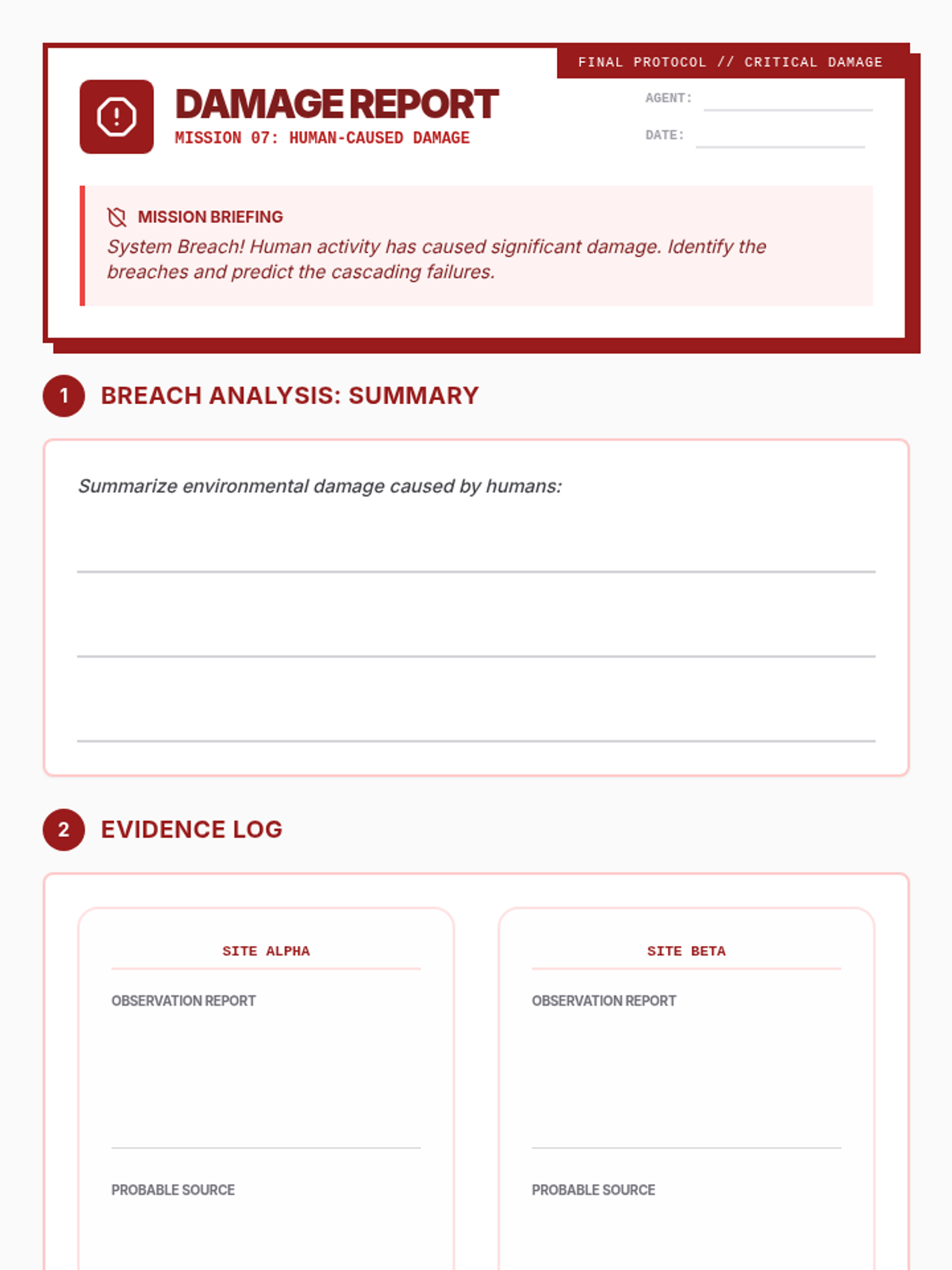
The final mission involves assessing environmental damage caused by humans and predicting the long-term effects on the ecological grid.
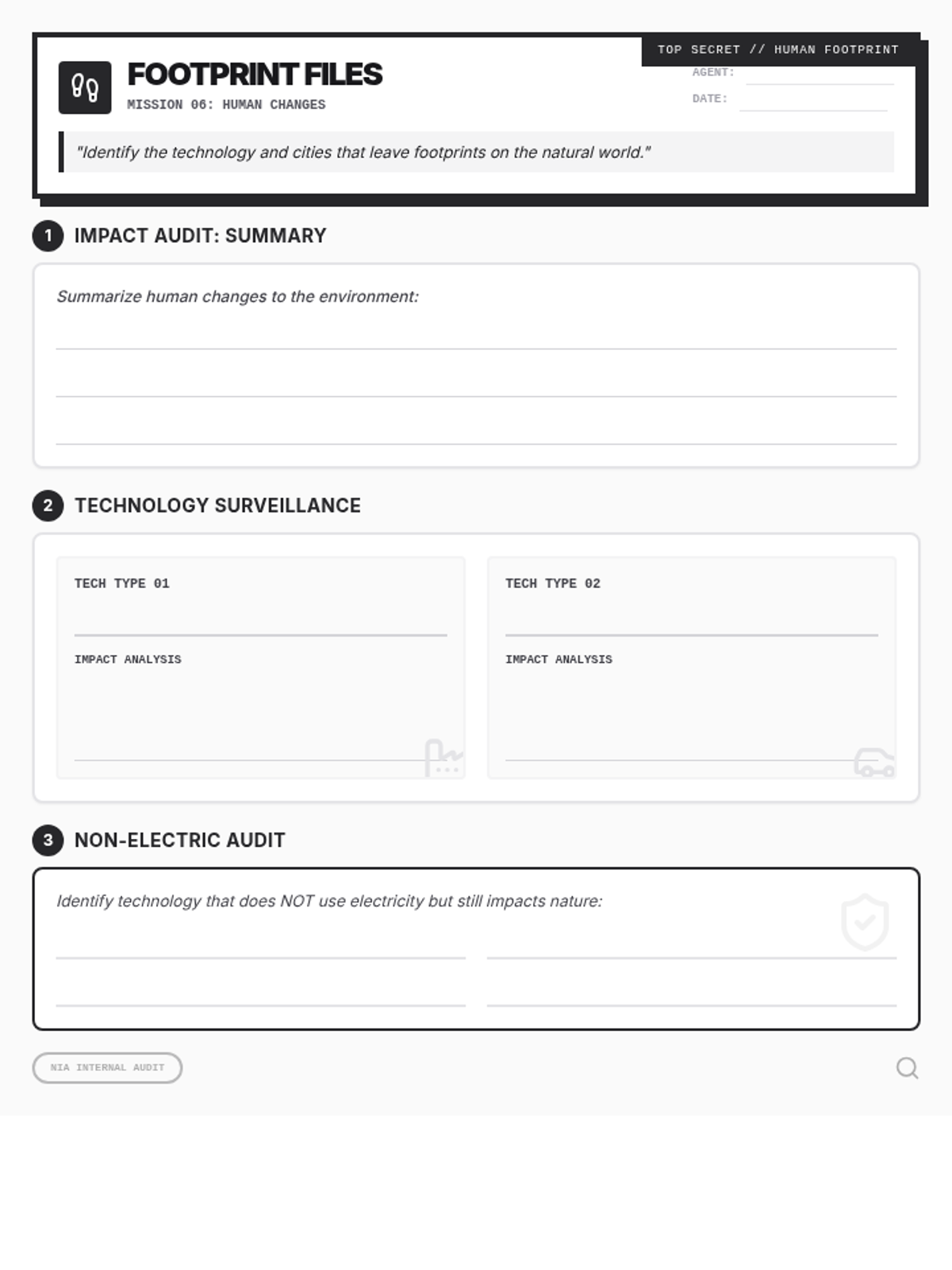
Detectives investigate the impact of human technology and daily habits on the surrounding environment.