Students become 'Energy Detectives' to identify light, electrical, and movement energy in their immediate environment through a school-wide hunt.
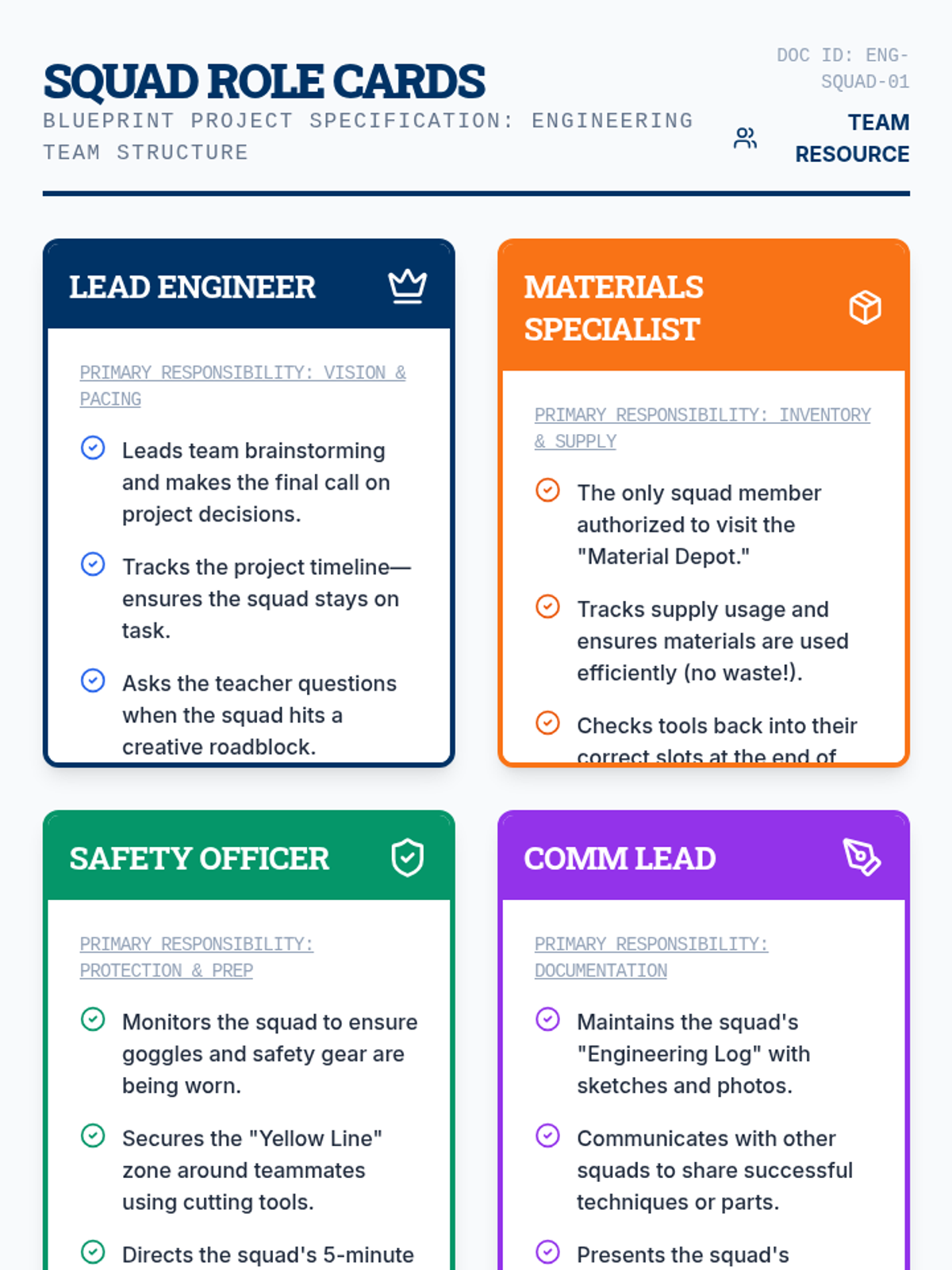
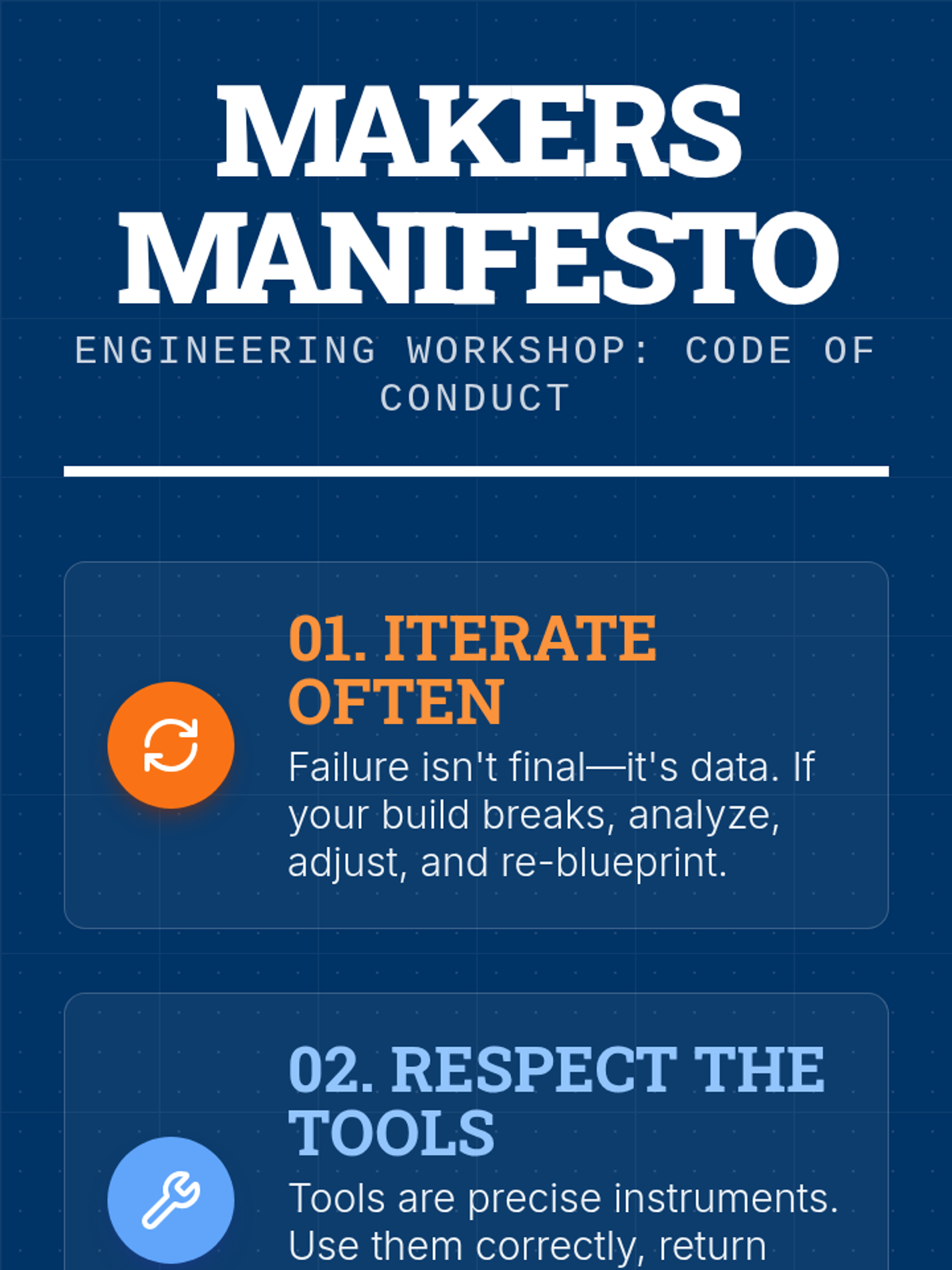
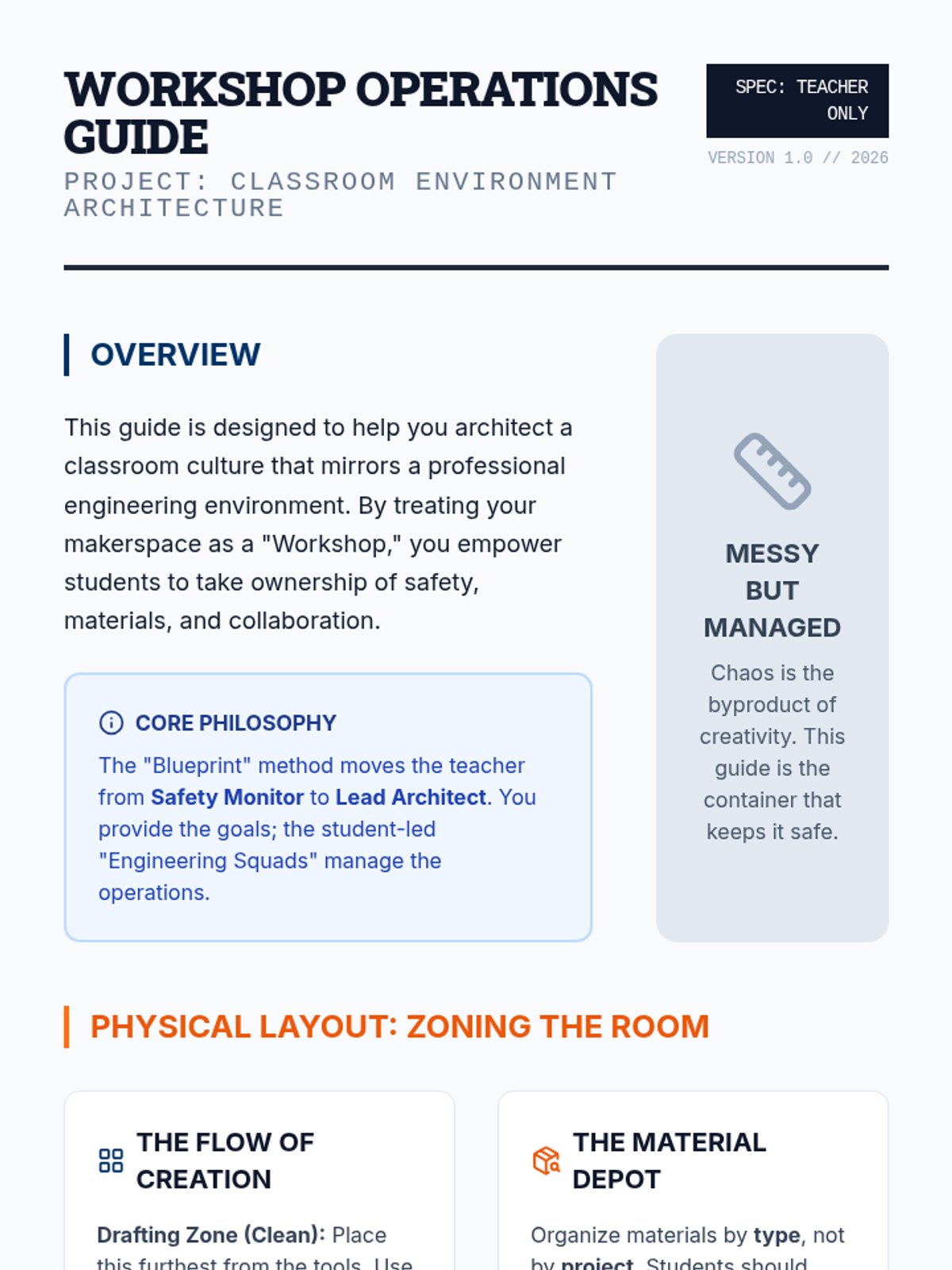
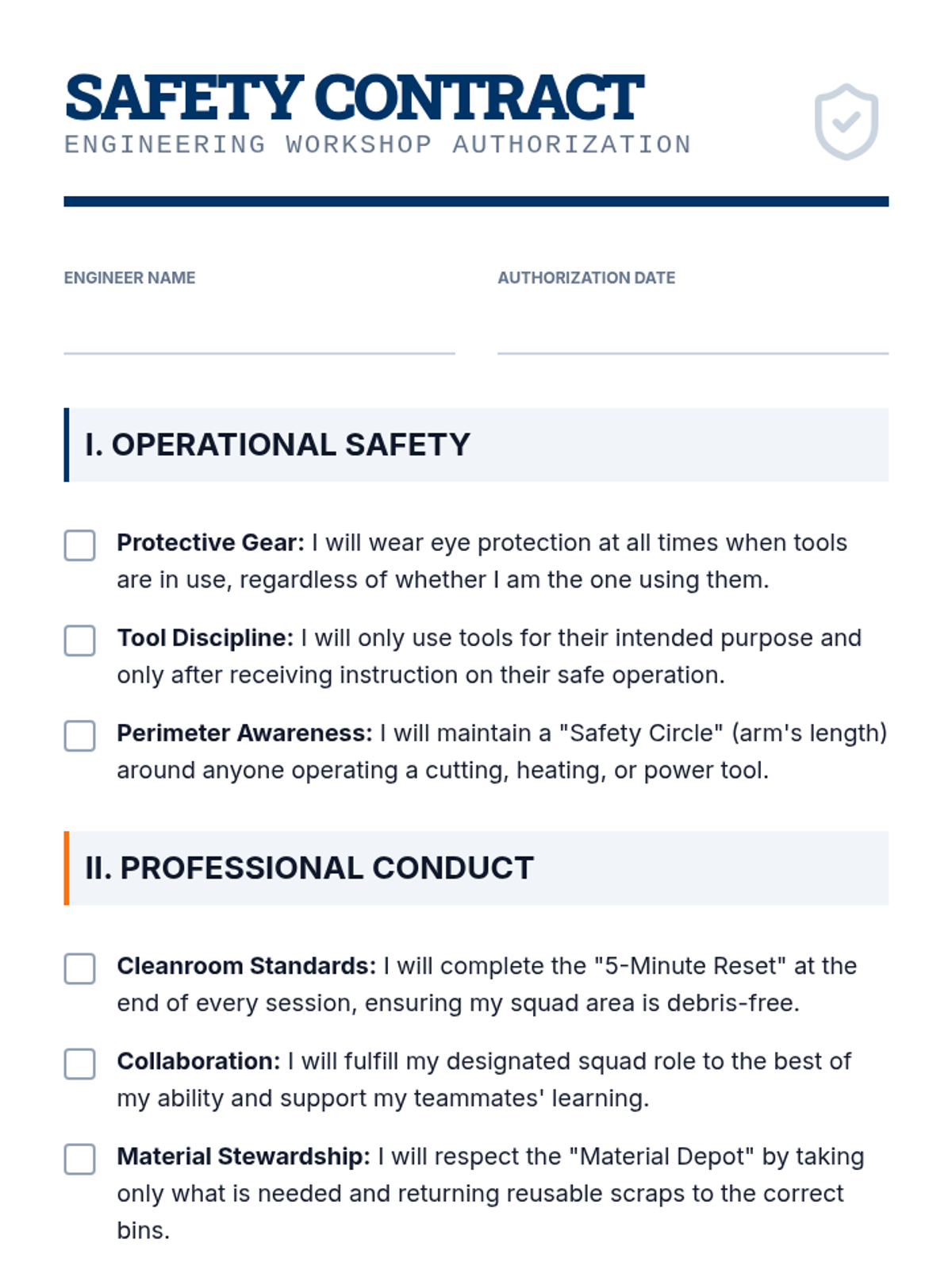
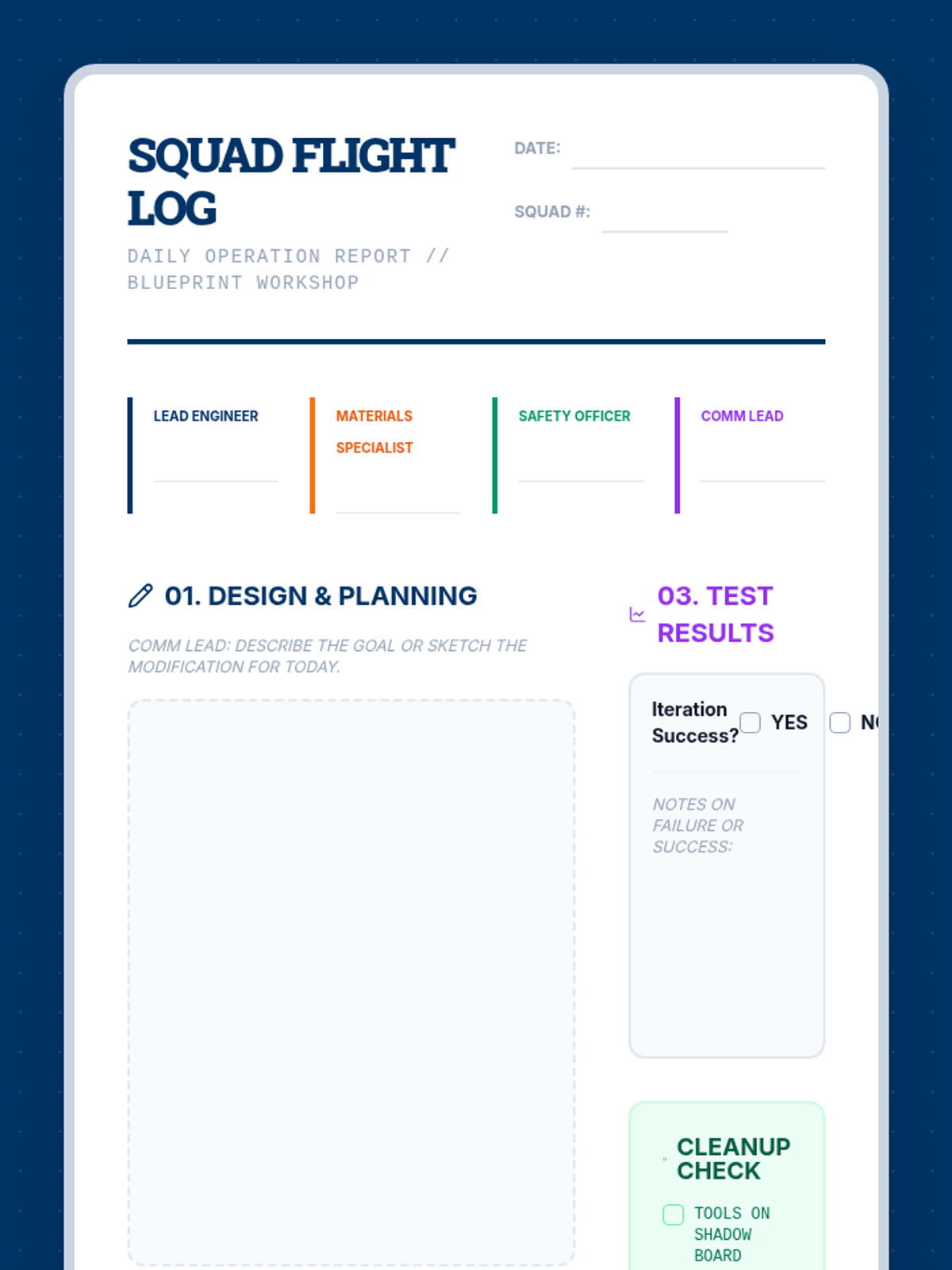
A foundational toolkit for setting up a physical engineering and maker space, covering physical layout, collaborative roles, and essential classroom routines.
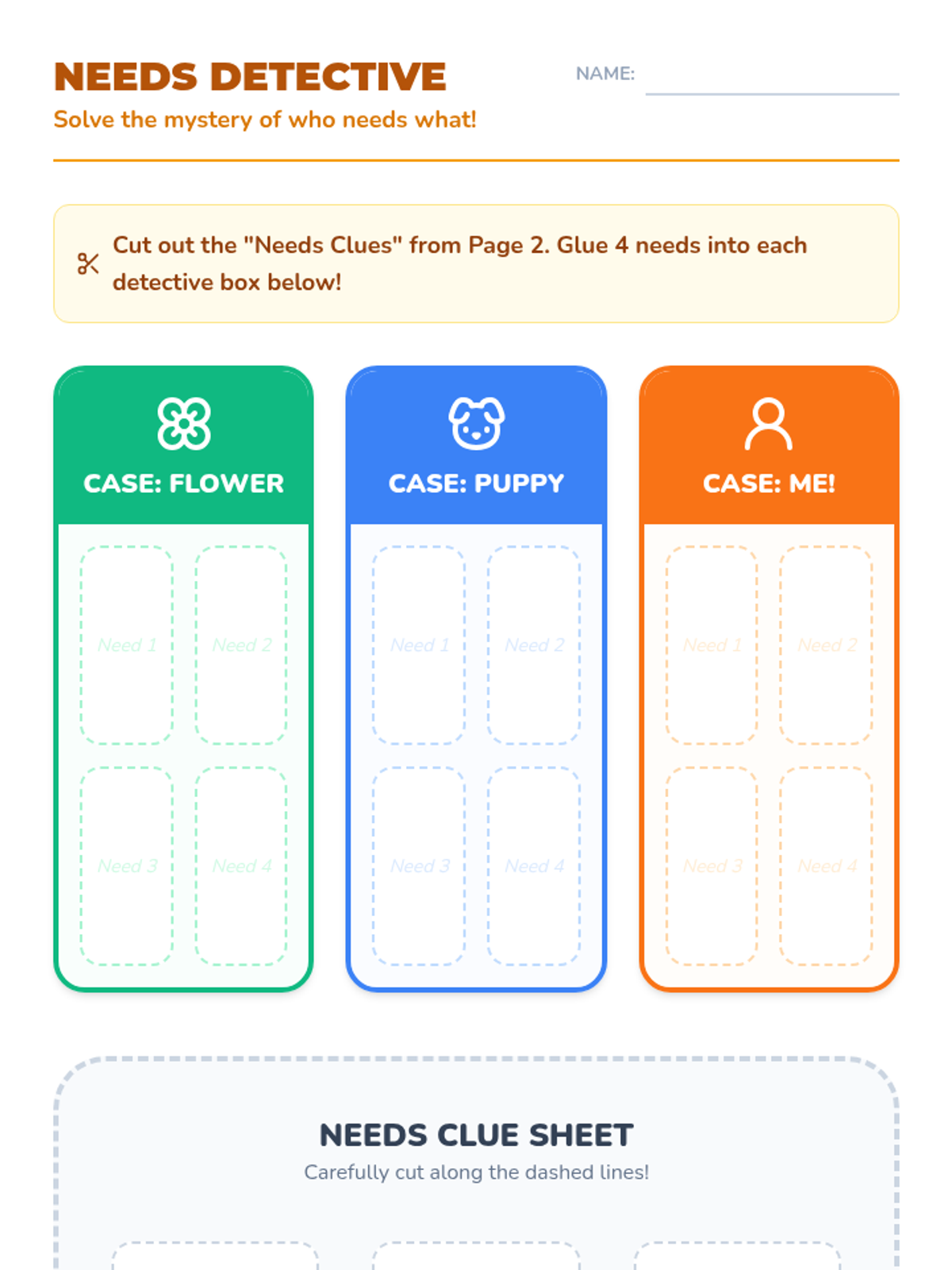
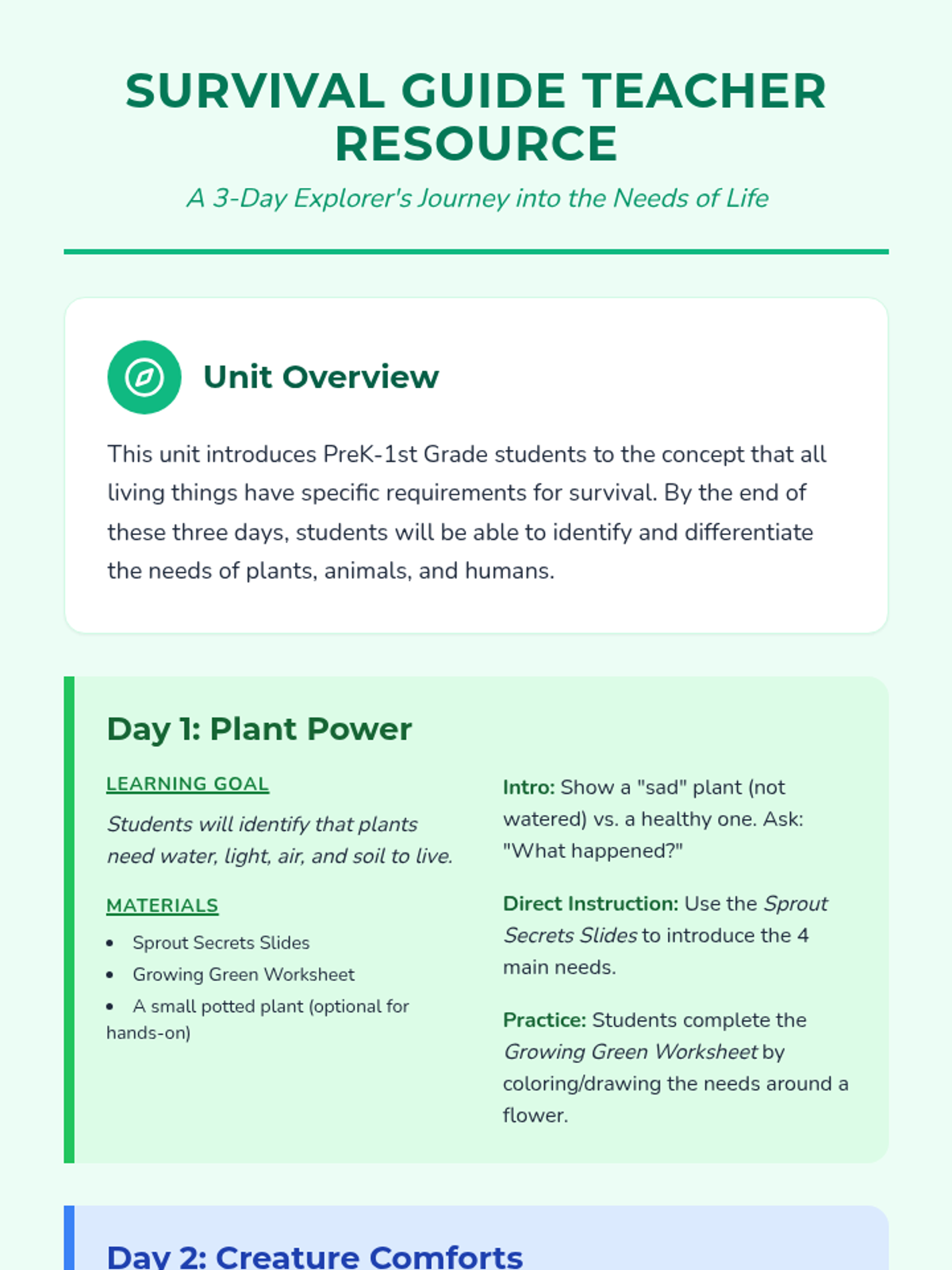
A synthesis lesson where students compare and sort the needs of all living things to identify patterns.
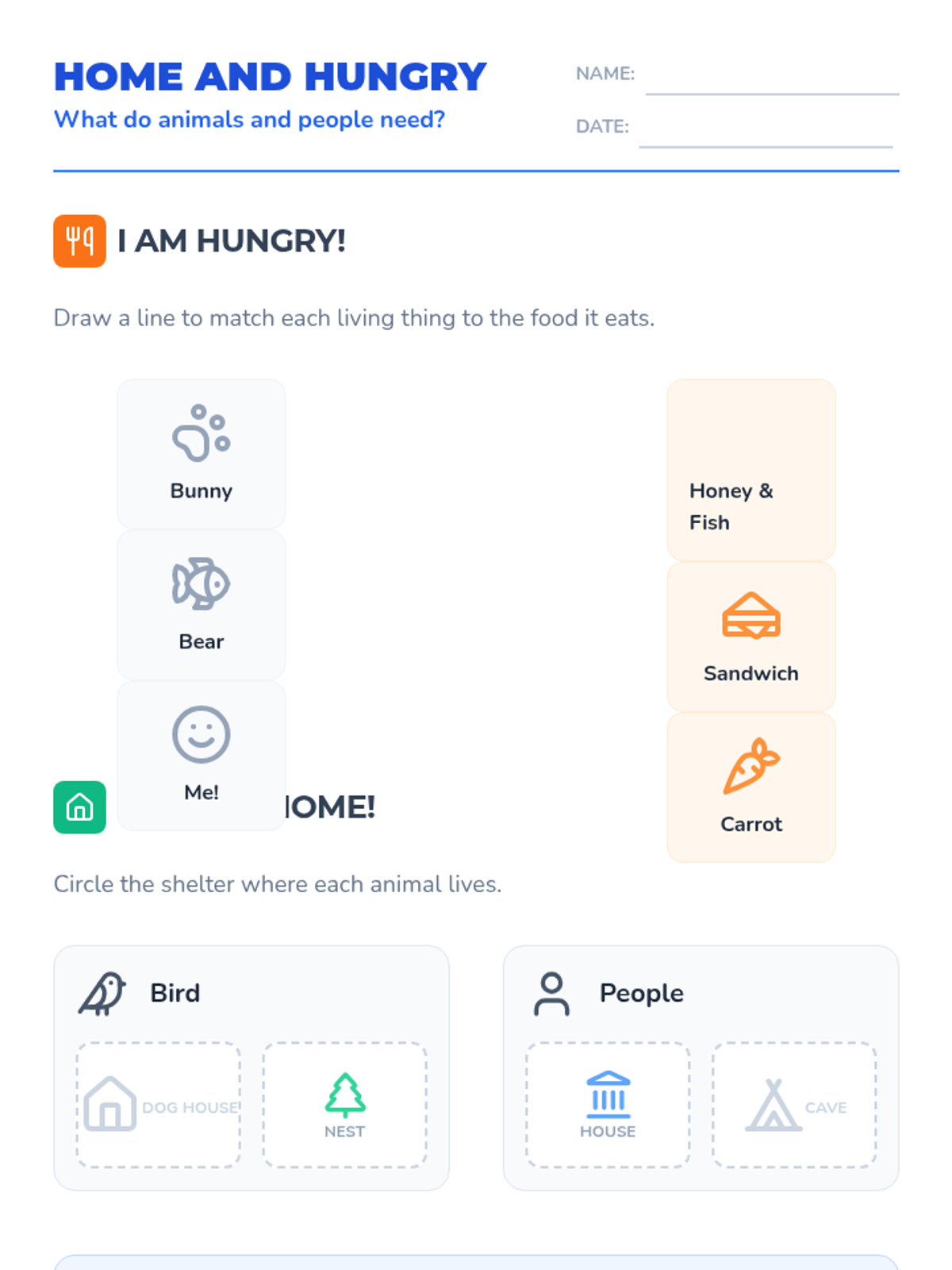
Explores the survival requirements of animals and humans, highlighting food, water, air, and shelter.
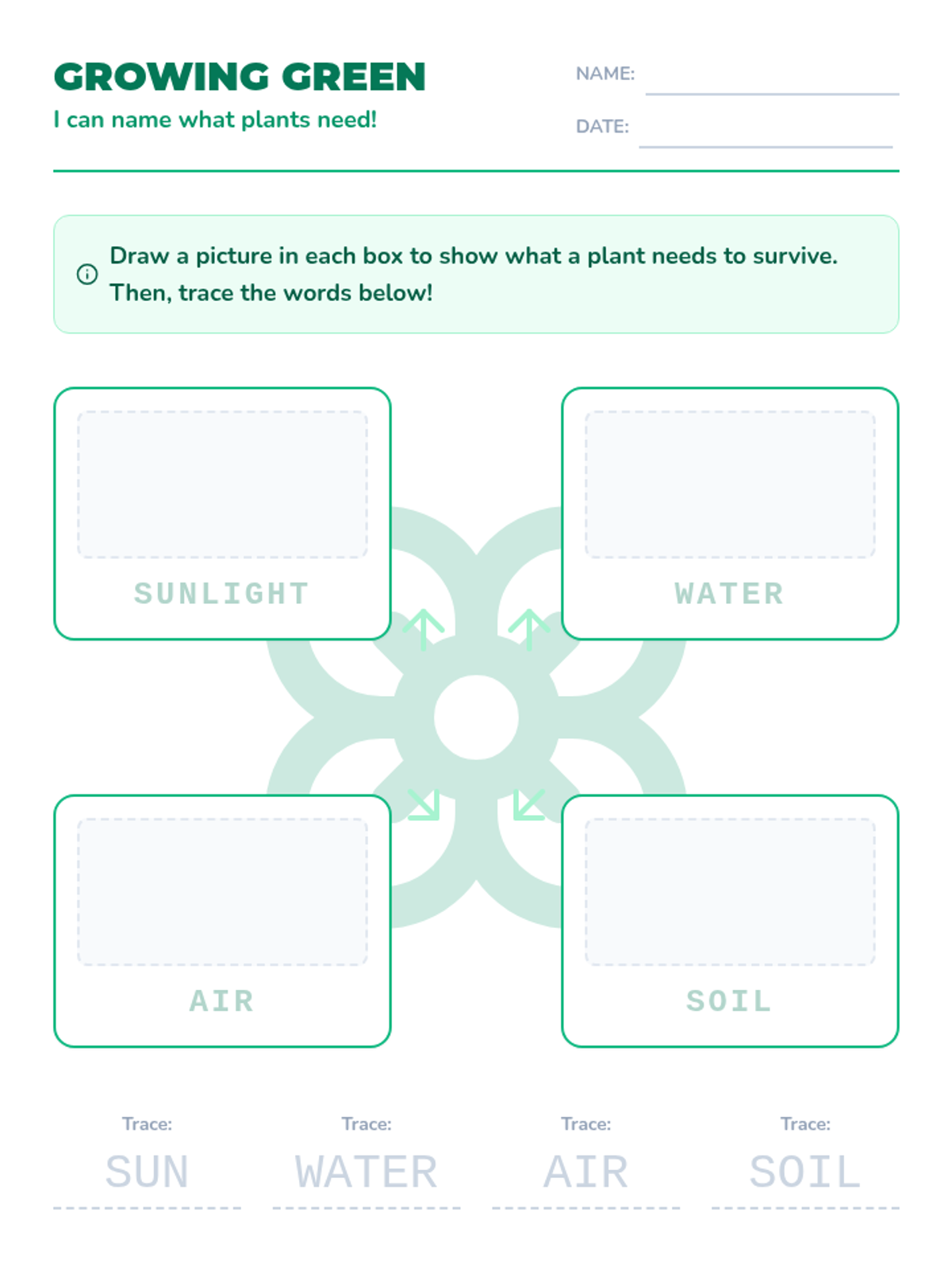
Focuses on what plants need to grow and thrive, including sunlight, water, air, and soil.
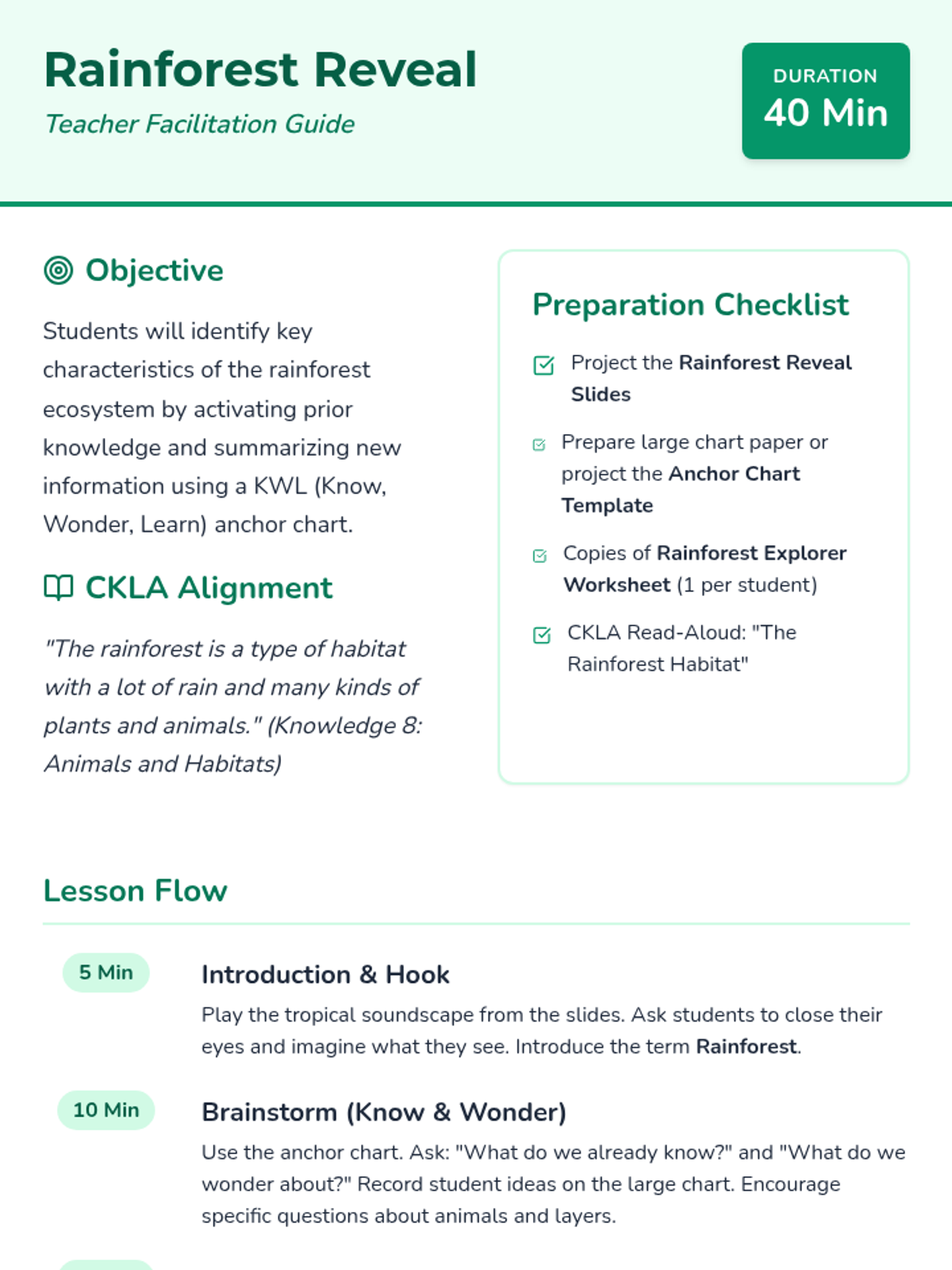
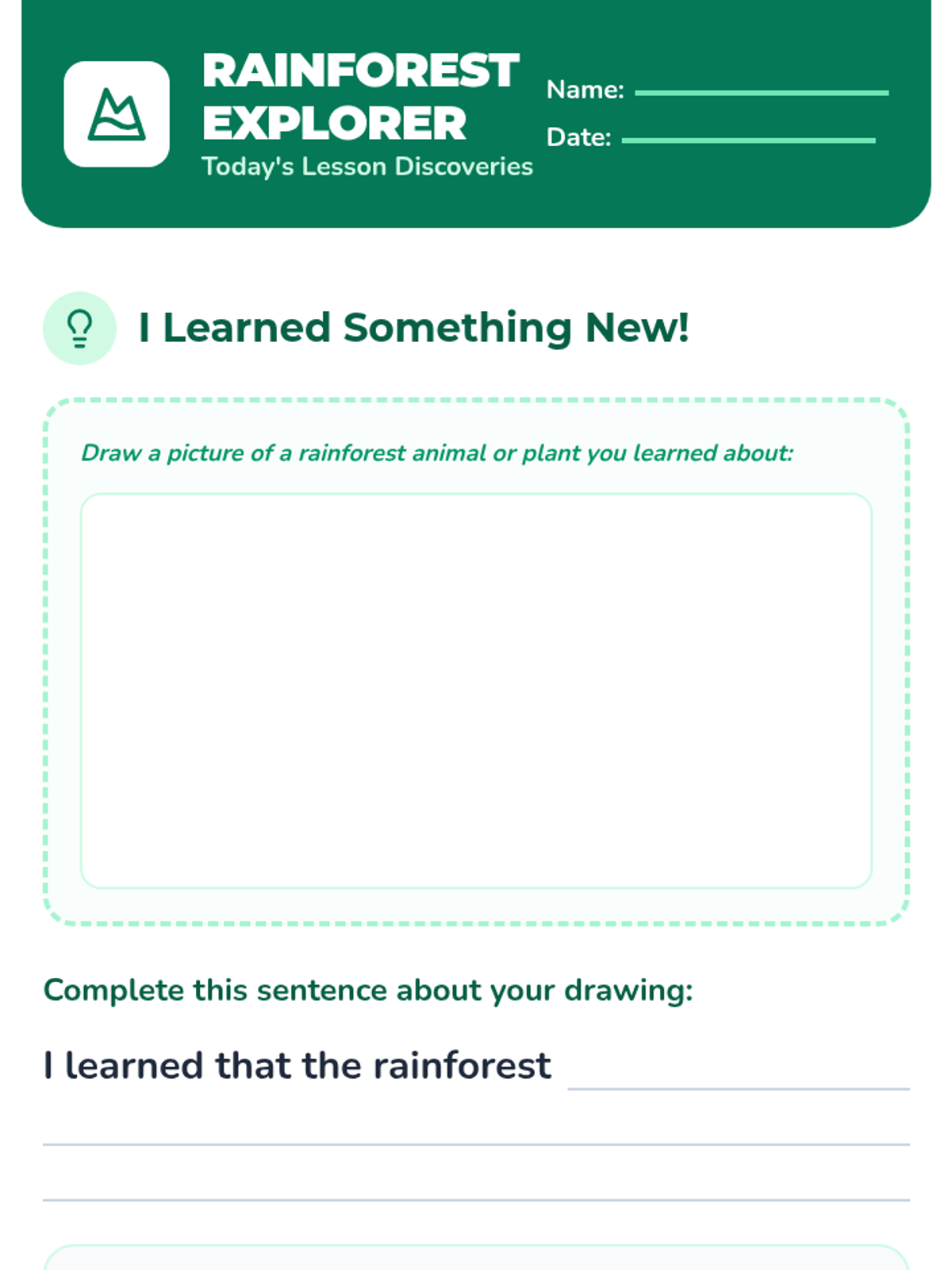
A 40-minute introductory lesson on the rainforest ecosystem for 1st grade, featuring a read-aloud and a collaborative KWL anchor chart activity. Students will explore what they know, what they wonder, and what they learned about this diverse habitat.
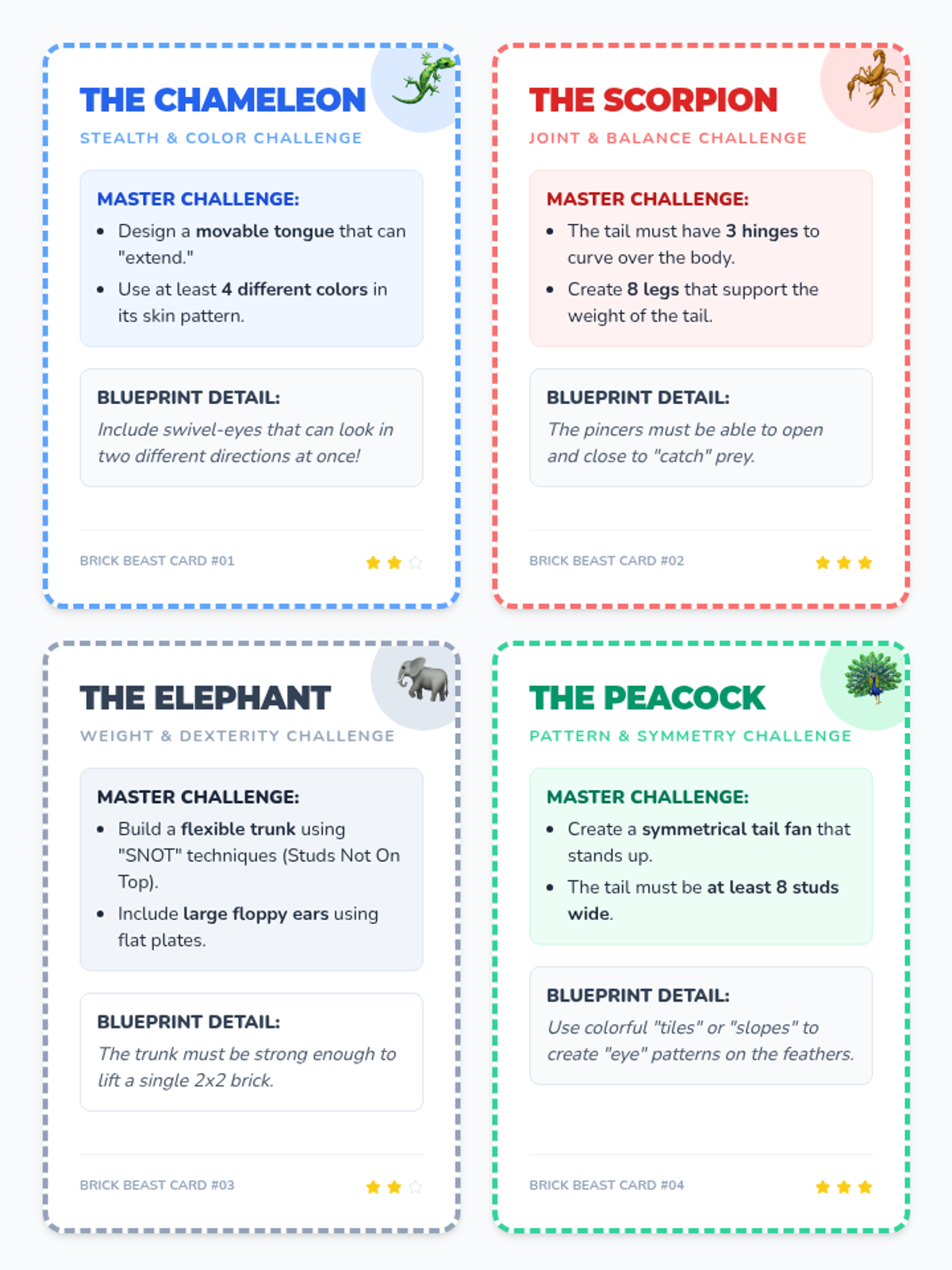
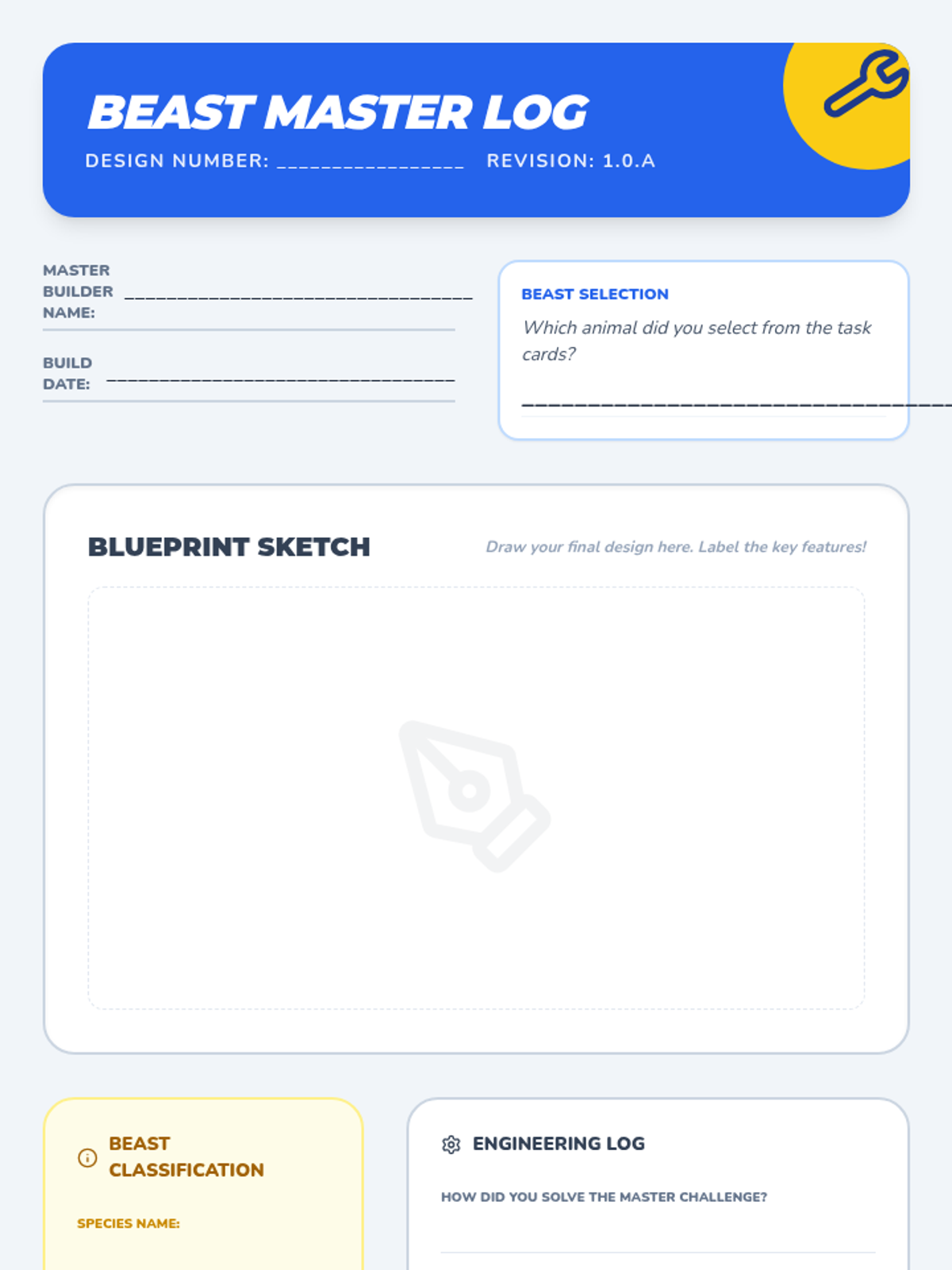
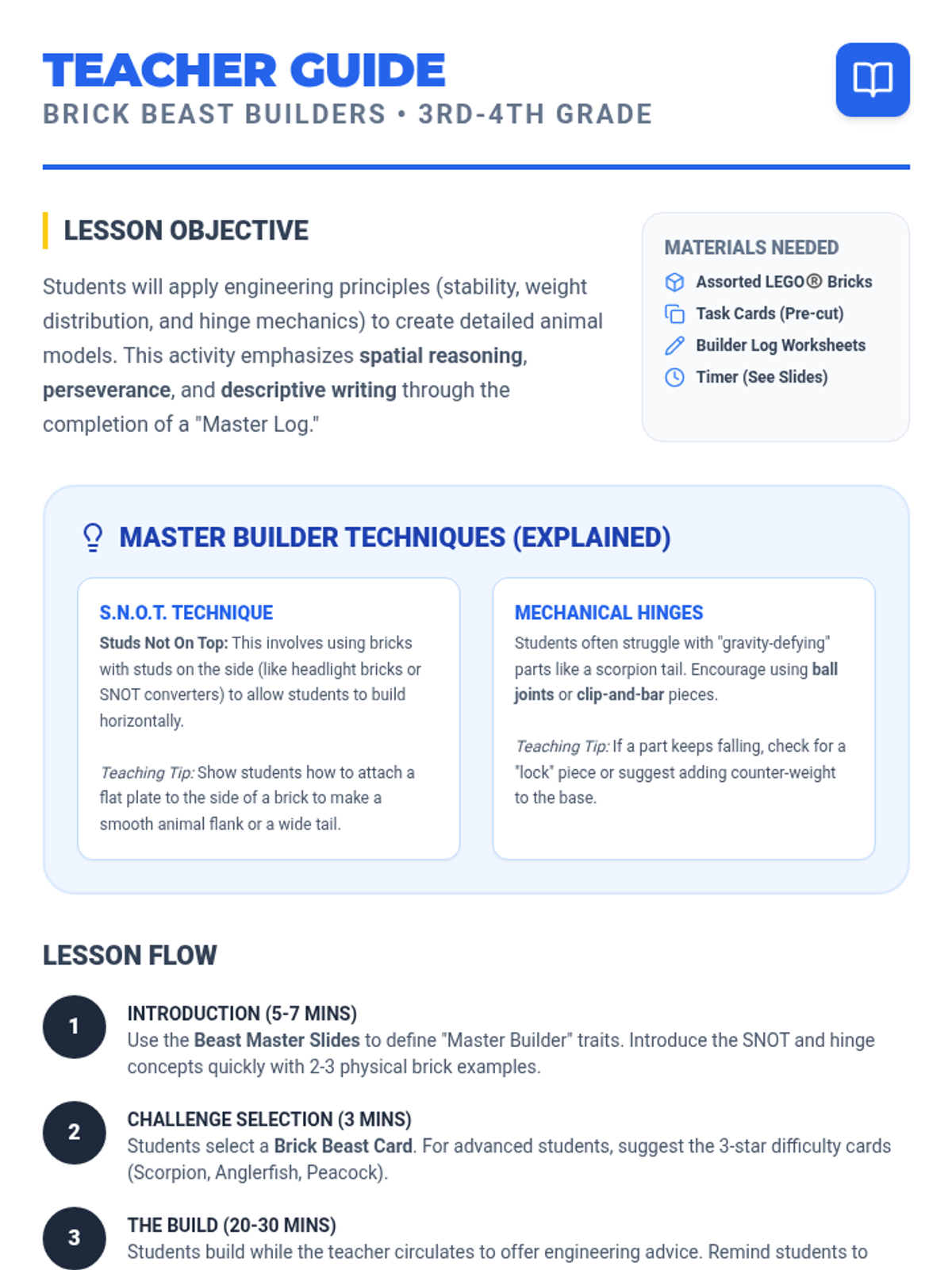
A creative engineering lesson where students use LEGO bricks to design and build detailed animal models based on specific prompt constraints. Focuses on spatial reasoning, creative problem-solving, and descriptive writing.
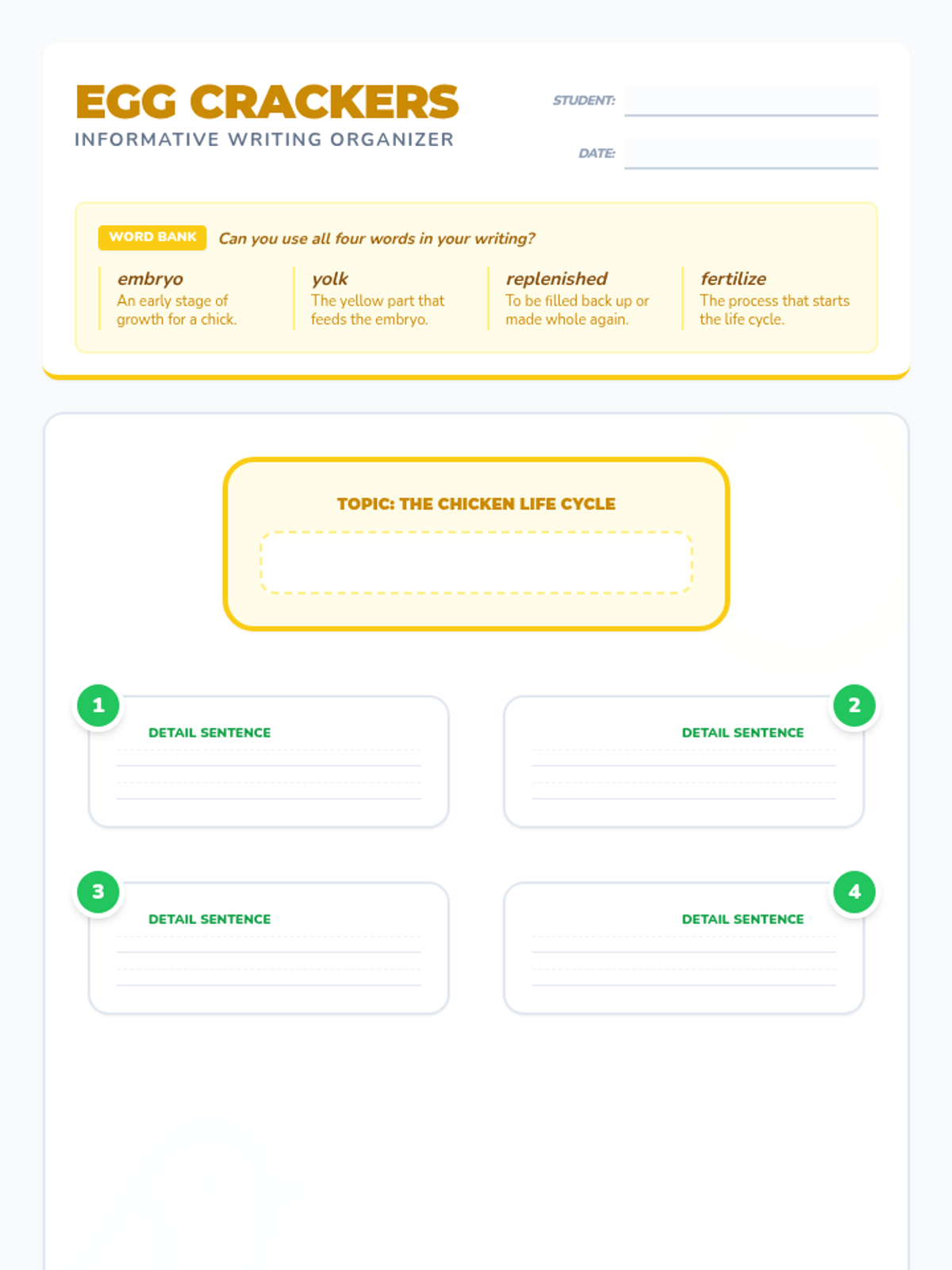
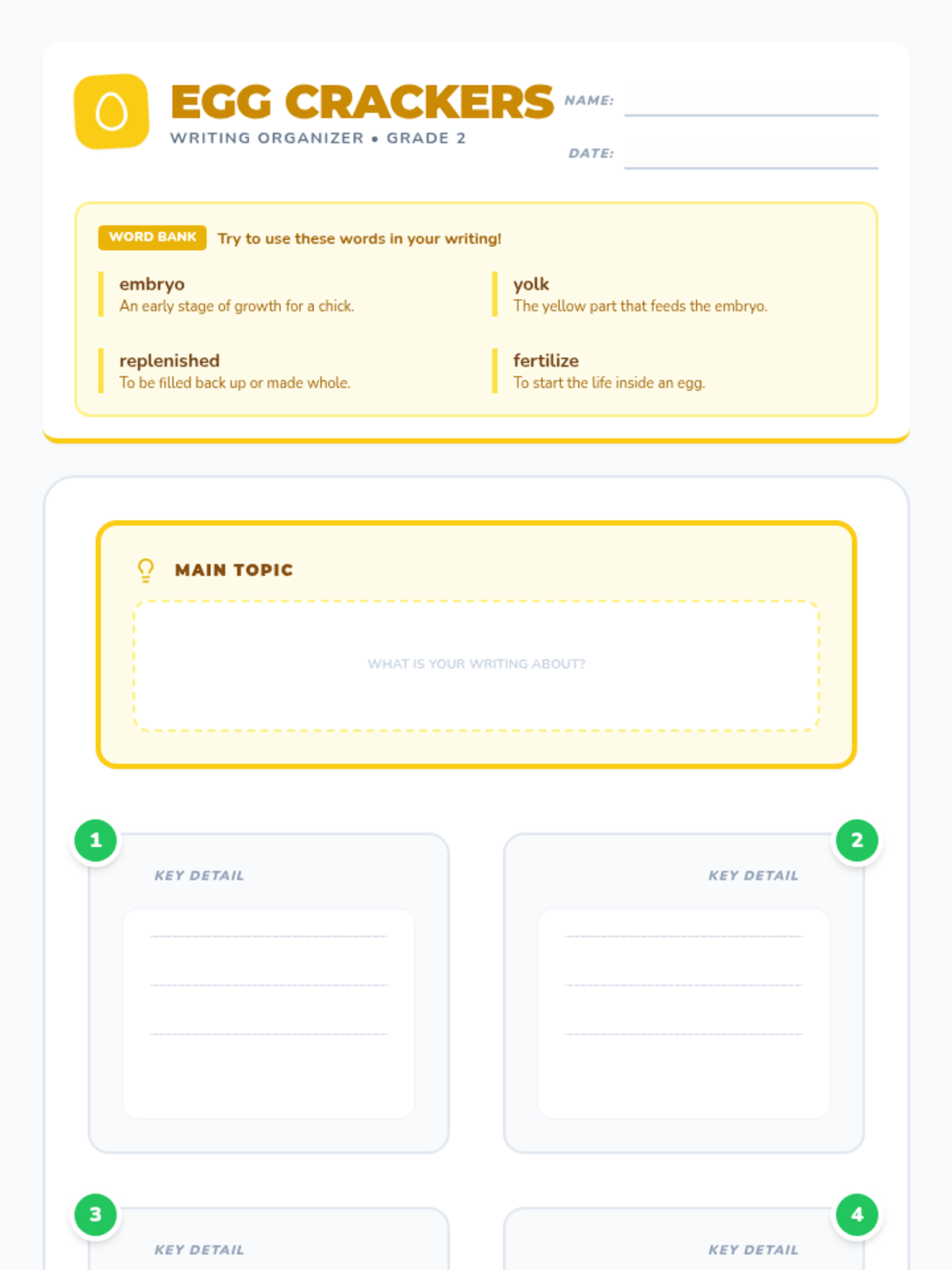
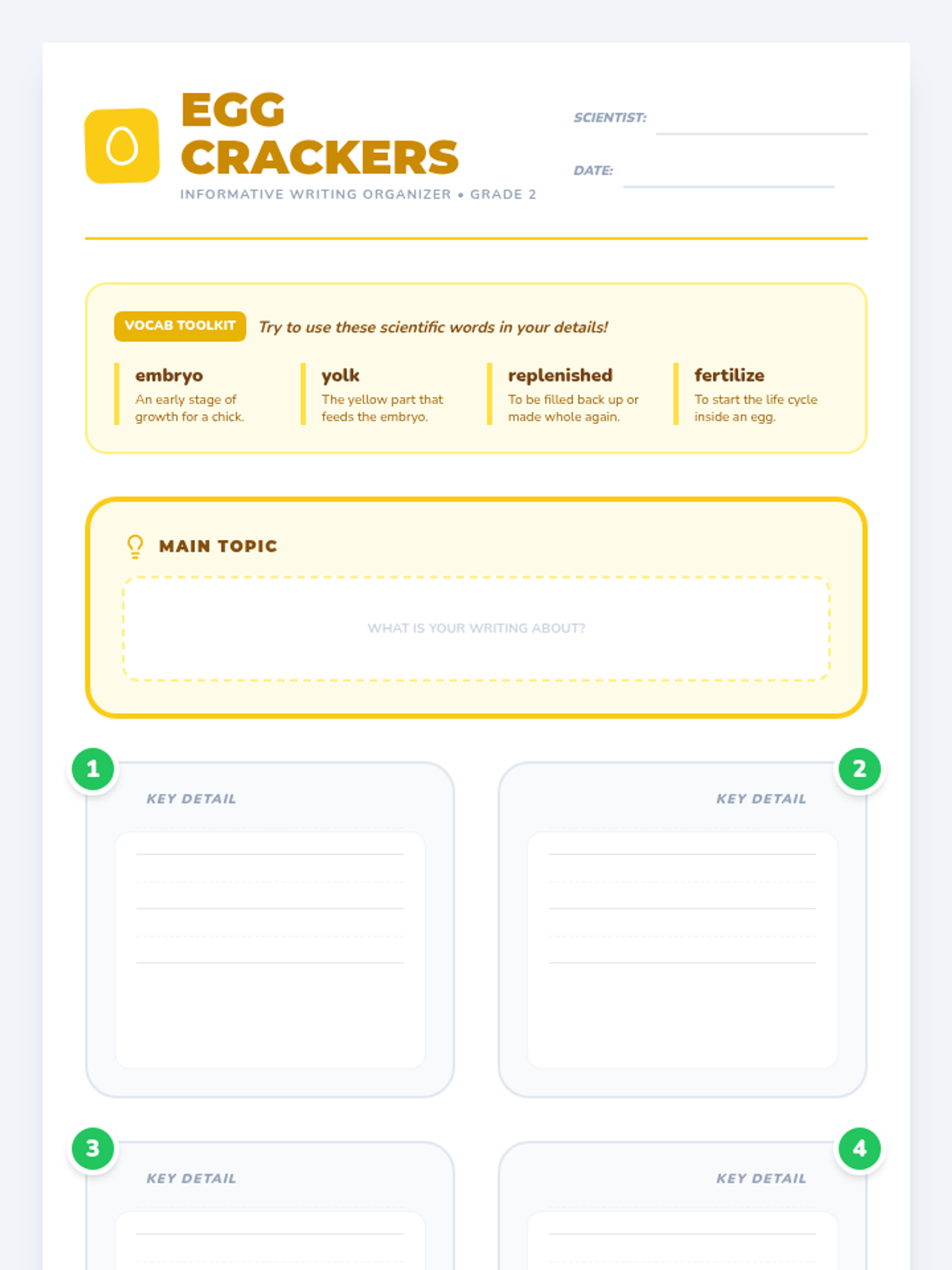
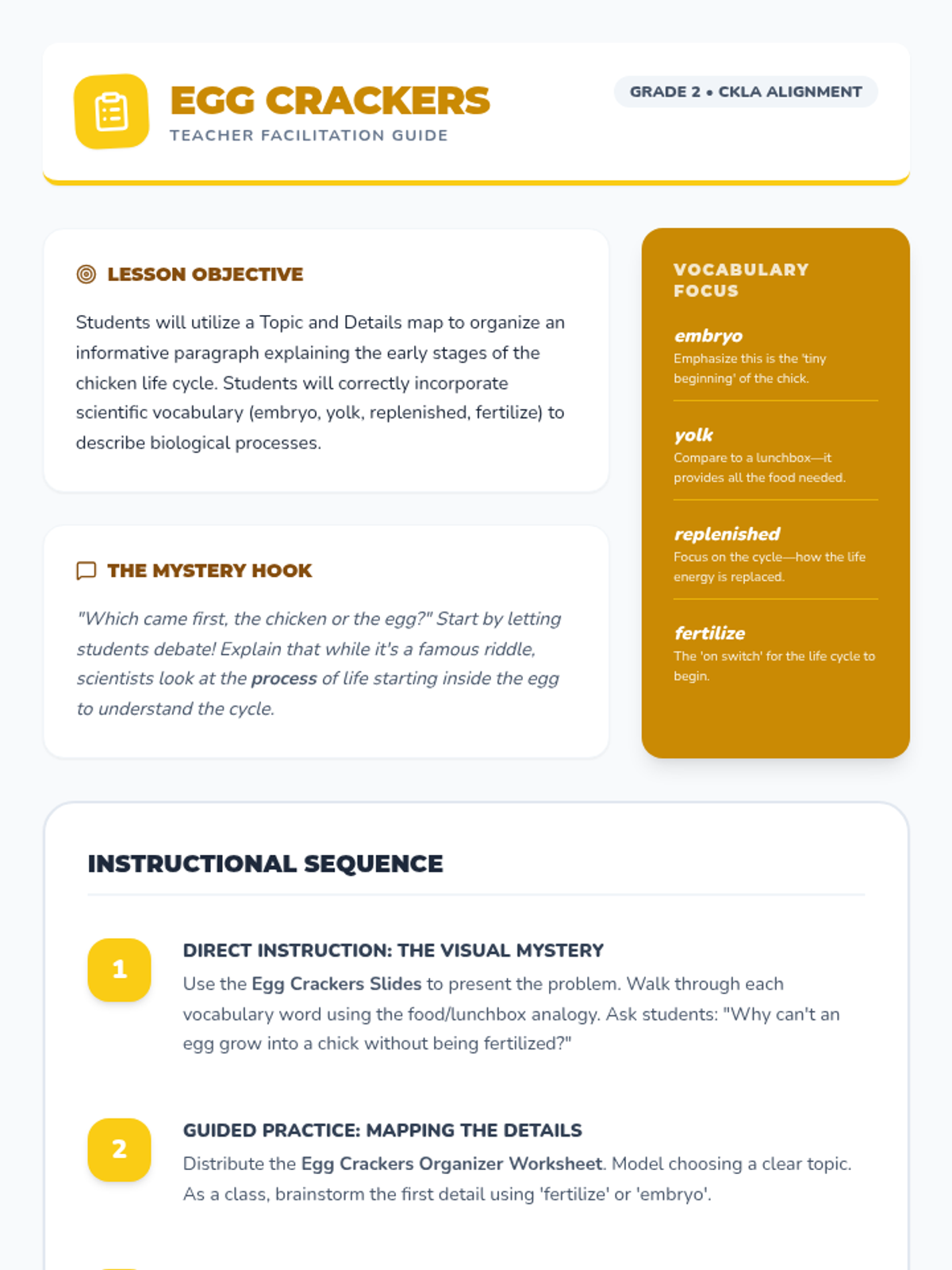
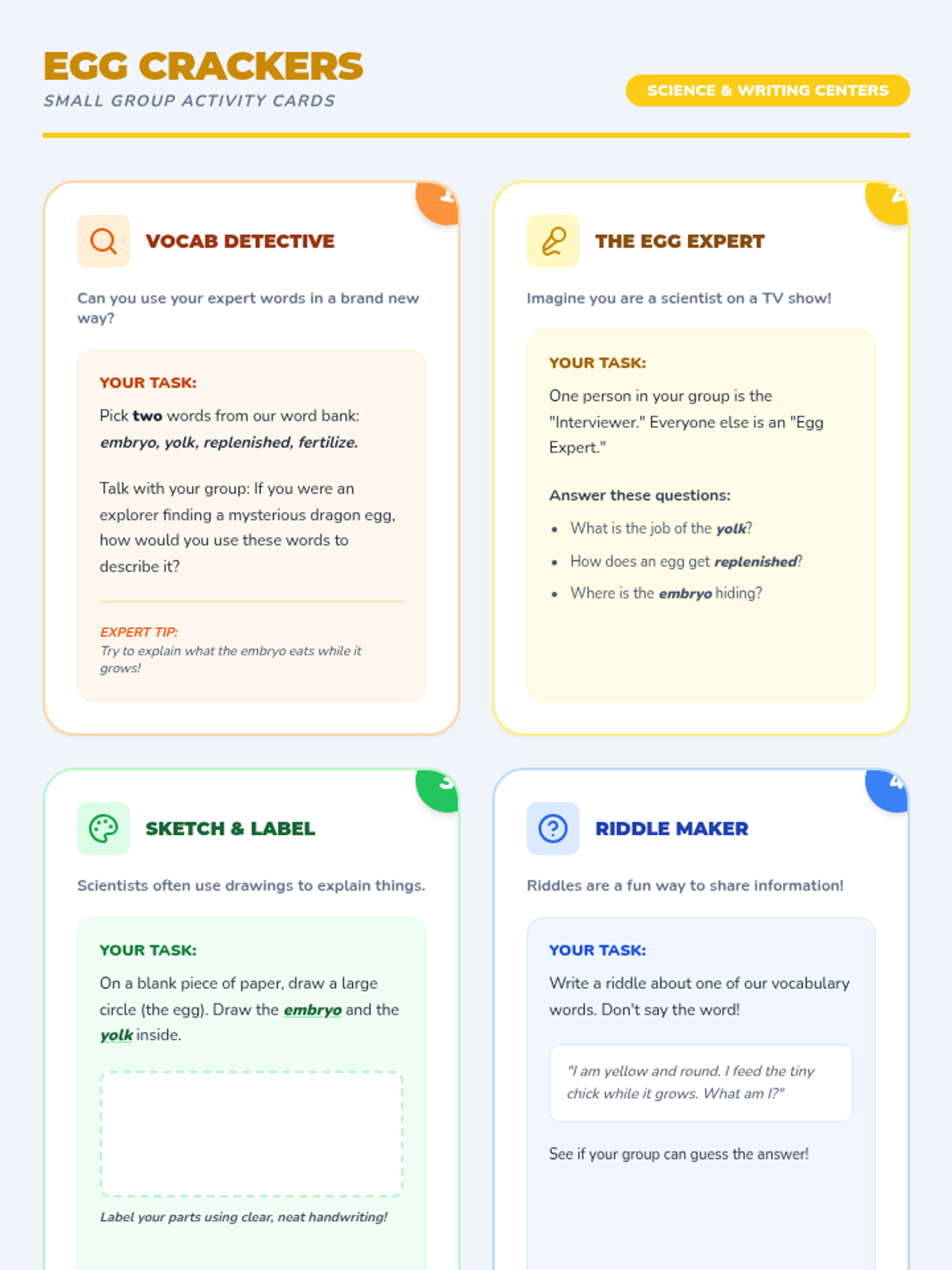
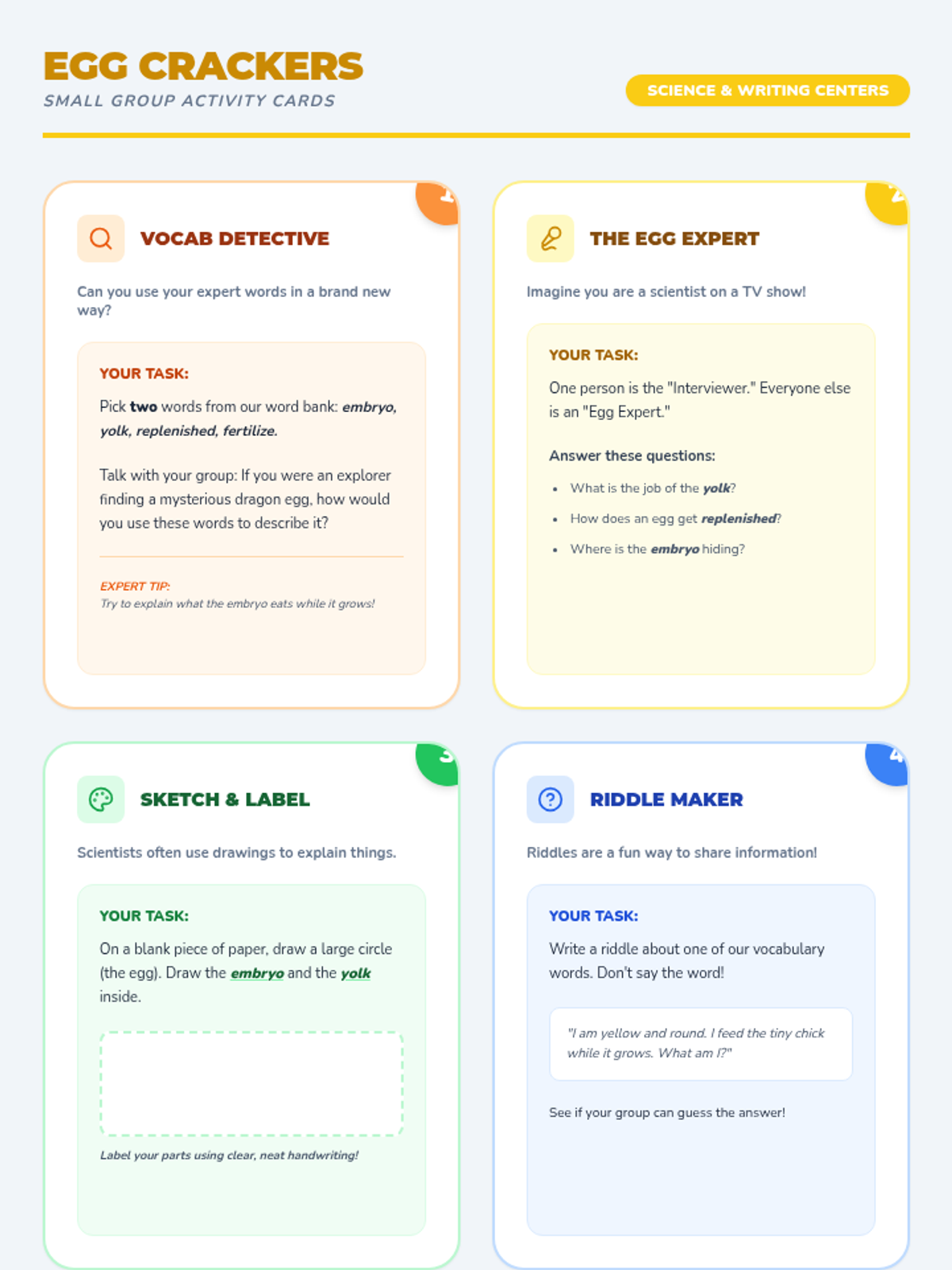
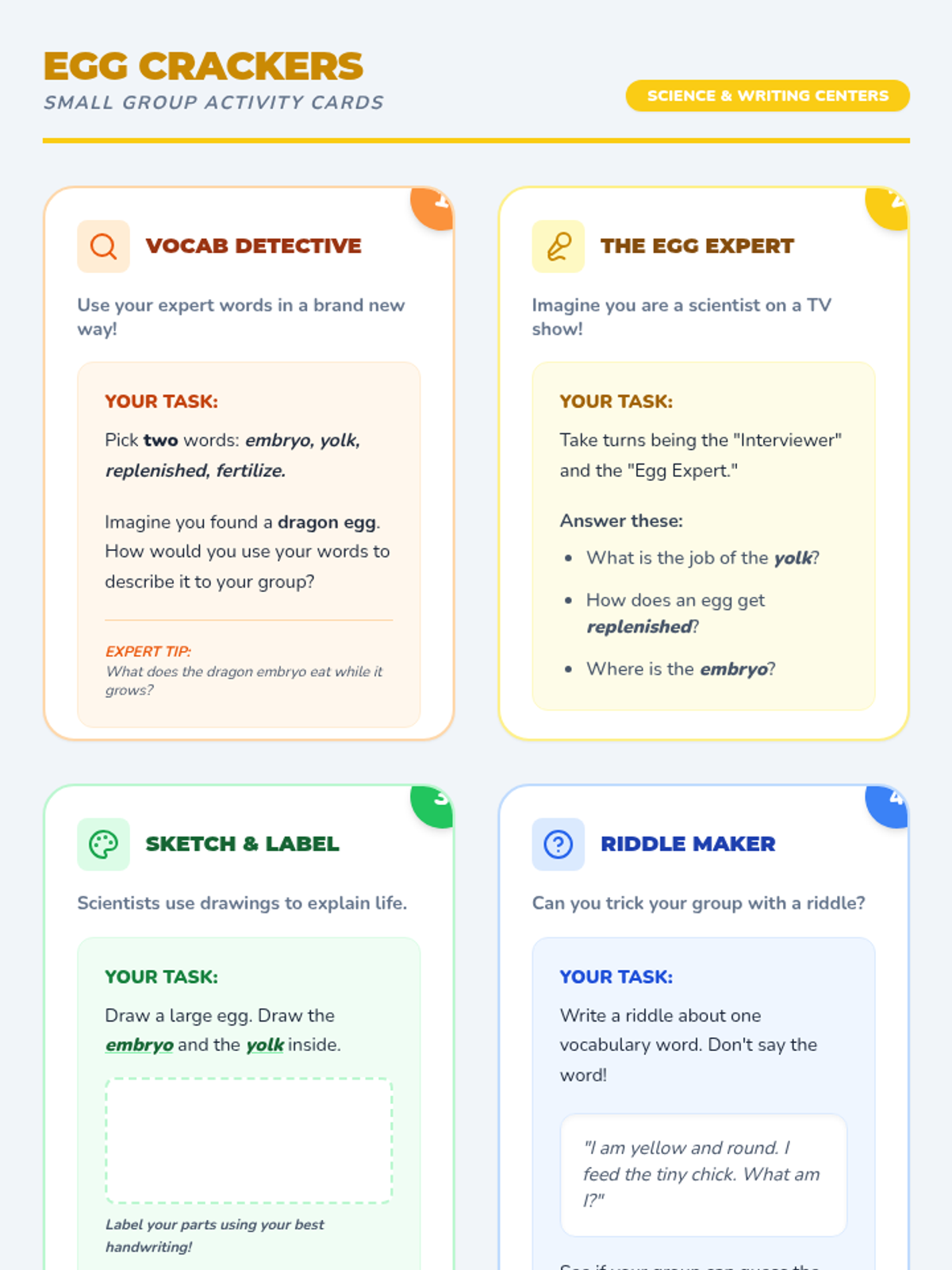
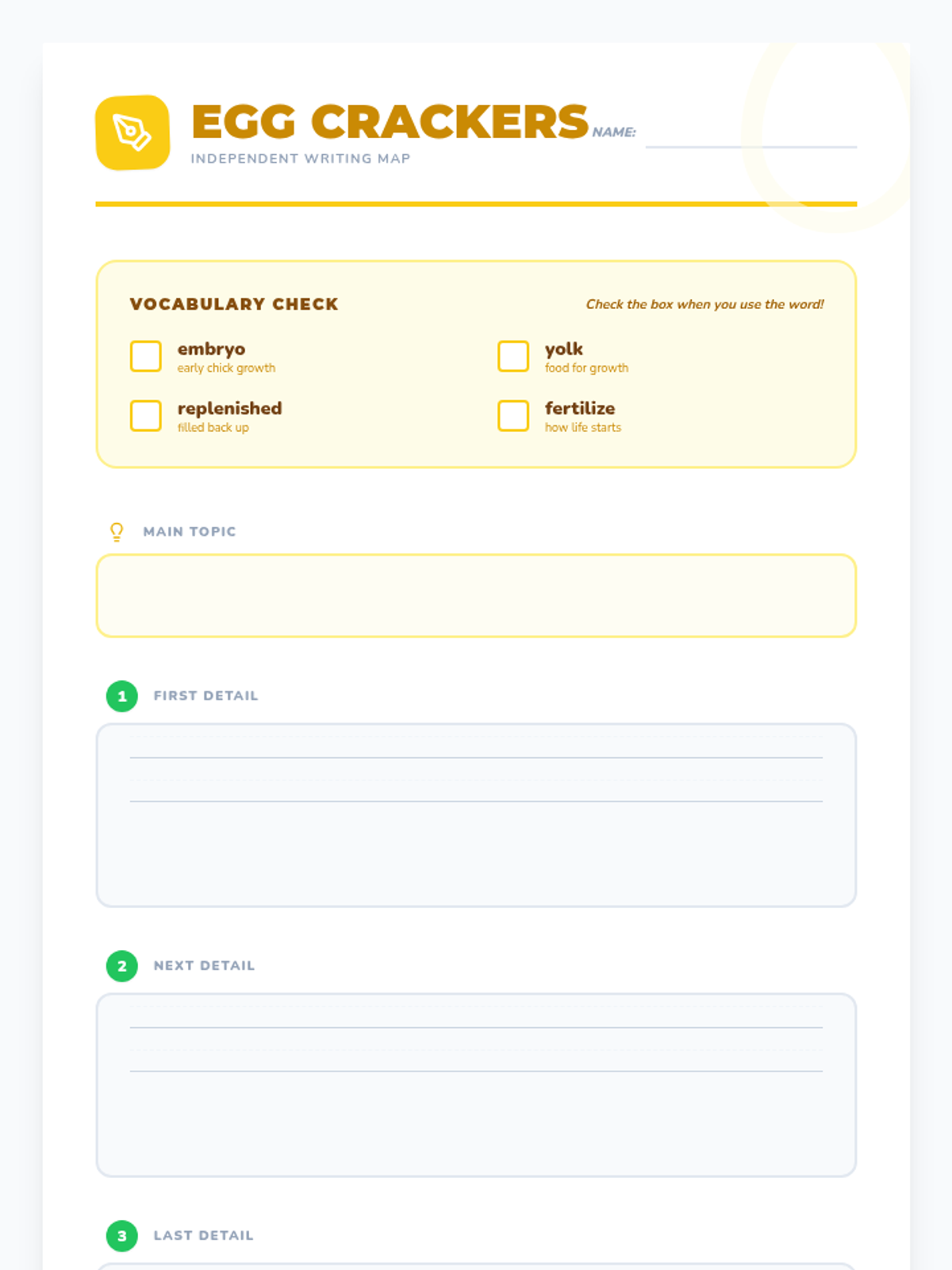
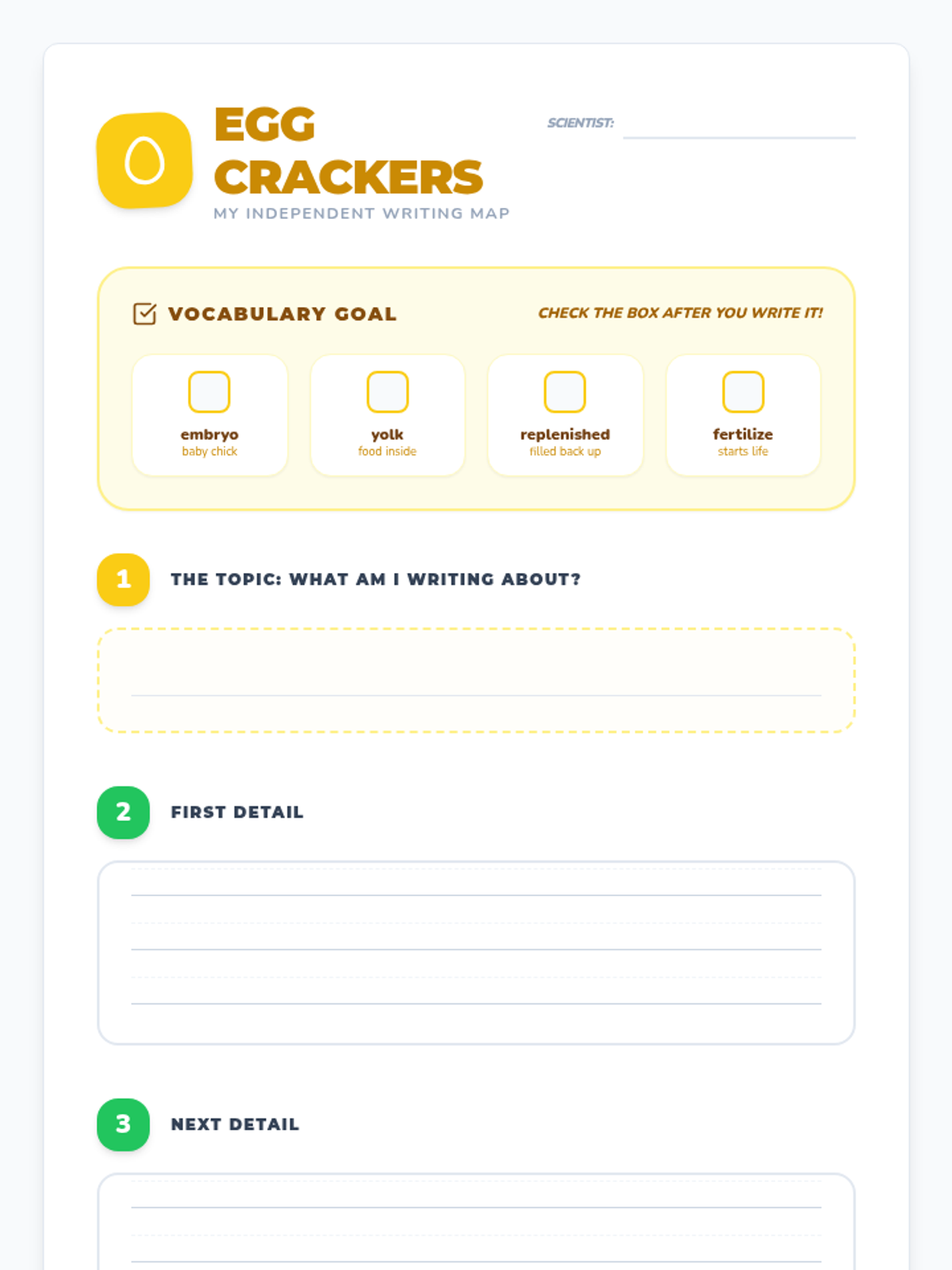
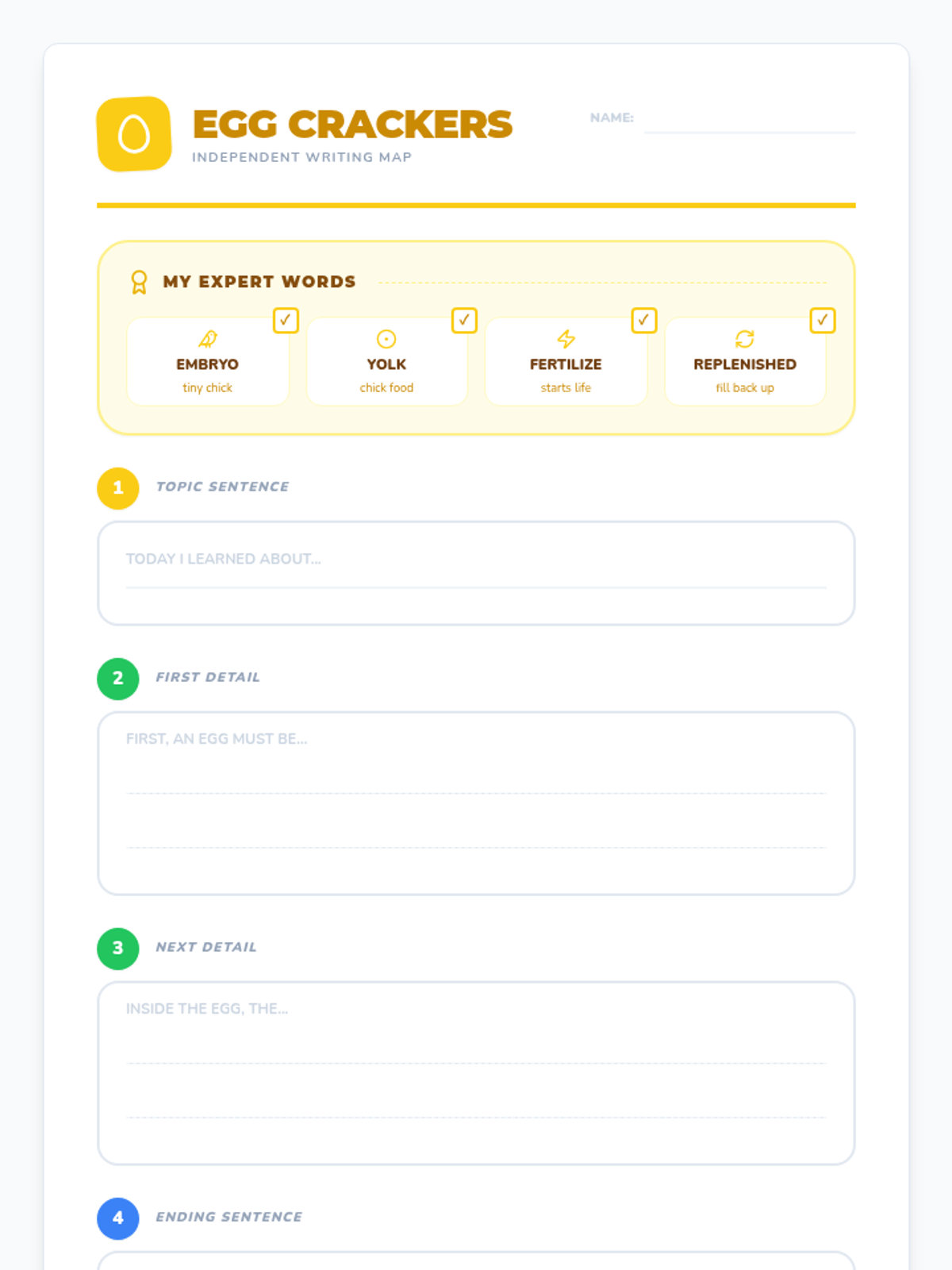
In this lesson, students explore the life cycle of a chicken and the mystery of the chicken or the egg. They use a topic and details map to organize their informative writing while mastering key vocabulary like embryo, yolk, and fertilize.
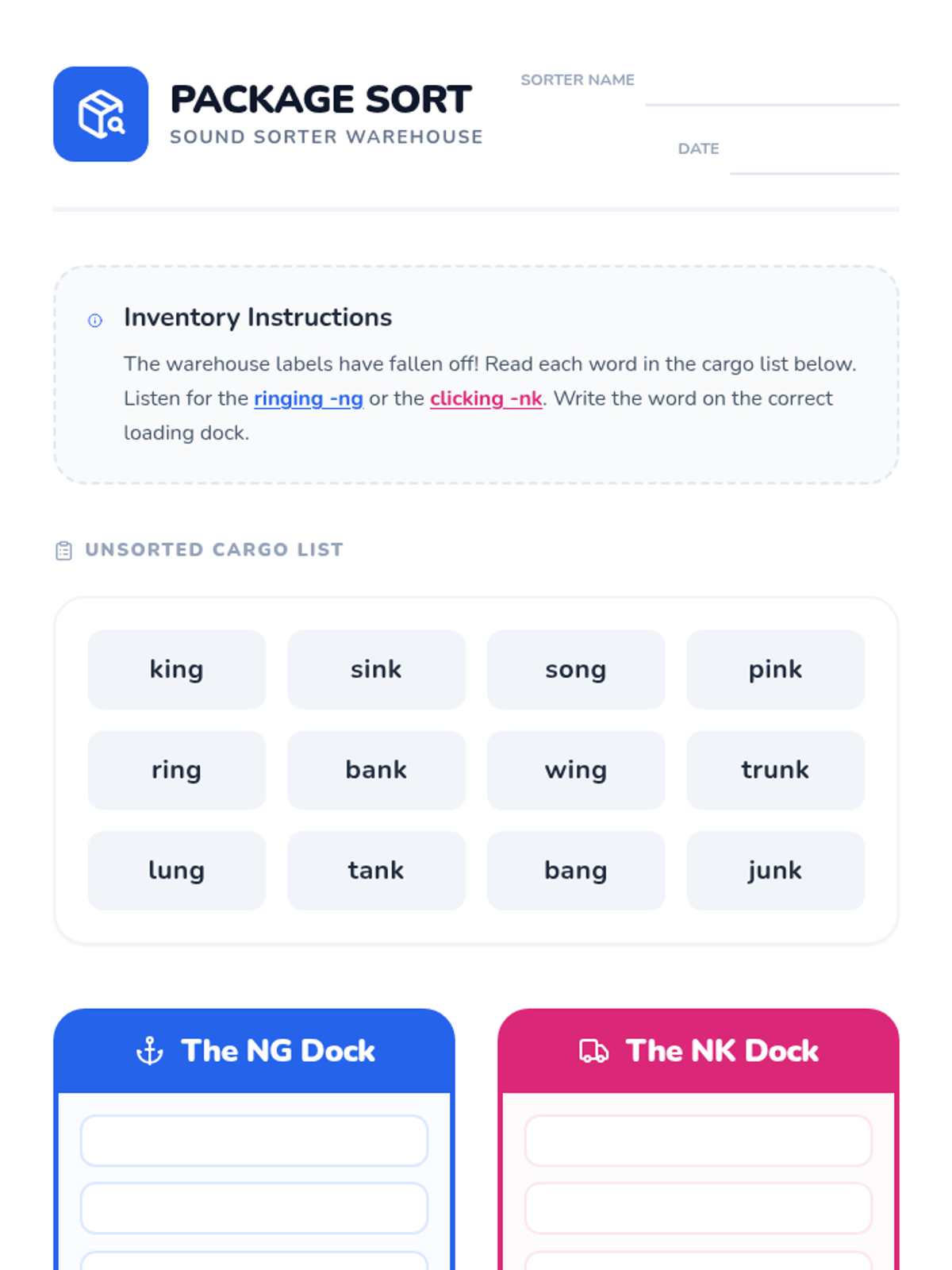
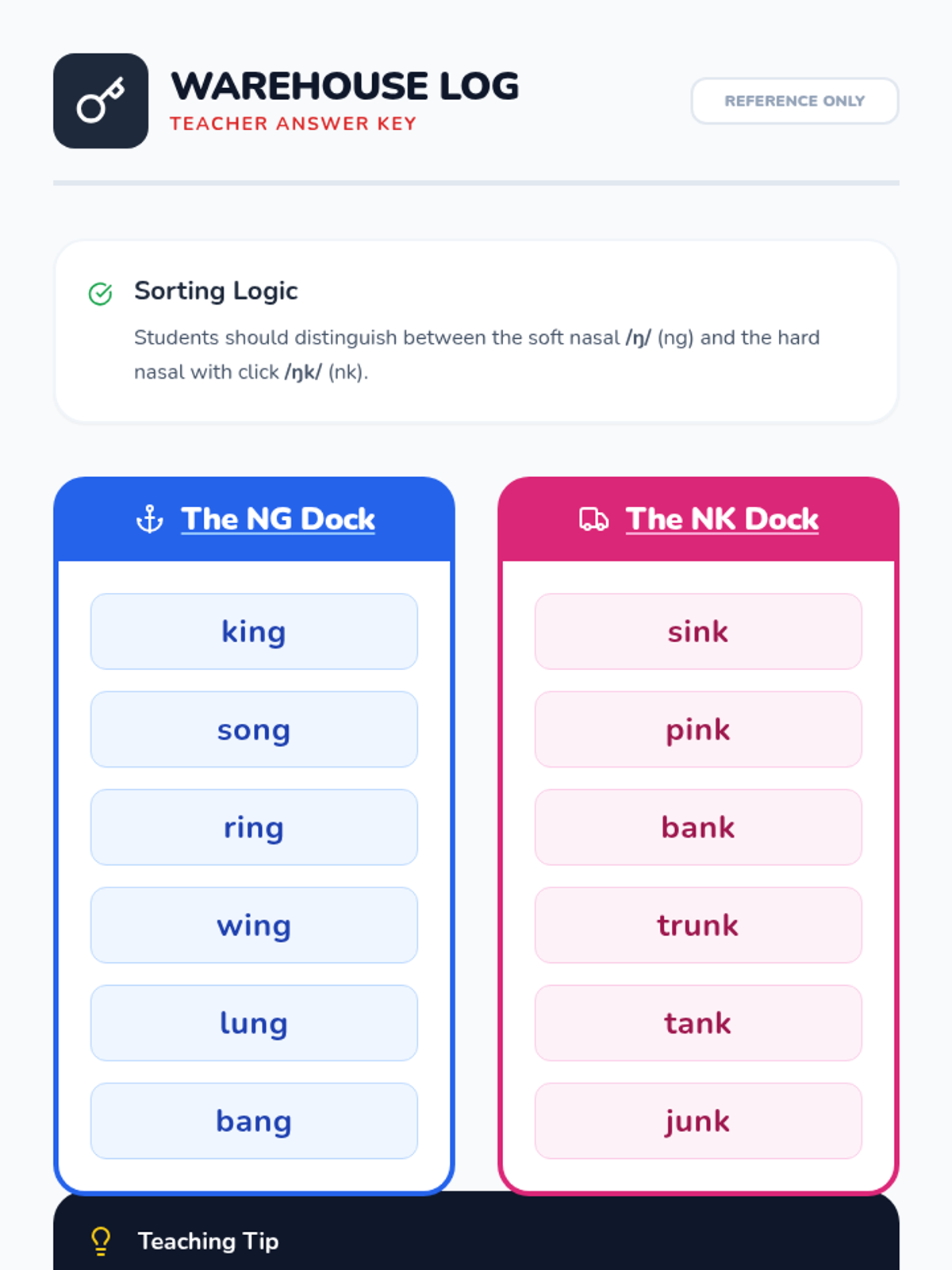
A phonics lesson focused on distinguishing between the nasal endings 'ng' and 'nk' through interactive sorting and visual aids. Students learn to hear the subtle 'k' click in 'nk' versus the continuous nasal 'ng'.
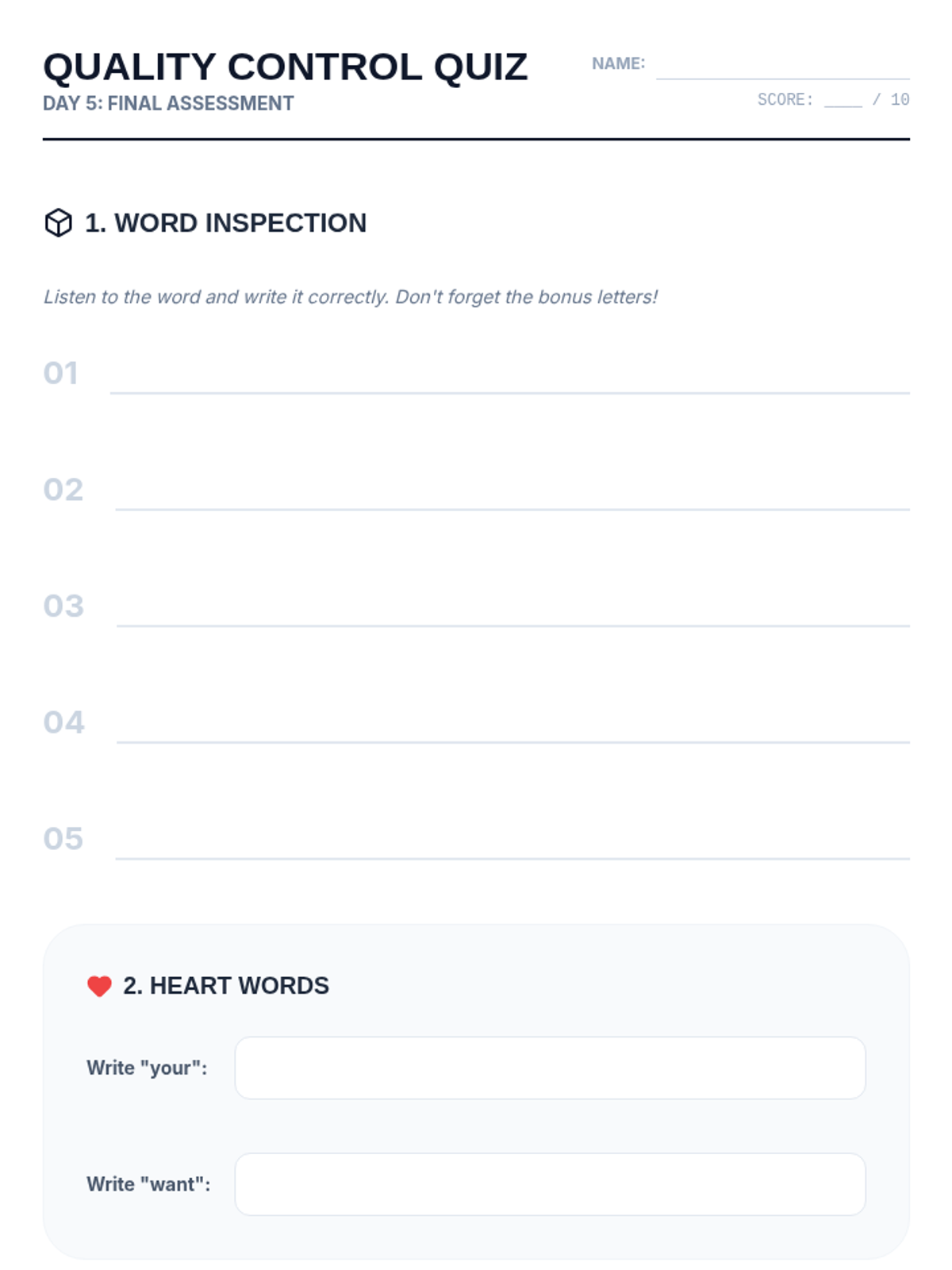
Final assessment of the Floss rule and heart words. Includes dictation and a creative word family exercise.
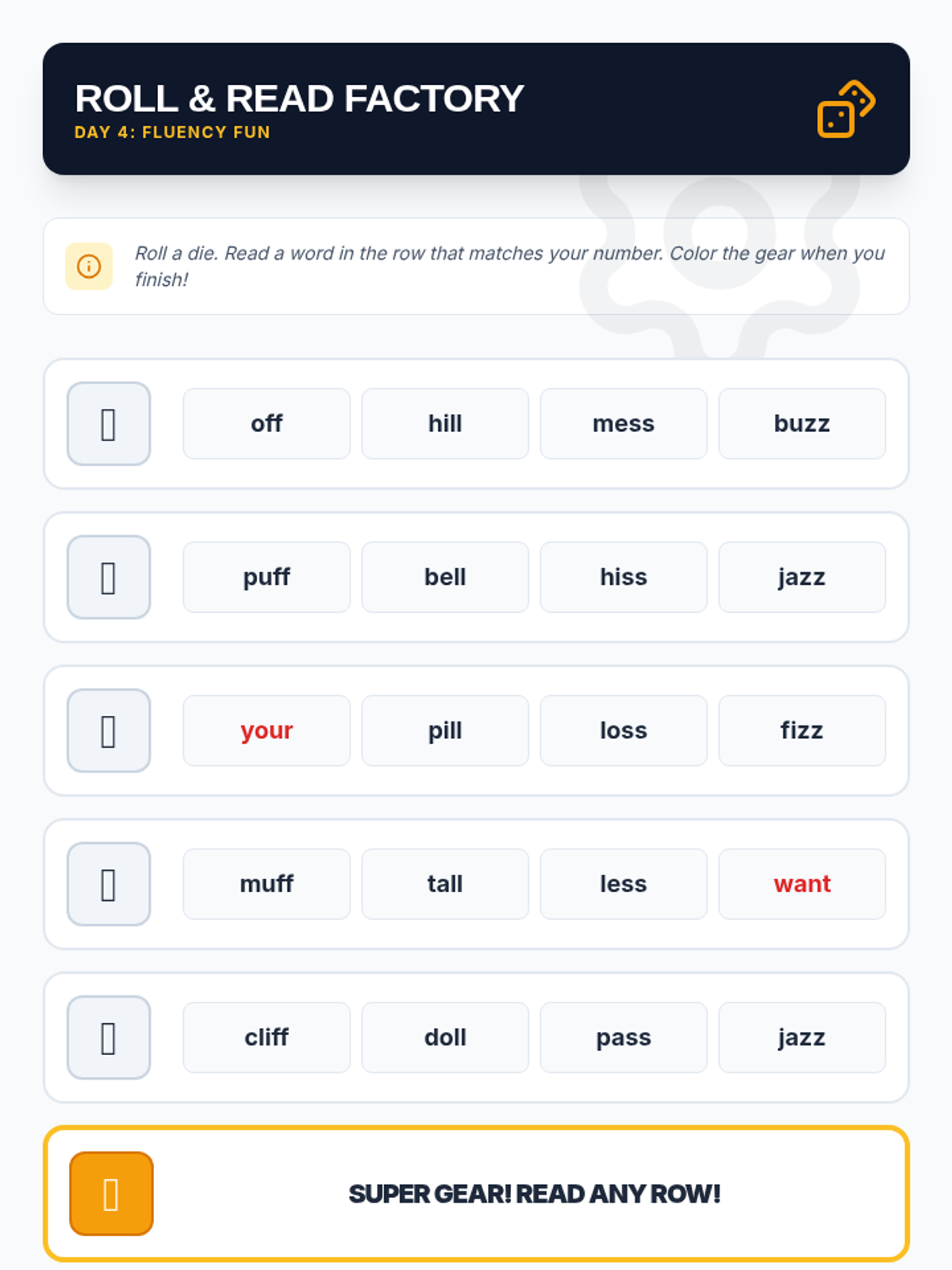
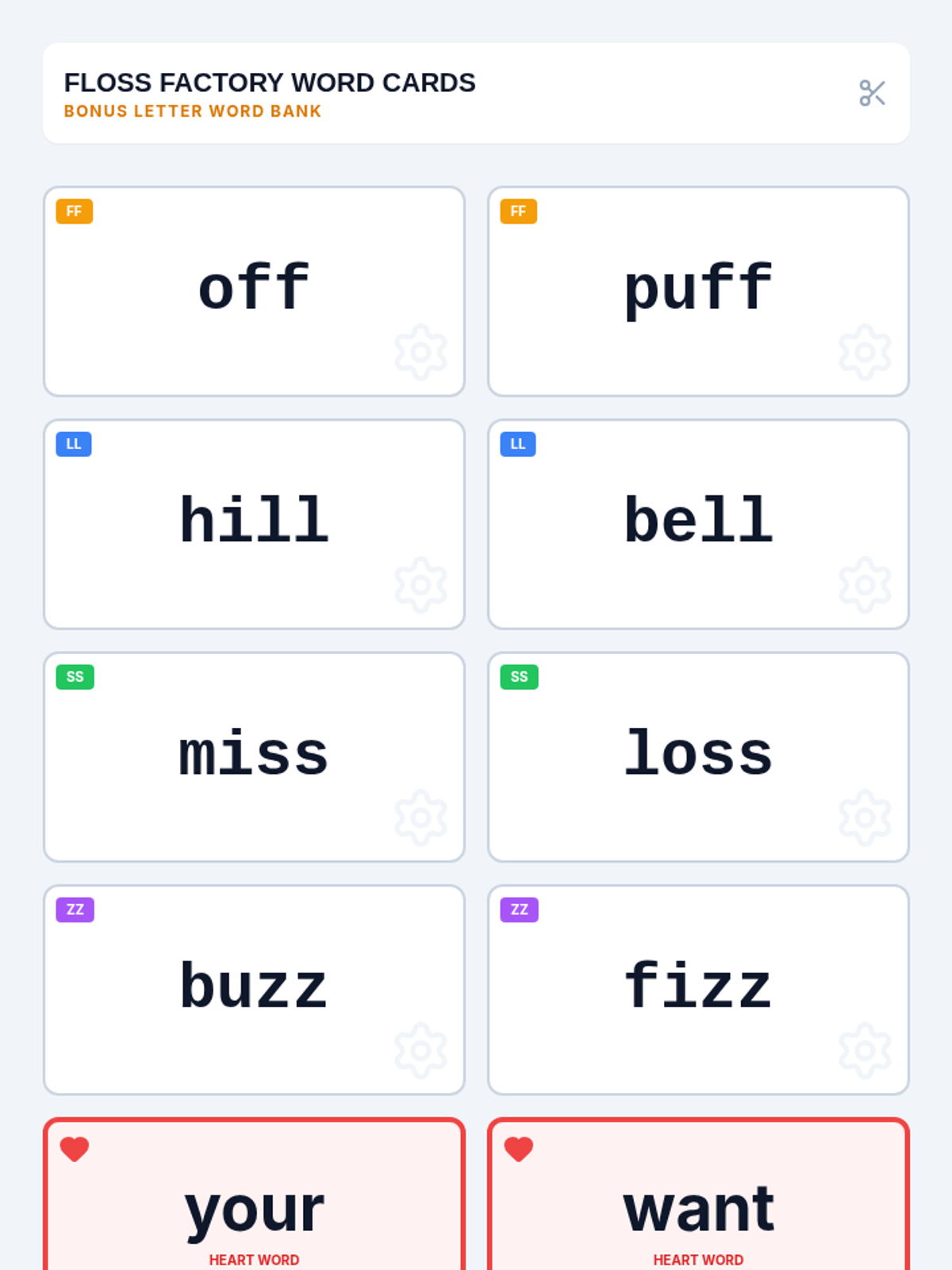
Fluency building and phonics games. Students practice rapid reading of bonus letter words and construct sentences.
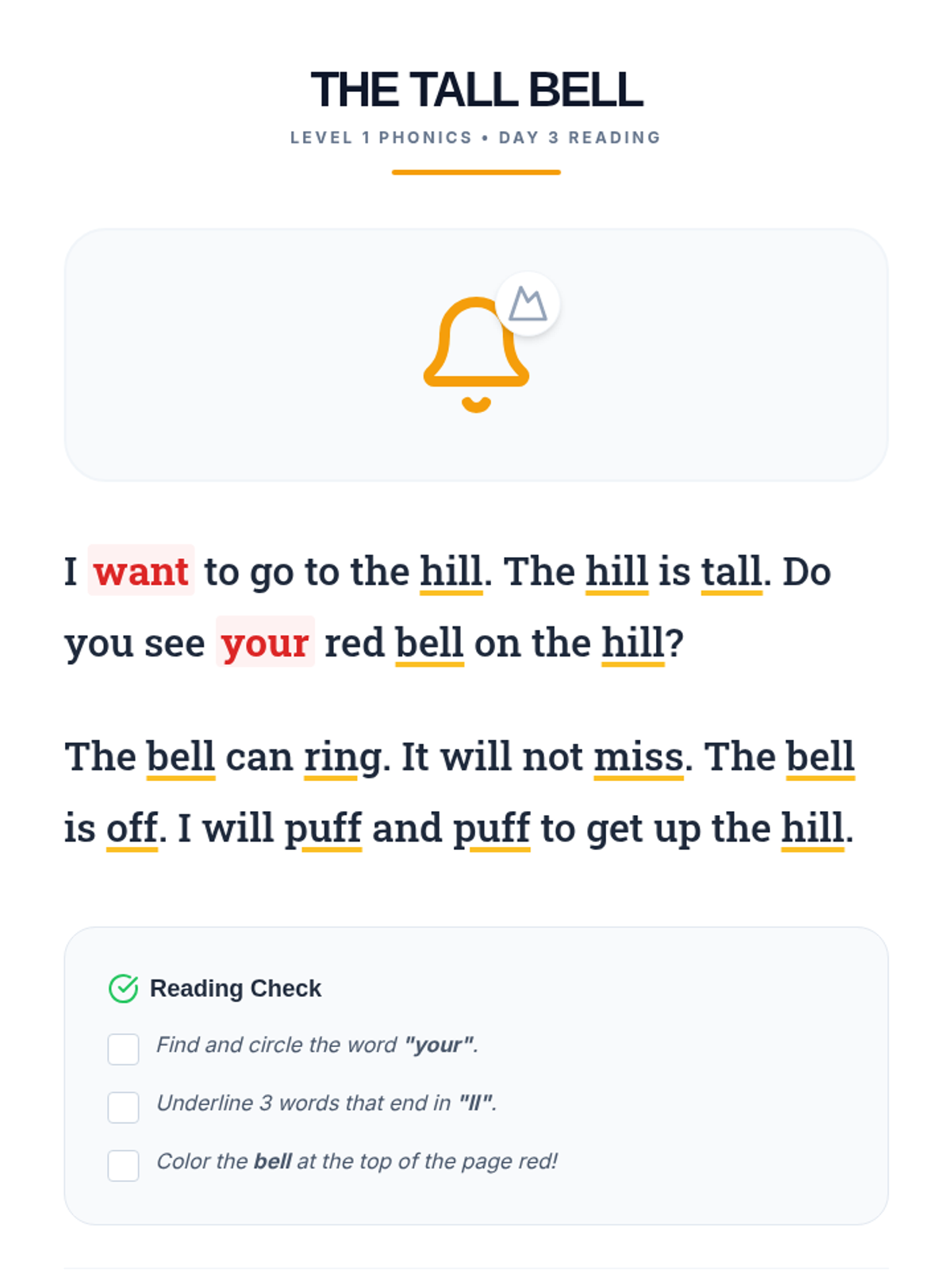
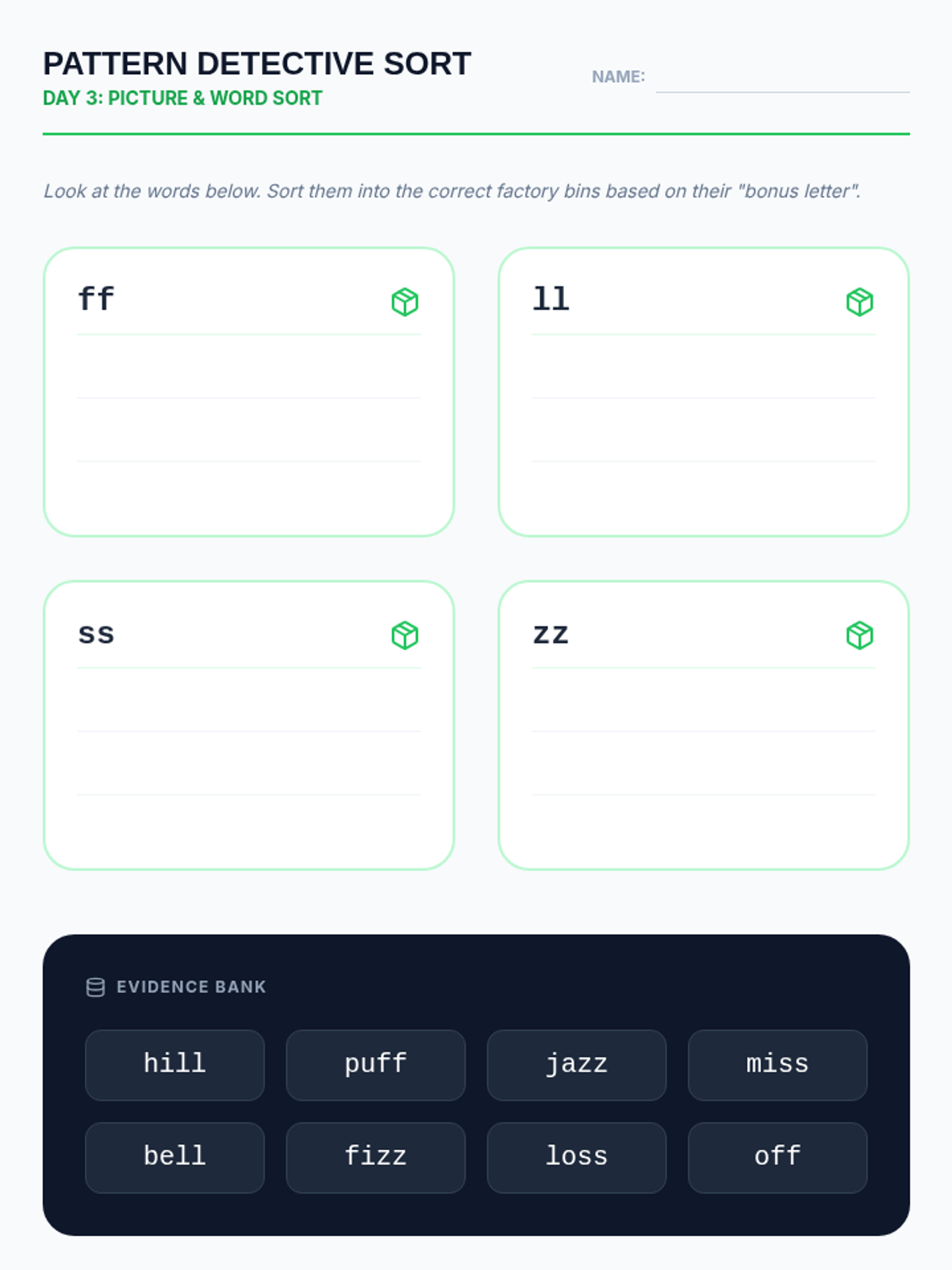
Application through word sorting and decodable reading. Students identify word families and read words in context.
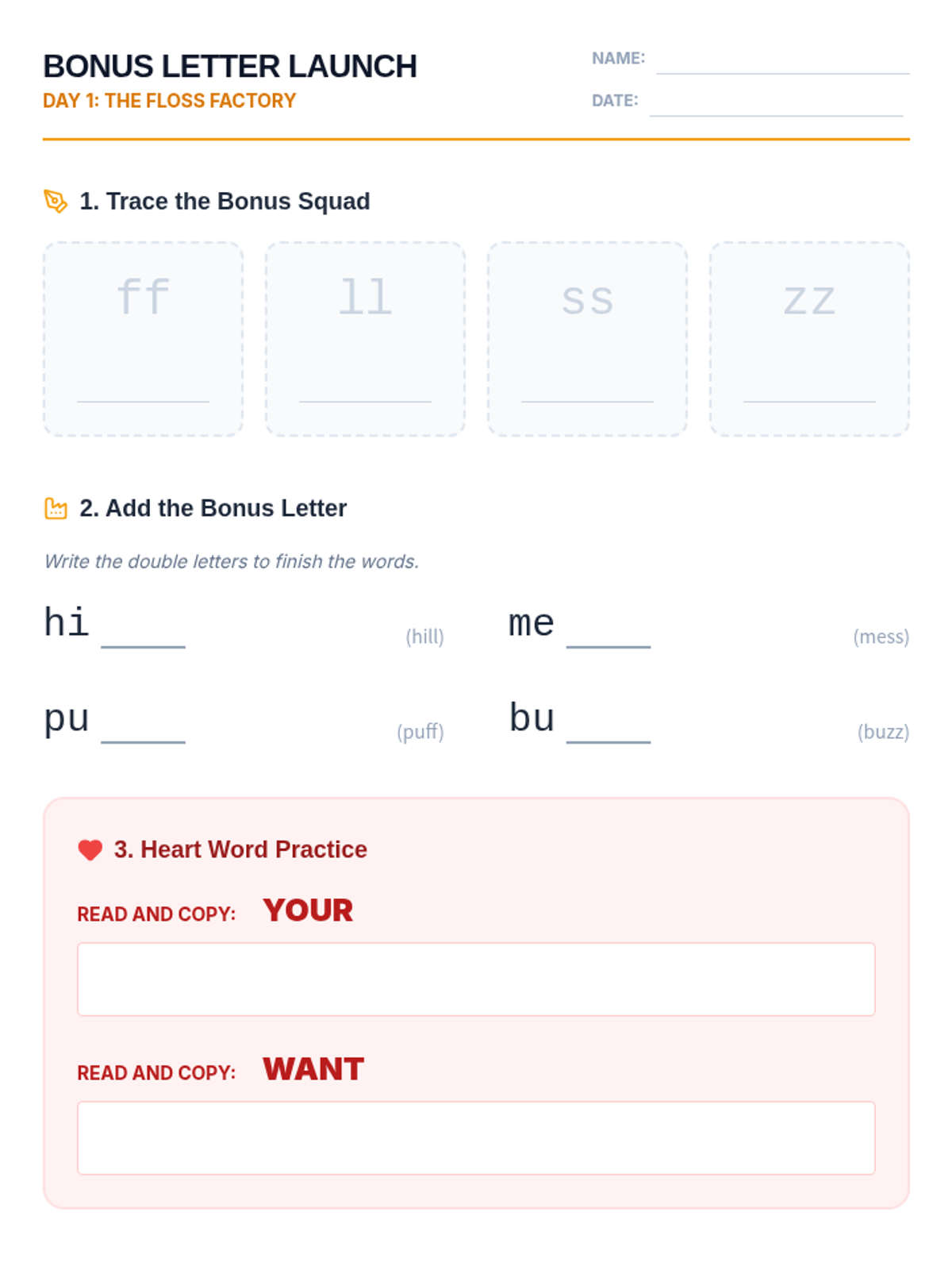
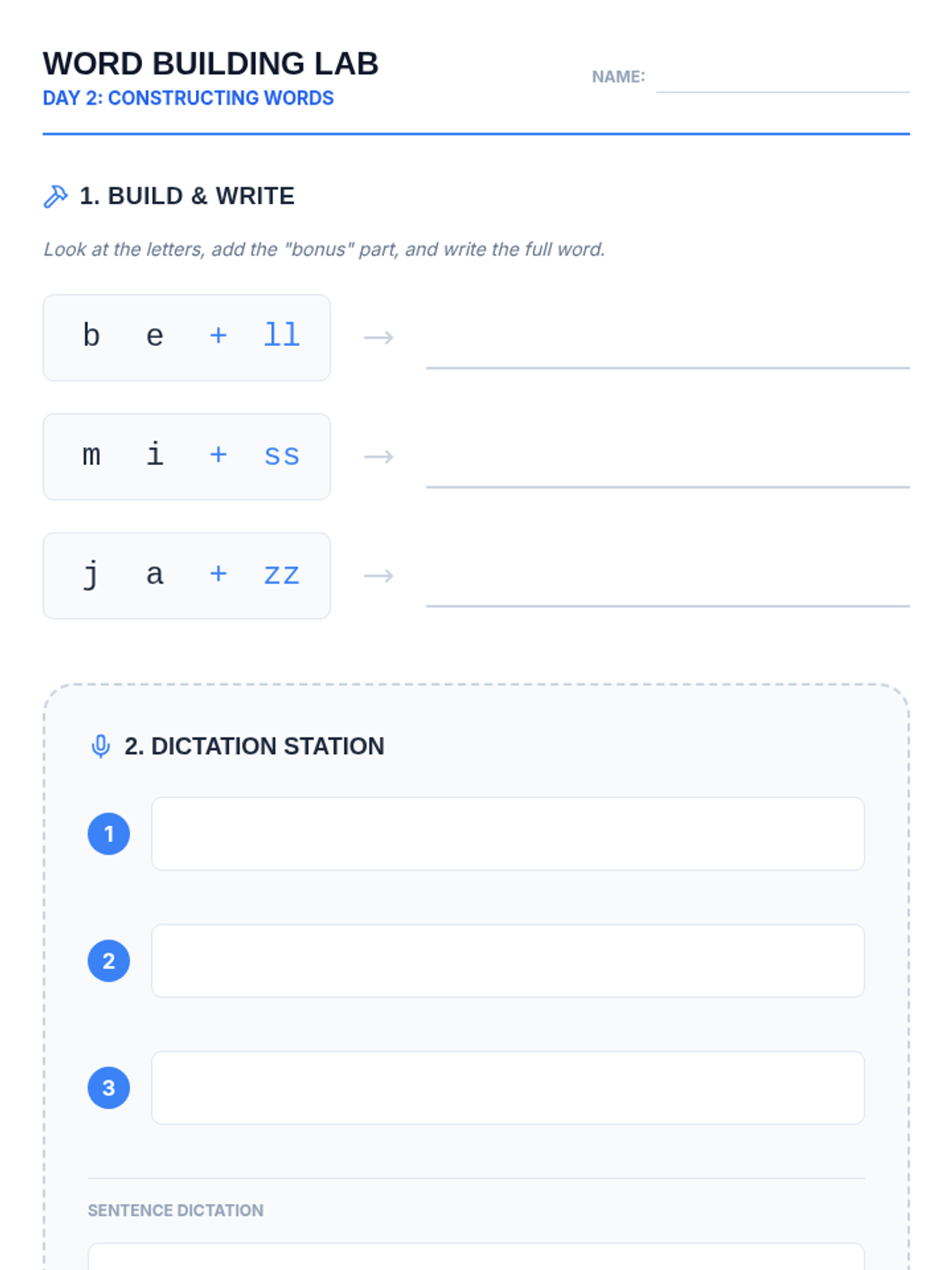
Focus on word building and dictation. Students use letter tiles to practice doubling final consonants and apply heart word knowledge in writing.
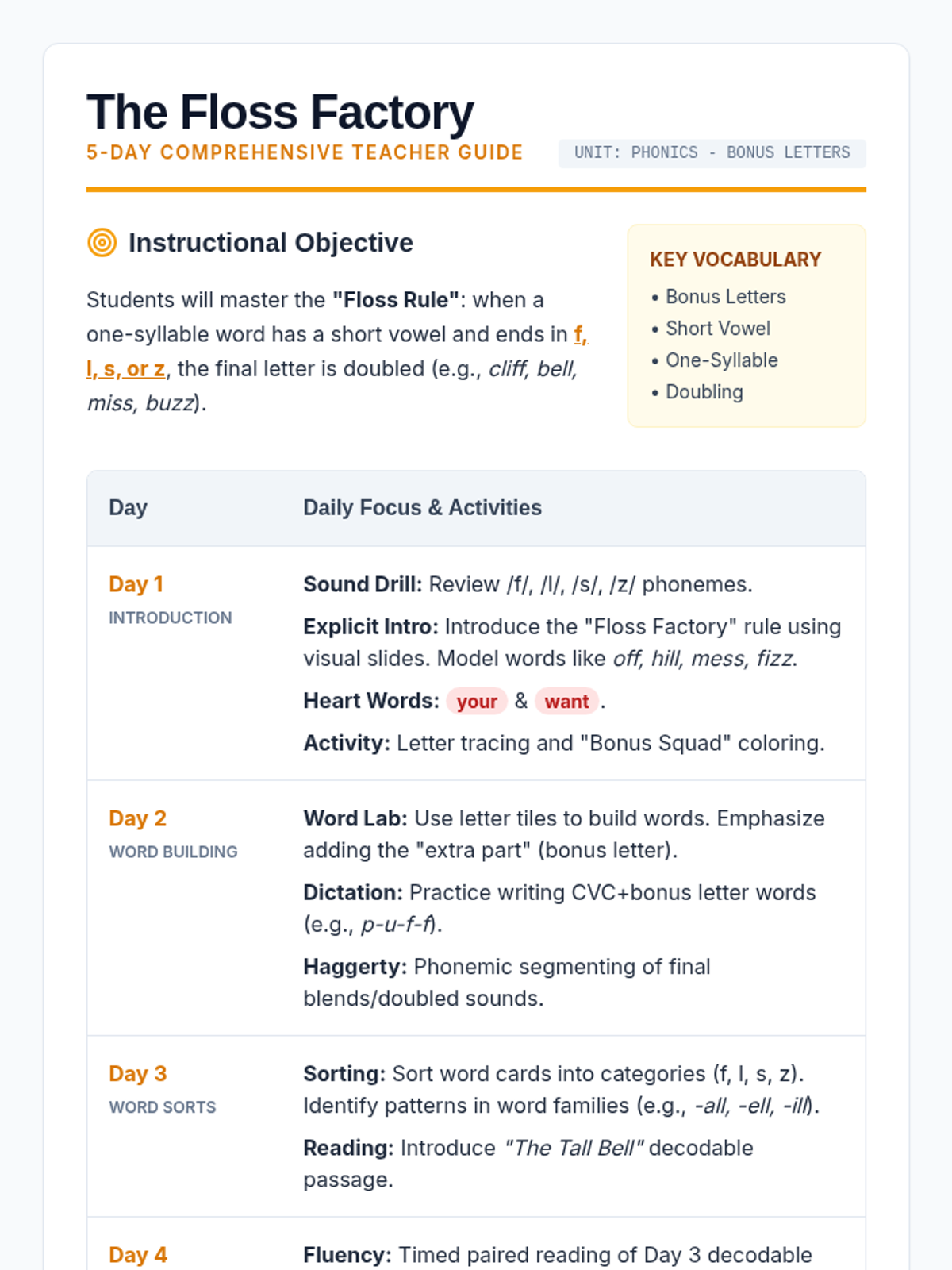
Introduction to the bonus letters f, l, s, and z. Students learn the rule that when a one-syllable word ends in f, l, s, or z after a short vowel, the letter is doubled. Includes the teacher guide for the full week.
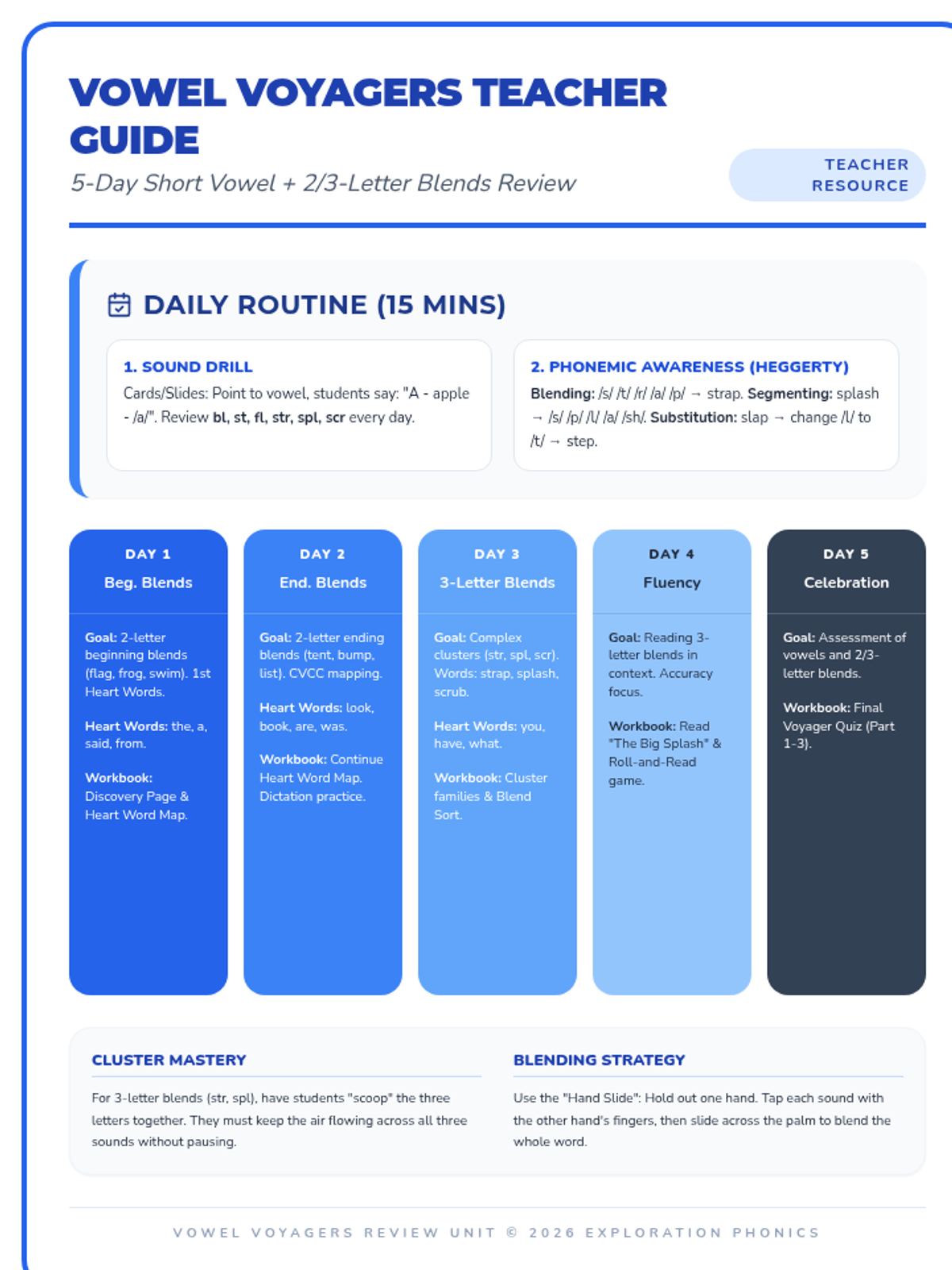
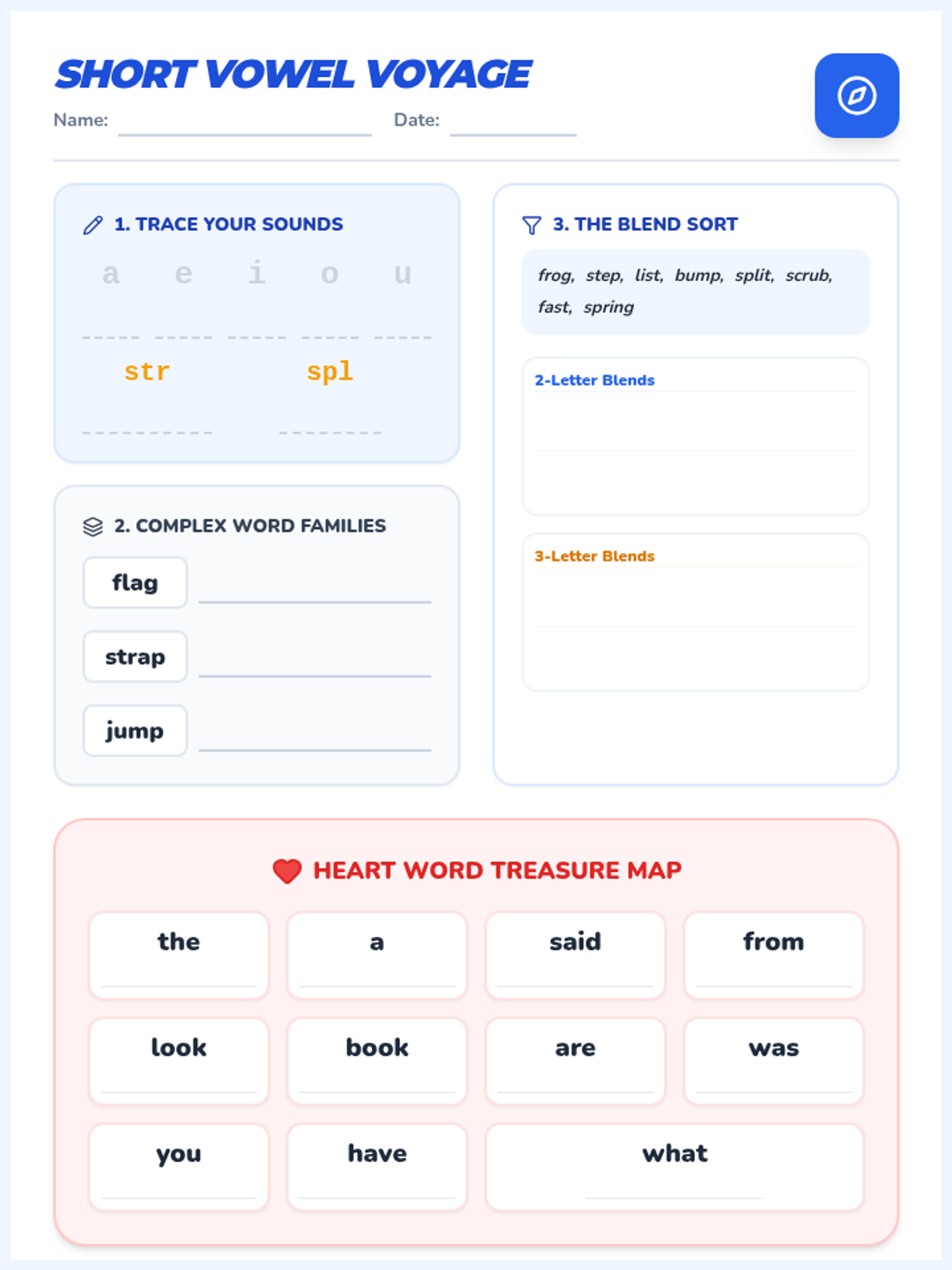
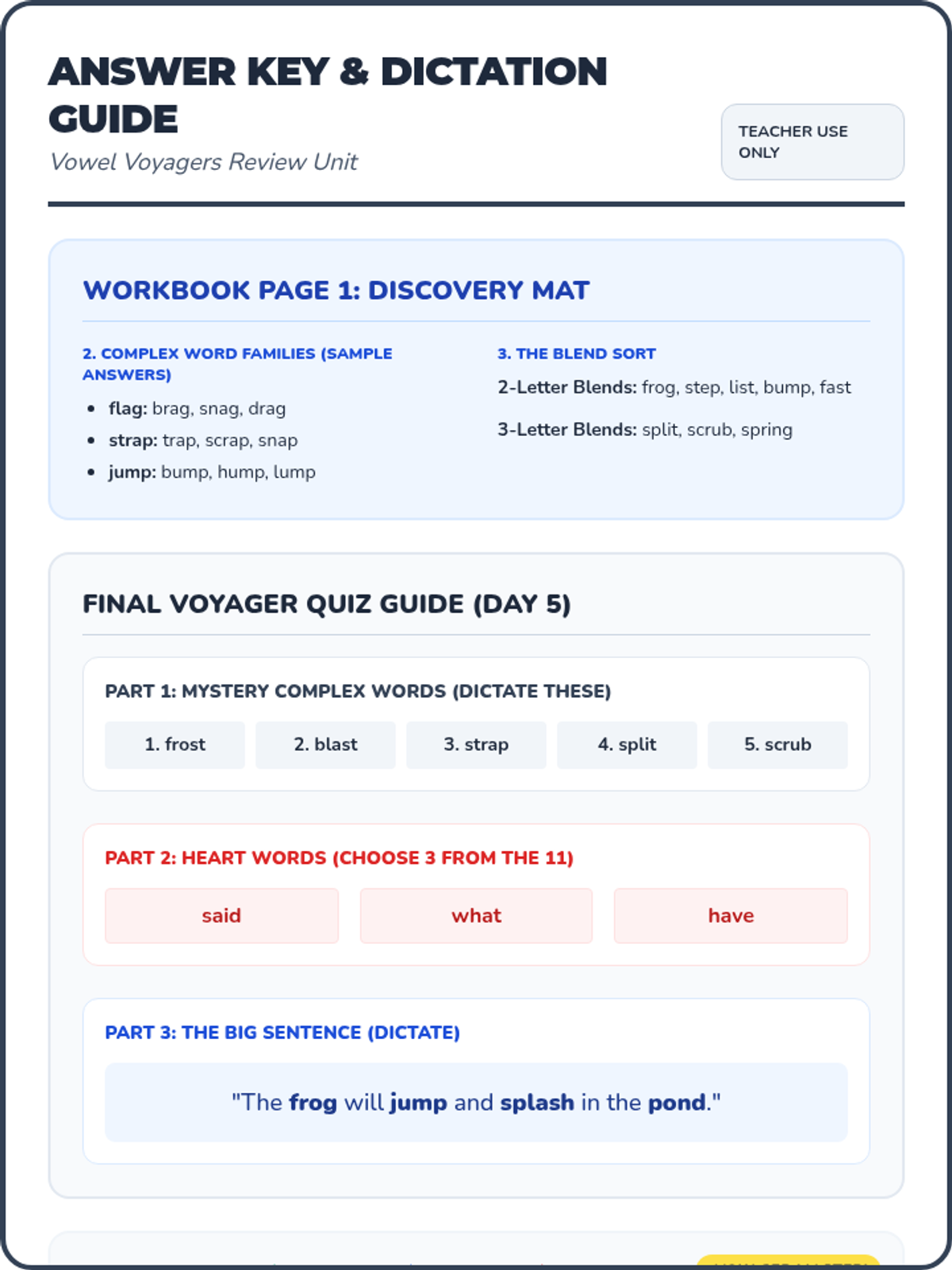
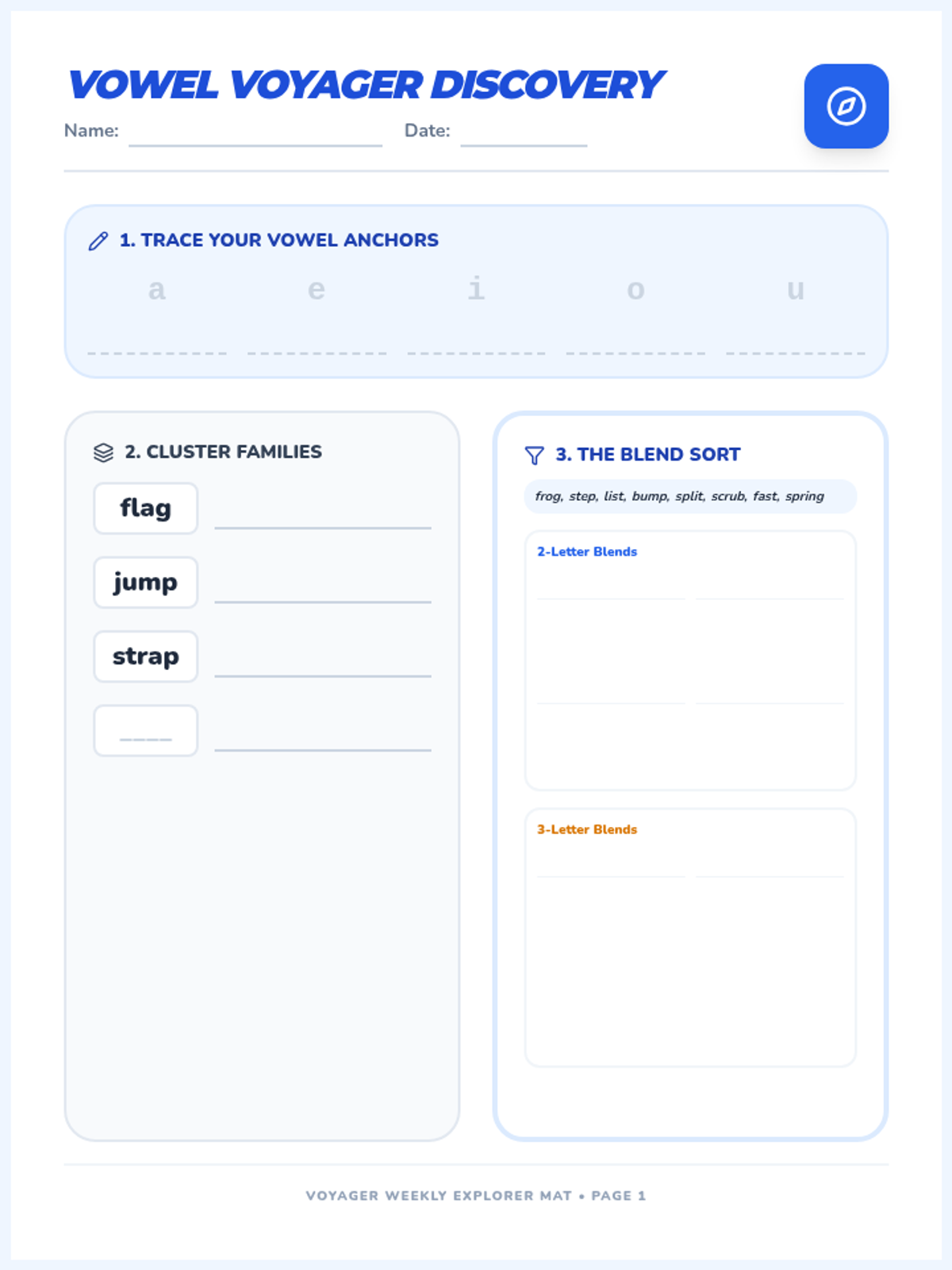
A comprehensive week-long unit reviewing short vowels through explicit instruction, multisensory practice, and decodable text application.
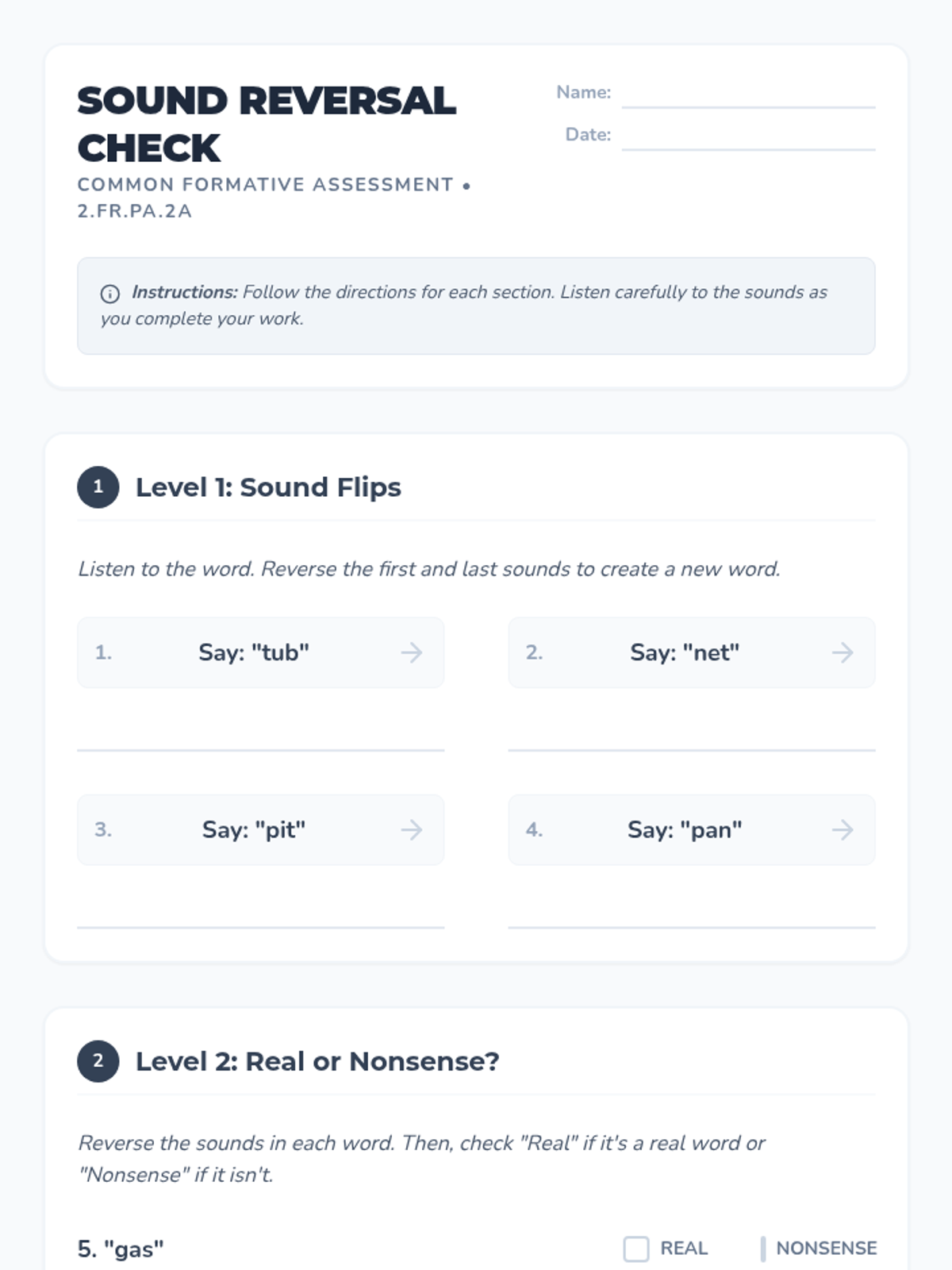
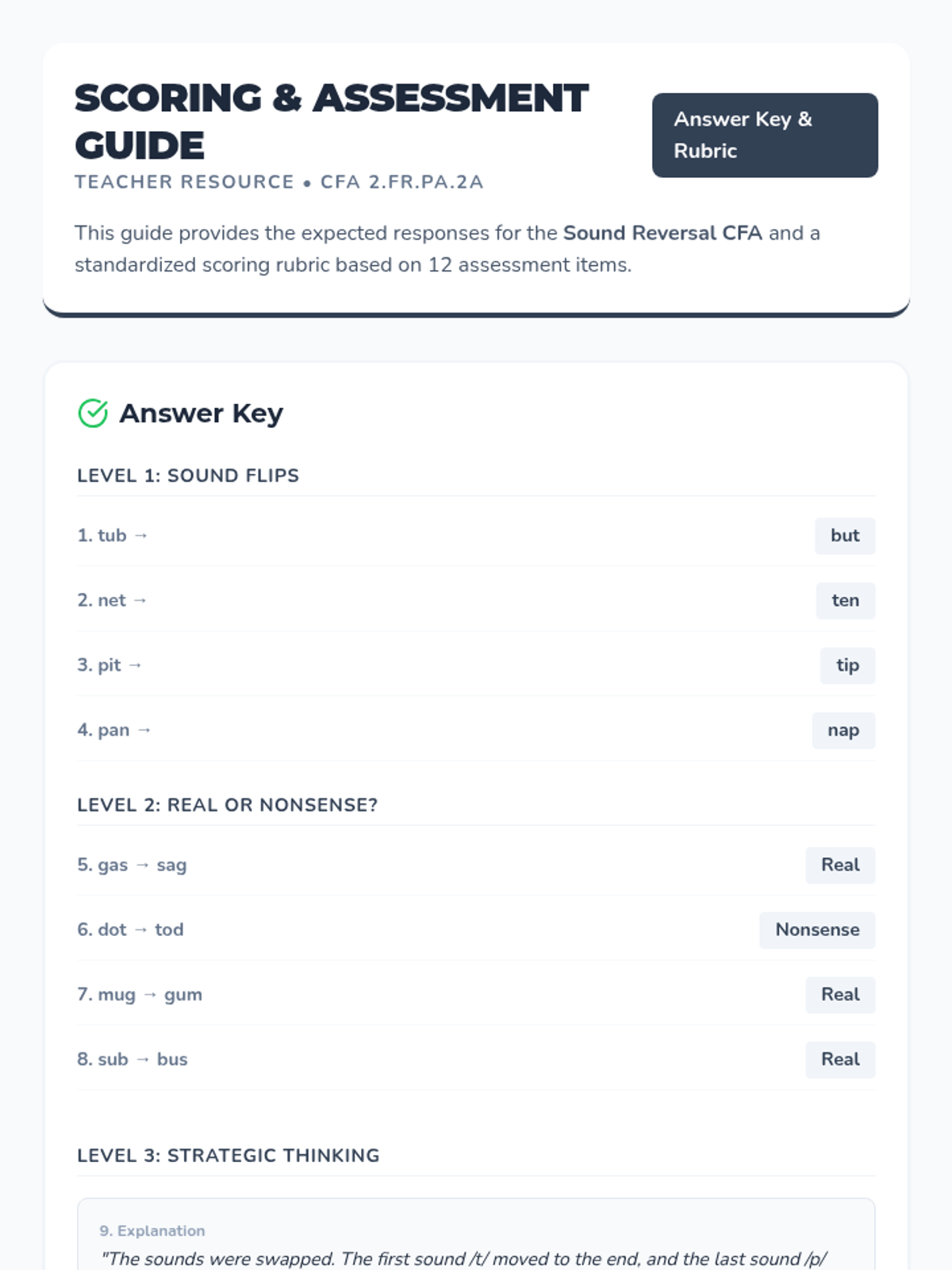
This lesson focuses on phonemic awareness through the manipulation of sounds, specifically reversing phonemes in one-syllable words to build foundational reading and spelling skills.
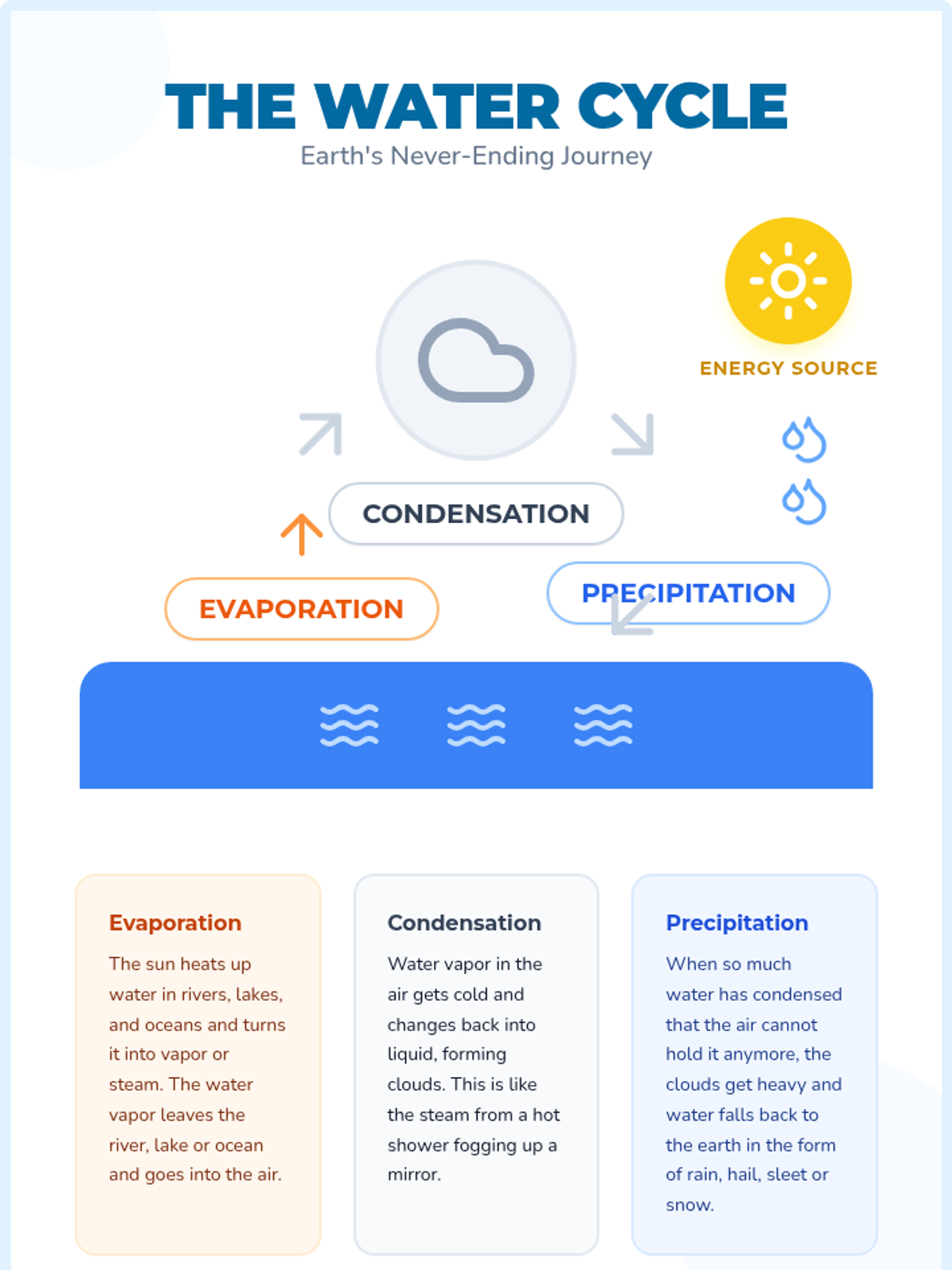
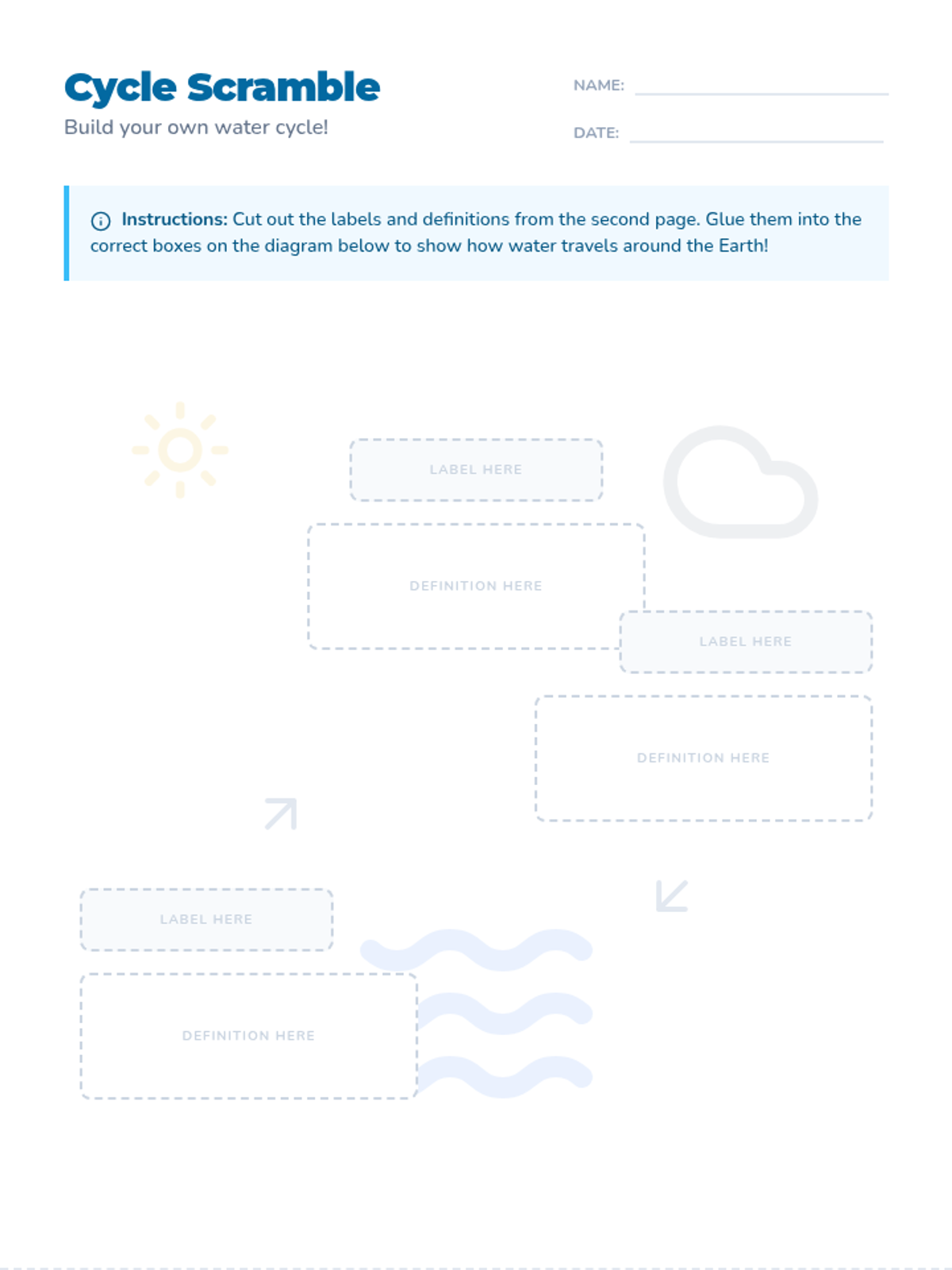
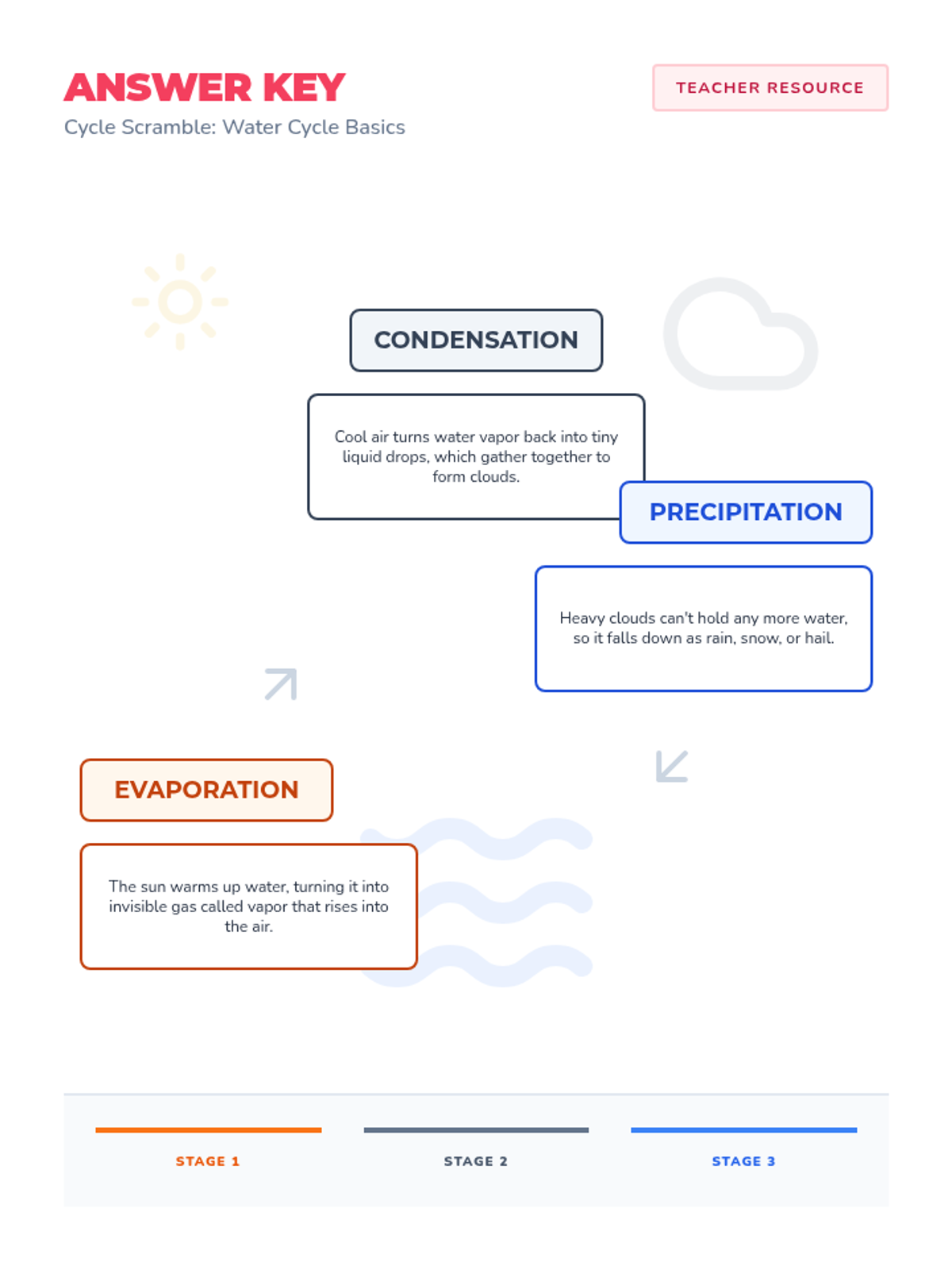
A foundational lesson on the three main stages of the water cycle: evaporation, condensation, and precipitation. Includes a visual anchor chart and a hands-on labeling activity.
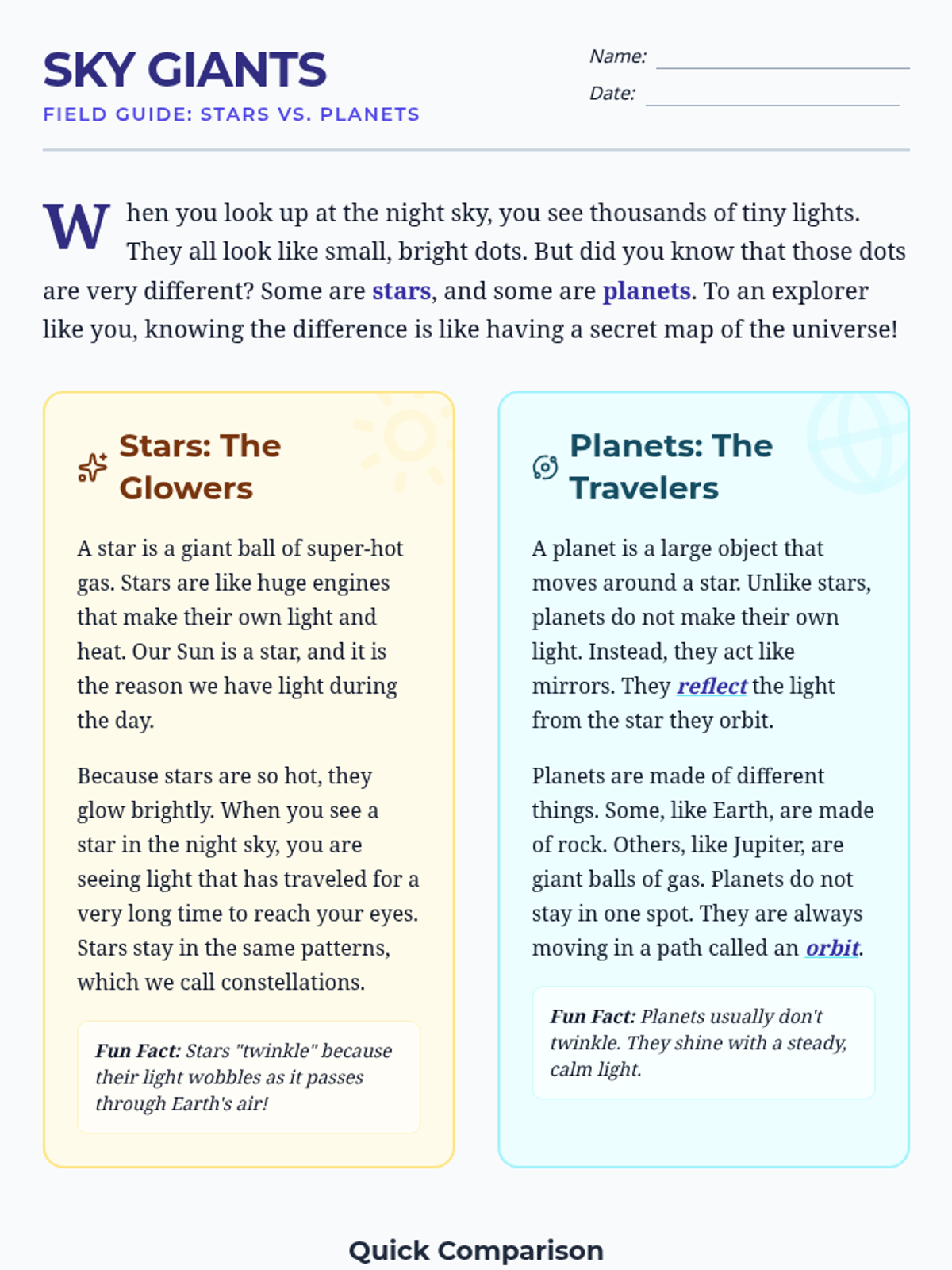
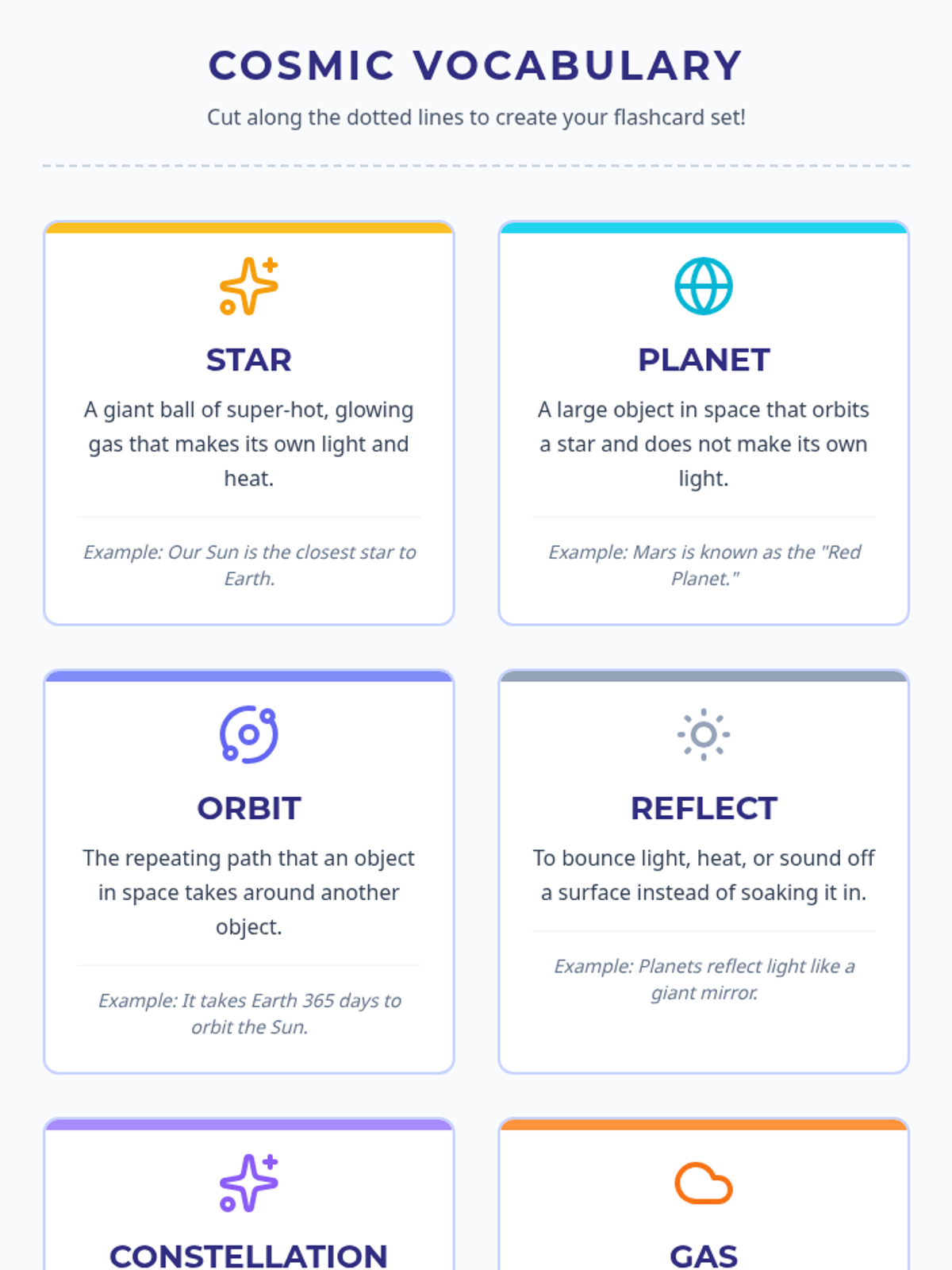
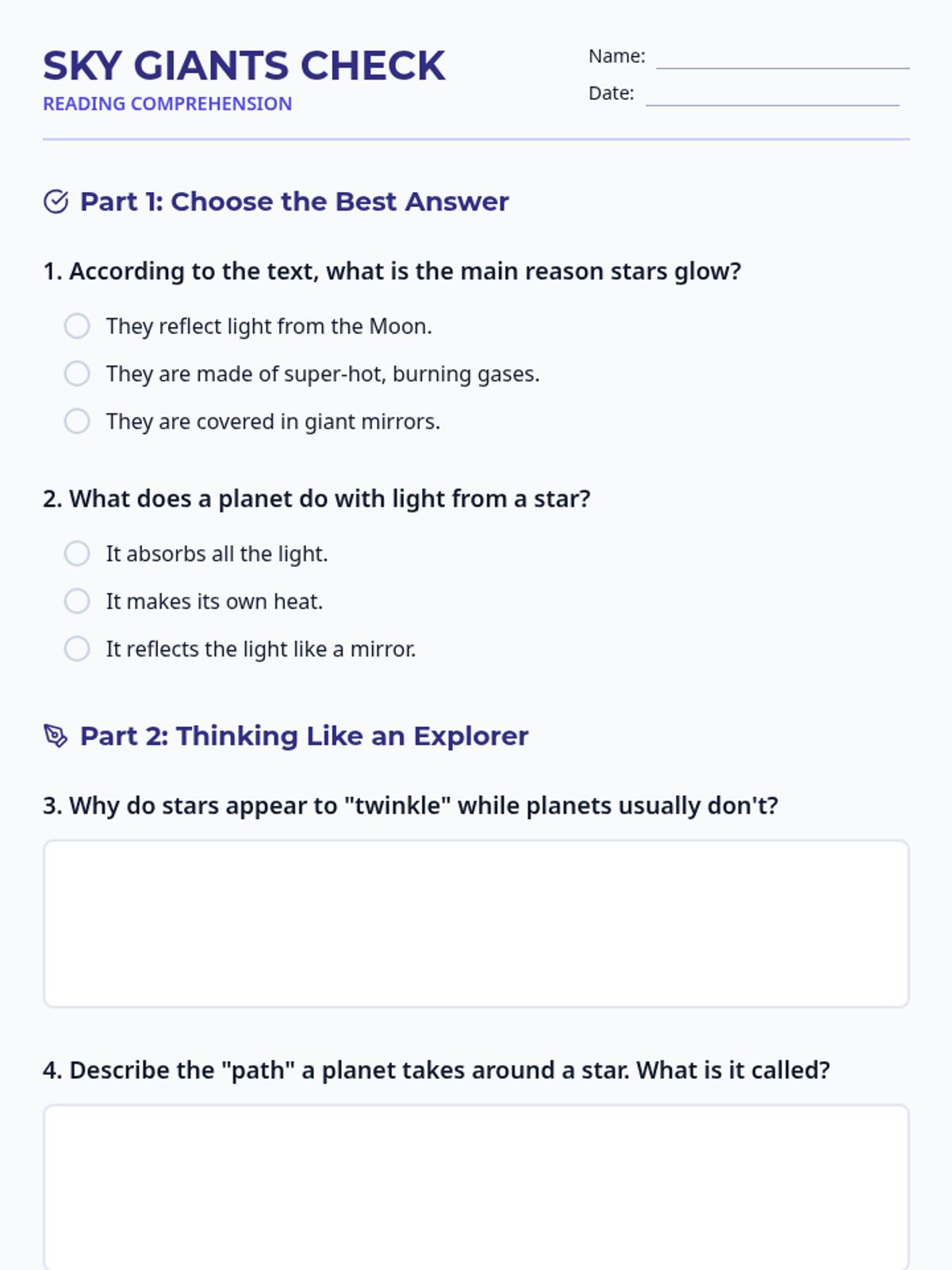
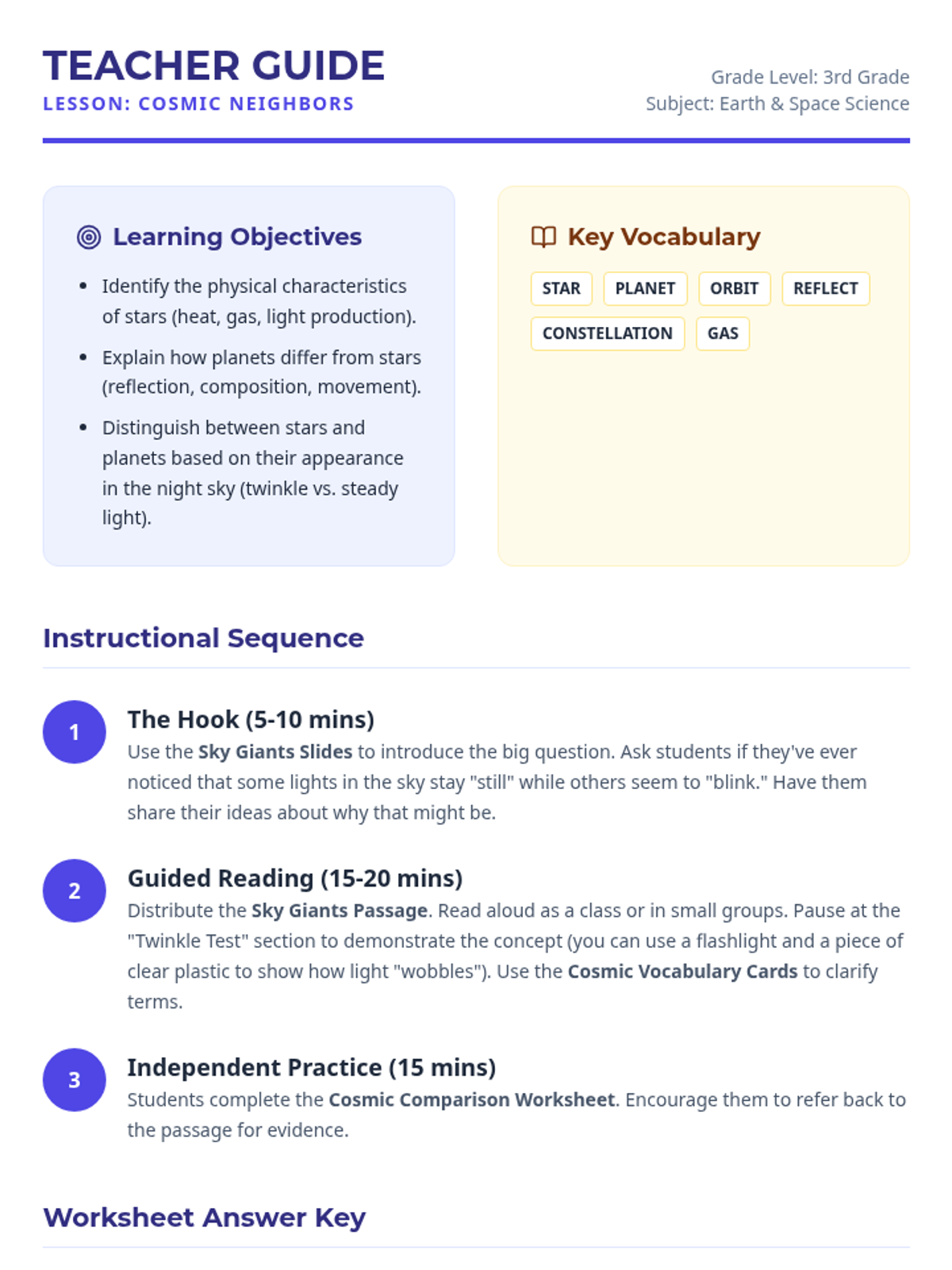
A guided reading lesson for 3rd graders exploring the fundamental differences between stars and planets, focusing on light production, composition, and movement.
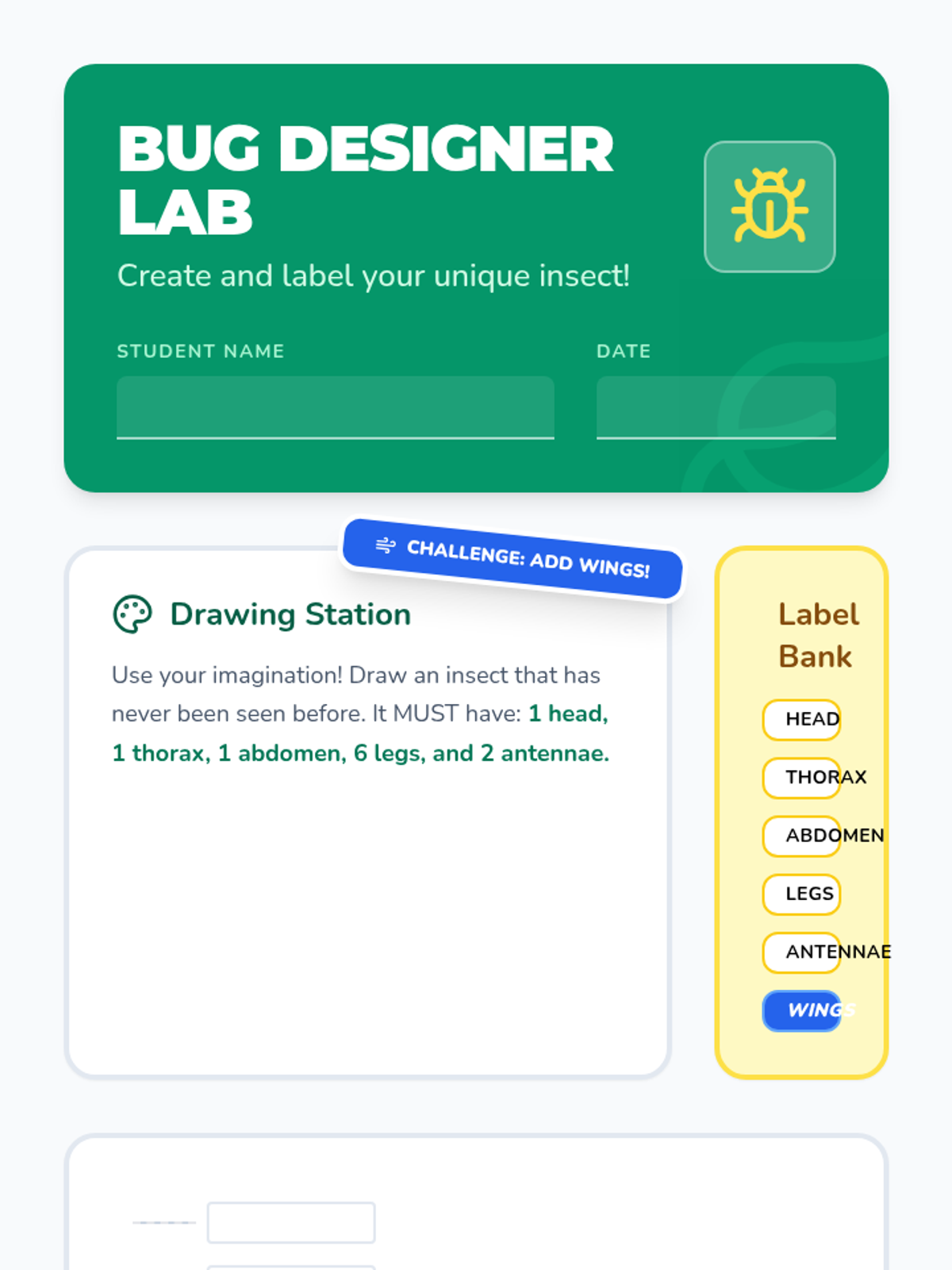
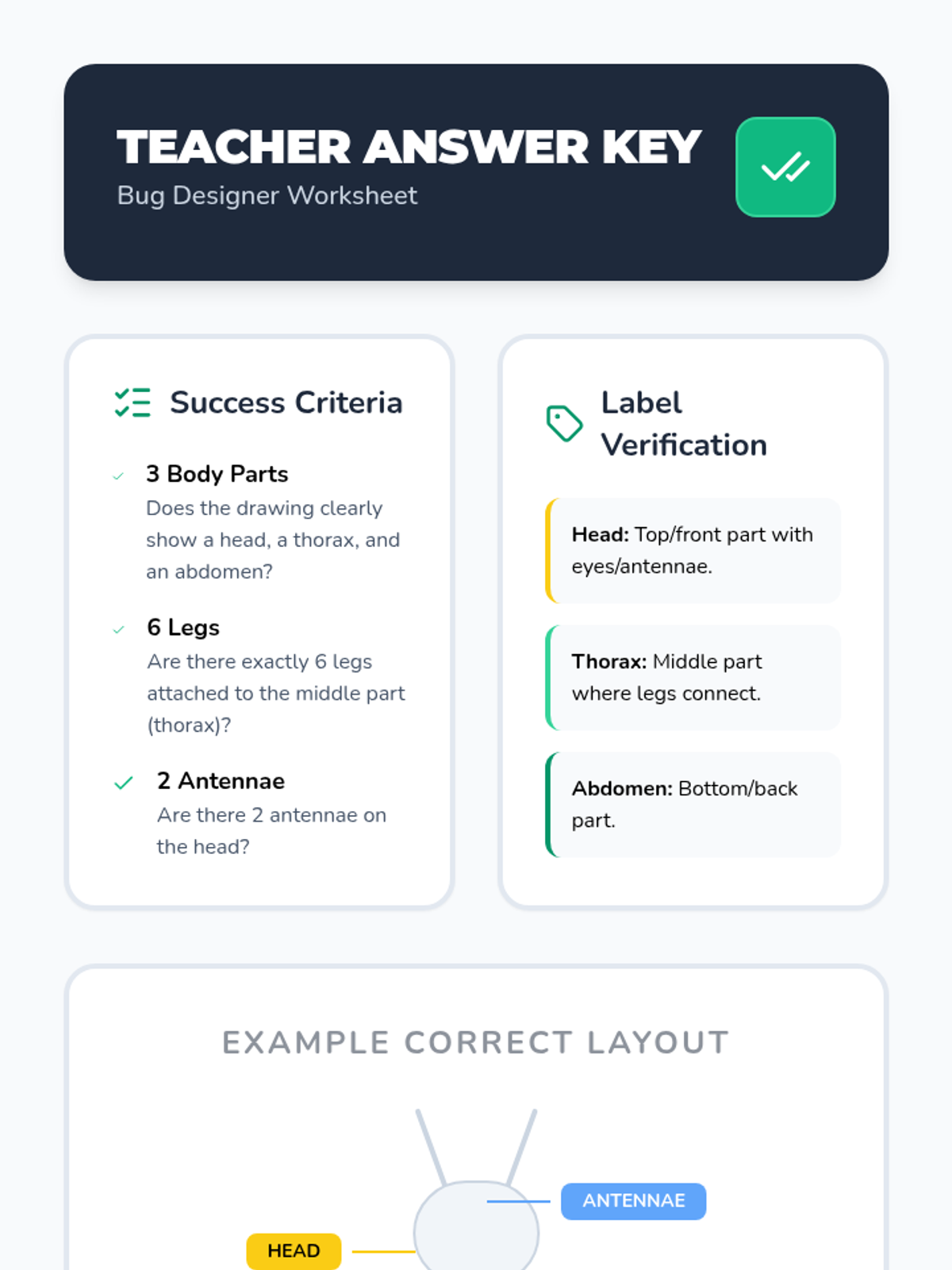
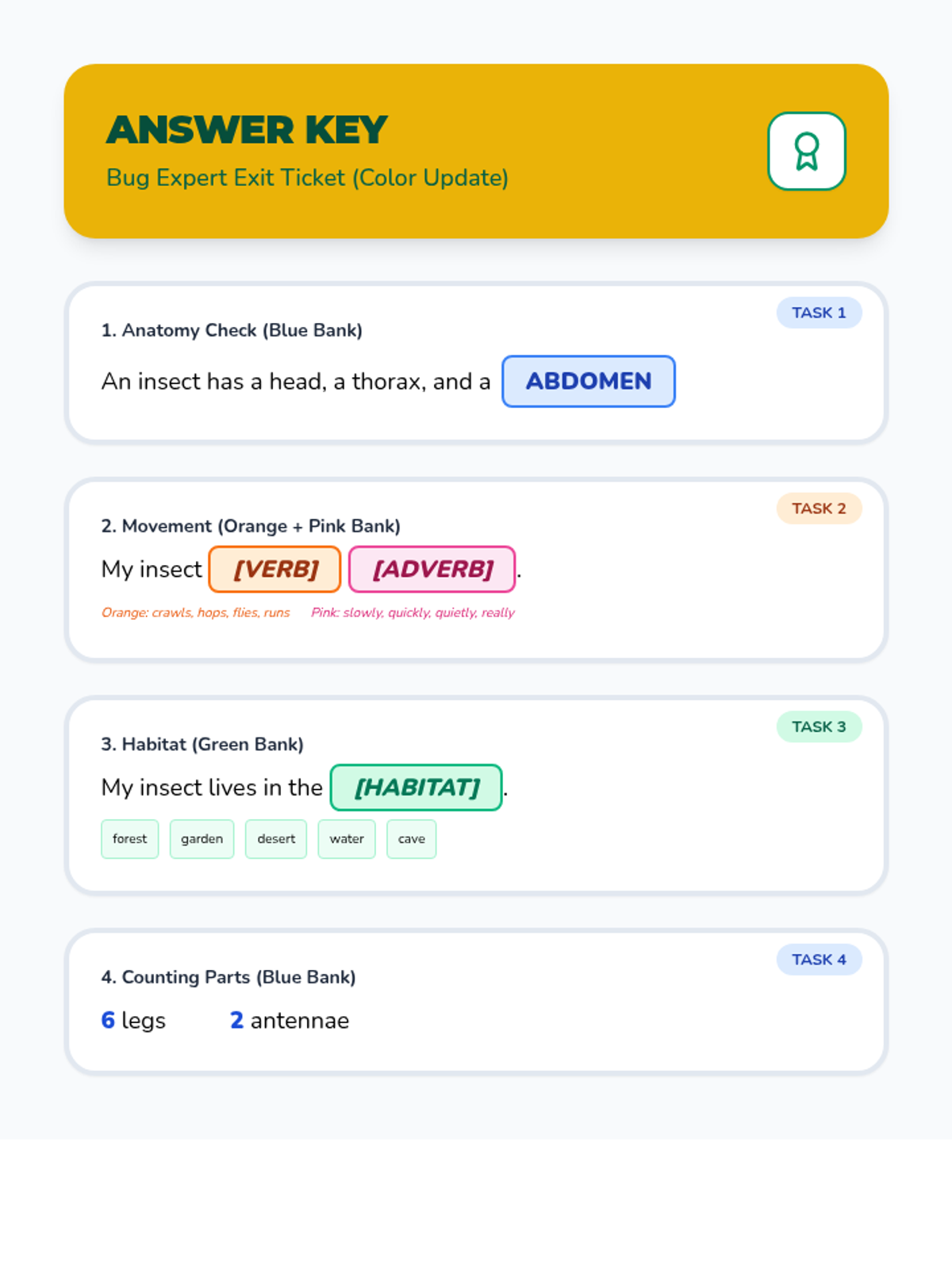
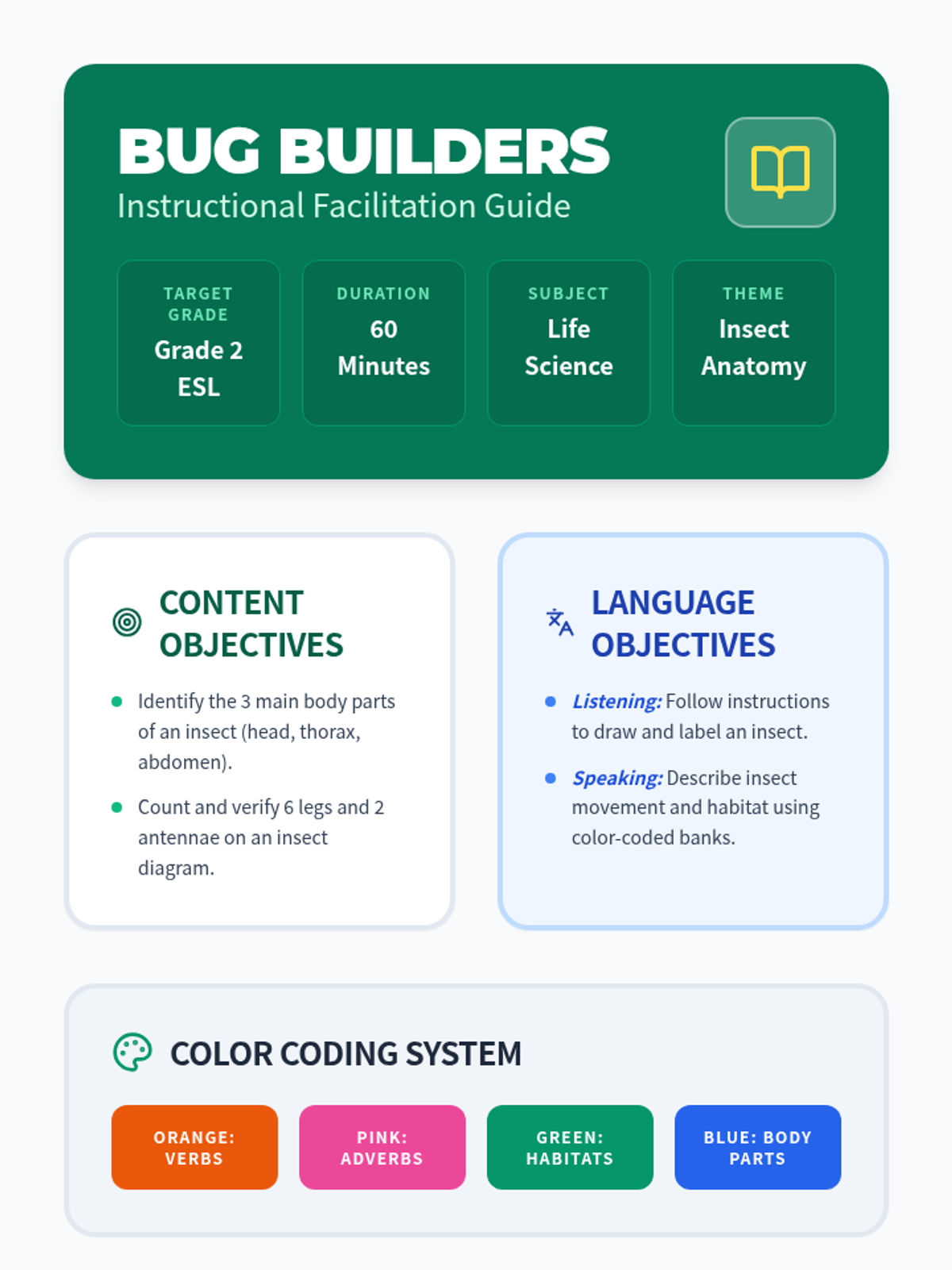
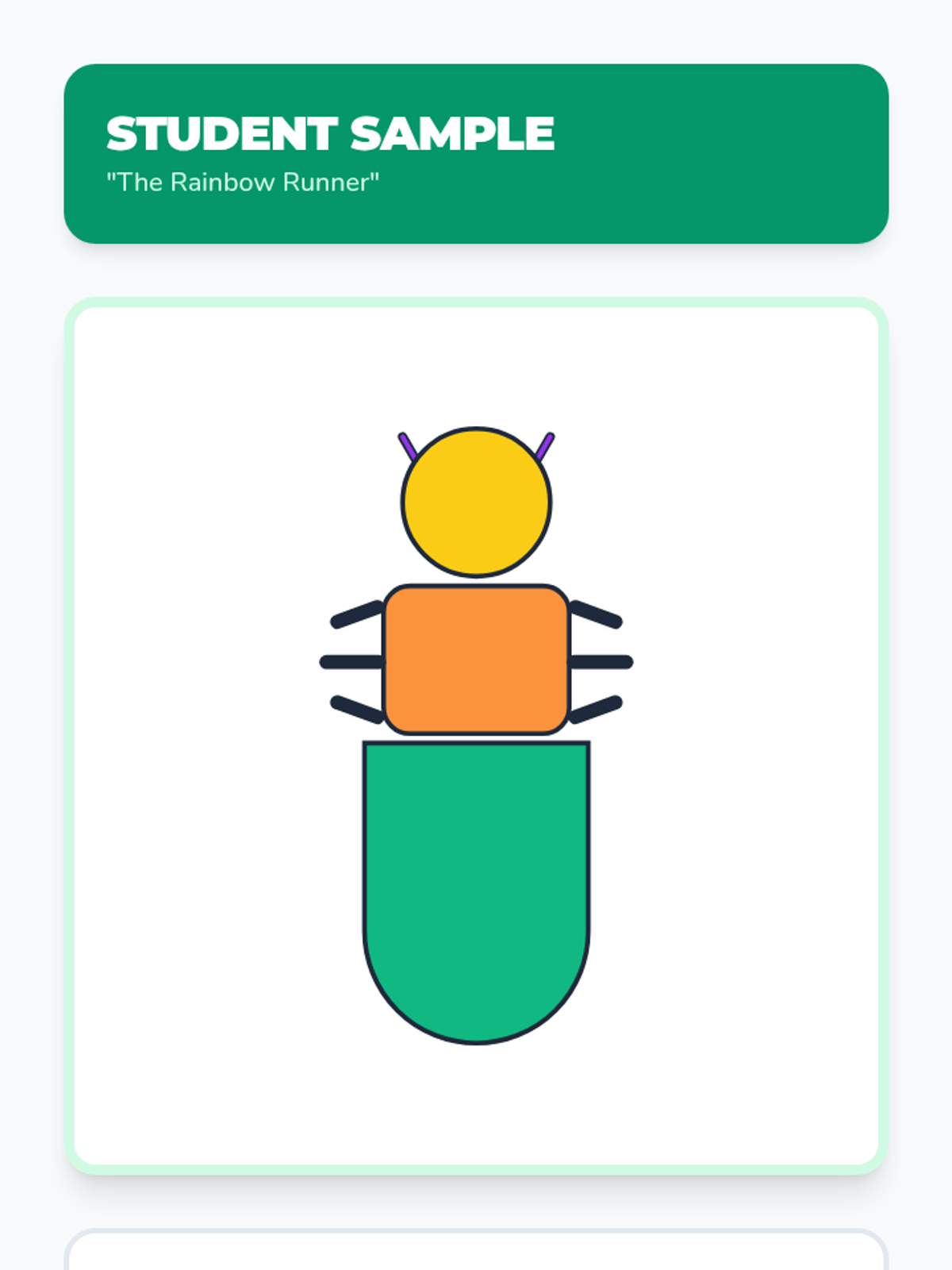
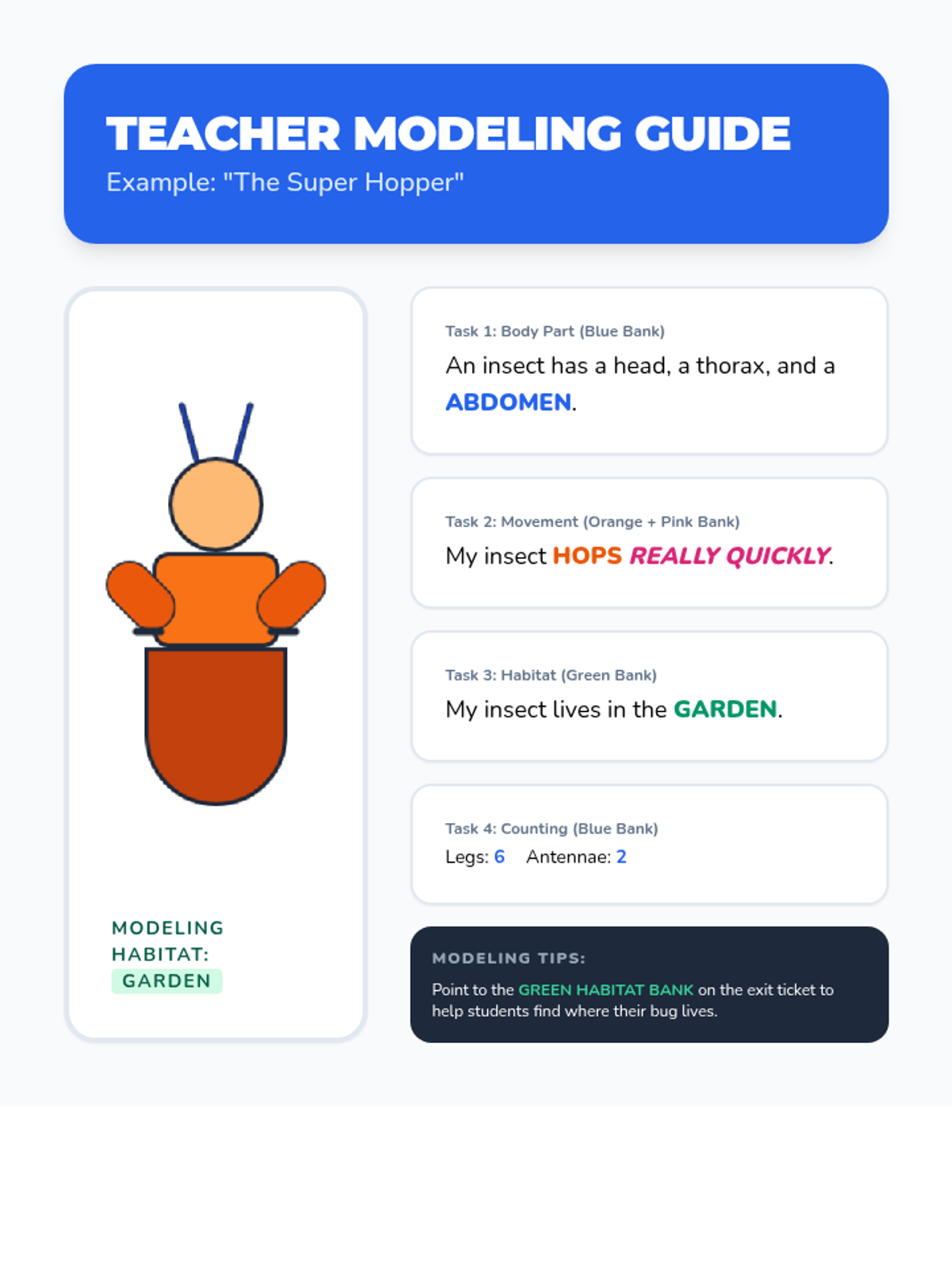
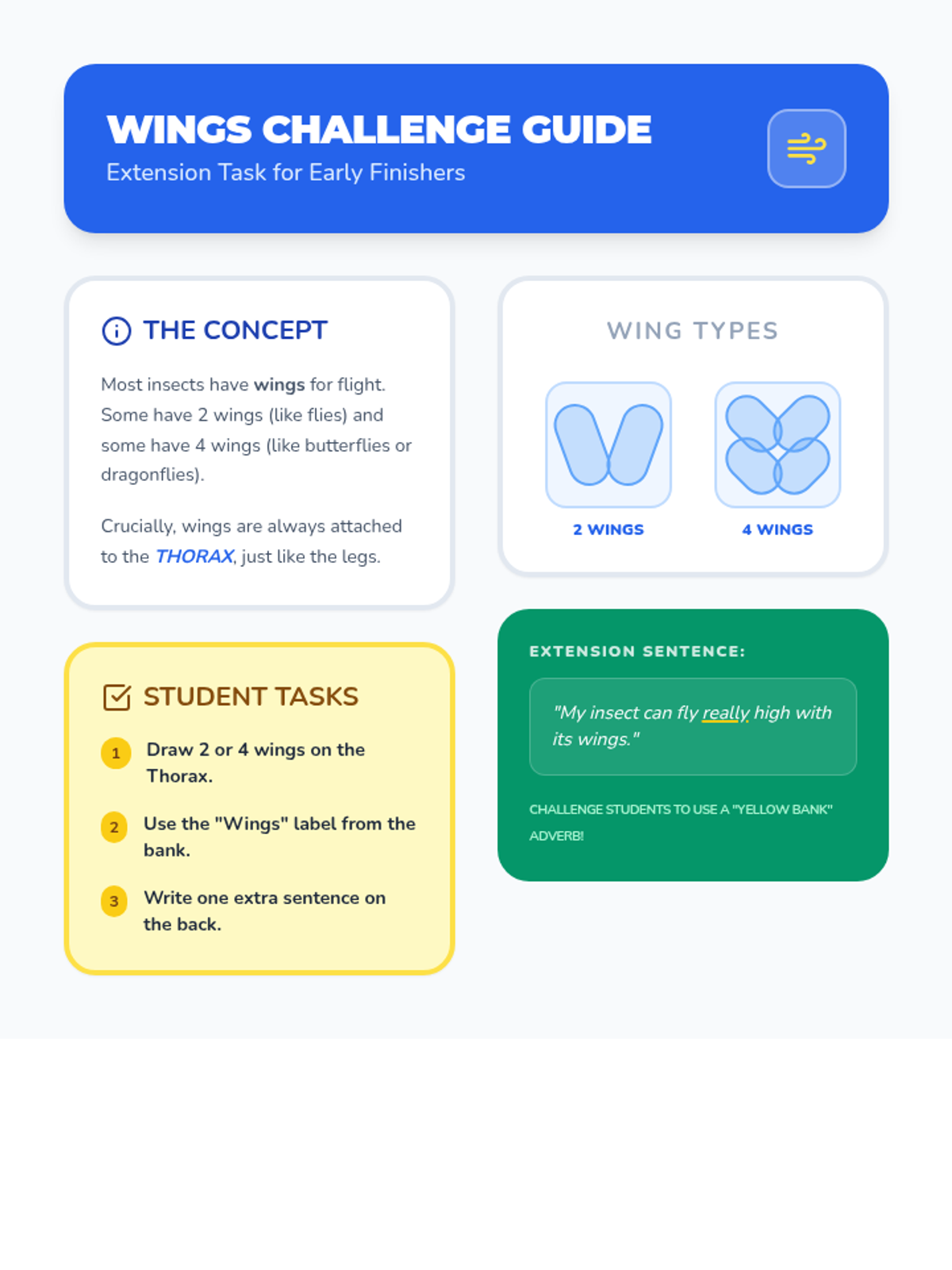
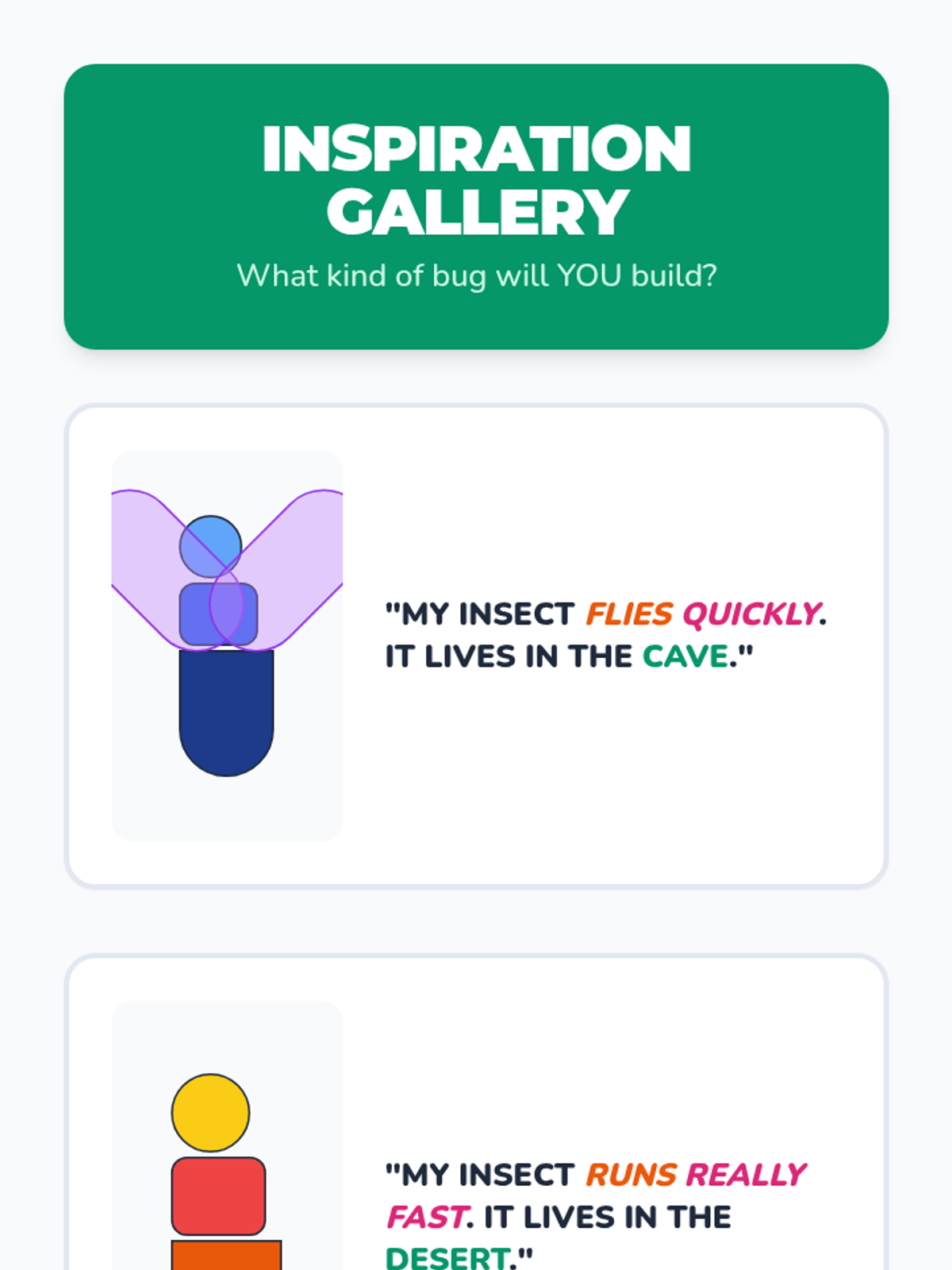
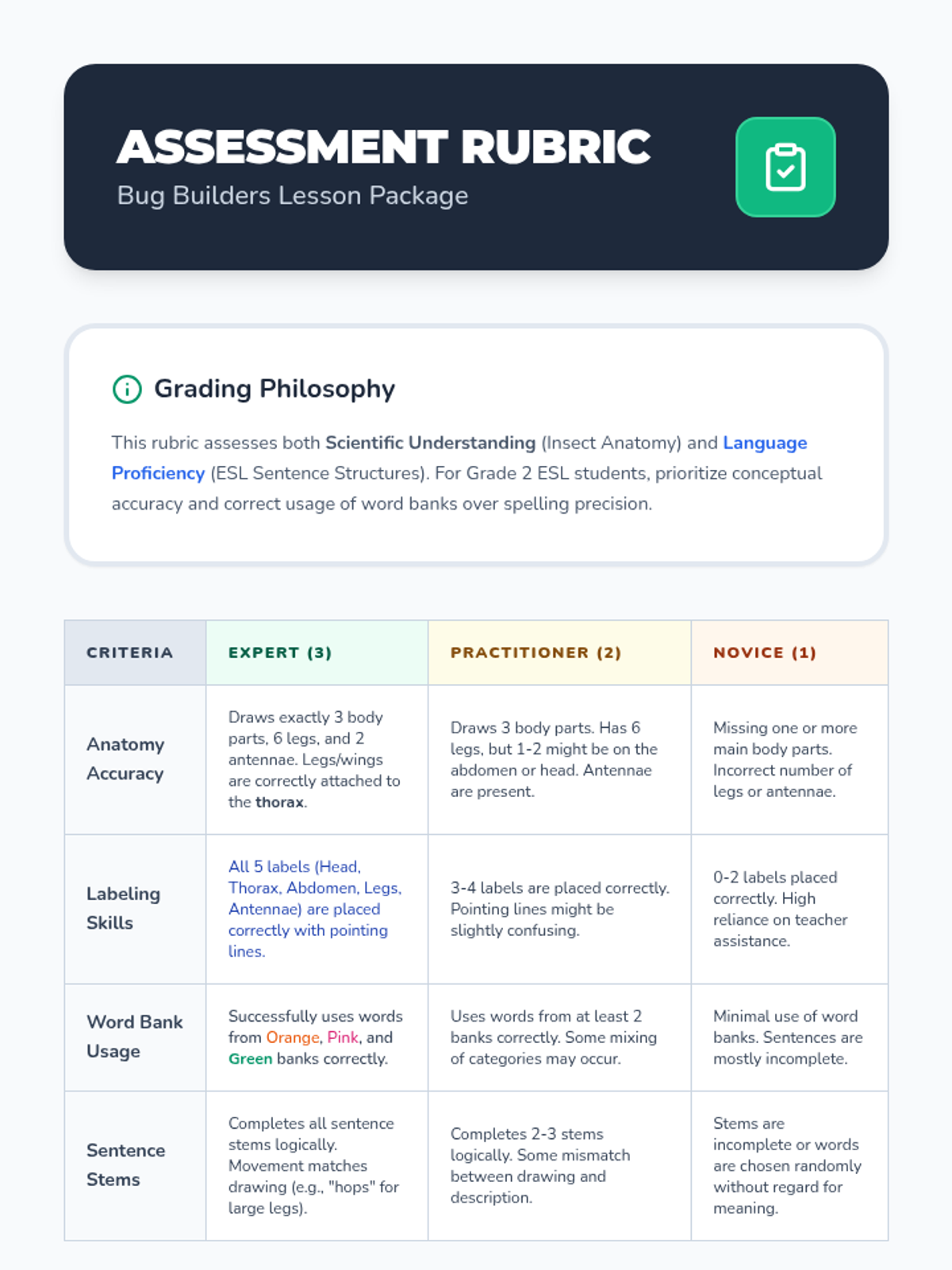
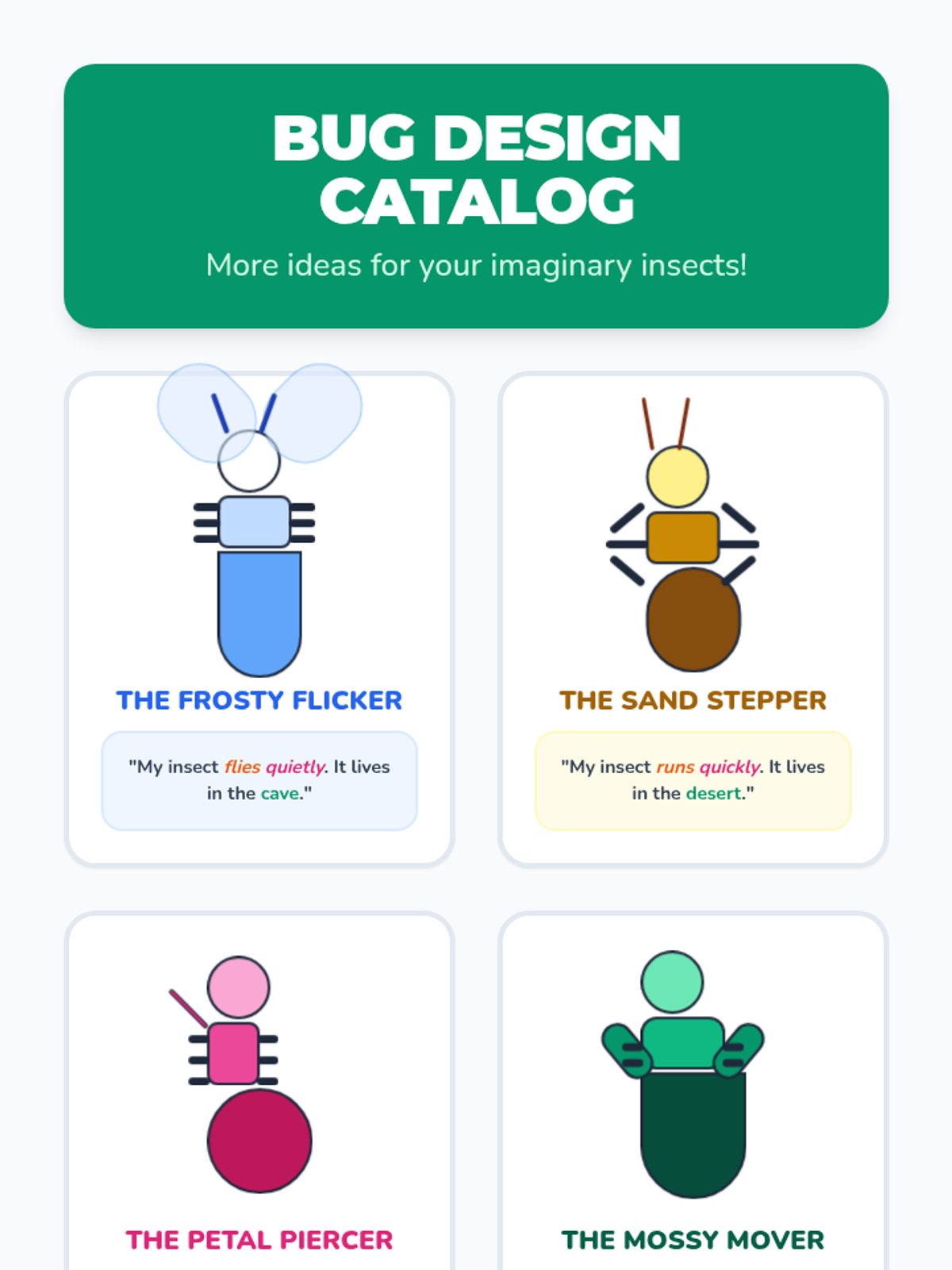
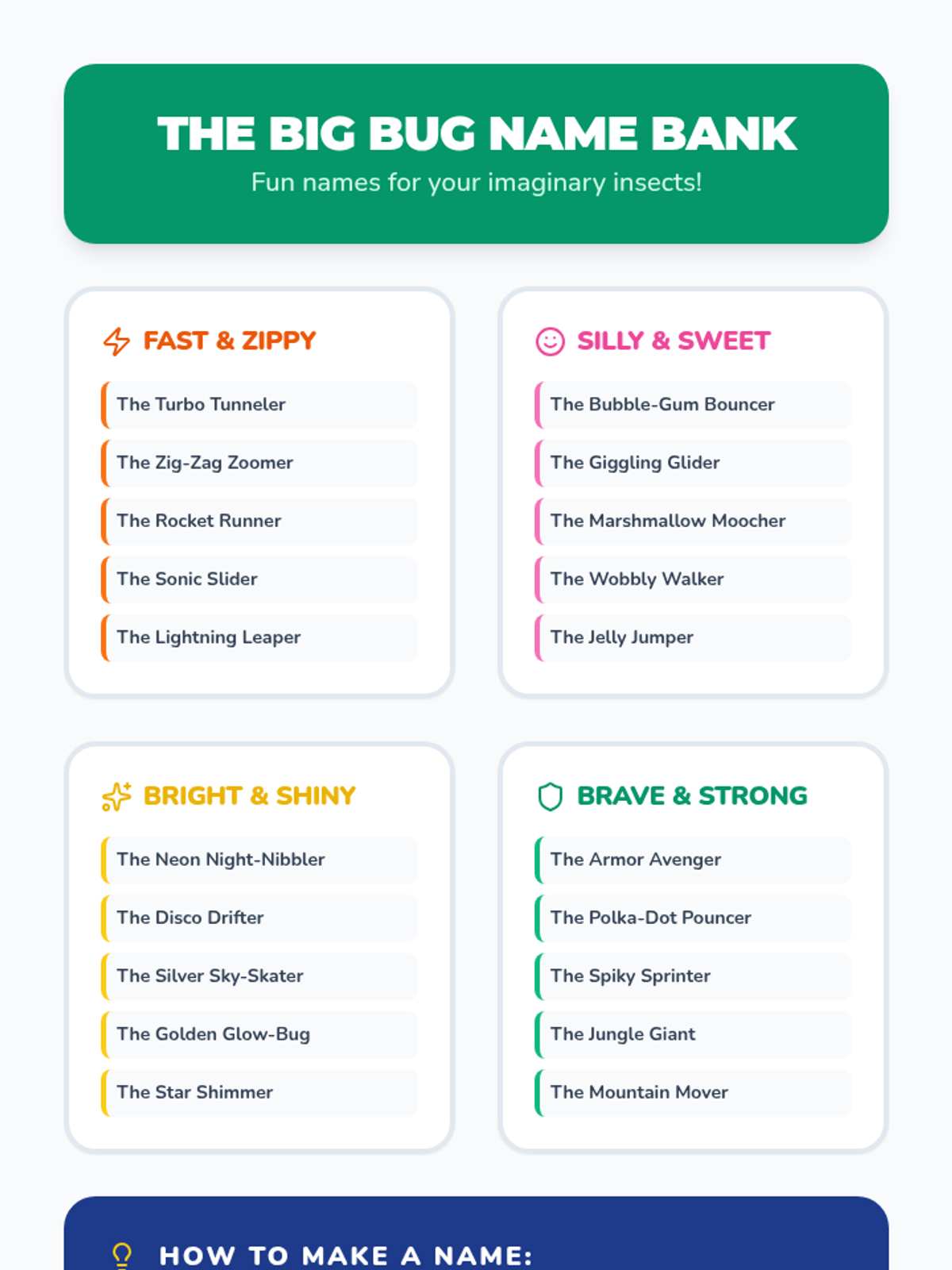
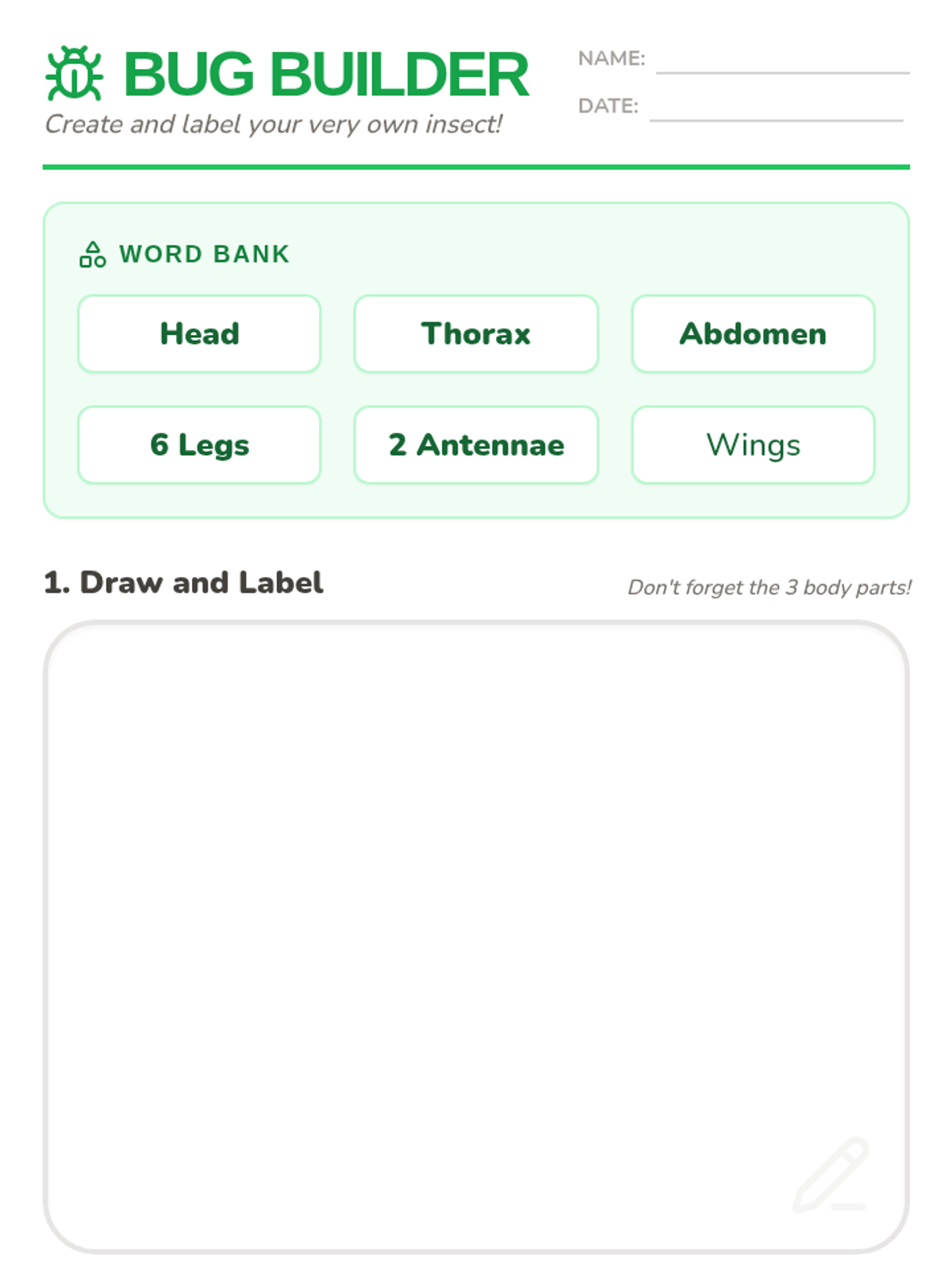
Students learn the anatomy of an insect (head, thorax, abdomen, 6 legs, 2 antennae) and apply this knowledge by designing, labeling, and describing their own colorful insect.
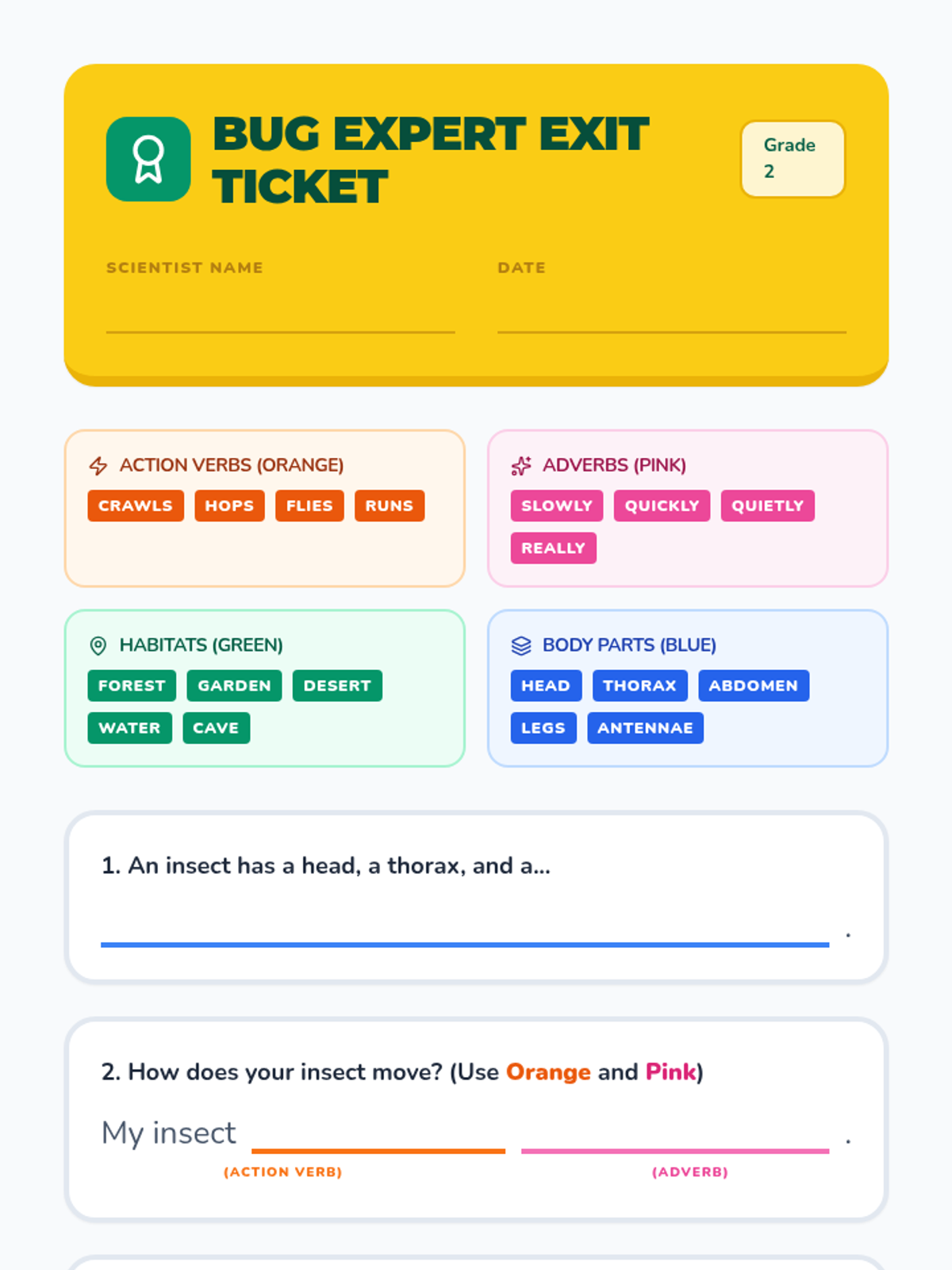
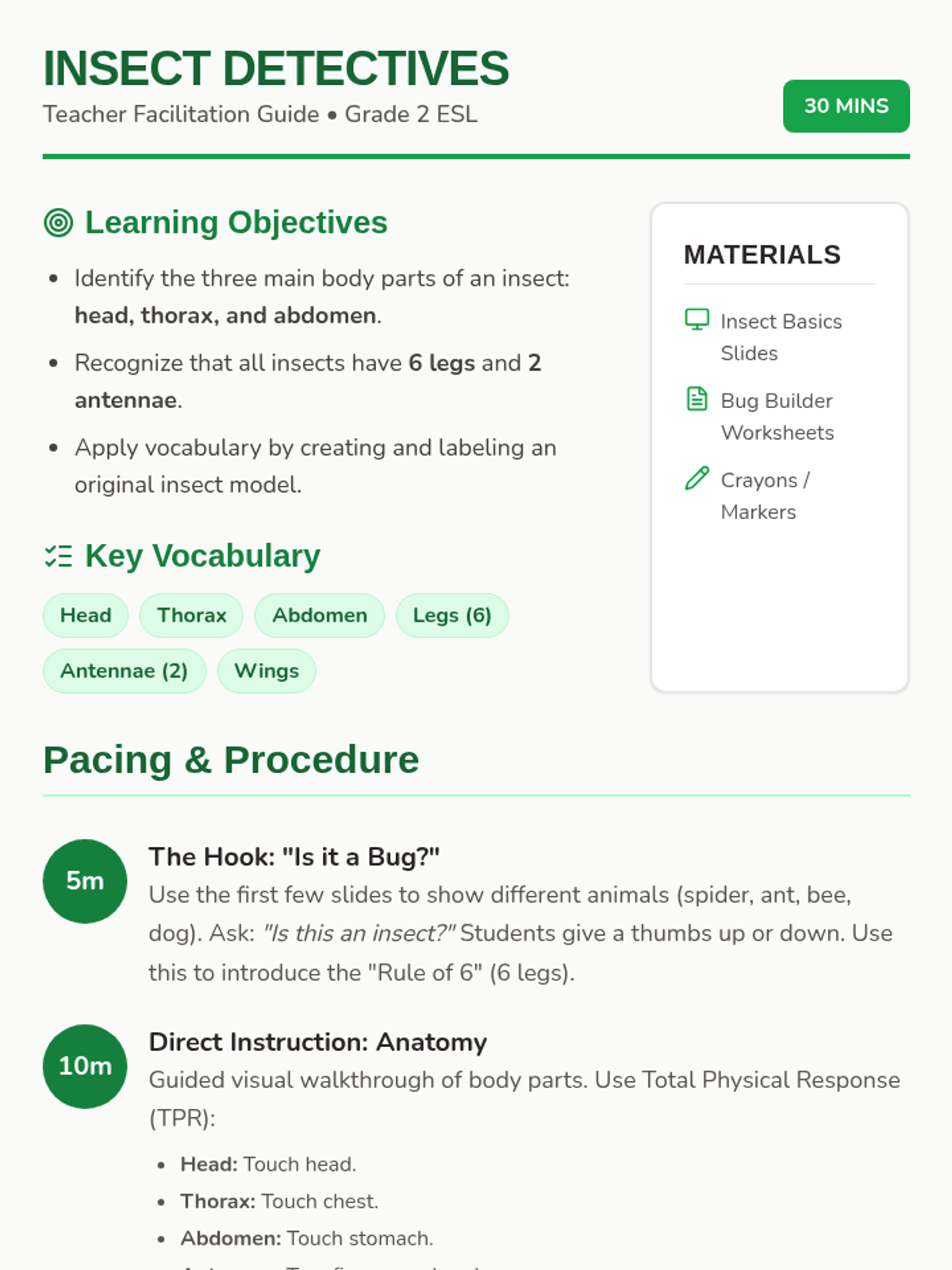
A fast-paced 30-minute lesson for Grade 2 ESL students to identify core insect characteristics through visual aids and a creative hands-on activity.
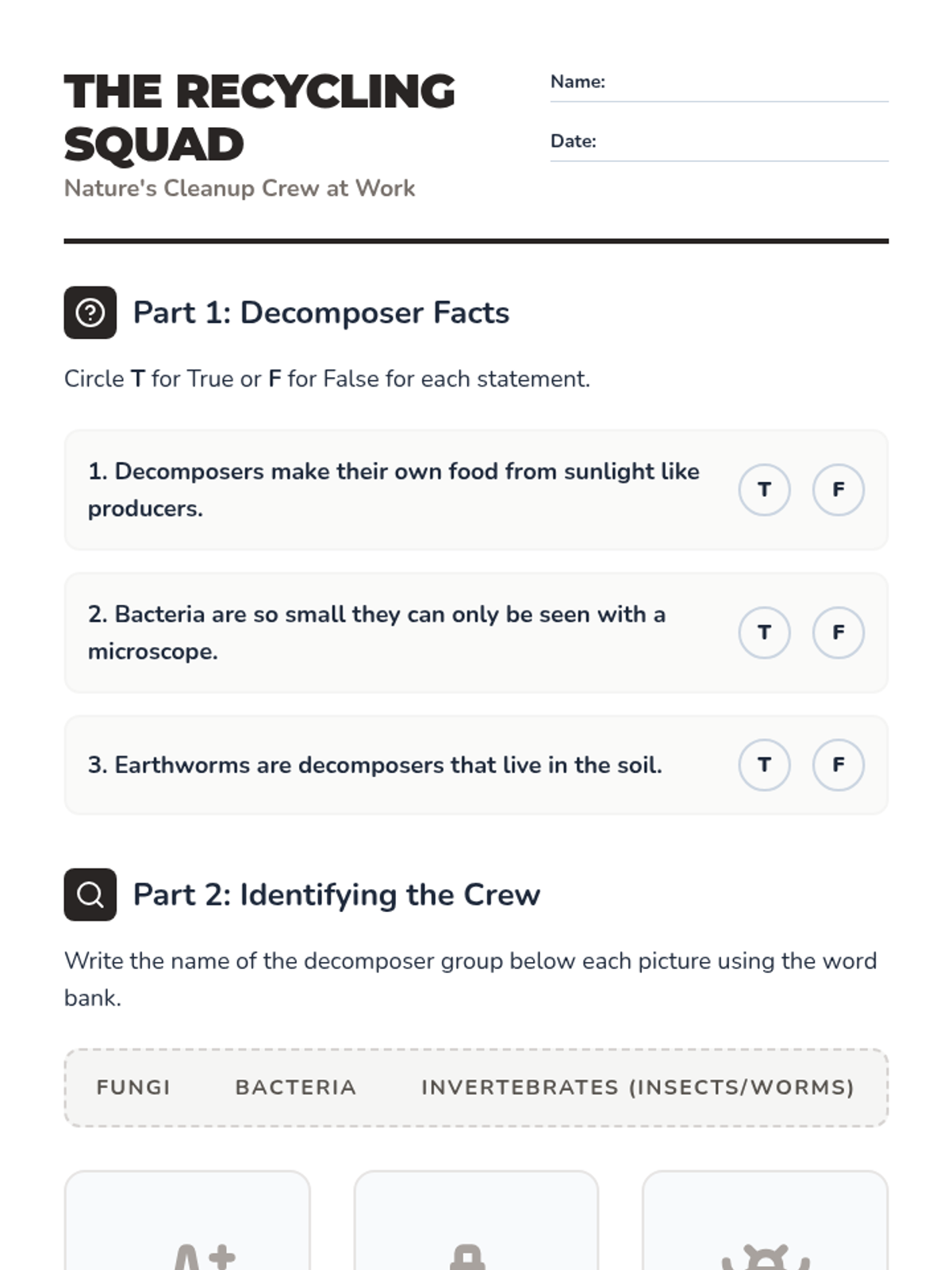
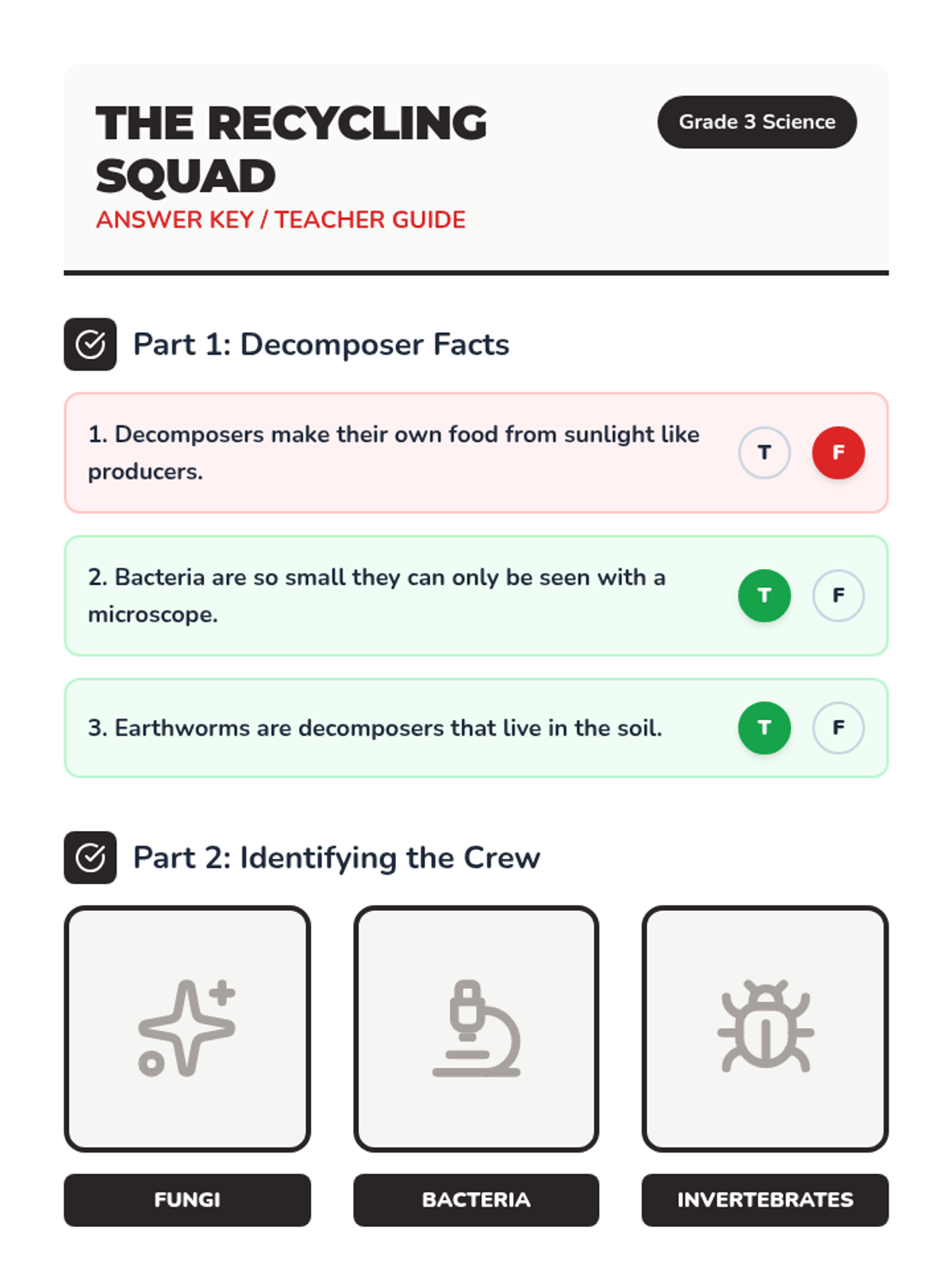
A fascinating look at decomposers for 3rd graders, explaining how fungi, bacteria, and worms break down dead matter to recycle nutrients back into the food chain.
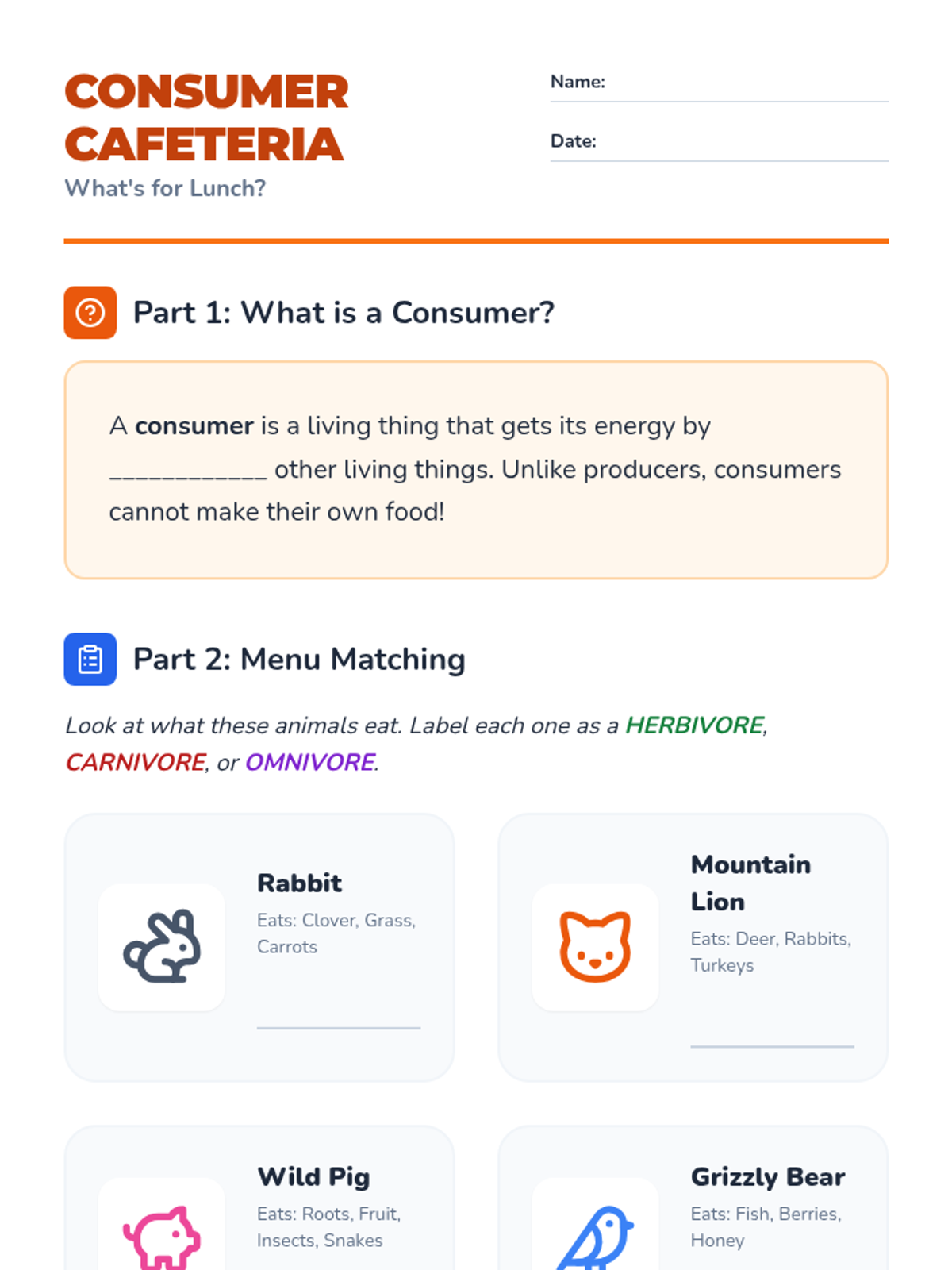
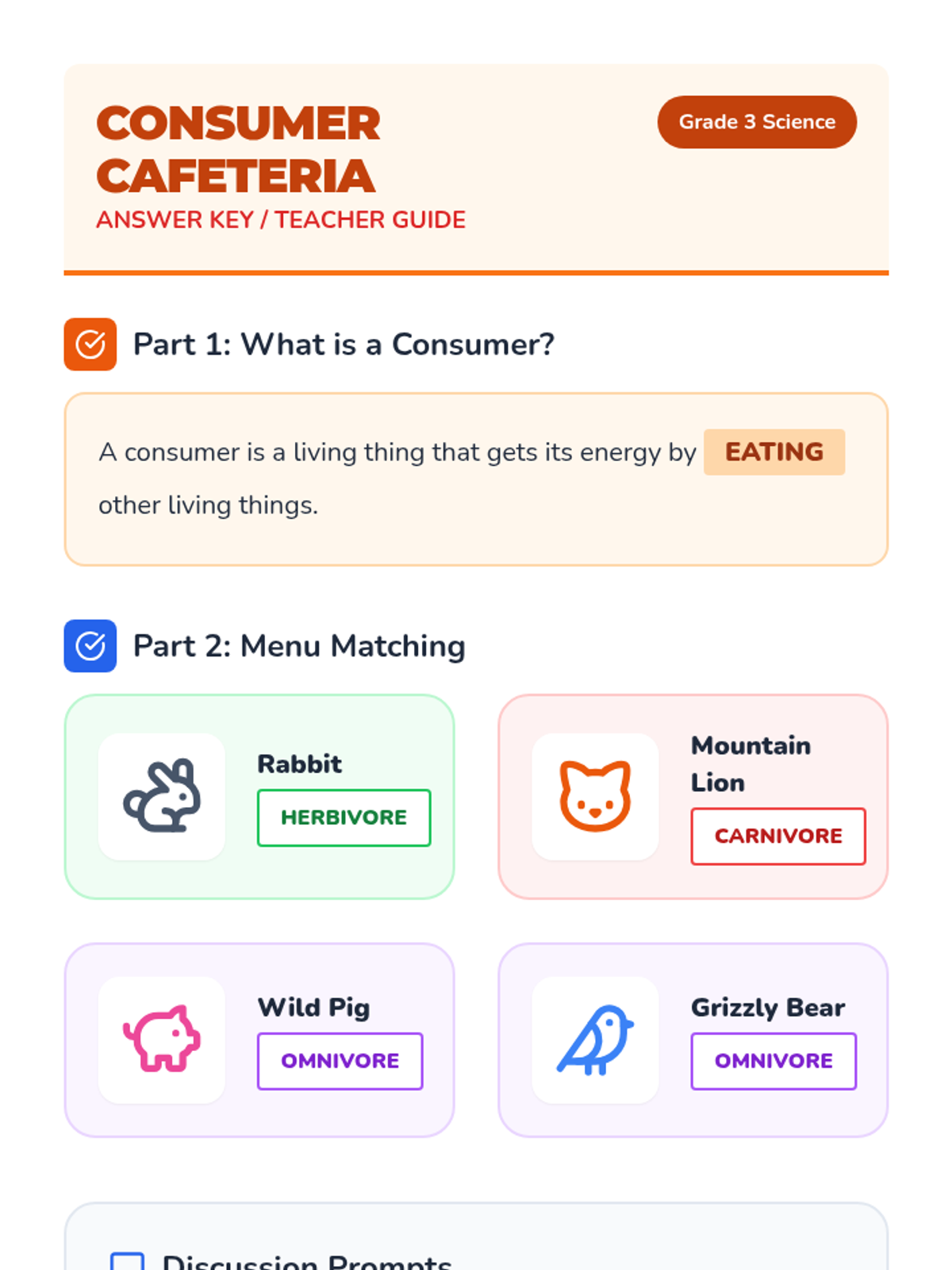
An engaging lesson for 3rd graders on consumers in a food chain, exploring herbivores, carnivores, and omnivores, and how they get their energy from eating other living things.
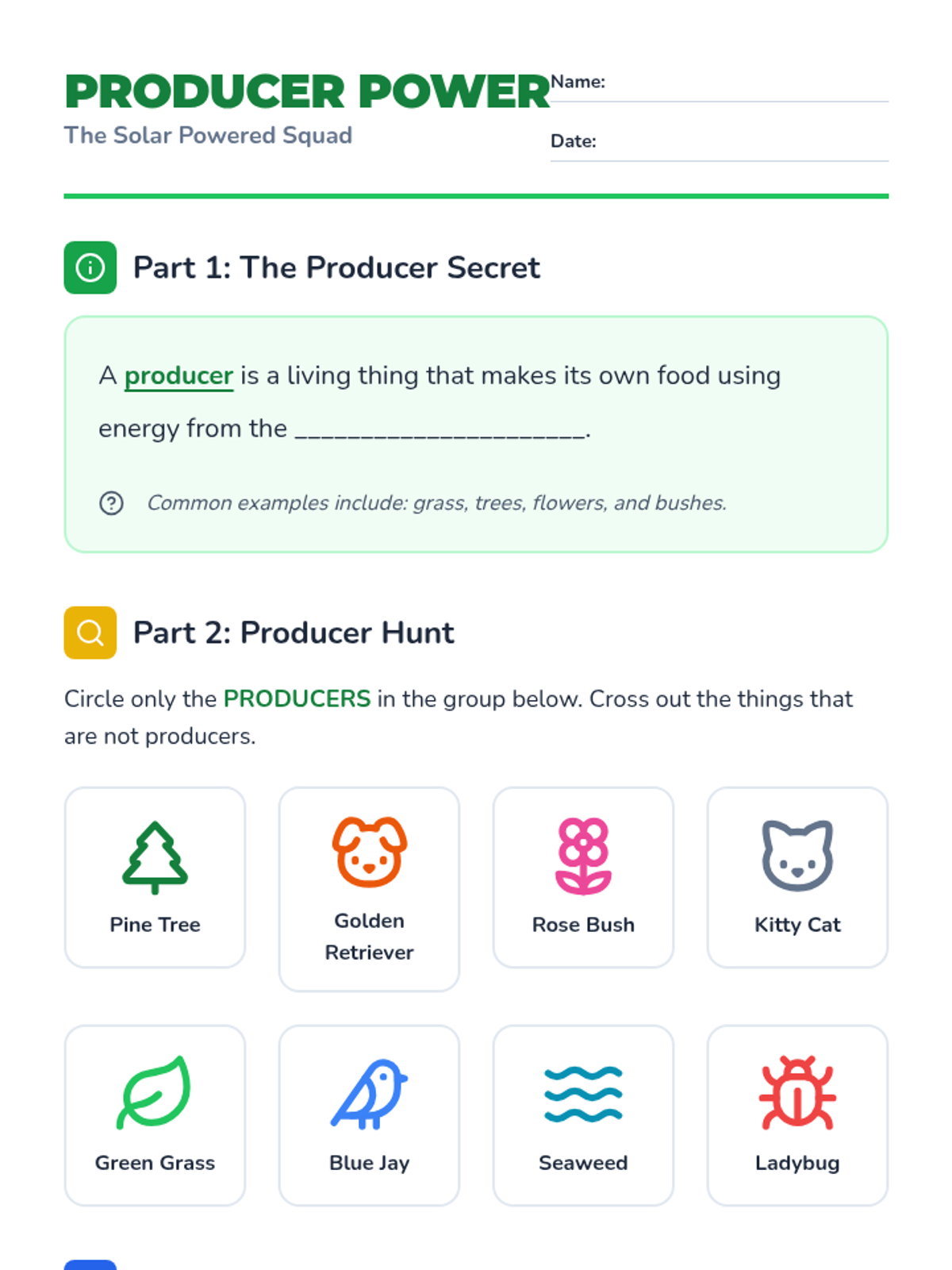
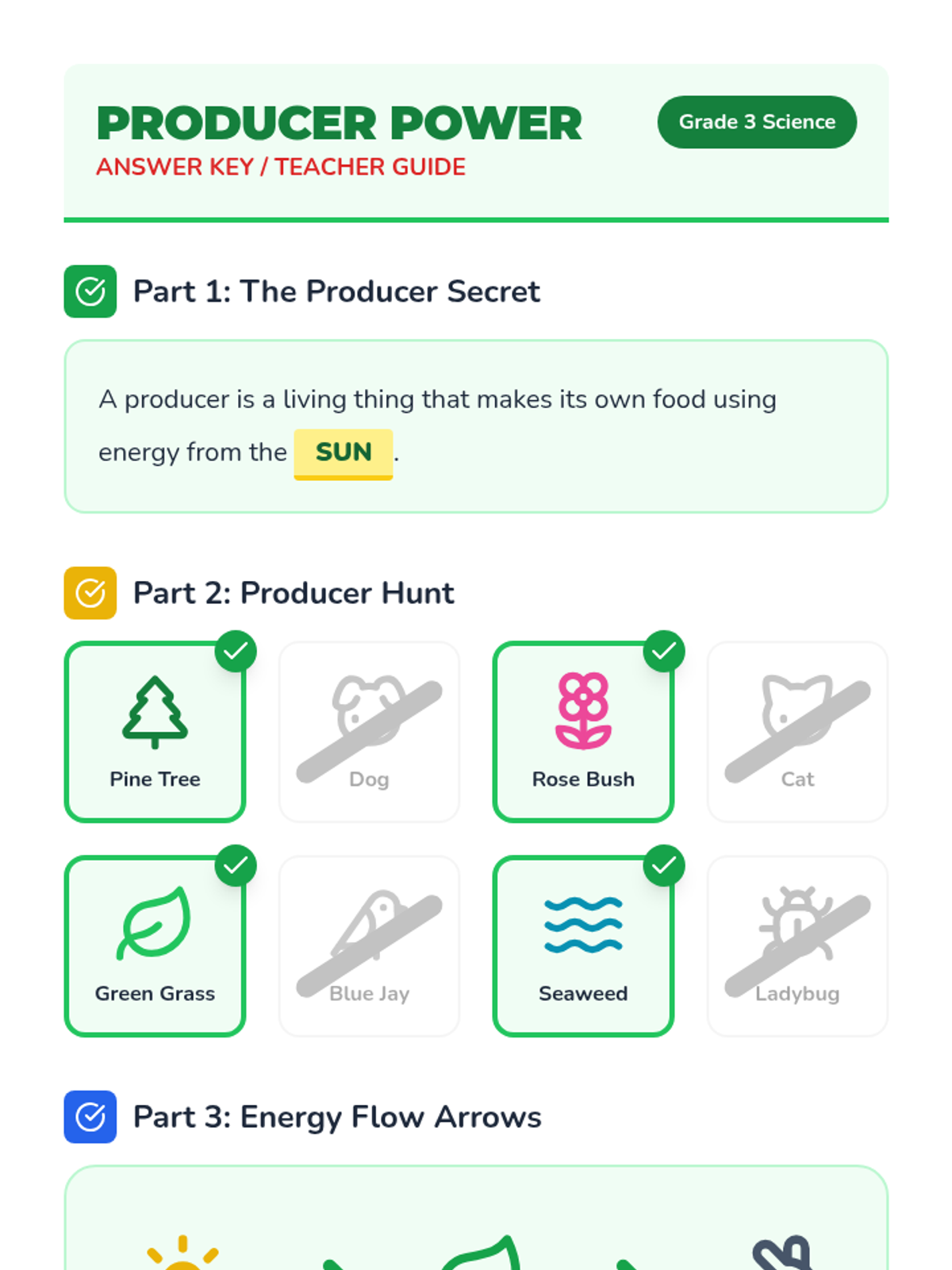
A foundational lesson on food chains for 3rd graders, focusing on producers as the start of energy flow and the correct use of arrows to represent that energy movement.
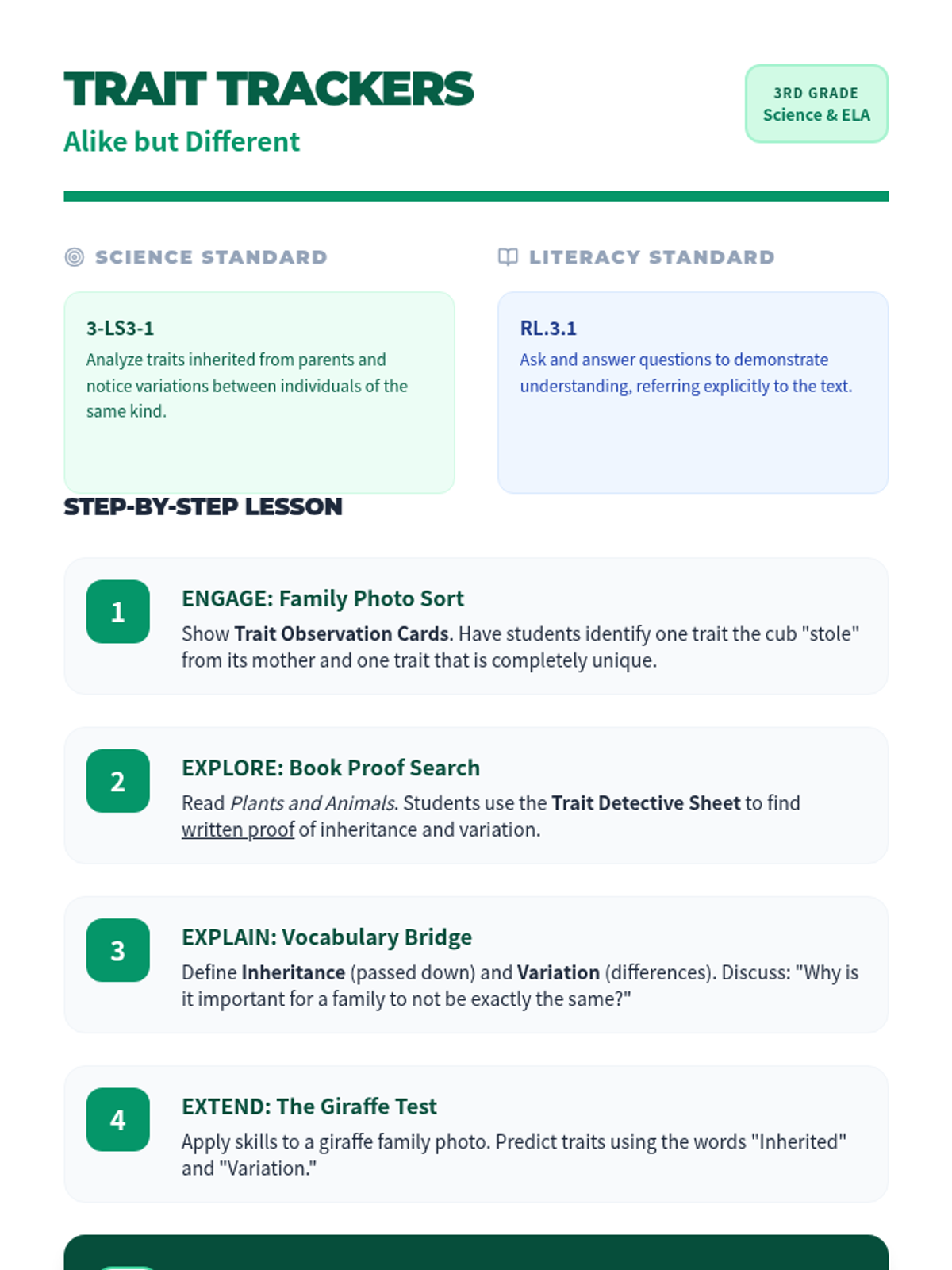
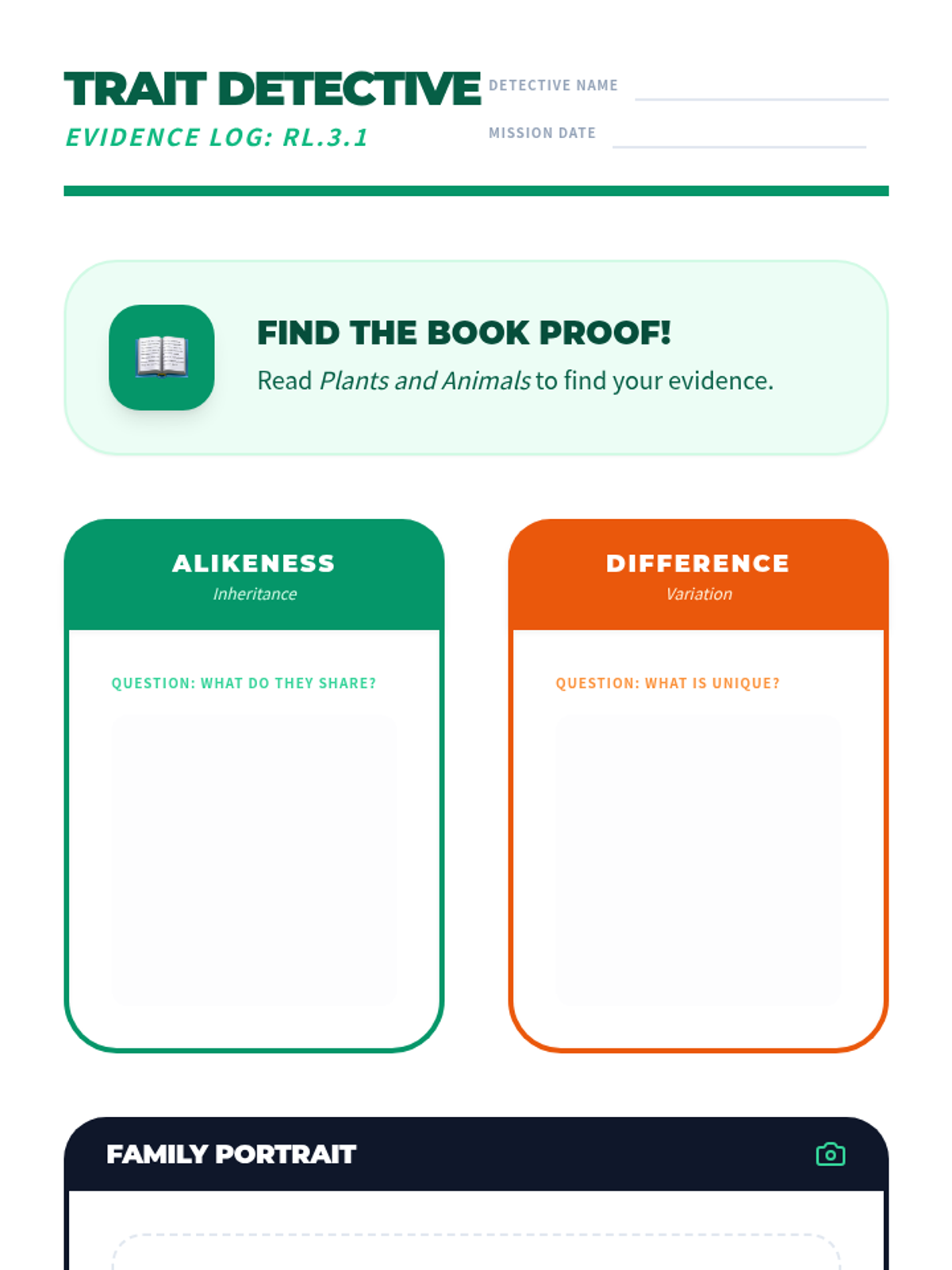
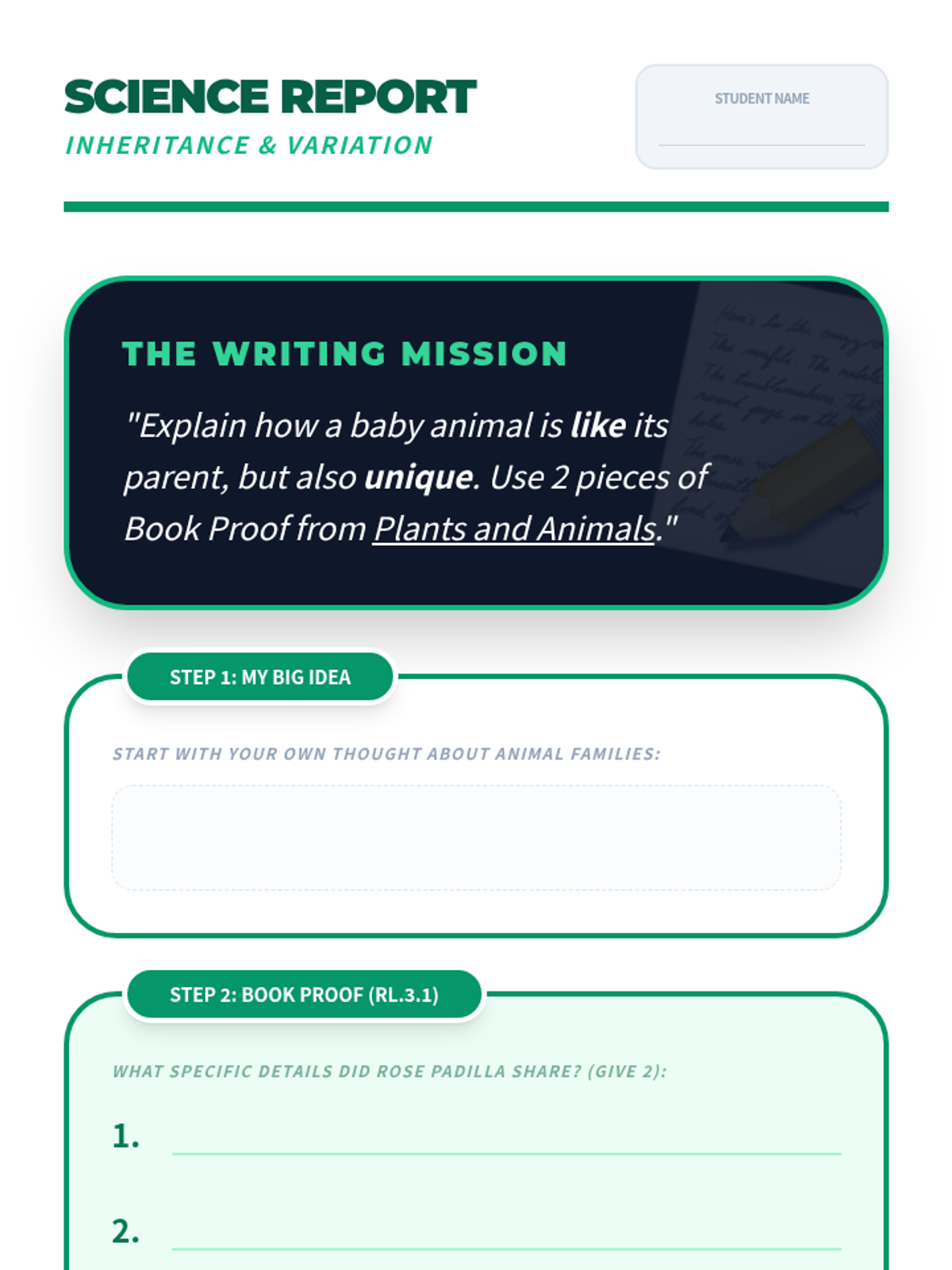
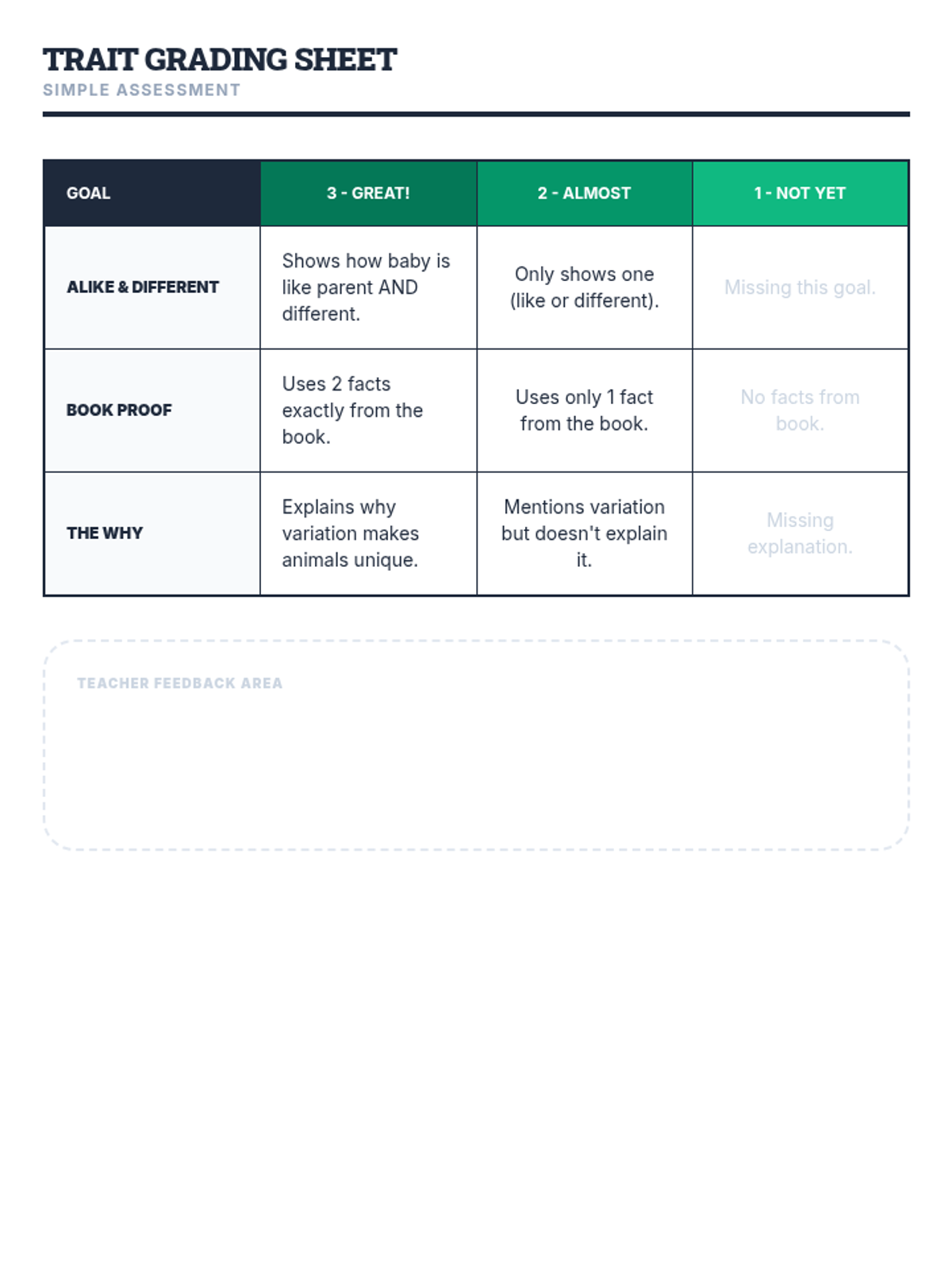
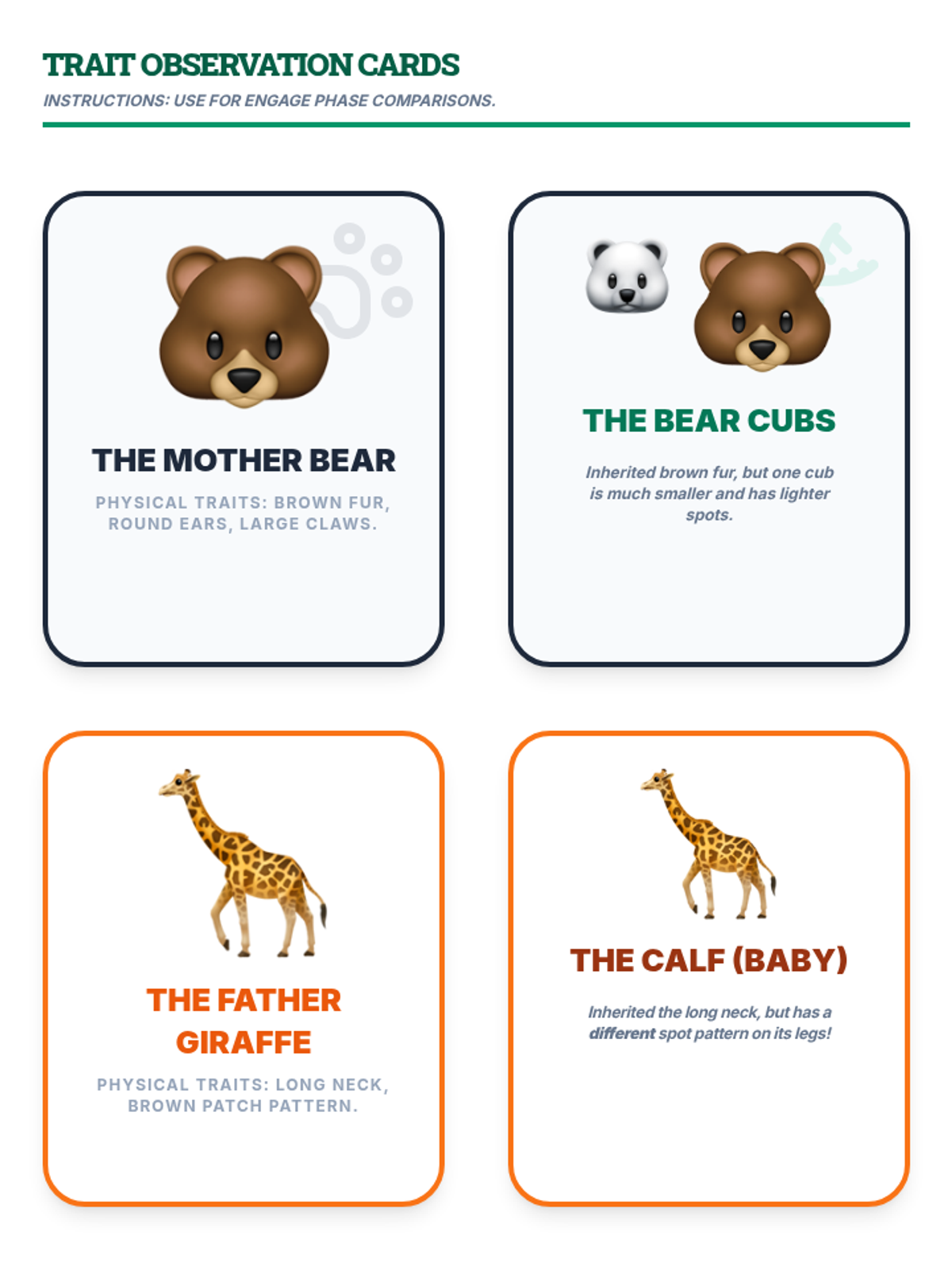
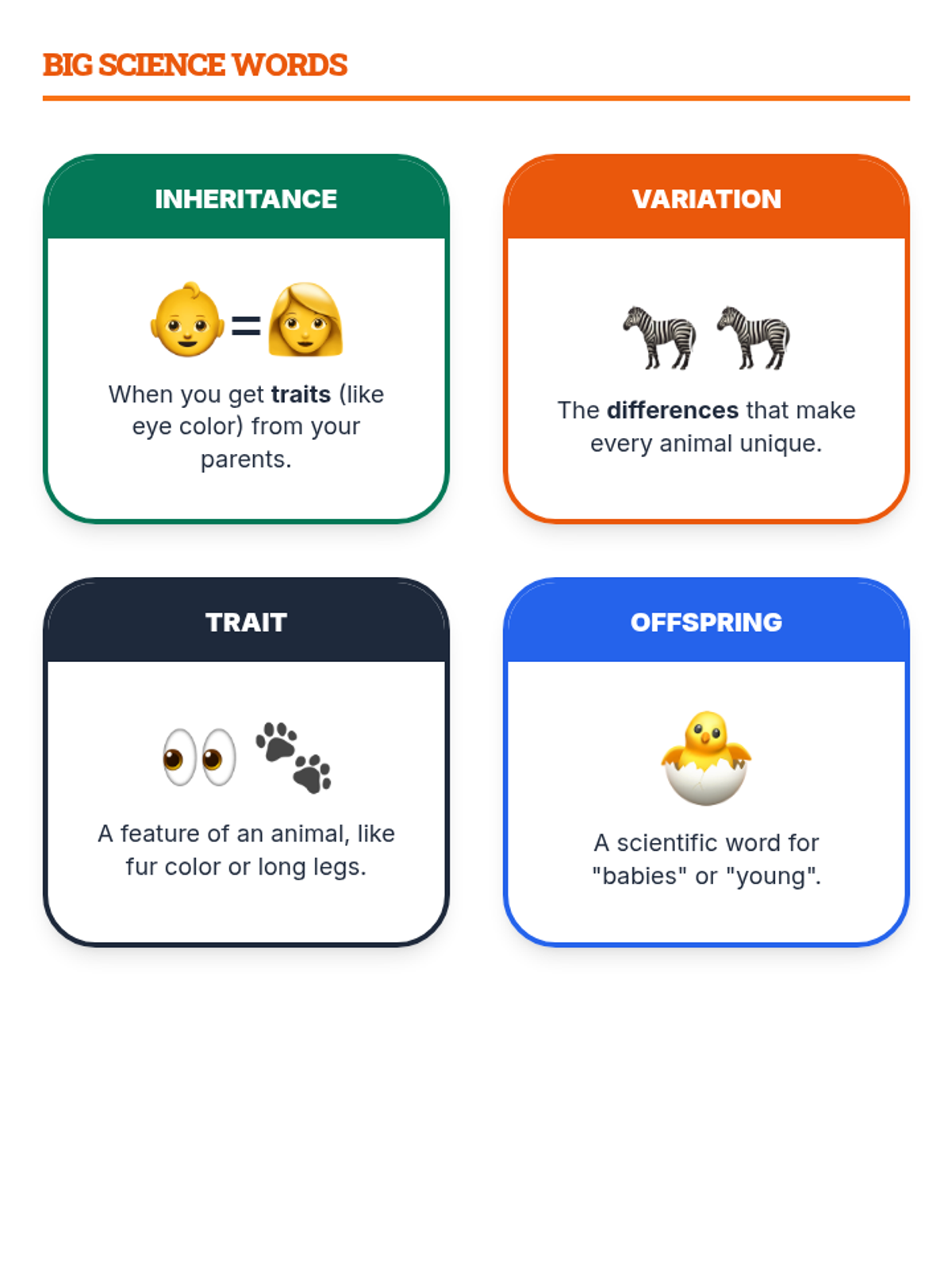
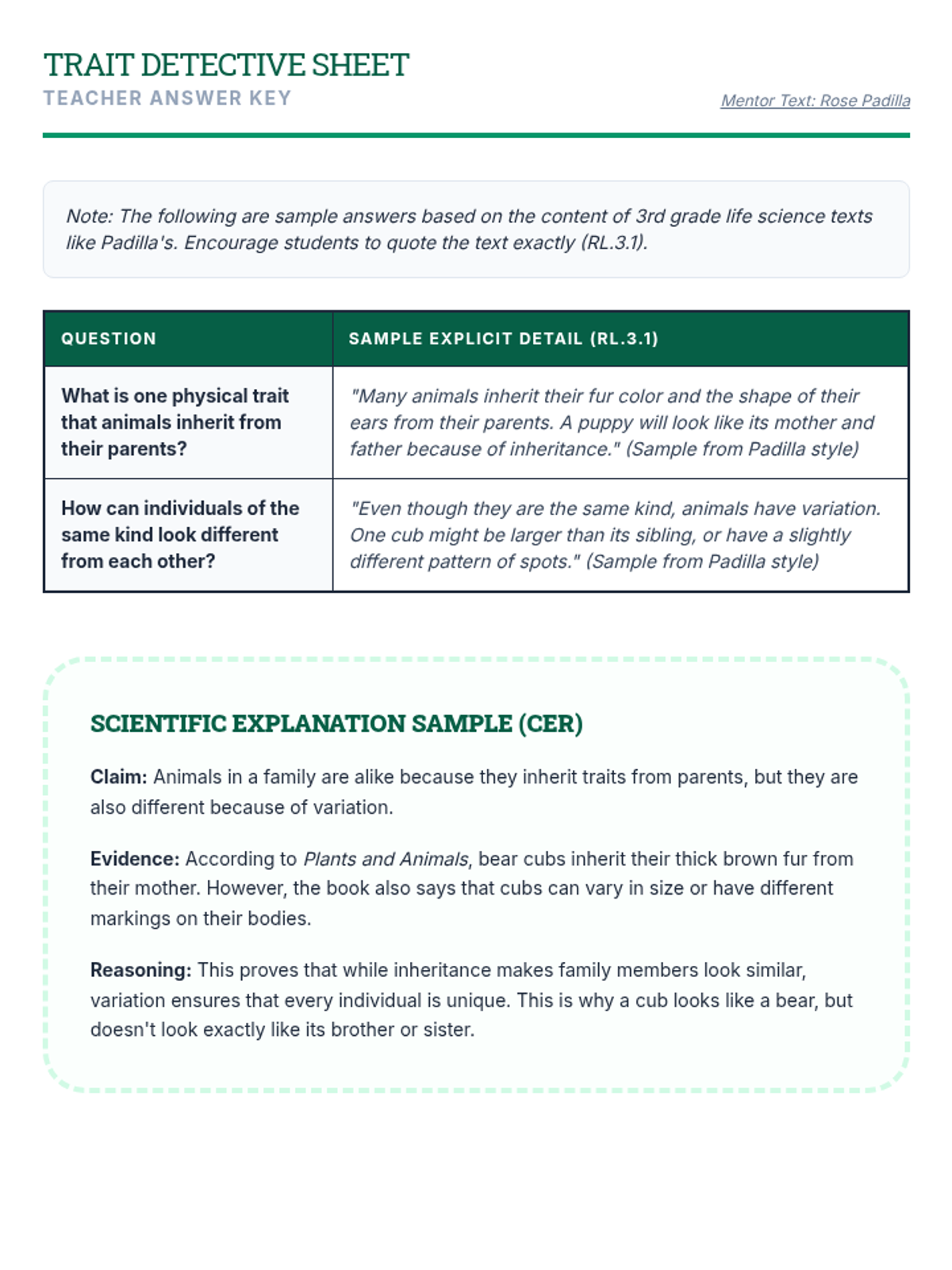
A 3rd-grade integrated science and literacy lesson exploring inheritance and variation in traits. Using 'Plants and Animals' by Rose Padilla, students analyze how animals are like their parents yet different from each other, gathering explicit text evidence to support scientific explanations.
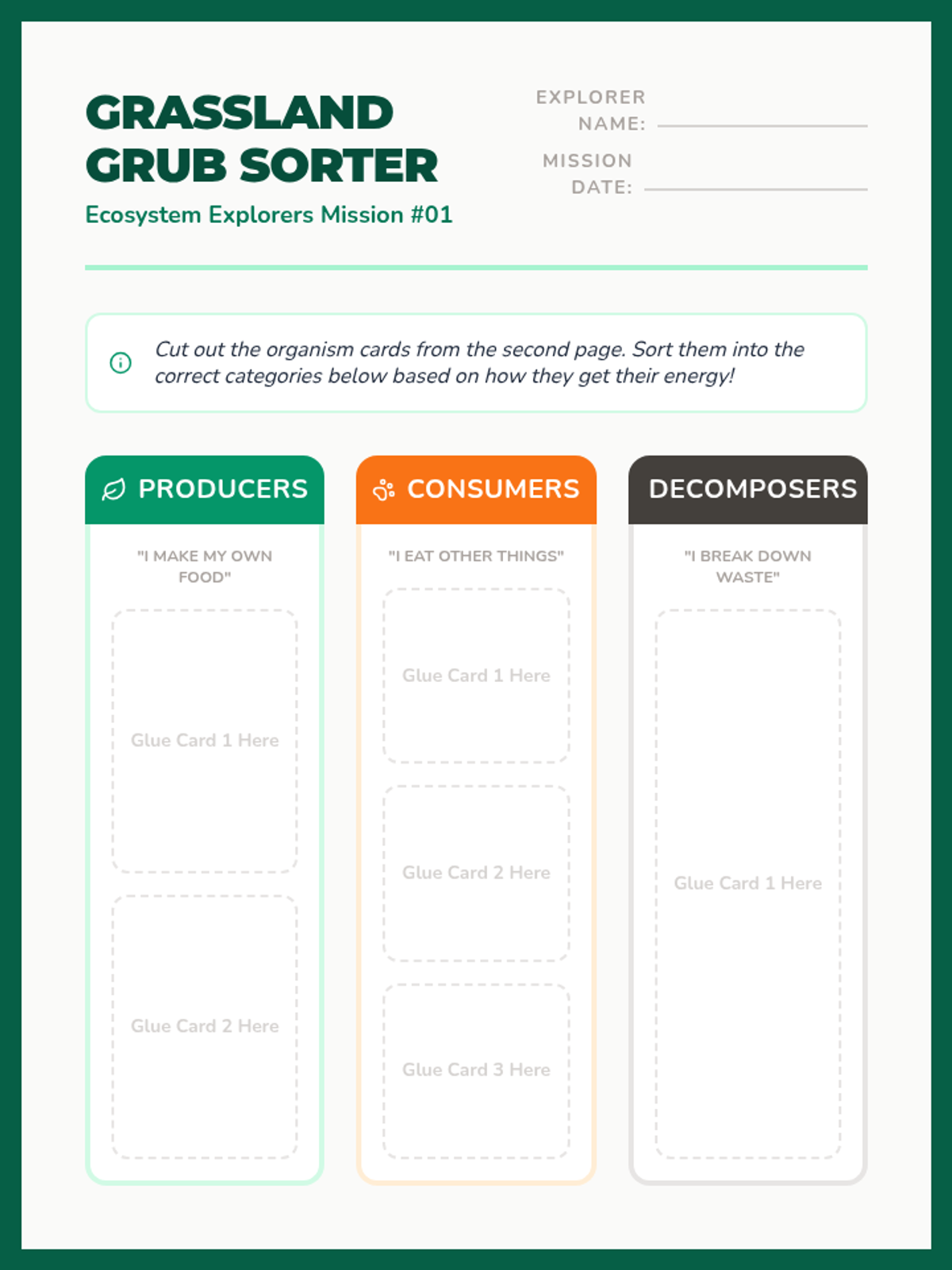
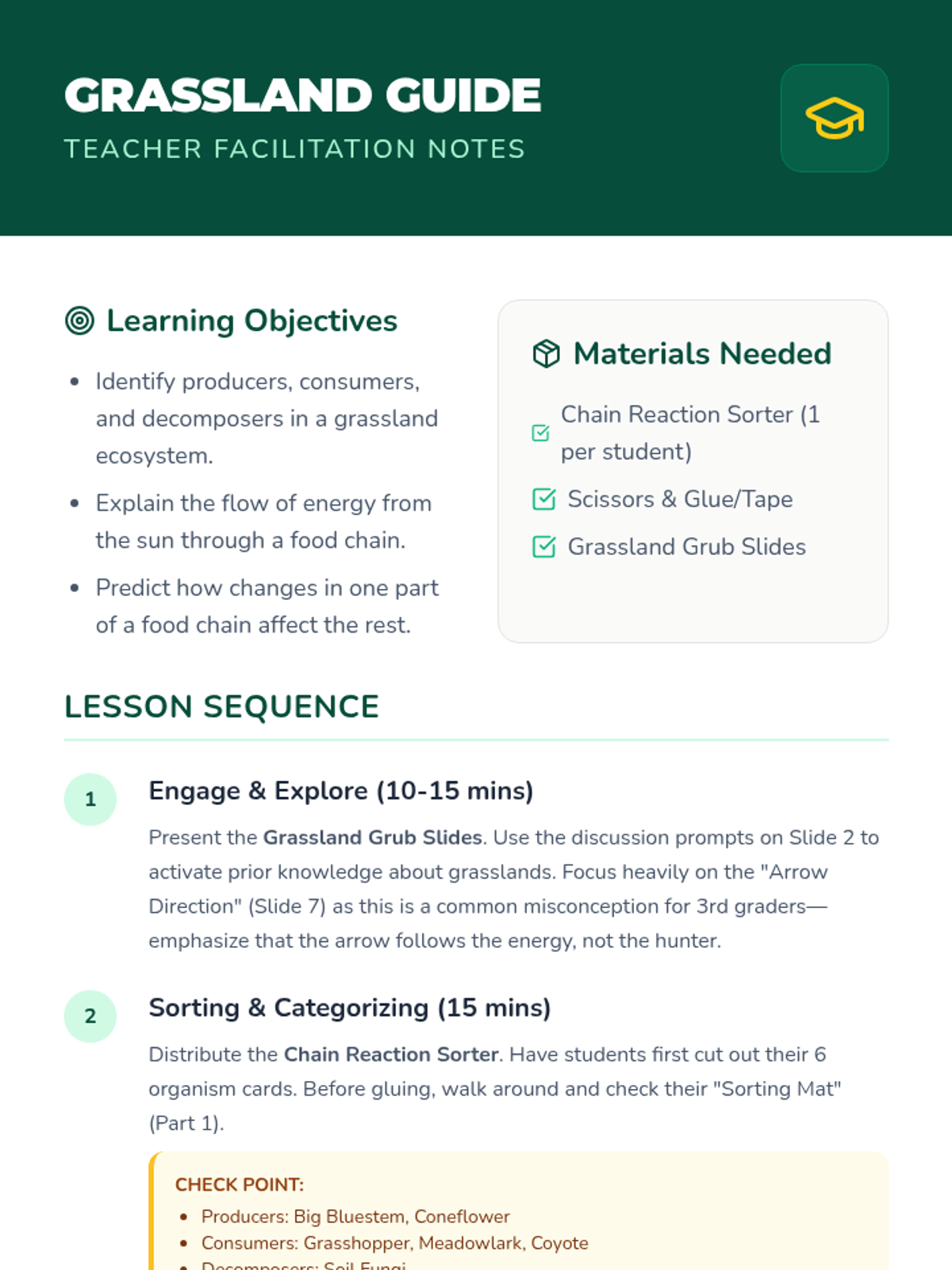
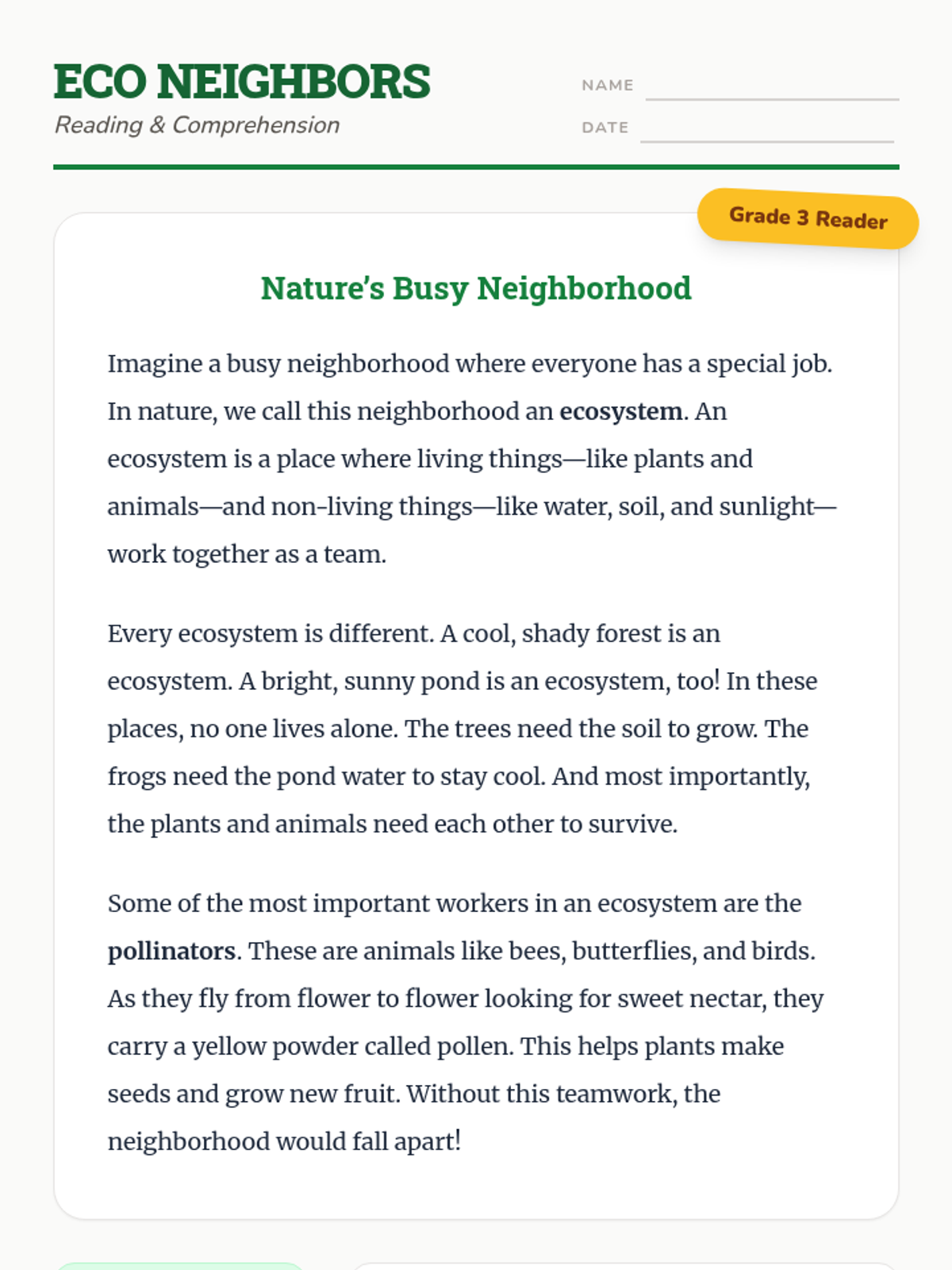
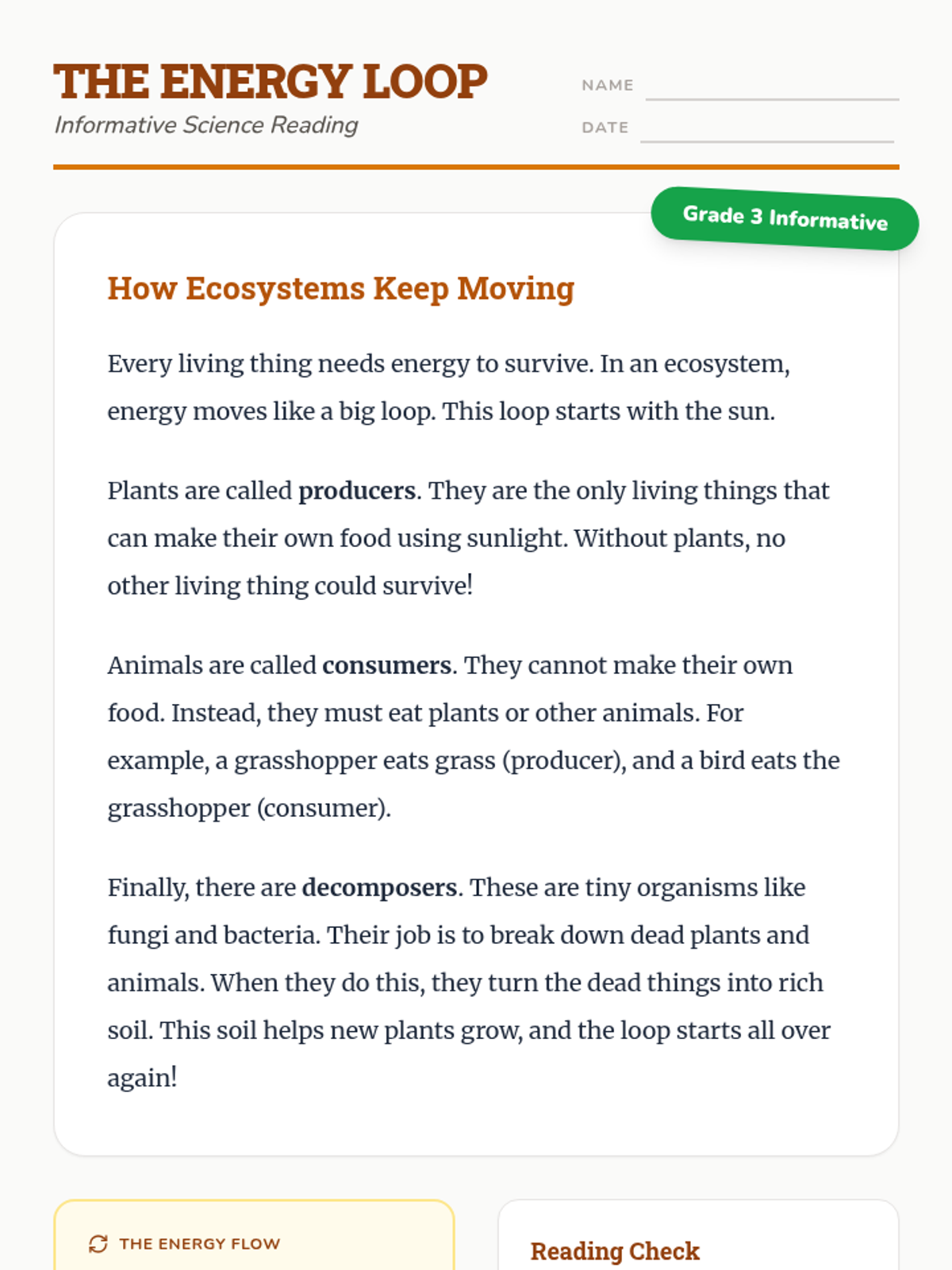
Students explore the flow of energy in a grassland ecosystem by identifying producers, consumers, and decomposers. They will construct their own food chains through a hands-on sorting and linking activity.
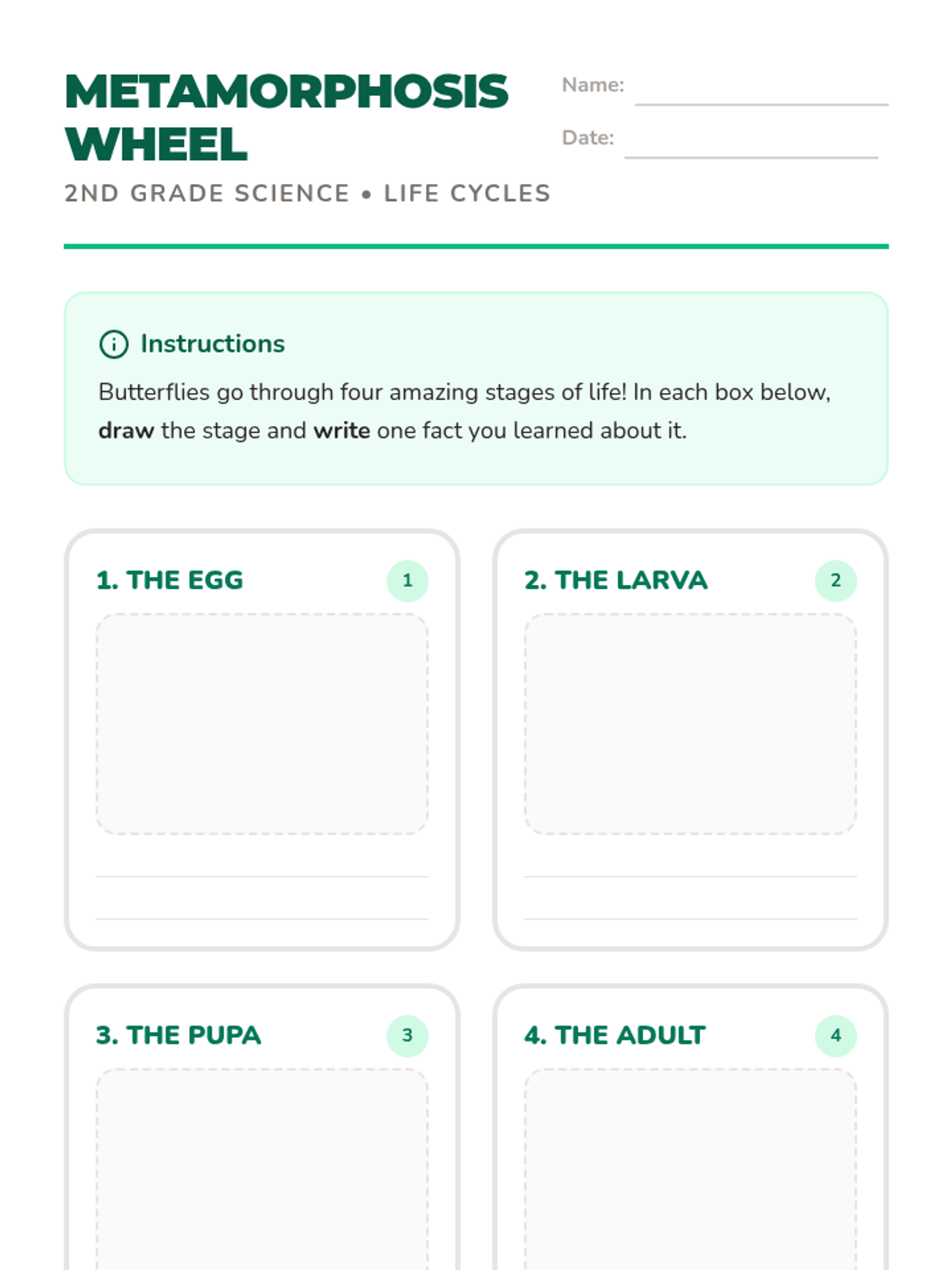
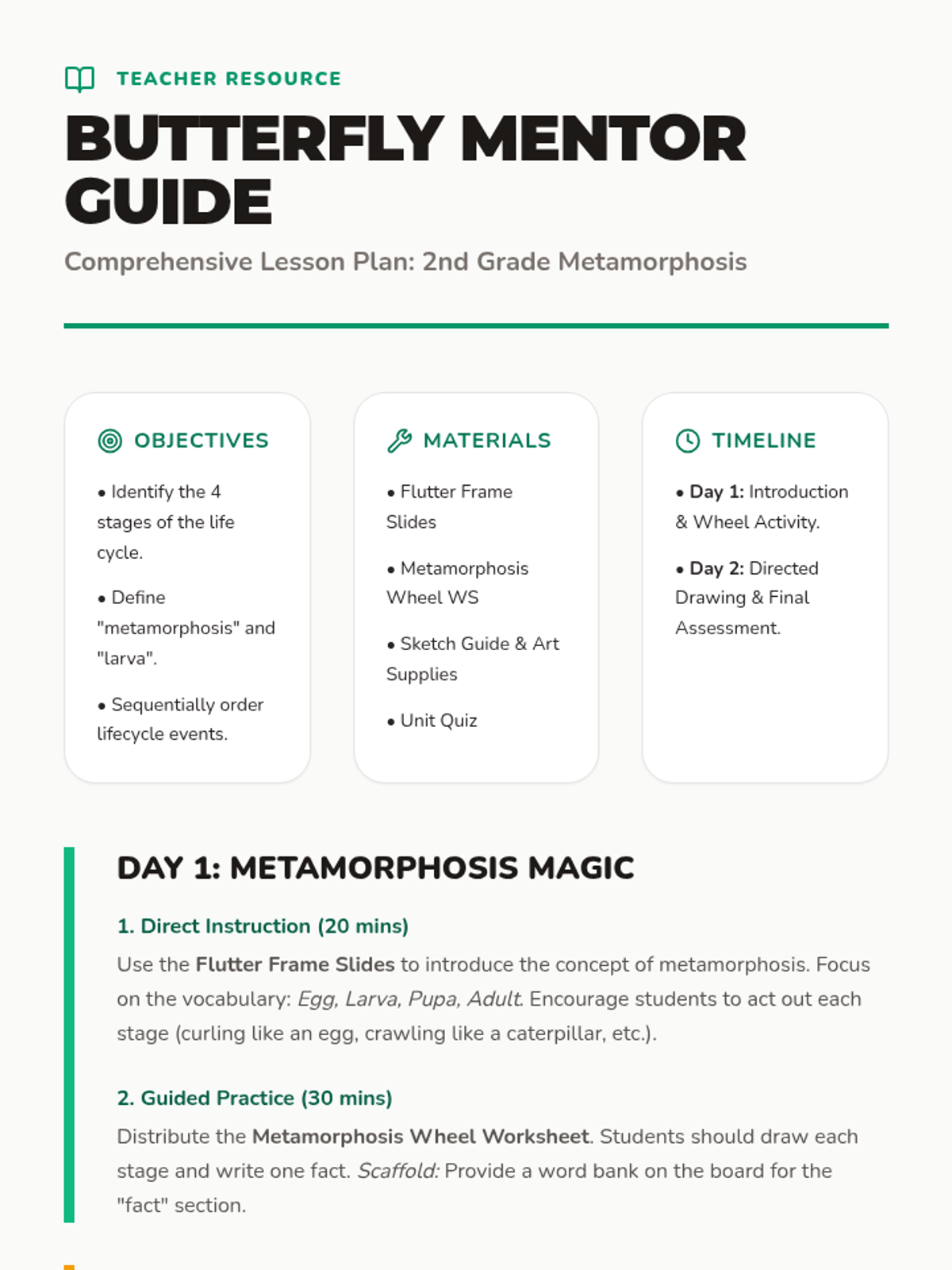
A deep dive into the four stages of a butterfly's life cycle: egg, larva, pupa, and adult. Students will learn the vocabulary and science behind metamorphosis.
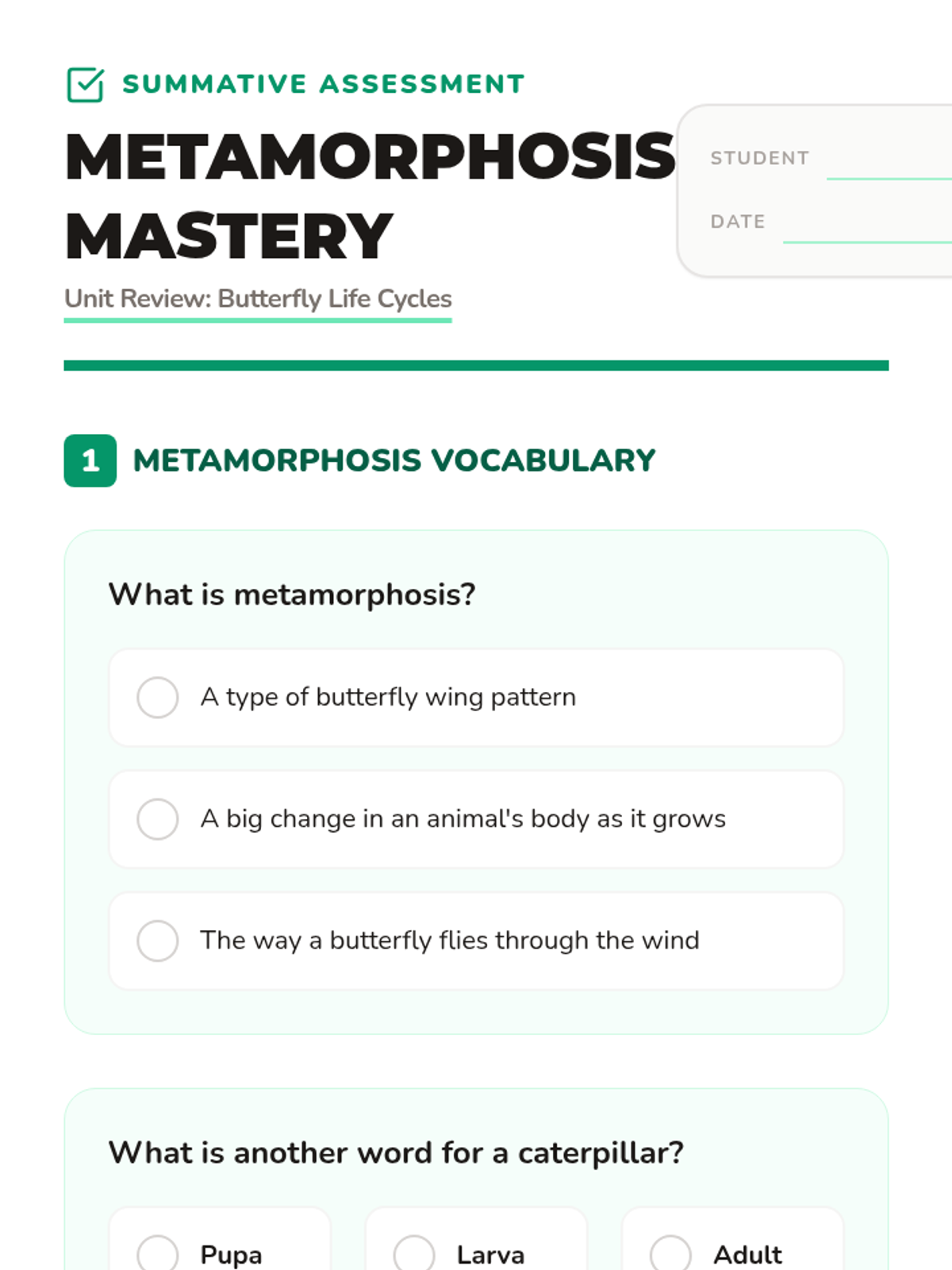
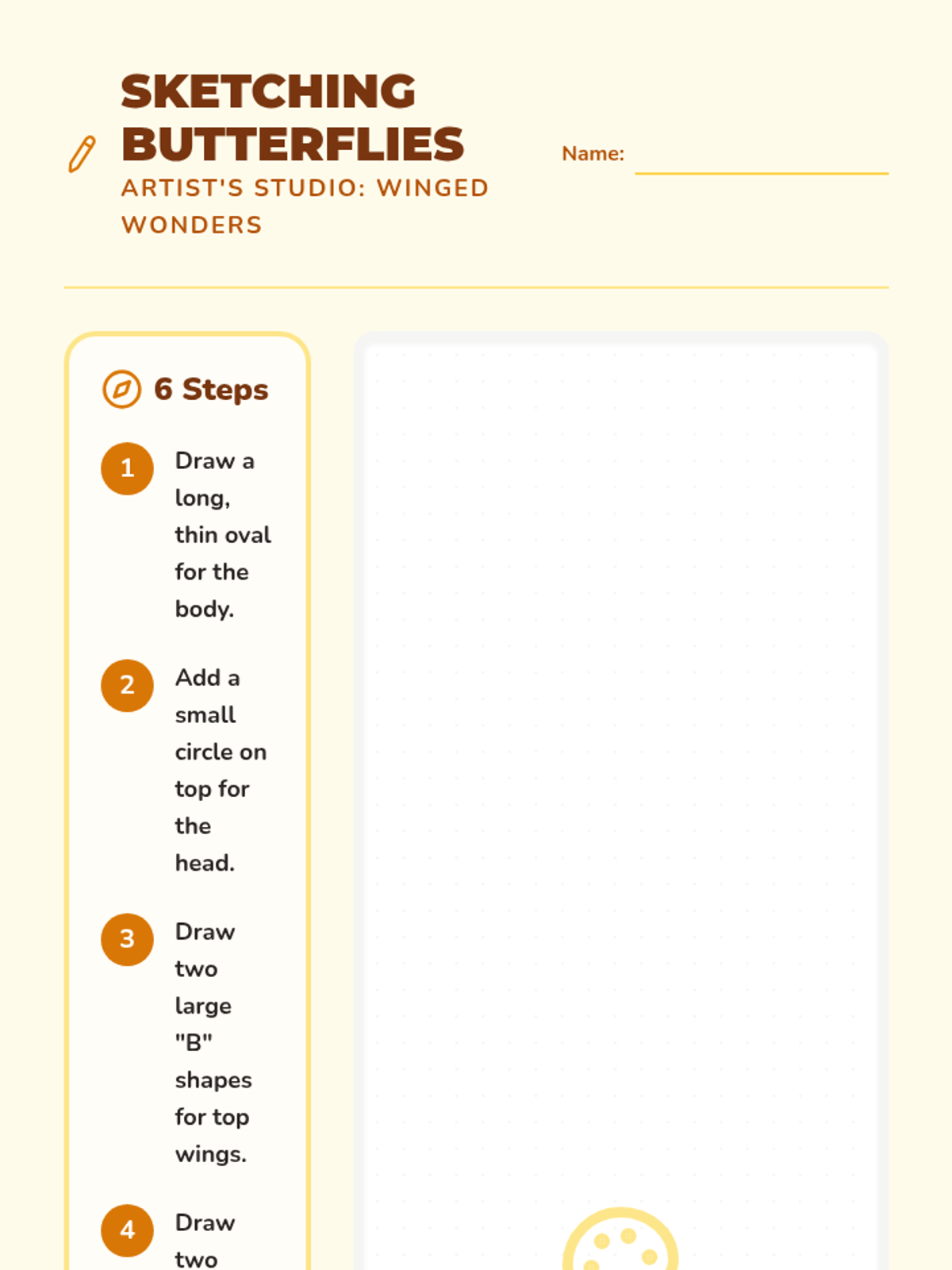
Students apply their knowledge through a directed drawing of a butterfly and complete a summative assessment on the life cycle stages and vocabulary.
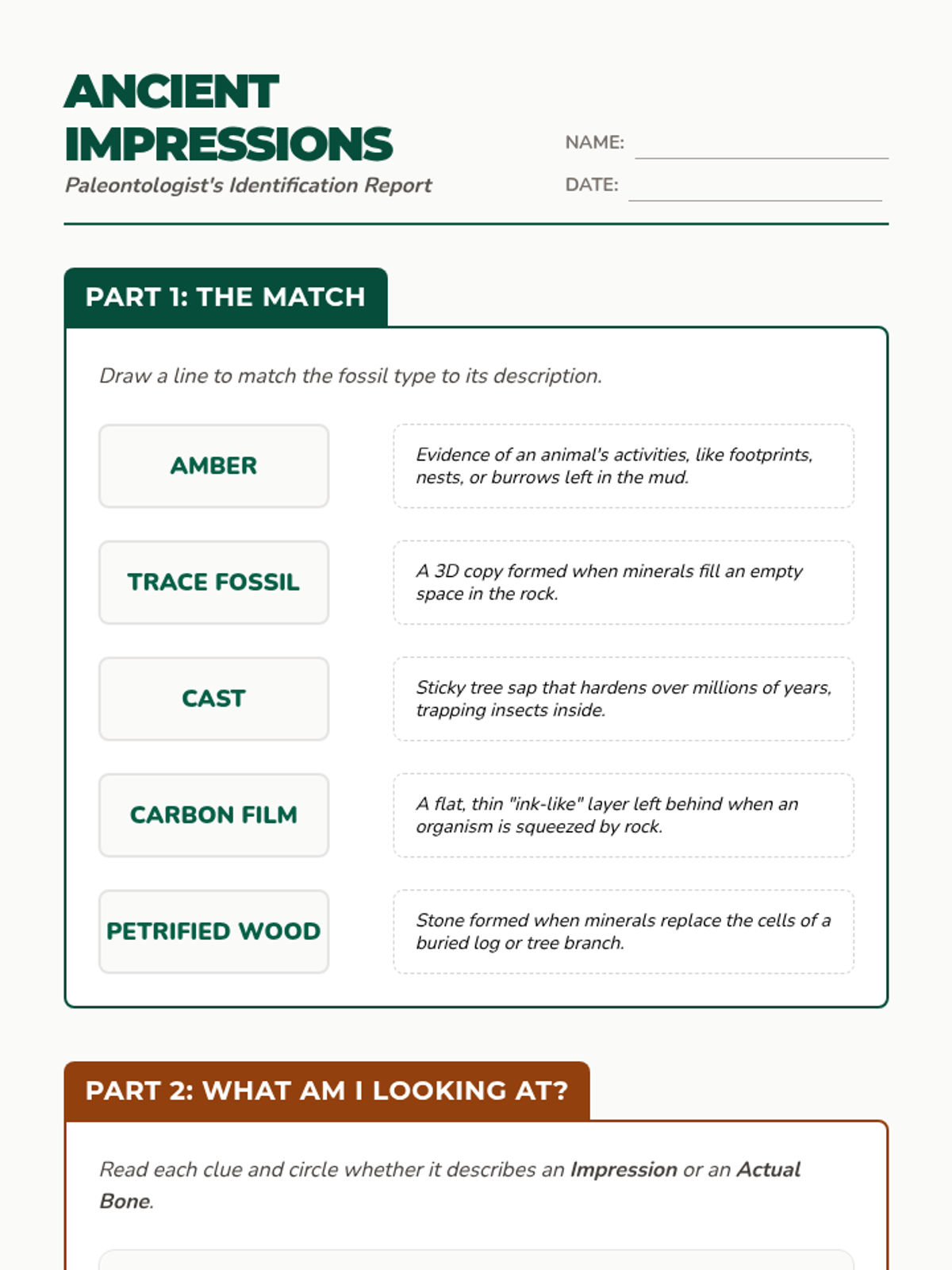
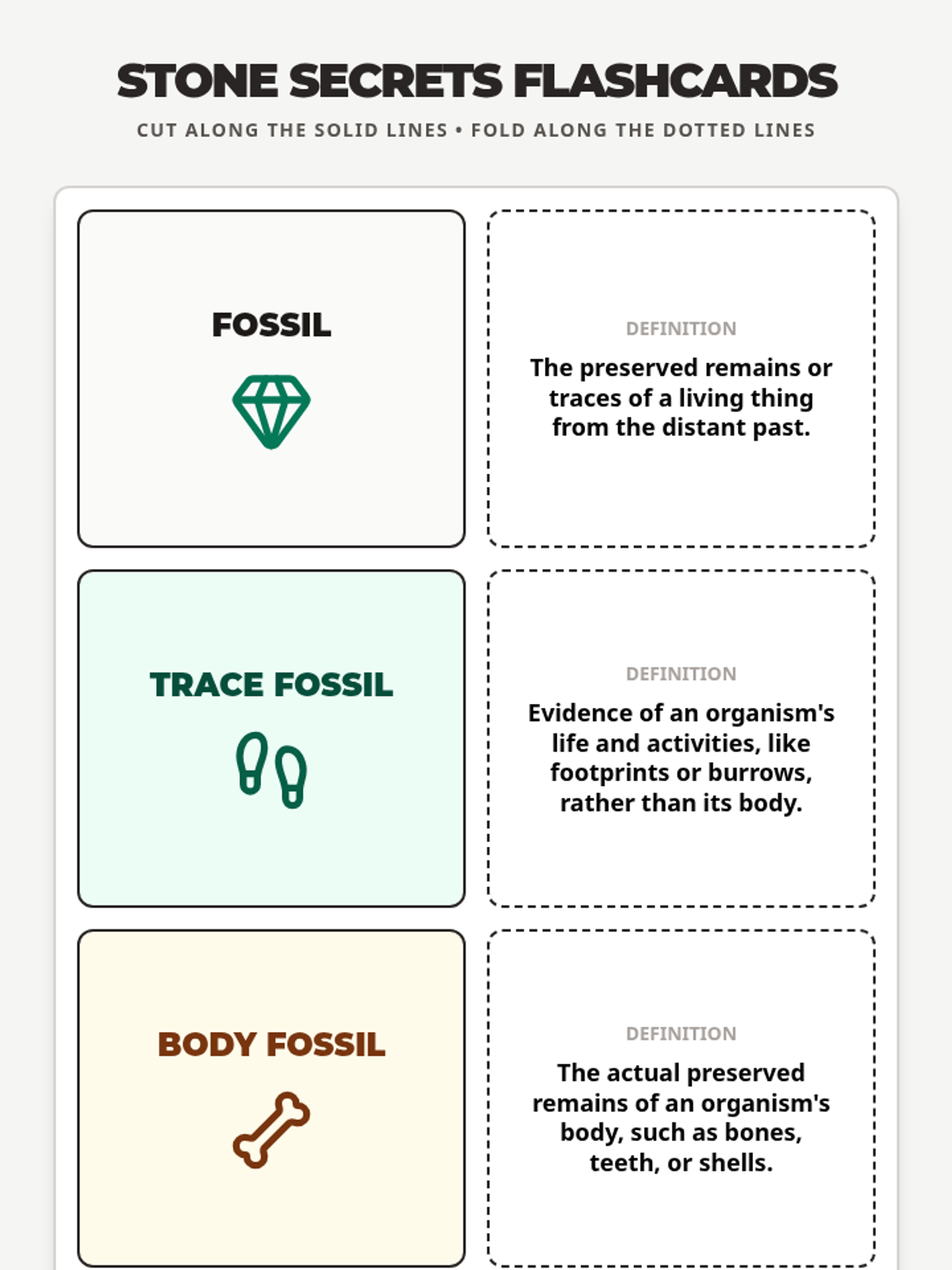
Students explore the various ways life from the past became preserved in stone, distinguishing between body and trace fossils while identifying specific preservation methods like amber, casts, and carbon films.
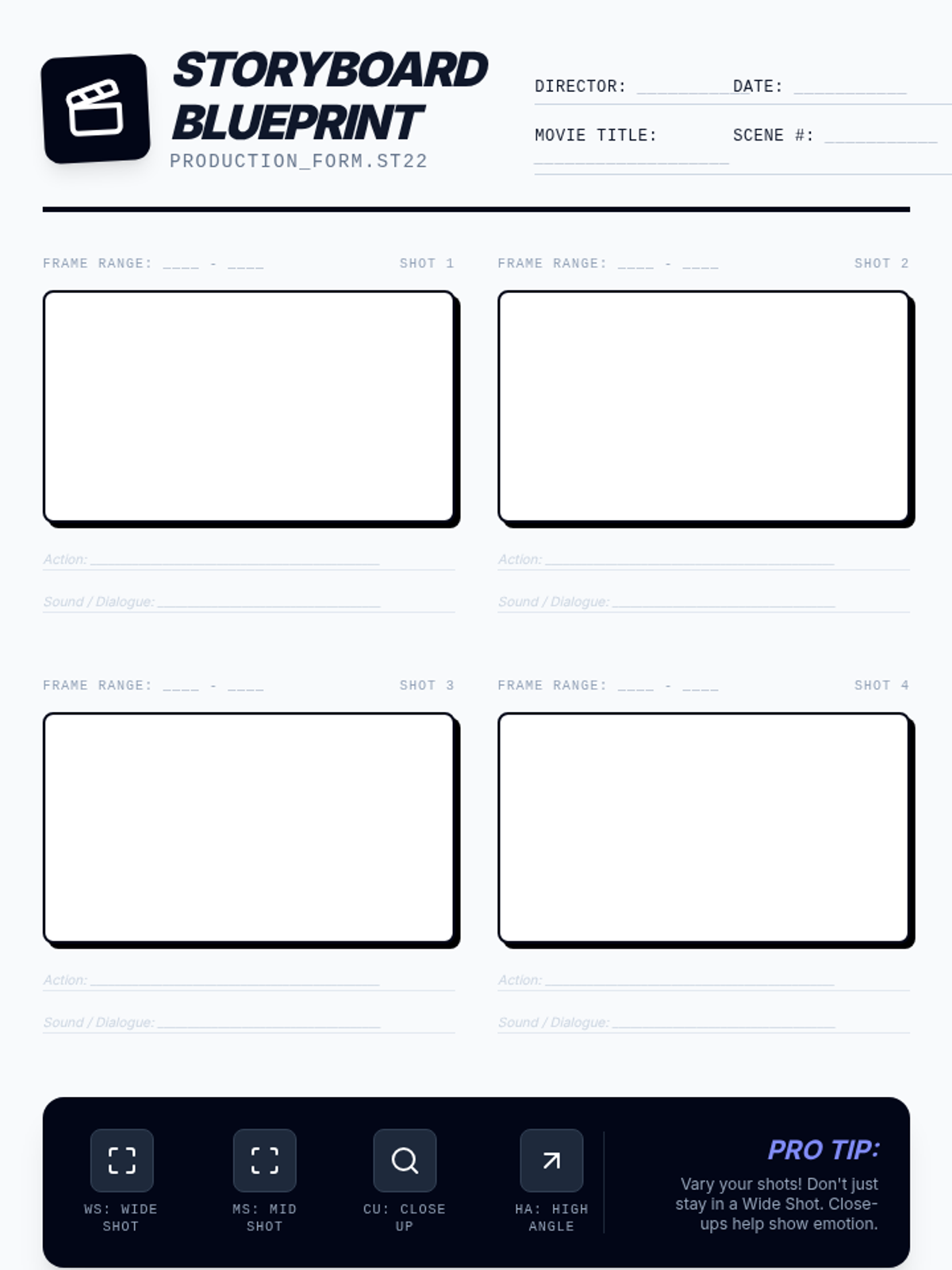
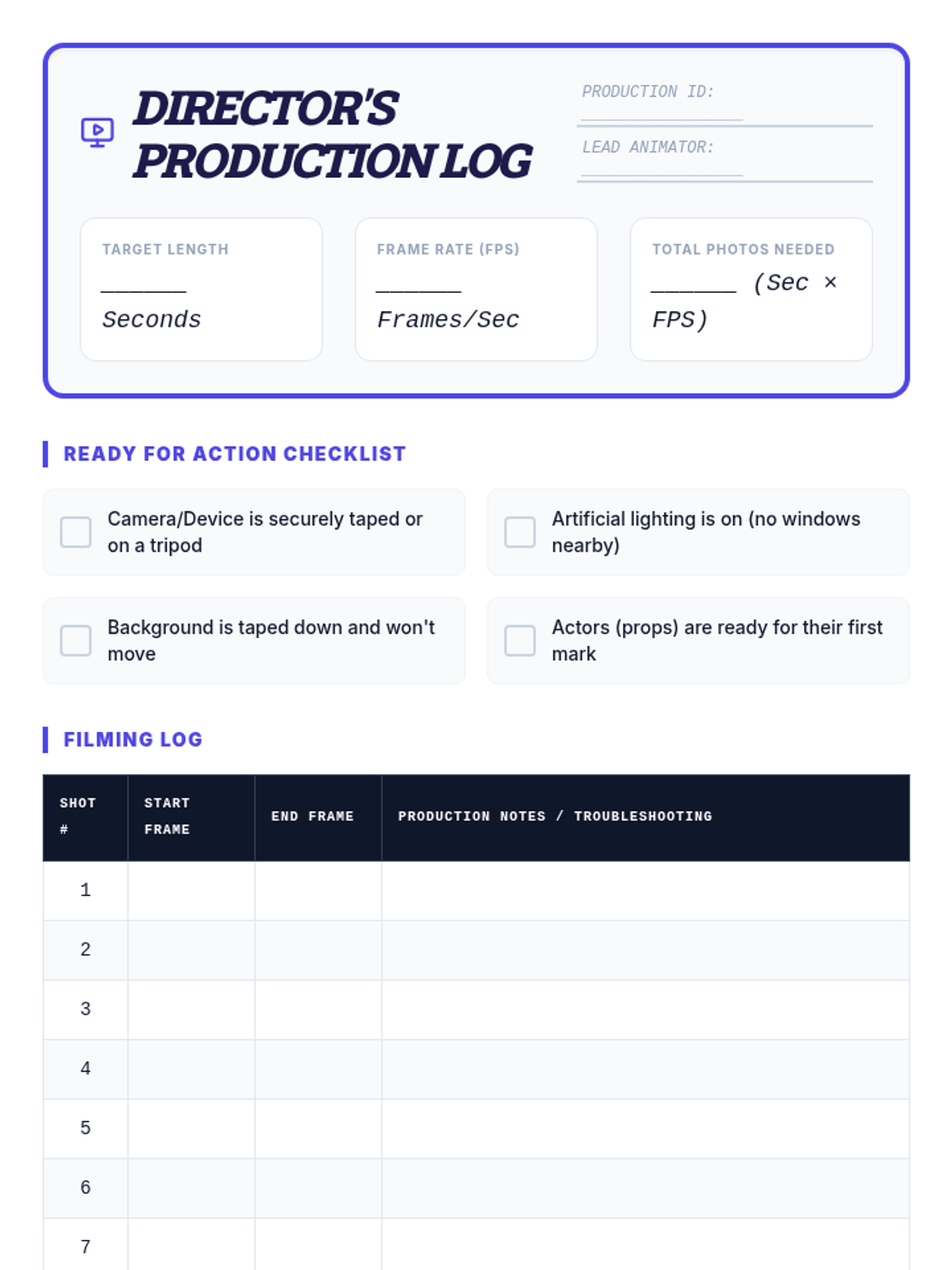
A hands-on STEM lesson for 6th-grade students where they learn the physics and technology of stop-motion animation, from frame rates and persistence of vision to storyboarding and filming their own creative shorts.
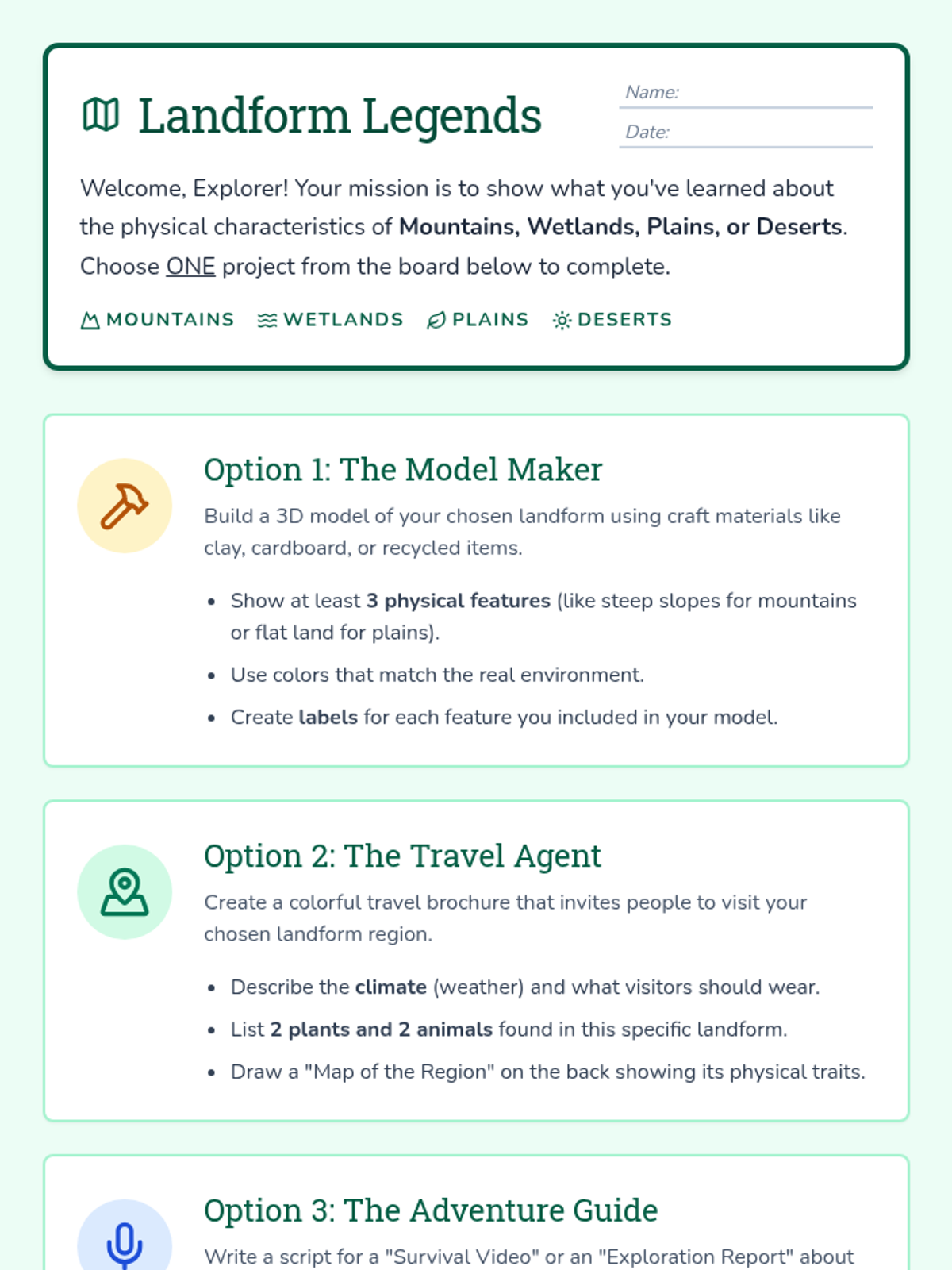
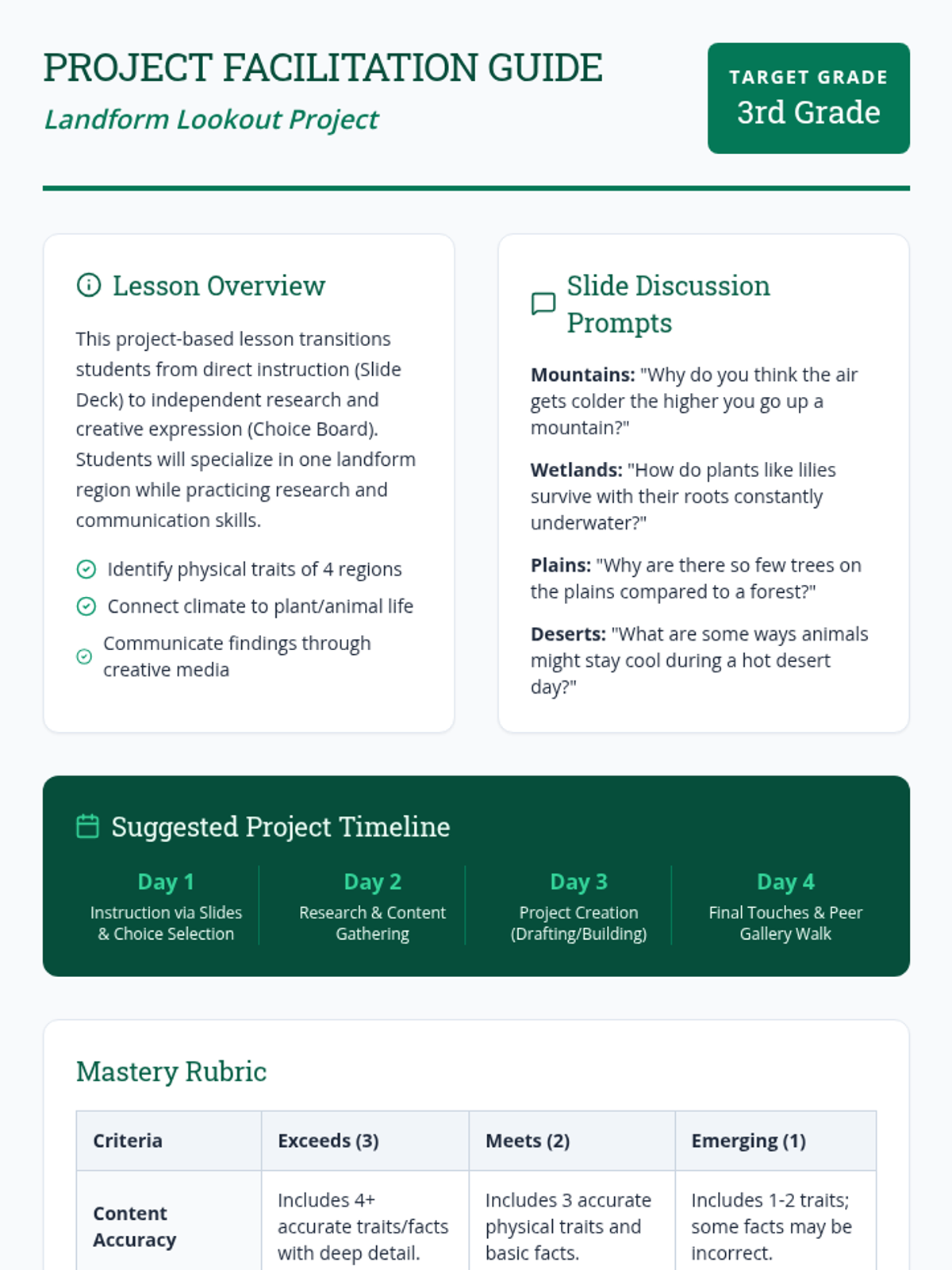
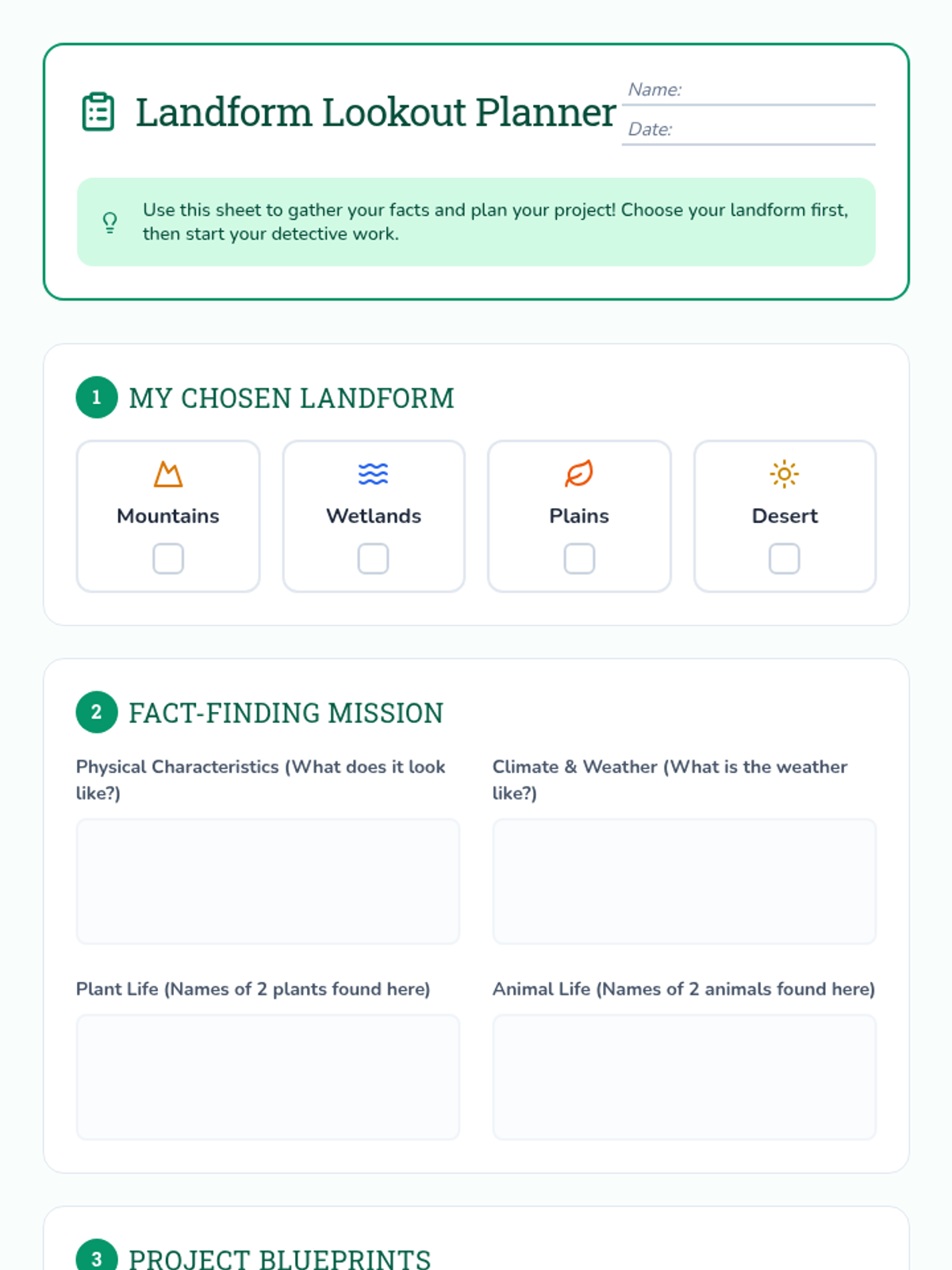
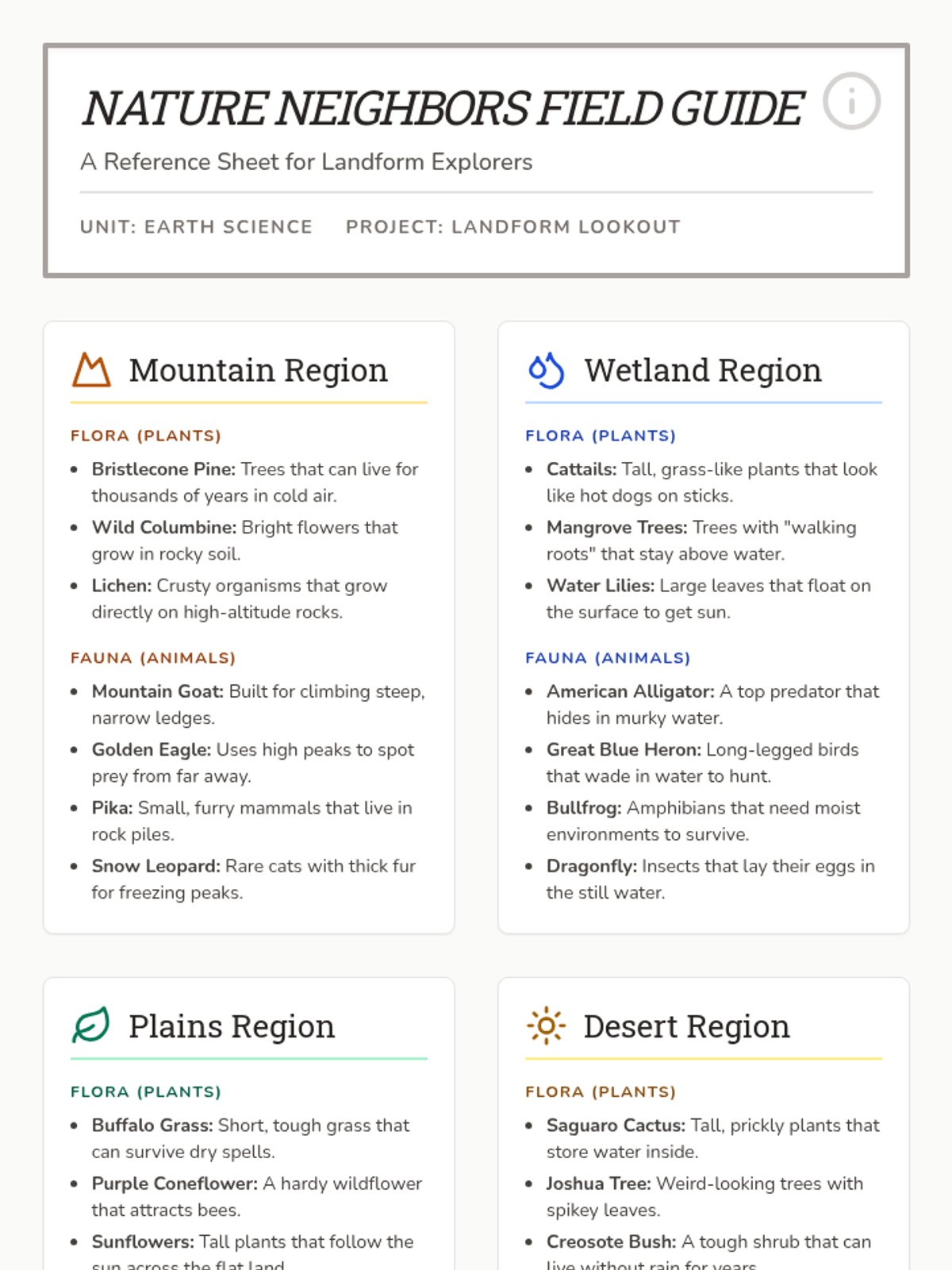
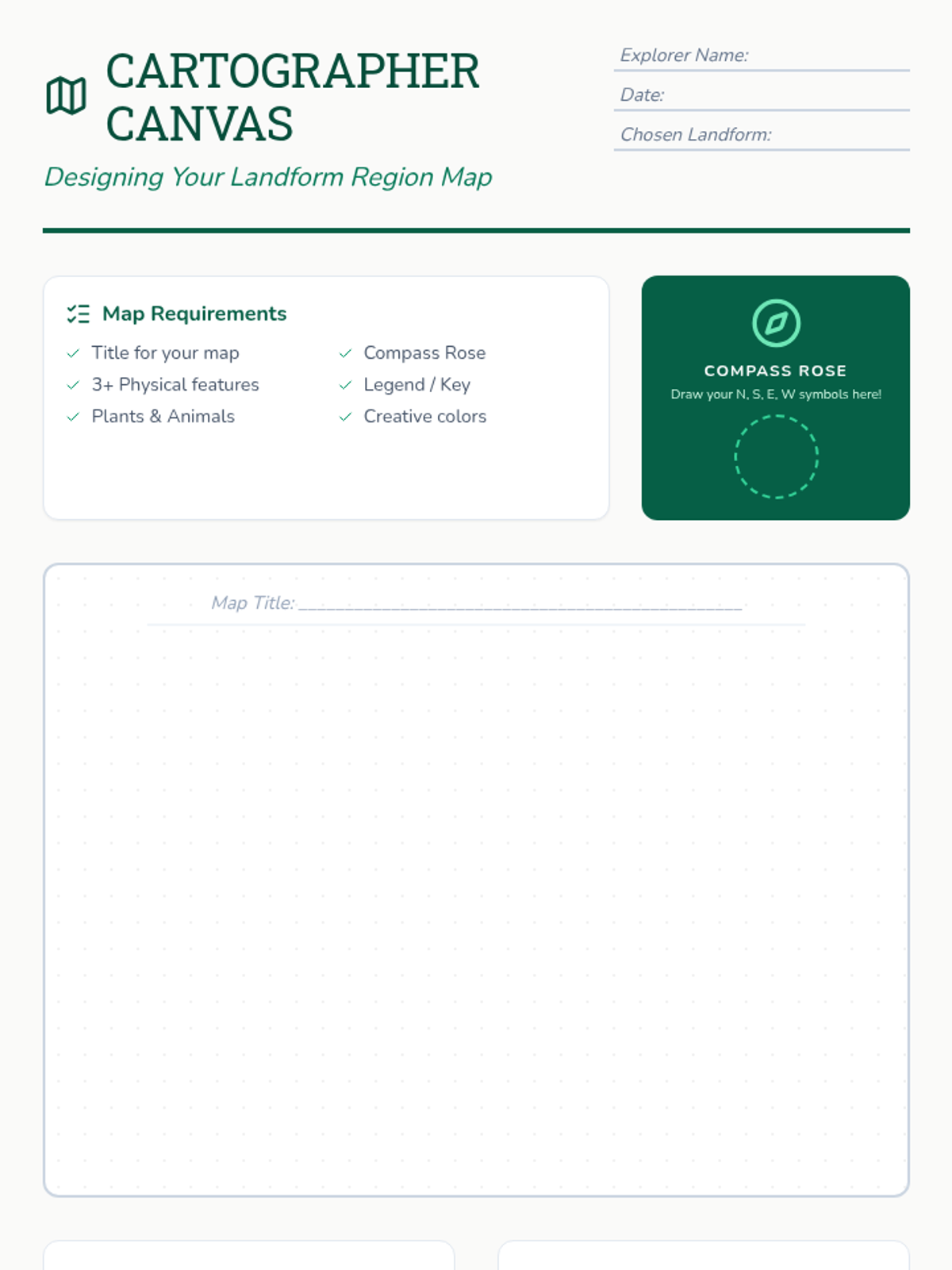
A project-based lesson where 3rd-grade students explore the physical characteristics of mountains, wetlands, plains, and deserts through a variety of creative choices.
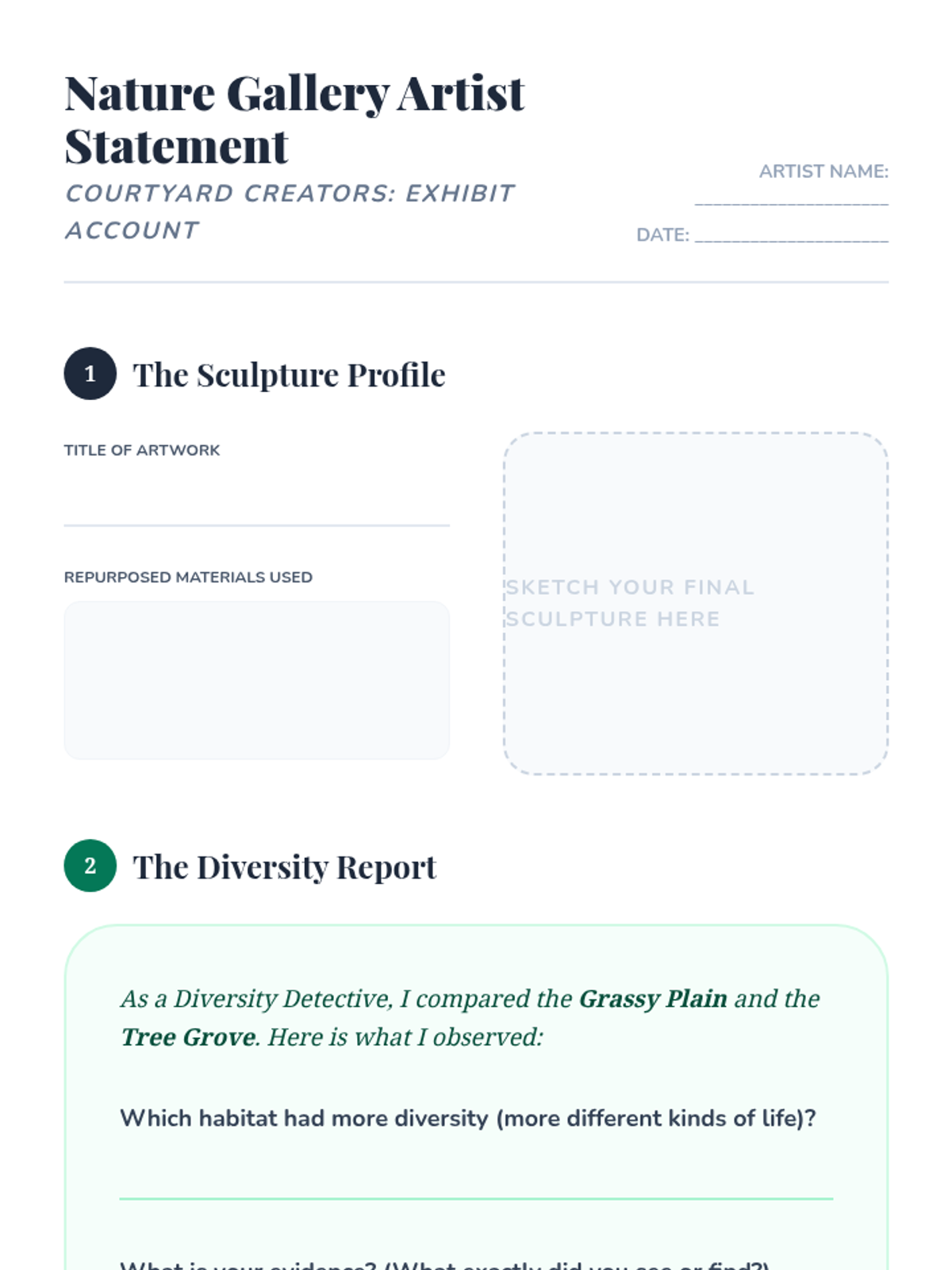
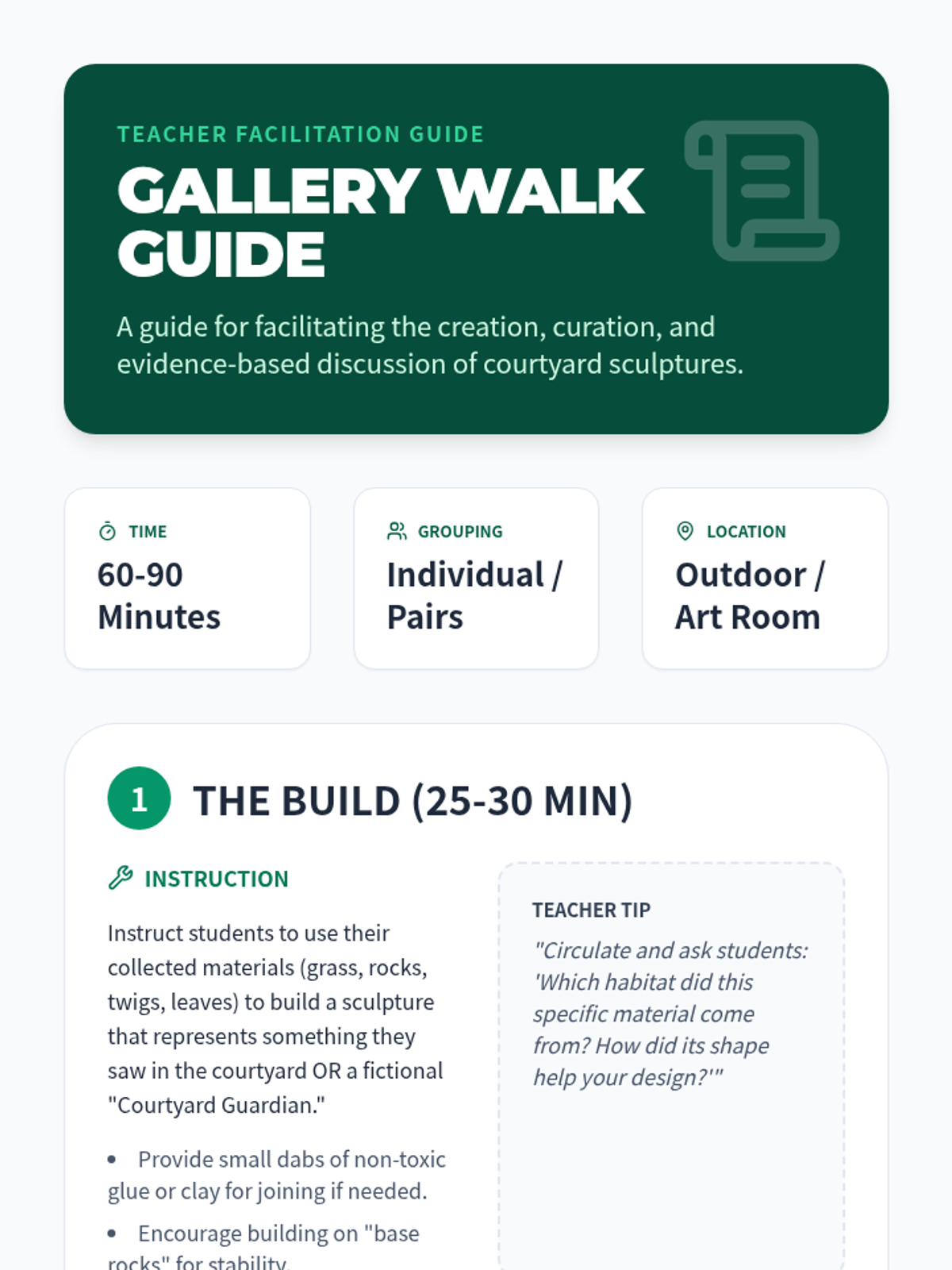
Students use their collected courtyard materials to build sculptures, then write an evidence-based account comparing the diversity they observed in the two habitats.
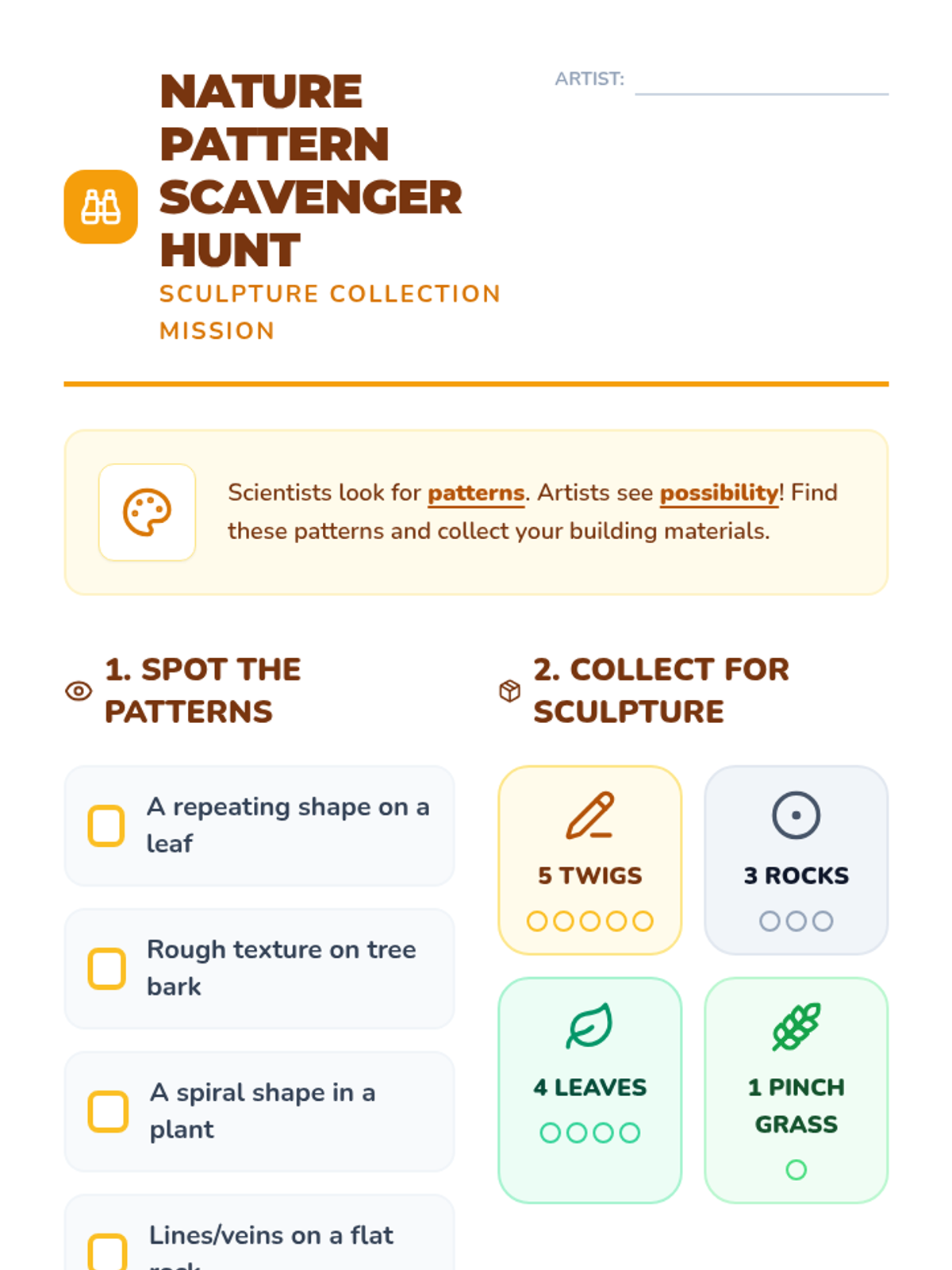
A focused scavenger hunt where students look for patterns in nature and collect natural materials like twigs, leaves, and rocks for their artistic repurposing project.
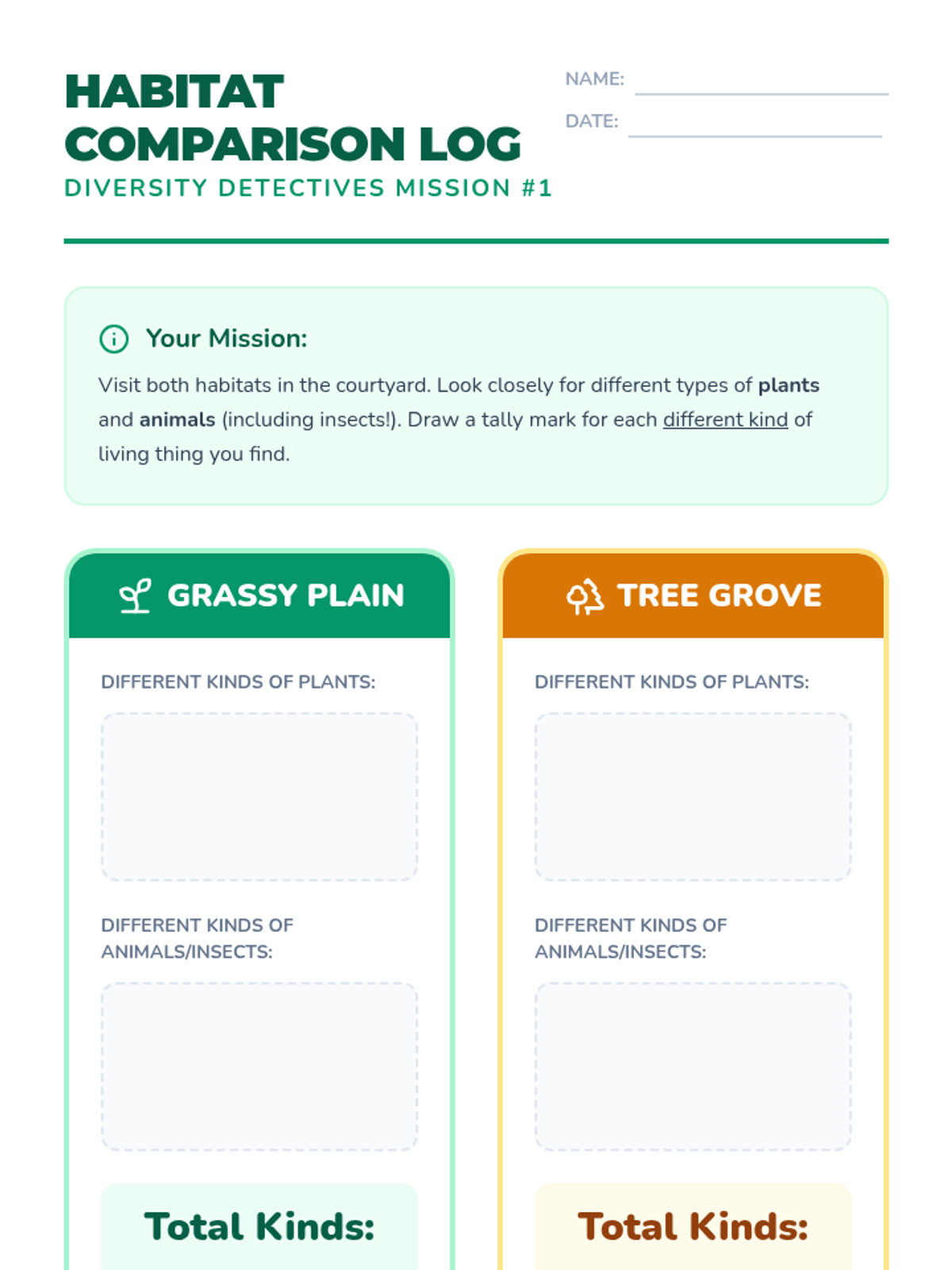
Students explore the school courtyard to identify and compare the diversity of life in grassy versus treed habitats, using observation skills to collect initial data.
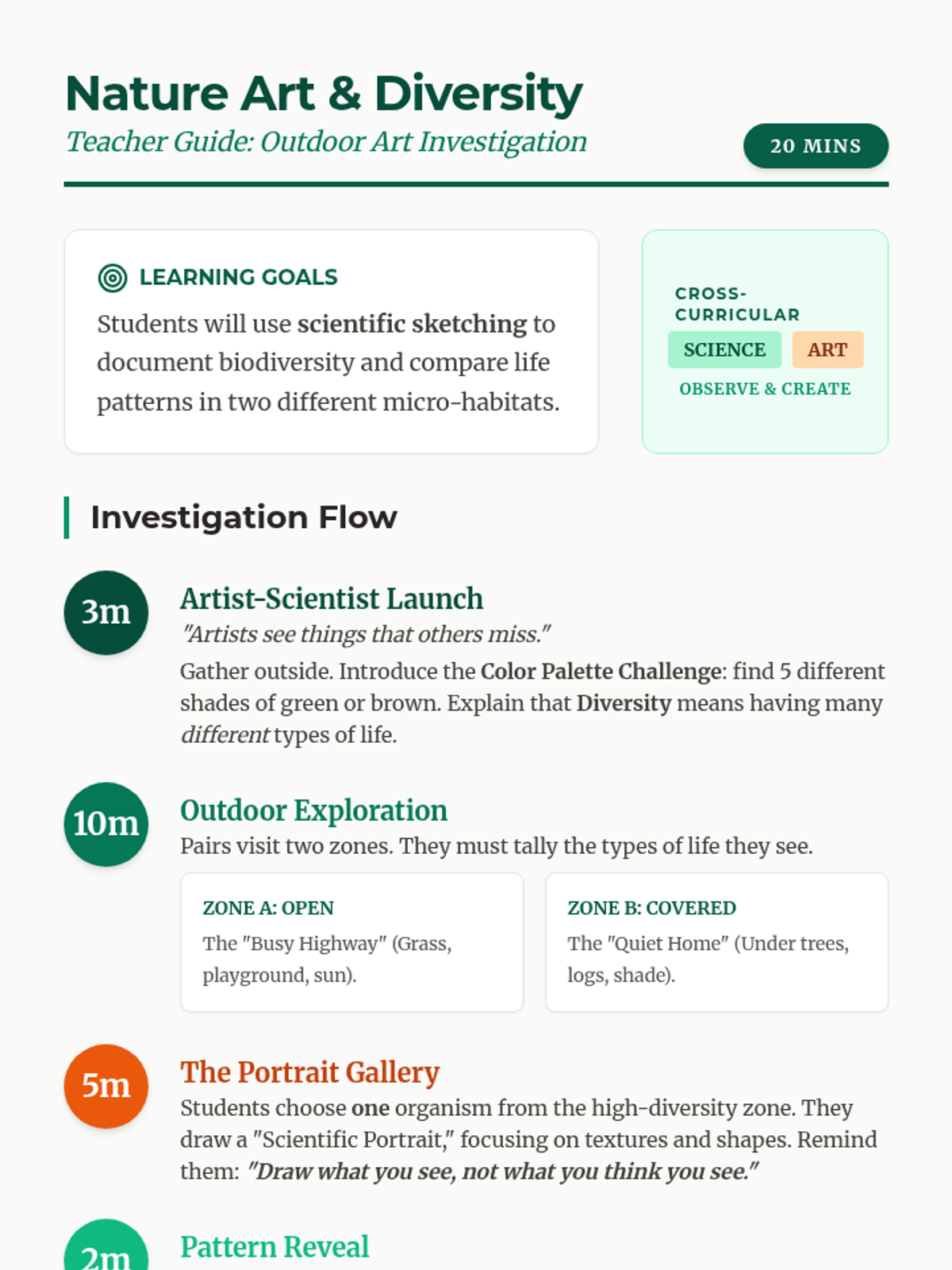
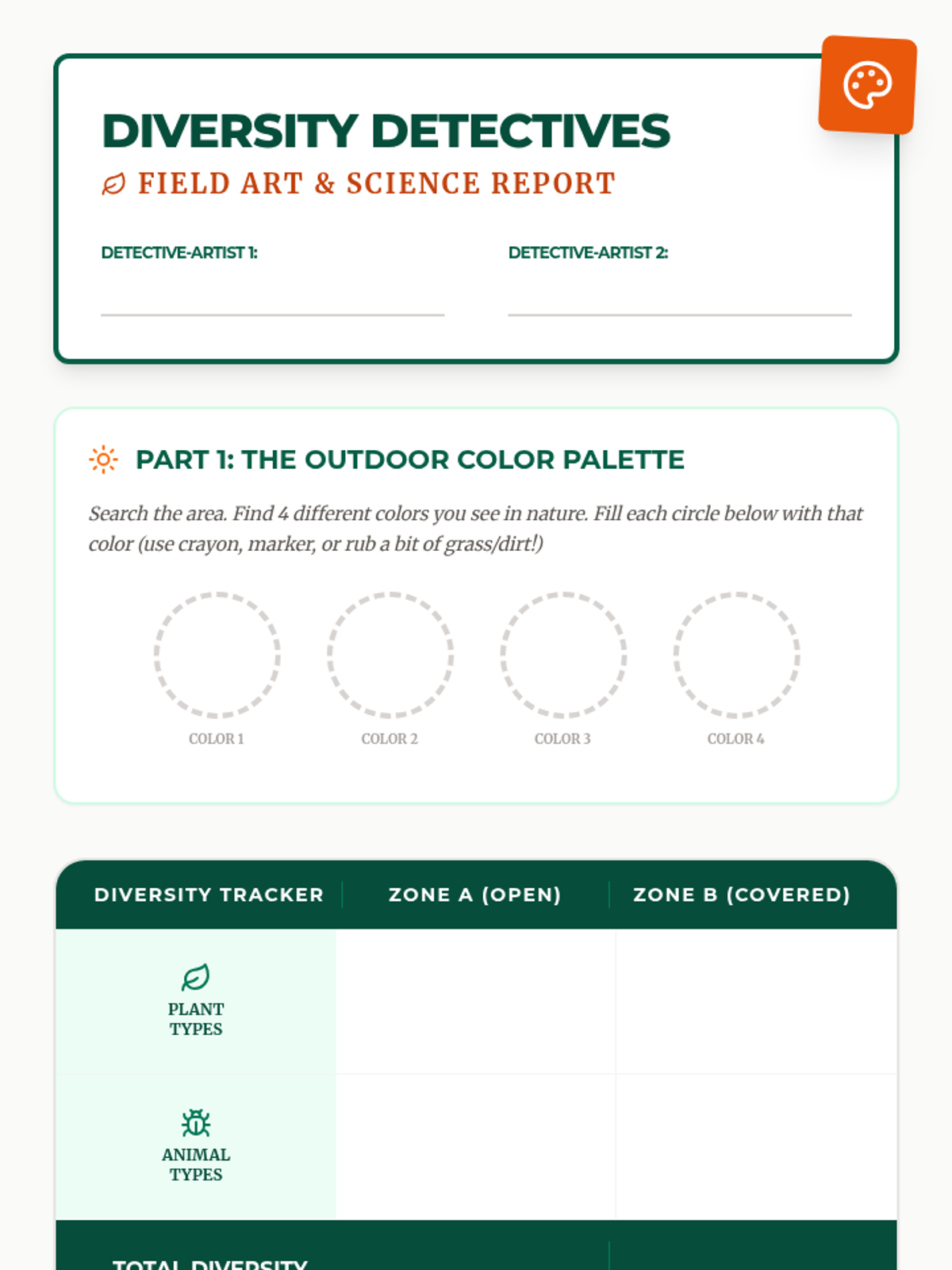
A 20-minute outdoor investigation where students compare the diversity of life in two different micro-habitats to understand patterns of biodiversity. This lesson integrates art through scientific sketching and a nature color hunt.
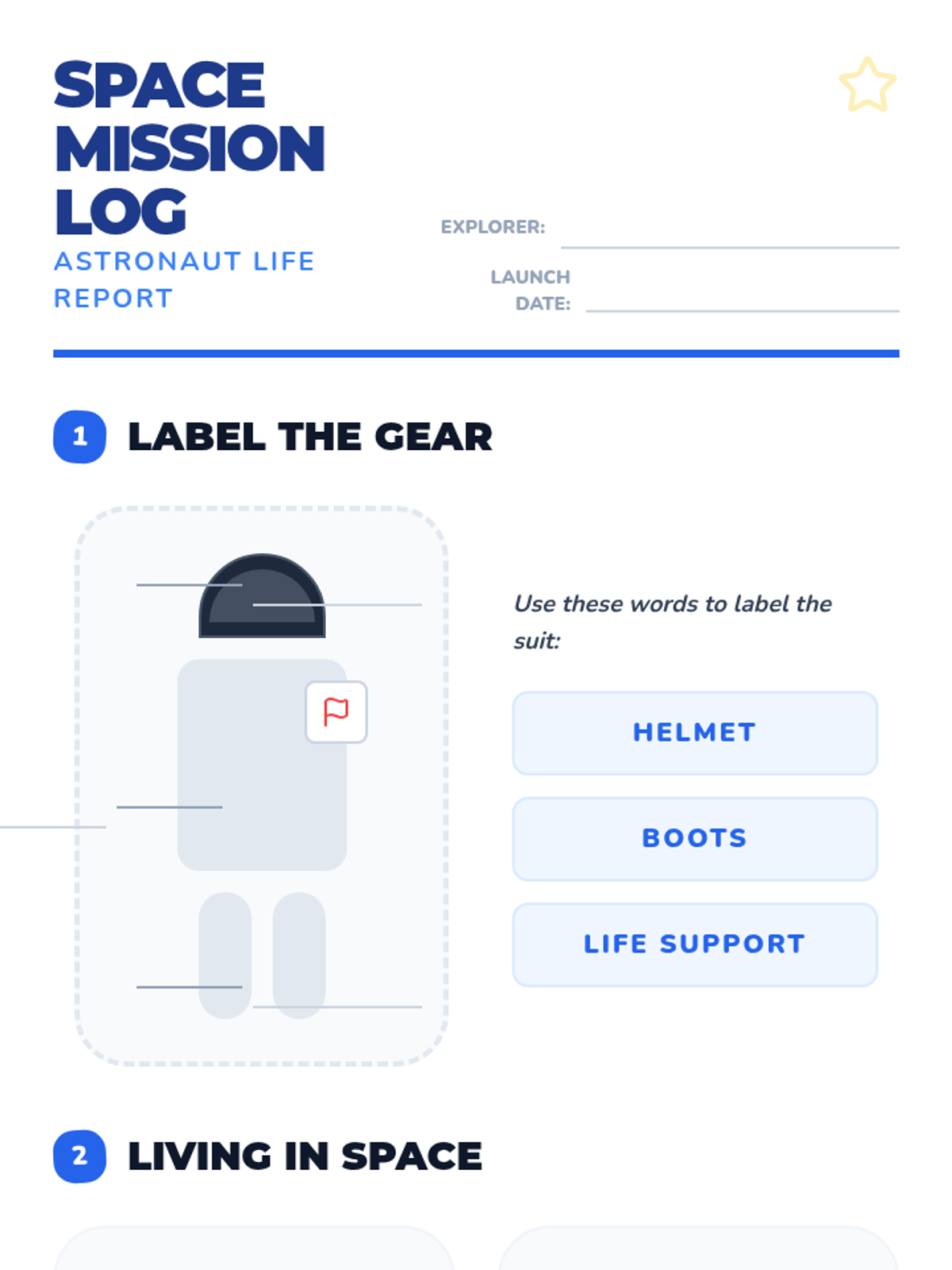
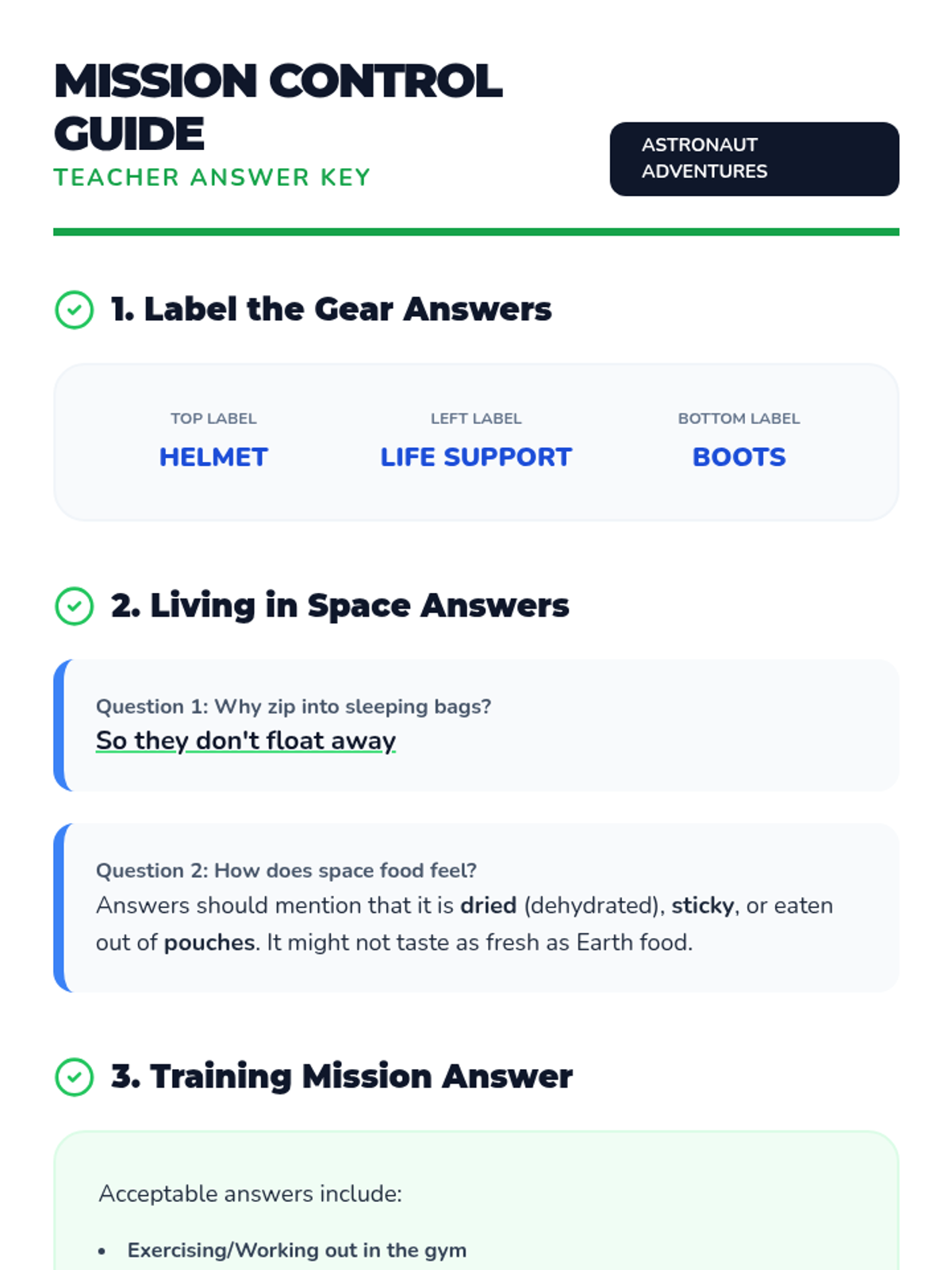
A fun and informative lesson for 2nd graders exploring what it's like to live and work in space, from training and launch to eating and sleeping in zero gravity.
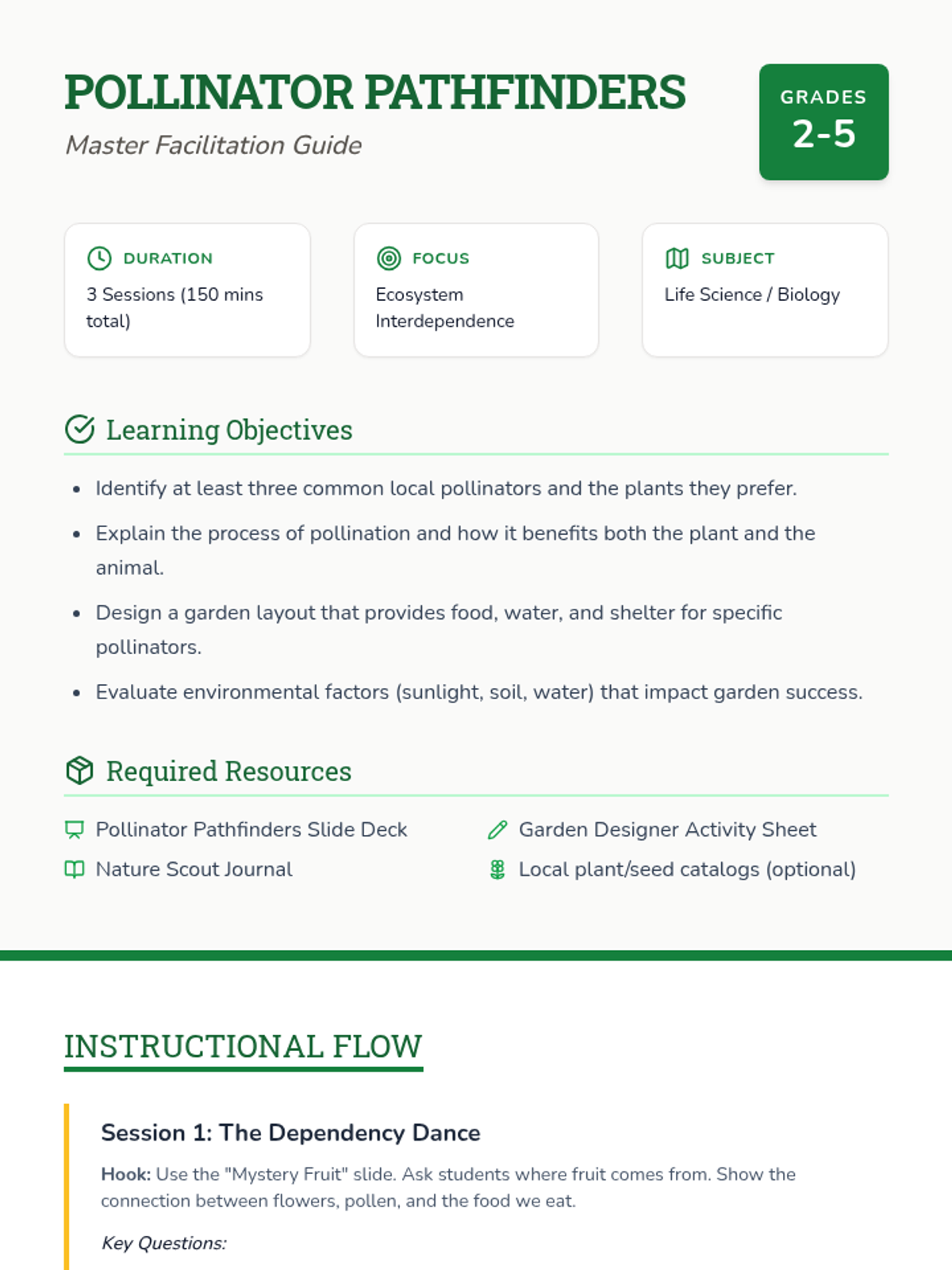
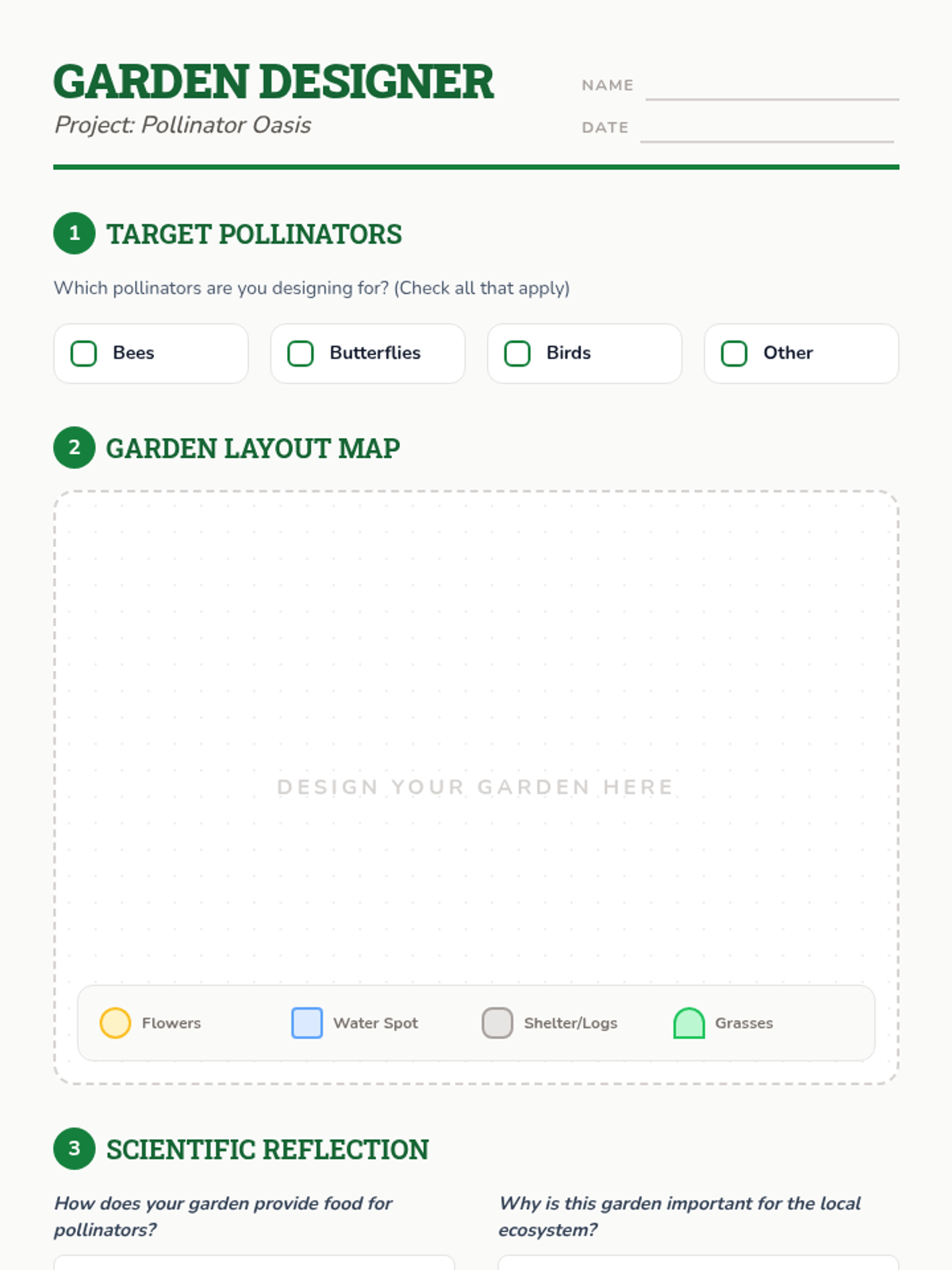
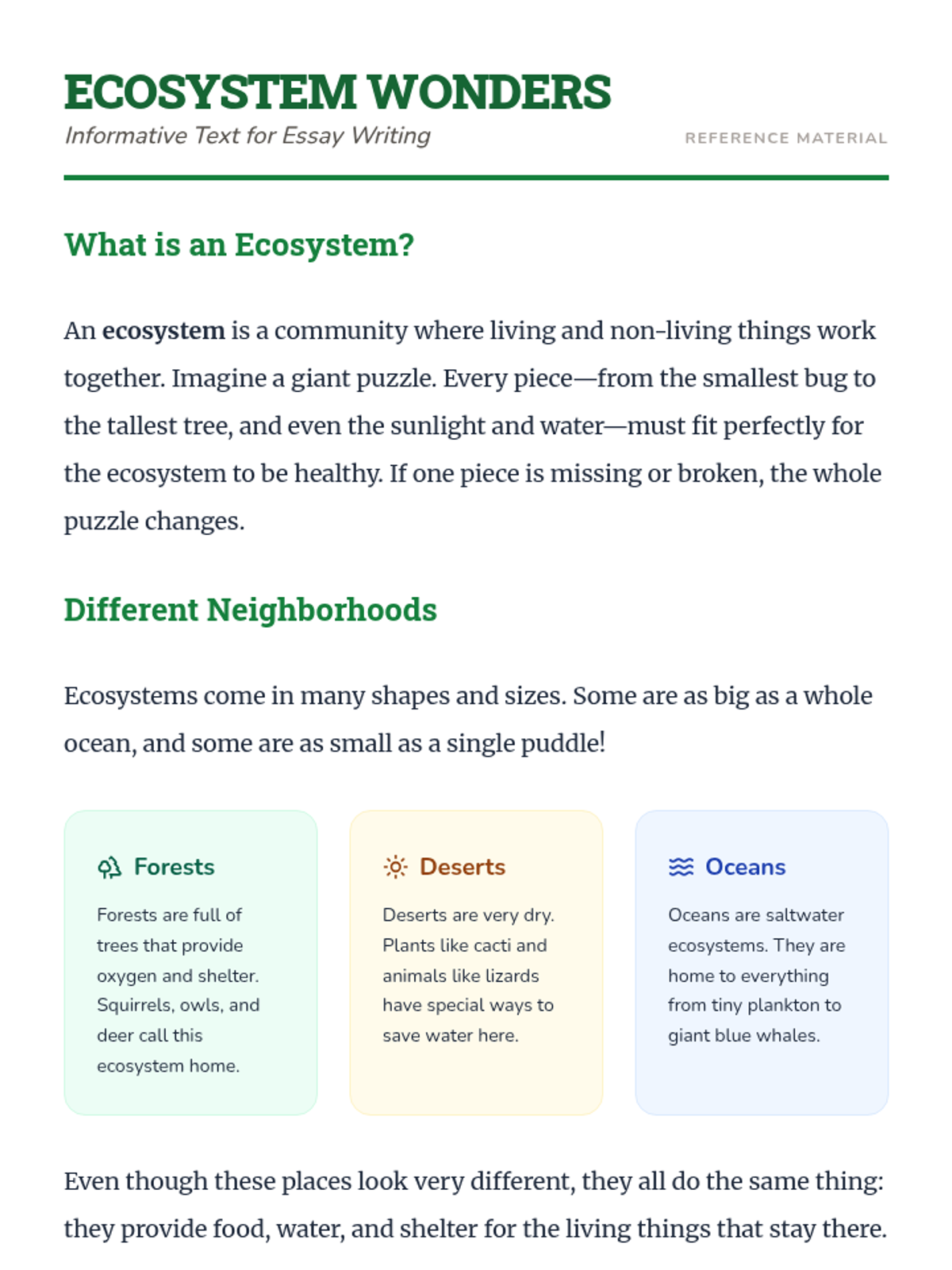
Students explore the essential relationship between plants and pollinators, identifying how they depend on each other for survival. The lesson culminates in a hands-on project where students design a pollinator-friendly garden tailored to their local ecosystem.
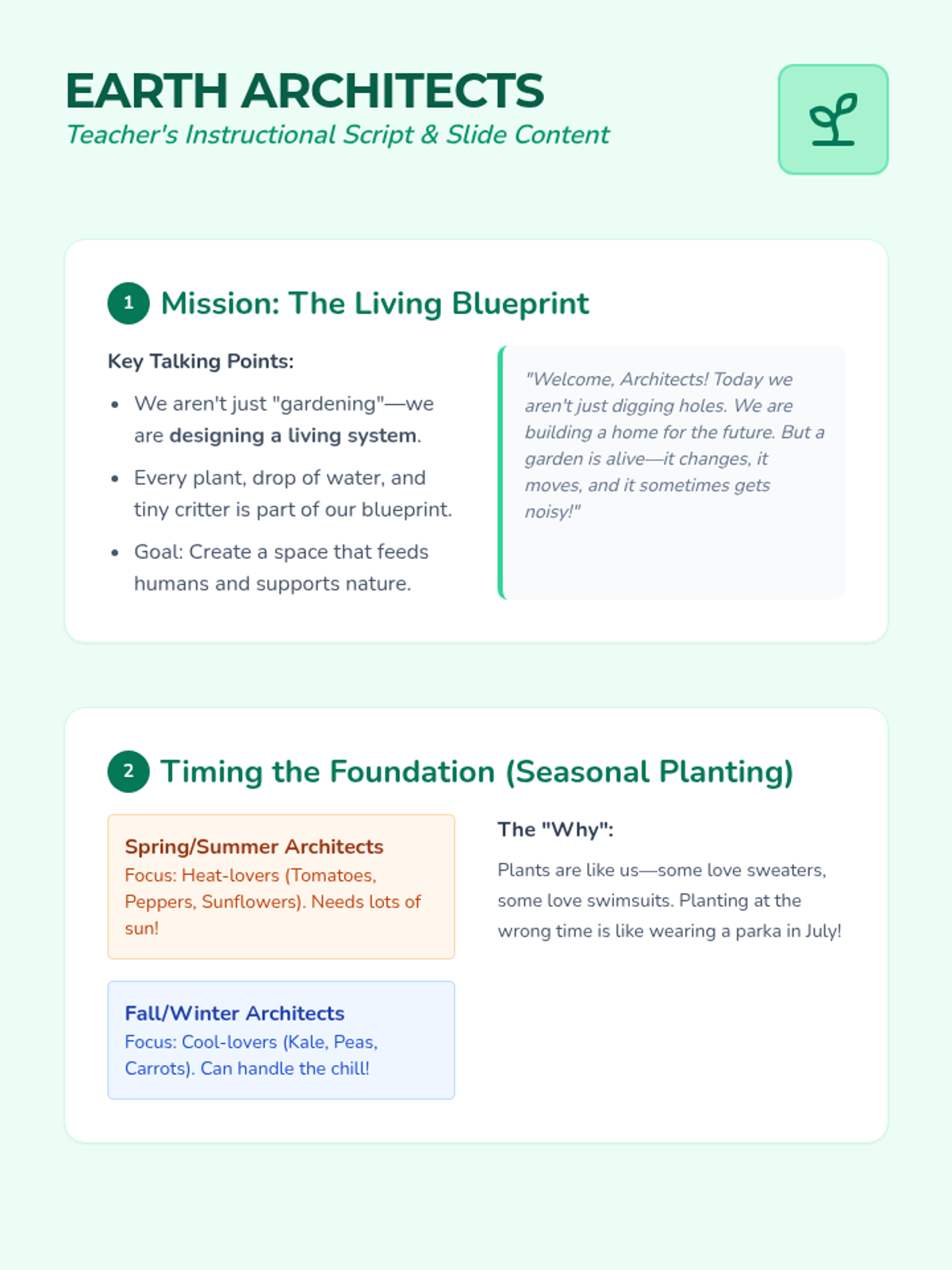
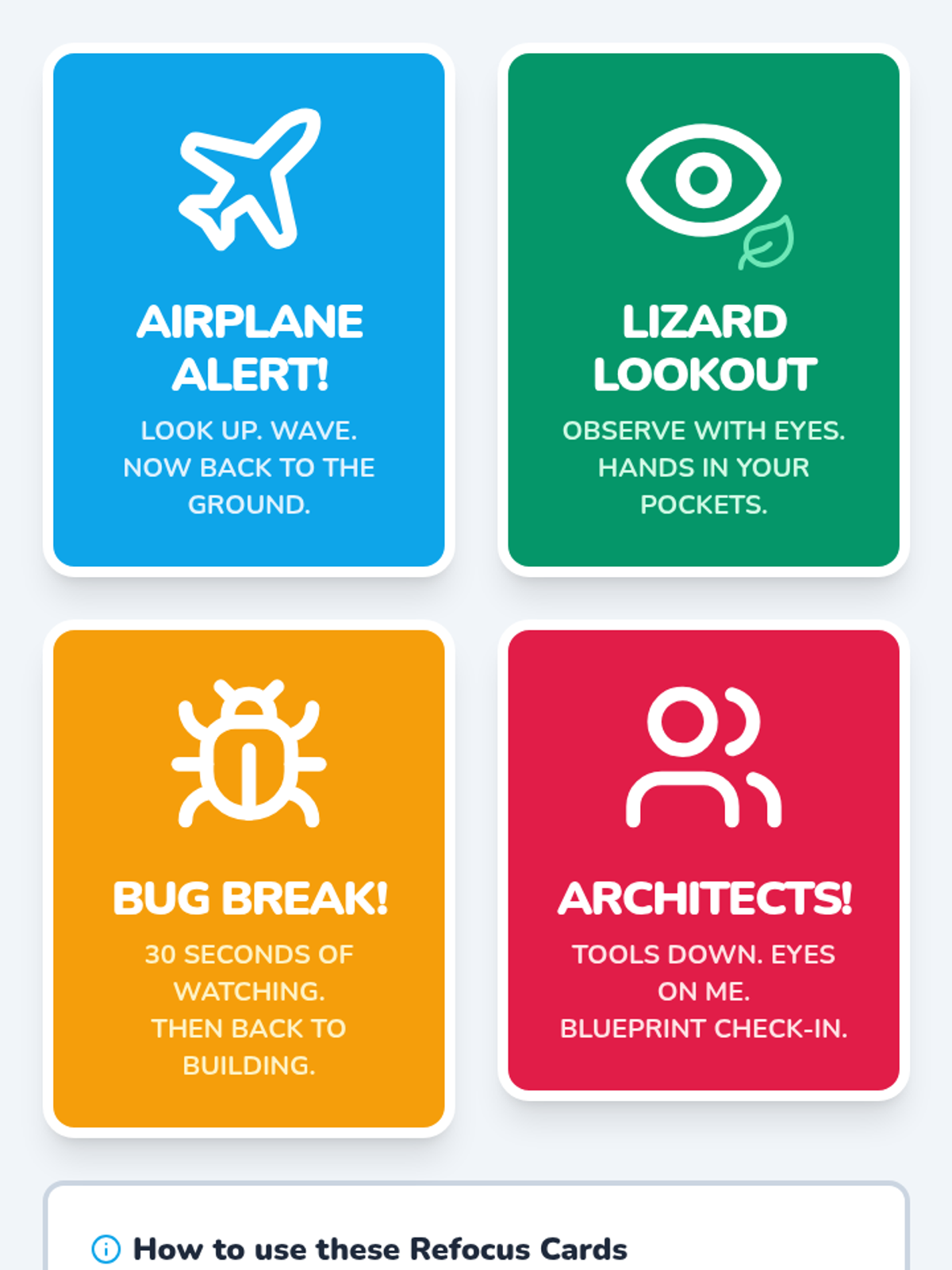
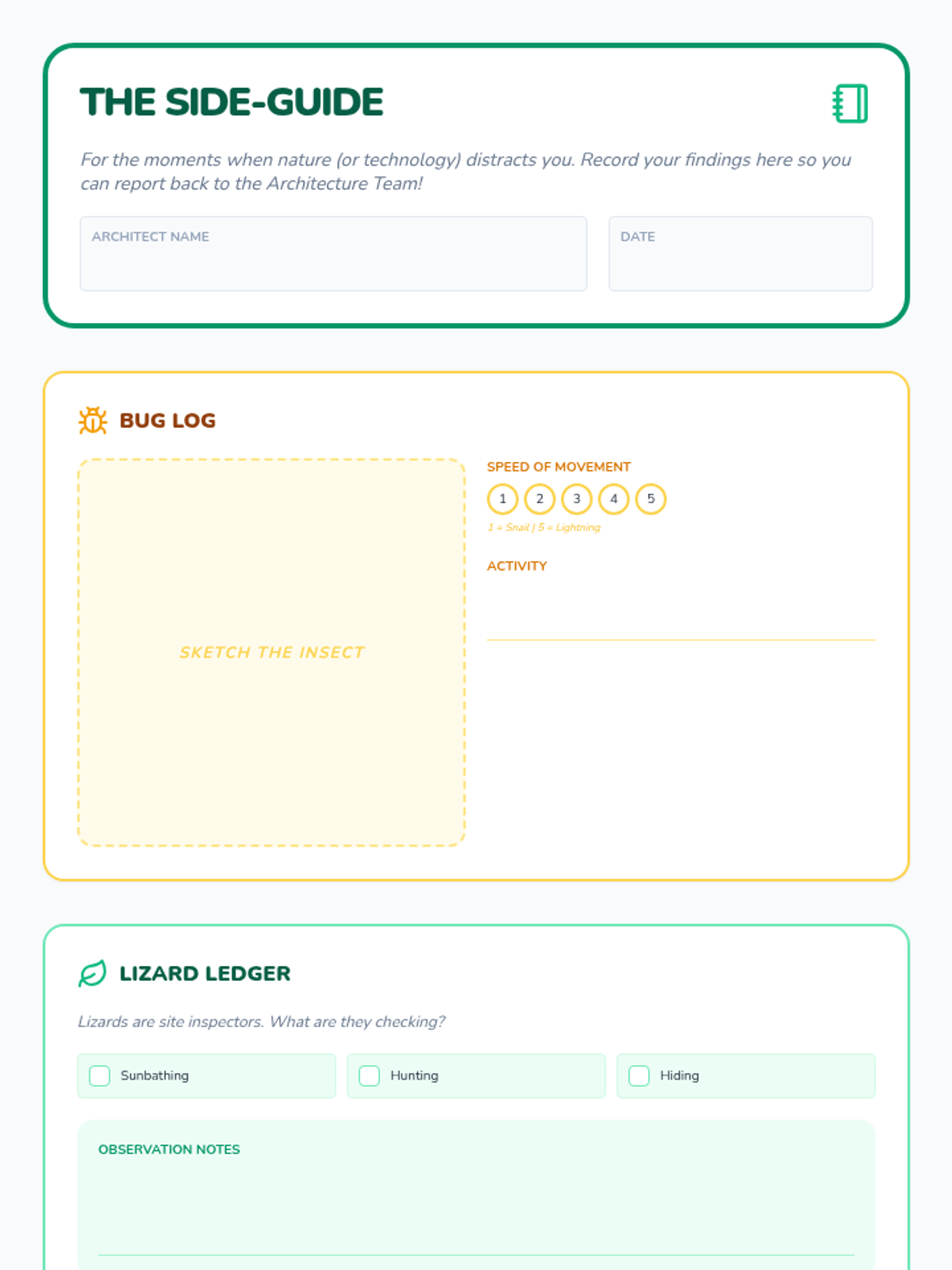
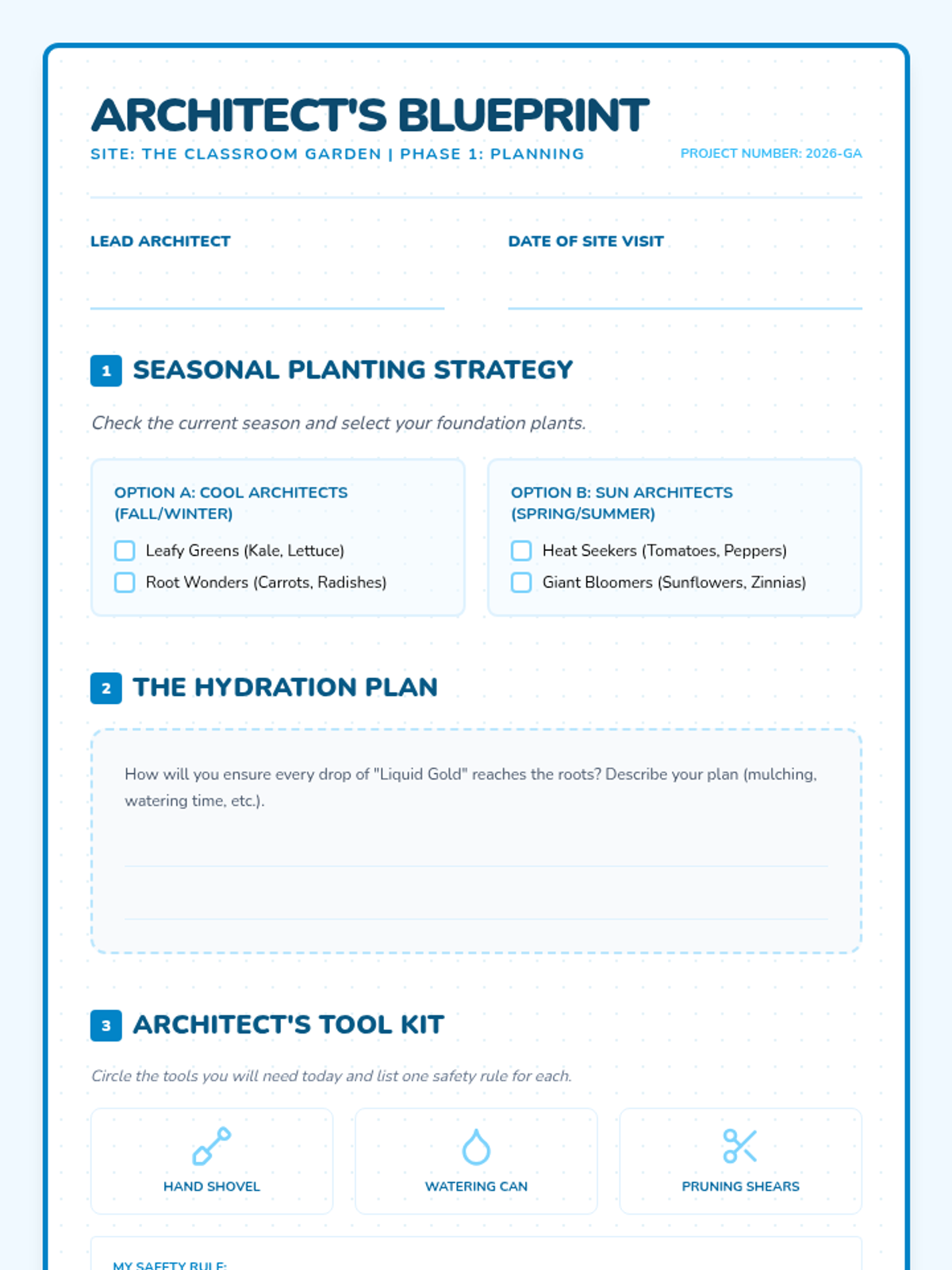
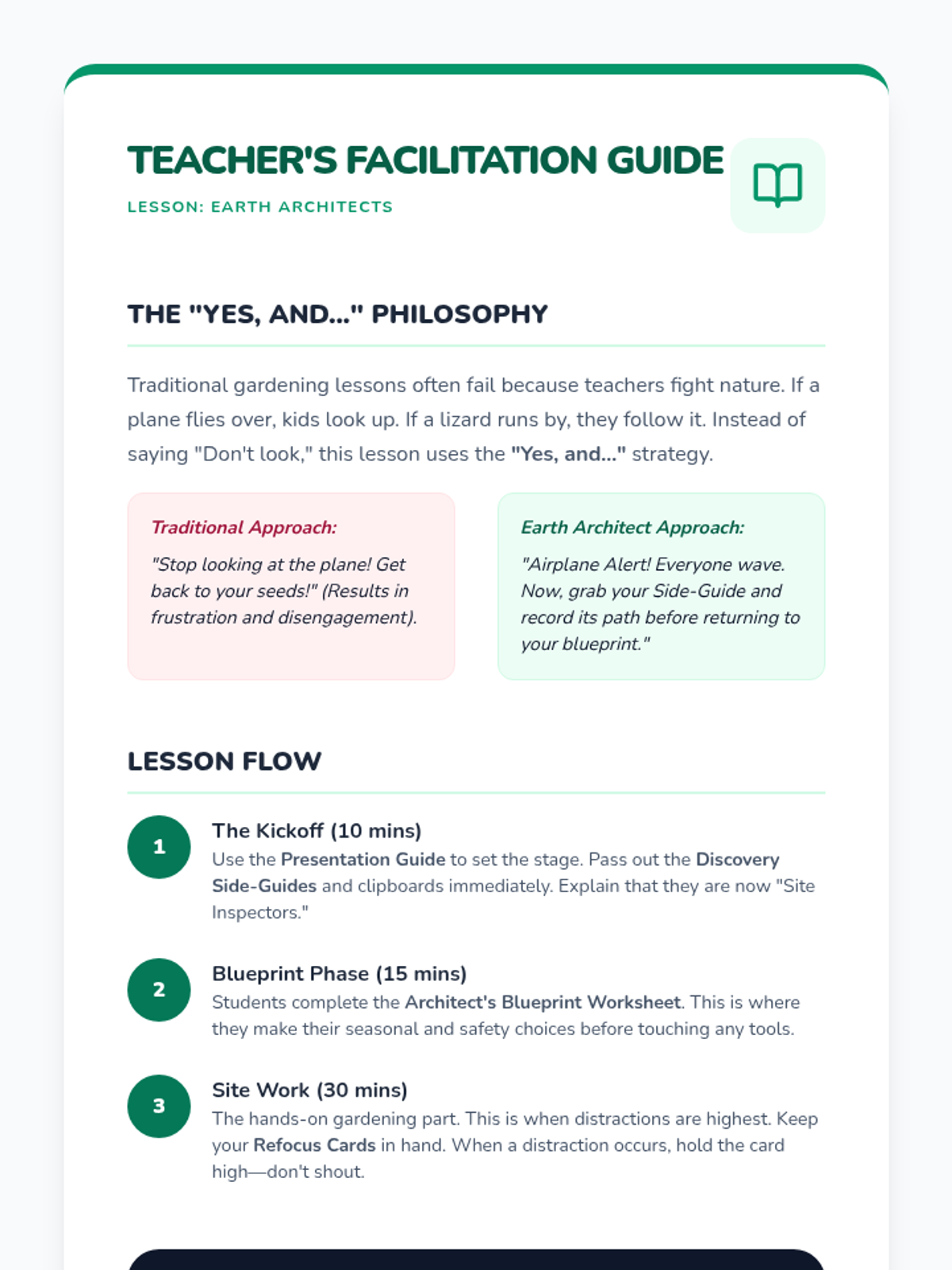
A hands-on gardening lesson that turns natural distractions into learning opportunities. Students learn seasonal planting, water conservation, tool safety, and wildlife cohabitation through the lens of being 'Earth Architects'.
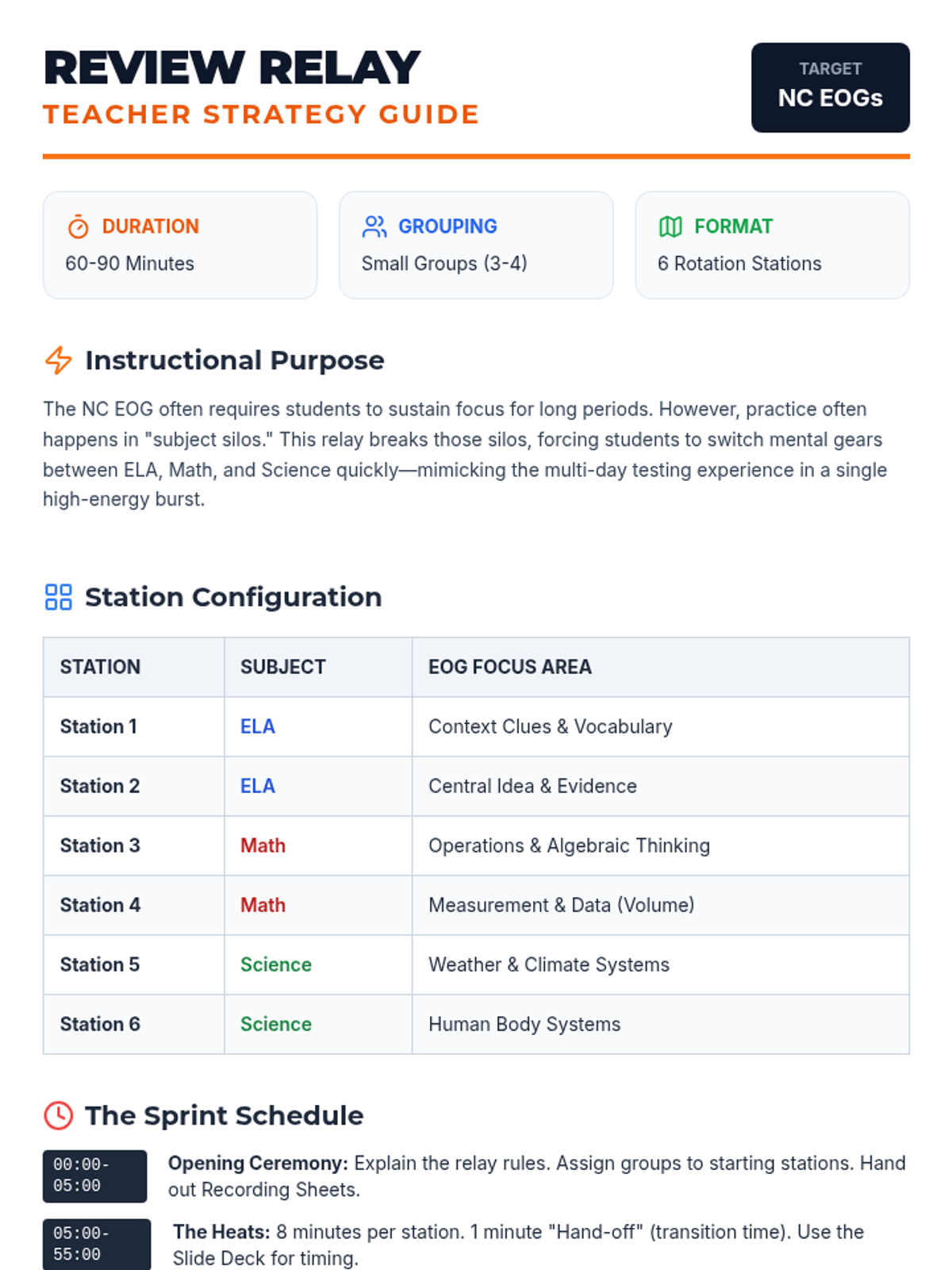
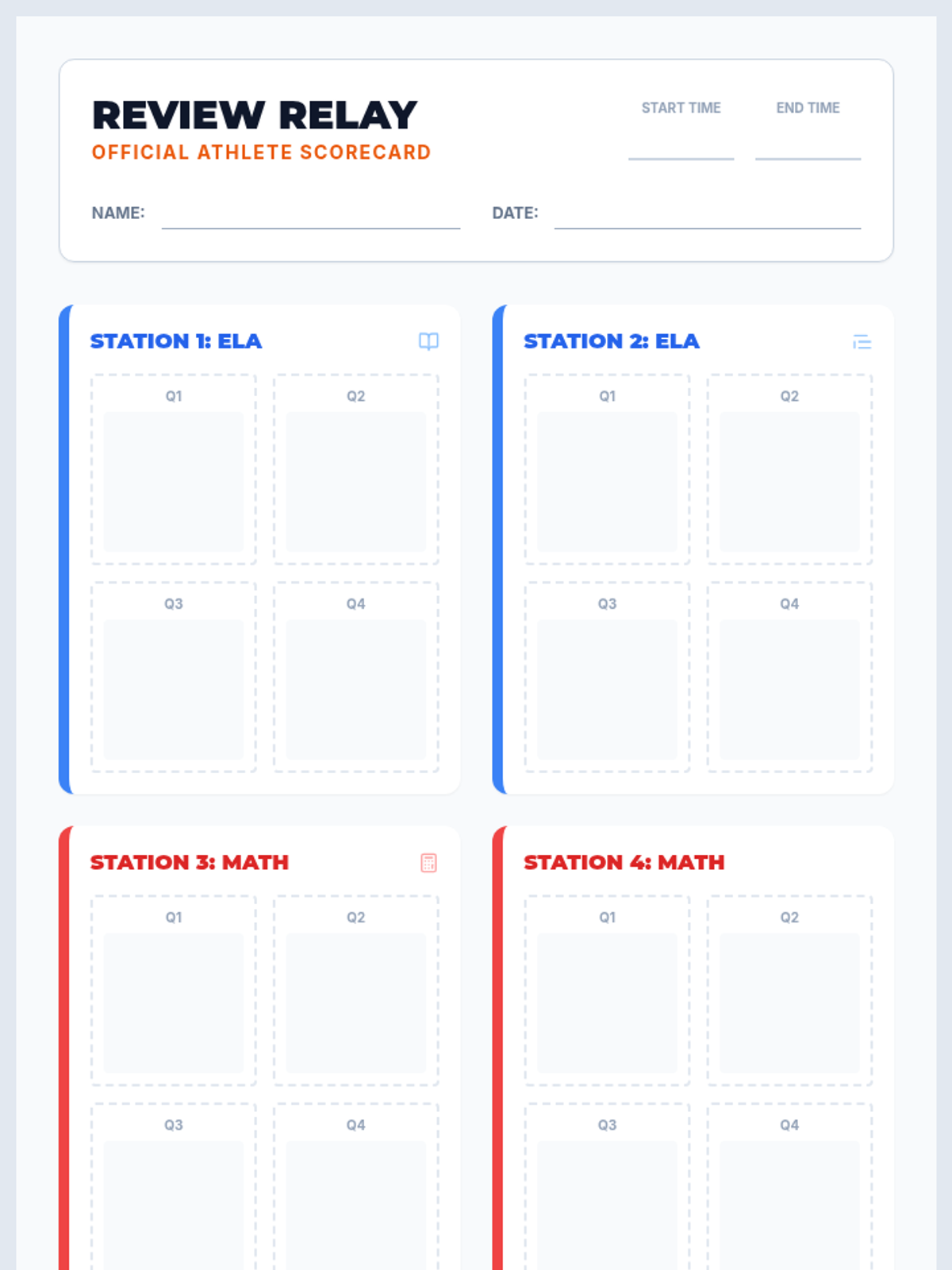
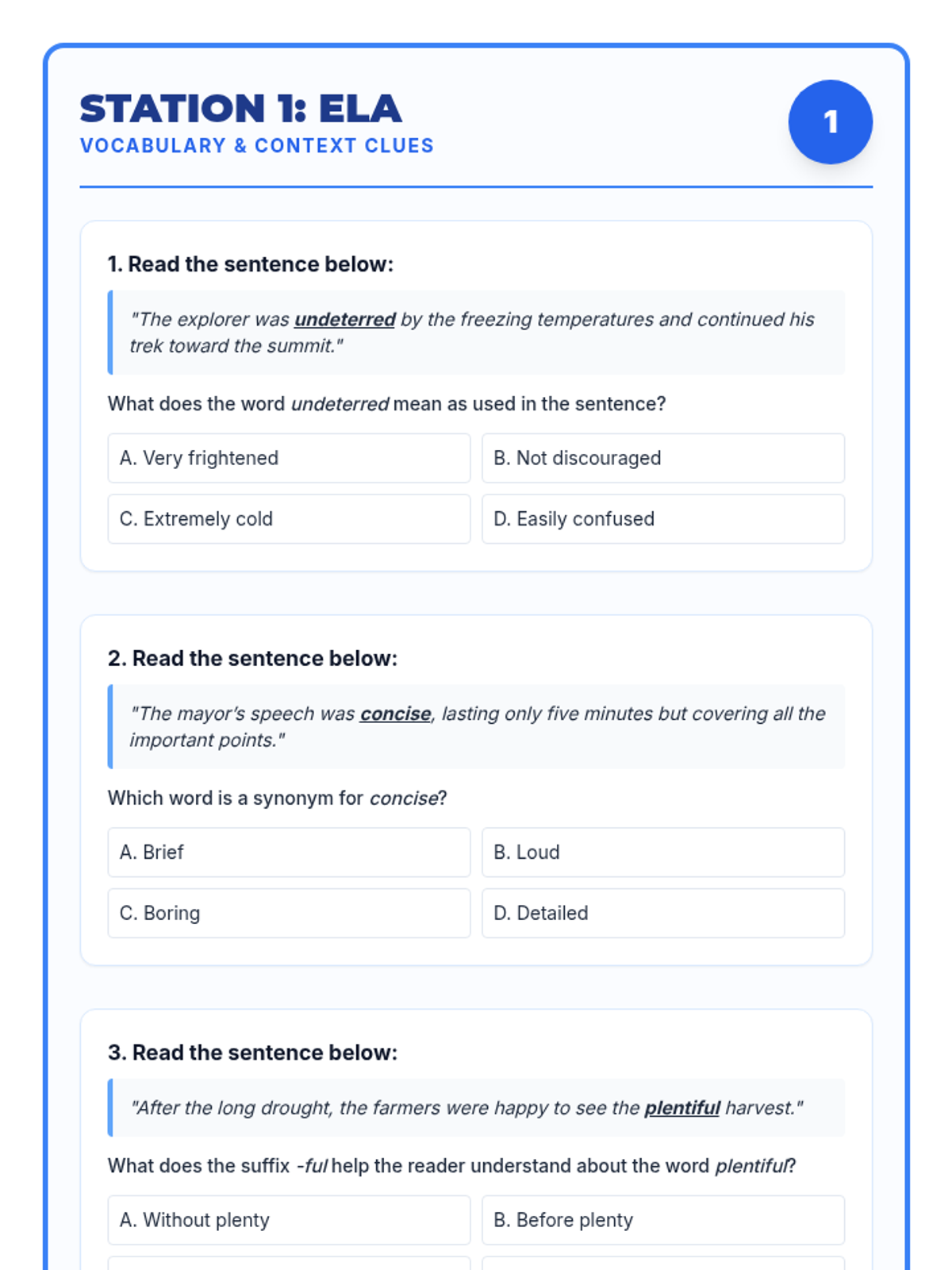
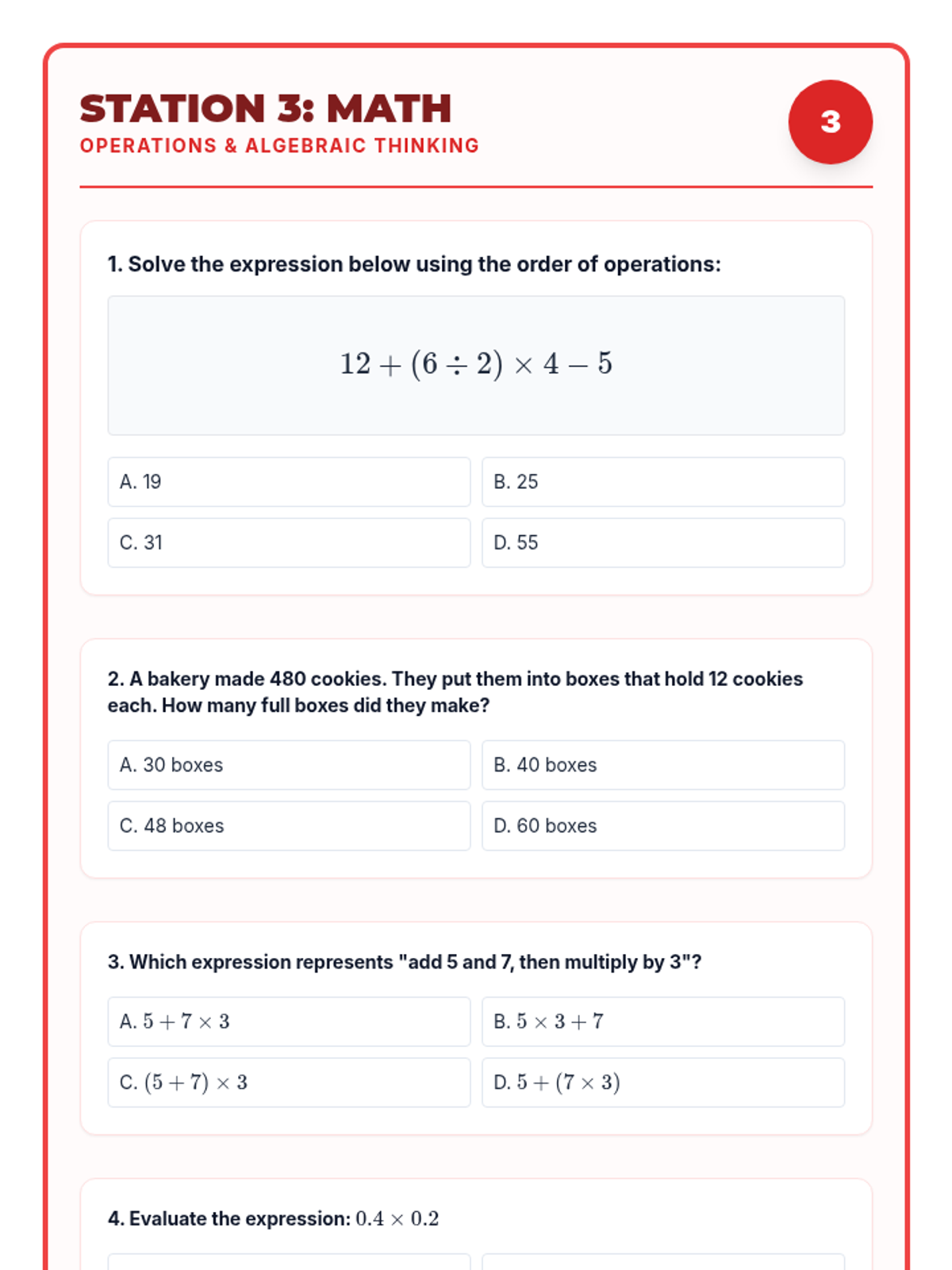
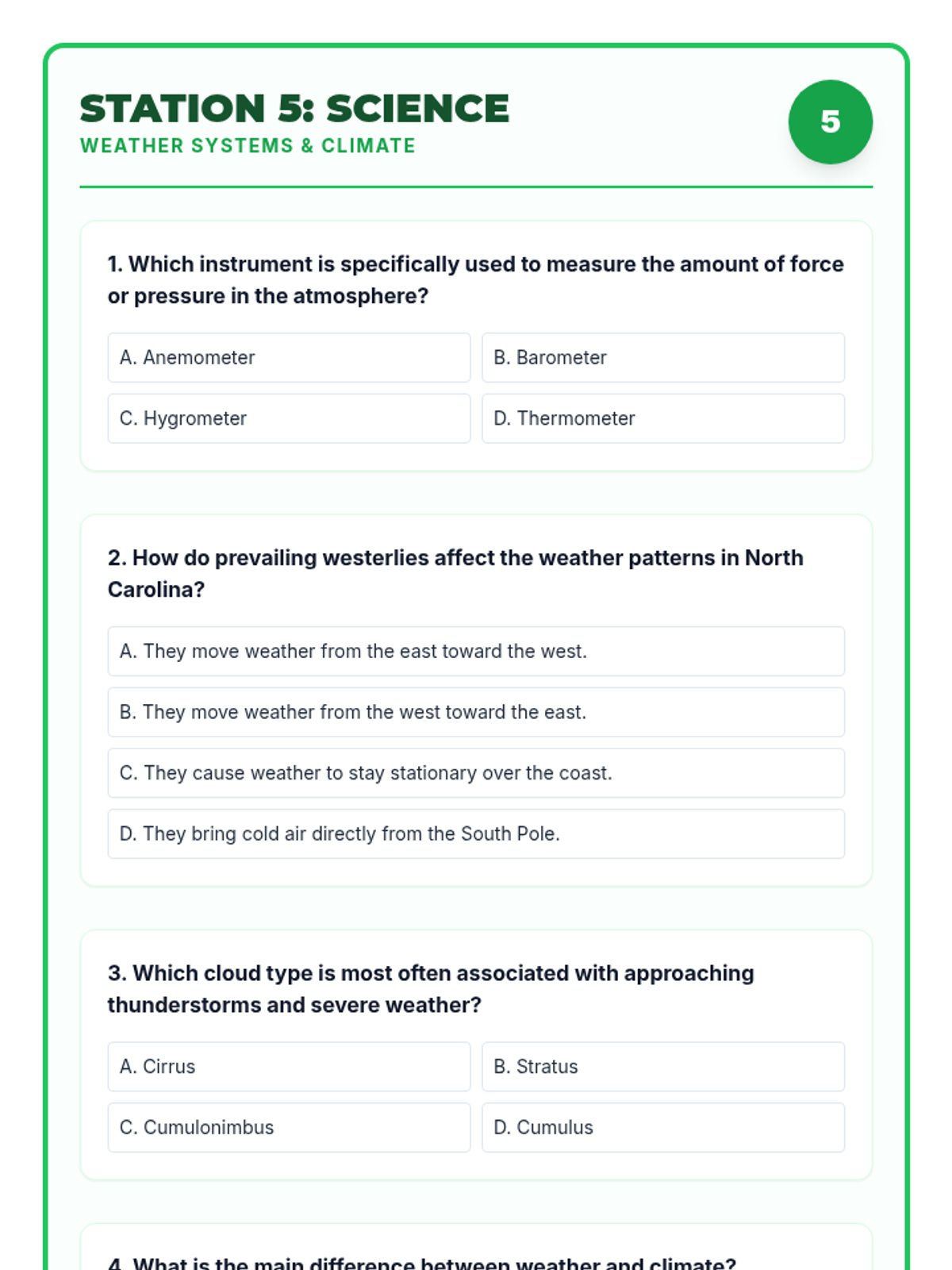
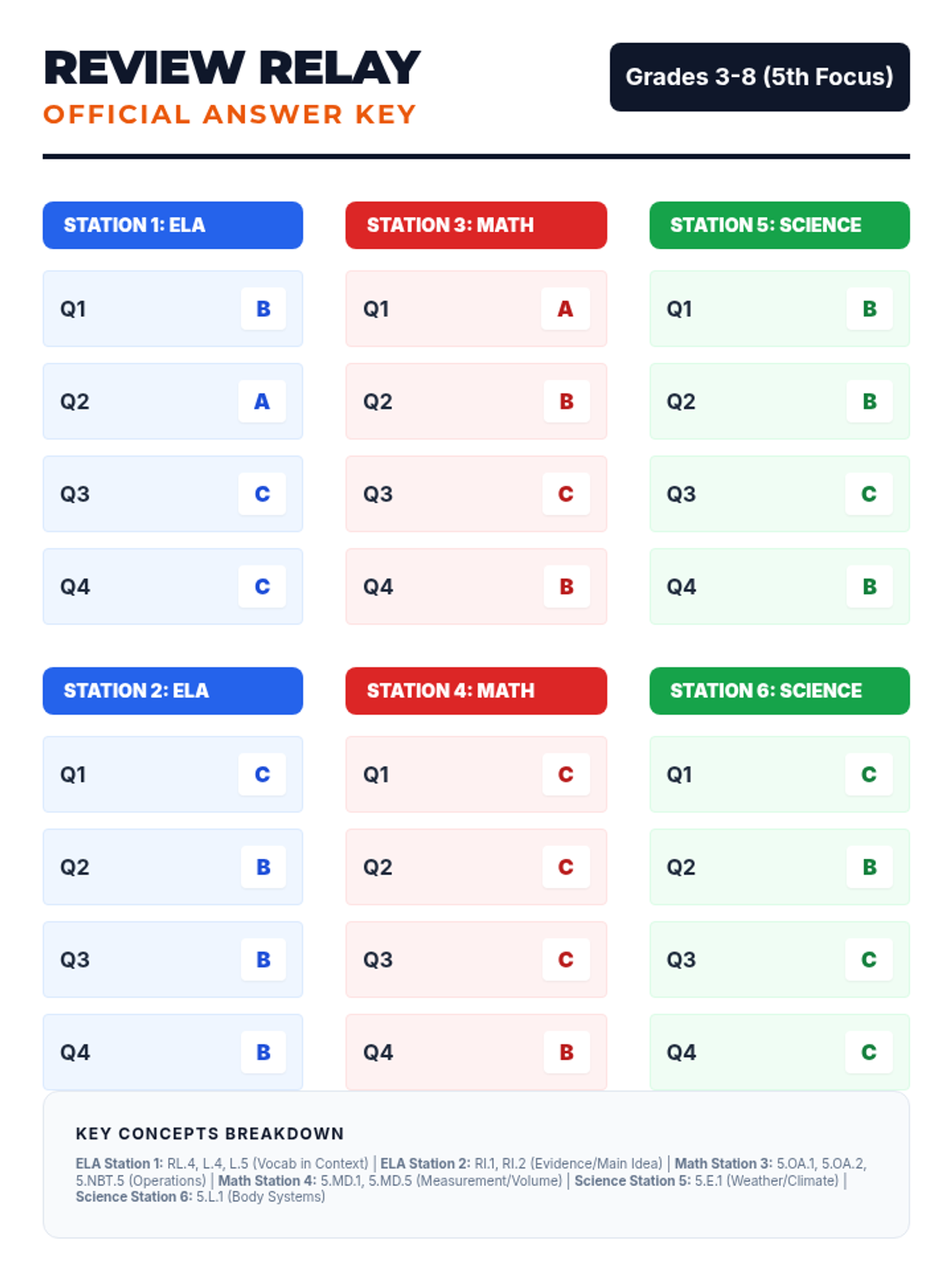
A high-energy, station-based review session designed to build testing stamina and subject-switching agility for NC EOGs. Students rotate through ELA, Math, and Science challenges in timed 'sprints'.
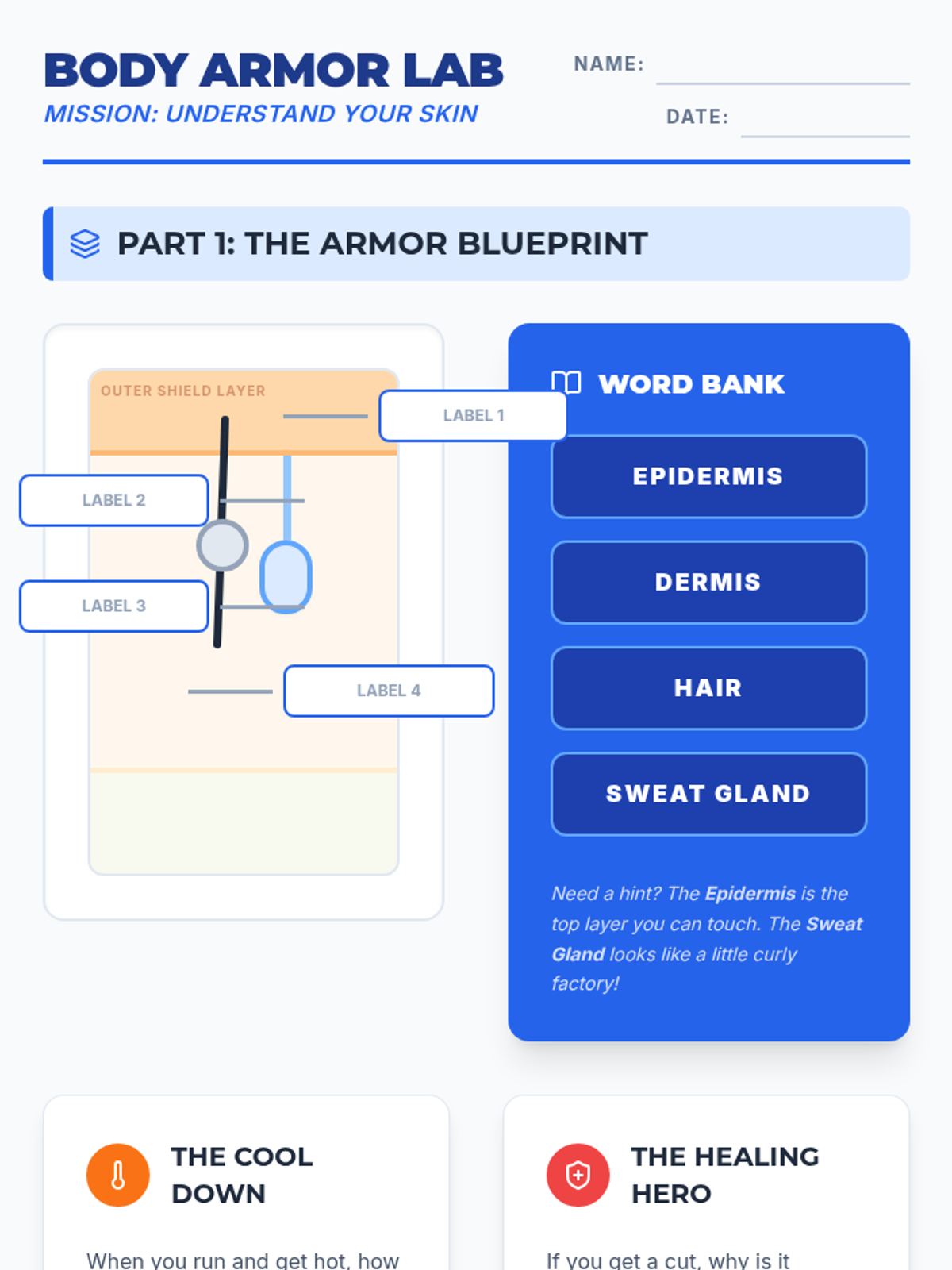
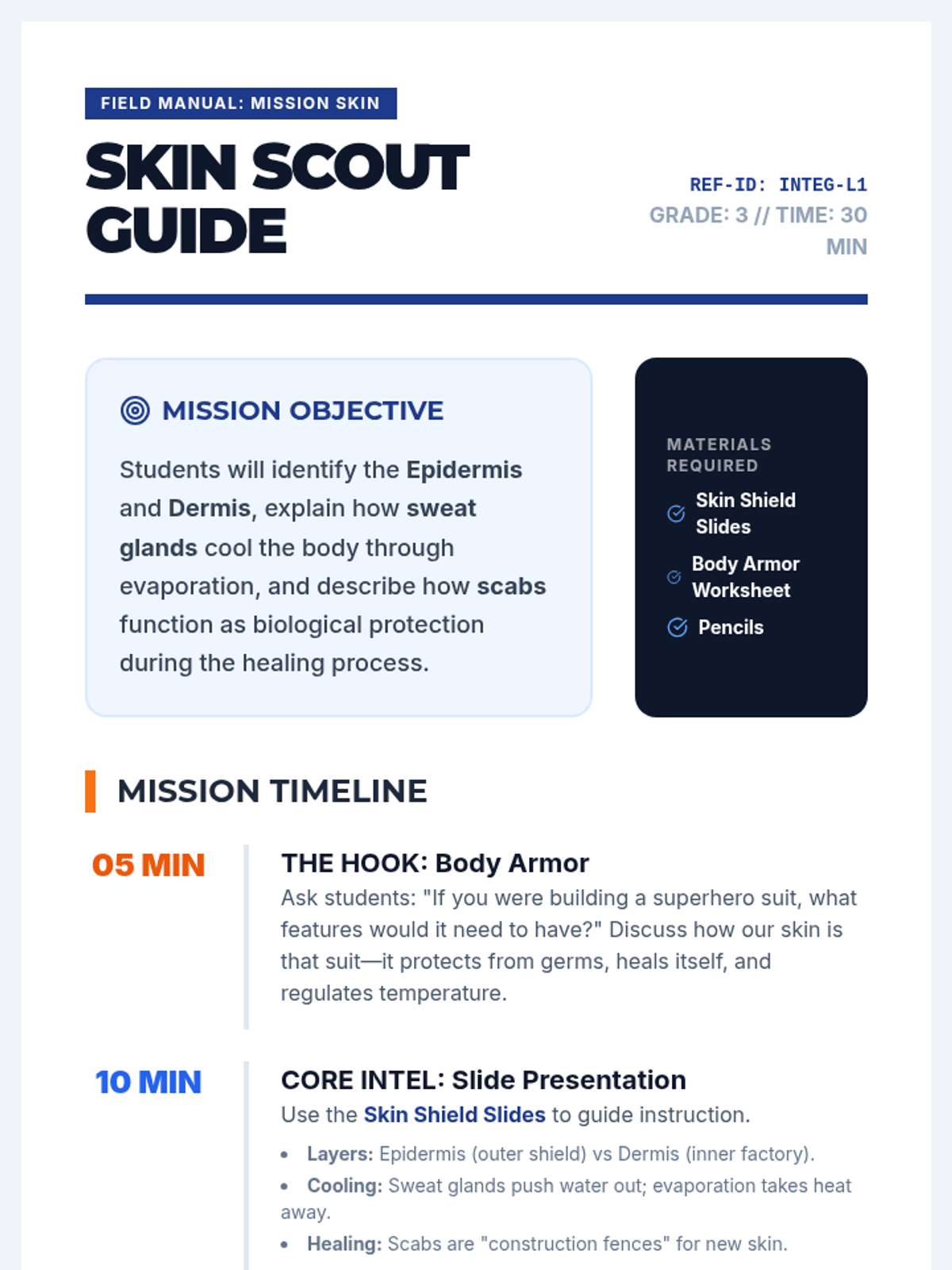
A 30-minute introductory lesson for 3rd graders on the integumentary system, focusing on skin layers, sweating for temperature control, and the healing process of scabs.
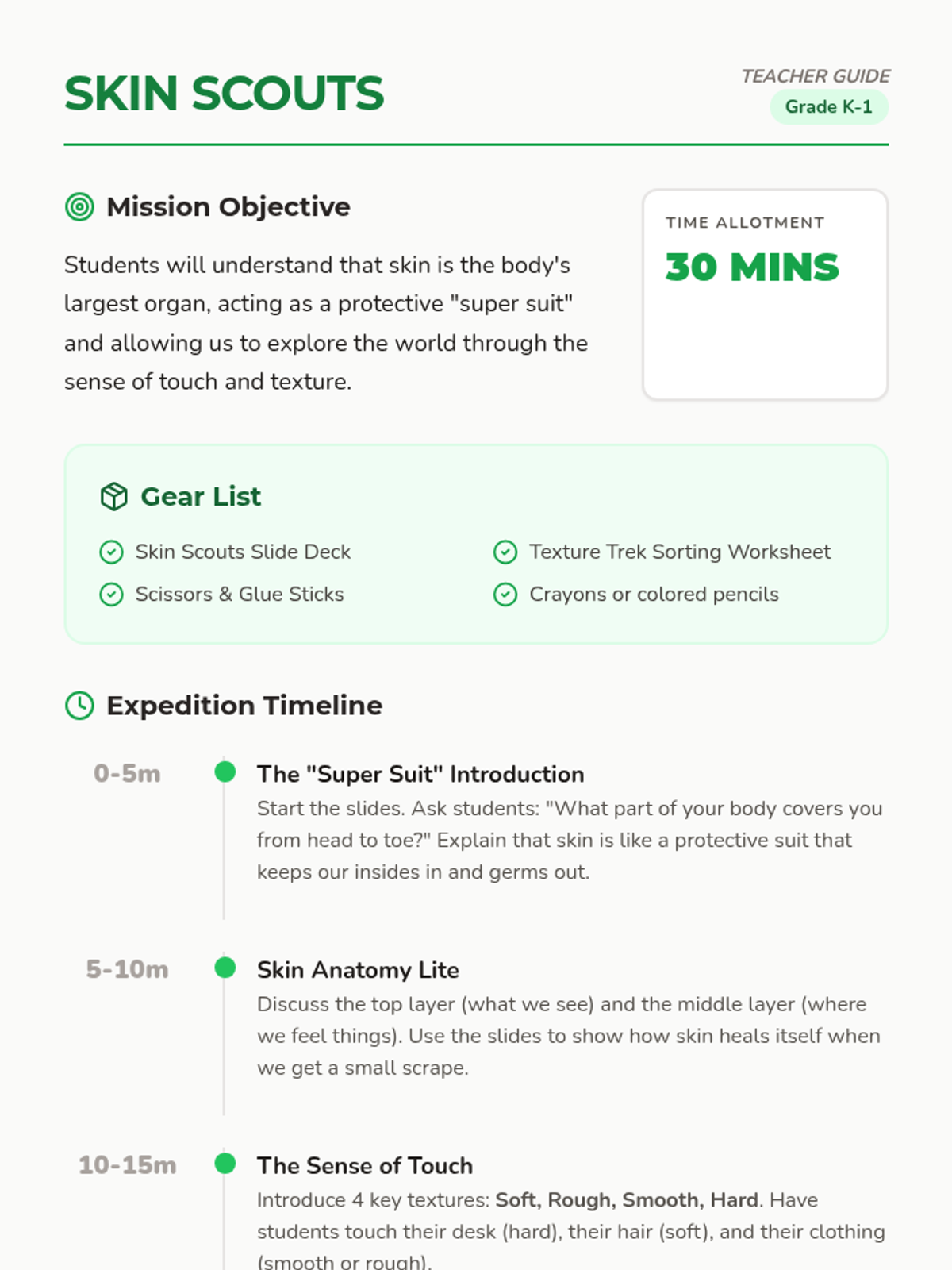
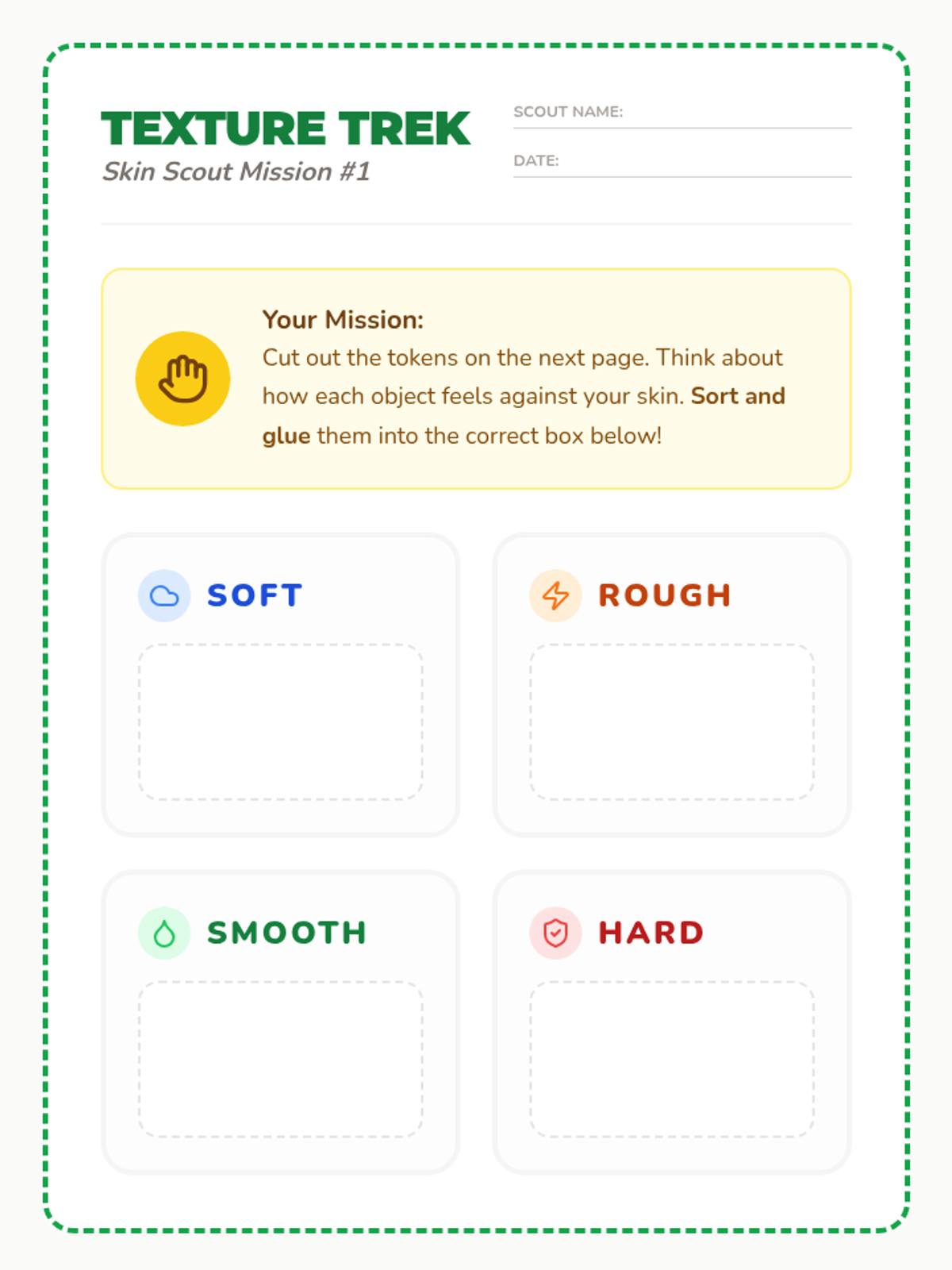
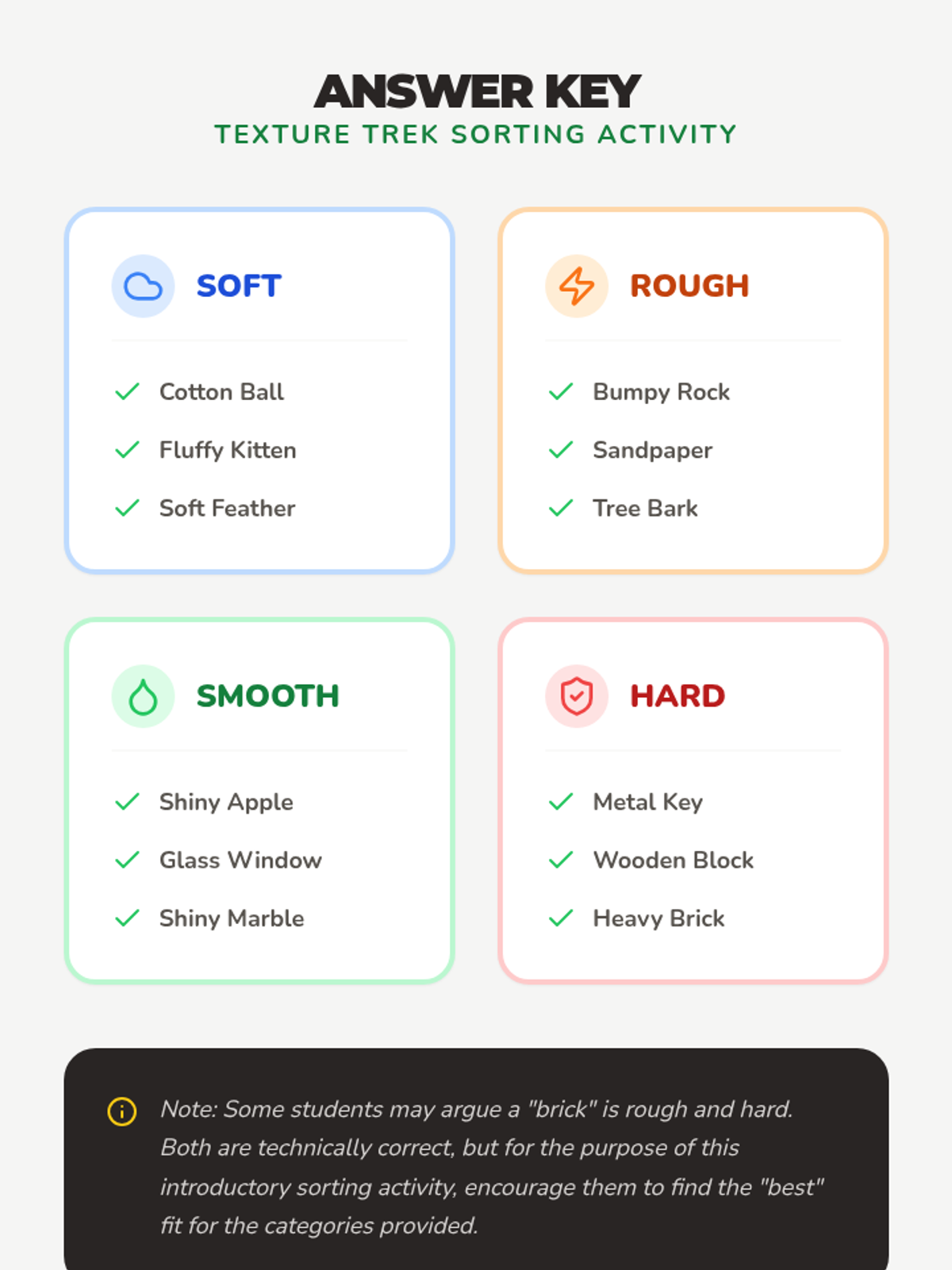
A 30-minute introductory lesson for K-1 students to learn about skin's protective role and the sense of touch through a texture-sorting activity.
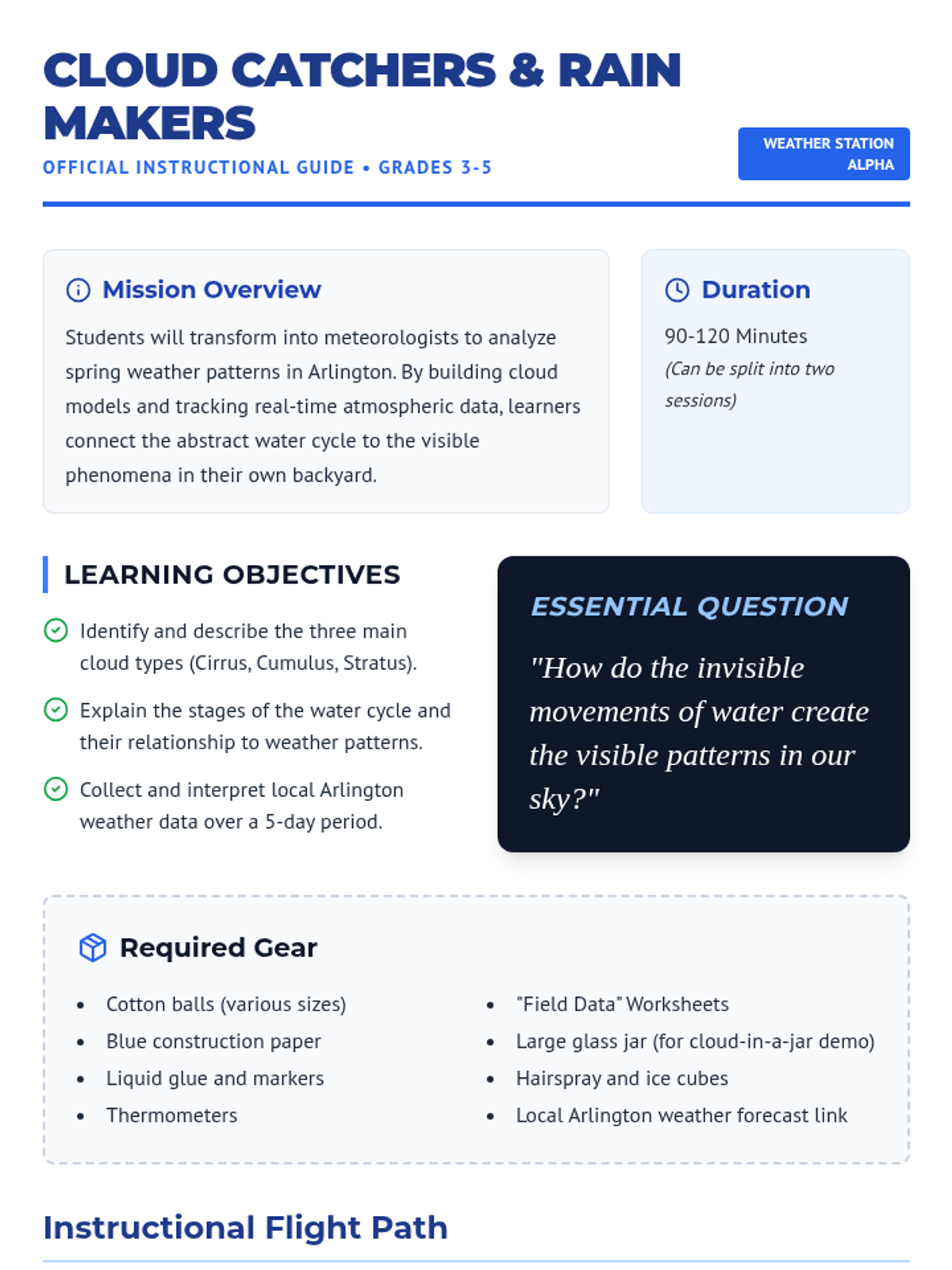
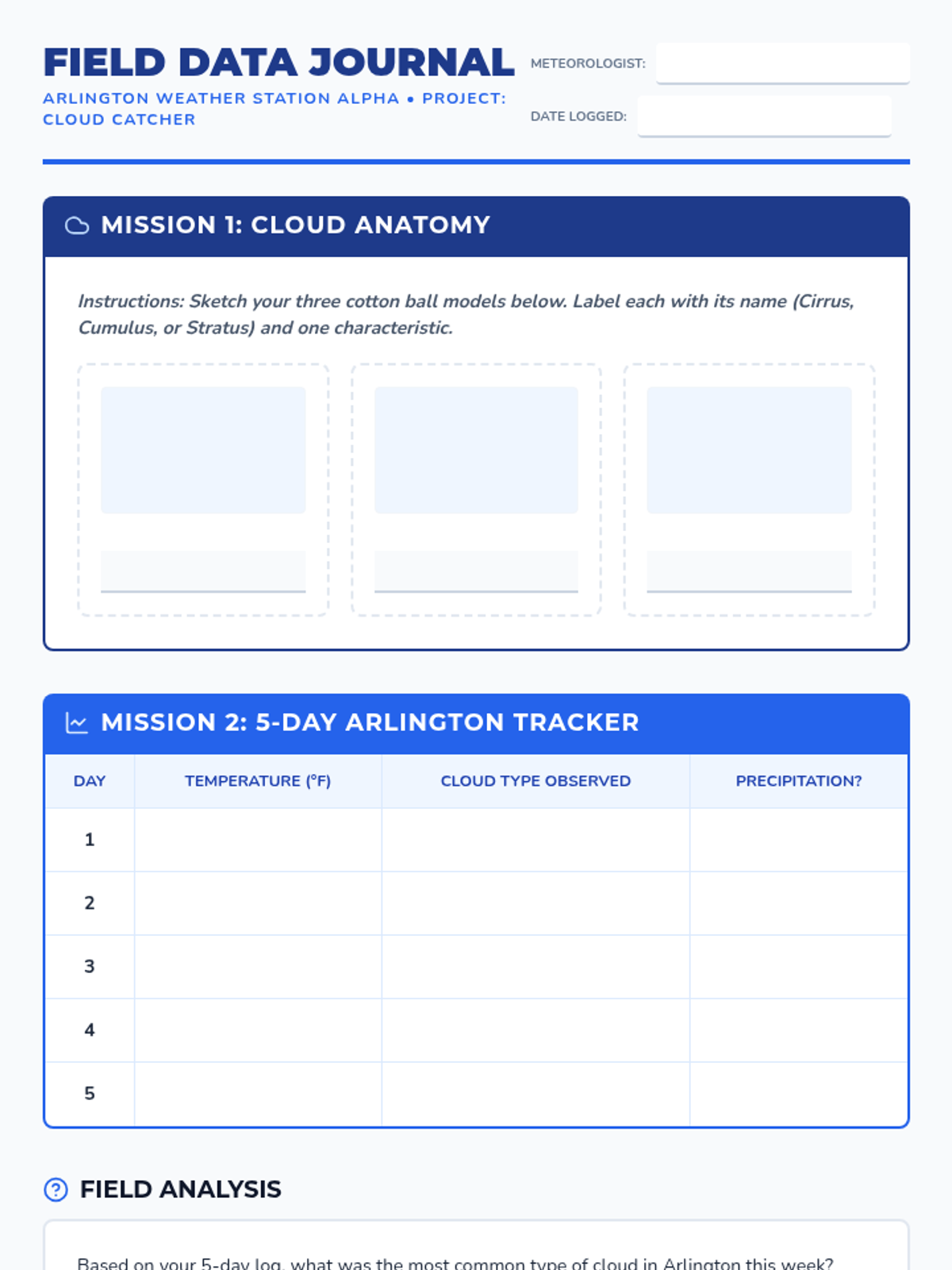
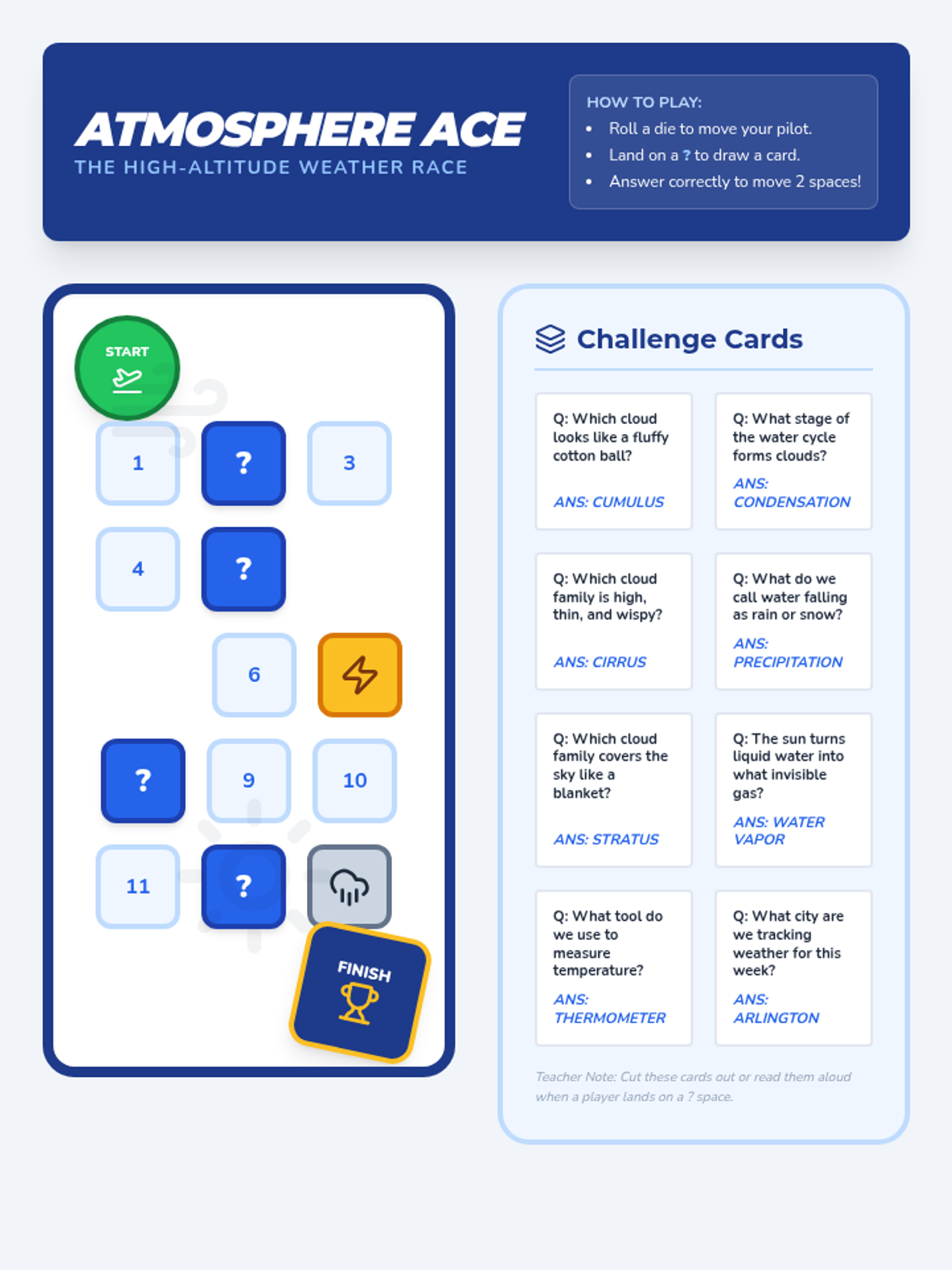
Students explore the water cycle and cloud formation through hands-on modeling and local weather tracking, specifically tailored for the Arlington area climate.
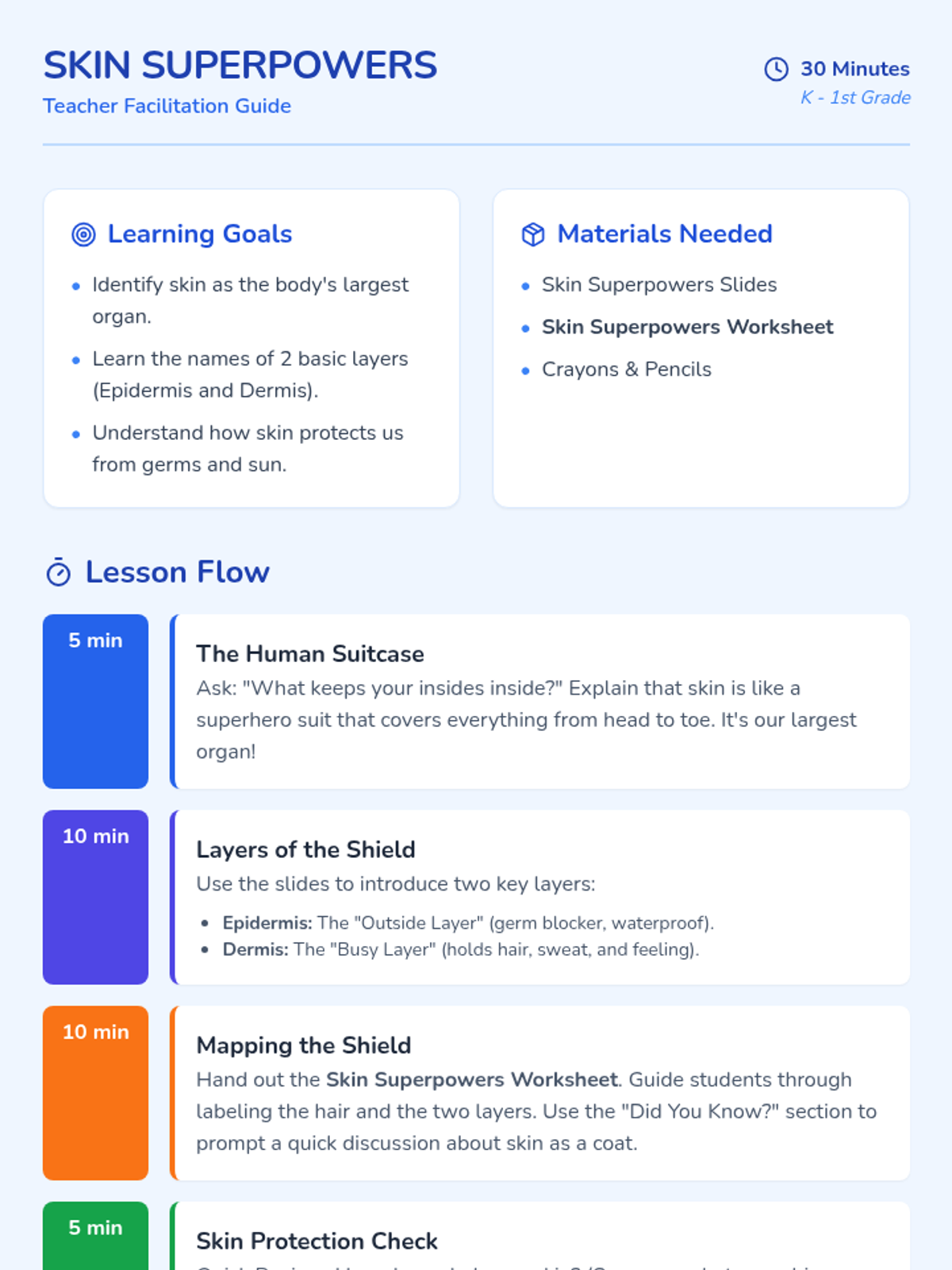
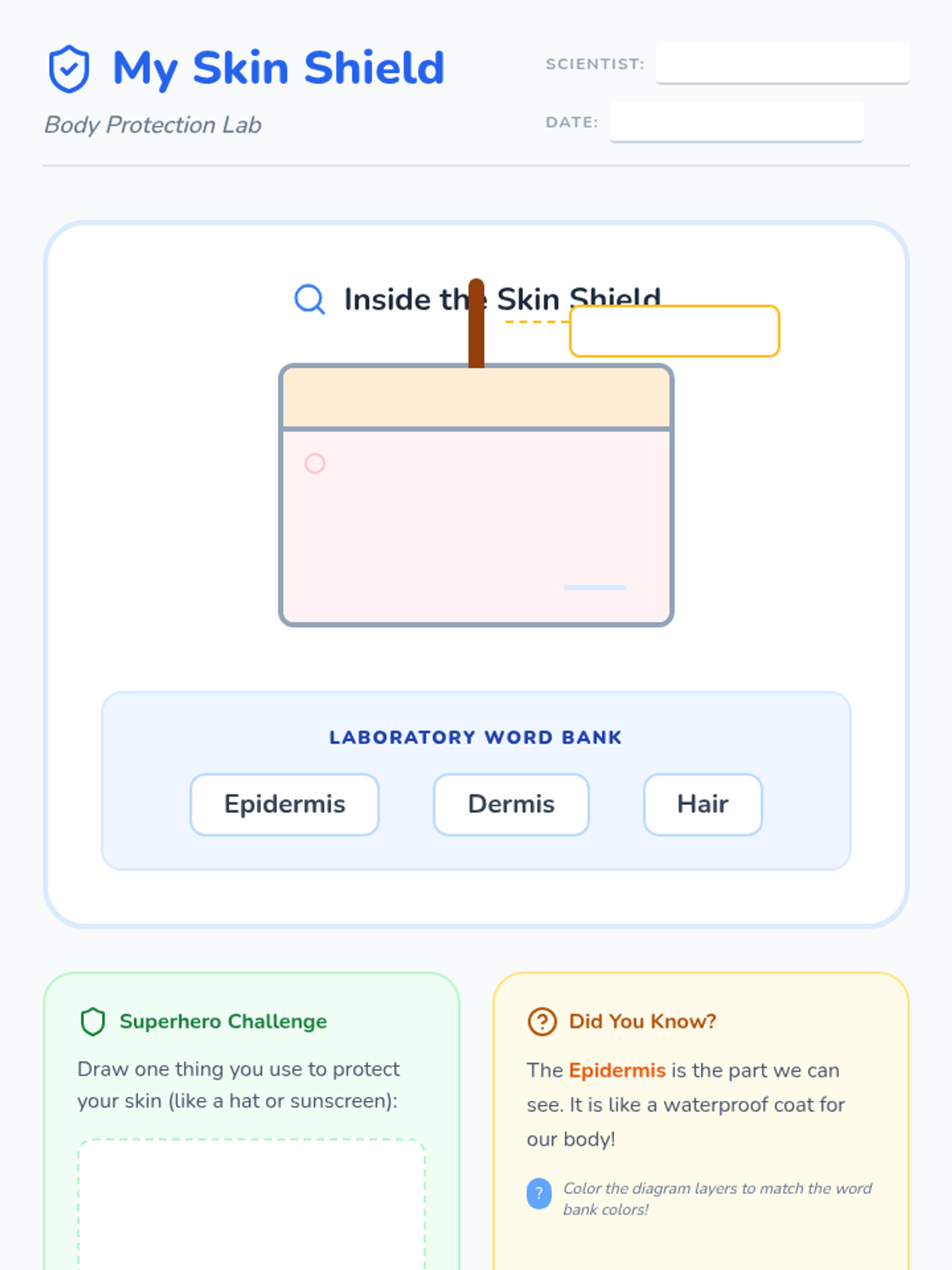
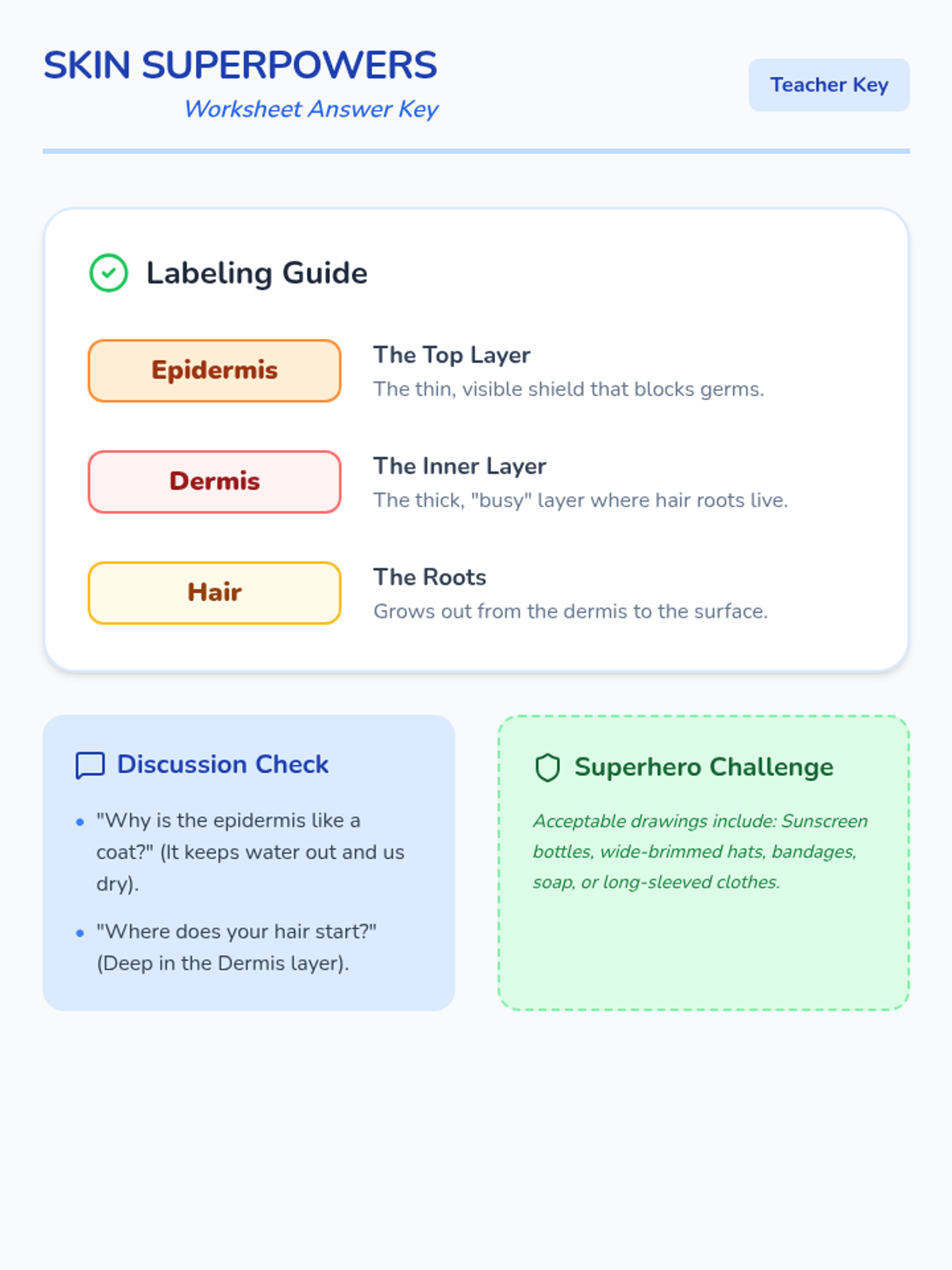
A 30-minute introductory lesson for K-1 students about the skin's layers and its role as a protective shield for the body.
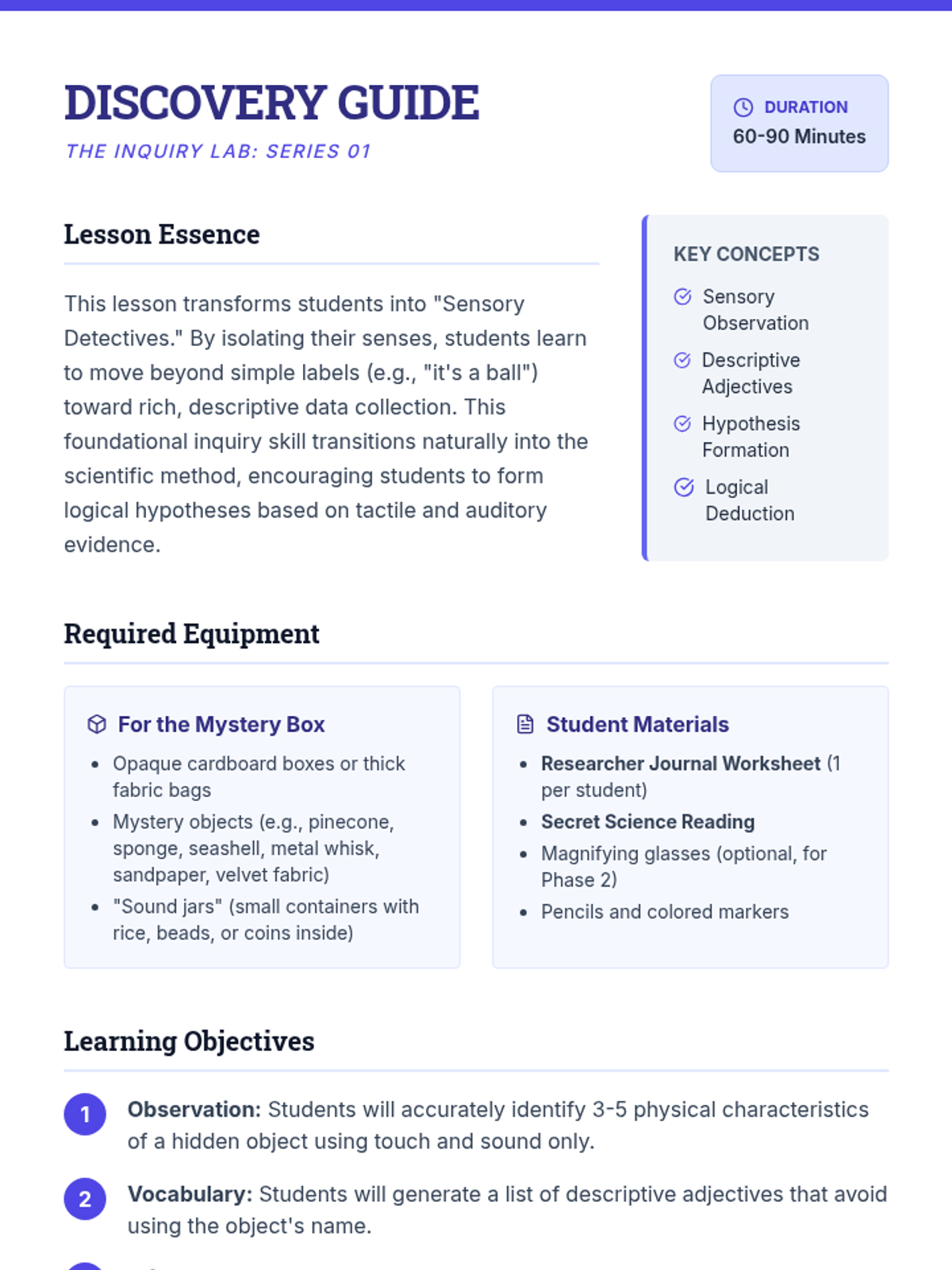
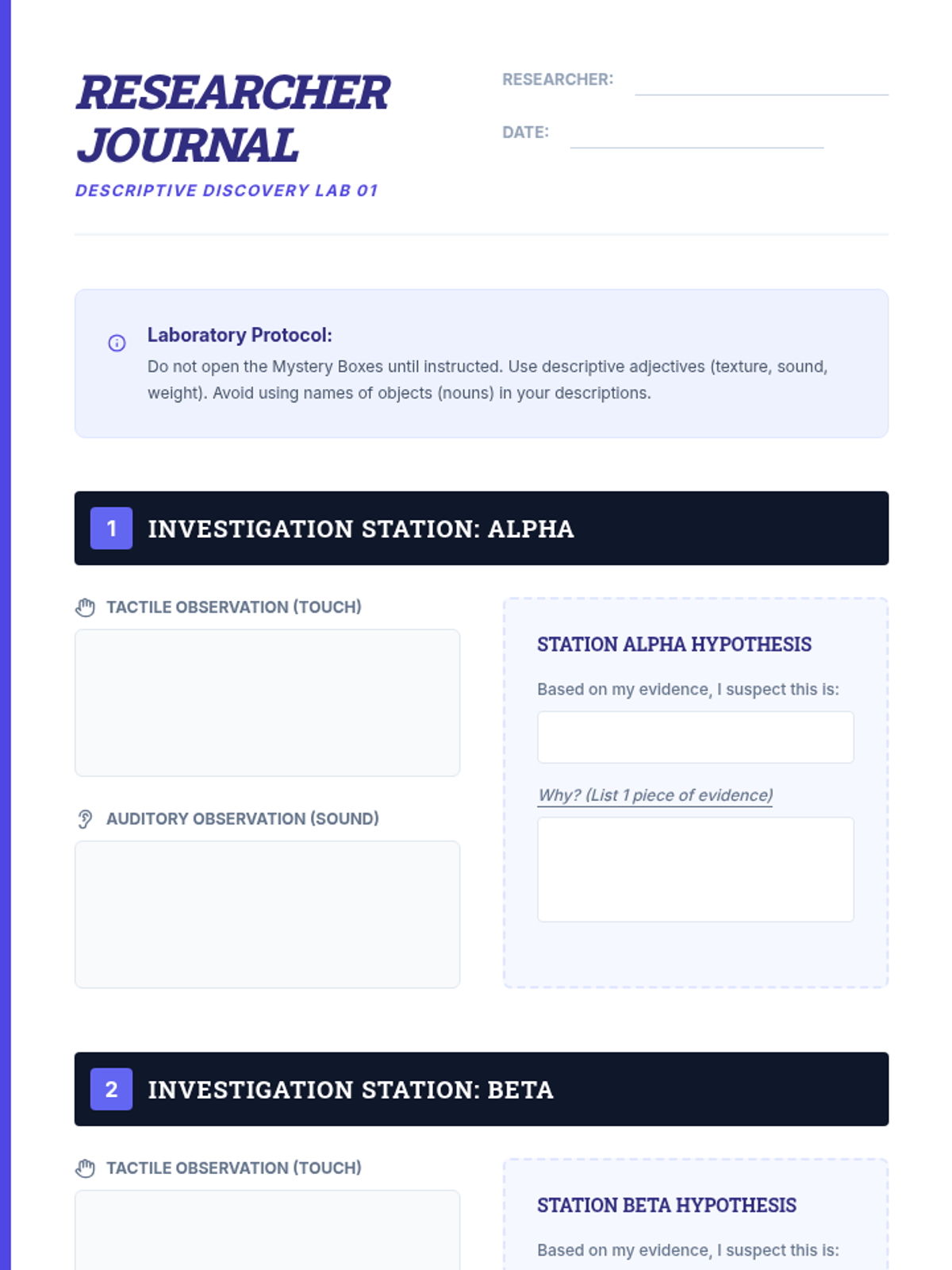
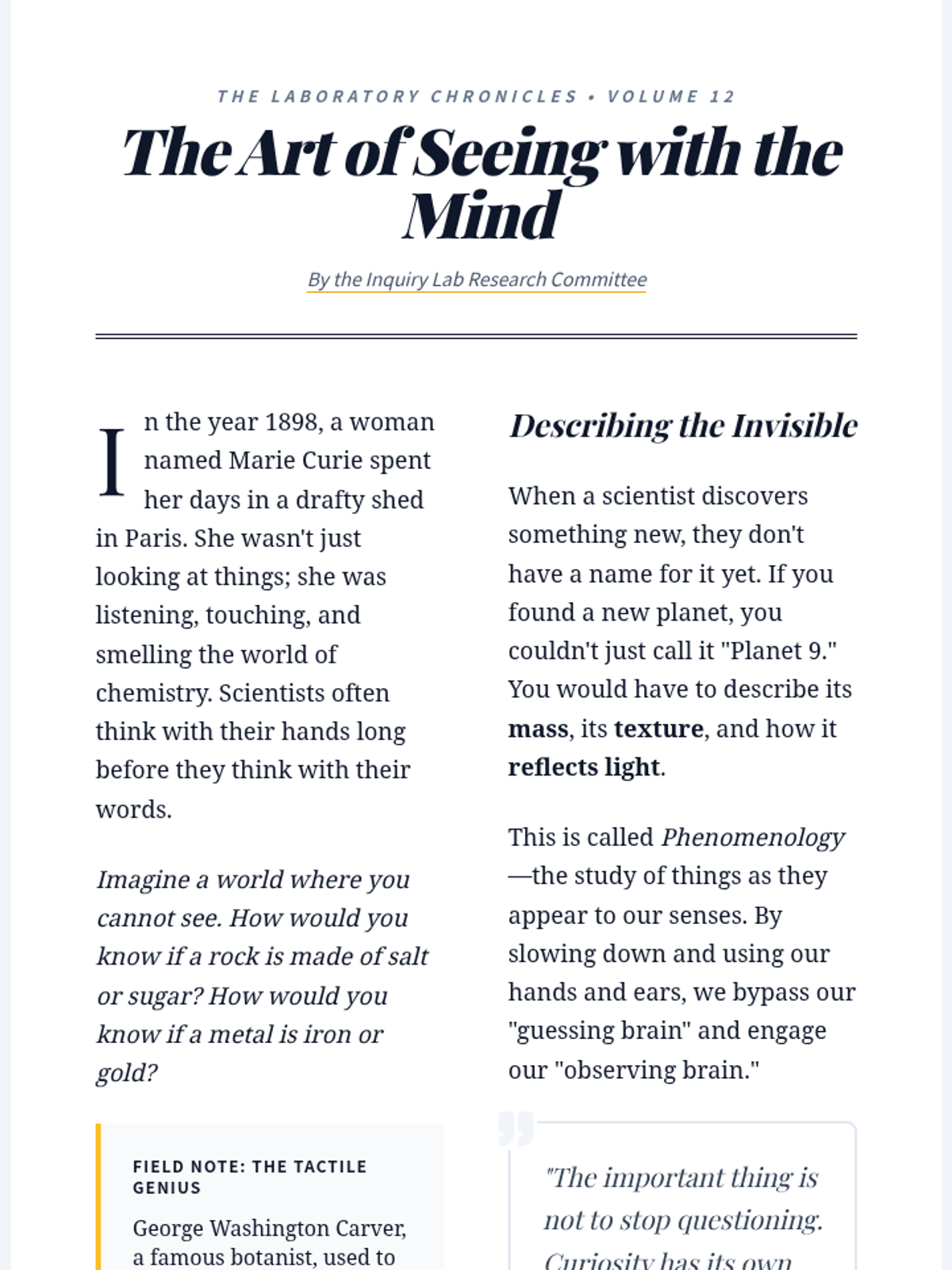
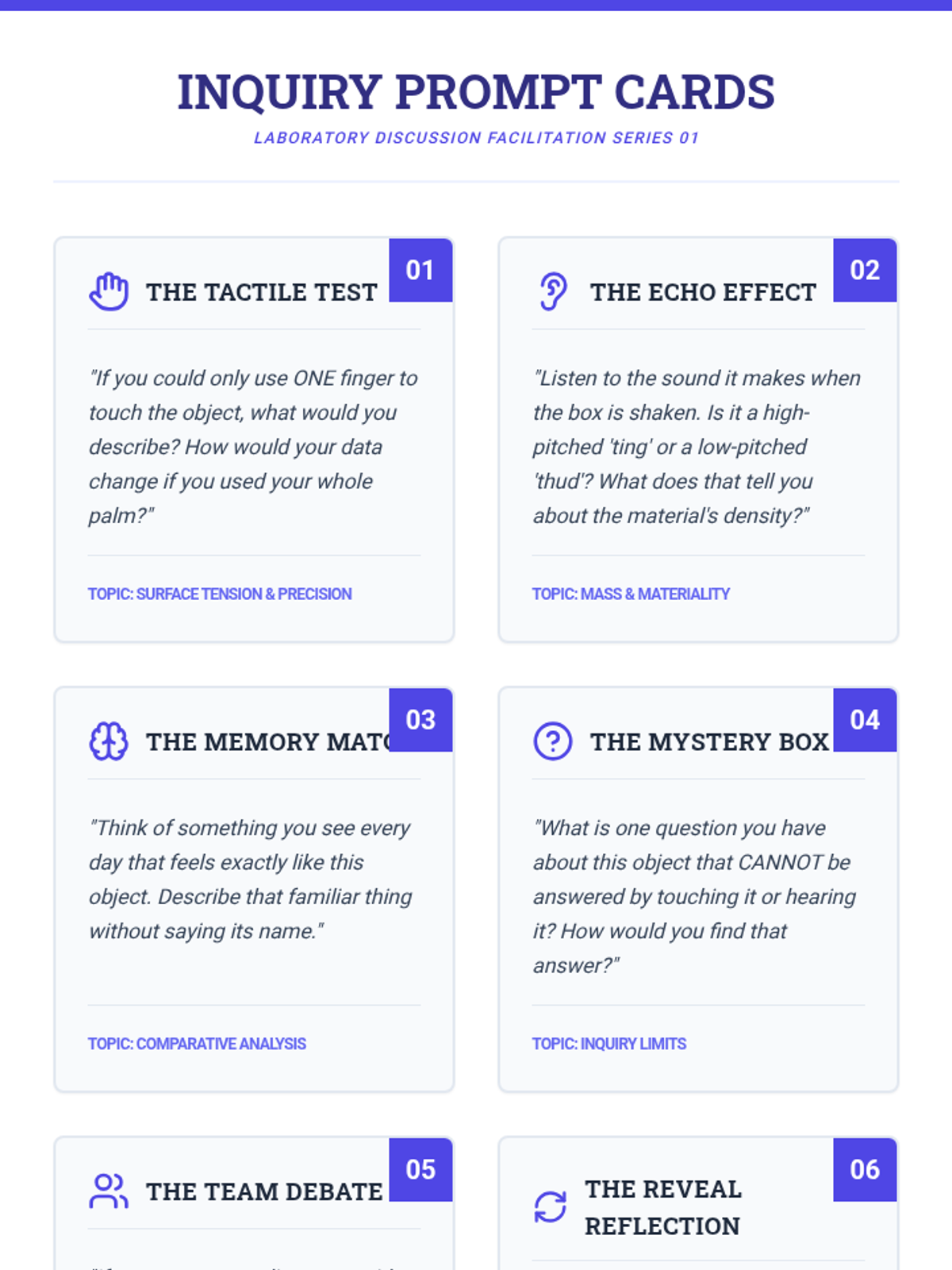
A hands-on inquiry lesson where students use their senses to investigate objects, build descriptive vocabulary, and form scientific hypotheses about the unknown.
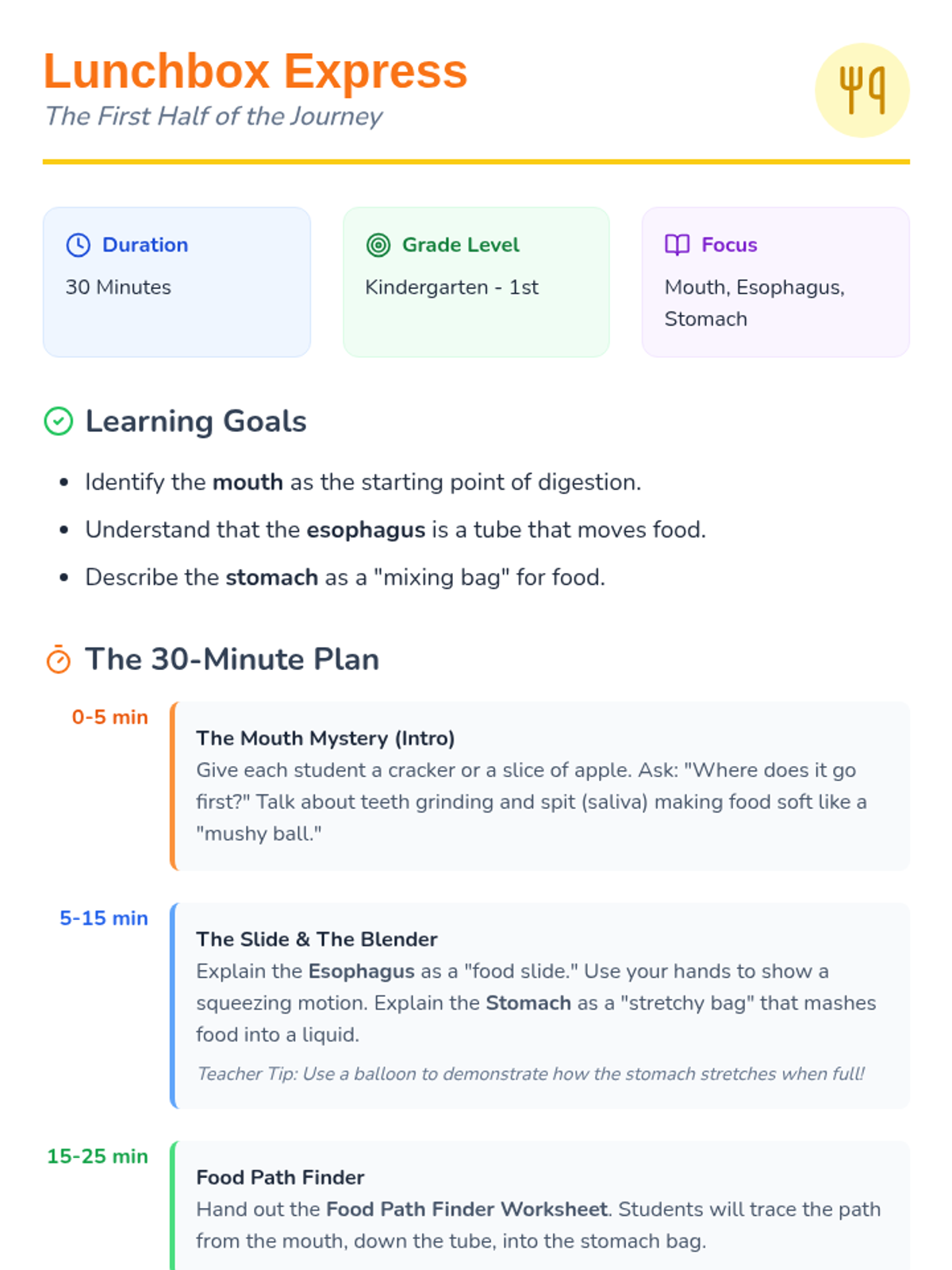
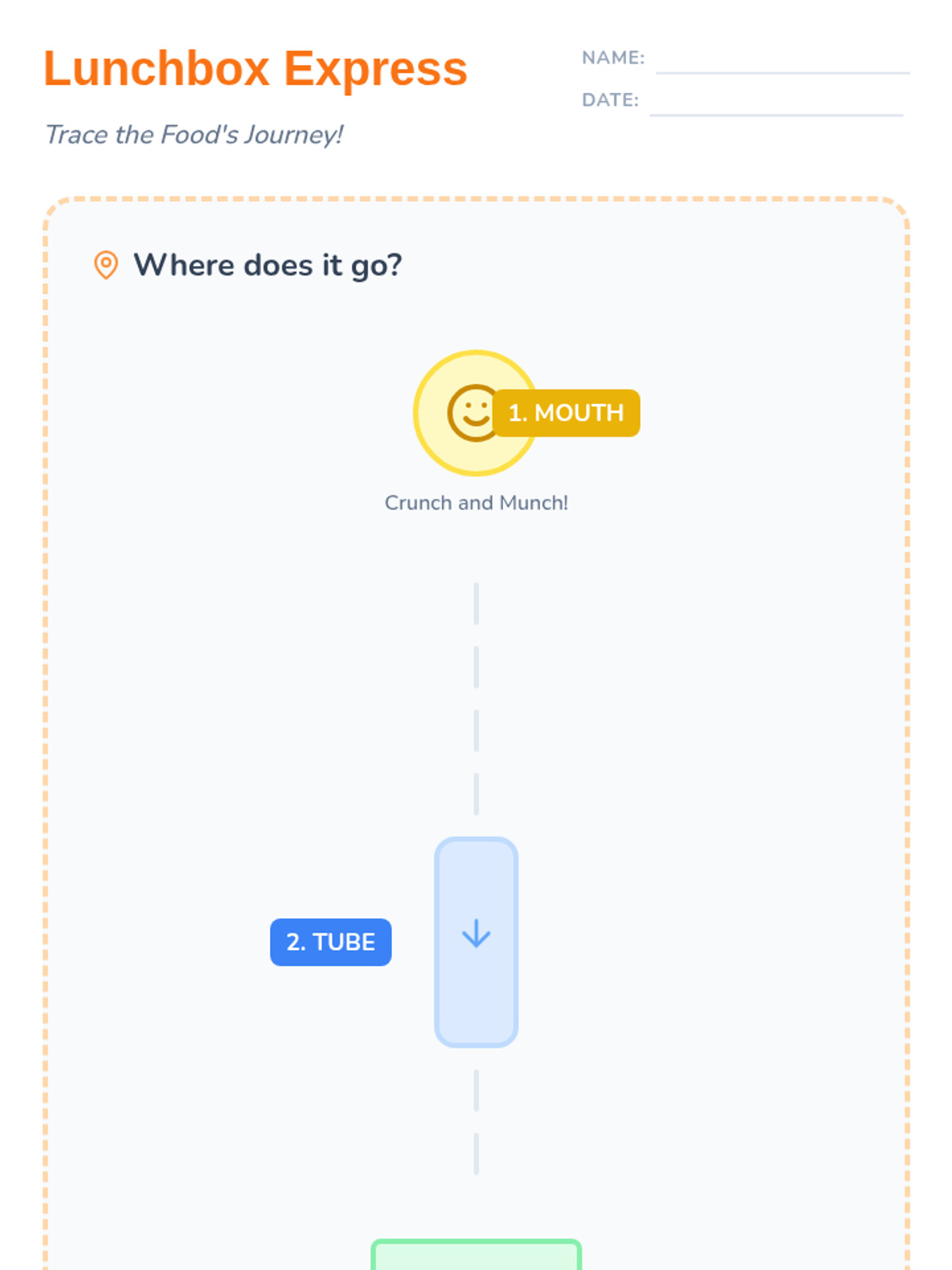
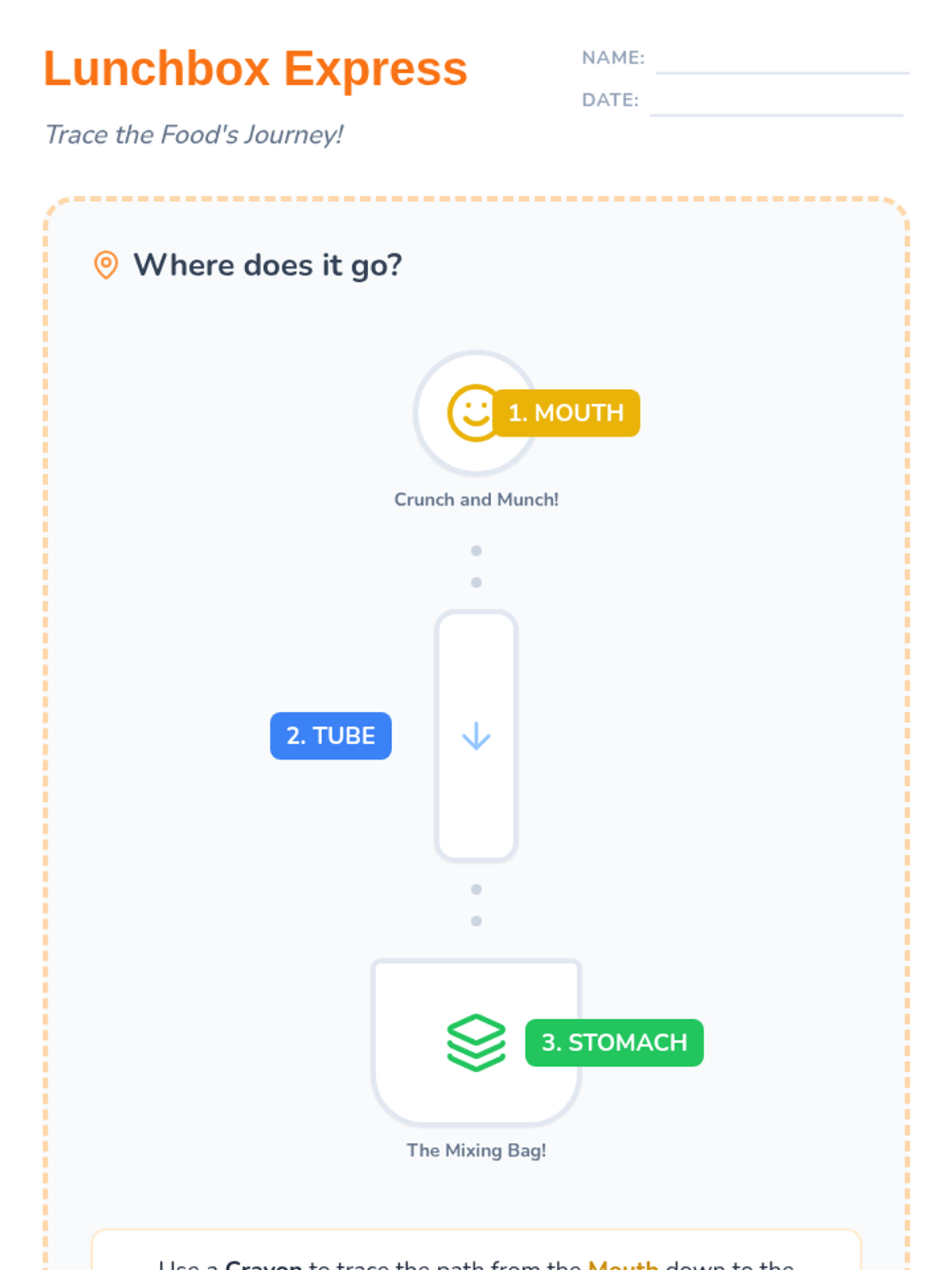
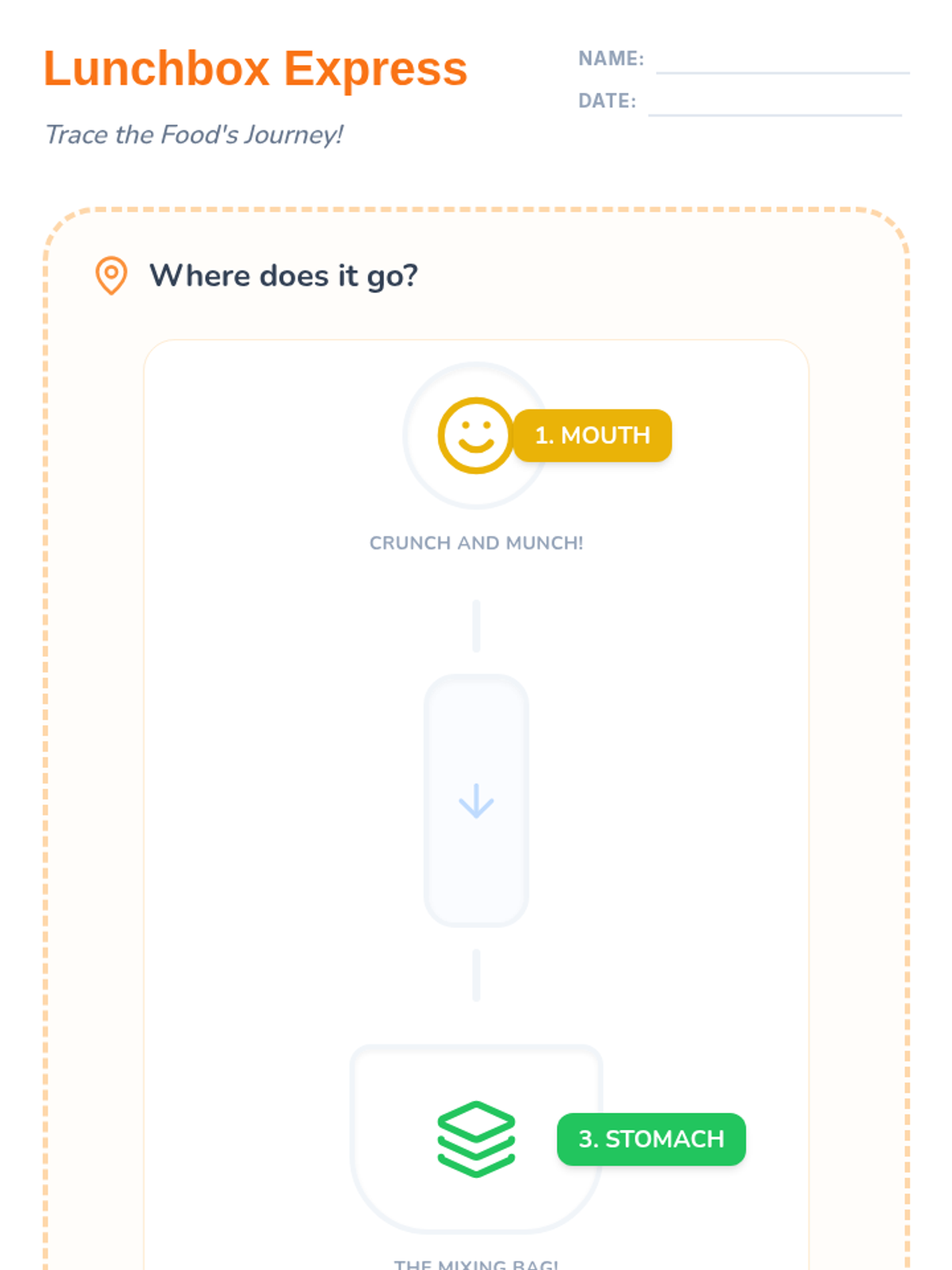
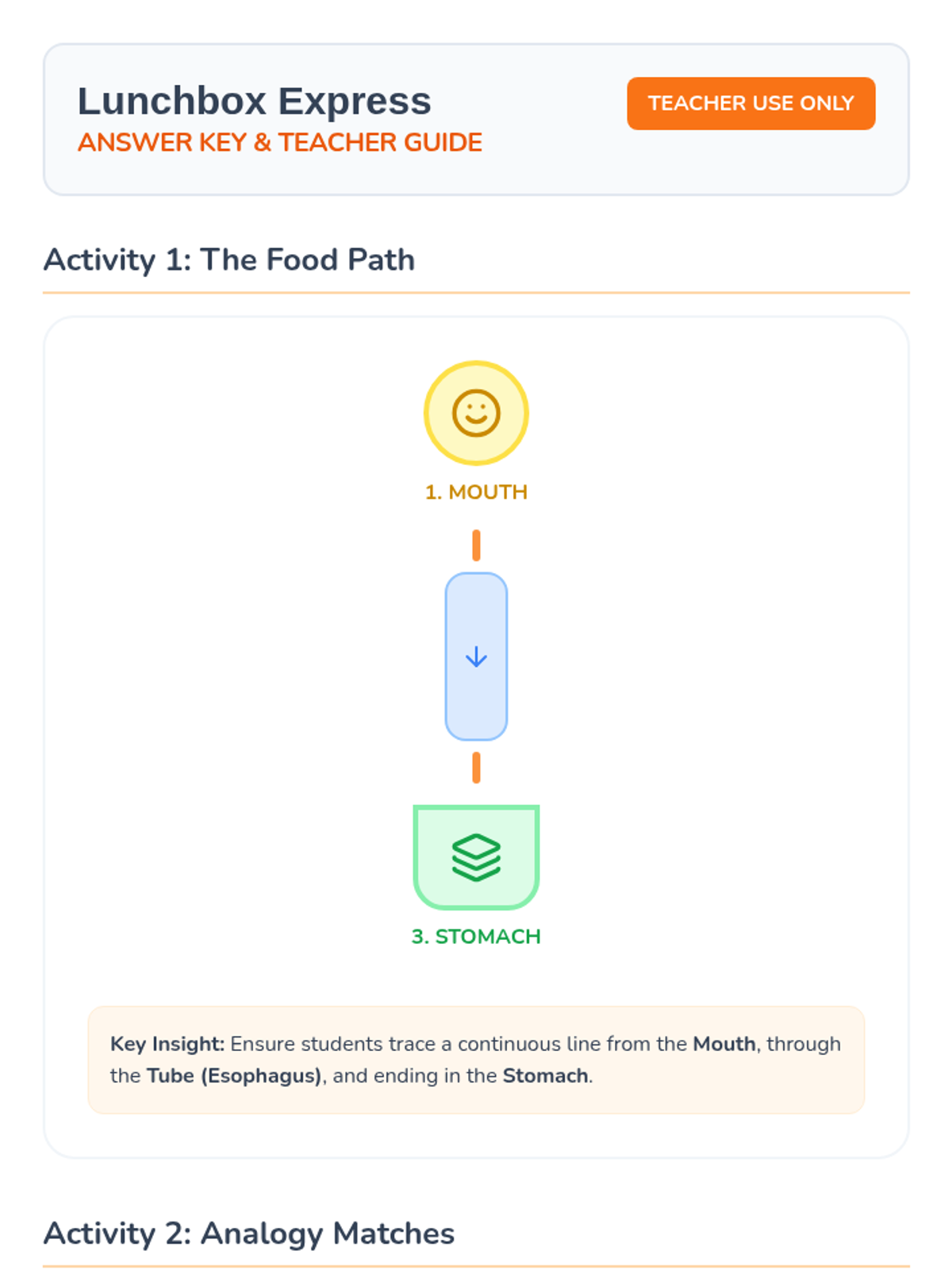
A high-energy, 30-minute introduction to the first half of the digestive system (mouth to stomach) designed for K-1 students. Includes a guided exploration of how food travels and a hands-on activity sheet.
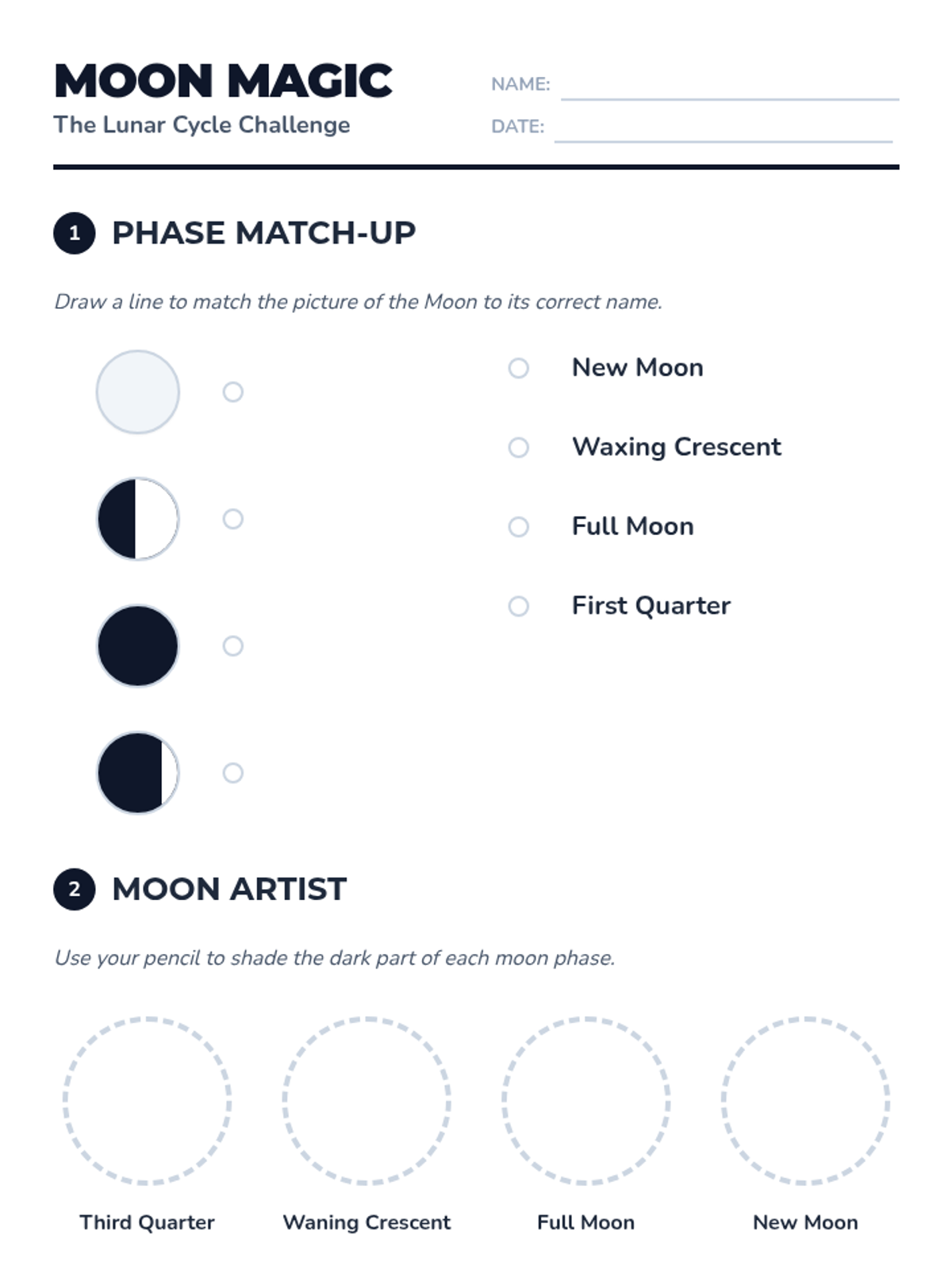
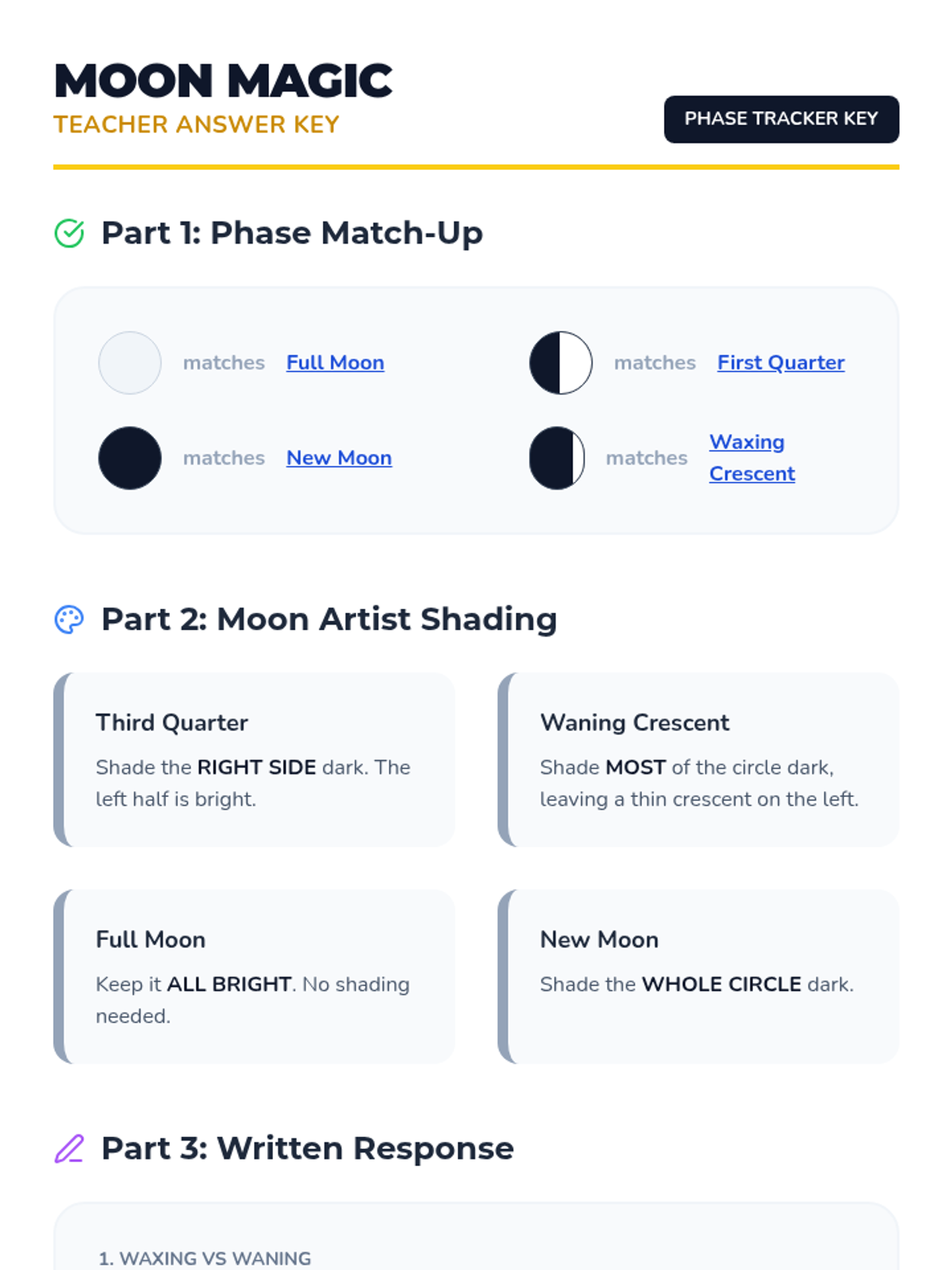
An introductory lesson for 2nd graders to understand why the moon appears to change shape over a month, covering the main phases of the lunar cycle.
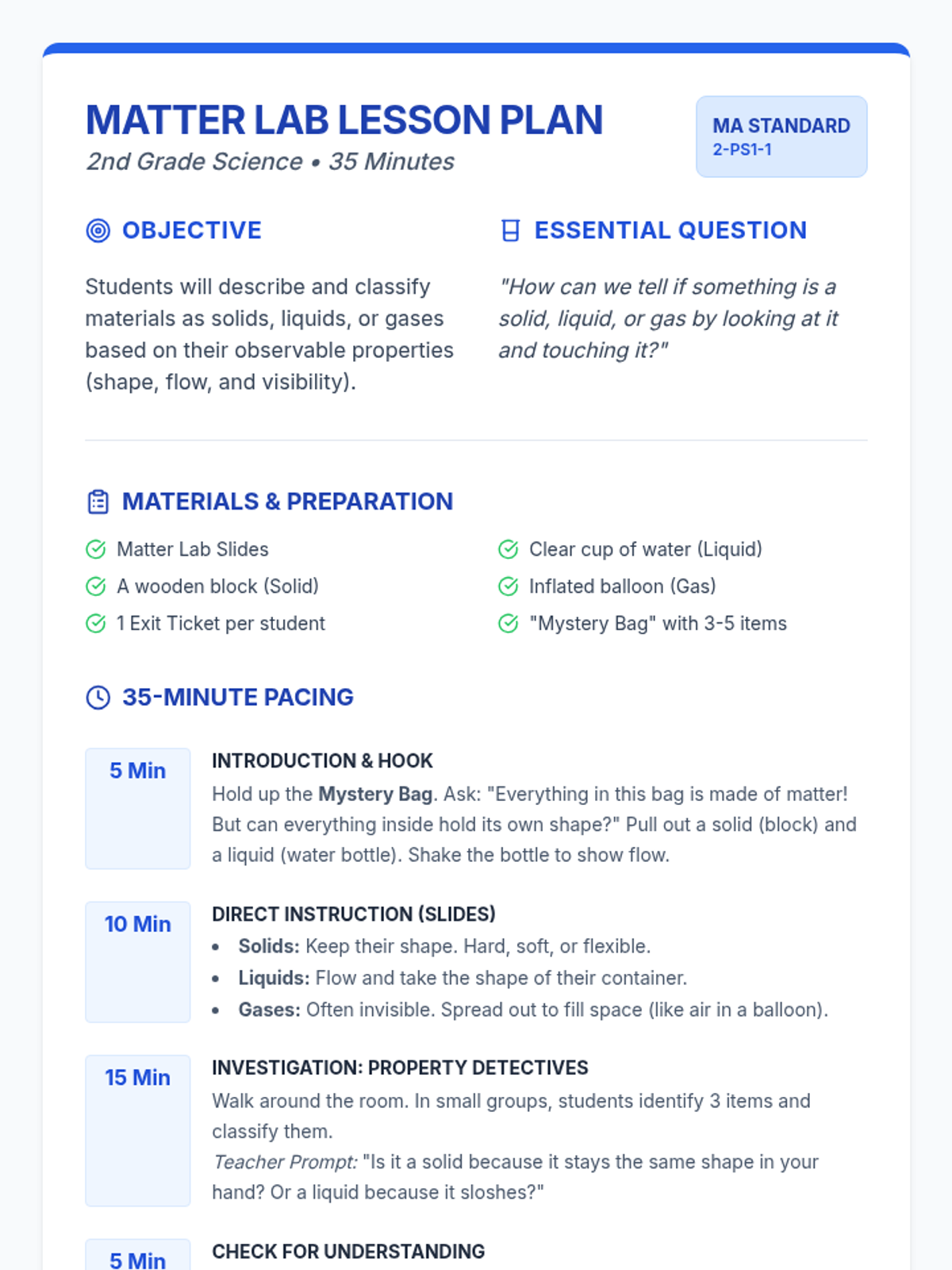
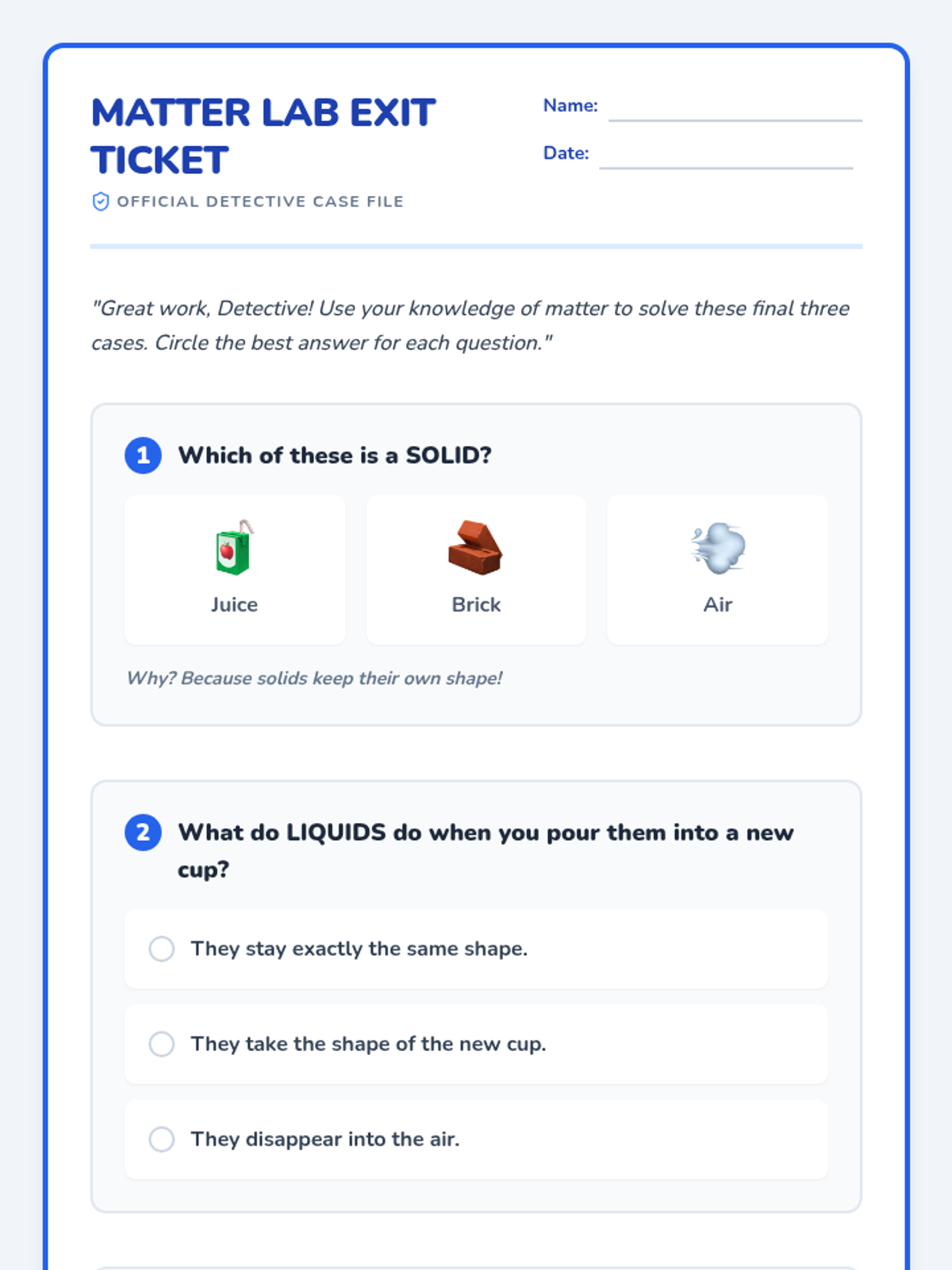
A fast-paced 35-minute lesson introducing the three states of matter—solids, liquids, and gases—through observable properties, aligned to MA Science Standard 2-PS1-1. Students act as 'Matter Detectives' to classify everyday objects.
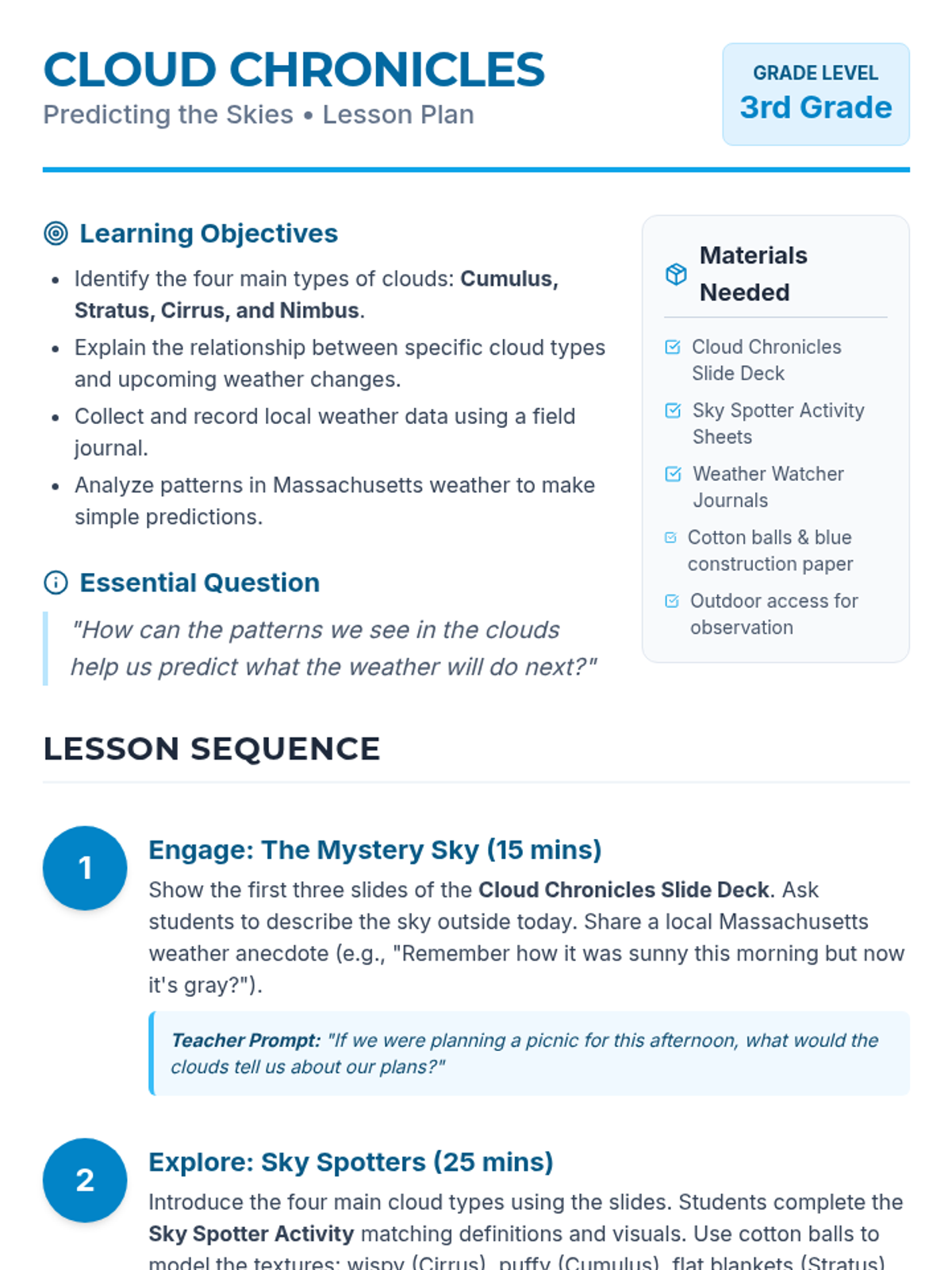
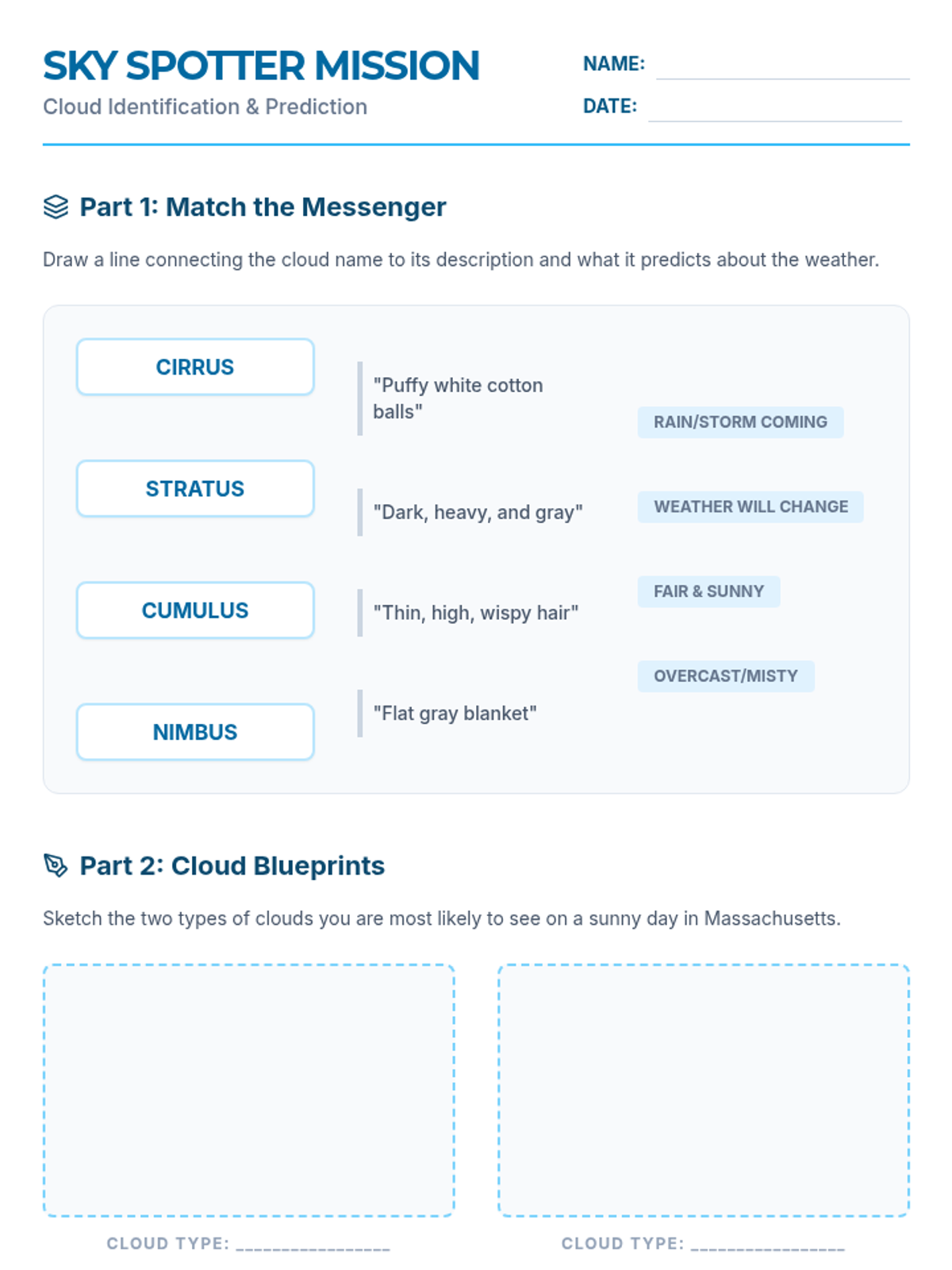
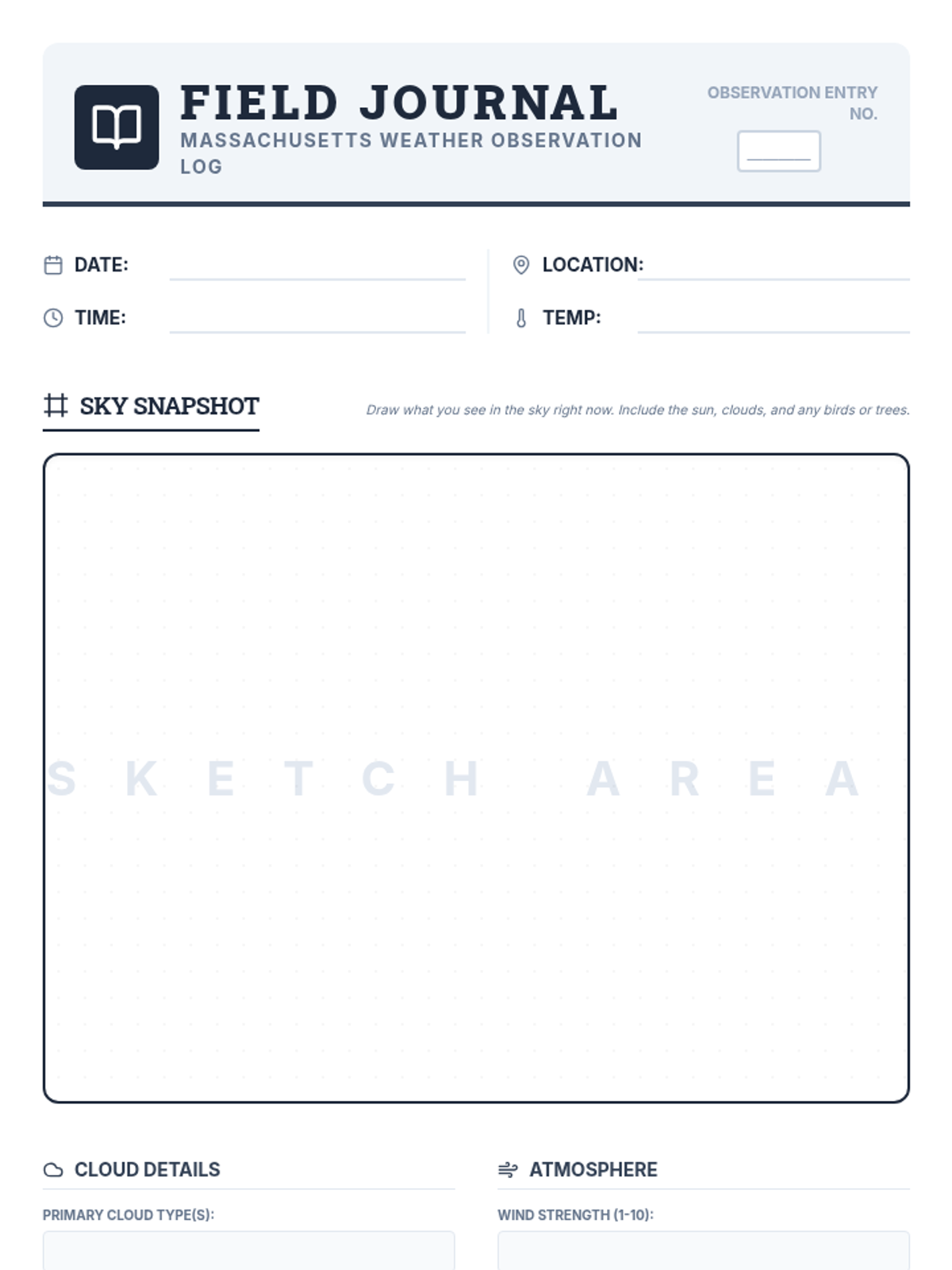
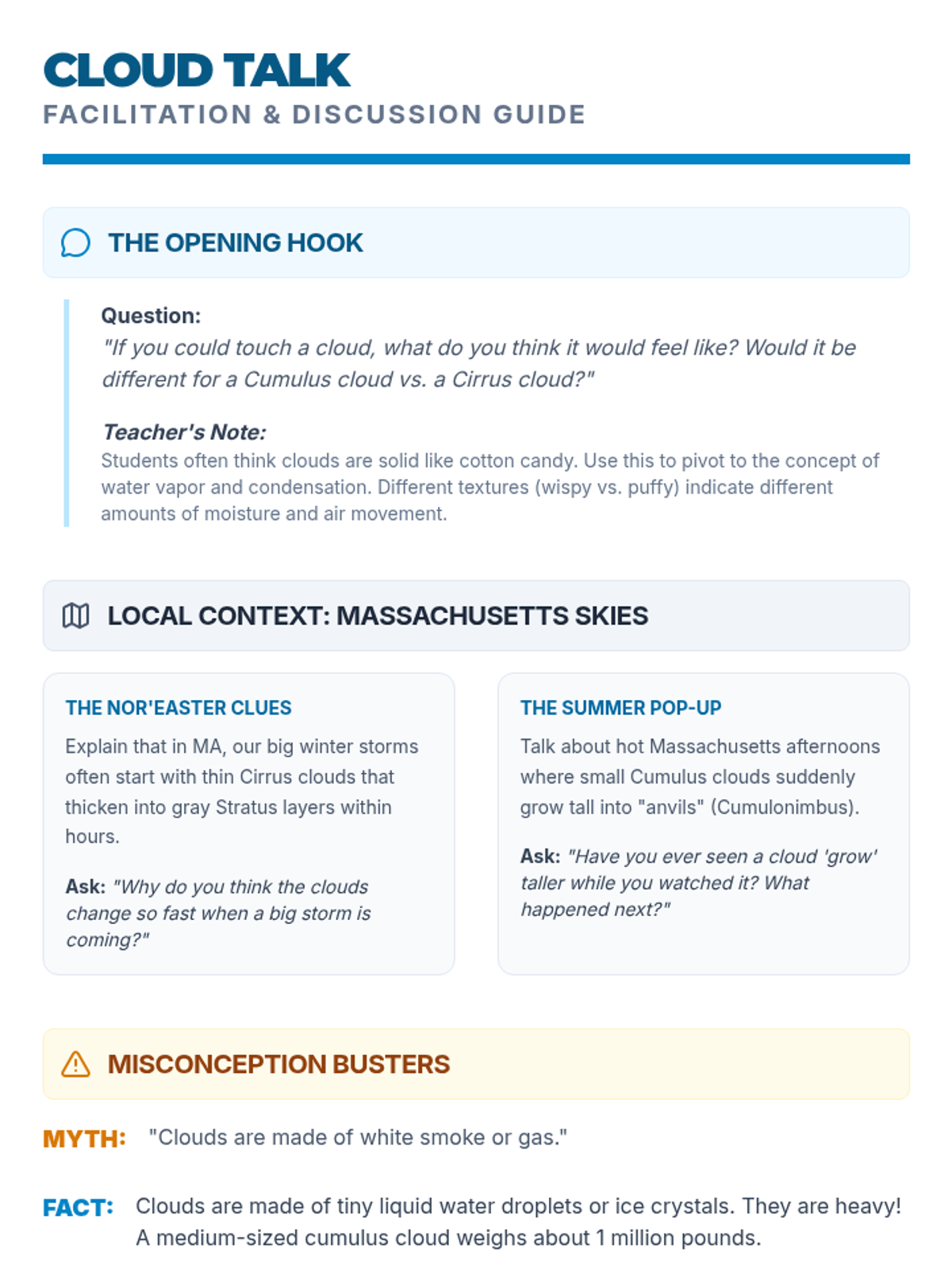
An inquiry-based science lesson for 3rd graders focused on identifying cloud types and using them to predict weather patterns in Massachusetts. Students engage in outdoor observations and data collection to become amateur meteorologists.