A 45-minute high school history lesson exploring the lives, business strategies, and social impact of Black women entrepreneurs in the 19th and 20th centuries, featuring Madam C.J. Walker and Maggie Lena Walker.
An exploration of the internal and external factors that led to the collapse of the Tokugawa Shogunate, including social unrest, economic stagnation, and the pressure of Western imperialism.
A comprehensive exploration of Japan's rapid transformation from a feudal society to a global industrial power during the Meiji Restoration.
An exploration of the nervous system's building blocks, focusing on neuron structure, the synaptic gap, and the chemical messengers that drive human behavior and sensation.
A lesson exploring the legal and social definitions of refugees, asylum seekers, and internally displaced persons to help students understand the complexities of global displacement.
A simplified history lesson on the D-Day invasion focusing on the visuals of the beaches, military tactics, and the turning point of WWII for Tier 2 special education students.
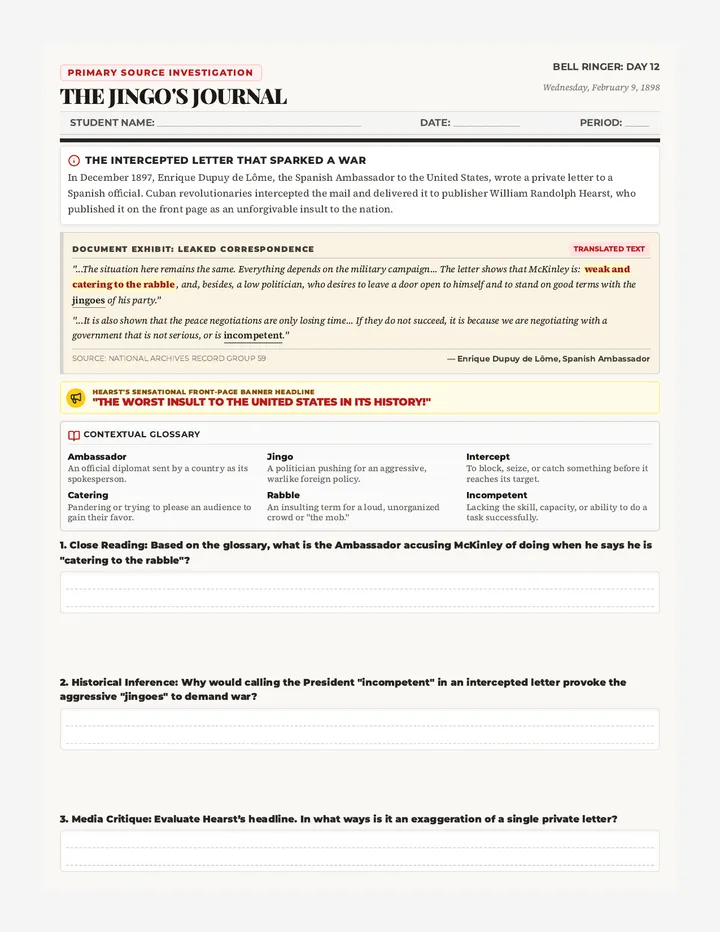
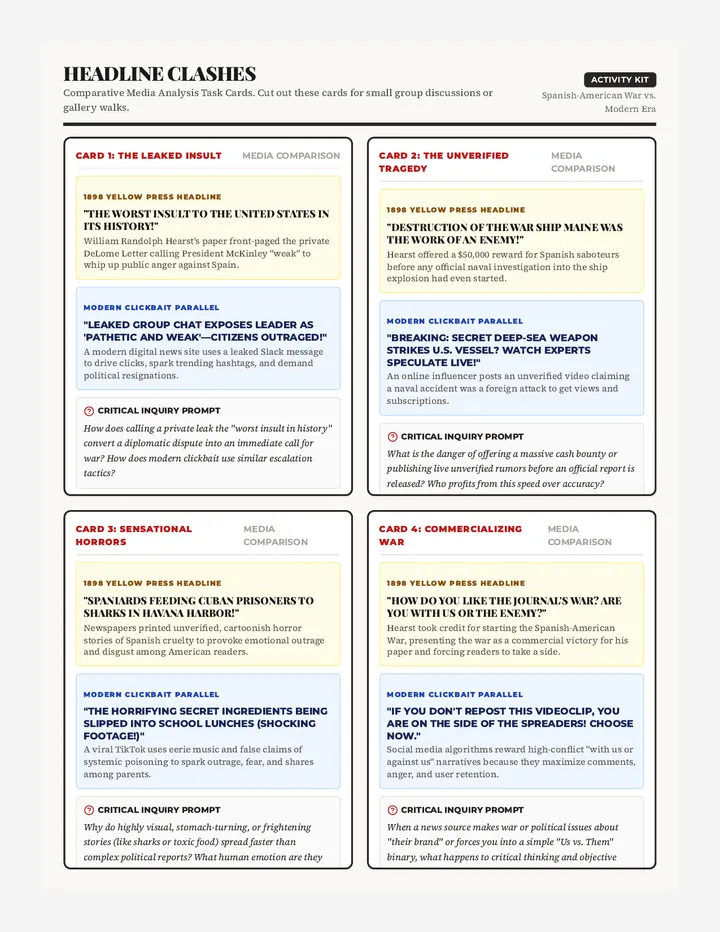
An introductory lesson on American imperialism in the late 1800s, focusing on the geographic expansion into the Pacific and Caribbean. Students will identify key territories and understand the shift in US foreign policy.
A regional investigation into the social and economic consequences of global warming in Latin America, focusing on human displacement, glacial melt in the Andes, and agricultural shifts. Students analyze a detailed text and construct a Claim-Evidence-Reasoning (CER) argument.
A deep dive into the contributions of Black women to the suffrage movement, focusing on their dual advocacy for racial and gender equality. Students will analyze key figures and the concept of intersectional activism.
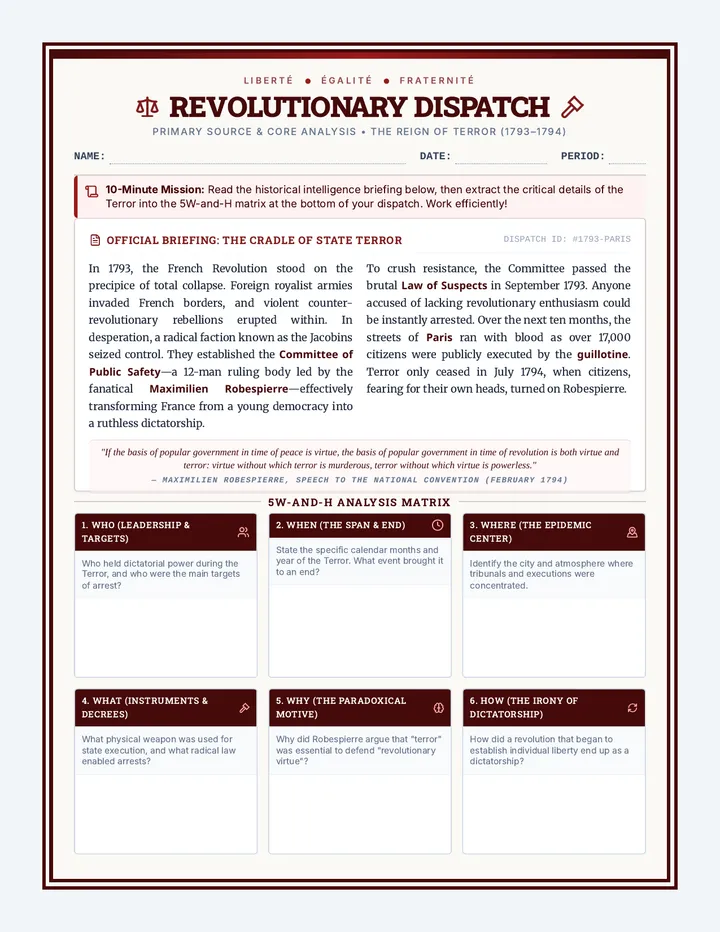
A lesson focused on analyzing historical events through the lens of both factual summary and the personal motivations of key figures. Students use a structured graphic organizer to bridge the gap between 'what happened' and 'why it happened' based on human character.
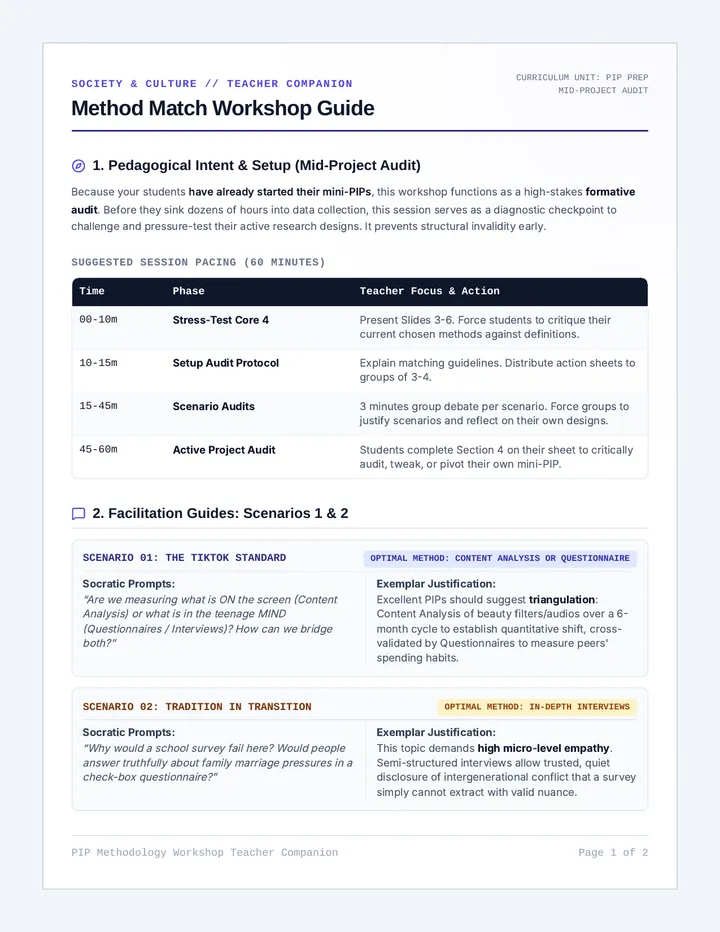
A set of five interactive learning stations focused on the physical and cultural geography of Asia, including population challenges, globalization, and natural disasters. Students practice reading, writing, listening, and speaking skills while analyzing the five themes of geography.
A document-based investigation into the complex legacy of Alexander the Great, challenging students to evaluate whether he deserved his 'Great' title based on primary and secondary sources.
A comprehensive exploration of the long-term causes of WWI, focusing on the MAIN framework, Germany's Weltpolitik, and the intricate web of alliances that turned a regional conflict into a global war.
An analysis of the war's conclusion, from the Armistice to the Treaty of Versailles, and how the peace terms set the stage for future global conflicts.
An exploration of Texas's unique role in the war effort, including the establishment of massive training camps, the state's economic contributions, and the bravery of Texas soldiers.
An examination of the industrialization of warfare, focusing on the new technologies that defined the Western Front and the brutal reality of trench warfare.
A deep dive into the underlying causes of WWI and the specific events that pulled the United States, and Texas, into the conflict, with a focus on the Zimmermann Telegram.
A collection of creative and motivational countdown posters designed for Social Studies classrooms preparing for the STAAR test.
A 15-20 minute refresher on the life, conquests, and cultural impact of Alexander the Great, preparing students for an investigative activity into his mysterious death.