Students will explore the Fifth Amendment's Takings Clause by analyzing Eminent Domain, participating in a mock town hall debate about a proposed highway, and reflecting on the balance between private property rights and the public good.
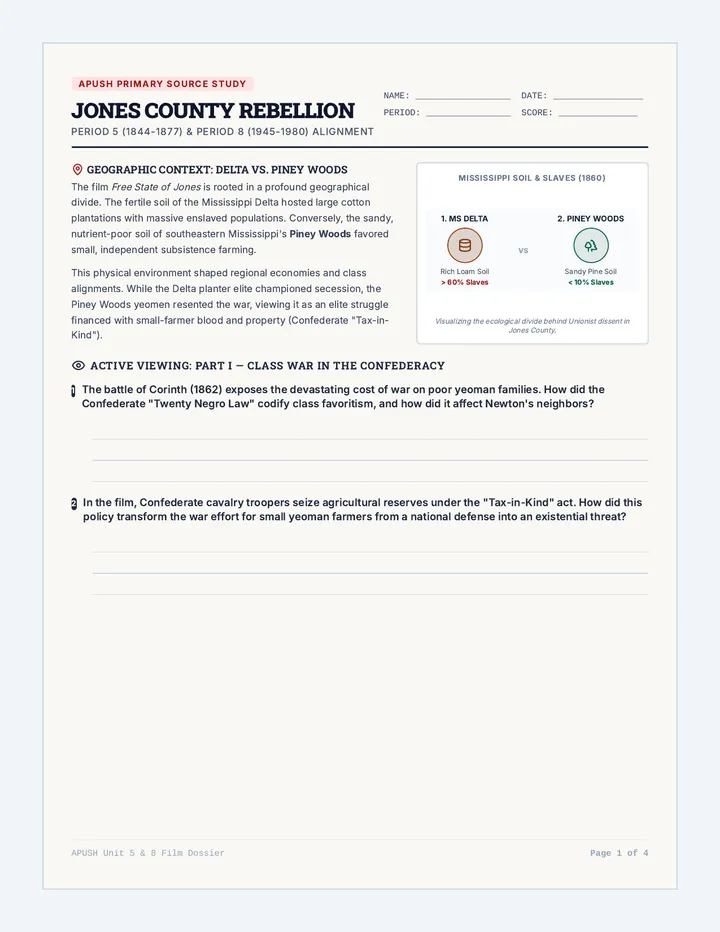
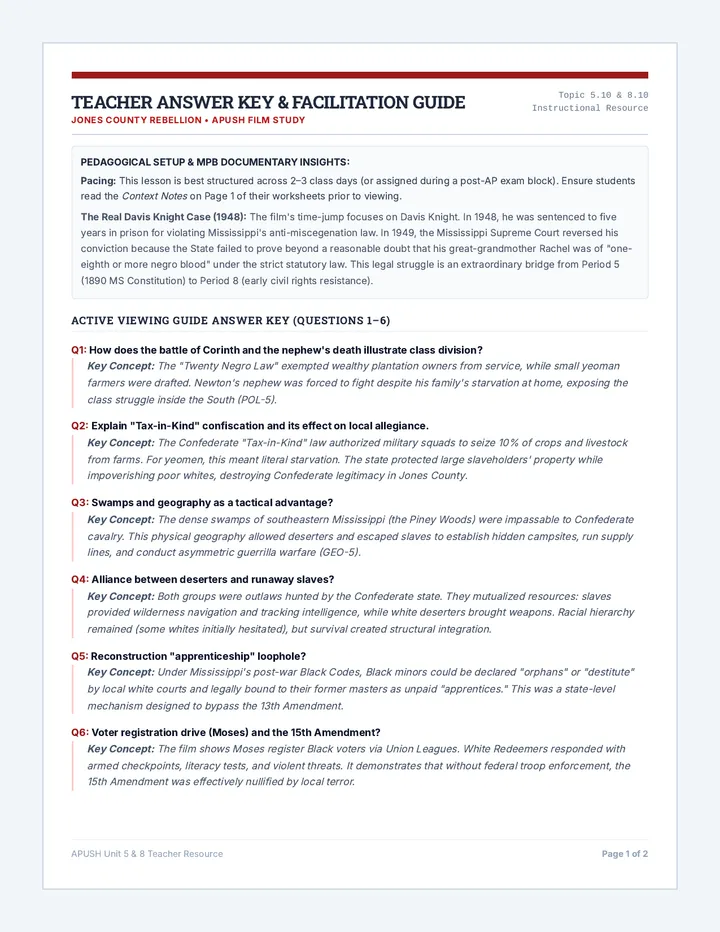
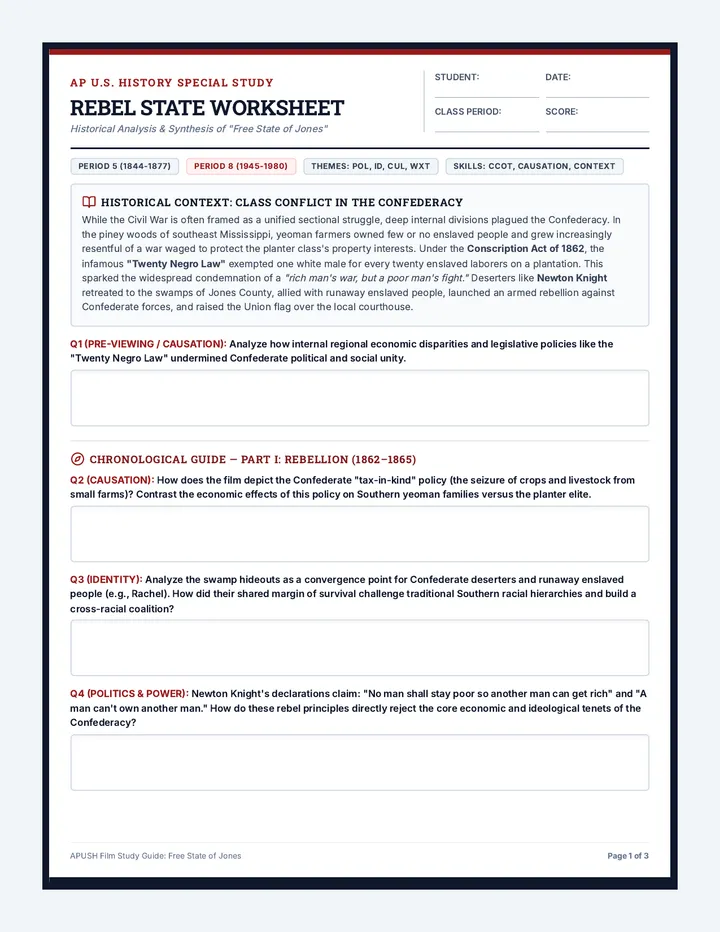
An AP U.S. History film study lesson on 'Free State of Jones' exploring Civil War dissent, Reconstruction failures (Period 5), and their long-term legacy in 20th-century Jim Crow courts (Period 8).
A comprehensive AP U.S. History study of the internal conflicts of the Confederacy, the legal boundaries of Reconstruction, and the long struggle for civil rights in Mississippi, structured around the historical events depicted in the film Free State of Jones.
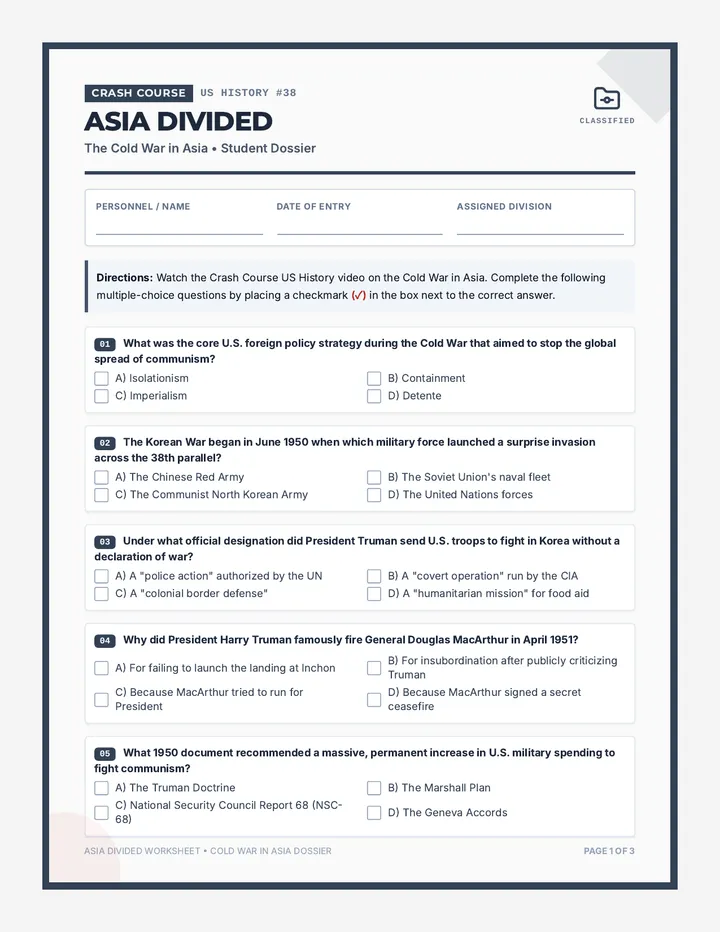
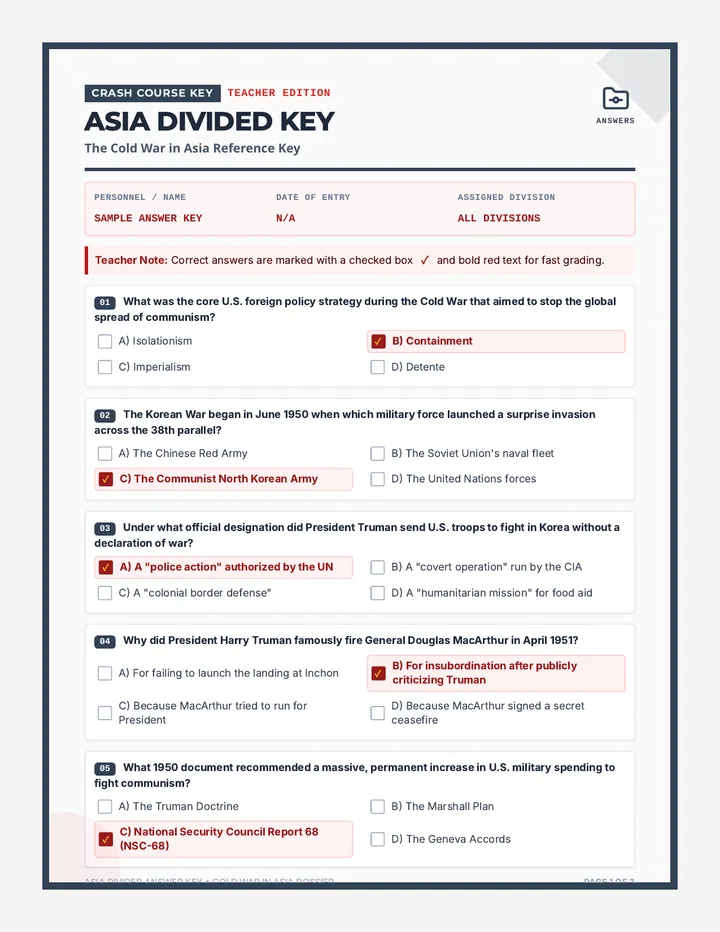
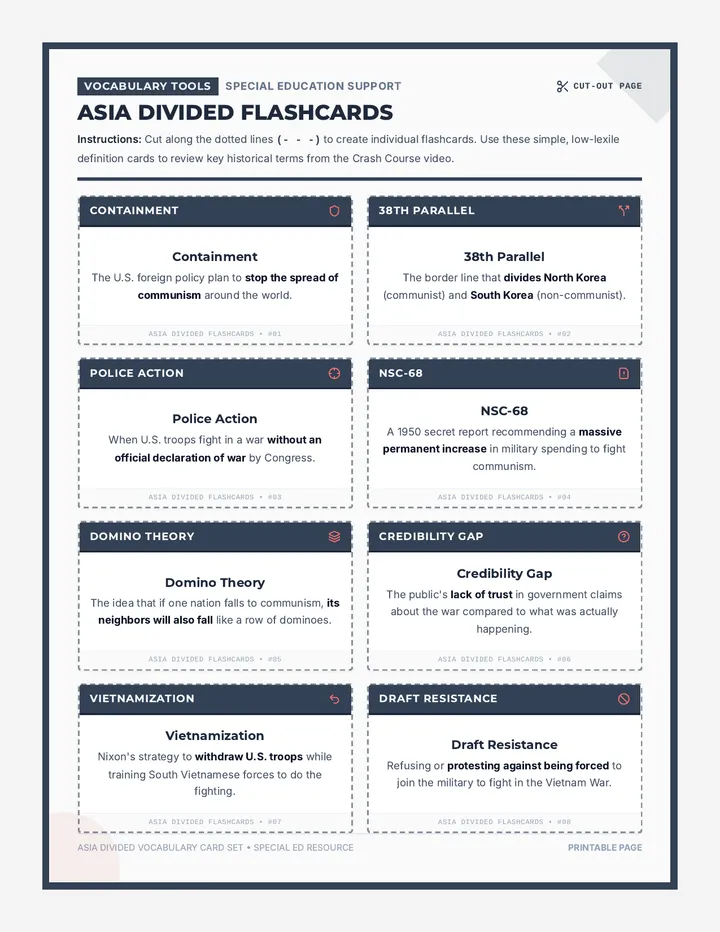
A deep-dive lesson exploring the Cold War in Asia (focusing on the Korean and Vietnam Wars) using Crash Course US History #38. This lesson includes a 15-question comprehension worksheet, a complete teacher answer key, and specialized low-lexile definition flashcards for special education.
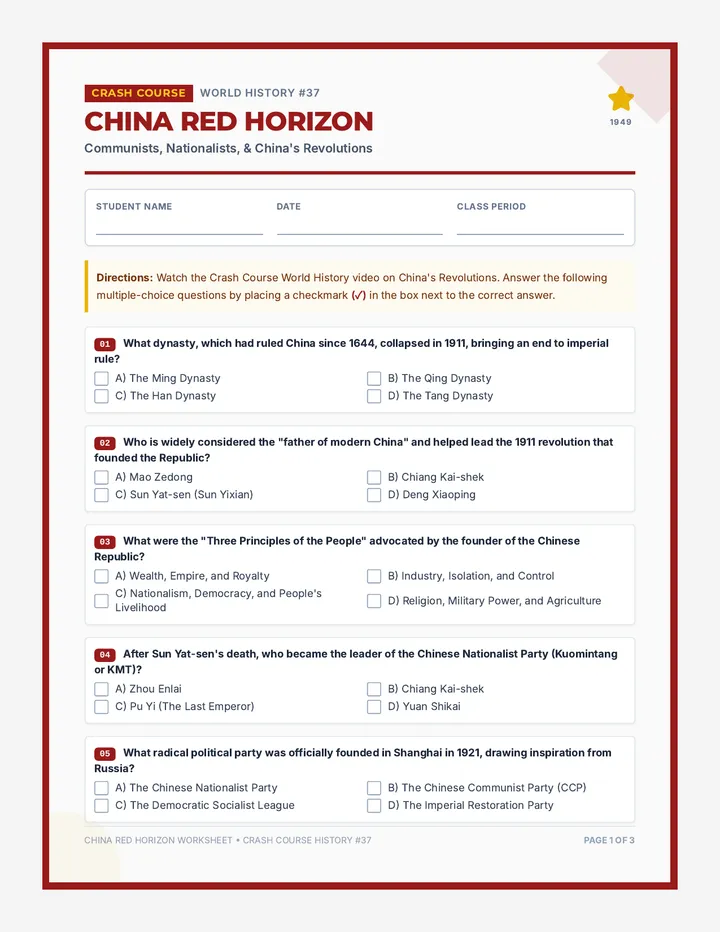
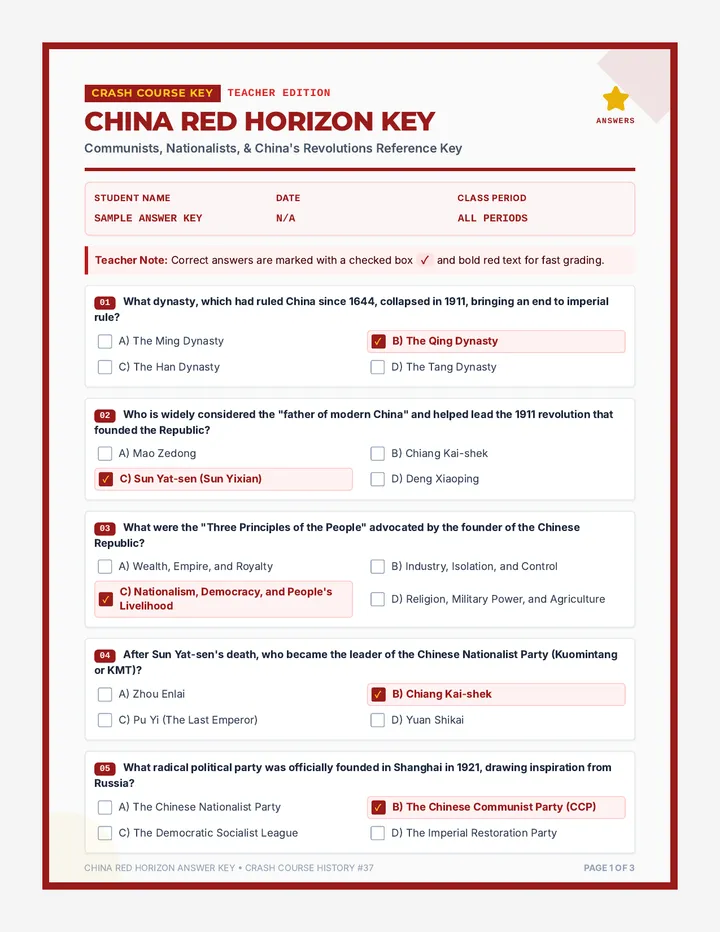
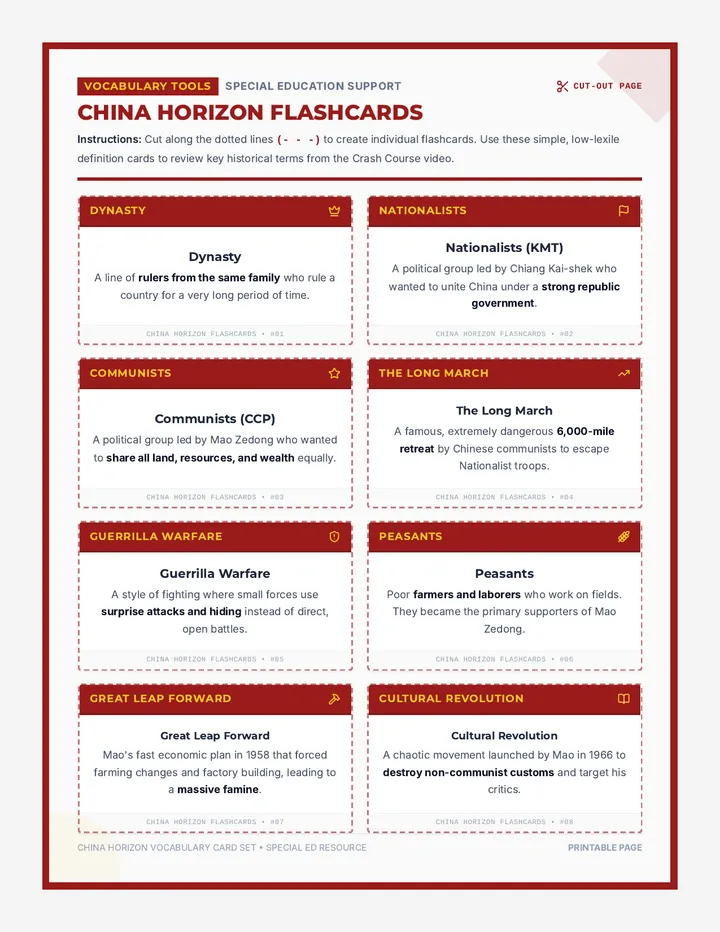
A deep-dive lesson exploring the Chinese revolutions of the 20th century using Crash Course World History #37. Includes a 15-question comprehension worksheet, a complete teacher answer key, and specialized low-lexile definition flashcards for special education.
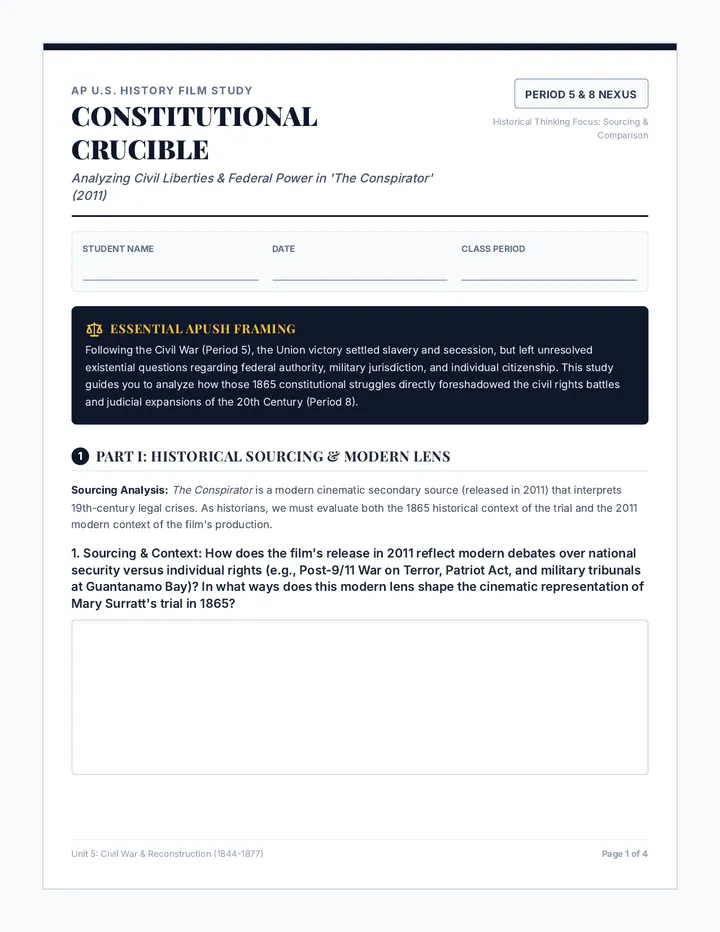
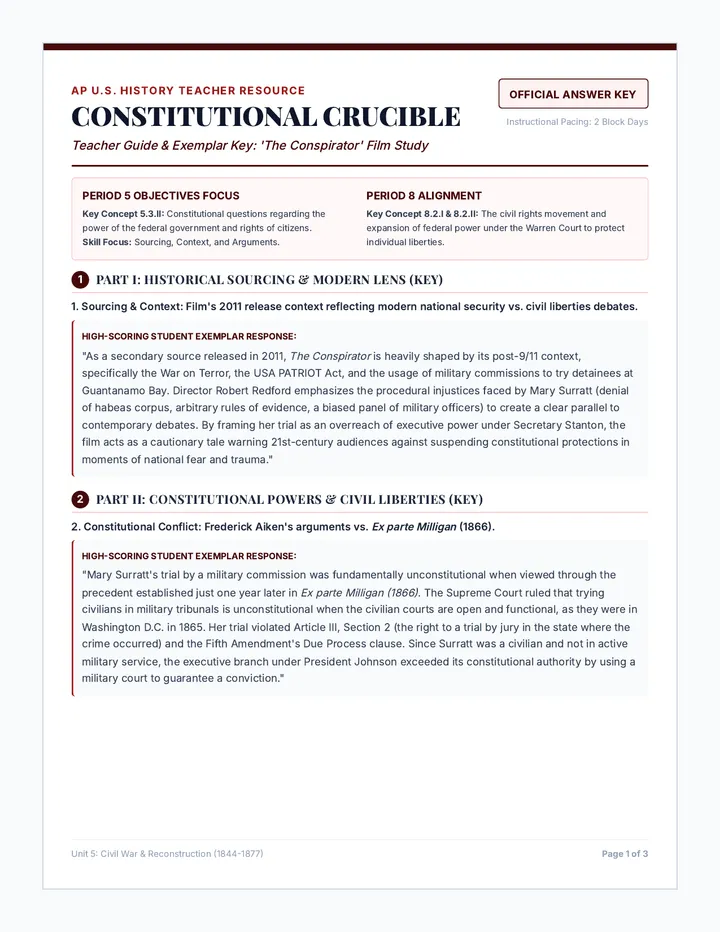
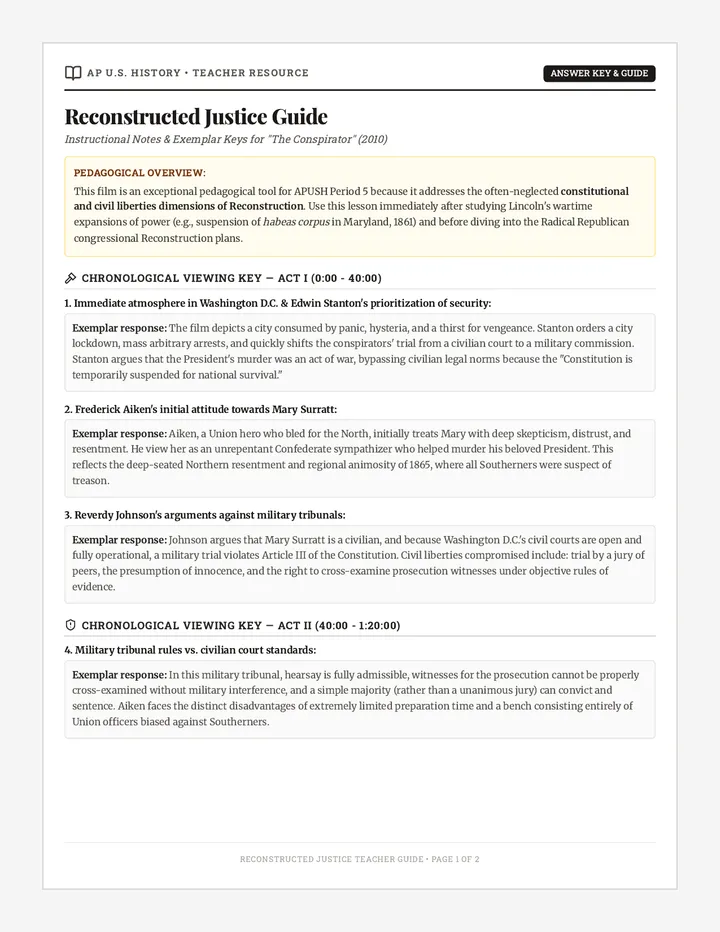
An AP U.S. History film study and constitutional analysis of 'The Conspirator'. Students explore Period 5 legal precedents, executive authority, and civil liberties, while tracing long-term continuities in civil rights into the 20th century.
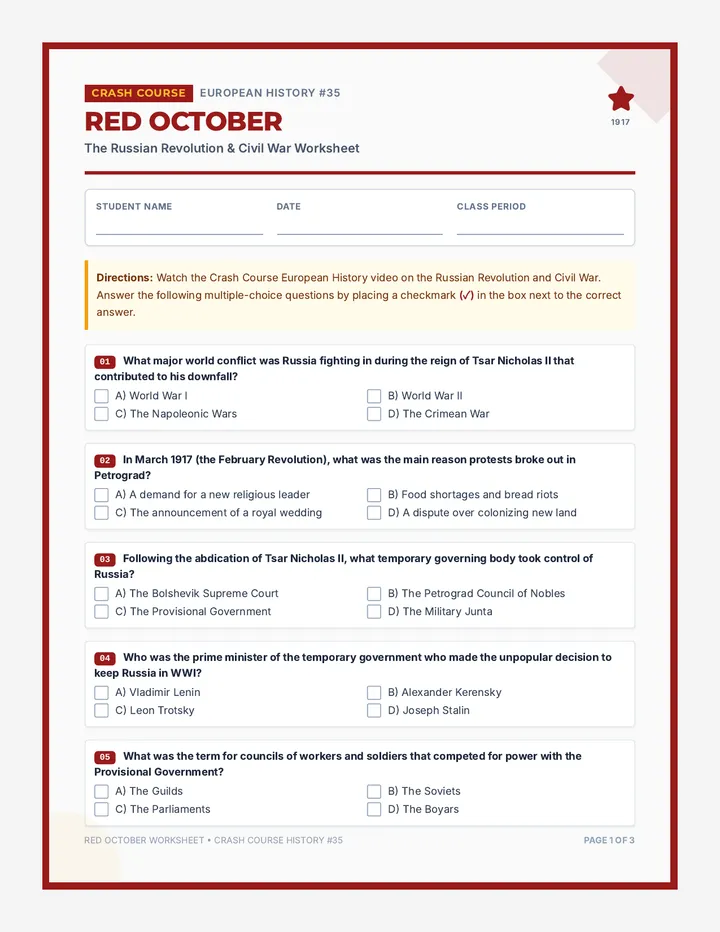
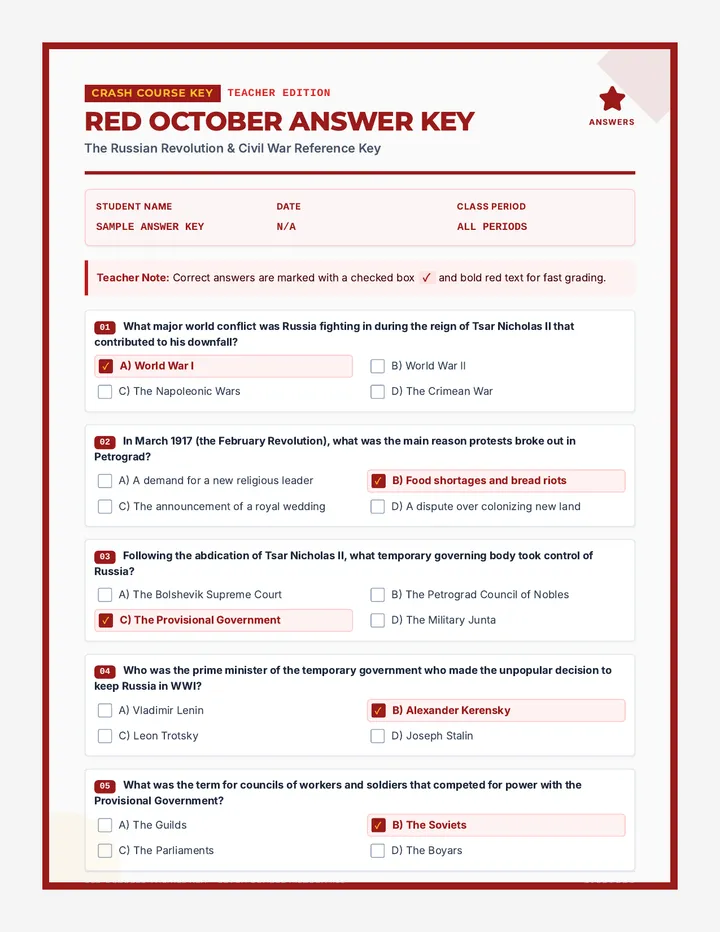
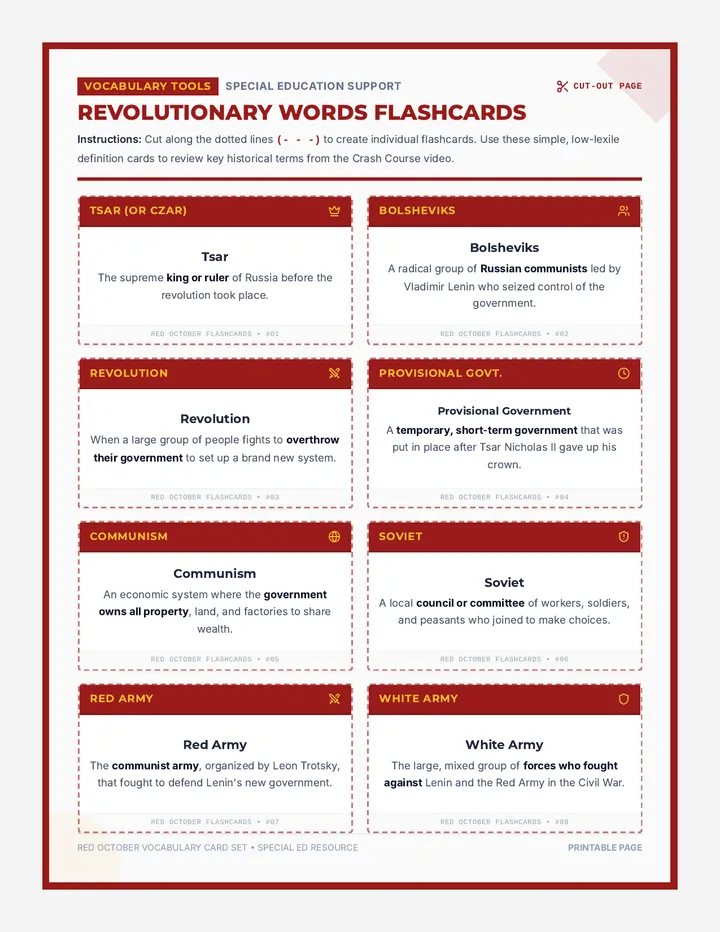
A comprehensive lesson focused on the Russian Revolution and Civil War, utilizing Crash Course European History #35. This lesson includes a 15-question comprehension worksheet, a complete teacher answer key, and specialized low-lexile definition flashcards for special education support.
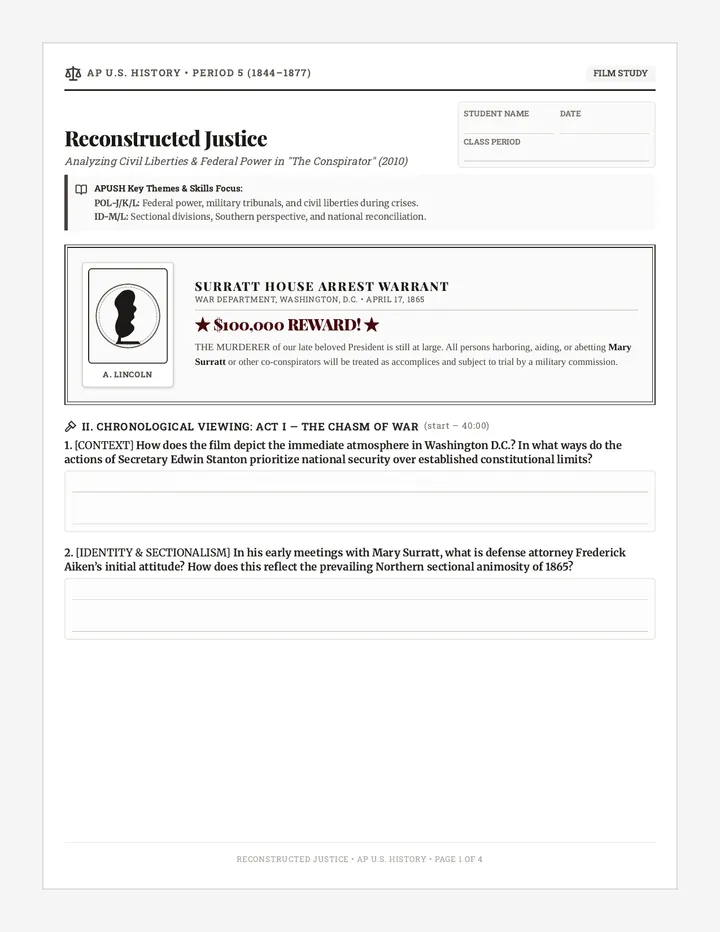
A highly targeted lesson analyzing the film 'The Conspirator' (2010) through the lens of AP U.S. History Period 5 objectives. It explores the constitutional crises, civil liberties, and regional animosities surrounding the trial of the Lincoln assassination co-conspirators in 1865.
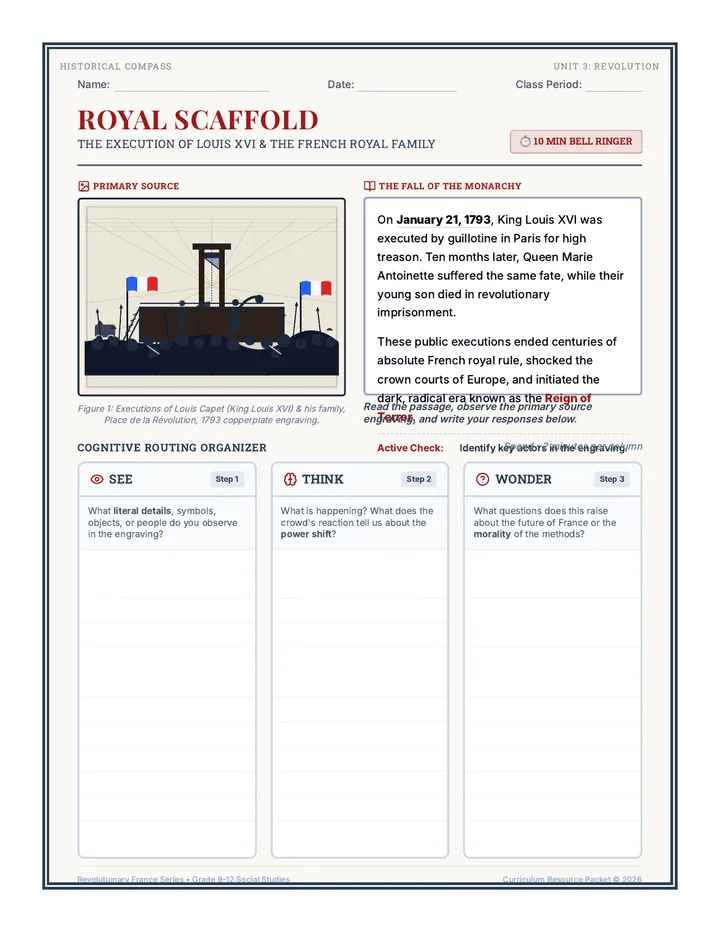
A quick, high-impact bell ringer lesson exploring the execution of King Louis XVI and the French royal family through a primary source engraving and a See-Think-Wonder cognitive routing activity.
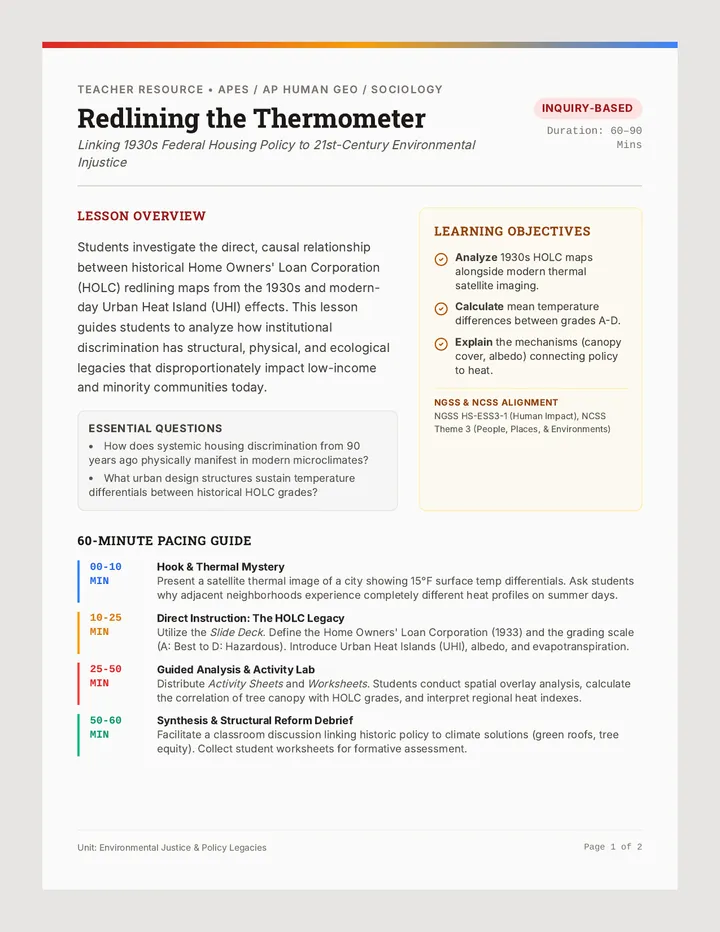
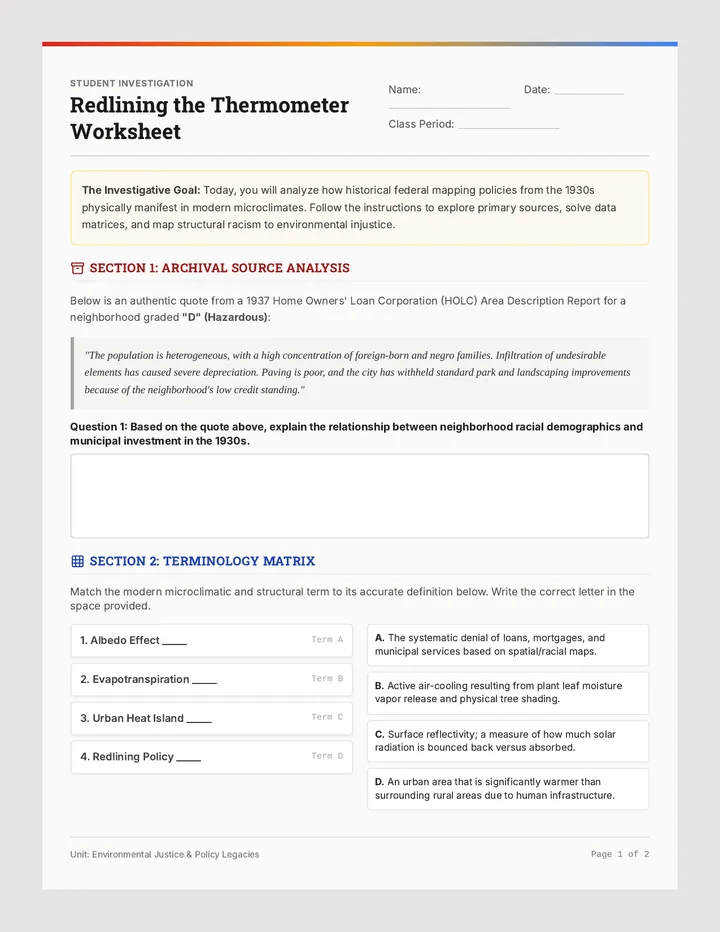
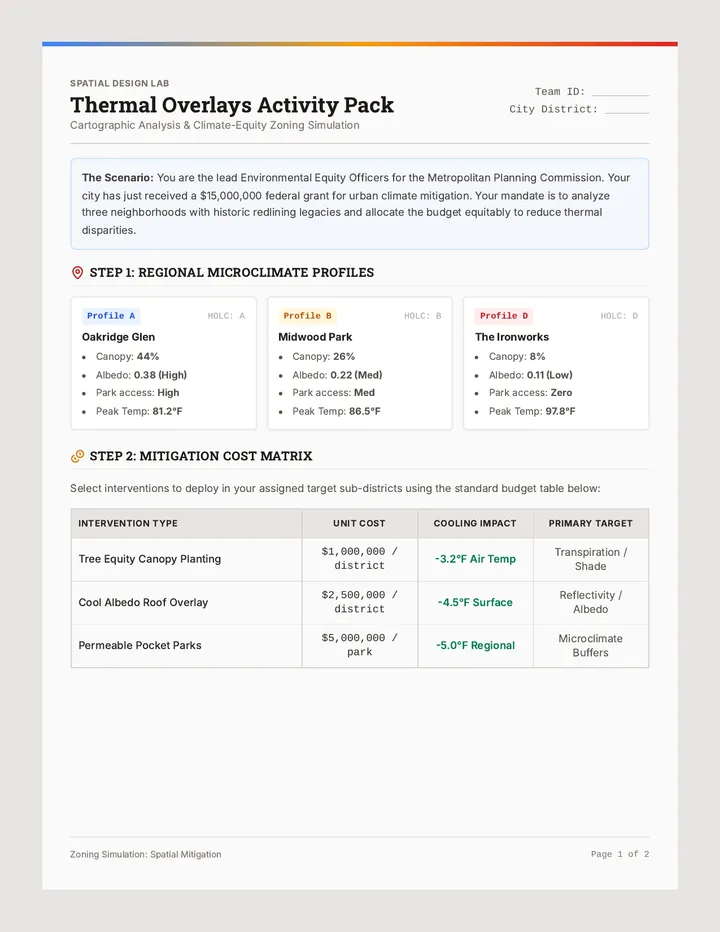
An advanced, interdisciplinary lesson for high school and undergraduate students exploring the causal relationship between 1930s Home Owners' Loan Corporation (HOLC) redlining maps and modern-day urban heat island (UHI) effects, analyzing systemic racism and environmental injustice.
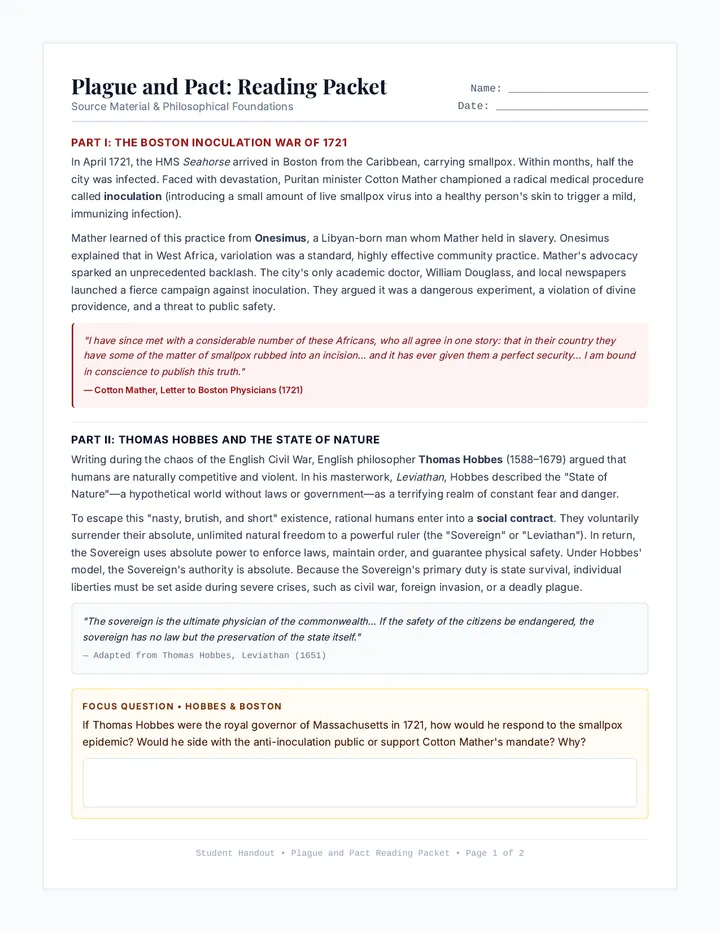
An inquiry-based lesson exploring how historical epidemics (from the Black Death to Smallpox inoculation) tested and reshaped the social contract between citizens and states, forcing a reckoning between personal liberty and public safety.
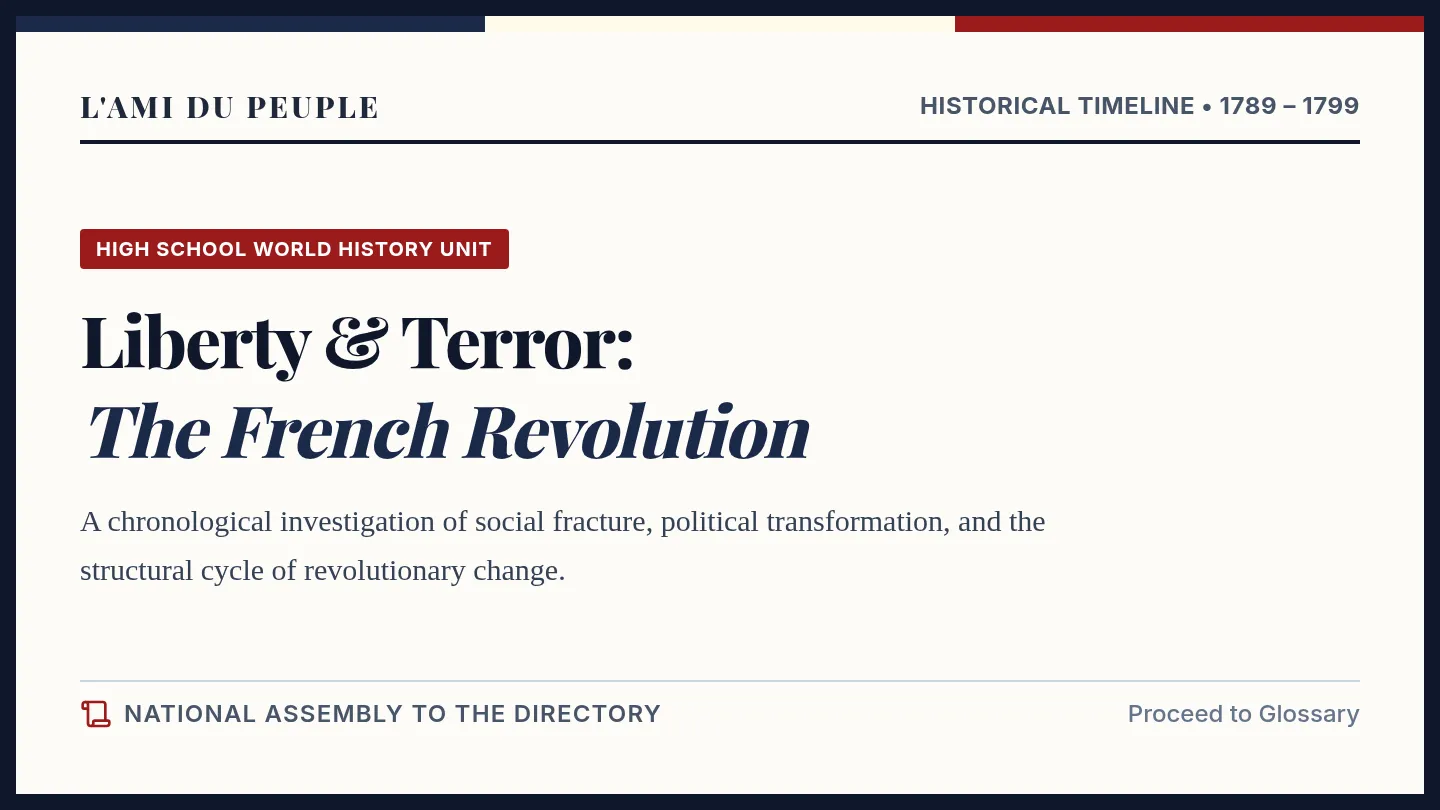
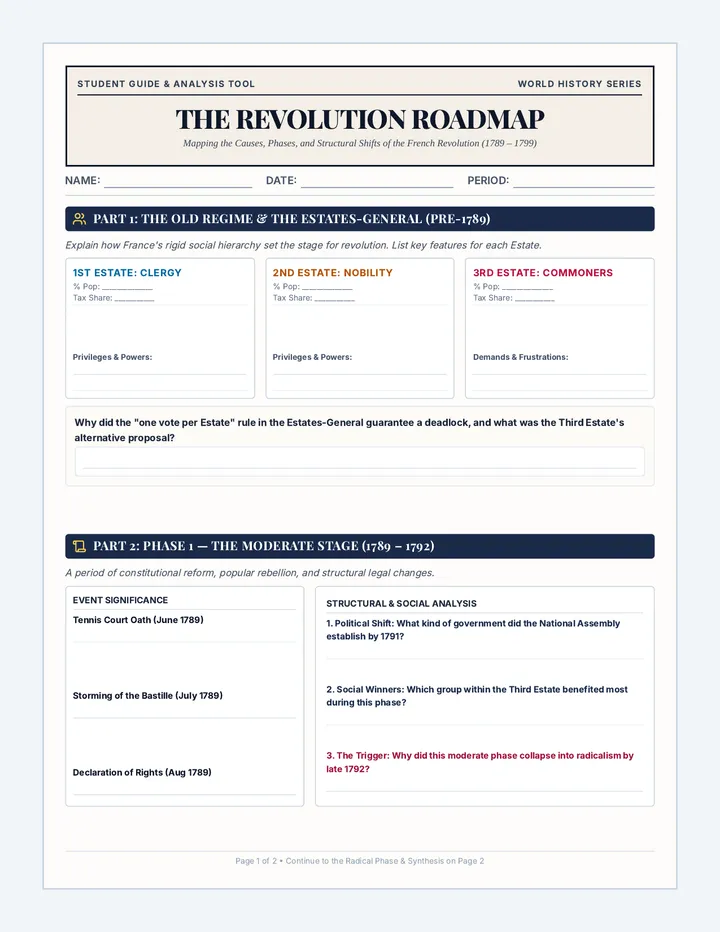
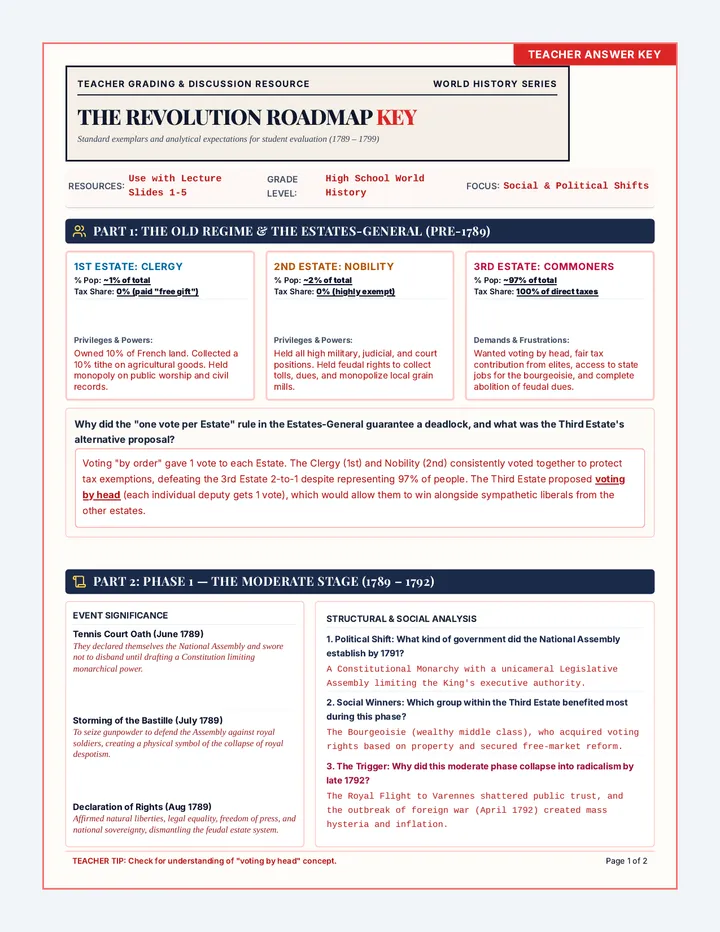
A lesson that contextualizes the key phases of the French Revolution (1789-1799) from the National Assembly to the Directory, guiding students to analyze social dynamics, political shifts, and cause-and-effect relationships.
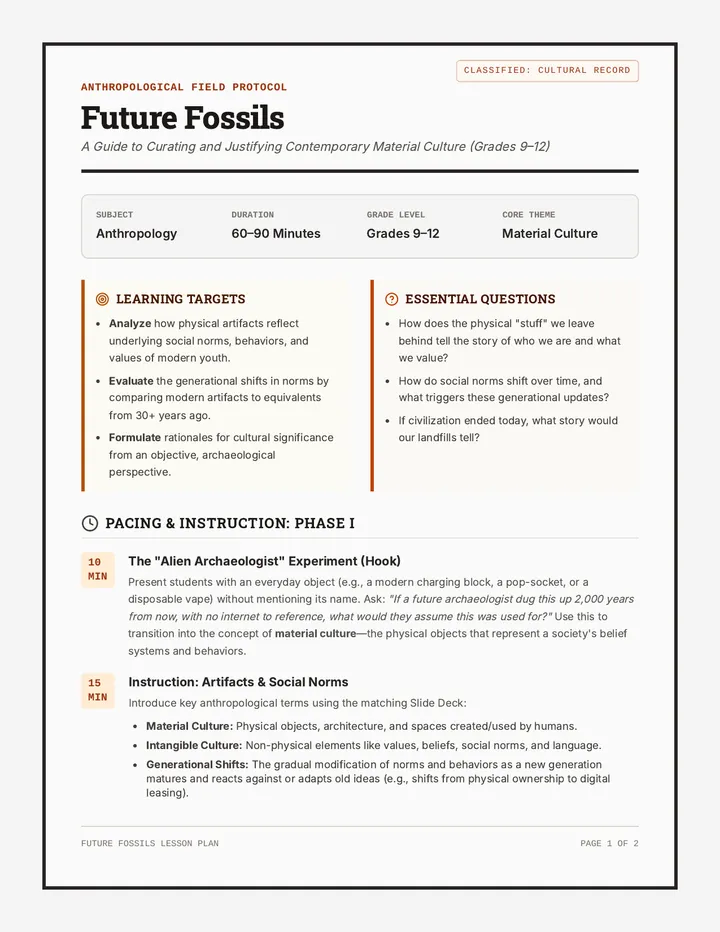
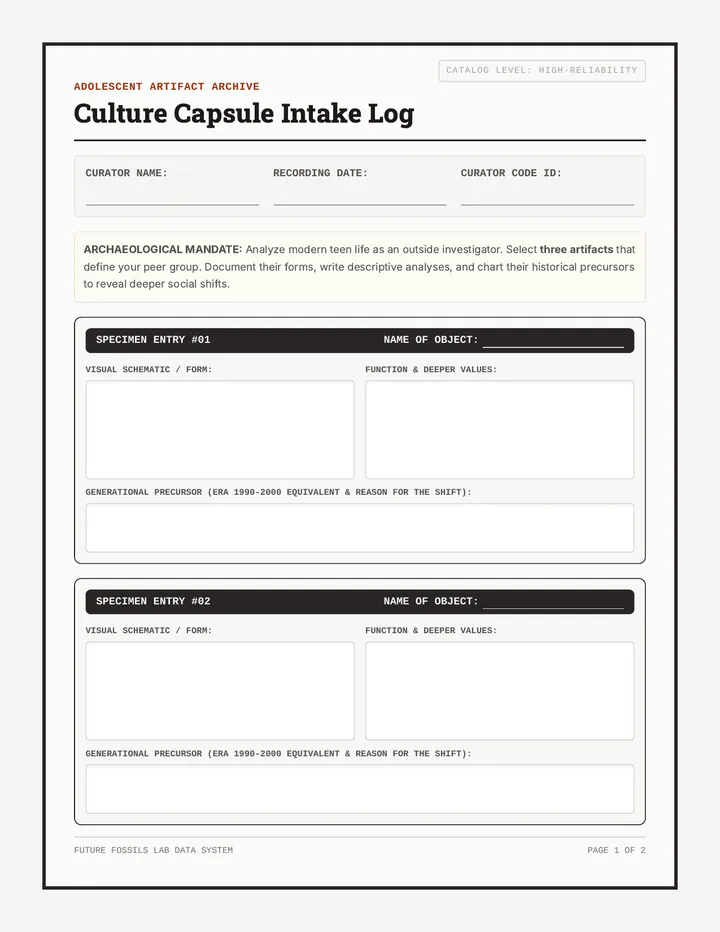
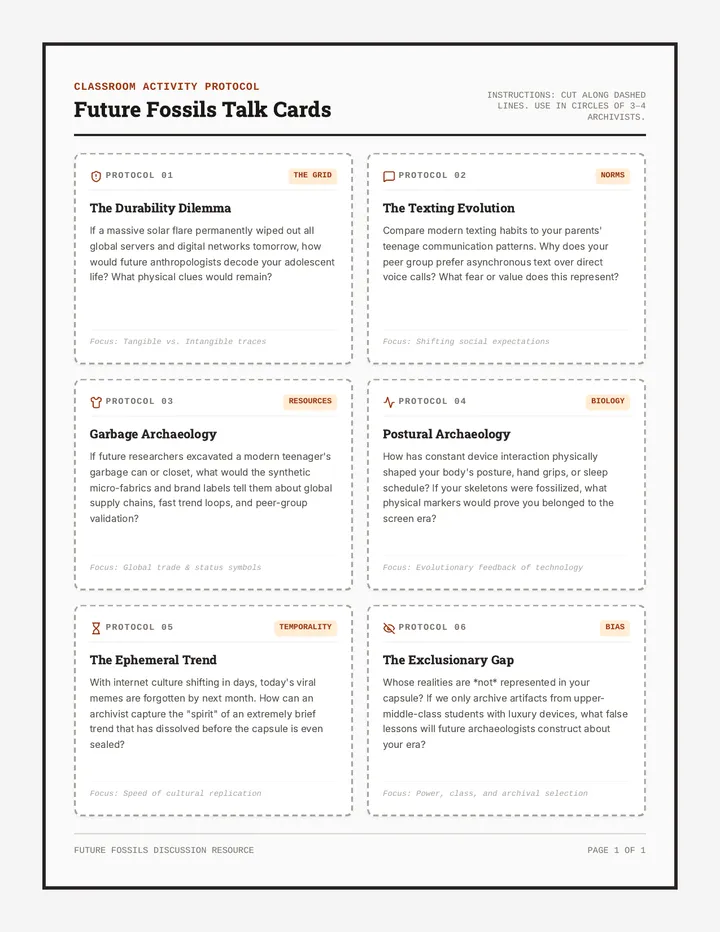
An anthropology lesson where high school students curate and analyze contemporary artifacts that represent modern adolescent culture, exploring generational shifts in social norms and material culture.
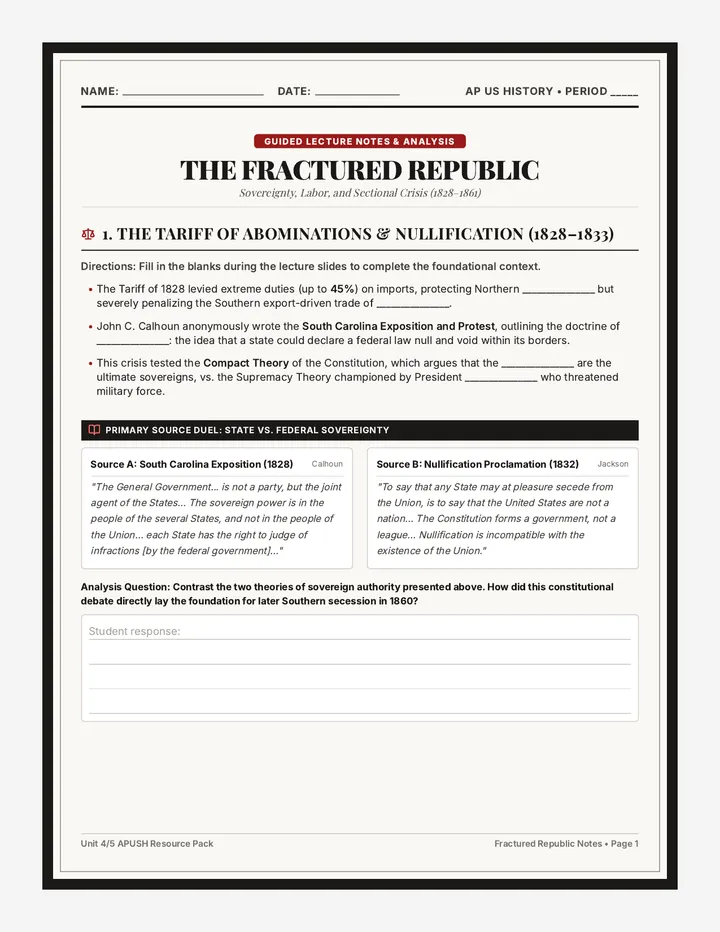
An advanced AP US History lesson exploring the constitutional, economic, and political crises that fractured the United States between 1828 and 1861. Students analyze key events including the Tariff of Abominations, State v. Mann, the Wilmot Proviso, and the rise of the Know-Nothing Party through lectures and structured primary sources.
An advanced AP US History lecture series exploring the constitutional, economic, and political crises that fractured the United States between 1833 and 1861. This lesson highlights key legislative compromises, executive decisions, and judicial rulings that made sectional conflict and the Civil War inevitable.
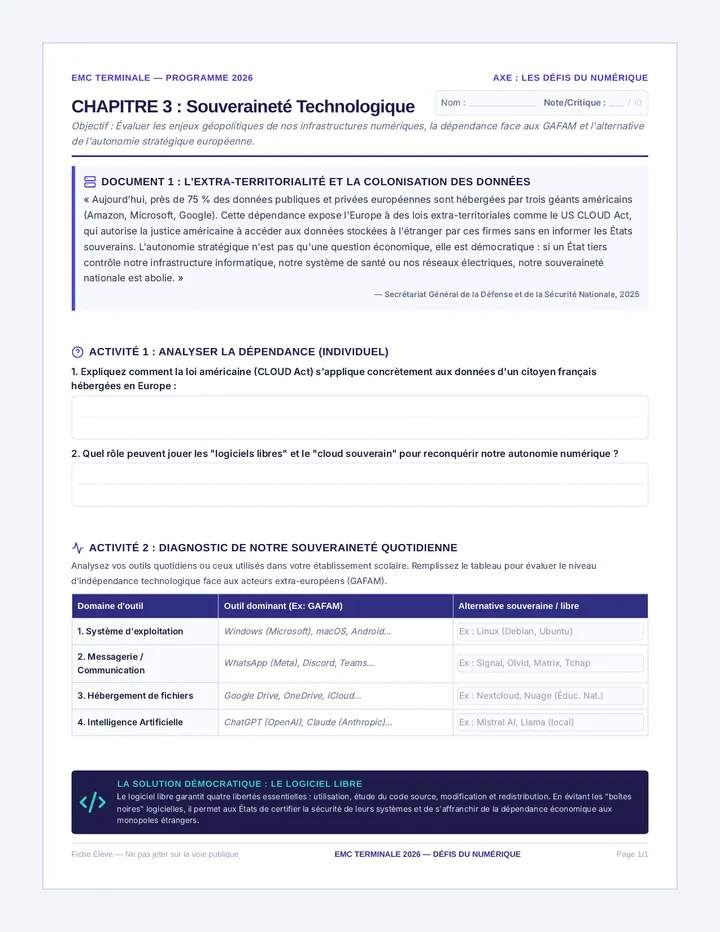
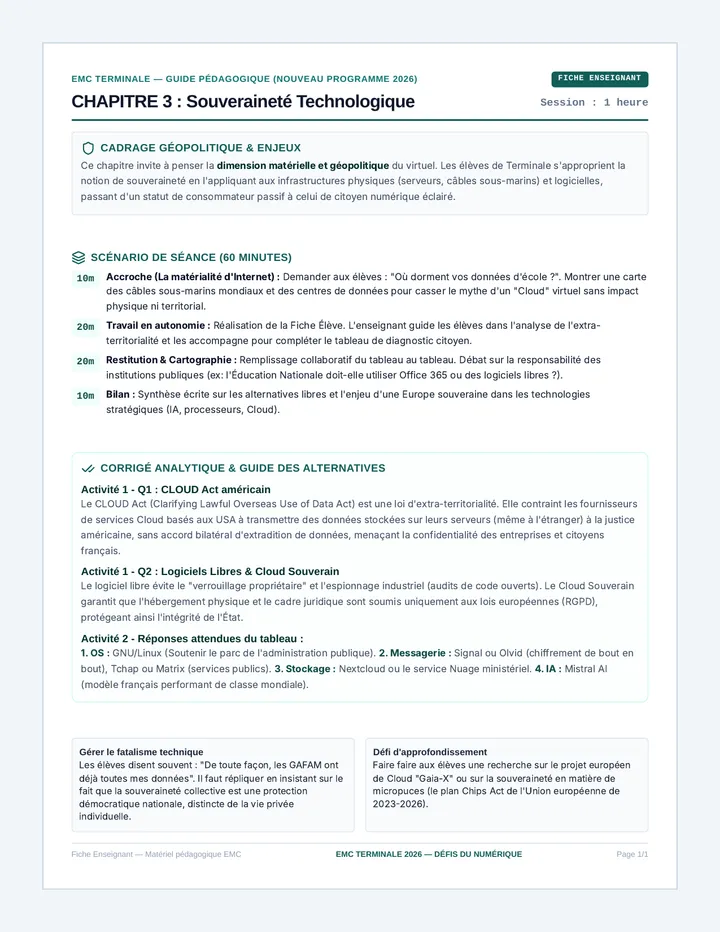
Ce troisième chapitre interroge la dimension géopolitique et économique du numérique : le rôle et l'influence des GAFAM et des géants de l'IA, la souveraineté des données citoyennes, le cloud souverain et l'alternative du logiciel libre pour l'indépendance nationale et européenne.
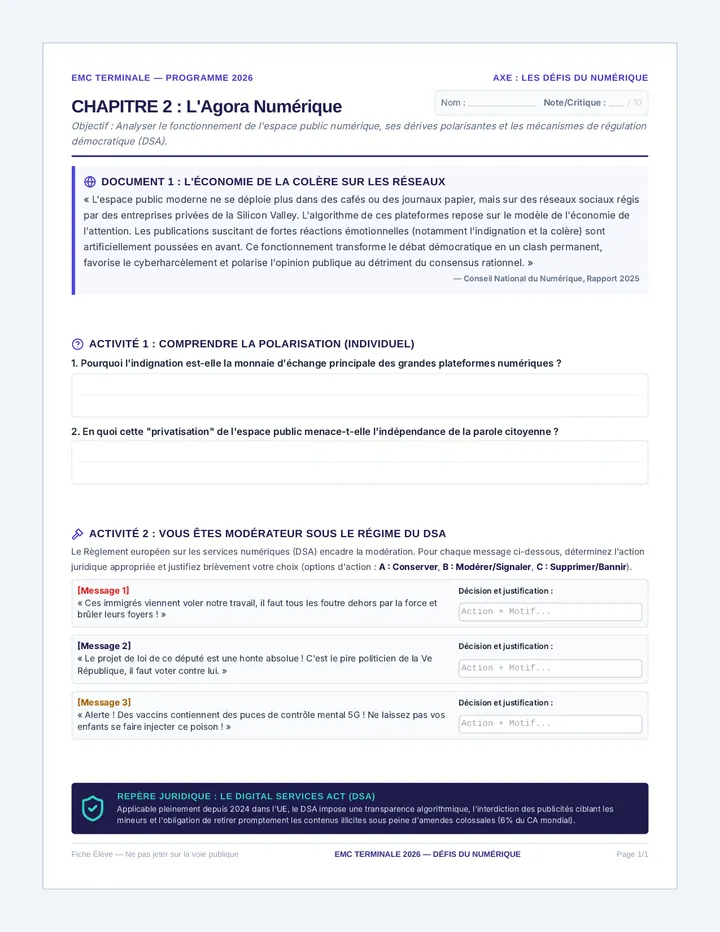
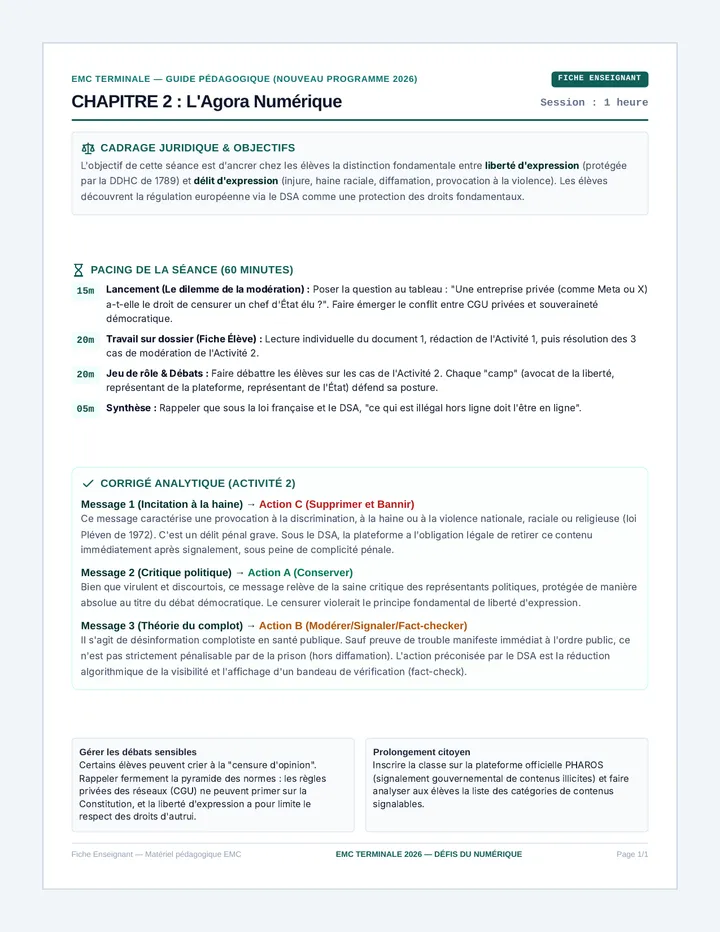
Ce deuxième chapitre traite de la structure de l'espace public numérique, en abordant la polarisation des débats sur les réseaux sociaux, les bulles de filtres, la liberté d'expression face à la modération et la haine en ligne, ainsi que la citoyenneté numérique active.
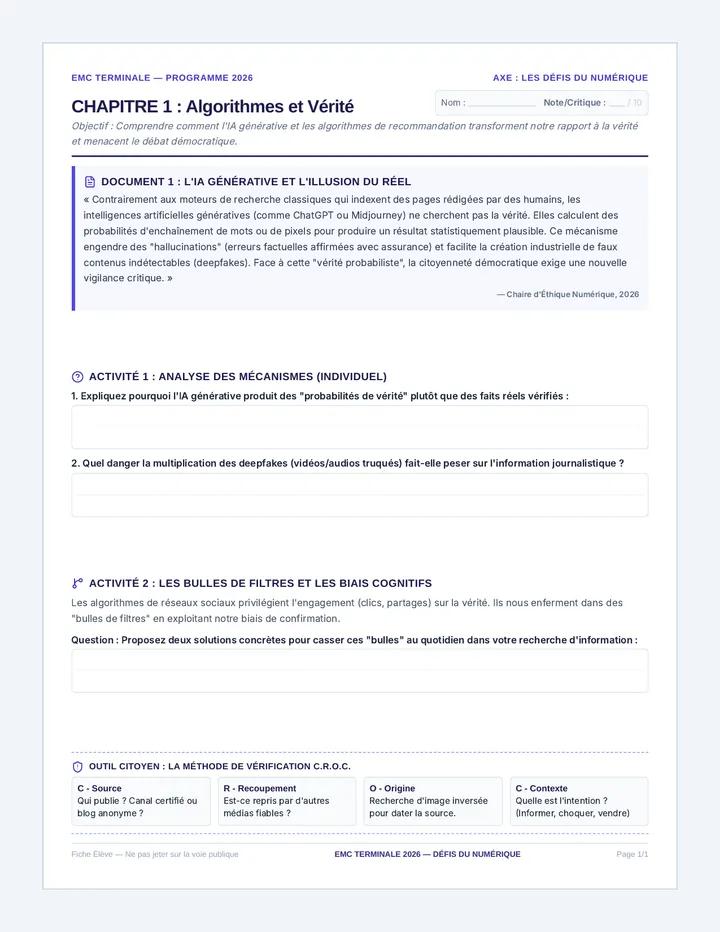
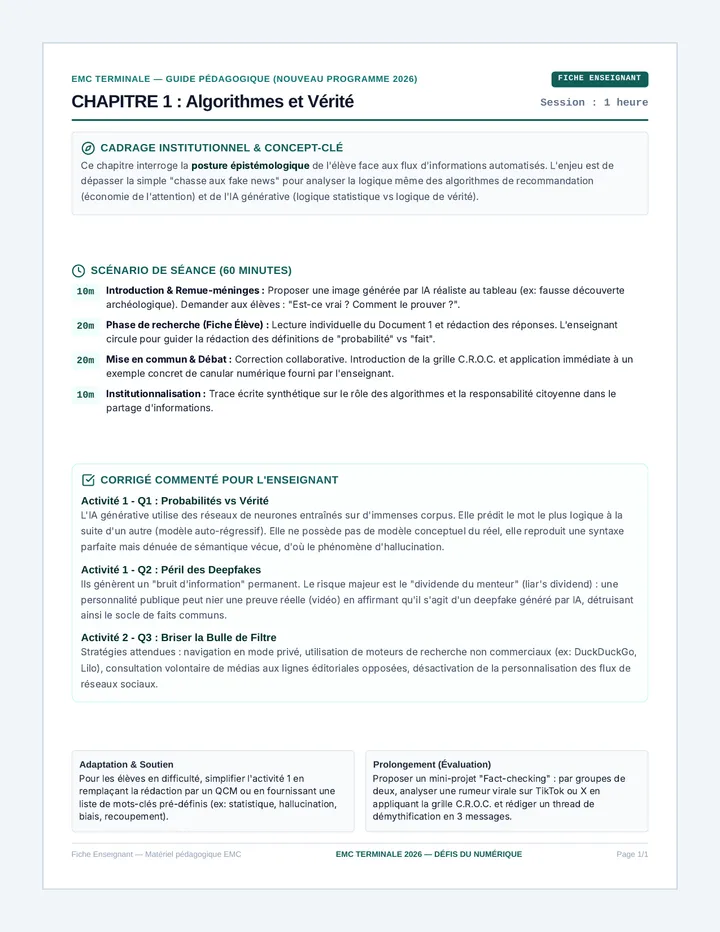
Ce premier chapitre explore l'impact de l'intelligence artificielle générative et des algorithmes de recommandation sur la vérité historique, scientifique et journalistique. Les élèves analysent la notion de désinformation, les deepfakes et l'importance de l'épistémologie critique.