Students survey the landscape of interest groups, distinguishing between economic groups, public interest groups, and intergovernmental lobbies. They analyze the concept of collective action problems and Mancur Olson’s logic regarding free riders.
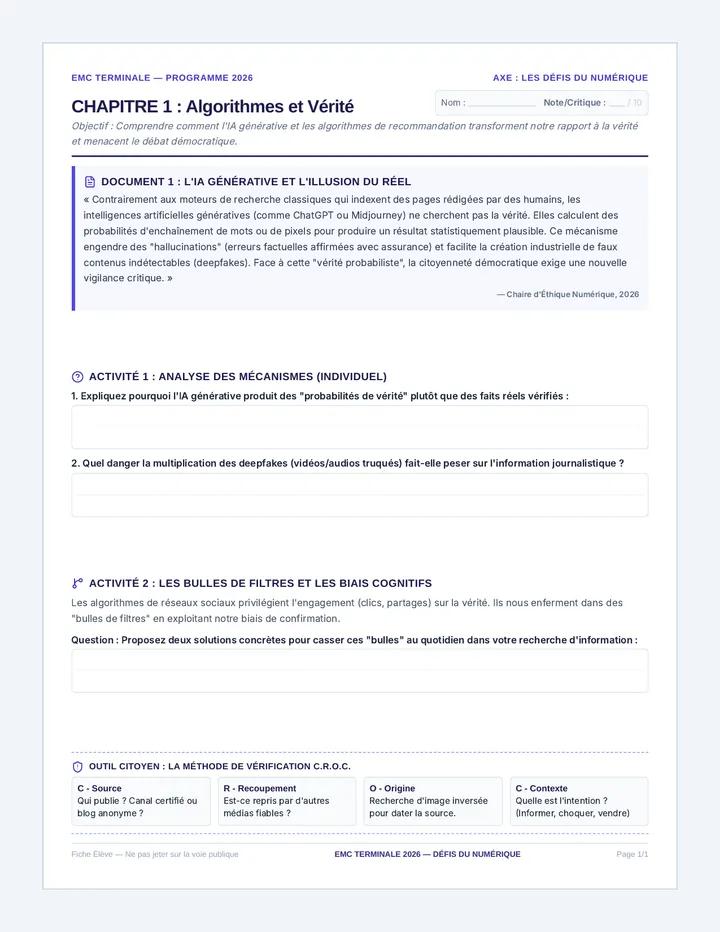
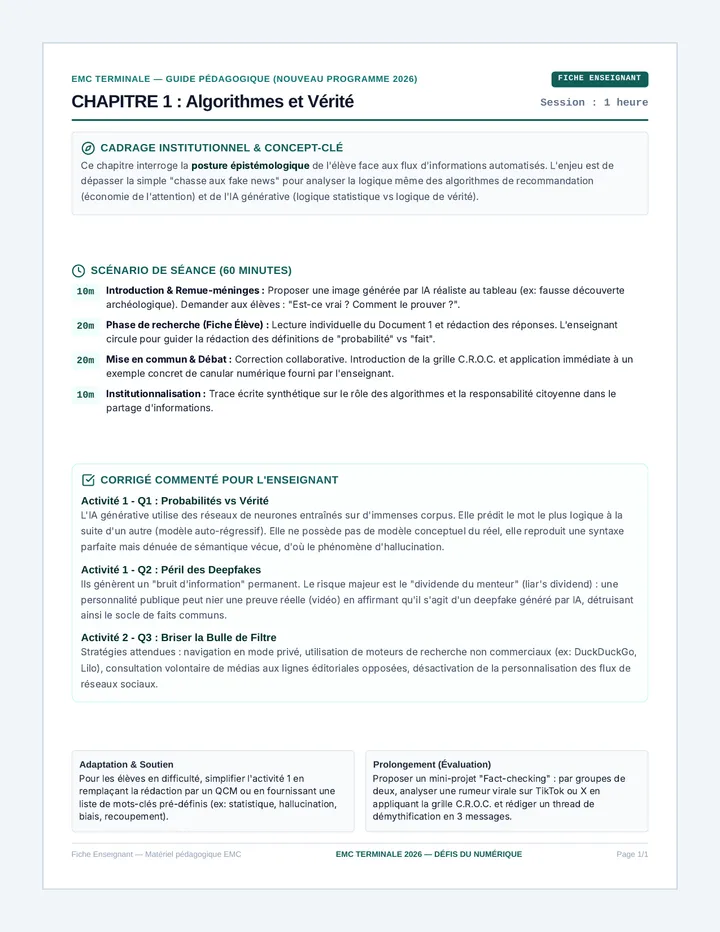
Une séquence complète d'activités clés en main d'Éducation Morale et Civique (EMC) pour la classe de Terminale, conforme au nouveau programme 2026. Elle se concentre sur les défis du numérique : intelligence artificielle, désinformation, espace public numérique et souveraineté technologique.
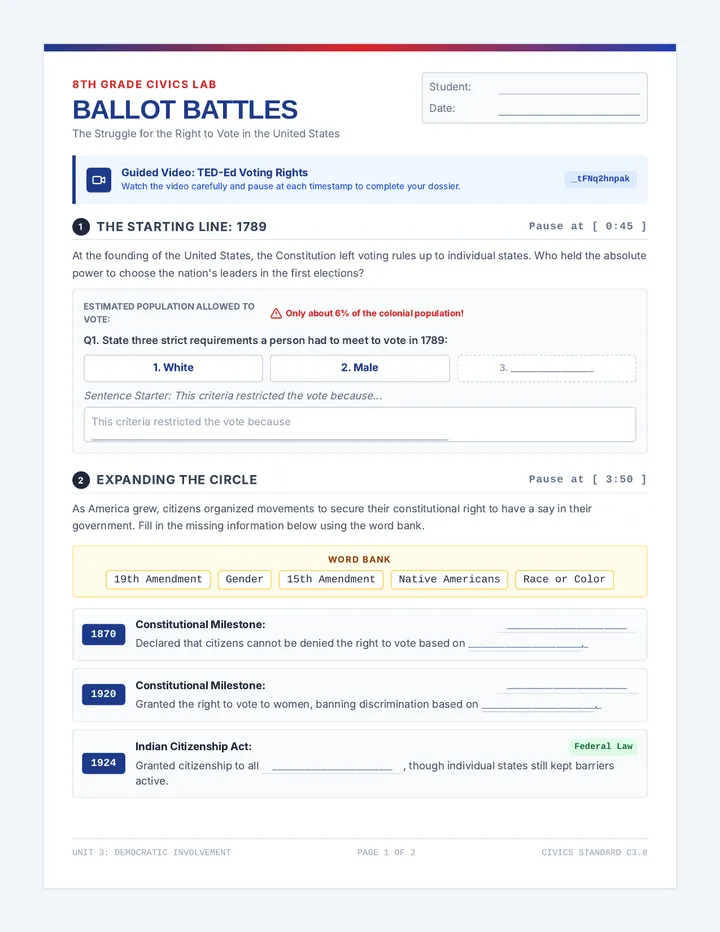
An 8th-grade civics lesson centered on the history of voting rights in the United States. Utilizing a guided viewing of the TED-Ed video, students trace the expansion of the electorate from the founding era to the modern day through structured graphic organizers, scaffolded questions with sentence frames, and real-world connection analysis.
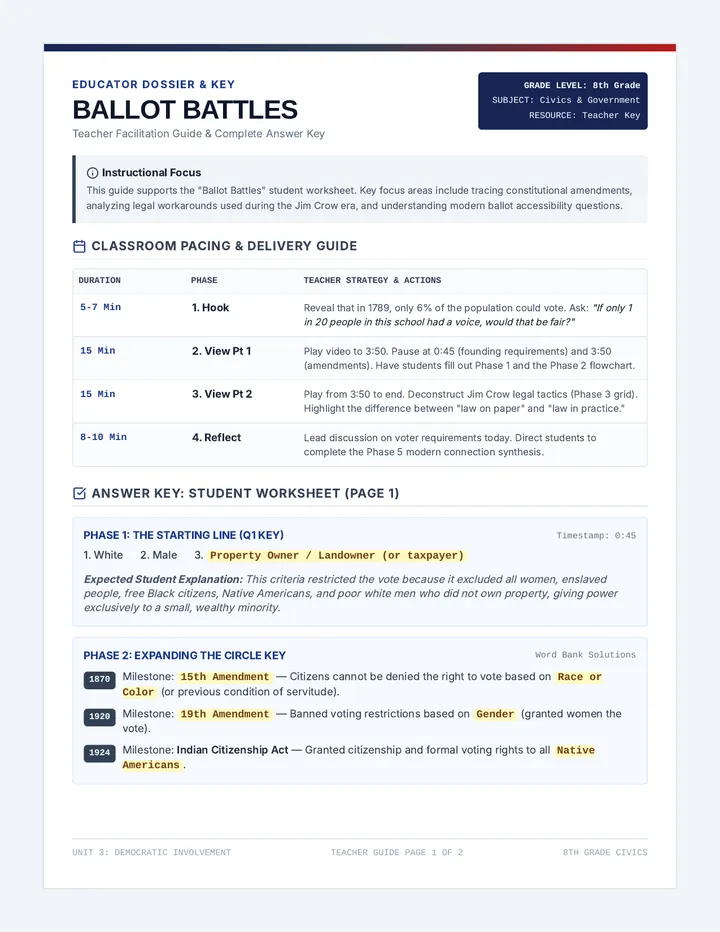
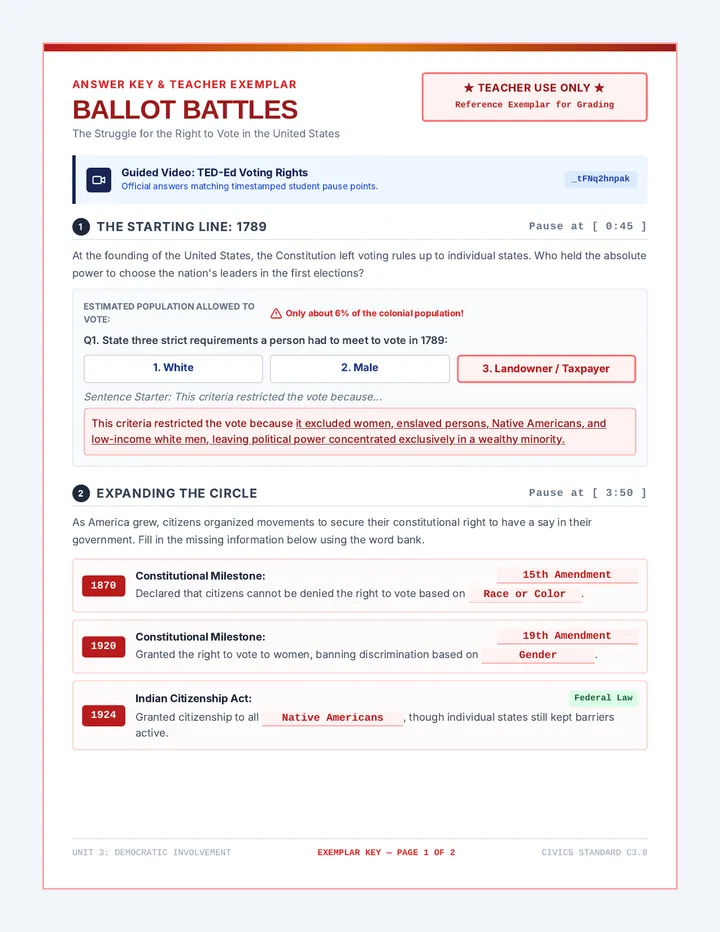
A direct replica of the student worksheet with complete, highlighted answers filled in for rapid grading, classroom projection, or student self-assessment.
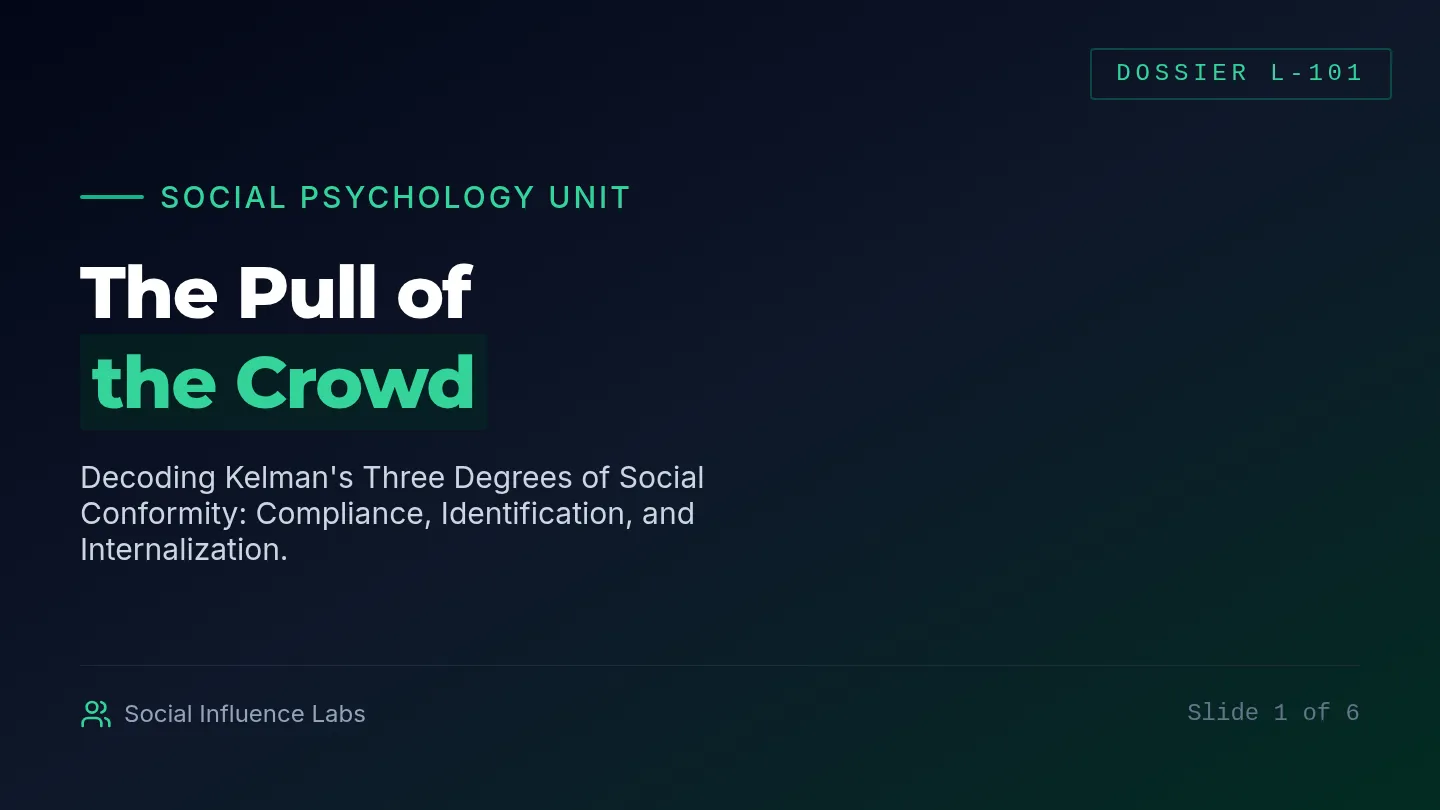
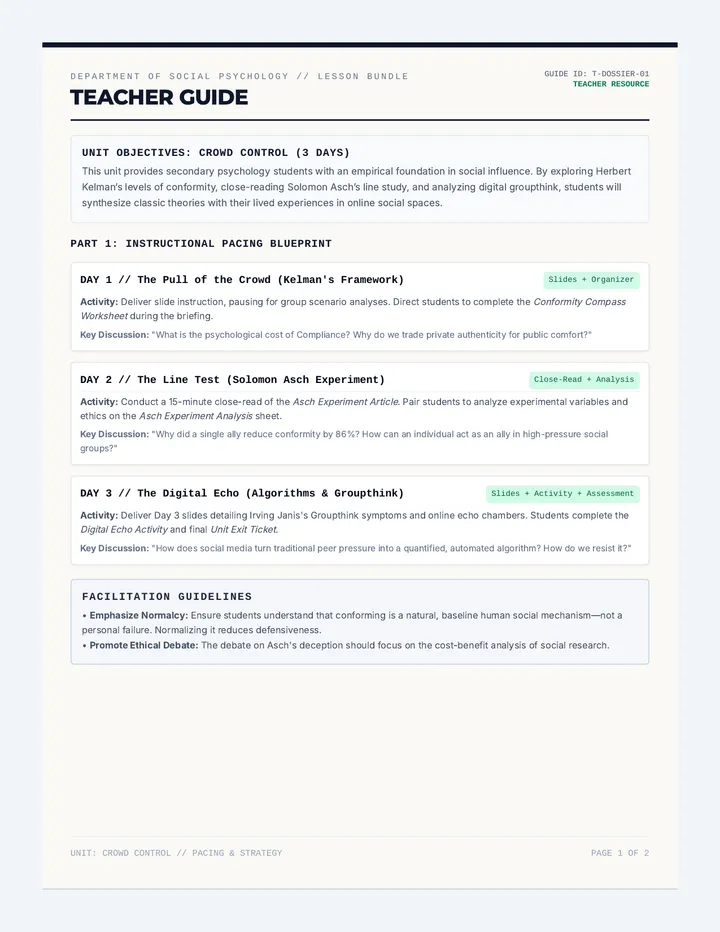
A three-day social psychology sequence exploring conformity, groupthink, and social influence. Students analyze foundational experiments, compare compliance versus internalization, and dissect modern digital peer pressure and media dynamics.
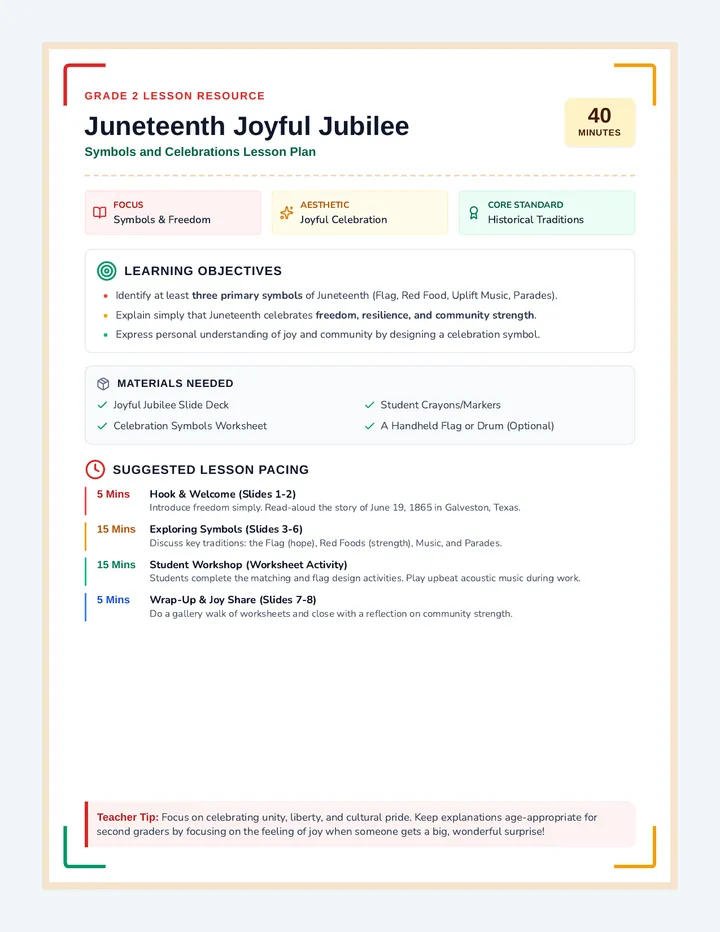
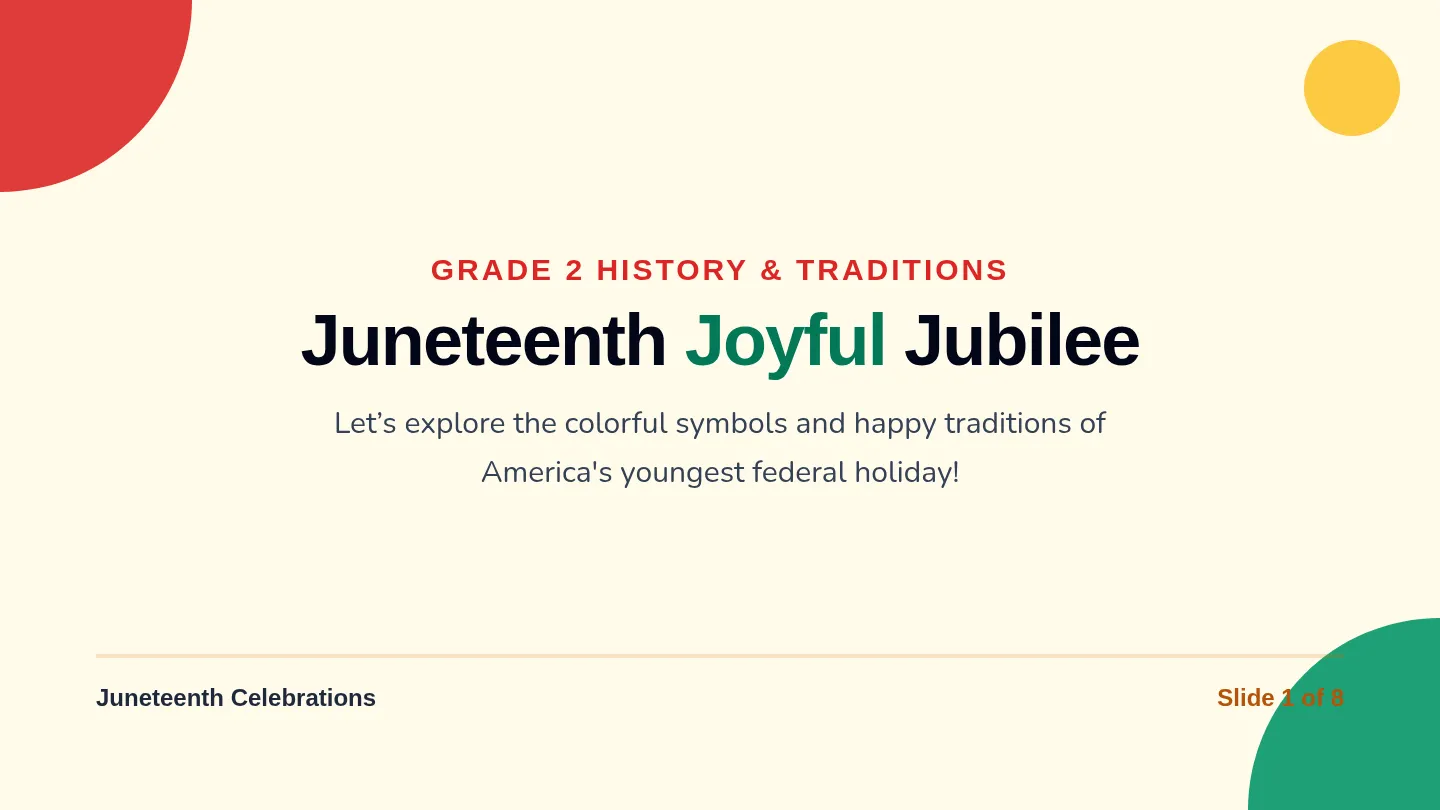
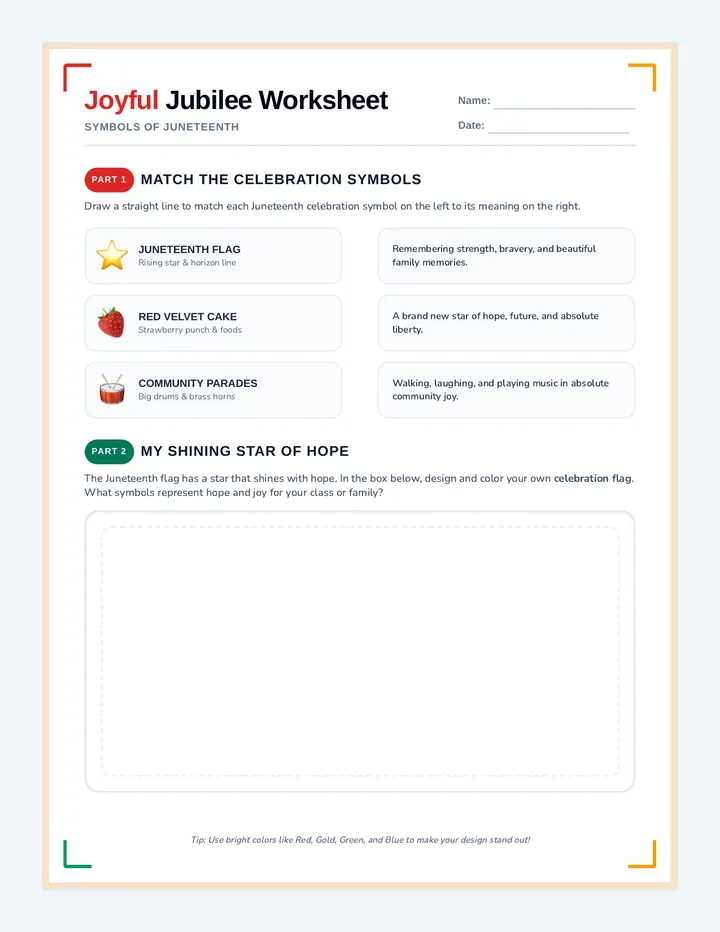
A vibrant 40-minute lesson for second graders focusing on the meaningful symbols and celebrations of Juneteenth. Through interactive slides, a visual worksheet, and structured teaching prompts, students learn about the Juneteenth flag, red food traditions, uplift music, and festive community parades.
A comprehensive teacher companion containing lesson plans, step-by-step facilitation prompts, historical background on voter discrimination, and complete answer keys with classroom pacing suggestions.
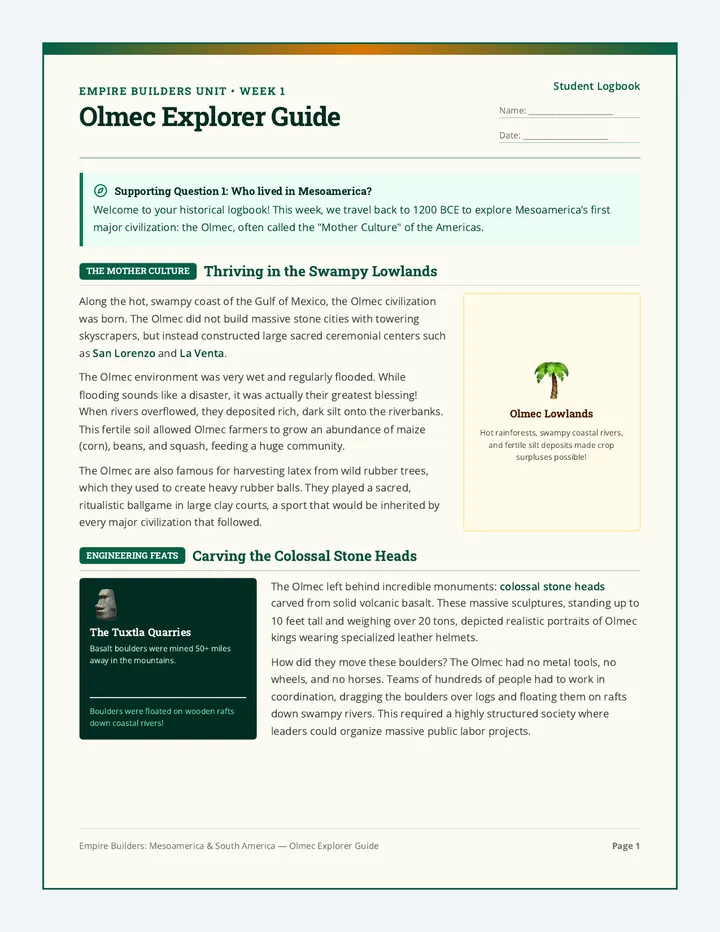
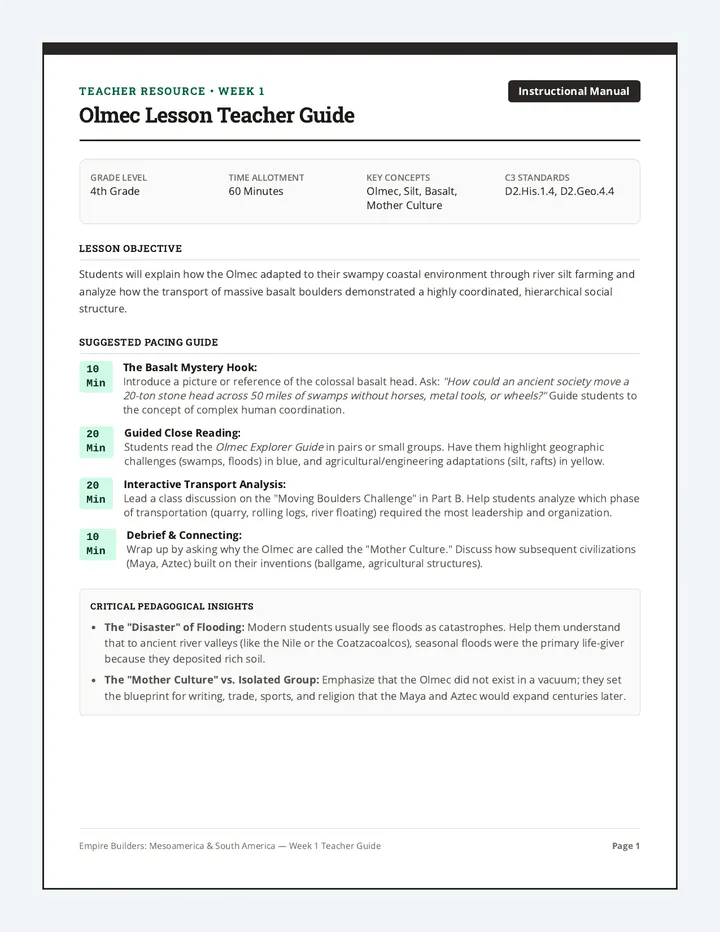
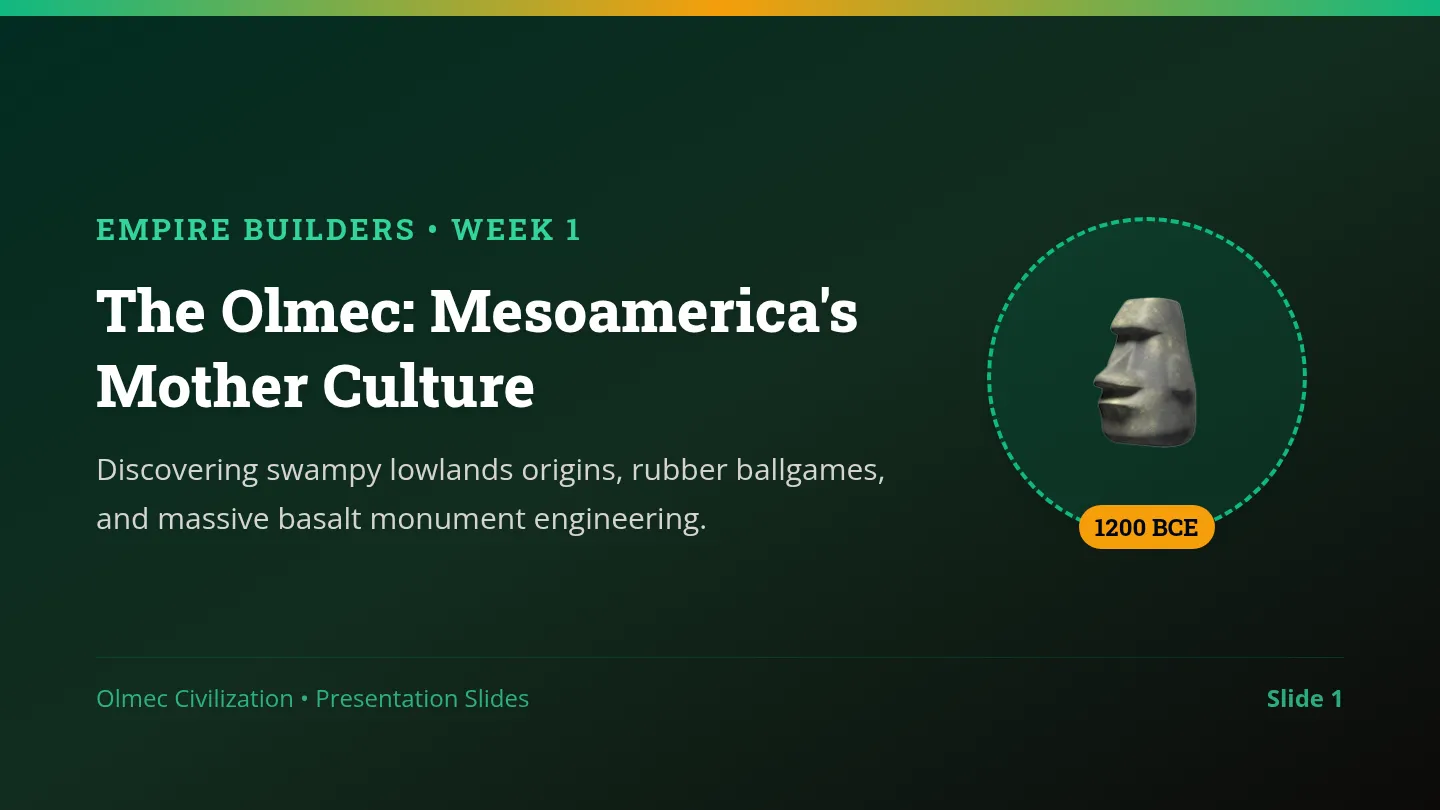
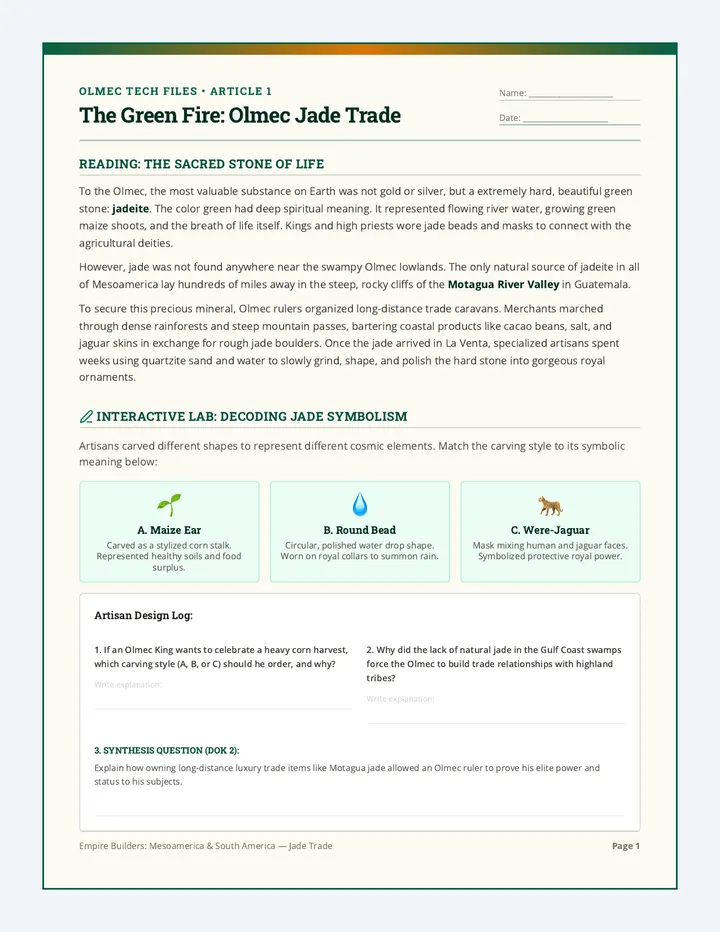
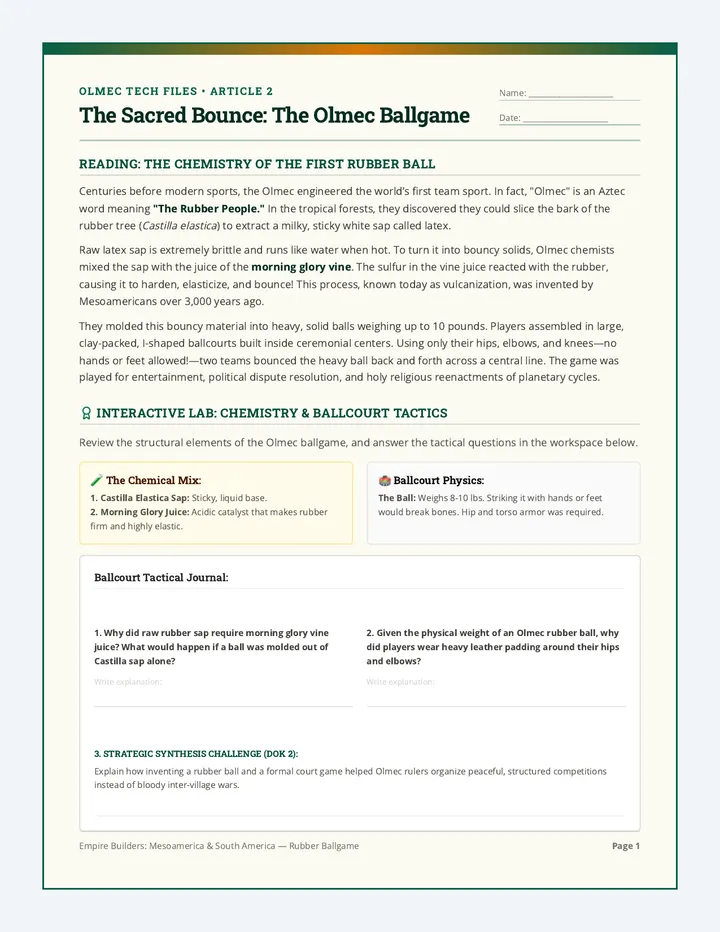
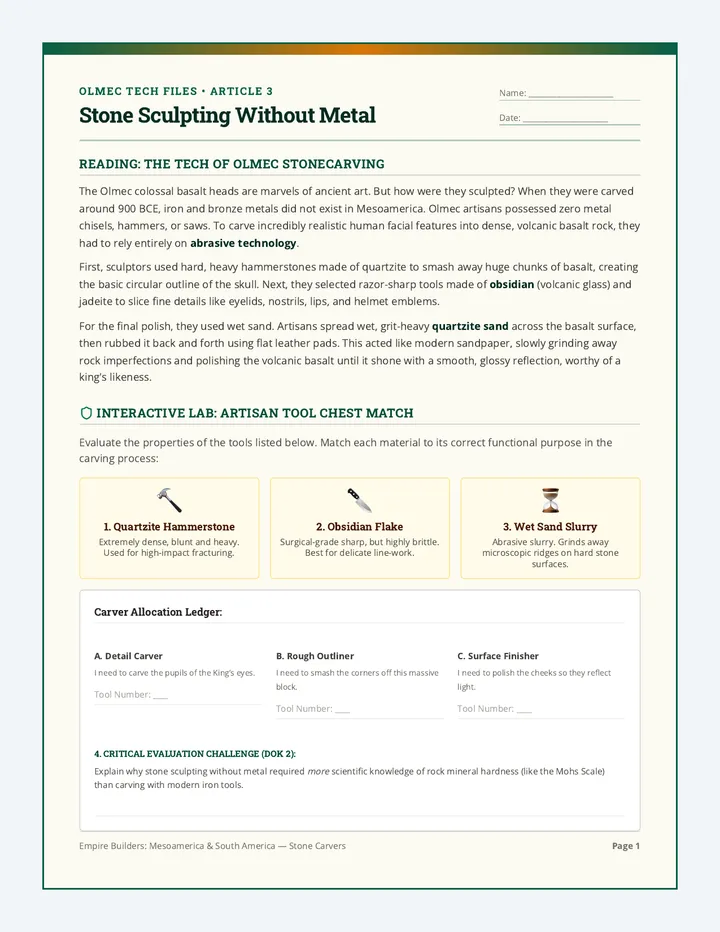
A comprehensive 4th-grade social studies unit where students analyze the Olmec, Maya, Aztec, and Inca civilizations. Through primary-source-style document analysis, geographical exploration, and civic action, students discover what made these empires successful and apply ancient engineering solutions to improve the modern City of Surprise.
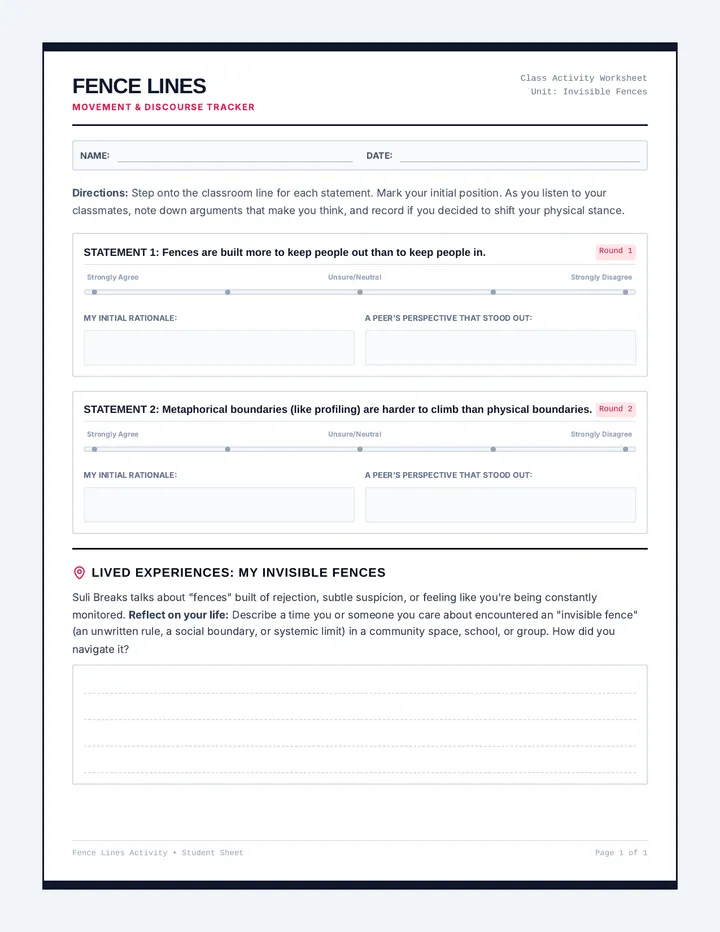
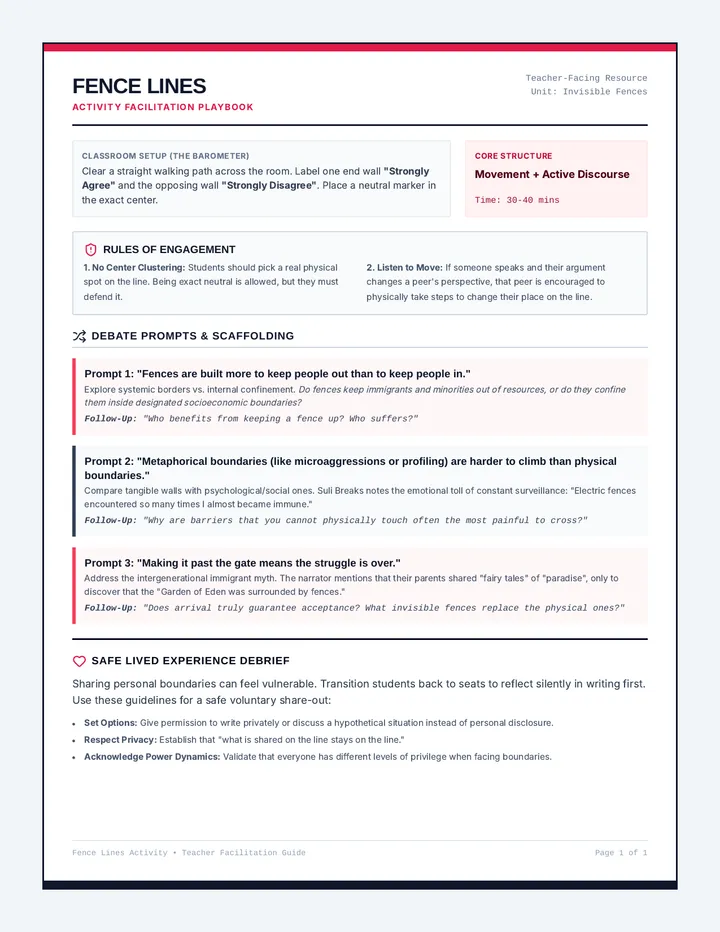
An introductory lesson exploring the immigrant experience and systemic barriers through Suli Breaks' spoken word poem 'Fences'. Students engage in a structured movement and discourse activity to analyze literal and metaphorical barriers, connecting themes to their own lived experiences.
A structured, student-facing guided viewing worksheet featuring timestamped pause points, visual graphic organizers, and scaffolded sentence frames analyzing the expansion of voting rights.
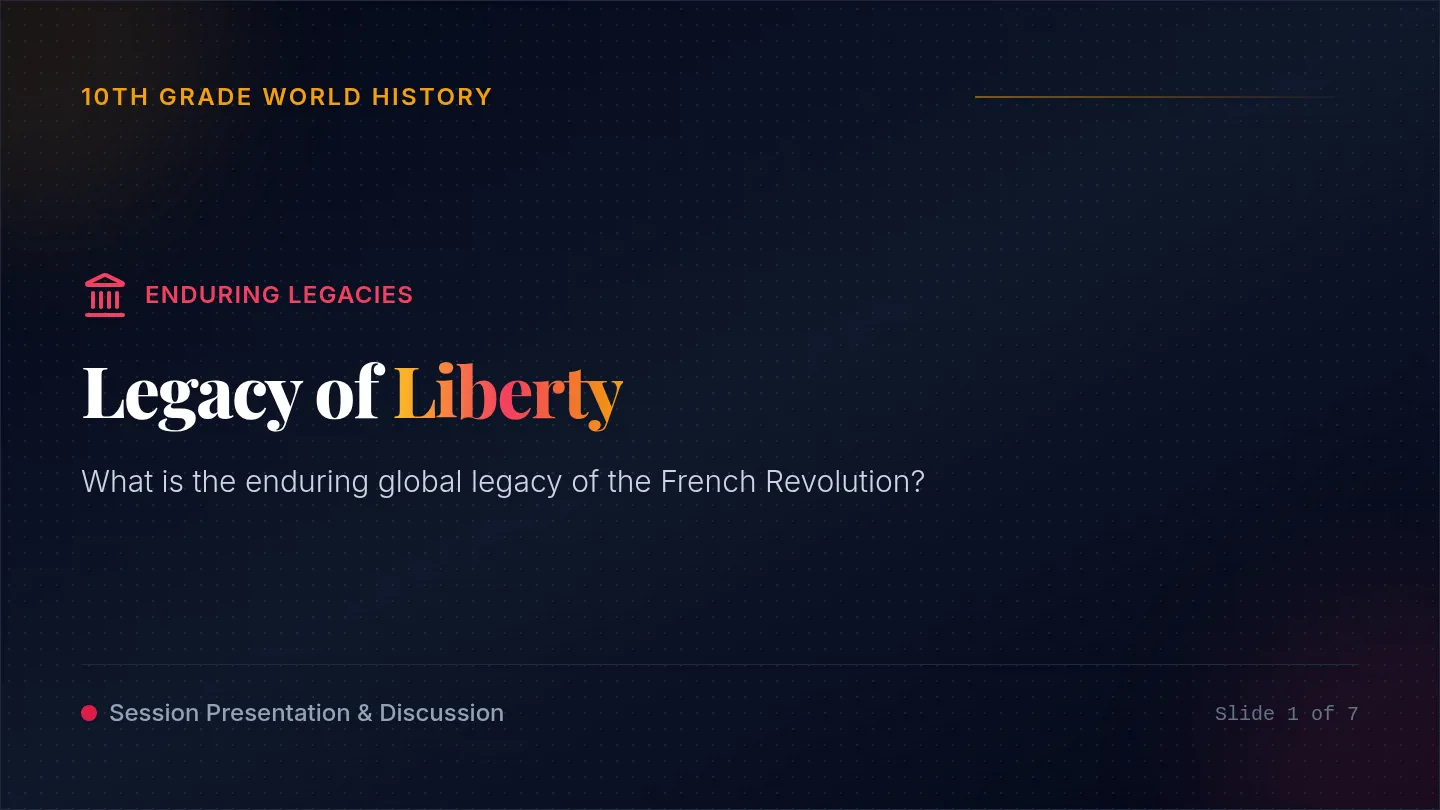
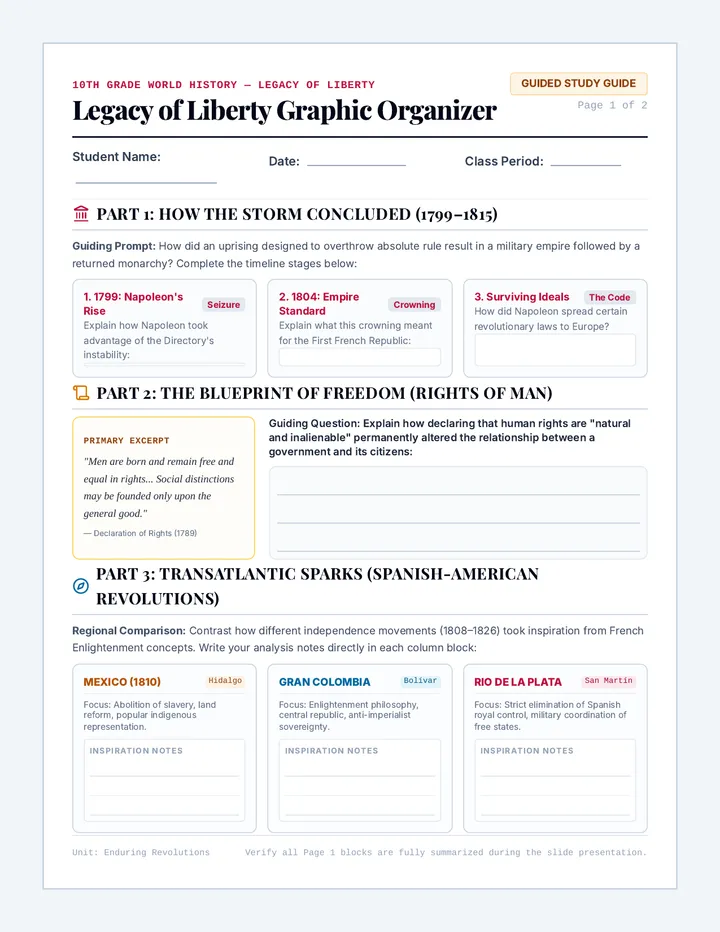
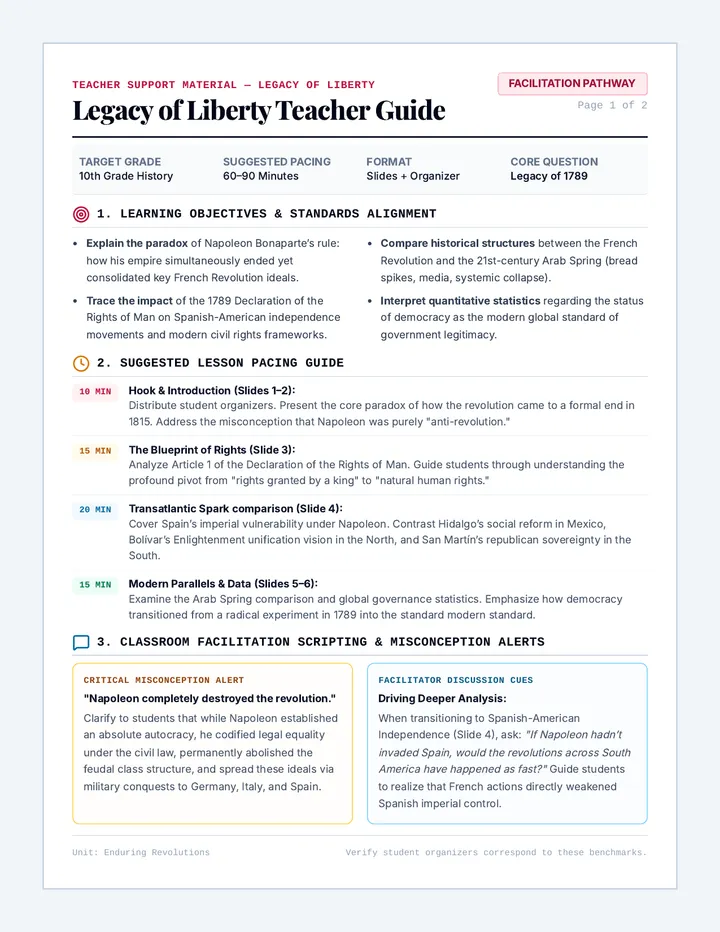
A comprehensive history lesson for 10th-grade students examining the global and modern legacies of the French Revolution. It features interactive slides and a highly organized graphic organizer that covers the end of the revolution, global democratic movements, and modern government statistics.
A beautiful two-page student activity worksheet featuring a Juneteenth matching activity, a custom flag-design drawing space, and guided primary-ruled writing lines for reflecting on community joy.
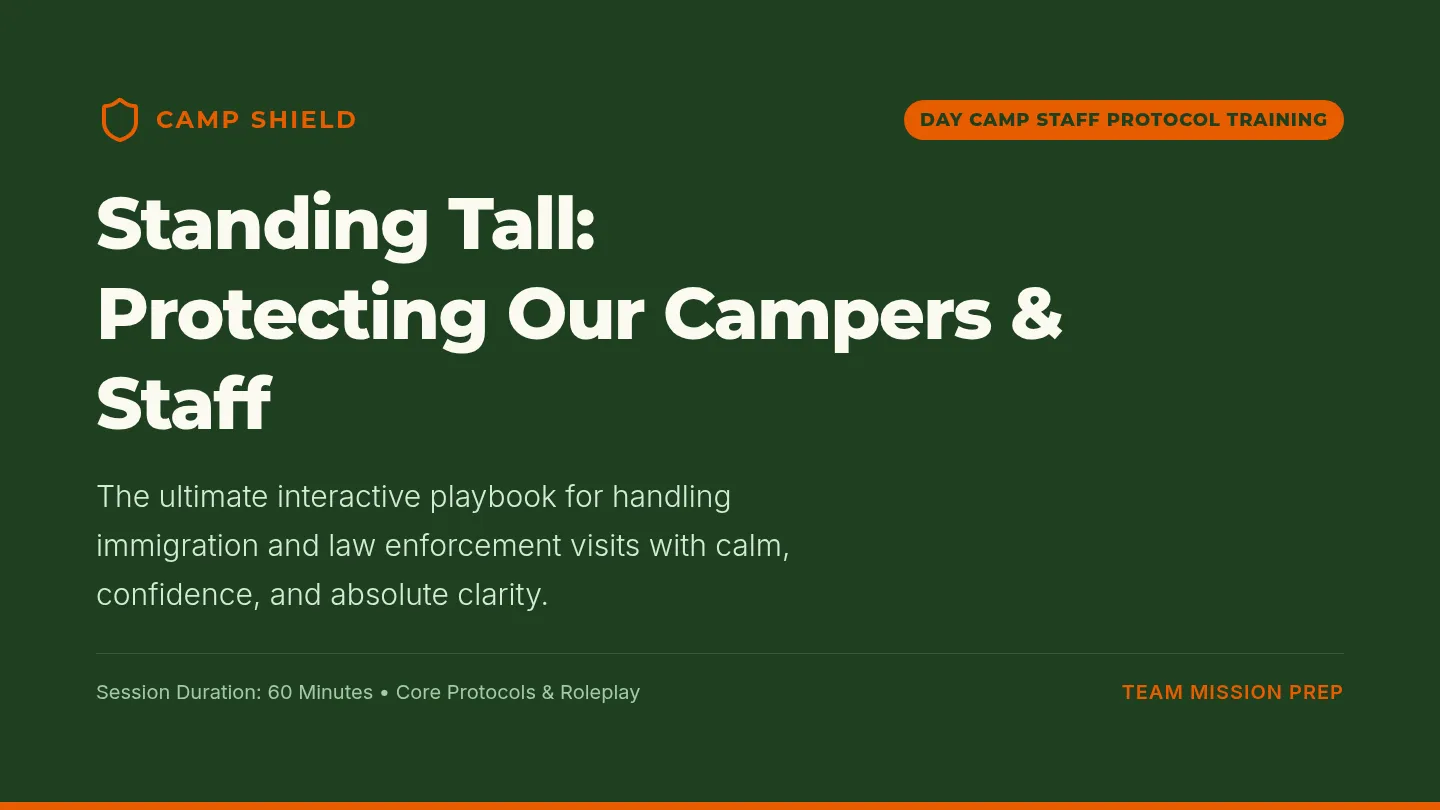
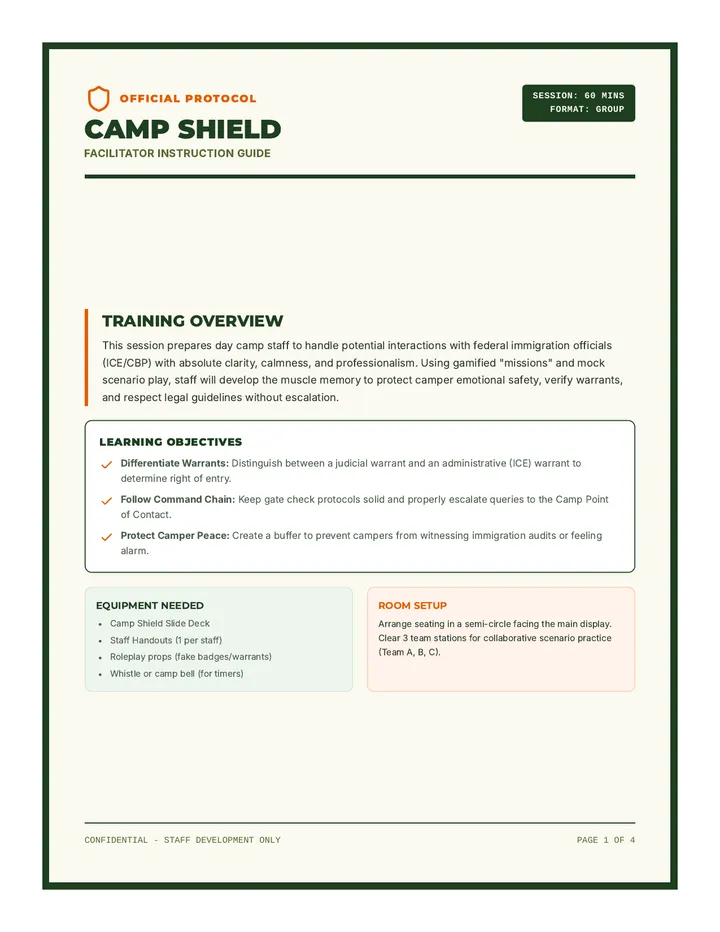
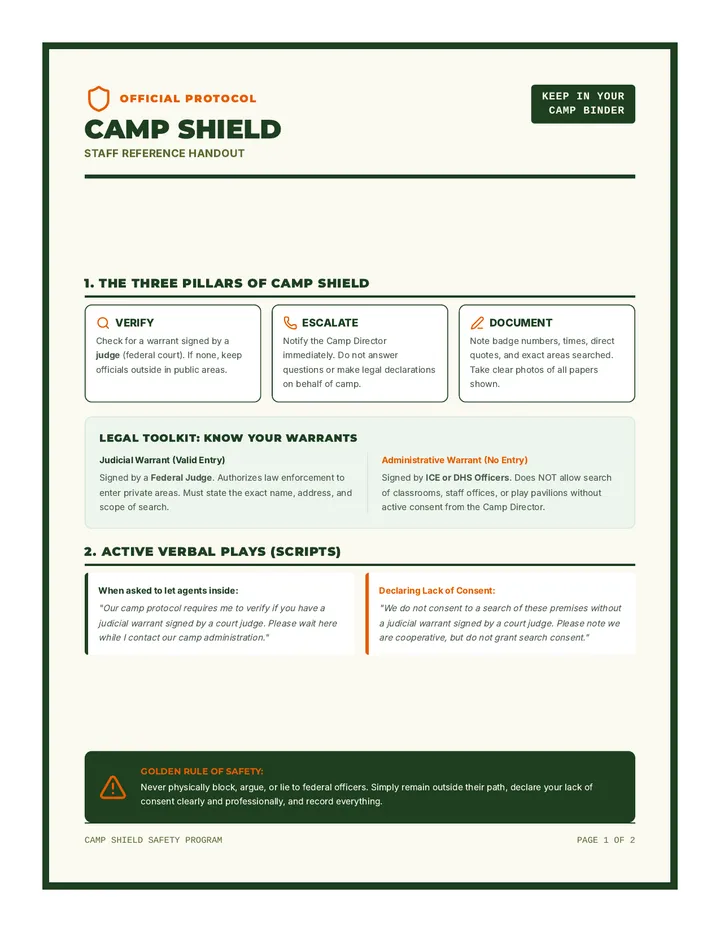
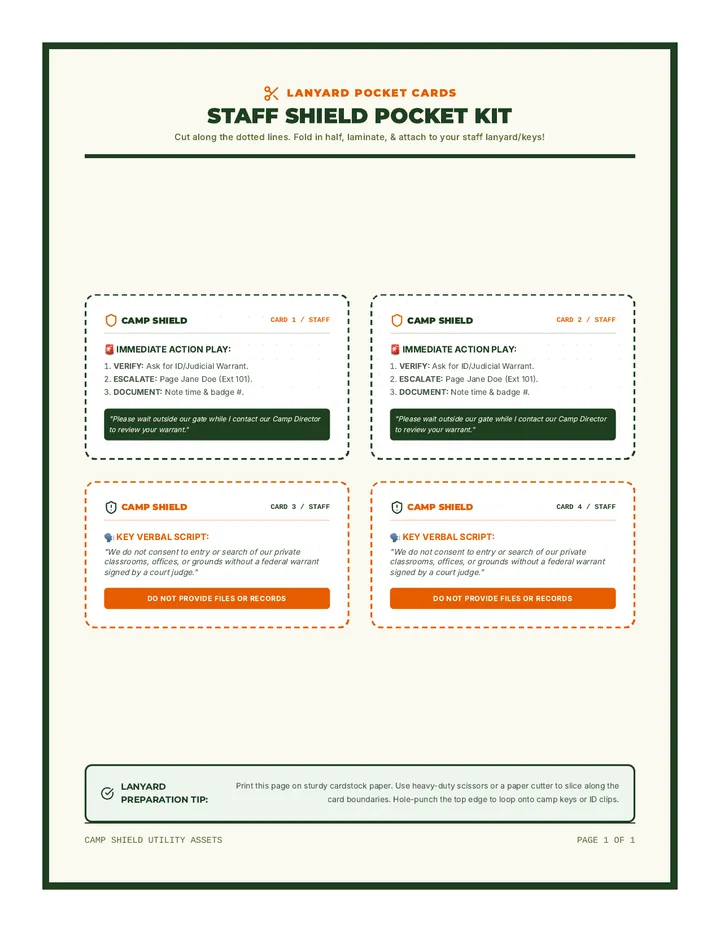
A comprehensive, scenario-based training lesson to prepare camp staff on safety, communication, and legal protocols if ICE or immigration officials arrive at camp. Equips staff with actionable toolkits, step-by-step guides, and interactive roleplay scenarios.