Students investigate the cultural, economic, and political distinctions between Slavic and Transcaucasian identities in Eastern Europe through video analysis and a collaborative poster project.
A master curriculum framework for World History that defines standards, objectives, skills, learning goals, and vocabulary for nine instructional units spanning 1200 C.E. to the present.
A master curriculum framework for Civic Literacy that defines standards, objectives, skills, learning goals, and vocabulary for thirteen instructional units.
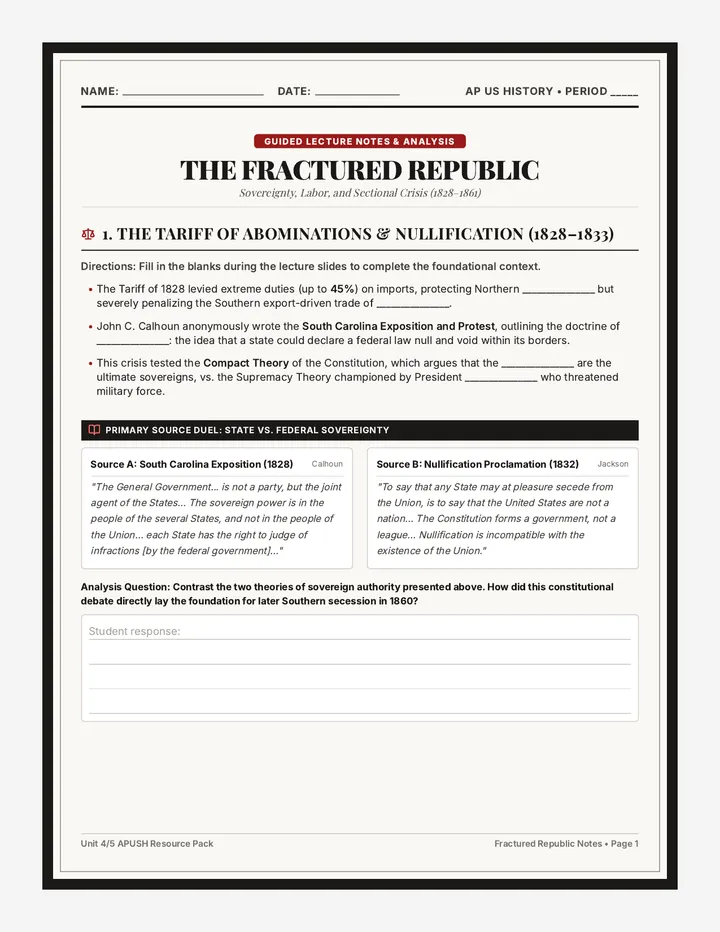
A master curriculum framework for American History that defines standards, objectives, skills, learning goals, and vocabulary for thirteen instructional units.
A focused exploration of how the unique geography of the Nile River Valley shaped the development, stability, and culture of Ancient Egyptian civilization.
A comprehensive 60-minute lesson on the key figures, geography, and military factors of World War II's global theaters, aligned with TN standard US.50.
A comprehensive lesson on the shift in U.S. foreign policy from isolationism to interventionism under FDR, focusing on the key legislative and diplomatic steps leading to World War II.
A 25-minute lesson examining the rise and methods of control of 20th-century totalitarian leaders Adolf Hitler, Benito Mussolini, Joseph Stalin, and Hideki Tojo. Students analyze how economic instability and nationalist fervor paved the way for absolute power.