The sequence culminates with an examination of System 1 (fast/intuitive) vs. System 2 (slow/deliberate) thinking. Students develop checklists and protocols designed to force System 2 processing.
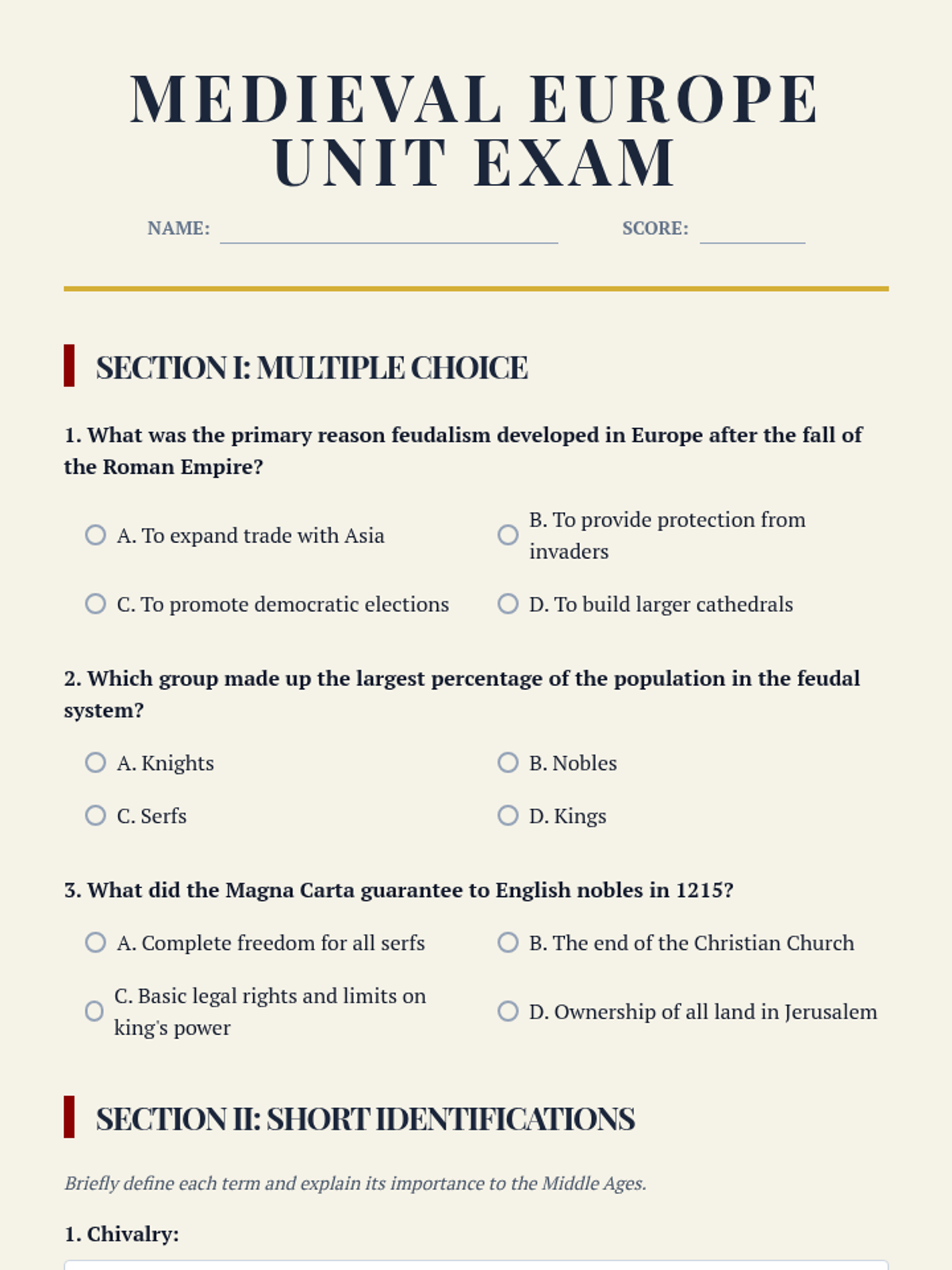
Examine the origins of constitutional government with the Magna Carta, the growth of medieval towns, and the transition toward the Renaissance.
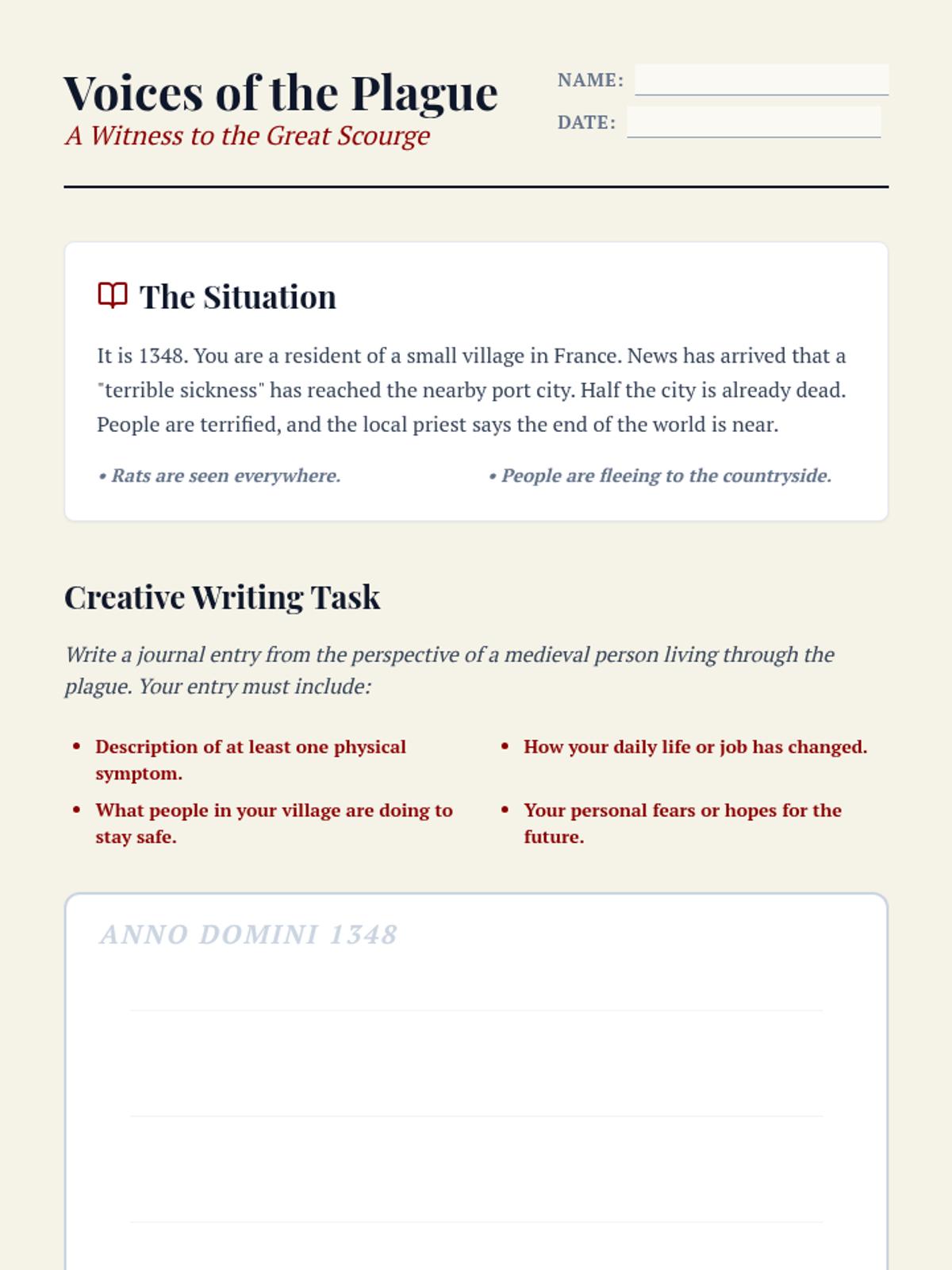
Investigate the origins, symptoms, and catastrophic social and economic consequences of the Bubonic Plague in 14th-century Europe.
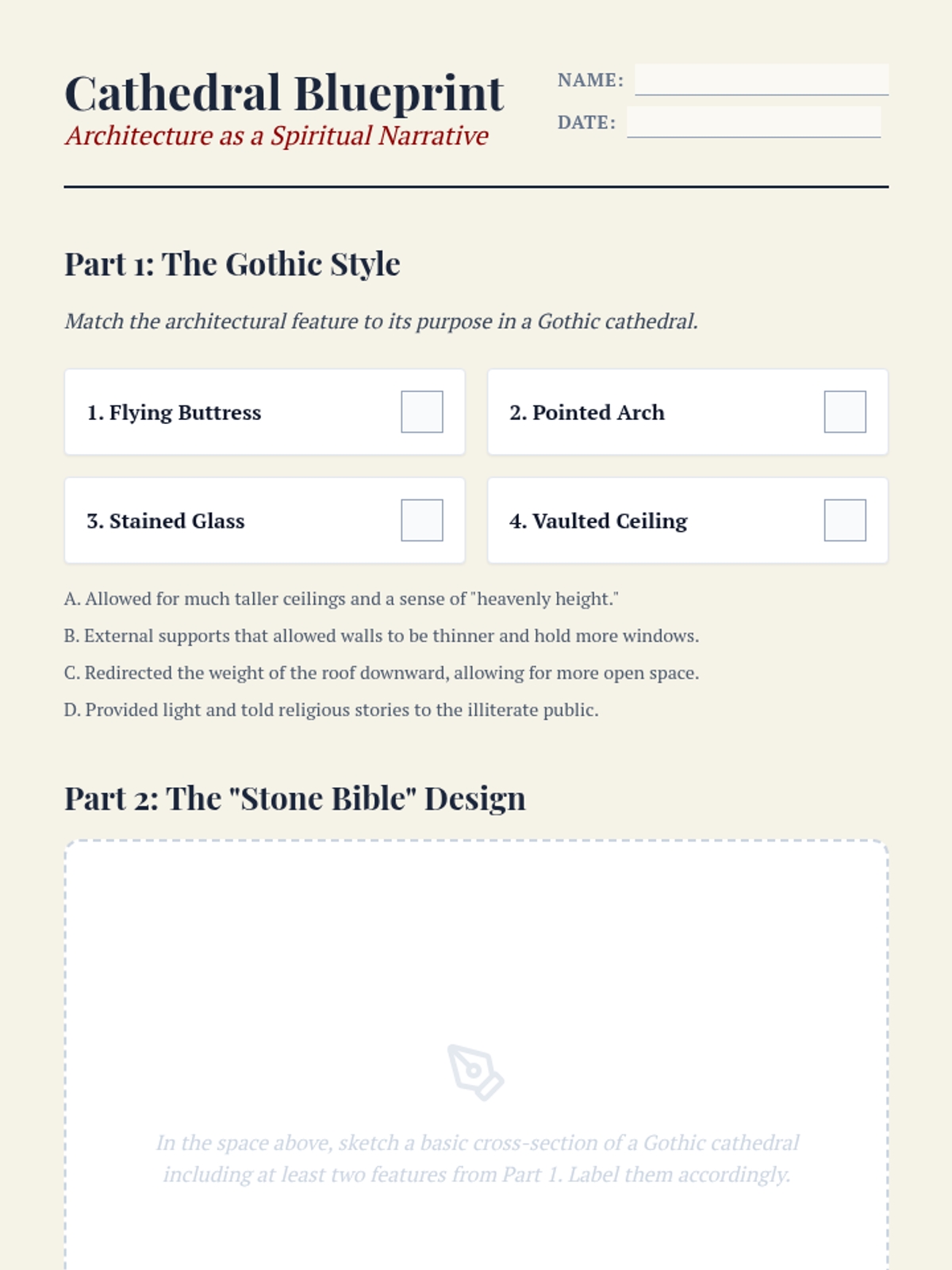
Analyze the immense power and influence of the Catholic Church on daily life, politics, and the cultural landscape of Medieval Europe.
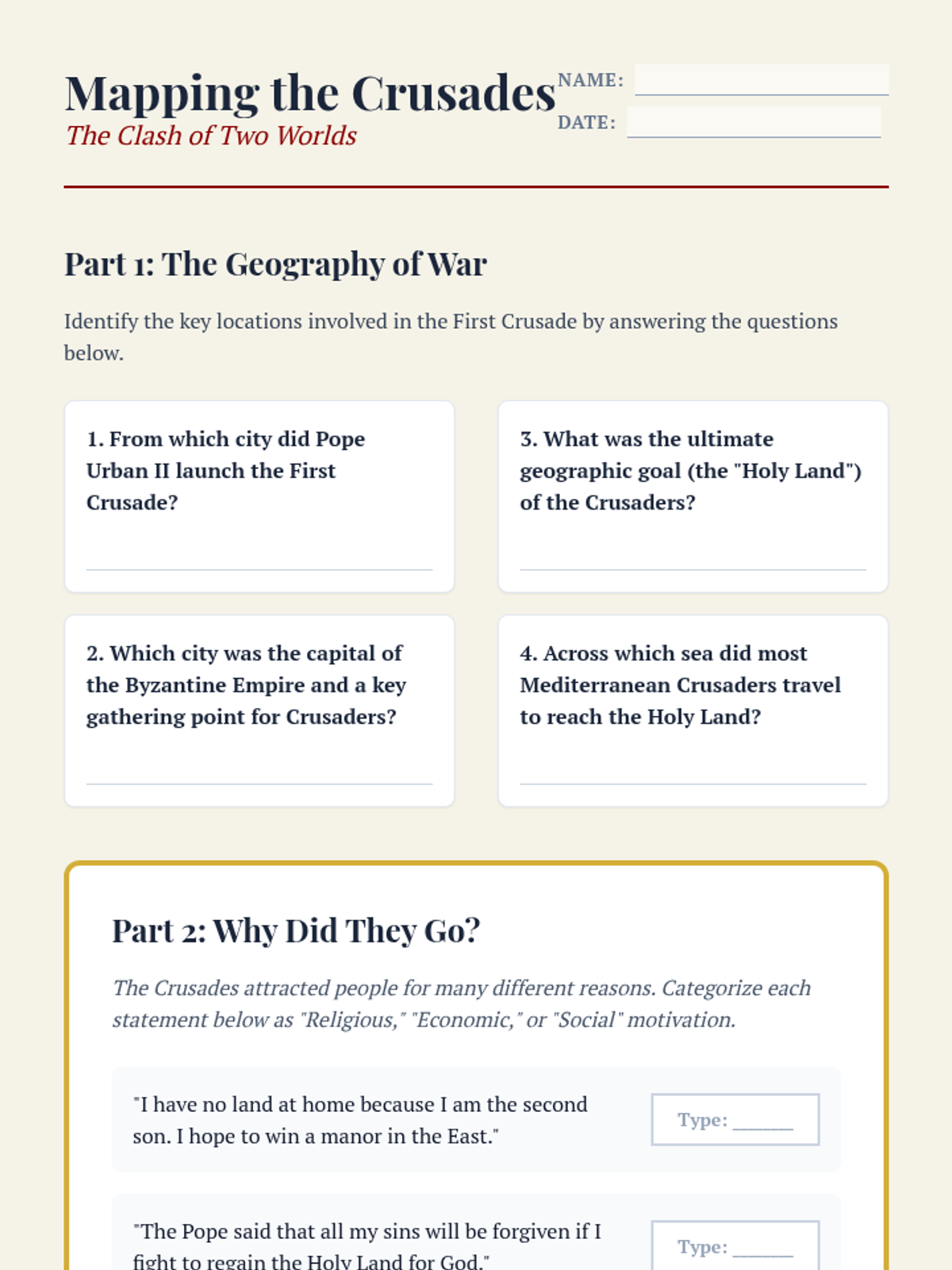
Explore the life of a medieval knight, the code of chivalry, and the religious motivations behind the Crusades.
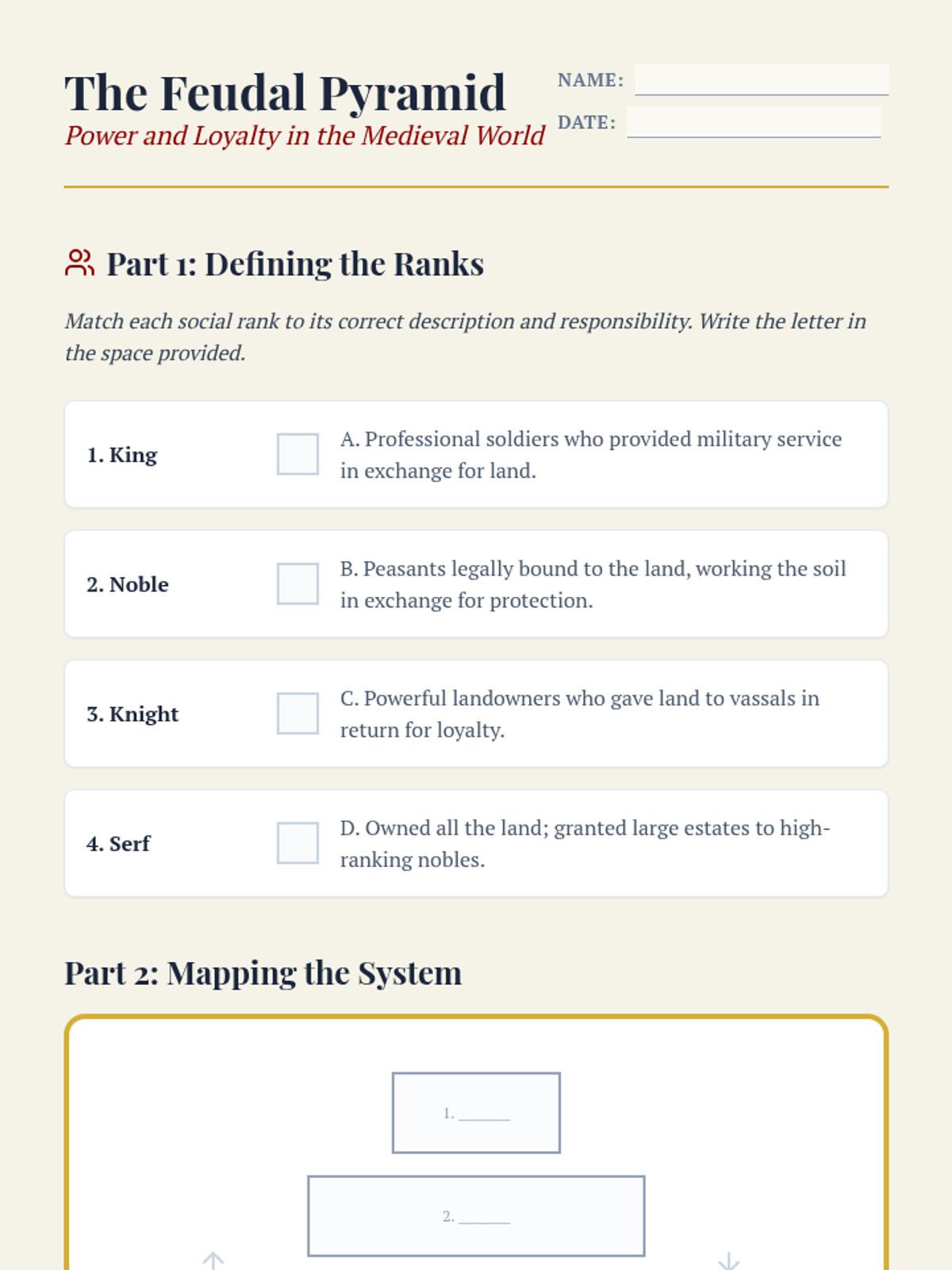
Explore the rigid social structure of feudalism and the economic system of manorialism that defined life in the Middle Ages.
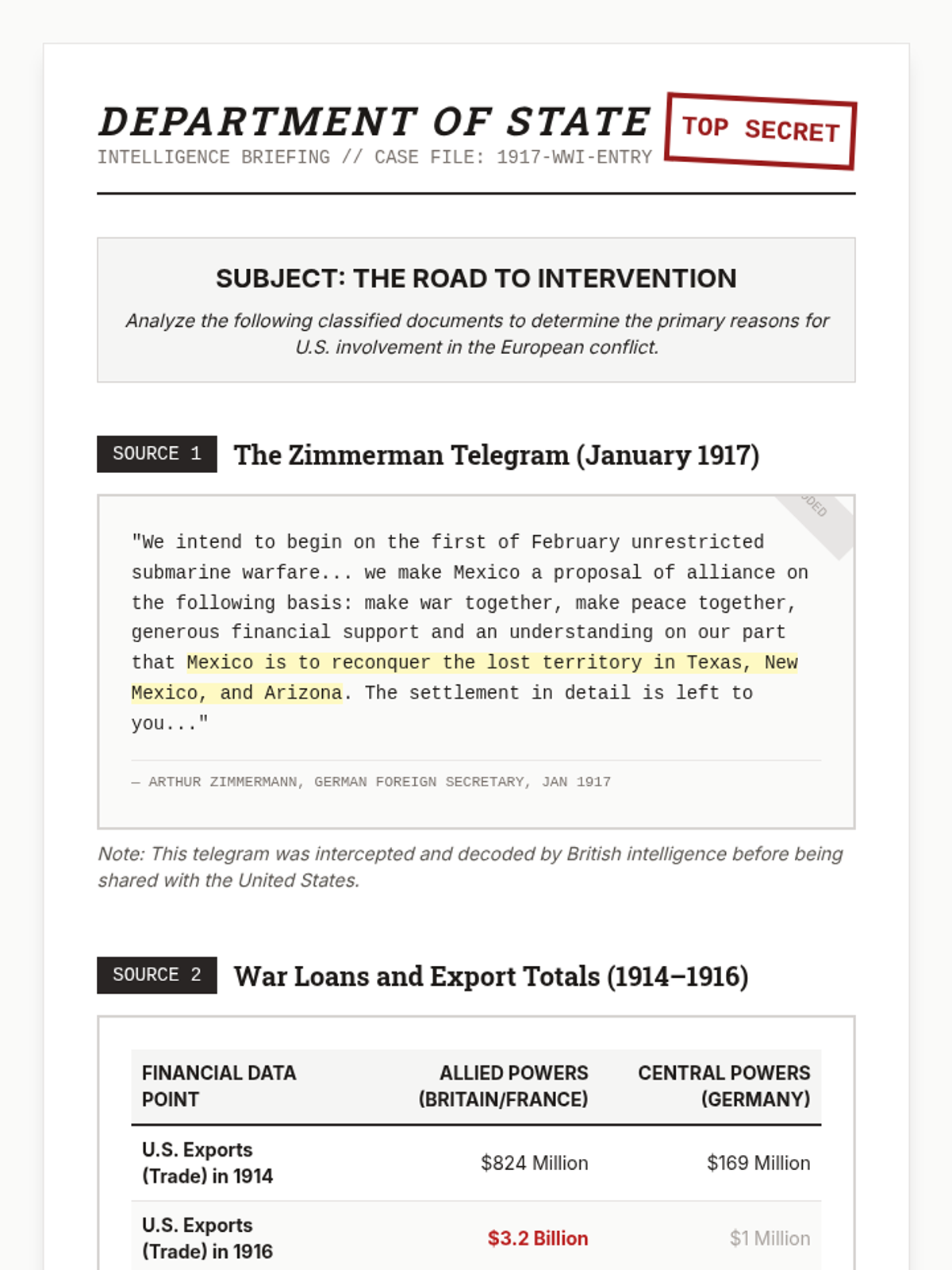
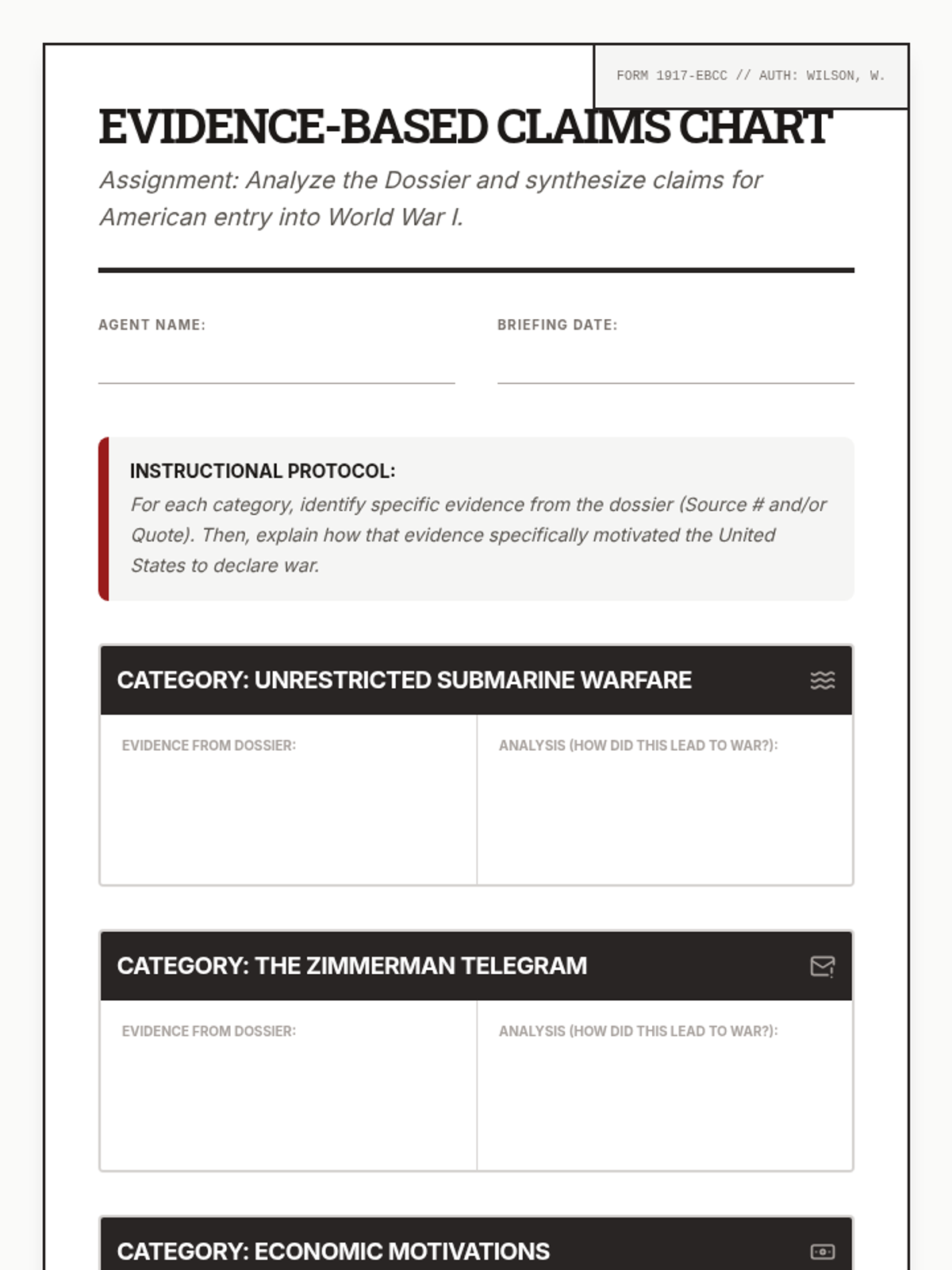
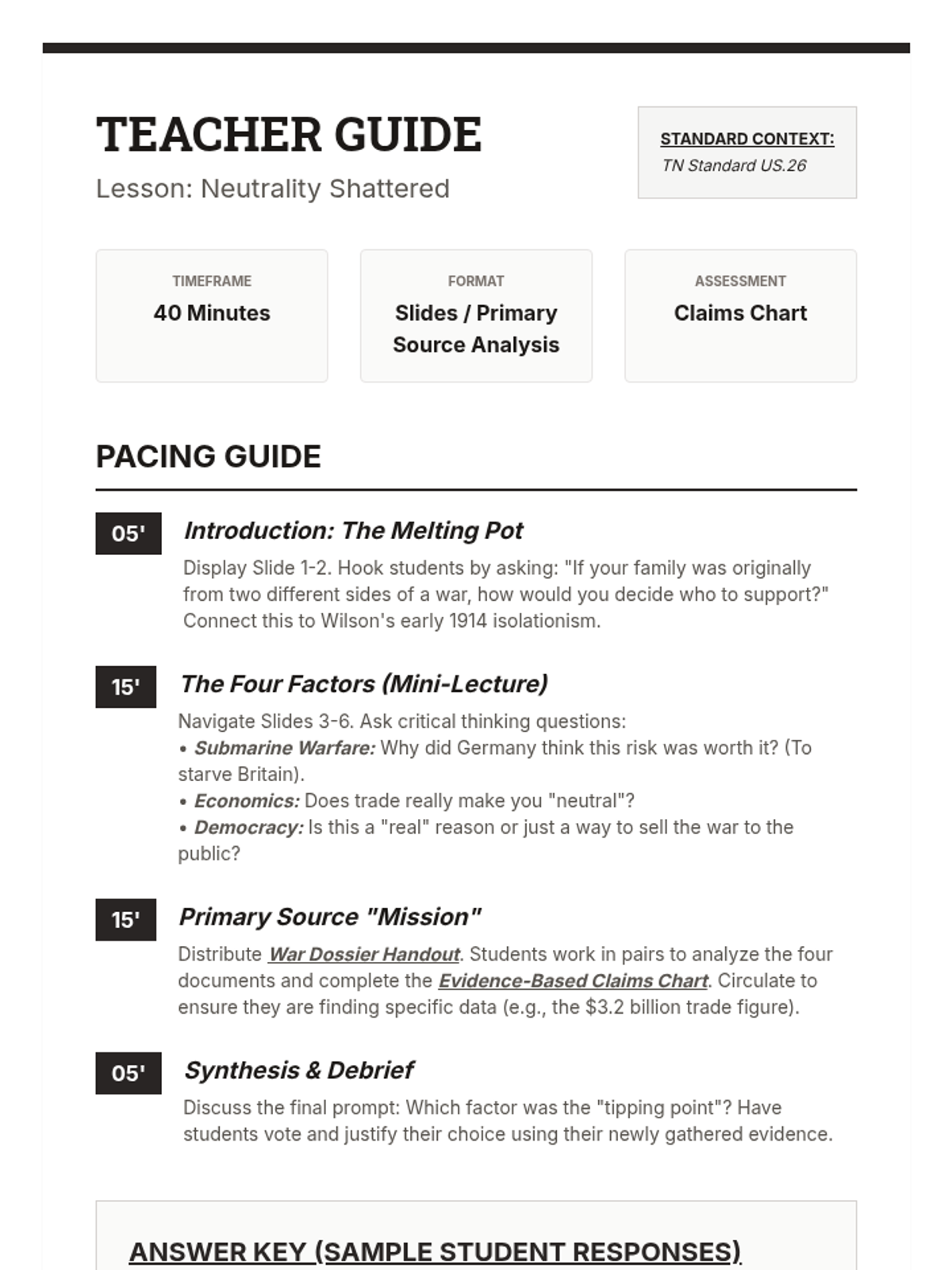
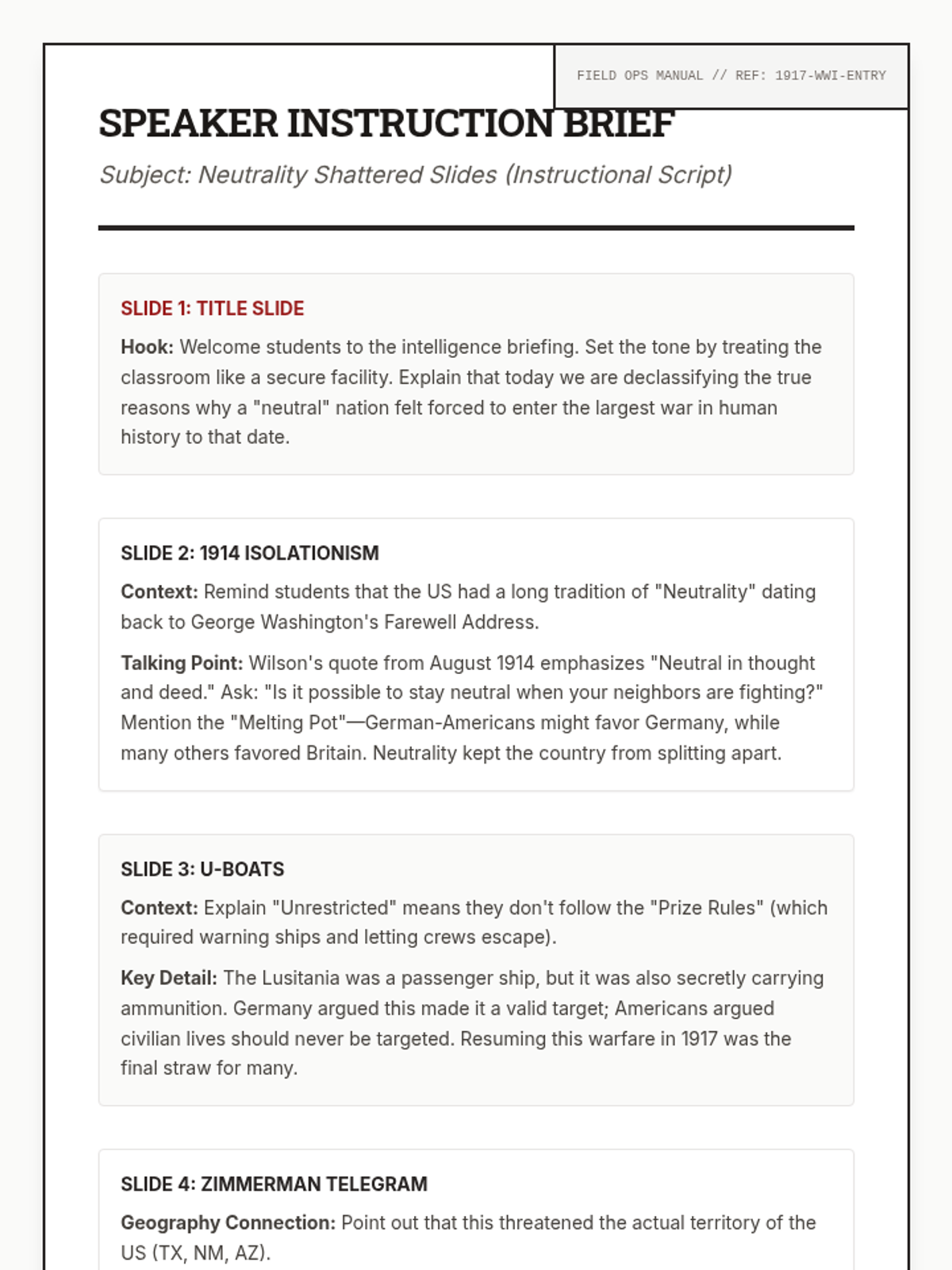
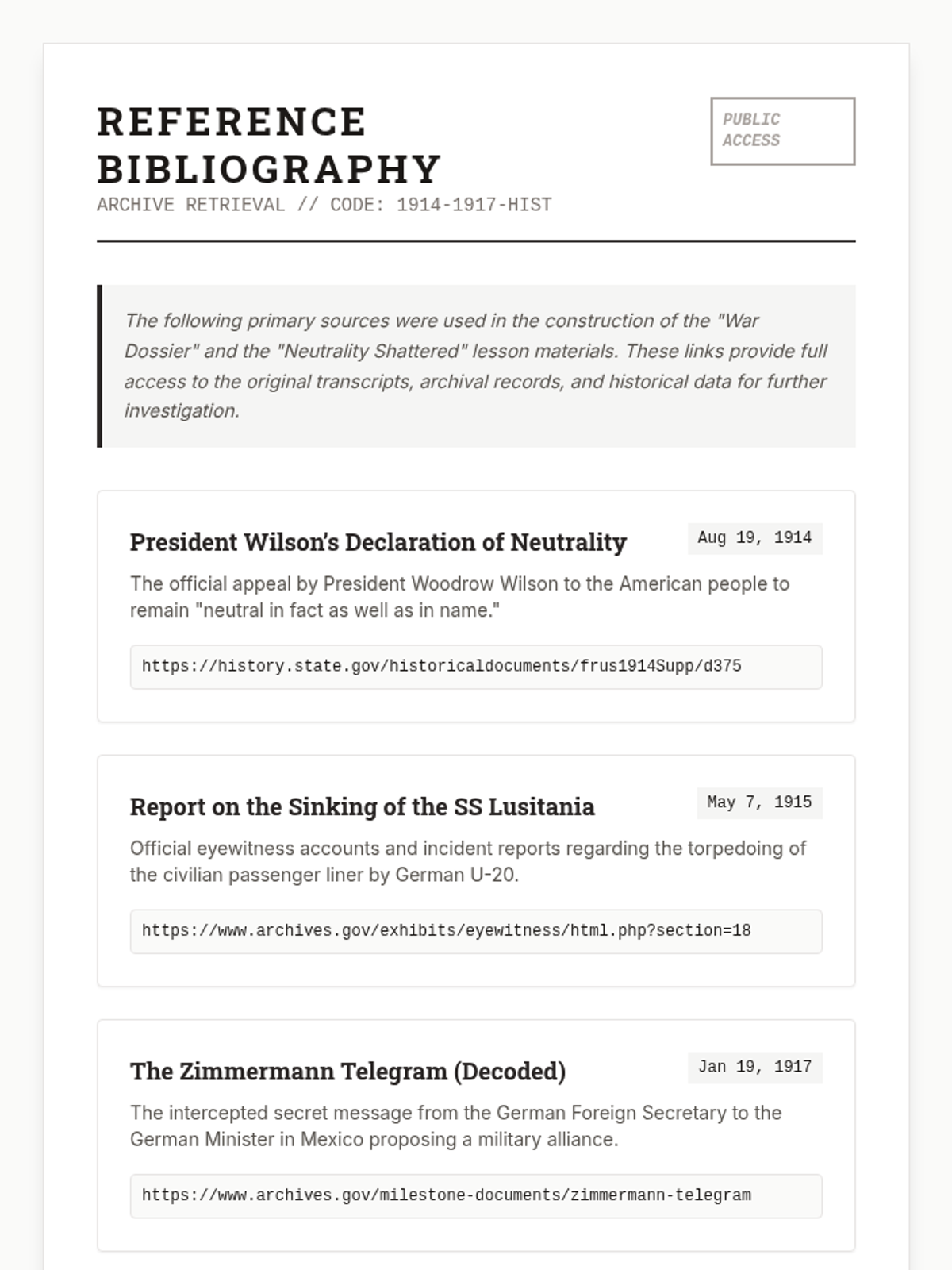
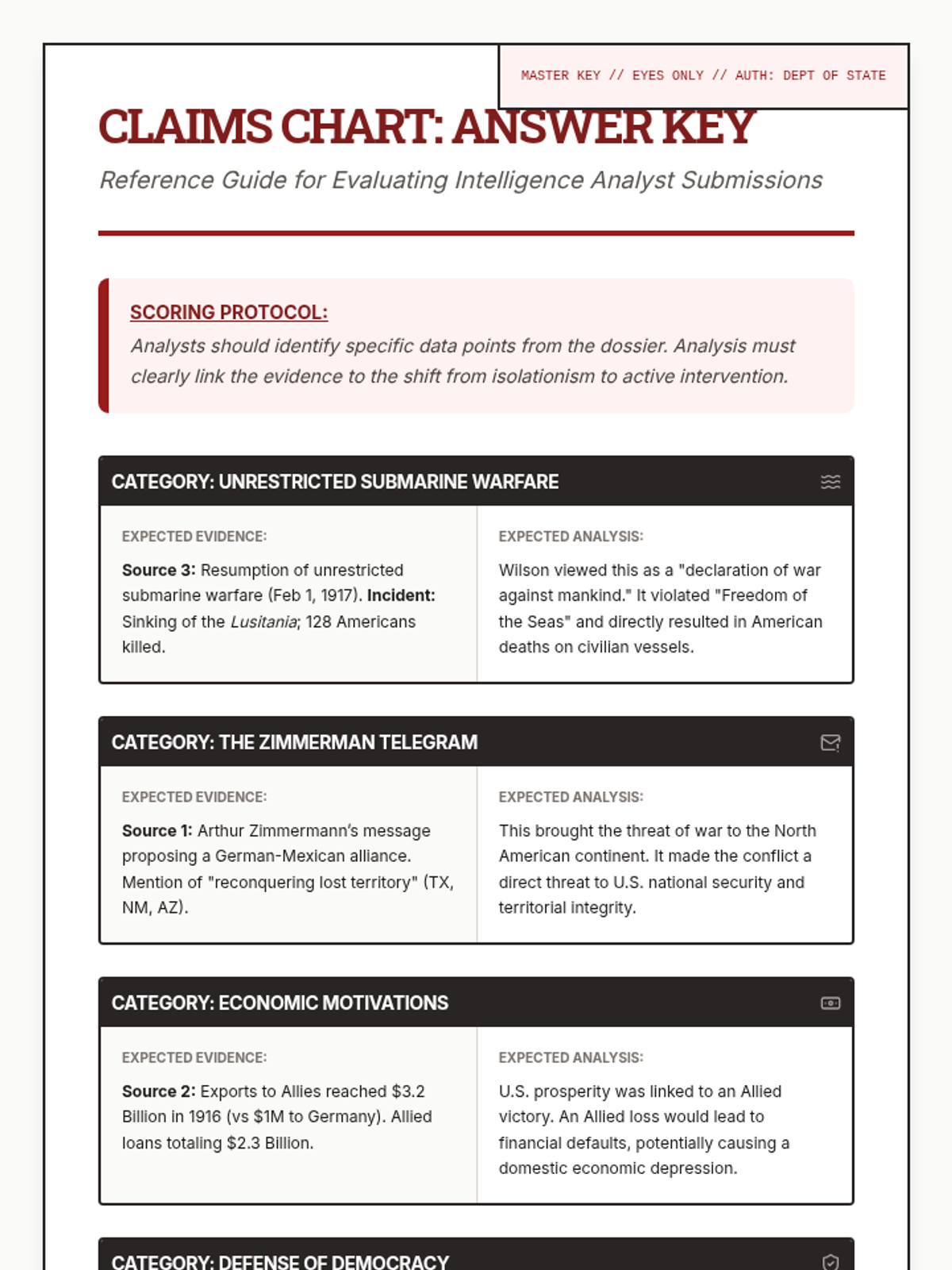
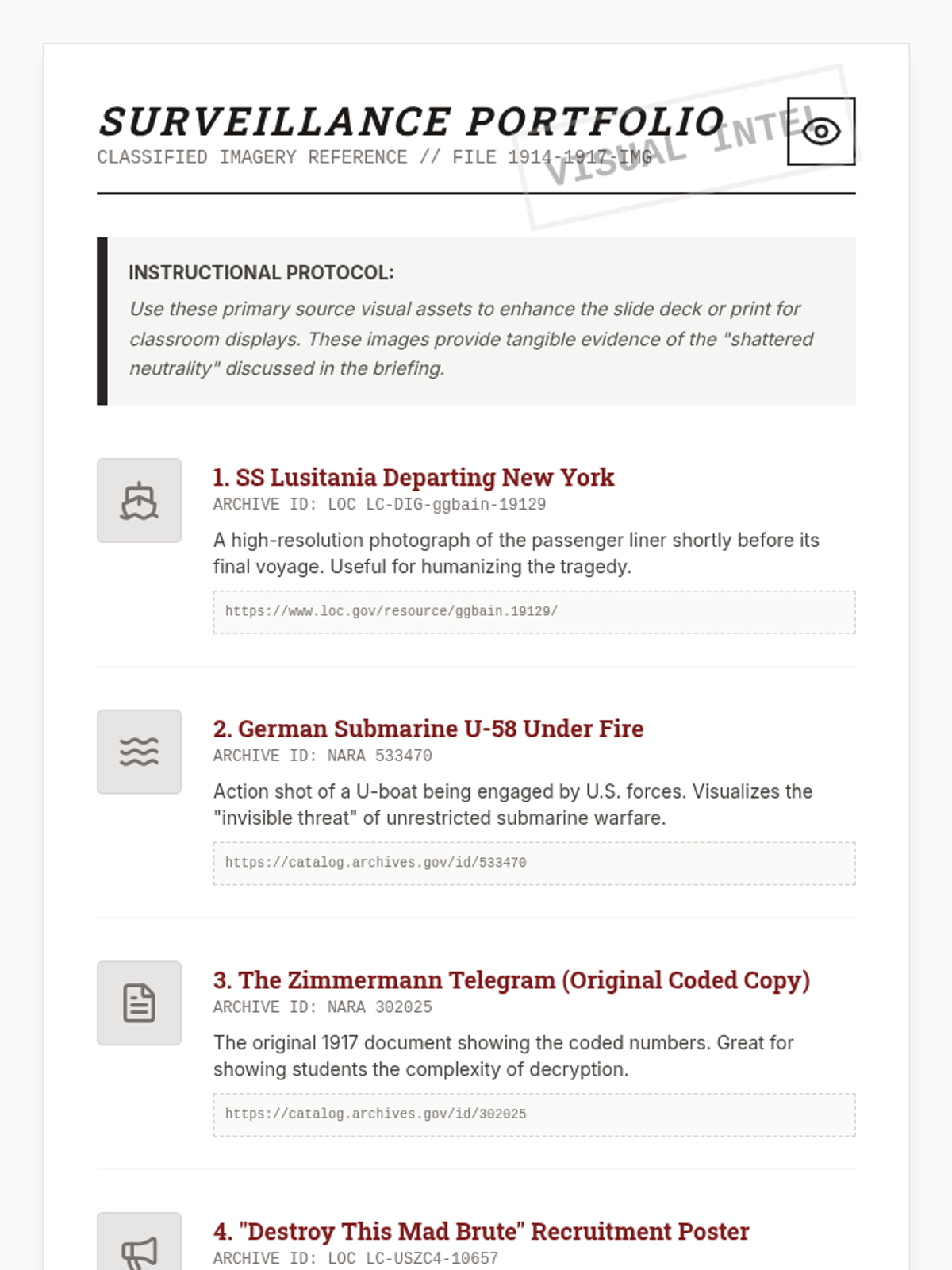
A 40-minute exploration of the factors that led the United States to abandon neutrality and enter World War I, focusing on unrestricted submarine warfare, the Zimmerman Telegram, and economic interests.
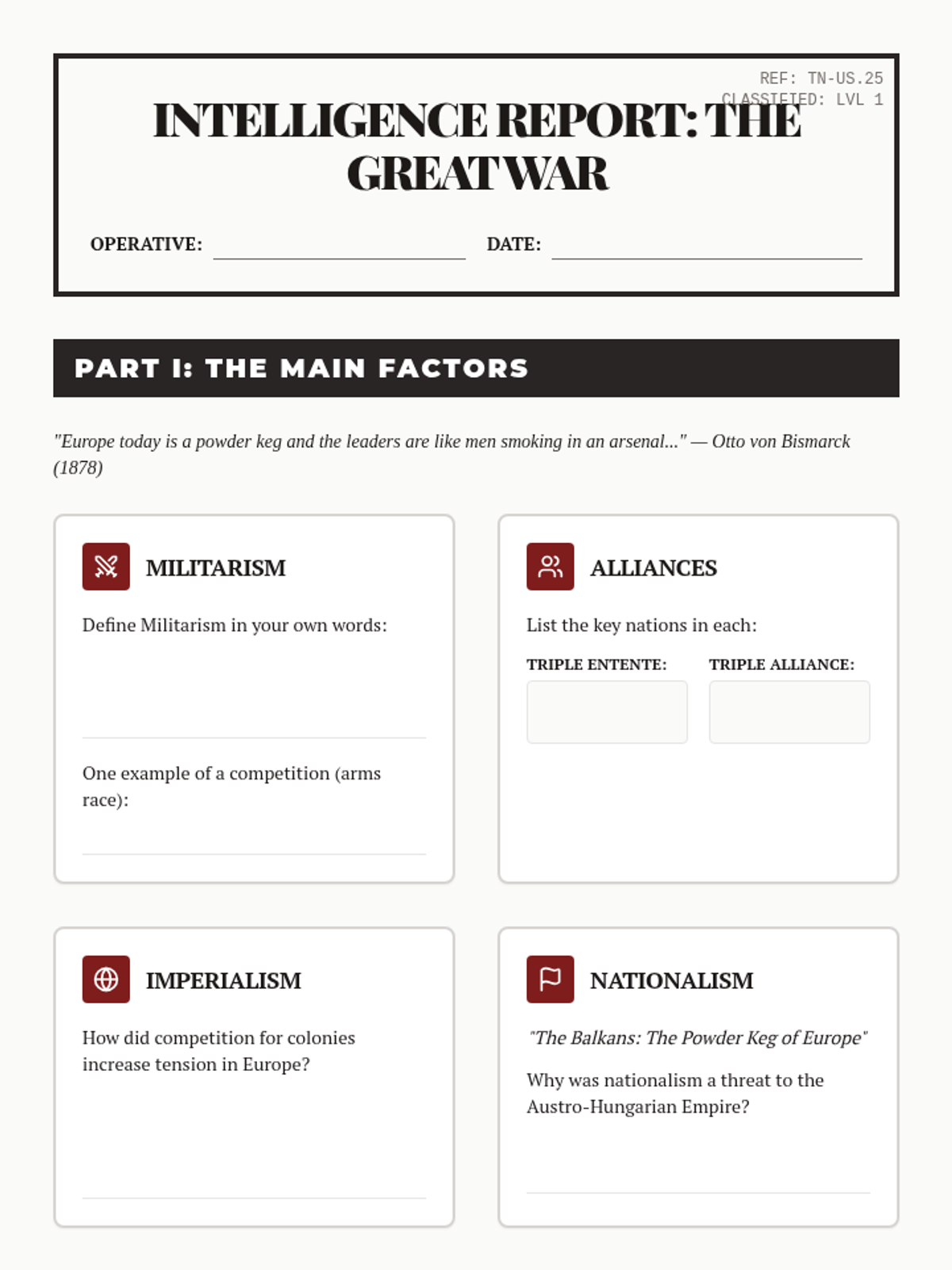
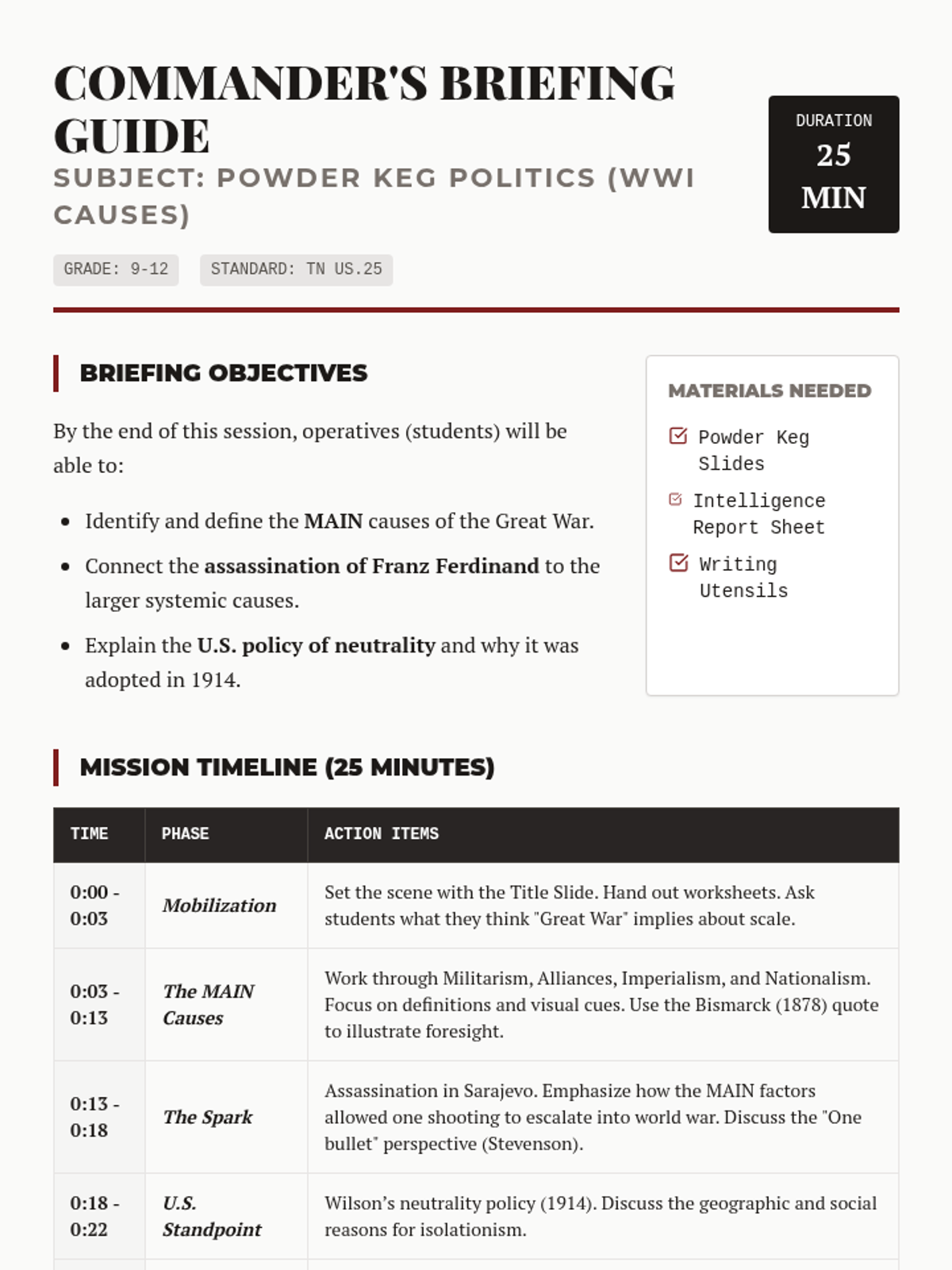
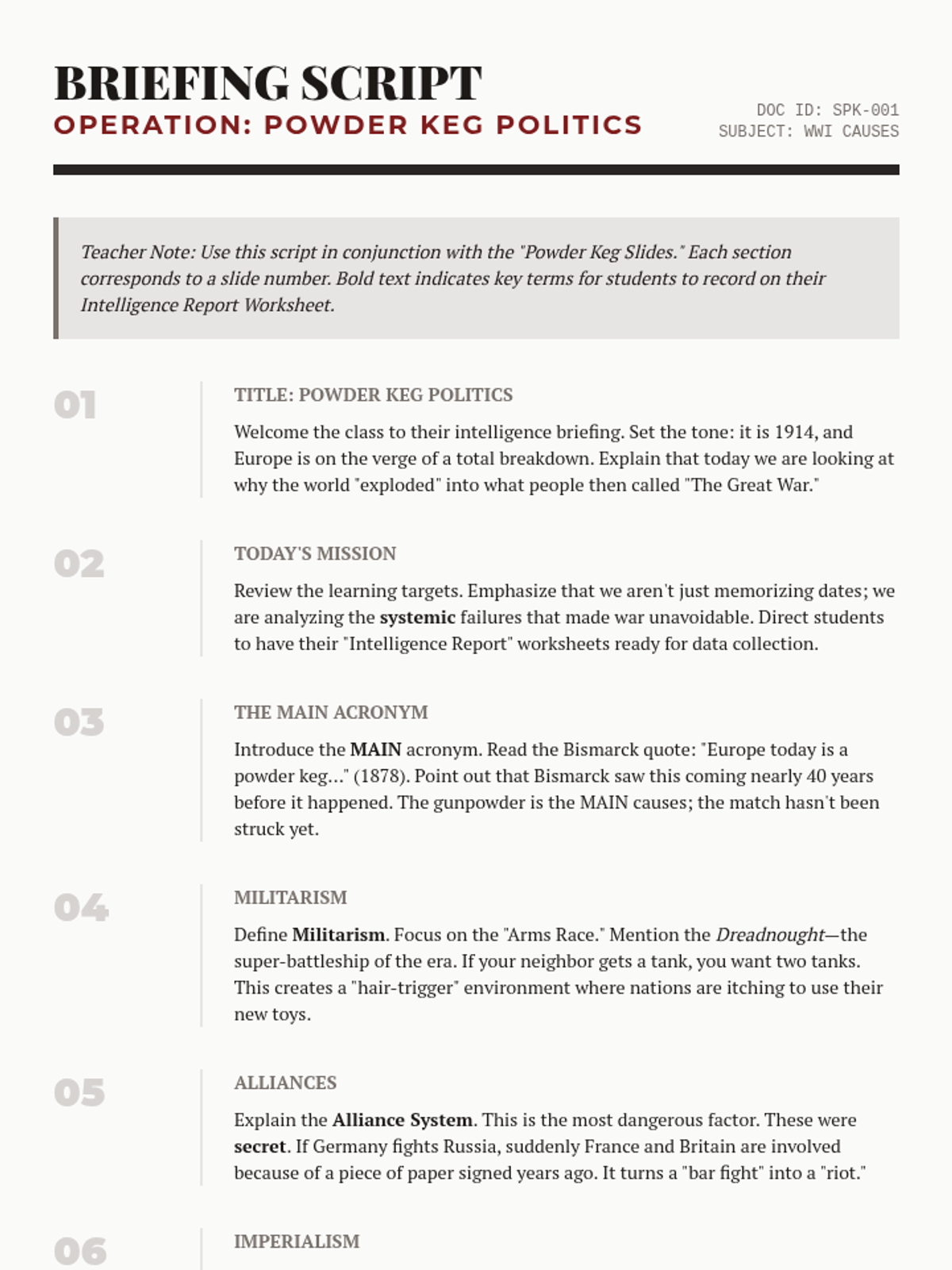
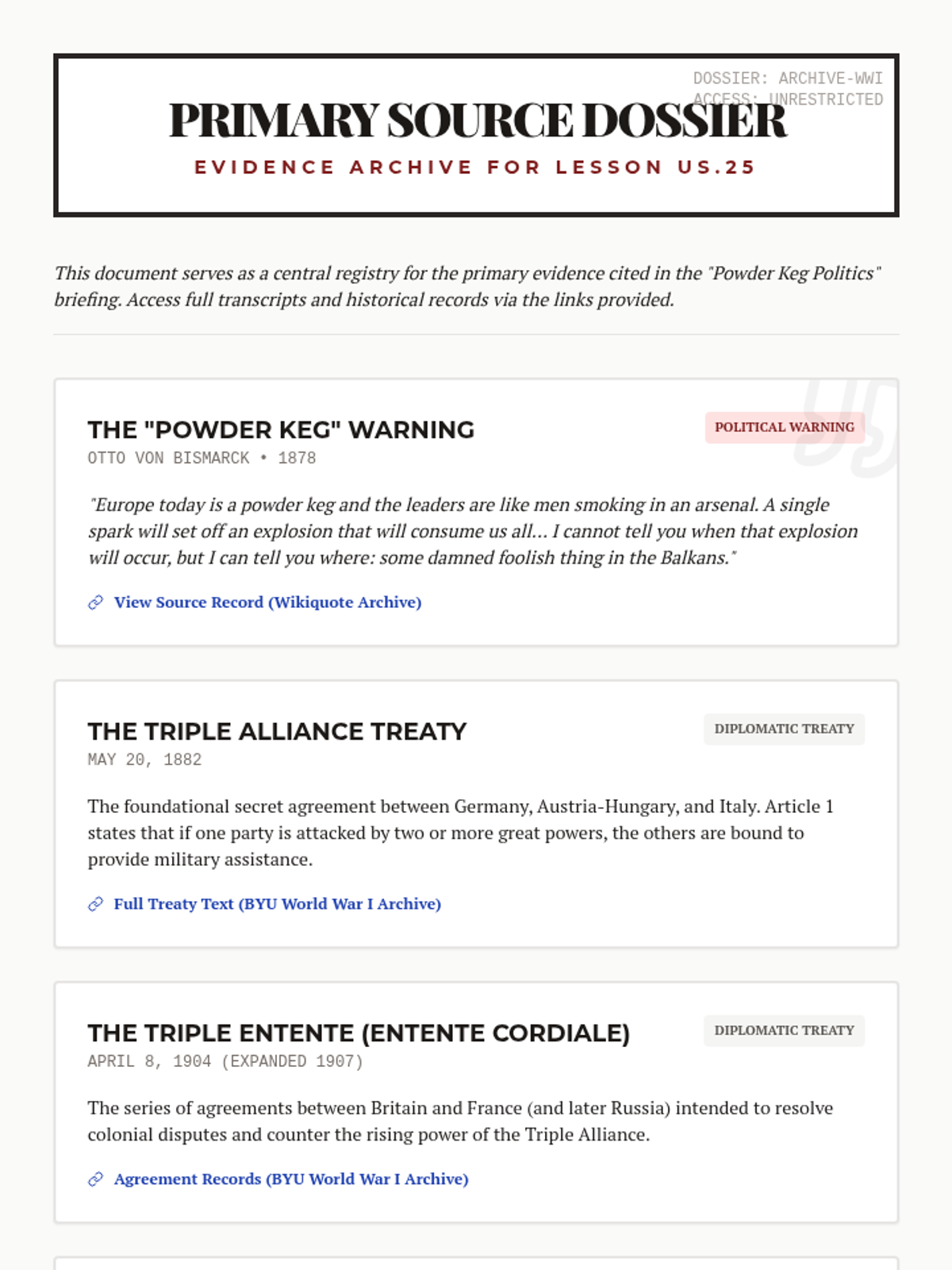
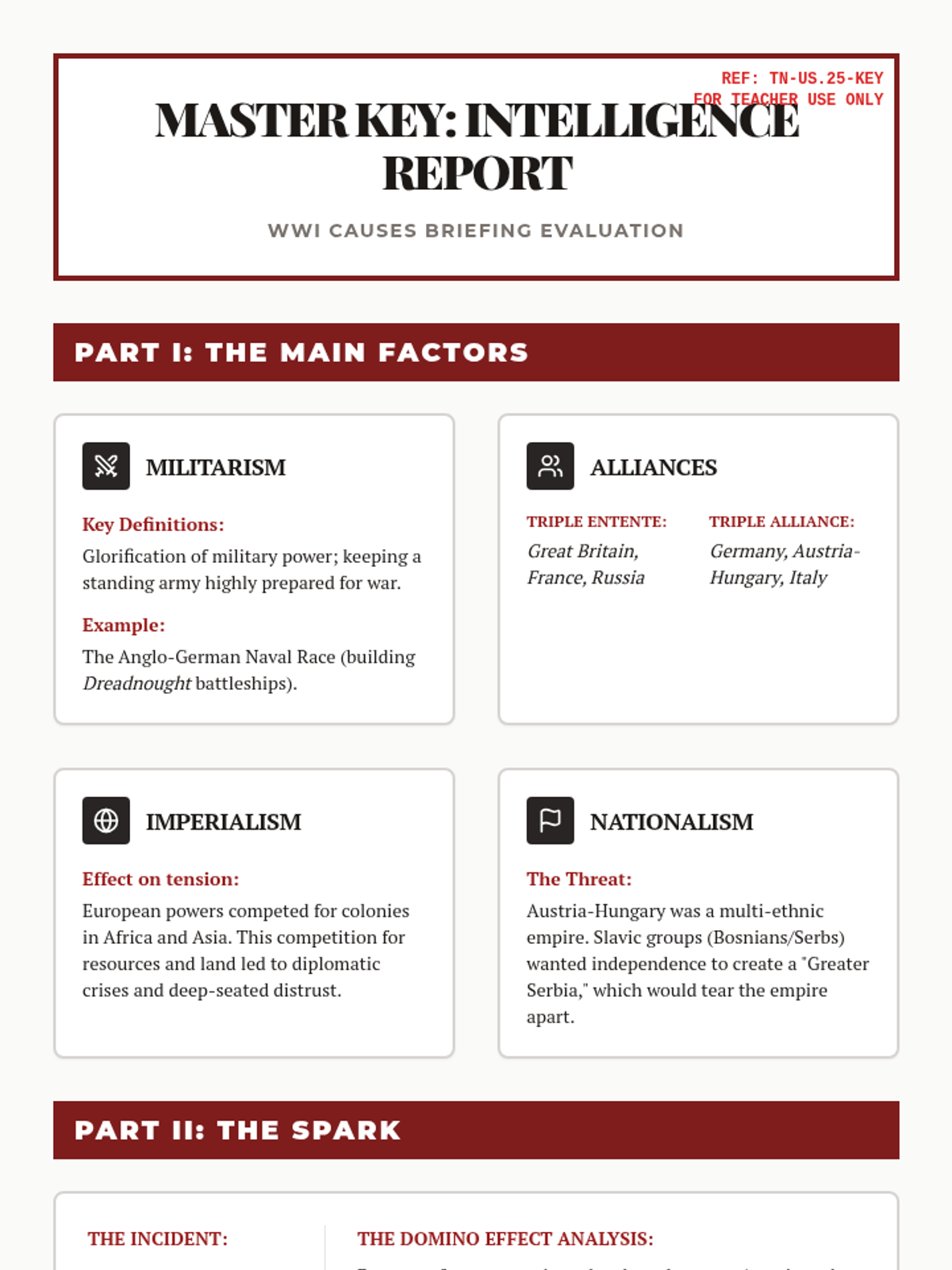
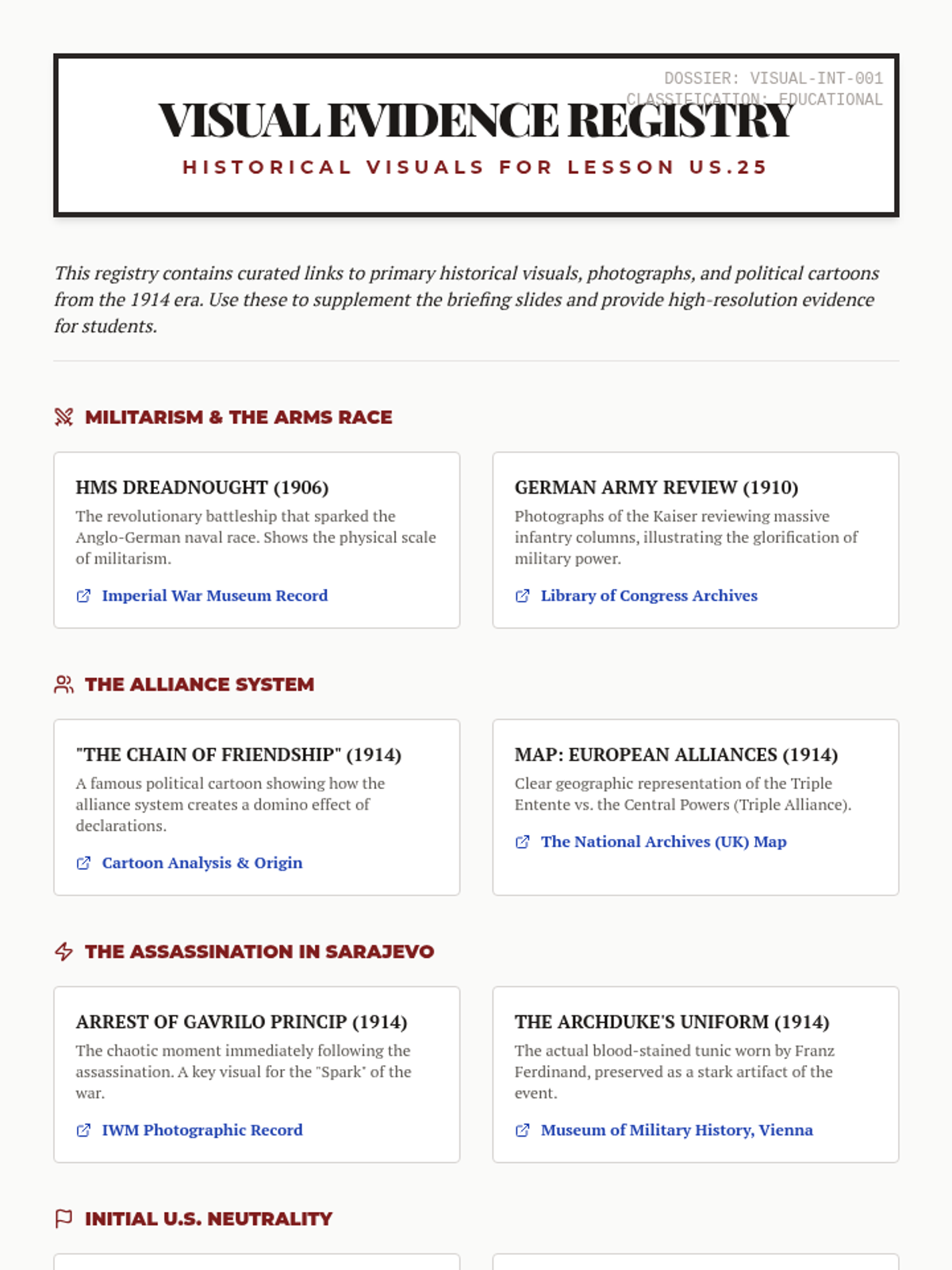
An introductory lesson on the causes of World War I, focusing on the MAIN factors (Militarism, Alliances, Imperialism, Nationalism) and the assassination of Archduke Franz Ferdinand that served as the spark. Students will also explore the initial U.S. stance of neutrality.
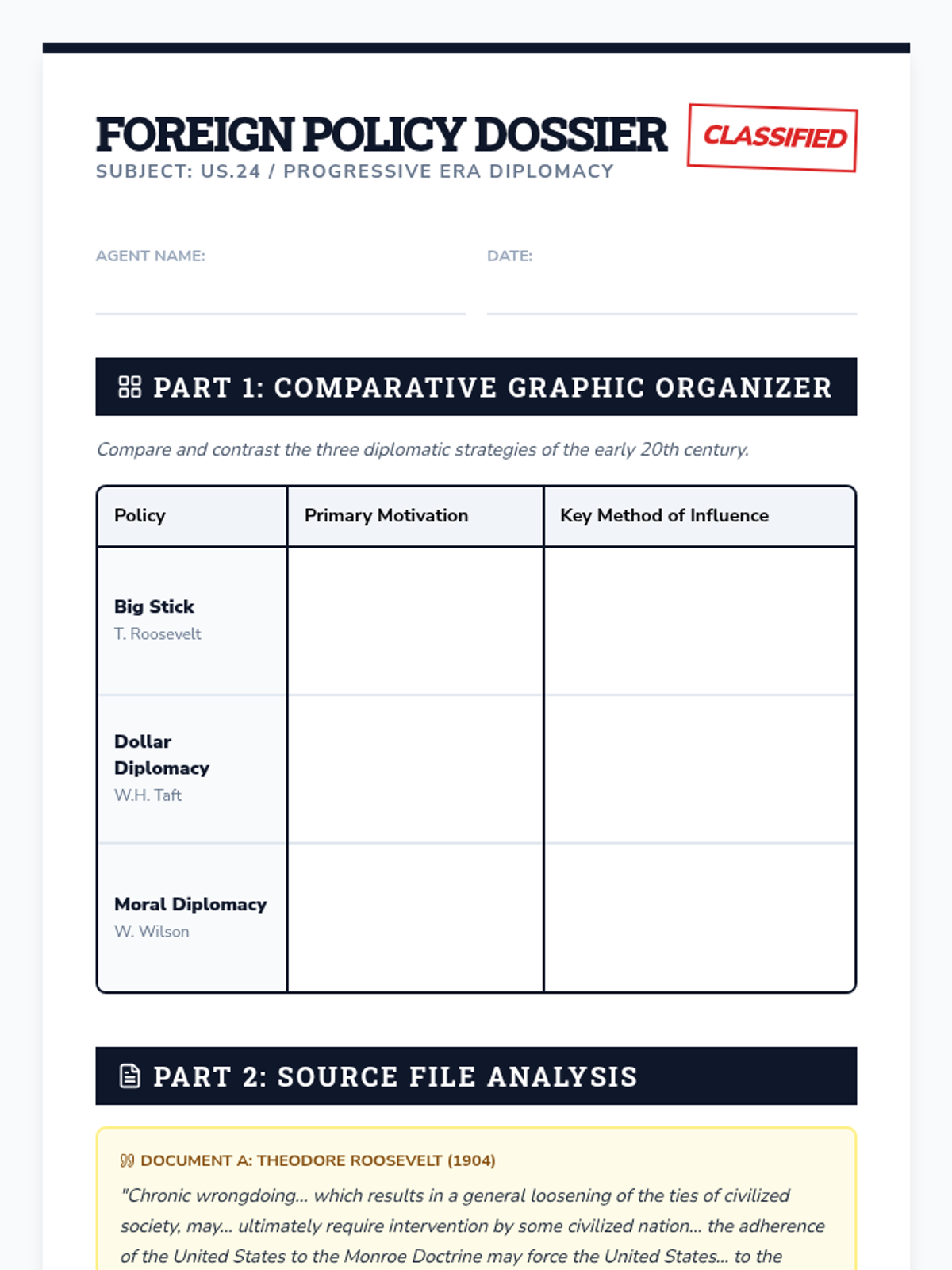
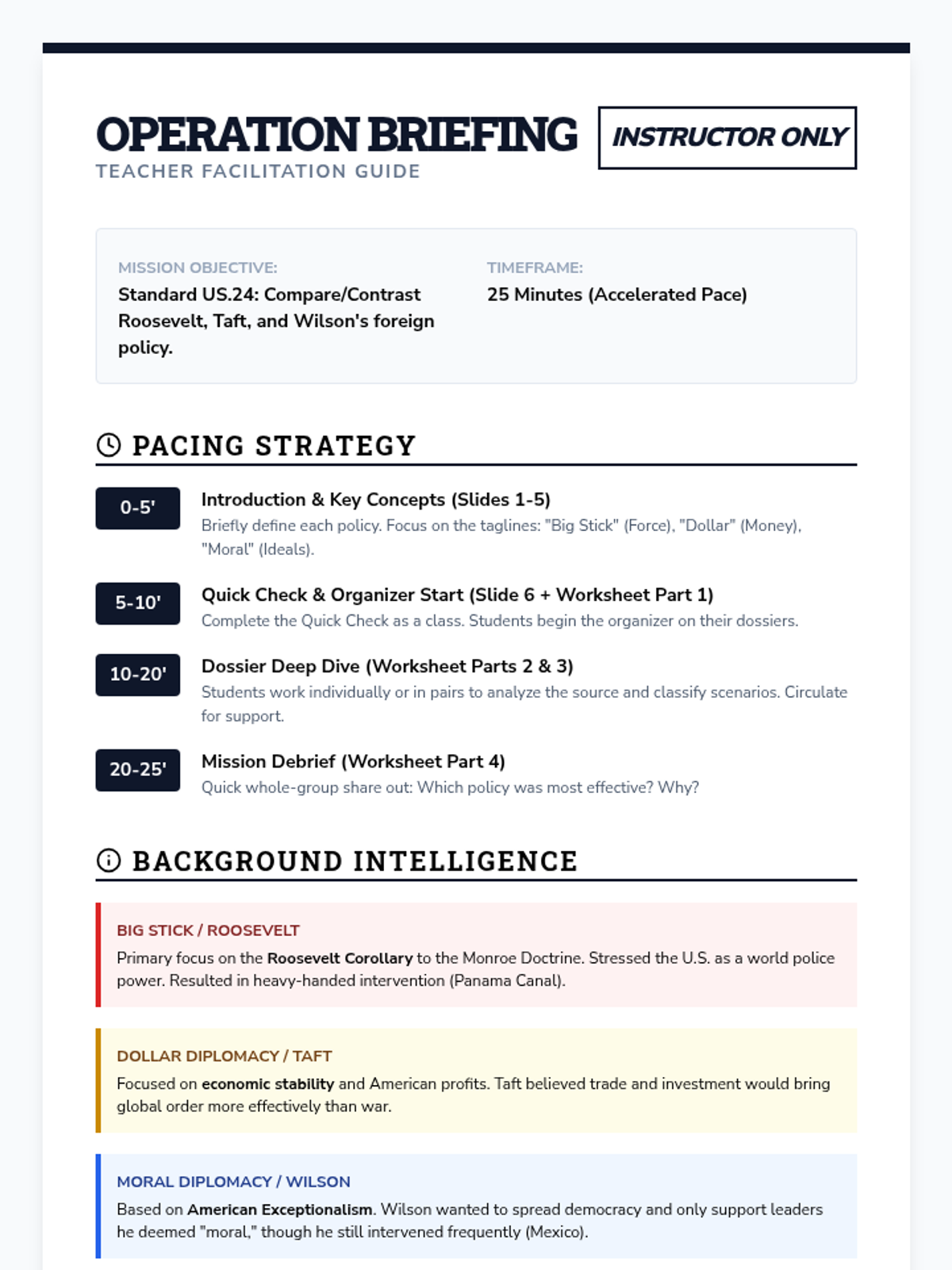
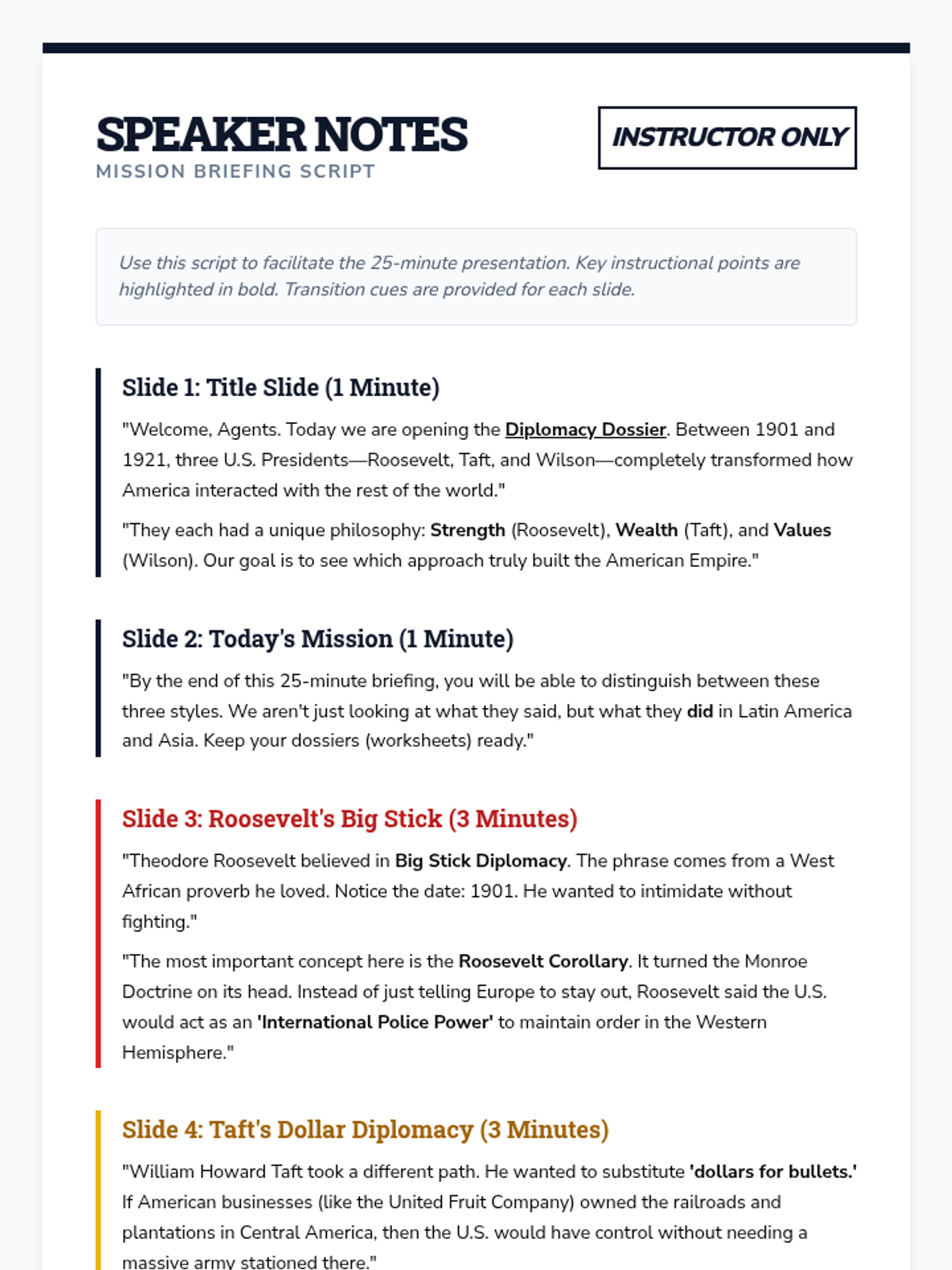
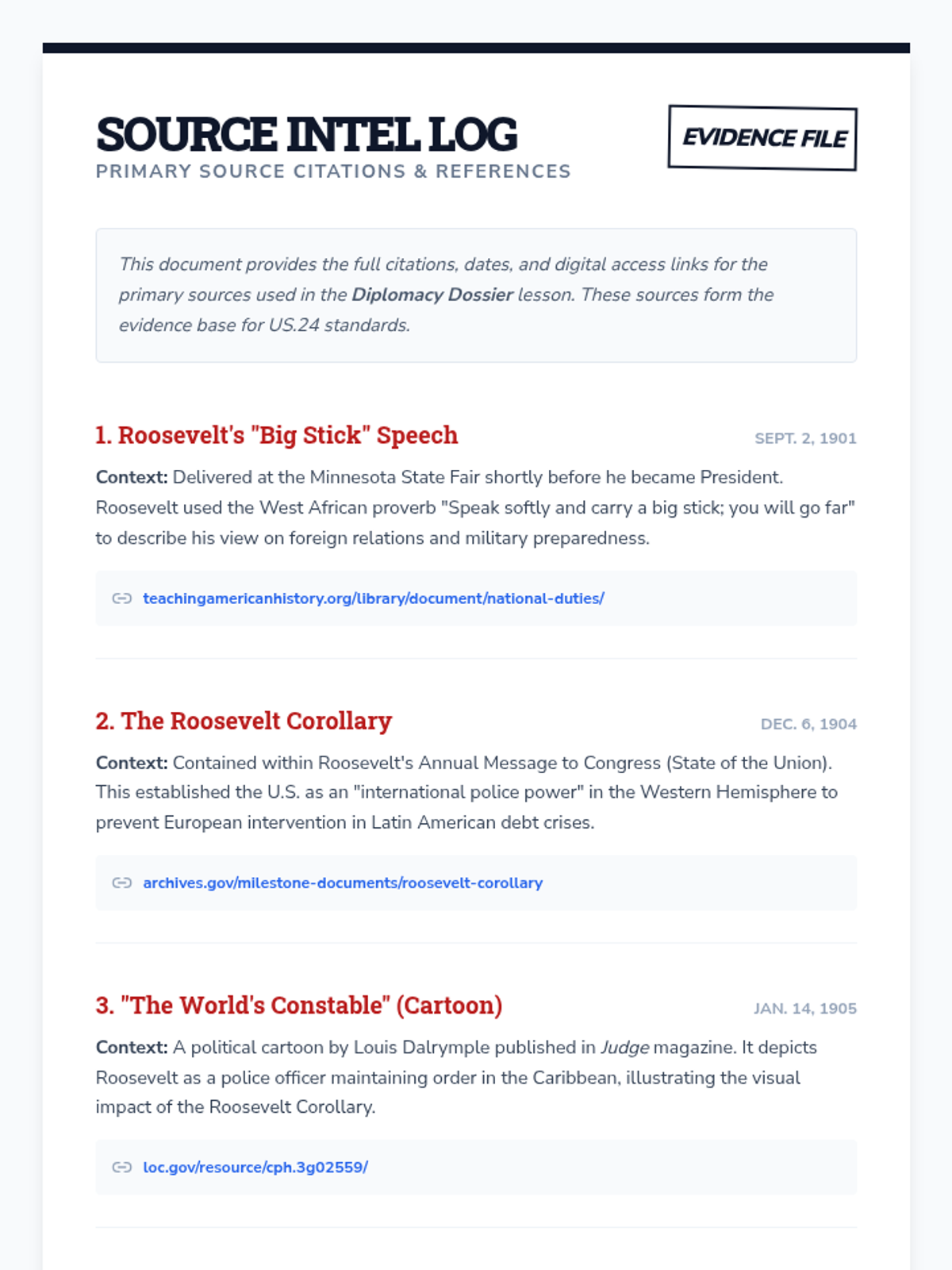
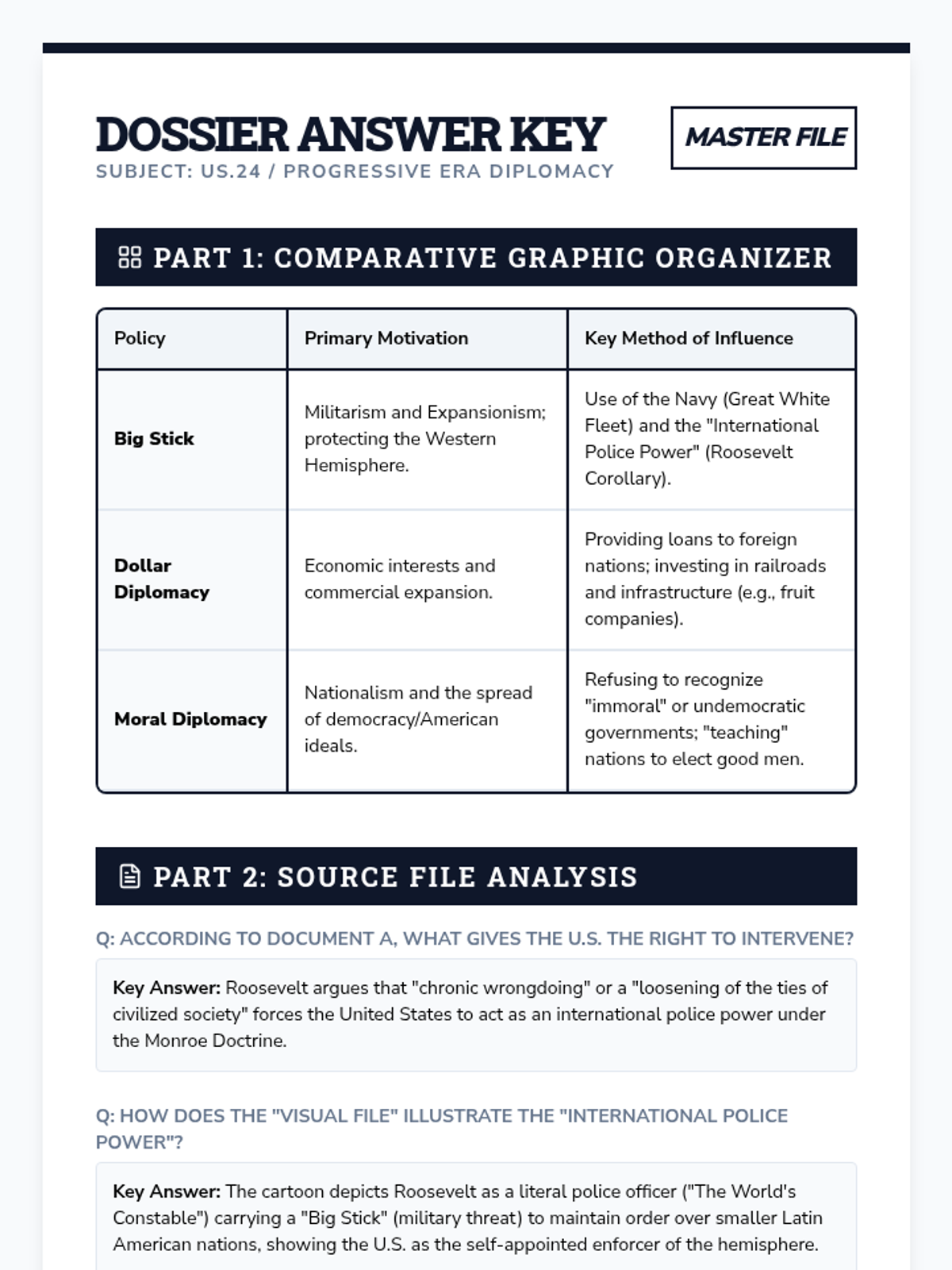
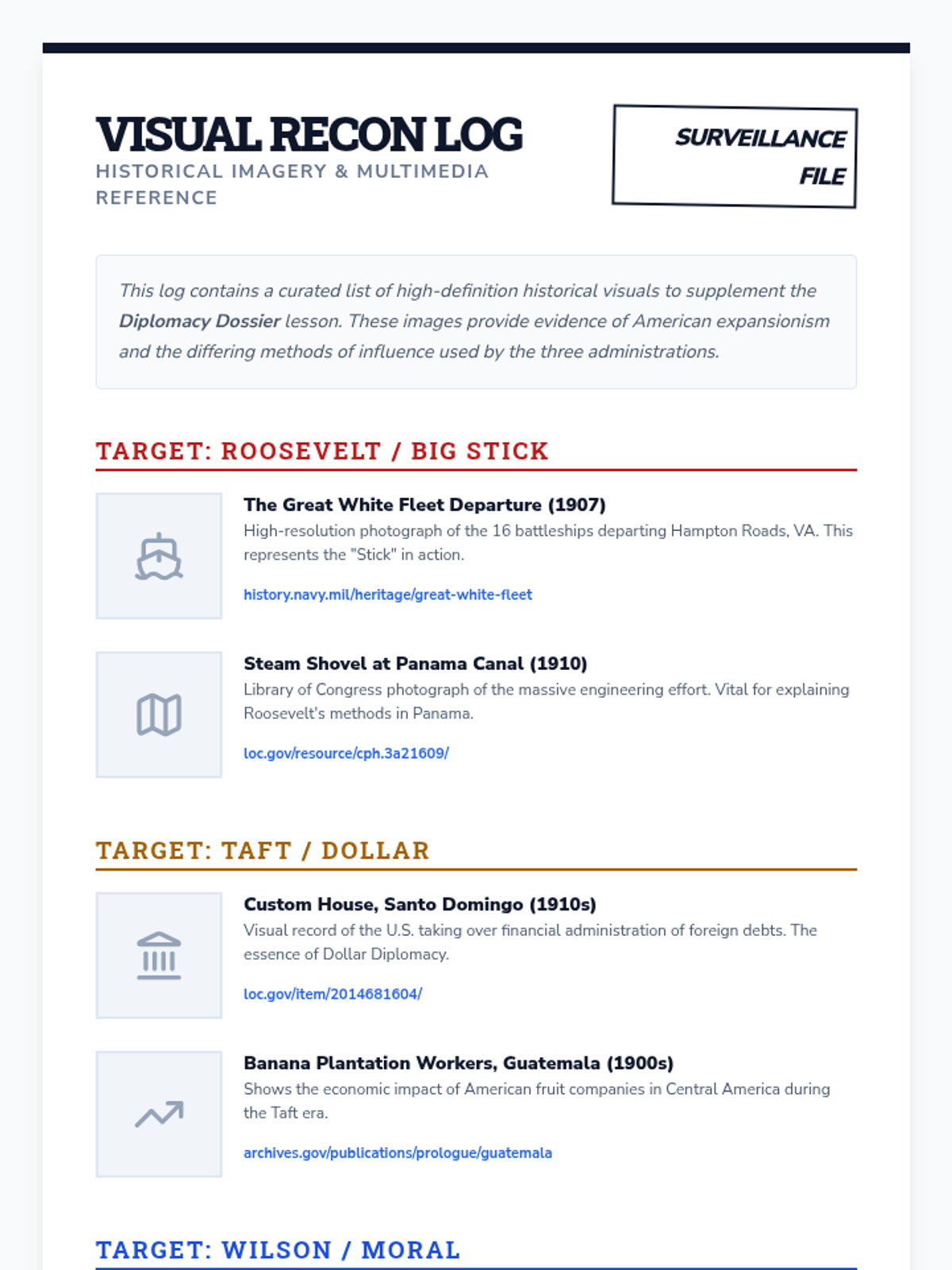
A high-speed 25-minute investigation into the three distinct foreign policy styles of the Progressive Era presidents: Roosevelt, Taft, and Wilson. Students use a comparative dossier approach to analyze motives, methods, and outcomes of American expansionism.
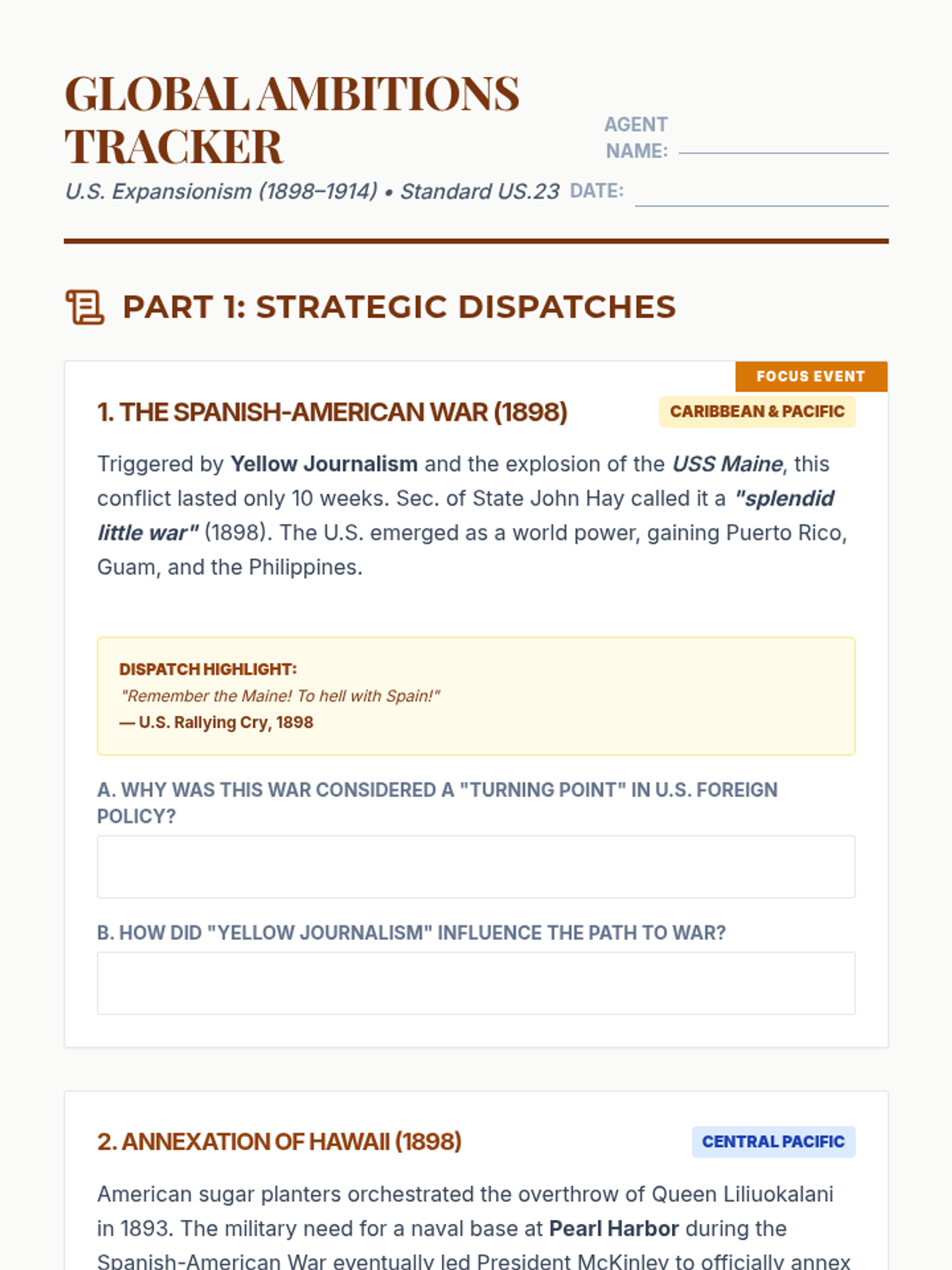
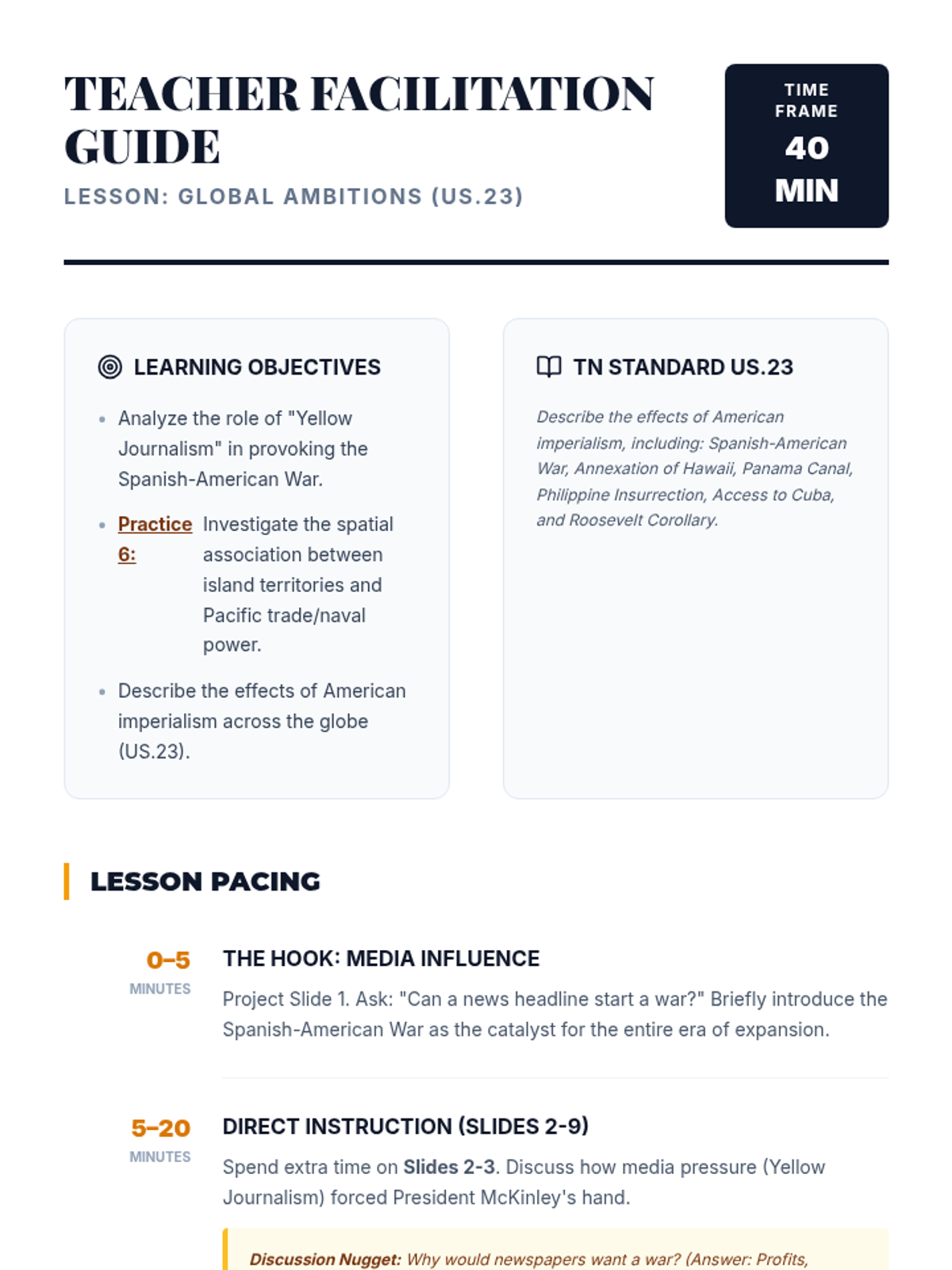
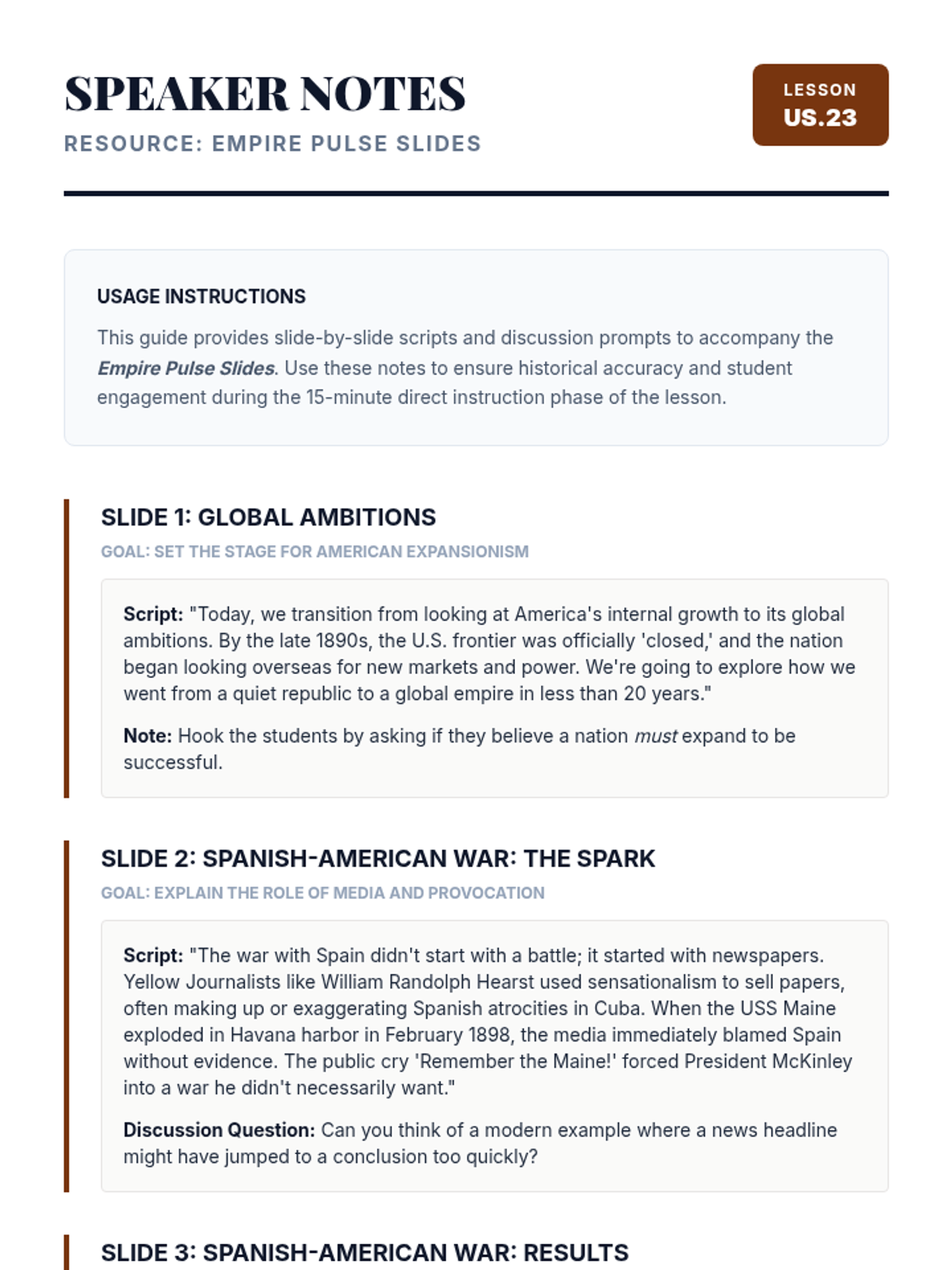
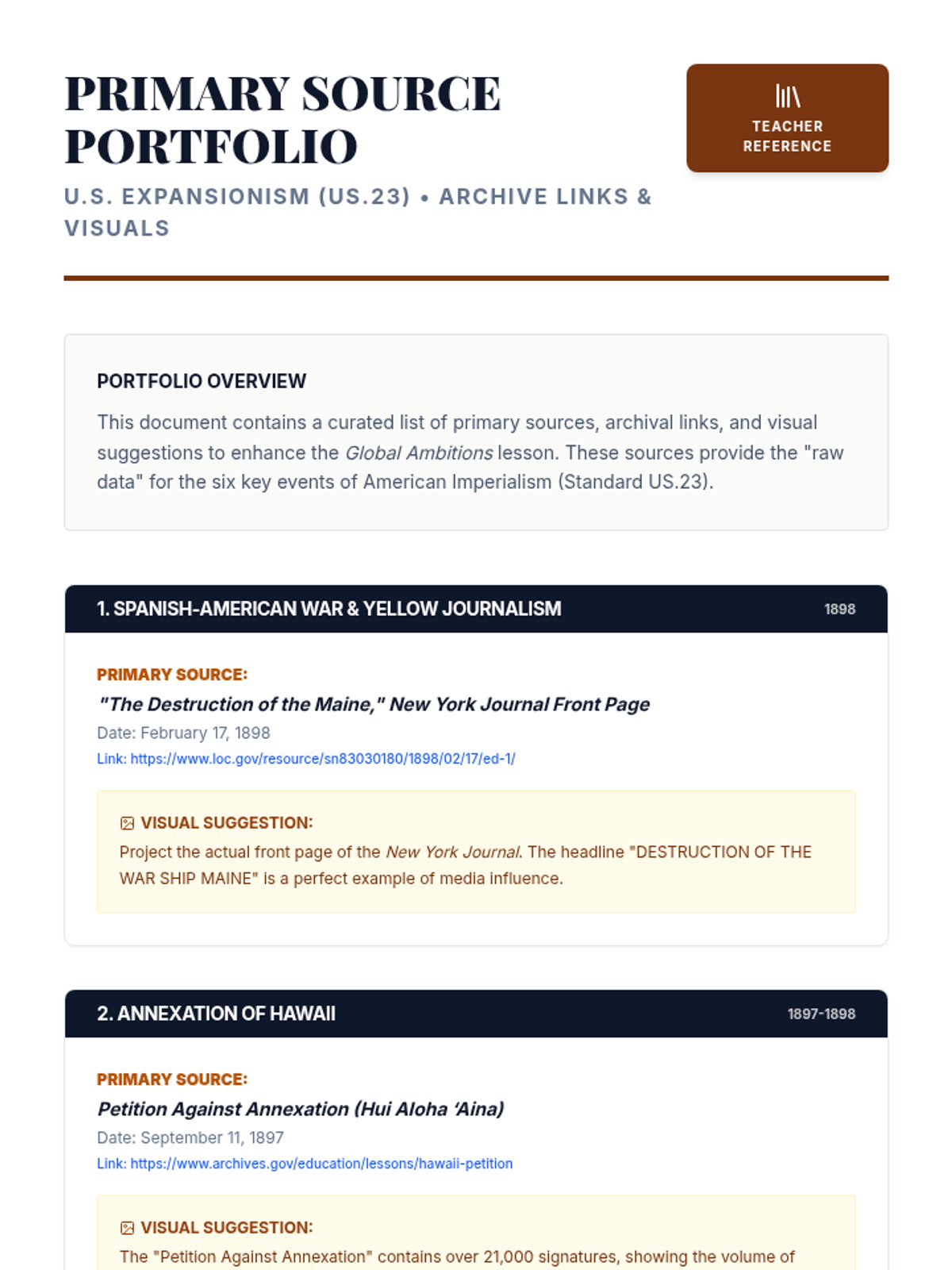
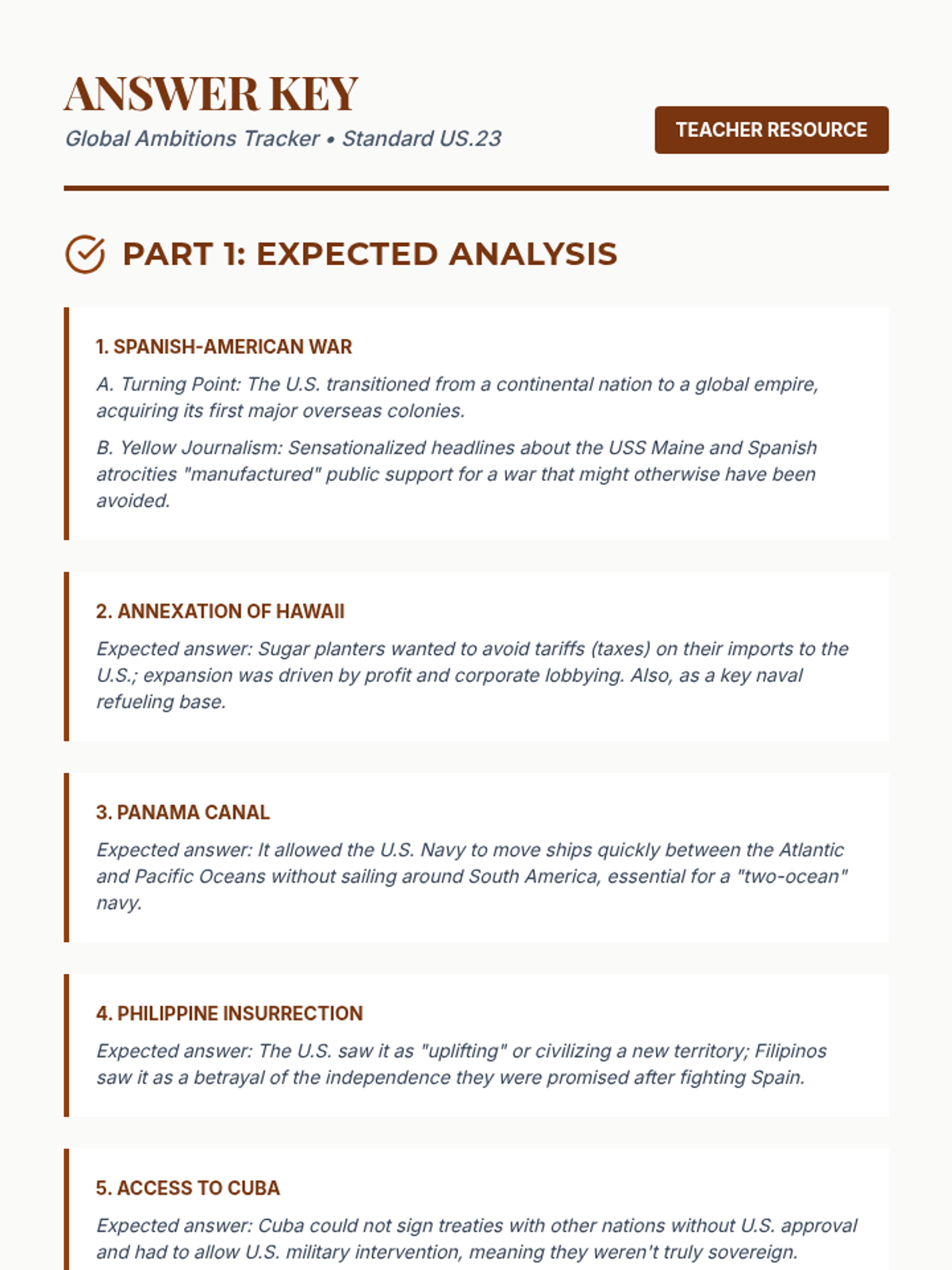
A comprehensive 40-minute exploration of late 19th and early 20th-century American expansionism, covering key events from the Spanish-American War to the Roosevelt Corollary through guided reading and cartographic analysis.
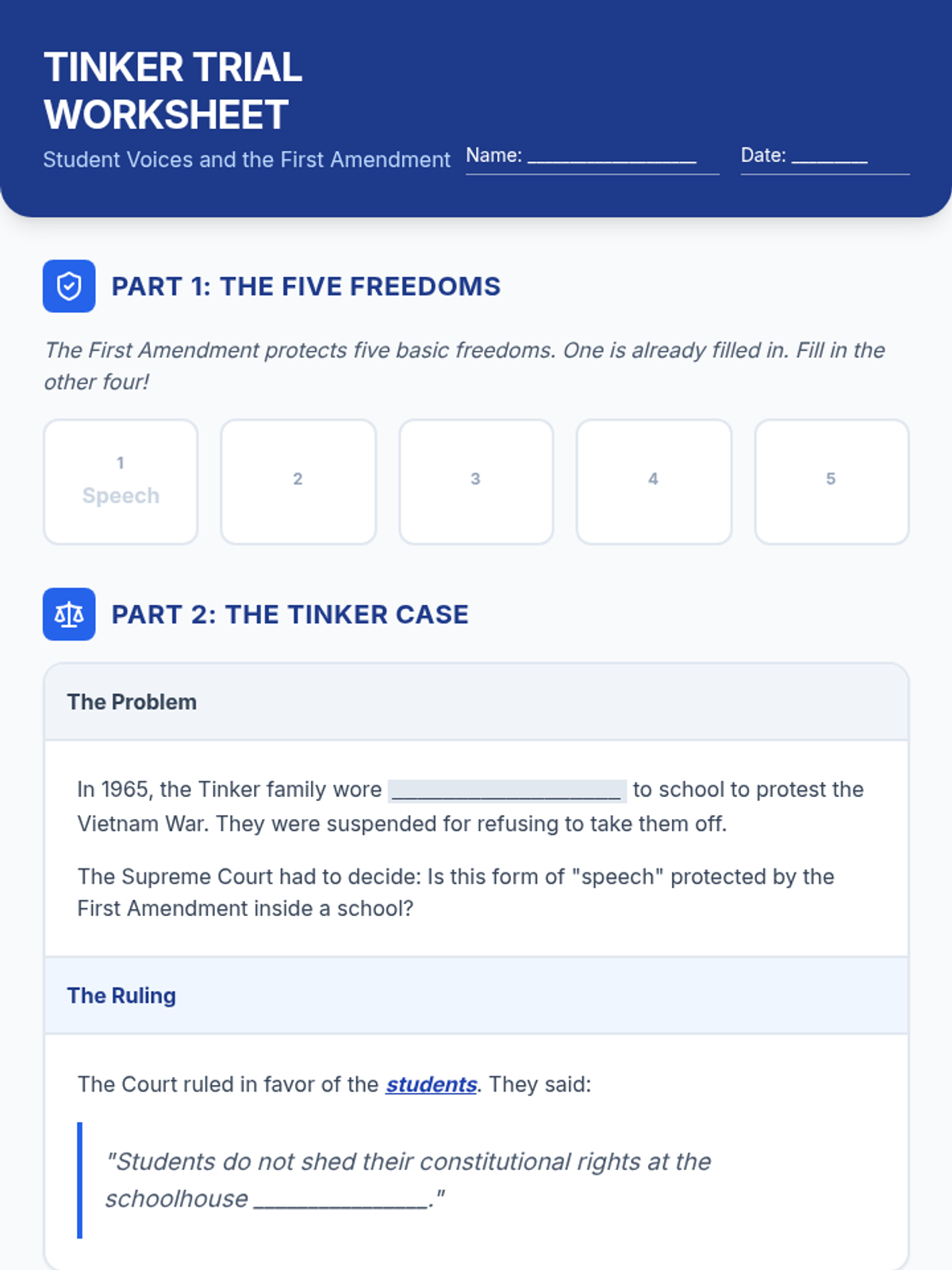
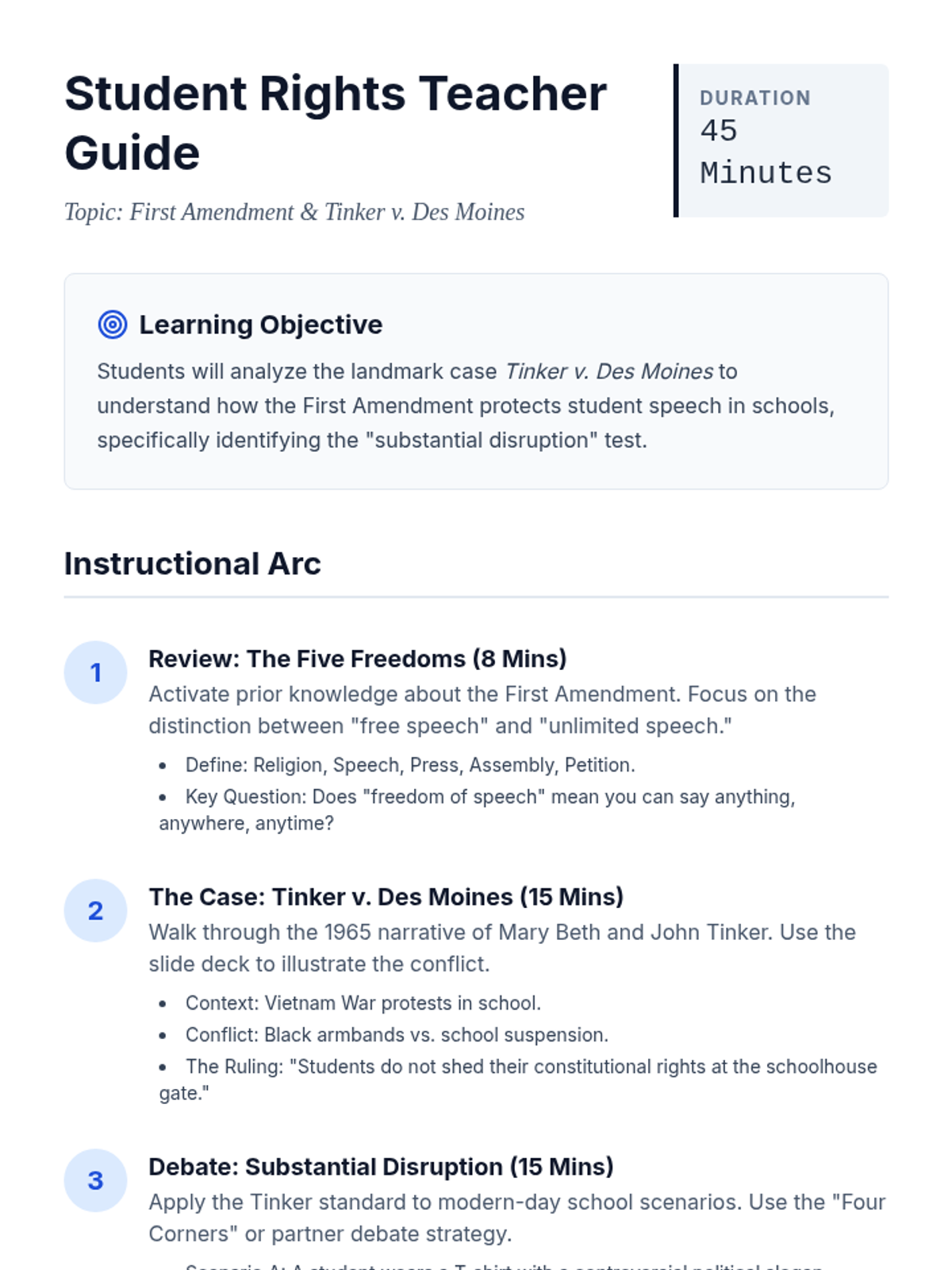
A 45-minute civics lesson exploring the First Amendment through the lens of the landmark Supreme Court case Tinker v. Des Moines, empowering students to understand their rights and responsibilities.
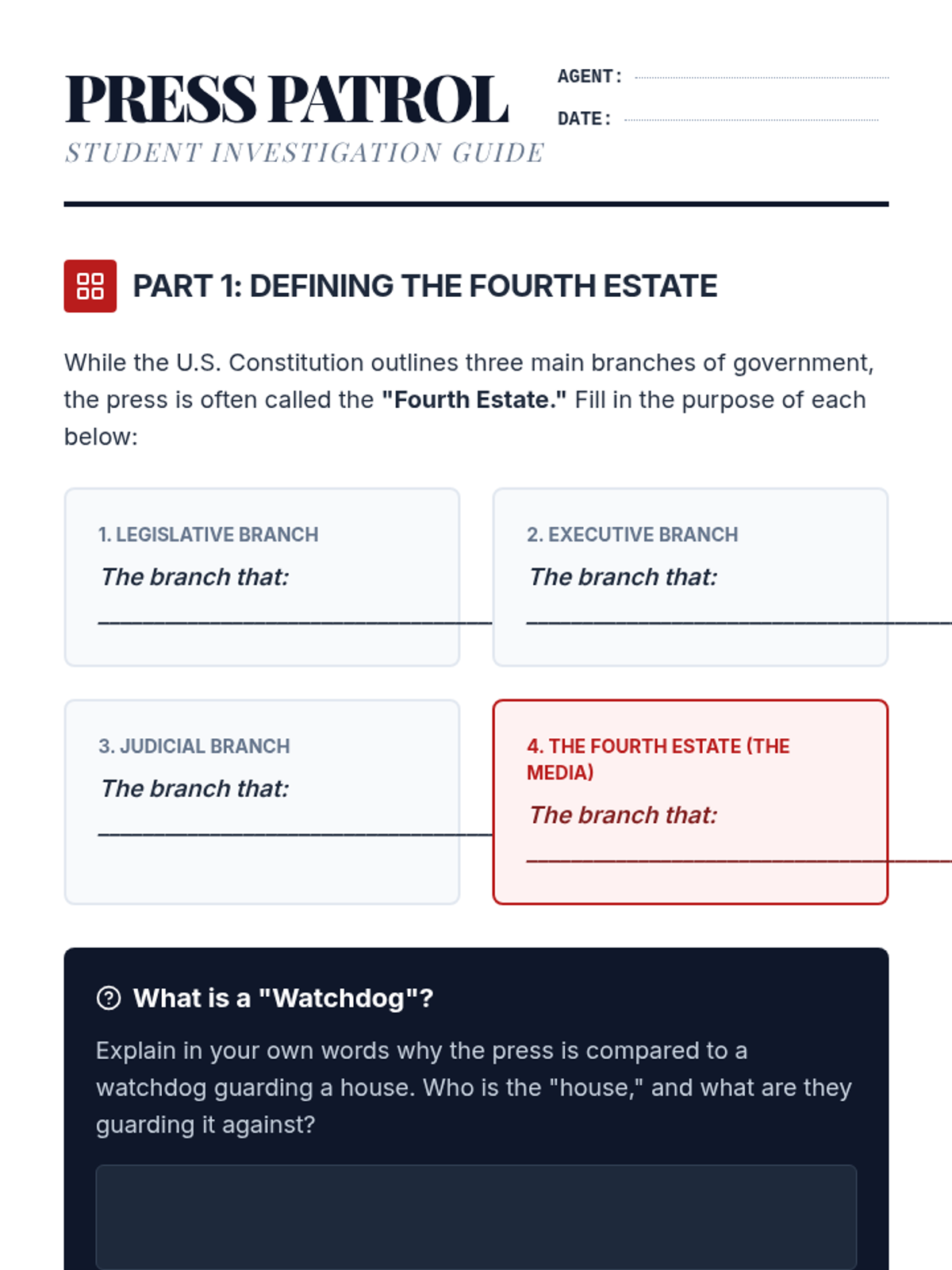
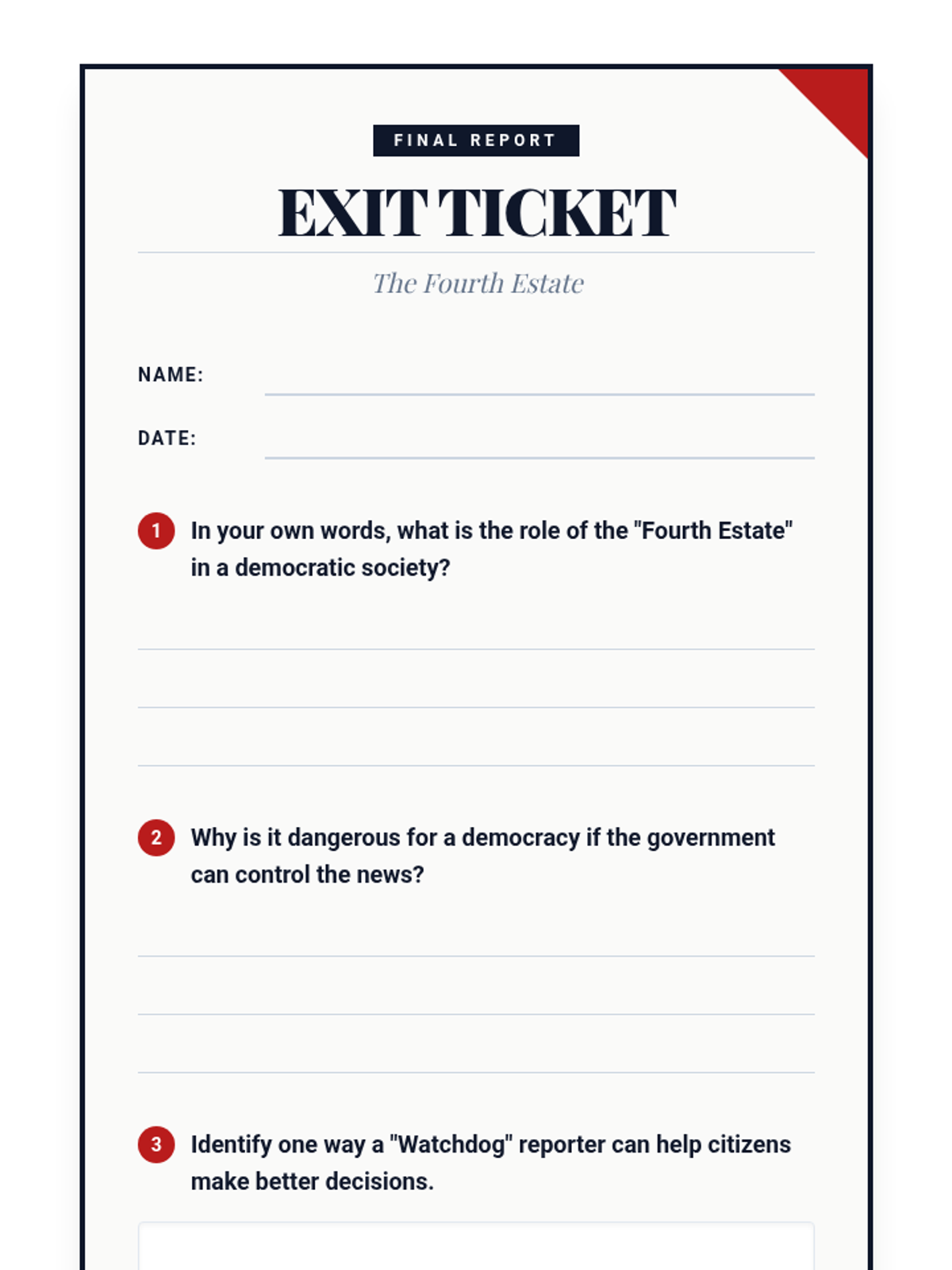
Students explore the vital role of a free press as the 'Fourth Estate' in a democracy, examining historical impact and current relevance through inquiry and analysis.
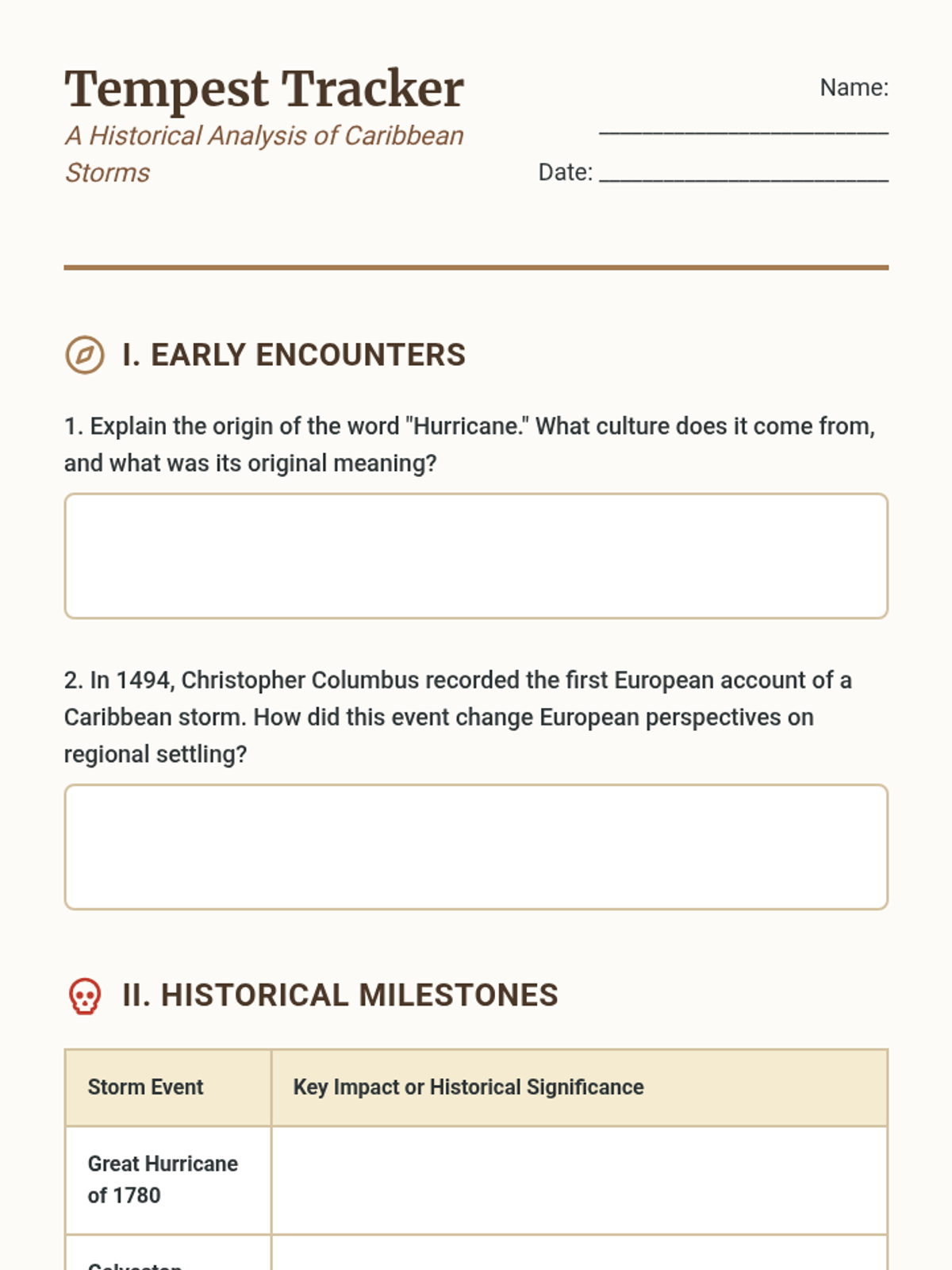
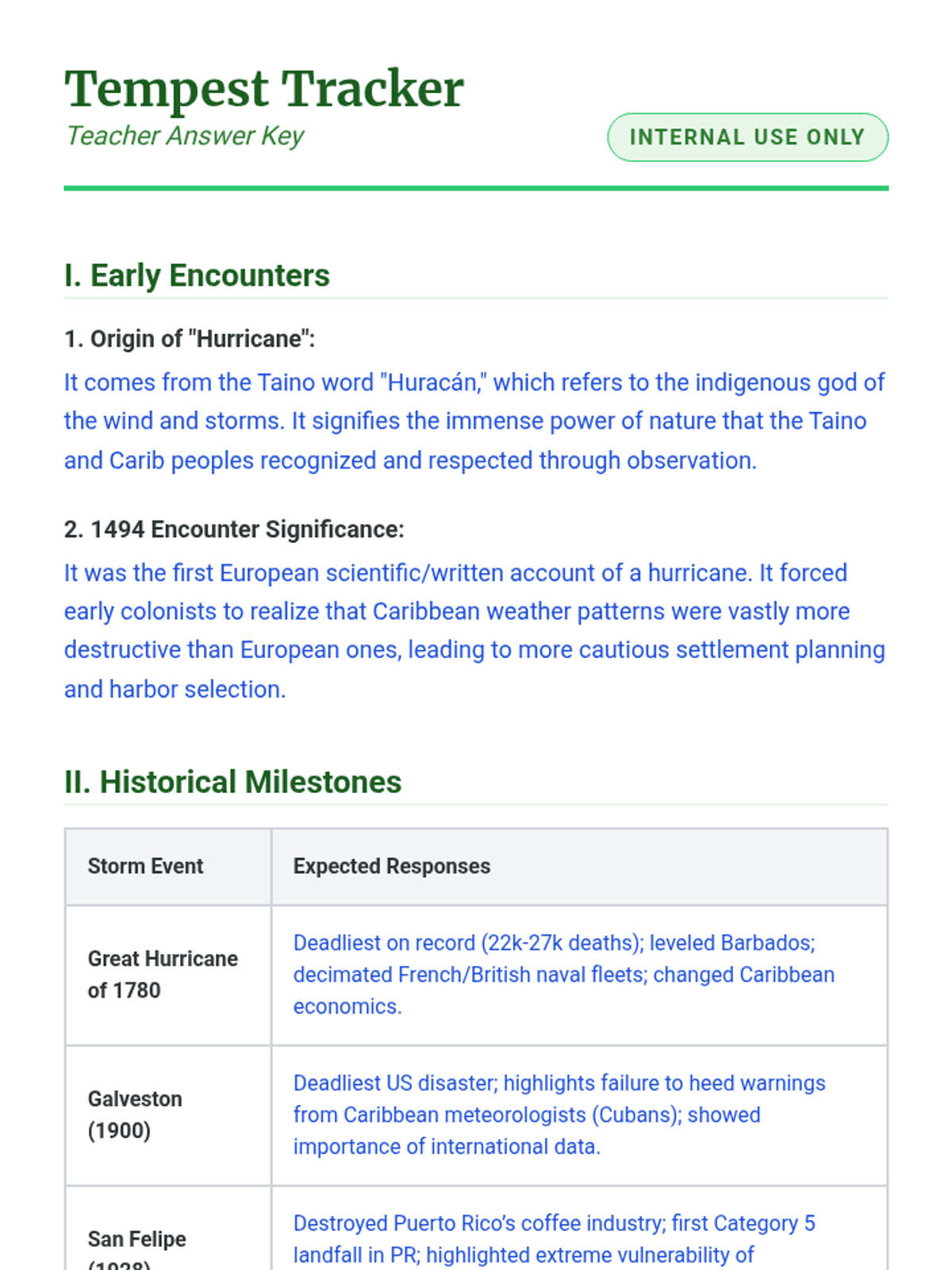
A historical exploration of tropical storms in the Caribbean, focusing on significant events, technological evolution, and the impact on regional history from the colonial era to the late 20th century.
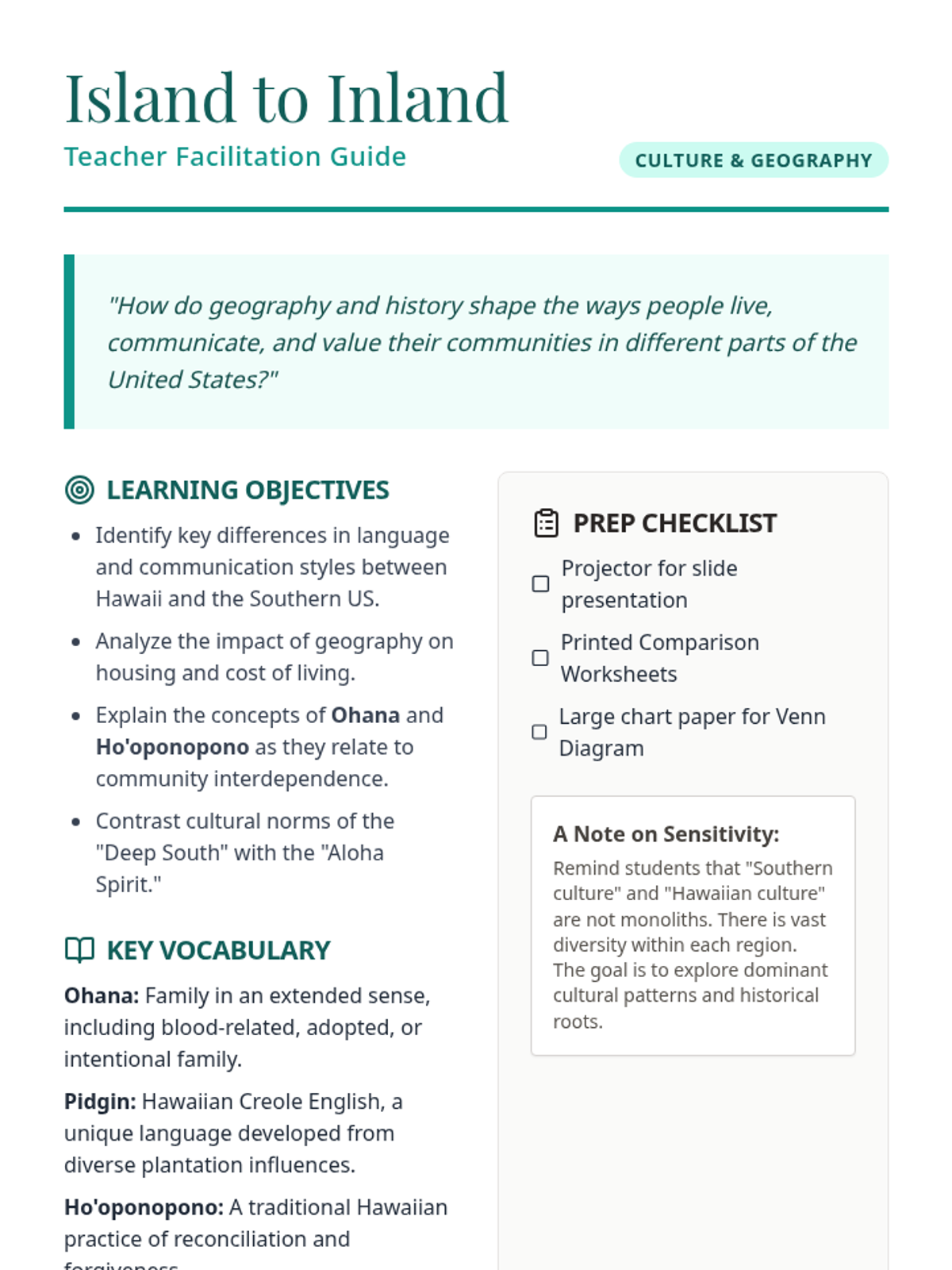
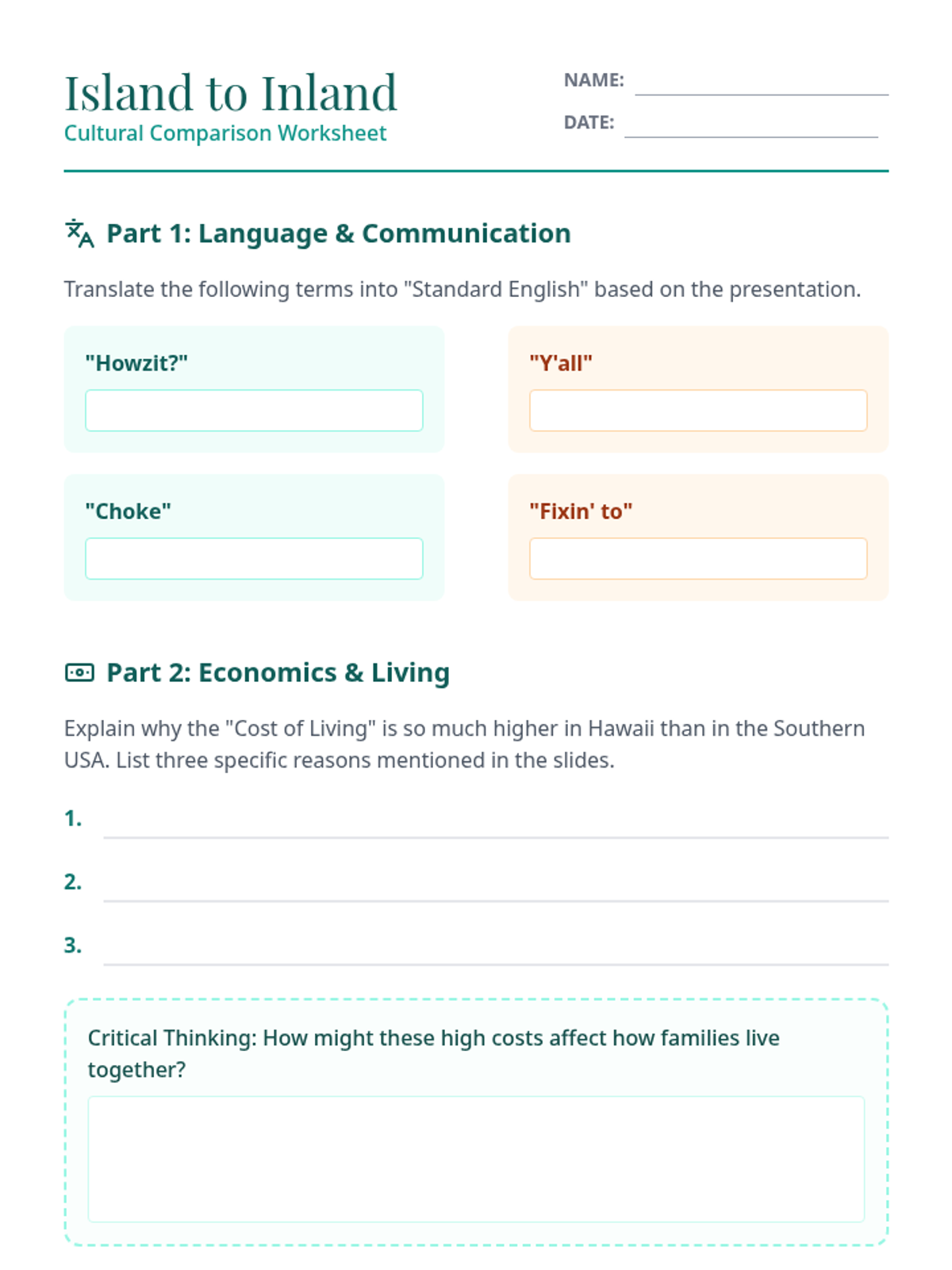
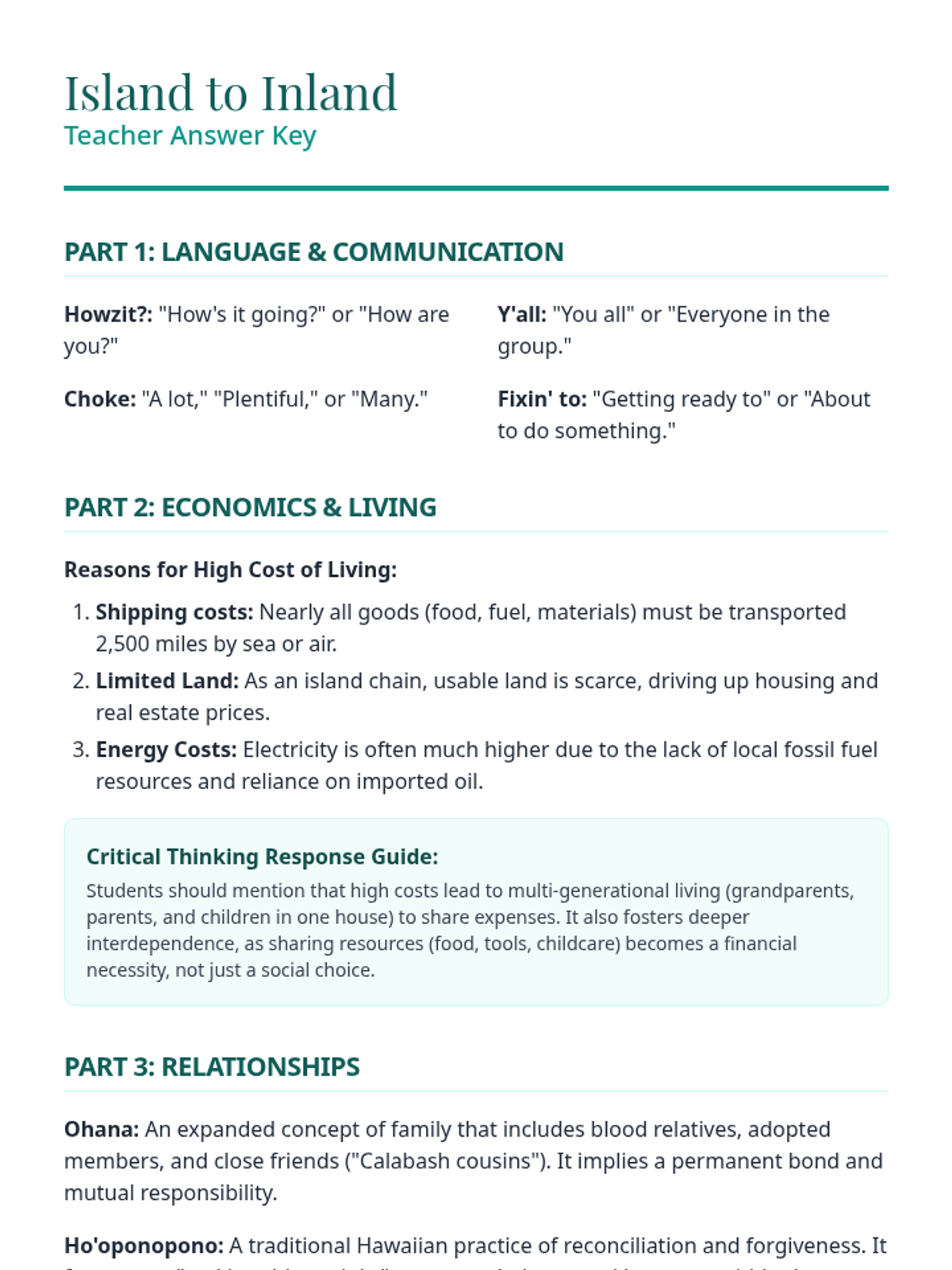
A comparative look at Hawaiian culture and Southern US culture, focusing on language, housing, economics, and deep-rooted family values.
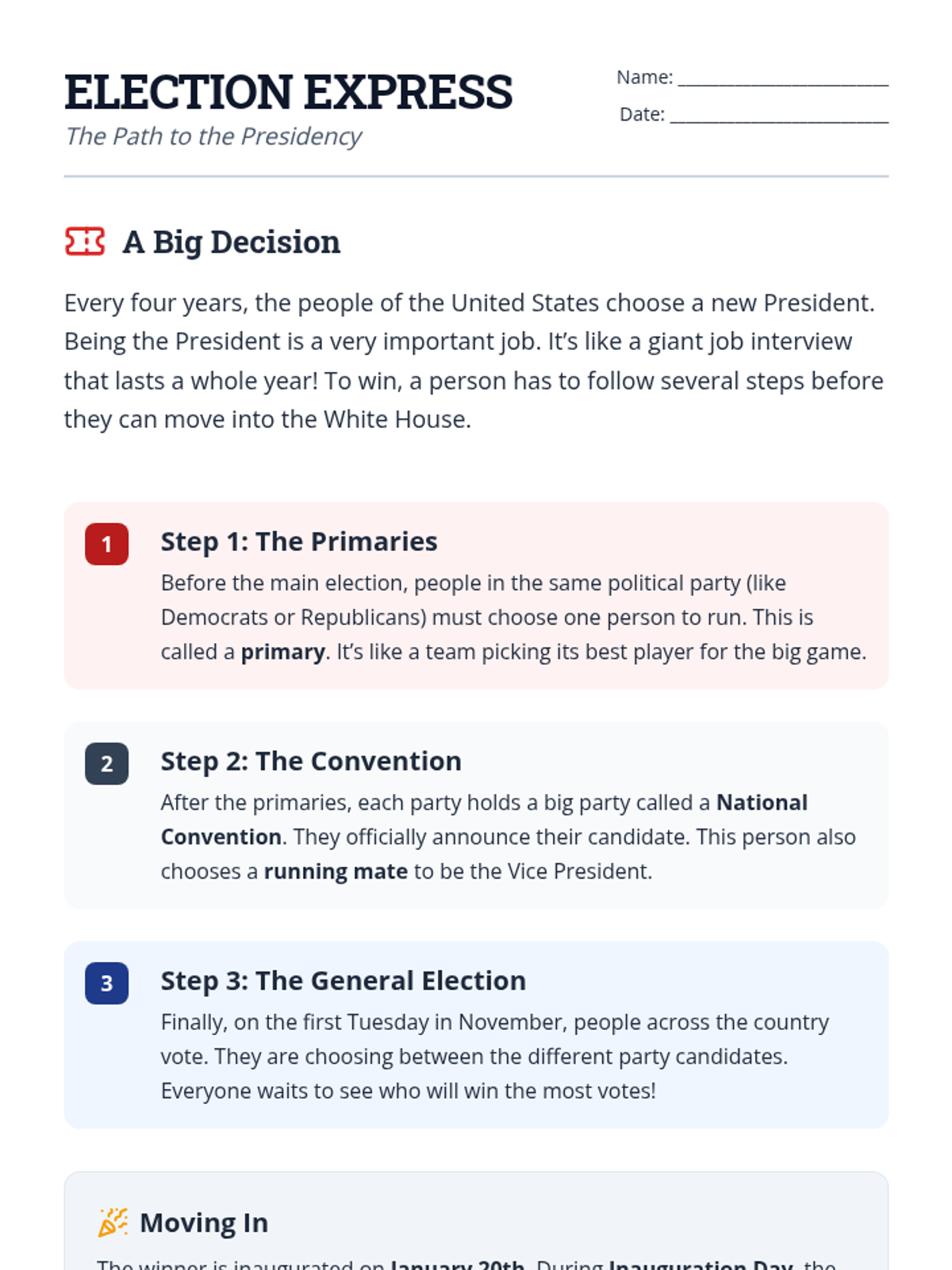
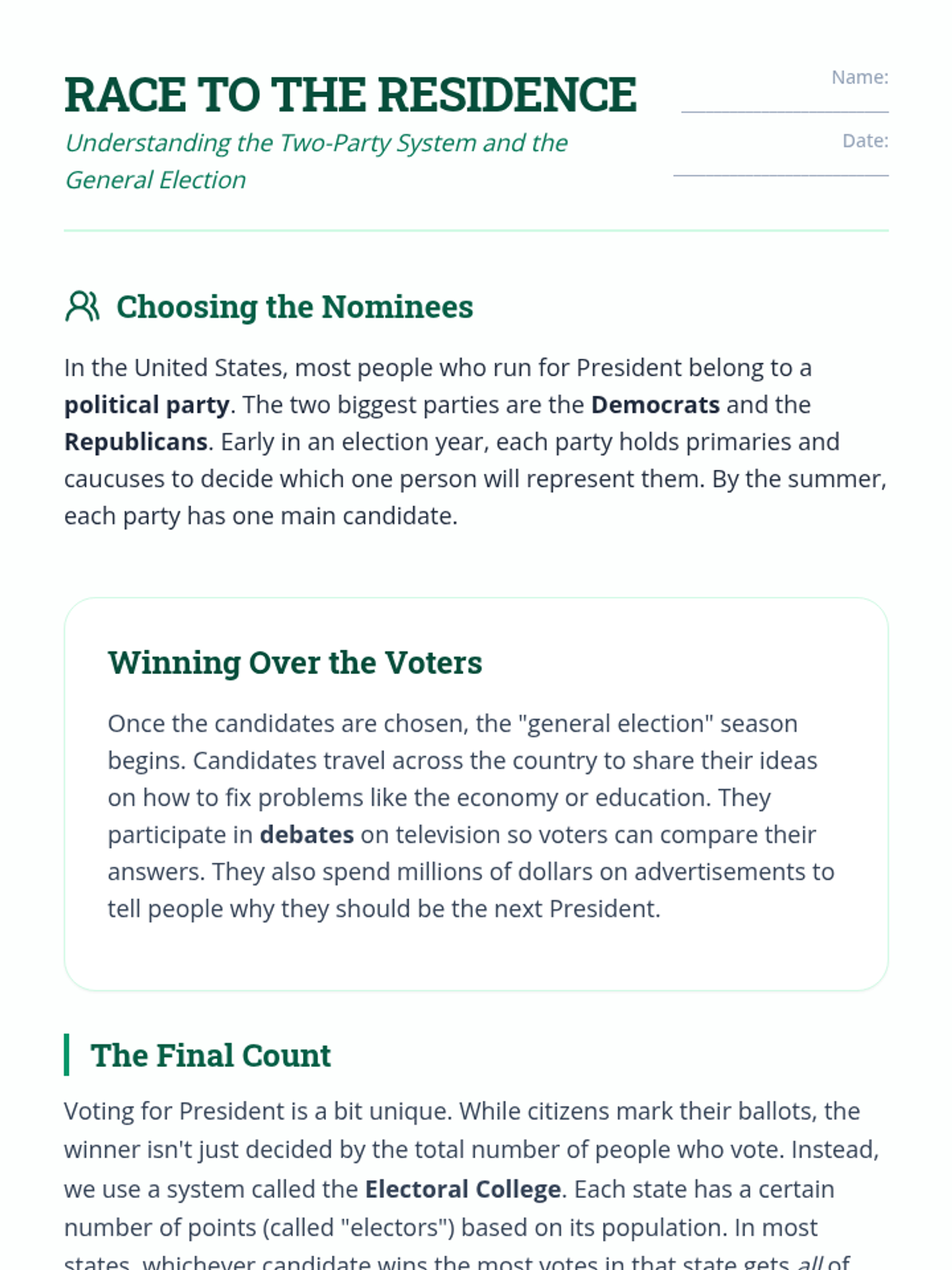
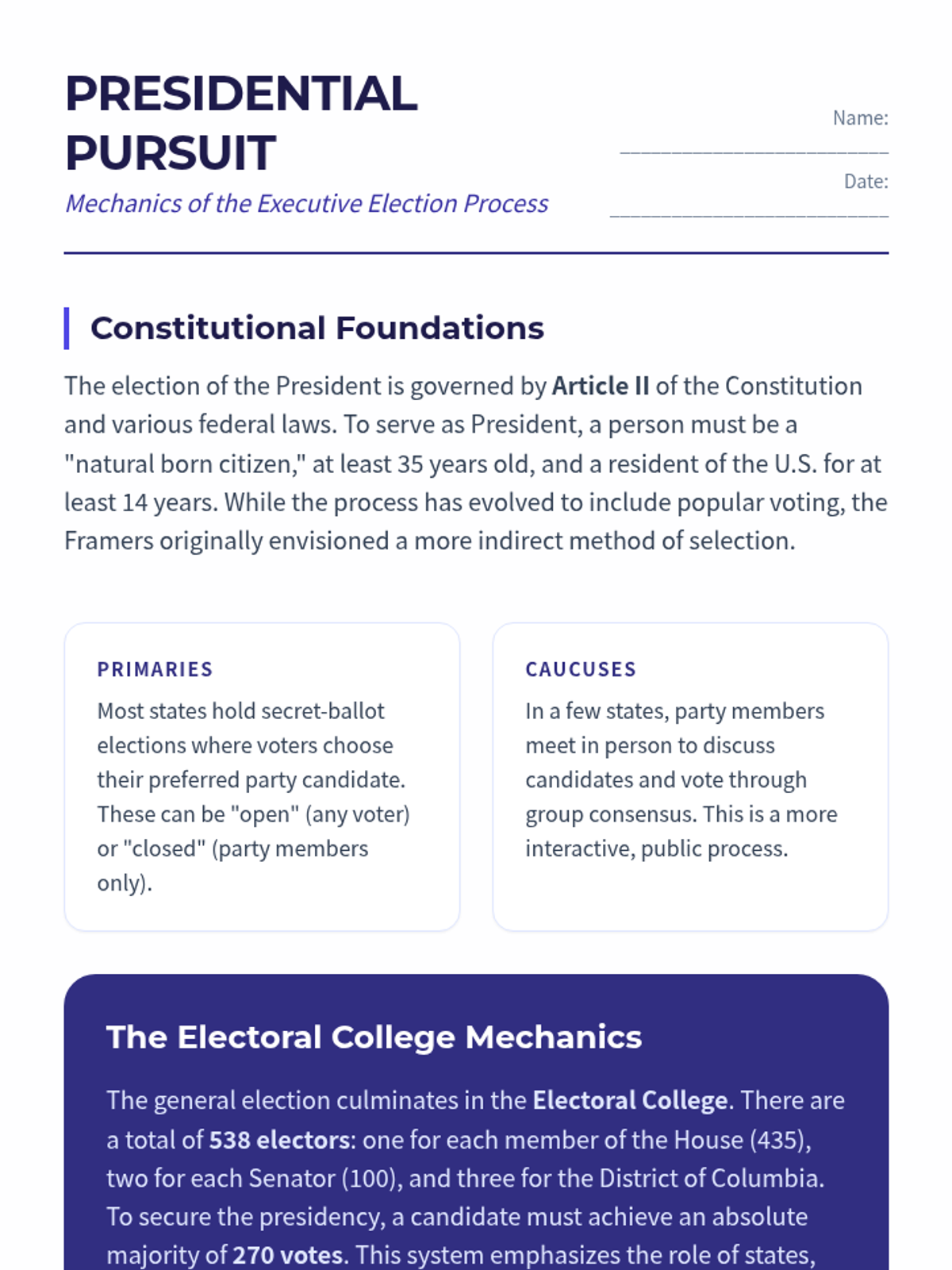
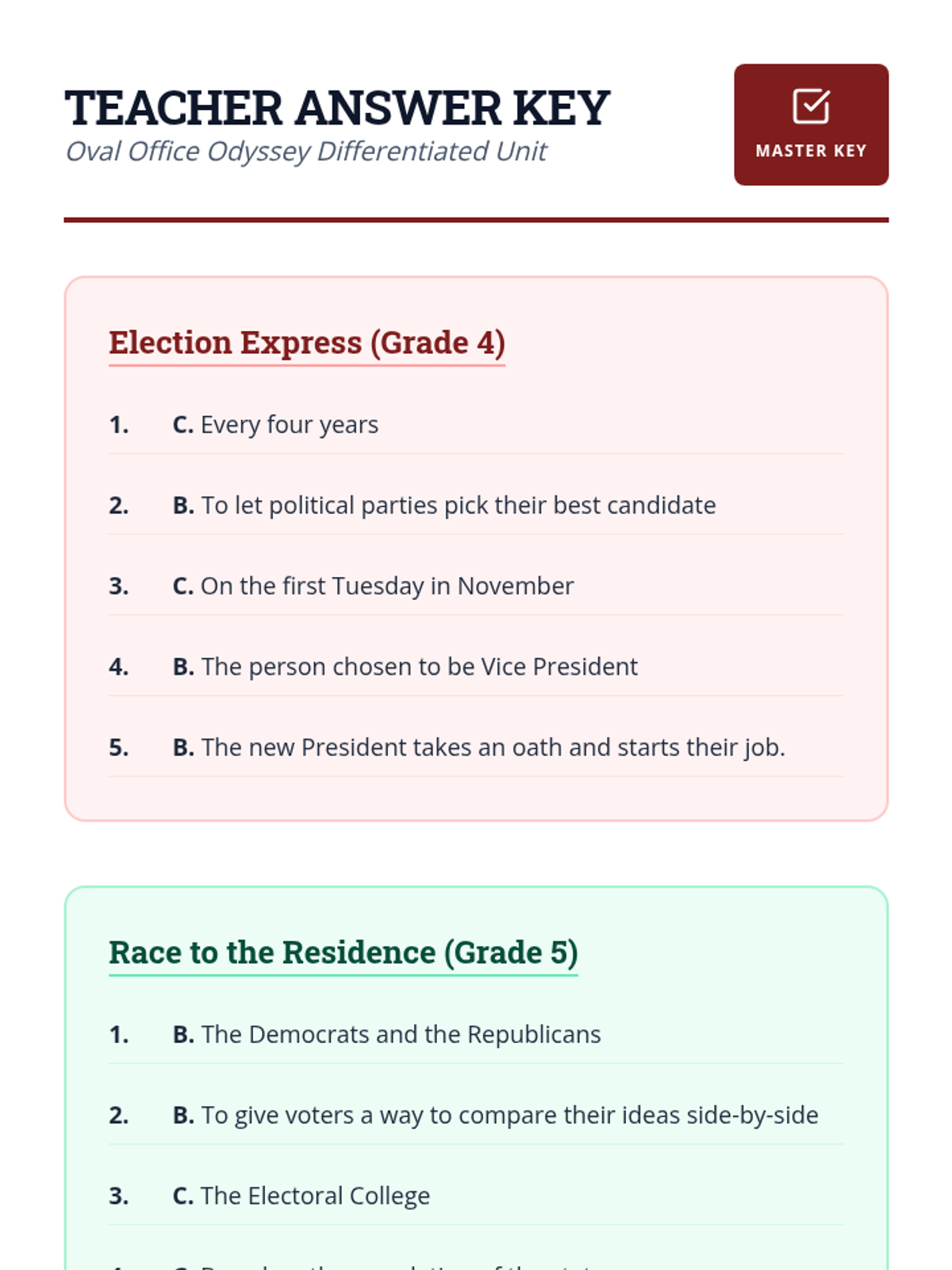
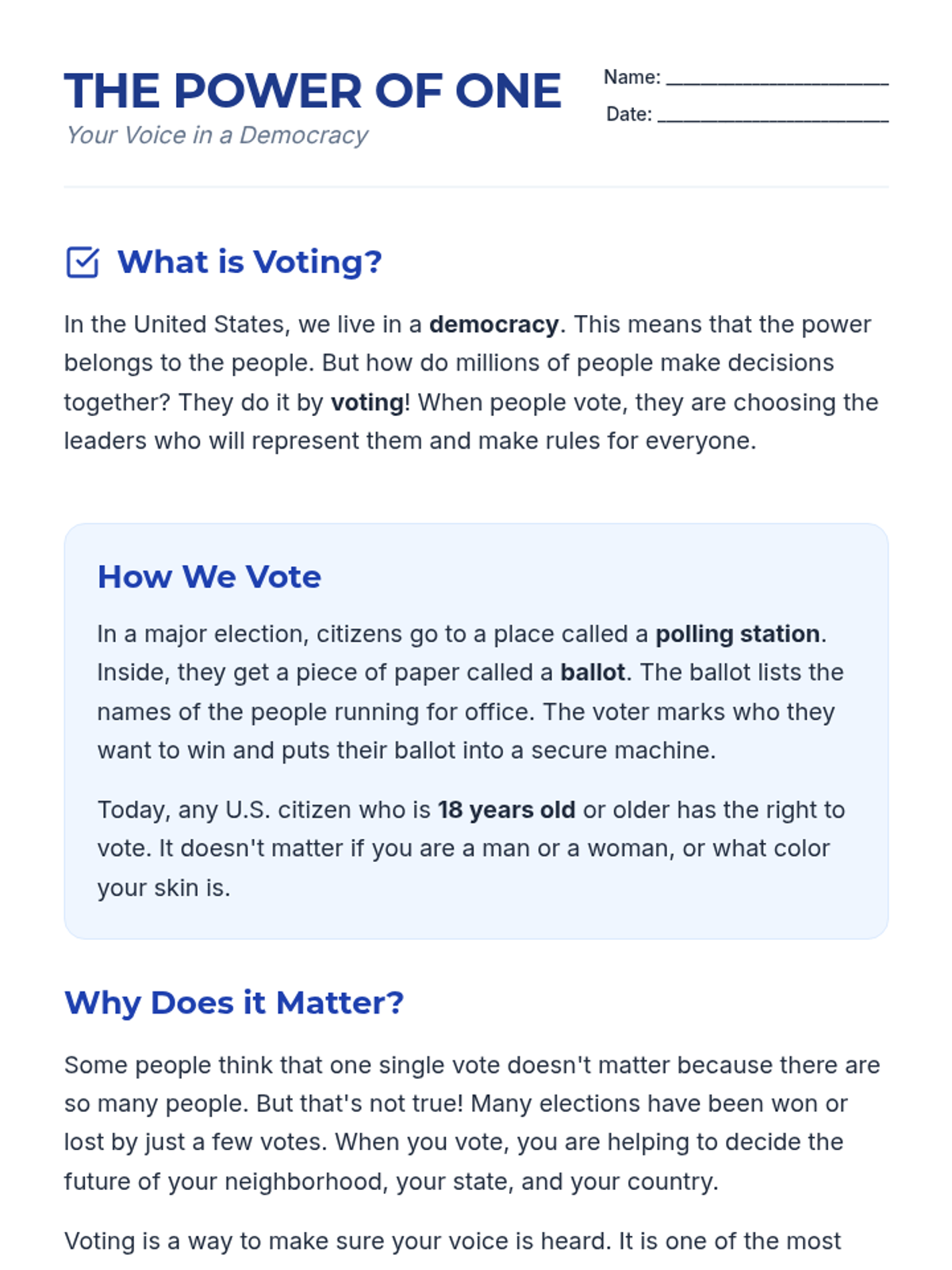
A comprehensive exploration of the United States presidential election process, from primary campaigns and national conventions to the Electoral College and Inauguration Day.
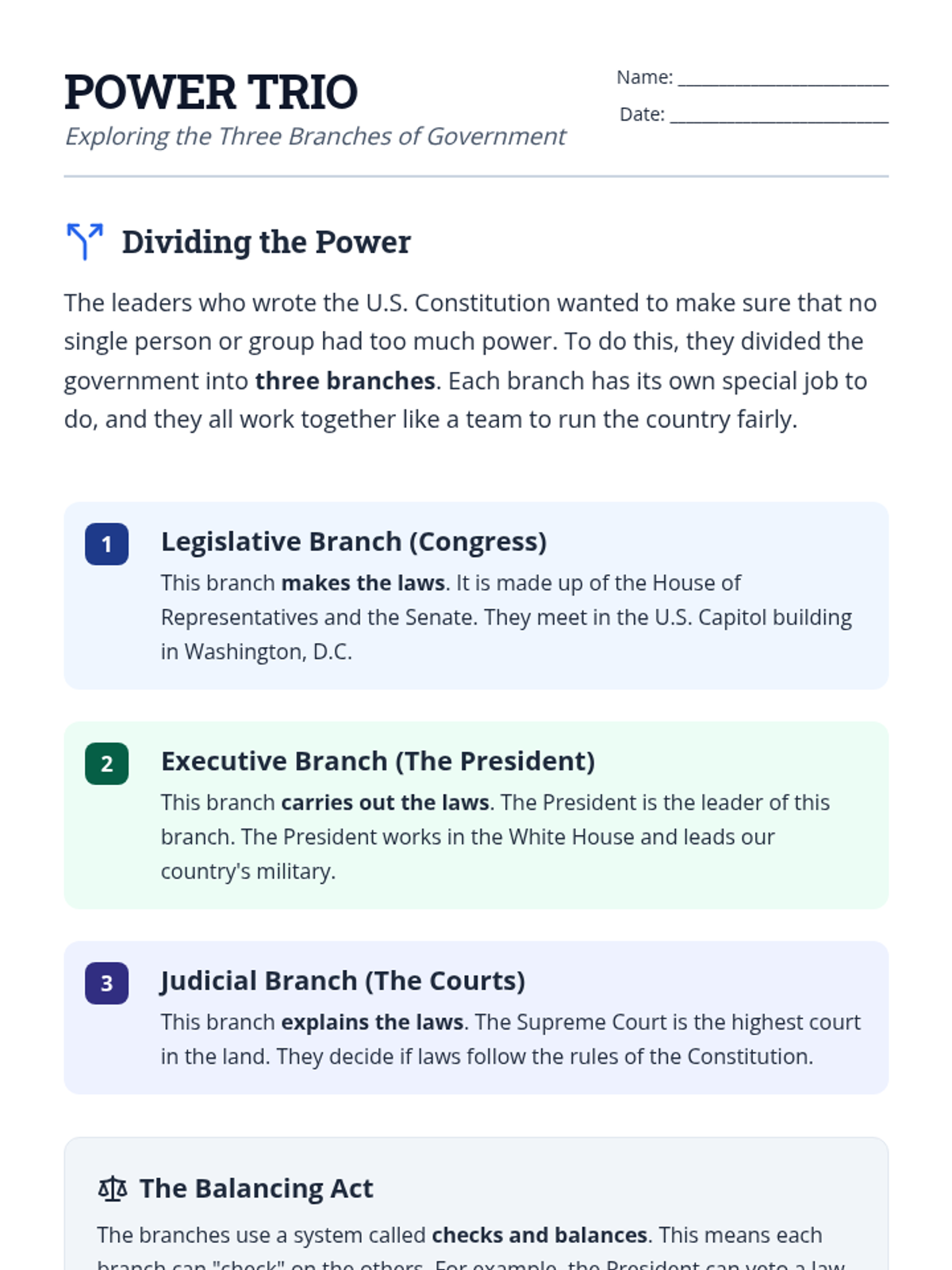
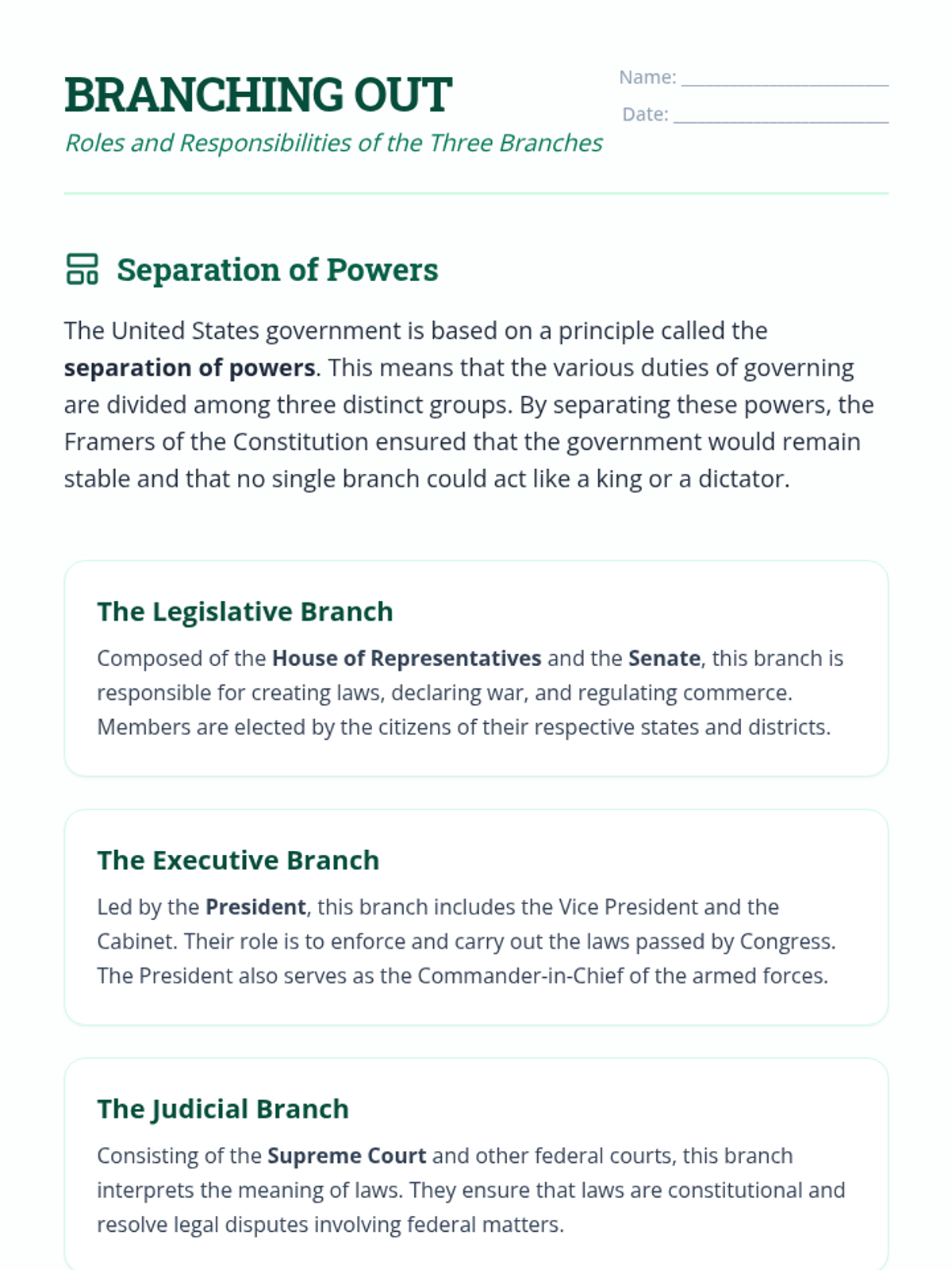
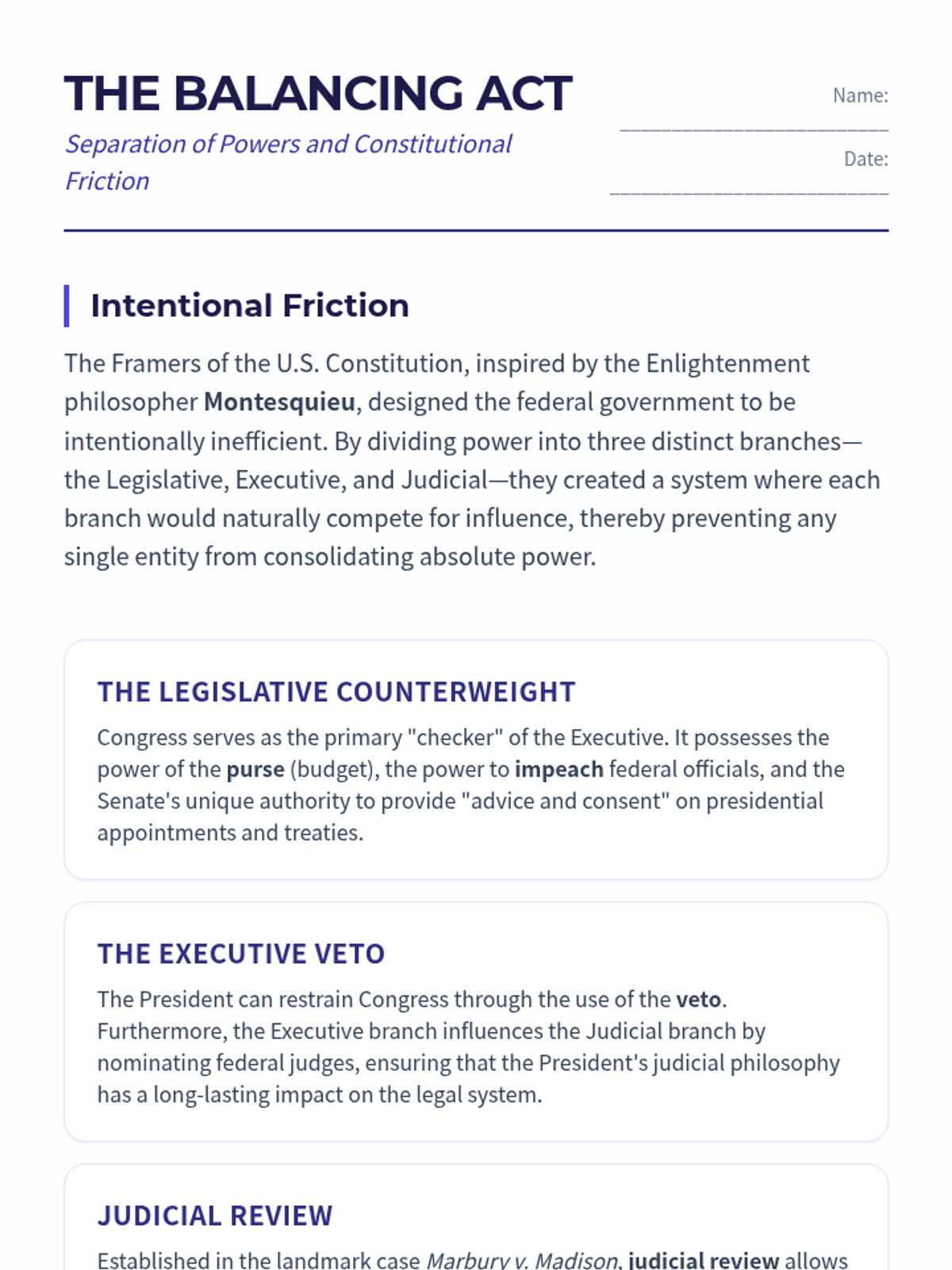
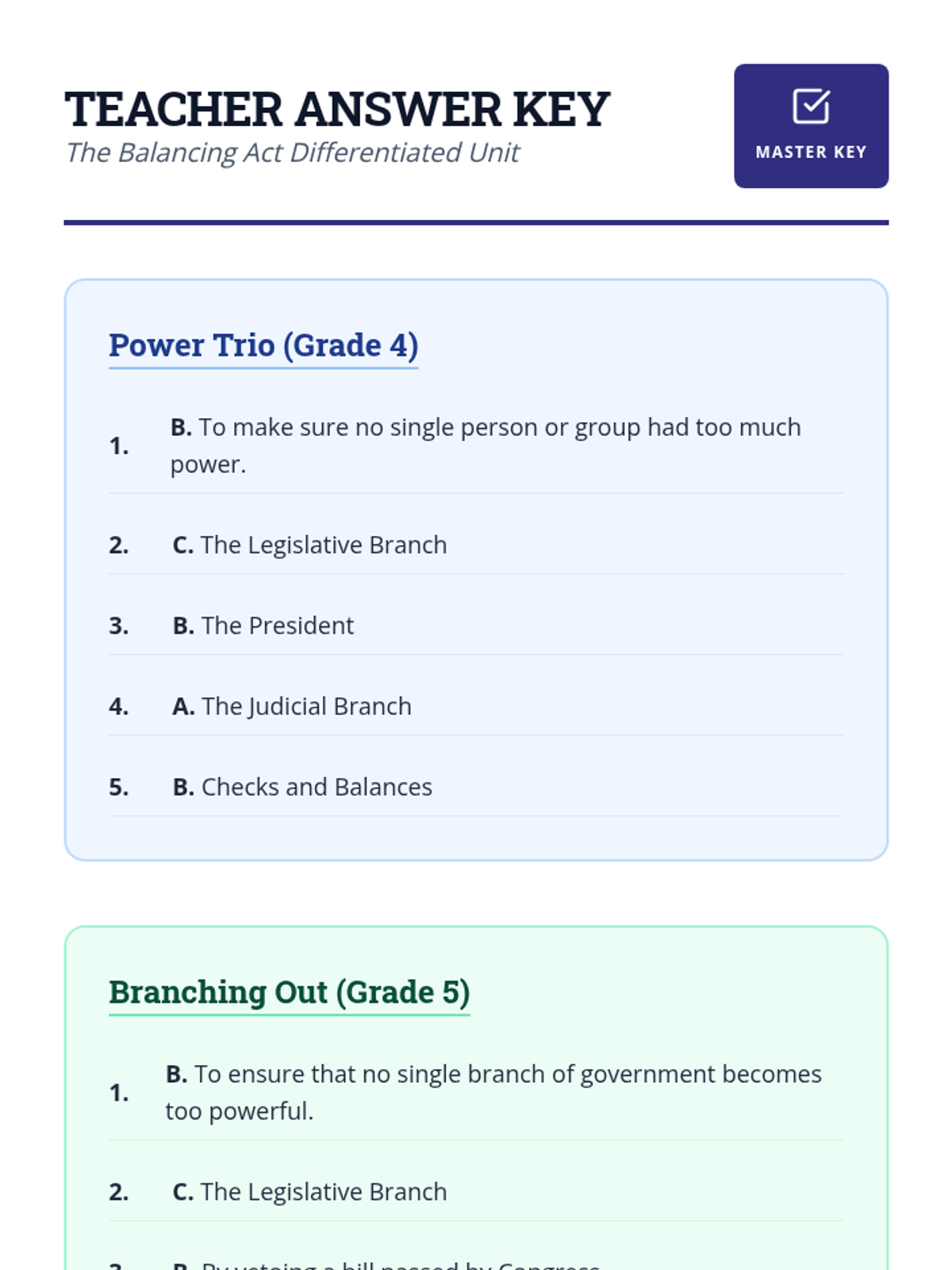
An exploration of the three branches of the United States government—Legislative, Executive, and Judicial—and the system of checks and balances that ensures no single branch becomes too powerful.
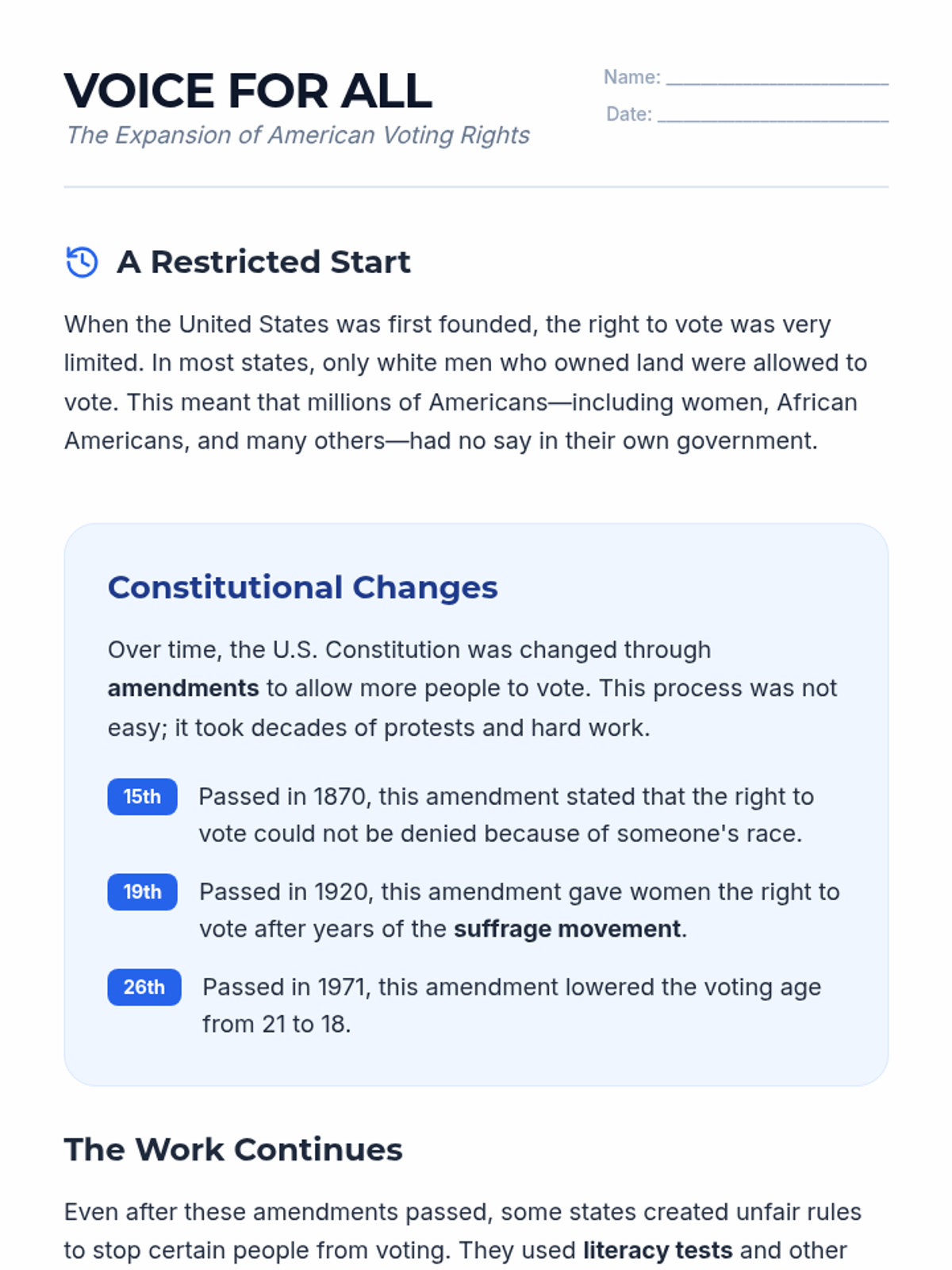
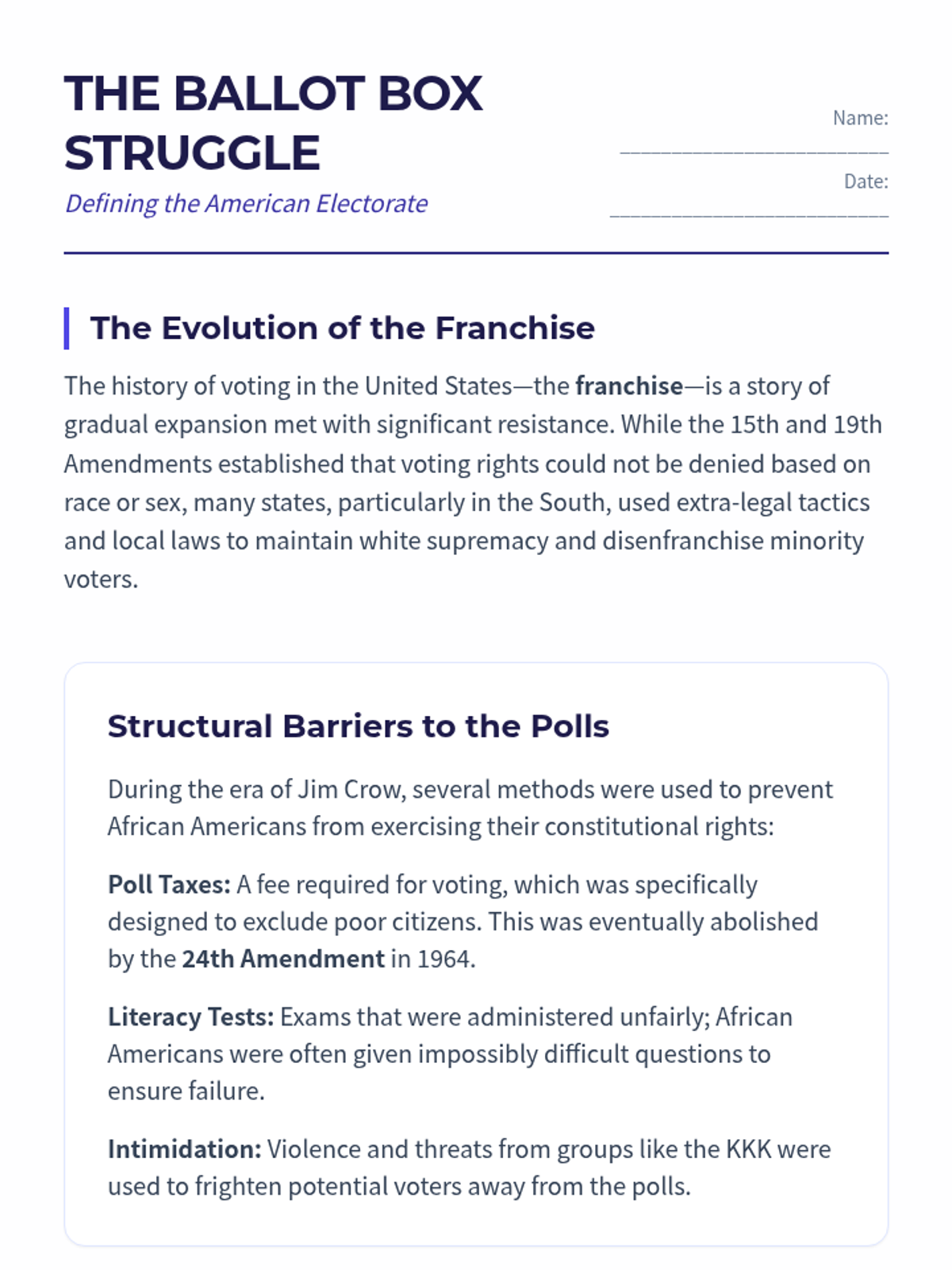
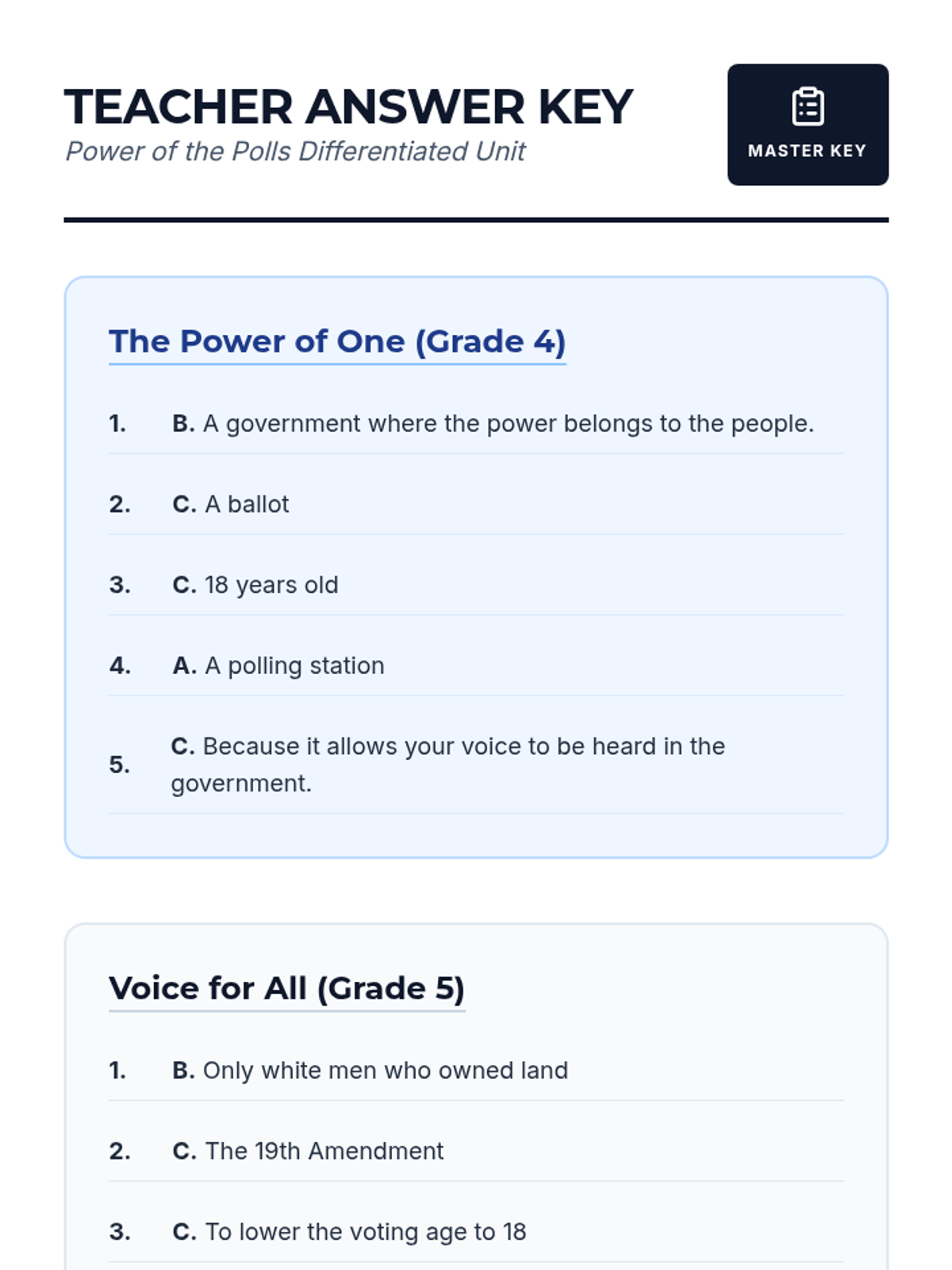
An exploration of voting rights in the United States, tracing the expansion of the franchise through constitutional amendments and the Civil Rights Movement.
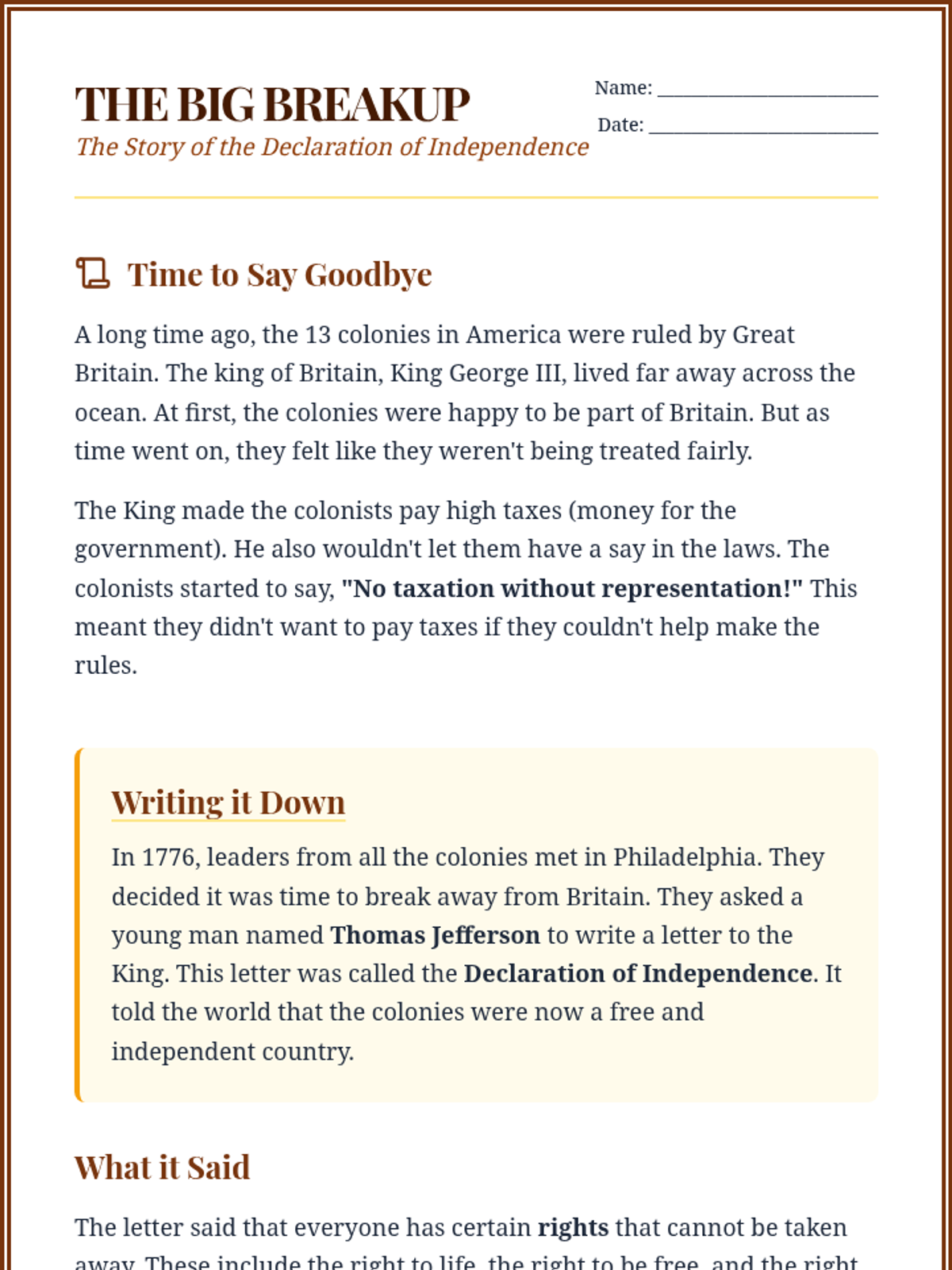
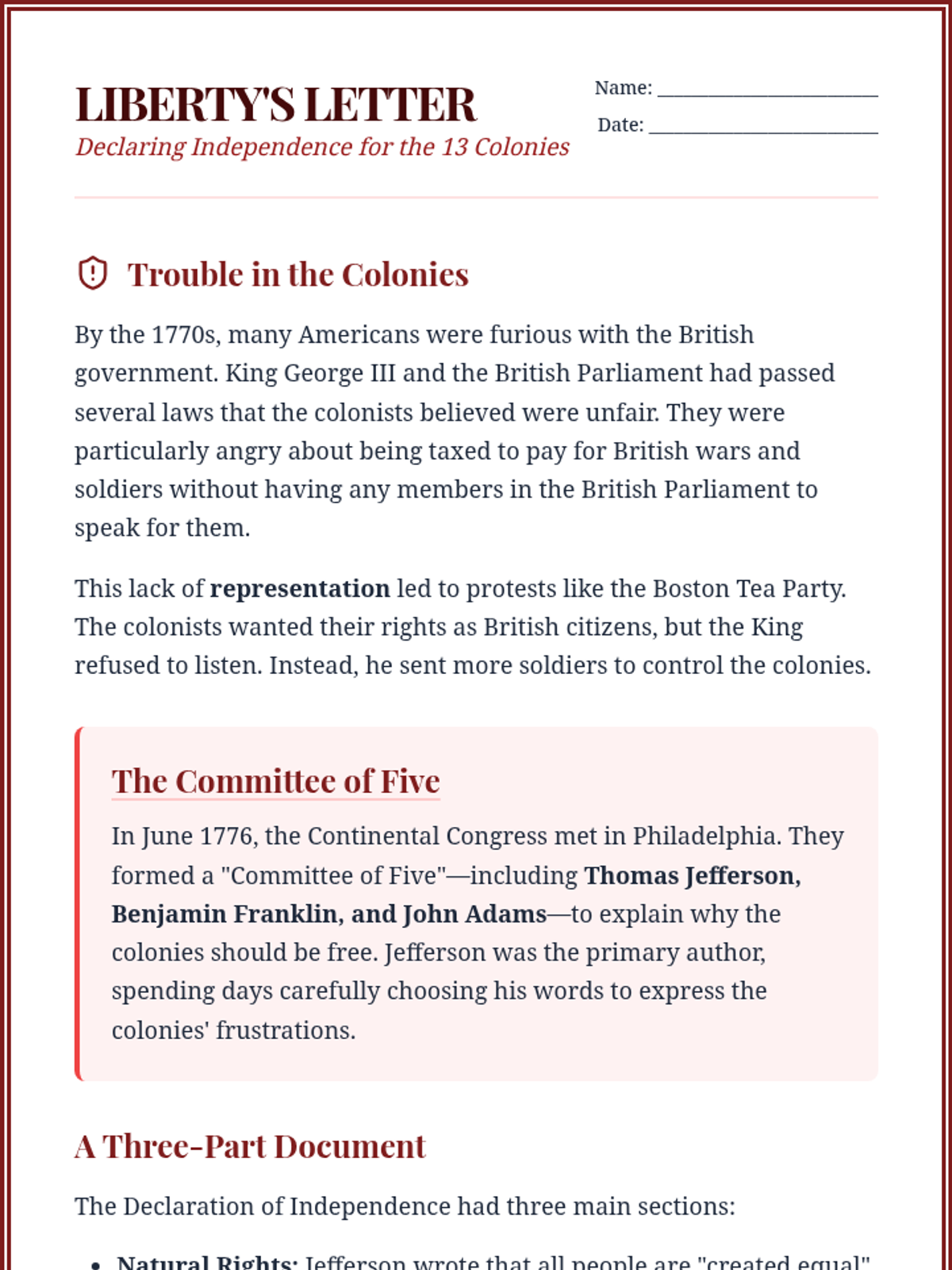
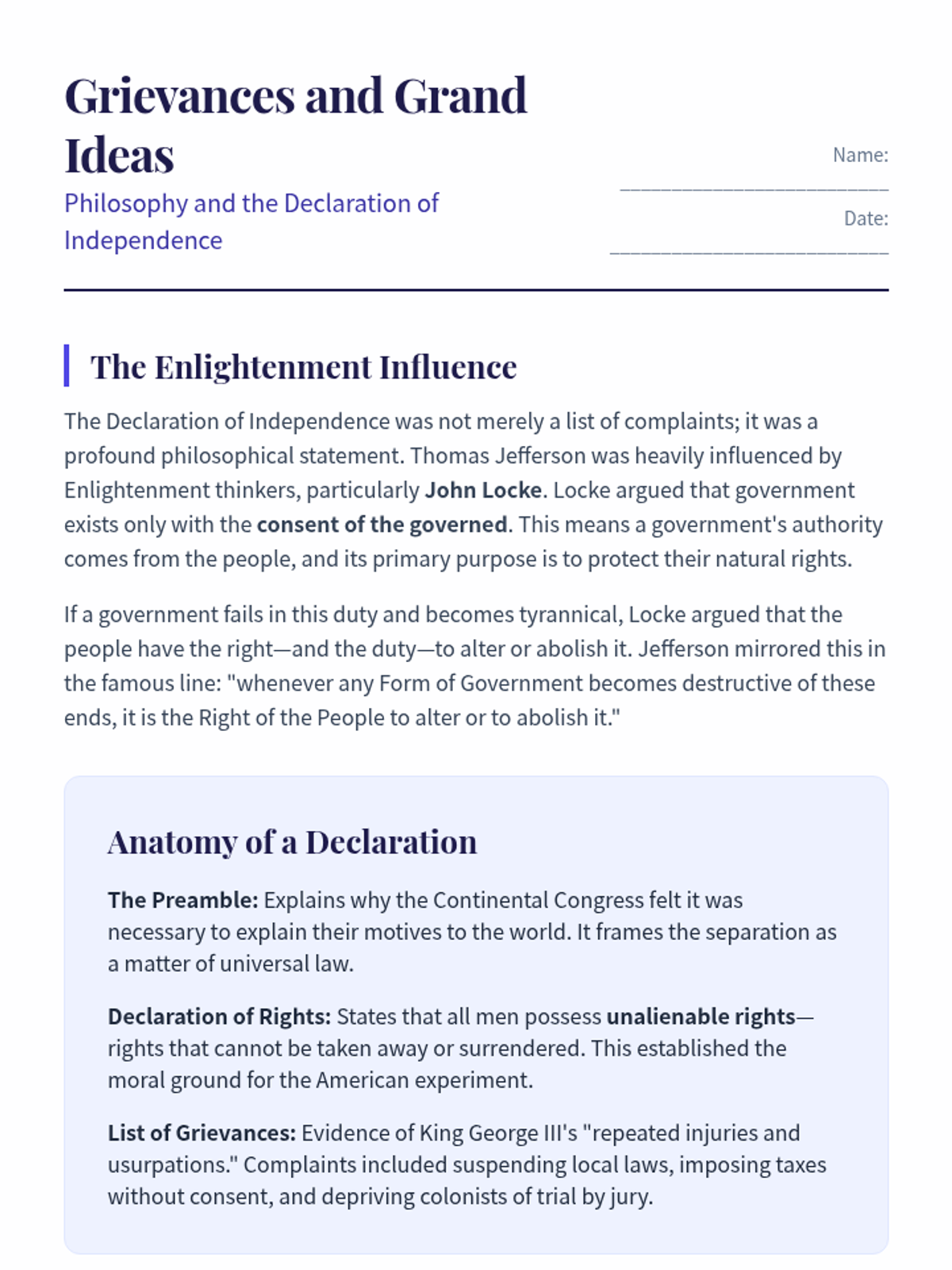
An exploration of the Declaration of Independence, its historical context, key grievances against King George III, and the fundamental principles of American democracy.
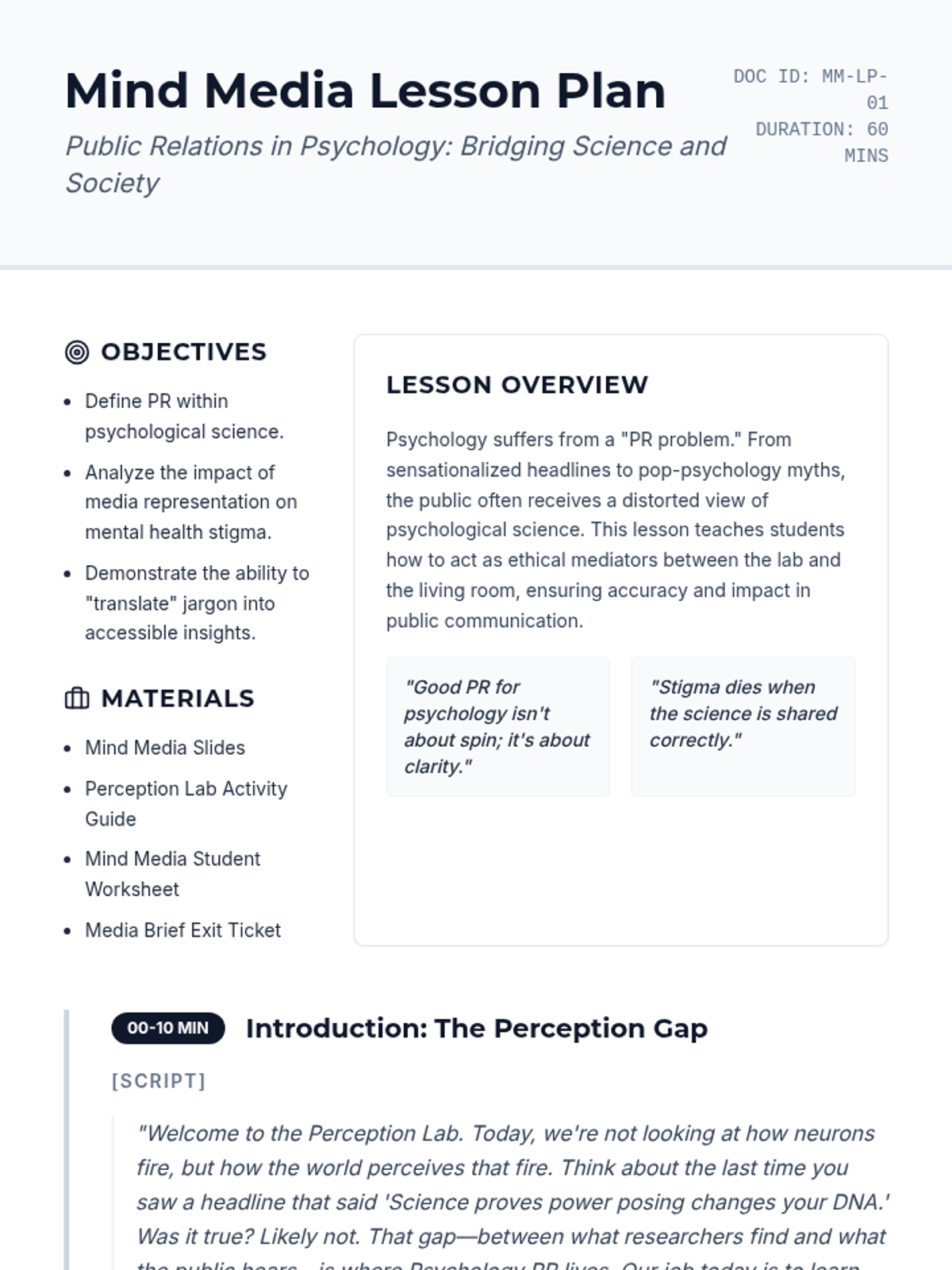
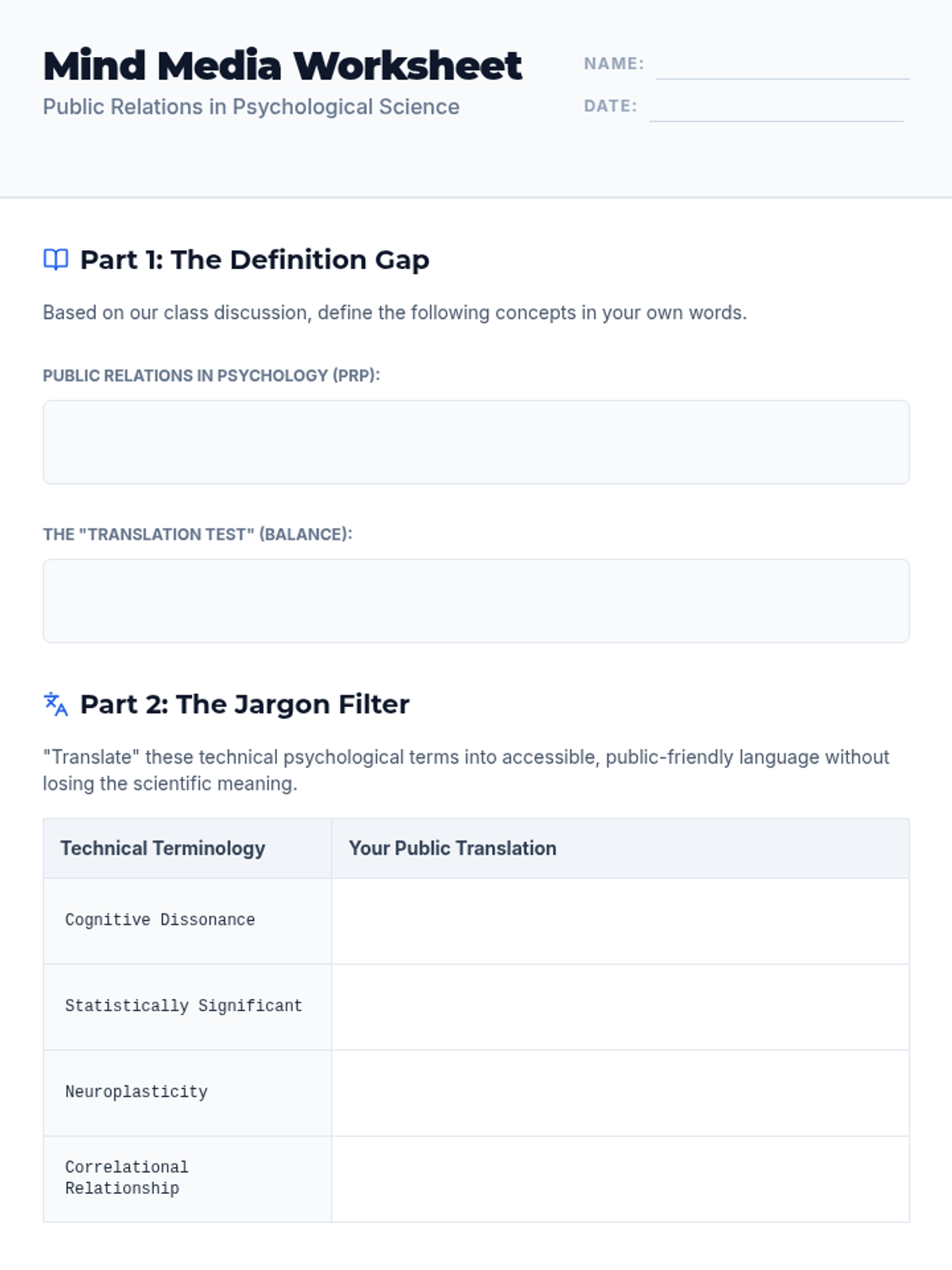
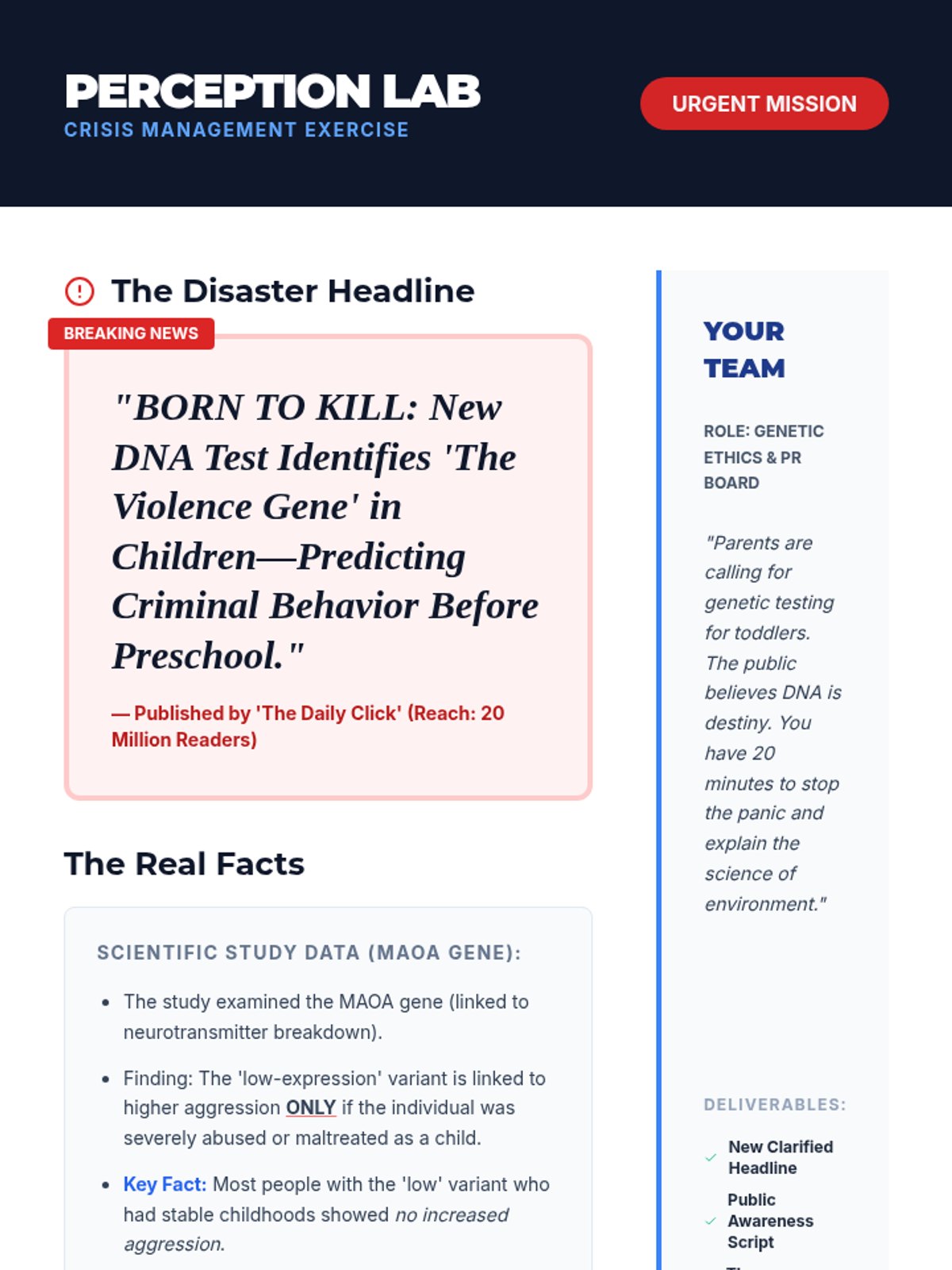
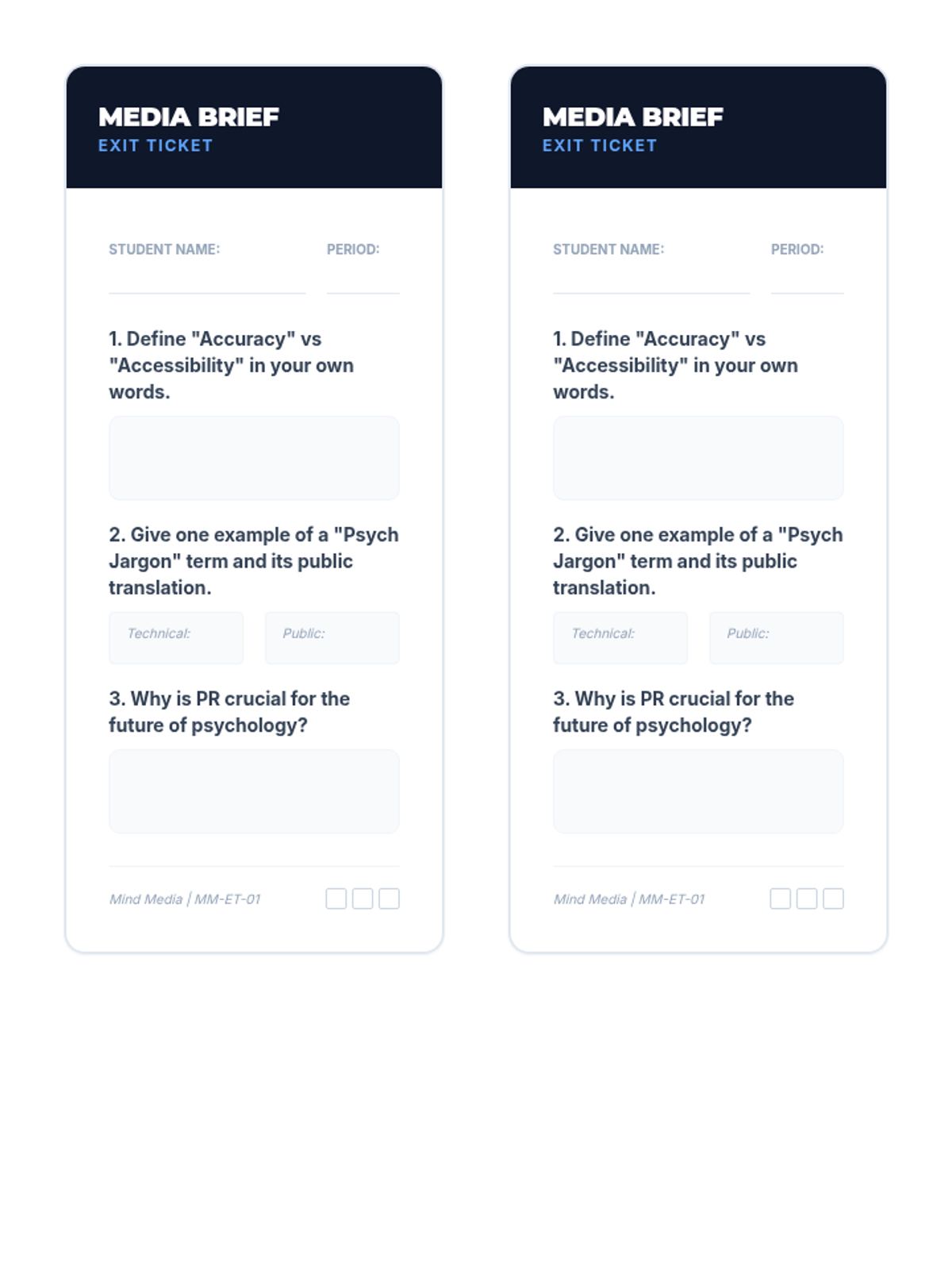
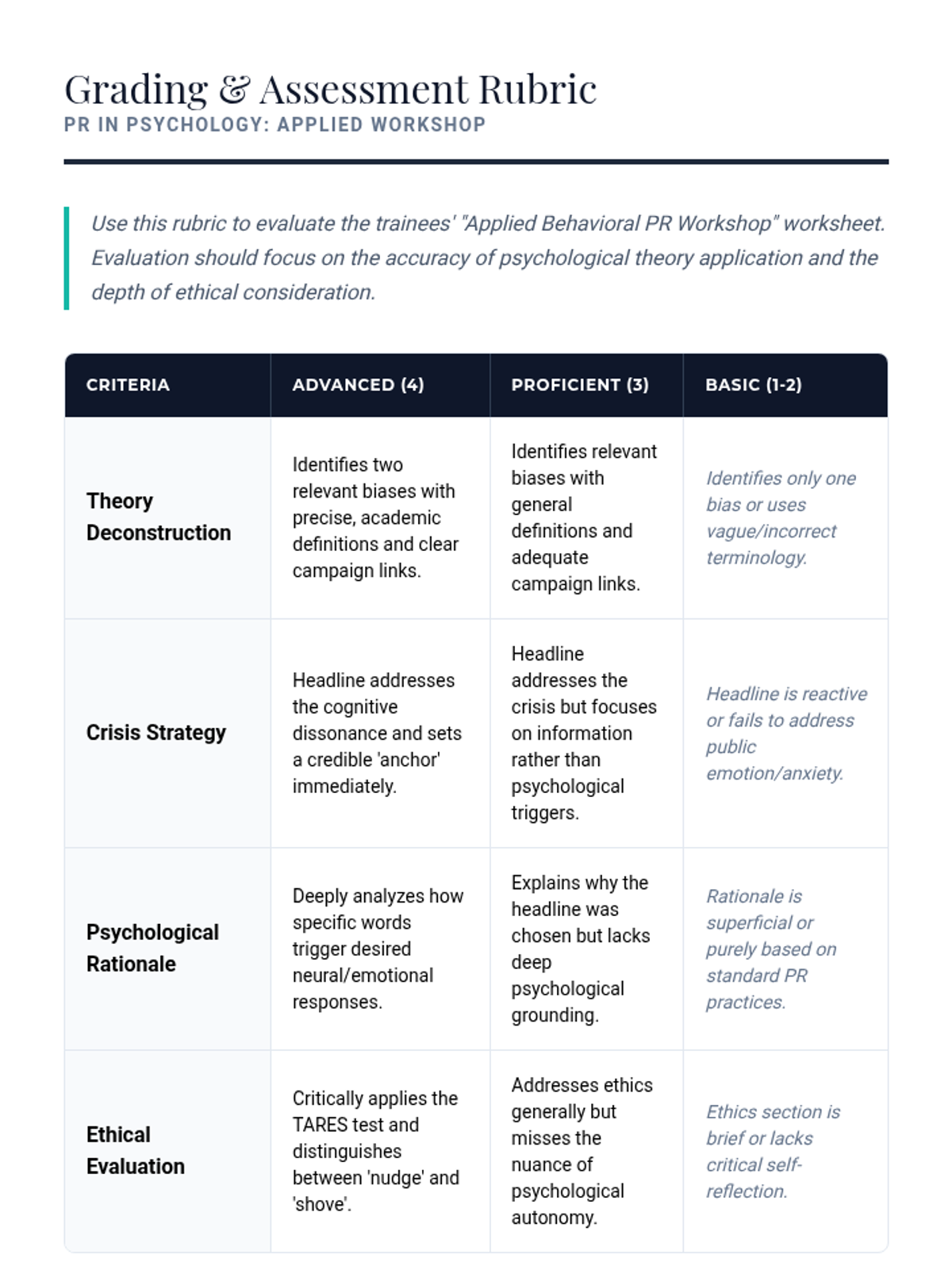
A comprehensive lesson on Public Relations in Psychology, focusing on translating complex research for public consumption, managing public perception of psychological science, and ethical communication.
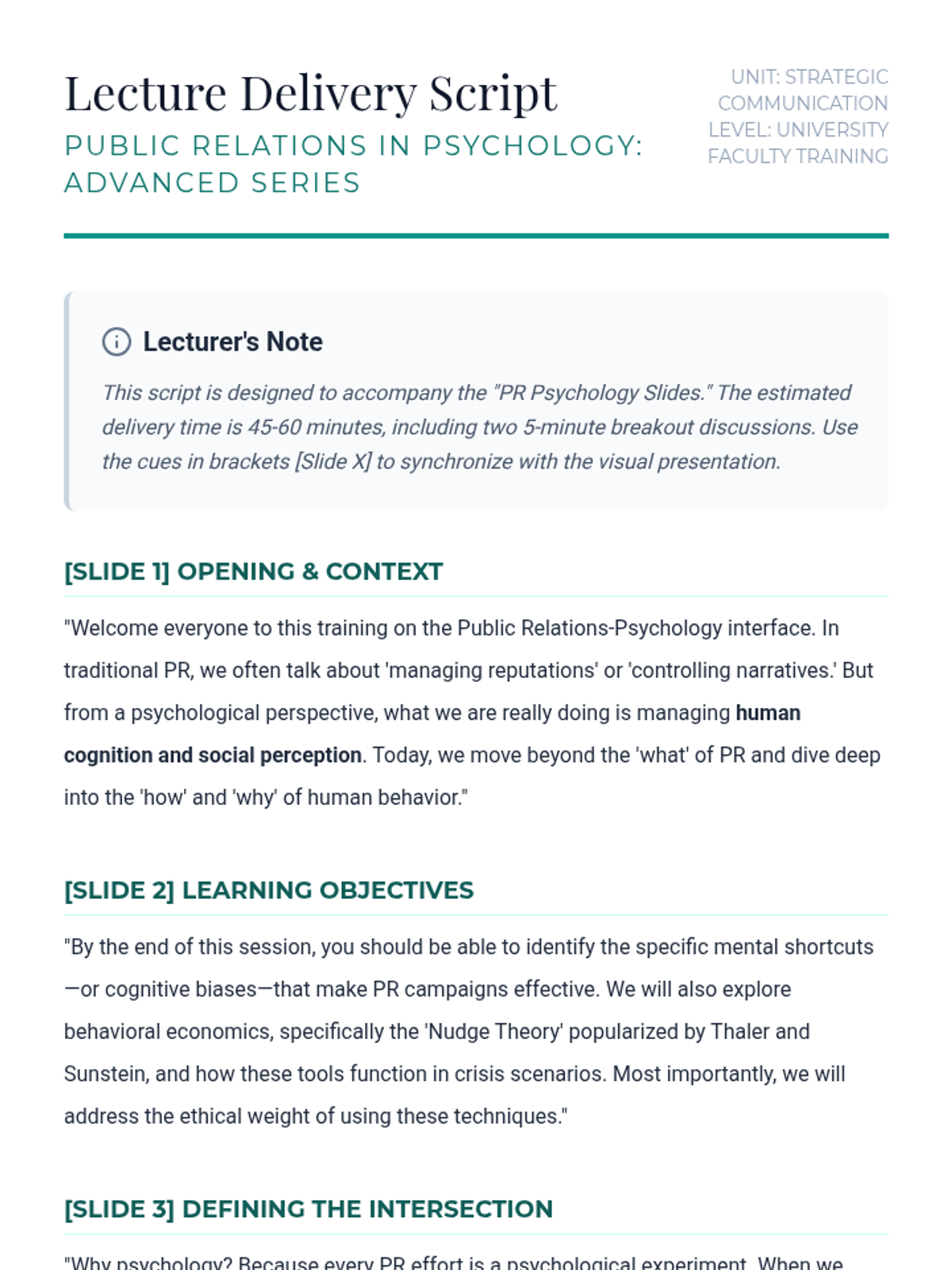
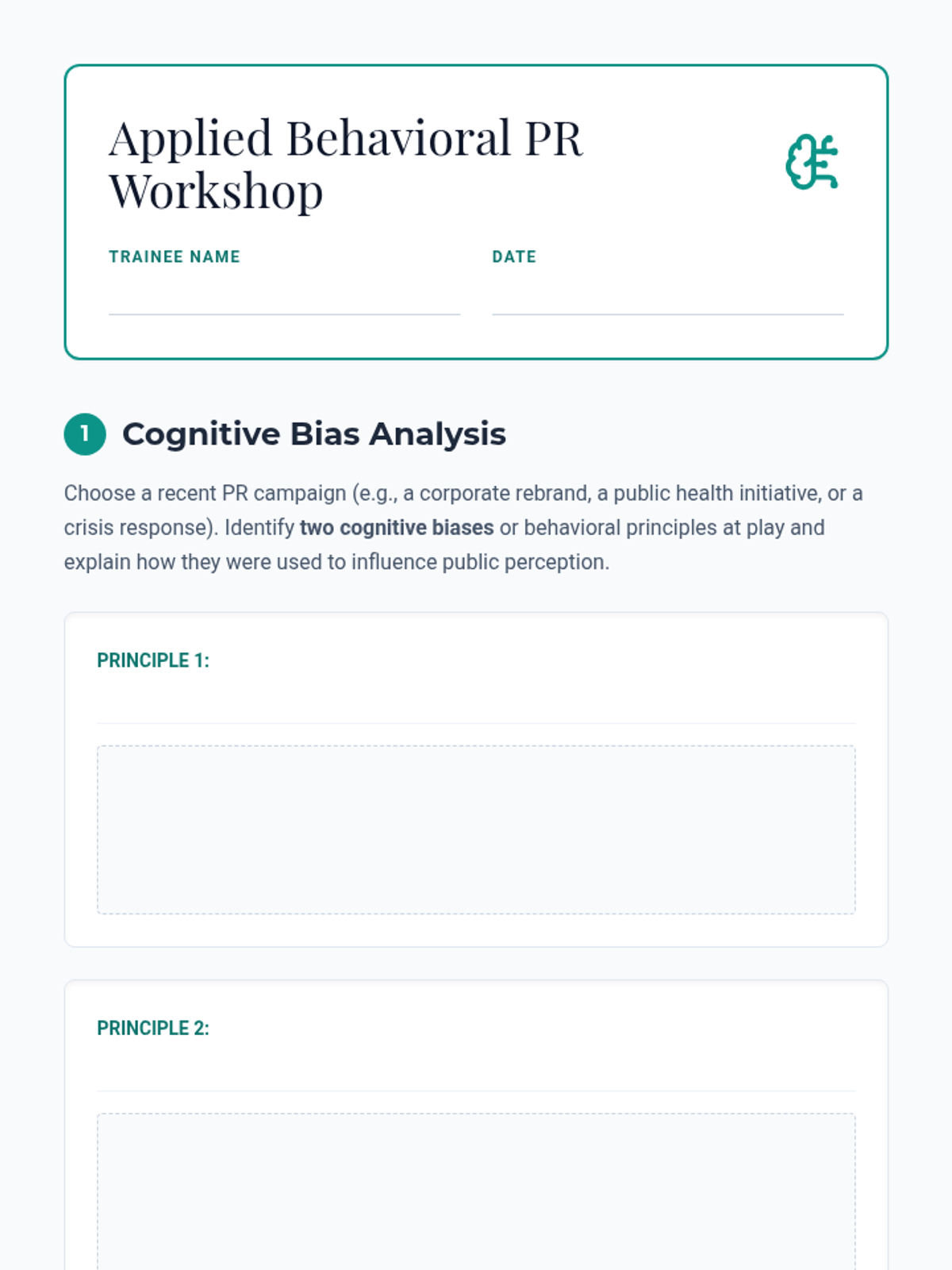
This lesson explores the intersection of psychological principles and public relations strategies, designed for university-level teacher training. It covers behavioral influence, cognitive biases, and ethical communication frameworks.
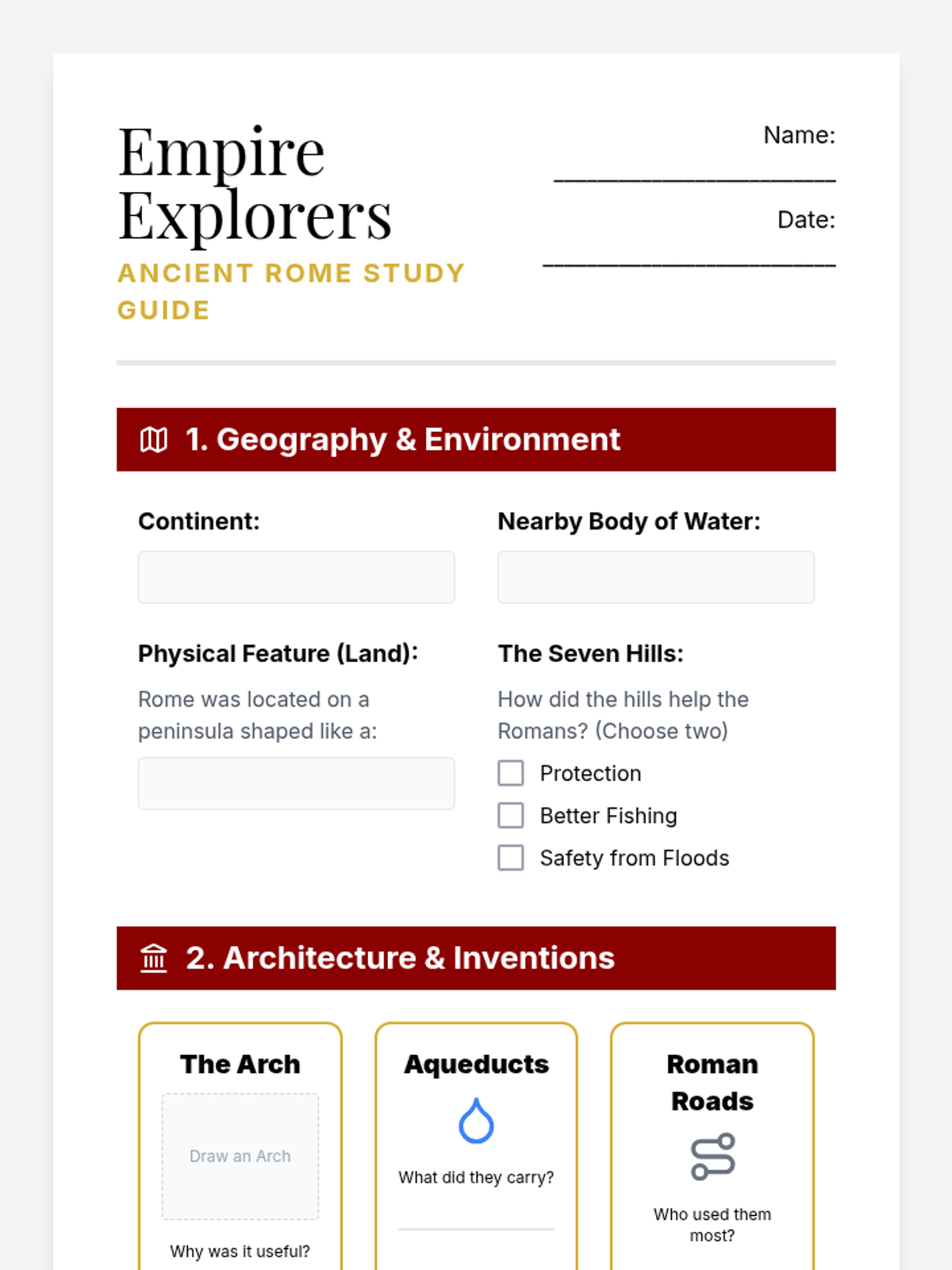
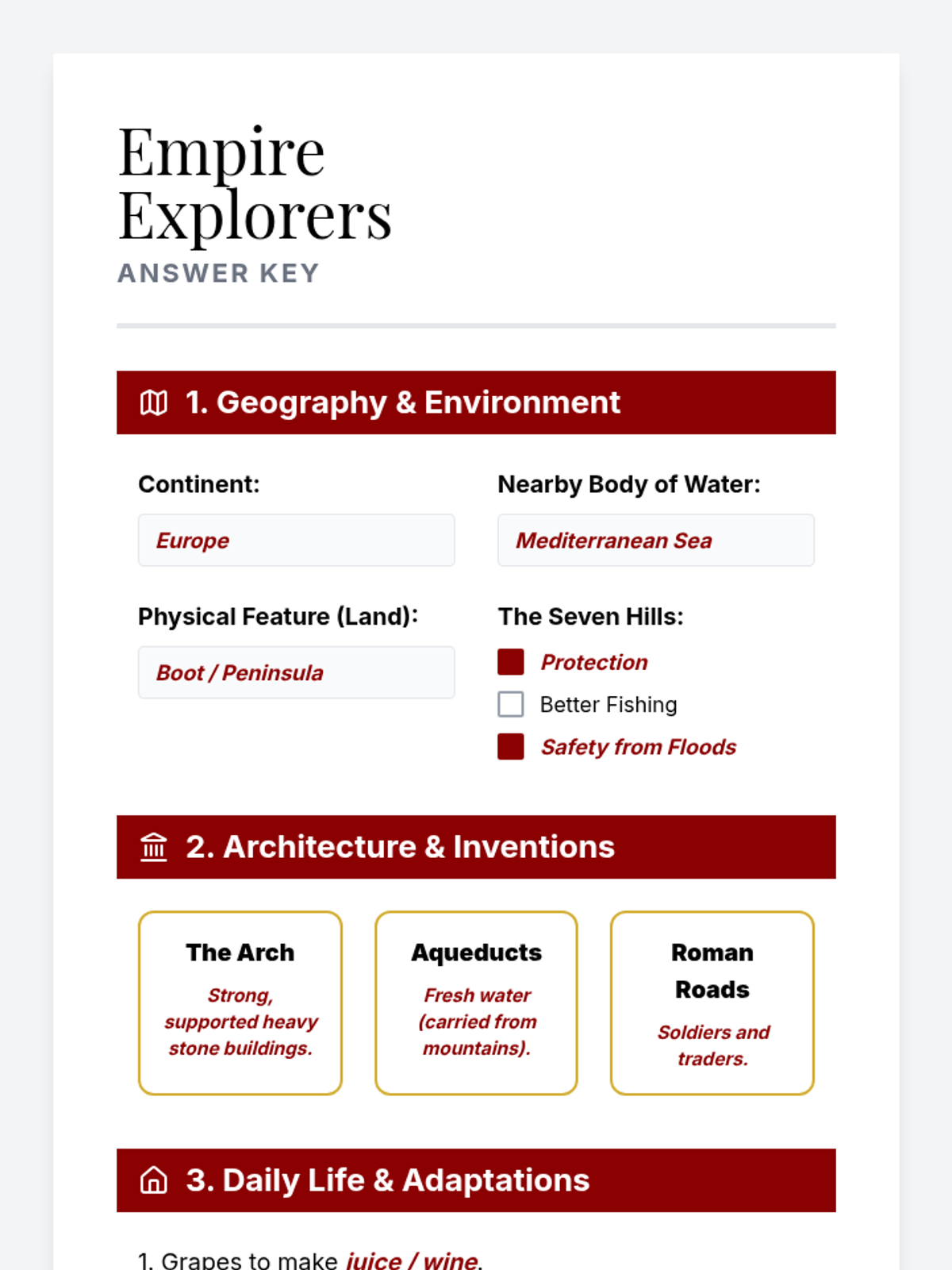
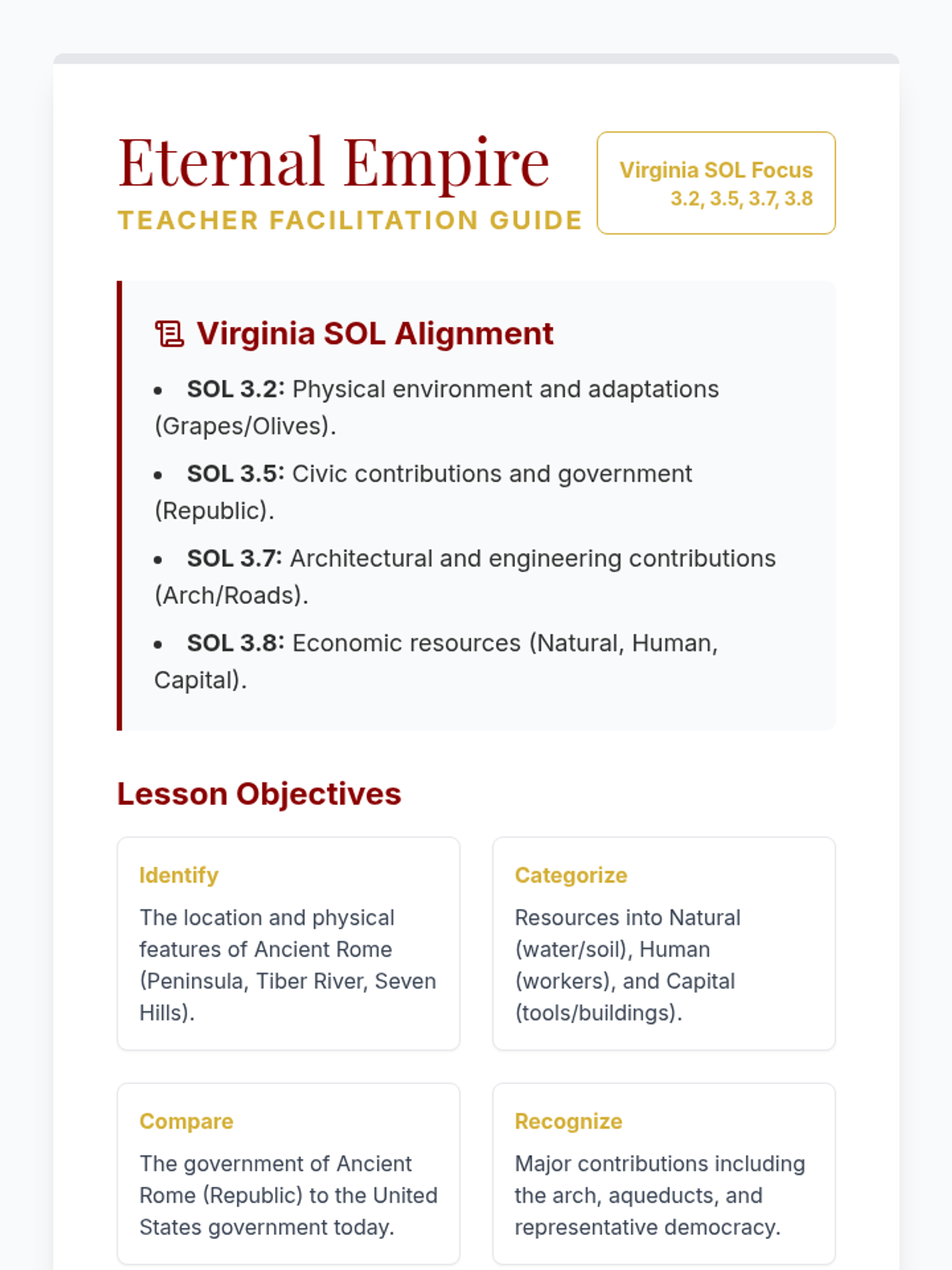
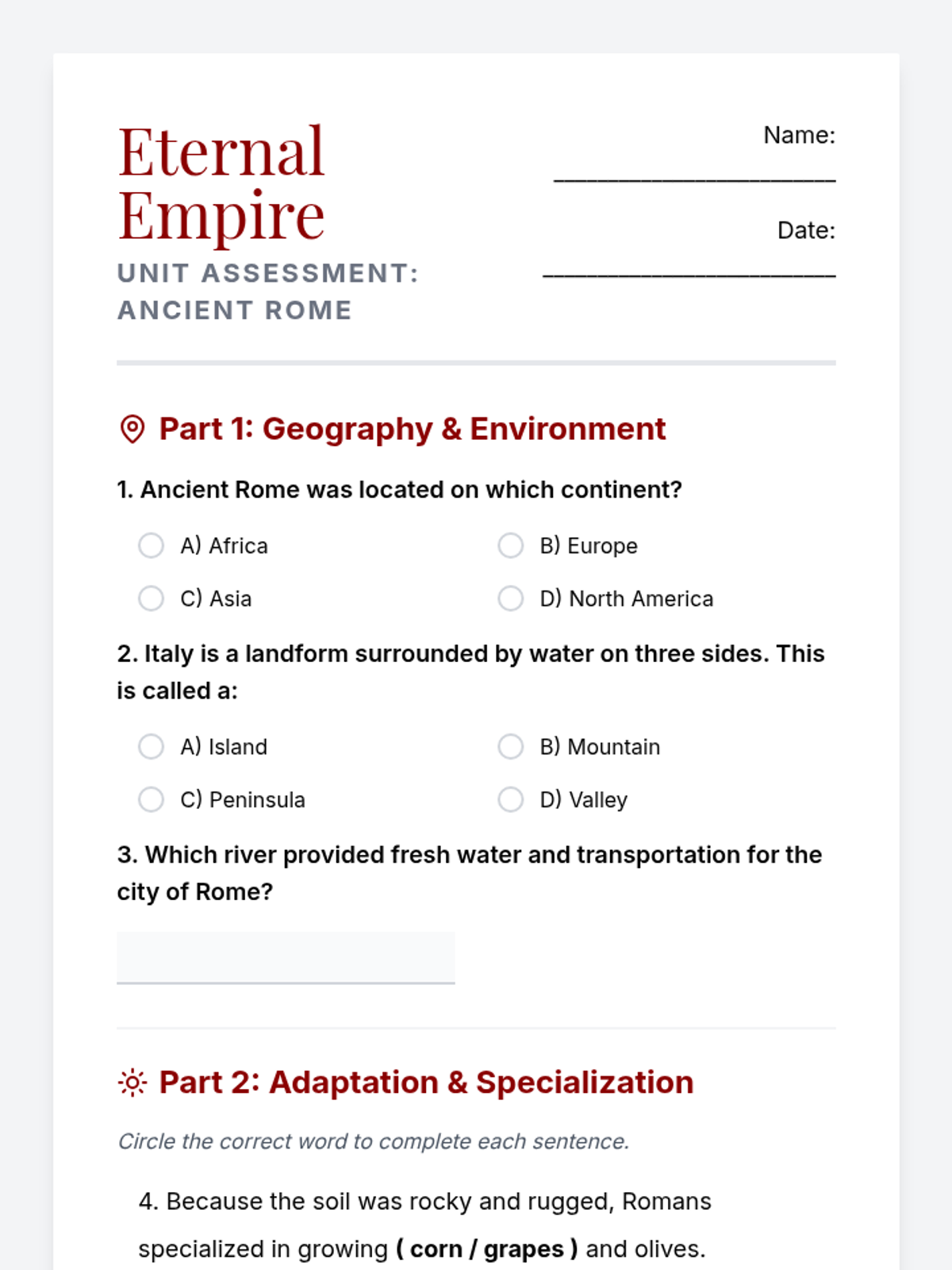
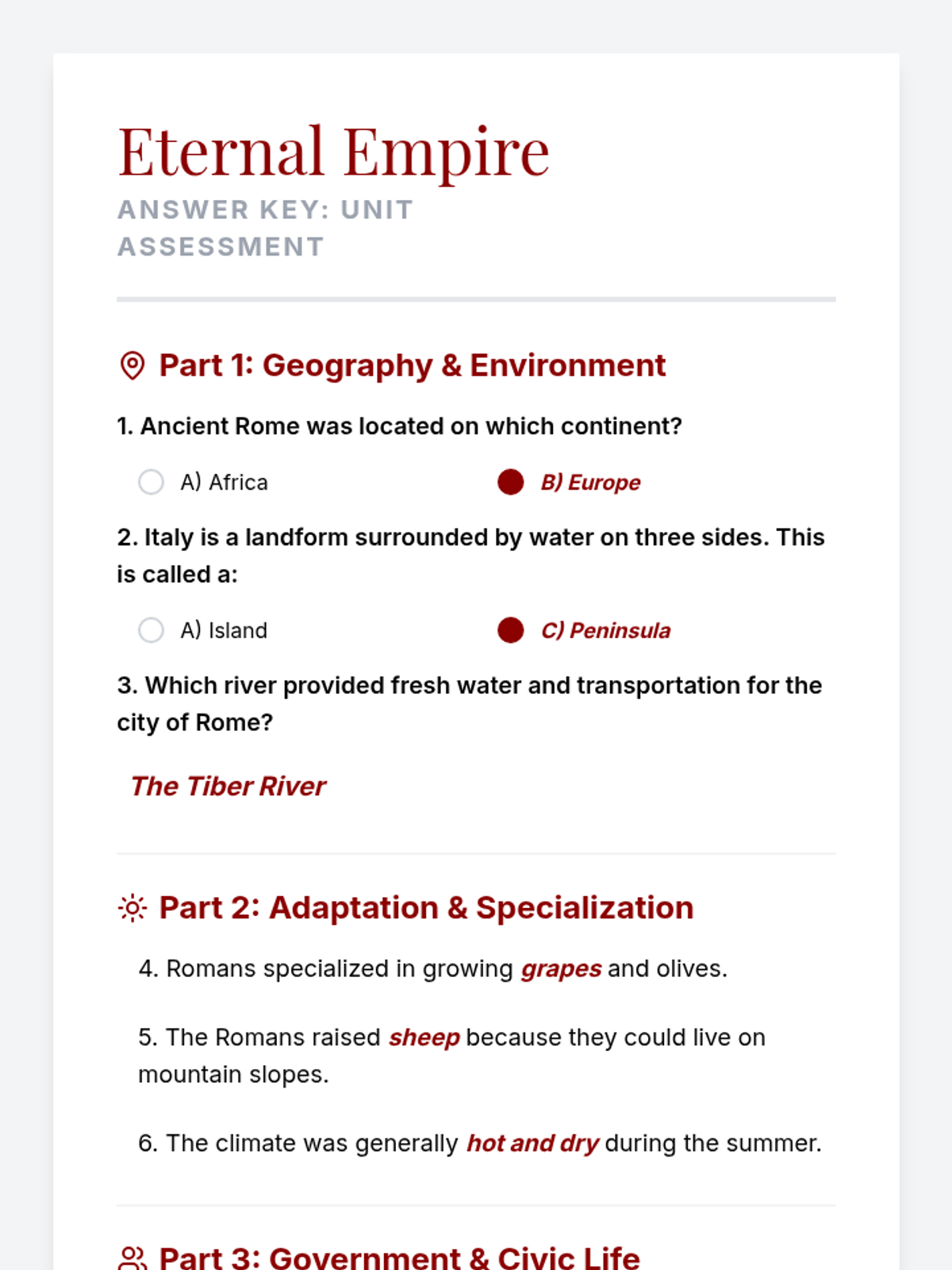
A deep dive into Ancient Rome covering geography, daily life, government, and lasting contributions tailored for 3rd grade Virginia SOLs. Students explore the physical environment of the Mediterranean and how Romans adapted to their surroundings through engineering and trade.
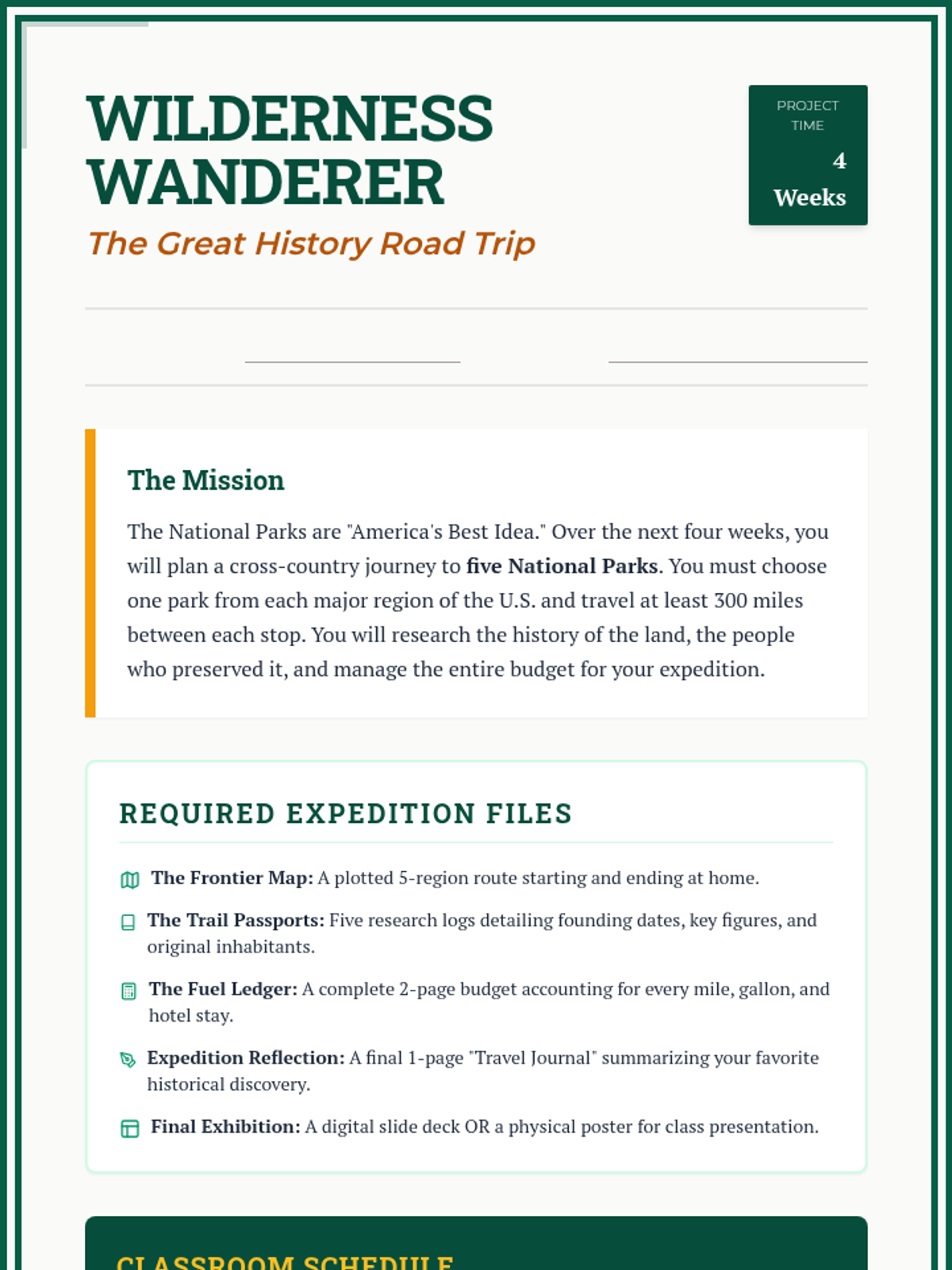
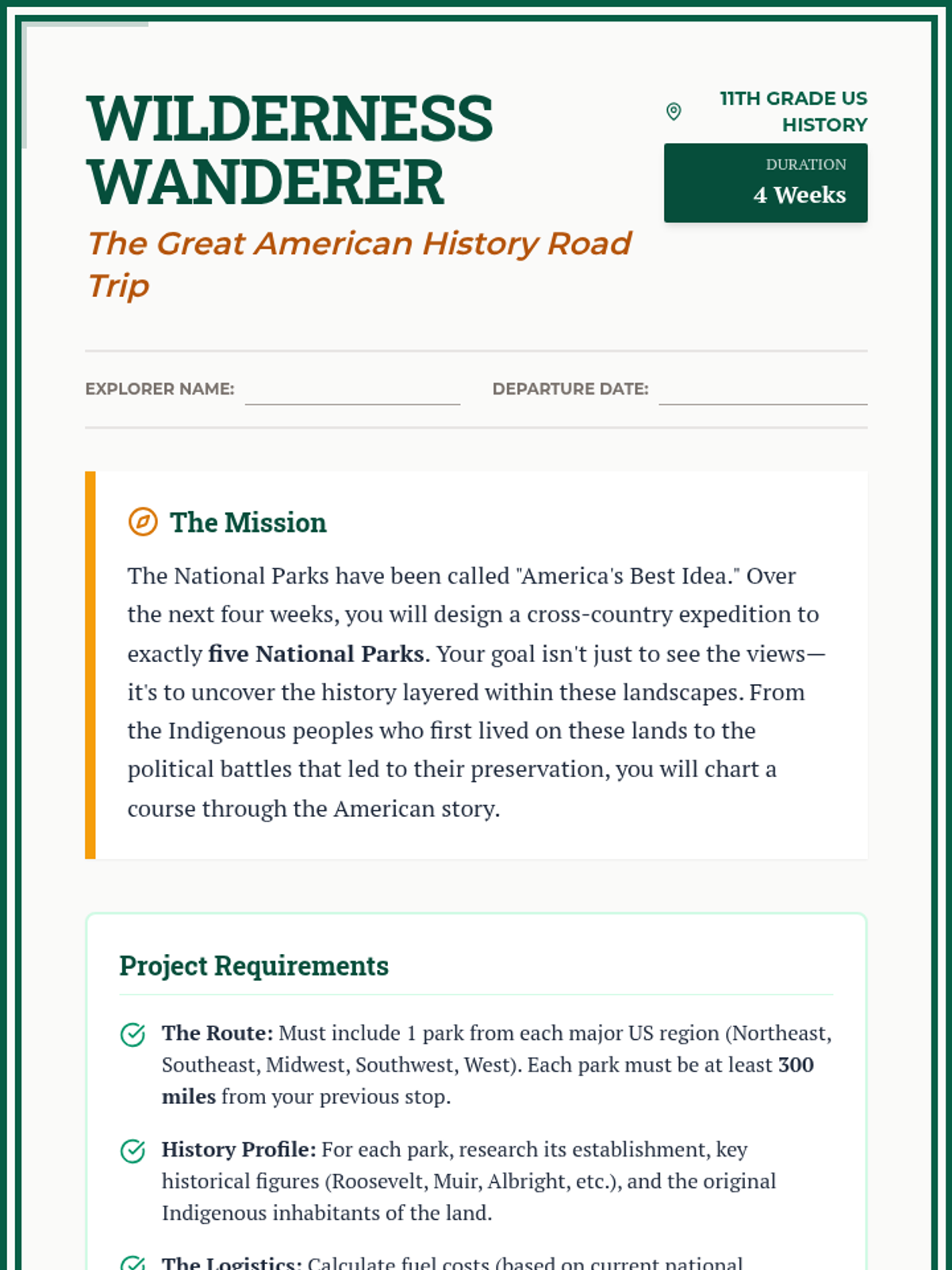
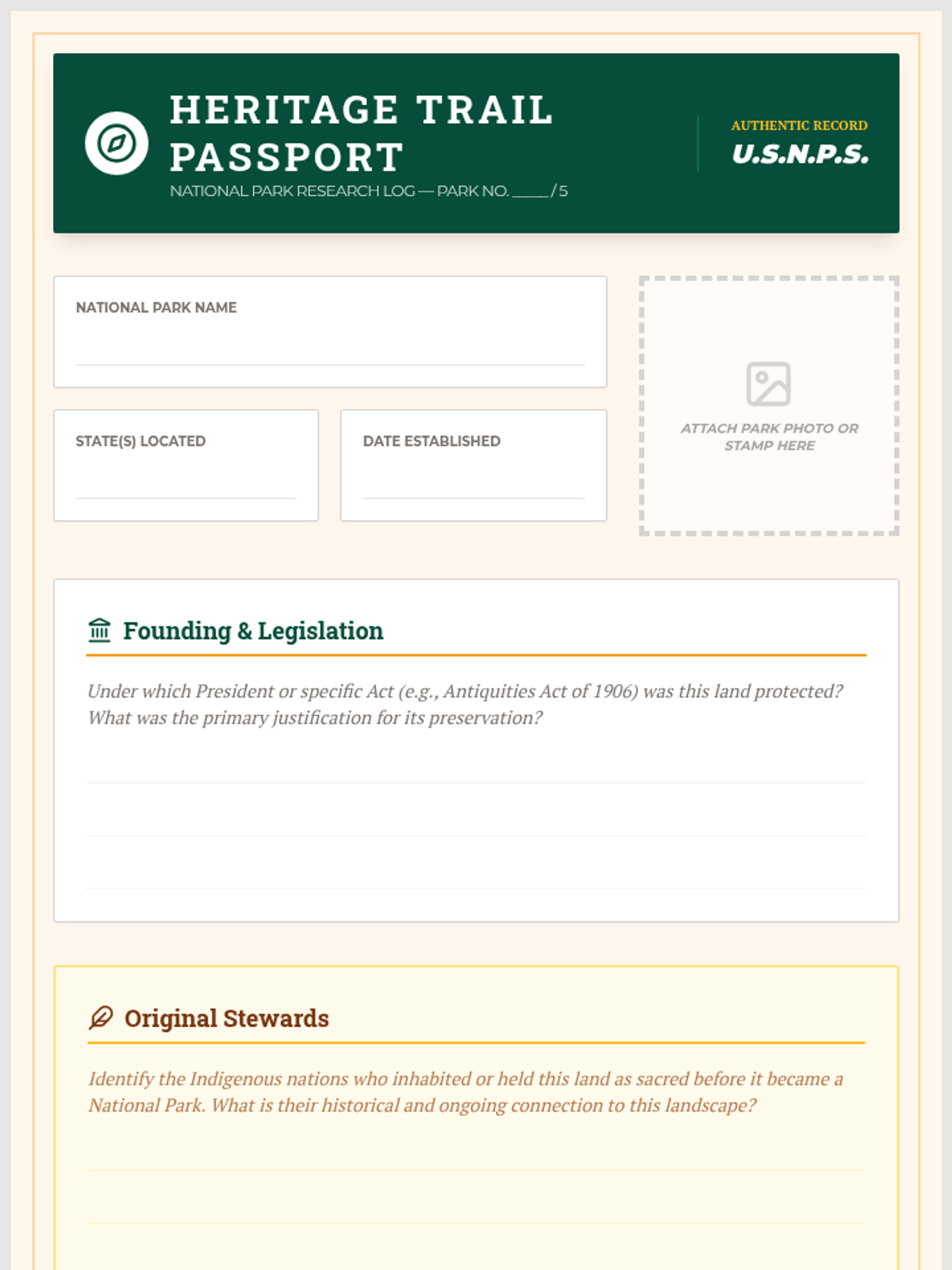
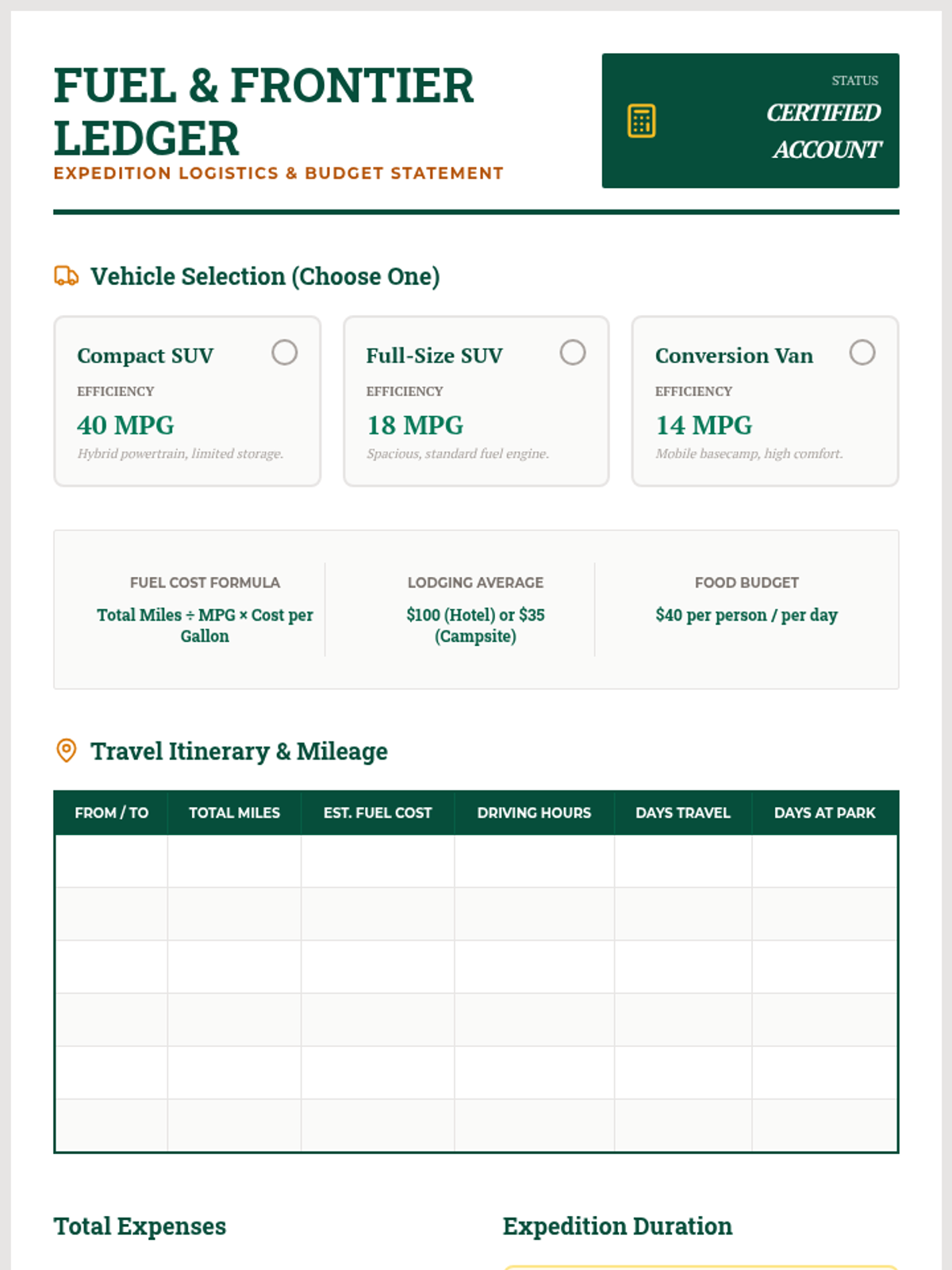
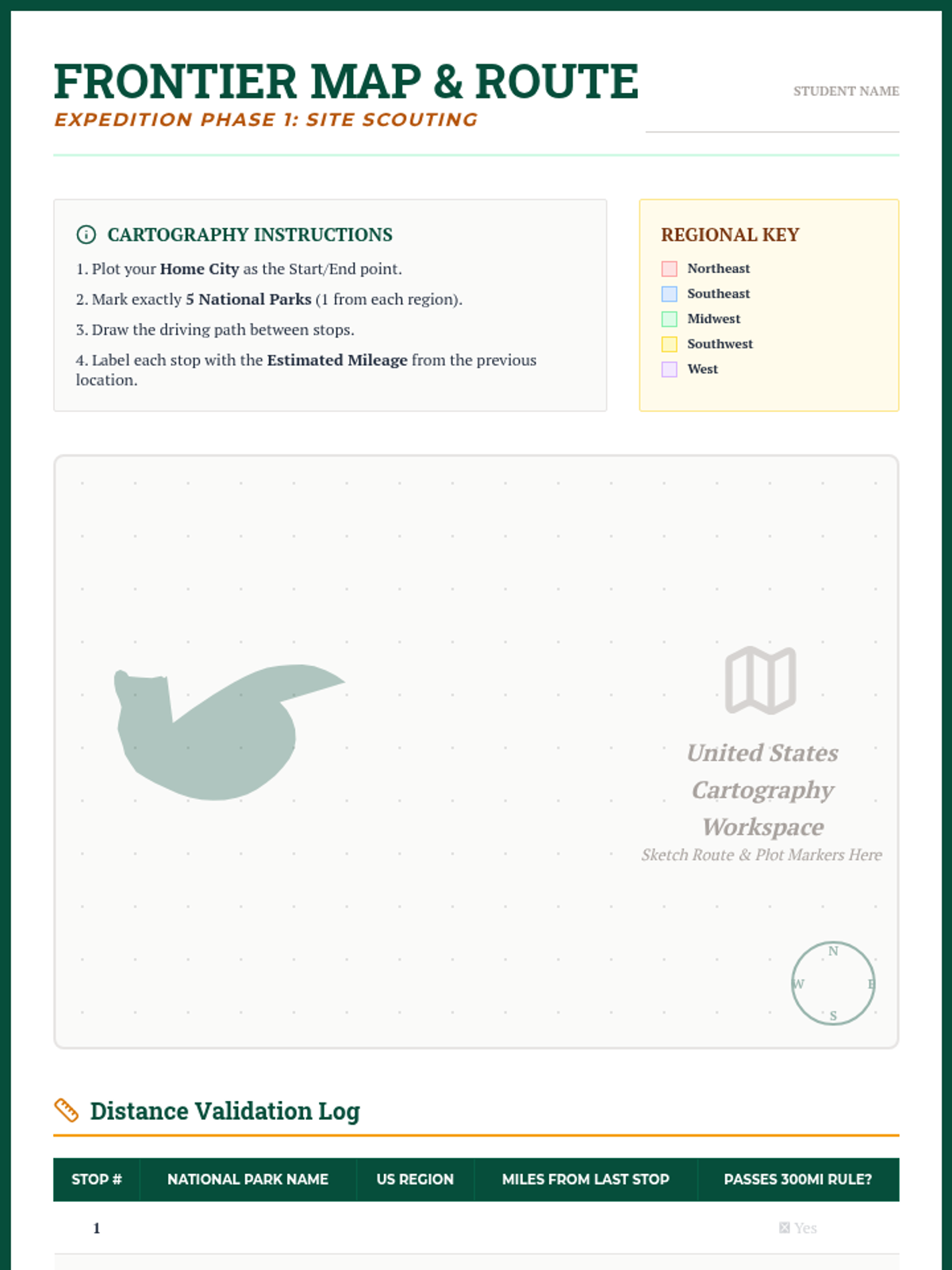
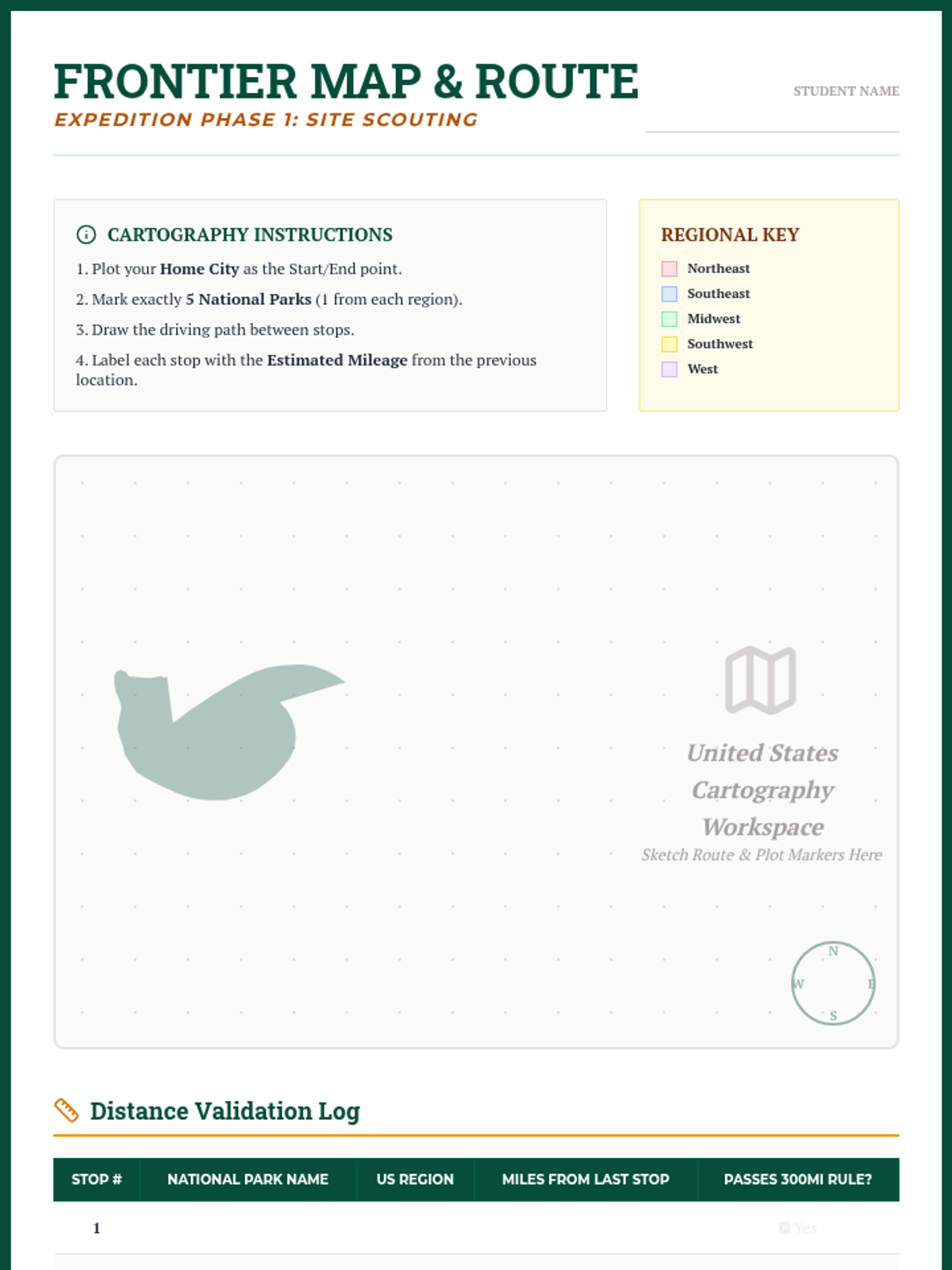
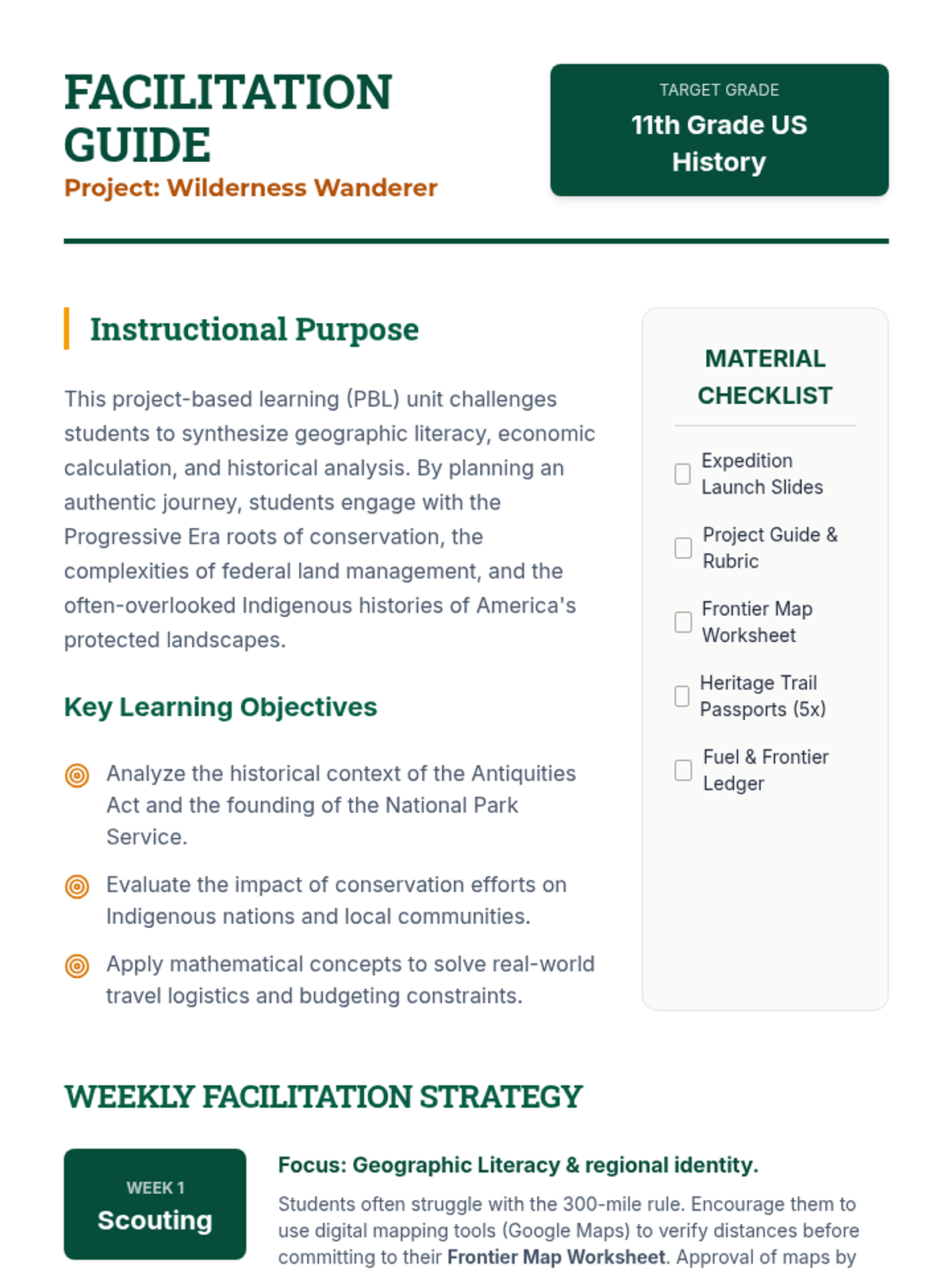
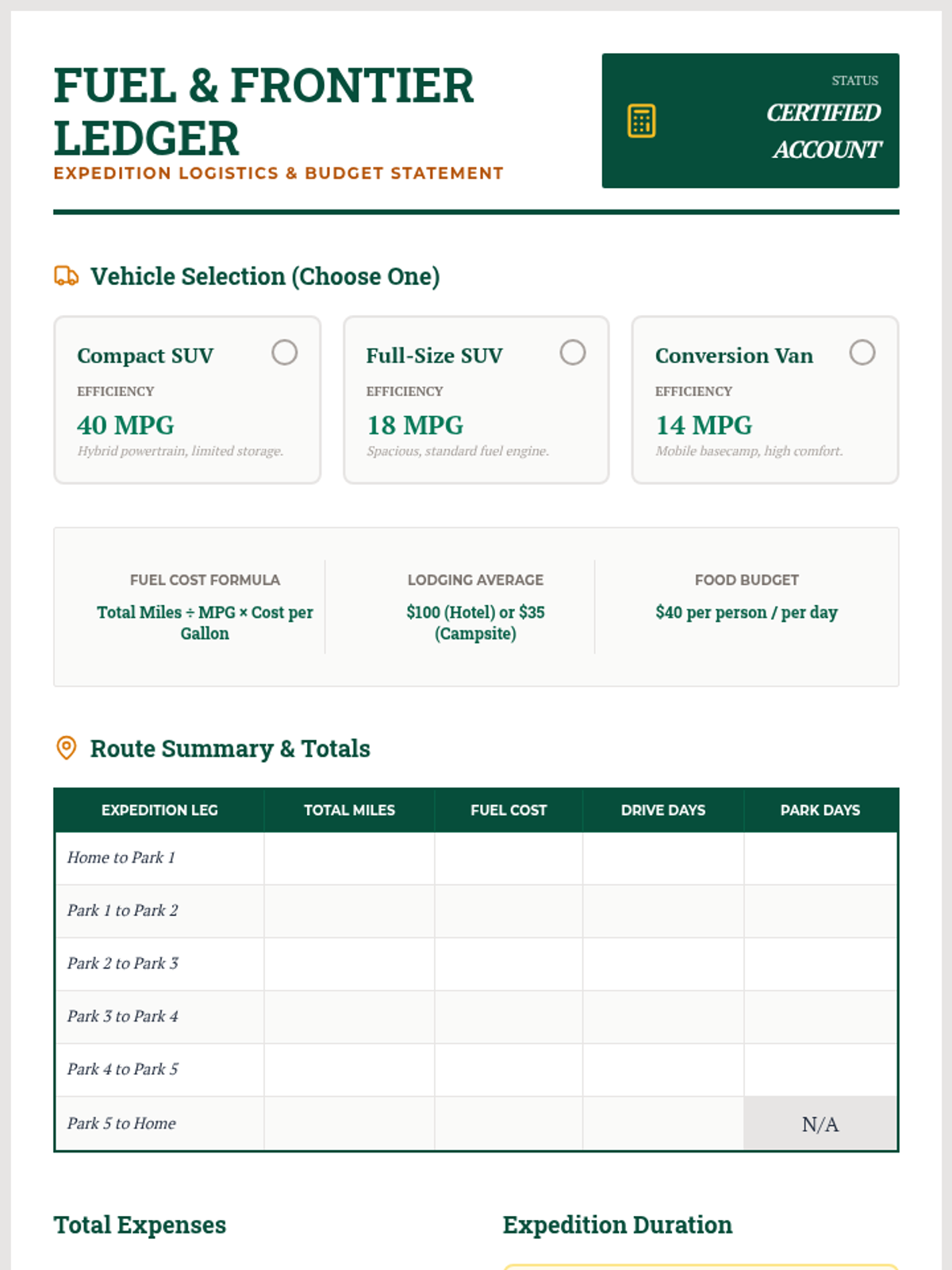
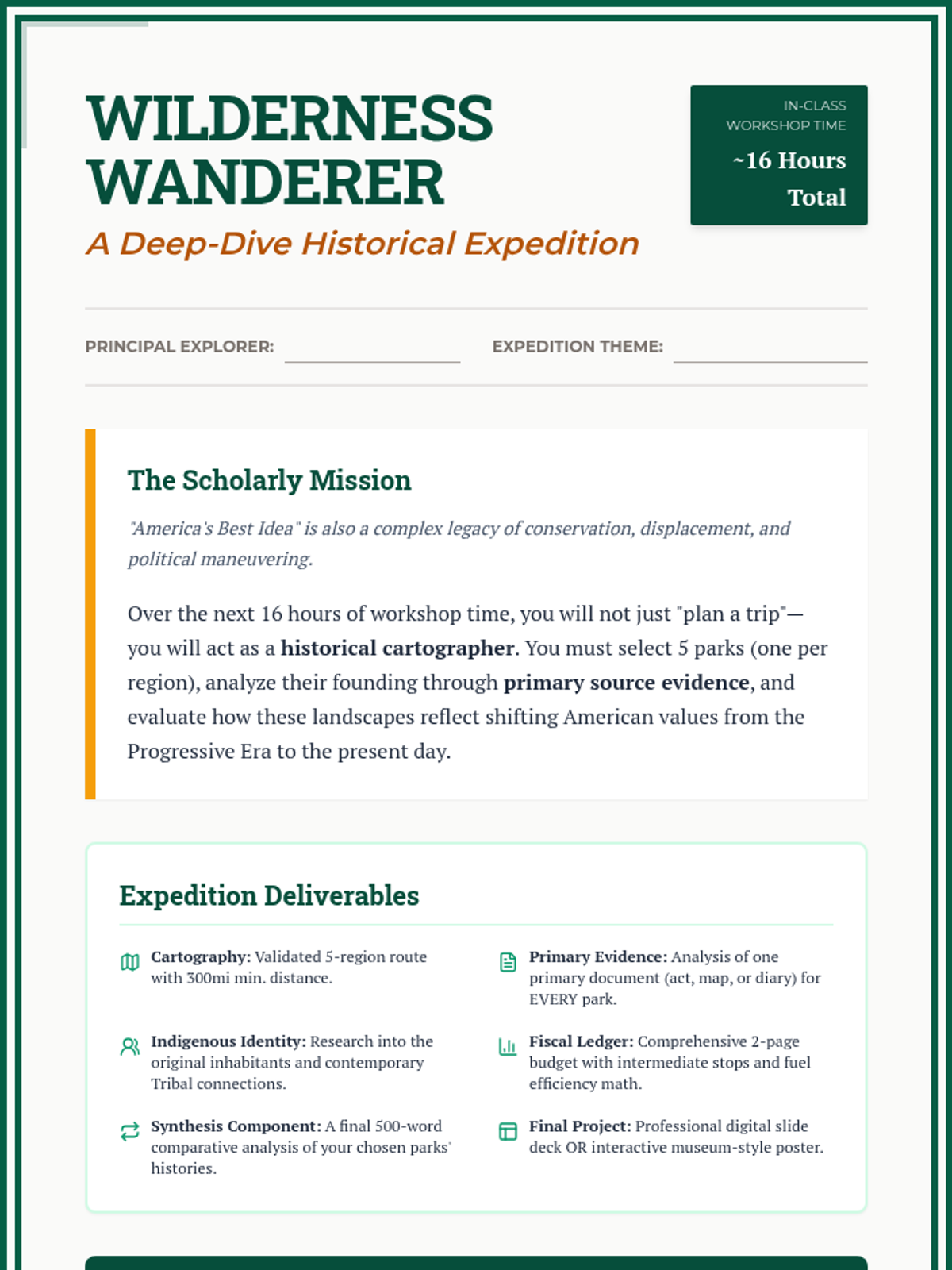
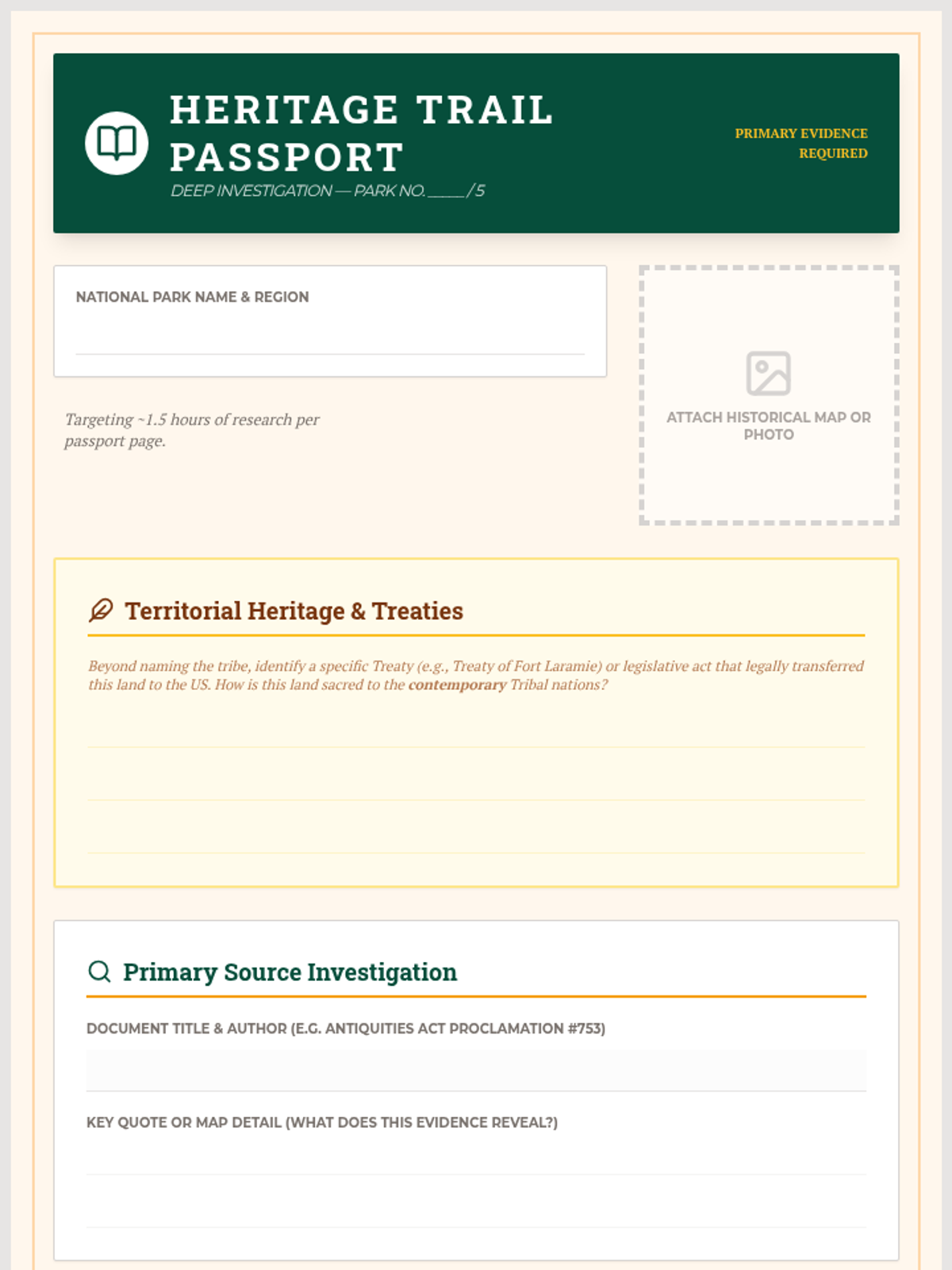
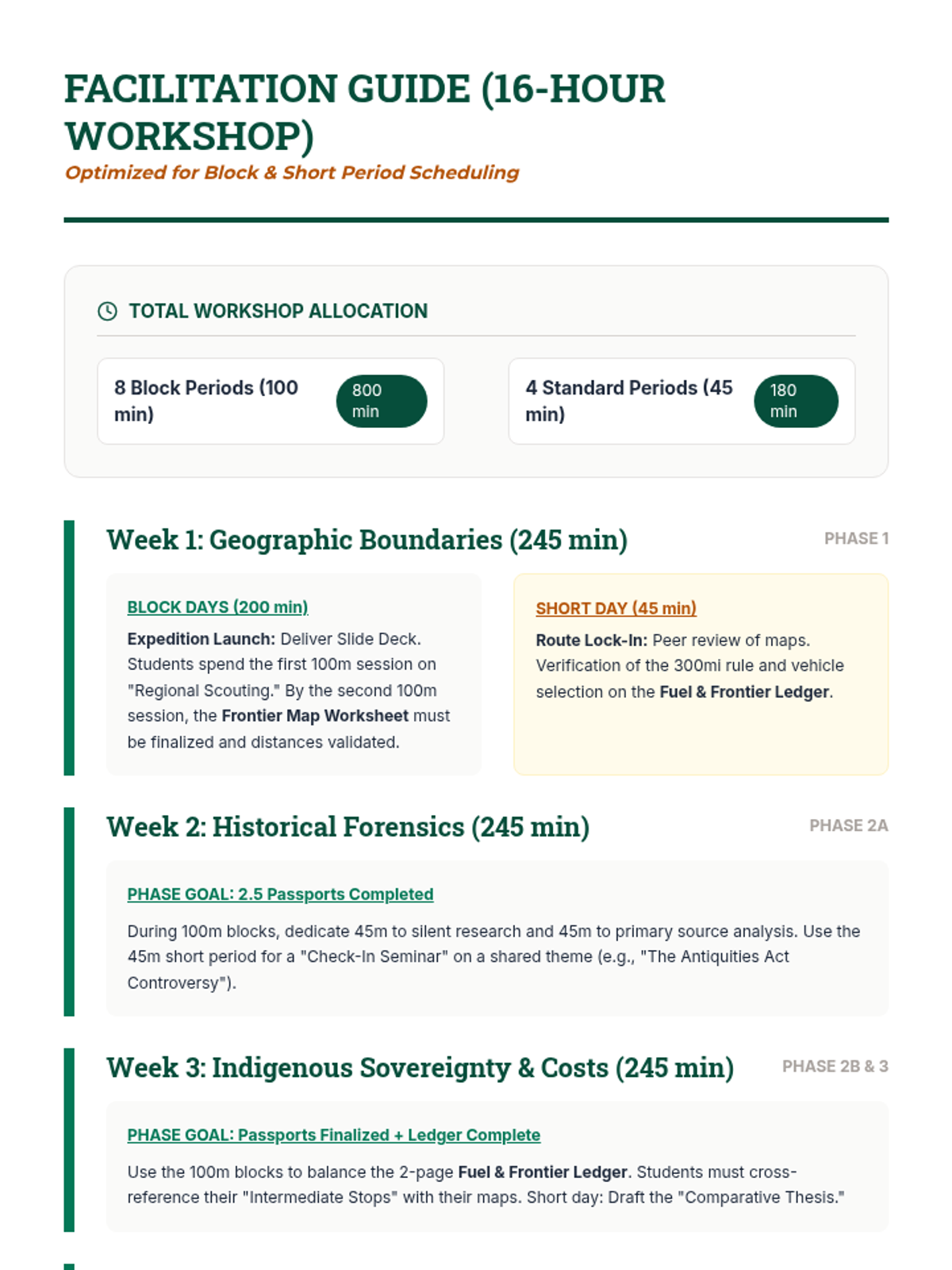
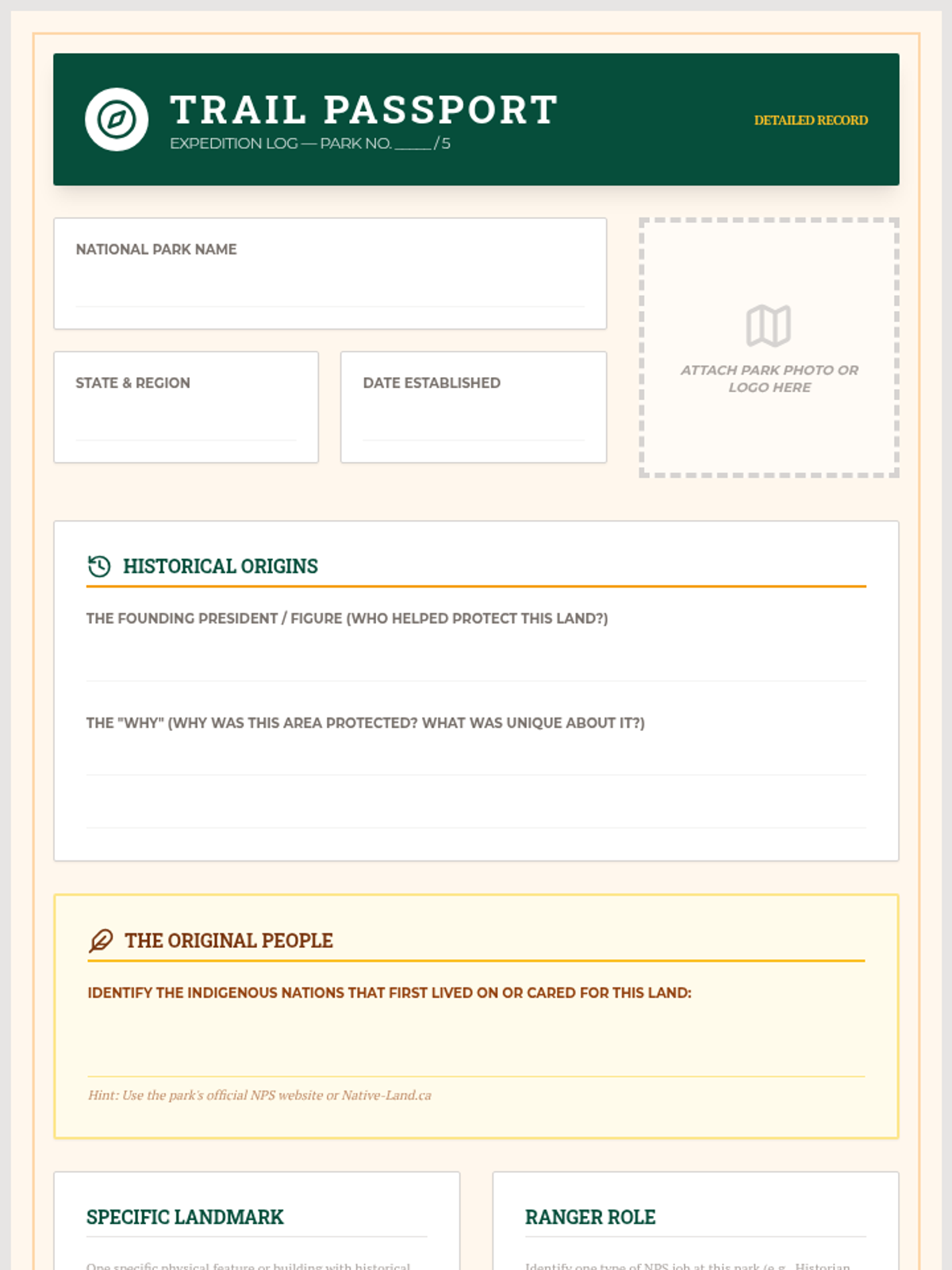
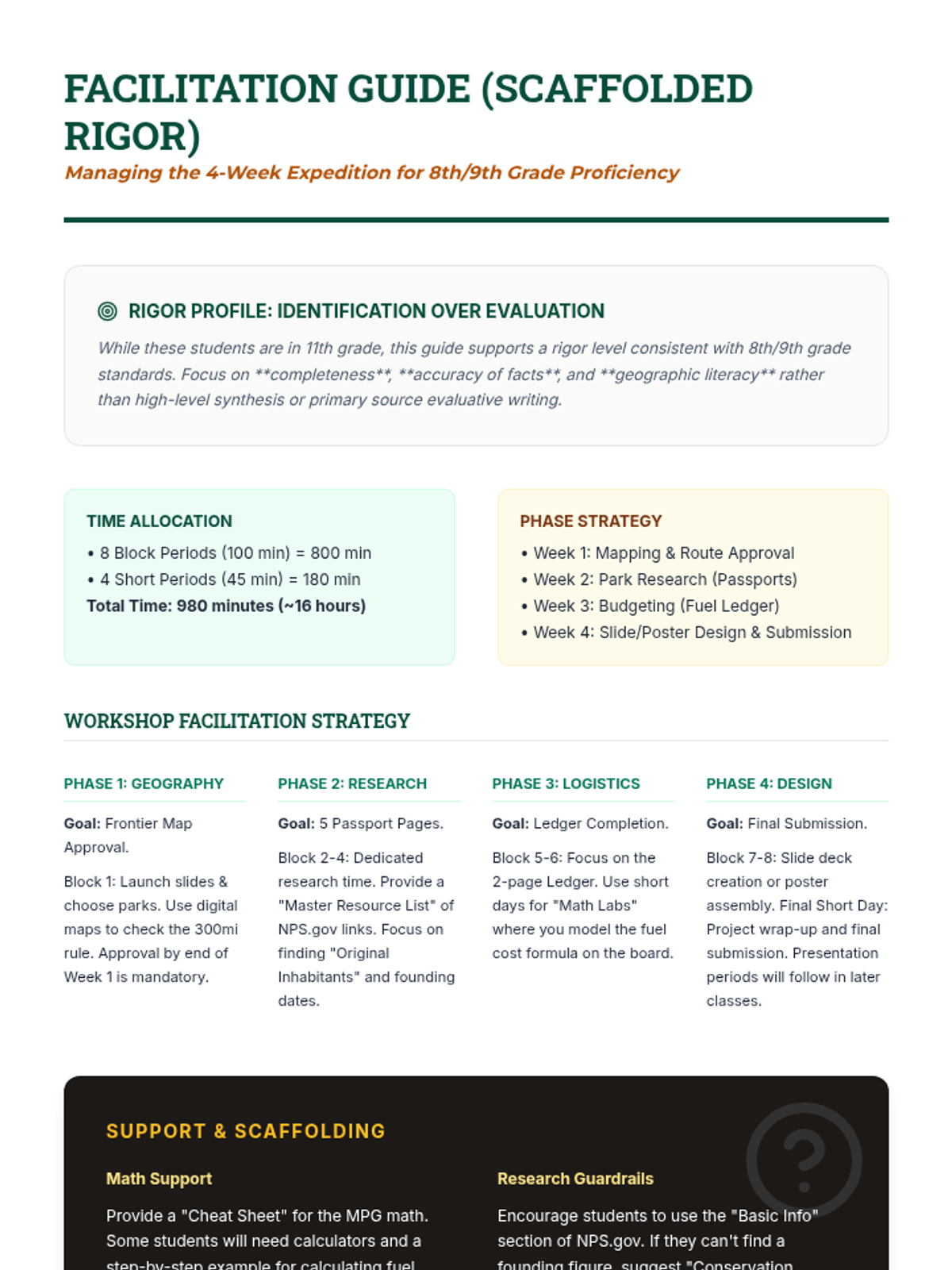
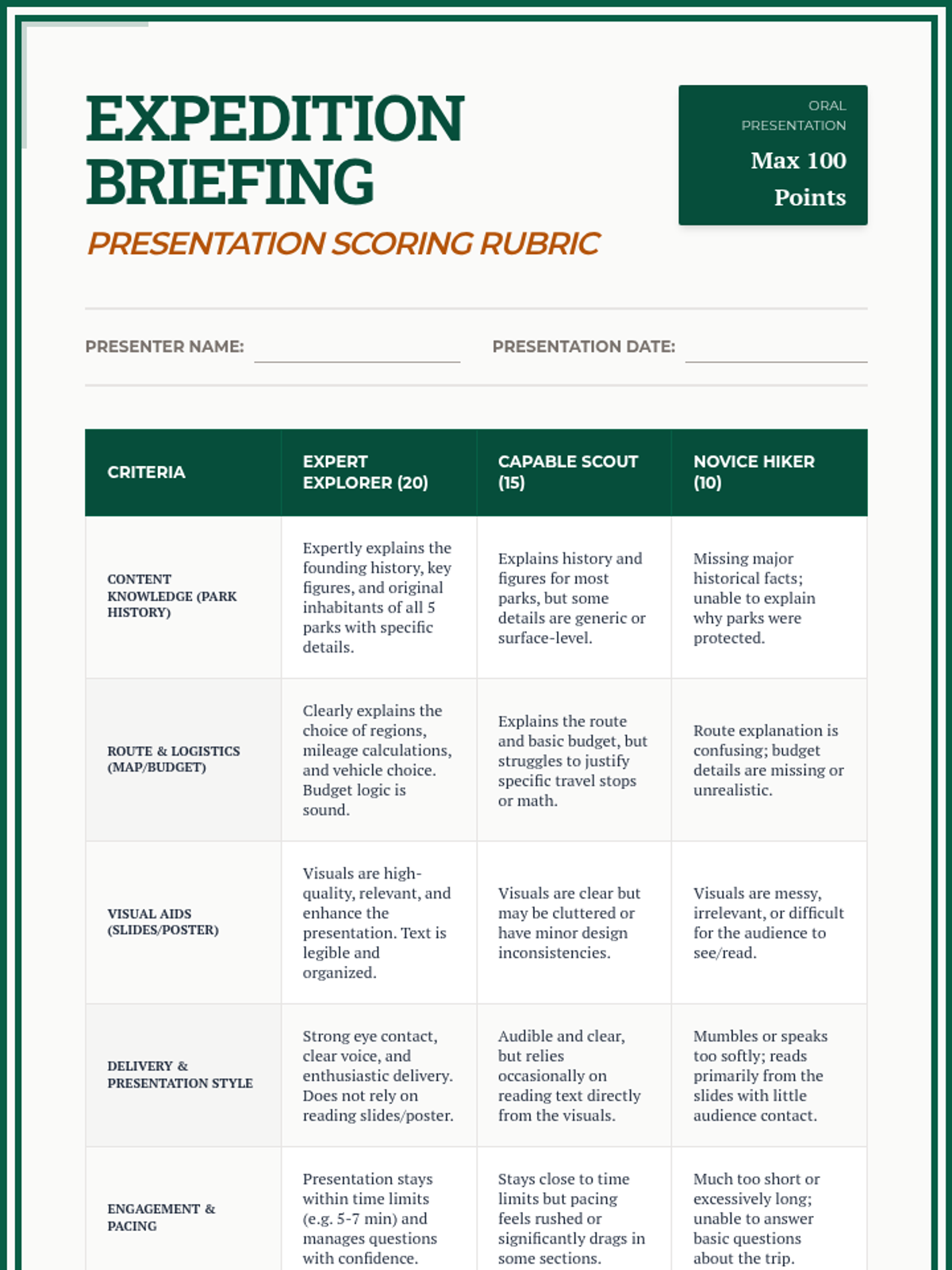
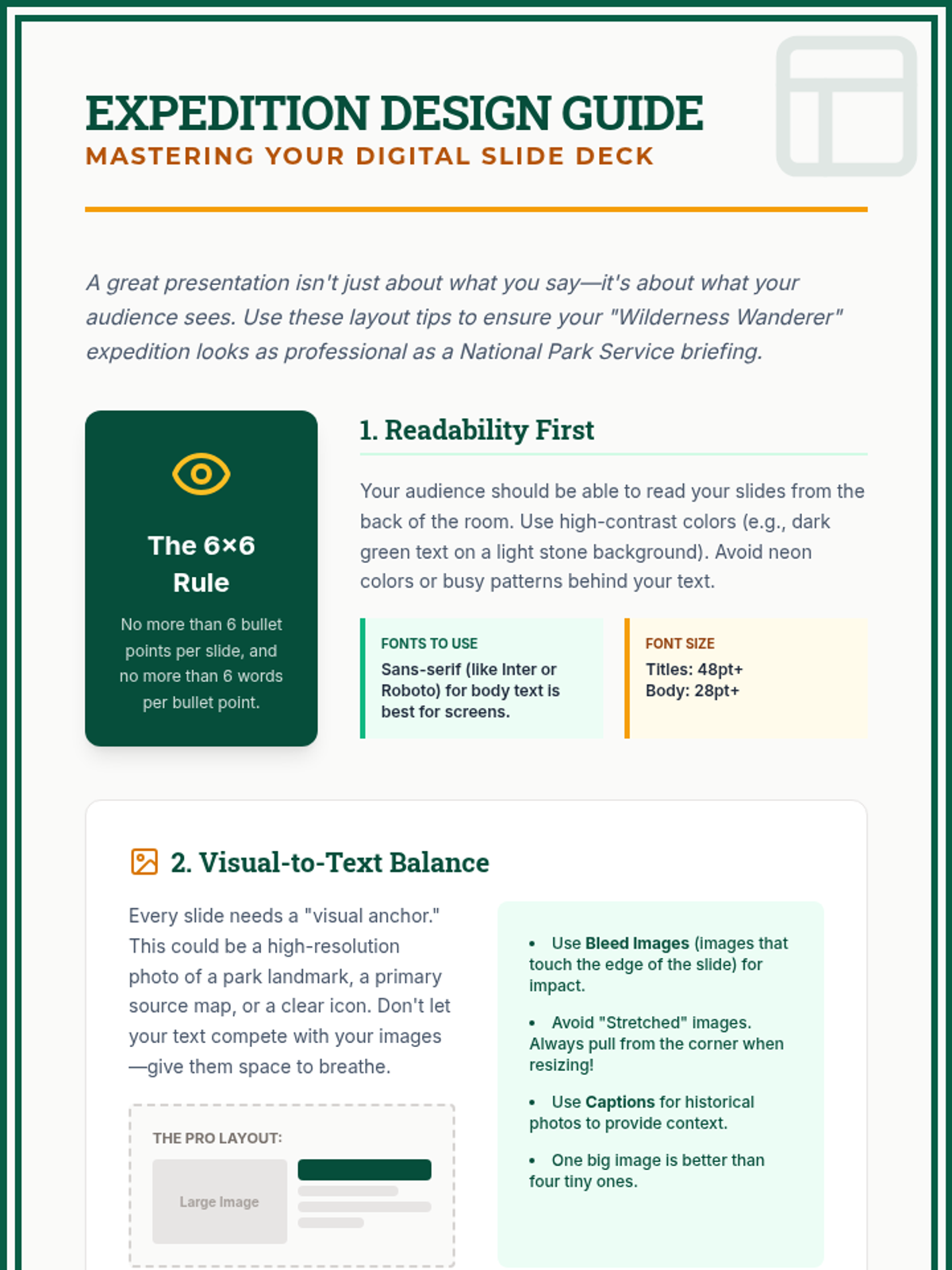
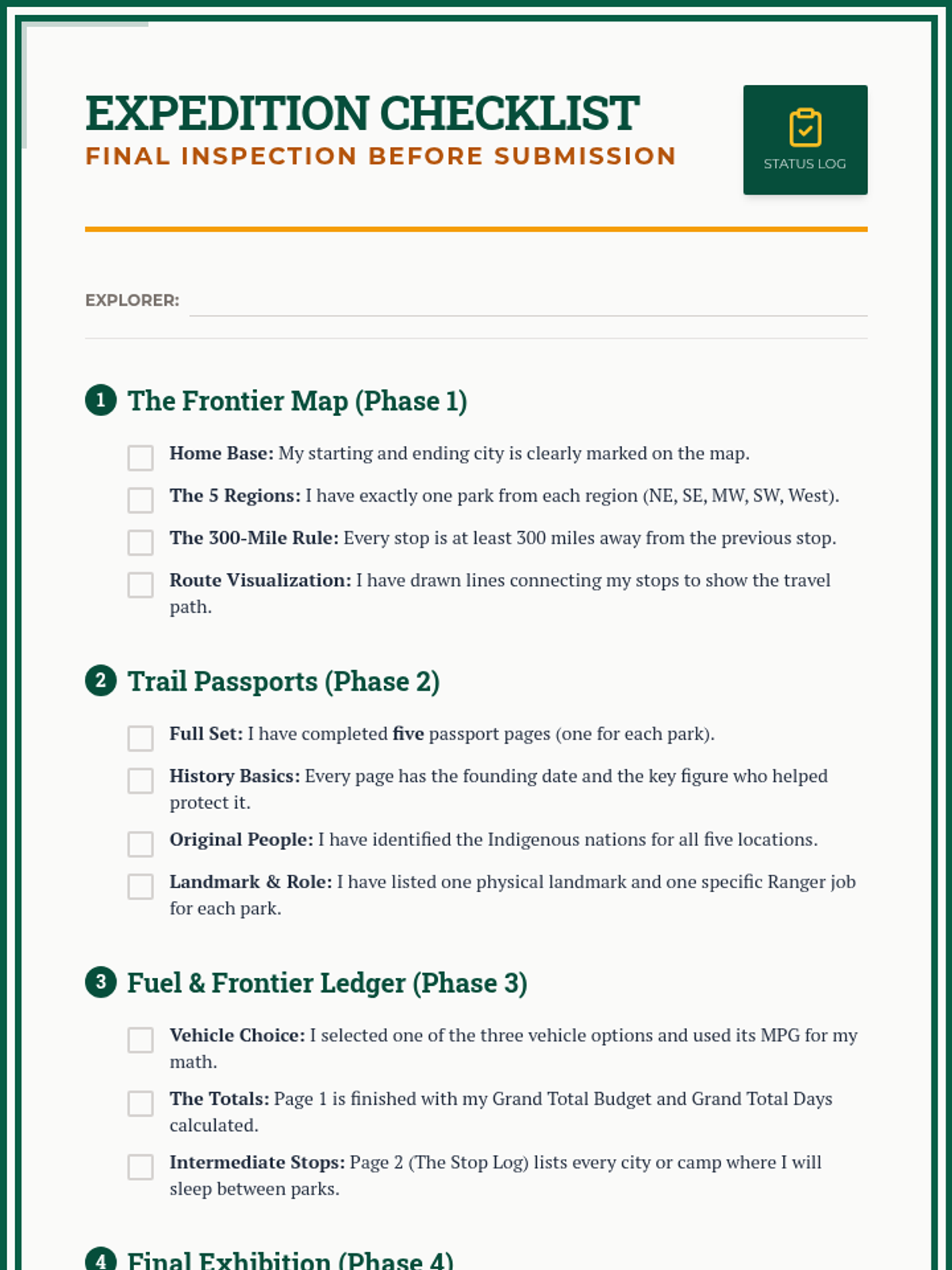
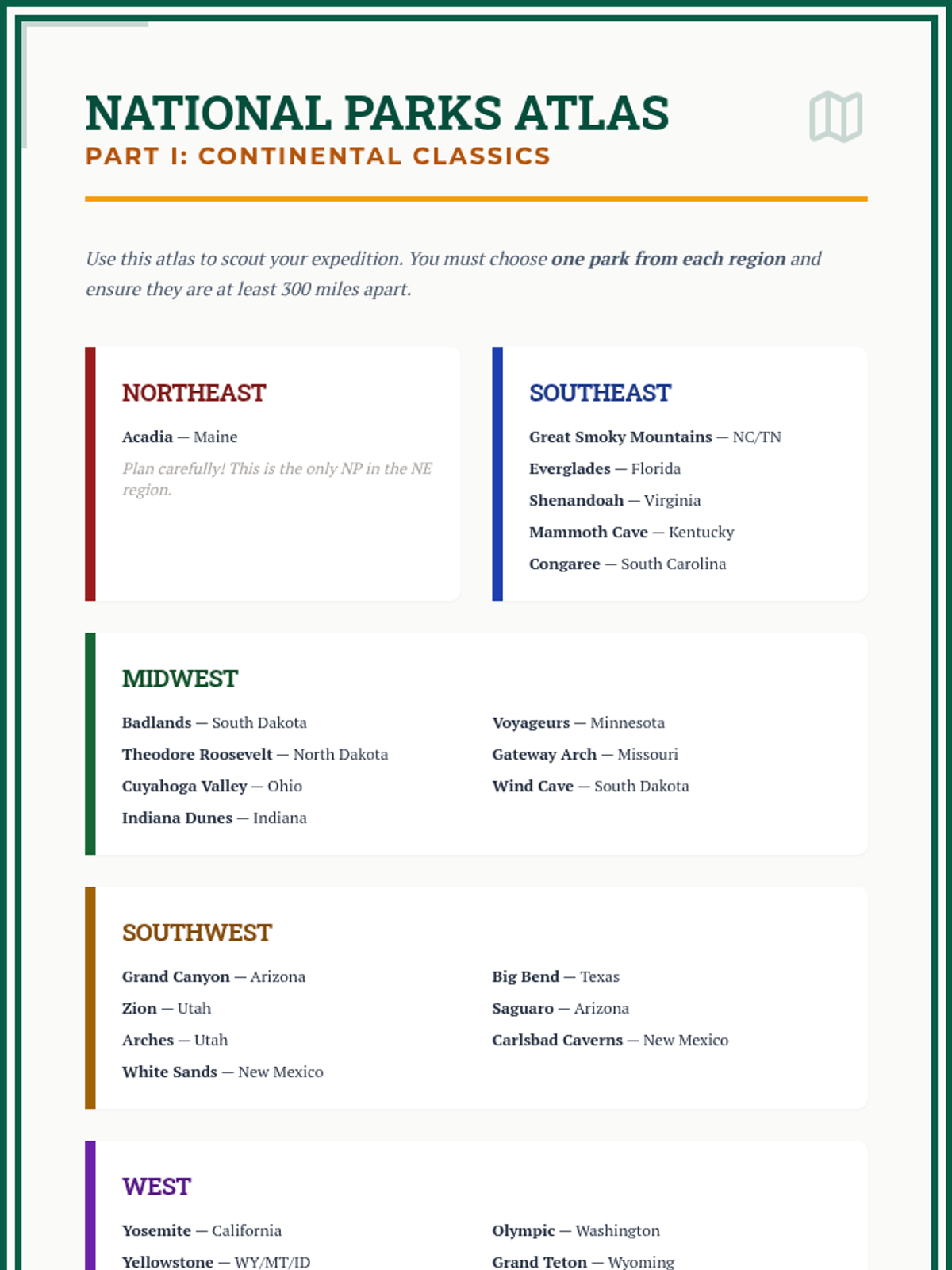
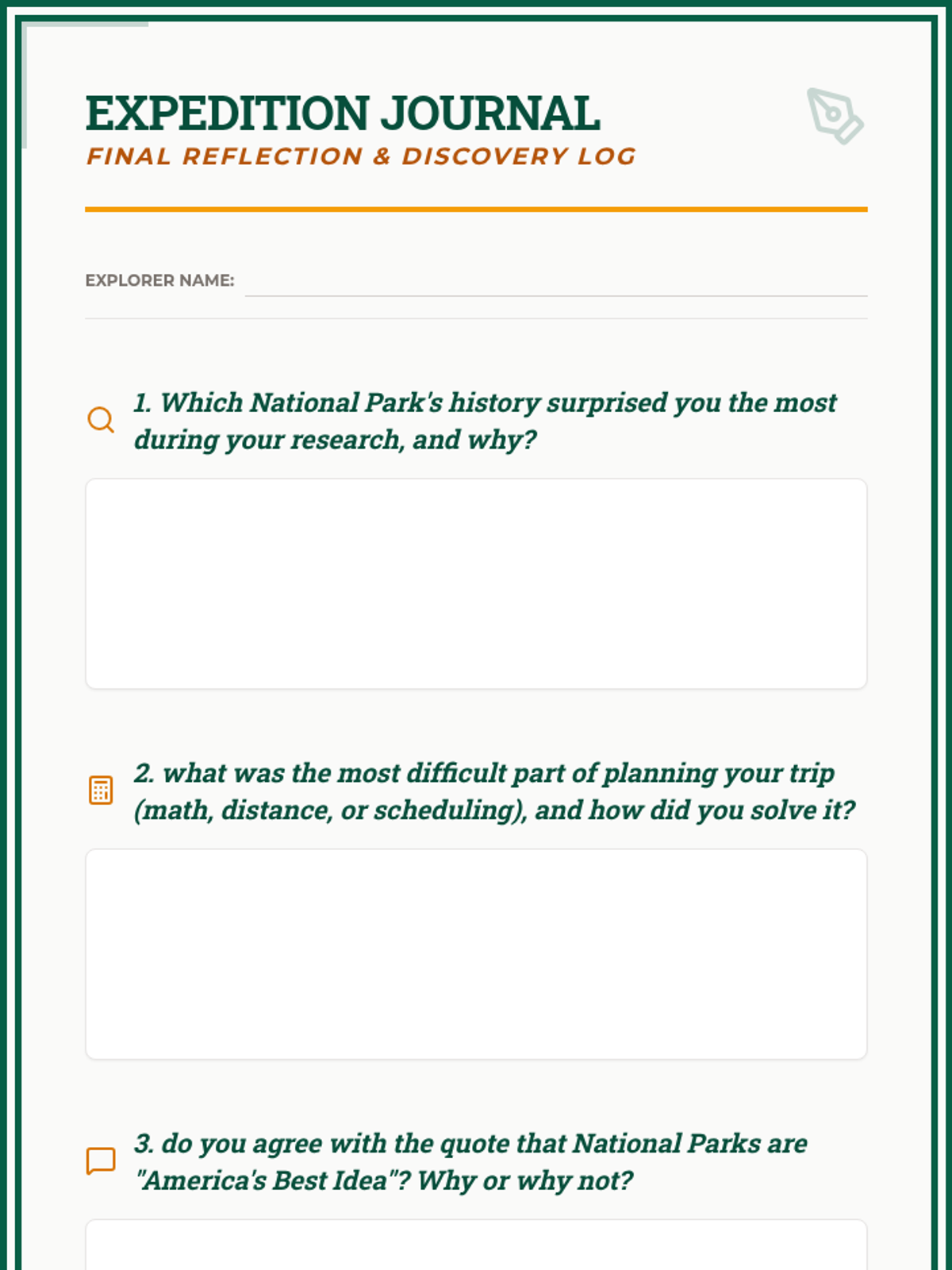
A 4-week project-based learning unit where students plan a cross-country journey to explore the history and landscape of America's National Parks. Students balance logistical planning with deep historical research into the creation and cultural significance of each site.
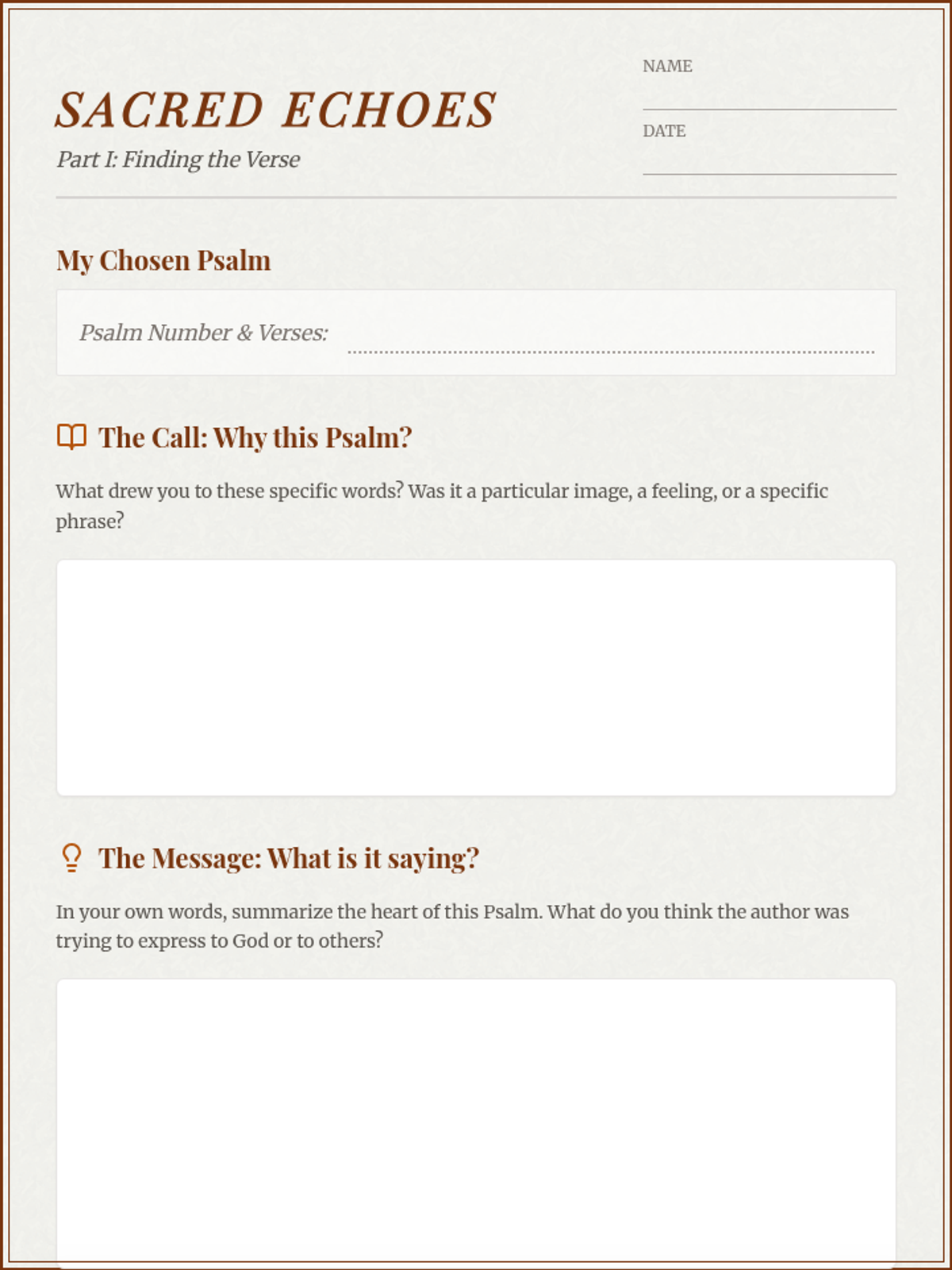
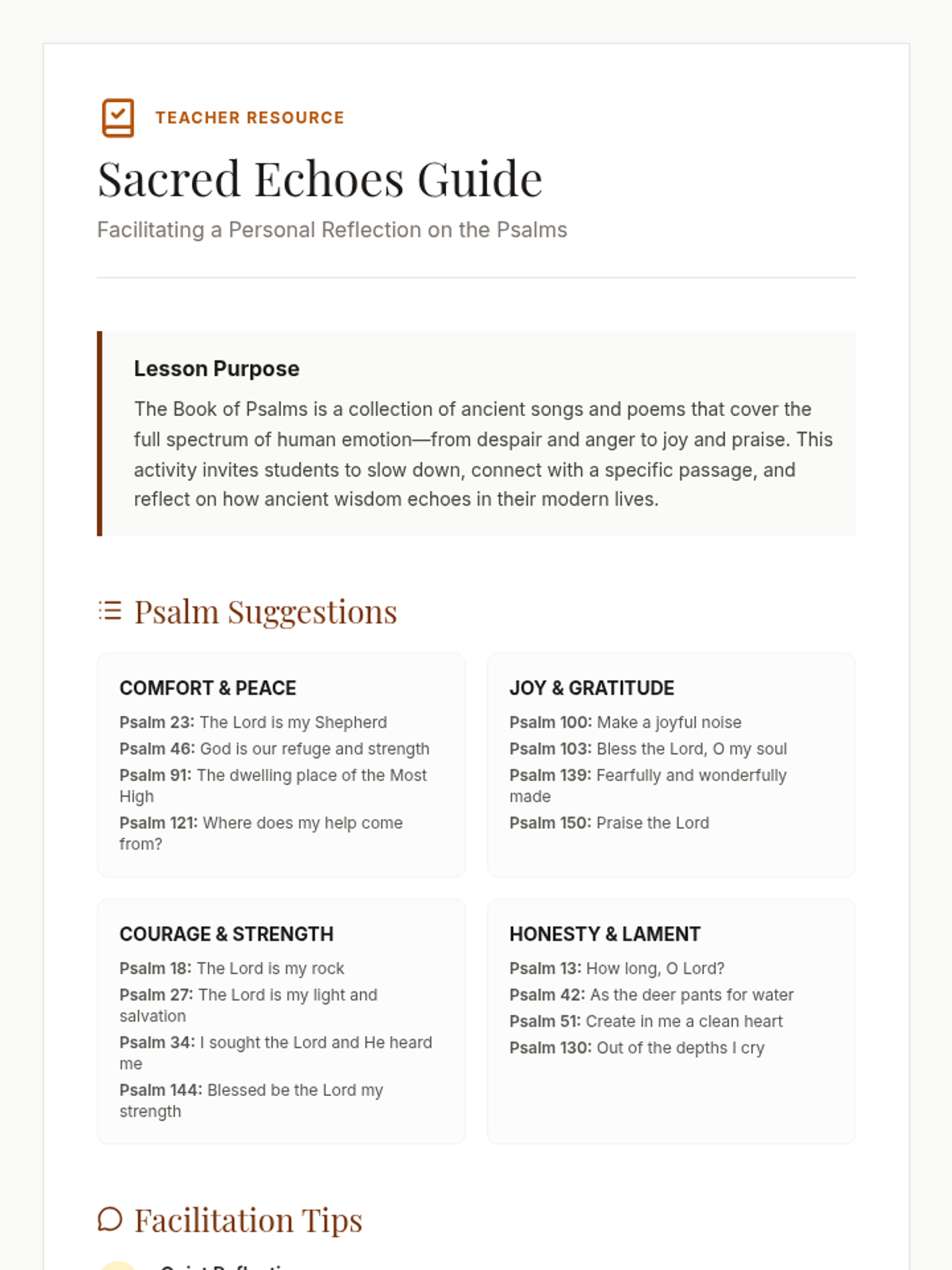
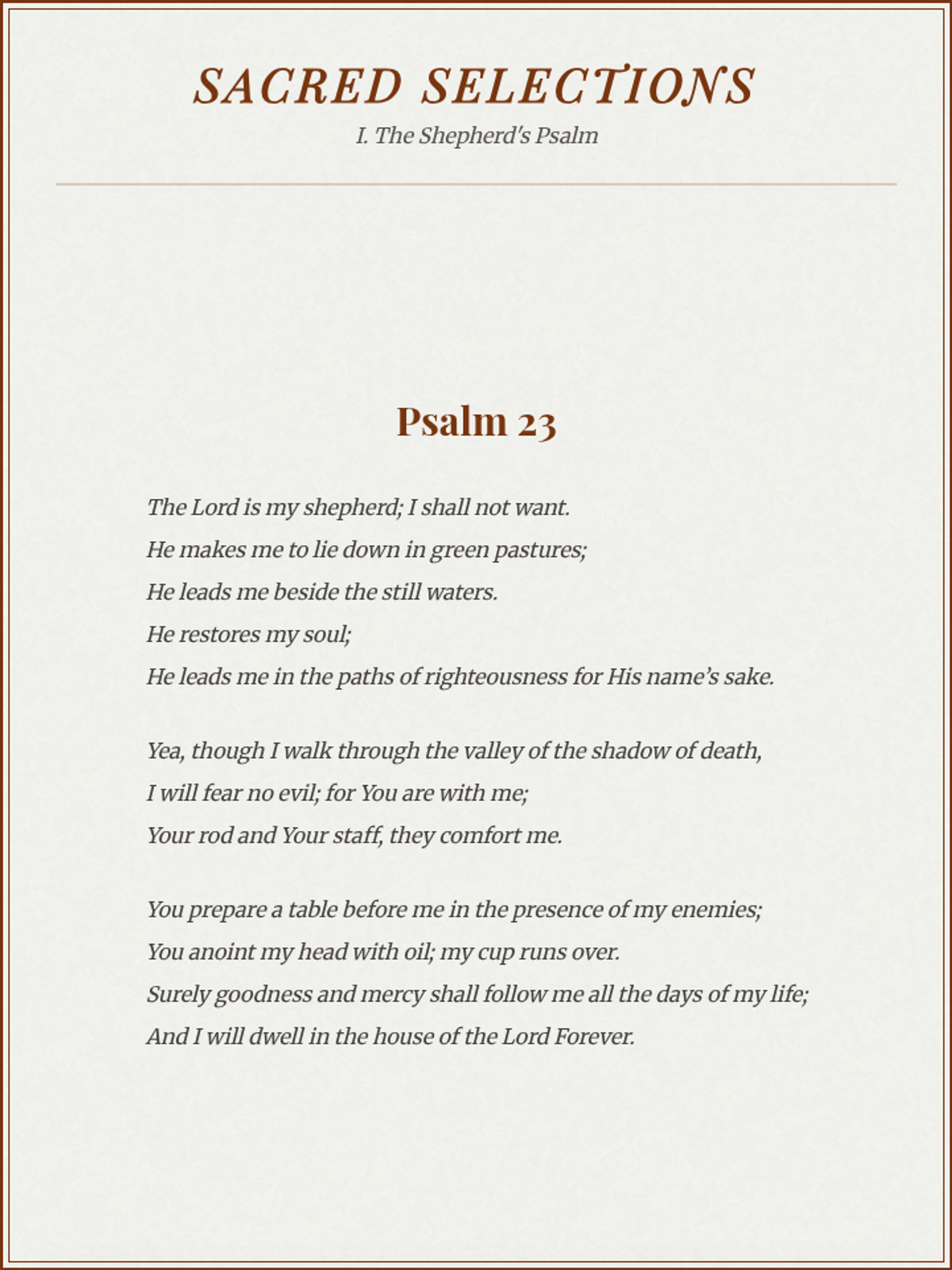
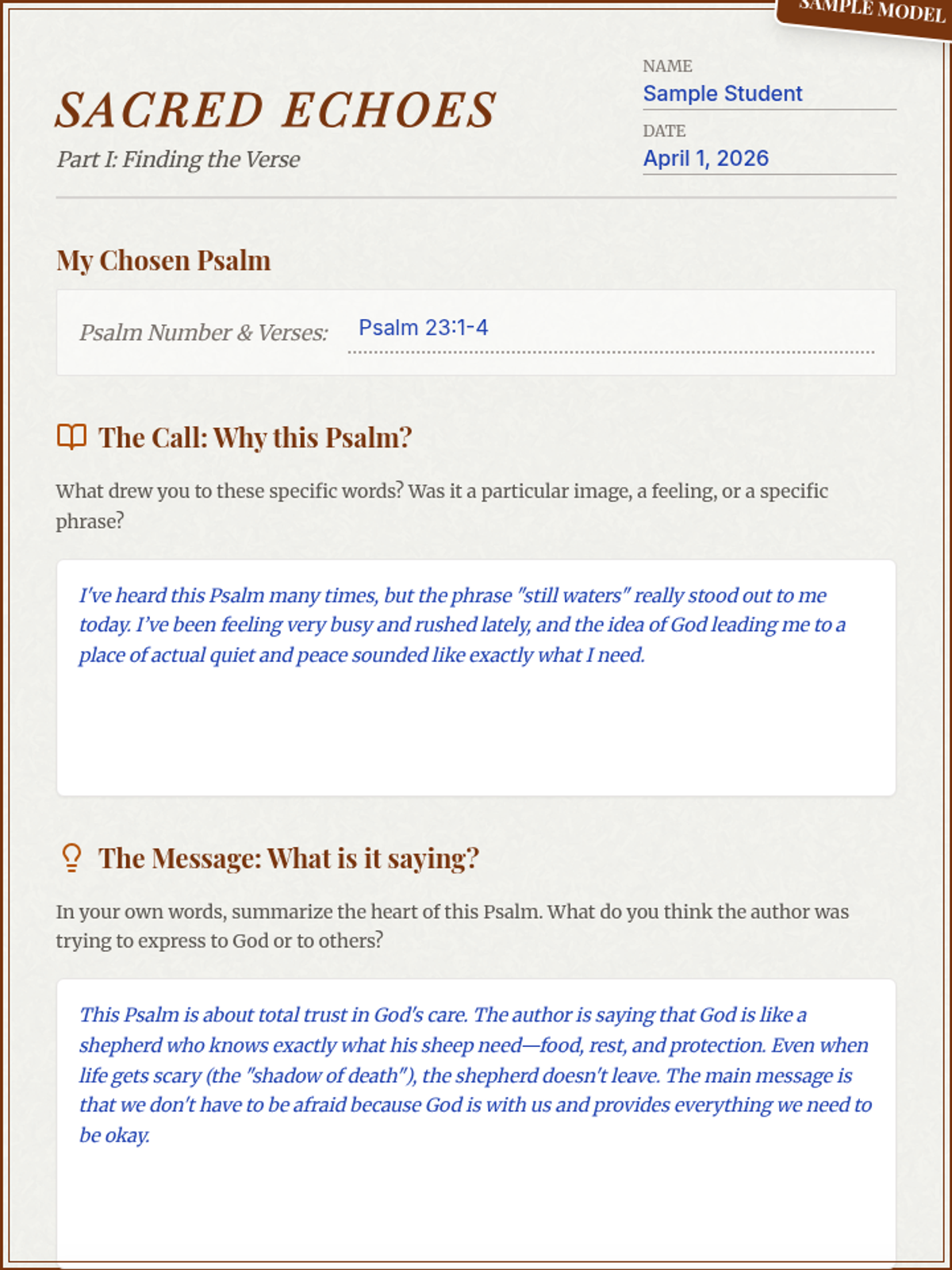
A reflective lesson where students explore the poetic beauty and personal significance of the Psalms, choosing a specific passage to analyze and connect with their own lives.